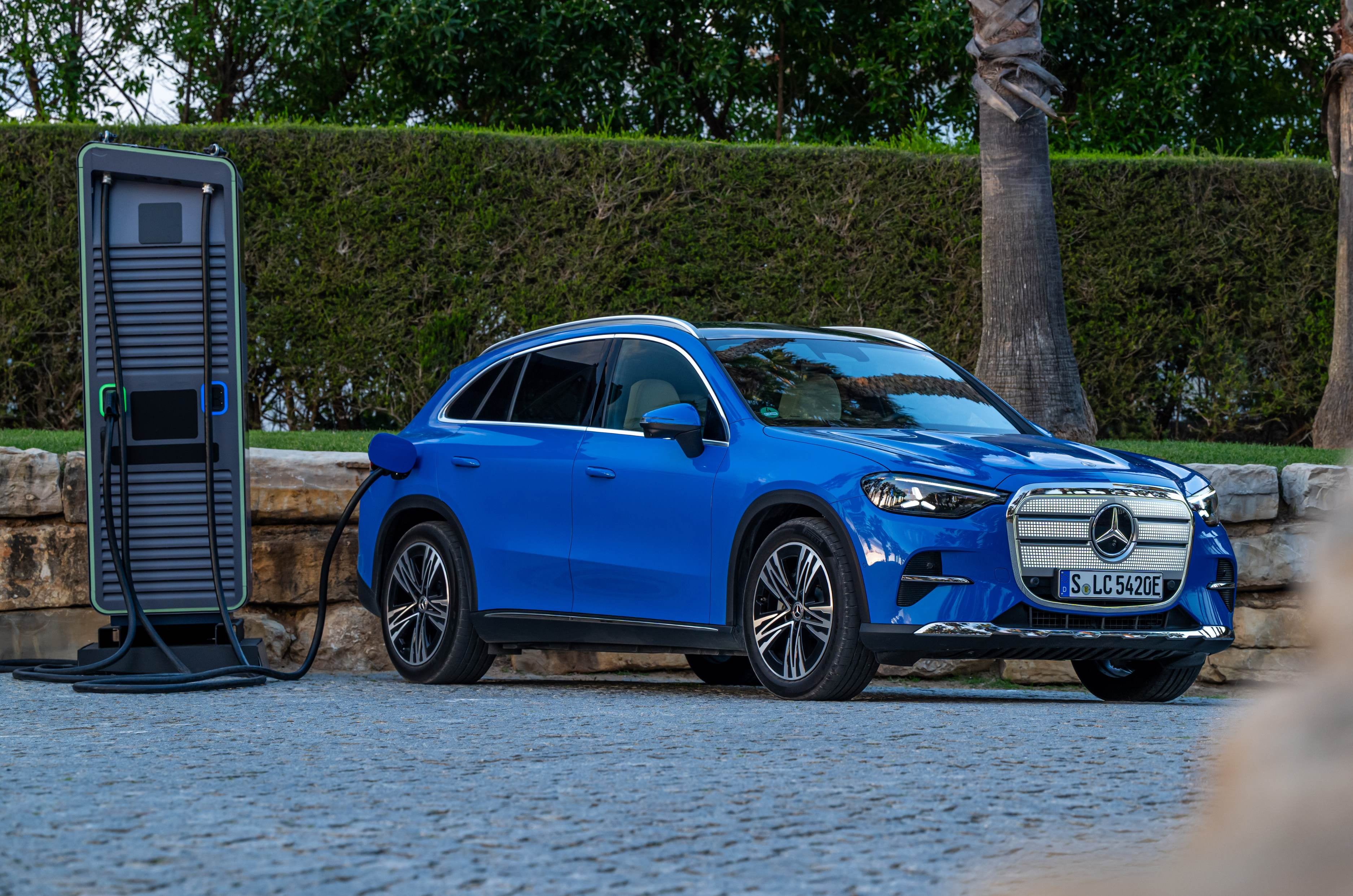
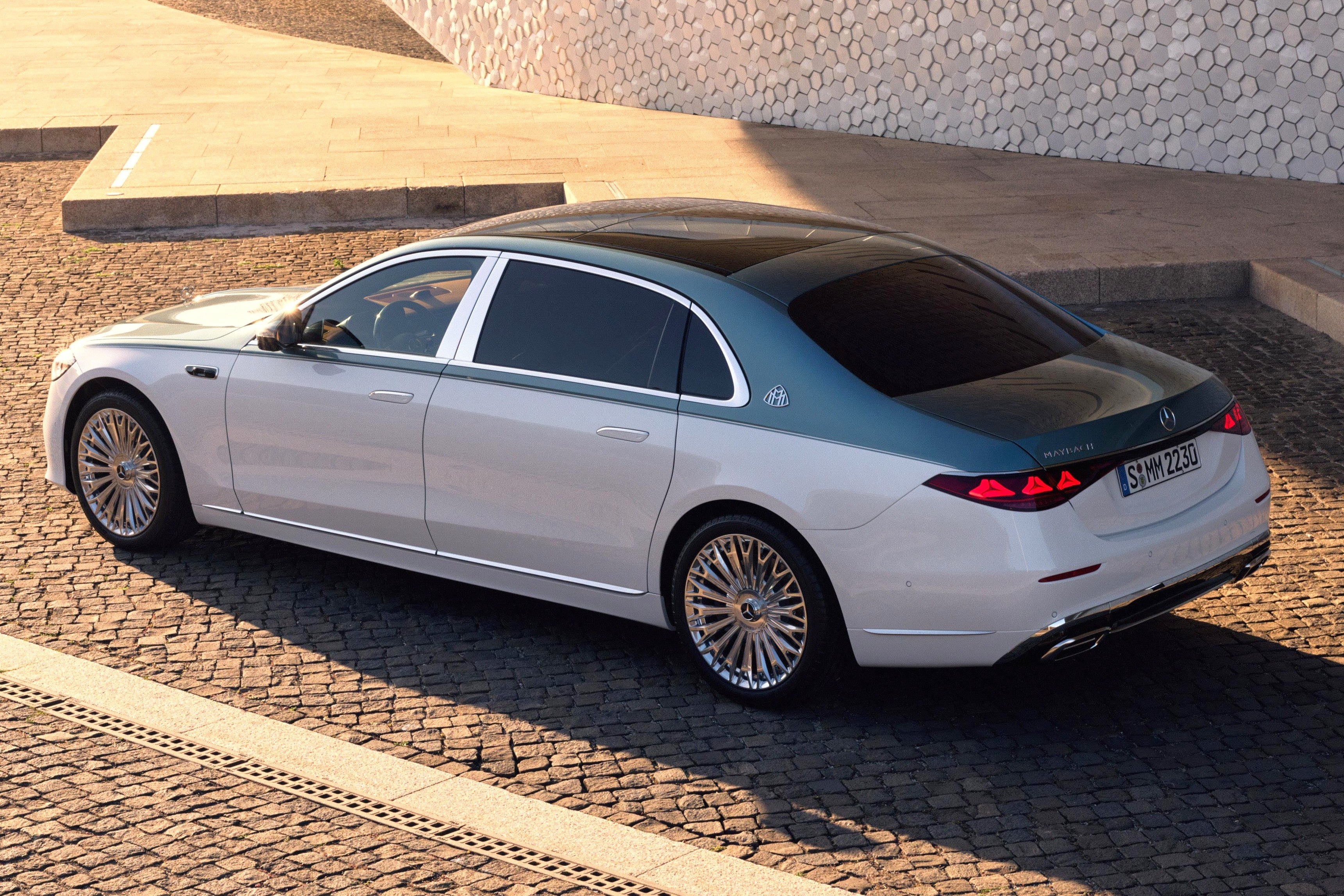
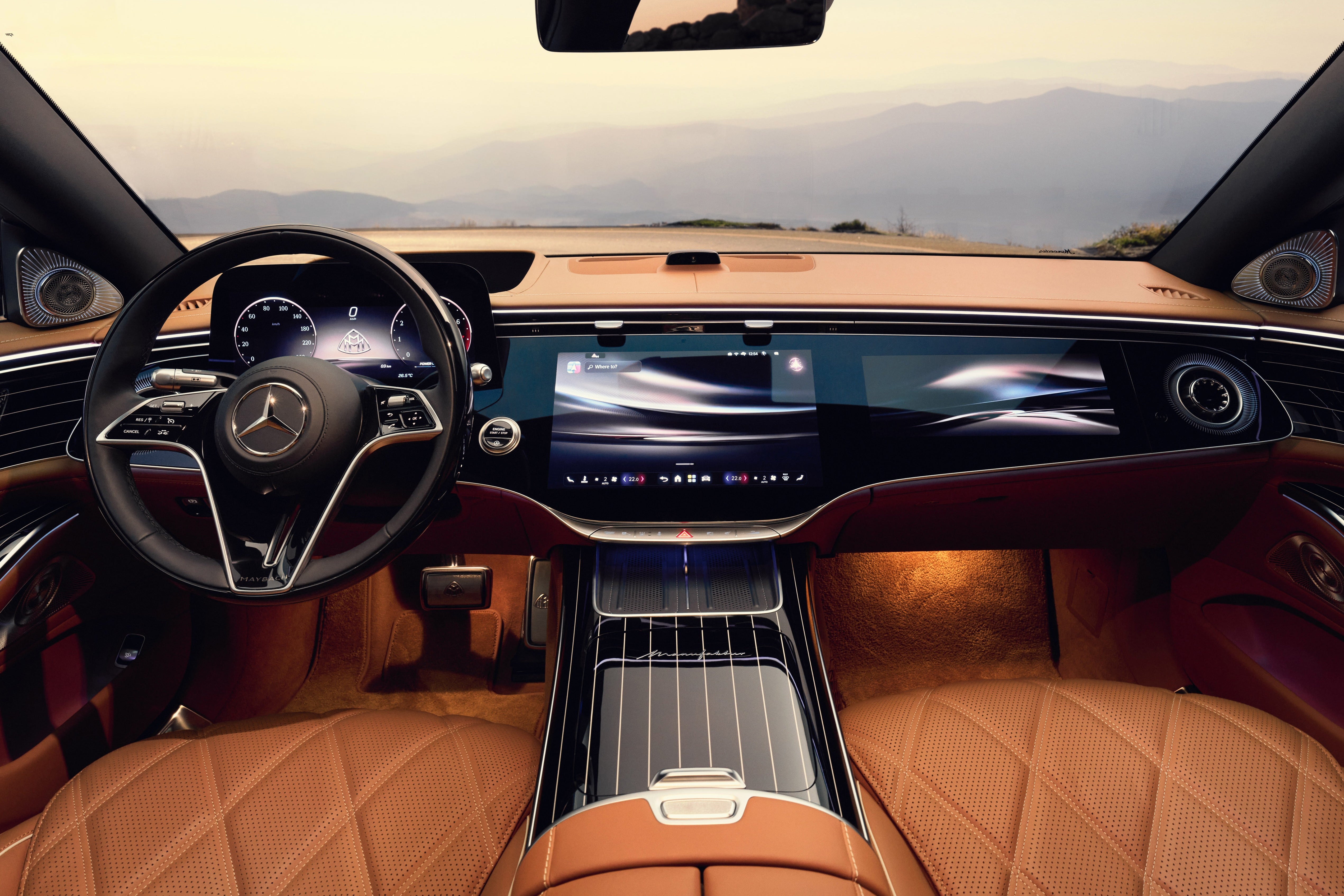
Mercedes-Maybach S 580e: Mercedes-Benz India ने देश की पहली इलेक्ट्रिक Mercedes-Maybach, ‘Mercedes-Maybach S 580e’ लॉन्च की है, जिसकी कीमत 3.35 करोड़ रुपये (एक्स-शोरूम) है। यह लग्जरी सेडान Maybach ब्रांड के पारंपरिक आराम और बेहतरीन कारीगरी को प्लग-इन हाइब्रिड पावरट्रेन के साथ जोड़ती है। बता दें कि Mercedes-Benz शुरू में भारत में S 580e की सिर्फ 30 यूनिट्स ही बेचेगी।
Mercedes-Maybach S 580e: डिजाइन
Mercedes-Maybach S 580e का डिजाइन काफी हद तक फ्लैगशिप S-Class जैसा ही है, लेकिन इसे Maybach की खास पहचान देने के लिए कई बदलाव किए गए हैं। इसमें रोशनी वाला Maybach ग्रिल, Maybach लोगो प्रोजेक्शन और इल्यूमिनेटेड डोर सिल्स दिए गए हैं। इसके अलावा, ग्राहकों को MANUFAKTUR के तहत कई कस्टमाइजेशन विकल्प भी मिलते हैं।
ग्राहक इस कार के लिए खास टू-टोन पेंट फिनिश और अपनी पसंद के Nappa लेदर इंटीरियर का विकल्प चुन सकते हैं।
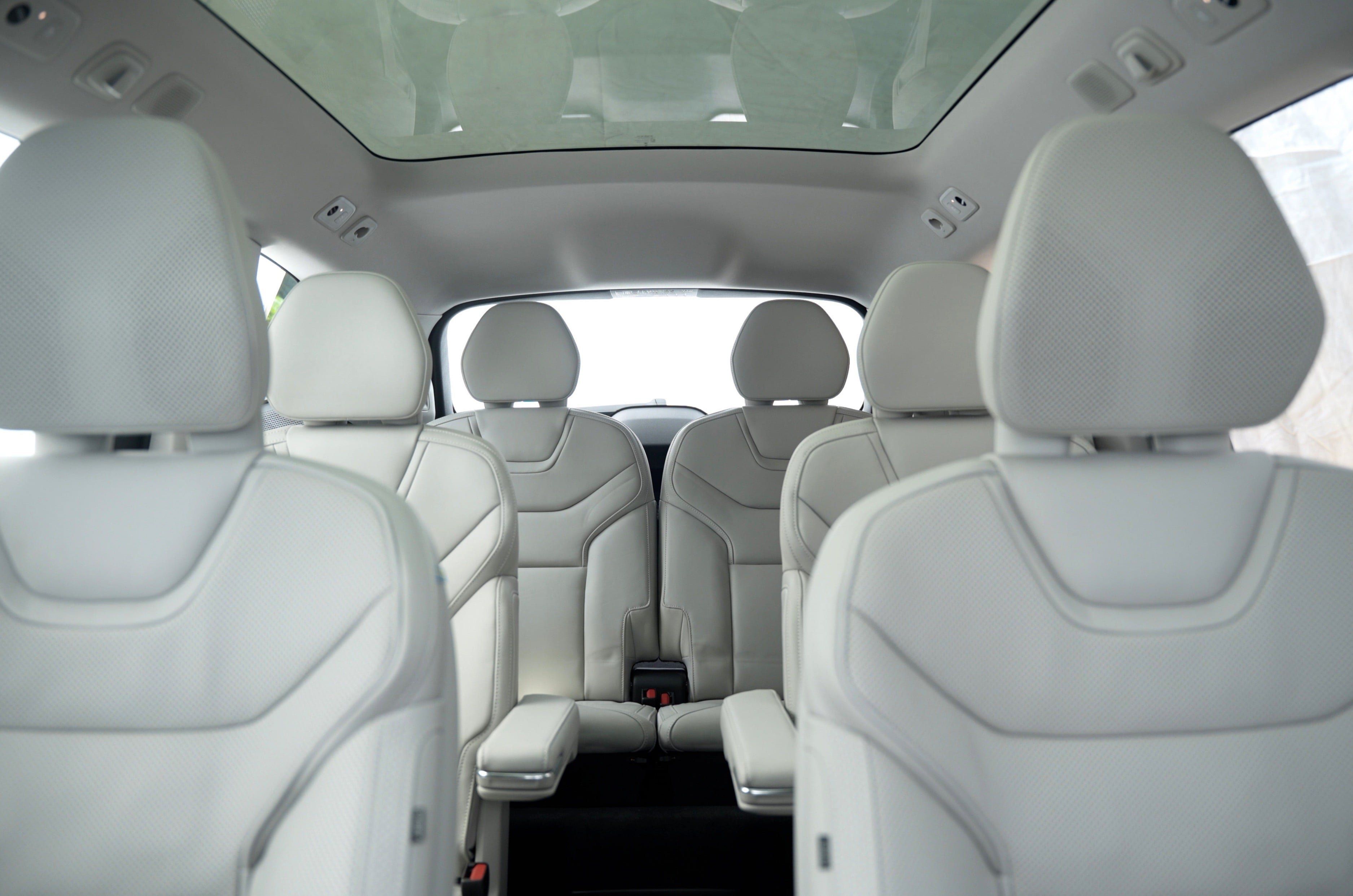
भारत में इसका मॉडल सिर्फ 4-सीटर कॉन्फिगरेशन में उपलब्ध होगा। इसमें पीछे Executive सीटें और पूरी लंबाई में रियर बिजनेस कंसोल दिया गया है। Mercedes-Benz के मुताबिक, कार में पीछे बैठने वाले यात्रियों के आराम पर खास ध्यान दिया गया है, जो Maybach कारों की सबसे खास खूबियों में से एक है।
Mercedes-Maybach S 580e: फीचर्स
Mercedes-Maybach S 580e के केबिन में लग्जरी और टेक्नोलॉजी से जुड़े कई शानदार फीचर्स दिए गए हैं। इसमें 31 स्पीकर वाला Burmester 4D साउंड सिस्टम मिलता है। इसमें 8 एक्साइटर्स और 1,610 वॉट का आउटपुट दिया गया है, जिससे कार के अंदर शानदार साउंड का अनुभव मिलता है।
पीछे बैठने वाले यात्रियों के लिए वायरलेस चार्जिंग, फोल्डिंग टेबल, तापमान कंट्रोल वाले कप होल्डर और Rear Comfort Package Plus जैसे फीचर्स दिए गए हैं।
टेक्नोलॉजी की बात करें तो कार में Mercedes-Benz का लेटेस्ट Operating System (MB.OS), 3D ड्राइवर डिस्प्ले, MBUX Superscreen, Augmented Reality नेविगेशन और Head-Up Display मिलता है। सेफ्टी के लिए इसमें ADAS Level 2, PRE-SAFE सिस्टम और कुल 15 एयरबैग दिए गए हैं।
Mercedes-Maybach S 580e: स्पेसिफिकेशन्स
इसमें 3.0-लीटर, छह-सिलेंडर वाला पेट्रोल प्लग-इन हाइब्रिड पावरट्रेन है, जो Mercedes के 4MATIC ऑल-व्हील-ड्राइव सिस्टम के साथ आता है। इसका कंबशन इंजन 443 hp की पावर और 560 Nm का टॉर्क देता है, जबकि इलेक्ट्रिक मोटर 160 hp की पावर और 480 Nm का टॉर्क जोड़ती है।
इसकी कुल पावर 585 hp और टॉर्क 750 Nm है, जो 9G-TRONIC ऑटोमैटिक ट्रांसमिशन के जरिए मिलता है। Mercedes का दावा है कि S 580e 4.8 सेकंड में 0 से 100 kmph की रफ्तार पकड़ सकती है और इसकी टॉप स्पीड 250 kmph है। इस सेडान में 22 kWh का बैटरी पैक भी है, जो WLTP-सर्टिफाइड लगभग 100 km की इलेक्ट्रिक रेंज देता है। चार्जिंग के लिए इसमें 11 kW AC और 60 kW DC फास्ट चार्जिंग की सुविधा है।
Mercedes-Maybach S 580e: कीमत, उपलब्धता और कस्टमाइजेशन
Mercedes-Maybach S 580e की कीमत ₹3.35 करोड़ (एक्स-शोरूम) रखी गई है। कंपनी शुरुआत में इस लग्जरी सेडान की सिर्फ 30 यूनिट ही उपलब्ध कराएगी। इसके साथ ग्राहकों को घर पर कार चार्ज करने के लिए फ्री होम चार्जिंग सॉल्यूशन भी दिया जाएगा।
ग्राहक अपनी पसंद के हिसाब से कार को और भी खास बना सकते हैं। इसके लिए Mercedes-Benz ने MANUFAKTUR कस्टमाइजेशन का विकल्प दिया है। इसमें खास पेंट स्कीम, प्रीमियम लेदर थीम और हाथ से तैयार किए गए इंटीरियर ट्रिम जैसे विकल्प शामिल हैं।
Mercedes-Benz India says the CLA Electric has received more than 1,000 confirmed orders, with deliveries extending into March 2027 due to limited supply. Customers are currently facing waiting periods of up to six months for the electric sedan. The strong demand comes as Mercedes-Benz recorded its highest-ever January-September sales in India, with 15,190 cars retailed in the first nine months of 2026, up 8 percent from the same period last year.
The July-September quarter also set a new sales record, with 5,422 units retailed, a 6 percent increase over Q3 2025. Growth was driven by new launches and demand for long-wheelbase models like the E-Class, GLE, GLS and V-Class. The company also said repeat purchases from existing Mercedes-Benz customers as part of the replacement cycle contributed to demand.
Mercedes-Benz sees strong demand for CLA Electric
The CLA Electric, launched in April this year, has helped drive Mercedes-Benz India’s electric car sales, which grew 16 percent in January-September 2026. Mercedes-Benz expects EVs to account for 20-25 percent of its sales next year if supply improves. The company says supply remains the main constraint on its electric car sales. Managing director and CEO Santosh Iyer said Mercedes-Benz India could have achieved 7-8 percentage points higher EV penetration this year if not for supply-side issues.
The automaker also recorded strong demand at the top end of its range. Sales of the EQS Maybach SUV grew 68 percent year on year in January-September 2026, and the company will begin deliveries of the new electrified S-Class from mid-October. The top-spec MANUFAKTUR version is sold out for the year, while a limited number of Exclusive Line cars remain available for order.
Mercedes-Benz sales rise 6 percent in Q3
The core luxury segment accounted for around 60 percent of Mercedes-Benz India’s sales in January-September, with the C-Class, GLC, GLE and long-wheelbase E-Class making up the bulk of this segment. The entry-luxury segment, comprising the GLA and CLA Electric, accounted for around 15 percent of sales and grew 4 percent during the period.
The company’s top-end portfolio grew 13 percent and accounted for more than 25 percent of sales. Mercedes-AMG sales rose 18 percent during the period. Q3 sales were also 17 percent higher than in the previous quarter.
Diesel share rises to 40 percent
Diesel models now account for 40 percent of Mercedes-Benz India’s sales, up from 38 percent, according to managing director and CEO Santosh Iyer. The increase comes as chief rival BMW has been shifting its model line-up away from diesel and towards electrified powertrains in India.
Mercedes-Benz GLC Electric bookings open
Mercedes-Benz has opened bookings for the GLC Electric in India ahead of the model’s launch on November 4. The SUV will be assembled at the company’s Chakan plant and will initially be offered in the 400 4Matic version, with a 94kWh battery and a claimed WLTP range of 715km.
The GLC Electric will join the CLA Electric, EQS SUV, EQS Maybach SUV and G580 in Mercedes-Benz India’s electric line-up.
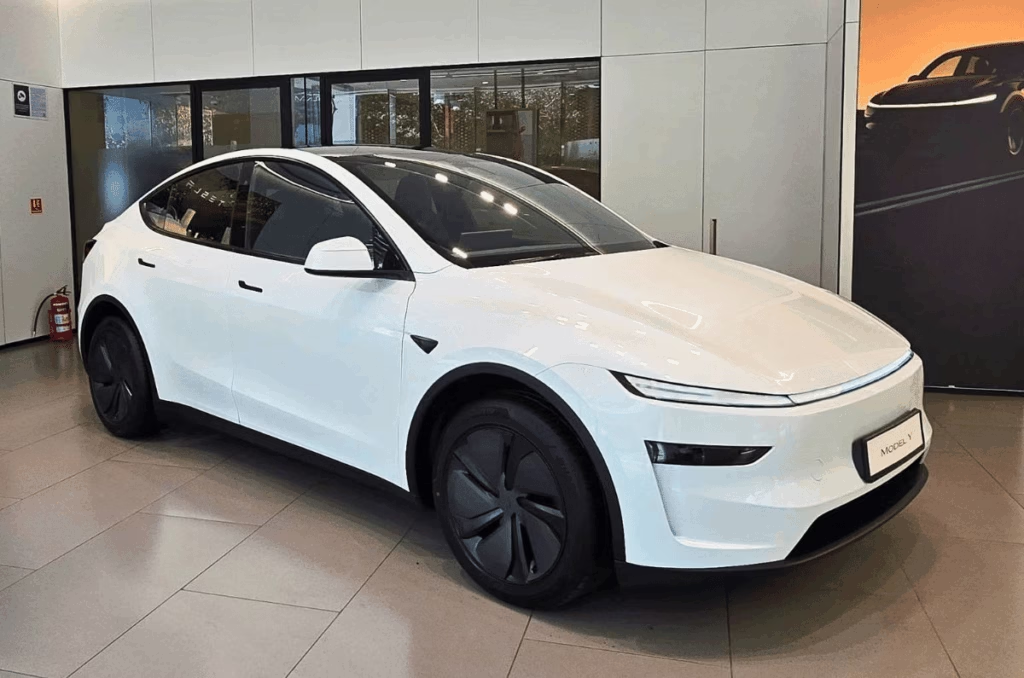
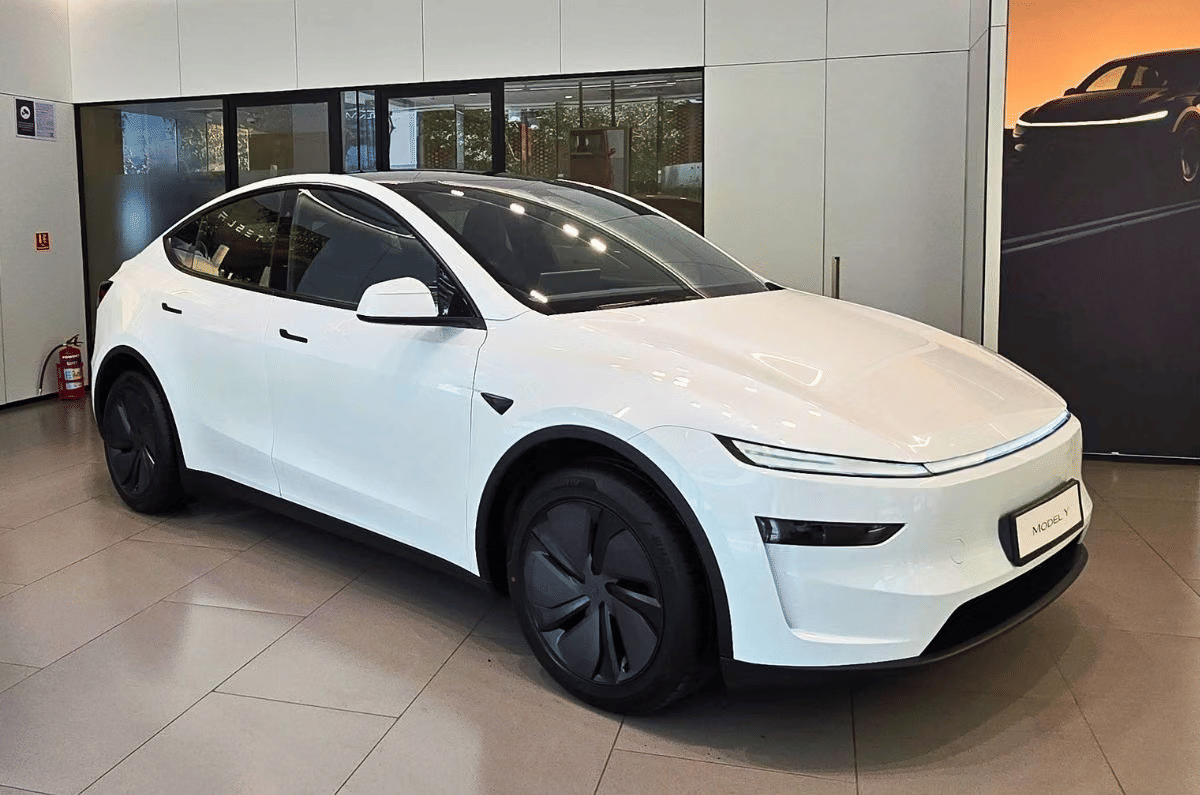
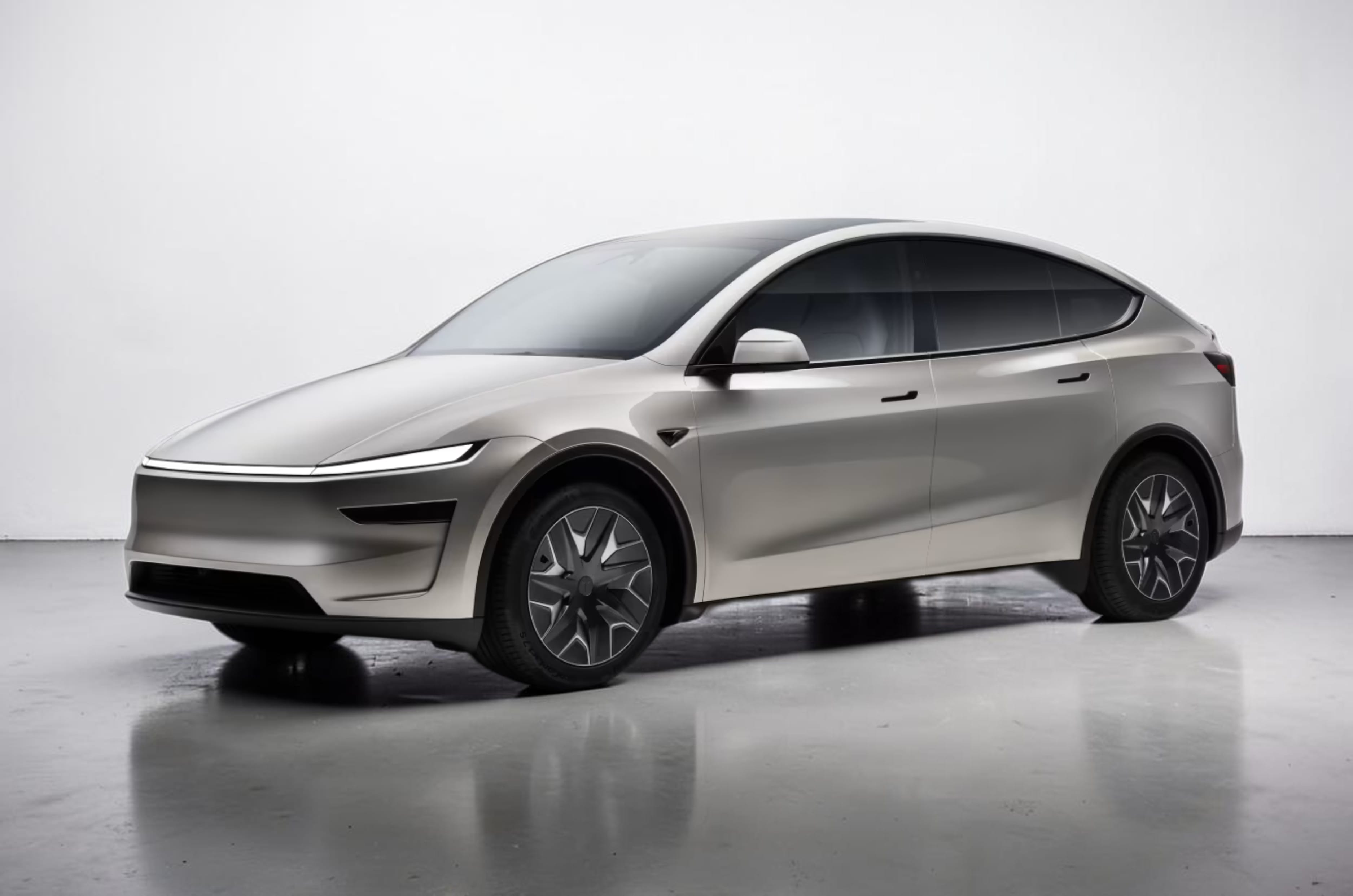
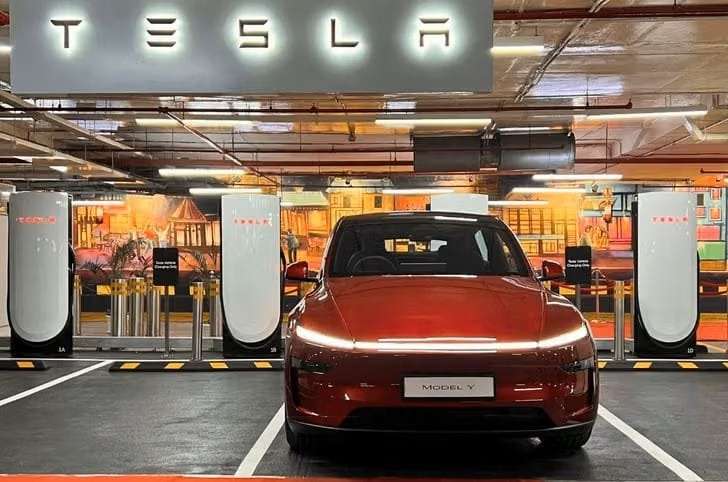
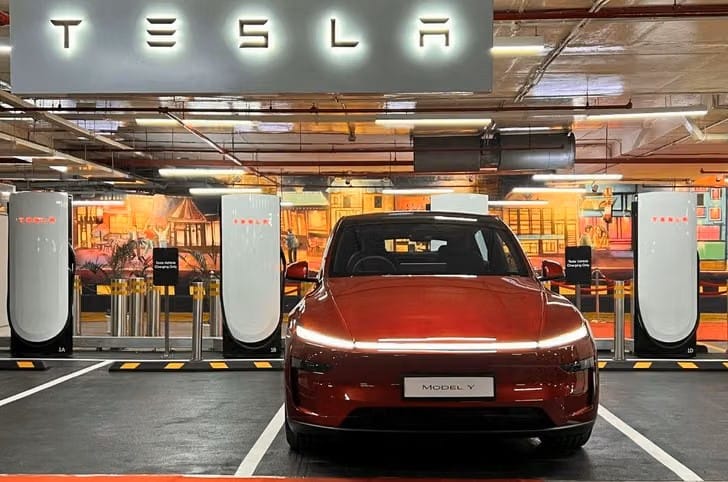
A little over 13 months after entering the Indian market, Tesla has crossed the 1,000-unit sales mark with its sole offering – the Model Y. According to the Vahan portal, Tesla India recorded total deliveries of 1,017 Model Y units between September 2025 and October 2, 2026. Last month, Tesla recorded its highest-ever monthly sales in the country at 291 units, up 322 percent from 69 units from the year-ago period. Month-on-month, too, sales were up 149 percent from 117 units in August.
Tesla India sales so far
Triple-digit sales registered since July
Tesla Model Y sales in India so far
Month
Units
Change (percent)
September 2025
69
–
October 2025
40
-42
November 2025
48
20
December 2025
69
44
January 2026
38
-45
February 2026
29
-24
March 2026
53
83
April 2026
43
-19
May 2026
36
-16
June 2026
38
6
July 2026
116
205
August 2026
117
1
September 2026
291
149
October 2026*
30
–
Total
1,017
–
*Data for October 1 and 2.
The American EV maker’s September sales performance came during a record month for India’s electric passenger vehicle (e-PV) market, which recorded monthly retail sales of 35,995 units; Tesla accounted for 0.80 percent of total e-PV sales. It also moved up to second place in the luxury e-PV segment for the first time, outselling Mercedes-Benz India, which sold 125 units in September. BMW India was the segment leader with 502 units and a 51 percent share. Tesla’s share of the luxury e-PV market rose to 30 percent in September 2026, from 11 percent a year earlier. In July, Tesla had moved ahead of Volvo to take third place.
Tesla Model Y L AWD.
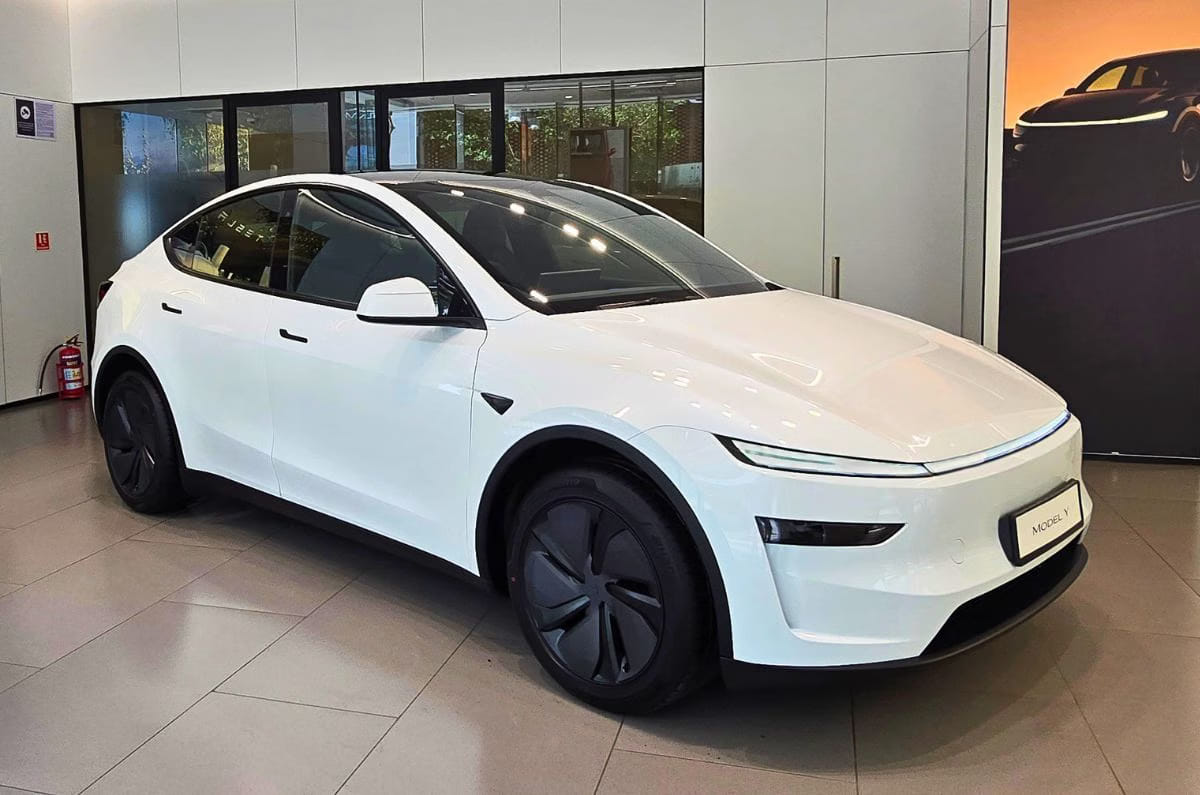
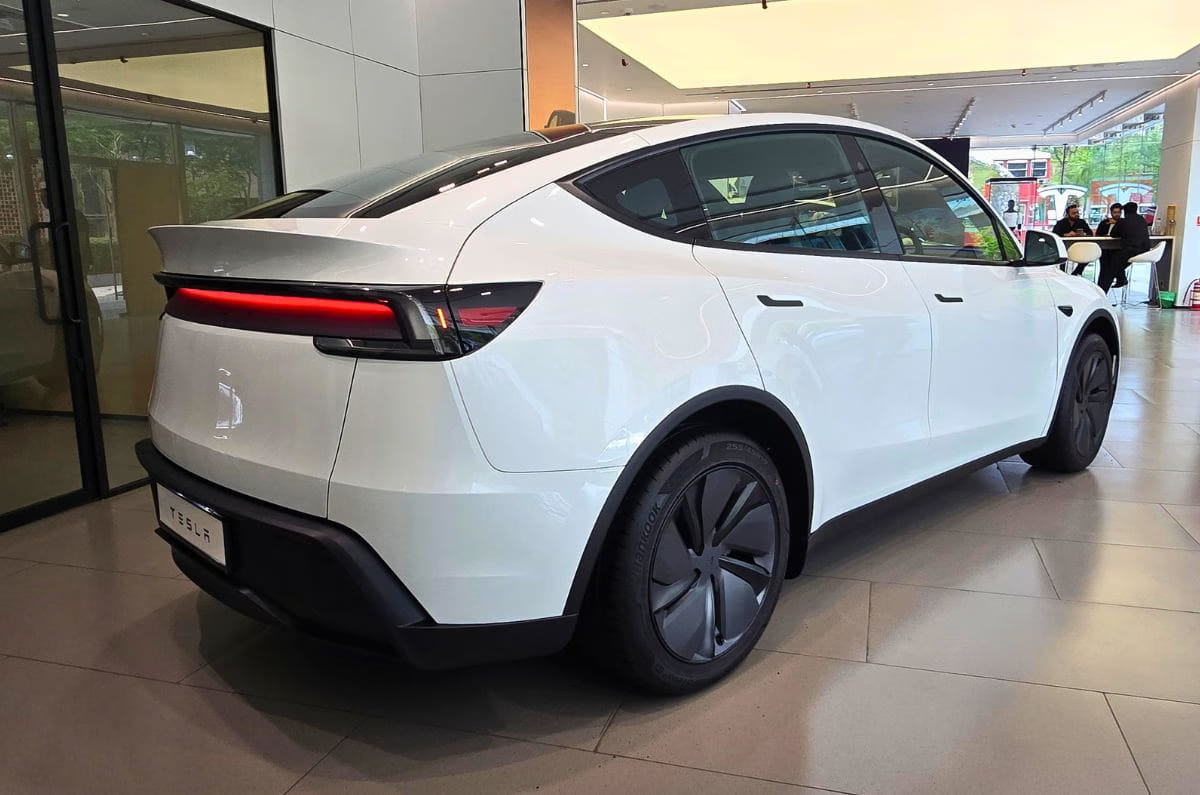
From September 2025 until June 2026, the Model Y recorded monthly deliveries in double digits. Sales rose 205 percent month-on-month to 116 units in July, compared to just 38 units in June. Between July and October 2, Tesla delivered 554 Model Ys, accounting for 54 percent of its total sales so far. This came after Tesla India cut the Model Y Premium RWD base trim’s price by Rs 9 lakh in May, bringing it down to Rs 50.89 lakh. The Tesla EV is available in five-seater (Model Y) and six-seater (Model Y L) iterations. Compared to the top-spec Model Y L Premium AWD, the Model Y Premium RWD costs Rs 11.1 lakh less.
The Model Y rivals the Hyundai Ioniq 5 (Rs 55.71 lakh), Kia EV6 (Rs 65.98 lakh) and BYD Sealion 7 (Rs 49.4 lakh to Rs 55.9 lakh).
Model Y specs, range
The Model Y Premium RWD gets a 64kWh battery (gross capacity) with a claimed 500km WLTP range, and it uses a 299hp, 420Nm electric motor. The battery size of the Model Y L has not been revealed. Since the Model Y L in right-hand drive configuration is also available in Australia, and going by the Australian-spec model, it is likely powered by an 88.2kWh battery (gross capacity). Power and torque figures are estimated at 514hp and 590Nm, respectively. Tesla India has confirmed that the Model Y L gets a dual-motor AWD setup and has a claimed range of 681km (WLTP).
Tesla India expanding sales, charging network
6 showrooms, 7 charging stations are operational here
Last month, Tesla India opened its sixth showroom in Chennai, adding to its existing outlets in Mumbai, Delhi, Gurugram, Bengaluru and Hyderabad. It has also started service and bodyshop operations in Chennai, taking its service network to eight locations.
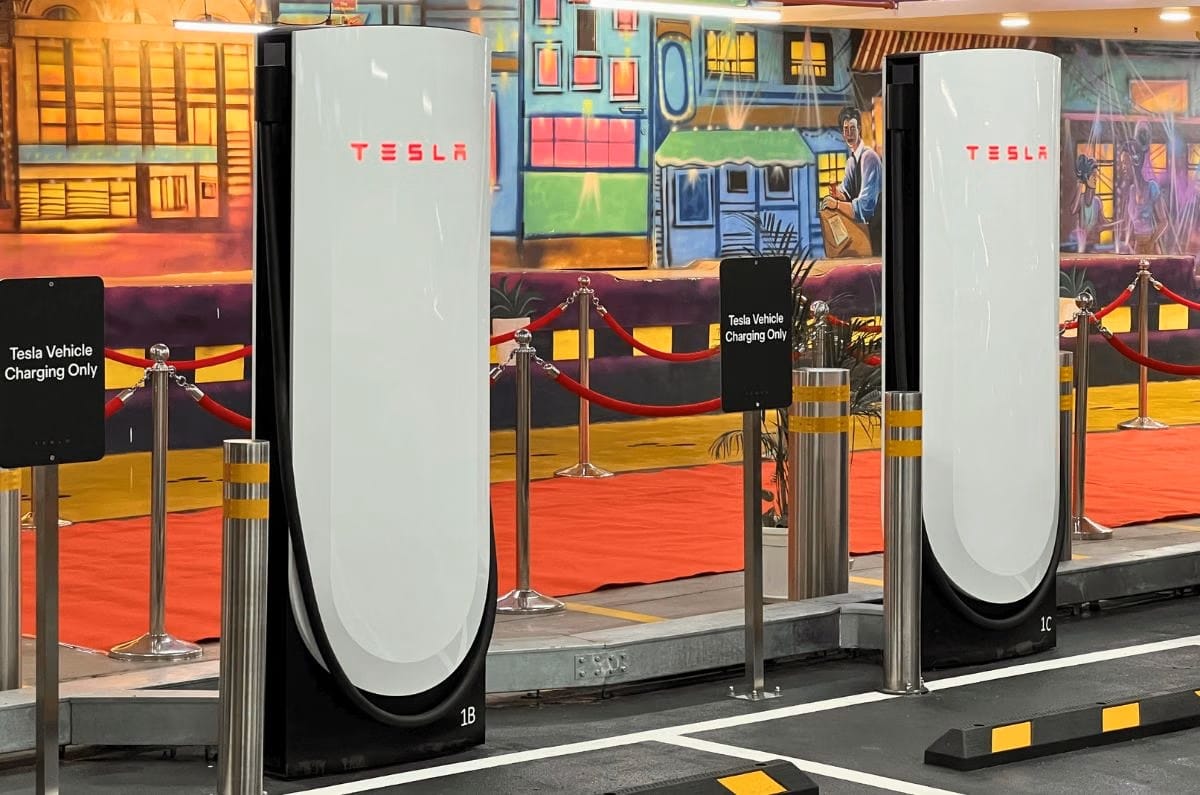
In August, Tesla opened its latest Destination Charging facility at Lake Shore Thane in Mumbai. It has four 11kW AC chargers. Tesla now operates seven charging stations in India, including locations in Navi Mumbai, Delhi and Gurugram, with 20 Superchargers and 24 Destination Chargers.
Ex-showroom prices mentioned above are as on October 5, 2026.
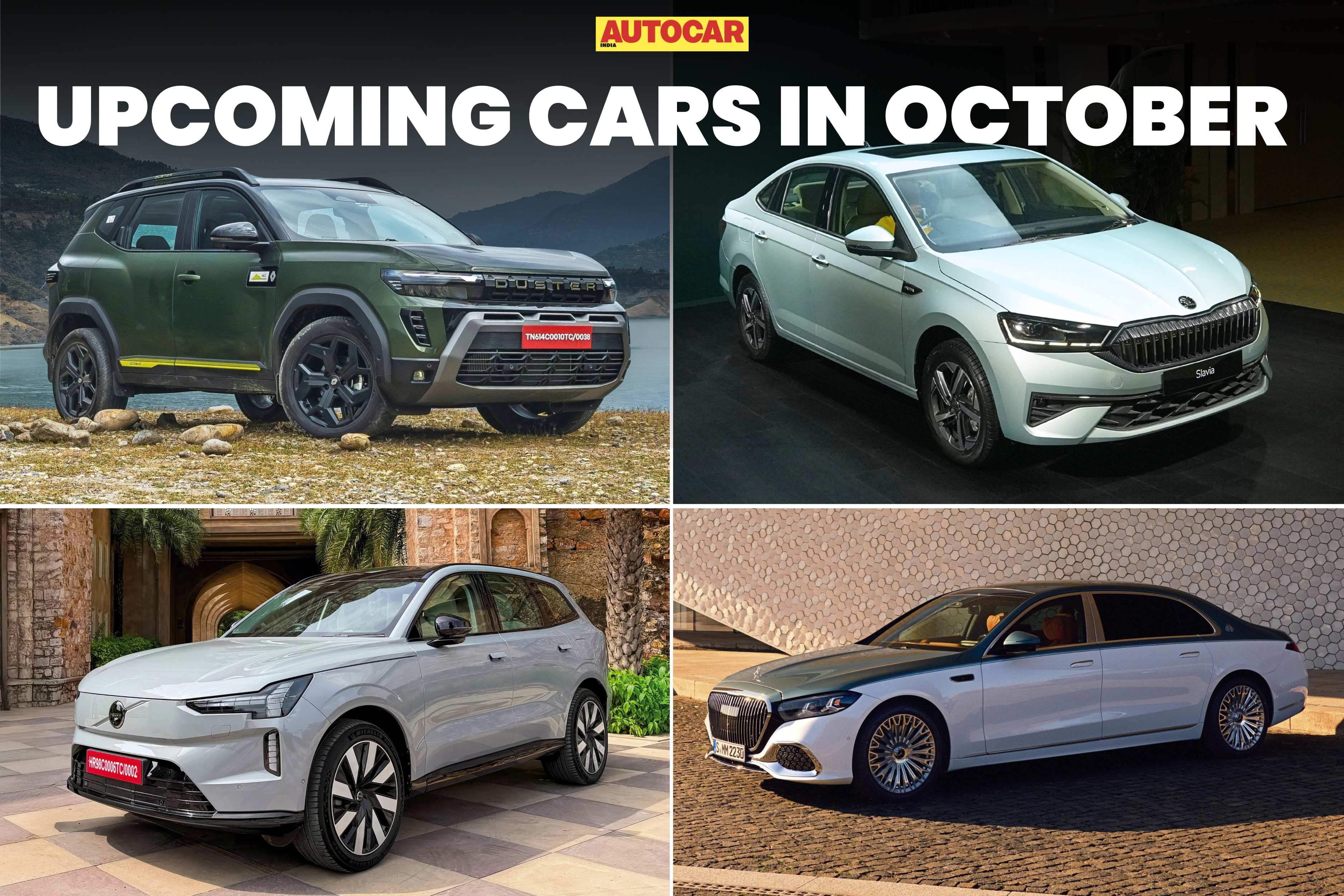
October marks the onset of the festive season in India, which means manufacturers line up a barrage of new car launches and debuts for prospective buyers to consider. It’s no different this year, with October 2026 looking quite stacked with fresh launches and debuts, especially during the first half of the month. Let’s delve into every new car that will either go on sale or debut in India next month.
Mercedes-Benz Maybach S-Class facelift
Launch: 5 October
Following the launch of the 2026 S-Class facelift back in June, Mercedes-Benz India will bring the sedan’s longer and more luxurious Maybach derivative in October. Compared to its standard version, the Maybach S-Class facelift continues to be 180mm longer, but carries styling differentiators like a vertically-slatted grille adorned with a ‘Maybach’ wordmark, mildly revised bumpers, bespoke wheel designs, lots of Maybach logos peppered across the bodywork, and the signature dual-tone exterior finish.
Inside, the Maybach prominently retains the standard S-Class’s Superscreen setup, comprising a 12.3-inch digital driver’s display, a 14.4-inch central touchscreen, and a 12.3-inch passenger display. New upholstery choices include extended leather and a leather-free vegan option. The rear seats remain largely unchanged, offering up to 43 degrees of recline, along with heating, ventilation, and massage functions. Globally, the Maybach S-Class can be had with either a 4.0-litre twin-turbo mild-hybrid V8 (S 580), a 4.0-litre twin-turbo V8 plug-in hybrid (S 580e), or a 612hp 6.0-litre twin-turbo V12 (S 680). Mercedes-Benz India is likely to offer the updated Maybach S-Class in S 580 or S 580e spec.
Honda Elevate facelift
Launch: 6 October
Current Honda Elevate. Image used for representation only.
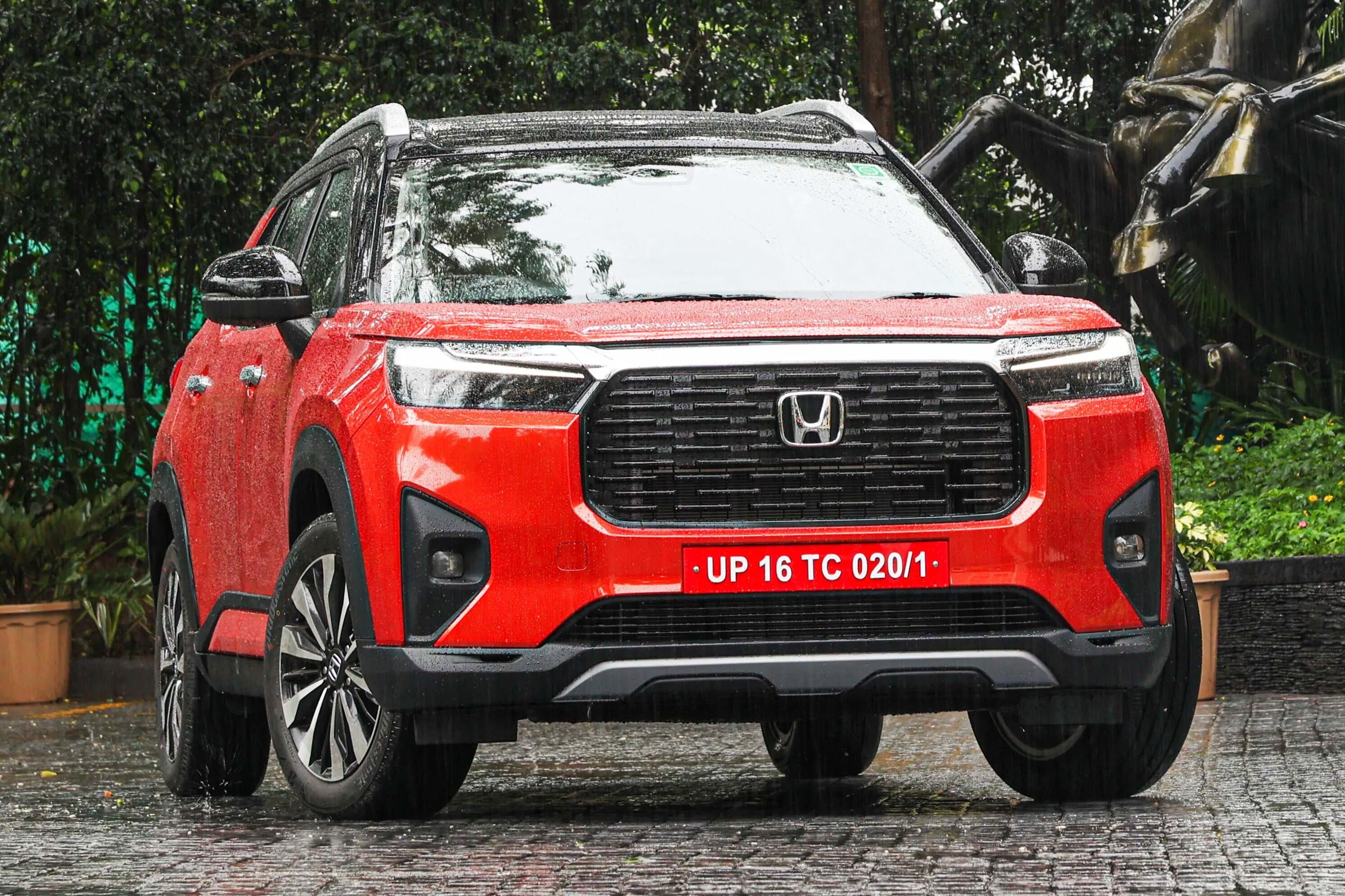
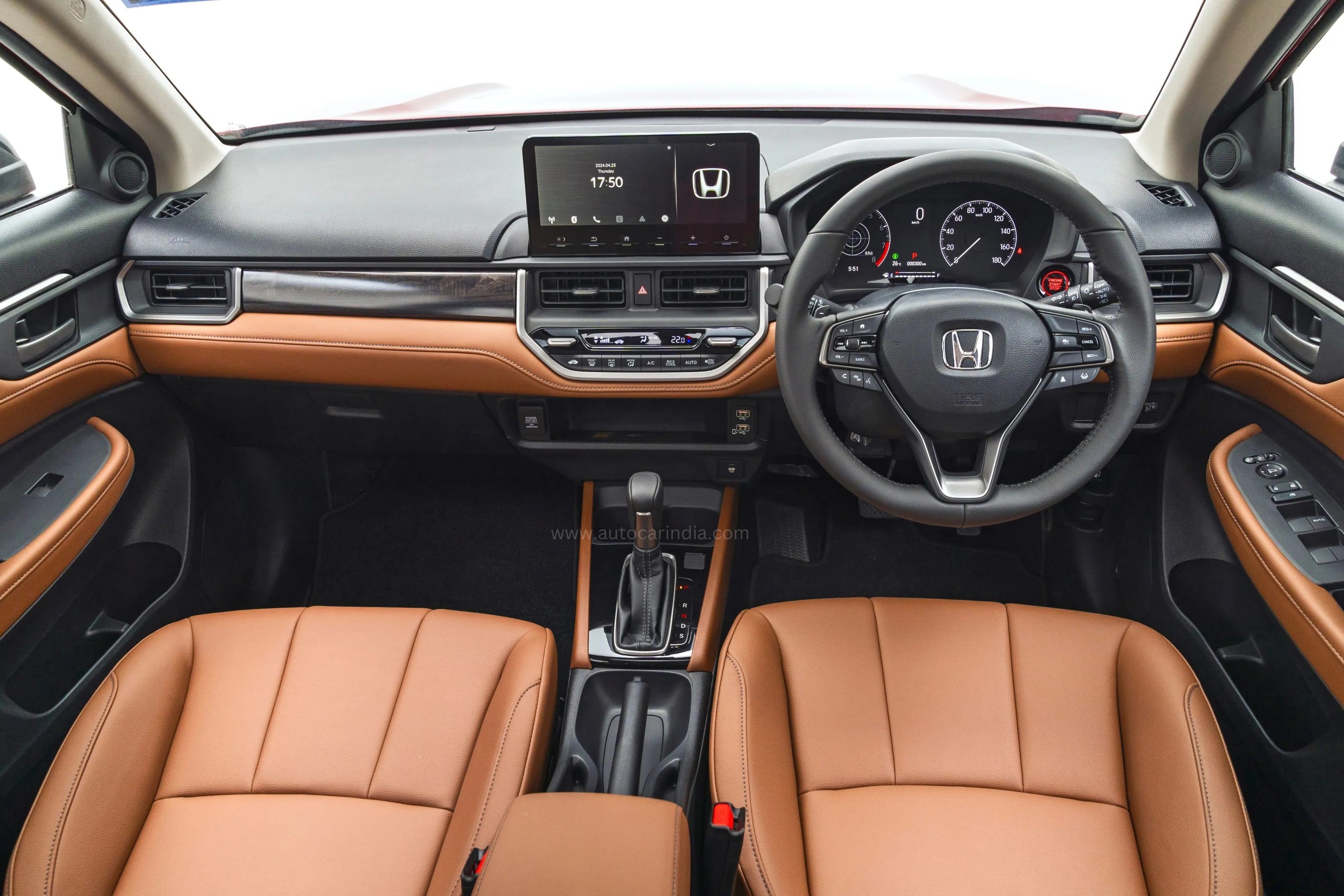
Following in the footsteps of the 2026 City facelift, Honda will launch an updated version of the Elevate SUV in October. Expect the Elevate facelift to sport revised styling cues, including the headlamps, tail-lamps, bumpers, grille, and wheels. The interior is anticipated to see changes like a larger infotainment touchscreen and revised colour schemes, along with feature upgrades like ventilated front seats, a 360-degree camera, ambient lighting, and more.
Current Honda Elevate interior. Image used for representation only.
The facelifted Elevate is likely to retain the current model’s 121hp 1.5-litre four-cylinder naturally aspirated petrol engine, and its 6-speed manual and CVT automatic gearbox options. It remains to be seen if Honda will additionally offer the Elevate facelift with the City e:HEV’s 126hp 1.5-litre four-cylinder petrol-hybrid powertrain, which is solely mated to an e-CVT automatic. A strong hybrid version of the Elevate would allow it to compete directly with established hybrid midsize SUVs like the Maruti Grand Vitara, Victoris, and Toyota Hyryder, as well as the upcoming Renault Duster hybrid – also slated for launch next month.
Skoda Slavia facelift
Launch: 6 October
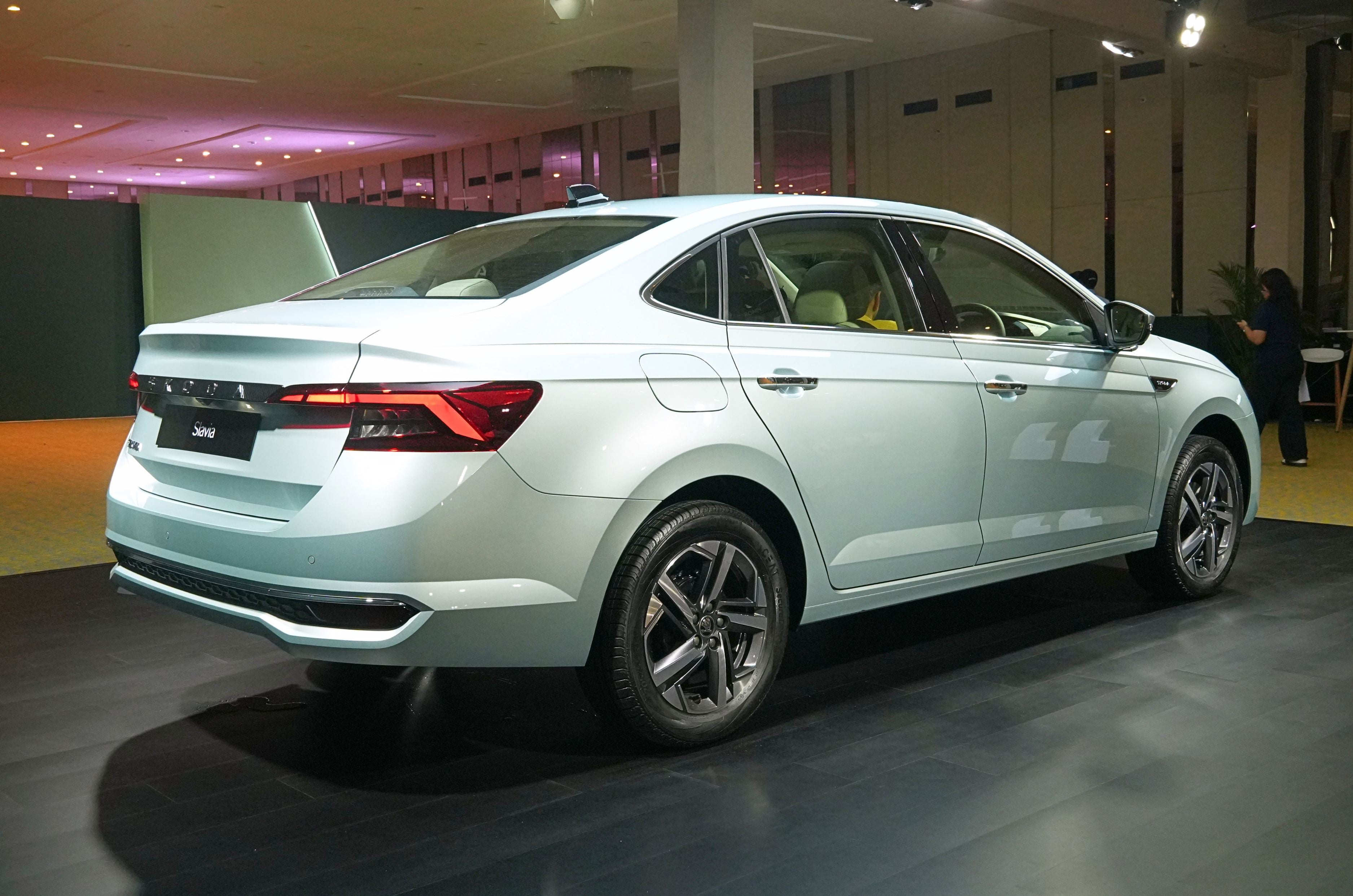
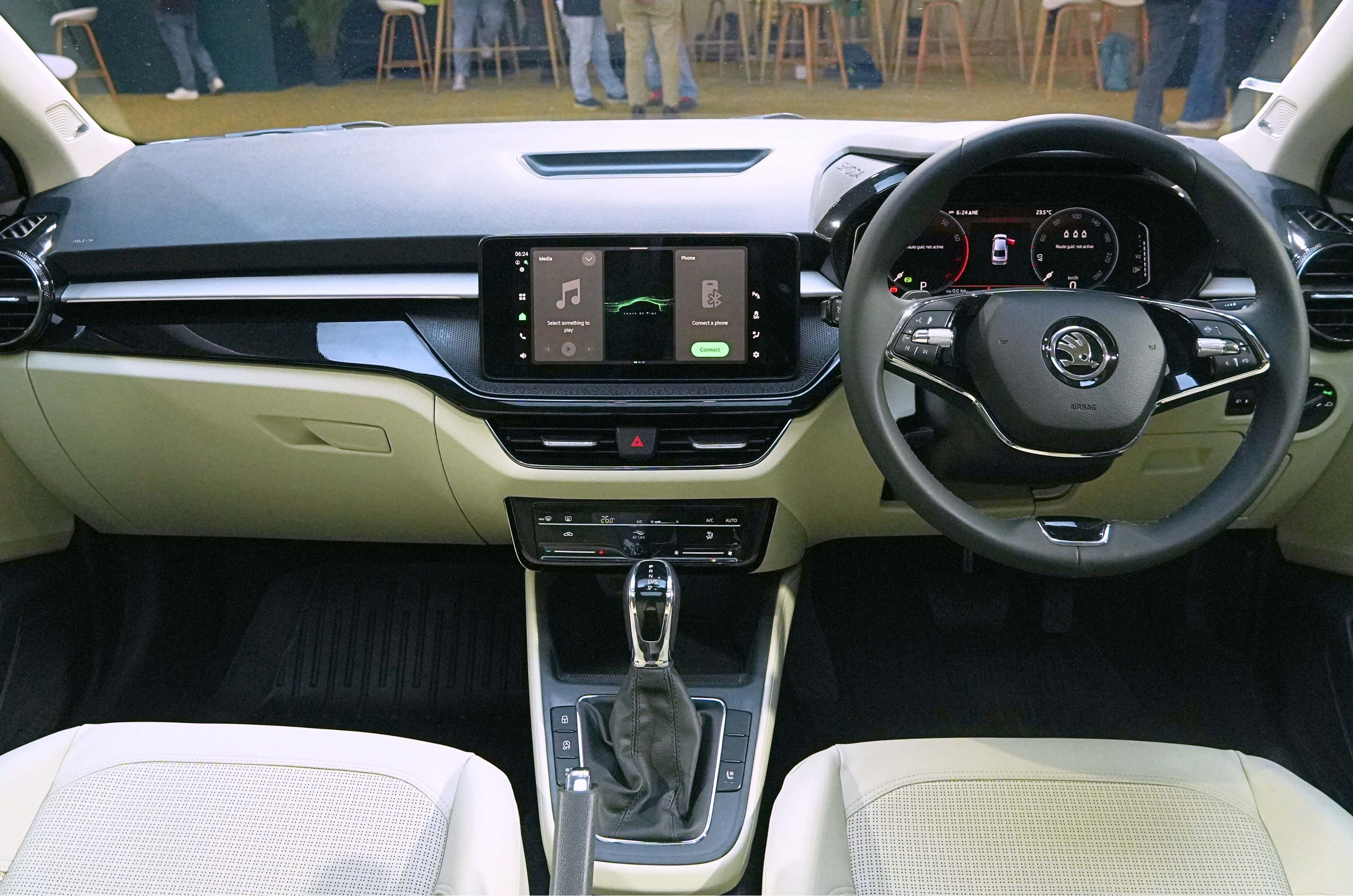
Having debuted back in August, the facelifted Skoda Slavia’s prices will be announced next month. The Slavia facelift brings a host of exterior tweaks, like new DRL signatures for the headlamps, an updated grille, redesigned bumpers, and fresh alloy wheels. Not much has changed on the inside, but there are new colour schemes on offer. Skoda has also added features like a 360-degree camera, a massage function for the outboard rear seats, a larger 10.25-inch digital driver’s display, a Google-based AI assistant, an upgraded variable-geometry AC compressor, and front parking sensors.
Under the bonnet, the Slavia facelift retains its 115hp 1.0-litre three-cylinder direct-injection turbo-petrol and 150hp 1.5-litre four-cylinder direct-injection turbo-petrol engines. The big change here is that the 6-speed torque converter automatic that was previously available for the 1.0 TSI has been swapped with an 8-speed unit, which should deliver better fuel efficiency on the highway. A 6-speed manual gearbox is also available for the 1.0 TSI, whereas the 1.5 TSI continues to be paired exclusively with a 7-speed dual-clutch automatic. The 1.5 TSI will be offered with rear disc brakes too – a much-requested upgrade.
Volvo ES90
Launch: 12 October
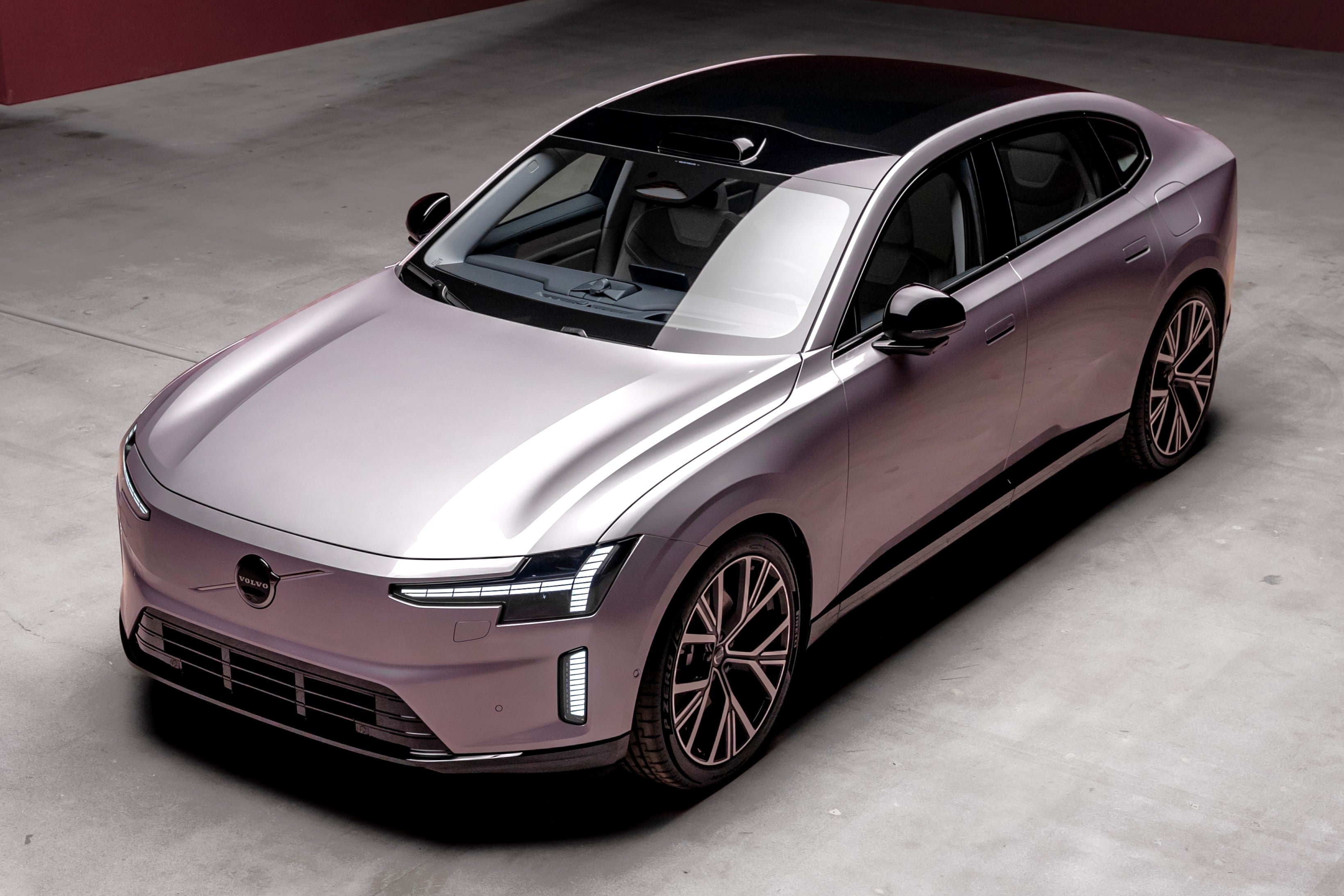
Volvo will return to the luxury sedan space next month with the launch of the all-electric ES90. It’s based on Volvo’s 800V SPA2 platform, and is likely to be offered with a 106kWh battery, dual-motor AWD setup in India. Combined output is pegged at 456hp and 670Nm, which is good for a claimed 0-100kph time of 5.3 seconds. As for WLTP range, the ES90 is rated at 696km, and the sedan can charge at up to 350kW DC, taking 22 minutes for a 10-80 percent top-up.
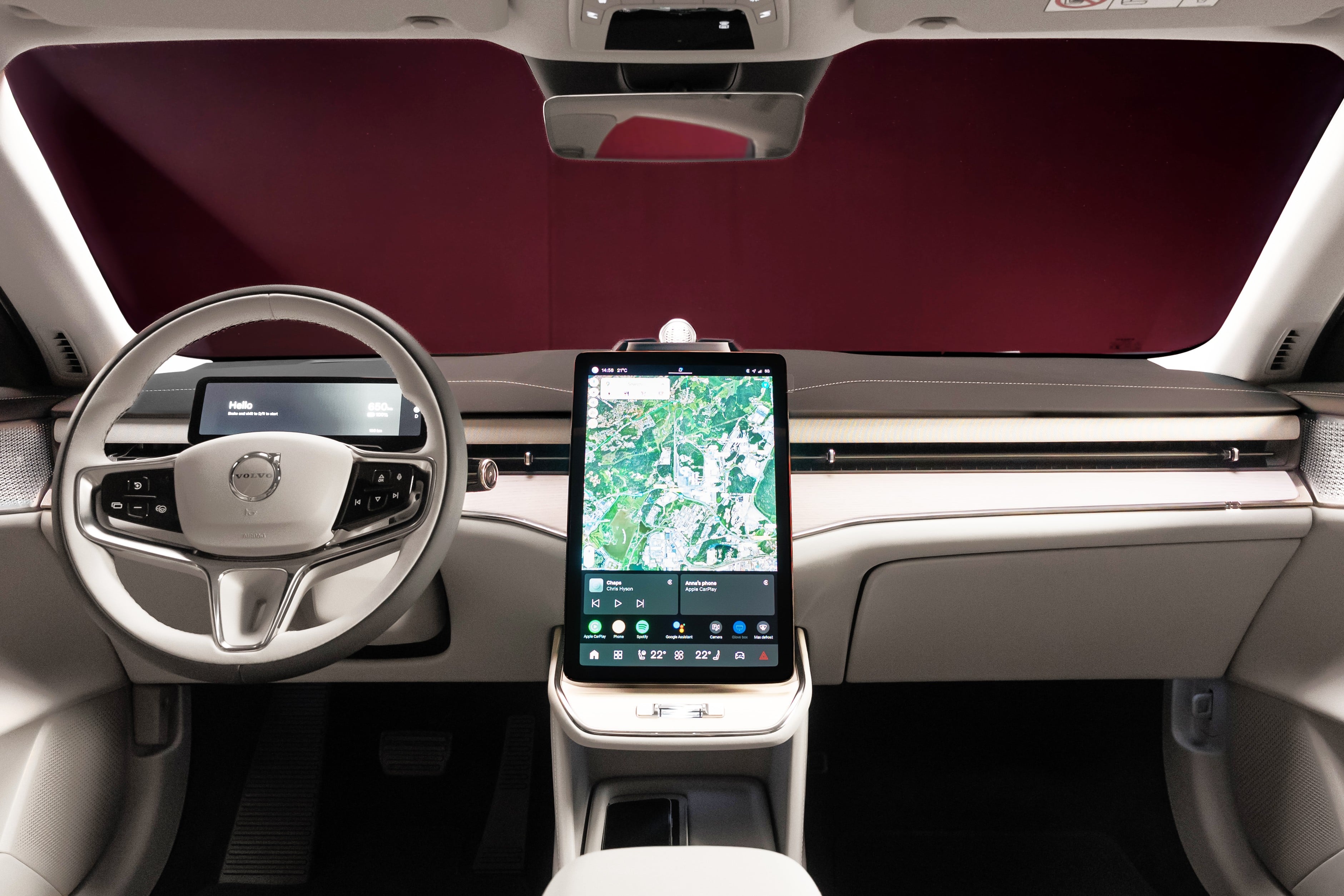
On the outside, the ES90 looks sleek and quietly aggressive, with T-shaped LED headlamps, vertically oriented front fog lamps, clean panelling, and C-shaped tail-lamps. Moreover, it has a drag coefficient of 0.25, making it the most aerodynamic Volvo car yet. Inside, the ES90 packs a 14.5-inch Google-based portrait touchscreen, a floating centre console, a three-spoke steering wheel, a slim 9-inch digital driver’s display, a 13.2-inch head-up display, a panoramic glass roof, four-zone climate control, powered front seats, Level 3 ADAS, and a Bose sound system.
Volvo EX90
Launch: 12 October
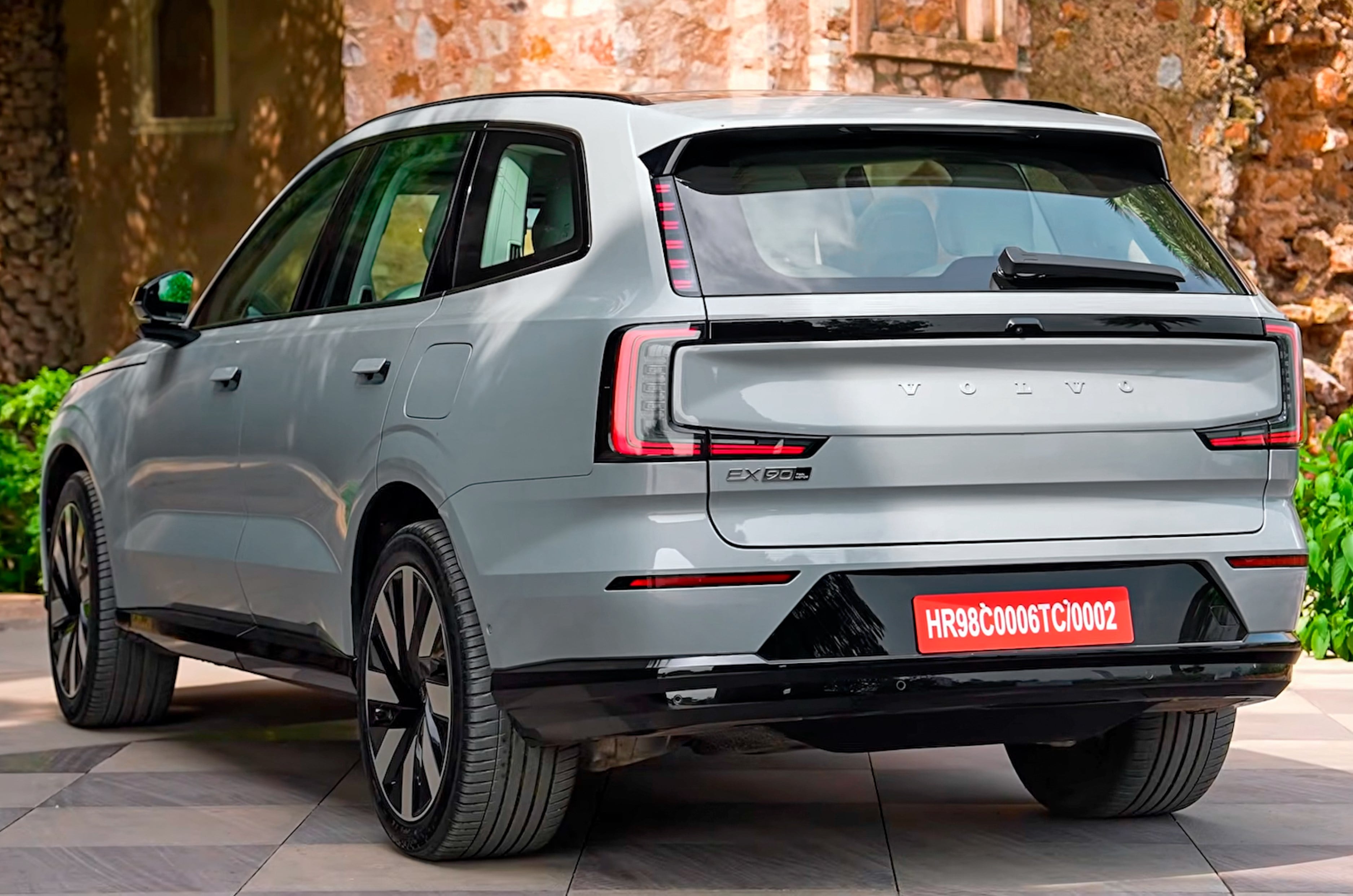
Alongside the ES90, Volvo will launch its SUV counterpart, the EX90. The electric SUV is also based on the SPA2 platform and is expected to offer the same 106kWh dual-motor AWD powertrain. Owing to its higher-riding stance, the EX90’s WLTP range is slightly lower at 625km, but the SUV impressively claims the same 5.3sec 0-100kph time.
Even in terms of exterior design, the core elements are quite similar between the EX90 and ES90. The same holds true for the interior and equipment list as well, with the only major difference being that the EX90 can seat up to six occupants and gets second-row captain’s chairs.
Toyota Glanza facelift
Debut: 14 October
Current Toyota Glanza. Image used for representation only.
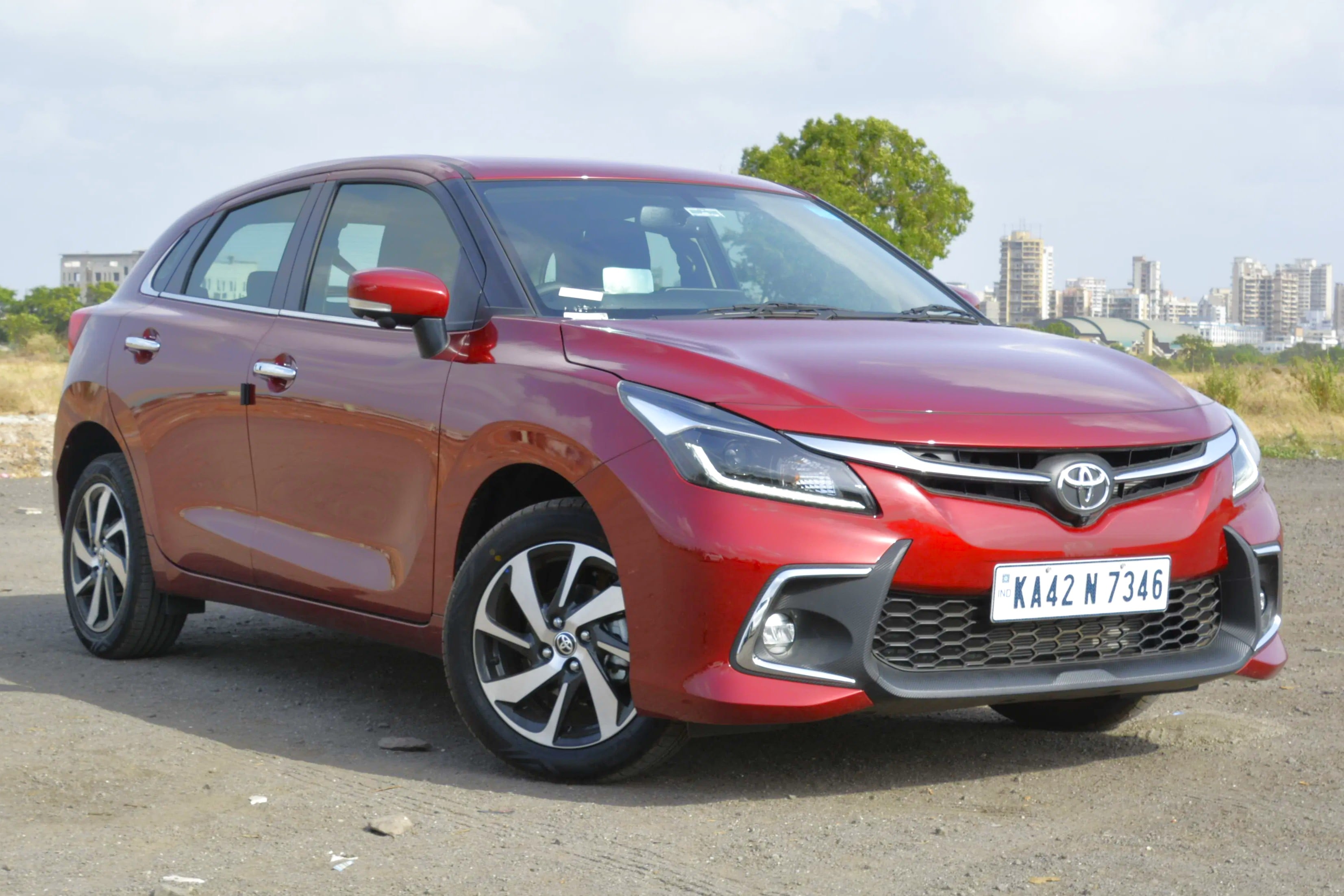
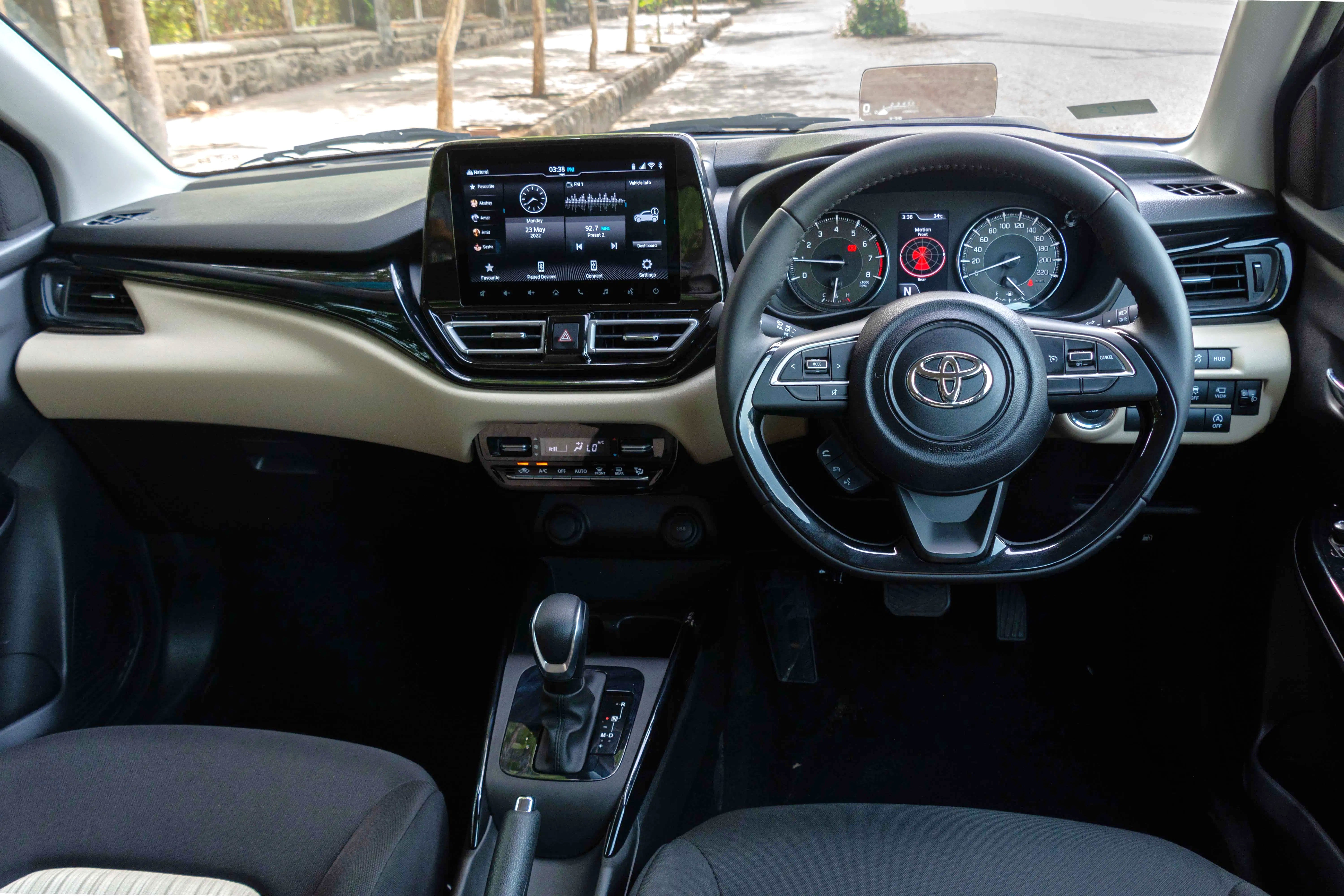
Just a month after the launch of the Baleno facelift, the updated form of its Toyota-badged counterpart, the Glanza, will be revealed. The Glanza facelift is likely to feature styling revisions similar to those of the updated Baleno, like a larger grille, redesigned bumpers, and new alloy wheel designs. Inside, the Toyota hatchback’s dashboard layout is expected to be largely unchanged, save for fresh seat upholstery. New creature comforts are likely to include Level 2 ADAS, a wireless charging pad, and ventilated front seats.
Current Toyota Glanza interior. Image used for representation only.
Under the bonnet, the Glanza facelift is anticipated to mirror the Baleno in dropping its current 90hp 1.2-litre four-cylinder K12N petrol engine in favour of the 83hp 1.2-litre three-cylinder Z12E mill. Like in the Baleno facelift, this engine is expected to be offered with either a 5-speed manual or 5-speed AMT in the updated Glanza, along with a 70hp CNG option.
Third-gen Audi Q3
Launch: 16 October
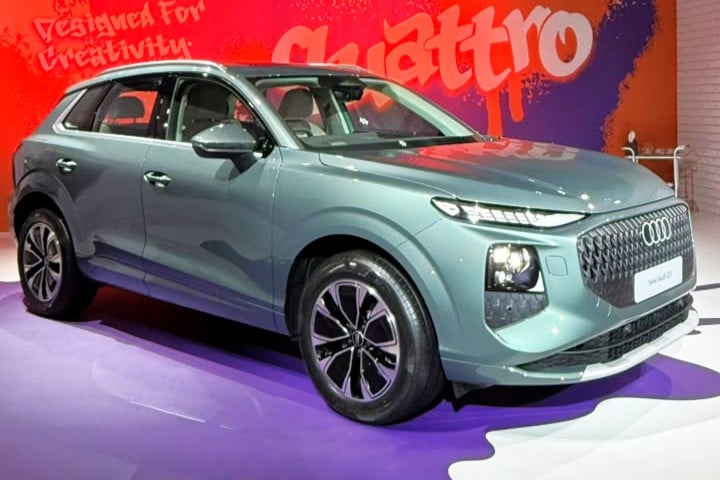
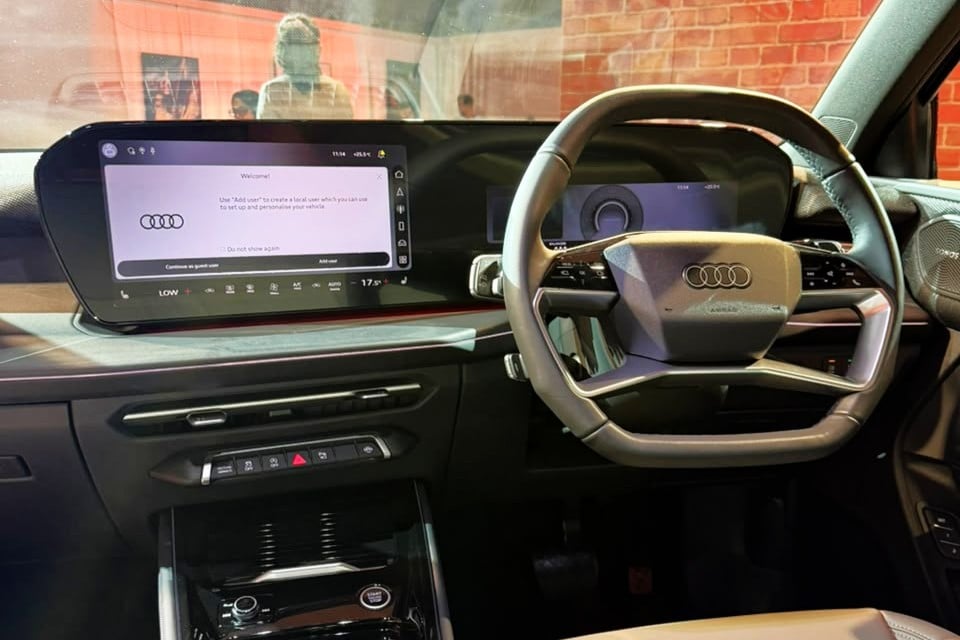
Audi India will launch the latest generation of its entry-level SUV, the Q3, next month. The India-spec third-gen Q3 was unveiled back in August, and will continue to rival the BMW X1 and Mercedes-Benz GLA. On the outside, the new Q3 is larger than its predecessor in every dimension and bears a sharper design language, which includes split LED headlamps, a wide grille, 18-inch alloy wheels, and a rear light bar with an illuminated Audi emblem.
The interior of the third-gen Q3 is more modern and feature-loaded too, offering a 12.8-inch touchscreen, an 11.9-inch digital driver’s display, a new squircle-shaped four-spoke steering wheel, ambient lighting, a Sonos sound system, a panoramic sunroof, ambient lighting, a 360-degree camera, dual-zone climate control, among others. Under the bonnet, the Q3 continues to get a 204hp 2.0-litre four-cylinder direct-injection turbo-petrol engine, mated to a 7-speed dual-clutch automatic and Audi’s Quattro AWD system. 0-100kph comes up in a claimed 7.1 seconds, and the top speed is rated at 229kph.
Renault Duster hybrid
Launch: 17 October
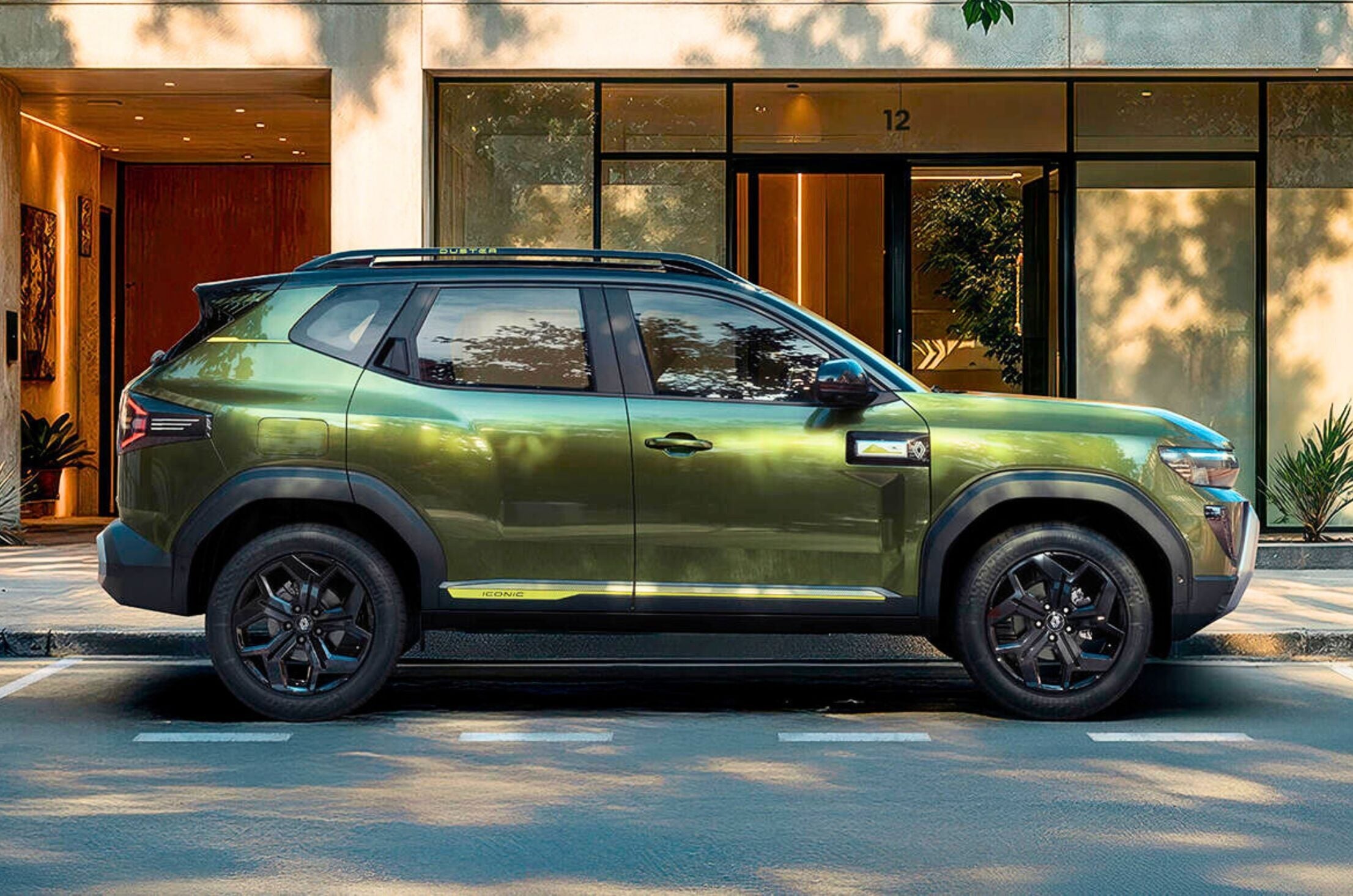
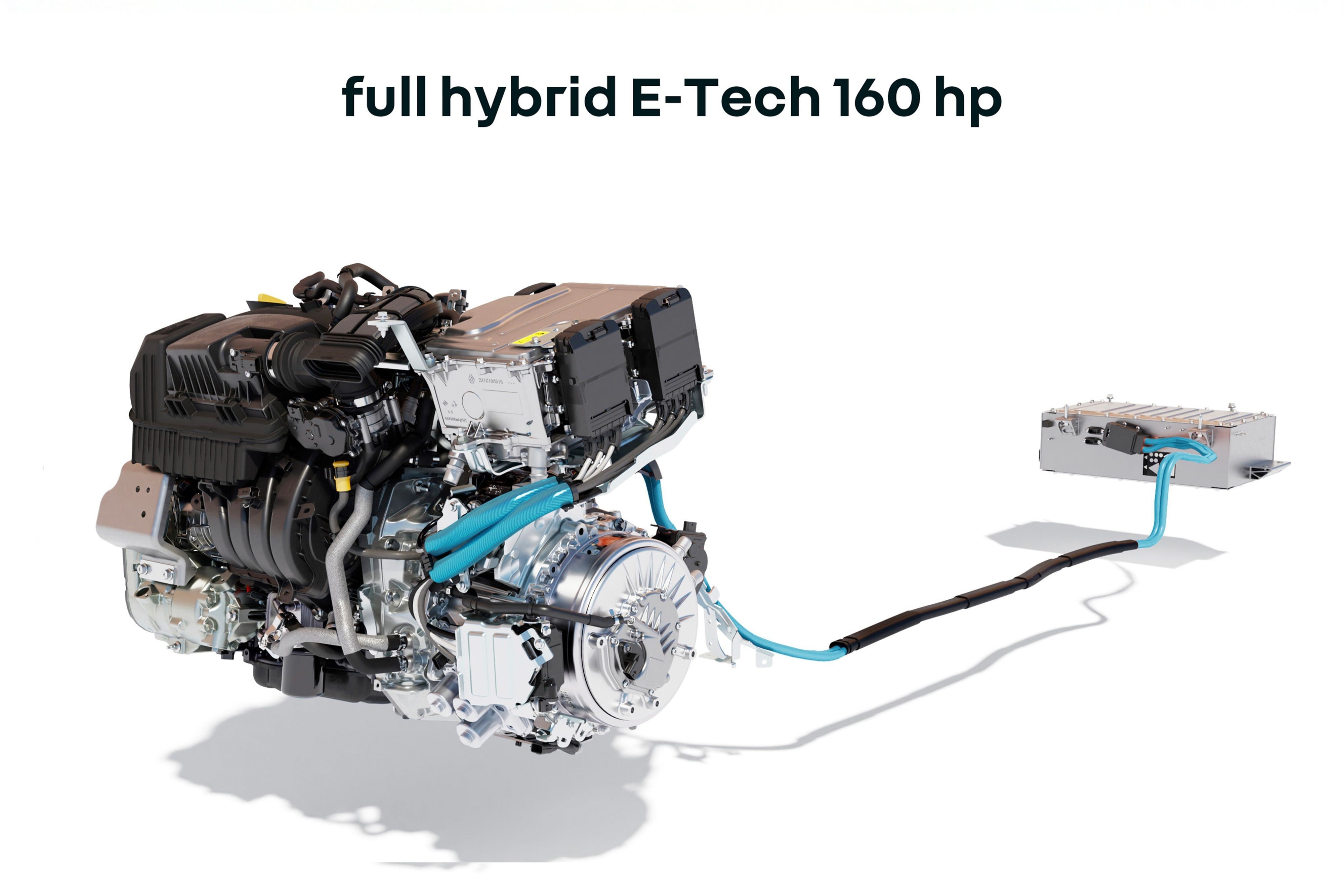
Since its launch earlier this year, the Renault Duster has been available with a couple of turbo-petrol engines only, but that will change come October 17. Renault will bolster the Duster’s line-up with a strong hybrid powertrain dubbed the E-Tech 160. It pairs a 1.8-litre four-cylinder naturally aspirated petrol engine with two electric motors and a 1.4kWh battery pack, developing a combined 160hp and 172Nm.
This setup will be paired with a segment-first 8-speed dedicated hybrid transmission (DHT) that uses fixed gear ratios, unlike the e-CVTs seen in hybrid SUV rivals like the Grand Vitara, Victoris, and Hyryder. The DHT should therefore enable a more natural driving feel to the Duster hybrid. Thanks to its 1.4kWh battery, the E-Tech 160 is also claimed to deliver 80 percent of urban driving in all-electric mode, which should help the Duster hybrid achieve great fuel efficiency.
Hyundai Bayon
Launch: Mid to late October
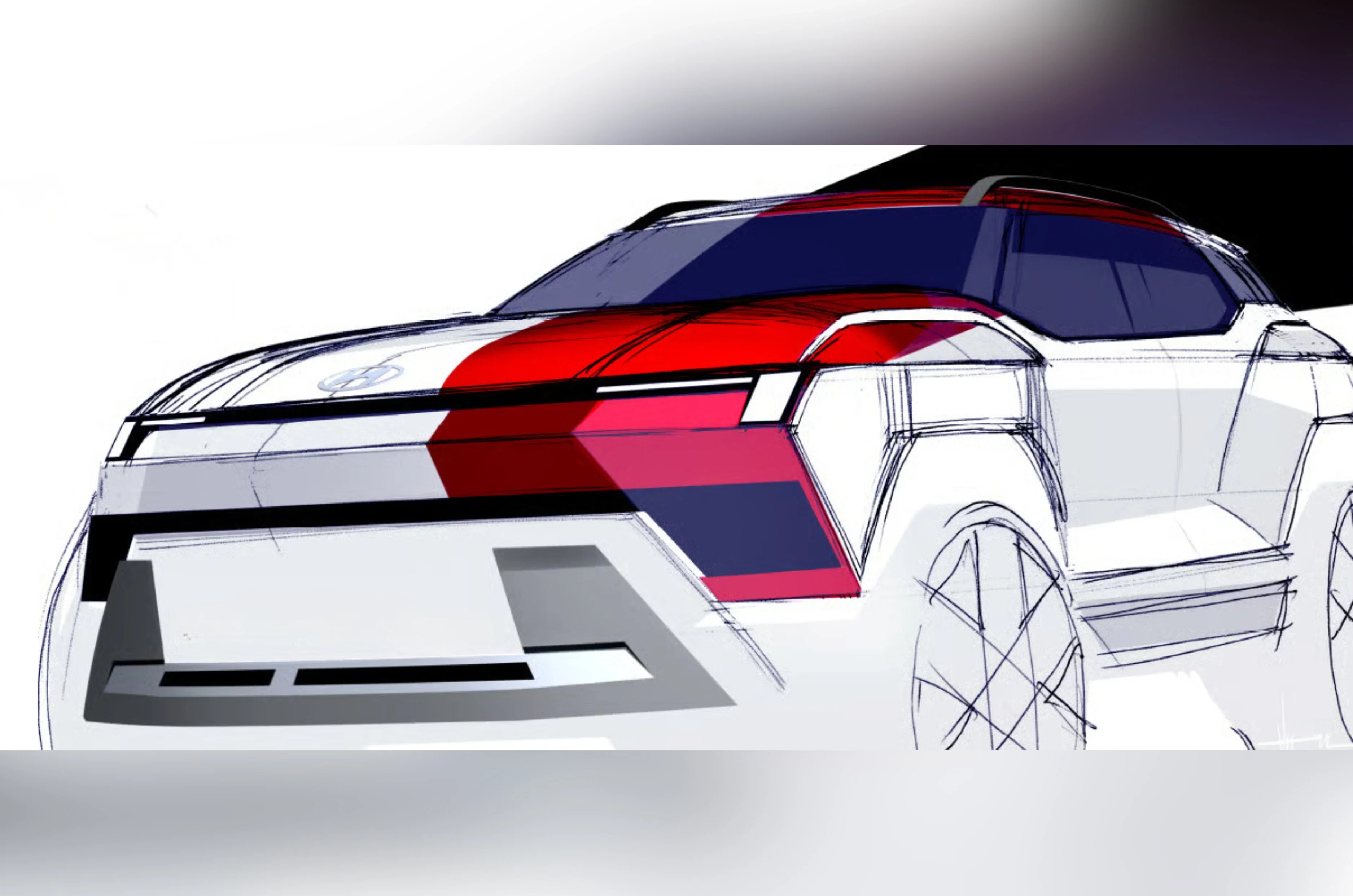
Hyundai’s second midsize SUV for India, the Bayon, is expected to be fully revealed and launched next month – bookings commenced on 23 September. The Bayon will slot between the Venue and Creta, offering the latter’s 1.5-litre naturally aspirated engine in petrol and CNG guises. Gearbox options are likely to include a 6-speed manual and CVT automatic. On the outside, the Bayon will feature Hyundai’s ‘Art of Steel’ design language, with styling cues like L-shaped front and rear LEDs, rakish proportions, an upward-sloping window line, and more. It’s also expected to be the first Hyundai car to come with an underbody CNG tank.
The interior of the Bayon is likely to offer a curved dual-screen setup, a three-spoke steering wheel bearing Hyundai’s four-dot motif, and a vertically oriented centre console – the dashboard layout will resemble that of the fourth-gen i20, which was revealed for the Brazilian market a few months ago.
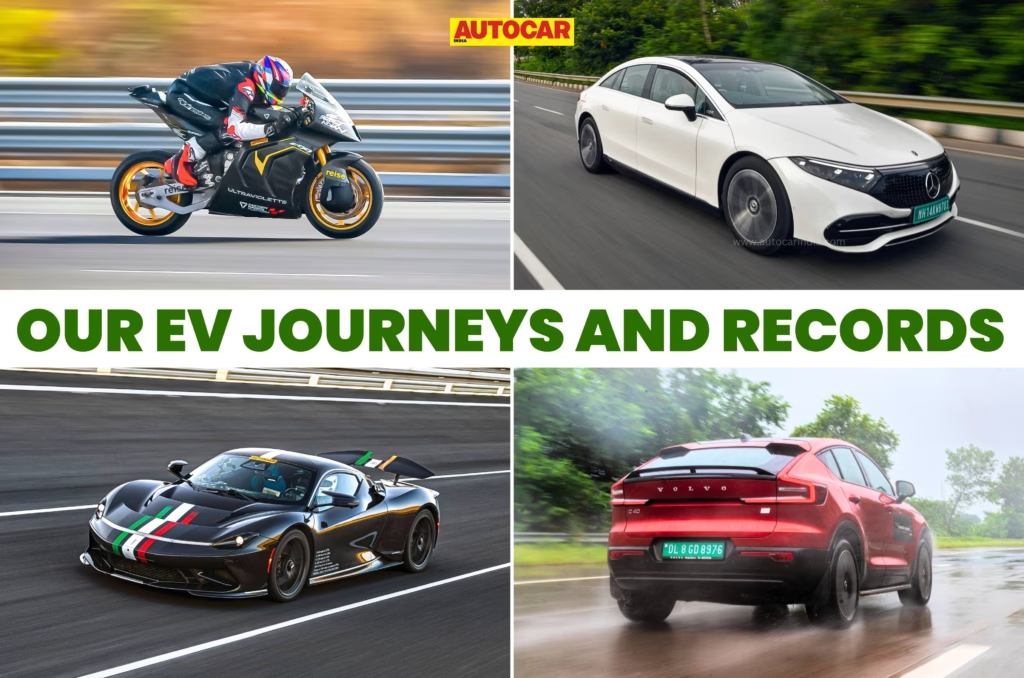
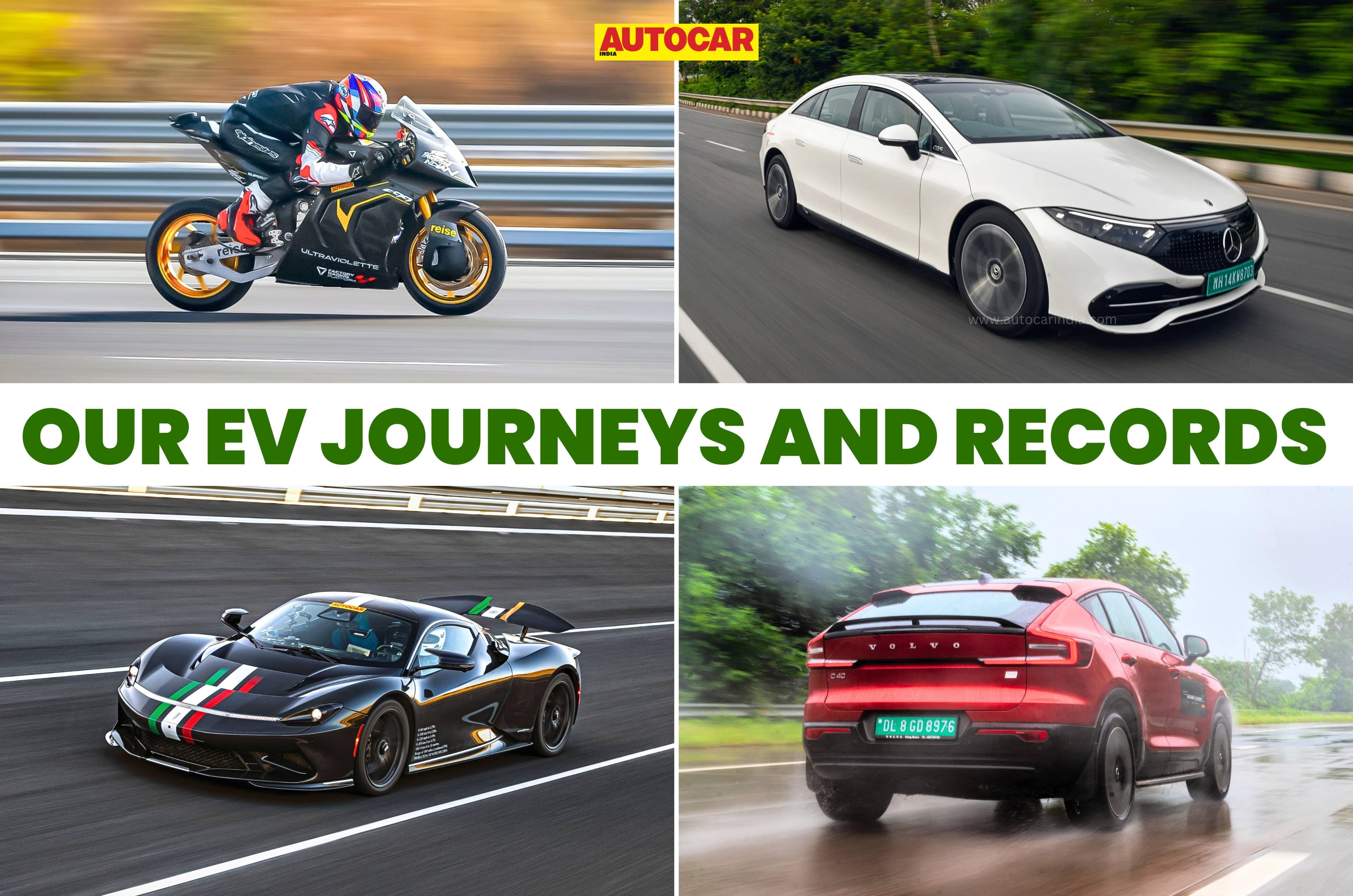
Electric vehicles have skyrocketed in significance over the past decade, particularly in light of global issues like climate change and pollution. EVs require no fossil fuels to run, and therefore emit zero harmful pollutants into the atmosphere. To promote the adoption of EVs, September 9 was designated ‘World EV Day’ six years ago by sustainability-focused companies Green.TV and ABB Group, and is recognised worldwide.
On the sixth iteration of World EV Day, let’s take a look at some of Autocar India’s most notable achievements in the all-electric mobility space.
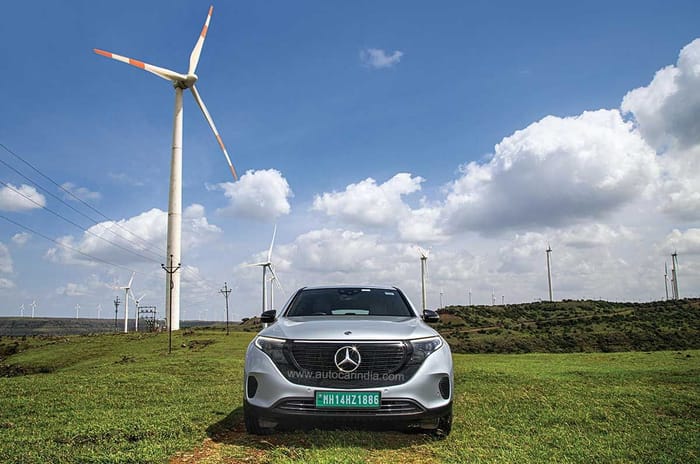
1. Mercedes Benz EQC clean energy charging
Hydro, wind and solar energy were the only means of charging we used
In 2021, we set out on a journey in the Mercedes-Benz EQC to explore how truly “green” EVs can be when powered by renewable energy only; at present, coal is the primary source of energy production. We departed from the Mercedes-Benz facility in Chakan with a full charge, heading to Tata Power’s Khopoli hydroelectric plant, Agaswadi wind farm and Mulshi solar farm.
Along the way, we investigated clean power sources – hydro, wind and solar – that could sustainably fuel EVs in India. While the EQC couldn’t be charged directly from the hydro grid since it mixes with the main grid, we were able to charge the SUV via a 15A plug at Tata Power. However, we did tap charging power directly from wind turbines and solar panels for the EQC. Ultimately, this trip showed us that our EVs could soon be truly emissions-free – not just at the tailpipe, but across the entire power chain.
2. Green Mumbai Drive 2021
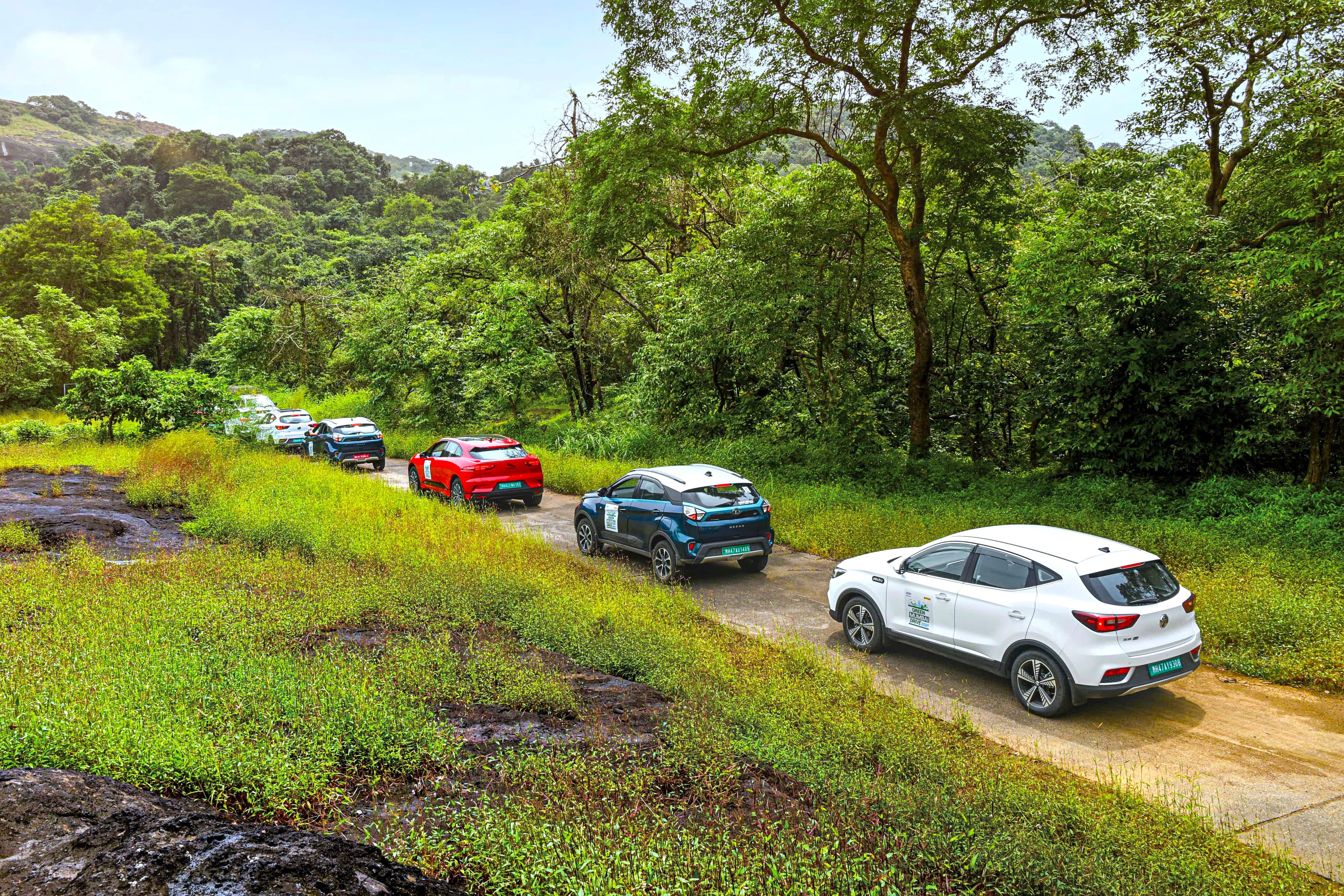
30 EVs quietly trundling through the Sanjay Gandhi National Park
We achieved a rare feat by bringing together every EV that was on sale in India at the time and driving them across Mumbai and through the protected Sanjay Gandhi National Park in Borivali. 30 EVs were part of the drive, including the Hyundai Kona, Tata Nexon EV, MG ZS EV, Mercedes-Benz EQC, Jaguar i-Pace, Audi e-tron GT, and even a Tesla Model X.
The Green Mumbai Drive was flagged off from the Mahalakshmi Racecourse by Aditya Thackeray, MoS for Tourism, Environment and Protocol, and Jeet Adani, director of Adani Electricity. Notable auto industry executives like Santosh Iyer (Mercedes-Benz India), Balbir Singh Dhillon (Audi India), Rohit Suri (JLR India), and Amit Suri (Volvo India) were also part of the event.
3. Debuting EVs in two different national parks
Tata Nexon EV in Satpura Tiger Reserve, Audi e-tron in Gir National Park
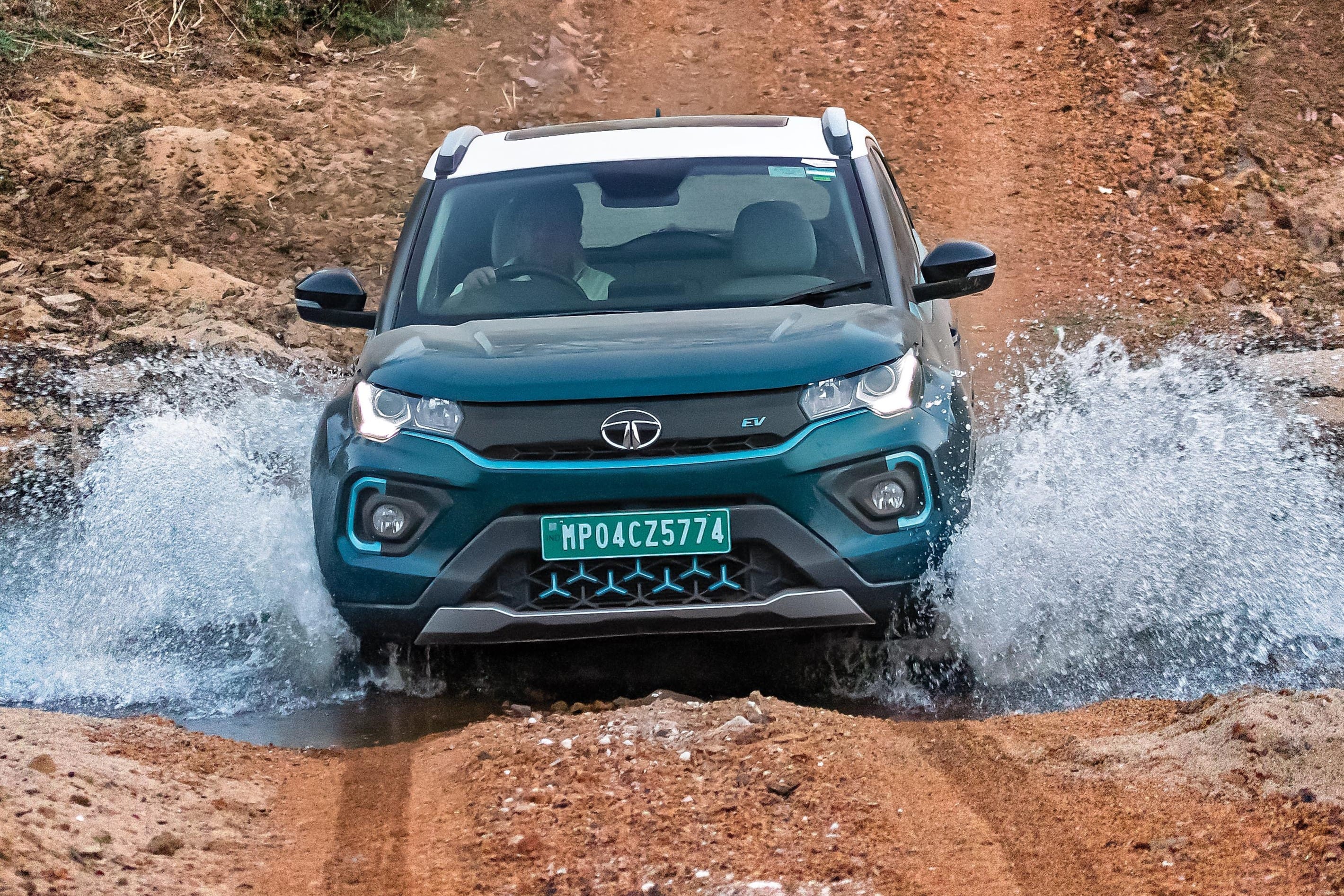
In 2021, we were the first to drive an electric car (specifically, the Tata Nexon EV) into Madhya Pradesh’s Satpura Tiger Reserve. The roughly 140km drive from Bhopal to Forsyth Lodge was completed with around 30km of range remaining, despite starting with the battery at 92 percent. With no fast-charging infrastructure nearby, the Nexon EV had to be charged overnight using a 15A socket. During the safari, the torquey and compact EV performed well on steep inclines and narrow forest trails, and its silent operation allowed it to approach wildlife like sambars, gaurs, wild pigs, and even a leopard without the noise of an idling engine – no tiger, though.
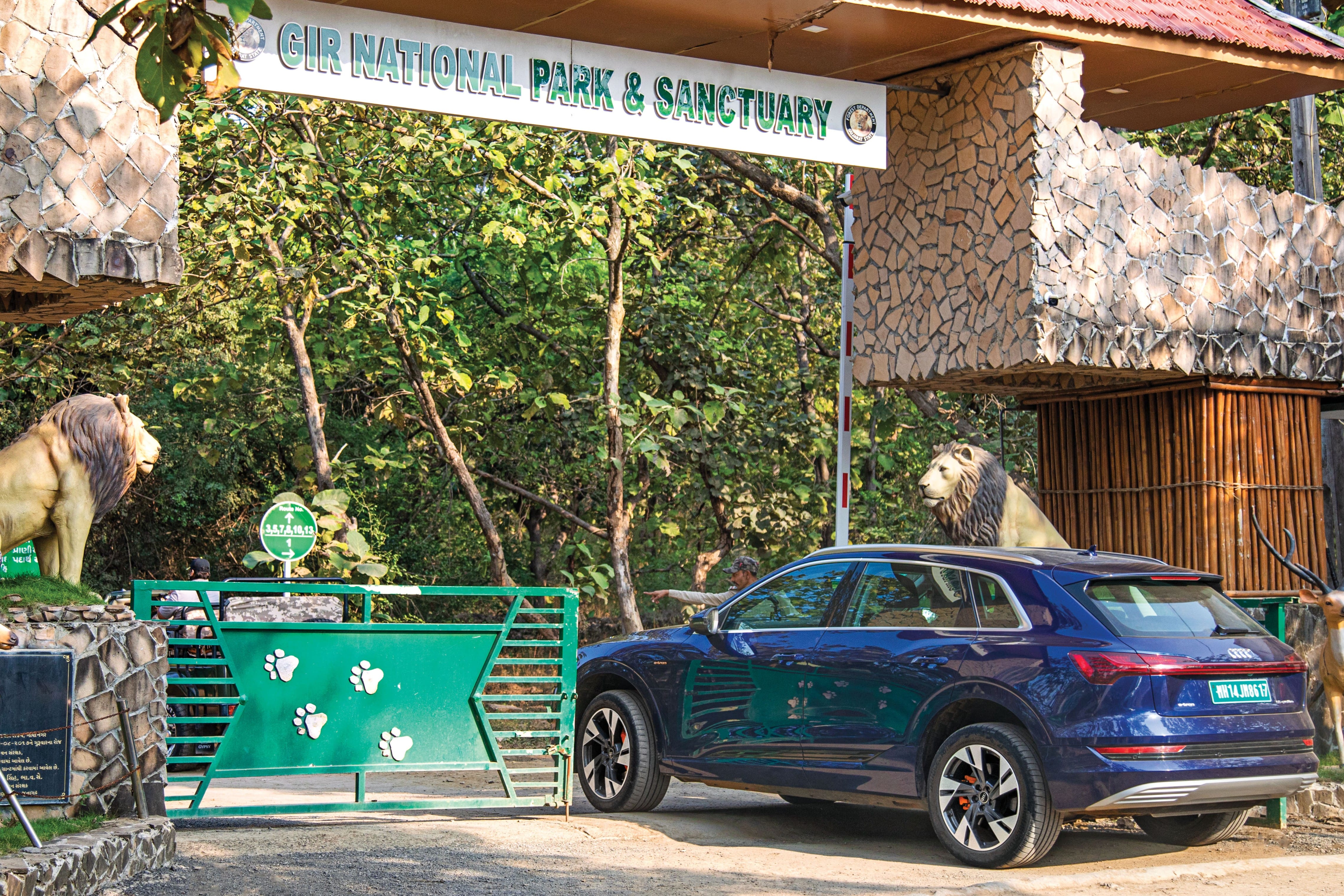
Then, in 2022, we were yet again the first to drive an EV into Gujarat’s Gir National Park, this time in an Audi e-tron. Reaching our accommodation induced a great deal of range anxiety due to faulty chargers along the way, but we managed to get there with around 20 percent of charge remaining. Once we reached, the e-tron was an excellent companion to tour the park with, helping us spot wildlife like chital, crocodiles, lions, and more.
4. Porsche Taycan Kashmir to Kanyakumari road trip
Nearly 4,500km in a performance EV
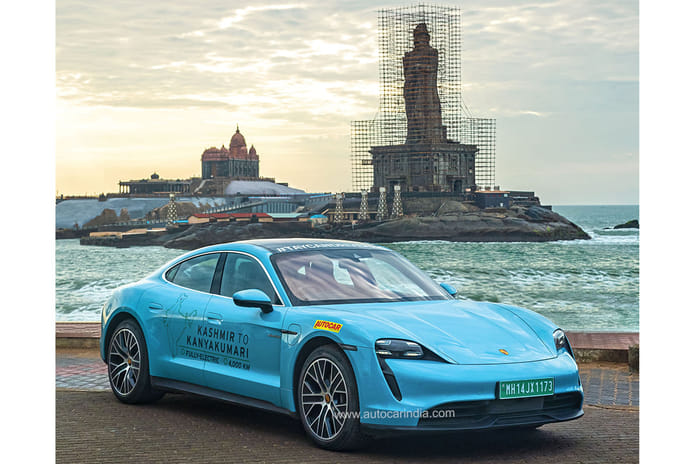
2022 saw us take one of our most ambitious roadtrips to date: 4,467km from Kashmir to Kanyakumari in a Porsche Taycan. Despite challenges like landslides in Jammu, flooded roads in Punjab, and power outages at certain charging spots, the Taycan handled the journey with ease. On one of the most efficient legs, the Porsche EV delivered 7.1km/kWh, working out to an indicated range of 475km.
Comfort mode was the default setting, but we did have lots of fun in some stretches courtesy of the Taycan’s Sport Plus drive mode. Up to 225kW of fast charging bolstered convenience, and total charging expenses tallied up to just Rs 15,422 – cheaper than fuel for an equivalent petrol car. More than just distance, the trip proved that combining sports car-like performance with electric efficiency works perfectly in real-world conditions, and that the Taycan is more durable than you may think.
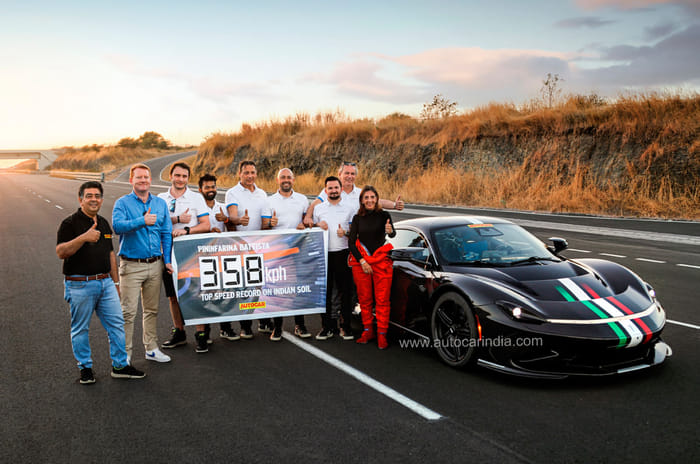
5. Pininfarina Battista India top speed record
1900hp, quad-motor hypercar achieved a 358.03kph top speed
Back in early 2023, we set a new Indian top-speed record with the 1,900hp Pininfarina Battista electric hypercar at the NATRAX high-speed oval near Indore. Achieving an impressive v-max of 358.03kph, the Battista blitzed past the previous record of 332.20kph, which was also set by us in 2016 in an Audi R8 V10 Plus.
The Battista top-speed run also ended up establishing new world records for a production car: 0-300kph in 10.49 seconds and a quarter-mile time of 8.55 seconds, all verified by the Federation of Motor Sports Clubs of India (FMSCI).
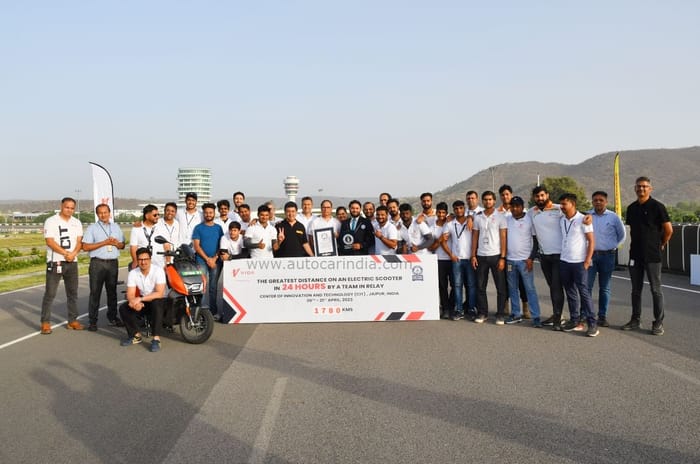
6. Hero Vida V1 Pro longest distance in 24 hours record
The e-scooter travelled just shy of a whopping 1,800km
The endurance challenge relied on swift battery swaps and flawless coordination, with the pit crew achieving 38 battery changes in under 20 seconds – quite impressive considering the extreme heat, rider fatigue, and complexity involved. Moreover, the Vida V1 Pro ran flawlessly throughout, handling the gruelling conditions with ease and maintaining performance consistently.
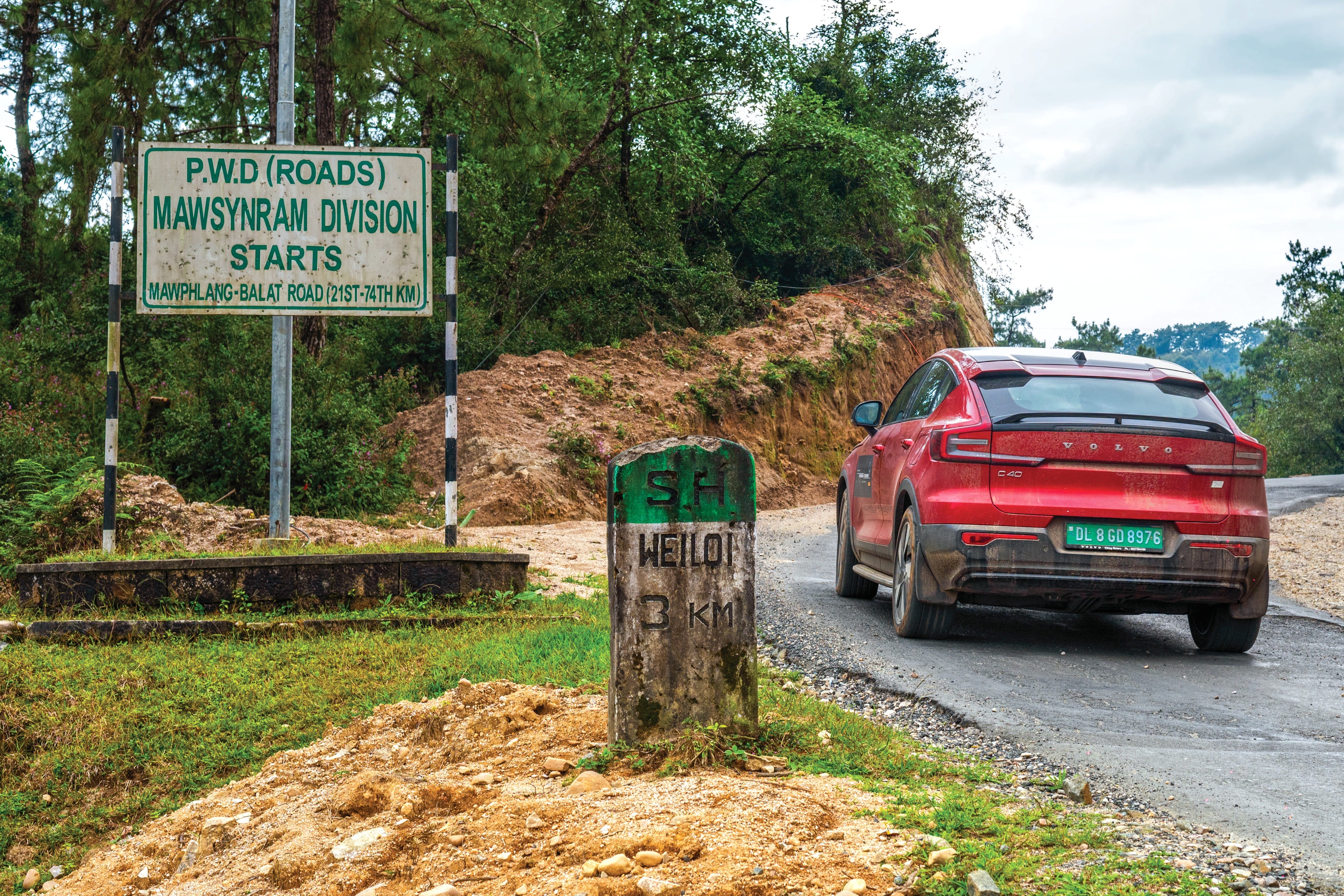
7. Volvo EC40 Jaisalmer to Mawsynram road trip
From India’s driest region to its wettest
In 2024, we took the Volvo EC40 (formerly known as the C40 Recharge) on a roughly 3,000km road trip from Jaisalmer in Rajasthan – one of India’s driest locations – to Mawsynram in Meghalaya, widely recognised as the country’s wettest. The route included a detour to Ghaziabad’s Volvo Reverse Project, a former dumping ground where around 10,000 trees had been planted as part of the company’s reforestation initiative.
Charging was carried out mainly overnight with DC fast chargers also used along the route, and the EC40 posed no issues during the journey. Ironically, we encountered heavy rain and waterlogging in Jaisalmer but surprisingly little rainfall in Mawsynram.
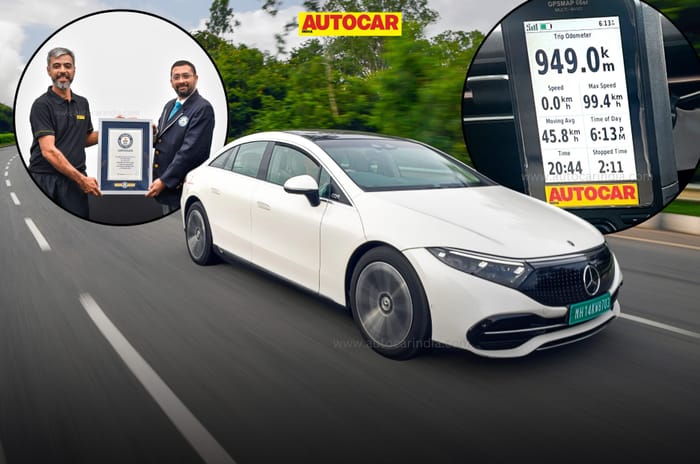
8. Mercedes Benz EQS sedan longest distance world record
Setting off from Bangalore on a full charge, the EQS 580 covered a distance of 949km when it reached its destination in Navi Mumbai, beating the previous Guinness World Record for the same by 32.26km. Impressively, the 949km real-world range exceeds EQS 580’s claimed range of 817km by just over 16 percent. It’s also worth mentioning that the two-day journey was completed under arduous conditions like heavy rainfall, lots of traffic, broken roads, and even a flat tyre.
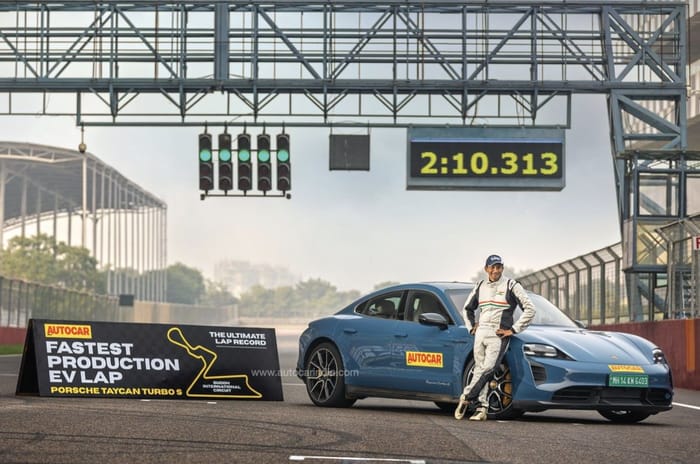
9. Porsche Taycan BIC EV lap record
2:10.313 lap time makes the Taycan the fastest EV around BIC so far
At the Buddh International Circuit in Greater Noida, we lapped a Porsche Taycan Turbo S and clocked a time of 2:10.313 minutes – the first-ever EV lap record around the 5.125km track. Despite its rather portly kerb weight of 2,370kg, the Taycan delivered unexpectedly sharp performance at BIC thanks to 761hp and 1,050Nm, a low centre of gravity (aided by the heavy 93.4 kWh battery), precise steering, and superb balance.
Upon hitting the apex and pinning the throttle, the Taycan belied physics the way it propelled out of corners with explosive speed, and despite weighing 845kg more, the EV achieved nearly the same top speed as the 911 GT3 RS at the end of BIC’s main straight.
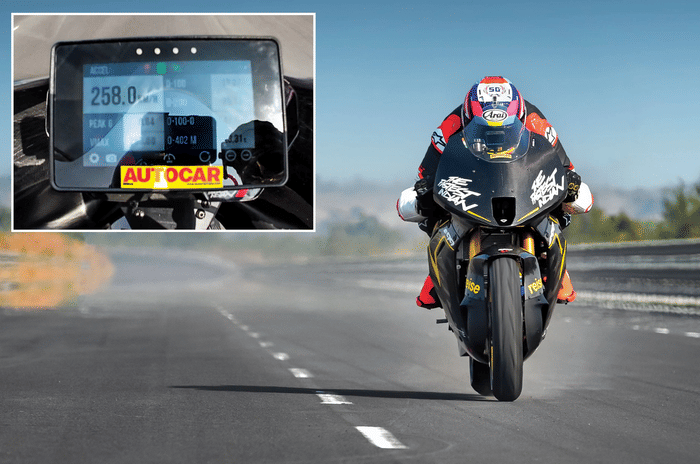
10. Ultraviolette F99 India top speed record
258kph around NATRAX and a 100-200kph run of 6.2 seconds
One of our more recent records entailed setting a new benchmark for made-in-India two-wheelers by hitting a top speed of 258kph on the Ultraviolette F99 at the NATRAX oval. Designed around a 400V architecture with a liquid-cooled powertrain, the purpose-built F99 packs 120hp and an astounding 972Nm (measured at the rear wheel).
The F99’s custom trellis frame, forged carbon-fibre bodywork, Brembo brakes, and Ohlins suspension helped the bike remain stable at high speeds, culminating in a clean record run captured via precision V-Box data. It also achieved a blistering 0-200kph run in under 10 seconds and 100-200kph in just 6.2 seconds, smashing previous Indian motorcycle speed records.
11. Mercedes Benz EQS SUV temperature change record
From the sweltering heat of Rajasthan to the sub-zero chill of Ladakh
Our 2025 Guinness World Record saw us achieving the greatest temperature change endured by a production EV. We accomplished this using the Mercedes-Benz EQS 450 SUV, driving from the scorching heat of 47.5 deg-C in Rajasthan to the below-freezing chill of -3.7 deg-C in Ladakh, for an impressive overall temperature swing of 51.2 deg-C.
The journey tested the limits of the EQS 450 SUV, especially its 122kWh battery’s thermal management system. Despite extreme variations in temperature, the climate control and battery systems kept the EQS 450 SUV performing smoothly and safely.
The Society of India Automobile Manufacturers (SIAM) elected Shenu Agarwal, Managing Director and Chief Executive Officer of Ashok Leyland, as President for the 2026-27 term. SIAM is the apex national body representing all major vehicle and vehicular engine manufacturers in India. The decision was finalised at an executive committee meeting during the 2026 SIAM Annual Convention on Thursday.
Shenu Agarwal succeeds Tata Motors’s Shailesh Chandra as SIAM President
Agarwal served as SIAM Vice President during his previous term
Agarwal has served as SIAM Vice President during his previous term. Taking over as President, he succeeds Shailesh Chandra, Managing Director and CEO of Tata Motors Passenger Vehicles.
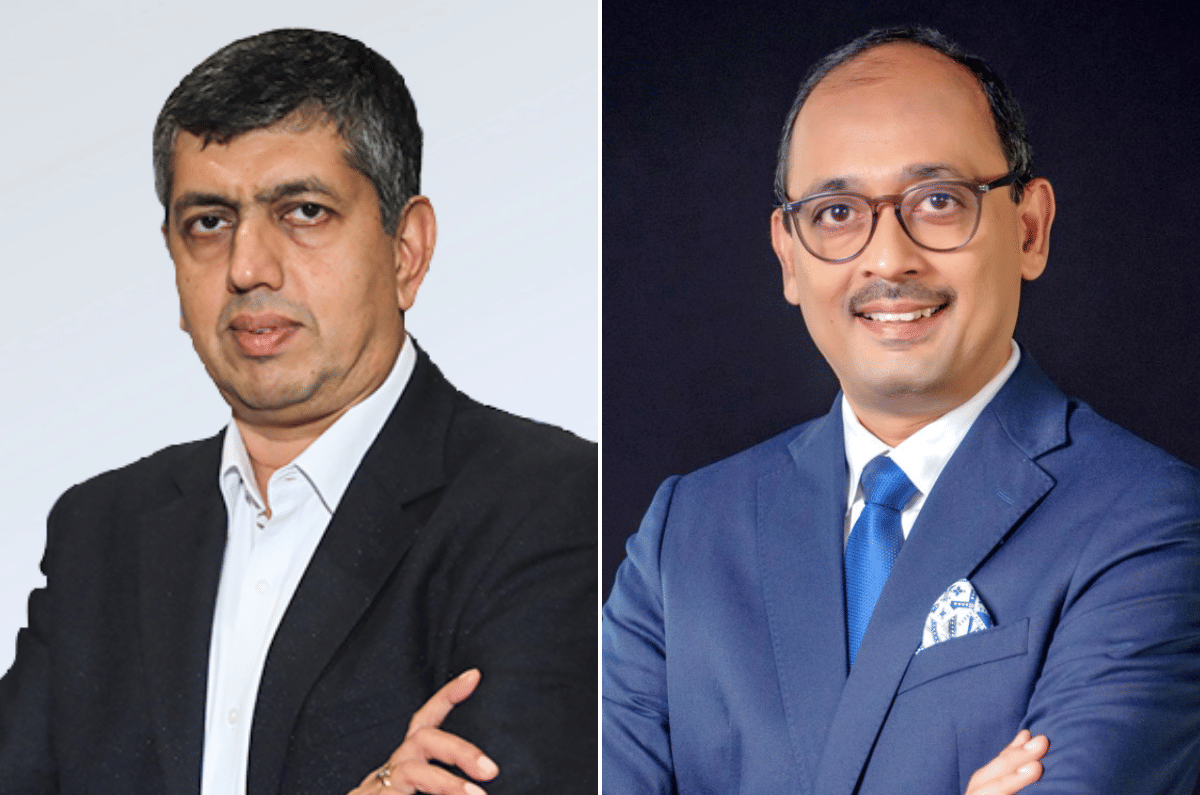
K N Radhakrishnan (left), Santosh Iyer (right).
K N Radhakrishnan, Director and CEO of TVS Motor, was elected Vice President by SIAM. Santosh Iyer, Managing Director and CEO of Mercedes-Benz India, took over as Treasurer for the current term.
Tesla India recorded its highest-ever monthly retail sales in July 2026, delivering 115 Model Y SUVs according to Vahan data. The American EV maker’s previous best stood at 69 units, achieved in September and December 2025. The strong performance follows Tesla’s Rs 9 lakh price cut for the Model Y in June, which lowered its starting price to Rs 50.89 lakh (ex-showroom).
Tesla holds a 16 percent share of the luxury EVs sold in July
Over 600 units of cumulative sales so far
Tesla Model Y priced between Rs 50.89 lakh and Rs 61.99 lakh (ex-showroom)
Tesla Model Y price cut drives July sales
Tesla delivered 115 Model Ys in July, up 203 percent from 38 units sold in June. The sharp increase came after the company reduced the Model Y’s starting price by Rs 9 lakh to Rs 50.89 lakh in June, improving its competitiveness in the luxury EV segment. Before the price revision, demand for the electric SUV had remained relatively limited.
Tesla becomes third-largest luxury EV brand
The July performance gave Tesla a 16 percent share of the 736 luxury electric passenger vehicles retailed during the month, placing it behind BMW India (390 units) and Mercedes-Benz India (174 units), while ahead of Volvo Auto India (51 units). Tesla’s cumulative India sales have now reached 578 units since deliveries began in September 2025, giving it an 8 percent share of the 6,825 luxury EVs sold during the same period. The company has already retailed 60 vehicles in the first 16 days of August, taking cumulative sales past the 600-unit mark.
Tesla’s record monthly sales also contributed to India’s highest-ever monthly electric passenger vehicle retail sales of 34,033 units in July. The company accounted for 0.33 percent of the overall electric passenger vehicle market during the month.
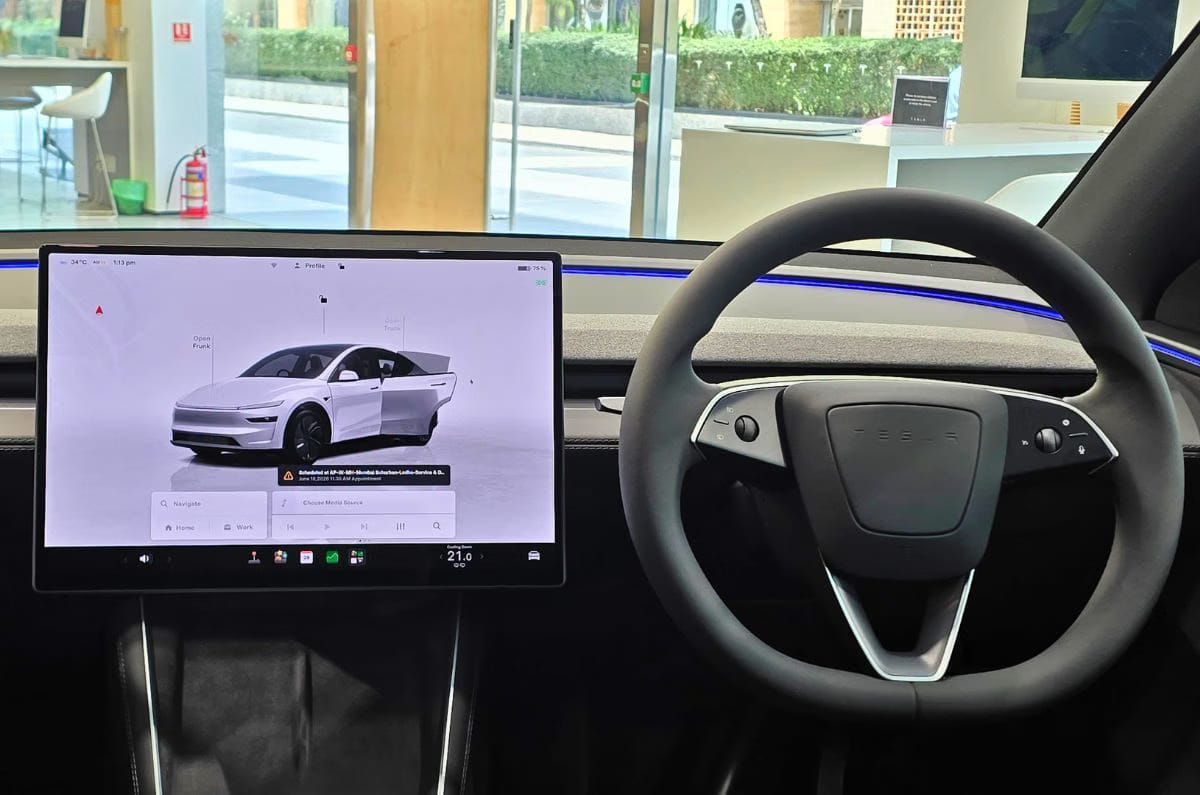
Tesla currently offers the Model Y in five-seat and six-seat Model Y L versions, priced between Rs 50.89 lakh and Rs 61.99 lakh (ex-showroom). The five-seat Premium RWD variant uses a 64kWh battery with a claimed 500km WLTP range, while the Premium Long Range RWD gets an 84.2kWh battery with a claimed 661km WLTP range. Tesla says the six-seat Model Y L features a dual-motor all-wheel-drive setup with a claimed 681km WLTP range. The Model Y also is now available in India with new artificial intelligence features, the most significant being the Grok AI assistant.
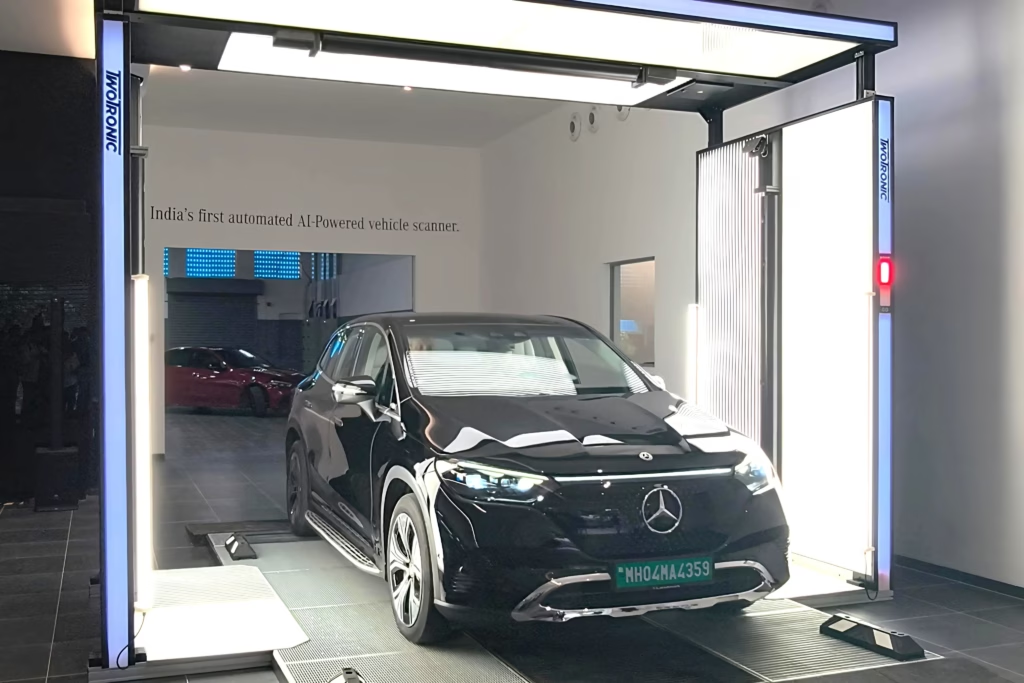
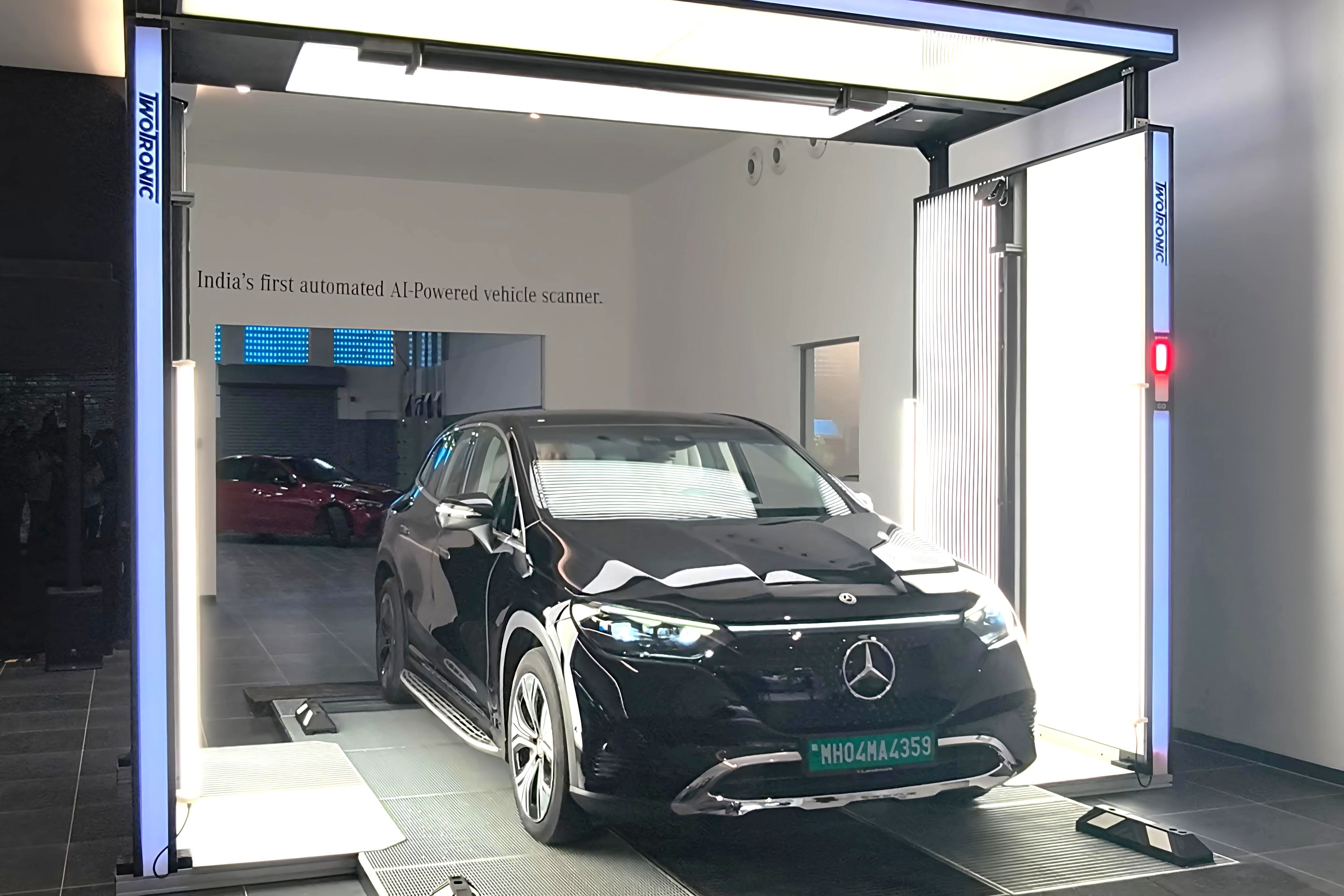
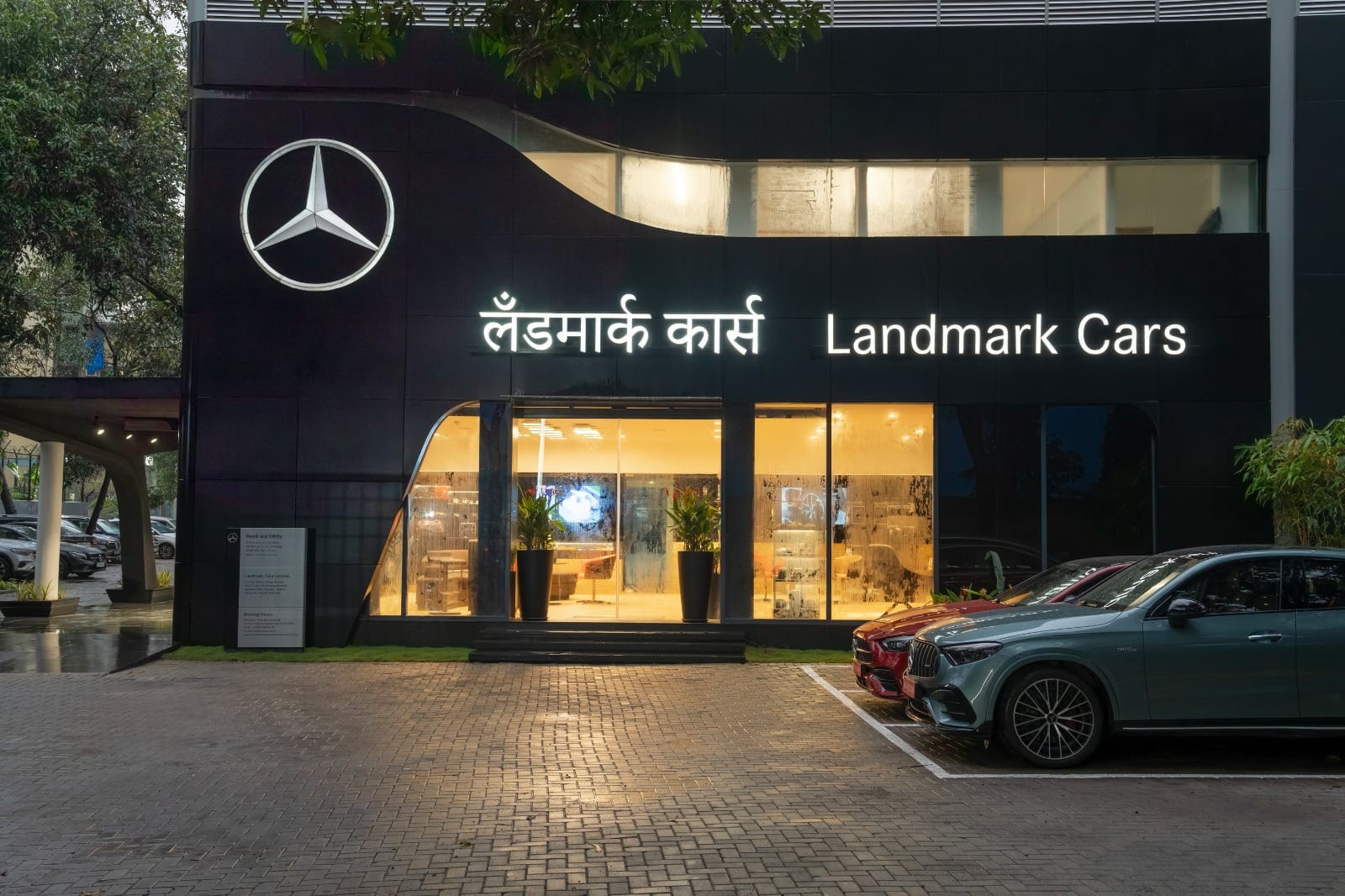
Mercedes-Benz India has revealed an AI-powered device that enables quicker vehicle inspection upon entry to its service centre. Dubbed the XENTRY Scanner, the service debuted at the brand’s newly established centre by Landmark Cars in Jogeshwari, Mumbai.
Mercedes’ first AI-powered car scanning system arrives at its largest workshop in Mumbai.
Uses a 360-degree camera system to identify damage on a car’s exterior.
Service Select debuts as a new scheme for older Mercedes vehicles.
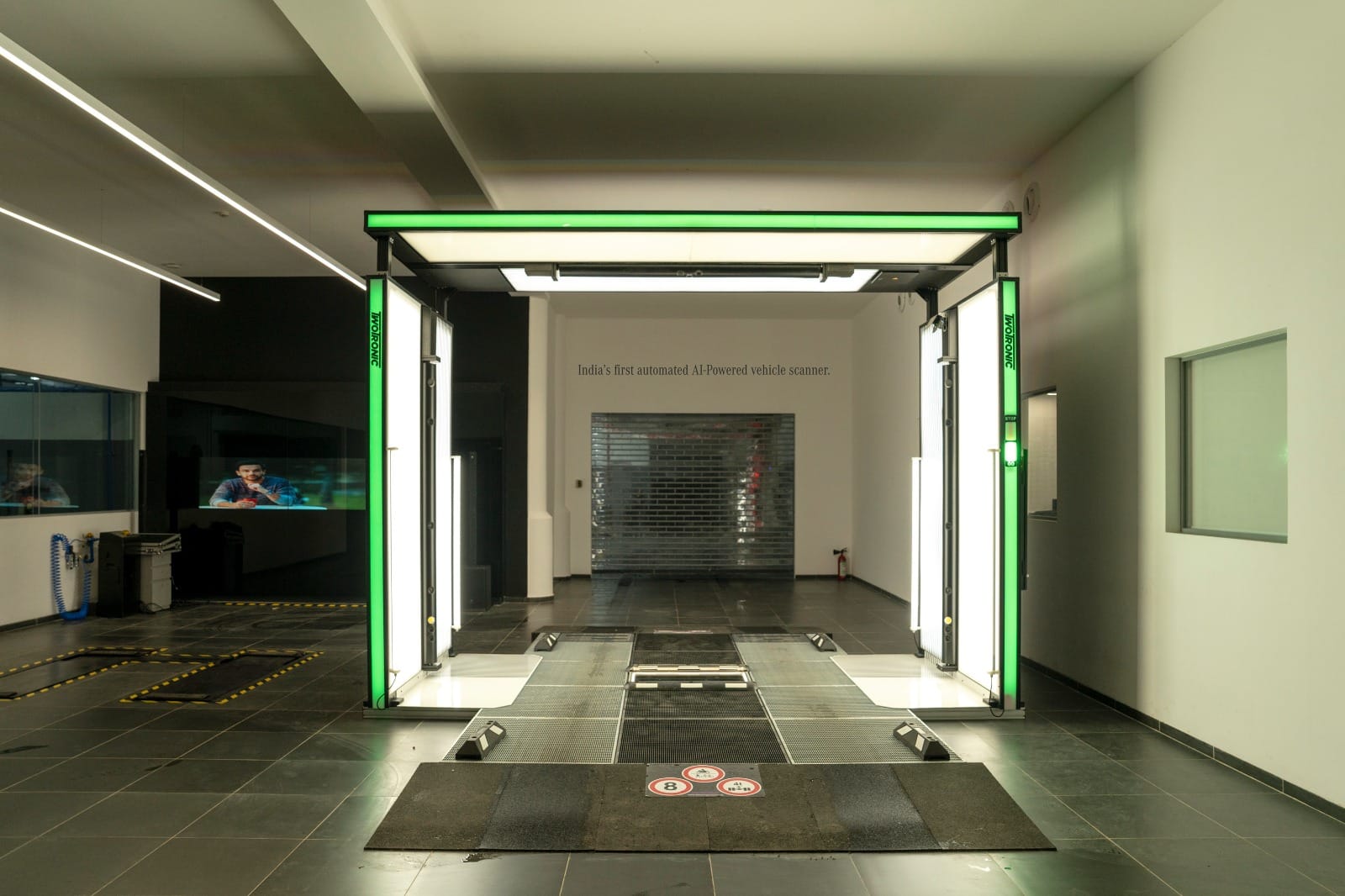
Currently, the scanner is the only one of its kind in India at this service centre, which spans around 58,000 sq. ft., making it the brand’s largest in Mumbai. This facility consists of 16 preventive maintenance and general repair bays, 9 body and paint bays and 9 supporting bays, supported by a dedicated 6,000 sq. ft. spare-parts area.
How does Mercedes’ XENTRY Car Scanner work?
The brand calls it an MRI scanner for its cars
Mercedes-Benz’s XENTRY car scanner.
As the car enters the workshop, it is made to pass through the XENTRY scanner. The scanner utilises a 360-degree high-resolution camera system comprising 13 cameras and a LiDAR sensor. Images of the car are captured and analysed across four categories: body, underbody, windshield and tyres. The system captures 150 images within 3 to 5 seconds and then transmits the data to the Mercedes-Benz cloud.
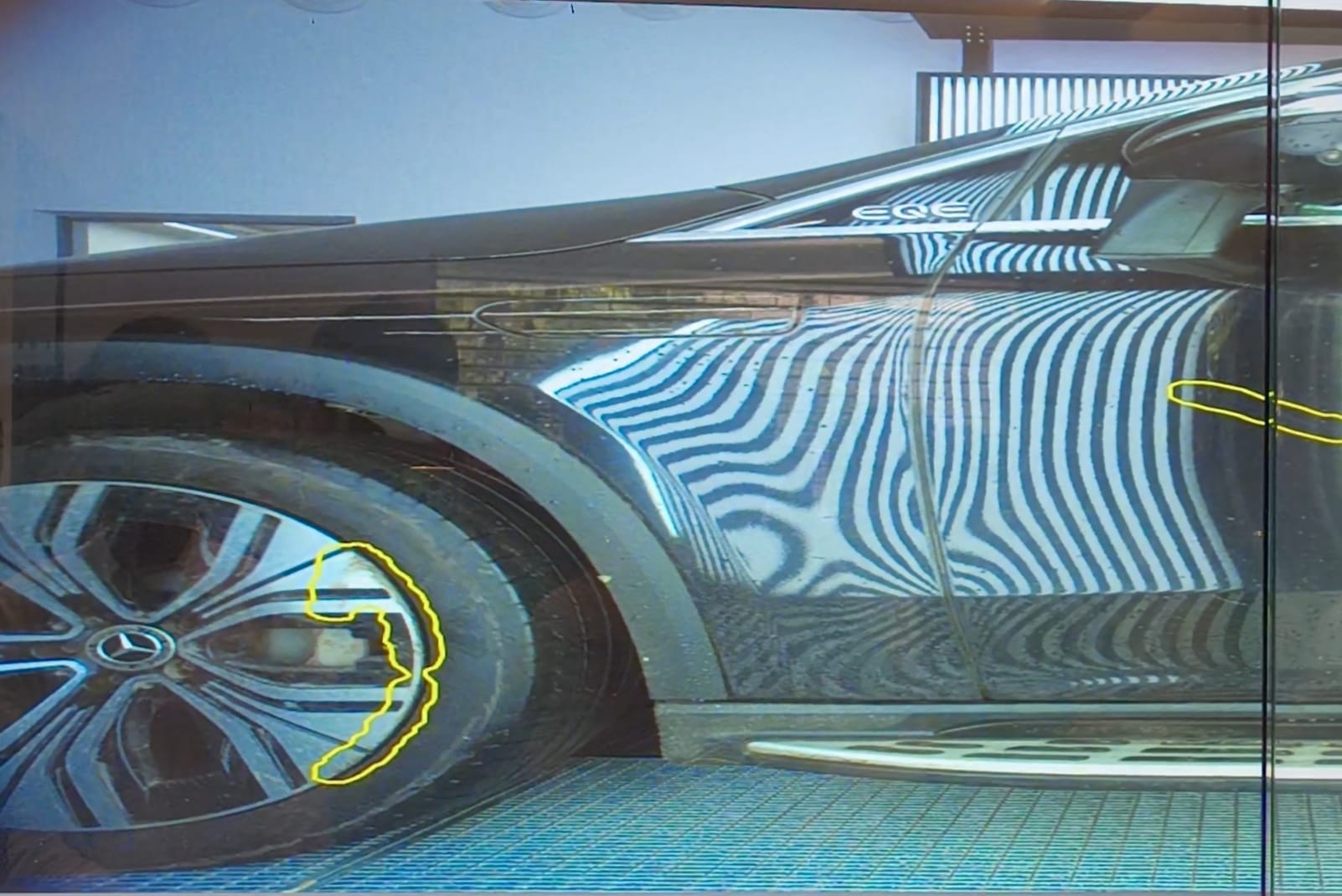
Artificial intelligence then comes into play, identifying every kind of damage on the car’s exterior, even the ones that aren’t visible to the naked eye. It also provides in-depth tyre information, including their health, tread depth and braking performance. To maintain privacy, the system does not capture images of the driver. The findings are added directly to the job card of the particular car without manual entry, enabling better co-ordinated workshop processes. Mercedes says the process is entirely paperless, reducing walking distances, waiting times and paperwork that traditionally accompanied service reception.
Speaking about the thinking behind such initiatives, Mr Santosh Iyer, MD and CEO, Mercedes-Benz India said, “Productivity has to be the core. Reason being, from a real estate perspective, you need to turn cars around faster, while initiatives like the car scanner are more of a productivity enhancement. But on the customer side too, they expect the car to be turned around quickly, which is a pure mobility requirement for the customer.”
Through AI, external wear and tear is automatically detected by the XENTRY car scanner.
Next, a service advisor receives all the information on a tablet and informs the customer of a detailed list of vehicle wear and tear. It is then up to the customer to approve servicing of the concerned parts on the spot. The brand claims that a digital record of service status eliminates the need for manual inspections by the customer.
Interestingly, Landmark’s own internal research points to a shift in service revenue coming from EV adoption growth. “Landmark did a study of the service cost of EV versus ICE. Over the last six months, they’ve seen that the cost is the same in terms of maintenance. But this isn’t coming from maintenance; it’s coming from the body shop. More of the latter is done on EVs compared to ICE cars, said Mr Iyer.
At around 58,000 sq ft, the Landmark Cars workshop in Jogeshwari is the brand’s largest in Mumbai.
India now adds to the list of countries to offer Mercedes’ XENTRY scanner. Previously, the tech was available in international markets like Germany, Italy, Korea, the Netherlands, Switzerland, and Turkey. Furthermore, Mercedes-Benz plans to expand to more than 20 ‘world-class’ luxury outlets in 2026 in India, supported by an investment of more than Rs 450 crore by franchise partners over the next two years.
Mercedes Service Select: A service plan for older Mercedes vehicles
While Mercedes-Benz provides a standard 3-year warranty on new cars, it has also introduced a new service scheme for older vehicles. Called ‘Service Select’, Mercedes cars 7 years or older are eligible for this service. The scheme enables up to 25 percent savings for periodic service and brake care, a 2-year warranty on spare parts, benefits of its ‘Mobilio Lite’ service facility, and residual value protection of the vehicle.
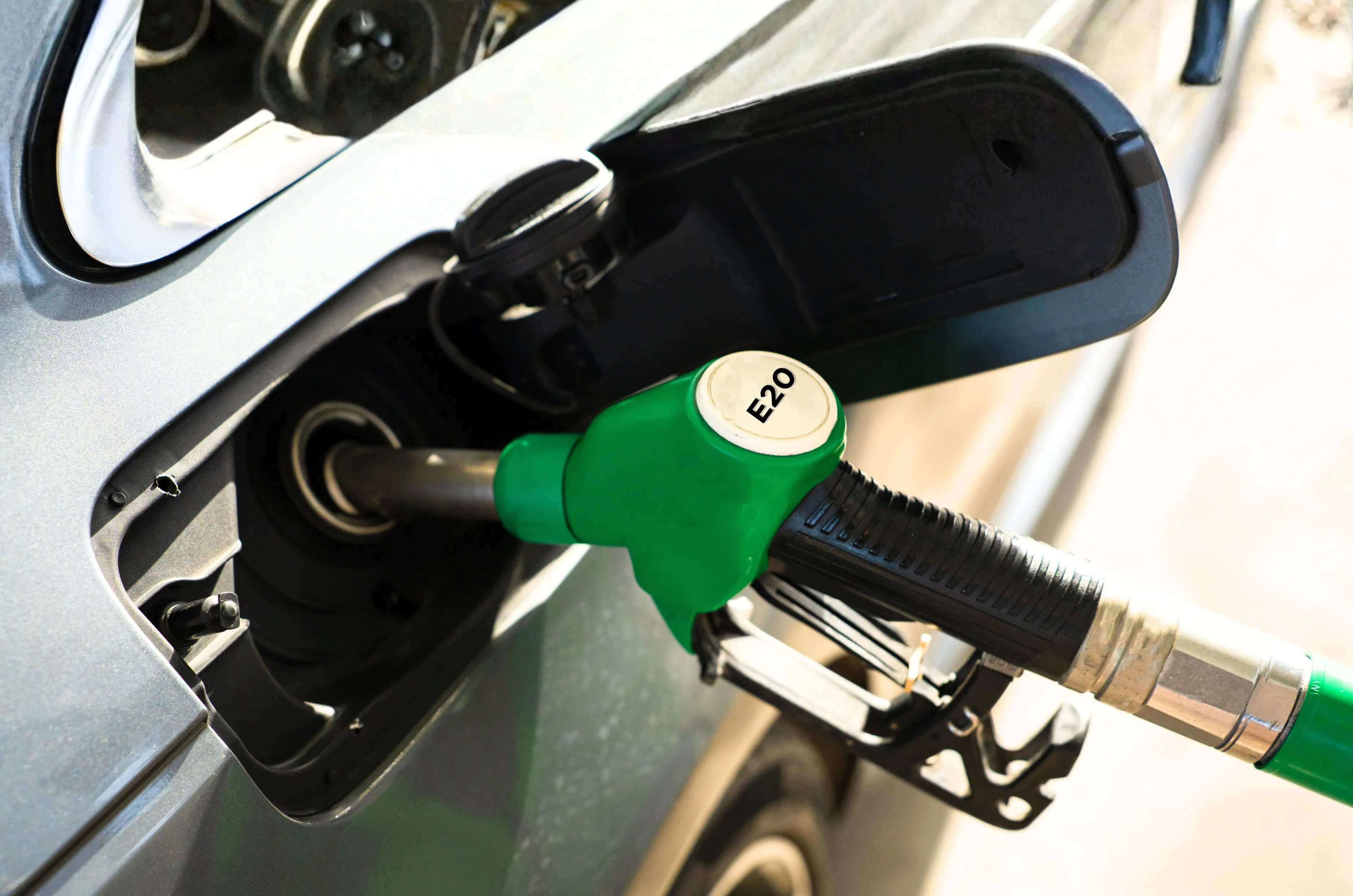
High chloride and moisture contamination in E20 petrol has emerged as a growing concern for the automotive industry, with vehicle manufacturers reporting a rise in failures of fuel system and exhaust-related components. Following discussions with automobile manufacturers and oil marketing companies (OMCs), the Centre has directed OMCs to strengthen fuel quality monitoring at retail outlets, while the industry has called for tighter fuel quality standards.
High chloride and moisture levels found in E20 fuel samples
Ageing fuel infrastructure identified as a likely source
Industry calls for mandatory chloride limits in BIS standards
Contamination linked to rise in component failures
According to industry findings shared with the Ministry of Petroleum and Natural Gas, automakers have reported a significant increase in the replacement of fuel injectors, fuel pumps and other parts that come into direct contact with fuel. Field investigations have identified corrosion and wear caused by excessive chloride contamination as a key contributing factor.
Industry assessments indicate that chloride contamination, when combined with moisture, can form an acidic mixture that corrodes precision components such as fuel injectors, potentially leading to both immediate and long-term damage.
Fuel samples collected from vehicle tanks have recorded chloride contamination levels of up to 500mg/kg, while samples collected from retail outlets have shown levels of up to 350mg/kg. Separate industry assessments have reported chloride levels of up to 300ppm at some fuel outlets, against a recommended limit of under 10ppm.
Moisture contamination adds to the problem
Industry assessments have also reported excessive moisture contamination in E20 petrol. Some samples recorded water content exceeding 10,000mg/kg, while separate investigations found levels of around 7,000mg/kg, against the permissible limit of 3,000mg/kg. Excess moisture can lead to phase separation, where the ethanol-water mixture settles at the bottom of the fuel tank and may be drawn into the engine during operation.
Chlorides and moisture enter the vehicle’s fuel tank via contaminated water and an unclean supply chain, made worse by ethanol’s hygroscopic nature. Industry assessments point to ageing storage tanks, pipelines, fuel tankers and other fuel handling infrastructure as likely sources of contamination.
Some petrol pump operators have also raised concerns that ageing underground storage tanks, particularly during the monsoon or in coastal regions, could be more susceptible to moisture ingress, increasing the risk of phase separation in ethanol-blended fuel. The contamination issue is cropping up in certain pockets of the country, especially in the north.
The latest developments come weeks after Mercedes-Benz India also raised concerns over fuel contamination and urged tighter fuel quality checks after reporting contamination-related damage to vehicle components in some cases.
Industry seeks tighter fuel quality standards
According to report from CNBC TV18, the Society of Indian Automobile Manufacturers (SIAM) has urged the government to introduce mandatory chloride limits in BIS fuel specifications. It has proposed a chloride limit of less than 1mg/kg for commercial E20 and E85 fuels, and less than 3mg/kg for anhydrous ethanol used for blending. SIAM said it has been raising the issue with BIS for more than two years, but the proposal has not yet been implemented.
SIAM has also recommended regular audits of older fuel stations, stricter quality checks across the retail fuel network and mandatory chloride limits for diesel, where the parameter currently remains optional. The Centre has since asked OMCs to strengthen on-ground fuel quality monitoring while the root causes of contamination are investigated.
With inputs from Hormazd Sorabjee
Source: CNBC TV18, SIAM, OMCs and auto manufacturers.