हिमाचल प्रदेश के मैक्लॉडगंज का एक वीडियो सोशल मीडिया पर काफी वायरल हो रहा है। इसके वायरल होने के बाद लोगों के सिविक सेंस को लेकर सवाल उठाए जा रहे हैं। वीडियो में दिख रहा कि लोग कई पर्यटन स्थलों पर लोग घूमने के बाद प्लास्टिक की बोतलें, खाने के पैकेट और दूसरी चीजें वहीं फेंक दिए हैं। इसका वीडियो सोशल मीडिया पर तेजी से वायरल हो रहा है। वीडियो में पहाड़ी रास्ते पर जगह-जगह कचरा पड़ा दिखाई दे रहा है। इस घटना ने एक बार फिर लोगों को याद दिलाया है कि पर्यटन स्थलों को साफ रखना और कचरा सही जगह पर फेंकना सभी की जिम्मेदारी है।
वायरल हो रहा वीडियो
वीडियो में दिख रहे नजारे देखकर लोग नाराजगी जता रहे हैं और सवाल उठा रहे हैं कि बार-बार जागरूक करने के बावजूद पर्यटन स्थलों पर लोग जिम्मेदारी से पेश क्यों नहीं आते। इस घटना ने एक बार फिर पर्यटकों के व्यवहार और सार्वजनिक जगहों पर नियमों का पालन करने की जरूरत को लेकर चर्चा शुरू कर दी है।
चारों तरफ फैला है कचरा
सस्टेनिफाई ने हिमाचल प्रदेश में धर्मशाला के पास स्थित मैक्लॉडगंज का एक वीडियो इंस्टाग्राम पर शेयर किया था, जिसे बाद में X पर भी पोस्ट किया गया। वीडियो में पहाड़ी रास्ते पर जगह-जगह कचरा फैला दिखाई दे रहा है। वीडियो बनाने वाला व्यक्ति जैसे-जैसे सड़क पर आगे बढ़ता है, रास्ते के दोनों तरफ फैला कचरा साफ नजर आता है। वहां प्लास्टिक के रैपर, पुराने कपड़े और कागज समेत कई तरह की गंदगी पड़ी हुई थी। पर्यटकों की इस लापरवाही के कारण खूबसूरत पहाड़ी रास्ता कूड़े के ढेर में बदल गया, जिससे इलाके की सुंदरता खराब होती दिखाई दी।
Condition of Mcleod Ganj.
Next time you hear someone saying Switzerland.. Send this video.
Himachal needs to start promoting trash tourism now.. Come volunteer to clean and get a room and food for free for a few days.
वीडियो शेयर करते हुए यूजर ने लिखा, “मैक्लॉडगंज की हालत देखिए। अगली बार जब कोई इसे स्विट्जरलैंड जैसा बताए, तो उसे यह वीडियो जरूर दिखाएं। हिमाचल को अब कचरा साफ करने वाले पर्यटन को बढ़ावा देना चाहिए, जहां लोग सफाई के लिए स्वयंसेवक बनें और बदले में उन्हें कुछ दिनों तक मुफ्त में रहने और खाने की सुविधा मिले।” वीडियो सामने आने के बाद सोशल मीडिया पर लोगों ने नाराजगी जताई और पहाड़ी इलाकों में कचरा फैलाने वाले पर्यटकों की आलोचना की।
यूजर ने किया ये कमेंट
लोगों ने पर्यटकों से अपील की कि वे कचरा पहाड़ों पर फेंकने के बजाय अपने साथ वापस ले जाएं। इस घटना ने हिमाचल में बढ़ते पर्यटन से पर्यावरण को होने वाले नुकसान पर फिर चिंता बढ़ा दी है। एक यूजर ने नाराजगी जताते हुए लिखा, “यह बेहद शर्मनाक है। हर तरफ प्लास्टिक के कवर और बोतलें दिखाई दे रही हैं। तमिलनाडु के ऊटी और पूरे नीलगिरी जिले में सिंगल यूज प्लास्टिक पर प्रतिबंध है। फिर हिमालयी राज्य भी ऐसा नियम क्यों नहीं लागू कर सकते?”
दूसरे यूजर ने लिखा, “यहां पर्यटकों की संख्या बहुत ज्यादा है और लोगों में नागरिक जिम्मेदारी की कमी है। इसके अलावा, नगर निगम की व्यवस्था भी बेहद कमजोर है। सफाई के लिए स्वयंसेवक मौजूद हैं, लेकिन इस खूबसूरत शहर को बचाने के लिए पर्यटकों पर जुर्माना लगाना और उनकी संख्या सीमित करना जरूरी है।” एक अन्य यूजर ने सहमति जताते हुए कहा, “मैं पूरी तरह सहमत हूं। यह सोचकर भी बहुत दुख होता है कि हमारे हिमाचली भाई-बहनों को इन हालात में किन परेशानियों का सामना करना पड़ता होगा।”
स्विट्जरलैंड के राष्ट्रपति गाइ परमेलिन तीन दिवसीय भारत दौरे पर है। इस दौरे के दौरान प्रधानमंत्री नरेंद्र मोदी ने सोमवार को नई दिल्ली के हैदराबाद हाउस में राष्ट्रपति गाइ परमेलिन से मुलाकात की। इस दौरान प्रधानमंत्री नरेंद्र मोदी ने स्विट्जरलैंड के राष्ट्रपति भारत में बनी एक खास चीज (Cheese) गिफ्ट की है। ये तीनों खास चीजें(Cheese) गुलमर्ग, कोणार्क और येऊर है। स्विट्जरलैंड अपनी बेहतरीन चीज की कई किस्मों के लिए दुनियाभर में जाना जाता है।
वहीं भारत भी अब चीज बनाने के क्षेत्र में अपनी पहचान बना रहा है। इन खास भारतीय चीजों के जरिए देश की समृद्ध और तेजी से बढ़ती चीज बनाने की परंपरा की झलक मिलती है। आइए जानते हैं क्या खास है इन तीनों चीज में
गुलमर्ग, फ्रेंच-स्टाइल ब्री
गुलमर्ग की फ्रेंच-स्टाइल ब्री चीज ने अंतरराष्ट्रीय स्तर पर खास पहचान बनाई है। यह दिल के आकार की नरम और क्रीमी चीज है, जिसे पाश्चुराइज्ड गाय के दूध से तैयार किया जाता है। इसके ऊपर सफेद रंग की परत होती है और इसका स्वाद हल्का मिट्टी और मशरूम जैसा लगता है। इस चीज को 2026 में आयोजित मुंडियाल डो क्वेजो डो ब्रासिल प्रतियोगिता में सुपर गोल्ड अवॉर्ड से सम्मानित किया गया है।
कोणार्क, फ्रेंच टॉम-स्टाइल चीज
कोणार्क फ्रेंच टॉम-स्टाइल चीज अपनी खास बनावट और स्वाद के लिए जानी जाती है। इसका छिलका प्राकृतिक और थोड़ा पारंपरिक (देहाती) अंदाज का होता है। ये चीज अंदर से यह नरम होती है। वहीं इसका स्वाद हल्के मिट्टी और नमक जैसा होता है और अंत में नींबू जैसी ताजगी महसूस होती है। इस चीज ने 2023 में नॉर्वे में हुए वर्ल्ड चीज अवॉर्ड्स में गोल्ड और 2025 में स्विट्जरलैंड में सिल्वर मेडल हासिल किया था।
Prime Minister Narendra Modi’s gift to the President of Switzerland.
Award Winning Cheese from India
Gulmarg – French-style Brie: A heart-shaped, soft and creamy Brie made from pasteurised cow’s milk, with a snowy-white rind and earthy, mushroom-like notes. It received a Super Gold award at the 2026 Mundial do Queijo do Brasil.
Konark – French Tomme-style Cheese : A rustic, natural-rind cheese with a supple texture, earthy and savoury flavours and a lemony finish. It won Gold at the 2023 World Cheese Awards in Norway and Silver in Switzerland in 2025.
Yeoor – Mountain-style Cheese : An aged cheese inspired by Swiss Gruyère, matured for around 8–9 months to develop nutty, sweet and herbaceous flavours. Its rose-petal and fennel-decorated rind gives it a distinctive Indian-Alpine character, while its excellent melting quality makes it suitable for fondue and grilled preparations.
Switzerland is famous around the world for its many varieties of cheese. Now, PM Modi gifted three special Indian cheeses – Gulmarg, Konark and Yeoor – to the Swiss President, giving a glimpse of India’s own rich and growing tradition of cheese-making.
येऊर एक माउंटेन-स्टाइल चीज़ है, जिसे स्विस ग्रुयेरे चीज़ से प्रेरणा लेकर बनाया गया है। इसे करीब 8-9 महीने तक तैयार किया जाता है, जिससे इसमें हल्का मीठा, नट्स जैसा और जड़ी-बूटियों वाला स्वाद आता है। इसके छिलके को गुलाब की पंखुड़ियों और सौंफ से सजाया जाता है, जो इसे अलग पहचान देता है। ये चीज आसानी से पिघल जाती है, इसलिए इसे फोंडू और ग्रिल की गई डिशेज में इस्तेमाल किया जा सकता है।
In the previous issue (August 2026), you saw the Skoda Kylaq take on the familiarity of India, the hills and traditions of Nepal, and the variety of China through Tibet’s gorgeous but bone-shaking terrain, followed by the sensory overload of food and culture. Now, it was time for a fresh experience through Central Asia on the ancient Silk Route, subsequently entering Europe towards our final destination.
Kyrgyzstan – Uzbekistan – Kazakhstan
Kyrgyzstan
The Kylaq had everyone turning heads.
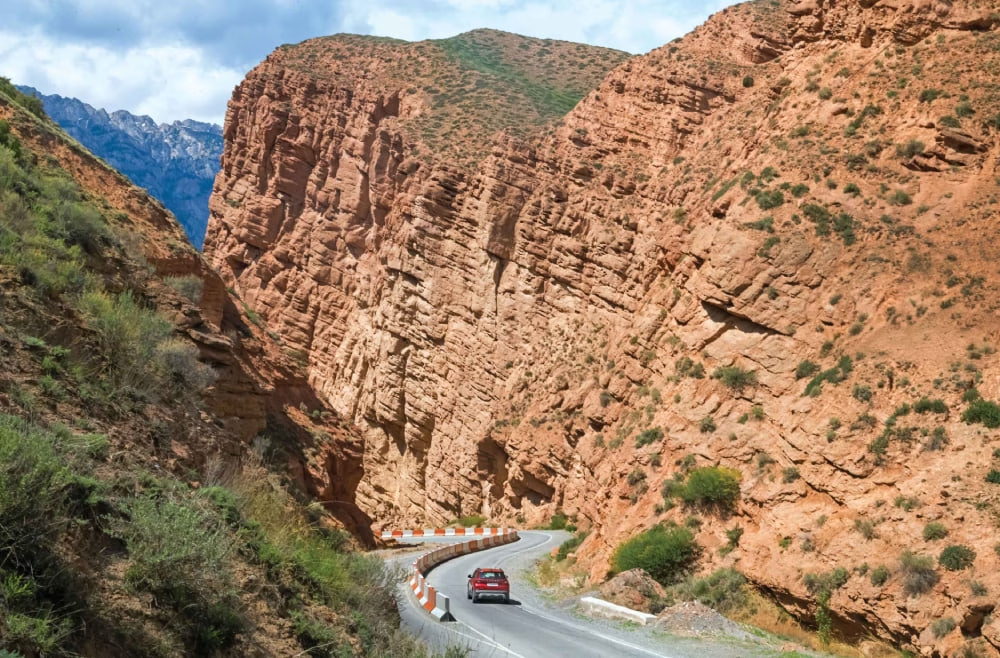
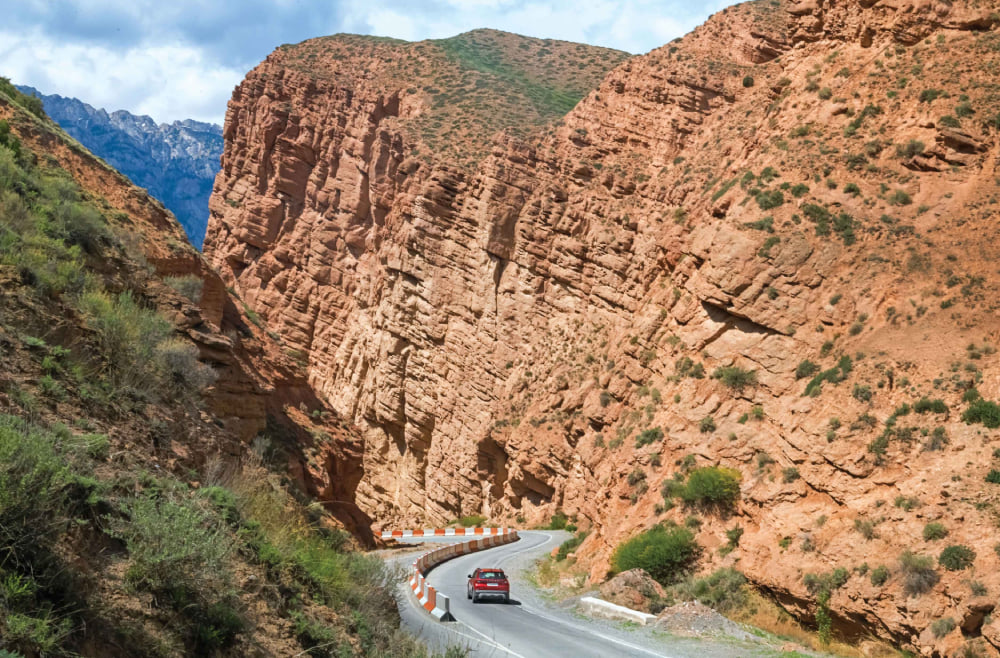
Crossing the Chinese border into Kyrgyzstan was like crossing into a different world. The differences are immediate, right from the signage, fonts and faces to the sights, terrain and traffic. Being a landlocked country peppered with alpine mountains, one doesn’t need to go far to experience what Kyrgyzstan has to offer. As you drive through the ribbon of tarmac between the peaks, you realise why it is called the “Switzerland of Asia”.
A roughly 400km drive to our first halt in Naryn was smooth sailing. However, the chilly weather was a far cry from the piercing heat of China. We pulled out our jackets that were buried deep in our bags and made a beeline the next day for the capital city of Bishkek. The roads are a driver’s delight, and while there aren’t many sights to stop and admire, the Orto-Tokoy Reservoir made for a stunning photo-op.
Kyrgyzstan in numbers
Torgart – Uzbek border
Distance covered
1,321km
Fuel consumed
126.49 litres
Average fuel economy
10.44kpl
Approx. fuel cost
Rs 11,727
Avg. per-litre fuel cost
Rs 92.58
Total time driven
34hrs 23min
Average speed
38.4kph
From Bishkek, we headed to Osh, which is also known as the capital of the south and is the oldest city in Kyrgyzstan. Walking through the Jayma Bazaar in the city centre, you may get a bit of celebrity treatment, as the locals aren’t used to having many tourists just walking through. Some playful heckling and wide smiles add to the overall experience.
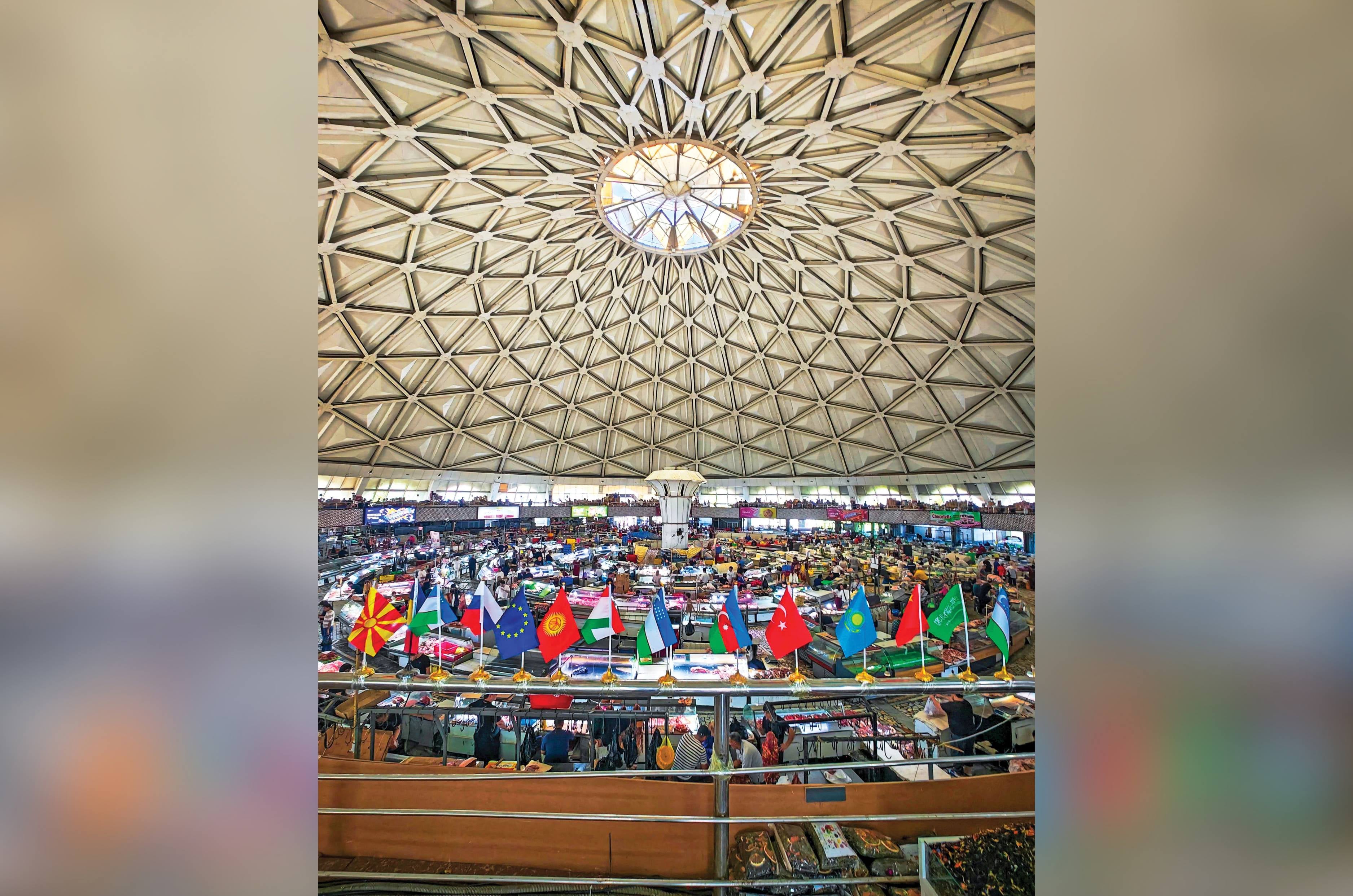
Chorsu Bazaar is a one-stop shop for everything in Tashkent.
What the market offers is mounds of kurut, a snack made from curdled milk or oghurt, salted and then hardened. The best part is its extended shelf life without needing a refrigerator. We packed some with the hope of eating it at home, knowing fully well that it would vanish by the next town.
From Osh, we would be exiting the stunning valleys and terrain of Kyrgyzstan and entering the city of Fergana in Uzbekistan.
Uzbekistan
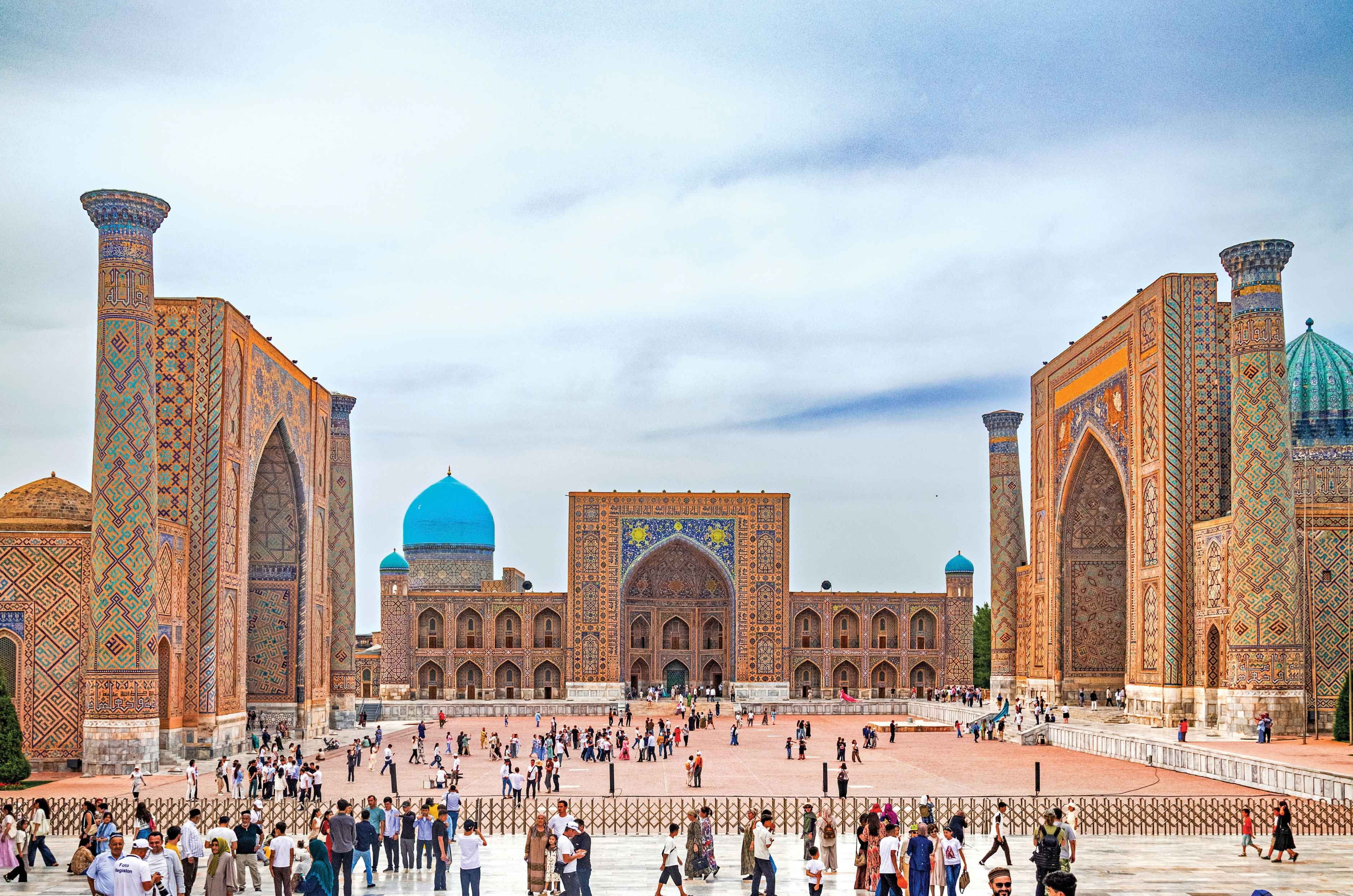
Registan Square in Samarkand is breathtaking from every angle.
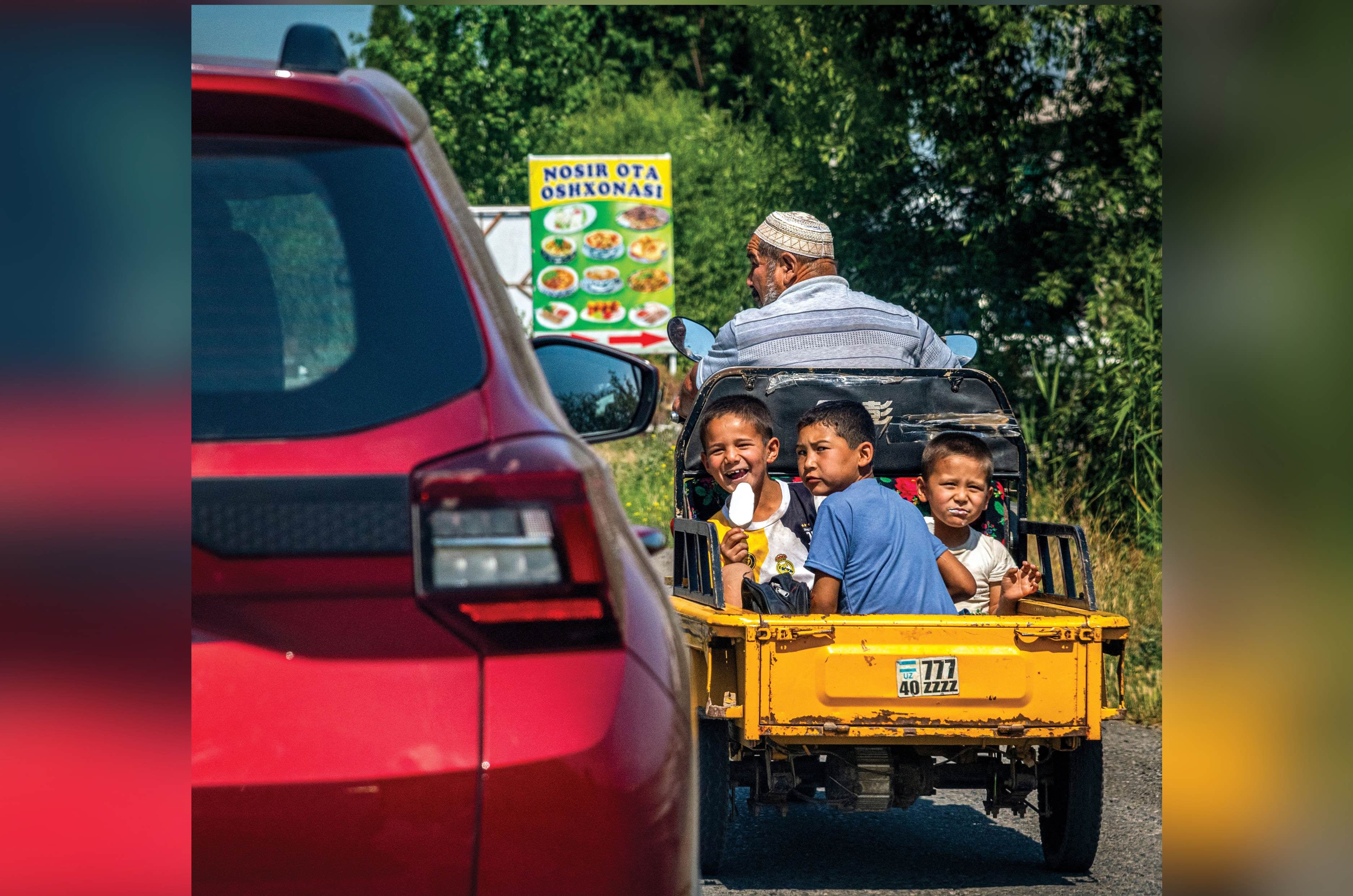
Like Kyrgyzstan, Uzbekistan also has its own personality. While there are similarities in the faces and fashion, the city of Fergana has a tinge of European infrastructure. Roads are lined with trees and patir shops – flatbread made from butter or lamb fat, with intricate detailing and some sesame seeds sprinkled on top. It’s pretty enough to dissuade you from eating it, but tastes like something that would go extremely well with a cup of chai.
Uzbekistan in numbers
Kyrgyz-Uzbek border – Turkistan
Distance covered
1,257km
Fuel consumed
81.74 litres
Average fuel economy
15.37kpl
Approx. fuel cost
Rs 9,800
Avg. per-litre fuel cost
Rs 120
Total time driven
27hrs 5mins
Average speed
46.4kph
What is also fascinating is the number of old Soviet-era cars still running on the highways with no fuss. We shared road space with old Ladas crammed with luggage inside and on the roof. Over the smooth highways of Uzbekistan, the Kylaq had an easy run, allowing us to focus on the sights around us.
From Fergana, we headed to the capital city of Tashkent. A properly modern metropolis with high-end malls and low-slung supercars, parks, walkways and everything you expect from a big city. So, to get a taste of age-old tradition, we ventured towards Samarkand, which used to be a major trading hub on the Silk Route.
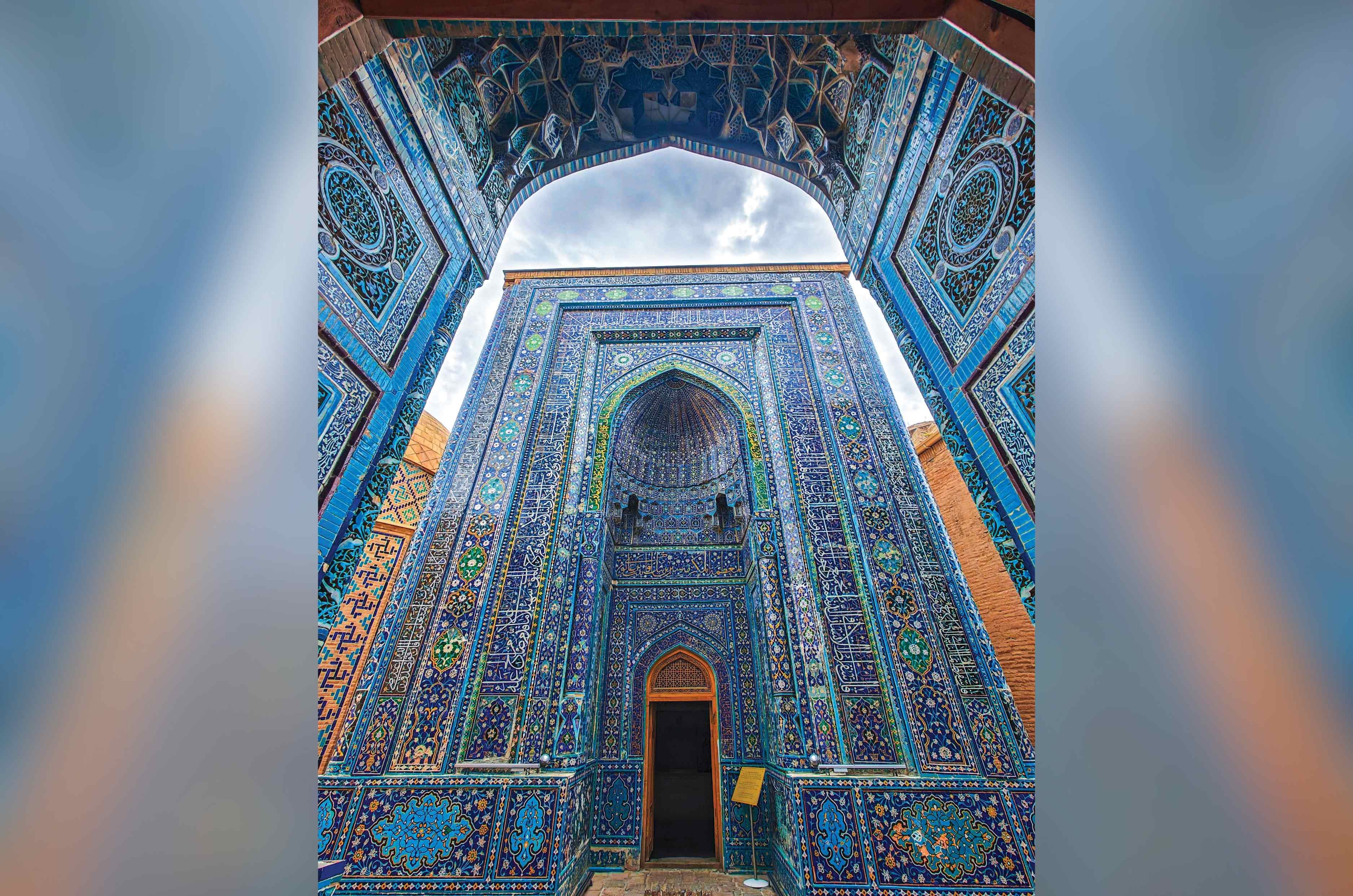
The Shah-i-Zinda ensemble has 11 mausoleums with incredibly detailed azure and turquoise tiles.
Entering Samarkand, you almost feel the tradition in the air. Years of cross-cultural civilisation have made it a stunning destination to get a glimpse of history, and it is unlike any other Western or Eastern city. The highlight here, of course, is the Bibi-Khanym Mosque in the Registan ensemble. Turquoise domes kissing the sky, with walls adorned with hand-carved artistry, are nothing short of breathtaking.
You can walk through the corridors and the square innumerable times, and each time, you will gasp at the sheer detail and effort. And to think it was built as far back as the 15th century. Magnificent is an understatement.
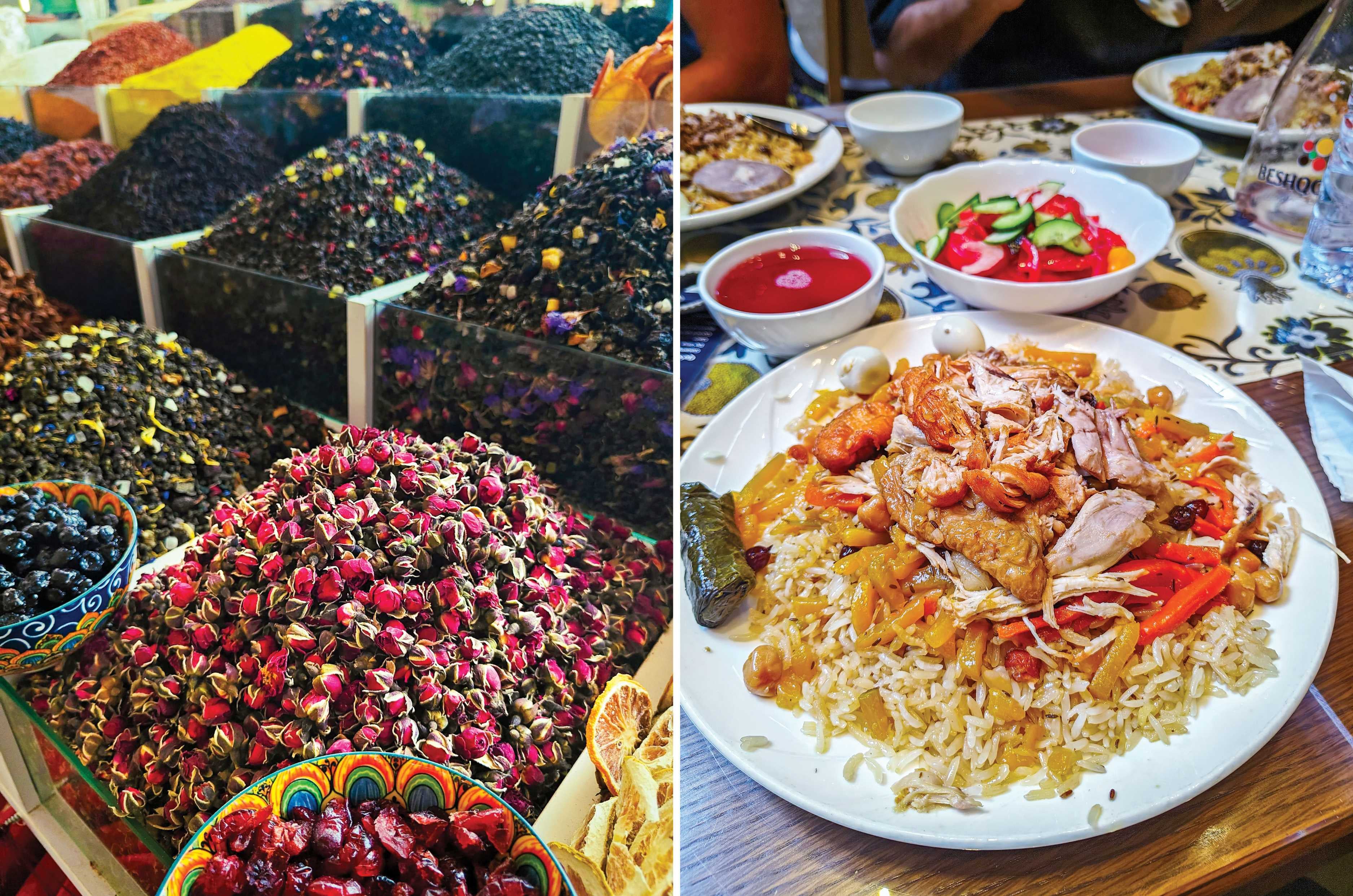
After soaking in the stunning detail, we headed back to Tashkent and straight to the equally fascinating Chorsu Bazaar. What looks like an IMAX dome on the outside is a full-fledged one-stop shop on the inside. Teas, dry fruits or even a leg of lamb, you can get it all here.
Uzbekistan’s market is nothing short of paradise for tea lovers.
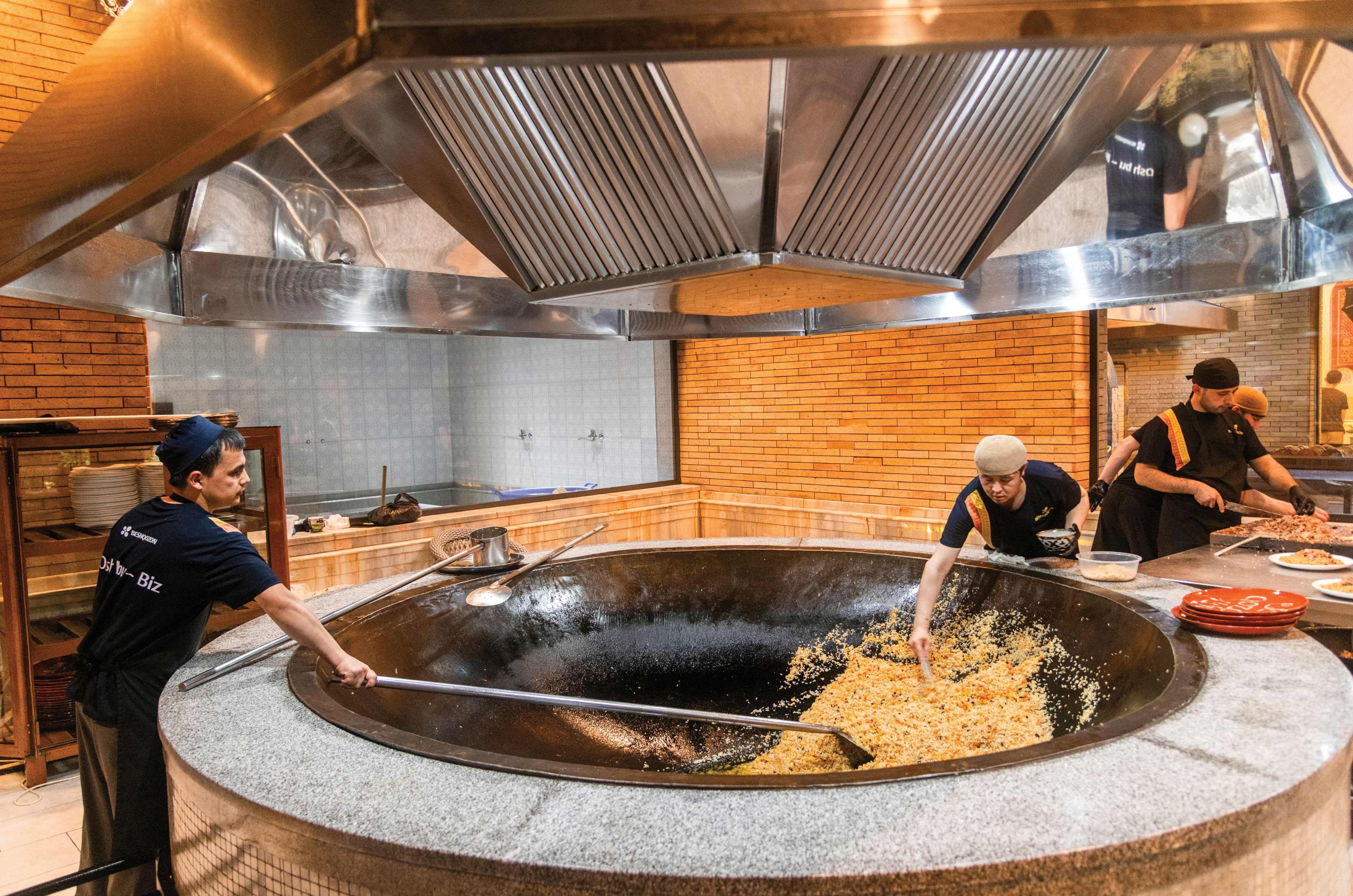
After a long walk that ended with bags of tea and dehydrated kiwis, we headed for Uzbekistan’s pièce de résistance: the famous plov. Like a biryani, but made with different spices, and if you want to go heavy on culture, you can have one with horse meat, too. Some bravehearts did try it and resorted to chicken or lamb, but it did offer the lost taste of biryani and got us homesick in the first bite.
Massive dome known as a kazan used to make the famous Uzbek plov.
After days of driving through mountains and around lakes, and walking through corridors that were once at the peak of world trade, our next adventure would take us to the Great Steppe of Kazakhstan.
Kazakhstan
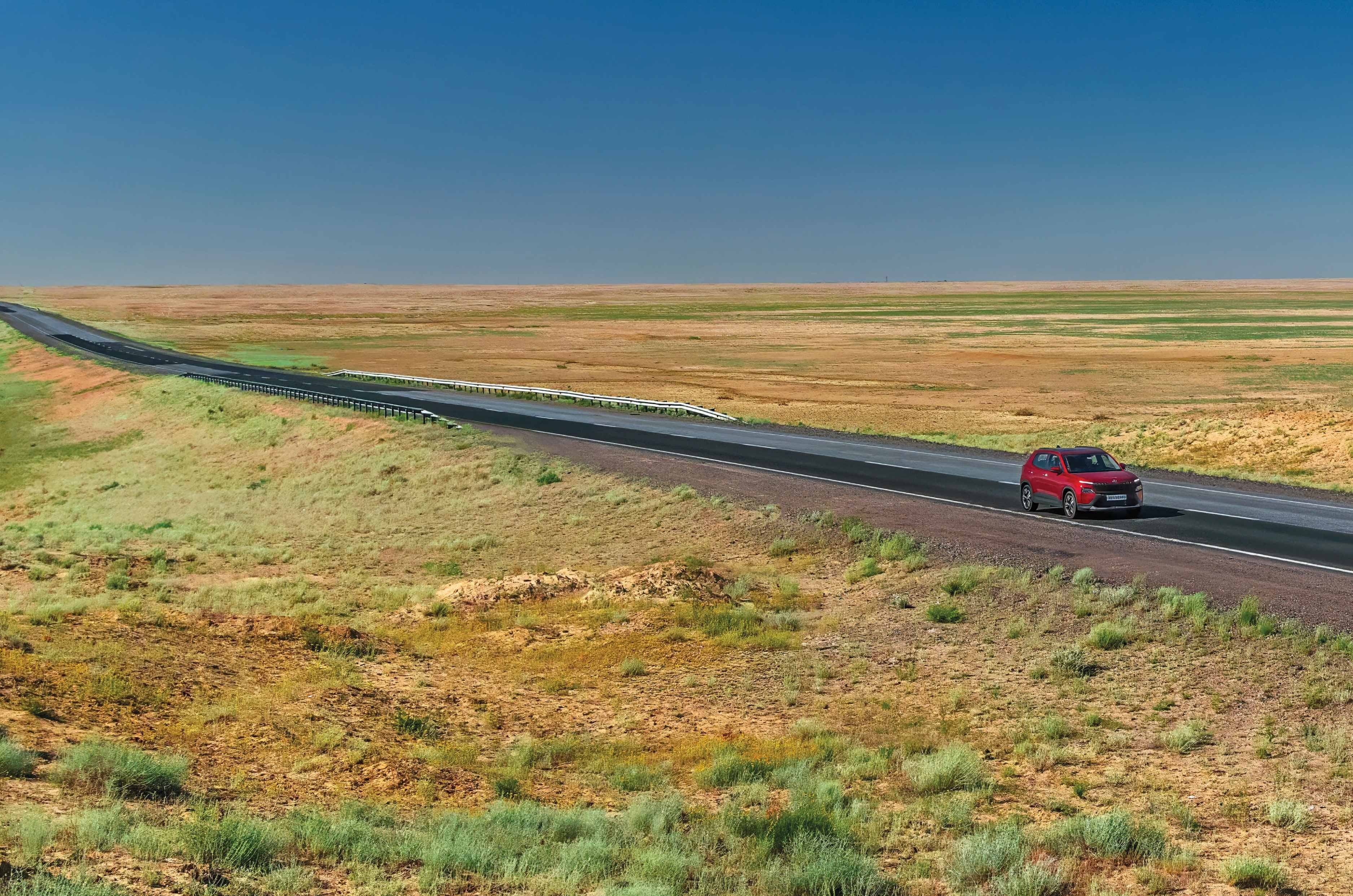
The Great Steppe in Kazakhstan feels like driving on an endless treadmill.
Crossing from Turkmenistan after vigorous checks, Kazakhstan feels almost desolate. Arrow-straight highways for kilometres, between acres of flat land with nothing on the horizon. We were driving through green pastures that would turn into brown, dried patches before turning green again, kilometre after kilometre.
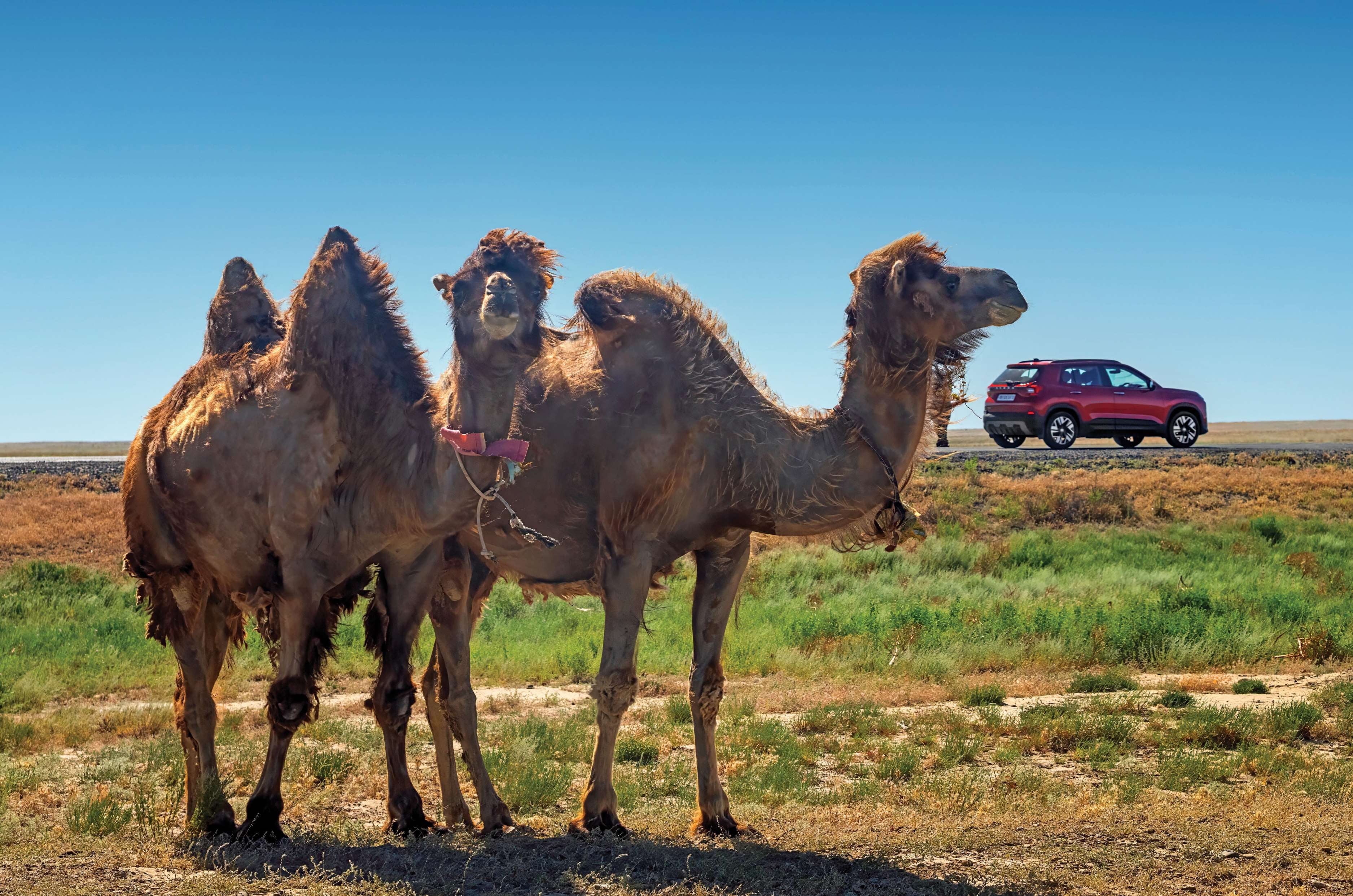
The Great Steppe, while stunning in size, is also a bit monotonous when you’re driving through it for days. The only respite would be a herd of double-humped Bactrian camels, cooling off at a nearby pond and often curious to know what a cherry-red Kylaq was doing in the middle of Kazakhstan.
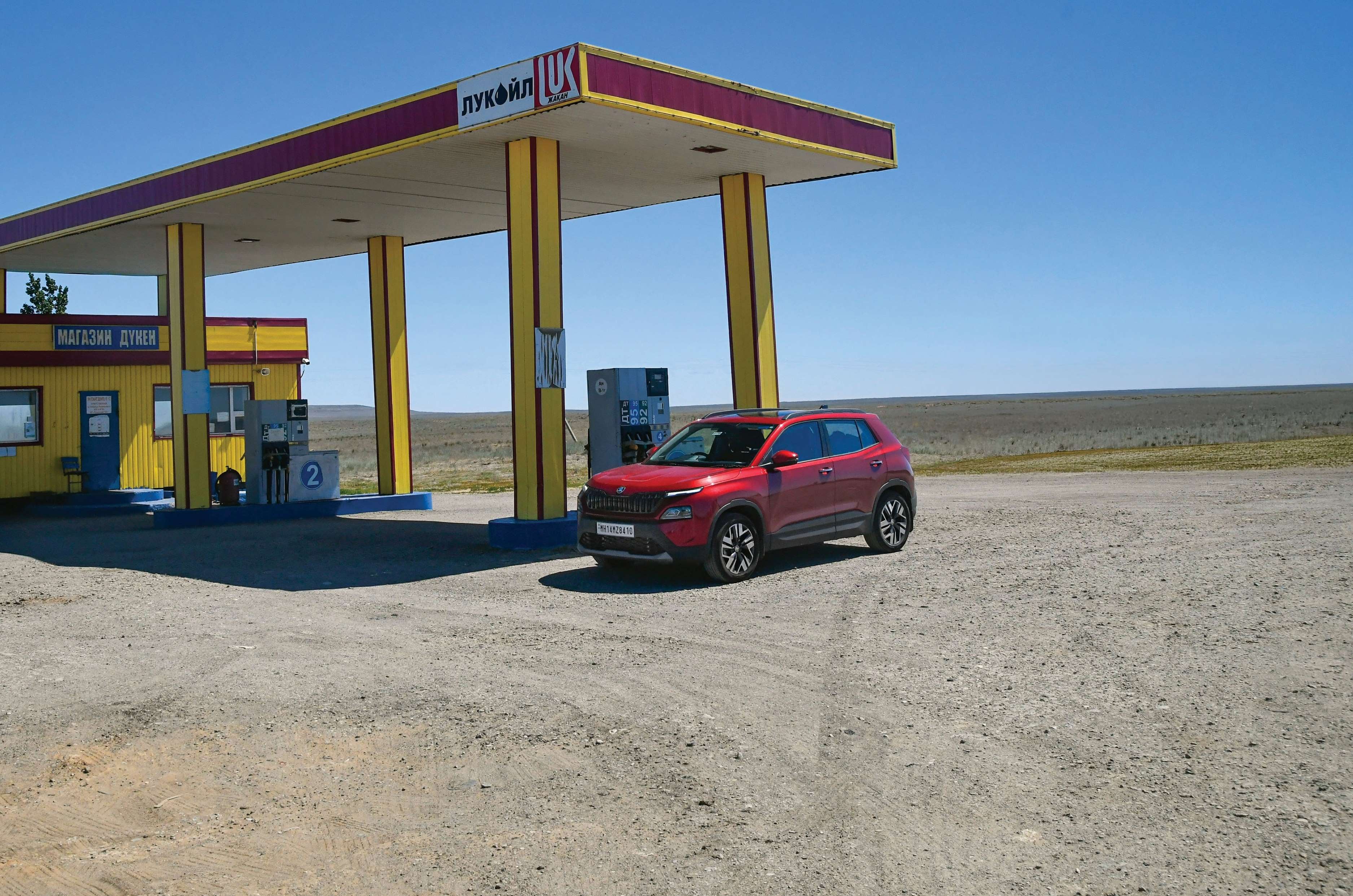
At Rs 58.17 per litre, Kazakhstan offered the lowest fuel price of the entire drive.
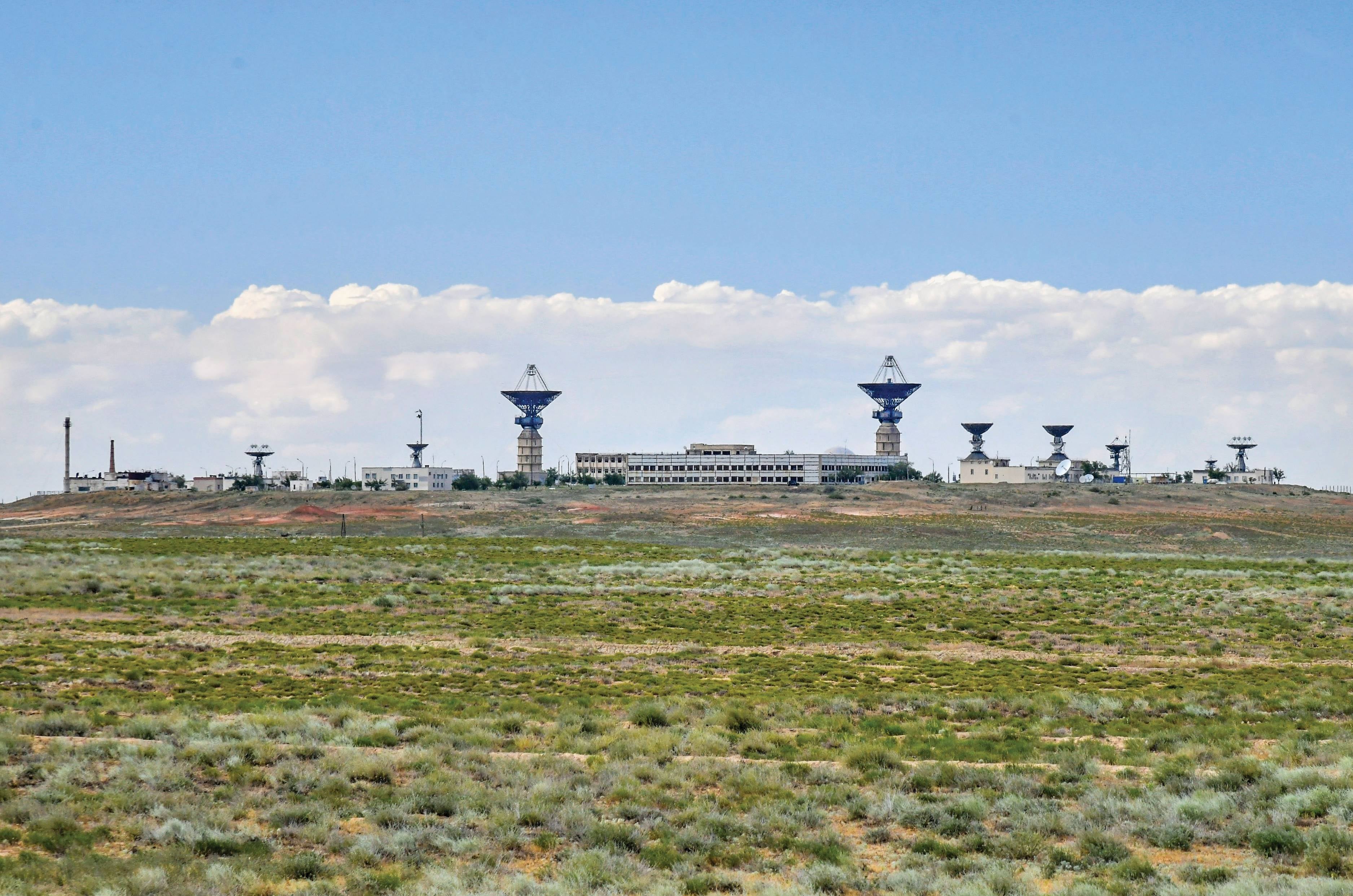
An interesting stop between Turkistan and Aral is the Baikonur Cosmodrome, which is the world’s first and largest operational space launch facility. However, thanks to the endless highways through Aral, Aktobe and Atyrau, we only got to test the Kylaq’s wheel alignment and its highway stability more than we would have liked.
Baikonur Cosmodrome – the world’s first, largest and operational space launch facility.
The mighty Stans were all about breathtaking sights, warm people and mouth-watering cuisine. The region still feels unadulterated, and that itself is what makes it special.
Kazakhstan in numbers
Turkistan – Kazakh-Russia border
Distance covered
3,237km
Fuel consumed
229.52 litres
Average fuel economy
14.10kpl
Approx. fuel cost
Rs 13,325
Avg. per-litre fuel cost
Rs 58.17
Total time driven
42 hrs
Average speed
77.1kph
Georgia – The Birthplace of Wine
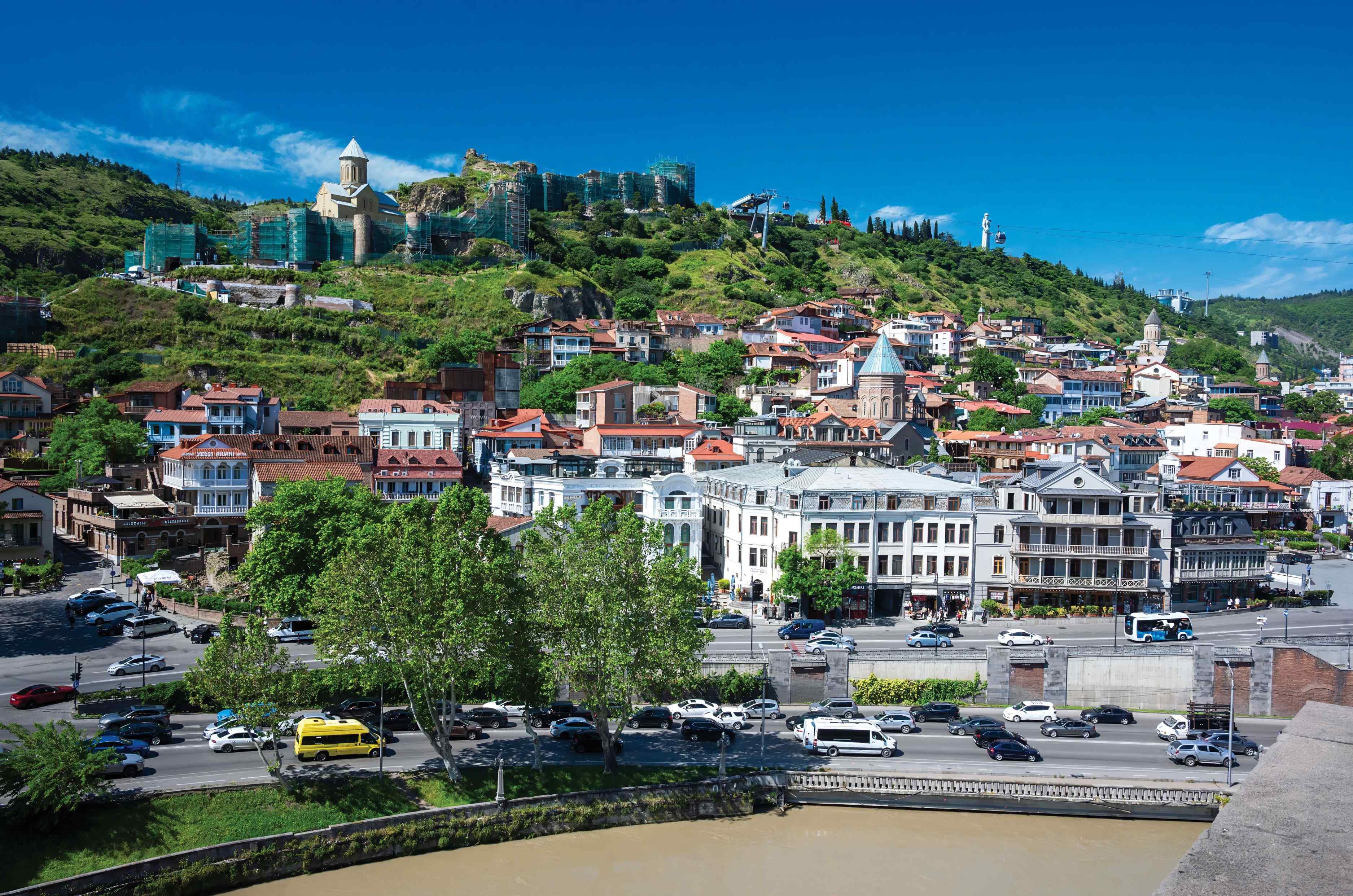
Compared to the vast landscapes and long highways of the Stans, Georgia was a contradiction. Based within the Caucasus Mountains, it has its share of twisties, which the Kylaq enjoyed. But the capital, Tbilisi, is the largest city and thereby pretty chaotic to drive in. Peak-hour traffic is just like what you would have in India, so we parked the car in a worryingly narrow alleyway and, for the most part, made our way on foot.
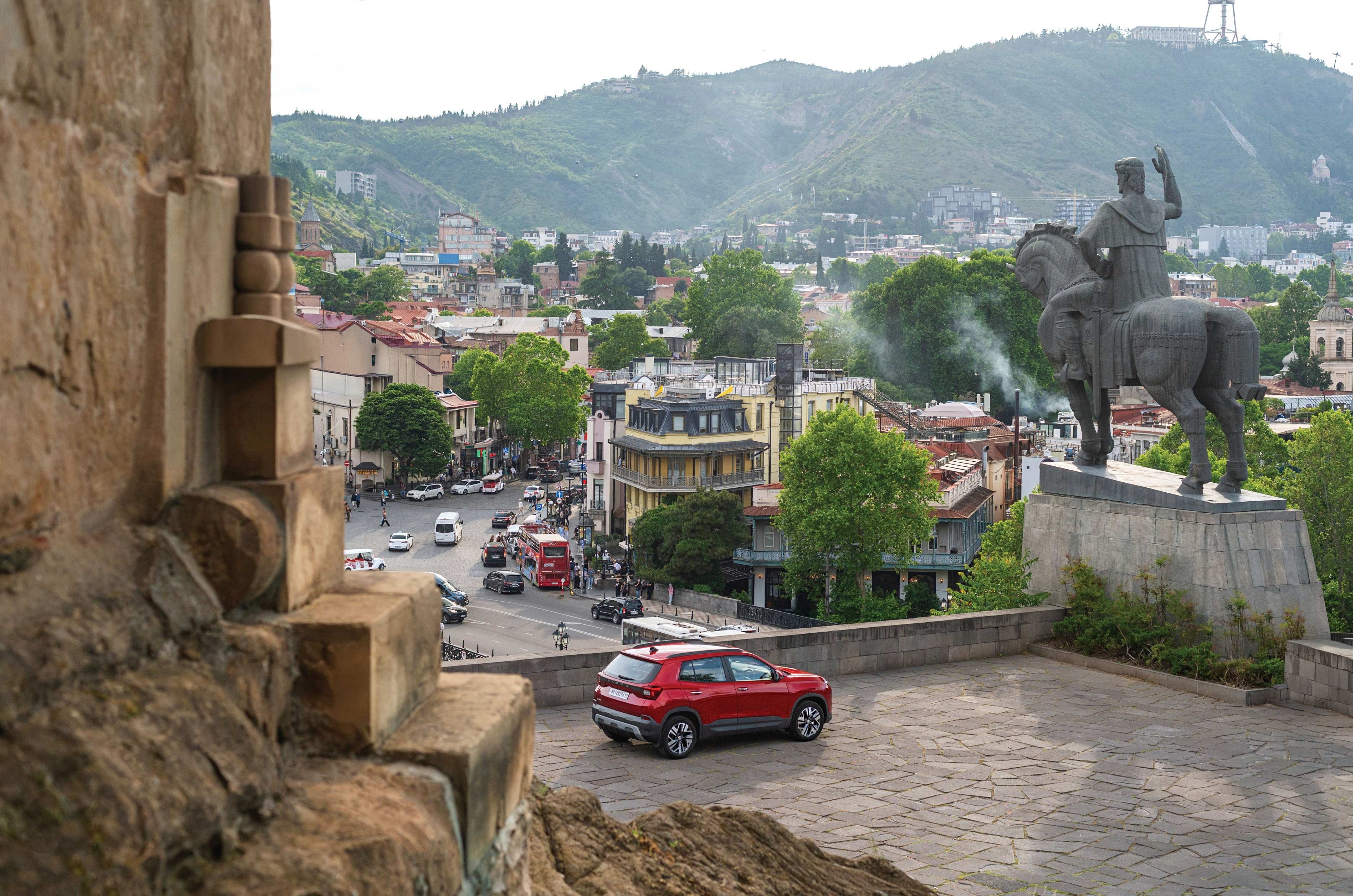
Huge statue of the founder of Tbilisi King Vakhtang I Gorgasali.
Like any big city, Tbilisi has its modern side, with glass buildings and modern restaurants, but there is still a large section that is rooted in tradition. Cobblestone streets with wooden houses and sulphur baths are a fascinating experience, as is the fantastic view from near the monument of King Vakhtang Gorgasali, the founder of Tbilisi.
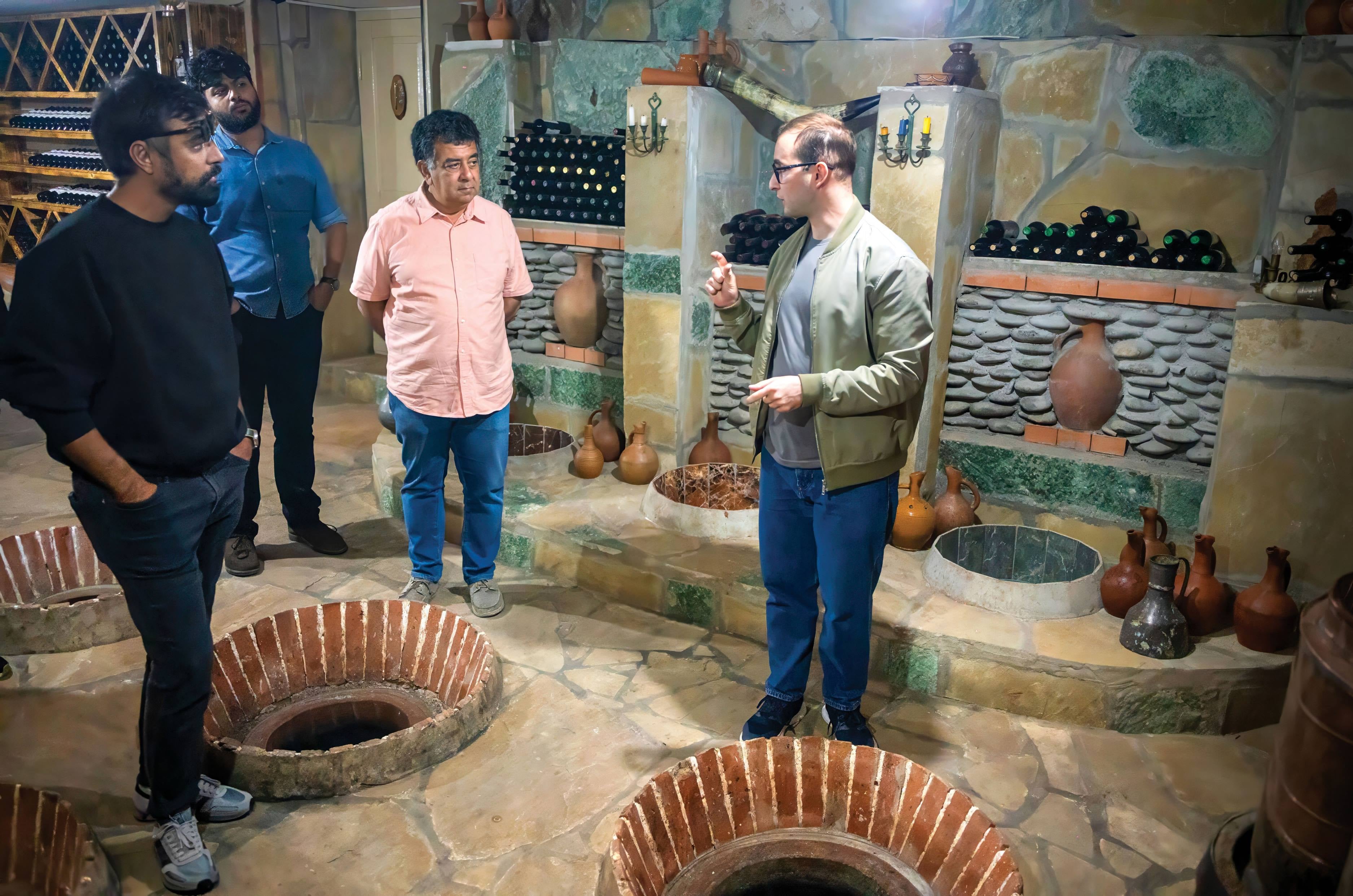
The monument itself is a striking bronze equestrian statue located on a rocky cliff above the Mtkvari River, next to the historic Metekhi Church in Tbilisi, Georgia. But Georgia is known to be the birthplace of wine, and on our drive to Tbilisi, we spotted several vineyards sprawling for acres. We had to get a closer look, and thankfully, our guide’s friend owned one of them.
Georgian wine fermented in clay jars buried in the ground.
The Georgians still use the ancient process of fermenting wine in barrels under the floor, but have now blended it with modern technology that allows them to control the temperature and get a more consistent batch each time. Wine connoisseur or not, the experience is enthralling.
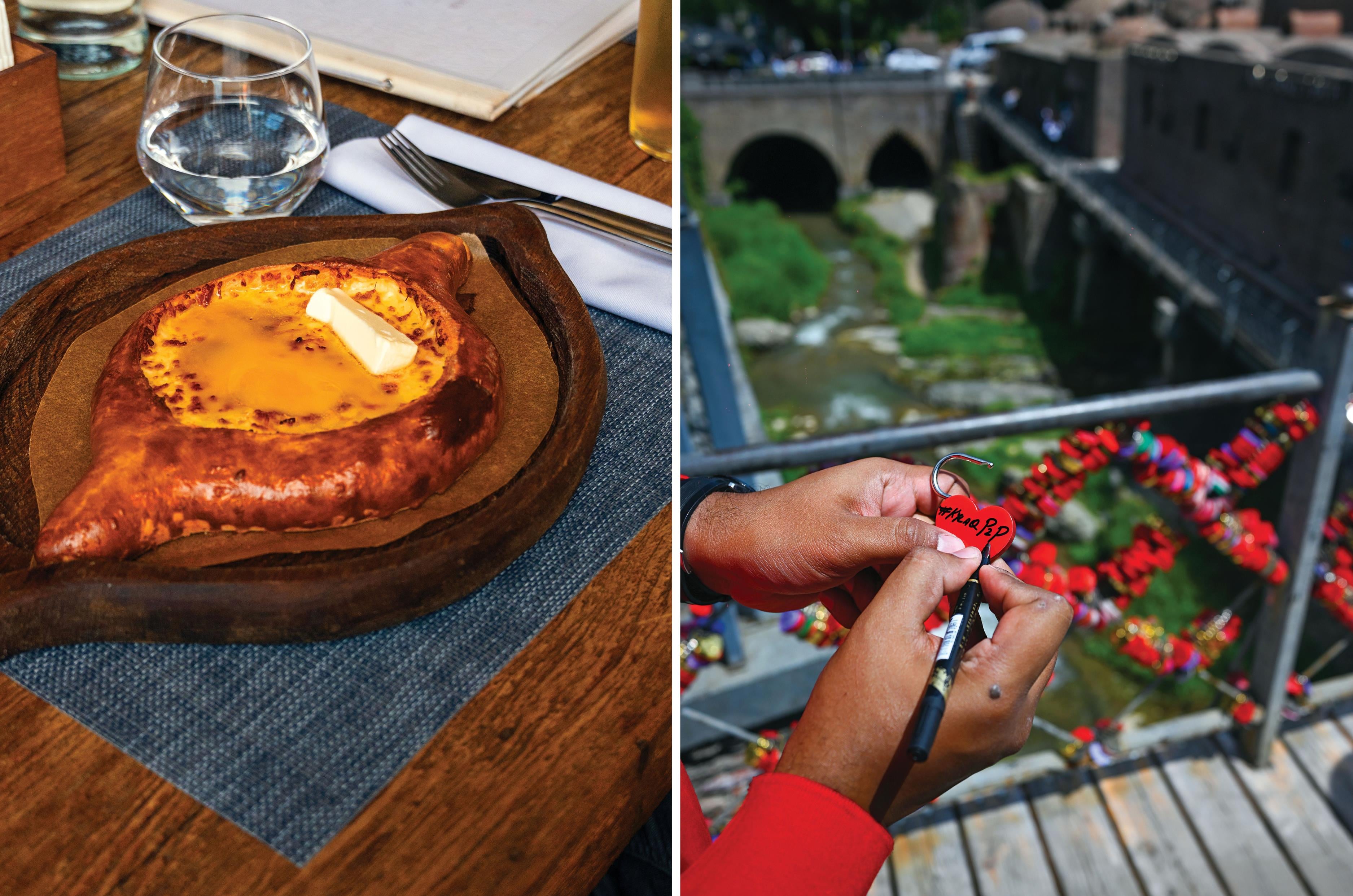
Khachapuri (flatbread with cheese and egg) is Georgia’s national snack.
The city tour built up an appetite, and we followed the scent of fresh bread for some authentic khachapuri. A Georgian flatbread that is hollowed out in the centre and filled with cheese, khachapuri varies depending on the region you’re in. You can have it with an egg cracked into it or with meat, too.
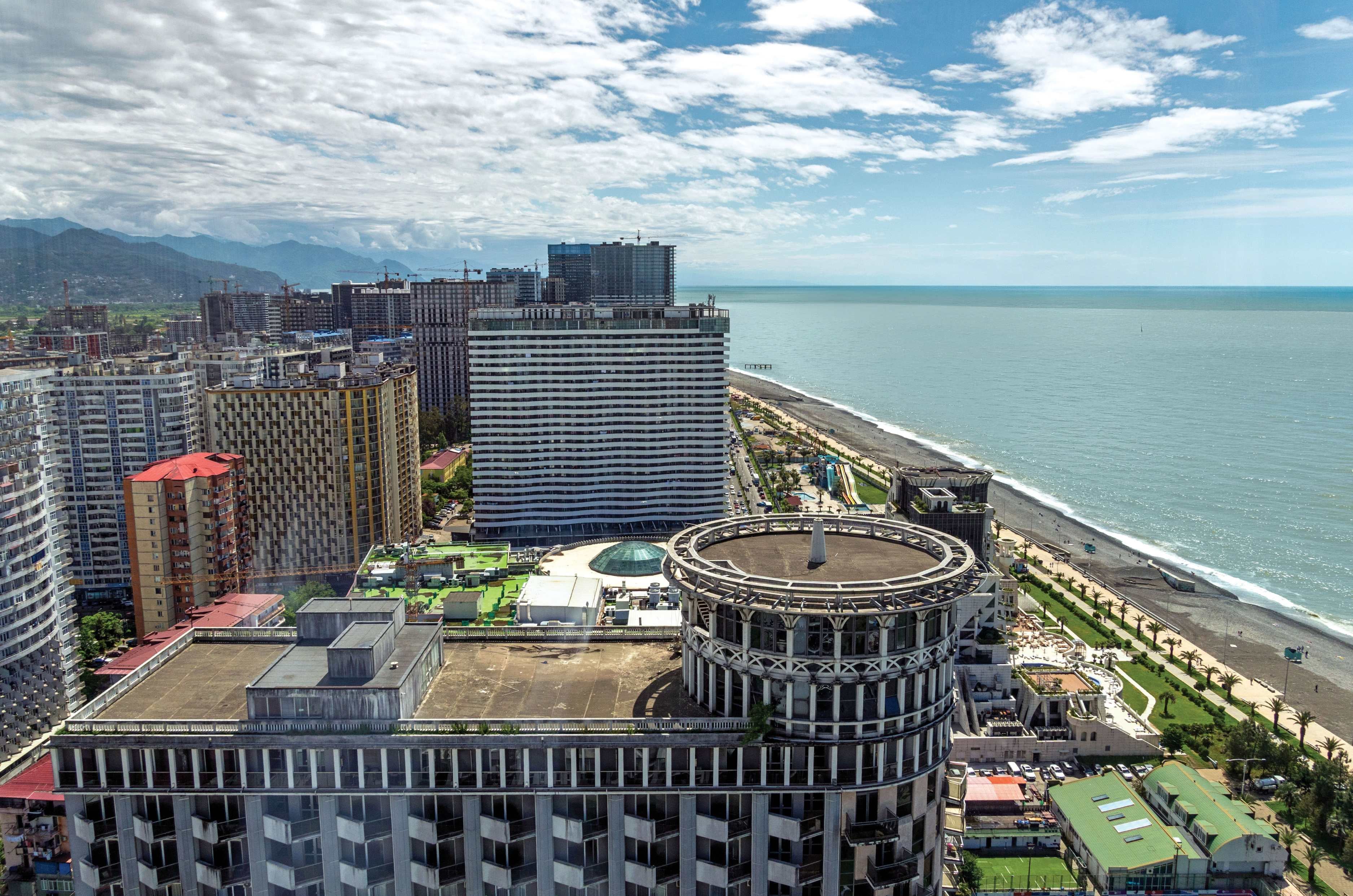
Coastal city of Batumi is a stark contrast of Tbilisi.
With sightseeing done, we drove the next day to the coastal city of Batumi. A vibrant, modern city with a lot more European influence. However, if the roads in Tbilisi were narrow, Batumi was on another level. Despite the compact dimensions of the Kylaq, our hotel parking was a sidewalk cordoned off by the hotel manager, as there simply was no space to park.
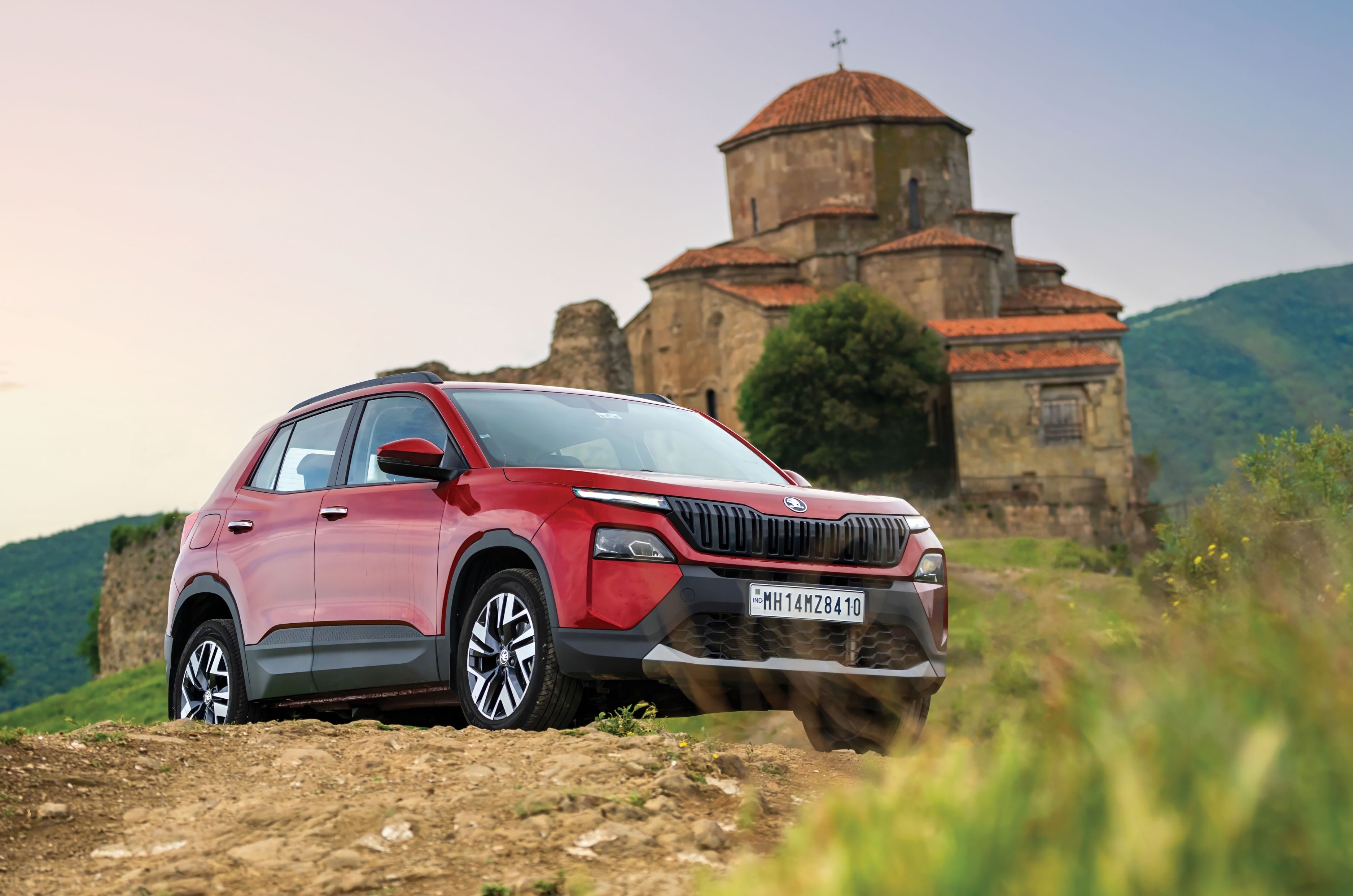
14th-century Gergeti Trinity Church has stunning views of the Caucasus Mountains.
Still, we made the most of it by strolling by the shore of the Black Sea, watching the locals angling for fish. Georgia, just like the Stans, offered a unique glimpse into this part of the world and its diverse culture. For our final stretch before Europe, we had one last country to drive through – the colourful Türkiye.
Georgia in numbers
Tbilisi – Türkiye border
Distance covered
624km
Fuel consumed
58.62 litres
Average fuel economy
10.64kpl
Approx. fuel cost
Rs 7,607
Avg. per-litre fuel cost
Rs 129.78
Total time driven
17.5hrs
Average speed
58.5kph
Türkiye – Gateway to Europe
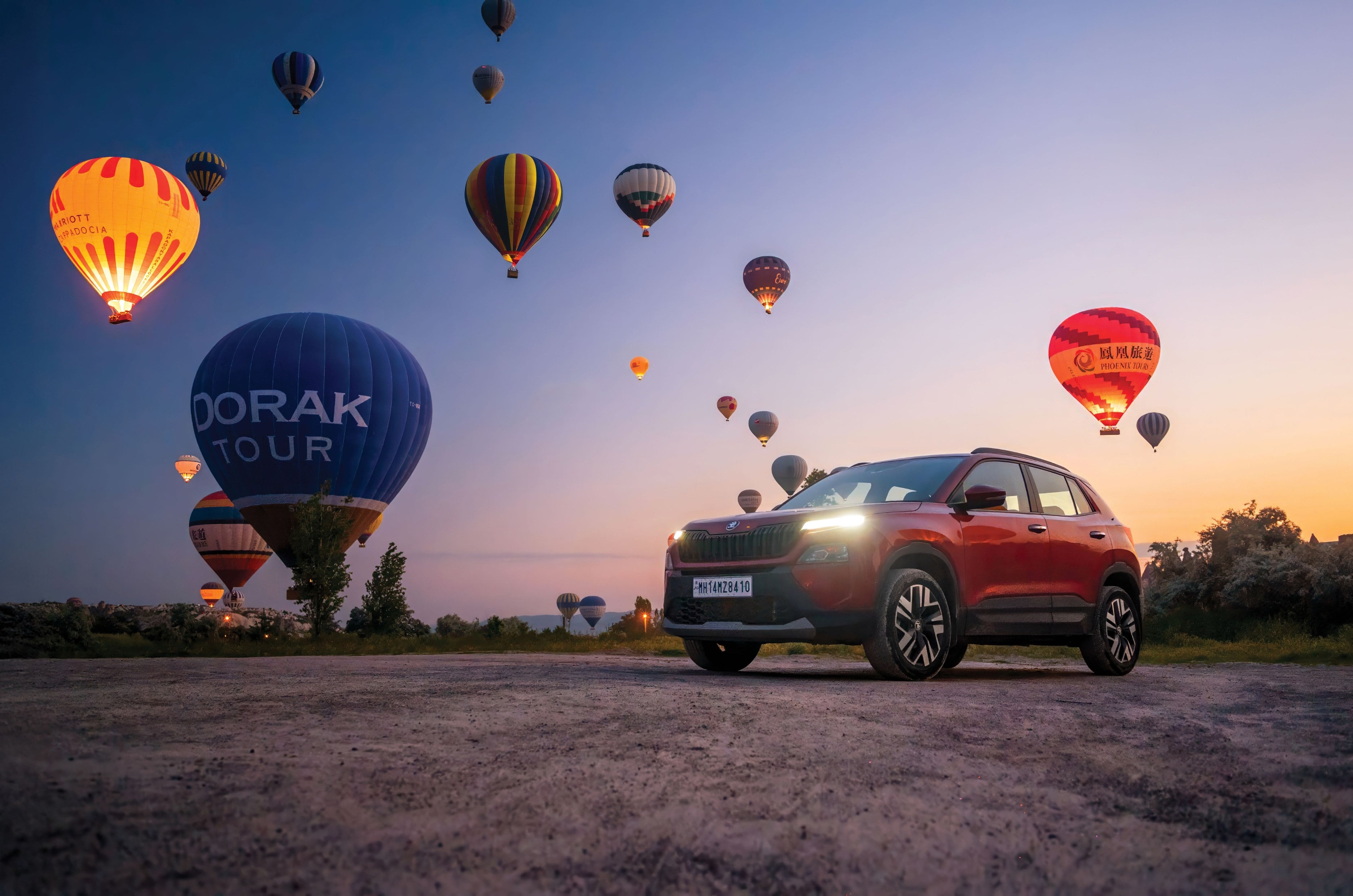
Cappadocia’s claim to fame is well worth the hype.
As the Kylaq crossed into Türkiye, our first stop was in Erzurum. A major winter sports town, but thanks to the time of year, our ski resort was bright, sunny and without an ounce of snow. A quick stroll through the small town and we hit the sack in preparation for a 700km-plus drive to the tourist haven that is Cappadocia.
The next morning, the plan was to do what you must do in Türkiye – take a hot-air-balloon ride. A pre-dawn wake-up call is never comfortable, but the peace was soon shattered by the sound of a group of old diesel Land Rover Defenders revving to keep themselves warm while they waited to transfer tourists to the balloon launch site. The balloon ride is arguably the largest tourist attraction in Türkiye, so there was quite the rush.
We, too, loaded up the Kylaq and hit the road to get the perfect shot of the sun coming up over the hills while the sky was filled with balloons. And boy, did we get it. As the orange tinge hit the fairy chimneys, we saw what the hype was about. The visual is nothing like you have ever seen: watching one colourful hot-air balloon is rare, and here there were over a hundred. We shot GBs worth of images and videos and got back to catch up on the broken sleep from earlier.
Türkiye in numbers
Erzurum – Bulgaria border
Distance covered
1,436km
Fuel consumed
98.1 litres
Average fuel economy
14.63kpl
Approx. fuel cost
17,187
Avg. per-litre fuel cost
Rs 134.19
Total time driven
19.5 hrs
Average speed
73.64kph
A relaxing drive the next day got us to Istanbul, which, to some, might seem like the capital thanks to its bustling character – a glimpse of which we got as we got closer. A traffic jam stretching for more than a couple of kilometres brought the Kylaq to crawling speeds. To avoid the repercussions of driving next to hasty cab drivers, we parked the Kylaq and headed to check out the nightlife, but more importantly, the döner kebab.
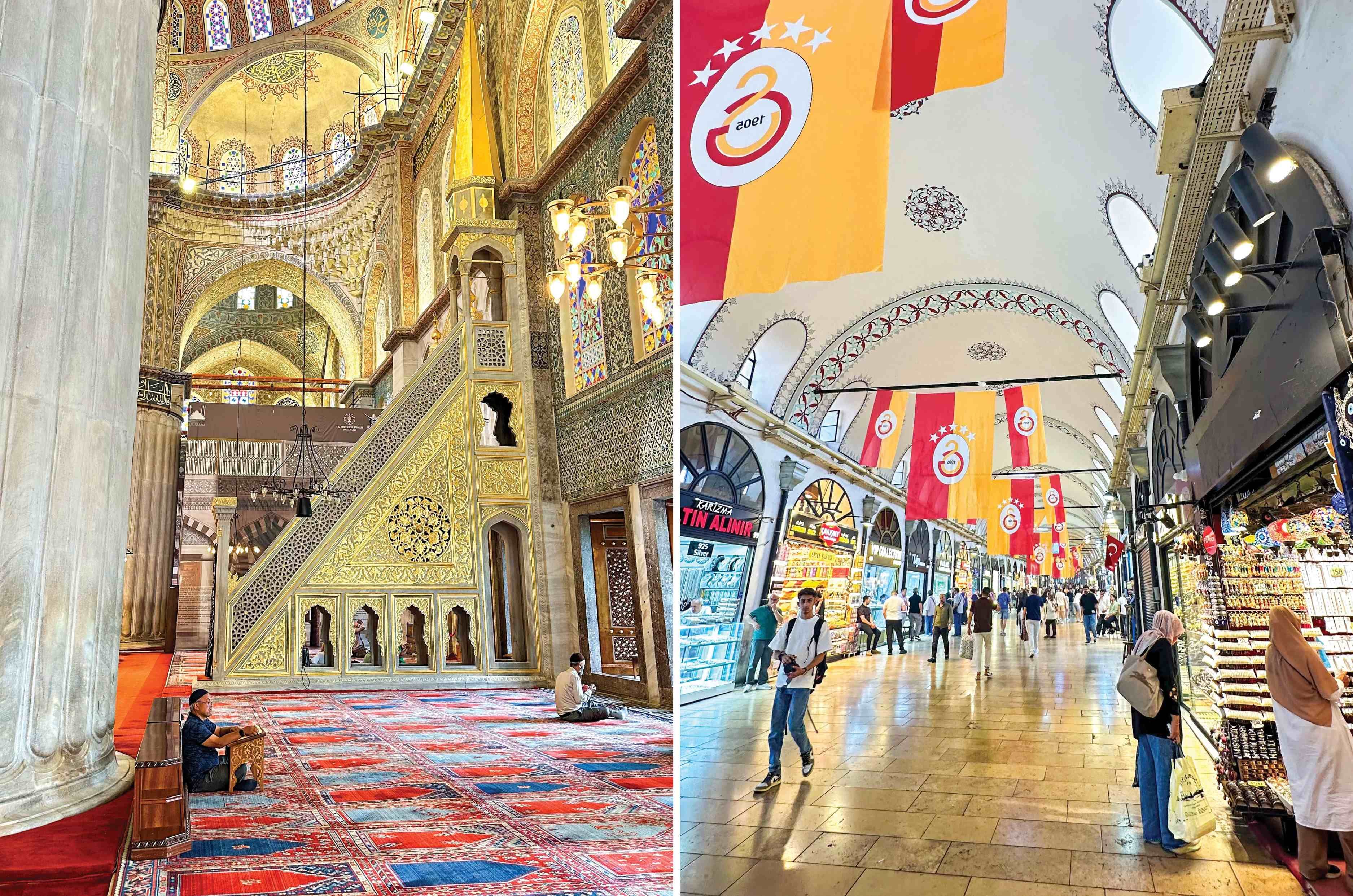
Exceptional interiors and an unbelievable calm in Istanbul.
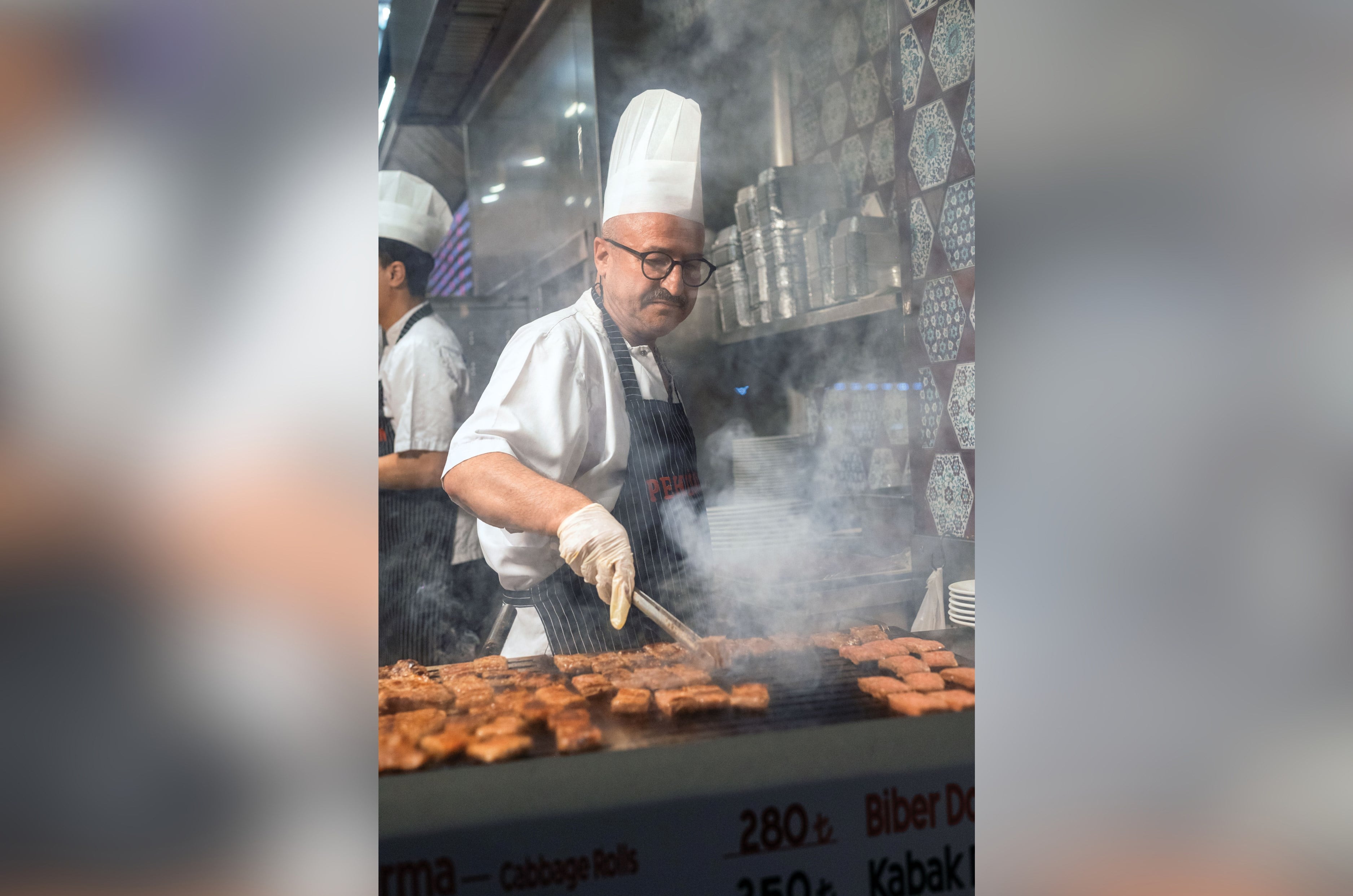
Similar to a shawarma, the döner kebab consists of a pile of meat that is cooked on a rotisserie over a flame. The dripping fat is mopped up by pita bread, which is then loaded with the sliced meat and seasonings. After a long walk through the Grand Bazaar, haggling for a fake Rolex, the döner becomes almost a necessity.
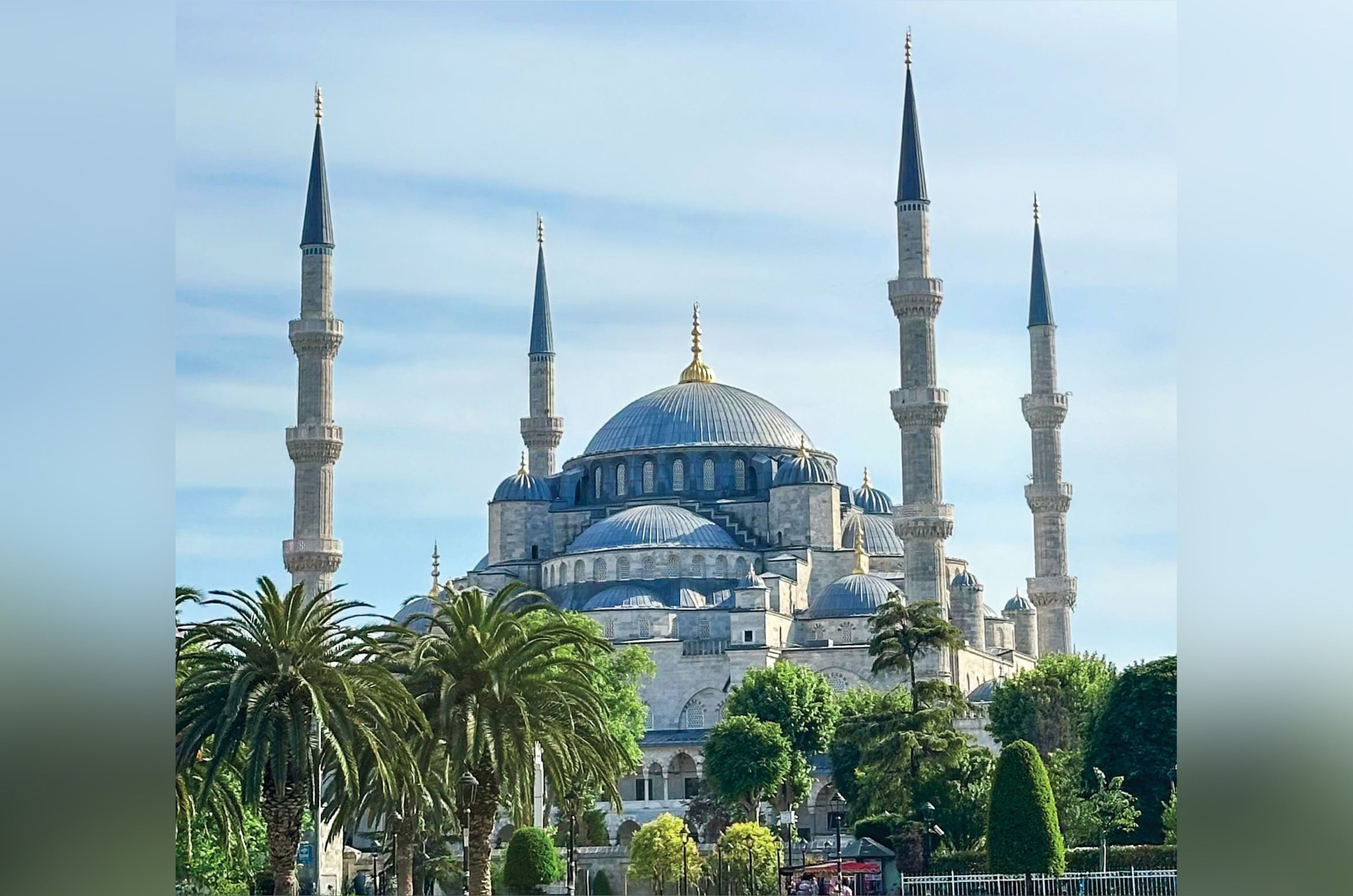
What’s also equally stunning is the Blue Mosque. Known formally as the Sultan Ahmed Mosque, it was constructed between 1609 and 1617 in the Ottoman era by Ahmed I. To get the entire mosque in frame, you need to fall back to the Hagia Sophia Mosque, which is in the same vicinity. Both equally grand, equally detailed and equally important.
The Blue Mosque, built in the Ottoman era, is majestic.
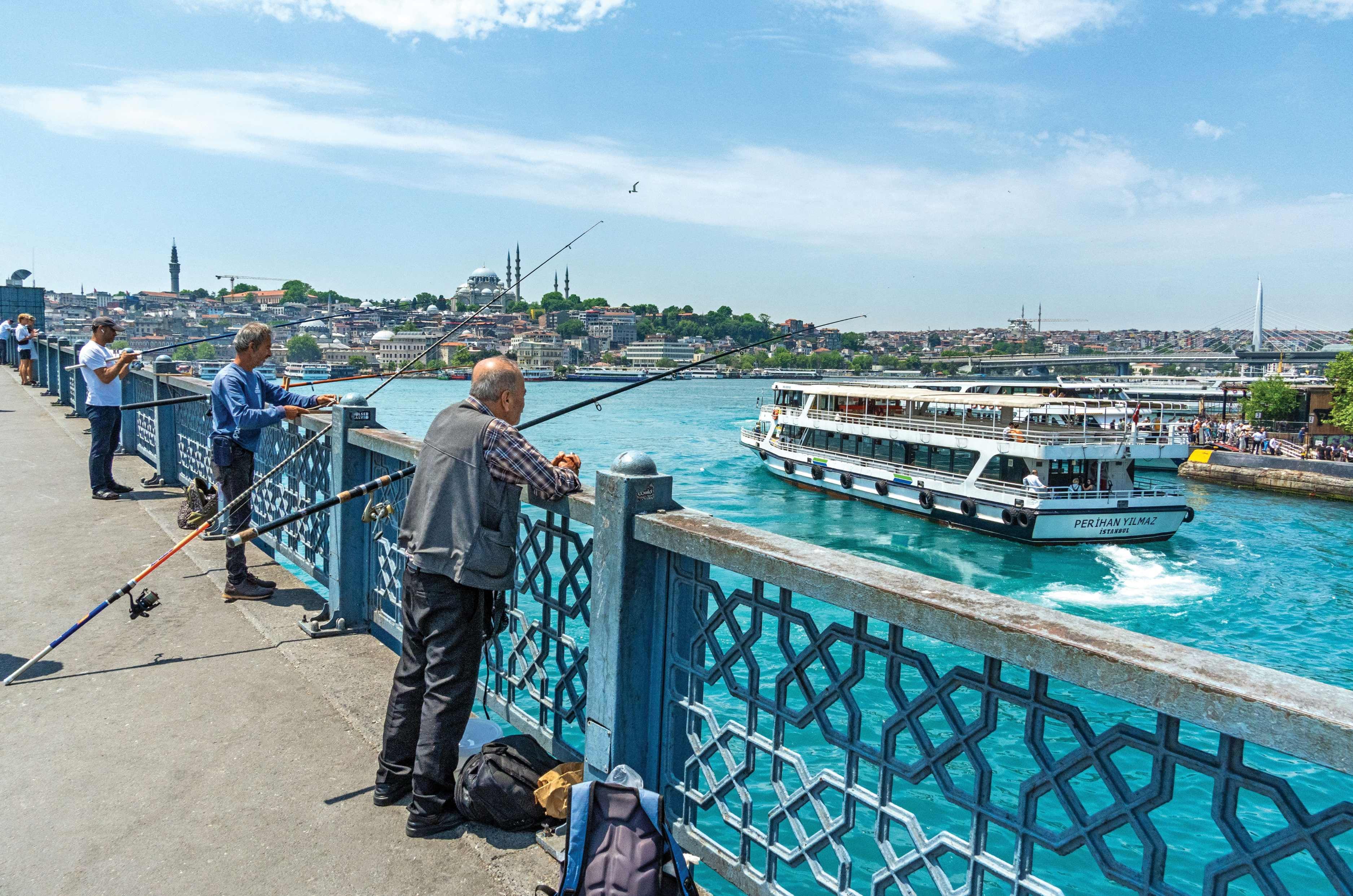
To explore more of Türkiye, we got back into the Kylaq and realised there was a bridge that is unlike any other in the world. The Bosphorus Bridge is located over the Bosphorus Strait, but its claim to fame is that it, quite literally, has one end in Asia and one end in Europe. You can cross the bridge in about two minutes, depending on traffic, but the sense that you can practically drive over from Asia into Europe before you can finish watching a reel is unreal.
Angling over the Bosphorus strait is a common hobby.
Europe – Home Stretch
Bulgaria – Romania – Hungary – Slovakia – Prague
The end of our incredible Pune-to-Prague drive was now a matter of days away. After over two months on the road, we were a couple of thousand kilometres away from the finish line. The excitement that had tapered off midway was back in full force.
We would be entering Europe through Bulgaria, and the border, as expected, was busy. Documentation, carnets, passports, stringent car checks and some explaining later, we were finally in.
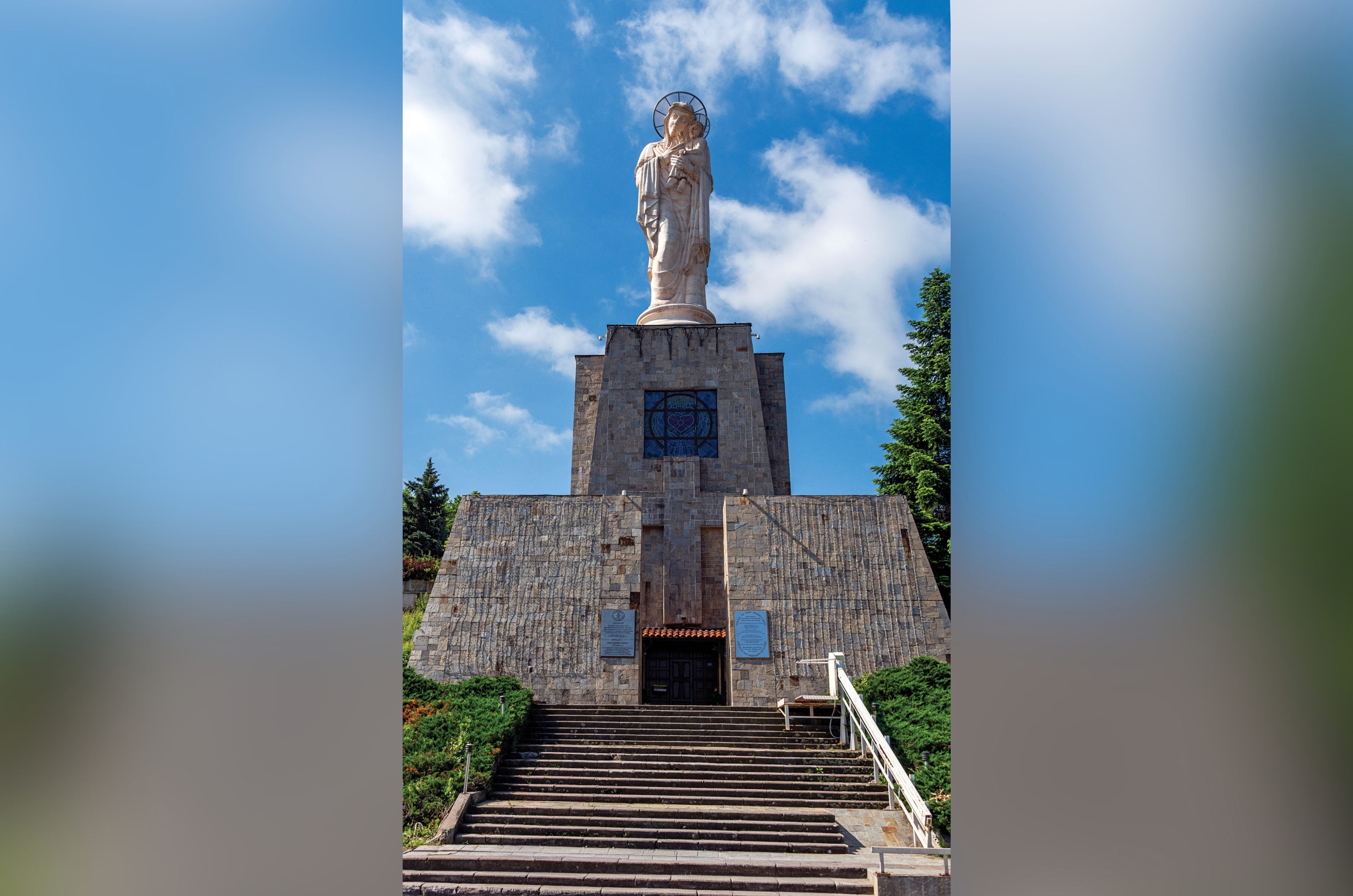
Monument of the Holy Mother of God in Haskovo.
Haskovo is a quaint town with a slow pace and none of the bustle of a European city, but it boasts a Guinness record for having the towering Monument of the Holy Mother of God, the tallest statue of the Virgin Mary and Baby Jesus in the world. Naturally, we had to check it out before we headed further.
Crossing countries in Europe is the equivalent of crossing states in India. There are no significant border checks or passport-control booths. A board with the blue EU flag and the name of the country is all you will see.
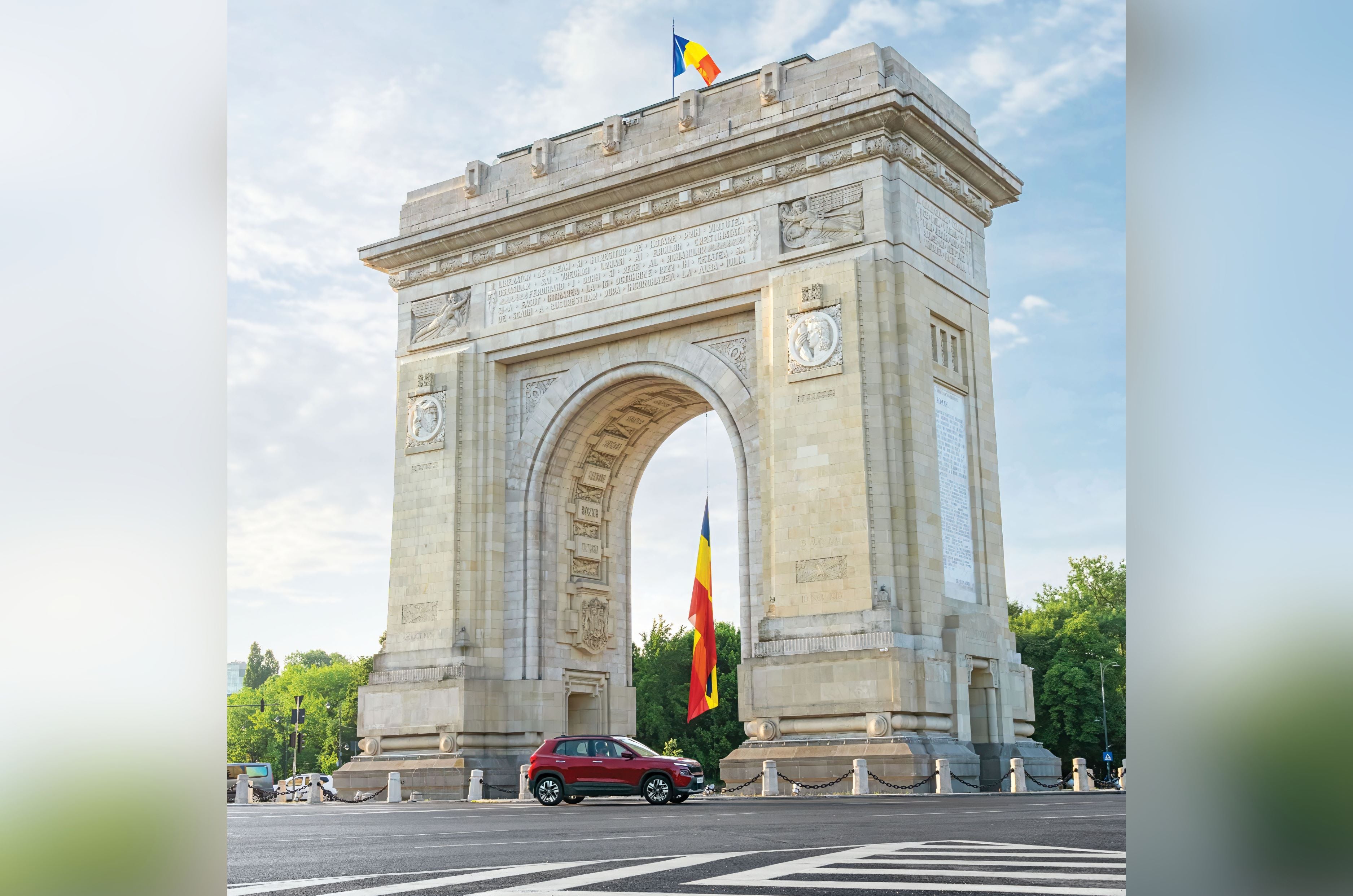
Romania’s Arcul de Triumf an ode to the one in Paris.
We crossed into Romania rather unassumingly and headed for Bucharest. The capital is picturesque and is also colloquially known as “Little Paris”. Like the Arc de Triomphe in Paris, Romania too has its own version. A tad smaller in comparison, but just as iconic.
However, what takes the cake is the Parliament Building, formally known as the Palace of the Parliament, which is also the heaviest building in the world, standing at approximately a ridiculous 4,098,500 tonnes. We couldn’t verify that, but since the Kylaq looked like a mere speck in front of it, it was all the proof we needed.
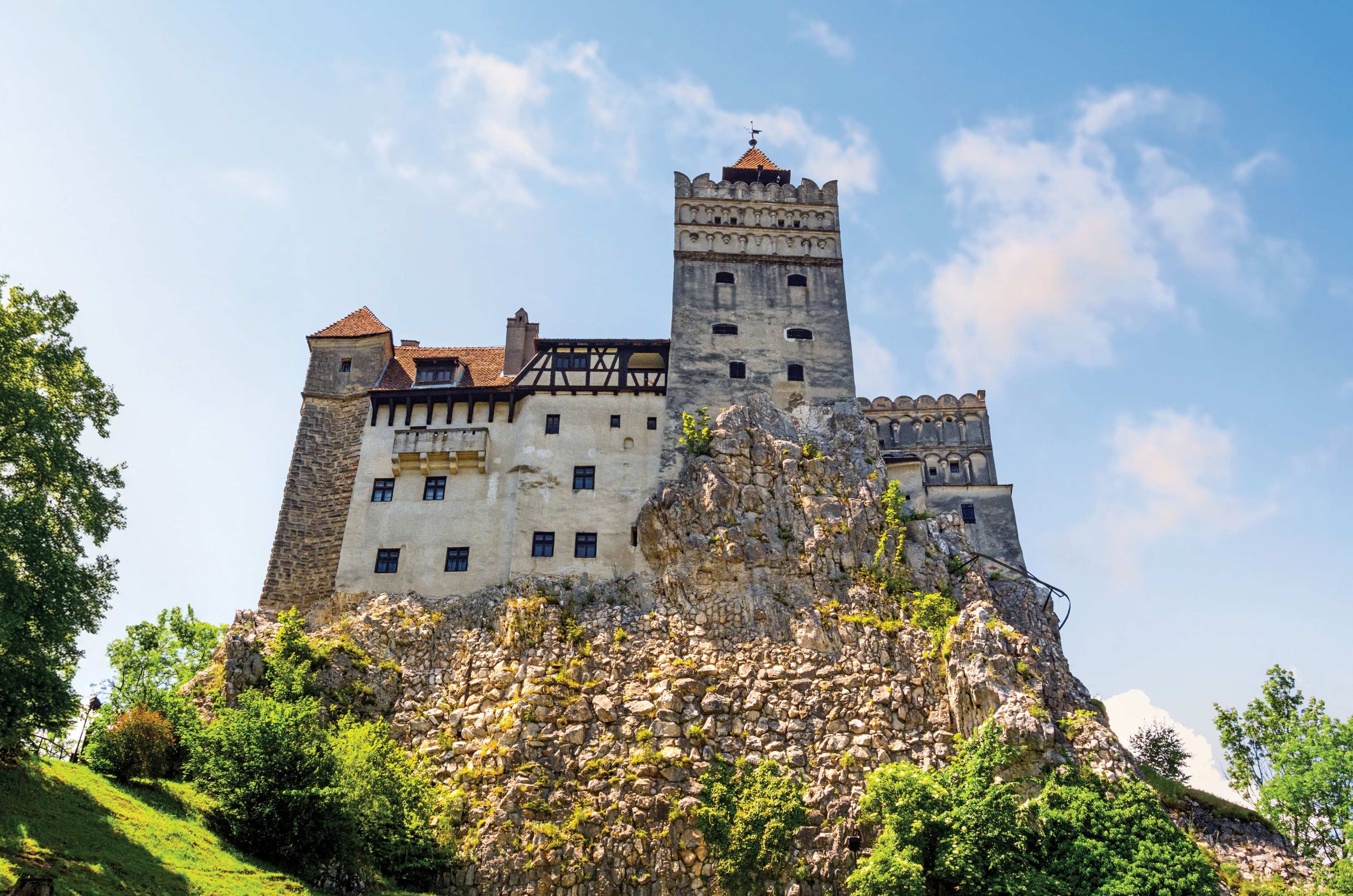
Bran Castle is widely marketed as Dracula’s home.
Bucharest also has a thriving nightlife, with the quiet cobbled streets turning into party hubs post-sunset. As we headed towards Hungary, we couldn’t help but make a stop at Bran Castle. Despite the myth that it was once home to the famous Dracula, there is nothing but merchandise at the foot of the castle to prove that claim. Historians have dismissed the claim and, while it is fascinating, there is plenty of evidence against it. Still, that did not stop us from buying some fake vampire teeth and Dracula magnets.
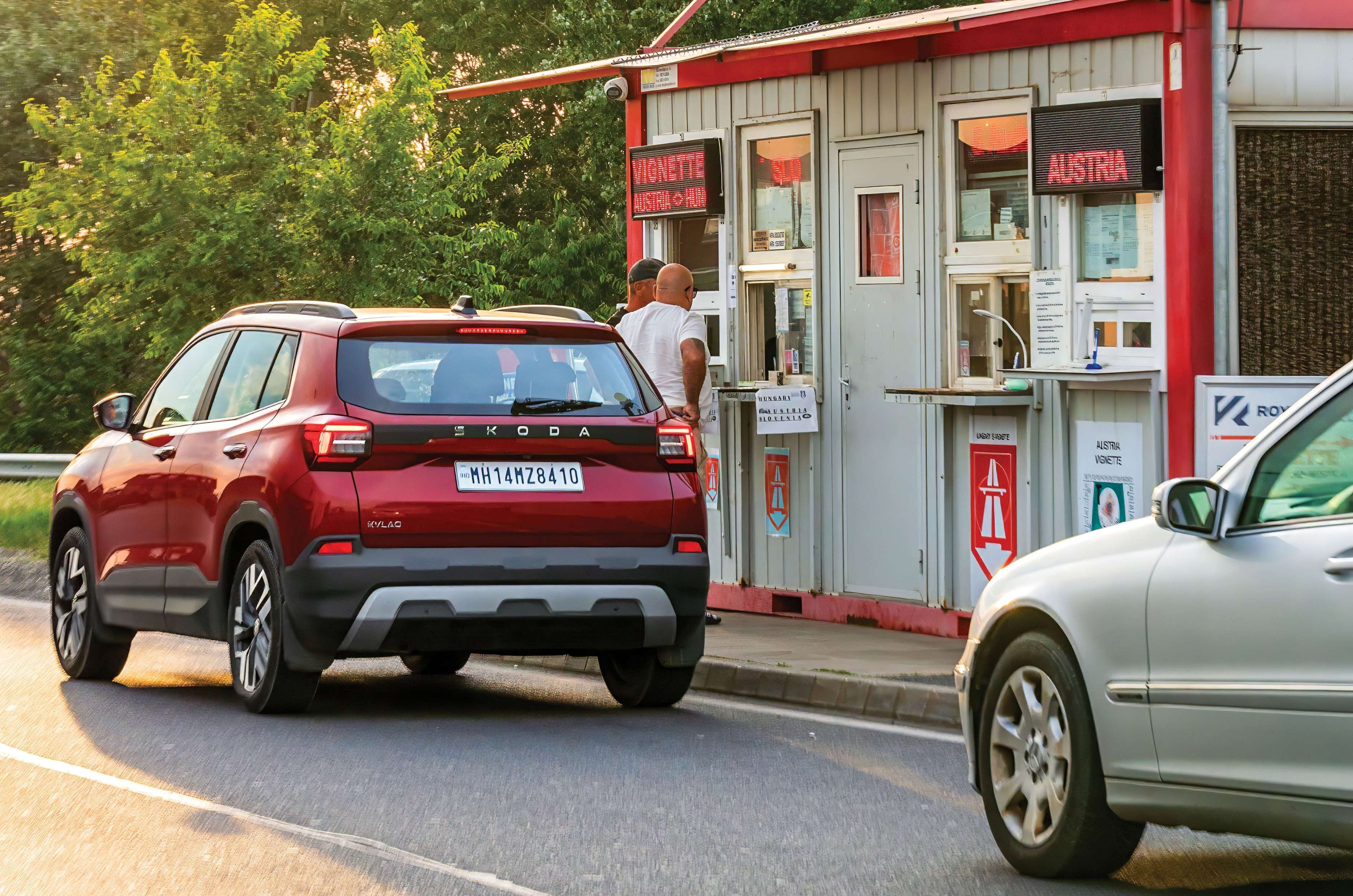
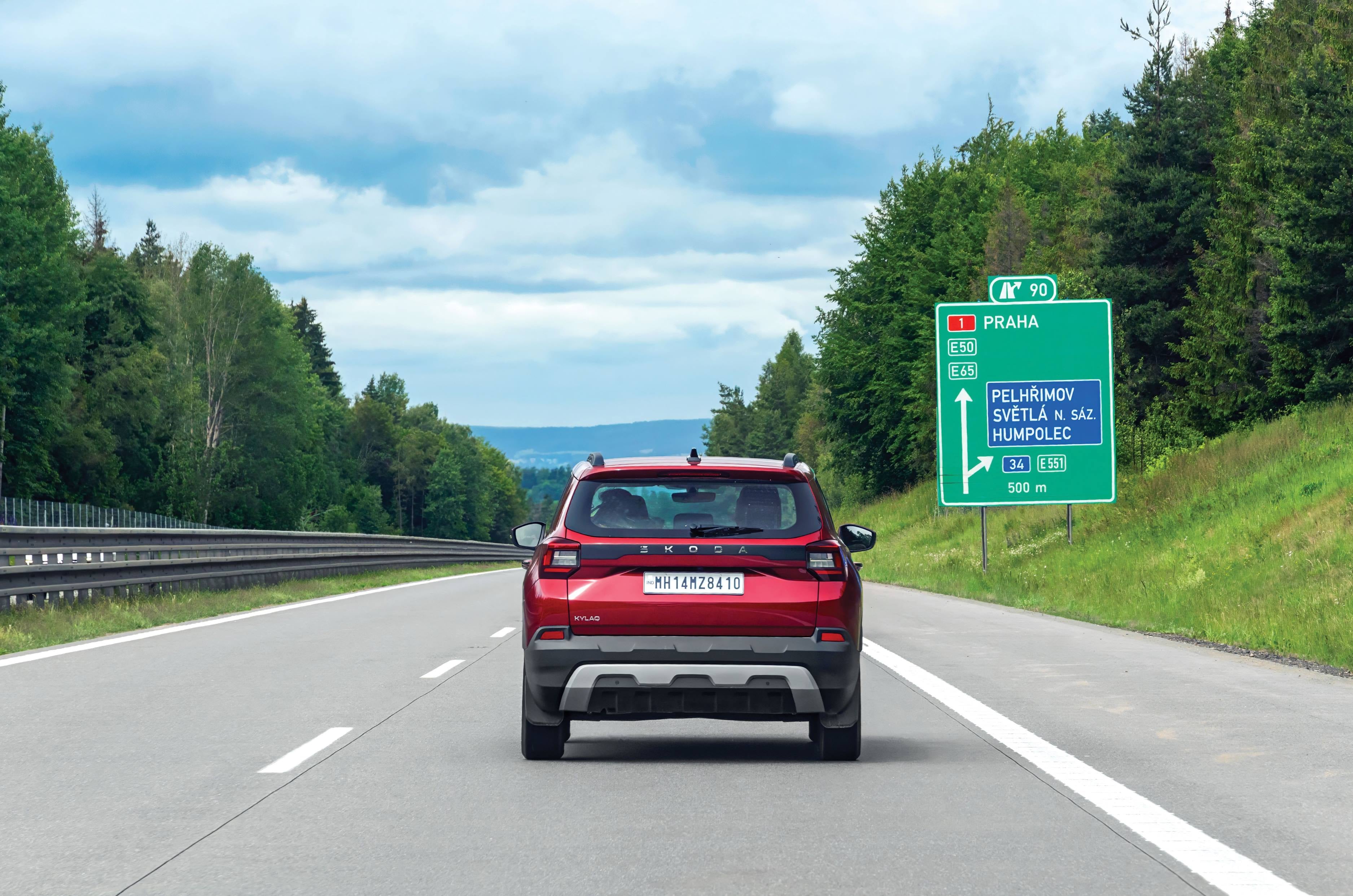
Vignette is Europe’s FASTag and is essential on the freeways.
From the shores of the Black Sea, we drove into landlocked Hungary. The drive to Budapest was long, but thanks to Europe’s seamless highways, it was light work for the Kylaq. In Europe, it just blended in with the other cars, and at no point did it feel out of place. It might have been built in India, but it felt every bit as European as it got closer to Prague.
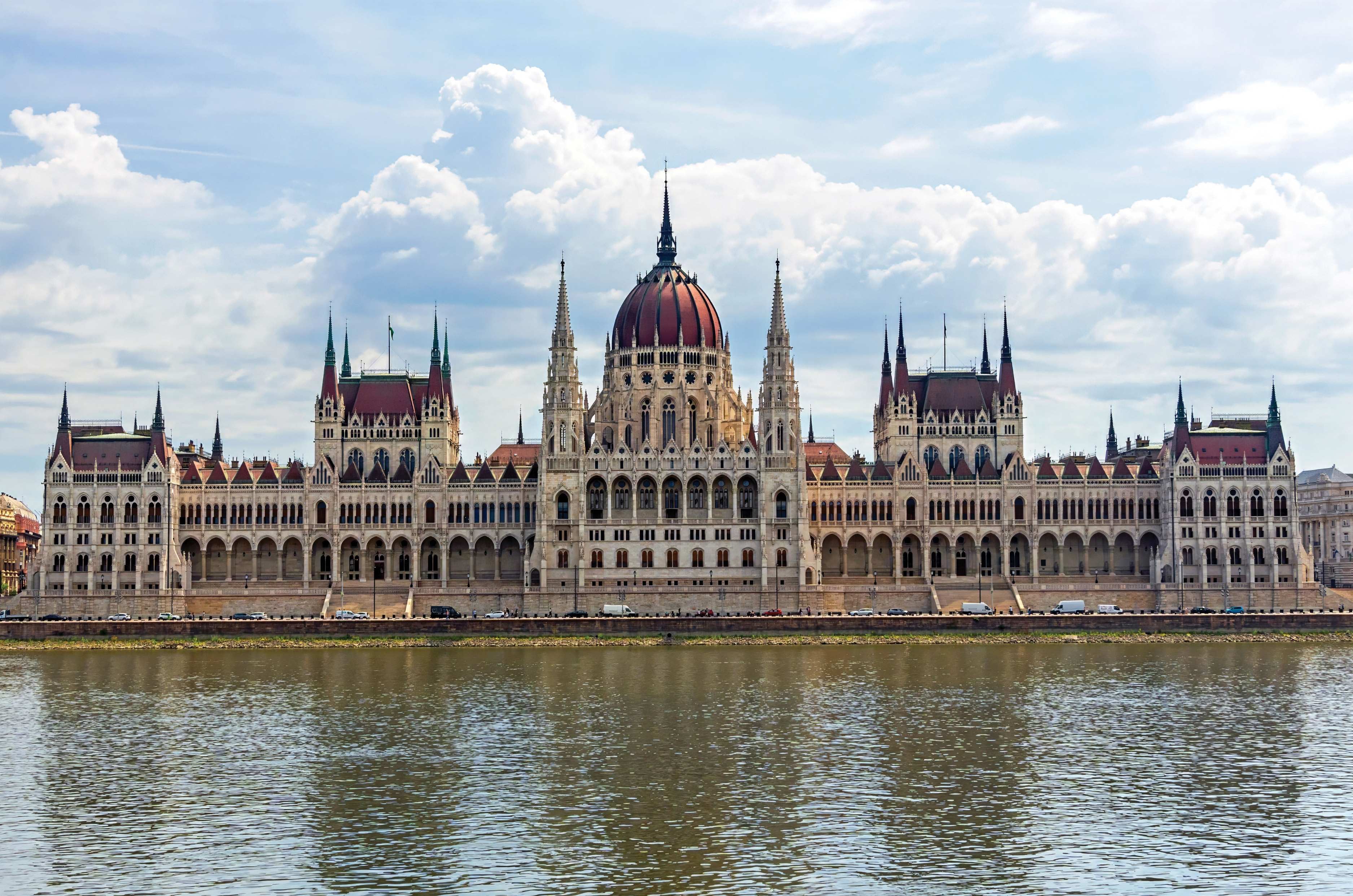
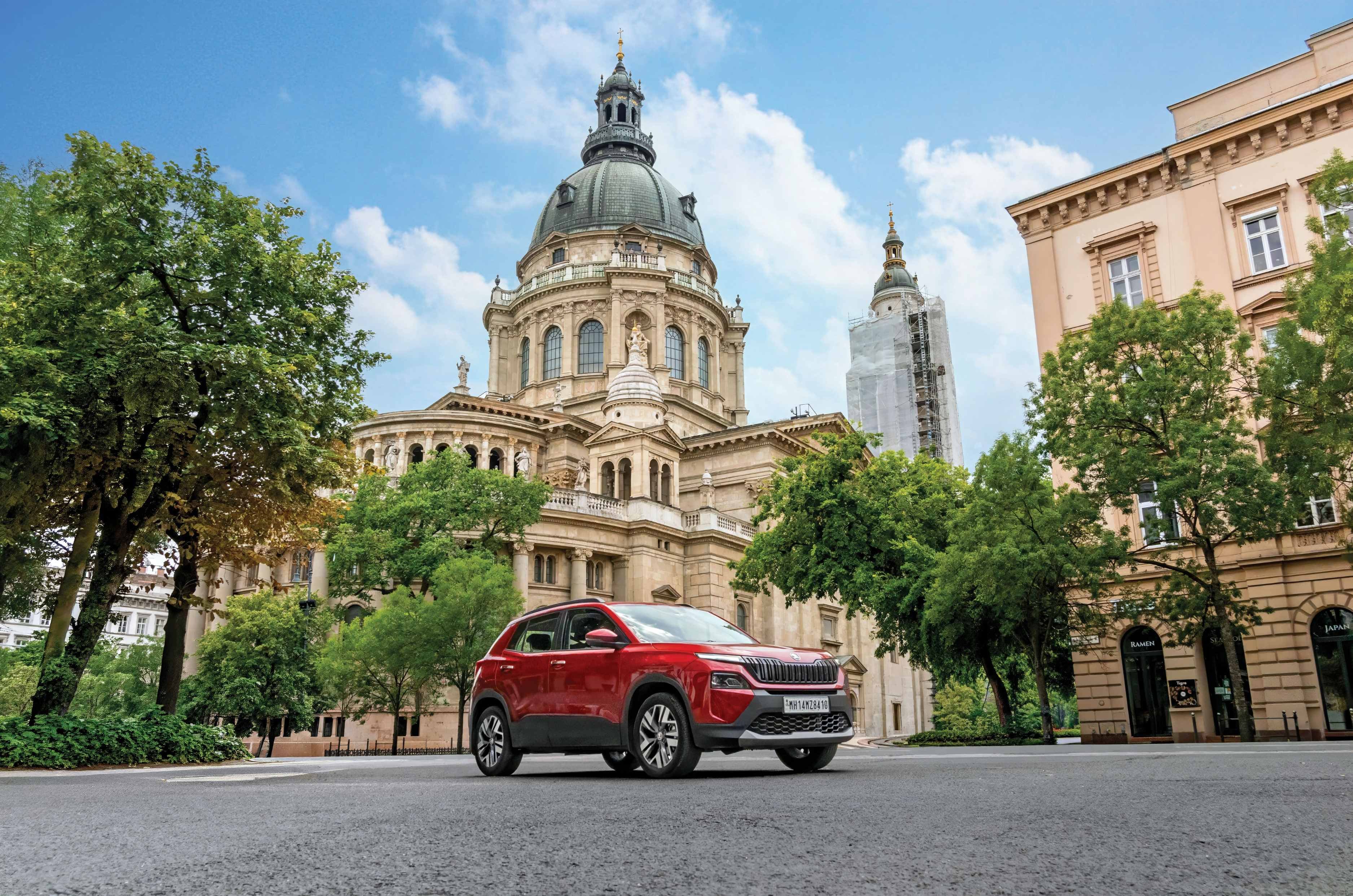
Budapest’s Parliament Building sits by the banks of the Danube River.
As we drove by the banks of the Danube, we were in awe of the stunning Hungarian Parliament Building. Budapest is also known for its bridges, with as many as 13 iconic ones, each with its own identity.
St. Stephen’s Basilica is the largest church in Budapest.
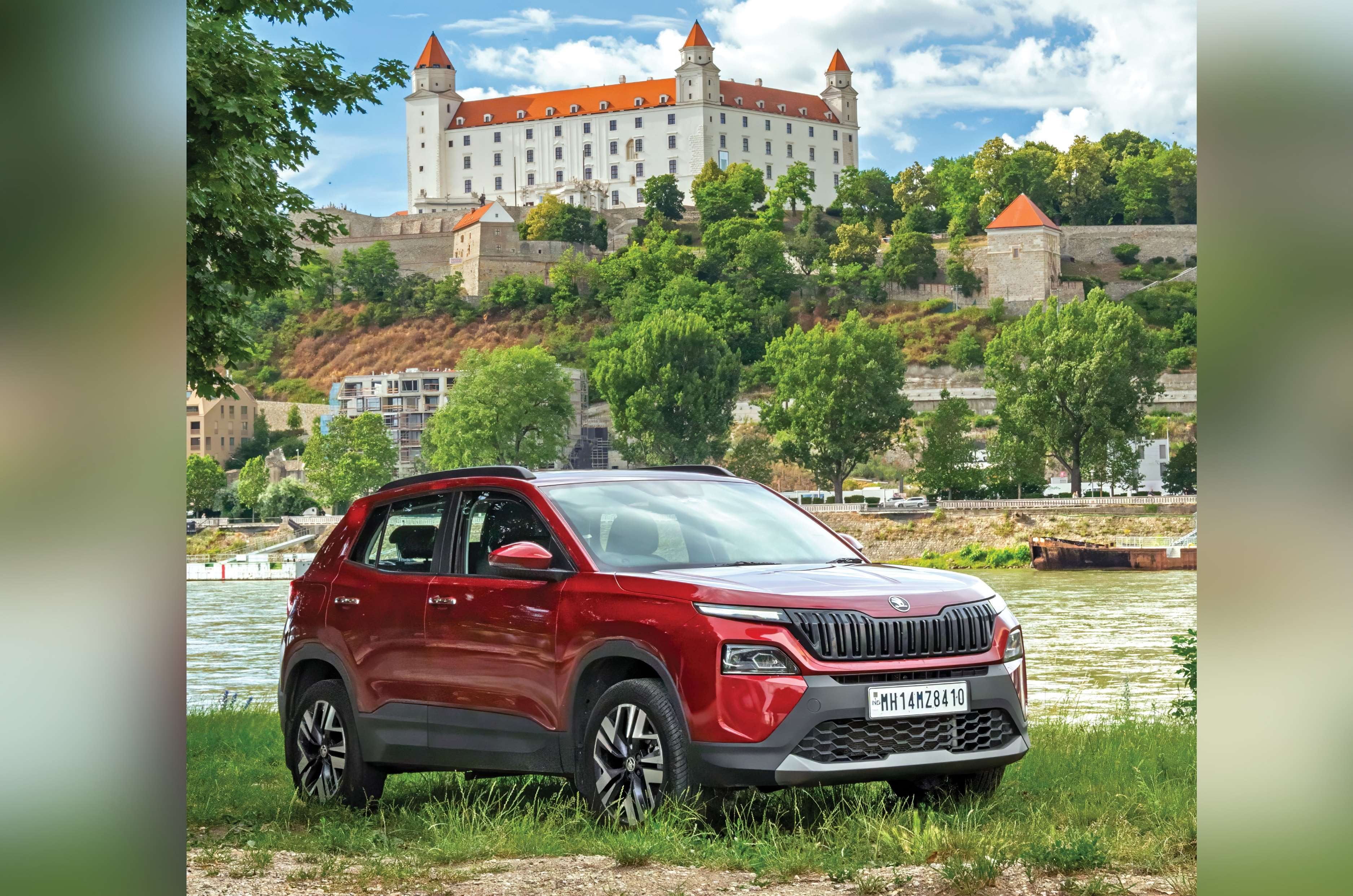
The last country before we entered the Czech Republic was Slovakia. The small country, with a quarter of the population of Mumbai, has a rather interesting Indian connection, as we found out in the pedestrian-only zone of its capital, Bratislava. Bratislava was visited by Pt. Jawaharlal Nehru in 1938, along with a young Indira Gandhi, regarding the freedom movement under British rule.
Bratislava Castle, built in the 13th century on the banks of the Danube, is now a museum.
The town square is also an open market with rich produce, handmade jewellery and a lot more. After buying the last few souvenirs before our bags exploded, we were set for the home stretch.
Prague boards were the beginning of a bittersweet end.
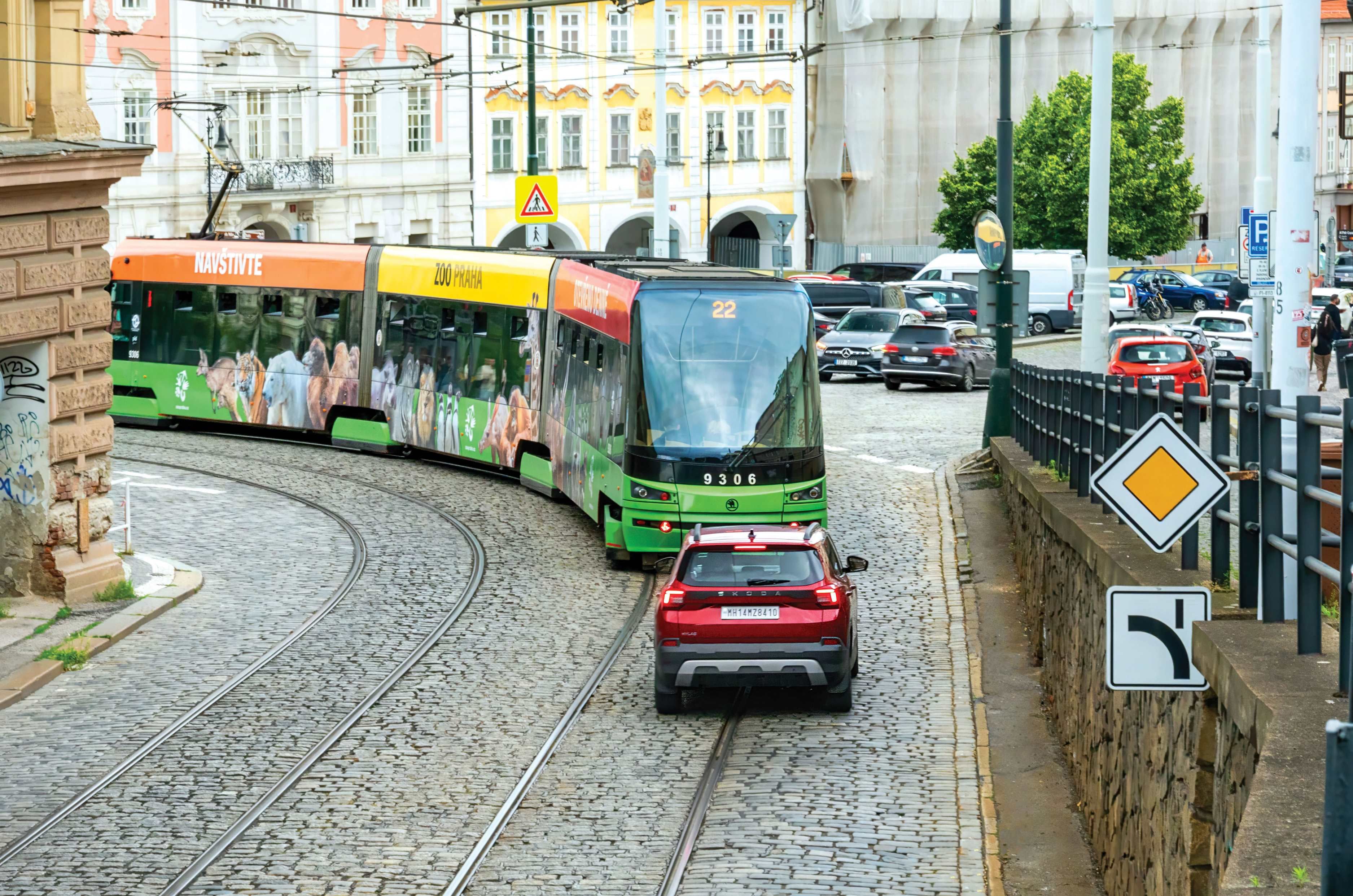
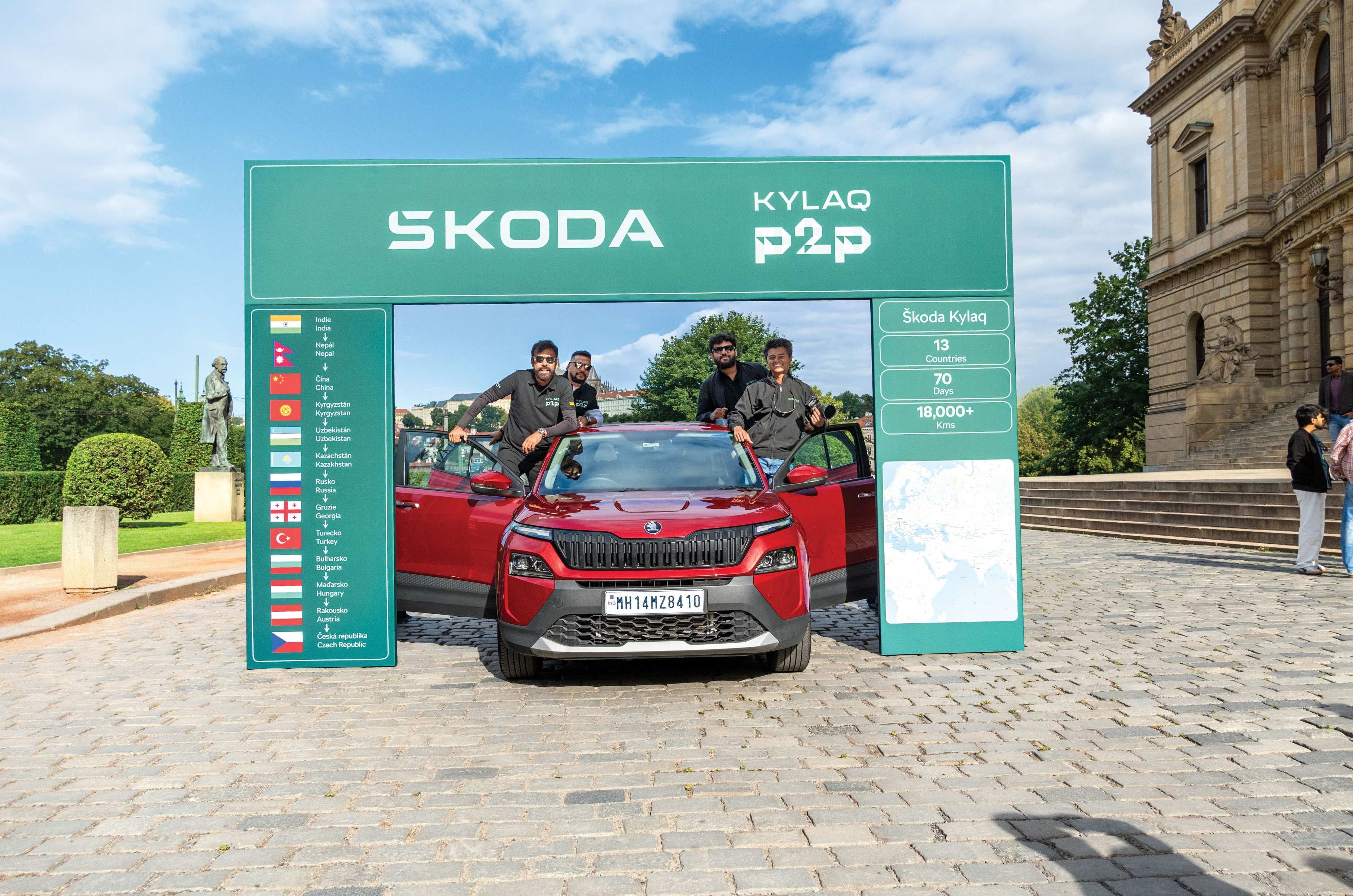
Prague was no more than 200-odd kilometres away, and the bittersweet feeling of it all coming to an end loomed over each and every one of us. As we crossed Brno and got closer to Mlada Boleslav (Skoda’s headquarters), we all reminisced about how gigantic this drive had been. Seventy days, almost 20,000km and not a single fault with the car, not even a puncture.
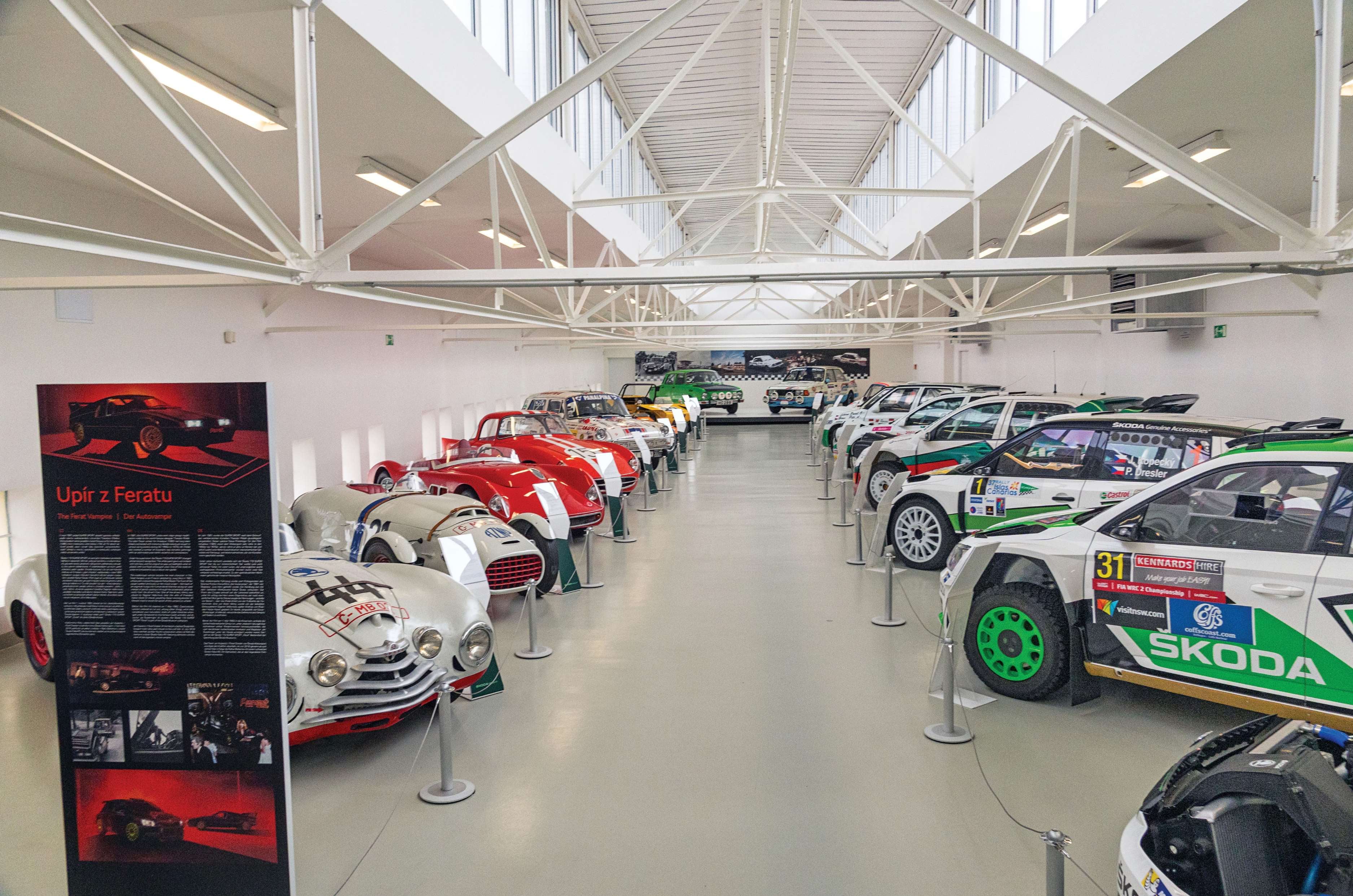
Rich history of rally and motorsport at the Skoda museum.
We crossed the Skoda factory gates with employees gazing in amusement and confusion. They had never seen this car, but strangely, it had a Skoda logo. As we parked the car near the iconic museum that preserves over 130 years of history, we had to peek in and see where it all started.
The fact that a simple bicycle gave birth to one of the largest auto manufacturers in the world is pretty astonishing. Road cars, racing cars and rally legends, Skoda has done it all. A reputation built over a century for being tough, resilient and deeply desirable.
Watching the Indian-made Kylaq sitting proud and faultless in the gleaming sunlight against the backdrop of Prague Castle, looking exactly like it did on the factory floor in Chakan, only proves that the 130-year-old ethos is still the same, no matter where Skoda builds a car.
The final picture in the camera that will always take us back in time
In a world rapidly shifting towards more screens and fewer experiences, a drive like P2P isn’t just a rarity; it’s a statement of defiance: as long as there’s a world to explore, we will find a way to drive across it.
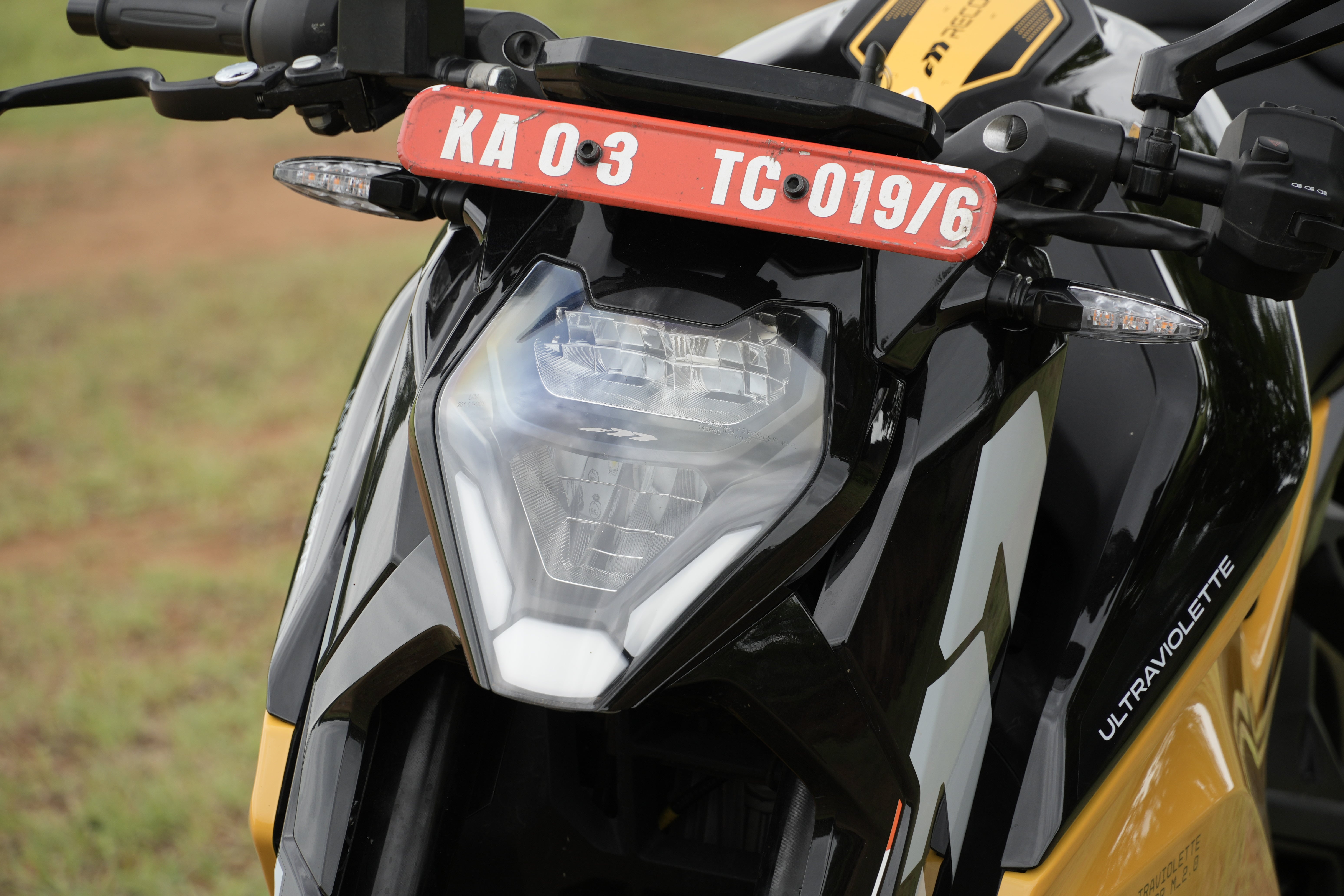
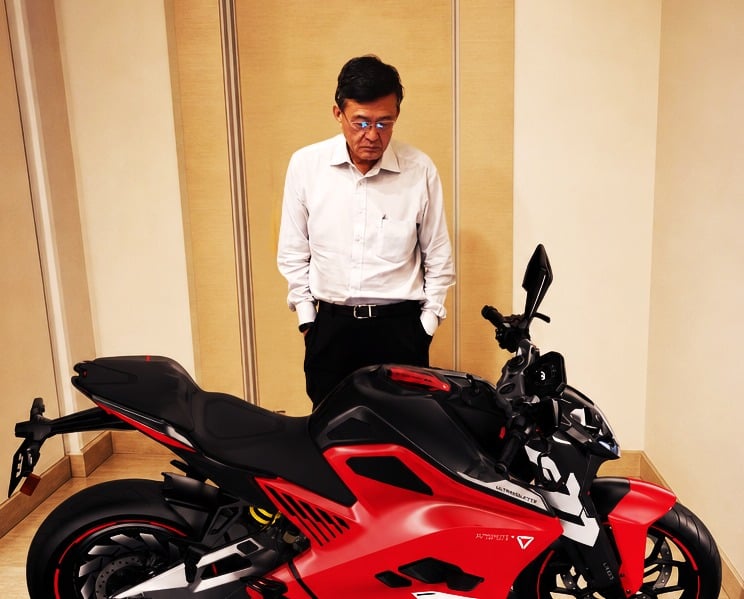
Bengaluru based EV manufacturer, Ultraviolettehad recently announced plans for a new manufacturing facility in Hosur, to increase production capacity up to 5 lakh units a year. The company has now received USD 85 million in a new funding round. The additional capital and the new factory is expected to boost the manufacturing of its current products, the F77 (Mach 2 and Superstreet), X-47, and development of upcoming platforms and products.
The USD 85 million funding was led by Deep Tech Fund Yali Capital and TDK Ventures
New Hosur plant expected to increase production capacity up to 5 lakh units a year
Ultraviolette currently has the means to build battery architecture ranging from 48V to 400V
Ultraviolette plans expansion in India and abroad
Four new products and US entry planned for next year
Currently, Ultraviolette operates in India and 20 European countries. With the fresh round of investment, the company has targeted an US market entry next year, alongside key markets in Latin America and Southeast Asia. The USD 85 million funding round was led by Deep Tech Fund Yali Capital and TDK Ventures and investment from Lip-Bu Tan, Chief Executive Officer of Intel, Chairman of Walden International and Advisor to Ultraviolette, alongside the company’s current and long-term investors. UV says the new and continued support from the investors will help scale production of its current portfolio as well as upcoming products.
The investment will also help with the development of UV’s next generation of models. The company currently boasts technical capabilities to build battery architecture spanning 48V to 400V which it says allows for engineering platforms catering to different needs. Its current list of investors include Zoho Corporation, TVS Motors, and Qualcomm Ventures. Besides India, UV currently operates across Europe including Germany, France, Spain, Portugal, the UK, Belgium, Netherlands, Italy, Switzerland and Hungary.
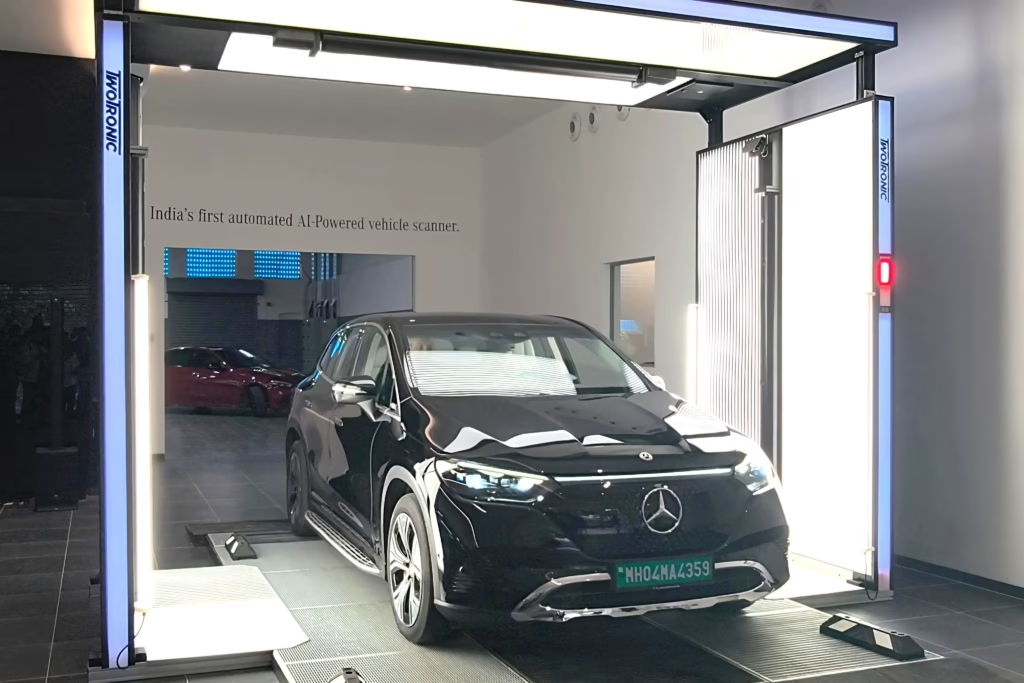
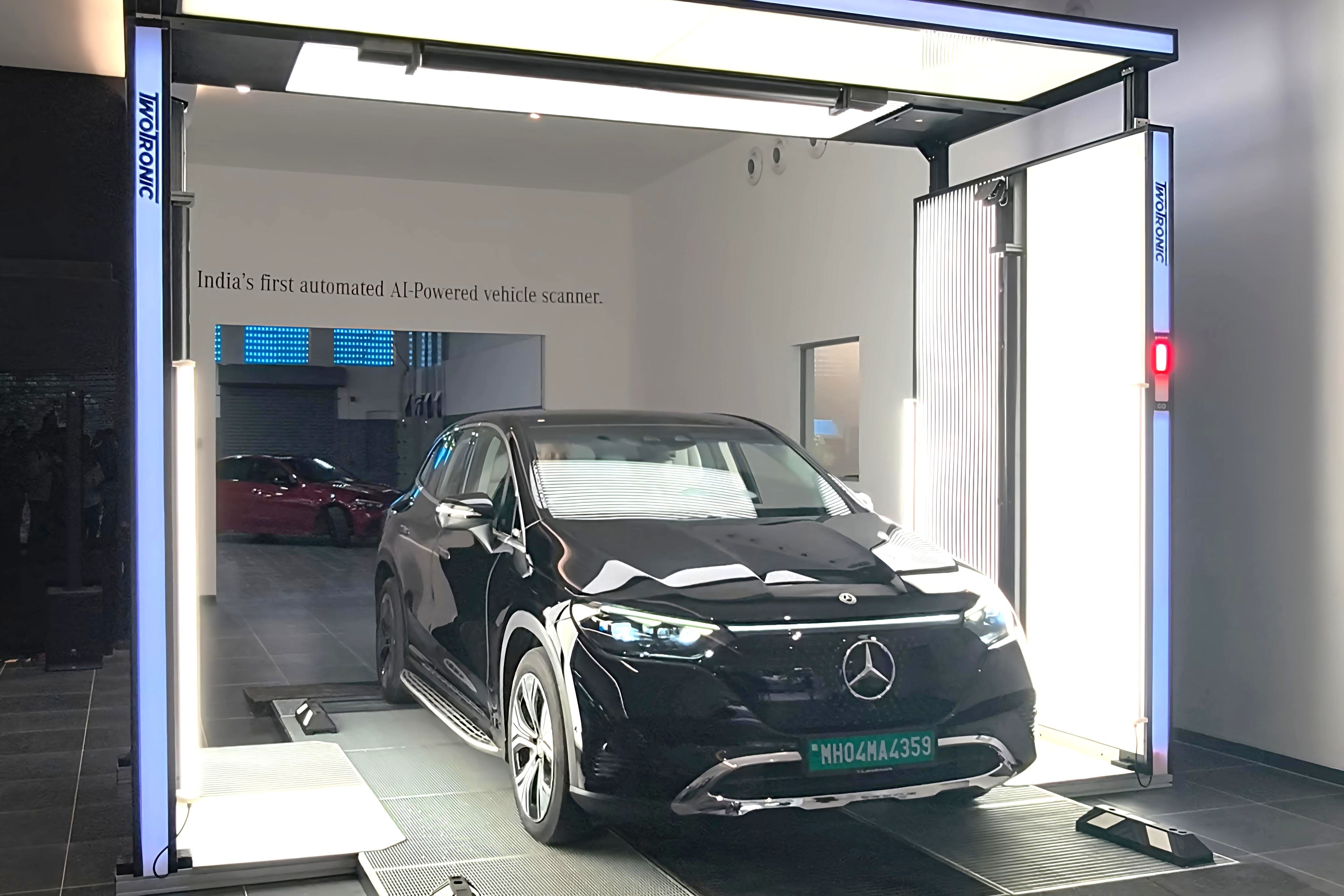
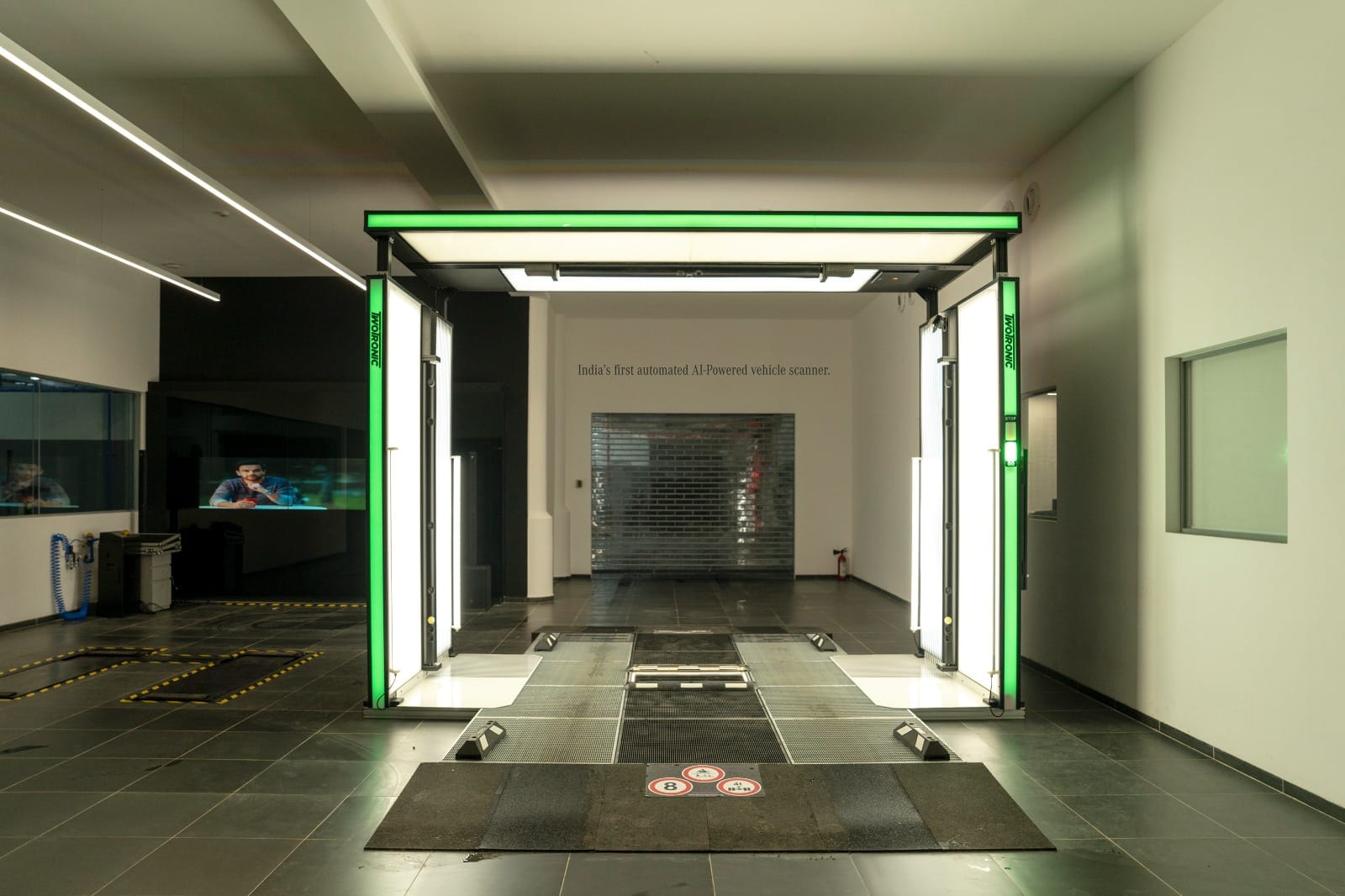
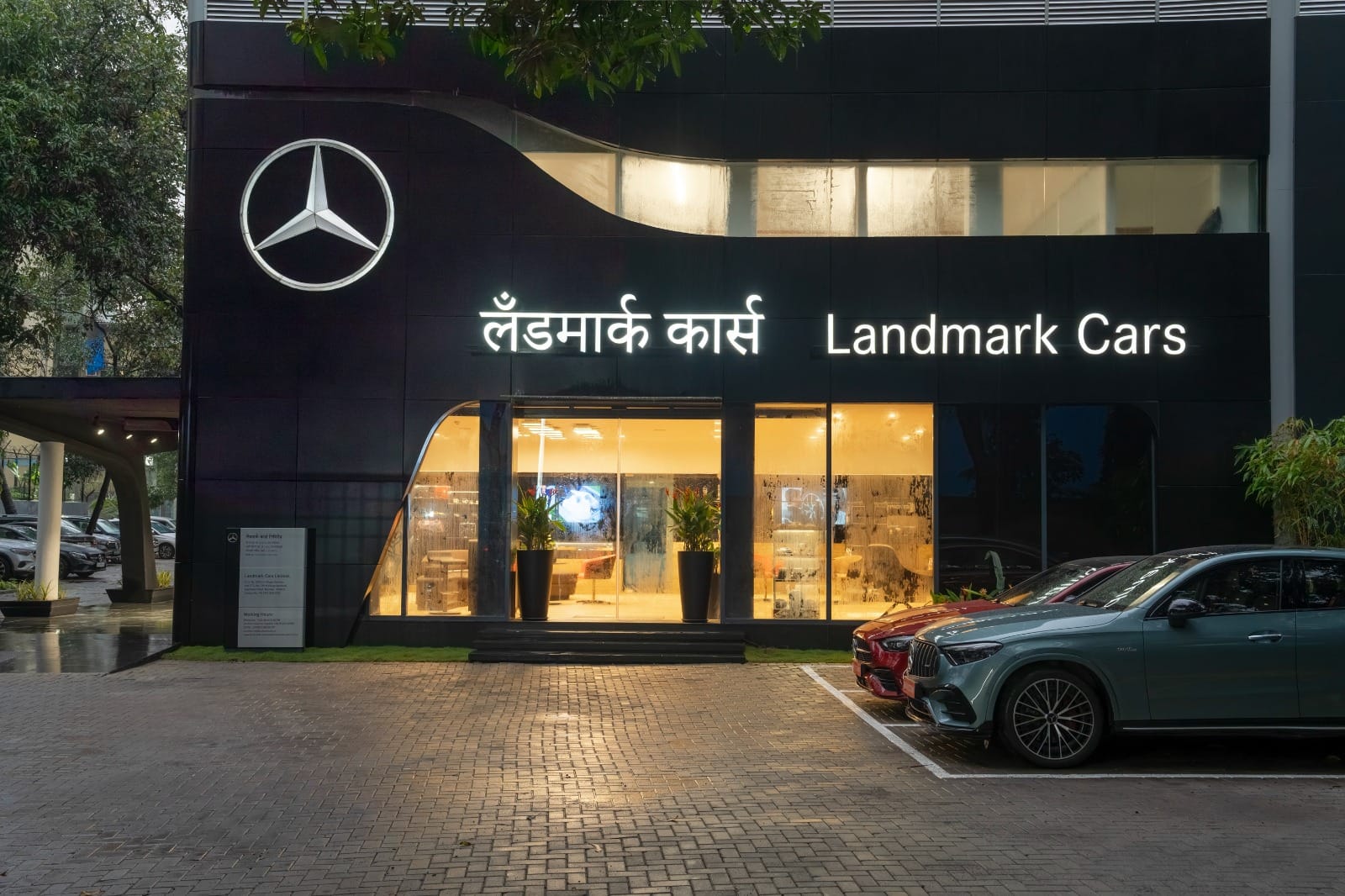
Mercedes-Benz India has revealed an AI-powered device that enables quicker vehicle inspection upon entry to its service centre. Dubbed the XENTRY Scanner, the service debuted at the brand’s newly established centre by Landmark Cars in Jogeshwari, Mumbai.
Mercedes’ first AI-powered car scanning system arrives at its largest workshop in Mumbai.
Uses a 360-degree camera system to identify damage on a car’s exterior.
Service Select debuts as a new scheme for older Mercedes vehicles.
Currently, the scanner is the only one of its kind in India at this service centre, which spans around 58,000 sq. ft., making it the brand’s largest in Mumbai. This facility consists of 16 preventive maintenance and general repair bays, 9 body and paint bays and 9 supporting bays, supported by a dedicated 6,000 sq. ft. spare-parts area.
How does Mercedes’ XENTRY Car Scanner work?
The brand calls it an MRI scanner for its cars
Mercedes-Benz’s XENTRY car scanner.
As the car enters the workshop, it is made to pass through the XENTRY scanner. The scanner utilises a 360-degree high-resolution camera system comprising 13 cameras and a LiDAR sensor. Images of the car are captured and analysed across four categories: body, underbody, windshield and tyres. The system captures 150 images within 3 to 5 seconds and then transmits the data to the Mercedes-Benz cloud.
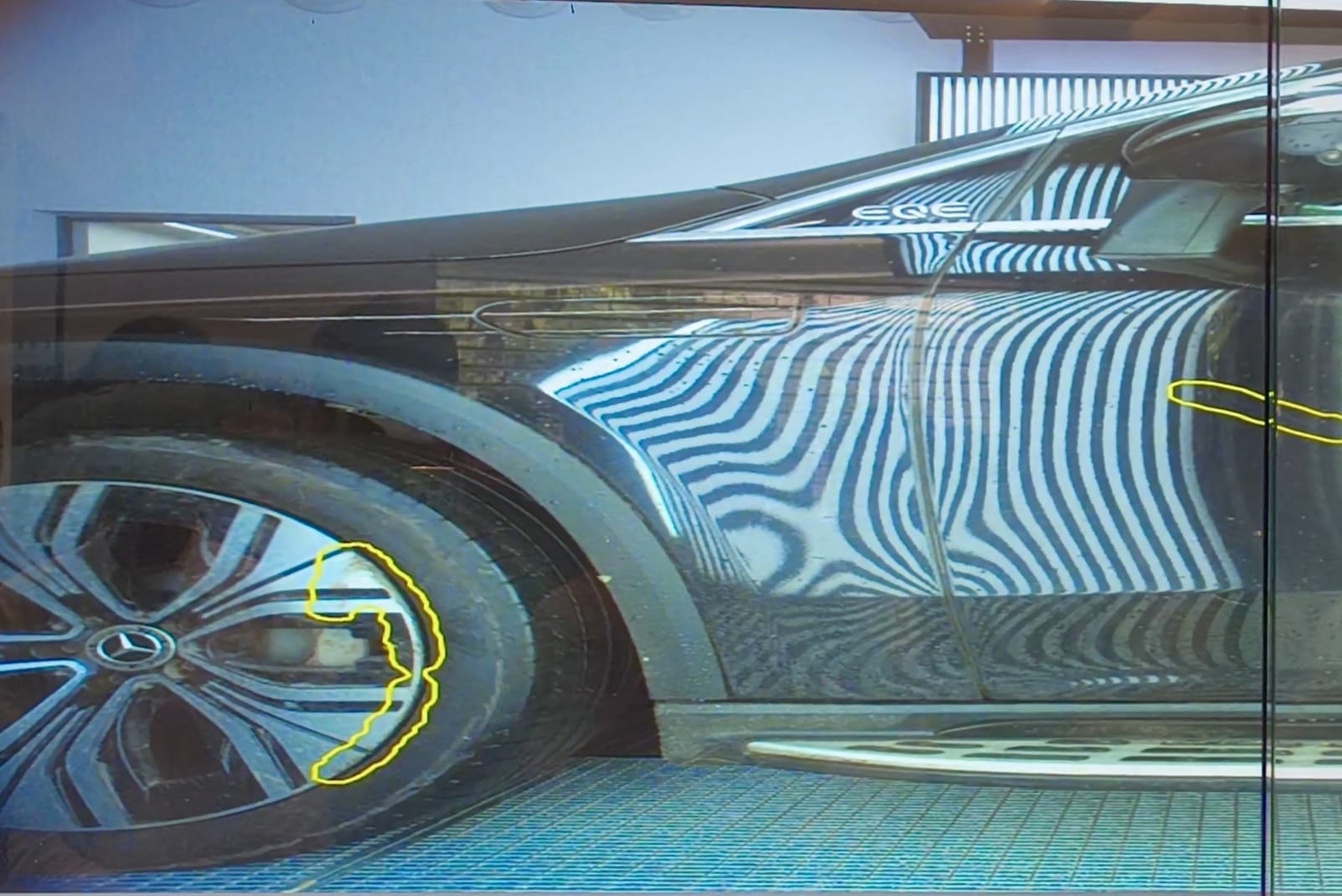
Artificial intelligence then comes into play, identifying every kind of damage on the car’s exterior, even the ones that aren’t visible to the naked eye. It also provides in-depth tyre information, including their health, tread depth and braking performance. To maintain privacy, the system does not capture images of the driver. The findings are added directly to the job card of the particular car without manual entry, enabling better co-ordinated workshop processes. Mercedes says the process is entirely paperless, reducing walking distances, waiting times and paperwork that traditionally accompanied service reception.
Speaking about the thinking behind such initiatives, Mr Santosh Iyer, MD and CEO, Mercedes-Benz India said, “Productivity has to be the core. Reason being, from a real estate perspective, you need to turn cars around faster, while initiatives like the car scanner are more of a productivity enhancement. But on the customer side too, they expect the car to be turned around quickly, which is a pure mobility requirement for the customer.”
Through AI, external wear and tear is automatically detected by the XENTRY car scanner.
Next, a service advisor receives all the information on a tablet and informs the customer of a detailed list of vehicle wear and tear. It is then up to the customer to approve servicing of the concerned parts on the spot. The brand claims that a digital record of service status eliminates the need for manual inspections by the customer.
Interestingly, Landmark’s own internal research points to a shift in service revenue coming from EV adoption growth. “Landmark did a study of the service cost of EV versus ICE. Over the last six months, they’ve seen that the cost is the same in terms of maintenance. But this isn’t coming from maintenance; it’s coming from the body shop. More of the latter is done on EVs compared to ICE cars, said Mr Iyer.
At around 58,000 sq ft, the Landmark Cars workshop in Jogeshwari is the brand’s largest in Mumbai.
India now adds to the list of countries to offer Mercedes’ XENTRY scanner. Previously, the tech was available in international markets like Germany, Italy, Korea, the Netherlands, Switzerland, and Turkey. Furthermore, Mercedes-Benz plans to expand to more than 20 ‘world-class’ luxury outlets in 2026 in India, supported by an investment of more than Rs 450 crore by franchise partners over the next two years.
Mercedes Service Select: A service plan for older Mercedes vehicles
While Mercedes-Benz provides a standard 3-year warranty on new cars, it has also introduced a new service scheme for older vehicles. Called ‘Service Select’, Mercedes cars 7 years or older are eligible for this service. The scheme enables up to 25 percent savings for periodic service and brake care, a 2-year warranty on spare parts, benefits of its ‘Mobilio Lite’ service facility, and residual value protection of the vehicle.
बहुत से लोग मानते हैं कि फाइनेंशियल सिक्योरिटी पाने का एकमात्र तरीका एक स्टेबल नौकरी है। लेकिन एक भारतीय कंटेंट क्रिएटर का कहना है कि वह बिना किसी रेगुलर कॉर्पोरेट नौकरी के, दुनिया के सबसे महंगे देशों में से एक, स्विट्जरलैंड में छह महीने बिता पाईं।
एक इंस्टाग्राम वीडियो में, स्नेह गौर ने बताया कि कैसे उन्होंने फिक्स्ड सैलरी वाली नौकरी छोड़कर कमाई के अलग-अलग जरीये बनाए, जिससे उन्हें अपनी शर्तों पर जीने और काम करने की आजादी मिली। उनकी कहानी ने अब ऑनलाइन चर्चा छेड़ दी है।
गौर ने बताया कि उनके सफर की शुरुआत तब हुई जब वह एक कॉर्पोरेट नौकरी कर रही थीं और महीने के लगभग 45,000 रुपये कमा रही थीं। उस समय, उनका मानना था कि सफलता का मतलब है डिग्री हासिल करना, अच्छी नौकरी पाना और प्रमोशन पाना।
उन्होंने कहा, “मुझे लगता था कि सफलता का मतलब यही है – डिग्री लेना, सैलरी पाना, नौकरी करना और अगला प्रमोशन पाना।” लेकिन समय के साथ उन्हें एहसास हुआ कि वह कुछ अलग करना चाहती थीं। अपनी मर्जी से रहने की जगह चुनने, घूमने-फिरने और उन चीजों पर काम करने की आजादी जो मुझे सच में पसंद थीं।” एक ही रास्ते पर चलने के बजाय, उन्होंने स्पैनिश सीखने का फैसला किया।
गौर के मुताबिक, उस एक स्किल ने नए मौके खोले। इससे उन्हें स्पेन जाने, अलग-अलग देशों के लोगों से मिलने और इंटरनेशनल अनुभव पाने में मदद मिली। बाद में, उन्होंने उस जानकारी को एक बिजनेस में बदल दिया। उन्होंने बताया कि सबसे पहले उन्होंने स्पैनिश सिखाना शुरू किया, और फिर स्पेन ट्रैवल गाइड, डिजिटल प्रोडक्ट्स, ऑनलाइन एंटरप्रेन्योर और कंटेंट क्रिएटर्स के लिए मेंटरशिप प्रोग्राम और ब्रांड कोलैबोरेशन जैसे काम शुरू किए।
गौर ने बताया कि कमाई के कई जरिया होने का मतलब था कि अब उन्हें कंपनी की सैलरी पर निर्भर नहीं रहना पड़ता था। उन्होंने कहा, “जब मैं स्विट्ज़रलैंड गई, तो मैं कंपनी की सैलरी पर निर्भर नहीं थी क्योंकि मेरा लैपटॉप और मेरी रिमोट टीम ही काफी थी।”
स्नेहा ने बताया कि “कभी-कभी आपकी जिंदगी बदलने वाली चीज सिर्फ प्रमोशन नहीं, बल्कि कोई स्किल होती है।” अपनी पोस्ट के कैप्शन में गौर ने लिखा, “कोई नौकरी नहीं। कंपनी से कोई सैलरी नहीं। फिर भी हर सुबह स्विट्जरलैंड में आंख खुली। सच तो यह है कि स्पेन में रहते हुए ही मैंने कुछ ऐसा बनाया जिससे मुझे जहां चाहूं वहां रहने की आजादी मिली। न कोई ऑफिस, न कोई बॉस, न किसी की इजाजत की जरूरत। आजादी का यही वो रूप है जिसे पाने की कोशिश करना सही है।”
इस पोस्ट पर लोगों ने खूब प्रतिक्रिया दी और कई यूजर्स उनकी यात्रा के बारे में और जानना चाहते थे। एक यूजर ने लिखा, “कृपया मुझे बताएं।” एक और ने पूछा, “एक सीधा सा सवाल है कि आप किस वीजा पर 6 महीने तक रहीं? स्पेन का सामान्य रेजिडेंट परमिट तो सिर्फ 3 महीने की इजाजत देता है, या फिर आपने स्पेन की नागरिकता ले ली थी?” एक व्यक्ति ने कमेंट किया, “इसके लिए कैसे अप्लाई करें?” वहीं कई अन्य लोगों ने हार्ट और फायर इमोजी के साथ प्रतिक्रिया दी।
स्विट्जरलैंड ने अतिरिक्त समय के बाद हुए रोमांचक पेनल्टी शूटआउट में कोलंबिया को 4-3 से हराया। इस जीत के साथ स्विट्जरलैंड 1954 के बाद पहली बार फीफा विश्व कप के क्वार्टर फाइनल में जगह बना ली। बीसी प्लेस में 120 मिनट के खेल के बाद भी स्विट्जरलैंड और कोलंबिया की टीमें कोई गोल नहीं कर सकीं।
इसके बाद स्विट्जरलैंड के गोलकीपर ग्रेगोर कोबेल हीरो बनकर उभरे, उन्होंने क्रिस्टियन हर्नांडेज की पेनल्टी बचाई और फिर रूबेन वर्गास ने शांति से विनिंग स्पॉट-किक मारकर 4-3 से शूटआउट में टीम की जीत पक्की की। इस नतीजे के बाद अब क्वार्टर फाइनल में स्विट्जरलैंड का मुकाबला अर्जेंटीना से होगा, जो कैनसस सिटी में खेला जाएगा।
भले ही अंतिम स्कोर कुछ भी रहा हो, लेकिन कोलंबिया की टीम ने अधिक आक्रामक प्रदर्शन किया और बेहतर मौके बनाए, खासकर अतिरिक्त समय के दौरान। डिफेंडर जॉन लुकुमी गोल करने के सबसे करीब पहुंचे थे, लेकिन उनका शॉट क्रॉसबार से टकरा गया। वहीं, 116वें मिनट में जॉन एरियास कैम्पाज को गोल करने का शानदार मौका मिला।
लेकिन गोलकीपर कोबेल के सामने होने के बावजूद उन्होंने शॉट बार के ऊपर मार दिया। कप्तान ग्रैनिट जाका और डिफेंडर मैनुअल अकांजी की अगुवाई में स्विट्जरलैंड ने मजबूती से बचाव किया, लेकिन उन्हें गोल करने के अच्छे मौके बनाने में संघर्ष करना पड़ा, जबकि कोलंबिया ने अधिक खतरनाक हमले किए।
— Memes vs. Football (@memesvsfootball) July 7, 2026
आखिरकार मैच पेनल्टी शूटआउट में पहुंचा, जहां जुआन फर्नांडो क्विंटरो ने कोलंबिया की पहली किक को गोल में बदला और फिर जाका ने स्विट्जरलैंड के लिए गोल किया। कोलंबिया की उम्मीदों को तब बड़ा झटका लगा जब डेविंसन सांचेज़ की पेनल्टी क्रॉसबार से टकरा गई। इसके बाद जेकी अमदौनी और कैम्पाज ने सफल स्पॉट-किक मारकर शूटआउट को बराबरी पर ला दिया।
ऐसा लगा कि स्विट्जरलैंड मैच पर पकड़ बना लेगा, लेकिन अकांजी ने अपनी पेनल्टी बार के ऊपर मार दी, जिससे कोलंबिया को वापसी का मौका मिल गया। हालांकि, कोबेल ने दाईं ओर डाइव लगाकर हर्नांडेज़ का शॉट बचाकर निर्णायक पल बनाया। सेड्रिक इटेन ने स्विट्जरलैंड की अगली पेनल्टी को गोल में बदला और फिर लुइस डियाज़ ने शांत अंदाज़ में गोल करके कोलंबिया की उम्मीदें बनाए रखीं।
शूटआउट में स्कोर 3-3 से बराबर होने पर वर्गास आगे आए और शांति से नीचे के कोने में शॉट मारकर स्विट्जरलैंड को अंतिम आठ में पहुंचा दिया। इस जीत के साथ स्विट्ज़रलैंड ने अपने वर्ल्ड कप इतिहास में 72 साल में पहली बार क्वार्टर फाइनल में प्रवेश किया। जहां उनका मुक़ाबला अर्जेंटीना से होगा।
ब्रिल एम्बोलो और डैन एनदोये के गोल की मदद से स्विट्जरलैंड ने अल्जीरिया पर 2-0 की जीत के साथ विश्व कप के अंतिम 16 में जगह बना ली।स्विट्जरलैंड अगला मुकाबला कोलंबिया और घाना के बीच होने वाले मैच के विजेता से होगा। राउंड ऑफ 16 का मैच अगले मंगलवार को वैंकूवर में खेला जाएगा।
BC Place Vancouverमें खेले गए इस मैच के दौरान पहले हाफ में ही स्विटजरलैंड ने बढ़त बना ली थी। दसवें मिनट में ही ब्रिल एम्बोलो ने पहला गोल दाग दिया और रक्षा पंक्ति ने अल्जीरिया को गोल करने का मौका नहीं दिया। पहले हाफ में अलजीरिया के पास बराबरी का एक शानदार मौका था लेकिन डिफेंडर्स ने गोलकीपर का काम आसान कर दिया।
दूसरे हाफ की शुरुआत हुई ही थी लेकिन अलजीरिया बराबरी के बजाए एक और गोल खा गई। डैन एनदोये ने 46वें मिनट में गेंद को अलजीरियन डिफेंडर्स के बीच में से निकालकर गोलकीपर को भी छका दिया। यह स्कोरलाइन अंत तक रही।
Switzerland punches its ticket to the Round of 16!#FIFAWorldCup
स्विट्जरलैंड ने 1938 में फ्रांस में खेले गए विश्व कप के बाद नॉकआउट राउंड का कोई मैच नहीं जीता था, लेकिन 1954 में उसकी टीम ने प्लेऑफ मैच जीतकर क्वार्टर फाइनल में जगह बनाई थी।
स्विट्जरलैंड की टीम पिछले तीन विश्व कप में अंतिम 16 में पहुंची थी लेकिन इससे आगे बढ़ने में नाकाम रही।अल्जीरिया 2014 के बाद पहली बार विश्व कप में भाग ले रहा था। वह 2014 में नॉकआउट राउंड तक पहुंचा था, लेकिन तब जर्मनी से हार गया था।
स्विट्जरलैंड ने दूसरे हॉफ में शानदार प्रदर्शन करते हुए कनाडा को उसके घरेलू मैदान पर 2-1 से हराकर फीफा विश्वकप ग्रुप बी मुकाबले में शीर्ष रहते हुए नॉटआउट चरण में जगह बना ली है। वहीं इस हार के बावजूद कनाडा ने दूसरे स्थान पर रहते हुए नॉकआउट में प्रवेश किया। बीसी प्लेस स्टेडियम में खेले गए ग्रुप बी के इस मुकाबले में दोनों टीमों के आक्रामक खेल और कई मौके बनाये जाने के बावजूद 45 मिनट गोल नहीं कर सकी।
दूसरे हाफ की शुरुआत में स्विट्जरलैंड के रूबेने वर्गास ने 46वें मिनट में गोल दागकर अपनी टीम को बढ़त दिलाई। इसके बाद 57वें मिनट में 20 वर्षीय जोहान मंजाम्बी ने गोल कर स्विट्रलैंड की बढ़त को दोगुना कर दिया। मंजाम्बी ने पूरे मैच में आक्रमण प्रदर्शन किया।
कनाडा ने वापसी का प्रयास किया और स्थानापन्न खिलाड़ी प्रॉमिस डेविड ने 76वें मिनट में गोल कर मुकाबले को रोमांचक बना दिया। अंतिम मिनटों में कनाडा ने बराबरी का प्रयास किया, लेकिन स्विस रक्षा पंक्ति ने उन्हें कामयाब नहीं होने दिया। आखिरकार स्विट्जरलैंड ने 2-1 की जीत दर्ज कर सात अंकों के साथ ग्रुप बी में शीर्ष पर रहते हुए नॉटआउट चरण में प्रवेश किया।
Crude Oil Price: सोमवार, 22 जून को तेल की कीमतों में तेज़ी आई, जब प्रेसिडेंट डोनाल्ड ट्रंप ने चेतावनी दी कि अगर हिज़्बुल्लाह इज़राइल पर हमले जारी रखता है तो ईरान के खिलाफ मिलिट्री एक्शन हो सकता है। इससे यह चिंता बढ़ गई कि वॉशिंगटन और तेहरान के बीच चल रही शांति बातचीत में रुकावट आ सकती है।
सोमवार को मार्केट खुलने पर ब्रेंट क्रूड 2.2% तक बढ़कर $82.30 प्रति बैरल पर पहुंच गया, जबकि वेस्ट टेक्सास इंटरमीडिएट $78 के निशान से ऊपर चढ़ गया।
आज कच्चे तेल की कीमतें क्यों बढ़ रही हैं?
रविवार को बातचीत की शुरुआत अनिश्चित थी, जब ईरानी मीडिया ने बताया कि ट्रंप की चेतावनी के बाद तेहरान ने स्विट्जरलैंड में बातचीत रोक दी है। हालांकि, बातचीत से जुड़े सूत्रों ने कहा कि बातचीत जारी है। ईरान ने इज़राइल पर लेबनान में सीज़फ़ायर तोड़ने का भी आरोप लगाया।
स्विस रिसॉर्ट बर्गेनस्टॉक में हुई हाई-लेवल बातचीत 60 दिन के बातचीत के समय की शुरुआत है, जो पिछले हफ़्ते ट्रंप के तनाव कम करने के मकसद से एक मेमोरेंडम ऑफ़ अंडरस्टैंडिंग पर साइन करने के बाद शुरू हुई थी। हालांकि ईरान ने एक बार फिर होर्मुज स्ट्रेट को बंद करने का दावा किया, लेकिन वीकेंड में इस ज़रूरी पानी के रास्ते से तेल की सप्लाई ज़्यादातर बिना रुके जारी रही।
ब्लूमबर्ग की एक रिपोर्ट के मुताबिक, बातचीत सोमवार सुबह तक चली और होर्मुज स्ट्रेट से नेविगेशन को सुरक्षित रखने और दक्षिणी लेबनान में इज़राइल और हिज़्बुल्लाह के बीच सीज़फ़ायर का पालन पक्का करने जैसे मुद्दों पर फोकस रही।
फॉक्स न्यूज़ ने ट्रंप के हवाले से कहा कि उन्होंने ईरानी नेताओं को चेतावनी दी थी कि होर्मुज स्ट्रेट को बंद करने की किसी भी कोशिश के गंभीर नतीजे होंगे, और कहा कि वे ईरान वापस नहीं जाएंगे।
इस बीच, हाल के हफ़्तों में कच्चे तेल की कीमतों में कमी आई है, हालांकि वे अभी भी लड़ाई से पहले के लेवल से ऊपर हैं। यह गिरावट रिफाइनरियों द्वारा कुछ समय के लिए विकल्प ढूंढने और इस उम्मीद को बढ़ाने की वजह से हुई है कि लड़ाई का आखिरकार हल ग्लोबल एनर्जी मार्केट के तेज़ी से नॉर्मल होने का रास्ता बना सकता है।
नई अनिश्चितता ने कच्चे तेल की कीमतों को थोड़ा बढ़ा दिया है, यह एक ऐसा डेवलपमेंट है जो जल्द ही सेंटीमेंट पर असर डाल सकता है। इन्वेस्टर्स बातचीत से आगे की हेडलाइंस पर फोकस कर सकते हैं, क्योंकि प्रोग्रेस या बढ़ोतरी के किसी भी संकेत का एनर्जी की कीमतों और बड़े मार्केट सेंटीमेंट पर बड़ा असर पड़ सकता है। एनरिच मनी के CEO पोनमुडी आर ने कहा, “कच्चे तेल की कीमतें बढ़ी हैं और अभी $77–78 प्रति बैरल की रेंज में ट्रेड कर रही हैं, जबकि हाल ही में यह लगभग $73 प्रति बैरल तक गिर गई थी।”
(डिस्क्लेमर: मनीकंट्रोल.कॉम पर दिए गए विचार एक्सपर्ट के अपने निजी विचार होते हैं। वेबसाइट या मैनेजमेंट इसके लिए उत्तरदाई नहीं है। यूजर्स को मनी कंट्रोल की सलाह है कि कोई भी निवेश निर्णय लेने से पहले सार्टिफाइड एक्सपर्ट की सलाह लें।