Electric two-wheelers could help dealers retain more customers even as they reduce the need for traditional servicing, according to Hero MotoCorp’s chief business officer, Ashutosh Varma.
EVs are currently complementing, rather than replacing, ICE two-wheelers, says Hero MotoCorp
EV service retention could reach 85-90 percent
Software-based services could create new revenue opportunities for dealers
EVs could improve service retention
Dealer revenue set to evolve
Speaking at a FADA conclave, Varma said the current growth of the ICE two-wheeler market suggests EVs are complementing conventional motorcycles and scooters rather than replacing them.
“The way the ICE business seems to be growing, it doesn’t seem like EVs are substituting ICE sales. It’s just like complementing ICE sales,” he said.
One of the potential benefits for dealers could be higher customer retention. Varma said average retention in the ICE business is around 60 percent, while EVs could push this considerably higher.
“In EVs it nudges us to move even further, possibly 85-90 percent,” he said.
While EVs have fewer mechanical components and generally require less routine maintenance than ICE vehicles, a higher proportion of EV owners returning to authorised workshops could help offset some of the reduction in conventional service and parts revenue.
Varma also pointed to software as another potential source of income for dealers. Manufacturers are increasingly offering modular, paid software and technology features, giving dealerships an opportunity to earn from services beyond traditional workshop jobs.
The revenue mix for dealerships is therefore likely to change as EVs become more common, rather than simply declining because vehicles need less mechanical servicing.
“The nature of revenues as you go forward will continue to evolve,” Varma said. “There are new avenues that will continue to emerge and EVs is an excellent example.”
It’s not a stretch to say that the Konarc is the most important product from Ather yet, because the company hopes this new EV will help it unlock segments and markets hitherto untouched by it. The question then is, will the Konarc live up to the lofty expectations placed on its shoulders?
Konarc Design and Quality – 9/10
Straightforward design with high quality finish
The Konarc S is offered in four classy yet inoffensive colours
Striking looks aren’t a trait family scooters are known for and Ather wanted to play it very safe with the Konarc to bring in buyers that typically shop for ‘decent-looking’ scooters. While it does look a bit plain, it will still not completely meld into the ocean of humdrum two-wheelers on the road. Further reinforcing its family scooter aspirations are a quartet of very classy, yet inoffensive colours.
Another aspect that the Konarc’s prospective customers will appreciate is its excellent finish and quality levels all across – a typical Ather trait.
Konarc Ride and Handling – 9/10
Excellent ride and seating comfort, planted and surefooted handler
One big reason Ather moved to the new EL platform is that its earlier platform was never built for outright comfort and practicality. In this application, the main focus was to maximise comfort for both rider and pillion. The use of a 14-in front wheel and suspension with 90mm/100mm (F/R) of travel are two key factors in providing lovely ride comfort here.
31L boot is deep enough to fit a premium helmet
Point the Konarc towards most bumps and it will round them off without getting unsettled while isolating you from the shock to a great extent. In the scooter space, this is one of the most comfortable options available. Ofcourse, this is still a scooter and really big bumps will filter through – don’t expect motorcycle-like comfort.
Specifications
Values
Wheelbase
1352 mm
Kerb Weight
126.5 kg
Chassis type
Monocoque Full – Steel Body Construction
Something that a typical family scooter buyer values is a centre stand and the Konarc becomes the first Ather to offer it. Like other family scooters, the Konarc’s chassis is geared towards stability and ease of use. Despite the larger 14-in wheel and long 1352mm wheelbase, it felt very straightforward to ride. Its low 770mm seat height will help shorter folks get their feet down comfortably although its wide floorboard will have an impact here.
Main stand can touch down in deep ruts
A spacious seat with a padded backrest means two full-size riders will fit comfortably on the Konarc. Another nice feature is that the front end doesn’t get flighty even with a heavy pillion onboard, despite no preload adjustability on the monoshock. The only ergonomic miss is that riders taller than 5’10 will find their knees touching the handlebar during full-lock turns.
Specifications
Values
Wheel Size
Front – 14 inch, Rear – 12 inch
Front Tyre Size
90/90-14
Rear Tyre Size
100/90-12
Brake type
Front – Disc, Rear – Drum
Front Brake Size
220 mm
Rear Brake Size
130 mm
Front Suspension Type
Telescopic Fork, 90mm travel
Rear Suspension Type
Dual Hydraulic Coil Spring, 100mm travel
Konarc Performance – 8/10
Has enough performance, new motor has very silent running
Not only is the Konarc a big leap ahead in terms of comfort, its riding experience is also well-suited to city commuting. A big part of that is down to the comfort but its new swingarm-mounted motor also contributes here. Unlike the Rizta and 450 which used a rather noisy and relatively more maintenance intensive belt final drive, this motor is whisper quiet. It also directly powers the rear wheel without a chain or belt, reducing the number of components in the powertrain.
Specifications
Values
Fuel Type/ Propulsion
Electric
Motor Type
PMSM
Max Motor Power
4.7 kW
Max Motor Torque
16 Nm
EV Battery Capacity
2.7 kWh
With 4.7kW and 16Nm of torque on tap, the Konarc’s performance is best described as sufficient, but only in the top Power mode. Here, the scooter is capable of negotiating its way through big city traffic reasonably quickly. Switching to Eco / SmartEco dulls acceleration significantly and unless you’re running out of juice or you live in a small town, this level of performance will feel out of place.
450W onboard charger integrated into motor controller means you only need to carry a small cable around
Except for the bottom 2.1, all S variants come with a front disc brake, a rear drum and CBS. This setup is capable of bringing the Konarc to a halt quickly and safely with almost no hiccups. The one concern with the combined braking system was that the front could lock up when braking on sandy, gravelly loose surfaces using the rear brake lever exclusively. Only the Z variants launching next year come with Ather’s AeBS (Advanced Electronic Braking System) which uses the regen system to shorten braking distances.
Konarc Features – 8/10
S variants are decently equipped but Z gets all the feel-good ones
And that is a good segue into the way Ather has distributed features across the S and Z. The keyless ignition system, automatic seat opening, AeBS, Magic Twist regen braking, traction control, the colour TFT display and all the smart functions enabled by it are reserved only for the Z. Common to all Konarcs is the 31L underseat storage area, which can easily swallow an imported full-face helmet with room to spare.
7-inch dash informative and legible but not full colour
What three S variants (except the most affordable one) get is the 7-in simple TFT dash with Bluetooth connectivity, hill hold assist, reverse, several app-based functions, a 450W onboard charger and Airwalk. Airwalk is basically the Konarc’s motor sending a tiny amount of power to the rear wheel when you’re pushing it around to help make your life easier – this is truly effective and makes the 129kg Konarc feel far lighter than it is when moving it around. While the S has a good number of features, when you bring pricing into the equation, it stings a little.
Same charging port for both onboard & portable chargers
Konarc Price and Verdict – 8/10
Not a cutthroat price but this is still a polished and competitive scooter
The two S variants which are on sale right now, S 125 and S 161, are priced at Rs 1.22 lakh and Rs 1.45 lakh, respectively – near identical pricing to the Rizta S. Like the Rizta, you have to pay extra for the Ather StackPro which unlocks many of the smart electronic features.
The base S 2.1 (Rs 99,999) misses out on niceties like the disc brake and backrest and comes with rudimentary tech and a basic 4.2-in display. In that sense, the Konarc isn’t really pushing the envelope when it comes to an alluring price.
Variant
Price (ex-showroom)
Konarc S 100
Rs 1 lakh
Konarc S 125
Rs 1.22 lakh
Konarc S 161
Rs 1.45 lakh
However, as a scooter, the Konarc is a well-thought out product that nails comfort, promises enough performance, predictable range and lower maintenance costs. Ather claims a 10,000km / 1 year service interval and lower service charges owing to fewer parts and quicker turnaround times.
It may not have made as stellar an impression as it could have with more aggressive pricing, but nonetheless the Konarc definitely has what it takes to elevate Ather to a higher echelon in the market.
Ather has launched the Konarc electric scooter in India at its Annual community day, with prices starting at Rs 1 lakh (ex-showroom, Bengaluru). It is available in three variants – S 100, S 125 and S 161 – with the numbers corresponding to their respective IDC range figures. A 200km version is also in the pipeline, while a feature-loaded Z variant with a 125km IDC range will also join the line-up.
New AEBS braking system and MagicKey boot access headline the technology package.
100mm rear suspension travel and a 1,352mm wheelbase are aimed at improving ride comfort and stability.
Up to 200km IDC range, 31-litre boot and 1.35kW combined charging add to its practicality.
Ather Konarc is based on the EL-platform
The Konarc is aimed at delivering improved ride comfort and stability, with 90mm of front and 100mm of rear suspension travel. It has a 1,352mm wheelbase, the longest of any Ather scooter, along with a 14-inch front wheel and 12-inch rear wheel. The S 100 gets drum brakes at both ends, while the S 125 and S 161 get a 220mm front disc and 130mm rear drum.
Ather Konarc Battery and range information
The S 100 gets a 2.1kWh battery and produces 4kW and 16Nm, while the S 125 and S 161 use 2.7kWh and 3.5kWh batteries, respectively, and produce 4.7kW and 16Nm. All three have a claimed top speed of 70kph. While their TrueRange figures are 80km, 100km and 130km, respectively.
The Konarc comes with a 450W onboard charger as standard. Ather says this can be combined with a 900W off-board charger, giving a total charging capacity of 1.35kW. The claimed home charging time from 0-80 percent with the standard charger is 4 hours for the S 100, 4hr 30min for the S 125 and 5hr 40min for the S 161. With the combined charger, these times fall to two hours, 2hr 25min and 3hr 10min, respectively. The charging speed is claimed at 13km in 10 minutes for the S 100 and 15km in 10 minutes for the S 125 and S 161.
Ather described EL as a scalable platform capable of underpinning different scooter formats while sharing major components. Developed using 26 lakh kilometres of field data, it features a new chassis, powertrain and electronics architecture. Ather says reducing the component count could make assembly 15 percent faster and periodic servicing up to twice as quick. The company also demonstrated the platform’s serviceability on stage, with trained technicians dismantling and reassembling the Konarc’s battery and motor in around three minutes, highlighting the potential to significantly reduce workshop time for major component replacement jobs.
The Konarc offers 31 litres of underseat storage, along with an 18W USB Type-C port and an underseat lamp. The S 100 gets a 4.2-inch DeepView display, while the higher variants get a 7-inch DeepView display. Other features include Park Assist reverse, which uses the motor to help manoeuvre the scooter backwards, and AutoHold, which holds the scooter stationary when stopped.
Ather Konarc features
The Konarc Z gets some of Ather’s more significant new technology, including Advanced Electronic Braking System (AEBS). The system uses electronic control to improve braking performance, with Ather saying it reduces stopping distances and minimises rear-wheel lock-ups. It is intended to offer greater braking control, particularly during hard braking.
The Z also gets MagicKey, which allows the rider to unlock the scooter’s boot through the Ather app rather than using a physical key. On the Konarc Z 161, MagicKey works with the boot’s AutoPop function, allowing the boot to open automatically.
Other Z-specific technology includes Google Maps and WhatsApp on the dashboard, while cricket scores can also be displayed when the scooter is stationary. The Konarc gets Ather Connect with features such as theft and tow alerts, ride statistics, Find My Scooter and remote charging-status monitoring. OTA updates are also supported.
The Konarc uses a PMSM motor with IP67 protection, while its battery is also IP67-rated and housed in an aluminium casing. The S 100 weighs 126.5kg, while the S 161 weighs 129kg.
Ather Konarc Price and warranty details
The Konarc also introduces longer service intervals, with periodic maintenance scheduled once every 10,000km or one year, whichever comes first. The Konarc S 100 is priced at Rs 1 lakh, while the S 125 costs Rs 1.22 lakh and the S 161 is priced at Rs 1.45 lakh. Ather has also revealed Konarc Z variants with 125km and 161km IDC range figures, although their prices are yet to be announce
The VW Tayron R-Line is back in the Autocar India garage, and we’ve been running it for some weeks now. First things first, I switch off the Automatic Emergency Braking (AEB) as a matter of habit. The thing is, every time you turn on the car, the system defaults to AEB being active; it doesn’t remember that you last turned it off. This can be rather annoying, but like with most CBUs, which this VW Tayron R-Line is, it follows the homologation requirements of Europe, or what is called GSR 870. That means, for safety reasons, it is mandated to have the AEB on by default every time you begin driving the car.
AEB triggers inadvertently in traffic.
Now, in Europe and other parts of the world where traffic is predictable and sane, it makes sense, but on our chaotic streets, pedestrians, cyclists, bikes and three-wheelers can trigger the AEB into a heart-stopping slam on the brakes, with the risk of being rear-ended by someone who is two inches away from your bumper. Every run to work, the proximity sensors go berserk tackling Mahalaxmi’s infamous Saat Rasta roundabout in Mumbai. It’s also a reminder that the Tayron is a long car, but the good thing is that outside visibility is pretty good, so you can judge the edges quite easily, which is essential when threading through traffic.
2.0-litre TSI feels refined at all speeds.
The Tayron got a chance to stretch its legs on a run to the Nanoli track. The ‘EA888 Evo’ 2.0-litre TSI engine is the epitome of refinement and possibly the smoothest turbo-petrol in the premium segment. It lacks a bit of low-end punch, but likes to be revved and encourages visits to the 6,000rpm redline. The Tayron is a happy cruiser too, and feels nice and planted at expressway speeds in a VW sort of way.
Peeling off the expressway onto the poorly paved, single-lane roads leading to Nanoli exposes a weak chink in the Tayron R-Line – a crashy ride that makes the body jar. The true culprit is the low 45-profile tyres the R-Line comes with, and their short sidewalls simply can’t cushion sharp edges, ruts and jagged tarmac well enough. I suspect the lower-spec Tayron Life, recently launched at Rs 41.99 lakh, is a cheaper and more practical option with the less sporty spec and taller 55-profile tyres.
Low-profile tyres impact ride comfort.
Living with the Tayron R-Line, you discover the smaller details that go some way in justifying the hefty Rs 46.99 lakh price. Cabin materials feel genuinely plush – the stitching, fit and finish and tasteful use of ambient lighting – though I have to say some of the trim did creak on bad roads. There’s good storage space too, which makes long-distance driving with your family a pleasant affair. What stood out for me was the clarity and ease of use of the infotainment system. Large fonts, smooth and slick operation and a nicely intuitive menu make it easy to operate on the go.
Seats comfy for long hours behind the wheel.
Other things that stood out after a long drive were the seats – supremely comfortable and not too hard and stiff like those in Volkswagens of the past. These seats have well-judged cushioning, and what makes them special is that they also give your upper body good and even support.
Fuel efficiency is not the strength of a turbo-petrol, and E20 now being the only choice doesn’t help matters. In the city, we could only muster up 6.2kpl, whilst on the sole highway run to Nanoli, we averaged 11.2kpl.
The YamahaFascino has been a functional, yet good-looking scooter from the beginning. Yamaha has just given it new features like a TFT display and refreshed colour options. Unlike its sibling, the RayZR, the Fascino keeps things simpler with a three variant spread and though they all (mostly) look the same, there are features to be gained by stepping up to a higher variant, but should you?
To keep the comparison easier to follow, here are all the things that are common. All three variants share the same 125cc single-cylinder engine with 8.2hp of power and 10.3Nm of torque. All three are also equipped with Yamaha’s mild hybrid system to deliver slightly more torque, a starter motor generator, and a stop-start system. They all also have a unified braking system (UBS), same tyre and rim sizes, a rear drum brake, 21L underseat storage, and there’s no change in seat height and kerb weight either.
All prices mentioned are ex-showroom, Delhi.
Yamaha Fascino 125 Fi variant breakdown
Drum
The base variant gets a front drum brake and an LCD instrument cluster. There’s no connectivity features of any kind and it comes in two colours, Yellow Cocktail and Metallic Black. It costs Rs 78,980.
Disc
The disc variant gets a front disc brake and adds Y-Connect capabilities to the instrument cluster which adds basic features like phone alerts, battery level, and data points like fuel consumption, maintenance recommendations, last parked location through the app. This variant gets four completely different colour options, Cool Blue Metallic, Dark Matte Blue, Matte Black, and Metallic Light Green and costs Rs 91,070 (Rs 12,090 over the Drum variant).
Special
This is currently the fully loaded variant of the Fascino. It swaps out the LCD instrument cluster for a TFT instrument cluster which adds turn-by-turn navigation and music alerts to the existing Y-Connect feature set. This variant also supports Yamaha Scooter Answer Back, giving owners the ability to identify it quickly with the app’s help. The SPL variant once again gets completely different colour options, Matte Black (different one!) and Metallic Orangish Gray. It commands a price of Rs 99,030, comfortably lower than the one lakh rupee mark.
Yamaha had just updated its 125cc scooter, the RayZR 125 Fi Hybrid with additional features and new colours. It’s now offered in a total of four different variants in a span of roughly Rs 22,000. What exactly are the different variants and what do you gain by stepping up? Let’s see.
Let’s first get what is shared between all four out of the way. They have the same 125cc single-cylinder engine that makes 8.2hp of power and 10.3Nm of torque. Like the model name implies, all four also get Yamaha’s mild hybrid system that increases the torque by a very small amount. There’s a starter motor generator that enables a silent start, and a stop-start system. They all also have a unified braking system (UBS), same tyre and rim sizes, a rear drum brake, 21L underseat storage, and there’s no change in any of the dimensions (like seat height) either. And finally, despite the additional features on the higher variants, they all weigh the same 99kg.
All prices mentioned are ex-showroom, Delhi.
Yamaha RayZR 125 Fi Hybrid variant breakdown
Drum
In case the name hasn’t given it away, the base variant comes with a 130mm drum brake at the front. It has an LCD instrument cluster that shows all the basic information like speed and a fuel gauge, but it does not get any connectivity features. It’s available in a single Metallic Black colour and costs Rs 79,880.
Disc
This variant swaps the drum brake for a 190mm disc brake at the front. This variant also adds Y-Connect, Yamaha’s connectivity suite, that adds basic features like phone battery level, call, email, and SMS alerts, and reporting of things like fuel consumption, maintenance recommendations, last parked location on the app. This variant costs Rs 87,680 (Rs 7,800 extra) and is available in three colours, Dark Metallic Blue, Ice Fluo Vermillion, and Metallic Black.
Street Rally LCD
The next step up is via the Street Rally version of the RayZR that’s mechanically identical to the regular RayZR. However, it gets hand guards, and additional side reinforcements to the front apron for a more muscular look. The colours and decals look slightly different on it, and for these extras, Street Rally LCD adds Rs 6,250, coming in at Rs 93,930.
Street Rally TFT
Finally, the most feature loaded RayZR of them all. This received most of the recent updates, with a TFT instrument cluster that supports turn-by-turn navigation and music control to the existing Y-Connect feature suite. In addition to that, this variant also gets ‘Yamaha Scooter Answer Back’ that helps you locate your scooter via the app in a crowded parking garage, for example. The Street Rally TFT gets two colours, Matte Titan (exclusive to this variant) and Matte Black. The top variant will set you back by Rs 1,00,440 squeezing just past the one lakh rupee mark.
Earlier this month, several media reports said the Society of Indian Automobile Manufacturers (SIAM) had urged the government to introduce mandatory chloride limits in fuel standards after high levels of chloride and moisture were found in E20 petrol. SIAM later withdrew the communication, saying some of the figures mentioned in it needed further verification.
The government has been trying to address growing concerns around E20 with support from the industry. Oil marketing companies (OMCs) have rejected claims of widespread E20 fuel contamination after conducting tests across the country. Brands such as Toyota, Maruti Suzuki and Hero MotoCorp have also publicly backed the E20 programme.
However, separate communications between industry executives investigated by Reuters show that earlier, Maruti Suzuki, Tata Motors and Mahindra had privately raised concerns about contamination in E20. The data compiled by these carmakers was the most extensive fuel testing since E20 was officially rolled out nationwide last year. Their emails reveal that the carmakers were concerned about contaminants such as chloride and moisture in the fuel, which they said were affecting vehicles, even as they publicly supported the government’s E20 rollout.
Data flags high chloride contamination, moisture content
The data reviewed by Reuters shows that the three automobile manufacturers had carried out detailed testing by collecting more than 250 fuel samples from petrol pumps across 21 states and Union Territories over a year. The tests found high chloride levels in many samples from 18 states, along with high moisture content. Interestingly, the emails reviewed by Reuters did not raise any concerns about the authenticity of the data.
State
Number of samples
Chloride (ppm)
Uttar Pradesh
36
1.2-175
Maharashtra
31
10-357
Delhi/NCR
28
1.4-420
Tamil Nadu
27
1.3-24.0
Kerala
24
1.0-2.2
Punjab
20
1.9-110
Karnataka
15
1- 2.2
Rajasthan
14
6.0-570
Madhya Pradesh
11
4.1-550
Source: SIAM via Reuters.
The data showed chloride levels of 6 to 570 parts per million (ppm) in Rajasthan, 1.4 to 420ppm in New Delhi and 10 to 357ppm in Maharashtra. The government’s permissible limit is 3ppm.
High chloride levels in the fuel can corrode vehicle components, while high moisture content can cause a vehicle to stop working immediately after refuelling, SIAM had stated earlier. In group emails exchanged between Maruti, Tata, Mahindra and SIAM, a senior Maruti executive raised concerns about the high chloride readings and said the matter had even been privately discussed with the Ministry of Petroleum on July 26.
Moisture levels found 333 percent above limit
Additionally, the same data showed moisture levels of up to 13,000ppm in Andhra Pradesh and 12,500ppm in Uttar Pradesh, against the government’s permissible limit of 3,000ppm. The exact cause of the contamination is not known. However, SIAM said in its now-withdrawn letter that it had seen an increase in chloride levels since E20 was introduced and asked the government to direct OMCs to identify the root cause.
When asked about the private emails, SIAM told Reuters that the data was meant only for internal circulation, discussion and validation, and had been collected by a very small number of automakers. SIAM added that the communication was withdrawn because the testing basis and sample size were not enough to support firm conclusions and that it had been sent accidentally. The organisation stated further that it plans to conduct a proper scientific study.
As for the high moisture levels, SIAM’s letter said the cause could be poor maintenance of underground storage tanks and pipelines at petrol pumps.
Carmakers raise concerns over vehicle failures
In a July 26 email, a senior Maruti official said that current fuel injectors can tolerate a maximum chloride level of 1ppm, and keeping it below 1ppm in E20 would be in accordance with international standards and discussions with the petroleum ministry. Same is in line with discussion held with the petroleum ministry, he stated.
Meanwhile, a senior Mahindra official wrote that organic chloride was responsible for the rapid vehicle failures in recent times and could damage engines just within 200km. The executive said that most cases reported immediately after refuelling were due to organic chloride and added that Mahindra had “strong evidences” from fuel samples collected at retail outlets. Mahindra later said the conclusions drawn from its executive’s emails were “completely baseless and incorrect”. The company said the industry data was limited and preliminary and that it did not see any issues with E20.
What does the government say?
The Ministry of Petroleum and Natural Gas did not respond to requests for comment made by Reuters. Petroleum Minister Hardeep Singh Puri said on Friday that OMCs had started “rigorous testing” at retail outlets to check for contamination two weeks before SIAM’s letter was received. According to Puri, only four cases of contamination had been found. OMCs, as mentioned earlier, said that their extensive testing had found no reason for alarm over fuel contamination.
Mercedes-Benz India has revealed an AI-powered device that enables quicker vehicle inspection upon entry to its service centre. Dubbed the XENTRY Scanner, the service debuted at the brand’s newly established centre by Landmark Cars in Jogeshwari, Mumbai.
Mercedes’ first AI-powered car scanning system arrives at its largest workshop in Mumbai.
Uses a 360-degree camera system to identify damage on a car’s exterior.
Service Select debuts as a new scheme for older Mercedes vehicles.
Currently, the scanner is the only one of its kind in India at this service centre, which spans around 58,000 sq. ft., making it the brand’s largest in Mumbai. This facility consists of 16 preventive maintenance and general repair bays, 9 body and paint bays and 9 supporting bays, supported by a dedicated 6,000 sq. ft. spare-parts area.
How does Mercedes’ XENTRY Car Scanner work?
The brand calls it an MRI scanner for its cars
Mercedes-Benz’s XENTRY car scanner.
As the car enters the workshop, it is made to pass through the XENTRY scanner. The scanner utilises a 360-degree high-resolution camera system comprising 13 cameras and a LiDAR sensor. Images of the car are captured and analysed across four categories: body, underbody, windshield and tyres. The system captures 150 images within 3 to 5 seconds and then transmits the data to the Mercedes-Benz cloud.
Artificial intelligence then comes into play, identifying every kind of damage on the car’s exterior, even the ones that aren’t visible to the naked eye. It also provides in-depth tyre information, including their health, tread depth and braking performance. To maintain privacy, the system does not capture images of the driver. The findings are added directly to the job card of the particular car without manual entry, enabling better co-ordinated workshop processes. Mercedes says the process is entirely paperless, reducing walking distances, waiting times and paperwork that traditionally accompanied service reception.
Speaking about the thinking behind such initiatives, Mr Santosh Iyer, MD and CEO, Mercedes-Benz India said, “Productivity has to be the core. Reason being, from a real estate perspective, you need to turn cars around faster, while initiatives like the car scanner are more of a productivity enhancement. But on the customer side too, they expect the car to be turned around quickly, which is a pure mobility requirement for the customer.”
Through AI, external wear and tear is automatically detected by the XENTRY car scanner.
Next, a service advisor receives all the information on a tablet and informs the customer of a detailed list of vehicle wear and tear. It is then up to the customer to approve servicing of the concerned parts on the spot. The brand claims that a digital record of service status eliminates the need for manual inspections by the customer.
Interestingly, Landmark’s own internal research points to a shift in service revenue coming from EV adoption growth. “Landmark did a study of the service cost of EV versus ICE. Over the last six months, they’ve seen that the cost is the same in terms of maintenance. But this isn’t coming from maintenance; it’s coming from the body shop. More of the latter is done on EVs compared to ICE cars, said Mr Iyer.
At around 58,000 sq ft, the Landmark Cars workshop in Jogeshwari is the brand’s largest in Mumbai.
India now adds to the list of countries to offer Mercedes’ XENTRY scanner. Previously, the tech was available in international markets like Germany, Italy, Korea, the Netherlands, Switzerland, and Turkey. Furthermore, Mercedes-Benz plans to expand to more than 20 ‘world-class’ luxury outlets in 2026 in India, supported by an investment of more than Rs 450 crore by franchise partners over the next two years.
Mercedes Service Select: A service plan for older Mercedes vehicles
While Mercedes-Benz provides a standard 3-year warranty on new cars, it has also introduced a new service scheme for older vehicles. Called ‘Service Select’, Mercedes cars 7 years or older are eligible for this service. The scheme enables up to 25 percent savings for periodic service and brake care, a 2-year warranty on spare parts, benefits of its ‘Mobilio Lite’ service facility, and residual value protection of the vehicle.
Ducati India has launched the Monster and Monster+ V2 in India. Like we’d reported a few days ago, the updated Monster gets a brand-new 890cc engine that’s shared with the Multistrada V2, Panigale V2, and Streetfighter V2. The new Monsters start at Rs 13.99 lakh (ex-showroom, India), Rs 15,000 more than the outgoing models.
Gets a new 890cc V2 engine that delivers similar power
Both variants are mechanically identical
Ducati Protect Periodic Maintenance Contract available as an extra
Available in Monster and Monster+ guises
Both are mechanically identical, cosmetically different
Ducati has revealed the prices for both the Monster and the Monster+. Both get three colours: Ducati Red, Iceberg White, Sport Livery. The Monster in Ducati Red colour starts at Rs 13.99 lakh with the other two colours costing Rs 14.23 lakh. The Monster+ is mechanically identical to the Monster, but with the addition of a headlight cowl and a passenger seat cover. The Monster+ starts at Rs 14.34 lakh for Ducati Red and Rs 14.45 lakh for Iceberg White and Sport Livery.
New 890cc V-twin engine, shared with Multistrada V2 and Panigale V2
Power and torque figures are similar despite the smaller size
The Monster V2 gets a new 890cc V-twin engine, a brand-new monocoque chassis replacing the aluminium frame on the previous model, more muscular tank design that’s in line with the Monster’s design legacy but the capacity itself remains unchanged at 14-litres. Not only is the overall weight reduced by 5kg, thanks to IVT (Intake Variable Timing), the new 890cc engine makes the same 111hp as the previous Monster’s 937cc engine but peak power is delivered at 9,000rpm (250rpm earlier than before). Torque, on the other hand, sees a 2Nm reduction coming in at 91.1Nm and peak torque is now delivered at 7,250rpm (vs 6,500rpm earlier). However, 80 percent of this torque is now available between 4,000 and 9,000rpm.
The maintenance schedule has also become more relaxed, thanks again to IVT, with valve clearance check intervals now necessary only at 45,000km. Ducati expects the Monster to be serviced once a year, or once every 15,000km, whichever is earlier. The standard warranty is two years with unlimited mileage.
Other areas on the Monster V2 also see updates. The seat height is lower at 815mm and it’s narrower than before. For riders wanting to make it more accessible, there’s a lower 795mm seat accessory and an even lower seat with a 775mm seat height, which requires a lower suspension kit. Speaking of, the suspension is handled by the Showa 43mm USD fork and the rear monoshock suspension which are touted to balance comfort and sportiness. Brakes are from Brembo with front 320mm dual-disc brakes and a rear 245mm disc brake. The ride package is completed with the Pirelli Diablo Rosso IV tires with the front having a 120/70R17 and the rear 180/55R17.
Standard rider aids consist of ride and power modes, traction control, wheelie control, engine brake control, and cornering ABS. Other electronic features include a 5-inch TFT instrument cluster, full LED lighting, a bi-directional quickshifter, dynamic and self cancelling indicators. The new Monsters are also ready for a number of Ducati accessories like TPMS, cruise control, turn-by-turn navigation, and heated grips etc., The Monster V2 is now available for booking on Ducati India’s website.
Double-digit fuel economy figures – I haven’t seen those on my daily commute in years! Part of the reason is that I’ve been driving mostly EVs lately, and they don’t use any fuel. And the other is that there are so few diesels, and those that remain have taken quite a hit on the economy front with all those emissions upgrades and various weight increases. So imagine my surprise when this large, heavy, super-luxurious limousine showed me upwards of 12kpl on my traffic-heavy 9km commute.
Smooth 2.0-litre diesel delivers exceptional economy even in this large and heavy limousine.
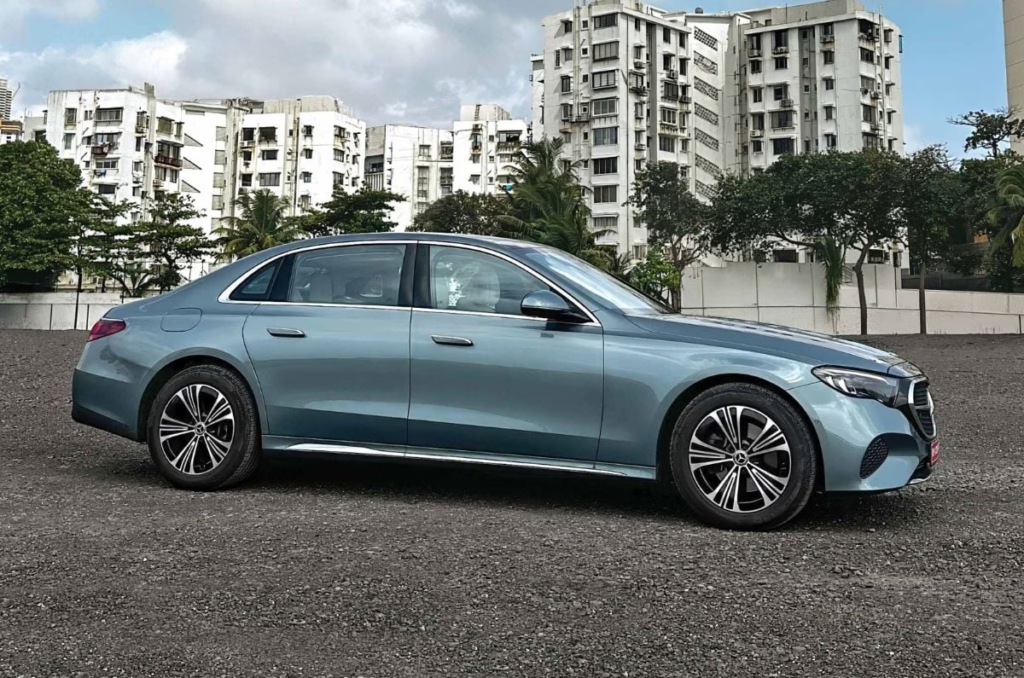
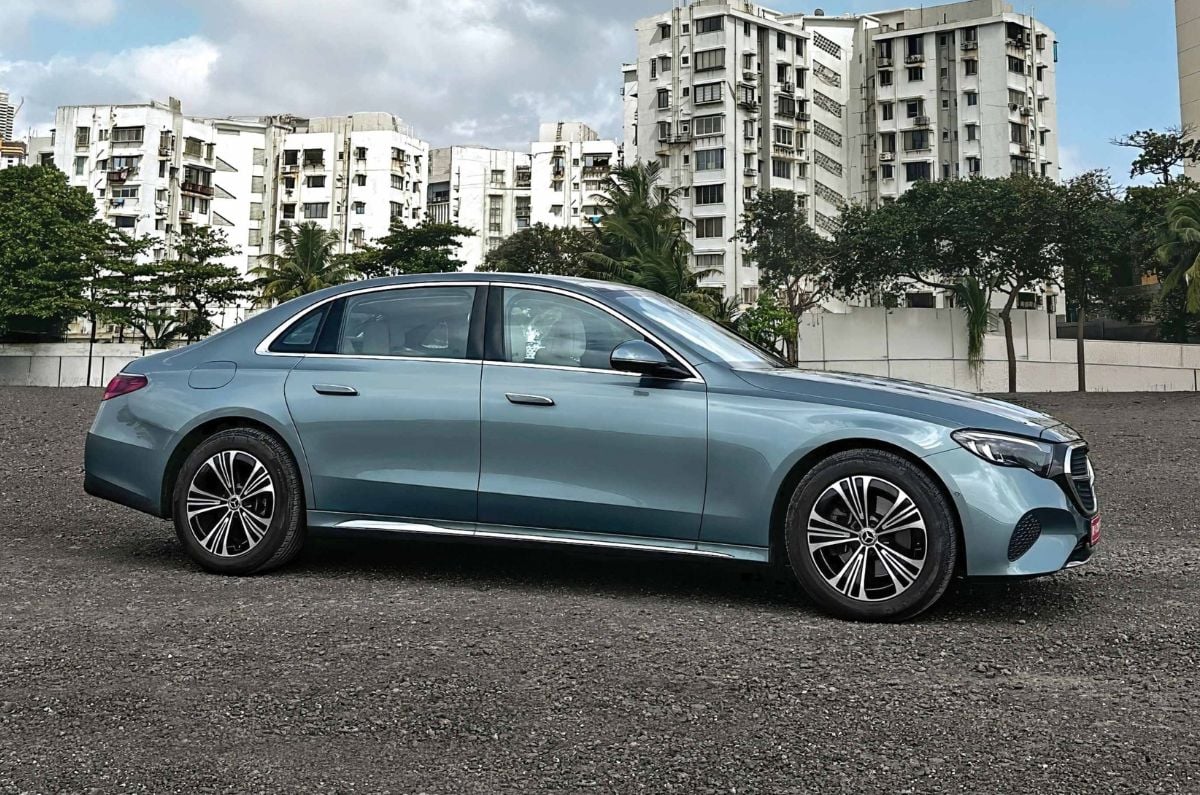
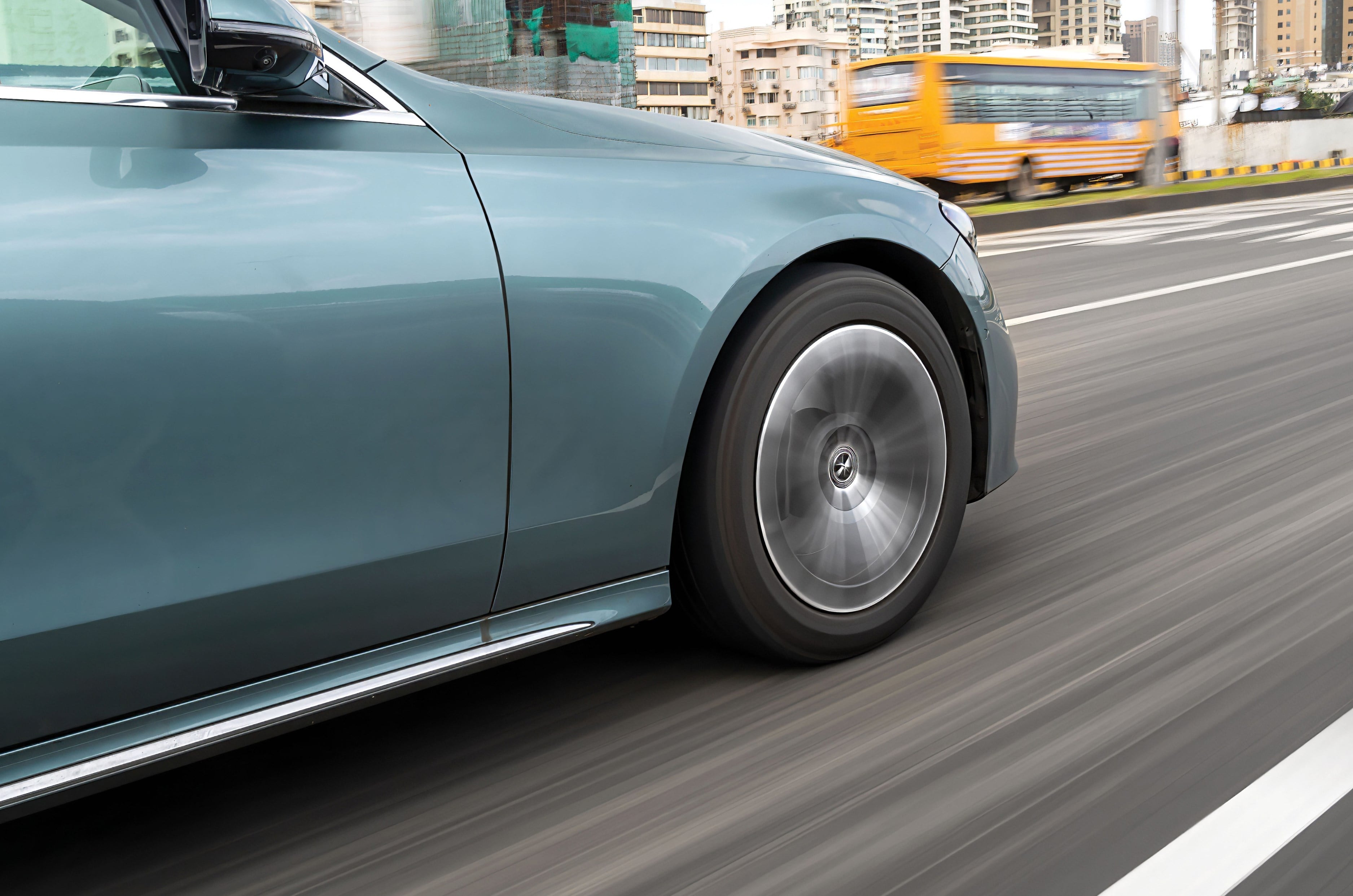
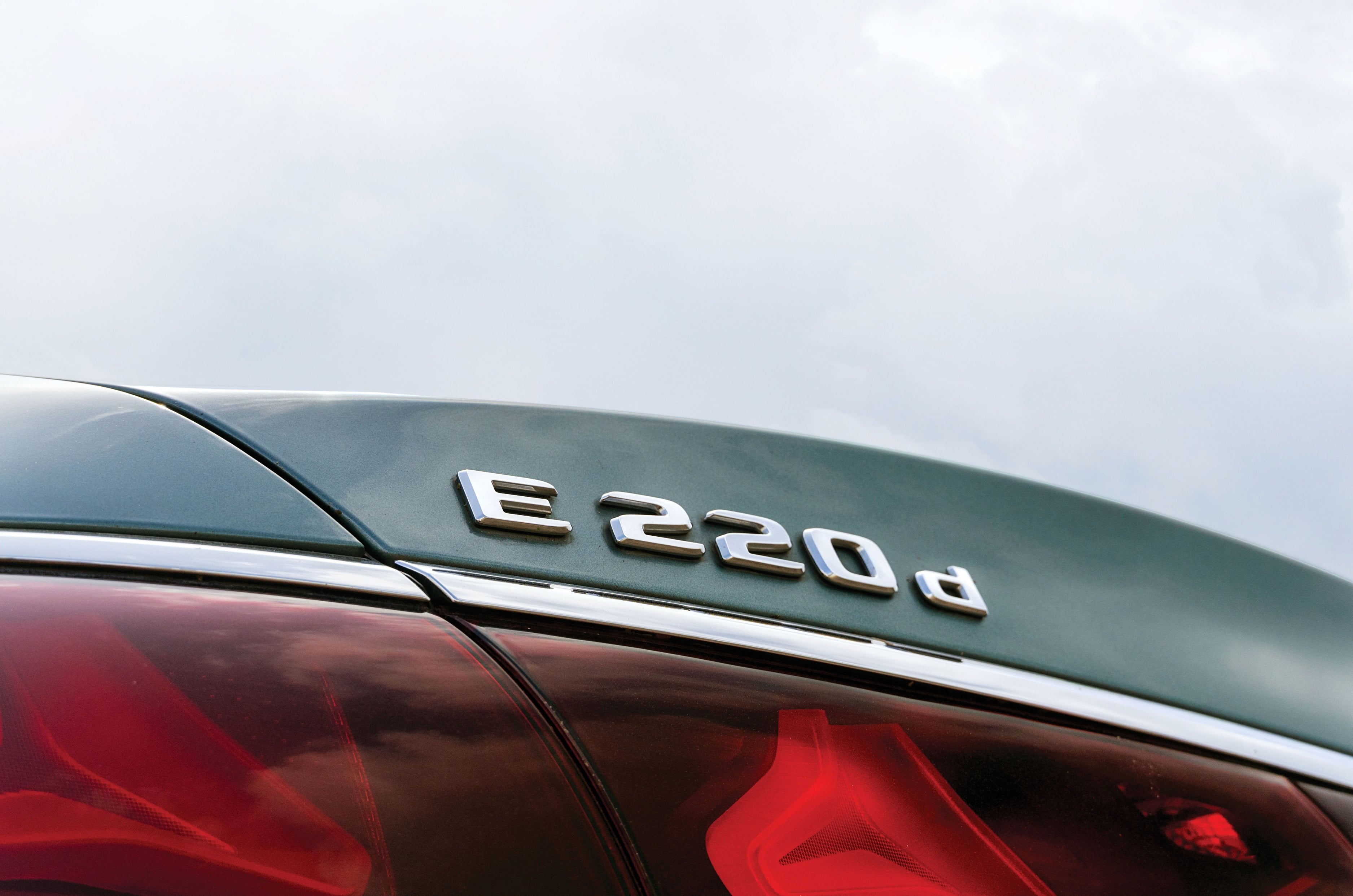
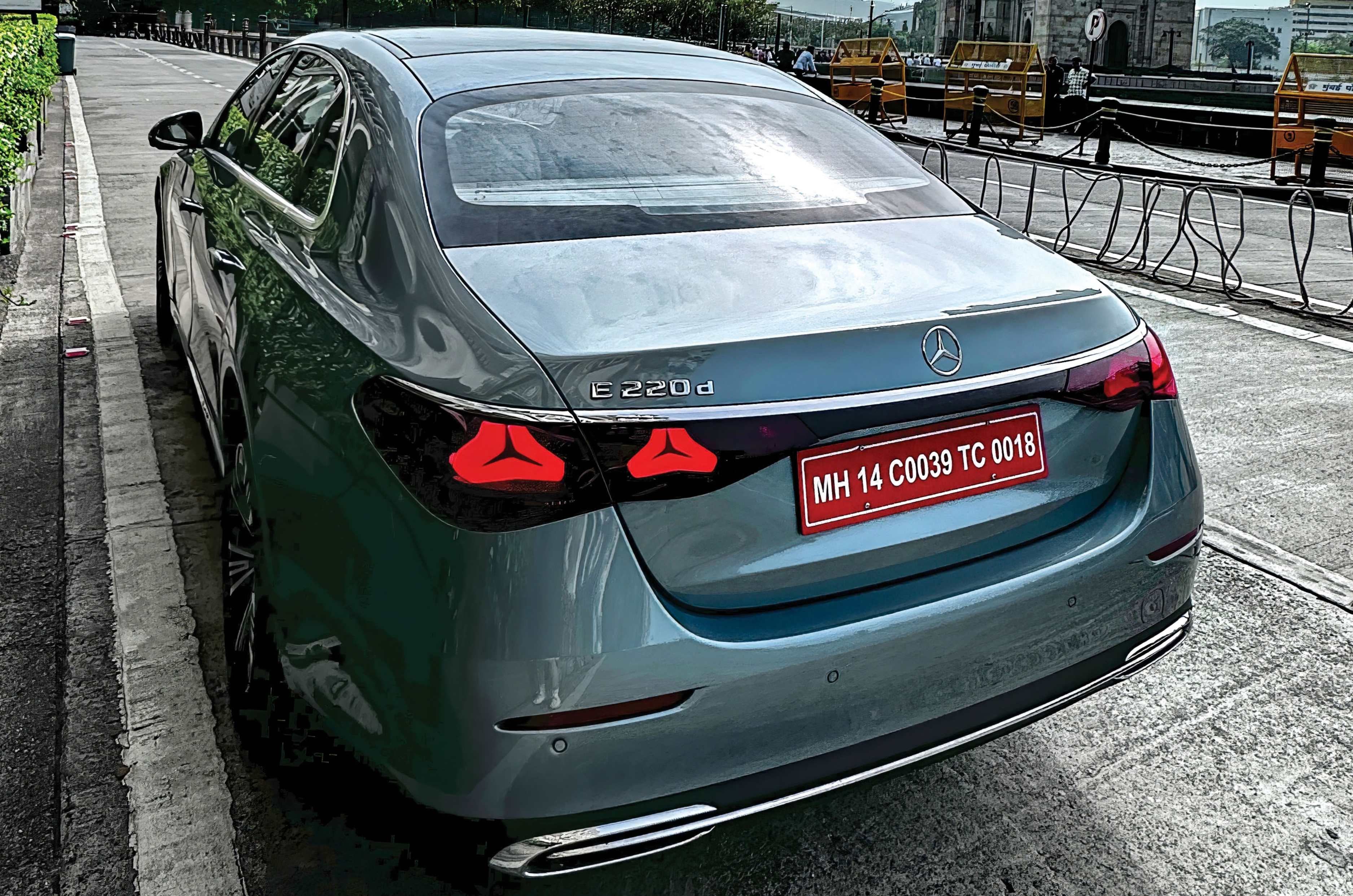
The fuel economy is but one of many bright blips on a limo that wastes no time showing you why it’s India’s favourite luxury car. And that’s despite its on-road price knocking on the door of a crore. It looks tremendous, more so in this Verde Silver paint, a shade I’m glad Mercedes added to its otherwise monochrome palette. It’s big but not ungainly, and its 18-inch wheels are a triumph of design – looking elegant and bigger than they actually are.
Back seats enjoyed mostly by bags for now.
Sadly, I don’t have a chauffeur, so I can’t experience the best seats the E-Class has to offer; that privilege goes to my bags every day.
Firm pedal resistance, along with turbo and gearbox lag, can make for abrupt starts from a standstill.
However, the big limo is surprisingly nice from behind the wheel too. I took little time to adjust to its large dimensions, and the steering is quick and responsive, so it wasn’t long before I was pointing its long nose into lanes only just about wide enough for it. My one grouse is the accelerator pedal, which doesn’t feel consistently weighted, and when combined with some reasonable turbo and gearbox lag, can make for an un-Merc-like lurch if you’re not careful.
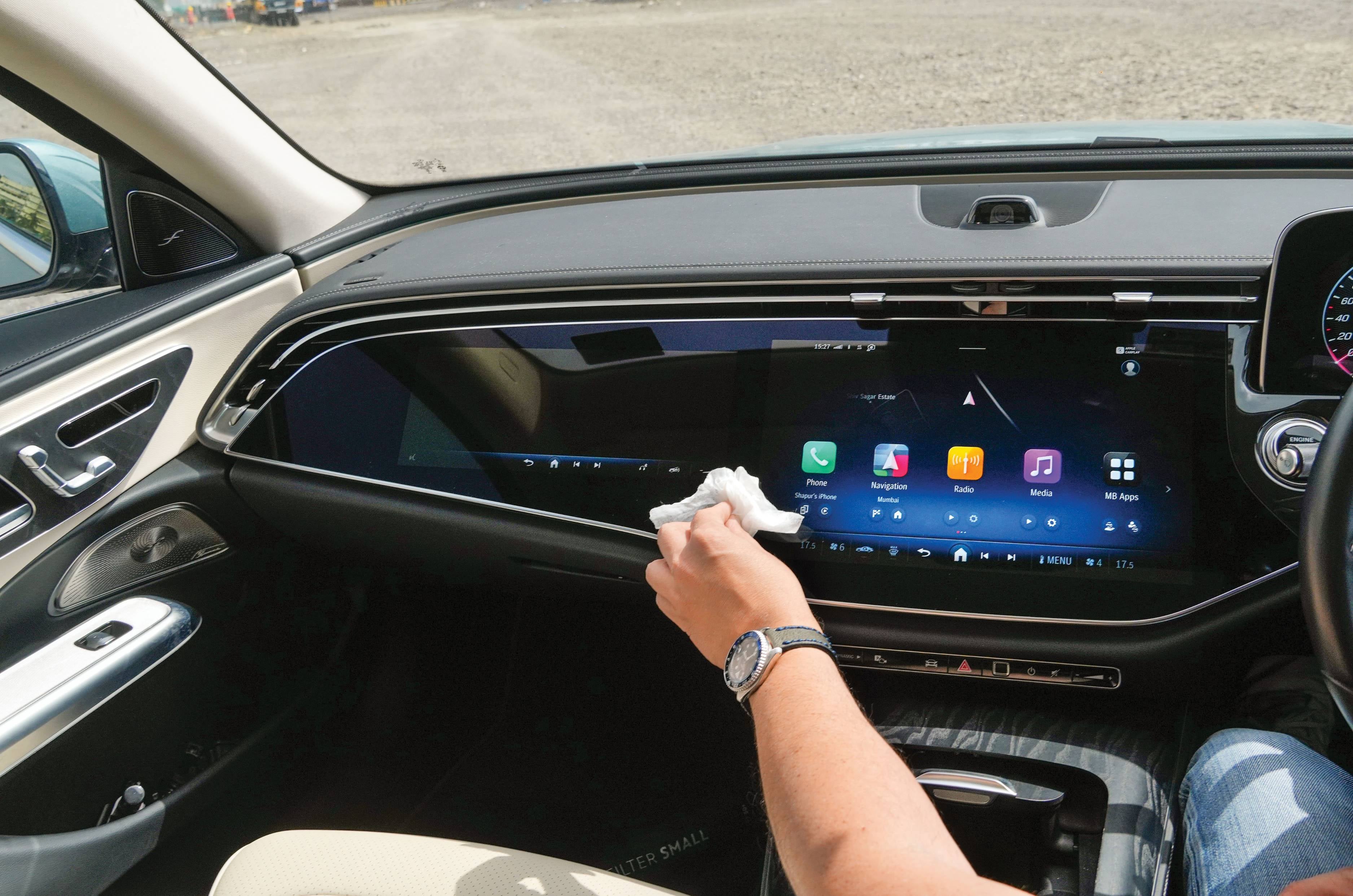
‘Superscreen’ dashboard collects dust easily and catches a lot of reflections that distract the driver.
A big talking point of this new E-Class was the decision to replace the wood and leather dashboard with a giant panel of screens. I’m glad they’ve retained some rich-feeling open-pore wood on the dash, doors and seats though. The central screen is hugely impressive – bright, crisp and full of detail. But having a glass surface for a dashboard invites dust and reflections, which became a pain when driving in the afternoon sunlight. But that’s a problem for your chauffeur, and if you have an E-Class, chances are you have one in your employ too.
Despite the screens, a generous use of open-pore wood anchors the interior in old-world luxury.
The E 220d is the last diesel standing in its segment, and it’s all the better for it. Once the most vilified fuel in the country, the uncertainty around petrol these days might even turn people back to the black pump. And the smooth, refined, efficient E is a shining example of how good that can be.