BS7 draft likely in couple of months: MoRTH

BS7 draft likely in couple of months: MoRTH

“We are ready with the next level of Bharat Stage [emission] standards and the final consultations are underway. We hopefully should be in a position to bring out the draft in a couple of months’ time for the BS 7 introduction,” Ministry of Road Transport and Highways (MoRTH) Secretary V Umashankar said at the 2026 SIAM Annual Convention in Delhi. 

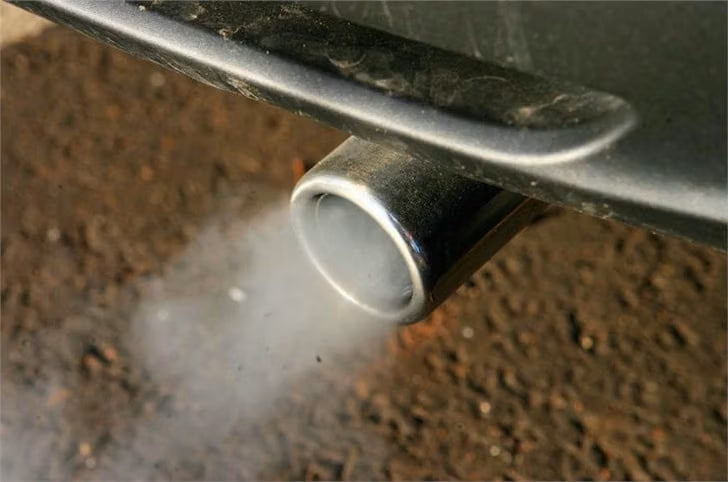
Bharat Stage norms limit the emissions of pollutants like hydrocarbons, sulphur and oxides of nitrogen from vehicles. India currently follows BS6 Phase 2 (or BS6.2) norms, which came into effect on April 1, 2023. “I think the industry is also preparing itself for it. The key challenge there would be the timelines,” Umashankar added.

What changes with BS7?

BS7 will put a greater focus on pollution levels from vehicles in real-world driving conditions rather than laboratory testing. Unlike the dramatic transition from BS4 to BS6, the move to BS7 is a natural progression from BS6. This should put relatively less pressure on manufacturers to upgrade their vehicles. Prices may also go up slightly due to the upgrades. Some models could even be discontinued if upgrading them to meet BS7 norms is not financially viable, something that we saw during the move from BS4 to BS6 in 2020.

Bharat Stage emission norms so far

Bharat Stage emission norms were introduced in India in the year 2000 with the implementation of BS1 standards, while also rolling out BS2 across major cities in a phased manner. BS2 was based on European emission regulations, with the main difference being the test cycle’s top speed – 90kph versus 120kph in Europe.

India remained one stage behind Europe until 2010, after which the oil industry could not supply the low-sulphur fuel needed to progress to BS5 before eventually leapfrogging from BS4 to BS6 in 2020.

How are CAFE norms different from BS standards?

Corporate Average Fuel Economy (CAFE) norms deal with overall fuel consumption, specifically the quantity of fuel consumed. Imposed on a carmaker’s entire fleet, and not on an individual model, it’s a limit set on the total emission of carbon dioxide produced. These norms force manufacturers to make more fuel efficient cars, which impacts many other things. Whereas, Bharat Stage norms measure emissions at a vehicular level.

Kinetic Watts & Volts eyes seven overseas markets

Kinetic Watts & Volts eyes seven overseas markets

Kinetic Watts & Volts (KWV) is evaluating seven international markets as the Pune-based electric two-wheeler maker looks to expand beyond India. Turkey, Nepal, Sri Lanka, Bangladesh, Kenya, Nigeria and Egypt are currently being assessed, with KWV studying local regulations, customer requirements, electric two-wheeler demand and potential distribution partners.

  1. International expansion to cover markets across Europe, South Asia and Africa
  2. Makarand Joshi appointed to lead KWV’s international business development
  3. Company plans to add 40 more exclusive showrooms in India

Kinetic EV international expansion plans

It has also issued 150 LOIs to prospective dealership partners.

KWV currently sells the Kinetic DX and DX+ electric scooters in India, with the range positioned around accessible urban mobility. The company is now looking to identify markets and distribution partners that can support its next phase of growth overseas.

KWV has appointed Makarand Joshi as head of international business development to lead its overseas plans. Joshi has more than two decades of experience in developing overseas markets for Indian automotive products, with experience across Asia, the Middle East, Europe and Africa. His background includes two-wheelers, commercial vehicles and tractors, as well as international distribution and market-entry strategies.

Ajinkya Firodia, Vice Chairman and Managing Director, Kinetic Watts & Volts, said the company’s products had been designed with a broad range of markets in mind. He added that the momentum of its domestic business had allowed KWV to begin laying the groundwork for international expansion. The company is yet to confirm which of the seven markets it will enter or provide a timeline for its overseas launch.

KWV’s international plans come as it continues to build its presence in the Indian market. The company currently has 45 exclusive showrooms and expects another 40 outlets to become operational within the next two months. It has also issued 150 Letters of Intent (LOI) to prospective dealership partners.

With inputs from ANGITHA SURESH

Kawasaki Z650 S, Z900, and Z900 SE get new colours for 2027

Kawasaki Z650 S, Z900, and Z900 SE get new colours for 2027
Studio render showing one new colour each on the Kawasaki Z900 SE, Z900, and Z650 S

Thinking of Kawasaki immediately brings their signature lime green coloured motorcycles to mind and that’s intentional. After all, it’s the colourway we most associate with the brand, but the truth is that the bikes are available in other colourways too, as we’ve just seen with the 2027 versions recently introduced in Europe.

  1. In Europe, the only available Z650 is the Z650 S that looks similar to Z900
  2. India gets the Z650 and Z900 but not the Z900 SE

What’s new on the Z line-up for 2027?

New colour options but mechanically unchanged

Kawasaki Europe had revealed the Z650 S in late 2025 destined for Europe. The model brought the Z650 platform closer in styling to the Z900, and also introduced revised ergonomics with a wider handlebar and repositioned footpegs. In most European markets, the Z650 and Z650 S coexist, whereas in markets like India and the USA, the standard Z650 continues to be the sole offering. For 2027, the Z650 S gets three new colours in Europe: Black, Red, and White with green highlights. For reference, in India, the regular Z650 is offered in a single Black colour.

Kawasaki Z650 S in Black colour
India does not get the Z650 S; so far unclear if it’s headed here
Kawasaki Z650 S in Red colour
Kawasaki Z650 S in White colour with green highlights

Indian Kawasaki fans do have access to the updated Z900 that debuted here in 2025, but in a Black with gold highlights and the signature Green. For 2027, the Europe version of the Z900 has now gained three new colours: Black (sans gold highlights), Red, and White with green highlights. The Z900 SE gets a new Gray colour with a green frame and green wheels, and upgrades the brakes to Brembo and suspensions to Öhlins from the standard Z900.

Kawasaki Z900 in Black colour
Indian Z900 gets a similar colour, with a gold frame
Kawasaki Z900 in Red colour
Kawasaki Z900 in White colour with green highlights
Kawasaki Z900 SE in Gray colour with a green frame and green wheels
Exclusive colour to the Z900 SE; also exclusive are the Brembo brakes and Öhlins front and rear suspensions

Beyond the new suite of colours, both motorcycles remain identical to the 2026 counterparts which was also the case for the Ninja 500 and 500 SE. At the time of writing, Kawasaki hasn’t revealed anything about these colours coming to the Indian version of the Z900, or when the Z650 S will show up here, if at all.

ये कपल 30 दिनों तक घूमा यूरोप और खर्च किए 9.5 लाख रुपये फिर बताया एक-एक पैसे का पूरा हिसाब

Europe Travel Budget: भारत के कई लोगों के लिए यूरोप घूमना काफी महंगा हो सकता है, खासकर तब जब ट्रिप में कई देशों की यात्रा करनी हो और सफर करीब एक महीने तक चले। लेकिन क्या आपने कभी सोचा है कि 30 दिनों तक यूरोप घूमने में असल में कुल कितना खर्च आता है? बता दें कि एक भारतीय कपल ने अपनी पूरी ट्रिप का खर्च शेयर किया है, जिसमें बताया गया है कि उन्होंने रहने की जगह, फ्लाइट, खाने, ट्रांसपोर्ट और एक्टिविटीज पर कितना खर्च किया।

मुस्कान मित्तल और आशीष गुप्ता ने अपनी एक महीने की ट्रिप के दौरान 8 देशों की सैर की। उनकी यात्रा में फ्रांस, बेल्जियम, नीदरलैंड, प्राग, ऑस्ट्रिया, इटली, वेटिकन सिटी और स्विट्जरलैंड शामिल थे।

इंस्टाग्राम पर शेयर किया वीडियो

अपने जॉइंट इंस्टाग्राम अकाउंट पर शेयर किए गए एक वीडियो में, इस कपल ने बताया कि उन्होंने अपना ट्रैवल बजट कैसे बांटा और यह भी बताया कि ट्रिप के किस हिस्से में उनका सबसे ज्यादा खर्च हुआ।

8 देशों की यात्रा करते समय, हर जगह ठहरने की जगह का खर्च तेजी से बढ़ सकता है। इस कपल के लिए, रहने-सहने का खर्च ही सबसे बड़ा खर्च साबित हुआ।

वे Airbnb और होटलों में रुके; ज्यादातर जगहें शहर के सेंटर में या बड़े रेलवे स्टेशनों के पास थीं। मुस्कान ने कहा, “औसतन, हमने हर रात के लिए 10,000 रुपये खर्च किए।”

यूरोप तक पहुंचने की फ्लाइट भी कपल के ट्रिप बजट का एक बड़ा हिस्सा थी। उन्होंने फ्लाइट पर प्रति व्यक्ति ₹50,000 खर्च किए। सीधी फ्लाइट लेने के बजाय, उन्होंने मिडिल ईस्ट से होकर जाने वाली कनेक्टिंग फ्लाइट बुक कीं। दो लोगों के लिए, उनकी कुल फ्लाइट का खर्च लगभग ₹1 लाख आया।

यात्रा में 8 देश शामिल थे, इसलिए शहरों के बीच घूमना भी ट्रिप का एक अहम हिस्सा था। कपल ने बताया कि उन्होंने एक महीने का ‘यूरेल ग्लोबल पास’ इस्तेमाल किया, जिसमें उनके रूट की लगभग सभी ट्रेन यात्राएं शामिल थीं और इसकी कीमत ₹58,000 थी। उन्होंने कार रेंटल और मेट्रो पर भी ₹28,000 खर्च किए।

खाने-पीने का खर्च भी एक ऐसी चीज थी जिसके लिए कपल को अपनी 30 दिन की यात्रा के दौरान प्लानिंग करनी पड़ी। उन्होंने दोनों के खाने पर रोजाना लगभग ₹5,000 खर्च किए। उन्होंने बताया, “हम दिन में एक बार बाहर खाना खाते थे, लेकिन खाने का खर्च कंट्रोल में रखने के लिए साथ में ‘रेडी-टू-ईट’ खाना भी रखते थे और अक्सर ग्रोसरी स्टोर से सामान खरीदते थे।”

यूरोप घूमना सिर्फ एक शहर से दूसरे शहर जाने तक ही सीमित नहीं है। ट्रिप के दौरान कई टूरिस्ट प्लेस, अलग-अलग एक्सपीरियंस और एक्टिविटीज पर भी खर्च होता है। इस कपल ने अपनी 30 दिनों की यात्रा के दौरान एक्टिविटीज पर प्रति व्यक्ति 85,000 रुपये खर्च किए।

कपल ने अपने बजट में वीजा और ट्रैवल इंश्योरेंस का खर्च भी शामिल किया था। इन खर्चों पर उन्होंने प्रति व्यक्ति ₹15,000 खर्च किए। उन्होंने अन्य खर्चों के लिए भी प्रति व्यक्ति ₹10,000 से ₹15,000 अलग रखे थे।

रहने, फ्लाइट, ट्रांसपोर्ट, खाने-पीने, घूमने-फिरने की एक्टिविटीज, वीजा, इंश्योरेंस और अन्य खर्चों को मिलाकर, इस कपल ने बताया कि दो लोगों के लिए उनकी एक महीने की यूरोप बैकपैकिंग ट्रिप का कुल खर्च लगभग 9.5 लाख रुपये आया।

इस कपल के खर्चों के ब्योरे को देखकर दूसरे यूजर्स ने भी बताया कि उन्होंने अपनी यूरोप की छुट्टियों पर कितना खर्च किया था।

एक यूजर ने कमेंट किया, “हमने 10 दिनों के लिए 8 लाख रुपये खर्च किए।” एक और यूजर ने कहा, “यह तो काफी सही है।”

हालांकि, एक यूजर को यह रकम कम लगी। उसने कहा, “मुझे लगता है कि यह सस्ता है। हमारे मामले में, 2 लोगों की ट्रिप का खर्च रोजाना लगभग 800-900 यूरो आता है, जिसमें हवाई जहाज़ का किराया शामिल नहीं है।”

डिस्क्लेमर: यह रिपोर्ट सोशल मीडिया पर शेयर किए गए यूजर-जनरेटेड कंटेंट पर आधारित है। Moneycontrol ने इन दावों की स्वतंत्र रूप से पुष्टि नहीं की है और न ही इनका समर्थन करता है।

यह भी पढ़ें: Janmashtami 2026: 4 सितंबर को जन्म लेंगे लड्डू गोपाल, जानें देश के अलग-अलग हिस्सों में क्या है जन्माष्टमी का पर्व मनाने का तरीका

Smaller EVs will arrive as soon as charging network is ready: Maruti MD Takeuchi

Smaller EVs will arrive as soon as charging network is ready: Maruti MD Takeuchi
Suzuki

Maruti Suzuki plans to add smaller EVs to its India line-up once it has developed the charging infrastructure needed to support them. At the company’s annual general meeting, Managing director and CEO Hisashi Takeuchi said, “As soon as our EV charging will be ready in India, we will add smaller EVs in our portfolio.”

  1. More than 2,000 exclusive chargers installed across 1,100-plus cities
  2. Claims around 90 percent share of India’s EV exports
  3. Plans to build EVs, hybrids, CNG and ICE cars on the same line

Maruti Suzuki’s charging network plans

Maruti Suzuki has partnered with 13 charge-point operators and has already installed more than 2,000 exclusive charging points across over 1,100 cities. The company is also working to improve charging coverage on highways and expressways, while its plan for the top 100 cities calls for chargers at key locations around 5-10km apart.

The carmaker has set a larger target of more than 1,00,000 charging points across India by the end of this decade. The company has linked the introduction of smaller EVs to the expansion of this charging network.

Maruti currently sells the e Vitara as its only EV in India, while competitors Tata Motors and JSW MG Motor India already have smaller electric models on sale.

Maruti Suzuki expands EV exports

Maruti Suzuki is also expanding its electric vehicle exports. “We have started our EV exports to Europe first. Now, we are the largest exporter of EVs from India, with about 90 percent share in total EV exports from India,” he said. Takeuchi said the company exports vehicles to nearly 120 countries and shipped more than 4.4 lakh vehicles last year, a 34 percent increase overall. 

Japan has become Maruti’s second-largest market, according to Takeuchi, while the company expects trade agreements to create further export opportunities in markets including the UK, Germany and France.

ICE, hybrid and CNG investments to continue

Maruti Suzuki will continue investing in internal-combustion engine, hybrid and CNG vehicles alongside EVs. Takeuchi said ICE vehicles would remain an important part of the company’s business, with compressed biogas also expected to support their continued demand.

“Investment in ICE facilities will continue to be an integral part of our manufacturing process,” he said. The company is designing its new manufacturing facilities to build different types of vehicles on the same production line, allowing production to be adjusted as demand changes. “In our new plants, we can make EVs, hybrid vehicles, CNG and ICE vehicles on the same line,” Takeuchi said.

Atiqa Mir joins JK Tyre’s racing programme

Atiqa Mir joins JK Tyre’s racing programme
Atiqa Mir JK Tyre

JK Tyre has signed 11-year-old Atiqa Mir as part of its driver development programme. 

Over the past few years, Mir has emerged as one of India’s most promising young talents in the international karting scene. She’s currently competing in the WSK Final Cup karting series, with Round 1 underway at Italy’s Franciacorta Karting Track.

  1. Mir is currently racing in the WSK Final Cup karting series
  2. Top ranked female racer in the FIA International Karting’s OK N Junior class

JK Tyre signs Atiqa Mir

Atiqa Mir

JK Tyre has been a key pillar of the motorsport community in India, especially with its national racing and karting championships. The company’s played a pivotal role in the junior careers of several prominent racers, including Narain Karthikeyan, Karun Chandhok and Kush Maini.

Its latest recruit, Atiqa Mir, has already made headlines through her achievements in various karting championships in Europe and the Middle East. Earlier this year, she became the first Indian to secure a podium in the European leg of the Champions of the Future Academy, before going on to deliver a dominant victory in Greece. She’s currently the top ranked female racer in the FIA International Karting’s OK N Junior class for drivers up to 14 years old.

At just nine years old, Mir was shortlisted for the Iron Dames Young Talents programme. Since then, she’s also become the first Indian and Asian racer selected for the F1 Academy’s Discover Your Drive programme.

“At JK Tyre, nurturing young talent has always been at the heart of our motorsport journey. Atiqa represents the next generation of Indian racing, and we are delighted to support her as she pursues excellence on the global stage. Her association also reflects our continued commitment to encouraging greater participation of women in motorsport and inspiring young girls to take up the sport,” said Anshuman Singhania, Managing Director, JK Tyre & Industries.

Volkswagen Tayron R-Line long term review, 4420km report

Volkswagen Tayron R-Line long term review, 4420km report
VW Tayron R Line front quarter static

The VW Tayron R-Line is back in the Autocar India garage, and we’ve been running it for some weeks now. First things first, I switch off the Automatic Emergency Braking (AEB) as a matter of habit. The thing is, every time you turn on the car, the system defaults to AEB being active; it doesn’t remember that you last turned it off. This can be rather annoying, but like with most CBUs, which this VW Tayron R-Line is, it follows the homologation requirements of Europe, or what is called GSR 870. That means, for safety reasons, it is mandated to have the AEB on by default every time you begin driving the car. 

AEB triggers inadvertently in traffic.

Now, in Europe and other parts of the world where traffic is predictable and sane, it makes sense, but on our chaotic streets, pedestrians, cyclists, bikes and three-wheelers can trigger the AEB into a heart-stopping slam on the brakes, with the risk of being rear-ended by someone who is two inches away from your bumper. Every run to work, the proximity sensors go berserk tackling Mahalaxmi’s infamous Saat Rasta roundabout in Mumbai. It’s also a reminder that the Tayron is a long car, but the good thing is that outside visibility is pretty good, so you can judge the edges quite easily, which is essential when threading through traffic. 

2.0-litre TSI feels refined at all speeds.

The Tayron got a chance to stretch its legs on a run to the Nanoli track. The ‘EA888 Evo’ 2.0-litre TSI engine is the epitome of refinement and possibly the smoothest turbo-petrol in the premium segment. It lacks a bit of low-end punch, but likes to be revved and encourages visits to the 6,000rpm redline. The Tayron is a happy cruiser too, and feels nice and planted at expressway speeds in a VW sort of way. 

Peeling off the expressway onto the poorly paved, single-lane roads leading to Nanoli exposes a weak chink in the Tayron R-Line – a crashy ride that makes the body jar. The true culprit is the low 45-profile tyres the R-Line comes with, and their short sidewalls simply can’t cushion sharp edges, ruts and jagged tarmac well enough. I suspect the lower-spec Tayron Life, recently launched at Rs 41.99 lakh, is a cheaper and more practical option with the less sporty spec and taller 55-profile tyres. 

Low-profile tyres impact ride comfort.

Living with the Tayron R-Line, you discover the smaller details that go some way in justifying the hefty Rs 46.99 lakh price. Cabin materials feel genuinely plush – the stitching, fit and finish and tasteful use of ambient lighting – though I have to say some of the trim did creak on bad roads. There’s good storage space too, which makes long-distance driving with your family a pleasant affair. What stood out for me was the clarity and ease of use of the infotainment system. Large fonts, smooth and slick operation and a nicely intuitive menu make it easy to operate on the go. 

Seats comfy for long hours behind the wheel.

Other things that stood out after a long drive were the seats – supremely comfortable and not too hard and stiff like those in Volkswagens of the past. These seats have well-judged cushioning, and what makes them special is that they also give your upper body good and even support. 

Fuel efficiency is not the strength of a turbo-petrol, and E20 now being the only choice doesn’t help matters. In the city, we could only muster up 6.2kpl, whilst on the sole highway run to Nanoli, we averaged 11.2kpl.

Volkswagen Tayron R-Line test data

Odometer4,421km
PriceRs 47.74 lakh (ex-showroom, India)
Economy8.7kpl (this month)
Maintenance costNone
FaultsNone
Previous reportNone

India-EU FTA is a big opportunity to bring niche models: VW CEO Thomas Schafer

India-EU FTA is a big opportunity to bring niche models: VW CEO Thomas Schafer
VW CEO Thomas Schafer

Volkswagen is preparing for a much bigger push in India, with the company reviewing its broader product, powertrain and investment plans. While a locally produced compact SUV has already been confirmed for launch next year and is expected to drive volumes, the brand is also looking at the India-EU free trade agreement (FTA) as an opportunity to bring select niche models from its global portfolio here.

“FTA has been announced in Europe. It is a huge opportunity to bring a certain sort of niche models to widen the portfolio for the consumer to offer some exciting models every now and then, which is great,” Member of the Board of Management of Volkswagen AG and CEO of Volkswagen Brand Thomas Schafer told us. He did not reveal which models could be on the cards, but said the company is taking a long-term view and will study market conditions over the next few months before making a decision.

VW’s renewed focus for India

Schafer’s India visit comes as Volkswagen reviews its global business strategy amid geopolitical tensions, changing trade policies and a growing move towards regional manufacturing. “So, globally, we see almost like a decoupling. You have a geopolitical situation and the old business model where everything’s focused on Europe, and then you export to other markets is long gone. At the same time, you have a very different dynamic in China than in the US, which is putting import duties on Europe under certain attacks. So, in that game, you have to change your business model; you have to adapt it. And that’s what we’re busy doing,” he added.

This shift could benefit India. Along with the growing domestic market, Volkswagen sees India as an important hub for engineering, IT and R&D. “We will focus a lot on India going forward. Not only because the market is exciting and growing and creating more opportunity for the future, but also the sort of knowledge base that you have here in India,” he said.

Volkswagen also sees exports as an important way to build scale out of India. The company already exports vehicles made in the country to more than 40 markets, with Mexico being one of the major markets that imports vehicles from India. “So, exports are an important part of our business, and we will always strengthen that going forward,” he said. For the upcoming compact SUV, export potential could also help boost volumes and strengthen the business case.

More powertrains can be offered at the right time

Volkswagen’s current portfolio comprises cars powered by turbo-petrol engines, even as CNG and diesel remain in demand and EVs are gaining momentum. “So, what is clear is, in the long run, there will be strong electrification, especially also in India…You see it accelerating, probably driven by the conflict in the Middle East and the oil situation,” he said.

At the same time, he clarified that be it flex-fuel, CNG, diesel or EV, the brand has the technology already on sale in certain parts of the world. “We have flex-fuel, super strong in South America for years; we have CNG, diesel and EVs, it’s all there…When it’s the right time to localise it, we will localise it,” Schafer said.

The challenge, he said, is deciding when and how to use each powertrain technology. “The dynamics in India and the market shift have been quite significant even in the last couple of months. So, to be honest, we haven’t concluded our planning on that, but the good thing is that we have it and we can deploy it if and when it is the right situation,” he stated. Volkswagen is also evaluating its next-generation models and newer platforms, but these plans are still under consideration.

Cost remains a major hurdle for VW in India

Cost has been one of Volkswagen’s biggest challenges in India. Schafer said the company has spent the past few years working on two key areas: ensuring that its products retain the core characteristics of the Volkswagen brand while simultaneously reducing the cost base. “We worked over the last four years very focused on the cars that we bring to the market now are through and through Volkswagen in terms of quality, brand fit. And, yes, our cost base is traditionally high because we are very much focused on Europe and especially Germany,” he added.

India, he said, will play an important role in Volkswagen’s efforts to reduce costs, especially through more cost-effective development and manufacturing. “Part of the programs that’s been in the media over the last, especially two years, has been reducing our cost base, developing more in more cost-efficient places like in India very much, but also shifting production from high-cost locations into lower-cost locations,” he said.

Volkswagen is now working on its next set of products, investment plans and powertrain options for India. With India becoming an increasingly important part of its global strategy, there is plenty to look forward to from the brand in the coming years.

Kawasaki Ninja 500 gets new colours in Europe

Kawasaki Ninja 500 gets new colours in Europe

Kawasaki has unveiled new colour options for its midweight sportbikes, the Ninja 500 and Ninja 500 SE in Europe. Both motorcycles are otherwise the same as before. It remains to be seen if these new colours make their way to India on the standard Ninja 500 sold here.

  1. Ninja 500 and Ninja 500 SE get three total new colours
  2. The new colours aren’t available in India at the moment
  3. Ninja 500 was recently updated with Lime Green colour in India

Black for Ninja 500, Green and Blue/Red for Ninja 500 SE

No other mechanical changes

The Ninja 500 gets a new Metallic Flat Spark Black/Metallic Spark Black colour whereas the SE variant with the keyless system gains two new colours, Lime Green and Metallic Matte Twilight Blue/Candy Persimmon Red.

For India, the Ninja 500 was recently updated with no mechanical changes, and the signature Lime Green (the only colour option) being the two new changes. It also now costs Rs 10,000 more at Rs 5.76 lakh (ex-showroom). To recap, the Ninja 500 is Kawasaki’s mid-level sportbike that gets a 451cc twin-cylinder, liquid-cooled engine, making 42hp of power and 42.6Nm of torque. Considered to be extremely bare bones for its price, it has an assist and slipper clutch and dual-channel ABS, meeting the bare minimum requirement for the word features to be plural.

Besides the Ninja 500 and Ninja 500 SE, Kawasaki has updated other motorcycles like the Ninja 650, Ninja ZX-4R, Ninja ZX-4RR, and the Ninja ZX-6R with new colours as well. Of those, the Ninja 650 and Ninja ZX-6R are sold in India. At the time of writing, there’s no indication from Kawasaki India that any of these motorcycles will be getting the new colours anytime soon.

Skoda India to bring EVs as limited imports next year

Skoda India to bring EVs as limited imports next year
Skoda Peaq front quarter static

Skoda Auto India plans to bring electric vehicles from its global portfolio to India in limited volumes next year as the Czech automaker looks to establish its presence in the EV market. According to Ashish Gupta, Brand Director, Skoda Auto India, the company needs an electric vehicle in its portfolio not only to meet future regulatory requirements but also to remain relevant as EV adoption gathers pace in India.

Skoda India to bring EVs: Additional details 

“A lot of things are under discussion. So, for meeting the CAFÉ norms, there are a lot of opportunities available along with electrification, which has to be the cornerstone of meeting all compliance regulations. So that is something which we are aggressively working on,” Gupta told our sister publication, Autocar Professional.

Gupta added that the company needs an electric car in its portfolio since adoption has grown in the last 3 months owing to increasing fuel prices. While Skoda has yet to announce a specific locally manufactured EV for India, Gupta confirmed that the company plans to introduce EVs from its global line-up next year.

“It may not be a local EV, but yes, we just had two blockbuster launches globally of the Epiq and the Peaq. The Elroq is the best-selling EV in Europe. So these are opportunities available to us in limited batches,” he said. He added that in the current duty structure, it will not be possible to bring them at price points that will get volumes. “But definitely we need to urgently showcase our EV credentials and the proof point to India,” he added. 

This will allow Skoda to establish a presence in the EV market without immediately committing to the significant investment required to localise an electric model. With imported EVs still facing a challenging cost structure, Gupta said the initial objective would be to demonstrate the brand’s technology and capabilities rather than chase mass-market volumes. 

Skoda India’s hybrid ambitions take a slow gear 

Skoda’s approach to hybrids, meanwhile, appears less certain. Gupta said the company had previously viewed hybrids as a potentially stronger opportunity than EVs in India, but market data over the past two years has changed his assessment.

“Two years ago, I would have said I would take a bet on hybrid more than EV. But the tax structure has not helped anybody. In the last year, pure hybrids have stayed at 2% of the market. They have not gone beyond that. So, I am not sure whether hybrid is the right way to go. And what the last 6 months have also shown us is that people are more than willing to go for EVs now,” he said. 

The current trade and taxation structure also influences the company’s hesitation. Gupta said the India-EU Free Trade Agreement, while potentially creating opportunities for imported petrol and diesel models, does not provide similar benefits for EVs and hybrid electric vehicles. “I think from a global portfolio point of view, and if I want to bring the cars from the global portfolio with the contours of the FTA as they are, petrol and diesel will definitely be an opportunity. The diesel opportunity opens up; HEVs and electrics do not have any benefit, unfortunately,” he said. 

Gupta said the brand’s positioning in India is a bit above mass and below luxury. “That’s our natural positioning; that’s why customers buy us as well, and if we try to sell to cheap customers, they don’t buy us. If we try to sell to expensive customers, they don’t buy from us. So we have to stay true to our positioning and how customers see us,” he said. The immediate priority, Gupta adds, is to get EVs into the country as the company continues to assess which powertrains can deliver the right combination of regulatory compliance, customer demand and commercial viability.

With inputs from Ketan Thakkar