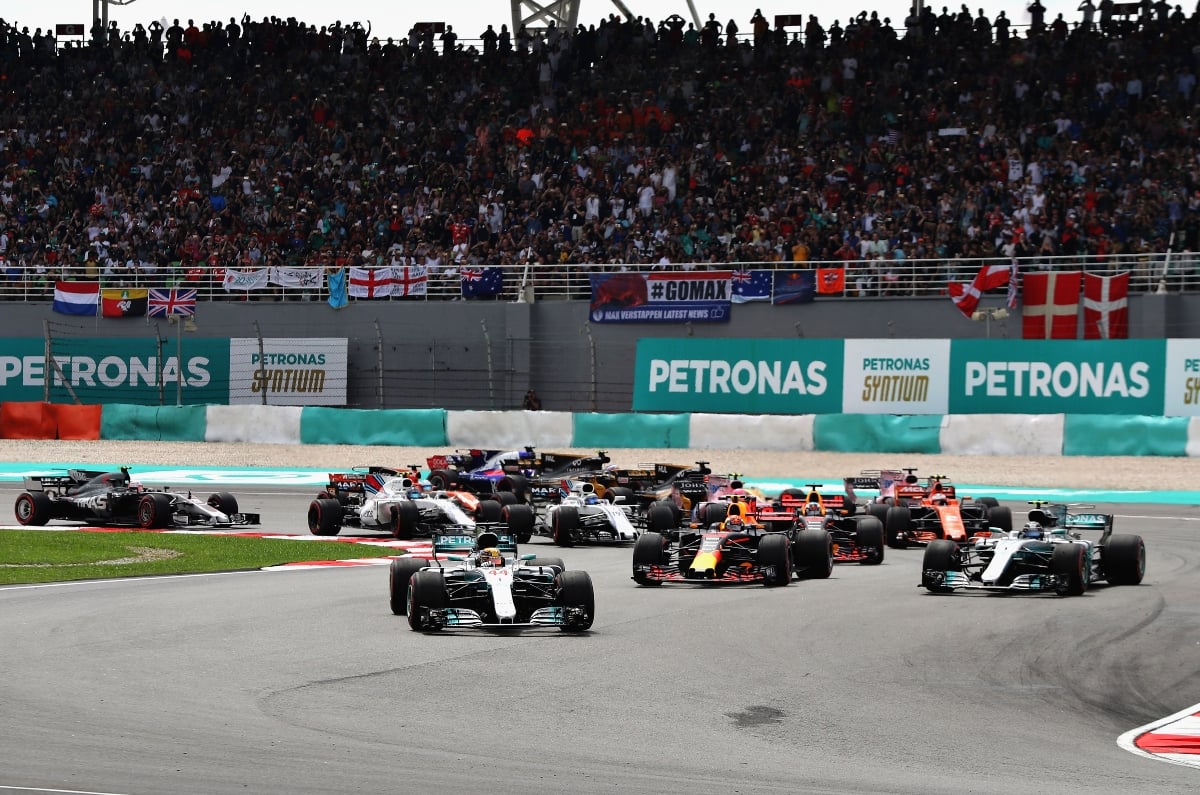
Formula 1 is returning to Malaysia for the first time in nine years this weekend. But there’s a twist – the event will be held as the Bahrain GP, with the Middle Eastern kingdom funding the race.
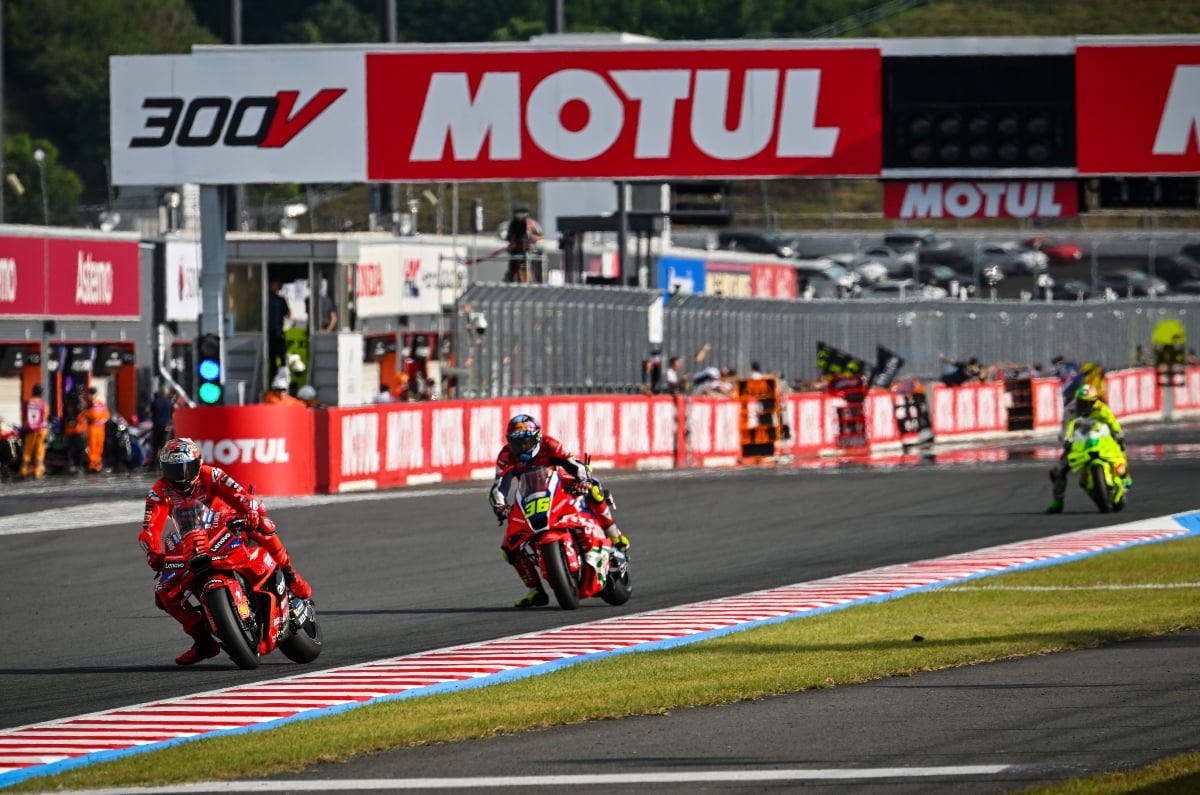
MotoGP is also on this weekend, with the title battle continuing at Japan. Here is your complete guide on when and where to tune in from India:
F1 Bahrain GP in Malaysia schedule
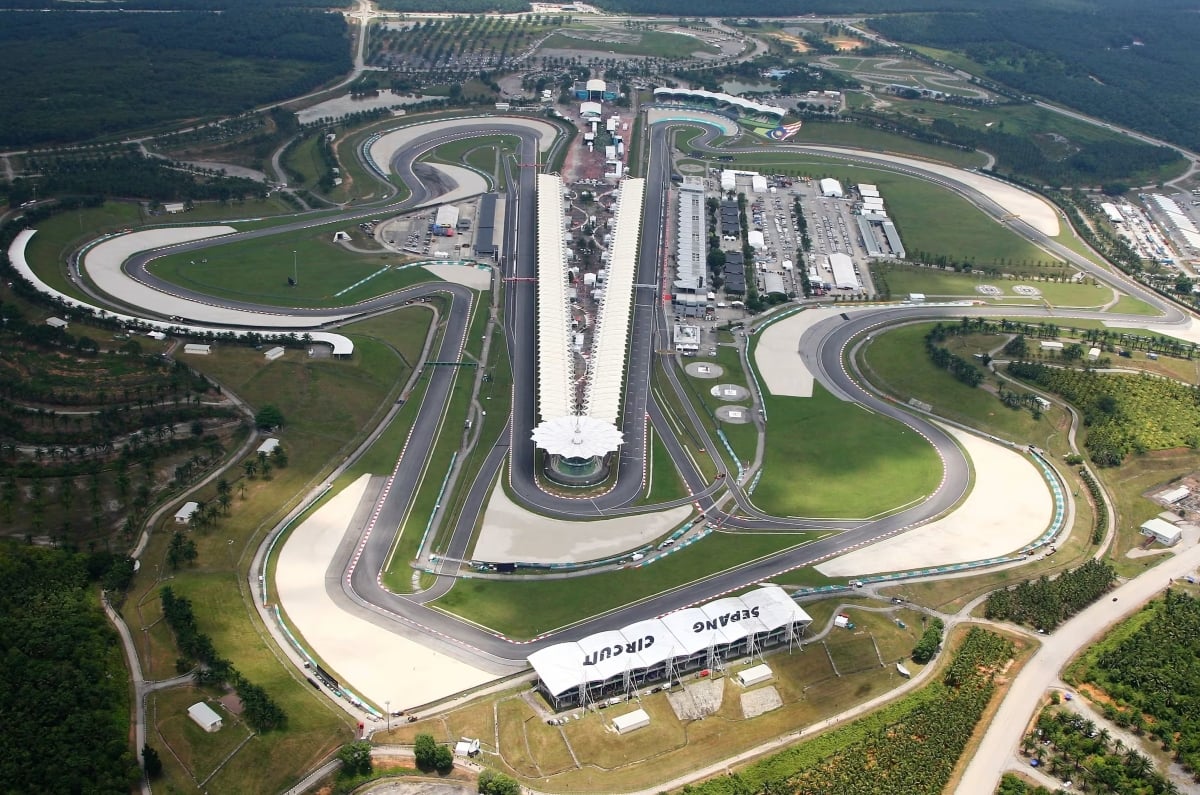
Following the postponement of the Bahrain GP due to the escalating conflict in the Middle East, the fan-favourite Sepang International Circuit in Malaysia has stepped in to host the race.
F1 last raced at Sepang back in 2017, and more than half of the current grid has never raced at the venue. Combine this with potential rain over the weekend, the race could throw up some unexpected results.
Current championship leader Mercedes will also be bringing an upgrade package to Malaysia. After a strong Azerbaijan GP win, George Russell will be hoping to build that momentum and chip away at his teammate Kimi Antonelli’s lead, which currently stands at 66 points.
F1 Bahrain GP in Malaysia: Where to watch?
All sessions will be streamed live on the FanCode and F1 TV apps.
2026 F1 Bahrain GP in Malaysia IST schedule
Date
Day
Session
Time
October 2
Friday
FP1
10am
October 2
Friday
FP2
1:30pm
October 3
Saturday
FP3
10am
October 3
Saturday
Qualifying
1:30pm
October 4
Sunday
Race
12:30pm
MotoGP Japanese GP schedule
42 points cover the top three in the MotoGP standings. Jorge Martin holds on to the overall lead, but reigning champion Marc Marquez is just 12 points behind in second place. Marco Bezzecchi also remains in title contention, but he’s 42 points off the lead. Behind him is Pedro Acosta, who has emerged as a late threat with five consecutive top five finishes. The KTM rider even secured his maiden win last time out at Austria.
The Japanese GP will also see Maverick Vinales returning to racing action. The KTM Tech3 rider hasn’t raced since the German GP in July after undergoing corrective shoulder surgery.
MotoGP Japanese GP: Where to watch?
All sessions will be streamed live on FanCode. Fans in India can also catch the live TV broadcast on Eurosport.
पश्चिम एशिया में जारी भीषण युद्ध का सबसे गंभीर और विनाशकारी असर ईरान की इकॉनमी पर देखने को मिल रहा है। मंगलवार को ईरानी मुद्रा रियाल में ऐतिहासिक गिरावट दर्ज की गई। तेहरान के मुद्रा बाजार में एक अमेरिकी डॉलर की कीमत 25 लाख (2.5 मिलियन) रियाल के आंकड़े को पार कर गई। यह अब तक के इतिहास में ईरानी रियाल का सबसे निचला स्तर है। यह साफ इशारा कर रहा है कि युद्ध ने ईरान के आर्थिक संतुलन को पूरी तरह से ध्वस्त कर दिया है। पीटीआई की रिपोर्ट के मुताबिक ईरानी मुद्रा में यह बड़ी गिरावट सिर्फ 27 दिनों के भीतर आई है। इससे पहले 2 सितंबर को रियाल ने 22 लाख (2.2 मिलियन) प्रति डॉलर का निचला स्तर छुआ था। फरवरी में युद्ध शुरू होने के बाद से ही ईरानी मुद्रा लगातार नए निचले रिकॉर्ड बना रही है।
स्ट्रेट ऑफ हॉर्मुज को खोलने के लिए मध्यस्थता वार्ता में तेजी
एक तरफ जहां ईरान की इकॉनमी चरमरा रही है, वहीं दूसरी तरफ कूटनीतिक मोर्चे पर हलचल तेज हो गई है। ईरान के विदेश मंत्री अब्बास अराघची ने कहा कि महत्वपूर्ण समुद्री व्यापार मार्ग स्ट्रेट ऑफ हॉर्मुज को फिर से खोलने के उद्देश्य से संयुक्त राज्य अमेरिका के साथ अप्रत्यक्ष बातचीत अब और अधिक गंभीर मोड़ में पहुंच गई है। विदेश मंत्री अब्बास अराघची ने न्यूयॉर्क में संयुक्त राष्ट्र महासभा में भाग लेने के बाद और पाकिस्तानी व कतर के मध्यस्थों से मुलाकात के बाद ईरानी मीडिया को बताया कि मौजूदा समय में पूरा ध्यान सिर्फ युद्ध के मुख्य केंद्र यानी स्ट्रेट ऑफ हॉर्मुज पर फोकस्ड है। कतर के मध्यस्थ जल्द ही अमेरिकी पक्ष से इस मुद्दे पर दोबारा चर्चा करेंगे। अमेरिका का अंतिम रुख सामने आने के बाद तेहरान में इस पर अंतिम निर्णय लिया जाएगा। अमेरिकी ने भी इस बात की पुष्टि की है कि दोनों देशों के बीच लड़ाई रोकने और स्ट्रेट ऑफ हॉर्मुजे को खोलने के लिए एक समझौते पर काम किया जा रहा है।
हालांकि, यह मध्यस्थता प्रयास ऐसे समय में जारी हैं जब अमेरिकी राष्ट्रपति डोनाल्ड ट्रंप ने हाल ही में ईरान के उस प्रस्ताव को खारिज कर दिया था जिसमें ईरान ने अमेरिकी बंदरगाहों की नाकेबंदी हटाने, ईरानी संपत्ति को बहाल करने और तेल बिक्री पर प्रतिबंध हटाने की शर्त पर 7 दिनों में स्ट्रेट ऑफ हॉर्मुज को खोलने की बात कही थी।
रिवोल्यूशनरी गार्ड्स ने अमेरिकी जनता को दिया सीधा संदेश
ईरान की इकॉनमी पर बढ़ते दबाव के बीच ईरान के रिवोल्यूशनरी गार्ड कोर (IRGC) के मुख्य प्रवक्ता जनरल हुसैन मोहेबी ने मंगलवार को एक प्रेस कॉन्फ्रेंस में सीधे अमेरिकी नागरिकों से अपील की। उन्होंने एक पत्र पढ़कर सुनाया और अमेरिकी जनता से आह्वान किया कि वे अपनी सरकार पर दबाव बनाएं ताकि अमेरिका मिडिल ईस्ट में जारी इस युद्ध को समाप्त करे। जनरल मोहेबी ने कहा कि इस युद्ध को खत्म करने का एकमात्र रास्ता यह है कि वाशिंगटन अपनी हार स्वीकार करे और ये इलाका छोड़कर चला जाए। उन्होंने अमेरिका पर आरोप लगाया कि वह ईरान के परमाणु कार्यक्रम का बहाना बनाकर देश की संपत्ति को लूटने और उसे फिर से एक उपनिवेश बनाने की कोशिश कर रहा है।
अमेरिका में मिड टर्म इलेक्शन और आर्थिक संकट
ईरान का यह संदेश ऐसे समय में आया है जब अमेरिका में 3 नवंबर को महत्वपूर्ण मिडटर्म इलेक्शन होने जा रहे हैं। युद्ध की वजह से अमेरिका में भी ईंधन और गैसोलीन की कीमतें काफी बढ़ गई हैं। इसका सीधा असर वहां की राजनीति और लोगों पर पड़ रहा है। अमेरिकी राष्ट्रपति डोनाल्ड ट्रंप और उनके वरिष्ठ सलाहकारों का मानना है कि ईरान की इकॉनमी अब इस लंबे संघर्ष को झेलने में सक्षम नहीं है। अमेरिकी विदेश मंत्री मार्को रुबियो ने कहा कि नई पाबंदियों और अमेरिकी नौसैनिक नाकेबंदी की वजह से ईरान का तेल व्यापार रुक गया है जिससे तेहरान एक बड़े आर्थिक संकट की ओर बढ़ रहा है। अमेरिका का दावा है कि तेल की कमाई रोकने से ईरान को उन संसाधनों के इस्तेमाल से रोका जा रहा है, जिनका प्रयोग वह सैन्य गतिविधियों के लिए करता है।
India-Middle East-Europe Corridor: अमेरिकी राष्ट्रपति डोनाल्ड ट्रंप ने भारत-मिडिल ईस्ट-यूरोप आर्थिक गलियारे (IMEC) को अपना मजबूत समर्थन देने का ऐलान किया है। संयुक्त राष्ट्र महासभा (UNGA) के इतर जीसीसी (GCC) और अरब देशों के नेताओं के साथ आयोजित एक उच्च स्तरीय बैठक को संबोधित करते हुए ट्रंप ने कहा कि पश्चिमी एशिया में जारी युद्ध और व्यापारिक जहाजों पर हो रहे हमलों के बीच मिडिल ईस्ट के ऊर्जा ढांचे को ईरान के नियंत्रण वाले रास्तों और चेकपॉइंट्स से दूर ले जाने की सख्त जरूरत है। इसी रणनीति के तहत उनके प्रशासन ने भारत-मिडिल ईस्ट-यूरोप इकोनॉमिक कॉरिडोर को बढ़ावा देने का फैसला किया है ताकि तेल और ऊर्जा संसाधनों को पाइपलाइनों या अन्य सुरक्षित माध्यमों से बाहर निकाला जा सके।
व्यापारिक जहाजों पर हमलों के बीच ऊर्जा ढांचे को शिफ्ट करने की जरूरत
एएनआई की रिपोर्ट के मुताबिक ट्रंप ने बैठक में कहा कि पड़ोसी देशों में व्यापारिक जहाजों पर ईरान द्वारा किए गए आतंकवादी हमलों ने यह स्पष्ट कर दिया है कि मध्य पूर्व के ऊर्जा इन्फ्रास्ट्रक्चर को ईरानी नियंत्रण वाले रास्तों से दूर स्थानांतरित किया जाना चाहिए। ट्रंप ने कहा कि ईरान के आतंकवादी हमलों ने हमें यह दिखाया है कि मध्य पूर्व के ऊर्जा ढांचे को ईरानी चेकपॉइंट्स से दूर ले जाना कितना जरूरी है। यही वजह है कि मेरा प्रशासन भारत-मिडिल ईस्ट-यूरोप इकोनॉमिक कॉरिडोर और तेल बाहर निकालने के अन्य जरियों, चाहे वह पाइपलाइन हों या कुछ और, का पुरजोर समर्थन करता है।
क्षेत्र को सुरक्षित और समृद्ध बनाने पर जोर
जीसीसी और अरब नेताओं की मौजूदगी में अमेरिकी राष्ट्रपति ने विश्वास जताया कि यह क्षेत्र दशकों पुरानी चुनौतियों से उबरने के बेहद करीब है। उन्होंने बैठक में मौजूद नेताओं को अमेरिका का सबसे करीबी सहयोगी और साझेदार बताया। ट्रंप ने कहा कि एक साथ मिलकर हम उन चुनौतियों पर विजय पाने की दहलीज पर हैं, जिन्होंने दशकों से इस क्षेत्र को परेशान कर रखा है। मध्य पूर्व को अधिक सुरक्षित और समृद्ध बनाने के हमारे प्रयासों को जारी रखने के लिए अमेरिका के कुछ सबसे महान और करीबी दोस्तों, सहयोगियों और साझेदारों के साथ यहां मौजूद होना मेरे लिए सम्मान की बात है।
क्या है भारत-मिडिल ईस्ट-यूरोप इकोनॉमिक कॉरिडोर (IMEC)?
साल 2023 में अनावरित किए गए भारत-मिडिल ईस्ट-यूरोप इकोनॉमिक कॉरिडोर (IMEC) का उद्देश्य भारत, खाड़ी क्षेत्र और यूरोप के बीच व्यापारिक संपर्क को गति देना है। इस महत्वाकांक्षी परियोजना में मुख्य रूप से दो गलियारे शामिल हैं। पहला ईस्टर्न कॉरिडोर जो भारत को खाड़ी क्षेत्र से जोड़ता है। दूसरा नॉर्दर्न कॉरिडोर जो खाड़ी क्षेत्र को यूरोप से जोड़ता है। इस पूरे आर्थिक गलियारे में एक व्यापक रेलवे और शिप-रेल ट्रांजिट नेटवर्क शामिल होगा, जिसके साथ-साथ सड़क परिवहन के मार्ग भी विकसित किए जाएंगे।
ट्रंप की ईरान को चेतावनी: वित्तीय रूप से अलग-थलग किया, बर्बाद होने का समय दूर नहीं
संयुक्त राष्ट्र महासभा में दिए गए अपने बयानों को दोहराते हुए राष्ट्रपति ट्रंप ने एक बार फिर ईरान को सख्त लहजे में चेतावनी दी। उन्होंने कहा कि अमेरिका ने ईरान को वित्तीय रूप से अलग-थलग कर दिया है और उम्मीद है कि वे जल्द ही सही कदम उठाएंगे। ट्रंप ने चेतावनी देते हुए कहा कि ‘एक समय ऐसा आएगा जब बहुत देर हो चुकी होगी, और हमारे पास उन्हें एक राष्ट्र के रूप में जीवित रहने देने का मौका नहीं होगा। मैं ऐसा देखना चाहूंगा और मैं आपको बता सकता हूं कि इस टेबल के आसपास बैठे लोग भी यही देखना चाहेंगे।’
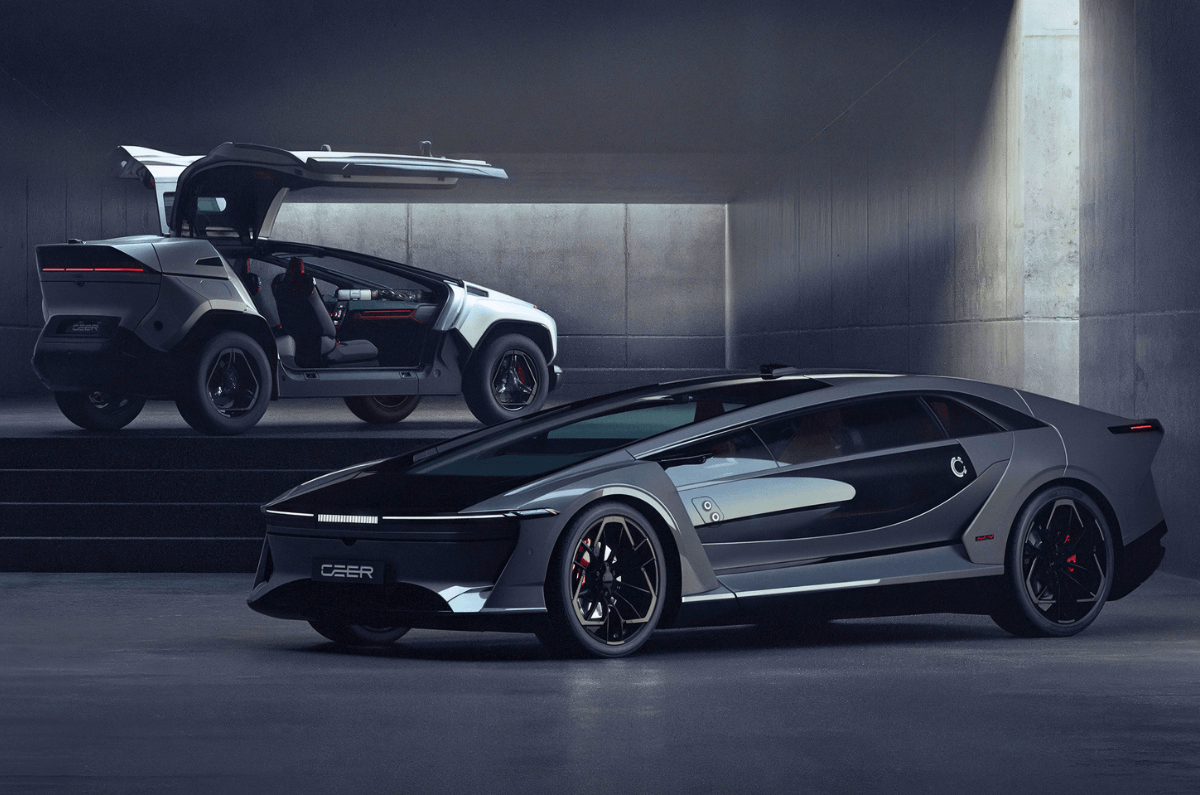
CEER, Saudi Arabia’s national automotive company, revealed the EXOBOT sedan and SUV on Monday. This marks the brand’s entry into the passenger electric vehicle space as part of the industrial diversification targets under Saudi Vision 2030. The cars were revealed by Saudi Arabia’s Crown Prince and Prime Minister, Mohammed bin Salman bin Abdulaziz Al Saud. These vehicles will be produced at CEER manufacturing complex, the largest automotive production facility in the Middle East.
The EXOBOT sedan and SUV are the brand’s flagship electric vehicles, and they are part of a portfolio of seven models that will be revealed over the next five years. These include midsize and compact vehicles with different powertrain options.
About the CEER brand
Since its inception in 2022, CEER has secured partnerships with companies such as BMW, Hyundai and Rimac. It aims to achieve 45 percent local content in its cars by 2034, while designing, engineering and testing vehicles tailored to the specific requirements of Saudi Arabia and the region.
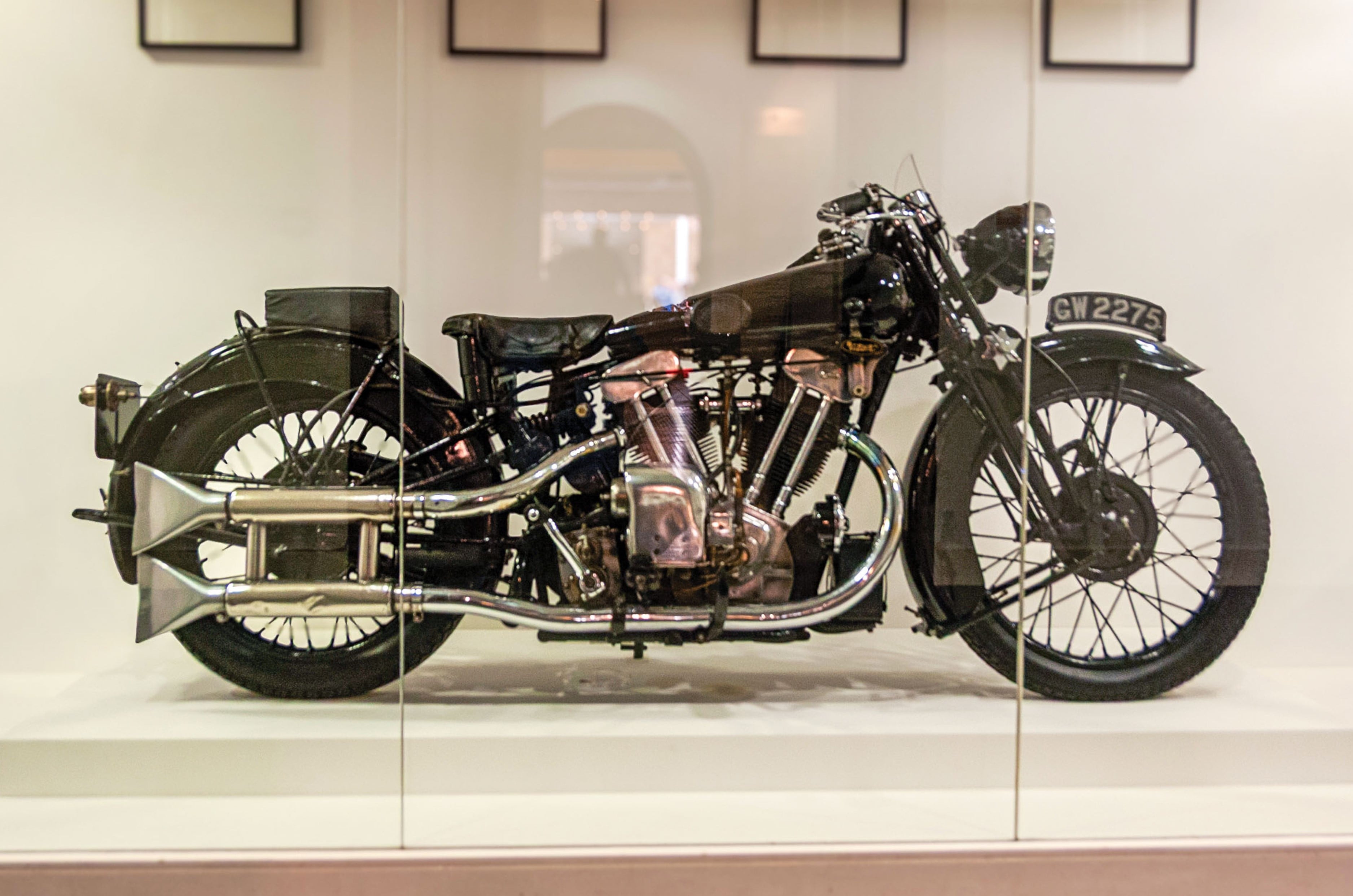
Seventeen years ago, in the Imperial War Museum on Lambeth Road in London, I stood mesmerised in front of a motorcycle with the number plate GW 2275, enclosed in a glass case. It was a beautiful, brooding machine, low and long, finished in deep black with just enough nickel and chrome to catch the museum lights: twin fishtail exhausts sweeping back in a graceful curve, the big JAP V-twin sitting exposed and unapologetic between the frame rails, cylinders splayed wide, cooling fins stacked like the pages of a book. Thin copper oil lines ran externally along the frame, feeding the total-loss lubrication system of the era, a solution that looked almost primitive next to a modern engine yet was efficient enough to survive being wrung out past 100mph on 1930s public roads.
A flamboyant form, every component left exposed, hinting at George Brough’s intention to let you see exactly what you were paying for. This was, in its day, the pinnacle of what was once the finest motorcycle industry in the world, the British motorcycle industry. Standing there, it was easy to understand why a certain kind of Englishman, restless, brilliant, and a little broken, would have fallen entirely in love with a machine like this.
The very Brough Superior SS100 Lawrence died on, photographed at the Imperial War Museum in 2008. Its last known owner, reclusive collector John Weekly, kept it in his lounge for over 45 years before his death in 2024. After which the Brough’s whereabouts are unknown.
It took me straight back to being a teenager watching Lawrence of Arabia for the first time. The film famously opens with this motorcycle: the frantic braking, the fatal swerve to avoid two boys on bicycles, before flashing back to how a restless desk officer became a legendary guerrilla leader in the Arab Revolt, and how that legend curdled into cynicism once Britain betrayed the cause he’d fought for. This was the actual Brough Superior SS100 that TE Lawrence was ripping home on from Bovington on May 13, 1935, when he went over the handlebars, struck his head, and died six days later without regaining consciousness.
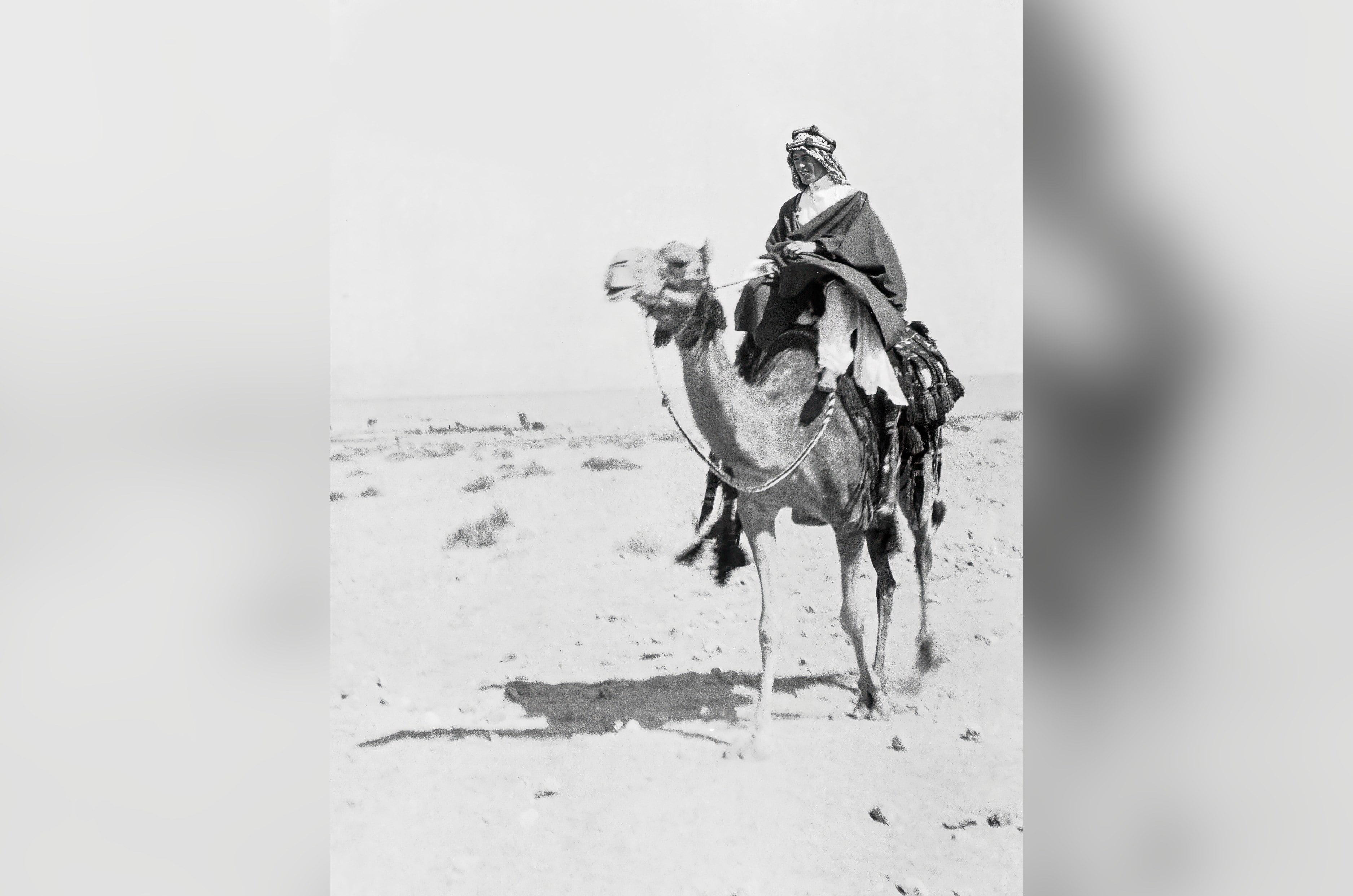
Motorcycle or camel, Lawrence rode with consummate ease.
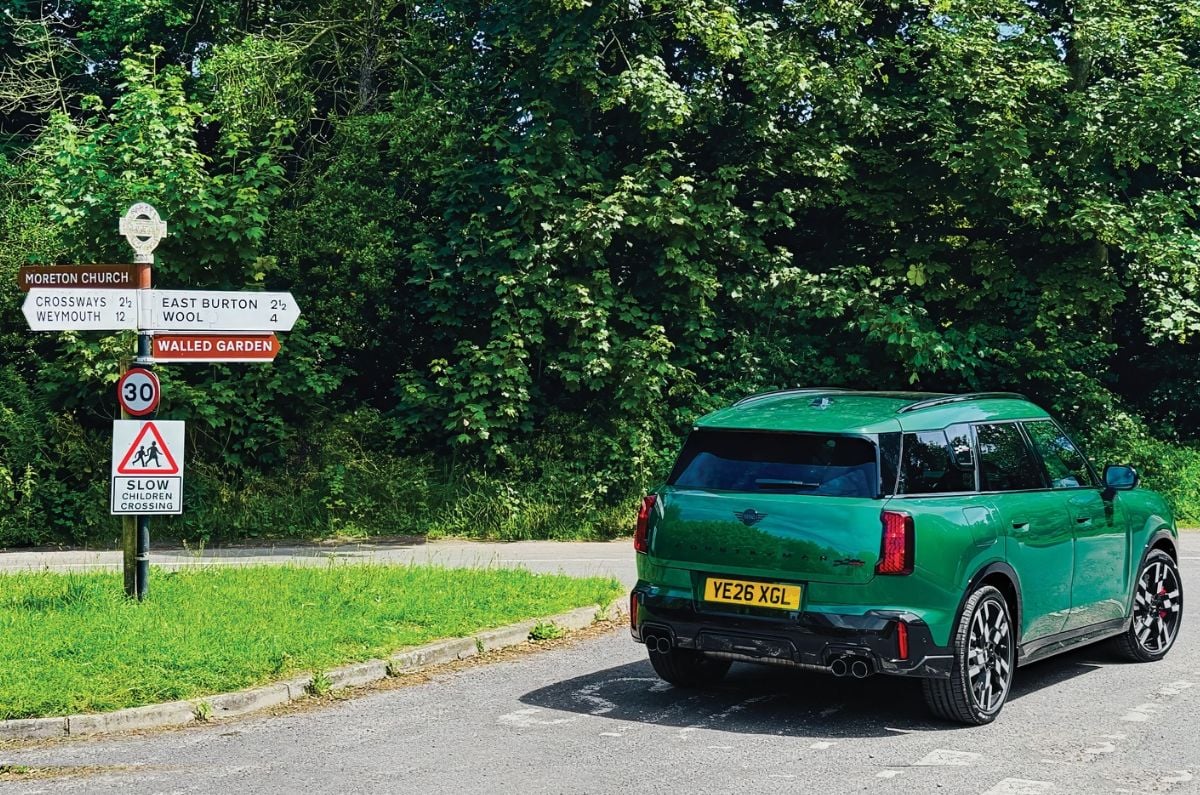
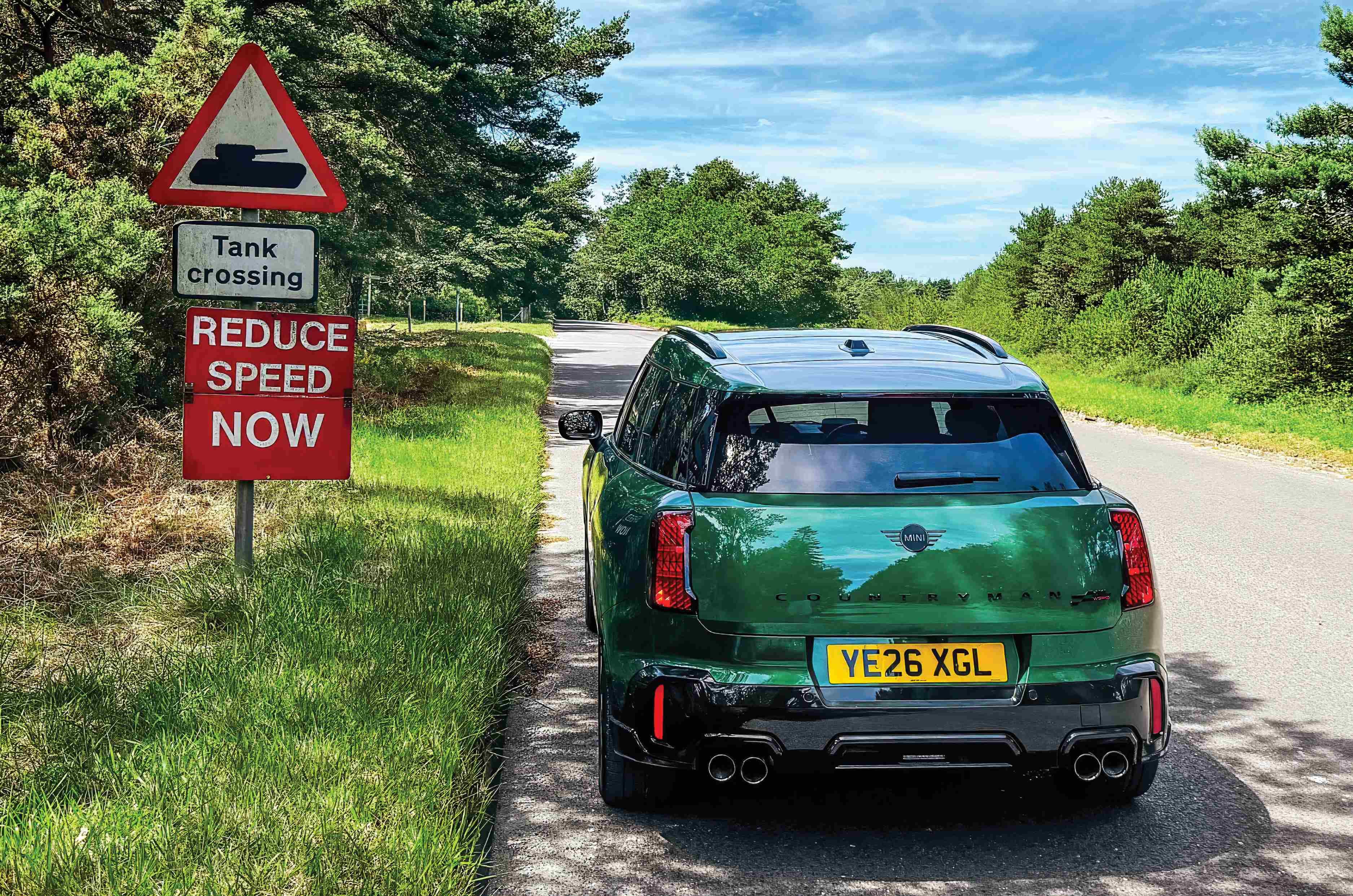
I have always felt a pull towards places where history happened, where the past has left something tangible behind, and this anniversary issue gave me the excuse I needed to follow Lawrence’s last ride. For this quest, I got behind the wheel of the new Mini Countryman John Cooper Works. A slightly contradictory choice of car for a story about a restless man who spent his last years trying to shrink his own reputation by changing his name twice to get away from the legend he’d unwillingly become. Because the new Countryman is going through much the same thing but in reverse.
By the very virtue of its name, the Mini has a reputation of being a compact and cheeky car that seems to occupy hardly any road at all, but this Mini is large and an SUV, accentuated by beefy curves with all-wheel drive as standard and sporty vivid red disc calipers. Under the bonnet sits a potent 2.0-litre turbo four-cylinder engine with 300 horsepower of shove and 400Nm of tug.
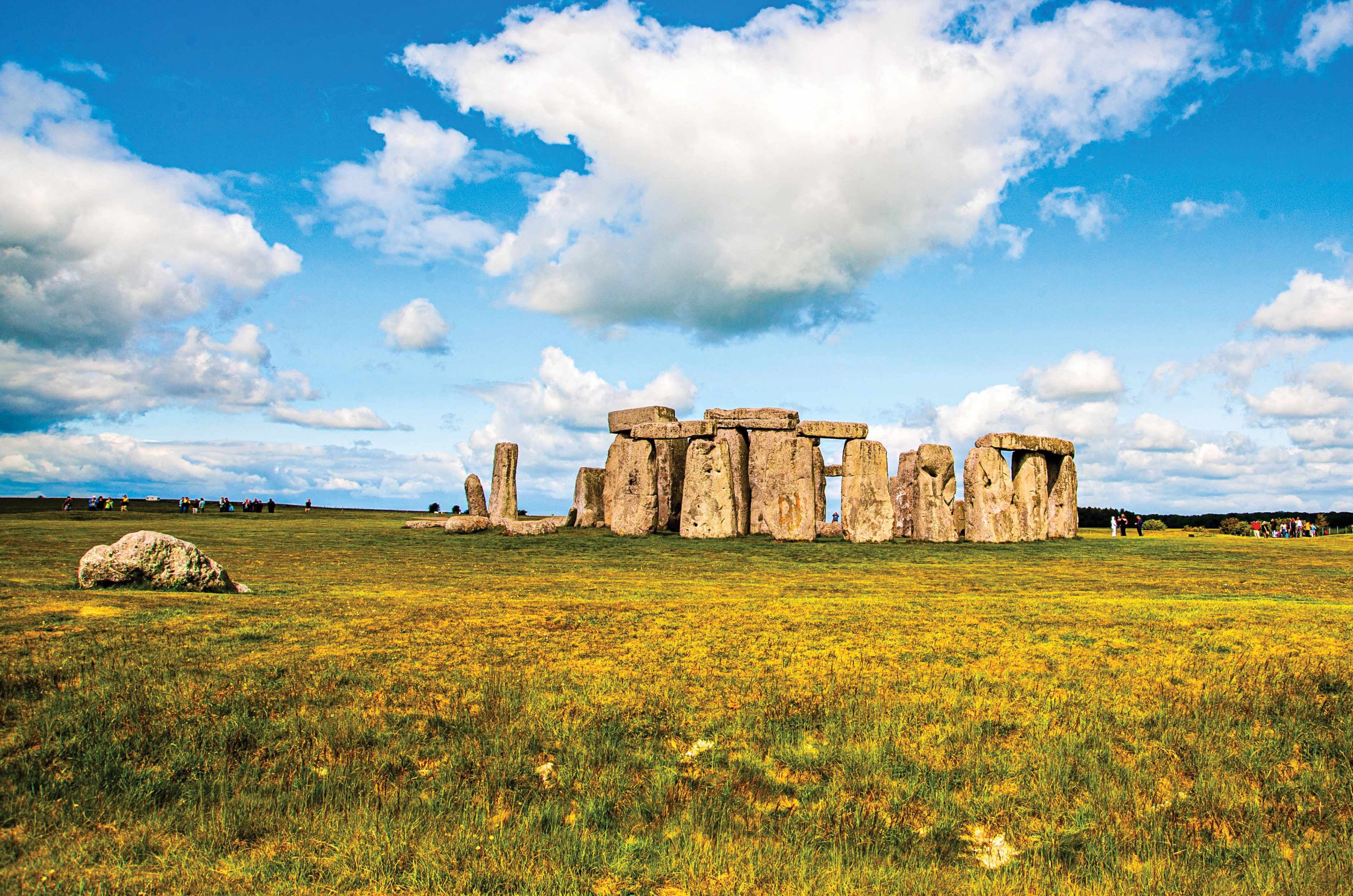
The irony was not lost on me: I was driving a car that had outgrown its own name, setting off to chase a man who’d spent his final years trying to shrink his. I pointed the car west out of London on the M3, then the A303, pulling over near Stonehenge for a quick photograph before pressing on toward another English icon further down the road.
The road to Clouds Hill
Stonehenge bursts into view without warning as the A303 tops a crest, the ancient stones suddenly filling the windscreen against the Salisbury Plain.
Beyond Stonehenge, the Countryman ate the tarmac in complete comfort, cabin hushed, adaptive cruise doing most of the thinking. The road eventually dropped south onto narrower country lanes for the final approach into Dorset, and it was here, as the hedgerows closed in, that the JCW visibly changed character. All-wheel drive dug in through the bends, the exhaust note sharpened, and for a few minutes on the approach to Clouds Hill, this bulked-up, grown-up Mini showed me that the nimbleness of its ancestors still lived somewhere in its genes.
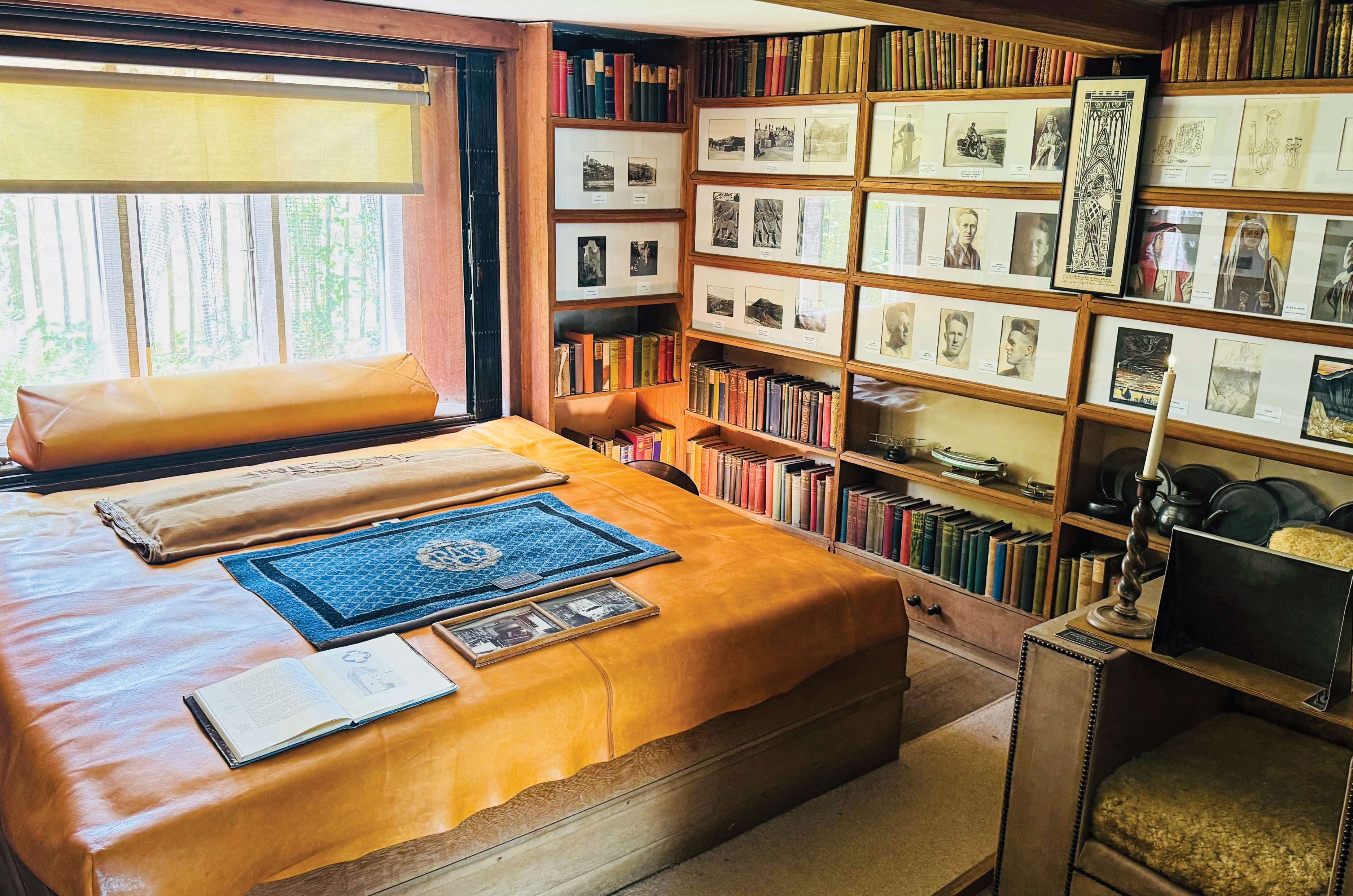
Inside Clouds Hill: Lawrence’s daybed and bookshelves, preserved almost as he left them.
Clouds Hill itself is almost comically modest for a man who became one of the most famous people in England. It’s a four-room labourer’s cottage with no electricity, which Lawrence first rented in 1923 while stationed at nearby Bovington, then painstakingly rebuilt with his own hands before buying it outright in 1929. Inside, the leather-topped daybed, bookshelves crammed with correspondence and photographs, and framed portraits of Bedouin faces and RAF colleagues remain much as he left them, preserved by the National Trust.
What hints at the pull of Lawrence’s personality is who came all the way here to visit him. George Bernard Shaw, EM Forster, Thomas Hardy and Robert Graves all found their way to this tiny, electricity-less retreat, which was slightly ironic, because Lawrence was doing his best to disappear. The world knew him as Lawrence of Arabia, the flamboyant soldier in Arab robes who’d become one of the most recognisable figures of the First World War, and he wanted none of the celebrity that came with it.
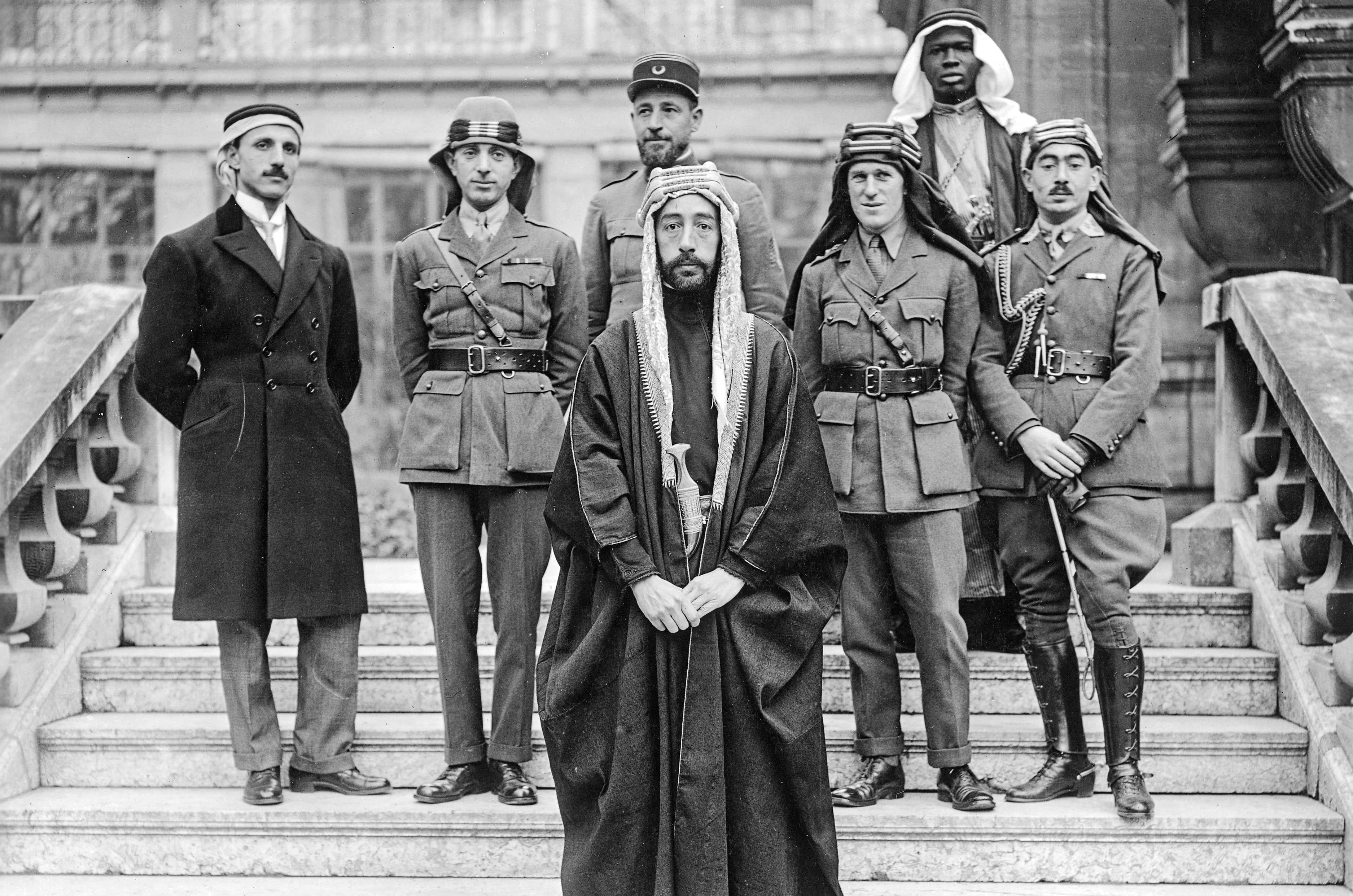
Prince Faisal’s delegation at the 1919 Paris Peace Conference. Lawrence (third from left) stood among men Britain would soon betray.
He’d already tried once: in 1922, he joined the RAF under the name John Hume Ross, but the press uncovered him within months. The following year, he joined the Tank Corps as TE Shaw, a name he kept for the rest of his life. Clouds Hill became his refuge, a place to read, write, listen to music, work on his boats and motorcycles, and retreat from a world determined to keep finding him.
He did make forays out. Winston Churchill was a genuine friend, and Lawrence would occasionally turn up unannounced at Chartwell, Churchill’s home about 130 miles away. He liked to boast that his long-distance visits to friends like Churchill and Lady Astor were made in “record time” thanks to the Brough’s speed, calling the machine “the silkiest thing I have ever ridden.”
Churchill’s daughter Mary remembered him arriving as “a short, nondescript, sandy-haired airman riding a motorcycle,” only to reappear at dinner transformed, “presenting himself in the flowing robes of a Prince of Arabia.” She also recalled the “pin-drop silence” that fell over the room whenever Lawrence spoke, a silence that apparently included her father, who himself considered Seven Pillars of Wisdom “unsurpassable” as a war narrative. It was an odd, quietly moving thing to stand in a room with no electricity and realise the man who once sat there could hold some of the loudest reputations in England spellbound.
The road that killed him
This road has widened over the decades, much like the Mini brand, which now includes an SUV.
From Clouds Hill, the road towards Bovington Camp is the one Lawrence rode almost daily, and it’s easy to see why he loved it: well cambered, with quick, confident curves that seem made for two wheels rather than four. The road has changed considerably since 1935, widened, realigned and smoothed out, the dips Lawrence knew long gone, but the bends remain, and the JCW flowed through them on silky modern tarmac with barely a shudder.
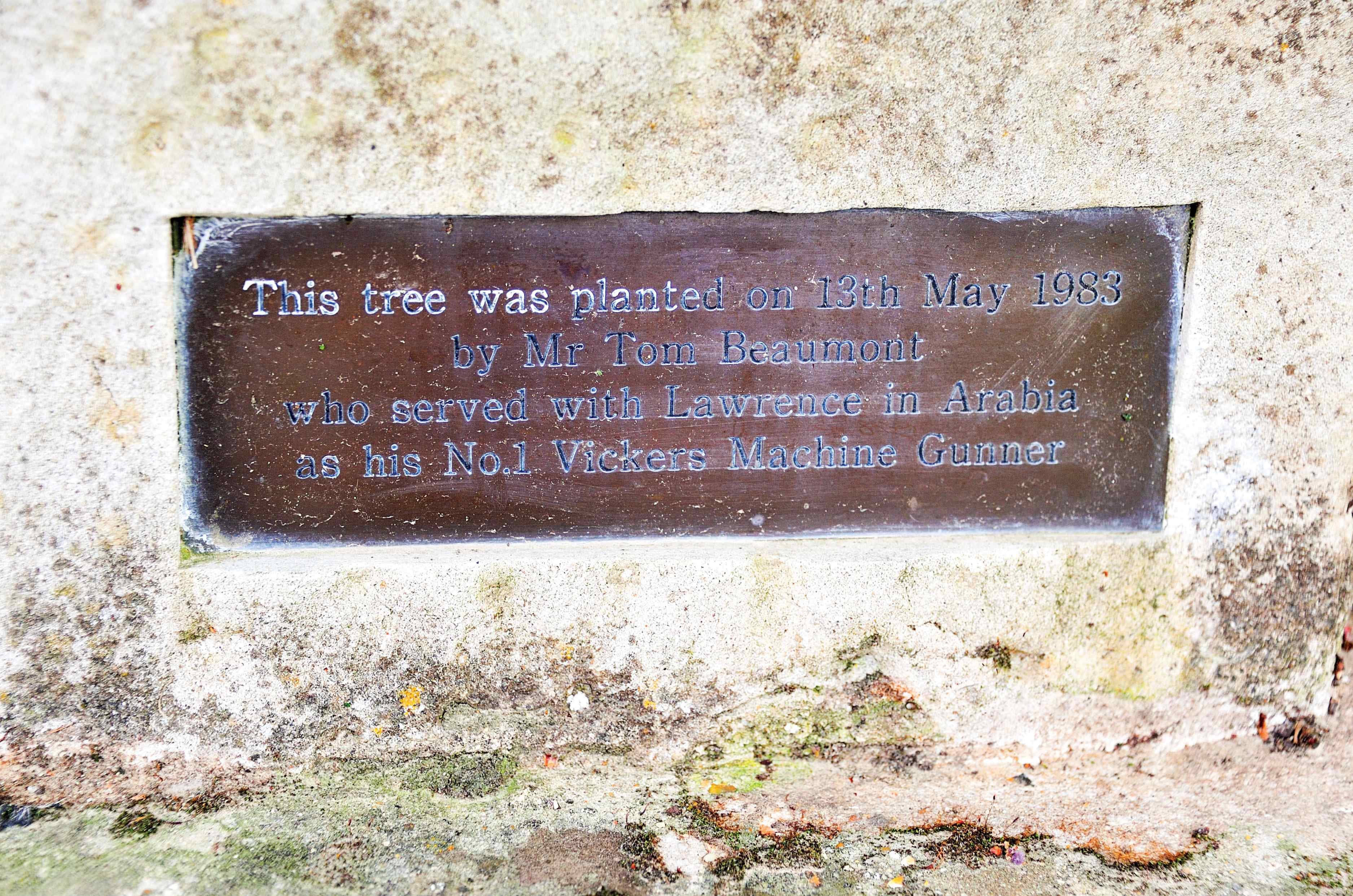
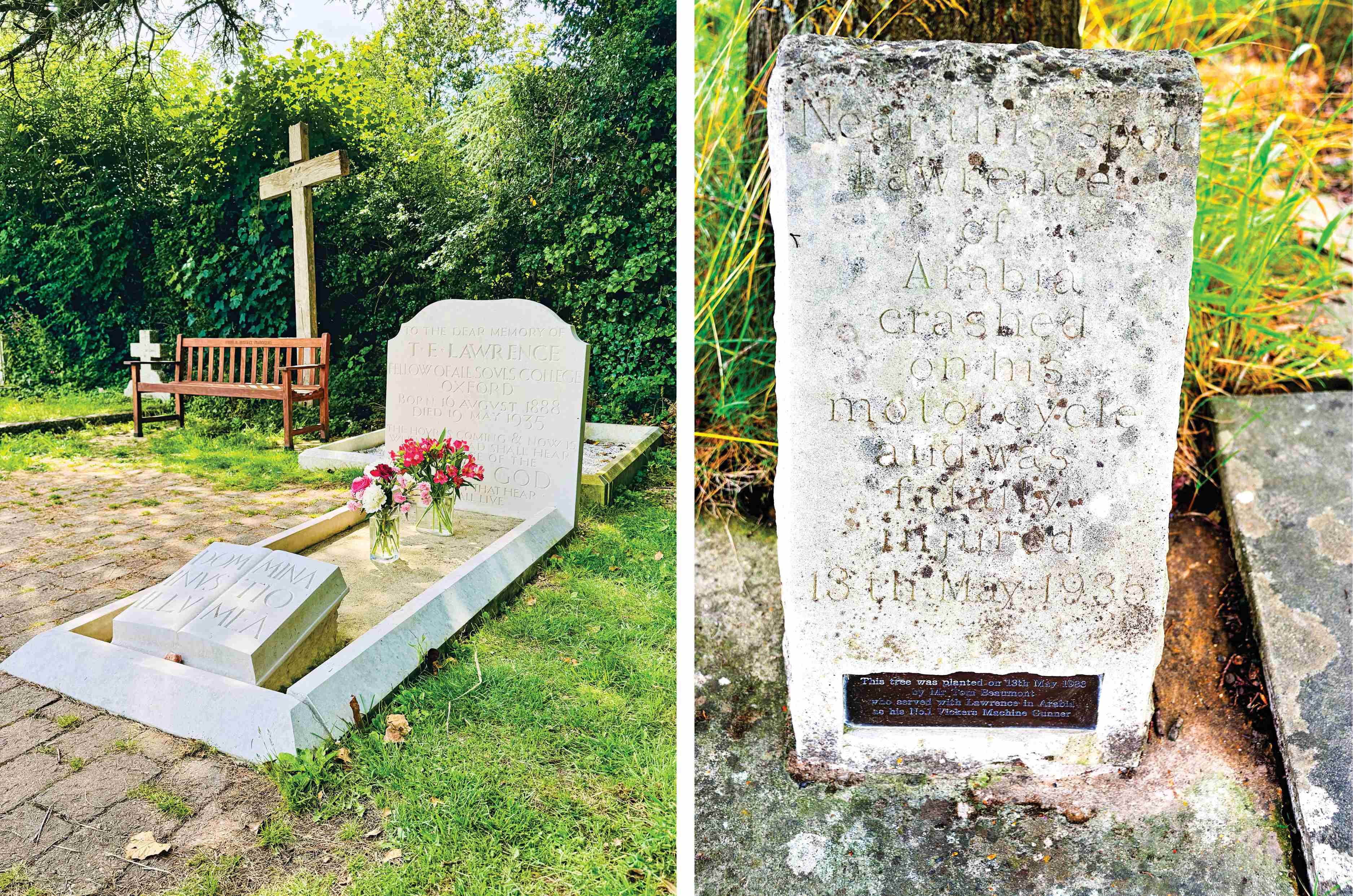
The plaque marking the tree planted by T.E. Lawrence’s former Vickers gunner, Tom Beaumont, in 1983.
Lawrence was known to push his Brough to 100mph on roads like this despite the rougher surfaces and primitive brakes of the time. It takes a particular sort of nerve to do that. Sadly, this is also the road on which he died. A small, weathered stone marker stands by the roadside near the crash site, its inscription barely legible: Near this spot Lawrence of Arabia crashed on his motorcycle and was fatally injured, 13th May 1935.
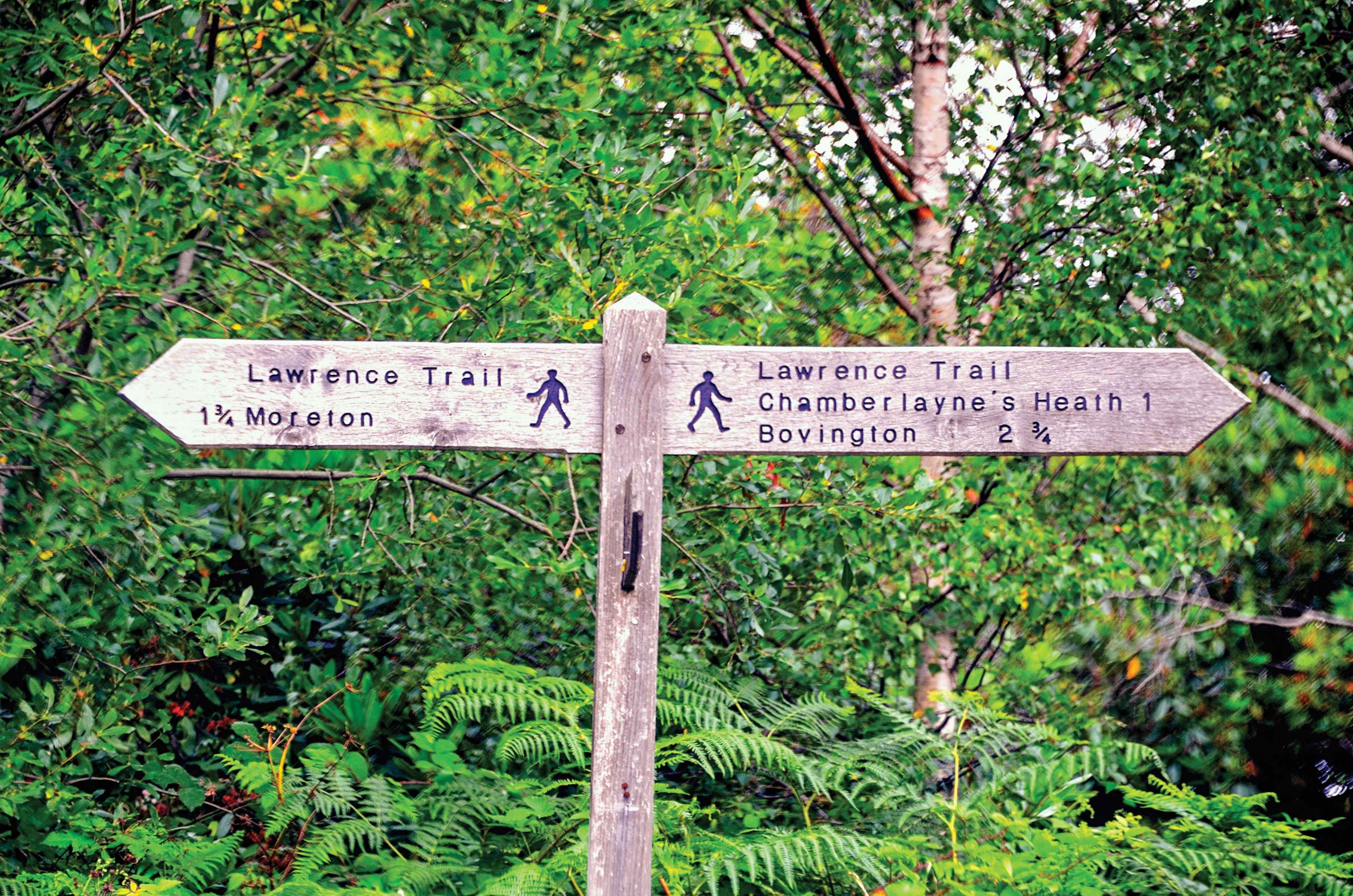
A signpost for the Lawrence of Arabia Trail.
Below it, a plaque records that the tree beside the marker was planted in 1983 by Tom Beaumont, who had served as Lawrence’s Vickers machine gunner in Arabia, one old comrade returning nearly half a century later to mark where another had died. It’s a small, unshowy memorial for a man who became the subject of an Oscar-winning film. Bovington Camp is also the start and finish point of the circular 10.8km Lawrence of Arabia Trail, which strings together the cottage, the crash site, and the church at Moreton in one walkable loop.
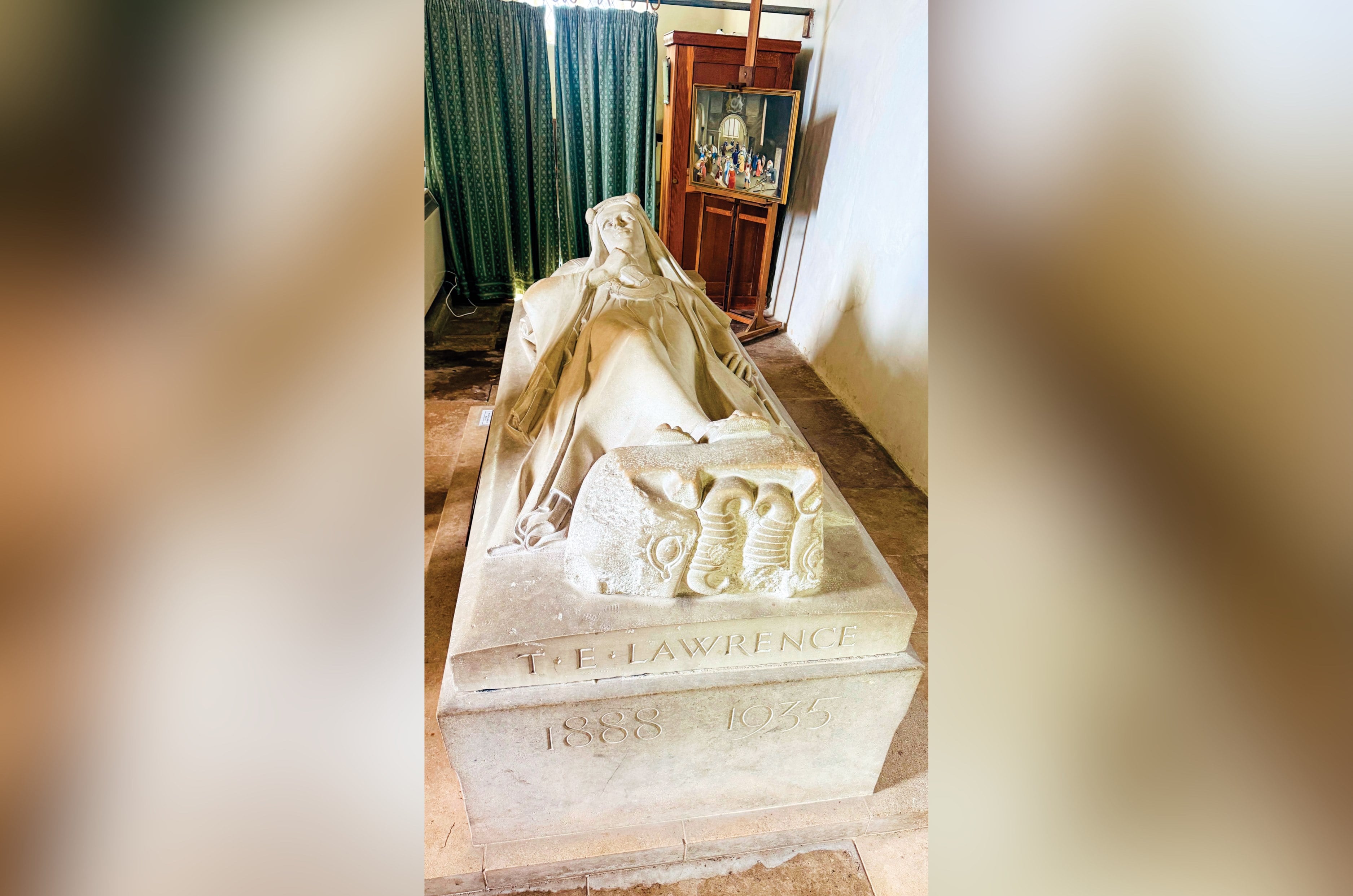
Lawrence’s effigy at St Martin’s Church, Wareham, carved by his friend Eric Kennington.
A short drive away in Wareham is one more stop worth making: the Saxon church of St Martin’s, home to a life-size effigy of Lawrence carved by his friend Eric Kennington, originally intended for St Paul’s Cathedral before being rejected there and finding its way to this small parish church instead.
Moreton and the memory of him
Moreton itself is a proper Dorset postcard, a signpost outside St Nicholas’ Church pointing the way to “Walled Garden” beside directions to Wool and Weymouth, as if history and horticulture share equal billing. Lawrence’s small and very private funeral and burial were held here on May 21, 1935, and the mourners included Churchill, Lady Astor, General Wavell (who flew in by autogiro), and author Henry Williamson.
Left: T.E. Lawrence’s grave at St Nicholas’ Church, Moreton. Simple white stone, flowers left fresh by visitors. Right: The weathered marker near Bovington, barely legible, recording the spot of Lawrence’s crash.
His grave sits a short walk from the church, simple white stone, flowers laid fresh by visitors, the inscription noting he was a Fellow of All Souls College, Oxford, and making no mention at all of Arabia.
The coast, and letting the car breathe
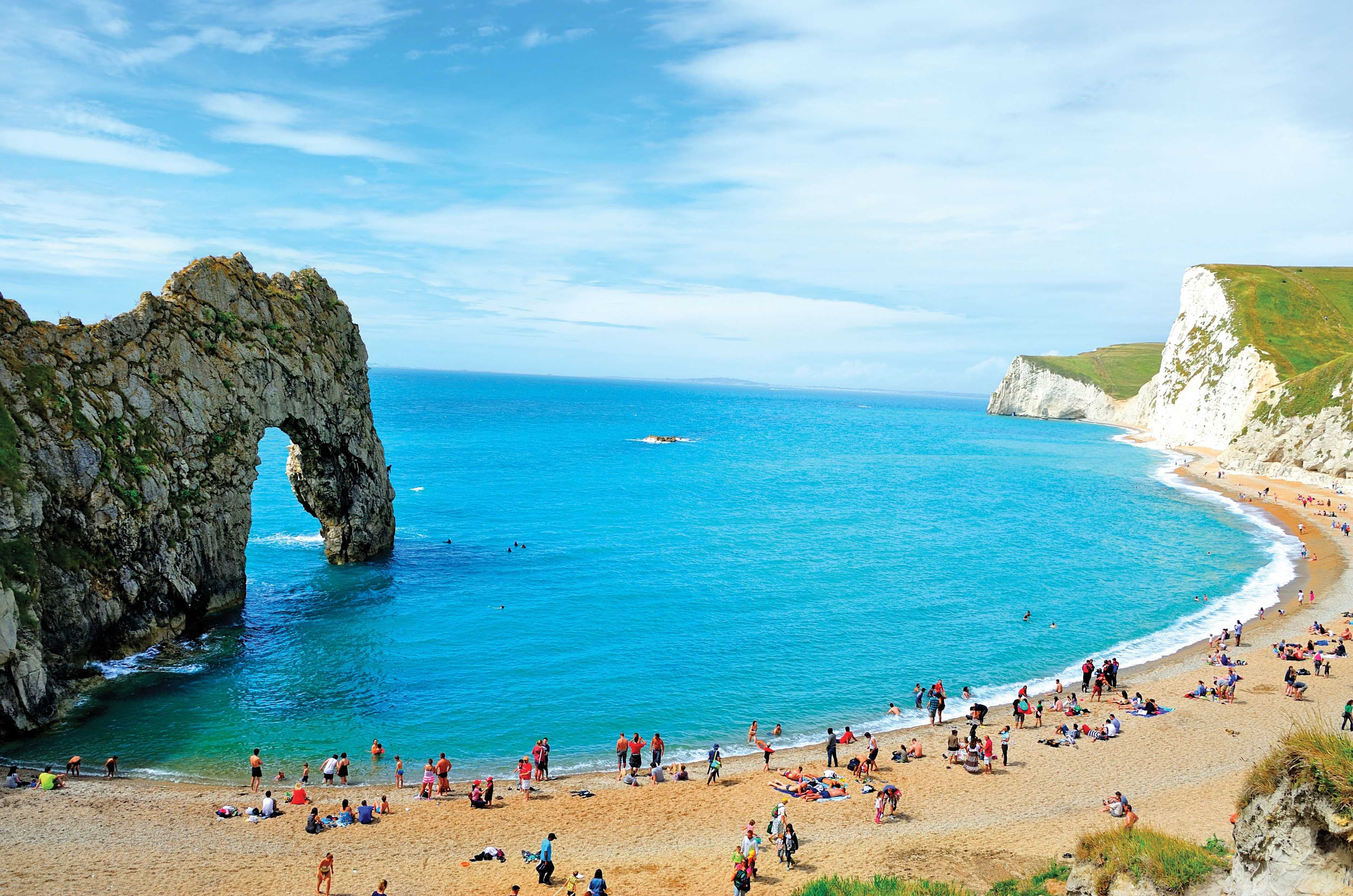
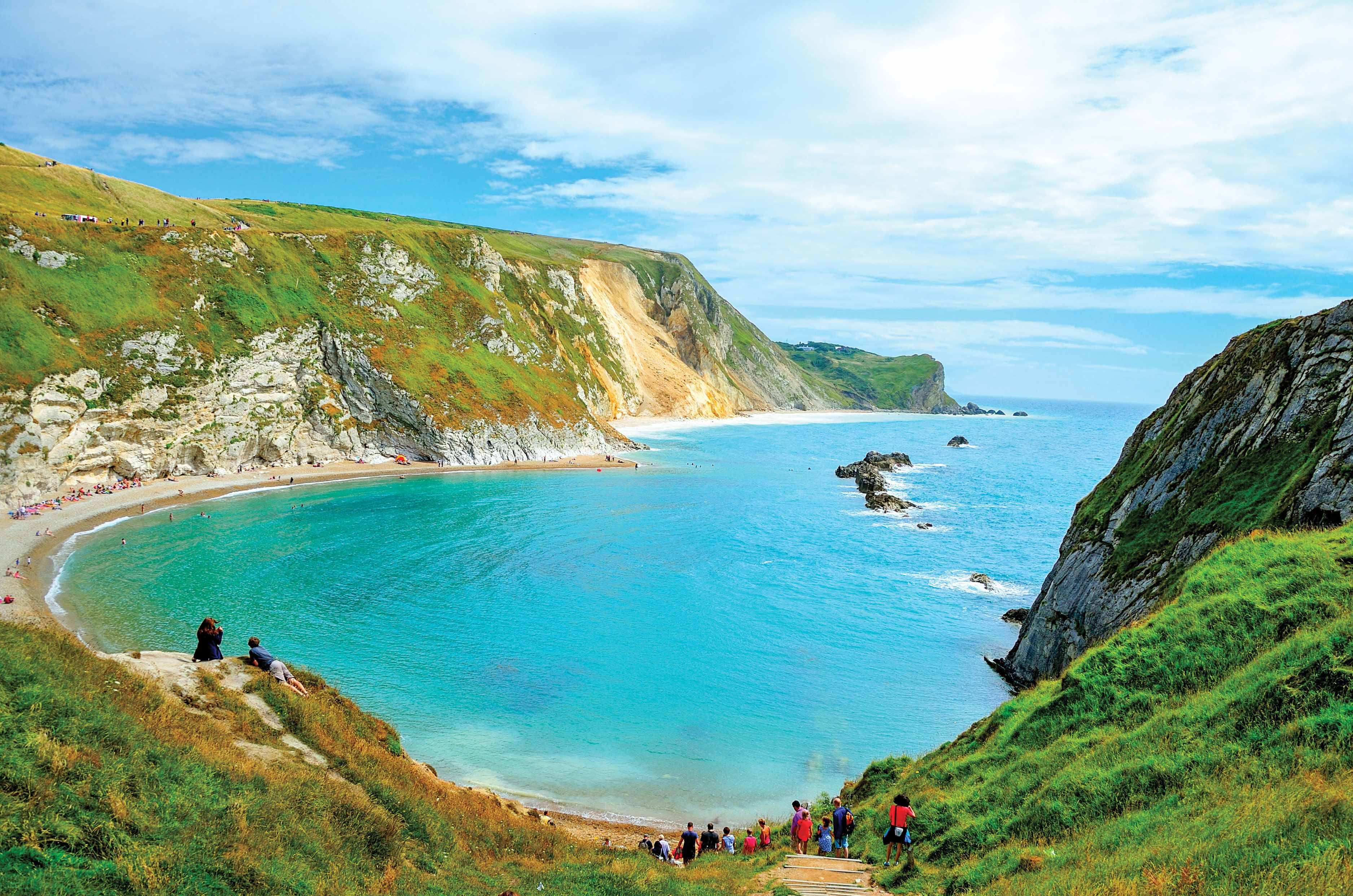
Durdle Door, the natural limestone arch that draws crowds to this stretch of coastline.
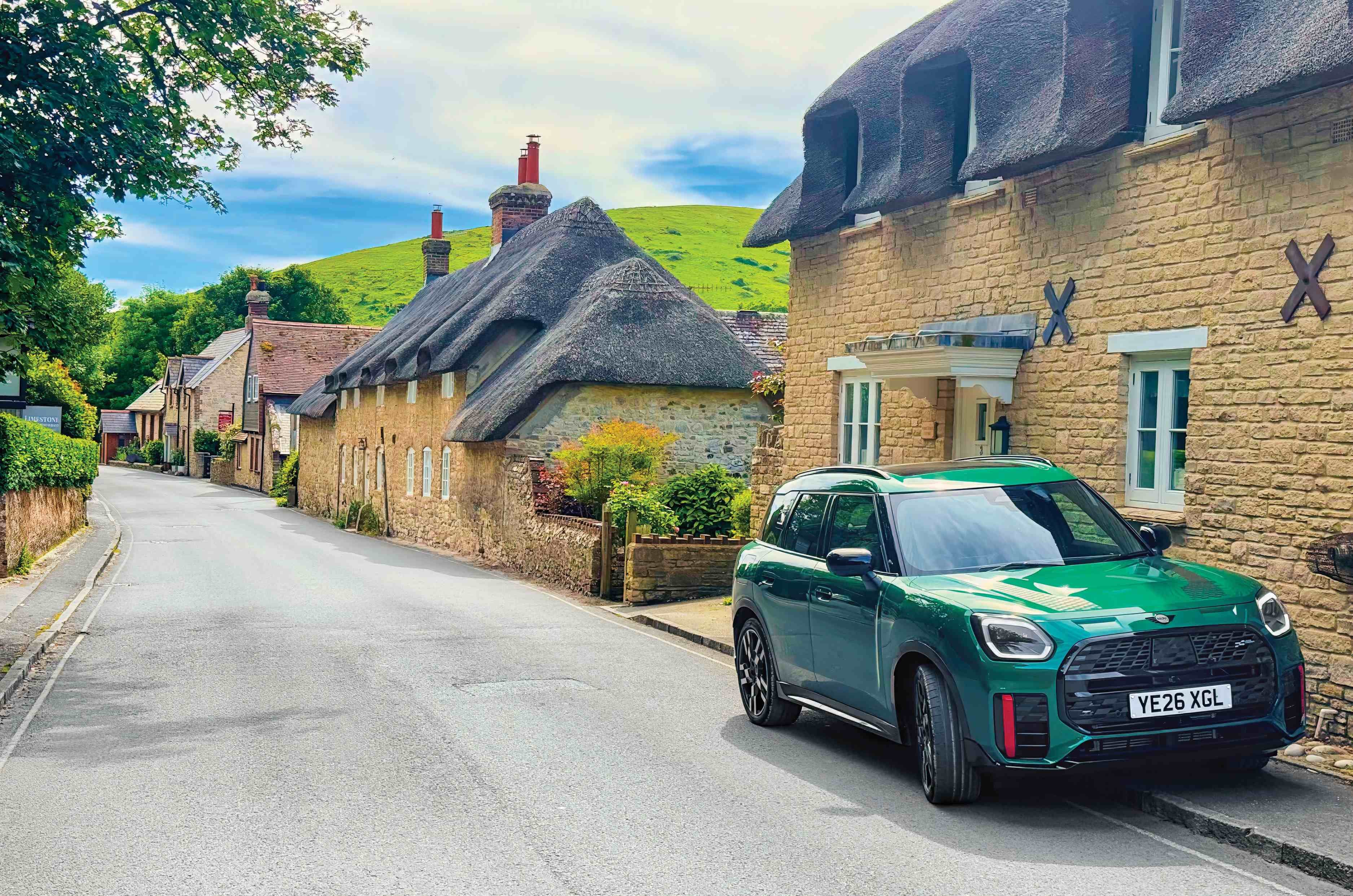
I couldn’t leave Dorset without giving the JCW a proper stretch, so I pushed south to the Jurassic Coast, Durdle Door and Lulworth Cove, a slight detour from Lawrence’s own story, but too good to leave out of a day like this. Every mile of the drive validated it being classed as an SUV. The properly deep boot held picnic mats, beach gear, including chairs and an umbrella, without the need of the rear seats being dropped.
Lulworth Cove’s chalk cliffs and turquoise water, a world away from Lawrence’s Dorset lanes.
The cabin felt roomy, and the ride height shrugged off potholed coastal car parks without a second thought. There’s real engine grunt for those urgent overtakes on narrow country lanes when stuck behind agonizingly slow motorhomes that make you feel like tearing your hair out.
West Lulworth, all thatched roofs and honey-coloured stone, is about as quintessentially Dorset as a village gets.
The all-wheel-drive system quietly sorts out grip on the tighter, greasier lanes, especially with the left wheels on a shoulder slick with wet grass. Flick it into its sportiest mode, and the exhaust note gets a synthesised boost through the speakers. It may be all theatre, but it certainly made me grin, and that’s a win because sound plays such a large part in defining how a car makes me feel.
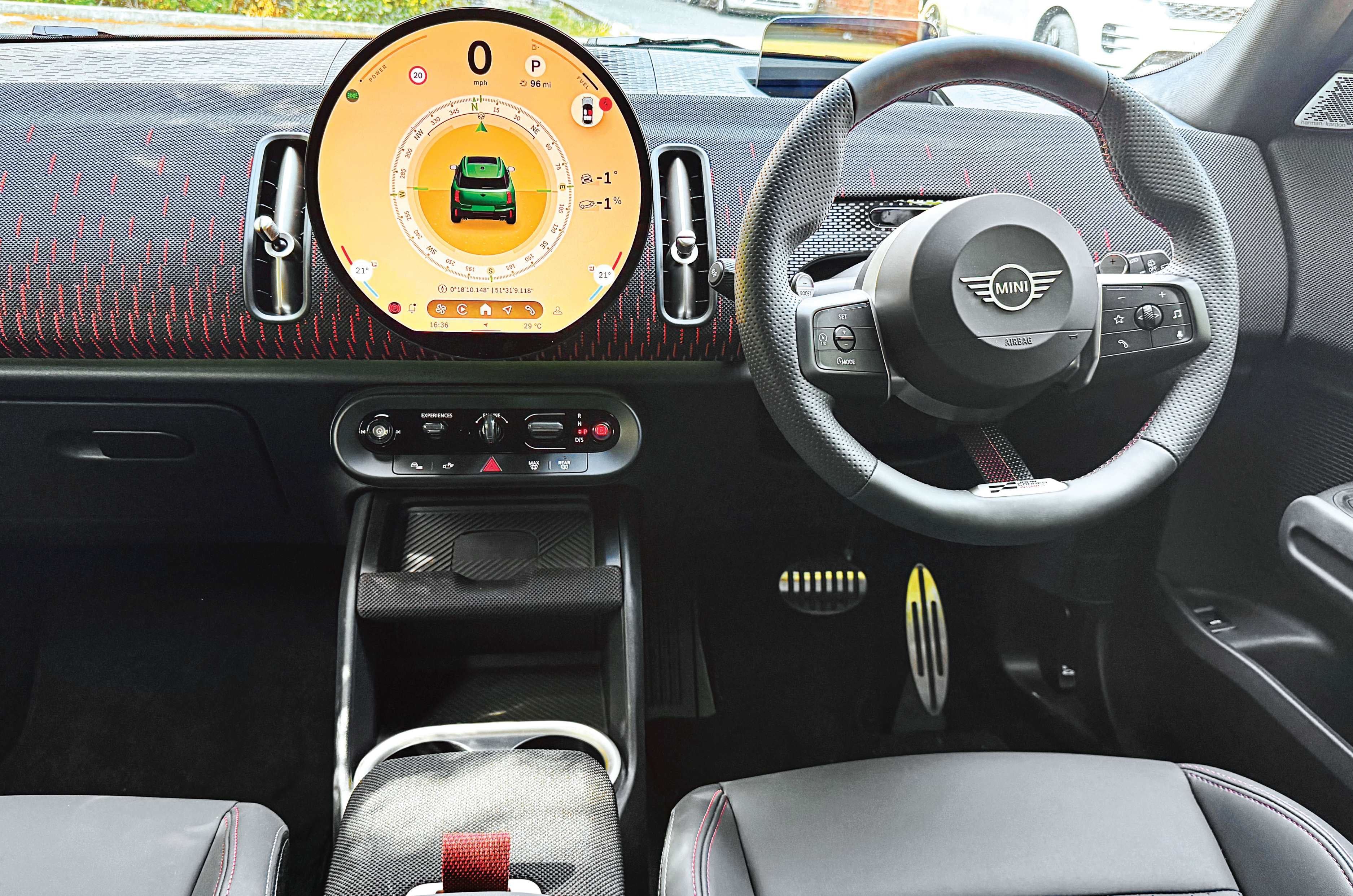
A compass and live pitch-and-roll readout flaunts SUV identity; instrumentation no traditional Mini has ever needed.
By the time I rolled back into London, it was quite clear to me that at the wheel of a Mini Countryman, what you get is a car that is actually larger and roomier than the Jeep Compass. It has the space, the grunt and the ground clearance, and from the smooth roads of Dorset to the Jeep-only trails of Zanskar, this Mini is genuinely man enough for whatever the country throws at it.
The Helmet He Never Wore
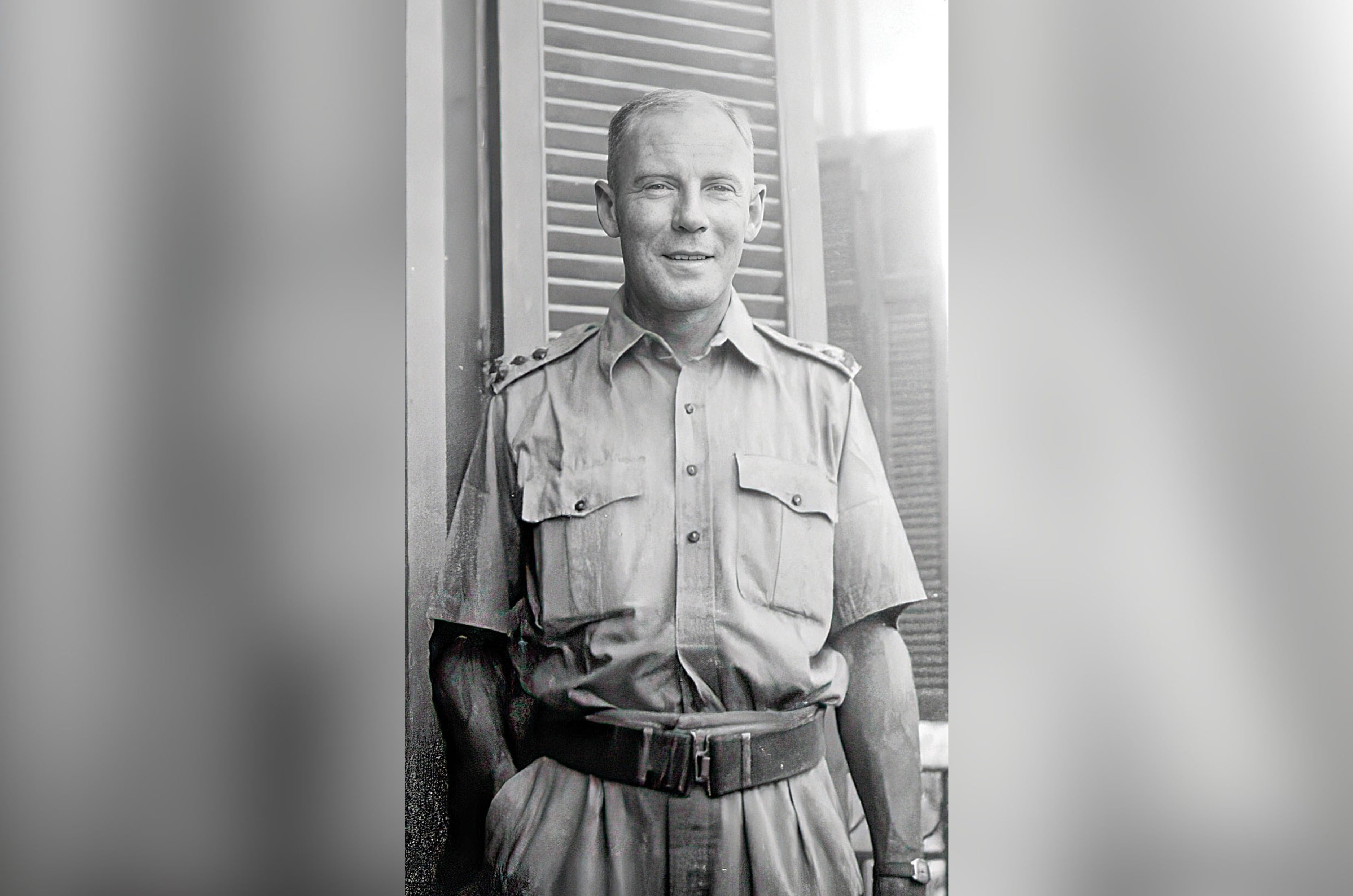
Lawrence’s fatal crash had one consequence far beyond Dorset. Among the doctors treating him at Bovington Camp Military Hospital was a young Australian neurosurgeon named Hugh Cairns, who had himself served in the Middle East during the First World War. Watching Lawrence die of head injuries that a helmet might have prevented left a deep impression on him, and he began studying motorcycle head trauma as a direct consequence.
Sir Hugh Cairns
Crash helmets already existed, invented back in 1914 for racing at Brooklands, but nobody wore them on the road. It took the Second World War, and Cairns’s appointment as a head injuries adviser to the Ministry of Health, for that to change. Researching fatalities among military despatch riders, he found that head injuries were the single biggest killer among motorcyclists and that, of the few riders wearing helmets when they crashed, not one had died.
His 1941 paper was damning enough that helmets became compulsory for all military motorcyclists within a month, and a 1946 follow-up showed the death rate had fallen sharply as a result. Cairns argued the same logic should extend to every civilian rider. It took another 27 years, and Cairns didn’t live to see it, for that to become UK law in 1973. But the chain runs in a straight, almost eerie line from one Dorset lane to millions of ordinary commutes: the man who died avoiding two boys on bicycles ended up, through the doctor who treated him, saving countless lives on two wheels after his own.
“The Rolls-Royce of Motorcycles”
Every Brough Superior was hand-built at George Brough’s works on Haydn Road, Nottingham, and Brough himself was as singular as his machines. Rarely seen without his trademark tailored flat cap, he carried himself more like landed gentry than a factory owner, and his standards bordered on obsessive. Born to motorcycle pioneer William Edward Brough, George forged his own path in 1919 after a rift with his father over how grand and expensive motorcycles ought to be.
Left: George Brough, Right: T.E. Lawrence
A friend suggested adding “Superior” to the name, which Brough senior took as a personal insult. That pursuit of excellence defined the marque: each machine was assembled once to fit every component together, then stripped down for painting and plating, then reassembled for delivery. Brough tested every SS100 himself on public roads past 100mph, and each one left the factory with George Brough’s personal approval and a written certificate guaranteeing it had been timed at the ton over a flying quarter mile.
‘SS’ stood for Super Sports, ‘100’ for that guaranteed top speed of a 100mph, and Brough pushed the idea further still in 1928, setting a 130.6mph record at Arpajon in France. The “Rolls-Royce of Motorcycles” nickname was coined by journalist HD Teague of The Motor Cycle, and Brough liked it enough to use it in his own advertising, reportedly with the real Rolls-Royce’s blessing.
War ended civilian production in 1940, when the factory turned to munitions and aircraft parts, and the specialised J.A. Prestwich (JAP) 998cc, air-cooled, 50-degree OHV V-twin engines Brough relied on were never commercially viable again. Around 3,100 machines were made across 19 models in the marque’s 21-year run, and roughly a third survive today, making every survivor a priceless piece of automotive art.
Lawrence’s relationship with the marque ran deeper than most customers’. Writing to Brough in 1926, he said he’d ridden five Broughs and covered 1,00,000 miles in four years, calling them the greatest delight of his life, two of them possessing “a speed and reliability that reminded me of an express train.” Between 1922 and 1935, he owned eight. The first, bought in 1922, was nicknamed “Boa,” short for Boanerges, meaning “son of thunder.”
The seven that followed were named George I through George VII, with a ninth, George VIII, still being built when he died. At around £200 apiece, enough to buy a modest cottage, this was extraordinary indulgence for a man on an RAF aircraftman’s pay, though royalties from Seven Pillars of Wisdom helped fund it. The Brough he crashed on May 13, 1935, registration GW 2275, was George VII, his last completed machine.
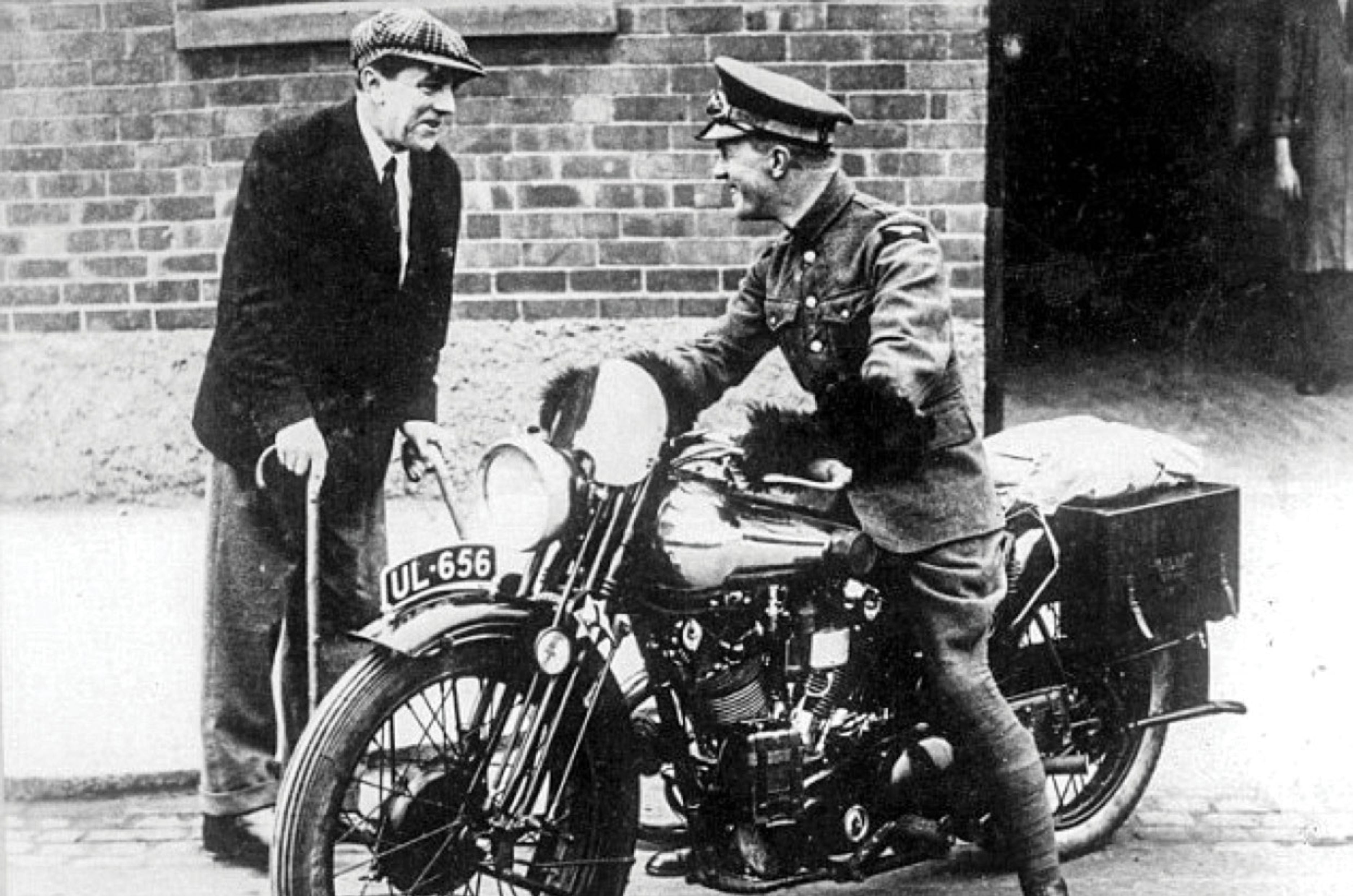
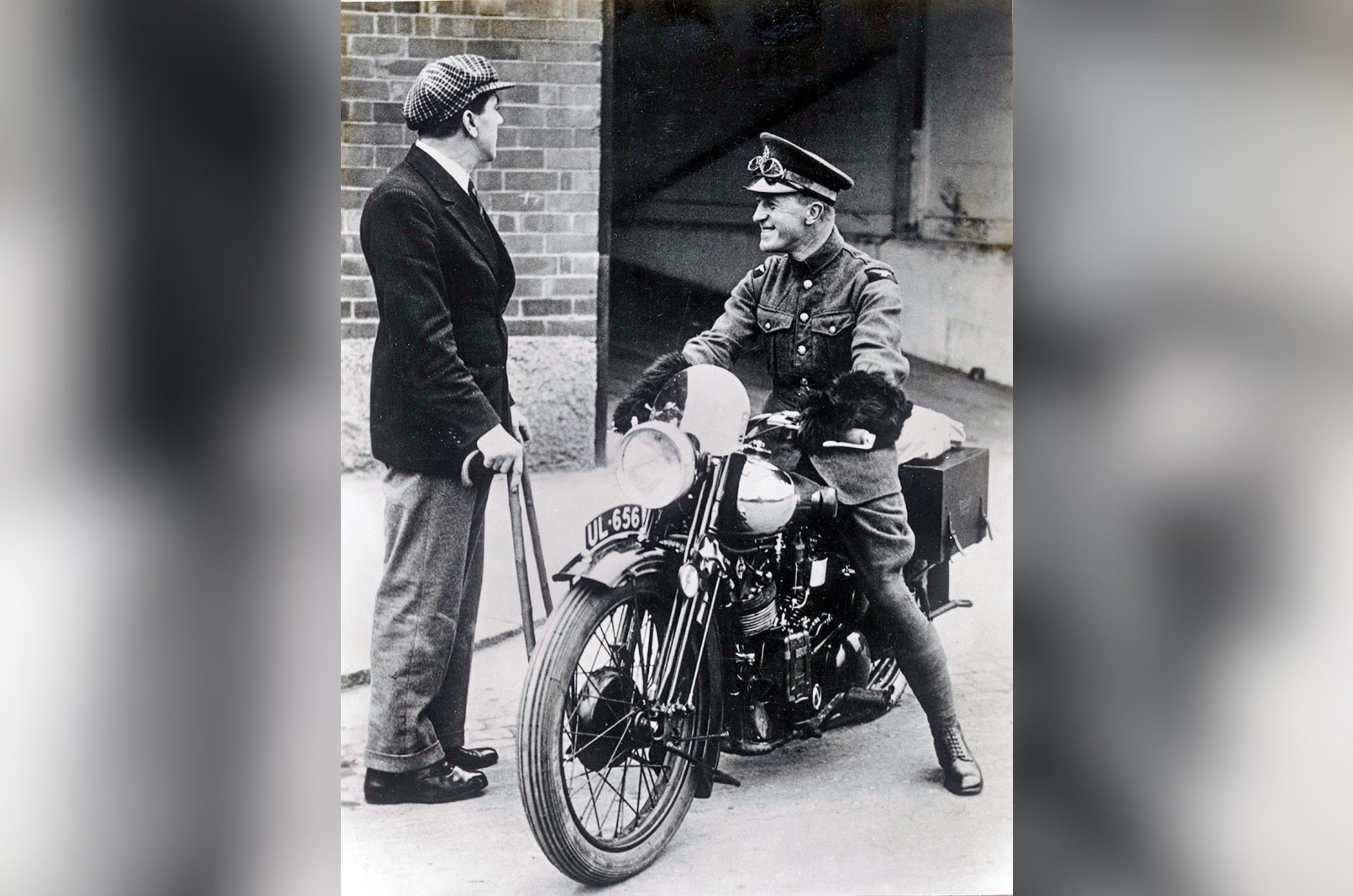
The photographs here are of George Brough and Lawrence on the Brough nicknamed George VI. They were taken during one of Lawrence’s frequent, unassuming visits to the Haydn Road factory by Jack Hallsworth, a Nottingham Journal photographer who knew George Brough and had been tipped off to bring his camera one afternoon.
It’s a rare glimpse of a man famously camera-shy and almost never photographed candidly, hinting at the genuine warmth behind the machines: two very different Englishmen, one a self-effacing war hero trying to vanish into rural obscurity, the other a flamboyant engineer-showman happy to let Rolls-Royce’s name do some of his advertising for him, bound by a friendship that outlasted their differences.
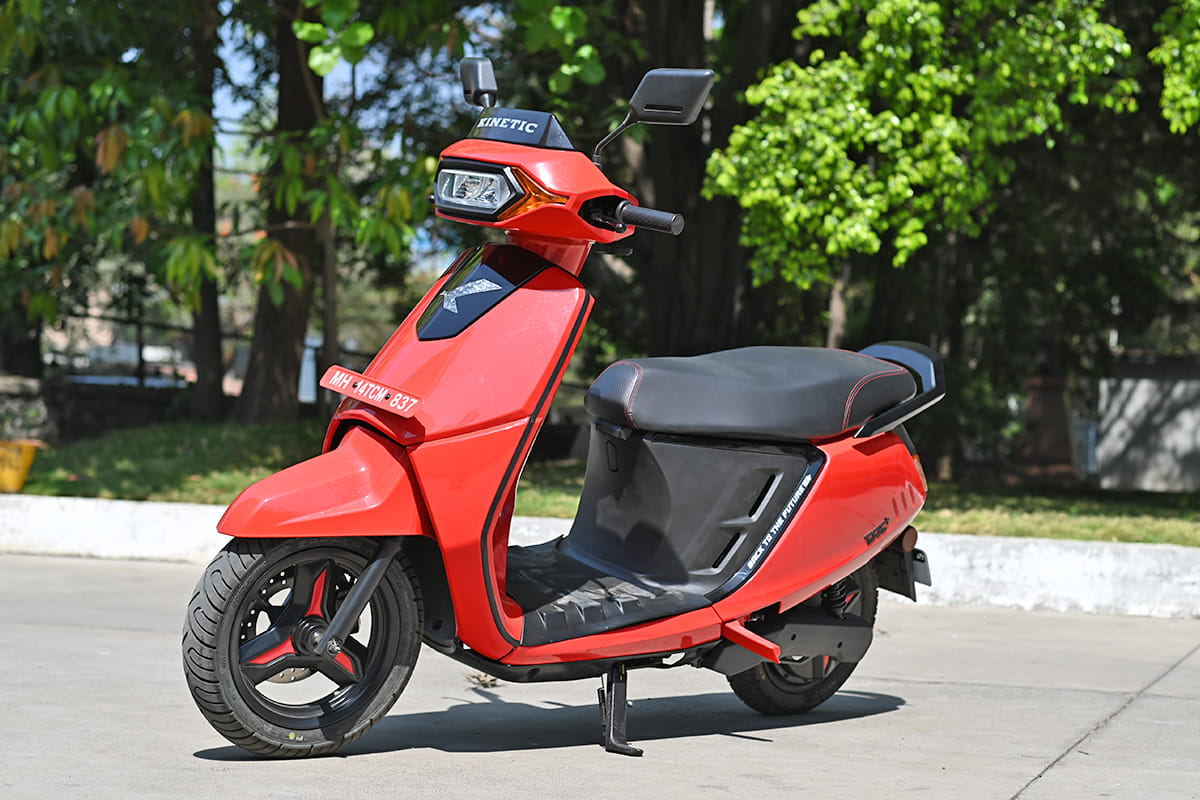
Kinetic Watts & Volts (KWV) is evaluating seven international markets as the Pune-based electric two-wheeler maker looks to expand beyond India. Turkey, Nepal, Sri Lanka, Bangladesh, Kenya, Nigeria and Egypt are currently being assessed, with KWV studying local regulations, customer requirements, electric two-wheeler demand and potential distribution partners.
International expansion to cover markets across Europe, South Asia and Africa
Makarand Joshi appointed to lead KWV’s international business development
Company plans to add 40 more exclusive showrooms in India
Kinetic EV international expansion plans
It has also issued 150 LOIs to prospective dealership partners.
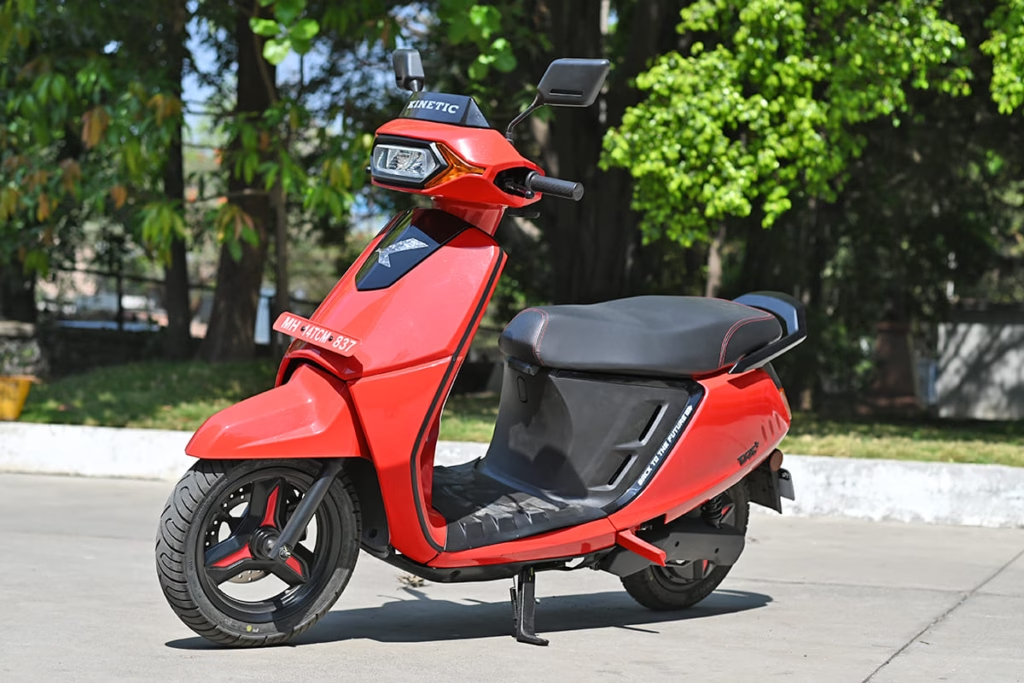
KWV currently sells the Kinetic DX and DX+ electric scooters in India, with the range positioned around accessible urban mobility. The company is now looking to identify markets and distribution partners that can support its next phase of growth overseas.
KWV has appointed Makarand Joshi as head of international business development to lead its overseas plans. Joshi has more than two decades of experience in developing overseas markets for Indian automotive products, with experience across Asia, the Middle East, Europe and Africa. His background includes two-wheelers, commercial vehicles and tractors, as well as international distribution and market-entry strategies.
Ajinkya Firodia, Vice Chairman and Managing Director, Kinetic Watts & Volts, said the company’s products had been designed with a broad range of markets in mind. He added that the momentum of its domestic business had allowed KWV to begin laying the groundwork for international expansion. The company is yet to confirm which of the seven markets it will enter or provide a timeline for its overseas launch.
KWV’s international plans come as it continues to build its presence in the Indian market. The company currently has 45 exclusive showrooms and expects another 40 outlets to become operational within the next two months. It has also issued 150 Letters of Intent (LOI) to prospective dealership partners.
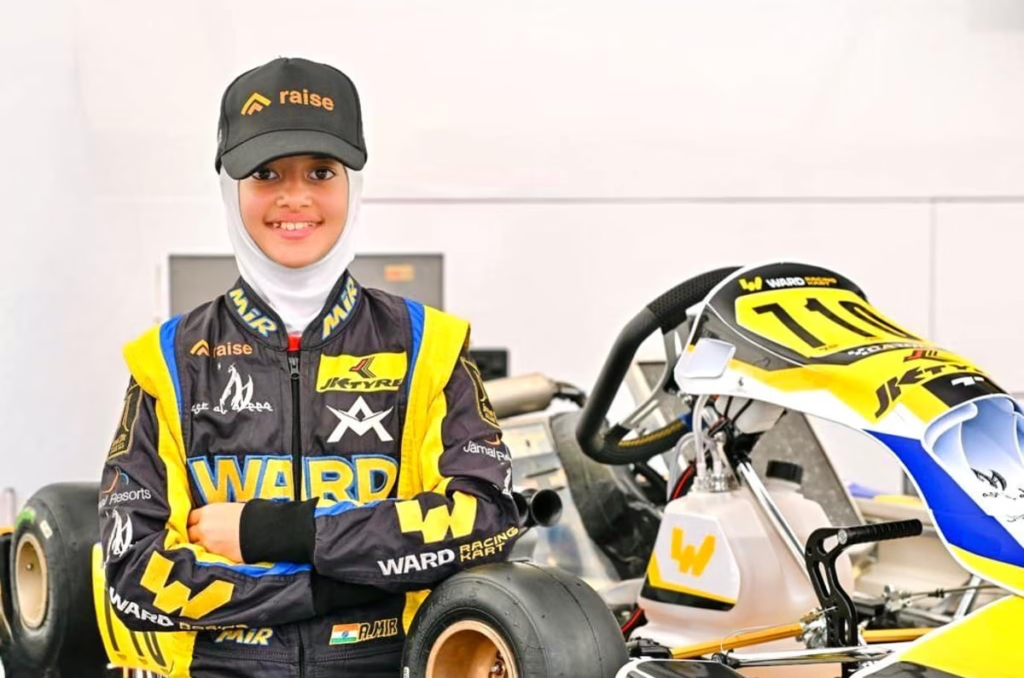
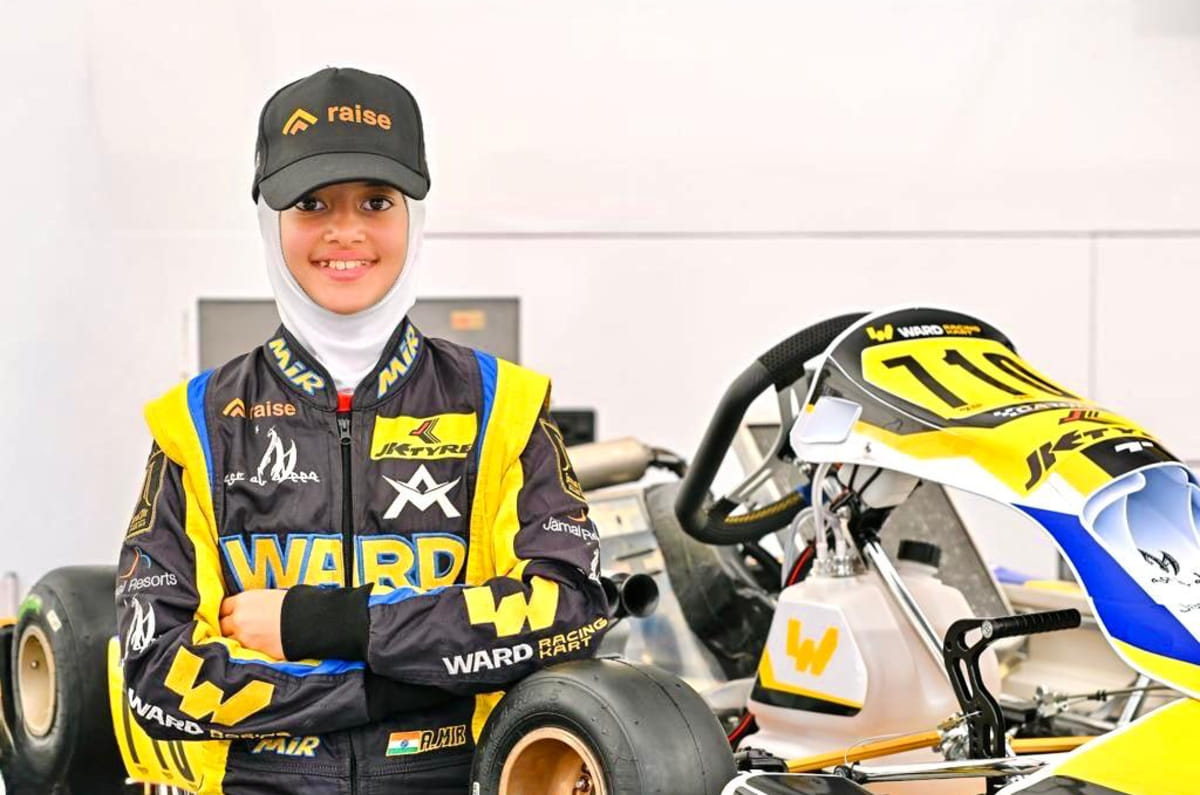
JK Tyre has signed 11-year-old Atiqa Mir as part of its driver development programme.
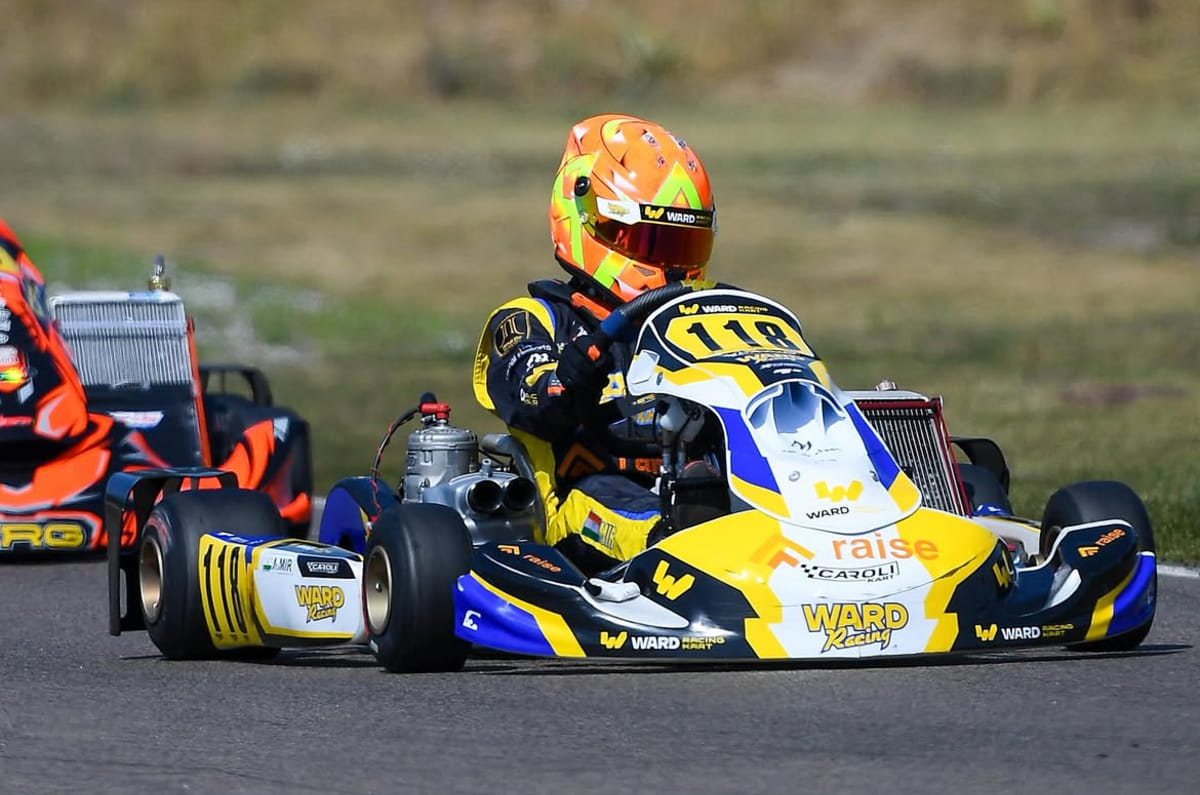
Over the past few years, Mir has emerged as one of India’s most promising young talents in the international karting scene. She’s currently competing in the WSK Final Cup karting series, with Round 1 underway at Italy’s Franciacorta Karting Track.
Mir is currently racing in the WSK Final Cup karting series
Top ranked female racer in the FIA International Karting’s OK N Junior class
JK Tyre signs Atiqa Mir
JK Tyre has been a key pillar of the motorsport community in India, especially with its national racing and karting championships. The company’s played a pivotal role in the junior careers of several prominent racers, including Narain Karthikeyan, Karun Chandhok and Kush Maini.
Its latest recruit, Atiqa Mir, has already made headlines through her achievements in various karting championships in Europe and the Middle East. Earlier this year, she became the first Indian to secure a podium in the European leg of the Champions of the Future Academy, before going on to deliver a dominant victory in Greece. She’s currently the top ranked female racer in the FIA International Karting’s OK N Junior class for drivers up to 14 years old.
At just nine years old, Mir was shortlisted for the Iron Dames Young Talents programme. Since then, she’s also become the first Indian and Asian racer selected for the F1 Academy’s Discover Your Drive programme.
“At JK Tyre, nurturing young talent has always been at the heart of our motorsport journey. Atiqa represents the next generation of Indian racing, and we are delighted to support her as she pursues excellence on the global stage. Her association also reflects our continued commitment to encouraging greater participation of women in motorsport and inspiring young girls to take up the sport,” said Anshuman Singhania, Managing Director, JK Tyre & Industries.
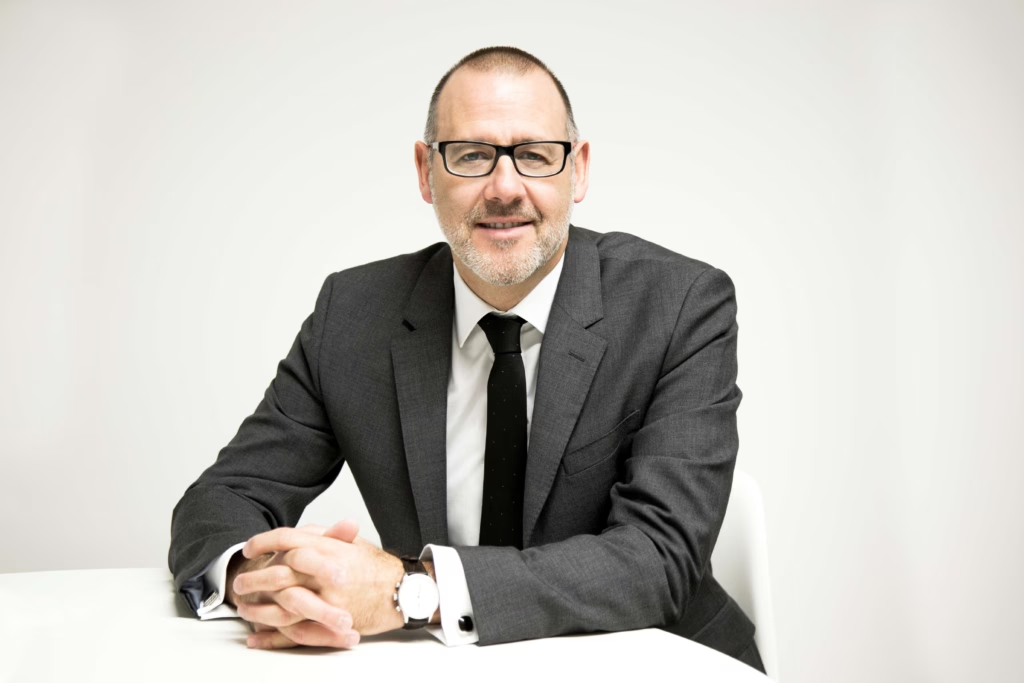
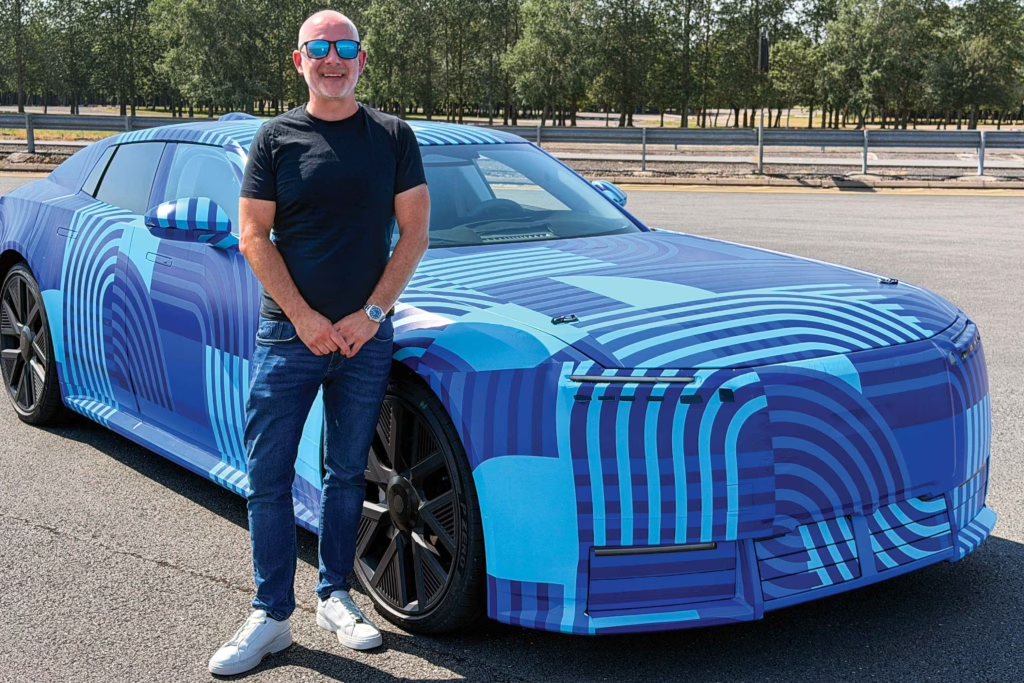
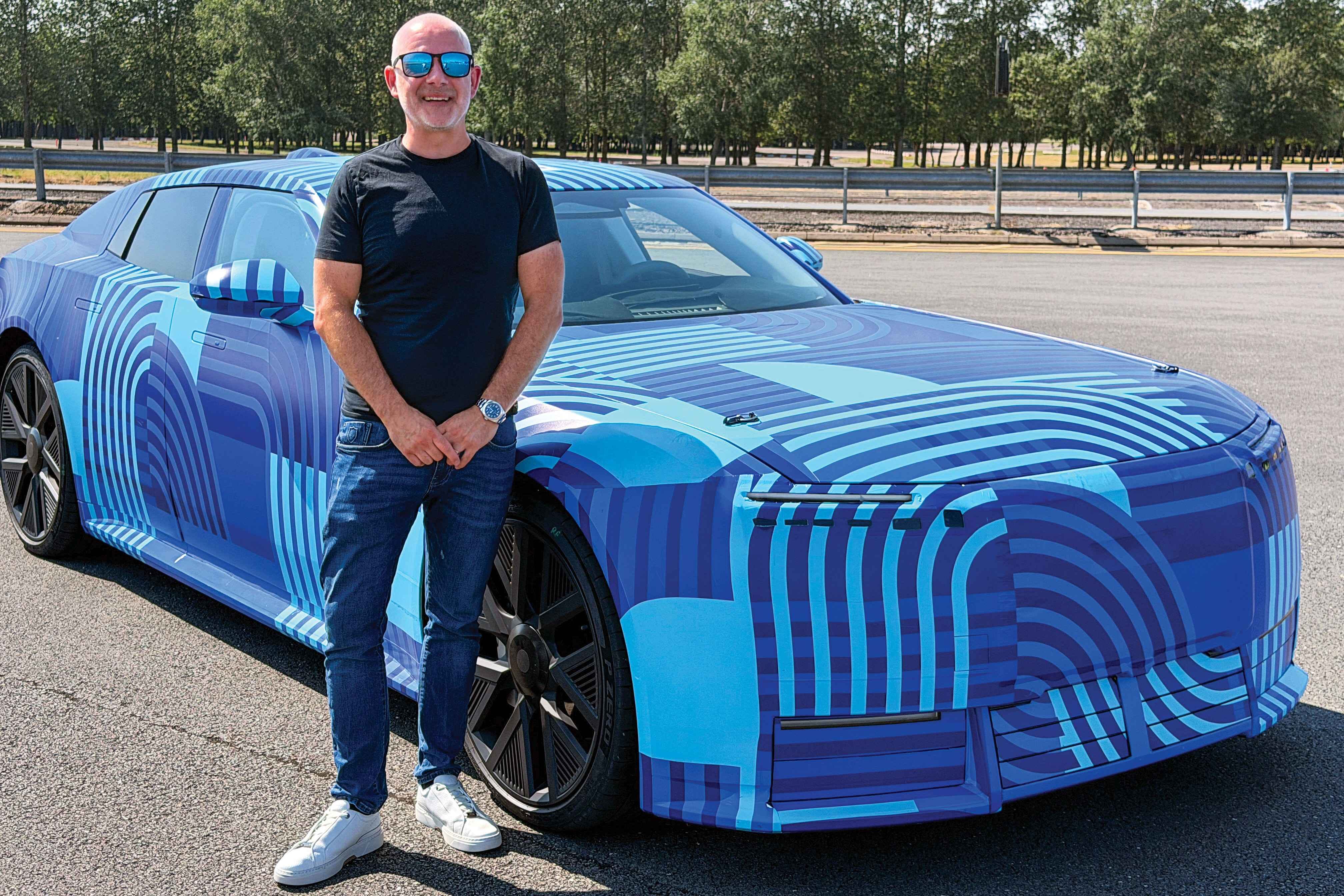
Rawdon Glover has worked with the JLR group for over thirteen years and took charge as Managing Director three years ago. From the sidelines of our first drive with the Jaguar Type 01, we speak to Glover, who tells us about Jaguar’s new direction, taking risky decisions, core markets and upcoming products.
Why the major shift in the positioning of Jaguar?
Putting Jaguar back on a firm footing for the next 90 years is the main job. And if you look at the task, it’s brand management where sometimes you need small incremental changes. But if you look at today’s technical changes, competitive context, how the brand was performing globally and a host of factors, what was called for was a big shift. That requires you to be bold and confident.
Why go for a radical and polarising design?
We’re ok with polarising. If you look at our history, it was bold evolutions, for example the XJS, the spiritual successor to the E-Type. It would have been easy to say let’s just make a modern example of the E-Type, but that’s not what we did, and if you look back at reviews, it was applauded for its dynamics and refinement, but the design was seen as polarising. Now it’s a design icon. So, I’d rather have four out of ten absolutely love the car, rather than have everyone go – yeah, it’s ok.
Isn’t going all-electric a massively risky move?
The EV landscape is evolving rapidly, many new brands are coming in, and I believe one will crack the EV glass ceiling, so why not Jaguar? So we ripped up the EV rulebook because, in the luxury space, it wasn’t working. So it’s not designed as an EV without an engine and a really cab-forward layout. But it’s about presence and performance, and to deliver the level of performance and refinement, electric is best.
Would the car sit above the XJ in terms of price? All of the vehicles coming off this platform would be between GBP 1,20,000 and GBP 1,50,000. We see a white space at the top end of the premium segment, but underneath established luxury players. That’s where we want to be, and with this vehicle what you get is the stature, the presence, the drama of those uber-luxury brands at the top end of the premium price point.
What are the core markets, and how does India figure in the plan?
We used to sell in 130 markets, but we’ll narrow this to just eight or nine, with 85 percent of the volume. North America will remain a large part, China will become important, and the UK, Germany and some Nordics, where they have really embraced EVs, will be the mainstay. Then in markets like the Middle East and India, which have been small, we think we can really break into them now. The retail would, of course, still be through the existing JLR network.
FTAs do not favour EVs, so is the 01 capable of being locally assembled?
Manufacturing this outside of the UK is not currently in the plan. All production will be built out of Solihull, so all exports to other markets will be CBUs, but that doesn’t rule out local production outside UK. As you know, the geopolitical situation is so fluid at the moment, but in time we could consider production elsewhere.
Is there a more chauffeur-driven offering from Jaguar coming?
The 01 is unashamedly driver-focussed, it has four comfortable seats, but it’s a four-door GT, not a four-door sedan designed as a luxury chauffeur-driven car. There will be other vehicles off this platform that will share the same design language, but will have a distinct personality and target different groups, and they would be accessible to a wider audience. So, yes absolutely, there will be a chauffeur-driven-focused model from Jaguar.
Would an SUV body style be part of the portfolio?
What you shouldn’t expect from us is a high-sided Jaguar that is a Range Rover competitor. We already have the best SUV on the planet, and part of the house of brand’s strategy is to differentiate the brands. All I can say, for now, is that you can expect a variety of vehicles from us, and there will be vehicles slightly higher positioned, but all will drive like a Jaguar.
How has it been working with Tata Motors?
Unwavering is the word. There is nobody more dedicated and passionate about our success than the shareholders, and that’s an incredibly privileged position to be in. It puts a little pressure, but having somebody like PB Balaji come onto our board is great. He’s been on the journey with us, he understands it inside and out, and for him, Jaguar is personal. It’s important to our chairman and even was to Ratan Tata. I was reading stories about Ratan Tata driving about in his father’s XK120, so it’s really important to Tata that Jaguar wins. In all my interactions with the board, there is never talk of tempering ambitions, it’s always, just go for it.
Rawdon Glover has worked with the JLR group for over 13 years and took charge as Managing Director 3 years ago. From the sidelines of our first drive with the Jaguar Type 01, we speak to Glover, who tells us about Jaguar’s new direction, taking risky decisions, core markets and upcoming products.
Why the major shift in the positioning of Jaguar?
Putting Jaguar back on a firm footing for the next 90 years is the main job. And if you look at the task, it’s brand management where sometimes you need small incremental changes. But if you look at today’s technical changes, competitive context, how the brand was performing globally and a host of factors, what was called for was a big shift. That requires you to be bold and confident.
Why go for a radical and polarising design?
We’re ok with polarising. If you look at our history, it was bold evolutions, for example the XJS, the spiritual successor to the E-Type. It would have been easy to say let’s just make a modern example of the E-Type, but that’s not what we did, and if you look back at reviews, it was applauded for its dynamics and refinement, but the design was seen as polarising. Now it’s a design icon. So, I’d rather have four out of ten absolutely love the car, rather than have everyone go – yeah, it’s ok.
Isn’t going all-electric a massively risky move?
The EV landscape is evolving rapidly, many new brands are coming in, and I believe one will crack the EV glass ceiling, so why not Jaguar? So we ripped up the EV rulebook because, in the luxury space, it wasn’t working. So it’s not designed as an EV without an engine and a really cab-forward layout. But it’s about presence and performance, and to deliver the level of performance and refinement, electric is best.
Would the car sit above the XJ in terms of price? All of the vehicles coming off this platform would be between GBP 1,20,000 and GBP 1,50,000. We see a white space at the top end of the premium segment, but underneath established luxury players. That’s where we want to be, and with this vehicle what you get is the stature, the presence, the drama of those uber-luxury brands at the top end of the premium price point.
What are the core markets, and how does India figure in the plan?
We used to sell in 130 markets, but we’ll narrow this to just eight or nine, with 85 percent of the volume. North America will remain a large part, China will become important, and the UK, Germany and some Nordics, where they have really embraced EVs, will be the mainstay. Then in markets like the Middle East and India, which have been small, we think we can really break into them now. The retail would, of course, still be through the existing JLR network.
FTAs do not favour EVs, so is the 01 capable of being locally assembled?
Manufacturing this outside of the UK is not currently in the plan. All production will be built out of Solihull, so all exports to other markets will be CBUs, but that doesn’t rule out local production outside UK. As you know, the geopolitical situation is so fluid at the moment, but in time we could consider production elsewhere.
Is there a more chauffeur-driven offering from Jaguar coming?
The 01 is unashamedly driver-focussed, it has four comfortable seats, but it’s a four-door GT, not a four-door sedan designed as a luxury chauffeur-driven car. There will be other vehicles off this platform that will share the same design language, but will have a distinct personality and target different groups, and they would be accessible to a wider audience. So, yes absolutely, there will be a chauffeur-driven-focused model from Jaguar.
Would an SUV body style be part of the portfolio?
What you shouldn’t expect from us is a high-sided Jaguar that is a Range Rover competitor. We already have the best SUV on the planet, and part of the house of brand’s strategy is to differentiate the brands. All I can say, for now, is that you can expect a variety of vehicles from us, and there will be vehicles slightly higher positioned, but all will drive like a Jaguar.
How has it been working with Tata Motors?
Unwavering is the word. There is nobody more dedicated and passionate about our success than the shareholders, and that’s an incredibly privileged position to be in. It puts a little pressure, but having somebody like PB Balaji come onto our board is great. He’s been on the journey with us, he understands it inside and out, and for him, Jaguar is personal. It’s important to our chairman and even was to Ratan Tata. I was reading stories about Ratan Tata driving about in his father’s XK120, so it’s really important to Tata that Jaguar wins. In all my interactions with the board, there is never talk of tempering ambitions, it’s always, just go for it.
Volkswagen is preparing for a much bigger push in India, with the company reviewing its broader product, powertrain and investment plans. While a locally produced compact SUV has already been confirmed for launch next year and is expected to drive volumes, the brand is also looking at the India-EU free trade agreement (FTA) as an opportunity to bring select niche models from its global portfolio here.
“FTA has been announced in Europe. It is a huge opportunity to bring a certain sort of niche models to widen the portfolio for the consumer to offer some exciting models every now and then, which is great,” Member of the Board of Management of Volkswagen AG and CEO of Volkswagen Brand Thomas Schafer told us. He did not reveal which models could be on the cards, but said the company is taking a long-term view and will study market conditions over the next few months before making a decision.
VW’s renewed focus for India
Schafer’s India visit comes as Volkswagen reviews its global business strategy amid geopolitical tensions, changing trade policies and a growing move towards regional manufacturing. “So, globally, we see almost like a decoupling. You have a geopolitical situation and the old business model where everything’s focused on Europe, and then you export to other markets is long gone. At the same time, you have a very different dynamic in China than in the US, which is putting import duties on Europe under certain attacks. So, in that game, you have to change your business model; you have to adapt it. And that’s what we’re busy doing,” he added.
This shift could benefit India. Along with the growing domestic market, Volkswagen sees India as an important hub for engineering, IT and R&D. “We will focus a lot on India going forward. Not only because the market is exciting and growing and creating more opportunity for the future, but also the sort of knowledge base that you have here in India,” he said.
Volkswagen also sees exports as an important way to build scale out of India. The company already exports vehicles made in the country to more than 40 markets, with Mexico being one of the major markets that imports vehicles from India. “So, exports are an important part of our business, and we will always strengthen that going forward,” he said. For the upcoming compact SUV, export potential could also help boost volumes and strengthen the business case.
More powertrains can be offered at the right time
Volkswagen’s current portfolio comprises cars powered by turbo-petrol engines, even as CNG and diesel remain in demand and EVs are gaining momentum. “So, what is clear is, in the long run, there will be strong electrification, especially also in India…You see it accelerating, probably driven by the conflict in the Middle East and the oil situation,” he said.
At the same time, he clarified that be it flex-fuel, CNG, diesel or EV, the brand has the technology already on sale in certain parts of the world. “We have flex-fuel, super strong in South America for years; we have CNG, diesel and EVs, it’s all there…When it’s the right time to localise it, we will localise it,” Schafer said.
The challenge, he said, is deciding when and how to use each powertrain technology. “The dynamics in India and the market shift have been quite significant even in the last couple of months. So, to be honest, we haven’t concluded our planning on that, but the good thing is that we have it and we can deploy it if and when it is the right situation,” he stated. Volkswagen is also evaluating its next-generation models and newer platforms, but these plans are still under consideration.
Cost remains a major hurdle for VW in India
Cost has been one of Volkswagen’s biggest challenges in India. Schafer said the company has spent the past few years working on two key areas: ensuring that its products retain the core characteristics of the Volkswagen brand while simultaneously reducing the cost base. “We worked over the last four years very focused on the cars that we bring to the market now are through and through Volkswagen in terms of quality, brand fit. And, yes, our cost base is traditionally high because we are very much focused on Europe and especially Germany,” he added.
India, he said, will play an important role in Volkswagen’s efforts to reduce costs, especially through more cost-effective development and manufacturing. “Part of the programs that’s been in the media over the last, especially two years, has been reducing our cost base, developing more in more cost-efficient places like in India very much, but also shifting production from high-cost locations into lower-cost locations,” he said.
Volkswagen is now working on its next set of products, investment plans and powertrain options for India. With India becoming an increasingly important part of its global strategy, there is plenty to look forward to from the brand in the coming years.