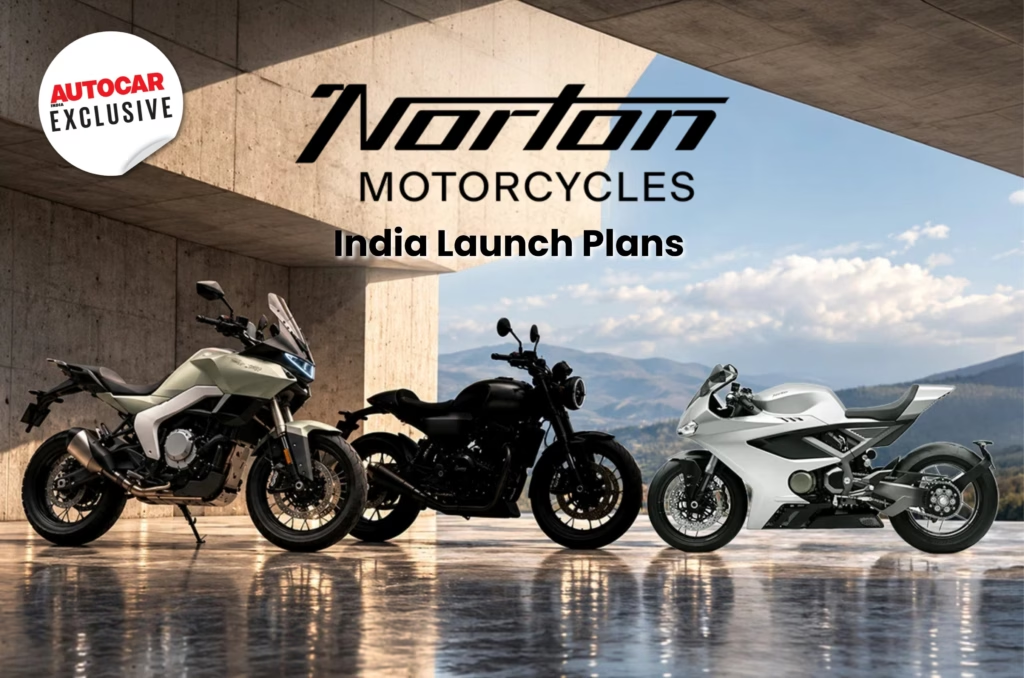
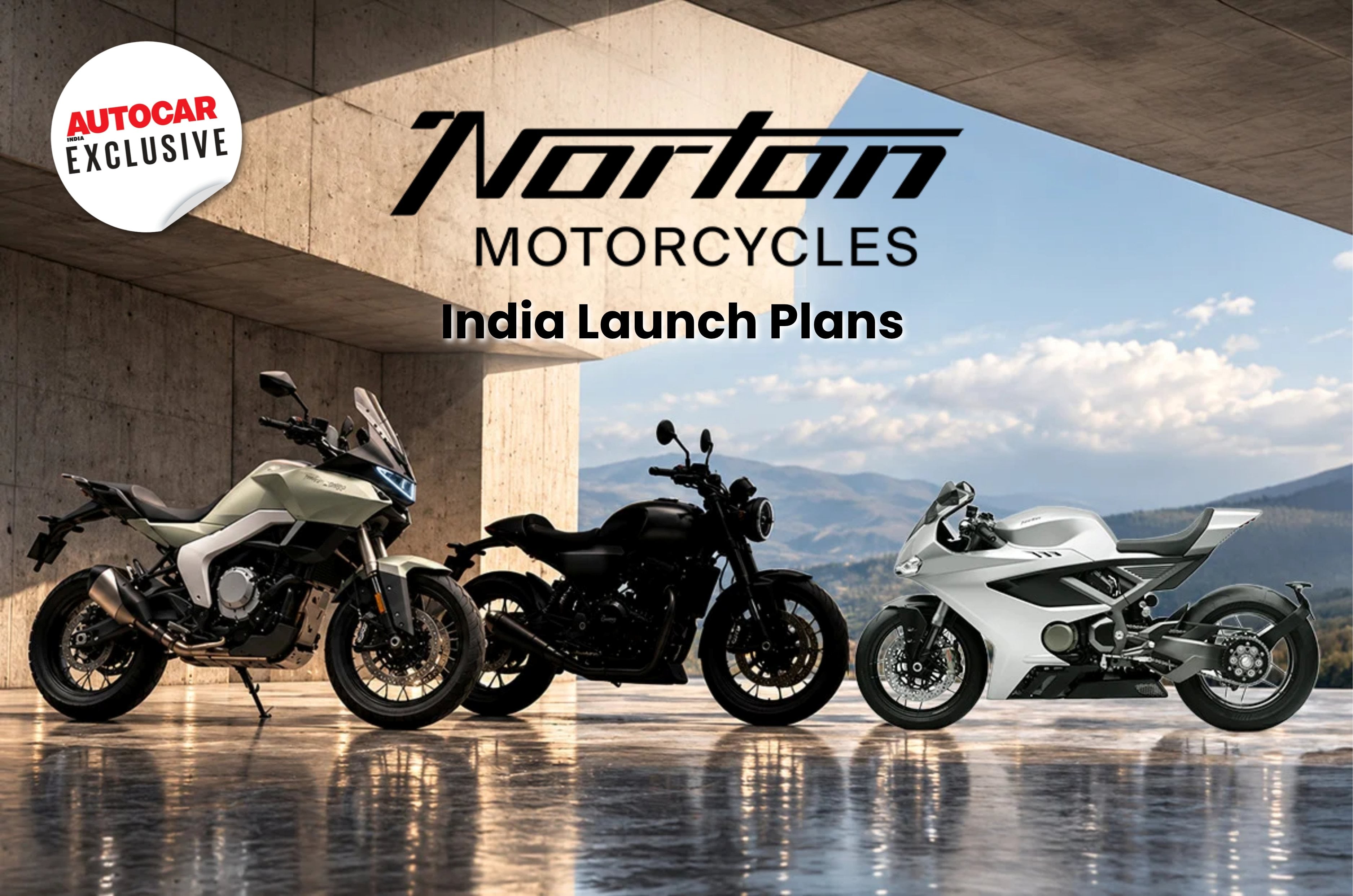
We first rode the Norton Manx R superbike overseas in May and this was followed by the Atlas adventure bike in July. At the time in June, TVS had said that the Atlas would be introduced in India later in the year. It had also scheduled the launch of TVS Paddock, its premium retail channel, for the second quarter of FY27. Paddock will serve as the retail outlet for both Norton products as well as select TVS premium vehicles across the country.
Norton motorcycles will be retailed out of a few exclusive Norton outlets as well as a new TVS Paddock dealer network
Three paddock outlets will be set up by December 2026
Norton line-up will be initiated with the Atlas, followed by Manx R and the new single-cylinder motorcycle
Norton’s reach in Europe, US and India
Indian dealer network still being established
We recently reported on the company’s new 450cc class liquid cooled single cylinder roadster making its debut at ECMA 2026. In its official response to our queries sent, a company spokesperson said, “Norton is set to launch in India soon following the brand’s presence at EICMA this year, when the next key stage of the resurgence will be revealed”.
However, the company did not provide an updated Paddock rollout schedule. Current preparations are understood to point to around three Paddock outlets by December, although a larger network is being sought. The number of outlets that will be operational when motorcycle sales begin has yet to be finalised. Under the tentative India rollout plan, the Atlas could launch in January 2027, with the Manx following by March if that schedule holds. The sequence could see Norton introduce three to four products during 2027, although the final model mix and launch dates have not been announced. As for the new single cylinder roadster, that bike is likely to be launched in India alongside overseas markets in the second half of next year.
While Norton’s India innings is yet to begin, the company spokesperson says that the Manx R and Atlas launched earlier this year are being delivered to customers across Europe. The naked Manx and road-biased Atlas GT have not yet been formally launched. The company said it now has more than 50 retailers across 10 markets, including the UK, Italy, France, Germany and Spain. Preparations for a United States launch are continuing, subject to the final stages of vehicle certification.
“As Norton continues to build the brand globally, it is important to ensure that Norton’s entry into India is equally meaningful and thoughtfully executed,” the spokesperson said. “The positive response to Norton’s products in Europe gives us confidence, and more on Norton’s India plans will be shared in due course.”
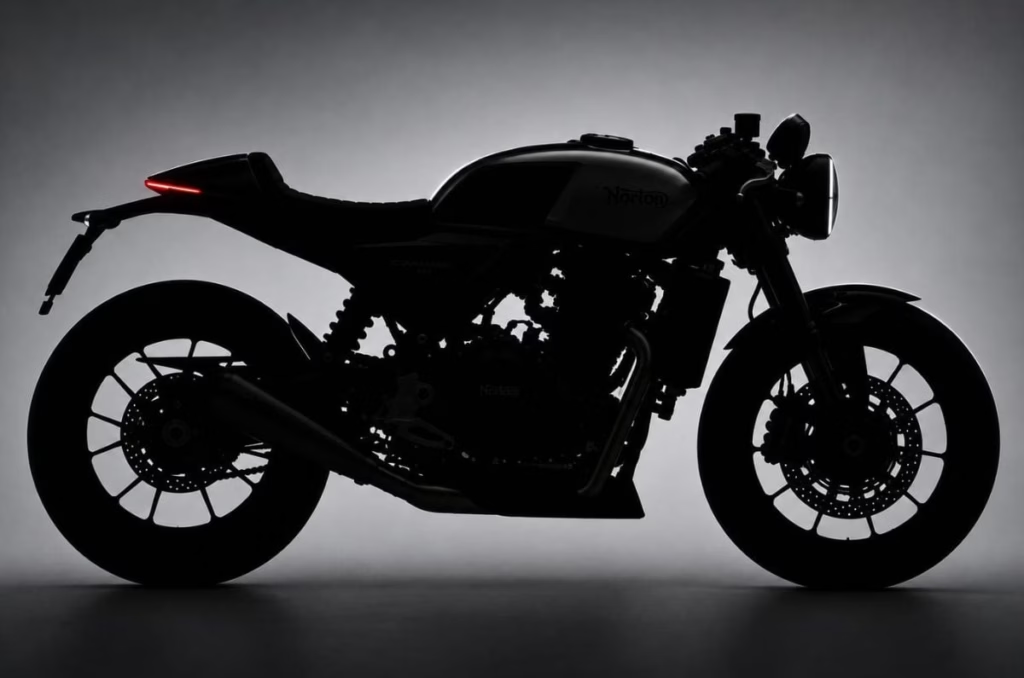
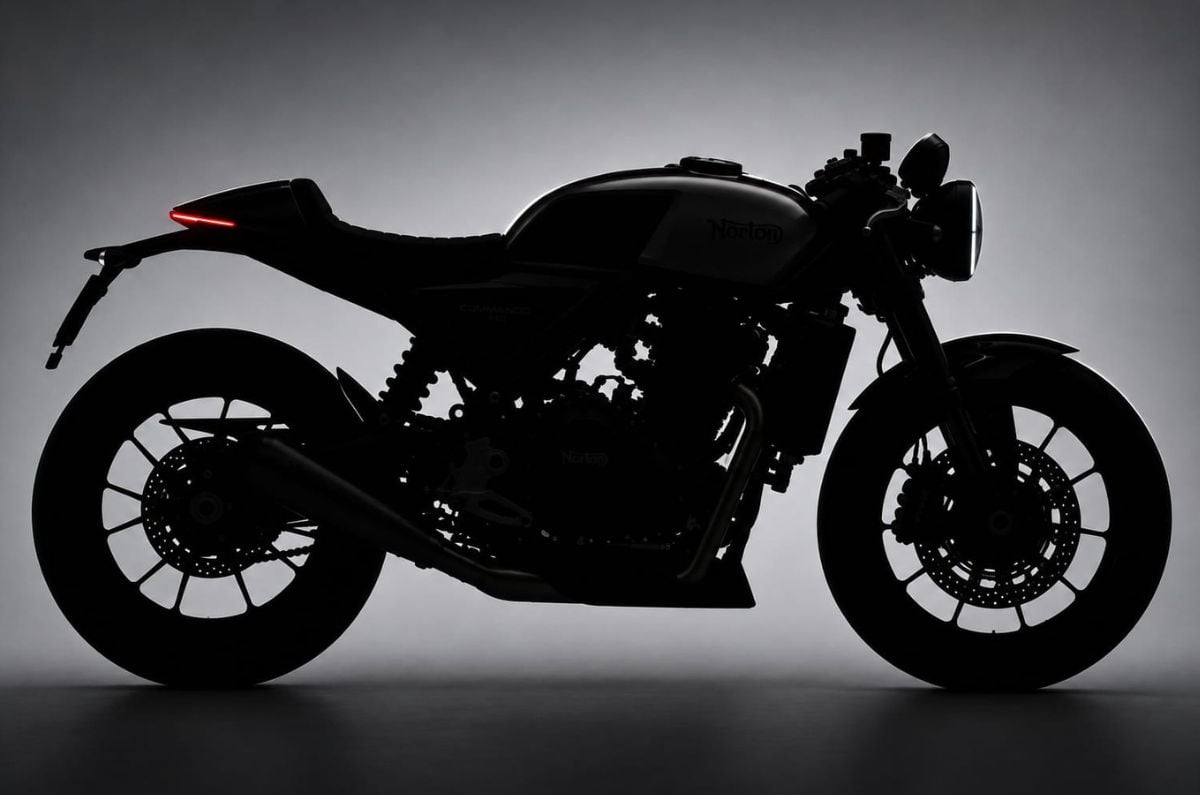
Norton Motorcycles will premiere its much-awaited 450cc-class single-cylinder roadster at EICMA 2026 in Milan, expanding its range with a motorcycle aimed at higher volumes in India and overseas. Autocar Professional expects the motorcycle to produce around 40-45hp and 40-45Nm. The engine is likely to be liquid-cooled and is expected to come with a 6-speed gearbox. The roadster will be the first model on a new platform understood to be called the H-series, with other body styles to follow. It will sit below the TVS Motor-owned British marque’s twin-cylinder Atlas range and V4-powered Manx family.
Norton Atlas is expected to first launch in India, in Q1 2027
New Norton single-cylinder motorcycle will launch overseas and in India simultaneously
Will also be manufactured at TVS’ Hosur plant
New Norton single-cylinder platform at EICMA 2026
Expected to launch in India and overseas in 2027
Autocar Professional understands that TVS plans to begin Norton’s India rollout in the January-March 2027 quarter, if not sooner, starting with the Atlas, followed by the Manx. The H-series roadster is expected to launch simultaneously in India and global markets in the second half of 2027. Responding to queries from Autocar Professional, a Norton spokesperson said the brand’s India introduction would follow its appearance at this year’s Milan show. “Norton is set to launch in India soon following the brand’s presence at EICMA this year, when the next key stage of the resurgence will be revealed,” the spokesperson said. The company has not officially confirmed the roadster’s platform name, engine capacity, output, pricing or sales timeline.
Norton has recently trademarked three names in India – Roven, Inter and Avalon and the first single cylinder bike may bear one of them. In 2025, the company also trademarked the Norton Electra name here, and this followed on the trademarking of the Norton Combat name in 2023.
Reimagined Norton under TVS
Design and ease of use is at the new Norton’s core
Differentiated design is central to TVS’s effort to give Norton a contemporary identity while retaining its British heritage. Simon Skinner, Head of Design, Norton Motorcycles, is leading the development of a design language connecting the brand’s products across capacities and categories. The roadster will extend that approach to a motorcycle intended to sell in larger numbers.
As we have seen with the thoroughly modern designs on the Atlas and V4, it is safe to anticipate modern, pared-back styling, with selected mechanical components exposed and others concealed. This could help distinguish the roadster in a segment where several competitors draw heavily on retro styling. According to Norton, the Manx R received the “Best of the Best” distinction at the 2026 Red Dot Award: Design Concept. Norton Design was also recognised at the 2026 International Design Excellence Awards in the United States.
The roadster is expected to prioritise manageable weight and ease of use, particularly in city riding. It could feature 17-inch wheels and equipment drawn from Norton’s larger motorcycles, potentially including an eight-inch TFT touchscreen, riding aids and multiple riding modes. Final specifications remain unconfirmed.
Taking on Royal Enfield
How does Norton plan to combat the 350cc onslaught?
The platform represents a significant bet on the global mid-size motorcycle market. The opportunity spans roughly the 350cc-750cc categories, with annual volumes estimated at around 15 lakh-20 lakh units. This broad classification includes motorcycles marketed as 350cc models whose actual displacement is slightly lower.
It will bring Norton into closer competition with Royal Enfield and Triumph in India and overseas. However, the new single-cylinder Nortons will face a specific challenge in India. That is the fact that they will not come under the 350cc segment, unlike the massively popular RE 350 range and the recently re-engineered 349cc Triumph line in India. The result is that they will attract the much higher 40 percent GST rate instead of 18 percent. Norton is likely to position these bikes at a premium that will be justified by higher levels of technology and a heavy focus on design, quality and detail.
Royal Enfield’s dominance in India demonstrates the demand for motorcycles used for daily travel, touring and leisure riding. Its extensive dealer network, broad product range and established riding community also present a substantial challenge for Norton. Overseas, Royal Enfield has expanded into many of the markets the TVS-owned British marque is targeting. For TVS, the single-cylinder Norton offers a way to participate more widely in this market. Additional body styles on the same platform would help spread development costs and reach buyers with different riding preferences.
The India distribution plan
TVS is yet to confirm showroom rollout schedule for India
Norton’s design and heritage will form part of its appeal, but pricing, service coverage and parts availability will be important to building sustained sales, particularly in India. TVS had said in June that the Norton Atlas would be introduced in India later in the year. It had also scheduled the launch of TVS Paddock, its premium retail channel for both Norton and select premium TVS products, for the second quarter of FY27. The latest official response did not provide an updated Paddock rollout schedule.
Current preparations are understood to point to around three Paddock outlets by December, although a larger network is being sought. The number of outlets that will be operational when motorcycle sales begin has yet to be finalised. The company said it now has more than 50 retailers across 10 markets, including the UK, Italy, France, Germany and Spain. Preparations for a United States launch are continuing, subject to the final stages of vehicle certification.
Norton said its European test-ride programme had introduced the new motorcycles to thousands of riders. Foster + Partners has designed its showroom environments. TVS acquired Norton in April 2020. Its FY2025-26 annual report records investments exceeding GBP 250 million in rebuilding the business and identifies the marque as an important part of its premium-isation strategy, particularly in developed markets.
India already supports that expansion through manufacturing. The first Atlas motorcycles rolled off TVS’s Hosur production line in June, combining Norton’s UK design and engineering with its parent’s manufacturing operations. Production for the new single-cylinder range will also be out of Hosur.
With inputs from Anurag Chaturvedi and Rishaad Mody.
Spain’s Tamarit Motorcycles has won Triumph Originals 2026 – the British manufacturer’s global custom competition, after securing 33 percent of the public vote and earning the judge panel’s highest score. Its Scrambler 400 XC based build, Miura, impressed both judges and voters with its interpretation of the brief and excellent build quality.
Bringing together custom builders from seven countries (Canada, China, France, Italy, Spain, the UK and the USA), Triumph Originals 2026 required each team to create a 1/1 ‘Time Capsule’ Scrambler inspired by a defining era from the model’s rich history.
Thousands of motorcycle enthusiasts from around the world cast their votes to help decide the winner. The public vote was combined with scores from an international judging panel made up of leading figures from the worlds of motorcycle design, custom building, journalism and heritage, ensuring every entry was assessed on its originality, technical execution and interpretation of the competition’s brief.
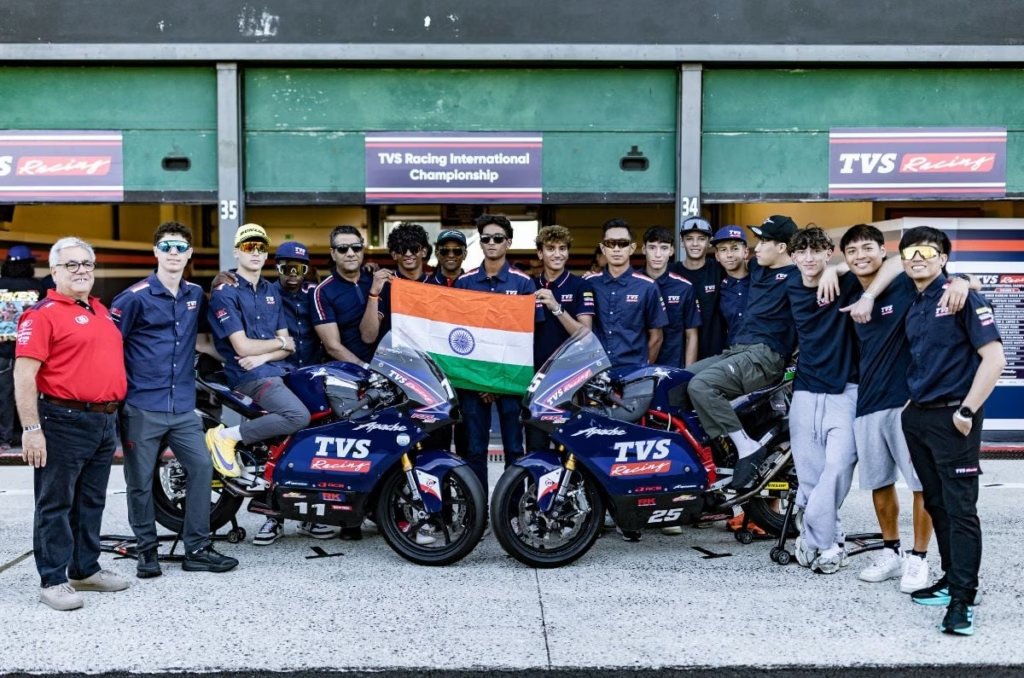
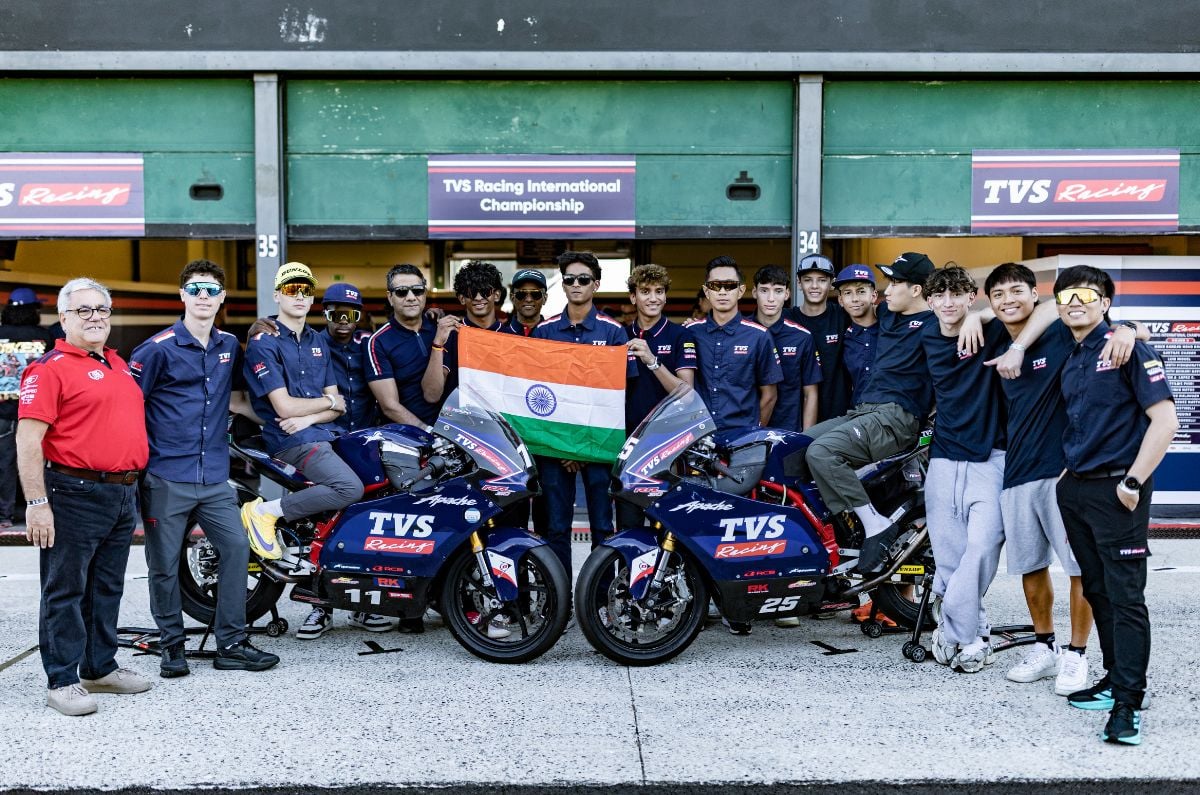
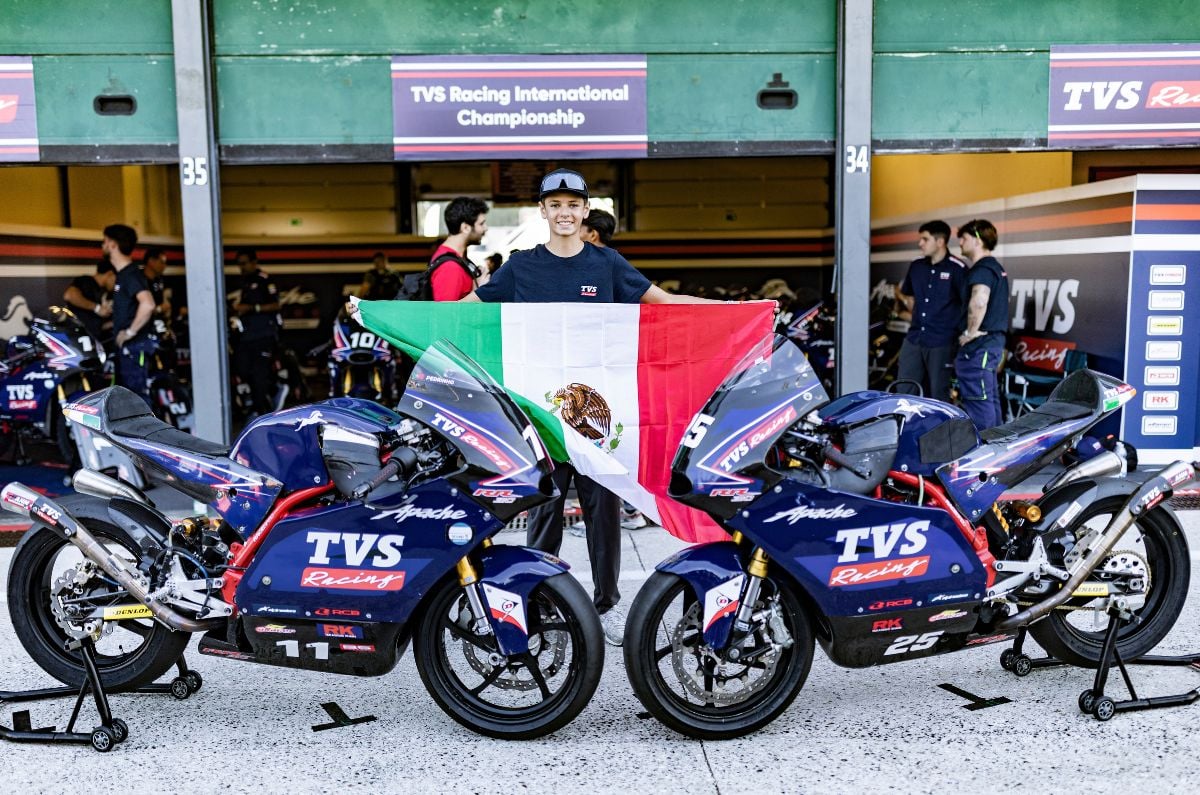
TVS Racing International Championship has gone to a European racetrack for the first time. The second last round of the season unfolded at the Misano World Circuit in Italy, alongside the Coppa Italia racing weekend – which includes superbike races, a Yamaha R7 one-make and an Aprilia RS 457 one-make racing championship.
14 riders competed in the TVS championship during the weekend
Three of the 14 TVS Racing riders were from India
TVS Racing International Championship: First European racing weekend
Italian rider Cristian Borelli takes P1, Sarthak Chavan was the best Indian rider
Racing is hardly new for TVS as the company has had a factory racing program since 1982, starting with the TVS 50 moped. Two of its biggest developments in recent times were the team’s entry into the Asia Road Racing Championship (ARRC) in 2020 and a partnership with Petronas in 2022, which resulted in the creation of TVS Racing One Make Championship in Asia; now known as the TVS Racing International Championship.
However, this is the first time the championship has gone to Europe. In this case, to the Misano World Circuit in Italy. The paddock and the circuit last weekend were shared with Coppa Italia (Italian cup), with 14 riders of the TVS Racing program participating in two races of seven laps each. Three of the fourteen riders were from India, with Sarthak Chavan being the best performer of the three, finishing P7 in the first race, and P6 in the second. The other two Indian riders, Chiranth Vishwanath and Rakshith Srihari Dave finished their races in P10 and P11 in the first; and P8 and P12 in the second, respectively. Sarthak began both races in last after a crash in qualifying. The best overall performer was Italian rider Cristian Borrelli, who finished P1 in both races; the gap between him and Chavan was just 1.973 seconds in the second race.
Cristian Borrelli from Italy won both the races earning a double home victory.
With the previous round three in Motegi, Japan, Malaysian rider Mohd Ramdan Rosli tops the ARRC standings with 101 points. India’s Sarthak Chavan follows him with 80 points. Luis Miguel (Spain) with 54 points, Oratilwe Phiri (Republic of South Africa) also with 54 points, and Chiranth Vishwanath (India) with 49 points follow the two in P3, P4 and P5 respectively. Chiranth won the first of two races conducted in Round 3 with a 0.014 second lead awarding him the win.
The concluded round in Italy was round four and the second last round of the championship, with the last round slated to happen in Buriram, Thailand alongside ARRC. While this was the first time the championship went to an European racetrack, it certainly won’t be the last time. TVS Racing is likely to take the championship out of Asia again next year for at least one round, although exact details are yet to be revealed.
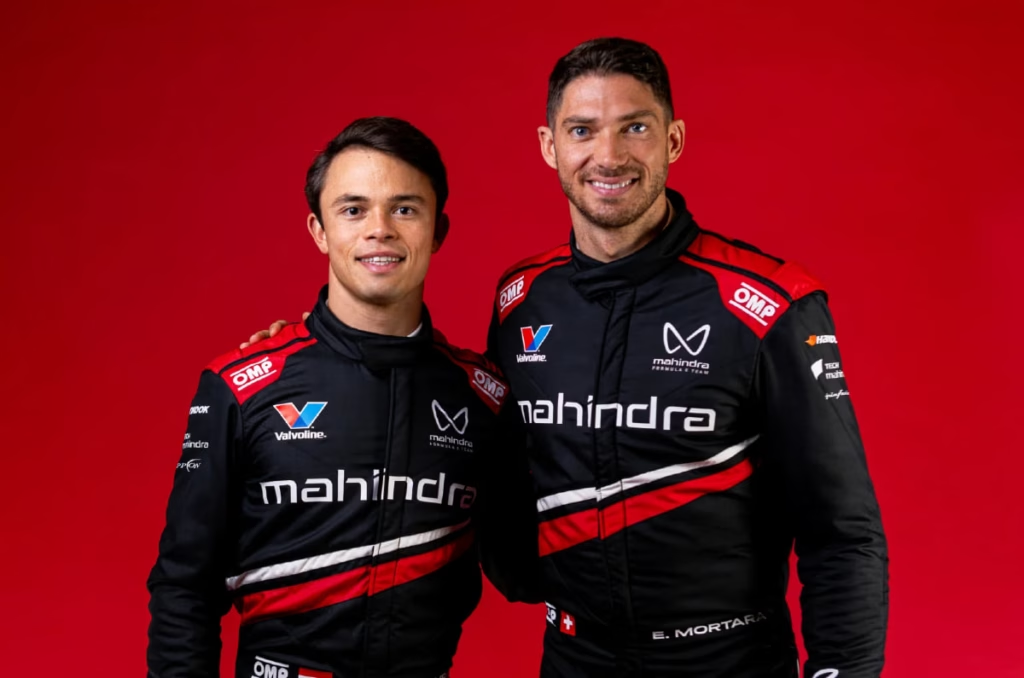
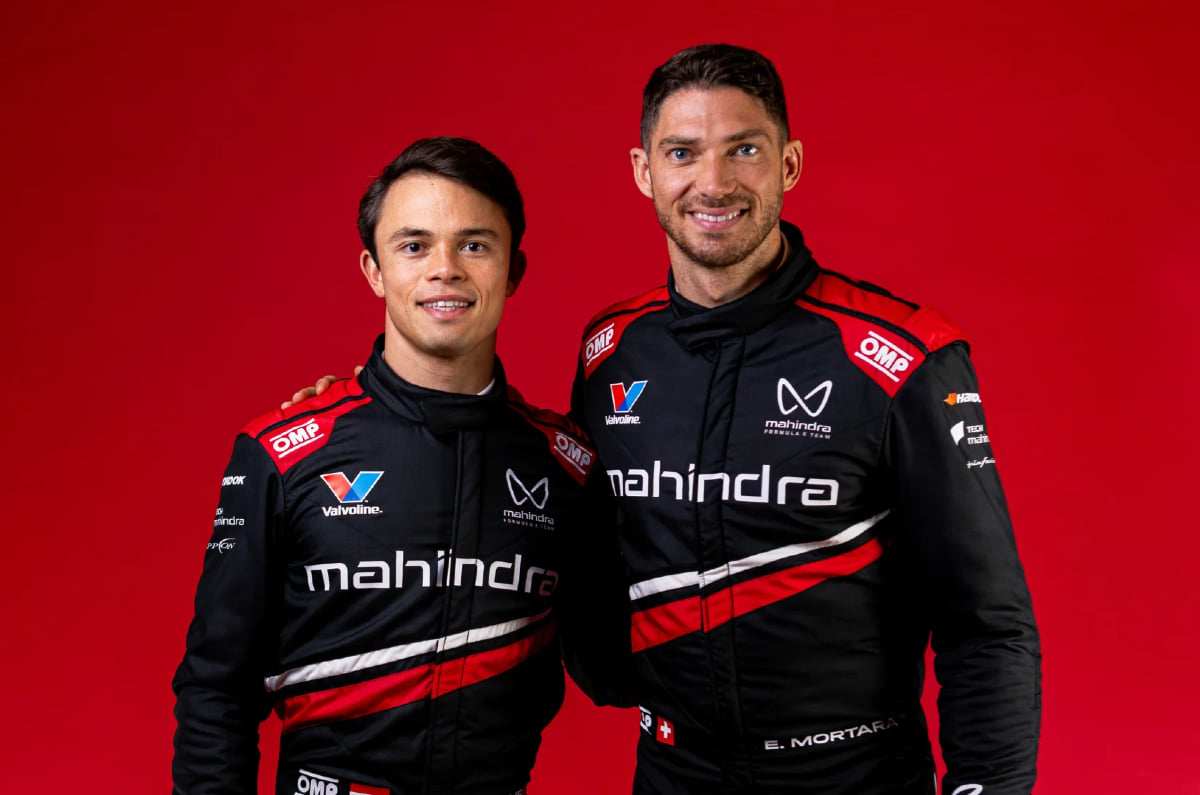
Mahindra Racing has confirmed that both Nyck de Vries and Edoardo Mortara will be staying with the team for the 2026/27 Formula E season.
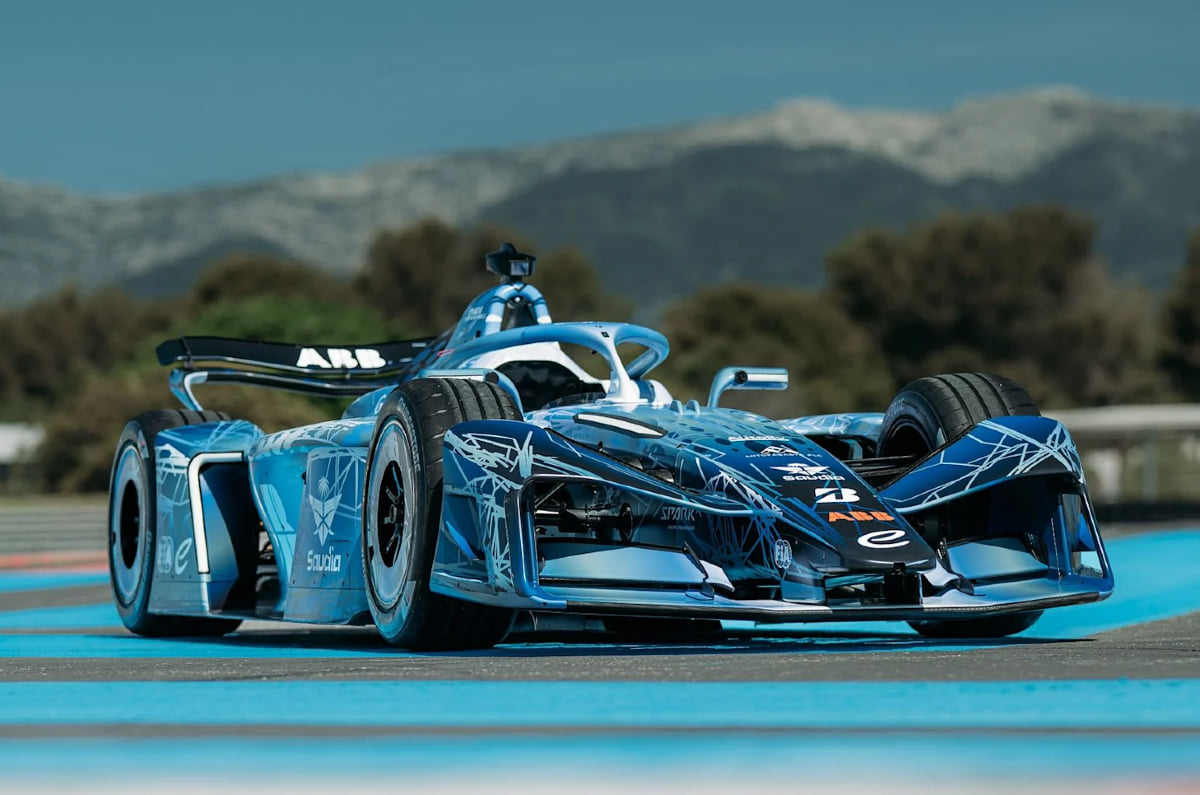
This upcoming season will also kick off a new era for the all-electric championship, with the new Gen4 cars making their debut. Formula E claims this will be the fastest car in the championship’s history with a top speed of over 335kph, 0-100kph time of around 1.8 seconds and an output of up to 816hp (600kW). These new cars will also feature permanent all-wheel drive, along with different aero configurations for qualifying and racing.
Mahindra finished P3 overall last season
2026/27 season kicks off in Jeddah on December 18
Both de Vries and Mortara joined Mahindra in 2023 and have played a pivotal role in the team’s recent Formula E resurgence. Last year, the Indian squad delivered its strongest Formula E campaign to date with a total of 252 points and third place in the teams’ championship, defeating the likes of Andretti, Citroen and Nissan.
“I would like to thank Nyck and Edoardo for continuing this adventure with us as we begin its second chapter. Over the past three seasons, we have built trust, shared reference points and a strong way of working together. That continuity will be important as Formula E enters the Gen4 era,” said Mahindra Racing CEO and team principal.
“Gen4 I would like to thank Nyck and Edoardo for continuing this adventure with us as we begin its second chapter. Over the past three seasons, we have built trust, shared reference points and a strong way of working together. That continuity will be important as Formula E enters the GEN4 era.”
2026/27 Formula E calendar
The 2026/27 Formula E season will kick off with a double-header round in Jeddah on December 18-19. Before that, pre-season testing will take place at Spain’s Jarama circuit on November 16-20.
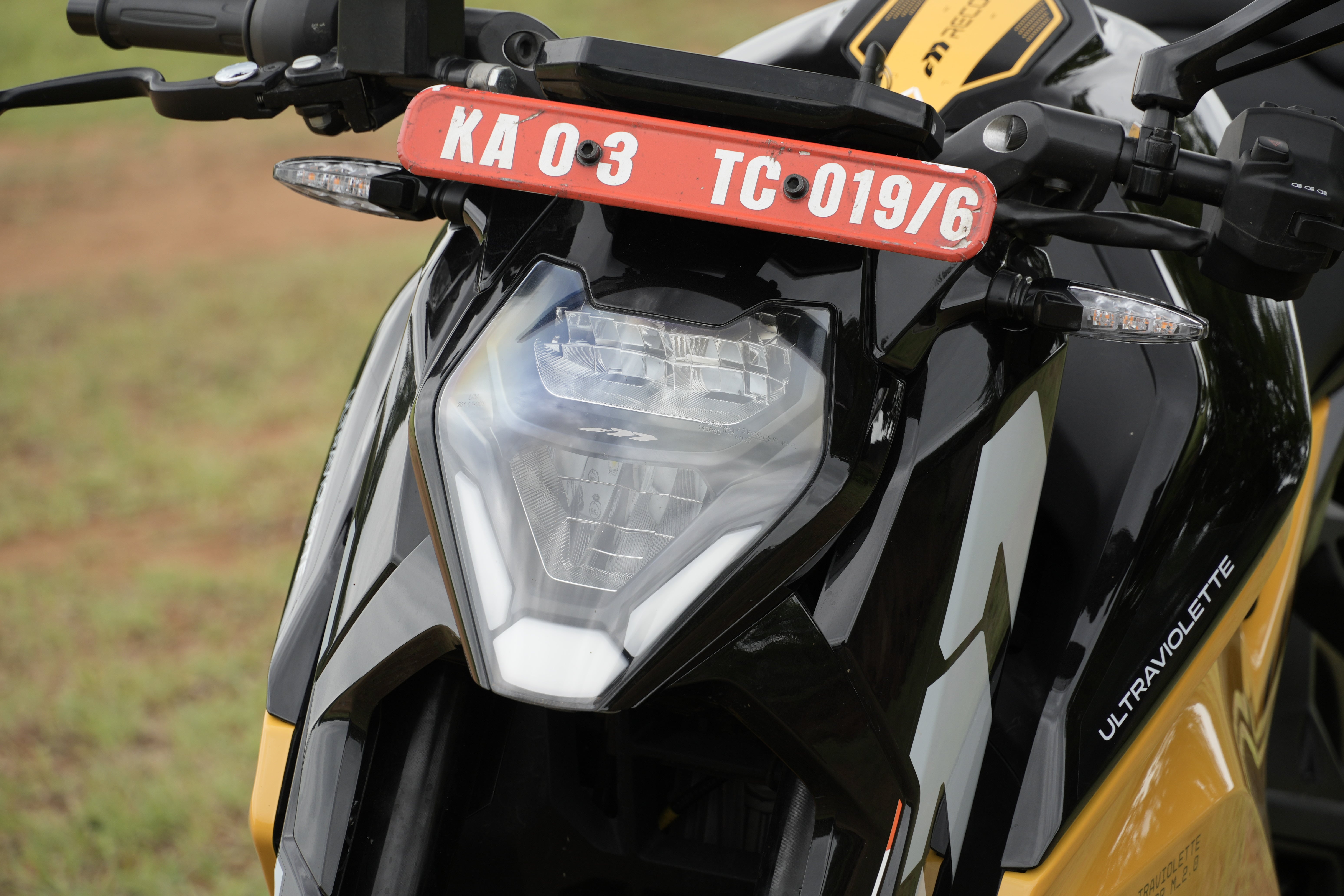
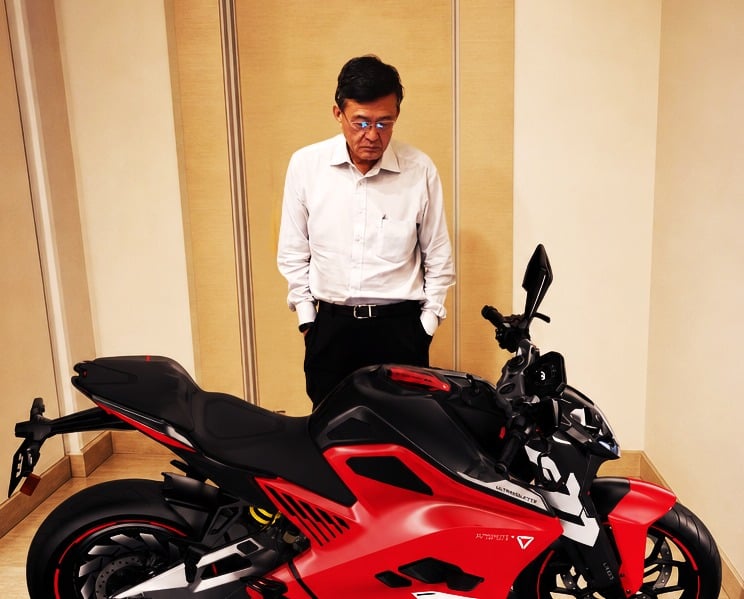
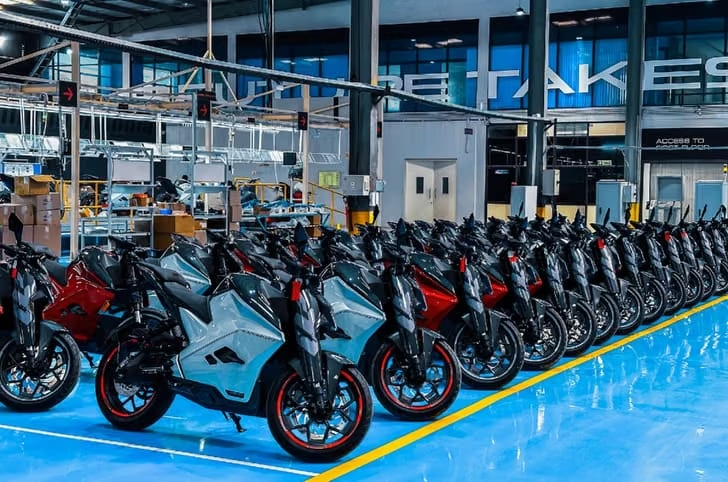
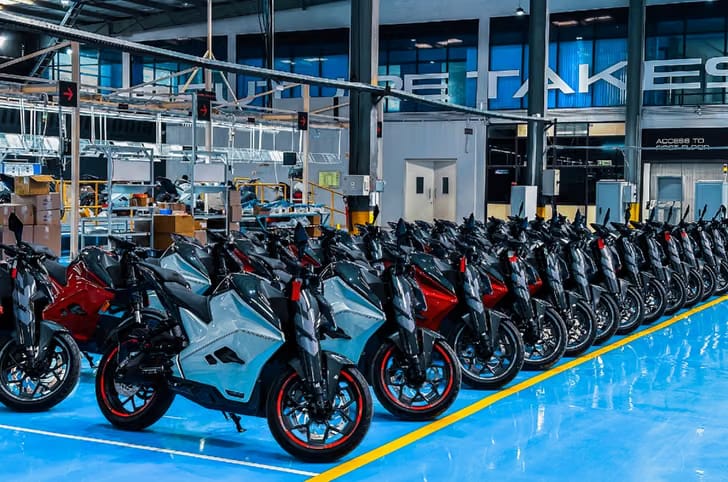
Bengaluru based EV manufacturer, Ultraviolettehad recently announced plans for a new manufacturing facility in Hosur, to increase production capacity up to 5 lakh units a year. The company has now received USD 85 million in a new funding round. The additional capital and the new factory is expected to boost the manufacturing of its current products, the F77 (Mach 2 and Superstreet), X-47, and development of upcoming platforms and products.
The USD 85 million funding was led by Deep Tech Fund Yali Capital and TDK Ventures
New Hosur plant expected to increase production capacity up to 5 lakh units a year
Ultraviolette currently has the means to build battery architecture ranging from 48V to 400V
Ultraviolette plans expansion in India and abroad
Four new products and US entry planned for next year
Currently, Ultraviolette operates in India and 20 European countries. With the fresh round of investment, the company has targeted an US market entry next year, alongside key markets in Latin America and Southeast Asia. The USD 85 million funding round was led by Deep Tech Fund Yali Capital and TDK Ventures and investment from Lip-Bu Tan, Chief Executive Officer of Intel, Chairman of Walden International and Advisor to Ultraviolette, alongside the company’s current and long-term investors. UV says the new and continued support from the investors will help scale production of its current portfolio as well as upcoming products.
The investment will also help with the development of UV’s next generation of models. The company currently boasts technical capabilities to build battery architecture spanning 48V to 400V which it says allows for engineering platforms catering to different needs. Its current list of investors include Zoho Corporation, TVS Motors, and Qualcomm Ventures. Besides India, UV currently operates across Europe including Germany, France, Spain, Portugal, the UK, Belgium, Netherlands, Italy, Switzerland and Hungary.
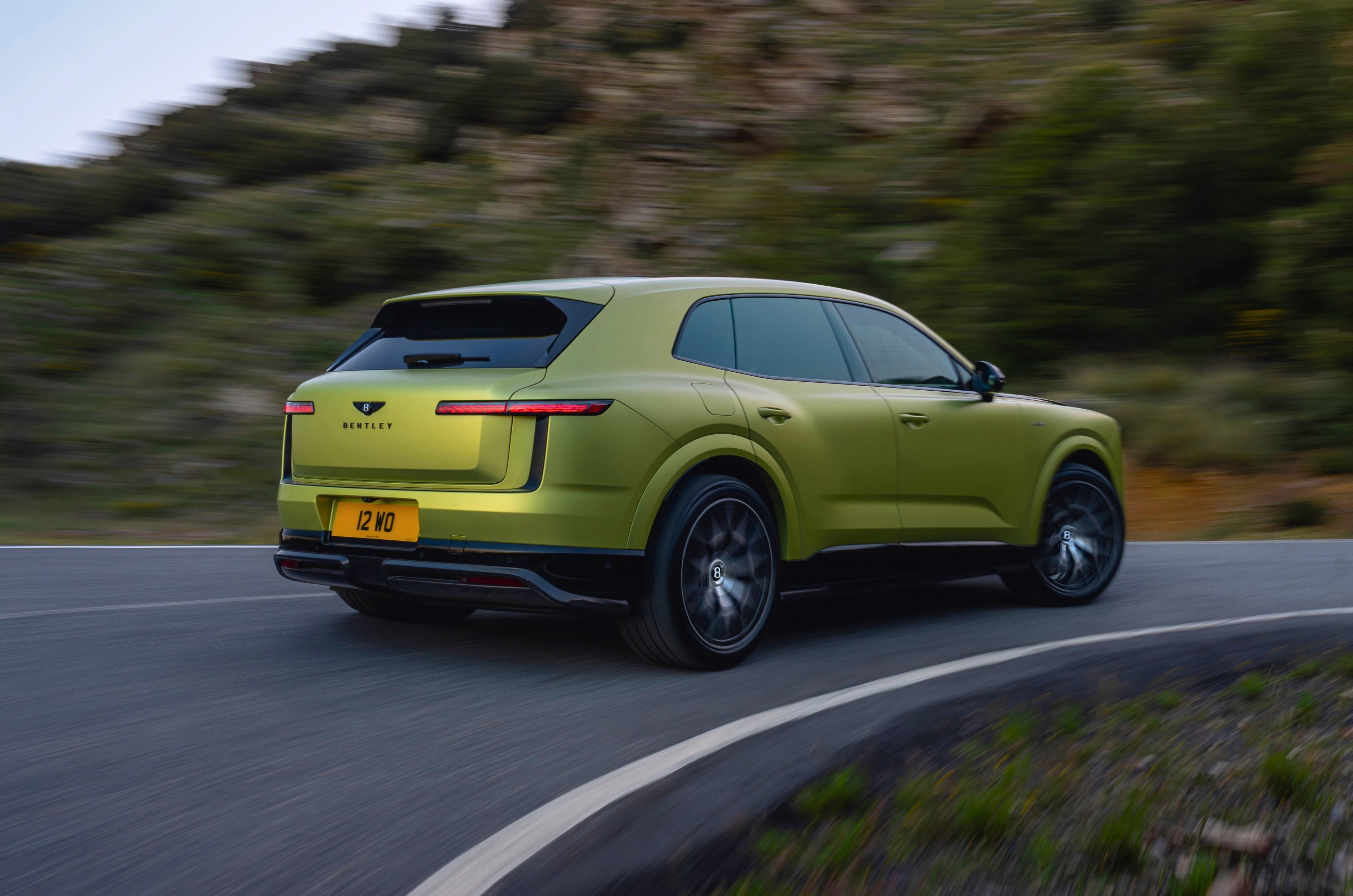
For 107 years, Bentley has been defined by what sits under the bonnet: supercharged Blowers, mighty W12s and thundering V8s. The Torcal has none of that. It’s Bentley’s fourth model line and its first electric car. It slots in below the Bentayga, and it will never get a petrol engine. Bentley also calls it the template for every Bentley that follows, whatever the powertrain.
Like many modern Bentleys, the Torcal is named after a natural wonder. El Torcal de Antequera is a dramatic landscape of weathered limestone in southern Spain. The car is also the first Bentley to wear the brand’s redesigned, modernised emblem, which was revealed last year. That leaves one question that matters. Take away the engine, and is it still a Bentley? We haven’t driven it yet, so the full answer will have to wait. After a close look at the First Edition, the fully loaded launch car, there’s plenty to go on.
Bentley Torcal exterior design: light is the new chrome
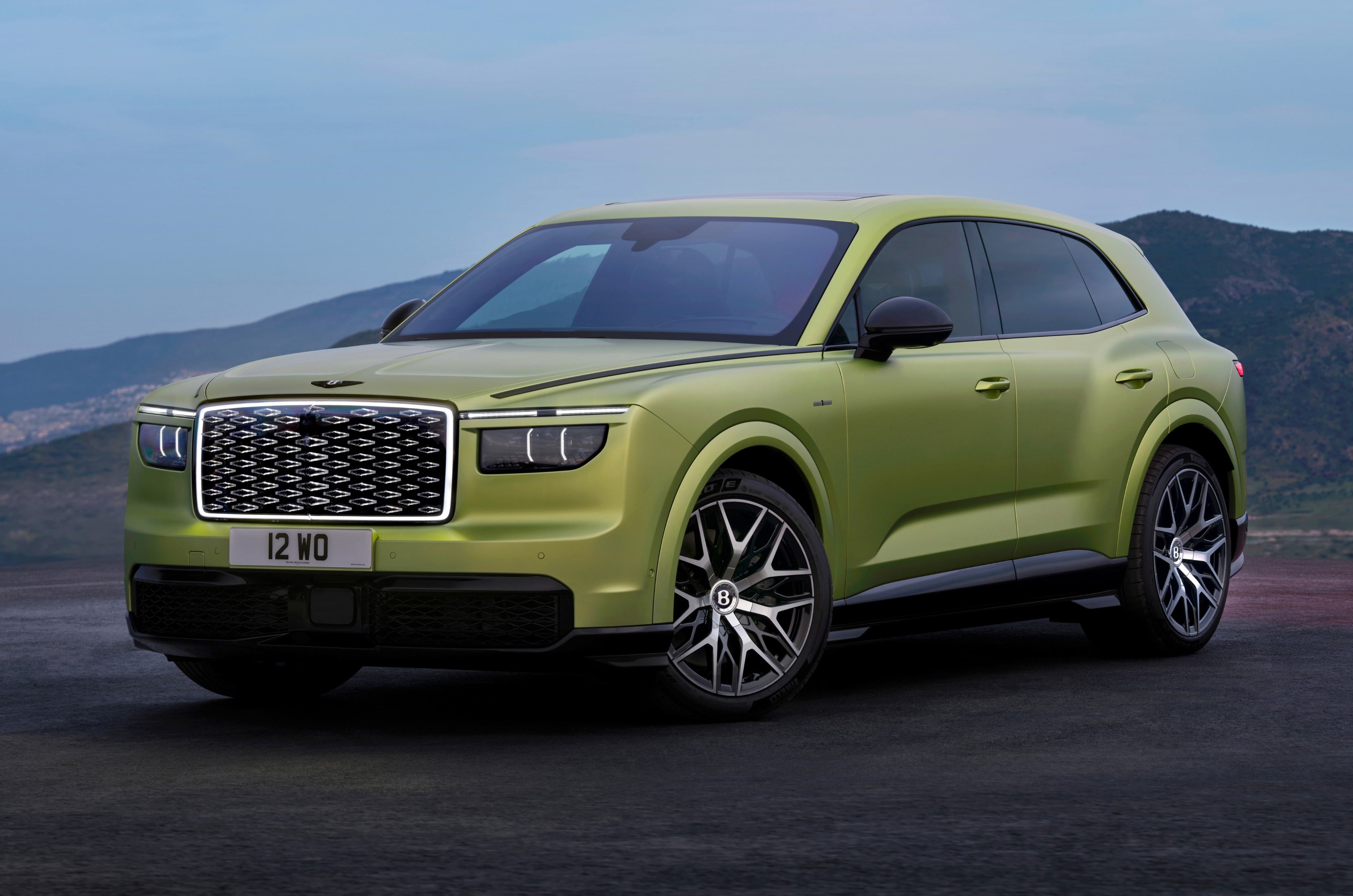
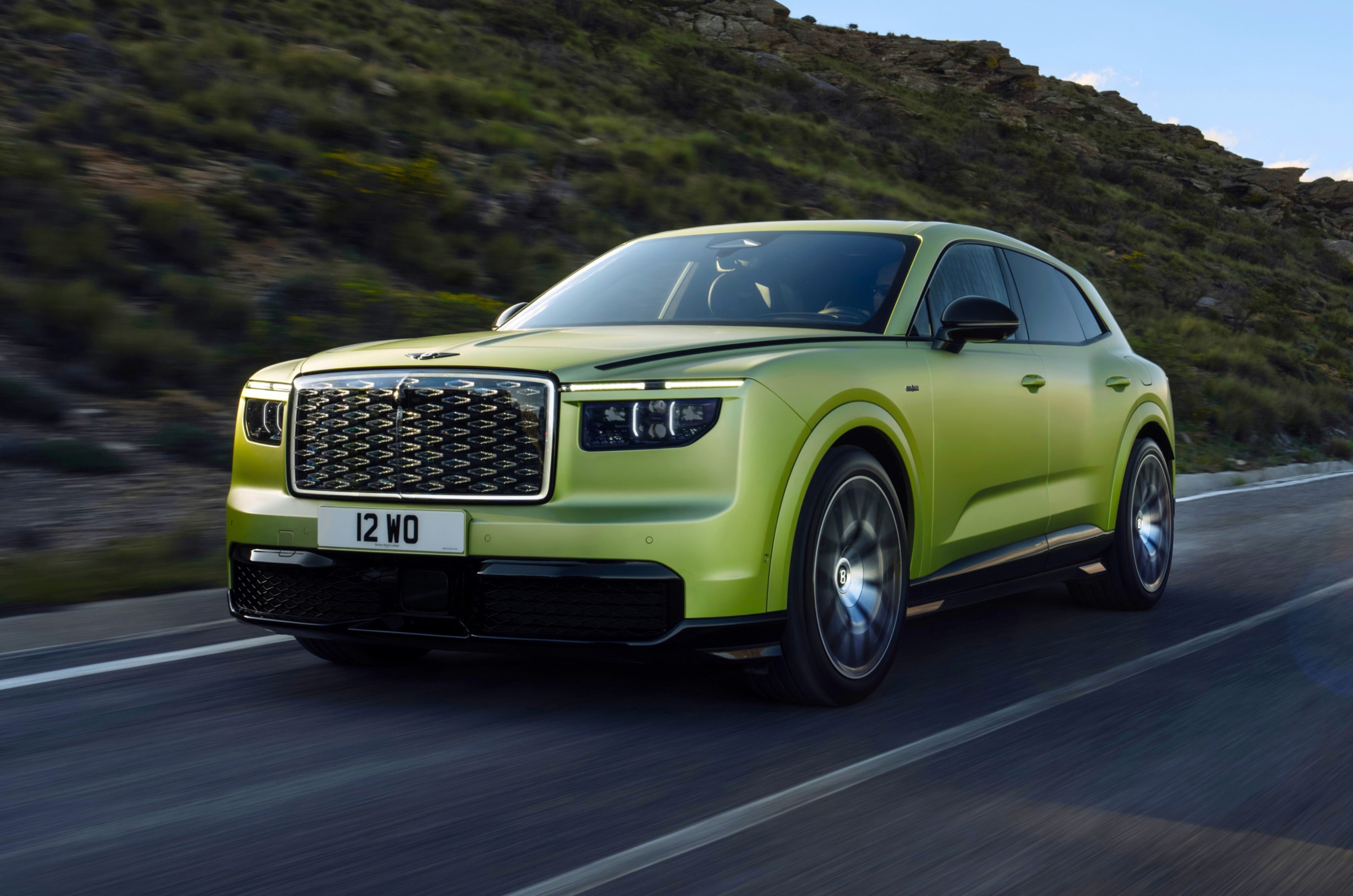
Designing an EV for a brand with this much pedigree was never going to be easy, but Robin Page’s in-house team at Crewe has done a fine job. The Torcal sits 50mm lower and is 120mm shorter than a standard-wheelbase Bentayga, yet it looks the better proportioned of the two. The wheelbase is just over three metres, the car is about five metres long, and the overhangs are short. Bentley’s signature ‘endless bonnet’ does much of the visual heavy lifting.
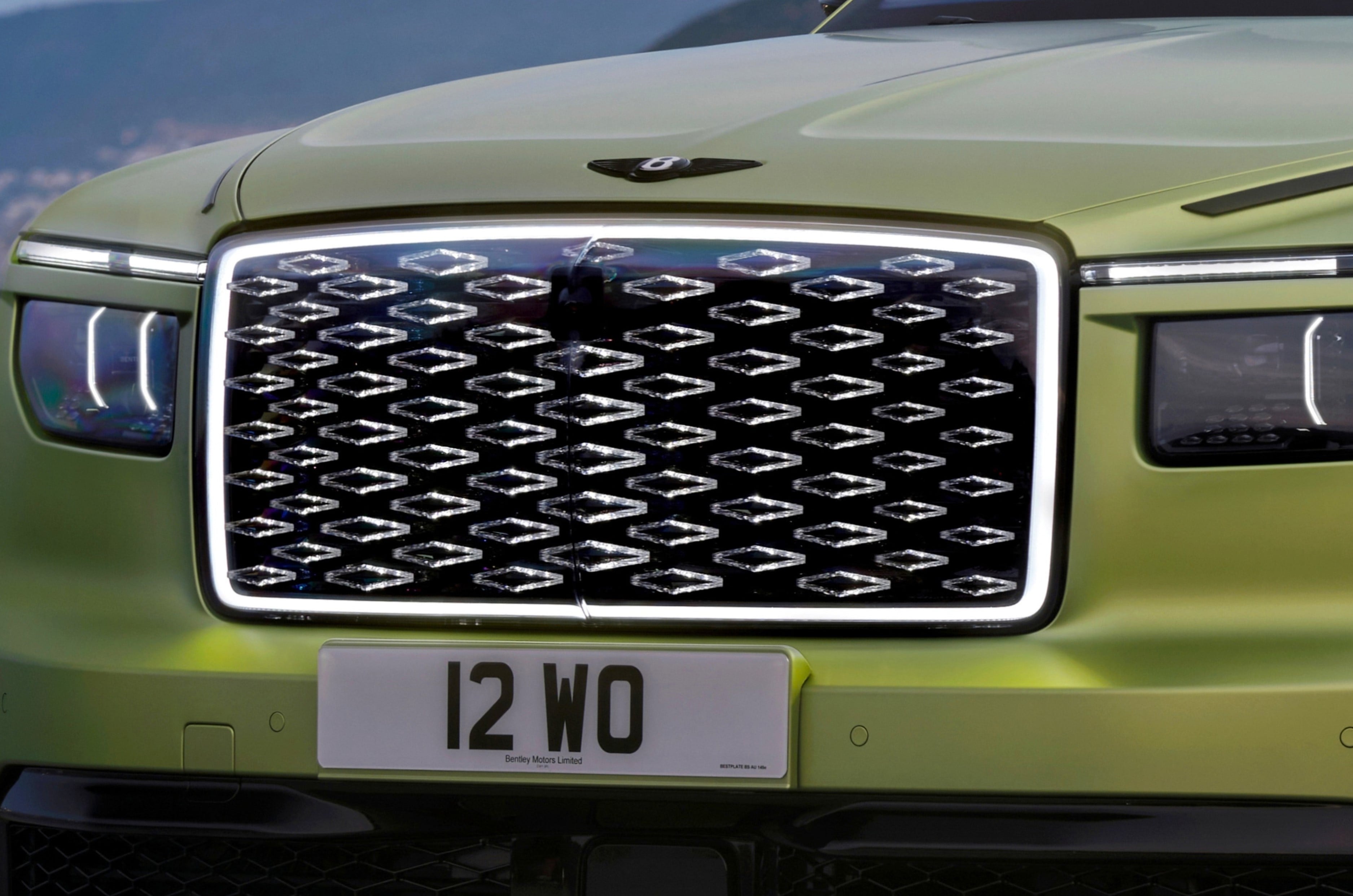
The Torcal gets a clear polycarbonate panel with diamond-like elements for a grille.
An EV doesn’t need a grille for cooling, but Bentley argues that a car without one is faceless. The Torcal’s solution is an illuminated one with crystal-effect, diamond-like elements set behind a clear polycarbonate panel. It’s the car’s signature piece, and it will look spectacular filling someone’s rear-view mirror. The face echoes the Continental T, reinterpreted through slim, high-tech lighting.
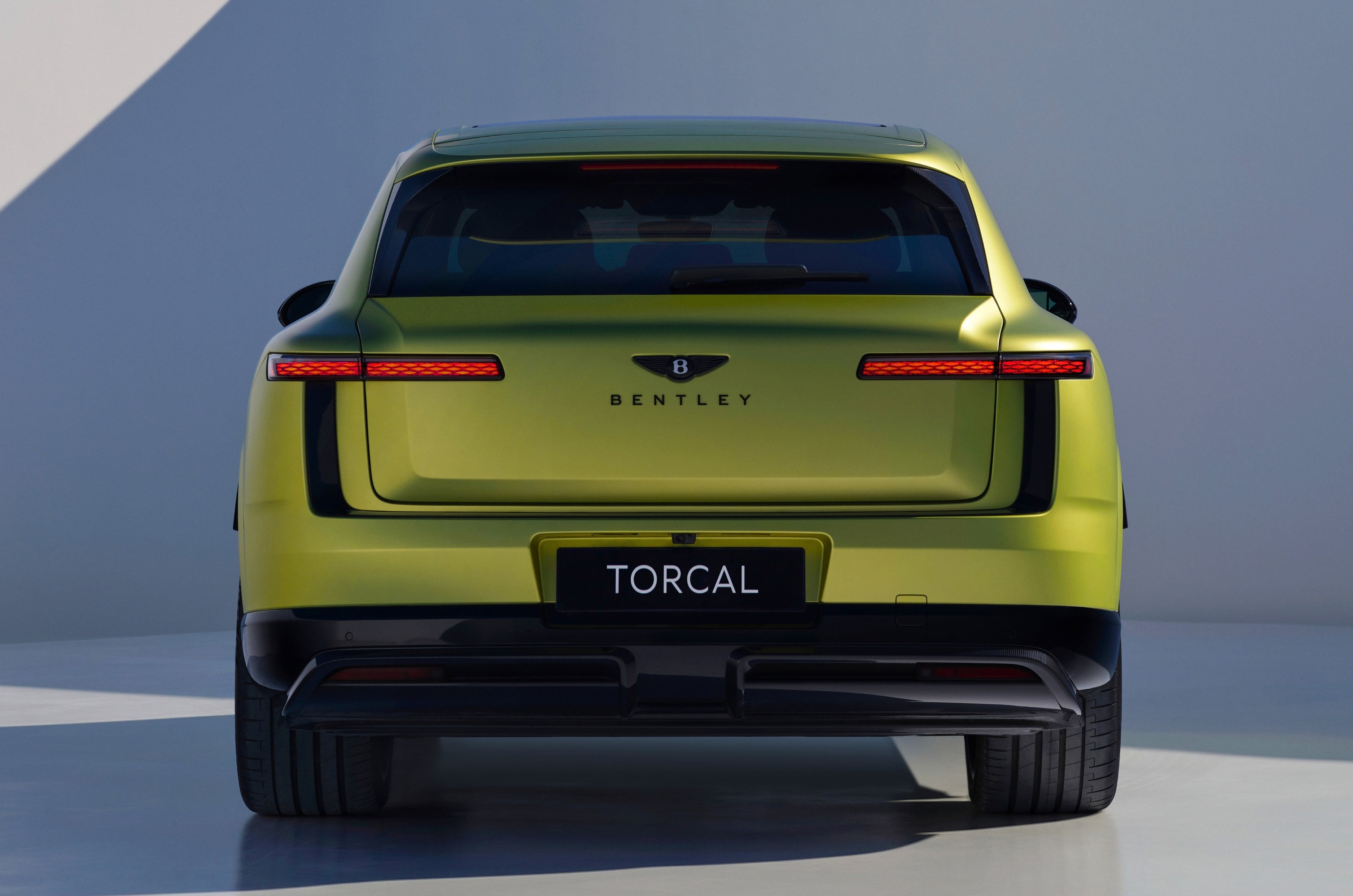
The flanks are deliberately free of fussy creases. The cabin tapers towards the rear so the body can swell over the back wheels, a look the designers call the ‘resting beast’. At the back, Bentley claims are some of the slimmest tail-lamps in the industry. A U-shaped motif ties them together and emphasises the car’s width.
U-shaped motif at the rear ties the tail lamps together.
Our car rode on 22-inch wheels. The core car gets 21s as standard, and India-spec cars may well get the smaller, higher-profile rim. Other neat touches include a charging flap that slides open when you wave a hand over it, and a 90-litre frunk under that long bonnet. The 460-litre boot isn’t especially generous, and there’s no spare wheel, only a puncture repair kit. On Indian roads that could be an issue, though most owners will simply leave a flat to the chauffeur to fix
Bentley Torcal interior: Screens, with restraint
The cabin is completely new, and the tricks start before you’re inside. All four doors are powered and radar-controlled. The driver shuts theirs by pressing the brake pedal, and passengers can close theirs simply by buckling up.
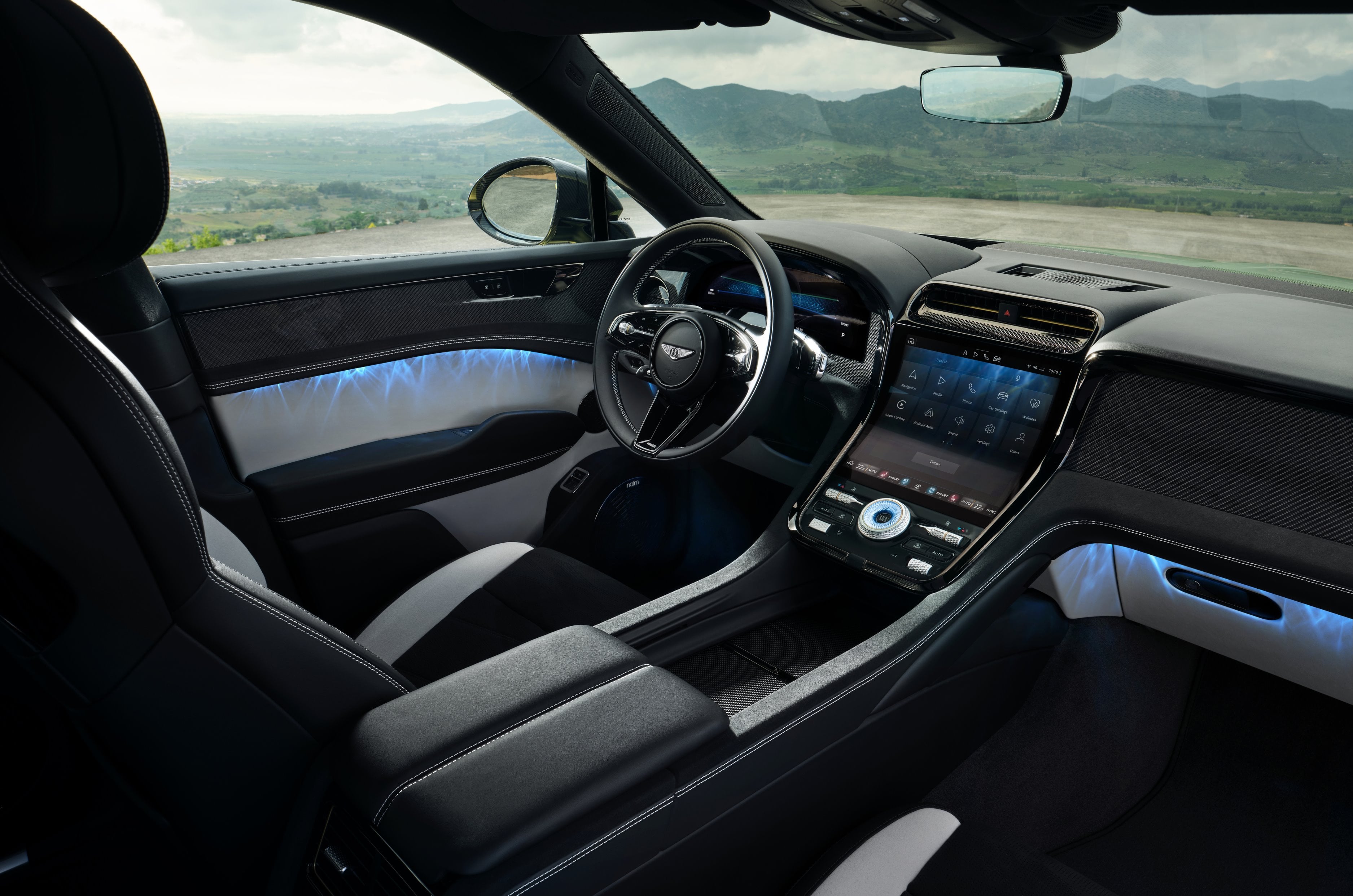
The first thing you notice is that Bentley hasn’t turned the Torcal into an iPad showroom. The centrepiece is the curved OLED centre screen. It doesn’t perch on the dash like a tablet; it sweeps down and flows into the centre console as one continuous form, and nothing else in the class looks quite like it. The OLED panel gives deep blacks and rich colours, and the curve brings every corner of the display within easier reach. Crucially, physical controls haven’t been binned. The switches have a beautiful knurled finish and satisfying, precise clicks, and purists will love them.
A curved OLED touchscreen infotainment is the centrepiece of the interior.
There’s one gripe. The direction of the front air vents is set through the touchscreen, a trend creeping into many luxury cars, and a physical slider would have been far nicer. Otherwise, we haven’t seen any car balance digital and physical controls better.
The tech runs deep. A facial-recognition camera in the rear-view mirror identifies the driver and loads their seat, steering and ADAS settings. An augmented-reality head-up display projects navigation arrows and hazard markers into the driver’s line of sight.
Curated experience
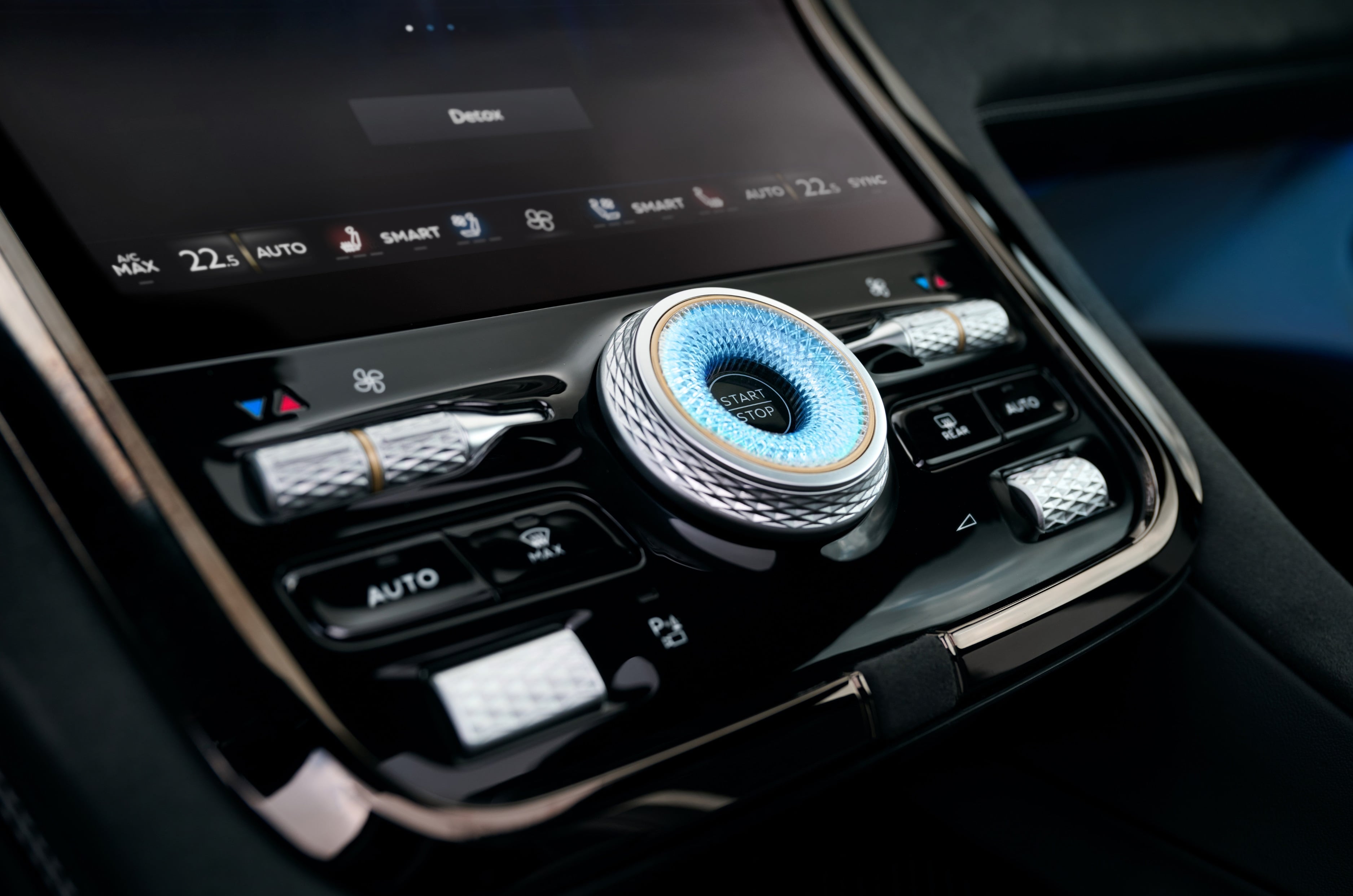
Twist the rotary collar around the starter button and you cycle through four Experience Modes. Each one changes the cabin’s lighting, sound, climate and displays as well as the car’s dynamics.
Rotary dial around the starter button can be used to cycle through four Experience modes.
Sport bathes the cabin in blue rather than the expected red. Bentley’s reasoning is that red signals anger while blue signals focus, which makes it a better colour for driving fast. Bentley mode balances performance and comfort. Comfort mode calms things down and offers a ‘digital detox’ that hides all but essential information. Refresh ups the fresh-air flow and brightens the lighting.
Drumming up character
The hardest thing about an electric Bentley is making it feel like a Bentley. For traditional owners, that means sound. The 6¾-litre V8 is iconic, but it was never a perfect engine. Bentley’s view is that its flaws, like in humans, give it emotion and character. So rather than synthesising a flawless digital imitation, Bentley recorded real musicians on drums, viola and bass guitar. The result is the ‘Dynamic Symphony’, complete with tiny imperfections. It responds to torque demand and speed, grows louder in Sport, and can be switched off entirely.
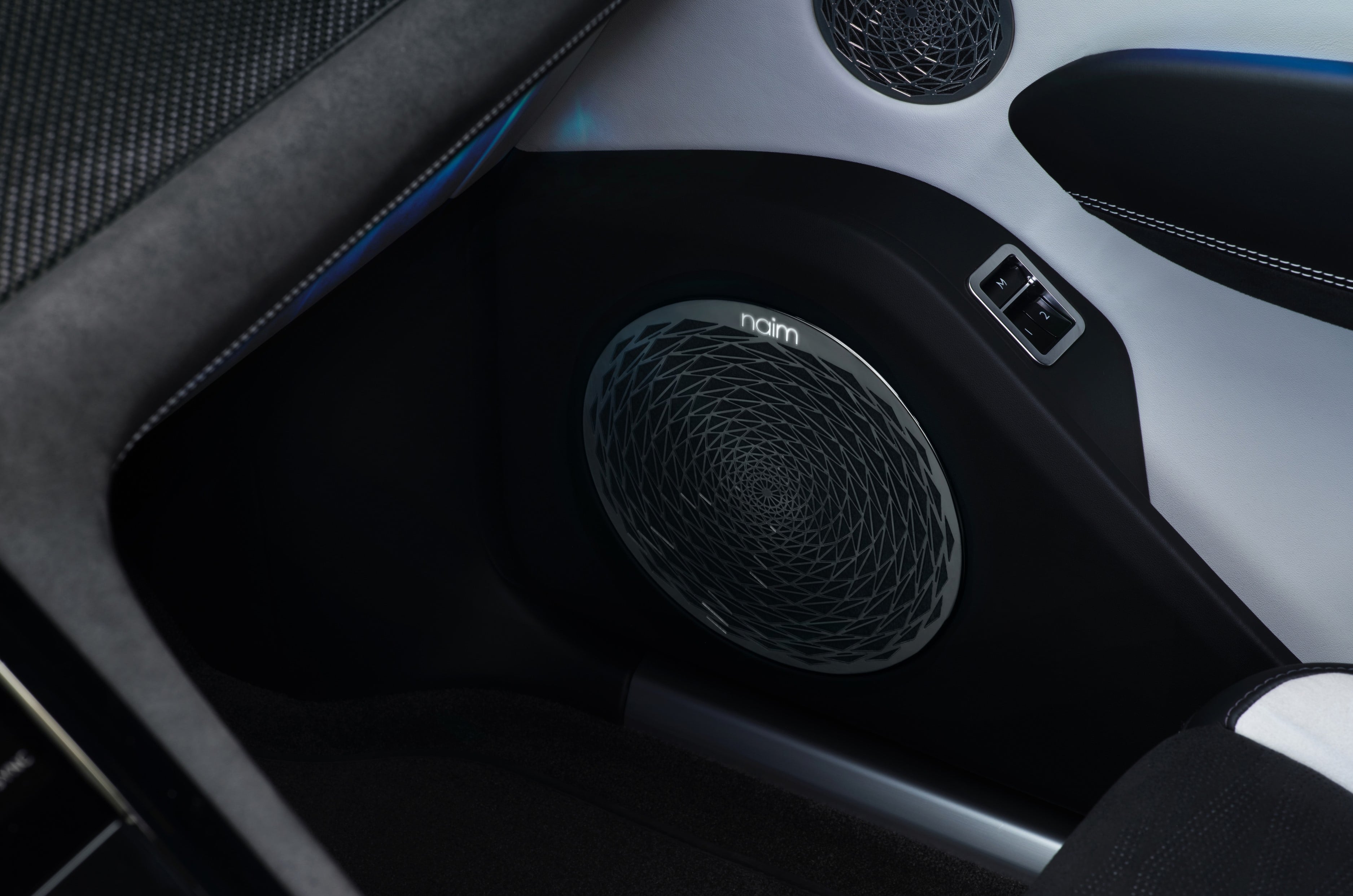
Optional Naim audio brings 28 speakers with Dolby Atmos 7.1
The attention to sound goes further. The indicator tick is a recording of a hammer striking leather in Bentley’s upholstery workshop, and the touchscreen chime comes from a crystal glass. Standard audio is a 620W, 16-speaker system. The Naim option runs to 1,780W and 28 speakers, with headrest speakers, seat shakers and Dolby Atmos 7.1
Material world
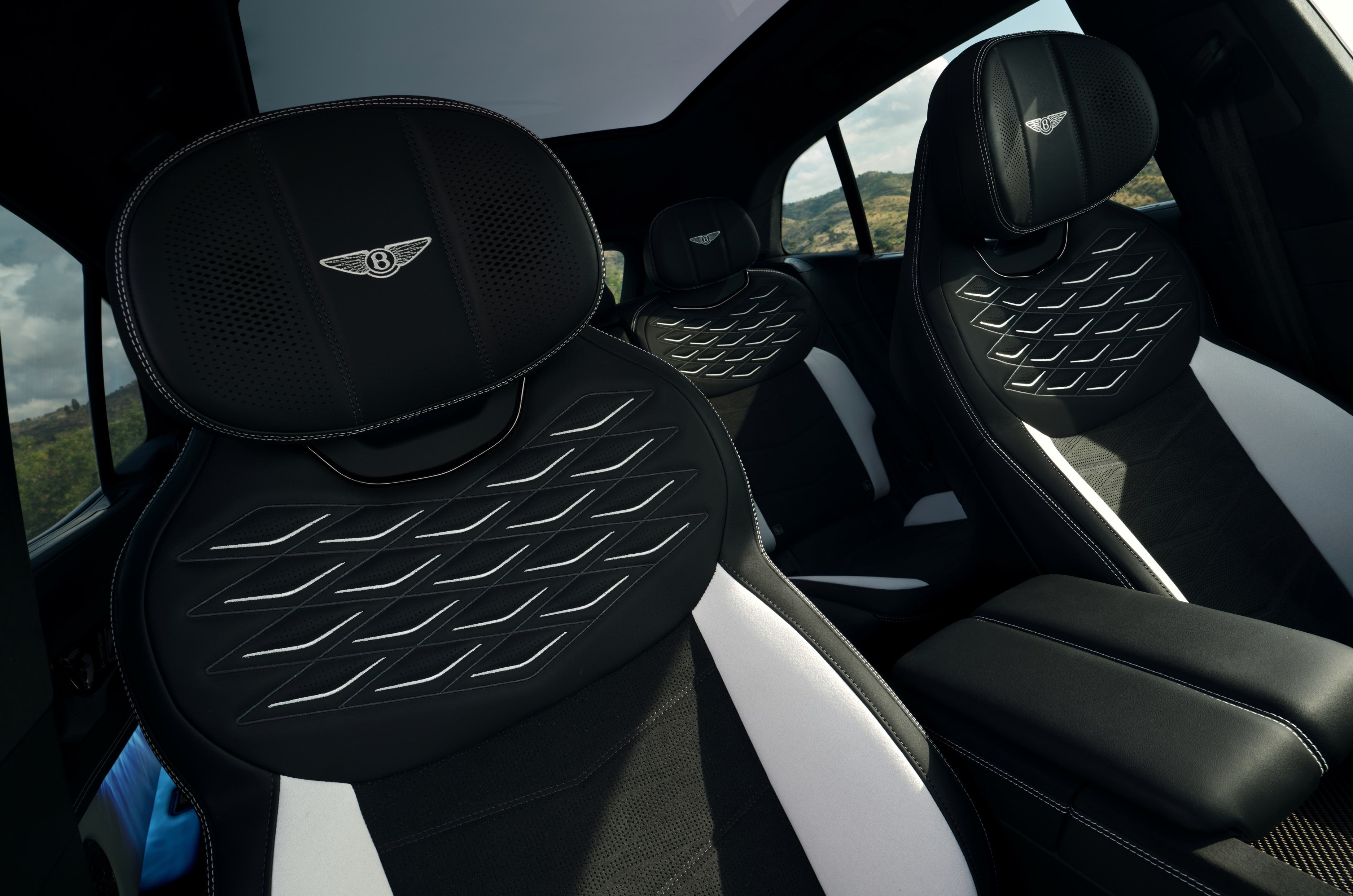
Materials are traditional Bentley, pushed further. There are wood veneers less than a millimetre thick, crisp aluminium and a deep piano black. Leather comes in 15 shades. The real headline is the world’s first 100 per cent Merino wool automotive fabric, developed with Somerset weavers Fox Brothers.
Scope for personalisation is vast, with 15 different shades just for the leather.
New Mulliner finishes include Ombré Walnut, which presses up to 1,000 layers of walnut off-cuts and recycled paper into a veneer that fades from black to smoke. Sunburst Aluminium reinterprets the engine-turned dashboards of old Bentleys. Overhead, the Frosted Diamond sunroof uses switchable glass, so you decide how much light floods in. The scope for personalisation is vast. A second car we saw, trimmed in lighter upholstery with far more brushed aluminium, felt like a different interior altogether.
Bentley Trocal back seat experience
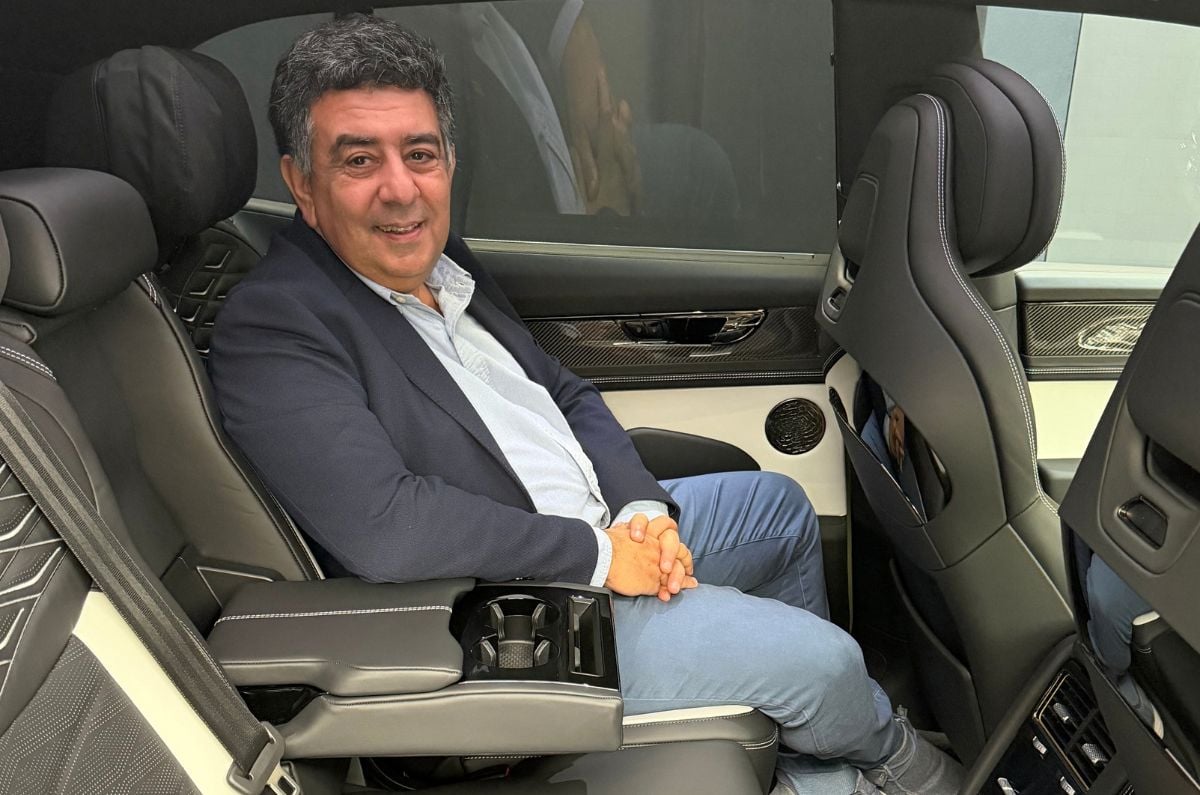
Legroom and headroom at the back are quite decent.
The rear seat matters most for Indian buyers, many of whom will be chauffeured. It’s impressive for a car smaller than a Bentayga. Under-thigh support is genuinely good, which is rare in an EV, where the battery usually pushes the floor up. Legroom and headroom are decent, though this is ultimately a car to be driven.
The rear climate vents get the physical controls the front vents lack. There are heated and cooled seats, and three USB-C ports, one of them rated at 100W for charging a laptop. The rear bench is also the first in a Bentley to power-fold.
Bentley Torcal specs, battery and range
The Torcal gets a 113kWh battery for a claimed WLTP range of 600km.
The Torcal rides on the PPE platform that underpins Porsche’s Cayenne Electric. The Cayenne tops 1,100hp in its most potent form, but Bentley has deliberately stopped short. The flagship makes 888hp and 1,350Nm, the most torque of any Bentley ever and has launch control which I doubt will ever be used!That’s enough to take a roughly 2.7-tonne SUV from 0-100kph in 2.9 seconds. Bentley’s research found that most customers find anything more violent uncomfortable.
Two permanent-magnet motors draw from a 113kWh (net), 800V battery, which carries a 10-year, 100,000-mile warranty. Claimed range is 600km WLTP. This is a continent-crosser, so charging speed was a priority. On a 400kW charger, a 10-80 per cent top-up takes 16 minutes, and around 160km of range goes in during a seven-minute coffee stop. India currently has no such high-speed chargers, yet.
It also gets fully active suspension and rear-wheel steering.
The chassis is Bentley’s most advanced yet. Fully active suspension replaces anti-roll bars altogether, and five degrees of rear-wheel steer shrink the turning circle to 11.1m. Carbon-ceramic brakes with 440mm front discs are optional. The ADAS suite uses 25 radars, sensors and cameras. It can reverse the car along the last 50 metres of its route, and it can park itself in a designated space up to 200 metres away.
Bentley Torcal India launch plans
The Torcal arrives in India in the second half of 2027. It’s a smidgen smaller than the Bentayga but will be substantially pricier, because EVs don’t get the same customs-duty benefit under the new UK-India FTA. Expect around Rs 4.5 crore, ex-showroom. Is it worth it? We’ll tell you once we’ve driven it. Standing still, at least, the Torcal makes a convincing case that a Bentley without an engine is still a Bentley.
शायद दुनिया के महानतम फुटबॉलर और इस खेल के जादूगर ने 20 जुलाई की रात को ही तय कर लिया था कि बस अब बहुत हुआ अब मैदान से विदाई ले लेने में ही भलाई है। 20 जुलाई की रात को उनके आंखो में आसूं थे क्योंकि वह लगातार अर्जेंटीना को विश्वकप नहीं जिता पाए थे और ना ही अपने करियर का परिकथा अंत कर पाए थे।
FIFA World Cup का टूर्नामेंट जिस हिसाब से जा रहा था ऐसा लग रहा था कि लियोनेल मेस्सी के करियर का परिकथा अंत होगा। लेकिन उनके हाथ ना ही खिताब लगा और ना ही पैर पर गोल्डन बूट लगा। मेस्सी के लिए बस एक बात अच्छी रही कि वह पिछले साल विजेता टीम का हिस्सा थे अन्यथा इस महान फुटबॉलर को बिना किसी वैश्विक खिताब के रवाना होना पड़ता।
आखिरी सीटी बजने पर उनकी आंखों में नमी और चेहरे पर निराशा को सभी ने देखा। एक तरफ स्पेन के खिलाड़ी जश्न मना रहे थे तो दूसरी तरफ मेस्सी और उनकी टीम स्टेडियम के दक्षिणी छोर पर अर्जेंटीना के समर्थकों को धन्यवाद दे रही थी और शायद माफी भी मांग रही थी।
बार्सीलोना और पेरिस सेंट जर्मेन के साथ 12 लीग और चार चैम्पियंस लीग खिताब जीतने के बाद मेस्सी ने जब यूरोपीय फुटबॉल से विदा लेकर तीन साल पहले एमएलएस का रूख किया तो लोगों को लगा कि वह रिटायर होकर अमेरिका में बस जायेंगे ।
Heartbreaking…Lionel Messi after the loss to Spain. This is his final game at the World Cup. pic.twitter.com/LxztMs8Kl7
लेकिन वह एक बार फिर अर्जेंटीना को विश्व कप फाइनल तक ले गए जिनमें उनके खाते में आठ गोल आये और चार में वह सहायक रहे। विश्व कप में उनके 21 गोल हो गए हैं और शनिवार को तीसरे स्थान के मुकाबले में फ्रांस के कीलियन एमबाप्पे (22 गोल) के आगे निकलने तक वह शीर्ष पर थे। तीन विश्व कप फाइनल खेलने वाले पहले खिलाड़ी मेस्सी के 125 अंतरराष्ट्रीय गोल हैं और वह सिर्फ क्रिस्टियानो रोनाल्डो (146) से पीछे हैं।
स्पेन के खिलाड़ी आखिरी सीटी बजने के बाद मेस्सी को ढांढस बंधाने आये। मेस्सी मैदान पर बैठ गए और हाथ पीछे रखकर एकटक देखते रहे। उपविजेता का पदक लेने आये तो मुस्कुराने की कोशिश की लेकिन नाकाम रहे।फिर अपने विचारों में खोये हुए, दुख को छिपाने की कोशिश करते मैदान के एक कोने से चुपचाप बाहर चले गए। विश्व कप से आखिरी बार।इस मैच के लगभग 1.5 महीने बाद लियोनेल मेस्सी ने जूता टांग दिया।
Since their inception, Ultraviolette Automotive has been focussed on the premium end of the EV two-wheeler market with their products prices from Rs 2.49 lakh to Rs 4.59 lakh, a challenge for high sales numbers. However, with the changing winds in the ICE world, Ultraviolette looks to have turned a corner for the better. With almost no direct competition, this shouldn’t be a surprise, but it’s noteworthy regardless.
Ultraviolette registers 406 percent increase in sales YoY
BaaS and more versatile X-47 model looks to have helped this
Ultraviolette has two more lower price models in the works
Largest EV motorcycle monthly sales in July 2026
Only behind Revolt and Oben
As per the retail sales data on the Vaahan portal, Ultraviolette Automotive has delivered 694 units in July 2026, a 406 percent increase compared to last year. Till July 2026, the brand has sold 3200 vehicles, the best since the brand was founded in 2023. Although the increase in sales numbers could be attributed to them offering more products, it’s hard not to consider this a sign of premium motorcycle buyers now trusting EV motorcycles more.
The brand is showing no signs of slowing down either. Already present in 40 locations across India, the brand intends to increase that number to 100 by the end of 2026. It’s worth mentioning that they had recently opened their first showroom in the North east, in Aizwal, Mizoram. The focussed efforts from the brand should help them finish the year on a high note, considering the upcoming festive season.
If we consider the sales numbers of other EV manufacturers who sell motorcycles, the brands ahead of Ultraviolette are Revolt Motors (6,876 units so far in 2026) and Oben Electric (3,347 units so far in 2026). However, it should be noted that Ultraviolette operates at a considerably higher premium level compared to these two brands. Other EV manufacturers who currently offer EV motorcycles in their lineup are Ola, KLB Komaki, Matter Motor Works, Okaya EV, Wardwizard Innovations, and the latest entrant Royal Enfield with their Flying Flea sub brand.
In addition to their current lineup of four motorcycles (F77 Mach 2, F77 Superstreet, X-47, and X-47 Desert Wing), Ultraviolette is also preparing to launch their first-ever scooter, the Tesseract, and an off-roader, the Shockwave. The Shockwave, starting at Rs 1.75 lakh, is aimed at eco-friendly and efficient city commutes and short weekend, adventure-focussed rides. The Tesseract on the other hand is expected to be priced at Rs 1.45 lakh with a claimed 261km IDC range and a top speed of 125kph. Deliveries for the Shockwave were previously supposed to start in Q2 2026 (we’re currently in Q3), and the Tesseract delivery has been delayed to Q1 of 2027.
What made this possible for Ultraviolette
The brand has upcoming challenges and opportunities
The two biggest factors that look to have helped the brand increase their numbers are the BaaS option from the brand for all their motorcycles and of course, the uncertainty surrounding ICE vehicles at the moment. The brand, however, is also looking to improve their existing international presence. Speaking to Autocar Professional, the CEO Narayan Subramaniam said “India is a key market but we were clear right at the start that we need to take this brand global. Europe is critical because it has amongst the most stringent certification processes. While the F-77 has been certified for sale in Europe, certification for the X-47 is at an advanced stage, and the bike should hit the European market this year as well. At present, we are in about 10 countries across Europe, including Germany, France, the UK, Spain, Portugal, the Netherlands, Belgium and Italy.”
With their current momentum and the upcoming favourable winds, the brand is looking to increase their numbers and subsequently their market share further. The only other player currently capable to take them head on, surprisingly, is Royal Enfield, who started selling their Flying Flea C6 in April 2026 with a Scrambler-like S6 on the way; but, their sales numbers are much lower with the brand selling a total of 124 units till July 2026. That said, the Flying Flea C6 is currently available only in Bengaluru.
Developments on the EV motorcycle space have been slow mainly because customers are expected to pay higher prices for a less capable machine for the money, especially compared to their ICE counterparts. The EV two-wheeler market has so far been carried forward by scooters. As such, EV motorcycles doing even a small fraction of the 13 million vehicle sales done by ICE two-wheelers should be phenomenal, and assuming Ultraviolette Automotive continues to make the right moves, it should remain a key name in the field.
आसमान में जल्द ही एक बेहद खास खगोलीय घटना देखने को मिलने वाली है। 12 अगस्त को सूर्य ग्रहण के दौरान चंद्रमा कुछ समय के लिए सूर्य के सामने आ जाएगा और उसकी रोशनी को ढक देगा। इस नजारे को लेकर दुनिया के कई हिस्सों में लोगों के बीच उत्सुकता है। खास बात यह है कि करीब 1.5 करोड़ लोग उस इलाके में होंगे, जहां सूर्य पूरी तरह चंद्रमा के पीछे छिपा दिखाई देगा। स्पेन, आइसलैंड के साथ ग्रीनलैंड, रूस और पुर्तगाल के कुछ हिस्सों में पूर्ण सूर्य ग्रहण देखा जा सकेगा।
वहीं, यूरोप और उत्तरी अफ्रीका के कई इलाकों में इसका आंशिक प्रभाव नजर आएगा। कुछ शहरों में सूर्य का 90 फीसदी से ज्यादा हिस्सा ढका रहेगा, जिससे आसमान का नजारा काफी अलग दिखाई देगा। हालांकि, ग्रहण देखने के लिए आंखों की सुरक्षा का विशेष ध्यान रखना जरूरी होगा।
स्पेन में मिलेगा सबसे शानदार नजारा
पूर्ण सूर्य ग्रहण देखने के लिए उत्तरी और पूर्वी स्पेन को सबसे बेहतर जगहों में माना जा रहा है। लियोन, वलाडोलिड, जारागोजा, तेरुएल और वेलेंसिया पूर्ण ग्रहण के दायरे में आएंगे। पश्चिमी स्पेन में पूर्ण ग्रहण की शुरुआत करीब 18:27 GMT यानी स्थानीय समयानुसार रात 8:27 बजे होगी। अलग-अलग स्थानों के आधार पर पूर्ण ग्रहण करीब 110 सेकंड तक रह सकता है। हालांकि स्पेन की राजधानी मैड्रिड और बार्सिलोना पूर्ण ग्रहण की पट्टी से थोड़ा बाहर रहेंगे। इसके बावजूद वहां रहने वाले लोग सूर्य का 99 फीसदी से ज्यादा हिस्सा ढका हुआ देख सकेंगे।
यूरोप के कई शहरों में दिखेगा आंशिक ग्रहण
पूर्ण सूर्य ग्रहण का नजारा भले ही सीमित इलाकों में दिखे, लेकिन आंशिक ग्रहण का दायरा काफी बड़ा होगा। यूरोप के ज्यादातर हिस्सों में शाम के समय सूर्य आंशिक रूप से ढका नजर आएगा। पेरिस में करीब 92 फीसदी, लंदन में 91 फीसदी और बर्लिन में लगभग 85 फीसदी सूर्य ढका रहेगा। यूरोप के पूर्वी हिस्सों में समस्या यह होगी कि कई जगह सूर्य ग्रहण के अपने अधिकतम स्तर पर पहुंचने से पहले ही सूरज डूब जाएगा। यानी वहां लोग ग्रहण का सबसे गहरा चरण नहीं देख पाएंगे।
उत्तरी अफ्रीका में भी दिखेगा ग्रहण
उत्तरी अफ्रीका के कुछ हिस्सों में भी आंशिक सूर्य ग्रहण दिखाई देगा। अल्जीयर्स में करीब 98 फीसदी और कैसाब्लांका में लगभग 87 फीसदी सूर्य ढका नजर आएगा। हालांकि इन दोनों शहरों में भी सूर्य के पूरी तरह अस्त होने के कारण ग्रहण का आखिरी हिस्सा दिखाई नहीं देगा।
अमेरिका और कनाडा में कितना दिखेगा?
अटलांटिक के दूसरी तरफ स्थिति कुछ अलग होगी। वहां ग्रहण सुबह और दोपहर के समय दिखाई देगा, लेकिन उत्तरी अमेरिका पूर्ण ग्रहण की मुख्य पट्टी से काफी दूर रहेगा। कनाडा के सेंट जॉन्स में करीब 53 फीसदी, मॉन्ट्रियल में 18 फीसदी और टोरंटो में लगभग 8 फीसदी सूर्य ढका दिखाई देगा। अमेरिका में अलास्का के कुछ हिस्सों में करीब 37 फीसदी तक ग्रहण देखा जा सकेगा। वहीं बाकी इलाकों में इसका असर काफी कम रहेगा। उत्तर-पूर्वी मेन में करीब 28 फीसदी, न्यूयॉर्क में लगभग 10 फीसदी और मिडवेस्ट के कई हिस्सों में लगभग नगण्य ग्रहण दिखाई देगा।
अगला पूर्ण सूर्य ग्रहण कब?
अगर 12 अगस्त का ग्रहण आपके इलाके में दिखाई नहीं देता, तो अगला बड़ा मौका ज्यादा दूर नहीं है। 2 अगस्त 2027 को अगला पूर्ण सूर्य ग्रहण होगा, जिसकी पट्टी दक्षिणी स्पेन, उत्तरी अफ्रीका और यमन से होकर गुजरेगी। सूर्य ग्रहण के दौरान सीधे सूर्य की ओर देखना आंखों के लिए खतरनाक हो सकता है, इसलिए इसे देखने के लिए उचित प्रमाणित सोलर-व्यूइंग चश्मे या सुरक्षित उपकरण का इस्तेमाल करना जरूरी है।