पेरिस की सड़कों पर विरोध प्रदर्शन और आग के बीच एक महिला का जॉगिंग करते हुए वीडियो सोशल मीडिया पर वायरल हो गया है। सड़क पर जलती बैरिकेड और चारों ओर धुएं के बावजूद महिला अपनी दौड़ जारी रखती नजर आई। इस नजारे ने इंटरनेट पर लोगों को दो गुटों में बांट दिया है। कुछ यूजर्स उसके व्यवहार को लापरवाही बता रहे हैं, जबकि दूसरे लोग इसे अपनी दिनचर्या जारी रखने का फैसला मान रहे हैं। आखिर तनावपूर्ण माहौल में भी महिला ने दौड़ना क्यों नहीं रोका, यही सवाल चर्चा का विषय बन गया है।
सड़क पर आग और धुआं
सोशल मीडिया पर वायरल हो रहे वीडियो में एक महिला सड़क पर जॉगिंग करती दिखाई देती है। उसके रास्ते में एक बैरिकेड आग की लपटों में घिरा नजर आता है। आसपास काला धुआं फैला हुआ है और सड़कों पर तनावपूर्ण माहौल दिखाई दे रहा है। इसके बावजूद महिला अपनी दौड़ जारी रखती है। यह वीडियो ऐसे समय सामने आया, जब पेरिस में महंगाई और रोजमर्रा की जरूरतों से जुड़े खर्चों को लेकर विरोध प्रदर्शनों की खबरें सामने आ रही थीं। ईंधन, खाने-पीने की चीजों और दूसरी जरूरी वस्तुओं की बढ़ती लागत को लेकर लोगों की चिंताओं के बीच जलती बैरिकेड और बाधित सड़कों की तस्वीरें भी चर्चा में रहीं। हालांकि, वायरल क्लिप से महिला की मंशा या उसके वहां मौजूद होने की पूरी वजह स्पष्ट नहीं होती।
The most dystopian fitness video on the internet just dropped.
Paris is literally burning, protesters are shutting down the streets, and this woman is casually jogging past a burning barricade like it’s a treadmill session. She is literally running through thick black smoke because hitting her daily step count is a higher priority than whatever revolution is happening around her.
Pure, unfiltered main character syndrome. The absolute disrespect to the entire riot.
किसी ने बताया ‘मेन कैरेक्टर सिंड्रोम’, तो किसी ने किया बचाव
वीडियो को X पर साझा करते हुए एक यूजर ने महिला के व्यवहार पर सवाल उठाए। उसने इस दृश्य को ऐसे पेश किया, मानो शहर में अफरा-तफरी के बीच भी महिला के लिए रोजाना की फिटनेस पूरी करना सबसे जरूरी हो। इस टिप्पणी के बाद सोशल मीडिया पर बहस शुरू हो गई। कुछ लोगों ने सवाल उठाया कि आखिर इतनी खतरनाक स्थिति में जॉगिंग करना कितना समझदारी भरा फैसला है। जलती बैरिकेड और घने धुएं के बीच दौड़ना स्वास्थ्य और सुरक्षा के लिहाज से जोखिम भरा हो सकता है।
‘हो सकता है वह तनाव दूर करने के लिए दौड़ रही हो’
दूसरी ओर, कई यूजर्स ने महिला का बचाव भी किया। उनका कहना था कि कुछ सेकंड के वीडियो के आधार पर किसी के इरादों का अंदाजा लगाना सही नहीं है। संभव है कि वह तनावपूर्ण माहौल में अपनी दिनचर्या बनाए रखने या मानसिक तनाव कम करने के लिए दौड़ रही हो।
एक यूजर ने कहा कि महिला अपनी जिंदगी जीने के लिए स्वतंत्र है और उसे प्रदर्शनकारियों के साथ शामिल होने के लिए मजबूर नहीं किया जा सकता। दूसरे यूजर्स ने भी माना कि हर व्यक्ति का मुश्किल हालात से निपटने का तरीका अलग होता है।
वायरल वीडियो ने छेड़ी बहस
इस घटना ने सोशल मीडिया पर दो अलग-अलग नजरिए सामने रखे हैं। एक पक्ष इसे खतरनाक परिस्थिति में लापरवाही मान रहा है, जबकि दूसरा पक्ष महिला के निजी फैसले का समर्थन कर रहा है।
दिल्ली से चेन्नई जा रही इंडिगो की एक फ्लाइट को हैदराबाद में इमरजेंसी लैंडिंग करवानी पड़ी। विमान के अंदर एक यात्री के इलेक्ट्रॉनिक डिवाइस से अचानक धुआं निकलने लगा था। शुरुआती जानकारी के मुताबिक ये डिवाइस पावर बैंक था। धुआं निकलता देख यात्रियों ने क्रू को इसकी खबर दी। इसके बाद सुरक्षा को देखते हुए फ्लाइट को हैदराबाद के लिए डायवर्ट कर दिया गया। घटना के बाद इंडिगो की फ्लाइट को हैदराबाद के शमशाबाद स्थित राजीव गांधी इंटरनेशनल एयरपोर्ट पर सुरक्षित उतार लिया गया। ये घटना 11 अक्टूबर को इंडिगो की 6E 6115 फ्लाइट में हुआ।
विमान के हैदराबाद उतरते ही सुरक्षा टीम ने कार्रवाई शुरू कर दी और सभी यात्रियों को सुरक्षित बाहर निकाल लिया गया। वहीं, इंडिगो यात्रियों को उनके गंतव्य तक पहुंचाने के लिए अगली फ्लाइट में सीट की व्यवस्था की है। बता दें, इंडिगो की फ्लाइट 6E 6115 को 11 अक्टूबर 2026 को दोपहर 1:10 बजे दिल्ली से उड़ान भरनी थी, लेकिन फ्लाइट 1:30 बजे रवाना हुई। डायवर्ट होने से पहले इसके शाम 4 बजे चेन्नई पहुंचने का समय तय था।
हैदराबाद किया गया डायवर्ट
इंडिगो ने बताया कि, दिल्ली से चेन्नई जा रही फ्लाइट 6E 6115 को हैदराबाद के लिए डायवर्ट किया गया। एयरलाइन के अनुसार, विमान में एक यात्री के पर्सनल इलेक्ट्रॉनिक डिवाइस से धुआं निकलने के बाद यह फैसला लिया गया। इसके बाद फ्लाइट को सुरक्षित तरीके से हैदराबाद उतारा गया। घटना के तुरंत बाद केबिन क्रू ने जरूरी कदम उठाए और स्थिति को काबू में कर लिया। इसके बाद विमान ने हैदराबाद एयरपोर्ट पर सुरक्षित लैंडिंग की।
पावर बैंक में लगी आग
एयरलाइन ने कहा, “11 अक्टूबर 2026 को दिल्ली से चेन्नई जा रही इंडिगो की फ्लाइट 6E 6115 को एक यात्री के पर्सनल इलेक्ट्रॉनिक डिवाइस से धुआं निकलने के बाद हैदराबाद डायवर्ट किया गया।” बताया जा रहा कि विमान के अंदर धुआं निकलने की घटना एक पावर बैंक से जुड़ी थी। केबिन में धुआं फैलने के बाद यात्रियों के बीच चिंता का माहौल बन गया और एयरपोर्ट पर आपातकालीन मदद की जरूरत पड़ी। हालांकि, विमान के हैदराबाद में उतरने के बाद सभी यात्रियों को सुरक्षित बाहर निकाल लिया गया।
VIDEO | Hyderabad: Smoke detected in Chennai-bound Indigo flight from Delhi; plane diverted to Hyderabad, lands safely. Inside visuals from the plane.
(Source: Third Party)
(Full video available on PTI Videos – https://t.co/d8jp61yd2p) https://t.co/RSt6vbeTpB
फ्लाइट डायवर्ट होने के बाद इंडिगो ने यात्रियों को चेन्नई पहुंचाने के लिए जरूरी इंतजाम शुरू कर दिए। एयरपोर्ट अधिकारी के मुताबिक, यात्रियों को उनकी मंजिल तक पहुंचाने के लिए अगली उपलब्ध फ्लाइट में सीट दिलाई जाएगी। एयरलाइन ने कहा कि यात्रियों की परेशानी कम करने के लिए उन्हें रिफ्रेशमेंट दिया जा रहा है और आगे की यात्रा से जुड़ी व्यवस्था की जा रही है। साथ ही, यात्रियों को स्थिति के बारे में समय-समय पर जानकारी भी दी जा रही है। एयरपोर्ट अधिकारियों के अनुसार, विमान ने हैदराबाद में सुरक्षित लैंडिंग की और सभी यात्रियों को बिना किसी चोट के बाहर निकाल लिया गया।
Russia-Ukraine War: मंगलवार को रूस के दक्षिणी तट के पास उस वक्त अफरा-तफरी मच गई, जब एक ऑयल टैंकर में भीषण आग लगने से ऊंची-ऊंची लपटें उठने लगीं। बताया जा रहा है कि इस जहाज पर यूक्रेन के नेवल ड्रोन से हमला हुआ था, जिससे रिसॉर्ट शहर सोची के कुछ हिस्सों के ऊपर काले धुएं का गुबार छा गया। वहीं, रूस के ट्रांसपोर्ट मंत्रालय ने बताया कि लाइबेरिया के झंडे वाले इस टैंकर पर काला सागर (Black Sea) में हमला हुआ और पानी पर कच्चा तेल जल रहा था।
मंत्रालय ने कहा कि आग इतनी भीषण थी कि फायरफाइटर्स तुरंत उस पर काबू नहीं पा सके, लेकिन जहाज पर मौजूद सभी 23 क्रू मेंबर्स (जो भारतीय नागरिक थे) को सुरक्षित बचा लिया गया।
सोची से आए वीडियो और तस्वीरों में समुद्र में तेज लपटें उठती और आसमान में घना काला धुआं फैलता दिखाई दिया। एहतियात के तौर पर अधिकारियों ने समुद्र तटों और तटीय इलाकों के कुछ हिस्सों में लोगों की आवाजाही पर रोक लगा दी।
A large fire is burning on the water off Sochi tonight, with footage showing a long line of flame and a massive black smoke column visible across the city — consistent with burning oil from a tanker.
Ukrainian-aligned accounts claim the tanker was hit.
Russian sources say only that a vessel near the port is on fire with the cause unknown.
सिरियस फेडरल टेरिटरी के प्रमुख दिमित्री प्लिशकिन ने टैंकर में आग लगने की पुष्टि की और स्थानीय बीच को कुछ समय के लिए बंद करने का ऐलान किया।
प्लिशकिन ने कहा, “ब्लैक सी में एक टैंकर में आग लग गई। लोगों की सुरक्षा के लिए सिरियस के बीच कुछ समय के लिए बंद रहेंगे। पानी और हवा की स्थिति पर लगातार नजर रखी जा रही है।” उन्होंने यह भी बताया कि अधिकारी रूस की हाइड्रोमेटियोरोलॉजिकल सर्विस के साथ मिलकर काम कर रहे हैं।
अधिकारियों के हालात पर नजर रखने के दौरान लोगों को घर के अंदर रहने और खिड़कियां बंद रखने की सलाह भी दी गई।
यह हमला ऐसे समय में हुआ है जब रूस और यूक्रेन ब्लैक सी और उसके आस-पास युद्ध से जुड़े एनर्जी फैसिलिटीज और कमर्शियल शिपिंग को निशाना बना रहे हैं।
बता दें कि हाल ही में रूस ने रोमानिया के तट के पास यूक्रेनी सामान ले जा रहे अनाज के जहाजों पर हमला किया है, जबकि यूक्रेन ने रूस के तेल इंफ्रास्ट्रक्चर को निशाना बनाया है। यूक्रेन का कहना है कि ये हमले यूक्रेनी शहरों पर मॉस्को के लगातार हमलों का जवाब हैं।
दोनों पक्षों ने आने वाले दिनों में अपने हमलों को और तेज करने के संकेत दिए हैं।
रूस ने यूक्रेन की राजधानी कीव पर भी हमले तेज कर दिए हैं, जिनमें दिन के समय ड्रोन हमले और अहम पुलों पर हमले शामिल हैं, जिससे यूक्रेन की राजधानी में भारी व्यवधान पैदा हुआ है।
इससे पहले भी दक्षिणी रूस में तेल सुविधाओं पर यूक्रेन के पिछले हमलों के कारण तेल का रिसाव हुआ है, समुद्र तट बंद करने पड़े हैं और पर्यावरण से जुड़ी अन्य चिंताएं पैदा हुई हैं।
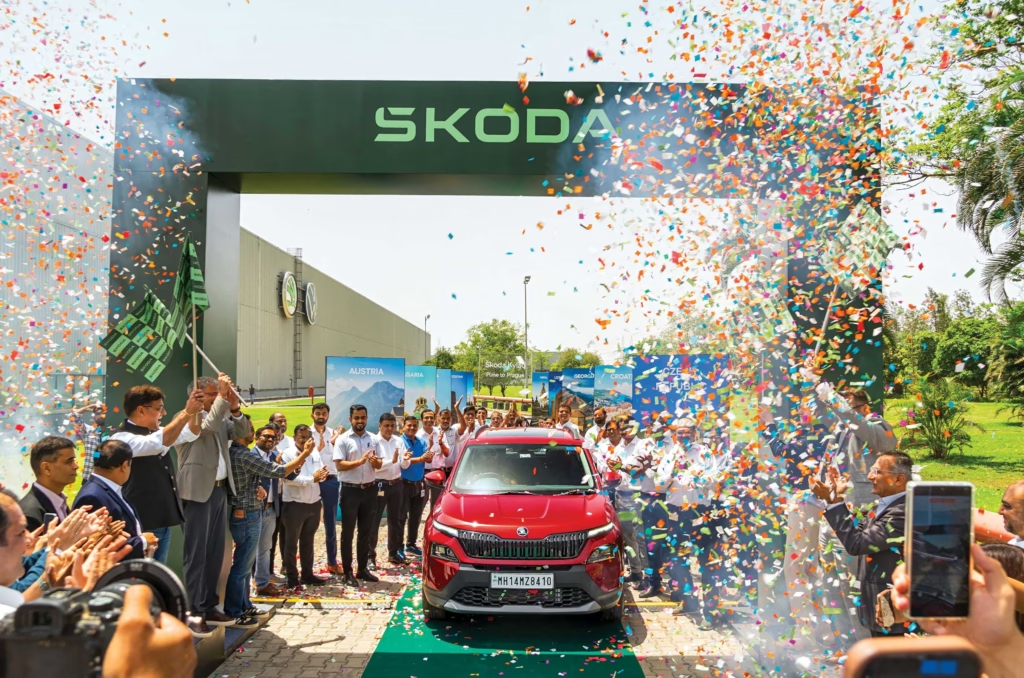
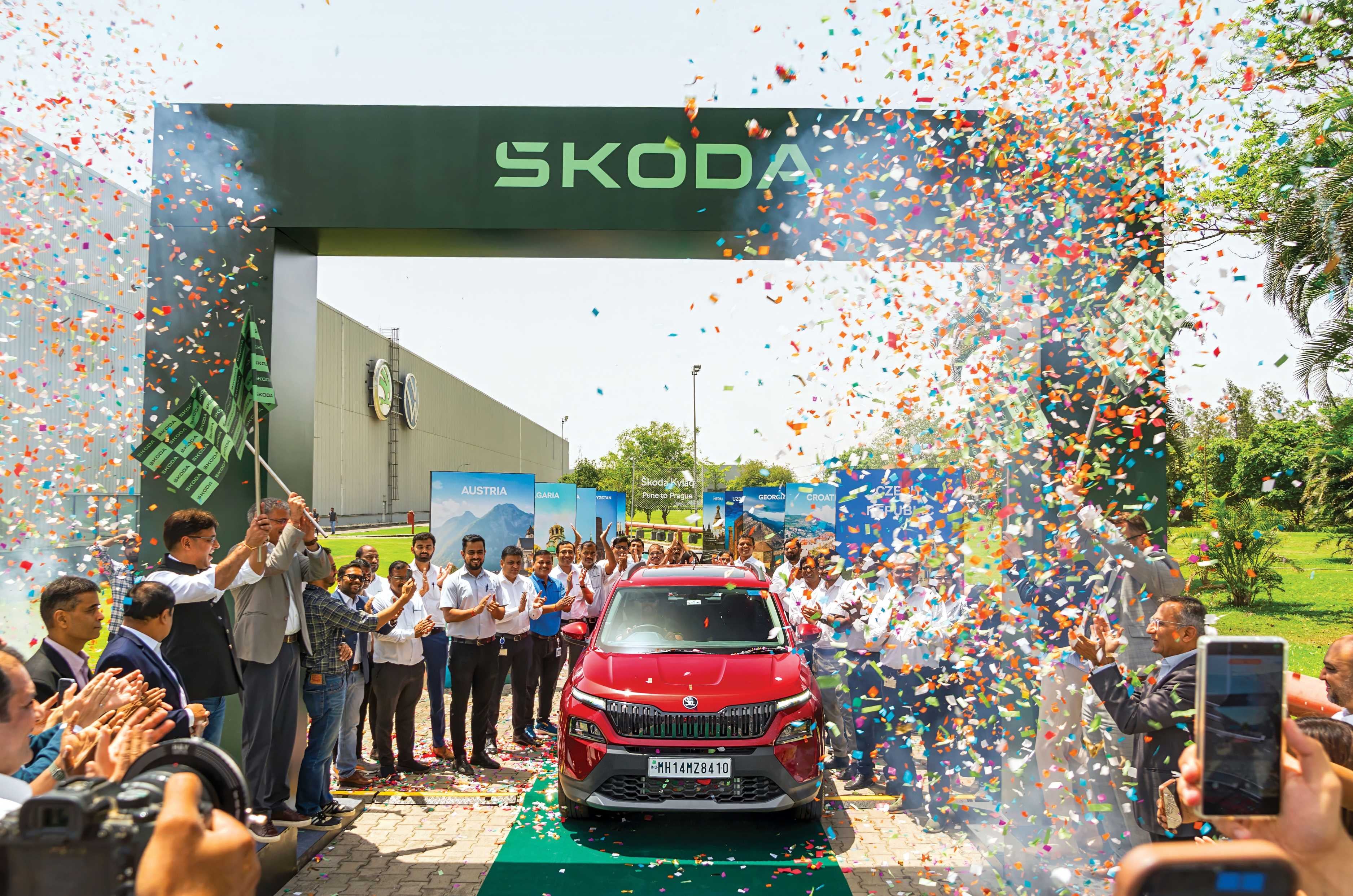
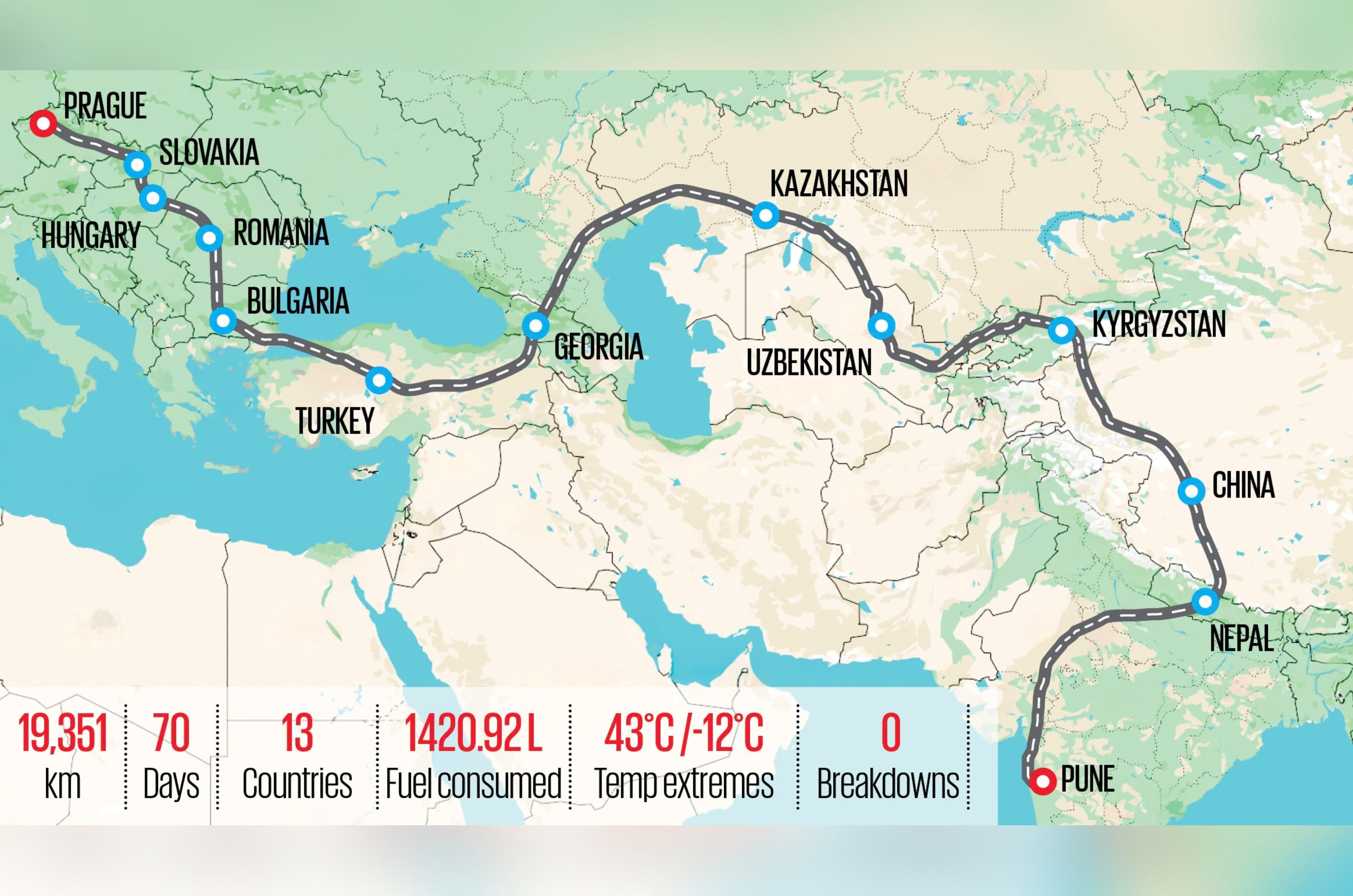
There are road trips, there are overland expeditions, and then there are journeys that become conversations with continents. This one starts in the industrial heart of Maharashtra, inside Skoda India’s sprawling Chakan facility. The end point lies nearly 20,000 kilometres away at Skoda Auto’s headquarters near Prague in Mladá Boleslav, Czech Republic, where bicycles evolved into automobiles and a 130-year-old story continues to be written.
Between these two factories lie thirteen countries, four major mountain ranges, countless cuisines, dozens of languages and enough history to fill libraries.
Our companion? Not a flagship SUV or a luxury grand tourer, but Skoda’s smallest SUV – the Kylaq, which recently celebrated its one-year anniversary. Driving it from Pune to Prague is a tall order, but surviving one year in India and being accepted with flying colours is enough cred one needs to take on the world.
India – Home Turf
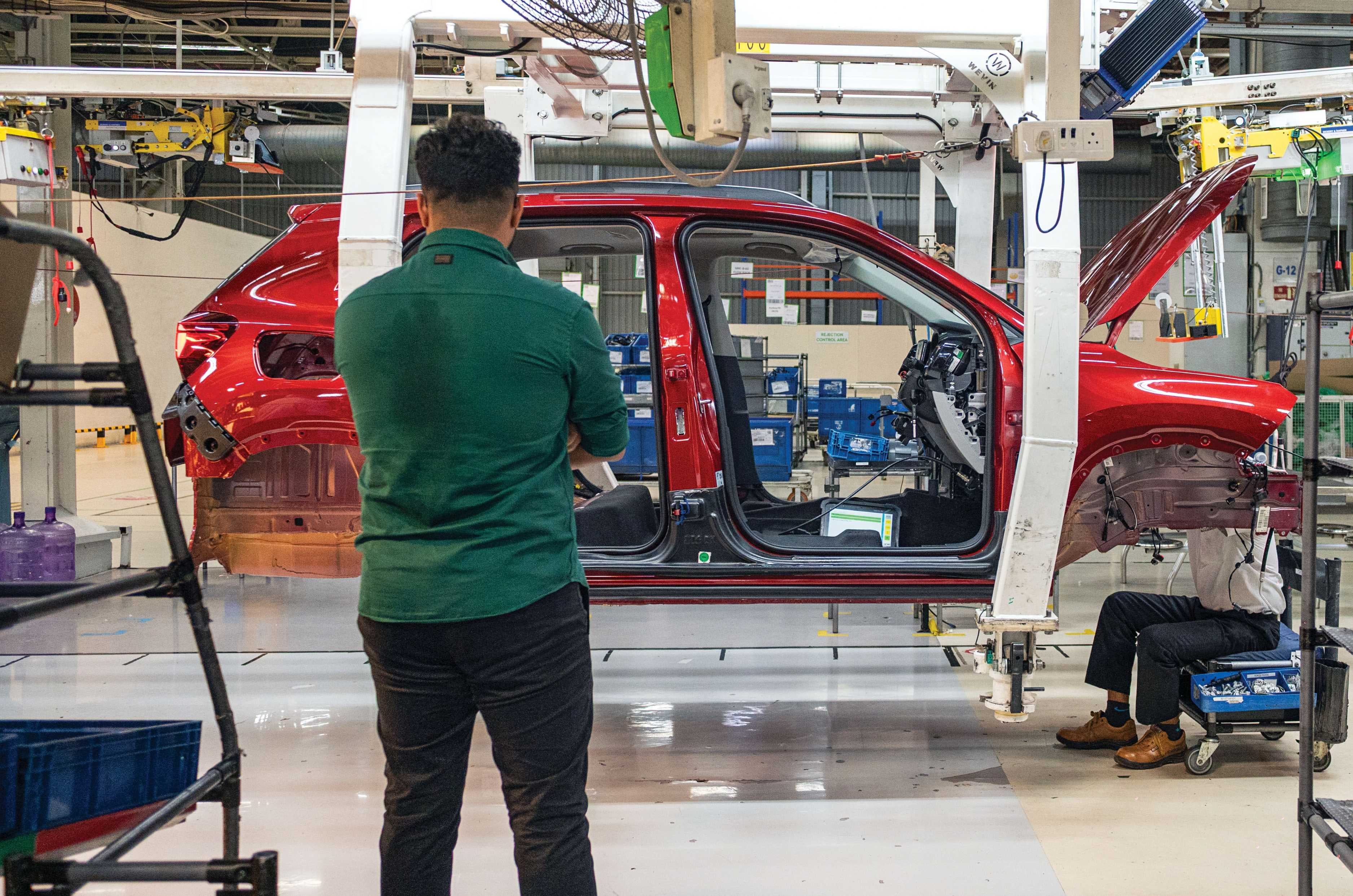
Witnessing the Kylaq’s birth added more responsibility.
On a cross-country road trip, you’d imagine the home country would be the easiest leg. With India, it was the opposite. To some, it’s organised chaos, but honestly, it’s anything but organised. Erratic traffic, erratic egos, and road conditions fit only for a Mars rover – India was the biggest challenge on the drive from Pune to Prague. As the odometer ticked over its first kilometre, right outside the gate of Skoda’s Chakan plant, a blood-red PMPML bus was ready to trade paint with the cherry-red Kylaq. A dinged-up Kylaq parked on the streets of Prague wouldn’t be a good look, so it was imperative that I babysit this compact SUV like a million-dollar supercar. Having watched the car being assembled on the factory floor, from bare bones to the finished package, only added to the emotion – driving it in traffic felt like walking a toddler across a football field. Eyes wide open, ready to block any attack.
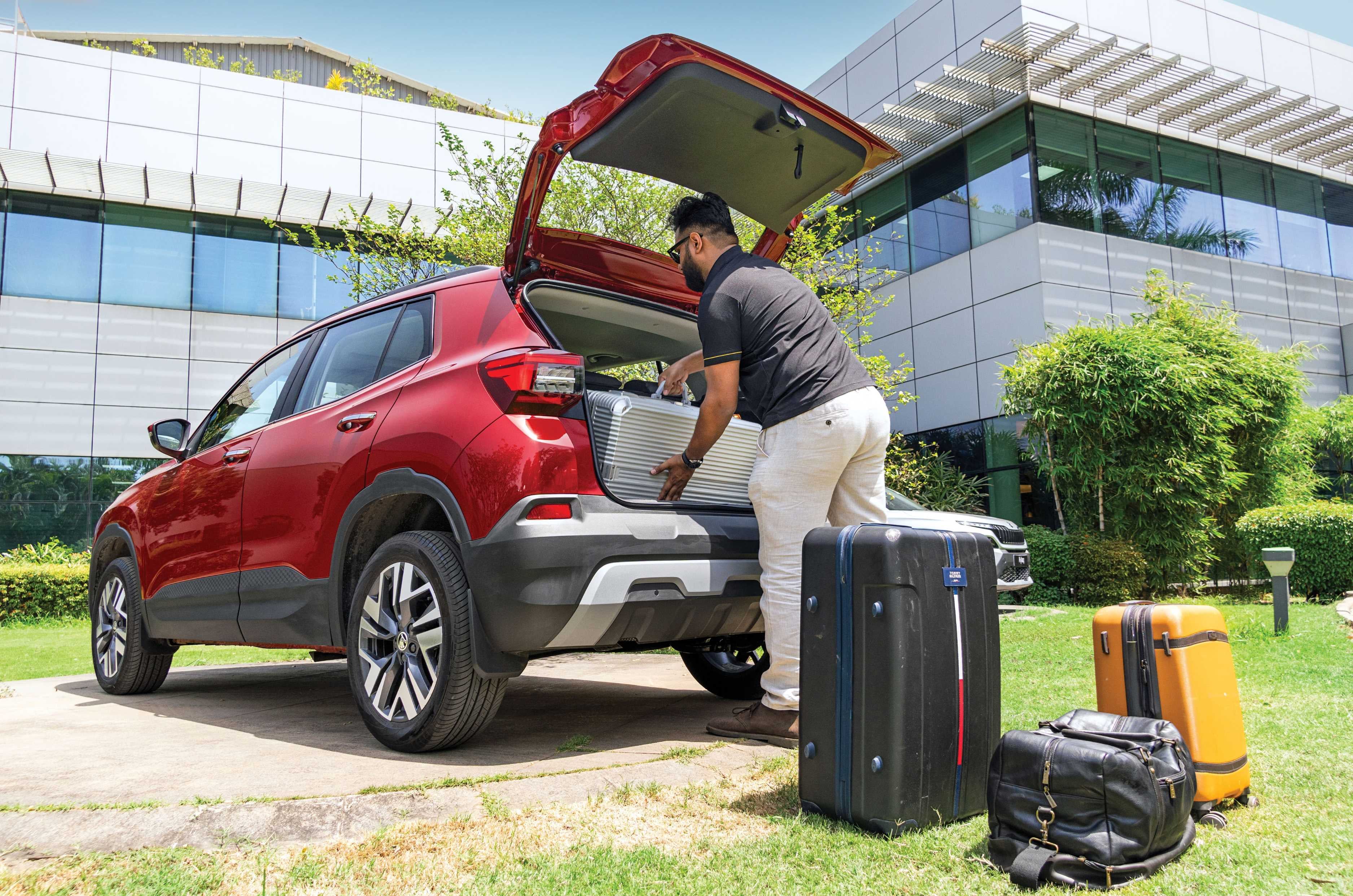
446-litre boot packed to the brim for 70 days on the road.
We got onto the Pune expressway and then crossed the Atal Setu in Mumbai, the longest sea bridge on the entire journey. Mumbai was home, both to me and to the Autocar India office, so after a few greetings from co-workers and the obligatory photos, we headed towards our first state crossing. The infamous Western Express Highway that leads out of Mumbai lived up to its reputation, but with a little anxiety, panic and a few expletives, we made it onto the national highway.
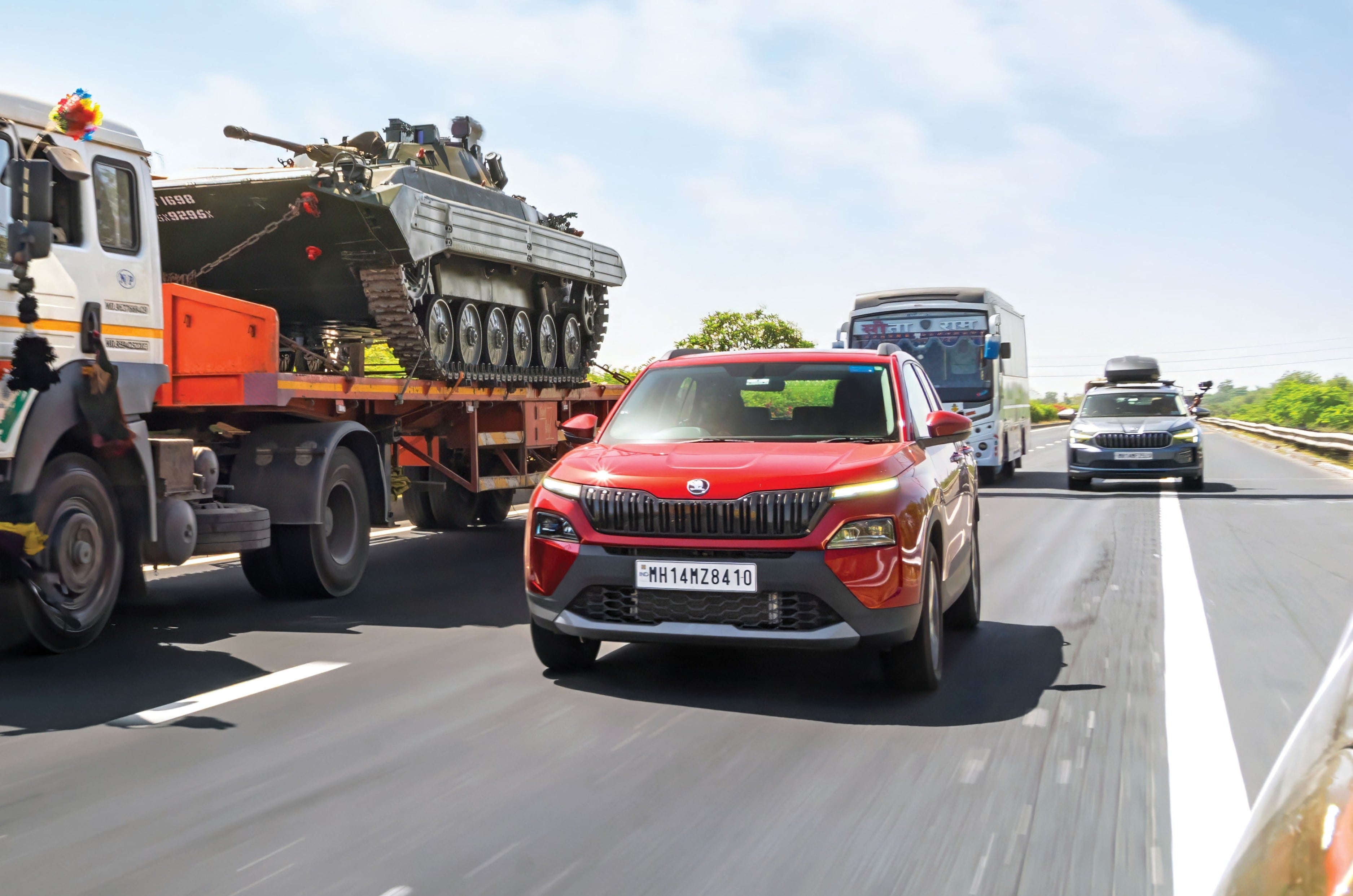
No telling what you’d spot on Indian highways.
The first of countless food stops was Hotel Ahura, renowned for its akuri and kheema. Needless to say, we carb-loaded to the max and made a beeline for Vadodara.
Pune-Birgunj in numbers
Distance covered
2,487km
Fuel consumed
234.46 litres
Average fuel economy
10.62kpl
Approximate fuel cost
Rs 23,629
Average per-litre fuel cost
Rs 100.87
Total time driven
55hrs 20min
Average speed
44.95kph
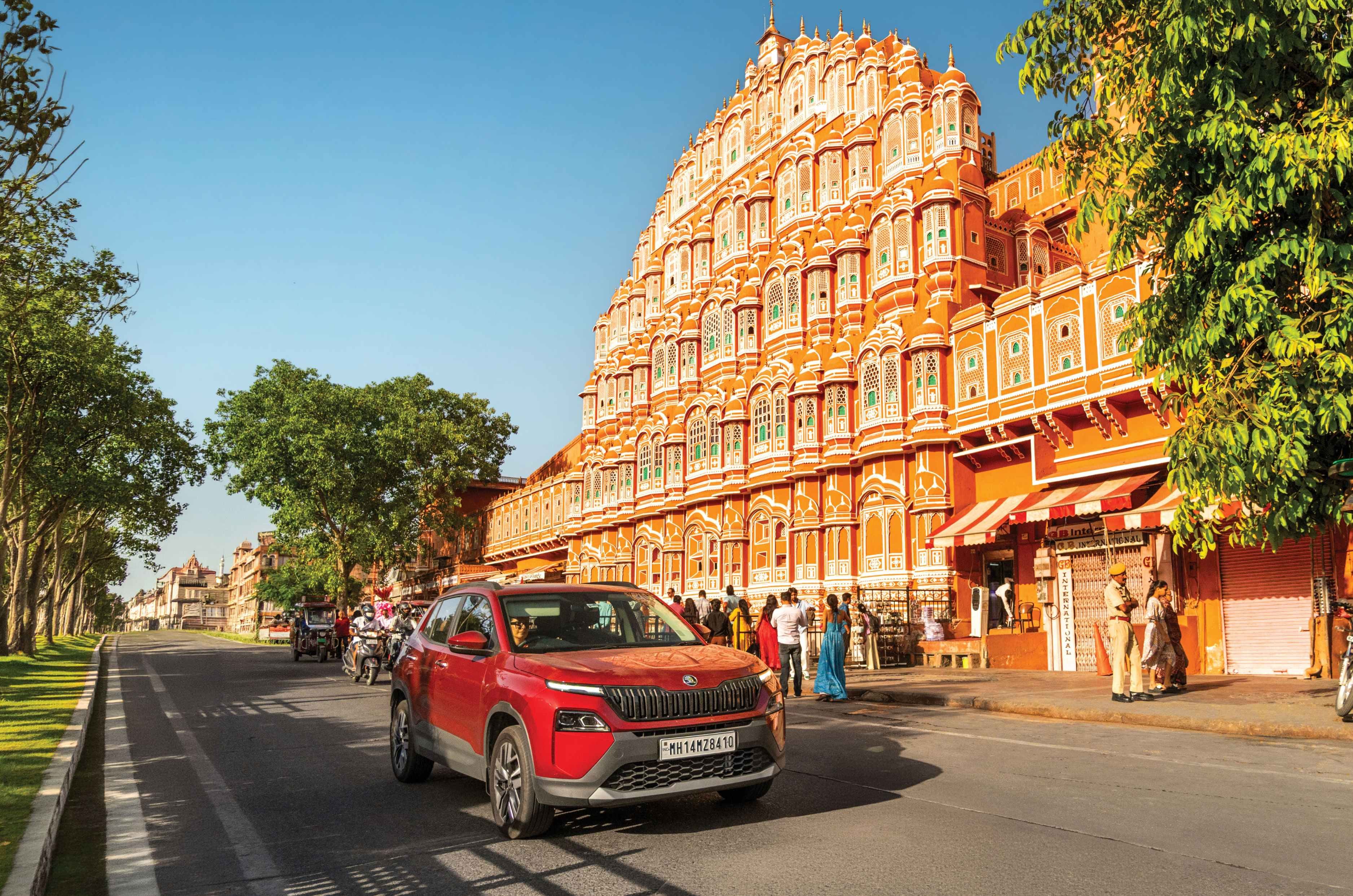
Crossing into Gujarat, the Kylaq could finally stretch its legs and spool up that turbo on the state’s spotless highways. The stability and effortless cruising were a welcome relief, since the bulk of the kilometres on this drive would be covered on long, open highways. Gujarat was a short stint – we made only an overnight halt in Vadodara before slipping out ahead of the morning traffic. The drive into Rajasthan was seamless, and Udaipur greeted us with a mix of heat and traffic. The City of Lakes is worth taking the time to explore, but a late arrival and early morning departure left us with just enough time to grab a traditional meal. All that driving had built up an appetite, so we put it to a vote between a massive vegetarian thali and laal maas – the latter won by a landslide. From the City of Lakes, we headed to Jaipur, the Pink City: just as picturesque as Udaipur, and just as colourful and chaotic. The sun setting over the beautiful Amer Fort made for a cracking backdrop, and a few glimpses of the Jal Mahal on the way back were a treat too. The iconic Hawa Mahal, with its 953 windows, never fails to amuse, but getting a photo of the five-storey icon without a chorus of honks is next to impossible. The next morning, after threading through Jaipur’s narrow lanes, we made it back onto the highway, heading for Agra.
Iconic Hawa Mahal ought to be seen first-hand.
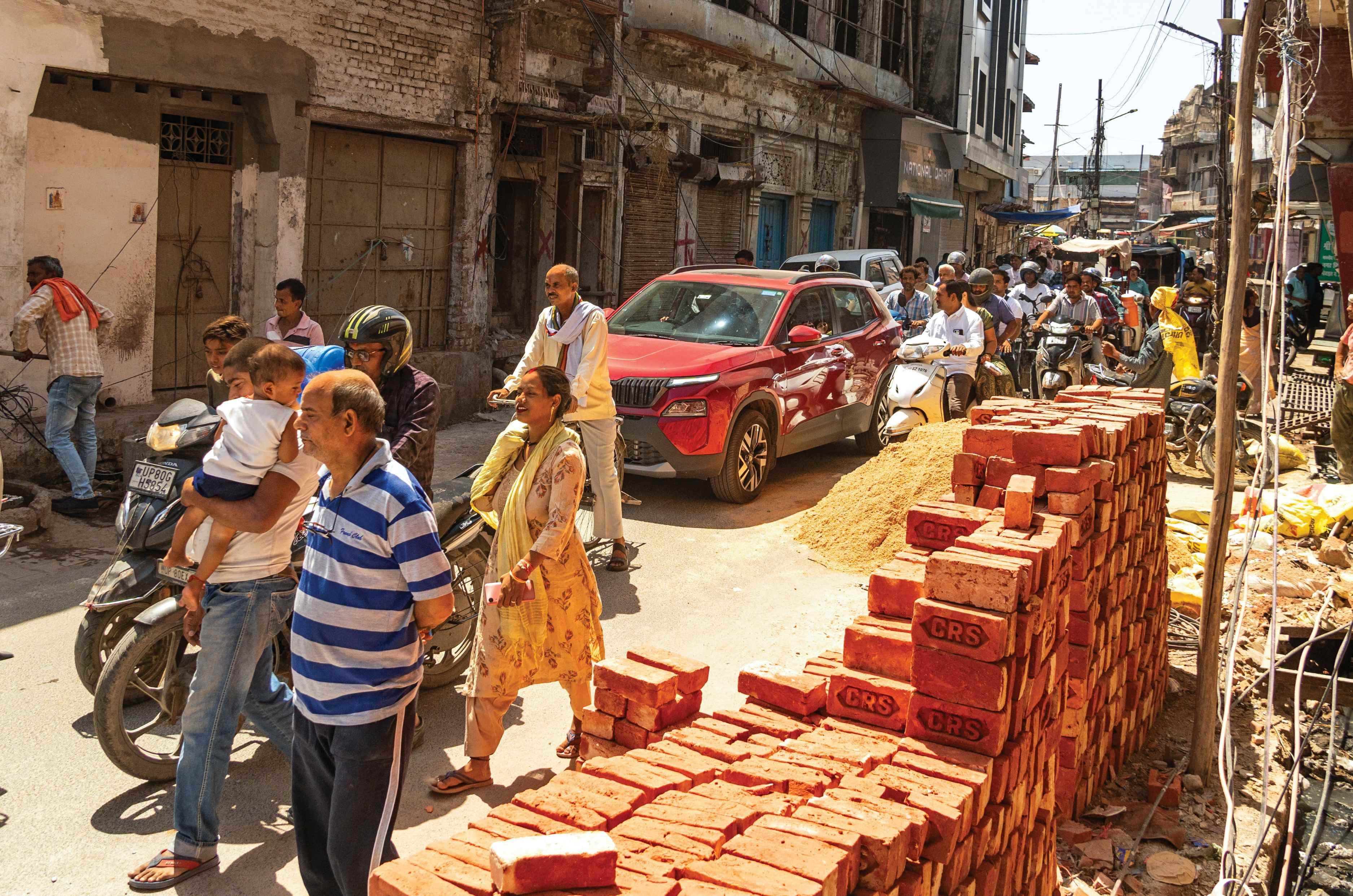
Agra is synonymous with the Taj Mahal, but the Agra Fort – from which you can see the Taj in the distance – is just as mesmerising. The detailing and architecture are second to none, and you could spend hours walking through its courtyards and passages, taking endless pictures. We, of course, also made it to the Taj itself, amid the hordes of tourists, if only to avoid the guilt of visiting Agra without a shot of the world-famous white dome. Tourism done, it was time for some petha – though the lanes near the petha shops seemed to be the exact width of the Kylaq, and that’s where peak anxiety set in. We got out of the mess, walked around the car to check for scratches and scribbles, and sighed in relief. India was adding to the tension, and we were barely halfway through it.
Agra’s narrow lanes were a nightmare to drive through.
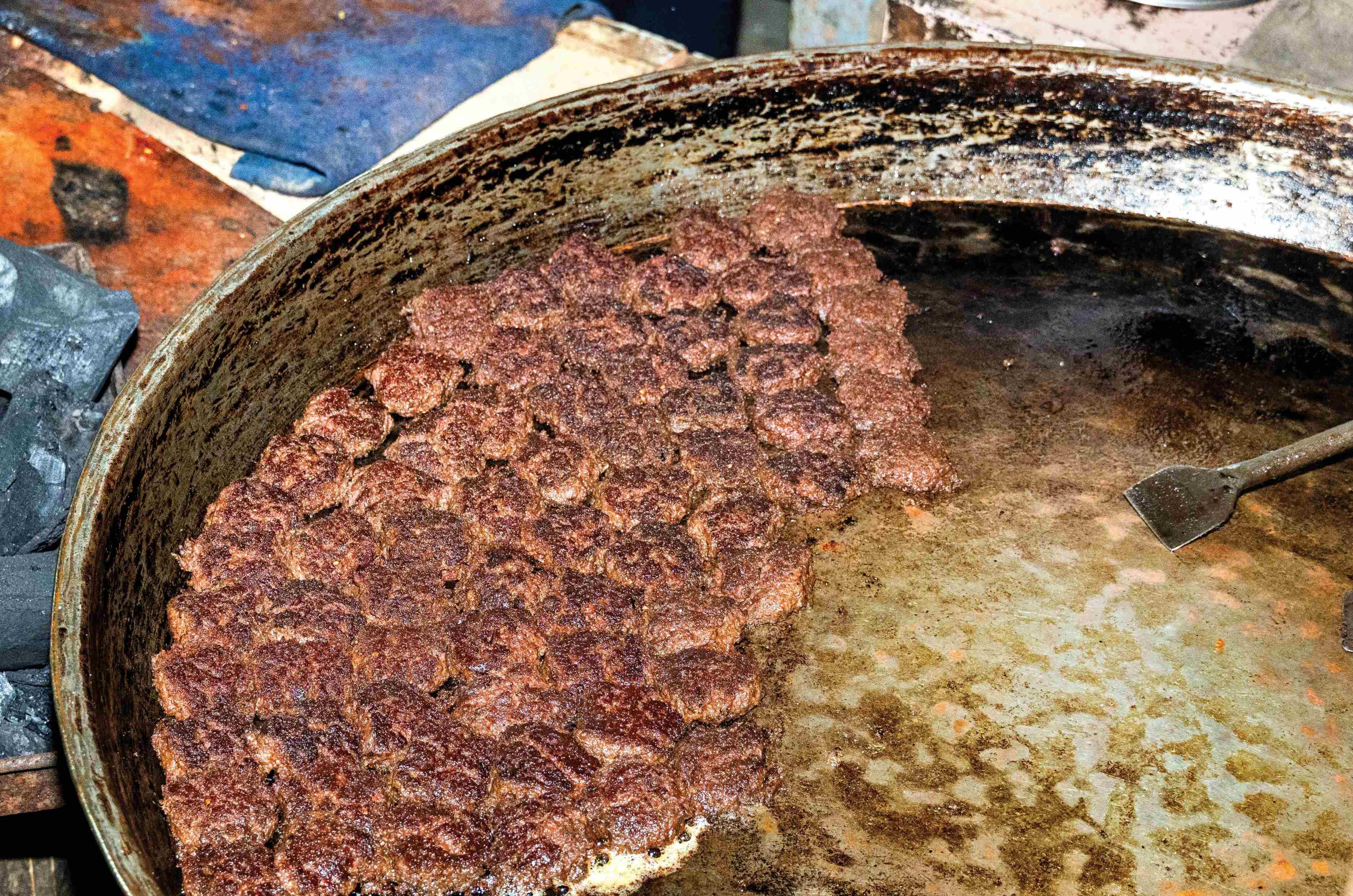
Our next stop from Agra was foodie heaven – Lucknow. The biryanis, kebabs, and tandoors were exactly what we expected, and exactly what Lucknow delivered. Finding your way here is easy – you could do it blindfolded, following the smoke and sizzle to wherever you need to be. Tunday Kababi is a must, and after a heap of biryani laced with kebabs, a long walk through the countless chikankari shops helps burn off some of the calories.
Lucknow’s Tunday Kababi still has us drooling over Galouti kebabs.
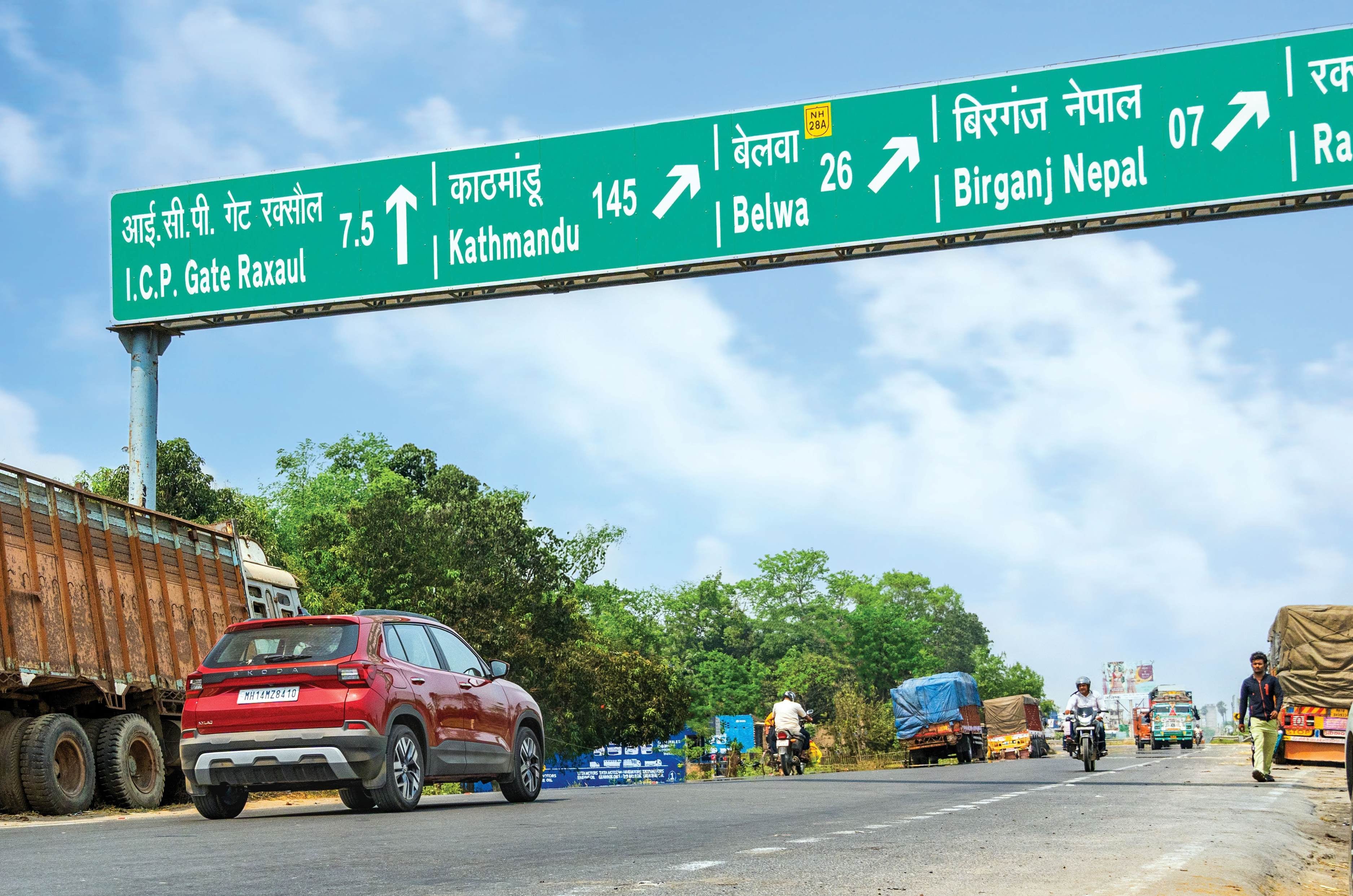
We were closing in on the end of the India leg, with one last stop in Gorakhpur before the Nepal border. To celebrate, a group of Skoda owners, officially known as the ‘Fans of Skoda’ joined us for a celebratory convoy as we drove out – everything from Octavia RS models to Kodiaqs and Kushaqs turned up as a send-off before we went international. The loud, chaotic border towns past Gorakhpur delivered one final challenge as we exited through Raxaul.
Final stretch before the Kylaq left India for the first time.
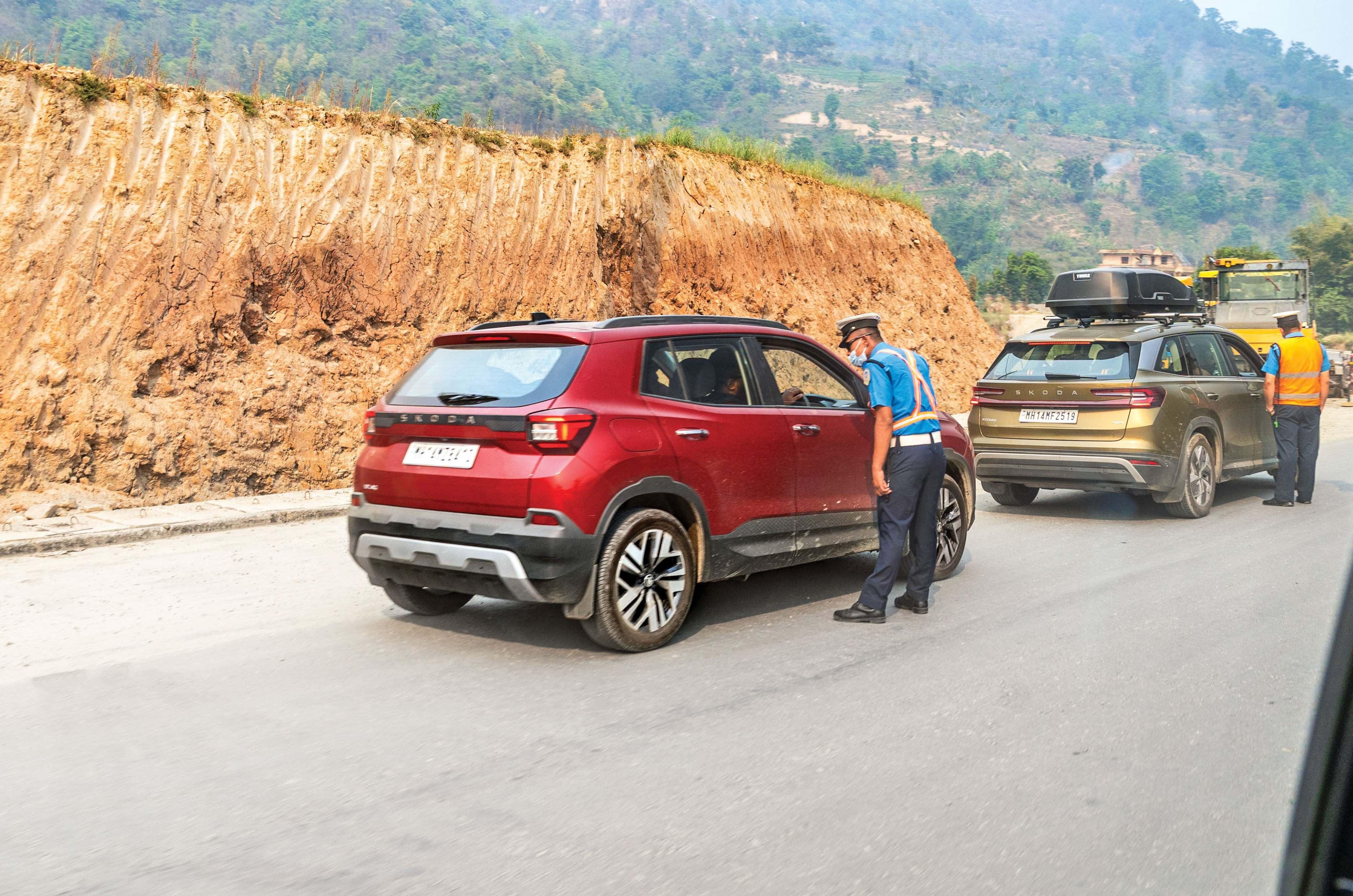
The India-Nepal border is still raw and basic, with none of the high-tech systems you might expect. A drive of this scale comes with a mountain of paperwork – visas, carnets, insurance, and more – and sifting through all of it manually takes a while. After a gruelling five hours, the Kylaq crossed out of India for the very first time.
Nepal – Old World Charm
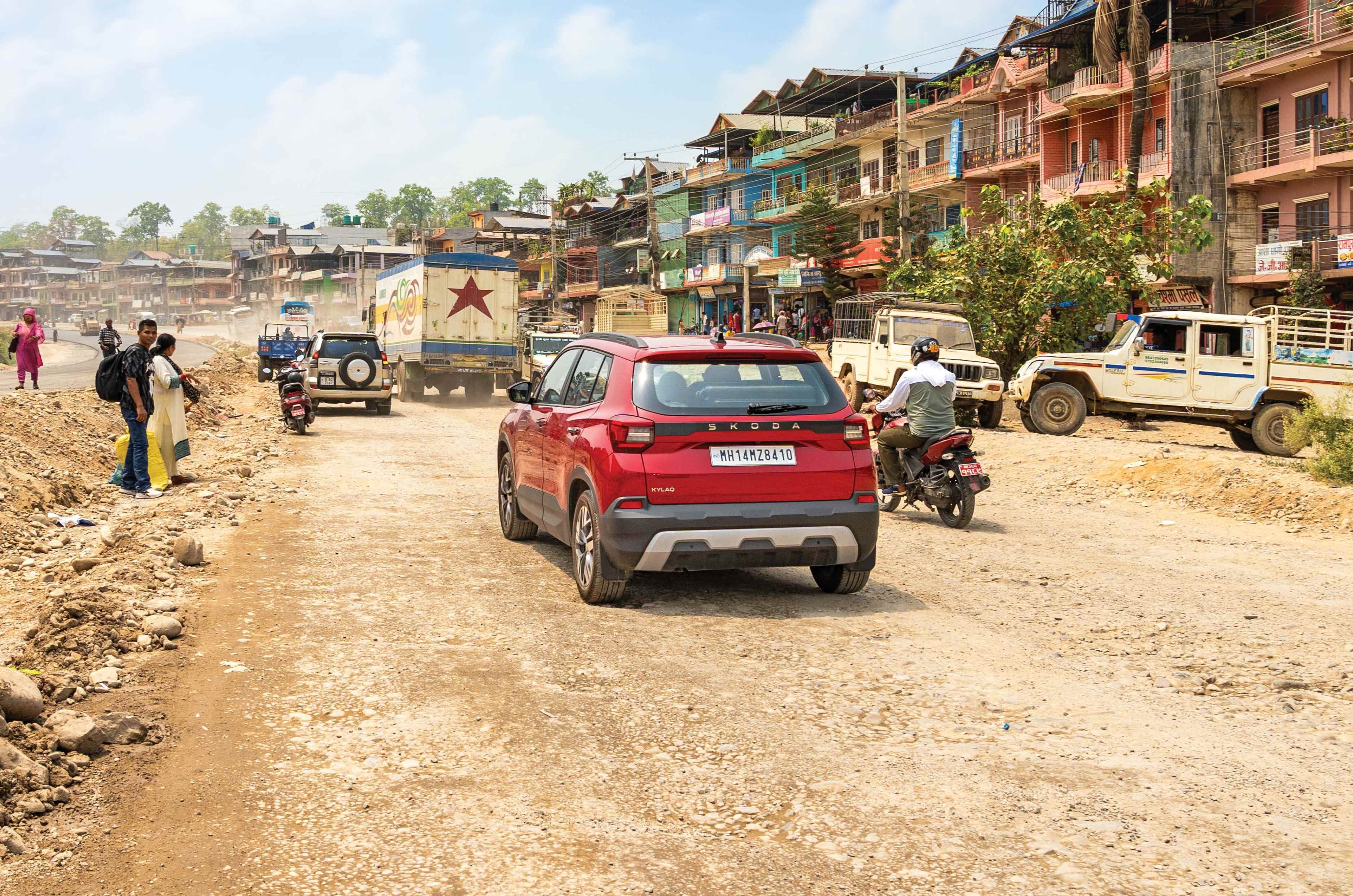
Nepal’s state highways give Indian roads a run for their money.
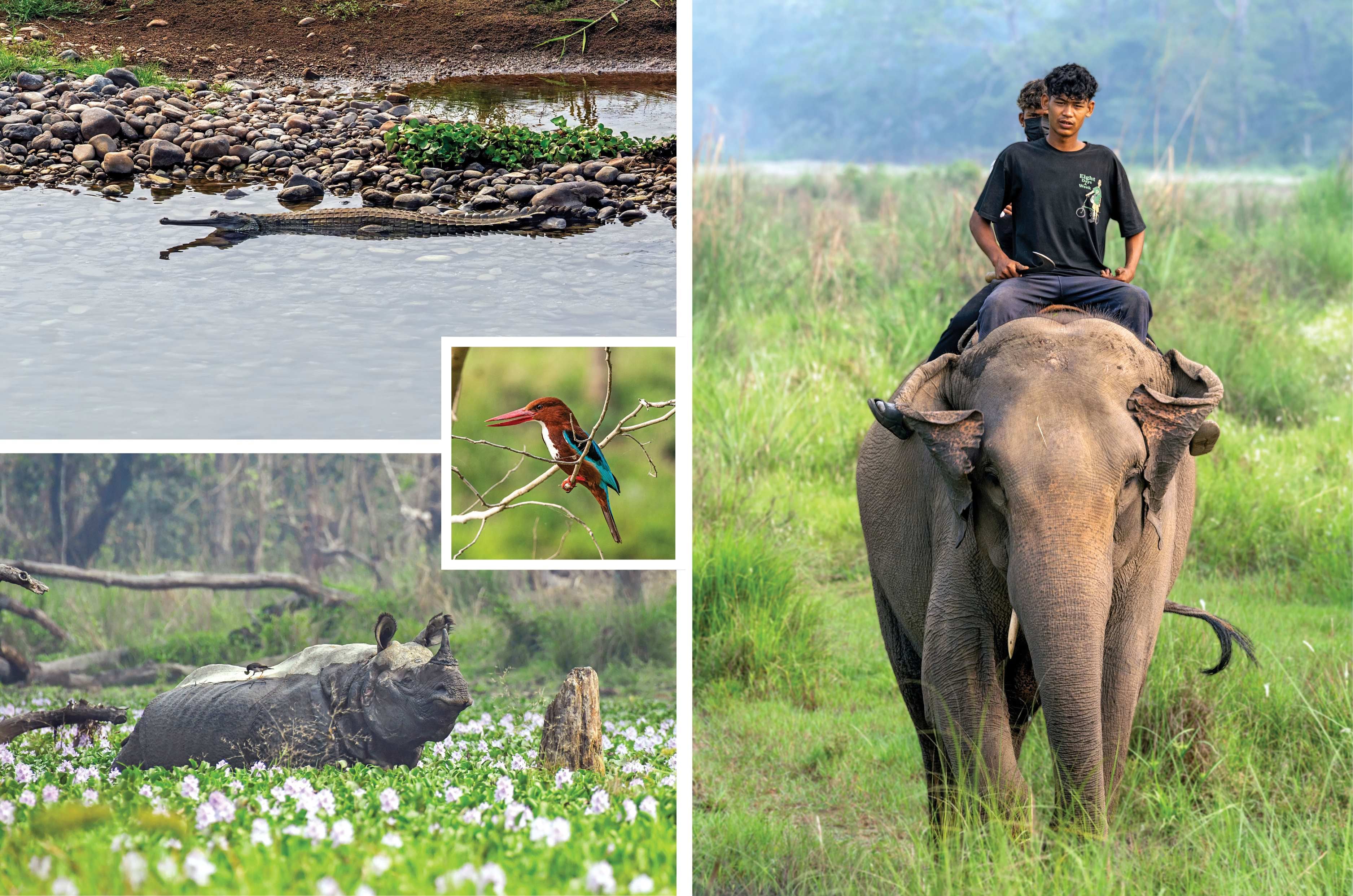
If the Indian side of the border was old-school, Nepal’s immigration post is almost antique. Drive past it, and you’d likely miss it altogether – the only tell-tale sign is a simple gate with ‘Immigration Office’ hand-painted on it. This humble-looking house is, in fact, the immigration office, where, just like on the Indian side, every check is done manually. Fine print, identity proofs, and everything in between were checked meticulously before we were welcomed into Birgunj. Our main draw in Nepal was the bustling capital, Kathmandu, but there were magnificent stops along the way, starting with Chitwan National Park. Home to nearly 700 one-horned rhinos, the park also shelters elephants, Bengal tigers, cobras, the elusive gharial, and abundant flora. The Kylaq would have been fun to explore it in, but we opted for the park’s safari vehicle to relax and take in the surroundings. Paddling a beaten-up wooden kayak past crocodiles and snakes adds a rush, but it’s nothing compared to a rhino staring you down in all its magnificence. The park gave us a welcome break from long hours behind the wheel.
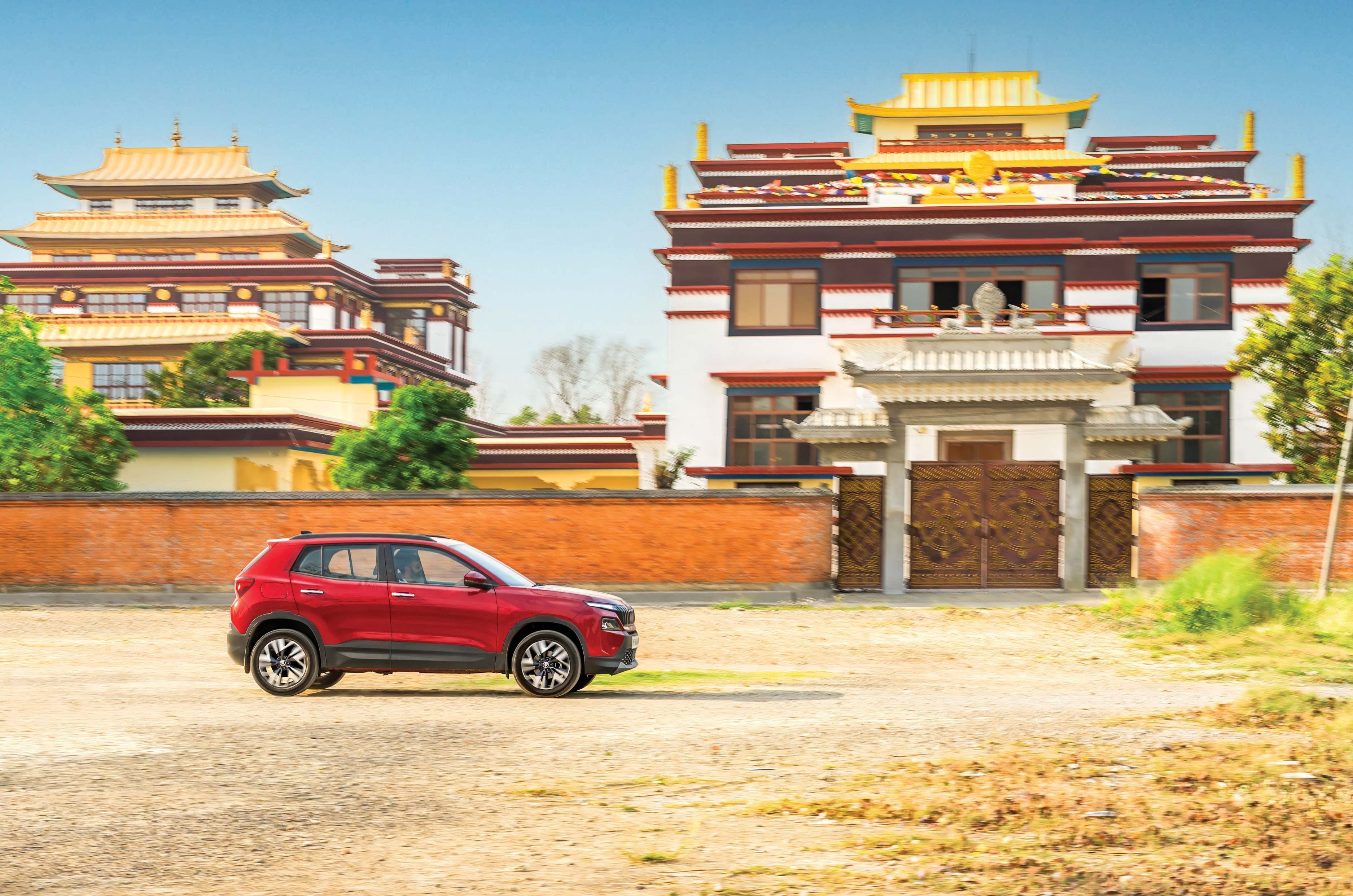
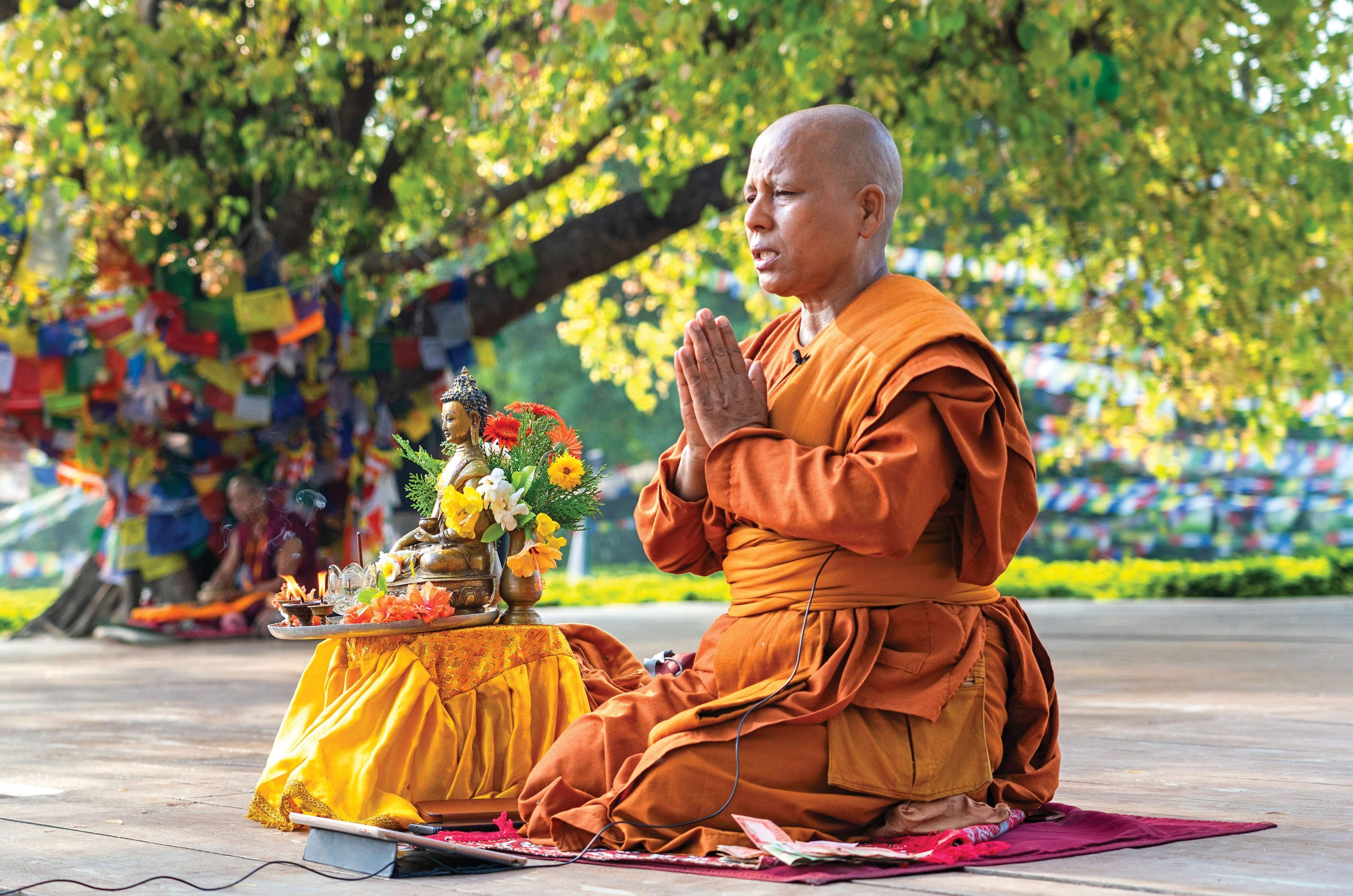
Lumbini is home to 32 unique styles of monasteries.
Next was Lumbini, a spiritual haven and, more importantly, the birthplace of Siddhartha Gautama (Lord Buddha) around 563 BC. Its fascinating monastic zone showcases monasteries built by Buddhist nations from around the world, each reflecting its own culture through design and architecture – a remarkable collection of temples spanning diverse traditions. The feeling of peace there was unlike anything I’d experienced, but it was soon disrupted by the road to Pokhara.
Lumbini provided a moment of calm through the chaos.
Mountain passes are notorious for destroying Google’s ETAs – landslides, breakdowns, and deteriorating roads mean a stretch that should take an hour could take five, depending on your luck. We braced for traffic and drove straight into a landslide clearing. A two-hour wait meant the sun was setting as we rolled into the quaint town of Pokhara. Bustling with cafés and pop culture, it felt like a mini Kathmandu, but with the stunning Phewa Lake turning orange at sunset. The calm that began in Chitwan came full circle on the shores of Phewa Lake.
Chitwan is home to the gharial and over 700 one-horned rhinos.
Kathmandu, though, was a different animal entirely – every bit a capital city, and a world away from the slow pace of Chitwan or Lumbini. The music is loud, the traffic is hectic, and the city is anything but quiet. Ironically, the only quiet things on the road are the cars – China’s dominance in Nepal is stark, with three in five cars on the road being Chinese EVs. Geely, BYD, and GWM rule the market, with only a handful of Hyundais and Kias as competition.
Authorities were always curious thanks to Indian number plates.
The party scene rules Kathmandu too. At night, the city comes alive as a hub for tourists from around the world. Hiking gear and North Face apparel go for a fraction of the price – and, often, a fraction of the quality – alongside quirky masks and fridge magnets at every tourist stop. Spend a little more time, though, and you’ll find excellent coffee shops and the famous Thakali thali: thick buckwheat porridge with salads, meat, and plenty of flavour. Good thing too, since walking through Durbar Square works up quite an appetite. Partly destroyed by the devastating 2015 earthquakes, the temples have since been restored to their former glory, though you can still spot the scars in a few bent pillars and roofs. It’s a culture and tradition worth preserving, and Nepal deserves credit for doing exactly that.
Birgunj-Sino-Nepal Border in numbers
Distance covered
922km
Fuel consumed
115.96 litres
Average fuel economy
7.13kpl
Approximate fuel cost
Rs 15,846
Average per-litre fuel cost
Rs 136.65
Total time driven
34hrs 25min
Average speed
27kph
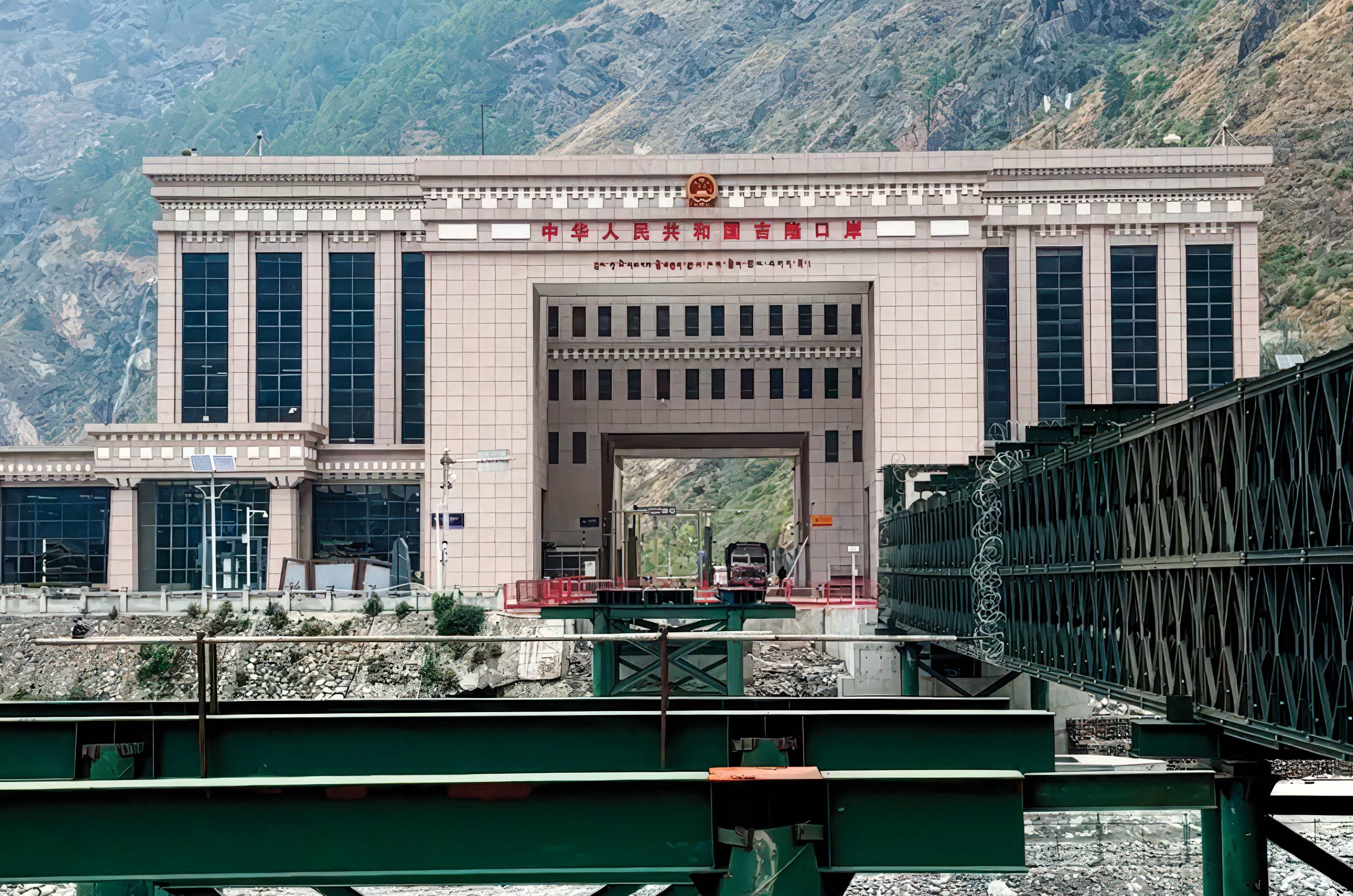
With Kathmandu explored, we headed towards our second border crossing – and this one was far more intense. Once we left Kathmandu, we left the tarmac behind too. Muddy back roads, still wet from the previous night’s rain, meant slush and a constant need for 4WD. Even so, though packed to the brim with luggage, the Kylaq stayed light enough and had enough clearance to pick its way around the mud on the approach to the Rasuwa Bridge. From there, you can see the Chinese immigration building towering over everything around it. With the Kylaq thrumming with excitement, we crossed into Tibet – the roof of the world.
Tibet/China – Roof of the World
China’s border crossing is as imposing as it gets.
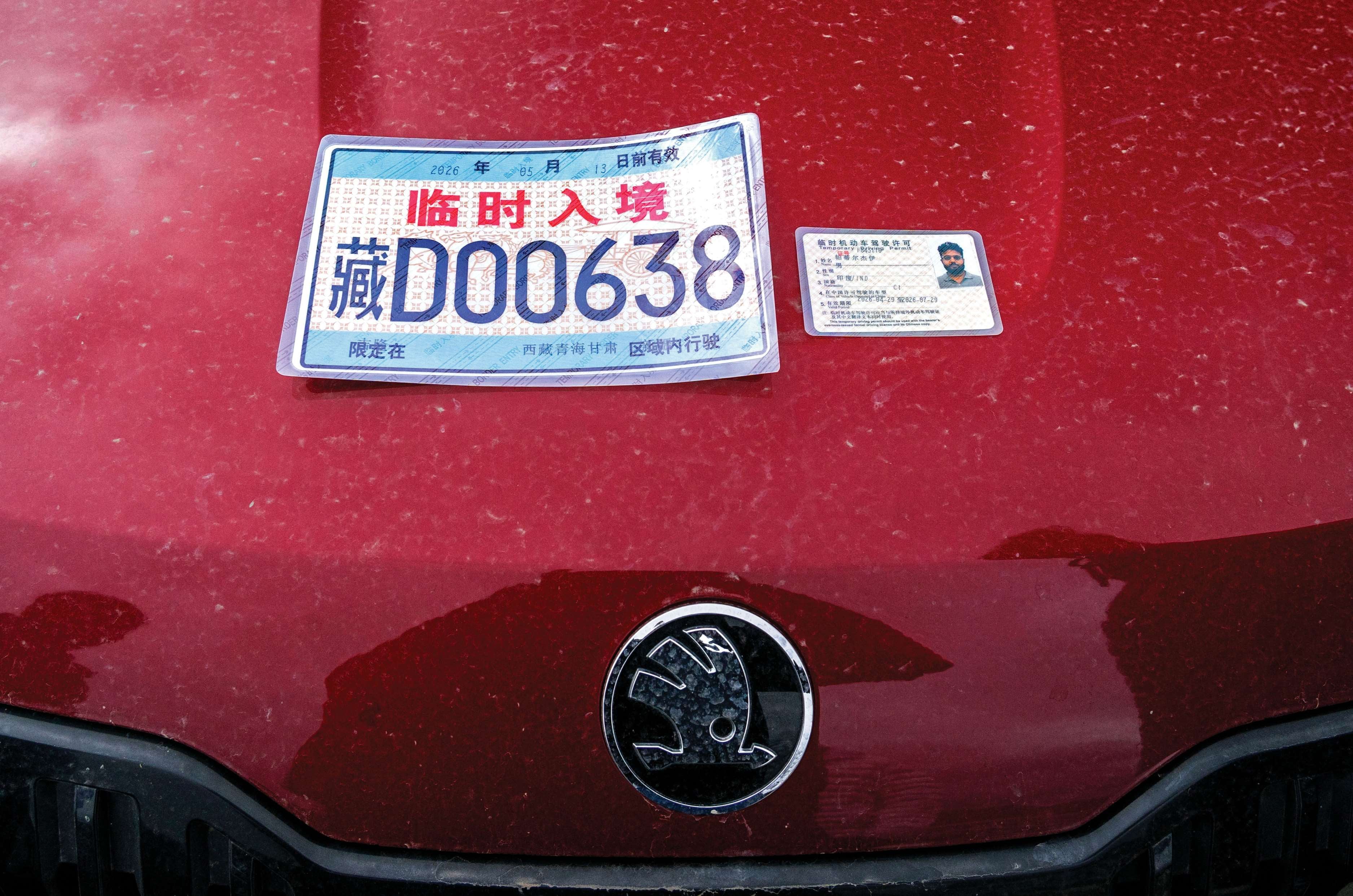
Crossing into Tibet felt like crossing into the future. For a region tucked deep into the mountains, it’s exceptionally developed – the roads are smooth and well-signed from the moment you cross the bridge, barely a hundred metres before the immigration office. In China, we weren’t taking any chances, knowing any misstep here could jeopardise the rest of the journey. After answering the customs officers honestly – and impressing them with the scale of the Kylaq’s challenge – we entered the lovely town of Gyirong. Old Chinese architecture, plenty of red, and signboards we couldn’t quite read were early signs that we really were in a different world now. Nepal had shared plenty with India – the cars, the food, the roads – but China felt entirely its own. We thought we’d seen our share of speed cameras, but China put us to shame – they appear every 50 metres or so, complete with flashes. There’s simply no room for error, and you’re monitored everywhere you go – aneerie feeling that takes some getting used to. Another non-negotiable is to obtain a special driving licence for every person that will be driving and a China-specific number plate, which you have to place on your dashboard so the cameras can pick up any infringements. A regular India-style RTO office with long queues and a lack of urgency got us homesick for a bit.
Local license and registration are non-negotiables in China.
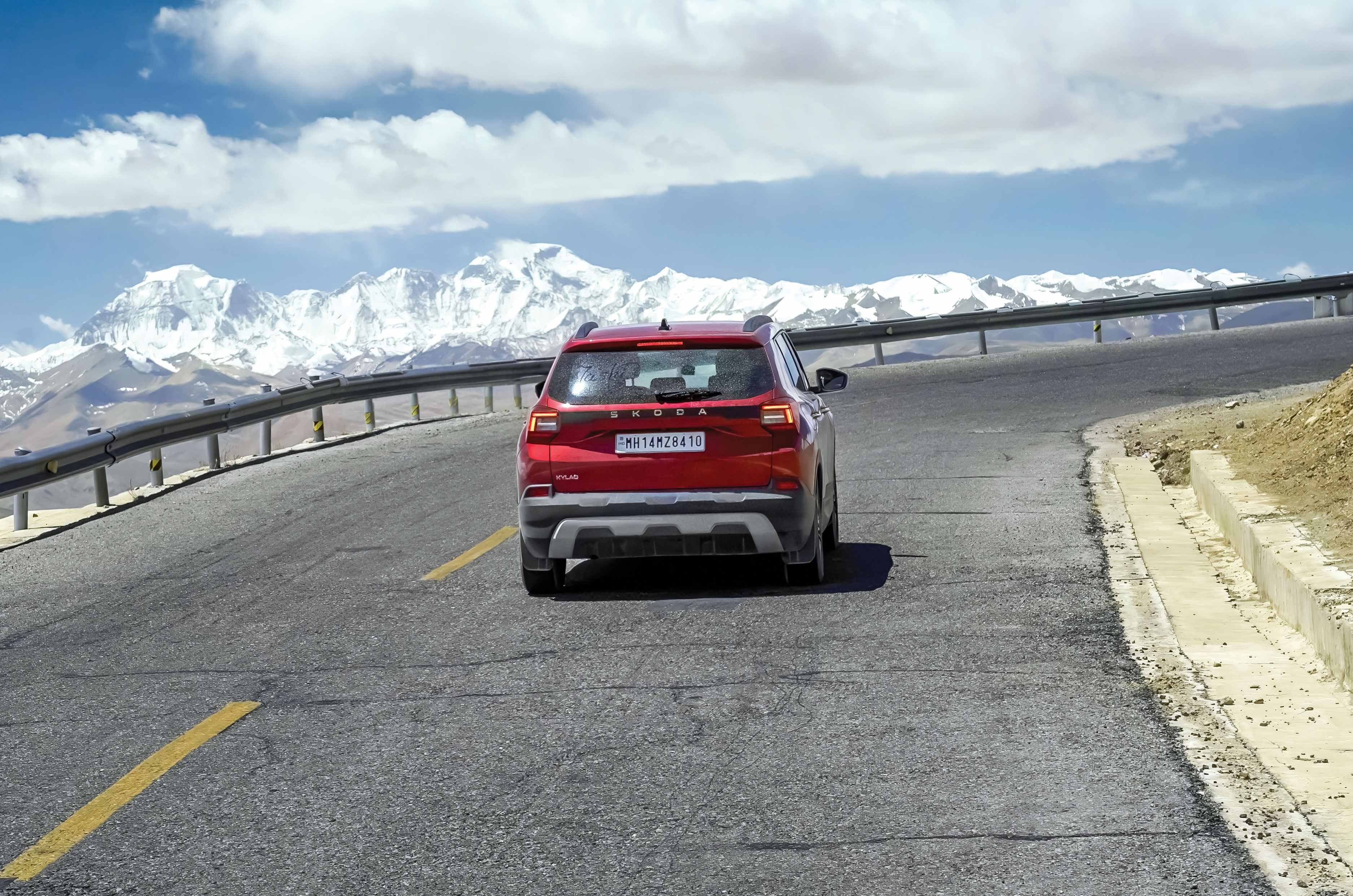
A few mugs of hot ginger-lemon tea eased us into the chill, and we set off for Mount Everest Base Camp. High altitudes are usually punishing for small-capacity engines, but thanks to its turbocharged engine, the Kylaq barely broke a sweat, buzzing through the passes. Its 6-speed automatic had been a great convenience through the chaos of India and Nepal, but the winding mountain roads and immaculate tarmac meant I could switch to manual and take control via the paddle shifters. Paddle-shift response is often sluggish, but not here – the shifts were quick, and the taut suspension held its ground even through tight hairpins.
Everest hove into view long before we made it to base camp.
It made for a great drive and great footage, right up until we spotted the peak in the distance. Even from afar, Everest is breathtaking, and mercifully the clouds stayed clear as we got closer. You can’t take a car near base camp itself – a one-hour bus ride covers that final stretch. It’s strange how you lose your breath as you approach Everest – partly the thin air and altitude, but you’d lose it all the same just from the view. Words don’t do it justice, and don’t be surprised if you shed a tear or two – it’s overwhelming.
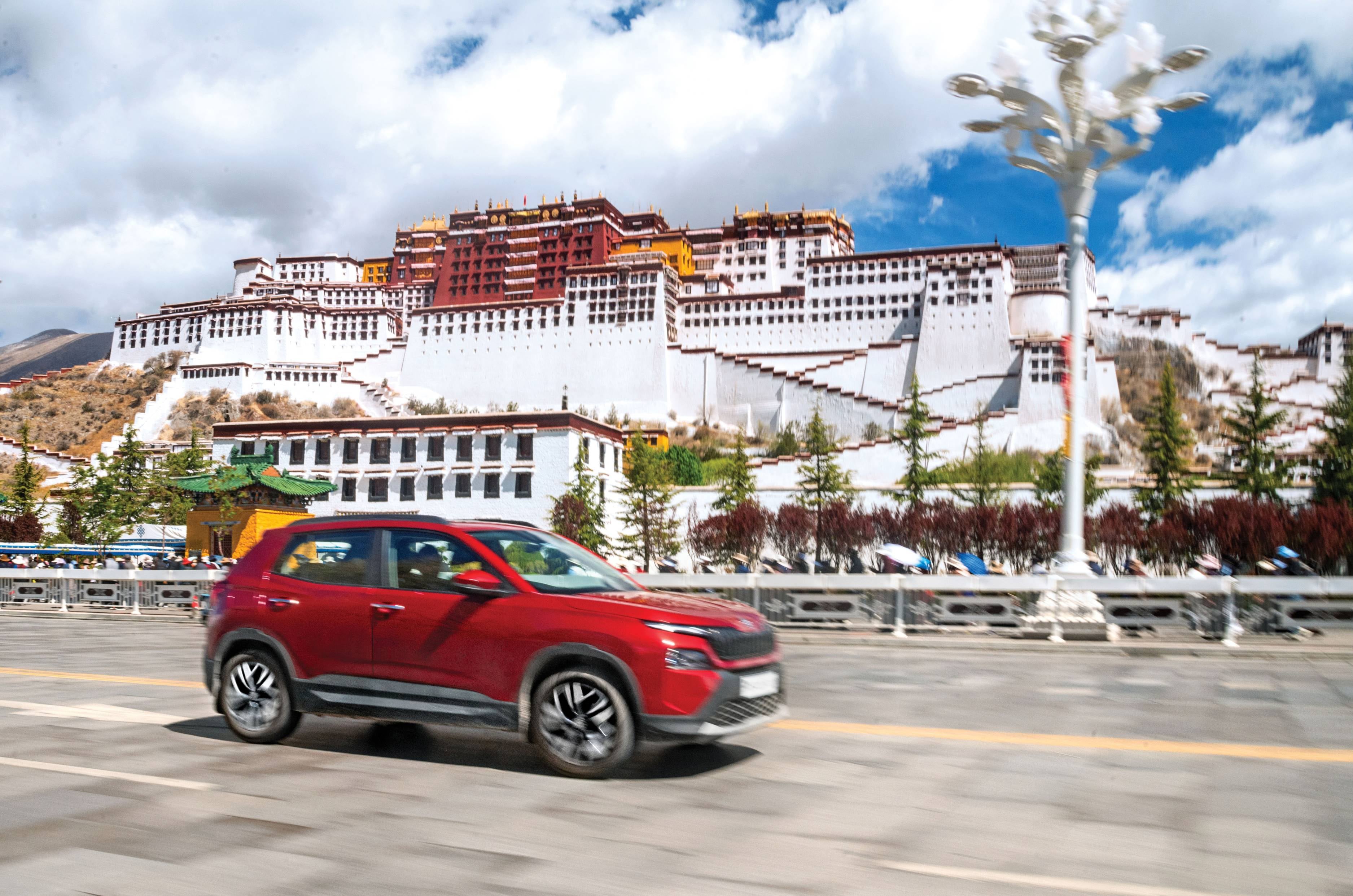
Stunning Potala Palace; once home to the Dalai Lamas.
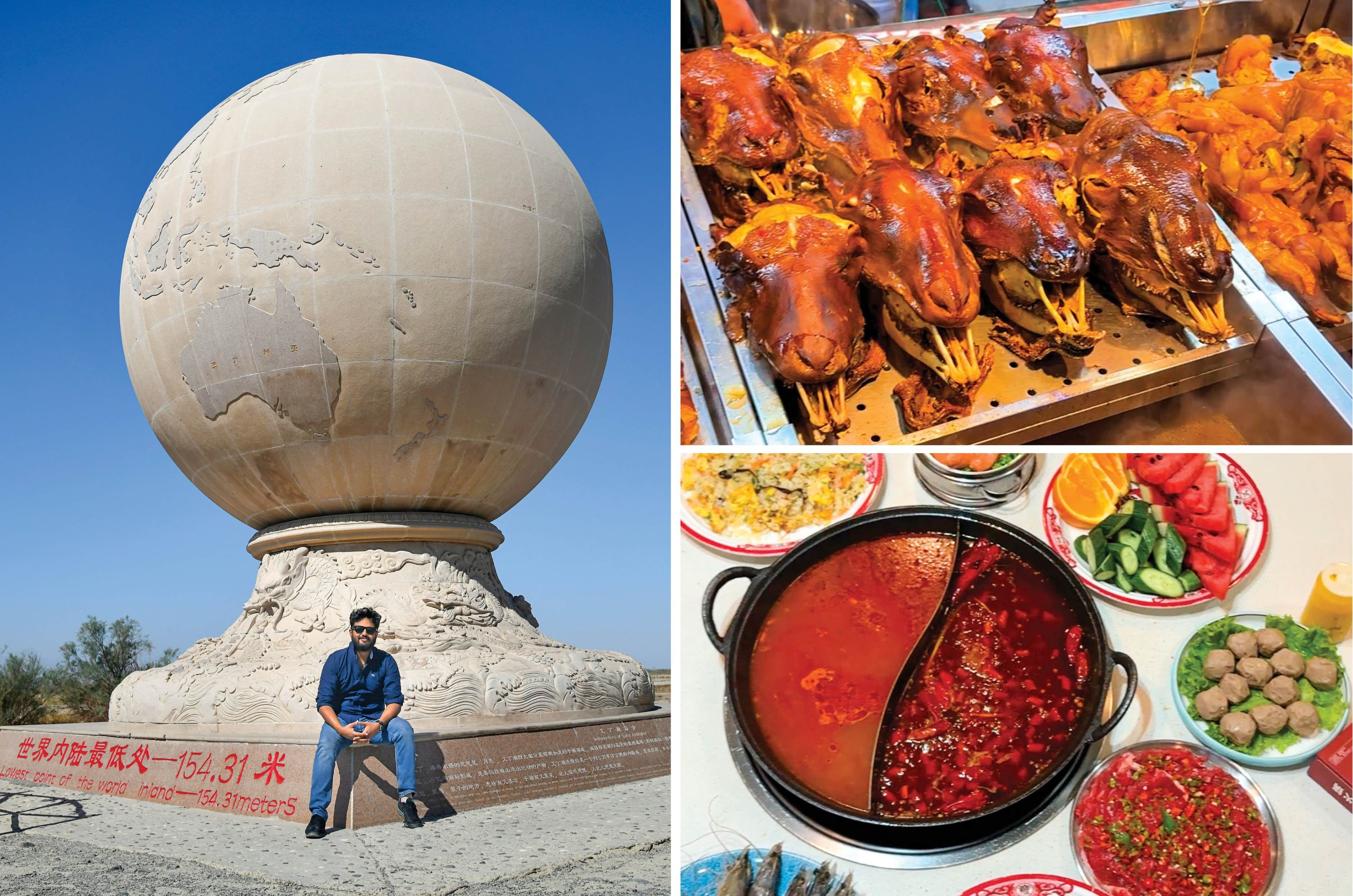
With Everest ticked off, it was time to take on China’s vastness. We headed to Lhasa, the spiritual capital of Tibet, home to the grand Potala Palace. Once home to monks and lamas, this stunning palace holds incredible history and artefacts – spiritual or not, its significance to the country’s history is unmistakable. The drive kept revealing itself through unique food, dialects, faces, and even geography. One day we were freezing thousands of feet above sea level; days later, in Turpan, we were below sea level in blistering heat. From boiling hotpots to grocery-store instant noodles, China pushed us well outside our comfort zone, and the Kylaq wasn’t spared either.
L: From EBC’s high to Turpan Depression’s low – Jay was at 154m below sea level here. R: Street food in China not for the faint-hearted.
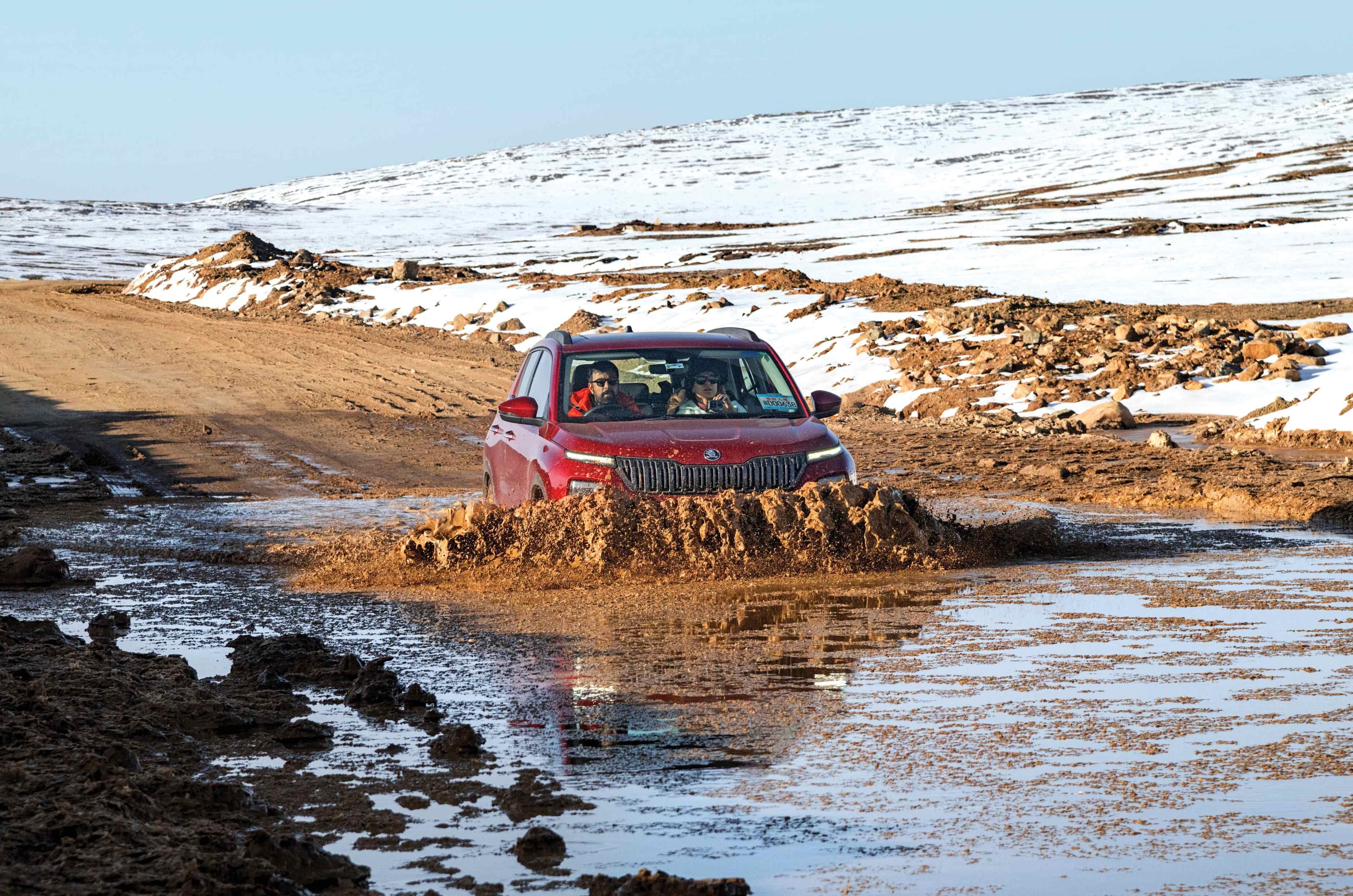
Two full days on the way to Golmud were entirely off-road, taking over 13 hours of driving, with our average speed dropping to 18kph as the Kylaq waded through water up to its bonnet and emerged without complaint.
In China, you get perfect roads or, simply, no roads.
A stretch that would have broken most cars left the Kylaq unscathed. China hit hard, but the Kylaq hit back harder. From day one, it had faced challenge after challenge, and from day one, it had come out on top. Three countries in, it still carried the same zeal it started with – and while we were rattled, it stood strong each night, ready for the next day.
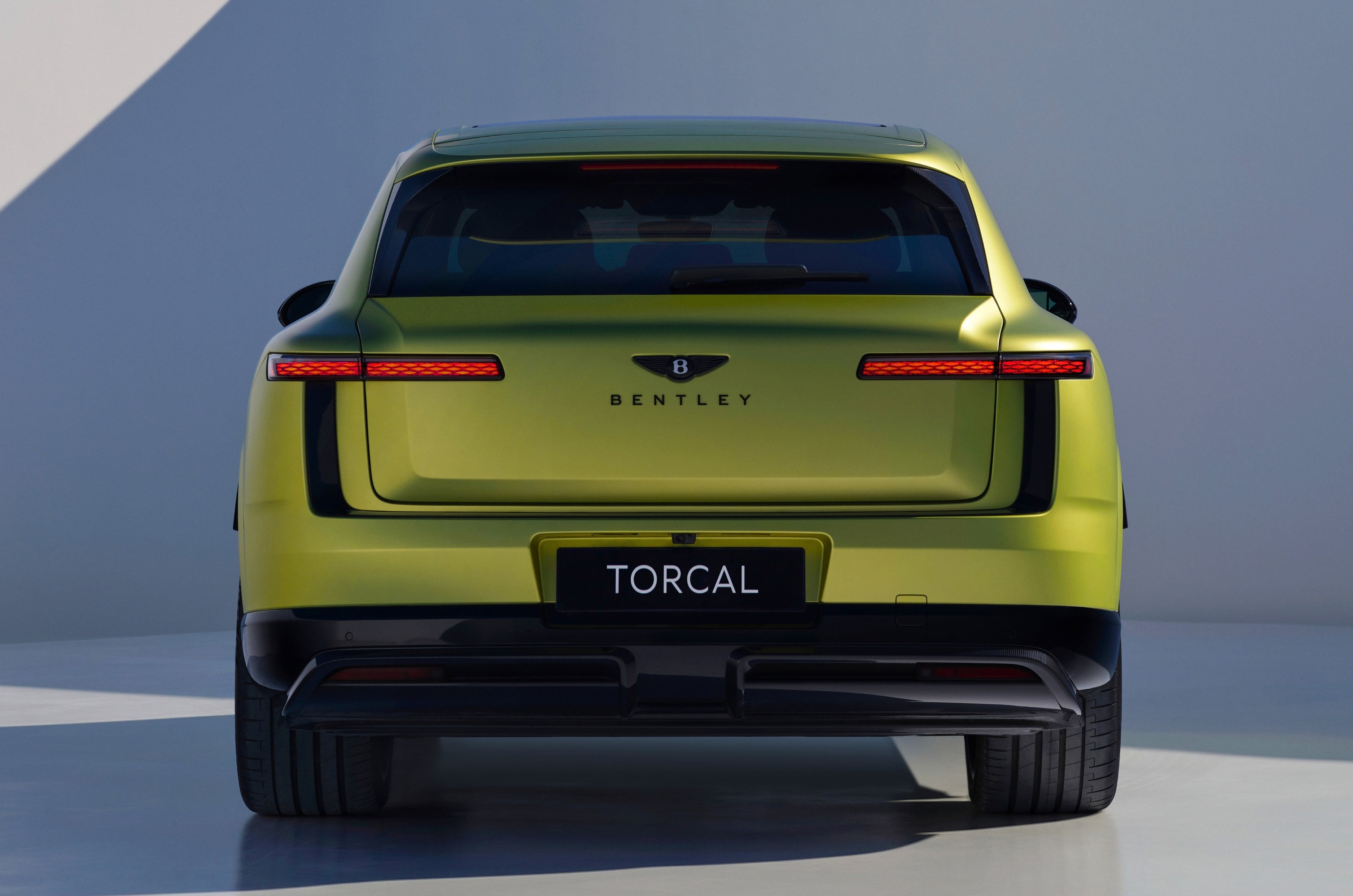
For 107 years, Bentley has been defined by what sits under the bonnet: supercharged Blowers, mighty W12s and thundering V8s. The Torcal has none of that. It’s Bentley’s fourth model line and its first electric car. It slots in below the Bentayga, and it will never get a petrol engine. Bentley also calls it the template for every Bentley that follows, whatever the powertrain.
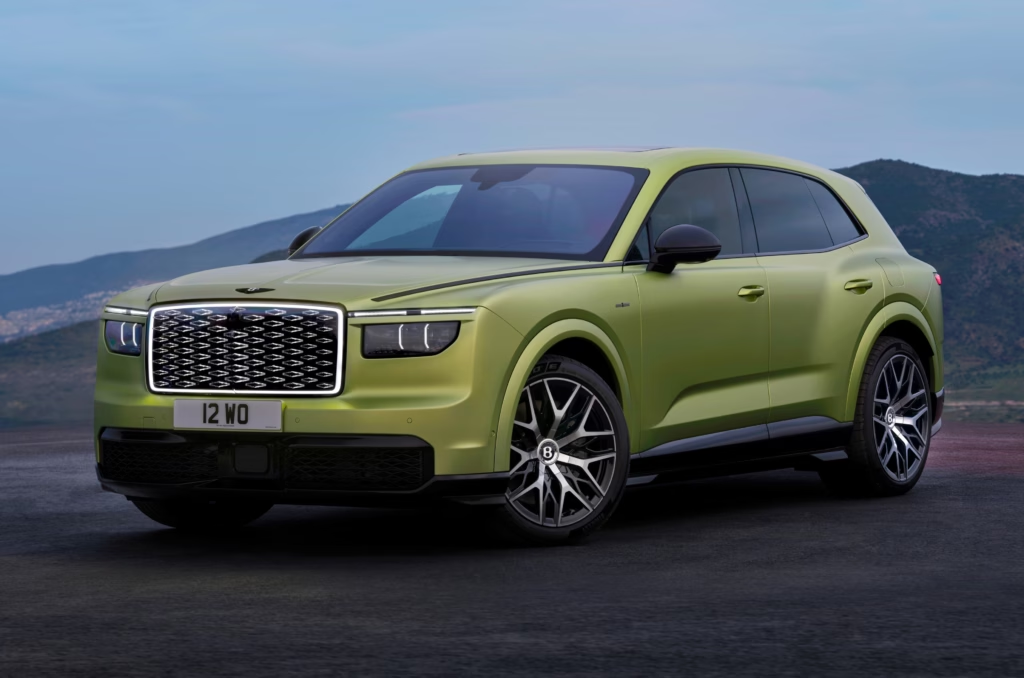
Like many modern Bentleys, the Torcal is named after a natural wonder. El Torcal de Antequera is a dramatic landscape of weathered limestone in southern Spain. The car is also the first Bentley to wear the brand’s redesigned, modernised emblem, which was revealed last year. That leaves one question that matters. Take away the engine, and is it still a Bentley? We haven’t driven it yet, so the full answer will have to wait. After a close look at the First Edition, the fully loaded launch car, there’s plenty to go on.
Bentley Torcal exterior design: light is the new chrome
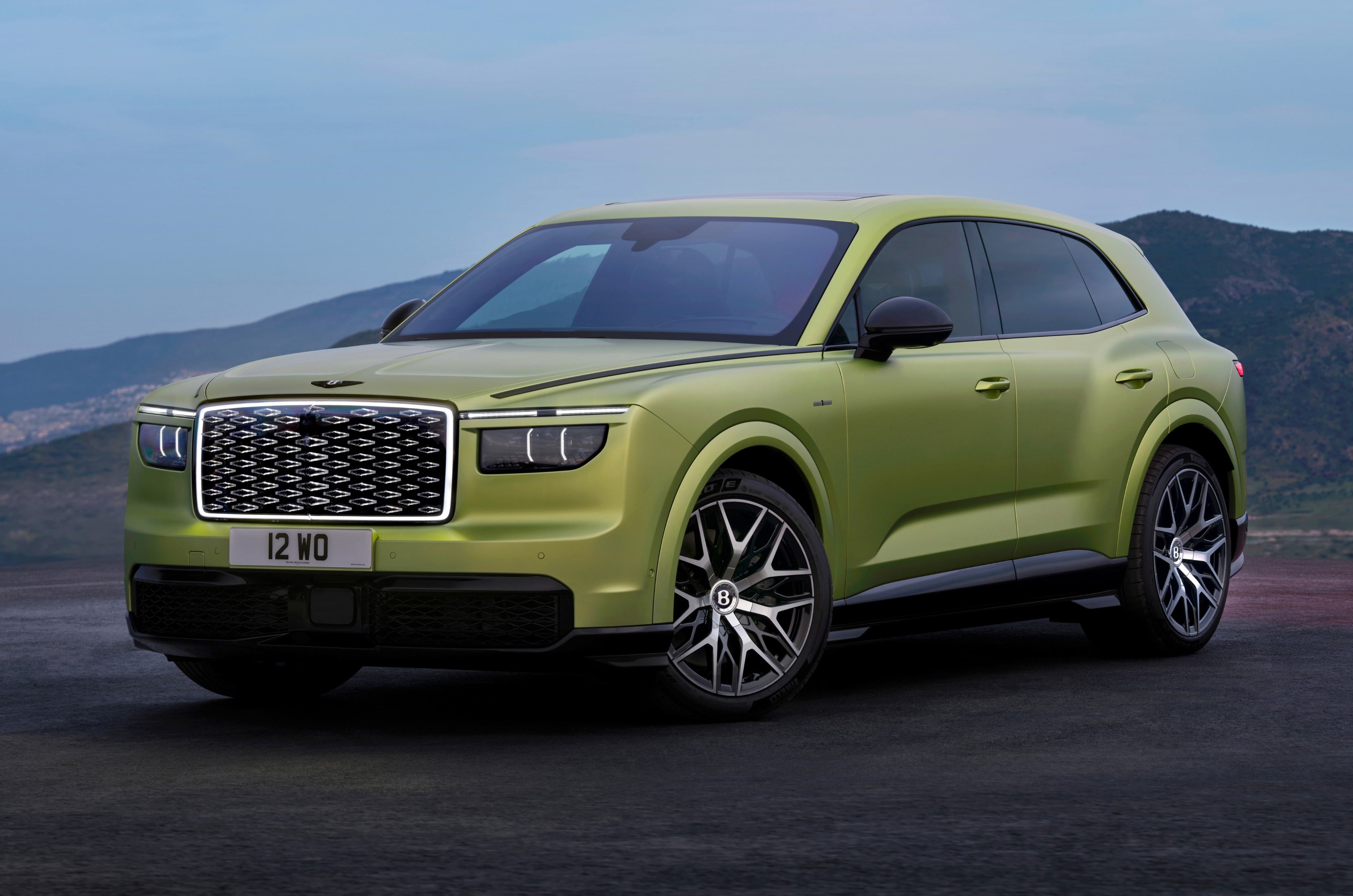
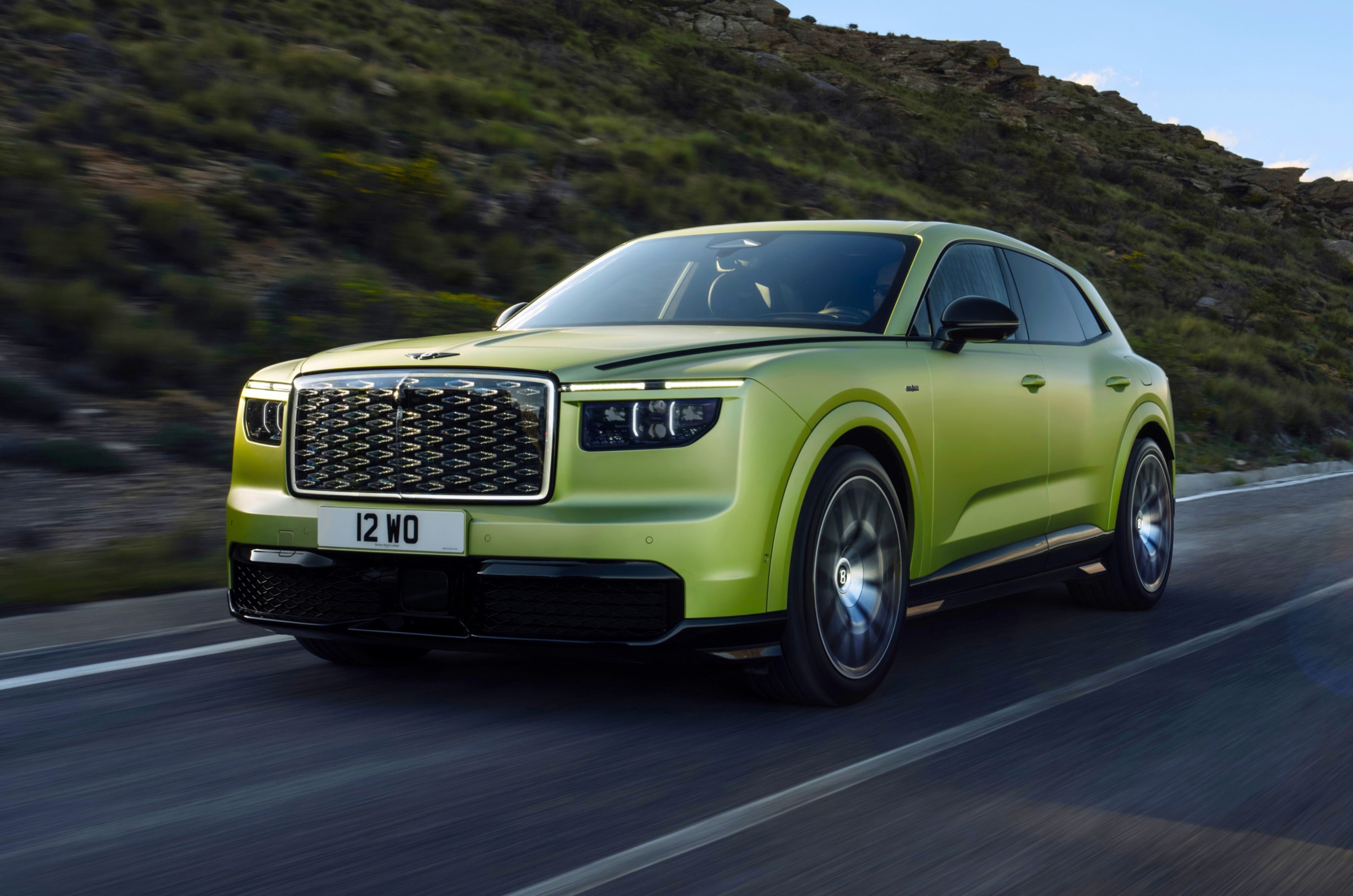
Designing an EV for a brand with this much pedigree was never going to be easy, but Robin Page’s in-house team at Crewe has done a fine job. The Torcal sits 50mm lower and is 120mm shorter than a standard-wheelbase Bentayga, yet it looks the better proportioned of the two. The wheelbase is just over three metres, the car is about five metres long, and the overhangs are short. Bentley’s signature ‘endless bonnet’ does much of the visual heavy lifting.
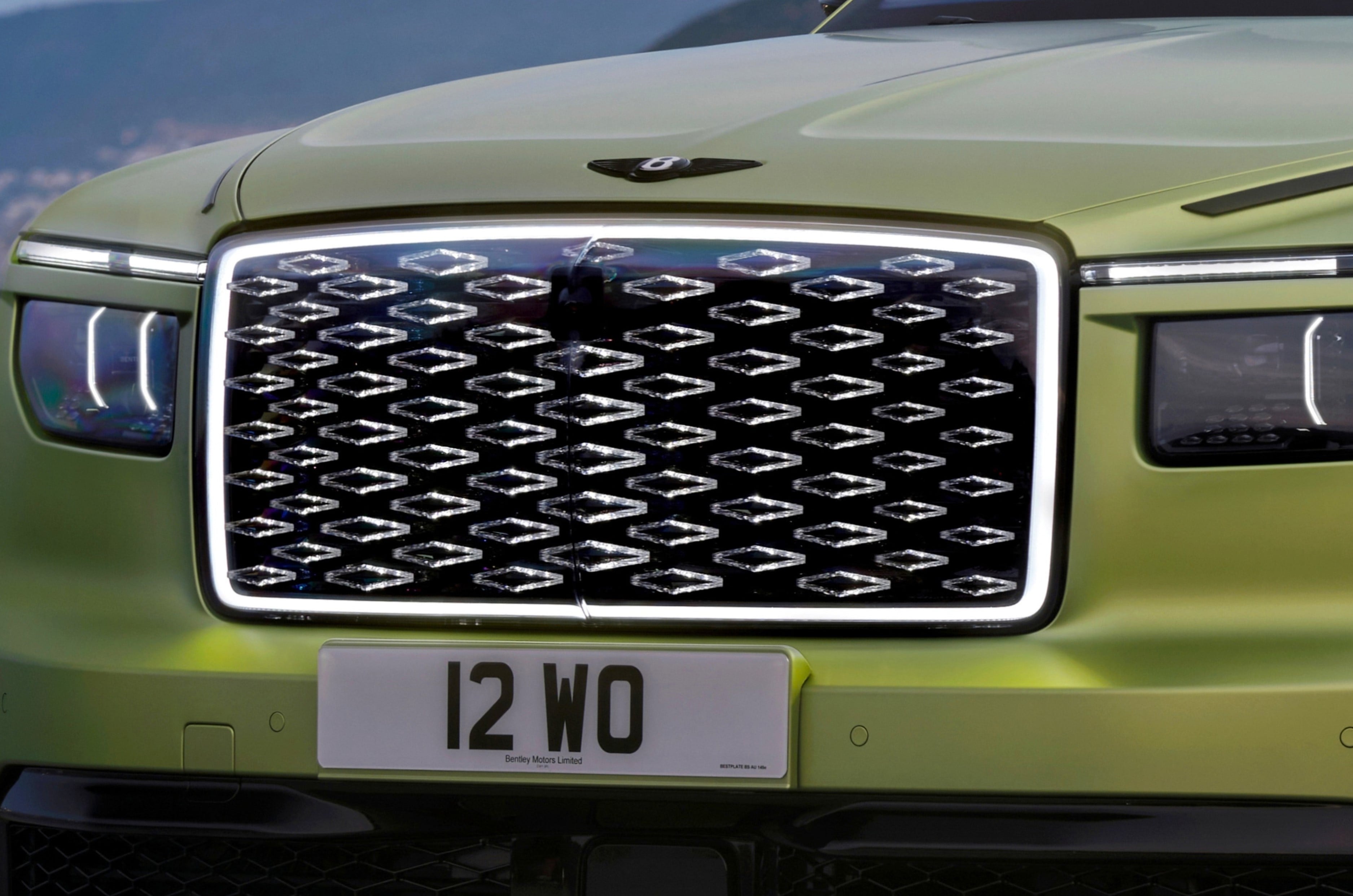
The Torcal gets a clear polycarbonate panel with diamond-like elements for a grille.
An EV doesn’t need a grille for cooling, but Bentley argues that a car without one is faceless. The Torcal’s solution is an illuminated one with crystal-effect, diamond-like elements set behind a clear polycarbonate panel. It’s the car’s signature piece, and it will look spectacular filling someone’s rear-view mirror. The face echoes the Continental T, reinterpreted through slim, high-tech lighting.
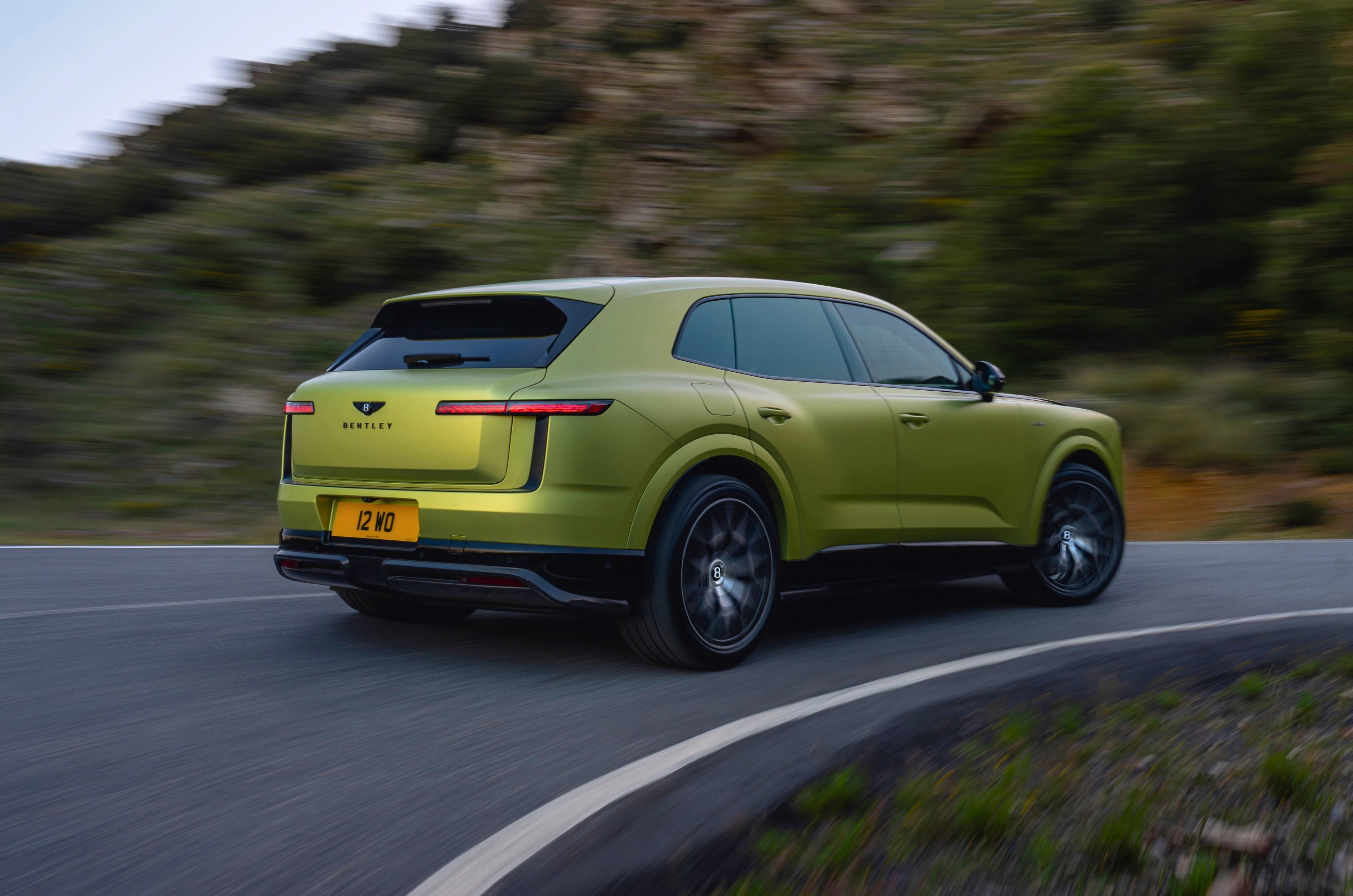
The flanks are deliberately free of fussy creases. The cabin tapers towards the rear so the body can swell over the back wheels, a look the designers call the ‘resting beast’. At the back, Bentley claims are some of the slimmest tail-lamps in the industry. A U-shaped motif ties them together and emphasises the car’s width.
U-shaped motif at the rear ties the tail lamps together.
Our car rode on 22-inch wheels. The core car gets 21s as standard, and India-spec cars may well get the smaller, higher-profile rim. Other neat touches include a charging flap that slides open when you wave a hand over it, and a 90-litre frunk under that long bonnet. The 460-litre boot isn’t especially generous, and there’s no spare wheel, only a puncture repair kit. On Indian roads that could be an issue, though most owners will simply leave a flat to the chauffeur to fix
Bentley Torcal interior: Screens, with restraint
The cabin is completely new, and the tricks start before you’re inside. All four doors are powered and radar-controlled. The driver shuts theirs by pressing the brake pedal, and passengers can close theirs simply by buckling up.
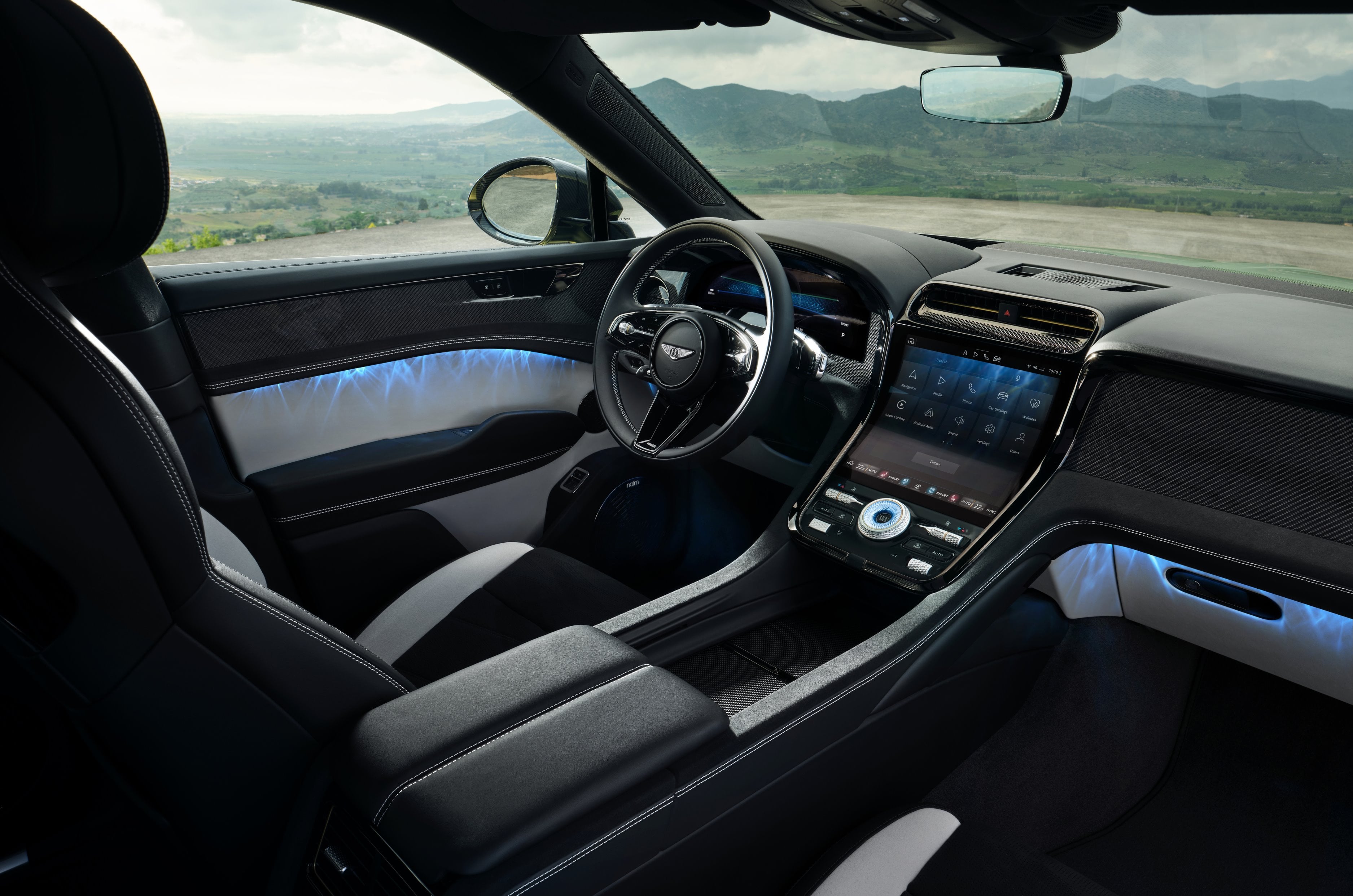
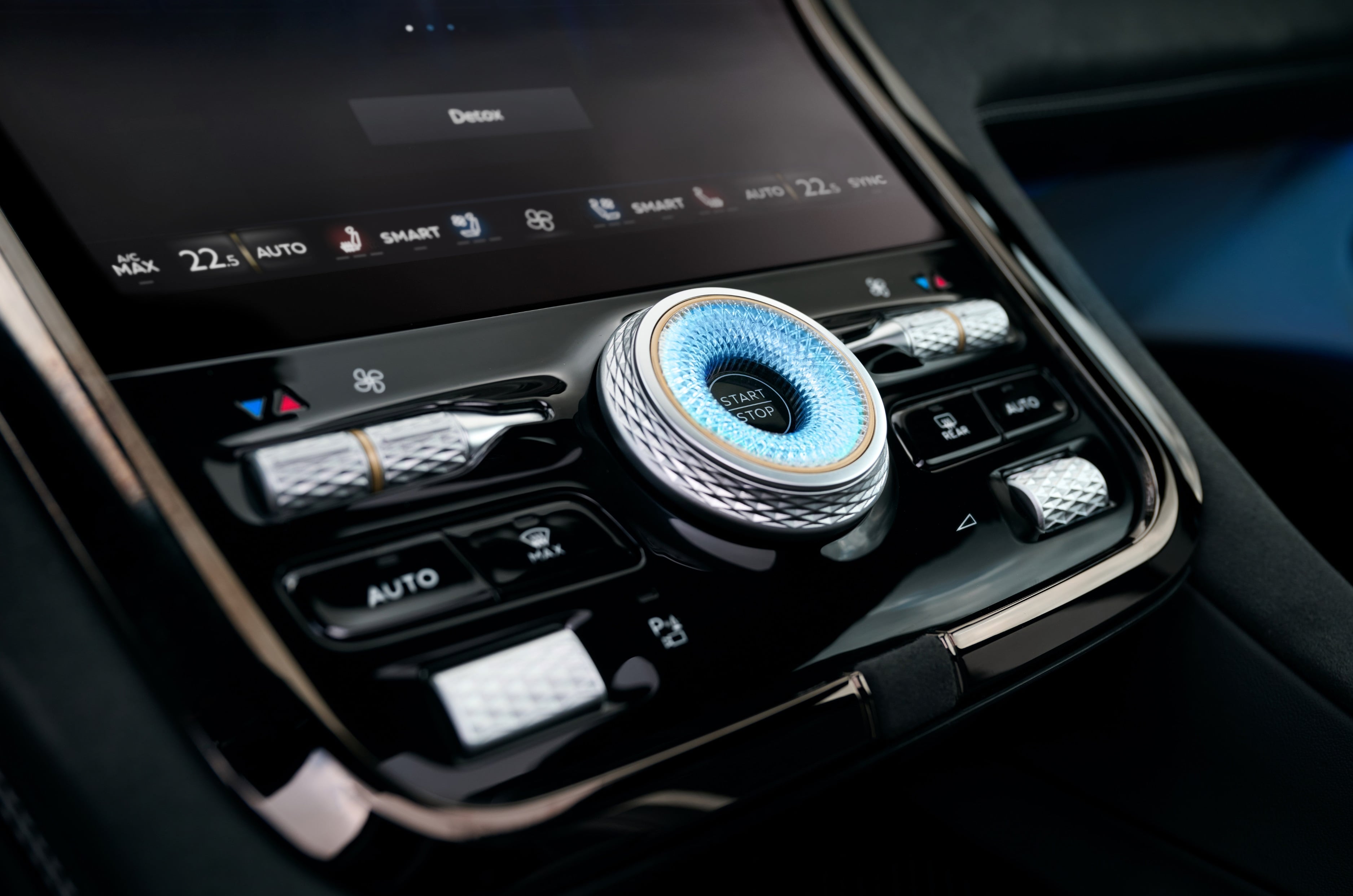
The first thing you notice is that Bentley hasn’t turned the Torcal into an iPad showroom. The centrepiece is the curved OLED centre screen. It doesn’t perch on the dash like a tablet; it sweeps down and flows into the centre console as one continuous form, and nothing else in the class looks quite like it. The OLED panel gives deep blacks and rich colours, and the curve brings every corner of the display within easier reach. Crucially, physical controls haven’t been binned. The switches have a beautiful knurled finish and satisfying, precise clicks, and purists will love them.
A curved OLED touchscreen infotainment is the centrepiece of the interior.
There’s one gripe. The direction of the front air vents is set through the touchscreen, a trend creeping into many luxury cars, and a physical slider would have been far nicer. Otherwise, we haven’t seen any car balance digital and physical controls better.
The tech runs deep. A facial-recognition camera in the rear-view mirror identifies the driver and loads their seat, steering and ADAS settings. An augmented-reality head-up display projects navigation arrows and hazard markers into the driver’s line of sight.
Curated experience
Twist the rotary collar around the starter button and you cycle through four Experience Modes. Each one changes the cabin’s lighting, sound, climate and displays as well as the car’s dynamics.
Rotary dial around the starter button can be used to cycle through four Experience modes.
Sport bathes the cabin in blue rather than the expected red. Bentley’s reasoning is that red signals anger while blue signals focus, which makes it a better colour for driving fast. Bentley mode balances performance and comfort. Comfort mode calms things down and offers a ‘digital detox’ that hides all but essential information. Refresh ups the fresh-air flow and brightens the lighting.
Drumming up character
The hardest thing about an electric Bentley is making it feel like a Bentley. For traditional owners, that means sound. The 6¾-litre V8 is iconic, but it was never a perfect engine. Bentley’s view is that its flaws, like in humans, give it emotion and character. So rather than synthesising a flawless digital imitation, Bentley recorded real musicians on drums, viola and bass guitar. The result is the ‘Dynamic Symphony’, complete with tiny imperfections. It responds to torque demand and speed, grows louder in Sport, and can be switched off entirely.
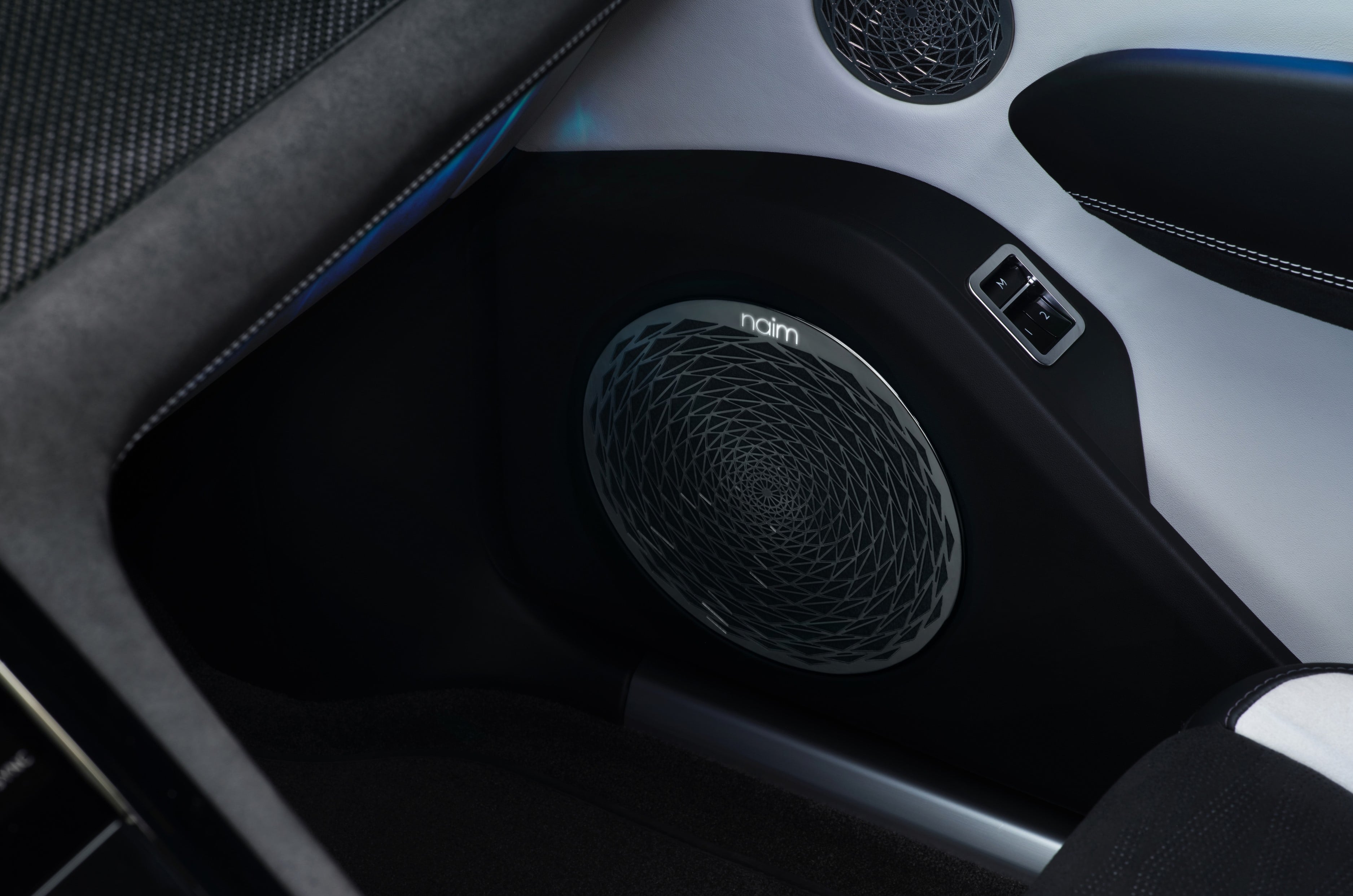
Optional Naim audio brings 28 speakers with Dolby Atmos 7.1
The attention to sound goes further. The indicator tick is a recording of a hammer striking leather in Bentley’s upholstery workshop, and the touchscreen chime comes from a crystal glass. Standard audio is a 620W, 16-speaker system. The Naim option runs to 1,780W and 28 speakers, with headrest speakers, seat shakers and Dolby Atmos 7.1
Material world
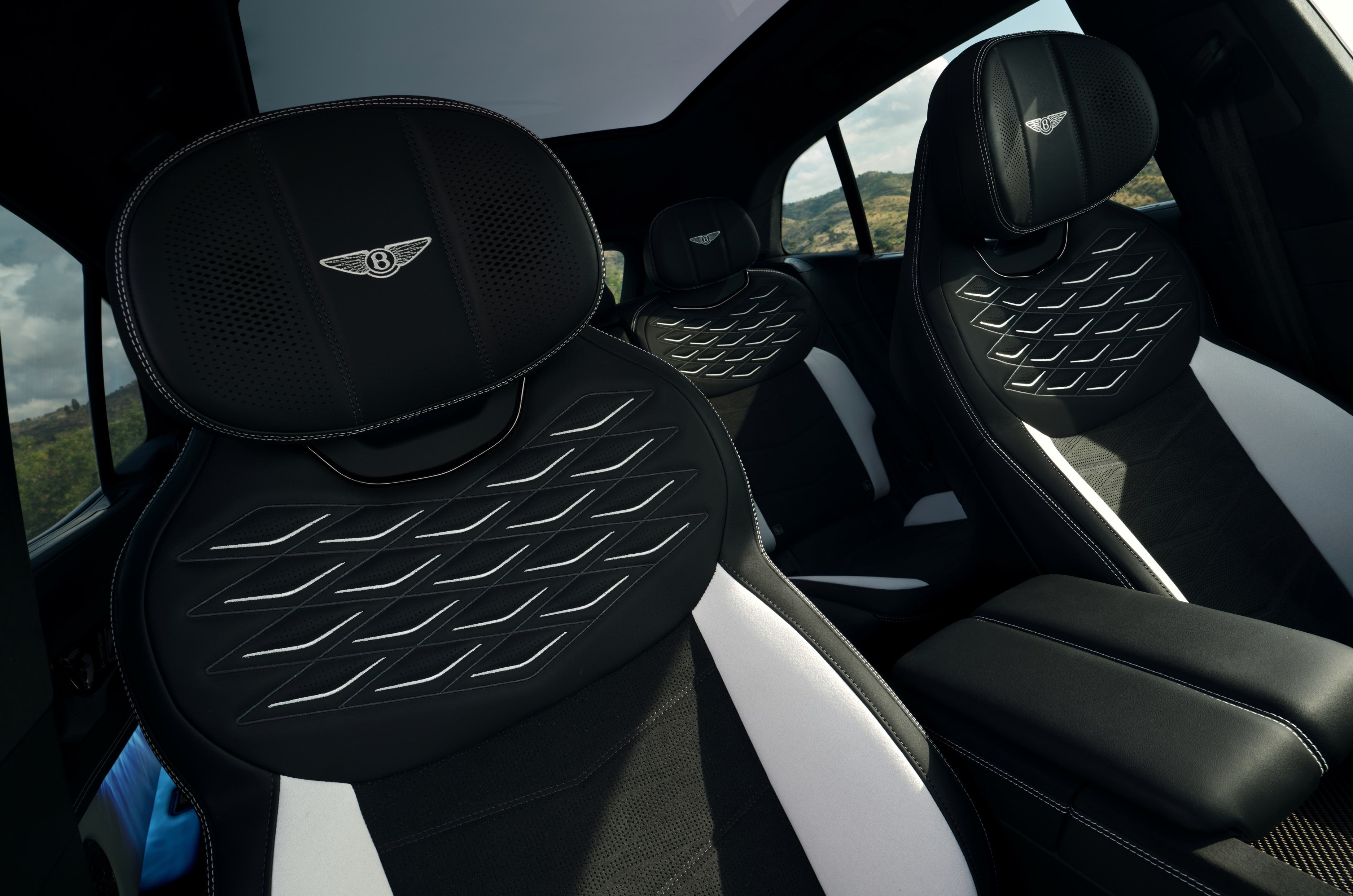
Materials are traditional Bentley, pushed further. There are wood veneers less than a millimetre thick, crisp aluminium and a deep piano black. Leather comes in 15 shades. The real headline is the world’s first 100 per cent Merino wool automotive fabric, developed with Somerset weavers Fox Brothers.
Scope for personalisation is vast, with 15 different shades just for the leather.
New Mulliner finishes include Ombré Walnut, which presses up to 1,000 layers of walnut off-cuts and recycled paper into a veneer that fades from black to smoke. Sunburst Aluminium reinterprets the engine-turned dashboards of old Bentleys. Overhead, the Frosted Diamond sunroof uses switchable glass, so you decide how much light floods in. The scope for personalisation is vast. A second car we saw, trimmed in lighter upholstery with far more brushed aluminium, felt like a different interior altogether.
Bentley Trocal back seat experience
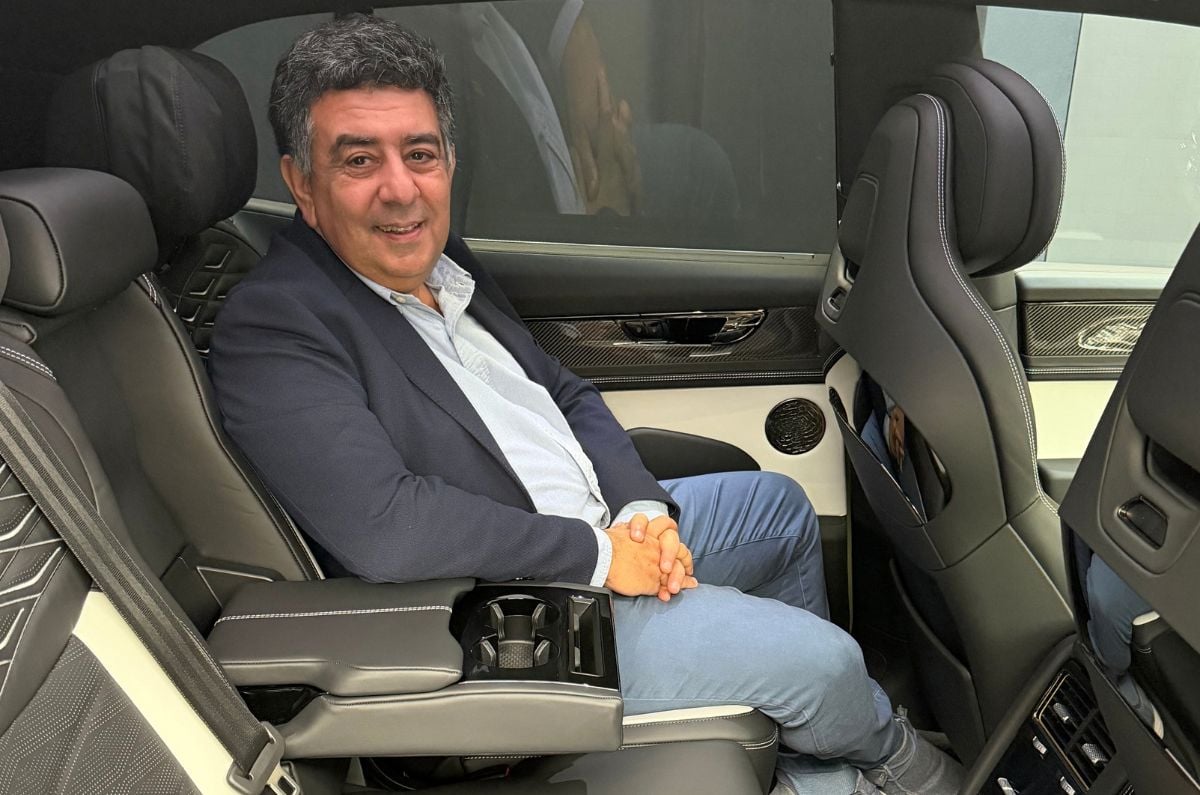
Legroom and headroom at the back are quite decent.
The rear seat matters most for Indian buyers, many of whom will be chauffeured. It’s impressive for a car smaller than a Bentayga. Under-thigh support is genuinely good, which is rare in an EV, where the battery usually pushes the floor up. Legroom and headroom are decent, though this is ultimately a car to be driven.
The rear climate vents get the physical controls the front vents lack. There are heated and cooled seats, and three USB-C ports, one of them rated at 100W for charging a laptop. The rear bench is also the first in a Bentley to power-fold.
Bentley Torcal specs, battery and range
The Torcal gets a 113kWh battery for a claimed WLTP range of 600km.
The Torcal rides on the PPE platform that underpins Porsche’s Cayenne Electric. The Cayenne tops 1,100hp in its most potent form, but Bentley has deliberately stopped short. The flagship makes 888hp and 1,350Nm, the most torque of any Bentley ever and has launch control which I doubt will ever be used!That’s enough to take a roughly 2.7-tonne SUV from 0-100kph in 2.9 seconds. Bentley’s research found that most customers find anything more violent uncomfortable.
Two permanent-magnet motors draw from a 113kWh (net), 800V battery, which carries a 10-year, 100,000-mile warranty. Claimed range is 600km WLTP. This is a continent-crosser, so charging speed was a priority. On a 400kW charger, a 10-80 per cent top-up takes 16 minutes, and around 160km of range goes in during a seven-minute coffee stop. India currently has no such high-speed chargers, yet.
It also gets fully active suspension and rear-wheel steering.
The chassis is Bentley’s most advanced yet. Fully active suspension replaces anti-roll bars altogether, and five degrees of rear-wheel steer shrink the turning circle to 11.1m. Carbon-ceramic brakes with 440mm front discs are optional. The ADAS suite uses 25 radars, sensors and cameras. It can reverse the car along the last 50 metres of its route, and it can park itself in a designated space up to 200 metres away.
Bentley Torcal India launch plans
The Torcal arrives in India in the second half of 2027. It’s a smidgen smaller than the Bentayga but will be substantially pricier, because EVs don’t get the same customs-duty benefit under the new UK-India FTA. Expect around Rs 4.5 crore, ex-showroom. Is it worth it? We’ll tell you once we’ve driven it. Standing still, at least, the Torcal makes a convincing case that a Bentley without an engine is still a Bentley.
Motorola जल्द ही Motorola Signature 27 लॉन्च करके अपनी Signature सीरीज को आगे बढ़ाने जा रही है। कुछ हफ्ते पहले इस फोन का टीजर जारी किया गया था, और अब कंपनी ने एक बार फिर नया टीजर जारी किया है जिसमें डिवाइस का रियर कैमरा सेटअप और दो कलर ऑप्शन दिखाए गए हैं। हैंडसेट के टीजर वीडियो में फोन की संभावित लॉन्च डेट, रियर कैमरे की जानकारी और कलर ऑप्शन का पता चलता है।
टीजर के अनुसार, यह फोन 22 सितंबर, 2026 को लॉन्च किया जाएगा। हालांकि, यह साफ नहीं है कि उस दिन डिवाइस को लॉन्च किया जाएगा या सिर्फ उससे जुड़ी जानकारी ही सामने आएगी। अन्य जानकारियों की बात करें तो, फोन के टीजर वीडियो में Signature सीरीज के डिवाइस के लिए अलग-अलग मटीरियल दिखाए गए हैं। Motorola Signature 27 को दो कलर ऑप्शन में Pantone Capulet Olive और Pantone Coal Smoke में लॉन्च किया जाएगा।
Motorola Signature 27 के संभावित स्पेसिफिकेशन
Motorola Signature 27 में 165Hz रिफ्रेश रेट वाला 6.8-इंच का OLED 1.5 डिस्प्ले होगा। इसमें Qualcomm Snapdragon 8 Elite Gen 6 Pro प्रोसेसर के साथ 16GB RAM और 1TB तक की इंटरनल स्टोरेज मिल सकती है। कैमरे की बात करें तो यह कन्फर्म हो गया है कि डिवाइस में ट्रिपल रियर कैमरा सेटअप होगा, जिसमें 100X सुपर जूम वाला 200MP का Sony LYTIA LYT-901 सेंसर शामिल होगा। वहीं, सेल्फी और वीडियो कॉल के लिए, फोन में 50MP का फ्रंट कैमरा भी देखने को मिल सकता है।
इस डिवाइस में 5,500mAh से 6,000mAh के बीच की बैटरी दी जा सकती है, जो 90W वायर्ड और 50W वायरलेस फास्ट चार्जिंग सपोर्ट के साथ आ सकता है। यह फोन Android 17 ऑपरेटिंग सिस्टम पर आधारित होगा और इसमें Hello UI स्किन होगी।
सिक्योरिटी के लिए फोन में इन-डिस्प्ले फिंगरप्रिंट सेंसर भी मिल सकता है। फिलहाल फोन से जुड़ी बाकी सभी डिटेल्स सामने नहीं आई हैं। लॉन्च से पहले आने वाले दिनों में लीक और दूसरी रिपोर्ट्स के जरिए इसके बारे में और जानकारी मिलने की उम्मीद है।
BMW India ने आज भारत में अपनी नई BMW X1 Long Wheelbase (LWB) लॉन्च कर दी है। कंपनी ने इसकी शुरुआती कीमत 49.90 लाख रुपये (एक्स-शोरूम) रखी है। खास बात यह है कि इस SUV को भारत में ही BMW Group के चेन्नई प्लांट में तैयार किया जा रहा है। फिलहाल, नई X1 LWB को पेट्रोल इंजन के साथ बाजार में उतारा गया है। इसकी बुकिंग ग्राहक देशभर की BMW डीलरशिप से कर सकते हैं।
BMW ग्रुप इंडिया के प्रेसिडेंट और CEO हरदीप सिंह बराड़ ने कहा, “आज के ग्राहक ऐसी कार चाहते हैं, जो उनकी रोजमर्रा की जरूरतों के साथ-साथ उनकी पसंद और लग्जरी का भी ख्याल रखे। नई X1 LWB इन दोनों जरूरतों को बखूबी पूरा करती है।”
भारत में BMW X1 LWB की कीमत
इसकी शुरुआती कीमत ₹49.90 लाख है, जिसमें लागू GST तो शामिल है, लेकिन रोड टैक्स, TCS (सोर्स पर वसूला जाने वाला टैक्स), रजिस्ट्रेशन चार्ज, लोकल लेवी और इंश्योरेंस शामिल नहीं हैं। BMW ने कहा है कि इनवॉइसिंग के समय जो कीमत होगी, वही लागू होगी।
इस SUV के साथ 2 साल की स्टैंडर्ड वारंटी मिलती है, जिसमें किलोमीटर की कोई सीमा नहीं है। इसके अलावा, 2 साल की रोडसाइड असिस्टेंस भी दी जा रही है। सर्विस पैकेज की शुरुआत 3 साल या 40,000 किलोमीटर से होती है। इसे बढ़ाकर अधिकतम 10 साल या 1 लाख किलोमीटर तक किया जा सकता है। वहीं, कार की वारंटी को भी 10 साल तक बढ़ाने का विकल्प दिया गया है।
लंबा व्हीलबेस और पिछली सीट पर ज्यादा स्पेस
BMW X1 LWB की मुख्य खूबियों में 4,616 mm की लंबाई, 2,104 mm की चौड़ाई, 1,641 mm की ऊंचाई और 2,800 mm का व्हीलबेस शामिल है। BMW का दावा है कि यह अपने सेगमेंट की सबसे लंबी गाड़ी है।
इसका व्हीलबेस 108 mm बढ़ गया है, जबकि पिछली सीट पर लेगरूम और नी-रूम (घुटनों के लिए जगह) में क्रमशः 150 mm और 109 mm की बढ़ोतरी हुई है। पिछली सीट की कुशनिंग को भी 15 mm बढ़ाया गया है। पीछे बैठने वाले यात्री अपनी सीटों को 28.5 डिग्री तक पीछे झुका सकते हैं।
इसके अलावा, इसकी बूट कैपेसिटी 540 लीटर है, जिसे पिछली सीटों को फोल्ड करके 1,700 लीटर तक बढ़ाया जा सकता है।
बाहर की तरफ इसमें BMW की सिग्नेचर किडनी ग्रिल, कॉर्नरिंग फंक्शन वाली अडैप्टिव LED हेडलाइट्स, हाई बीम असिस्टेंट, एल्युमीनियम-फिनिश वाली रूफ रेल्स और 18-इंच के M लाइट अलॉय व्हील्स दिए गए हैं। पीछे की तरफ थ्री-डायमेंशनल LED लाइट्स और एक बड़ा डिफ्यूजर है।
BMW X1 LWB का इंजन और परफॉर्मेंस
नई BMW X1 LWB में 1.5-लीटर, 3-सिलेंडर वाला TwinPower Turbo पेट्रोल इंजन दिया गया है, जो 156 hp की पावर और 230 Nm का टॉर्क देता है। इसे 7-स्पीड Steptronic डुअल-क्लच ऑटोमैटिक ट्रांसमिशन के साथ जोड़ा गया है। हालांकि, BMW X1 LWB में डीजल का कोई ऑप्शन नहीं है। अगर आपको डीजल इंजन चाहिए, तो आपको स्टैंडर्ड X1 लेनी होगी।
फिलहाल, यह SUV फ्रंट-व्हील ड्राइव (FWD) सिस्टम के साथ आती है और कंपनी के मुताबिक इसकी माइलेज 15.5 kmpl तक है। बेहतर आरामदायक ड्राइविंग के लिए इसमें खास तौर पर ट्यून किया गया कंफर्ट सस्पेंशन दिया गया है। साथ ही, इसमें अलग-अलग ड्राइविंग मोड्स और 50:50 वेट डिस्ट्रीब्यूशन भी मिलता है।
BMW X1 LWB के फीचर्स
BMW X1 LWB के फीचर्स की लिस्ट में ड्राइवर और आगे बैठने वाले पैसेंजर के लिए इलेक्ट्रिकली एडजस्टेबल स्पोर्ट सीट्स, एक वाइडस्क्रीन कर्व्ड डिस्प्ले और BMW का लेटेस्ट Operating System 9 शामिल है।
इसका इंफोटेनमेंट सिस्टम QuickSelect इंटरफेस, ओवर-द-एयर सॉफ्टवेयर अपडेट और BMW डिजिटल प्रीमियम पैकेज के जरिए अतिरिक्त डिजिटल सेवाओं को सपोर्ट करता है। केबिन में वर्टिकली लगा वायरलेस स्मार्टफोन चार्जर, एम्बिएंट लाइटिंग और 12 स्पीकर्स व 205W आउटपुट वाला हरमन कार्डन ऑडियो सिस्टम भी मिलता है।
BMW X1 LWB में 9 वर्ग मीटर का पैनोरमिक सनरूफ भी मिलता है। BMW का दावा है कि यह अपने सेगमेंट में मिलने वाला सबसे बड़ा पैनोरमिक सनरूफ है।
BMW डिजिटल की प्लस (Digital Key Plus) की मदद से मालिक कम्पैटिबल स्मार्टफोन या स्मार्टवॉच का इस्तेमाल करके गाड़ी को लॉक, अनलॉक और स्टार्ट कर सकते हैं। इस Digital Key को 18 यूजर्स तक के साथ शेयर किया जा सकता है। वहीं, Comfort Access 2.0 फीचर की मदद से ऑथराइज्ड डिवाइस के कार के पास आते ही SUV अपने आप अनलॉक हो सकती है। इसके लिए दरवाजे के हैंडल को छूने की जरूरत नहीं पड़ती।
सेफ्टी और ड्राइवर असिस्टेंस
सेफ्टी फीचर्स की बात करें तो, BMW X1 LWB में 8 एयरबैग, ब्रेक असिस्ट के साथ ABS, डायनामिक स्टेबिलिटी कंट्रोल, डायनामिक ट्रैक्शन कंट्रोल, कॉर्नरिंग ब्रेक कंट्रोल, ऑटो होल्ड के साथ इलेक्ट्रॉनिक पार्किंग ब्रेक, टायर-प्रेशर मॉनिटरिंग और ISOFIX चाइल्ड-सीट माउंट्स मिलते हैं।
इसके ड्राइवर-असिस्टेंस सिस्टम में लेन-डिपार्चर वॉर्निंग, ब्लाइंड-स्पॉट असिस्टेंस, ब्रेकिंग के साथ क्रूज कंट्रोल, ऑटोमैटिक इमरजेंसी ब्रेकिंग, पैदल चलने वालों की सुरक्षा और अटेंटिवनेस असिस्टेंट शामिल हैं।
पार्किंग को आसान बनाने के लिए SUV में फ्रंट और रियर पार्किंग सेंसर, रियर-व्यू कैमरा और 360-डिग्री सराउंड-व्यू कैमरा दिया गया है। इसका Reversing Assistant फीचर पिछले 50 मीटर की ड्राइविंग को याद रख सकता है और जरूरत पड़ने पर कार को उसी रास्ते पर अपने आप पीछे ले जा सकता है।
नई BMW X1 LWB को चार एक्सटीरियर कलर ऑप्शन- Night Dusk Blue, Skyscraper Grey, Carbon Black और Mineral White में खरीदा जा सकता है। वहीं, इंटीरियर के लिए Castanea और डुअल-टोन Smoke White और Atlas Grey अपहोल्स्ट्री का विकल्प मिलता है।
BMW X1 LWB की लॉन्चिंग के बाद अब ग्राहक देशभर में मौजूद अधिकृत BMW डीलरशिप पर जाकर इसकी बुकिंग कर सकते हैं।
Dubai Blast: दुबई के जेबेल अली इंडस्ट्रियल एरिया में बुधवार सुबह धमाकों की खबर से हड़कंप मच गया। सोशल मीडिया पर सामने आए कई वीडियो में आसमान में घना धुआं उठता हुआ दिखाई दे रहा है। ईरान की मेहर न्यूज एजेंसी के मुताबिक, अमीराती अधिकारियों ने बताया कि 20 मिनट के अंदर कम से कम सात धमाके हुए। हालांकि, इस घटना की वजह का अभी तक पता नहीं चल पाया है।
बता दें कि ये धमाके दक्षिणी दुबई में जेबेल अली पोर्ट और इंडस्ट्रियल एरिया के पास हुए, जो संयुक्त अरब अमीरात में लॉजिस्टिक्स और ईंधन का एक अहम केंद्र है। हालांकि, अधिकारियों ने हताहतों या नुकसान के बारे में कोई जानकारी नहीं दी है।
रिपोर्ट्स के मुताबिक, धमाकों और उसके बाद लगी आग के वीडियो सोशल मीडिया पर तेजी से वायरल होने लगे थे। इसके बाद अमीराती अधिकारियों ने घटना की रिकॉर्डिंग करने वाले दो लोगों को हिरासत में लिया।
BREAKING: Yemen’s Houthis have struck the industrial area of Jebel Ali in Dubai, UAE, per initial reports. Widespread fires and plumes of smoke over the area and multiple explosions in Dubai in the past few minutes. pic.twitter.com/eMH9ASsNeT
ईरान की मेहर न्यूज एजेंसी ने दावा किया कि ये धमाके यमन से दागी गई मिसाइल के हमले के कारण हुए, जबकि अमीराती मीडिया ने पुष्टि की कि कई धमाकों की आवाज सुनी गई थी, लेकिन कोई आधिकारिक स्पष्टीकरण नहीं दिया।
Visuals from the widespread destruction in the #JebelAli Port, Dubai, which reportedly faced “industrial accidents”.#Dubai#UAE
Blasts have been heard & smoke is billowing into the night sky in Dubai, according to eyewitnesses. pic.twitter.com/5gngHU7xYj
इस बीच, स्थानीय मीडिया के अनुसार, NASA की थर्मल इमेजिंग में जेबेल अली पोर्ट के पास एक गोदाम में आग लगने का पता चला है। यह इलाका ईंधन जमा करने और उसे एक जगह से दूसरी जगह भेजने के काम आता है। इससे धमाकों के बाद लगी बड़ी आग की खबरों को और बल मिला है।
लगभग उसी समय, यमन की राजधानी सना में भी धमाकों की खबरें आईं। कुछ खबरों में इन आवाजों को हवाई हमलों का नतीजा बताया गया, जबकि अन्य में कहा गया कि यमन के इलाके से मिसाइलें दागी गई थीं, जिससे घटनाओं के क्रम को लेकर अनिश्चितता बढ़ गई।
कुछ स्थानीय मीडिया रिपोर्टों में यह भी कहा गया कि यमन के हूथी विद्रोहियों ने जेबेल अली इंडस्ट्रियल एरिया को निशाना बनाया हो सकता है। प्रत्यक्षदर्शियों ने इलाके में कई जगह आग, आसमान तक उठते धुएं के गुबार और लगातार हो रहे धमाकों की जानकारी दी है।
हालांकि, इस घटना की जिम्मेदारी को लेकर अमीराती अधिकारियों या हूतियों की तरफ से कोई आधिकारिक पुष्टि नहीं हुई है।
बता दें कि यह घटनाक्रम ईरान के साथ चल रहे तनाव के बीच सामने आया है, जिससे रणनीतिक रूप से अहम खाड़ी क्षेत्र में हाई अलर्ट बना हुआ है और टकराव जारी है।
वहीं, UAE के अधिकारियों ने अभी तक धमाकों की वजह के बारे में कोई विस्तृत बयान जारी नहीं किया है और न ही इस बात की पुष्टि की है कि यह घटना किसी हमले का नतीजा थी।