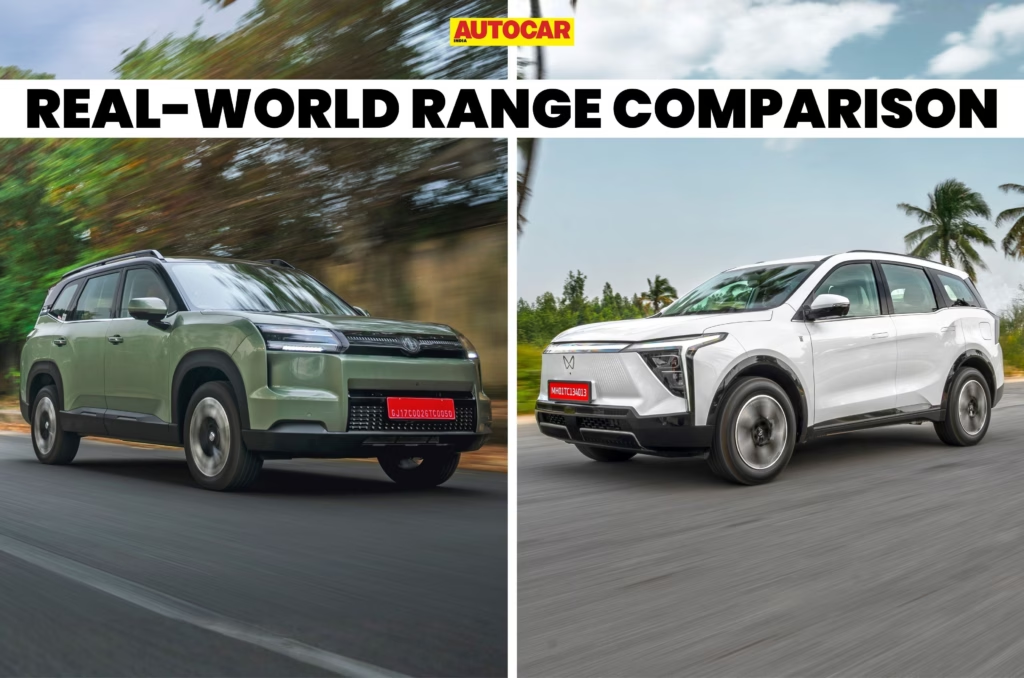
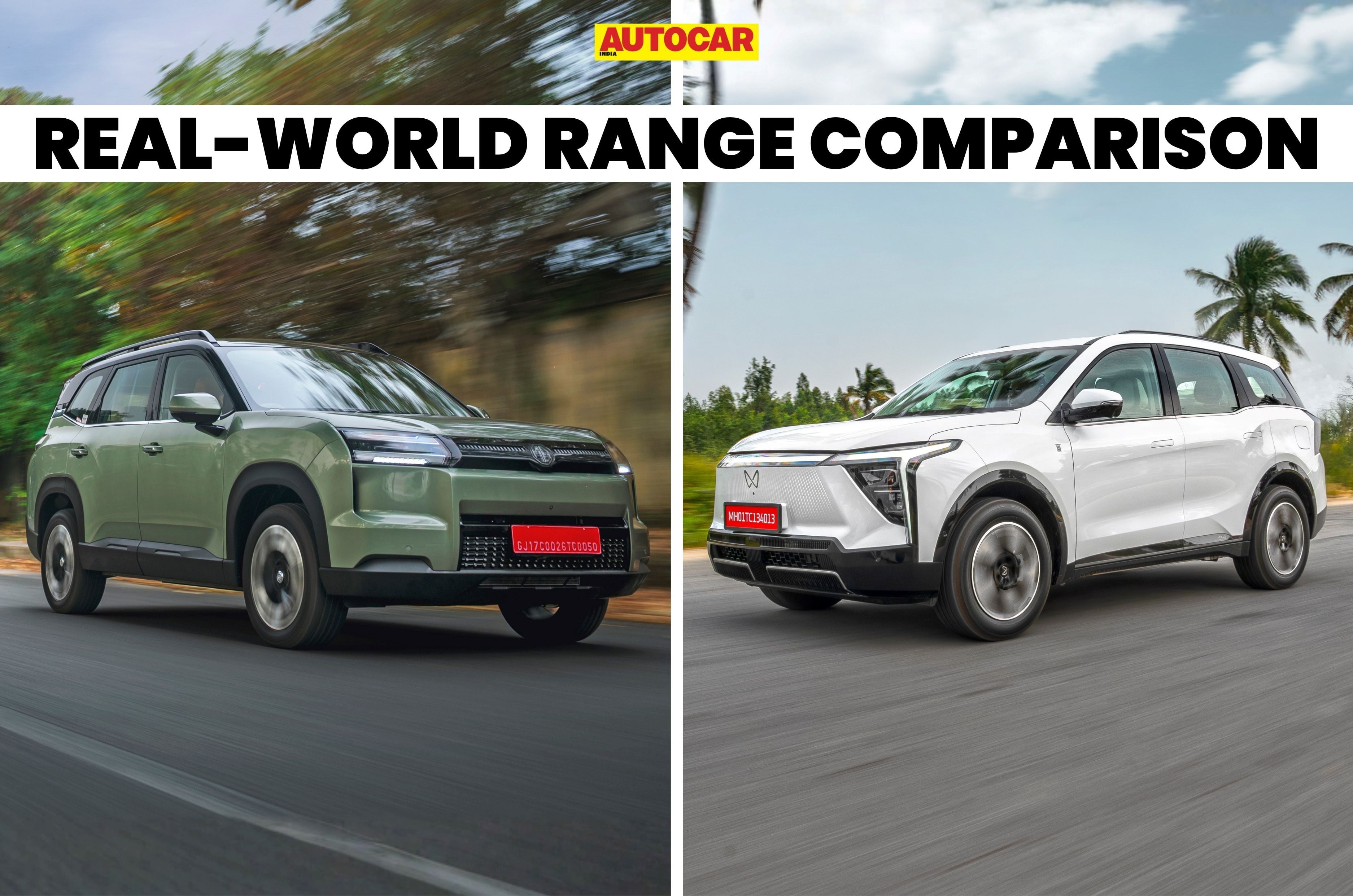
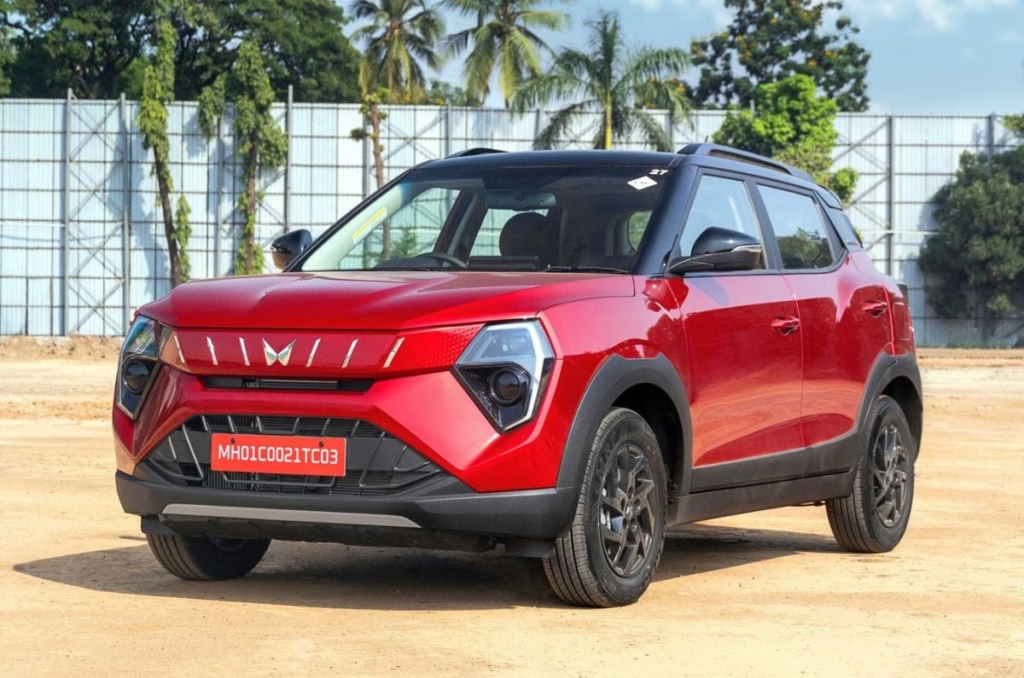
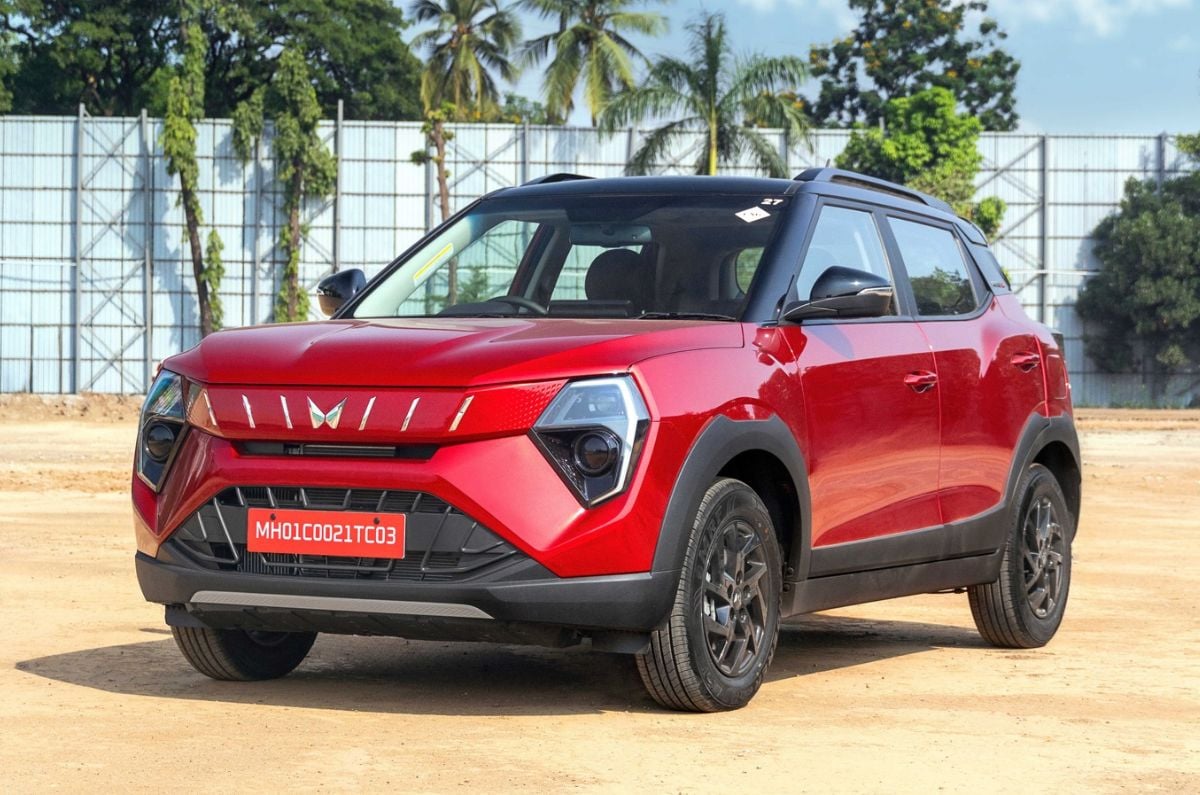
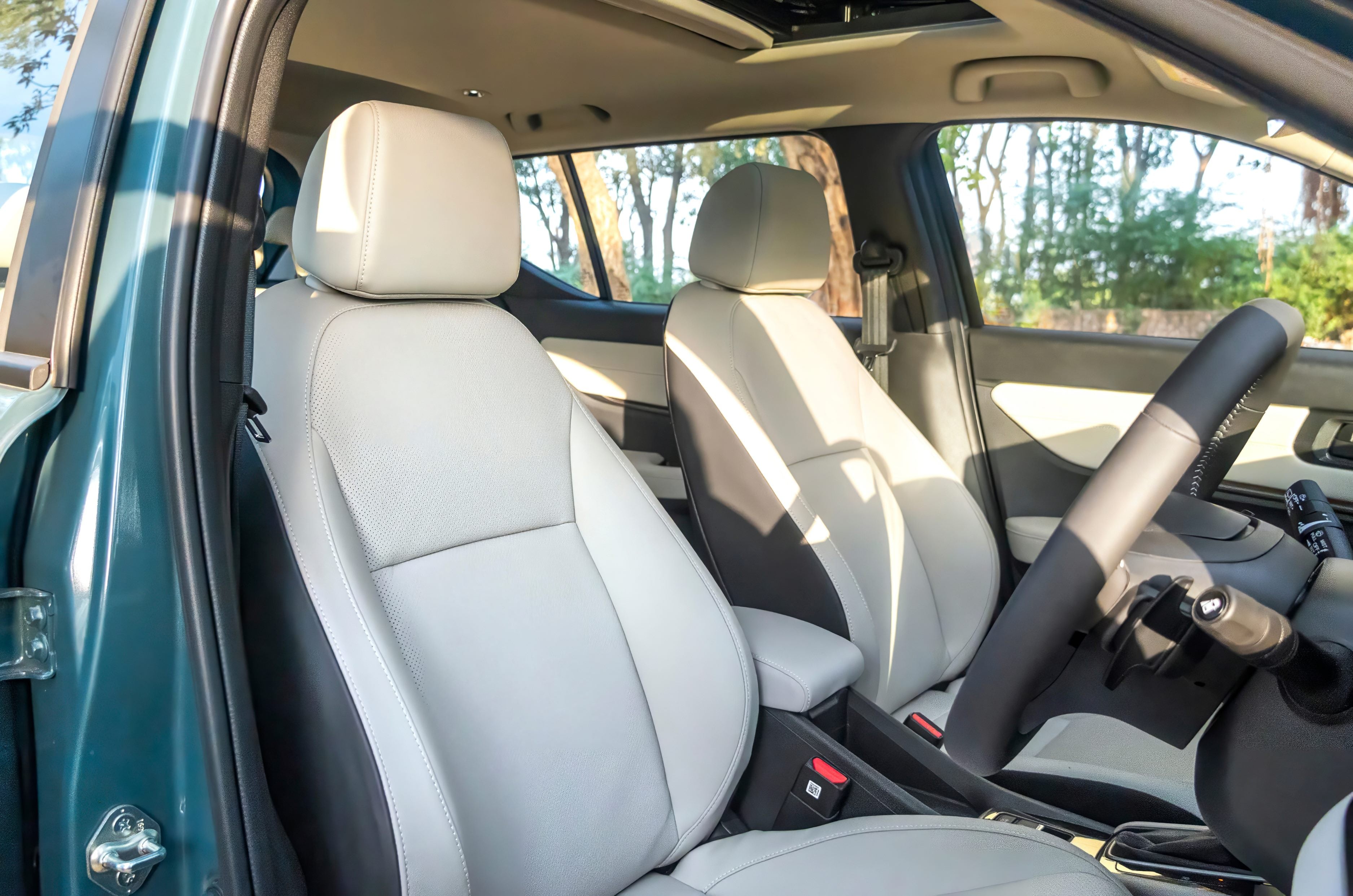
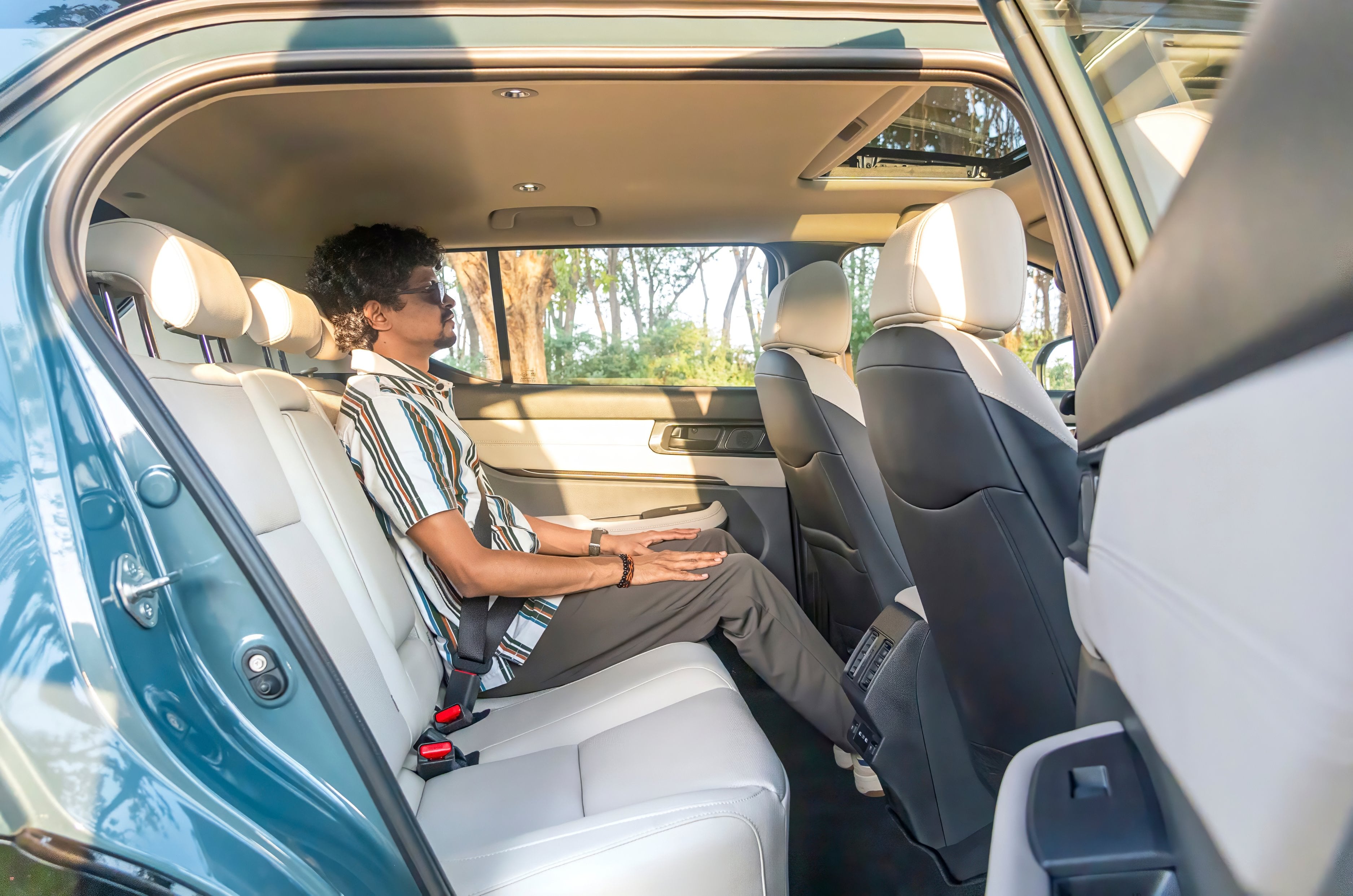
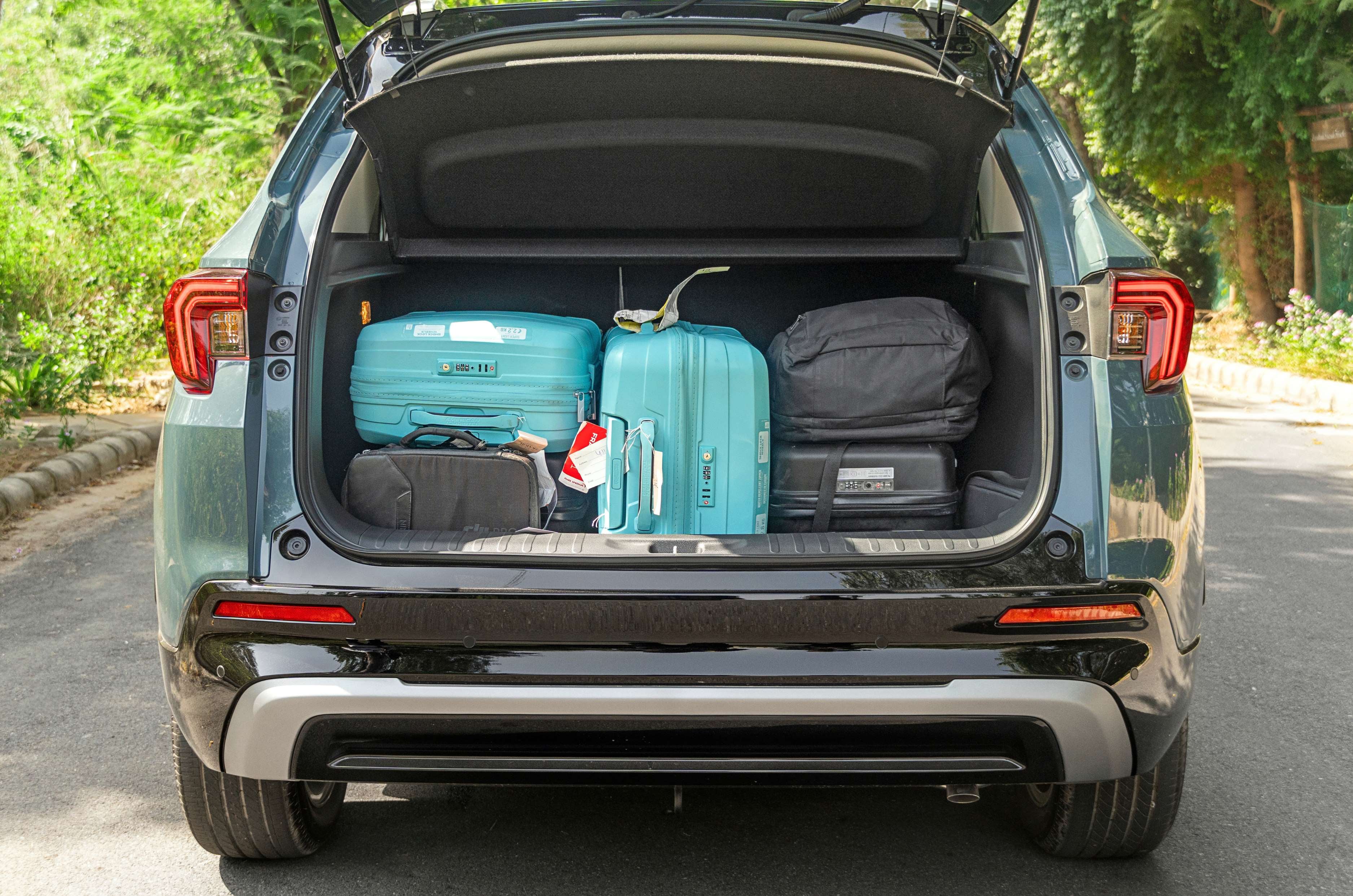
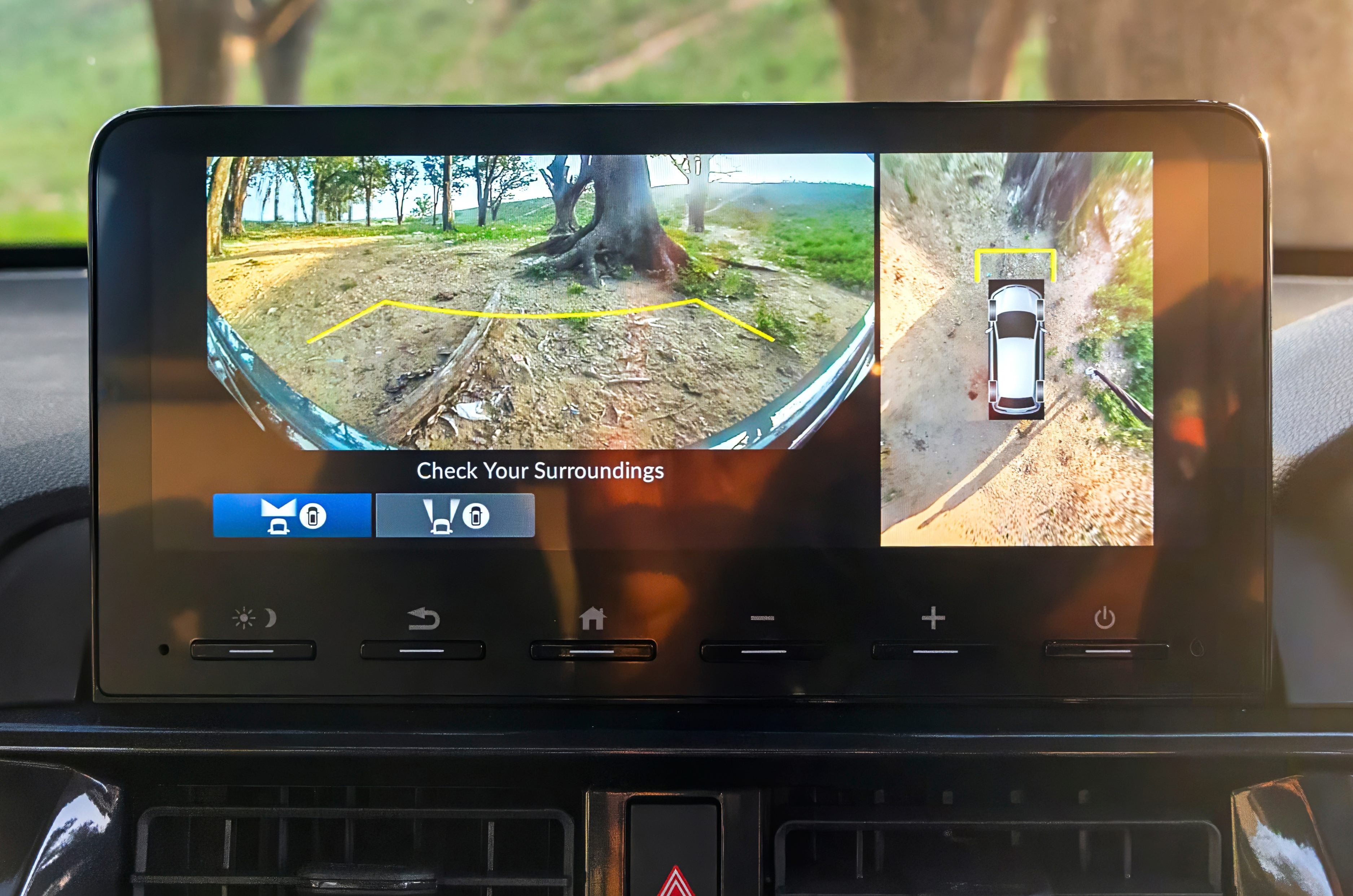
MG recently launched the Hector Tomahawk EV with a 69.2kWh battery, promising a claimed range of 517km. The 3-row electric SUV is positioned squarely against the Mahindra XEV 9S, which is one of the most popular EVs in its price range, and has a larger battery capacity and a higher claimed range of 679km. But in real-world conditions, does the Mahindra XEV 9S offer higher range than the MG Hector Tomahawk EV? We find out.
MG Hector Tomahawk EV vs Mahindra XEV 9S: Specifications, price
Tomahawk EV has a smaller battery, but weighs less than XEV 9S and is more affordable
MG Hector Tomahawk EV vs Mahindra XEV 9S: Specifications, price
MG Hector Tomahawk EV
Mahindra XEV 9S
Battery pack (kWh)
69.2
79
No. of motor(s)
1
1
Drivetrain
FWD
RWD
Power (hp)
204
286
Torque (Nm)
310
380
Kerb weight (kg)
1,908
Over 2,201*
Price (in Rs lakh)
19.50-23.50
22.65-30.15
*The XEV 9e has a kerb weight of 2201kg, so the XEV 9S, being a 3-row offering, will be heavier.
The MG Hector Tomahawk EV gets a smaller 69.2kWh battery compared to the XEV 9S’ 79kWh unit. It also gets a less powerful front motor that produces 82hp and 70Nm less than the XEV 9S’s rear-mounted motor. However, the Hector Tomahawk EV is the lighter electric SUV in this comparison, weighing over 250kg less than the Mahindra XEV 9S.
The MG Hector Tomahawk EV also asks a lower price, its base-spec variant costing Rs 3.15 lakh less and its top-spec variant costing Rs 6.65 lakh less than the XEV 9S’s 79kWh battery trims.
MG Hector Tomahawk EV vs Mahindra XEV 9S: Real-world range comparison
Although offering very different city and highway efficiencies, both eSUVs offer similar average range
MG Hector Tomahawk EV vs Mahindra XEV 9S: Real-world range comparison
MG Hector Tomahawk EV
Mahindra XEV 9S
Claimed range (ARAI)
517km
679km
Tested city range
495km
478km
Tested highway range
397km
477km
Tested average range
446km
477.5km
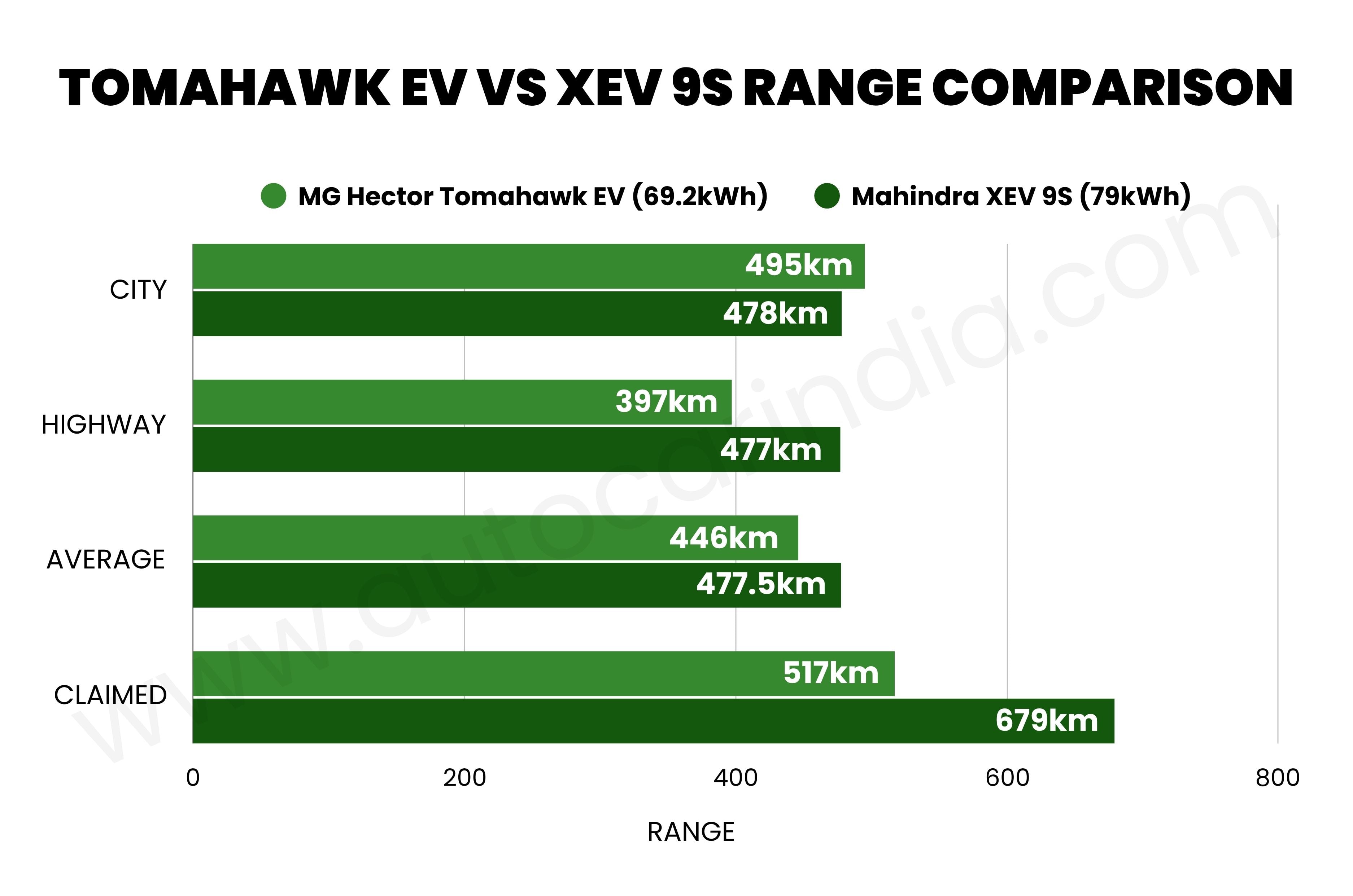
While the MG Hector Tomahawk EV has a claimed ARAI range of 517km, the Mahindra XEV 9S promises a higher range of 679km. However, in our real-world tests, the XEV 9S delivered a higher average range, despite the Hector Tomahawk EV performing better in city driving conditions.
In the city, the Tomahawk EV covered 495km on a full charge, which is 17km more than the XEV 9S. However, on the highway, the Mahindra managed 477km, going 80km further than the MG. As a result, the Mahindra achieved an average real-world range of 477.5km, which is 31.5km more than the Tomahawk EV’s 446km.
In our real-life tests, we found the Tomahawk EV’s relatively mild regenerative braking, even in its strongest setting, limits its potential for better city efficiency. Meanwhile, its bulky, upright design also works against it on the highway. The XEV 9S, on the other hand, weighs over 2.2 tonnes, which definitely affects its efficiency against the Hector Tomahawk EV.
Autocar India’s range testing
For our real-world range test, we begin with each car’s battery fully charged and tyre presures set as per the manufacturer’s recommendations. We drive the cars on a fixed loop covering both city and highway stretches while maintaining set average speeds. We then calculate the range based on the percentage of charge consumed. The AC is set to 22deg C in auto mode, and features such as the music system, lights and ventilated seats are used as needed, just as a regular user would. This approach ensures consistency and gives a clear idea of what to expect in daily use.
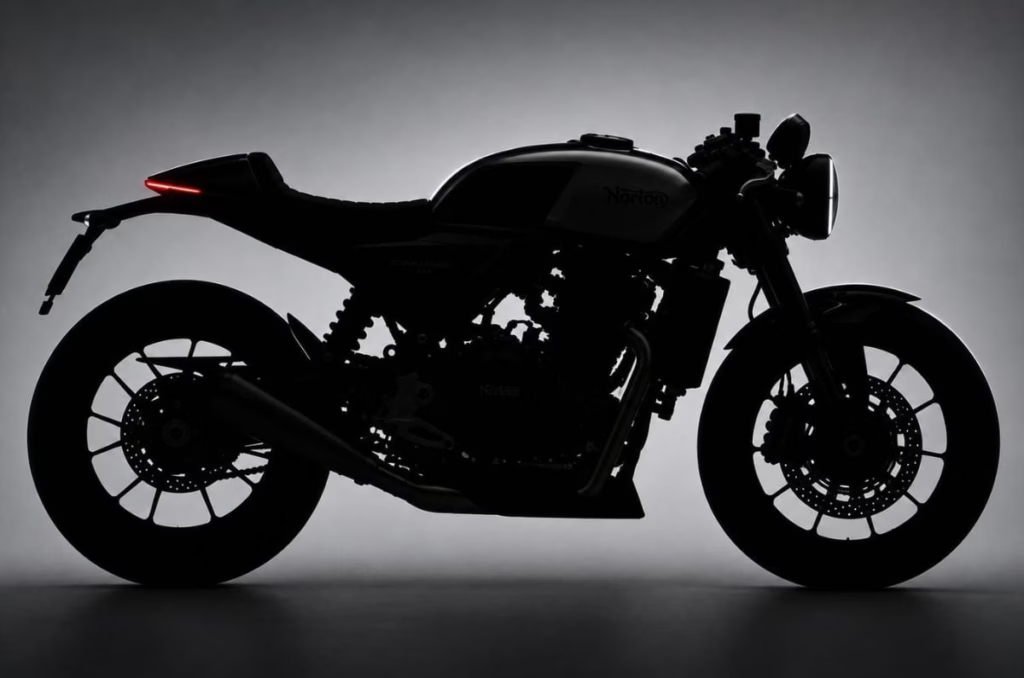
Norton Motorcycles will premiere its much-awaited 450cc-class single-cylinder roadster at EICMA 2026 in Milan, expanding its range with a motorcycle aimed at higher volumes in India and overseas. Autocar Professional expects the motorcycle to produce around 40-45hp and 40-45Nm. The engine is likely to be liquid-cooled and is expected to come with a 6-speed gearbox. The roadster will be the first model on a new platform understood to be called the H-series, with other body styles to follow. It will sit below the TVS Motor-owned British marque’s twin-cylinder Atlas range and V4-powered Manx family.
Norton Atlas is expected to first launch in India, in Q1 2027
New Norton single-cylinder motorcycle will launch overseas and in India simultaneously
Will also be manufactured at TVS’ Hosur plant
New Norton single-cylinder platform at EICMA 2026
Expected to launch in India and overseas in 2027
Autocar Professional understands that TVS plans to begin Norton’s India rollout in the January-March 2027 quarter, if not sooner, starting with the Atlas, followed by the Manx. The H-series roadster is expected to launch simultaneously in India and global markets in the second half of 2027. Responding to queries from Autocar Professional, a Norton spokesperson said the brand’s India introduction would follow its appearance at this year’s Milan show. “Norton is set to launch in India soon following the brand’s presence at EICMA this year, when the next key stage of the resurgence will be revealed,” the spokesperson said. The company has not officially confirmed the roadster’s platform name, engine capacity, output, pricing or sales timeline.
Norton has recently trademarked three names in India – Roven, Inter and Avalon and the first single cylinder bike may bear one of them. In 2025, the company also trademarked the Norton Electra name here, and this followed on the trademarking of the Norton Combat name in 2023.
Reimagined Norton under TVS
Design and ease of use is at the new Norton’s core
Differentiated design is central to TVS’s effort to give Norton a contemporary identity while retaining its British heritage. Simon Skinner, Head of Design, Norton Motorcycles, is leading the development of a design language connecting the brand’s products across capacities and categories. The roadster will extend that approach to a motorcycle intended to sell in larger numbers.
As we have seen with the thoroughly modern designs on the Atlas and V4, it is safe to anticipate modern, pared-back styling, with selected mechanical components exposed and others concealed. This could help distinguish the roadster in a segment where several competitors draw heavily on retro styling. According to Norton, the Manx R received the “Best of the Best” distinction at the 2026 Red Dot Award: Design Concept. Norton Design was also recognised at the 2026 International Design Excellence Awards in the United States.
The roadster is expected to prioritise manageable weight and ease of use, particularly in city riding. It could feature 17-inch wheels and equipment drawn from Norton’s larger motorcycles, potentially including an eight-inch TFT touchscreen, riding aids and multiple riding modes. Final specifications remain unconfirmed.
Taking on Royal Enfield
How does Norton plan to combat the 350cc onslaught?
The platform represents a significant bet on the global mid-size motorcycle market. The opportunity spans roughly the 350cc-750cc categories, with annual volumes estimated at around 15 lakh-20 lakh units. This broad classification includes motorcycles marketed as 350cc models whose actual displacement is slightly lower.
It will bring Norton into closer competition with Royal Enfield and Triumph in India and overseas. However, the new single-cylinder Nortons will face a specific challenge in India. That is the fact that they will not come under the 350cc segment, unlike the massively popular RE 350 range and the recently re-engineered 349cc Triumph line in India. The result is that they will attract the much higher 40 percent GST rate instead of 18 percent. Norton is likely to position these bikes at a premium that will be justified by higher levels of technology and a heavy focus on design, quality and detail.
Royal Enfield’s dominance in India demonstrates the demand for motorcycles used for daily travel, touring and leisure riding. Its extensive dealer network, broad product range and established riding community also present a substantial challenge for Norton. Overseas, Royal Enfield has expanded into many of the markets the TVS-owned British marque is targeting. For TVS, the single-cylinder Norton offers a way to participate more widely in this market. Additional body styles on the same platform would help spread development costs and reach buyers with different riding preferences.
The India distribution plan
TVS is yet to confirm showroom rollout schedule for India
Norton’s design and heritage will form part of its appeal, but pricing, service coverage and parts availability will be important to building sustained sales, particularly in India. TVS had said in June that the Norton Atlas would be introduced in India later in the year. It had also scheduled the launch of TVS Paddock, its premium retail channel for both Norton and select premium TVS products, for the second quarter of FY27. The latest official response did not provide an updated Paddock rollout schedule.
Current preparations are understood to point to around three Paddock outlets by December, although a larger network is being sought. The number of outlets that will be operational when motorcycle sales begin has yet to be finalised. The company said it now has more than 50 retailers across 10 markets, including the UK, Italy, France, Germany and Spain. Preparations for a United States launch are continuing, subject to the final stages of vehicle certification.
Norton said its European test-ride programme had introduced the new motorcycles to thousands of riders. Foster + Partners has designed its showroom environments. TVS acquired Norton in April 2020. Its FY2025-26 annual report records investments exceeding GBP 250 million in rebuilding the business and identifies the marque as an important part of its premium-isation strategy, particularly in developed markets.
India already supports that expansion through manufacturing. The first Atlas motorcycles rolled off TVS’s Hosur production line in June, combining Norton’s UK design and engineering with its parent’s manufacturing operations. Production for the new single-cylinder range will also be out of Hosur.
With inputs from Anurag Chaturvedi and Rishaad Mody.
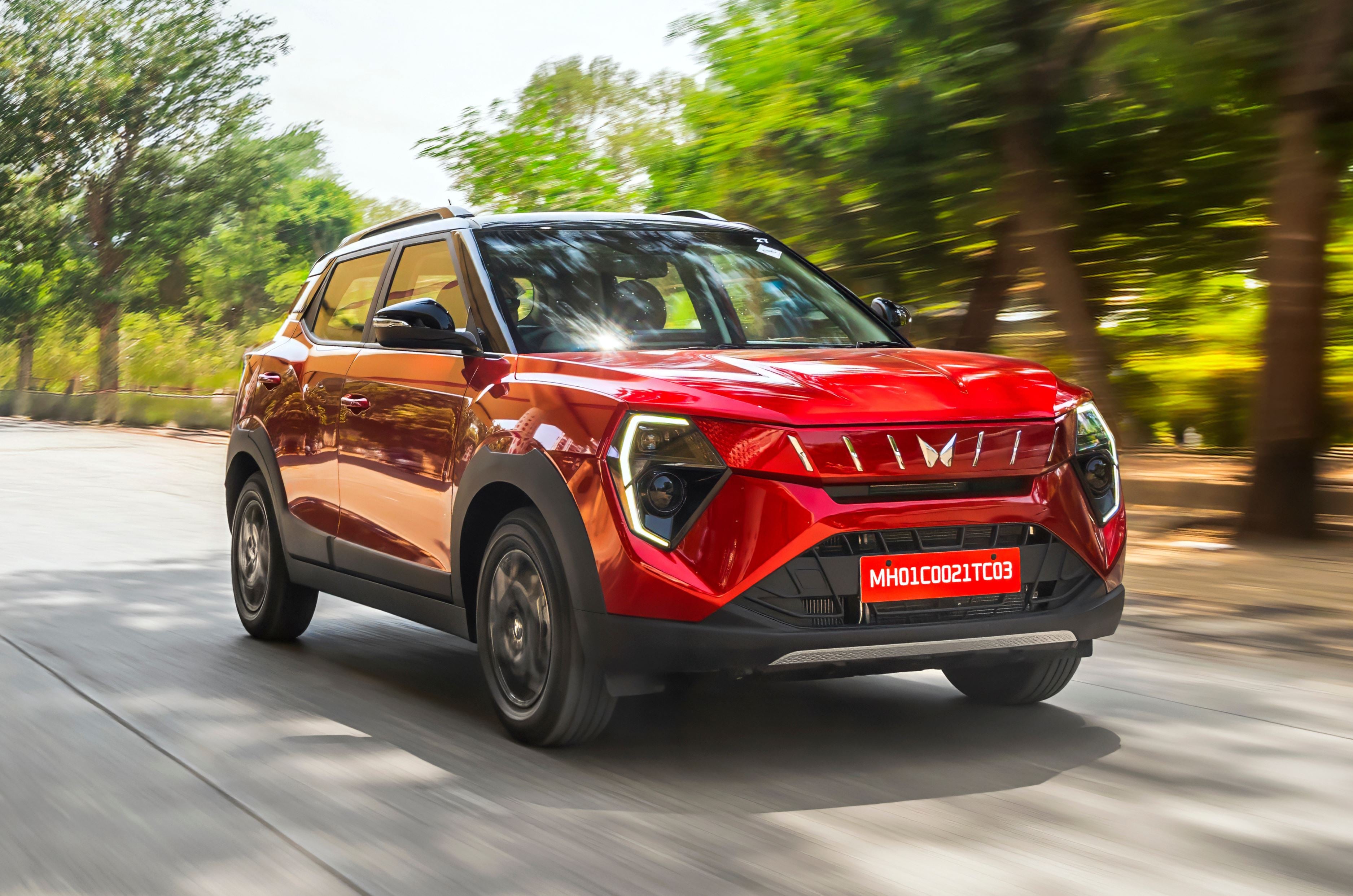
The Mahindra XUV 3XO ZNG takes on the Tata Nexon iCNG and the Maruti Brezza CNG in the CNG compact SUV space. Priced from Rs 9.99 lakh to Rs 12.27 lakh (ex-showroom), it carries a premium of Rs 1 lakh to Rs 1.2 lakh over the corresponding petrol versions. Before signing on the dotted line, here are the key strengths and weaknesses of this Mahindra SUV.
Reasons to buy the Mahindra XUV 3XO CNG
Strong performance on CNG
The XUV 3XO CNG loses none of its power when running on gas
The 1.2-litre MPFI (multi-point fuel-injected) turbo-petrol engine of the XUV 3XO CNG is the same unit found in the lower and mid-spec petrol trims. Here it develops 111hp and 200Nm in both petrol and CNG modes. While there’s some turbo lag below 2,000rpm, the engine pulls eagerly once it crosses that mark. This unit is also notable for its refinement and tractability, rarely requiring one to drop down to first gear, for going over speed breakers, for example.
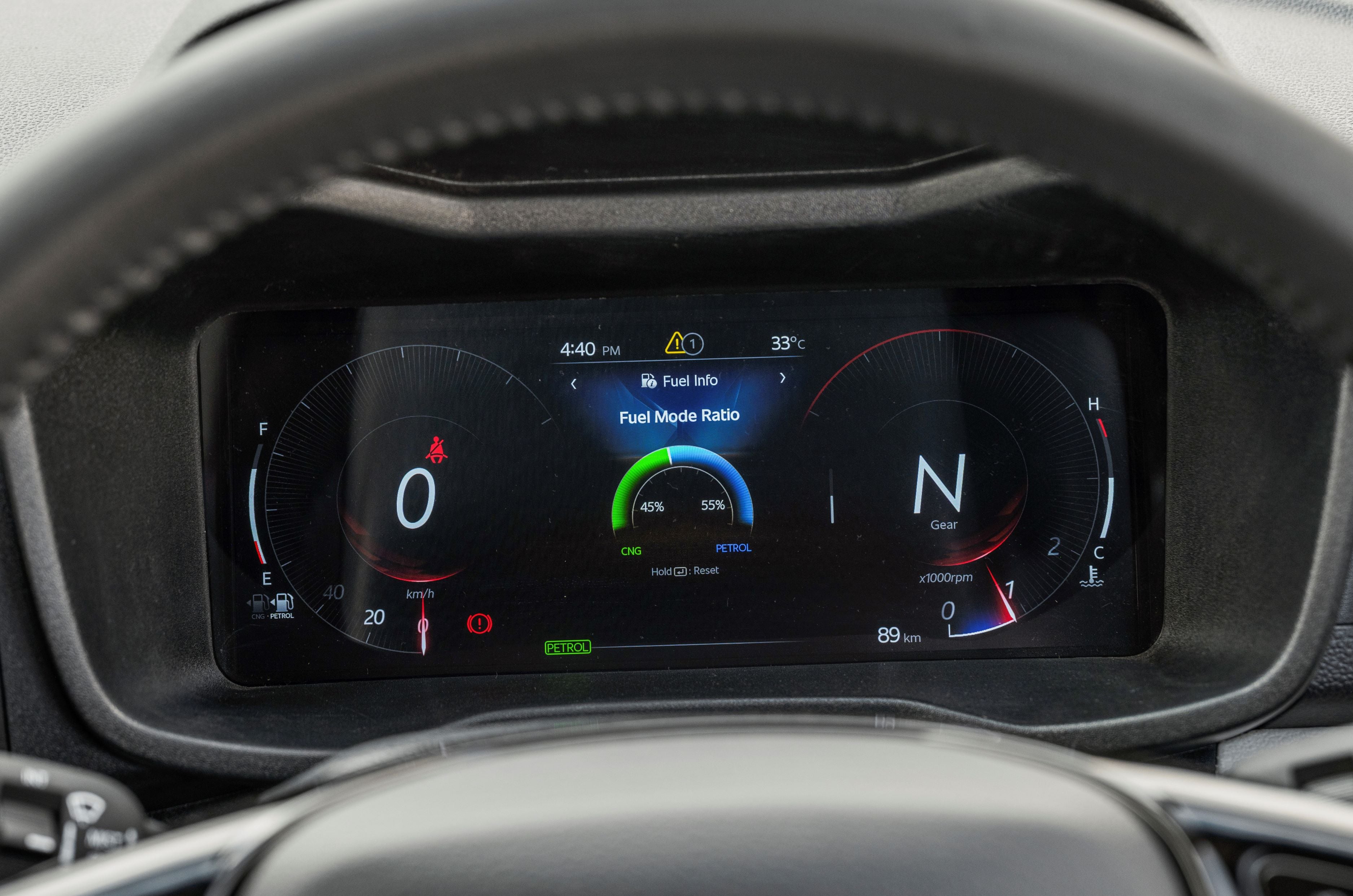
Switching between petrol and CNG is seamless as well, and few would be able to tell which fuel the XUV 3XO ZNG is running on. While we’re yet to test it, Mahindra claims a mileage of 24.7km/kg for this compact SUV, translating to a theoretical range of 247km on CNG.
Comfy ride and tidy handling
Mahindra has retuned the suspension to accommodate the extra heft of the CNG kit
The CNG hardware adds around 100kg to the XUV 3XO’s kerb weight, with the majority of it being over the rear axle. Mahindra has reworked the suspension to compensate for this heft. The result is a slightly firm ride but one that deals with bad roads quite well.
Adding to the overall comfort here are the 16-inch wheels wrapped with high-profile tyres. These manage to cushion the cabin from sharp bumps. The XUV 3XO CNG rides better than most cars in its segment. What’s good is that this ride comfort doesn’t come at the cost of sloppy handling. In fact, this Mahindra SUV feels tight and planted around corners. The steering is direct and doesn’t require much effort, with drivers being offered three steering modes for flexibility.
Upmarket cabin
This cabin is just as plush as that of the petrol and diesel versions
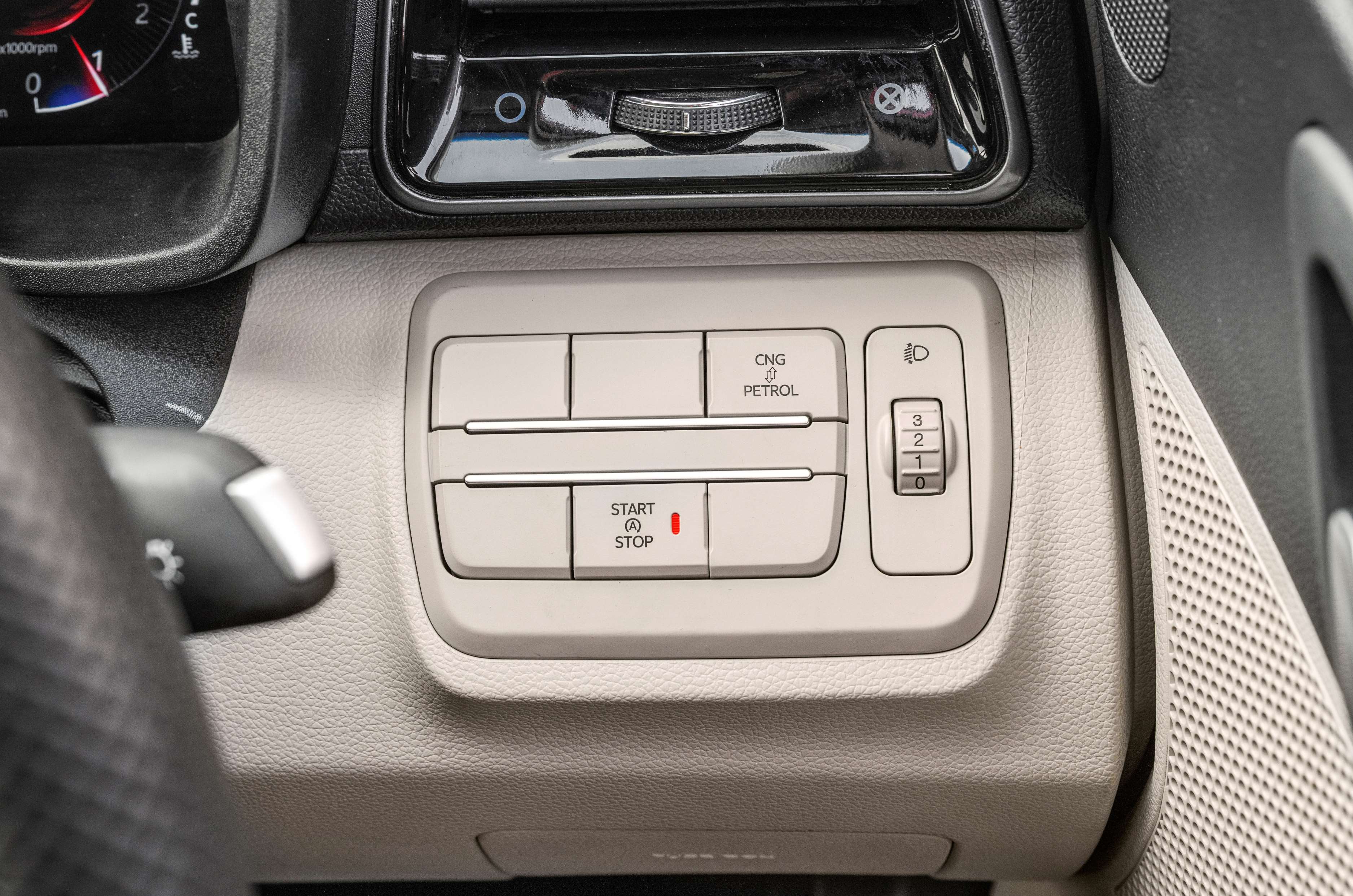
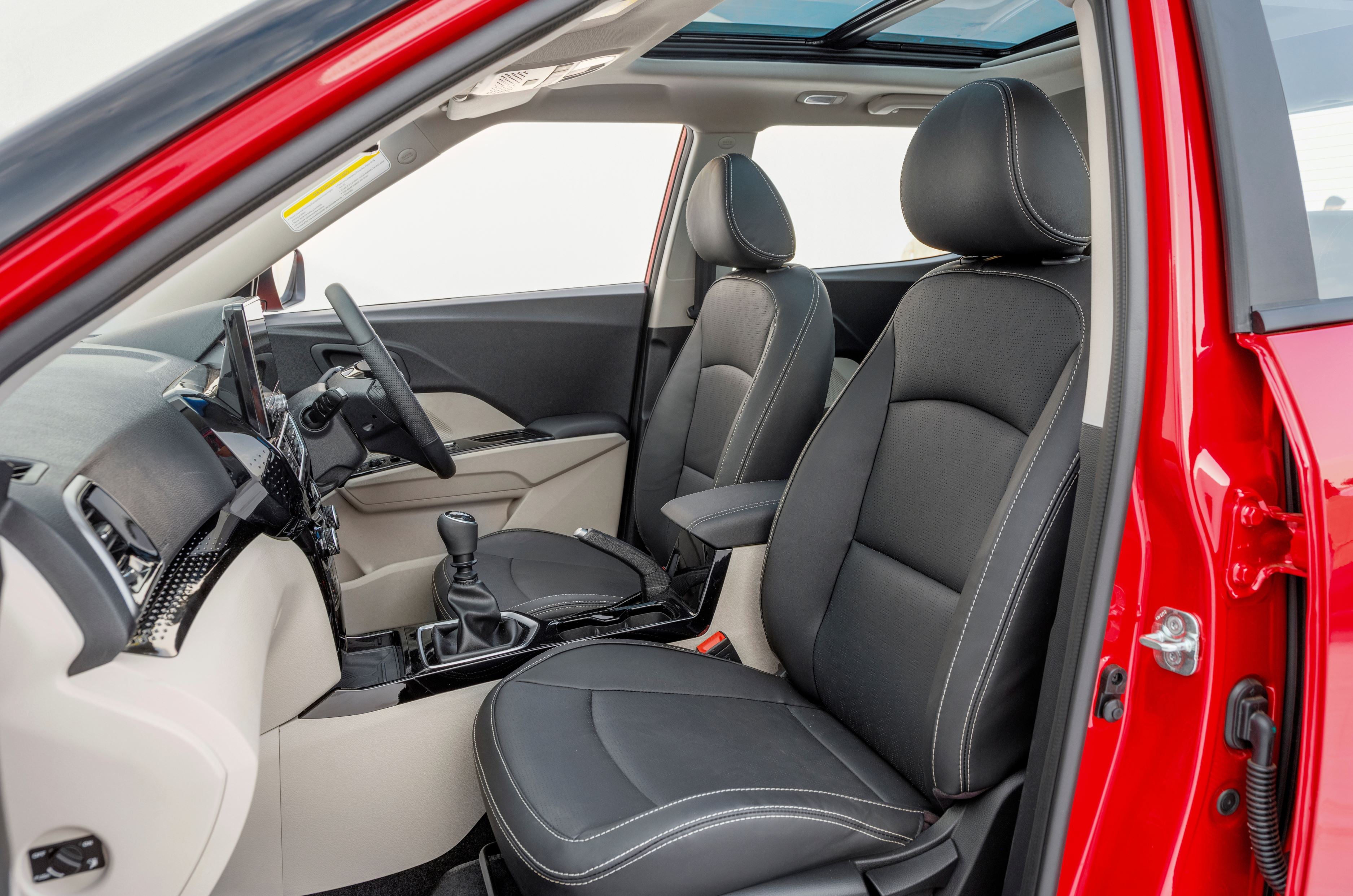
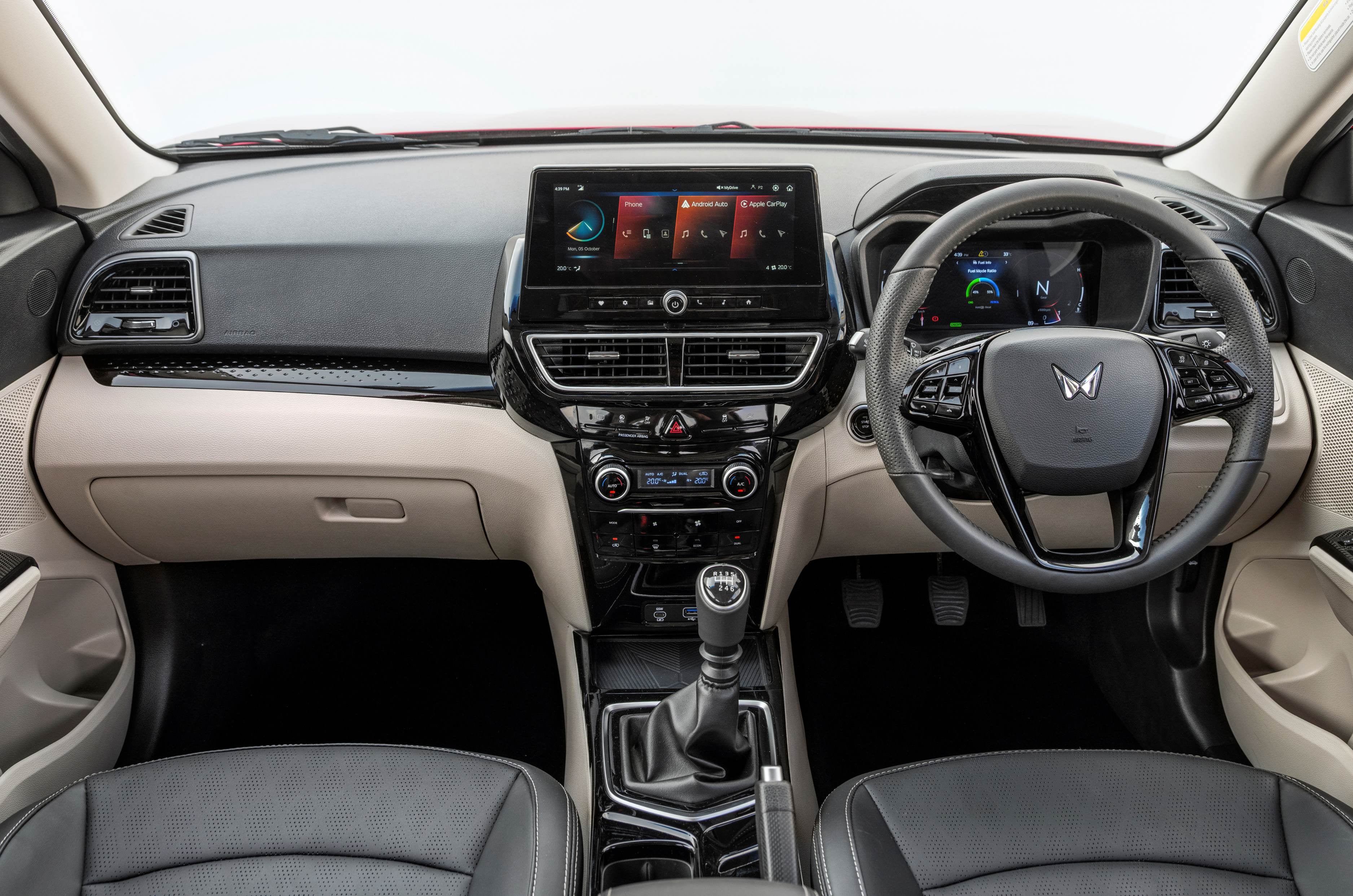
A CNG switch next to the steering wheel aside, the cabin of the XUV 3XO CNG is identical to that of non-CNG versions. While it can’t be had in equally top-end trim levels, the CNG version is available with a dual-tone dashboard, gloss black accents and leatherette upholstery. Overall, there’s a feeling of good build that’s backed by a sense of premiumness. Meanwhile, the rear seat is quite roomy for the class and can accommodate three adults without much fuss.
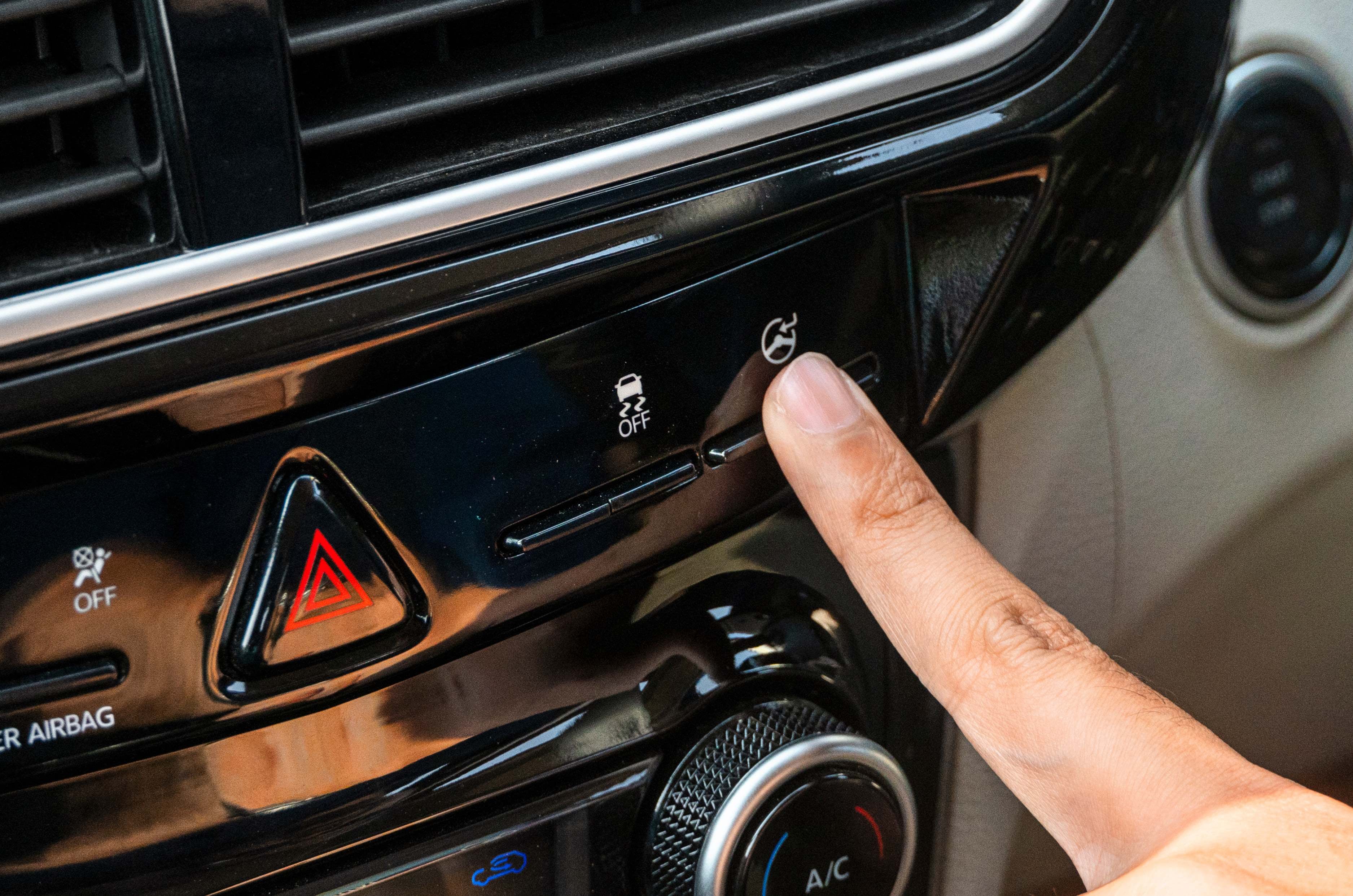
The top-spec RevX A trim gets twin 10.25-inch screens, a panoramic sunroof and a 6-speaker audio system with Dolby Atmos. Mahindra says the CNG version is engineered to match the five-star Bharat NCAP safety rating of other combustion-powered XUV 3XO versions. Standard safety features here include 6 airbags, stability control, ISOFIX anchors and a reversing camera.
Reasons not to buy the Mahindra XUV 3XO CNG
Small boot
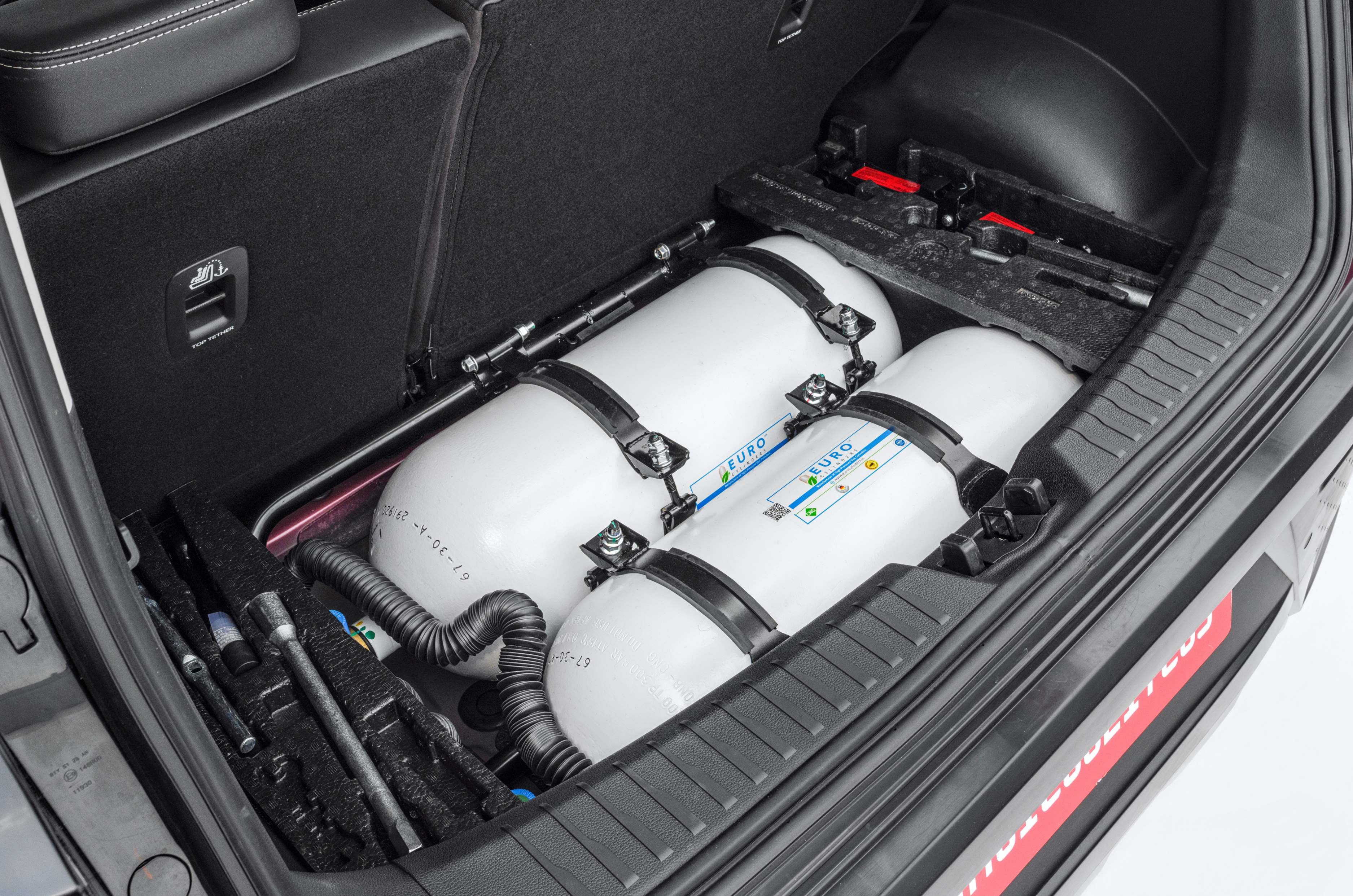
The twin-tank setup eats into what was already a small boot
The 295-litre boot of the XUV 3XO was already the most compact in the segment. Despite moving the spare wheel under the car’s body and fitting the twin cylinders beneath the boot floor, the XUV 3XO CNG’s boot is even more compromised – offering just 270 litres of cargo space. It’s only its width that allows up to four cabin-sized bags to be stored.
Cabin niggles
The XUV 3XO CNG’s interior isn’t devoid of ergonomic flaws
While the black leatherette seats look sporty, they don’t get a ventilation function. This means that, on a bright sunny day, they will heat up quite quickly. If you’ve a larger build, the front seats of the XUV 3XO CNG will feel lacking in space. Adding to the ergonomic niggles is the steering wheel, which cannot be adjusted for reach, making it harder to find a comfortable driving position. Lastly, not only is the XUV 3XO CNG’s driver footwell cramped, there’s also no dead pedal.
Limited options
Customers get only mid-spec trim levels with the CNG version
The CNG version of the Mahindra XUV 3XO is sold in just four trim levels, all of which are mid-spec options within the broader line-up. This limitation becomes obvious given the lack of a 360-degree camera, ventilated front seats, or a wireless charging pad – these are available in the Nexon iCNG. There are no fog lamps, either. Another limitation is that the CNG version only comes with a 6-speed manual, which has long throws and a fair amount of clutch pedal travel.
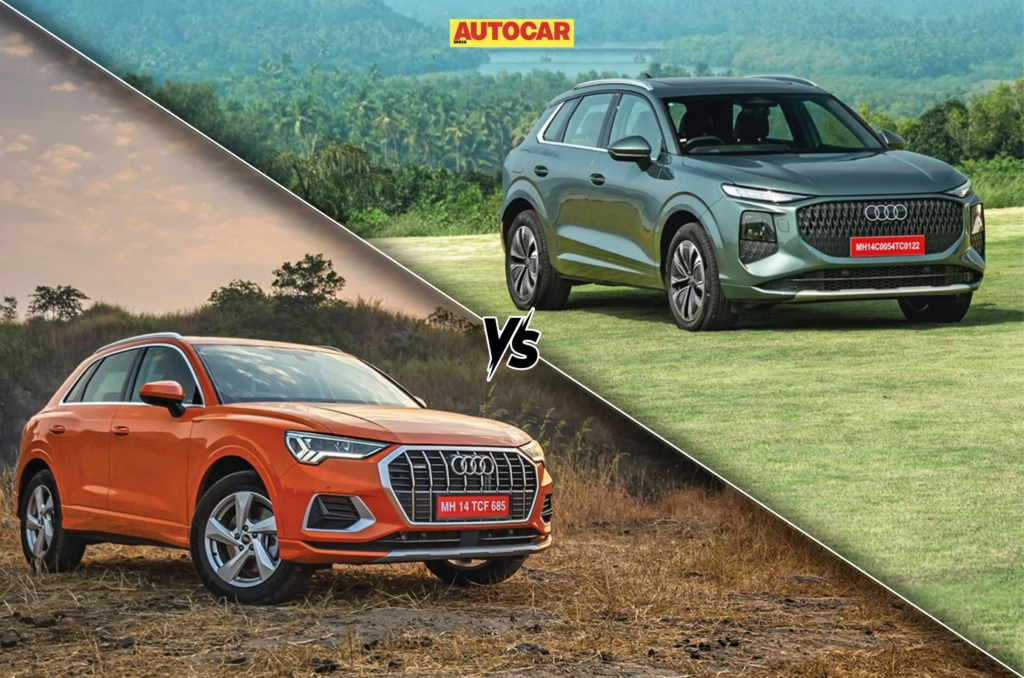
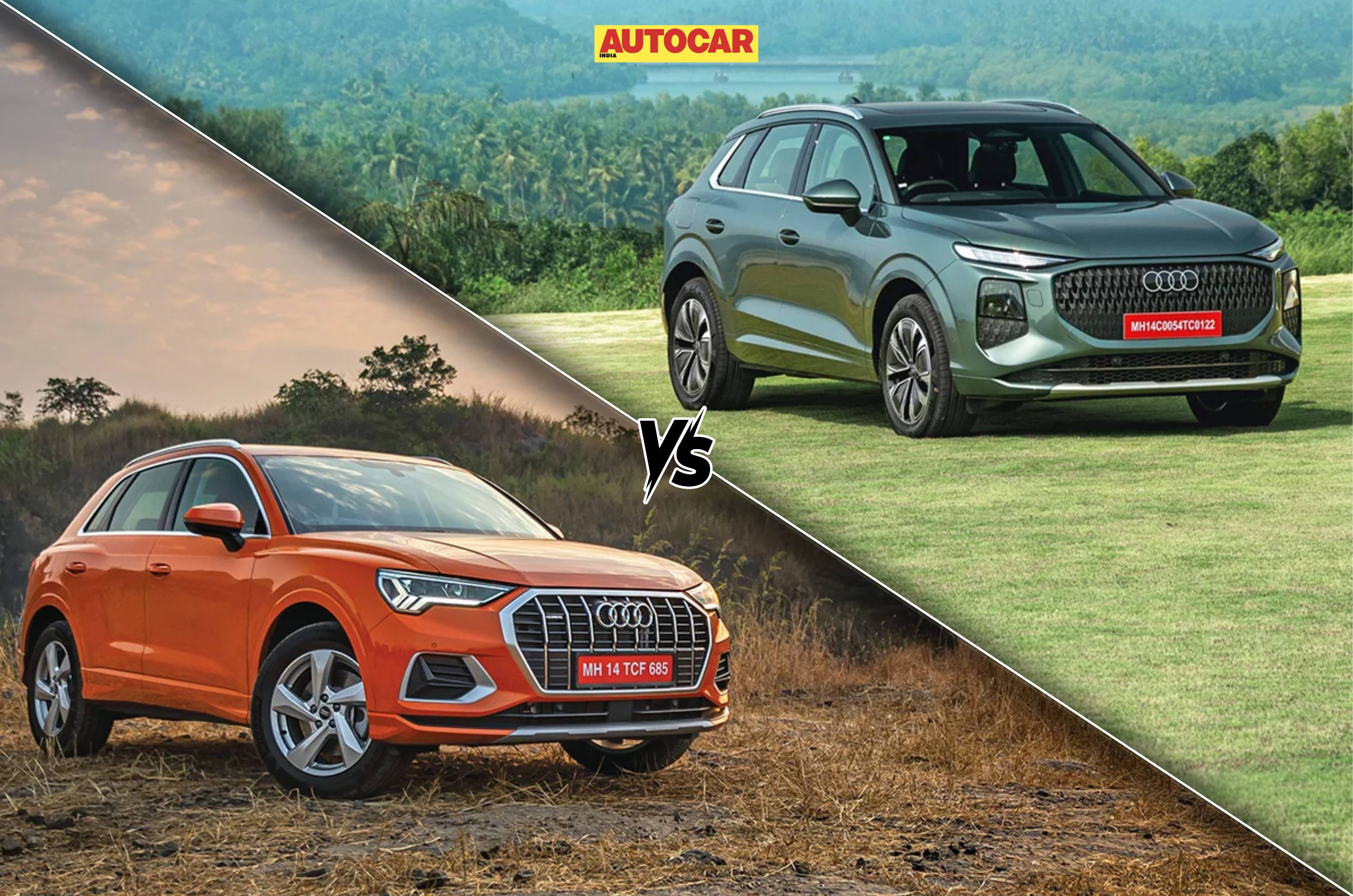
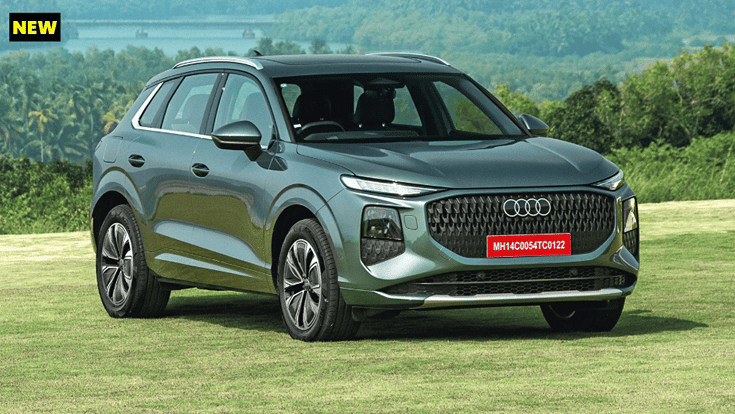
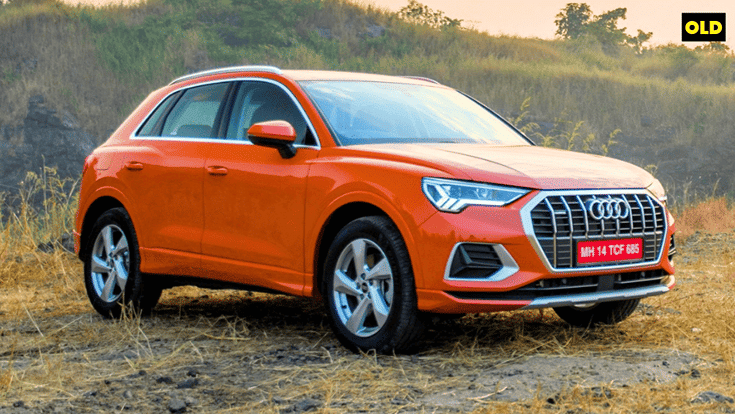
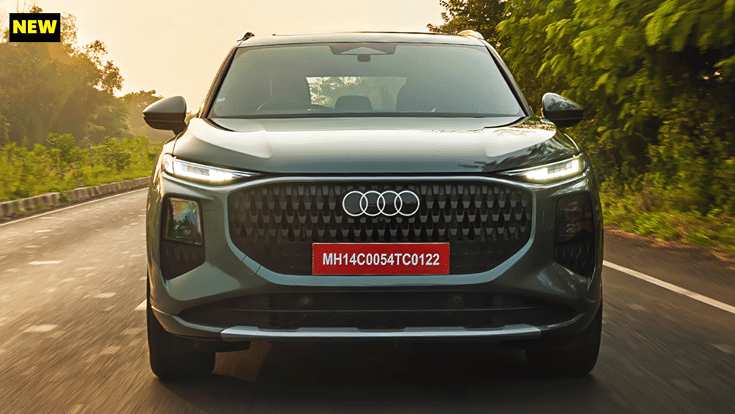
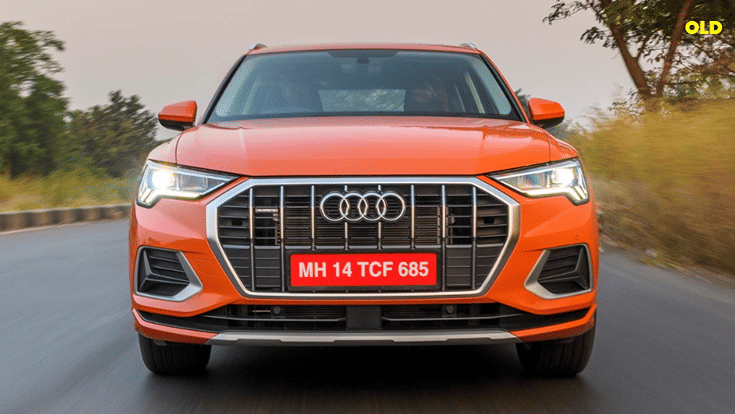
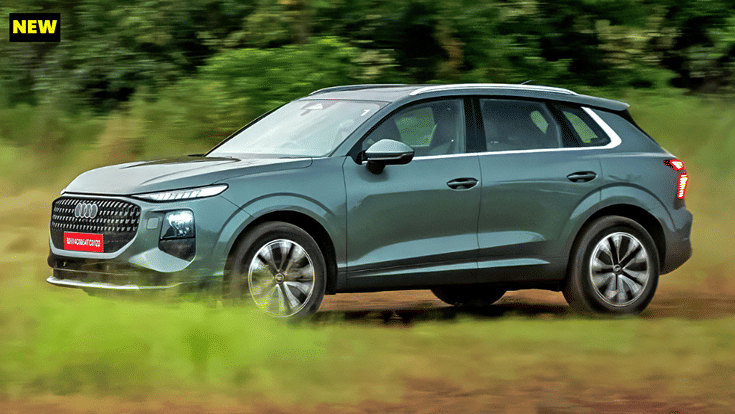
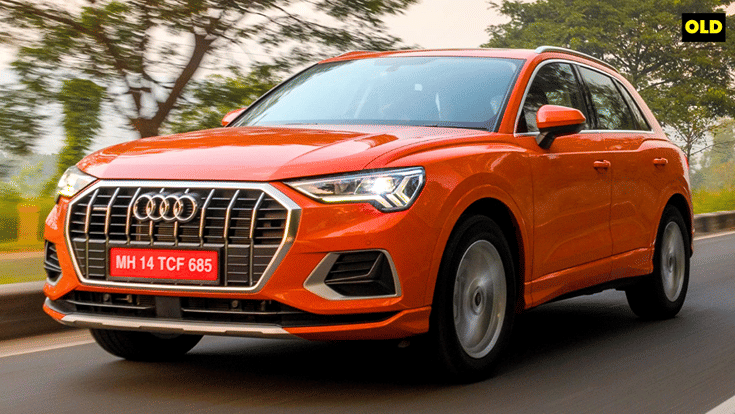
The third generation of Audi’s entry-level SUV, the Q3, has been launched in India. It replaces the second-gen Q3, which went on sale here back in 2022, and is built on the newer MQB Evo platform. As a result, the new Q3 is much more advanced on the tech front and brings design overhauls, both inside and out. It is priced at Rs 51.99 lakh, ex-showroom. That’s an increase of Rs 8.32 lakh over the previous Q3. We compare the new Q3 to its predecessor to find out all that’s changed.
Audi Q3 new vs old: Exterior design
Visually, the differences between the two Q3 generations are immediately apparent. Where the old Q3 featured a clean and understated design, the new one is much more aggressive in look. Stretching the tape at 4,531mm long, 1,859mm wide, and 1,623mm high, with a 2,681mm wheelbase, the third-gen Q3 is also larger than its predecessor in every dimension.
Up front, the old Q3 came with sharp-looking single-piece headlamps, while the new model sports a split-headlamp setup – sleek pixel-style DRLs up top and Matrix LED lights below. The grille of the new Q3 is wider, lacks vertical bars and a chrome surround and bears a 2D Audi emblem instead of the 3D one seen on its predecessor. Lower down, both Q3s have a subtle silver skidplate, but the third-gen model has a larger air dam with a honeycomb-patterned cover.
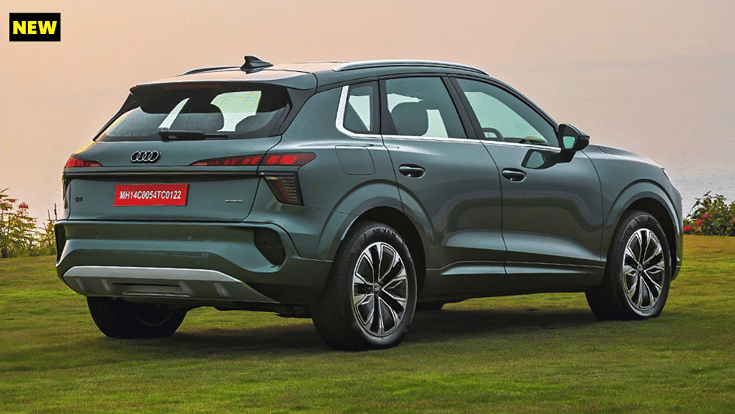
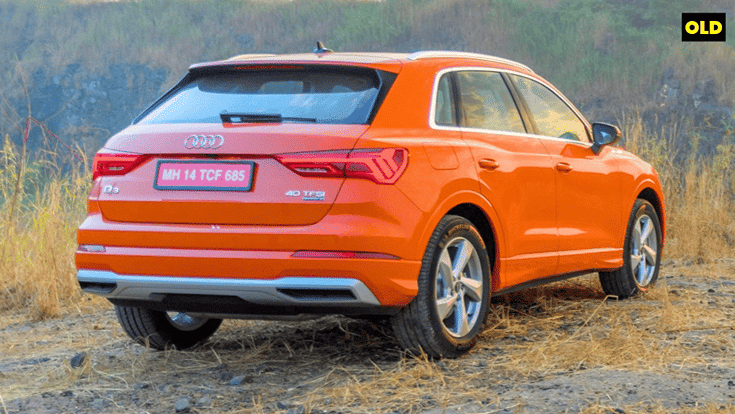
The side profile of the new Q3 has a fresh set of 18-inch alloy wheels, more sculpted panelling, more prominently flared wheel arches, and some black trim pieces above the D-pillars to create a ‘floating roof’ effect. Like the front, the rear end of the new Q3 ditches its predecessor’s single-piece lights in favour of a split setup that’s connected by an LED strip, and the Audi logo is illuminated too. The rear bumper of the new model is also more sculpted and houses a pair of faux air exits and a beefier silver skidplate.
Audi Q3 new vs old: Interior and features
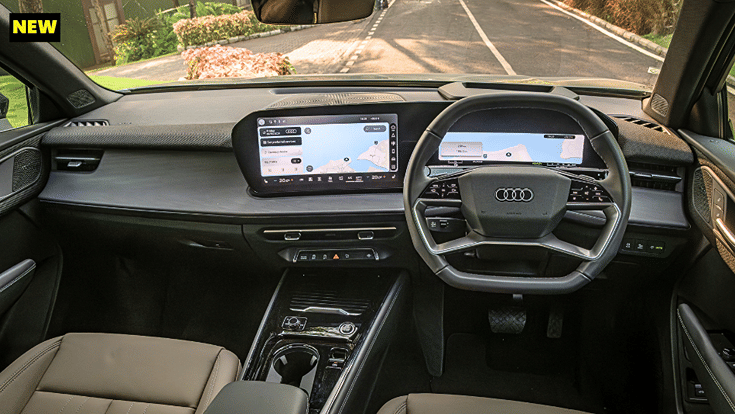
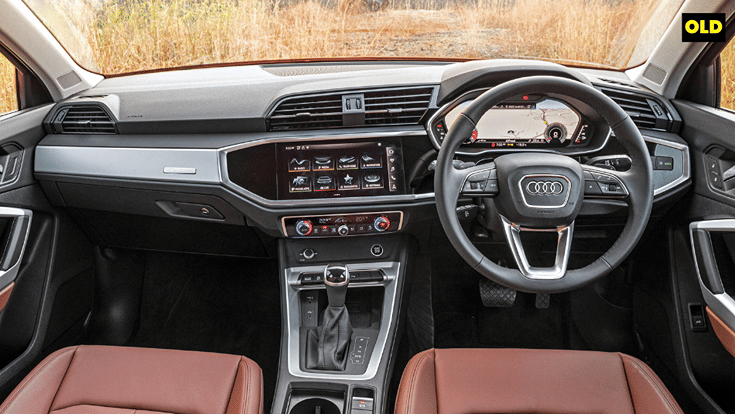
Inside, the third-gen Q3 marks a tremendous departure from the outgoing model. The dashboard of the new Q3 has a neater and more layered design, with a new four-spoke flat-bottomed steering wheel instead of the old rounded three-spoke one. Atop the dash sits a duo of curved displays, specifically an 11.9-inch digital driver’s display and a 12.8-inch infotainment touchscreen – both larger than the ones in the old Q3.
The central air vents have been repositioned to the centre console in the new Q3, and there are much fewer physical controls in the cabin compared to the prior model. Lower down, the gear lever of the old Q3 has been done away with in the new model – the function is now controlled via a stalk behind the steering wheel. As a result, the transmission tunnel is more uncluttered in look in the third-gen Q3, though its gloss-black finish would be a bit more difficult to keep clean.
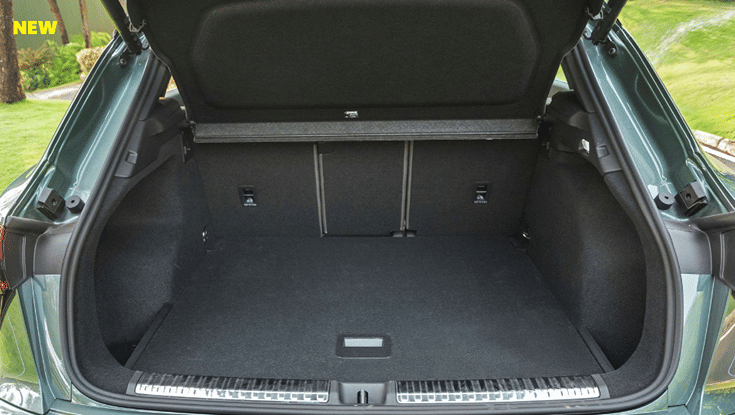
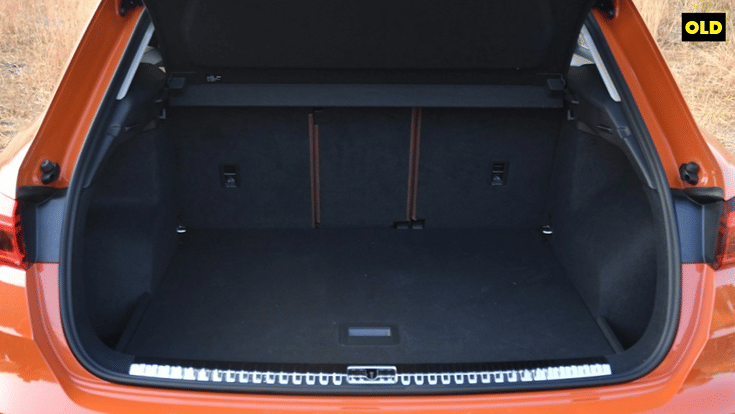
Coming to creature comforts, the new Q3 bests its predecessor with wireless Apple CarPlay and Android Auto, a heads-up display, heated front seats, a 12-speaker Sonos sound system, nine airbags, adaptive cruise control and more. Elsewhere, features like dual-zone climate control, ambient lighting, a panoramic sunroof, powered front seats, a wireless charging pad, among others, are common between the two Q3 generations. Boot space, however, is where the third-gen Q3 is down on the prior model – 488 litres vs 530 litres.
Audi Q3 new vs old: Engine and gearbox
Under the bonnet, the third-gen Q3 retains its predecessor’s 2.0-litre four-cylinder direct-injection turbo-petrol engine, but with an uprated output of 204hp and 320Nm – up 14hp over the old Q3. A 7-speed dual-clutch automatic and Audi’s Quattro all-wheel drive are also standard fit on both Q3s, but at 7.1 seconds, the third-gen model’s 0-100kph time is quicker by 0.2sec. The new Q3’s 229kph top speed is also 7kph higher than that of the outgoing model.
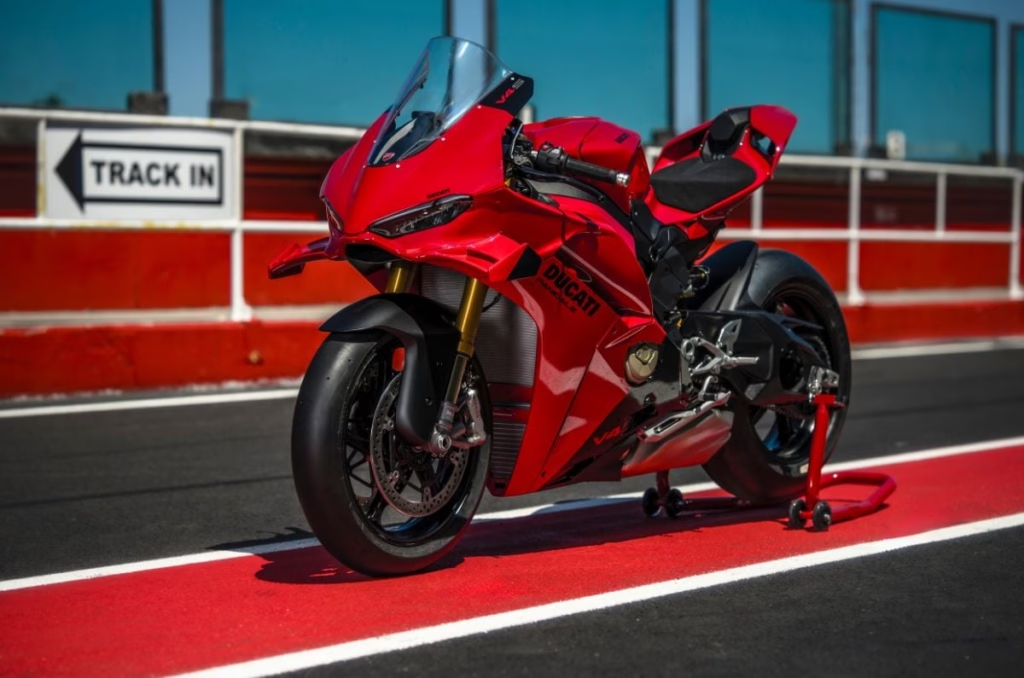
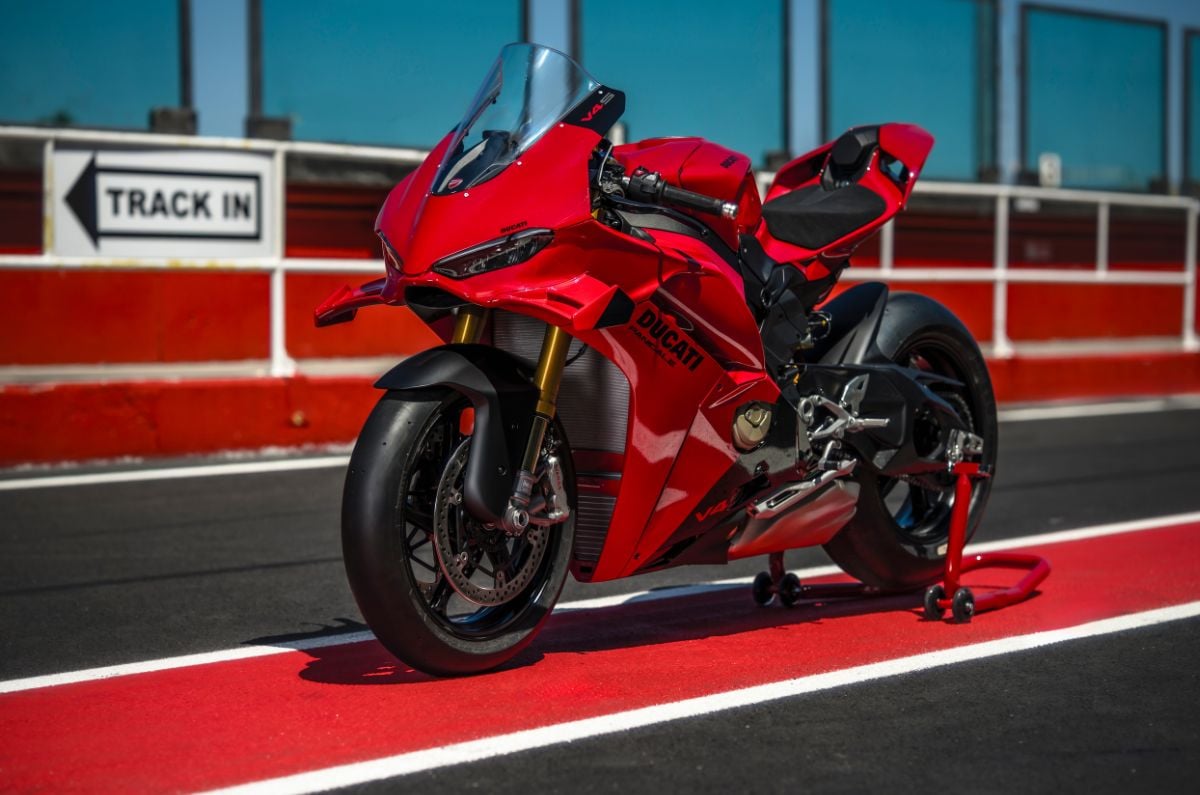
Ducati has been around for forty years, earning countless accolades and recognition for its performance and capability along the way. It would be perfectly reasonable (and debatable) to call the Panigale the present benchmark for that performance, and Ducati, evidently, recognises what that takes. The Borgo Panigale manufacturer has just revealed the 2027 version of it, and appears to have taken a fine-toothed comb to the three pillars of the Panigale V4: the engine, chassis and the electronic suite.
Ducati has worked on reducing power loss; peak power now 218hp
Chassis has been stiffened by 12 percent for better control and feel in corners
Ducati Factory Made program offers vast customisation options for the V4 S
2027 Ducati Panigale V4: What’s new?
An upgrade laser-focused on performance
Starting off with the famed Desmosedici Stradale engine, it continues to be a 1103cc mill, but Ducati has found a way to extract an additional 2hp out of it, raising the peak power to 218hp on the standard model. The Italian manufacturer credits this improvement to a revised air-intake, lubrication circuit and exhaust system, resulting in reduced power loss. In its Euro5-compliant version, the engine makes 218hp at 13,500rpm, with the greatest gains happening between 12,000-14,000rpm. Torque, on the other hand, sees a negligible drop from 120.9Nm at 11,250rpm to 120.6Nm at 11,000rpm.
To complement this change, Ducati has adopted a longer gearing with bigger sprockets at both ends (17/42 now versus 16/41 earlier) and raised the rev limiter to 15,000rpm in gears two through five. As a result, the rider is required to make fewer gear changes in a given lap, as noted in Ducati’s own testing around the Vallelunga circuit; plus an improved lap time by 0.4s compared to the 2026 model. If 218hp is somehow not enough, the new Akrapovič Full Racing Exhaust PRO adds 11hp and 7Nm to the output, and reduces the bike’s weight by 6.6kg from the standard 191kg.
The chassis continues to be monocoque, but Ducati has reduced the lateral stiffness of the front frame by 12 percent, resulting in an improvement of the front grip during high lean angles. Ducati also claims a more precise feel and that the adjusted final drive ratio helps the bike feel more nimble and less physically exerting. The V4 has a fully adjustable Showa USD fork and a Sachs monoshock, also fully adjustable. The V4 S exclusively gets Ohlins suspension units at both ends and uses Smart EC 3.0 control system. Thanks to other performance-oriented equipment, the S weighs 4kg lighter at 187kg without fuel. The V4 S also gets track-use only adjustable clip-on handlebars that raises the height by 10mm – a change inspired by the latest MotoGP bikes – allowing for better leverage, improved control and reduced physical effort during direction changes.
Improved electronic suite
The V4 S is more customisable than ever before
Ducati and electronics go hand in hand and the laundry list of existing rider aids see two new additions: Dynamic Engine Brake and Race Brake Control. The former uses the Ducati Vehicle Observation algorithm to replace Engine Brake Control, and makes the bike more predictable in corners and extreme lean angles. The latter improves the rear wheel’s contribution in stopping the Panigale, and both are present on a Panigale for the first time. The existing suite consisting of numerous control systems – ride/power modes and a bi-directional quickshifter – all continue to be on offer on both the Panigale V4 models.
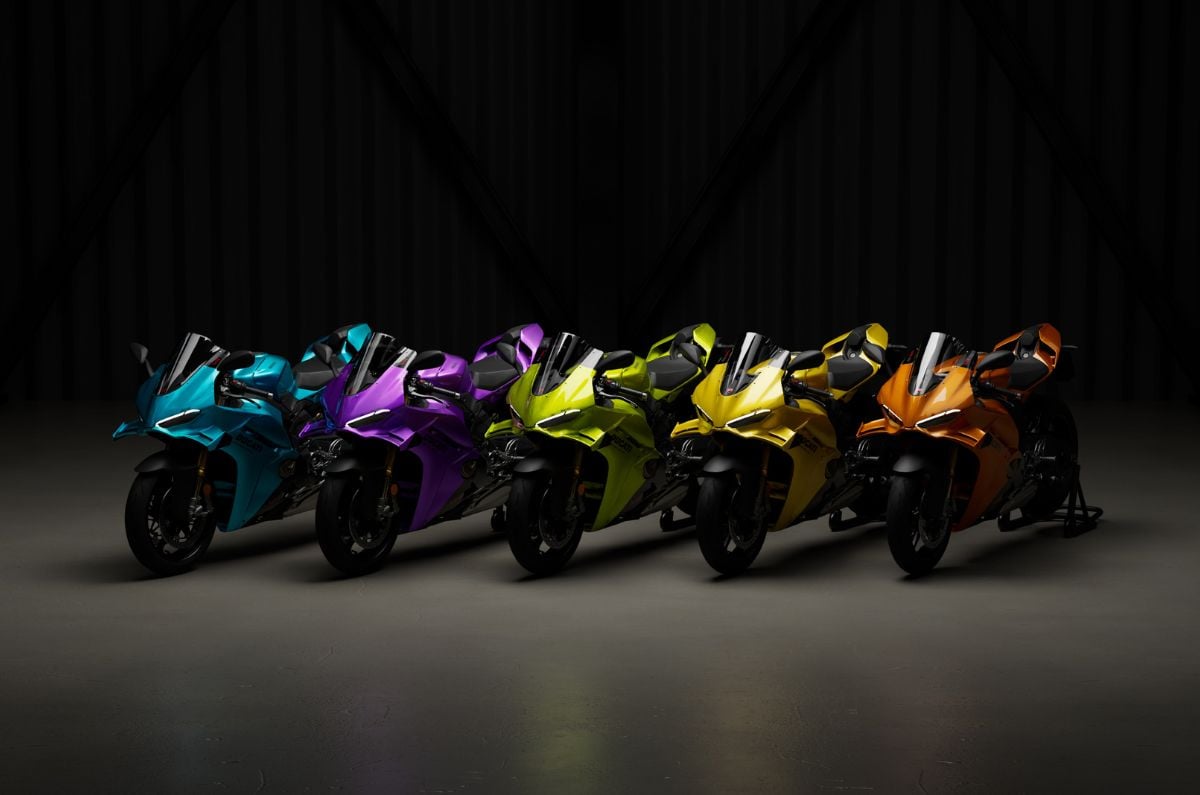
The five colour options directly from the Automobili Lamborghini’s Ad Personam program
For the first time, the Panigale V4 S will be a part of the Ducati Factory Made program, offering multiple customisation options. Through this, riders can choose from a total of 11 colours – five of which are from Automobili Lamborghini’s Ad Personam program – and two liveries, Corse and Performance. Other accessories include Front Brake PRO and PRO+ packages, the STM dry clutch, and adjustable footpegs.
With all the changes, the 2027 Ducati Panigale V4 and the V4 S will reach European dealerships next March, followed by the US in April. In the UK, the V4 costs GBP 25,495 (Rs 32.16 lakh), and the V4 S at GBP 30,995 (Rs 39.10 lakh). Ducati has not revealed a launch timeline for the rest of the world; in India, the 2026 Panigale V4 costs Rs 32.05 lakh for the standard model and Rs 39.01 lakh for the V4 S. When Ducati brings the 2027 versions here, we’d expect these prices to go up.
Gujarat civic polls: गुजरात के शहरी स्थानीय निकाय चुनावों में राज्य में सत्ताधारी भारतीय जनता पार्टी (BJP) ने तीनों निकायों में जबरदस्त जीत हासिल कर अपना कब्जा बरकरार रखा है। राज्य निर्वाचन आयोग की ओर से मंगलवार (13 अक्टूबर) को घोषित नतीजों के मुताबिक, BJP को गांधीनगर नगर निगम (GMC) चुनाव में 44 में से 38 सीटों पर कब्जा कर बड़ी जीत हासिल की। इसके अलावा भगवा पार्टी ने थारा और ओखा नगरपालिकाओं में भी अपनी सत्ता बरकरार रखी है। गुजरात निकाय चुनाव में कांग्रेस का प्रदर्शन काफी खराब रहा है।
गांधीनगर नगर निगम चुनाव में कांग्रेस पांच सीट के साथ दूसरे नंबर पर रही। जबकि एक सीट निर्दलीय उम्मीदवार ने जीती। आम आदमी पार्टी (AAP) इस बार अपना खाता भी नहीं खोल पाई। उसने पिछले जीएसमी चुनाव में एक सीट जीती थी। पिछला जीएमसी चुनाव अक्टूबर 2021 में हुआ था जिसमें BJP ने 44 में से 41 सीट जीती थीं। जबकि कांग्रेस को दो और आप को एक सीट मिली थी।
थारा नगरपालिका में बीजेपी ने 19 सीटें जीतीं
बनासकांठा जिले की थारा नगरपालिका में भाजपा ने 24 में से 19 सीटें जीतीं। जबकि कांग्रेस को बाकी पांच सीटों पर जीत मिलीं। थारा नगरपालिका चुनाव का परिणाम भी आज ही घोषित हुआ। देवभूमि द्वारका जिले की ओखा नगरपालिका में 32 सीट के लिए मतदान हुआ था। इनमें से भारतीय जनता पार्टी ने 29 जीतीं। जबकि कांग्रेस को तीन सीट मिलीं।
ओखा में बीजेपी को 29 सीटें, 4 पर निर्विरोध जीत
ओखा में चार सीट पर उम्मीदवार निर्विरोध चुने गए क्योंकि इन सीट पर चुनाव मैदान में सिर्फ BJP के उम्मीदवार ही बचे थे। इन चार सीटों को मिलाकर भगवा पार्टी ने नगरपालिका की कुल 36 में से 33 सीट हासिल कीं। इन चुनाव नतीजों के साथ, बीजेपी ने रविवार को हुए चुनावों में तीनों शहरी स्थानीय निकायों पर अपना कब्जा बनाए रखा है। तीनों शहरी निकायों के लिए वोटों की गिनती मंगलवार सुबह 9 बजे शुरू हुई थी।
तीनों निकायों में बीजेपी ने बरकरार रखा कंट्रोल
गुजरात के इन तीनों शहरी निकायों के नतीजों से स्पष्ट है कि बीजेपी गांधीनगर नगर निगम, थारा नगरपालिका और ओखा नगरपालिका में अपना नियंत्रण बनाए रखने में सफल रही। वहीं, कांग्रेस ने गांधीनगर में पिछली बार की तुलना में अपनी सीटों की संख्या बढ़ाई और थारा तथा ओखा में भी सीटें हासिल कीं। गांधीनगर में बीजेपी की सीटें 41 से घटकर 38 रह गईं, जबकि कांग्रेस की सीटें दो से बढ़कर पांच हो गईं। दूसरी ओर, आम आदमी पार्टी को इस बार गांधीनगर में कोई सीट नहीं मिली।
EVM से कराए गए चुनाव, गांधीनगर में 59.25% मतदान
गुजरात निर्वाचन आयोग के अनुसार, तीनों निकायों में चुनाव इलेक्ट्रॉनिक वोटिंग मशीन (EVM) के जरिए कराए गए थे। गांधीनगर में 59.25 प्रतिशत, थारा में 81.18% और ओखा में 63.27 फीसदी मतदान दर्ज किया गया। रविवार को वोटिंग के बाद मंगलवार सुबह मतगणना शुरू हुई। नतीजों के साथ ही तीनों शहरी निकायों में नई स्थानीय राजनीतिक स्थिति स्पष्ट हो गई है। बीजेपी ने तीनों जगह अपना कंट्रोल बरकरार रखा। जबकि गांधीनगर में कांग्रेस की सीटों में बढ़ोतरी दर्ज की गई है।
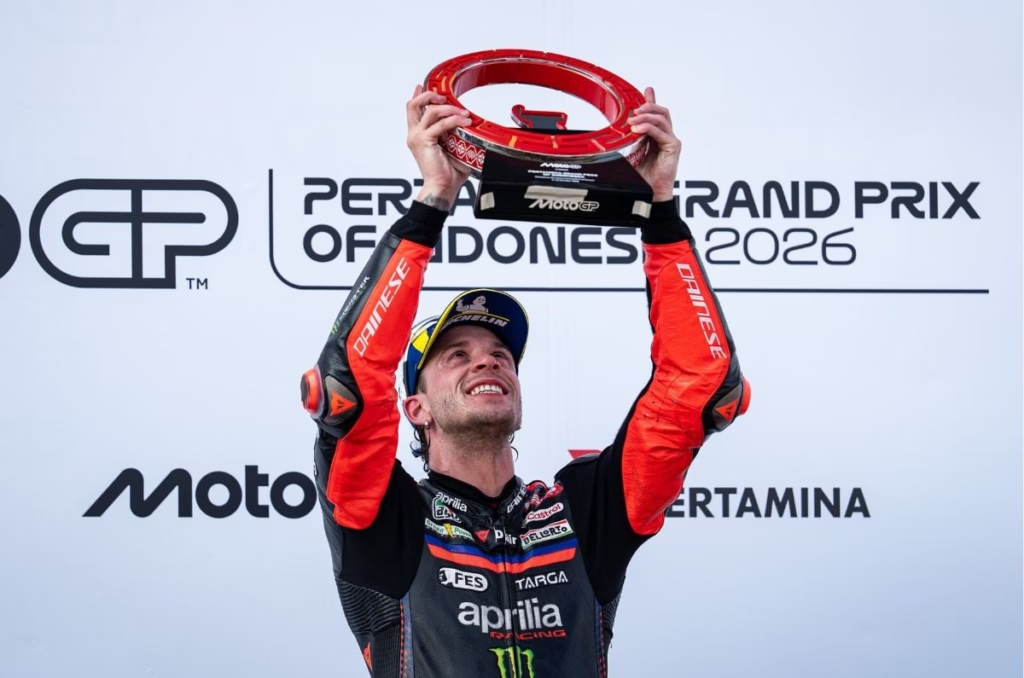
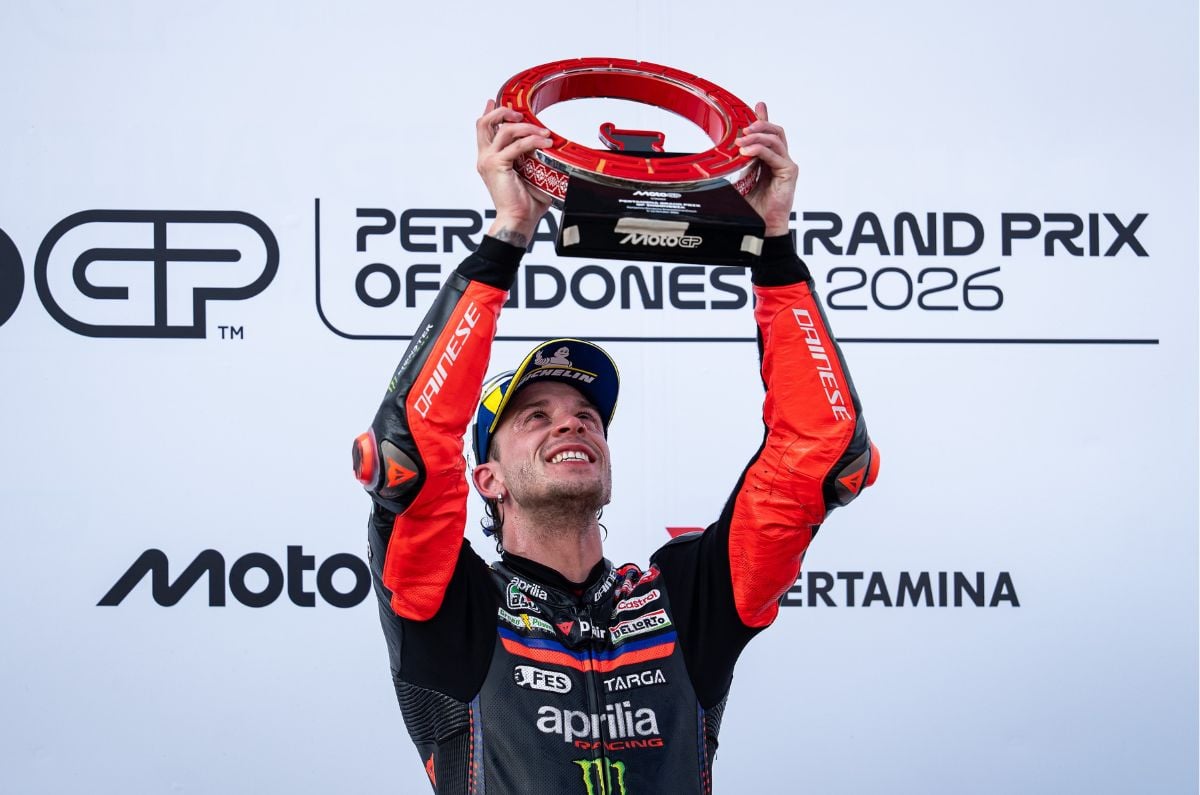
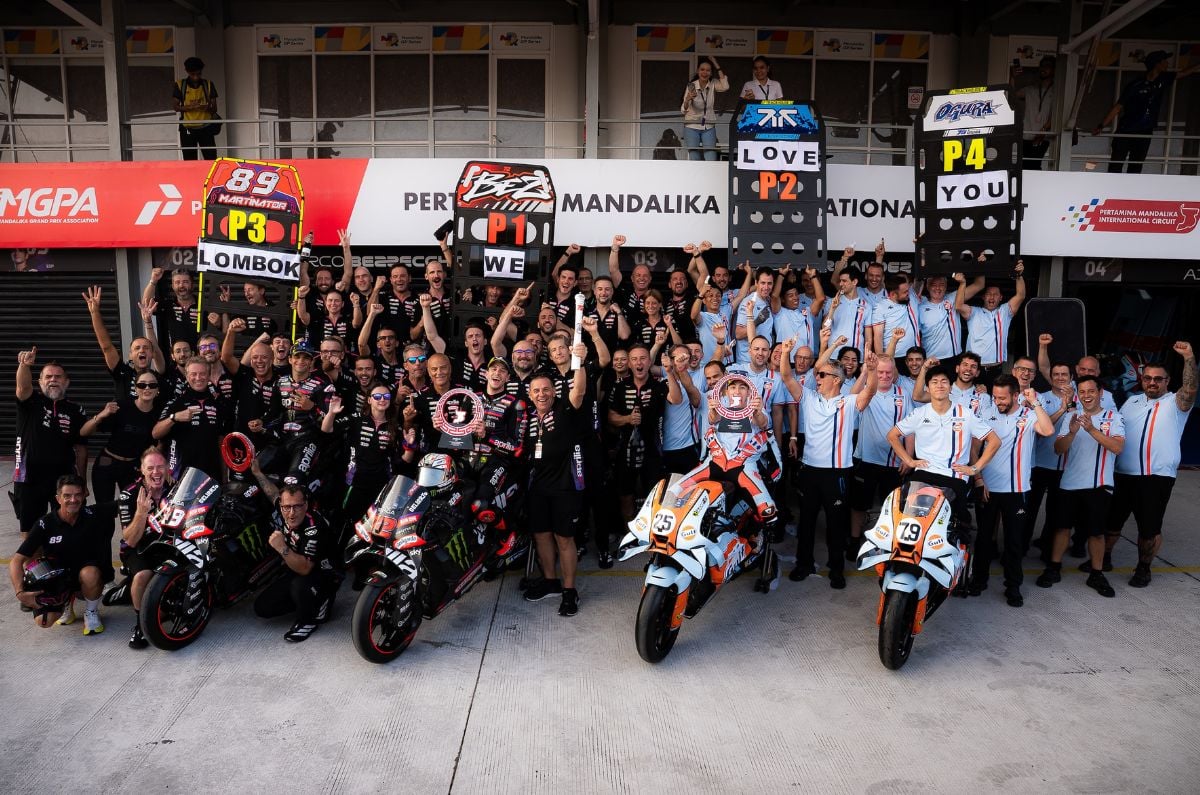
The last leg of the 2026 MotoGP season is here, and the stakes are only getting higher. Aprilia Racing rider Marco Bezzecchi, currently P3 in the world championship, won the Indonesian GP (133 days after his last win), and Jorge Martin, who currently leads the standings, took P3. Raul Fernandez and Ai Ogura of the Trackhouse MotoGP team ranked P2 and P4, resulting in an Aprilia 1-2-3-4 for the first time in the history of the premier class.
Marco Bezzecchi wins for the first time since the dominant Italian GP victory
Martin and Marquez are separated by 2 points, same as after Motegi the previous week
Maximo Quiles wins Moto3 championship, with Izan Guevara continuing to chip away at Manu Gonzalez’s lead in Moto2
Marc Marquez started off strong with Sprint win
Aided by Raul and Marco’s crash
Going into the weekend, Aprilia was expected to be the better performer and that largely held true throughout the practice sessions. However, during Saturday’s sprint, Marco Bezzecchi’s momentary lapse in judgement resulted in him and Raul Fernandez crashing out in the very first corner of the first lap. This gave the lead to Jorge Martin (started in P5), who held on to it until lap 9, when a front tyre pressure warning forced him to slow down and let the trailing rider, Marc Marquez, overtake him. Marc then started building a gap between the two of them, and while Martin sorted out his issues and started catching up to Marc, he ran wide on the last lap, thereby falling out of the podium positions, with a final P4 result.
Pedro Acosta was actively in the battle for podium with Fabio DiGiannantonio and Ai Ogura, until he received a long lap penalty for track limits and ended the Sprint with P6, behind Alex Marquez. A series of technical issues and the early crash guided Marc to a Sprint win, making him the outright championship leader on Saturday by 4 points, with Fabio and Ogura finishing in P2 and P3, respectively. Fernandez ended up with a broken index finger as a result of the crash but was cleared to race on Sunday.
An eventful Grand Prix, dominated by Aprilias
An injury-stricken Raul showed admirable resilience
The Sunday race, though, went as expected as can be. Fernandez started from pole position and had to modify his riding technique to brake with his middle finger, owing to his broken index finger. He was quick to race away from the rest of the pack, with Marco closely following for 17 out of the 27 laps, where he finally overtook him on turn 1 and won the race eventually. In addition to winning, Bezzecchi also set the fastest lap of the race at 1:29:660 and finished the race 21.060 seconds quicker compared to 2025.
Marc Marquez – rejuvenated by his Sprint victory – started strong in P3 but was subsequently overtaken by Jorge Martin and then Pedro Acosta later in the race. Marc and Pedro had a back-and-forth for some laps, where they both faced apparent front tyre pressure warnings (similar to Martin on Saturday), so they let each other pass a few times to let their tyres recover. Once Pedro resolved the issue, he overtook Marc but was then overtaken by Ogura. The race ended with Martin in P3, Ogura in P4, Pedro in P5 and Marc in P6.
Left to right: Jorge Martin (P3), Marco Bezzecchi (P1), Raul Fernandez (P2) and Ai Ogura (P4) celebrating the historic Aprilia 1-2-3-4 with their teams.
Fabio DiGiannantonio had a desirable race start at P3 but was quickly overtaken by all the riders above as well as Alex Marquez, ending his race with P8. Pedro was once again the best performing KTM rider, after Enea Bastianini out-performed him in Motegi. Speaking of whom, Enea ended his run with P10, followed by Pedro’s teammate Brad Binder in P11.
After his win in the Japanese GP, Marc Marquez had reduced the points gap to leader Jorge Martin to 2; and he briefly led the championship after his Sprint win. However, the race results have brought the duo back to the same gap with Jorge Martin once again becoming the leader, followed by Marc Maquez with a two points deficit going to Phillip Island, Australia.
Hot track, hotter riders, notable crashes
Four DNFs and one DNS
The Indonesian GP, hosted in the Lambok island, is considered to be a trying track for the riders as well as their motorcycles. During the MotoGP race, the track temperature was at a scalding 62 degree celsius and the air temperature was bordering around 29 degrees with 73 percent humidity. The conditions remained similarly scorching throughout the weekend, and evidently, it was a tough environment to race in. Fermin Aldeguer, last year’s Indonesian GP winner, crashed out at the end of lap 1, followed by Jack Miller and Pecco Bagnaia – separate incidents – in lap 5. Toprak Razgatlioglu retired in lap 8, due to weakness and lack of feeling in his right shoulder following a massive highside on Saturday practice, as he explained in post race interviews.
Honda had announced Aleix Espargaro will be replacing Joan Mir for the weekend and Aleix partook in all the practice sessions and the Sprint. However, he withdrew from the Grand Prix, citing arm pump issues and choosing to focus on Honda’s 850cc tests in Sepang next week.
Maximo Quiles takes Moto3 championship
A chaos filled Moto2 race with a closer championship fight than MotoGP
The other two races were just as eventful and perhaps more chaotic than MotoGP. After an impressive 2026 campaign, Maximo Quiles of CFMoto Gaviota Aspar team became the Moto3 World Champion with five races remaining. Quiles has the second-best win rate of 58.8 percent, trailing only David Alonso’s dominant run of 2024, with a 70 percent win rate.
Speaking of David Alonso, his Moto2 race came to a sadly premature end. Alonso started as P2 in the race, but in the first turn of the first lap, his CFMoto Power Electronics Aspar teammate Dani Holgado crashed into him leading to Alonso’s bike getting severely damaged. The crash also took out Joe Roberts and Collin Veijer, which brought red flags out, and resulted in a race restart with a reduced 14 laps (versus planned 22 laps). Except Alonso, the other three riders were able to restart their races, although Joe Roberts quickly retired because of an issue with his rear brake.
Klint Racing’s Alex Escrig was quick to overtake Izan Guevara and held on to the lead successfully, until a technical issue with his bike made him drop out of the race with two laps to go, handing Izan the victory. The final race results saw Izan Guevara in P1, current rider championship leader Manu Gonzalez in P2, and Dani Holgado in P3. With his hattrick race win, Izan has reduced the points gap to Manu to 6.5, going to Phillip Island in two weeks’ time.
Free OnlyFans Creators: Practical Guidance for Safe and Effective Use
Understanding the Concept of Free OnlyFans Creators
OnlyFans is widely known as a subscription‑based platform where creators share exclusive content behind a paywall. However, a growing segment of the community offers free content—these are commonly referred to as free onlyfans creators. Their approach varies: some provide a limited portion of their library for free to attract new fans, while others keep the entire channel open without charging.
The motivation behind offering free content can include building a larger audience, cross‑promoting other paid platforms, or simply sharing hobby‑related material. From a user perspective, free onlyfans creators give an opportunity to explore niche interests without an upfront financial commitment.
Legal and Ethical Considerations
Before engaging with any free content on OnlyFans, it is essential to understand the platform’s terms of service and the legal framework governing adult‑oriented media. OnlyFans requires all creators to verify their identity and age; similarly, users must be 18 years or older.
Distributing copyrighted material without permission remains illegal, even if the content is available for free. Ethical consumption means respecting the creator’s licensing choices and avoiding redistribution of their work outside the platform.
How to Identify Legitimate Free Content Sources
Not every “free” link you encounter is trustworthy. Below are practical steps to verify legitimacy:
Check the creator’s profile for a verified badge and clear biography.
Read recent comments and follower interactions to gauge authenticity.
Look for direct links from the creator’s official social channels (Twitter, Instagram, TikTok).
Use OnlyFans’ built‑in search filters for “Free” or “Free Trial” tags.
When a creator promotes free access through third‑party websites, exercise caution. Those sites often host phishing scripts or malicious downloads.
Key Features and Benefits of Using Free OnlyFans Creators
Free onlyfans creators provide several tangible benefits that can be useful for both casual browsers and power users:
Cost‑Effective Exploration: Test different content styles before committing to a paid subscription.
Community Building: Access to a larger, more diverse fan base that can foster interaction.
Content Variety: Many free creators specialize in niches such as fitness tutorials, cooking demos, or artistic modeling.
These features align with business‑oriented goals as well—marketers can monitor trends, while content curators can benchmark what resonates without investing in premium accounts.
Step‑by‑Step Setup and Access Process
Getting started with free onlyfans creators is straightforward. Follow these steps to ensure a smooth experience:
Create an OnlyFans account using a valid email address and secure password.
Complete the age verification process by uploading a government‑issued ID.
Navigate to the search bar and enter “free onlyfans creators” or specific niche keywords.
Review the profile details and click “Subscribe for Free” where available.
Adjust notification settings to stay updated on new posts without excessive alerts.
Once subscribed, you can access the creator’s dashboard, view posts, and interact through comments or private messages according to the creator’s preferences.
Common Use Cases and Best‑Fit Scenarios
Understanding when free onlyfans creators add real value helps you decide where to invest your time:
Skill Development: Artists seeking modeling references can follow free photographers.
Market Research: Brands analyzing audience engagement trends without paying for premium data.
Personal Entertainment: Users looking for hobby‑specific content—like cooking tutorials—without subscription fees.
Each scenario benefits from the platform’s built‑in analytics, allowing creators to measure fan interaction and refine their offerings.
Limitations, Risks, and Safety Tips
While free content is appealing, it comes with inherent limitations. Free onlyfans creators often limit upload frequency, reduce video quality, or restrict exclusive features such as direct messaging.
Potential risks include exposure to spam, phishing attempts, or low‑quality media. To mitigate these issues, follow best practices:
Enable two‑factor authentication on your OnlyFans account.
Never share personal payment details unless you decide to upgrade to a paid subscription.
Report any suspicious activity directly to OnlyFans support.
Comparison Table: Free vs. Paid OnlyFans Creators
Aspect
Free OnlyFans Creators
Paid OnlyFans Creators
Cost to User
No subscription fee
Monthly subscription required
Content Volume
Limited or occasional posts
Regular, extensive uploads
Exclusive Features
Often restricted (no private messages)
Full access to messages, polls, custom requests
Interaction Level
General comments only
Direct communication and personalized content
Risk Profile
Higher chance of low‑quality content
Typically higher production standards
Frequently Asked Questions (FAQ)
Can I download free OnlyFans content?
Downloading content directly from OnlyFans is prohibited by the platform’s terms of service unless the creator explicitly enables a download feature. Attempting to circumvent this rule can result in account suspension.
Is it safe to share my payment information for a free subscription?
Free subscriptions usually do not require payment details. If a creator asks for payment information during a “free” trial, verify the legitimacy of the request through official OnlyFans channels before proceeding.
How can I support a free creator without paying?
Engaging with their posts, leaving positive comments, and sharing their profile on social media are effective ways to increase visibility. Many creators also accept tips through external platforms like PayPal or cryptocurrency.
For a quick way to start exploring trustworthy free content, visit the free onlyfans best portal, which aggregates verified profiles and provides up‑to‑date guidance.
The midsize SUV space is now more competitive than ever. Just the last few months have seen new launches in the form of the Tata Sierra, Renault Duster, Nissan Tekton and the facelifts of the Volkswagen Taigun and Skoda Kushaq. Then there are the venerable Kia Seltos and the Hyundai Creta, the latter of which is set to receive a new-gen model next year, and an all-new entrant, the Hyundai Bayon, is about to join the ranks.Powertrain choices have been expanding too; diesel continues to be popular, turbo petrols add a dose of excitement, CNG is fast becoming the high-mileage option and there’s electrification in the form of hybrids and full EVs.So in a bid to keep it relevant, Honda has updated its midsize SUV contender, the Elevate, and here’s how it all comes together.
Design and engineering – 8/10
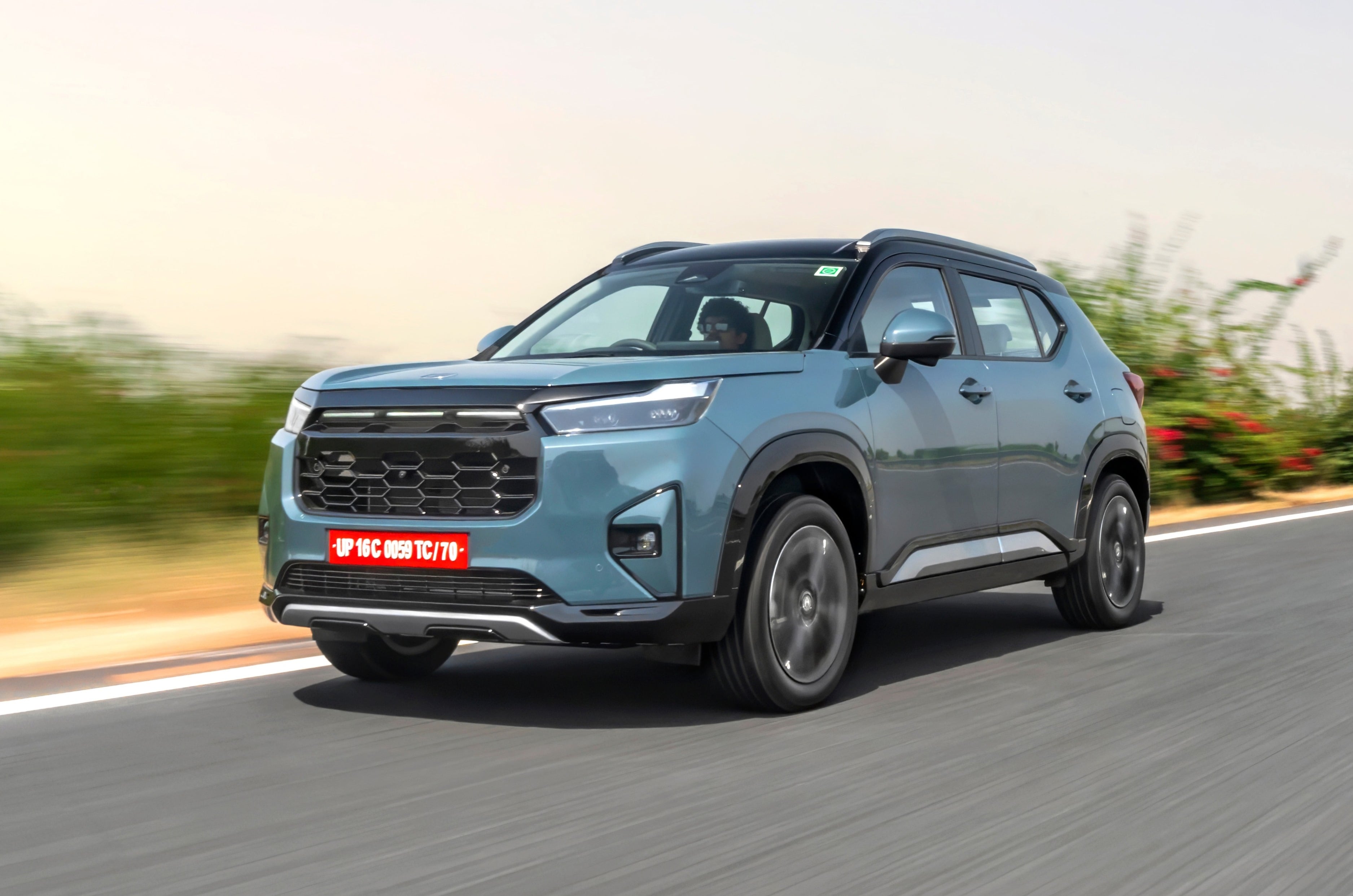
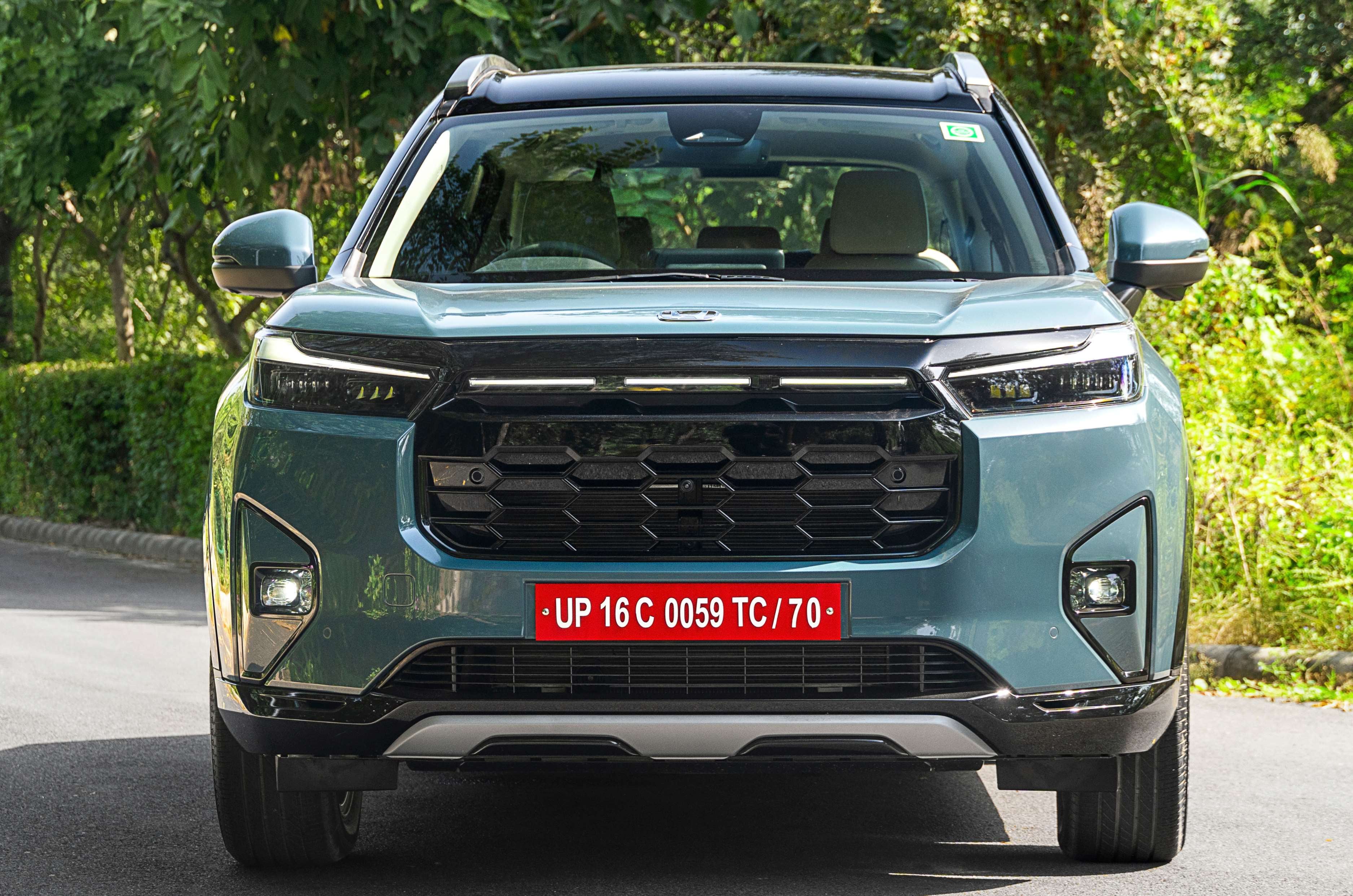
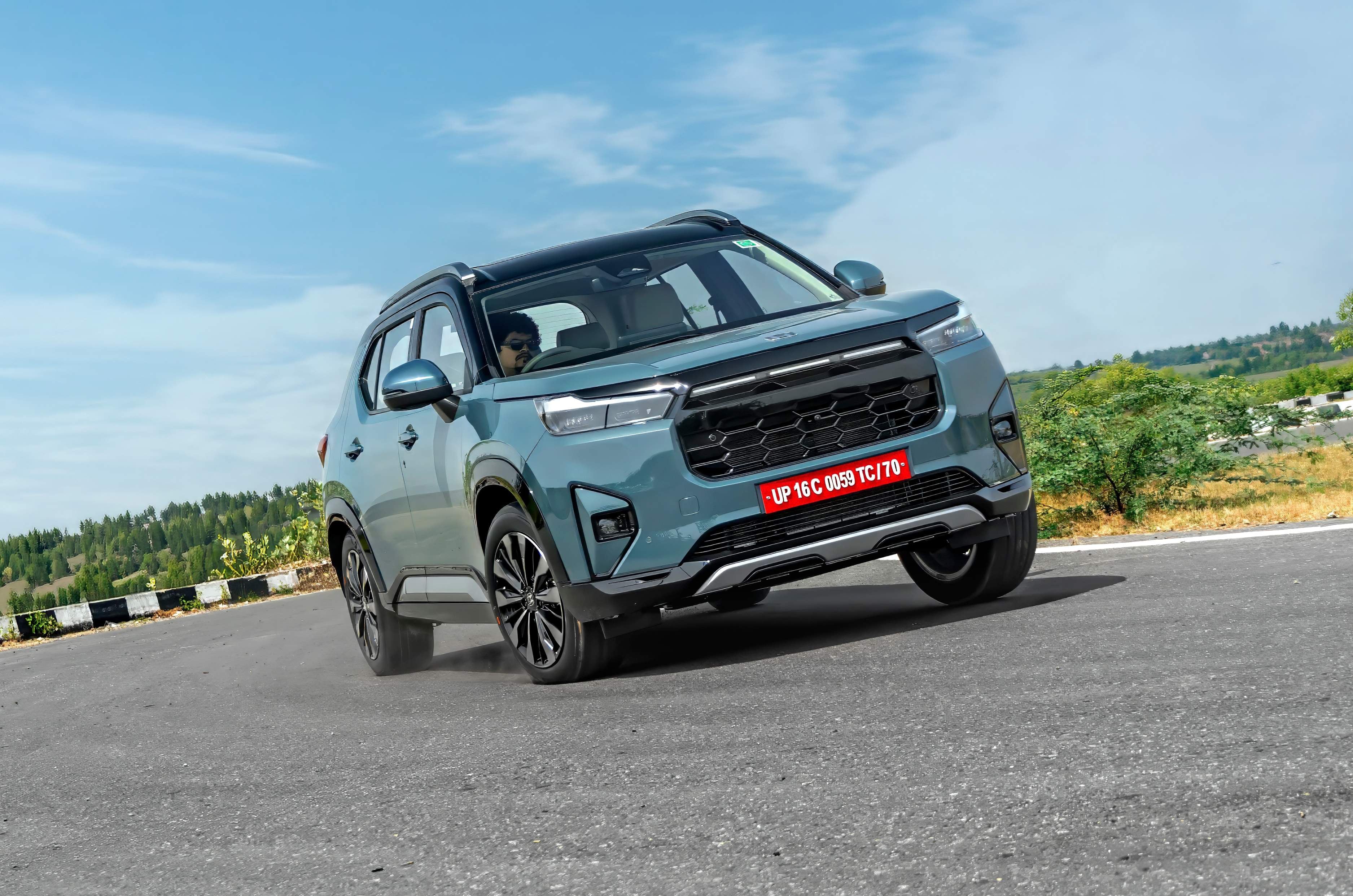
Features a new gloss black grille with a honeycomb pattern and a segmented LED light bar.
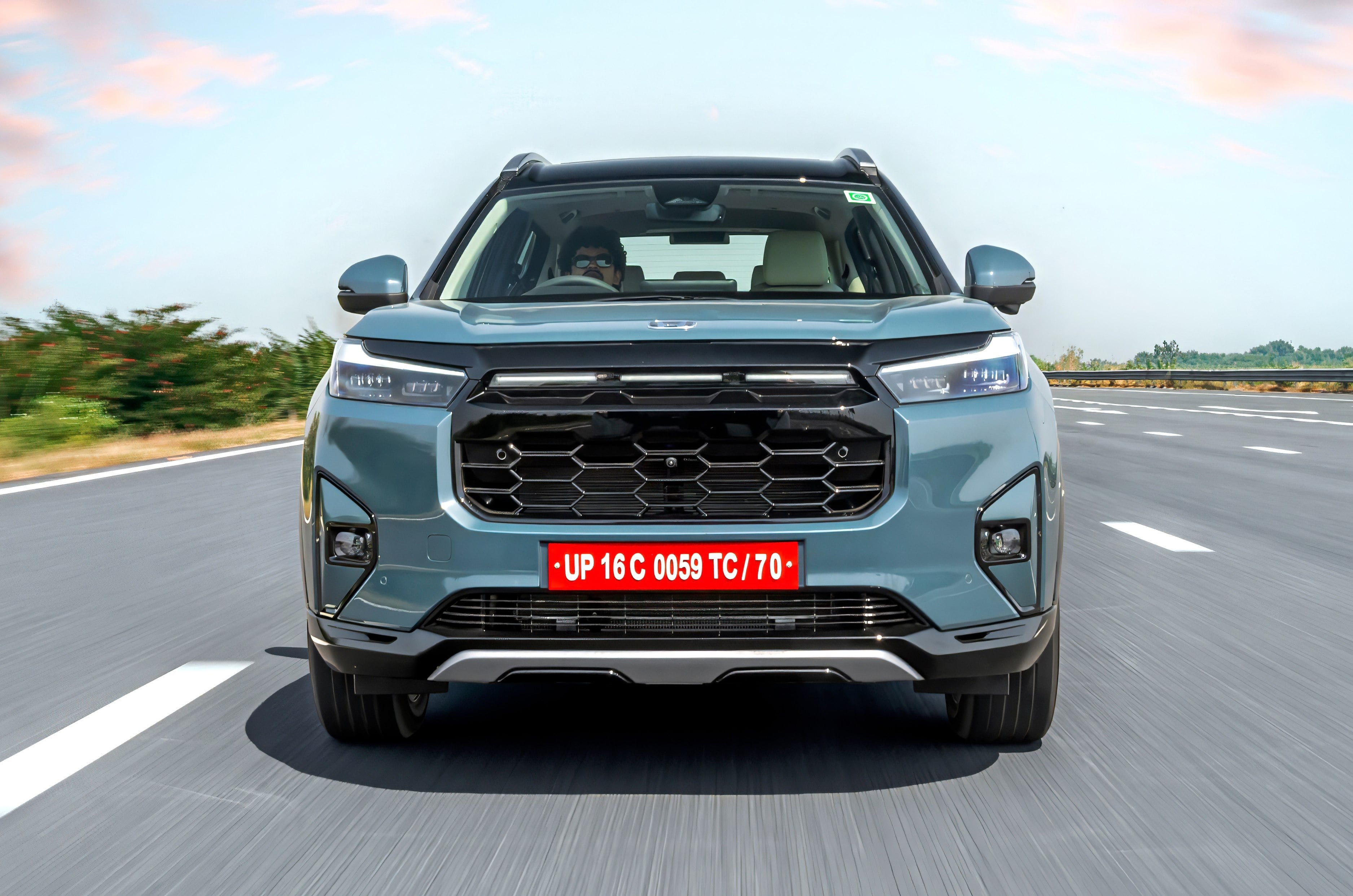
Honda has given the Elevate a subtle design update, but the changes are effective enough to give the SUV a fresher, more contemporary look without straying far from the original design. The biggest revisions are concentrated at the front end, where a new segmented LED light strip links the LED headlamps and the thick chrome band above them has been replaced with gloss black trim. The front grille gets a revised mesh pattern and a gloss-black finish, lending the front end a slightly sportier, more butch appearance. The Honda badge now sits on the bonnet rather than within the grille, while the fog-lamp housings are now finished in body colour instead of black for a cleaner look.
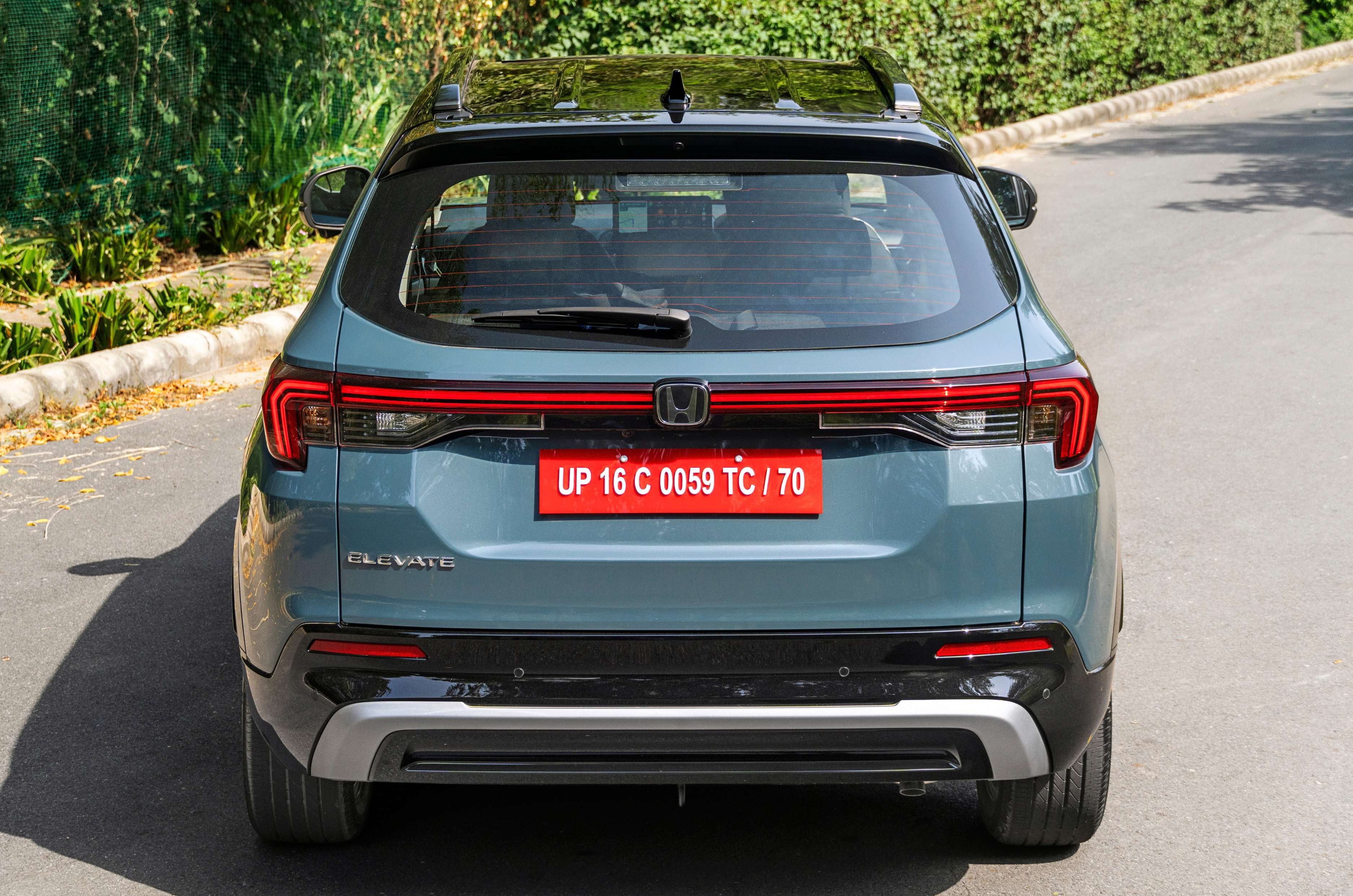
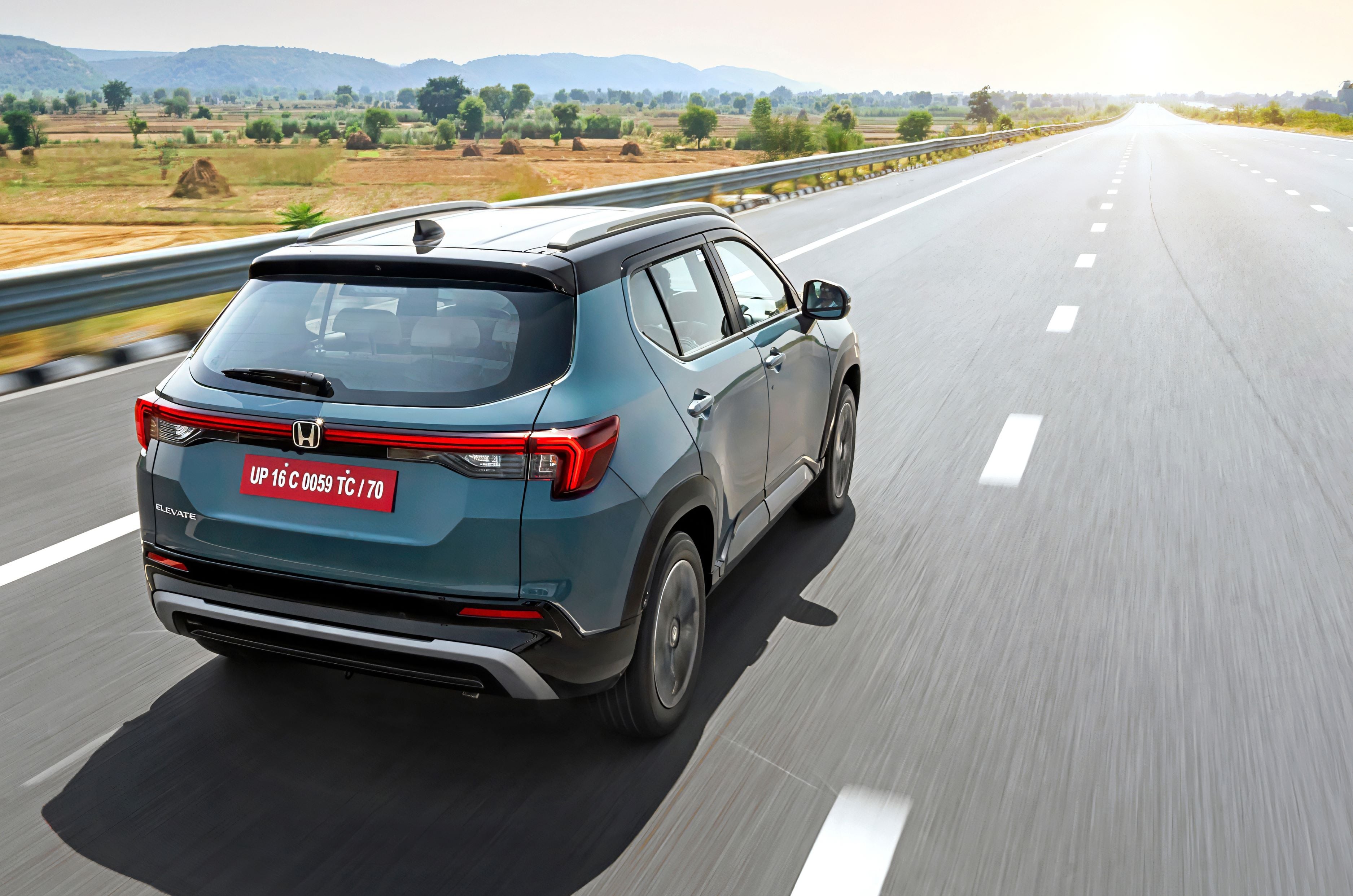
New LED light bar now connects the tail-lamps, giving it a more cohesive appearance.
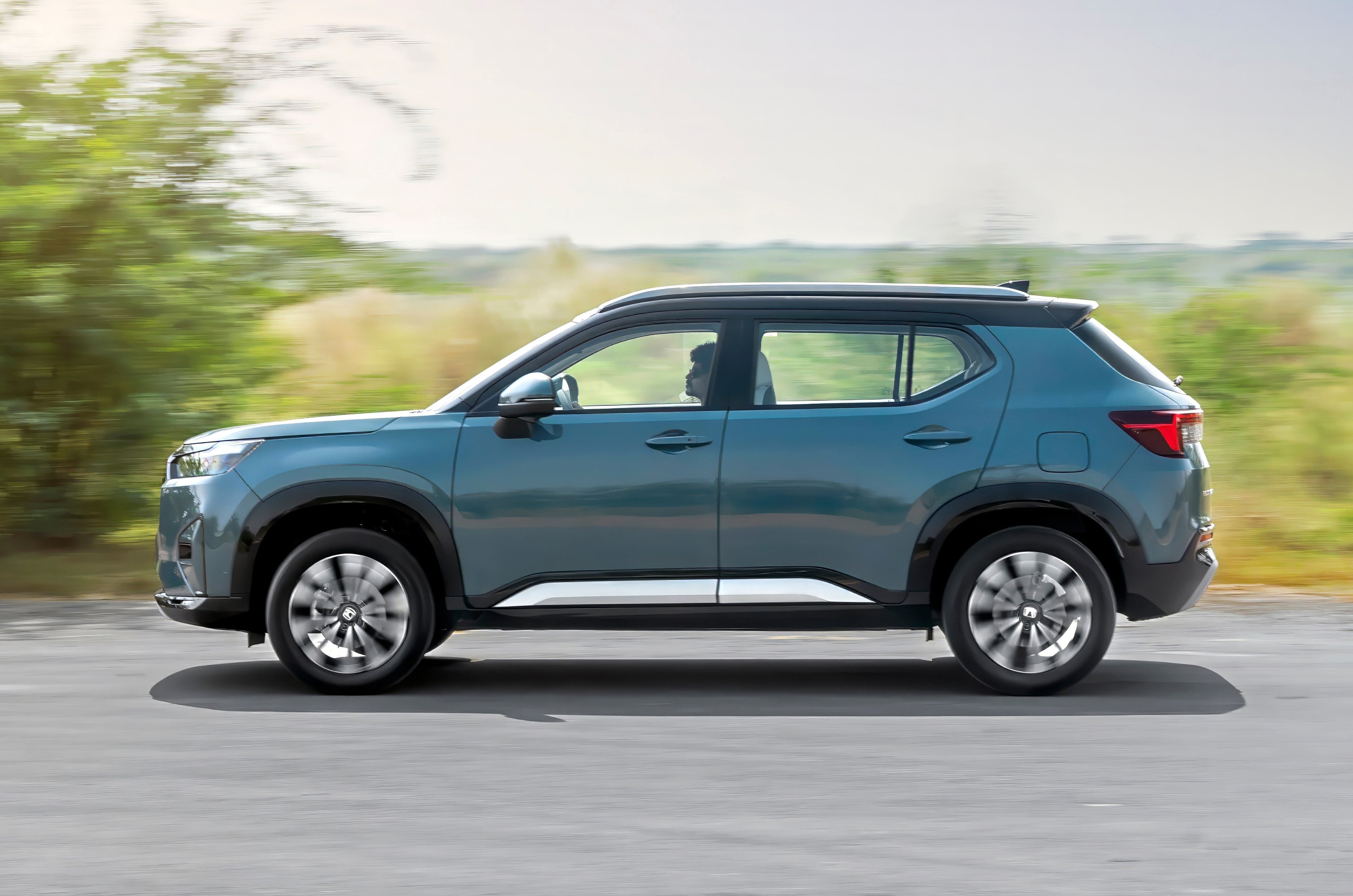
It’ll take a keen eye to spot the changes along the sides as they’re limited to a new gloss black body cladding instead of a matte finish, silver coloured inserts in the cladding on the doors instead of body colour and a darker finish for the 17-inch alloy wheels which continue with the same design. At the rear, the facelift introduces a new LED light bar that connects the tail-lamps, giving the tailgate a wider, more cohesive appearance, particularly after dark. Rounding off the updates is a new Nordic Forest Pearl paint shade, as you can see in the pictures here.
As for dimensions, it continues to measure 4.3 metres in length, nearly 1.8 metres in width and just over 1.6 metres in height. It’s based on the City platform, but gets a stretched 2650mm wheelbase, wider tracks front and rear and a substantial 220mm of ground clearance.
Interior space and comfort – 8/10
The cabin gets more substantial updates than the exterior, with the changes aimed at improving comfort and perceived quality. To start off, there’s a new ivory and black dual-tone upholstery theme that enhances the sense of space inside and is perhaps more neutral than the tan upholstery earlier. It will be tough to clean though, thankfully there is the option of all-black upholstery with the ‘Black’ edition Elevate.
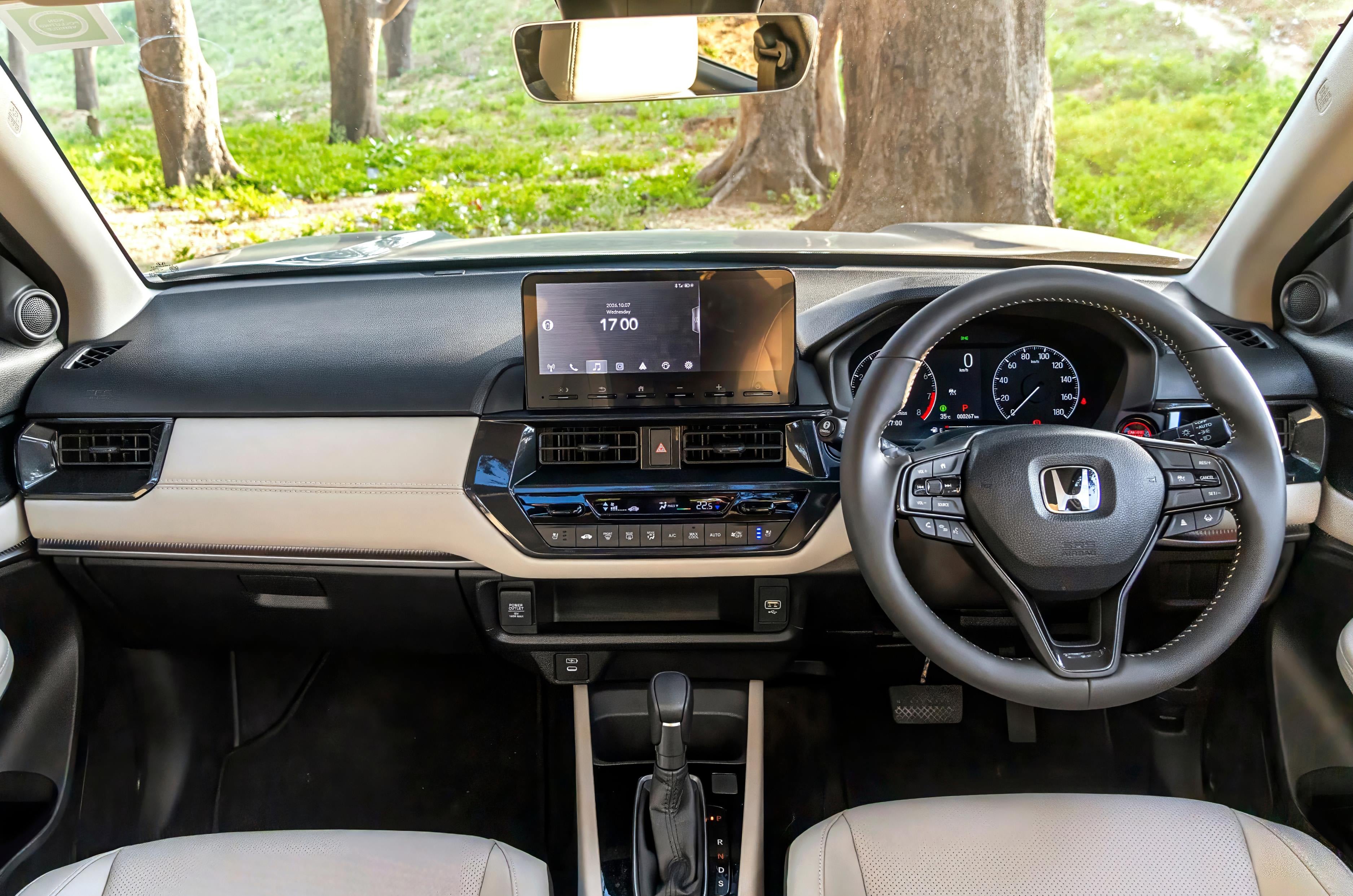
Upholstery is now ivory and black with a new leatherette panel on the dash; cabin remains practical and feels well-built.
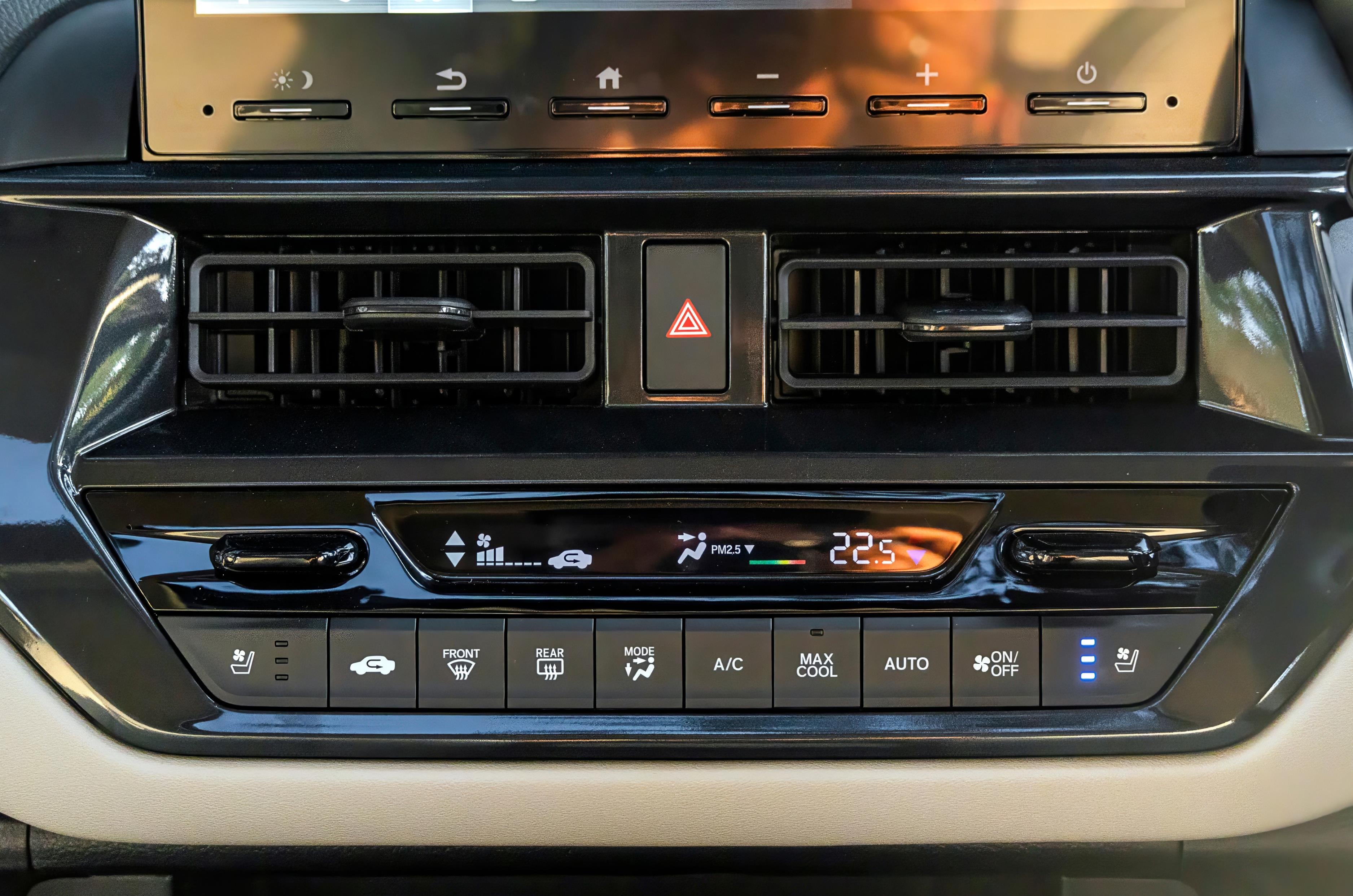
The dashboard has been revised too, with more white leatherette padding and stitching replacing the outgoing model’s faux wood trim, and the AC controls have been revised, now housing the seat ventilation buttons. Honda has even updated the roofliner fabric which looks and feels much nicer than the older woven roofliner. All of this gives the cabin a fresher look, although the overall layout remains familiar.
Front seats remain comfortable and now feature ventilation and power adjustment.
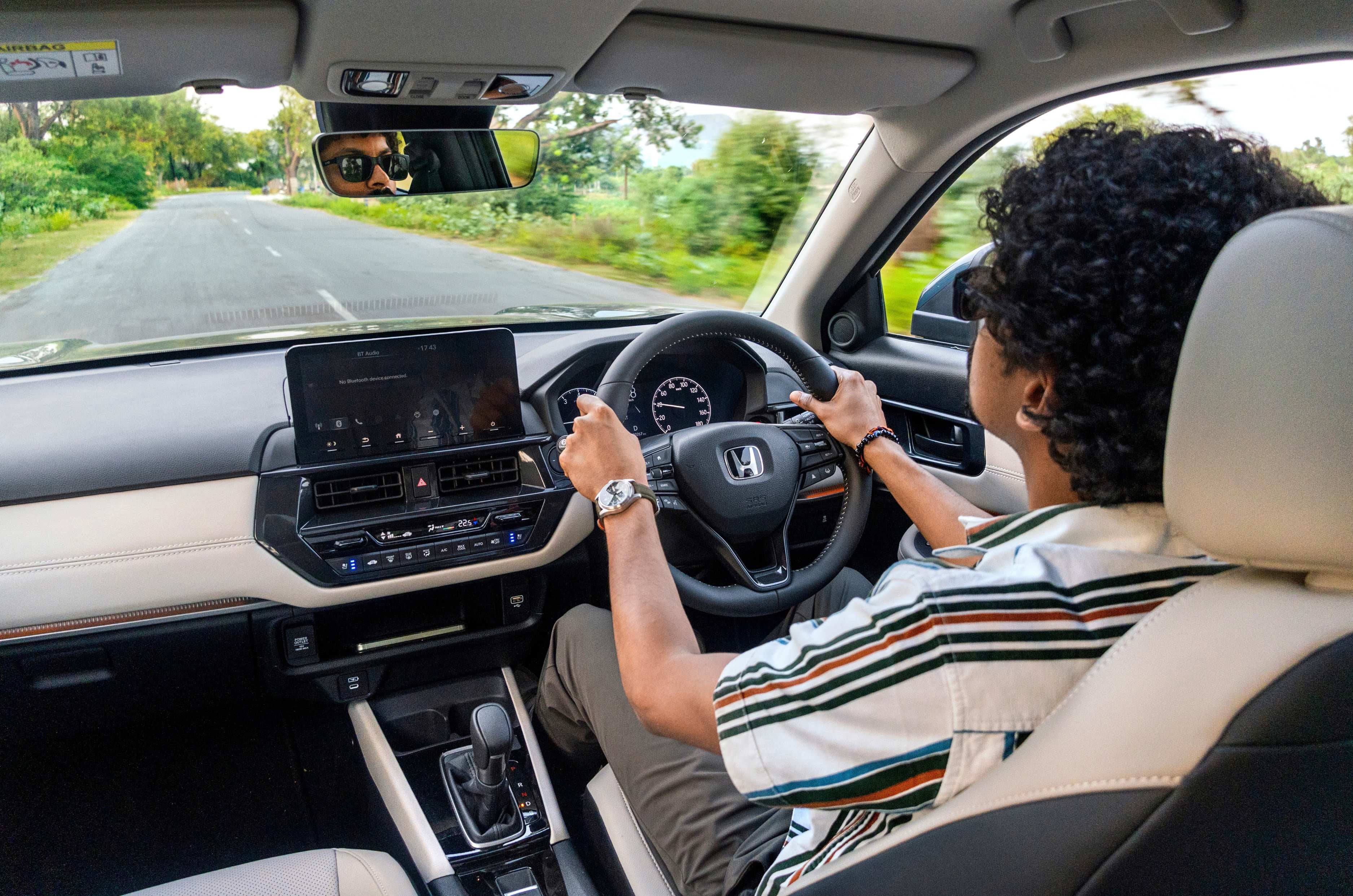
Ergonomics remain a strong point, with the Elevate offering a commanding driving position and supportive front seats that make it easy to get comfortable behind the wheel. The lumbar support, however, might feel excessive for some and taller people may find underthigh support a bit lacking.
Ample headroom and kneeroom but best for two adults thanks to the narrow width and raised centre seat.
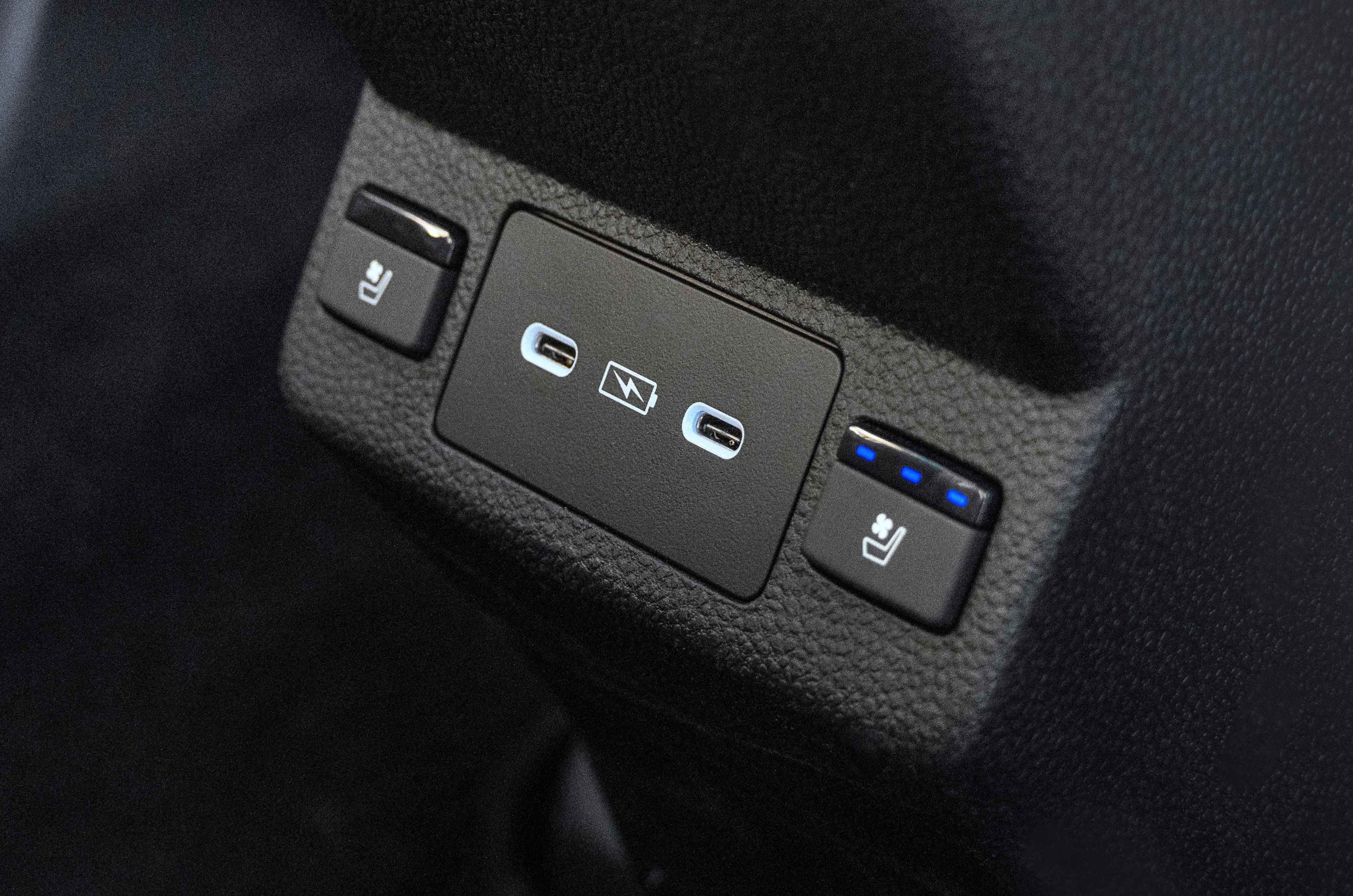
At the rear, space is generous, with plenty of kneeroom and headroom making it a very comfy place for two adults. However, fitting a third passenger will be tight thanks to the cabin’s limited width and raised centre seat. There are no sunblinds either, but Honda has added an adjustable headrest and a three-point seatbelt for the centre passenger, which was an omission earlier. Features back here include dedicated AC vents, USB charging ports, a fold down centre armrest with cupholders, new capacitive-touch LED reading lamps and the most prominent, seat ventilation.
428-litre boot can fit in more than the number suggests; continues to feature a spare tyre under the boot floor.
Practicality, meanwhile, remains a strength, with the Elevate offering ample storage spaces throughout the cabin. The boot is also a substantial 458-litres and can pack in much more than the number would suggest. What’s also nice is that it continues to get a spare tyre under the boot floor.
Features and safety – 8/10
360-degree parking camera is a helpful addition but has limited angles of view and a small display on the screen.
The Elevate facelift addresses some of the key equipment gaps in the outgoing model, bringing a more comprehensive feature set to the table. In terms of safety features, there’s now a 360-degree camera (its display on the screen is quite small though, with limited angles of view), which works alongside the existing ‘LaneWatch’ camera, though curiously this feature is still only for the left hand side.
ADAS suite now packs in a useful low-speed follow function for the adaptive cruise control.
Front parking sensors have also been added to make parking and manoeuvring in tight gaps easier. However, the CVT variants get even more safety kit in the form of an electronic parking brake with auto hold function, rear disc brakes and the addition of a low-speed follow function for the adaptive cruise control, which is useful in stop-and-go traffic.
Rear-seat ventilation is a first-in-segment, but it’s only available in the top-spec ZX+ trim.
As for comfort and convenience features, the most important additions are the ventilated front and rear seats, the latter which is a segment-first. Though they take some time to cool effectively, it has enhanced the Elevate’s cabin comfort. Then there’s powered front seats – 8-way for the driver and 4-way for the passenger – ambient lighting and a PM2.5 air purifier. Other than that, much of the existing equipment has been carried over unchanged.
AC controls have been revised with new buttons for seat ventilation; now features an air purifier too.
There’s a 10.25-inch infotainment touchscreen with wireless smartphone integration (though its software and feature set still feel basic at best), semi-digital instrument cluster, a single-pane sunroof, wireless phone charger, six airbags, ESC, traction control, camera-based ADAS tech including auto emergency braking, lane keep assist and more. Still however, there are some features missing that rivals offer like a dual-zone for the auto climate control, panoramic sunroof and powered tailgate.
Powertrain and refinement – 8/10
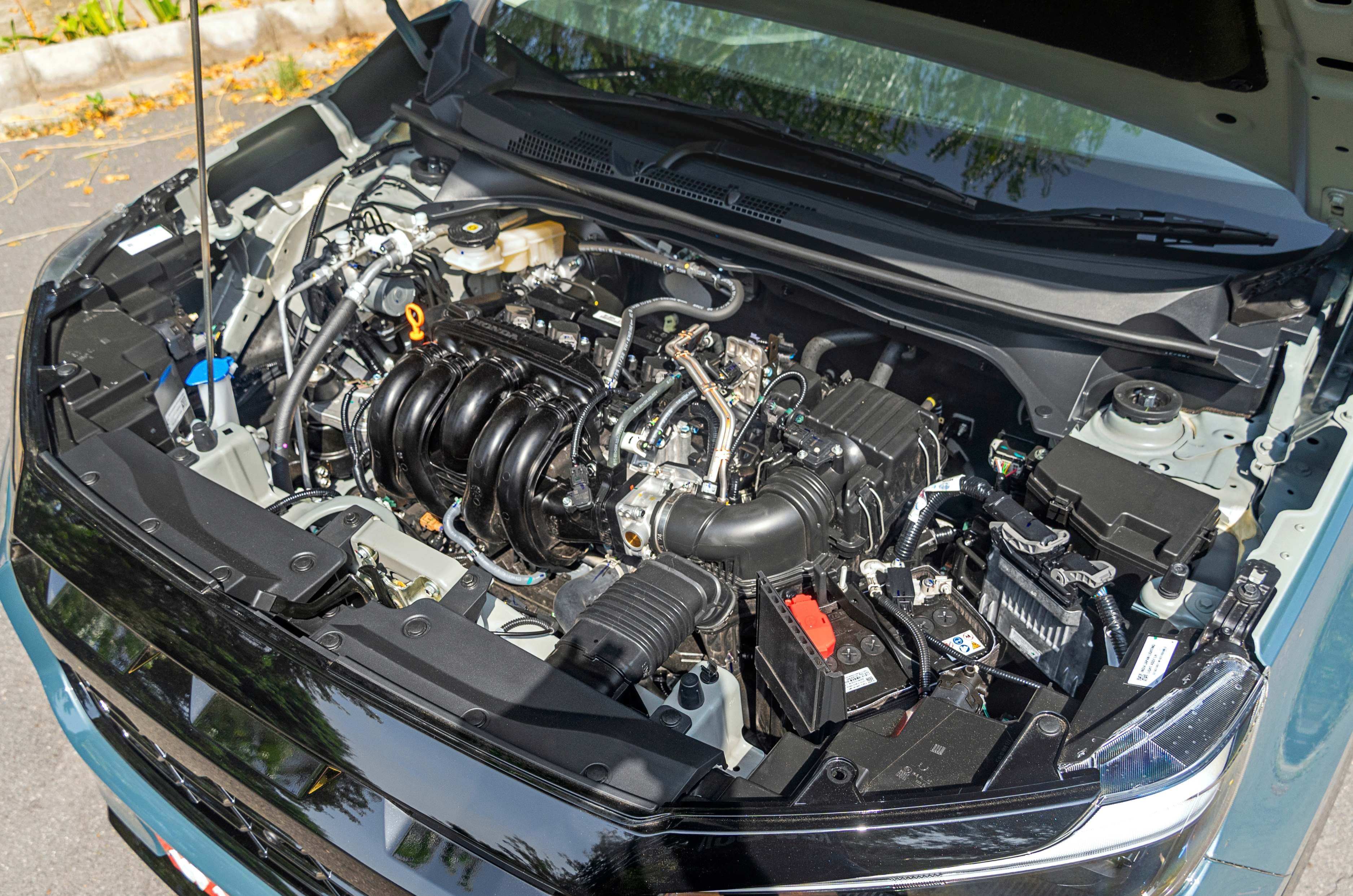
121hp, free-revving, naturally aspirated 1.5 petrol remains the only engine option with the Elevate.
There have been no changes under the hood of the Honda Elevate. It still continues to be powered by a 1.5-litre, four-cylinder, naturally aspirated petrol engine that produces 121hp and 145Nm. Gearbox options remain unchanged too, with a 6-speed manual and a 7-step CVT automatic, and we got to sample the latter. However, the engine has been future-proofed and is now WLTP emissions norms compliant while already being E20 fuel compatible.
This i-VTEC engine still impresses however. Throttle response is immediate, with no noticeable delay, making the engine feel sharp and eager. As before, the naturally aspirated motor pulls cleanly from idle all the way to the redline, in a smooth and progressive manner. However, it feels most energetic higher up the rev range, where it feels at its most potent too.
The 7-step CVT works well as an automatic, making light work of everyday commuting with its smooth operation. Paddle shifters with pre-set ratio points also give it some resemblance to a conventional automatic, allowing you to have greater control. However, push the throttle hard and the familiar ‘rubber band’ effect becomes apparent, with the engine holding on to high revs for extended periods, which doesn’t make for a relaxed driving experience. In this respect, Hyundai and Kia’s chain-driven CVT feels a bit smoother and more responsive than this belt-driven one.
As for performance, we managed a 0-100kph time of 11.89sec with the pre-facelift Elevate CVT and you can expect this facelifted model to be in the same ballpark. Expectedly, the manual does a quicker 10.82sec time to 100kph.
However, like before the lack of powertrain options is disappointing. In a time when rivals are offering diesels, turbo petrols, strong hybrids and CNGs, the Elevate has to soldier on with a solitary, naturally-aspirated petrol engine which restricts its appeal.
It feels quieter than before but there’s still prominent engine and road noise filtering into the cabin, especially on highways.
Honda has also worked on improving the Elevate’s noise insulation, an area where the existing model lacked. The company claims better isolation from both engine and road noise, but that has worked only to a small extent, in our experience. It feels quieter than before but there’s still prominent engine and road noise filtering into the cabin, especially at highway speeds, and there’s definitely more room for improvement here.
Fuel efficiency – 7/10
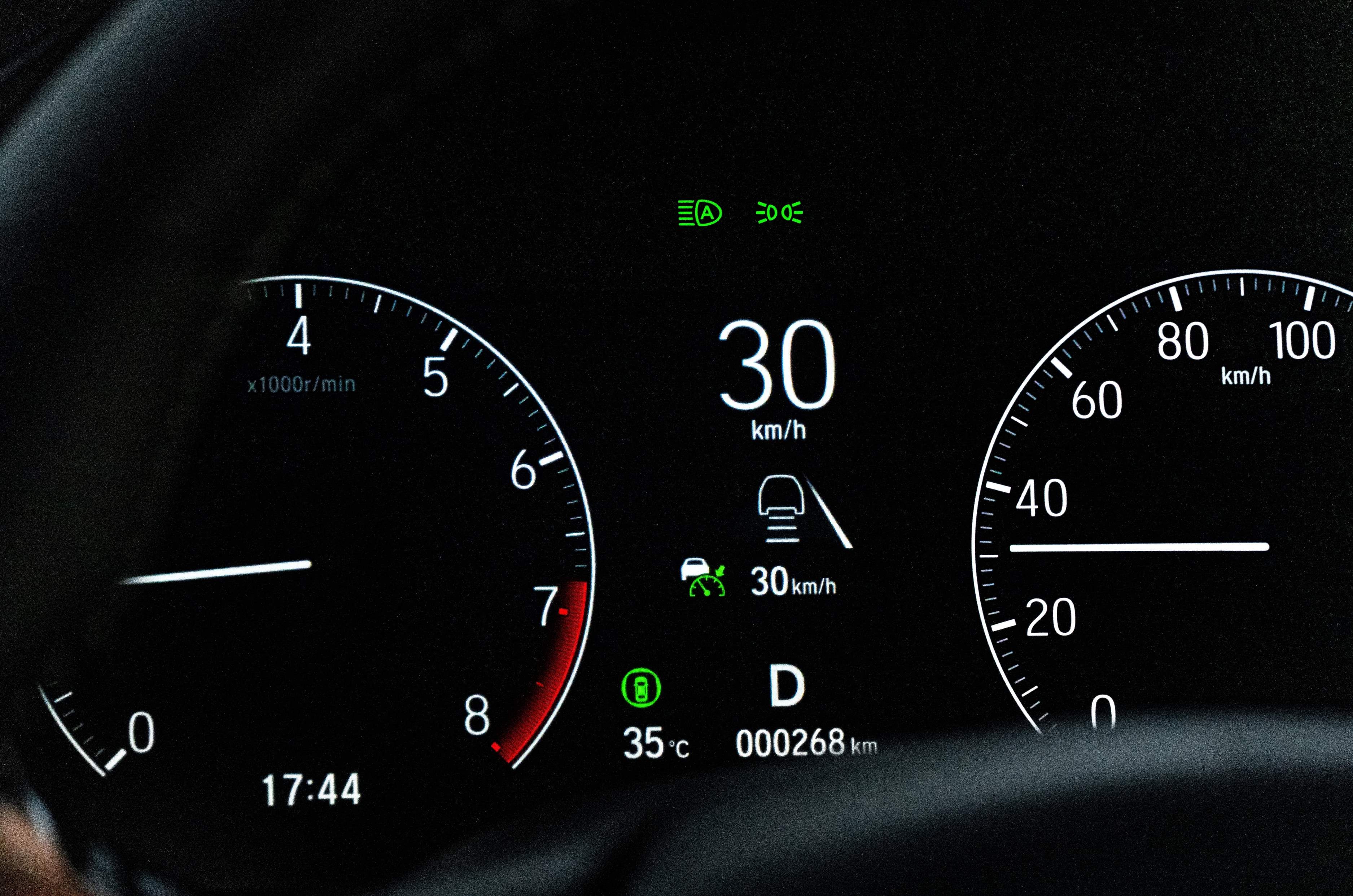
Given our short test drive, we didn’t subject the Elevate facelift to our real-world mileage tests. For reference though, the pre-facelift Elevate CVT did 8.60kpl in the city and 13.10kpl on the highway while the Elevate MT managed 8.7kpl in the city and 13.30kpl out on the highway. The Elevate CVT misses out on an Eco drive mode and auto start/stop, which certainly affects its fuel efficiency.
Ride comfort and handling – 8/10
Despite being a high-riding SUV, the Elevate feels remarkably composed on the move.
As before, the Honda Elevate continues to impress with its ride and handling balance. Despite being a tall riding SUV, it feels remarkably composed on the move. Suspension damping, though on the firmer side, is well judged and does a good job of ironing out road imperfections. It’s only when you’re travelling at triple digit speeds on an undulating highway is where you’ll notice quite a bit of vertical movement in the rear seat. But apart from that, the Elevate feels planted on the road.
Body roll is also well contained for a tall SUV, making it predictable around bends.
The steering is accurate and light at slow speeds, which helps with manoeuvrability, but it picks up weight progressively which is reassuring. Body roll is also well contained for a tall SUV and as such, it’s predictable around bends. As for the brakes, the CVT has gained rear discs but that hasn’t made a noticeable difference. Braking performance, like before, remains strong with a nice, progressive feel.
Value for money and verdict – 7/10
With this facelift, Honda has addressed some of the Elevate’s earlier shortcomings with some much-needed features and the updated look and feel inside the cabin. However, some drawbacks still remain like the lack of powertrain options and the below-par sound insulation.
It remains a sensible, practical midsize SUV that continues to prioritise the essentials over outright novelty.
What the Elevate continues to get right, though, are the fundamentals. It continues to offer a comfortable and practical cabin, a responsive engine and a well-sorted ride and handling package. Add to that the design refresh and the fairly expansive features list, and the Elevate facelift feels more rounded than before. Priced from Rs 11.80 lakh to Rs 18.40 lakh (ex-showroom), it’s still very competitively priced, though the new top ZX+ variant is up there with the heavy hitters.
Ultimately, the Elevate remains a sensible, practical midsize SUV that continues to prioritise the essentials over outright novelty. As a result, the Elevate facelift represents a great option for buyers who value comfort, everyday usability, reliability and the peace of mind associated with the Honda badge.
There are few cars that changed the supercar world quite like the original Honda NSX. It proved that a mid-engined exotic could be fast, reliable, approachable and, crucially, enjoyable without trying to intimidate its driver. More than three decades later, JAS Motorsport has taken that philosophy and given it a thoroughly modern interpretation.
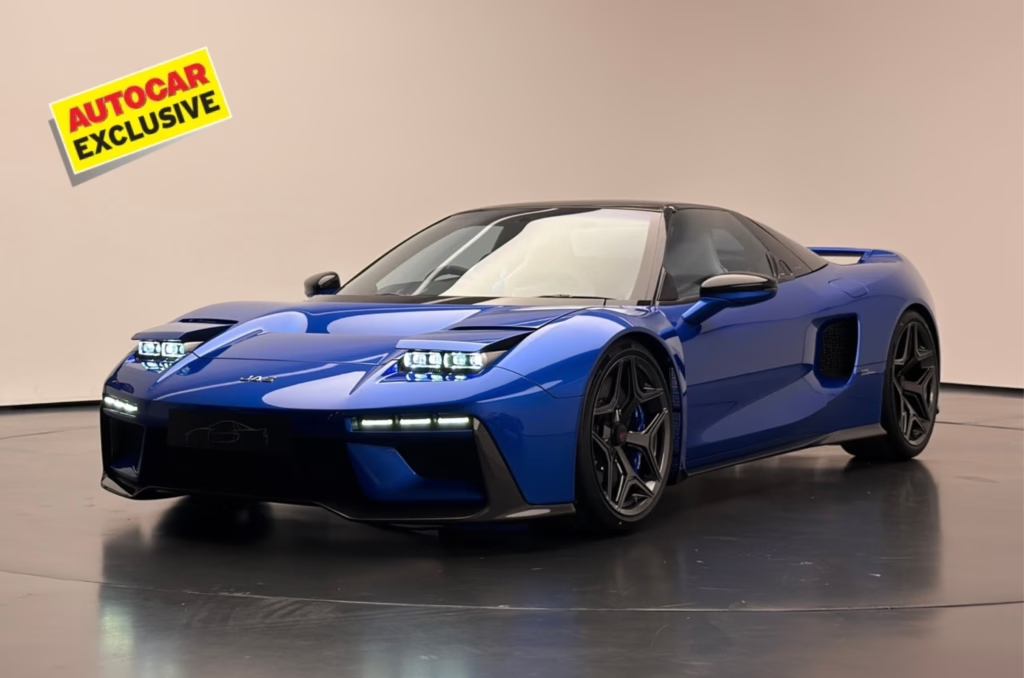
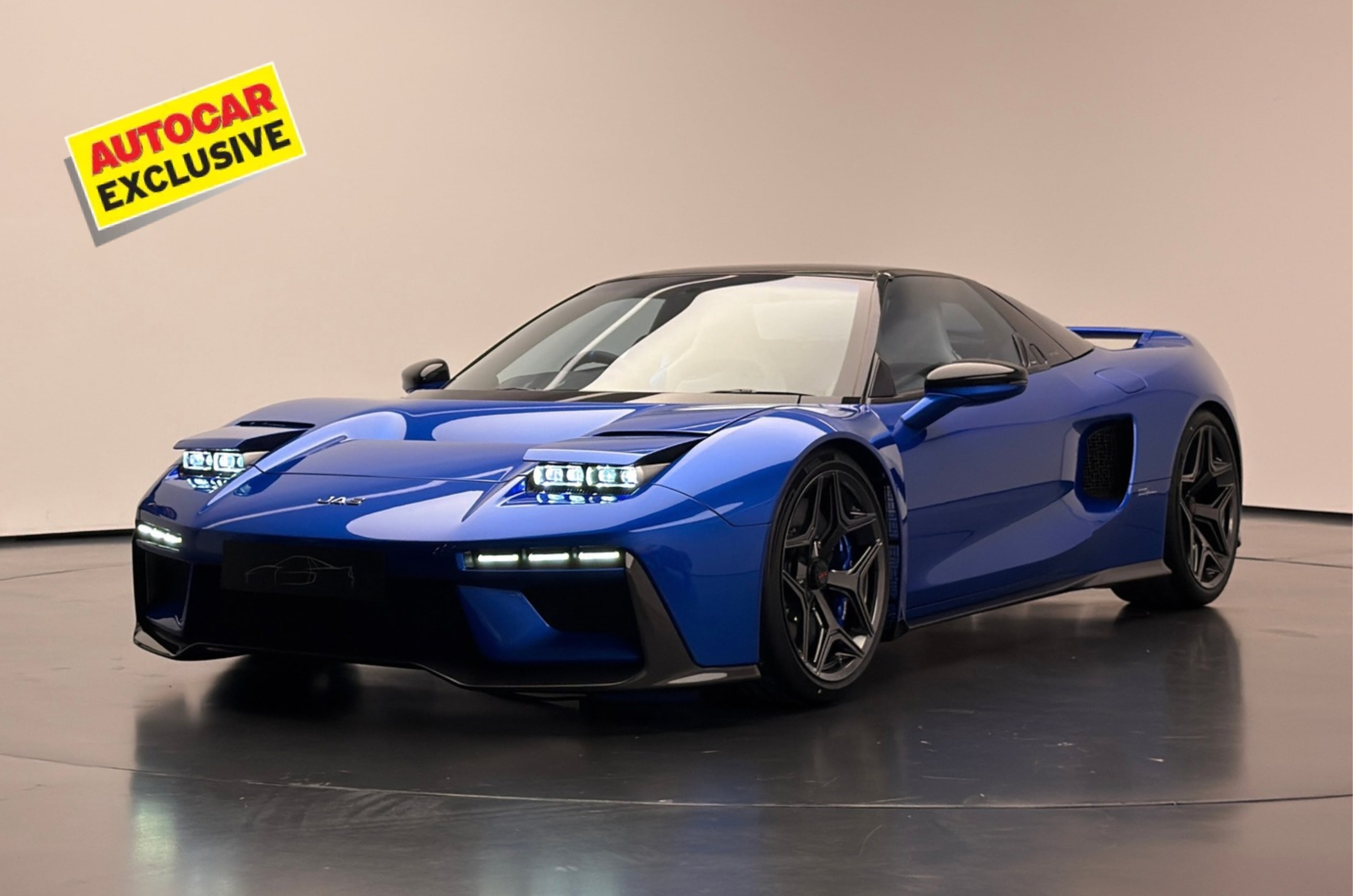
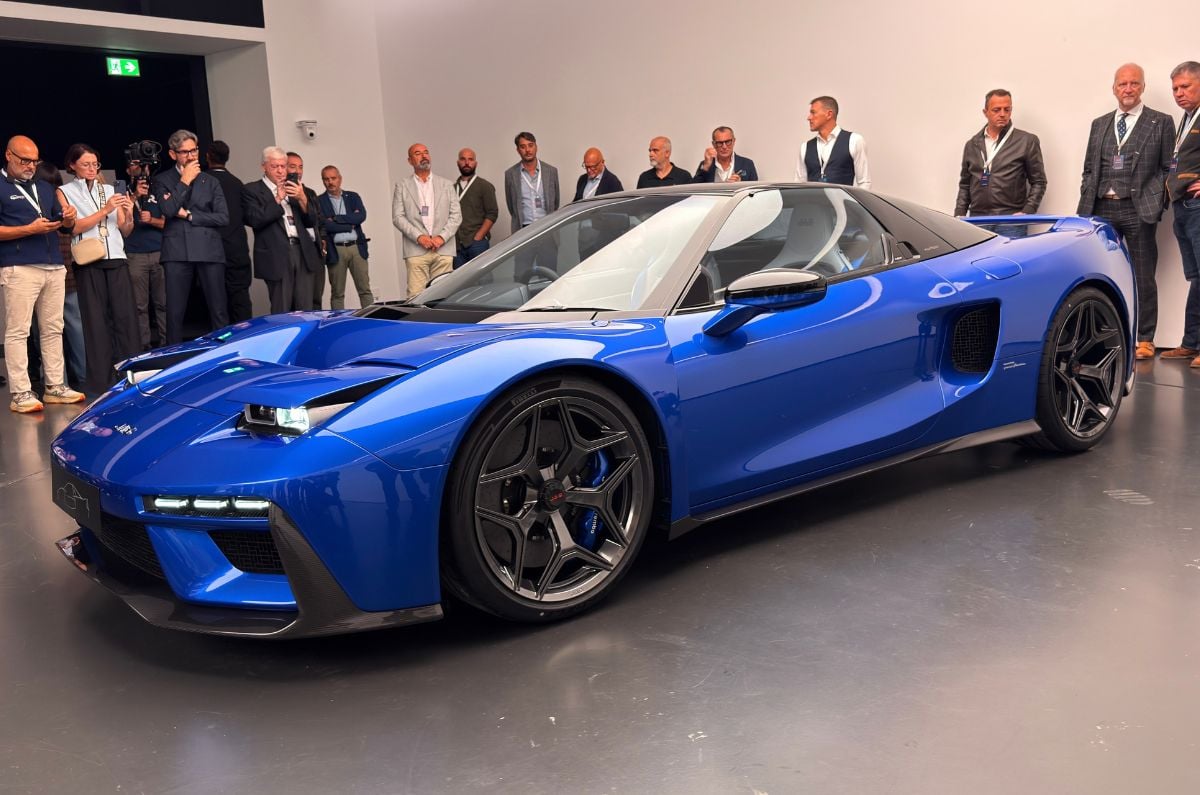
Meet the JAS Tensei. Tensei translates roughly to “rebirth” in Japanese, and the name neatly captures what JAS is attempting here. This isn’t simply an NSX restoration, nor is it a cosmetic restomod. JAS has taken the first-generation NSX as its starting point and re-engineered the car with modern materials, motorsport know-how and a new body designed by Pininfarina. And there will be just 35 examples.
But first, Who is JAS?
Launched in 1995, JAS Motorsports was named after its founders Paolo Jasson, Maurizio Ambrogetti and Giorgio Schön. They have been the official partner for Honda since 1998 and have since developed race cars for various competitions with successful results in touring car championships.
JAS Tensei: Exterior design
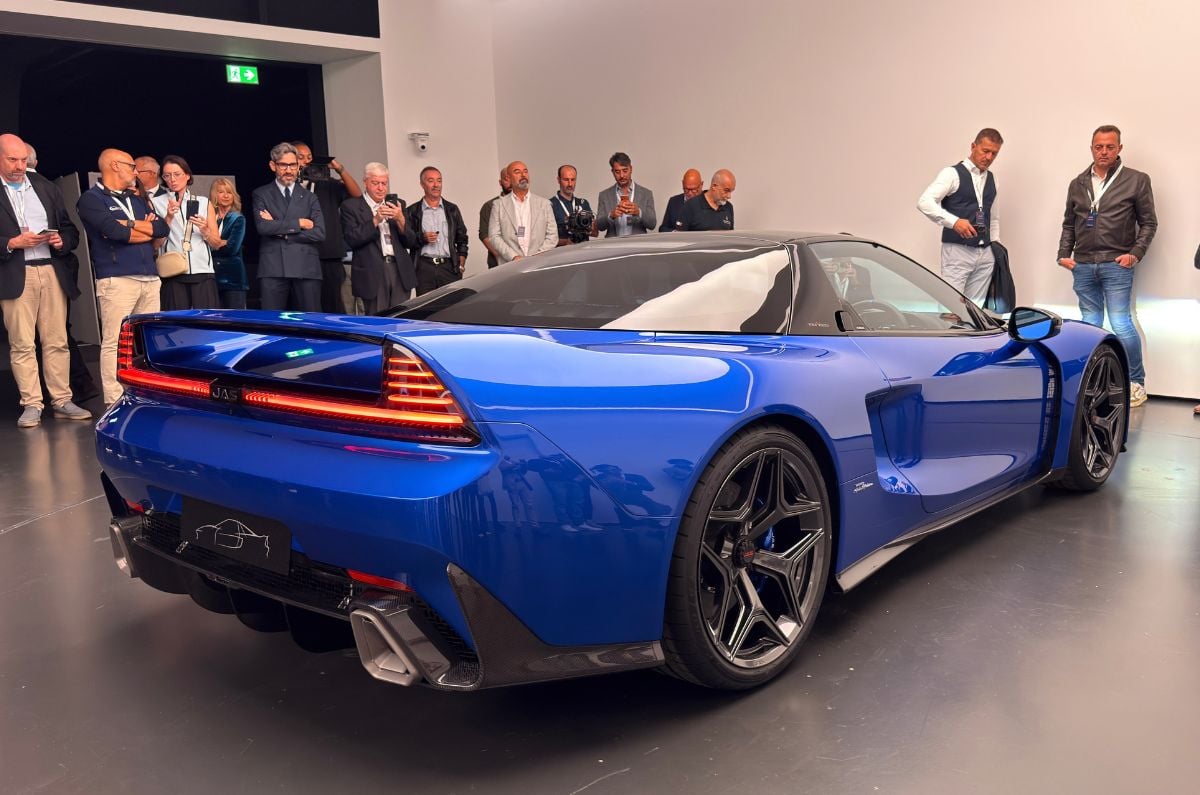
Look at the Tensei from a distance and the connection to the original NSX is immediately apparent. The proportions remain familiar, as do several of the visual cues that defined Honda’s icon. But the details are considerably more modern.
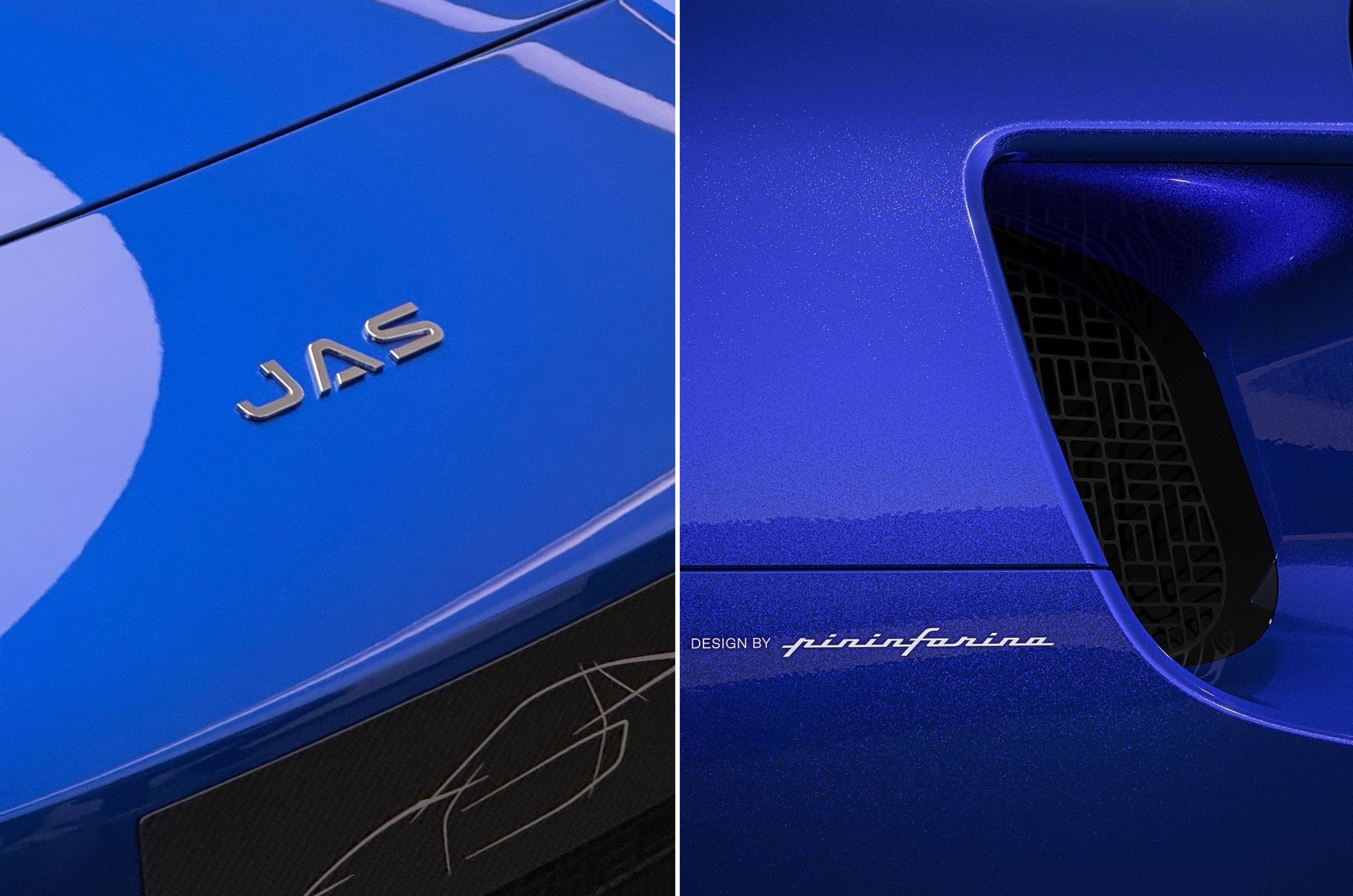
The body is constructed entirely from carbon fibre, allowing JAS to alter the car’s dimensions and surfaces while keeping weight under control. Pininfarina was responsible for the design, bringing an Italian interpretation to a fundamentally Japanese concept. It is an interesting collaboration because Pininfarina already has history with the NSX story. The company was involved with Honda’s HP-X concept, which preceded the production NSX.
The result is therefore less a replica and more an alternate evolution of the original car — essentially asking what the NSX might have looked like had its development continued into the modern era.
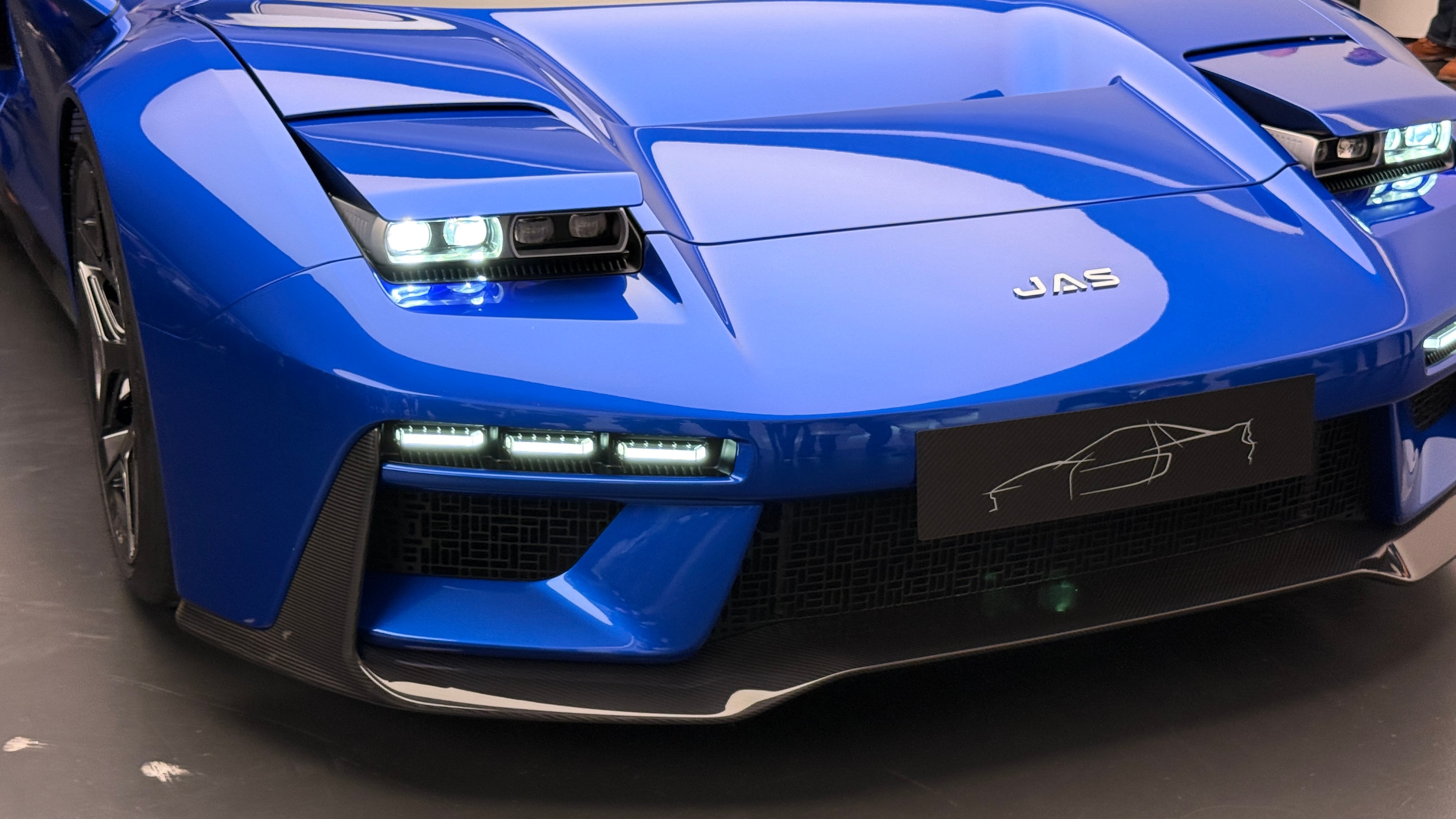
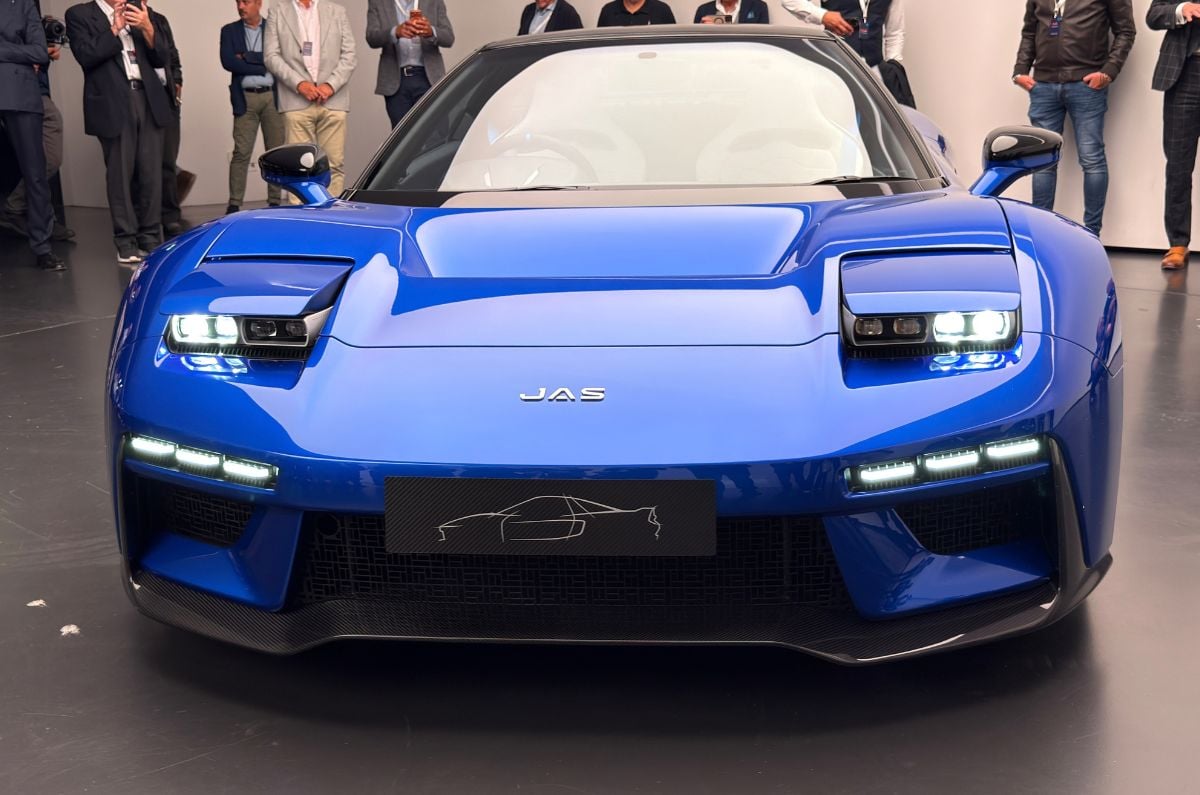
The front bumper is sculpted to guide air under the car and out of the massive duct in the bonnet. The pop-up headlamps have been retained but now feature LED treatment. The wiper covers have also been redesigned and in fact the only part that has been untouched is the roof. The A and B pillars are more raked and the wheels have gone up by a massive 4 inches. 15s and 16s on the NSX are now 19s and 20s on the Tesei. Interestingly the door handle with the NSX badge is also carried over. Low down you will spot the iconic Pininfarina badge that we are used to seeing on Ferraris.
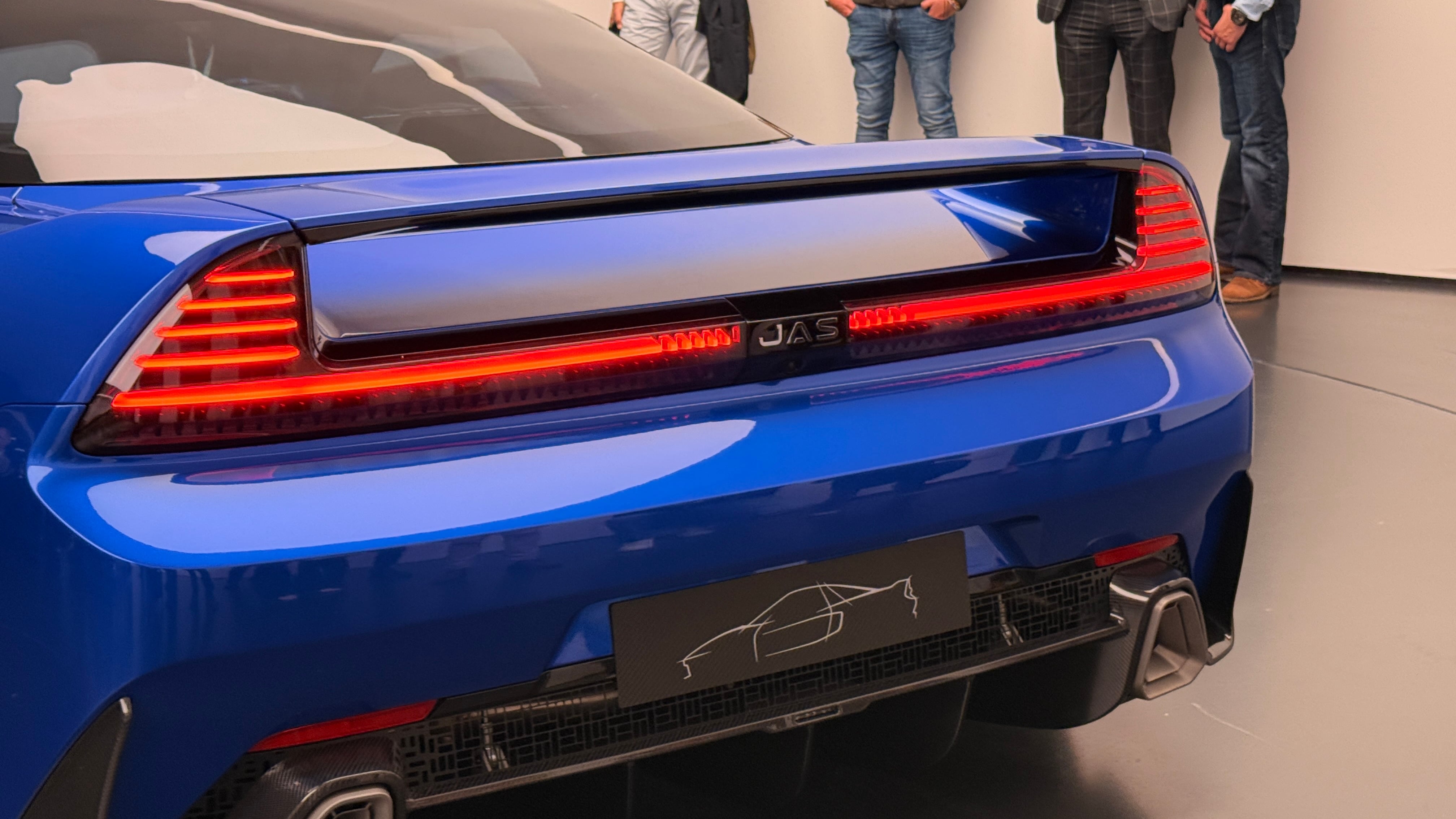
At the rear the integrated spoiler has been reworked with slight changes to the panels so as to improve airflow. The diffuser is carbon fibre and the exhausts are massive too. Like the original NSX, the tail lamps are stretched across the width and now hey 3D effect for the LED strips. Overall, it is a resto mod done to perfection. Just enough modern touches without skewing it from the iconic design.
JAS Tensei: interior and features
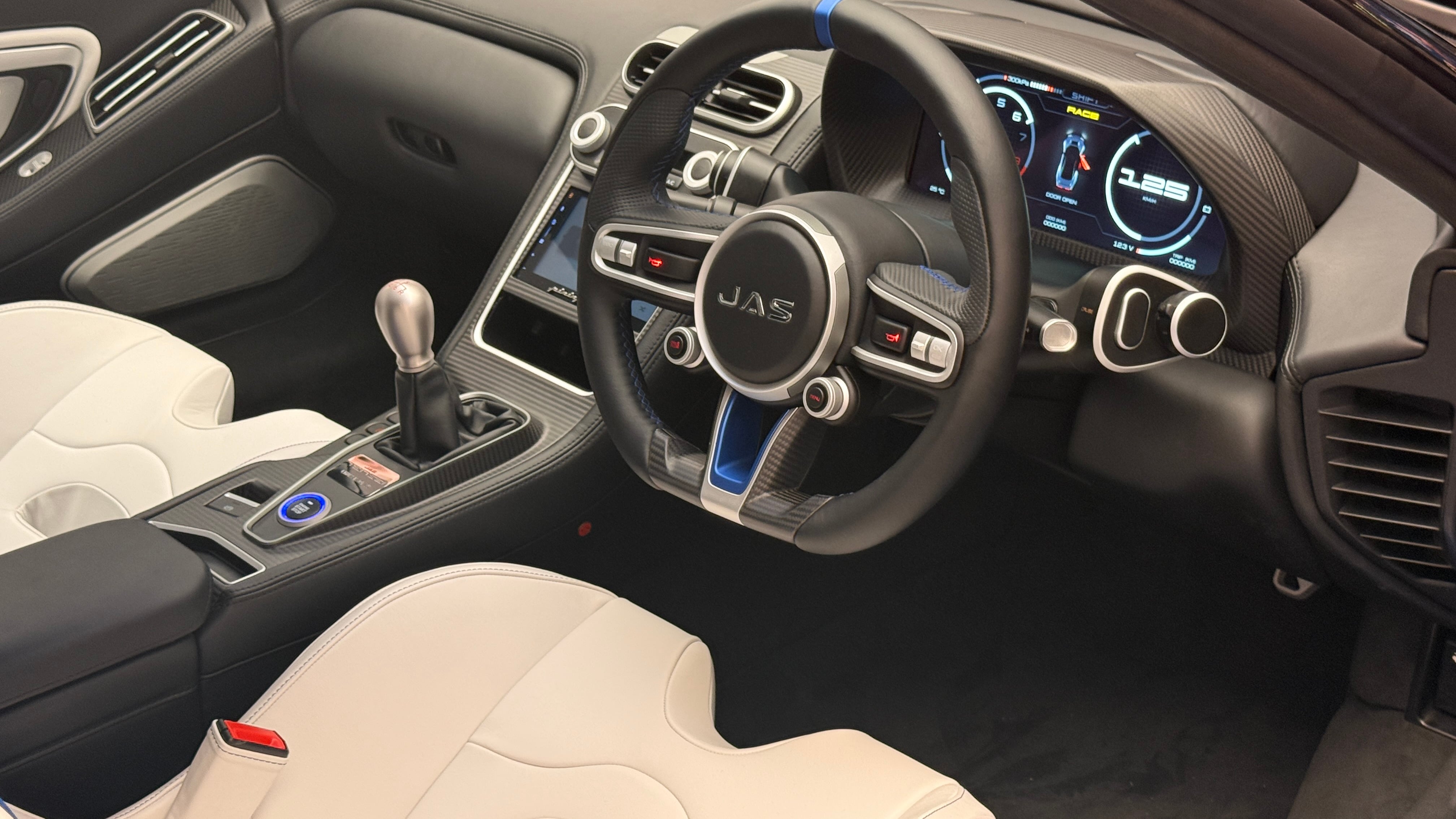
Inside the size of the cabin is identical to the original NSX, although there are updates all around. There’s a new sporty steering wheel, digital drivers display and sports seats. However, there is a full configurator available to spec your Tensei to your liking. The seat upholstery and paints can be customised along with brake calliper colours and wheels. A pleasant surprise is the centre console that does away with a massive tablet as per current trends and instead features a modest touchscreen with the climate control switchgear similar to the NSX. Pininfarina wanted to ensure none of the essence of the NSX was lost in an attempt to modernise the cabin
JAS Tensei: Powertrain and specs
Perhaps the most significant decision sits behind the cabin. The Tensei retains a naturally aspirated V6, rather than adopting the turbocharging or hybrid assistance that has become almost mandatory for modern supercars.
The 3.5-litre V6 has been extensively re-engineered with Judd Power, the British motorsport engineering specialist. The work goes considerably beyond simply increasing displacement or fitting a louder exhaust. The engine gets a billet crankshaft, forged lightweight pistons and connecting rods, individual throttle bodies, upgraded cooling and revised ignition and engine management systems. There are also new headers and an exhaust system designed to give the engine a more immediate and visceral character. The result is 420hp, with the engine capable of revving to 8,500rpm.
Those figures may not sound extraordinary in an era of 1,000hp hybrid hypercars, but that misses the point of Tensei. JAS isn’t chasing an enormous power-to-headline ratio. Instead, the emphasis is on response, linearity and the connection between throttle, engine and driver.
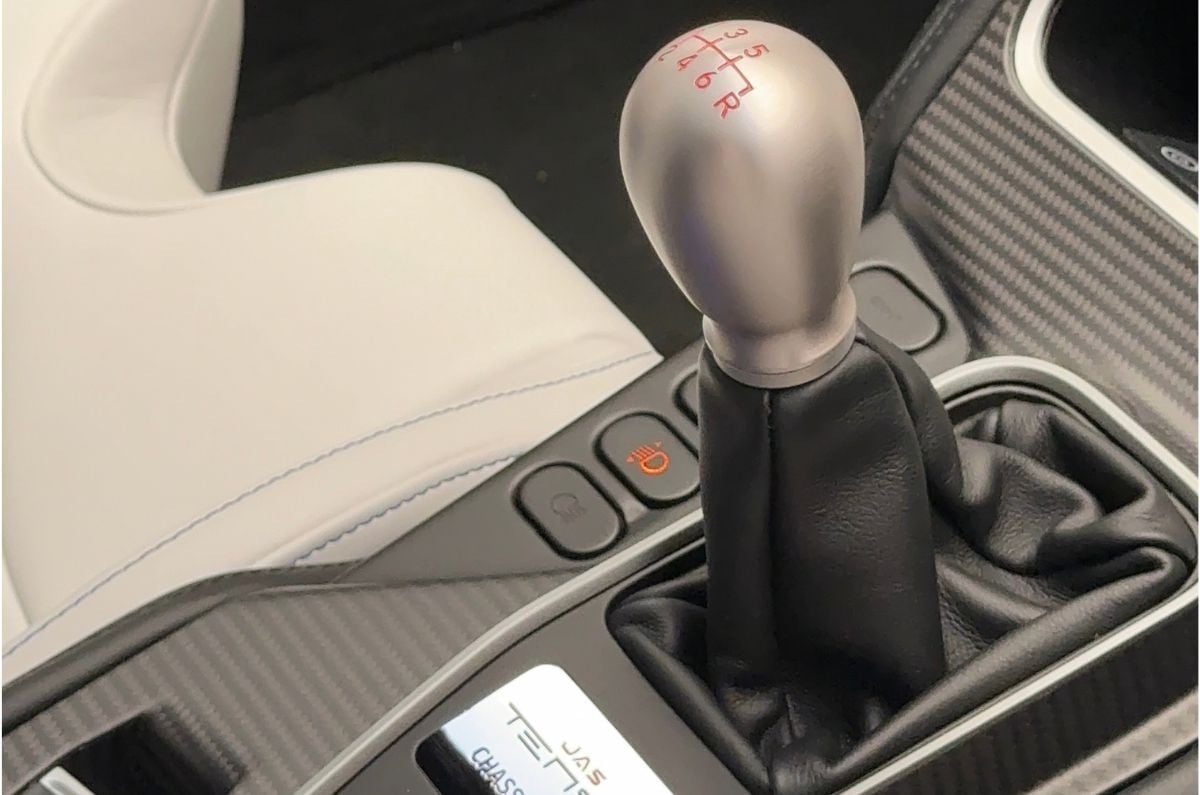
The other big piece of the puzzle is the gearbox. The Tensei uses a six-speed manual transmission and remains rear-wheel drive. That combination, together with the naturally aspirated V6, is perhaps the clearest indication of what JAS wants this car to feel like. The objective isn’t to overwhelm the driver with acceleration figures; it is to make every interaction with the car feel mechanical and deliberate.
The chassis has been extensively revised as well, with bespoke suspension components, revised geometry, upgraded bearings and uprights, enhanced anti-roll bars and KW dampers with electronically controlled damping. There is also a hydraulic front-axle lift system, while forged aluminium wheels measure 19 inches at the front and 20 inches at the rear.
JAS has taken one of the most important analogue supercars ever made and asked how its fundamental qualities could be preserved in 2026. It’s a carbon-bodied, naturally aspirated, manual, rear-wheel-drive supercar with an 8,500rpm redline. And that makes the Tensei interesting for reasons that go far beyond its rarity. It is effectively a reminder that performance isn’t necessarily about making a car faster in every measurable way. Sometimes it is about making the driver feel more involved.
Motorsport without turning it into a race car
This is where JAS’s background becomes particularly important. JAS Motorsport has spent decades developing Honda competition cars, and that experience forms the foundation of the Tensei programme. But the challenge here is fundamentally different from building a race car. A race car can sacrifice refinement, usability and longevity in pursuit of lap time. A road-going supercar cannot.
Tensei therefore represents an interesting middle ground: motorsport-derived engineering, but applied to a car designed to be driven on the road. The engine is built and tested by Judd Power before returning to JAS in Italy, where each car undergoes further testing and validation.
JAS Tensei: Super exclusive
JAS plans to build only 35 Tenseis, each individually specified by its owner. Production takes place at JAS Motorsport’s facility near Milan, with the car bringing together Japanese engineering heritage, British motorsport expertise and Italian design.
It is an unusual combination, but perhaps that’s exactly what makes the Tensei so compelling. The original NSX was unusual because Honda approached the supercar formula from a completely different direction.
Three decades later, JAS is doing something remarkably similar. It isn’t trying to build the most powerful supercar. It is trying to build the most involving interpretation of an icon. And if the original NSX was Honda’s idea of what a supercar should be, the Tensei is JAS Motorsport’s answer to what that idea could become today.