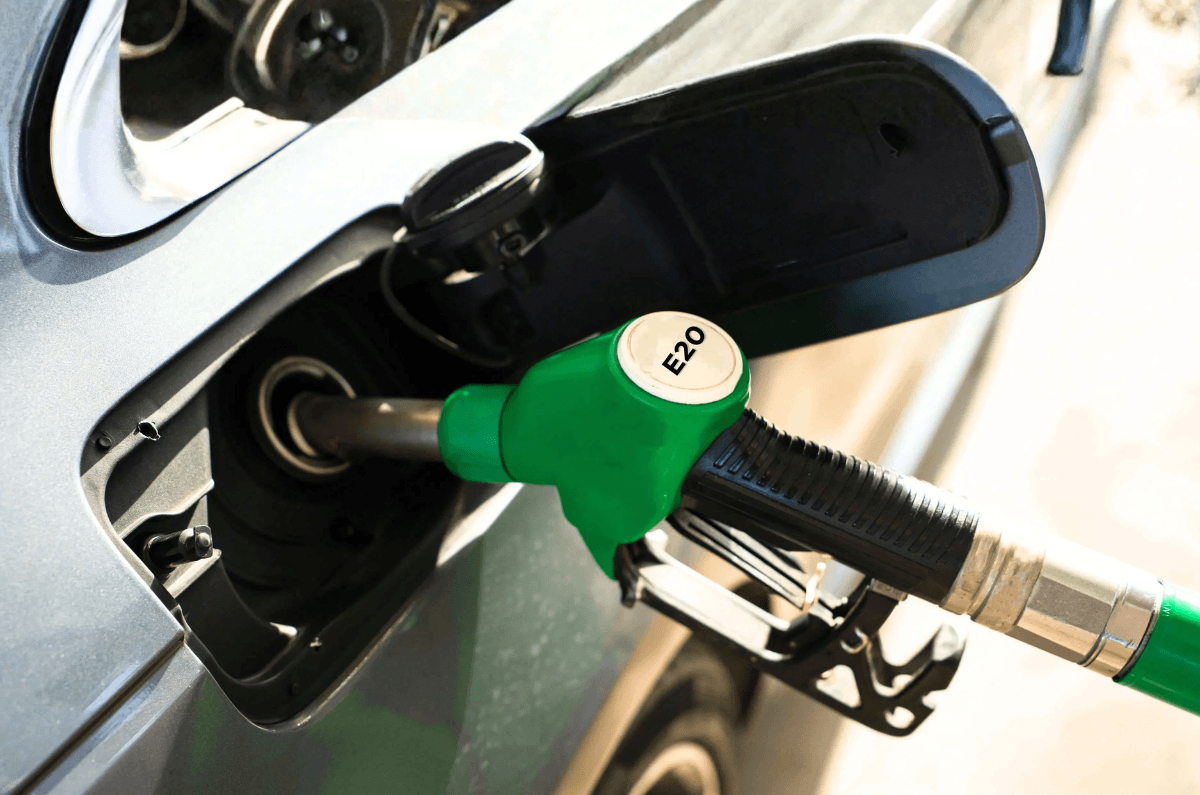
Indian carmakers had flagged concerns about E20 fuel contamination: Reuters

Indian carmakers had flagged concerns about E20 fuel contamination: Reuters

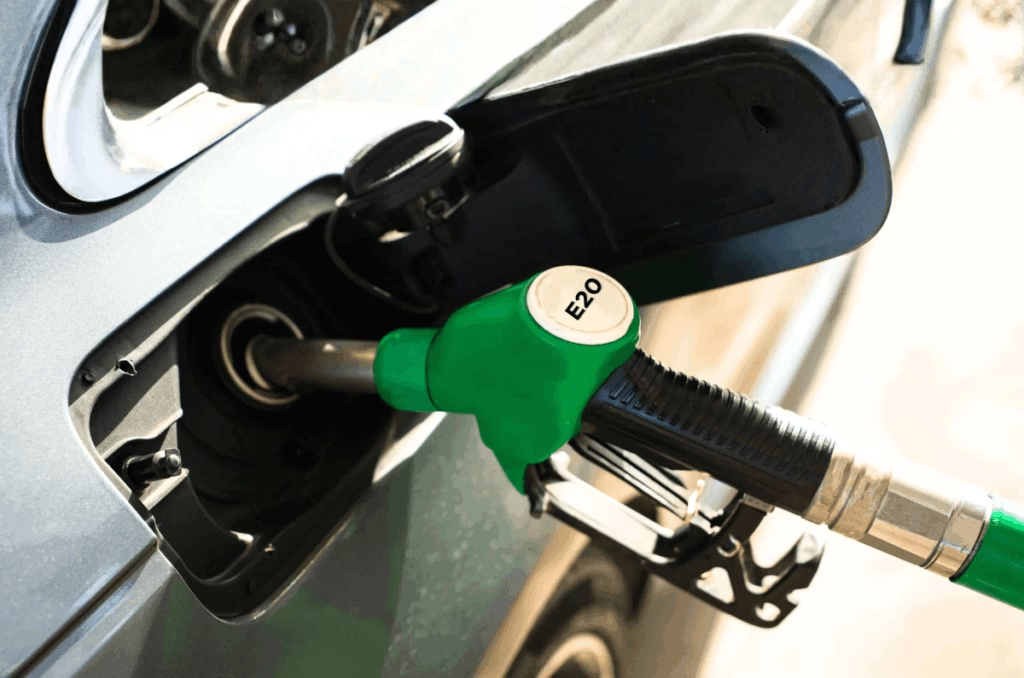
Earlier this month, several media reports said the Society of Indian Automobile Manufacturers (SIAM) had urged the government to introduce mandatory chloride limits in fuel standards after high levels of chloride and moisture were found in E20 petrol. SIAM later withdrew the communication, saying some of the figures mentioned in it needed further verification.

The government has been trying to address growing concerns around E20 with support from the industry. Oil marketing companies (OMCs) have rejected claims of widespread E20 fuel contamination after conducting tests across the country. Brands such as Toyota, Maruti Suzuki and Hero MotoCorp have also publicly backed the E20 programme.

However, separate communications between industry executives investigated by Reuters show that earlier, Maruti Suzuki, Tata Motors and Mahindra had privately raised concerns about contamination in E20. The data compiled by these carmakers was the most extensive fuel testing since E20 was officially rolled out nationwide last year. Their emails reveal that the carmakers were concerned about contaminants such as chloride and moisture in the fuel, which they said were affecting vehicles, even as they publicly supported the government’s E20 rollout.

Data flags high chloride contamination, moisture content

The data reviewed by Reuters shows that the three automobile manufacturers had carried out detailed testing by collecting more than 250 fuel samples from petrol pumps across 21 states and Union Territories over a year. The tests found high chloride levels in many samples from 18 states, along with high moisture content. Interestingly, the emails reviewed by Reuters did not raise any concerns about the authenticity of the data. 

StateNumber of samplesChloride (ppm)
Uttar Pradesh361.2-175
Maharashtra3110-357
Delhi/NCR281.4-420
Tamil Nadu271.3-24.0
Kerala241.0-2.2
Punjab201.9-110
Karnataka151- 2.2
Rajasthan146.0-570
Madhya Pradesh114.1-550

Source: SIAM via Reuters.

The data showed chloride levels of 6 to 570 parts per million (ppm) in Rajasthan, 1.4 to 420ppm in New Delhi and 10 to 357ppm in Maharashtra. The government’s permissible limit is 3ppm.

High chloride levels in the fuel can corrode vehicle components, while high moisture content can cause a vehicle to stop working immediately after refuelling, SIAM had stated earlier. In group emails exchanged between Maruti, Tata, Mahindra and SIAM, a senior Maruti executive raised concerns about the high chloride readings and said the matter had even been privately discussed with the Ministry of Petroleum on July 26.

Moisture levels found 333 percent above limit

Additionally, the same data showed moisture levels of up to 13,000ppm in Andhra Pradesh and 12,500ppm in Uttar Pradesh, against the government’s permissible limit of 3,000ppm. The exact cause of the contamination is not known. However, SIAM said in its now-withdrawn letter that it had seen an increase in chloride levels since E20 was introduced and asked the government to direct OMCs to identify the root cause.

When asked about the private emails, SIAM told Reuters that the data was meant only for internal circulation, discussion and validation, and had been collected by a very small number of automakers. SIAM added that the communication was withdrawn because the testing basis and sample size were not enough to support firm conclusions and that it had been sent accidentally. The organisation stated further that it plans to conduct a proper scientific study.

As for the high moisture levels, SIAM’s letter said the cause could be poor maintenance of underground storage tanks and pipelines at petrol pumps.

Carmakers raise concerns over vehicle failures

In a July 26 email, a senior Maruti official said that current fuel injectors can tolerate a maximum chloride level of 1ppm, and keeping it below 1ppm in E20 would be in accordance with international standards and discussions with the petroleum ministry. Same is in line with discussion held with the petroleum ministry, he stated.

Meanwhile, a senior Mahindra official wrote that organic chloride was responsible for the rapid vehicle failures in recent times and could damage engines just within 200km. The executive said that most cases reported immediately after refuelling were due to organic chloride and added that Mahindra had “strong evidences” from fuel samples collected at retail outlets. Mahindra later said the conclusions drawn from its executive’s emails were “completely baseless and incorrect”. The company said the industry data was limited and preliminary and that it did not see any issues with E20. 

What does the government say?

The Ministry of Petroleum and Natural Gas did not respond to requests for comment made by Reuters. Petroleum Minister Hardeep Singh Puri said on Friday that OMCs had started “rigorous testing” at retail outlets to check for contamination two weeks before SIAM’s letter was received. According to Puri, only four cases of contamination had been found. OMCs, as mentioned earlier, said that their extensive testing had found no reason for alarm over fuel contamination.

OMCs reject E20 fuel contamination claims after nationwide testing

Fuel station

State-run oil marketing companies (OMCs) – Indian Oil, Bharat Petroleum (BPCL) and Hindustan Petroleum (HPCL), have rejected recent claims of widespread contamination in E20 petrol, saying a nationwide testing exercise found no evidence to support reports of elevated chloride and moisture levels. The companies said fuel samples collected across the supply chain recorded chloride levels within the prescribed limits, while enhanced checks have also found no signs of water ingress in underground fuel storage tanks.

  1. OMCs say chloride levels remained between 0-3ppm
  2. Testing covered refineries, ethanol plants, depots and retail outlets
  3. Two retail outlets temporarily suspended after isolated findings

This statement comes less than a week after reports citing an internal communication from the Society of Indian Automobile Manufacturers (SIAM) alleged elevated chloride and moisture contamination in E20 petrol, raising concerns over possible damage to fuel system components. SIAM, however, subsequently withdrew the communication, saying media reports had “selectively” quoted excerpts from the document and that some of the figures cited required further authentication through additional data collection and consultation with its member OEMs.

OMCs say testing found no widespread contamination

The oil companies said samples collected from refineries, ethanol distilleries, storage depots, tanker trucks and retail fuel stations recorded chloride levels between 0ppm and 3ppm, well below the several-hundred-ppm figures reported earlier. They added that claims of chloride contamination of up to 500ppm could not be validated.

According to the companies, testing included more than 100 petrol samples from refineries, ethanol supplied by 80 distilleries, more than 80 samples from terminals and over 160 samples from retail outlets, all of which returned chloride readings within the 0-3ppm range. The ethanol testing was carried out jointly by the OMCs and the Centre for High Technology, the petroleum ministry’s technical arm.

Two fuel stations flagged during testing

The OMCs said two retail outlets recorded elevated chloride levels during the exercise. Fuel supplies at both stations were suspended, investigated and restored only after corrective measures were implemented.

Moisture checks expanded across fuel stations

On the issue of moisture contamination, the companies said around 90,000 fuel stations have begun mandatory inspections of underground storage tanks, with checks carried out eight to twelve times a day. According to the OMCs, no water intrusion has been detected so far.

The companies added that mobile fuel testing laboratories have been deployed, with results independently verified by fuel laboratories. Test data is also being published on the Centre for High Technology’s website and will continue to be updated as additional samples are analysed.

SIAM withdraws E20 fuel contamination communication

E20

The Society of Indian Automobile Manufacturers (SIAM) has withdrawn its earlier communication to the Ministry of Petroleum and Natural Gas regarding E20 fuel contamination, stating that media reports had selectively quoted excerpts from the document and that some of the figures cited require further verification.

  1. Earlier communication withdrawn pending further verification
  2. SIAM reiterates support for the government’s E20 programme
  3. Petroleum Ministry says enhanced fuel quality checks are in place

The clarification follows media reports that cited portions of the communication relating to chloride and moisture contamination in E20 petrol and an increase in the replacement of certain vehicle components.

SIAM says figures require further verification

In a statement issued on Tuesday night, SIAM said, “SIAM has taken note of certain media reports that have cited excerpts from a SIAM communication, with specific and selective focus on chloride and sulphur content in fuel. SIAM wishes to clarify the matter and place it in its correct context for the benefit of the public and all stakeholders.”

It added that the communication formed part of routine technical discussions between industry bodies, automobile manufacturers, oil marketing companies (OMCs) and testing agencies.

“Some numbers quoted in the communication needs authentication through collection of elaborate data from various regions across the country followed by a comprehensive consultation with our member OEMs,” SIAM said.

The industry body added, “The referred numbers reported in the media need authentication and therefore SIAM is withdrawing its earlier communication.”

A news report published by a leading business channel on Tuesday, which has since been removed, had cited excerpts from the communication, claiming SIAM had flagged a rise in the replacement of fuel injectors, fuel pumps and other components, while also highlighting chloride contamination of up to 500mg/kg in some fuel samples.

Industry body reaffirms support for E20 rollout

SIAM said the Ministry of Petroleum and Natural Gas has already introduced a 3ppm guideline for chloride and sulphur in ethanol blended into petrol, while OMCs have strengthened quality checks across the fuel supply chain. According to the industry body, “all of these steps fully meet the needs of the automobile industry.” 

The industry body also reiterated its support for the nationwide rollout of E20 petrol, stating that there is “no cause for concern” for consumers and that such technical issues have routinely been addressed between automakers and OMCs.

Government reiterates fuel quality monitoring

Earlier on Tuesday, the Petroleum Ministry said fuel quality is monitored regularly by state-run OMCs and highlighted enhanced testing protocols following reports related to SIAM’s communication on E20 fuel quality.

MoRTH proposes mandatory V2V communication systems from October 2028

Vehicle-to-Vehicle communication

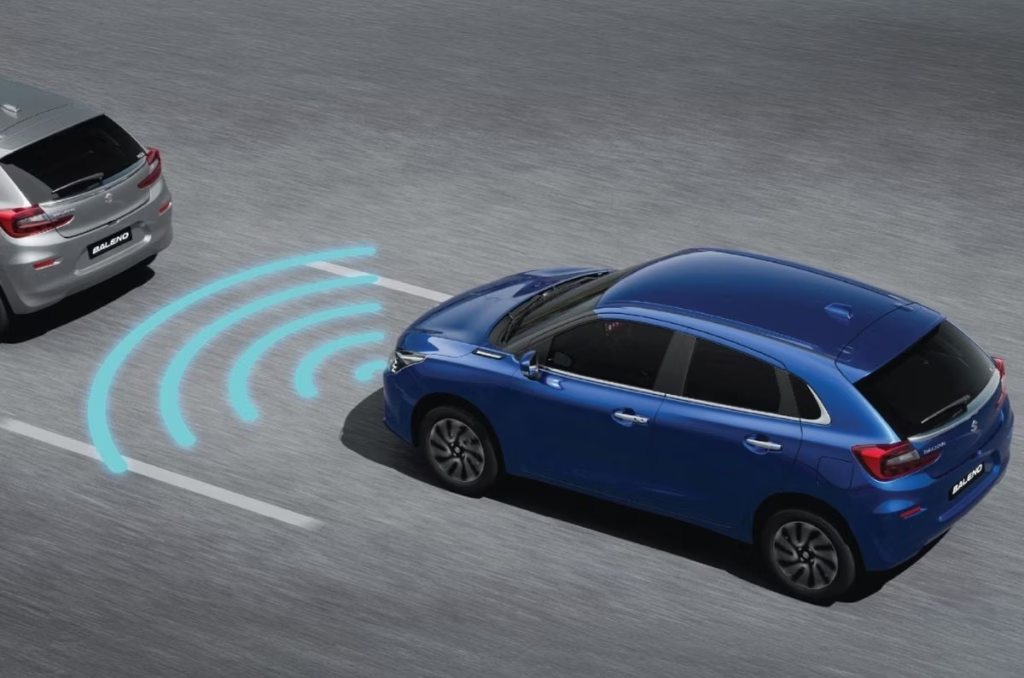
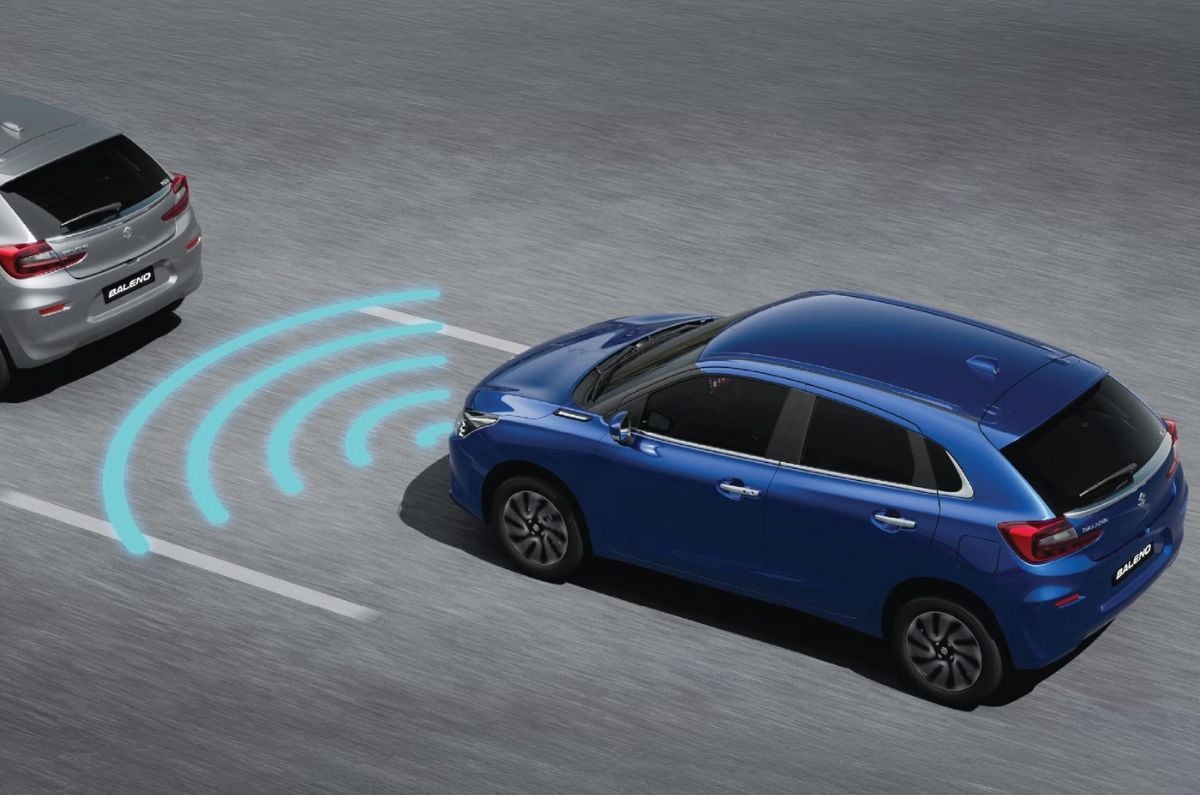
The Ministry of Road Transport and Highways (MoRTH) has proposed making Vehicle-to-Vehicle (V2V) communication systems mandatory on all newly manufactured vehicles from October 1, 2028. According to the draft notification, the mandate will apply to L-, M- and N-category vehicles, which include two-wheelers, passenger vehicles and commercial vehicles. The proposal seeks to amend the Central Motor Vehicles Rules (CMVR), 1989.

  • AIS-230 standard introduced for V2V systems
  • Will use On-Board Units operating between 5.875GHz-5.925GHz
  • Public consultation open for 30 days

MoRTH proposes phased rollout of Vehicle-to-Vehicle communication systems

MoRTH’s draft notification proposes a phased rollout of V2V communication systems. Manufacturers voluntarily offering the technology from October 1, 2027, will have to ensure they comply with AIS-230, the new Automotive Industry Standard for V2V communication systems. If approved in its current form, the fitment of V2V communication systems will become mandatory for all newly manufactured L-, M- and N-category vehicles from October 1, 2028.

The Automotive Industry Standard lays down the minimum technical, functional, performance, environmental and cybersecurity requirements for V2V communication systems. These include radio performance, receiver sensitivity and selectivity, Global Navigation Satellite System (GNSS) and positioning requirements, electrical and power-supply requirements, electromagnetic interference and compatibility, cybersecurity and communication security, and performance requirements for road safety applications.

Furthermore, the standard specifies the use of factory-fitted On-Board Units (OBUs) based on Cellular Vehicle-to-Everything (C-V2X) technology operating in the 5.875GHz to 5.925GHz frequency band. The Department of Telecommunications exempted the use of this spectrum from licensing requirements through a notification issued on June 10, 2026.

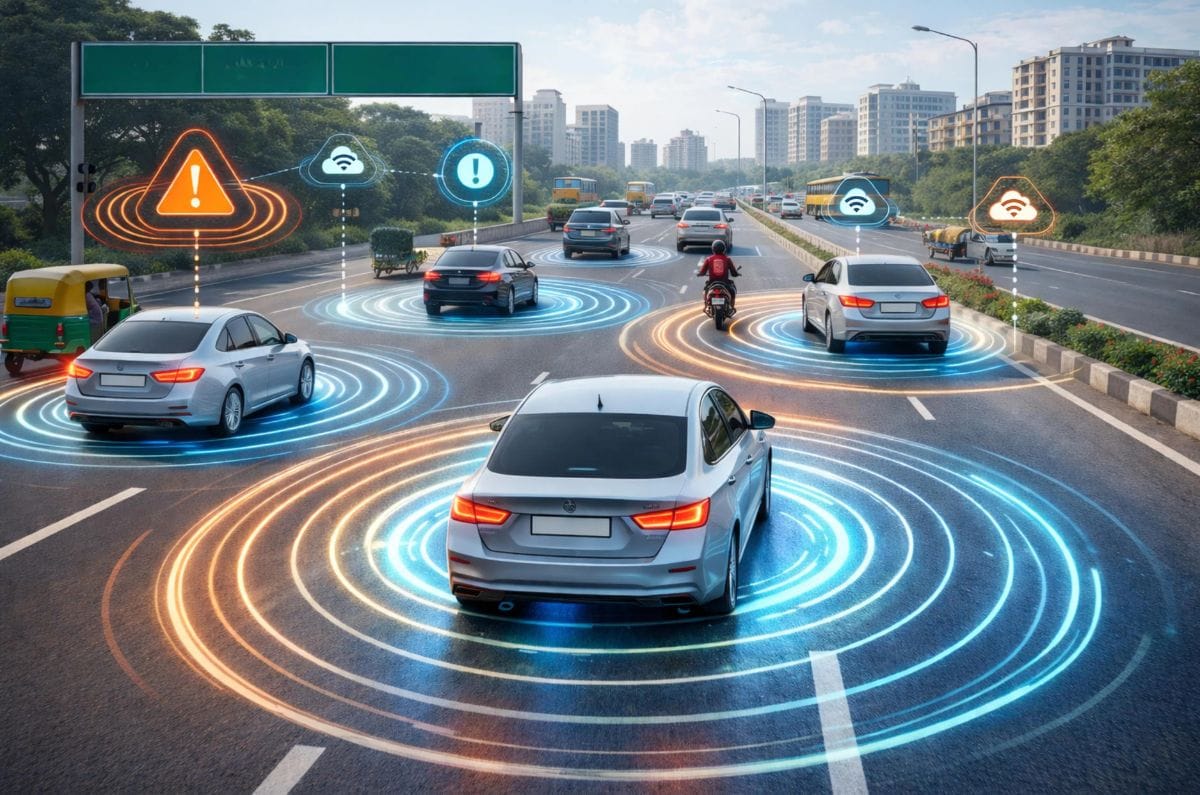
The standard also defines safety applications such as Emergency Brake Alert, Forward Collision Warning, Wrong-way Driving Alert and Emergency Vehicle Alert, enabling vehicles to exchange real-time information and warn drivers of potential hazards. The draft notification has been opened for public consultation for 30 days, following which the ministry will review the comments received before issuing the final notification.

What is Vehicle-to-Vehicle (V2V) communication?

The technology enables vehicles equipped with V2V communication systems to wirelessly exchange real-time information such as speed, position, direction and acceleration. While conventional Advanced Driver Assistance Systems (ADAS) rely on cameras, radars, other onboard sensors and driver inputs, V2V allows vehicles to communicate directly with one another using Cellular Vehicle-to-Everything (C-V2X) technology.

This enables quicker detection of potential hazards that may not yet be visible to the driver and, according to the ministry, “is therefore expected to complement ADAS and support proactive accident prevention, connected mobility and future intelligent transport applications.” The ministry also says the technology can provide warnings for situations involving sudden braking, forward-collision risks, unsafe lane changes and approaching emergency vehicles.

Challenges on the implementation of V2V communication systems

While the proposal marks a major step towards introducing V2V communication systems in India, it’s not without challenges. Automakers not only need to integrate and validate these systems across various models in their line-up but also ensure they work as intended between vehicles made by different manufacturers.

In terms of costs, earlier estimates had suggested the On-Board Units (OBUs) could add around Rs 5,000 to Rs 7,000 to the cost of each vehicle, although the latest draft notification doesn’t explore the cost angle of integrating V2V technology. With connected-vehicle technologies, there will also be a need for robust cybersecurity measures, while importance must also be given to other factors such as data protection and user privacy.

When first announcing plans to introduce V2V technology earlier this year, Union Road Transport and Highways Minister Nitin Gadkari said that it would allow drivers to “talk to each other like pilots.” However, despite being under development globally for more than two decades, widespread adoption of the technology remains limited.

Also read

E20 fuel contamination linked to rise in engine issues

Govt proposes extending PUCC validity for BS6 cars from 1 year to 3 years

Renault Group India CEO Stephane Deblaise on response to Duster and future plans

Renault Group India CEO Stephane Deblaise

Renault Group India CEO Stephane Deblaise took charge of the company in September last year, and since then, the carmaker has been busy expanding and refreshing its India line-up. In this interview, Deblaise talks about the response to the new Renault Duster and the possibility of a more affordable automatic variant, the company’s upcoming product plans, progress on the Bridger compact SUV concept, and how Renault plans to strengthen its position in the Indian market.

On the response to the 1.0-litre Duster

It’s still early, so we don’t know the exact response, but it’s a key part of our phased strategy, which was to first focus on the 160hp DCT that is the high-end version in the ICE car. And then we want to introduce the 100hp, the more ‘regular’ car, which is less expensive. That Rs 10.5 lakh price is very, very good for people who want to enter the B+ SUV segment, and it has very good fuel efficiency. Moreover, the Duster is a very good car, and people are loyal to good cars, so we are expecting the Duster to do well on the whole.

On the slow rate of Duster bookings and deliveries

So, at Renault, we don’t overstate or overpromise. We won’t say we have 60,000 people waiting and, after that, you would discover that we did not do 60,000 deliveries. Some people do that; we don’t. We are very serious and would prefer to focus on one (variant), and then another, and a third, so in this way people keep speaking about it. For the hybrid, we were not ready; that’s why it is coming later, but with the 160hp and 100hp Duster, we wanted to focus first on the high-end and then the lower version. You know, we were in a little bit of a hibernation, and you can’t go from that to summer in one day. I think it’s good to build up step by step. 

On the possibility of a 1.0-litre automatic

I am not saying what gearbox or even the engine, but what I can say is that very soon we will introduce a new, less expensive version with an automatic. It was not planned at the beginning, but since we launched the new Duster, we have been having a lot of queries about this from customers. Plus, if you look at the pricing of all the models and variants we currently have, there is a gap between the manual variants and the first automatic version. 

On the rest of the Renault portfolio

I arrived in India on the 1st of September, and on the 16th of October I went to Paris to validate our India plan, and all the programmes that we decided to pursue were validated. Then, as you know, we communicated this in April this year. The programmes are completely running as per our expectations and on time. On the Renault Group Entry Platform (RGEP), we have made many modifications and carried out re-engineering to bring in new engines, new equipment and other things that you have requested. They are now finally coming. Next year will be a blowout of new products. 

On the brand’s new design centre in India

The India R&D centre is playing a very big role in our local as well as global plans. When I arrived, I was requested to bring together the three entities we had, which were all separate: one dedicated to sales, one to engineering, and one dedicated to manufacturing, which was along with Nissan. Now we have all three together under one leadership – mine – and this helps a lot because communication is easier and quicker, and this is improving our agility and our ability to see and respond to the market much better. This is why we will now deliver exactly what the market needs and is asking for.

On the development of the Bridger concept

This is a very important topic. It’s my project, and I am working very hard on this with our whole team. We have three meetings per week about the project, and in the coming weeks, there is a very important milestone. But I am happy to say that everything is going nicely and is on track, so I am satisfied with our progress.  

Renault Group India CEO Stephane Deblaise on response to Duster and future plans

Renault Group India CEO Stephane Deblaise

Renault Group India CEO Stephane Deblaise took charge of the company in September last year, and since then, the carmaker has been busy expanding and refreshing its India line-up. In this interview, Deblaise talks about the response to the new Renault Duster and the possibility of a more affordable automatic variant, the company’s upcoming product plans, progress on the Bridger compact SUV concept, and how Renault plans to strengthen its position in the Indian market.

On the response to the 1.0-litre Duster

It’s still early, so we don’t know the exact response, but it’s a key part of our phased strategy, which was to first focus on the 160hp DCT that is the high-end version in the ICE car. And then we want to introduce the 100hp, the more ‘regular’ car, which is less expensive. That Rs 10.5 lakh price is very, very good for people who want to enter the B+ SUV segment, and it has very good fuel efficiency. Moreover, the Duster is a very good car, and people are loyal to good cars, so we are expecting the Duster to do well on the whole.

On the slow rate of Duster bookings and deliveries

So, at Renault, we don’t overstate or overpromise. We won’t say we have 60,000 people waiting and, after that, you would discover that we did not do 60,000 deliveries. Some people do that; we don’t. We are very serious and would prefer to focus on one (variant), and then another, and a third, so in this way people keep speaking about it. For the hybrid, we were not ready; that’s why it is coming later, but with the 160hp and 100hp Duster, we wanted to focus first on the high-end and then the lower version. You know, we were in a little bit of a hibernation, and you can’t go from that to summer in one day. I think it’s good to build up step by step. 

On the possibility of a 1.0-litre automatic

I am not saying what gearbox or even the engine, but what I can say is that very soon we will introduce a new, less expensive version with an automatic. It was not planned at the beginning, but since we launched the new Duster, we have been having a lot of queries about this from customers. Plus, if you look at the pricing of all the models and variants we currently have, there is a gap between the manual variants and the first automatic version. 

On the rest of the Renault portfolio

I arrived in India on the 1st of September, and on the 16th of October I went to Paris to validate our India plan, and all the programmes that we decided to pursue were validated. Then, as you know, we communicated this in April this year. The programmes are completely running as per our expectations and on time. On the Renault Group Entry Platform (RGEP), we have made many modifications and carried out re-engineering to bring in new engines, new equipment and other things that you have requested. They are now finally coming. Next year will be a blowout of new products. 

On the brand’s new design centre in India

The India R&D centre is playing a very big role in our local as well as global plans. When I arrived, I was requested to bring together the three entities we had, which were all separate: one dedicated to sales, one to engineering, and one dedicated to manufacturing, which was along with Nissan. Now we have all three together under one leadership – mine – and this helps a lot because communication is easier and quicker, and this is improving our agility and our ability to see and respond to the market much better. This is why we will now deliver exactly what the market needs and is asking for.

On the development of the Bridger concept

This is a very important topic. It’s my project, and I am working very hard on this with our whole team. We have three meetings per week about the project, and in the coming weeks, there is a very important milestone. But I am happy to say that everything is going nicely and is on track, so I am satisfied with our progress. 

700 बार रिजेक्ट हुआ, फिर भी नहीं मानी हार… आज 22 LPA की नौकरी कर रहा है ये युवक

कैरियर में बदलाव का फैसला अक्सर आसान नहीं होता। इसके साथ अनिश्चितता, नई चुनौतियां और खुद को फिर से साबित करने का दबाव भी जुड़ा होता है। कई लोग सुरक्षित रास्ता चुनते हैं, लेकिन कुछ ऐसे भी होते हैं जो अपने सपनों के लिए जोखिम उठाने से पीछे नहीं हटते। नई स्किल्स सीखना, लगातार मेहनत करना और असफलताओं के बावजूद आगे बढ़ते रहना ही उन्हें दूसरों से अलग बनाता है। हाल ही में ऐसी ही एक प्रेरणादायक कहानी सामने आई है, जिसने सोशल मीडिया पर लोगों का ध्यान खींचा। एक 24 वर्षीय युवक ने अपने संघर्ष, करियर बदलने के फैसले और सफलता तक पहुंचने के सफर को साझा किया।

उसकी कहानी बताती है कि सही दिशा में लगातार प्रयास, धैर्य और सीखने की इच्छा हो तो सीमित संसाधन या अलग शैक्षणिक पृष्ठभूमि भी सफलता की राह में स्थायी बाधा नहीं बनती। यही वजह है कि आज उसकी यह कहानी हजारों युवाओं के लिए प्रेरणा का स्रोत बन गई है।

CAT की तैयारी छोड़ चुना अलग रास्ता

2022 में BBA की पढ़ाई पूरी करने के बाद युवक CAT परीक्षा की तैयारी कर रहा था। लेकिन उसे लगा कि अच्छे बिजनेस स्कूल में दाखिला पाने के लिए कई साल लग सकते हैं। इसलिए उसने इंतजार करने के बजाय नया रास्ता चुनने का फैसला किया।

बिना इंजीनियरिंग बैकग्राउंड के सीखी Data Science

युवक ने Data Science में करियर बनाने का फैसला किया, जबकि उसके पास न इंजीनियरिंग की डिग्री थी और न ही कोडिंग का अनुभव। उसने करीब डेढ़ साल तक YouTube और Udemy की मदद से SQL, Python और अन्य जरूरी स्किल्स सीखी।

उसके मुताबिक, यह दौर बेहद कठिन था। जहां उसके दोस्त नौकरी कर रहे थे या विदेश पढ़ाई के लिए जा रहे थे, वहीं वह रोज घंटों बैठकर कोडिंग सीख रहा था।

अकेलापन, तनाव और Panic Attacks ने बढ़ाई मुश्किलें

सिर्फ पढ़ाई ही चुनौती नहीं थी। गैर-तकनीकी बैकग्राउंड होने की वजह से लोगों की आलोचना, परिवार और दोस्तों का कम समर्थन और भविष्य की चिंता उसे लगातार परेशान करती रही। उसने बताया कि कई बार रात में घबराहट और Panic Attacks तक आते थे।

700 से ज्यादा आवेदन, फिर मिली पहली नौकरी

नई स्किल्स सीखने के बाद भी नौकरी मिलना आसान नहीं था। अधिकांश HR इंटरव्यू से पहले ही उसका रिज्यूमे रिजेक्ट कर देते थे क्योंकि उसके पास टेक्निकल डिग्री और अनुभव नहीं था। करीब 700 से अधिक आवेदन करने के बाद उसे पहली नौकरी मिली, जहां उसकी सैलरी 25 हजार रुपये प्रति माह थी।

पहली नौकरी भी छूटी, दो महीने की सैलरी भी नहीं मिली

सिर्फ तीन महीने बाद स्टार्टअप में काम खत्म होने की वजह से उसकी नौकरी चली गई। इतना ही नहीं, कंपनी ने आखिरी दो महीने का वेतन भी नहीं दिया। उसने यह बात घरवालों से भी छिपाकर रखी और अगले ही दिन फिर से नौकरी की तलाश शुरू कर दी।

दूसरी नौकरी से मिली नई उड़ान

करीब चार महीने बाद उसे 6 LPA की नौकरी मिली। यहां काम करते हुए उसने लगातार नई स्किल्स सीखीं और लगभग 1.7 साल बाद बेहतर अवसर की तलाश में नौकरी बदली।

इस मेहनत का नतीजा यह रहा कि आज वह एक अमेरिकी MNC में 22 LPA के पैकेज पर काम कर रहा है।

इन स्किल्स ने दिलाई बड़ी सफलता

युवक के अनुसार Data Analyst बनने के लिए इन स्किल्स पर मजबूत पकड़ जरूरी है—

  • SQL
  • Python
  • Power BI
  • Tableau
  • Communication Skills

उसका कहना है कि इंटरव्यू में सिर्फ तकनीकी ज्ञान ही नहीं, बल्कि अपने विचार स्पष्ट तरीके से रखना भी बेहद जरूरी होता है।

नौकरी पाने के लिए अपनाई ये खास रणनीति

उसने बताया कि केवल ऑनलाइन आवेदन करना काफी नहीं होता। उसने अपना रिज्यूमे ATS फ्रेंडली बनाया, हर जॉब पोस्ट के मुताबिक जरूरी Keywords जोड़े और LinkedIn पर संबंधित कंपनियों के कर्मचारियों से Referral भी मांगा। इसी रणनीति से उसे कई इंटरव्यू कॉल मिले।

अब खुद की कंपनी बनाने का सपना

24 वर्षीय युवक का अगला लक्ष्य अपनी खुद की कंपनी शुरू करना है, जो Data Science और Analytics Solutions उपलब्ध कराए। उसका मानना है कि लगातार सीखने और मेहनत करने से किसी भी बैकग्राउंड का व्यक्ति अपने करियर में बड़ी सफलता हासिल कर सकता है।

‘हमने बहुत बड़ी गड़बड़ की’ वेंस ने माना कि ट्रम्प प्रशासन ने एपस्टीन फाइलों को जारी करने में ‘गलती’ की

जेफ्री एपस्टीन केस से जुड़ी फाइलों को लेकर लंबे समय से अमेरिका में राजनीतिक बहस चल रही है। वहीं, अब पहली बार अमेरिका के उपराष्ट्रपति जेडी वेंस ने खुलकर स्वीकार किया है कि इन फाइलों को सार्वजनिक करने के तरीके में ट्रंप प्रशासन से बड़ी चूक हुई है। हालांकि, उन्होंने यह भी साफ किया कि सरकार का मकसद किसी जानकारी को छिपाना नहीं था, बल्कि लोगों तक पूरे मामले को सही ढंग से पहुंचाने में कमी रह गई।

बुधवार को जारी “द जो रोगन एक्सपीरियंस” पॉडकास्ट में वेंस ने कहा कि ट्रंप प्रशासन ने इन फाइलों को लेकर लोगों की उम्मीदें बहुत बढ़ा दी थीं। लेकिन जब फाइलों में लोगों की उम्मीद के मुताबिक कोई बड़ा खुलासा नहीं हुआ, तो सरकार इस बारे में सही तरीके से लोगों से बात नहीं कर पाई और यही सबसे बड़ी गलती रही।

वेंस ने कहा, “अगर लोग कहना चाहते हैं कि हमने एपस्टीन मामले की जानकारी जारी करने में गड़बड़ी की, तो हम दोषी हैं। हमने सच में गड़बड़ी की।” उन्होंने आगे कहा कि समस्या कम्युनिकेशन स्ट्रेटेजी (बातचीत के तरीके) में थी, न कि किसी गलत काम को छिपाने की कोशिश में।

उन्होंने ने कहा, “मैं यह बात पूरी ईमानदारी से कह रहा हूं कि हमने एपस्टीन फाइलों से जुड़ी जानकारी देने में बहुत बड़ी गलती की, जैसा कि अभी हुआ।” “लेकिन क्या मुझे लगता है कि कम्युनिकेशन में गड़बड़ी इसलिए हुई क्योंकि हम कुछ छिपाने की कोशिश कर रहे थे? नहीं।”

वेंस ने ट्रंप का बचाव किया

इंटरव्यू के दौरान, वेंस ने एपस्टीन से जुड़े आरोपों को लेकर अमेरिकी राष्ट्रपति डोनाल्ड ट्रंप का बचाव किया। उन्होंने कहा कि उन्होंने जारी की गई ज्यादातर जानकारी देखी है और उन्हें ऐसा कोई सबूत नहीं मिला जिससे पता चले कि ट्रंप ने कोई गलत काम किया है।

वेंस का दावा है कि एपस्टीन के इंटेलिजेंस एजेंसियों से संबंध थे

पॉडकास्ट के दौरान, वाइस प्रेसिडेंट ने इंटेलिजेंस एजेंसियों के साथ एपस्टीन के कथित संबंधों के बारे में भी दावे किए। होस्ट जो रोगन की उन टिप्पणियों का जवाब देते हुए जिनमें एपस्टीन के मोसाद से संबंध होने की अटकलों का जिक्र था, वेंस ने कहा कि एपस्टीन के अमेरिका और इजरायल, दोनों देशों की इंटेलिजेंस एजेंसियों के “सबसे ऊंचे स्तर” के लोगों से संबंध थे।

वेंस ने कहा, “साफ तौर पर जेफ्री एपस्टीन के अमेरिकी इंटेलिजेंस के सबसे ऊंचे स्तरों और इजरायली इंटेलिजेंस के सबसे ऊंचे स्तरों से संबंध थे।”

उन्होंने आगे कहा कि ऐसा लगता था कि एपस्टीन के इजरायली “डीप स्टेट” के कुछ ऐसे लोगों से भी संबंध थे, जिन्हें राजनीतिक रूप से वामपंथी (लेफ्ट ऑफ सेंटर) माना जाता है। वेंस ने कहा, “मुझे हमेशा यह बात दिलचस्प लगी कि एपस्टीन के संबंध इजरायल की राजनीति के वामपंथी माने जाने वाले प्रभावशाली लोगों से ज्यादा दिखते हैं। ऐसा नहीं था कि उसके रिश्ते दक्षिणपंथी (राइट ऑफ सेंटर) नेताओं या समूहों से बहुत मजबूत थे।”

यह भी पढ़ें: ईरान के कई शहरों पर अमेरिका की भीषण बमबारी! हाई अलर्ट पर तेहरान, थमने का नाम नहीं ले रहा महायुद्ध