Gadkari proposes graded license points system for improper behaviour

Gadkari proposes graded license points system for improper behaviour
Nitin Gadkari

In a bid to address driver behavioral issues, the Government of India is planning to introduce a points system for driving licences and vehicle registration certificates. Under this system, repeat traffic offenders could face suspension or cancellation of their licences, according to Road Transport and Highways Minister Nitin Gadkari.

Habitual offenders to be penalised while benefits could be given to those with good records: Gadkari

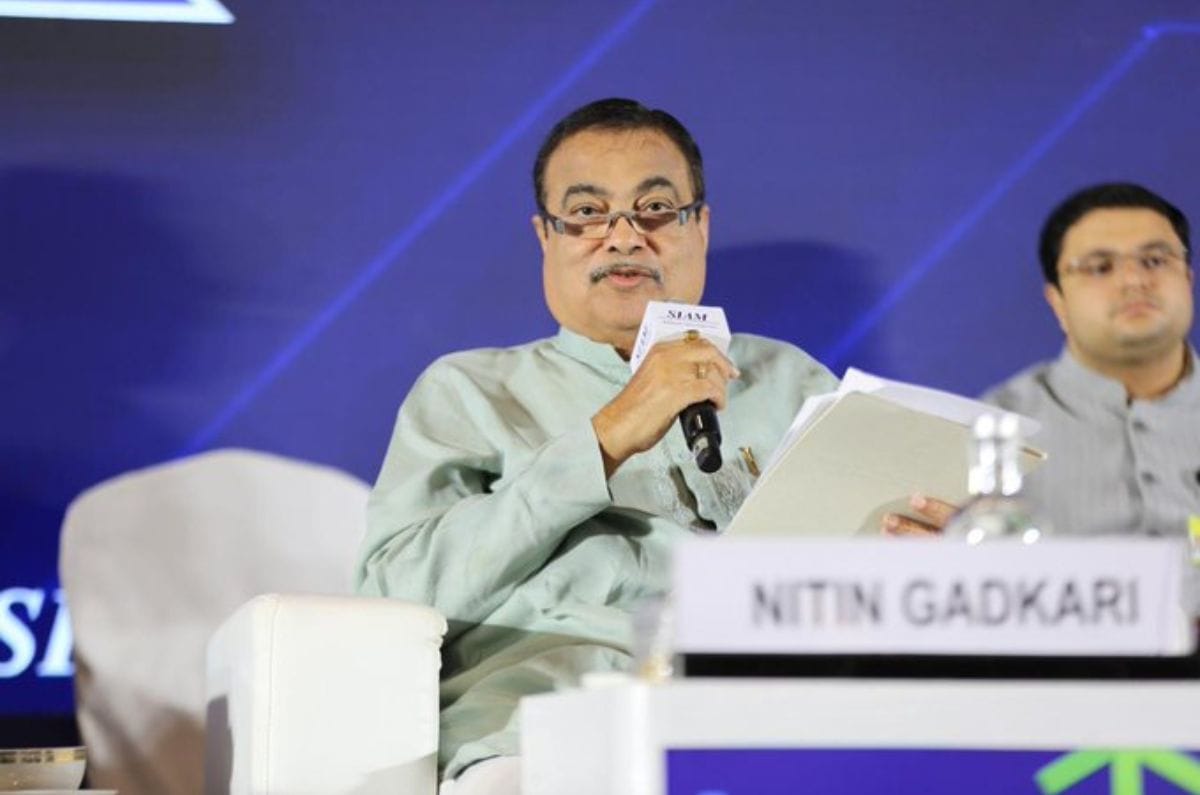
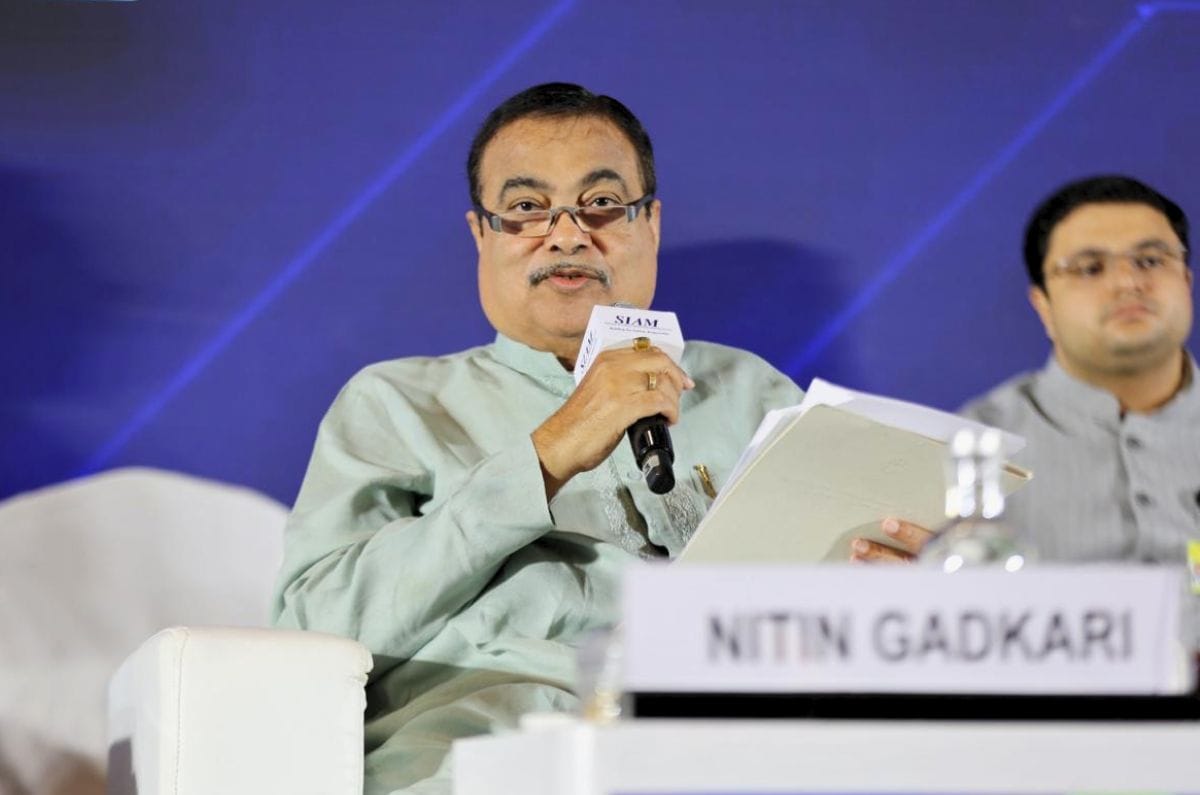
The proposed system aims to improve driving behaviour and hold habitual offenders accountable, Gadkari said while speaking at the Society of Indian Automobile Manufacturers’ (SIAM) 66th Annual Convention. “My ministry is planning to introduce a graded point system in driving licences and vehicle registration certificates,” Gadkari said. Under the proposed system, points would be deducted for offences committed by drivers, with action taken once the accumulated penalty points cross a specified limit.

“Every offense will cut points on the driving licence. And after a particular limit, the licence will get suspended or even cancelled,” Gadkari said. The minister said the policy would distinguish between responsible drivers and those who repeatedly violate rules. Drivers with good records could receive benefits, including possible incentives from insurance companies, while habitual offenders would face penalties.

“These are exactly the people who have good points; they will get incentives from insurance or companies or whatever benefits will be there. But for those who are habitually making mistakes, the penalty is there. That is the principle behind this policy,” Gadkari said. He said changing driver behaviour was an important challenge in efforts to improve road safety. “Driver behaviour is a big problem. We are now doing a lot of things for that,” Gadkari said.

The proposed points-based system is expected to encourage more responsible driving behaviour, the minister said. He did not specify a timeline for the implementation of the proposed system or provide further details on how the points mechanism would operate.

Bharat NCAP 2.0 to come into effect from October 2027: Gadkari

Bharat NCAP 2.0 to come into effect from October 2027: Gadkari

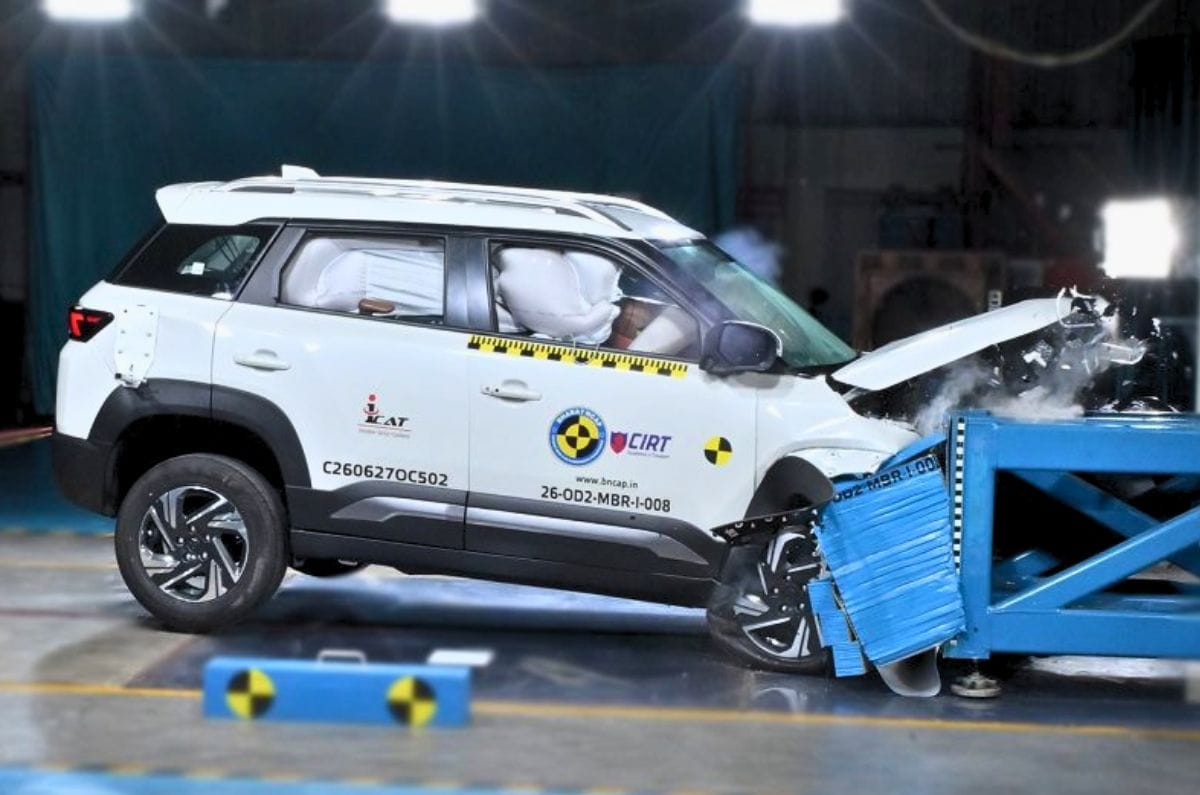
At the 66th SIAM Annual Convention, Union Minister of Road Transport and Highways, Nitin Gadkari, revealed that the government is preparing for the second phase of Bharat NCAP that’s set to take effect from October 2027. The new phase of the BNCAP, Gadkari said, is planned to broaden the vehicle assessment programme to areas such as crash avoidance, pedestrian safety and post-crash response.

  1. Entire crash chain will be evaluated, expanding beyond occupant protection
  2. Gadkari invited manufacturers to submit suggestions based on global safety practices

Bharat NCAP 2.0 plans: What was revealed?

“Entire crash chain” to be evaluated with the Bharat NCAP 2.0 programme 

“We are going ahead with making Bharat NCAP 2. This is a very important program [which will be] valid from October 2027,” said Gadkari while addressing the SIAM convention. The next phase is expected to assess a wider range of safety parameters. “We are going to evaluate the entire crash chain,” he added while identifying three broad areas – avoiding a crash, pedestrian protection, and post-crash evacuation and care – rather than focusing only on how vehicles protect occupants during a crash.

Image source: @siamindia on X

The ministry will also look at new safety technologies available globally as well as solutions being developed by Indian start-ups. Gadkari also invited vehicle manufacturers to submit suggestions based on their research, technical experience and safety practices followed in other markets “If you have any good suggestions, don’t hesitate, come to us”, he said.

Notified draft rules from MoRTH in November 2025 proposed 100-point evaluation criteria

In November 2025, MoRTH proposed new rules for the next phase of Bharat NCAP under AIS-197 (Revision 1), aimed at making the car safety testing programme more detailed and stricter. Under the proposed system, cars would receive a score out of 100 based on five areas: crash protection (55 points), protection for pedestrians and other vulnerable road users (20 points), safe driving features (10 points), accident avoidance technology (10 points), and post-crash safety (5 points).

The requirements for a 5-star safety rating would also become tougher. From 2027, a car would need to score at least 70 out of 100 to receive 5 stars, while from 2029, the minimum score would increase to 80 points.

The proposal also calls for more crash tests. In addition to the existing tests, cars would have to undergo a 50kph full-width frontal crash test, a 32kph oblique pole impact test and a 50kph rear-impact test. The speed of the existing side-pole test would also increase from 29kph to 32kph. Another major change is that cars would need to offer curtain airbags and electronic stability control (ESC) as standard to qualify for a star rating.

गडकरी पूरे देश में चाहते हैं बाइक टैक्सी पर राज्यों के हाथ में चाबी! ऐसा हुआ तो 8 करोड़ लोगों को होने लगेगी टू-व्हीलर से कमाई

Bike Taxi Update: केंद्रीय सड़क परिवहन एवं राजमार्ग मंत्री नितिन गडकरी ने प्राइवेट टू-व्हीलर का इस्तेमाल सवारी ढोने यानी बाइक टैक्सी के रूप में करने की वकालत की है। उन्होंने राज्यों से अपील की है कि वे निजी मोटरसाइकिल और स्कूटर मालिकों को यात्रियों को ले जाने की अनुमति दें। गडकरी का तर्क है कि अगर ऐसा हुआ तो ग्रामीण इलाकों में करीब 8 करोड़ लोगों के लिए कमाई के नए मौके पैदा हो सकते हैं। वैसे आपको बता दें कि केंद्र सरकार भले ऐसा चाह ले लेकिन इसक बावजूद यह पूरी तरह से राज्यों पर निर्भर करता है कि वे अपने अधिकार क्षेत्र में बाइक टैक्सी चलाने की इजाजत देते हैं या नहीं।

राज्यों के पास क्यों है अंतिम फैसला?

महाराष्ट्र में सरकार के ‘सुरक्षा’ पायलट प्रोग्राम के शुभारंभ के दौरान नितिन गडकरी ने कहा कि, ‘हमने इसकी अनुमति दे दी है, लेकिन कुछ राज्य ऐसा नहीं कर रहे हैं। ट्रांसपोर्ट स्टेट सब्जेक्ट है। मैं उनसे ऐसा करने का आग्रह करूंगा क्योंकि इससे कई लोगों को आजीविका का साधन मिलेगा।’ Motor Vehicle Aggregator Guidelines, 2025 एक ऐसा फ्रेमवर्क देती है जिससे एग्रीगेटरों को पैसेंजर जर्नी के लिए नॉन-ट्रांसपोर्ट मोटरसाइकिलों का इस्तेमाल करने की अनुमति दे सकते हैं।

क्या आपकी अपनी बाइक बन सकती है टैक्सी?

हर जगह खुद ब खुद किसी प्राइवेट बाइक का इस्तेमाल टैक्सी के रूप में नहीं किया जा सकता है। अलग-अलग राज्यों में इसे लेकर अलग-अलग रूल हैं। इसे कर्नाटक और महाराष्ट्र के हिसाब से समझा जा सकता है। इस साल जनवरी में कर्नाटक हाई कोर्ट ने कहा था कि मोटरसाइकिलों का इस्तेमाल ट्रांसपोर्ट गाड़ियों के रूप में किया जा सकता है और अधिकारियों को पीले रंग की प्लेट रजिस्ट्रेशन और कॉन्ट्रैक्ट पैसेंजर्स कैरियर्स के रूप में काम करने के लिए परमिट मांगने वाले मालिकों के आवेदनों पर विचार करने का निर्देश दिया था। हालांकि राज्य सरकार ने यात्रियों की सुरक्षा, इंश्योरेंस, महिलाओं की सेफ्टी और बाइक टैक्सियों के लिए एक व्यापक फ्रेमवर्क की कमी से जुड़ी चिंताओं का हवाला देते हुए सुप्रीम कोर्ट में इस फैसले को चुनौती दी।

दूसरी ओर महाराष्ट्र ने 2025 में अपने बाइक-टैक्सी नियमों को नोटिफाइड कर दिया था। इसमें एग्रीगेटर्स, परमिट और ऑपरेटिंग कंडिशन को कवर करने वाले प्रावधान शामिल हैं। इस फ्रेमवर्क में ई-बाइक और स्कूटर भी शामिल हैं।

ट्रैफिक नियमों के लिए ‘नेगेटिव पॉइंट सिस्टम’ और ‘सुरक्षा’ कार्यक्रम

बाइक टैक्सी पर बात करने के साथ ही गडकरी ने भारत के सड़क सुरक्षा नियमों में एक और प्रस्तावित बदलाव की जानकारी दी है। मंत्रालय ट्रैफिक नियमों के उल्लंघन के लिए एक नेगेटिव पॉइंट सिस्टम पेश करने की तैयारी कर रहा है। इस प्रस्तावित सिस्टम के तहत बार-बार नियम तोड़ने वाले ड्राइवरों के नेगेटिव पॉइंट जमा होंगे और दोबारा उल्लंघन करने वालों का ड्राइविंग लाइसेंस निलंबित या रद्द किया जा सकता है। इस कदम का उद्देश्य जिम्मेदार ड्राइविंग व्यवहार को बढ़ावा देना है।

आपको बता दें कि सुरक्षा नाम के पायलट कार्यक्रम का उद्देश्य राजमार्गों और खनन कार्यों में शामिल ड्राइवरों और श्रमिकों को मुफ्त चिकित्सा जांच, परामर्श देना है। यह पायलट प्रोजेक्ट एनएच 44 पर नागपुर से काम्टी तक 150 किलोमीटर के हिस्से और चंद्रपुर के खनन क्षेत्र को कवर करेगा। इसमें शुरुआती चरण में 10000 लोगों को शामिल करने का लक्ष्य रखा गया है।

यह भी पढ़ें: पुरी जगन्नाथ मंदिर के बैंक खाते में जमा है ₹1,912 करोड़, सामने आया कमाई और खर्च का पूरा ब्योरा

MoRTH proposes mandatory V2V communication systems from October 2028

Vehicle-to-Vehicle communication

The Ministry of Road Transport and Highways (MoRTH) has proposed making Vehicle-to-Vehicle (V2V) communication systems mandatory on all newly manufactured vehicles from October 1, 2028. According to the draft notification, the mandate will apply to L-, M- and N-category vehicles, which include two-wheelers, passenger vehicles and commercial vehicles. The proposal seeks to amend the Central Motor Vehicles Rules (CMVR), 1989.

  • AIS-230 standard introduced for V2V systems
  • Will use On-Board Units operating between 5.875GHz-5.925GHz
  • Public consultation open for 30 days

MoRTH proposes phased rollout of Vehicle-to-Vehicle communication systems

MoRTH’s draft notification proposes a phased rollout of V2V communication systems. Manufacturers voluntarily offering the technology from October 1, 2027, will have to ensure they comply with AIS-230, the new Automotive Industry Standard for V2V communication systems. If approved in its current form, the fitment of V2V communication systems will become mandatory for all newly manufactured L-, M- and N-category vehicles from October 1, 2028.

The Automotive Industry Standard lays down the minimum technical, functional, performance, environmental and cybersecurity requirements for V2V communication systems. These include radio performance, receiver sensitivity and selectivity, Global Navigation Satellite System (GNSS) and positioning requirements, electrical and power-supply requirements, electromagnetic interference and compatibility, cybersecurity and communication security, and performance requirements for road safety applications.

Furthermore, the standard specifies the use of factory-fitted On-Board Units (OBUs) based on Cellular Vehicle-to-Everything (C-V2X) technology operating in the 5.875GHz to 5.925GHz frequency band. The Department of Telecommunications exempted the use of this spectrum from licensing requirements through a notification issued on June 10, 2026.

The standard also defines safety applications such as Emergency Brake Alert, Forward Collision Warning, Wrong-way Driving Alert and Emergency Vehicle Alert, enabling vehicles to exchange real-time information and warn drivers of potential hazards. The draft notification has been opened for public consultation for 30 days, following which the ministry will review the comments received before issuing the final notification.

What is Vehicle-to-Vehicle (V2V) communication?

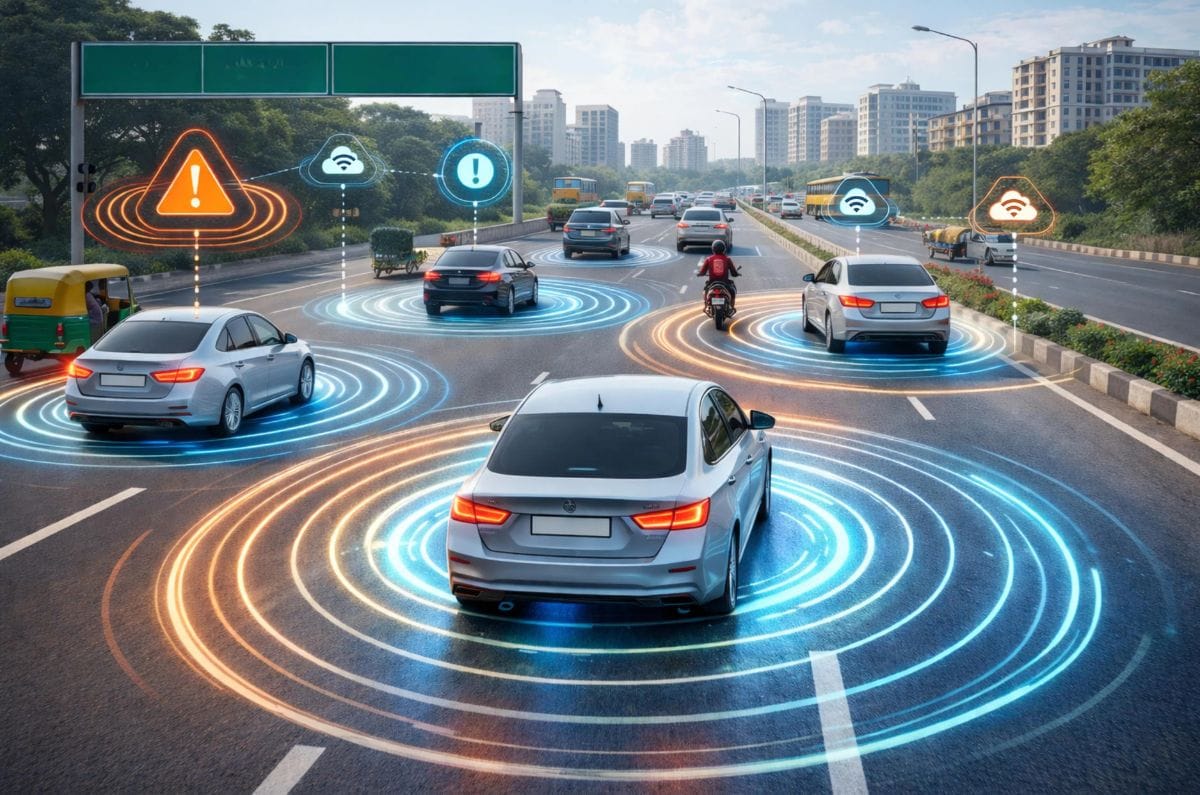
The technology enables vehicles equipped with V2V communication systems to wirelessly exchange real-time information such as speed, position, direction and acceleration. While conventional Advanced Driver Assistance Systems (ADAS) rely on cameras, radars, other onboard sensors and driver inputs, V2V allows vehicles to communicate directly with one another using Cellular Vehicle-to-Everything (C-V2X) technology.

This enables quicker detection of potential hazards that may not yet be visible to the driver and, according to the ministry, “is therefore expected to complement ADAS and support proactive accident prevention, connected mobility and future intelligent transport applications.” The ministry also says the technology can provide warnings for situations involving sudden braking, forward-collision risks, unsafe lane changes and approaching emergency vehicles.

Challenges on the implementation of V2V communication systems

While the proposal marks a major step towards introducing V2V communication systems in India, it’s not without challenges. Automakers not only need to integrate and validate these systems across various models in their line-up but also ensure they work as intended between vehicles made by different manufacturers.

In terms of costs, earlier estimates had suggested the On-Board Units (OBUs) could add around Rs 5,000 to Rs 7,000 to the cost of each vehicle, although the latest draft notification doesn’t explore the cost angle of integrating V2V technology. With connected-vehicle technologies, there will also be a need for robust cybersecurity measures, while importance must also be given to other factors such as data protection and user privacy.

When first announcing plans to introduce V2V technology earlier this year, Union Road Transport and Highways Minister Nitin Gadkari said that it would allow drivers to “talk to each other like pilots.” However, despite being under development globally for more than two decades, widespread adoption of the technology remains limited.

Also read

E20 fuel contamination linked to rise in engine issues

Govt proposes extending PUCC validity for BS6 cars from 1 year to 3 years

E20 Janta Party campaign demands choice of ethanol-free petrol

fuel dispensers

Not long after the success of the Cockroach Janta Party’s (CJP) protests, a new social media-led campaign calling itself the E20 Janta Party has cropped up. It demands that Indian vehicle owners be given the option to purchase ethanol-free petrol alongside E20 fuel, as well as the resignation of Union Road Transport and Highways Minister Nitin Gadkari, who is a major proponent of the government’s ethanol blending policy.

For context, the E20 rollout started in April 2025, and it was mandated as the baseline petrol blend exactly one year later – all in an effort to reduce dependence on crude oil imports. This is despite the fact that E20 compliance was mandated in April 2023 as part of the BS6 Phase 2 emission norms, which means a hefty chunk of vehicles plying on Indian roads are not E20-compliant.

E20 Janta Party wants more transparency and options for fuel

No demands for E20 to be discontinued

Inspired by the CJP’s satirical, meme-driven approach, E20 Janta Party declared itself as a consumer rights movement that is not seeking the withdrawal of E20 petrol, but instead greater transparency and freedom of choice at fuel stations. Although ethanol-free fuel has been available in the form of 100-octane premium petrol (XP100, Speed100, and Power100), it’s sold only at select fuel stations and costs significantly more than standard E20, limiting its feasibility for most motorists.

“Our demand is very clear. E20 Janta Party is a people-powered movement demanding transparency, accountability, and the right of every Indian to know how the E20 policy affects their vehicles, wallets, and consumer rights,” the group said in a social media post. The campaign even referenced CJP’s initial call to mobilisation with a post stating, “What if all bike/car owners come together?”

The E20 Janta Party says it is not opposed to ethanol blending, nor is it asking for subsidies or free fuel. Instead, it wants fuel stations to offer consumers the choice between unblended petrol and ethanol-blended fuel. E20 Janta Party is also demanding transparent fuel labelling, publication of government data on the costs and benefits of different fuel blends, and independent scientific studies into mileage, engine performance, emissions, and maintenance costs, with the findings made publicly available.

Support pouring in for E20 Janta Party

At the time of writing, E20 Janta Party’s Twitter and Instagram accounts have attracted over 31,000 followers cumulatively, and the campaign has even begun attracting support beyond social media. Political commentator Tehseen Poonawalla announced a “Gaadi March” on July 31 against the E20 policy, while the Delhi Taxi and Tourist Transporters and Tour Operators Association planned a march to Parliament on August 4. The taxi association has raised concerns over fuel efficiency, maintenance costs and engine performance, particularly in older vehicles.

Govt continues to stand strong on ethanol blending policy

In recent months, motorists have expressed heightened acrimony surrounding the impact of E20 petrol on fuel efficiency and vehicle durability, whereas the government remains steadfast in its defence of the policy, saying E20 is a safe and cleaner fuel backed by scientific evaluation. A few weeks ago, prominent manufacturers like Maruti Suzuki, Toyota, and Hero Motocorp also backed E20 at a government briefing, notably claiming that they have found no significant concerns regarding accelerated wear and tear in older, non-compliant vehicles.

Petroleum Minister previously ruled out offering pure petrol or E10 alongside E20

Replying to a question in Parliament last week, Minister of State for Petroleum Suresh Gopi said the government had not received any “widespread or substantiated” complaints linking E20 petrol to vehicle performance issues. Petroleum Minister Hardeep Singh Puri earlier shot down the prospect of offering unblended and E10 petrol alongside E20, citing tremendous logistical issues like separate storage, transportation, and dispensing infrastructures.

Ethanol content in petrol could increase; diesel likely to be blended with isobutanol

The government is even looking to increase the baseline ethanol blend in petrol, with the Automotive Research Association of India (ARAI) tasked to examine the effects of E25 on existing E10- and E20-compliant vehicles. Plans are also underway to blend ethanol-derived isobutanol into diesel in the near future, even though the government has not laid out any isobutanol compliance framework for any diesel-powered passenger vehicle in India.

E20 Petrol: एथेनॉल वाले पेट्रोल से इंजन खराब होता है या नहीं? IIT कानपुर की रिसर्च ने दिया बड़ा जवाब

E20 Petrol Row: देश भर में 20 प्रतिशत एथेनॉल मिश्रण वाले पेट्रोल (E20) के रोलआउट को लेकर वाहन मालिकों के मन में कई तरह की चिंताएं और सवाल हैं। सबसे बड़ा सवाल यह है कि क्या एथेनॉल वाले पेट्रोल से गाड़ी का इंजन खराब हो जाता है? इस मामले पर चल रही तमाम बहसों और आशंकाओं के बीच देश के प्रतिष्ठित संस्थान आईआईटी कानपुर के रिसर्चर ने एक बड़ा और राहत देने वाला दावा किया है।

संस्थान के शोधकर्ताओं का कहना है कि उनकी स्टडी में E20 पेट्रोल के इस्तेमाल से वाहनों के माइलेज में कोई खास गिरावट नहीं पाई गई है। इस बात के भी कोई सबूत नहीं मिले हैं कि E20 फ्यूल मौजूदा या पुरानी गाड़ियों के इंजन को किसी भी तरह का नुकसान पहुंचाता है।

माइलेज पर क्या होता है असर? IIT कानपुर की रिसर्च

आपको बता दें कि हाल ही में पेट्रोलियम और प्राकृतिक गैस मंत्रालय ने स्पष्ट किया था कि E20 फ्यूल के इस्तेमाल से कुछ वाहनों में माइलेज 5 प्रतिशत तक कम हो सकता है। हालांकि इसके फायदे इस मामूली नुकसान से कहीं अधिक हैं। पीटीआई की रिपोर्ट के मुताबिक इस पर आईआईटी कानपुर के मैकेनिकल इंजीनियरिंग विभाग के इंजन रिसर्च लेबोरेटरी के प्रोजेक्ट साइंटिस्ट ध्रुव राज कराना ने बताया है कि आईआईटी कानपुर में की गई रिसर्च के मुताबित E20 फ्यूल के इस्तेमाल से माइलेज में होने वाली कमी वास्तव में 5 प्रतिशत से भी कम है।

ध्रुव राज कराना ने स्पष्ट किया कि माइलेज में आने वाली 5 प्रतिशत तक की यह कमी फ्यूल के अलावा दूसरी वजहों से भी हो सकती है। अगर सामान्य या शुद्ध पेट्रोल के साथ भी लगातार दो बार बैक टू बैक टेस्ट किए जाएं तब भी इस तरह के परिणाम आ सकते हैं।

माइलेज कम होने की असली वजह: IIT की स्टडी के मुताबिक माइलेज में होने वाला कोई भी बदलाव फ्यूल से ज्यादा ड्राइवर की ड्राइविंग के तरीके, सड़क की स्थिति और गाड़ी के मेंटनेंस पर निर्भर करता है।

क्या सच में खराब होता है इंजन?

प्रोजेक्ट साइंटिस्ट ध्रुव राज कराना ने बताया कि काफी डिटेल्ड और एक्सटेंसिव टेस्टिंग से यह साबित हुआ है कि E20 फ्यूल के इस्तेमाल से इंजन को कोई नुकसान, जंग या अन्य तकनीकी समस्याएं नहीं होती हैं। उन्होंने सोशल मीडिया पर चल रही उन खबरों को पूरी तरह से खारिज कर दिया जिनमें दावा किया जा रहा है कि E20 पेट्रोल से गाड़ियां खराब हो रही हैं।

कराना ने इन दावों को वैज्ञानिक रूप से निराधार बताया और गाड़ी चलाने वालों को सलाह दी कि वे इंटरनेट पर बिना किसी वेरिफिकेशन के साझा की जाने वाली पोस्ट पर भरोसा करने के बजाय अपनी गाड़ी के मैनुफैक्चरर के मैनुअल और पेट्रोलियम और प्राकृतिक गैस मंत्रालय के दिशानिर्देशों का पालन करें।

E85 फ्यूल का भी हो चुका है सफल परीक्षण

आईआईटी कानपुर की यह रिसर्च प्रोफेसर अविनाश कुमार अग्रवाल के नेतृत्व में चल रही है। वो इस इंजन रिसर्च लेबोरेटरी के प्रमुख हैं। उनकी टीम लंबे समय से एथेनॉल-ब्लेंडेड फ्यूल पर व्यापक शोध कर रही है। टीम ने E85 फ्यूल (जिसमें 85 प्रतिशत एथेनॉल होता है) का भी सफलतापूर्वक परीक्षण किया है। हालांकि ध्रुव राज कराना ने यह भी स्पष्ट किया कि इतने उच्च स्तर के मिश्रण के लिए विशेष रूप से डिजाइन किए गए इंजनों और उनके अनुकूल ईंधन प्रणालियों की जरूरत होती है।

मंत्रालय ने कहा- ‘यह अधिक स्वच्छ और बेहतर फ्यूल है’

एथेनॉल ब्लेंडेड पेट्रोल कार्यक्रम को लेकर हो रही आलोचनाओं का जवाब देने के लिए पेट्रोलियम और प्राकृतिक गैस मंत्रालय ने हाल ही में एक विस्तृत Q&A डॉक्युमेंट जारी किया था। मंत्रालय के मुताबिक E20 पेट्रोल, E10 या शुद्ध पेट्रोल की तुलना में अधिक स्वच्छ, उच्च गुणवत्ता वाला और अधिक कुशल ईंधन है। सरकार ने इसे देश में लागू करने से पहले वर्षों तक वैज्ञानिक परीक्षण किए हैं, वाहन निर्माताओं के साथ व्यापक विचार-विमर्श किया है और देश के भीतर एथेनॉल के उत्पादन को बढ़ाया है। इससे कार्बन उत्सर्जन काफी कम होता है, जो पर्यावरण के लिए बेहद फायदेमंद है।

ये भी पढ़ें- Nitin Gadkari VIDEO: ‘अब हवा में उड़ने वाली बस लाऊंगा…’; केंद्रीय मंत्री नितिन गडकरी का बड़ा ऐलान, जानें- किन शहरों में होगी शुरुआत

Nitin Gadkari VIDEO: ‘अब हवा में उड़ने वाली बस लाऊंगा…’; केंद्रीय मंत्री नितिन गडकरी का बड़ा ऐलान, जानें- किन शहरों में होगी शुरुआत

Nitin Gadkari VIDEO: केंद्रीय सड़क परिवहन एवं राजमार्ग मंत्री नितिन गडकरी ने बड़ा ऐलान करते हुए कहा है कि वह भविष्य में ऐसी बस लाने जा रहे हैं, जो हवा में उड़ेगी। जी हां, उन्होंने कहा कि देश में बढ़ते ट्रैफिक और प्रदूषण की समस्या से निपटने के लिए आधुनिक परिवहन तकनीकों को अपनाना जरूरी है। मीडिया रिपोर्ट्स के मुताबिक, लखनऊ-कानपुर एक्सप्रेसवे के लोकार्पण कार्यक्रम में गडकरी ने कहा कि वह जल्द ही हवा में उड़ने वाली बस लेकर आएंगे।

उन्होंने कहा कि जैसे वह पानी में उतरने वाला हवाई जहाज लेकर आए थे, वैसे ही जो भी वादा करेंगे, उसे पूरा करके दिखाएंगे। नितिन गडकरी ने कहा, “अब मैं ऐसी बस लाने जा रहा हूं जो हवा में उड़ती हुई चलेगी।” उनका यह बयान भविष्य की एरियल पब्लिक ट्रांसपोर्ट टेक्नोलॉजी की ओर इशारा माना जा रहा है। उनका इशारा रोपवे आधारित सार्वजनिक परिवहन, स्काई बस, पॉड टैक्सी और अन्य एरियल मोबिलिटी सिस्टम जैसी परियोजनाओं की ओर माना जा रहा है, जिन पर केंद्र सरकार लंबे समय से काम कर रही है।

ट्रांजिट सिस्टम को बढ़ावा देने की वकालत

केंद्रीय मंत्री लंबे समय से देश में रोपवे, स्काई बस, पॉड टैक्सी और अन्य एरियल ट्रांजिट सिस्टम को बढ़ावा देने की वकालत करते रहे हैं। उनका मानना है कि जमीन के ऊपर चलने वाली सार्वजनिक परिवहन व्यवस्था से बड़े शहरों में ट्रैफिक जाम कम होगा। साथ ही यात्रा का समय घटेगा और प्रदूषण पर भी कंट्रोल पाया जा सकेगा।

गडकरी ने कहा कि सरकार का लक्ष्य लोगों को सस्ता, सुरक्षित, तेज और पर्यावरण अनुकूल सार्वजनिक परिवहन उपलब्ध कराना है। इसके लिए नई तकनीकों पर लगातार काम किया जा रहा है। हालांकि, उन्होंने जिस ‘हवा में उड़ने वाली बस’ का जिक्र किया, उसके बारे में अभी कोई डिटेल्स प्लान, प्रोजेक्ट या लॉन्च की तारीख घोषित नहीं की गई है। फिलहाल इसे भविष्य की आधुनिक परिवहन सिस्टम के रूप में देखा जा रहा है।

क्या है उड़ने वाली बस का मतलब?

गडकरी ने पहले भी कई बार कहा है कि भारत के शहरों में बढ़ते ट्रैफिक को कम करने के लिए जमीन के ऊपर चलने वाली आधुनिक परिवहन सिस्टम विकसित की जाएंगी। इनमें शामिल हैं:-

रोपवे आधारित बस सिस्टम

स्काई बस

पॉड टैक्सी

एरियल इलेक्ट्रिक ट्रांजिट

केबल-कार आधारित शहरी परिवहन

इन सिस्टम में वाहन सड़क पर नहीं बल्कि ऊंचे ट्रैक, केबल या सस्पेंडेड सिस्टम पर चलते हैं। इससे ऐसा लगता है मानो बस हवा में उड़ रही हो।

किन शहरों में हो सकता है प्रयोग?

परिवहन मंत्रालय पहले से कई शहरों में वैकल्पिक एरियल ट्रांजिट सिस्टम की संभावनाएं तलाश रहा है। इनमें शामिल हो सकते हैं: नागपुर, वाराणसी, मुंबई, दिल्ली और देहरादून।

ये भी पढ़ें- Iran-US War Update: होर्मुज स्ट्रेट में टैंकर पर हमले में भारतीय नाविक की मौत! भारत सरकार का बड़ा एक्शन, ईरानी राजनयिक तलब

पहले भी दे चुके हैं ऐसे बयान

नितिन गडकरी अक्सर नई तकनीकों को बढ़ावा देने के लिए चर्चित बयान देते रहे हैं। वे इलेक्ट्रिक वाहन, हाइड्रोजन ईंधन, फ्लेक्स-फ्यूल, रोपवे और जल परिवहन जैसी परियोजनाओं के बड़े समर्थक माने जाते हैं। हालांकि, उन्होंने जिस ‘हवा में उड़ने वाली बस’ की बात कही, उसके लिए अभी कोई विस्तृत सरकारी परियोजना या लॉन्चिंग डेट घोषित नहीं की गई है।

Hydrogen Trials Routes: दिल्ली-आगरा से मुंबई-पुणे तक… देश के उन 10 रूटों की फुल लिस्ट जहां शुरू हुआ हाइड्रोजन ट्रायल, जानिए क्या है पूरी तैयारी

Hydrogen Trials Routes: केंद्रीय सड़क परिवहन और राजमार्ग मंत्री नितिन गडकरी ने परिवहन उद्योग के भविष्य को लेकर एक बड़ा विजन पेश किया है। पीटीआई की रिपोर्ट के मुताबिक, गांधीनगर में आयोजित प्रवास 5.0 और भारत प्रवास अवार्ड्स कार्यक्रम को संबोधित करते हुए केंद्रीय मंत्री ने घोषणा की है कि हाइड्रोजन ही परिवहन उद्योग का भविष्य है। उन्होंने इस दौरान बताया कि सरकार देश भर के 10 महत्वपूर्ण रूटों पर ईंधन के रूप में इसके इस्तेमाल का ट्रायल कर रही है।

नितिन गडकरी ने जोर देकर कहा कि वैकल्पिक ईंधन और बायोफ्यूल के क्षेत्र में भारतीय ऑटोमोबाइल इंडस्ट्री बहुत शानदार काम कर रही है। आने वाले समय में भारत अपनी बेहतरीन तकनीक और किफायती लागत के दम पर इस क्षेत्र में वैश्विक स्तर पर नेतृत्व करेगा।

देश के वे 10 रूट जहां चल रहा है हाइड्रोजन का ट्रायल

केंद्रीय मंत्री के मुताबिक सड़क परिवहन और राजमार्ग मंत्रालय जिन 10 रूटों पर हाइड्रोजन ईंधन का पायलट प्रोजेक्ट चला रहा है, उनकी पूरी लिस्ट यहां नीचे देखिए-

ग्रेटर नोएडा – दिल्ली – आगरा

पुणे – मुंबई

साहिबाबाद – फरीदाबाद – दिल्ली

अहमदाबाद – वडोदरा – सूरत

जामनगर – अहमदाबाद

भुवनेश्वर – कोणार्क – पुरी

जमशेदपुर – कलिंगा नगर

तिरुवनंतपुरम – कोच्चि

कोच्चि – एडपल्ली

नेशनल हाईवे-16 विशाखापट्टनम – बय्यावराम

नंबर 1 बनने की ओर भारतीय ऑटोमोबाइल इंडस्ट्री, 4.5 करोड़ नौकरियां

नितिन गडकरी ने देश की ऑटोमोबाइल इंडस्ट्री की अभूतपूर्व तरक्की के आंकड़े भी साझा किए। उन्होंने बताया कि जब उन्होंने मंत्रालय का कार्यभार संभाला था तब देश की ऑटोमोबाइल इंडस्ट्री का आकार 14 लाख करोड़ रुपये था और यह वैश्विक स्तर पर 7वें स्थान पर थी। आज यह 22 लाख करोड़ रुपये के आकार के साथ दुनिया में तीसरे स्थान पर पहुंच चुकी है। हमारा लक्ष्य जल्द से जल्द दुनिया में पहले स्थान पर पहुंचना है।

यह इंडस्ट्री केंद्र और राज्य सरकारों को सबसे ज्यादा राजस्व देती है और इसके जरिए देश में 4.5 करोड़ नौकरियां पैदा हुई हैं। भारत के टू-व्हीलर निर्माता आज अपनी सुरक्षा और तकनीक के दम पर 50 प्रतिशत उत्पाद विदेशों में बेच रहे हैं।

सड़क सुरक्षा सबसे बड़ी प्राथमिकता, हर साल 1.80 लाख मौतें

सड़क सुरक्षा को लेकर केंद्रीय मंत्री ने गंभीर आंकड़े पेश किए और ट्रांसपोर्टर्स व निर्माताओं से मदद की अपील की। देश में हर साल 5 लाख सड़क हादसे होते हैं जिनमें 1.80 लाख लोगों की जान चली जाती है। इन हादसों में जान गंवाने वाले लोगों में से 66 प्रतिशत लोग 18 से 36 वर्ष की आयु वर्ग के होते हैं। इन दुर्घटनाओं के कारण देश को 3 प्रतिशत जीडीपी का नुकसान उठाना पड़ता है। इसलिए सड़क सुरक्षा सरकार की सर्वोच्च प्राथमिकता है।

बस निर्माताओं को बड़ी राहत, टेस्टिंग चार्ज 50% घटेगा

नितिन गडकरी ने बसों की संख्या बढ़ाने उनकी सुरक्षा और निर्माताओं को राहत देने के लिए कई महत्वपूर्ण बातें कहीं। देश में सालाना 3 लाख बसों की जरूरत है लेकिन हमारे निर्माता सिर्फ 70000 से 80000 बसें ही बना पा रहे हैं। उत्पादकता को तीन गुना बढ़ाना होगा। निर्माताओं का कर्तव्य है कि वे विश्व स्तरीय तकनीक के साथ उचित आर्थिक मूल्य पर अधिक आराम प्रदान करें। पिछले साल सितंबर में संशोधित बस बॉडी कोड लागू किया गया था।

अब सरकार ने 600 से अधिक बस बॉडी निर्माता इकाइयों (जिसमें 75000 कर्मचारी कार्यरत हैं) को राहत देते हुए टेस्टिंग चार्ज को 50 प्रतिशत कम करने और प्रोसेसिंग की समयसीमा को 16 सप्ताह से घटाकर 6 सप्ताह करने का निर्णय लिया है। गडकरी ने इलेक्ट्रिक बस निर्माताओं से अपील की कि वे लिथियम-आयन बैटरी की घटी हुई कीमतों का लाभ उपभोक्ताओं तक पहुंचाएं।

उन्होंने कहा कि वर्तमान में चार्जिंग के लिए 20 रुपये की बिजली दर अधिक है। उनका मंत्रालय बसों, ट्रकों व कारों के लिए इसे कम करने पर काम कर रहा है। मंत्रालय देश में प्राइवेट बसपोर्ट बनाने पर काम कर रहा है। इसके अलावा ग्रीन एक्सप्रेस हाईवे के निर्माण से यात्रा का समय कम होगा जिससे ट्रांसपोर्ट इंडस्ट्री का टर्नओवर और मुनाफा बढ़ाने में मदद मिलेगी।