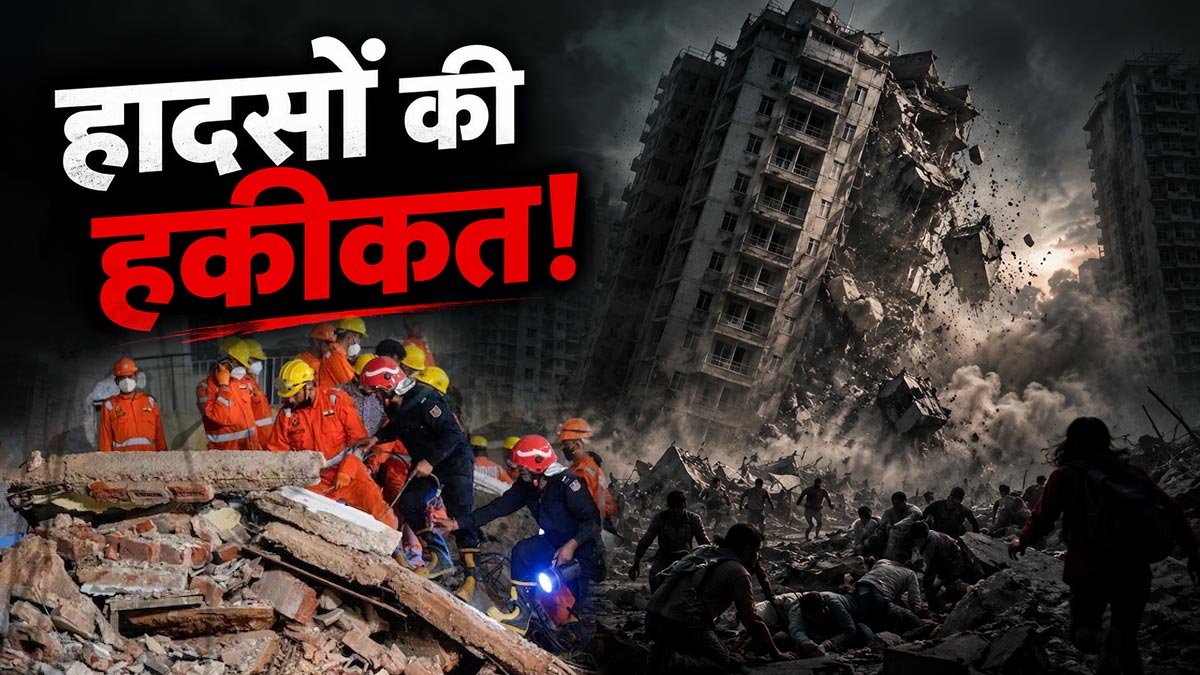
Building collapse deaths in India: दिल्ली के सत्य निकेतन में रविवार (6 सितंबर 2026) को हुई दर्दनाक दुर्घटना में पांच मंज़िला इमारत ढहने से सोमवार सुबह तक 7 लोगों की मौत की पुष्टि हो चुकी है। यह हादसा एक बार फिर इस कड़वी हकीकत को सामने लाता है कि किस तरह सुरक्षा मानकों का उल्लंघन करने वाली अवैध और जर्जर इमारतों पर कार्रवाई में ढिलाई बरती जाती है।
सत्य निकेतन जैसी घटनाएं मीडिया का ध्यान इसलिए खींचती हैं क्योंकि ये छात्रों और युवाओं के पेइंग गेस्ट (PG) आवासों से जुड़ी होती हैं। लेकिन इसके इतर दर्जनों ऐसी छिटपुट घटनाएं हैं जो मिलकर राष्ट्रीय राजधानी क्षेत्र (NCR) में दर्जनों और देश भर में सैकड़ों बेकसूरों की जान ले लेती हैं और सुर्खियों से गायब रह जाती हैं।
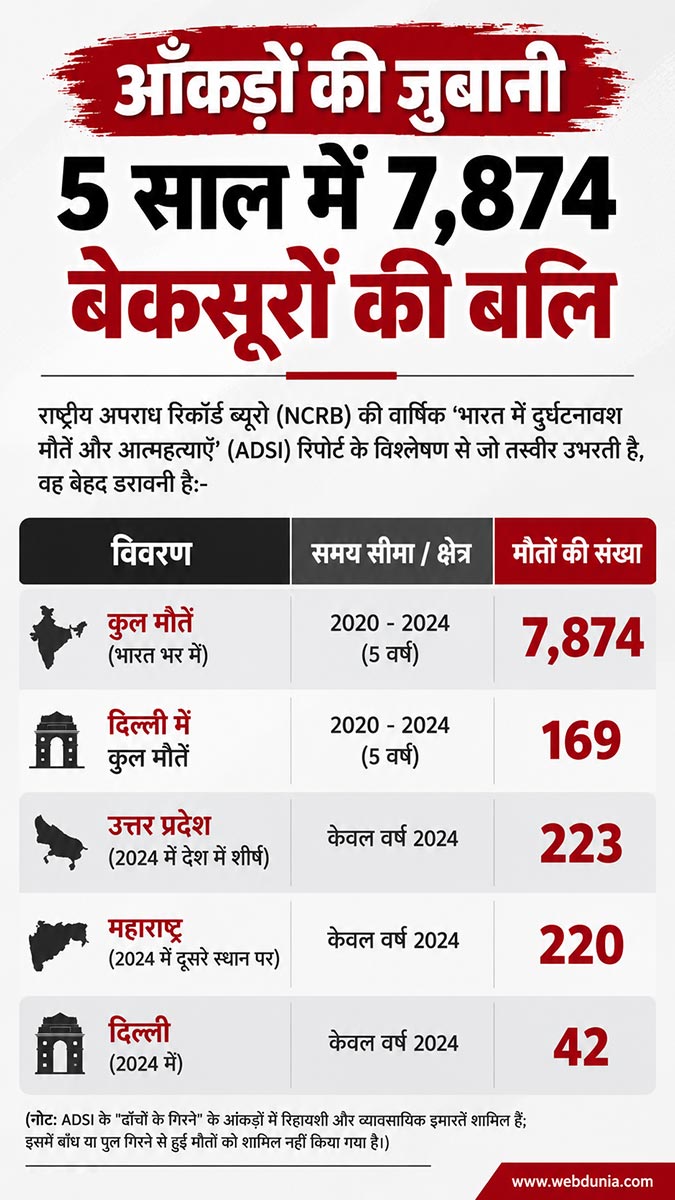
दिल्ली : आबादी के अनुपात में मौतों की गंभीर स्थिति
2024 में मौतों की कुल संख्या (42) के आधार पर दिल्ली देश में 12वें स्थान पर थी, लेकिन जब इन मौतों का विश्लेषण प्रति दस लाख (Per Million) आबादी के अनुपात में किया जाता है, तो स्थिति और भी चिंताजनक दिखती है:
- 2022, 2023 और 2024 तीनों वर्षों में प्रति 10 लाख आबादी पर इमारतें ढहने से हुई मौतों के मामले में दिल्ली देश में दूसरे या तीसरे स्थान पर बनी रही।
- 2025-2026 की स्थिति : यद्यपि 2025 की आधिकारिक ADSI रिपोर्ट आना बाकी है, लेकिन मीडिया रिपोर्टों के संकलन के अनुसार जनवरी 2025 से अब तक 20 से अधिक घटनाओं में कम से कम 70 लोग अपनी जान गंवा चुके हैं।
प्रशासनिक प्रतिक्रिया : तात्कालिक हड़बड़ी बनाम ढांचागत सुधार
सत्य निकेतन की घटना के बाद हमेशा की तरह जन-आक्रोश भड़कने पर दिल्ली नगर निगम (MCD) ने घोषणा की है कि वह 5-मंज़िला या उससे ऊपर की सभी अवैध इमारतों को “तत्काल सील” करेगा।
क्यों विफल होता है सिस्ट्म?
- रिएक्टिव बनाम प्रोएक्टिव : नगर निकाय हमेशा किसी बड़े हादसे के बाद ही जागते हैं। नियमित ऑडिट और भ्रष्टाचार-मुक्त निगरानी का अभाव रहता है।
- सस्ते आवास की भारी मांग : दिल्ली जैसे बड़े शहरों में छात्रों और प्रवासियों की आमद लगातार बढ़ रही है। सस्ते आवास (Affordable Housing) की मांग के चलते अवैध और घटिया निर्माण को बढ़ावा मिलता है।
- सिर्फ सीलिंग समाधान नहीं : अचानक इमारतों को सील करने से किराएदार बेघर हो जाते हैं, लेकिन निर्माण के लिए जिम्मेदार बिल्डर-प्रशासनिक साठगांठ पर स्थायी लगाम नहीं लग पाती।
- स्थानीय स्तर पर भ्रष्टाचार और निगरानी का अभाव: स्थानीय जूनियर इंजीनियरों (JE) और पुलिस की मिलीभगत से अवैध निर्माण बिना रुकावट जारी रहता है। हादसे के बाद सीलिंग ड्राइव (Sealing Drive) चलाई जाती है, जो कि केवल एक रिएक्टिव (प्रतिक्रियात्मक) कदम है, प्रोएक्टिव नहीं।
- अपीलीय प्रक्रिया में कानूनी अड़चनें : निगम द्वारा धारा 343/344 के तहत नोटिस जारी करने के बाद, मामला Appellate Tribunal for MCD (ATMCD) या अदालतों में चला जाता है, जहाँ स्टे (Stay Order) मिलने के कारण ध्वस्तीकरण की कार्यवाही वर्षों तक लटकी रहती है।
ऐसे हादसों को कैसे रोकें : सुधार हेतु आवश्यक कदम (Way Forward)
- स्ट्रक्चरल ऑडिट का अनिवार्य डिजिटल पंजीकरण : 15 वर्ष से पुरानी या 3 मंजिल से ऊंची सभी इमारतों के लिए हर 5 साल में थर्ड-पार्टी ऑडिट (Third-Party Audit) अनिवार्य किया जाए और उसका डेटा सार्वजनिक पोर्टल पर अपलोड हो।
- अधिकारियों की व्यक्तिगत जवाबदेही (Individual Accountability) : यदि किसी इलाके में अवैध निर्माण के दौरान हादसा होता है, तो केवल बिल्डर ही नहीं, बल्कि उस क्षेत्र के संबंधित नगर निगम इंजीनियर और बीट कांस्टेबल को भी कानूनी रूप से सह-आरोपी बनाया जाना चाहिए।
- सस्ते और सुरक्षित छात्र आवास का नियमन : सरकार को निजी PG और हॉस्टलों के संचालन के लिए एक पारदर्शी और सख्त नियामक ढांचा (Regulatory Framework) बनाना चाहिए, ताकि सुरक्षा मानकों से समझौता किए बिना सस्ते आवास उपलब्ध कराए जा सकें।
हाल ही में हुआ सत्य निकेतन हादसा और देश भर में 5 वर्षों में हुई लगभग 8,000 मौतें यह स्पष्ट दर्शाती हैं कि भारत में शहरी विकास का ढाँचा और भवन सुरक्षा व्यवस्था गहरे संकट में है।
भारत में शहरी आवास सुरक्षा नियम, दिल्ली नगर निगम (MCD) के बिल्डिंग बाय-लॉज (Unified Building Bye-Laws) और अवैध निर्माण पर लागू वैधानिक एवं कानूनी प्रावधानों का विस्तृत विश्लेषण:
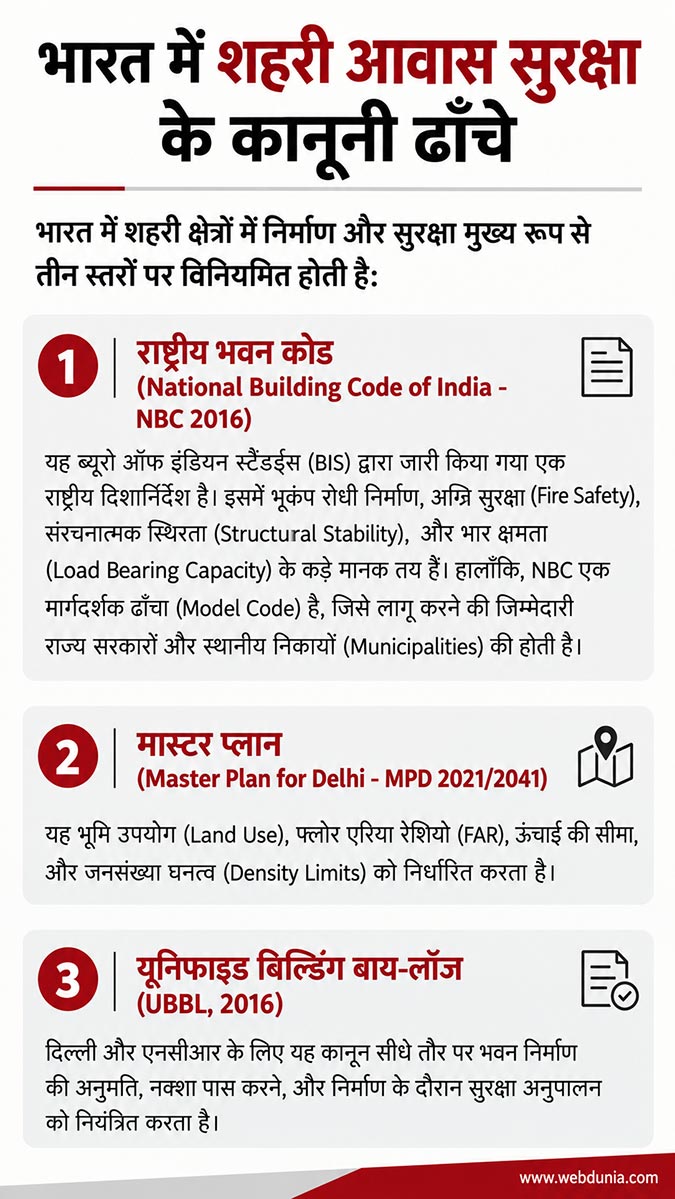
MCD के मुख्य बिल्डिंग बाय-लॉज और सुरक्षा मानक
MCD के नियमों के अनुसार किसी भी इमारत के निर्माण से लेकर उसके उपयोग तक निम्नलिखित कड़े नियमों का पालन अनिवार्य है:
(A) फ्लोर एरिया रेशियो (FAR) और ऊंचाई की सीमा
- भूखंड (Plot Size) के आकार के आधार पर यह तय होता है कि उस पर कितना निर्माण हो सकता है।
- रिहायशी इलाकों में अतिरिक्त मंजिलें (जैसे 3 मंजिल के ऊपर 4था या 5वां फ्लोर बनाना) बिना FAR और स्ट्रक्चरल परमिशन के पूरी तरह से गैर-कानूनी हैं।
(B) स्ट्रक्चरल सेफ्टी सर्टिफिकेट (Structural Safety Certificate)
- किसी भी इमारत का नक्शा पास कराने के लिए एक पंजीकृत स्ट्रक्चरल इंजीनियर (Structural Engineer) से यह प्रमाण-पत्र लेना अनिवार्य है कि इमारत भूकंप, हवा के दबाव और वजन को सहने में सक्षम है।
- ऑक्यूपेंसी सर्टिफिकेट (OC) / कम्प्लीशन सर्टिफिकेट (CC) : निर्माण पूरा होने के बाद MCD इंस्पेक्टर और इंजीनियर मौके का निरीक्षण करते हैं। इसके बिना इमारत में किसी को रहने या किराए (PG) पर देने की अनुमति नहीं होती।
(C) यूसेज परिवर्तन (Commercial vs Residential)
- आवासीय परिसरों (Residential Plots) का उपयोग व्यावसायिक उद्देश्यों जैसे बिना अनुमति के पेइंग गेस्ट (PG), व्यावसायिक हॉस्टल या कोचिंग सेंटर चलाने के लिए करना बाय-लॉज का सीधा उल्लंघन है।
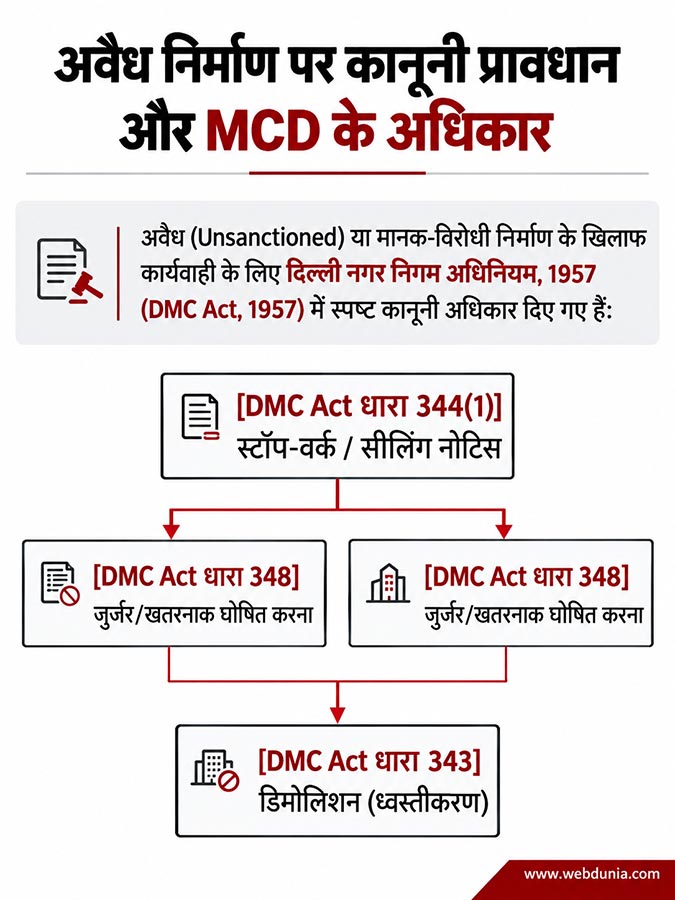
- धारा 343 (DMC Act, 1957) – ध्वस्तीकरण का आदेश (Order of Demolition) : यदि कोई निर्माण बिना पास नक्शे के या पास नक्शे का उल्लंघन करके किया गया है, तो निगम नोटिस जारी कर निर्माण को गिराने (Demolish) का आदेश दे सकता है।
- धारा 344 – काम रोकने और सील करने की शक्ति (Stop Work / Sealing Notice) : निगम अधिकारियों को अधिकार है कि वे निर्माणाधीन अवैध इमारत पर 'स्टॉप वर्क' का नोटिस दें या पुलिस बल की मदद से साइट को तुरंत सील कर दें।
- धारा 348 – खतरनाक इमारतों की मरम्मत या ध्वस्तीकरण (Unsafe Buildings): यदि कोई पुरानी इमारत जीर्ण-शीर्ण (Dilapidated) स्थिति में है और गिरने के कगार पर है, तो निगम मकान मालिक को नोटिस जारी कर उसे खाली कराने, मरम्मत कराने या ध्वस्त करने का आदेश दे सकता है।
- भारतीय न्याय संहिता (BNS) के तहत आपराधिक मामला : हादसे की स्थिति में मकान मालिक, बिल्डर और लापरवाह अधिकारियों पर BNS धारा 106 (गैर-इरादतन हत्या/लापरवाही से हुई मौत – पूर्व में IPC धारा 304A) और धारा 125 (दूसरों के जीवन या व्यक्तिगत सुरक्षा को खतरे में डालना) के तहत प्राथमिकी (FIR) दर्ज की जाती है।