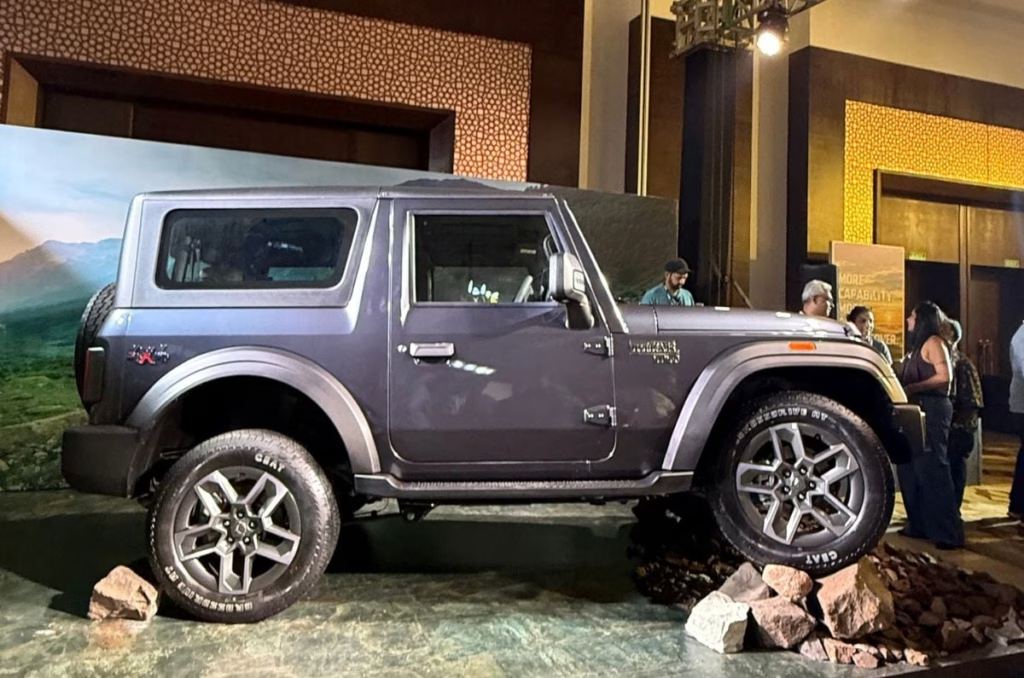
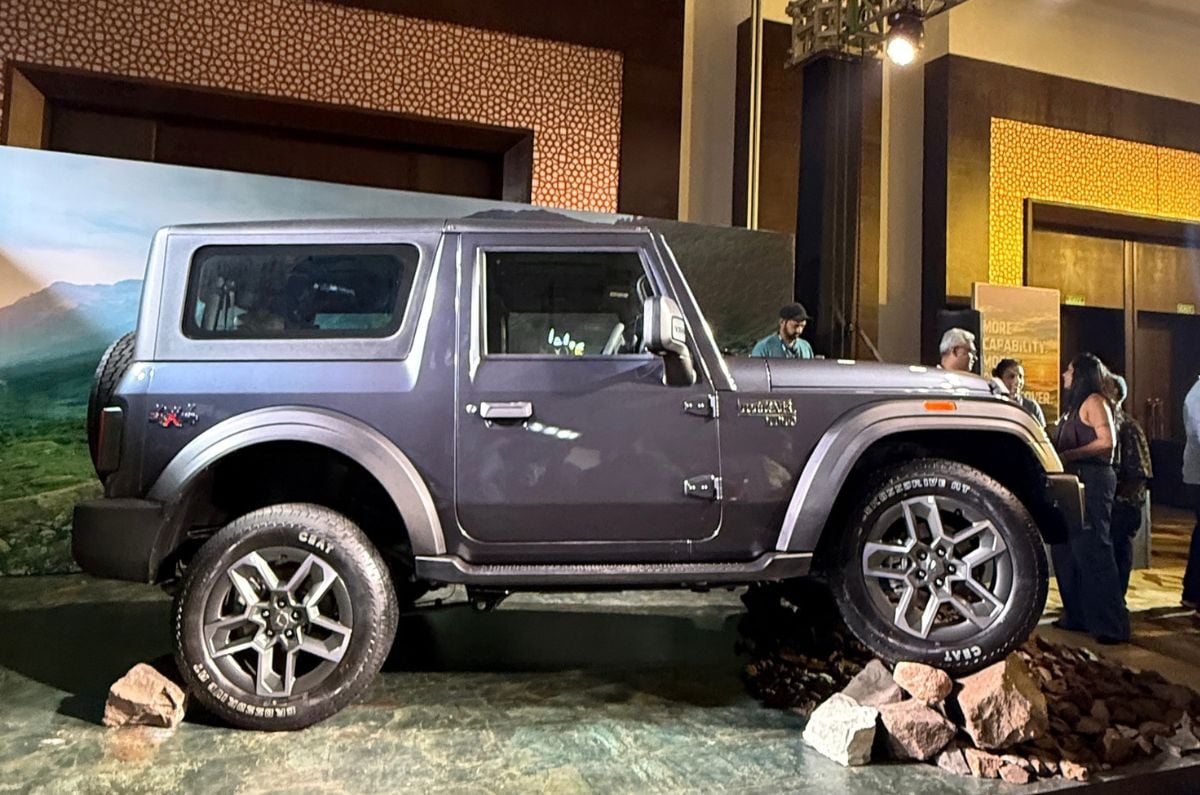
Mahindra Thar OG launched at Rs 10.32 lakh

Mahindra Thar OG launched at Rs 10.32 lakh
Mahindra Thar OG launched

Mahindra has launched the Thar OG at prices starting at Rs 10.32 lakh (ex-showroom). The second update to the Thar 3-door in just over a year brings a new ‘OG” suffix, new-gen platform, revised suspension and steering, more powerful engine options, plus refreshed styling and safety features over the outgoing model.

  • 6 airbags and disc brakes are now standard across variants.
  • 3-door model now gets electric power steering and frequency dependent dampers.
  • Turbo-petrol and mHawk diesel engines now produce more power.

Mahindra Thar OG prices and variants

The starting price of the Mahindra Thar OG is Rs 10.32 lakh, which means it shares its base price with the entry-level AXT trim of the outgoing model. The 2026 Mahindra Thar continues to rival other body-on-frame SUVs such as the Force Gurkha and Maruti Suzuki Jimny.

Mahindra Thar OG exterior

The 3-door version now sports a new grille, lighting signatures and colour options

The front fascia of the Mahindra Thar OG features a redesigned grille with ‘Thar’ branding, flanked by new LED headlamps with signature C-shaped daytime running lights (DRLs). There are also LED fog lamps with a built-in cornering function. The overall look isn’t too different to what we see with the Thar Roxx.

Mahindra has also revised the front and rear bumpers of the new Thar OG, while equipping the SUV with a wider track than its predecessor. The 2026 update introduces new 19-inch alloy wheels, revised LED tail-lamps and ‘OG’ branding on the tailgate. The existing colour options aside, the Thar OG adds Artemis Silver and Jeans Blue shades to the list as well.

Mahindra Thar OG interior and features

The cabin of the Thar 3-door now gets additional comfort-oriented upgrades

While the general design hasn’t been altered in any major way, the Thar OG comes with a few notable upgrades over its predecessor. There’s a new Truffle Brown leatherette upholstery and an armrest for the second row with integrated cupholders. Mahindra claims that the Thar OG features lower NVH (noise, vibration and harshness) levels as compared to the previous model.

Mahindra Thar OG safety equipment

The Thar 3-door now gets 6 airbags and all-round disc brakes as standard now

In what is a first for the Mahindra Thar 3-door, 6 airbags are now offered as standard. Mahindra says that this is the first car in its segment to feature a ‘4 Head Pelvis Thorax Shoulder (HPTS)’ airbag system, which the brand claims is designed to protect the head, pelvis, thorax and shoulder region of the front and rear occupants in case of a side impact.

Mahindra has also upgraded the braking system, with the Thar 3-door now sporting disc brakes at all four corners across the line-up. This is paired with an ESP suite (includes roll-over mitigation, traction control, hill-hold control and vehicle dynamics control) on all trims, while front parking sensors will be available on those higher up in the line-up.

Mahindra Thar OG platform and suspension

The Thar 3-door features Mahindra’s ‘M_Glyde 4G’ platform and ‘DAVINCI’ dampers

The Mahindra Thar OG is based on the Indian automaker’s so-called “M_Glyde 4G” platform, which was first seen underpinning the larger Thar Roxx. Mahindra says that this platform offers higher structural stiffness than before. Another first for the Thar 3-Door is its rear Pentalink suspension with a Watts Link – the Roxx gets this too. According to the brand, this setup controls lateral movement of the rear axle better.

The 2026 Thar also gains the Frequency Dependent Damping (FDD) technology, also known as “DAVINCI dampers” in Mahindra’s parlance. The automaker claims that the updated suspension setup of the Thar 3-door will offer a plush ride when compared to the old model.

Mahindra Thar OG off-road capability and steering tech

Other noteworthy additions include a new locking differential and electric power steering 

The 2026 update sees the Mahindra Thar packing an Electronic Locking Differential (ELD). The system can lock the rear axle electronically to ensure engine power is sent to the wheel with the maximum grip. In theory, this helps improve traction when traversing slippery surfaces such as mud or sand. There are now dedicated terrain modes such as Mud, Sand and Snow. 

Another major change with the Mahindra Thar is the shift from hydraulic power steering to an electric power steering (EPS) setup. This should make low-speed manoeuvring and parking easier, which were areas that the old model felt cumbersome.

Mahindra Thar OG engine and transmission details

All but the base diesel engine have been uprated for improved performance

The Mahindra Thar continues to be offered with three engine options as before. However, the 2.0-litre direct-injection turbo-petrol unit now develops 162hp and 330Nm – that’s a bump of 10hp and up to 30Nm over the old model. The 2.2-litre diesel mill has also seen its output go up, now making 152hp and 330Nm, signifying an increase of 18hp and 30Nm.

On the other hand, the entry-level 1.5-litre diesel engine has been retained as is, producing 117hp and 300Nm of torque. Transmission choices with the Mahindra Thar OG include a 6-speed manual and a 6-speed torque-converter automatic. Depending on the variant, the Thar 3-door can be had with either rear-wheel drive (RWD) or four-wheel drive (4WD).

Also read

Saudi’s CEER debuts with all-electric Exobot sedan and SUV

Tata Sierra Dark Edition launched at Rs 13.99 lakh

Royal Enfield Himalayan 440 review: Familiar, but better

Royal Enfield Himalayan 440 review: Familiar, but better
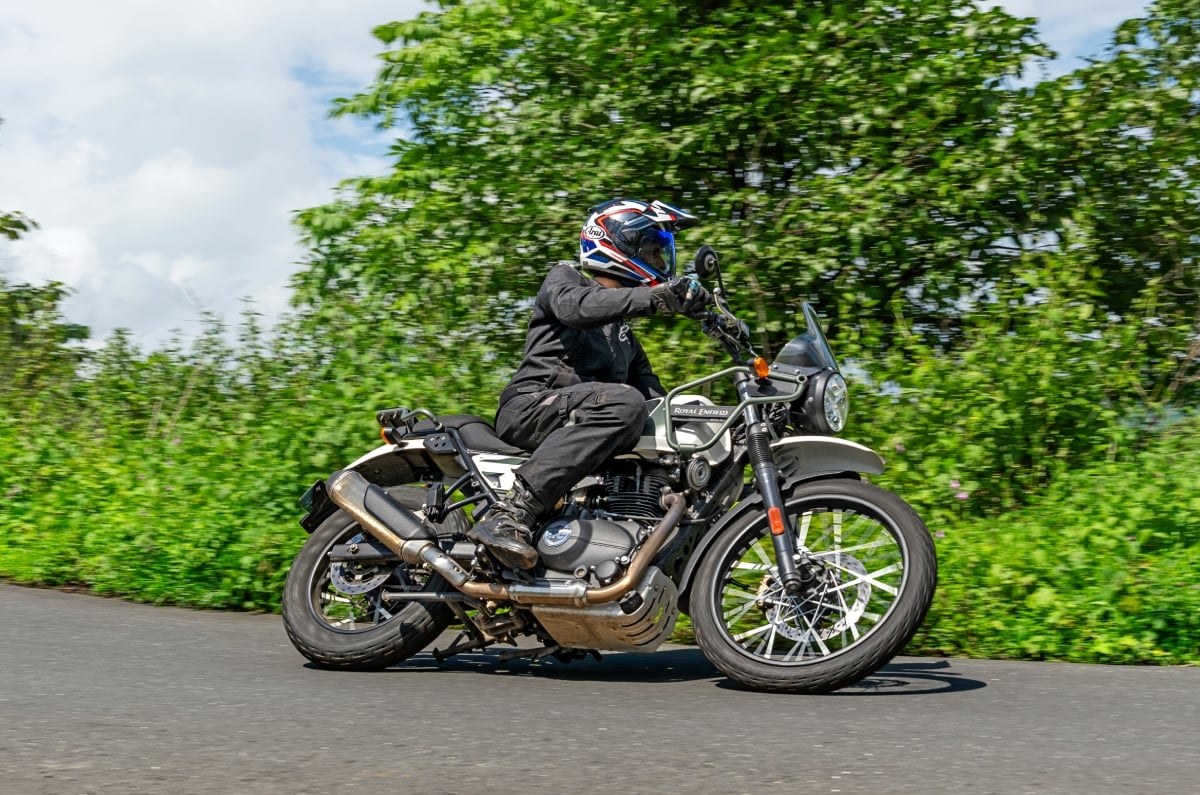
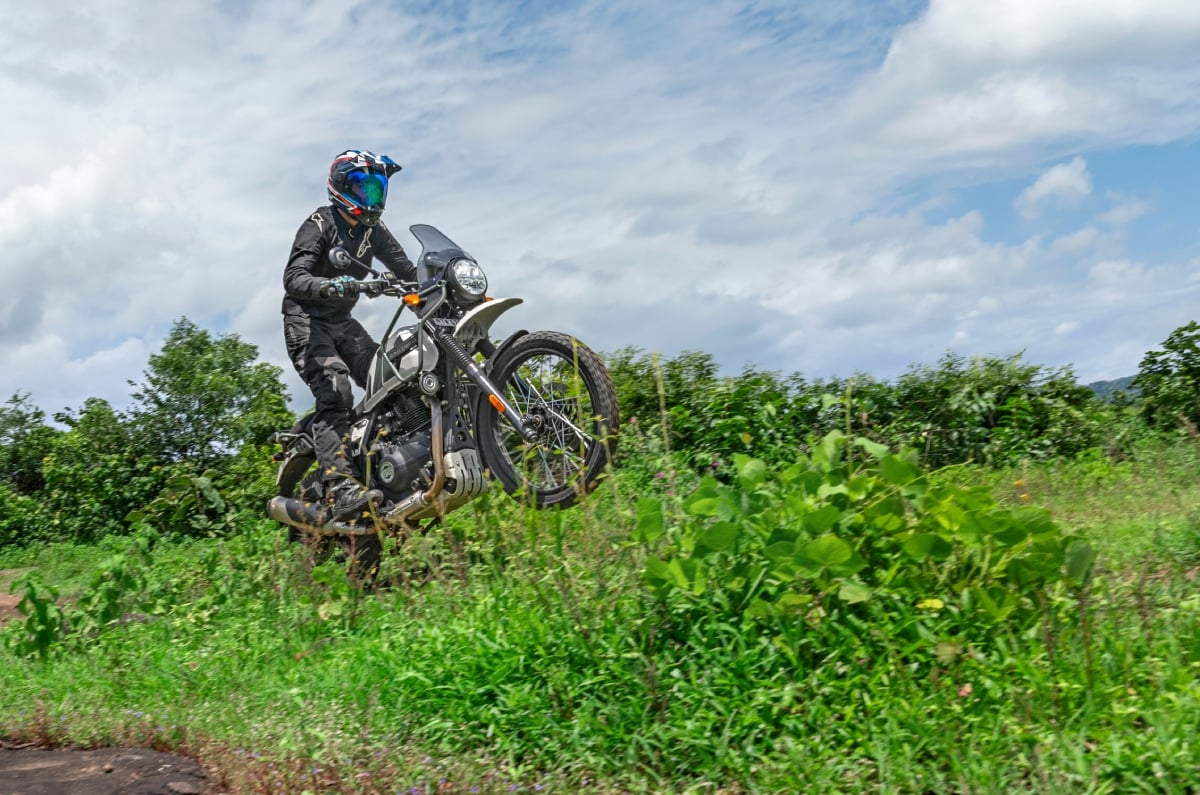
Rider going around a corner on the Royal Enfield Himalayan 440

A lot can change in three years, as it turns out. Back in October 2023 at the Himalayan 450 launch, I would have confidently told you that the older Himalayan’s 411 time was up and that the 450 served as a fitting replacement. Fast forward to 2026 and I will now willingly concede that there is very much a place for the new Himalayan 440 in this market.

What’s new and why is it back?

A tempting price as well as meaningful improvements

Price plays a big role behind this change in reasoning. 3 years ago, the entry level 450 was about Rs 40,000 more than the top 411 – a not insignificant, but justifiable increase . Today that gap has nearly doubled thanks to the agonizingly short-sighted new GST policy that levies a brutal 40 percent tax rate on motorcycles that use engines bigger than 350cc. RE is clearly feeling the heat from the new wave of sub 350cc competition because the reborn 440 is priced super aggressively. In fact, at 2.29 lakh ex-showroom Chennai, it costs exactly the same as the top 411 did in 2023, despite packing significant improvements.  Beyond the price, it’s those very improvements that have convinced me that this bike has earned its return in 2026.

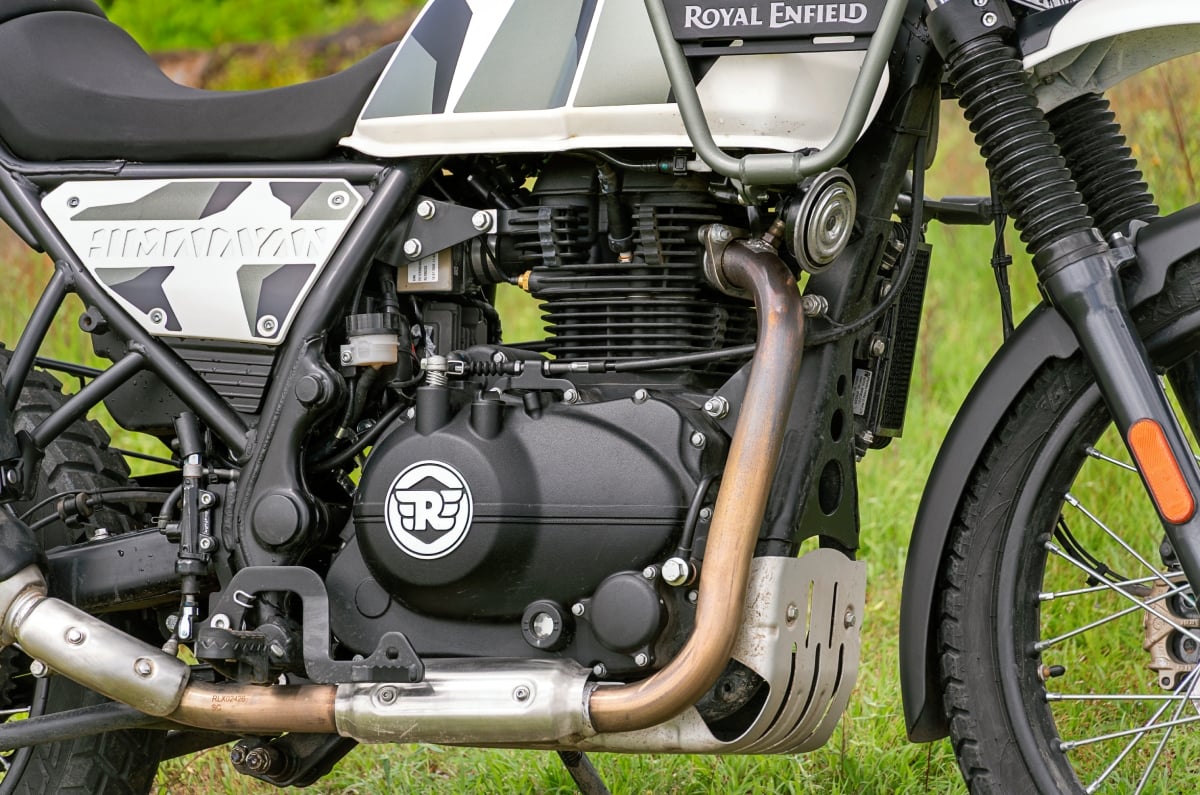
The Himalayan 440 is based on the Scram 440 and it brings in the same improvements we saw there last year. The oil-cooled single has been bumped up to 443cc and RE has also strived towards increasing the refinement. An added 6th gear and as well a lighter clutch lever increase the bike’s appeal on the highway and in the city. Work has also been put into improving braking performance and feel.  

Himalayan 440 Design and Style – 7/10

New colours, but familiar design 

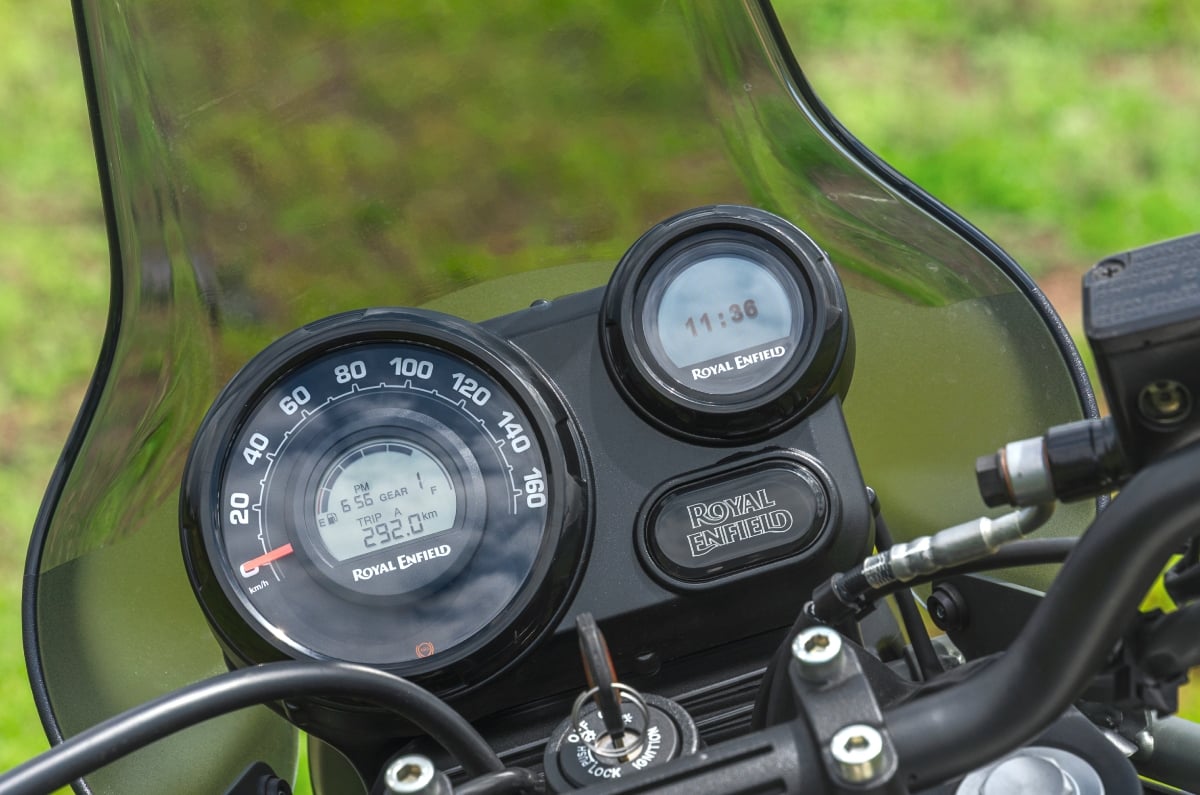
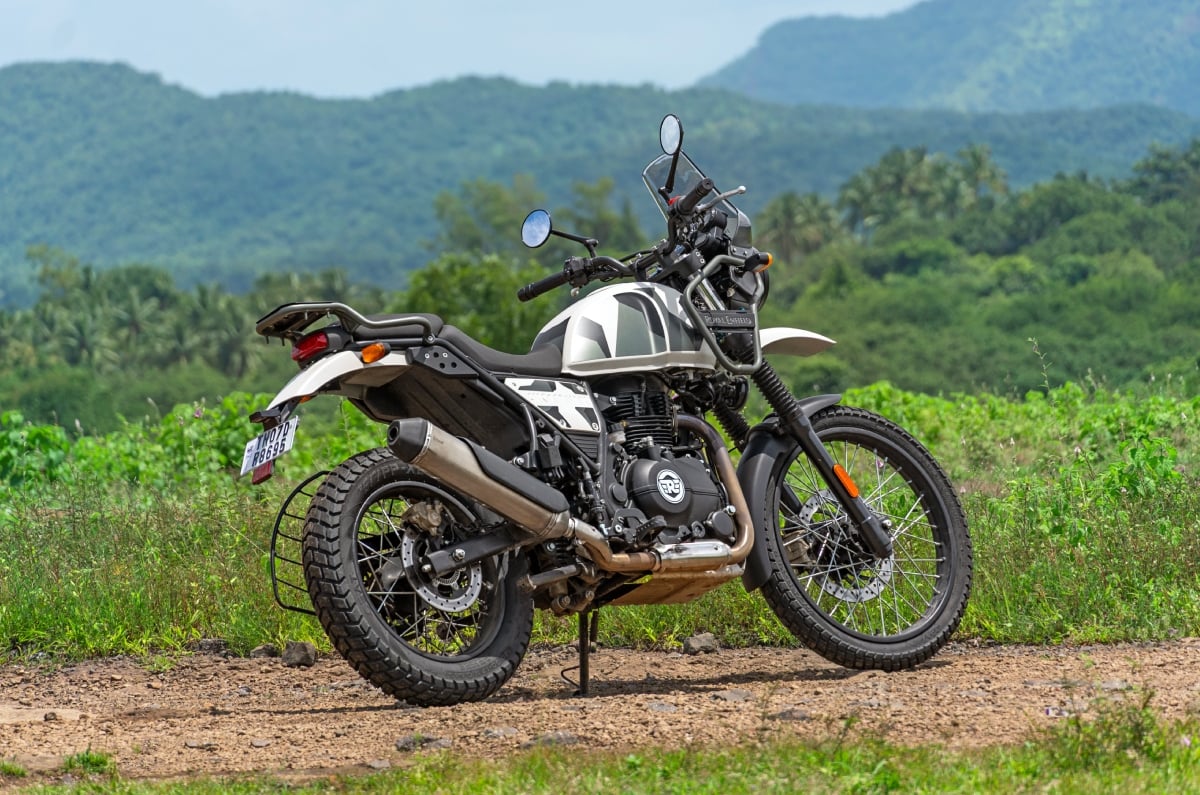
There are three new colour schemes as well, but beyond that, the bike retains its quirky oddball styling, although it does gain a new (average at best) LED headlamp and an updated instrument cluster based on the Scram 440.

Gets an updated instrument cluster based on the Scram 440.

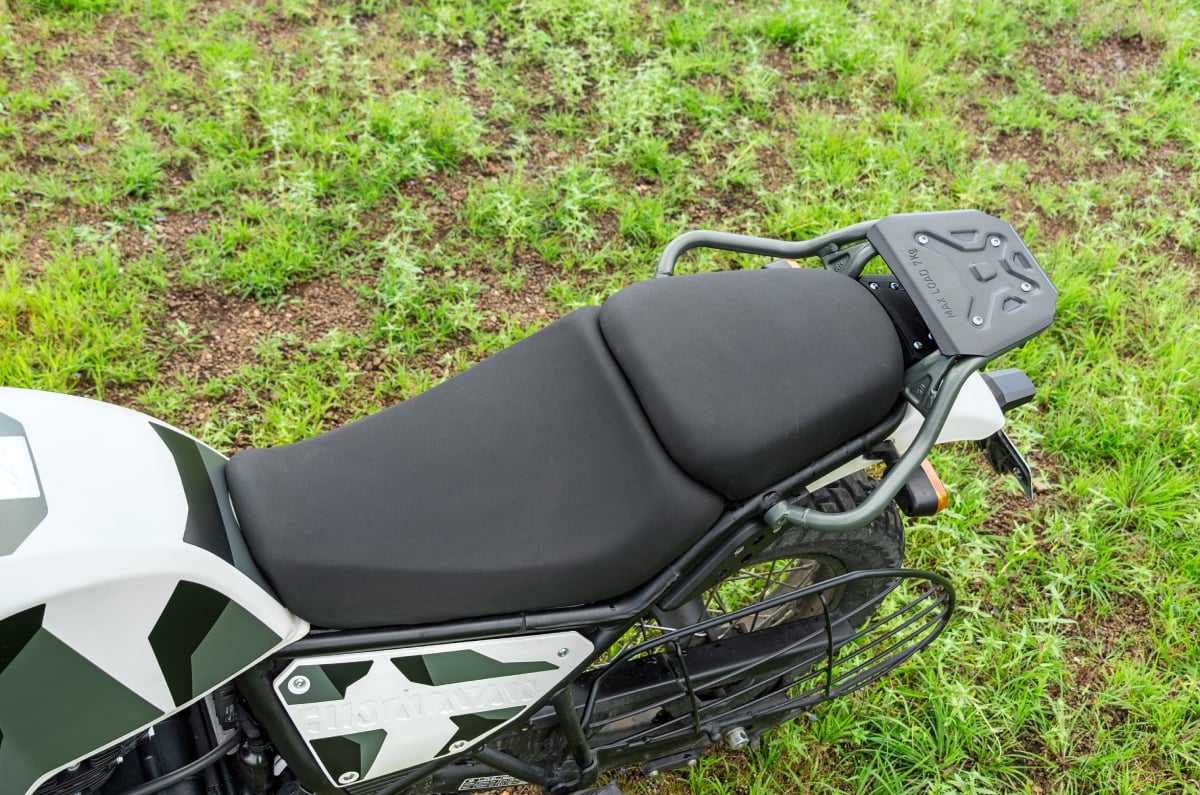
Hopping onto the Himalayan 440 after all these years is like being re-acquainted with an old friend. It more or less looks the same and also feels the same to sit on. The low 800mm seat height in particular is one of the biggest appeals with this bike and it brings back some of the short rider accessibility that was sacrificed by the Himalayan 450.

Himalayan 440 Engine and performance – 8/10

A smooth and characterful engine brimming with torque, but it’s not about speed

The engine retains that same relatively slow thump as its predecessor, but there is certainly an improvement in refinement. You can very much hear and feel the engine through the entire bike, but there are no intrusive vibrations until you build the revs quite high. Unfortunately, the Himalayan no longer has a rev counter so I can’t tell what rpm it starts to feel stressed at, but peak power comes in at just 6250rpm, so the number isn’t that high.

Nevertheless, with this improved vibration control as well as the added 6th gear, a 100kph cruise is now a smooth and stressfree affair. You can stretch that up to about 110kph before the engine’s discomfort starts to become apparent. Top speed is around an indicated 130kph, but this is not the bike’s happy place.

Our performance and efficiency test revealed numbers that you would expect and while this Himalayan is certainly not a fast bike, it’s not slow either. That being said, the 440 is an absolute joy when ridden at a sedate pace. The new-found smoothness, dialed-in throttle connection and oodles of torque make it one of the nicest bikes at this price point to calmly explore the great outdoors. Its 25.4hp power figure is on par with many rivals in the class, but the 34Nm of torque is what makes the difference to the riding experience – as well as the pleasing exhaust sound that occasionally includes loud pops on deceleration. Then again, its 199kg kerb weight is an equally big differentiator to the rest of the segment.

Himalayan 440 comfort, handling and off road – 7/10

Welcoming to short riders and decently capable, but feels its age

The chassis is pretty much unchanged and that means that the Himalayan 440 is very similar to the 411 in terms of dynamics. This is where you become aware that the 440 feels more like a refined version of an old motorcycle, rather than an all new one. It can carry a decent pace on or off road, but it doesn’t appreciate being ridden fast. The main stand starts to scrape at lean on road – or when you land it with some conviction off road – which serves as a reminder to ease off. Keep pushing and you’ll realise that the chassis doesn’t have the same composure as more modern rivals and the suspension certainly doesn’t come anywhere close to the lofty standards set by the 450.

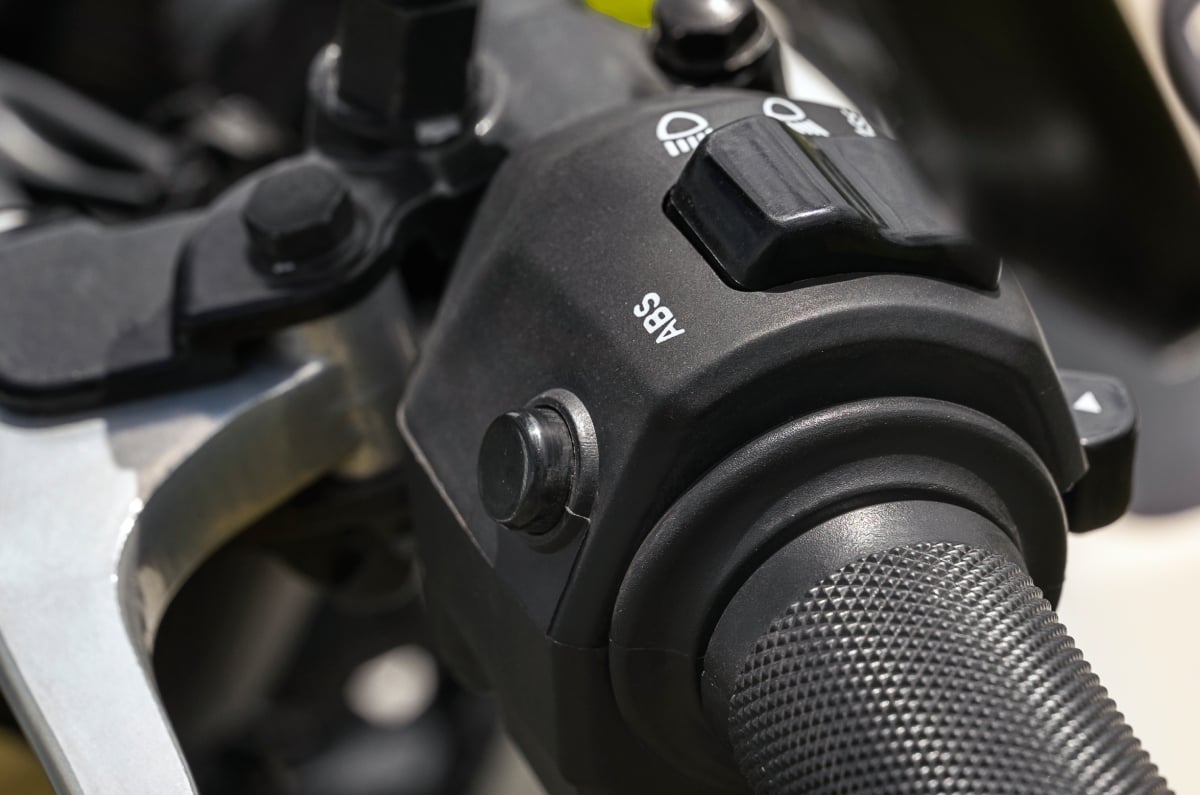
Over normal roads, suspension comfort is good. However, the 440 did not isolate me as well as I’d have liked from the incessantly bumpy concrete surfaces that now sadly snake across large parts of Maharashtra. After an 8-hour ride over mostly concrete roads at highway speeds, I returned home with a slightly sore back. If absolute comfort is a priority, bikes like the Xpulse 210 or Himalayan 450 are where you want to look. As for braking, it is by no means outstanding, but the 440 gets the job done and there is switchable ABS, which is nice.

Himalayan 440 Features and Safety – 7/10

It’s a simple bike but provides most of the essentials

The Himalayan 440 retains its original identity as a rugged, go anywhere, yet simple and basic motorcycle. In terms of features, you get a USB C port, RE’s Tripper navigation display and the aforementioned switchable ABS. Compared with most rivals, it does have fewer frills, but the only real ‘luxury’ that I miss is tubeless tyres. It would be nice to have the option of paying extra for them like you can on the Himalayan 450.

Himalayan 440 Price and verdict – 8/10

Well priced and a unique riding experience

Essentially, this is a back to basics motorcycle and it feels that way in person. If maximum bang for your buck is what you’re after, then the TVS Apache RTX will completely outdo the 440 in nearly all parameters for similar, if not less money. The same goes for speed and aggression – there are better options at this price point. However, if you want a gentle, well-mannered and characterful motorcycle that makes for a convincing travel partner at a reasonable price, then the new 440 definitely packs genuine appeal.

Audi’s big India comeback, Tata Sierra EV first drive: Autocar India August 2026

Autocar India August 2026

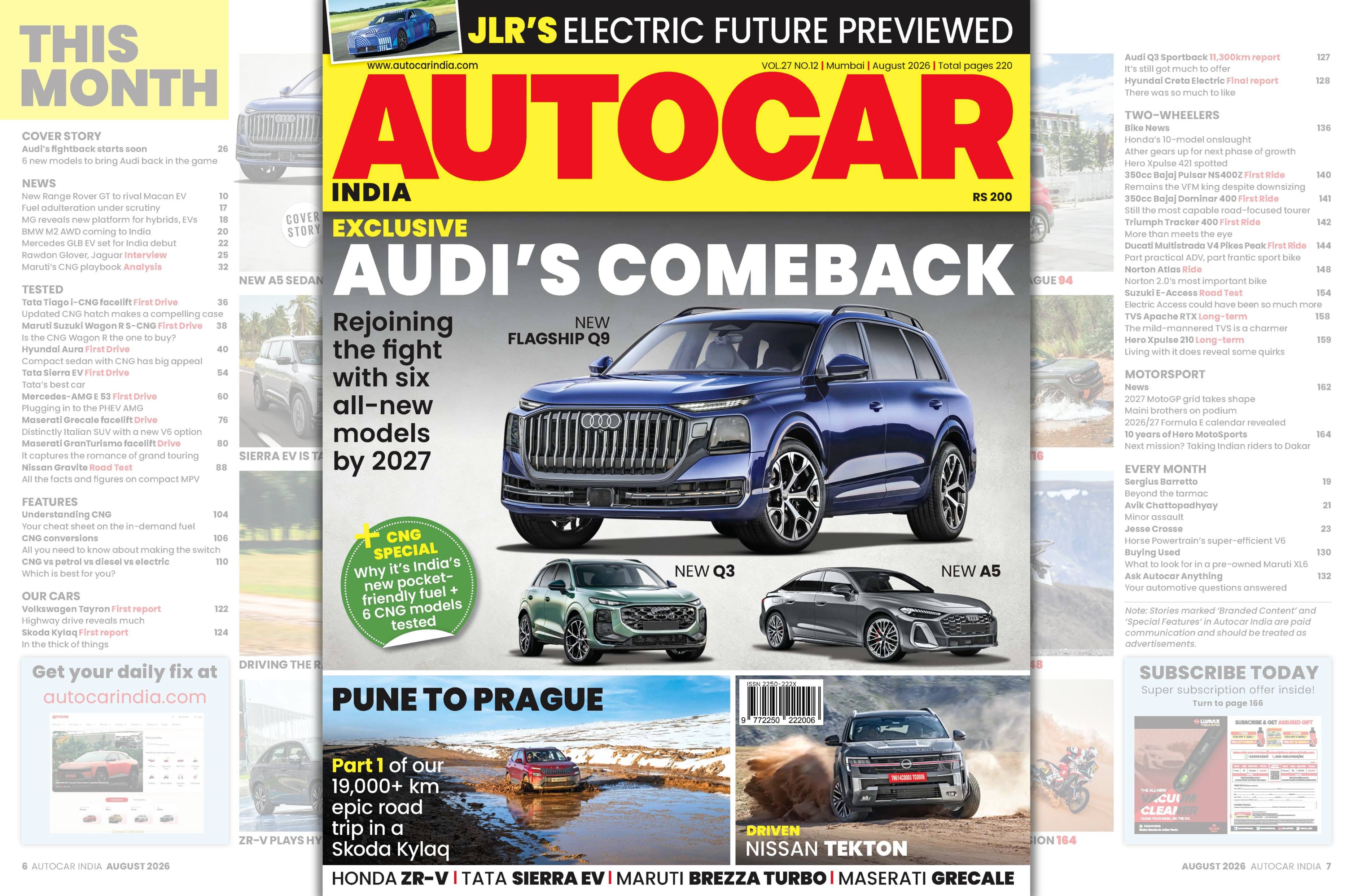
Our August 2026 issue has all the exclusive details of Audi India’s most ambitious product offensive in over a decade, with six all-new locally assembled models planned over the next 18 months. We also get behind the wheel of Jaguar’s camouflaged Type 01 prototype and drive the Range Rover Sport EV at Goodwood. Closer to home, we find out if the Tata Sierra EV lives up to its billing as the best Tata on sale, while the Nissan Tekton is put through a 700km-plus real-world test from Chandigarh to Leh. We also break down India’s new most popular fuel in our CNG special, with five models tested back-to-back. On two wheels, the new Norton Atlas is ridden in Iceland, while a special Ducati takes on some of Maharashtra’s tricky trails. All this while a Skoda Kylaq sets off on an epic 19,351km drive from Pune to Prague.

Audi’s Big Comeback: Cover Story

Audi was once India’s bestselling luxury brand. Today, it is a shadow of that. Now, with six all-new locally assembled models planned by end-2027, the four rings are back on the offensive. We have all the details and speak to Audi India head Balbir Singh Dhillon and Audi AG chairman Gernot Dollner about the upcoming cars. 

Jaguar Type 01: Drive

Jaguar has walked away from 90 years of combustion heritage, cancelled every existing model and started again with a blank sheet of paper. The Type 01 is the result – a five-metre all-electric grand tourer with a 1,000hp three-motor setup, 600km of range and a starting price north of Rs 3 crore. We drive a camouflaged prototype at JLR’s Gaydon test track to find out if the boldest bet in the car industry’s history has legs. 

Range Rover Sport EV: Drive

Under its familiar skin sits an 800V architecture, two Land Rover-developed 326hp motors and a 118.5kWh battery validated over 60,000 hours of testing. The electric Range Rover Sport arrives in India around March 2027 and could set a new luxury benchmark for the brand. We drive a prototype at Goodwood to find out if it lives up to that promise. 

Tata Sierra EV: First Drive

The best Tata in years gets the brand’s smoothest powertrain yet. The Sierra EV comes in rear-wheel-drive and all-wheel-drive forms, with the AWD variant making a class-leading 306hp and bringing the first AWD option in this segment. We drive all variants, including a proper off-road test, to see if it lives up to the hype. 

Honda ZR-V: Drive

Honda’s first hybrid SUV in India arrives as a full import from Japan, packing a 184hp strong-hybrid powertrain and a claimed 22.8kpl. We get a brief first taste at the Buddh International Circuit to find out if it delivers on its promise.

Mercedes-AMG E 53 Hybrid 4Matic+: First Drive

The new E 53 pairs a 3.0-litre straight-six with a 28.6kWh battery for 585hp and up to 100km of electric range. It is a PHEV AMG that also does daily commutes without a drop of fuel. But has electrification enhanced the AMG experience, or diluted it? 

CNG Special: Features

CNG now accounts for nearly 20 percent of India’s passenger car market. We explain everything you need to know about the fuel – what it is, how it works and whether an aftermarket conversion makes sense. We also road test five CNG models: the Tata Tiago iCNG, Maruti Wagon R S-CNG, Hyundai Aura CNG, Maruti Brezza Turbo (petrol) and Maruti Victoris S-CNG.

Tata Nexon: Petrol vs Diesel vs Electric vs CNG

The Nexon is one of the few cars in India offered with four distinct powertrain options. We test every variant – turbo-petrol, diesel, CNG and electric – with real-world performance and efficiency figures to find the sweet spot of the range. The result might just surprise you.

Skoda Kylaq: Pune to Prague, Part 1

A made-in-India Skoda Kylaq sets off on a near-20,000km adventure from its birthplace at Skoda’s Chakan plant to Skoda Auto’s headquarters in Prague. Part 1 covers India, Nepal, Tibet and China – including a detour to Mount Everest Base Camp.

Norton Atlas: Ride

TVS’s second Norton – and the brand’s most important – debuts in Iceland. The Atlas is a 585cc parallel-twin adventure tourer with 70hp, a full electronics suite and 19-inch front wheel. We ride 200km of sweeping mountain roads and gravel trails to find out if it can justify the hype and, crucially, a competitive price tag.

Ducati Multistrada V4 Pikes Peak: First Ride

The most focused Multistrada money can buy blurs the line between a practical ADV and an out-and-out sport bike. With Ohlins semi-active suspension, a single-sided swingarm and a race-mode, it promises to be two bikes in one. We find out if the price premium is worth it.

Suzuki E-Access: Road Test

Suzuki’s first electric scooter carries a big name and an even bigger price tag. It gets some things right, but in a segment that rewards value, performance and range, does the Access badge alone justify the Rs 1.92 lakh asking price?

Autocar India August 2026 Issue

Our August 2026 issue has all the exclusive details of Audi India’s most ambitious product offensive in over a decade, with six all-new locally assembled models planned over the next 18 months. We also get behind the wheel of Jaguar’s camouflaged Type 01 prototype and drive the Range Rover Sport EV at Goodwood. Closer to home, we find out if the Tata Sierra EV lives up to its billing as the best Tata on sale, while the Nissan Tekton is put through a 700km-plus real-world test from Chandigarh to Leh. We also break down India’s new most popular fuel in our CNG special, with five models tested back-to-back. On two wheels, the new Norton Atlas is ridden in Iceland, while a special Ducati takes on some of Maharashtra’s tricky trails . All this while a Skoda Kylaq sets off on an epic 19,351km drive from Pune to Prague.

Audi’s Big Comeback: Cover Story

Audi was once India’s bestselling luxury brand. Today, it is a shadow of that. Now, with six all-new locally assembled models planned by end-2027, the four rings are back on the offensive. We have all the details, and speak to Audi India head Balbir Singh Dhillon and Audi AG chairman Gernot Döllner about the upcoming cars.

Jaguar Type 01: Drive

Jaguar has walked away from 90 years of combustion heritage, cancelled every existing model and started again with a blank sheet of paper. The Type 01 is the result – a five-metre all-electric grand tourer with a 1,000hp three-motor setup, 600km of range and a starting price north of Rs 3 crore. We drive a camouflaged prototype at JLR’s Gaydon test track to find out if the boldest bet in the car industry’s history has legs.

Range Rover Sport EV: Drive

Under its familiar skin sits an 800V architecture, two Land Rover-developed 326hp motors and a 118.5kWh battery validated over 60,000 hours of testing. The electric Range Rover Sport arrives in India around March 2027 and could set a new luxury benchmark for the brand. We drive a prototype at Goodwood to find out if it lives up to that promise.

Tata Sierra EV: First Drive

The best Tata in years gets the brand’s smoothest powertrain yet. The Sierra EV comes in rear-wheel and all-wheel-drive forms, with the AWD variant making a class-leading 306hp and bringing the first AWD option in this segment. We drive all variants, including a proper off-road test, to see if it lives up to the hype.

Honda ZR-V: Drive

Honda’s first hybrid SUV in India arrives as a full import from Japan, packing a 184hp strong-hybrid powertrain and a claimed 22.8kpl. We get a brief first taste at the Buddh International Circuit to find out if it delivers on its promise.

Mercedes-AMG E 53 Hybrid 4Matic+: First Drive

The new E 53 pairs a 3.0-litre straight-six with a 28.6kWh battery for 585hp and up to 100km of electric range. It is a PHEV AMG that also does daily commutes without a drop of fuel. But has electrification enhanced the AMG experience, or diluted it?

CNG Special: Features

CNG now accounts for nearly 20 percent of India’s passenger car market. We explain everything you need to know about the fuel – what it is, how it works and whether an aftermarket conversion makes sense. We also road test five CNG models: the Tata Tiago iCNG, Maruti Wagon R S-CNG, Hyundai Aura CNG, Maruti Brezza Turbo (petrol) and Maruti Victoris S-CNG.

Tata Nexon: Petrol vs Diesel vs Electric vs CNG

The Nexon is one of the few cars in India offered with four distinct powertrain options. We test every variant – turbo-petrol, diesel, CNG and electric – with real-world performance and efficiency figures to find the sweet spot of the range. The result might just surprise you.

Skoda Kylaq: Pune to Prague, Part 1

A made-in-India Skoda Kylaq sets off on a near-20,000km adventure from its birthplace at Skoda’s Chakan plant to Skoda Auto’s headquarters in Prague. Part 1 covers India, Nepal, Tibet and China – including a detour to Mount Everest Base Camp.

Norton Atlas: Ride

TVS’s second Norton – and the brand’s most important – debuts in Iceland. The Atlas is a 585cc parallel-twin adventure tourer with 70hp, a full electronics suite and 19-inch front wheel. We ride 200km of sweeping mountain roads and gravel trails to find out if it can justify the hype and, crucially, a competitive price tag.

Ducati Multistrada V4 Pikes Peak: First Ride

The most focused Multistrada money can buy blurs the line between a practical ADV and an out-and-out sport bike. With Öhlins semi-active suspension, a single-sided swingarm and a race-mode, it promises to be two bikes in one. We find out if the price premium is worth it.

Suzuki E-Access: Road Test

Suzuki’s first electric scooter carries a big name and an even bigger price tag. It gets some things right, but in a segment that rewards value, performance and range, does the Access badge alone justify the Rs 1.92 lakh asking price?

3 reasons to buy the new Toyota Hilux, 2 reasons not to

Toyota Hilux 2026

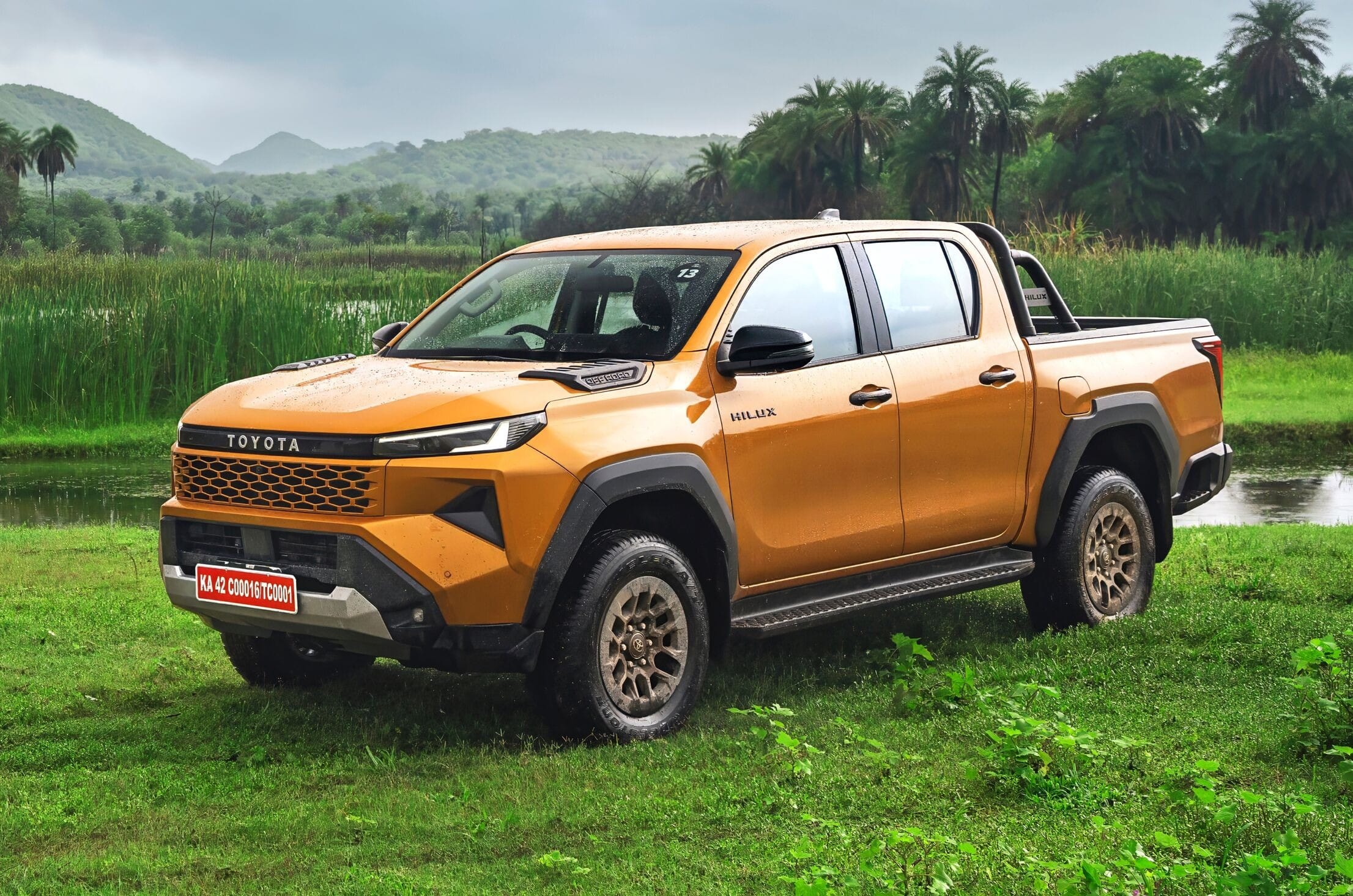
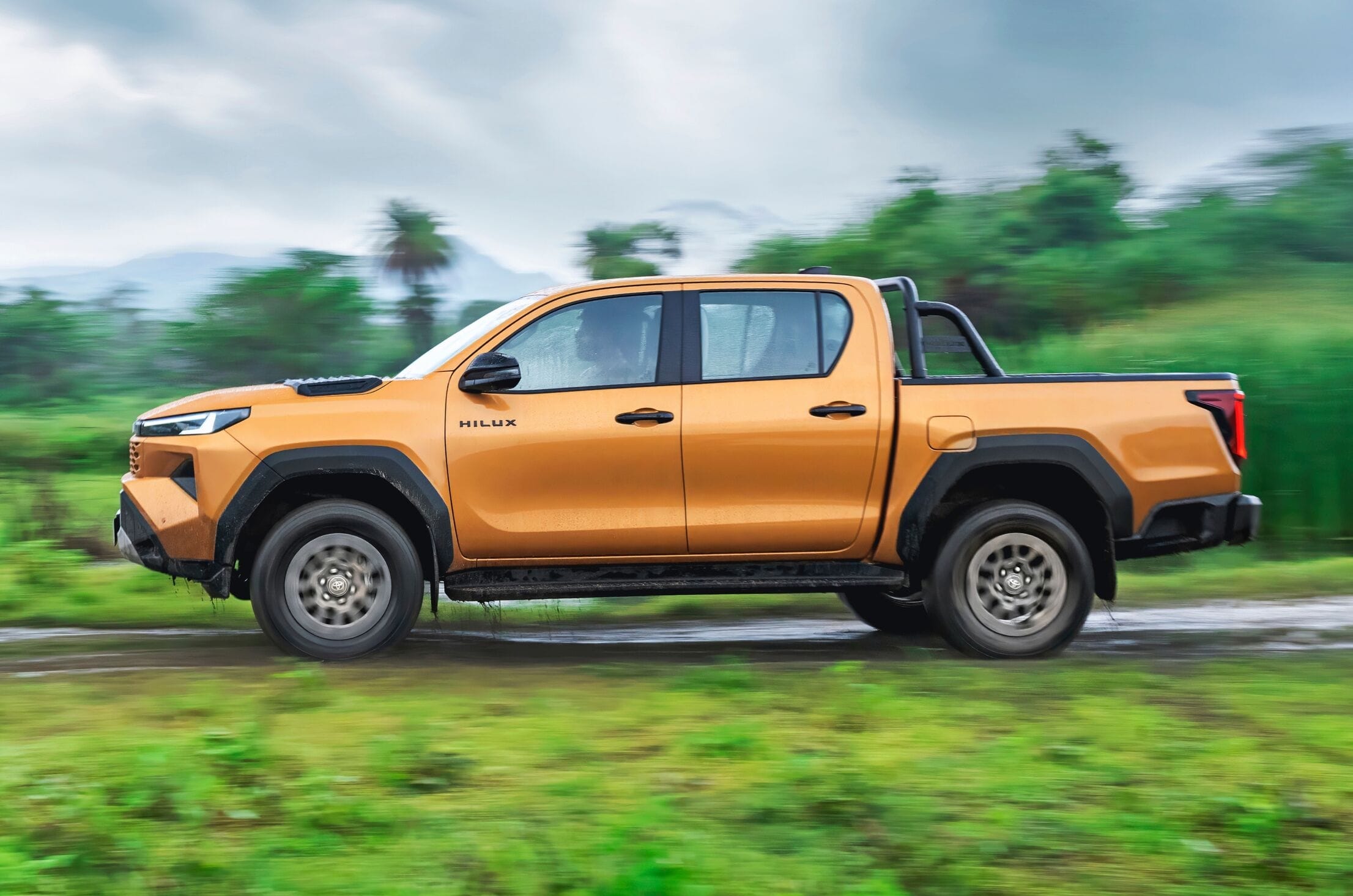
The ninth-gen Toyota Hilux has gone on sale in India at a starting price of Rs 31.99 lakh (ex-showroom). It uses the same body-on-frame IMV platform as its predecessor, but features major styling revisions inside and out. Now that we’ve reviewed the new Hilux, here are three reasons why you should bring one home, and two reasons why you may want to think twice.

Pros

Punchy engine

Retains prior Hilux’s 204hp 2.8-litre diesel mill

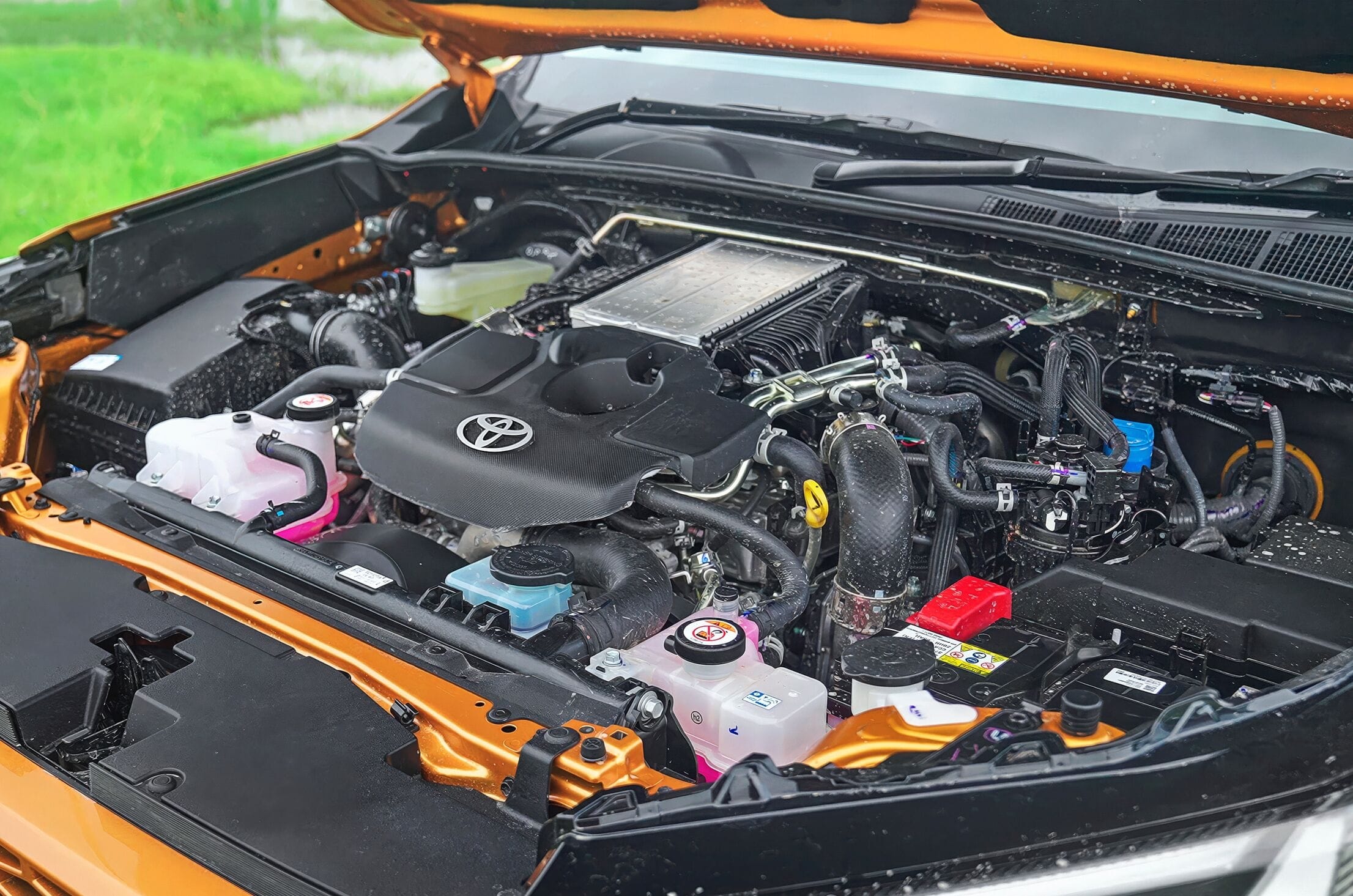
Under the bonnet, the ninth-gen Hilux carries forward its predecessor’s 2.8-litre 4-cylinder diesel engine, outputting an identical 204hp and 500Nm. This engine is mated solely to a 6-speed torque converter automatic transmission, and we found this combination to work very well in the new Hilux.

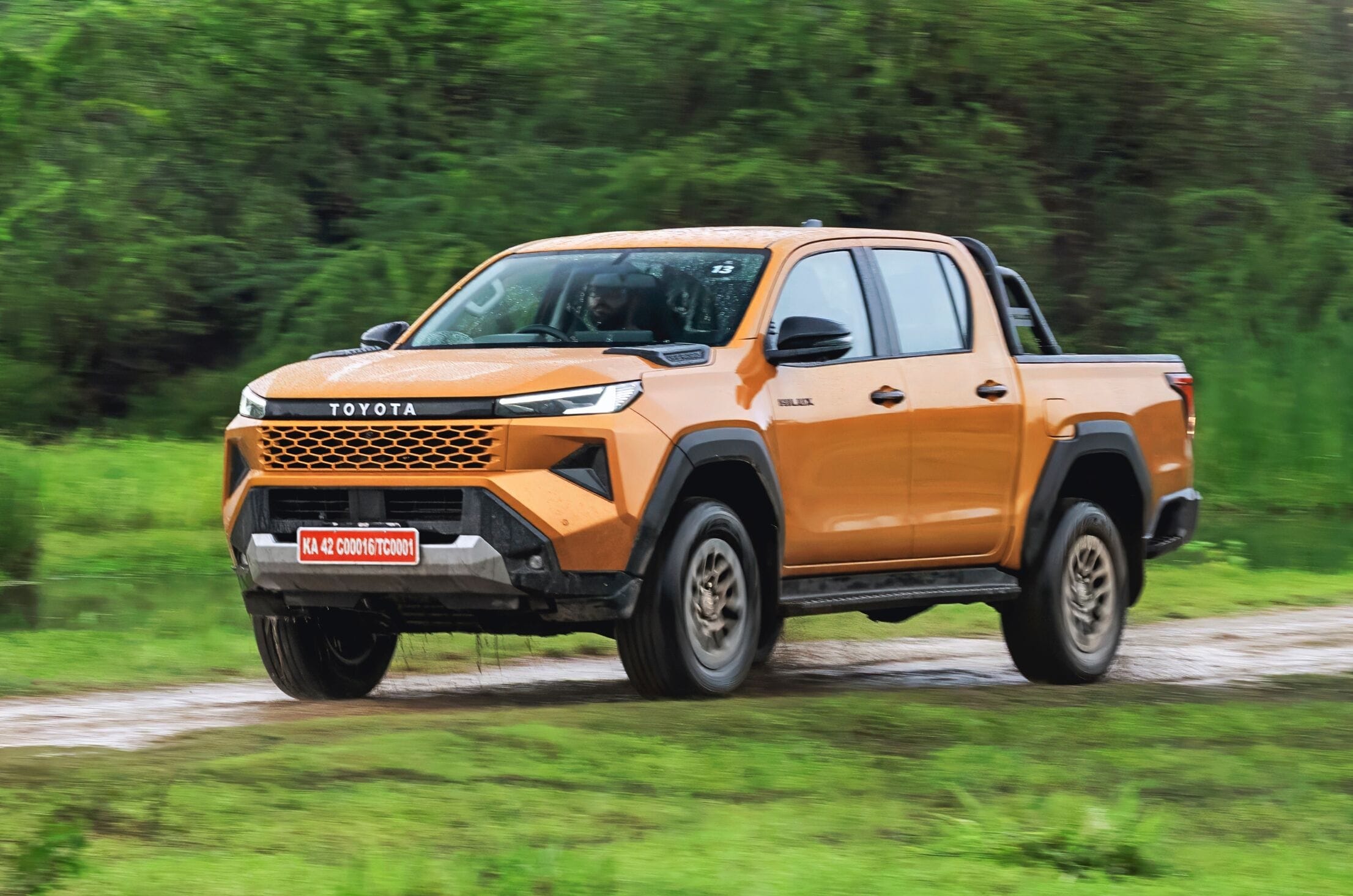
Performance feels strong, especially in the lower bounds of the rev range, and it’s easy to keep momentum, even when driving off-road. The gearbox shifts smoothly and quickly, regardless of whether you leave it to its own devices or feed inputs via the gear lever.

Thanks to the stiffened chassis and improved insulation, refinement is excellent at normal driving speeds, with little to no vibrations felt in the cabin. However, the engine tends to get vocal at higher revs.

Excellent off-road capability

Can take any off-road trail you point it towards

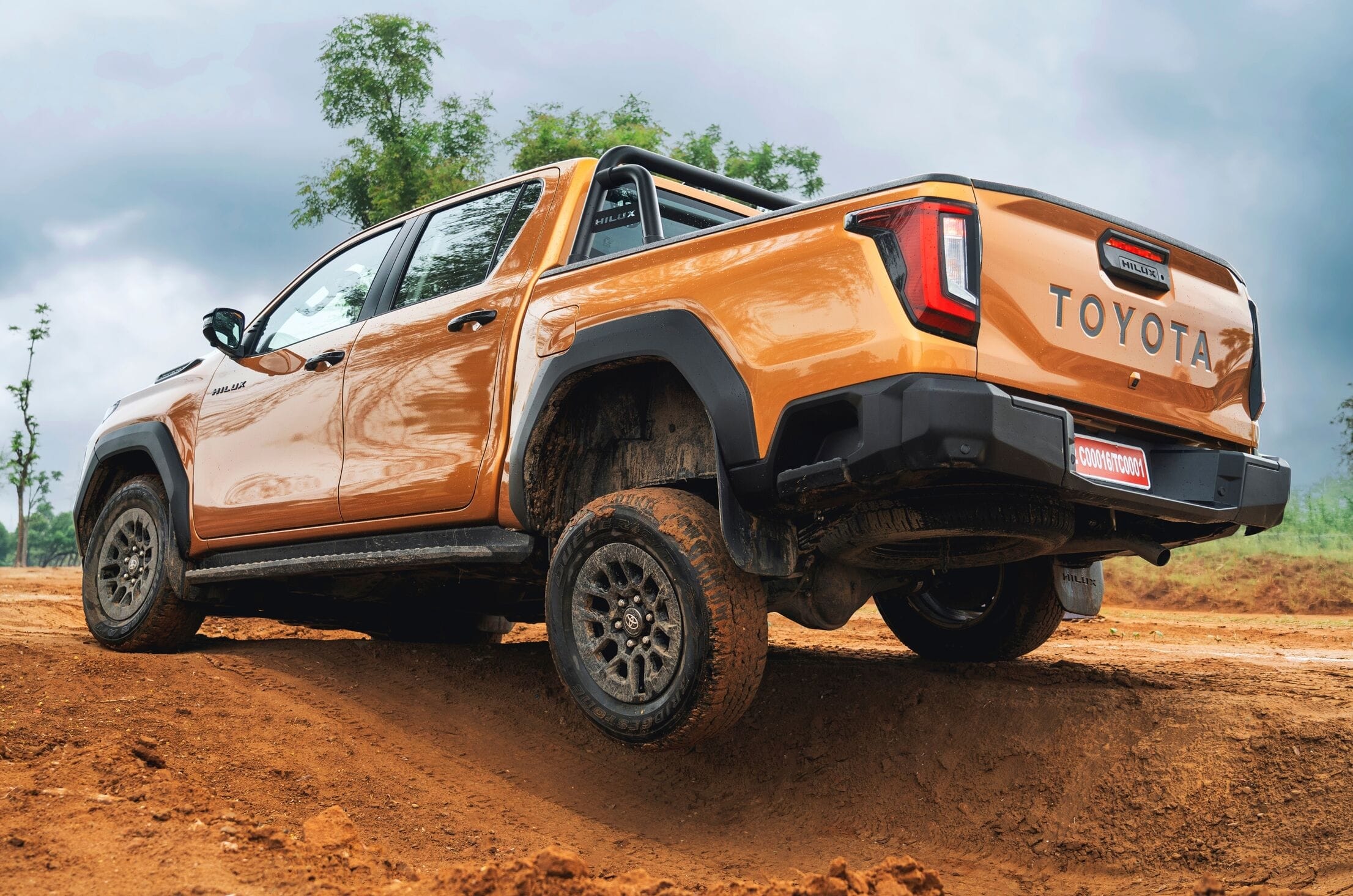
Off-road prowess is a core tenet of the Hilux, and the ninth-gen model does not disappoint on this front. The suspension setup comprises independent double wishbones and coil springs up front, and a rigid axle with leaf springs at the rear. 4×2 is offered in the base variant only, with all other Hilux variants packing 4×4.

Large rocks, deep potholes, and sharp-edged sections are gobbled up by the Hilux, and it felt confident and sure-footed through a forest trail littered with loose rocks. The Hilux handled most of the trail we drove on in 4×2 mode, and the more extreme bits that required 4×4 were also a cakewalk for the pickup truck.

Lots of cargo space

Estimated payload capacity of 470kg

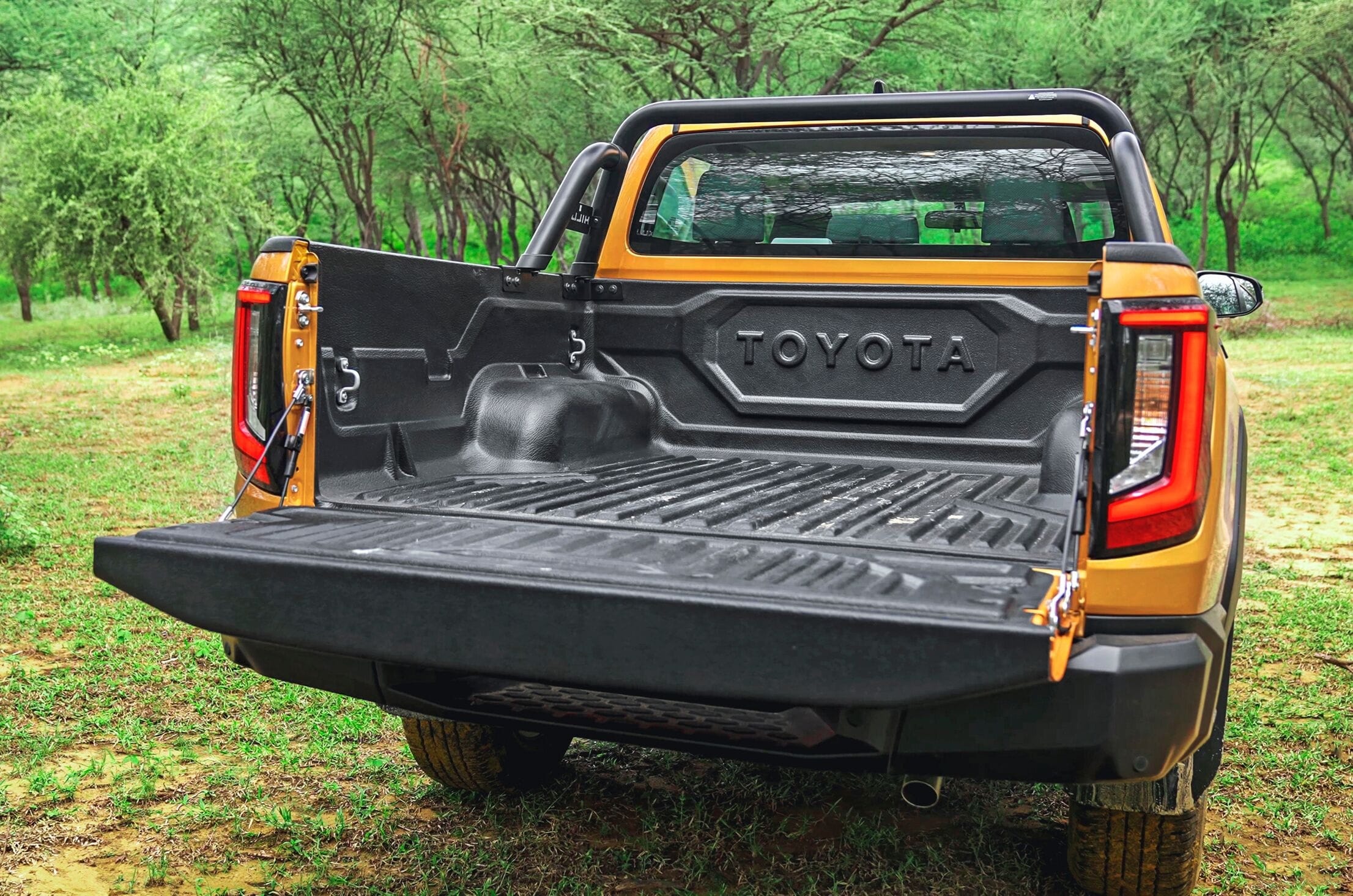
Being a pickup truck, the Hilux obviously has a large open bed behind the passenger compartment. Though Toyota has yet to disclose the bed’s payload capacity, we expect it to match the prior Hilux’s 470kg figure. The bed is big enough to stow camping gear and a decent amount of luggage. Integrated steps on the sides and rear make loading and unloading easier too.

Cons

Misses out on numerous features

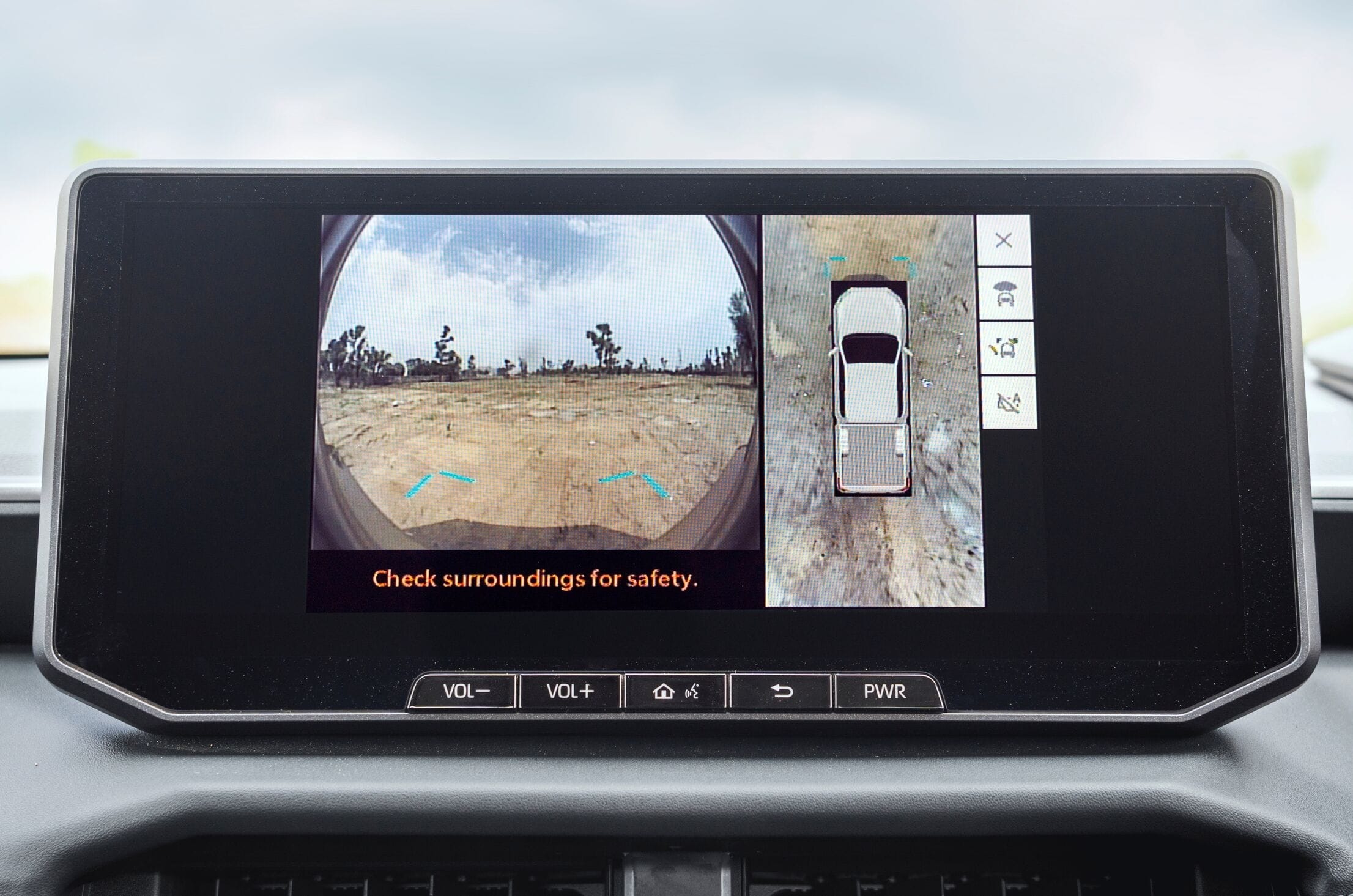
360-degree camera’s image quality is also poor

The India-spec ninth-gen Hilux is not very well-specced. Even in the top-spec Hilux VX 4×4 AT variant, which costs Rs 36.69 lakh (ex-showroom), comfort and convenience features like automatic climate control, powered and ventilated front seats, a rear defogger, ADAS, leatherette upholstery, and the like are missing.

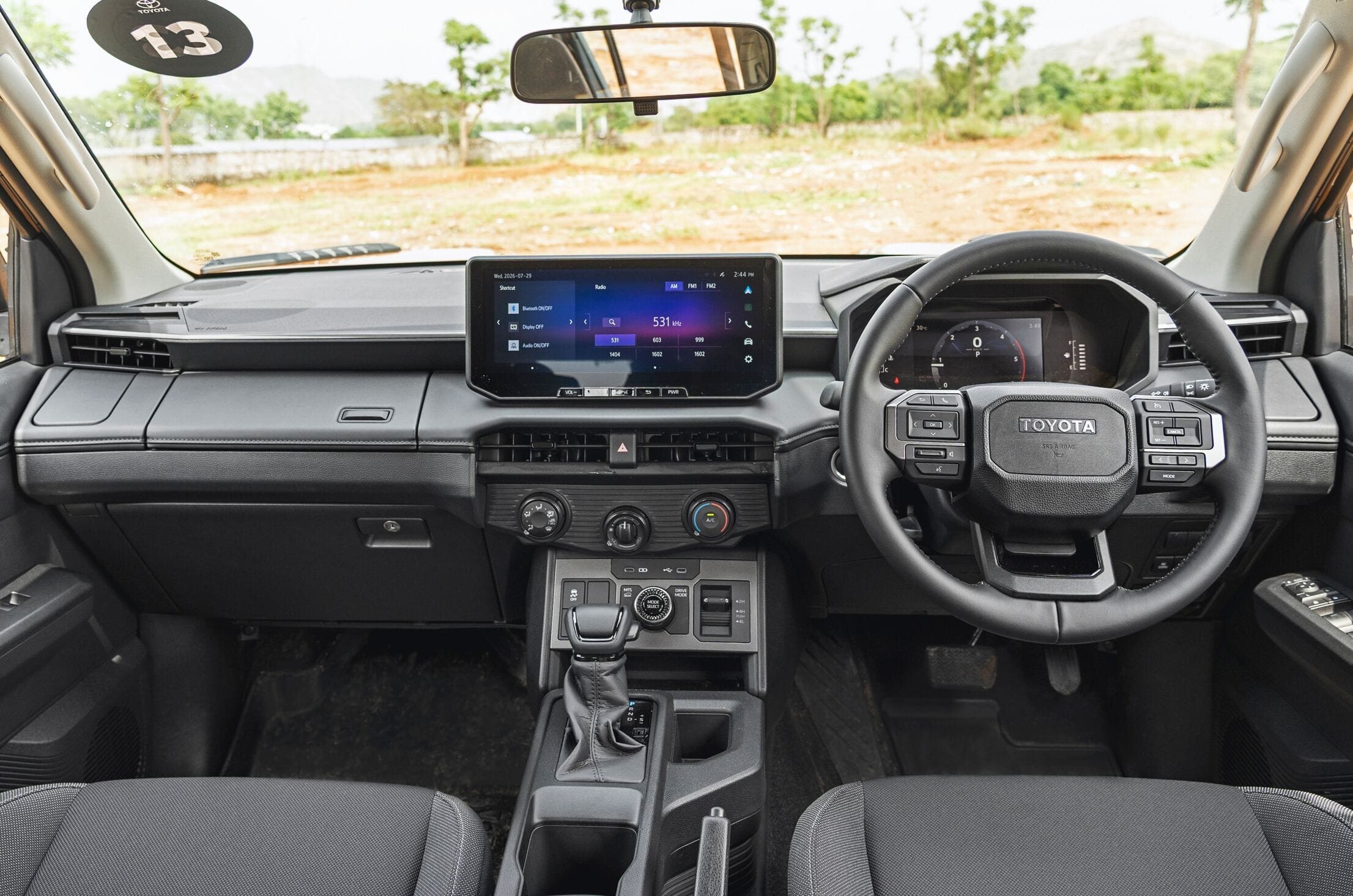
While you do get feature upgrades like a 12.3-inch infotainment touchscreen and a 360-degree camera in the new Hilux, the former’s software interface looks quite dated and the latter’s resolution is poor.

Bouncy low-speed ride

Tends to skip over road imperfections when bed is empty

Though the Hilux rides deftly on broken roads, off-road trails, and at high speeds, it feels unsettled and skittish over smaller ruts and bumps. This is a consequence of the rigid rear axle, which tends to skip over surface undulations, especially when the bed is empty. Adding weight to the bed will improve the Hilux’s low-speed ride to an extent, but not enough to be comparable to an equivalent SUV. It also doesn’t help that the electric power steering is hefty at low speeds, and the Hilux’s 5.3-metre length makes low-speed manoeuvres feel daunting.

सूटकेस बाद में पैक करें, पहले इस तरह करें स्किन को वेकेशन के लिए तैयार!

छुट्टियों (vacation) पर जाने का उत्साह जितना पैकिंग (packing) का होता है, उतना ही खुद को तैयार करने का भी होता है। अगर ट्रिप से पहले बालों (hair), त्वचा (skin) और शरीर (body) की थोड़ी-सी देखभाल कर ली जाए, तो सफर (traveling) के दौरान बार-बार तैयार होने की जरूरत नहीं पड़ती। इससे आप अपना ज्यादा समय घूमने-फिरने और यादगार पल बिताने में लगा सकते हैं:

Waxing and Body Polish (वैक्सिंग और बॉडी पॉलिश – सॉफ्ट स्किन)

Woman Relaxing Beach Sitting Sunbed — Stock Photo © gbh007 #547183114

अगर छुट्टियों में बीच (beach), पूल (beach) या स्लीवलेस आउटफिट पहनने का प्लान है, तो ट्रिप से कुछ दिन पहले प्रोफेशनल वैक्सिंग (professional wax) करवा लेना अच्छा ऑप्शन हो सकता है। इससे बार-बार शेविंग (shaving) करने की जरूरत नहीं पड़ती और स्किन कई दिनों तक मुलायम बनी रहती है। इसके साथ बॉडी पॉलिश (body polish) कराने से डेड स्किन सेल्स हट जाते हैं, स्किन टेक्सचर बेहतर होता है और स्किन पहले से ज्यादा साफ, स्मूद और ग्लोइंग नजर आती है।

Hydrating Facial (हाइड्रेटिंग फेशियल – नेचुरल ग्लो)

यात्रा से पहले ऐसा फेशियल (facial) चुनें जो स्किन को हाइड्रेट करे, न कि बहुत ज्यादा हार्श ट्रीटमेंट दे। हाइड्राफेशियल जैसे ट्रीटमेंट स्किन की गहराई से सफाई करते हैं, हल्का एक्सफोलिएशन (exfoliation) करते हैं, पोर्स साफ करते हैं और स्किन को भरपूर नमी देते हैं। इससे चेहरा फ्रेश, हेल्दी और नेचुरल ग्लो के साथ नजर आता है। ट्रिप के दौरान भी स्किन को सिर्फ सनस्क्रीन (sunscreen) और हल्के मेकअप की जरूरत पड़ती है।

Lash Lift and Tint (लैश लिफ्ट और टिंट)

Girl enjoying beach vacation Images - Free Download on Magnific (formerly Freepik)

आप छुट्टियों (vacation) में बार-बार मस्कारा (mascara) लगाने से बचना चाहती हैं, तो लैश लिफ्ट और टिंट अच्छा ऑप्शन हो सकता है। इससे पलकों को बिना मेकअप के भी घना और कर्ल्ड लुक (urled look) मिलता है। पूल या बारिश में भी मस्कारा फैलने की चिंता नहीं रहती और सुबह तैयार होने में भी कम समय लगता है। फोटो में आंखें ज्यादा अट्रैक्टिव नजर आती हैं।

Hair Treatment (हेयर ट्रीटमेंट – फ्रिज-फ्री हेयर)

Hair Blowing In Car-Bilder: Stock-Fotos & -Videos. | Adobe Stock

ट्रैवल के दौरान धूप, नमी और बदलते मौसम का असर सबसे पहले बालों पर दिखता है। ऐसे में ट्रिप से पहले प्रोटीन बेस्ड (protein-based) या डीप कंडीशनिंग हेयर ट्रीटमेंट (deep-conditioning hair treatment) कराने से बाल मजबूत, मुलायम और चमकदार बने रहते हैं। इससे फ्रिज कम होता है, बाल आसानी से सेट हो जाते हैं और हर दिन स्टाइलिंग के लिए ज्यादा समय नहीं देना पड़ता।

Gel Manicure and Spa Pedicure (जेल मैनीक्योर और स्पा पेडीक्योर)

घूमने-फिरने, सामान उठाने और लगातार ट्रैवल करने के दौरान रेगुलर नेल पॉलिश (nail polish) जल्दी खराब हो सकती है। इसलिए ट्रिप से पहले जेल मैनीक्योर (Gel Manicure ) करवाना बेहतर रहता है, क्योंकि यह कई हफ्तों तक टिक सकता है। वहीं स्पा पेडीक्योर (Spa Pedicure) पैरों की डेड स्किन हटाकर एड़ियों को मुलायम बनाता है, जिससे सैंडल या फ्लिप-फ्लॉप पहनने पर पैर भी खूबसूरत दिखते हैं।

Eyebrow and Upper Lip Grooming (आईब्रो और अपर लिप ग्रूमिंग)

Šminka na plaži – Šminkerka

छुट्टियों के दौरान बार-बार पार्लर (salon) ढूंढने की जरूरत न पड़े, इसके लिए ट्रिप से पहले ही आईब्रो शेप और अपर लिप ग्रूमिंग करवा लेना अच्छा रहता है। इससे चेहरा साफ-सुथरा दिखता है और बिना ज्यादा मेकअप (makeup) के भी लुक फ्रेश नजर आता है।

Lip and Body Hydration (लिप और बॉडी हाइड्रेशन)

Le Voyage : Une Porte Ouverte sur le Monde et sur Soi-Même - Oct Association

फ्लाइट और मौसम में बदलाव की वजह से लिप और स्किन जल्दी ड्राई हो सकते हैं। इसलिए ट्रिप से पहले लिप स्क्रब, लिप मास्क और अच्छी बॉडी मॉइस्चराइजिंग (body moisturizer) जरूर करें। इससे होंठ मुलायम रहते हैं और स्किन लंबे समय तक हाइड्रेटेड व हेल्दी नजर आती है।

यह छोटी-सी तैयारी पूरे ट्रिप के दौरान आपके लुक को फ्रेश बनाए रखने में मदद करती है।

Mumbai Building Collapse: हाय रि किस्मत! अगले दिन घर छोड़ने वाला था परिवार, उससे पहले ही भरभराकर गिर गई बिल्डिंग

मुंबई के मानखुर्द इलाके से एक दिल दहला देने वाले घटना घटी है। मानखुर्द इलाके में शनिवार रात एक गैर-कानूनी चार मंजिला इमारत अचानक गिरकर पास बने टिन की छत वाले घर पर आ गिरी। इस हादसे में कई लोगों की जान चली गई। पड़ोसियों के मुताबिक, चार बच्चों की मां अख्तर जहां और उनके पति मोइनुद्दीन वाजिद अली शाह ने रविवार को घर छोड़ने का फैसला किया था। लगातार बारिश के कारण उस बिल्डिंग में दरारें पड़ गई थीं। इसी वजह से दोनों ने रविवार को घर छोड़कर दूसरी जगह जाने की योजना बनाई थी। लेकिन वह समय पर घर खाली नहीं कर पाए। वहीं इस हादसे में अबतक कुल 6 लोगों की मौत हुई है।

एक पड़ोसी ने बताया, “बारिश के कारण लोगों को डर था कि बिल्डिंग कभी भी गिर सकती है, इसलिए निवासी उसे खाली करने लगे थे। अख्तर जहां भी दूसरी जगह जाने के लिए अपना सामान पैक कर रही थीं, तभी यह दर्दनाक हादसा हो गया।” महाराष्ट्र के मुख्यमंत्री देवेंद्र फडणवीस ने हादसे में जान गंवाने वाले लोगों के परिजनों को 5-5 लाख रुपये की आर्थिक सहायता देने की घोषणा की है।

छोड़ने वाले थे घर

जनता नगर के न्यू मंडला इलाके में भारी बारिश के बीच एक चार मंजिला इमारत भरभराकर गिर गई और उसके मलबे की चपेट में आसपास के कई घर आ गए। बताया जा रहा कि इमारत में रहने वाले लोग पहले ही दरारें, टाइलें गिरने और भवन के झुकने जैसे संकेत देखकर बाहर निकल गए थे, लेकिन पास के मकानों को सबसे ज्यादा नुकसान हुआ। मोइनुद्दीन इस हादसे में इसलिए बच गए क्योंकि घटना से कुछ देर पहले ही वह घर से बाहर निकल गए थे। उन्होंने बताया कि उन्होंने अपने परिवार से कह दिया था कि अगले दिन वे दूसरी जगह रहने चले जाएंगे। लेकिन उससे पहले ही पास की इमारत अचानक उनके घर पर गिर गई, जिससे परिवार के लोग मलबे के नीचे दब गए।

दर्ज किया गया केस

हादसे के बाद पुलिस ने गिरी हुई इमारत के मालिक और उसके निर्माण से जुड़े ठेकेदार को गिरफ्तार कर लिया है। दोनों के खिलाफ भारतीय न्याय संहिता (बीएनएस) की संबंधित धाराओं में मामला दर्ज किया गया है, जिसमें गैर-इरादतन हत्या का आरोप भी शामिल है। जांच एजेंसियां ये पता लगा रही हैं कि इमारत का निर्माण अवैध तरीके से किया गया था या नहीं और क्या सुरक्षा से जुड़े नियमों की अनदेखी की गई थी। नगर निगम के अधिकारियों ने भी पुष्टि की है कि गिरी हुई इमारत बिना अनुमति के बनाई गई थी। हादसे के बाद मुंबई फायर ब्रिगेड, पुलिस, नगर निगम और अन्य राहत दलों ने पूरी रात मलबे में फंसे लोगों को निकालने और मृतकों के शव बरामद करने के लिए बचाव अभियान चलाया।