Kia Sorento में पहली बार Real-Time Generative AI और भी धांसू फीचर्स, जानिए कीमत

Kia Sorento में पहली बार Real-Time Generative AI और भी धांसू फीचर्स, जानिए कीमत

Kia Sorento 1

kia sorento launched : किआ इंडिया ने भारत के प्रीमियम थ्री-रो SUV सेगमेंट में कदम रखते हुए अपनी ग्लोबल SUV Kia Sorento को भारत में लॉन्च कर दिया है। इसकी शुरुआती एक्स-शोरूम कीमत ₹27.99 लाख रखी गई है। वहीं, इसका Hybrid मॉडल ₹29.99 लाख की शुरुआती कीमत पर उपलब्ध होगा।

Kia Sorento के साथ कंपनी ने भारत में पहली बार Hybrid पावरट्रेन पेश किया है। इसके अलावा, भारत-स्पेक Sorento में Kia AI Assistant भी पेश किया गया है, जिसमें रियल-टाइम Generative AI की क्षमता है। कंपनी के मुताबिक, यह तकनीक पहली बार वैश्विक स्तर पर Sorento में पेश की गई है। Kia Sorento की आधिकारिक डिलीवरी 4 सितंबर 2026 से देशभर में शुरू हो गई है।


भारत में पहली बार Hybrid पावरट्रेन


Kia Sorento को Hybrid और Diesel, दो पावरट्रेन विकल्पों के साथ पेश किया गया है। Hybrid मॉडल में Smartstream 1.6 Turbo GDI Hybrid इंजन मिलता है। इस इंजन से 180 PS की पावर और 265 Nm का टॉर्क मिलता है। इसके साथ 65 PS का इलेक्ट्रिक मोटर दिया गया है, जो 264 Nm का टॉर्क पैदा करता है। Hybrid पावरट्रेन को 6-स्पीड ऑटोमैटिक गियरबॉक्स से जोड़ा गया है।


दूसरा विकल्प Smartstream 2.2 Diesel इंजन है, जो 193 PS की पावर और 442 Nm का टॉर्क देता है। इसे 8-स्पीड Dual Clutch Transmission (8DCT) के साथ जोड़ा गया है। दोनों पावरट्रेन में Eco, Normal, Smart और Sport ड्राइव मोड दिए गए हैं।


Hybrid के साथ AWD का भी विकल्प


Kia Sorento अपने सेगमेंट की पहली SUV है जिसमें Hybrid पावरट्रेन के साथ All-Wheel Drive (AWD) का विकल्प दिया गया है। Hybrid और Diesel दोनों पावरट्रेन AWD के साथ उपलब्ध हैं। इनमें Snow, Sand और Mud जैसे Terrain Modes दिए गए हैं, जो अलग-अलग परिस्थितियों में बेहतर ट्रैक्शन और टॉर्क डिस्ट्रीब्यूशन में मदद करते हैं।


4,815 mm लंबी और 1,900 mm चौड़ी SUV


Sorento को Kia के ग्लोबल N3 प्लेटफॉर्म पर तैयार किया गया है। इसकी लंबाई 4,815 mm, चौड़ाई 1,900 mm, व्हीलबेस 2,815 mm और रूफ रेल्स के साथ ऊंचाई 1,785 mm है। कंपनी के अनुसार, यह अपने सेगमेंट की सबसे लंबी और चौड़ी SUV है। इसका बड़ा आकार तीनों रो में ज्यादा जगह उपलब्ध कराने में मदद करता है। SUV के फ्रंट में Kia Digital Tiger Face, Crystal Cube LED Projection Headlamps और Star Map LED DRLs दिए गए हैं। पीछे Star Map LED Tail Lamps मिलते हैं। इसके अलावा SUV में Satin Chrome फिनिश वाली फ्रंट और रियर स्किड प्लेट, Satin Chrome बेल्टलाइन और इंटीग्रेटेड रियर स्पॉयलर भी दिया गया है। Sorento में 18-इंच Sporty Crystal Cut Alloy Wheels और 19-इंच Premium Crystal Cut Alloy Wheels का विकल्प मिलता है।


प्रीमियम केबिन में 12.3-इंच के दो डिस्प्ले


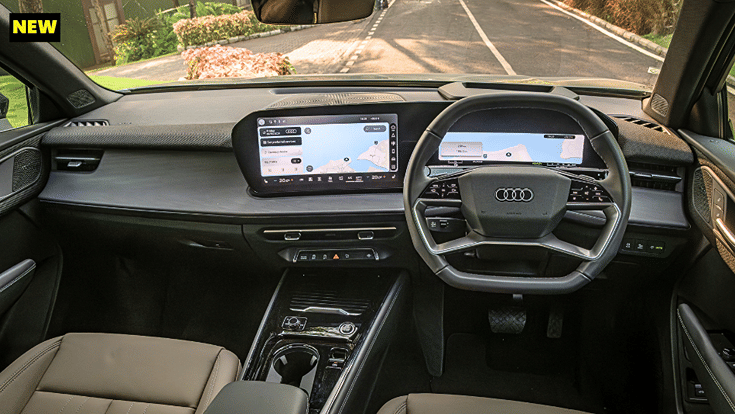
Kia Sorento के केबिन को प्रीमियम और टेक्नोलॉजी से लैस बनाया गया है। इसमें Panoramic Curved Display Panel मिलता है, जिसमें 31.24 cm यानी 12.3-इंच HD Touchscreen Navigation Cockpit और 12.3-इंच HD Digital Instrument Cluster शामिल हैं। इसके साथ Windshield Head-Up Display और Advanced Digital IRVM दिया गया है। SUV में Smoky Black & Grey और टॉप HTX वेरिएंट में Black & Olive Brown इंटीरियर थीम का विकल्प मिलता है। इसमें Dual Pane Panoramic Sunroof और 64-कलर Ambient Mood Lighting भी दी गई है।


6 और 7-सीटर दोनों विकल्प


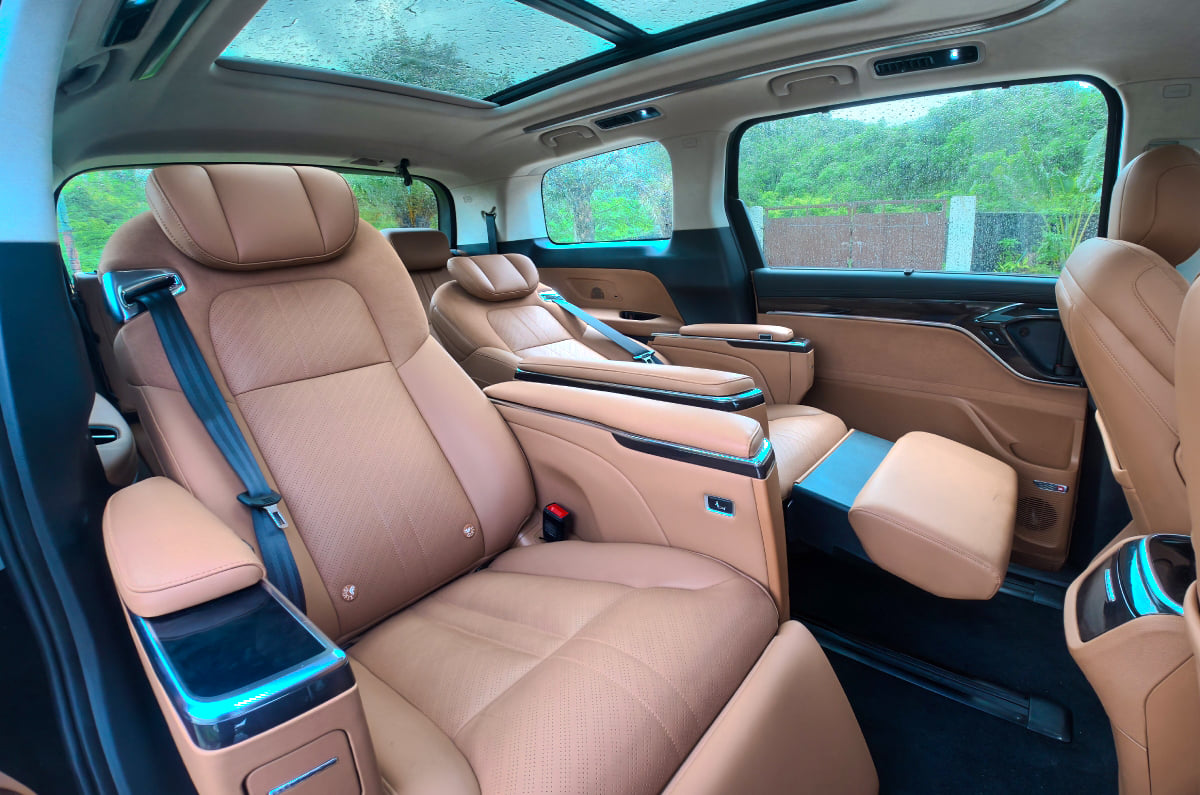
Kia Sorento को 6-सीटर और 7-सीटर कॉन्फिगरेशन में पेश किया गया है। पहली रो में 10-Way Power Driver और Co-Passenger Seats, Lumbar Adjustment, Relaxation Power Seats, Driver Seat Ergo Function और Integrated Memory System जैसे फीचर्स दिए गए हैं। Sorento की खासियत यह है कि इसमें पहली रो के अलावा दूसरी रो में भी Ventilated Seats मिलती हैं। सीटों में 3-स्टेप कूलिंग फंक्शन दिया गया है। 6-सीटर मॉडल में दूसरी रो में Captain Seats मिलती हैं, जबकि 7-सीटर मॉडल में 60:40 स्प्लिट रियर सीटें दी गई हैं। दोनों में Slide, Recline और Walk-in फंक्शन मिलता है।

 इसके अलावा 4-Way Power Boss Mode, Wing Type Headrests, तीसरी रो में 50:50 Split-Folding Seats और दूसरी-तीसरी रो के लिए Rear AC Vents दिए गए हैं।


Kia Sorento में पहली बार Real-Time Generative AI


Kia Sorento का सबसे बड़ा टेक्नोलॉजी अपडेट इसका Kia AI Assistant है। भारत-स्पेक Sorento में यह तकनीक पहली बार वैश्विक स्तर पर पेश की गई है। Kia AI Assistant रियल-टाइम सर्च पर आधारित जानकारी उपलब्ध कराता है। यह सामान्य बातचीत को समझने के साथ Follow-up Questions का जवाब भी दे सकता है। “Hey Kia” Wake Word के जरिए इसे हैंड्स-फ्री इस्तेमाल किया जा सकता है। यह चुनिंदा वाहन फंक्शंस, जैसे Air Conditioning और Windows को भी कंट्रोल कर सकता है।


इसके अलावा Sorento में:

  •  
  • Remote Vehicle Immobilization
  • Kia Connect 2.0 के 85+ कनेक्टेड कार फीचर्स
  • 30 कंट्रोलर्स के लिए OTA Software Updates
  • Digital Key 2.0
  • Wireless Android Auto
  • Wireless Apple CarPlay


जैसे फीचर्स मिलते हैं।


Disney, Marvel और Pixar थीम से कर सकेंगे कार को पर्सनलाइज


Kia ने पहली बार भारत में Personalized Display Themes भी पेश किए हैं। Sorento के Cluster और Infotainment सिस्टम में Disney, Marvel और Pixar पर आधारित कुल 9 थीम मिलेंगी। इन थीम के जरिए ग्राहक डैशबोर्ड के रंग, एनिमेशन और स्क्रीन लेआउट को अपनी पसंद के अनुसार बदल सकेंगे। दिसंबर 2026 से Kia Connect Store भी Sorento के लिए शुरू किया जाएगा। इसके जरिए ग्राहक चुनिंदा Feature-on-Demand सेवाओं को खरीद सकेंगे।


30 ADAS फीचर्स और 10 एयरबैग तक


सेफ्टी के मामले में भी Sorento को काफी एडवांस बनाया गया है। SUV में ADAS Level 2+ के 30 फीचर्स दिए गए हैं।


इनमें:


  • Forward Collision Warning
  • Forward Collision-Avoidance Assist
  • Lane Keeping Assist
  • Lane Following Assist
  • Highway Driving Assist
  • Smart Cruise Control
  • Blind Spot Collision Avoidance
  • Rear Cross Traffic Collision Avoidance
  • Safe Exit Warning
  • Remote Smart Parking Assist


जैसे फीचर्स शामिल हैं।


Kia का Robust 26 Standard Safety Package भी मिलता है। इसमें 7 एयरबैग स्टैंडर्ड हैं, जबकि टॉप वेरिएंट में अतिरिक्त Rear Side और Centre Side Airbags के साथ कुल 10 एयरबैग तक मिलते हैं।


इसके अलावा 360-डिग्री कैमरा, Blind View Monitor, 12 पार्किंग सेंसर, पांच रडार और Dynamic Guidelines वाला रियर कैमरा भी दिया गया है।


भारत में बनी, भारतीय ग्राहकों के हिसाब से तैयार


Kia Sorento का उत्पादन भारत में Kia India की अनंतपुर, आंध्र प्रदेश स्थित मैन्युफैक्चरिंग फैसिलिटी में किया गया है। कंपनी ने भारतीय सड़कों और ग्राहकों की जरूरतों को ध्यान में रखते हुए इसमें कई बदलाव किए हैं। इनमें India-specific grille detailing, Acoustic Windshield और Black High Glossy Bridge Type Roof Rails शामिल हैं। कंपनी का दावा है कि Acoustic Windshield, Door Trim Insulator और अन्य इंजीनियरिंग सुधारों की वजह से Sorento में बेहद शांत केबिन और बेहतर NVH प्रदर्शन मिलता है।


ये प्रमुख फीचर्स भी मिलेंगे


Kia Sorento में कई प्रीमियम और सेगमेंट-फर्स्ट फीचर्स दिए गए हैं, जिनमें शामिल हैं:


  • Smart Power Tailgate with Anti-Pinch
  • Dual Pane Panoramic Sunroof
  • Bose Premium Sound System with 12 Speakers
  • Smart Dashcam with Front & Rear Camera
  • Remote Smart Parking Assist
  • 220V Power Outlet
  • Digital IRVM
  • Head-Up Display
  • Wireless Smartphone Charger
  • Dual-Zone Automatic Climate Control
  • Tyre Pressure Monitoring System
  • Electronic Parking Brake with Auto Hold
  • Front और Rear Seat Side Airbags
  • Driver Knee Airbag
  • All-Wheel Disc Brakes
  • ISOFIX
  • Rear Occupant Alert
     

Kia Sorento की कीमत और वेरिएंट


Kia Sorento को तीन मुख्य ट्रिम्स और उनके Option Pack के साथ पेश किया गया है। Diesel 7-Seater की शुरुआती कीमत ₹27.99 लाख है, जबकि Hybrid 7-Seater की शुरुआती कीमत ₹29.49 लाख है। टॉप वेरिएंट में कीमत करीब ₹40.19 लाख एक्स-शोरूम तक जाती है।


प्रमुख कीमतें

  • पावरट्रेन सीटिंग शुरुआती कीमत टॉप कीमत
  • 2.2 Diesel 8DCT 7-सीटर ₹27.99 लाख ₹38.69 लाख
  • 2.2 Diesel 8DCT 6-सीटर ₹32.69 लाख ₹38.89 लाख
  • 1.6 Turbo Hybrid 6AT 7-सीटर ₹29.49 लाख ₹40.19 लाख
  • 1.6 Turbo Hybrid 6AT 6-सीटर ₹34.19 लाख ₹40.39 लाख
  • आठ एक्सटीरियर कलर का विकल्प


Kia Sorento को आठ मोनो-टोन एक्सटीरियर कलर में पेश किया गया है:


  • Glacier White Pearl
  • Gravity Gray
  • Imperial Blue
  • Magma Red
  • Pewter Olive
  • Ivory Silver Gloss
  • Aurora Black Pearl
  • Matte Dark Gun Metal


इसके अलावा पहली बार Kia India लाइन-अप में Black Line Trim भी पेश किया गया है। इसमें Kia और Sorento बैज, 19-इंच Premium Crystal Cut Alloy Wheels, Fender Garnish और Beltline सहित कई एक्सटीरियर एलिमेंट्स को ब्लैक फिनिश दी गई है।


4.8 मिलियन से ज्यादा ग्राहकों का भरोसा


Kia Sorento पिछले 24 वर्षों और चार पीढ़ियों के दौरान 132 देशों में 4.8 मिलियन से ज्यादा ग्राहकों तक पहुंच चुकी है। यही वजह है कि यह Kia की सबसे सफल ग्लोबल SUV नेमप्लेट में शामिल है। भारत में नई Sorento के साथ Kia ने पहली बार प्रीमियम थ्री-रो SUV सेगमेंट में कदम रखा है। Hybrid पावरट्रेन, AWD, ADAS Level 2+, 10 एयरबैग तक और Real-Time Generative AI वाला Kia AI Assistant इसे इस सेगमेंट की एक टेक्नोलॉजी-फोकस्ड SUV बनाते हैं।

3 reasons to buy the Maruti Celerio and 3 reasons to avoid it

3 reasons to buy the Maruti Celerio and 3 reasons to avoid it
Maruti Celerio side static

The Celerio is positioned between the cheaper Alto K10 and the even more popular Wagon R in Maruti Suzuki’s line-up. Priced between Rs 4.70 lakh and Rs 6.75 lakh (ex-showroom), the Celerio is available in petrol and CNG versions with manual and AMT gearbox options, just like its rivals. While the second-gen model arrived on the entry-level hatchback scene in 2021, it hasn’t received a single facelift in the following five years, placing it at a disadvantage over some of its competitors. This Heartect platform-based hatchback goes up against the likes of the new-gen Tata Tiago and its own stablemate, the Wagon R.

Reasons to buy the Maruti Celerio

City slicker

The Celerio’s urban-friendly demeanour is great for regular commutes

Maruti Celerio engine

One of the factors making the Maruti Celerio a great urban runabout is its 1.0-litre three-cylinder engine. It builds power smoothly right from lower RPMs which, along with a slick 5-speed manual gearbox and a light clutch, make pottering around town an easy affair. Those seeking an even easier time commuting can pick the AMT (automated manual transmission), whose shifts are relatively smooth as far as AMTs go.

Maruti Celerio front tracking

Helping matters further in the city is the plaint suspension, which soaks up bumps at lower speeds without much fuss. The light steering, tight turning radius and good front visibility also go a long way in helping you navigate compact parking spots and bustling city traffic. And despite its cost-friendly design, the height-adjustment feature for the driver’s seat means finding a suitable position isn’t too much of an issue.

Efficiency champ

This is Maruti Suzuki’s most frugal offering in the country

Maruti Celerio AMT gearbox

Not only is it easy to drive, but the Maruti Celerio will not have you complaining about fuel economy either. The petrol version with the 5-speed manual transmission has a claimed mileage of up to 25.24kpl, while the AMT option is rated at 26kpl – making the Celerio AMT the most fuel-efficient petrol car in the market. All variants of the Celerio come with an automatic engine stop-start function, further reducing fuel consumption. While this feature isn’t enabled when running on CNG (in VXi MT only), the claimed mileage of 34.43km/kg is better than that of the Maruti Wagon R CNG and the Renault Kwid CNG.

Roomy boot

The Celerio’s boot affords more space than some rivals

Maruti Celerio boot space

At 292 litres, the boot of the Maruti Celerio is bigger than those rivals such as the Tata Tiago and Renault Kwid. This is enough to accommodate two large suitcases and a couple of carry-on-sized bags, with still some room to spare. If you need even more space, the 60:40 split-folding rear seats will come in handy. On the other hand, the loading lip is high and relatively narrow, making loading or unloading heavier items cumbersome.

Reasons to avoid the Maruti Celerio

Ergonomic niggles

This interior has a few sore points that’ll take getting used to

Maruti Celerio infotainment

Compared to most of its adversaries, the power window switches of the Maruti Celerio aren’t placed on the doors. The front ones are positioned on the dashboard, whilst the rear switches are found on the rear centre pedestal between the front seats. Buttons to operate the door and power-window locks are also on the dashboard. Then there are the thick A-pillars, which can obstruct your view at junctions and roundabouts.

Maruti Celerio rear seats

The well-cushioned rear seats of the Celerio offer plenty of kneeroom for even taller occupants. However, headroom isn’t all that good, and the fixed headrests are positioned way too low to be effective. The angled design of these headrests also means that they poke into your back, which can be uncomfortable.

Unimpressive material quality and feature set

The Celerio’s cabin isn’t the most up-to-date in this segment

When compared to the new-gen Tata Tiago, the interior of the Maruti Celerio looks and feels a touch dated. There’s plenty of hard plastics which, even though are accompanied by shiny trim and a sculpted dashboard, feel pretty basic. The relatively simple design is backed by an equipment list that isn’t particularly competitive either.

Maruti Celerio interior

For instance, even the top trim level of the Celerio doesn’t come with a rearview camera. There’s also no automatic climate control system, while Apple CarPlay and Android Auto both require a wired connection. The touch-infotainment screen is a 7-inch unit, whereas a similarly priced Tata Tiago offers an 8-inch setup. On the outside, the Maruti Celerio gets the old-school ‘flip-up’ door handles.

Imperfect on a highway

This hatchback isn’t particularly meant to be driven hard or fast

Maruti Celerio side tracking

While it’s perfectly at home in the city, the Maruti Suzuki Celerio isn’t as good out on the open road. The lifeless steering aside, the body moves around enough – both of which robs you of confidence required to push the car any harder.

Also read

3 reasons to buy the Toyota Hyryder and 2 reasons not to

Mitsubishi Pajero: What’s changed from fourth to fifth-generation model

Tata Curvv Series X launched at Rs 9.9 lakh

Tata Curvv Series X launched at Rs 9.9 lakh
Curvv

Tata Motors has introduced the Curvv Series X, with prices ranging from Rs 9.9 lakh to Rs 18.5 lakh (ex-showroom). The new range gets a reshuffled variant lineup, with features from higher variants moved to lower and mid-spec versions. Tata has also expanded the availability of the #DARK edition across the range, while the powertrain remains unchanged.

Tata Curvv Series X price

Tata Curvv Series X ex-showroom prices
VariantPrice
Smart XRs 9.9 lakh
Pure XRs 10.99 lakh
Pure X+Rs 11.79 lakh
Creative XRs 12.91 lakh
Accomplished XRs 13.99 lakh
Accomplished X+Rs 18.5 lakh

The Smart X is the most affordable variant in the lineup, priced Rs 14,000 higher than the previous base trim. The petrol-diesel price gap has been reduced to Rs 1.3 lakh from Rs 1.5 lakh previously, while the premium for the automatic gearbox has also come down to Rs 1.3 lakh from Rs 1.5 lakh.

Tata Curvv Series X interior and features

The Curvv Series X gets a 10.25-inch infotainment screen with wireless Android Auto and Apple CarPlay, automatic climate control, cruise control and a rear-view camera. It also gets a 10.25-inch digital cockpit, smart key with push-button start, front and rear USB ports, Wi-Fi connectivity and multiple drive modes.

The cabin gets a lighter interior theme with leatherette upholstery and leatherette finishes on the steering wheel, gear-shift knob and centre-console armrest. Rear passengers get dedicated AC vents, a rear armrest and reclining rear seats. The front seat-back is 10mm slimmer, while the rear seat has been moved 20mm rearwards and 10mm lower.

Other features include a panoramic sunroof, 360-degree 3D surround-view camera with a blind-view monitor, front parking assist, rain-sensing wipers and automatic headlamps. Safety equipment includes six airbags, ESP, hill-hold control, ABS with EBD and rear parking sensors.

Tata Curvv Series X exterior

The Curvv Series X retains the SUV-coupe design of the existing model, with flush door handles, an illuminated four-spoke steering wheel, LED headlamps, DRLs and tail-lamps, and a rear spoiler. The Series X gets a black grille treatment in place of the earlier chrome finish. The #DARK edition is now available from lower down the range, with a blacked-out exterior and Obsidian-themed interior. It gets 17-inch diamond-cut alloy wheels, while higher versions offer 18-inchers.

Tata Curvv Series X powertrain 

The Curvv Series X continues with three engine options: a 1.2-litre turbo-petrol producing 120hp and 170Nm, a 1.2-litre direct-injection turbo-petrol producing 125hp and 225Nm, and a 1.5-litre diesel producing 118hp and 260Nm.

The 1.2-litre turbo-petrol and 1.5-litre diesel are available with a 6-speed manual and 7-speed dual-clutch automatic, while the 1.2-litre direct-injection turbo-petrol is exclusive to the top-spec Accomplished X+ and is paired with the 7-speed DCA.

Volvo EX90 pros and cons explained

Volvo EX90 pros and cons explained
2 reasons to choose the Volvo EX90, 2 reasons not to

Volvo’s flagship EV, the EX90, has been on sale overseas since 2022. Ahead of its launch on October 12, the manufacturer has revealed details of the India-spec model. It will be sold here in the range-topping ‘Ultra’ variant, which we got to experience recently. If you are interested in the flagship Volvo EX90, here are two reasons to choose it and two reasons to think otherwise.

Reasons to buy the Volvo EX90

Offers a comfortable driving experience on all types of roads 

The Volvo EX90 features an air suspension system that offers a good balance between ride comfort and handling. The car takes microseconds to adjust to the various undulations on the road. Volvo is offering this system with three adjustable modes: Soft, Standard and Firm. ‘Soft’, as the name suggests, offers a comfortable drive over broken roads at medium to high speeds, but it results in a bit more body roll, which does not make it feel confident. ‘Standard’ offers a comfortable ride on bad roads but without feeling overly soft in the corners. ‘Firm’ adds a layer of stability through sharp corners and high speeds.

Has adequate performance and impressive cabin insulation

The India-spec Volvo EX90 Ultra will be offered with a 106kWh battery pack powering dual electric motors producing 456hp and 670Nm. Volvo claims a 0-100kph time of 5.5 seconds, which is fairly quick given its size. However, the SUV builds speed linearly, and the powertrain feels more relaxed and laid-back. Volvo is offering the EX90 with four driving modes: Range, Standard, Performance and Off-road. Even in ‘Performance’ mode, outright zippy acceleration associated with EVs is missing, and the SUV builds up pace gradually. 

As engine sounds are absent on an EV, wind and road noises that filter into the cabin tend to get amplified, especially with larger wheels. However, this is not the case with the Volvo EX90, which offers top-notch cabin insulation. This keeps the cabin feeling near-silent. 

Reasons not to buy the Volvo EX90

Essential drive settings buried within the infotainment system menus

The Volvo EX90’s dashboard is devoid of buttons. All functions can be accessed through the steering-mounted controls or the massive 14.5-inch touchscreen infotainment system that sits in the centre of the dashboard. Simple but essential tasks such as adjusting the outside rearview mirrors (ORVMs) require navigating menus and multiple inputs, which is neither convenient nor safe while on the move. Some hard-coded climate control functions are in the bottom section of the touchscreen, but operating them requires taking your eyes off the road.

Inconsistent brake bite point

Volvos are generally known for offering a strong safety suite, and the flagship EX90 is no different. However, the braking performance is inconsistent due to a variable brake bite point. This is because the EX90 employs regenerative braking with traditional hydraulic brakes, and the transition, depending on the battery’s state of charge and drive modes, causes the bite point to vary.

As mentioned earlier, the Volvo EX90 will launch on October 12. It is expected to have a small premium over its ICE counterpart, the XC90, which currently starts at Rs 98.80 lakh (ex-showroom).

Toyota Ebella vs Hyundai Creta Electric real-world range compared

Toyota Ebella vs Hyundai Creta Electric real-world range compared

The Toyota Urban Cruiser Ebella is one of the newer entrants in the electric midsize SUV segment, which the Hyundai Creta Electric has been a part of since early 2025. Both electric SUVs are rated at over 500km of range by MIDC, but which one travels further on a single charge in the real world? We put the Urban Cruiser Ebella and Creta Electric through our detailed range tests to find out.

Toyota Ebella vs Hyundai Creta Electric: Specifications

 EbellaCreta Electric
Battery capacity (kWh)6151.4
Motor setupSingle, frontSingle, front
Power (hp)174171
Torque (Nm)193255
MIDC range (km)543510
Kerb weight (kg)1,8151,577

The Ebella’s battery pack is nearly 10kWh larger than that of the Creta Electric, allowing the Toyota EV to claim a higher MIDC range. However, the Ebella is nearly 240kg heavier, which can detract from its real-world range. Both electric SUVs are similar in terms of power output, but the Creta Electric develops over 60Nm more torque.

Toyota Ebella vs Hyundai Creta Electric: Real-world range

Despite the Ebella’s battery capacity advantage, the Creta Electric emerged as the overall winner in our real-world range tests. The Hyundai EV formed a 37km lead over the Ebella on the highway, while the Toyota SUV was ahead by 29km in urban conditions. In terms of battery efficiency, the Creta Electric achieved higher numbers across the board.

Toyota Ebella vs Hyundai Creta Electric real-world efficiency

 EbellaCreta Electric
Tested city efficiency (km/kWh)6.377.00
Tested highway efficiency (km/kWh)6.808.80
Tested average efficiency (km/kWh)6.597.90

Averaging the range figures above, the Creta Electric beat the Ebella by a slim 6km margin. With a gap of 104km, the Creta Electric’s real-world range adhered better to its MIDC figure too, while the Ebella recorded a 141km deficit for the same.

Toyota Ebella vs Hyundai Creta Electric: Prices

 Price range (Rs, lakh)
Ebella23.60
Creta Electric (51.4kWh)*20.00-23.67

*Prices exclusive of home charger and installation cost.

The Ebella is available in just one 61kWh variant, which is priced on par with the Creta Electric’s top-spec 51.4kWh version. Since the Creta Electric 51.4kWh is sold in multiple variants, it undercuts the Ebella by up to Rs 3.6 lakh. That said, the Ebella comes bundled with a home charger, while Hyundai charges an extra Rs 73,000 for it.

Autocar India’s range testing

Before our real-world range tests, the battery of our test car was fully charged, and we maintained tyre pressures in accordance with the manufacturer’s recommendations. The car was driven on a weekday in Mumbai city and on the adjoining state highway in a fixed loop, and we maintained the set average speeds. At the end of each cycle, we calculated the range based on the percentage charge consumed.

Throughout our tests, the climate control was set to 22deg C in a full-auto setting, and other electricals, such as the audio system, indicators and ventilated front seats, were used when required, just as a regular user would. We take pride in our testing data, which isn’t merely consistent but also gives users an accurate indication of what they can expect in the real world.

All prices are ex-showroom, India.
2026 Volvo EX90 review: Better than the XC90

2026 Volvo EX90 review: Better than the XC90
Volvo EX90 front quarter tracking

The EX90 is Volvo’s latest offering in India and also its most premium one. The EX30 and EC40 compete in the entry-level luxury EV segment, but the EX90 is the brand’s flagship electric SUV. It comes in a single, fully loaded variant with all the bells and whistles, along with a dual-motor setup and a claimed range of over 600km. Can it bring in a new audience or convert some XC90 customers? It certainly has the traits to do both.

EX90 Exterior Design and Engineering – 9/10

Built on Volvo’s SPA2 dedicated EV platform that has hints of the XC90.

Based on the new SPA2 architecture, which has its roots in the previous SPA platform but is built specifically for EVs, the EX90 does share some resemblance to the XC90 in its shape and form factor. However, the details are different. As expected, the overall design is simple and far from outlandish or attention-seeking. This is in keeping with the brand’s image, and the restraint actually works. The flat, closed-off front end dismisses any chances of a blingy chrome grille, and what adds drama instead are the LED lights that split open to reveal the main headlamps behind. These, too, have an impressive party trick; with over a million pixels, they can individually light up or switch off and constantly shape a light beam to avoid dazzling oncoming traffic. Further down, you get some more DRL strips, one on each side, and a rather simple, fuss-free bumper. 

DRLs that spilt open to reveal headlamps add drama.

Over to the side, the EX90 is slightly longer than the XC90, while the rest of its dimensions see a marginal bump. 21-inch wheels are standard, and the 210mm of ground clearance at its lowest setting is plenty. The air suspension also allows you to raise the car up to 250mm for off-road use. The door handles are pop-up, flip-up-style units, and you no longer get a key. Instead, you get a card that you need to tap at the right spot, with the Volvo logo facing the right way, for the handle to pop up. Alternatively, you can simply link your phone to the car and use it as a key. It seems convenient on paper, but the card system needs to be a lot more seamless to be hassle-free.

At the rear, it gets a split setup for the LED tail-lamps, with C-shaped LEDs on the lower half and vertically stacked LEDs in the D-pillar. There isn’t a single strip of chrome, and even the cladding is minimal. Subtlety is what Volvo aims for with its design, and the EX90 offers just that.

EX90 Interior Space and Comfort – 8/10

Two-tone upholstery looks rich and materials feel plush.

Inside, the minimalist approach continues and even takes precedence. The dashboard is devoid of any buttons whatsoever, and the majority of the real estate is taken up by the 14.5-inch touchscreen. However, the bright seats and upholstery, along with the bright open-pore wood, lift the cabin ambience significantly. There is generous use of brushed aluminium as well, and the Nappa leather is fantastic to the touch. The centre console also features wireless charging and a rotary knob for media control.

There is plenty in the front seats to pamper you. They offer excellent support, and feature heating, ventilation and a whole host of massage options. Plenty of electric adjustment also means finding an accurate driving position is easy, and all-round visibility is very good.

Exclusively a six-seater with good space and comfort. 

The EX90 is only available as a six-seater, so in the middle row you get captain’s chairs, but these would feel snug for some, and for a luxury car that would be chauffeur-driven, you don’t get the same level of pampering as in the front seats. There is no electric adjustment, heating, ventilation or massage either. There aren’t any sunblinds for the windows too, and even though the huge panoramic sunroof is electrochromic, at the tap of a button you get a bit of tint in the glass, on a hot day with the sun overhead, you will need more.

Massive panoramic glassroof gets electrochromic shade. Physical sunshade is an accessory.

The accessories list has a proper roof shade to protect you from that, and it is an extra we recommend you select. On the plus side, space is good, and the seats can be adjusted 
for legroom and recline too. You get four-zone climate control, with AC vents in the pillars that are a lot more effective, and cupholders stowed within the armrests. Also, being a modified platform, the floor is raised, and you notice this while getting in and out of the car.

Access to the third row is easy from between the captain’s chairs, thanks to the flat floor, but there is no tumble feature for the seats. Instead, they only slide forward, opening a cavity to get in. Room in the last row is at a premium for tall adults, but kids or shorter adults will do just fine with a little adjustment to the middle row.

Third row best suited for kids or short adults over quick drives.

With all three rows up, boot space stands at a healthy 324 litres, and with the third row folded away, it is a sufficient 690 litres. There is a 46-litre frunk too for stowing charging cables. Impressively, there is a full-size spare wheel as standard, which will eat up some boot space but is a huge relief given the low-profile tyres and our roads.

EX90 Features and Safety – 8/10

Annoyingly every control is within the 14.5-inch Google-powered screen.

Most of the EX90’s features are accessed through the massive, vertically oriented touchscreen. Being Google-powered, it runs a smooth OS, but simple tasks like adjusting the ORVMs require multiple inputs and navigation through the menus, which isn’t easy while on the move. There are some hard-coded functions at the bottom of the touchscreen, such as climate control, but you still need to focus on the screen and cannot operate them easily while driving. There is also a 9-inch driver display with nothing but the absolute necessary figures, such as range, speed and battery percentage. You can also load up the maps there, and it displays the traffic around you too. However, don’t expect multiple dials and a loaded, fighter-jet-like cockpit experience, the instrumentation is all minimal but feels sparse too.

Bowers & Wilkins Hi-Fi audio system is epic.

What is excellent, however, is the music system: a 1,610W, 25-speaker Bowers & Wilkins Hi-Fi audio system with custom presets and modes that truly transform the cabin. If you enjoy your music, there are few cars in the world that offer something at this level or better. Safety is where Volvo excels, and the EX90, being the flagship, has all the bells and whistles – active and passive. Nine airbags, five cameras, five radars and 12 ultrasonic sensors, powering a full ADAS suite including door-opening alert and post-impact braking, make it exceptionally well equipped. Essentials like a 360-degree camera and auto-parking further make it easy to live with.

EX90 Performance and Refinement – 9/10

It is just as nice to drive as it is to be chauffeured in.

The EX90 comes in a single variant in India, with a dual-motor setup and a 106kWh battery pack. It develops 456hp and 670Nm, making it quick off the line. 0-100kph takes just 5.5sec, which, given its size and type, is pretty impressive. However, from behind the wheel, the experience aligns with its laid back character. You can alter the dynamics using the four drive modes. ‘Range’ prioritises efficiency, and power and torque are heavily restrained, although in bumper-to-bumper traffic, you will not notice the dip. There is a creep function too for peak-hour jams. ‘Standard’ is a balance that suits the car well for the most part, while ‘Performance’ is for that rare time when you want to add some enthusiasm.

Despite its strong power figures, performance feels more like an airliner than a fighter jet.

Don’t expect fighter-jet levels of reactions, though. Even in ‘Performance’ and with a heavy right foot, the EX90 builds pace gradually. It is almost like taking off in an aeroplane, where the speed rises in a strong and linear manner. This mode zaps power swiftly, so it is best to use the ‘Standard’ mode and get the best of all worlds. If you end up venturing off the tarmac, the ‘Off-road’ mode allows for more ground clearance (250mm), and it alters traction control and ESP settings to allow for more traction on loose surfaces.

Once on the move, what is extremely impressive is cabin refinement. With no engine sound to distract you, EV cabins amplify ambient sounds like wind and road noise, especially with large tyres, but the EX90 is a different story. Cabin insulation is top-notch, and it is near-silent on the inside. It also has a neat trick, microphones all around the car can relay conversations via the speakers clearly no matter where you are seated. You only have to talk in your natural tone for your voice to clearly go through the microphone and speakers. So passengers sitting at the first and third row can have a conversation without having to speak loudly.

EX90 Mileage / Range and Efficiency – 9/10

The 106kWh battery can eke out 625km according to the WLTP cycle. In our short test drive, we saw an efficiency of 5km/kWh in mixed driving conditions, resulting in a range of 530km. That is rather respectable, and considering a majority of our drive was on the highway, this number should only get better in the city.

The EX90 also has regenerative braking, and you can go from having it completely off to low or high, or just leave it in Auto, where it does all the thinking for you. Feel, though, leaves a lot to be desired, the pedal never feels consistent in its bite point. You get an 11kW AC charger for your home or office, which takes 11 hours for 0-100 percent. But being an 800V system, it can charge at up to 350kW on a DC charger, taking just 23 minutes for 10-80 percent. The car will also pre-condition the battery, meaning it gets the battery up to its optimum temperature to charge as quickly as possible.

EX90 Ride Comfort and Handling – 8/10

The EX90 rides on air suspension, which, over broken roads at medium or high speeds, is excellent. The car adjusts within microseconds, and you barely feel bumps inside. You can firm it up for the highway, so there is none of the wallowy feel associated with a softly sprung setup. Three modes to choose from give you flexibility depending on the road surface. ‘Standard’ offers the best balance, as it has the softness without feeling overly soft in the corners, while ‘Firm’ adds a layer of stability at speed and on fast bends. ‘Soft’ is a bit too soft, and the car ends up diving or rolling a tad more than necessary. In the city, there is none of the harshness over low-speed bumps, and the composed nature of the suspension is its highlight.

EX90 Value for Money – 8/10

The EX90 offers just about everything you need in a luxury EV

Prices for the EX90 will be out in October, and it will be the brand’s flagship SUV, sitting above the XC90. If you are looking for a chauffeur-driven luxury EV, it will tick the right boxes. That said, sunblinds would have been nice, and as a driver, it will frustrate you with an over-reliance on the touchscreen and a fiddly key card. On the whole, though, it does a lot to impress and allows you to forgive these shortcomings. You get everything you expect from a luxury EV, the cabin is plush and comfortable, the materials and feel are excellent, the design is subtle but svelte, and the ride comfort is truly impressive. It rivals the Mercedes-Benz EQS and BMW iX, and while it may not be as feature-loaded in the rear seat as the EQS or as powerful and fun to drive as the iX, it does find a very nice middle ground and would be top of the list for those looking for minimalist class and luxury.

All you need to know about Lexus ES

All you need to know about Lexus ES
Lexus ES

The Lexus ES is available in India in two forms: the ES 350h strong hybrid and the ES 500e EV. The 350h was added to the ES range in July, joining the 500e that launched earlier this year. Beyond the new powertrain options, the latest ES gets a larger footprint, a redesigned cabin and a host of new features. Here’s everything you need to know.

1. How much do the Lexus ES 350h and ES 500e cost in India

The Lexus ES 350h is priced at Rs 66.10 lakh for the Exquisite variant and Rs 71.80 lakh for the Luxury trim, whereas the ES 500e costs Rs 89.99 lakh (all prices are ex-showroom). Both versions get an eight-year/2,00,000km warranty, covering the vehicle and its battery.

2. What powertrain does the Lexus ES 350h get?

The ES 350h uses a 2.5-litre four-cylinder naturally aspirated petrol engine paired with an electric motor and lithium-ion battery. The petrol engine produces 186hp and 235Nm, while the electric motor develops 201hp and 270Nm in isolation. The combined system output is 244hp. Power is sent to the front wheels through an e-CVT gearbox. Lexus claims an ARAI-certified fuel efficiency of 25.22kpl.

3. What battery, motor and range does the Lexus ES 500e offer?

The ES 500e gets a 74.68kWh battery and two electric motors, one on each axle. The front motor produces 227hp and 267Nm, while the rear motor makes 120hp and 170Nm. The combined output is 343hp and 438Nm, with a claimed 0-100kph time of 5.5sec. Lexus claims a range of 580km on a full charge. The ES 500e supports 11kW AC charging, while a 150kW DC fast charger can charge the battery from 10 to 80 percent in 28 minutes. A 2.8kW portable charger is also offered.

4. What are the key features of the Lexus ES?

The new ES gets a dual-tone cabin with a 14-inch touchscreen and a 12.3-inch digital driver’s display. It also gets a Mark Levinson premium audio system, wireless Apple CarPlay and Android Auto, wireless phone charging and three-zone climate control. Other features include powered front seats with heating and ventilation, a head-up display, digital inside rearview mirror, ambient lighting, rear window sunshades and a power-operated boot lid.

One of the ES’s standout features is proximity-sensing controls. Physical controls are integrated into the dashboard and steering wheel and illuminate when they detect a hand approaching, combining touch controls with physical switches.

The exterior gets Lexus’s new design language, with a sealed-off front end, Twin L-signature lighting and a connected rear light bar. The new ES also has a coupe-like roofline and a rising beltline.

5. How spacious is the new Lexus ES?

The new ES measures 5,145mm long, 1,920mm wide and 1,575mm tall. It is 170mm longer, 55mm wider and 130mm taller than the previous-generation model, while the wheelbase has increased by 80mm to 2,950mm. Lexus has increased ground clearance for India by 20mm to 158mm. The larger dimensions are complemented by a lower window line and thinner seats and trim pieces, while the longer wheelbase frees up more space inside the cabin.

6. What safety and ADAS features does the Lexus ES get?

The ES 350h gets Lexus Safety System+, which includes a pre-collision system, adaptive cruise control, lane keep assist, lane departure alert, automatic emergency braking, a blind-spot monitor and automatic high beam. It also gets eight airbags, Isofix and top-tether mounts and an emergency brake signal. The Luxury variant additionally gets a drive monitor.

The ES 500e gets 10 airbags, a 360-degree camera setup, blind-spot monitoring, adaptive high-beam assist, radar-guided cruise control, lane-change assist and a driver drowsiness monitor. Electronic stability control and all-round parking sensors are also standard.

7. Where is the Lexus ES made, and which cars does it compete with?

The ES is locally assembled in India. The Lexus ES competes with luxury sedans such as the Mercedes-Benz E-Class, BMW 5 Series and Audi A6. The ES stands out in the segment by offering buyers a choice of hybrid and fully electric powertrains.
Toyota Urban Cruiser Ebella real world range tested, explained

Toyota Urban Cruiser Ebella real world range tested, explained
Toyota Urban Cruiser Ebella

Toyota Urban Cruiser Ebella is the company’s first and only EV sold in the country, and is essentially a badge-engineered Maruti Suzuki eVitara. Toyota has limited the Ebella range to a single variant, priced at Rs. 23.6 lakh. We put the Toyota Urban Cruiser Ebella with the 61kWh battery pack through our range test to find out how it performs.
  1. Three driving and regen modes; no single pedal driving
  2.  Weighs 1,815kg
  3.  20-80 percent recharge takes 35 minutes using a 90kW DC fast charger

Toyota Urban Cruiser Ebella: Real-world range

The Toyota Urban Cruiser Ebella is solely available with a 61kWh lithium-ion LFP battery pack and it is powered by a 174hp/193Nm electric motor driving the front wheels. For our tests, we used the Eco driving mode all throughout, with regen set to ‘High’ in the city and ‘Medium’ on the highway.

In city conditions, the Toyota Ebella returned 6.37km/kWh which translates to a range of 389km. Interestingly, the efficiency increased on the highway to 6.8km/kWh extrapolating to a range of 415km. With an overall efficiency of 6.59km/kWh, the Toyota Ebella can deliver a real-world range of 402km on a full charge.

Toyota Urban Cruiser Ebella: Charging test

Toyota hasn’t shared any details regarding the Ebella’s DC fast charging capability, but we noted peak charging speeds of around 68.2kW when using a 90kW DC fast charger. In terms of duration, it took 35 minutes to charge from 20-80 percent, and another 36 minutes to reach 100 percent.

Autocar India’s range testing

Before our real-world range tests, the battery of our test car was fully charged, and we maintained tyre pressures in accordance with the manufacturer’s recommendations. The car was driven on a weekday in Mumbai city and on the adjoining state highway in a fixed loop, and we maintained the set average speeds. At the end of each cycle, we calculated the range based on the percentage charge consumed.

Throughout our tests, the climate control was set to 22deg C in a full-auto setting, and other electricals, such as the audio system, indicators and ventilated front seats, were used when required, just as a regular user would. We take pride in our testing data, which isn’t merely consistent but also gives users an accurate indication of what they can expect in the real world.

Tata Punch EV new vs old real-world range comparison

Tata Punch EV new vs old real-world range comparison
Tata Punch EV new vs old

In February 2026, Tata Motors brought incremental updates to the Punch EV. The carmaker’s most affordable electric SUV saw a bump in battery size, subtle cosmetic revisions, and feature additions, while also being more affordable than its predecessor. To see how much the 2026 Punch EV has improved over its older iteration, we put it through our real-world range tests and compare it to its predecessors. 

Tata Punch EV new vs old: Specifications

Tata Punch EV new vs old: Specifications


Tata Punch EV New

Tata Punch EV Old

Battery size

40

35

Electric motor setup

Single motor, front

Single motor, front

Power (hp)

129

122

Torque (Nm)

154

190

ARAI range (km)

468

365

Kerb weight (kg)

1365

1,360

0-100kph time (claimed, in seconds)

9

9.5

With the newer Punch EV, Tata has increased the battery size in its long-range version by 5kWh and bumped the motor’s power slightly. However, the older Punch EV’s motor delivered 36Nm more torque than the newer model. In the new Punch EV, Tata introduced a new 6-in-1 drivetrain setup, replacing the older one’s 3-in-1 unit. With this new setup, Tata claims a 50 percent reduction in packaging size, a 28 percent reduction in weight, and a 6 percent increase in efficiency. Despite the larger battery, this new drivetrain setup on the Punch EV has led to a weight increase of a mere 5kg over its predecessor.

Tata Punch EV new vs old: Real-world range 

In our real-world range tests, the newer Tata Punch EV delivered much higher range than its predecessor. On average, the former goes 75km further than the latter on a single charge. This is because the more efficient drivetrain setup (see table below), coupled with the larger battery pack on the new Punch EV, has translated into going farther on a single charge. 

Tata Punch EV new vs old: Efficiency 


Tata Punch EV New

Tata Punch EV Old

City efficiency (km/kWh)

7.92

6.92

Highway efficiency (km/kWh)

7.29

6.17

Average efficiency (km/kWh)

7.61

6.54

Tata Punch EV new vs old: Prices

Tata Punch EV new vs old: Prices


Tata Punch EV New

Tata Punch EV Old

Long Range version price range (Rs lakh)

10.99 – 12.79

12.99 to 14.49

Despite the updates and higher real-world range, the new Tata Punch EV is much more affordable than the older model. In fact, depending on the variant chosen, the former is up to Rs 2 lakh cheaper than the latter. 

Autocar India’s range testing

Before our real-world range tests, the battery of our test car was fully charged, and we maintained tyre pressures in accordance with the manufacturer’s recommendations. The car was driven on a weekday in Mumbai city and on the adjoining state highway in a fixed loop, and we maintained the set average speeds. At the end of each cycle, we calculated the range based on the percentage charge consumed.

Throughout our tests, the climate control was set to 22deg C in a full-auto setting, and other electricals, such as the audio system, indicators and ventilated front seats, were used when required, just as a regular user would. We take pride in our testing data, which isn’t merely consistent but also gives users an accurate indication of what they can expect in the real world.

Upcoming car launches in September 2026

Upcoming car launches in September 2026

August was a busy month for the Indian car market, bringing several new models ajd variants, as well as updates. The BMW X1 LWB and MG Hector Tomahawk EV and PHEV were among the fresh launches, while the Mahindra Scorpio N received a mid-lifecycle update. The Mahindra BE 6 gained the ‘Sporteq’ suffix, while three existing models added new trims: the Range Rover SV Ultra, BYD Sealion 7 Dynamic and Skoda Kylaq Sportline. After such a packed August, September is also set to see more car launches.

Kia Sorento

Launch: September 4

The Kia Sorento will be the brand’s new flagship ICE model in India, and it will be offered with both strong-hybrid and diesel powertrains. The 1.6-litre strong-hybrid version will produce 238hp and 380Nm, while the 2-litre diesel will make 202hp and 441Nm.

Kia Sorento

The Sorento gets Kia’s signature Tiger Nose grille, large vertical LED headlights with Y-shaped LED daytime running lamps (DRLs), LED fog lamps and vertical aero vents at the edges. Kia has not revealed the alloy wheel size yet, but they are likely to be 19-inch units. At the rear, the Sorento gets squarish tail-lamps with an inverted L-shaped LED signature, a large roof spoiler and a two-tone bumper.

India-spec Kia Sorento revealed ahead of September 4 launch

Inside, there is a connected panel housing the infotainment and instrument cluster screens. Kia has not revealed their sizes, but both are likely to be 12.3-inch units. Other features seen in the official images include ADAS, ventilated front seats, a digital interior rearview mirror (IRVM), an electrically operated tailgate, dual-zone climate control, ambient lighting and a panoramic sunroof.

India-spec Kia Sorento revealed ahead of September 4 launch

The Sorento is expected to be available in both 6- and 7-seat layouts. Kia has already started accepting bookings for the Sorento and upon launch, it will compete with the Skoda Kodiaq, Volkswagen Tayron and Jeep Meridian.

Maruti Baleno facelift

Launch: September 5

The Maruti Baleno is currently in its second generation, which was launched in 2022, and is due for an update. Previous spy shots of the Baleno facelift have suggested a redesigned front end with a new grille featuring a horizontal bar in the centre connecting the headlights. Test mules have also shown a new bumper without the front fog lamps seen on the current model.

Maruti Baleno facelift to launch on September 5
Image credit: Harsh Vlogs via YouTube.

From the side, the only expected change is a new alloy wheel design. At the rear, the facelift could get a redesigned bumper, while the tail-lights are likely to remain unchanged. Inside, the Baleno could retain the current 9-inch touchscreen; however, update the upholstery and add new features.

Maruti Baleno facelift to launch on September 5
Image credit: Harsh Vlogs via YouTube.

Under the hood, the facelifted Baleno is expected to continue with the existing powertrain options. These include a 90hp 1.2-litre naturally aspirated petrol engine with 5-speed manual and 5-speed AMT choices, along with a 77.5hp CNG version available only with the manual gearbox. It will continue to rival the Tata Altroz, Hyundai i20 and Toyota Glanza.

BMW 7 Series, i7 facelifts

Launch: September 11

BMW opened bookings for the facelifted 7 Series and i7 flagship sedans on August 1, soon after their global debut earlier this year. In India, the company currently sells the 740i petrol and 740d diesel versions of the 7 Series, along with the eDrive 50 and M70 xDrive variants of the all-electric i7. These versions get several updates with the facelift, although BMW is yet to confirm which variants will be introduced in here.

BMW 7 Series facelift

In international markets, the facelifted 740i and 740d continue with their 3.0-litre straight-six engines, but with uprated outputs. The 740i makes 400hp and 580Nm, up by 19hp and 60Nm, while the 740d develops 313hp and 670Nm, an increase of 27hp and 20Nm. Both continue to use 48V mild-hybrid systems, 8-speed automatic gearboxes and BMW’s xDrive all-wheel-drive system. The i7 also gets a larger 112.4kWh battery in both variants, up from 101.7kWh. The lower 50 trim now comes only with xDrive all-wheel drive instead of rear-wheel drive and produces 455hp and 660Nm, up by 6hp and 10Nm. The M70 xDrive now makes 680hp and 1,100Nm, gaining 30hp and 85Nm. Charging speeds have also improved. 

Visually, the updated 7 Series and i7 have a more monolithic look. They get new split LED headlights, slimmer and more upright kidney grilles with an illuminated surround, and larger bumper air intakes. The side profile remains largely unchanged apart from the side skirts and alloy wheels, while the rear gets new wraparound LED tail-lamps, a redesigned tailgate and a revised bumper.

BMW 7 Series, i7 facelifts to launch on September 11

Inside, BMW has redesigned the dashboard around a 17.9-inch infotainment touchscreen, a 14.6-inch passenger display and a pillar-to-pillar Panoramic Vision display at the base of the windscreen. The steering wheel is now a four-spoke unit, similar to those used in BMW’s Neue Klasse models, while the centre console and transmission tunnel have also been updated.

BMW 7 Series, i7 facelifts to launch on September 11

Rear passengers get powered seats with heating, ventilation, massage and lumbar support. The 31.3-inch 8K Theatre Screen can now be operated by touch, while the rear-door displays have also been updated to control the rear-seat experience. Other key features include ambient lighting, a Bowers & Wilkins surround sound system and 4-zone climate control. The BMW luxury sedan competes directly with the Mercedes-Benz S-Class, which also received a facelift this year.

Porsche Cayenne Electric

Debut: September 30

Porsche announced prices for the Cayenne Electric in November last year, and the SUV is now set for its physical showcase. The standard Cayenne Electric is priced at Rs 1.77 crore, while the range-topping Turbo Electric costs Rs 2.27 crore (both ex-showroom).

Porsche Cayenne Electric

Both trims of the Porsche Cayenne Electric get a 113kWh battery and a dual-motor all-wheel-drive setup as standard. The more powerful Turbo Electric produces 1,156hp and 1,500Nm with Launch Control, allowing it to sprint from 0-100kph in 2.5 seconds before reaching an electronically limited top speed of 260kph. It has a claimed WLTP range of 537km. Whereas, the standard Cayenne Electric makes 442hp and 835Nm with Launch Control, does 0-100kph in 4.8 seconds and has an electronically limited top speed of 230kph. Its claimed WLTP range stands at 542km.

Porsche Cayenne Electric launched at Rs 1.76 crore

The Cayenne Electric keeps a similar overall shape to the ICE-powered Cayenne. However, the EV gets a closed-off grille, with two air vents on either side of the bumper to cool the battery and electrical components. These vents are larger on the Turbo trim. At the rear, there is a full-width LED light bar with illuminated Porsche lettering. The bumper has also been redesigned with horizontal black elements.

Porsche Cayenne Electric launched at Rs 1.76 crore Inside, the Cayenne Electric gets a three-spoke steering wheel and digital driver’s display, similar to the ICE model. Porsche has also added a new 14.5-inch curved touchscreen infotainment system that flows into the centre console. An optional 14.9-inch passenger display is also available at an additional cost. Other features include 8-way electrically adjustable front seats, four-zone automatic climate control, ventilated front seats, a panoramic sunroof and wireless phone charging.