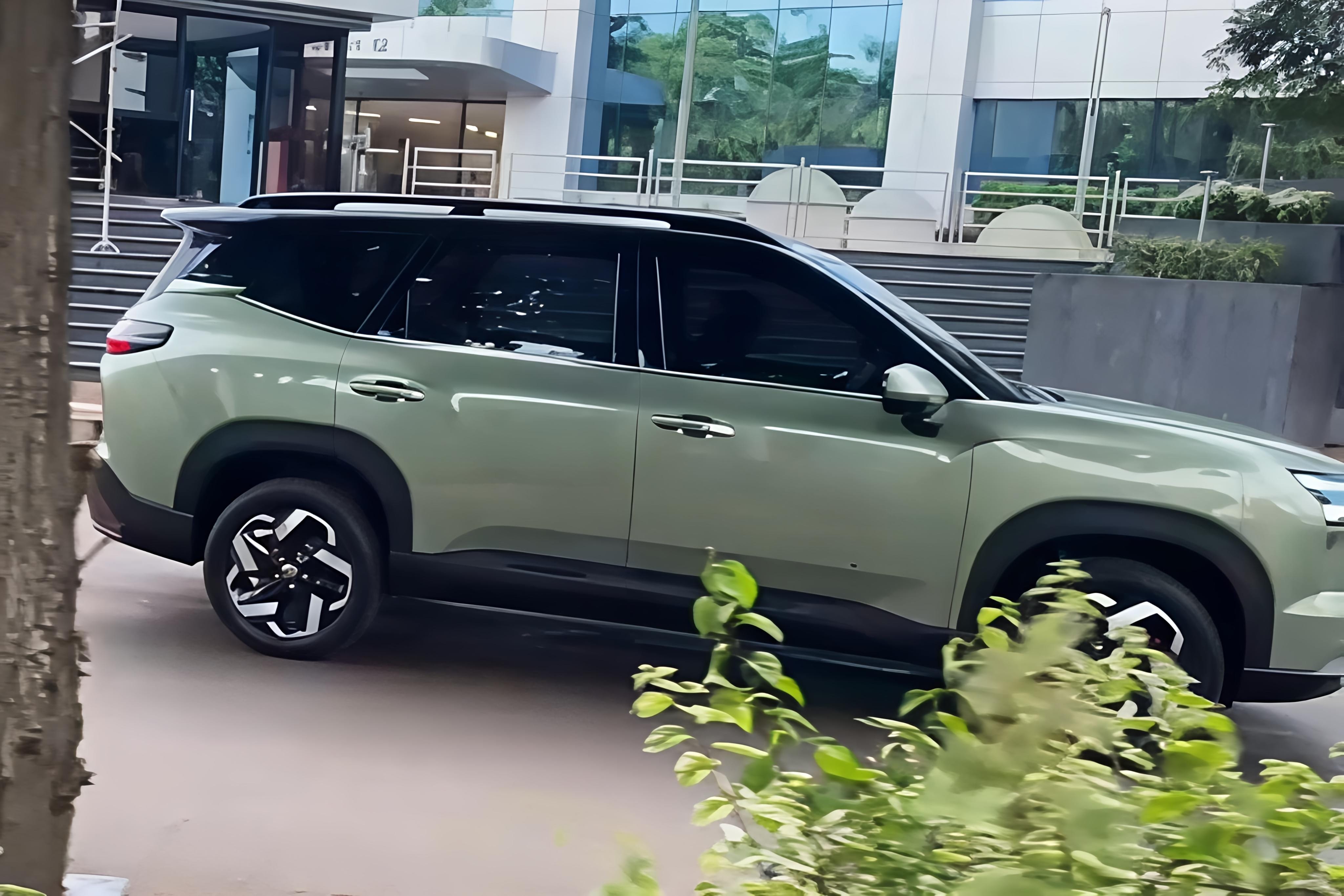
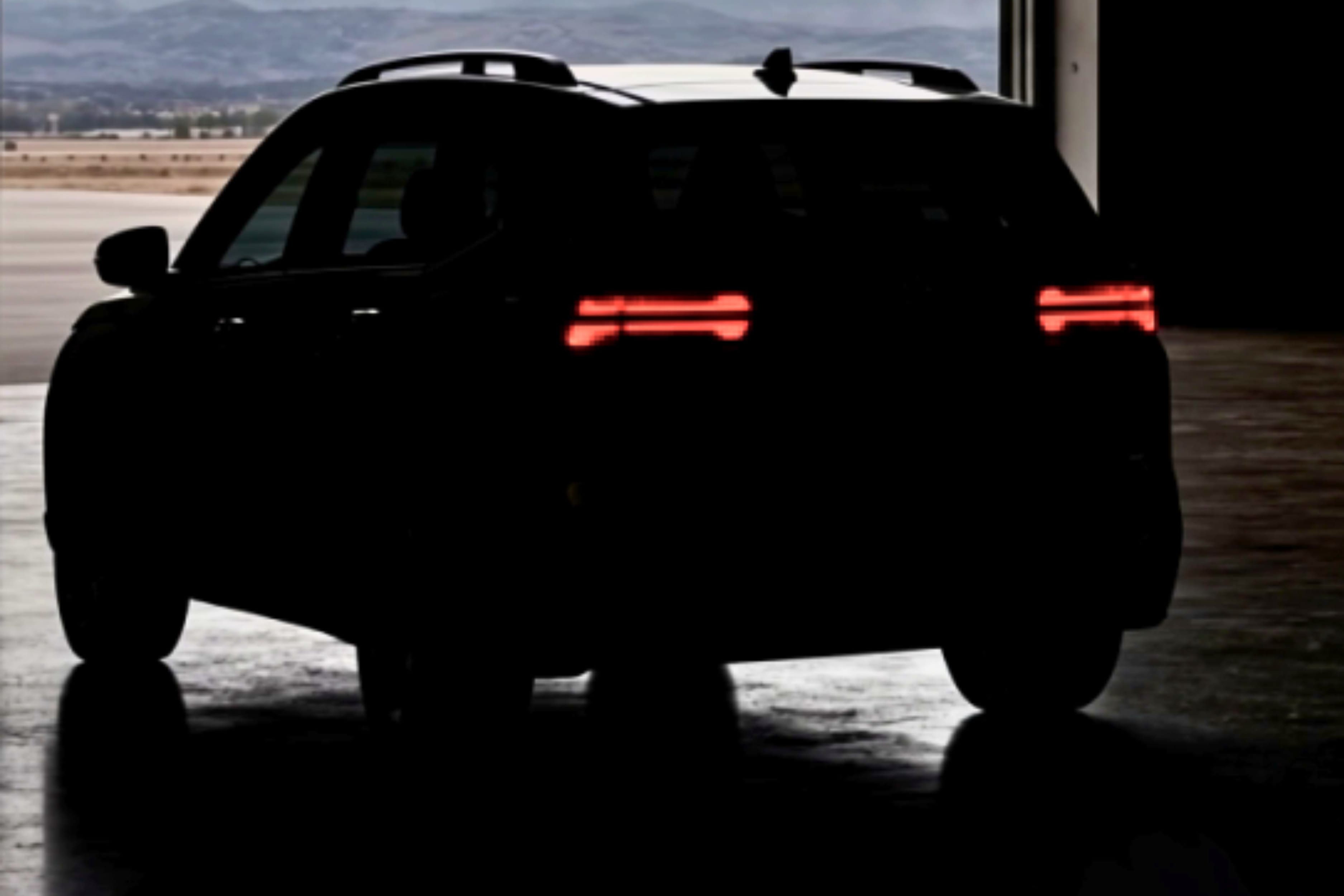
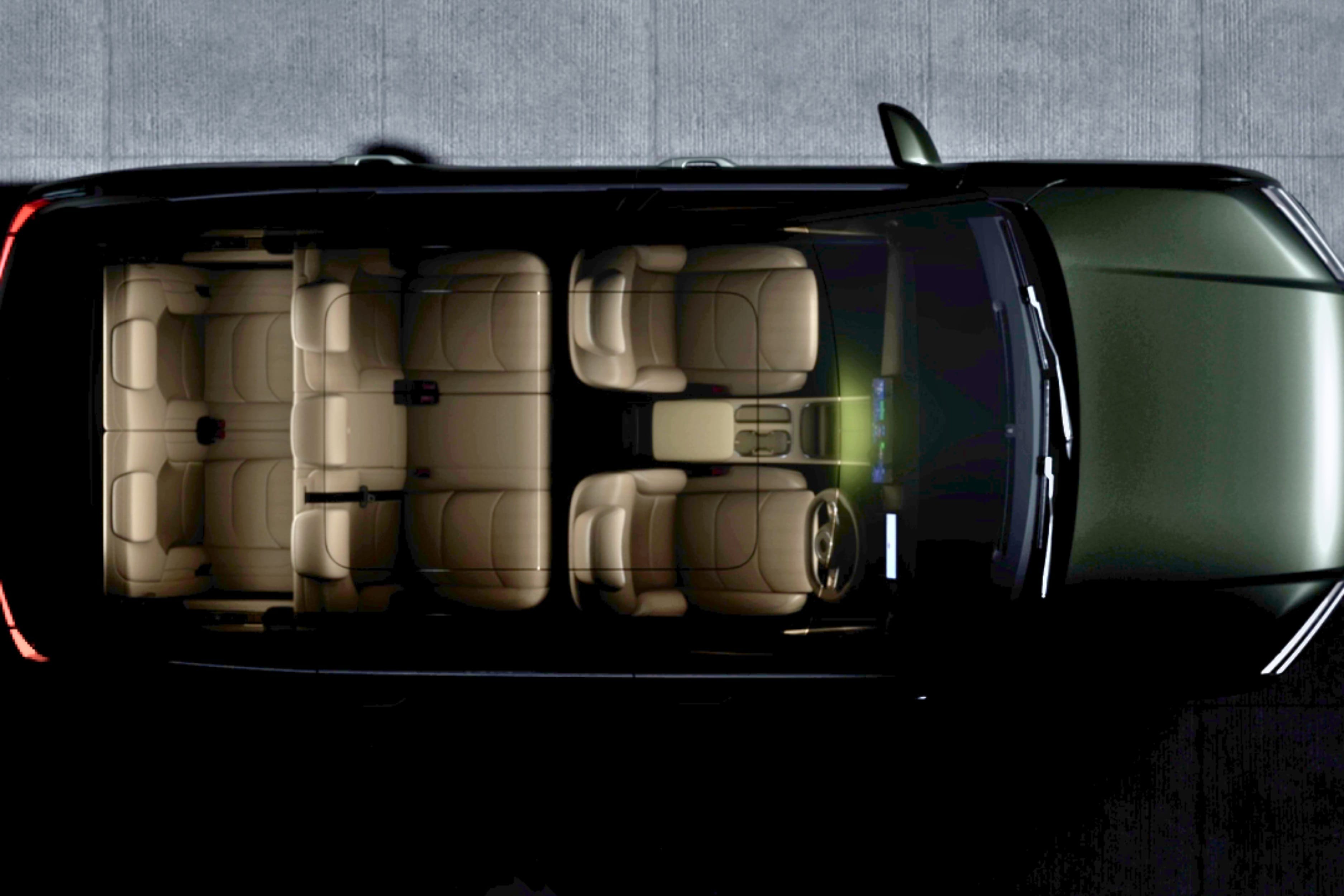
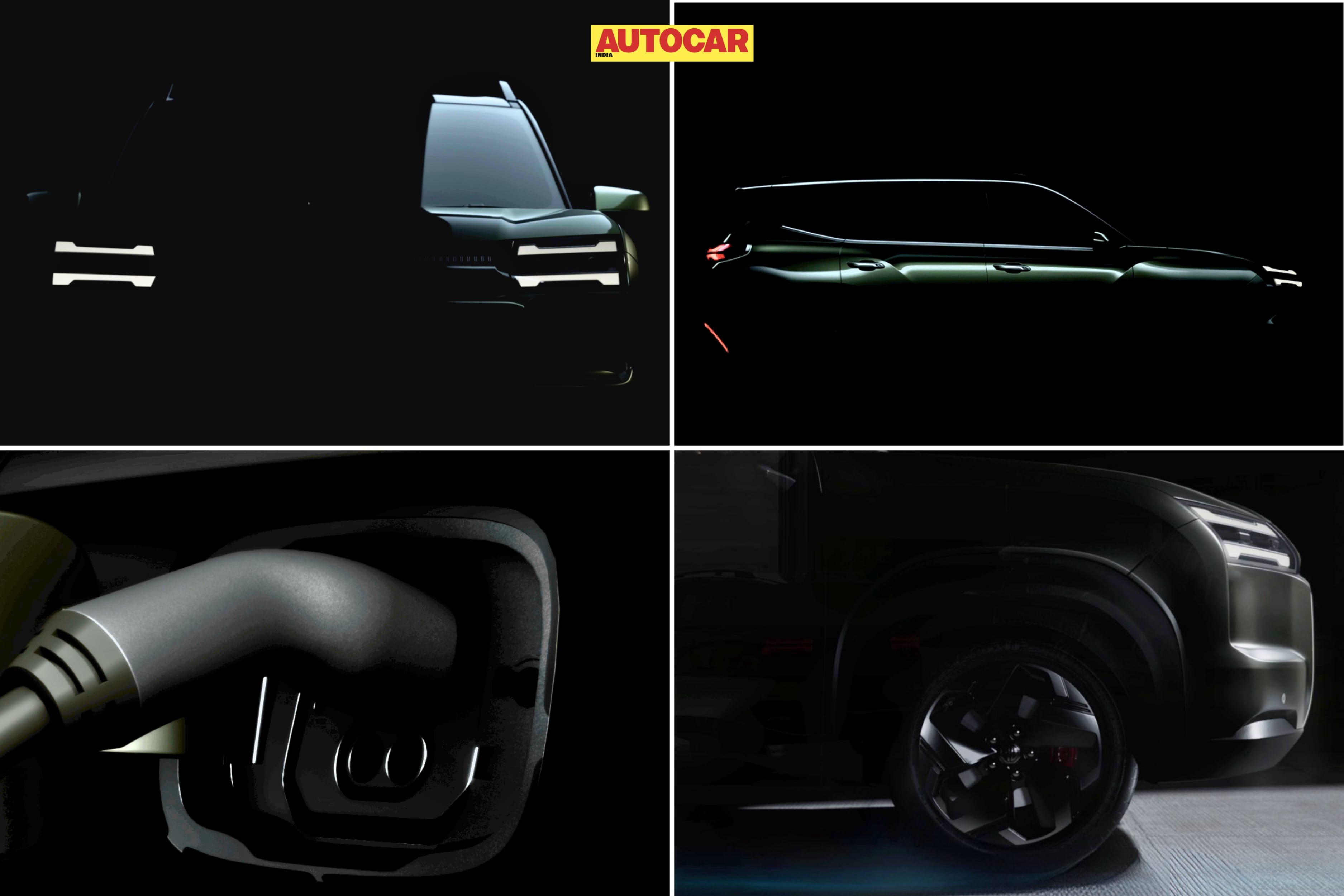
JSW MG’s upcoming Hector Tomahawk has been spied undisguised on our roads ahead of its launch. The new model will be the first in the brand’s portfolio to be underpinned by the ADAPT (Advanced Drive Architecture Platform Technology) platform. The carmaker has teased the SUV previously, giving a glimpse of its design details and its 7-seat capacity.
Hector Tomahawk to slot above the Hector in MG’s portfolio.
Likely to be powered by a 69.2kWh battery pack.
Expected to be priced between Rs 18 lakh and Rs 25 lakh.
JSW MG Hector Tomahawk EV: What was spied?
The undisguised test mule that was spied hinted at the Hector Tomahawk’s final design. The front end comes with LED headlamps with dual LED DRLs connected by a black trim that has two silver strips and the MG badge at the centre. Being an EV, it gets a blanked-off grille, with a rectangular air inlet lower down. The front bumper has a dual-tone design, with vertical air curtains on its sides. The bonnet has subtle ridges, while the car is finished in an olive green shade with a black roof and rails.
In profile, the sides look clean with chrome door handles, and the window line, finished in chrome, gets an upward kink at the back. Additionally, there’s plenty of black cladding for the squared-off wheel arches and door sills extending toward the rear bumper. The large alloy wheels were spotted with a dual-tone design. While the rear end was not spotted, it will likely come with wraparound tail-lamps and a dual-tone finish for the bumper.
JSW MG Hector Tomahawk EV: What to expect
The JSW MG Hector Tomahawk is based on the Wuling Eksion that’s sold in the Indonesian market. The former is expected to retain the latter’s dimensions of 4,745mm in length, 1,850mm in width, 1,755mm in height, and a wheelbase of 2,810mm. A previous teaser of the model confirmed a beige colour theme for the Hector Tomahawk’s cabin. While the dashboard is yet to be revealed, it is expected to retain the Eksion’s minimalistic layout. This includes screens for the driver’s display and infotainment system, a two-spoke steering wheel and a centre console with cupholders and storage spaces.
MG is yet to confirm the feature list it is expected to come with a powered tailgate, leatherette upholstery, powered and ventilated front seats, a 12.8-inch touch-infotainment head unit, an 8.8-inch digital driver’s display, a 50-watt wireless charger, automatic climate control with AC vents for the second and third rows, a 360-degree camera system, an electronic parking brake, six airbags, and an ADAS (Advanced Driver Assistance Systems) suite.
While exact powertrain specs of the Hector Tomahawk EV remain under wraps, the Eksion, for reference, is powered by a 69.2kWh LFP (Lithium Iron Phosphate) battery pack with a CLTC (China Light-Duty Vehicle Test Cycle) range of up to 530km. The battery is paired with a front-mounted motor delivering 201hp and 310Nm, and has a 160kph top speed.
As far as price is concerned, the MG Hector Tomahawk EV is expected to be priced between Rs 18 lakh and Rs 25 lakh. It will take on the likes of the Mahindra XEV 9S and the Kia Carens Clavis EV.
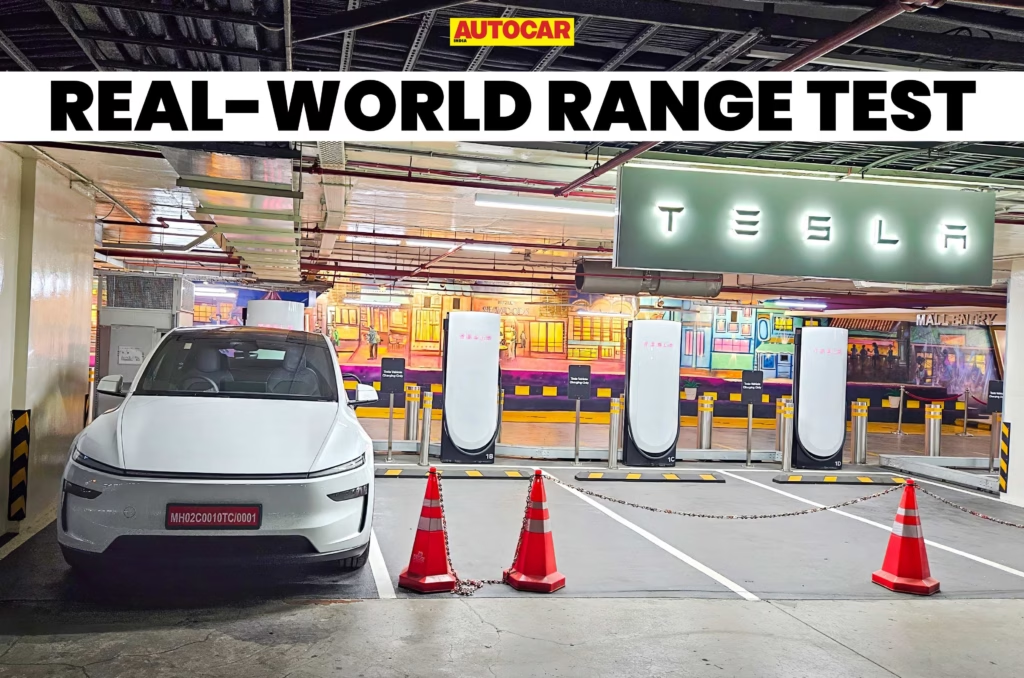
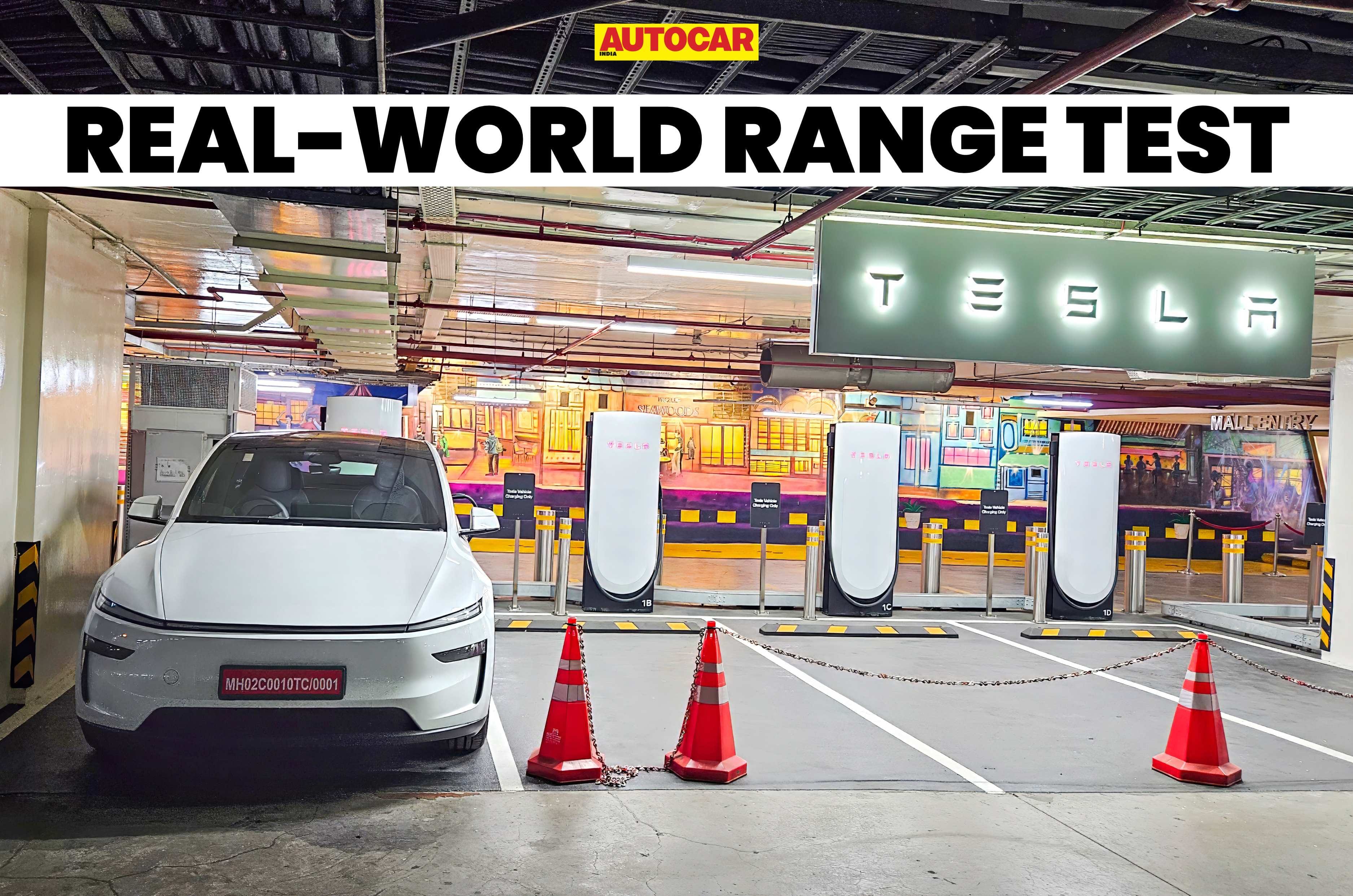
Tesla is offering the 2026 Model Y in two variants: Premium RWD and L Premium AWD, both with 60kWh. Priced at Rs 50.89 lakh (ex-showroom), the lower-spec Premium RWD comes with a rear-axle-mounted electric motor and a 60kWh LFP battery (64kWh gross) with a WLTP-claimed range of 500km. We put this 2026 Tesla Model Y RWD Premium variant to the test to calculate its real-world efficiency.
We used ‘Chill’ driving mode for our tests
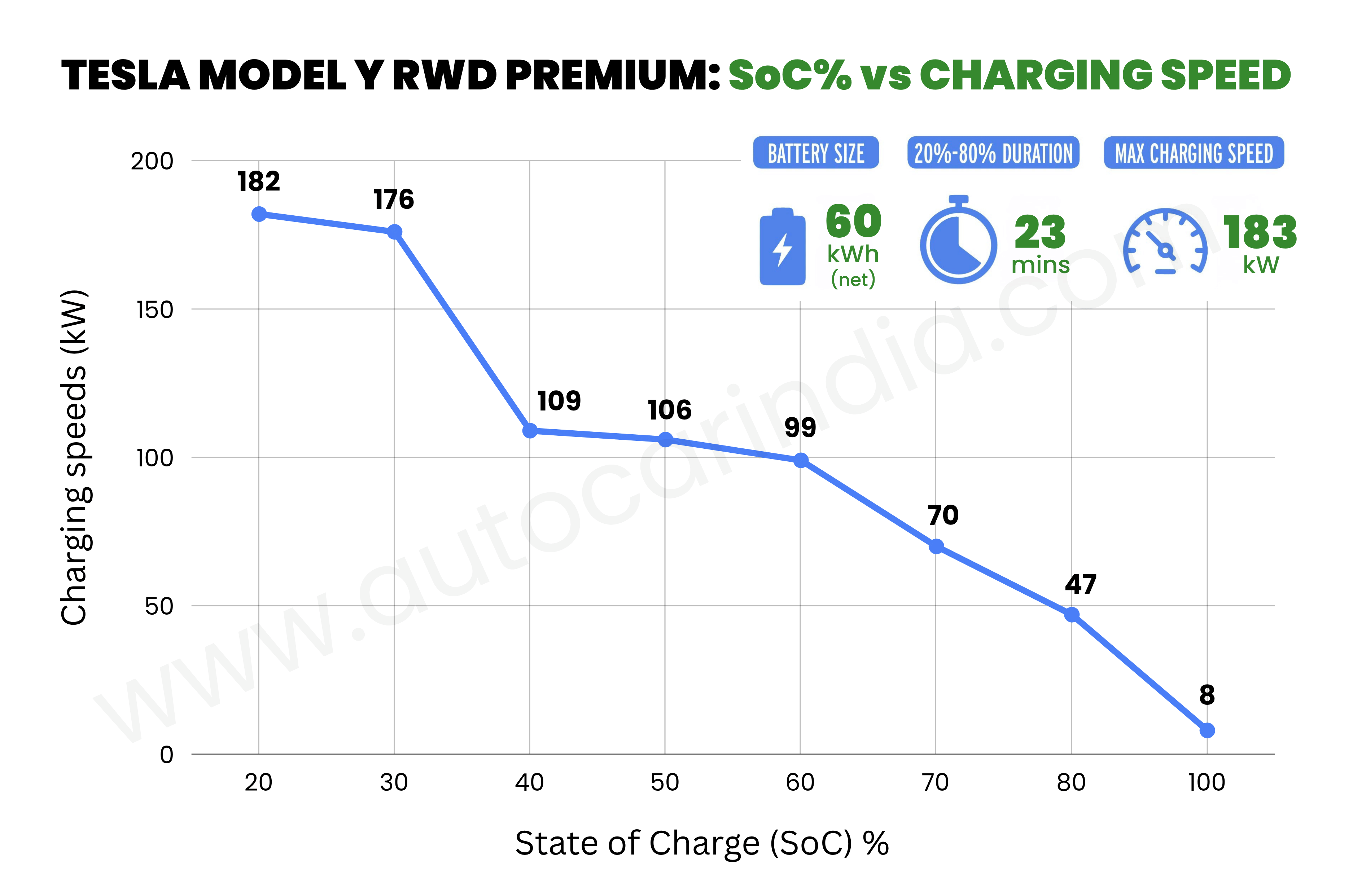
20-80 percent recharge takes 23 minutes on a 250kW Tesla Supercharger
Has a kerb weight of 1,928 kg
Tesla Model Y Premium RWD: Range, Efficiency tested
The Model Y is powered by a rear-mounted electric motor which produces 299hp and 420Nm of torque. It is equipped with two drive modes– Standard and Chill, the latter being an Economy setting, which we used for our tests. It also gets two levels of regenerative braking– Standard and Reduced. For our runs, we used ‘Standard’ (most aggressive) in the city and ‘Reduced’ on the highway.
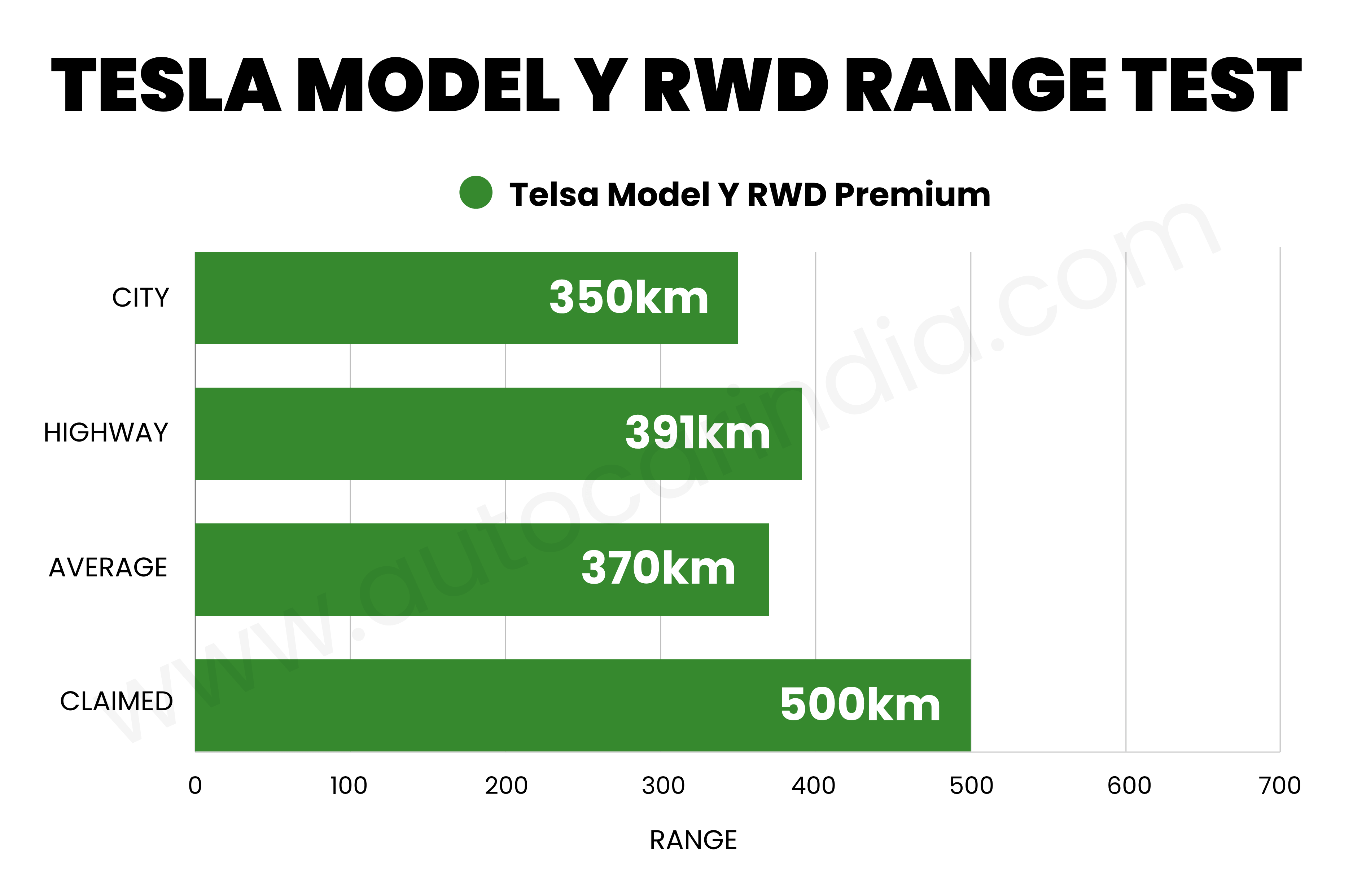
In the city, it delivered an efficiency of 5.84km/kWh extrapolating to a range of about 350km. On the highway, it was much more efficient, delivering 6.52km/kWh, resulting in a range of about 391km. With the overall efficiency of 6.18km/kWh, you can expect a real-world range of about 370km, which is reasonable for this 1.9-tonne crossover.
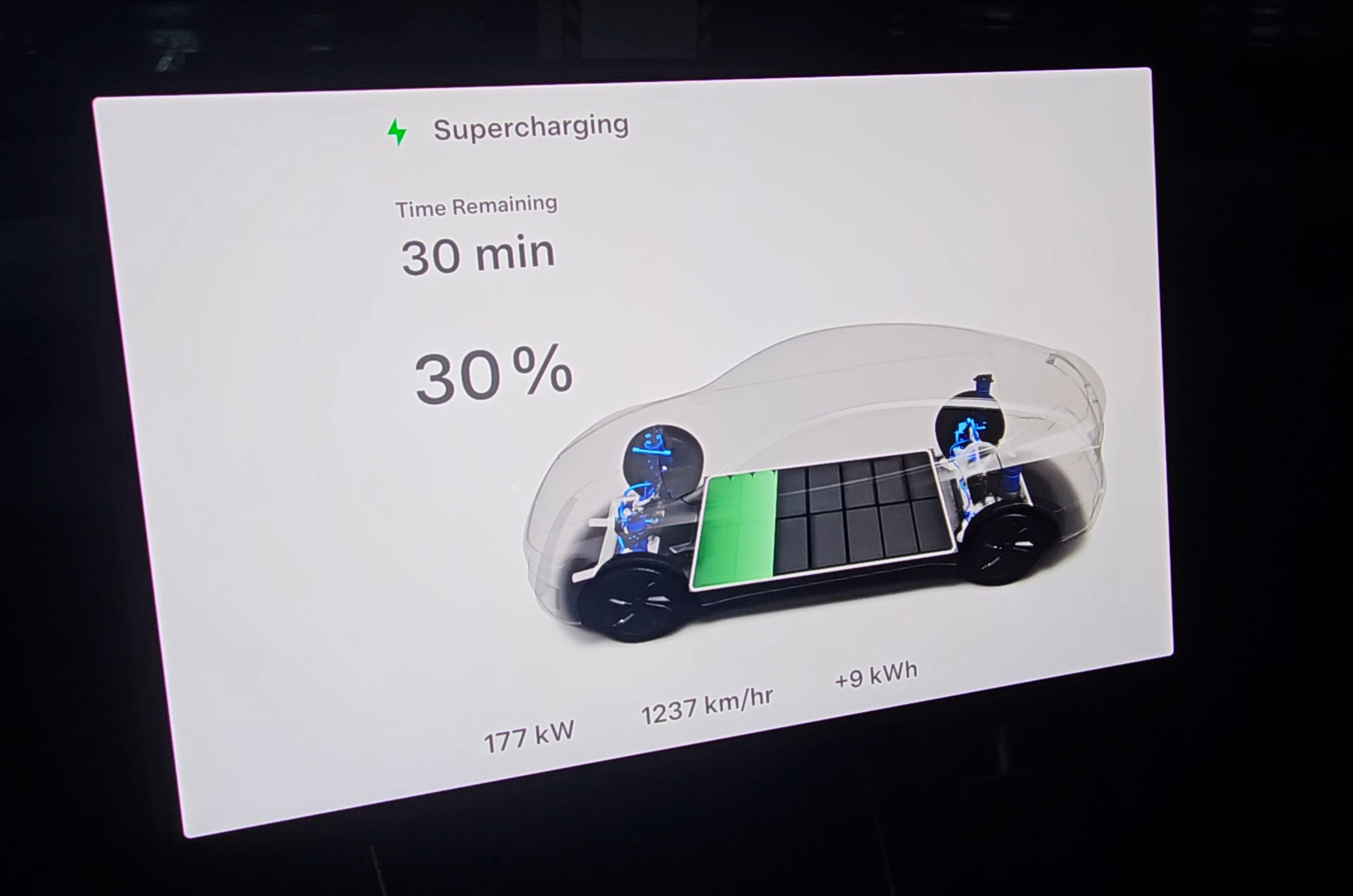
We also plugged the Model Y into a 250kW Tesla Supercharger. Notably, we noticed peak charging speeds (displayed) at 183kW. However, the charging speeds dropped rapidly from 176kW at 30 percent SOC to 109kW at 40 percent SOC, and thereafter the speeds kept dropping gradually throughout. As far as time goes, the Tesla Model Y’s battery charged from 20-80 percent SoC in 23 minutes, and it took another 30 minutes to charge from 80-100 percent.
Autocar India’s range testing
Before our real-world range tests, the battery of our test car was fully charged and we maintained tyre pressures in accordance with the manufacturer’s recommendations. The car was driven on a weekday in Mumbai city and on the adjoining state highway in a fixed loop, and we maintained the set average speeds. At the end of each cycle, we calculated the range based on the percentage charge consumed.
Throughout our tests, the climate control was set to 22deg C in a full-auto setting, and other electricals, such as the audio system, indicators and ventilated front seats, were used when required, just as a regular user would. We take pride in our testing data, which isn’t merely consistent but also gives users an accurate indication of what they can expect in the real world.
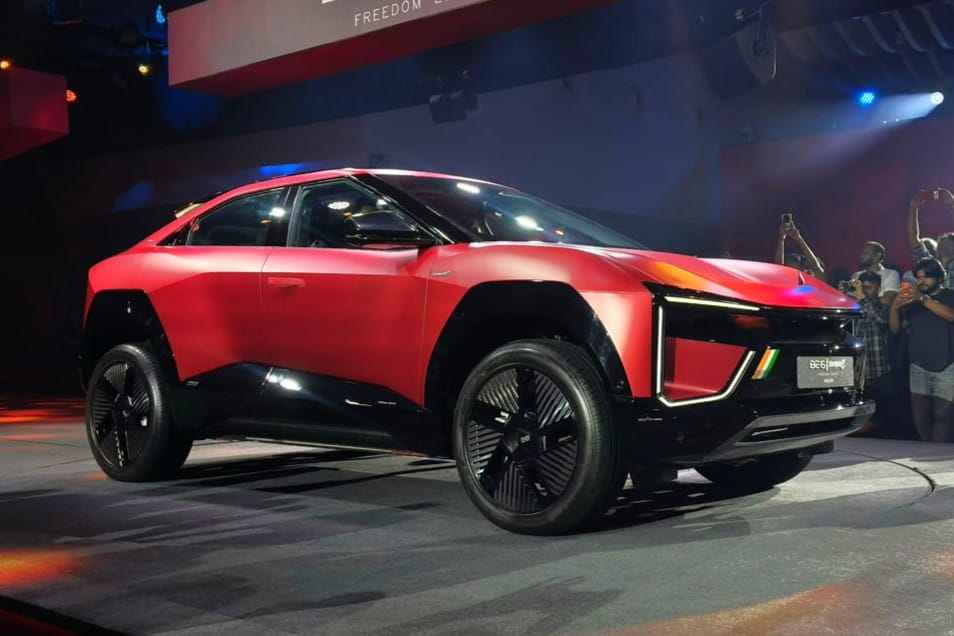
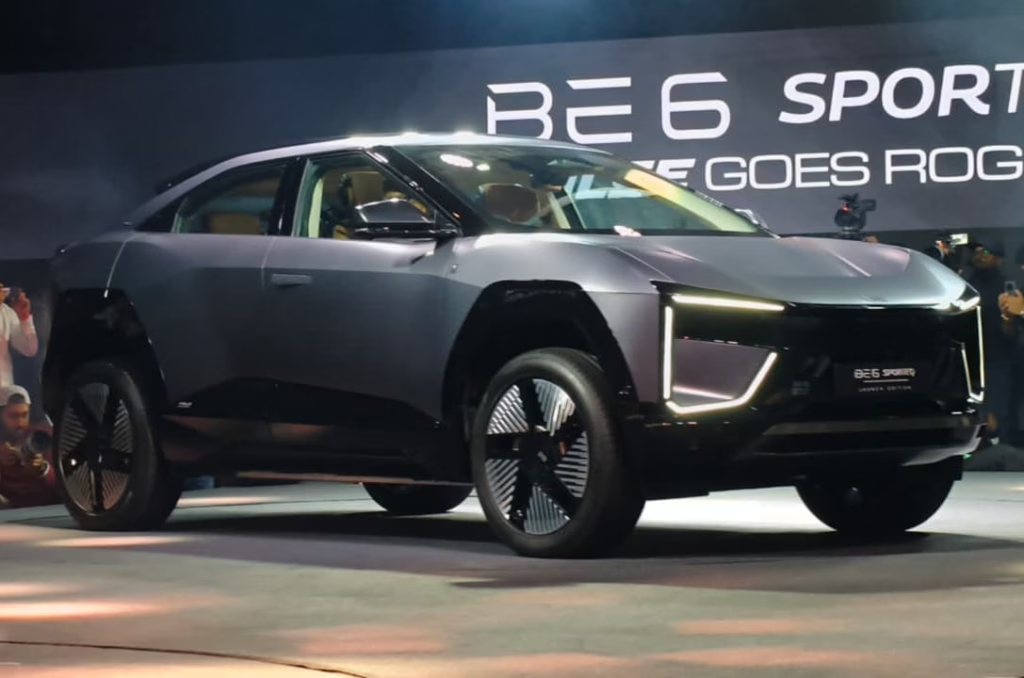
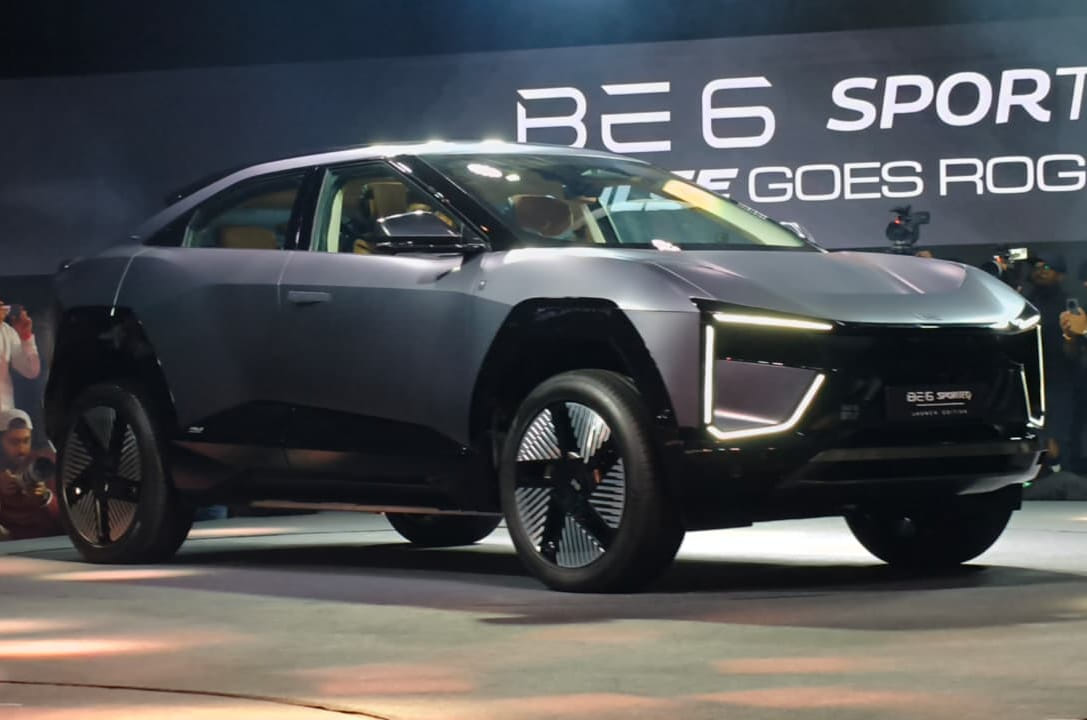
Mahindra has rejigged the line-up of its entry-level born-electric SUV, the BE 6, and added a ‘Sporteq’ suffix to its name. The BE 6 Sporteq also gets some additional features, a new 70kWh battery option, and more. Let’s take an in-depth look at the BE 6 Sporteq line-up.
Mahindra BE 6 Sporteq price and powertrains
Mahindra BE 6 Sporteq price list* (Rs, lakh)
59kWh
70kWh
79kWh
One
19.45
–
–
Two
20.95
–
–
Three
21.95
22.95
–
Three+
–
23.95
24.95
Four / Launch Edition
–
–
26.95
FE
–
–
24.45
FE Four
–
–
26.95
*Exclusive of home charger and installation costs.
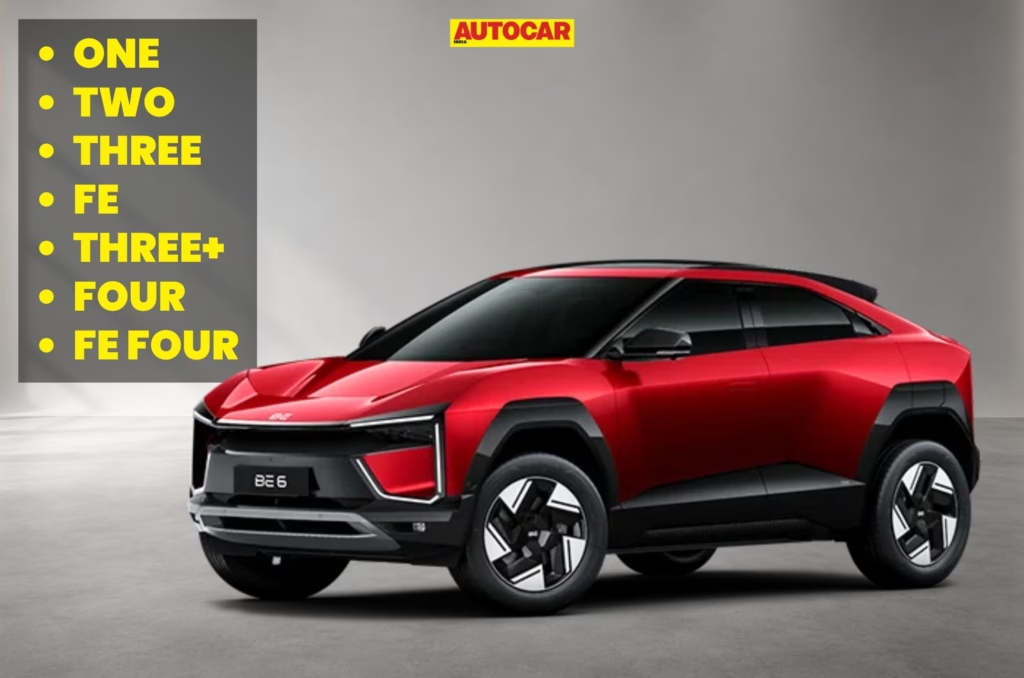
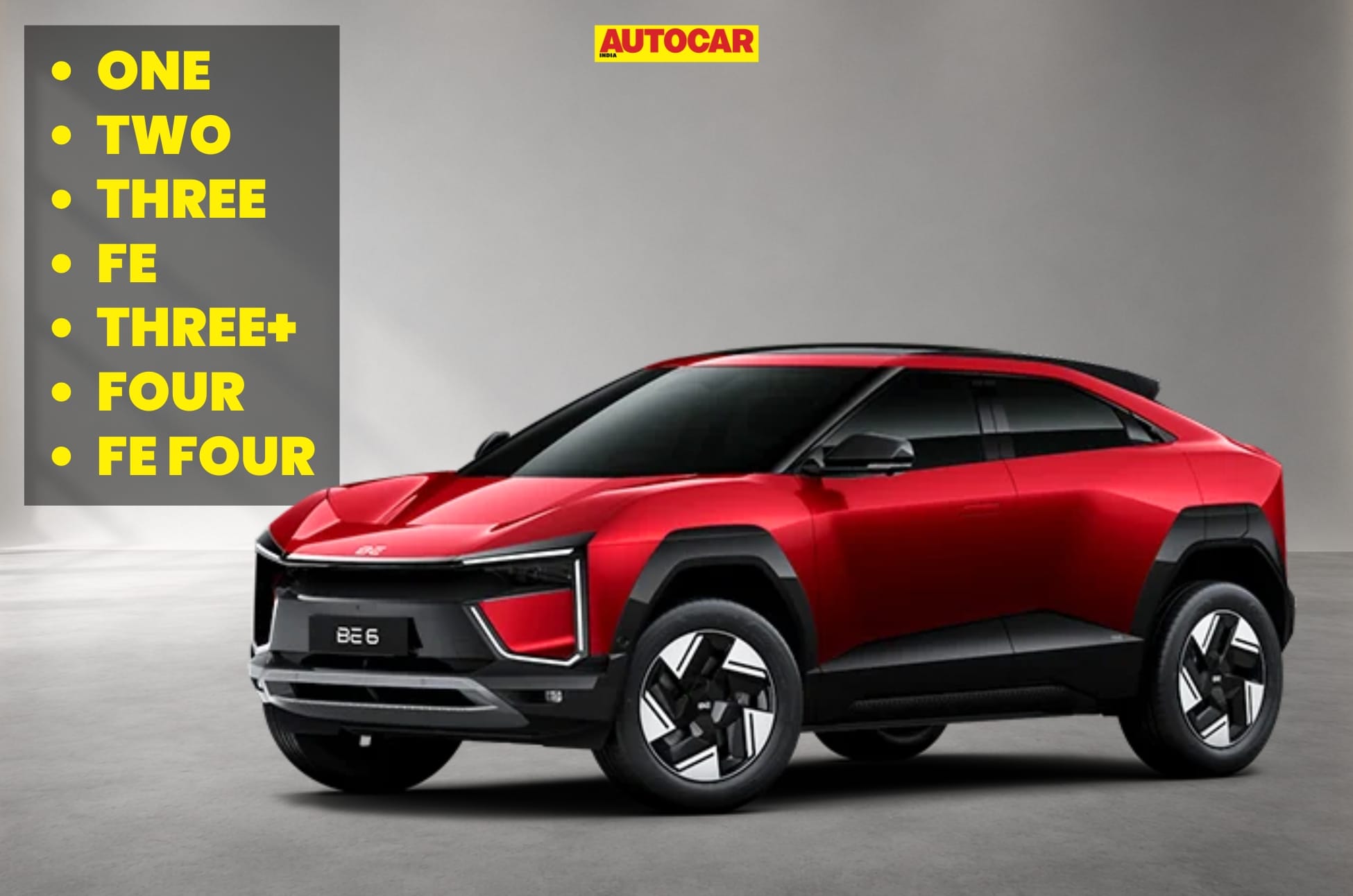
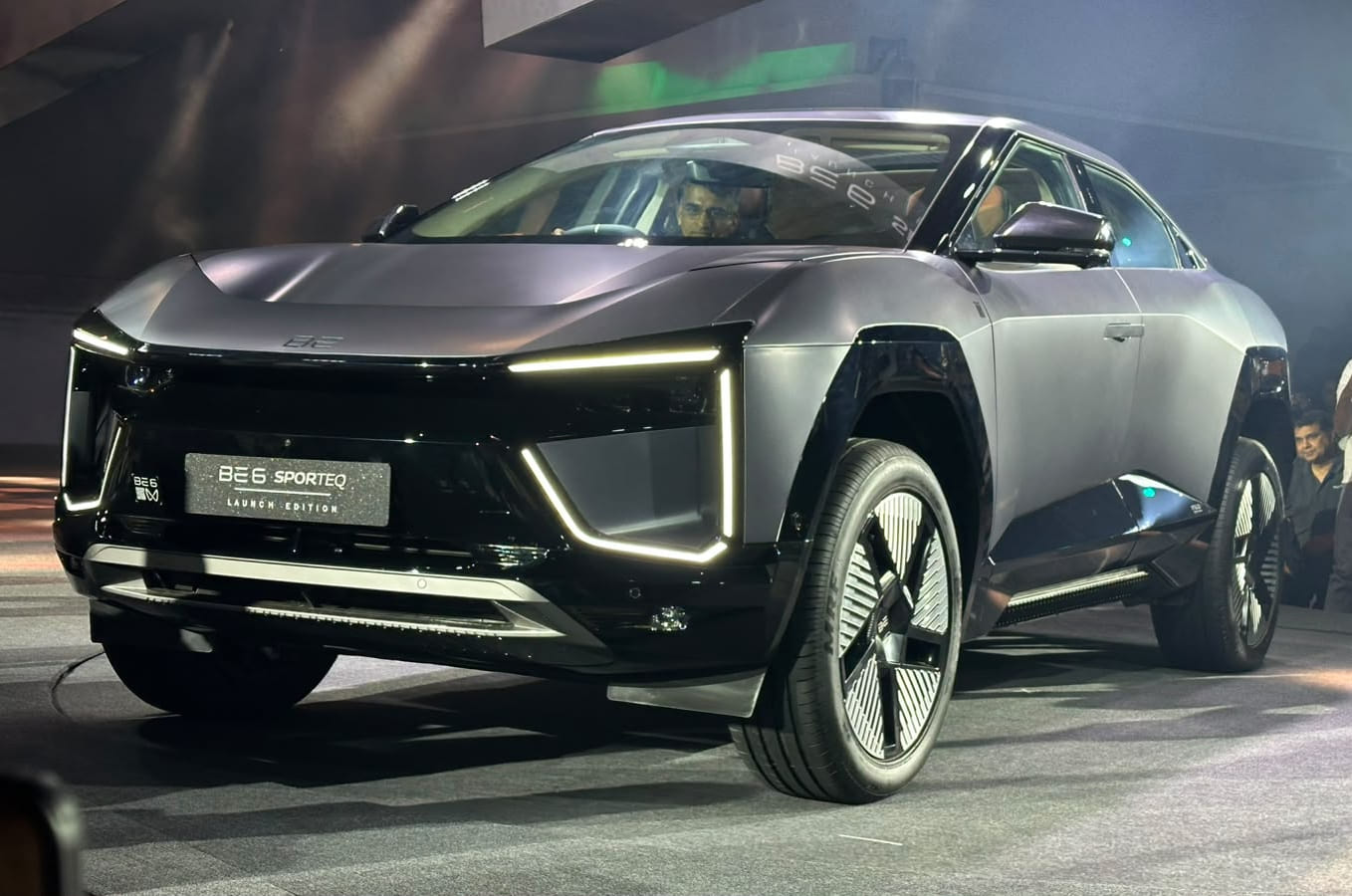
Pricing for the BE 6 Sporteq starts at Rs 19.45 lakh – a Rs 85,000 increase over the outgoing BE 6 – climbing all the way up to Rs 26.95 lakh. Seven BE 6 Sporteq variants are on offer, namely One, Two, Three, Three+, Four, FE, and FE Four. The ‘FE’ trims refer to the BE 6 Sporteq Formula E Freedom Edition, which gets sportier cosmetic tweaks. There’s a Launch Edition of the BE 6 Sporteq too, which is based on the top-spec Four variant and comes with unique exterior and interior finishes.
BaaS now available
Mahindra has also joined the BaaS (battery-as-a-service) bandwagon with the BE 6 Sporteq. With BaaS opted, the price of the lower-spec One and Two variants drops to Rs 11.45 lakh and Rs 12.95 lakh, respectively – a reduction of Rs 8 lakh – and the battery rental fee is pegged at Rs 3.75/km. BaaS pricing for other BE 6 Sporteq variants is yet to be revealed.
Mahindra BE 6 Sporteq powertrain details
59kWh
70kWh
79kWh
Motor setup
Rear
Rear
Rear
Power (hp)
231
245
286
Torque (Nm)
380
380
380
Drive layout
RWD
RWD
RWD
MIDC-claimed range (km)
548
651
683
10-100 percent 7.2kW AC charging (hrs)
8.7
10.2
11.7
10-100 percent 11.2kW AC charging (hrs)
6
7
8
20-80 percent DC charging time (mins)
20 (120kW)
20 (160kW)
20 (180kW)
The BE 6 Sporteq retains the 59kWh and 79kWh battery options of the prior model, but adds the 70kWh pack that was introduced with the Mahindra XEV 9S. As before, all batteries are wired up to a single 380Nm rear-mounted (RWD) motor, outputting 231hp in 59kWh guise, 245hp in 70kWh spec, and 286hp in the 79kWh variants. MIDC-certified range stands at 548km, 651km, and 683km, respectively. All three batteries support 11.2kW and 7.2kW AC charging, while DC charging support is capped at 120kW for the 59kWh, 160kW for the 70kWh, and 180kW for the 79kWh units.
Mahindra BE 6 Sporteq colour options
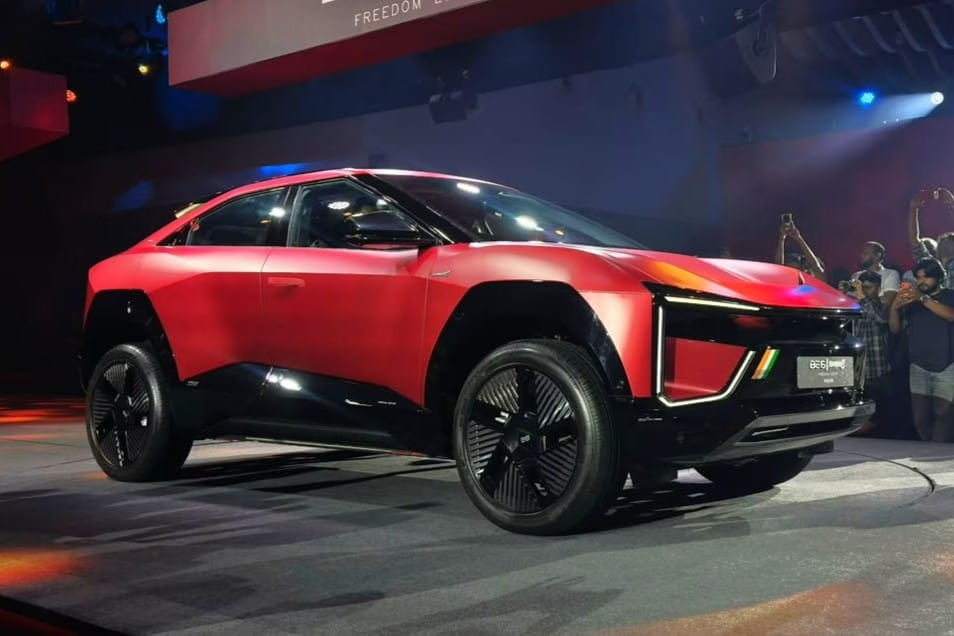
Mahindra BE 6 Sporteq Formula E Freedom Edition in Rosso Impulso.
Seven exterior colours are available for the standard BE 6 Sporteq, specifically Deep Forest, Desert Myst, Everest White, Firestorm Orange, Ruby Velvet (new addition), Stealth Black, and Tango Red. The FE variants get an exclusive Rosso Impulso finish, but can’t be had with the Deep Forest, Desert Myst, Tango Red, and Ruby Velvet option. Meanwhile, the BE 6 Sporteq Launch Edition comes finished solely in Graphite Storm.
A total of four colour schemes are on offer for the cabin. The base BE Sporteq One variant gets a Sage Green and Grey interior finish, while the Two, Three, Three+, and Four variants are finished in Racing Tan and Black. FE variants offer a unique Black and Firestorm Orange colour scheme, while the Launch Edition gets a Racing Tan finish (pictured).
Mahindra BE 6 Sporteq variant-wise features
One
Battery options: 59kWh
6 airbags
Rear-view camera with parking sensors
Tyre pressure monitoring system
Tyre inflator
Front and rear disc brakes
Rain-sensing wipers
ESP
Brake-by-wire technology
Electronic brake booster
Driver drowsiness detection system
Electronic parking brake
LED headlamps with DRLs
Automatic headlamps
Illuminated Mahindra emblems
LED tail-lamps
Height-adjustable driver’s seat
Push-button start/stop
Tilt and telescopic steering
12.3-inch infotainment touchscreen
12.3-inch digital driver’s display
Halo loop dashboard design
Wireless Android Auto and Apple CarPlay
Steering wheel with physical controls and illuminated Mahindra logo
Revive emergency function (grants extra range at 0 percent battery to reach charging station)
Multi-level regenerative braking
Frequency-dependent dampers
Cruise control
Virtual engine sounds
Connected car tech
Tribe Drive function to keep track of friends/family while on road trips
6-speaker sound system
OTA software updates
Cabin pre-cooling function
Electrically adjustable ORVMs with indicators
Three Type-C USB ports (15W and 65W up front, 65W rear)
Rear demister
Cooled console storage
60:40 split second-row seats with two-step recline
Second-row armrest
Two
Battery options: 59kWh
Features over One
16-speaker Harman Kardon sound system with Dolby Atmos
Digital Key and NFC card support
12.3-inch passenger screen (triple-display setup)
Parental lock for passenger screen
Horizontal dashboard layout
Leatherette-wrapped instrument panel and door trims
Leatherette steering wheel
Leatherette gear selector
540-degree camera (360 degrees + underfloor view)
Manual drive-video recording
TPMS with individual tyre monitoring
Front parking sensors
User profiles with automatic detection
Dual-zone climate control
Auto-dimming IRVM
Auto defogger
Wireless charging pad
Three / FE
Battery options: 59kWh, 70kWh, 79kWh
Features over Two
Fixed panoramic glass roof
LED DRLs with welcome/goodbye animations
Sequential front and rear indicators
Additional Type-C USB port in second row
Acoustic-laminated door glass
6-way powered driver’s seat with memory (Three only)
Ventilated front seats (Three only)
ORVM reverse auto-dip function (Three only)
Adaptive suspension (FE only)
Dual 12.3-inch screens with halo dashboard (FE only)
Unique virtual engine sounds (FE only)
Carpet lamps (FE only)
Three+
Battery options: 70kWh, 79kWh
Features over Three
Auto regen function
C-shaped front LED DRLs with animation
Front fog lamps
C-shaped LED tail lamps
Personalised messaging and animations in rear light bar
Cornering lamps
Auto Booster lamps
Passive keyless entry
Flush door handles
Powered tailgate with gesture control
Music and light show function
Ambient lighting
Carpet lamps
Level 2 ADAS (1 radar, 1 camera)
Second front wireless charging pad
Parcel shelf
Four / FE Four
Battery options: 79kWh
Features over Three+
Adaptive suspension
Knee airbag (7 airbags total)
Google Gemini integration in infotainment system
Gaming and karaoke suites
Private audio function (routes infotainment audio to Bluetooth device)
Dolby Vision
Heads-up display
Auto park assist
Cabin air purifier
Ambient lighting elements in panoramic glass roof
Level 2+ ADAS (5 radars, 1 camera)
Dashcam function with Intrusion Alert
Approach and walk-away lock/unlock
One-touch auto up/down driver window
Touch-capacitive start/stop button (FE Four only)
Touch-capacitive virtual engine sound button (FE Four only)
Dual 12.3-inch displays with halo dashboard (FE Four only)
Which Mahindra BE 6 Sporteq variant should you buy?
Three is our value pick
The BE 6 Sporteq Three variant offers the best value and most choice in the line-up. It gets all the crucial safety kit from the One and Two varants, you can choose from all three battery options, and the sportier-looking FE variant is available as an alternative too. Moreover, the BE 6 Sporteq Three packs nice-to-have goodies like a triple-screen setup, panoramic glass roof, ventilated front seats, a powered driver’s seat, welcome/goodbye sequences for the DRLs, and more.
Mahindra has launched the BE 6 Sporteq at a starting price of Rs 19.45 lakh (ex-showroom). Positioned as the new flagship variant in the BE 6 range, the Sporteq brings a redesigned dashboard, a new triple-screen layout, new connected features and fresh interior trim, while retaining the existing powertrain options. The standard BE 6 is currently priced between Rs 18.90 lakh and Rs 26.90 lakh (ex-showroom), with the Sporteq commanding a premium.
Triple 12.3-inch screen layout and redesigned dashboard
No mechanical changes over the standard BE 6
New TEQ software features including Google Gemini integration
Mahindra BE 6 Sporteq exterior
On the outside, the Sporteq retains the BE 6’s coupe-SUV styling, including the LED lighting, sharp body creases, flush-fitting door handles and 20-inch alloy wheels. The primary changes on the Sporteq launch edition are a ‘Sporteq’ badge and a new Graphite Storm paint shade.
Mahindra BE 6 Sporteq interior and features
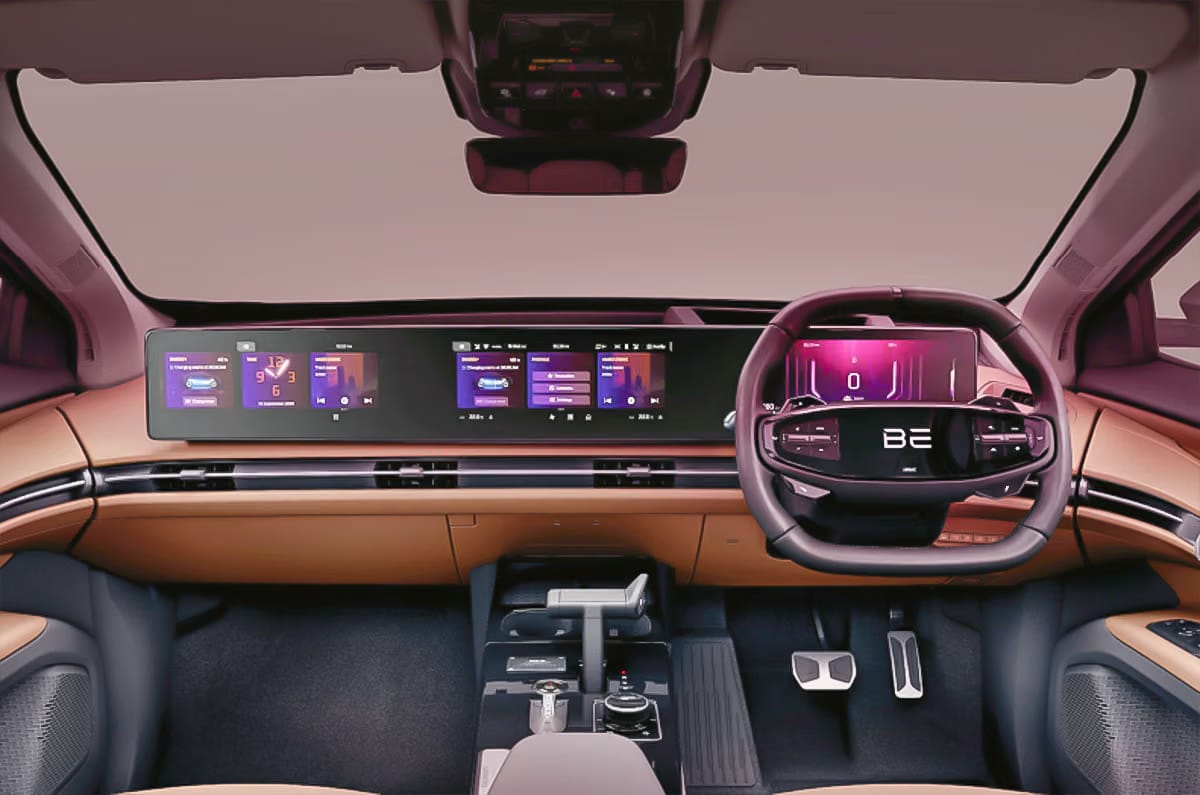
The biggest changes are inside the cabin. The Sporteq replaces the standard dual-screen setup with three 12.3-inch displays, similar to the layout seen on the XEV 9e and XEV9s. It also gets a redesigned dashboard that replaces the earlier halo-like loop around the driver with a cleaner horizontal layout.
The new dashboard improves access to the wireless charging pad and USB Type-C ports, while also creating additional storage space. The Sporteq also introduces a black-and-tan cabin theme, with revised upholstery and dashboard trim.
The BE 6 SportEQ builds on the regular BE 6’s equipment list while adding a number of new connected and software-based features. Mahindra has introduced six new “TEQ” technology suites, bringing features centred around personalisation, connectivity and vehicle functions.
New additions include TEQ_Me, which automatically recognises the driver and loads a personalised user profile, TEQ_Talk with Google Gemini integration, and TEQ_xting, which allows owners to display personalised messages on the rear tailgate display.
The SUV also gets TEQ_Drive, which adds features such as a custom drive mode, Tribe Drive, Drift Mode, Acceleration Boost and the new Revive SOS function. Mahindra says Revive SOS can provide enough energy to drive up to 13km to the nearest charging station after the battery reaches zero percent. The feature can be used up to five times over the battery’s lifetime.
Apart from these Sporteq-specific updates, the SUV continues to offer features such as a panoramic glass roof, Harman Kardon audio system, ventilated front seats, dual-zone climate control, wireless Apple CarPlay and Android Auto, connected car technology, a 360-degree camera, ADAS and multiple drive modes.
Mahindra BE 6 Sporteq powertrain
The BE 6 Sporteq continues with Mahindra’s existing electric powertrain. It is offered with 59kWh and 79kWh battery packs paired with a rear-mounted electric motor producing up to 286hp and 380Nm. The larger battery pack delivers a claimed MIDC range of up to 682km.
Charging options and performance figures remain unchanged from the standard BE 6.
Mahindra has unveiled a new Freedom Edition of the BE 6 Formula E. This version debuts less than a year after the prior BE 6 Formula E edition went on sale, and notably eschews its more aggressive styling cues in favour of the standard BE 6’s design, along with a few unique touches.
Mahindra BE 6 Formula E Freedom Edition exterior and interior
As noted previously, the BE 6 Formula E Freedom Edition no longer sports the previous version’s slim front and rear DRLs, circular LED headlamps, and chunkier bumpers. Instead, it looks quite similar to the standard BE 6, with C-shaped front and rear DRLs and sleeker bumpers. That said, the Freedom edition retains ‘Formula E’ badging on the front fenders, and additionally gets a new Rosso Impulso colour option and tri-colour decals peppered across the bodywork.
Inside, the BE 6 Formula E Freedom Edition features no changes to the overall layout, but gets special touches like a Firestorm Orange colour scheme, leatherette and suede upholstery, a ‘Formula E Freedom Edition’ plaque, Formula E decals on the panoramic glass roof, and more. Notably, the updated Formula Edition continues to sport the halo-like loop on the dashboard that separates the driver and co-driver, instead of the more conventional layout seen in the BE 6 Sporteq. That also means it comes with dual 12.3-inch screens, not a triple-screen setup.
Coming to creature comforts, the BE 6 Formula E Freedom Edition packs a 16-speaker Harman Kardon sound system, dual-zone climate control, a wireless charging pad, dual-zone climate control, ambient lighting, and more. It gets a 540-degree camera (360 degrees + underfloor view) as well, which neither the standard BE 6 nor the prior Formula E were offered with.
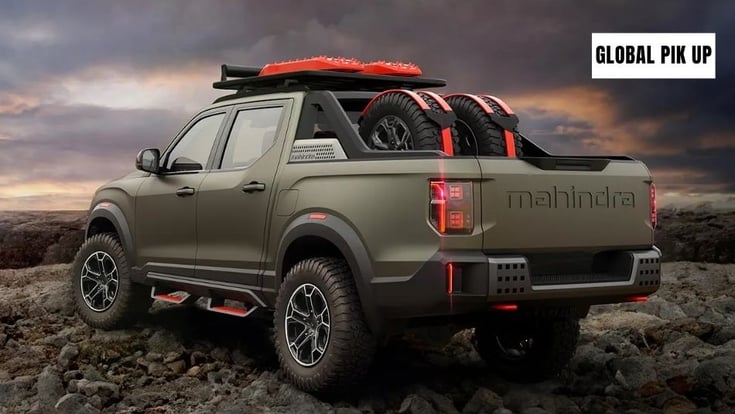
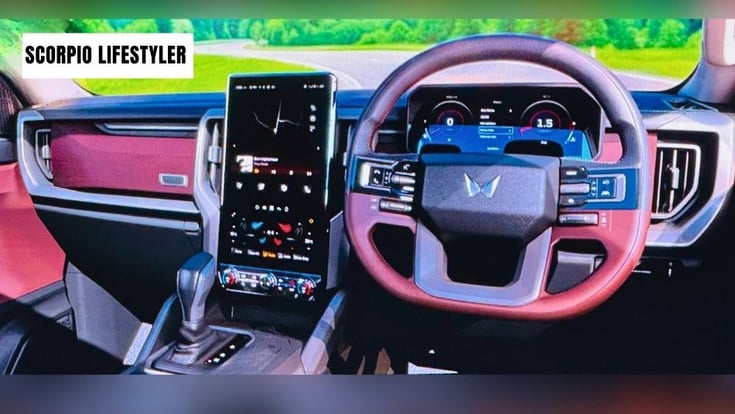
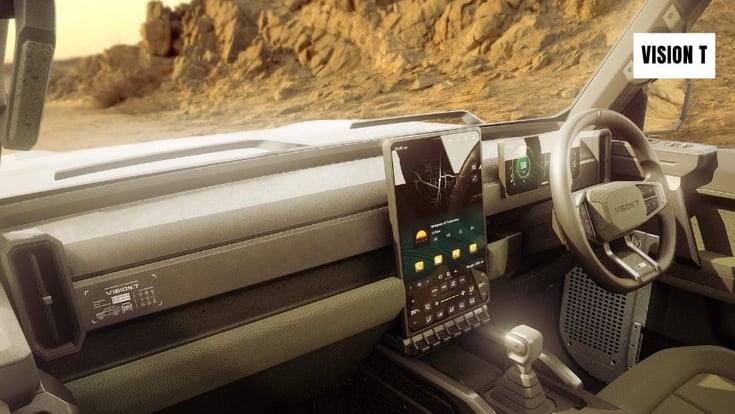
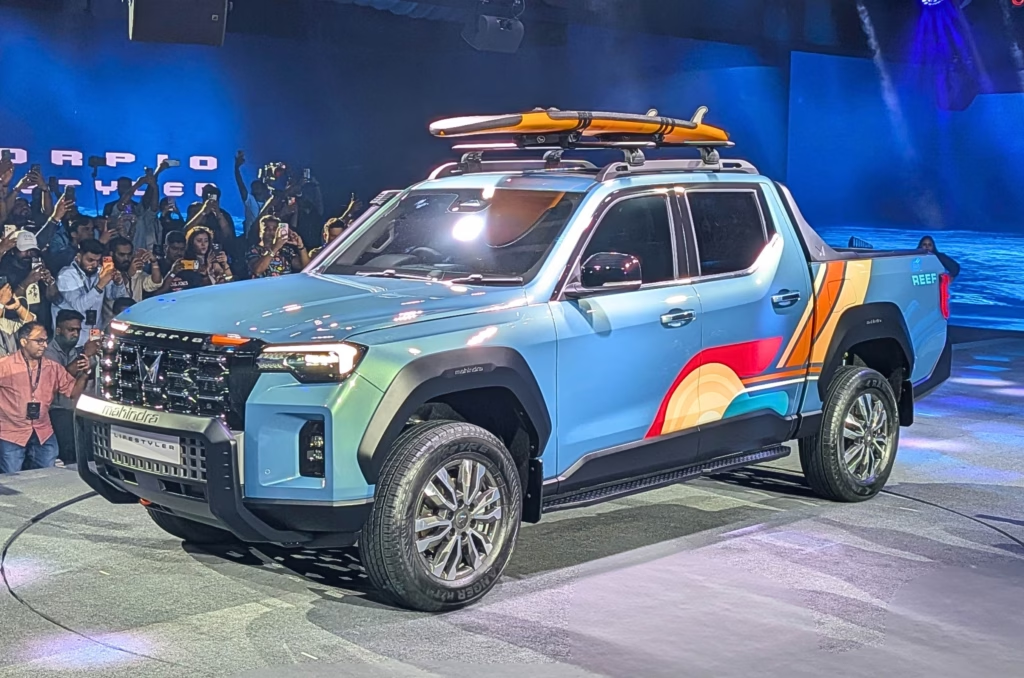
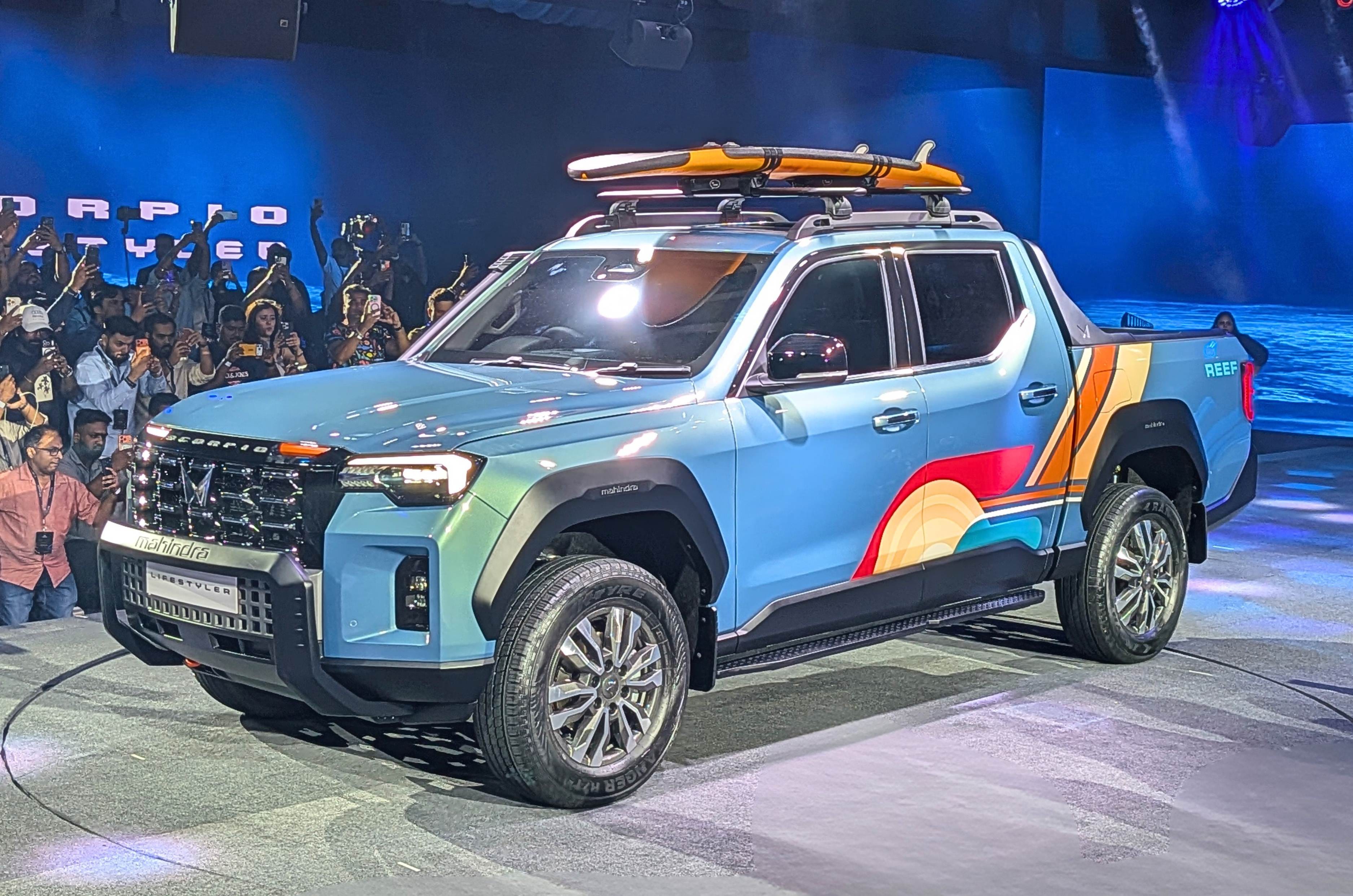
The Mahindra Scorpio Lifestyler has marked a comeback for a pickup model under the Scorpio nameplate, after the Scorpio Getaway was discontinued in 2019. The Scorpio Lifestyler’s exterior design finds its roots in the 2023 Mahindra Global Pik Up concept, while the interior is inspired by the 2025 Vision T concept. In the production-spec version, the exterior and interior design have undergone noticeable changes. Here’s a detailed account of all the changes.
Mahindra Scorpio Lifestyler production vs concept: Exterior changes
Gets a boxier grille, but similar headlights and front bumper
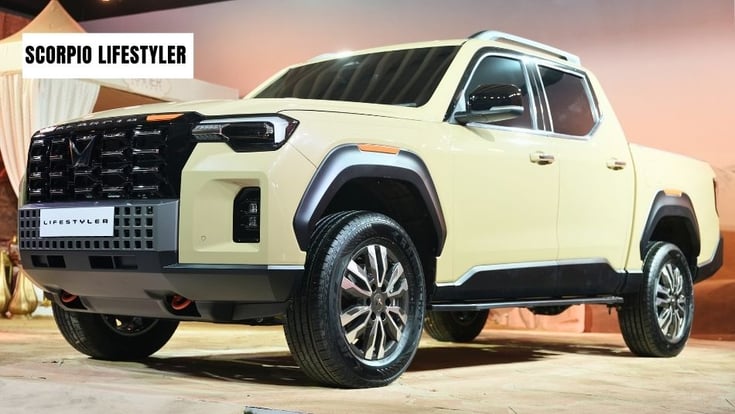
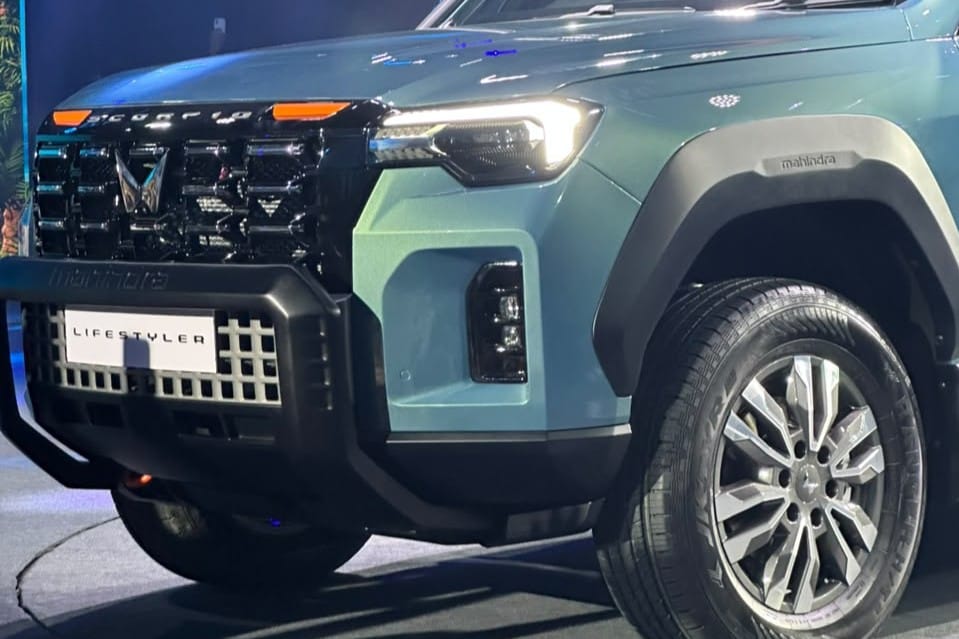
At the front, the Mahindra Scorpio Lifestyler has similar LED headlights to the Global Pik Up concept, featuring L-shaped LED DRLs and projector lighting elements. The grille, however, is boxier on the production-spec model and has a ‘Scorpio’ badge. The front bumper features square elements for the air inlays and vertically stacked LED fog lamps. The tow hook is finished in a contrasting colour, similar to the Global Pik Up concept.
The doors look identical, but the alloys, wheel arches and side steps are different
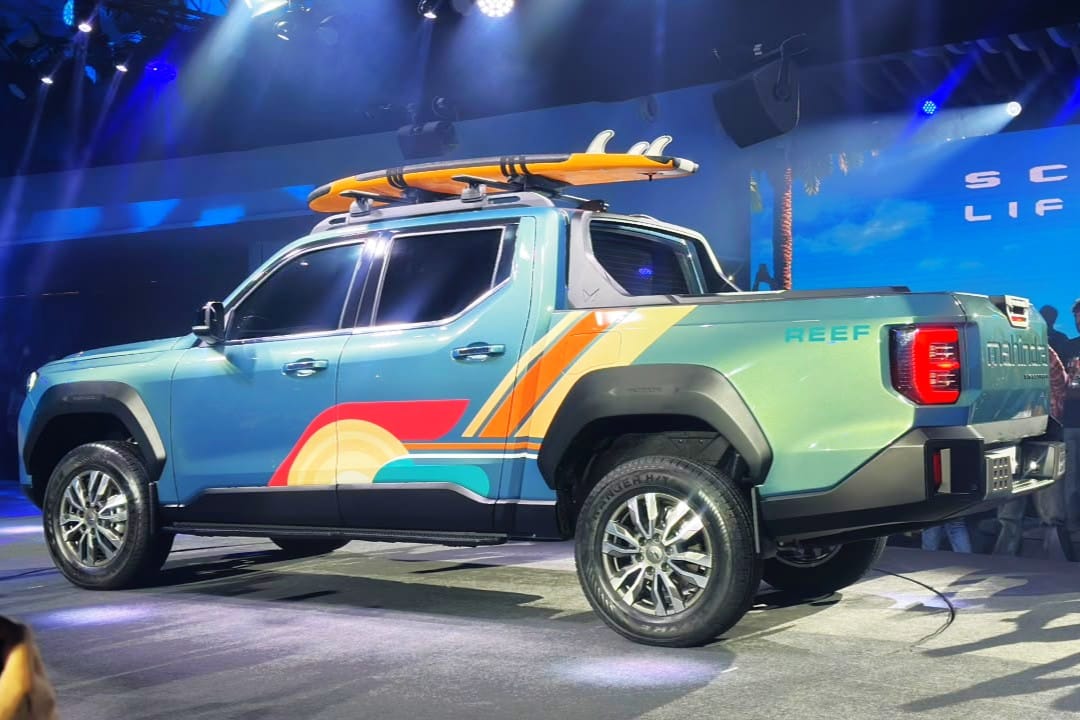
Not much has changed on the production-spec Scorpio Lifestyler from the Global Pik Up concept. The door and truckbed design are identical. A closer look, however, reveals that the production model gets angular wheel arches, a new set of alloy wheels, simpler side steps and a slightly revised roll cage. A snorkel is offered as an accessory on the Scorpio Lifestyler.
Rear design is mostly similar, the only change being a new model-specific badge
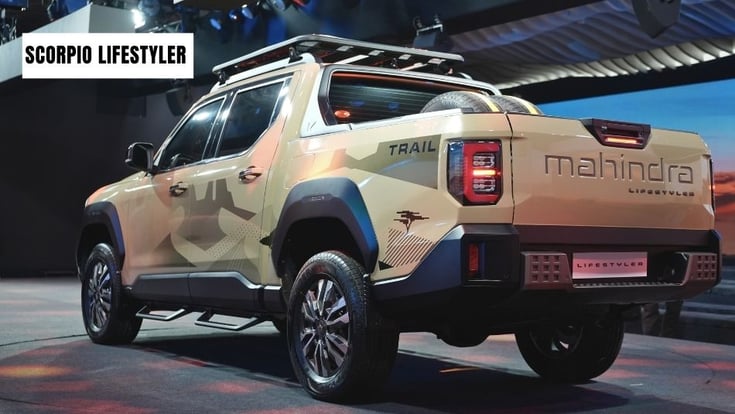
At the rear, the embossed ‘Mahindra’ name on the tailgate has been retained, but the production-spec model also gets a ‘Lifestyler’ badge. The wraparound taillights get 3-shaped LED lighting elements compared to the C-shaped units in the concept. Look closely, and you will spot a rear camera housed near the tailgate handle, which was absent on the concept. The rear bumper, with a silver finish in the centre and some small square elements, is identical to both versions of the Mahindra pickup truck.
The Global Pik Up concept’s loading bay featured two spare wheels, which have been removed on the production-spec model.
Mahindra Scorpio Lifestyler production vs concept: Interior changes
Interior draws heavy inspiration from the 2025 Mahindra Vision T concept
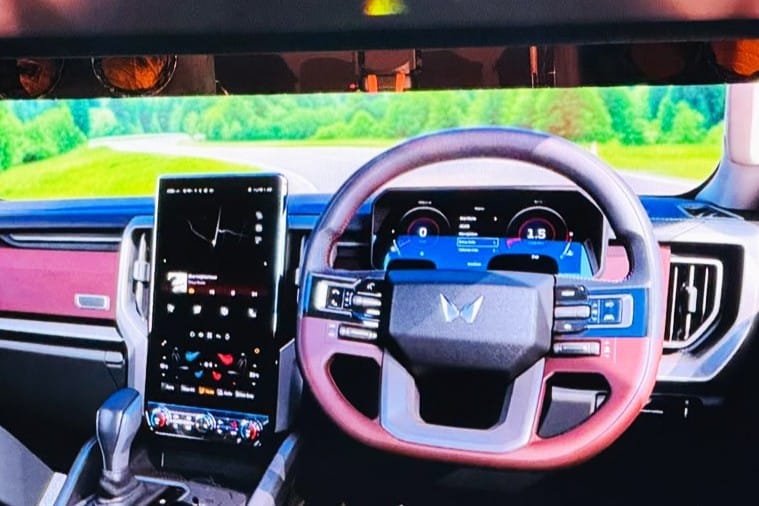
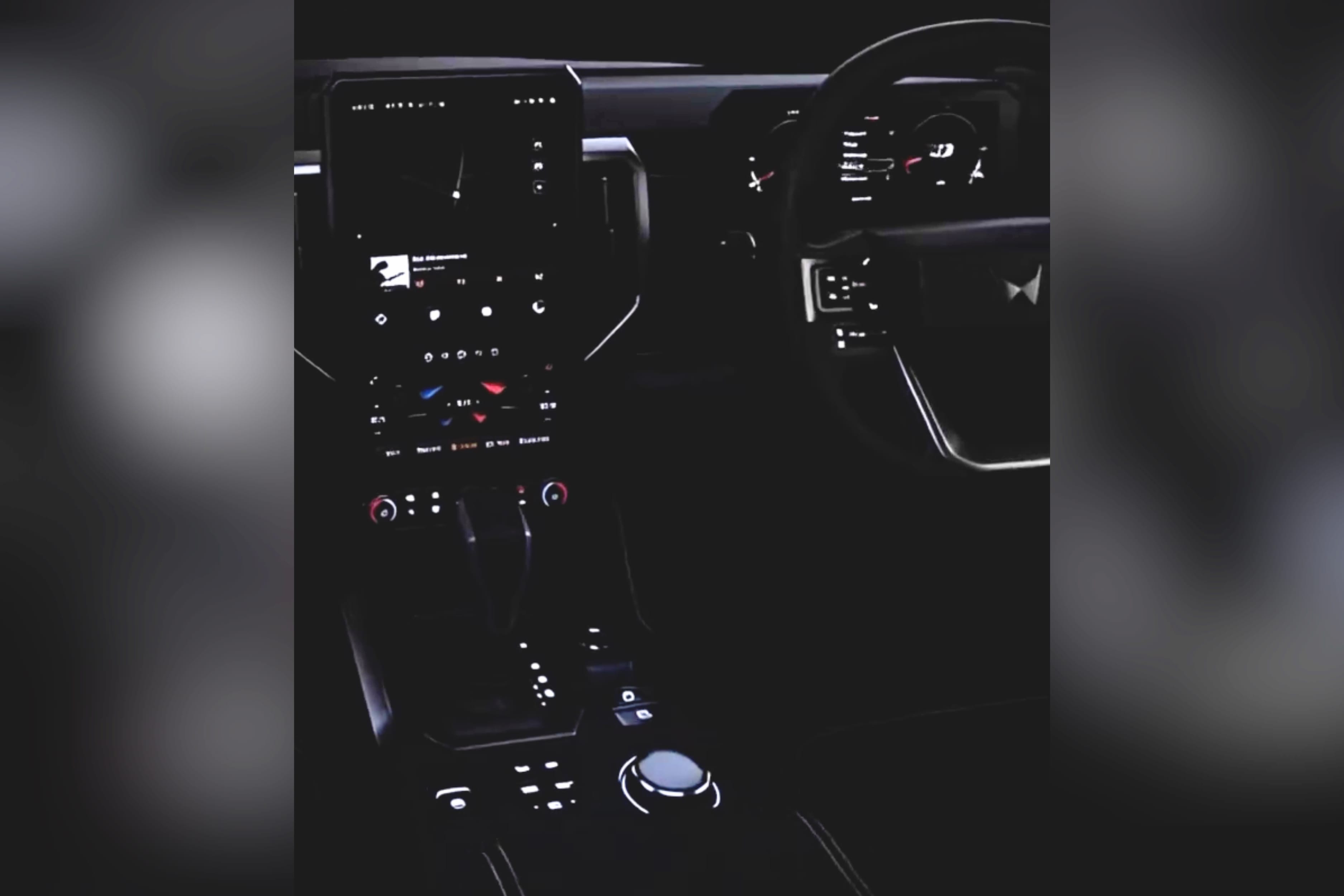
At the 2023 unveiling, Mahindra did not showcase the Global Pik Up concept’s interior. Still, the Mahindra Scorpio Lifestyler’s dashboard is clearly inspired by the 2025 Vision T prototype. The Scorpio Lifestyler gets a larger portrait-oriented touchscreen infotainment system, beneath which is another screen for the dual-zone climate controls. However, the set of buttons underneath the AC control screen has rotary dials on the production model, while the concept features only toggle switches.
It features a smaller free-standing digital driver’s display, with the UI looking similar to that of the Vision T concept. The chunky 3-spoke steering wheel is also inspired by the Vision T concept, featuring the ‘Twin Peaks’ logo and a lot of physical buttons. Mahindra is yet to offer a full glimpse of the Scorpio Lifestyler’s seat design and other interior elements.
Mahindra Scorpio Lifestyler powertrain and other details
Expected to borrow the Scorpio N’s powertrain options
The Scorpio Lifestyler will share the ladder-frame chassis and mechanicals with the Scorpio N SUV. Currently, the Scorpio N gets a choice between a 2.0-litre direct-injection turbo-petrol engine and a 2.2-litre direct-injection turbo-diesel engine, both offered with either a 6-speed manual or a 6-speed automatic transmission. The Mahindra Scorpio Lifestyler is also expected to be offered with a four-wheel-drive (4WD) setup to justify its go-anywhere nature.
Mahindra will launch the Scorpio Lifestyler by March 2027 with a starting price lower than Rs 19.79 lakh (ex-showroom). At this price, it will be an affordable alternative to the Toyota Hilux and Isuzu V-Cross.
Mahindra has pulled the covers off its long-awaited lifestyle pickup truck based on the 2023 Global Pik Up concept, christening it the Scorpio Lifestyler. Underpinned by the same body-on-frame chassis as that of the Scorpio N, the Scorpio Lifestyler will butt heads with the Toyota Hilux and Isuzu D-Max V-Cross in India. The pickup truck will be sold in several global markets too, where it’ll drop the ‘Scorpio’ branding and just be known as the Lifestyler.
Prices for the Mahindra Scorpio Lifestyler are confirmed to start below Rs 19.79 lakh (ex-showroom) in India, with launch pegged by April 2027. The Scorpio Lifestyler would therefore undercut its rivals significantly, both of which start above Rs 25 lakh.
Mahindra Scorpio Lifestyler exterior design
Up front, the Scorpio Lifestyler has high-set LED headlamps with L-shaped DRL signatures, a wide honeycomb-patterned grille with chrome accents, and a ‘Scorpio’ wordmark on the leading edge of the bonnet. Underneath, there’s a muscular skid plate bearing ‘Mahindra’ lettering, a meshed air dam, and vertically oriented LED fog lamps.
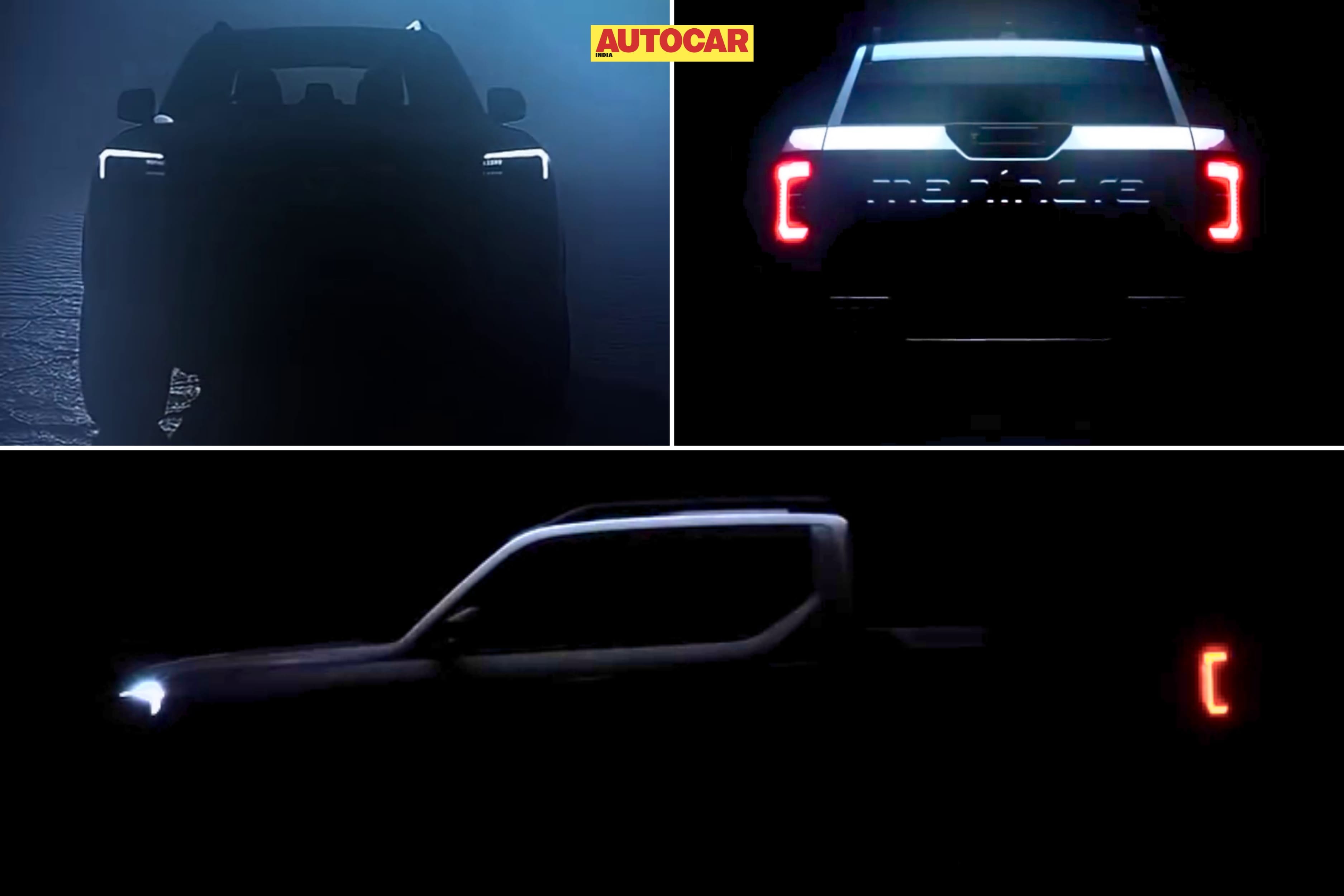
Over to the side, the Scorpio Lifestyler features a double-cab configuration, and gets dual-tone alloy wheels shod in off-road tyres, chunky side cladding, roof rails, and a kinked beltline. The rear end of the Scorpio Lifestyler is characterised by vertically oriented LED tail-lamps housing C-shaped DRLs, which flank a large ‘Mahindra’ wordmark molded into the bootlid. Below, the bumper looks similarly rugged to the one up front.
Mahindra Scorpio Lifestyler interior and features
Inside, the Scorpio Lifestyler is much more upmarket than its rugged exterior suggests. The dashboard prominently sports a portrait-oriented infotainment touchscreen flanked by AC vents, below which there’s a climate control panel and various physical controls. Ahead of the driver sits a three-spoke steering wheel and a digital driver’s display, while the transmission tunnel features lots more physical controls. In terms of creature comforts, the Scorpio Lifestyler is likely to pack wireless Apple CarPlay and Android Auto, dual-zone climate control, connected car tech, terrain modes, and more.
Volkswagen India has finally begun working on a new compact SUV, which will be a badge-engineered version of the Skoda Kylaq. This will mark its return to the sub-4m category four years after the Polo hatchback’s discontinuation in 2022. At the same time, the upcoming compact SUV is also expected to be the most affordable car in its portfolio in India when it arrives in 2027.
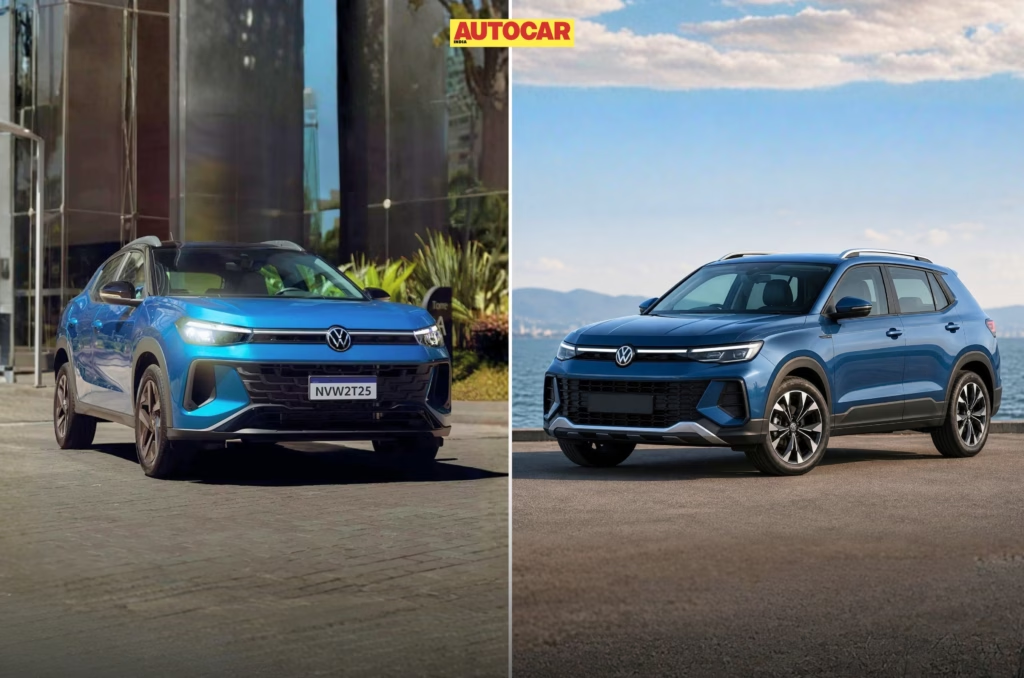
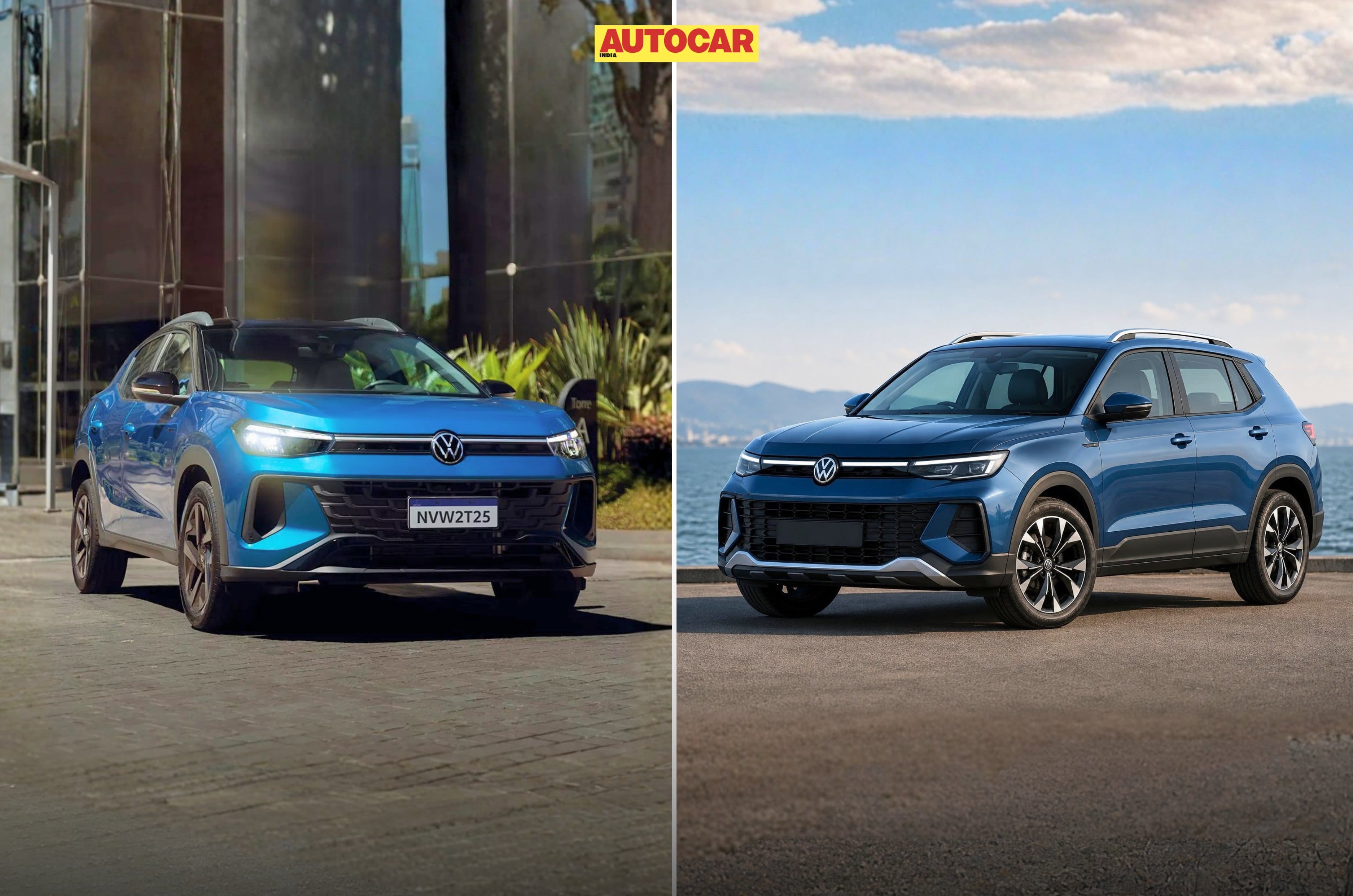
On the other hand, the carmaker already sells an entry-level SUV in the Brazilian market, called the Tera. It is closely related to the Skoda Kylaq and possibly hints at elements that are expected to arrive on VW’s upcoming compact SUV for India.
Volkswagen compact SUV: Expected dimensions
The Tera is 4,151mm long, 1,773mm wide, 1,504mm tall, and gets a 2,566mm long wheelbase. Interestingly, the Terra’s wheelbase is identical to that of the Skoda Kylaq. The India-bound VW compact SUV is expected to have the same wheelbase as the Kylaq, but compared to the Tera, it will be shorter in length to fit India’s sub-4m tax slab.
Volkswagen compact SUV: Expected platform and powertrain
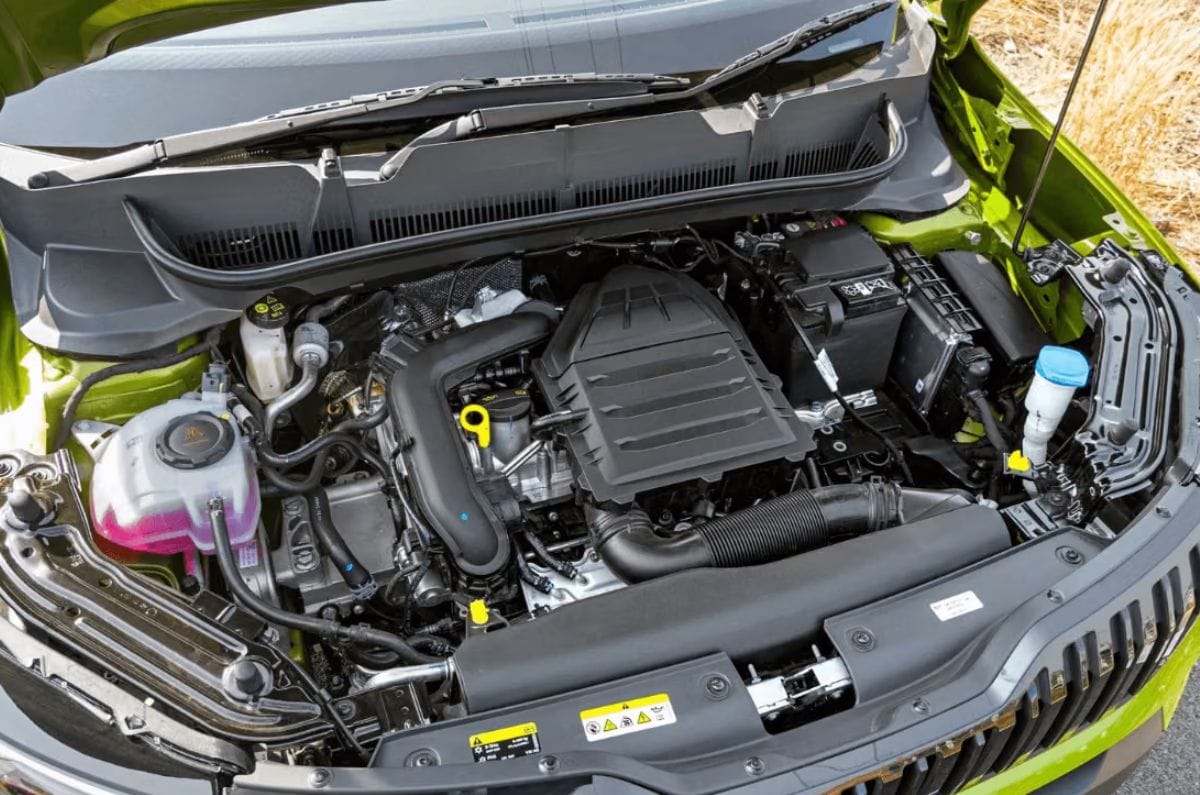
Skoda Kylaq 1.0-litre turbo-petrol engine used for representation.
The Volkswagen Tera sits on the brand’s MQB A0 architecture, while the VW Skoda 2.0 cars (Kushaq, Kylaq, Slavia, Virtus, Taigun) utilise the MQB A0 IN platform. The latter is a close variation of the former and will underpin VW’s upcoming compact SUV.
On the powertrain front, the compact SUV will utilise the same 1.0-litre direct-injection turbo-petrol engine as the Tera, which develops 116hp and 165Nm of torque. But power figures are likely to be closer to the Kylaq’s 1.0-litre turbo-petrol, which produces 115hp and 178Nm of torque. In the case of the VW compact SUV, a manual gearbox would be offered as standard, but automatic versions would swap out the 6-speed AT for the new 8-speed that does duty in the Taigun.
Volkswagen compact SUV: Expected exterior design
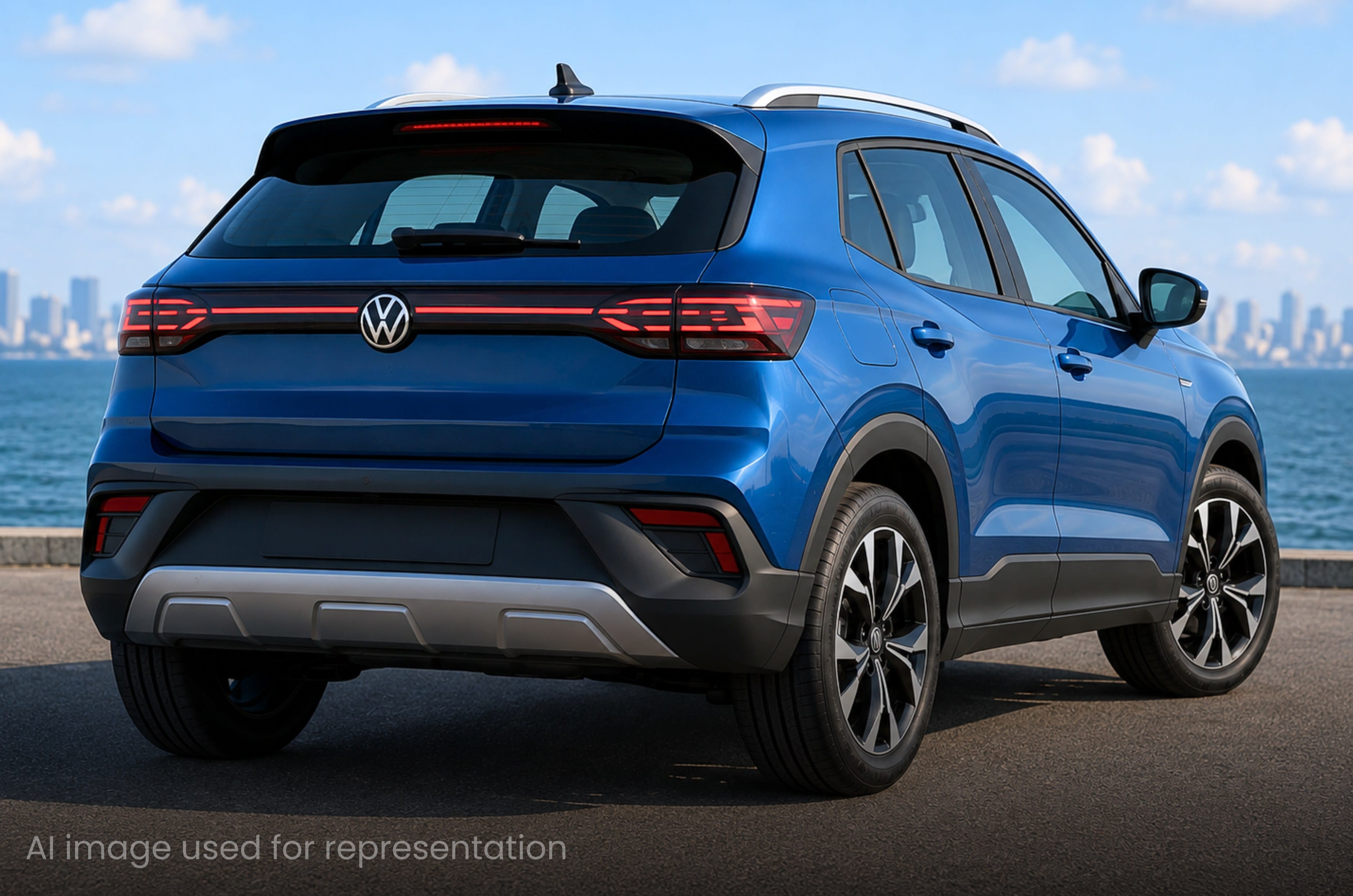
Styling-wise, the upcoming Volkswagen compact SUV is expected to adopt the Tera’s design but is likely to come with some India-specific changes. This could include slim LED headlamps connected by a thin DRL strip, a connected LED tail-lamp setup, cladding for the bumpers and door sills, and roof rails. Volkswagen could also bring illuminated logos, as seen on the Taigun and Tayron R Line. Alloy wheels are expected to have a dual-tone look. Potentially, the brand could spruce things up with GT versions with badges and cosmetic upgrades over standard versions.
Volkswagen compact SUV: Expected interior design and features
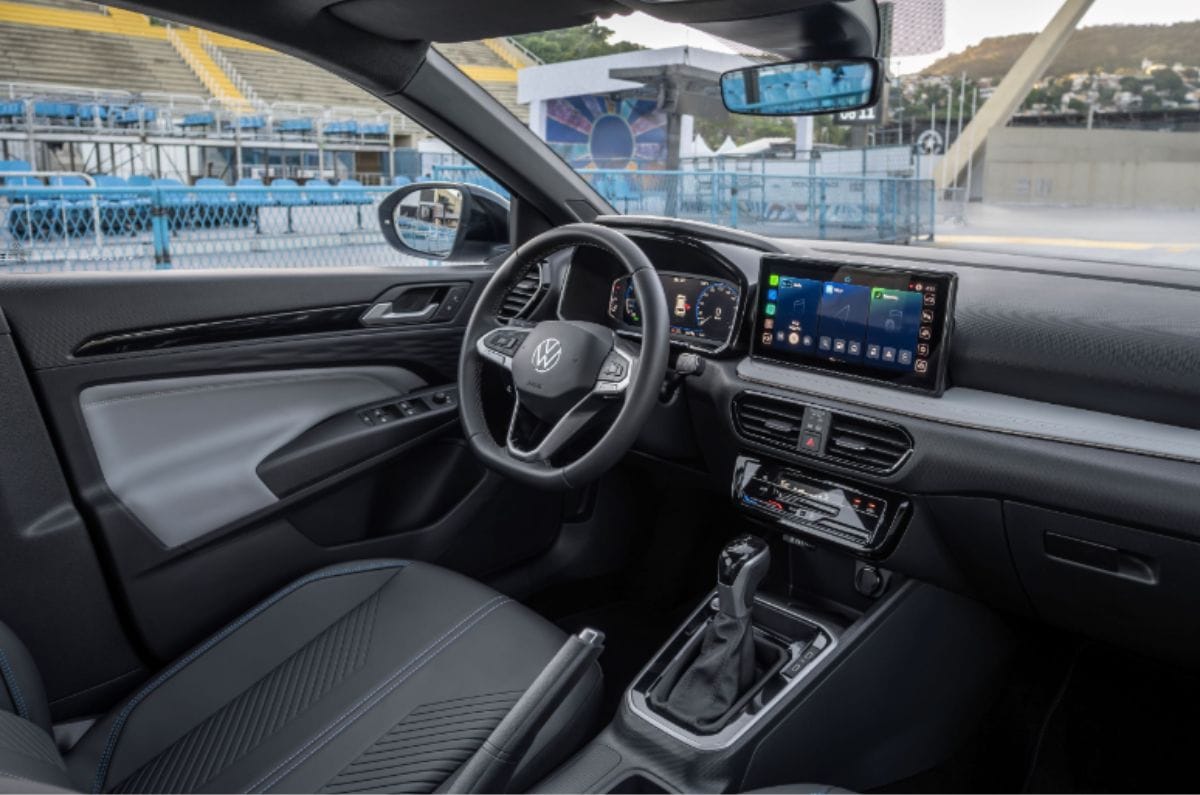
LHD VW Tera interior used for representation.
The Volkswagen Tera already has a lot of commonality with the India 2.0 cars, and some of these parts will likely be carried over to the upcoming compact SUV as well. This could include the flat-bottom three-spoke steering wheel, gear knob, centre console and HVAC control unit, the designs of which look similar to those on the Taigun. Additionally, it could also get a similar 10.25-inch digital driver’s display that’s seen on the Taigun. The Tera, however, is an LHD model, which will be reversed for the India-spec version.
As for equipment, the Volkswagen compact SUV could likely mirror the Skoda Kylaq’s feature set. For reference, the latter gets a 10-inch infotainment system with wireless CarPlay and Android Auto, ambient lighting, a digital driver’s display, a single-pane sunroof, powered and ventilated front seats, automatic climate control and a wireless phone charger.
Mahindra is gearing up for its 2026 Independence Day event, where it will reveal a Scorpio N-based pickup and some new BE 6 EV iterations. The pickup is the production version of the 2023 Mahindra Global Pik Up concept, and the teaser reveals it will borrow a lot from the Scorpio N SUV. Here’s everything you can expect from the Mahindra Scorpio N-based pickup ahead of its debut tomorrow.
1. When will the Mahindra Scorpio N pickup launch in India
Mahindra will reveal it at its upcoming Independence Day event
2023 Mahindra Global Pik Up concept shown for representational purposes only.
Mahindra recently teased the Scorpio N-based pickup, revealing that the production models will debut on August 14 at its Independence Day event. The Mahindra Scorpio N-based pickup could launch in the coming months.
2. What is the expected price of the Mahindra Scorpio N pickup?
Expected to be priced in the Rs 16 lakh-26 lakh range
The upcoming Scorpio N-based pickup is expected to be priced between Rs 16 lakh and Rs 26 lakh, around a few lakh rupees more than the Scorpio N SUV.
3. What will the production version of the Mahindra Scorpio N pickup be called?
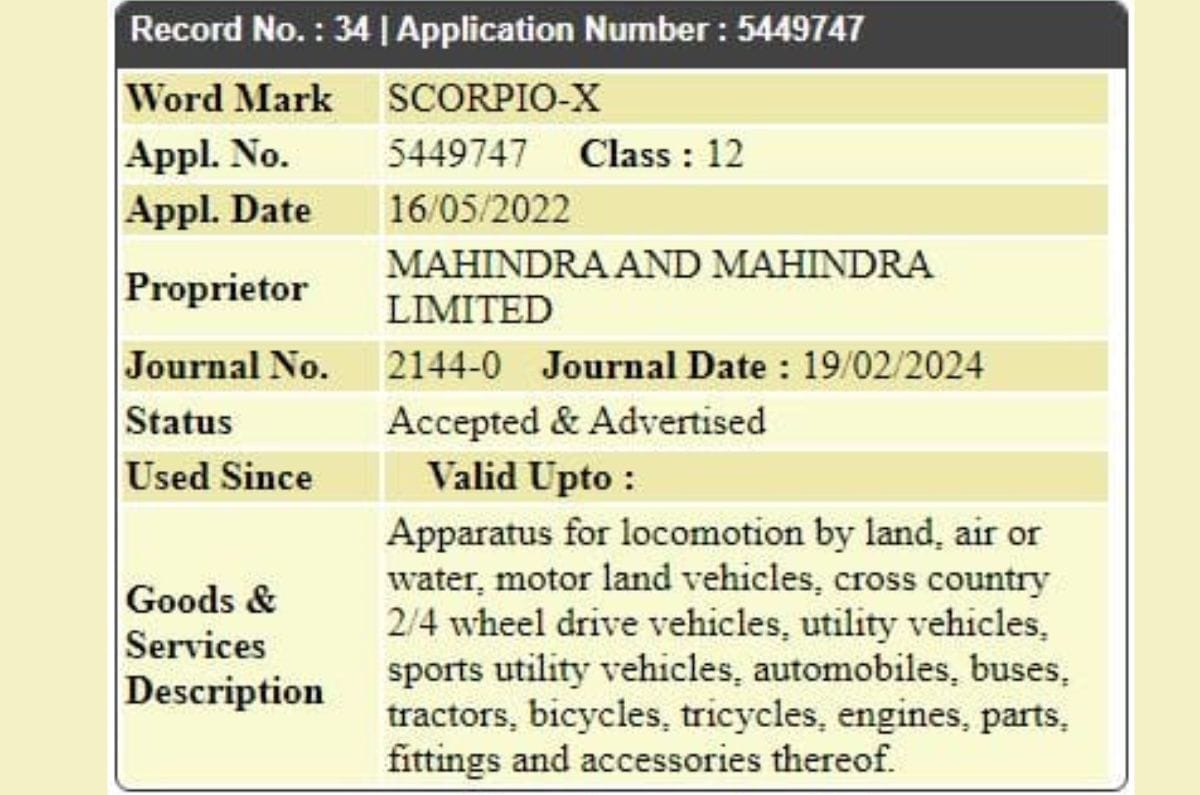
Mahindra could call it the Scorpio X, a name it trademarked in 2024
Mahindra trademarked the ‘Scorpio-X’ name in 2024, but has not used it since. Given that the upcoming pickup is based on the Scorpio N, the unused trademark could be used for the pickup.
4. What engine options will the Mahindra Scorpio N pickup offer?
Mahindra could offer it with the same engines as the Scorpio N SUV
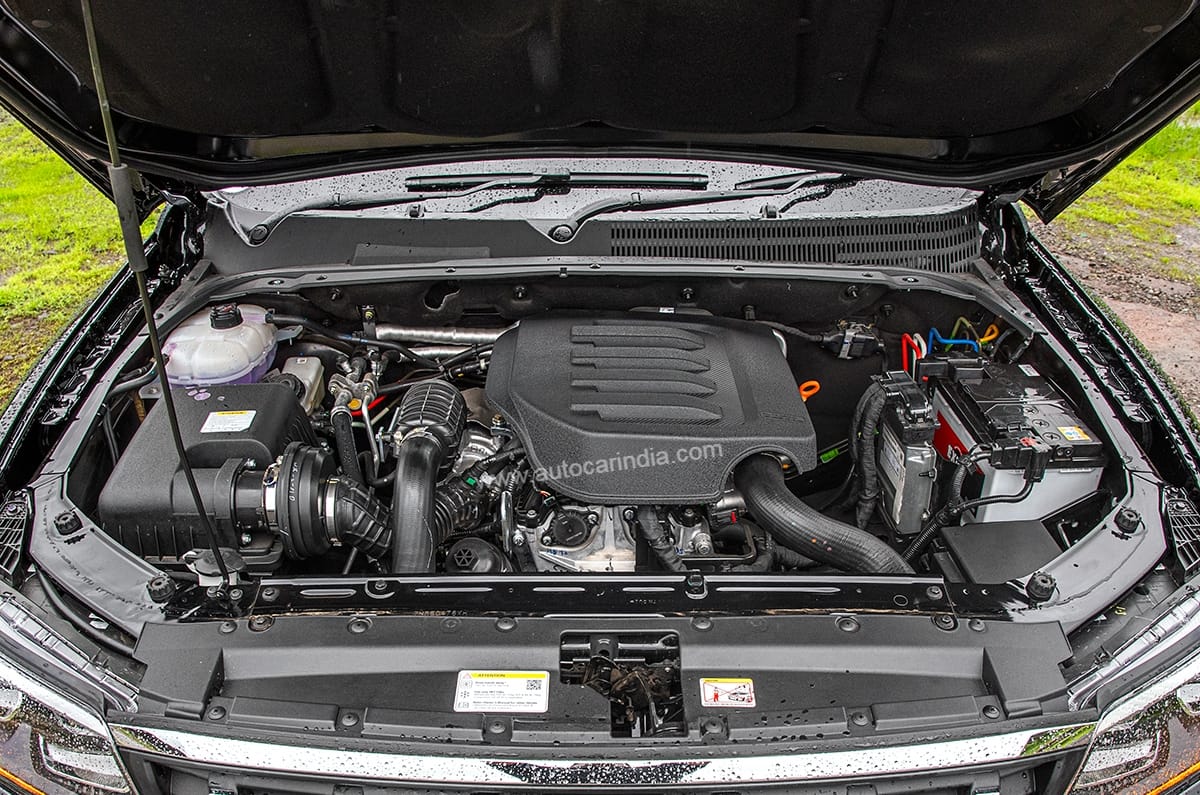
While the technical details of the Scorpio N-based pickup are still under wraps, it will share the ladder-frame chassis and mechanicals with the Scorpio N SUV, including the petrol and diesel options. For reference, the Scorpio N gets a choice between a 2.0-litre direct-injection turbo-petrol engine paired with a 6-speed manual or a 6-speed automatic transmission. It produces 203hp and up to 380Nm, depending on the gearbox. It also gets a 2.2-litre direct-injection diesel engine, paired with the same manual and automatic transmission options, producing up to 175hp and 400Nm, depending on the transmission option.
5. Will the Mahindra Scorpio N pickup be a 4×4 model?
A 4WD Scorpio N-based pickup is expected alongside a 2WD version
As the upcoming Mahindra Scorpio N-based pickup would borrow the SUV’s mechanicals, a four-wheel-drive (4WD) option is expected to be available as well alongside a 2WD choice. Currently, the Scorpio N gets this 4×4 setup, with both transmission options for the 2.2-litre diesel engine.
6. What are the design changes on the Mahindra Scorpio N pickup?
Will get slimmer headlights, a large truck bed and C-shaped tail lights
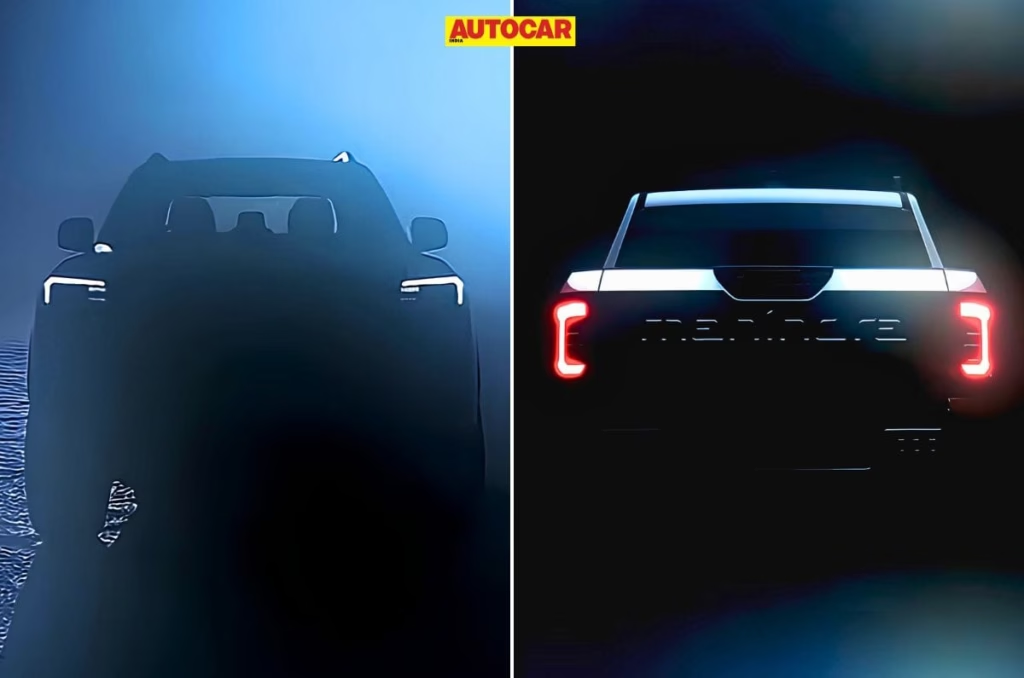
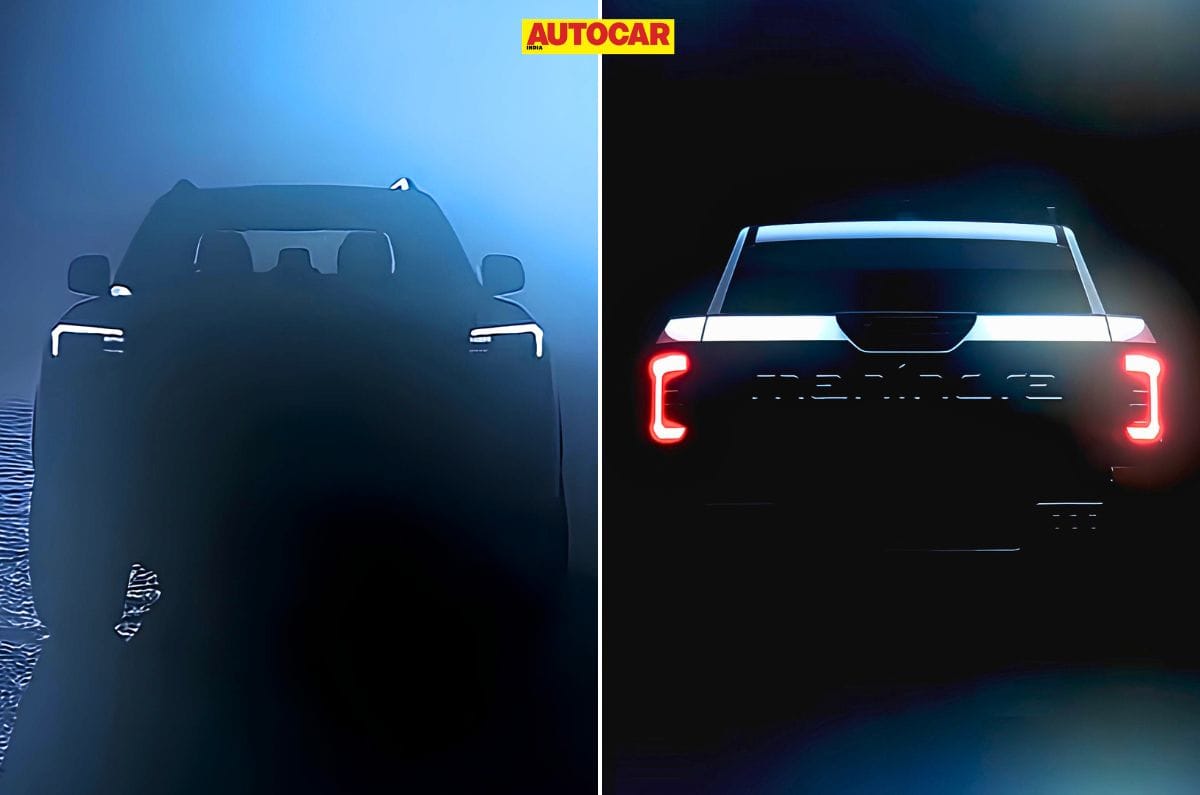
The teaser video revealed a glimpse of the upcoming pickup, showing some exterior and interior details. Outside, the Scorpio N-based pickup will get a different set of LED headlights with L-shaped LED DRLs, a distinct grille with honeycomb mesh elements and a revised design for the rear doors. To accommodate the larger truck bed at the rear, Mahindra could offer the pickup with a wheelbase larger than the Scorpio N’s 2,750mm. It will also get slimmer C-shaped LED taillights, and the tailgate will feature embossed ‘Mahindra’ lettering.
Will get a larger infotainment system, a new steering wheel and Level-2 ADAS
Inside, a larger portrait-oriented touchscreen infotainment system and rotary dials for the dual-zone climate controls will be offered in the Scorpio N-based pickup. A chunkier 3-spoke steering wheel, inspired by the Vision T prototype, and a digital driver’s display with the same UI as the current Scorpio N, could also be spotted. Mahindra will also offer it with Level-2 ADAS, semi-automatic parking assistance, 5G-based connected-car technology, and a sunroof, as announced at the Global Pik Up concept’s 2023 unveiling.
7. Which models will the Mahindra Scorpio N pickup rival in India
The upcoming Mahindra pickup will rival the Hilux and V-Cross
The Mahindra Scorpio N-based pickup will rival the Toyota Hilux and Isuzu V-Cross, which are priced from Rs 31.99 lakh and Rs 25.50 lakh (ex-showroom), respectively. In Mahindra’s lineup, it will be positioned above the Bolero Camper, priced from Rs 10.10 lakh to Rs 10.86 lakh (ex-showroom).
JSW MG has teased its upcoming new SUV for India, which is to be called the Hector Tomahawk, our sources have indicated. The official launch date is set for August 26, 2026. Sold as the Wuling Eksion in the Indonesian market, the upcoming Hector Tomahawk will sit atop JSW MG’s new ADAPT (Advanced Drive Architecture Platform Technology) platform. The Hector Tomahawk will be launched as a fully electric model first, and will be slotted above the Hector in the brand’s line-up in India.
Teaser confirms rectangular headlamps, signature LED DRLs, a panoramic sunroof and more
Will be offered in EV guise first; PHEV could arrive later
Seating for 7 occupants; bench-style second row
JSW MG Hector Tomahawk exterior design
The teaser offers a few important design details on the outside of this upcoming MG SUV
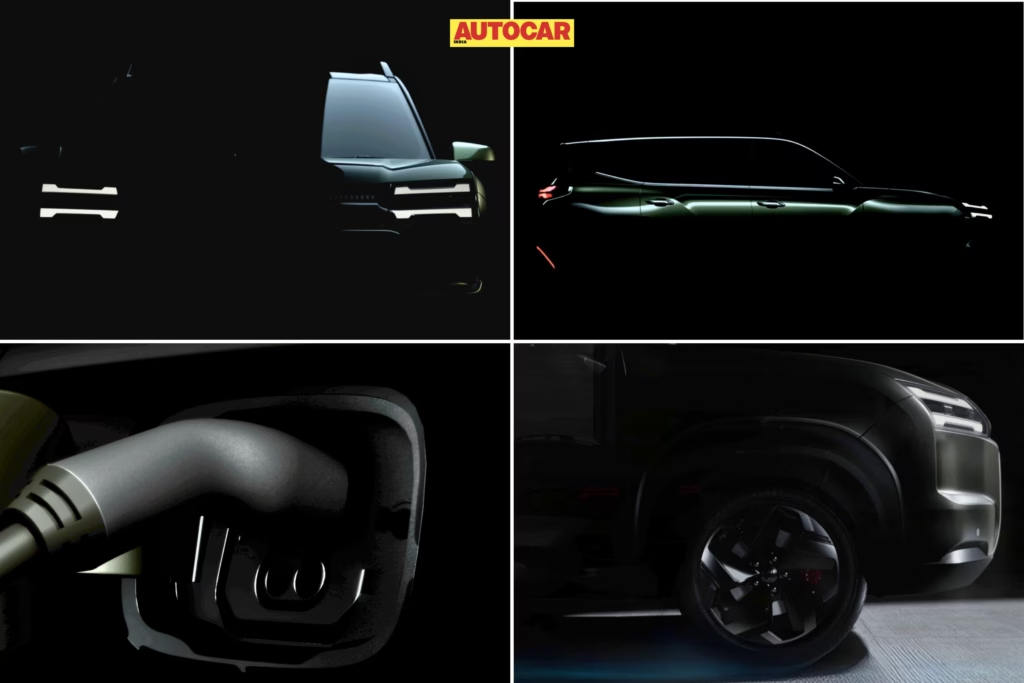
The official teaser confirms the rectangular LED headlamps first seen in spy shots. It also reveals details like the twin-element LED DRLs (daytime running lights) at the front and rear of the Hector Tomahawk. Observable details here also include the silver-finished alloy wheels, black plastic cladding under the doors, pronounced front fenders, pull-type door handles, prominent roof rails and wraparound LED tail-lamps. It’s clear from the teaser that the Hector Tomahawk sports chrome garnish along the windowline, plus a relatively flat roofline that leads to a roof spoiler.
In terms of dimensions, the JSW MG Hector Tomahawk is likely to have similar dimensions as the Wuling Eksion 7-seater that’s sold in Indonesia. For reference, the latter measures 4,745mm in length, 1,850mm in width, 1,755mm in height, and has a wheelbase of 2,9810mm. Its two-tone exterior colour options are likely to be offered in our market, too.
JSW MG Hector Tomahawk interior design and features
Apart from the exterior, the brand’s latest teaser also confirms a few details upcoming Hector Tomahawk’s interior. For starters, we now know that there will be 7 seats on offer, with a bench-style arrangement for the second row. The teaser also shows a beige colour theme for this cabin, along with a panoramic sunroof as part of the equipment that’ll be on offer. While more details are to be confirmed, the Hector Tomahawk EV could share much of the rest of its design and feature set with the Wuling Eksion. This means a minimalistic cabin with physical switchgear on and behind the two-spoke steering wheel, on the centre console and the doors.
Depending on the trim level, the equipment on offer include a powered tailgate, leatherette upholstery, powered and ventilated front seats, a 12.8-inch touch-infotainment head unit, an 8.8-inch digital driver’s display, a 50-watt wireless charger, automatic climate control with AC vents for the second and third rows, a 360-degree camera system, an electronic parking brake, six airbags, and an ADAS (Advanced Driver Assistance Systems) suite, among others.
JSW MG Hector Tomahawk powertrain details
ADAPT platform supports battery-electric, plug-in hybrid, range-extender and strong-hybrid powertrains
While JSW MG is likely to reveal the Hector Tomahawk PHEV (plug-in hybrid) on August 26 as well, the brand’s teaser suggests that the ADAPT-based SUV will be introduced in its EV avatar first. The fully electric version of the Wuling Eksion EV that’s available in Indonesia is equipped with a single front-mounted electric motor that generates 201hp and 310Nm, allowing a claimed top speed of 160kph. It’s backed by a 69.2kWh LFP (Lithium Iron Phosphate) battery pack with a CLTC (China Light-Duty Vehicle Test Cycle) range of up to 530km.
The Hector Tomahawk PHEV is also likely to share its powertrain setup with its Eksion counterpart. For reference, the latter comes with a single electric motor that produces up to 195hp and 230Nm on its own, while the 1.5-litre naturally aspirated petrol engine puts out 105hp and 130Nm. There’s also a 20.5kWh battery pack in the equation, and the maximum all-electric range of the Eksion PHEV is a claimed 125km. JSW MG’s ADAPT platform is capable of supporting battery-electric, plug-in hybrid, range-extender and strong-hybrid powertrains.