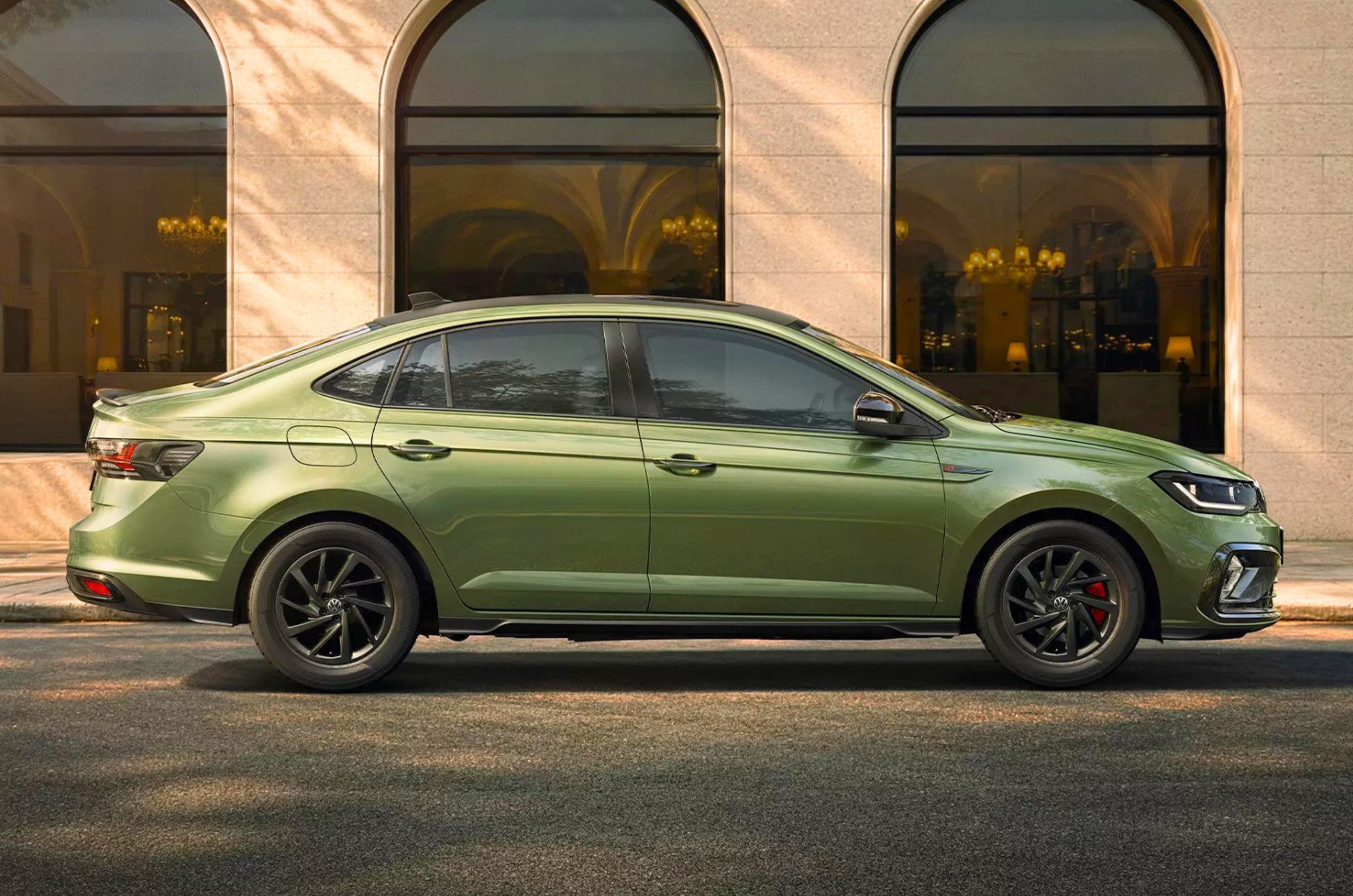
Volkswagen has launched the Anniversary Edition of the Virtus sedan at Rs 19.20 lakh (ex-showroom, India). It arrives about four years after the model was first introduced in the India market. The Virtus Anniversary Edition is based on the top-spec GT Plus Sport trim of the VW sedan, so it shares several of the latter’s visual aesthetics and feature set. The price of the Anniversary Edition identical to the trim that it’s based on, despite offering additional equipment.
Based on the top-spec GT Plus Sport trim
Finished in an exclusive Avocado Pearl colour
Features puddle lamps, 360-degree cameras, front parking sensors and more
Only available with the 1.5 TSI engine and DSG gearbox
Volkswagen Virtus Anniversary Edition: Exterior and interior features
The Anniversary Edition of the Volkswagen Virtus comes finished in an Avocado Pearl exterior colour, which Volkswagen says is exclusive to this edition. It also gets a contrasting black roof, black alloy wheels with red brake calipers and a black boot-lip spoiler – all of which are shared with the GT Plus Sport. Other shared design features include a gloss-black front bumper trim, darkened headlamps and tail-lamps housings, an all-black interior theme with gloss-black inserts on the dashboard.
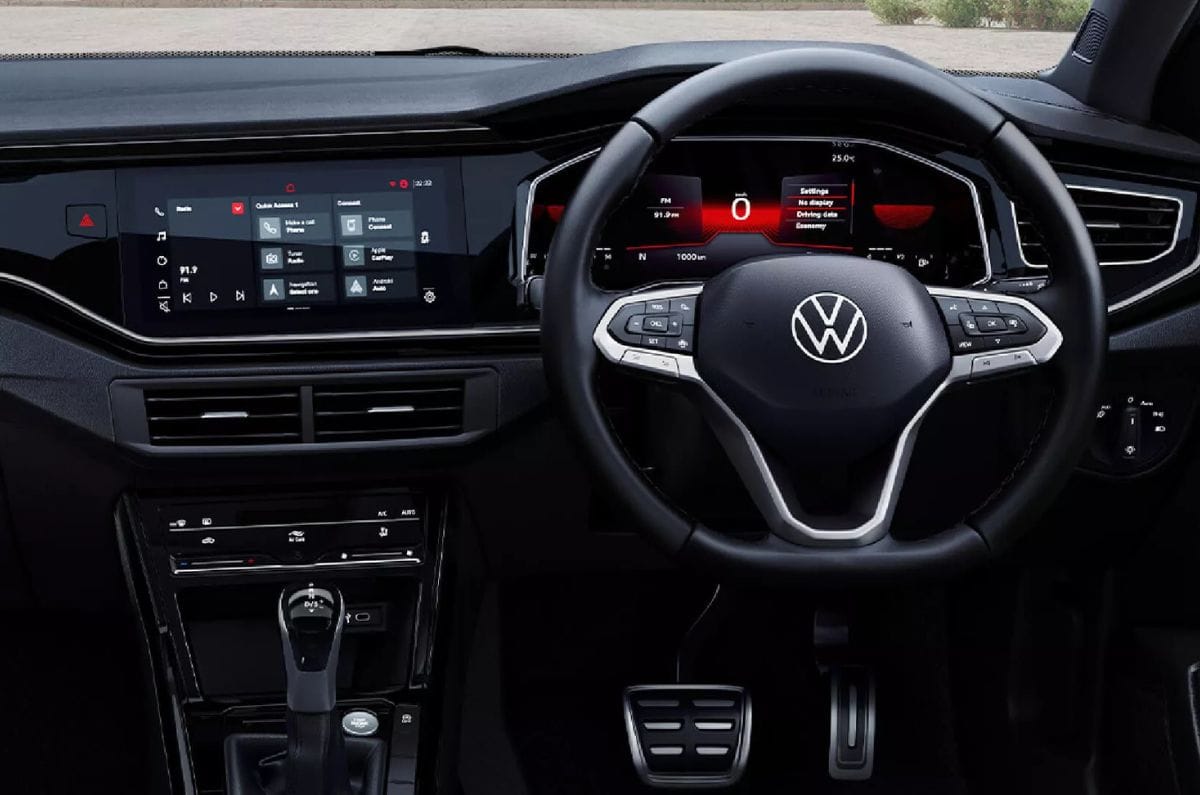
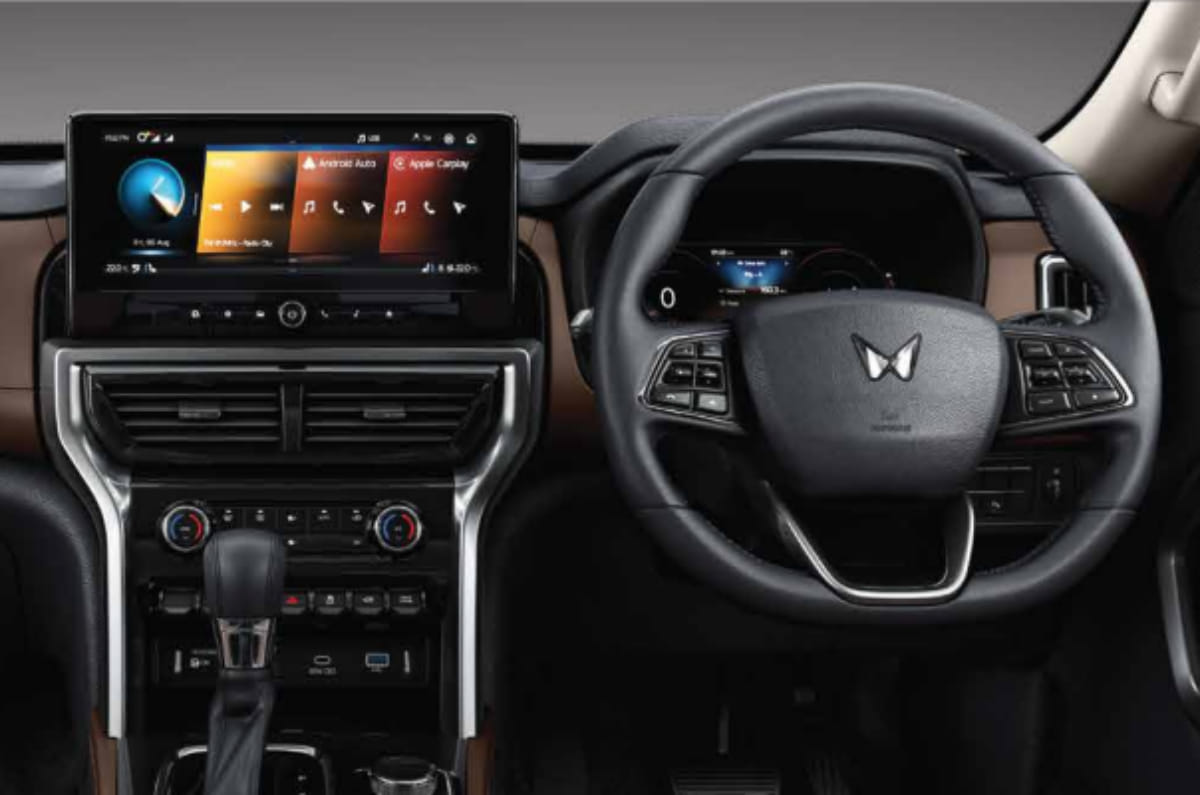
Volkswagen Virtus GT Plus Sport’s interior shown for representational purposes only.
On the equipment front, the Virtus Anniversary Edition is offered with official Volkswagen accessories like puddle lamps, a 360-degree camera system and front parking sensors. Since it’s based on the fully loaded GT Plus Sport trim, the Anniversary Edition shares all of its other feature set too. This includes the likes of leatherette upholstery, red ambient lighting, ventilated front seats, a powered sunroof, a 10-inch touch-infotainment screen, automatic climate control, an 8-speaker audio system and paddle shifters.
Safety features of the limited-run Virtus Anniversary Edition are also familiar. This means that it gets 6 airbags, electronic stability control, traction control, hill-start assist, and ABS with EBD, among others.
Volkswagen Virtus Anniversary Edition: Engine and gearbox
Under the bonnet of the Volkswagen Virtus Anniversary Edition is the same 1.5 TSI engine and 7-speed DSG (dual-clutch automatic) gearbox. This 1.5-litre four-cylinder turbo-petrol mill features direct injection, developing 150hp and 250Nm of torque. This engine and gearbox pairing has a claimed fuel economy of 19.62kpl. Meanwhile, the standard Virtus is also available with a 1.0-litre three-cylinder turbo-petrol engine with direct injection, which makes 115hp and 178Nm. This TSI unit can be mated with either a 6-speed manual or a 6-speed torque-converter automatic transmission.
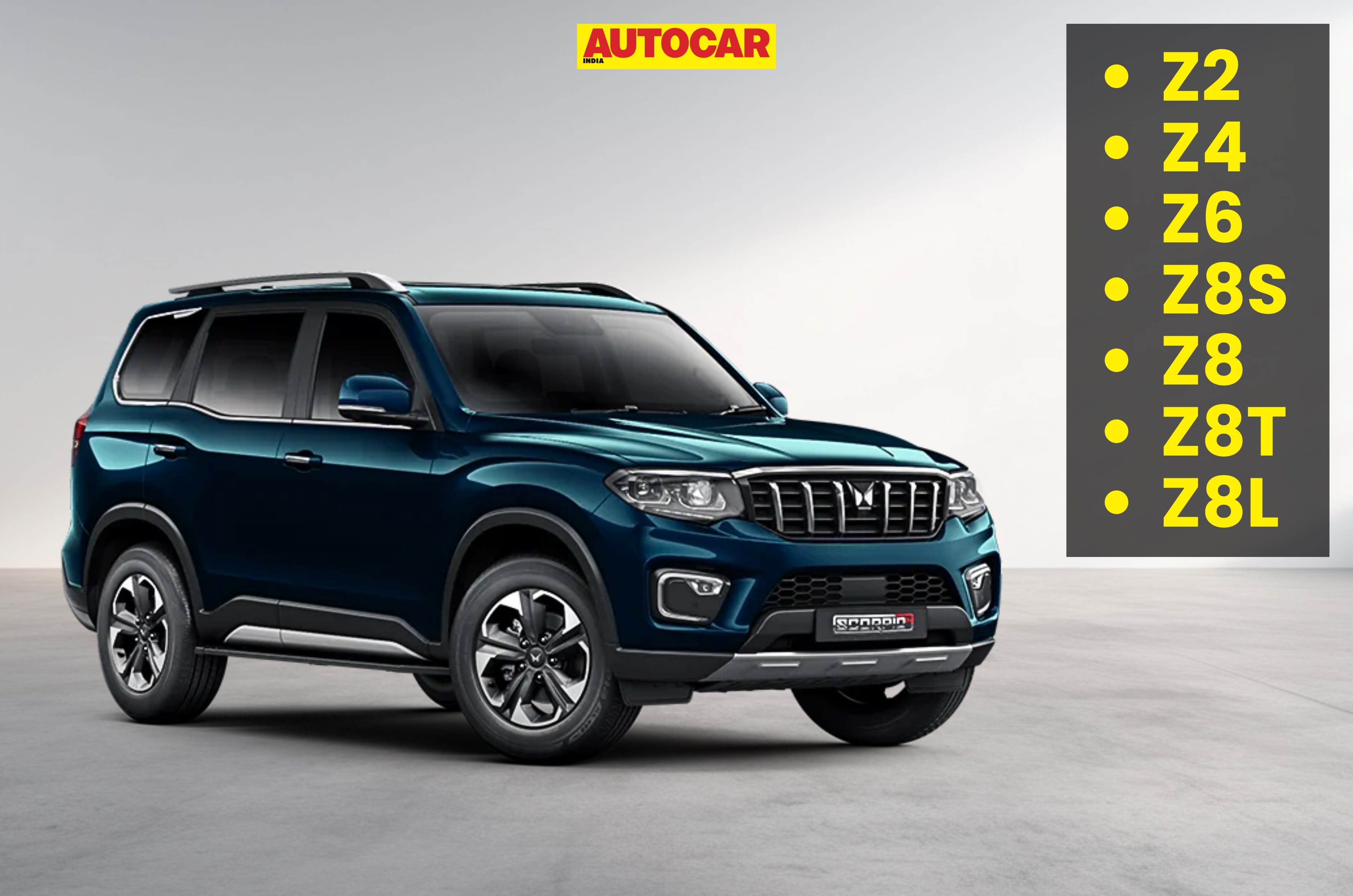
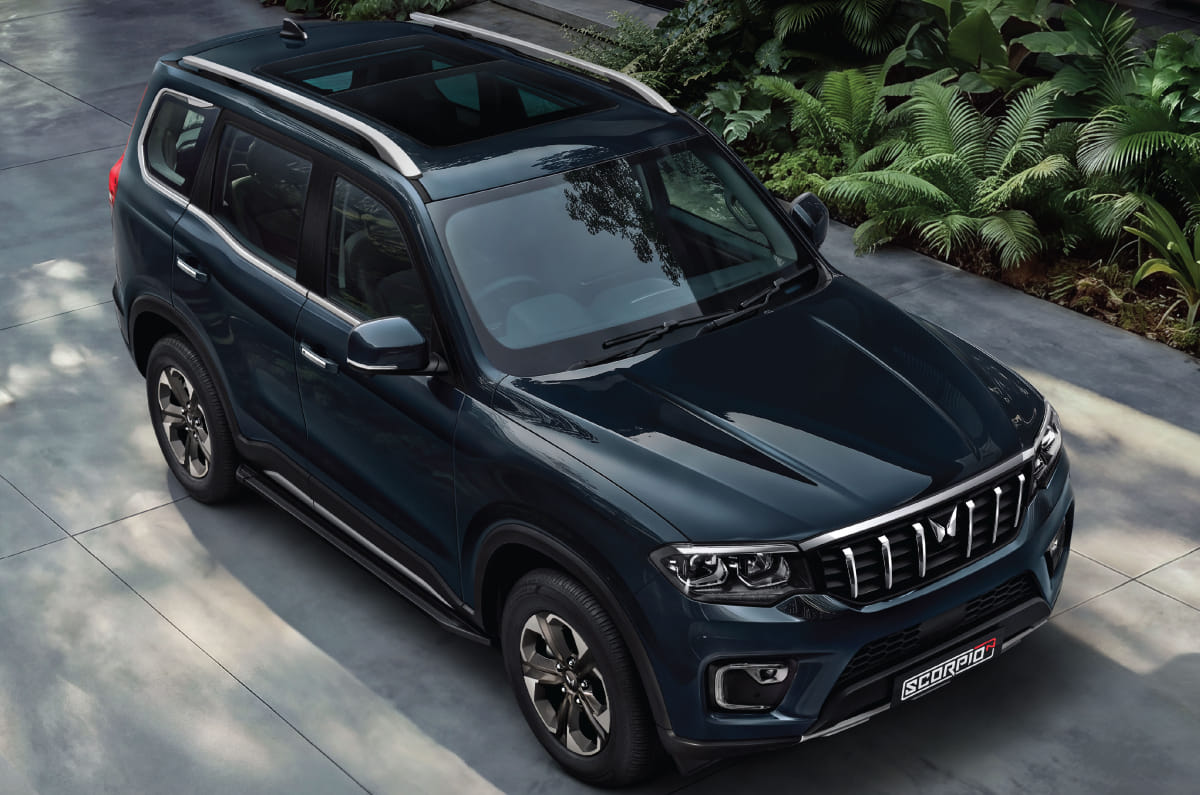
The 2026 Mahindra Scorpio N facelift offers buyers all the familiar bits that this body-on-frame SUV has been known for while introducing minor cosmetic tweaks and new features on the inside. The 2026 Scorpio N soldiers on with the same powertrain options as its pre-facelift predecessor, but prices have gone up. Having said all that, which variant should you buy?
2026 Mahindra Scorpio N facelift powertrain options
This facelift hasn’t brought about any major mechanical changes to the SUV
Powertrain specifications
Mahindra Scorpio N facelift 2.0 turbo-petrol
Mahindra Scorpio N facelift 2.2 diesel
Type
4 cyls, direct-injection
4 cyls, direct-injection
Displacement
1,997cc
2,184cc
Power
203hp
132hp/175hp
Torque
370Nm/380Nm
370Nm/400Nm
Manual transmission
6-speed MT
6-speed MT
Automatic transmission
6-speed AT
6-speed AT
Drive configuration
2WD
2WD/4WD
Fuel capacity
57 litres
57 litres
Under the vast bonnet of the Scorpio N facelift are the same set of turbocharged engines that powered the previous model. The petrol unit uses the 2.0-litre mStallion direct-injection mill that produces 203hp and 370Nm when mated to a 6-speed manual transmission (MT) or 380Nm of torque when paired with the 6-speed torque-converter automatic (AT). In this case, power is sent only to the rear wheels.
Then there’s the 2.2-litre mHawk direct-injection diesel engine, which is available in two states of tune. In the lower Z2 and Z4 diesel MT variants, this mill develops 132hp and 300Nm of torque – transmission duties are handled by a 6-speed manual gearbox. Higher variants of the diesel-powered Scorpio N facelift get the 175hp version of this oil burner, putting out either 370Nm (MT) or 400Nm (AT) of torque. Do note that four-wheel drive is only available on the diesel variants but can be had with either manual or automatic gearboxes.
2026 Mahindra Scorpio N facelift variant-wise features
Driver’s seat-height adjustment and lumbar support
Wired Apple CarPlay and Android Auto
Rear AC blower control
Rear wiper, washer and defogger
Selectable 4WD system (Z4 diesel)
Z6 price range: Rs 17.17 lakh-Rs 18.82 lakh
Features over Z4
Zip, Zap and Zoom drive modes (diesel 2WD only)
Electric sunroof
Rearview camera
Z8S price range: Rs 17.79 lakh-Rs 19.89 lakh
Features over Z6
LED projector headlamps
Sting-shaped LED DRLs (daytime running lamps)
Sequential LED turn indicators
17-inch diamond-cut alloy wheels
UV- and IR-cut glass (side windows only)
Brown and black leatherette upholstery
Leather-wrapped steering wheel and gear lever
12.3-inch touch-infotainment system
10.25-inch digital instrument cluster
Wireless Apple CarPlay
Free one-year Adrenox Connect subscription
Built-in Amazon Alexa
65W Type-C front and rear USB ports
Front-facing camera
Information on roll and pitch, altitude, G-force, etc. (via Adventure Statistics)
6 airbags
Driver-drowsiness detection
E-call and SOS alert
Z8 price range: Rs 19.86 lakh-Rs 21.41 lakh
Features over Z8S
Automatic headlamps and wipers
Passive keyless entry
Push-button ignition
Power-folding ORVMs
‘Anti-pinch’ function for co-driver’s window
Dual-zone automatic climate control
Wireless charger
Free two-year Adrenox Connect subscription
TPMS (tyre-pressure monitoring system)
Z8T price range: Rs 20.38 lakh-Rs 24.39 lakh
Features over Z8
18-inch diamond-cut alloy wheels
6-way powered driver’s seat
Ventilated front seats
12-speaker Sony audio system
Auto-dimming IRVM (inside rearview mirror)
Electronic parking brake
Selectable 4WD system (Z8T diesel)
Normal, Snow, Mud/Ruts and Sand terrain modes (diesel 4WD)
Electronic brake-locking differential
Z8L price range: Rs 21.31 lakh-Rs 25.49 lakh
Features over Z8T
Panoramic sunroof
540-degree camera system
Blind-view monitor
Adaptive cruise control (AT versions only)
Speed-limit assist (AT versions only)
Forward-collision warning
Auto-emergency braking
Lane-departure alert
Lane-keep assist
High-beam assist
Traffic-sign recognition
2026 Mahindra Scorpio N facelift colours
The facelift has brought with it two new colour options
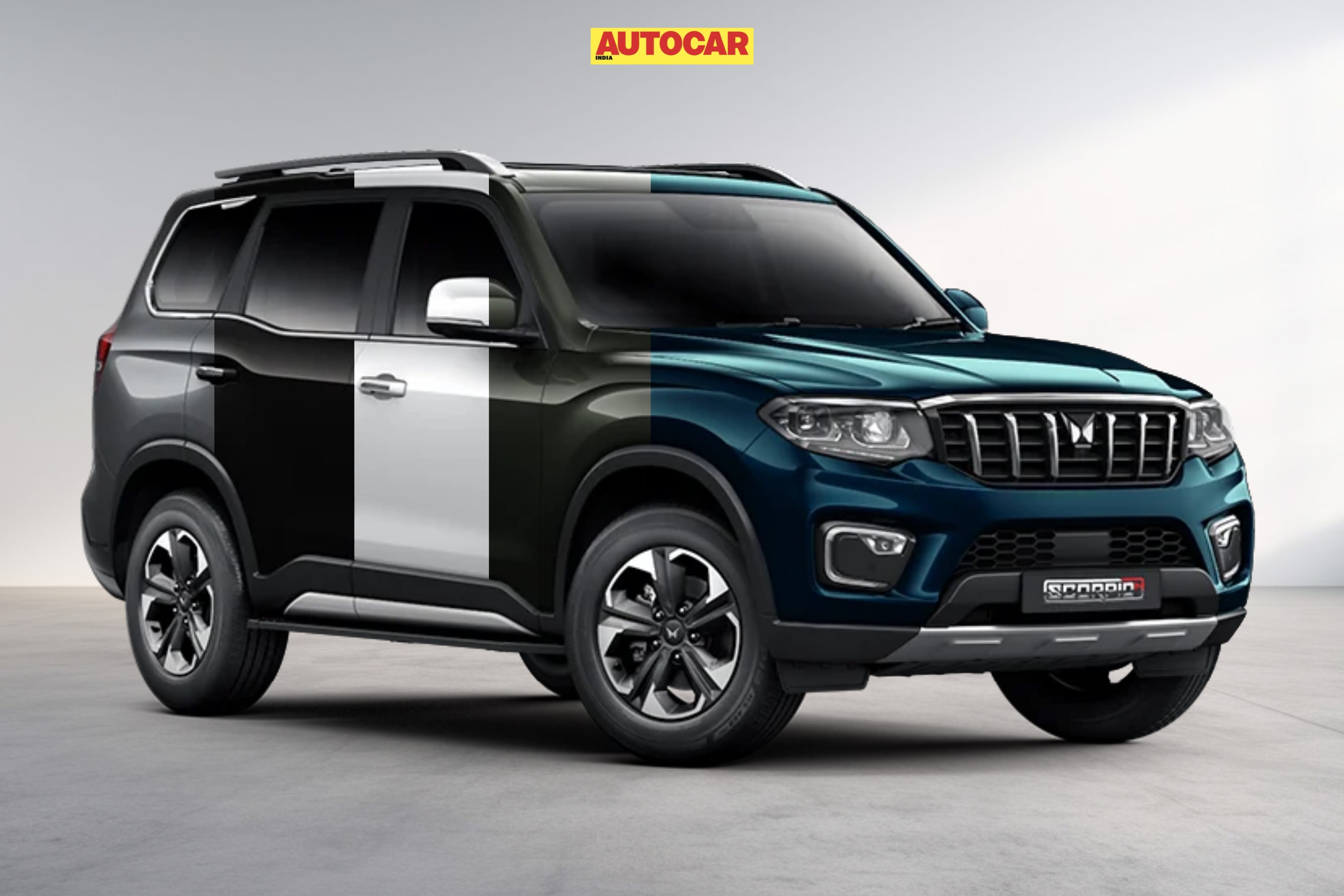
With this update, the Mahindra Scorpio N retains three colours from its predecessor: Deep Forest, Everest White and Stealth Black. However, it does get two new shades. These include an all-new colour, Oceanic, and Galaxy Grey, which replaces another grey option called Valyrian Silver. There are no dual-tone colours available.
2026 Mahindra Scorpio N facelift: Which variant should you buy?
The second-to-top trim with the diesel-automatic powertrain is a good pick
The Z8T trim with the turbo-diesel engine and 6-speed torque-converter automatic (AT) is our pick of the bunch. This is because it offers a laundry list of modern convenience and safety features, catering to almost every need that a buyer looking for an SUV at this price point is likely to have. If you’re someone who finds themselves driving through inclement weather regularly, or you intend to do a bit of off-roading, the 4×4 version has enough mechanical and electronic assistance to back you up. However, try to avoid the Z2, Z4 and Z6 trims as these only get two airbags – that’s unacceptable at this price point.
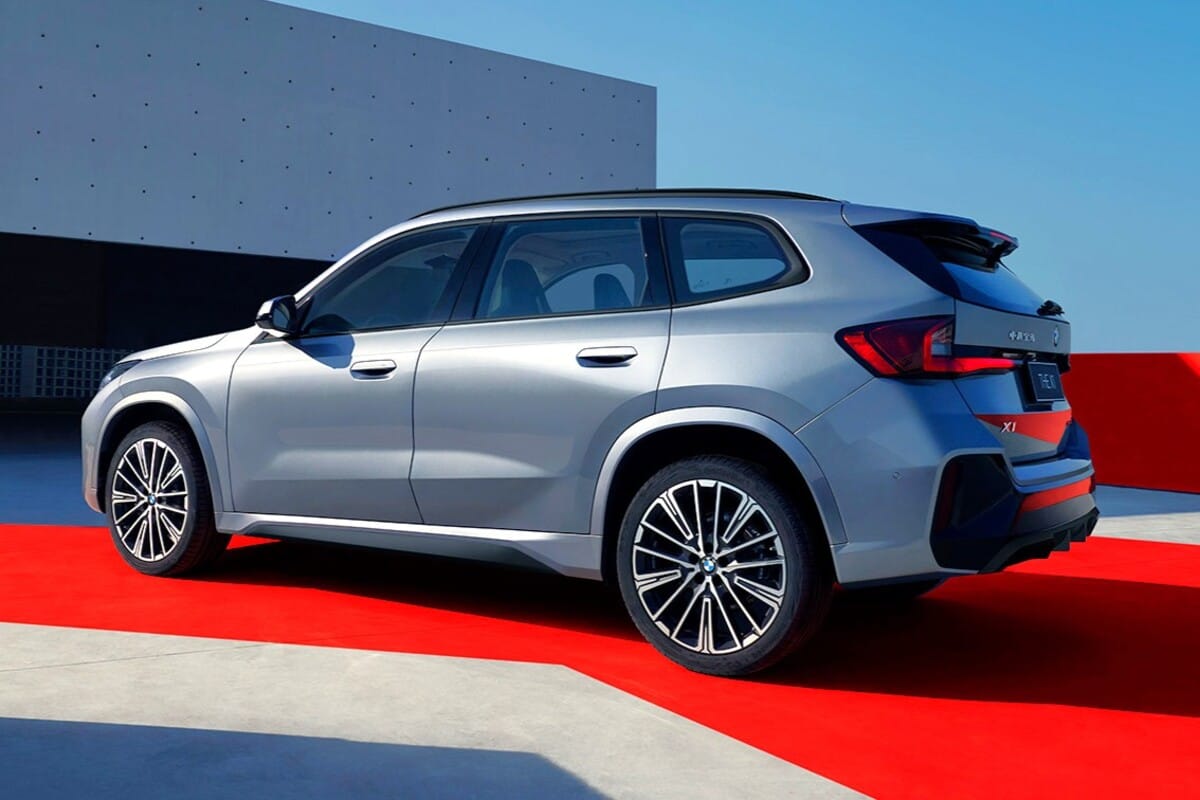
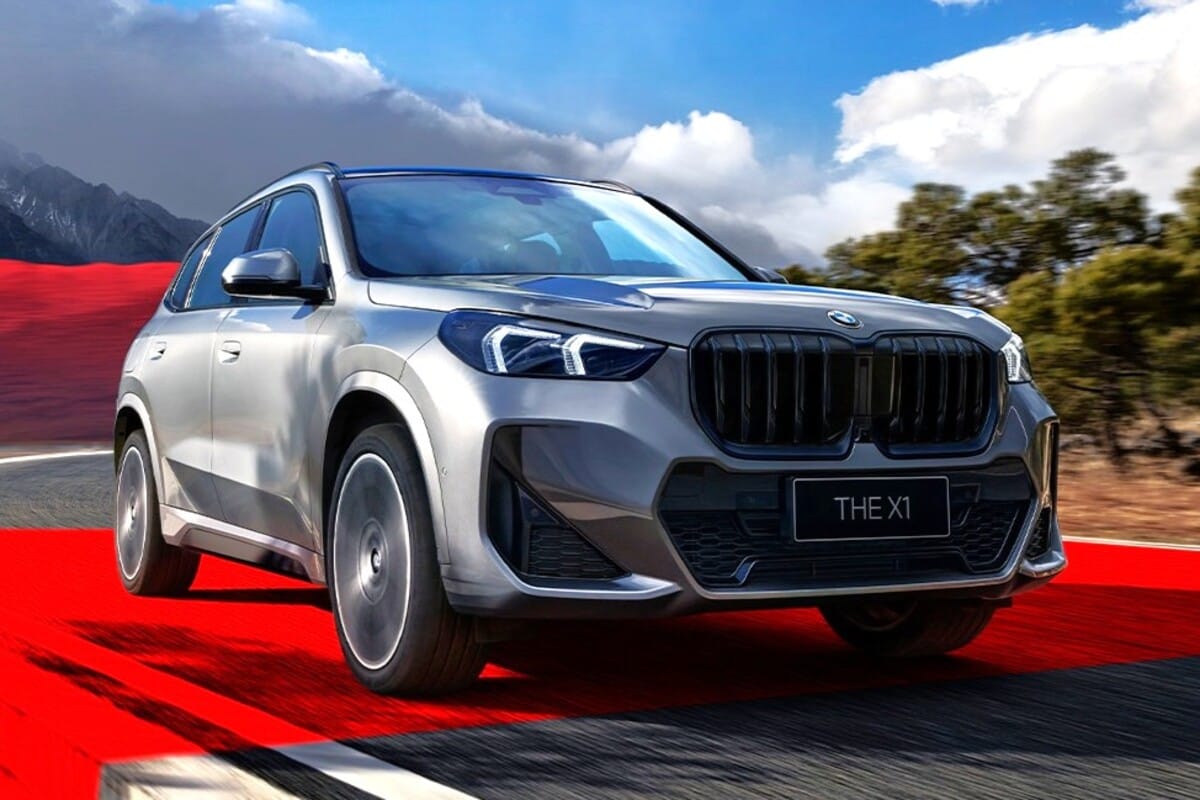
BMW will launch the X1 LWB in India on Friday, August 21. A stretched version of the standard X1 SUV and the ICE equivalent to the iX1 LWB – both of which are sold here too – the X1 LWB will serve as BMW’s most affordable combustion-powered long-wheelbase model for the Indian market. Like other long-wheelbase BMWs, the X1 LWB was originally conceived for the Chinese market, where the SUV has been on sale since 2023.
BMW X1 LWB exterior design
116mm longer than standard X1
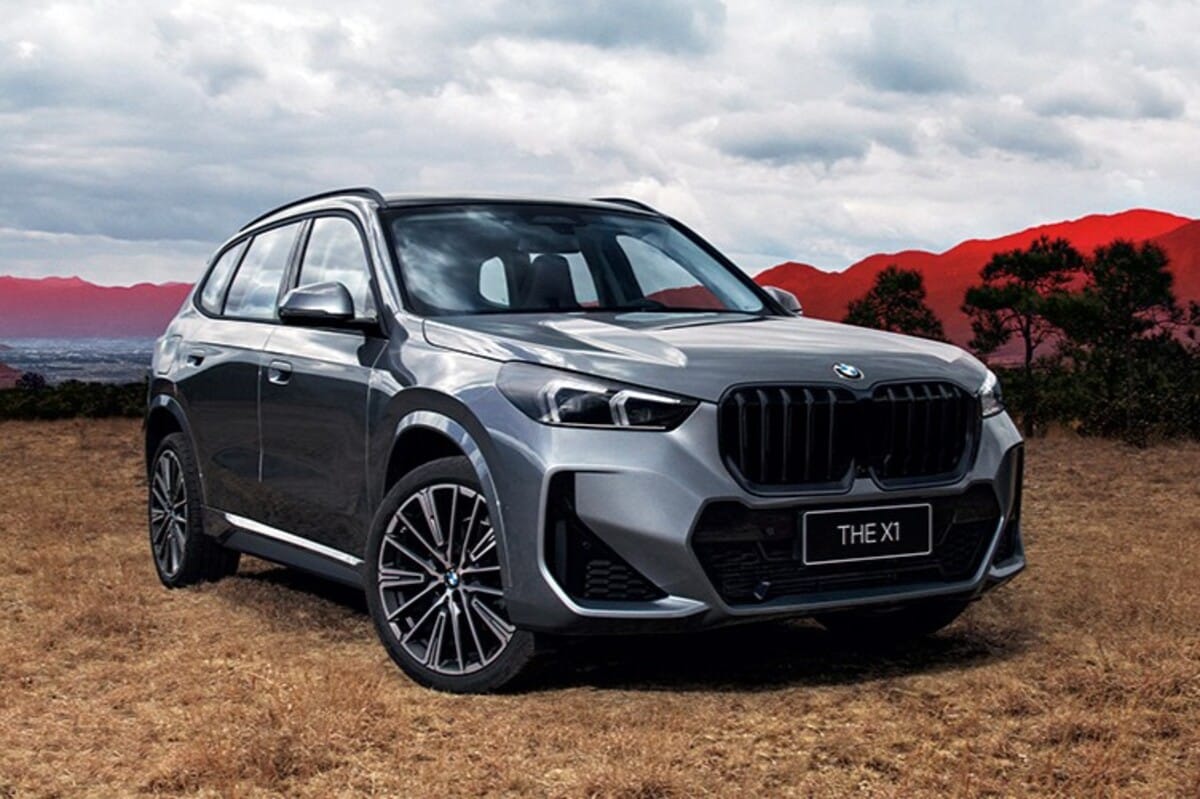
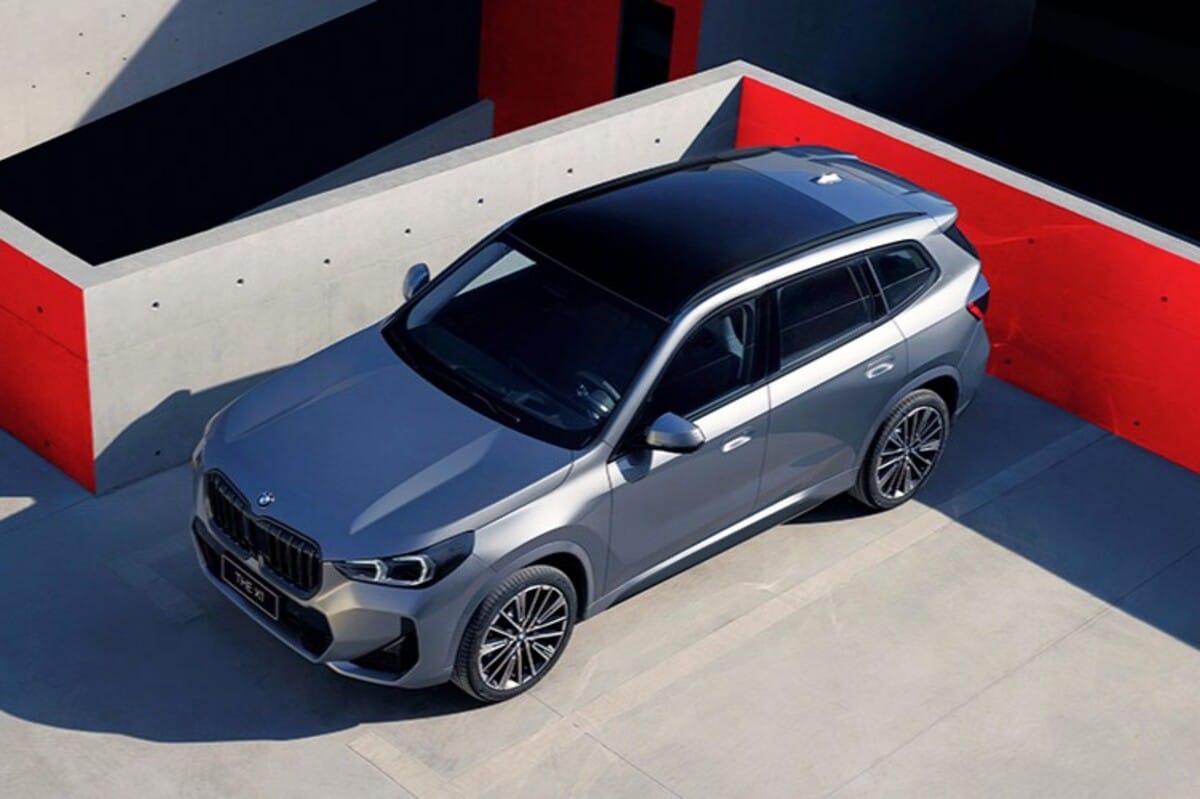
Stretching the tape at 4,616mm long, 1,845mm wide, 1,641mm tall, and with a wheelbase of 2,802mm, the X1 LWB is 116mm longer (110mm increase in wheelbase) and 11mm taller than its SWB counterpart. There are otherwise no changes on the styling front compared to the standard X1, so the LWB continues to offer sleek LED headlamps and tail-lamps, large kidney grilles up front, and a relatively low-slung crossover-esque profile.
The China-spec X1 LWB gets 19-inch alloy wheels as standard (20-inchers optional), but these could be downsized for the India-spec version in the interest of ride quality – the standard X1 and iX1 LWB come with 18-inchers here.
BMW X1 LWB interior and features
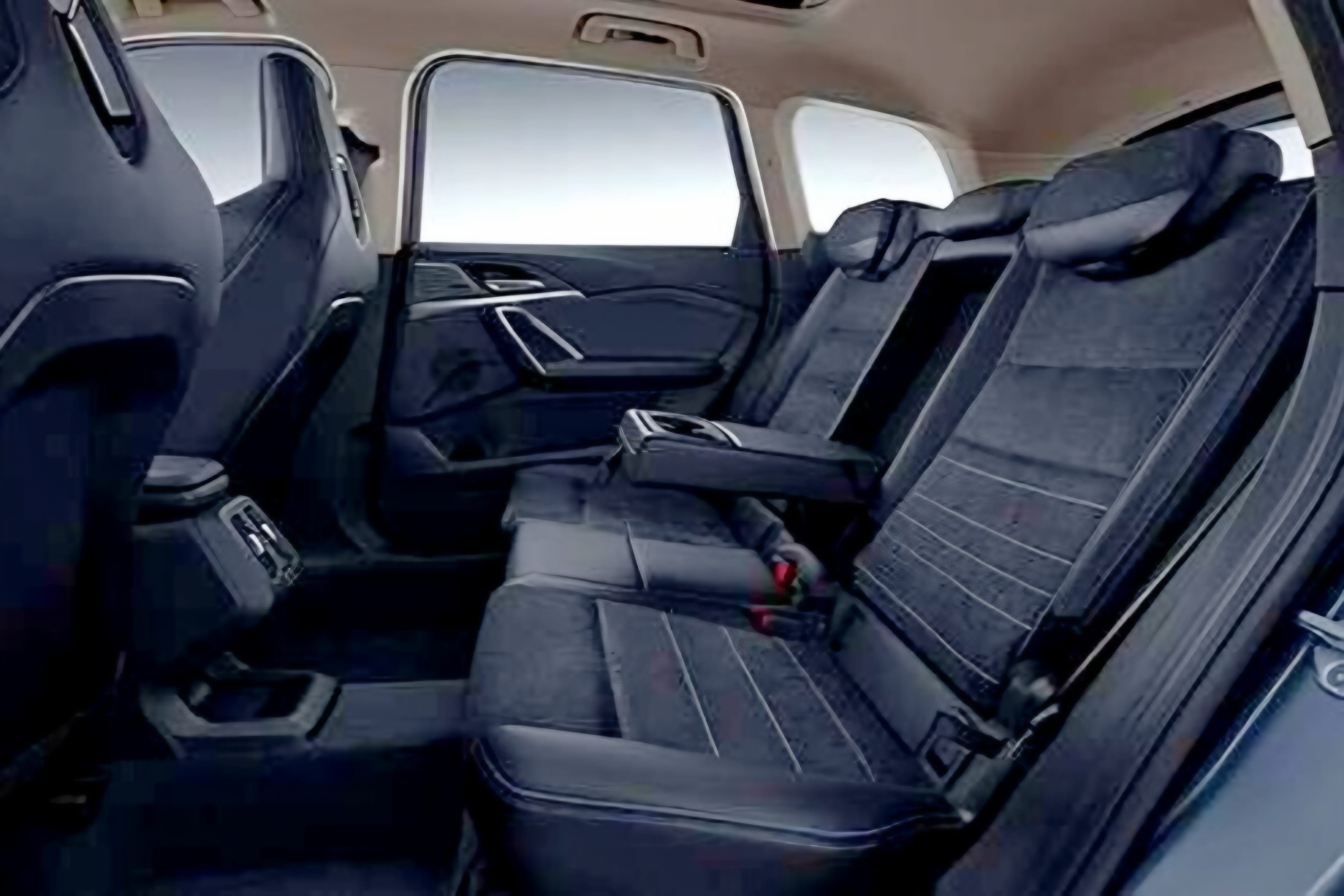
Increased rear legroom, higher bench and wider headrest cushions
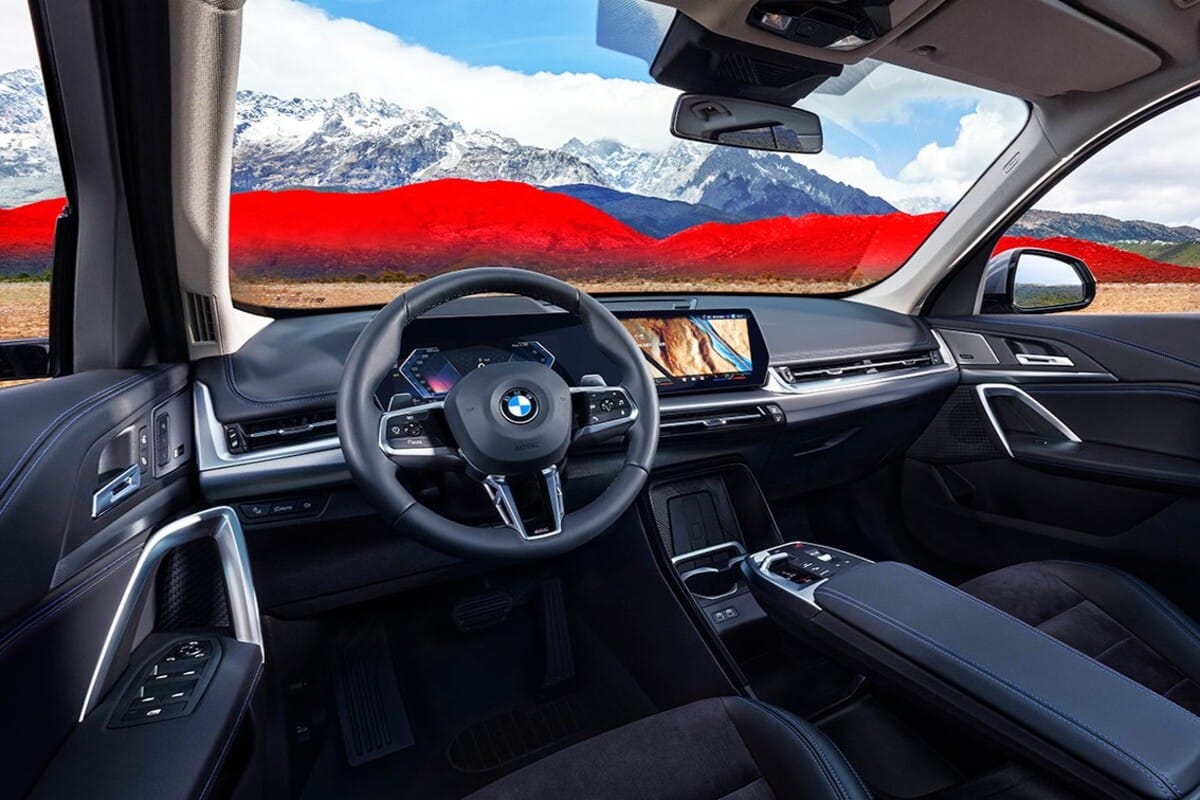
Expectedly, the interior layout of the X1 LWB is identical to that of its SWB counterpart, save for an upgraded experience for rear occupants – generous increase in legroom, 27mm bump in seat height and 37mm wider headrest cushions. At 540 litres, the X1 LWB’s boot is also larger than the standard X1’s 476-litre capacity.
The features list includes a 10.7-inch infotainment touchscreen, a 10.25-inch digital driver’s display, a wireless charging pad, powered front seats, automatic climate control, a powered tailgate, a digital key, a Harman Kardon sound system, connected car tech, auto park assist and more.
BMW X1 LWB engine and gearbox options
2.0-litre turbo-petrol mill and 7-speed DCT
In India, the standard X1 is sold in two variants, sDrive18i and sDrive18d, offering 1.5-litre 3-cyl turbo-petrol and 2.0-litre 4-cyl diesel engines, respectively. However, the China-spec X1 LWB gets neither of those engines. Instead, it’s sold in sDrive25Li FWD and xDrive25Li AWD guises, and powered by a 2.0-litre 4-cyl turbo-petrol motor that outputs 204hp and 300Nm – up 68hp and 70Nm over the sDrive18i – and is paired with a 7-speed dual-clutch automatic. 0-100kph comes up in 7.9 seconds for the FWD version and 7.7 seconds for the AWD X1 LWB. Top speed is rated at up to 229kph.
BMW X1 LWB price estimate and positioning
No direct rivals in the Indian luxury car market
Pricing for the standard X1 starts at Rs 50.9 lakh and tops off at Rs 52.9 lakh in India, so expect the X1 LWB to command a premium, especially if BMW offers it with the more powerful 2.0-litre turbo-petrol engine. The X1 LWB will sit in a unique spot of the market, as there are no long-wheelbase entry-level luxury SUVs to rival it at the moment.
सिर्फ 2 घंटे की बारिश और मुंबई पानी-पानी।
लेकिन सिंगापुर में 24 घंटे लगातार बारिश के बाद भी शहर सामान्य रहता है।
फर्क सिर्फ मौसम का नहीं, सोच और प्लानिंग का है।
जहाँ एक शहर बारिश को बर्बाद करता है, वहीं दूसरा उसकी हर बूंद को संभालकर भविष्य सुरक्षित करता है।
अगर भारत के शहर भी ऐसी योजना अपनाएँ, तो क्या हर साल आने वाली बाढ़ और पानी की कमी दोनों खत्म हो सकती हैं?
आपकी क्या राय है? क्या भारत को सिंगापुर का मॉडल अपनाना चाहिए? कमेंट में ज़रूर बताइए।
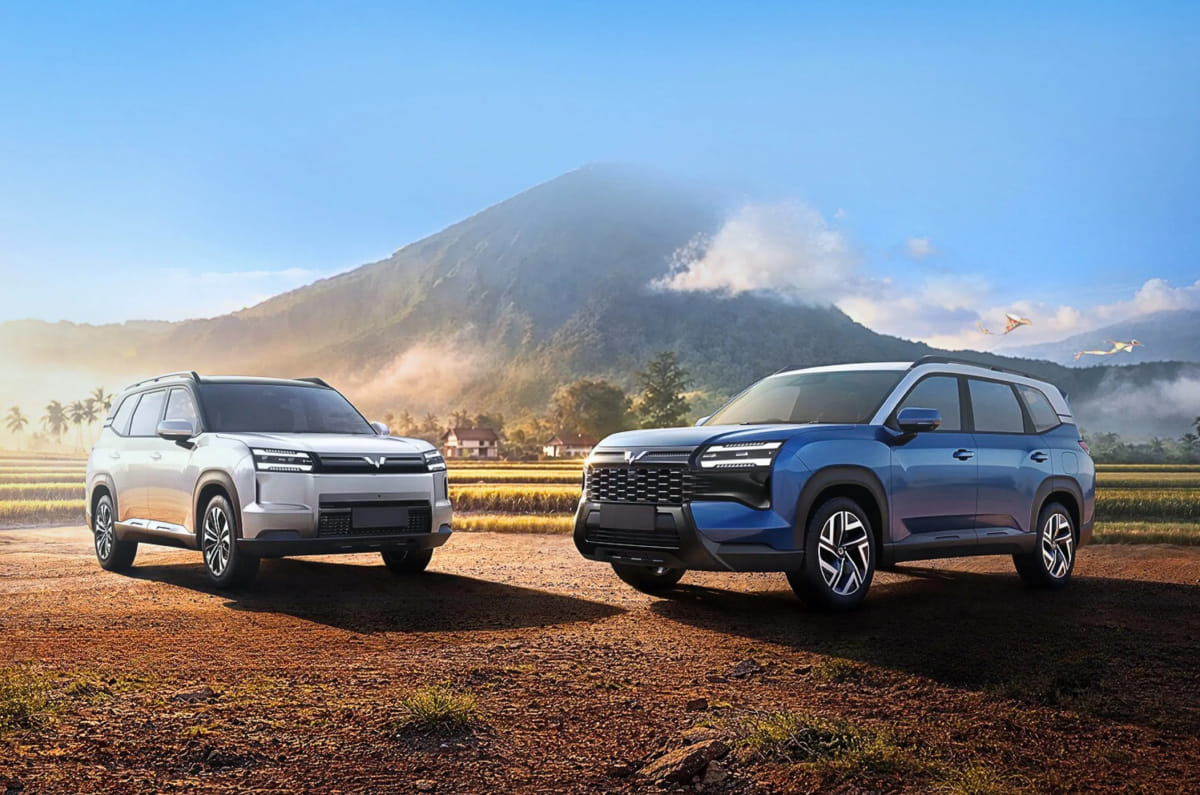
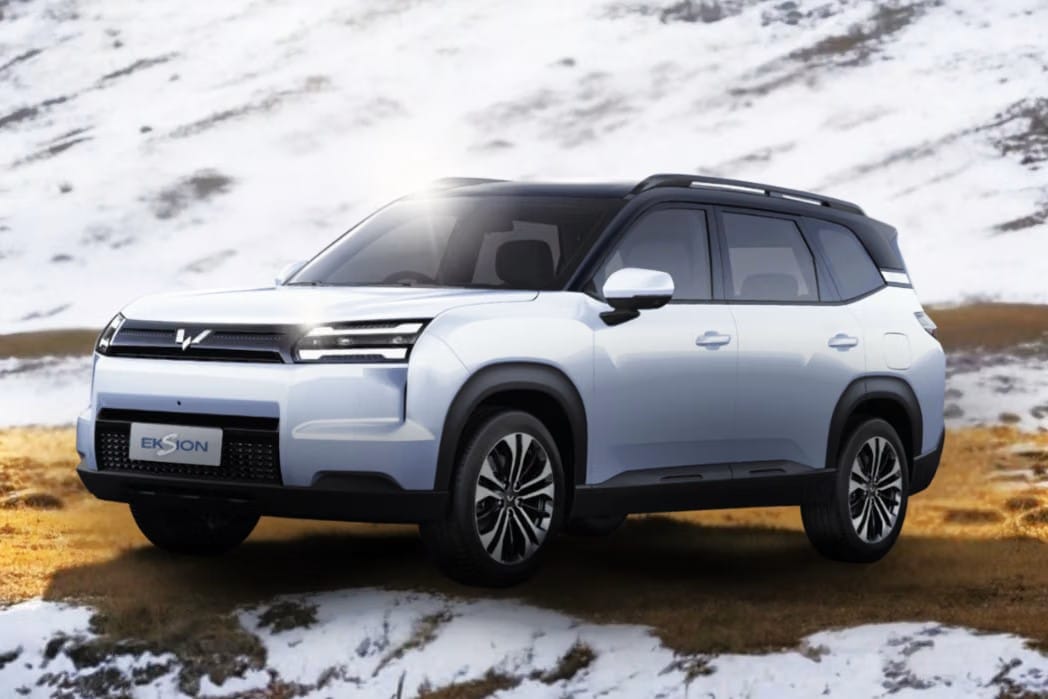
JSW MG Motor India will launch its new SUV on August 28. Expected to be called the Hector Hawk, it will be the first model based on the company’s new ADAPT platform and will be offered with both battery electric (EV) and plug-in hybrid (PHEV) powertrains.
EV version expected with a 69.2kWh battery pack
PHEV likely to offer up to 125km electric-only range
Likely to rival the Mahindra XEV 9S and XUV 7XO
JSW MG Hector Hawk: what to expect
Wuling Starlight EV. Image used for representative purposes only.
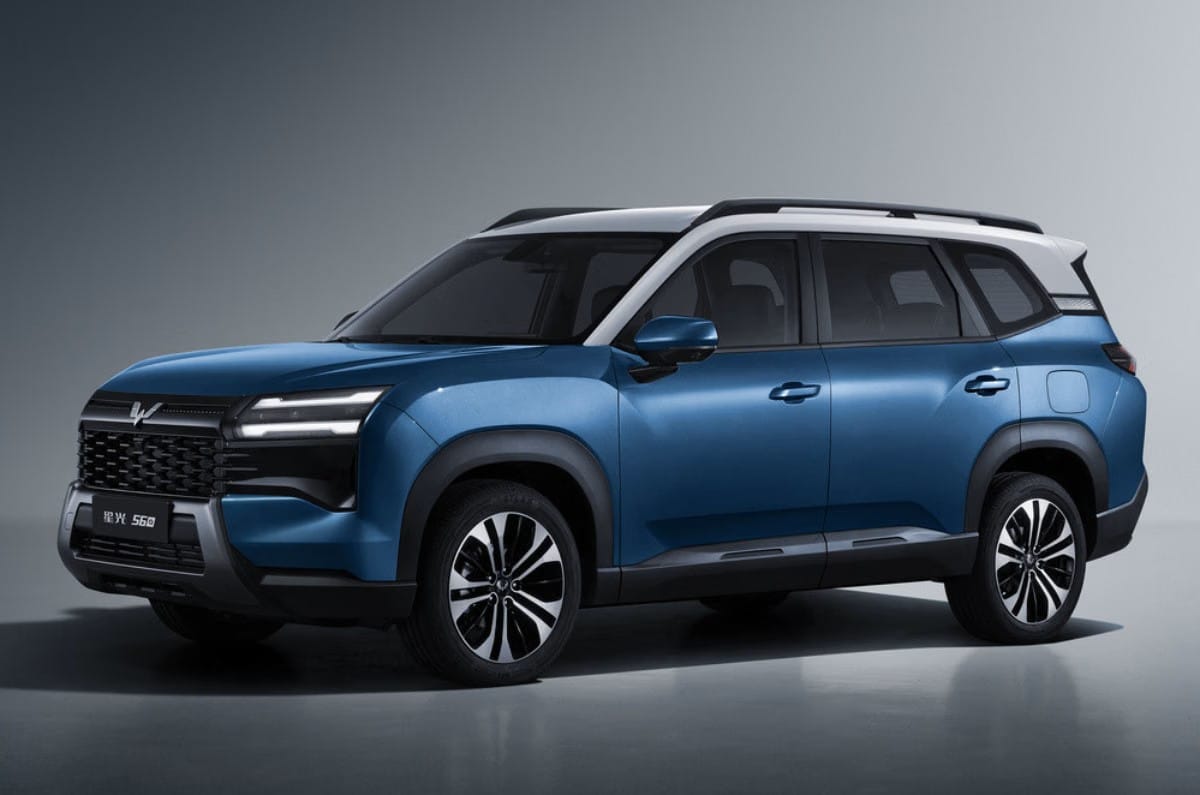
The Hector Hawk is based on the Wuling Starlight 560 sold in international markets which measures 4.7m in length, 1.85m in width and 1.7m in height. The car has been spied testing on our roads with spy shots revealing rectangular LED headlamps with LED daytime running lamps (DRLs) at the top and bottom, a blanked-off grille (expected to be the EV version), wraparound LED tail-lamps, a roof-mounted spoiler and a charging port on the left rear fender.
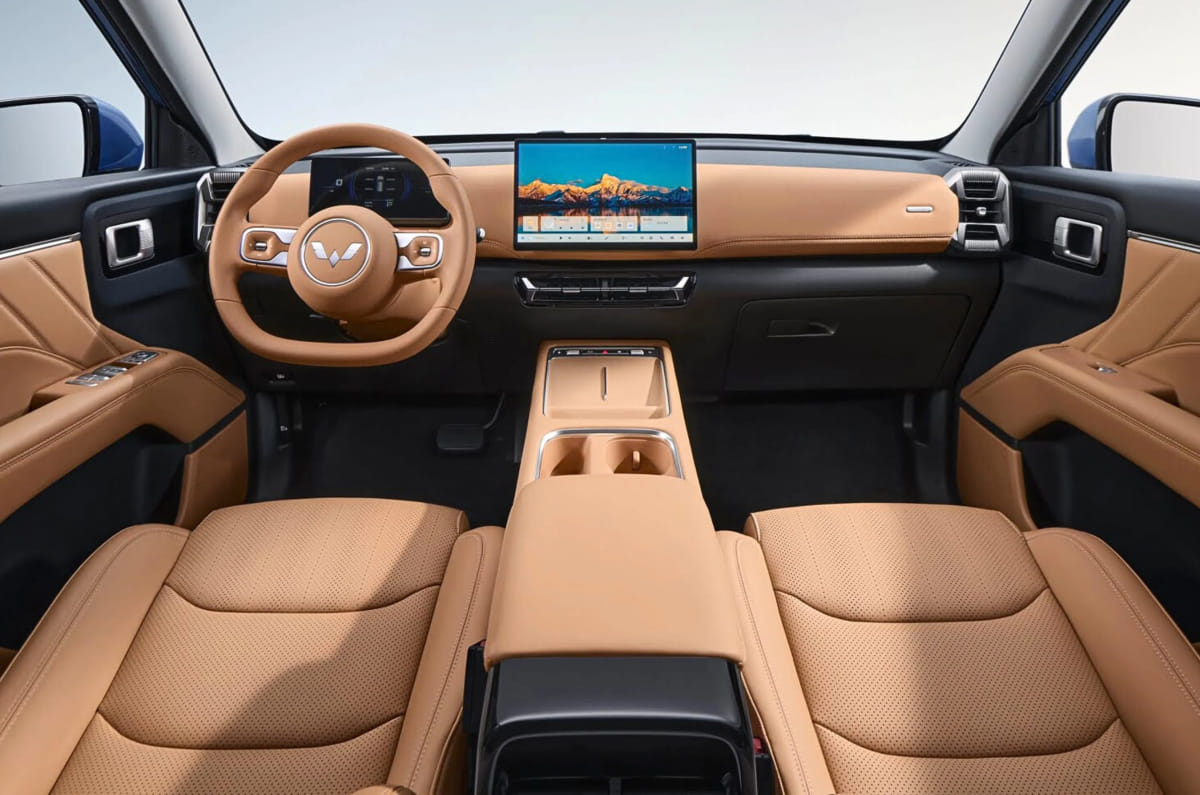
Wuling Starlight 560’s dashboard shown for representative purposes only.
Inside, the SUV is expected to feature a minimalist dashboard with an 8.8-inch digital instrument cluster and a 12.8-inch touchscreen infotainment system. Other expected features include a panoramic sunroof, powered and ventilated front seats, a 50W wireless phone charger, a 6-speaker sound system and automatic climate control with rear AC vents.
The safety suite could have 6 airbags as standard, a tyre-pressure monitoring system (TPMS), hill-hold assist, an electronic parking brake, a rear parking camera with sensors and advanced driver assistance systems (ADAS).
Powertrains and platform
Wuling Starlight PHEV. Image used for representative purposes only.
The EV version is expected to get a 69.2kWh battery pack paired with a 201hp, 310Nm front-mounted electric motor, offering a CLTC-claimed range of 530km. The PHEV version is expected to combine a 1.5-litre petrol engine with a 20.5kWh battery pack and an electric motor, offering a total output of 195hp and 230Nm and an all-electric range of 125km.
Strong hybrid powertrain based on ADAPT
The Hector Hawk will be the first model in India based on MG’s ADAPT platform, which supports battery electric, plug-in hybrid, range-extender and strong-hybrid powertrains. JSW MG has confirmed that it will initially focus on EVs and PHEVs.
In MG’s India lineup, the Hector Hawk is expected to be positioned above the current Hector. The EV version is likely to rival the Mahindra XEV 9S, while the PHEV is expected to take on the Mahindra XUV 7XO and Tata Safari.
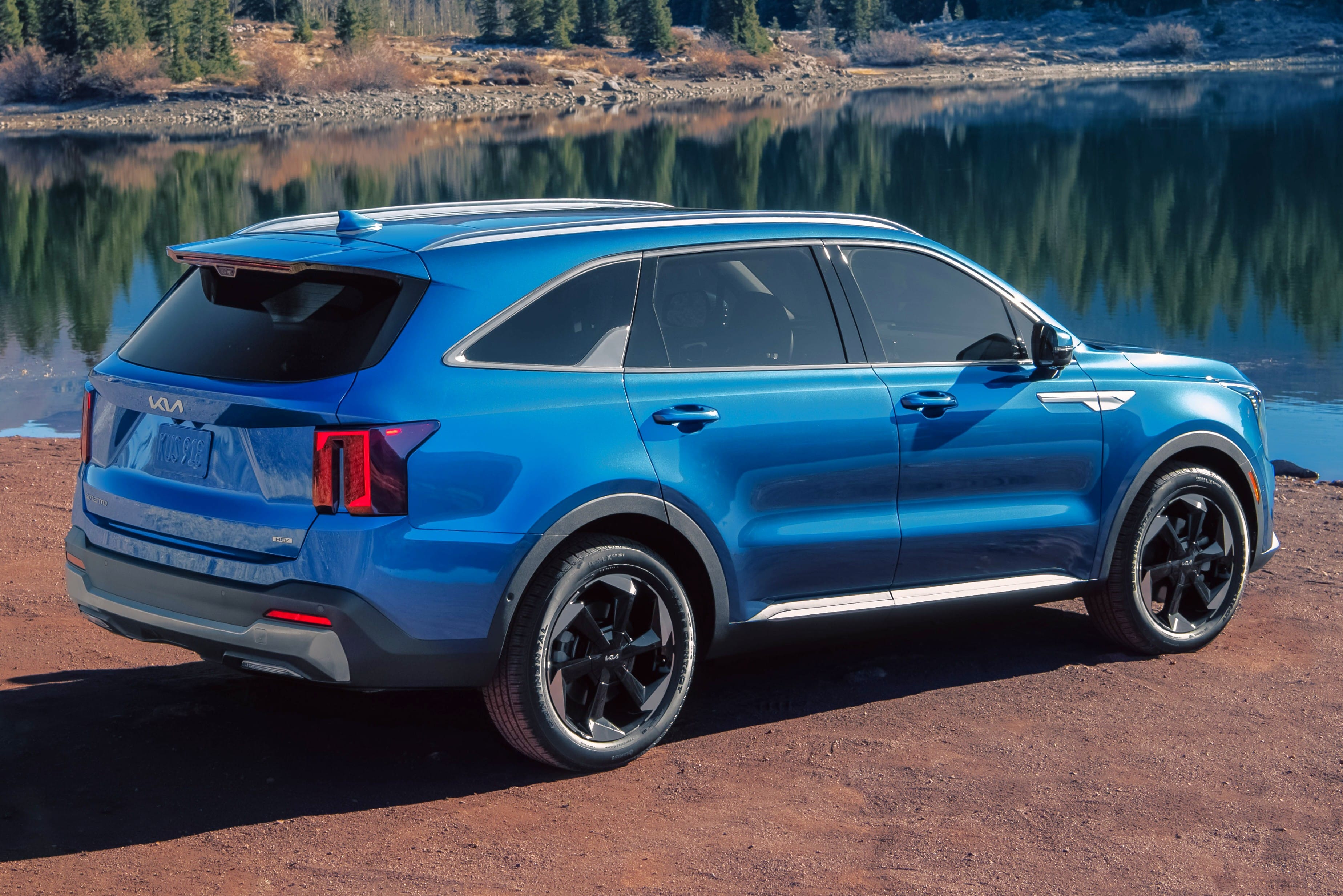
The Kia Sorento three-row SUV will go on sale in India on September 4, 2026. It will be positioned above the Seltos as Kia India’s flagship ICE SUV, and will also be the carmaker’s first hybrid model for the Indian market. Official bookings for the Sorento opened very recently too.
Kia Sorento India price estimate and rivals
US-spec Kia Sorento. Image used for representation only.
Since the Sorento is anticipated to be locally assembled, expect pricing to start at around Rs 40 lakh (ex-showroom). At that price point, the Sorento will rival premium three-row SUVs like the Volkswagen Tayron, MG Majestor, Skoda Kodiaq, Toyota Fortuner, and Jeep Meridian.
Kia Sorento powertrain options
Kia will offer the Sorento with hybrid and diesel powertrains in India. If the international-spec Sorento is anything to go by, the India-spec model could feature a 1.6-litre 4-cylinder turbo-petrol hybrid setup developing 238hp and 380Nm, along with a 2.2-litre diesel engine outputting 202hp and 441Nm – this mill is used in the Kia Carnival too. Both Sorento engines are likely to be paired with automatic transmissions. Though the global-spec Sorento can be had in FWD and AWD guises, it remains to be seen whether the latter drive layout will be available for Indian buyers.
Kia Sorento exterior and interior
The Sorento sports a subtly aggressive design, with highlights like vertically oriented LED headlamps and tail-lamps, T-shaped amber-coloured DRLs, a wide ‘Tiger Nose’ grille, dual-tone alloy wheels, mildly flared wheel arches, and muscular bumpers. In terms of dimensions, the global-spec Sorento measures 4,815mm in length, 1,900mm in width, and 1,700mm in height, along with a wheelbase of 2,815mm. Should these hold true for the India-spec model, the Sorento will be larger than most of its rivals.
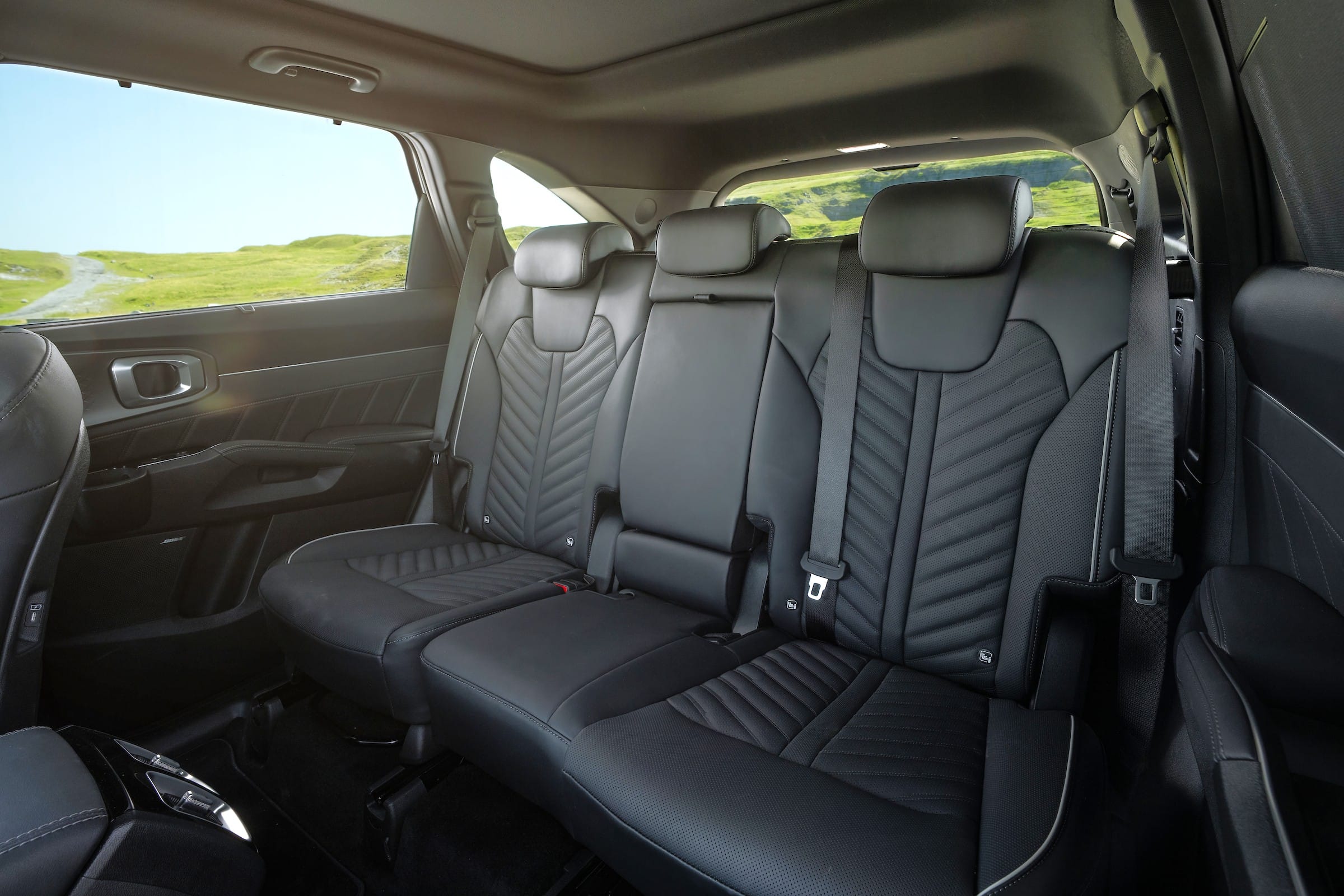
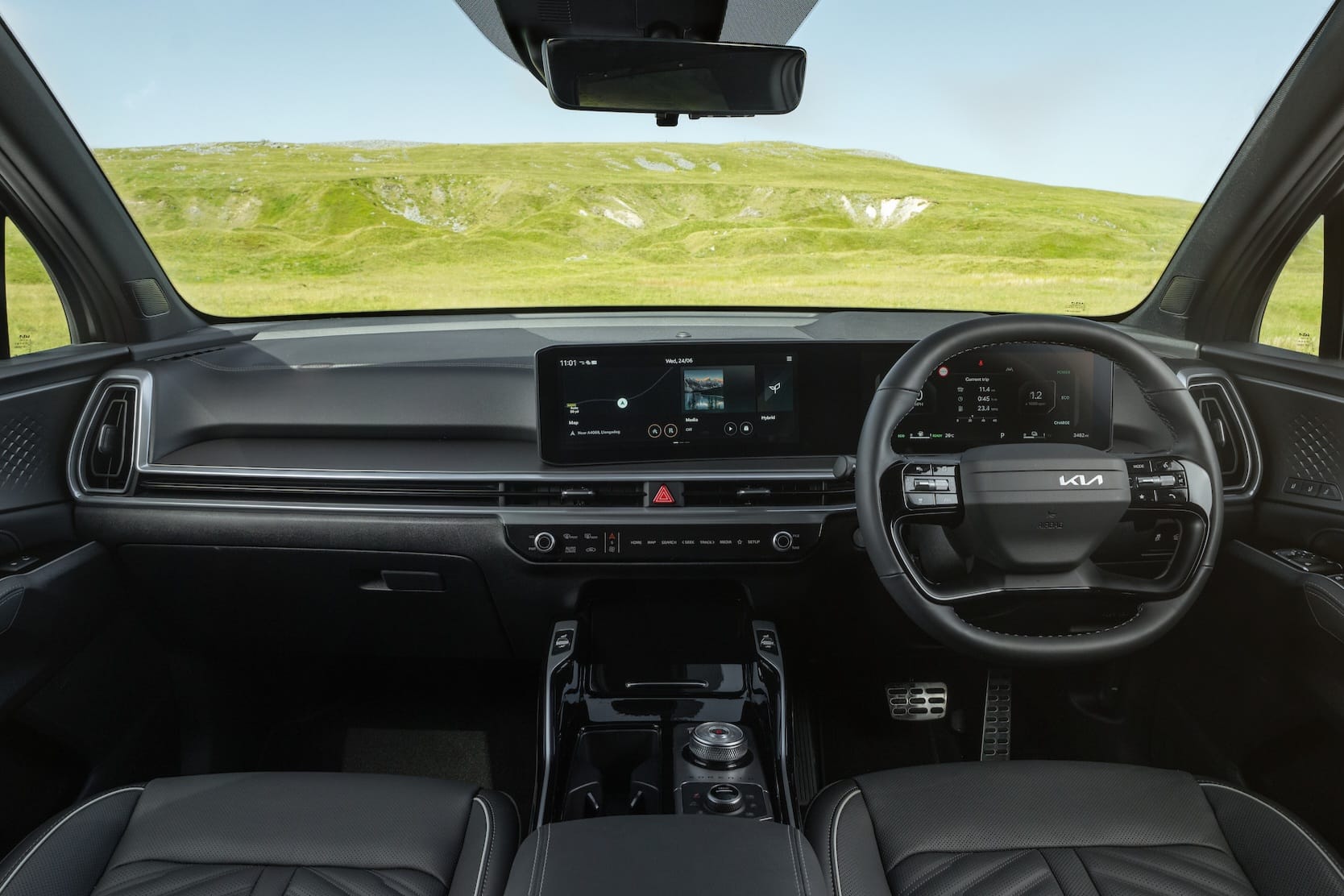
Inside, the India-spec Sorento is likely to be offered with 6-seat and 7-seat configurations. Boot space is rated at 179 litres with all three rows up, extendable to a cavernous 1,996 litres. Notable elements on the premium-looking dashboard include dual 12.3-inch displays, a four-spoke steering wheel with an offset Kia logo, large vertical AC vents on both extremities, a touch-capacitive panel on the centre console, and a rotary drive selector.
The Sorento is expected to pack creature comforts like ventilated front seats, dual-zone climate control, wireless Apple CarPlay and Android Auto, a powered driver’s seat, a panoramic sunroof, Level 2 ADAS, a heads-up display, an electronic parking brake, ambient lighting, a wireless charging pad, and more.
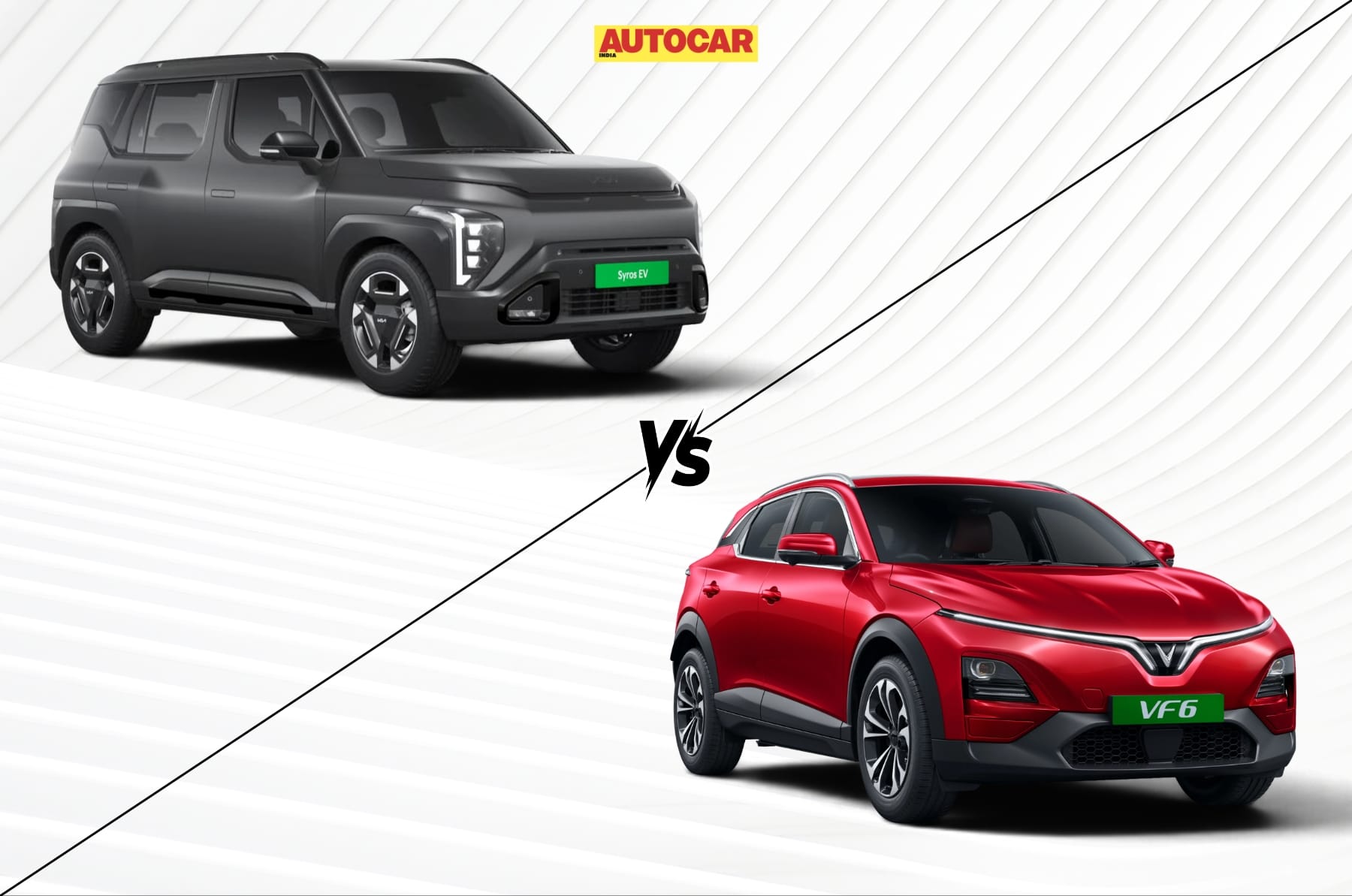
The Kia Syros EV and Vinfast VF6 are the most affordable electric vehicles from their respective brands. The premium Kia offering is sold in the compact SUV space, one below the VF6’s midsize SUV segment. So, can it match or even outdo the larger VF6 when it comes to specifications and features? We compare the Kia Syros EV X-Line ER and Vinfast VF6 Wind Infinity top-spec variants to find out.
Kia Syros EV X-Line ER vs Vinfast VF6 Wind Infinity: Dimensions
Syros EV
VF6
Length (mm)
3,995
4,241
Width (mm)
1,805
1,834
Height (mm)
1,670
1,615
Wheelbase (mm)
2,550
2,730
Ground clearance (mm)
197
190
Frunk (L)
16
No
Boot space (L)
390-465
423
Wheel size (in)
17
18
Clearly, the Vinfast VF6 is the larger SUV between the two. It is 246mm longer, 29mm wider and has a 180mm longer wheelbase than the Kia Syros EV. However, the Syros is 55mm taller and offers a 7mm higher ground clearance. It also gets a 16-litre frunk, a feature missing on the VF6. In terms of luggage space, the VF6 offers 423 litres of boot space, but the Syros EV can hold up to 465 litres when its sliding rear seats are pushed forward, although capacity drops to 390 litres with the seats in their rearmost position. The VF6 also rides on larger 18-inch alloy wheels, compared to the 17-inch units on the Syros EV.
Kia Syros EV X-Line ER vs Vinfast VF6 Wind Infinity: Powertrains
Syros EV
VF6
Battery size (kWh)
51.4
59.6
Electric motor setup
Single motor
Single motor
Drive layout
FWD
FWD
Power (hp)
171
204
Torque (Nm)
255
310
Claimed 0-100kph time (s)
8.1
8.9
ARAI range (km)
526
463
The two SUVs use a single-motor, front-wheel-drive setup, but the VF6 has the bigger 59.6kWh battery pack, compared to the Syros EV’s 51.4kWh unit. It also produces 33hp more power and 55Nm more torque. Despite this, the Syros EV is quicker, with a claimed 0-100kph time of 8.1 seconds, compared to the VF6’s 8.9 seconds. It also has a clear advantage in terms of claimed driving range, offering 526km on a single charge, which is 63km more than the VF6’s 463km, despite having a smaller battery pack.
Kia Syros EV X-Line ER vs Vinfast VF6 Wind Infinity: Charging speeds
Syros EV
VF6
AC charging (10-100 percent)
4.5 hrs (11kW unit)
Time not specified (7.2kW unit)
DC fast charging (10-70 percent)
–
25 mins (100kW unit)
DC fast charging (10-80 percent)
39 mins (100kW unit)
–
Both the Syros EV and VF6 support 100kW DC fast charging. However, Kia claims a 39-minute charging time for a 10-80 percent top-up, while Vinfast’s claimed 25-minute figure is for the slightly lower 10-70 percent charging window. On the AC charging front, the Syros EV supports charging speeds of up to 11kW, taking 4.5 hours to charge from 10 to 100 percent. The VF6, meanwhile, supports up to a 7.2kW AC charger, although Vinfast has not yet revealed its charging time.
Kia Syros EV X-Line ER vs Vinfast VF6 Wind Infinity: Exterior features
Syros EV
VF6
Headlamps
LED
LED projector
Front fog lamps
LED
No
LED tail-lamps
Yes
Yes
Powered ORVMs
Yes
Yes
Alloy wheels
Yes
Yes
Flush door handles
Yes
No
Body cladding
Yes
Yes
Rear spoiler
Yes
Yes
Not a lot separates them when it comes to exterior features, with both offering LED tail-lamps, powered ORVMs, alloy wheels, body cladding and a rear spoiler. However, the VF6 comes with LED projector headlamps, while the Syros EV gets LEDs with reflectors. Another differentiation is that the Syros EV gets flush-fitting door handles, whereas the VF6 is equipped with conventional pull-type door handles.
Kia Syros EV X-Line ER vs Vinfast VF6 Wind Infinity: Interior features
Syros EV
VF6
Infotainment screen (in)
12.3
12.9
Digital driver’s display (in)
12.3
No
Climate control display (in)
5
No
Sunroof
Panoramic, openable
Panoramic, fixed
Wireless charger
Yes
Yes
Driver’s seat powered adjustment
4-way
8-way
Ventilated front seats
Yes
Yes
USB ports
2 Type C (f/r), including 1 100W (f)
2 Type A (f/r), 1 90W Type C (r)
Rear AC vents
Yes
Yes
Rear seat base ventilation
Yes
No
Climate control
Single zone
Dual zone
All window one touch up/down
Yes
Yes
Ambient lighting
Yes
Footwell only
Sound system
8-speaker Harmon Kardon
8 speakers
Apple CarPlay and Android Auto
Wireless
Wireless
Connected car tech
Yes
Yes
Rear sunshades
Yes
No
Rear centre armrest
Yes
Yes
Sliding, reclining rear seats
Yes
No
Speaking of interior features, both are well equipped and offer a wireless phone charger, ventilated front seats, connected car technology, one-touch up/down function for all windows, wireless Apple CarPlay and Android Auto and an 8-speaker sound system. The VF6 gets a slightly larger 12.9-inch infotainment screen, an 8-way power-adjustable driver’s seat and dual-zone climate control.
The Syros EV, meanwhile, stands out with a 12.3-inch digital driver’s display, a 5-inch climate control display, an openable panoramic sunroof, rear sunshades, rear seat base ventilation, and sliding and reclining rear seats. It also gets USB Type-C ports throughout the cabin, while the VF6 has Type-A ports at the front and rear, and only a single 90W Type-C port for rear passengers. Additionally, the Syros EV features a premium Harman Kardon sound system and more comprehensive ambient lighting (dashboard, doors and footwell area), whereas the VF6 offers just footwell lighting.
Kia Syros EV X-Line ER vs Vinfast VF6 Wind Infinity: Driving features
Syros EV
VF6
Drive modes
Eco, Normal, Sport
Eco, Normal, Sport
Household-style interior 3-pin socket
Yes
No
Regen braking
Yes
Yes
Paddleshifters for regen
Yes
No
Adaptive cruise control
Yes
Yes
Differences here are less, save for the Syros EV’s household-style 3-pin power socket to power certain electrical devices, along with steering-mounted paddle shifters to adjust the level of regenerative braking. Regen levels can be adjusted via the touchscreen on the VF6, but an internal V2L charging socket is absent here. Drive modes and adaptive cruise control are offered by both models.
Kia Syros EV X-Line ER vs Vinfast VF6 Wind Infinity: Safety features
Syros EV
VF6
Bharat NCAP rating
Yet to be tested
5 stars
Airbags
6
7
ABS with EBD
Yes
Yes
Electronic stability program
Yes
Yes
Hill-start assist
Yes
Yes
Tyre pressure monitoring system
Yes
Yes
360-degree camera
Yes
Yes
Front parking sensors
Yes
Yes
Electronic parking brake
Yes
Yes
Rain-sensing wipers
No
Yes
Auto-dimming IRVM
Yes
Yes
Isofix child seat anchors
Yes
Yes
Rear wiper, defogger
Yes
Yes
Disc brakes
Front, rear
Front, rear
Level 2 ADAS
Yes
Yes
Again, not much separates the them when it comes to safety kit. Both offer ABS with EBD, electronic stability control, hill-start assist, TPMS, a 360-degree camera, front parking sensors, an electronic parking brake, an auto-dimming IRVM, ISOFIX child seat anchors, front and rear disc brakes, and Level 2 ADAS.
The VF6, however, gets seven airbags, one more than the Syros EV’s six, along with rain-sensing wipers. It has also secured a full 5-star Bharat NCAP safety rating. The Syros EV’s Bharat NCAP crash test rating, meanwhile, is yet to be revealed at the time of writing, but it is likely to score a 5-star rating like its ICE counterpart.
Kia Syros EV X-Line ER vs Vinfast VF6 Wind Infinity: Prices and verdict
Syros EV
VF6
Price (in Rs lakh)
20
19.99
There’s no doubt that both the Kia Syros EV and Vinfast VF6 are feature-rich electric SUVs. However, despite being positioned a segment below the VF6, the Syros EV makes a strong case for itself with its overall package. It offers several features aimed at pampering the rear seat passengers, including sliding and reclining seats with ventilation (seat base only), sunshades and an openable panoramic sunroof. While it has a smaller footprint than the VF6, we found in our review that the Syros EV still offers a spacious cabin, helped by its boxy design and good interior packaging.
The Syros EV also has an advantage when it comes to claimed driving range. Despite using a smaller battery pack, it offers a higher single charge range, an important factor for most EV buyers. While both SUVs are priced very close to each other at the top-end, the Syros EV is clearly on the expensive side for its segment. However, the overall package goes a long way towards justifying its price. Buyers can also reduce the upfront cost by quite a lot by opting for the battery as a service (BaaS) scheme with the electric Syros, though this option is not available with the VF6.
Another advantage for the Syros EV is Kia’s wider sales and service network across the country, along with its stronger brand recognition among buyers. Vinfast, on the other hand, is still new to the market, with a relatively limited sales and service network. This could also play an important role in the overall ownership experience.
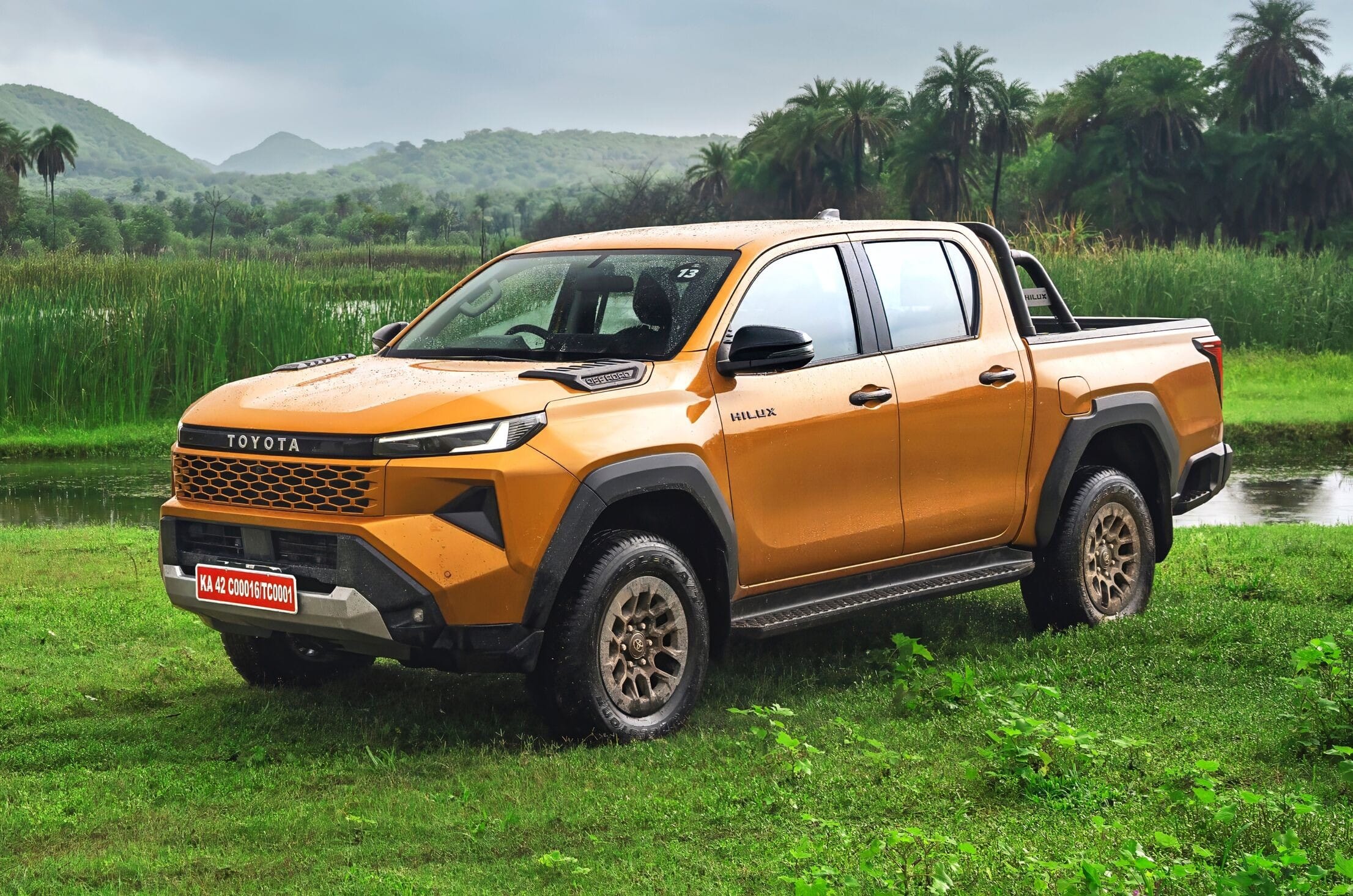
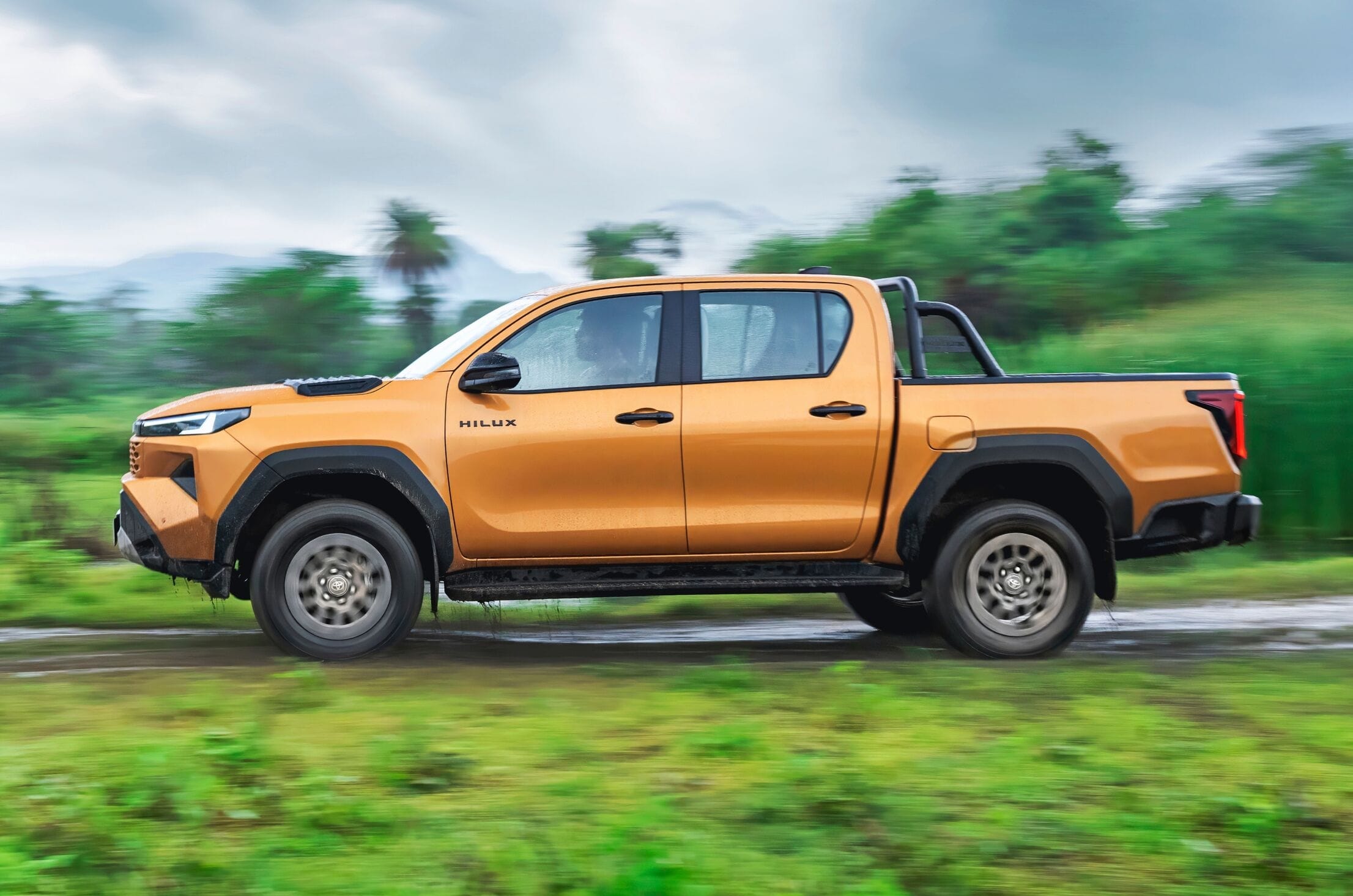
The ninth-gen Toyota Hilux has gone on sale in India at a starting price of Rs 31.99 lakh (ex-showroom). It uses the same body-on-frame IMV platform as its predecessor, but features major styling revisions inside and out. Now that we’ve reviewed the new Hilux, here are three reasons why you should bring one home, and two reasons why you may want to think twice.
Pros
Punchy engine
Retains prior Hilux’s 204hp 2.8-litre diesel mill
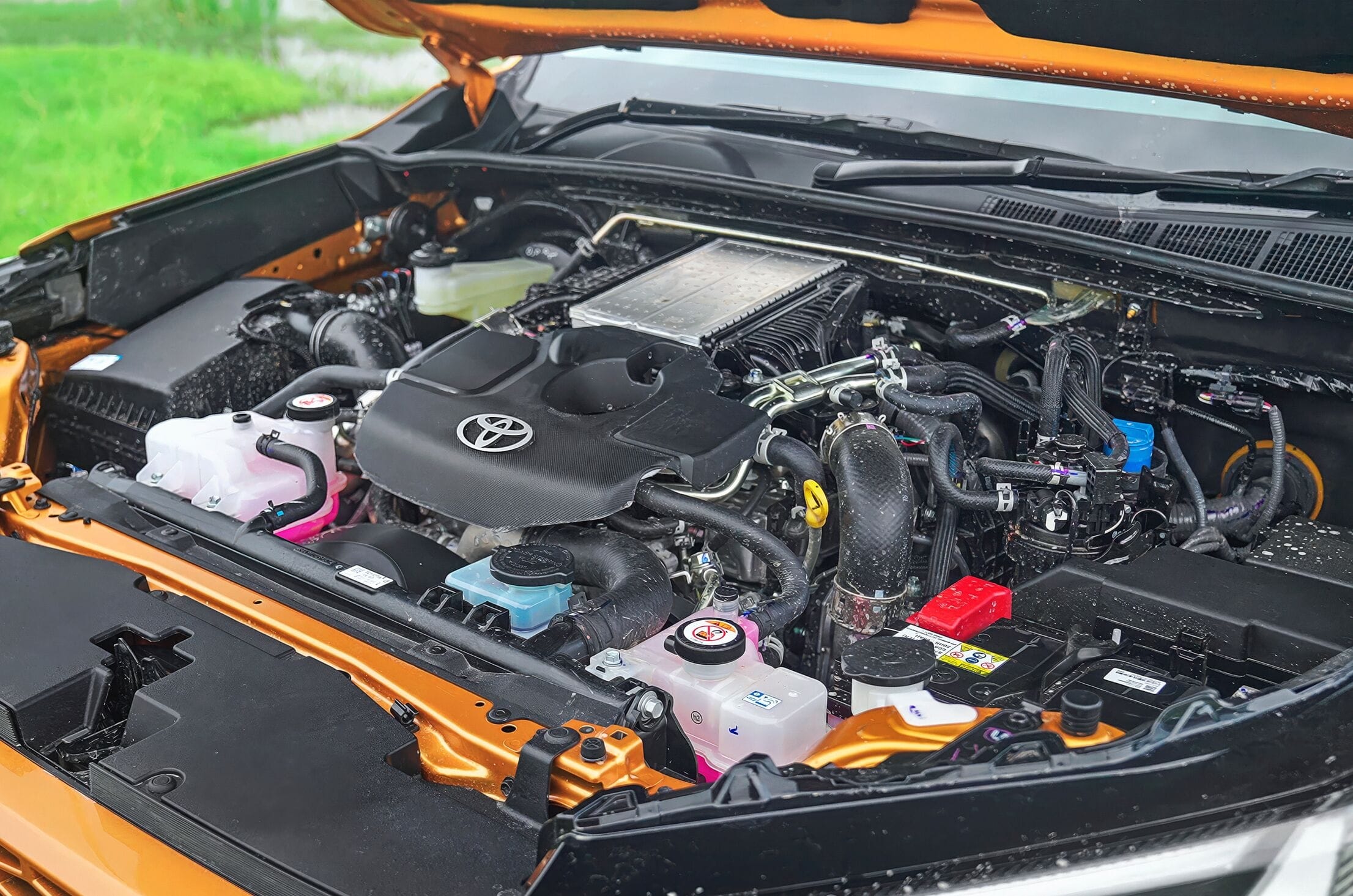
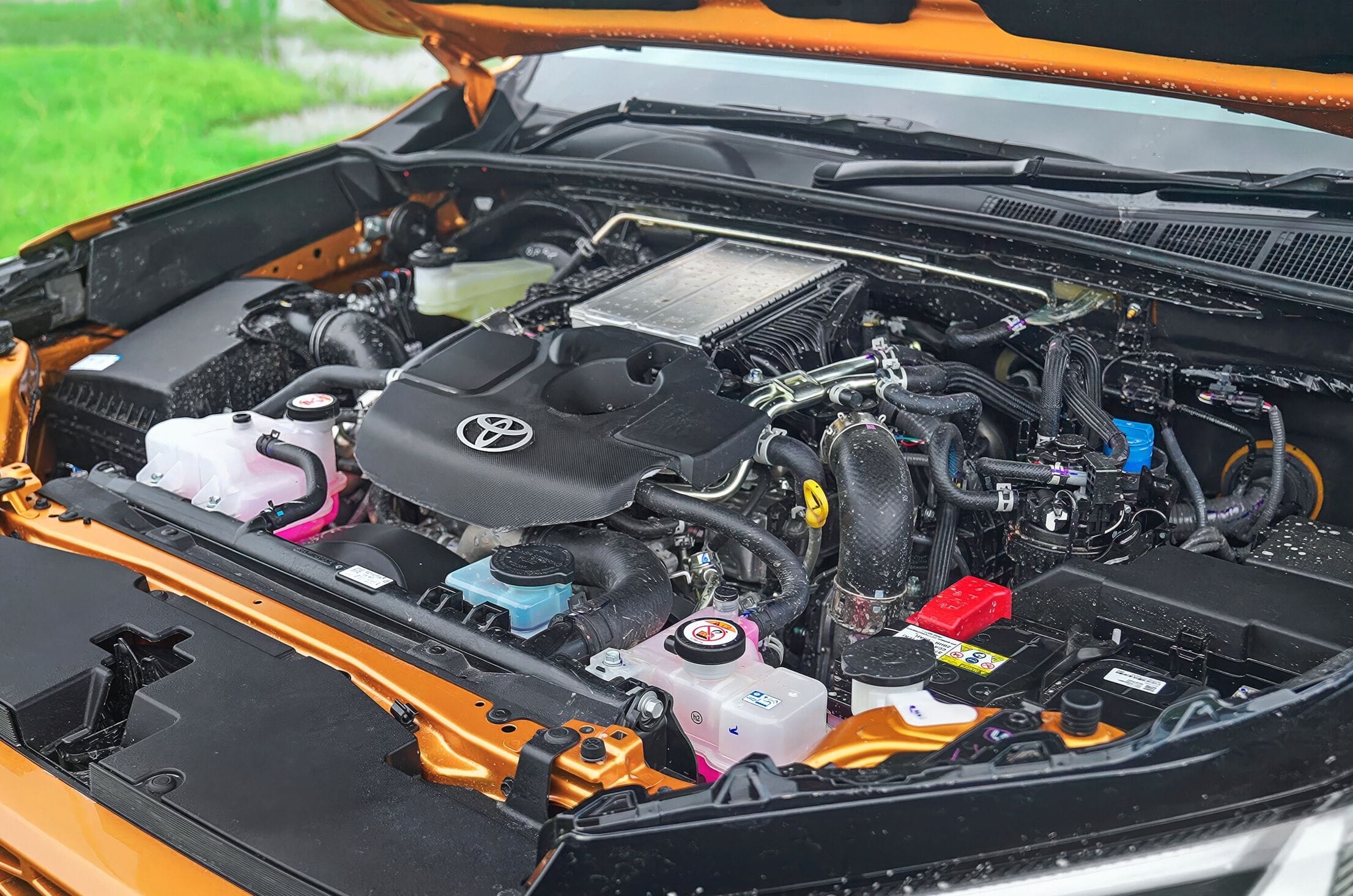
Under the bonnet, the ninth-gen Hilux carries forward its predecessor’s 2.8-litre 4-cylinder diesel engine, outputting an identical 204hp and 500Nm. This engine is mated solely to a 6-speed torque converter automatic transmission, and we found this combination to work very well in the new Hilux.
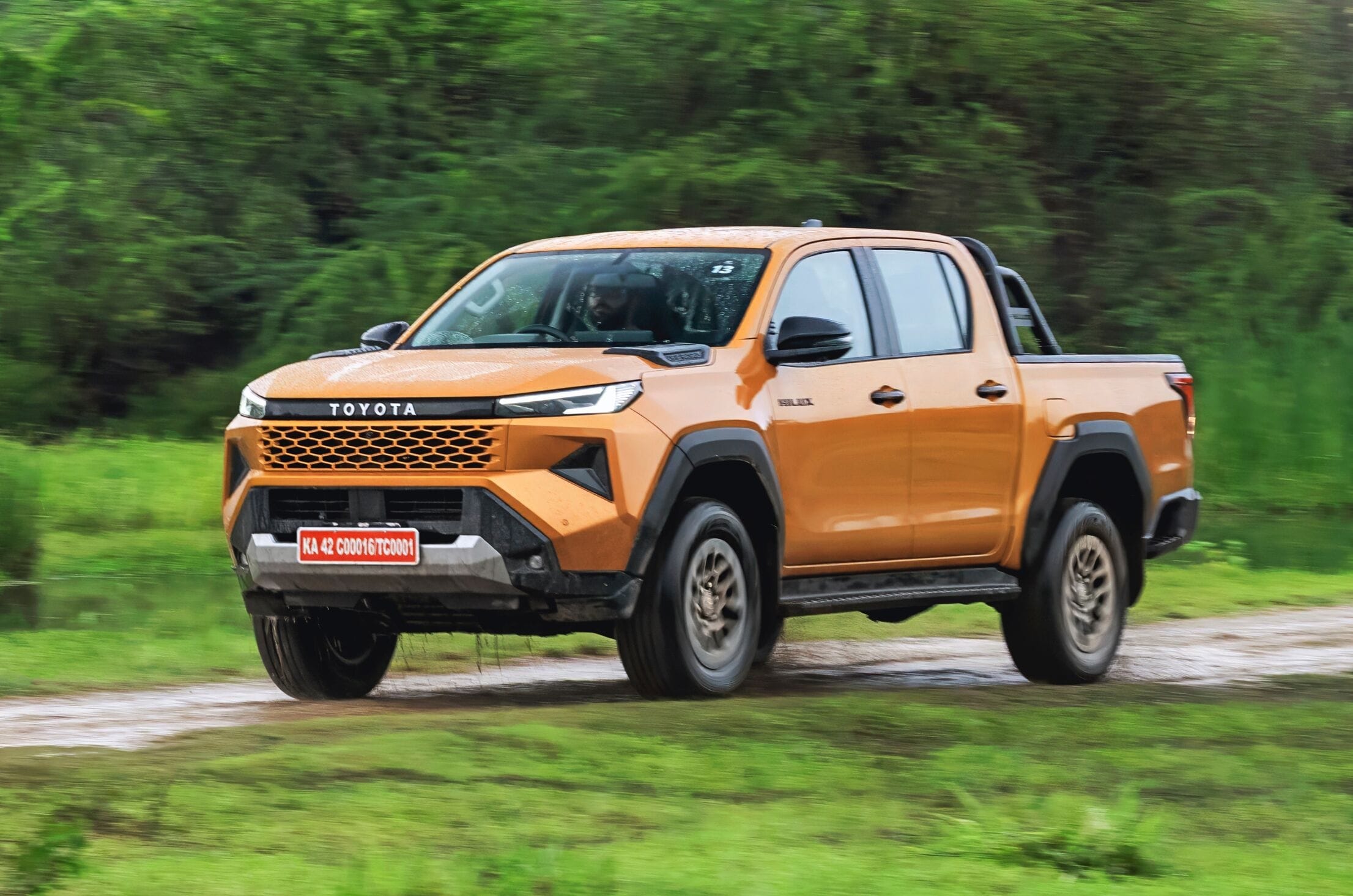
Performance feels strong, especially in the lower bounds of the rev range, and it’s easy to keep momentum, even when driving off-road. The gearbox shifts smoothly and quickly, regardless of whether you leave it to its own devices or feed inputs via the gear lever.
Thanks to the stiffened chassis and improved insulation, refinement is excellent at normal driving speeds, with little to no vibrations felt in the cabin. However, the engine tends to get vocal at higher revs.
Excellent off-road capability
Can take any off-road trail you point it towards
Off-road prowess is a core tenet of the Hilux, and the ninth-gen model does not disappoint on this front. The suspension setup comprises independent double wishbones and coil springs up front, and a rigid axle with leaf springs at the rear. 4×2 is offered in the base variant only, with all other Hilux variants packing 4×4.
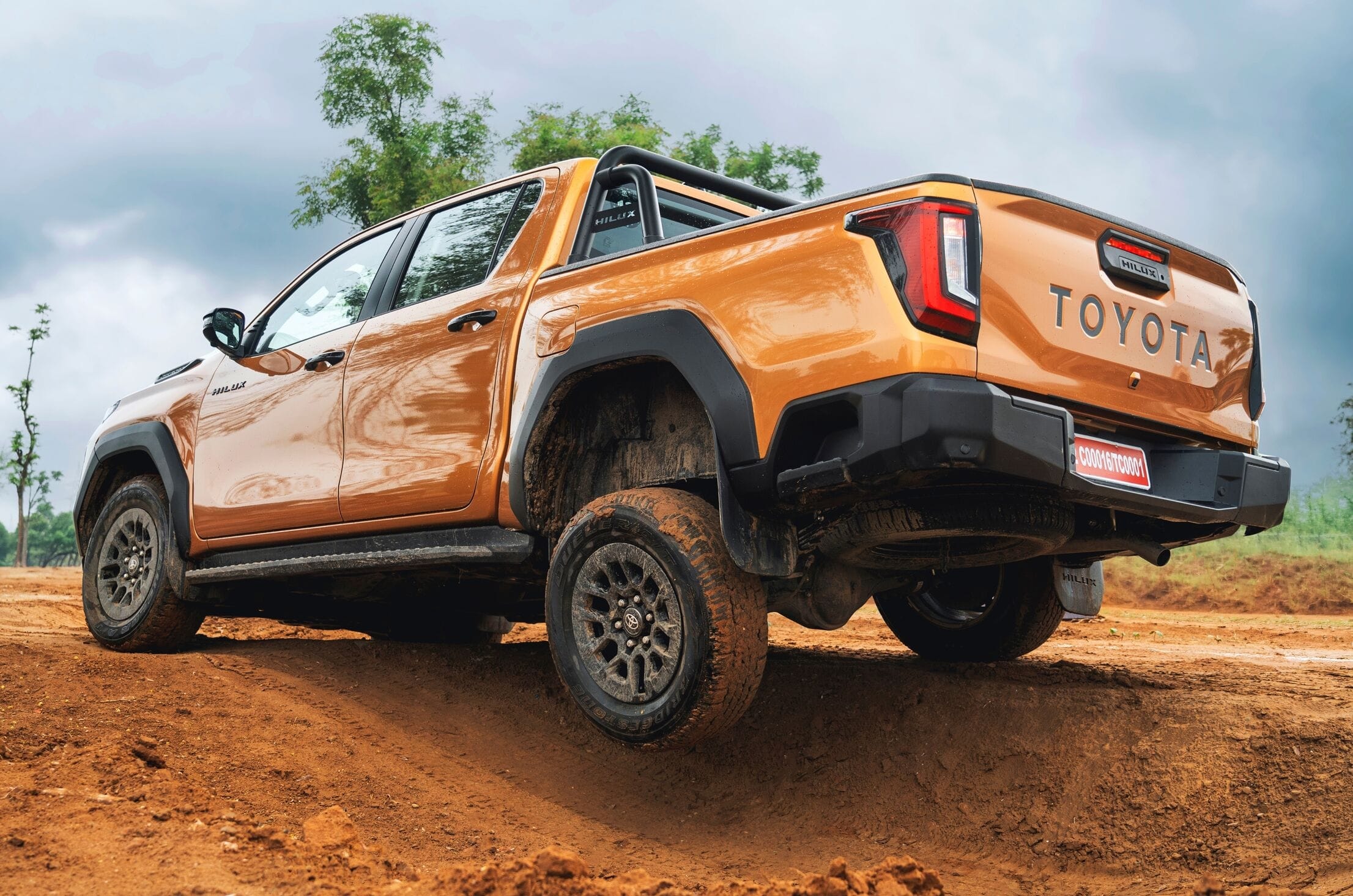
Large rocks, deep potholes, and sharp-edged sections are gobbled up by the Hilux, and it felt confident and sure-footed through a forest trail littered with loose rocks. The Hilux handled most of the trail we drove on in 4×2 mode, and the more extreme bits that required 4×4 were also a cakewalk for the pickup truck.
Lots of cargo space
Estimated payload capacity of 470kg
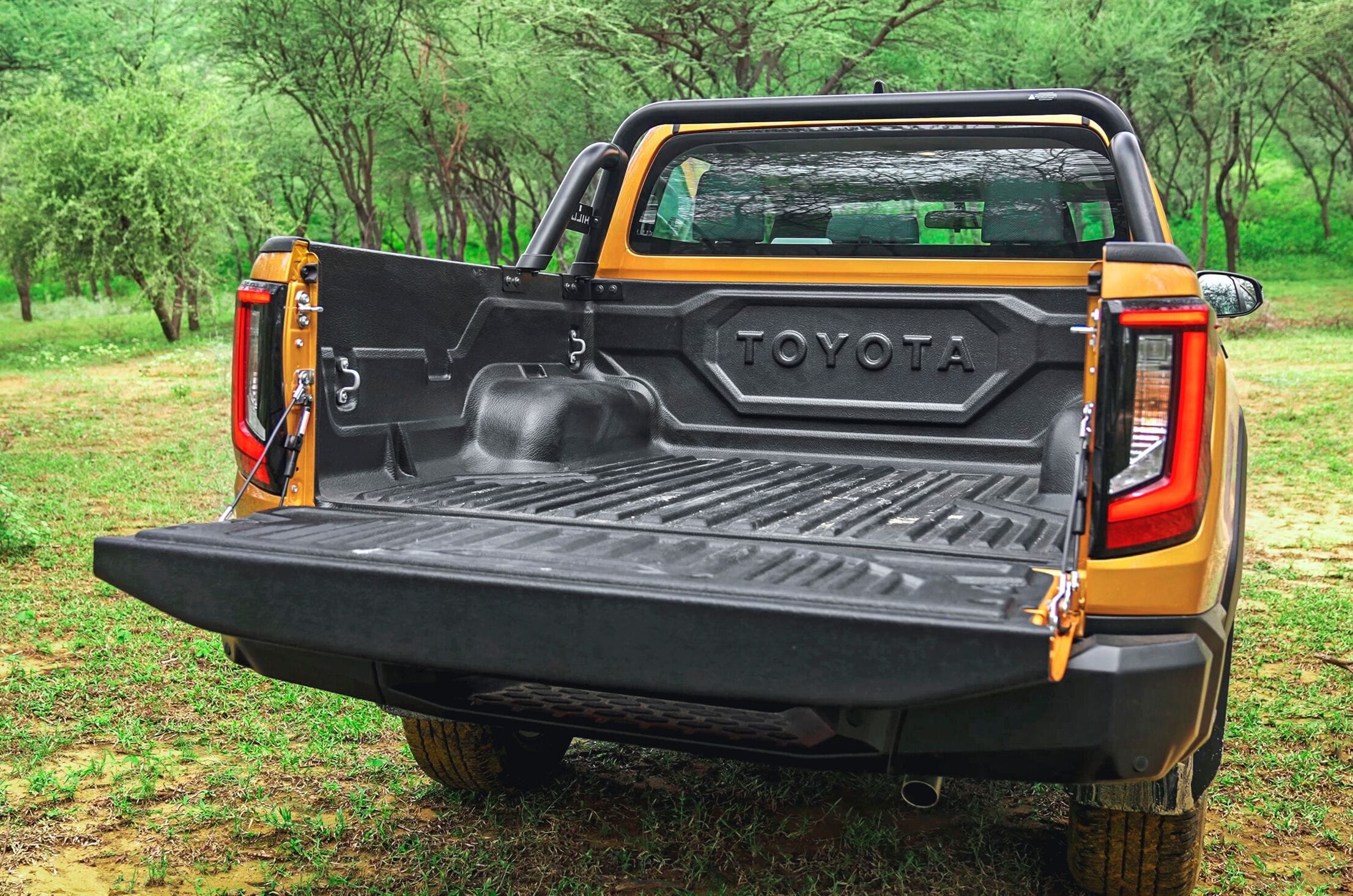
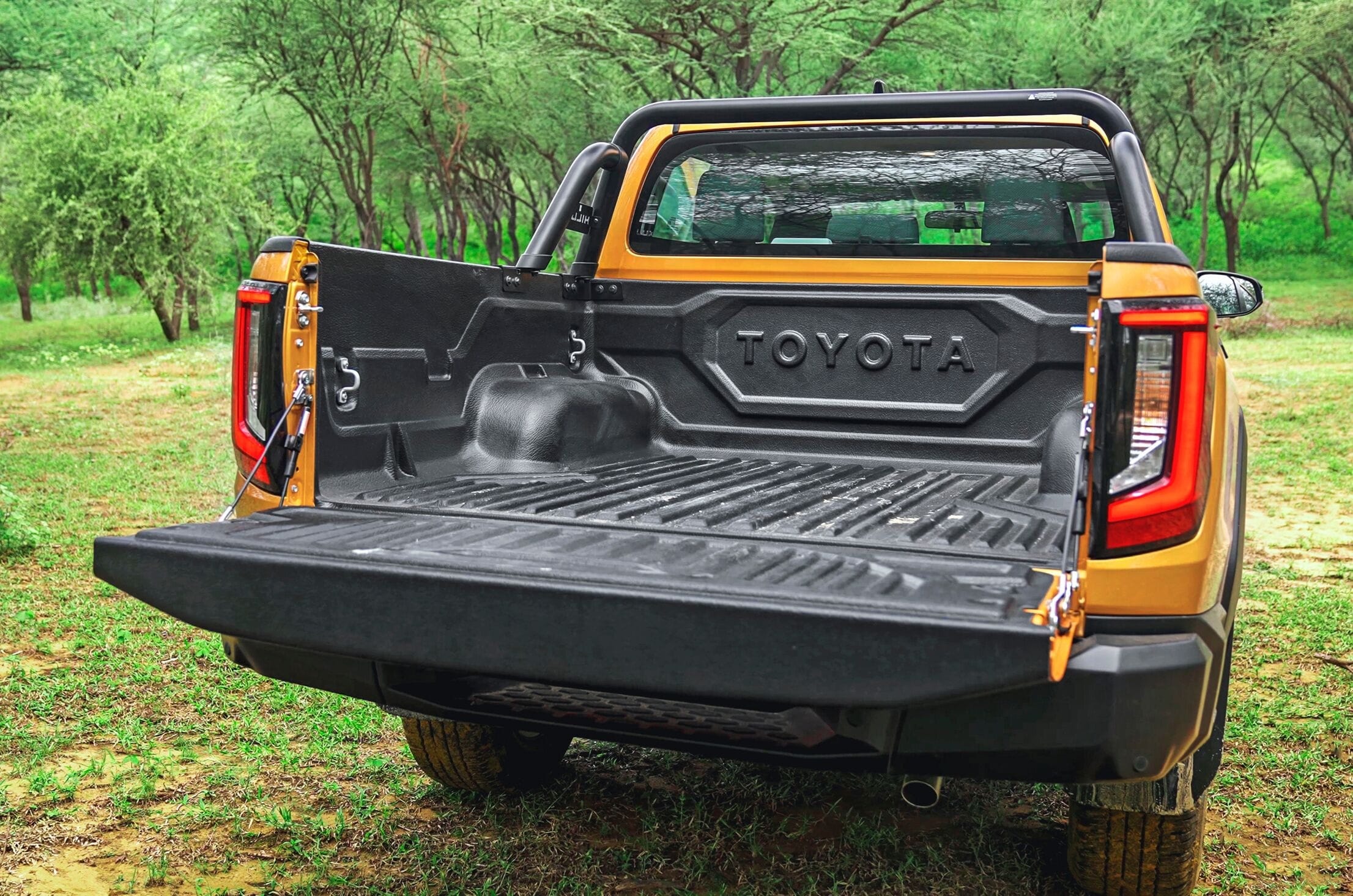
Being a pickup truck, the Hilux obviously has a large open bed behind the passenger compartment. Though Toyota has yet to disclose the bed’s payload capacity, we expect it to match the prior Hilux’s 470kg figure. The bed is big enough to stow camping gear and a decent amount of luggage. Integrated steps on the sides and rear make loading and unloading easier too.
Cons
Misses out on numerous features
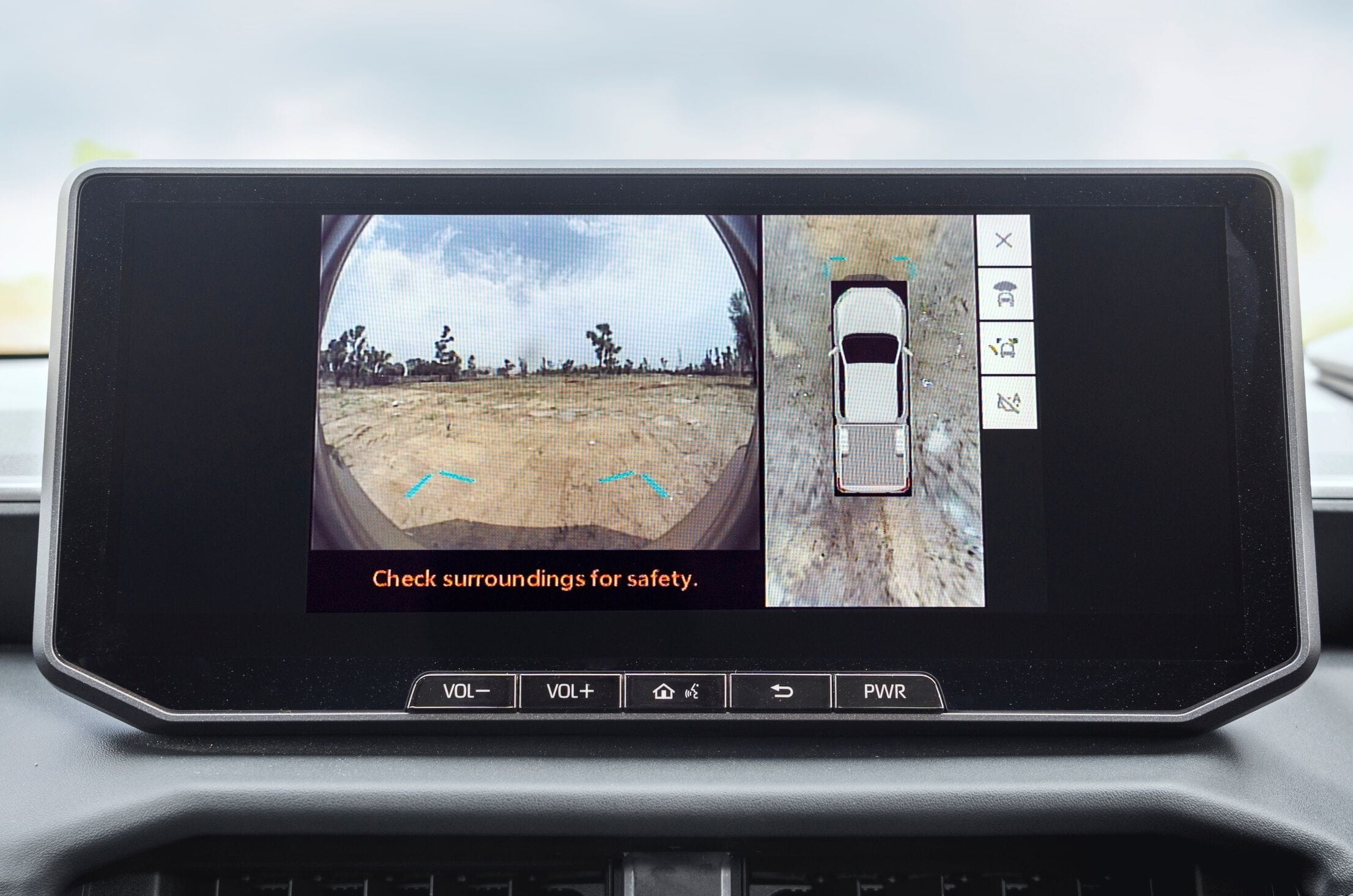
360-degree camera’s image quality is also poor
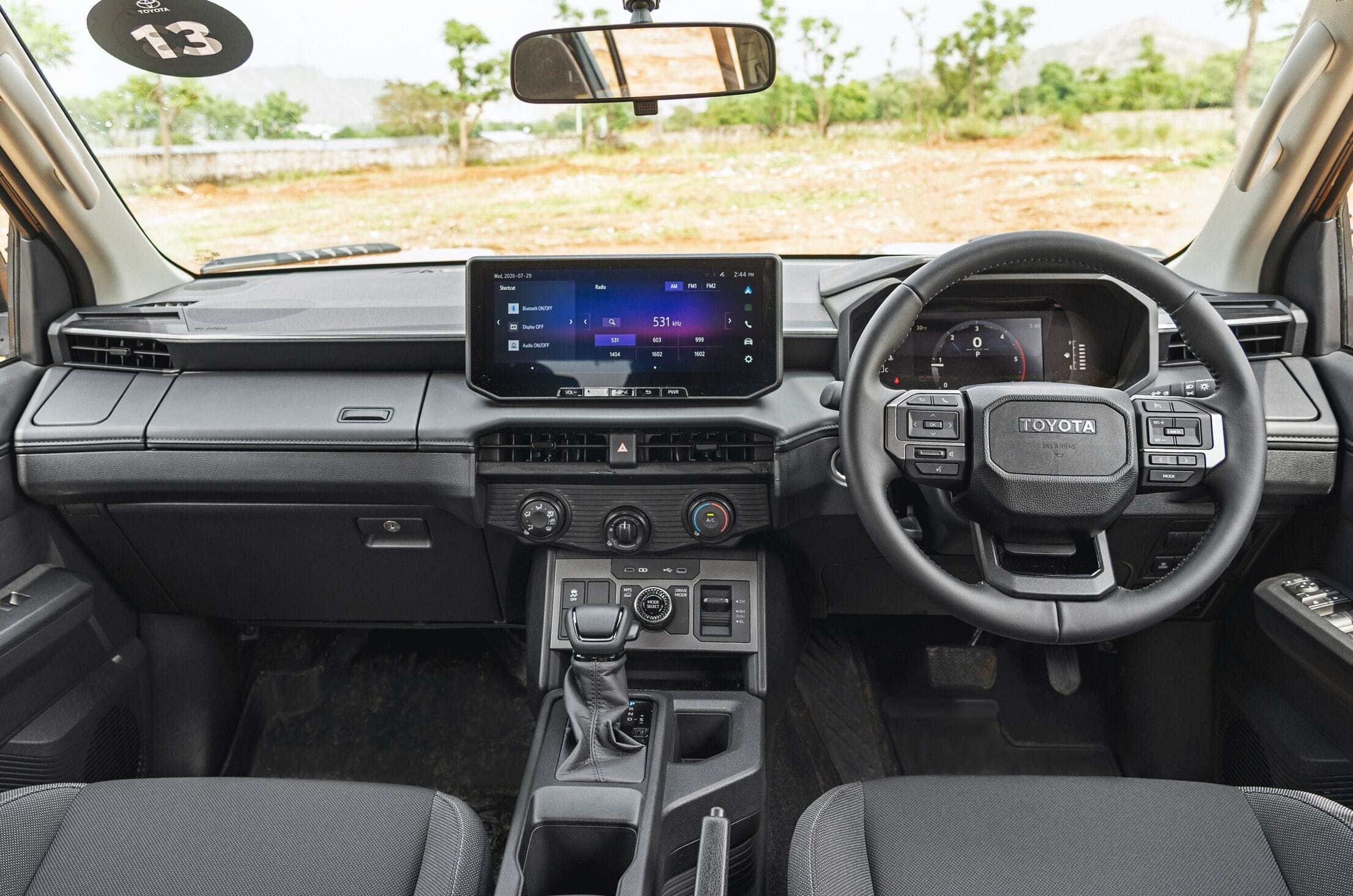
The India-spec ninth-gen Hilux is not very well-specced. Even in the top-spec Hilux VX 4×4 AT variant, which costs Rs 36.69 lakh (ex-showroom), comfort and convenience features like automatic climate control, powered and ventilated front seats, a rear defogger, ADAS, leatherette upholstery, and the like are missing.
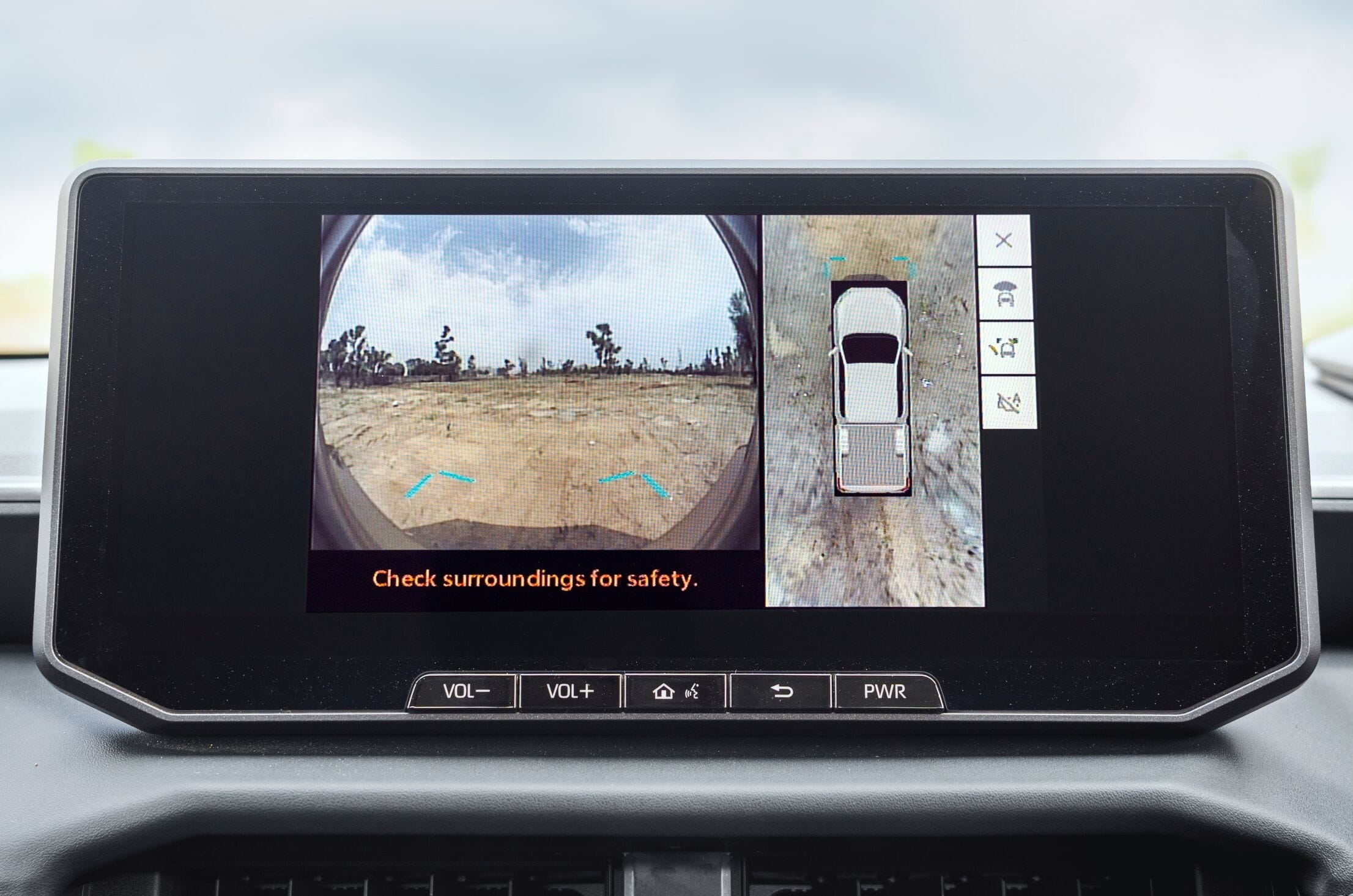
While you do get feature upgrades like a 12.3-inch infotainment touchscreen and a 360-degree camera in the new Hilux, the former’s software interface looks quite dated and the latter’s resolution is poor.
Bouncy low-speed ride
Tends to skip over road imperfections when bed is empty
Though the Hilux rides deftly on broken roads, off-road trails, and at high speeds, it feels unsettled and skittish over smaller ruts and bumps. This is a consequence of the rigid rear axle, which tends to skip over surface undulations, especially when the bed is empty. Adding weight to the bed will improve the Hilux’s low-speed ride to an extent, but not enough to be comparable to an equivalent SUV. It also doesn’t help that the electric power steering is hefty at low speeds, and the Hilux’s 5.3-metre length makes low-speed manoeuvres feel daunting.
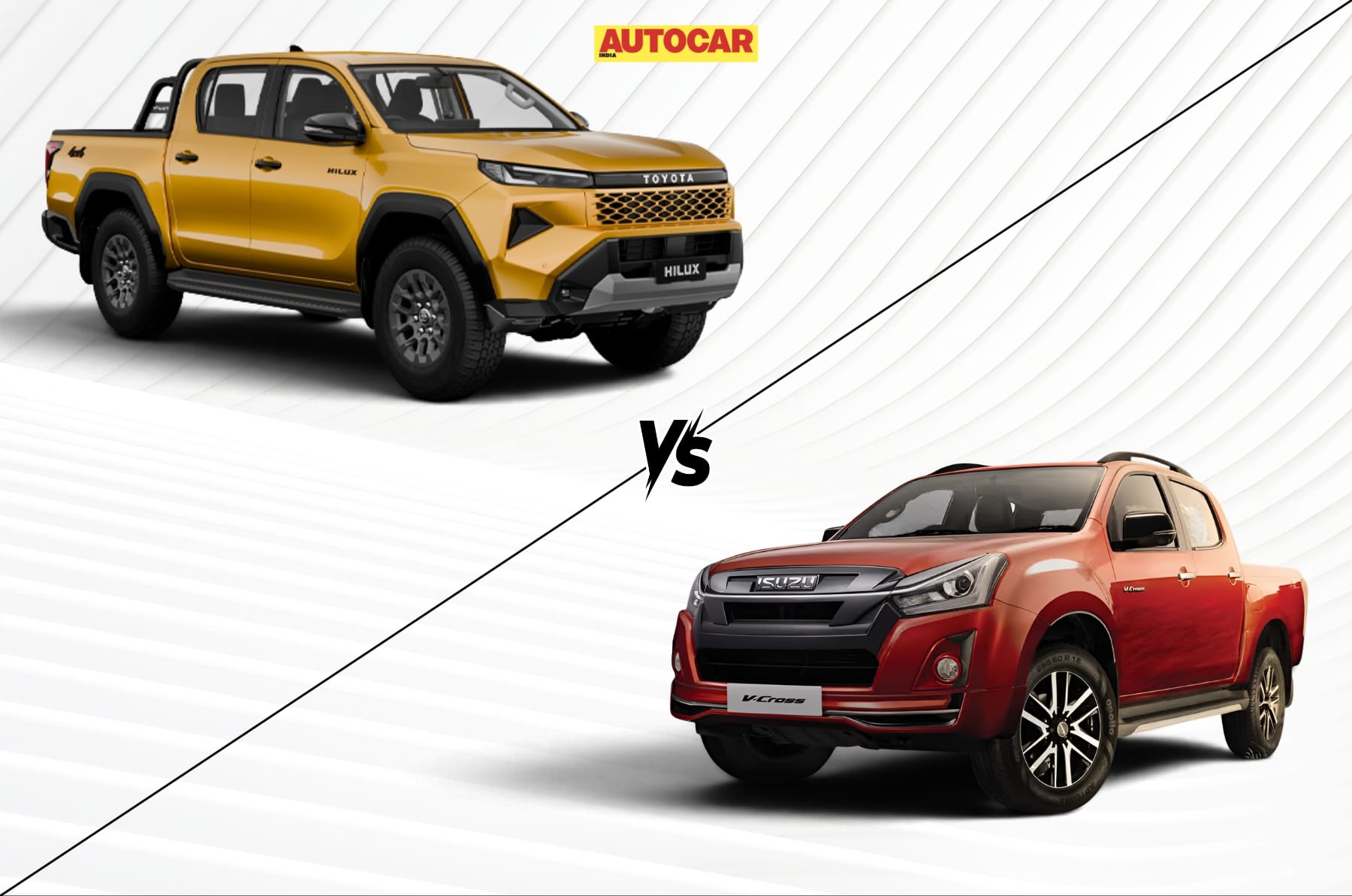
Toyota has introduced the ninth-generation Hilux with a revamped exterior and interior, along with revisions to its powertrain offering and features. In February 2026, its only other competitor, the Isuzu V-Cross, also debuted with a comprehensive update of its own. Being the only two lifestyle pickup trucks on the market, how do these fare when we compare their on-paper specifications side to side? For this comparison, we’ve chosen the Hilux’s VX 4X4 and the V-Cross’ 4WD Prestige Premium variant.
Explore full specs, features, and a price breakdown in our Hilux vs V-Cross comparison.
Toyota Hilux vs Isuzu D-Max V-Cross: Dimensions
Hilux is longer, but the V-Cross is wider and taller
Toyota Hilux vs Isuzu D-Max V-Cross: Dimensions
Toyota Hilux
Isuzu D-Max V-Cross
Difference
Length (mm)
5,320
5,295
+25
Width (mm)
1,855
1,860
-5
Height (mm)
1,815
1,855
-35
Wheelbase
3,085
3,095
-10
Wheel size (inch)
17
18
It’s only in length where the Hilux pips the V-Cross by 25mm. But the latter is 5mm wider, 35mm taller, and has a 10mm longer wheelbase. Dimensionwise, it’s the V-Cross that takes the lead overall.
Toyota Hilux vs Isuzu D-Max V-Cross: Specifications
Hilux’s larger engine develops much more power
Toyota Hilux vs Isuzu D-Max V-Cross: Specifications
Toyota Hilux
Isuzu D-Max V-Cross
Engine
Turbo-diesel
Turbo-diesel
Displacement (cc)
2,755
1,898
No of cylinders
4
4
Power (hp)
204
163
Torque (Nm)
500
360
Gearbox
6AT
6AT
Drive layout
4WD
4WD
Fuel tank (litres)
80
55
Suspension setup
Front: Double Wishbone
Rear: Leaf Spring
Front: Double Wishbone
Rear: Leaf Spring
Both the Hilux and V-Cross come powered solely by a turbo-diesel engine. While the former gets a large 2.8-litre unit, the latter comes with a 1.9-litre diesel engine. As far as outputs are concerned, the Hilux churns out 41hp and 140Nm more power and torque, respectively. Additionally, the Hilux gets a 25-litre larger fuel tank as well. What’s common on both pickups is a 6-speed automatic transmission, AWD layout and similar suspension setups.
Toyota Hilux vs Isuzu D-Max V-Cross: Driving tech
Drive and terrain modes found only on the Hilux
Toyota Hilux vs Isuzu D-Max V-Cross: Driving features
Toyota Hilux
Isuzu D-Max V-Cross
4WD with low range
Yes
Yes
Differential lock
Electronic
Electronic
Terrain modes
Yes
No
Drive modes
Eco, Normal, Sport
No
Cruise control
Manual
Manual
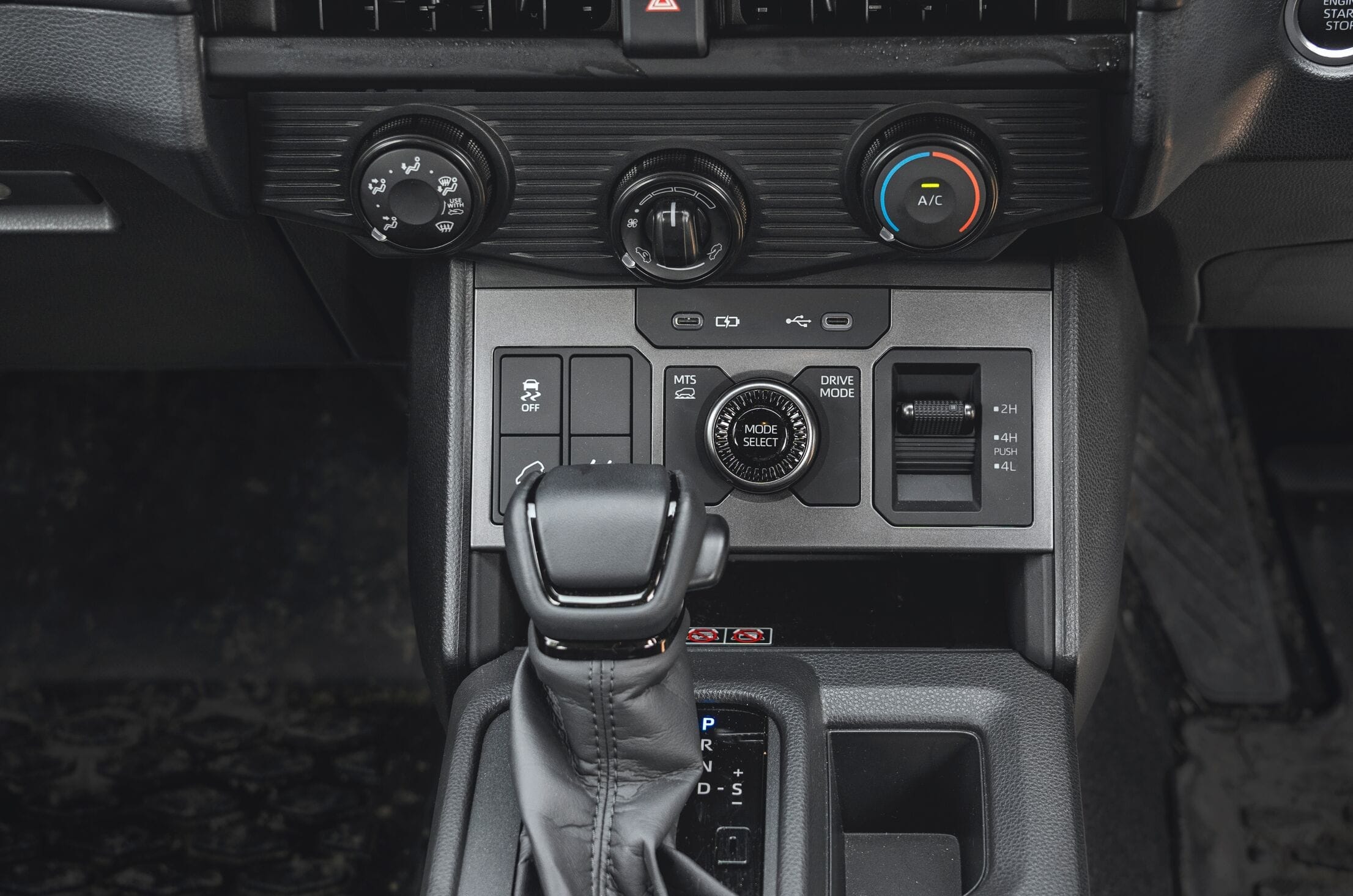
With 4WD on board, both the Hilux and V-Cross come with a low range transfer case and an electronic differential lock. However, it’s the Hilux that comes with the ability to fine-tune your drive experience further with drive and terrain modes.
Toyota Hilux vs Isuzu D-Max V-Cross: Exterior Features
While the Hilux gets all-LED lighting, V-Cross gets roof rails
Toyota Hilux vs Isuzu D-Max V-Cross: Exterior Features
Toyota Hilux
Isuzu D-Max V-Cross
Headlights
Auto LED
Auto projector LED
Front fog lamps
LED
Halogen
Tail-lights
LED
Halogen
DRLs
Yes
Yes
Rear fog lamp
LED
No
Door handles
Gloss black
Chrome
Powered and foldable ORVMs
Yes
Yes
Roof rails
No
Yes
Side steps
Yes
Yes
Step for load bed access
Yes
No
Gas strut for tailgate
Yes
No
Colour
Monotone
Monotone
With the updated exterior, the Hilux gains all-LED light setups. But the V-Cross, on the other hand, sports projector-LED headlamps, halogen fog lamps and tail-lamps, and misses out on a rear fog lamp. Moreover, the Hilux is the only one here with a dedicated step to access the trunk and gas struts for the tailgate. However, the V-Cross comes with roof rails and wheels a size larger than the Hilux.
Toyota Hilux vs Isuzu D-Max V-Cross: Interior Features
Hilux loaded with more tech, but V-Cross gets more convenience features
Toyota Hilux vs Isuzu D-Max V-Cross: Interior Features
Toyota Hilux
Isuzu D-Max V-Cross
Infotainment display
12.3-inch
10.3-inch
Driver’s display
7-inch
Analogue dials with MID
Android Auto, Apple CarPlay
Wireless
Wireless
Speakers
8 speakers
8 speakers
Climate control
Manual
Automatic
Seat upholstery
Fabric
Leatherette
Wireless phone charger
Yes
No
Driver’s seat adjust
6-way manual
6-way powered
Rear seat folding
60:40 split
60:40 split
Front centre armrest
Yes
Yes
Rear centre armrest
Yes
Yes
Push-button start/stop
Yes
Yes
USB ports
Type-C
Type-A and Type-C
Connected car tech
Yes
No
On the equipment front, the Hilux brings a larger infotainment screen, digital driver’s display, a wireless phone charger and connected-car tech over the V-Cross. But it misses out on convenience features like automatic climate control and a powered driver seat that’s found on the latter.
Toyota Hilux vs Isuzu D-Max V-Cross: Safety features
Hilux offers an additional airbag and front parking sensors
Toyota Hilux vs Isuzu D-Max V-Cross: Safety features
Toyota Hilux
Isuzu D-Max V-Cross
Airbags
7
6
Camera setup
360-degree
360-degree
Parking sensors
Front and rear
Rear only
ISOFIX anchorages
Yes
Yes
Disc brakes
Front only
Front only
TPMS
Yes
Yes
IRVM
Day/Night
Day/Night
Hill start assist
Yes
Yes
Hill descent control
Yes
Yes
ESC
Yes
Yes
Safety-feature-wise, the Hilux and V-Cross come well-equipped with a 360-degree camera, front disc brakes, ISOFIX mounts, day/night IRVM, hill start assist, hill descent control, and ESC. But the Hilux nudges ahead with an additional airbag and front parking sensors.
Toyota Hilux vs Isuzu D-Max V-Cross: Price and verdict
Hilux top-end pricier by Rs 6.41 lakh
Toyota Hilux vs Isuzu D-Max V-Cross: Price
Toyota Hilux
Isuzu D-Max V-Cross
Price (Rs Lakh)
36.69
30.28
Taking top-of-the-line variants into consideration, the Hilux is dearer than the V-Cross by over 6 lakh. For most buyers, that difference is hard to ignore, which is why the D-Max V-Cross comes across as the better value pick. Overall, the V-Cross is a substantial package with a sufficiently powerful diesel engine, 4WD, and a decent feature list. But if you want more power, driving features, safety, a much larger fuel tank, and better screens, then the Hilux is the one to go for. Additionally, Toyota’s bulletproof reliability and widespread service reach are major draws in favour of the Hilux.
Back in 2004, Toyota debuted its ‘Innovative International Multi-purpose Vehicle’ platform (or IMV for short), which spawned the 7th generation Hilux and the 1st generation of the Fortuner and Innova. As for the Hilux, it moved on to the 8th generation in 2015 and we now have this, the new 9th generation model, still underpinned by the IMV platform, albeit with major modifications and updates.
2026 Toyota Hilux Exterior Design and Engineering – 7/10
IMV platform sees massive update; front styling goes all angular
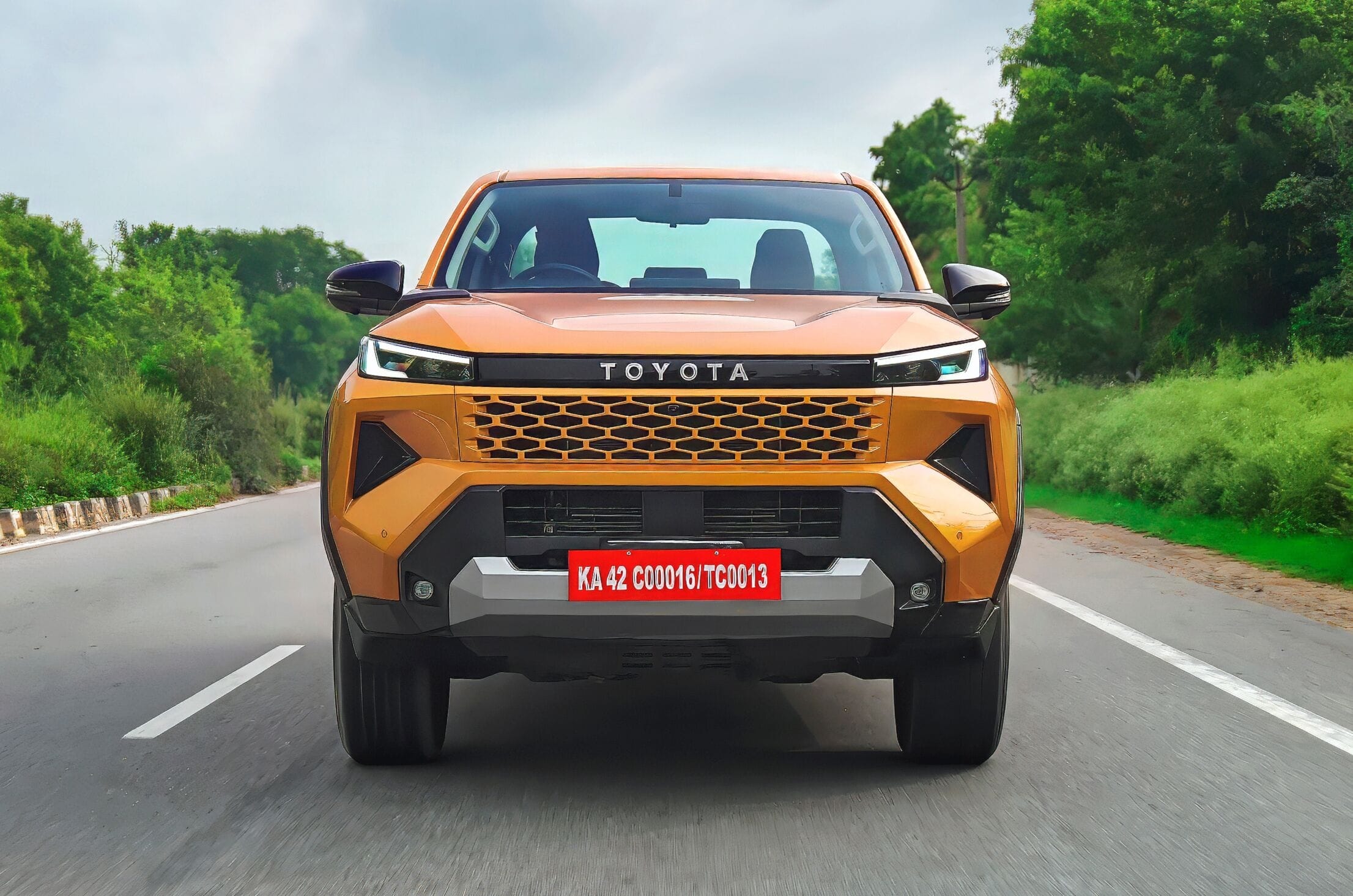
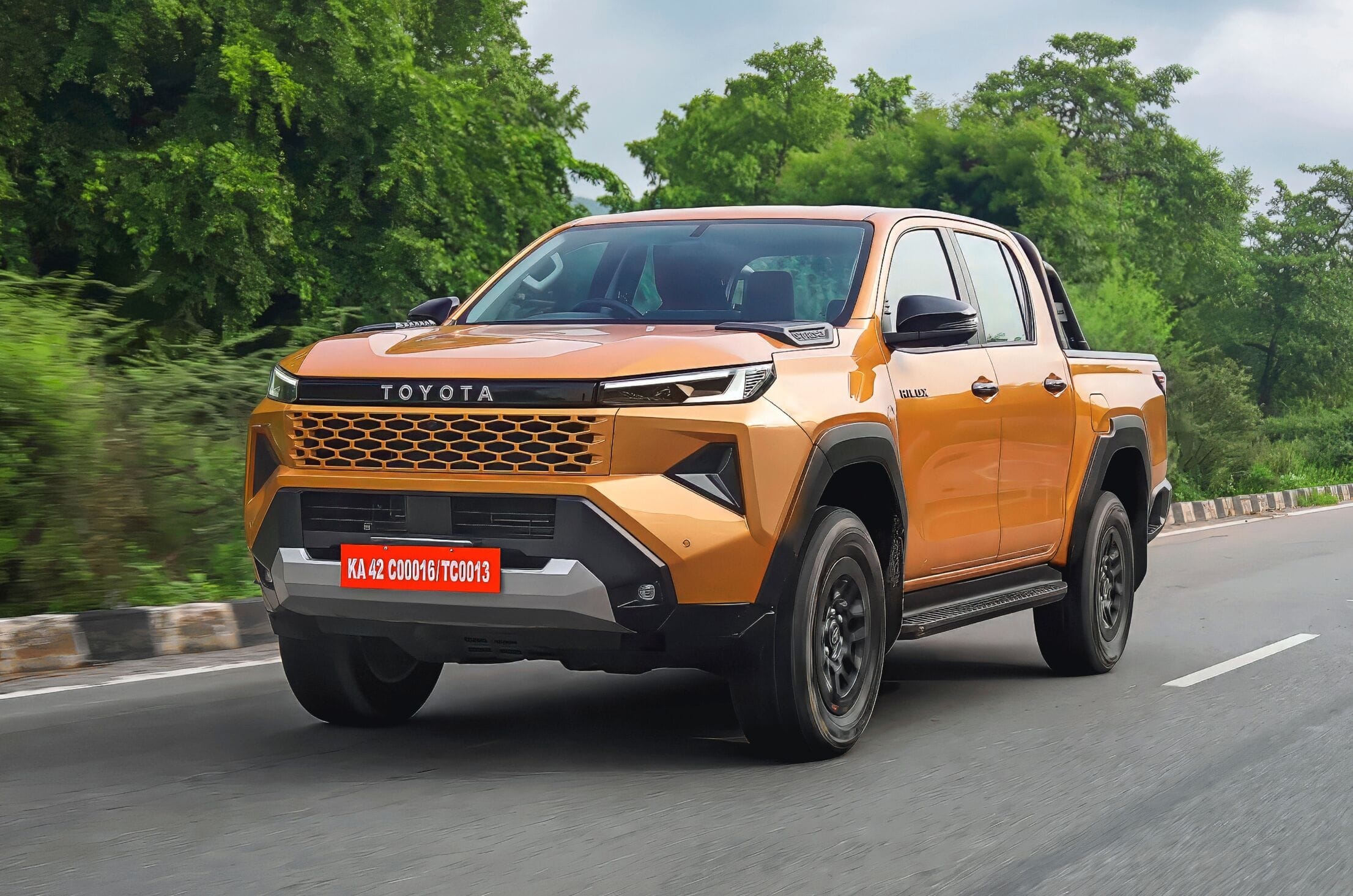
The front end is now all very edgy and sharp. Cyber-Sumo is how Toyota describes the styling.
As with its predecessors the ladder-frame construction remains, but plate thickness in the frame side rails has been increased to enhance rigidity and better resist torsional forces. The body too has seen an increase in rigidity with the floor featuring an additional 36 spot welds, this also helps decrease vibrations.
Interestingly, the platform is now fully electrified. Impressive given that installing a battery pack with a ladder frame is tricky given the narrower – than the body – width and the presence of cross members too. It shows, the all-electric Hilux features a rather modest 59.2kWh battery pack, it’s unlikely to make its way here though.
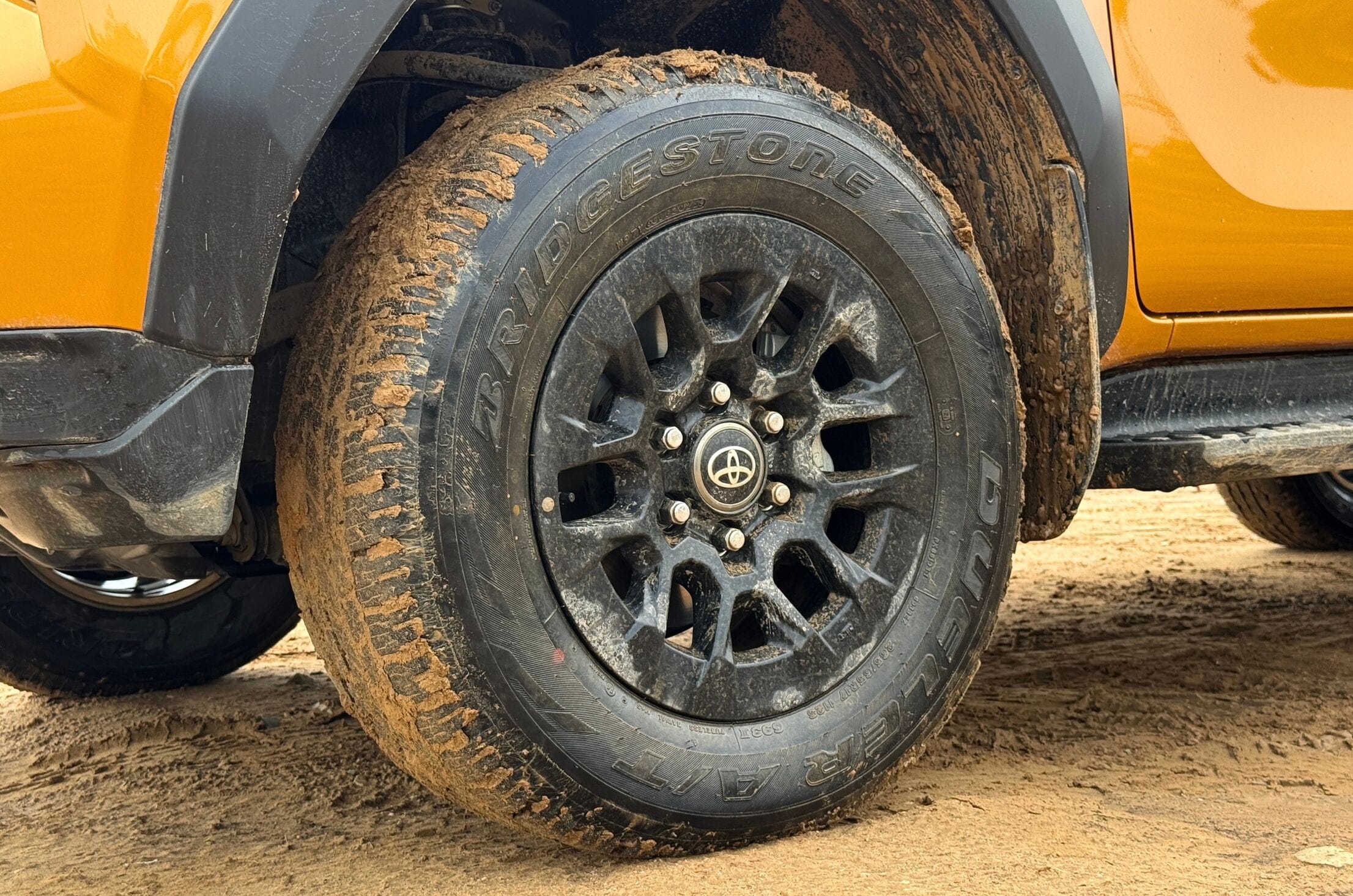
17-inch rims provide for taller sidewalls, handy off-road.
Other changes to the platform include a switch from hydraulic to an all-electric power steering system and spring and damper tweaks to improve ride comfort. As with the previous two generations, wheelbase remains the same at 3,085mm and the length is identical to its predecessor at just over 5.3 meters.
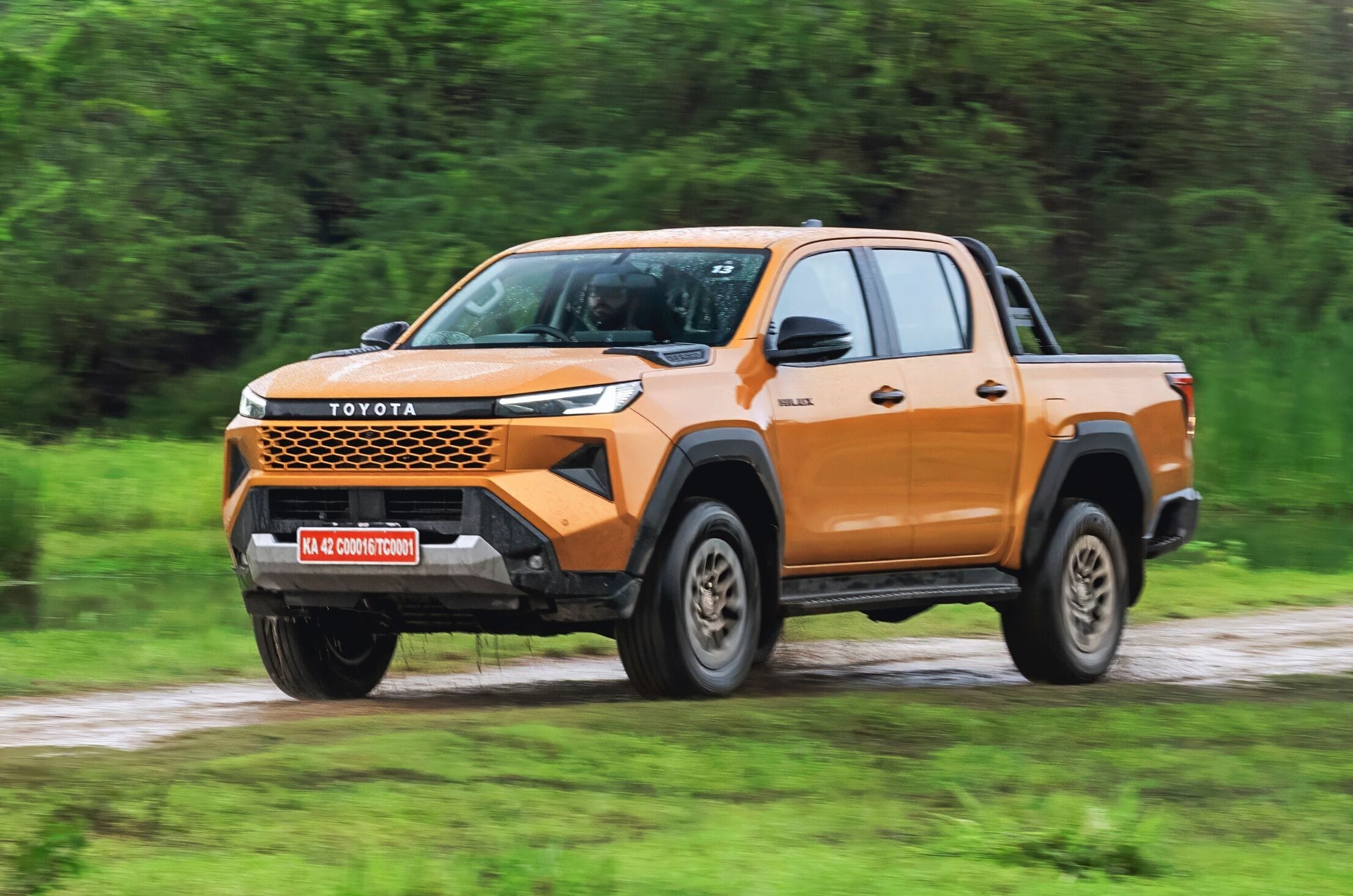
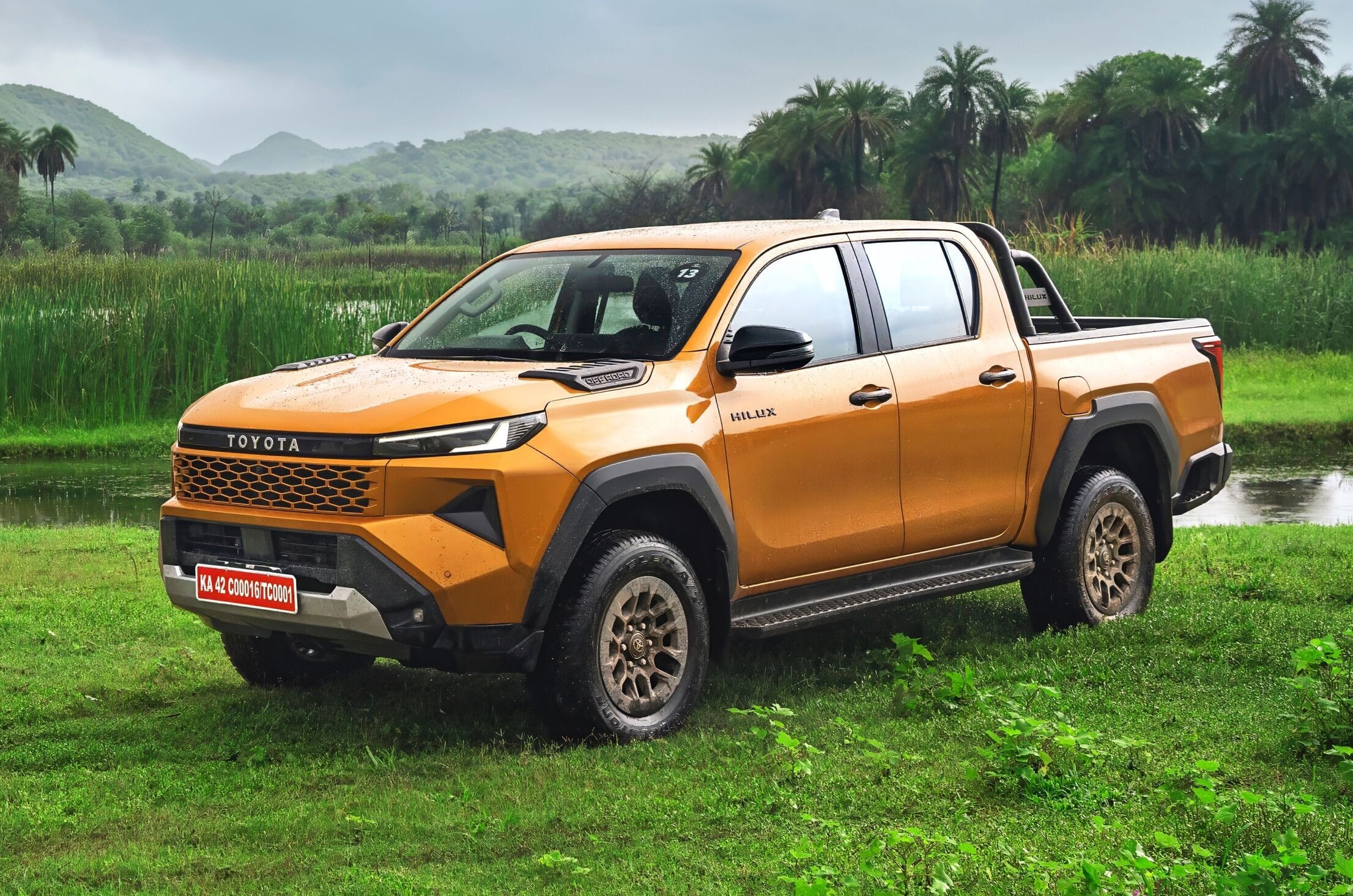
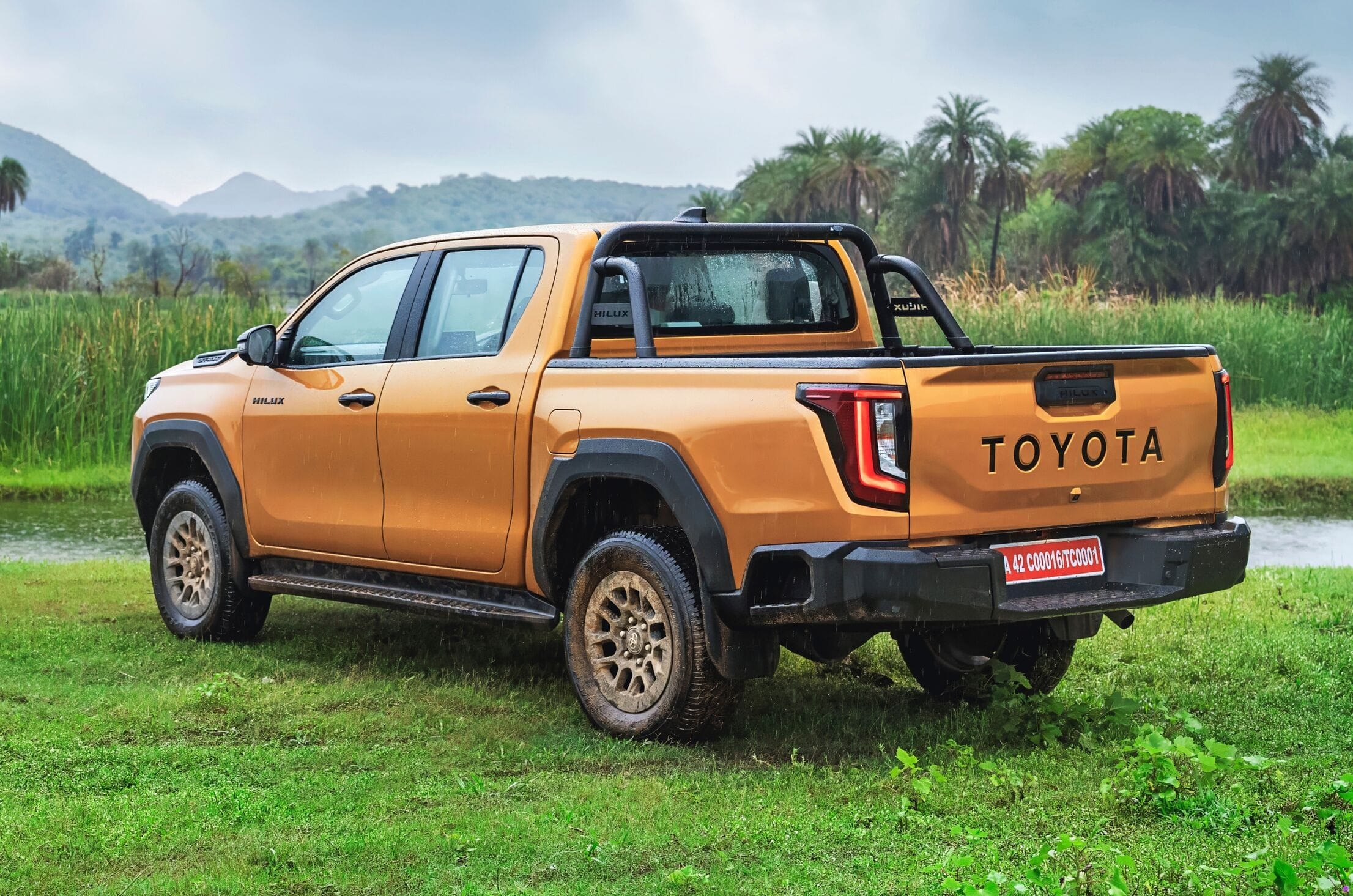
Front styling sees the biggest difference from the earlier car, its now all very edgy and sharp. Cyber-Sumo is how Toyota describes it, a cyborg Sumo wrestler if you will. The headlights feature sharp DRLs, are much slimmer and flow into a black panel emblazoned with the Toyota lettering. Below is a honeycomb grille flanked by triangular stylistic insets and the lower end of the bumper carries on with the angular treatment with sharp cuts to define its shape.
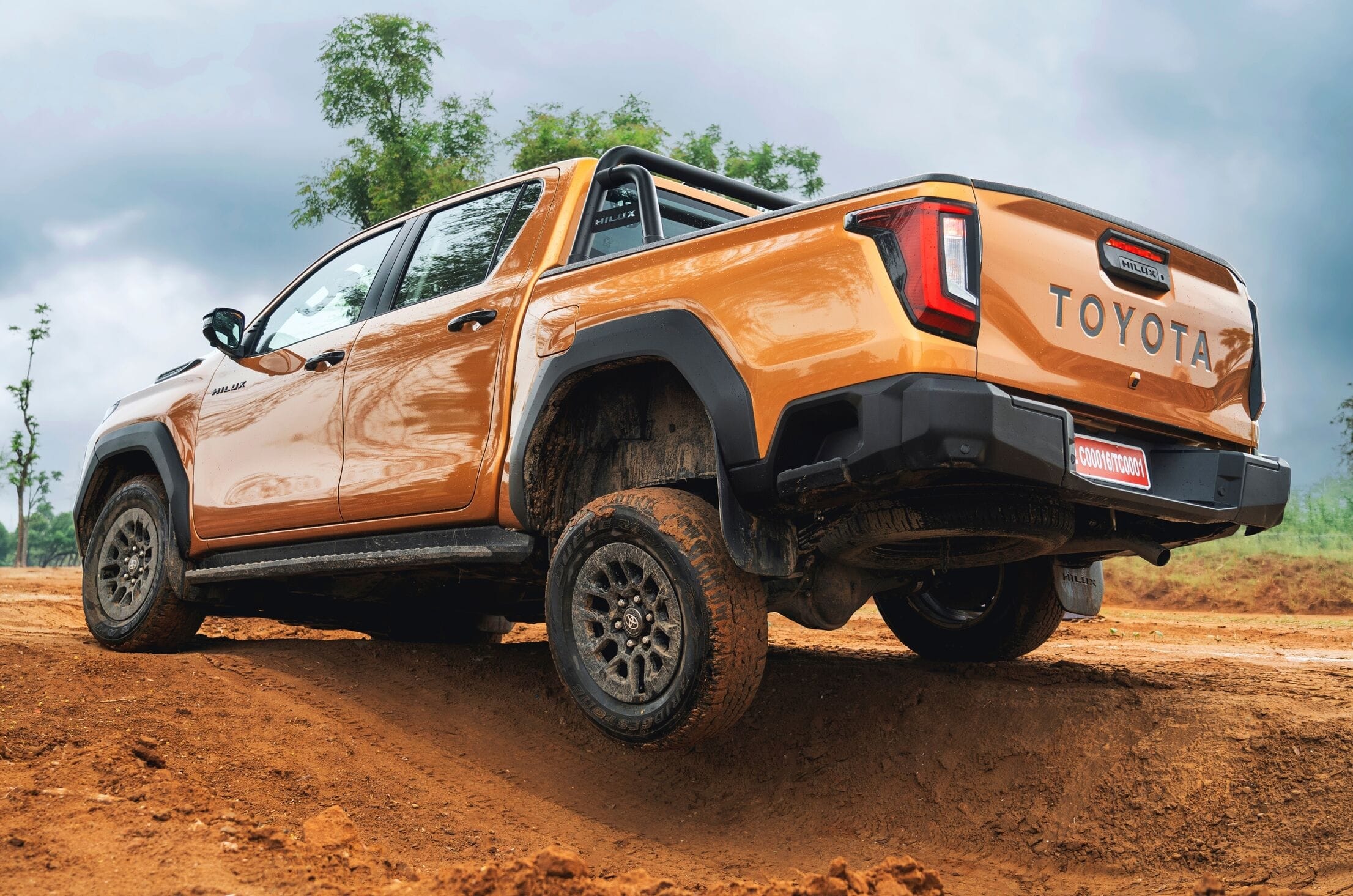
Taillights now more angular; bumper features integrated footsteps on the rear as well as on the sides.
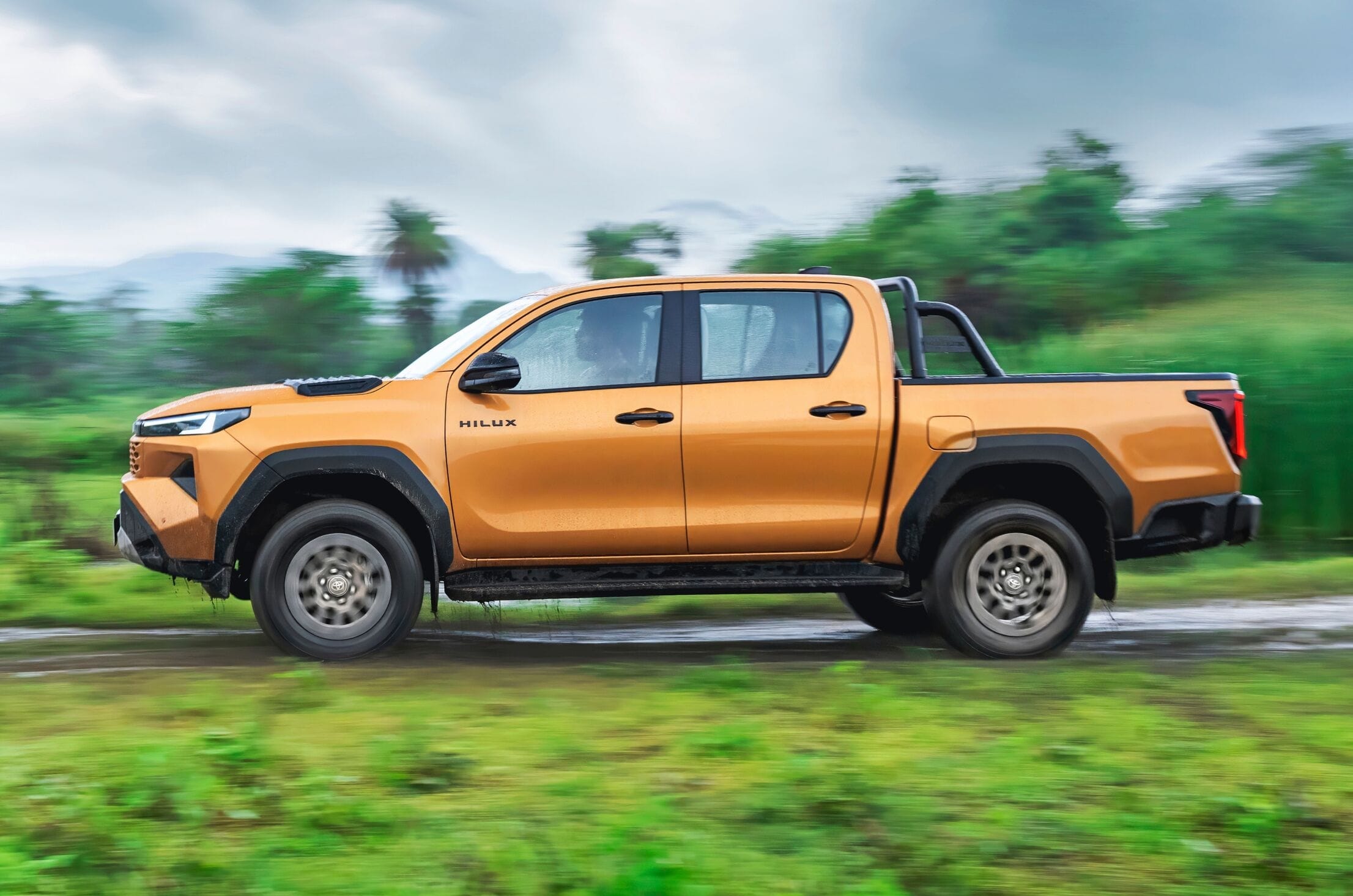
The side however is more curved with the doors gently profiled and resembling the previous car, the cladding however is a bit angular and runs the length of the car. At the rear end there is now a side step to make loading and unloading cargo easier. Rear taillights are sharply outlined and flow more into the side profile and of course, the rear sees the now iconic large Toyota lettering across the tailgate, which has a damped release.
2026 Toyota Hilux Interior Space and Comfort – 7/10
Adequate cabin space, but not what you might expect given the overall size.
Dashboard get a retro-modern style, very similar to the Land Cruiser Prado.
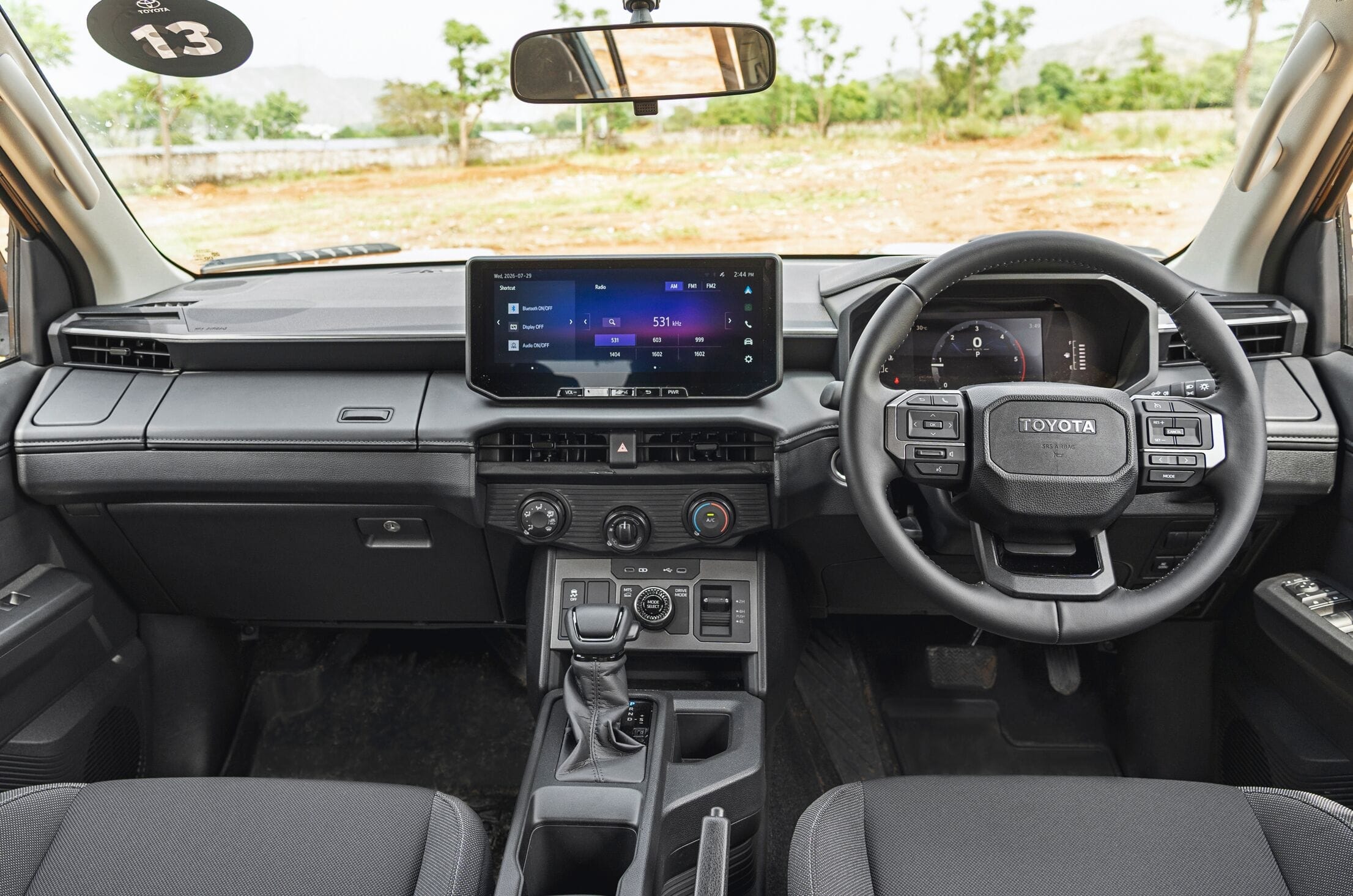
Like the front-end styling, the new dashboard sees a big departure is styling too, very retro-modern with straight lines and chunky elements, similar to the Land Cruiser Prado. It houses rectangular AC vents and a pop-up center touchscreen with chamfered lower edges. The steering wheel looks like a straight lift from the Prado with the same three spoke design, rectangular center boss and chunky rectangular buttons.
Cabin dimensions remain the same, but reprofiled seat gives the backrest a tad bit more recline.
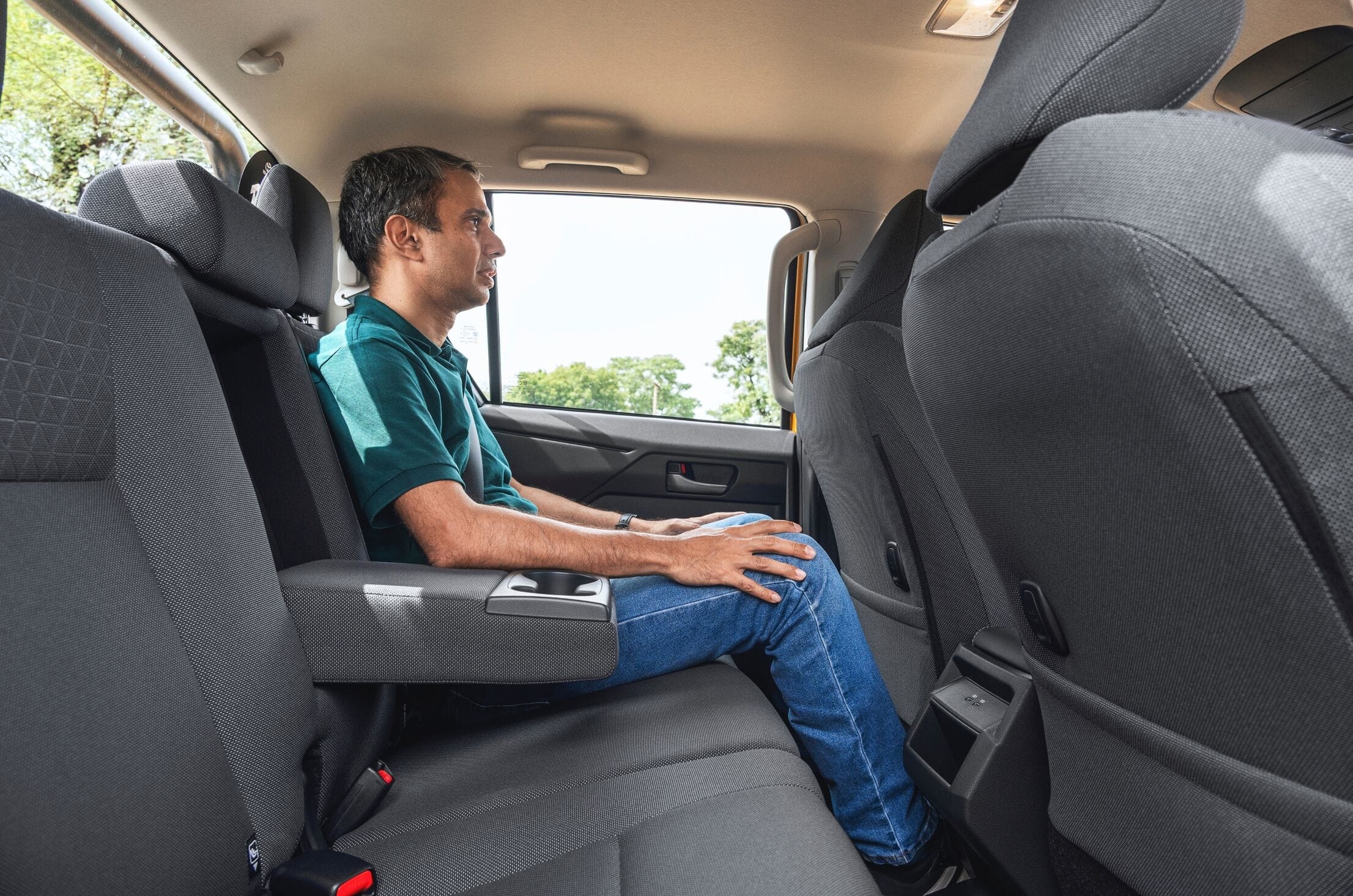
The 8th gen Hilux received a larger interior cabin volume and this cabin carries over to the new 9th gen car, space inside is thus decent but going by the large vehicle footprint you’d be forgiven if you expected more. At the rear, legroom is adequate even with a taller adult seated front, the seat backrest is still upright when seen against regular SUV but the seats themselves have been reprofiled and that makes it feel just a bit more reclined than before. Headroom is good and seating three adults at the rear is possible but will feel sung. At the front, the seats feel nice and supportive and are well profiled with prominent side bolstering that should suit a wide body frame well. They are also upholstered in a fabric that feels nice to the touch.
Tailgate features damped release; payload is around 500kgs.
The load bed is large enough for stuff like camping gear but it’s quite high off the ground so you’ll have to haul stuff in and out. The bumper has an integrated step at the rear and on either side as well, to make this easier. Toyota has not yet disclosed payload capacity but expect it to remain the same as before at 470kgs.
2026 Toyota Hilux Features and Safety – 7/10
High on safety kit, but many comfort and convenience features missing
360-degree camera handy, but of poor resolution.
The new Hilux comes in three grades with the top spec car featuring kit like a 360-degree camera view – though resolution is poor – an 8-inch digital instrument panel and a 12.3-inch central touchscreen with wireless phone connectivity. The native OS styling appears quite outdated but the screen resolution is good. There’s a wireless phone charging slot but quite deep and retrieving you phone needs slim hands.
Besides these and basic bits like power windows and ORVMs, there’s not much else on the new Hilux. Features like auto HVAC, powered or ventilated seats, rear defogger are all missing even at the top spec car.
Misses key equipment like automatic climate control; has drive as well as terrain modes.
Safety kit is good, with 7 airbags standard on all variants as is also ESP, a tyre pressure monitoring system however is only present on the top variant. As for a crash rating the new Hilux does not come with a Bharat or Global NCAP rating but the Australia spec scores 5-stars under the ANCAP protocol.
2026 Toyota Hilux Performance and Refinement – 9/10
Good pulling power with a very refined engine and a vibe free interior
The new Hilux carries on with the same 2.8 liter 4-cylinder diesel. It makes an identical 204 hp and 500Nm of torque. A 6-speed torque convertor automatic is now the only gearbox option and for the first time Toyota India is offering the Hilux with a 4X2 drivetrain too.
2.8 litre diesel engine has new mounts and is extremely refined, with low noise and vibration levels.
There are three drive modes – Eco, Normal and Sport, all feel quite useable. Performance is strong and even when pushed hard it never feels like its out of breath. There’s a good amount of power to be had low down in the rev range and through a forest trail with stones and muck it was easy modulating power to keep momentum.
Shifts are expectedly smooth from the 6-speed autobox and in Sport mode the downshifts are quick enough both when left to its own system or via inputs from the gear lever.
Performance is quite potent and it never feels out of breath.
At high revs the engine does get vocal, but for what is a workhorse its quite acceptable. In fact, at every day motoring speeds sound levels are low and refinement is excellent, with minimal to no vibrations around the cabin. Toyota says they have worked on improving this aspect with both hydraulic and shear type engine mounts, a stiffened body frame and better cabin insulation.
2026 Toyota Hilux Mileage and Efficiency – 8/10
With a kerb weight of over two tonnes, expect single digit real world efficiency figures
Toyota have yet to disclose ARAI rated fuel efficiency figures but given the carry over powertrain expect a similar figure of around 12kpl on the standard test cycle. In real world usage figures will hover in the single digit zone and only relaxed highway cruising would see you get double digits.
2026 Toyota Hilux Ride Comfort and Handling – 7/10
Comfy and unfazed over the big stuff but skittish and firm on smaller ruts and bumps
Off road is where the Hilux excels, 4X4 model has low ratio as well as rear locking differential.
Suspension architecture carries over with an independent double wishbone coil spring setup at the front and a rigid axle with leaf springs at the rear. Toyota says they have reworked it to bring in a bit more comfort, it’s hard to say in isolation and perhaps a back-to-back drive would indicate this. On its own, it can soak up the tough bits like large rocks and deep potholes, sharp edges too are well smoothened. Through a forest trail strewn with loose rocks it felt confident and sure footed. Much of the trail was manageable in 4X2 mode, but some bits required 4X4 which was all too easy for the Hilux. There’s also a 4-Low ratio as well as terrain modes that help traction over loose surfaces.
Ride is jittery at speed and with rear cargo bed unloaded.
Where is gets unsettled is over the smaller ruts and bumps that really shake up the cabin. The main reason here is the rigid rear-axle which with the load bed empty simply skips over these imperfections resulting in a skittish and bouncy ride. Rear passengers in particular will feel this more. A weighed down rear will improve things but will not bring this to passenger SUV comfort levels.
As for handling, high-speed stability is good but you know it’s a heavy car and you can feel its weight through corners. The switch to electric power steering hasn’t changed effort which remains heavy at low speeds, and with the cars massive length it feels quite ponderous.
2026 Toyota Hilux Value for Money – 7/10
4X2 makes it affordable than before, but there’s lots of features missing
Toyota has launched the new Hilux with the top variant priced the same as before; Rs 36.69 lakh ex-showroom India while the entry 4X2 variant starts lower than any previous variant coming in at Rs 31.99 lakh ex-showroom. But in doing so there’s a lot of features missing even going by its predecessors list. Its appeal then depends on which aspect of its ‘lifestyle pickup’ description you value more.
It’s sharp styling and sheer size give it that lifestyle vehicle presence, however inside it feels utilitarian, the cabin isn’t premium with regards to materials and its very under equipped. The heavy steering and bouncy ride also mean a workhorse like experience rather than luxury SUV.
But that workhorse bit is exactly where the Toyota Hilux excels. The load bed is handy and can haul odd bits of gear, the engine it torquey and powerful and what’s nice is that its refined too. The 4X4 system is very capable and it’s got tough bones that will outlast pretty much anything you can throw at it. If a luxury SUV is what you’re after, you’ll be better off elsewhere, but if you’re looking for a rough and tough, go anywhere, do anything, outdoors kind of vehicle that looks the part and plays it too, then in all probability your search will end right here.