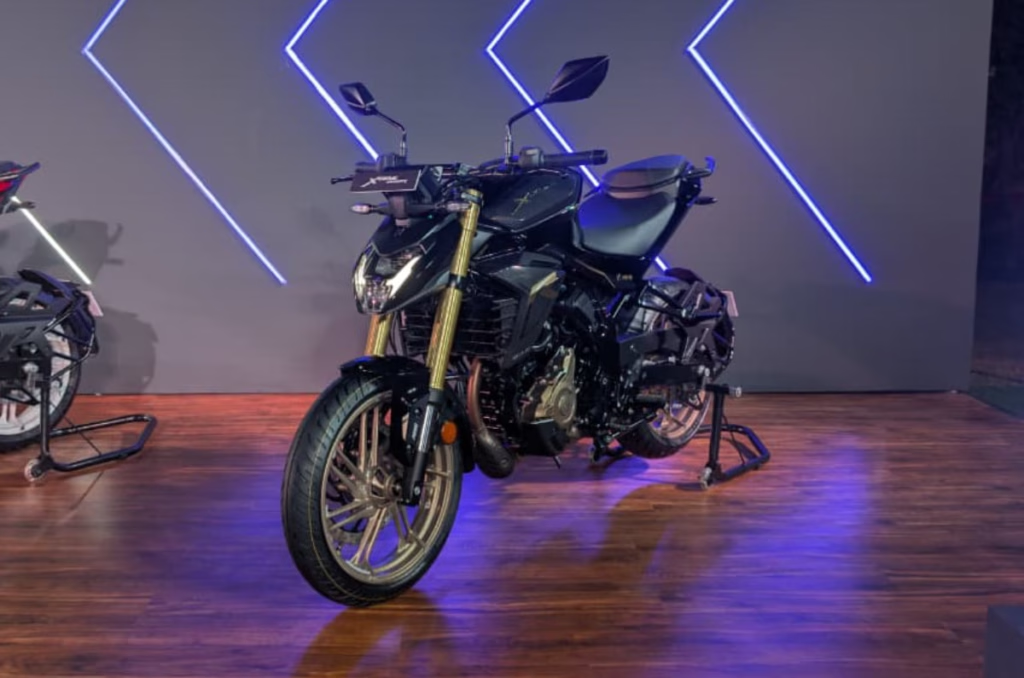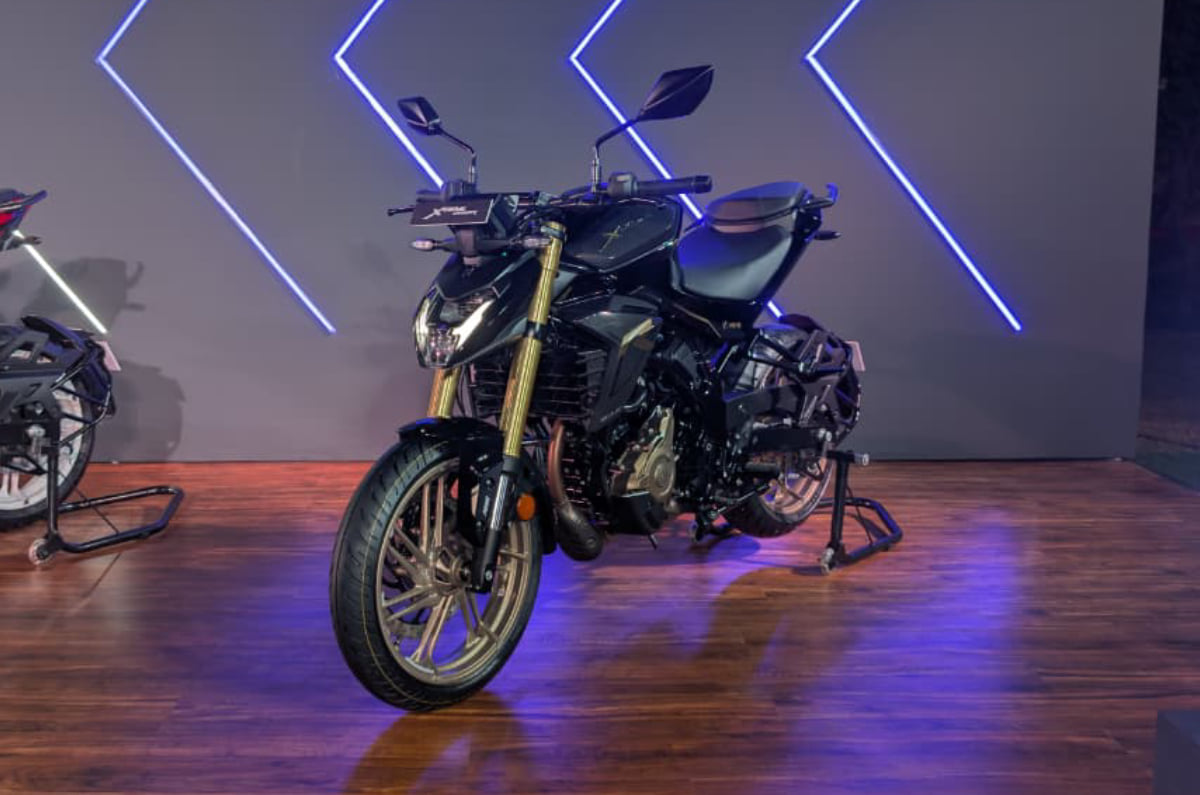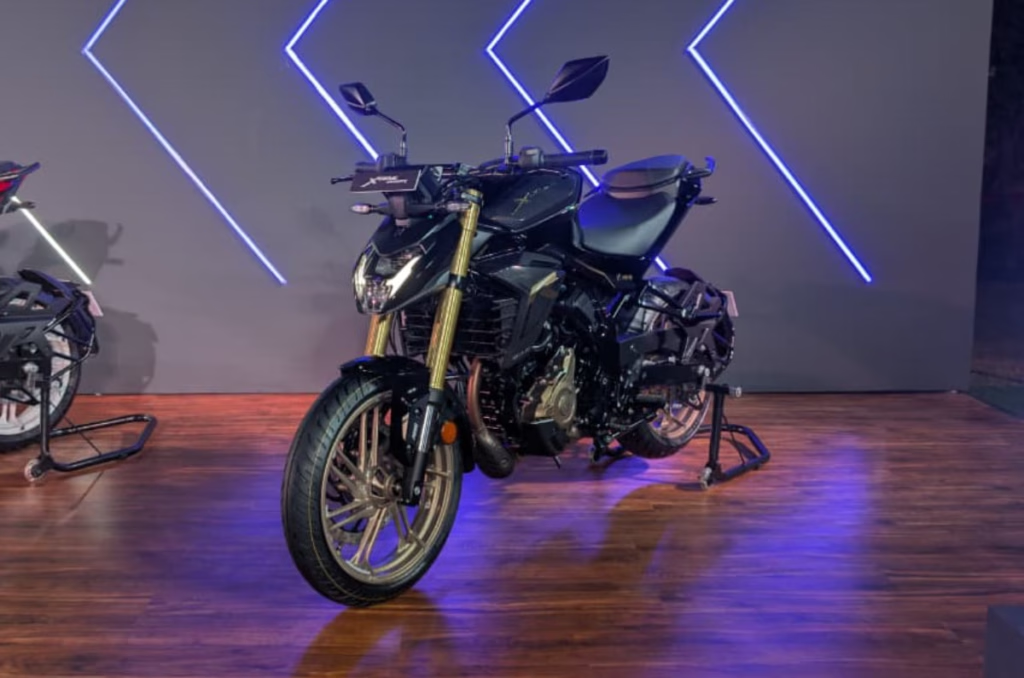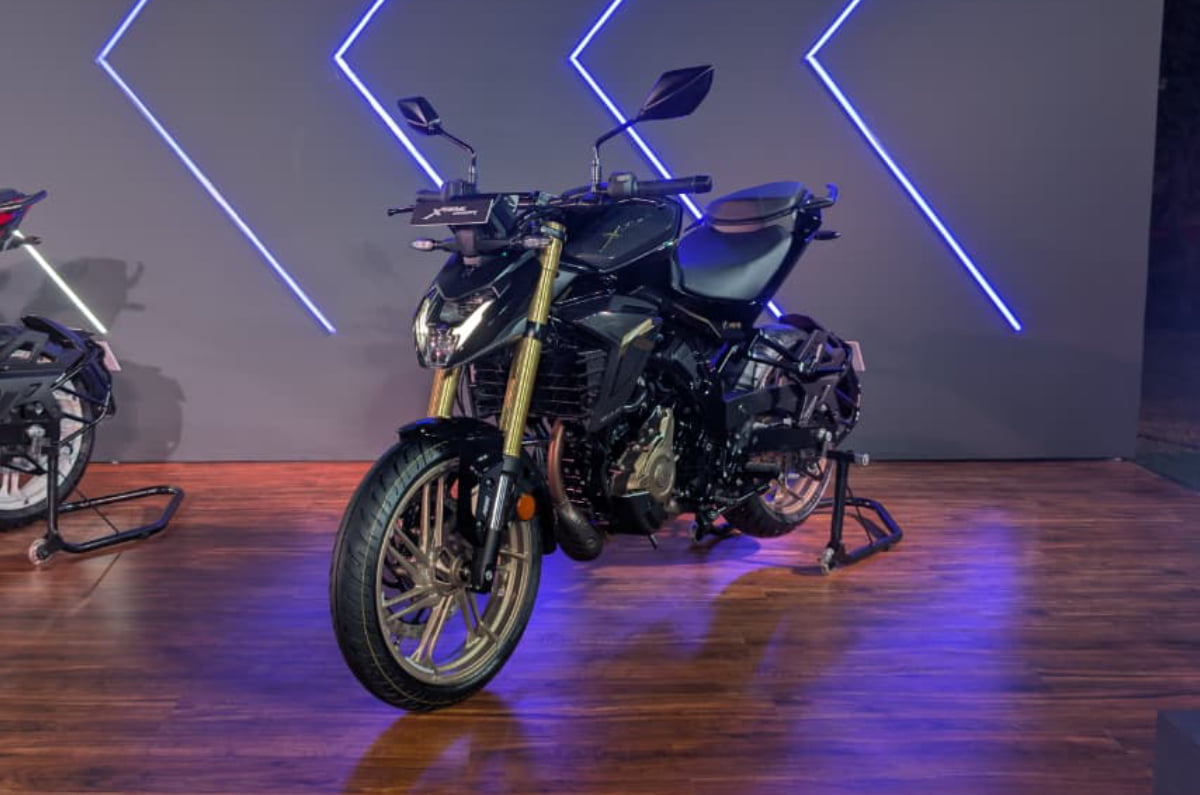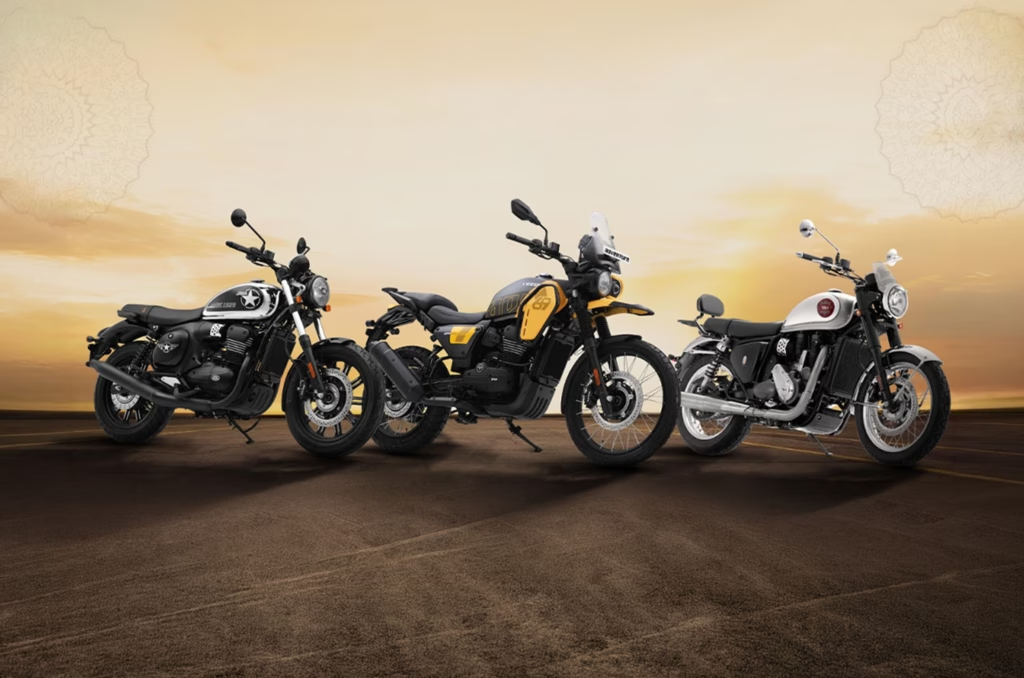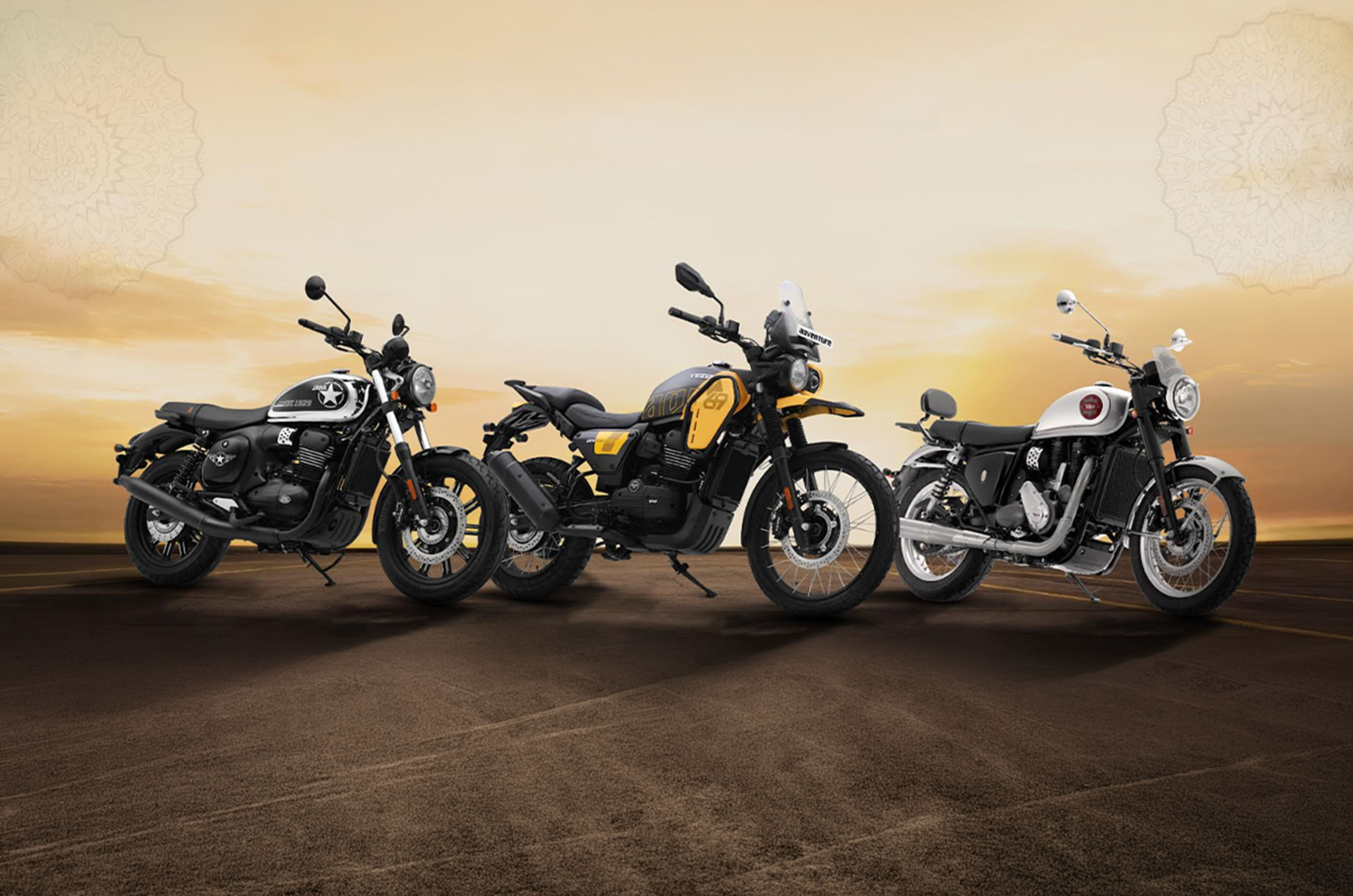
The Royal Enfield Himalayan 440 is back, wearing familiar clothes but a new, improved heart. Debuted first on the Scram 440, the upsized 443cc engine now makes 1.4hp more power and 2Nm of torque over the erstwhile Himalayan 411. Throw in an additional sixth gear and the Himalayan should now be a better tourer than before. But wait, how does this revived ADV compare to its direct rival, the Yezdi Adventure? Let’s find out.
Royal Enfield Himalayan 440 vs Yezdi Adventure: Engine and output
Yezdi makes more power with a liquid-cooled engine
Royal Enfield Himalayan 440
Yezdi Adventure
Engine
443cc single-cylinder, air- and oil-cooled
334cc single-cylinder, liquid-cooled
Power
25.4hp at 6,250rpm
29.6hp at 8,000rpm
Torque
34Nm at 4,000rpm
29.8Nm at 5,800rpm
Transmission
6-speed
6-speed
Power-to-weight ratio
127.64hp/tonne
158.29hp/tonne
On paper, the Yezdi Adventure displaces 109cc less than the Himalayan 440, but the Yezdi starts off strong—quite literally—with more power at a higher redline than the Himalayan 440. Its engine is also liquid-cooled compared to the Himalayan’s air- and oil-cooled mill. Both the motorcycles have six gears, so highway travel shouldn’t be a chore on either.
Royal Enfield Himalayan 440 vs Yezdi Adventure: Dimensions and weight
Himalayan 440 is more accessible
Royal Enfield Himalayan 440
Yezdi Adventure
Fuel tank
15 litres
15.5 litres
Ground clearance
220mm
220mm
Seat height
800mm
815mm
Kerb weight
199kg
187kg
Wheelbase
1460mm
1465mm
Things become a bit more even in this section. Both motorcycles share similar ground clearance numbers, but the Himalayan is more accessible with a 15mm lower saddle height. Yezdi reports 187kg for the Adventure but that’s dry weight. So, with 90 percent fuel, it should weigh just as much, if not more than the Himalayan’s 199kg.
Royal Enfield Himalayan 440 vs Yezdi Adventure: Tyres, brakes and suspension
Both models are (almost) on par
Royal Enfield Himalayan 440
Yezdi Adventure
Tyres (F,R)
90/90-21, 120/90-17
90/90-21, 130/80-17
Brakes (F,R)
300mm front disc, 240mm rear disc
320mm front disc, 240mm rear disc
Suspension (F,R)
Telescopic fork, linkage monoshock
Once again, the numbers look real similar on this front. The Yezdi Adventure has a slightly larger rear tyre and a slightly larger front disc brake. Speaking of tyres, although both models come with wire spoked rims as standard, the Yezdi Adventure offers cross spoke, tubeless rims as an optional Rs 20,000 add-on; available to the middle and top variants. Over on the Royal Enfield side though, such an upgrade isn’t possible at the moment. Royal Enfield doesn’t offer tubeless rims to the Himalayan 440, even as an accessory; they haven’t confirmed if the Himalayan 450’s tubeless rims can be retrofitted to it either. Suspension is another area where both motorcycles are neck-and-neck with them sharing the same kind of setups on paper, down to the travel.
Royal Enfield Himalayan 440 vs Yezdi Adventure: Features
Yezdi gets more rider aids
The Yezdi offers a more comprehensive feature package compared to the Royal Enfield. The Adventure gives you traction control, adjustable wind shield and instrument cluster, three ride modes (Road, Rain, Off-road); all of which are missing on the Himalayan 440. On the other hand, the Royal Enfield comes with a tripper pod as standard for turn-by-turn navigation, a USB type-C port, and LED headlight and taillight. But if rider aids are what you’re after, the Yezdi has more of them.
Royal Enfield Himalayan 440 vs Yezdi Adventure: Price
Yezdi offers more value for money
Royal Enfield Himalayan 440
Yezdi Adventure
Price (ex-showroom, Tamilnadu)
Rs 2.29 lakh
Rs 2.09 – 2.16 lakh
Royal Enfield has kept things straightforward with the Himalayan 440 just offering one variant in three colours. All of them share the same price as well. Yezdi offers three variants of the Adventure in four total colours, separated only by the colour choices. Like we had mentioned earlier, you can add cross spoked tubeless wheels to its middle and top variants for Rs 20,000 extra. To conclude, on paper, the Yezdi Adventure puts up quite the fight to the Royal Enfield Himalayan 440 but real-world experiences may vary. It would be prudent to decide between the two after taking test rides.
The Royal Enfield Himalayan 411 was discontinued in late 2023, when the significantly more sophisticated Himalayan 450 took its place. However, the added technological complexity also meant that the 450 was considerably more expensive than the bike it replaced, leaving many riders longing for the 411’s simpler, more straightforward character. The new Himalayan 440 is Royal Enfield’s answer to that demand. While it retains the same DNA as the original Himalayan, it brings a number of meaningful updates nearly a decade after the first-generation bike made its debut.
New Himalayan 440 vs Old Himalayan 411: What stays the same?
The core philosophy and most of the cycle parts carry over unchanged
The Himalayan 440 retains its split-cradle frame architecture from the 411, along with the same 21-inch front and 17-inch rear spoked wheel combination. Suspension travel is also unchanged, with 200mm at the front and 180mm at the rear, as is the 220mm ground clearance and the 800mm seat height. In character and purpose, these are the same motorcycle.
New Himalayan 440 vs Old Himalayan 411: Engine and gearbox
The new Himalayan uses the same engine as the Scram 440
The most significant change on the Himalayan is to do with the powertrain, with the bike now using the same powerplant as the Scram 440. The original Himalayan was powered by a 411cc, air/oil-cooled, single-cylinder unit producing 24hp at 6,500rpm and 32Nm at 4,000rpm. The 443cc unit on the new bike makes 25.4hp at 6,250rpm and 34Nm at 4,000rpm – 1.4hp and 2Nm more.
This new engine is paired with a 6-speed gearbox, unlike the 411, which used a 5-speed unit, with revised ratios throughout. The additional gear should make highway cruising more relaxed and touring more comfortable over long distances.
New Himalayan 440 vs Old Himalayan 411: Braking
Gets improved braking hardware and dual-channel switchable ABS
On paper, the braking hardware on the Himalayan 440 seems identical to what the 411 had to offer, with a 300mm disc at the front, 240mm rear disc, and dual-channel ABS. However, Royal Enfield mentions that the hardware now comprises new two-piston Bybre floating calipers with larger pistons, delivering improved braking performance. The dual-channel ABS system is switchable, so you can disengage the rear ABS.
New Himalayan 440 vs Old Himalayan 411: Features and equipment
Gets LED headlight and Tripper navigation among other features
The 440 gets a new LED headlight, and the digital-analogue instrument cluster setup has been updated. It loses the tachometer from the original but gets the brand’s Tripper navigation pod for turn-by-turn navigation. Another notable addition includes a USB Type-C charging port. The Himalayan has always been about long-distance adventure travel and unsurprisingly, the brand is offering a long list of accessories that you can add to the bike, including protection like engine and knuckle guards, as well as luggage like a top box and official panniers.
New Himalayan 440 vs Old Himalayan 411: Price
The Himalayan 440 is priced at Rs 2.29 lakh, making it a substantial Rs 79,000 more affordable than the Himalayan 450’s starting price. In fact, when the Himalayan 411 was discontinued in 2023, it was priced between Rs 2.15 lakh and Rs 2.30 lakh. That makes the new 440’s pricing even more impressive as three years on, it costs virtually the same as its predecessor while offering a more powerful engine, better brakes and several other practical upgrades.
Hero Mavrick 440 was the brand’s flagship product at launch, both in terms of price and features. It shared the engine and the platform with the original Harley-Davidson X440 but stuck to a conventional telescopic fork and a simpler LCD instrument cluster. Hero discontinued the Mavrick in India in early 2025, although it continues to be sold as Hunk 440 in the overseas markets. Now, an updated version of the Mavrick 440 has been spotted.
Besides the USD fork and the TFT cluster, likely to get ride by wire
Expected to retain the 440cc engine and the design
Hero bringing Mavrick 440 back in India
The Mavrick was discontinued in early 2025
A social media user has posted a picture of an updated Mavrick 440 with two of the major concerns addressed. First, the conventional right side up (RSU) telescopic fork has been swapped for an upside down (USD) fork. And the instrument cluster has been upgraded to a TFT one, presumably the same one as the Harley-Davidson X440 T, which shares the same platform. With the update, the X440 T got two ride modes and traction control. It remains unclear if the Mavrick 440 will get those extra features too.
The engine likely remains unchanged with the same air- and oil-cooled 440cc single-cylinder mill with 27hp and 38Nm of torque. Nothing on the design front appears to have been updated in any way either. At launch, the Mavrick 440 started at Rs 1.99 lakh, going up to Rs 2.24 lakh for the top variant (both prices ex-showroom, Delhi). With these additional features, the price would have gone up if Hero was planning to relaunch the bike in India. However, we believe that this bike is destined for export markets only, and Hero won’t be launching it here any time soon.
Volkswagen is offering benefits on the Virtus, Taigun, Tiguan R-Line and Tayron in September 2026. The benefits vary by model, variant and model year, and comprise cash discounts, exchange or scrappage bonuses and loyalty benefits.
Disclaimer: Discounts vary from city to city and are subject to stock availability. Check with your local dealership for exact figures.
Volkswagen Tiguan R-Line discounts in September 2026
Up to Rs 6 lakh off
The Tiguan R-Line gets benefits of up to Rs 6 lakh in September 2026. These comprise a Rs 3.5 lakh cash discount, a Rs 2 lakh exchange bonus and a Rs 50,000 loyalty bonus. Customers opting for scrappage can get Rs 20,000 instead of the Rs 2 lakh exchange bonus.
Volkswagen Taigun discounts in September 2026
Up to Rs 3.5 lakh off
Volkswagen is offering different benefits on the outgoing Taigun and the updated Taigun this month. The outgoing Taigun gets higher benefits, with MY2025 cars getting a cash discount of up to Rs 2 lakh, along with Rs 1 lakh in liquidation support. MY2026 cars get a cash discount of up to Rs 1 lakh. Eligible buyers can also get a Rs 30,000 exchange bonus or a Rs 20,000 scrappage benefit, along with a Rs 20,000 loyalty benefit.
On the updated Taigun, cash discounts range from Rs 20,000 to Rs 25,000, depending on the variant. The GT Line gets Rs 20,000, while the Topline AT and GT Plus DSG Sport get Rs 25,000. A Rs 30,000 exchange bonus or a Rs 20,000 scrappage benefit, as well as a Rs 20,000 loyalty benefit, is also available on eligible variants.
The exchange and scrappage benefits cannot be combined, and customers can choose either a loyalty or a corporate benefit.
Volkswagen Virtus discounts in September 2026
Up to Rs 1.55 lakh off
Volkswagen is offering different benefits on the Virtus, depending on the variant and model year this month. MY2025 cars get a cash discount of up to Rs 75,000, while MY2026 cars get up to Rs 50,000 off. Eligible buyers can also get a Rs 30,000 exchange bonus or a Rs 20,000 scrappage benefit, along with a Rs 50,000 loyalty benefit.
The highest benefit is available on the MY2025 Virtus Topline MT and AT, which get a Rs 75,000 cash discount, a Rs 30,000 exchange bonus and a Rs 50,000 loyalty benefit, taking the total to Rs 1.55 lakh. The MY2026 Topline variants get a Rs 50,000 cash discount, making the maximum benefit Rs 1.30 lakh when combined with the exchange and loyalty benefits.
Volkswagen Tayron discounts in September 2026
Up to Rs 1.5 lakh off
The Tayron, available in R-Line and Life variants, gets benefits of up to Rs 1.5 lakh. There is no cash discount, but buyers can get a Rs 1 lakh exchange bonus and a Rs 50,000 loyalty bonus. Alternatively, the exchange bonus can be replaced by a Rs 20,000 scrappage bonus.
Simple, the Bengaluru based EV startup, has finally launched their family scooter Wave today. The scooter was first spotted testing back in March this year and was earlier referred to as Arrive during development. Simple is looking to position this as a mass market scooter compared to their sharp, performance focussed One and One S.
Simple Wave has four variants; six, if you count instrument cluster options
Lowest variant has a 2.2kWh battery, top variant has a 5kWh battery
Delivery starts from 25 September 2026
Simple Wave: What you should know
New and improved motor, battery, and design
The Wave is based on an updated platform of the brand’s One scooter range. The first update is to the suspension, with the Wave using a twin shock rear suspension (compared to the One’s monoshock) and a much longer seat. Speaking of which, the Wave has a whopping 920mm long seat, claimed to be the longest scooter seat in the country. The other headline is the 70L storage in the Wave. Of which, 63 litres come from the under seat compartment, three litres on the front apron cubby, and four litres from a quick access pocket on the left side of the rider’s seat (called Pill Storage). An identical pocket for the right side is offered as an accessory.
The Wave has four variants by battery capacity. The base WaveS is offered in two battery capacities, 2.2kWh and 2.7kWh with 110km and 132km of IDC range, respectively. The middle variant, Wave, has a 3.7kWh battery and 171km of IDC range, and the top Wave+ variant has a 5kWh battery and 243km of IDC range. Wave+ currently has the highest range in its segment. Compared to the One range, the powertrain has seen updates all over. The 6.4kW motor has been updated to third generation and so has the Battery Management System, with the overall size of the motor reduced by 15 percent.
For context, the One uses a 5kWh battery and an 8.8kW motor; the One S has a 3.7kWh battery and a 6.4kW motor. They offer up to 265km and 190km of claimed range, respectively. Do note that there’s also a One Ultra with a 6.5kWh battery and a motor with 8.8kW of power with a claimed 400km range, but the delivery dates for that have not been announced so far. The One Ultra is currently the most expensive scooter from Simple, priced at Rs 2.35 lakh (ex-showroom, Bengaluru).
The scooter’s design has also shifted to a sleeker silhouette, letting go of the One’s sharp and aggressive lines. Simple claims it’s inspired by water, as opposed to air for the One range. However, the Wave retains the 7-inch TFT instrument cluster. The Wave+ gets it as standard, whereas the lower variants offer an option between the TFT or an InfinityBlack LCD cluster. The WaveS variants get three ride modes (EcoX, Eco, and Ride) with a claimed top speed of 75kph. Wave and Wave+ variants add an additional Sports mode and increases the top speed to 90kph. The 2.2kWh variant is available in two colours, 2.7kWh variants in four, and the 3.7kWh and 5kWh variants in six colours.
First spotted on the test mule, the Wave swaps the rear disc from the One range for a more cost-effective rear drum brake but retains the Combined Braking System (CBS) across all four variants. However, the One scooters offer traction control as standard rider aid, with the Wave limiting it to — called GripSense now — on the higher variants. Dimensions-wise, compared to the One range, seat height has been lowered by 5mm to 775mm and ground clearance has been increased by 3mm to 175mm.
The Simple Wave has been priced starting at Rs 1.10 lakh (ex-showroom, Bengaluru). Simple has announced that deliveries commence from September 25. Prices for the higher variants hasn’t been revealed, and Simple hasn’t clarified if the delivery date applies to all the variants. With its pricing, the Simple Wave directly rivals other EV scooters like the new Ather Konarc, Bajaj Chetak, Hero Vida, and TVS iQube, with range as its biggest trump card over all of them.
In February 2026, Tata Motors brought incremental updates to the Punch EV. The carmaker’s most affordable electric SUV saw a bump in battery size, subtle cosmetic revisions, and feature additions, while also being more affordable than its predecessor. To see how much the 2026 Punch EV has improved over its older iteration, we put it through our real-world range tests and compare it to its predecessors.
Tata Punch EV new vs old: Specifications
Tata Punch EV New
Tata Punch EV Old
Battery size
40
35
Electric motor setup
Single motor, front
Single motor, front
Power (hp)
129
122
Torque (Nm)
154
190
ARAI range (km)
468
365
Kerb weight (kg)
1365
1,360
0-100kph time (claimed, in seconds)
9
9.5
With the newer Punch EV, Tata has increased the battery size in its long-range version by 5kWh and bumped the motor’s power slightly. However, the older Punch EV’s motor delivered 36Nm more torque than the newer model. In the new Punch EV, Tata introduced a new 6-in-1 drivetrain setup, replacing the older one’s 3-in-1 unit. With this new setup, Tata claims a 50 percent reduction in packaging size, a 28 percent reduction in weight, and a 6 percent increase in efficiency. Despite the larger battery, this new drivetrain setup on the Punch EV has led to a weight increase of a mere 5kg over its predecessor.
Tata Punch EV new vs old: Real-world range
In our real-world range tests, the newer Tata Punch EV delivered much higher range than its predecessor. On average, the former goes 75km further than the latter on a single charge. This is because the more efficient drivetrain setup (see table below), coupled with the larger battery pack on the new Punch EV, has translated into going farther on a single charge.
Tata Punch EV new vs old: Efficiency
Tata Punch EV New
Tata Punch EV Old
City efficiency (km/kWh)
7.92
6.92
Highway efficiency (km/kWh)
7.29
6.17
Average efficiency (km/kWh)
7.61
6.54
Tata Punch EV new vs old: Prices
Tata Punch EV New
Tata Punch EV Old
Long Range version price range (Rs lakh)
10.99 – 12.79
12.99 to 14.49
Despite the updates and higher real-world range, the new Tata Punch EV is much more affordable than the older model. In fact, depending on the variant chosen, the former is up to Rs 2 lakh cheaper than the latter.
Autocar India’s range testing
Before our real-world range tests, the battery of our test car was fully charged, and we maintained tyre pressures in accordance with the manufacturer’s recommendations. The car was driven on a weekday in Mumbai city and on the adjoining state highway in a fixed loop, and we maintained the set average speeds. At the end of each cycle, we calculated the range based on the percentage charge consumed.
Throughout our tests, the climate control was set to 22deg C in a full-auto setting, and other electricals, such as the audio system, indicators and ventilated front seats, were used when required, just as a regular user would. We take pride in our testing data, which isn’t merely consistent but also gives users an accurate indication of what they can expect in the real world.
August was a busy month for the Indian car market, bringing several new models ajd variants, as well as updates. The BMW X1 LWB and MG Hector Tomahawk EV and PHEV were among the fresh launches, while the Mahindra Scorpio N received a mid-lifecycle update. The Mahindra BE 6 gained the ‘Sporteq’ suffix, while three existing models added new trims: the Range Rover SV Ultra, BYD Sealion 7 Dynamic and Skoda Kylaq Sportline. After such a packed August, September is also set to see more car launches.
Kia Sorento
Launch: September 4
The Kia Sorento will be the brand’s new flagship ICE model in India, and it will be offered with both strong-hybrid and diesel powertrains. The 1.6-litre strong-hybrid version will produce 238hp and 380Nm, while the 2-litre diesel will make 202hp and 441Nm.
The Sorento gets Kia’s signature Tiger Nose grille, large vertical LED headlights with Y-shaped LED daytime running lamps (DRLs), LED fog lamps and vertical aero vents at the edges. Kia has not revealed the alloy wheel size yet, but they are likely to be 19-inch units. At the rear, the Sorento gets squarish tail-lamps with an inverted L-shaped LED signature, a large roof spoiler and a two-tone bumper.
Inside, there is a connected panel housing the infotainment and instrument cluster screens. Kia has not revealed their sizes, but both are likely to be 12.3-inch units. Other features seen in the official images include ADAS, ventilated front seats, a digital interior rearview mirror (IRVM), an electrically operated tailgate, dual-zone climate control, ambient lighting and a panoramic sunroof.
The Sorento is expected to be available in both 6- and 7-seat layouts. Kia has already started accepting bookings for the Sorento and upon launch, it will compete with the Skoda Kodiaq, Volkswagen Tayron and Jeep Meridian.
Maruti Baleno facelift
Launch: September 5
The Maruti Baleno is currently in its second generation, which was launched in 2022, and is due for an update. Previous spy shots of the Baleno facelift have suggested a redesigned front end with a new grille featuring a horizontal bar in the centre connecting the headlights. Test mules have also shown a new bumper without the front fog lamps seen on the current model.
Image credit: Harsh Vlogs via YouTube.
From the side, the only expected change is a new alloy wheel design. At the rear, the facelift could get a redesigned bumper, while the tail-lights are likely to remain unchanged. Inside, the Baleno could retain the current 9-inch touchscreen; however, update the upholstery and add new features.
Image credit: Harsh Vlogs via YouTube.
Under the hood, the facelifted Baleno is expected to continue with the existing powertrain options. These include a 90hp 1.2-litre naturally aspirated petrol engine with 5-speed manual and 5-speed AMT choices, along with a 77.5hp CNG version available only with the manual gearbox. It will continue to rival the Tata Altroz, Hyundai i20 and Toyota Glanza.
BMW 7 Series, i7 facelifts
Launch: September 11
BMW opened bookings for the facelifted 7 Series and i7 flagship sedans on August 1, soon after their global debut earlier this year. In India, the company currently sells the 740i petrol and 740d diesel versions of the 7 Series, along with the eDrive 50 and M70 xDrive variants of the all-electric i7. These versions get several updates with the facelift, although BMW is yet to confirm which variants will be introduced in here.
In international markets, the facelifted 740i and 740d continue with their 3.0-litre straight-six engines, but with uprated outputs. The 740i makes 400hp and 580Nm, up by 19hp and 60Nm, while the 740d develops 313hp and 670Nm, an increase of 27hp and 20Nm. Both continue to use 48V mild-hybrid systems, 8-speed automatic gearboxes and BMW’s xDrive all-wheel-drive system. The i7 also gets a larger 112.4kWh battery in both variants, up from 101.7kWh. The lower 50 trim now comes only with xDrive all-wheel drive instead of rear-wheel drive and produces 455hp and 660Nm, up by 6hp and 10Nm. The M70 xDrive now makes 680hp and 1,100Nm, gaining 30hp and 85Nm. Charging speeds have also improved.
Visually, the updated 7 Series and i7 have a more monolithic look. They get new split LED headlights, slimmer and more upright kidney grilles with an illuminated surround, and larger bumper air intakes. The side profile remains largely unchanged apart from the side skirts and alloy wheels, while the rear gets new wraparound LED tail-lamps, a redesigned tailgate and a revised bumper.
Inside, BMW has redesigned the dashboard around a 17.9-inch infotainment touchscreen, a 14.6-inch passenger display and a pillar-to-pillar Panoramic Vision display at the base of the windscreen. The steering wheel is now a four-spoke unit, similar to those used in BMW’s Neue Klasse models, while the centre console and transmission tunnel have also been updated.
Rear passengers get powered seats with heating, ventilation, massage and lumbar support. The 31.3-inch 8K Theatre Screen can now be operated by touch, while the rear-door displays have also been updated to control the rear-seat experience. Other key features include ambient lighting, a Bowers & Wilkins surround sound system and 4-zone climate control. The BMW luxury sedan competes directly with the Mercedes-Benz S-Class, which also received a facelift this year.
Porsche Cayenne Electric
Debut: September 30
Porsche announced prices for the Cayenne Electric in November last year, and the SUV is now set for its physical showcase. The standard Cayenne Electric is priced at Rs 1.77 crore, while the range-topping Turbo Electric costs Rs 2.27 crore (both ex-showroom).
Both trims of the Porsche Cayenne Electric get a 113kWh battery and a dual-motor all-wheel-drive setup as standard. The more powerful Turbo Electric produces 1,156hp and 1,500Nm with Launch Control, allowing it to sprint from 0-100kph in 2.5 seconds before reaching an electronically limited top speed of 260kph. It has a claimed WLTP range of 537km. Whereas, the standard Cayenne Electric makes 442hp and 835Nm with Launch Control, does 0-100kph in 4.8 seconds and has an electronically limited top speed of 230kph. Its claimed WLTP range stands at 542km.
The Cayenne Electric keeps a similar overall shape to the ICE-powered Cayenne. However, the EV gets a closed-off grille, with two air vents on either side of the bumper to cool the battery and electrical components. These vents are larger on the Turbo trim. At the rear, there is a full-width LED light bar with illuminated Porsche lettering. The bumper has also been redesigned with horizontal black elements.
Inside, the Cayenne Electric gets a three-spoke steering wheel and digital driver’s display, similar to the ICE model. Porsche has also added a new 14.5-inch curved touchscreen infotainment system that flows into the centre console. An optional 14.9-inch passenger display is also available at an additional cost. Other features include 8-way electrically adjustable front seats, four-zone automatic climate control, ventilated front seats, a panoramic sunroof and wireless phone charging.
Jawa has launched the 42 FJ All Stars, a new range of its neo-classic roadster, with prices starting at Rs 2.02 lakh and going up to Rs 2.16 lakh (ex-showroom, New Delhi).
The All Stars range is available in six colourways, Chrome, Nebula Blue, Matte Black with Red Clad, Matte Black with Black Clad, Aurora Green and Red, all with a Star on either side of the tank. The Chrome version is the most expensive at Rs 2.16 lakh, while the Aurora Green and Red versions are priced at Rs 2.02 lakh. The 42 FJ All Stars is available at Jawa Yezdi dealerships across India. The motorcycle retains the 334cc, liquid-cooled, DOHC single-cylinder engine, which produces 29.17hp at 7,500rpm and 29.62Nm of torque at 5,500rpm and is paired with a six-speed gearbox.
Also remain unchanged are the 42 FJ’s distinctive brushed aluminium tank panels, the double-cradle frame, 41mm telescopic front fork, and gas-charged twin rear shocks with five-step preload adjustment.
The Tata Sierra is one of the newer midsize SUVs to offer a diesel engine, a powertrain that is becoming increasingly rare in the segment. Positioned below the Harrier in Tata’s SUV lineup, the Sierra gets a 1.5-litre diesel engine, while a 2.0-litre diesel powers the larger Harrier. Both SUVs are available with a 6-speed automatic gearbox, but with different engines under the hood, how do they compare in terms of performance? Let’s find out.
Tata Sierra vs Harrier diesel AT: Specifications and price
The Sierra’s smaller engine offers less performance, but it is also more affordable
Tata Sierra vs Harrier diesel AT: Specifications and price
Tata Sierra 1.5D AT
Tata Harrier 2.0D AT
Engine
4-cyl, turbo-diesel
4-cyl, turbo-diesel
Displacement (cc)
1,497
1,956
Power (hp)
118
170
Torque (Nm)
280
350
Kerb weight (kg)
NA
1,823
Power-to-weight (hp per tonne)
–
93.25
Torque-to-weight (Nm per tonne)
–
191.99
Price range (Rs, lakh)
15.99-21.29
18.85-25.40
The Tata Harrier gets a larger 2.0-litre diesel engine, making 52hp and 70Nm more than the Sierra’s 1.5-litre diesel. Tata is yet to reveal the Sierra diesel’s kerb weight, but it will be lower than the Harrier diesel’s weight because of its smaller size. For reference, the Sierra’s turbo-petrol AT weighs 1,552kg.
The Sierra diesel also has a clear price advantage. Its starting price is Rs 2.86 lakh lower than the Harrier’s, while the top-spec Sierra diesel undercuts the Harrier by a substantial Rs 4.11 lakh.
Tata Sierra vs Harrier diesel AT: 0-100kph acceleration test
The Harrier is 0.77s faster than the Sierra to reach 100kph from a standstill
Tata Sierra vs Harrier diesel AT: Acceleration from rest (in seconds)
Tata Sierra 1.5D AT
Tata Harrier 2.0D AT
20kph
1.44
1.33
40kph
3.53
2.94
60kph
5.93
5.16
80kph
9.31
8.30
100kph
13.37
12.60
The Harrier diesel-AT gets off the line 0.11 seconds quicker than the Sierra diesel-AT and continues to pull ahead as speeds rise. By 60kph, the Harrier’s lead grows to 0.77 seconds, a gap it maintains through to 100kph.
Tata Sierra vs Harrier diesel AT: Rolling acceleration tests
While the Harrier clocks a faster 20-80kph run, the Sierra is quicker to do 40-100kph
Tata Sierra vs Harrier diesel AT: Rolling acceleration (in seconds)
Tata Sierra 1.5D AT
Tata Harrier 2.0D AT
20-80kph
7.97
7.20
40-100kph
9.42
9.52
In the rolling acceleration tests, the Harrier diesel-AT is again quicker in the 20-80kph test, taking 0.77 seconds less than the Sierra diesel-AT.
However, the Sierra clocks a 0.10-second quicker 40-100kph time. In the real world, we noticed that the Sierra’s 1.5-litre engine builds power linearly and lacks the midrange punch associated with diesel engines. On the other hand, the Harrier offers a punchy mid-range and the powertrain feels more responsive to throttle inputs.
Autocar India’s testing standards
Before we conduct our performance tests, we check and maintain tyre pressures based on the manufacturer’s recommendation and ensure the car has a full tank of fuel. The car is then tested in a controlled environment with two people on board, and the data is collected via highly accurate GPS-based timing equipment.
The Honda Rebel 300 is available in two variants – Standard and E-Clutch – both of which share the same 286cc liquid-cooled single-cylinder engine, chassis, styling and feature set.
Honda Rebel 300 variant breakdown
Standard
The Rebel 300 Standard is powered by a 286cc liquid-cooled single-cylinder engine producing 30hp and 27.5Nm, paired with a 6-speed gearbox and a conventional hydraulic clutch operated via a handlebar lever. Features include a circular TFT display with Honda RoadSync connectivity and turn-by-turn navigation, full LED lighting with a projector headlamp and dual-channel ABS. The Standard variant is priced at Rs 2.22 lakh (ex-showroom, Bengaluru).
E-Clutch
The E-Clutch variant is mechanically and visually identical to the Standard, with one addition – Honda’s E-Clutch automated clutch system. The E-Clutch uses actuators to automatically operate the clutch, allowing the rider to change gears without using the clutch lever. It does not make the Rebel 300 a fully automatic motorcycle – the rider still selects gears manually using the gear lever – but the system handles clutch engagement and disengagement on its own.
Crucially, the clutch lever is retained and can be used manually whenever the rider chooses, retaining the conventional usability of the clutch lever. The E-Clutch variant is priced at Rs 2.62 lakh (ex-showroom, Bengaluru) – a substantial Rs 40,000 premium over the Standard.