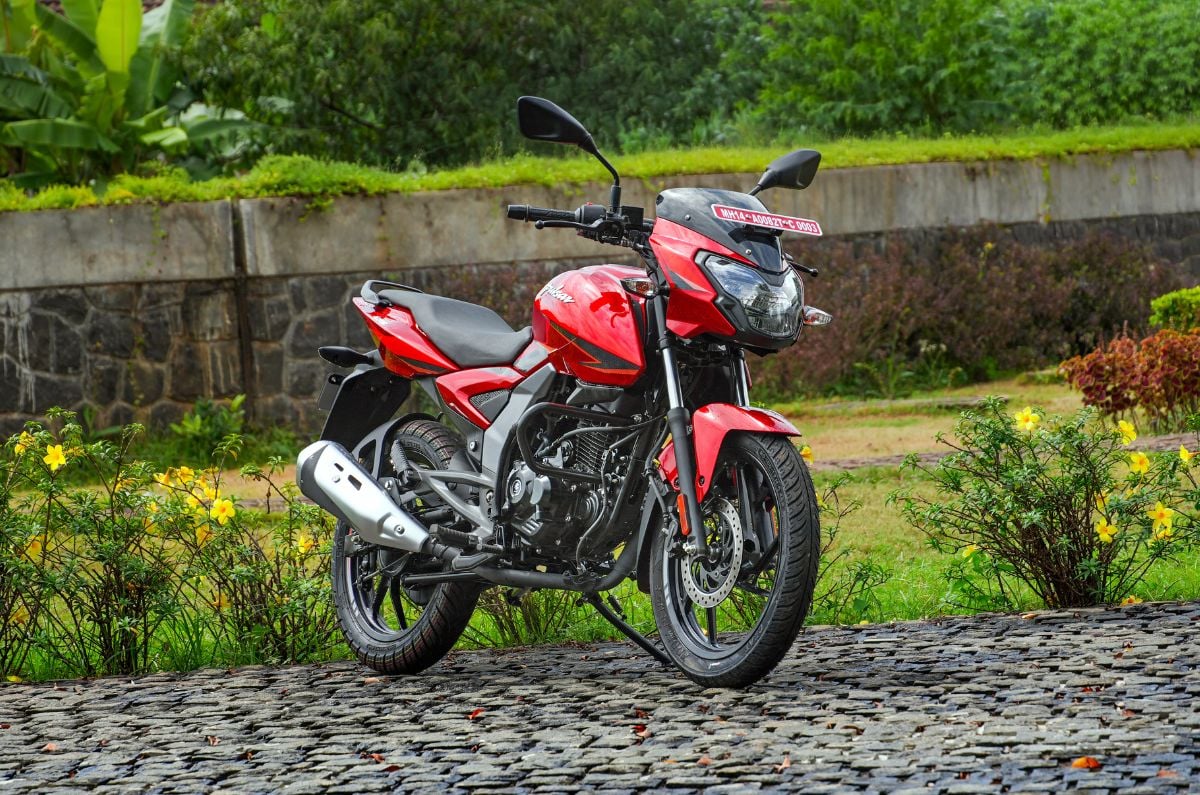
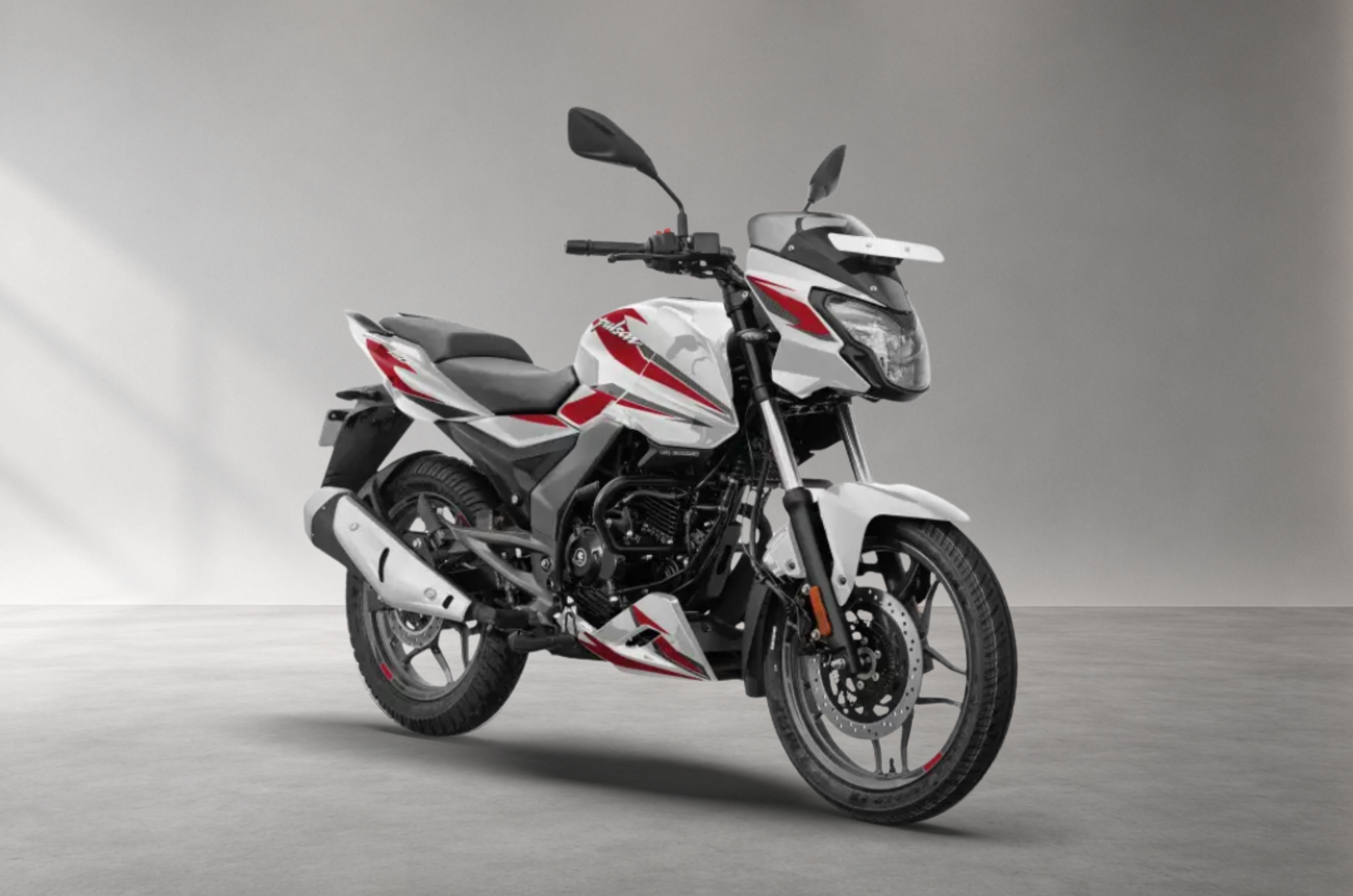
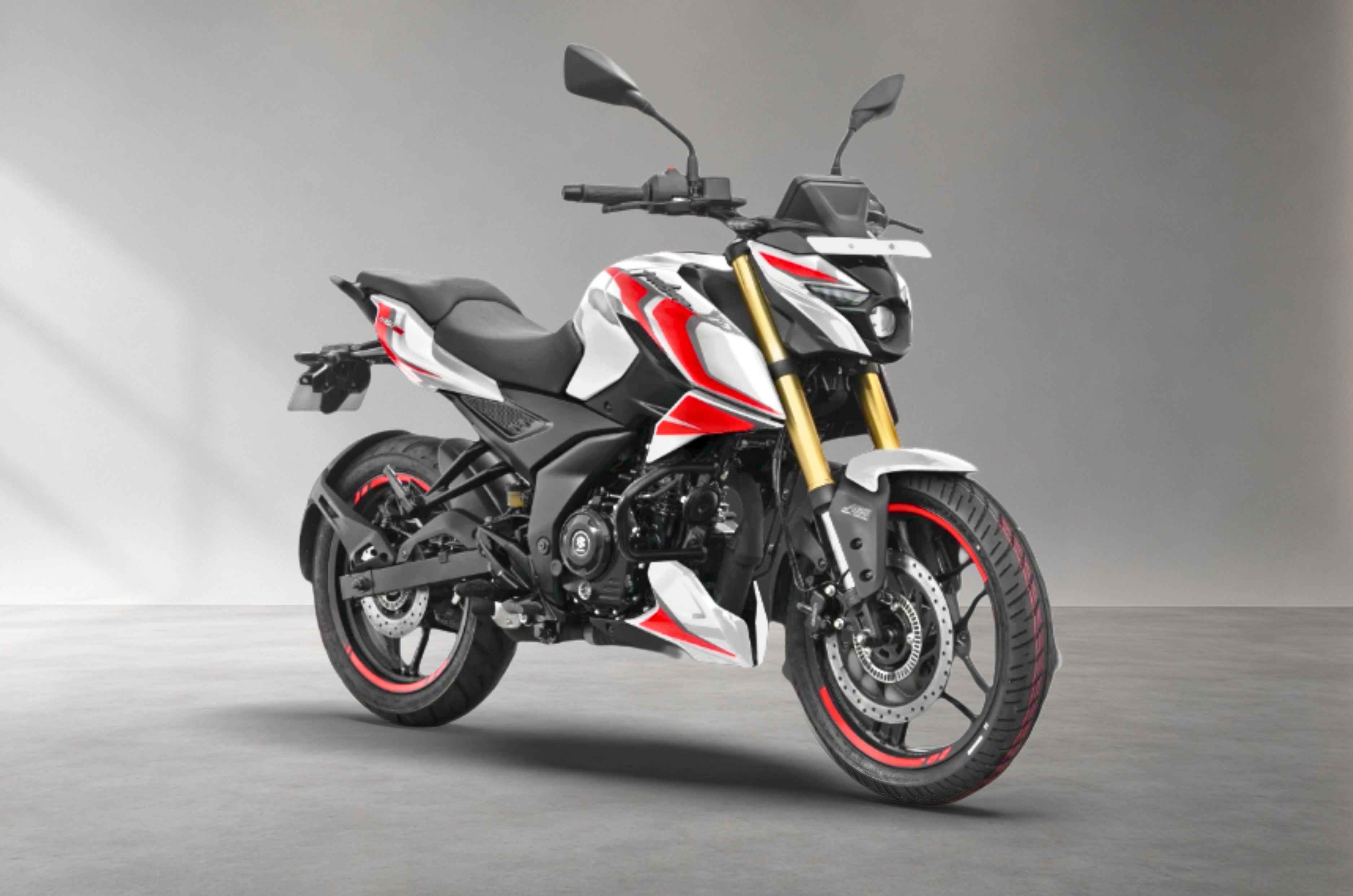
Bajaj has been on a roll lately. Starting in August, the brand has been upgrading and improving many of its Pulsar motorcycles. In cases like the NS400Z, the changes are minimal, whereas in others (like the Classic Pulsar 125 and 150) almost everything has changed. Now, Bajaj would like to incentivise customers to upgrade to these new and improved Pulsars, by way of its festive offers.
Bajaj Pulsar 125, 150, and N160 recently received substantial upgrades
More Pulsars are expected to be refreshed in the near future
Bajaj Pulsar festive offers: The breakdown
Applicable for both cash and loan purchases
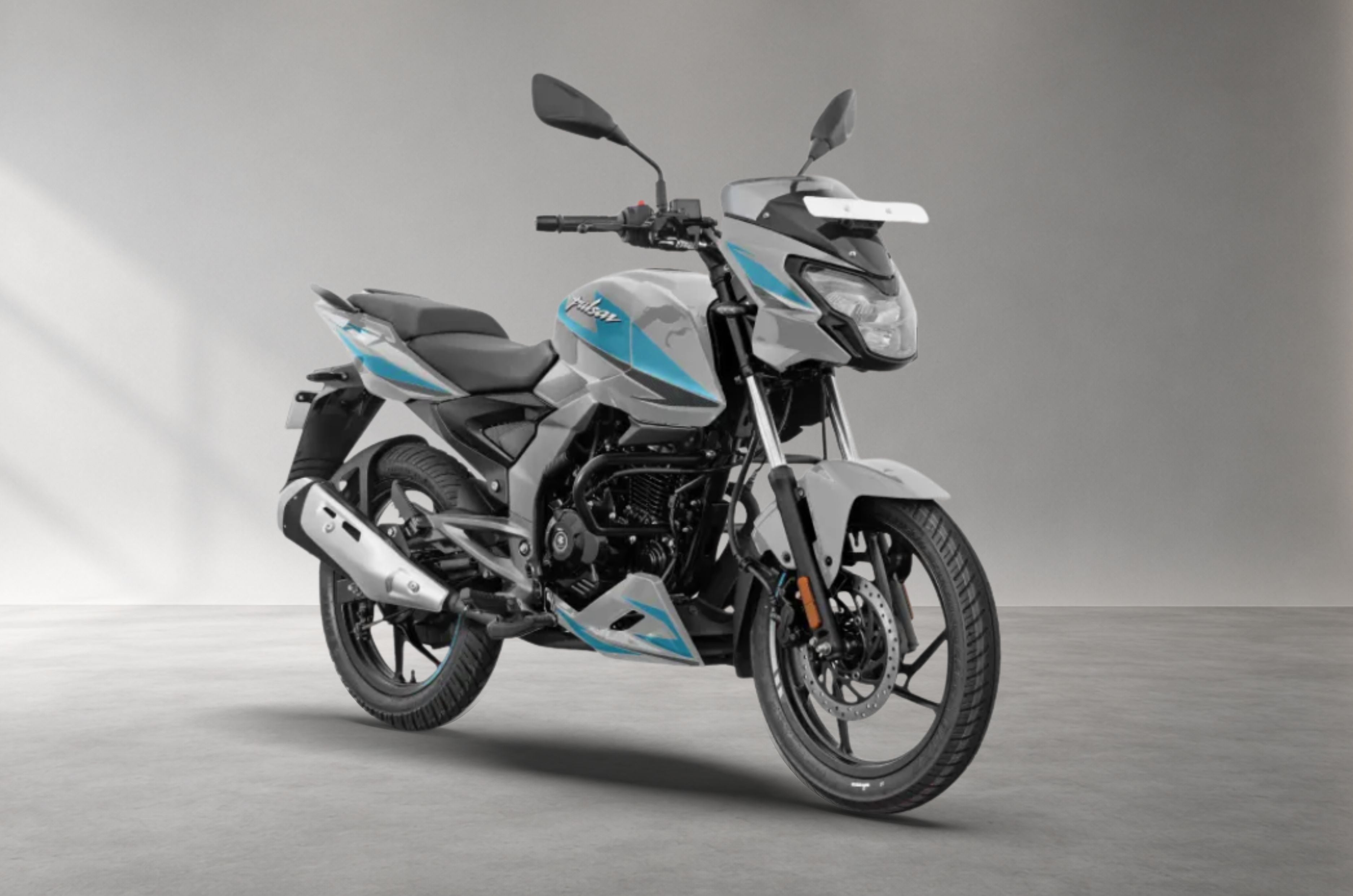
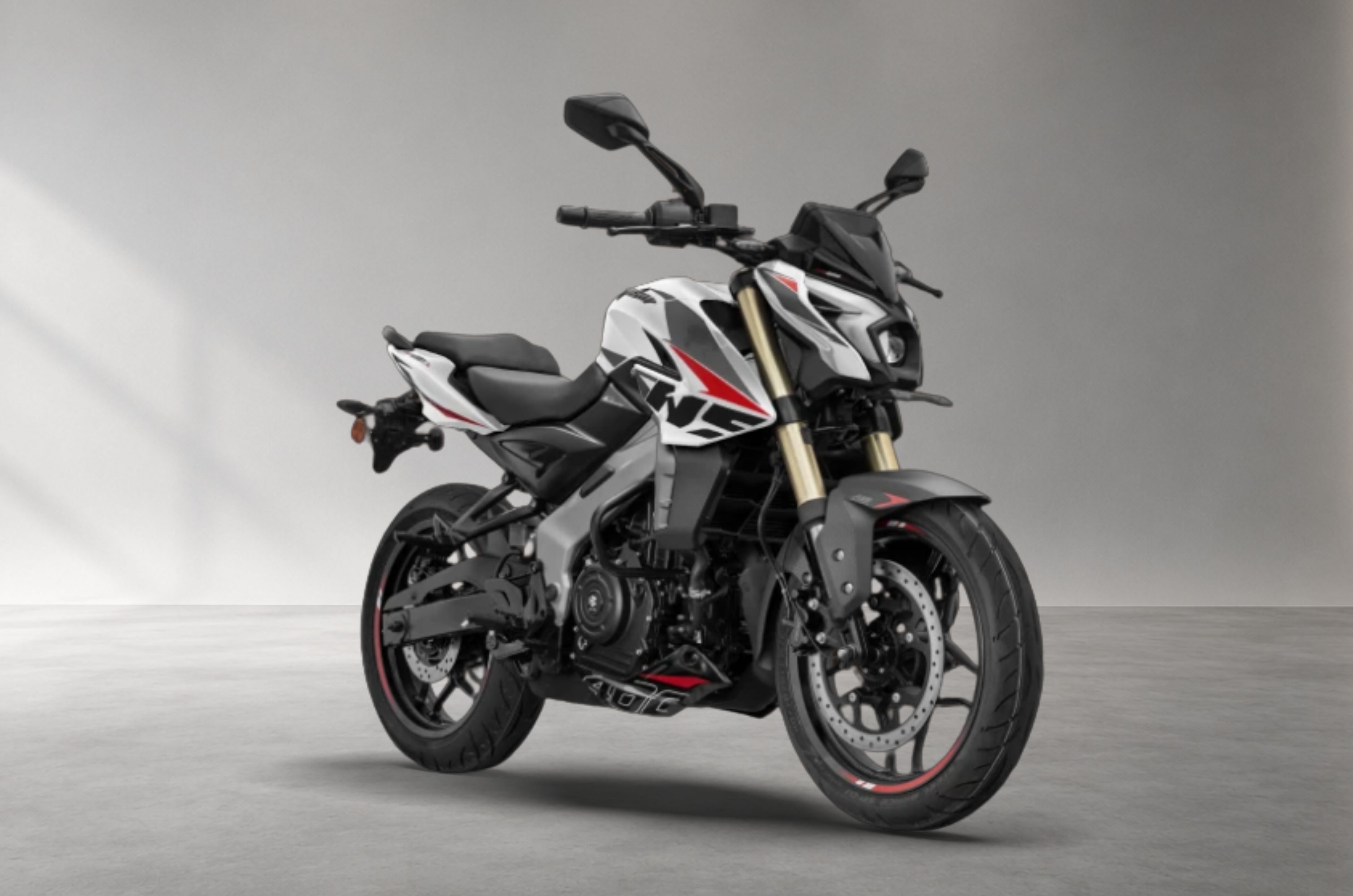
To recap, Bajaj currently sells 11 different Pulsar motorcycles with numerous variants to choose from across the country. Some of these, like the NS and the RS series, continue without any major changes for years now. Whereas others, like the N160 and the classic 125 and 150, have received comprehensive upgrades pretty recently. Considering the upcoming festive season, Bajaj has announced a bunch of offers across the entire line-up. A mix of up front cash discount and extended free service benefits, the potential customer is said to enjoy up to Rs 12,000 in total value. Predictably, the NS400Z enjoys the highest available discount.
To understand how the offer works for you, the customer, let’s break it down for the recently refreshed classic Pulsar 125. In the state of Maharashtra, the ex-showroom price is Rs 1.04 lakh for the top variant with the TFT screen. Bajaj has announced a Rs 2,500 up front cash discount for this model, which brings down the price immediately to Rs 1.02 lakh. On top of that, you get Rs 3,500 benefit by way of five free services (compared to the standard four) and no processing fee. This isn’t an up front discount and thus has no immediate impact on the price you will pay to the dealership. The good news is that these benefits are not limited to people buying via a two-wheeler loan; so, even if you plan to buy your Pulsar in an all-cash transaction, they would still be applicable to you. Bajaj hasn’t restricted the offers to a specific few states either for they’re available across India.
The Pulsar 125 was recently upgraded with a brand-new frame, engine, and added many new features. The entry-level Pulsar now gets three ride modes, LED lighting and a TFT screen on the top variant. Its revamped 124.58cc engine now makes 12.1hp and 11.4Nm (versus 11.8hp and 10.8Nm earlier). The 150 also received similar improvements across the board, so did the Pulsar N160, with its new S and SS variants. If recent reports are anything to go by, the Pune-based manufacturer will continue to update more Pulsars as we move closer to the festive season.
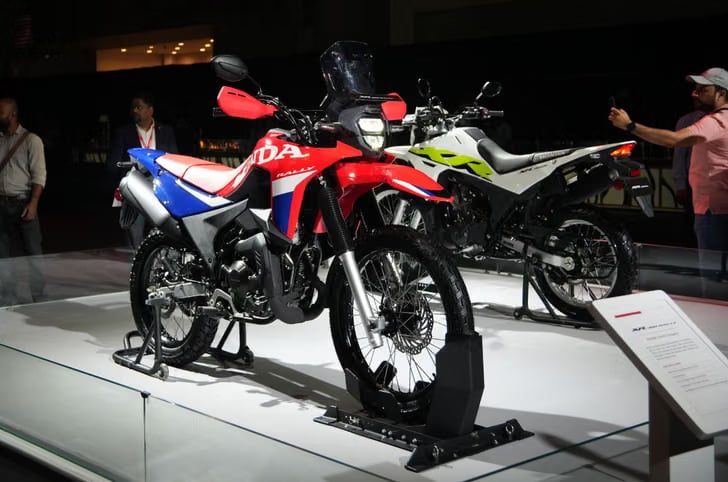
The Honda XR300L and XR300 Rally were arguably two of the models that enthusiasts were looking forward to most from the 10-strong lineup that the manufacturer showcased back in July. The brand has now announced that it has opened bookings for both models and revealed their pricing.
XR300L priced at Rs 1.83 lakh
XR300 Rally priced at Rs 2.08 lakh
Both use the 293.5cc air- and oil-cooled engine from the CB300F
Honda XR300L and XR300 Rally details
Rally variant adds off-road focused equipment over the standard XR300L
Both motorcycles share the same engine, closely related to the 293.5cc air- and oil-cooled unit in the CB300F, which produces around 24.3hp and 26.5Nm in international markets. Honda is yet to update its India website with specs and details, but we know that the India-spec bikes get revised exhaust routing over the South American XR300L, likely to comply with our emissions regulations. Both use telescopic front forks and a rear monoshock, which should offer substantial travel, riding on a 21-inch front and 18-inch rear wire-spoke wheel combination.
For the Rs 25,000 premium, the XR300 Rally steps up with a 5-inch TFT display, a larger fuel tank, a taller windscreen, knuckle guards and unique rally-inspired bodywork, along with more comprehensive switchgear. The seat height on the Rally is expected to be marginally taller than the XR300L, with a slight increase in kerb weight owing to the larger fuel tank. Again, we’ll update this once Honda gives us the full specs and details.
The XR bikes bring Honda into a segment it hasn’t meaningfully participated in our market, but one that’s increasingly popular, with most major manufacturers now having a model in it. At Rs 1.83 lakh, the XR300L undercuts the Kawasaki KLX230 (Rs 2.19 lakh) by a fair margin while offering a larger engine, and is only marginally more expensive than the Hero Xpulse 210 range (Rs 1.68-1.77 lakh). The Rally at Rs 2.08 lakh widens the gap with the Xpulse, but still costs notably less than the KLX.
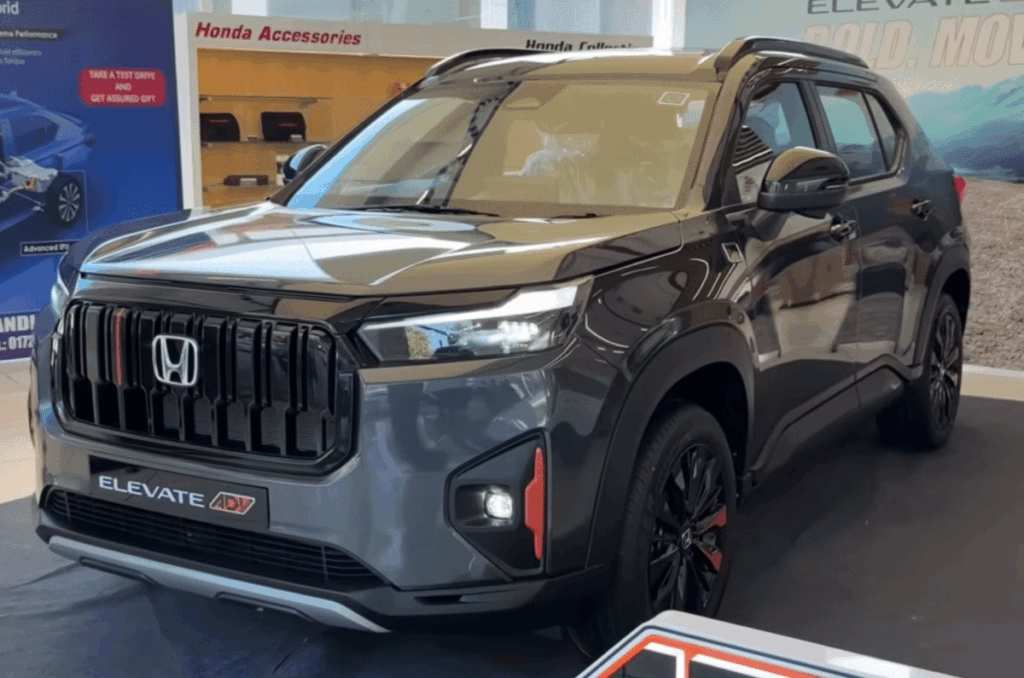
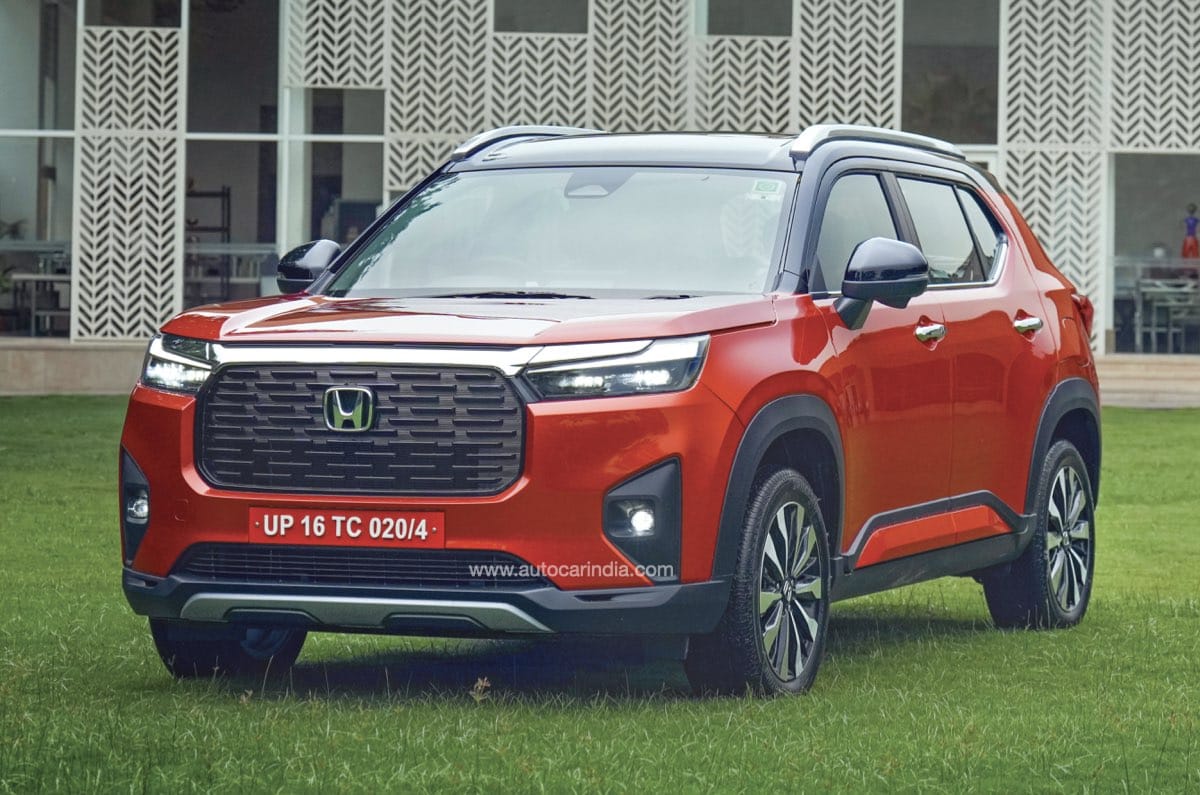
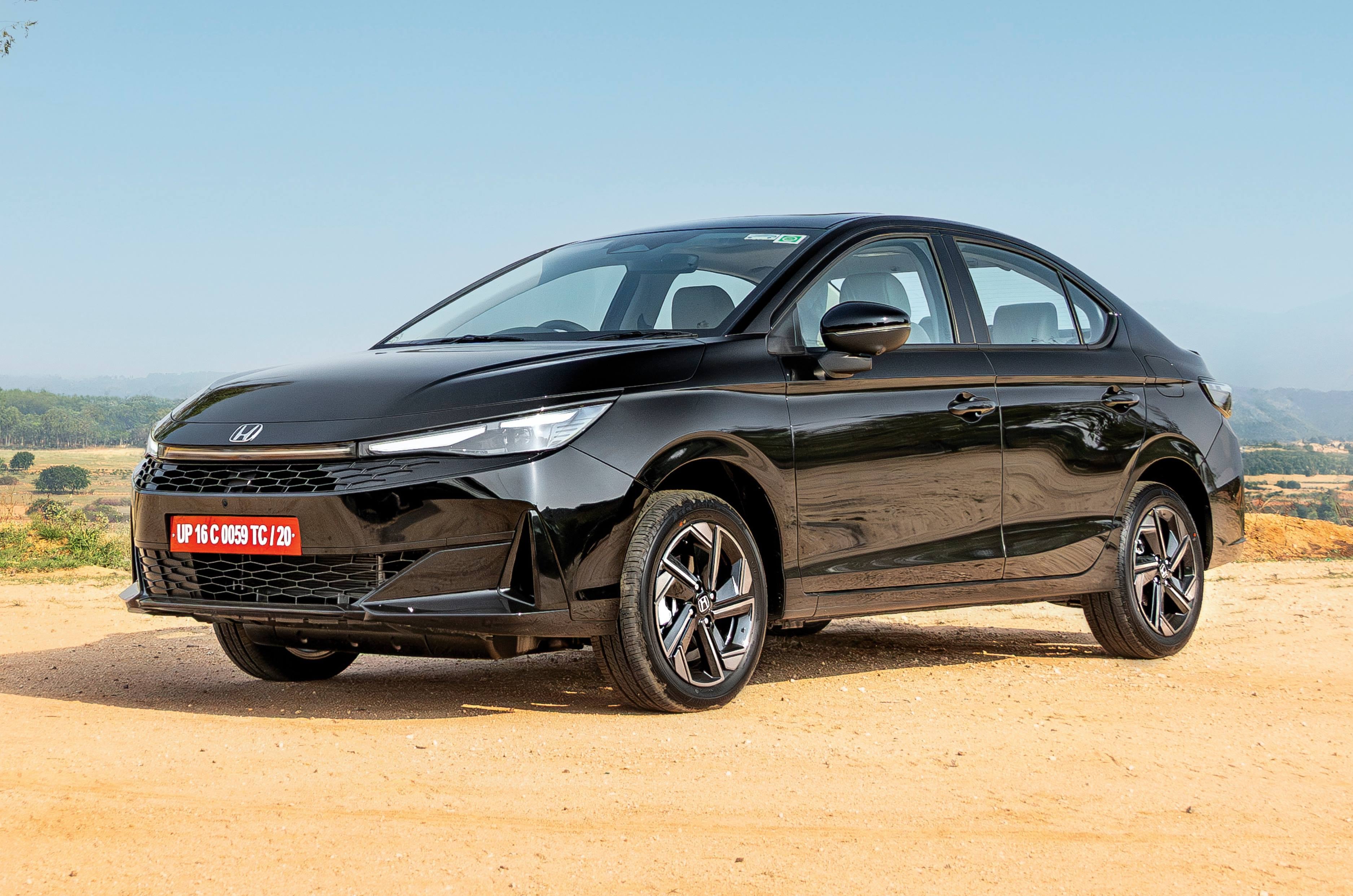
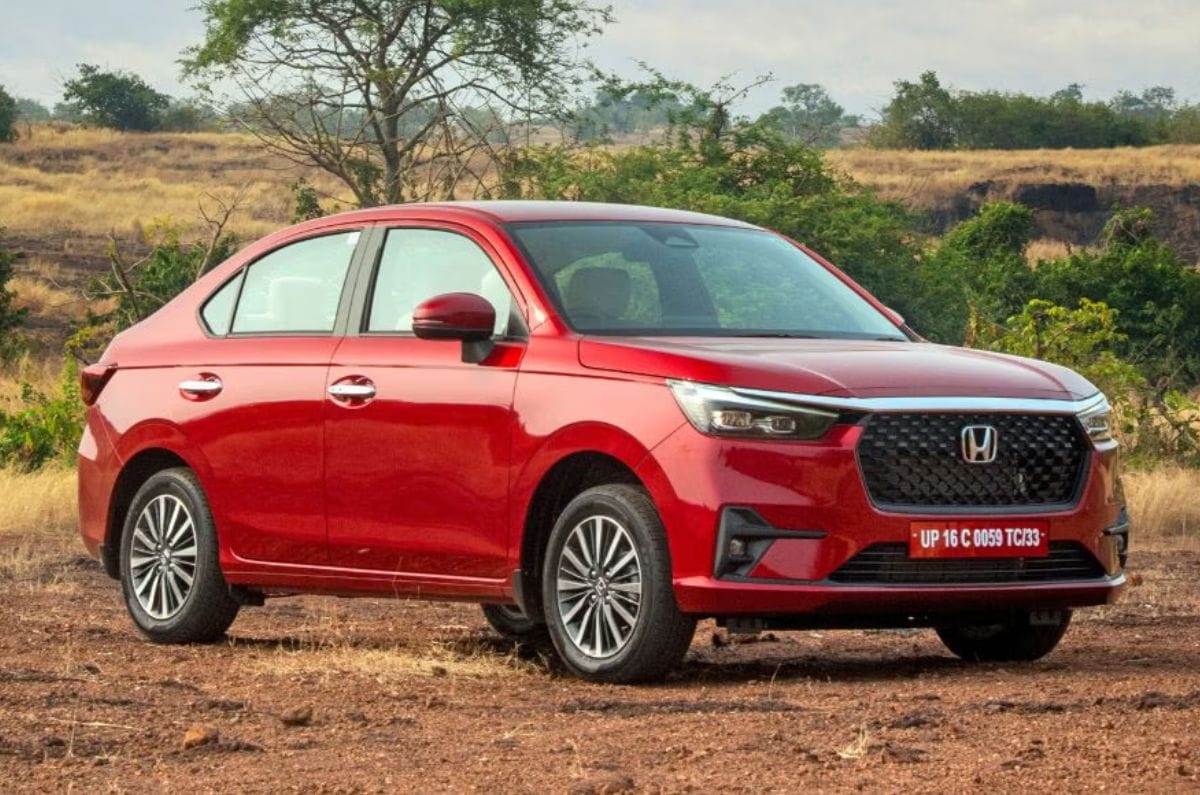
Honda is offering attractive benefits across its vehicle lineup. Models like the outgoing Elevate, the recently facelifted Honda City, and the Amaze are available with cash discounts, exchange bonuses, loyalty benefits, optional feature bundles, and extended warranty packages. Offers are valid until October 31, 2026.
Disclaimer: Offers/benefits may vary by city and are subject to stock availability. Buyers are advised to check with their local dealer for exact figures.
Honda Elevate offers in October 2026
Benefits of up to Rs 2.35 lakh
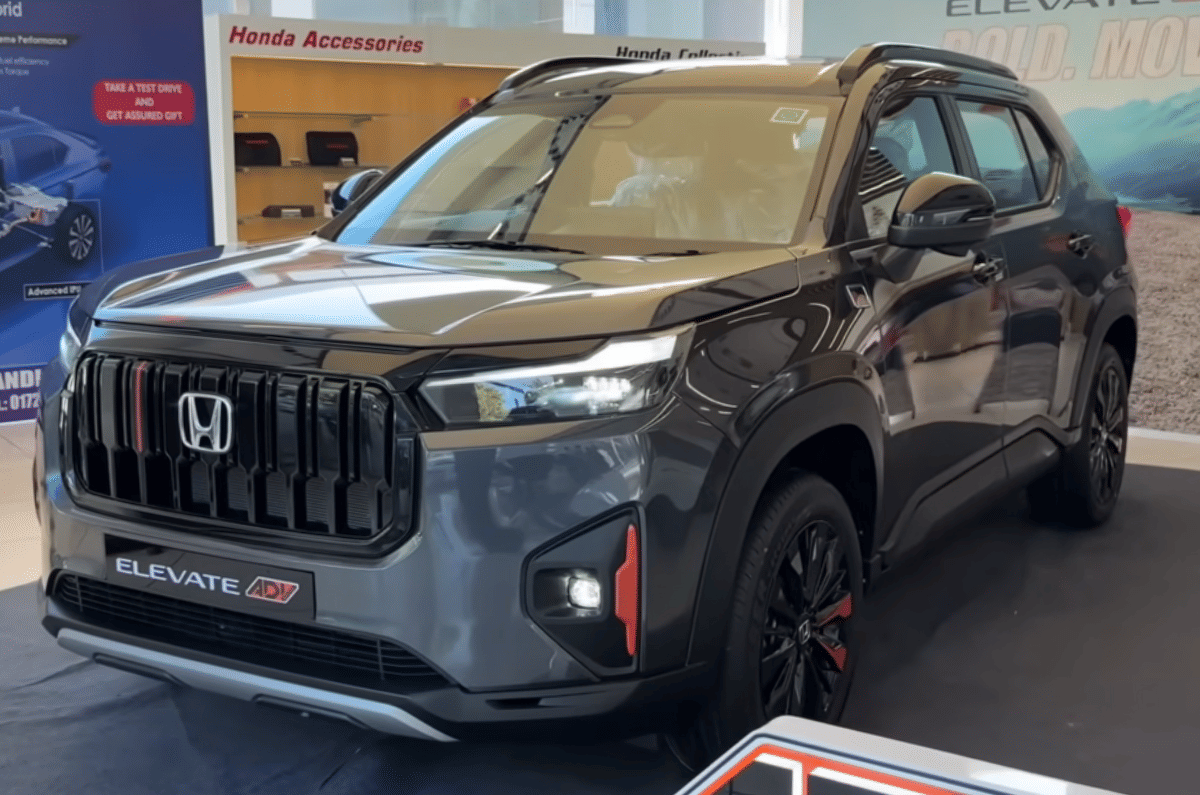
The outgoing Honda Elevate is getting benefits of up to Rs 2.35 lakh. This includes a cash discount of up to Rs 50,000, an exchange bonus of up to Rs 80,000, a loyalty benefit of up to Rs 4,000, a corporate benefit of Rs 5,000, along with other schemes, feature bundles and warranty packages, depending on the variant. The current Elevate is priced between Rs 11.88 lakh and Rs 16.36 lakh. It competes with the likes of the Hyundai Creta, Skoda Kushaq, Volkswagen Taigun, Kia Seltos, Tata Sierra, Maruti Grand Vitara, and Victoris.
Honda City offers in October 2026
Benefits of up to Rs 1.71 lakh
The recently unveiled City facelift gets benefits of up to Rs 1.71 lakh. It comprises a cash discount of up to Rs 60,000, an exchange bonus of up to Rs 50,000, a loyalty benefit of Rs 4,000, and a corporate offer of Rs 5,000. Like the Elevate, there are additional offers available that bring further benefits. The City’s price ranges from Rs 12 lakh and goes all the way up to Rs 21.44 lakh. It takes on rivals like the Skoda Slavia, Volkswagen Virtus, and Hyundai Verna.
Honda Amaze offers in October 2026
Benefits of up to Rs 66,800
Honda’s most affordable model on sale, the Amaze gets benefits of up to Rs 66,800. The latest third-generation model gets a cash discount of up to Rs 15,000, an exchange bonus of up to Rs 15,000, a loyalty benefit of Rs 4,000, a corporate offer of Rs 3,000, and other schemes and extended warranty benefits that increase the total benefits. In contrast, the older second-gen model gets slightly lower benefits of up to Rs 57,600. The third-gen and second-gen Amaze are priced between Rs 7.65 lakh and Rs 10 lakh and Rs 6 lakh and Rs 7.78 lakh, respectively. The Amaze locks horns with the Tata Aeris, Maruti Dzire, and the Hyundai Aura.
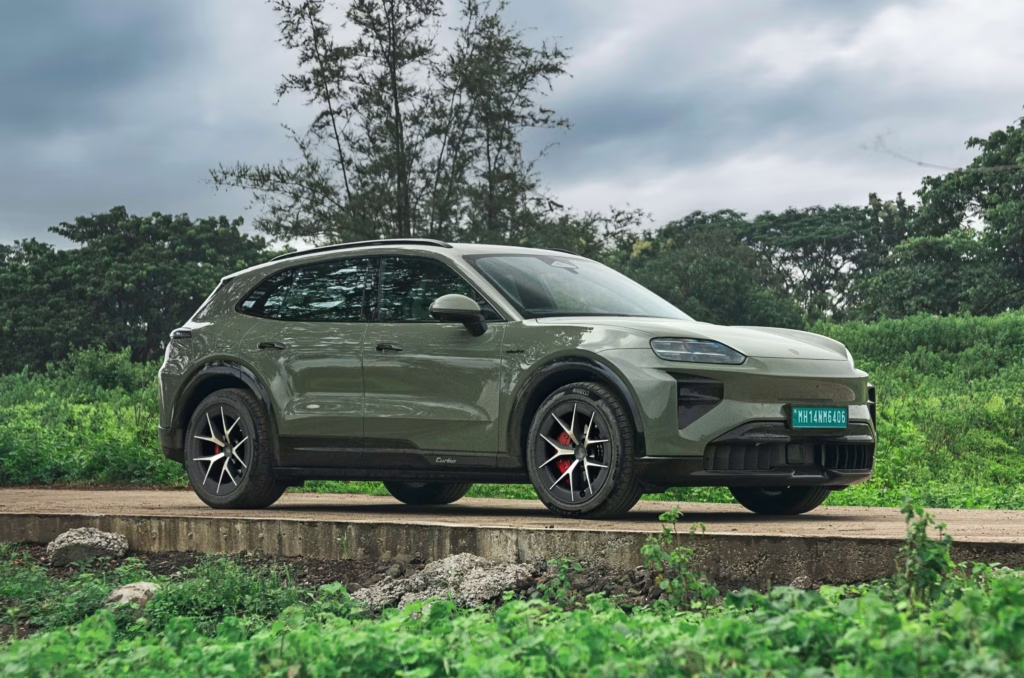
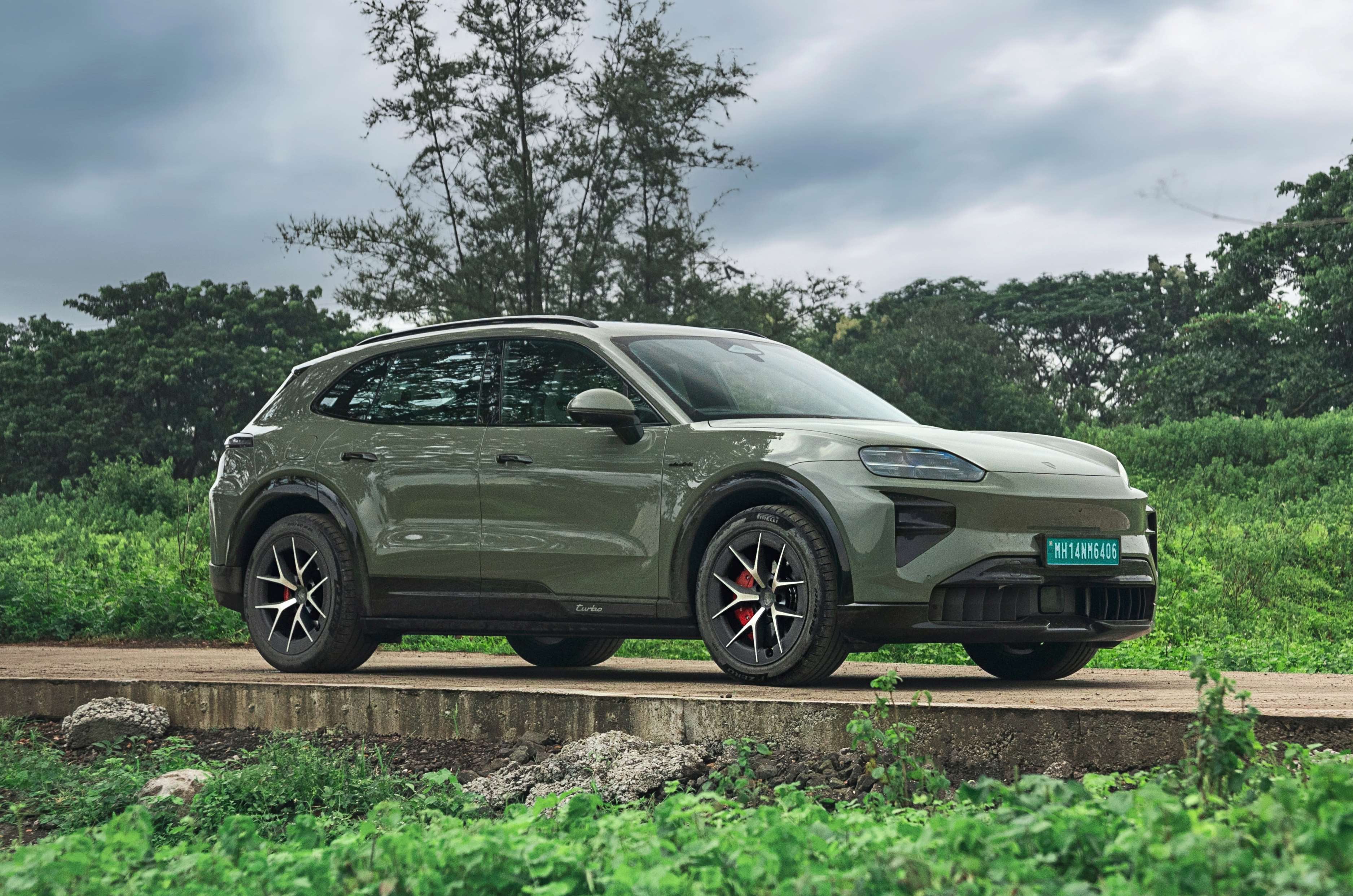
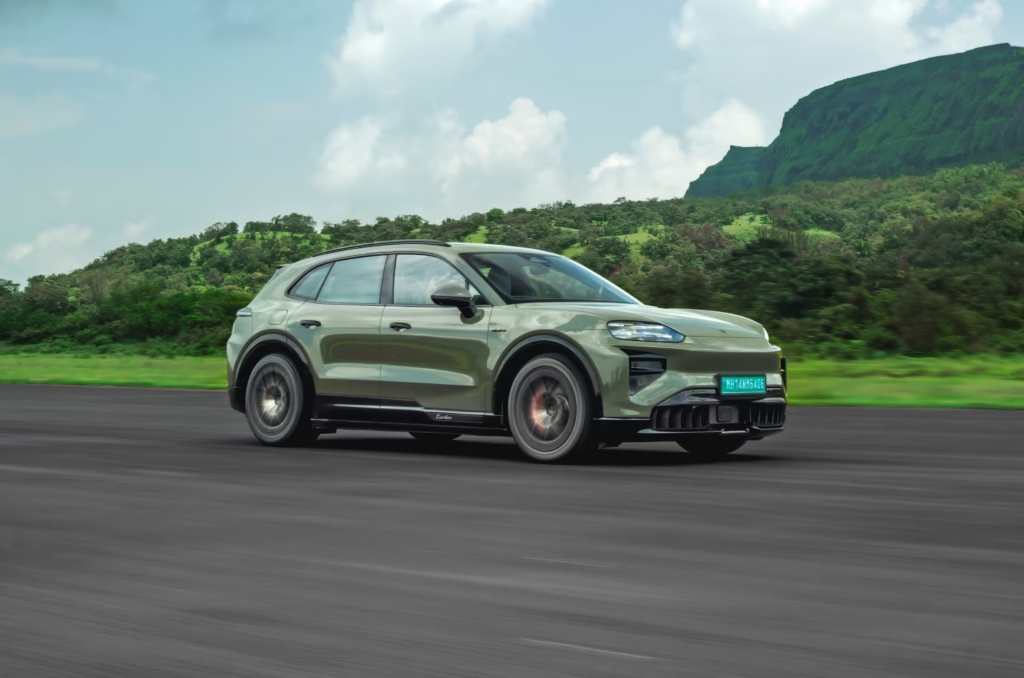
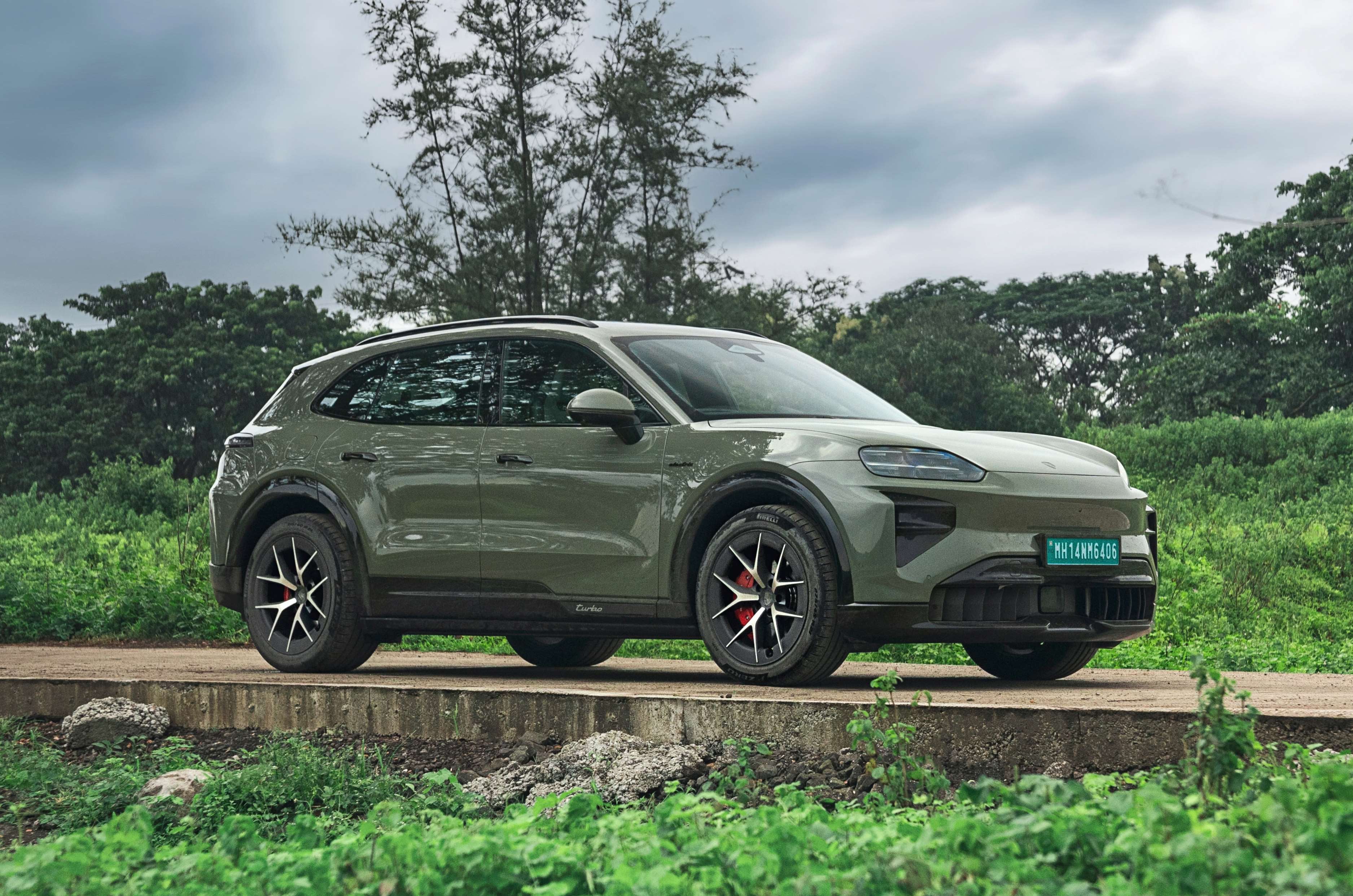
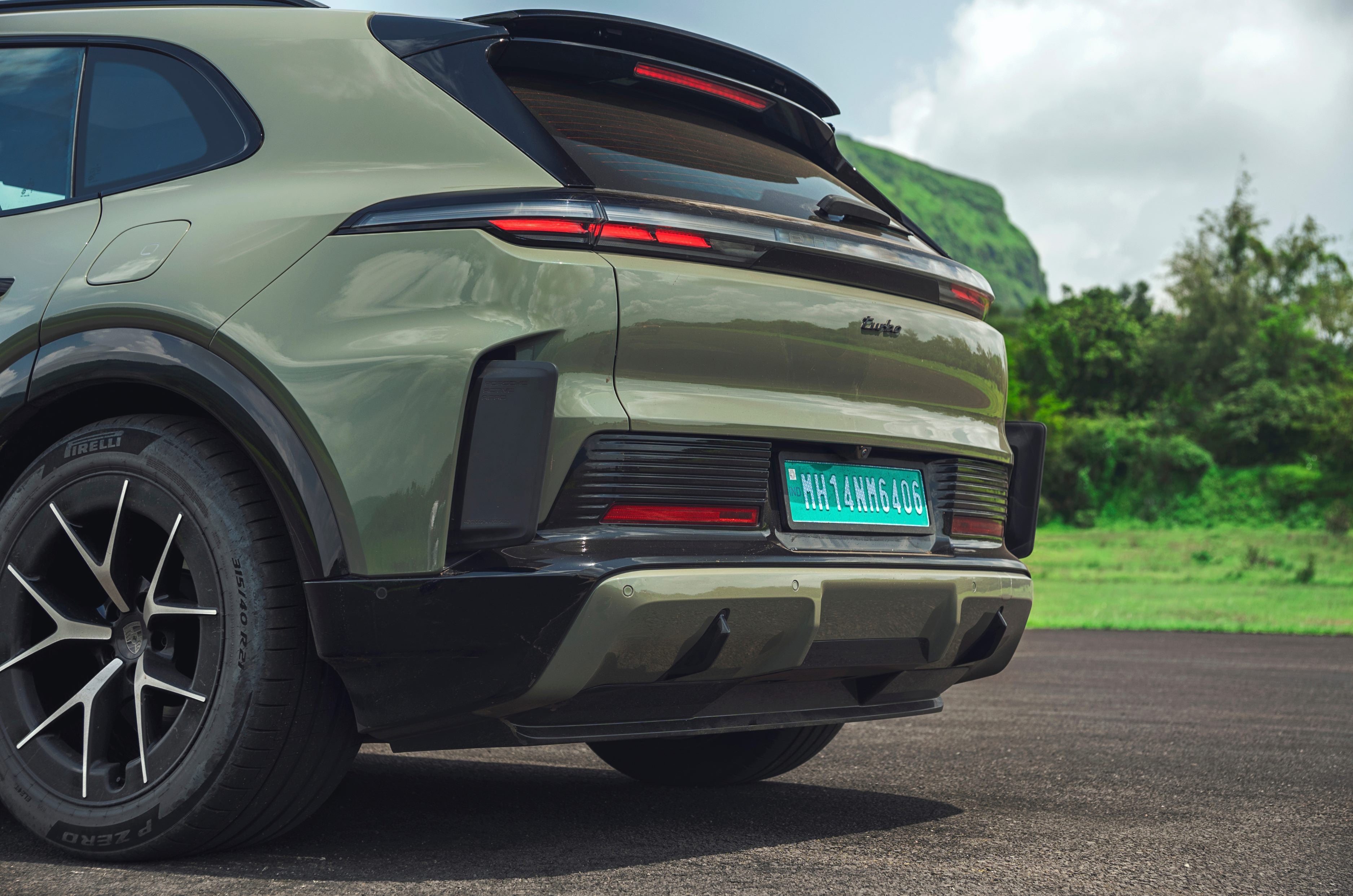
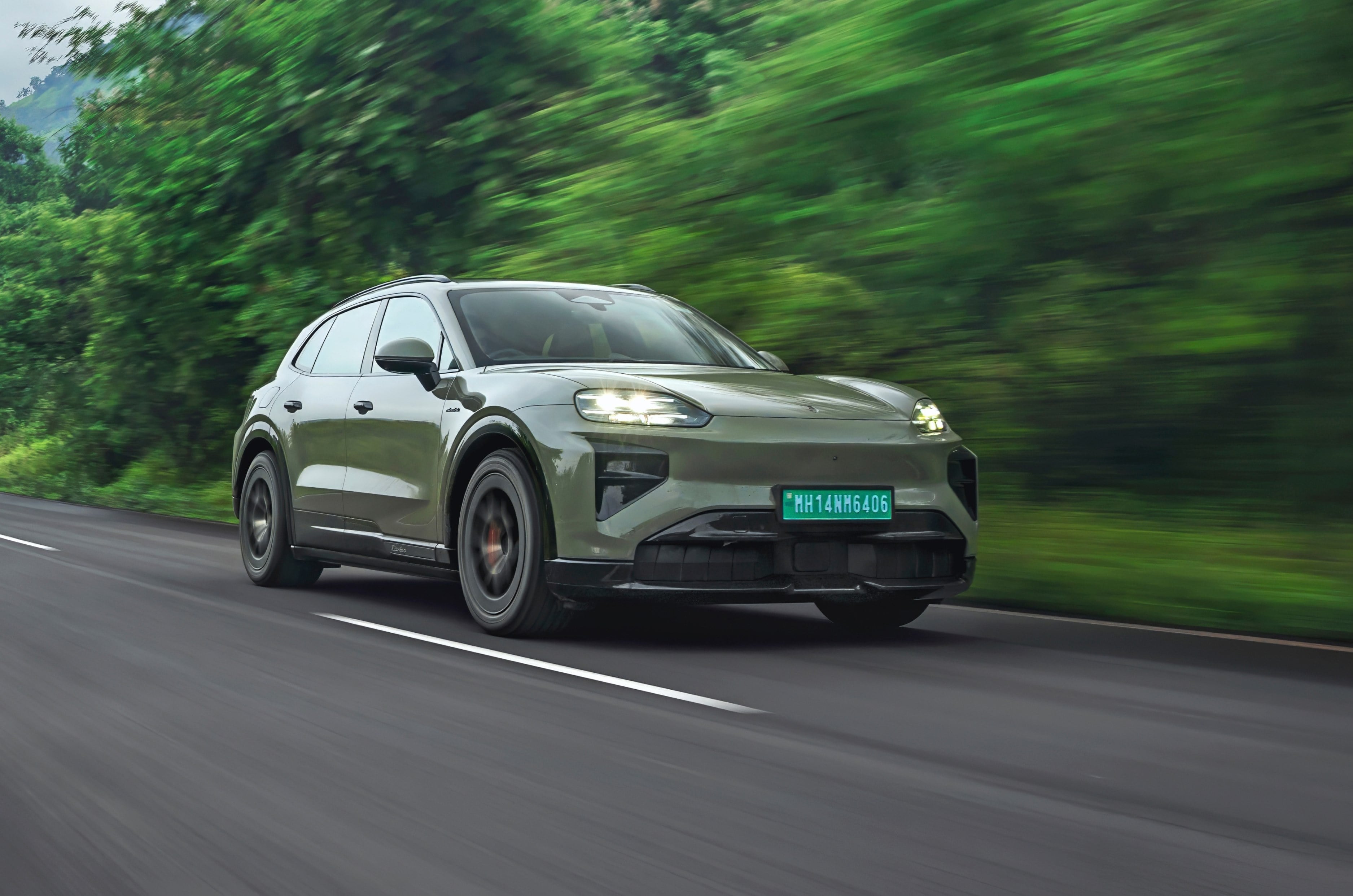
Porsche has debuted the Cayenne Electric SUV in India months after its official launch earlier this year. The Cayenne Electric is underpinned by the Volkswagen Group’s 800V Premium Platform Electric (PPE) architecture. Irrespective of the variant chosen, you get a 113kWh battery pack with a dual-motor setup (AWD) as standard. In base form, it develops 408hp and 750Nm, (442hp and 835Nm with Launch Control engaged), and Turbo produces 857hp and 1,360Nm (+176hp in Push-to-Pass mode) (1,156hp and 1,500Nm with Launch Control engaged). In Turbo guise with launch control mode, the Cayenne Electric is the most powerful series production Porsche currently. The Cayenne Electric gets a WLTP-certified range of up to 642km and supports DC charging speeds of up to 390 kW. Prices for the Cayenne Electric for the base and Turbo variants begin at Rs 1.77 crore and Rs 2.28 crore, respectively, before optional extras.
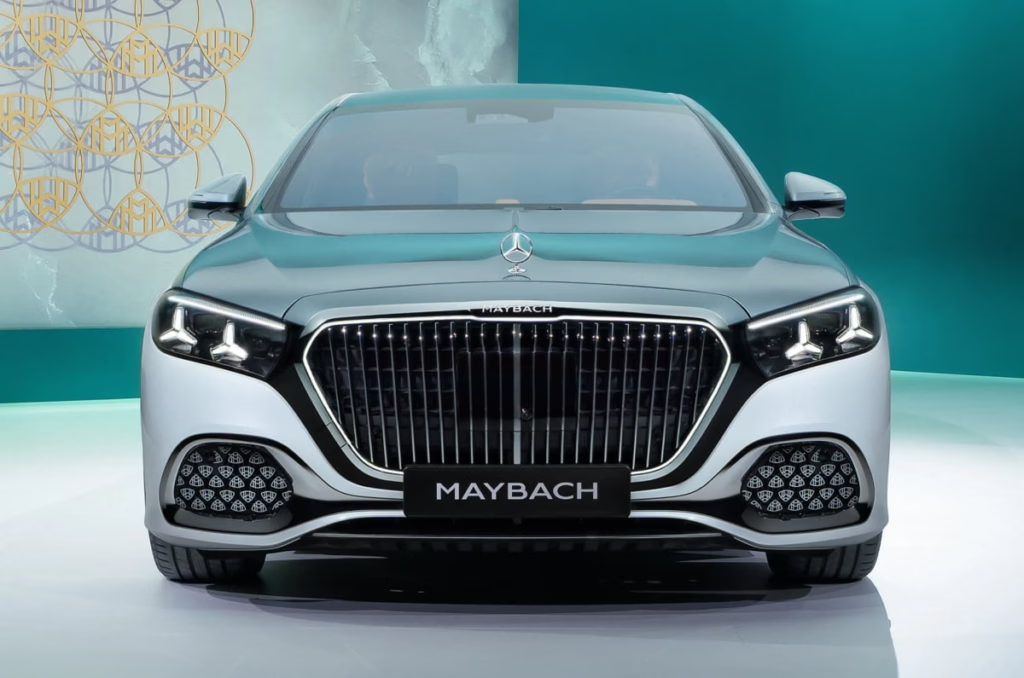
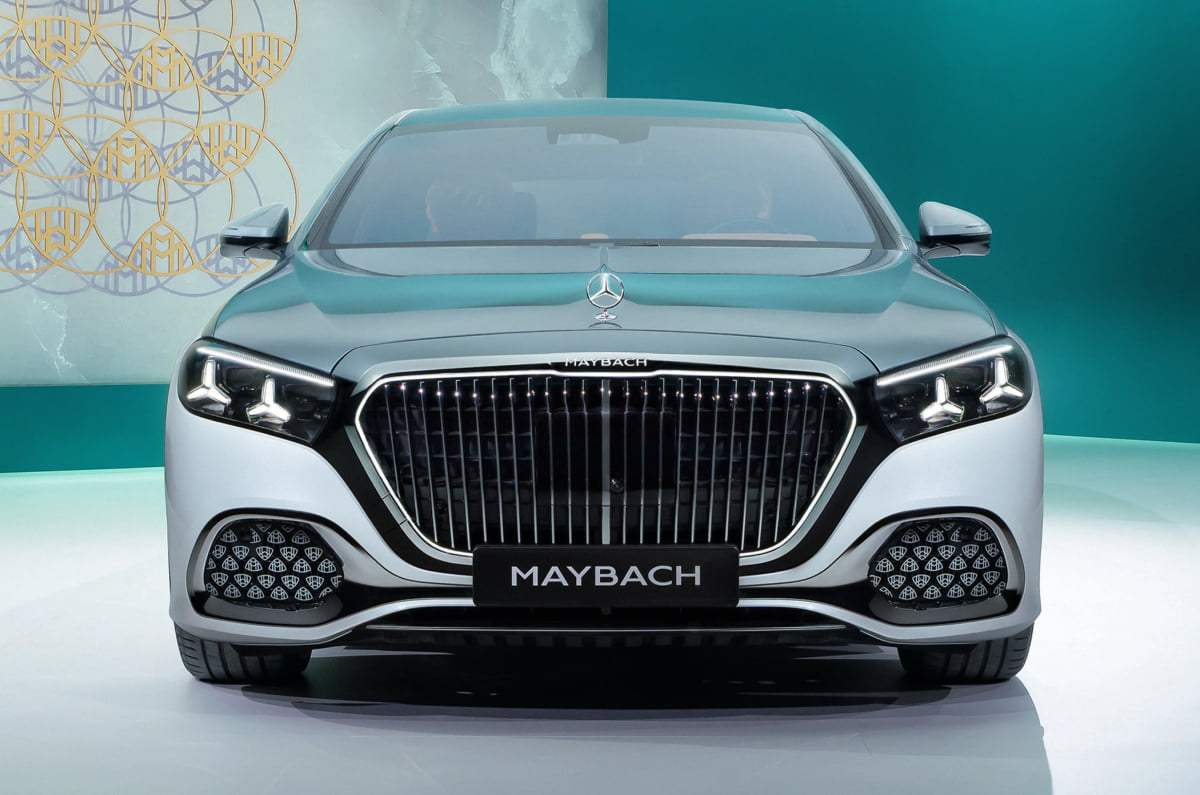
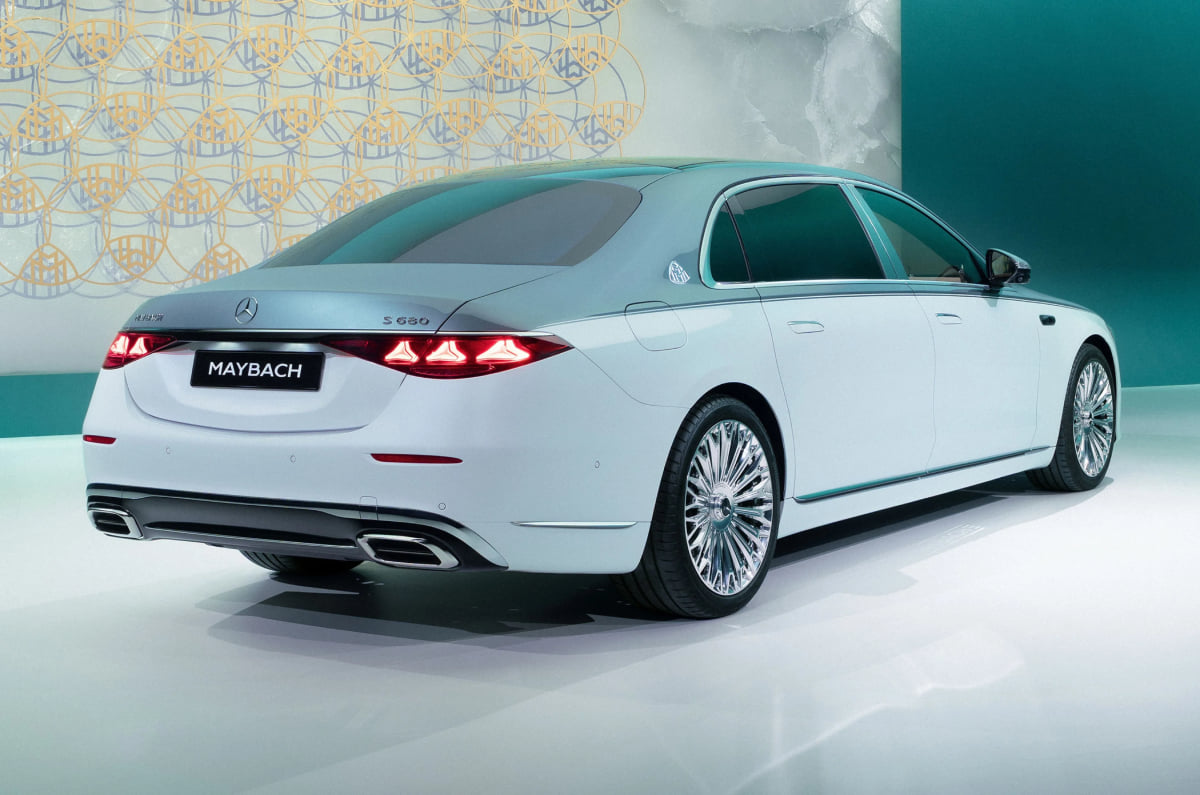
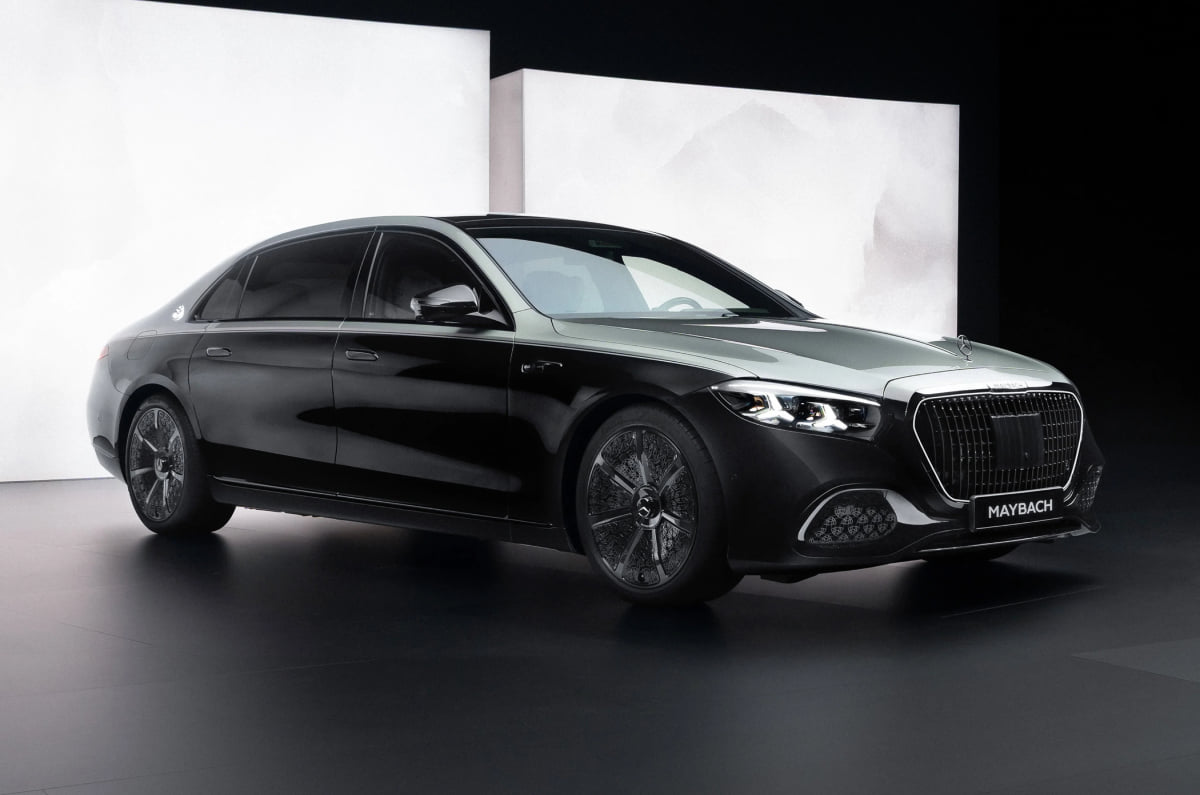
Mercedes-Benz will launch the updated Maybach S-Class in India on October 5. The facelift brings styling and technology updates, along with more personalization options and changes to the powertrain range. With the launch just around the corner, here’s everything you need to know about the new Maybach S-Class.
What exterior changes does the new Maybach S-Class get over the S-Class?
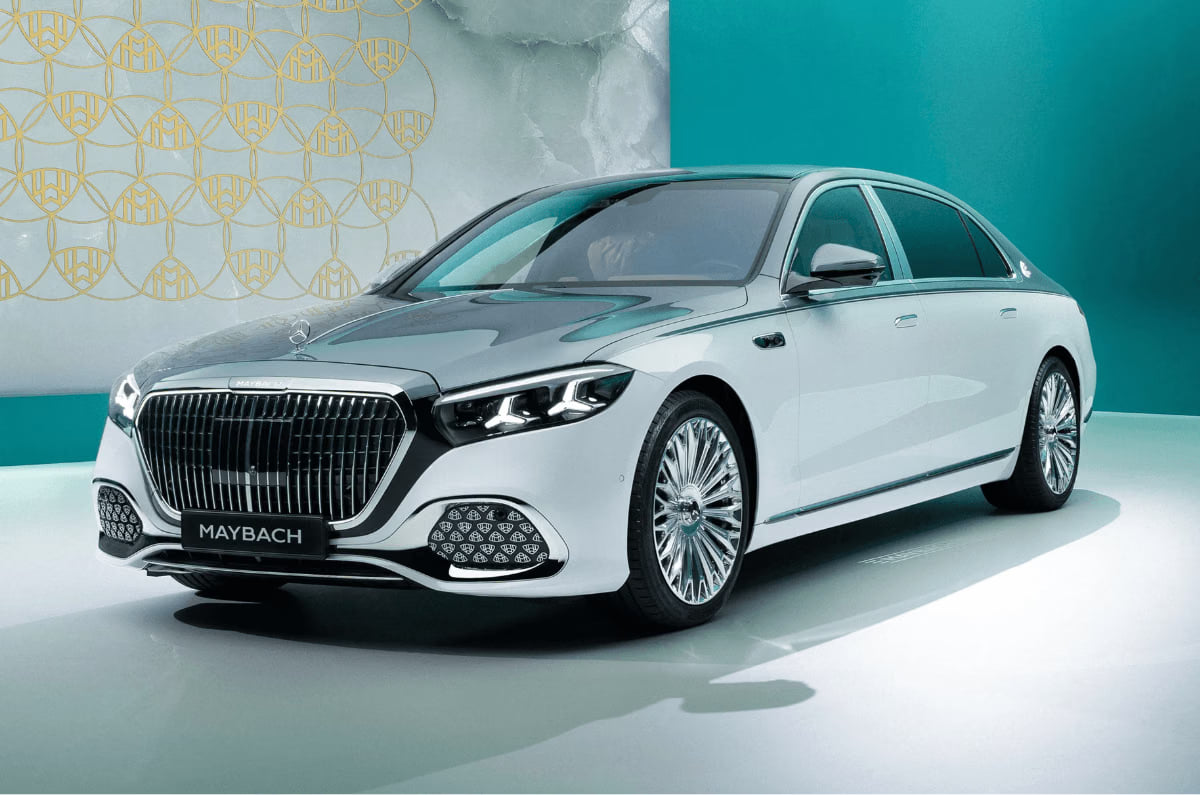
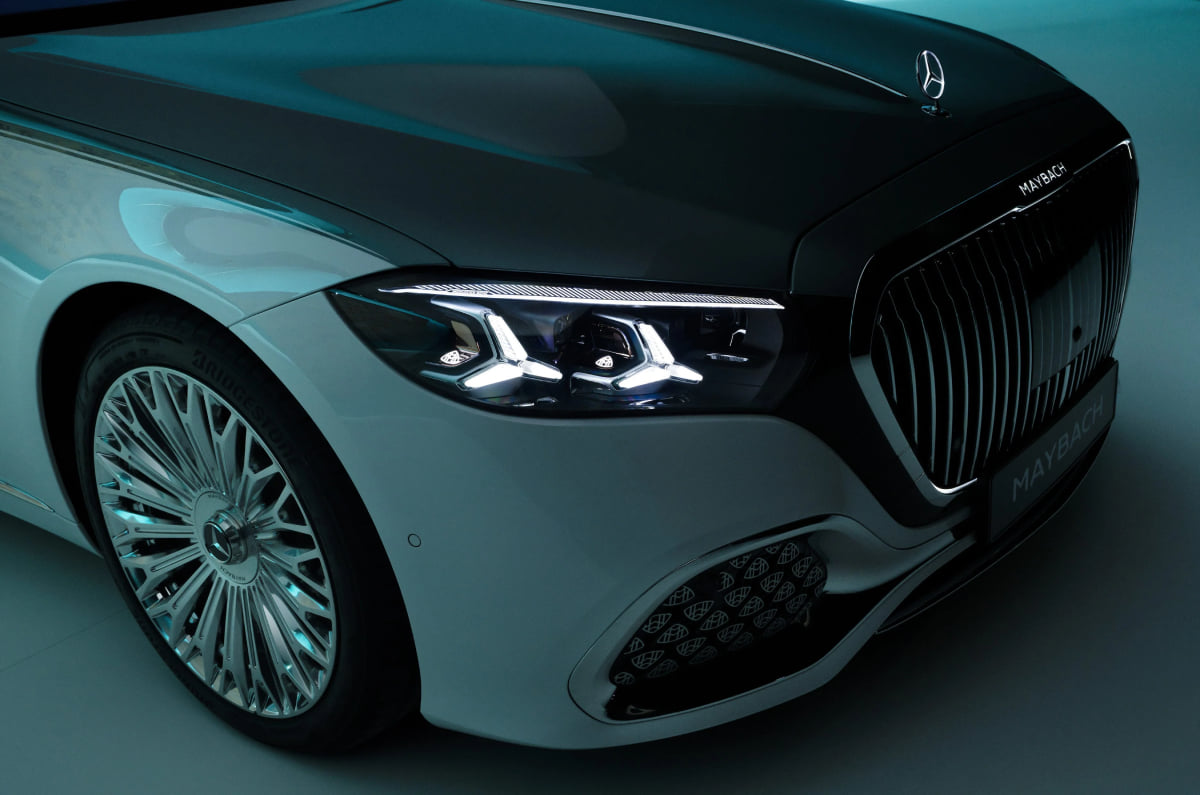
The Maybach S-Class gets the larger illuminated grille seen on the updated S-Class, but with Maybach-specific vertical slats and an illuminated ‘Maybach’ wordmark above them. It also gets an illuminated Mercedes star on the bonnet, LED headlights with three-pointed-star DRLs and rose gold embellishments featuring the Maybach logo instead of the techie blue accents on the standard S-Class. There are also tiny Maybach logos in the lower air-dam mesh, an illuminated Maybach logo on the D-pillar and the same three-pointed-star LED signature for the tail-lamps as the standard S-Class.
The Maybach is 180mm longer than the long-wheelbase S-Class. It is also available with new 20- and 21-inch forged alloy wheels, which feature a counterweighted Mercedes logo that stays upright as the wheels turn. The carmaker says every Maybach S-Class gets some options from its Manufaktur personalization range, which now includes more exterior colours and two-tone paint combinations.
What are the key interior and feature highlights of the Maybach S-Class?
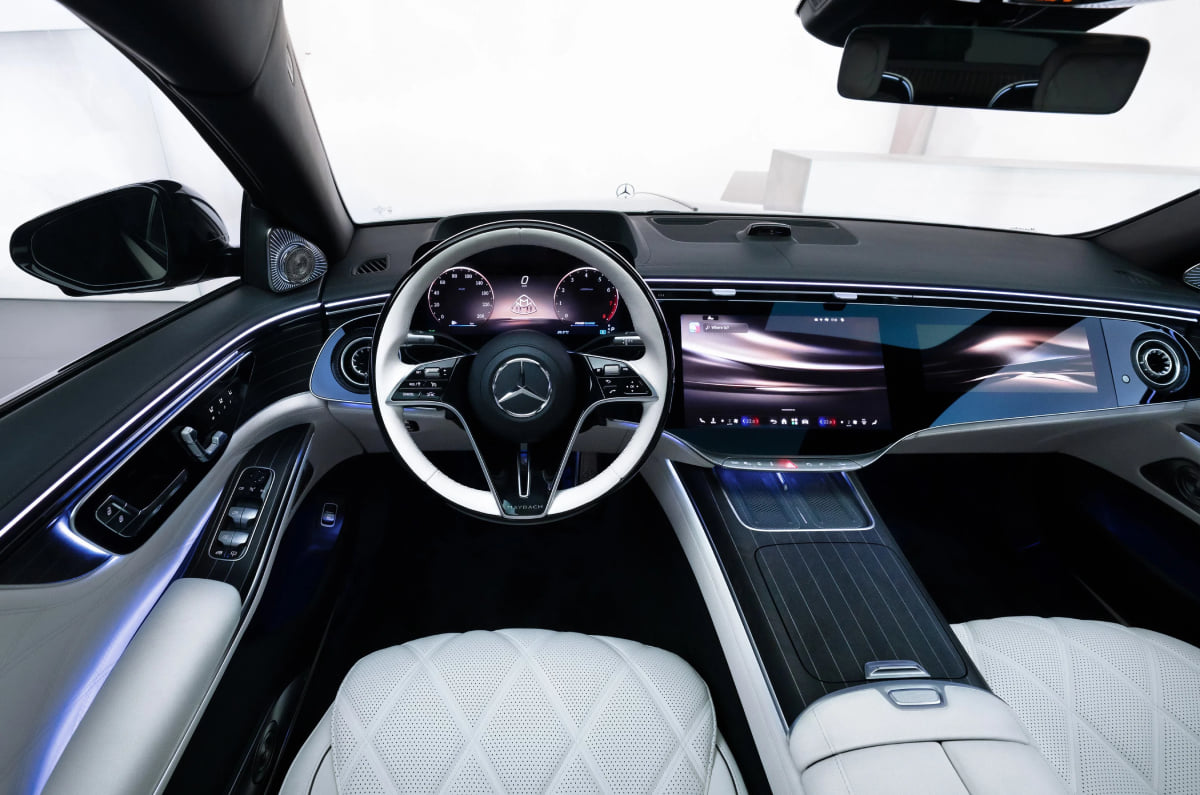
The cabin of the Maybach S-Class, like the standard S-Class gets a Superscreen-style layout comprising a 12.3-inch digital instrument cluster, a 14.4-inch central touchscreen and a 12.3-inch passenger display. The car also uses a new E&E architecture with four ‘supercomputers’ that run the entire car, from the screens to the safety features to the driving dynamics.
As on the outside, Mercedes has expanded the choice of extended leather upholstery and added new upholstery colours. For the first time on a Maybach, buyers can also specify leather-free vegan upholstery with its own unique design.
What changes have been made to the rear-seat experience of the Maybach S-Class?
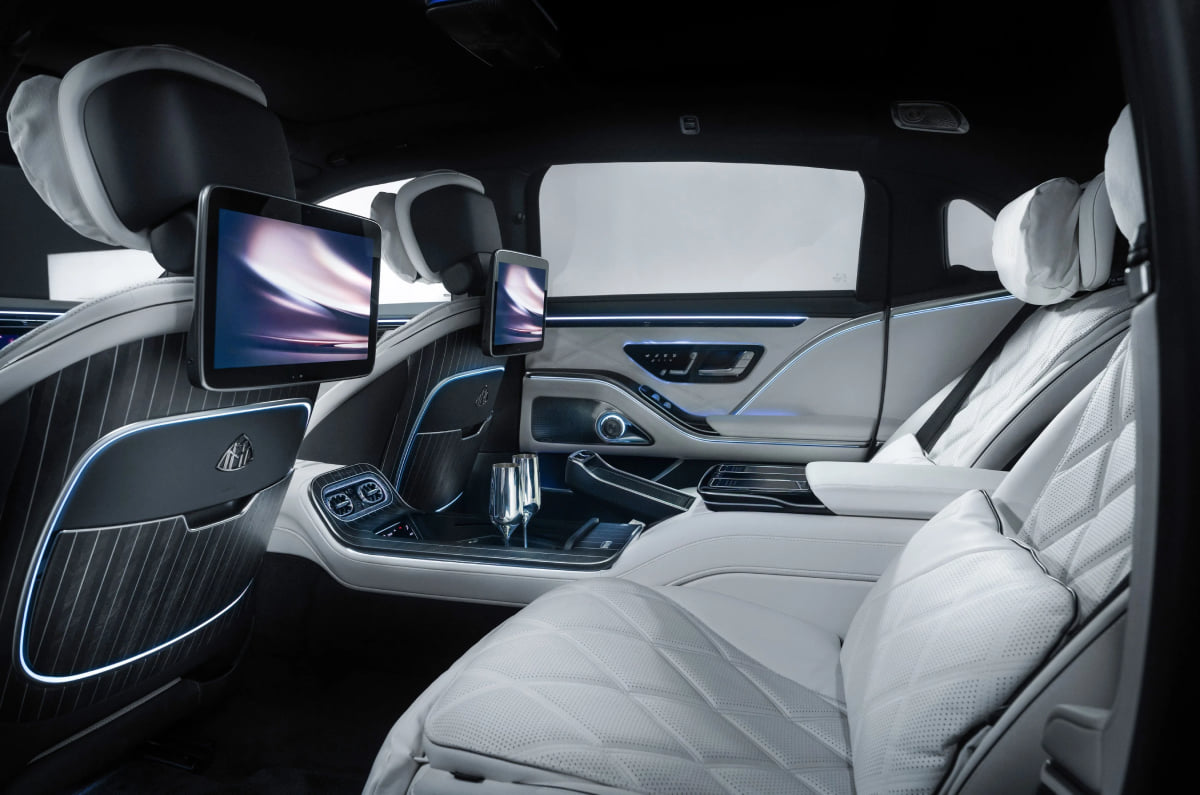
The rear seats now recline up to 43 degrees, compared with 38 degrees in the standard S-Class. They are also heated, ventilated and equipped with massage functions. The previous tablet controller has been replaced by two individual smartphone-style remotes for operating the car’s functions. There is also a Maybach drive mode that makes the suspension even softer.
What engine options are available internationally on the Maybach S-Class, and which one will India get?
Internationally, the Maybach S-Class is offered with petrol and plug-in hybrid powertrains. The S 580 gets a 4.0-litre V8 with a flat-plane crank, producing 537hp and 750Nm. Some markets also get the S 580e plug-in hybrid, which combines a 3.0-litre inline-six with a 163hp electric motor and a 22kWh battery. Total output is 585hp and 750Nm, with an electric-only range of up to 98km. The top-spec S 680 gets either a V12 or a more powerful V8 depending on the market.
In India, we are likely to get the 612hp, 850Nm version of the S 580’s 4.0-litre V8.
What is the Maybach S-Class Night Series?
The Night Series is a darker-themed version of the Maybach S-Class. It gets darker exterior and interior colours, while chrome elements are replaced with dark chrome. It also gets a different set of aero-efficient black wheels adorned with dozens of Maybach logos.
How much will the new Maybach S-Class cost in India
The outgoing Maybach S 580 is currently priced at Rs 2.87 crore, ex-showroom, before options. Like the outgoing model, the updated Maybach S-Class is also expected to be locally assembled in India. The updated model is expected to cost more, with the price likely to be north of Rs 3 crore.
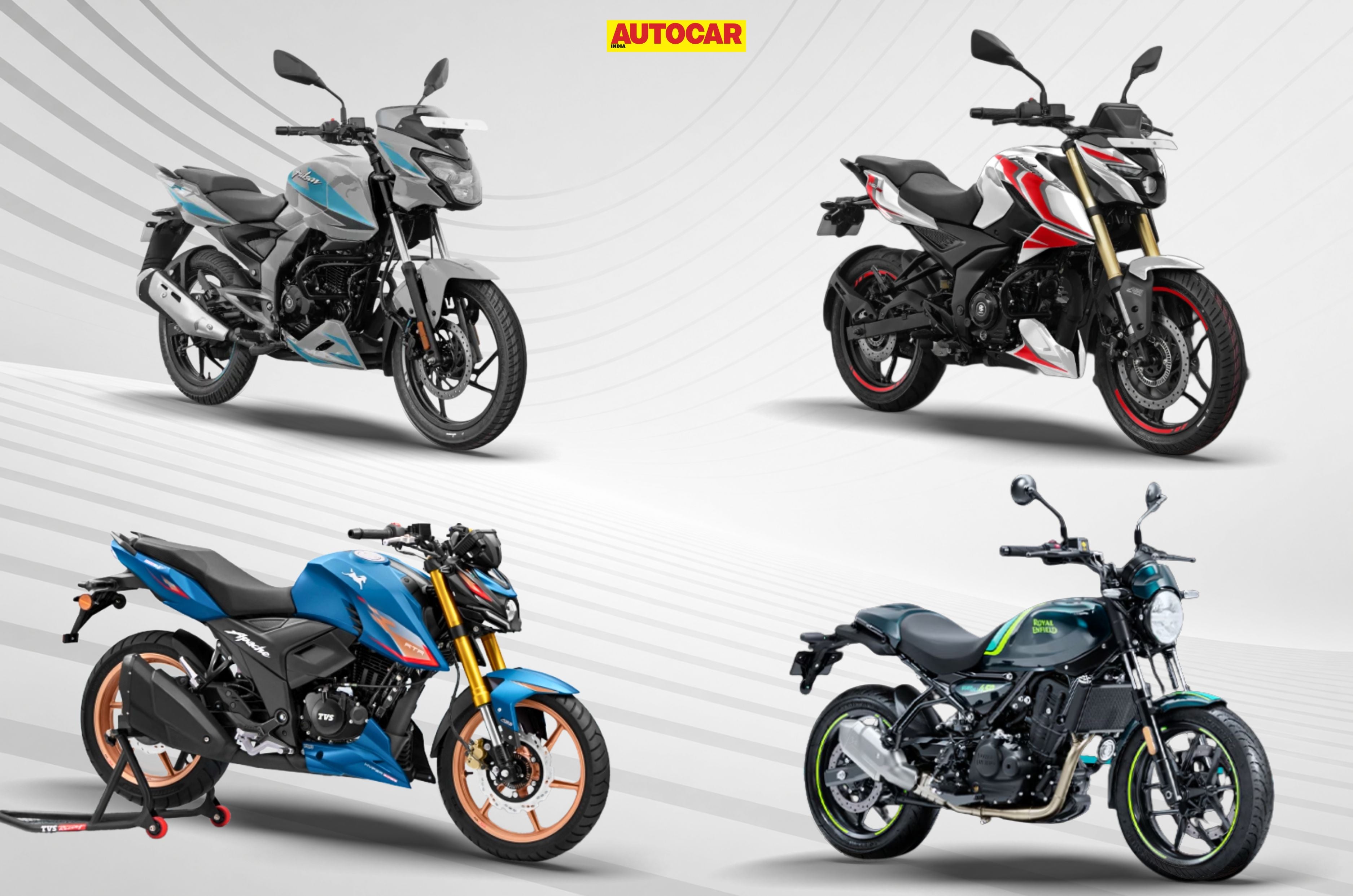
Navigation has been one of the major challenges for every aspiring motorcyclist. Unfortunately, major smartphone OS manufacturers don’t deem us profitable enough to solve it for us; but, our OEMs might have a smarter solution for that, by way of Google Maps mirroring. Today, you can buy a motorcycle for as low as Rs 1.04 lakh and still be able to navigate your way through your city, or wherever your heart takes you. Speaking of, let’s start with that very motorcycle.
All prices mentioned are ex-showroom, Delhi for the specific variant with Google Maps mirroring feature.
Bajaj Pulsar 125
Rs 1.04 lakh
Bajaj had comprehensively upgraded the classic Pulsar 125 with many changes and a whole slew of features, including Google Maps mirroring on the top-most Split Seat variant. Besides that, you get a 124.58cc engine with 12.1hp and 11.4Nm, a front disc brake, and three ride modes. A decent choice if you mostly commute in the city, but if you find yourself on the open roads on every chance you get, look at the bigger brother.
Bajaj Pulsar 150
Rs 1.29 lakh
Admittedly, Rs 25,000 isn’t a small step-up in this price range. However, besides retaining the same feature-set and silhouette, on the Pulsar 150 you get a larger 149.5cc engine with 14.1hp and 14.1Nm, which should make highway stints seem less stressful on you and the motorcycle; and saying that you have the Pulsar 150 has a better ring to it, but that’s a subjective opinion. If Bajaj isn’t your brand of choice, though, we have another Indian manufacturer known for pushing the envelope on features.
TVS Apache RTR 160 4V
Rs 1.41 lakh
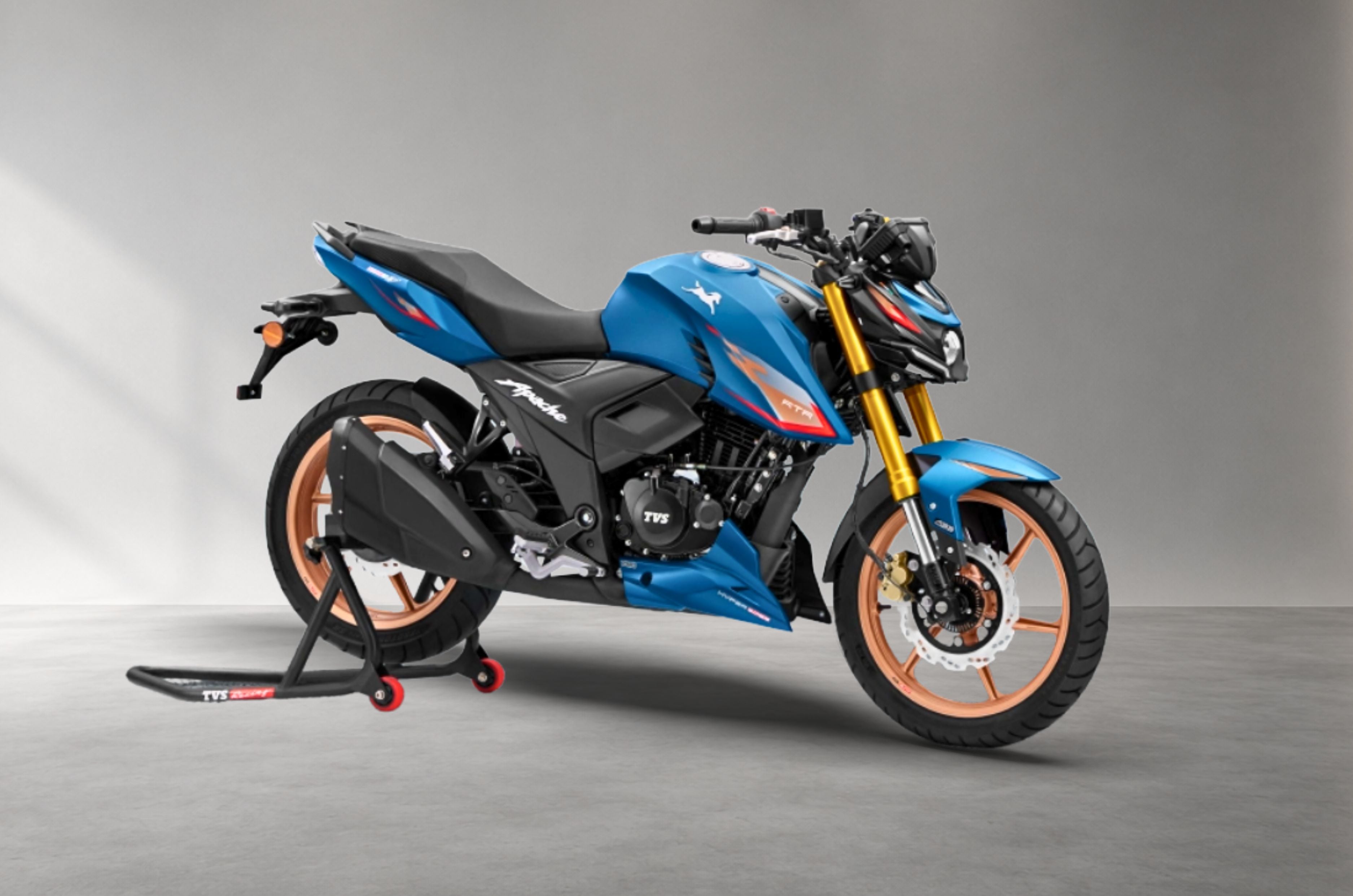
TVS has made the Apache series synonymous with features over the past few years, so of course it responded to Bajaj upgrading the classic Pulsars. Its best-selling Apache RTR 160 4V now also has a TFT display that supports Google Maps mirroring. TVS, in its usual fashion, turns things up a notch by offering even more power from its 159.7cc engine (17.55hp and 14.73Nm) and a whole lot more features like dual-channel ABS, traction control, a slipper clutch, more premium design, etc., That’s quite a bit more for Rs 12,000 over the Pulsar 150 but if you wonder whether Bajaj has a similar offering, fret not.
Bajaj Pulsar N160 SS
Rs 1.43 lakh
This is the first motorcycle on which Bajaj debuted the new 5-inch TFT screen with Google Maps mirroring. It’s since been extended to other Pulsars. Over the Pulsar 150, the N160 SS offers a bigger 164.9cc engine with 18.5hp and 14.4Nm (directly sparring with the RTR 160 4V), ride-by-wire, traction control, one extra ride mode, a slipper clutch, and a more modern design that may suit your preferences better. The N160 SS also offers dual-channel ABS as standard. If you feel like you’re done with the 150-160cc class, the next upgrade is closer than you think.
TVS Apache RTR 200 4V
Rs 1.50 lakh
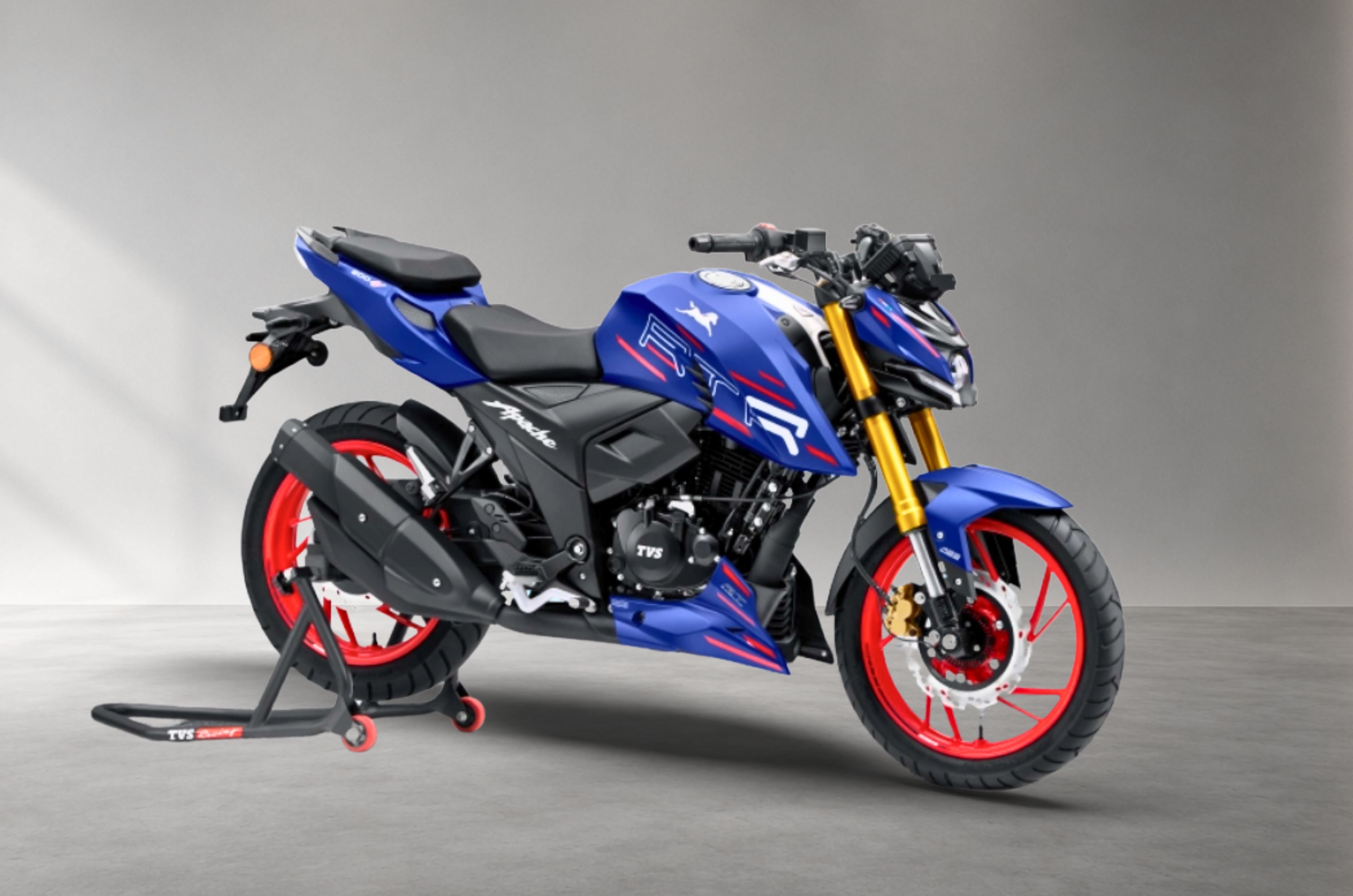
The Apache RTR 200 4V has now been relegated to getting the “et al” treatment from TVS so now it is almost too close to the RTR 160, one might say. However, it retains the bigger 197.75cc engine with close to 21hp and 17.25Nm. The only other feature that still remains exclusive to the 200 is the preload-adjustable USD fork that TVS brought back, with the recent update. Worth paying Rs 7,000 extra You decide, but if you are somehow not satisfied with the value on offer, the next motorcycle wears value-for-money as a badge of honour on its sleeve.
Bajaj Pulsar NS400Z
Rs 1.90 lakh
Bajaj’s downsized 349cc Pulsar NS400Z has gone down in price again, and the company gave it the same TFT unit as on the other Pulsars just two days ago; and we might see it in even more of their motorcycles soon. Anyway, the NS400Z gives you a steep jump in power with 40.6hp and 33Nm. It retains the feature-set from the N160 SS as-is with power and torque as its biggest differentiation from almost every other motorcycle on this list. If you’re in a phase of your life where you’re on long rides more often than commutes, you might prefer the next motorcycle more.
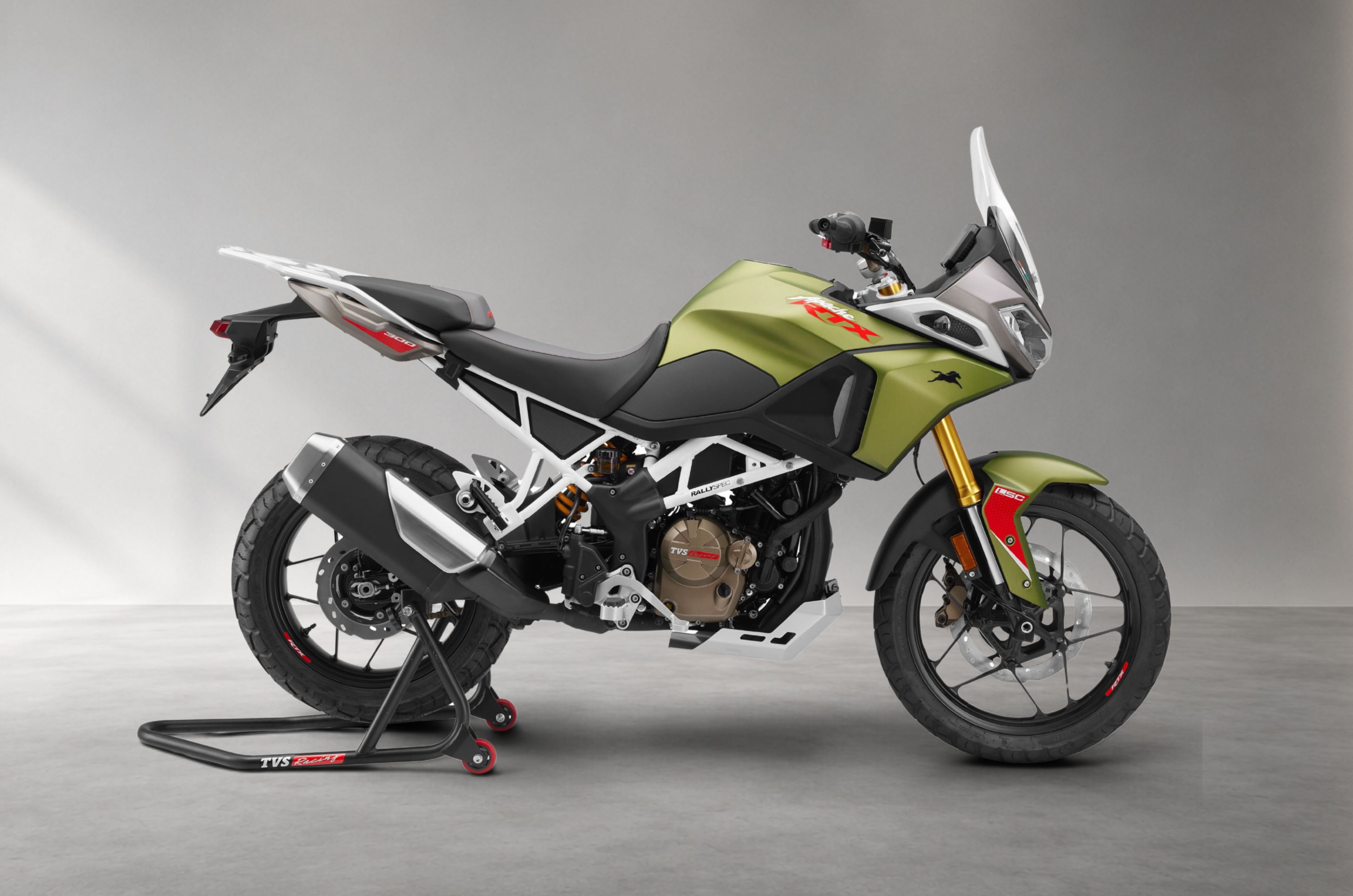
TVS Apache RTX 300
Rs 2.19 lakh
TVS’s first adventure tourer popularised the feature in question a year ago, offering it on the top and BTO variants. Compared to the NS400Z, you get a smaller 299.1cc engine with 36hp and 28.5Nm. However, the Apache RTX 300 is no slouch in features in any other way, matching the NS400Z on every feature on offer. If you’re an experienced motorcyclist who’d like to tune your ride more minutely, stepping up to the BTO variant at Rs 2.39 lakh might be worth it, considering it gives your adjustable suspension on both ends. If none of these sound exciting enough for you, maybe see if the last one does the trick.
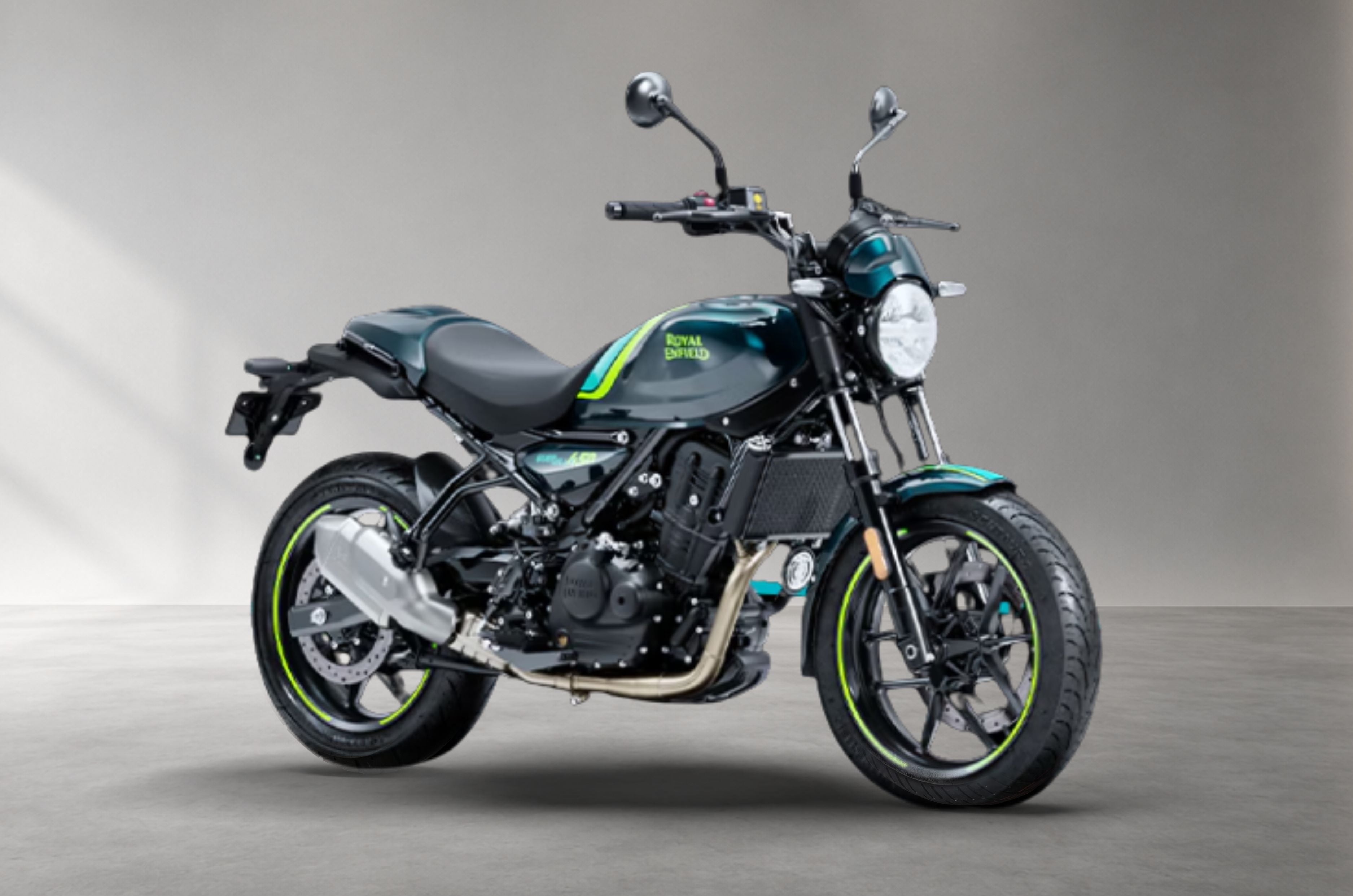
Royal Enfield Guerrilla 450
Rs 2.51 lakh
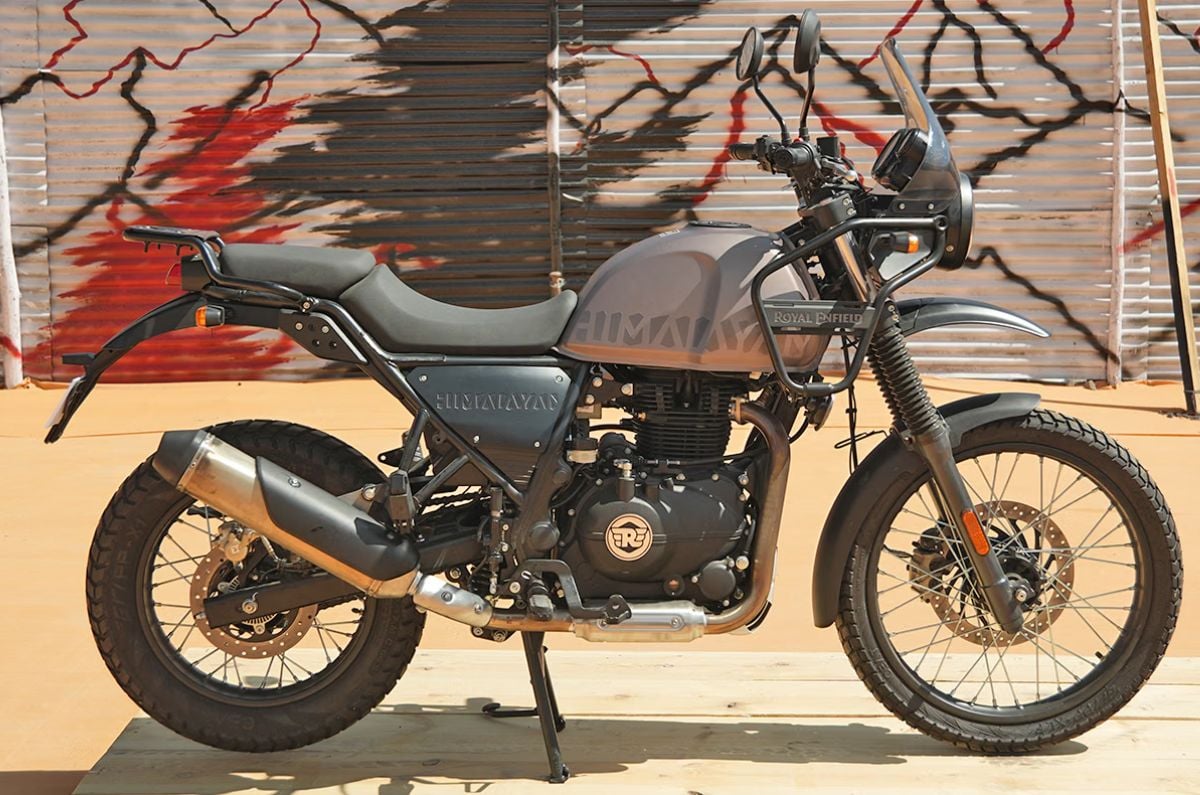
Royal Enfield introduced a new 4-inch TFT display with the Himalayan 450 that could project Google Maps powered navigation onto it, making the Chennai-UK based manufacturer technically the first to have figured this solution out. If you didn’t know this already, pressing and holding the M button on your Guerrilla 450 (and the Himalayan and Bear 650) will change the dials to the ‘digital’ look. After that, connecting your smartphone to the Royal Enfield app and starting navigation will make the whole map show on your display.
Getting back to the Guerrilla 450 itself, it’s Royal Enfield’s take on a sport-naked. Similar to most motorcycles on this list, its primary purpose isn’t touring, but when has that ever stopped the determined? The Guerrilla also has a 450cc engine that doles out 40.02hp and 40Nm, making it the most powerful motorcycle on this list. It goes toe-to-toe with the other motorcycles in terms of the features on offer, although most of the additional price is for its extra power (and the 40 percent GST of course).
That concludes the list of motorcycles under Rs 3 lakh with Google Maps mirroring, for now. We expect Bajaj to extend the same TFT display to even more of their portfolio in the near future. TVS might respond to that in their own, unique way so this list is all but guaranteed to grow even more in the near future. It’s one more significant hurdle removed for a motorcyclist, and every meaningful step counts.
Only recently, I made the sweeping and somewhat heavy-handed statement that EVs have taken the excitement out of speed. That once you’ve done one ballistic acceleration run in an EV, you’ve done them all, and without a roaring engine, vibrations pulsating through the wheel and gearshifts jolting you in the small of your back, it all feels a bit sanitised. Well, as it turns out, all an EV needs to solve this conundrum is… even more power.
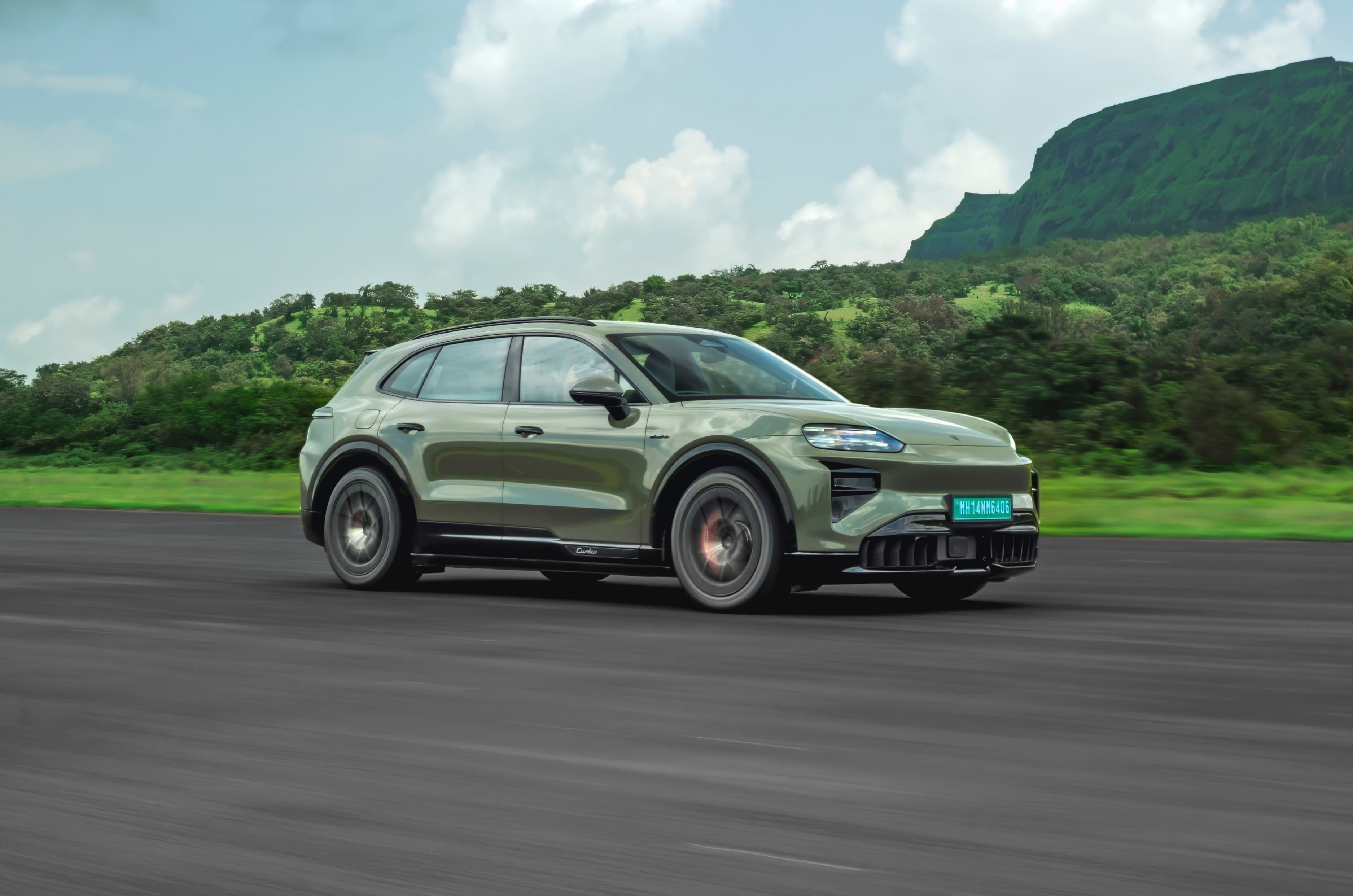
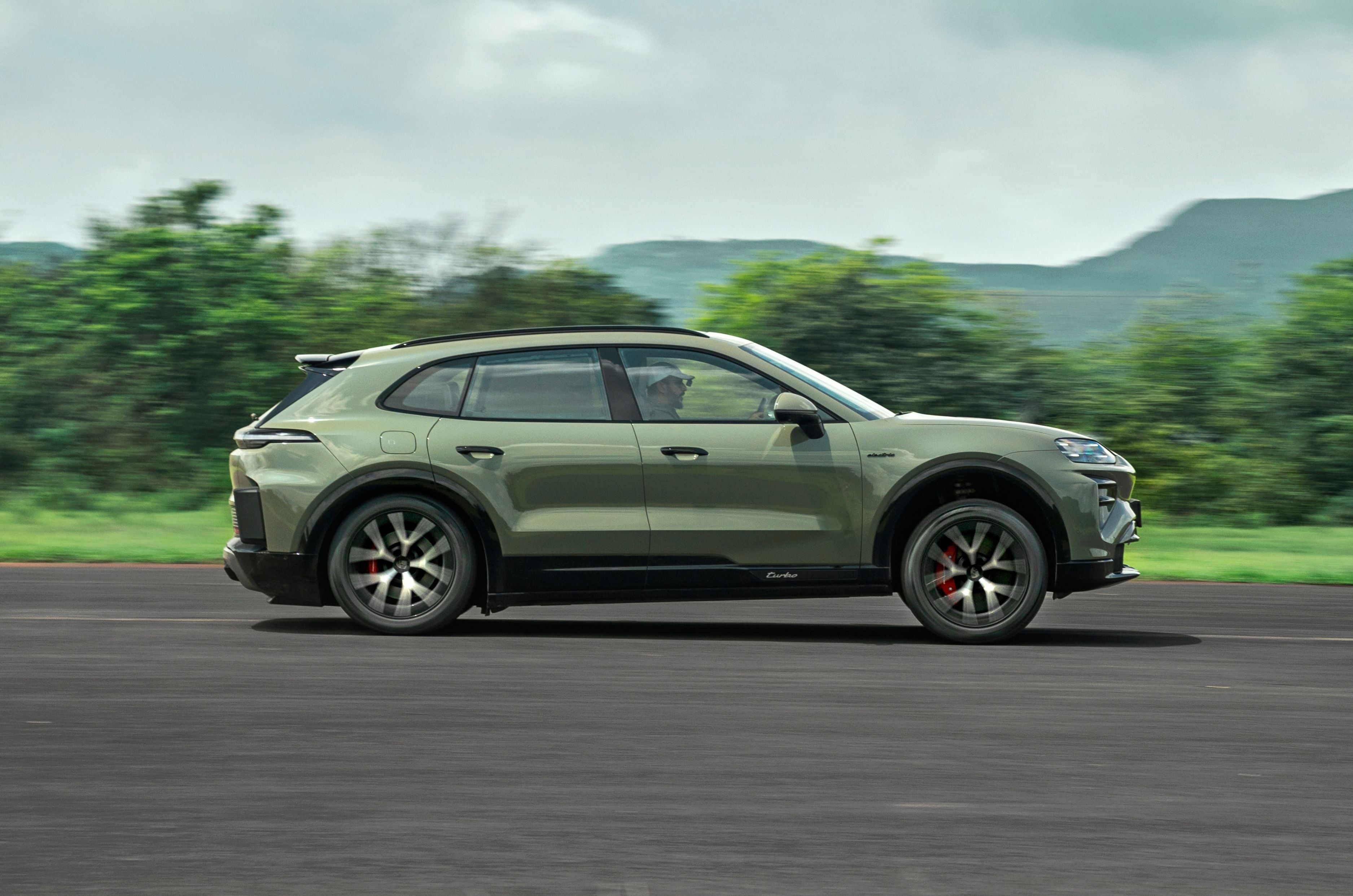
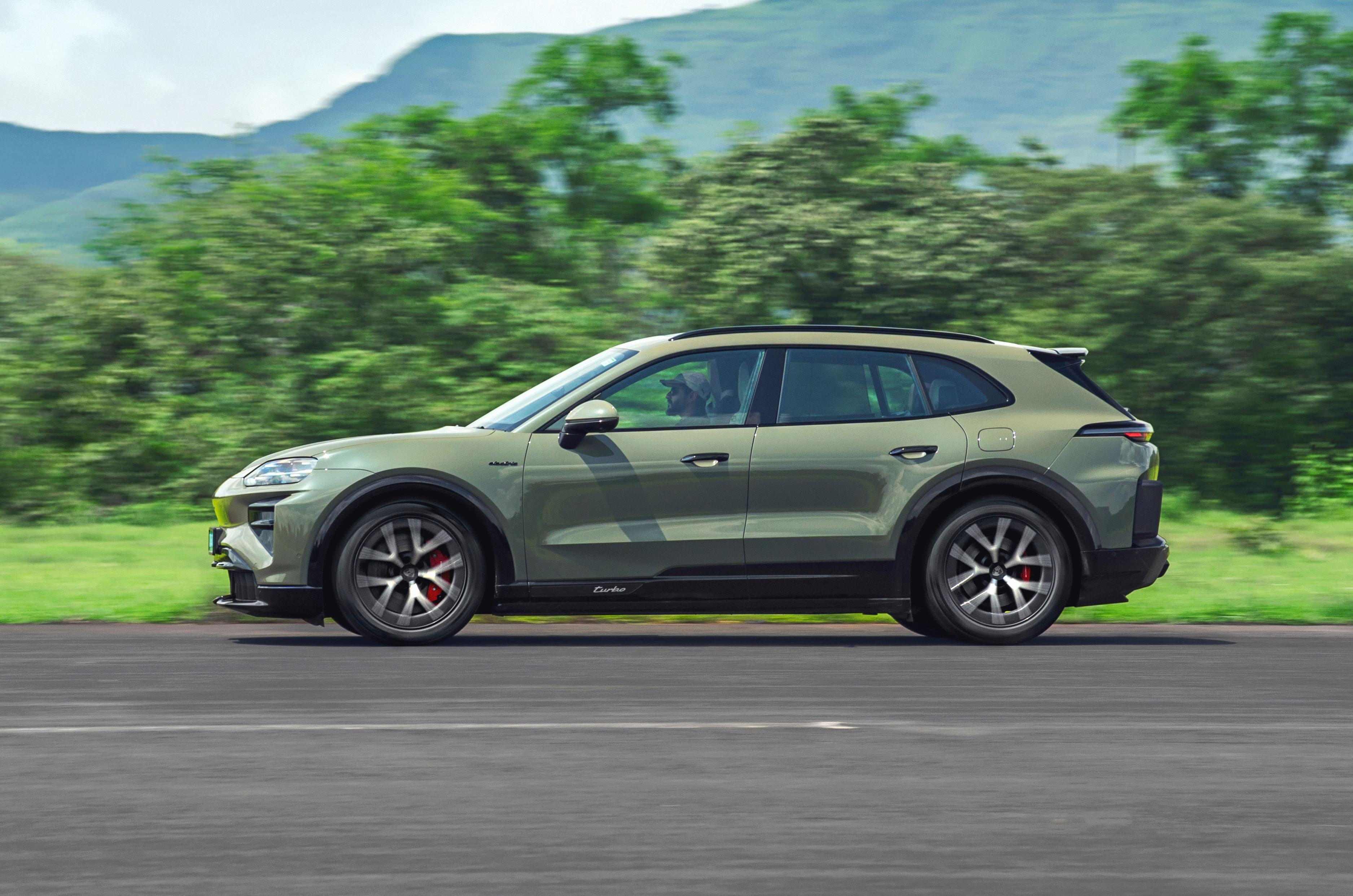
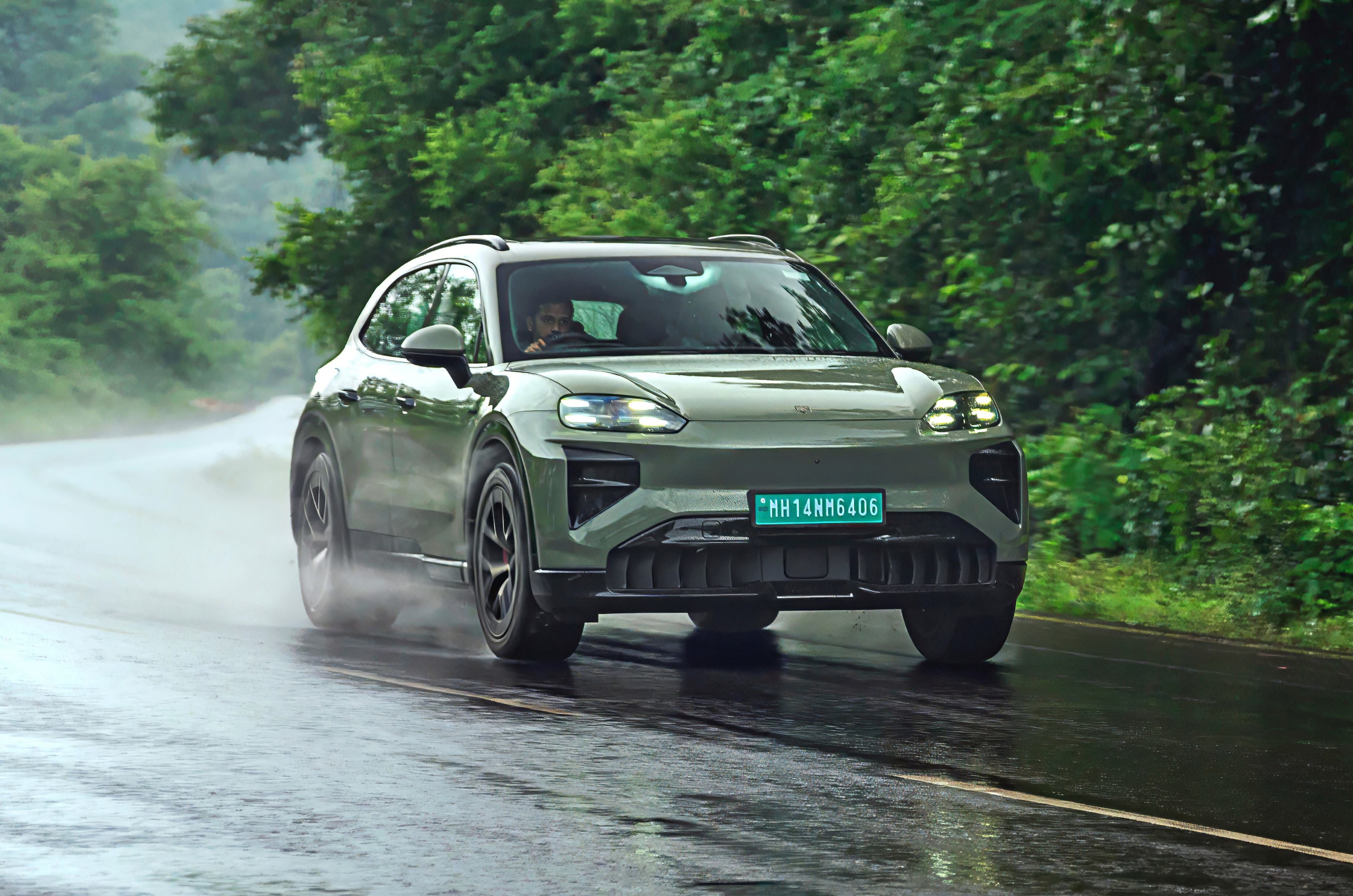
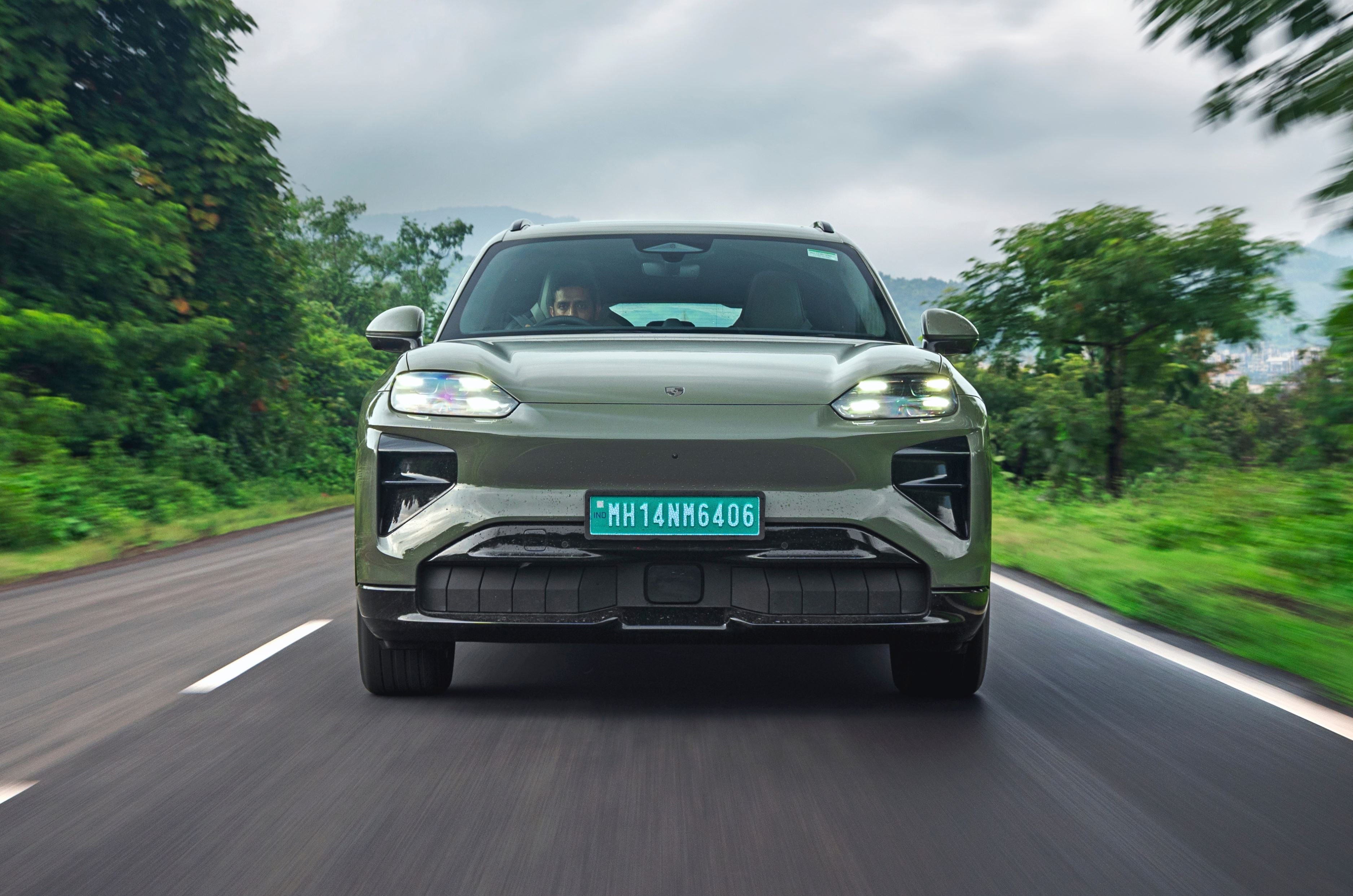
Remember when 1,000 horsepower was the sort of million-dollar pipe dream that we thought we’d only ever see on bedroom posters or YouTube videos? Well, it’s not that insane a proposition anymore, and in fact, three cars on sale in India have crossed the fabled 1,000hp mark. Two are ultra-exotic supercars that cost north of Rs 10 crore – the 1,015hp Lamborghini Revuelto and 1,050hp Ferrari Testarossa. And the third is this, the 1,156hp Porsche Cayenne Turbo Electric – a full Maruti Brezza more powerful than those Italian supercars – and yours for a fraction of the price, at Rs 2.28 crore.
That’s not a lot of money for what is the most powerful car ever to go on sale in India, and that raises a somewhat existential question. Have they gone too far?
2026 Porsche Cayenne Turbo Performance – 10/10
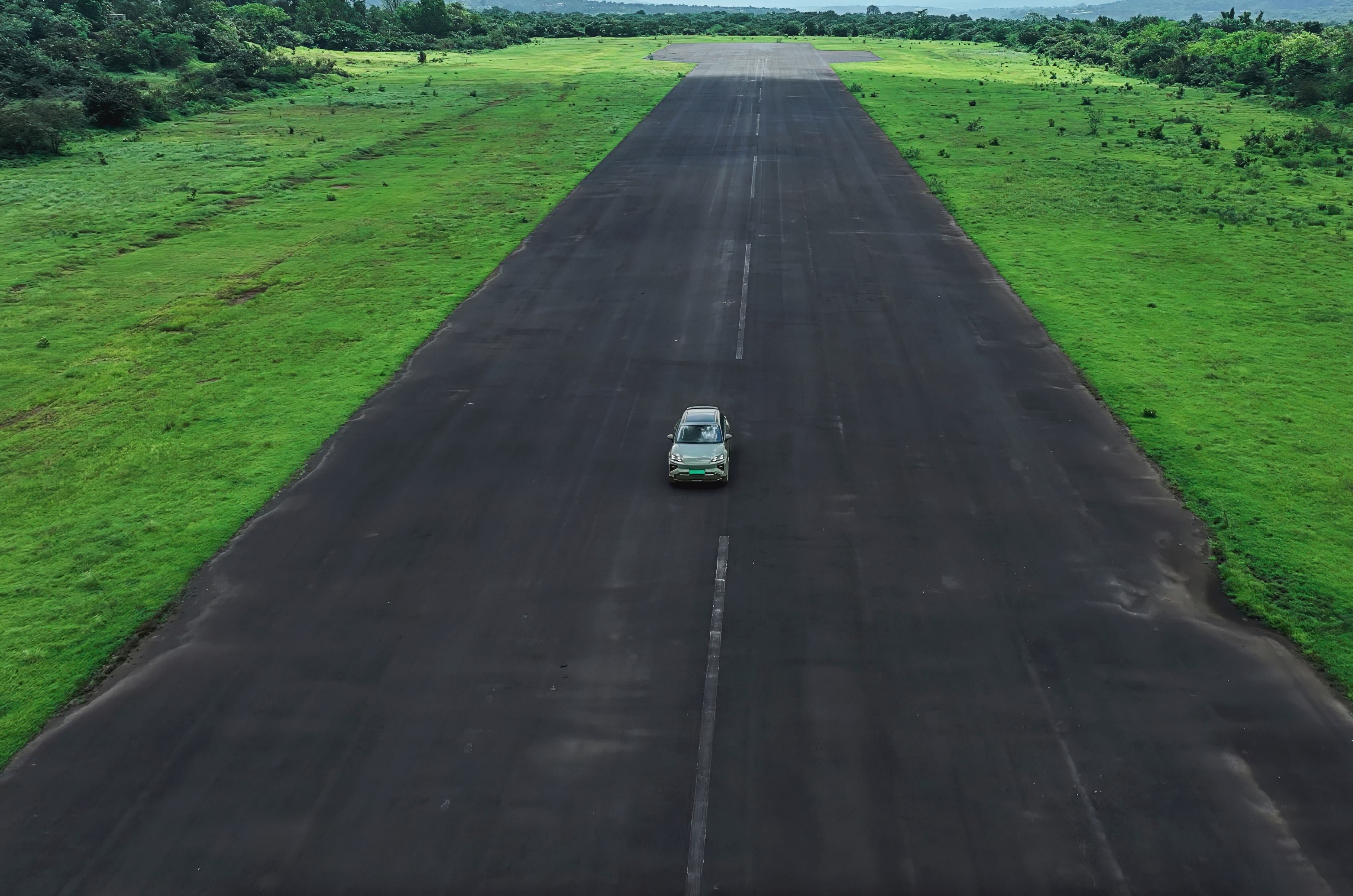
I have the Aamby Valley airstrip rolled out like a red carpet in front of me, perhaps the only place other than a race track where unlocking this hyper-SUV’s full accelerative potential is possible, and I’m about to let it rip. The process is familiar and simple enough. Twist the mode dial to Sport Plus, hold the brake with your left foot and mash the accelerator until it says ‘Launch Control Activated’. Up until this point, it’s nowhere near as dramatic as something with a four-digit power output has any right to be. The electronic sound it makes to signify all the power swelling up is gentle, and it doesn’t even give you any feedback through the pedals. Things are disconcertingly calm for what’s about to happen. I let go of the brake.
The nose lurches upwards and points to the sky like a fighter jet leaving an aircraft carrier, as the huge SUV squats onto its rear axle. It’s in this gut-twisting moment that I realise Porsche India hasn’t specified the Active Ride Control option on this car, which I’m told suppresses this issue by force-tilting the car forward, Power deployment is brutally efficient initially, with barely a chirp from the tyres and not a single of those 1,500 newton metres wasted off the line. But then I notice the nose start to go light and weave from left to right. I steady the wheel as the speed continues to build. With no engine weighing down the front axle and so much rearward lean, there is a frightening lack of traction from the front wheels at speed.
Never before has launching a car attacked so many sections of my body. It’s usually just the abdomen; a really fast car will wind you. Right now, my neck is straining as the head restraint is too far back, my cheeks are starting to ache like I’ve been pretending to find someone’s jokes funny for an hour, there’s a weird pressure coursing through my arms and legs, and my eyes are starting to water as they dart around in their sockets, not knowing what to focus on. Oh, and I’ve been winded well and good.
I’ve launched dozens of really, really fast cars down this very runway, but I don’t recall the scenery ever passing by so quickly. I can’t get a frame of reference so I glance down at the speedo. Two hundred and a blurry something; that’s way more than I expected to see and it’s climbing too fast. This doesn’t compute; it’s usually at this speed that I think about braking. But we aren’t even at the halfway mark yet; how? Brave face on, I keep my foot in. 230, 250, 27- wait, the brochure said it maxes out at 260. It lied. Then suddenly the braking point flashes by and I jump onto the wide pedal. All those forces reverse their polarity as the big Cayenne squirms down to a halt, still well clear of the end of the runway. Let’s do it again!
2026 Porsche Cayenne Turbo: Real-world acceleration test
Speed
Time (in seconds)
20kph
0.45
40kph
0.94
60kph
1.45
80kph
1.96
100kph
2.52
120kph
3.18
140kph
4.01
160kph
4.96
180kph
6.12
200kph
7.47
220kph
9.06
240kph
10.92
260kph
13.20
And it will do it again, and again, and again. Because if there’s one thing we’ve learnt about Porsches over the years, it’s that they’re engineered to perform repeatedly and consistently. The dual-motor Turbo has been certified to deliver a 2.5sec 0-100kph time; our VBOX confirmed the same several times over. But eventually, as the battery SOC dipped below 75 percent, the times started to go up, a tenth of a second at a time.
The biggest victim of the repeated runs, however, were the brakes – even for mammoth 420mm discs, arresting 2.7 tonnes is no joke, and soon their squeal was louder than their bite. I don’t usually advocate for carbon ceramic brakes on SUVs, but perhaps this is the one time Porsche India should have shelled out for the Rs 13.5 lakh option.
2026 Porsche Cayenne Turbo: Real-world braking test
80-0kph distance
23.47 metres
80-0kph time
2.08 seconds
2026 Porsche Cayenne Turbo ride comfort and handling – 8/10
However, by the twenty-seventh-or-so sprint down the runway, the car seldom missing a beat and the excitement never waning, my body decided it had taken enough of a beating. From longitudinal g-forces, at least; the lateral attack was yet to come. So we waved goodbye to the gentleman in the tower, who’s probably used to seeing much slower-moving traffic on the runway, and made our way back to reality via the twisting roads leading down to Lonavala.
It’s been a few years since I’ve come to our old stomping ground of Tiger Point and its surrounding twisties, and I can’t think of a nicer car to reacquaint myself with my favourite corners in. Muscle memory kicks in as I enter the first, fast right-hander. I lean in instinctively, but then the car starts to lean too; unexpected. It does the same on the next left, and right, and once again I start to wish they specified that Active Ride Control option. Porsche engineers are usually among the best at taming big mass, but perhaps they’ve finally met their match.
On its standard air springs and adaptive dampers, the Cayenne Turbo displays a disappointing amount of body roll, exacerbated only by the enthusiasm from the motors that begging you to push it harder. The steering too is encouraging, what with the small-diameter wheel and the fact it’s as sharp and direct as you expect. Here, too, I will say that rear-axle steering would have added a welcome extra degree of agility, but once again, Porsche India hasn’t ticked the option. It can still link together a series of corners with greater alacrity than most other big SUVs, but for the first time in recent memory, I’m not feeling that distinct Porsche magic at my fingertips.
Through the narrow and bustling streets of Lonavala, I’m starting to explore the other end of this SUV’s capability spectrum. And that’s just the beauty of EVs, isn’t it? One minute you’re clocking 0-200kph in 7.4 seconds, the next you’re ambling silently through a school zone. Like the best of them, it’s refined, smooth and incredibly easy to modulate, and you could be forgiven for forgetting there’s 857hp at your behest (the full 1,156 only comes with launch control). One spec deficiency I’m glad for right now, however, is the choice of more sensible 21-inch wheels rather than the optional 22s. They don’t look as nice, but they’re soaking up the harsh hits from the rutted road beneath me.
2026 Porsche Cayenne Turbo range, battery and charging – 7/10
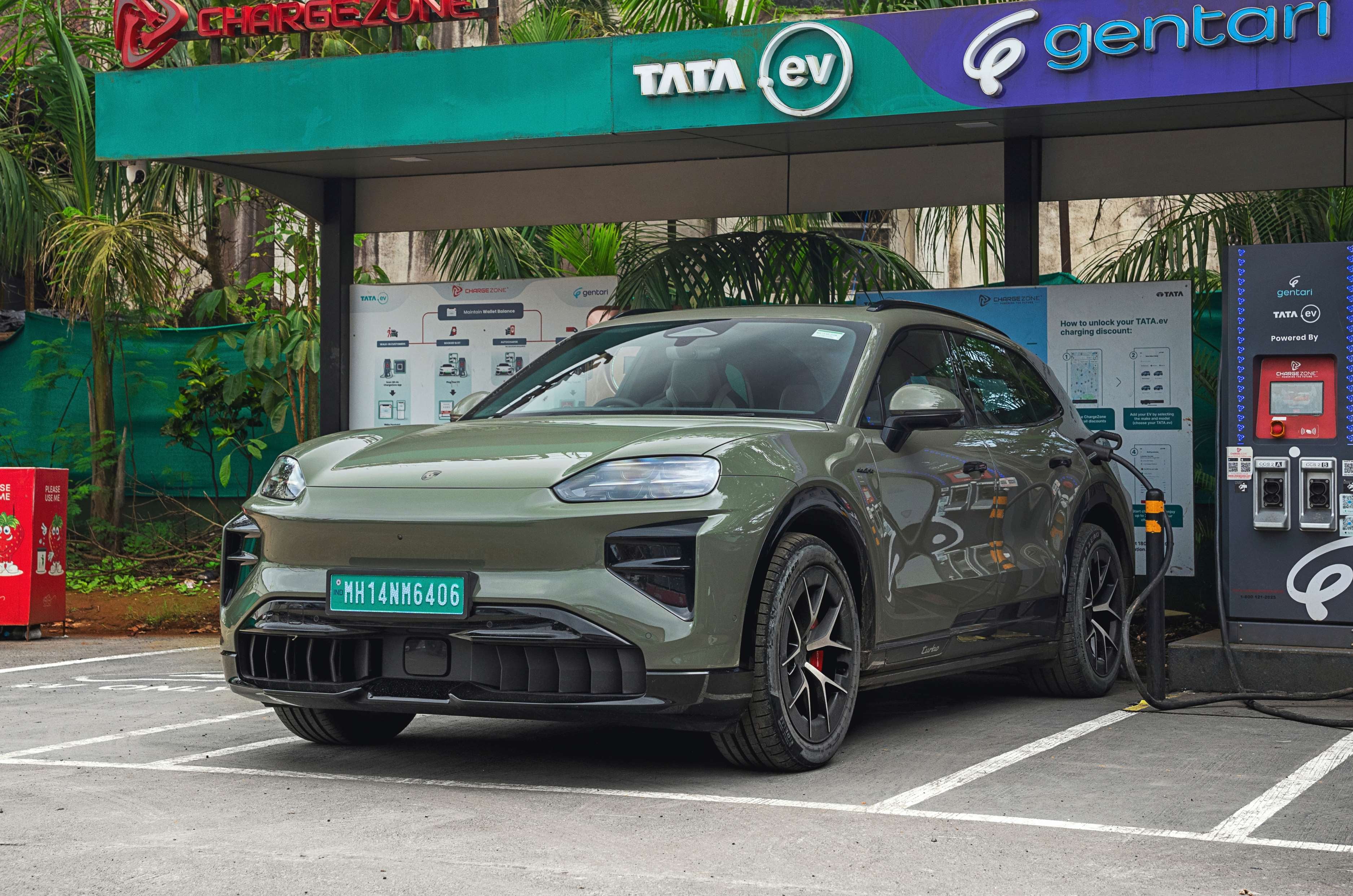
Between racing repeatedly down the runway and then trying to extract that Porsche spice in my favourite corners, I’ve reached Lonavala city with around 20 percent left in the 113kWh tank- er, pack? The Cayenne Turbo is rated at 623 kilometres on the WLTP cycle, so the ‘real’ real-world range should be far more palatable than this; to obliterate such a large chunk in such a short time requires the prolonged buffoonery I just subjected it to. Probably best to find a place to plug in soon, and grab some lunch while I’m at it. On a mythical 400kW plug, the Cayenne can be charged from 10-80 percent in just 16 minutes, but on a rainy Wednesday at a hill station, the best we can do is 60kW, so it’ll take much longer.
Today is a study in why India is far from ready for full EV adoption. Apart from ICE cars parked in charging spaces, malfunctioning plugs, unfathomable apps and an absent mobile network, we were also waylaid by two power cuts.
2026 Porsche Cayenne Turbo features and safety – 9/10
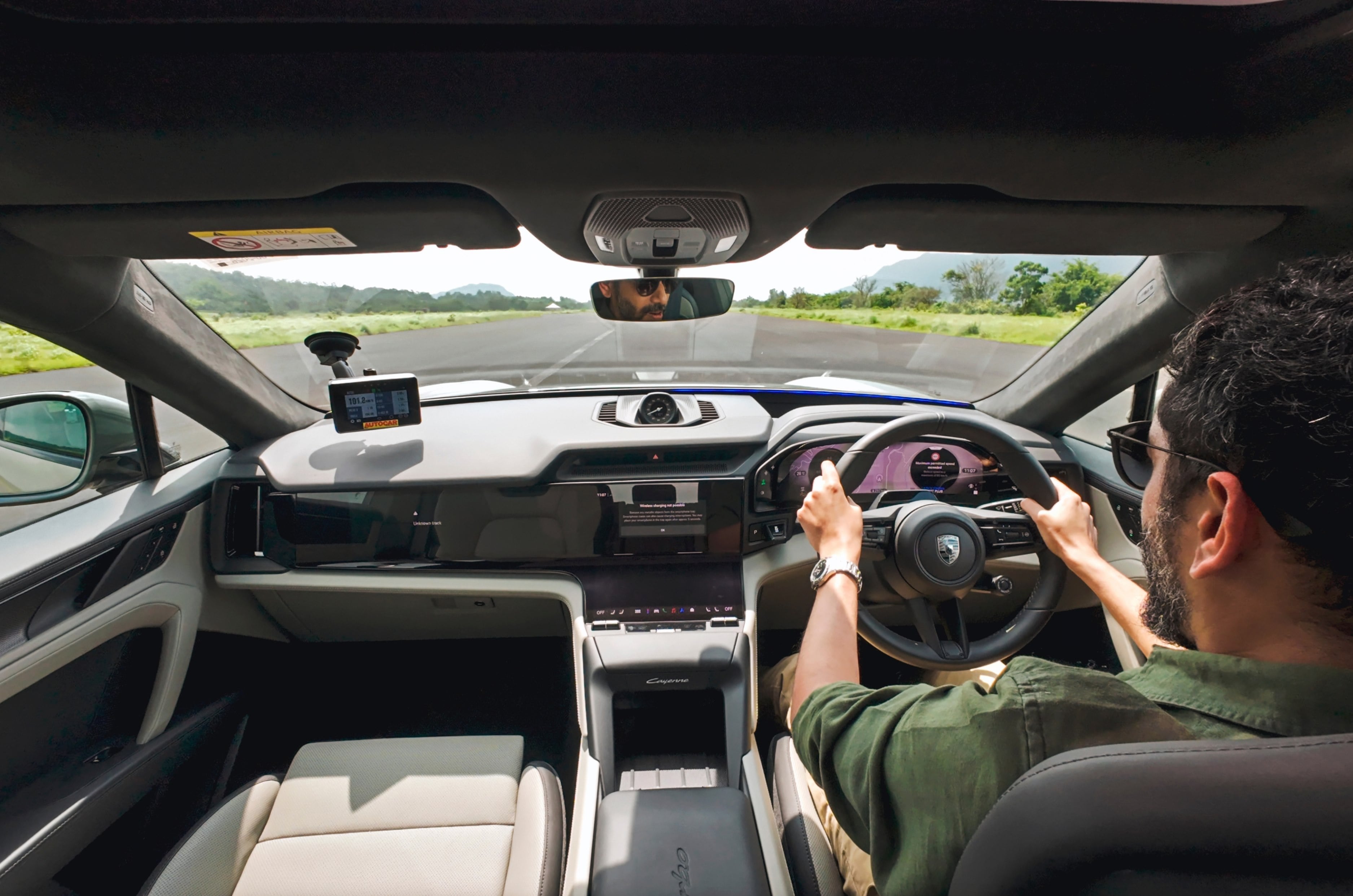
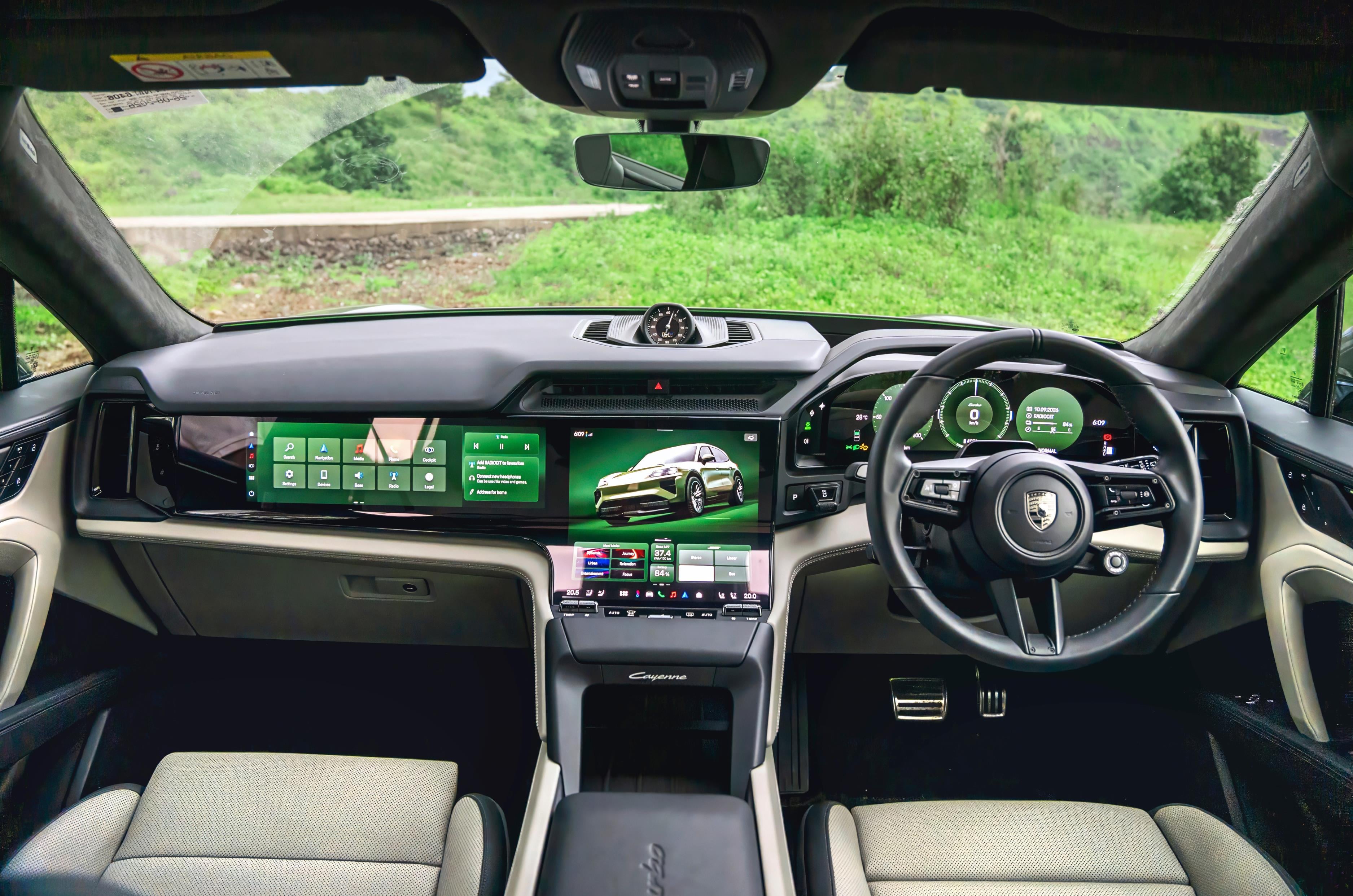
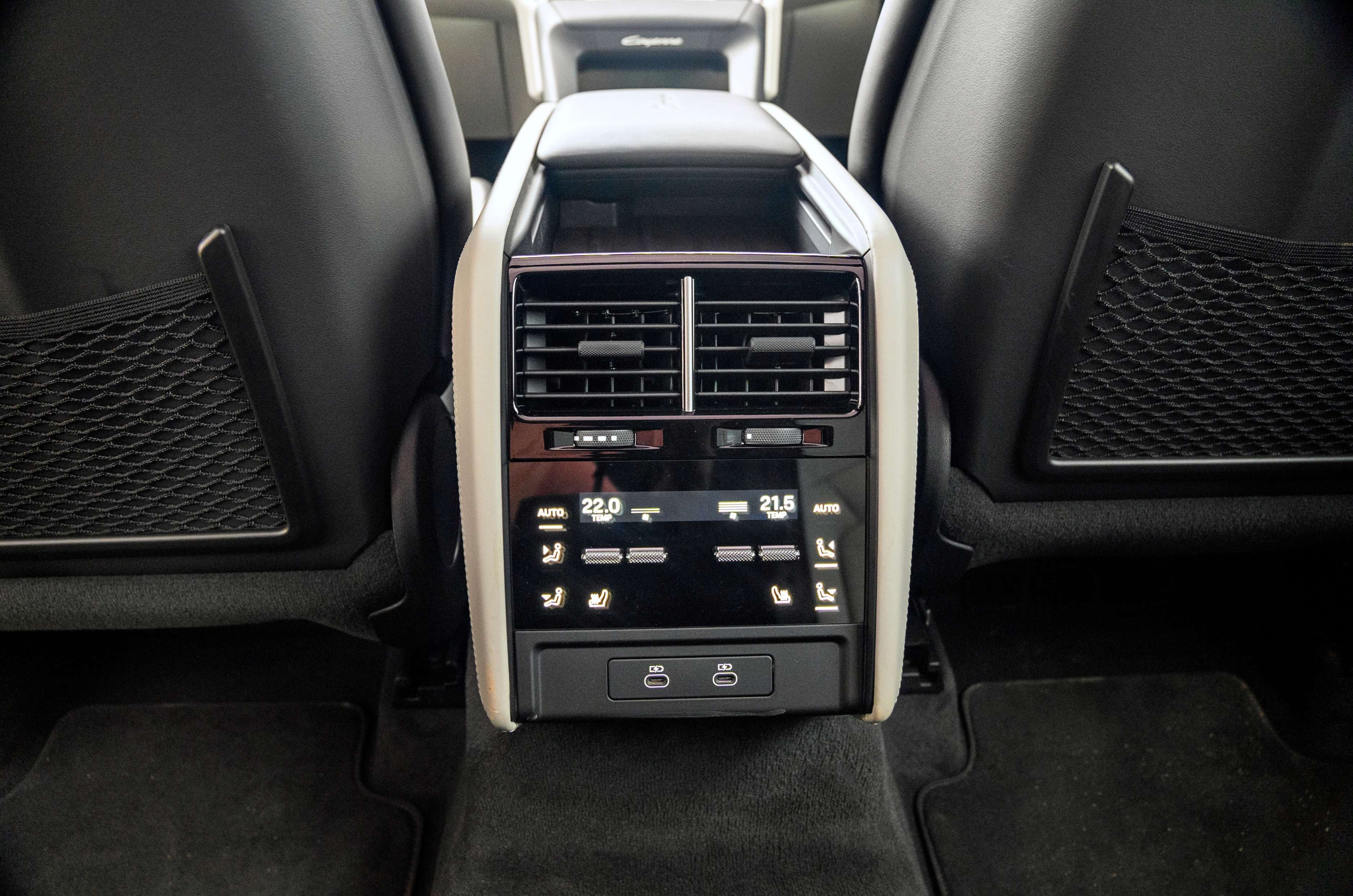
On the upside, all this gave me a chance to have a play around with the Cayenne’s new and tech-heavy interior. The passenger screen is a Rs 2 lakh option I would not tick, but the centrepiece is the cascading curved touchscreen. It looks gimmicky but actually functions really well, the bottom half of the ‘bend’ housing the major functions, while the more upright top functioning as the display. The AC vents are adjusted from the touchscreen sadly, but otherwise there are plenty of physical controls.
There’s no shortage of features here and you can add even more from the options list. For instance, the panoramic sunroof is standard, but there’s no sunshade. Instead, you can option an electrochromic function that masks out the glass in sections.
2026 Porsche Cayenne Turbo interior space and comfort – 8/10
Functionality comes first in a Porsche, and you can see that in the compact but tactile steering wheel, the clear dial-style driver’s display and the sporty ergonomics. In fact, despite all the tech, this feels instantly like a Porsche from behind the wheel.
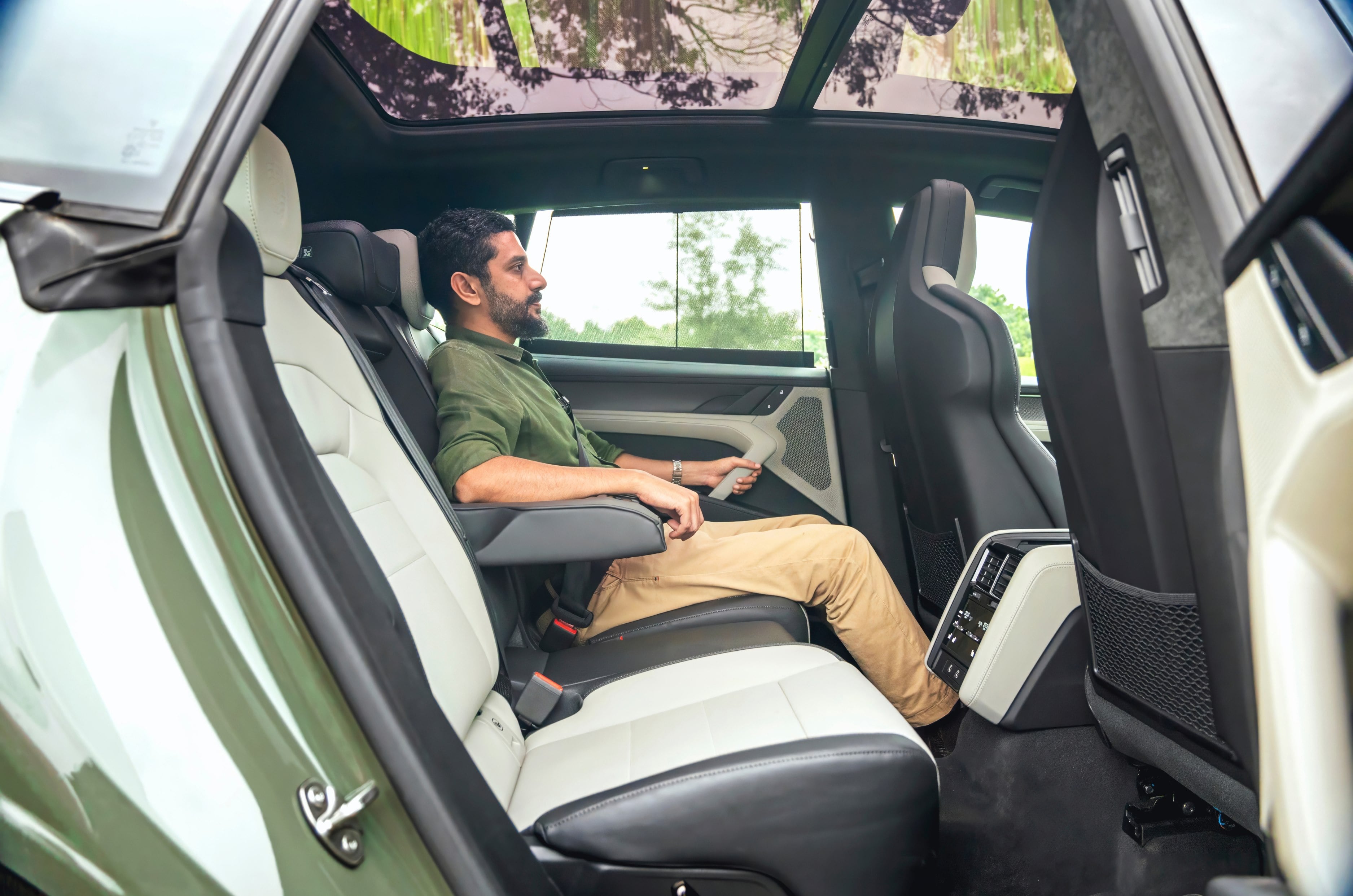
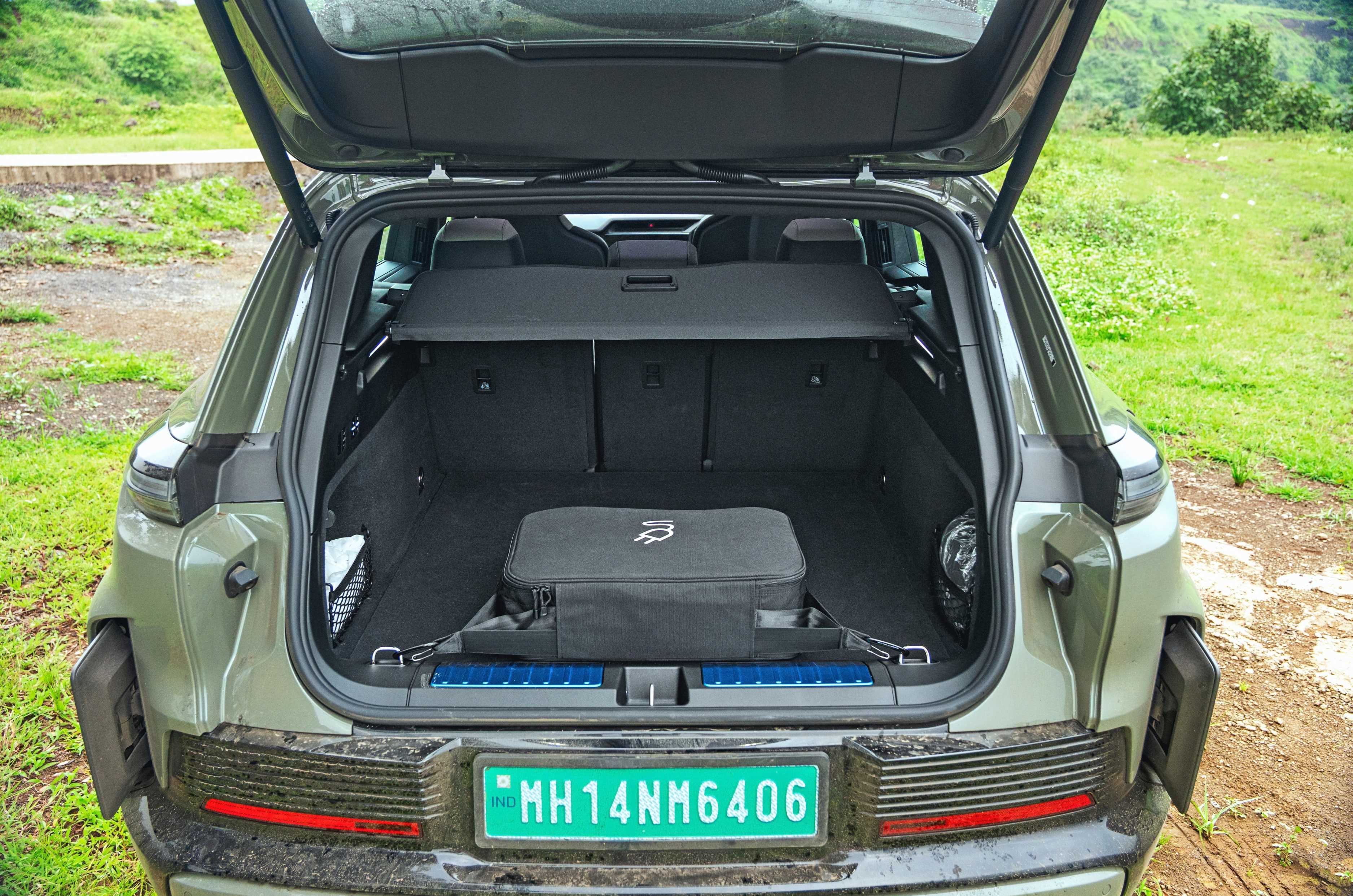
This is easily the most spacious Porsche yet, though, with the huge 3,023mm wheelbase liberating massive seating room, as well as a huge 747-litre boot and 90-litre frunk. It’s well equipped, it’s luxurious, it’s sporty; it’s almost hard to fault here.
2026 Porsche Cayenne Turbo exterior design and engineering – 7/10
I’m less convinced by the exterior, though. It certainly has size on its side; this is the largest Porsche ever, a fact exaggerated by its slim headlamps and tail-lamps. Even the gigantic 21-inch wheels look a size down against the mass of bodywork. They’ve worked around it with plenty of contrast black details, and there are lots of cool details, like the active aero vanes up front and the flaps that extend from the rear bumper to reduce drag at speed. They’ve even got the GPS co-ordinates of Porsche’s wind tunnel embossed into them.
However, it’s also this size that works against it, as the proportions make it look bulky and a bit ungainly. This might be fine most big luxury SUVs, but in a Porsche, there’s a certain visual agility that’s missing.
2026 Porsche Cayenne Turbo price and verdict – 9/10
Is it wrong that for a car with such eye-watering headline figures, it’s the slow cruise back home that I appreciate the most? Having been pulverised by the acceleration in the morning, I’m happy to let the ventilated 18-way seats soothe my back, as my favourite tunes stream through 14 Bose speakers and adaptive cruise control keeps an Expressway pace.
Because it’s an EV, you can switch quite easily between its two personalities, and because it’s a Porsche, it does both reliably as many times as you need it to. Some of that special sauce has been lost along the way, and the smaller Macan Electric does a much better job in this regard, but I’d argue the Cayenne has an even greater breadth of ability. It’s easy to launch India’s most powerful car to stratospheric speeds, but it’s even easier to forget that you can, and perhaps that’s its biggest triumph
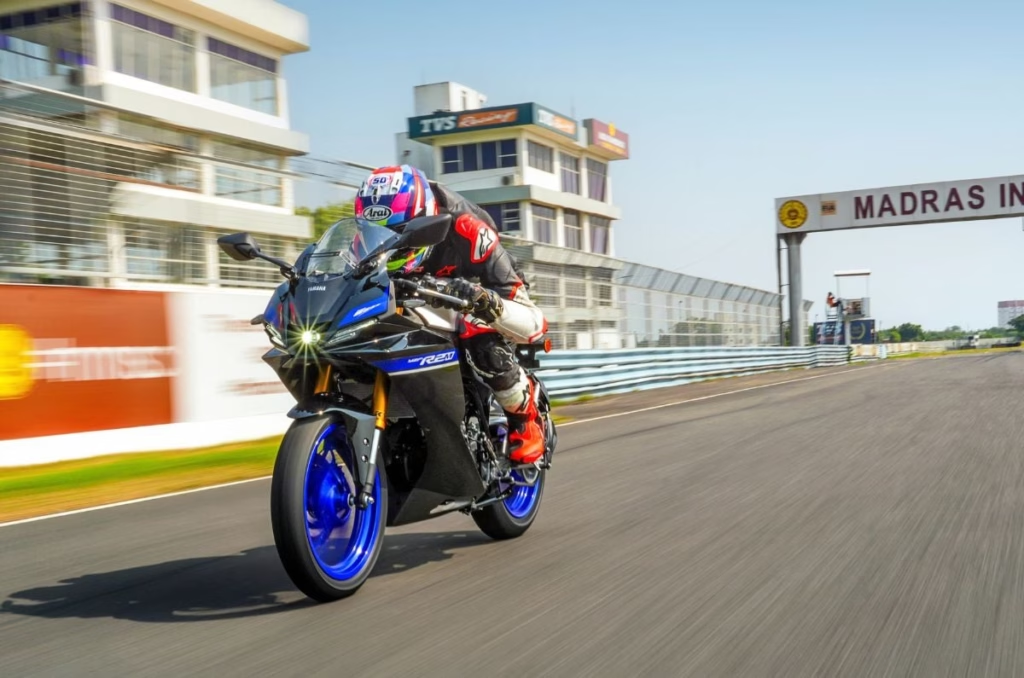
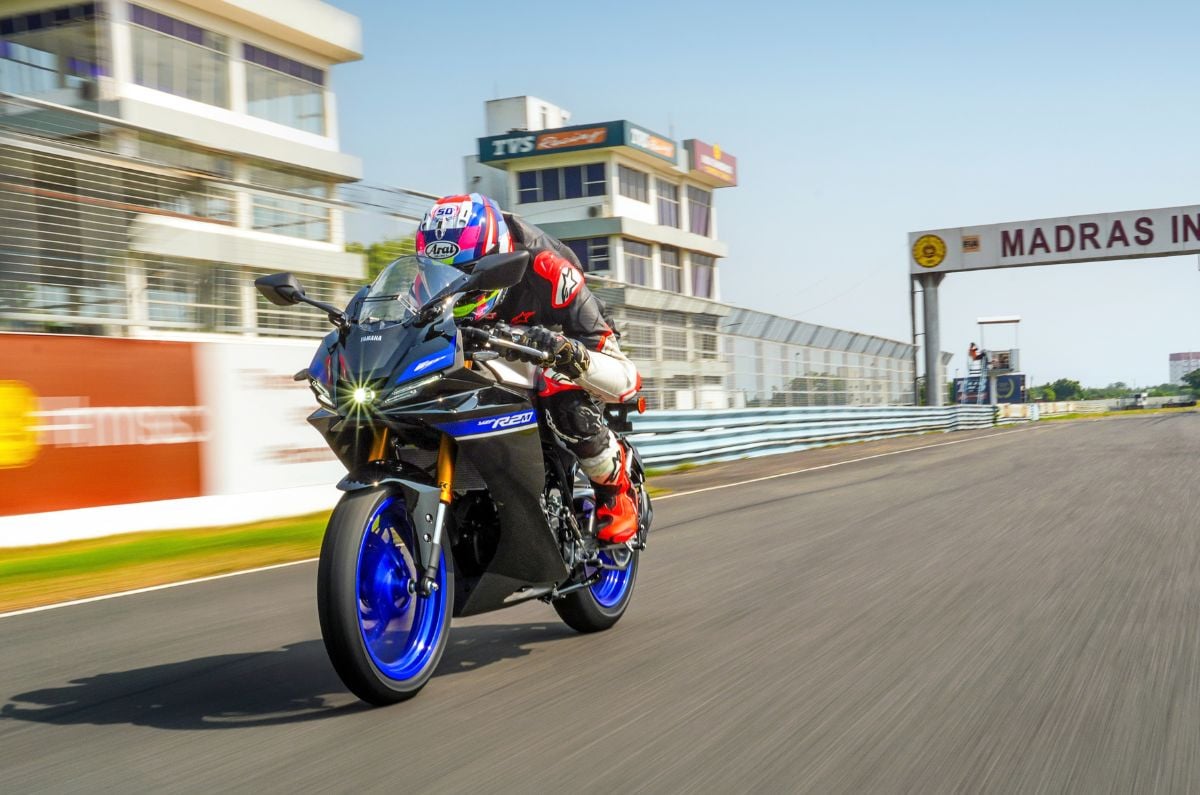
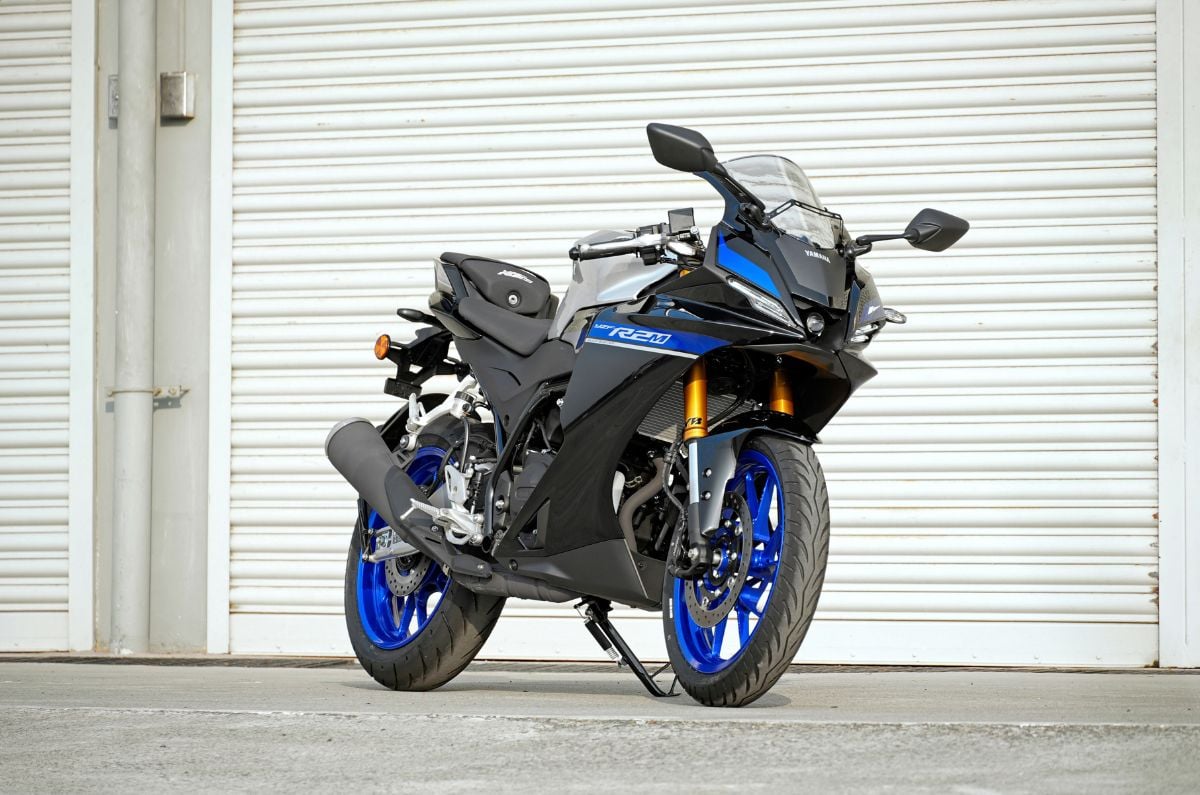
The internet has expressed considerable concern in the month following the launch of the new R2, that it has lost some of the key elements that made the R15 such a standout. While I agree that the lack of the deltabox frame and the removal of the variable valve timing system, don’t make for great viewing on a spec sheet, they also don’t dictate what makes for a great riding experience. Yamaha recently gave us a brief chance to experience the R2 on the Madras International Circuit and, I’m happy to confirm that that authentic Yamaha R experience is still very much intact.
Yamaha R2 Riding position and Seat height – 8/10
Slightly more accessible than the R15
Specifications
Values
Seat height
810 mm
Adjustable seat height
No
Wheelbase
1340 mm
Ground Clearance
170 mm
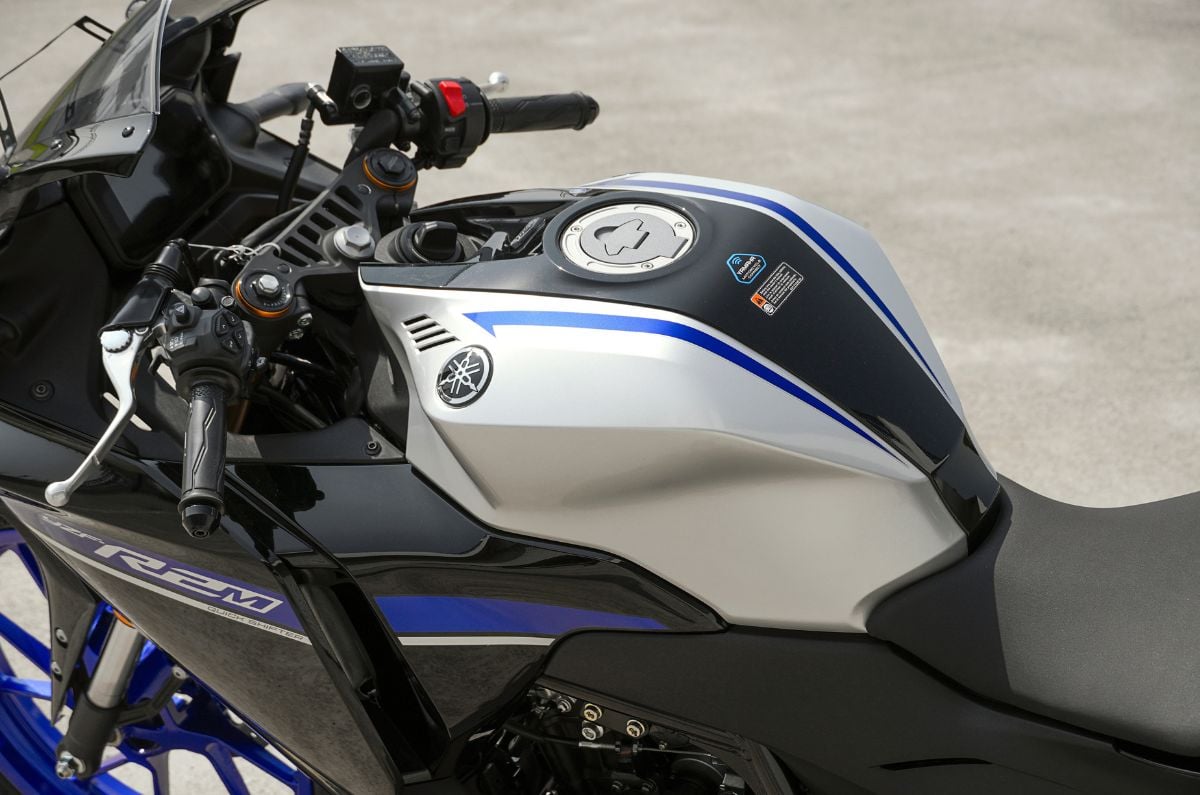
The familiar Yamaha feeling set in from the moment we swung a leg over the bike. The ergos have been tweaked very slightly, but the overall riding position is still very similar to the R15. The biggest difference for me was that the tank looks and feels bigger. Shorter riders will be pleased that the seat height has been reduced from 815mm to 810mm, but tall riders won’t feel horribly hemmed in either. I’m 6’1” and while I certainly won’t call it spacious, there was just enough room for me to get into a full race crouch.
In the pitlane, the engine felt very similar with a soft response at the accelerator at low revs. The bike now has ride-by-wire which has unlocked three riding modes as well as a custom mode where accelerator response and TC level (3 levels) can be set. Given that we had just 15 minutes of track time, I left it in Sport mode and had no issues – throttle response was smooth and predictable and TC didn’t get intrusive in the short time we had.
Yamaha R2 Engine and Performance – 9/10
Surprisingly refined high-end!
Specifications
Values
Engine Displacement
204 cc
Cooling
Liquid Cooled
Engine Type
1 cylinder
Max Engine Power
26.5 PS @ 10000 rpm
Max Engine Torque
19.1 Nm @ 8000 rpm
Number of Gears
6
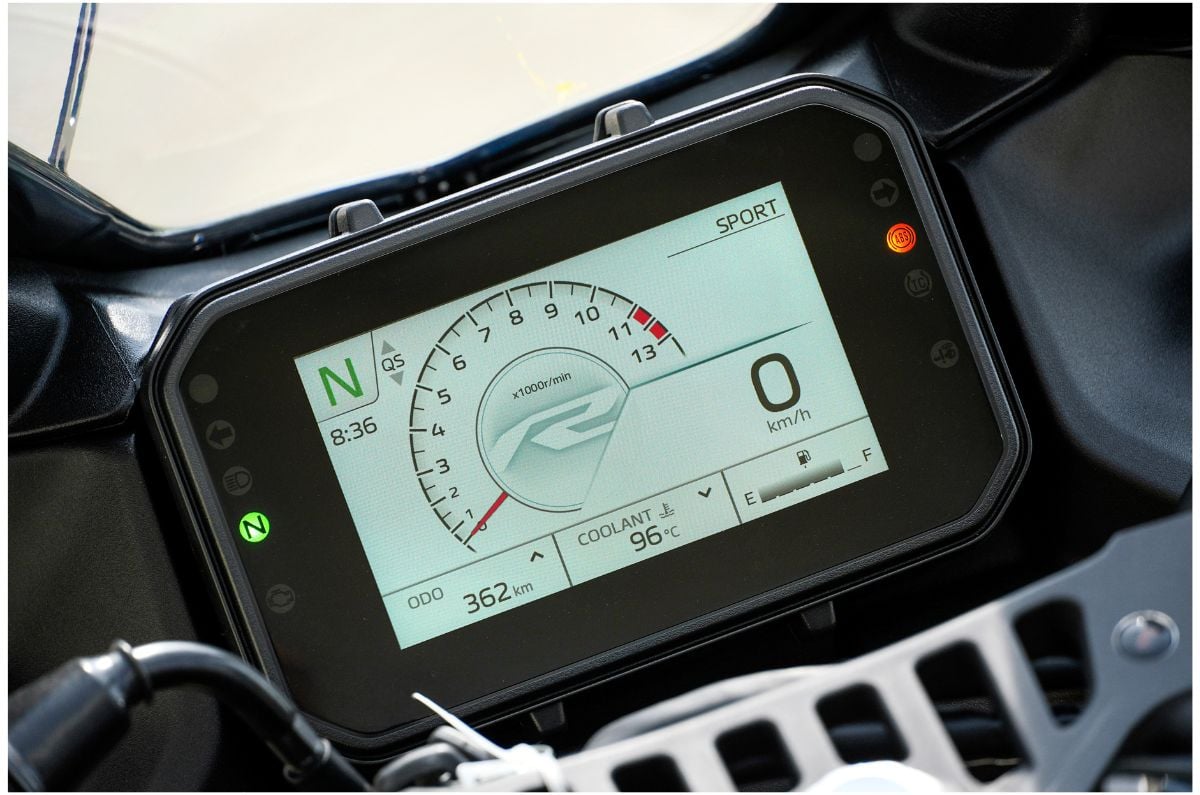
While there’s no VVA, this new 204cc single-cylinder DOHC engine still loves to rev and it still has an exciting “switch on” moment at around 7,000rpm. From what I could tell on the cool down lap, the engine is tractable, but the bottom end does feel quite weak. With the throttle wide open, the engine starts to pull at around 6,000rpm and really picks up once the digital needle on the 5-inch TFT display crosses the 7,000rpm mark. The segment leading 26.5hp peak power figure comes in at 10,000rpm, but the engine spins up all the way to 11,000rpm.
Performance is a big step ahead of the R15 and I’m quite sure this will be quicker than its 200cc rivals while potentially being quicker than a few 250s as well. I saw just over 140kph on the track in 6th gear and top speed should be somewhere between 155-160kph on the display. This performance edge is fair to expect given that the R2 weighs a good deal less than its rivals (more on that later), but what was a surprise was the high rpm refinement.
You start to feel a buzz at around 7,000rpm and this becomes very noticeable in the bars, fuel tank and footpegs at the upper-most reaches of the rev band. We’re keen to observe how this translates to the road riding experience, especially since it was never a concern on the R15.
Yamaha R2 Chassis and Handling – 9/10
(Almost) nothing has changed
Specifications
Values
Chassis type
Backbone frame, High-tensile steel
Front Suspension Type
Telescopic Upside Down Fork (USD Fork), 37.0 mm
Front Suspension Adjustability
Yes
Rear Suspension Type
Linked-Type Monocross Suspension
Rear Suspension Adjustability
Yes
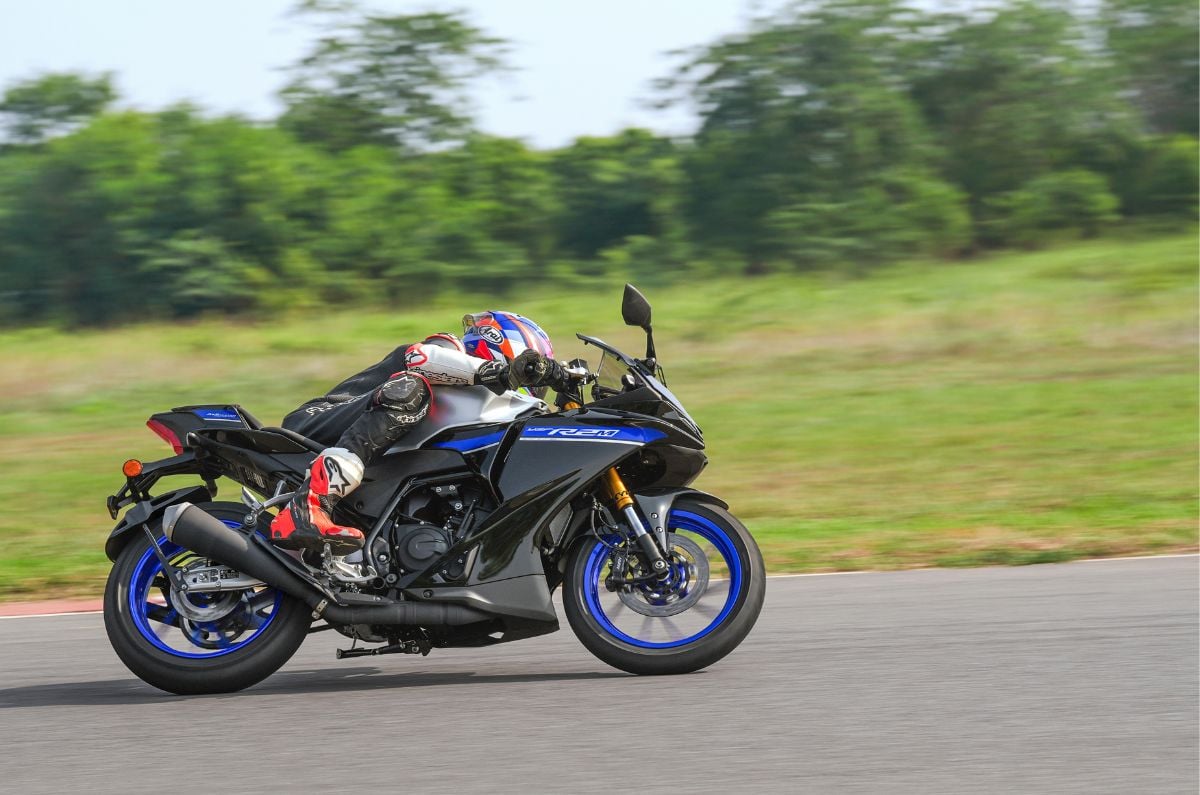
Handling wise, I’m pleased to report that this is a very capable, light, agile and sweetnatured sportbike, much like its younger sibling. While Yamaha does call this new chassis a tubular diamond frame, it’s nothing like what you’ll find on a commuter motorcycle and is a comprehensive thing with almost trellis-like reinforcing members along the side. Perhaps a professional racer might be able to tell any stiffness differences to the Deltabox in the R15, but as far as I’m concerned, this is a fabulous handler and is exactly what I’d expect from a small Yamaha sportbike.
Weighing in at 149kg (150kg for the M we were riding) the R2 still feels like a delightful light and flickable motorcycle, but you will notice the 9kg difference to an R15 when ridden back to back, particularly at a GoKart track. Just like an R15, it never feels nervous or skittish and you can trust the bike to respond as expected.
Yamaha R2 Tyres and brakes – 7/10
Need better feedback
Specifications
Values
Front Tyre Size
100/80-17 M/C 52S
Rear Tyre Size
140/70R17 M/C 66H
Front Disc/Drum Size
282 mm
Rear Disc/Drum Size
220 mm
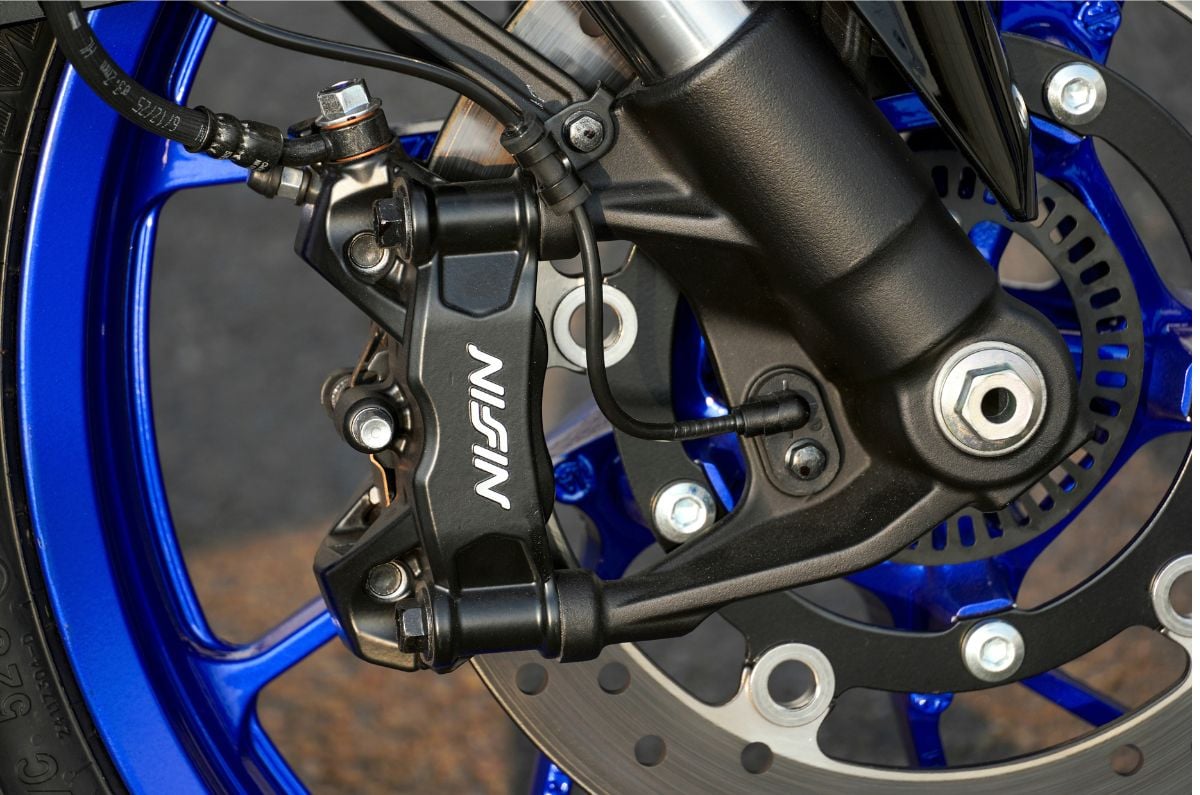
Where the trust factor can improve is in the tyres. The R2 uses the same MRF tyres as the R15 and while they were adequate on track (I lowered the pressures by about 6PSI), they didn’t give me the confidence to search for the limits of adhesion. The front brake also has a similarly spongy feel to the R15, even with that new radial front caliper. While it’s a sensation you need to get used to, the actual stopping performance is fine and I never felt doubt when braking into corners.
The main dynamics-related complaint I had was that there was some ABS intrusion in hard braking zones, and there’s not much you can do about that, short of pulling a fuse to deactivate the system. The intrusion wasn’t excessive, but it could become more problematic if we had more time to ride over the day, which would have meant an increased pace.
Yamaha R2 Design and Quality – 8/10
Covers the basics and then some
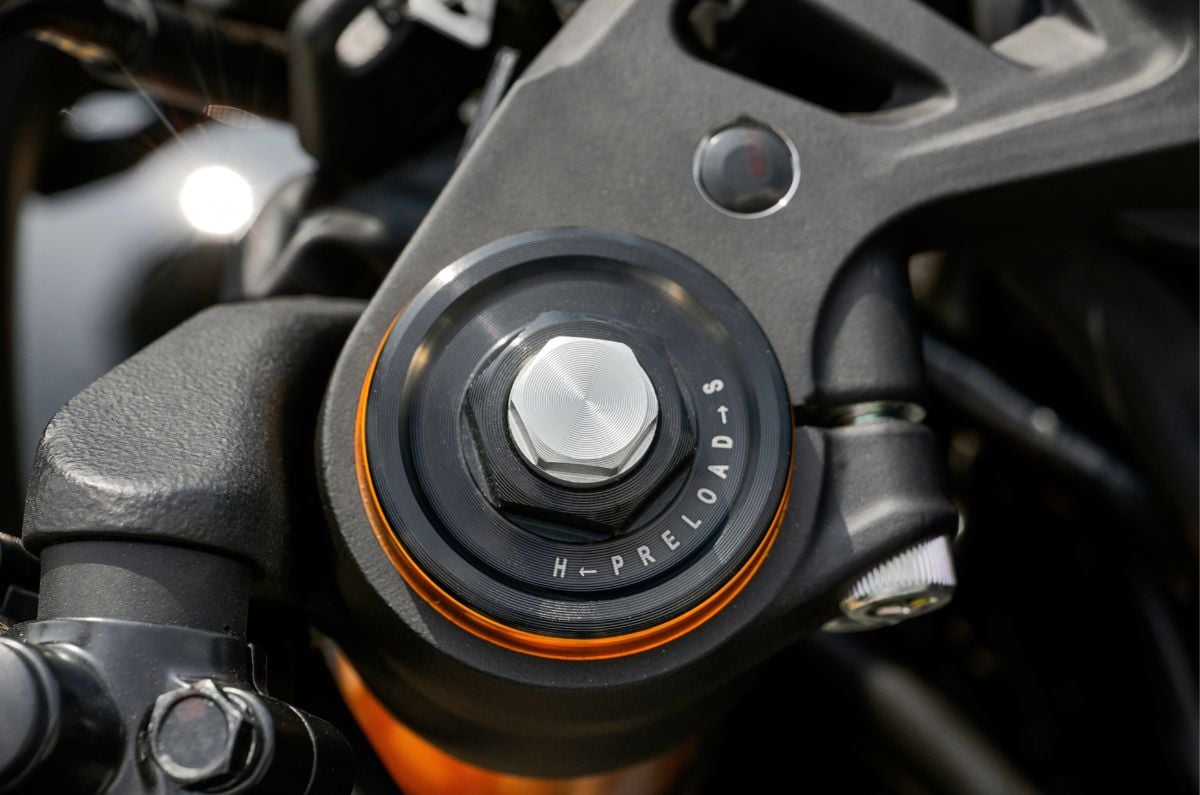
By now you’ve gauged that this is a very similar bike to its younger sibling in the way it feels and that’s a good thing. However, I wish it didn’t look so similar to the R15 and that does seem like a lost opportunity because it takes a trained eye to distinguish this bike as the new one. Quality and finish levels are pleasingly high with the switchgear being pleasant to look at and use. The bike is quite well specced too, with all variants getting a 5-inch TFT display. The mid variant adds a bi-directional quickshifter while the top M version brings in adjustable levers, preload adjustable front suspension, keyless start/steering lock and a unique paint scheme.
Yamaha R2 Price and Verdict – 8/10
A welcome addition
Yamaha R sportbikes have always been expensive and the R2 is no exception. At Rs 2.3-2.53 lakh ex-showroom it commands the kind of money that can get you much more powerful premium motorcycles like the Guerilla 450 Apex and Triumph Tracker 400. It’s very good at what it does, but I think it should have been a little more affordable.
Nevertheless, the R2 is a welcome addition to the Yamaha line-up in India and more bikes will follow on this platform. That being said, we hope to see more action from Yamaha in the locally manufactured premium bike space, because the step up from the R15 is too small and Yamaha is likely to continue to lose many of its existing R15 customers once they are ready to upgrade to a bigger motorcycle.
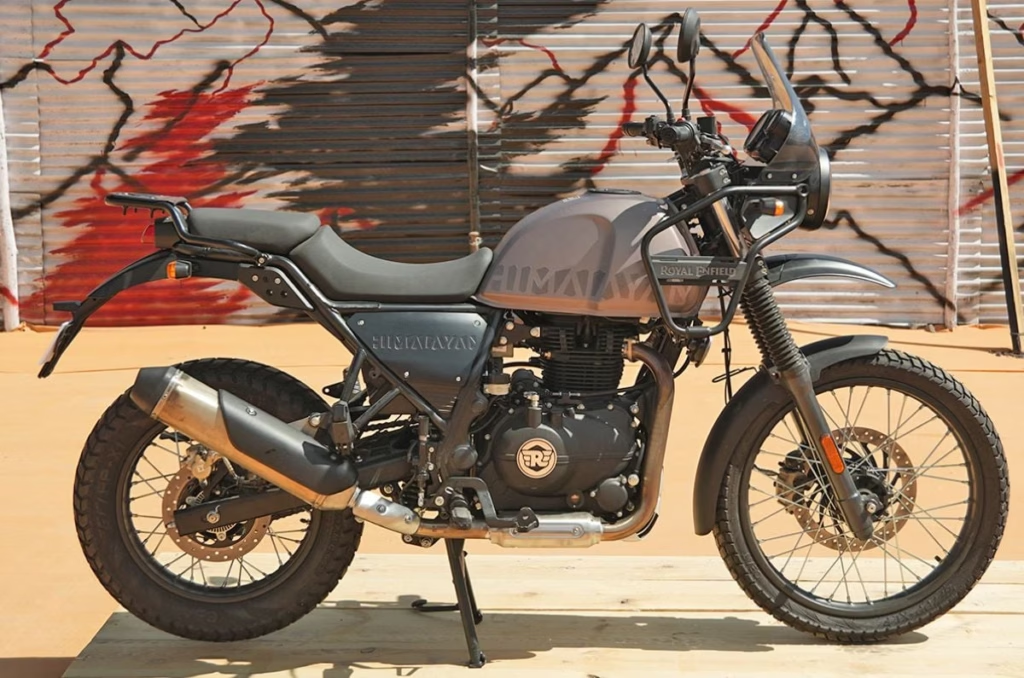
Royal Enfield had launched the Himalayan 440 – with the 411 design and the Scram 440’s engine – on September 2. It was priced at Rs 2.29 lakh, surprisingly reasonable considering the new GST rules, and the fact that the Himalayan 411 at the time of its discontinuation was selling for Rs 2.23 lakh. Cut to now, Royal Enfield says it’s closing the bookings for the motorcycle for the foreseeable future as demand has exceeded the brand’s initial projections.
Himalayan 440 shares its platform with the Scram 440
No word as to when pre-bookings will be reopened
Royal Enfield Himalayan 440: What’s the story so far?
The old-new motorcycle appears to be a bigger hit than expected
To recap, the Himalayan 440 shares the same engine as the Scram 440, making 25.4hp and 34Nm. It also gained a sixth gear (was missing on the 411) from the Scram too. Royal Enfield brought back the motorcycle due to sustained demand from admirers of the original Himalayan; as well as for people who prefer a simpler machine compared to the Himalayan 450. Clearly, the company was right in gauging the demand, but apparently had underestimated said demand.
The Chennai and UK based manufacturer says that the response for the product has been far more than they anticipated and they have already sold out six months worth of stock for its new entry-level adventure tourer. Hence, new bookings for it are being closed for the moment with the brand focusing on prioritising existing deliveries. In a statement, Royal Enfield has mentioned that it is working on scaling up production to meet current demand and that bookings will re-open once that additional capacity is achieved.
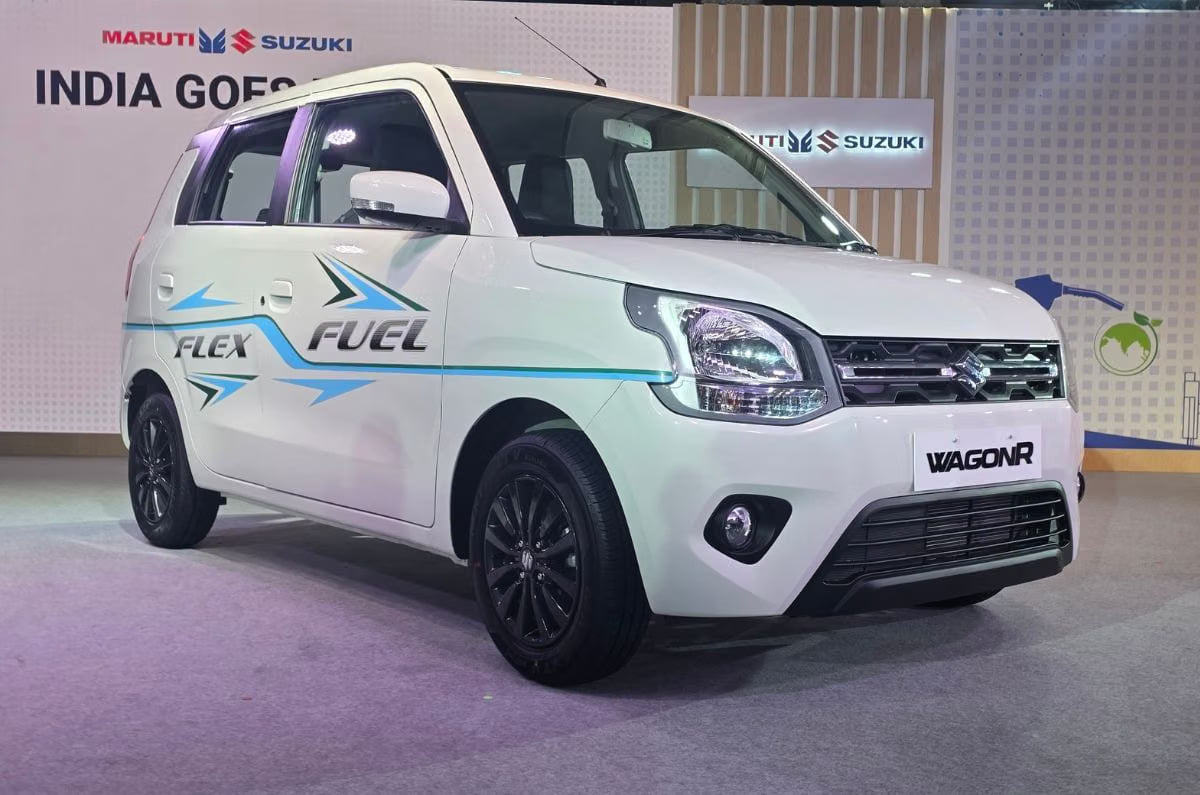
The government has notified the third phase of its Corporate Average Fuel Economy norms, setting progressively tighter fuel-efficiency requirements for passenger vehicle manufacturers from April 2027 while giving them several routes to comply, including higher weightage for electric and hybrid vehicles, benefits for alternative fuels, efficiency-technology credits and trading of compliance credits.
The final CAFE III framework will apply to M1 category passenger vehicles manufactured or imported for sale in India from April 1, 2027 to March 31, 2032, according to a Ministry of Power notification. The standards will continue to be calculated at the manufacturer level using the sales-weighted average fuel consumption of its vehicle portfolio.
CAFE III targets tighten through FY2032
Year
Permitted fleetwide fuel economy average*
FY28
3.996 litres/100kms
FY29
3.860 litres/100kms
FY30
3.7585 litres/100kms
FY31
3.5313 litres/100kms
FY32
3.3273 litres/100kms
*For a manufacturer with a reference fleet weight of 1,229kg
The permitted fleet-average fuel consumption will become progressively lower each year. The standard will be calculated using the formula a×(W−1,229)+c, where W represents the weighted average unladen mass of all eligible vehicles manufactured or imported for sale by an OEM.
For a manufacturer with a reference fleet weight of 1,229kg, the target falls from 3.996 litres of petrol equivalent per 100km in FY2028 to 3.3273 litres per 100km in FY2032. This corresponds to about 94.8g CO2/km in FY2028 and 78.9g/km in FY2032.
The targets are calculated across the manufacturer’s eligible fleet, meaning sales of more efficient vehicles can offset higher-consuming models within the same portfolio. Small-volume manufacturers with annual eligible vehicle volumes below 1,000 units are exempt from meeting the specific CAFE target, although they will still have to report their average fuel-consumption performance.
EVs gain biggest advantage
EVs get the biggest compliance boost
Battery electric vehicles and range-extended electric vehicles will receive a 3.0 super credit multiplier under CAFE III. Plug-in hybrids and flex-fuel strong hybrids get 2.5 super credit multiplier, strong hybrids get 1.6 and flex-fuel ethanol vehicles get 1.1 super credit multiplier.
Vehicle type
Multiplier
Battery electric
3.0
Range-extended electric
3.0
Plug-in hybrids
2.5
Flex-fuel strong hybrids
2.5
Strong hybrids
1.6
Flex-fuel ethanol
1.1
The final rules do not include the additional 3g CO2/km benefit for certain sub-four-metre petrol cars that had been proposed in an earlier draft of CAFE III.
CNG and ethanol also get benefits
CAFE III also gives carmakers another route through what the government calls a Carbon Neutrality Factor for alternative-fuel vehicles. Cars running on E20 or higher notified ethanol-petrol blends, including strong and plug-in hybrids, get an 8 percent carbon-neutrality factor on tailpipe CO2.
Flex-fuel ethanol vehicles get a 22.3 percent carbon-neutrality factor, while CNG vehicles get 5 percent or the notified CBG blending percentage, whichever is higher. Diesel vehicles receive a benefit linked to the notified biofuel blending level.
The provision gives manufacturers another compliance route alongside electrification, with the benefits extending to CNG, ethanol and other alternative-fuel vehicles.
Carmakers can trade fuel-efficiency credits
One of the bigger structural changes under CAFE III is the formalisation of a credit-and-debit system that allows compliance performance to carry financial value. Manufacturers whose fleet performs better than their prescribed target will generate credits, while those exceeding their permitted fuel-consumption level will accumulate debits. These will be maintained in a manufacturer-specific compliance “passbook”.
Surplus credits can be traded between manufacturers on mutually agreed terms. Carmakers can also buy credits from the Bureau of Energy Efficiency (BEE) to offset outstanding debits. The price rises from Rs 2,500 per g CO2/km in FY2028 to Rs 4,500 per g CO2/km in FY2032. The escalating price increases the incentive for companies to improve their underlying fleet performance.
The five-year CAFE III period will be split into two compliance blocks: FY2028-FY2030 and FY2031-FY2032. Credits and debits can be carried forward within each block, while unused credits will lapse at the end of the block.
Efficiency technologies also carry benefits
CAFE III allows manufacturers to claim a 1g CO2/km reduction for each eligible efficiency technology, subject to a maximum benefit of 9g CO2/km. The 12 eligible technologies include start-stop systems, tyre-pressure monitoring, regenerative braking, six-speed or higher transmissions, efficient alternators, motor-generators, LED exterior lighting, advanced glazing, electric water pumps and high-efficiency air-conditioning systems.
CAFE III introduces WLTP reporting
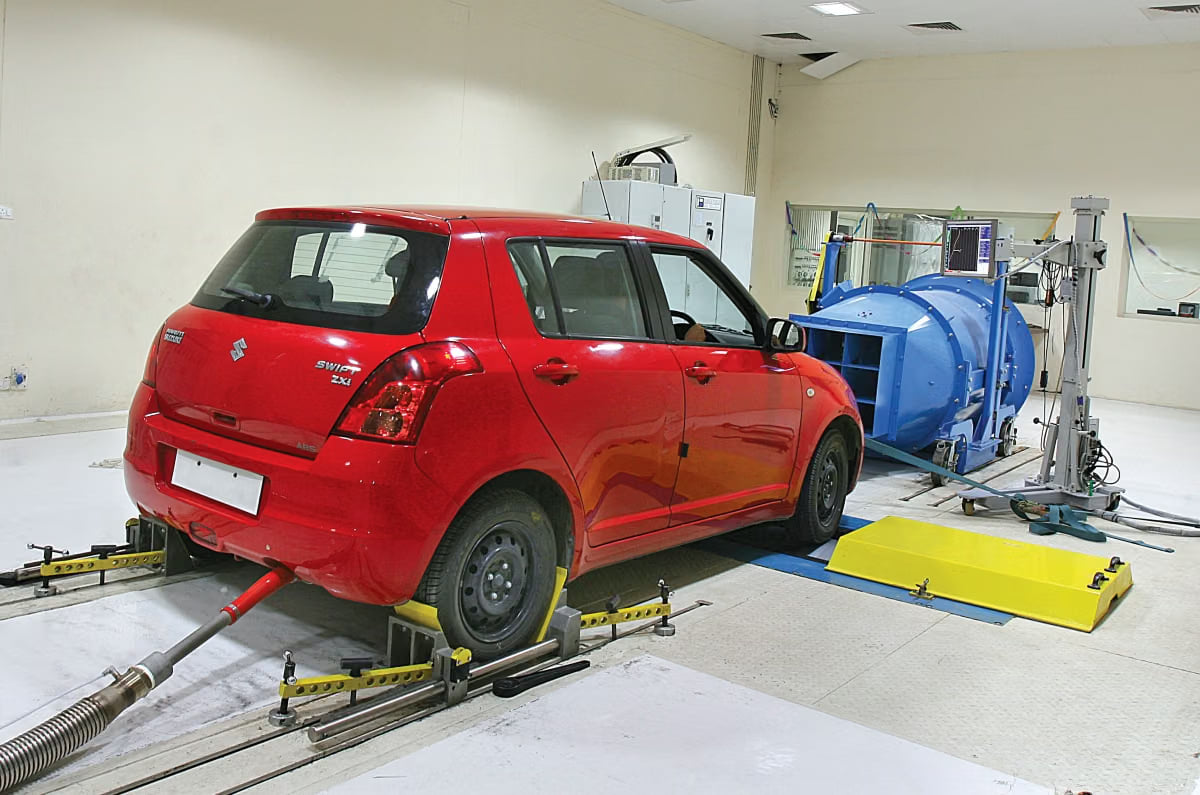
CAFE III also begins India’s transition towards using the Worldwide Harmonised Light Vehicles Test Procedure (WLTP) for corporate efficiency calculations. Manufacturers will have to declare the CO2 performance of models sold from April 1, 2027 under both the existing Modified Indian Driving Cycle (MIDC) and WLTP.
The conversion factor for translating the CAFE target from MIDC to WLTP will be notified separately by the Ministry of Power in consultation with the BEE. That leaves an important part of the implementation framework to be finalised despite the five-year CAFE III regime now being notified.