आंध्र प्रदेश के मुख्यमंत्री एन. चंद्रबाबू नायडू ने शुक्रवार को रिलायंस इंडस्ट्रीज के एग्जीक्यूटिव डायरेक्टर अनंत अंबानी की जमकर तारीफ की। उन्होंने अनंत को प्यार से “आंध्र का प्यारा बेटा” कहा। ग्लोबल हॉर्टिकल्चर हब और इंडियन स्कूल ऑफ एग्रीकल्चर की नींव रखे जाने के बाद आयोजित कार्यक्रम में मुख्यमंत्री नायडू ने ये बातें कहीं। कार्यक्रम में सीएम ने कहा कि राज्य में खेती और बागवानी के क्षेत्र में इस तरह की पहल से नई संभावनाएं बनेंगी। इस मौके पर मुख्यमंत्री एन. चंद्रबाबू नायडू, उपमुख्यमंत्री पवन कल्याण, केंद्रीय वित्त मंत्री निर्मला सीतारमण और अनंत अंबानी मौजूद रहे।
ग्लोबल हॉर्टिकल्चर हब और इंडियन स्कूल ऑफ एग्रीकल्चर की नींव के बाद सीएम नायडू ने इसे आंध्र प्रदेश के लिए गर्व का पल बताया। वहीं, अनंत अंबानी ने भी इस प्रोजेक्ट का हिस्सा बनने पर खुशी जताई और आंध्र प्रदेश में इसके लिए नींव रखे जाने को अपने लिए खास अनुभव बताया।
हर संभव मदद करेगा रिलायंस-अनंत
अनंत अंबानी ने प्रोजेक्ट पर भरोसा जताने और रिलायंस के साथ मिलकर काम करने के लिए मुख्यमंत्री एन. चंद्रबाबू नायडू का धन्यवाद किया। उन्होंने कहा कि, रिलायंस इंडस्ट्रीज इंडियन स्कूल ऑफ एग्रीकल्चर को पूरा सपोर्ट देगी। उन्होंने यह भी कहा कि संस्थान को आगे बढ़ाने के लिए अगर किसी और मदद की जरूरत होगी, तो कंपनी उसके लिए भी तैयार है। उन्होंने मुख्यमंत्री से जरूरी मदद के बारे में उन्हें गाइड करने के लिए कहा।
पीएम मोदी की तारीफ की
अनंत अंबानी ने कहा कि, प्रधानमंत्री नरेंद्र मोदी के लीडरशिप में आंध्र भूमि एक “स्वर्ण भूमि” में बदल रही है। उन्होंने कहा, देश के अलग-अलग हिस्सों में बदलाव देखने को मिल रहे हैं और विकास के भी नए काम हो रहे हैं। अनंत ने लोगों से अपील की कि वे देश को आगे बढ़ाने और ‘विकसित भारत’ के लक्ष्य को पूरा करने में अपनी भूमिका निभाएं।
1 लाख करोड़ रुपए की किया निवेश
रिलायंस इंडस्ट्रीज के एग्जीक्यूटिव डायरेक्टर अनंत अंबानी ने आंध्र प्रदेश में कंपनी की बड़ी निवेश योजना की जानकारी दी। उन्होंने बताया कि, रिलायंस राज्य में करीब 1 लाख करोड़ रुपये निवेश करने की तैयारी कर रही है। इस निवेश से कम्प्रेस्ड बायोगैस (CBG) प्लांट लगाए जाएंगे और 3 लाख से ज्यादा रोजगार के अवसर पैदा होने की उम्मीद है। अनंत के मुताबिक, इस पहल से आंध्र प्रदेश को करीब 60 हजार करोड़ रुपये का राजस्व भी मिल सकता है।
मदनपल्ले में रायलसीमा हॉर्टिकल्चर हब और इंडियन स्कूल ऑफ एग्रीकल्चर के शिलान्यास कार्यक्रम में अनंत अंबानी ने कहा कि रिलायंस इस नए संस्थान को आगे बढ़ाने के लिए सरकार और किसानों के साथ मिलकर काम करेगी। उन्होंने कहा कि कंपनी संस्थान को जरूरी सहयोग देने के लिए पूरी तरह तैयार है।
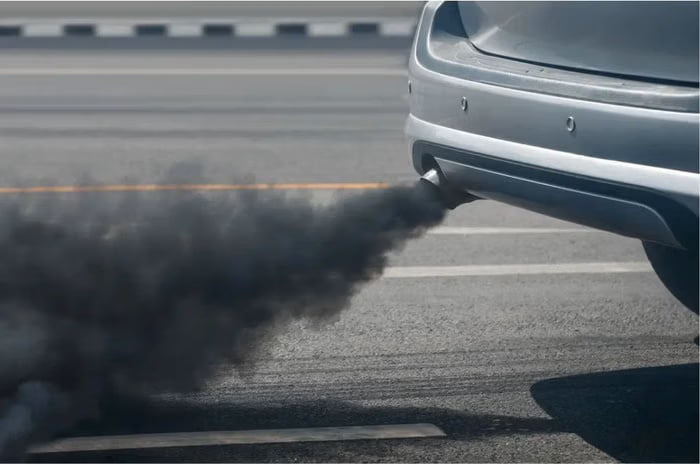
The government has notified the third phase of its Corporate Average Fuel Economy norms, setting progressively tighter fuel-efficiency requirements for passenger vehicle manufacturers from April 2027 while giving them several routes to comply, including higher weightage for electric and hybrid vehicles, benefits for alternative fuels, efficiency-technology credits and trading of compliance credits.
The final CAFE III framework will apply to M1 category passenger vehicles manufactured or imported for sale in India from April 1, 2027 to March 31, 2032, according to a Ministry of Power notification. The standards will continue to be calculated at the manufacturer level using the sales-weighted average fuel consumption of its vehicle portfolio.
CAFE III targets tighten through FY2032
Year
Permitted fleetwide fuel economy average*
FY28
3.996 litres/100kms
FY29
3.860 litres/100kms
FY30
3.7585 litres/100kms
FY31
3.5313 litres/100kms
FY32
3.3273 litres/100kms
*For a manufacturer with a reference fleet weight of 1,229kg
The permitted fleet-average fuel consumption will become progressively lower each year. The standard will be calculated using the formula a×(W−1,229)+c, where W represents the weighted average unladen mass of all eligible vehicles manufactured or imported for sale by an OEM.
For a manufacturer with a reference fleet weight of 1,229kg, the target falls from 3.996 litres of petrol equivalent per 100km in FY2028 to 3.3273 litres per 100km in FY2032. This corresponds to about 94.8g CO2/km in FY2028 and 78.9g/km in FY2032.
The targets are calculated across the manufacturer’s eligible fleet, meaning sales of more efficient vehicles can offset higher-consuming models within the same portfolio. Small-volume manufacturers with annual eligible vehicle volumes below 1,000 units are exempt from meeting the specific CAFE target, although they will still have to report their average fuel-consumption performance.
EVs gain biggest advantage
EVs get the biggest compliance boost
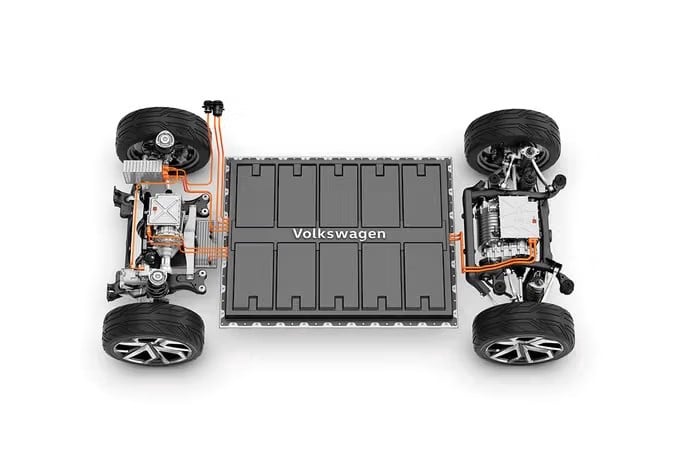
Battery electric vehicles and range-extended electric vehicles will receive a 3.0 super credit multiplier under CAFE III. Plug-in hybrids and flex-fuel strong hybrids get 2.5 super credit multiplier, strong hybrids get 1.6 and flex-fuel ethanol vehicles get 1.1 super credit multiplier.
Vehicle type
Multiplier
Battery electric
3.0
Range-extended electric
3.0
Plug-in hybrids
2.5
Flex-fuel strong hybrids
2.5
Strong hybrids
1.6
Flex-fuel ethanol
1.1
The final rules do not include the additional 3g CO2/km benefit for certain sub-four-metre petrol cars that had been proposed in an earlier draft of CAFE III.
CNG and ethanol also get benefits
CAFE III also gives carmakers another route through what the government calls a Carbon Neutrality Factor for alternative-fuel vehicles. Cars running on E20 or higher notified ethanol-petrol blends, including strong and plug-in hybrids, get an 8 percent carbon-neutrality factor on tailpipe CO2.
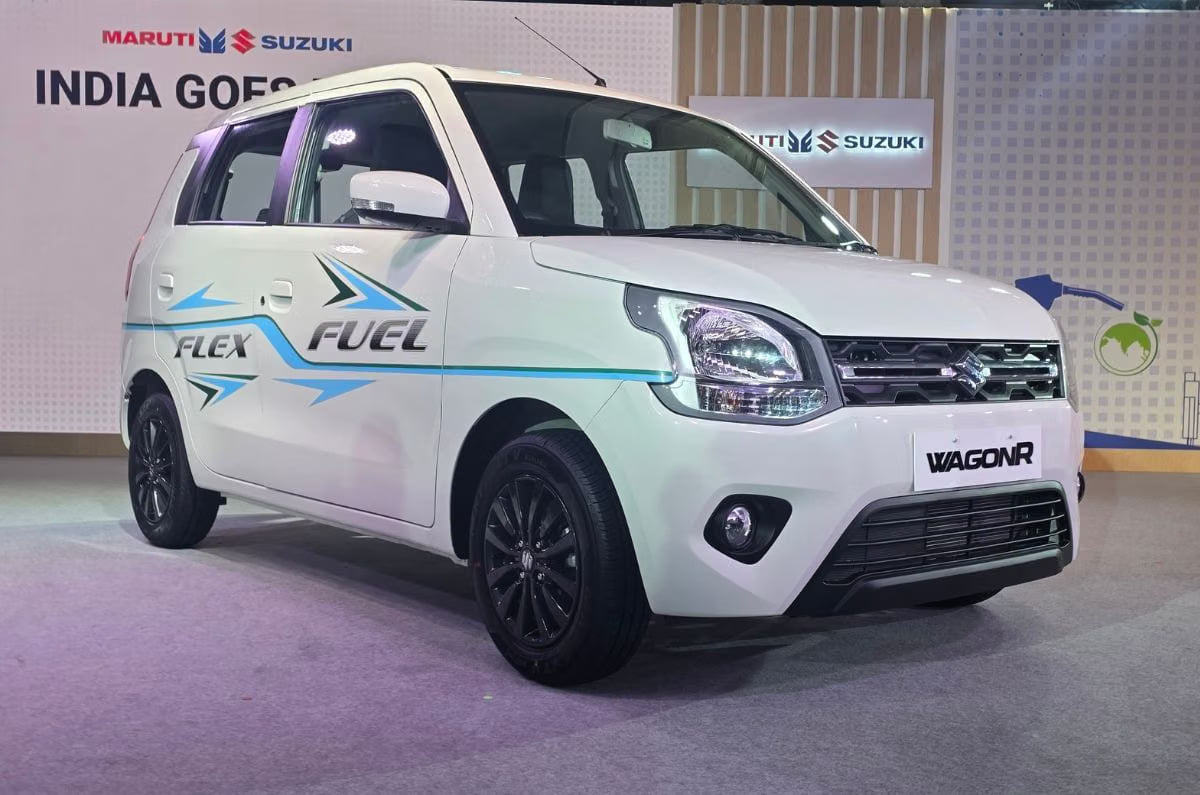
Flex-fuel ethanol vehicles get a 22.3 percent carbon-neutrality factor, while CNG vehicles get 5 percent or the notified CBG blending percentage, whichever is higher. Diesel vehicles receive a benefit linked to the notified biofuel blending level.
The provision gives manufacturers another compliance route alongside electrification, with the benefits extending to CNG, ethanol and other alternative-fuel vehicles.
Carmakers can trade fuel-efficiency credits
One of the bigger structural changes under CAFE III is the formalisation of a credit-and-debit system that allows compliance performance to carry financial value. Manufacturers whose fleet performs better than their prescribed target will generate credits, while those exceeding their permitted fuel-consumption level will accumulate debits. These will be maintained in a manufacturer-specific compliance “passbook”.
Surplus credits can be traded between manufacturers on mutually agreed terms. Carmakers can also buy credits from the Bureau of Energy Efficiency (BEE) to offset outstanding debits. The price rises from Rs 2,500 per g CO2/km in FY2028 to Rs 4,500 per g CO2/km in FY2032. The escalating price increases the incentive for companies to improve their underlying fleet performance.
The five-year CAFE III period will be split into two compliance blocks: FY2028-FY2030 and FY2031-FY2032. Credits and debits can be carried forward within each block, while unused credits will lapse at the end of the block.
Efficiency technologies also carry benefits
CAFE III allows manufacturers to claim a 1g CO2/km reduction for each eligible efficiency technology, subject to a maximum benefit of 9g CO2/km. The 12 eligible technologies include start-stop systems, tyre-pressure monitoring, regenerative braking, six-speed or higher transmissions, efficient alternators, motor-generators, LED exterior lighting, advanced glazing, electric water pumps and high-efficiency air-conditioning systems.
CAFE III introduces WLTP reporting
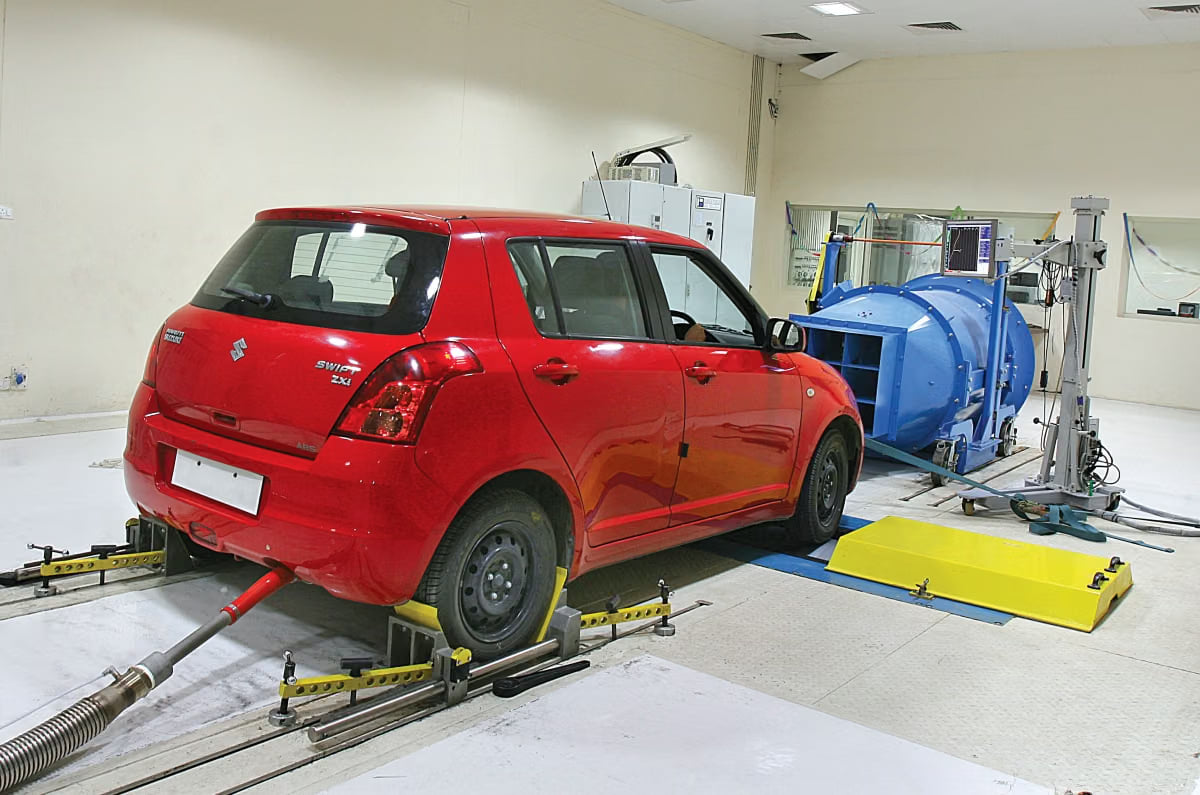
CAFE III also begins India’s transition towards using the Worldwide Harmonised Light Vehicles Test Procedure (WLTP) for corporate efficiency calculations. Manufacturers will have to declare the CO2 performance of models sold from April 1, 2027 under both the existing Modified Indian Driving Cycle (MIDC) and WLTP.
The conversion factor for translating the CAFE target from MIDC to WLTP will be notified separately by the Ministry of Power in consultation with the BEE. That leaves an important part of the implementation framework to be finalised despite the five-year CAFE III regime now being notified.
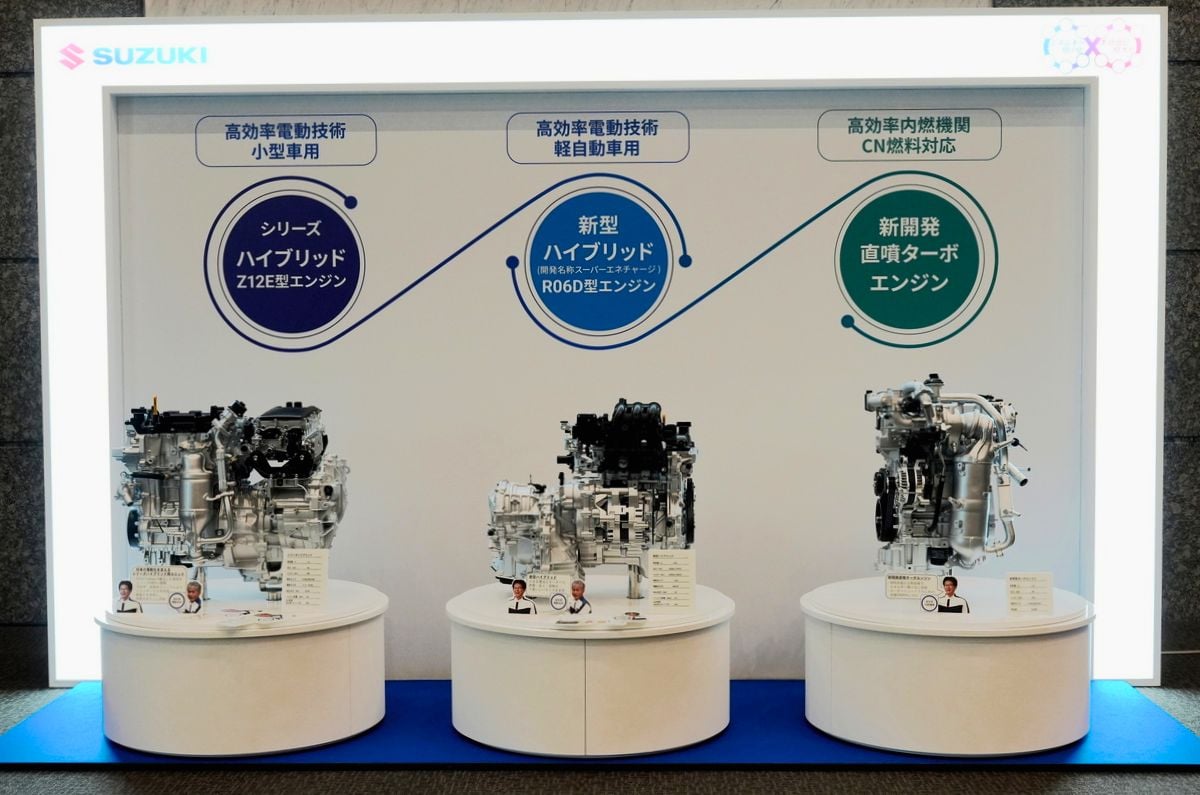
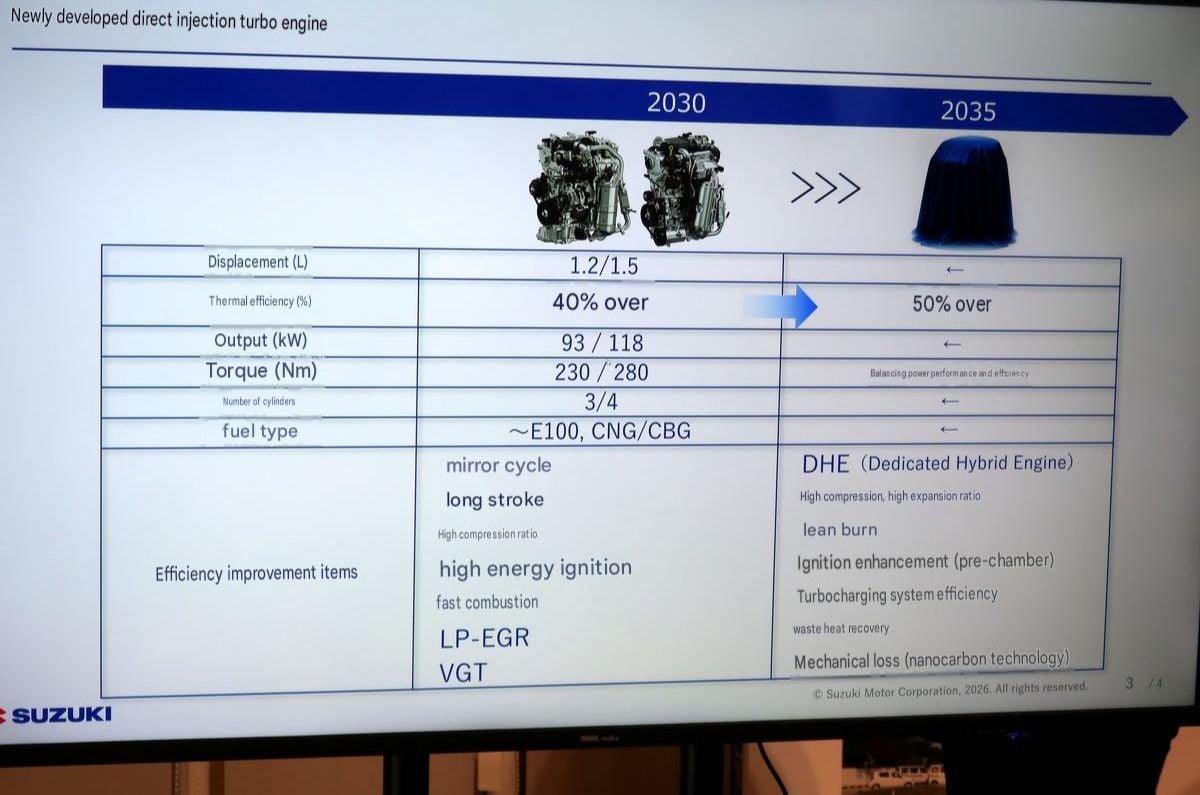
Suzuki recently revealed plans to develop a new direct-injection turbocharged (DITC) engine for growth markets, including India, as part of its ‘Technology Strategy 2026: Looking 10 Years Ahead’ roadmap. The manufacturer has also revealed specifications for a 1.2-litre 3-cylinder turbo-petrol engine prototype in Japan, which is being developed for compatibility with E100, CNG (compressed natural gas) and CBG (compressed biomethane gas). While not confirmed by the manufacturer, this engine is likely to eventually be offered in India.
1.2-litre turbo-petrol engine prototype produces up to 126hp and 230Nm
This engine is being developed to achieve up to 40 percent thermal fuel efficiency
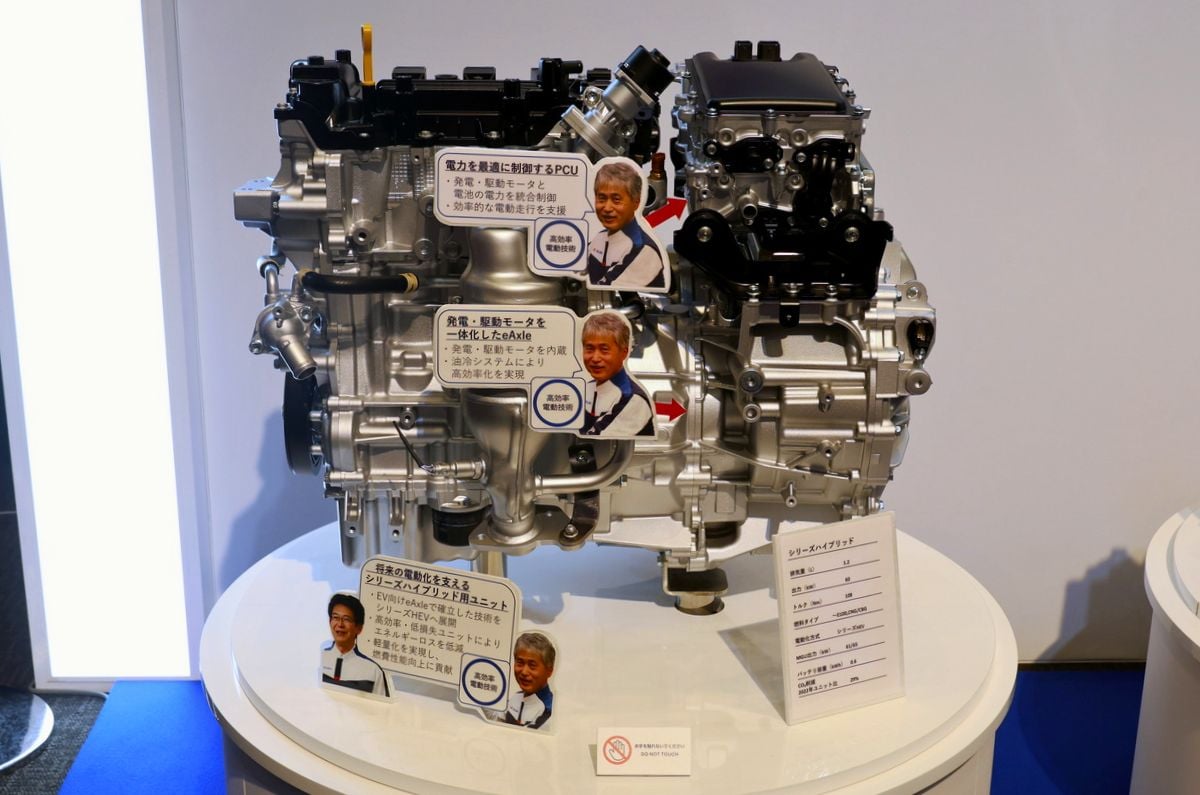
Alongside the turbo-petrol engine, Suzuki has also showcased a series-hybrid powertrain based on the Z12E 3-cylinder engine and a smaller 0.66-litre engine for kei cars. Specifications of a 1.5-litre direct-injection turbo-petrol engine were also revealed.
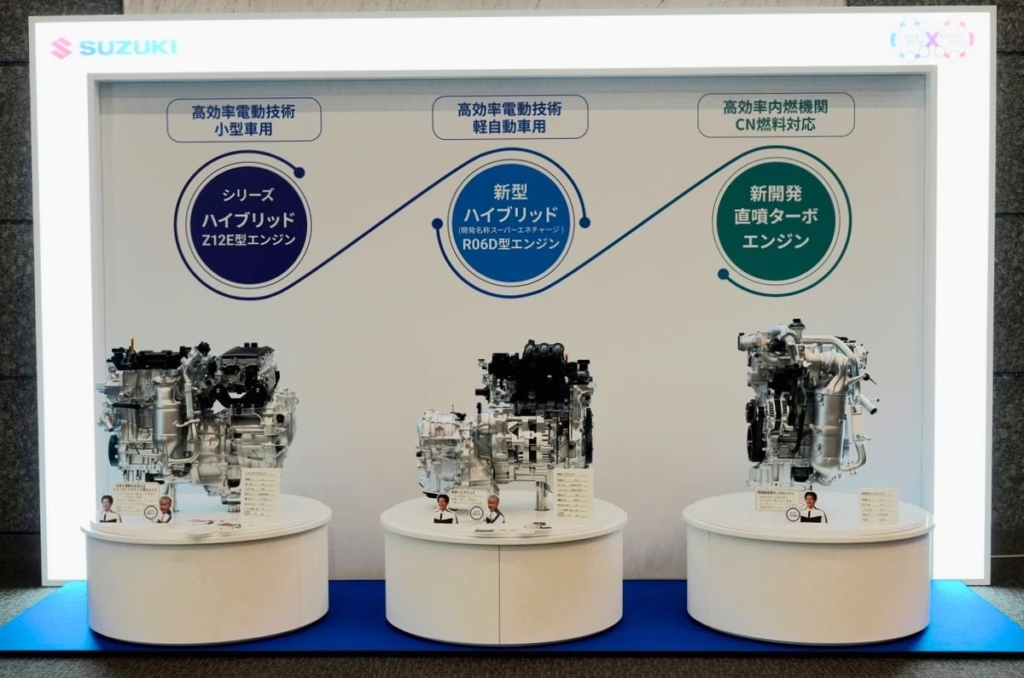
Suzuki’s new engine prototypes: More details
1.2-litre 3-cylinder turbo-petrol engine is based on Z12E, as per a media report
Image source: Autocar Japan (text translated into English)
The showcased prototype is a 1.2-litre direct-injection turbo-petrol engine, aimed at producing up to 126hp and 230Nm, with thermal fuel efficiency targeted at up to 40 percent at launch and up to 50 percent by 2035. The engine is being developed for compatibility with E100 (100 percent ethanol), CNG and CBG.
According to a report by Japan’s MotorFan, the engine is based on Suzuki’s Z12E 3-cylinder unit and features a variable-geometry (VG) turbocharger and a water-cooled intercooler. The Z12E is offered in a naturally aspirated avatar in the Swift, Baleno and Dzire. While not confirmed by the manufacturer, the new turbocharged engine could eventually be offered in sub-4m cars in India.
Z12E engine to also form the basis of a series-hybrid powertrain
Suzuki is also developing the 1.2-litre Z12E 3-cylinder engine for use in a series-hybrid powertrain. In this setup, the engine generates electricity, while an electric motor drives the wheels. The system uses two motors – one for generating electricity and another for driving the wheels. In this application, the Z12E engine produces up to 82hp and 108Nm, while the generator motor has a maximum output of 83hp and the drive motor produces up to 88hp. The system uses a 0.6kWh battery.
Series hybrid system combining a 1.2L engine and two electric motors. (Image source: Autocar Japan)
Suzuki is also considering combining this series-hybrid system with its new 1.2-litre direct-injection turbo-petrol engine in a future plug-in hybrid setup. The proposed combination could deliver a total system output of up to 177hp.
1.5-litre turbo-petrol engine and a 0.66-litre engine (for kei cars) also in development
As per Autocar Japan, Suzuki is also developing a 1.5-litre 4-cylinder, aimed at producing up to 160hp and 280Nm. Like the smaller 1.2-litre engine, the 1.5-litre turbo-petrol engine is also being developed for compatibility with E100, CNG and CBG fuels.
Suzuki also showcased a smaller 0.66-litre 3-cylinder engine in Japan. The engine is being developed in both naturally aspirated and turbocharged forms for kei cars.
Notably, all the engines showcased by Suzuki are designed for transverse-mounted, front-wheel-drive (FWD) vehicles, with no mention of powertrains for longitudinally mounted, rear-wheel-drive (RWD) models such as the Jimny. However, powertrains for RWD models are also understood to be under development and could be revealed at a later date.
Stocks to Watch: 18 सितंबर को शेयर बाजार में कई कंपनियों से जुड़े अहम अपडेट देखने को मिलेंगे। टाटा ग्रुप के स्टॉक्स में Tata Sons को लेकर चल रही खबरों का असर दिख सकता है। इसके अलावा डिफेंस, आईटी, पावर और इंफ्रास्ट्रक्चर सेक्टर की कंपनियां भी फोकस में रहेंगी। कई कंपनियों ने नए ऑर्डर, जॉइंट वेंचर और फंड जुटाने से जुड़े अपडेट दिए हैं।
Tata Group Stocks
टाटा ट्रस्ट ने टाटा संस के पब्लिक होने की बात खारिज कर दी है। उसने यह भी कहा कि एन चंद्रशेखरन का पद छोड़ना आखिरी फैसला था, अब उसे बदला नहीं जा सकता। टाटा ट्रस्ट के चेयरमैन नोएल टाटा भी टाटा संस के शेयर मार्केट में लिस्ट होने के खिलाफ हैं। इन सभी फैक्टर का असर टाटा ग्रुप के शेयरों पर दिख सकता है।
Wipro
आईटी सर्विसेज कंपनी Wipro ने Aramco और SAP के साथ मिलकर Wipro STO360 नाम का नया क्लाउड बेस्ड प्लेटफॉर्म लॉन्च किया है। इसे प्लांट के शटडाउन, मेंटेनेंस और दूसरे जरूरी कामों की बेहतर प्लानिंग के लिए तैयार किया गया है।
Bharat Electronics
सरकारी डिफेंस इलेक्ट्रॉनिक्स कंपनी Bharat Electronics को 26 अगस्त 2026 से अब तक ₹648 करोड़ के नए ऑर्डर मिले हैं। BEL ने बताया कि 1 जुलाई 2026 तक उसकी ऑर्डर बुक ₹72,258 करोड़ थी।
HAL
सरकारी एयरोस्पेस और डिफेंस कंपनी HALबेंगलुरु में LCA Tejas Trainers, HTT-40 और Dhruv NG Helicopters को भारतीय वायुसेना और PHL को सौंपेगी।
PTC India
पावर ट्रेडिंग कंपनी PTC India ने सरकारी रिन्यूएबल एनर्जी कंपनी NLC India Renewables के साथ मिलकर NIRL PTC Renewables नाम की जॉइंट वेंचर कंपनी बनाई है। इसमें PTC India की 26% और NLC India Renewables की 74% हिस्सेदारी होगी।
NLC India
सरकारी पावर कंपनी NLC India ने प्रसन्न कुमार आचार्य को 17 सितंबर 2026 से पांच साल के लिए चेयरमैन और मैनेजिंग डायरेक्टर नियुक्त किया है।
PB Fintech
इंश्योरटेक और ऑनलाइन इंश्योरेंस प्लेटफॉर्म कंपनी PB Fintech ने गुरुवार को बाजार में चल रही अटकलों को खारिज कर दिया। कंपनी ने साफ किया कि Yashish Dahiya चेयरमैन और ग्रुप सीईओ के पद पर बने रहेंगे।
HCC
कंस्ट्रक्शन कंपनी HCC की सब्सिडियरी HCC Infrastructure Company ने Ceigall India के साथ मिलकर एक पब्लिक लिमिटेड कंपनी बनाने के प्रस्ताव को मंजूरी दी है। प्रस्तावित कंपनी में HCC Infrastructure की हिस्सेदारी 51% होगी।
Petronet LNG
गैस इंफ्रास्ट्रक्चर कंपनी Petronet LNG ने Gruner Renewable Energy के साथ 50:50 जॉइंट वेंचर बनाने के प्रस्ताव को मंजूरी दी है। यह JV पूरे भारत में 10 कंप्रेस्ड बायोगैस (CBG) प्लांट लगाएगा। प्रोजेक्ट पर करीब ₹1,200 करोड़ का निवेश होने का अनुमान है।
ऑटो कंपोनेंट और डिफेंस कंपनी Bharat Forge ने 17 सितंबर को Qualified Institutions Placement यानी QIP लॉन्च किया है। कंपनी ने इसके लिए ₹1,947.70 प्रति शेयर का फ्लोर प्राइस तय किया है।
GPT Infraprojects
रेलवे इंफ्रास्ट्रक्चर कंपनी GPT Infraprojects को RVNL से करीब ₹484 करोड़ का रेलवे ब्रिज निर्माण प्रोजेक्ट मिला है। कंपनी को इस प्रोजेक्ट के लिए सबसे कम बोली लगाने वाली कंपनी यानी L1 घोषित किया गया है। ओडिशा में महानदी नदी पर ब्रिज 544 का निर्माण इस प्रोजेक्ट का हिस्सा है।
Disclaimer: यहां मुहैया जानकारी सिर्फ सूचना के लिए दी जा रही है। यहां बताना जरूरी है कि मार्केट में निवेश बाजार जोखिमों के अधीन है। निवेशक के तौर पर पैसा लगाने से पहले हमेशा एक्सपर्ट से सलाह लें। मनीकंट्रोल की तरफ से किसी को भी पैसा लगाने की यहां कभी भी सलाह नहीं दी जाती है।
Maruti Suzuki Biogas Plant: देश की सबसे बड़ी पैसेंजर व्हीकल कंपनी मारुति सुजुकी अब बायोगैस पर बड़ा दांव लगाने जा रही है। कंपनी 561 करोड़ रुपये के निवेश से पहले चरण में 4 बायोगैस प्लांट लगाएगी। इसका मकसद अपने मैन्युफैक्चरिंग प्लांट्स में स्वच्छ और रिन्यूएबल एनर्जी का इस्तेमाल बढ़ाना है।
खारखोदा प्लांट से होगी शुरुआत
पहले चरण में हरियाणा के खारखोदा प्लांट में 10 टन प्रतिदिन (10 TPD) क्षमता का बायोगैस प्लांट लगाया जाएगा। इसके FY27 में शुरू होने की उम्मीद है। पूरी क्षमता पर पहुंचने के बाद यह प्लांट फैक्ट्री की करीब 20% गैस जरूरत पूरी करेगा।
कंपनी ने मानेसर प्लांट में भी बायोगैस क्षमता 0.2 TPD से बढ़ाकर 0.7 TPD कर दी है। यहां से हर साल करीब 3.6 लाख स्टैंडर्ड क्यूबिक मीटर बायोगैस बनने की उम्मीद है। इस प्लांट में खाने का बचा हुआ कचरा, नेपियर घास और धान का पुआल इस्तेमाल होता है। जरूरत पड़ने पर गोबर भी मिलाया जा सकता है।
FY31 तक बड़ा लक्ष्य
मारुति सुजुकी के चेयरमैन आर. सी. भार्गव ने कहा कि पहले चरण में चार बायोगैस प्लांट लगाए जाएंगे। इसके बाद तकनीक और अनुभव के आधार पर इस क्षेत्र में और बड़ा निवेश किया जाएगा।
कंपनी का लक्ष्य FY31 तक हर दिन 20 टन से ज्यादा बायोगैस का इस्तेमाल करना है। कंपनी ने हंसलपुर प्लांट में भी प्राकृतिक गैस की जगह करीब 10% ऊर्जा जरूरत बायोगैस से पूरी करनी शुरू कर दी है।
किसानों को भी होगा फायदा
आर. सी. भार्गव का कहना है कि भारत को नेट जीरो लक्ष्य हासिल करने के लिए कई तरह की तकनीकों की जरूरत होगी। बायोगैस स्थानीय संसाधनों से बनाई जा सकती है। इससे आयातित CNG पर निर्भरता कम होगी। साथ ही यह पूरी तरह स्वच्छ ईंधन है।
उन्होंने कहा कि बायोगैस बनाने के बाद बचने वाली जैविक खाद खेतों की उपज बढ़ाने में मदद करेगी। इससे मिट्टी की गुणवत्ता भी सुधरेगी। फसल जलाने की जरूरत कम होगी। प्रदूषण घटेगा। किसानों की आय बढ़ेगी। खेती में मशीनों का इस्तेमाल भी बढ़ेगा।
सरकार भी दे रही है बढ़ावा
Maruti Suzuki पिछले दो साल से भारतीय कृषि अनुसंधान संस्थान (IARI), पूसा के साथ इस क्षेत्र में काम कर रही है। कंपनी का कहना है कि शुरुआती नतीजे उत्साहजनक रहे हैं।
इसी बीच केंद्र सरकार ने 6 अगस्त को GOBARdhan योजना को मंजूरी दी है। 23,731 करोड़ रुपये की यह योजना FY27 से FY36 तक चलेगी। इसका मकसद गोबर, कृषि अवशेष, जैविक कचरे और दूसरे बायोमास से कंप्रेस्ड बायोगैस (CBG) बनाना है। इससे स्वच्छ ऊर्जा को बढ़ावा मिलेगा और ग्रामीण इलाकों में आय के नए अवसर भी बनेंगे।
Disclaimer: यहां मुहैया जानकारी सिर्फ सूचना के लिए दी जा रही है। यहां बताना जरूरी है कि मार्केट में निवेश बाजार जोखिमों के अधीन है। निवेशक के तौर पर पैसा लगाने से पहले हमेशा एक्सपर्ट से सलाह लें। मनीकंट्रोल की तरफ से किसी को भी पैसा लगाने की यहां कभी भी सलाह नहीं दी जाती है।