Dollar Vs Rupee : सोमवार, 19 अक्टूबर को अमेरिकी डॉलर के मुकाबले रुपया अपनी शुरुआती बढ़त गंवाते हुए 3 पैसे की गिरावट के साथ 94.92 के स्तर पर बंद हुआ। घरेलू शेयर बाजारों में भारी गिरावट और कच्चे तेल की कीमतों में तेजी के कारण रुपये पर दबाव पड़ा। विदेशी संस्थागत निवेशकों (FII) की निकासी और कच्चे तेल की ऊंची कीमतों के लगातार बने दबाव के बीच, रुपये की लगातार 6 सेशन की तेजी का सिलसिला टूट गया और यह गिरावट के साथ बंद हुआ।
इंटरबैंक विदेशी मुद्रा बाजार में, अमेरिकी डॉलर के मुकाबले रुपया 94.90 पर खुला। दिन के कारोबार के दौरान, यह 94.75 के हाई और 94.97 के निचले स्तर तक गया। अमेरिकी डॉलर के मुकाबले रुपया आज 94.92 पर बंद हुआ जो पिछले बंद भाव से 3 पैसे कम है।
शुक्रवार को, भारतीय रिजर्व बैंक (RBI) द्वारा डॉलर की हाजिर मांग को नियंत्रित करने के उपायों के चलते, रुपया लगातार छठे सत्र में मजबूत हुआ था और अमेरिकी डॉलर के मुकाबले 10 पैसे की बढ़त के साथ 94.89 पर बंद हुआ।
16 अक्टूबर को खत्म हुए हफ्ते के दौरान, डॉलर की मांग को नियंत्रित करने के लिए RBI द्वारा उठाए गए कदमों की मदद से भारतीय रुपये में लगभग 2 प्रतिशत की मजबूती आई थी।
लेमन (Lemonn) के रिसर्च हेड, गौरव गर्ग ने कहा कि RBI के कदम शॉर्ट टर्म में करेंसी के उतार-चढ़ाव को नियंत्रित करने में मदद कर सकते हैं, लेकिन इसमें कोई टिकाऊ सुधार तेल की कीमतों में नरमी, विदेशी पूंजी की निकासी रुकने और बाहरी दबावों में कमी पर आने पर निर्भर करेगा।
गर्ग ने आगे कहा कि हालांकि रुपये में सुधार उत्साहजनक है, लेकिन यह इस बात पर निर्भर करेगा कि क्या RBI के सपोर्ट के साथ-साथ ग्लोबल और घरेलू बुनियादी हालात (फंडामेंटल्स) भी बेहतर होते हैं।
इस बीच छह बड़ी मुद्राओं के एक बॉस्केट के मुकाबले डॉलर की मजबूती को मापने वाला डॉलर इंडेक्स 0.09 प्रतिशत की बढ़त के साथ 101.93 पर कारोबार कर रहा है। ग्लोबल ऑयल बेंचमार्क, ब्रेंट क्रूड, वायदा कारोबार (फ्यूचर्स ट्रेड) में 1.17 प्रतिशत की गिरावट के साथ 108.58 अमेरिकी डॉलर प्रति बैरल पर कारोबार कर रहा है।
मिरे एसेट शेरखान के रिसर्च एनालिस्ट अनुज चौधरी का कहना है कि डॉलर में कमजोरी और अमेरिकी ट्रेजरी यील्ड में नरमी के चलते उम्मीद है कि रुपया पॉजिटिव रुख के साथ कारोबार करेगा। हालांकि, कच्चे तेल की ऊंची कीमतें और FII की निकासी इसमें बड़ी तेजी को सीमित कर सकती हैं।
HDFC सिक्योरिटीज में रिसर्च एनालिस्ट, दिलीप परमार का कहना है कि भारतीय रुपया लगातार सातवें सत्र में भी मजबूत हुआ। हालांकि, दिन के दौरान हुई अधिकांश बढ़त गंवाने के बाद, यह मामूली तेजी के साथ बंद हुआ। कच्चे तेल की कीमतों में सुधार और मंगलवार को बाजार में छुट्टी होने से पहले घरेलू शेयरों में मुनाफावसूली (प्रॉफिट बुकिंग) के कारण, रुपये की तेजी सीमित रही। वहीं, RBI के दखल और अमेरिकी डॉलर के स्थिर रहने से रुपये को सहारा मिला। तकनीकी रूप से देखें तो स्पॉट USDINR के लिए 94.70 के स्तर पर सपोर्ट मिलने की उम्मीद है, जबकि 95.50 के स्तर पर रेजिस्टेंस है।
घरेलू इक्विटी बाजार में, सेंसेक्स 876.37 अंक गिरकर 73,852.90 पर बंद हुआ, जबकि निफ्टी 257.20 अंक गिरकर 22,888.95 पर आ गया। एक्सचेंज के आंकड़ों के अनुसार, शुक्रवार को विदेशी संस्थागत निवेशक (FIIs) खरीदार बन गए और उन्होंने कुल 1,165.92 करोड़ रुपये के शेयर खरीदे। इस बीच, शुक्रवार को जारी RBI के आंकड़ों के अनुसार, 9 अक्टूबर को समाप्त सप्ताह के दौरान भारत का विदेशी मुद्रा भंडार 8.578 अरब डॉलर घटकर 7.26 अरब डॉलर रह गया।
ब्रिकवर्क रेटिंग्स के हेड ऑफ रिसर्च, राजीव शरण का कहना है कि सोमवार को रुपया लगातार सातवें सत्र में मजबूत हुआ। शुरुआती कारोबार में यह 94.8 के स्तर को छू गया और डॉलर के मुकाबले 94.95 के आसपास बना रहा। इस तरह, महीने की शुरुआत में 97 के स्तर से आई इसकी जोरदार रिकवरी कायम रही। शुक्रवार को जारी RBI के आंकड़ों से पता चलता है कि इसकी कीमत भी चुकानी पड़ी है। 9 अक्टूबर को खत्म हुए हफ्ते में विदेशी मुद्रा भंडार 8.6 अरब डॉलर घटकर 7.26 अरब डॉलर रह गया। इस तरह, सितंबर की शुरुआत से अब तक कुल 60 अरब डॉलर की कमी आई है। यह एक अहम आंकड़ा है क्योंकि केंद्रीय बैंक ने केवल करेंसी सट्टेबाजों को चेतावनी ही नहीं दी, बल्कि अपने नियमों को सख्त करने से पहले एक ‘कृत्रिम आधार’ (artificial floor) बनाने के लिए भारी रकम भी खर्च की।
हालांकि शुक्रवार को विदेशी निवेशकों ने 1,166 करोड़ रुपये की खरीदारी की, लेकिन ब्रेंट क्रूड का 110 डॉलर प्रति बैरल की ओर बढ़ना यह बताता है कि RBI हमेशा के लिए बाजार में शांति नहीं बनाए रख सकता। अब बाजार के बुनियादी कारकों (market fundamentals) को ही स्थिति संभालनी होगी।
डिस्क्लेमर: मनीकंट्रोल.कॉम पर दिए गए विचार एक्सपर्ट के अपने निजी विचार होते हैं। वेबसाइट या मैनेजमेंट इसके लिए उत्तरदाई नहीं है। यूजर्स को मनी कंट्रोल की सलाह है कि कोई भी निवेश निर्णय लेने से पहले सर्टिफाइड एक्सपर्ट की सलाह लें।
IMF के आंकड़ों के मुताबिक तेज विकास दर के बावजूद रुपये की कमजोरी के कारण भारत के 5 लाख करोड़ डॉलर की अर्थव्यवस्था बनने का लक्ष्य 2029 तक टल सकता है। इसके पहले अनुमान थी कि 2027 में भारत जापान और UK को पीछे छोड़कर दुनिया की चौथी सबसे बड़ी अर्थव्यवस्था बन जाएगा। लेकिन IMF के पूर्वानुमानों के ‘मनीकंट्रोल’ द्वारा किए गए विश्लेषण से पता चलता है कि रुपये की गिरावट ने 5 लाख करोड़ डॉलर के टारगेट को एक साल और आगे के लिए टाल दिया है।
भारत 2027 में जापान और यूके को पीछे छोड़कर दुनिया की चौथी सबसे बड़ी अर्थव्यवस्था बन सकता है, लेकिन 5 ट्रिलियन डॉलर की अर्थव्यवस्था बनने का देश का यह लक्ष्य एक साल के लिए पिछड़ सकता है। इस टारगेट को रुपये की गिरती कीमत की वजह से झटका लग सकता है। जानकारों का कहना है कि रुपए के वैल्यू में कमी आने से डॉलर के हिसाब से देश के आर्थिक उत्पादन की वैल्यू में कमी आ रही है।
मनीकंट्रोल द्वारा इंटरनेशनल मॉनेटरी फंड (IMF) के नवीनतम ‘वर्ल्ड इकोनॉमिक आउटलुक’ (WEO) डेटाबेस के विश्लेषण से पता चलता है कि भारत की अर्थव्यवस्था के 2029 में 5 लाख करोड़ डॉलर के स्तर को पार करने का अनुमान है, जबकि अप्रैल में इसके 2028 तक इस स्तर को पार करने का अनुमान लगाया गया था।
IMF ने रुपये के संदर्भ में भारत के आर्थिक आउटपुट के अनुमान को तो बढ़ाया है, लेकिन 2028 के लिए भारत की नॉमिनल GDP के अपने अनुमान को 5.1 लाख करोड़ डॉलर से घटाकर 4.996 लाख करोड़ डॉलर कर दिया है।
5 लाख करोड़ डॉलर का टारगेट खिसका दूर
यह अंतर भारत की डॉलर-मूल्य वाली जीडीपी पर मुद्रा के अवमूल्यन (मूल्य में गिरावट) के बढ़ते प्रभाव को दिखाता है, जो ग्लोबल इकोनॉमिक रैंकिंग में देश की स्थिति तय करता है।
आईएमएफ (IMF) के अक्टूबर के अनुमानों के अनुसार, 2026 में भारत की अर्थव्यवस्था 4.06 लाख करोड़ डॉलर की होगी, जो 2027 में बढ़कर 4.52 लाख करोड़ डॉलर और 2029 में 5.54 लाख करोड़ डॉलर तक पहुंच जाएगी।
रुपये की गिरावट ने मजबूत घरेलू विकास के असर को किया बेअसर
ताजा अनुमान बताते हैं कि 5 लाख डॉलर के लक्ष्य तक पहुंचने में हो रही देरी की मुख्य वजह भारत की नॉमिनल आर्थिक ग्रोथ में आई गिरावट नहीं, बल्कि विनिमय दर (एक्सचेंज रेट) से जुड़े अनुमान में हुआ बदलाव है।
IMF का अब अनुमान है कि 2028 में रुपया प्रति डॉलर औसतन 95.5 के स्तर पर रहेगा, जबकि अप्रैल के अनुमानों में यह आंकड़ा 93.3 था। 2027 के लिए, एक्सचेंज रेट का अनुमान 93 से बदलकर 95 हो गया है।
साल की शुरुआत से अब तक भारतीय रुपया 5 प्रतिशत से ज्यादा कमजोर हो चुका है। शुक्रवार को रुपया 96.73 के स्तर पर बंद हुआ, जिसके बाद RBI ने इसमें और गिरावट को रोकने के लिए कदम उठाए।
इस बीच, घरेलू मुद्रा में भारत की नॉमिनल GDP के 2028 में 477.1 लाख करोड़ रुपये तक पहुंचने का अनुमान है। अप्रैल में यह अनुमान 471.9 लाख करोड़ रुपये था, यानी इस अनुमान में 1.1 प्रतिशत की बढ़ोतरी की गई है। लेकिन, जब इसे डॉलर में बदला जाता है तो आर्थिक आउटपुट का यह अनुमान लगभग 63 अरब डॉलर कम हो जाता है।
मनीकंट्रोल की गणना से पता चलता है कि अप्रैल के 93.3 रुपए प्रति डॉलर के एक्सचेंज रेट अनुमान के आधार पर, 2028 के लिए भारत की रुपये में मापी गई GDP का IMF का ताजा अनुमान लगभग 5.11 लाख करोड़ डॉलर बैठता है, जो 5 लाख करोड़ डॉलर के आंकड़े से काफी ऊपर है। हालांकि, एक्सचेंज रेट के संशोधित अनुमान के आधार पर यह आंकड़ा घटकर लगभग 4.996 लाख करोड़ डॉलर रह जाता है।
इससे पता चलता है कि रुपये की कमजोरी, घरेलू नॉमिनल आउटपुट में हुई बढ़ोतरी के असर को पूरी तरह खत्म कर देती है। इससे यह भी साफ होता है कि भारत कब इस डॉलर-बेस्ड अहम इकोनॉमिक माइल स्टोन को हासिल करेगा, यह तय करने में विनिमय दर (एक्सचेंज रेट) में होने वाले बदलाव कितने अहम होते हैं।
2027 में भारत, जापान और UK को छोड़ सकता है पीछे
इस देरी के बावजूद, 2027 में भारत के ग्लोबल आर्थिक रैंकिंग में चौथे स्थान पर पहुंचने का अनुमान है। इस सूची में भारत अमेरिका, चीन और जर्मनी के बाद आएगा।
IMF के अक्टूबर के अनुमानों के अनुसार, 2027 में भारत की GDP 4.52 लाख करोड़ डॉलर तक पहुंच जाएगी। यह यूनाइटेड किंगडम की 4.49 लाख करोड़ डॉलर और जापान की अनुमानित 4.47 लाख करोड़ डॉलर की GDP से थोड़ी अधिक होगी। हालांकि, इन तीनों अर्थव्यवस्थाओं के बीच का अंतर काफी कम है, जिसका मतलब है कि विनिमय दरों (exchange rates) में उतार-चढ़ाव अंतिम नतीजों को बदल सकते हैं।
IMF के ताजा अनुमानों के अनुसार, भारत की अर्थव्यवस्था के और विस्तार करने की उम्मीद है। 2030 में यह 6.13 लाख करोड़ डॉलर और 2031 में 6.74 लाख करोड़ डॉलर तक पहुंच सकती है। इस स्तर पर भारत जर्मनी को पीछे छोड़कर दुनिया की तीसरी सबसे बड़ी अर्थव्यवस्था बन जाएगा।
Market Insight : कल की तूफानी तेजी के बाद आज बाजार में कंसोलिडेशन का मूड देखने को मिल रहा है। निफ्टी हल्की नरमी के साथ 22700 के करीब कारोबार कर रहा है। बैंक निफ्टी भी फ्लैट है। मिडकैप शेयरों में भी प्रेशर नजर आ रहा है। IT सेक्टर में लगातार दूसरे दिन जबरदस्त तेजी है। निफ्टी IT इडेक्स करीब 1.25 फीसदी मजबूत है। TCS, इंफोसिस और HCL टेक निफ्टी के टॉप गेनर्स में शुमार है। वहीं शानदार नतीजों के बाद टाटा इलेक्सी भी दौड़ा है। करीब 6 परसेंट की तेजी के साथ यह शेयर आज का हीरो बना है।
आज फार्मा शेयरों में सबसे ज्यादा प्रेशर है। इनका सेक्टर इंडेक्स करीब एक परसेंट नीचे है। साथ ही PSU बैंक और फाइनेंशियल्स में भी नरमी है। लेकिन चुनिंदा डिफेंस, FMCG, तेल-गैस शेयरों में खरीदारी आई है।
शानदार नतीजों के बाद हीरो मोटर्स में जोरदार तेजी है। यह शेयर करीब 5 परसेंट भागा। वहीं Q2 रिजल्ट के बाद ट्रांसफॉर्मर्स एंड रेक्टिफायर्स में भी फर्राटा रफ्तार देखने को मिल रही है। यह शेयर करीब 17 परसेंट दौड़ा है। लेकिन सिल्वर में नरमी से हिंद जिंक फिसला है। उधर पॉलीकैब में लगातार दूसरे दिन कमजोरी देखने को मिल रही है।
बाजार: अब क्या करना है?
बाजार पर अपनी राय रखते हुए सीएनबीसी-आवाज़ के मैनेजिंग एडिटर अनुज सिंघल ने कहा कि कल पहली बार लग रहा था कि शायद ये रैली अलग है। लेकिन अभी भी भरोसा नहीं मिला है। अभी भी 10 और 20 DEMA के पास रुकने का जोखिम है। कल बाजार के लिए शानदार सत्र था। जैसी उम्मीद थी, IT ने अगुवाई की, बैंक भी साथ आए। FIIs ने कैश मार्केट में कम बेचा, इंडेक्स में मामूली कवरिंग हुई। बस दिक्कत ये है कि ये हमने पहले भी देखा है। कल FM के सिर्फ एक बयान ने बड़ी रैली करा दी और वो इसलिए क्योंकि बाजार बहुत ज्यादा ओवरसोल्ड था। सोचिए, एक बयान से इतनी बड़ी रैली आ गई । इसका मतलब ये है कि बाजार अच्छी खबर के लिए भूखा है। लेकिन जोखिम यही है कि ये रैली भी फेल हो सकती है। 22,900 के ऊपर क्लोज मिले तो निगेटिव ट्रेंड खत्म होगा।
क्या कहा वित्त मंत्री ने?
FM के कहा कि बजट से ठीक पहले STT पर फैसला बताना जल्दबाजी होगी। बजट की तैयारियां शुरू हो गई है। अभी किसी फैसले पर टिप्पणी से परहेज किया जा रहा है। STT और सभी एसेट क्लासेज़ पर समान टैक्स को लेकर लंबी चर्चा हुई है। 2 साल पहले सभी एसेट क्लासेज़ को टैक्स के मामले में बराबरी पर लाने की कोशिश की थी। तब लोगों को लगा था कि टैक्स बढ़ाया जा रहा है, लेकिन मकसद टैक्स में समानता लाना था। निवेशक सिर्फ ज्यादा लेवरेज के लिए किसी खास एसेट क्लास को न चुनें। STT पर बहस को FM ने स्वस्थ और जरूरी बताया। STT में कटौती का कोई स्पष्ट संकेत नहीं,फैसला बजट पर छोड़ा गया है।
बाजार: आज का दांव
IT शेयरों पर नजर रहनी चाहिए। यह कल का सबसे मजबूत प्ले रहा। आज भी निचले स्तरों से IT में रैली आ सकती है। Tata Elxsi के नतीजे बढ़िया रहे हैं, लेकिन शेयर काफी चल चुका है। 2 दिनों से इस पर CNBC-आवाज़ पर पॉजिटिव नजरिया लिया गया है। अब बड़े गैप अप के पीछे नहीं भागें, गिरावट में लें। Hind Zinc को लेकर सतर्क रहने की जरूरत है। मजबूत Dollar और कमजोर चांदी से नेगेटिव असर पड़ सकता है।
Hero Motors पर नजर रहे। लिस्टिंग के बाद पहले नतीजे शानदार रहे हैं। Transformers And Rectifiers और Anand Rathi Shares के नतीजे भी अच्छे रहे हैं। इनमें एक्शन रहेगा। उधर Paytm में भी तेजी आ सकती है। कंपनी की सब्सिडियरी First Games Tech की GST डिमांड नोटिस में 88% की कटौती की गई है। GST डिमांड नोटिस को घटाकर 700 करोड़ रुपए कर दी गई है।
दो महीने की ऊंचाई पर निफ्टी ब्रेथ वैल्यू
निफ्टी में तेजी वाली कंपनियों की संख्या में लगातार सुधार हो रहा है। निफ्टी की ब्रेथ वैल्यू 44 पर है। यह दो महीने की ऊंचाई पर पहुंच गई है। परसों की गिरावट में भी ब्रेथ वैल्यू घटने के बजाए 24 से बढ़कर 32 हुई। निफ्टी के ब्रेथ चार्ट पर बुलिश क्रॉसओवर कन्फर्म हुआ है। ब्रेथ चार्ट में सुधार से ये पता चलता है कि तेजी में शामिल कंपनियां बढ़ रही हैं। मिडकैप, स्मॉलकैप वैसे भी Outperform कर रहे हैं। भारत का बाजार खराब नहीं है, सिर्फ टॉप 10 शेयर में दिक्कत रही है। माइक्रोकैप में जबरदस्त बुल मार्केट चल रही है। इसीलिए हमने नजरिया लिया था कि शेयरों पर फोकस करें,इंडेक्स पर नहीं।
निफ्टी पर रणनीति
निफ्टी के लिए पहला सपोर्ट 22,600-22,650 पर और बड़ा सपोर्ट 22,500-22,550 पर है। खरीदारी जोन 22,600-22,650 है। सख्त SL 22,550 पर रखें। इसके लिए पहला रजिस्टेंस 22,750-22,800 पर और बड़ा रजिस्टेंस 22,850-22,950 पर है। 22,750-22,850 के रिजेक्शन पर बिकवाली करें, सख्त SL 22,900 पर रखें।
बैंक निफ्टी पर रणनीति
बैंक निफ्टी में 55,500 के ऊपर टिके तो बड़ी रैली हो सकती है। लेकिन 55,500-55,600 पर रिजेक्शन मिले तो 55,700 के SL के साथ बिकवाली करें। इसके लिए पहला सपोर्ट 55,050-55,150 पर और बड़ा सपोर्ट 54,800-55,000 पर है। सबसे अच्छा खरीदारी जोन 55,000-55,200 है। SL 54,900 पर होना चाहिए।
डिस्क्लेमर: मनीकंट्रोल.कॉम पर दिए गए विचार एक्सपर्ट के अपने निजी विचार होते हैं। वेबसाइट या मैनेजमेंट इसके लिए उत्तरदाई नहीं है। यूजर्स को मनी कंट्रोल की सलाह है कि कोई भी निवेश निर्णय लेने से पहले सर्टिफाइड एक्सपर्ट की सलाह लें।
MC Poll : सोमवार को भारतीय रुपया 95 पैसे मजबूत होकर 95.78 रुपए प्रति डॉलर पर बंद हुआ है। शुक्रवार को यह 96.73 पर बंद हुआ था। यह 2 अप्रैल, 2026 के बाद से एक दिन में आई सबसे बड़ी बढ़त है। HDFC सिक्योरिटीज में सीनियर रिसर्च एनालिस्ट दिलीप परमार का कहना है किसफॉरेक्स मार्केट में सट्टेबाजी को रोकने और उतार-चढ़ाव को काबू में रखने के लिए RBI के खास उपायों की वजह से एशियाई देशों की करेंसी के मुकाबले भारतीय रुपया सबसे मजबूत रहा। सप्लाई की स्थिति बेहतर होने की उम्मीद से कच्चे तेल की कीमतों में आई गिरावट ने भी बाजार के सेंटीमेंट को सपोर्ट दिया। हालांकि, शुरुआती बढ़त के बाद करेंसी पर दबाव बना रहा, क्योंकि घरेलू शेयर बाजार में कमजोरी और विदेशी फंड की लगातार निकासी जारी रही।
आने वाले समय में, स्पॉट USDINR 95.30 के लेवल की ओर बढ़ सकता है, लेकिन मीडियम से लॉन्ग टर्म का ट्रेंड डॉलर के फ्लो, ट्रेड बैलेंस, ब्याज दरों के अंतर और बदलते जियोपॉलिटिकल हालात पर निर्भर करेगा।
क्या कहता है रुपए पर मनीकंट्रोल का पोल?
इस बीच मनीकंट्रोल के एक पोल से यह निष्कर्ष निकल कर आया है कि आने वाले समय में रुपये के 94 रुपये प्रति डॉलर पर आने की संभावना कम है, क्योंकि ब्रेंट क्रूड की कीमतें लगातार 100 डॉलर प्रति बैरल से ऊपर बनी हुई हैं और अमेरिकी ट्रेजरी यील्ड भी लेवल पर है। रुपये की वैल्यू पर दबाव देखने को मिल सकता है।
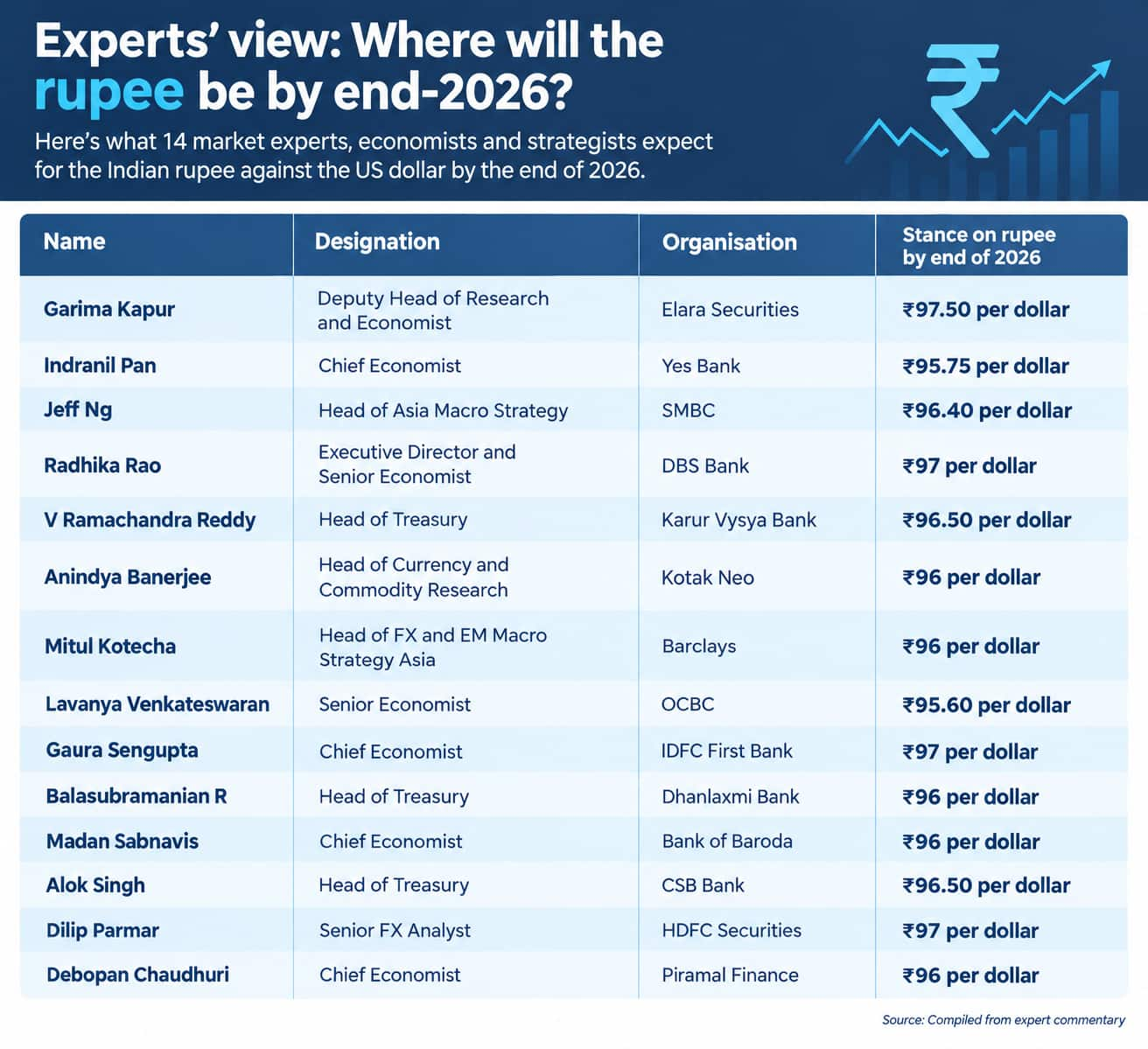
मनीकंट्रोल के एक सर्वे में 14 अर्थशास्त्रियों और ट्रेजरी और करेंसी स्ट्रैटेजी के हेड्स ने कहा है कि 2026 के आखिर तक रुपया प्रति डॉलर 95-96 रुपये के स्तर पर पहुंच सकता है। उन सभी को उम्मीद है कि RBI दिसंबर की मॉनेटरी पॉलिसी मीटिंग में पॉलिसी रेट में 25 बेसिस पॉइंट की और बढ़ोतरी करेगा।
मिडिल ईस्ट में भू-राजनीतिक तनाव के कारण सप्लाई में आई रुकावटों की वजह से, ब्रेंट क्रूड की कीमतें दो हफ़्ते से ज़्यादा समय से लगातार $100 प्रति बैरल के ऊपर बनी हुई हैं।
12 अक्टूबर को रुपये में 100 पैसे की ज़बरदस्त तेज़ी आई और यह 95.76 रुपये प्रति डॉलर पर ट्रेड करता दिखा। इससे पहले कल यह 96.73 रुपये प्रति डॉलर पर बंद हुआ था। रिज़र्व बैंक ऑफ़ इंडिया (RBI) ने वीकेंड पर करेंसी को मज़बूत करने के लिए कुछ उपाय घोषित किए थे, जिसके बाद यह सुधार देखने को मिला। बता दें कि कैलेंडर ईयर 2026 में रुपया 7 प्रतिशत से ज़्यादा और FY27 में अब तक लगभग 3.5 प्रतिशत कमज़ोर हो चुका है।
इन उपायों में ऑयल मार्केटिंग कंपनियों के लिए एक खास सुविधा शामिल है, जिसके तहत RBI तय बैंकों के ज़रिए डॉलर बेचेगा। साथ ही इसमें कंपनियों पर रद्द किए गए फॉरेन एक्सचेंज डेरिवेटिव कॉन्ट्रैक्ट्स को दोबारा बुक करने पर रोक जैसे उपाय भी शामिल हैं।
बाज़ार जानकारों का कहना है कि आरबीआई के इन उपायों से रुपये में कोई बड़ी या स्थायी बढ़त होने की संभावना नहीं है। उन्होंने यह भी कहा कि यह बढ़त एक शॉर्ट टर्म उछाल से ज्यादा कुछ नहीं है।
OCBC बैंक की सीनियर इकोनॉमिस्ट लावण्या वेंकटेश्वरन का कहना है कि ये उपाय करेंसी की वैल्यू को गिरने से रोकने के लिए एक अस्थायी समाधान ही हैं। RBI हमें इसके लिए बुनियादी बातों पर भी ध्यान देना होगा, क्योंकि भारत तेल का नेट आयातक है। निकट भविष्य में डॉलर इंडेक्स में लगातार बढ़ोतरी हो सकती है, इसलिए RBI को सतर्क रहना होगा।
कोटक नियो में करेंसी और कमोडिटी रिसर्च के हेड अनिंद्य बनर्जी का कहना है कि रुपये की कीमत में 94 रुपये प्रति डॉलर से ज़्यादा की बढ़त के लिए तेल की कीमतों में लंबे समय तक गिरावट और कैपिटल फ्लो में सुधार की जरूरत होगी।
समय से पहले रेट हाइक की कोई संभावना नहीं, दिसंबर में 25 bps की बढ़ोतरी की उम्मीद
बाजार जानकारों ने अक्टूबर और दिसंबर में मॉनेटरी पॉलिसी कमिटी (MPC) की दो समीक्षाओं के बीच ऑफ-साइकिल (समय से पहले) रेट हाइक की संभावना को भी खारिज कर दिया है।
एक्सपर्ट्स का मानना है कि RBI दिसंबर की बैठक में ब्याज दरों में 25 बेसिस पॉइंट्स की बढ़ोतरी कर सकता है, हालांकि कुछ लोगों का यह भी कहना है कि 50 बेसिस पॉइंट्स की बढ़ोतरी भी हो सकती है। बाजार जानकारों के मुताबिक, कुल मिलाकर FY27 के आखिर तक ब्याज दरें 5.75 प्रतिशत तक पहुंच सकती हैं।
एलारा कैपिटल की चीफ इकोनॉमिस्ट गरिमा कपूर ने कहा कि RBI की तरफ से पॉलिसी मीटिंग के अलावा किसी और समय ब्याज दरें बढ़ाने की उम्मीद नहीं है। लेकिन दिसंबर 2026 में 50 बेसिस पॉइंट्स की बढ़ोतरी की संभावना से इनकार नहीं किया जा सकता। उम्मीद है कि फेडरल रिजर्व अपनी अगली दो पॉलिसी मीटिंग्स में कम से कम दो बार और ब्याज दरें बढ़ाएगा। RBI के पास फैसले लेने की गुंजाइश कम हो रही है, जिससे उसे रुपये को बचाने के लिए ब्याज दरें बढ़ानी पड़ सकती हैं।
US बॉन्ड यील्ड के 6 प्रतिशत तक पहुंचने की संभावना कम
मार्केट एक्सपर्ट्स का मानना है कि बेंचमार्क 10-ईयर US ट्रेज़री यील्ड के 6 प्रतिशत के मनोवैज्ञानिक स्तर को पार करने की संभावना कम है। इससे संकेत मिलता है कि ब्याज दरों में बढ़ोतरी को लेकर बाजार का रुख बहुत ज्यादा सख्त नहीं हो सकता।
डिस्क्लेमर: मनीकंट्रोल.कॉम पर दिए गए विचार एक्सपर्ट के अपने निजी विचार होते हैं। वेबसाइट या मैनेजमेंट इसके लिए उत्तरदाई नहीं है। यूजर्स को मनी कंट्रोल की सलाह है कि कोई भी निवेश निर्णय लेने से पहले सर्टिफाइड एक्सपर्ट की सलाह लें।
HCL Tech Q2 results: आईटी सेक्टर की दिग्गज कंपनी HCL टेक्नोलॉजीज ने 12 अक्टूबर को सितंबर तिमाही के नतीजे जारी किए। कंपनी का कंसोलिडेटेड नेट प्रॉफिट तिमाही आधार पर 11% बढ़कर 5,132 करोड़ रुपये हो गया।
इससे पिछली तिमाही यानी अप्रैल-जून में कंपनी ने 4,626 करोड़ रुपये का मुनाफा दर्ज किया था। सालाना आधार पर नेट प्रॉफिट में 21.2% की बढ़ोतरी हुई। प्रॉफिट का आंकड़ा CNBC-TV18 पोल के ₹4,963 करोड़ के अनुमान से ज्यादा है।
कंपनी का ऑपरेशन से रेवेन्यू वित्त वर्ष 2026-27 की दूसरी तिमाही में 3% बढ़कर 35,620 करोड़ रुपये रहा। पहली तिमाही में यह 34,579 करोड़ रुपये था। वहीं, सालाना आधार पर रेवेन्यू में 11.5% की बढ़ोतरी हुई।
ऑपरेटिंग मार्जिन में सुधार
HCL टेक्नोलॉजीज का ऑपरेटिंग मार्जिन दूसरी तिमाही में बढ़कर 18.2% हो गया। इसमें पिछली तिमाही के मुकाबले 131 बेसिस पॉइंट और सालाना आधार पर 71 बेसिस पॉइंट का सुधार हुआ।
नोएडा मुख्यालय वाली इस कंपनी का एडवांस्ड AI से रेवेन्यू 219 मिलियन डॉलर रहा। इसमें तिमाही आधार पर 28.4% और सालाना आधार पर 78% की बढ़ोतरी हुई।
FY27 के लिए रेवेन्यू ग्रोथ गाइडेंस बढ़ाया
HCLTech ने वित्त वर्ष 2026-27 के लिए रेवेन्यू ग्रोथ का अनुमान बढ़ाया है। कंपनी ने इसे पहले के 1-4% से बढ़ाकर 2.5-4% कर दिया है। यानी कंपनी ने अनुमान की निचली सीमा बढ़ाई है। हालांकि, पूरे वित्त वर्ष के लिए ऑपरेटिंग मार्जिन का अनुमान 17.5-18.5% पर बरकरार रखा गया है।
दूसरी तिमाही में कंपनी को नए सौदों से 3.24 अरब डॉलर का कारोबार मिला। इसमें मर्सिडीज-बेंज से मिला 1.14 अरब डॉलर का बड़ा AI सौदा भी शामिल है।
CEO ने क्या कहा?
HCLTech के CEO और मैनेजिंग डायरेक्टर सी विजयकुमार ने कहा कि कंपनी ने दूसरी तिमाही में अच्छा प्रदर्शन किया है। नई बुकिंग सालाना आधार पर 27% बढ़कर 3.3 अरब डॉलर रही। इसके साथ ही पहली छमाही की बुकिंग रिकॉर्ड स्तर पर पहुंच गई।
उन्होंने बताया कि कंपनी का EBIT मार्जिन पिछली तिमाही के मुकाबले 131 बेसिस पॉइंट बढ़कर 18.2% हो गया। सर्विसेज बिजनेस में तिमाही आधार पर 3% की बढ़ोतरी हुई। इस दौरान अलग-अलग सेक्टर और भौगोलिक क्षेत्रों में कारोबार बढ़ा। कंपनी का कुल रेवेन्यू तिमाही आधार पर 2.3% बढ़ा।
विजयकुमार के मुताबिक, कॉन्स्टेंट करेंसी के आधार पर एडवांस्ड AI से रेवेन्यू तिमाही आधार पर 28.4% और सालाना आधार पर 78% बढ़ा। उन्होंने कहा कि कंपनी के AI प्रोडक्ट और सेवाओं को ग्राहकों से अच्छा रिस्पॉन्स मिल रहा है। इससे कंपनी को भविष्य में ग्रोथ की उम्मीद है।
Anthropic के साथ AI पार्टनरशिप
HCLTech ने आर्टिफिशियल इंटेलिजेंस कंपनी Anthropic के साथ ग्लोबल प्रीमियर पार्टनरशिप का भी ऐलान किया है। इसका मकसद दुनिया भर की कंपनियों में एजेंटिक AI को अपनाने की रफ्तार बढ़ाना है। इस साझेदारी में सुरक्षा, साइबर सिक्योरिटी और गवर्नेंस पर खास ध्यान दिया जाएगा।
HCLTech की चेयरपर्सन रोशनी नादर मल्होत्रा ने कहा कि एडवांस्ड AI से रेवेन्यू में तेजी कंपनी की रणनीति को सही साबित करती है। उनके मुताबिक, रणनीतिक साझेदारियों और AI टेक्नोलॉजी में निवेश के दम पर कंपनी दुनिया भर की कंपनियों और सरकारों के लिए भरोसेमंद टेक्नोलॉजी पार्टनर बनने की स्थिति में है।
कर्मचारियों की संख्या बढ़ी
30 सितंबर 2026 तक HCLTech में कुल 2,30,339 कर्मचारी थे। सितंबर तिमाही के दौरान कंपनी ने 6,450 नए कर्मचारियों को जोड़ा। इनमें 6,136 फ्रेशर्स शामिल थे। वहीं, पिछले 12 महीनों के दौरान कर्मचारियों के कंपनी छोड़ने की दर (एट्रिशन रेट) 12.8% रही। इससे पिछली तिमाही में यह दर 12.7% थी।
हर शेयर पर 12 रुपये का अंतरिम डिविडेंड
HCLTech ने 2 रुपये फेस वैल्यू वाले हर इक्विटी शेयर पर 12 रुपये का अंतरिम डिविडेंड घोषित किया है।
12 अक्टूबर को HCL टेक्नोलॉजीज के शेयर 0.5% की बढ़त के साथ 1,223 रुपये पर बंद हुए। कंपनी ने बाजार बंद होने के बाद तिमाही नतीजों का ऐलान किया।
Disclaimer: यहां मुहैया जानकारी सिर्फ सूचना के लिए दी जा रही है। यहां बताना जरूरी है कि मार्केट में निवेश बाजार जोखिमों के अधीन है। निवेशक के तौर पर पैसा लगाने से पहले हमेशा एक्सपर्ट से सलाह लें। मनीकंट्रोल की तरफ से किसी को भी पैसा लगाने की यहां कभी भी सलाह नहीं दी जाती है।
Rupee vs Dollar: डॉलर के मुकाबले रुपया लगातार कमजोर हो रहा है। इसे संभालने के लिए भारतीय रिजर्व बैंक (RBI) ने कई कदम उठाए हैं। केंद्रीय बैंक ने करेंसी में सट्टेबाजी पर लगाम लगाई है। वहीं, तेल कंपनियों को सीधे डॉलर देने का फैसला भी किया है। लेकिन सवाल यह है कि क्या इन कदमों से रुपये की गिरावट रुक जाएगी?
साल 2026 की शुरुआत से अब तक रुपया डॉलर के मुकाबले 7 फीसदी से ज्यादा टूट चुका है। शुक्रवार को यह गिरकर 96.96 प्रति डॉलर पर पहुंच गया। इसके बाद RBI ने तुरंत कदम उठाए।
आखिर RBI ने क्या किया है? इन फैसलों से रुपये को कैसे मदद मिलेगी? और क्या रुपया 97 प्रति डॉलर के पार जाने से बच सकता है? आइए, इसे आसान भाषा में समझते हैं।
RBI ने क्या 5 कदम उठाए हैं?
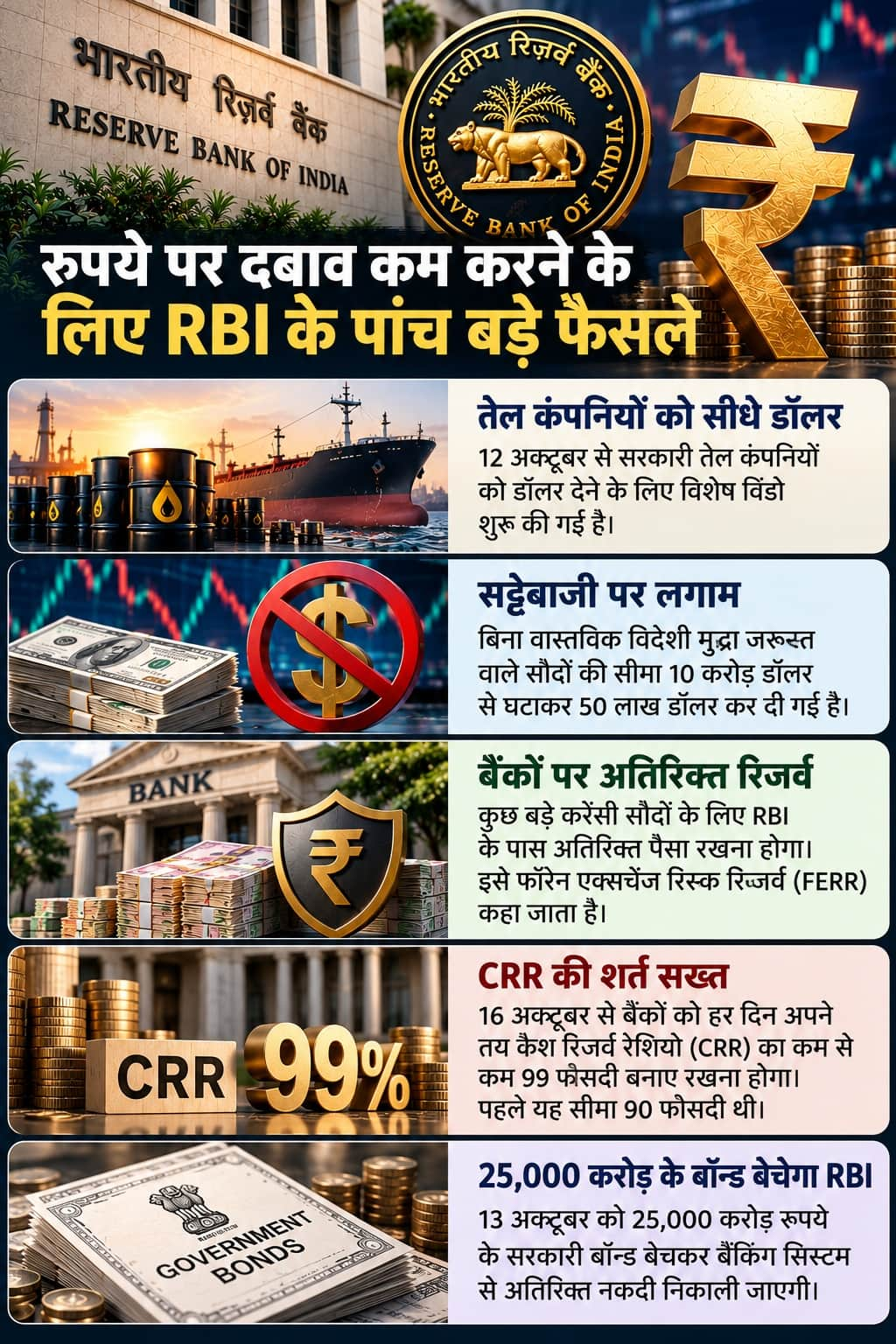
RBI ने रुपये पर दबाव कम करने के लिए पांच बड़े फैसले लिए हैं।
पहला, 12 अक्टूबर से सरकारी तेल कंपनियों को सीधे डॉलर देने की व्यवस्था शुरू की गई है। इसके लिए एक खास विंडो बनाई गई है।
दूसरा, करेंसी में होने वाले कुछ सौदों के नियम सख्त कर दिए गए हैं। जिन सौदों के पीछे विदेशी मुद्रा की वास्तविक जरूरत नहीं है, उनकी सीमा 10 करोड़ डॉलर से घटाकर 50 लाख डॉलर कर दी गई है।
तीसरा, बैंकों को कुछ बड़े करेंसी सौदों के लिए RBI के पास अतिरिक्त पैसा रखना होगा। इस व्यवस्था को फॉरेन एक्सचेंज रिस्क रिजर्व (FERR) कहा जाता है।
चौथा, 16 अक्टूबर से बैंकों को हर दिन अपने तय कैश रिजर्व रेशियो (CRR) का कम से कम 99 फीसदी बनाए रखना होगा। अभी तक यह सीमा 90 फीसदी थी।
पांचवां, RBI ने 13 अक्टूबर को 25,000 करोड़ रुपये के सरकारी बॉन्ड बेचने का फैसला किया है। इससे बैंकिंग सिस्टम में मौजूद अतिरिक्त पैसा बाहर निकालने में मदद मिलेगी।
इन फैसलों के साथ RBI की कोशिश है कि बाजार में डॉलर की मांग घटे। साथ ही, रुपये के कमजोर होने पर दांव लगाने वालों के लिए ऐसा करना महंगा हो जाए।
FCNR स्कीम से कितनी राहत मिली थी?
इससे पहले RBI ने जून में विदेशों में रहने वाले भारतीयों से डॉलर जुटाने के लिए एक खास स्कीम शुरू की थी। इसके तहत करीब 143 अरब डॉलर जुटाए गए। इससे भारत के विदेशी मुद्रा भंडार में लगभग 100 अरब डॉलर की बढ़ोतरी हुई।
लेकिन यह राहत ज्यादा दिन नहीं चली। कच्चे तेल की ऊंची कीमतों और विदेशी निवेशकों की बिकवाली से रुपये पर दबाव बना रहा। नोमुरा का अनुमान है कि सितंबर की शुरुआत में यह स्कीम बंद होने के बाद विदेशी मुद्रा भंडार करीब 43 अरब डॉलर घट गया।
एमके ग्लोबल का कहना है कि इस स्कीम से बाजार में रुपये की उपलब्धता बढ़ गई थी। इससे ट्रेडर्स के लिए रुपये में गिरावट पर दांव लगाना सस्ता हो गया। इसके अलावा, FCNR डिपॉजिट से मिला पैसा हमेशा के लिए बैंकों के पास नहीं रहेगा। उन्हें आगे चलकर यह रकम ब्याज के साथ लौटानी होगी।
तेल कंपनियों को सीधे डॉलर मिलेंगे
भारत की सरकारी तेल कंपनियों को कच्चा तेल खरीदने के लिए बड़ी मात्रा में डॉलर चाहिए। अभी वे बाजार से डॉलर खरीदती हैं। इससे डॉलर की मांग बढ़ती है और रुपये पर दबाव पड़ता है। अब ये कंपनियां तय बैंकों के जरिए सीधे RBI से डॉलर ले सकेंगी। इससे उन्हें खुले बाजार से कम डॉलर खरीदने पड़ेंगे।
अर्थशास्त्रियों का अनुमान है कि इस व्यवस्था से हर महीने 9 अरब से 11 अरब डॉलर की मांग खुले बाजार से हट सकती है। इससे रुपये को कुछ राहत मिल सकती है।
करेंसी में सट्टेबाजी करना होगा मुश्किल
RBI ने कुछ ऐसे सौदों की सीमा घटा दी है, जिनके पीछे विदेशी मुद्रा की वास्तविक जरूरत नहीं होती। पहले ऐसे सौदों की सीमा 10 करोड़ डॉलर थी। अब इसे घटाकर 50 लाख डॉलर कर दिया गया है।
इसका मतलब है कि बड़े सौदे करने वालों को अब यह बताना होगा कि उन्हें वास्तव में विदेशी मुद्रा की जरूरत क्यों है। इससे रुपये की गिरावट पर बड़े दांव लगाना मुश्किल हो सकता है।
डॉलर से जुड़े सौदे महंगे होंगे
RBI ने बैंकों के लिए एक और नियम बनाया है। अब कुछ बड़े विदेशी मुद्रा सौदों पर बैंकों को 20 फीसदी रकम अतिरिक्त रिजर्व के तौर पर रखनी होगी। यह नियम 20 लाख डॉलर से ज्यादा के तय दायरे वाले सौदों पर लागू होगा। उदाहरण के लिए, अगर किसी बैंक का ऐसा सौदा 100 करोड़ रुपये का है, तो उसे 20 करोड़ रुपये अलग रखने होंगे।
एमके ग्लोबल का अनुमान है कि इससे करेंसी की हेजिंग करीब 1.3 से 1.5 फीसदी महंगी हो सकती है। हेजिंग का मतलब है कि कंपनियां रुपये और डॉलर की कीमत में होने वाले बदलाव से अपने नुकसान को कम करने की कोशिश करती हैं। एमके के मुताबिक, इस फैसले से बैंकिंग सिस्टम में 45,000 करोड़ से 50,000 करोड़ रुपये तक की नकदी भी कम हो सकती है।
बैंकों के लिए पैसा जुटाना महंगा हो सकता है
अब बैंकों को हर दिन अपने तय CRR का कम से कम 99 फीसदी बनाए रखना होगा। पहले उन्हें 90 फीसदी रकम रखना जरूरी था। इसका मतलब है कि बैंकों को अपने पैसे का इस्तेमाल करने की आजादी कुछ कम मिलेगी। रुपये उधार लेकर करेंसी में सट्टेबाजी करने वालों के लिए भी लागत बढ़ सकती है।
इसके अलावा, RBI 25,000 करोड़ रुपये के सरकारी बॉन्ड बेचेगा। इससे बाजार में मौजूद अतिरिक्त पैसा वापस खींचने में मदद मिलेगी। कुल मिलाकर, RBI डॉलर की मांग घटाना चाहता है। साथ ही, वह रुपये के खिलाफ सट्टेबाजी को महंगा बनाना चाहता है।
RBI ने अभी ये कदम क्यों उठाए?
RBI के सामने इस समय दो बड़ी चुनौतियां हैं। पहली है कच्चे तेल की महंगी कीमतें। दूसरी है विदेशी निवेशकों का पैसा निकालना। भारत अपनी जरूरत का काफी कच्चा तेल विदेशों से खरीदता है। इसके लिए डॉलर में भुगतान करना पड़ता है। जब तेल महंगा होता है, तो भारत को ज्यादा डॉलर खर्च करने पड़ते हैं। इससे डॉलर की मांग बढ़ती है और रुपये पर दबाव आता है।
दूसरी तरफ, विदेशी निवेशक भारतीय बाजार से पैसा निकाल रहे हैं। अमेरिका में ऊंची ब्याज दरें और बेहतर रिटर्न मिलने से निवेशकों का पैसा अमेरिकी बाजारों की ओर जा रहा है। इसका असर भारत में डॉलर की उपलब्धता पर पड़ता है। जब डॉलर की मांग बढ़ती है और उपलब्धता कम होती है, तो रुपये पर दबाव बढ़ जाता है।
8 अक्टूबर को भारत और अमेरिका के 10 साल के सरकारी बॉन्ड की यील्ड का अंतर घटकर करीब 194 बेसिस पॉइंट रह गया था। यह करीब 22 साल का निचला स्तर था।
क्या रुपये को मजबूती मिलेगी?
RBI के इन फैसलों से बाजार में डॉलर की मांग कम हो सकती है। इससे रुपये में अचानक होने वाली बड़ी गिरावट को रोकने में मदद मिल सकती है।
इन उपायों के बाद शुरुआती कारोबार में रुपये में करीब 1 फीसदी की तेजी आई। शुक्रवार, 9 अक्टूबर को रुपया 96.73 प्रति डॉलर पर बंद हुआ था। सोमवार को यह 95.77 प्रति डॉलर पर कारोबार कर रहा था।
हालांकि, सिर्फ एक दिन की तेजी से यह नहीं कहा जा सकता कि रुपये की गिरावट रुक गई है। आगे रुपये की चाल कच्चे तेल की कीमतों, विदेशी निवेशकों के रुख और बाजार में डॉलर की उपलब्धता पर निर्भर करेगी।
कंपनियों पर क्या असर पड़ेगा?
RBI के फैसलों से उन कंपनियों का खर्च बढ़ सकता है, जो विदेशों से सामान खरीदती हैं। इनमें मशीनरी, इलेक्ट्रॉनिक्स और कच्चा माल आयात करने वाली कंपनियां शामिल हैं। ऐसी कंपनियां डॉलर की कीमत में होने वाले बदलाव से बचने के लिए हेजिंग करती हैं।
लेकिन अगर हेजिंग महंगी हो जाती है, तो उन्हें इसके लिए ज्यादा पैसा खर्च करना पड़ेगा। कुछ कंपनियां हेजिंग कम कर सकती हैं। कुछ छोटी अवधि के सौदे कर सकती हैं। इससे फिलहाल फॉरवर्ड मार्केट में डॉलर की मांग घट सकती है।
आगे RBI के सामने क्या चुनौती है?
RBI के कदम रुपये को कुछ समय के लिए राहत दे सकते हैं। लेकिन रुपये की कमजोरी की असली वजहें अभी बनी हुई हैं। कच्चे तेल की कीमतें ऊंची रहीं, विदेशी निवेशक पैसा निकालते रहे और भारत को निर्यात से कम डॉलर मिले, तो रुपये पर दबाव बना रह सकता है।
एमके का अनुमान है कि अगर कच्चे तेल की कीमत करीब 100 डॉलर प्रति बैरल बनी रहती है, तो वित्त वर्ष 2026-27 में भारत का चालू खाता घाटा GDP के 1.6 से 1.7 फीसदी तक पहुंच सकता है। चालू खाता घाटा तब होता है, जब देश के विदेशी लेनदेन में कमाई के मुकाबले खर्च ज्यादा होता है। ऐसे में डॉलर की जरूरत बढ़ सकती है।
क्या RBI रुपये को $95 तक ला पाएगा?
RBI के नए कदम रुपये को कुछ समय के लिए 95 प्रति डॉलर के आसपास संभालने में मदद कर सकते हैं। लेकिन यह कहना मुश्किल है कि रुपया लंबे समय तक इसी स्तर पर बना रहेगा।
एमके के मुताबिक, RBI की नेट शॉर्ट फॉरेन एक्सचेंज फॉरवर्ड पोजिशन 200 अरब डॉलर से ज्यादा हो गई है। आसान भाषा में कहें तो केंद्रीय बैंक के ऐसे सौदे बड़ी मात्रा में हैं, जिनका निपटारा भविष्य में करना होगा। कुछ सौदों को आगे बढ़ाया जा सकता है या दूसरे सौदों से उनका असर संतुलित किया जा सकता है।
इसलिए सिर्फ करेंसी बाजार पर पाबंदियां लगाने से रुपये को लंबे समय तक संभालना मुश्किल होगा। इसके लिए डॉलर की मांग और उपलब्धता के बीच संतुलन बनना भी जरूरी है।
आम लोगों और अर्थव्यवस्था पर क्या असर पड़ेगा?
अगर रुपये की गिरावट धीमी पड़ती है, तो विदेशों से आने वाले सामान की कीमतों पर दबाव कम हो सकता है। इससे आयातित महंगाई को काबू में रखने में मदद मिलेगी। कच्चे तेल की कीमतें पहले से ऊंची हैं। ऐसे में रुपया ज्यादा कमजोर होने पर तेल आयात का खर्च और बढ़ सकता है। इसका असर पेट्रोलियम उत्पादों और दूसरी चीजों की कीमतों पर भी पड़ सकता है।
आखिर में, अर्थव्यवस्था पर इन फैसलों का कितना असर होगा, यह इस बात पर निर्भर करेगा कि RBI को ये पाबंदियां कितने समय तक जारी रखनी पड़ती हैं। साथ ही, कच्चे तेल की कीमतें घटती हैं या नहीं और विदेशी निवेशकों का रुख बदलता है या नहीं, यह भी अहम होगा।
Gold Silver Prices Today: दिल्ली सर्राफा बाजार में 9 अक्टूबर को सोने में लगातार दूसरे दिन जोरदार तेजी आई। यह 1,900 रुपये के उछाल के साथ 1,54,400 रुपये प्रति 10 ग्राम पर बंद हुआ। चांदी में भी अच्छी तेजी आई। अंतरराष्ट्रीय बाजार में सोने और चांदी में मजबूती का असर घरेलू बाजार में इनकी कीमतों पर पड़ा। डॉलर में नरमी का असर भी सोने की कीमतों पर पड़ा।
चांदी में गिरावट पर लगा ब्रेक
चांदी में भी दिल्ली सर्राफा बाजार में जोरदार तेजी देखने को मिली। चांदी में गिरावट पर ब्रेक लग गया। यह 4,500 रुपये के उछाल के साथ 2,28,500 रुपये प्रति किलोग्राम पर बंद हुई। गुरुवार को चांदी में 3000 रुपये की गिरावट आई थी। इस हफ्ते के पहले तीन दिनों में चांदी की कीमतों में स्थिरता देखने को मिली थी।
डॉलर में नरमी से सोने को सपोर्ट
ब्रोकरेज प्लेटफॉर्म लेमन के हेड ऑफ रिसर्च गौरव गर्ग ने कहा कि गोल्ड में तेजी की वजह अमेरिकी डॉलर में नरमी है। हालांकि, इनफ्लेशन को लेकर चिंता बनी हुई है। ब्रेंट क्रूड का प्राइस फिर से 104 डॉलर प्रति बैरल के पार चला गया है। 8 अक्टूबर को यह एक समय 105 डॉलर प्रति बैरल के पार चला गया था।
इस हफ्ते सोने में 3 फीसदी की तेजी
इस हफ्ते सोने और चांदी की कीमतों में काफी उतार-चढ़ाव रहा। लेकिन, लगातार दो दिन तेजी की वजह से सोने में 3.07 फीसदी यानी 4,600 रुपये की रिकवरी आई। हालांकि, चांदी में हफ्ते के दोरान 1,500 रुपये यानी 1 फीसदी की कमजोरी देखने को मिली। पिछले काफी समय से सोने और चांदी की कीमतों में सीमित दायरे में उतार-चढ़ाव दिख रहा है।
अंतरराष्ट्रीय बाजार में सोने और चांदी में तेजी
अंतरराष्ट्रीय बाजार में सोने और चांदी में तेजी दिखी। सोना 1.33 फीसदी चढ़कर 4,188 डॉलर प्रति औंस चल रहा था। सिल्वर करीब 3 फीसदी उछाल के साथ 60.92 डॉलर प्रति औंस था। मिरै एसेट शेयरखान के हेड ऑफ कमोडिटीज प्रवीण सिंह ने कहा कि सोने की कीमतें तेजी के रुझान के साथ सीमित दायरे में रह सकती हैं। उन्होंने कहा कि क्रूड में तेजी आने पर सोने पर फिर से दबाव बढ़ सकता है।
इस साल की शुरुआत में सोने और चांदी की कीमतें रिकॉर्ड ऊंचाई पर पहुंच गई थीं। उसके बाद दोनों में तेज गिरावट आई। फरवरी के अंत में अमेरिका और ईरान की लड़ाई शुरू होने के बाद सोने और चांदी पर दबाव और बढ़ गया। दोनों की कीमतें तब से सीमित दायरे में चढ़ और उतर रही हैं।
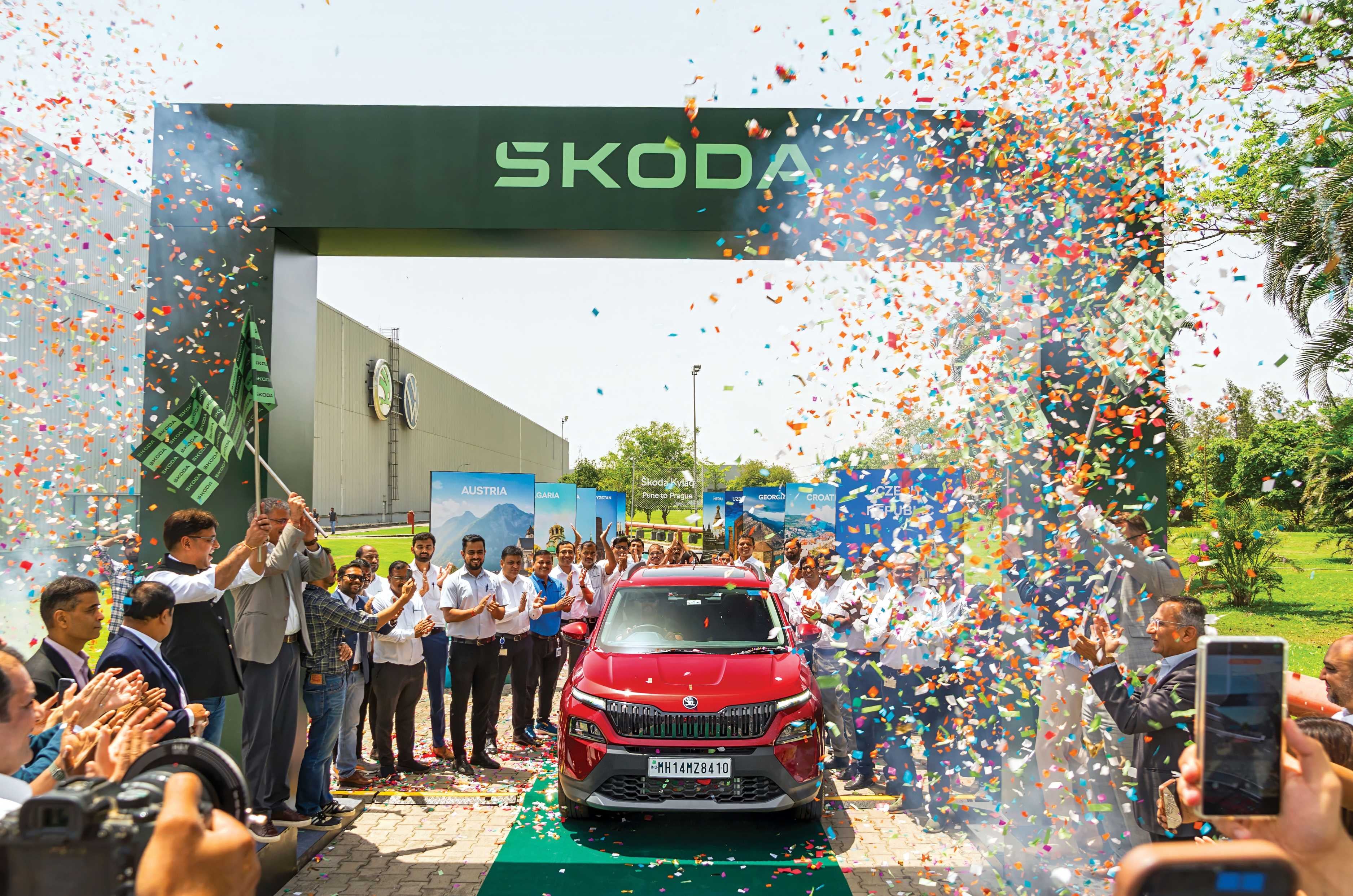
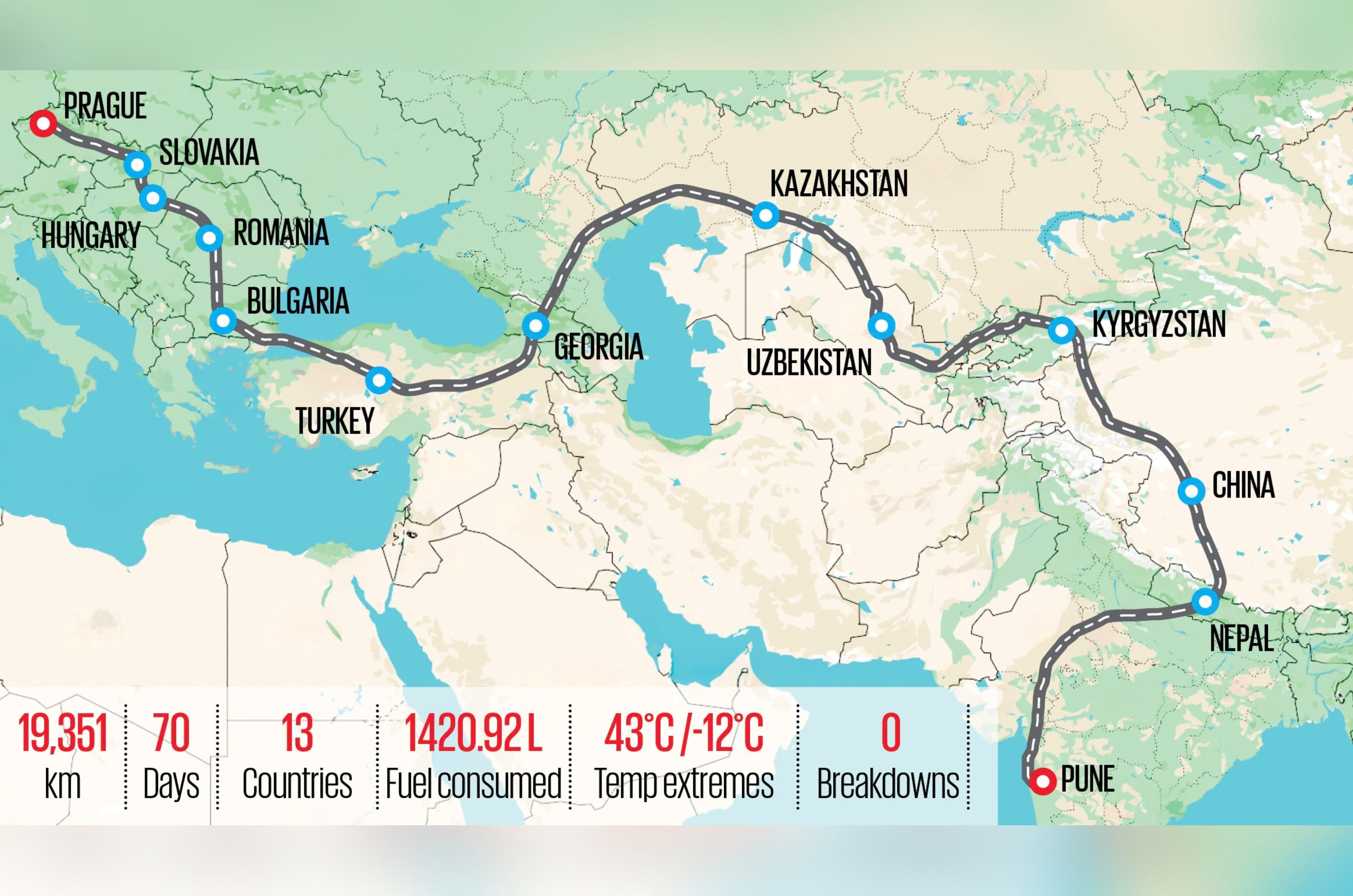
There are road trips, there are overland expeditions, and then there are journeys that become conversations with continents. This one starts in the industrial heart of Maharashtra, inside Skoda India’s sprawling Chakan facility. The end point lies nearly 20,000 kilometres away at Skoda Auto’s headquarters near Prague in Mladá Boleslav, Czech Republic, where bicycles evolved into automobiles and a 130-year-old story continues to be written.
Between these two factories lie thirteen countries, four major mountain ranges, countless cuisines, dozens of languages and enough history to fill libraries.
Our companion? Not a flagship SUV or a luxury grand tourer, but Skoda’s smallest SUV – the Kylaq, which recently celebrated its one-year anniversary. Driving it from Pune to Prague is a tall order, but surviving one year in India and being accepted with flying colours is enough cred one needs to take on the world.
India – Home Turf
Witnessing the Kylaq’s birth added more responsibility.
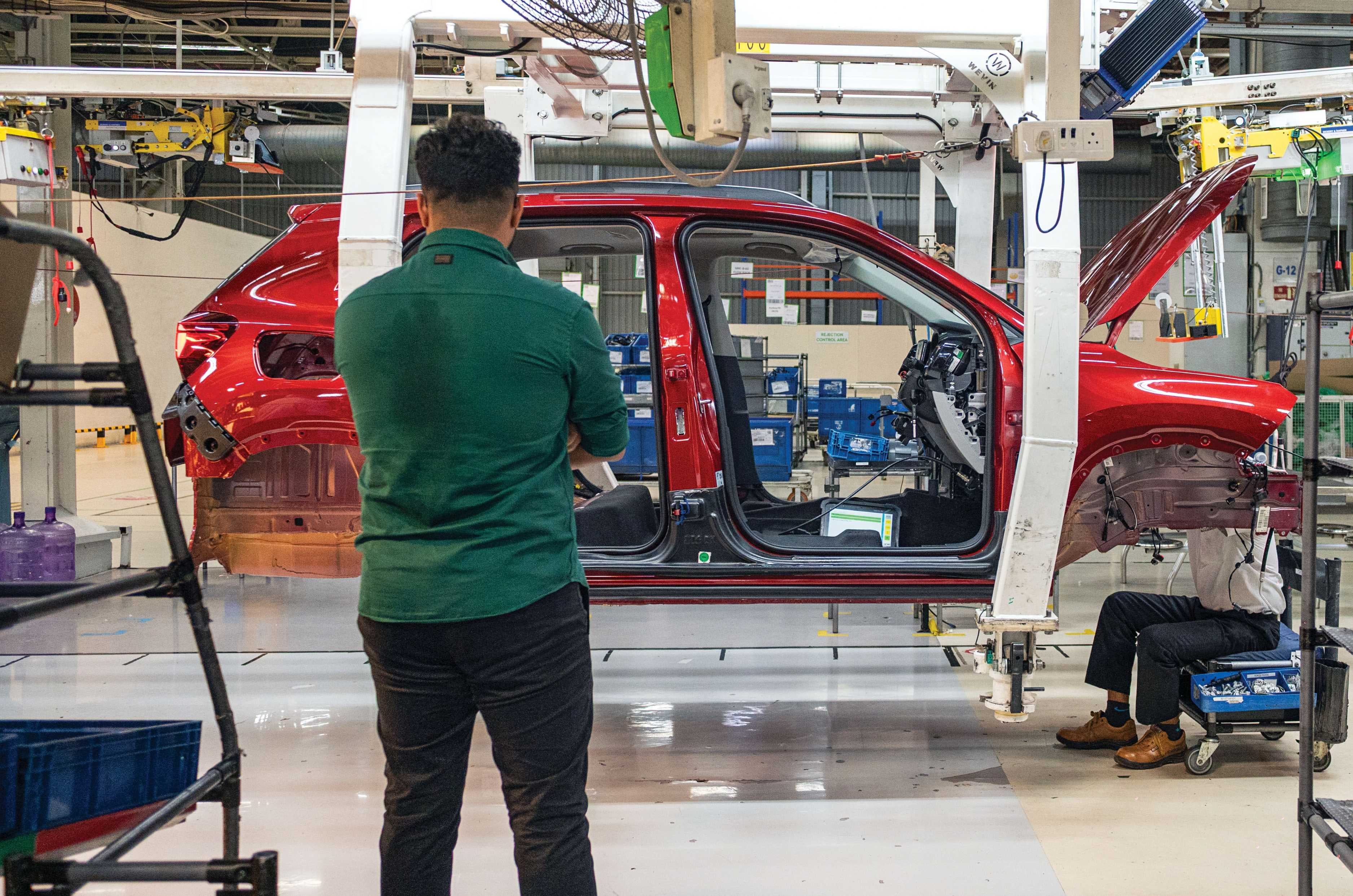
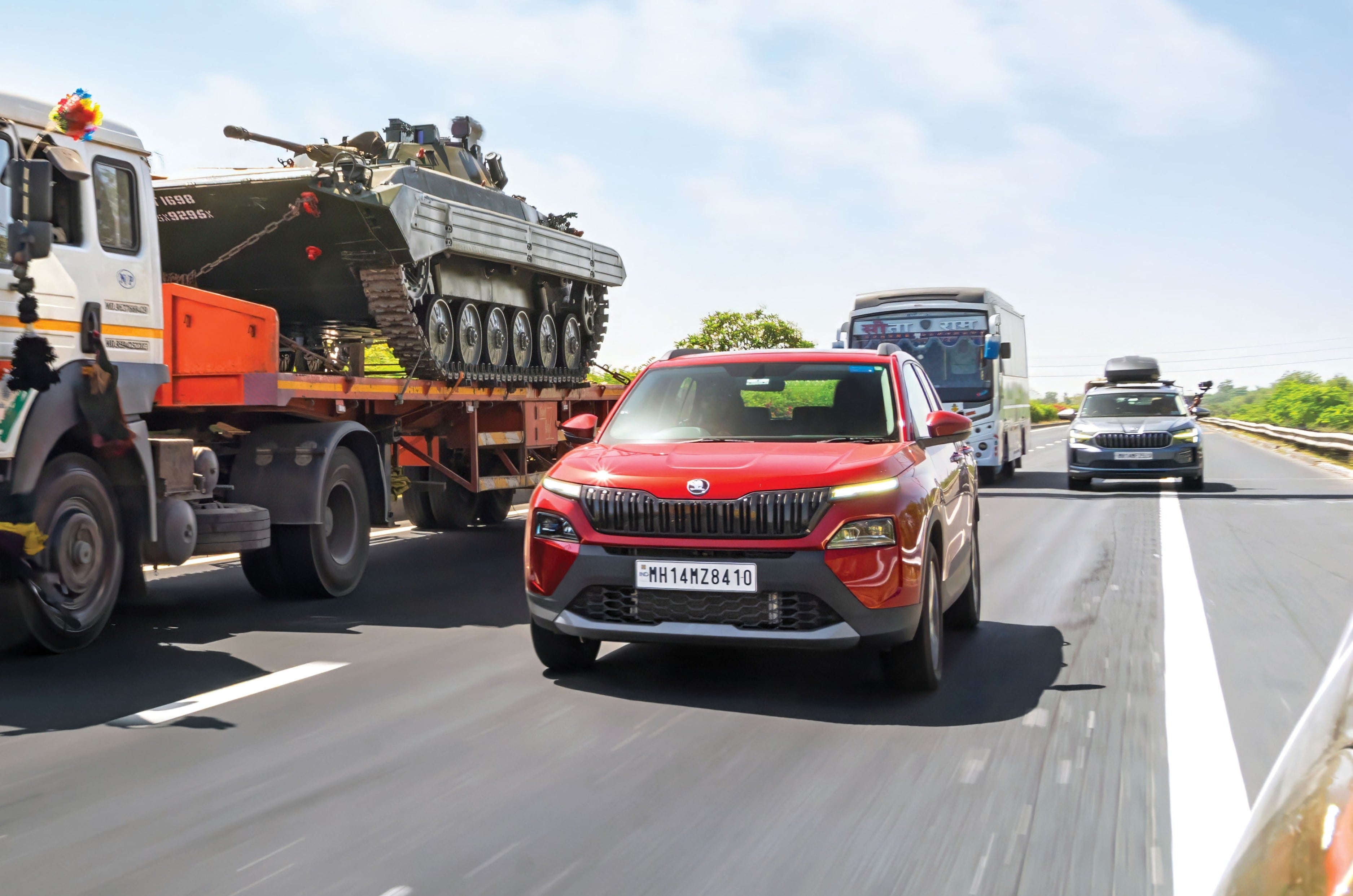
On a cross-country road trip, you’d imagine the home country would be the easiest leg. With India, it was the opposite. To some, it’s organised chaos, but honestly, it’s anything but organised. Erratic traffic, erratic egos, and road conditions fit only for a Mars rover – India was the biggest challenge on the drive from Pune to Prague. As the odometer ticked over its first kilometre, right outside the gate of Skoda’s Chakan plant, a blood-red PMPML bus was ready to trade paint with the cherry-red Kylaq. A dinged-up Kylaq parked on the streets of Prague wouldn’t be a good look, so it was imperative that I babysit this compact SUV like a million-dollar supercar. Having watched the car being assembled on the factory floor, from bare bones to the finished package, only added to the emotion – driving it in traffic felt like walking a toddler across a football field. Eyes wide open, ready to block any attack.
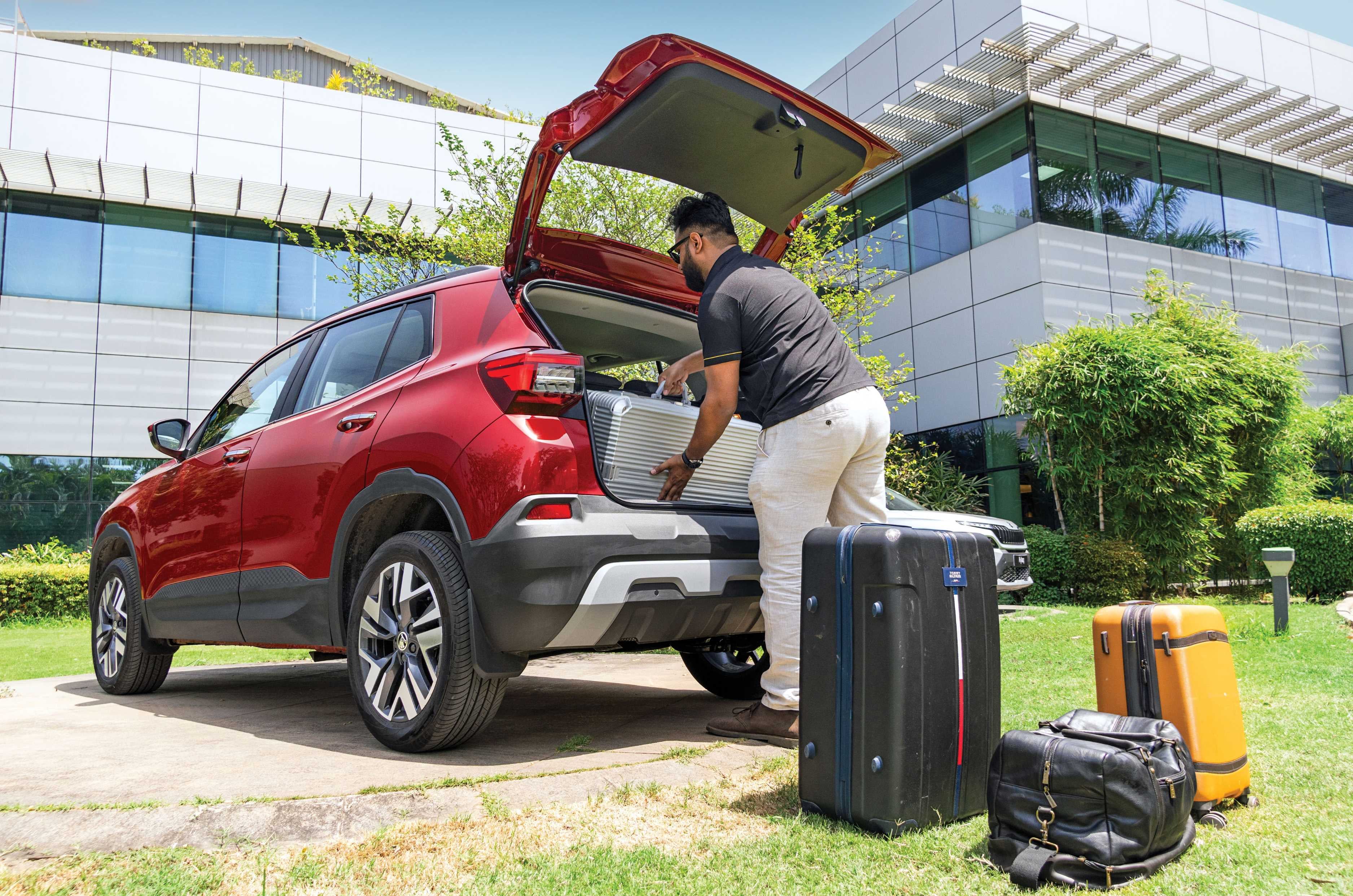
446-litre boot packed to the brim for 70 days on the road.
We got onto the Pune expressway and then crossed the Atal Setu in Mumbai, the longest sea bridge on the entire journey. Mumbai was home, both to me and to the Autocar India office, so after a few greetings from co-workers and the obligatory photos, we headed towards our first state crossing. The infamous Western Express Highway that leads out of Mumbai lived up to its reputation, but with a little anxiety, panic and a few expletives, we made it onto the national highway.
No telling what you’d spot on Indian highways.
The first of countless food stops was Hotel Ahura, renowned for its akuri and kheema. Needless to say, we carb-loaded to the max and made a beeline for Vadodara.
Pune-Birgunj in numbers
Distance covered
2,487km
Fuel consumed
234.46 litres
Average fuel economy
10.62kpl
Approximate fuel cost
Rs 23,629
Average per-litre fuel cost
Rs 100.87
Total time driven
55hrs 20min
Average speed
44.95kph
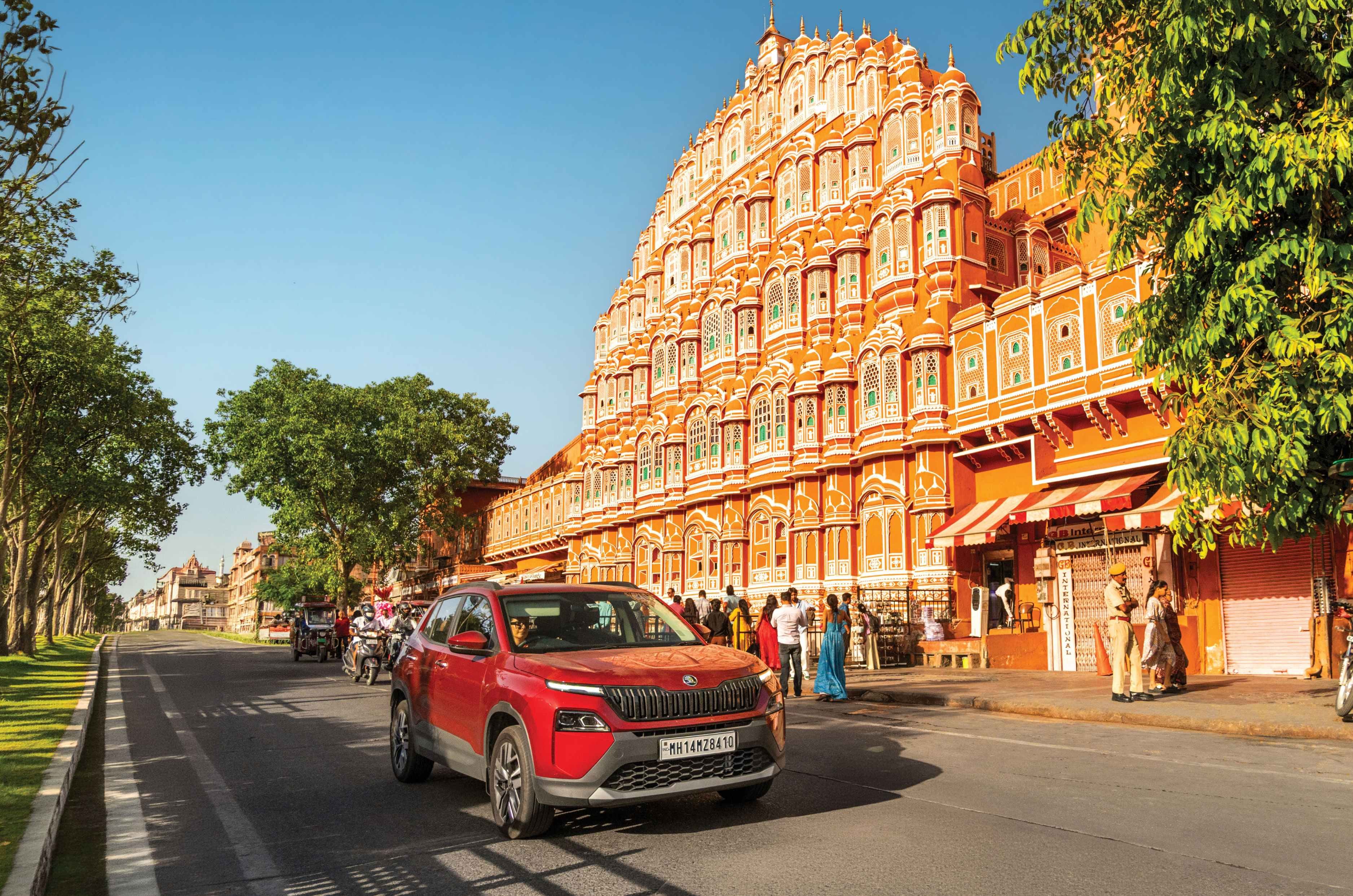
Crossing into Gujarat, the Kylaq could finally stretch its legs and spool up that turbo on the state’s spotless highways. The stability and effortless cruising were a welcome relief, since the bulk of the kilometres on this drive would be covered on long, open highways. Gujarat was a short stint – we made only an overnight halt in Vadodara before slipping out ahead of the morning traffic. The drive into Rajasthan was seamless, and Udaipur greeted us with a mix of heat and traffic. The City of Lakes is worth taking the time to explore, but a late arrival and early morning departure left us with just enough time to grab a traditional meal. All that driving had built up an appetite, so we put it to a vote between a massive vegetarian thali and laal maas – the latter won by a landslide. From the City of Lakes, we headed to Jaipur, the Pink City: just as picturesque as Udaipur, and just as colourful and chaotic. The sun setting over the beautiful Amer Fort made for a cracking backdrop, and a few glimpses of the Jal Mahal on the way back were a treat too. The iconic Hawa Mahal, with its 953 windows, never fails to amuse, but getting a photo of the five-storey icon without a chorus of honks is next to impossible. The next morning, after threading through Jaipur’s narrow lanes, we made it back onto the highway, heading for Agra.
Iconic Hawa Mahal ought to be seen first-hand.
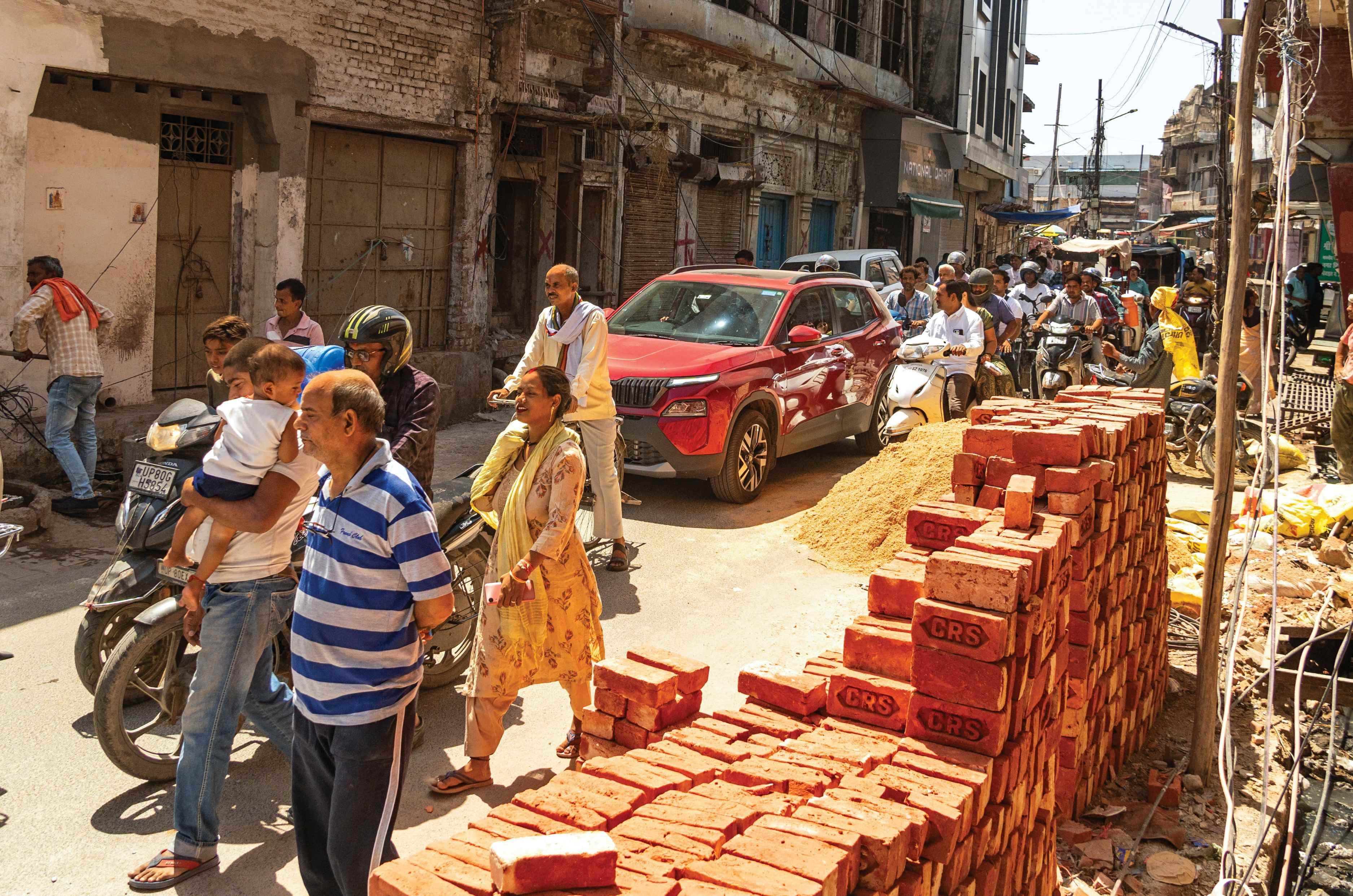
Agra is synonymous with the Taj Mahal, but the Agra Fort – from which you can see the Taj in the distance – is just as mesmerising. The detailing and architecture are second to none, and you could spend hours walking through its courtyards and passages, taking endless pictures. We, of course, also made it to the Taj itself, amid the hordes of tourists, if only to avoid the guilt of visiting Agra without a shot of the world-famous white dome. Tourism done, it was time for some petha – though the lanes near the petha shops seemed to be the exact width of the Kylaq, and that’s where peak anxiety set in. We got out of the mess, walked around the car to check for scratches and scribbles, and sighed in relief. India was adding to the tension, and we were barely halfway through it.
Agra’s narrow lanes were a nightmare to drive through.
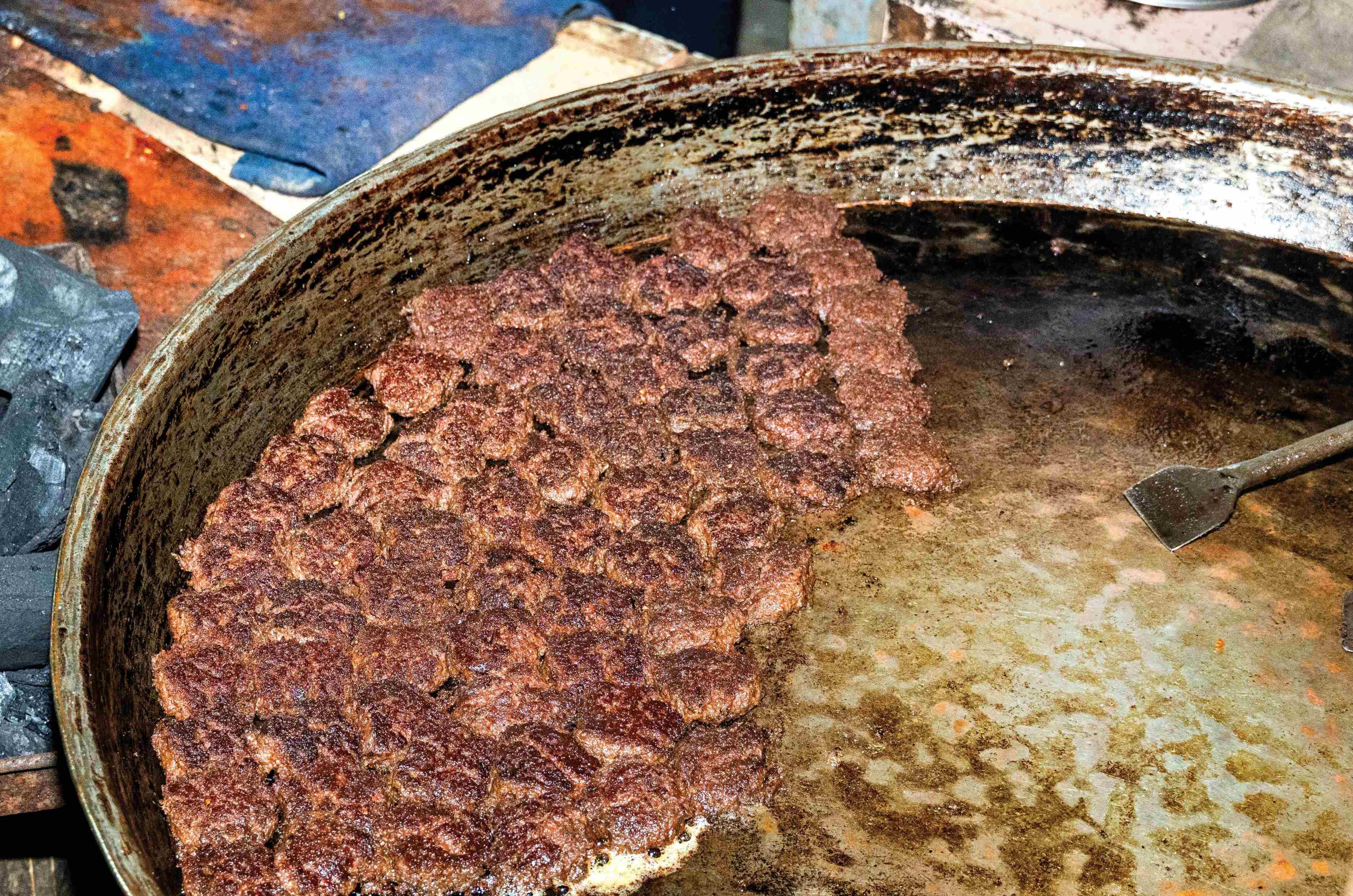
Our next stop from Agra was foodie heaven – Lucknow. The biryanis, kebabs, and tandoors were exactly what we expected, and exactly what Lucknow delivered. Finding your way here is easy – you could do it blindfolded, following the smoke and sizzle to wherever you need to be. Tunday Kababi is a must, and after a heap of biryani laced with kebabs, a long walk through the countless chikankari shops helps burn off some of the calories.
Lucknow’s Tunday Kababi still has us drooling over Galouti kebabs.
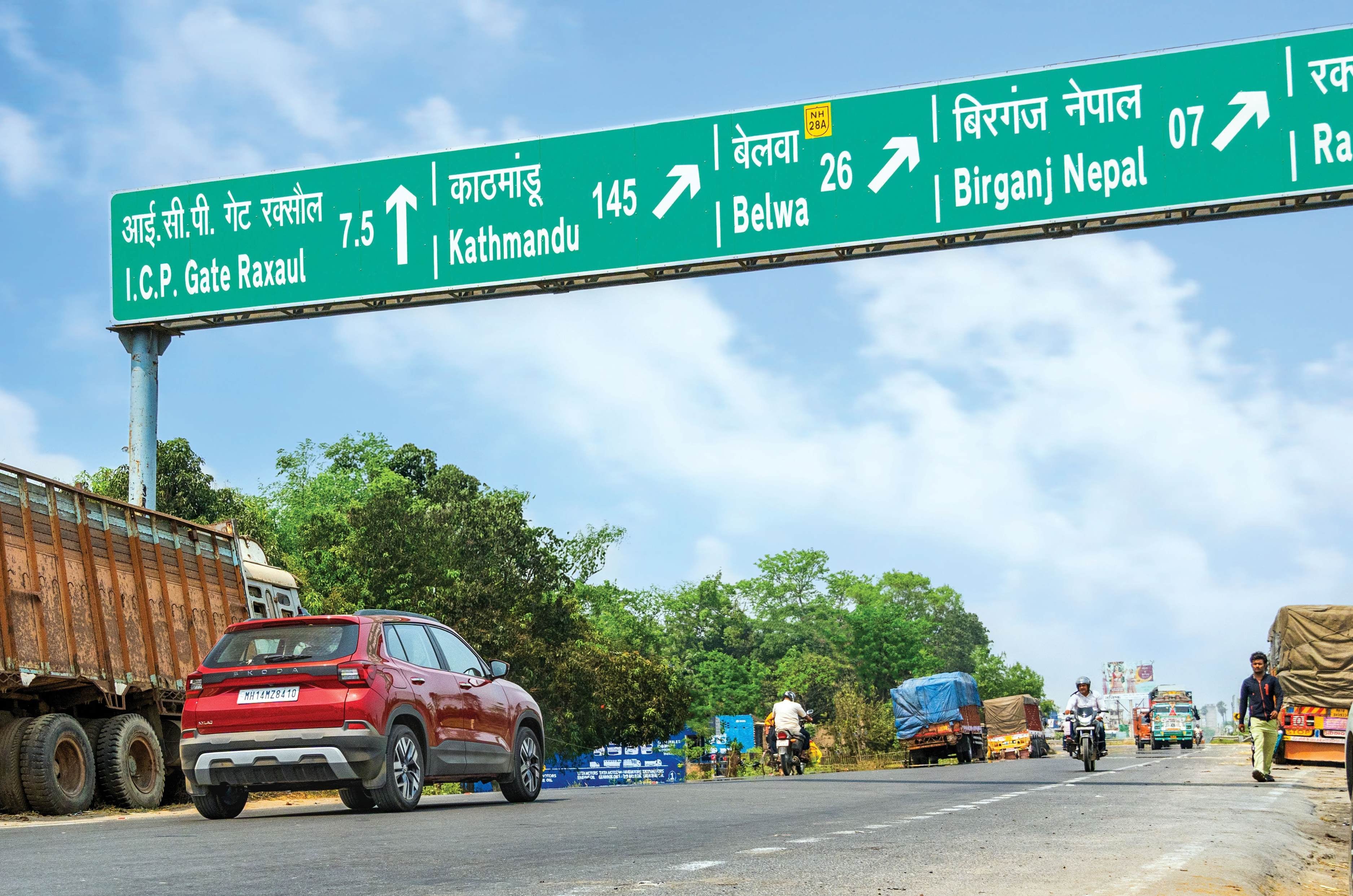
We were closing in on the end of the India leg, with one last stop in Gorakhpur before the Nepal border. To celebrate, a group of Skoda owners, officially known as the ‘Fans of Skoda’ joined us for a celebratory convoy as we drove out – everything from Octavia RS models to Kodiaqs and Kushaqs turned up as a send-off before we went international. The loud, chaotic border towns past Gorakhpur delivered one final challenge as we exited through Raxaul.
Final stretch before the Kylaq left India for the first time.
The India-Nepal border is still raw and basic, with none of the high-tech systems you might expect. A drive of this scale comes with a mountain of paperwork – visas, carnets, insurance, and more – and sifting through all of it manually takes a while. After a gruelling five hours, the Kylaq crossed out of India for the very first time.
Nepal – Old World Charm
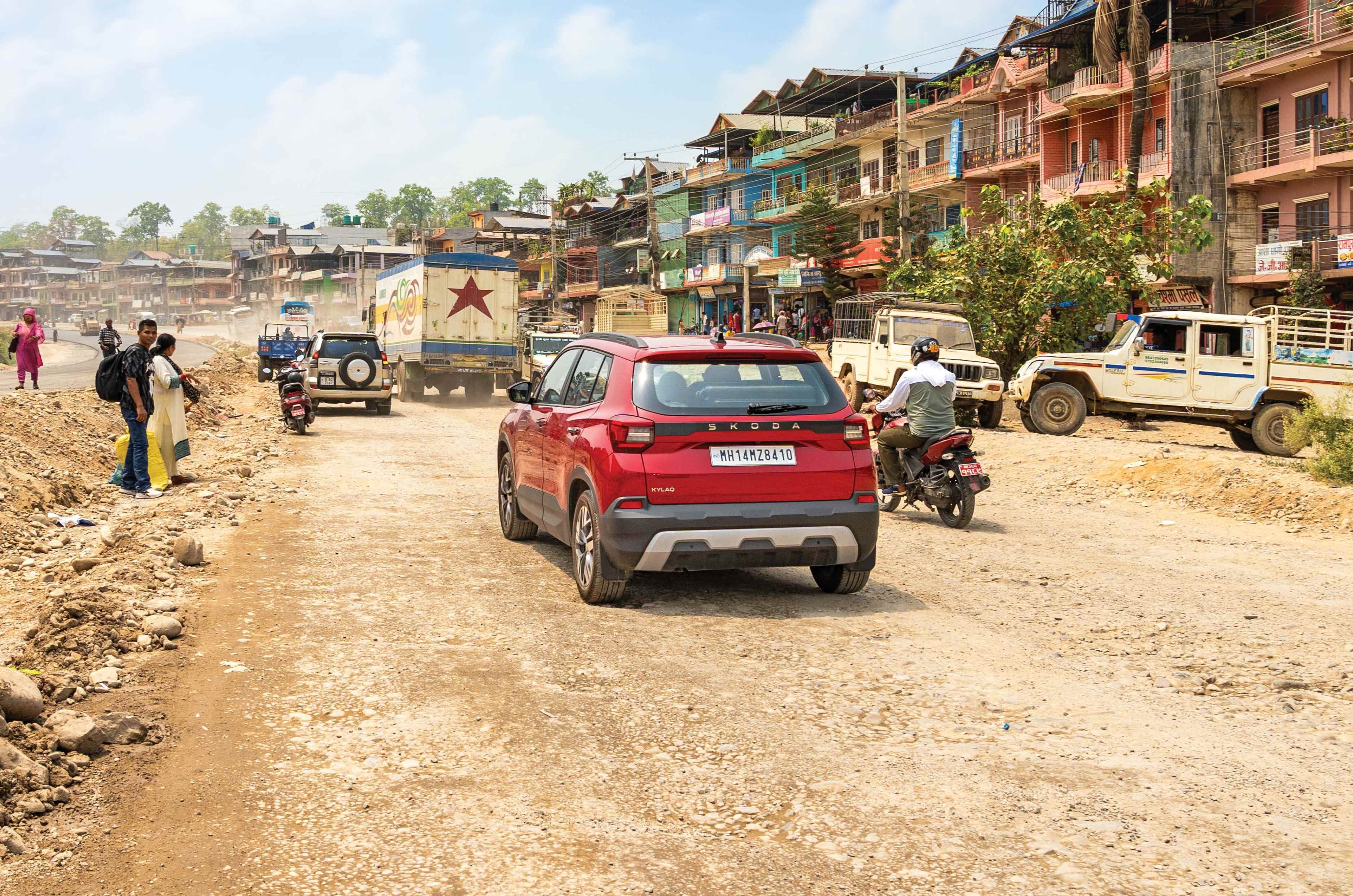
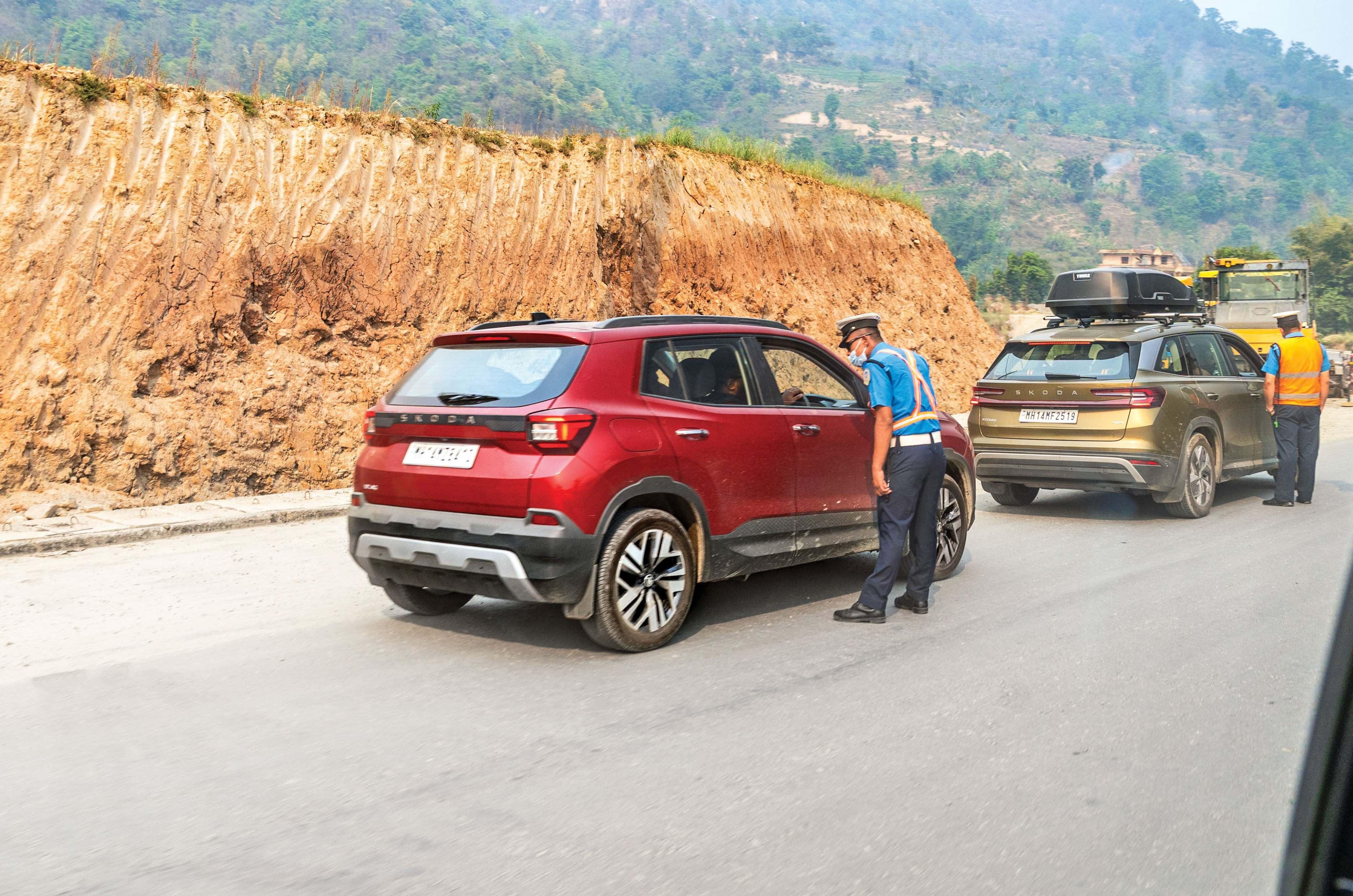
Nepal’s state highways give Indian roads a run for their money.
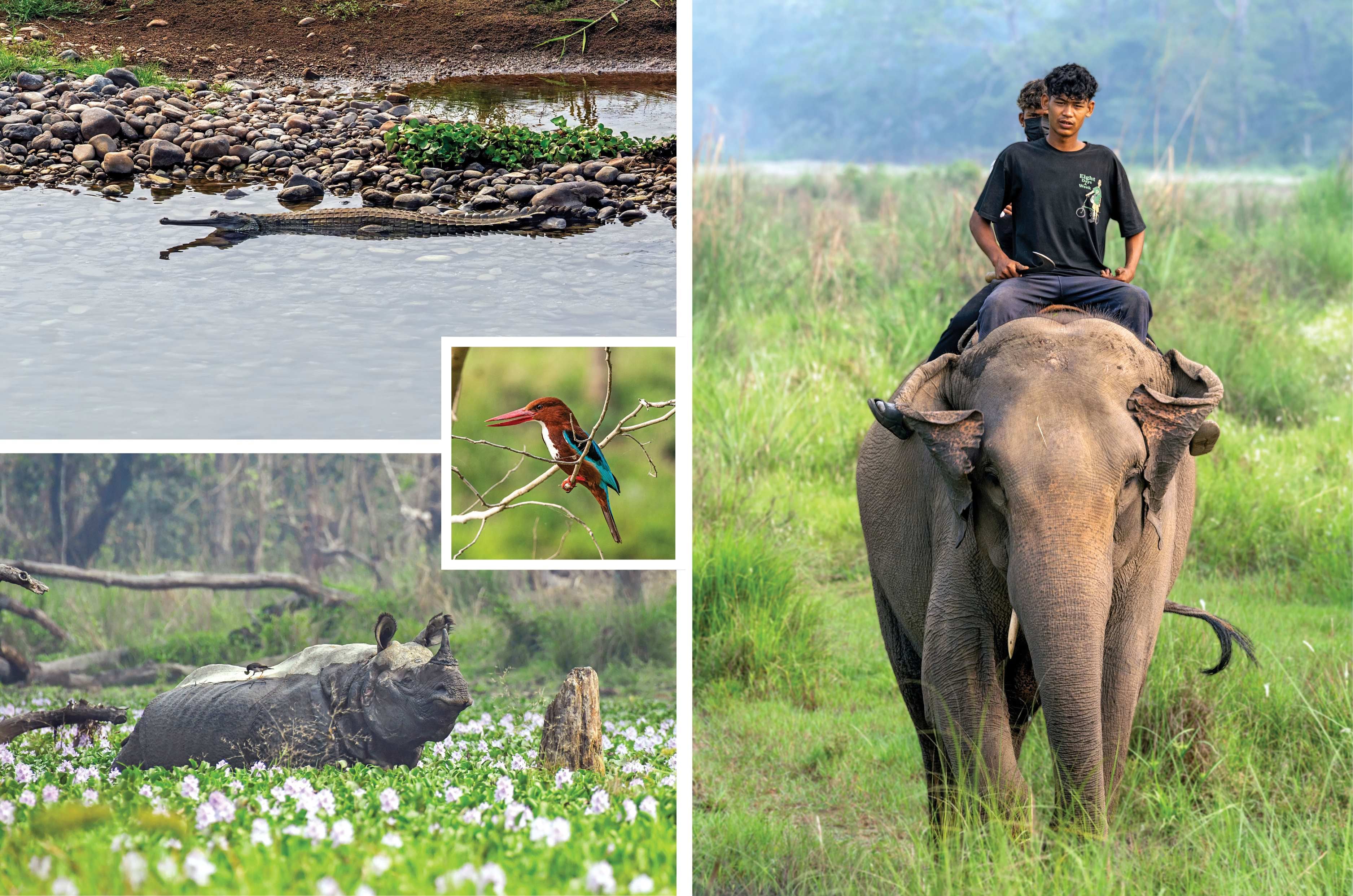
If the Indian side of the border was old-school, Nepal’s immigration post is almost antique. Drive past it, and you’d likely miss it altogether – the only tell-tale sign is a simple gate with ‘Immigration Office’ hand-painted on it. This humble-looking house is, in fact, the immigration office, where, just like on the Indian side, every check is done manually. Fine print, identity proofs, and everything in between were checked meticulously before we were welcomed into Birgunj. Our main draw in Nepal was the bustling capital, Kathmandu, but there were magnificent stops along the way, starting with Chitwan National Park. Home to nearly 700 one-horned rhinos, the park also shelters elephants, Bengal tigers, cobras, the elusive gharial, and abundant flora. The Kylaq would have been fun to explore it in, but we opted for the park’s safari vehicle to relax and take in the surroundings. Paddling a beaten-up wooden kayak past crocodiles and snakes adds a rush, but it’s nothing compared to a rhino staring you down in all its magnificence. The park gave us a welcome break from long hours behind the wheel.
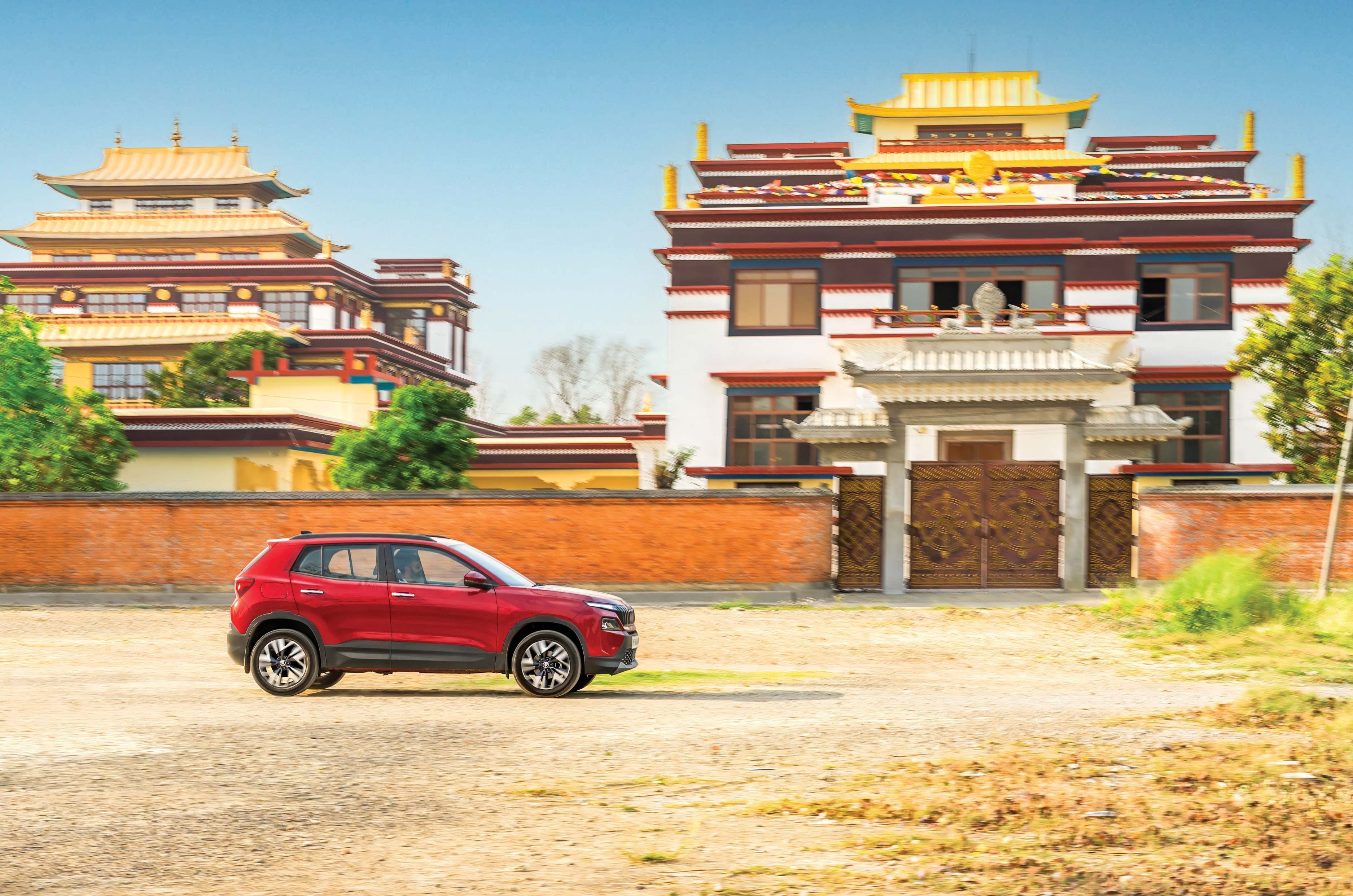
Lumbini is home to 32 unique styles of monasteries.
Next was Lumbini, a spiritual haven and, more importantly, the birthplace of Siddhartha Gautama (Lord Buddha) around 563 BC. Its fascinating monastic zone showcases monasteries built by Buddhist nations from around the world, each reflecting its own culture through design and architecture – a remarkable collection of temples spanning diverse traditions. The feeling of peace there was unlike anything I’d experienced, but it was soon disrupted by the road to Pokhara.
Lumbini provided a moment of calm through the chaos.
Mountain passes are notorious for destroying Google’s ETAs – landslides, breakdowns, and deteriorating roads mean a stretch that should take an hour could take five, depending on your luck. We braced for traffic and drove straight into a landslide clearing. A two-hour wait meant the sun was setting as we rolled into the quaint town of Pokhara. Bustling with cafés and pop culture, it felt like a mini Kathmandu, but with the stunning Phewa Lake turning orange at sunset. The calm that began in Chitwan came full circle on the shores of Phewa Lake.
Chitwan is home to the gharial and over 700 one-horned rhinos.
Kathmandu, though, was a different animal entirely – every bit a capital city, and a world away from the slow pace of Chitwan or Lumbini. The music is loud, the traffic is hectic, and the city is anything but quiet. Ironically, the only quiet things on the road are the cars – China’s dominance in Nepal is stark, with three in five cars on the road being Chinese EVs. Geely, BYD, and GWM rule the market, with only a handful of Hyundais and Kias as competition.
Authorities were always curious thanks to Indian number plates.
The party scene rules Kathmandu too. At night, the city comes alive as a hub for tourists from around the world. Hiking gear and North Face apparel go for a fraction of the price – and, often, a fraction of the quality – alongside quirky masks and fridge magnets at every tourist stop. Spend a little more time, though, and you’ll find excellent coffee shops and the famous Thakali thali: thick buckwheat porridge with salads, meat, and plenty of flavour. Good thing too, since walking through Durbar Square works up quite an appetite. Partly destroyed by the devastating 2015 earthquakes, the temples have since been restored to their former glory, though you can still spot the scars in a few bent pillars and roofs. It’s a culture and tradition worth preserving, and Nepal deserves credit for doing exactly that.
Birgunj-Sino-Nepal Border in numbers
Distance covered
922km
Fuel consumed
115.96 litres
Average fuel economy
7.13kpl
Approximate fuel cost
Rs 15,846
Average per-litre fuel cost
Rs 136.65
Total time driven
34hrs 25min
Average speed
27kph
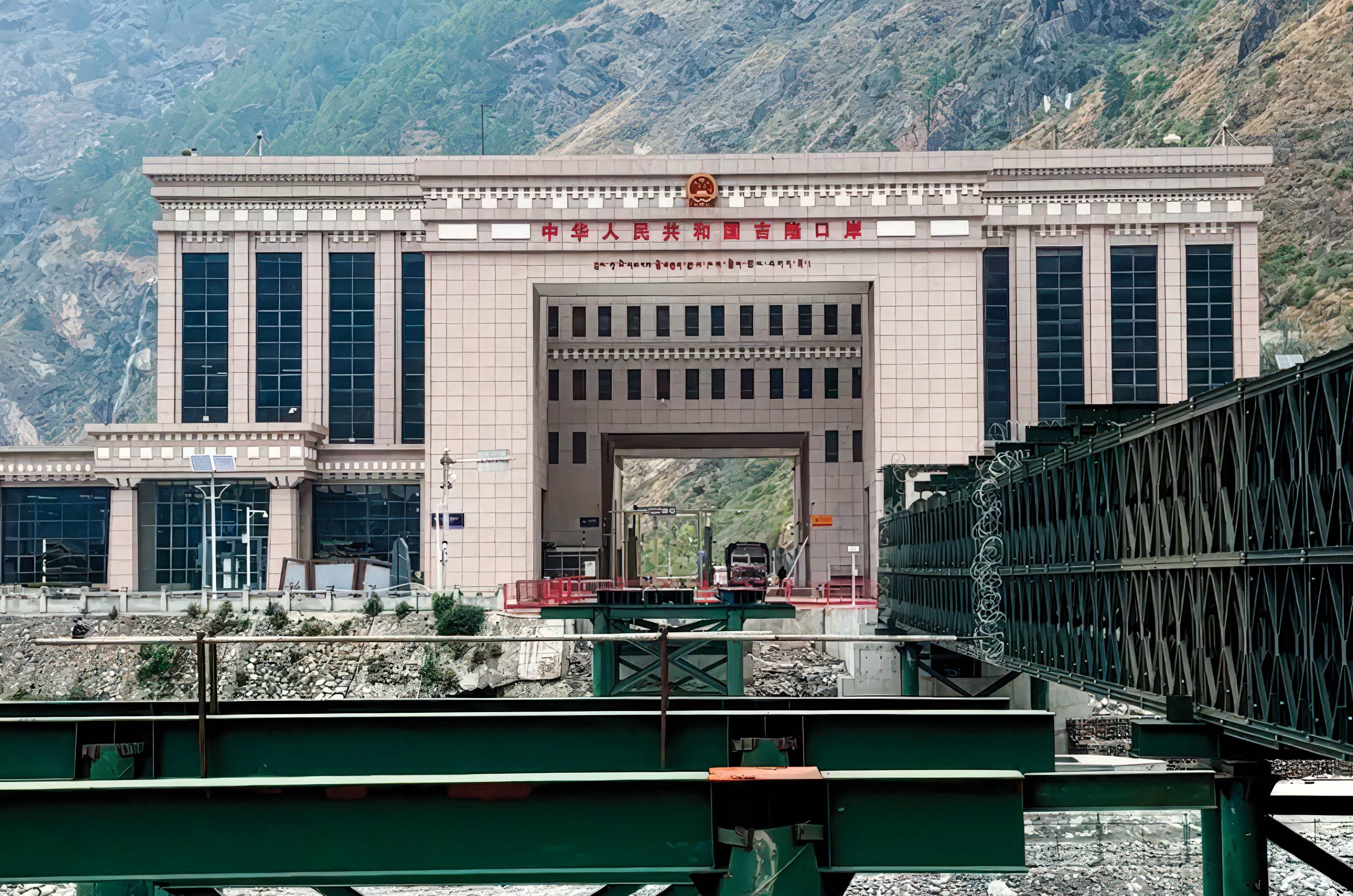
With Kathmandu explored, we headed towards our second border crossing – and this one was far more intense. Once we left Kathmandu, we left the tarmac behind too. Muddy back roads, still wet from the previous night’s rain, meant slush and a constant need for 4WD. Even so, though packed to the brim with luggage, the Kylaq stayed light enough and had enough clearance to pick its way around the mud on the approach to the Rasuwa Bridge. From there, you can see the Chinese immigration building towering over everything around it. With the Kylaq thrumming with excitement, we crossed into Tibet – the roof of the world.
Tibet/China – Roof of the World
China’s border crossing is as imposing as it gets.
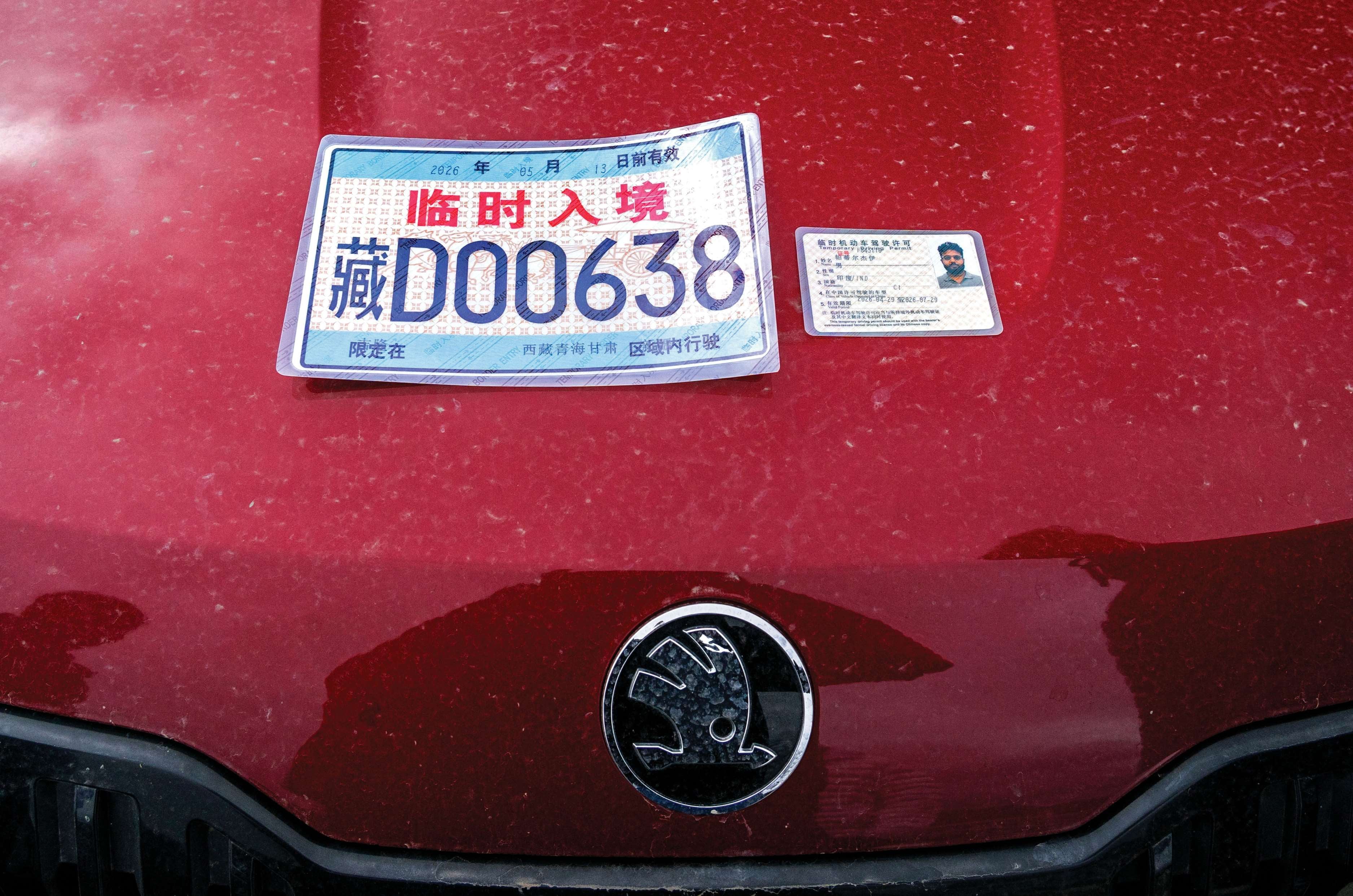
Crossing into Tibet felt like crossing into the future. For a region tucked deep into the mountains, it’s exceptionally developed – the roads are smooth and well-signed from the moment you cross the bridge, barely a hundred metres before the immigration office. In China, we weren’t taking any chances, knowing any misstep here could jeopardise the rest of the journey. After answering the customs officers honestly – and impressing them with the scale of the Kylaq’s challenge – we entered the lovely town of Gyirong. Old Chinese architecture, plenty of red, and signboards we couldn’t quite read were early signs that we really were in a different world now. Nepal had shared plenty with India – the cars, the food, the roads – but China felt entirely its own. We thought we’d seen our share of speed cameras, but China put us to shame – they appear every 50 metres or so, complete with flashes. There’s simply no room for error, and you’re monitored everywhere you go – aneerie feeling that takes some getting used to. Another non-negotiable is to obtain a special driving licence for every person that will be driving and a China-specific number plate, which you have to place on your dashboard so the cameras can pick up any infringements. A regular India-style RTO office with long queues and a lack of urgency got us homesick for a bit.
Local license and registration are non-negotiables in China.
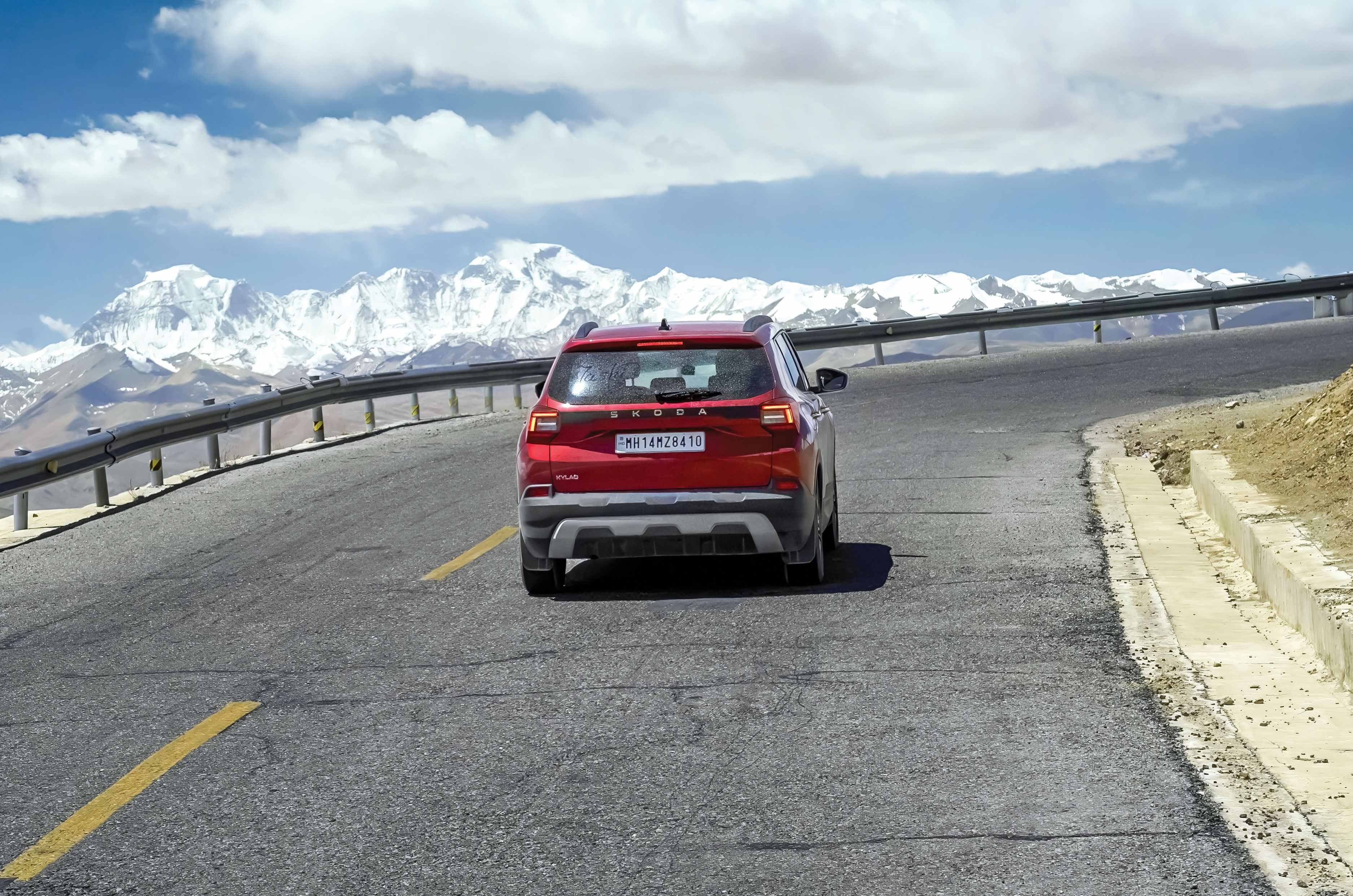
A few mugs of hot ginger-lemon tea eased us into the chill, and we set off for Mount Everest Base Camp. High altitudes are usually punishing for small-capacity engines, but thanks to its turbocharged engine, the Kylaq barely broke a sweat, buzzing through the passes. Its 6-speed automatic had been a great convenience through the chaos of India and Nepal, but the winding mountain roads and immaculate tarmac meant I could switch to manual and take control via the paddle shifters. Paddle-shift response is often sluggish, but not here – the shifts were quick, and the taut suspension held its ground even through tight hairpins.
Everest hove into view long before we made it to base camp.
It made for a great drive and great footage, right up until we spotted the peak in the distance. Even from afar, Everest is breathtaking, and mercifully the clouds stayed clear as we got closer. You can’t take a car near base camp itself – a one-hour bus ride covers that final stretch. It’s strange how you lose your breath as you approach Everest – partly the thin air and altitude, but you’d lose it all the same just from the view. Words don’t do it justice, and don’t be surprised if you shed a tear or two – it’s overwhelming.
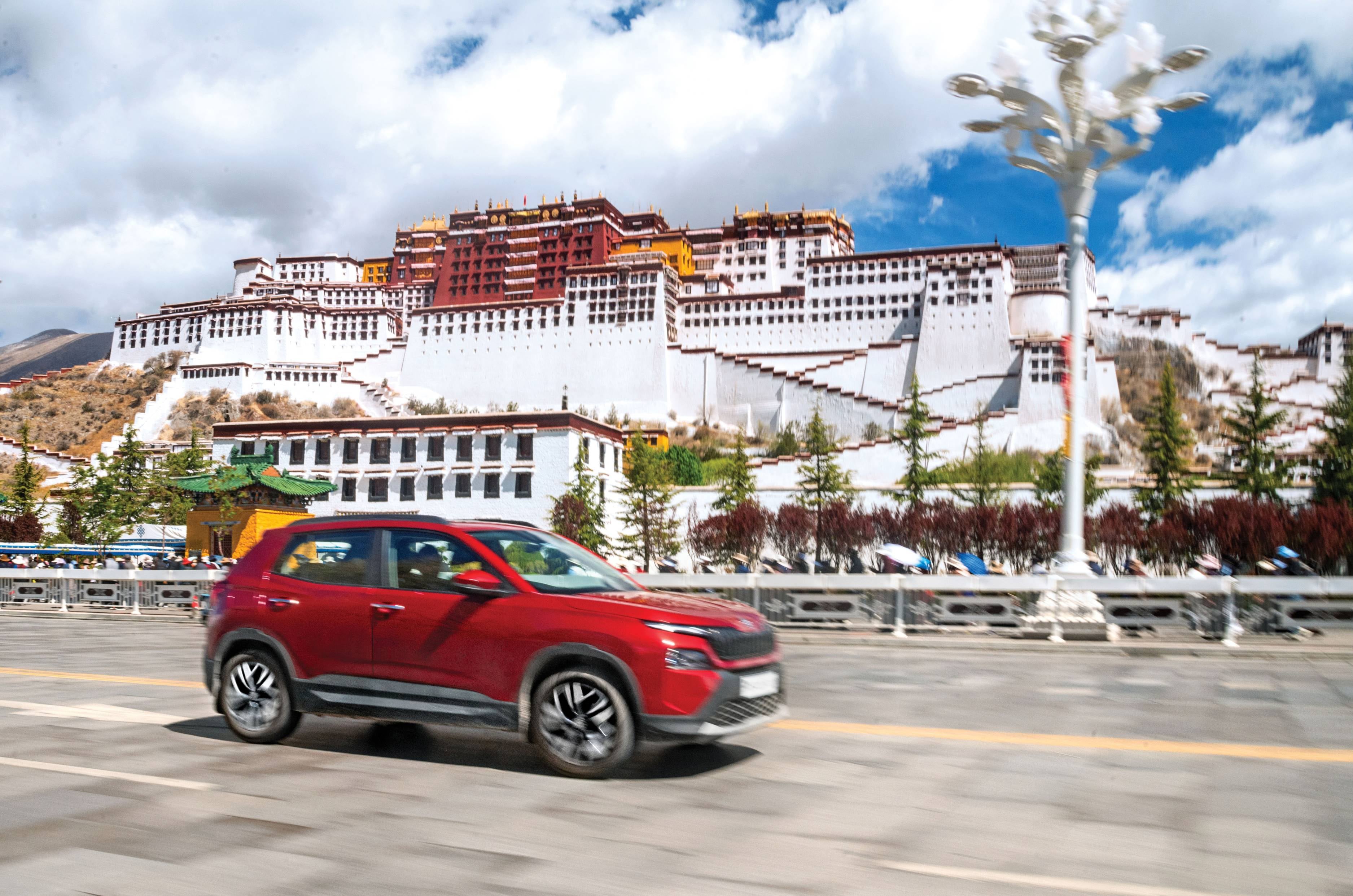
Stunning Potala Palace; once home to the Dalai Lamas.
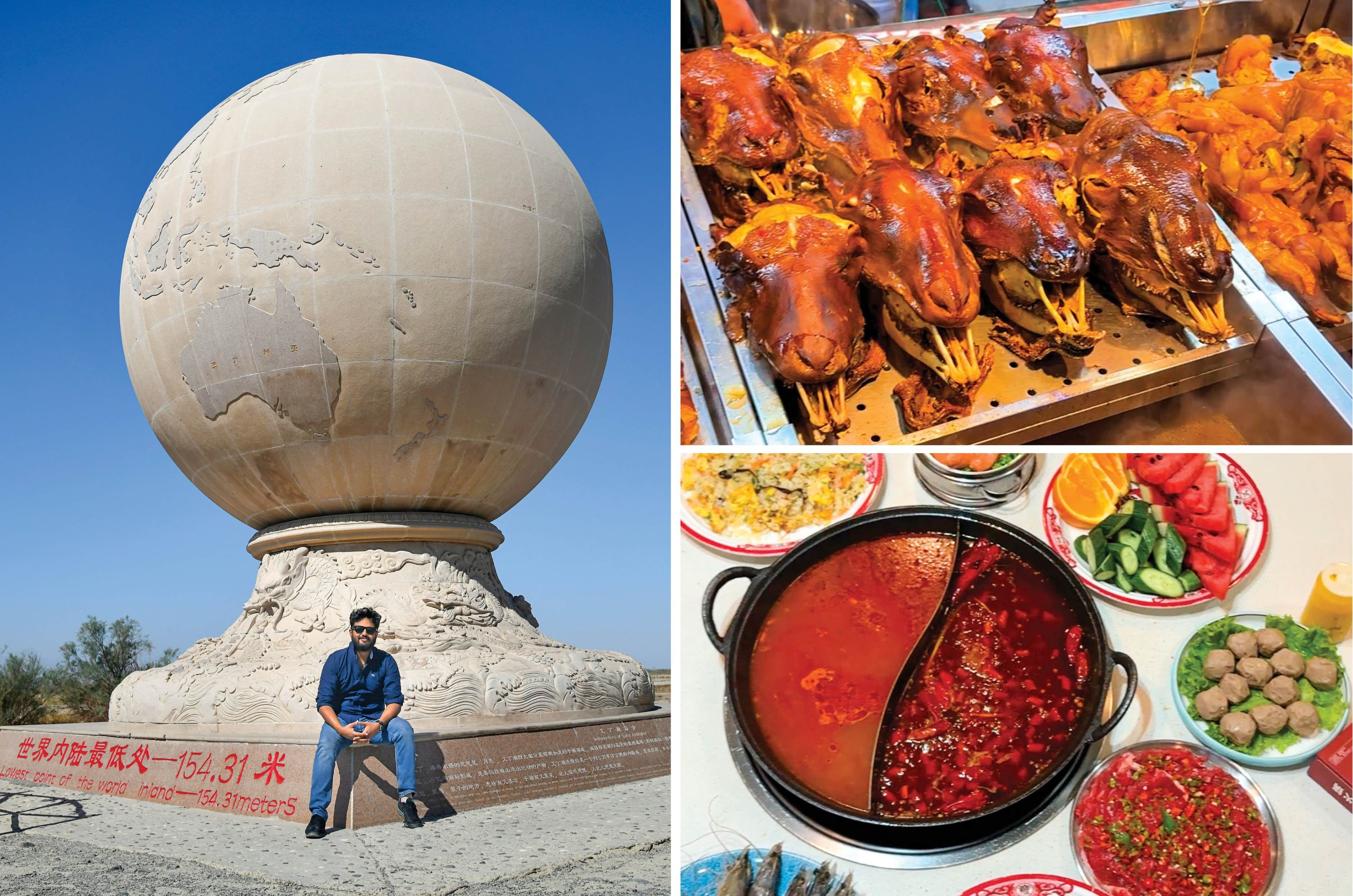
With Everest ticked off, it was time to take on China’s vastness. We headed to Lhasa, the spiritual capital of Tibet, home to the grand Potala Palace. Once home to monks and lamas, this stunning palace holds incredible history and artefacts – spiritual or not, its significance to the country’s history is unmistakable. The drive kept revealing itself through unique food, dialects, faces, and even geography. One day we were freezing thousands of feet above sea level; days later, in Turpan, we were below sea level in blistering heat. From boiling hotpots to grocery-store instant noodles, China pushed us well outside our comfort zone, and the Kylaq wasn’t spared either.
L: From EBC’s high to Turpan Depression’s low – Jay was at 154m below sea level here. R: Street food in China not for the faint-hearted.
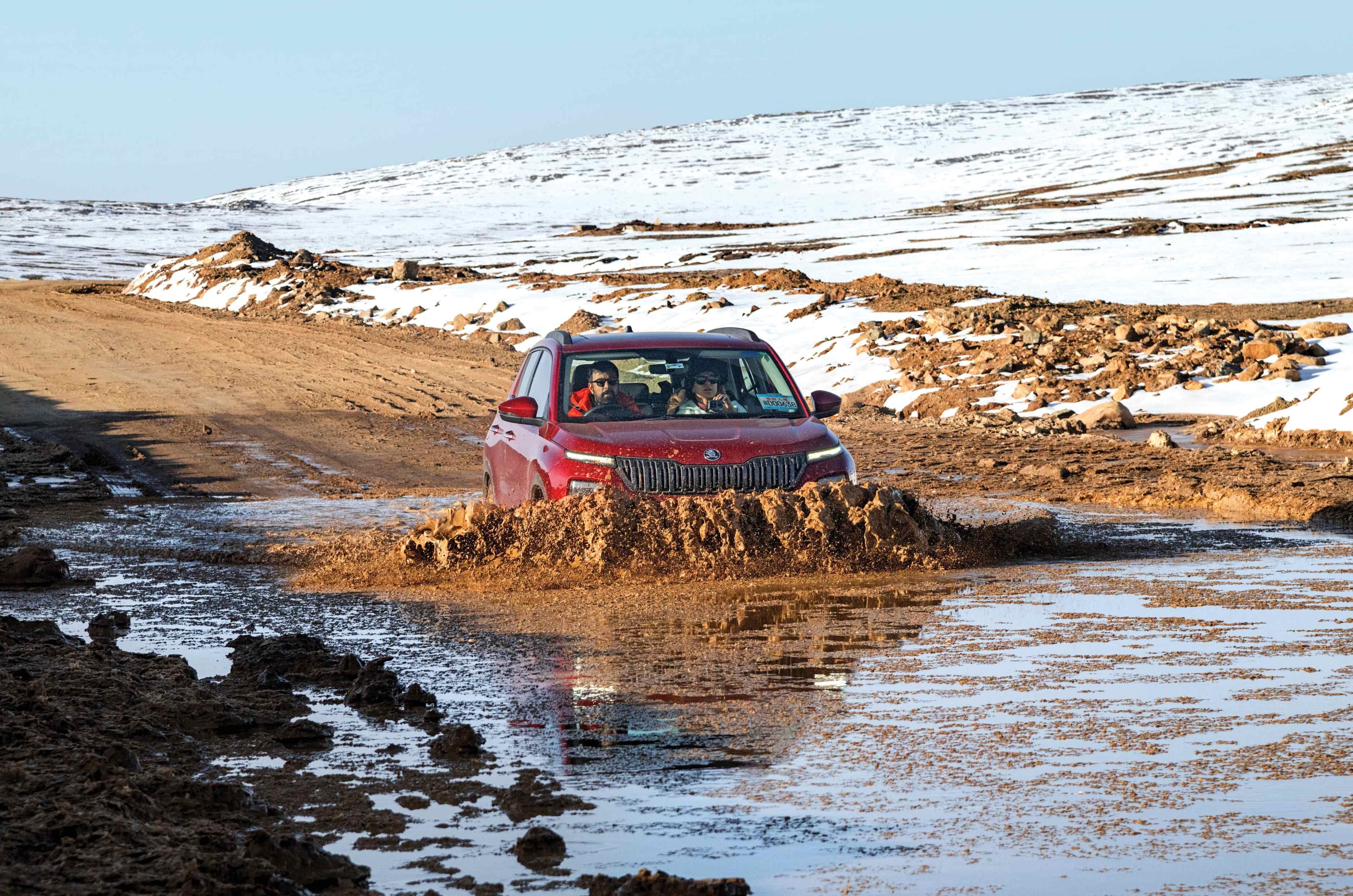
Two full days on the way to Golmud were entirely off-road, taking over 13 hours of driving, with our average speed dropping to 18kph as the Kylaq waded through water up to its bonnet and emerged without complaint.
In China, you get perfect roads or, simply, no roads.
A stretch that would have broken most cars left the Kylaq unscathed. China hit hard, but the Kylaq hit back harder. From day one, it had faced challenge after challenge, and from day one, it had come out on top. Three countries in, it still carried the same zeal it started with – and while we were rattled, it stood strong each night, ready for the next day.
Only recently, I made the sweeping and somewhat heavy-handed statement that EVs have taken the excitement out of speed. That once you’ve done one ballistic acceleration run in an EV, you’ve done them all, and without a roaring engine, vibrations pulsating through the wheel and gearshifts jolting you in the small of your back, it all feels a bit sanitised. Well, as it turns out, all an EV needs to solve this conundrum is… even more power.
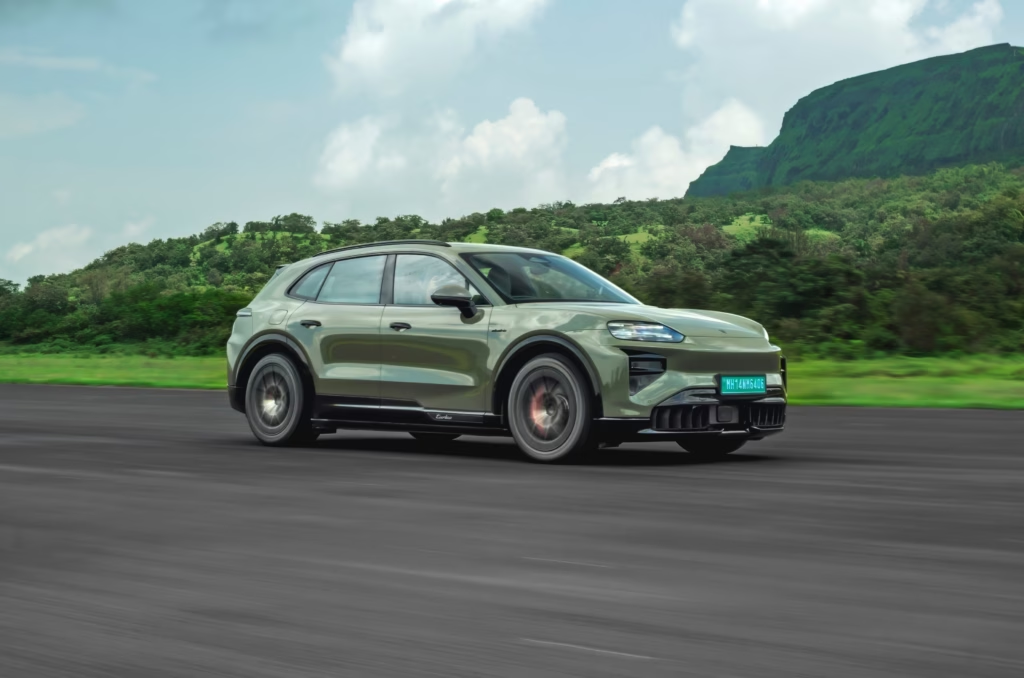
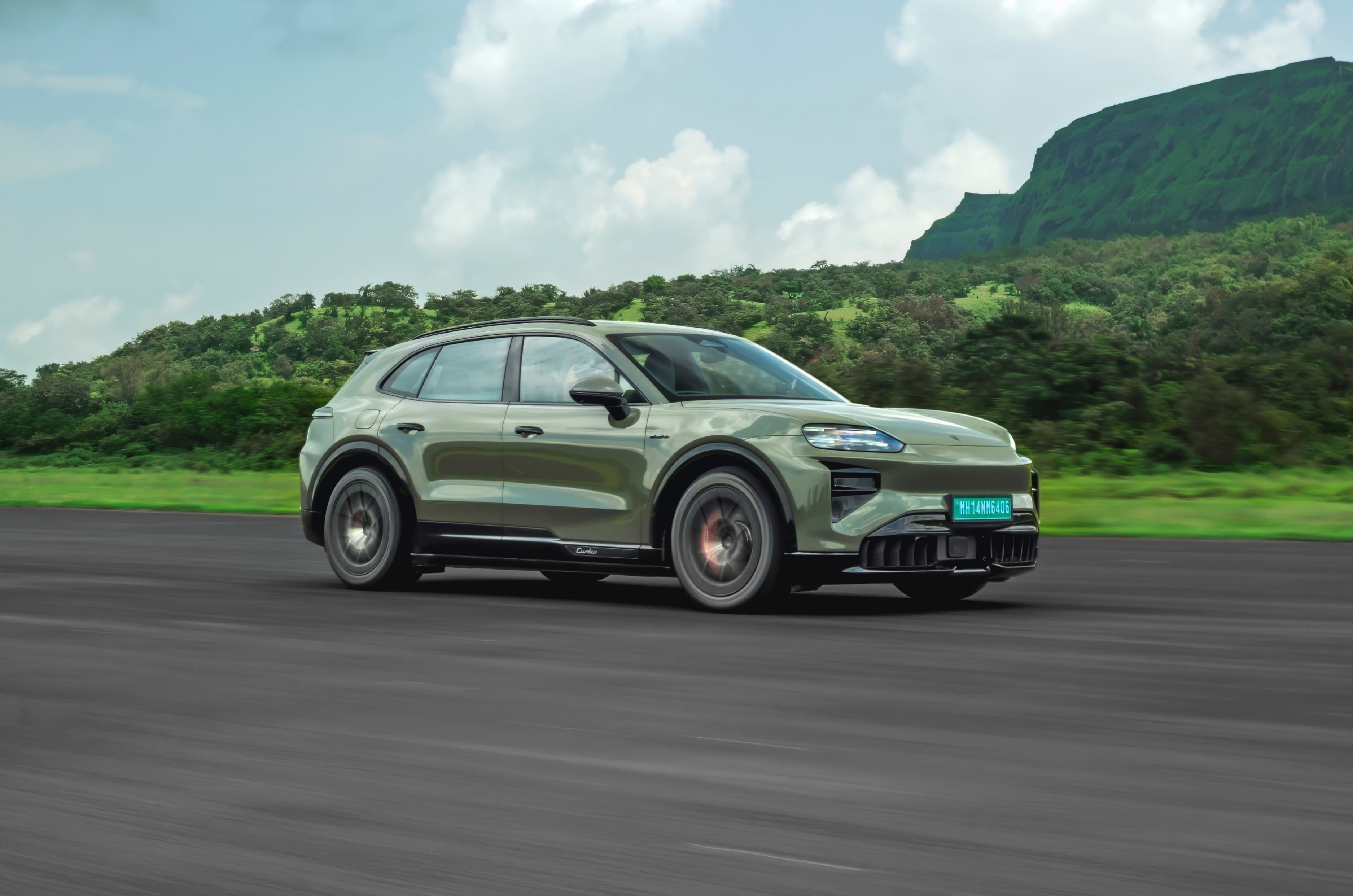
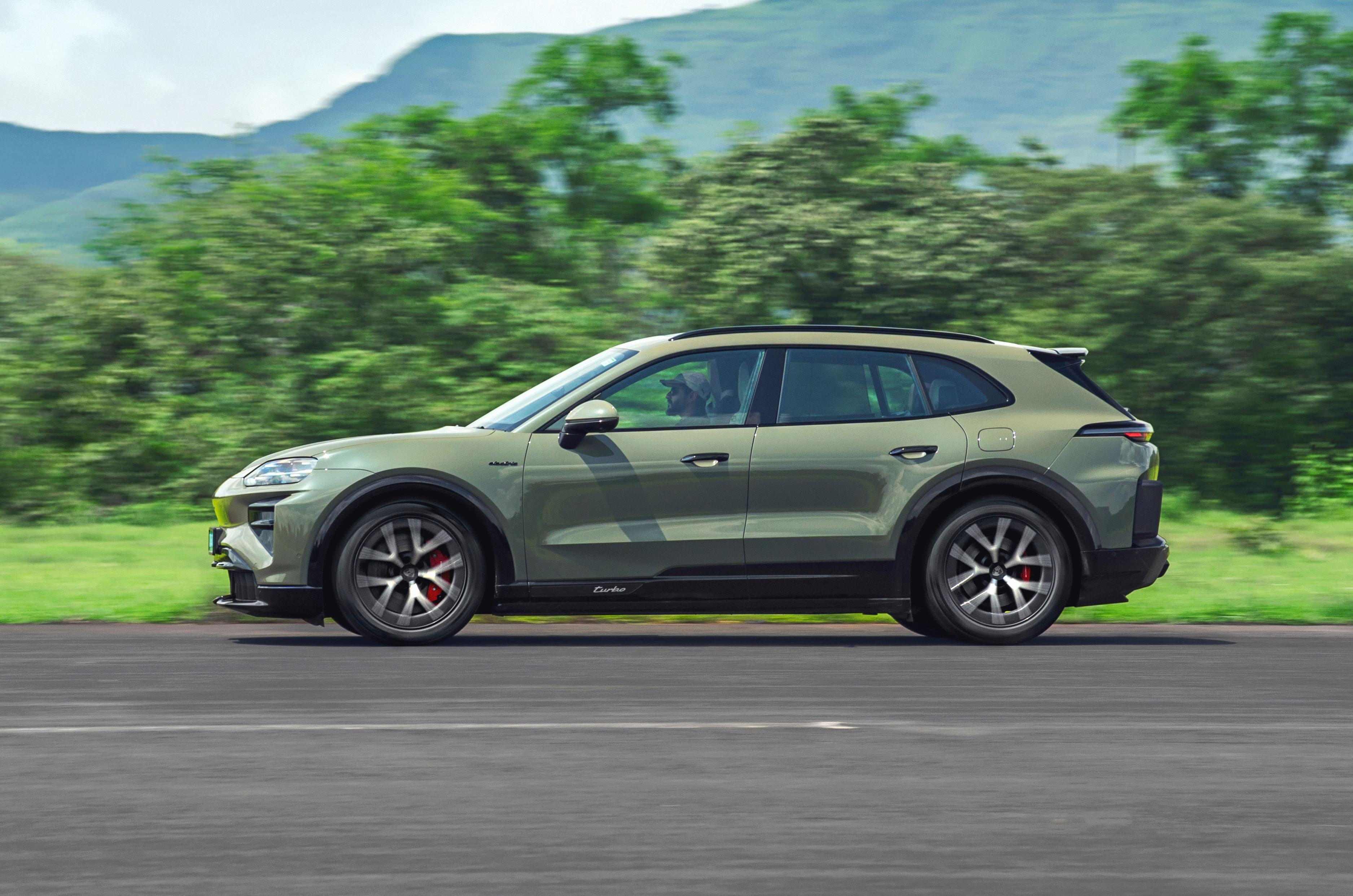
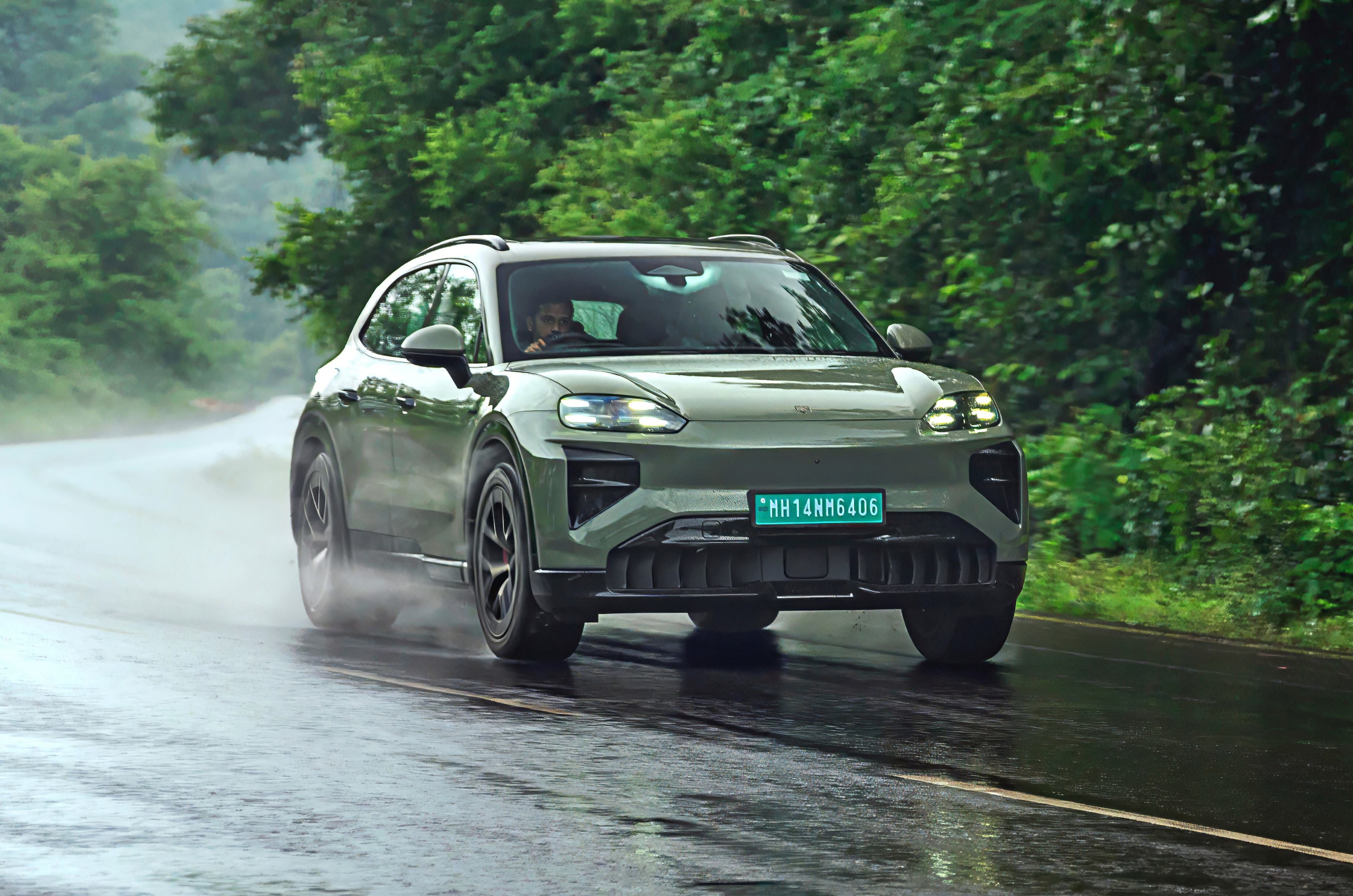
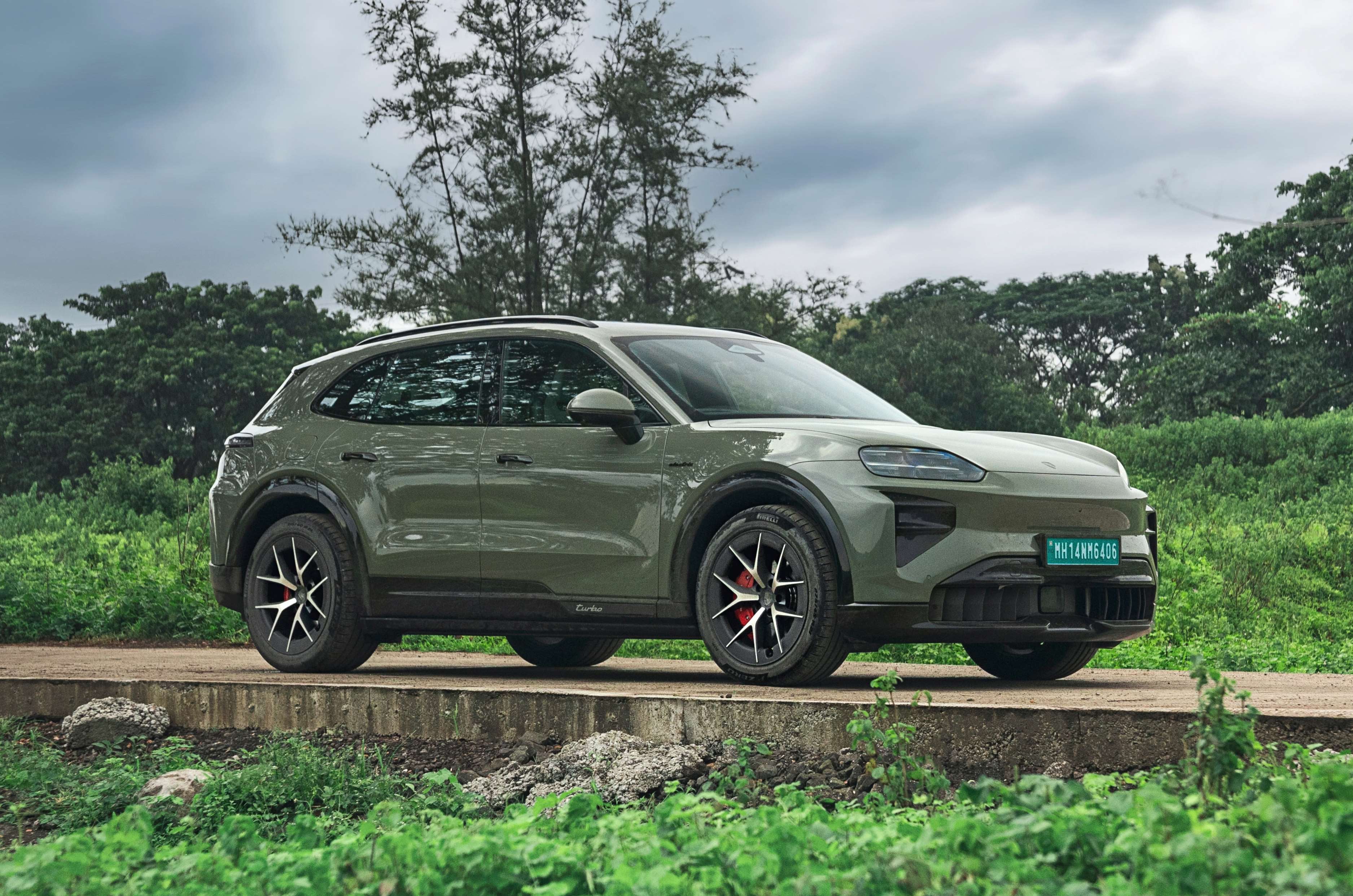
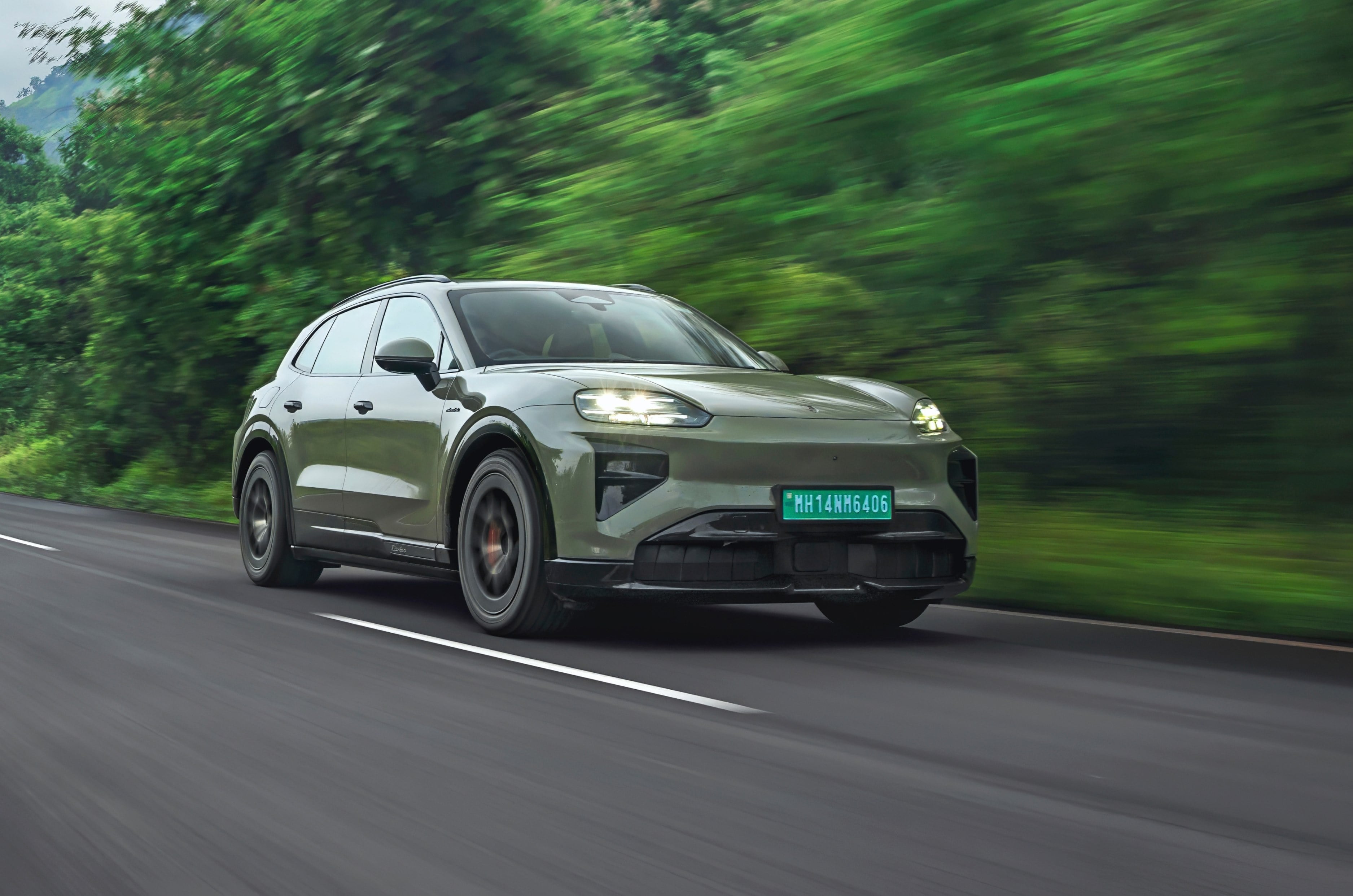
Remember when 1,000 horsepower was the sort of million-dollar pipe dream that we thought we’d only ever see on bedroom posters or YouTube videos? Well, it’s not that insane a proposition anymore, and in fact, three cars on sale in India have crossed the fabled 1,000hp mark. Two are ultra-exotic supercars that cost north of Rs 10 crore – the 1,015hp Lamborghini Revuelto and 1,050hp Ferrari Testarossa. And the third is this, the 1,156hp Porsche Cayenne Turbo Electric – a full Maruti Brezza more powerful than those Italian supercars – and yours for a fraction of the price, at Rs 2.28 crore.
That’s not a lot of money for what is the most powerful car ever to go on sale in India, and that raises a somewhat existential question. Have they gone too far?
2026 Porsche Cayenne Turbo Performance – 10/10
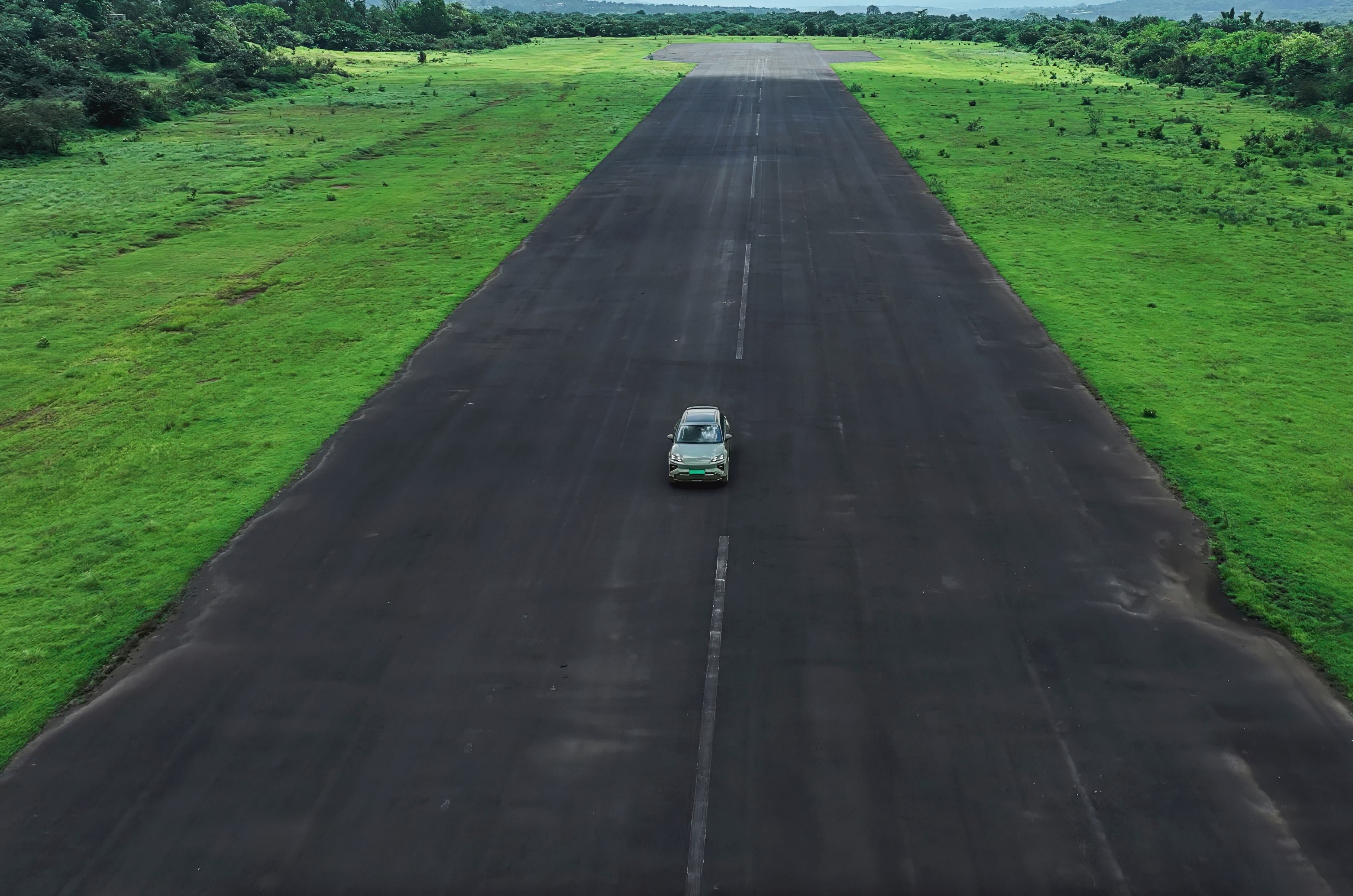
I have the Aamby Valley airstrip rolled out like a red carpet in front of me, perhaps the only place other than a race track where unlocking this hyper-SUV’s full accelerative potential is possible, and I’m about to let it rip. The process is familiar and simple enough. Twist the mode dial to Sport Plus, hold the brake with your left foot and mash the accelerator until it says ‘Launch Control Activated’. Up until this point, it’s nowhere near as dramatic as something with a four-digit power output has any right to be. The electronic sound it makes to signify all the power swelling up is gentle, and it doesn’t even give you any feedback through the pedals. Things are disconcertingly calm for what’s about to happen. I let go of the brake.
The nose lurches upwards and points to the sky like a fighter jet leaving an aircraft carrier, as the huge SUV squats onto its rear axle. It’s in this gut-twisting moment that I realise Porsche India hasn’t specified the Active Ride Control option on this car, which I’m told suppresses this issue by force-tilting the car forward, Power deployment is brutally efficient initially, with barely a chirp from the tyres and not a single of those 1,500 newton metres wasted off the line. But then I notice the nose start to go light and weave from left to right. I steady the wheel as the speed continues to build. With no engine weighing down the front axle and so much rearward lean, there is a frightening lack of traction from the front wheels at speed.
Never before has launching a car attacked so many sections of my body. It’s usually just the abdomen; a really fast car will wind you. Right now, my neck is straining as the head restraint is too far back, my cheeks are starting to ache like I’ve been pretending to find someone’s jokes funny for an hour, there’s a weird pressure coursing through my arms and legs, and my eyes are starting to water as they dart around in their sockets, not knowing what to focus on. Oh, and I’ve been winded well and good.
I’ve launched dozens of really, really fast cars down this very runway, but I don’t recall the scenery ever passing by so quickly. I can’t get a frame of reference so I glance down at the speedo. Two hundred and a blurry something; that’s way more than I expected to see and it’s climbing too fast. This doesn’t compute; it’s usually at this speed that I think about braking. But we aren’t even at the halfway mark yet; how? Brave face on, I keep my foot in. 230, 250, 27- wait, the brochure said it maxes out at 260. It lied. Then suddenly the braking point flashes by and I jump onto the wide pedal. All those forces reverse their polarity as the big Cayenne squirms down to a halt, still well clear of the end of the runway. Let’s do it again!
2026 Porsche Cayenne Turbo: Real-world acceleration test
Speed
Time (in seconds)
20kph
0.45
40kph
0.94
60kph
1.45
80kph
1.96
100kph
2.52
120kph
3.18
140kph
4.01
160kph
4.96
180kph
6.12
200kph
7.47
220kph
9.06
240kph
10.92
260kph
13.20
And it will do it again, and again, and again. Because if there’s one thing we’ve learnt about Porsches over the years, it’s that they’re engineered to perform repeatedly and consistently. The dual-motor Turbo has been certified to deliver a 2.5sec 0-100kph time; our VBOX confirmed the same several times over. But eventually, as the battery SOC dipped below 75 percent, the times started to go up, a tenth of a second at a time.
The biggest victim of the repeated runs, however, were the brakes – even for mammoth 420mm discs, arresting 2.7 tonnes is no joke, and soon their squeal was louder than their bite. I don’t usually advocate for carbon ceramic brakes on SUVs, but perhaps this is the one time Porsche India should have shelled out for the Rs 13.5 lakh option.
2026 Porsche Cayenne Turbo: Real-world braking test
80-0kph distance
23.47 metres
80-0kph time
2.08 seconds
2026 Porsche Cayenne Turbo ride comfort and handling – 8/10
However, by the twenty-seventh-or-so sprint down the runway, the car seldom missing a beat and the excitement never waning, my body decided it had taken enough of a beating. From longitudinal g-forces, at least; the lateral attack was yet to come. So we waved goodbye to the gentleman in the tower, who’s probably used to seeing much slower-moving traffic on the runway, and made our way back to reality via the twisting roads leading down to Lonavala.
It’s been a few years since I’ve come to our old stomping ground of Tiger Point and its surrounding twisties, and I can’t think of a nicer car to reacquaint myself with my favourite corners in. Muscle memory kicks in as I enter the first, fast right-hander. I lean in instinctively, but then the car starts to lean too; unexpected. It does the same on the next left, and right, and once again I start to wish they specified that Active Ride Control option. Porsche engineers are usually among the best at taming big mass, but perhaps they’ve finally met their match.
On its standard air springs and adaptive dampers, the Cayenne Turbo displays a disappointing amount of body roll, exacerbated only by the enthusiasm from the motors that begging you to push it harder. The steering too is encouraging, what with the small-diameter wheel and the fact it’s as sharp and direct as you expect. Here, too, I will say that rear-axle steering would have added a welcome extra degree of agility, but once again, Porsche India hasn’t ticked the option. It can still link together a series of corners with greater alacrity than most other big SUVs, but for the first time in recent memory, I’m not feeling that distinct Porsche magic at my fingertips.
Through the narrow and bustling streets of Lonavala, I’m starting to explore the other end of this SUV’s capability spectrum. And that’s just the beauty of EVs, isn’t it? One minute you’re clocking 0-200kph in 7.4 seconds, the next you’re ambling silently through a school zone. Like the best of them, it’s refined, smooth and incredibly easy to modulate, and you could be forgiven for forgetting there’s 857hp at your behest (the full 1,156 only comes with launch control). One spec deficiency I’m glad for right now, however, is the choice of more sensible 21-inch wheels rather than the optional 22s. They don’t look as nice, but they’re soaking up the harsh hits from the rutted road beneath me.
2026 Porsche Cayenne Turbo range, battery and charging – 7/10
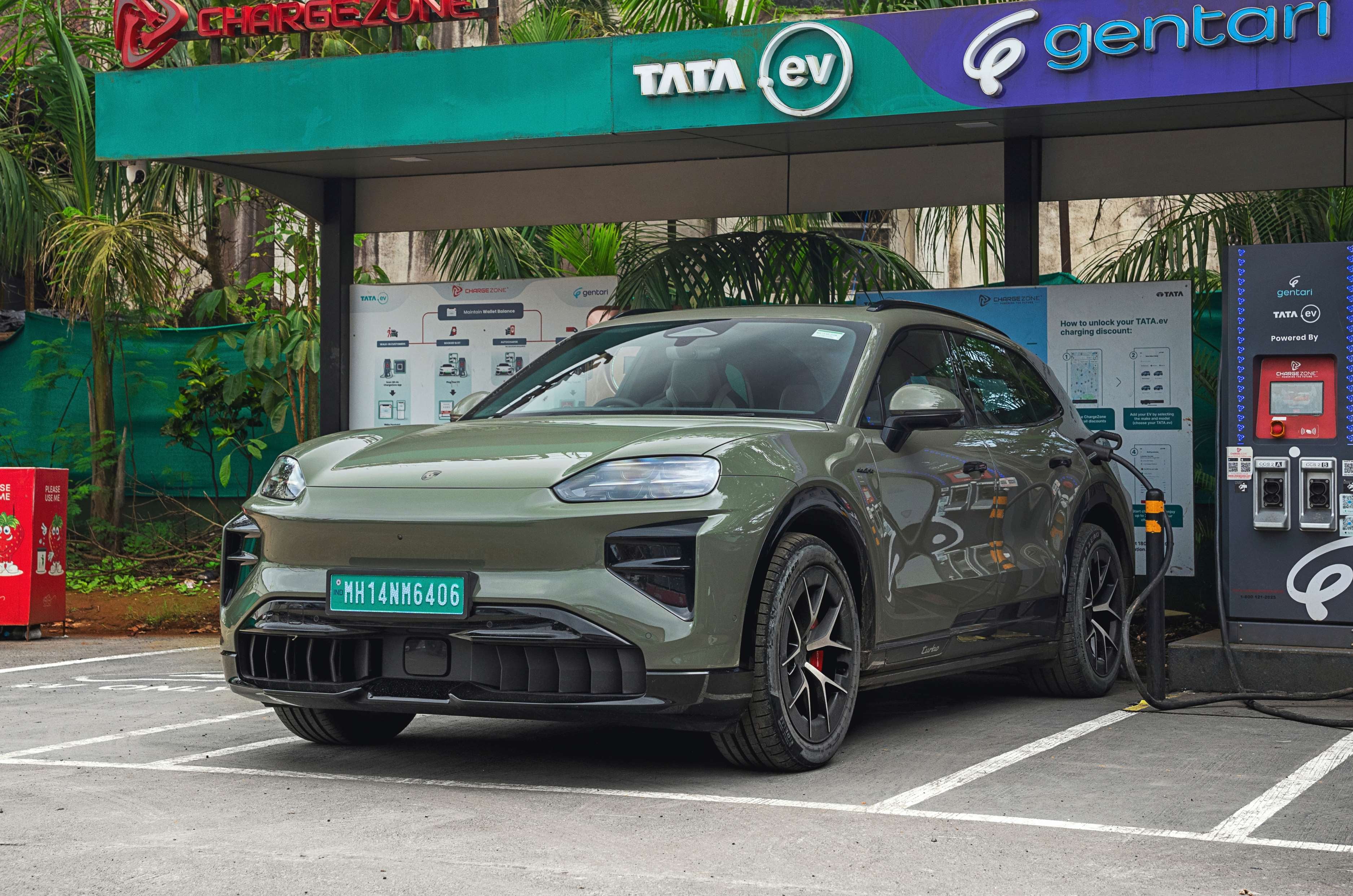
Between racing repeatedly down the runway and then trying to extract that Porsche spice in my favourite corners, I’ve reached Lonavala city with around 20 percent left in the 113kWh tank- er, pack? The Cayenne Turbo is rated at 623 kilometres on the WLTP cycle, so the ‘real’ real-world range should be far more palatable than this; to obliterate such a large chunk in such a short time requires the prolonged buffoonery I just subjected it to. Probably best to find a place to plug in soon, and grab some lunch while I’m at it. On a mythical 400kW plug, the Cayenne can be charged from 10-80 percent in just 16 minutes, but on a rainy Wednesday at a hill station, the best we can do is 60kW, so it’ll take much longer.
Today is a study in why India is far from ready for full EV adoption. Apart from ICE cars parked in charging spaces, malfunctioning plugs, unfathomable apps and an absent mobile network, we were also waylaid by two power cuts.
2026 Porsche Cayenne Turbo features and safety – 9/10
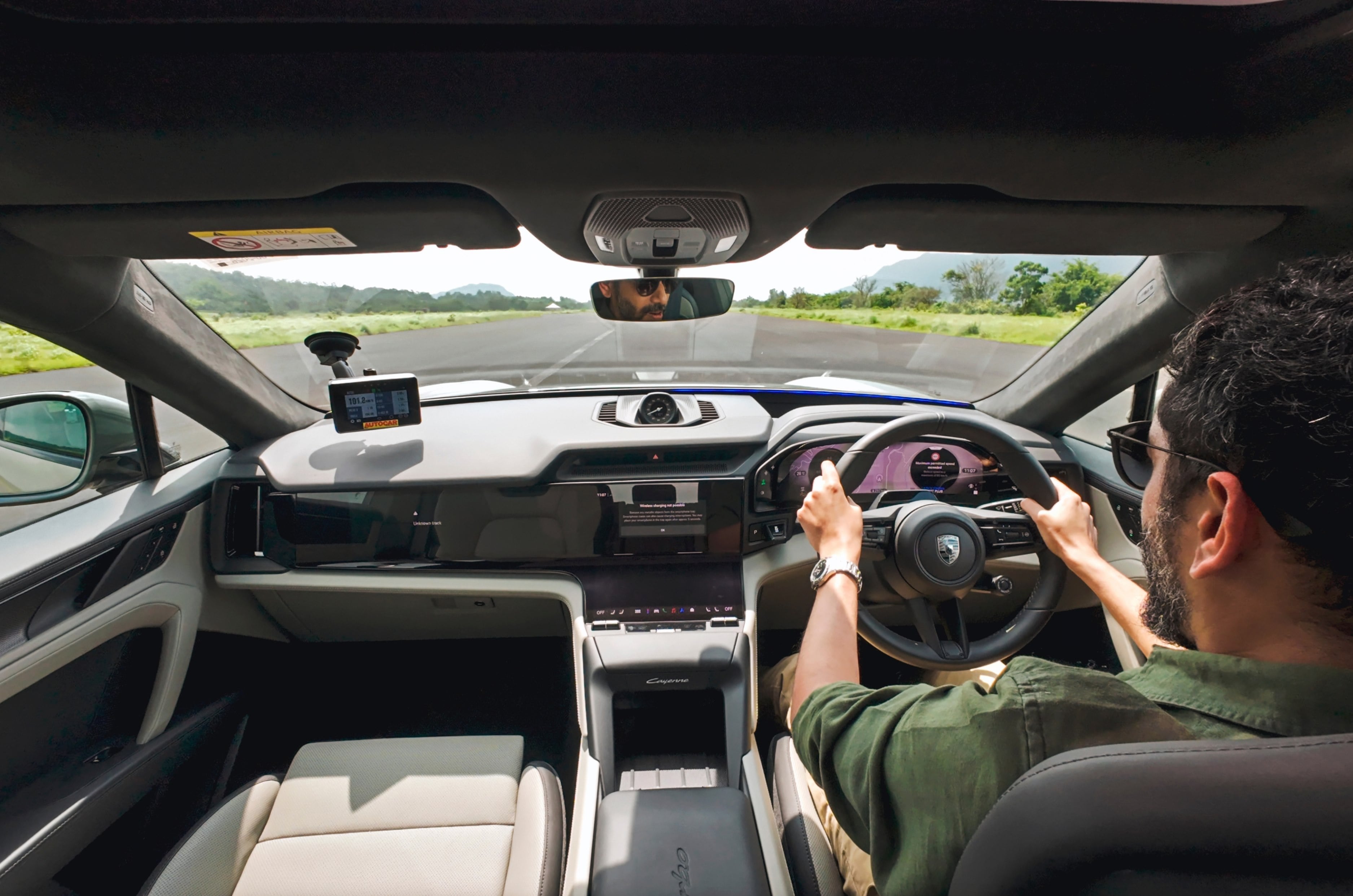
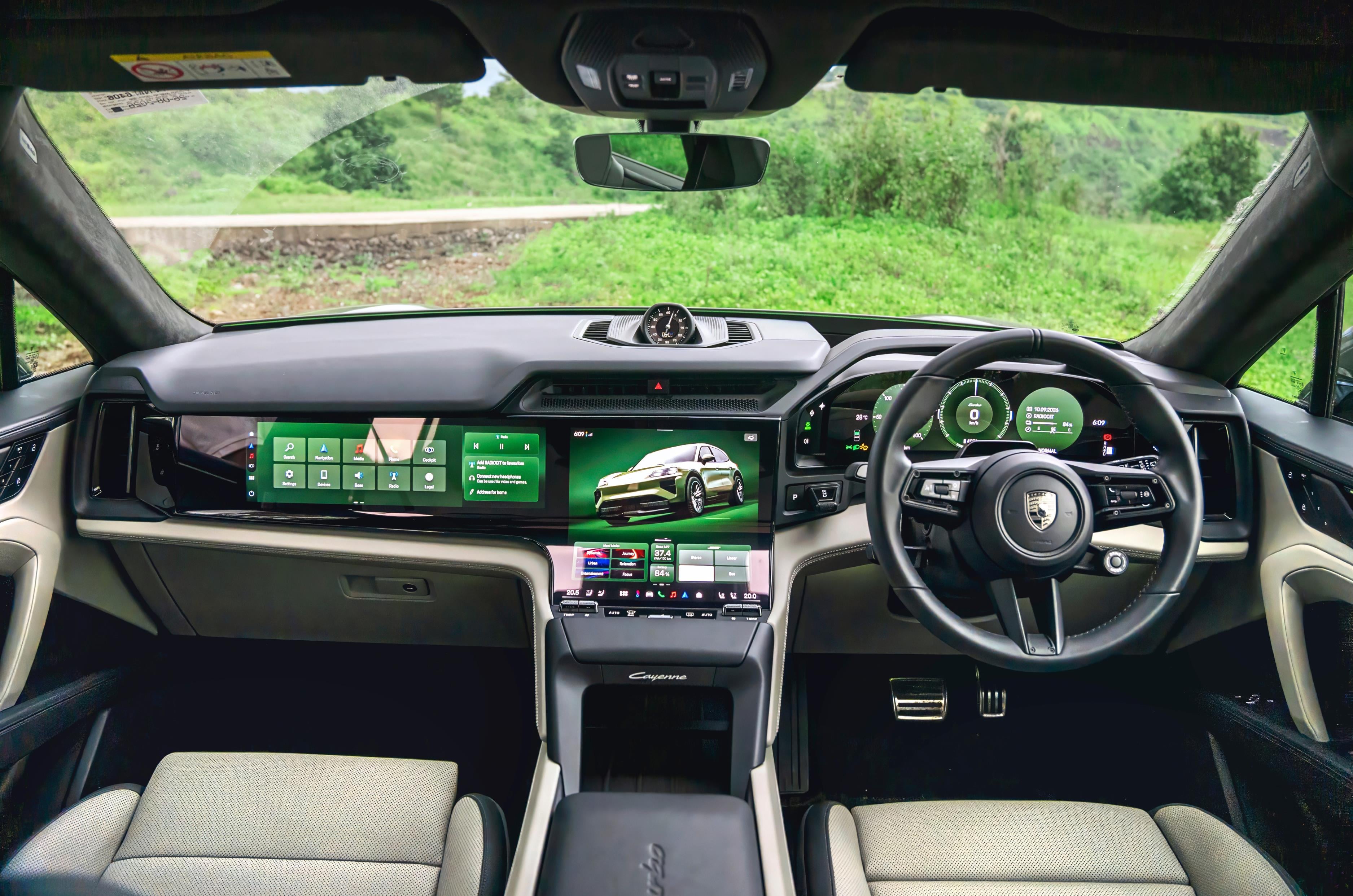
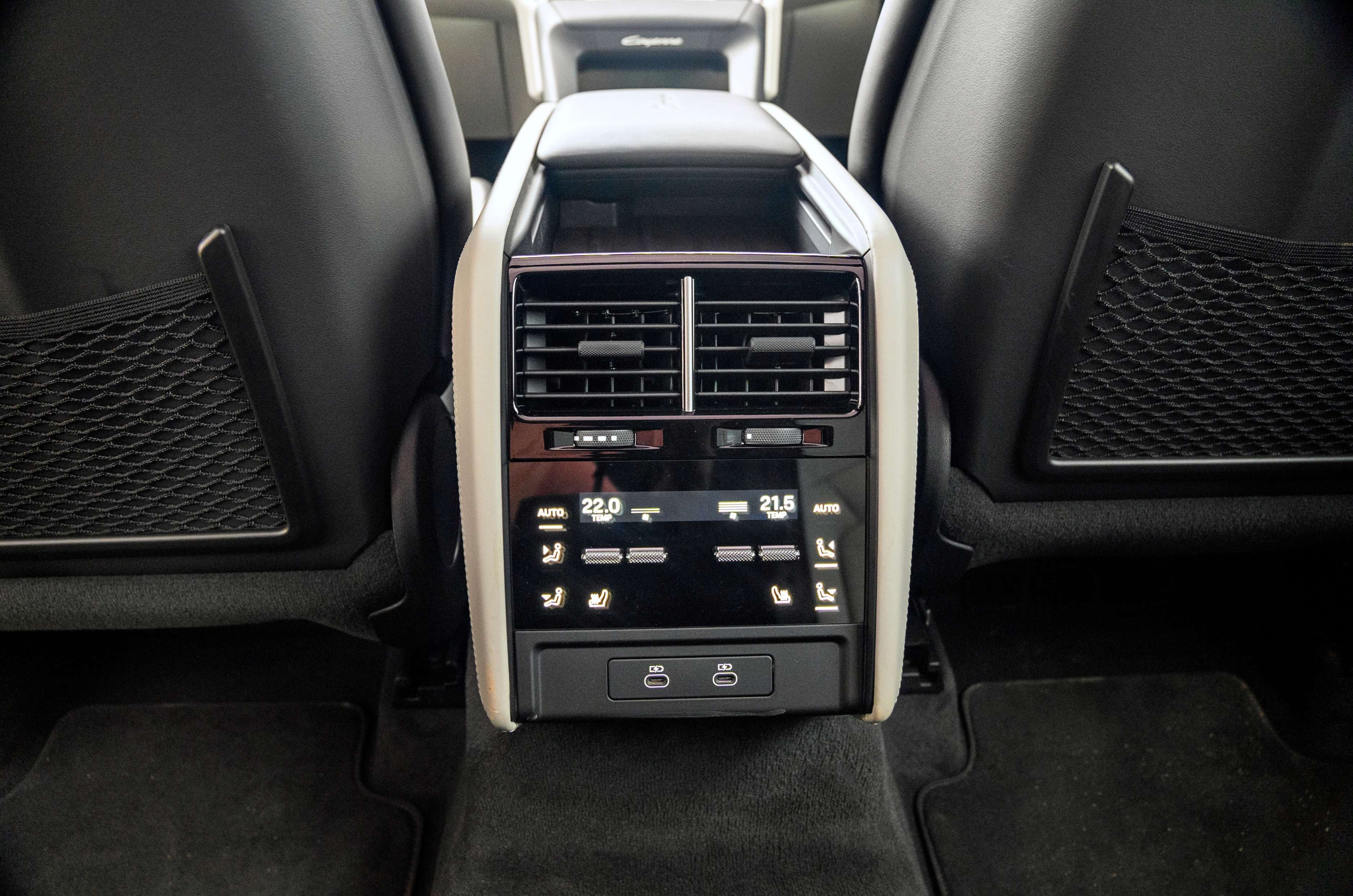
On the upside, all this gave me a chance to have a play around with the Cayenne’s new and tech-heavy interior. The passenger screen is a Rs 2 lakh option I would not tick, but the centrepiece is the cascading curved touchscreen. It looks gimmicky but actually functions really well, the bottom half of the ‘bend’ housing the major functions, while the more upright top functioning as the display. The AC vents are adjusted from the touchscreen sadly, but otherwise there are plenty of physical controls.
There’s no shortage of features here and you can add even more from the options list. For instance, the panoramic sunroof is standard, but there’s no sunshade. Instead, you can option an electrochromic function that masks out the glass in sections.
2026 Porsche Cayenne Turbo interior space and comfort – 8/10
Functionality comes first in a Porsche, and you can see that in the compact but tactile steering wheel, the clear dial-style driver’s display and the sporty ergonomics. In fact, despite all the tech, this feels instantly like a Porsche from behind the wheel.
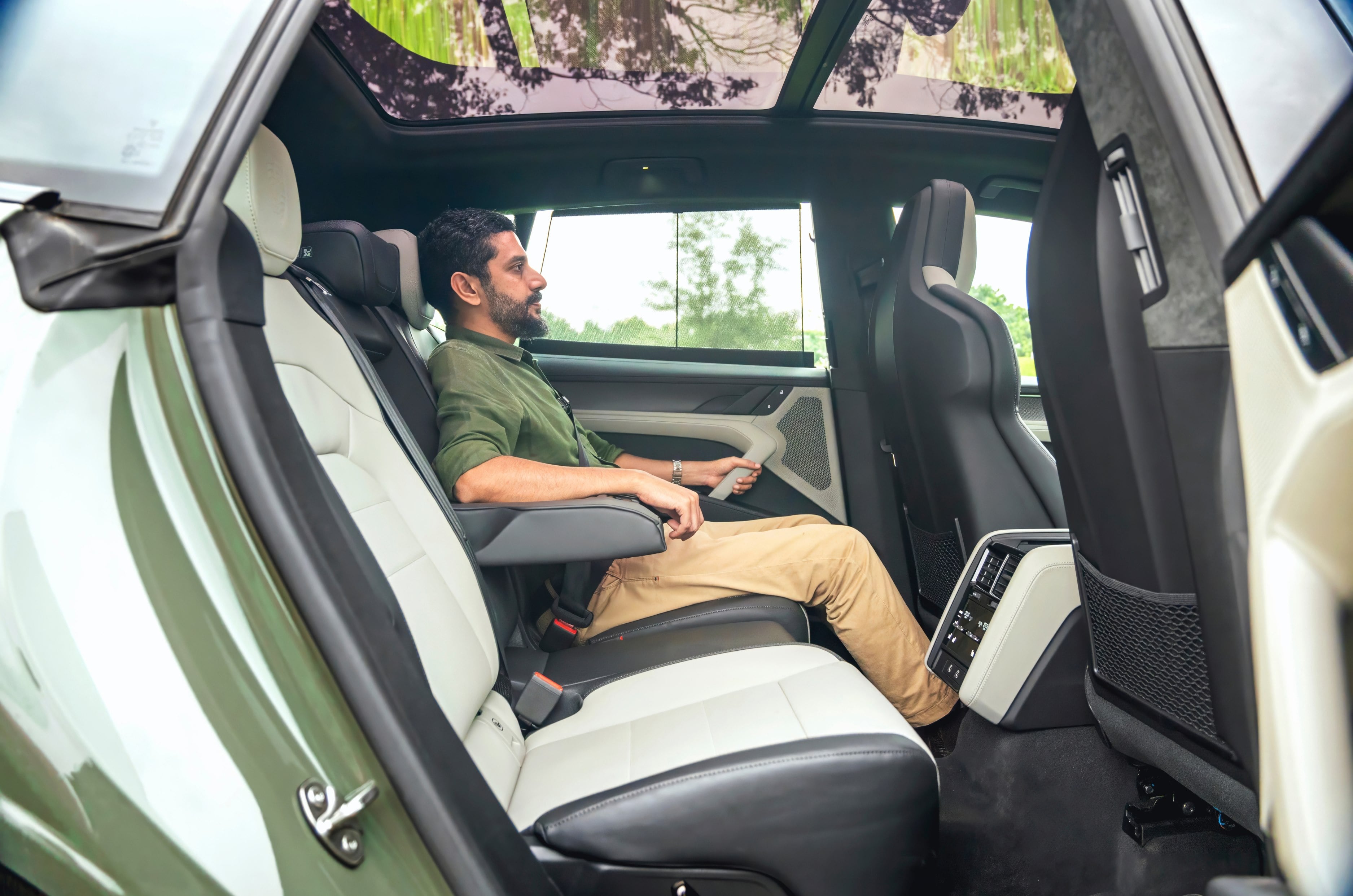
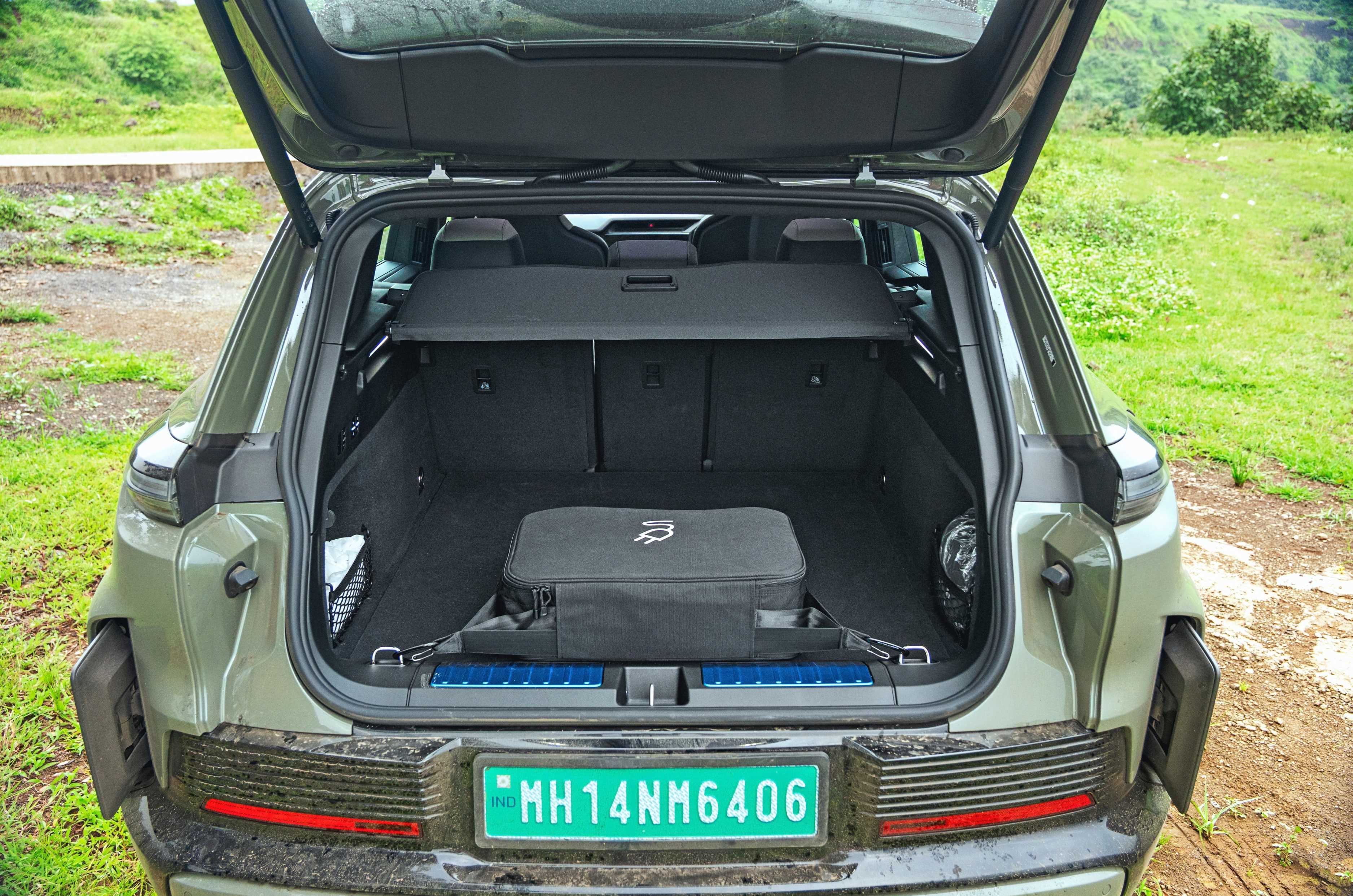
This is easily the most spacious Porsche yet, though, with the huge 3,023mm wheelbase liberating massive seating room, as well as a huge 747-litre boot and 90-litre frunk. It’s well equipped, it’s luxurious, it’s sporty; it’s almost hard to fault here.
2026 Porsche Cayenne Turbo exterior design and engineering – 7/10
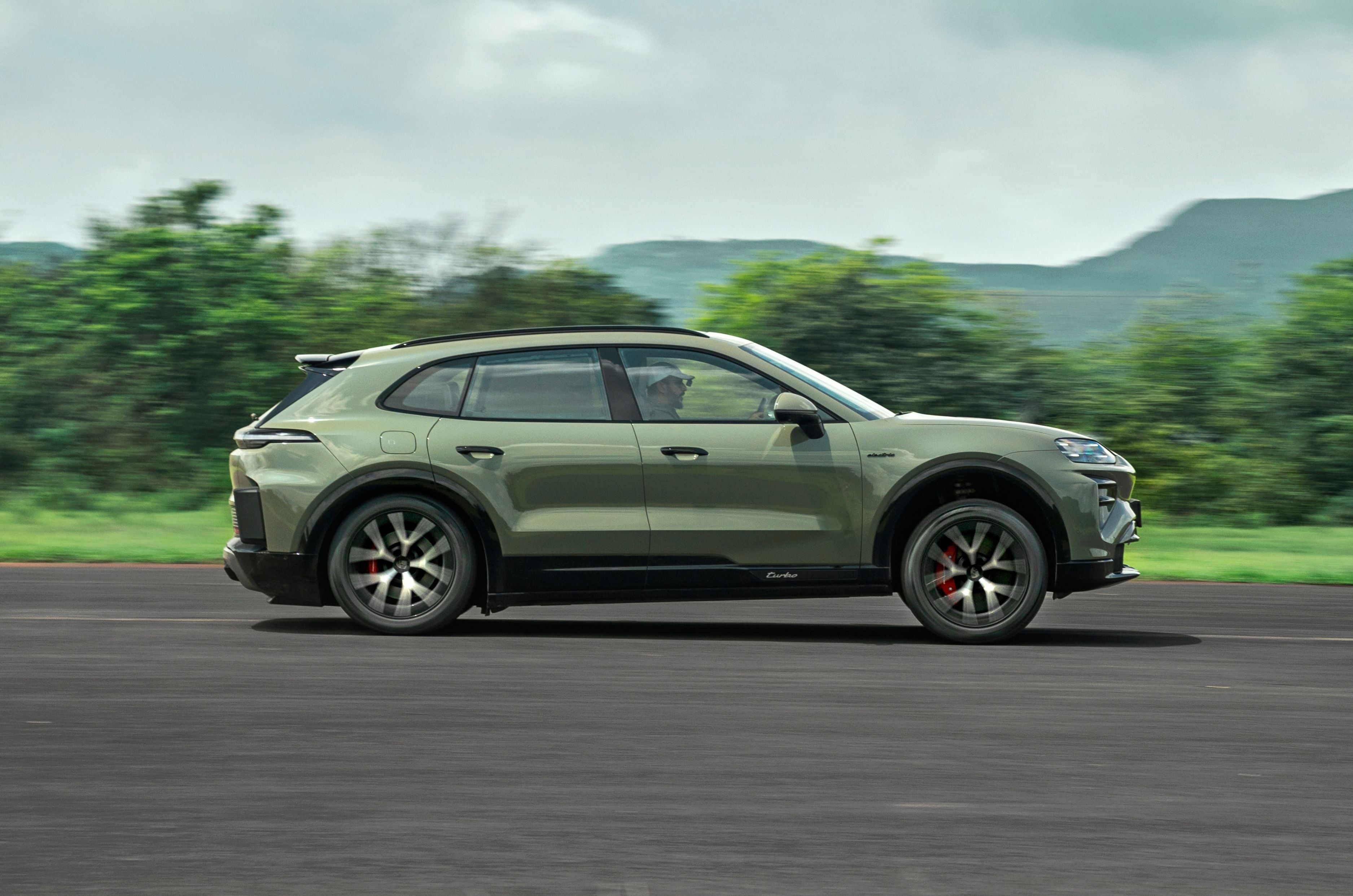
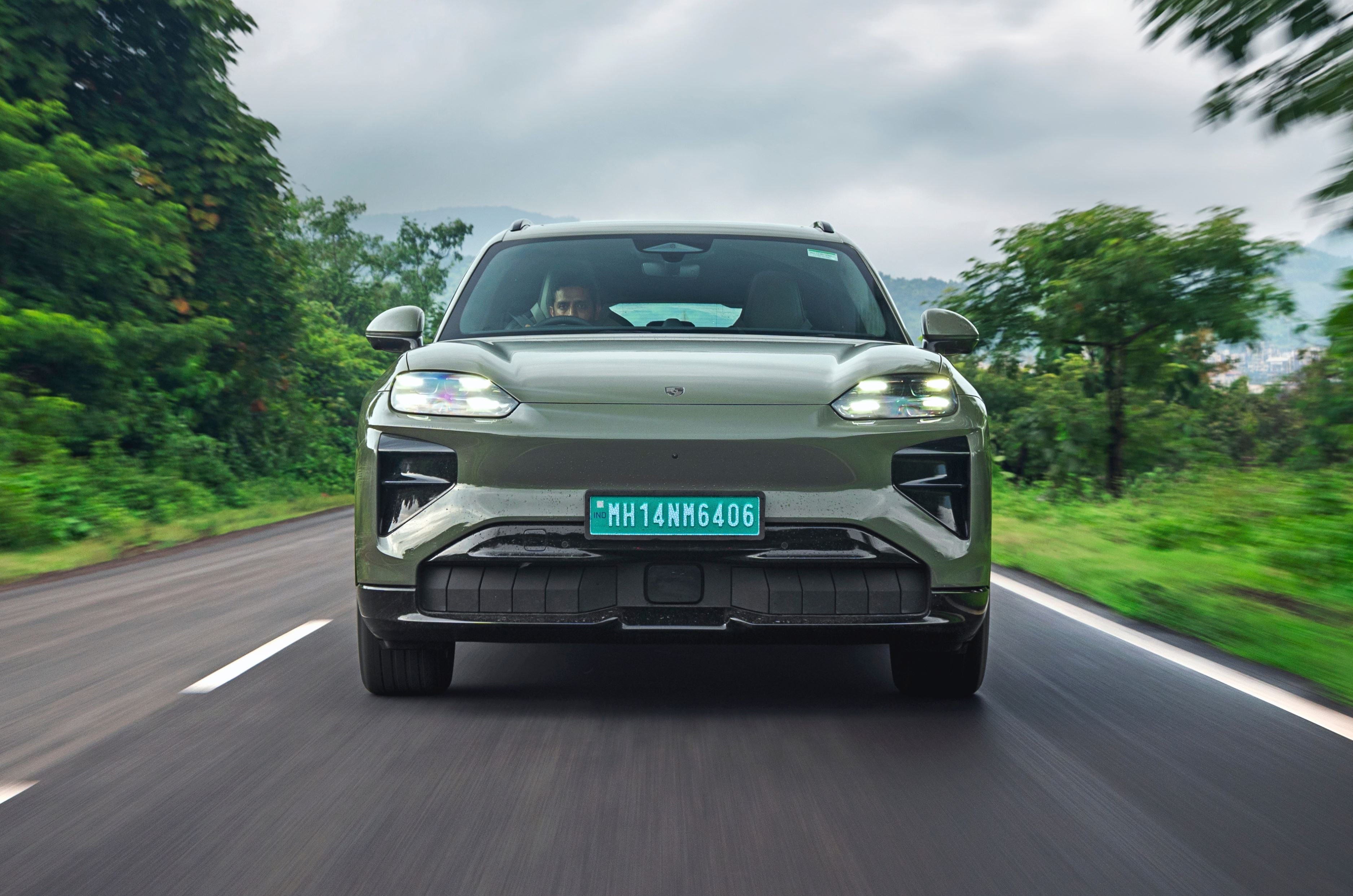
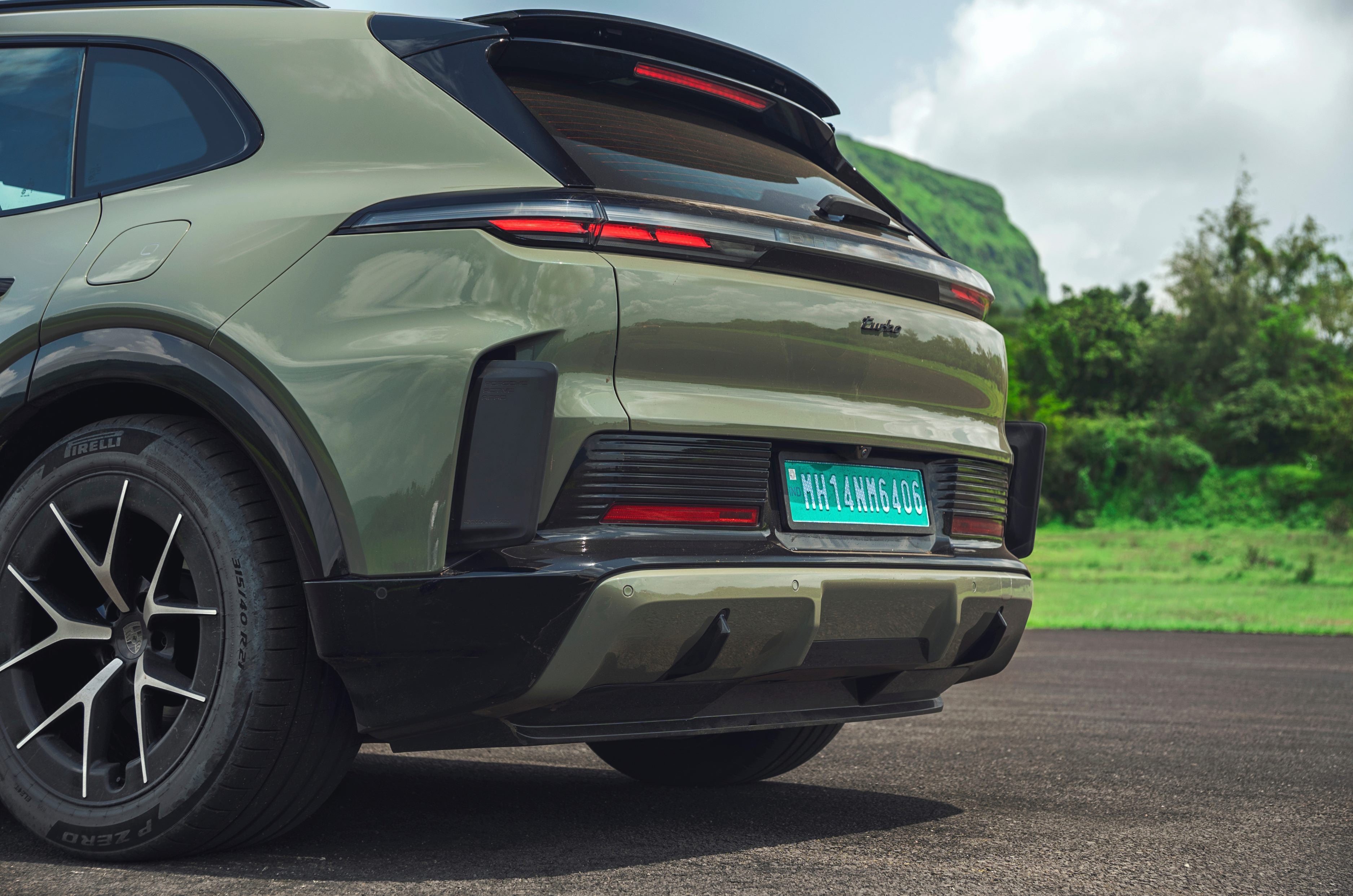
I’m less convinced by the exterior, though. It certainly has size on its side; this is the largest Porsche ever, a fact exaggerated by its slim headlamps and tail-lamps. Even the gigantic 21-inch wheels look a size down against the mass of bodywork. They’ve worked around it with plenty of contrast black details, and there are lots of cool details, like the active aero vanes up front and the flaps that extend from the rear bumper to reduce drag at speed. They’ve even got the GPS co-ordinates of Porsche’s wind tunnel embossed into them.
However, it’s also this size that works against it, as the proportions make it look bulky and a bit ungainly. This might be fine most big luxury SUVs, but in a Porsche, there’s a certain visual agility that’s missing.
2026 Porsche Cayenne Turbo price and verdict – 9/10
Is it wrong that for a car with such eye-watering headline figures, it’s the slow cruise back home that I appreciate the most? Having been pulverised by the acceleration in the morning, I’m happy to let the ventilated 18-way seats soothe my back, as my favourite tunes stream through 14 Bose speakers and adaptive cruise control keeps an Expressway pace.
Because it’s an EV, you can switch quite easily between its two personalities, and because it’s a Porsche, it does both reliably as many times as you need it to. Some of that special sauce has been lost along the way, and the smaller Macan Electric does a much better job in this regard, but I’d argue the Cayenne has an even greater breadth of ability. It’s easy to launch India’s most powerful car to stratospheric speeds, but it’s even easier to forget that you can, and perhaps that’s its biggest triumph
Rupee vs Dollar: अमेरिका में इंटरेस्ट रेट बढ़ने का असर 17 सितंबर को रुपये पर दिखा। डॉलर के मुकाबले यह 96 के मनोवैज्ञानिक स्तर के पार हो गया। जुलाई के बाद पहली बार रुपया इस लेवल पर पहुंचा है। डॉलर के मुकाबले रुपया 96.03 के लेवल पर चल रहा था। 16 सितंबर को यह 95.95 के लेवल पर बंद हुआ था।
अमेरिकी केंद्रीय बैंक Federal Reserve ने 16 सितंबर को इंटरेस्ट रेट बढ़ाने का ऐलान किया। फेड ने करीब तीन साल बाद इंटरेस्ट रेट 0.4 फीसदी बढ़ाया है। इतना ही नहीं फेड ने आगे भी सख्त मॉनेटरी पॉलिसी का संकेत दिया है। 25 बेसिस प्लाइंट्स बढ़ने के बाद अमेरिका में अब इंटरेस्ट रेट 3.75-4 फीसदी हो गया है।
फेडरल रिजर्व की इंटरेस्ट रेट तय करने वाली कमेटी (FOMC) की बैठक 15 सितंबर को शुरू हुई थी। इसके नतीजे भारतीय समय के मुताबिक 16 सितंबर को रात करीब 12 बजे आए। एक्सपर्ट्स का कहना है कि फेड का फैसला अनुमान के मुताबिक रहा। पहले से यह माना जा रहा था कि 16 सितंबर को अमेरिकी केंद्रीय बैंक इंटरेस्ट रेट में 25 बेसिस प्वाइंट्स का इजाफा करेगा। फेड चेयरमैन केविन वॉर्श ने पहले कहा था कि फिलहाल उनका फोकस इनफ्लेशन को कंट्रोल करने पर रहेगा।
फेड इस साल इंटरेस्ट रेट में और एक बार इजाफा कर सकता है। दरअसल, क्रूड ऑयल की कीमतों में उछाल से दुनियाभर में महंगाई बढ़ी है। इनफ्लेशन को कंट्रोल में करने के लिए बैंक ऑफ जापान (BoJ) और यूरोपियन सेंट्रल बैंक (ECB) सहित कई देशों के केंद्रीय बैंक इंटरेस्ट रेट बढ़ाने को मजबूर हुए हैं। दुनियाभर के केंद्रीय बैंक महंगाई को बढ़ने से रोकने के लिए इंटरेस्ट रेट को एक हथियार की तरह इस्तेमाल करते हैं।
फेडरल रिजर्व के रेट बढ़ा देने के बाद माना जा रहा है कि आरबीआई (RBI) भी अक्तूबर की अपनी मॉनेटरी पॉलिसी में इंटरेस्ट रेट बढ़ा सकता है। आरबीआई की मॉनेटरी पॉलिसी कमेटी (MPC) की बैठक 5 अक्तूबर को शुरू होगी। तीन दिन की बैठक के बाद इसके नतीजे 7 अक्तूबर को आएंगे।
भारत में भी रिटेल इनफ्लेशन लगातार बढ़ रहा है। अगस्त में रिटेल इनफ्लेशन 4.80 से ऊपर निकल गया। यह आरबीआई के 4 फीसदी के तय लेवल से काफी ऊपर निकल चुका है। फेड के इंटरेस्ट रेट बढ़ाने का असर रुपया सहित भारतीय शेयर बाजार पर पड़ता है।