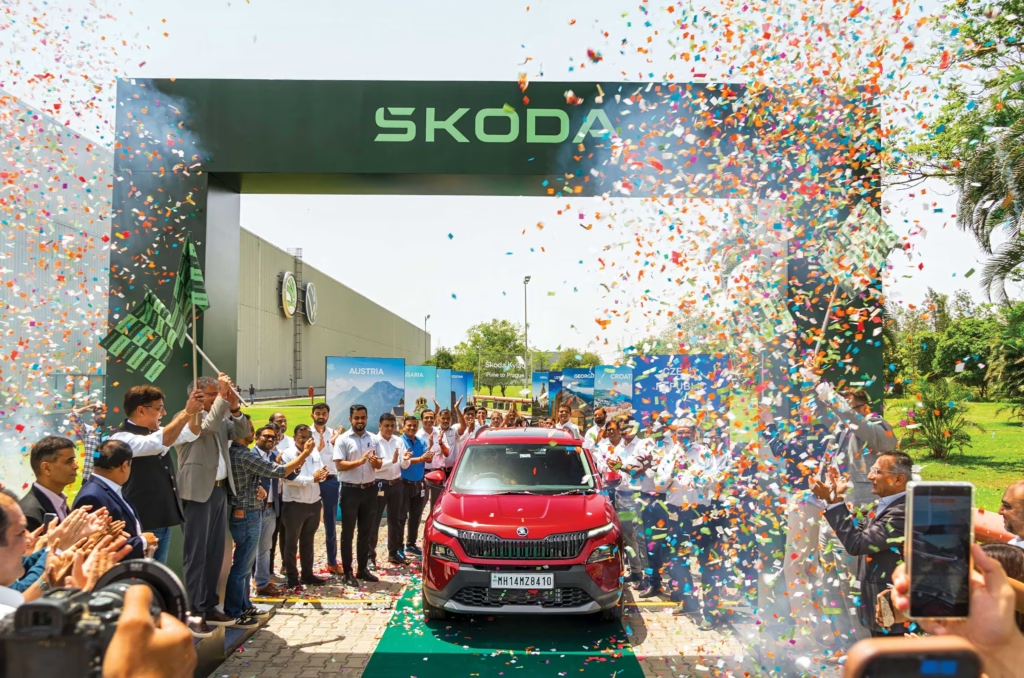
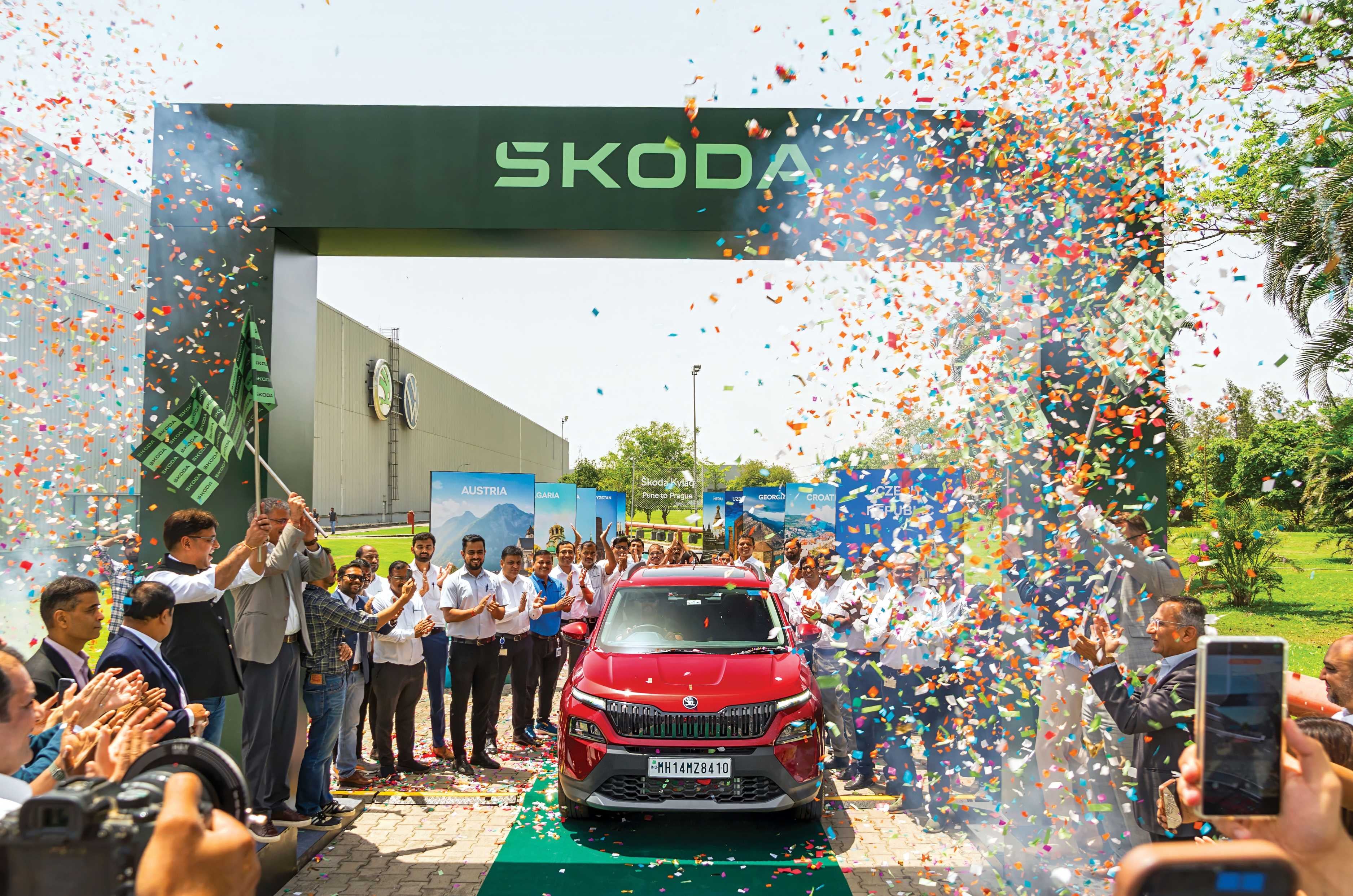
Skoda Kylaq Pune to Prague Leg 1: To the home away from home

Skoda Kylaq Pune to Prague Leg 1: To the home away from home
skoda kylaq p2p

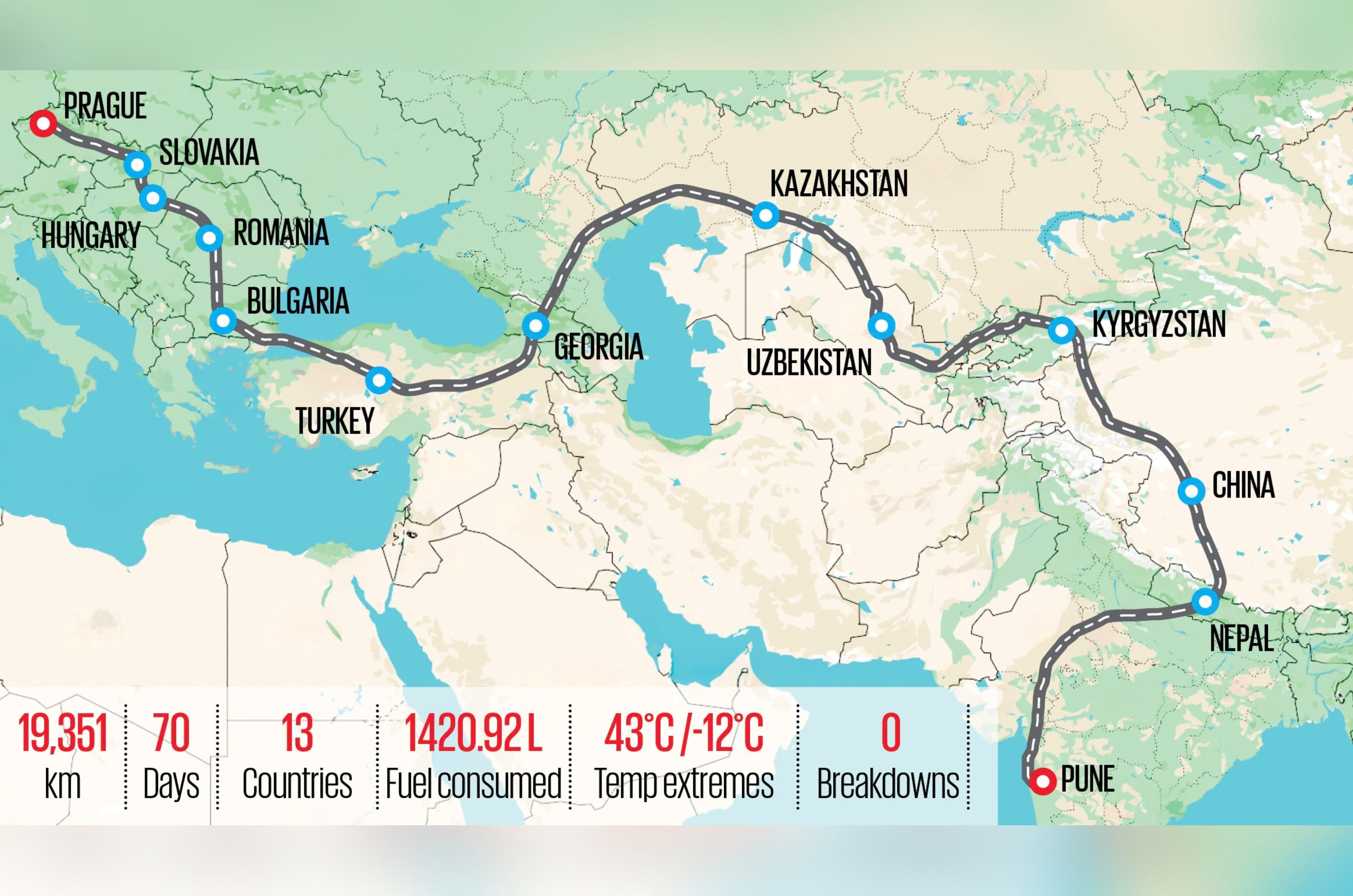
There are road trips, there are overland expeditions, and then there are journeys that become conversations with continents. This one starts in the industrial heart of Maharashtra, inside Skoda India’s sprawling Chakan facility. The end point lies nearly 20,000 kilometres away at Skoda Auto’s headquarters near Prague in Mladá Boleslav, Czech Republic, where bicycles evolved into automobiles and a 130-year-old story continues to be written.

Between these two factories lie thirteen countries, four major mountain ranges, countless cuisines, dozens of languages and enough history to fill libraries.
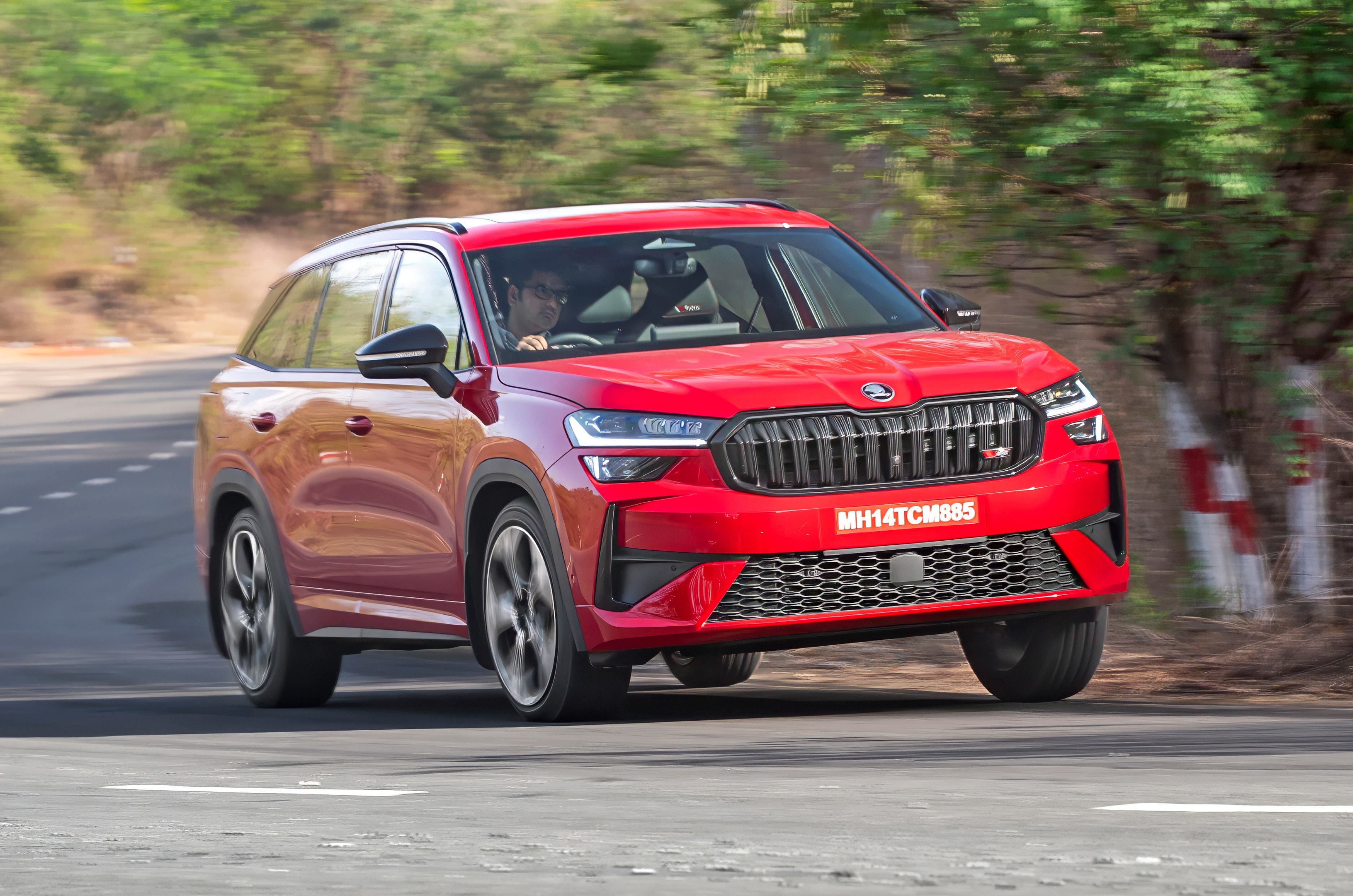
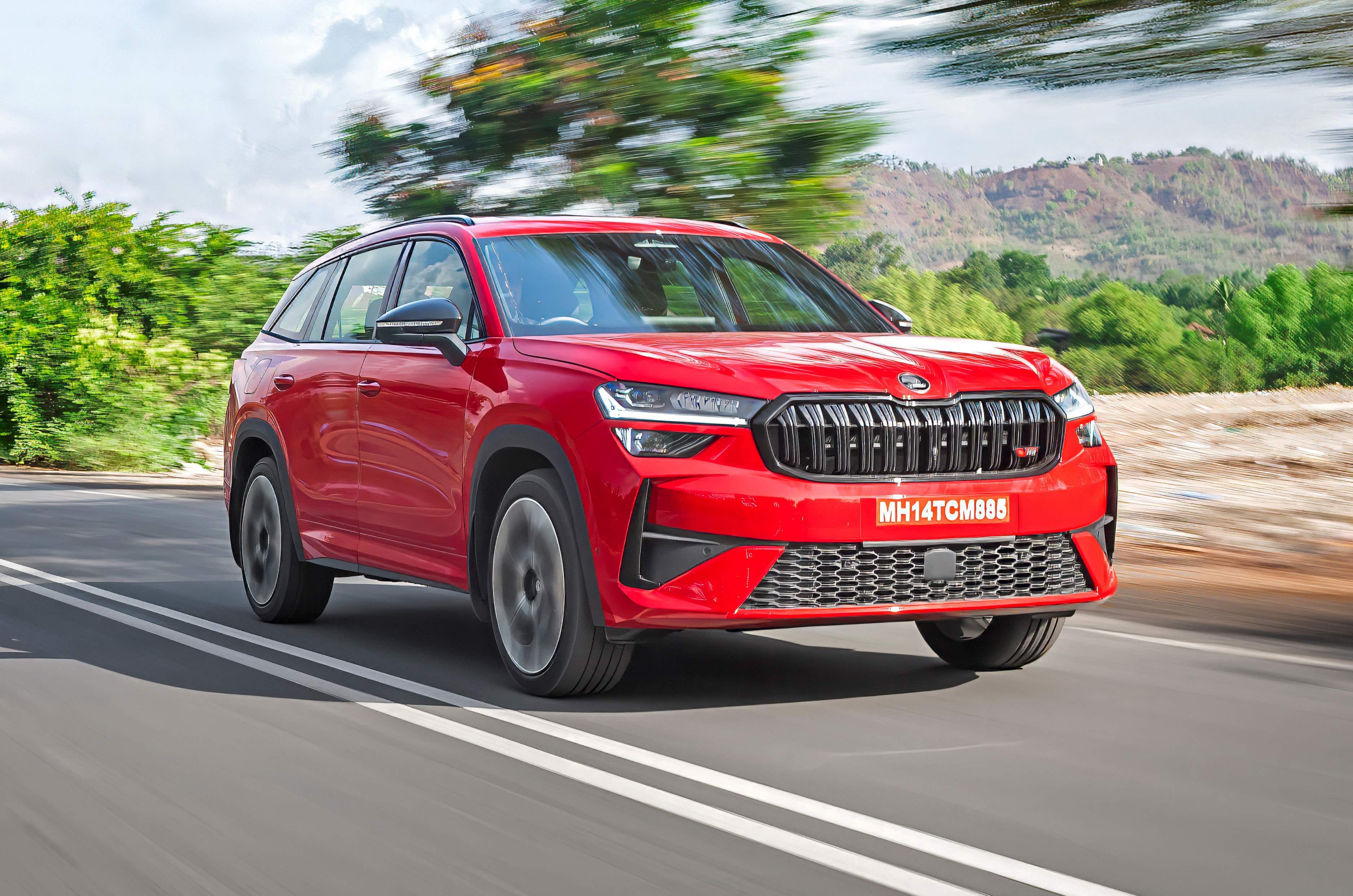
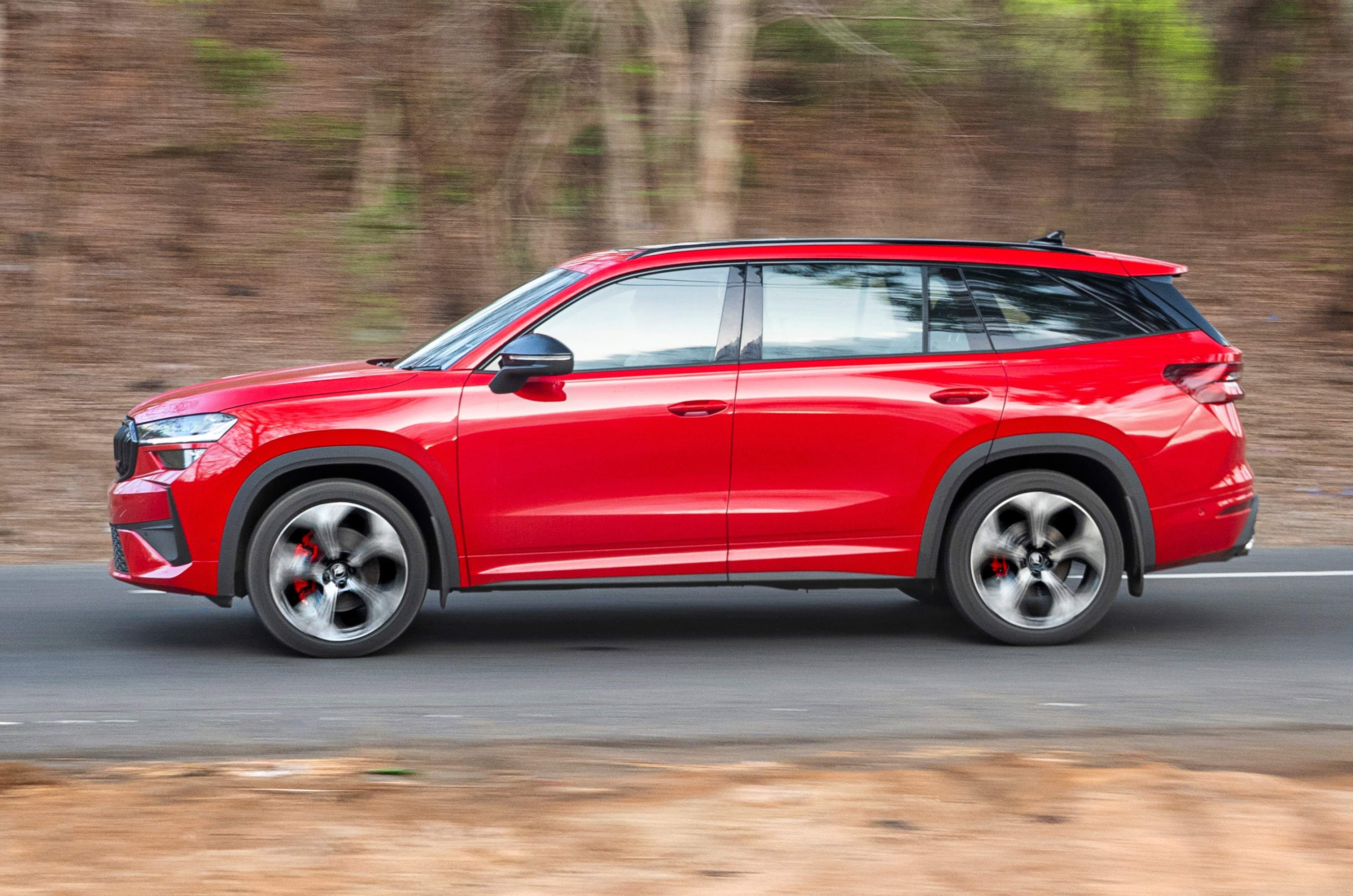
Our companion? Not a flagship SUV or a luxury grand tourer, but Skoda’s smallest SUV – the Kylaq, which recently celebrated its one-year anniversary. Driving it from Pune to Prague is a tall order, but surviving one year in India and being accepted with flying colours is enough cred one needs to take on the world.

India – Home Turf
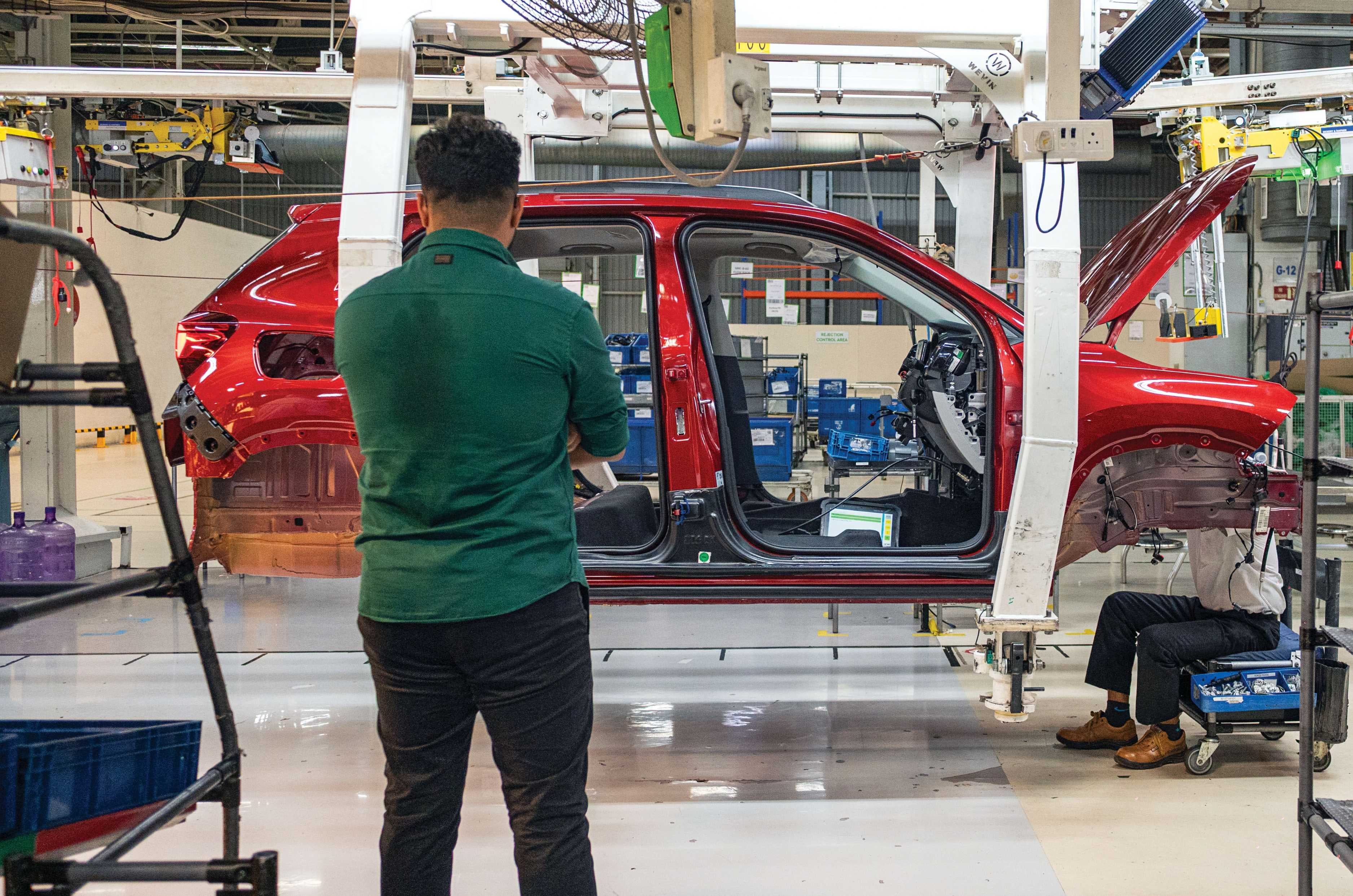
Witnessing the Kylaq’s birth added more responsibility.

On a cross-country road trip, you’d imagine the home country would be the easiest leg. With India, it was the opposite. To some, it’s organised chaos, but honestly, it’s anything but organised. Erratic traffic, erratic egos, and road conditions fit only for a Mars rover – India was the biggest challenge on the drive from Pune to Prague. As the odometer ticked over its first kilometre, right outside the gate of Skoda’s Chakan plant, a blood-red PMPML bus was ready to trade paint with the cherry-red Kylaq. A dinged-up Kylaq parked on the streets of Prague wouldn’t be a good look, so it was imperative that I babysit this compact SUV like a million-dollar supercar. Having watched the car being assembled on the factory floor, from bare bones to the finished package, only added to the emotion – driving it in traffic felt like walking a toddler across a football field. Eyes wide open, ready to block any attack.
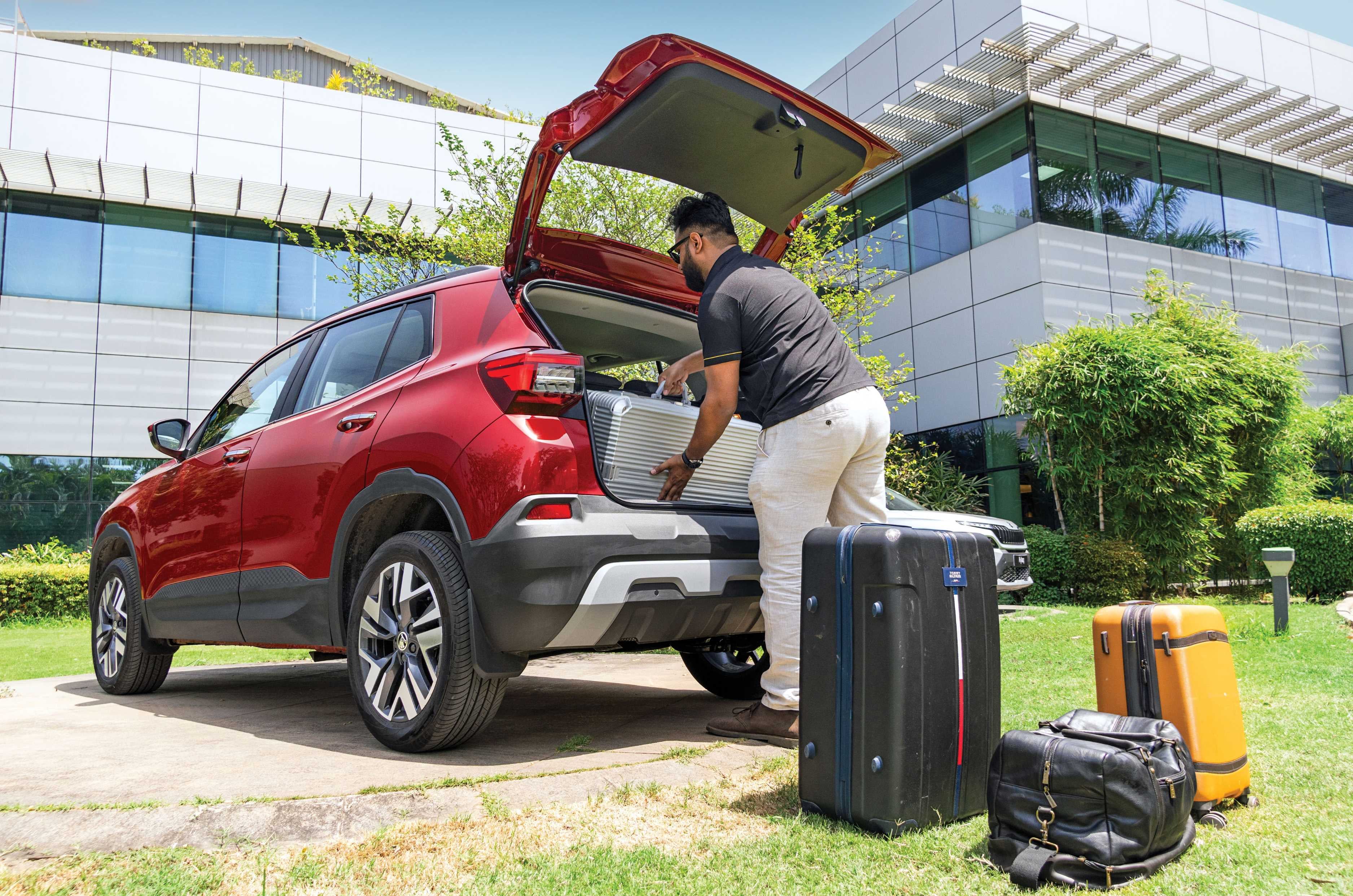
446-litre boot packed to the brim for 70 days on the road.

We got onto the Pune expressway and then crossed the Atal Setu in Mumbai, the longest sea bridge on the entire journey. Mumbai was home, both to me and to the Autocar India office, so after a few greetings from co-workers and the obligatory photos, we headed towards our first state crossing. The infamous Western Express Highway that leads out of Mumbai lived up to its reputation, but with a little anxiety, panic and a few expletives, we made it onto the national highway.
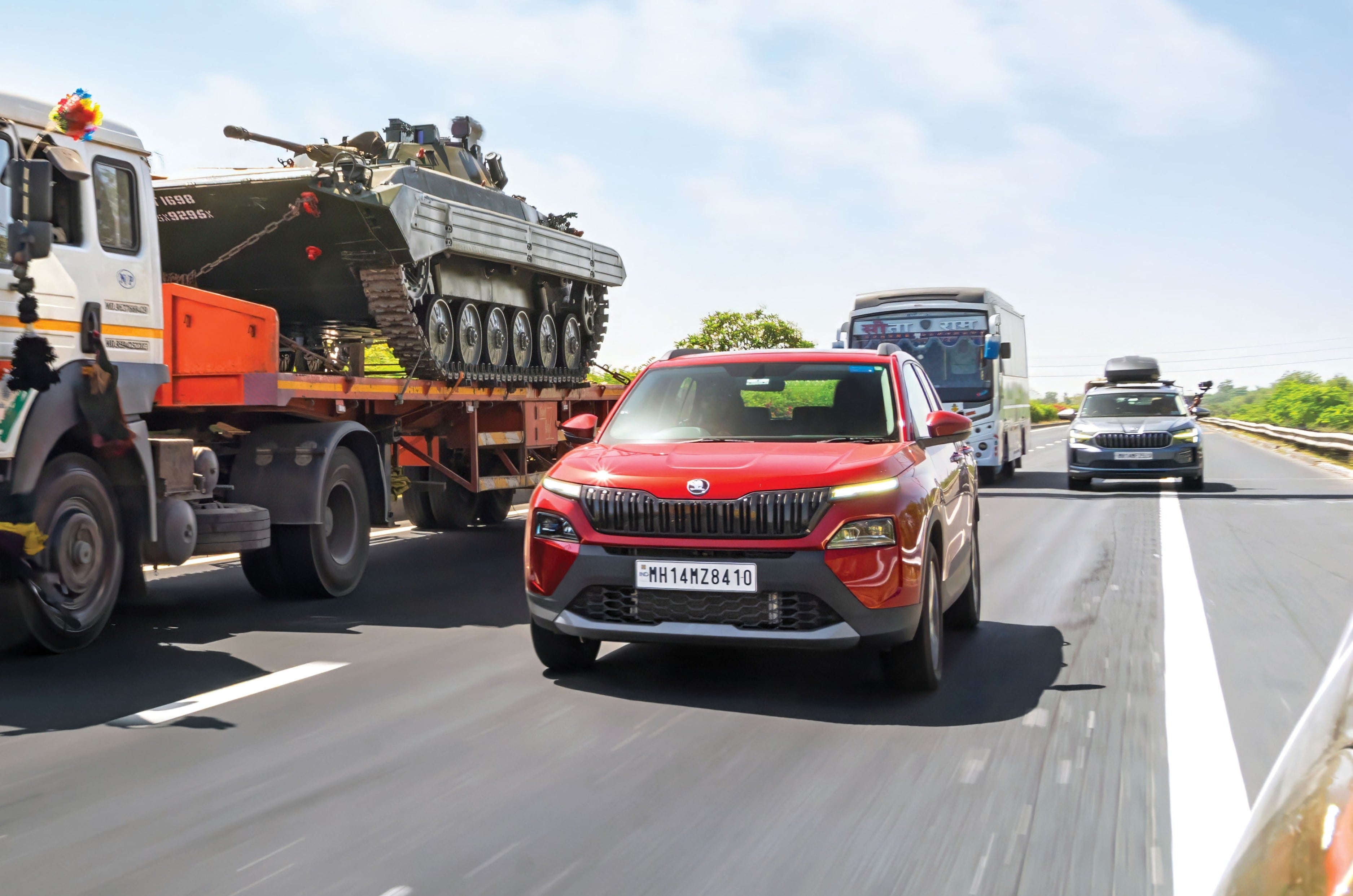
No telling what you’d spot on Indian highways.

The first of countless food stops was Hotel Ahura, renowned for its akuri and kheema. Needless to say, we carb-loaded to the max and made a beeline for Vadodara.

Pune-Birgunj in numbers

Distance covered2,487km
Fuel consumed234.46 litres
Average fuel economy10.62kpl
Approximate fuel costRs 23,629
Average per-litre fuel costRs 100.87
Total time driven55hrs 20min
Average speed44.95kph

Crossing into Gujarat, the Kylaq could finally stretch its legs and spool up that turbo on the state’s spotless highways. The stability and effortless cruising were a welcome relief, since the bulk of the kilometres on this drive would be covered on long, open highways. Gujarat was a short stint – we made only an overnight halt in Vadodara before slipping out ahead of the morning traffic. The drive into Rajasthan was seamless, and Udaipur greeted us with a mix of heat and traffic. The City of Lakes is worth taking the time to explore, but a late arrival and early morning departure left us with just enough time to grab a traditional meal. All that driving had built up an appetite, so we put it to a vote between a massive vegetarian thali and laal maas – the latter won by a landslide. From the City of Lakes, we headed to Jaipur, the Pink City: just as picturesque as Udaipur, and just as colourful and chaotic. The sun setting over the beautiful Amer Fort made for a cracking backdrop, and a few glimpses of the Jal Mahal on the way back were a treat too. The iconic Hawa Mahal, with its 953 windows, never fails to amuse, but getting a photo of the five-storey icon without a chorus of honks is next to impossible. The next morning, after threading through Jaipur’s narrow lanes, we made it back onto the highway, heading for Agra.
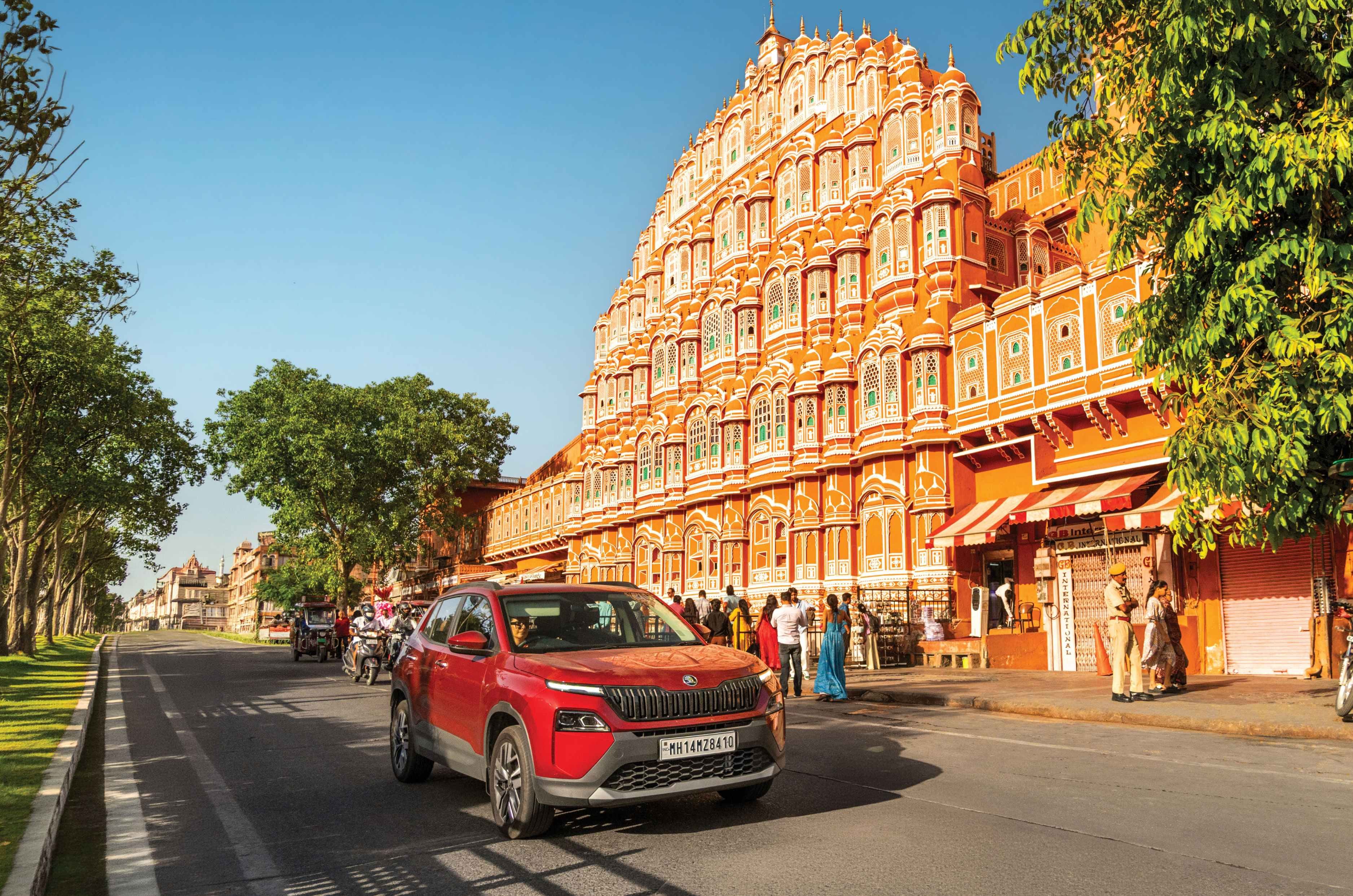
Iconic Hawa Mahal ought to be seen first-hand.

Agra is synonymous with the Taj Mahal, but the Agra Fort – from which you can see the Taj in the distance – is just as mesmerising. The detailing and architecture are second to none, and you could spend hours walking through its courtyards and passages, taking endless pictures. We, of course, also made it to the Taj itself, amid the hordes of tourists, if only to avoid the guilt of visiting Agra without a shot of the world-famous white dome. Tourism done, it was time for some petha – though the lanes near the petha shops seemed to be the exact width of the Kylaq, and that’s where peak anxiety set in. We got out of the mess, walked around the car to check for scratches and scribbles, and sighed in relief. India was adding to the tension, and we were barely halfway through it.
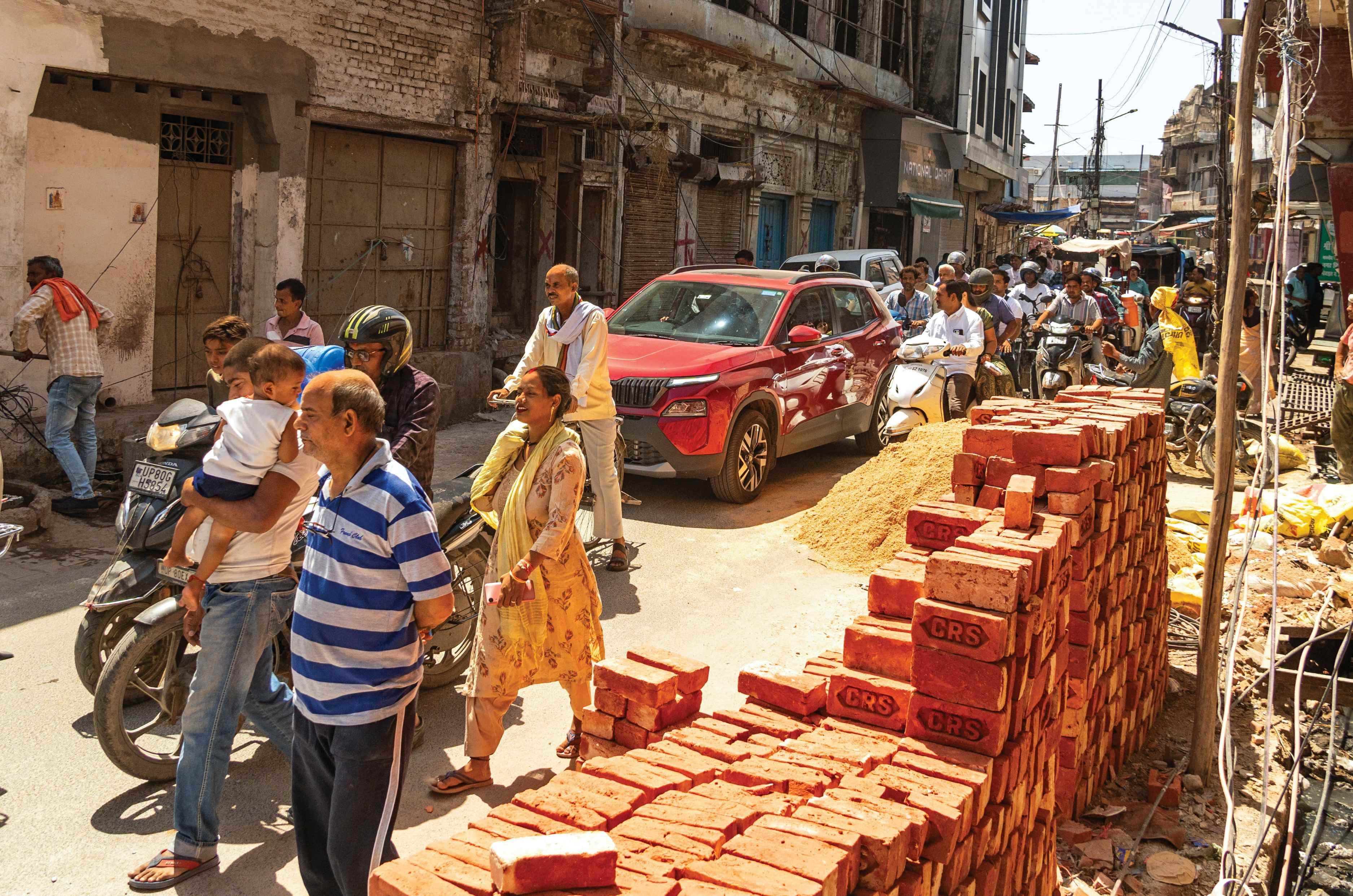
Agra’s narrow lanes were a nightmare to drive through.

Our next stop from Agra was foodie heaven – Lucknow. The biryanis, kebabs, and tandoors were exactly what we expected, and exactly what Lucknow delivered. Finding your way here is easy – you could do it blindfolded, following the smoke and sizzle to wherever you need to be. Tunday Kababi is a must, and after a heap of biryani laced with kebabs, a long walk through the countless chikankari shops helps burn off some of the calories.
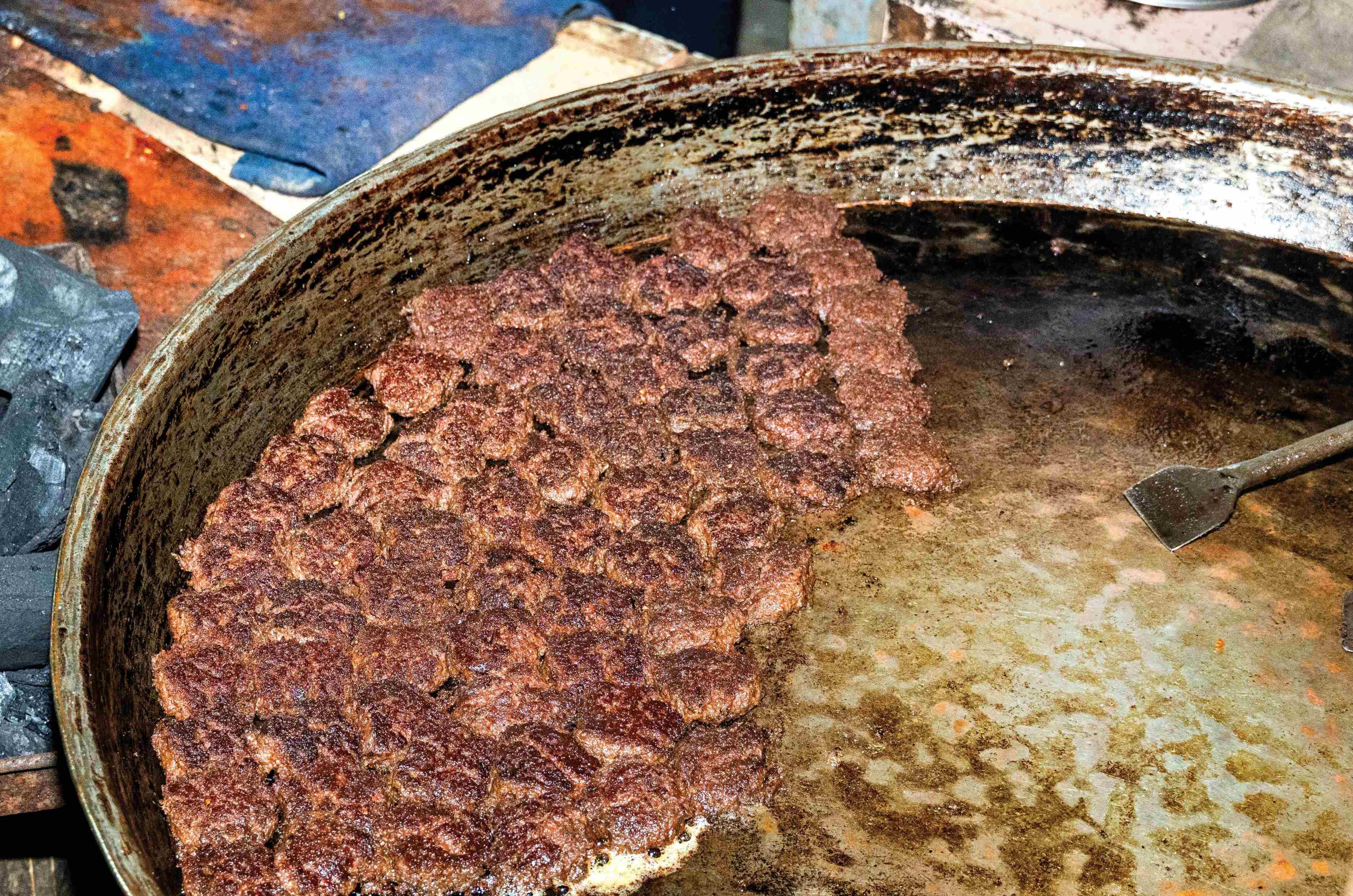
Lucknow’s Tunday Kababi still has us drooling over Galouti kebabs.

We were closing in on the end of the India leg, with one last stop in Gorakhpur before the Nepal border. To celebrate, a group of Skoda owners, officially known as the ‘Fans of Skoda’ joined us for a celebratory convoy as we drove out – everything from Octavia RS models to Kodiaqs and Kushaqs turned up as a send-off before we went international. The loud, chaotic border towns past Gorakhpur delivered one final challenge as we exited through Raxaul.
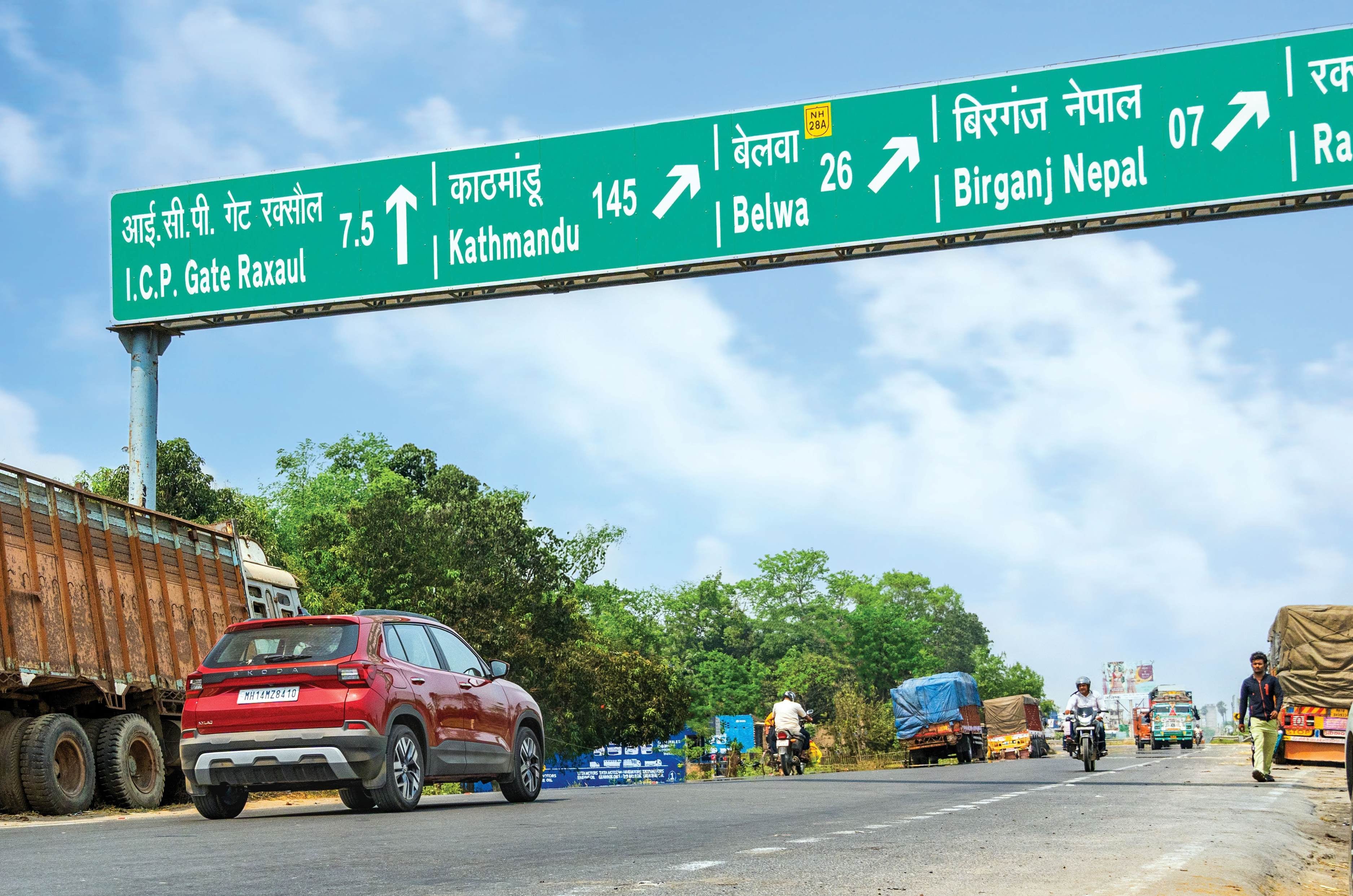
Final stretch before the Kylaq left India for the first time.

The India-Nepal border is still raw and basic, with none of the high-tech systems you might expect. A drive of this scale comes with a mountain of paperwork – visas, carnets, insurance, and more – and sifting through all of it manually takes a while. After a gruelling five hours, the Kylaq crossed out of India for the very first time.

Nepal – Old World Charm
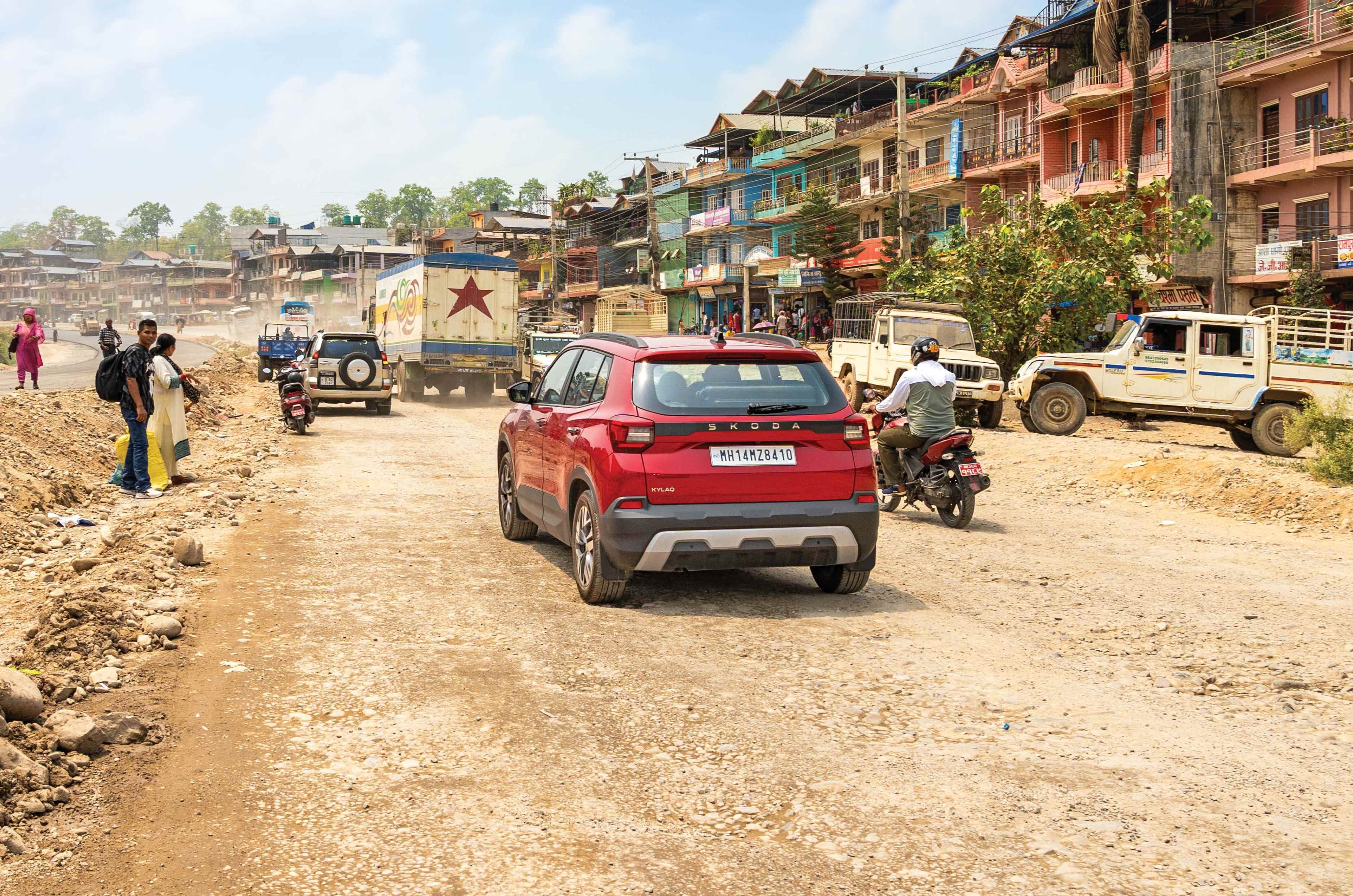
Nepal’s state highways give Indian roads a run for their money.

If the Indian side of the border was old-school, Nepal’s immigration post is almost antique. Drive past it, and you’d likely miss it altogether – the only tell-tale sign is a simple gate with ‘Immigration Office’ hand-painted on it. This humble-looking house is, in fact, the immigration office, where, just like on the Indian side, every check is done manually. Fine print, identity proofs, and everything in between were checked meticulously before we were welcomed into Birgunj. Our main draw in Nepal was the bustling capital, Kathmandu, but there were magnificent stops along the way, starting with Chitwan National Park.
Home to nearly 700 one-horned rhinos, the park also shelters elephants, Bengal tigers, cobras, the elusive gharial, and abundant flora. The Kylaq would have been fun to explore it in, but we opted for the park’s safari vehicle to relax and take in the surroundings. Paddling a beaten-up wooden kayak past crocodiles and snakes adds a rush, but it’s nothing compared to a rhino staring you down in all its magnificence. The park gave us a welcome break from long hours behind the wheel.
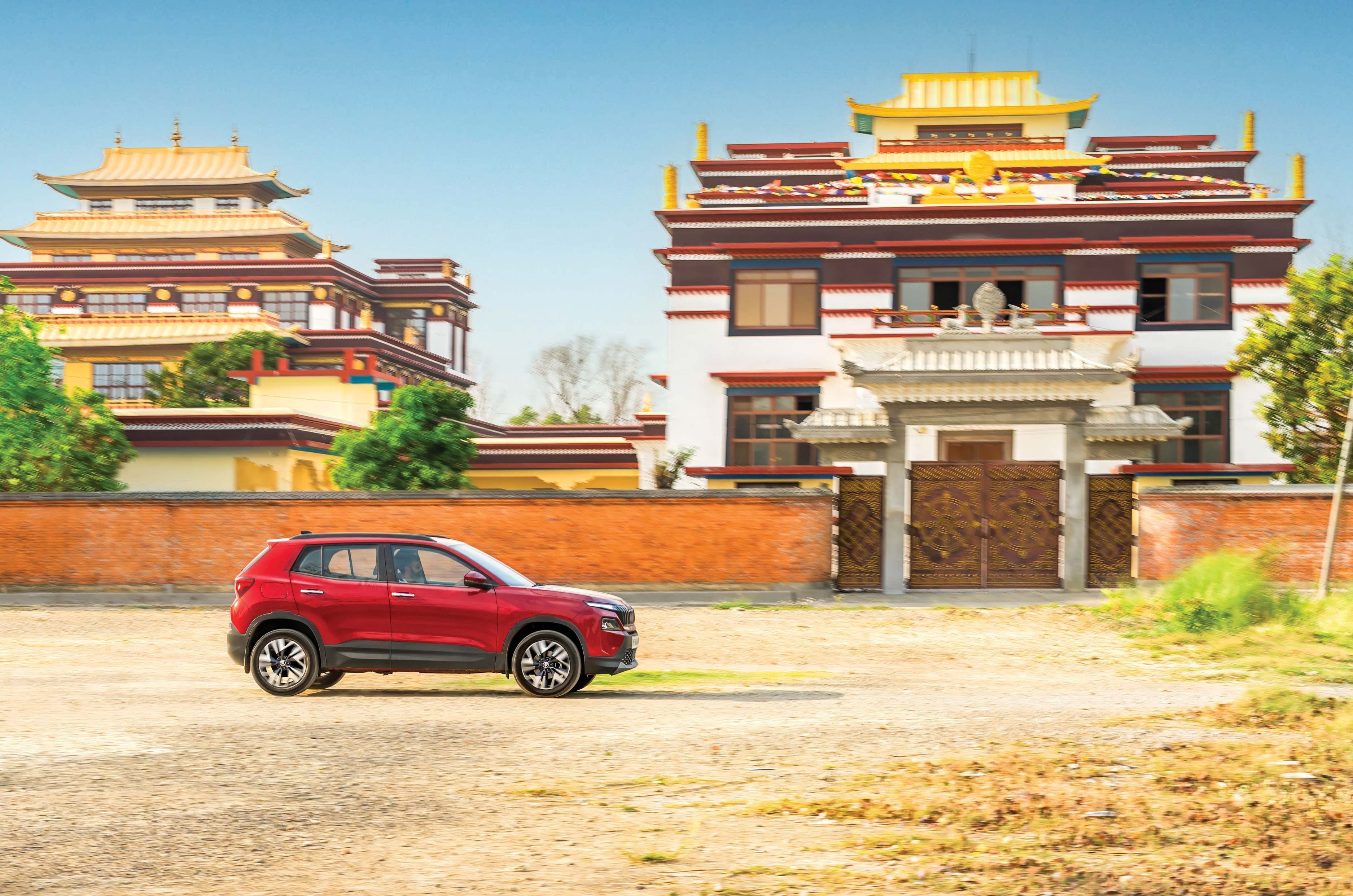
Lumbini is home to 32 unique styles of monasteries.

Next was Lumbini, a spiritual haven and, more importantly, the birthplace of Siddhartha Gautama (Lord Buddha) around 563 BC. Its fascinating monastic zone showcases monasteries built by Buddhist nations from around the world, each reflecting its own culture through design and architecture – a remarkable collection of temples spanning diverse traditions. The feeling of peace there was unlike anything I’d experienced, but it was soon disrupted by the road to Pokhara.
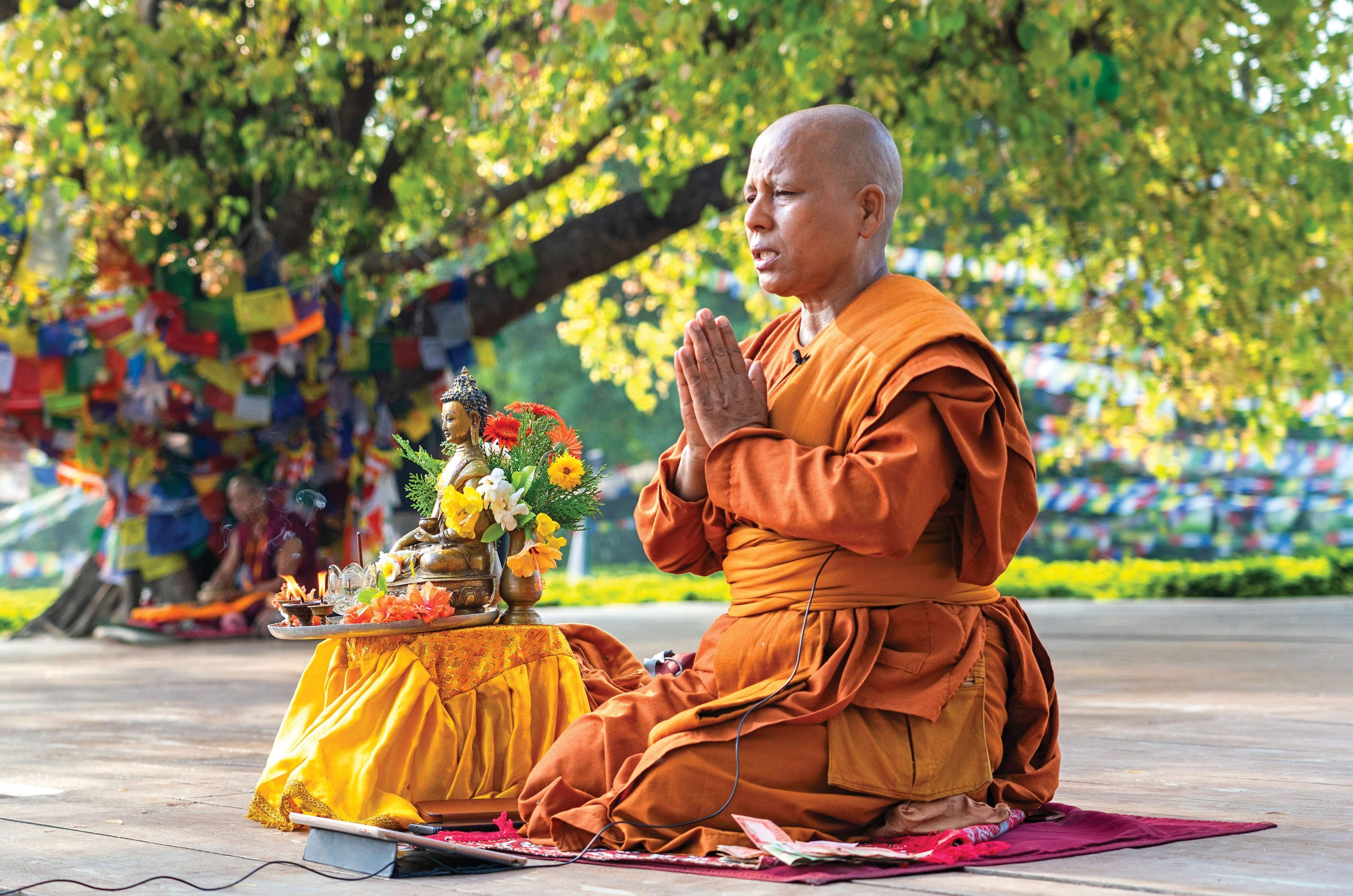
Lumbini provided a moment of calm through the chaos.

Mountain passes are notorious for destroying Google’s ETAs – landslides, breakdowns, and deteriorating roads mean a stretch that should take an hour could take five, depending on your luck. We braced for traffic and drove straight into a landslide clearing. A two-hour wait meant the sun was setting as we rolled into the quaint town of Pokhara. Bustling with cafés and pop culture, it felt like a mini Kathmandu, but with the stunning Phewa Lake turning orange at sunset. The calm that began in Chitwan came full circle on the shores of Phewa Lake.
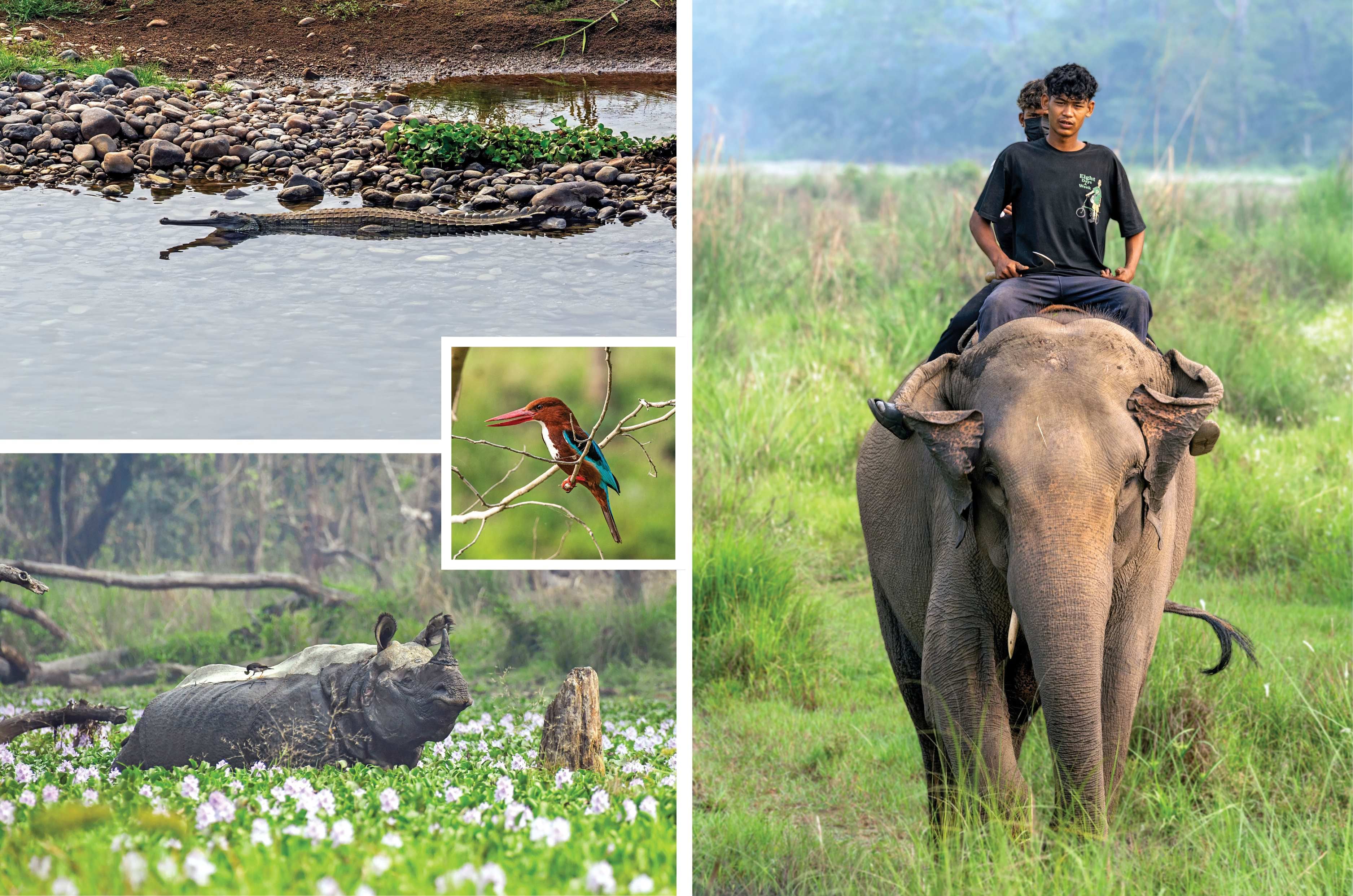
Chitwan is home to the gharial and over 700 one-horned rhinos.

Kathmandu, though, was a different animal entirely – every bit a capital city, and a world away from the slow pace of Chitwan or Lumbini. The music is loud, the traffic is hectic, and the city is anything but quiet. Ironically, the only quiet things on the road are the cars – China’s dominance in Nepal is stark, with three in five cars on the road being Chinese EVs. Geely, BYD, and GWM rule the market, with only a handful of Hyundais and Kias as competition.
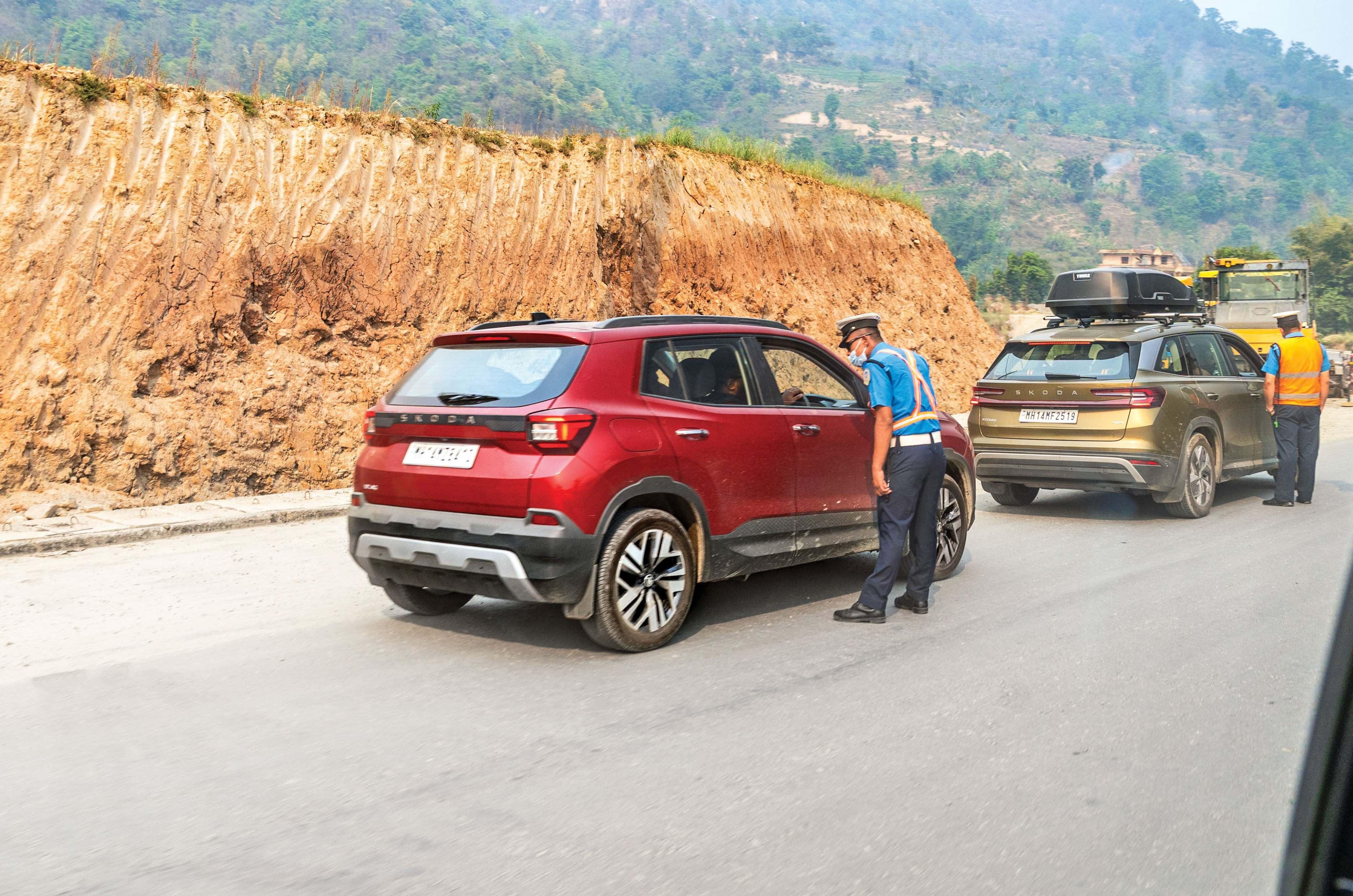
Authorities were always curious thanks to Indian number plates.

The party scene rules Kathmandu too. At night, the city comes alive as a hub for tourists from around the world. Hiking gear and North Face apparel go for a fraction of the price – and, often, a fraction of the quality – alongside quirky masks and fridge magnets at every tourist stop. Spend a little more time, though, and you’ll find excellent coffee shops and the famous Thakali thali: thick buckwheat porridge with salads, meat, and plenty of flavour. Good thing too, since walking through Durbar Square works up quite an appetite. Partly destroyed by the devastating 2015 earthquakes, the temples have since been restored to their former glory, though you can still spot the scars in a few bent pillars and roofs. It’s a culture and tradition worth preserving, and Nepal deserves credit for doing exactly that.

Birgunj-Sino-Nepal Border in numbers

Distance covered922km
Fuel consumed115.96 litres
Average fuel economy7.13kpl
Approximate fuel costRs 15,846
Average per-litre fuel costRs 136.65
Total time driven34hrs 25min
Average speed27kph

With Kathmandu explored, we headed towards our second border crossing – and this one was far more intense. Once we left Kathmandu, we left the tarmac behind too. Muddy back roads, still wet from the previous night’s rain, meant slush and a constant need for 4WD. Even so, though packed to the brim with luggage, the Kylaq stayed light enough and had enough clearance to pick its way around the mud on the approach to the Rasuwa Bridge. From there, you can see the Chinese immigration building towering over everything around it. With the Kylaq thrumming with excitement, we crossed into Tibet – the roof of the world.

Tibet/China – Roof of the World
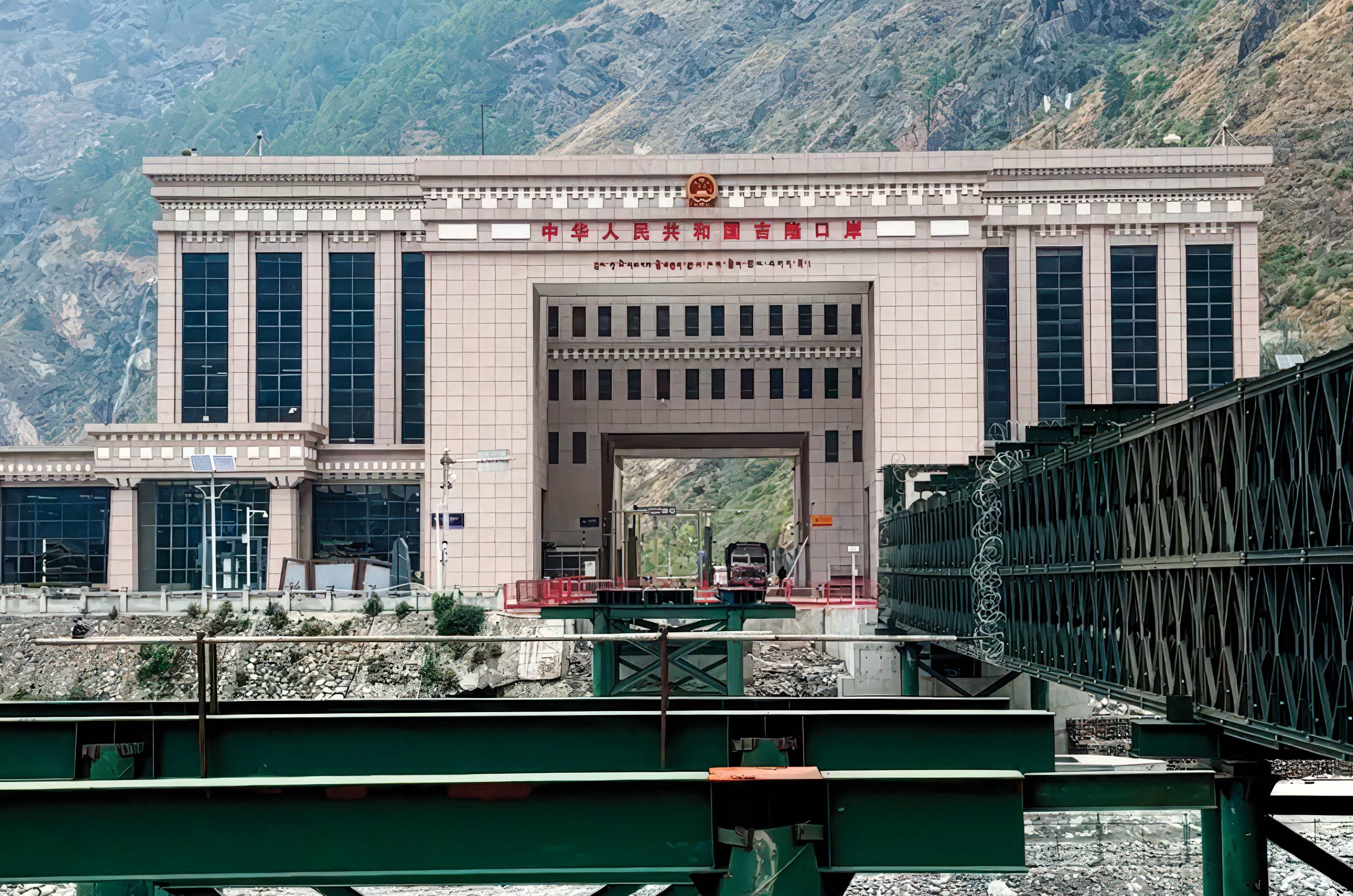
China’s border crossing is as imposing as it gets.

Crossing into Tibet felt like crossing into the future. For a region tucked deep into the mountains, it’s exceptionally developed – the roads are smooth and well-signed from the moment you cross the bridge, barely a hundred metres before the immigration office. In China, we weren’t taking any chances, knowing any misstep here could jeopardise the rest of the journey. After answering the customs officers honestly – and impressing them with the scale of the Kylaq’s challenge – we entered the lovely town of Gyirong. Old Chinese architecture, plenty of red, and signboards we couldn’t quite read were early signs that we really were in a different world now. Nepal had shared plenty with India – the cars, the food, the roads – but China felt entirely its own. We thought we’d seen our share of speed cameras, but China put us to shame – they appear every 50 metres or so, complete with flashes. There’s simply no room for error, and you’re monitored everywhere you go – aneerie feeling that takes some getting used to. Another non-negotiable is to obtain a special driving licence for every person that will be driving and a China-specific number plate, which you have to place on your dashboard so the cameras can pick up any infringements. A regular India-style RTO office with long queues and a lack of urgency got us homesick for a bit.
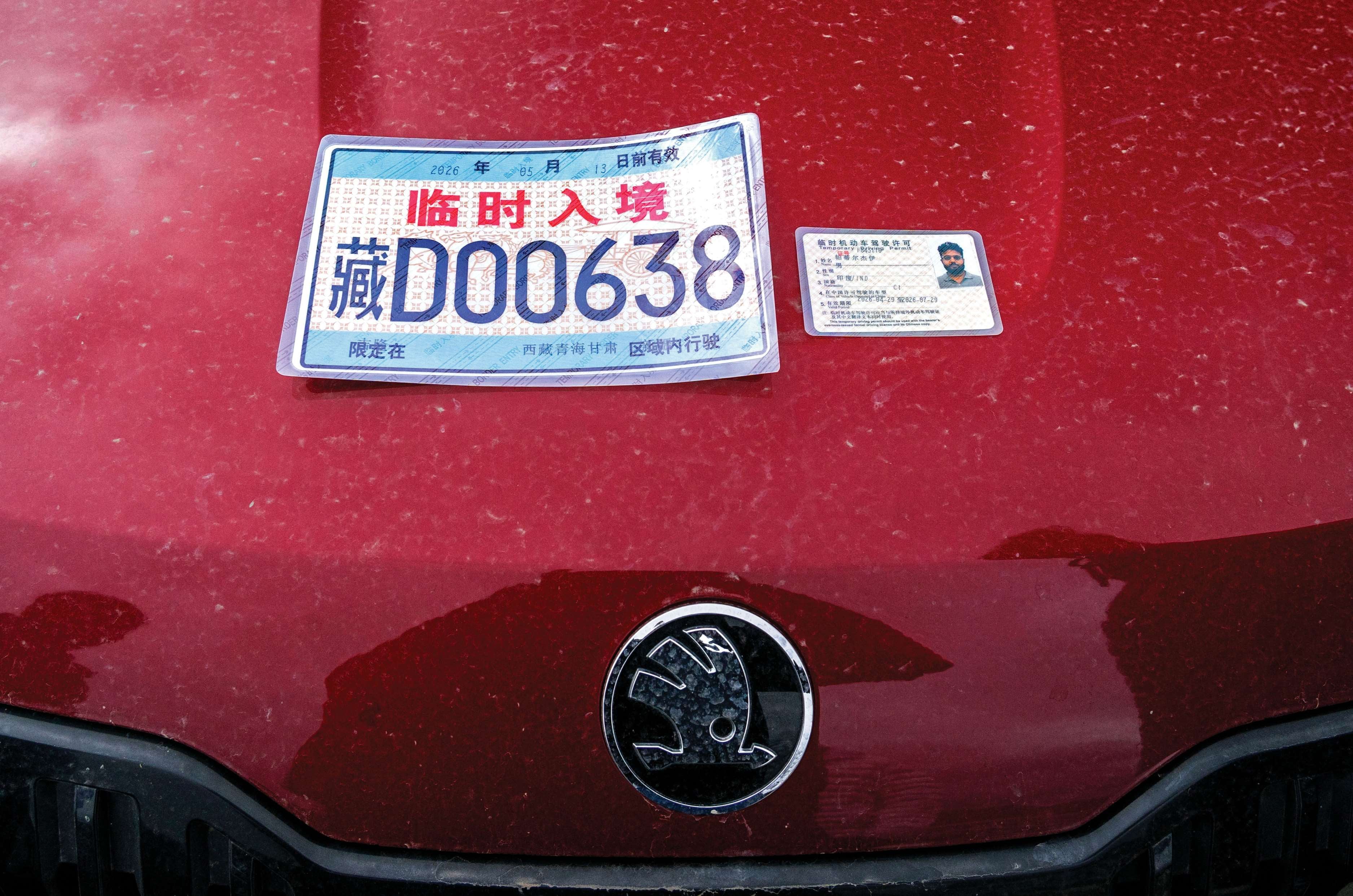
Local license and registration are non-negotiables in China.

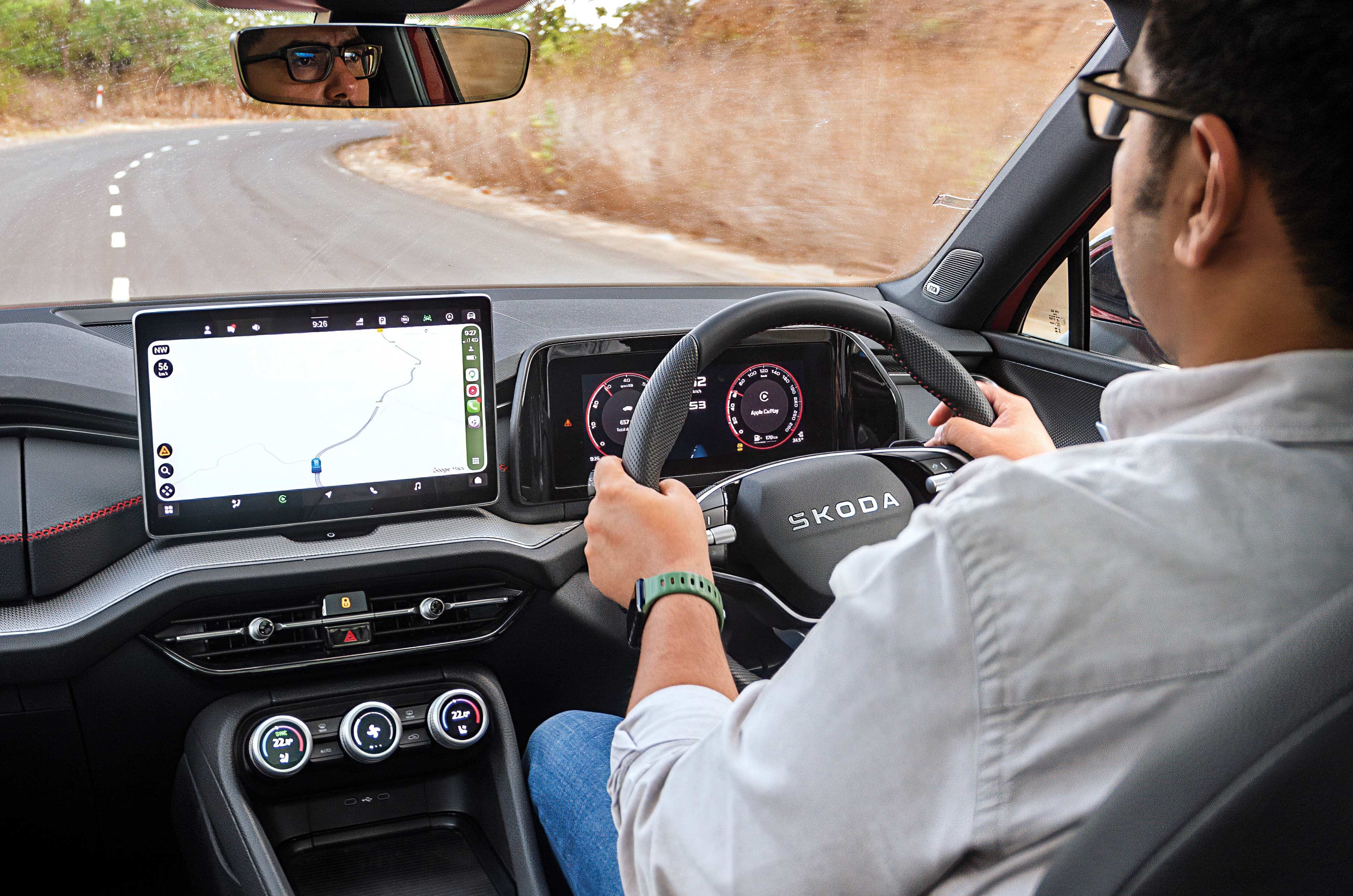
A few mugs of hot ginger-lemon tea eased us into the chill, and we set off for Mount Everest Base Camp. High altitudes are usually punishing for small-capacity engines, but thanks to its turbocharged engine, the Kylaq barely broke a sweat, buzzing through the passes. Its 6-speed automatic had been a great convenience through the chaos of India and Nepal, but the winding mountain roads and immaculate tarmac meant I could switch to manual and take control via the paddle shifters. Paddle-shift response is often sluggish, but not here – the shifts were quick, and the taut suspension held its ground even through tight hairpins.
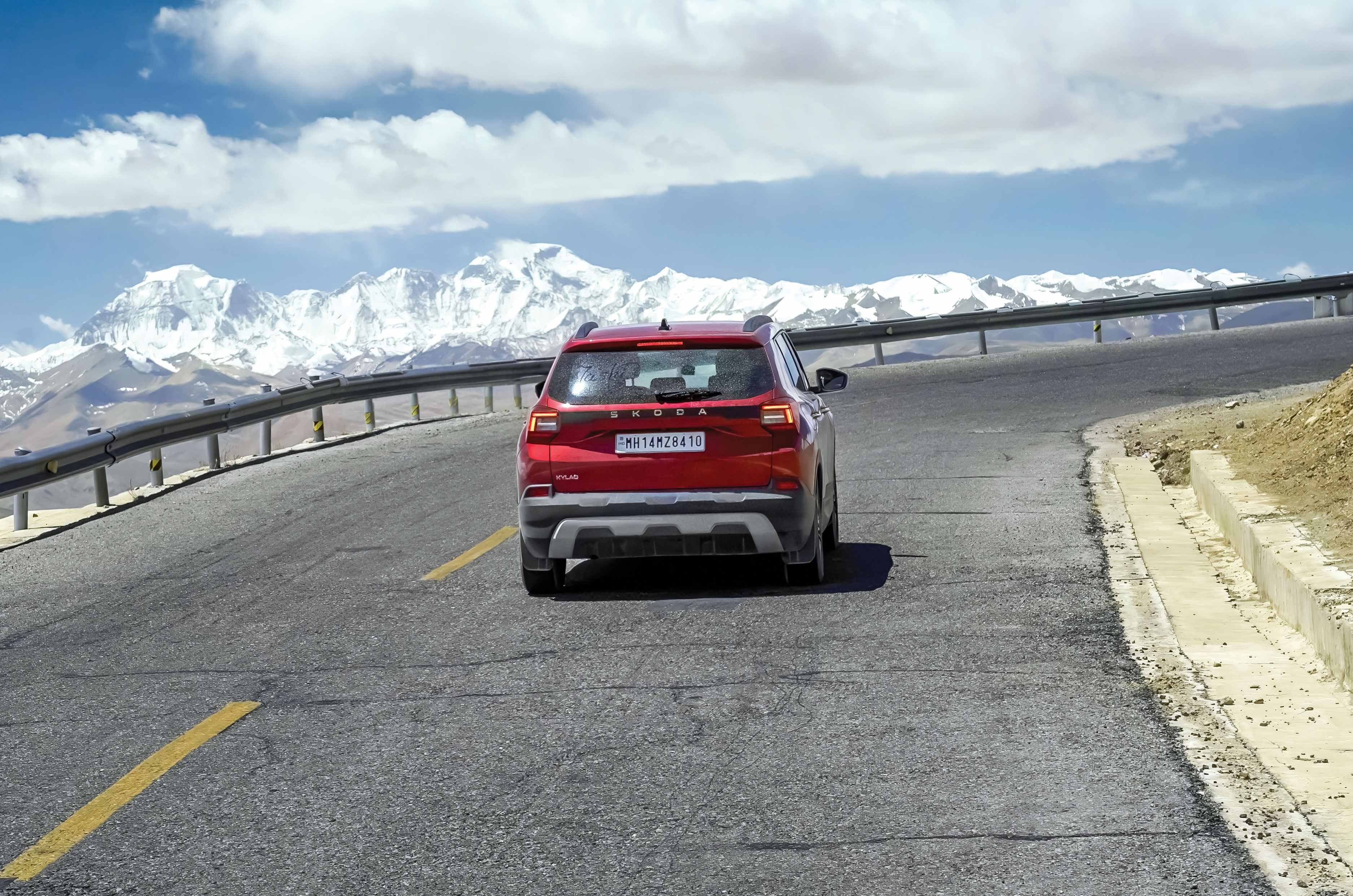
Everest hove into view long before we made it to base camp.

It made for a great drive and great footage, right up until we spotted the peak in the distance. Even from afar, Everest is breathtaking, and mercifully the clouds stayed clear as we got closer. You can’t take a car near base camp itself – a one-hour bus ride covers that final stretch. It’s strange how you lose your breath as you approach Everest – partly the thin air and altitude, but you’d lose it all the same just from the view. Words don’t do it justice, and don’t be surprised if you shed a tear or two – it’s overwhelming.
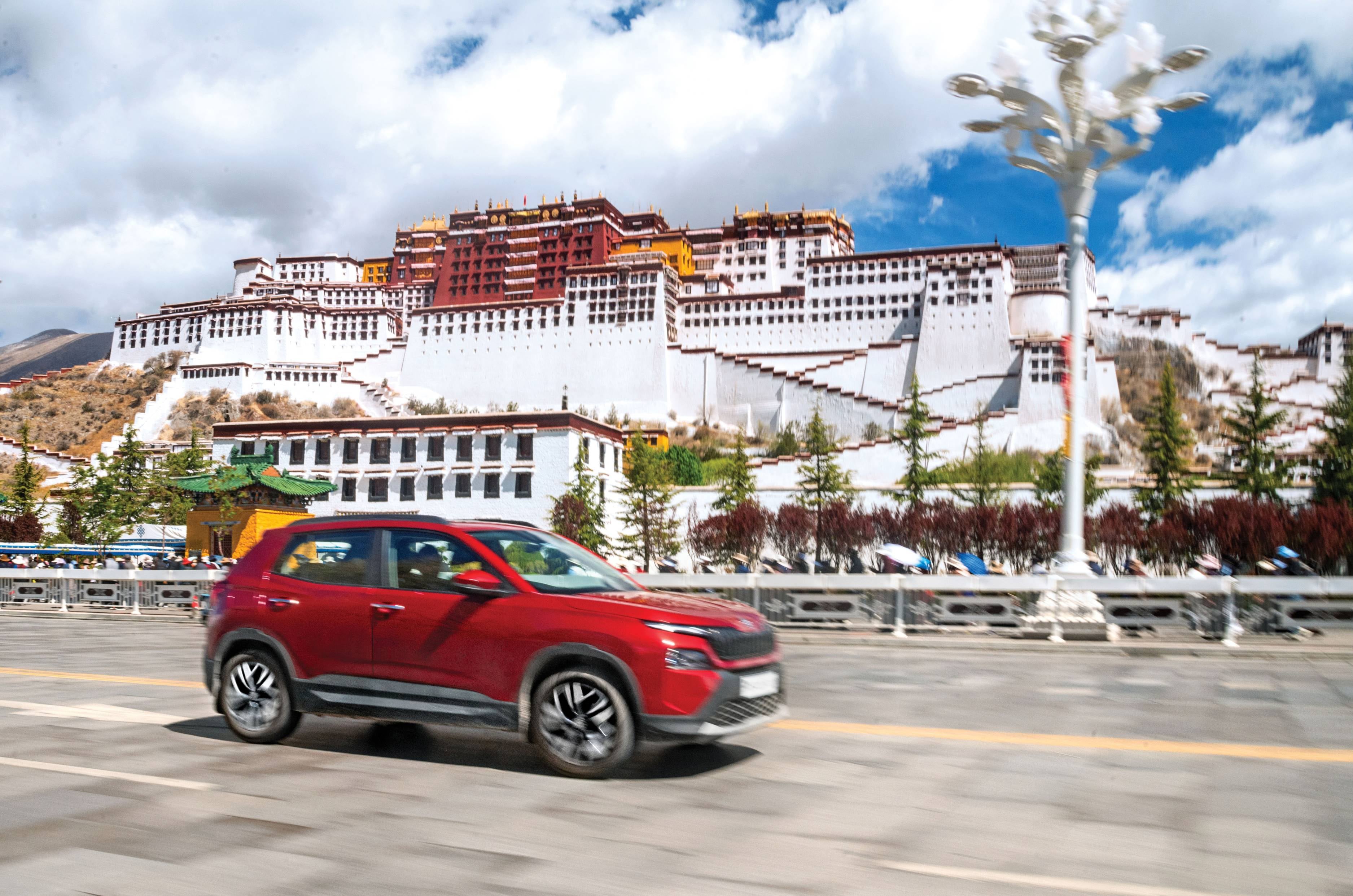
Stunning Potala Palace; once home to the Dalai Lamas.

With Everest ticked off, it was time to take on China’s vastness. We headed to Lhasa, the spiritual capital of Tibet, home to the grand Potala Palace. Once home to monks and lamas, this stunning palace holds incredible history and artefacts – spiritual or not, its significance to the country’s history is unmistakable. The drive kept revealing itself through unique food, dialects, faces, and even geography. One day we were freezing thousands of feet above sea level; days later, in Turpan, we were below sea level in blistering heat. From boiling hotpots to grocery-store instant noodles, China pushed us well outside our comfort zone, and the Kylaq wasn’t spared either.
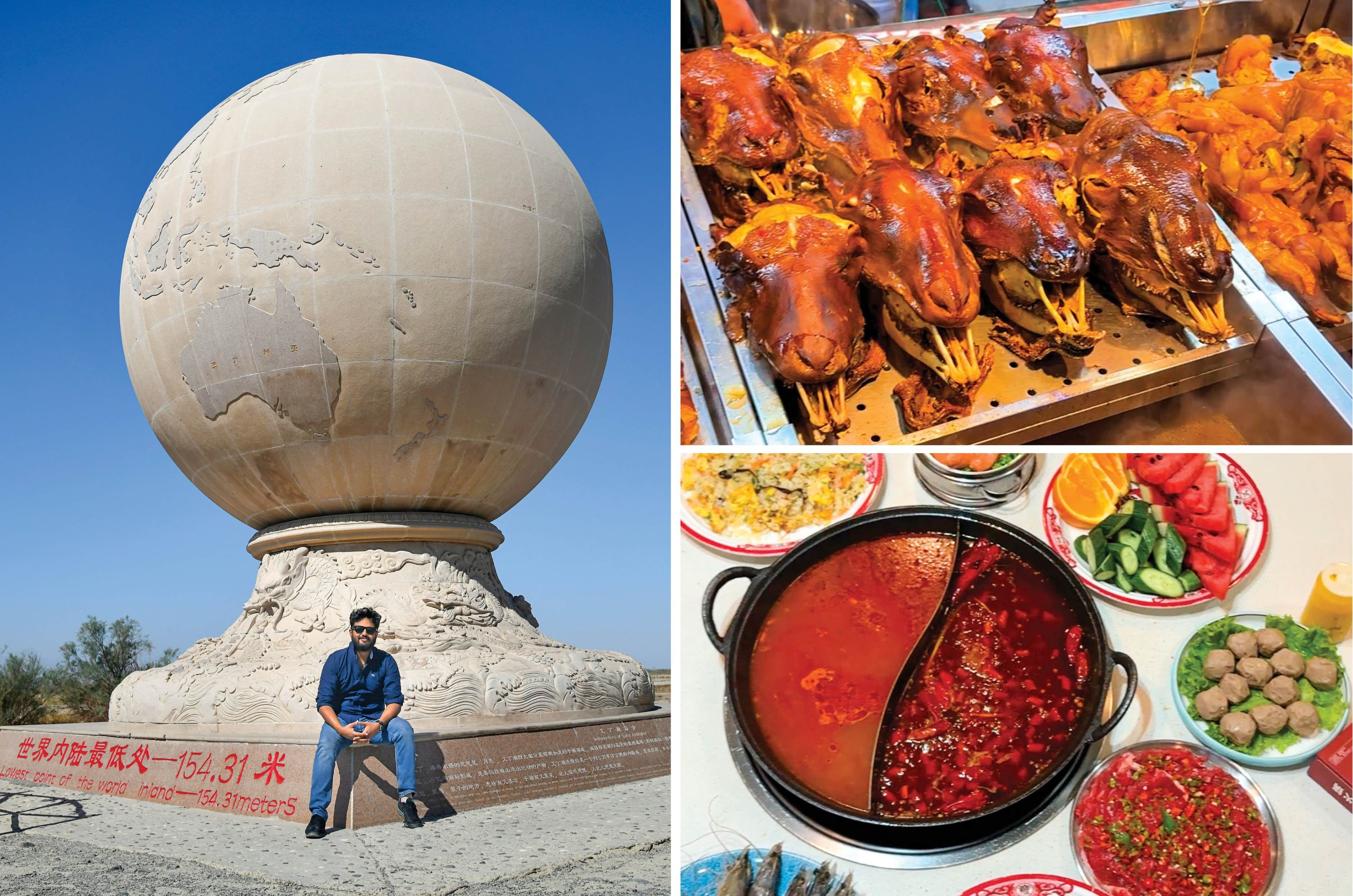
L: From EBC’s high to Turpan Depression’s low – Jay was at 154m below sea level here. R: Street food in China not
for the faint-hearted.

Two full days on the way to Golmud were entirely off-road, taking over 13 hours of driving, with our average speed dropping to 18kph as the Kylaq waded through water up to its bonnet and emerged without complaint.
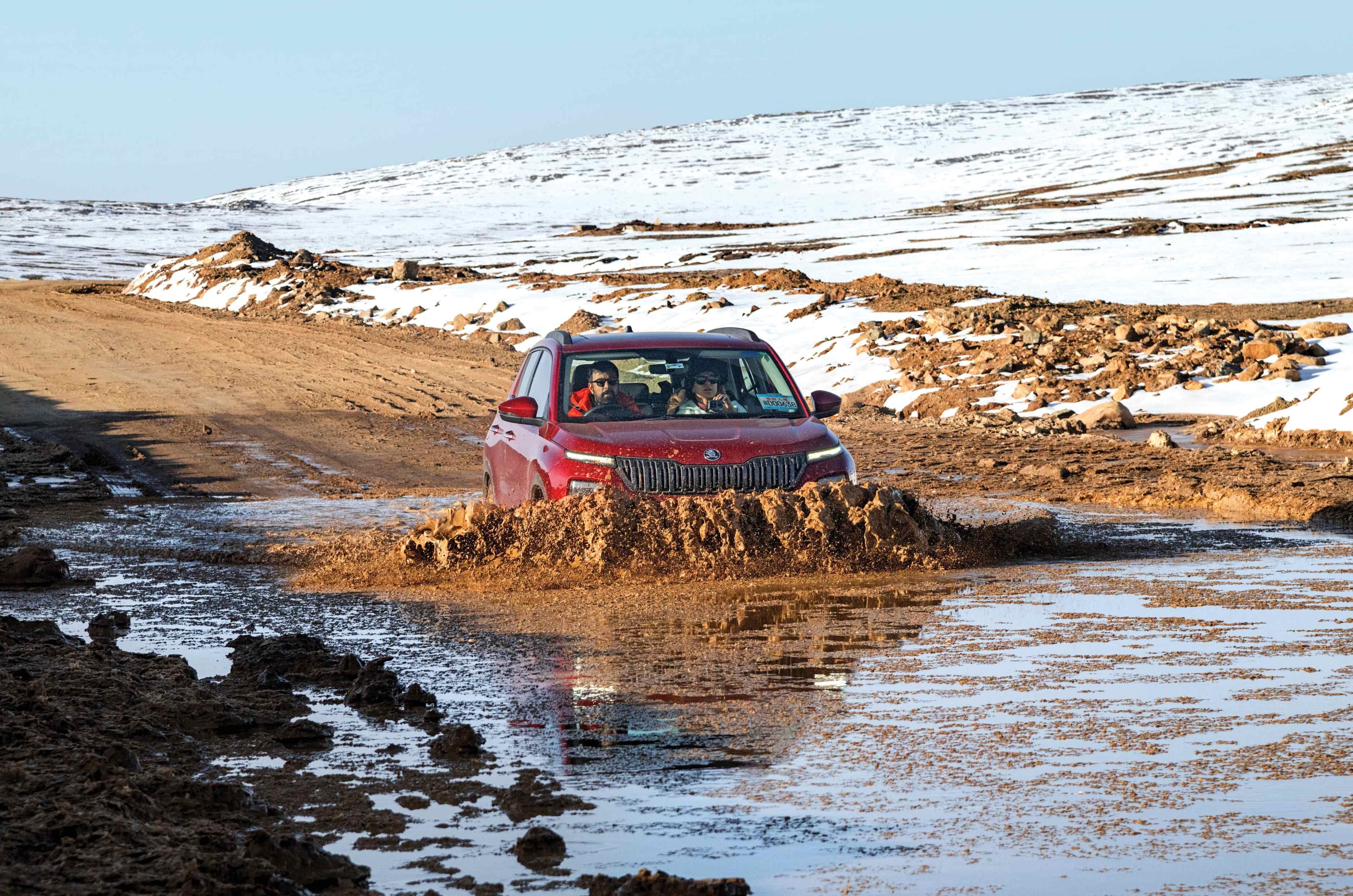
In China, you get perfect roads or, simply, no roads.

A stretch that would have broken most cars left the Kylaq unscathed. China hit hard, but the Kylaq hit back harder. From day one, it had faced challenge after challenge, and from day one, it had come out on top. Three countries in, it still carried the same zeal it started with – and while we were rattled, it stood strong each night, ready for the next day.

China-Kyrgyz Border in numbers

Distance covered5,133km
Fuel consumed330.88 litres
Average fuel economy15.51kpl
Approximate fuel cost3074 Yuan (Rs 42,764)
Average per-litre fuel cost9.2 Yuan (Rs 129)
Total time driven117hrs 21min
Average speed43.80kph

एक इंजीनियर को मिले 20+ जॉब ऑफर, Adobe से Amazon तक कंपनियों की लगी लाइन! जानें सफलता का राज

एक सॉफ्टवेयर इंजीनियर की सफलता की कहानी इन दिनों सोशल मीडिया पर तेजी से वायरल हो रही है। उन्होंने बताया कि अपने करियर सफर के दौरान उन्हें दुनिया की कई नामी प्रोडक्ट बेस्ड कंपनियों से 20 से ज्यादा जॉब ऑफर मिले। यह उपलब्धि हासिल करने के लिए उन्होंने लगातार मेहनत, सीखने और असफलताओं से आगे बढ़ने का रास्ता चुना। उनकी LinkedIn पोस्ट में सिर्फ ऑफर्स की संख्या नहीं, बल्कि उस संघर्ष और तैयारी की झलक भी दिखाई गई है, जिसने उन्हें इस मुकाम तक पहुंचाया।

बड़ी टेक कंपनियों से मिले इन ऑफर्स ने लोगों का ध्यान आकर्षित किया और कई यूजर्स ने उनकी मेहनत की जमकर तारीफ की। आखिर कैसे उन्होंने यह सफलता हासिल की और कौन-कौन सी बड़ी कंपनियों से मिले ऑफर? जानिए पूरी कहानी।

Adobe, Amazon और Tesla जैसी कंपनियों से मिले ऑफर

LinkedIn यूजर निशचय अग्रवाल ने अपनी पोस्ट में बताया कि जॉब सर्च के दौरान उन्हें कई बड़ी कंपनियों से ऑफर मिले। इनमें Adobe, Tesla, Salesforce, Amazon, JioHotstar, eBay, CRED, Twilio, Autodesk और कई अन्य प्रतिष्ठित कंपनियां शामिल हैं। उन्होंने यह भी बताया कि उन्हें एक इंटरनेशनल जॉब ऑफर भी मिला है।

कहा- यह सिर्फ कंपनियों के नाम की कहानी नहीं है

निशचय ने अपनी पोस्ट में साफ किया कि उनका मकसद सिर्फ बड़ी कंपनियों के नाम दिखाना नहीं है, बल्कि उस मेहनत और सफर को साझा करना है, जिसने उन्हें यहां तक पहुंचाया। उन्होंने लिखा कि यह कहानी कंपनी के लोगो की नहीं, बल्कि उस यात्रा की है जिसके पीछे लगातार मेहनत छिपी है।

रातों की मेहनत और कई असफल इंटरव्यू का नतीजा

इंजीनियर ने बताया कि इस मुकाम तक पहुंचने के लिए उन्होंने कई रातें सीखने में बिताईं। वीकेंड पर भी तैयारी की, कई इंटरव्यू में असफलता मिली और लंबे समय तक कोडिंग व डिबगिंग करते रहे।उन्होंने कहा कि कई बार आत्मविश्वास डगमगाया, लेकिन लगातार सीखने और आगे बढ़ने की आदत ने उन्हें सफलता दिलाई।

परिवार और टीम को दिया सफलता का श्रेय

निशचय ने अपने परिवार, मैनेजर्स, साथियों, रिक्रूटर्स और इंटरव्यू लेने वालों का आभार जताया। उन्होंने अपनी सफलता के लिए भगवान हनुमान का भी धन्यवाद किया और कहा कि हर चुनौती और अवसर ने उन्हें बेहतर इंजीनियर बनने में मदद की।

जॉब तलाशने वालों को दी खास सलाह

उन्होंने नौकरी की तैयारी कर रहे लोगों को सलाह दी कि वे अपनी शुरुआत की तुलना किसी और की सफलता के अगले पड़ाव से न करें। उनका कहना था कि हर व्यक्ति की अपनी यात्रा होती है। लगातार सीखते रहना, नई चीजें बनाना, आवेदन करते रहना और खुद पर भरोसा रखना जरूरी है।

सोशल मीडिया पर लोगों ने दिए मजेदार रिएक्शन

पोस्ट वायरल होने के बाद सोशल मीडिया यूजर्स ने निशचय की जमकर तारीफ की। कुछ लोगों ने उनकी सफलता को लेकर मजेदार कमेंट भी किए। एक यूजर ने मजाक में लिखा कि वह ऑफर लेटर ऐसे जमा कर रहे हैं जैसे पोकेमॉन कार्ड इकट्ठा किए जाते हैं। वहीं दूसरे यूजर ने कहा कि वह सफलता की “समस्या” से जूझ रहे हैं। कई लोगों ने उनकी उपलब्धि को प्रेरणादायक बताया और कहा कि ऐसी सफलता हर टेक प्रोफेशनल का सपना होती है।

वायरल पोस्ट ने बढ़ाई चर्चा

निशचय की कहानी LinkedIn से आगे बढ़कर अन्य सोशल मीडिया प्लेटफॉर्म तक पहुंच गई। लोगों ने उनकी मेहनत, धैर्य और लगातार प्रयास को सराहा। कई यूजर्स ने इसे टेक इंडस्ट्री में सफलता पाने वालों के लिए प्रेरणा बताया।

66 लाख रुपये की नौकरी छोड़ने वाली महिला ने खोला राज, बताया क्यों कम वेतन वाली नौकरी लगी बेहतर

Skoda Kodiaq RS review – The RS of SUVs

Skoda Kodiaq RS front quarter static

Normally, I wouldn’t begin a Skoda Kodiaq review with a 0-100kph run. But this isn’t a regular Kodiaq. It’s got RS in its name, which means performance is every bit as important as practicality. Left foot on the brake, right foot on the accelerator, Launch Control activated, and off we go. The VBOX flashes a 0-100kph time of 6.83 seconds. For a large, seven-seat SUV, that’s impressive.

Kodiaq RS Performance and Refinement – 8/10

To enable this, the changes begin under the bonnet. The familiar EA888 2.0-litre turbo-petrol engine remains, but power climbs from 204hp to 265hp, while torque jumps from 320Nm to 400Nm. The numbers translate to acceleration and roll-on times a few tenths quicker than the standard Kodiaq, and the whole sensation is of being in a more urgent vehicle.

Uprated 2.0-litre TSI engine bumps power to 265hp.

There’s a strong pull throughout the rev range, and on stretches long enough, the engine will happily wind to 6,000-6,500rpm. It’s particularly satisfying because the power feels usable and the performance is engaging. A similar-powered EV just won’t give the same thrill. Enhancing the experience is the soundtrack. The dual exhausts won’t let out pops or bangs, but you’ll hear a purposeful snarl from the engine when extended. Some of what you hear is played through the speakers, but it’s tastefully done and never sounds artificial.

Added power manifests in more urgent and energetic power delivery. 

The quick-shifting seven-speed dual-clutch gearbox is also intrinsic to the drive experience. It’s always in the right gear and is very responsive to your right foot. Of course, on a day of hard driving, you’ll inevitably reach for the paddle shifters. They’re quick to respond but aren’t always willing to grant a high-rpm downshift.

Kodiaq RS Ride Comfort and Handling – 8/10

The RS badge isn’t just about straight-line performance. Skoda has put effort into making the Kodiaq more exciting in corners. Enhancements over the standard Kodiaq include a move to 20-inch rims (up from 18 inches), progressive steering (it alters the ratio depending on lock) and adaptive dampers (Dynamic Chassis Control or DCC), with 15 settings covering the spectrum from soft to firm. It all comes together really well.

It’s no Octy RS but is surprisingly engaging to drive for a seven-seat SUV.

No, the tall and heavy SUV doesn’t magically transform into an Octavia RS, but judged as a seven-seat SUV, the Kodiaq RS is surprisingly engaging. In its sportiest setting, the RS changes direction eagerly and body control is tidy – you don’t feel the weight pushing outwards in high-speed corners. The all-wheel-drive system plays its supporting role really well, because there’s an ever-present feeling of grip, and this greatly ups confidence and connect with the RS. Up to 100 percent of torque can go to the rear axle, and this gives the handling a different feel to the front-wheel-drive Octavia RS. Skoda’s XDS+ system that brakes the inner wheel in corners also comes into play, helping the Kodiaq resist understeer. A well-weighted and responsive steering completes the package.

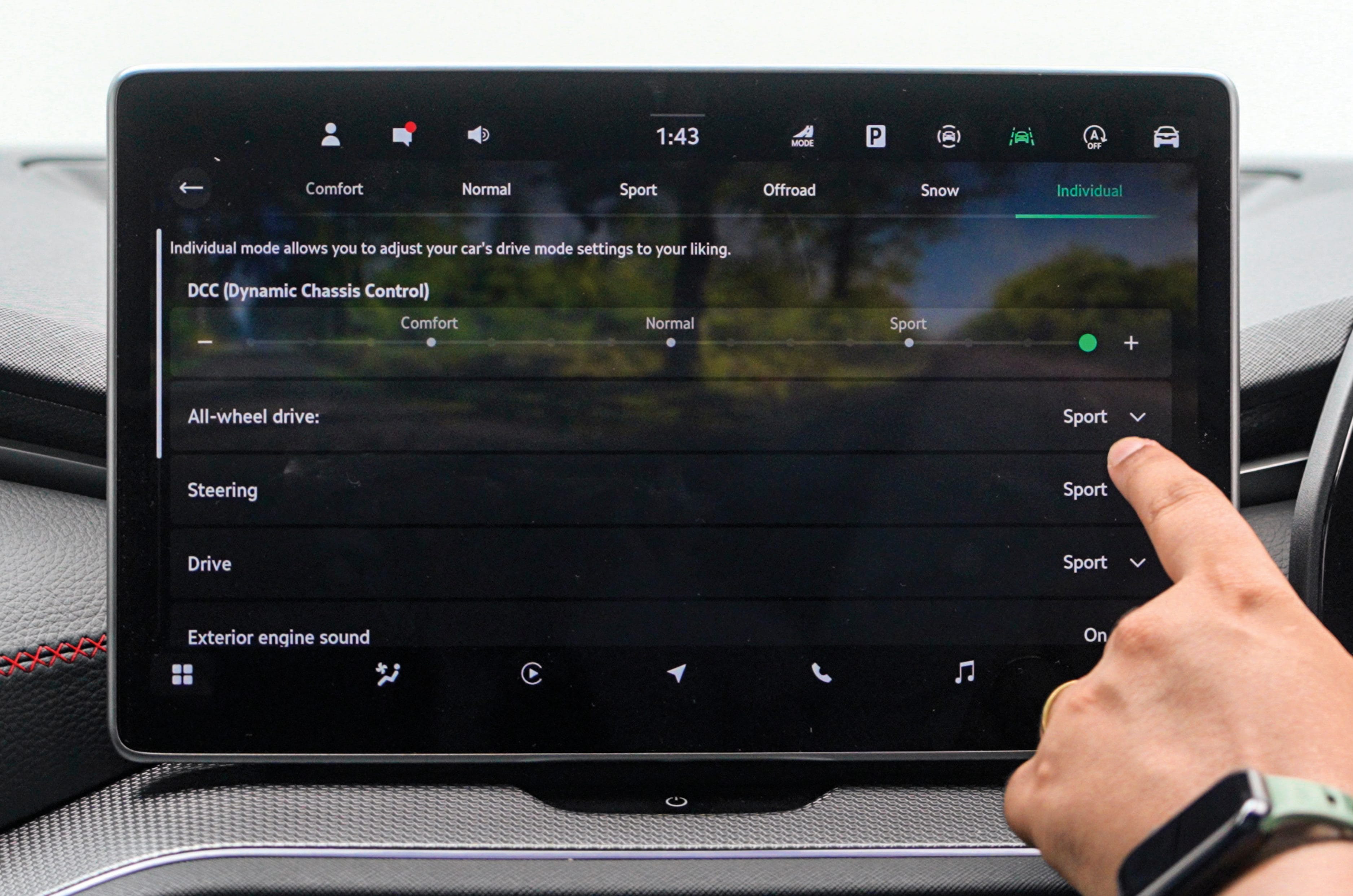
You can configure the drive to your liking. DCC gets 15 levels.

What’s nice is that there’s plenty of ways to set up the Kodiaq RS to your liking. Beyond the usual Comfort, Normal and Sport modes, there’s an Individual setting that allows you to tailor everything from damper stiffness and steering weight to the responses of the engine, gearbox and all-wheel-drive system. DCC, in particular, gives the Kodiaq RS a wider breadth of roles. It feels well tied down in the sportier setting, while the suspension has more give in the softest modes. Ride comfort is pleasant even on the 20-inch rims, and if memory serves, it’s more absorbent than the standard Kodiaq that rides on 18-inch wheels. Of course, no issues of ground clearance here. In fact, the Kodiaq RS will happily play everyday car. The engine is smooth and refined when you need it to be, but is happy to change character the moment you ask more of it.

Kodiaq RS Features and Safety – 9/10

New to the Kodiaq line-up in India is ADAS (rolled out last month), and the suite includes adaptive cruise control, emergency braking, lane-keep assist, a blind-spot warning and more. The functions work well enough and, of course, are an added layer of safety only. Nine airbags, electronic stability control and ISOFIX child-seat mounts are among the features on the long list of safety equipment. Wish the 360-degree camera was crisper, but props to the Matrix LED headlights that offer excellent illumination. The welcome and goodbye signatures on the lights are also a cool touch. 

Kodiaq RS Exterior Design and Engineering – 8/10

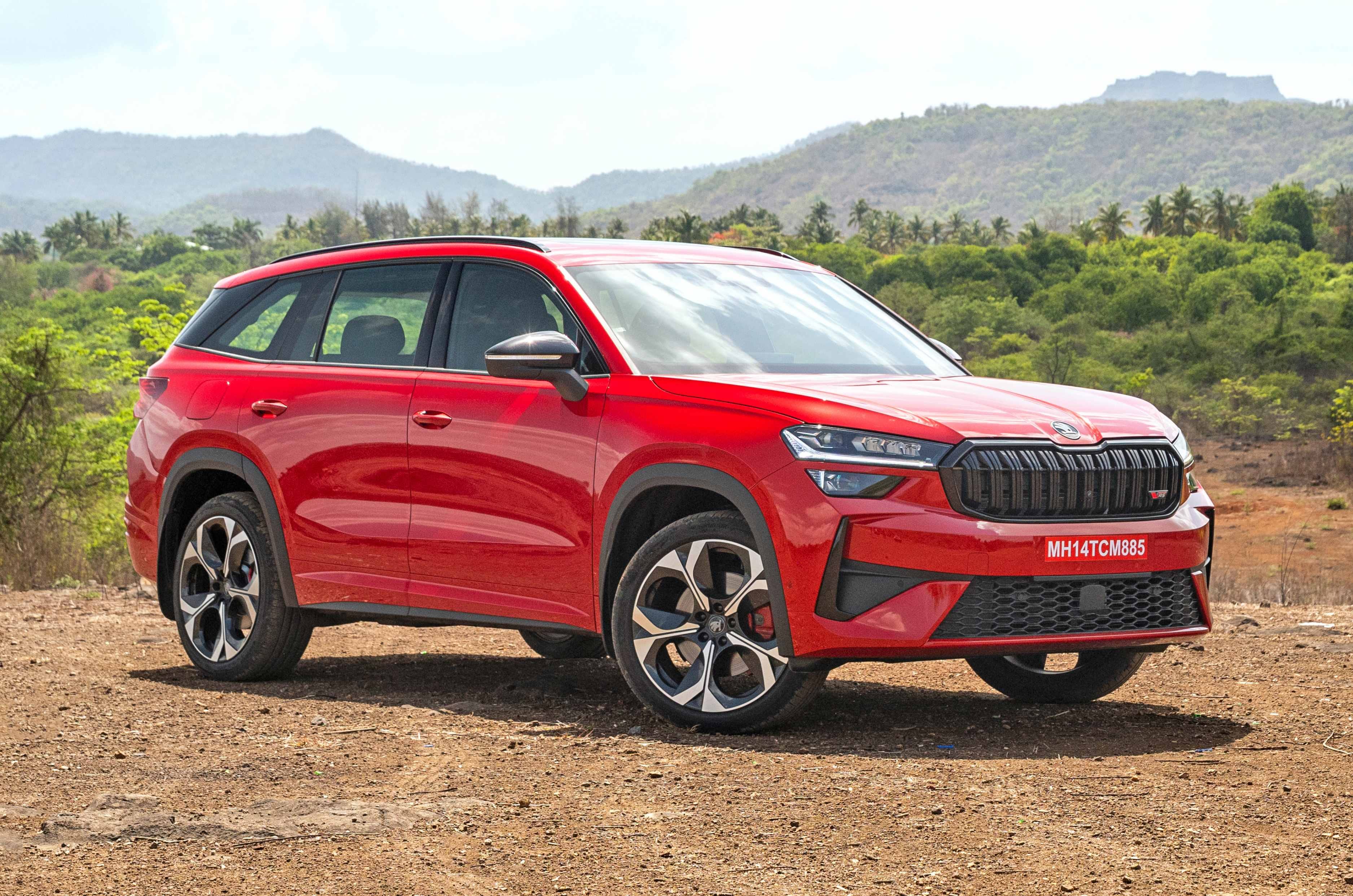
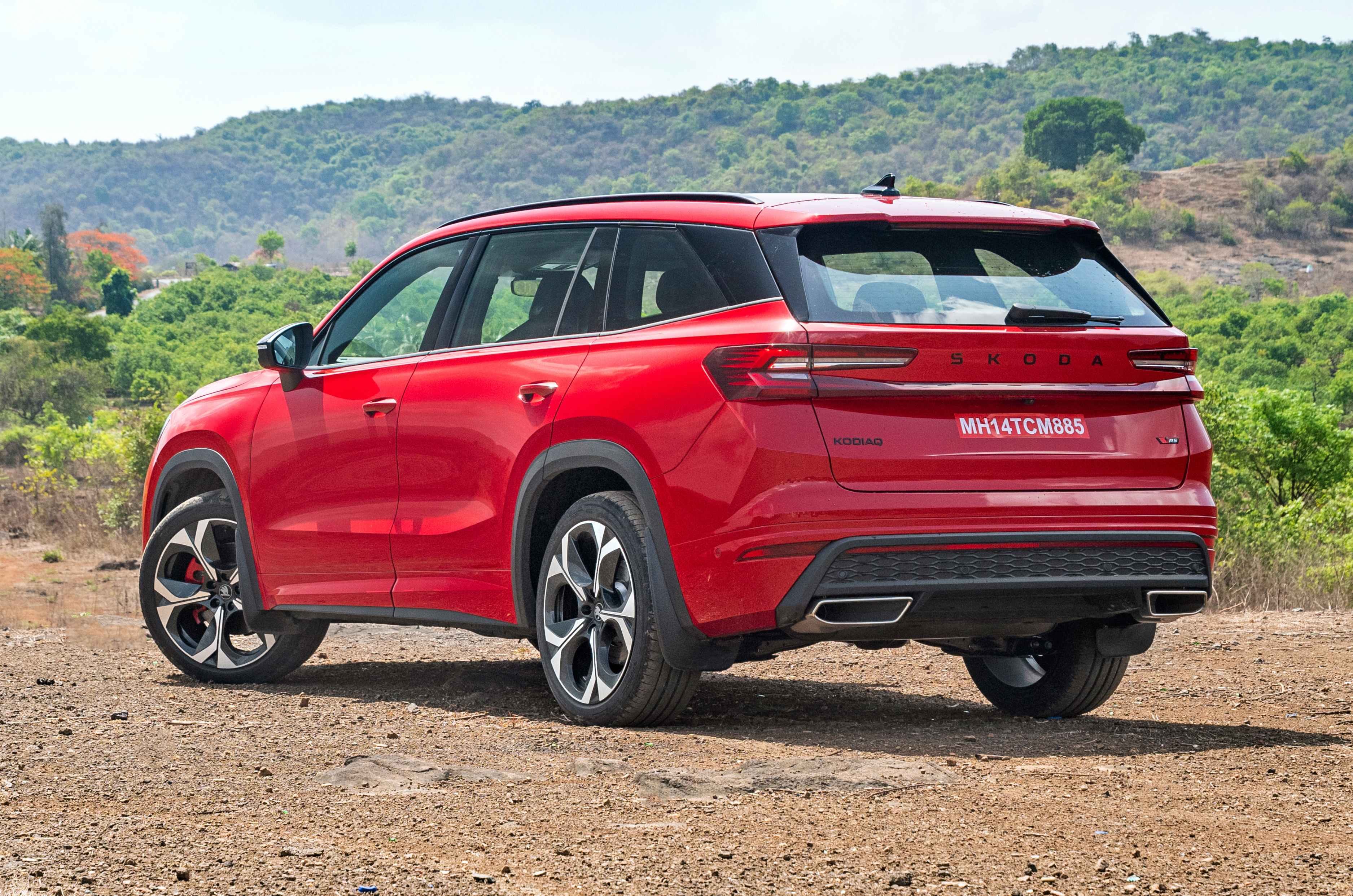
Sportier bumpers and larger 20-inch rims help identify the RS.

Drivers will know they are in a special Kodiaq, but the message is delivered to other road users in a slightly discreet manner. Sure, our test car’s Velvet Red paint shade drew attention, but in the white, black or grey paint shades, your biggest giveaway that this is an RS would be its larger rims. The RS sports a dechromed look in which all shiny bits are finished in black, but a mid-spec Kodiaq Sportline gets the same treatment. Sportier bumpers, dual exhausts and RS badging do give the Kodiaq RS street cred, but only to those in the know. 

Kodiaq RS Interior Space and Comfort – 8/10

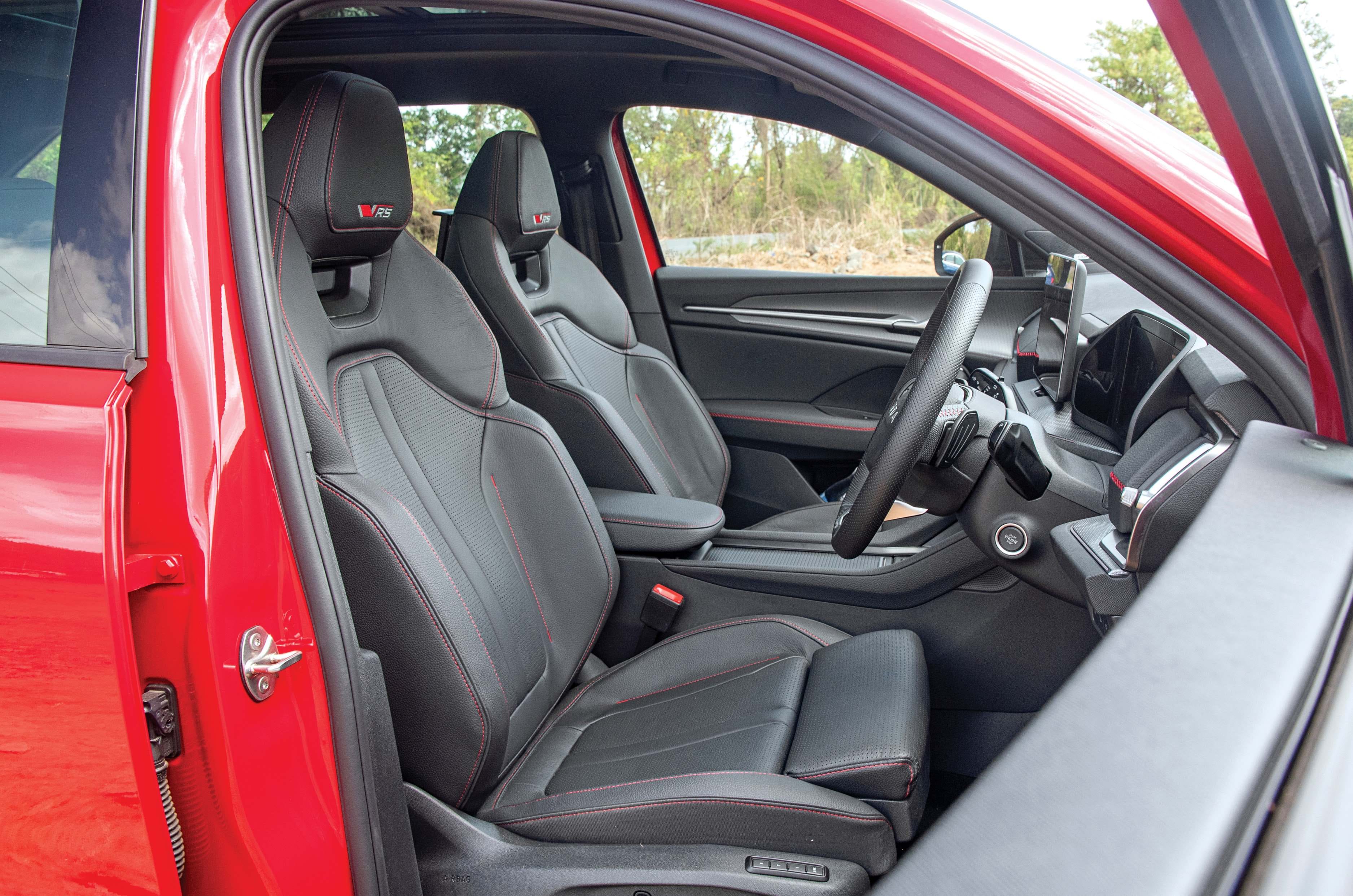
The interior remains a highlight. Again, the predominantly black theme and sport front seats are elements you’d find in a Sportline, but that’s more an observation than a negative. Red cross-stitching on the seats, steering and dash, RS embossing on the seats and a textured metal finish for the door and dash inlays do lend this Kodiaq its distinct personality.

Sport front seats offer great support and get ventilation too.

As for the individual elements, the front seats don’t just look great but hold you well with excellent back support, and adjustable thigh support included for good measure. Ventilation helps the experience, and you’ll like how instinctive the driver environment is. It’s easy to find a good driving position, visibility is great, and all controls are in clear sight and fall easily to hand.

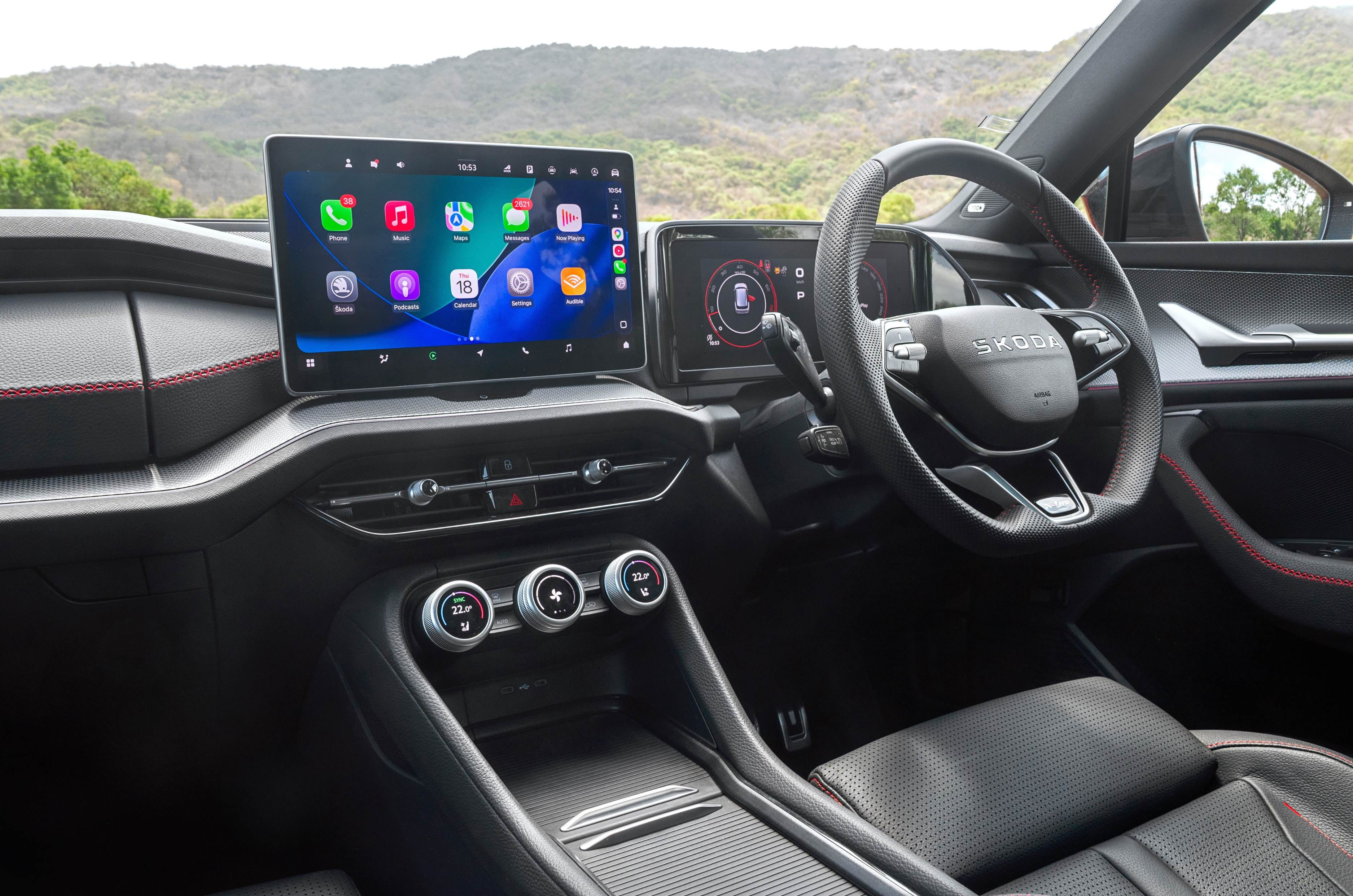
Well-thought-out cabin gets sporty detailing on RS.

Ahead of the driver is a crisp 10.25-inch digital instrument cluster with multiple display layouts, all of which are neatly executed. The dashboard itself is dominated by a 12.9-inch touchscreen that’s well integrated into the overall design. It’s quick to respond and supports wireless Apple CarPlay and Android Auto. Skoda has also done well to provide rotary controllers for the climate control system. While the outer dials handle climate functions, the centre dial is programmable and can be assigned to functions such as blower speed, drive modes or audio volume. 

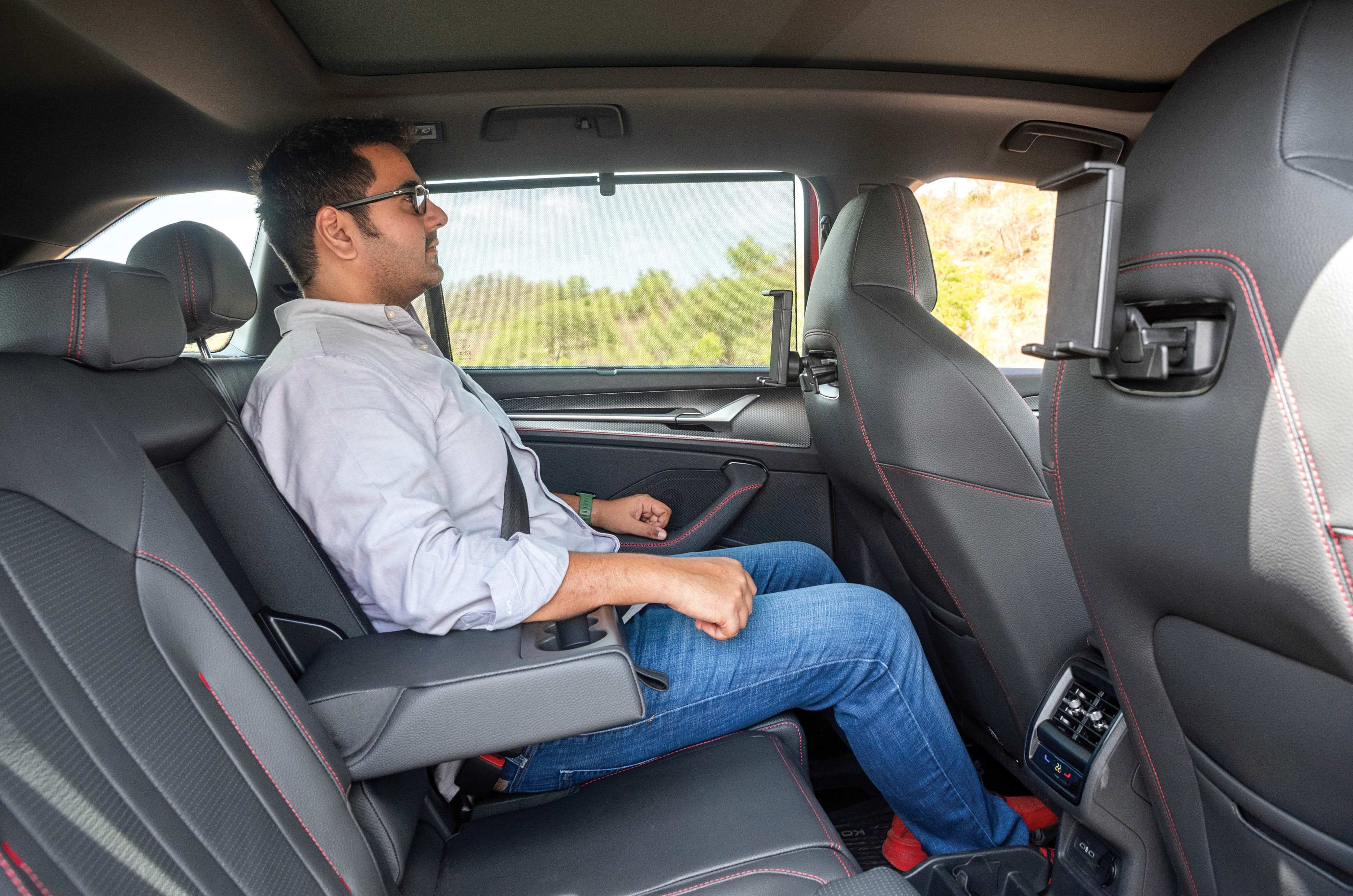
Middle row is spacious and comfy. Note tablet holders.

Rear-seat passengers will like their environment too. Knee room is generous, there’s enough room for three to sit in comfort, and the large windows and panoramic sunroof fill the dark interior with lots of light. The bench itself is comfy and features a reclinable backrest, plus fore/aft movement to balance space for third-row occupants. Rear-window sunshades, a dedicated climate control zone and phone/tablet holders mounted on the front headrests (to form a makeshift rear-seat entertainment system) are other comfort features at the back.

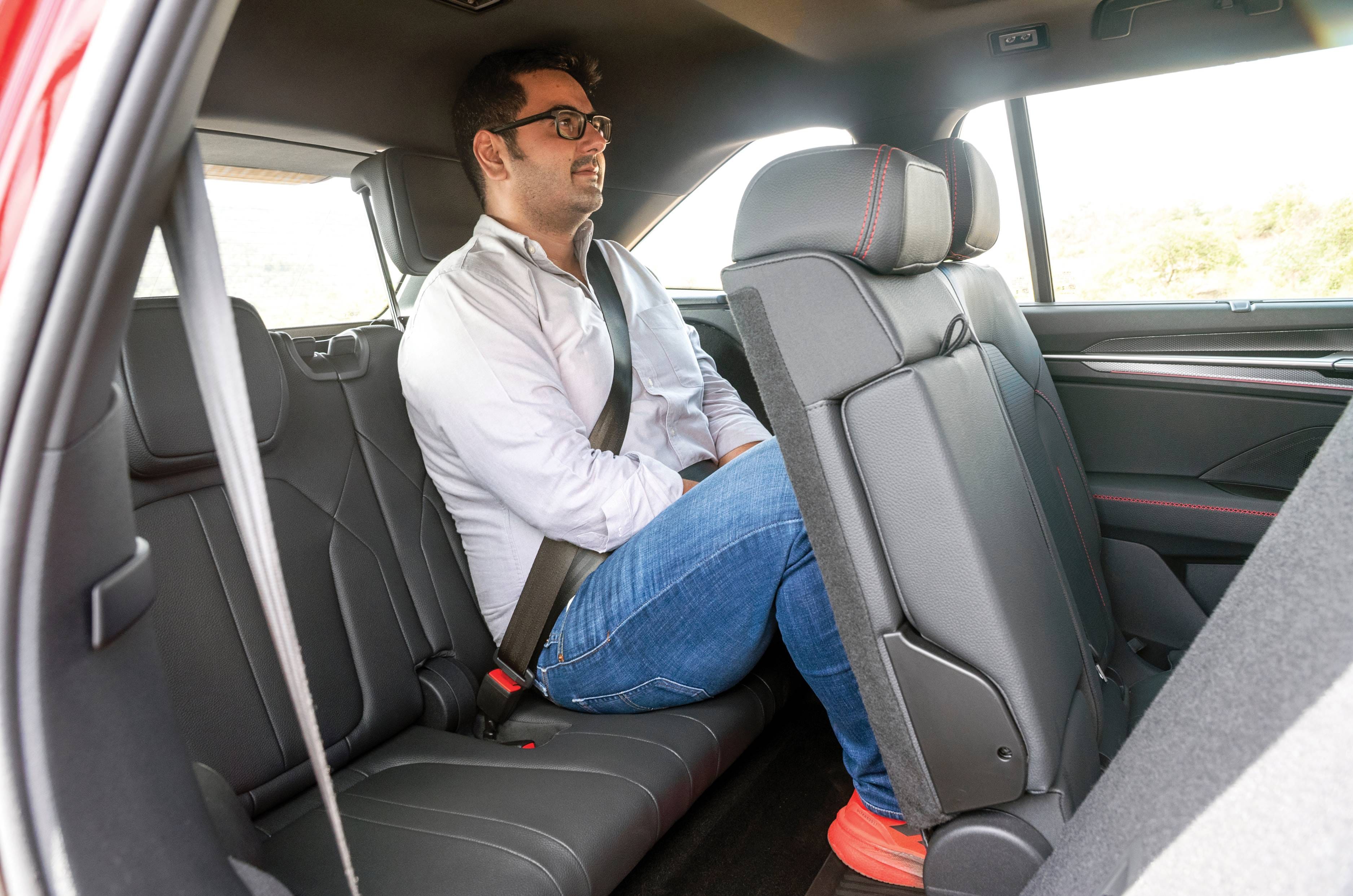
Third row is tight, but it’s possible to work out a space compromise.

The third row isn’t easy to get to, and space is insufficient for large adults. However, sit height-wise across the Kodiaq’s three rows, and you can reach a reasonable space compromise. 
When the rearmost seats aren’t in use, they are best left folded down, opening up a huge 786 litres of luggage room. In general, the Kodiaq RS’ cabin is very practical with lots of room for small items, generous door bins and well-sized cup holders.

Kodiaq RS Value for Money – 7/10

All 50 units of the RS are spoken for.

The Kodiaq RS won’t make you go weak in the knees like an Octavia RS can. What it does successfully is pepper the premium and practical Kodiaq with more performance and driver appeal. It really is a wholesome package that will be an easy sell for the entire family. That’s till you bring pricing into the equation. The fully imported Kodiaq RS is expected to be priced at Rs 60-65 lakh (estimated, ex-showroom, India), which would make it a good 15-20 lakh pricier than the locally assembled Kodiaq L&K. If so, the case for the Kodiaq RS weakens. Yes, it is more enjoyable to drive, but so much better? Hmm.

Skoda says all 50 units of the Kodiaq RS allocated for India are spoken for. For the lot who are happy to pay the premium, they’re buying an all-rounder they won’t get bored of for years to come.

WhatsApp के नए प्रमुख बने CRED के संस्थापक कुणाल शाह, Meta ने किया बड़ा नेतृत्व परिवर्तन

दुनिया के सबसे लोकप्रिय मैसेजिंग प्लेटफॉर्म WhatsApp की पैरेंट कंपनी Meta ने नेतृत्व स्तर पर बड़ा बदलाव करते हुए भारतीय फिनटेक कंपनी CRED के संस्थापक और सीईओ कुणाल शाह को WhatsApp का नया प्रमुख (Head of WhatsApp) नियुक्त किया है। वह वर्ष 2019 से इस पद पर कार्यरत विल कैथकार्ट की जगह लेंगे।

ALSO READ: Electric Scooter खरीदने से पहले 14 जरूरी बातें जो आपके लिए जानना जरूरी

Meta ने बताया कि विल कैथकार्ट फिलहाल कंपनी में बने रहेंगे और नेतृत्व परिवर्तन के दौरान कुणाल शाह को नई जिम्मेदारियों के लिए तैयार करेंगे। इसके बाद वह Meta में अगली पीढ़ी के उत्पादों (Next-Generation Products) के विकास से जुड़ी नई भूमिका संभालेंगे। कंपनी के अनुसार, Meta के चीफ प्रोडक्ट ऑफिसर क्रिस कॉक्स ने स्वयं कुणाल शाह से इस पद को संभालने के लिए संपर्क किया था।


नई जिम्मेदारी मिलने पर कुणाल शाह ने कहा कि वह Meta के संस्थापक एवं सीईओ मार्क जुकरबर्ग, क्रिस कॉक्स और Meta की नेतृत्व टीम के साथ काम करने को लेकर उत्साहित हैं। उन्होंने कहा कि WhatsApp ने अब तक लंबा सफर तय किया है, लेकिन इसकी पूरी क्षमता तक पहुंचने की अभी काफी संभावनाएं बाकी हैं। वह WhatsApp के अगले विकास चरण में योगदान देने के लिए उत्सुक हैं।

मार्क जुकरबर्ग ने क्या कहा?

Meta के संस्थापक और सीईओ Mark Zuckerberg ने कुणाल शाह की सराहना करते हुए कहा कि उन्होंने CRED को भारत की सबसे महत्वपूर्ण प्रौद्योगिकी कंपनियों में से एक बनाया है। जुकरबर्ग के मुताबिक, कुणाल की निर्माणात्मक सोच (Builder Mentality) और वैश्विक दृष्टिकोण उन्हें दुनिया के सबसे बड़े मैसेजिंग ऐप का नेतृत्व करने में मदद करेगा।

क्रिस कॉक्स का बयान

Meta के चीफ प्रोडक्ट ऑफिसर Chris Cox ने कहा कि कुणाल शाह भारत के सबसे सम्मानित उद्यमियों में से एक हैं। उन्होंने कहा कि लोगों के जीवन में तकनीक और ऐप्स के सकारात्मक प्रभाव को लेकर कुणाल की समझ उन्हें WhatsApp के अगले दौर का नेतृत्व करने के लिए उपयुक्त बनाती है। बताया जा रहा है कि क्रिस कॉक्स ने इस नेतृत्व परिवर्तन की जानकारी कंपनी के आंतरिक संदेश (Internal Message) के माध्यम से कर्मचारियों को दी। Edited by : Sudhir Sharma

जुकरबर्क की Meta का CRED में ₹8550 करोड़ निवेश, फाउंडर कुणाल शाह को बनाएगी WhatsApp का नया ग्लोबल CEO

Meta Investment In CRED: फेसबुक की पैरेंट कंपनी Meta ने भारतीय फिनटेक स्टार्टअप CRED में करीब 90 करोड़ डॉलर (लगभग ₹8,550 करोड़) निवेश करने का ऐलान किया है। दोनों कंपनियों ने 22 जून को इस डील की घोषणा की। इससे पहले Moneycontrol ने अपनी रिपोर्ट में बताया था कि Meta, CRED में 4 अरब डॉलर के वैल्यूएशन पर निवेश को लेकर बातचीत कर रही है।

WhatsApp की कमान संभालेंगे कुणाल शाह

इस निवेश के साथ CRED के फाउंडर कुणाल शाह Meta में शामिल होंगे और वह WhatsApp के नए ग्लोबल CEO बनेंगे। कुणाल मौजूदा विल कैथकार्ट की जगह लेंगे, जिन्होंने सात साल तक WhatsApp को लीड करने के बाद पद छोड़ने का फैसला किया है।

Meta के CEO मार्क जुकरबर्ग ने कहा कि कुणाल शाह ने CRED को भारत की सबसे महत्वपूर्ण टेक कंपनियों में से एक बनाया है। उनके पास बिजनेस बनाने का अनुभव और वैश्विक नजरिया है। यह दुनिया के सबसे बड़े मैसेजिंग प्लेटफॉर्म को आगे बढ़ाने में मदद करेगा।

जुकरबर्ग ने विल कैथकार्ट की भी सराहना की। उन्होंने कहा कि कैथकार्ट के नेतृत्व में WhatsApp 3 अरब से ज्यादा यूजर्स तक पहुंचा और उन्होंने यूजर्स की प्राइवेसी को प्राथमिकता दी। अब वह Meta में नई भूमिका संभालेंगे और नए प्रोडक्ट्स पर काम करेंगे।

CRED की कमान किसके हाथ में होगी?

कुणाल शाह के Meta में जाने के बाद CRED के ऑपरेशनल कामकाज की जिम्मेदारी मितेन संपत संभालेंगे। वह फिलहाल कंपनी में दूसरे सबसे सीनियर एग्जीक्यूटिव हैं।

मितेन संपत ने कहा कि 1.7 करोड़ से ज्यादा भरोसेमंद भारतीय CRED का इस्तेमाल करते हैं। उनके मुताबिक कंपनी के पास मजबूत टीम, स्पष्ट विजन और लंबी अवधि की रणनीति है। उन्होंने कहा कि CRED के अगले चरण का लक्ष्य कंपनी को पब्लिक मार्केट तक ले जाना है।

कुणाल शाह ने क्या कहा?

कुणाल शाह ने कहा कि उन्होंने 2018 में CRED की शुरुआत इस भरोसे के साथ की थी कि अच्छी क्रेडिट स्कोर को सम्मान मिलना चाहिए। आठ साल से भी कम समय में कंपनी लाखों सदस्यों, लगभग ₹3,200 करोड़ रेवेन्यू, मुनाफे में कारोबार, कई लाइसेंस और मजबूत ब्रांड के साथ एक नई कैटेगरी बनाने में सफल रही है।

उन्होंने कहा कि अतिरिक्त पूंजी और प्रतिभाशाली टीम के साथ CRED आने वाले दशकों तक एक मजबूत संस्था बन सकती है। उन्होंने भरोसा जताया कि टीम भविष्य में भी नए मानक स्थापित करेगी।

भारतीय स्टार्टअप जगत का बड़ा नाम हैं कुणाल शाह

यह दूसरा स्टार्टअप है जिससे कुणाल शाह बाहर निकल रहे हैं। इससे पहले उन्होंने डिजिटल पेमेंट प्लेटफॉर्म Freecharge की स्थापना की थी, जिसे बाद में बेच दिया गया था।

वर्षों के दौरान वह भारतीय स्टार्टअप इकोसिस्टम के सबसे चर्चित चेहरों में शामिल हो गए। CRED बनाने के अलावा उन्होंने सैकड़ों शुरुआती चरण के स्टार्टअप्स में निवेश किया है और देश के सबसे सक्रिय एंजेल इनवेस्टर्स में उनकी गिनती होती है।

1 अरब डॉलर जुटा चुकी है CRED

2018 में शुरू हुई CRED अब तक करीब 1 अरब डॉलर की फंडिंग जुटा चुकी है। कंपनी में Tiger Global, Ribbit Capital, Peak XV Partners, Greenoaks Capital और DST Global जैसे बड़े निवेशकों ने निवेश किया है।

Peak XV Partners के मैनेजिंग डायरेक्टर शैलेंद्र सिंह ने कहा कि CRED का सफर काफी शानदार रहा है। उनके मुताबिक कंपनी ने एक नई कैटेगरी बनाई, लाखों सक्रिय यूजर्स जोड़े और मजबूत आर्थिक मॉडल तैयार किया। उन्होंने उम्मीद जताई कि आने वाले वर्षों में CRED और मजबूत होकर उभरेगी।

Railway Stocks: बंगाल में ₹1 लाख करोड़ से बनेगा रेलवे इंफ्रास्ट्रक्चर, इन 4 स्टॉक्स पर रखें नजर