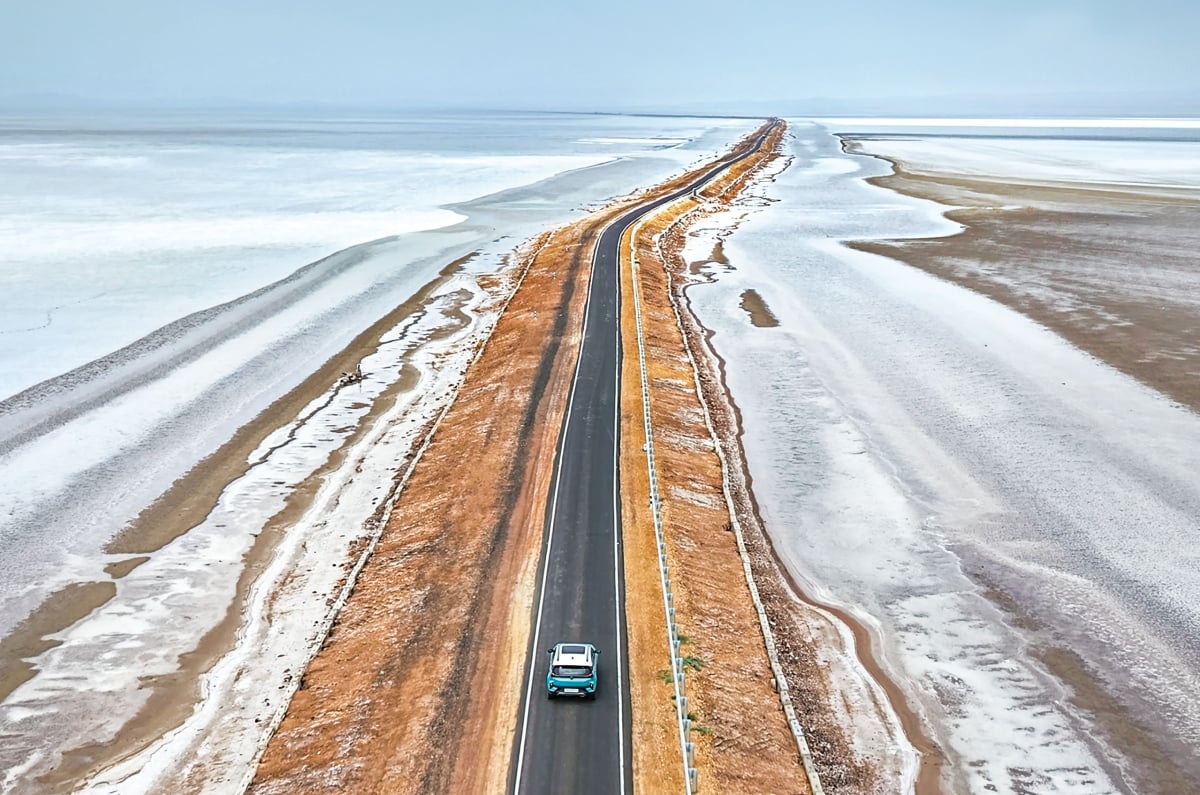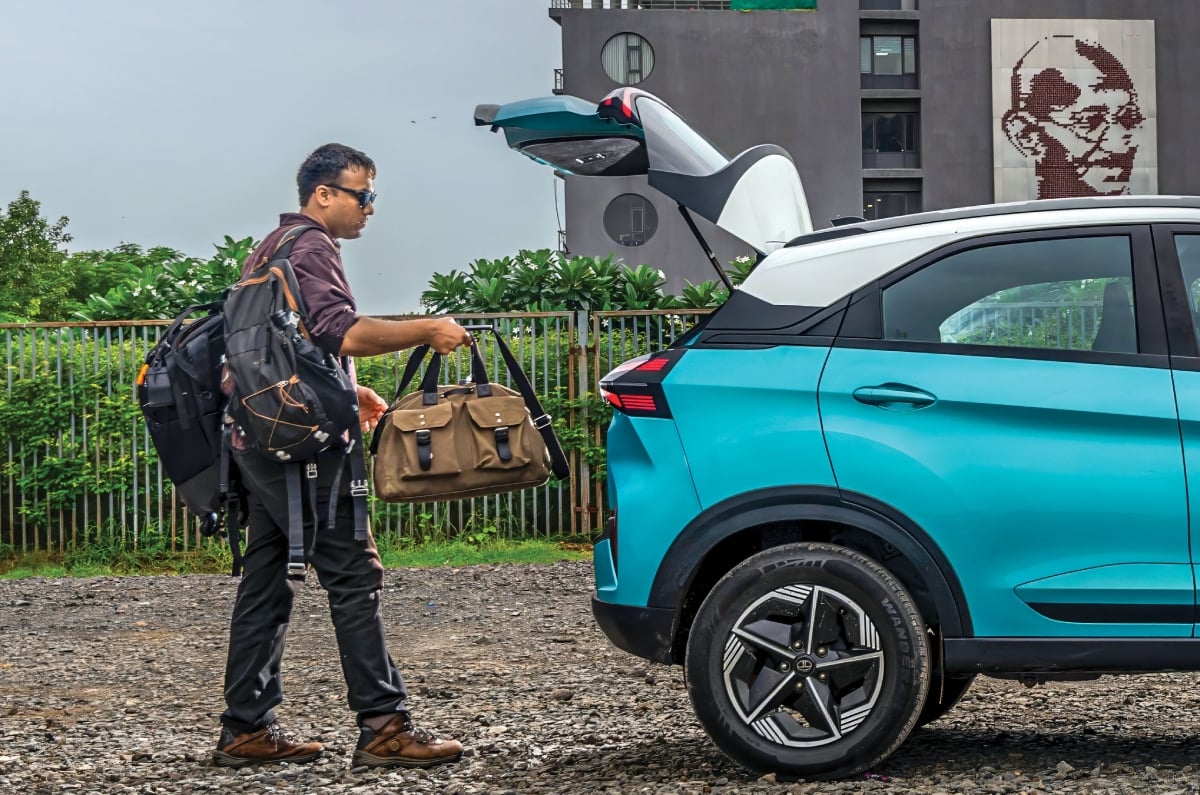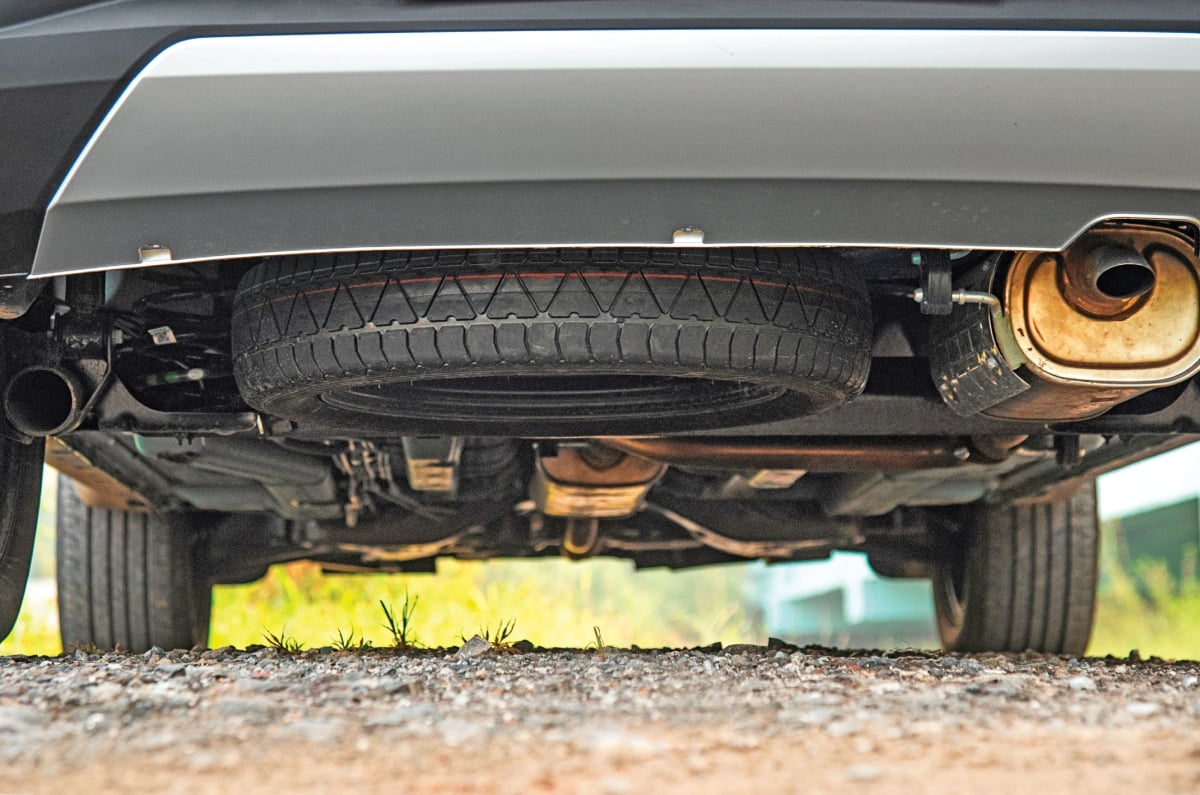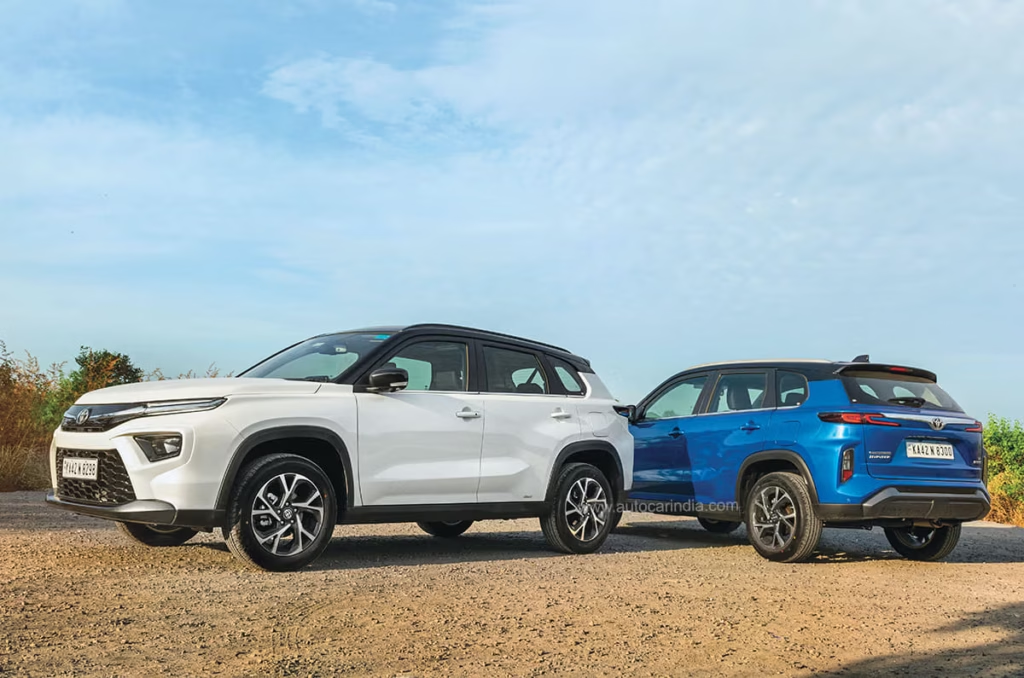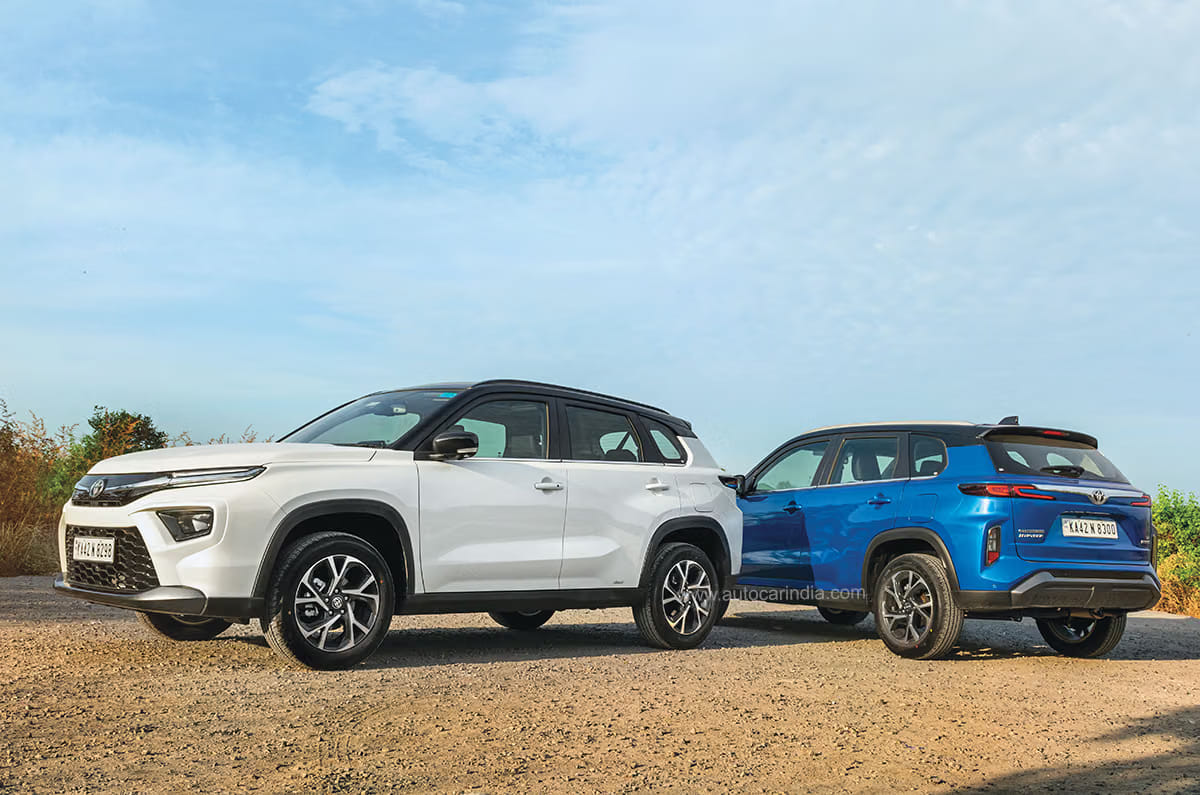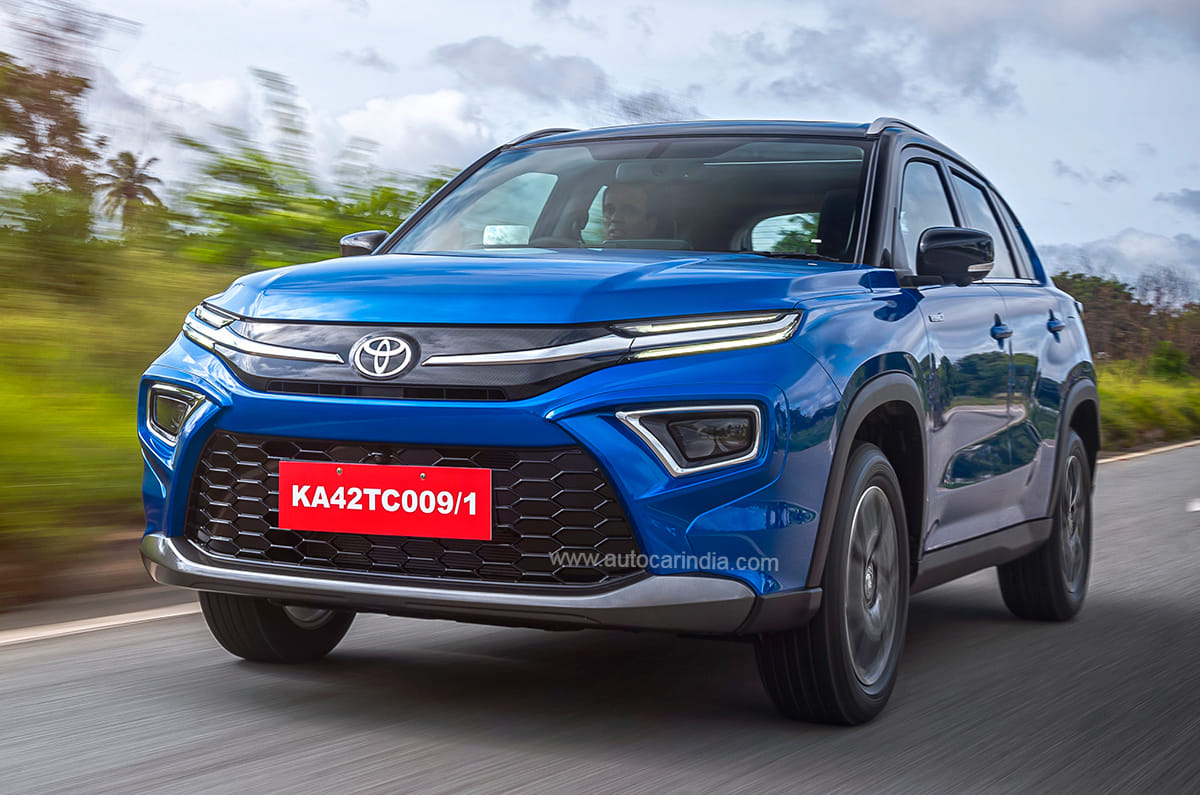
Introduced in 2022, the Urban Cruiser Hyryder and Maruti Grand Vitara were the first products co-developed through the partnership between Toyota and Maruti Suzuki. Currently, the Hyryder is Toyota’s bestselling SUV in India, averaging 7,000-9,000 units a month. If you are considering the Hyryder, we will help you decide whether this midsize SUV is suitable for you or whether you should look elsewhere.
Reasons to buy the Toyota Hyryder
Efficient strong hybrid engine
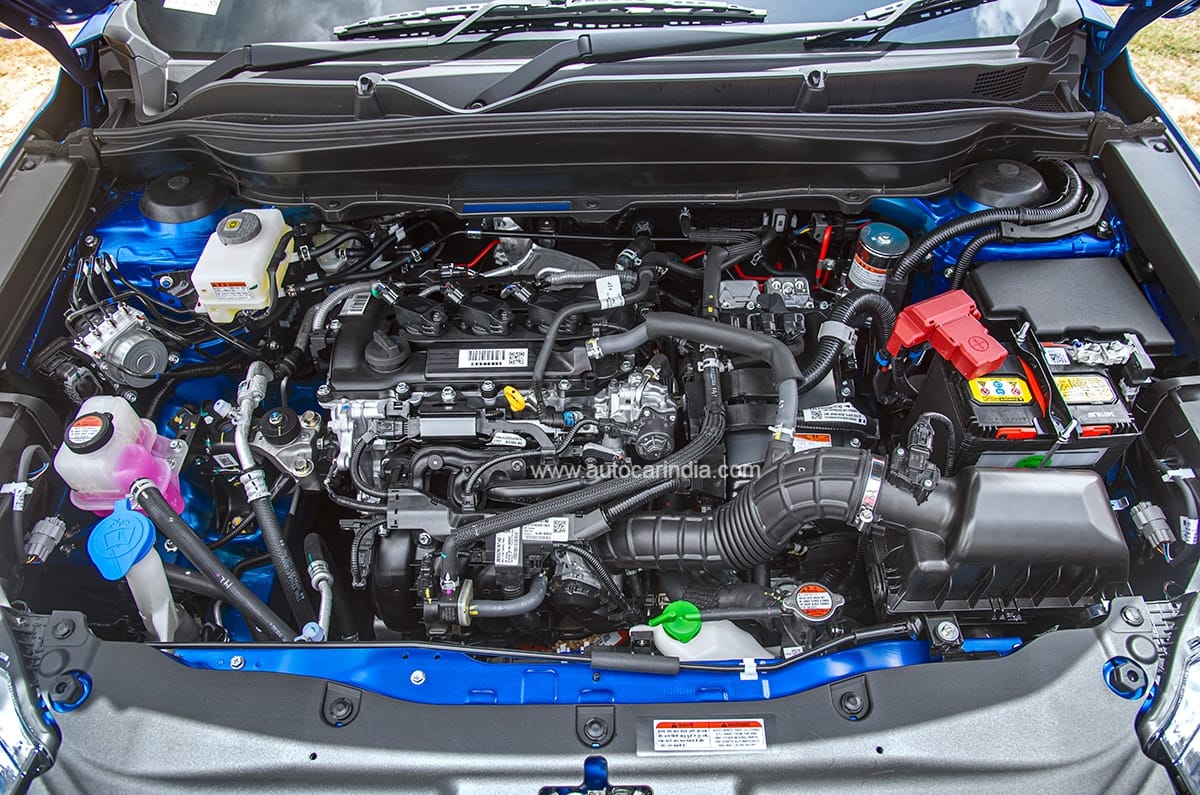
The petrol engine in the strong hybrid version runs on the Atkinson cycle that prioritises efficiency. Coupled with the battery and motor, the Hyryder can run temporarily on pure electric power, which helps curb fuel consumption. In our real-world fuel efficiency tests, the Hyryder strong hybrid delivered much higher efficiencies than the mild hybrid petrol automatic version: 20.28kpl in the city and 22.85kpl on the highway compared to 10.83kpl and 15.67kpl, respectively. Do note that this test was done before the rollout of E20 fuel.
Well-judged ride and handling
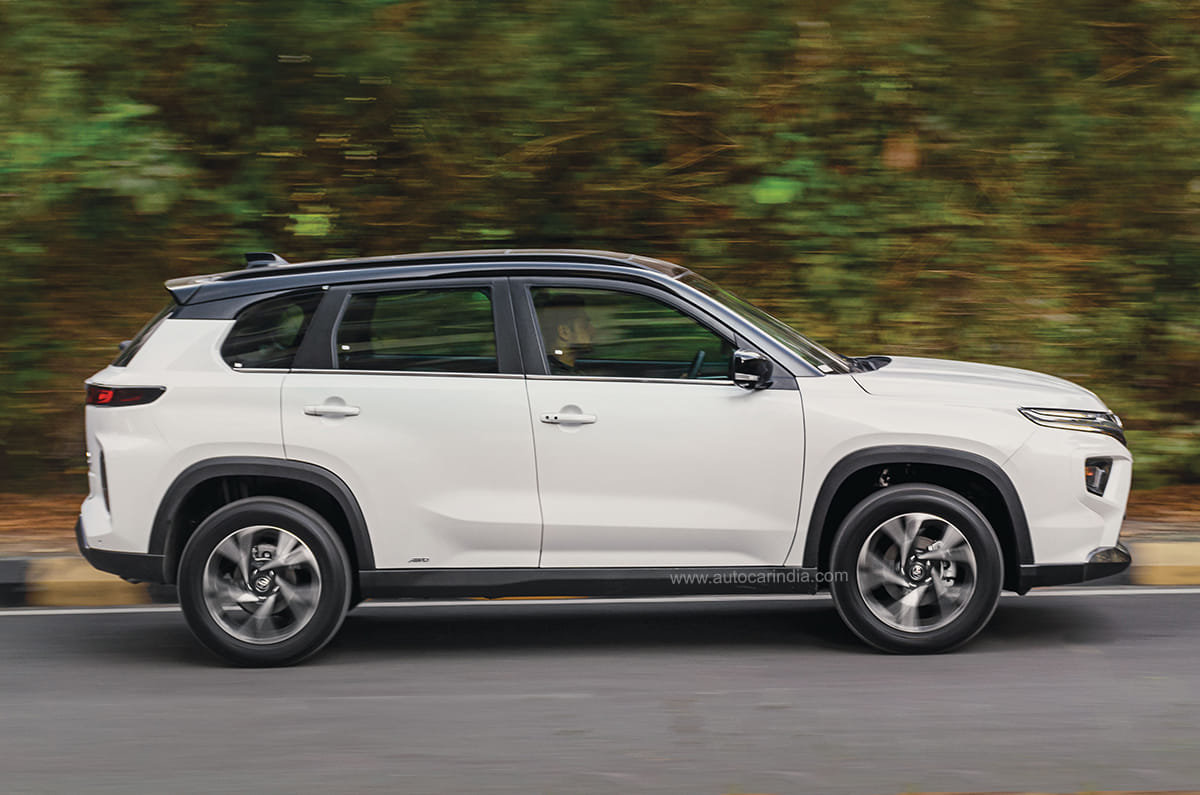
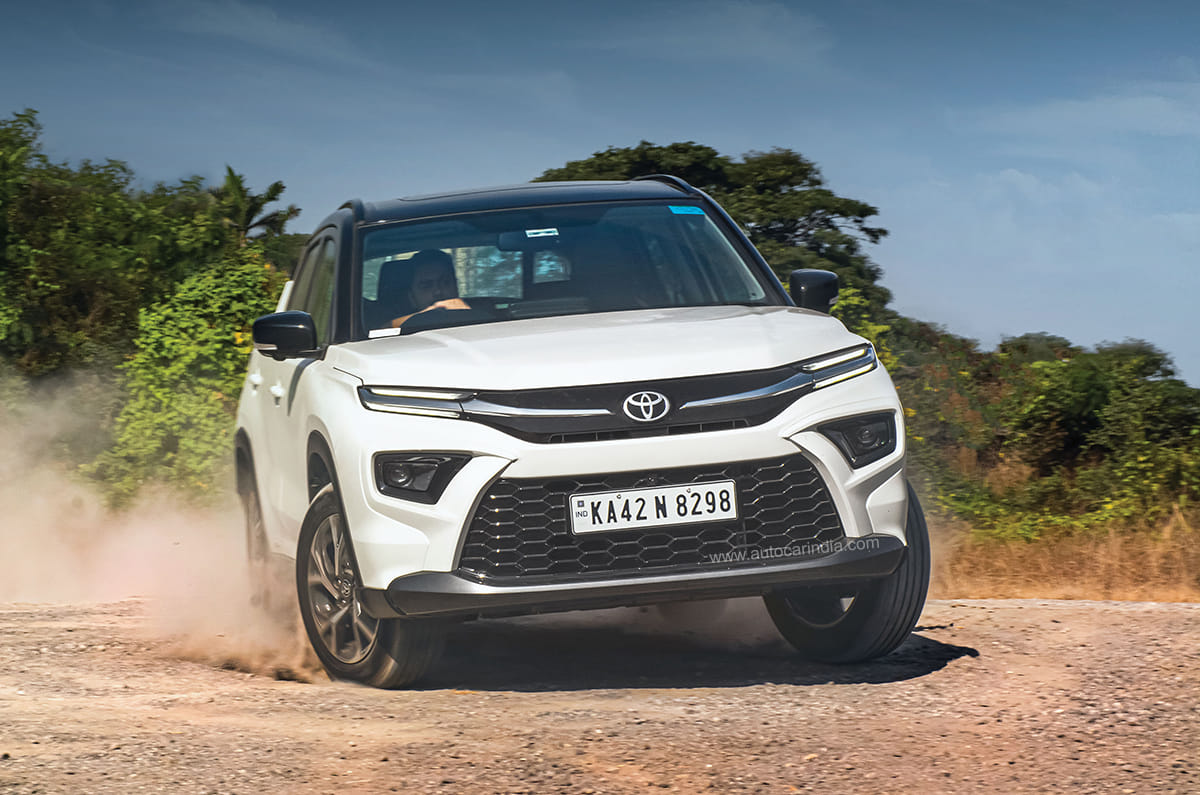
A combination of tough underpinnings and well-judged suspension helps the Hyryder have a balanced ride and handling setup. It handles tough roads with ease, and even the sharp surfaces are absorbed quite well. At higher speeds, the Hyryder remains glued to the road and composed, while direction changes and cornering abilities are predictable. Even when cornering, body roll is kept to a minimum despite its high 210mm ground clearance, which is remarkable.
AWD availability
The Hyryder is among the few models in the very crowded midsize SUV space to offer AWD. Available solely with an automatic gearbox, it comes with Suzuki’s AllGrip Select all-wheel-drive system, bringing decent off-road capability for the Hyryder, especially for those who regularly drive in snowy or slushy conditions. With the help of terrain modes and the ability to send 50 percent of its power to the rear wheels, it can tackle challenging roads.
Reasons not to buy the Toyota Hyryder
Engines lack outright performance
Strong-hybrid versions of the Hyryder are optimised for fuel efficiency over outright performance. Thus, drivers looking for a turbo-petrol-like exhilaration won’t be satisfied, as it lacks midrange punch. Apart from the strong hybrid, there’s also a mild hybrid version that utilises a 103hp, 139Nm 1.5-litre naturally aspirated petrol engine. Though it has enough pep in the city, as with the strong hybrid, you’ll find yourself longing for more power on the highway. Overtakes will require careful planning and working your way through the gears. At 14.01 seconds, the mild-hybrid’s 0-100kph time is slow by segment standards.
Limited boot space
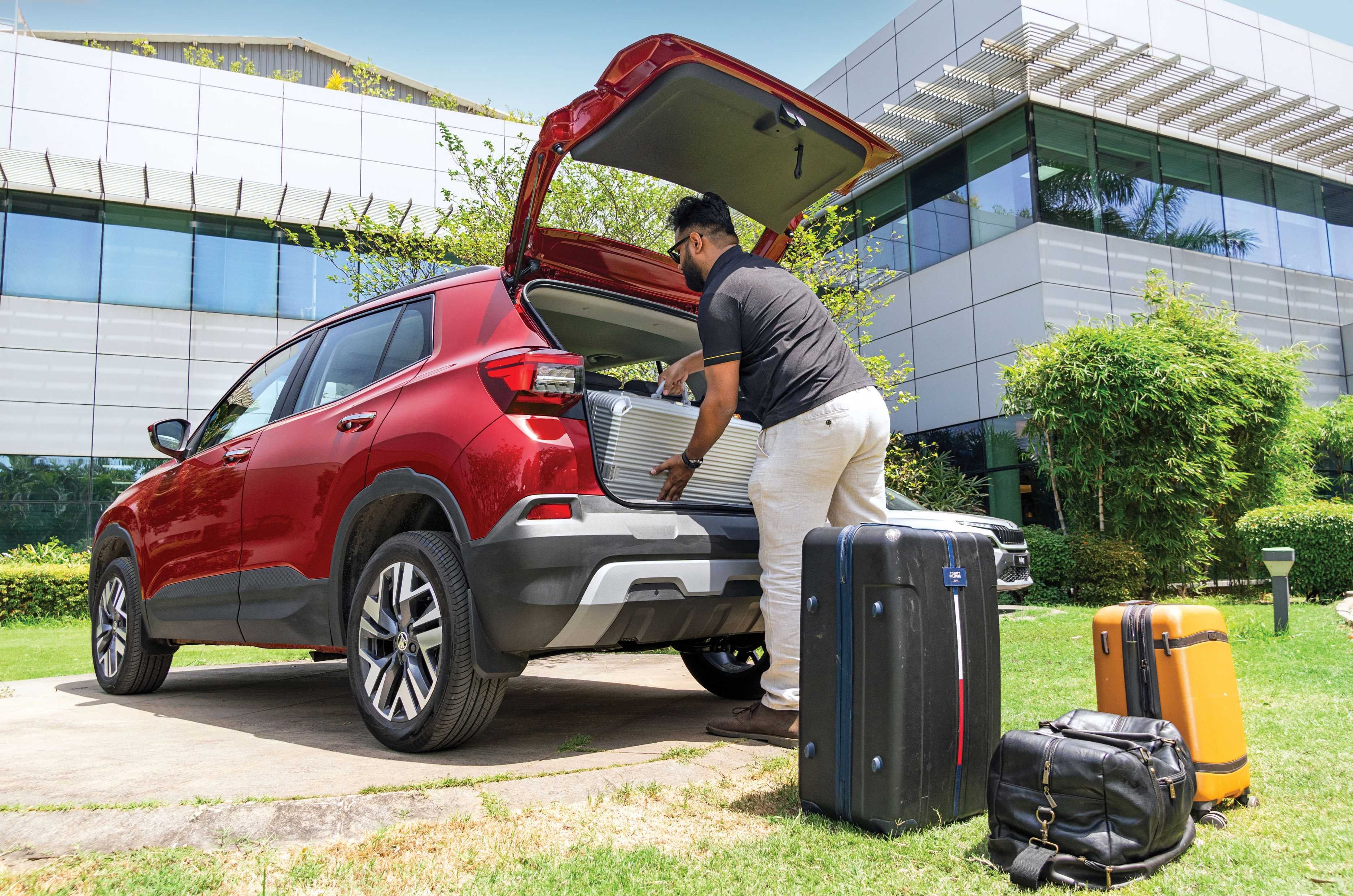
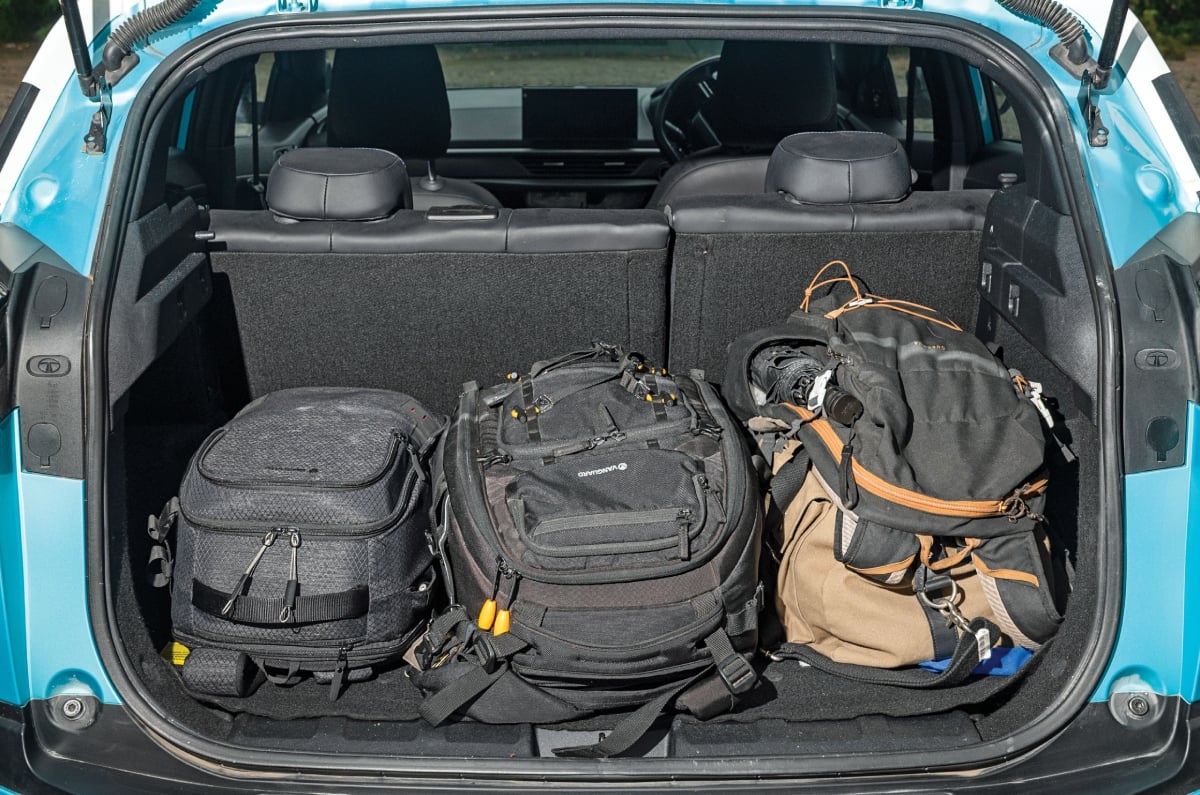
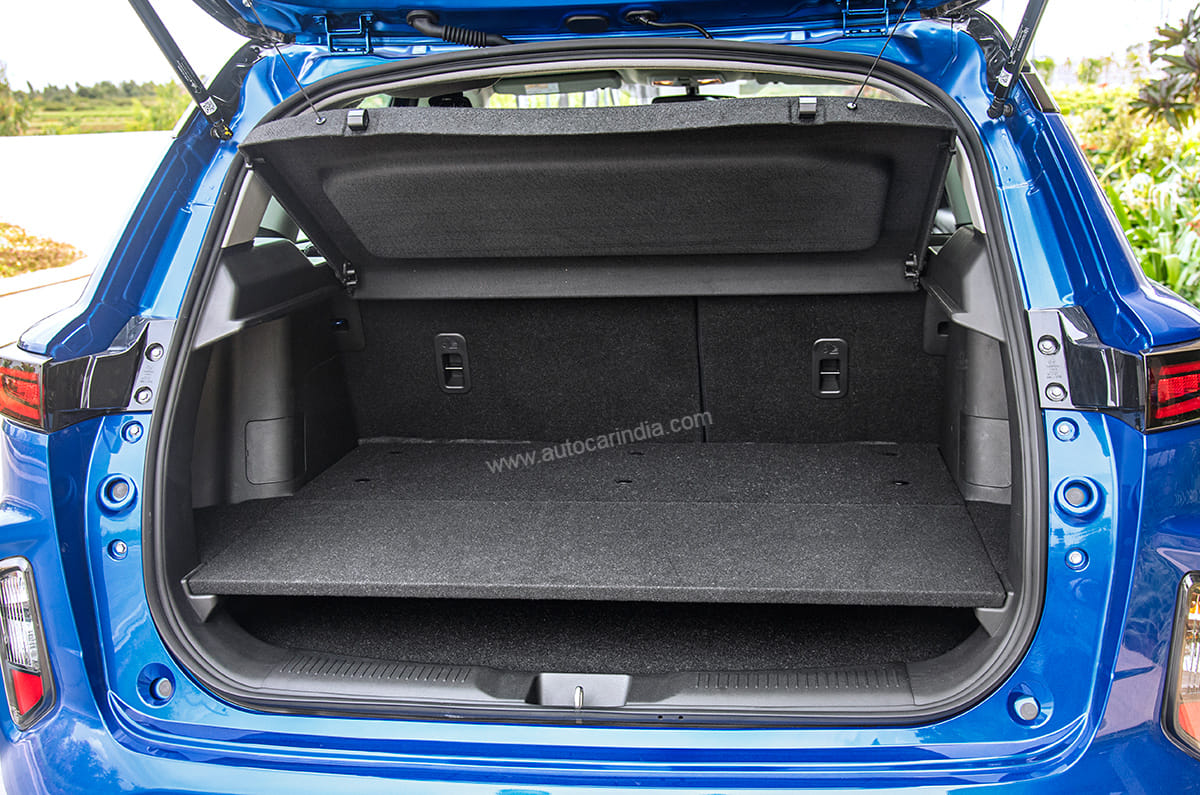
With a capacity of 355 litres, the mild hybrid-powered Toyota Hyryder has one of the smallest trunks in the segment. Additionally, the Hyryder strong hybrid’s high fuel efficiency comes at the cost of boot space, which is reduced further to 255 litres because of the lithium-ion battery pack placed beneath it. This could be a dealbreaker for those who carry large suitcases on road trips.
Mahindra has announced that its electric vehicle line-up will get Google’s Gemini AI assistant by January 2027. “From 1st January 2027, Google Gemini will go live on all other cars, including the original BE 6. That’s the advantage of MAIA architecture,” said R Velusamy, president, Automotive Business, Mahindra and Mahindra, in an interview with Autocar India. Additionally, other software-defined features that debuted on the BE 6 Sporteq will roll out to its existing portfolio in phases from January 2027.
Which software-defined features will the existing line-up get?
The recently introduced BE 6 Sporteq gets Google Gemini from day one, and all upcoming models will also have this feature. Meanwhile, Mahindra’s existing line-up – the XEV 9e, XEV 9S and the older BE 6 – will receive it via an over-the-air (OTA) update by January 2027. Essentially, these vehicles will now get the BE 6 Sporteq’s ‘TEQ’ suite of features, and below is a list of them.
1. TEQ_Talk (Google Gemini)
Mahindra’s in-car MAIA assistant is now powered by Google Gemini, enabling conversational AI features. The brand says it uses 17 specialised AI agents to facilitate natural interactions and supports over 100 core functions and 48 applications, including navigation, entertainment, vehicle controls, general knowledge and more.
2. TEQ_Secure
This suite brings Secure 360 Pro, which basically lets you keep an eye on your car through its 360-degree camera system and dashcam. With Mahindra’s Me4U app, users can check live footage and recordings, activate audio relay and track their vehicle. There’s also a digital car key ecosystem across smartphones, smartwatches and NFC key cards. Additionally, cars with a passenger display also come equipped with a parental lock feature.
3. TEQ_Me
TEQ_Me brings the user profile with an auto-detection feature that instantly adjusts your vehicle settings, including seat and mirror position, climate control and infotainment preferences, head-up display and drive modes, according to the selected user profile.
4. TEQ_Drive
The TEQ_Drive suite brings several driving features to Mahindra electric SUVs. A custom mode allows users to select and individually fine-tune the drive, suspension and steering modes. There’s also a drift mode that allows “controlled drifting in suitable conditions” by disabling the vehicle’s ESP completely, which wasn’t possible before.
Moreover, users can now get additional range at zero percent charge with the Revive mode to reach the nearest charger. It essentially adds up to 13km of range, with the Revive SOS mode further adding up to 11km of range during emergencies. The latter can be used only five times in the vehicle’s lifetime. Lastly, Tribe Drive lets you track the locations of your friends and family who also own Mahindra electric SUVs on road trips.
5. TEQ_Play
This mainly covers in-car entertainment features such as gaming, with support for up to four Bluetooth-enabled controllers along with a karaoke mode. Meanwhile, users can privately stream in-car audio with compatible Bluetooth devices via the private audio feature. Additionally, the ‘GrooveMe Party’ feature syncs the vehicle’s interior and exterior lights with the music playing, which is a cool party trick.
In the analogue age, I planned road trips with paper maps, fluorescent highlighters and dog-eared guidebooks. Lately, however, Uncle Claude and Aunty Gemini have lured me into the world of artificial intelligence. When I asked them to suggest an adventurous drive through south Utah, they both recommended similar itineraries. It was like asking the chef at a dhaba to surprise me with something unusual and being served butter chicken instead. Zion, Bryce Canyon and Arches. Three magnificent National Parks connected by smooth highways and comfortable hotels.
Our search engine for Utah beyond the tourist trail. No signal required.
This route hits Utah’s greatest highlights, featuring soaring cliffs, towering hoodoos and delicate sandstone arches. However, the parks are often so busy that sedans circle overflowing car parks, rather like sharks patiently circling a lifeboat. I wanted roads that filtered out sedans and coaches, demanded preparation and delivered adventure, where the SUV became part of the journey rather than mere transport.
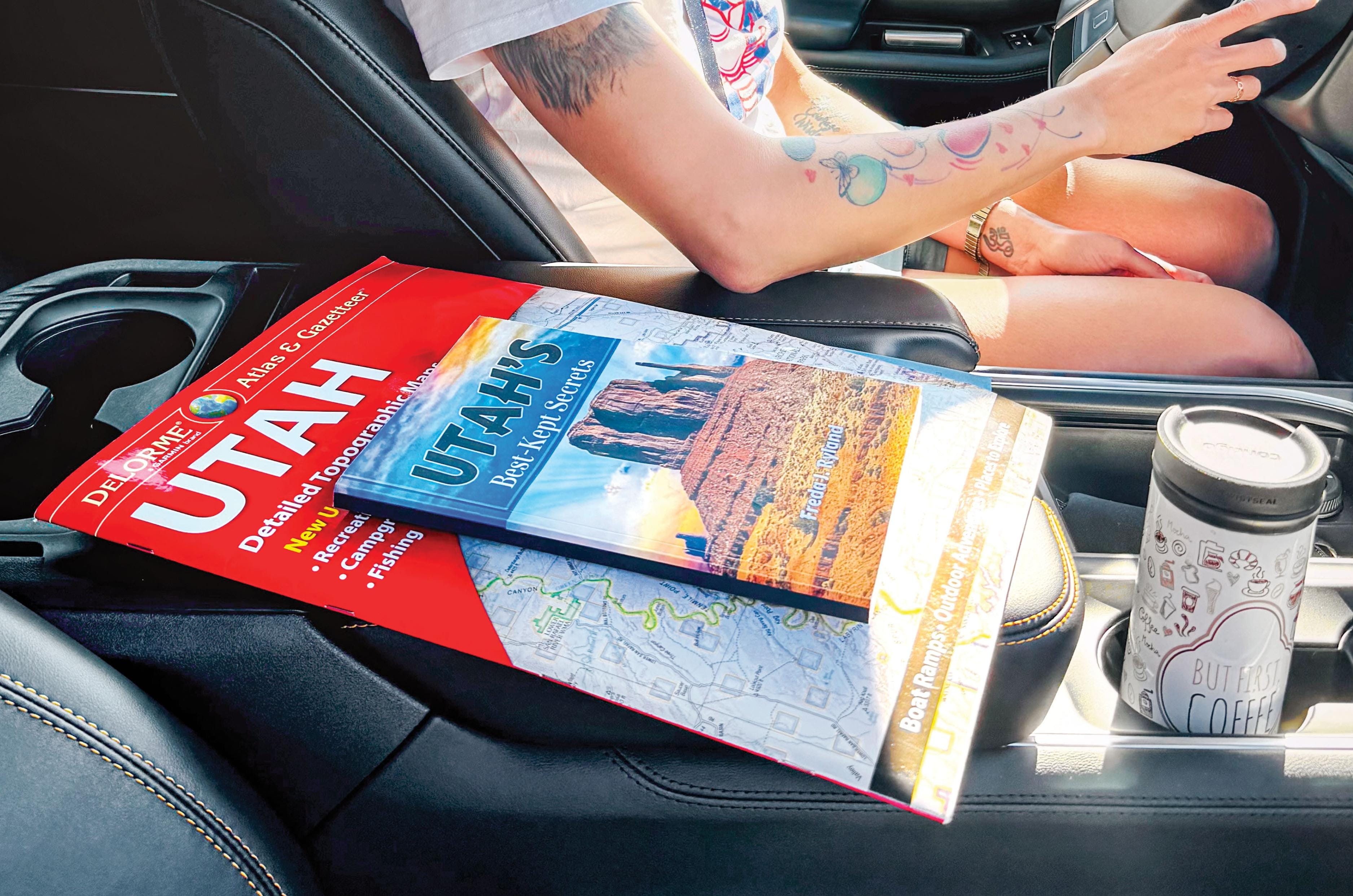
So, I turned my back on the algorithm and went analogue. While ordering the DeLorme Utah Atlas, Amazon suggested Freda J. Ryland’s Utah’s Best Kept Secrets, promising another Utah of mesas, switchbacks, unspoiled canyons, lonely dirt roads beyond the cellular umbrella and skies dark enough to make galaxies glow.
Her book was fuel for wanderlust; an invitation into a hidden Utah for those willing to stray off the tarmac. Though its typesetting suggested a clandestine hand-operated press during the Quit India movement, its content was pure gold. Paired with the DeLorme atlas and offline Gaia GPS, the trio was as dependable as egg, bacon and toast. Freda chose the destination, the atlas found the route, and Gaia confirmed where we were. What followed often felt like driving into a fairy tale.
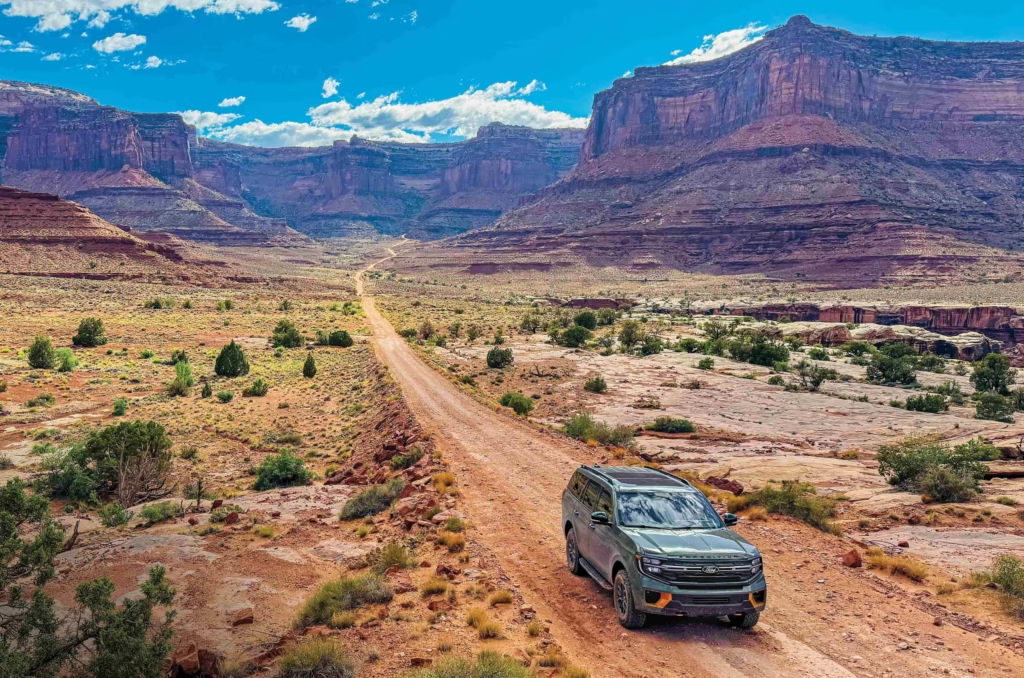
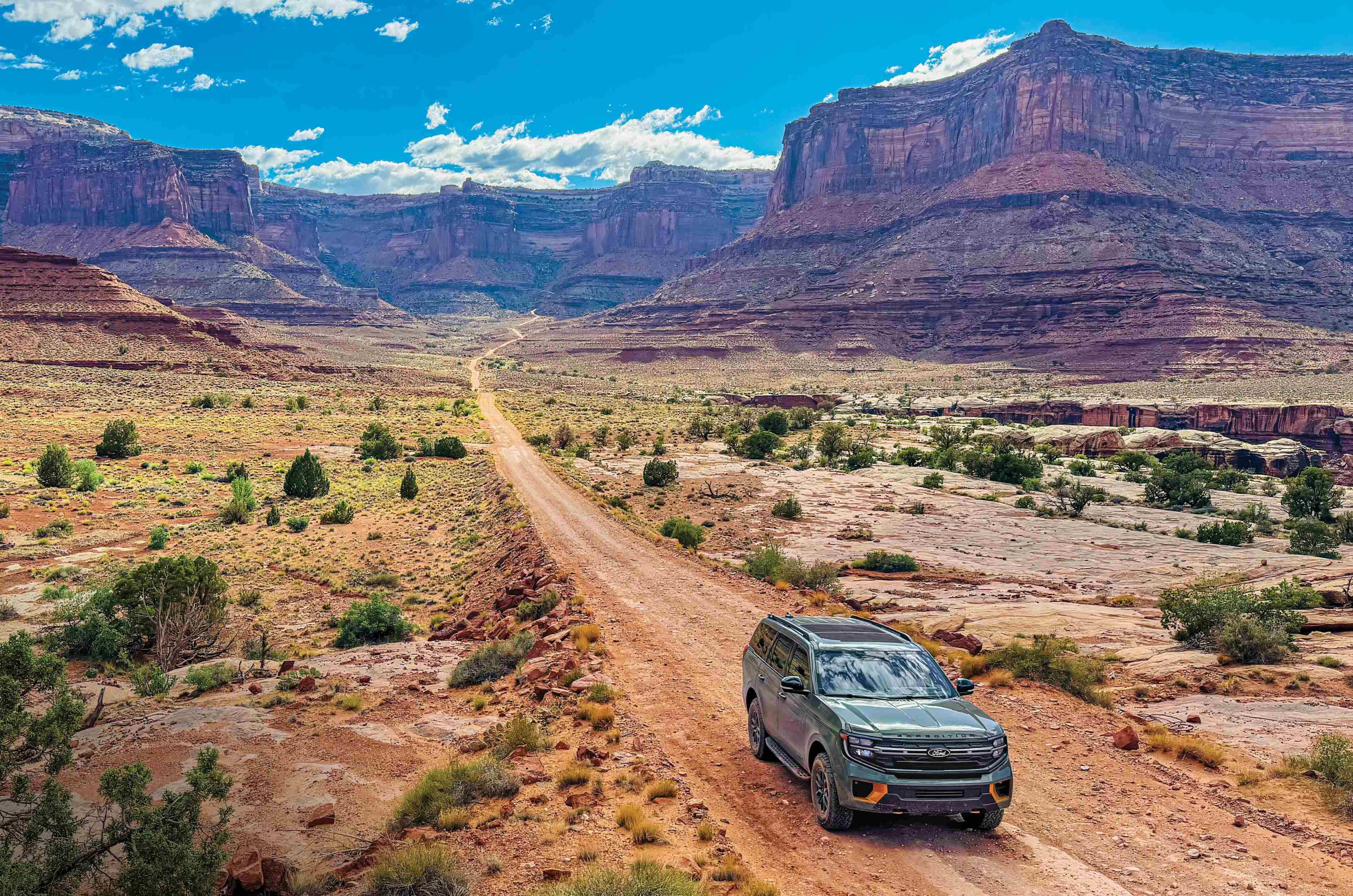
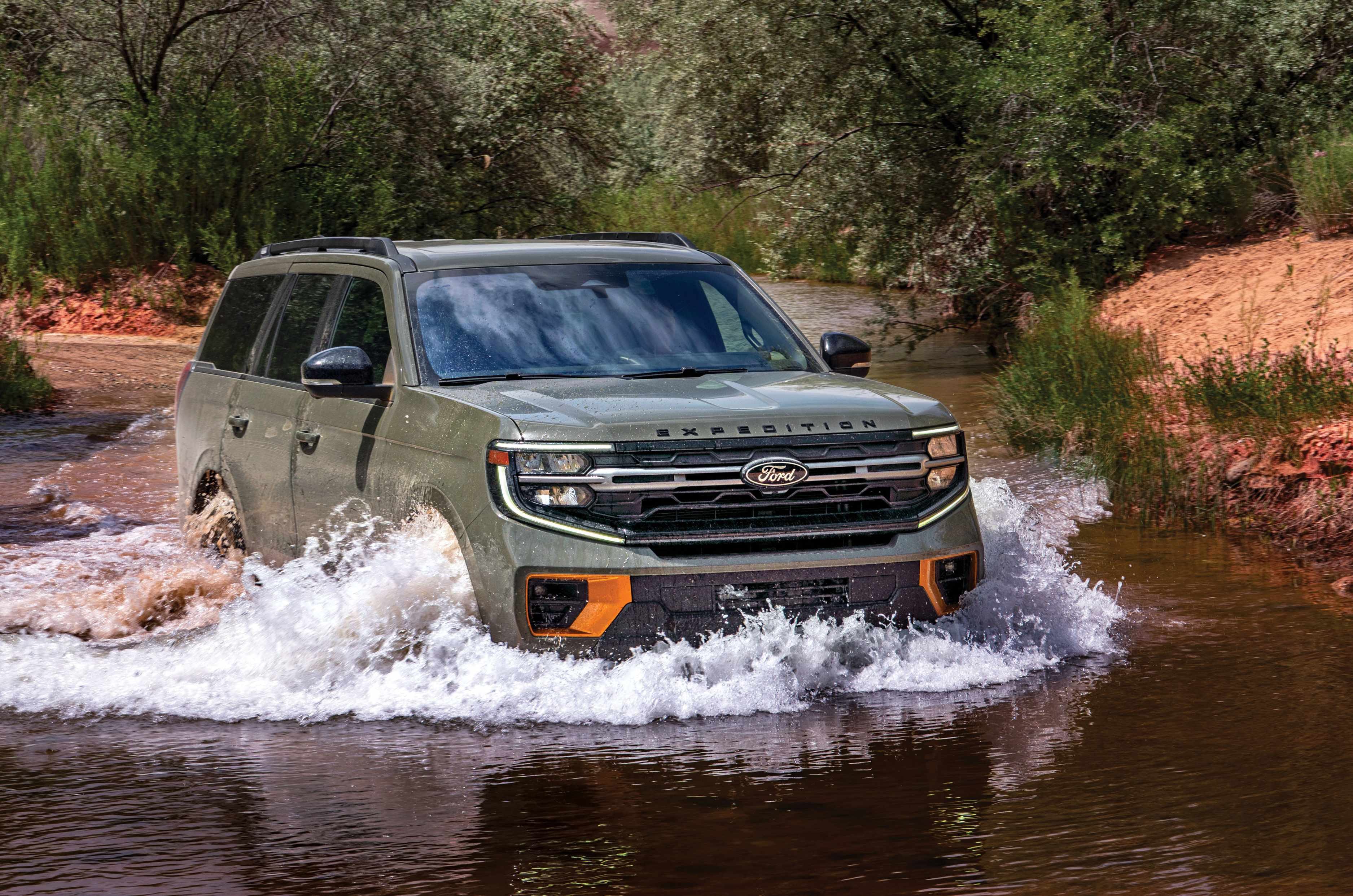
Off-grid Utah demands a dependable 4×4. The Tremor waded rivers, shrugged off loose gravel, tenacious clay and steep gradients, and kept going long after the tarmac lost interest.
None of it would have happened without the Ford Expedition Tremor, our fairy godmother. A tad tubby at over two tonnes, it came with a locking rear differential instead of a magic wand. The twin-turbocharged 3.5-litre EcoBoost V6 dispatched highway miles effortlessly. Once the tarmac disappeared, the Tremor earned its keep, shrugging off clay, loose rock, river crossings and deeply rutted tracks with nonchalant competence.
Follow her gaze. A long-gone artist still finds an audience a thousand years on. Utah is peppered with petroglyphs.
We forayed deeper into Utah’s wild, unadulterated beauty, beyond the tourist grid. To secret trails and solitude, to dinosaur tracks in ancient rock and to petroglyphs spanning two millennia, many still a mystery. I couldn’t help wondering if some ancient scribbling was simply the 2 BC equivalent of ‘Vinod loves Veronica’.
The first road to justify Freda’s confidence was Utah Scenic Byway 12, climbing out of Escalante towards Boulder through the folded canyons of Grand Staircase-Escalante National Monument, among the last regions in the contiguous US to be properly surveyed. Past Calf Creek, the road narrowed onto a hogback, a ribbon of blacktop along a ridge, with the ground dropping hundreds of feet on both sides. Red rock canyons fell open left and right, and for a few minutes it felt like driving along the spine of the Earth.
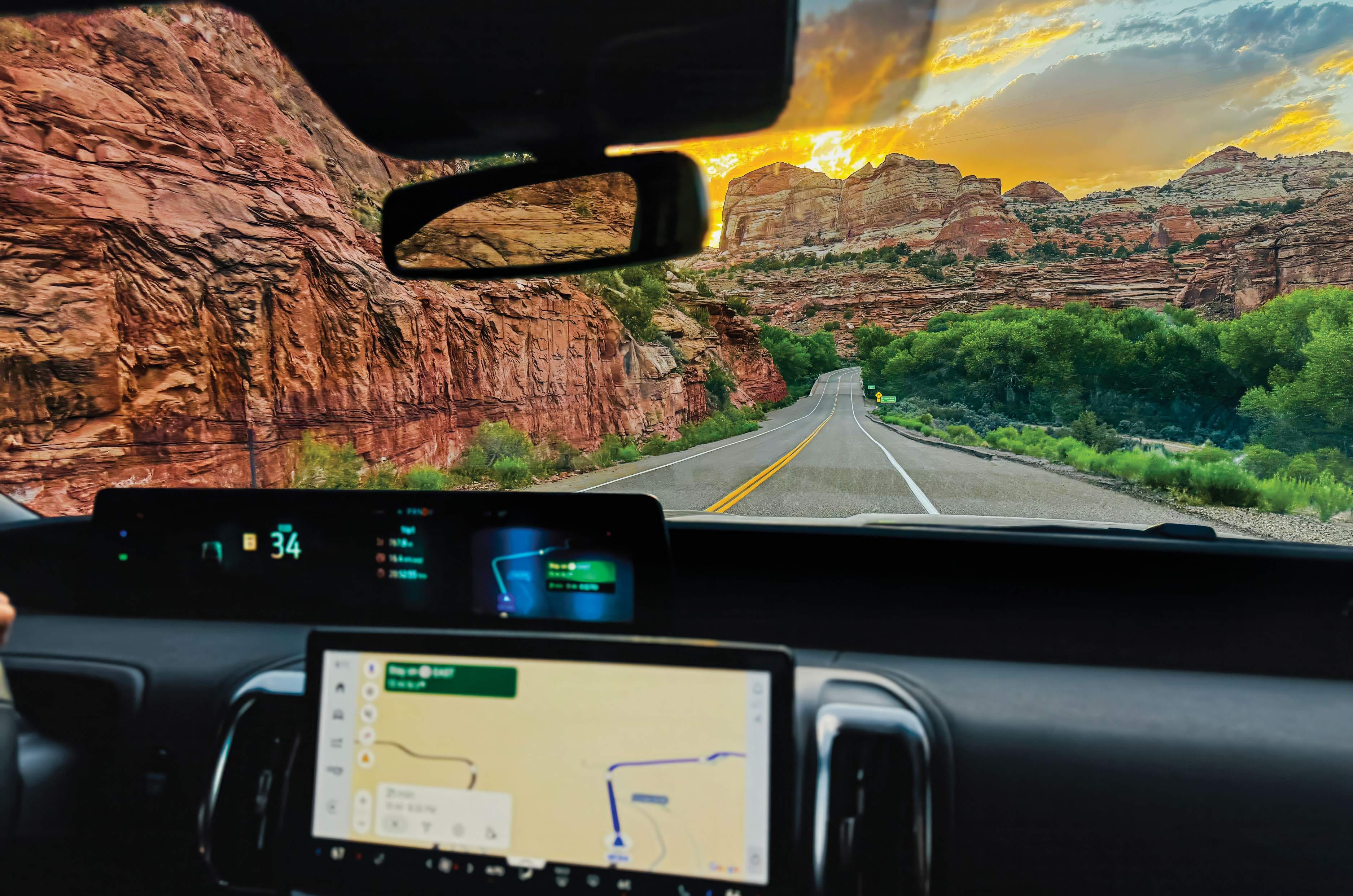
The windscreen became Utah’s widescreen, live streaming breathtaking views with hardly a break. This is Scenic Byway 12 between Escalante and Boulder.
At Boulder, we turned onto the Burr Trail, first beaten into the landscape by cattleman John Burr in the mid 1800s. Soon the road slipped past Long Canyon, colloquially called Singing Canyon because its towering, tapering walls possess the sort of acoustics that could make a bathroom baritone believe he had missed his calling. I sang a few notes and was astonished when the sandstone tuned my discordant tone to the smoothness of Sinatra.
Then the scenery became rather more serious. In 1948, the Atomic Energy Commission arrived looking for uranium, widening the trail and blasting switchbacks that tumble nearly 800 feet in less than a mile into the Waterpocket Fold, a colossal wrinkle in the earth running nearly a hundred miles across southern Utah, its tilted rock exposed in great bands of colour. We descended towards Ticaboo as the Fold surrendered to open desert.
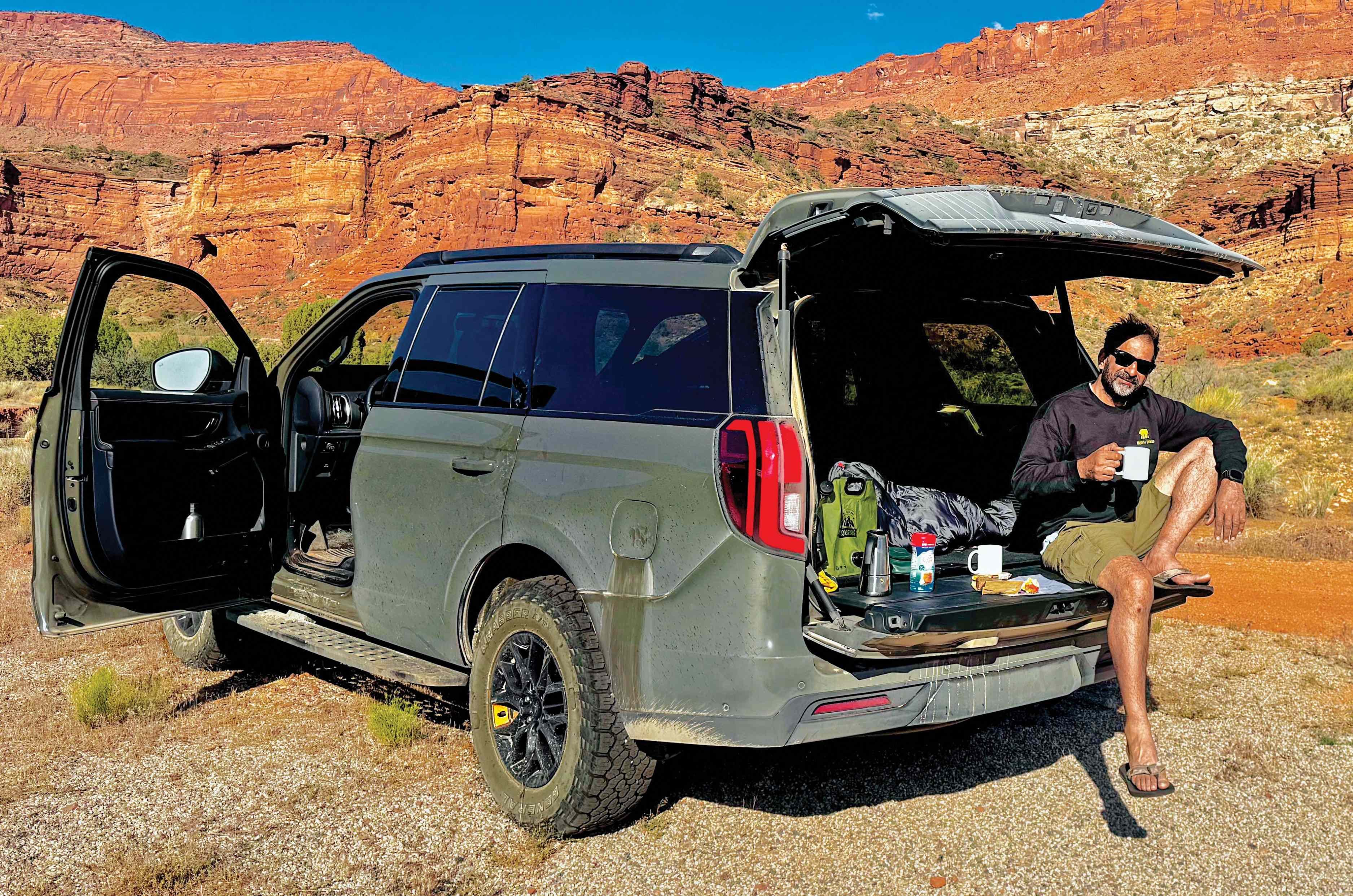
Morning coffee on the tailgate. The Expedition’s roomy interiors meant we could pull up and spend the night wherever we fancied.
We were hoping to camp at Muley Point, but we hadn’t accounted for Utah waylaying us with stupendous scenery, another slot canyon or lonely butte persuading us to stop every few miles. Around sunset, Muley Point was still hours away, so we turned into a secluded canyon and spent the night there, one of the trip’s happiest failures. We dropped the two rear seat rows into a flatbed, laid out a mattress, and slept under a sunroof full of stars and the Milky Way. We had camped at the base of the Henry Mountains, so remote that surveyors called them the Unknown Mountains until 1869.
The next morning, we pushed on to Muley Point through Bears Ears National Monument, named for a pair of buttes that really do resemble a bear’s ears poking above the treeline. An unmarked turn led to Muley Point, where the land simply stops a thousand feet above the San Juan River’s looping canyons, with views stretching to Monument Valley.
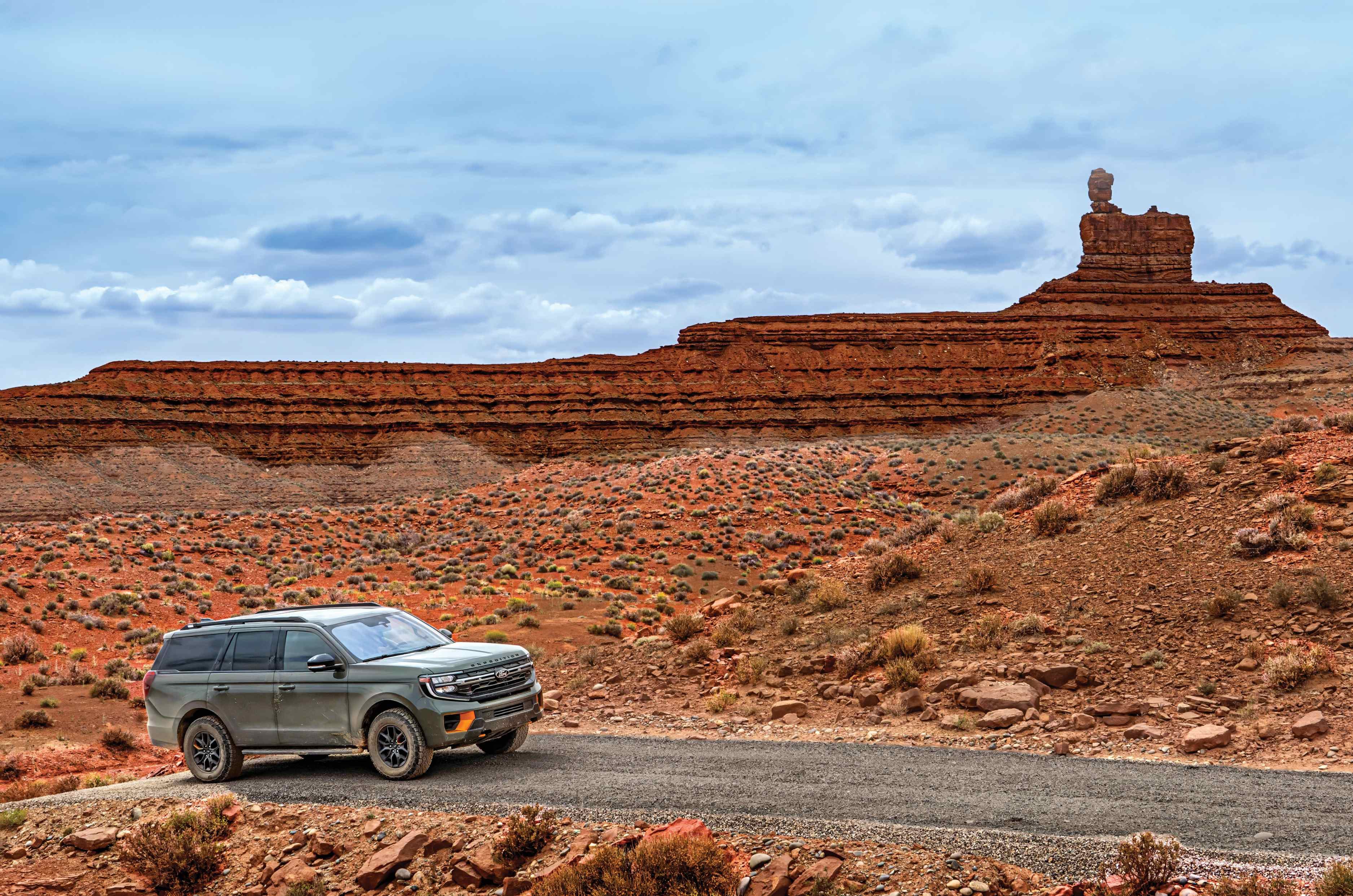
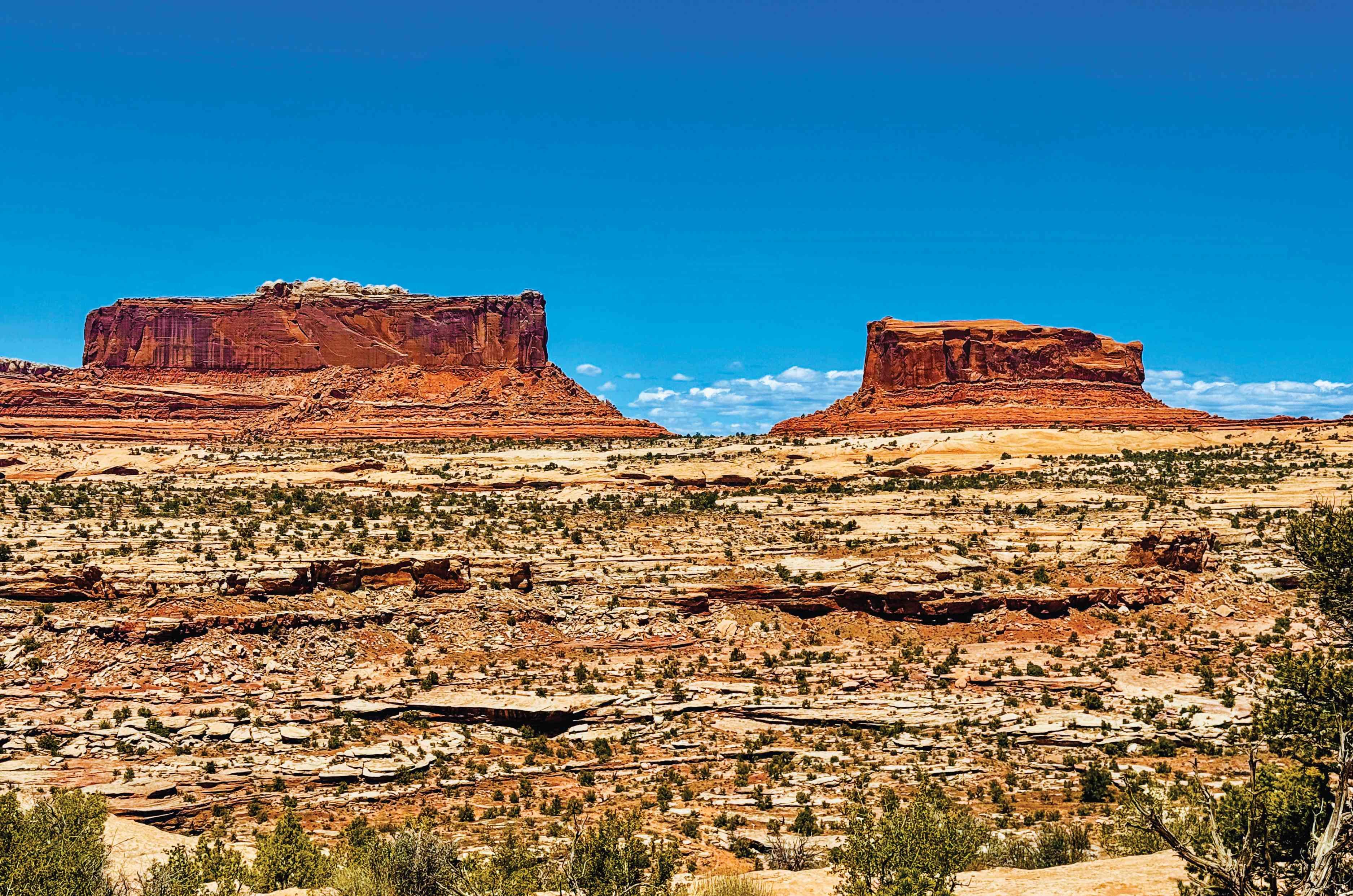
Look at the rocks above the Expedition. See anything? Someone did, and named it Lady in the Bathtub. Now try unseeing it. Welcome to the Valley of the Gods, where mesas and buttes come with wonderfully imaginative names.
Our next destination was the Valley of the Gods, the guidebook’s hidden Monument Valley twin. But first came the Moki Dugway, three miles of unpaved switchbacks blasted into Cedar Mesa in 1958 for trucks hauling uranium ore, dropping 1,100 feet at an 11 percent grade. The Tremor accepted the challenge with the calm assurance of a seasoned mountain guide.
At the bottom, a short detour brought us to Goosenecks State Park, where the San Juan River travels almost six miles in meanders to advance barely a mile and a half as the crow flies. From there, we turned into the Valley of the Gods, a dirt road meandering between sandstone monuments, nature’s own sculptures, with eccentric names. One was the Lady in the Bathtub. Had I not known the name, I might have seen only a rock. But once told, there she was, sitting bolt upright at one end of an enormous bath, her hair piled high and her back rather primly straight.
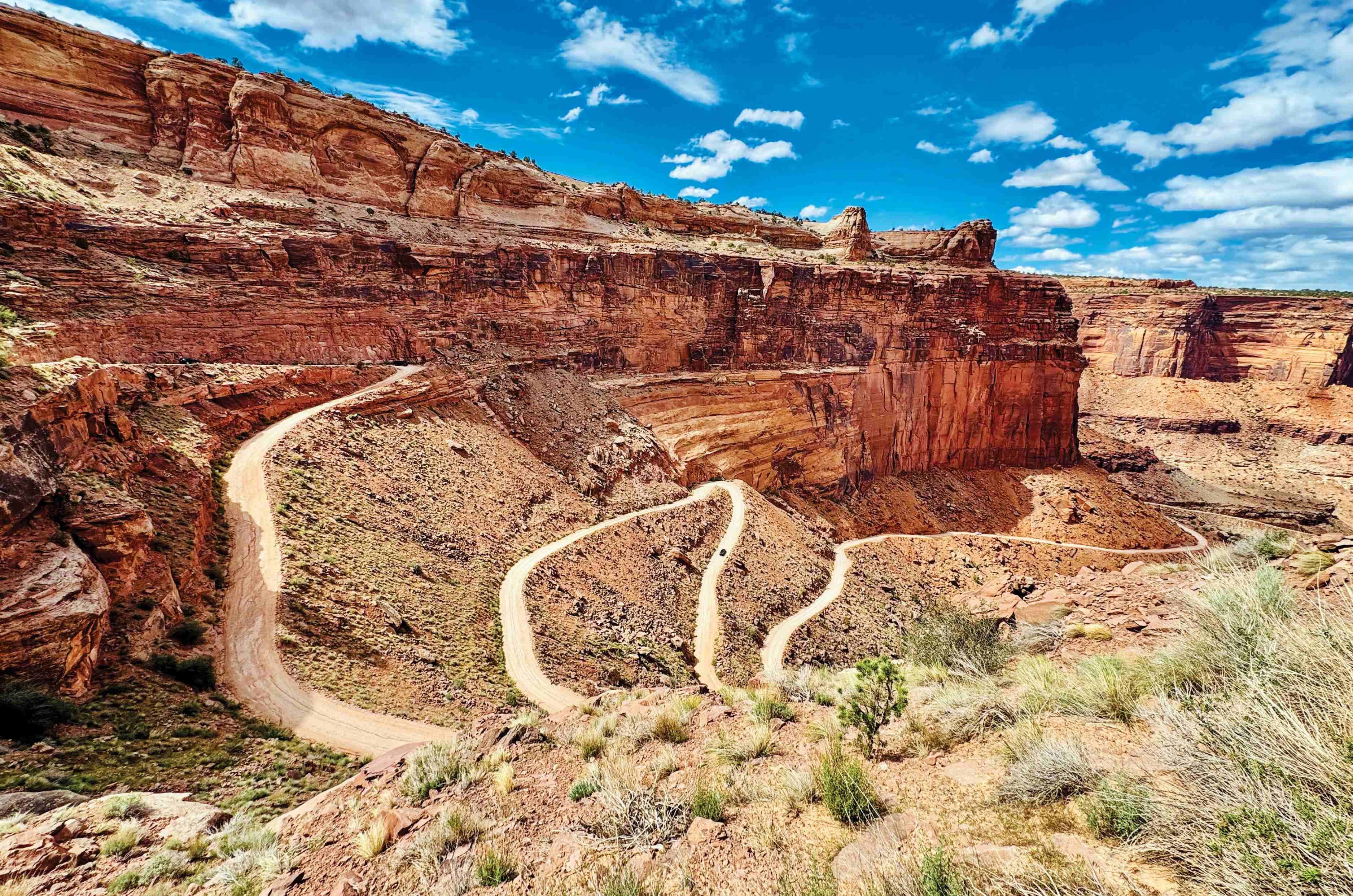
The Shafer Trail looked less like a road and more like a cartographer’s casual squiggle joining the top and bottom of a sandstone cliff. Then we drove it.
We slept another night in the car at the base of Rooster Butte, then rolled into urban Moab, our base for exploring the Needles and Island in the Sky districts of Canyonlands National Park, including the strange geological puzzle of Upheaval Dome. The highlight, though, was driving the Shafer Trail.
From the top, it was hard to believe vehicles drove down what looked like a pencil sketch etched onto a sandstone cliff. The trail began as a foot route, widened for cattle by rancher John “Sog” Shafer, then again in the 1950s for the uranium trucks that shaped the Burr Trail and Moki Dugway.
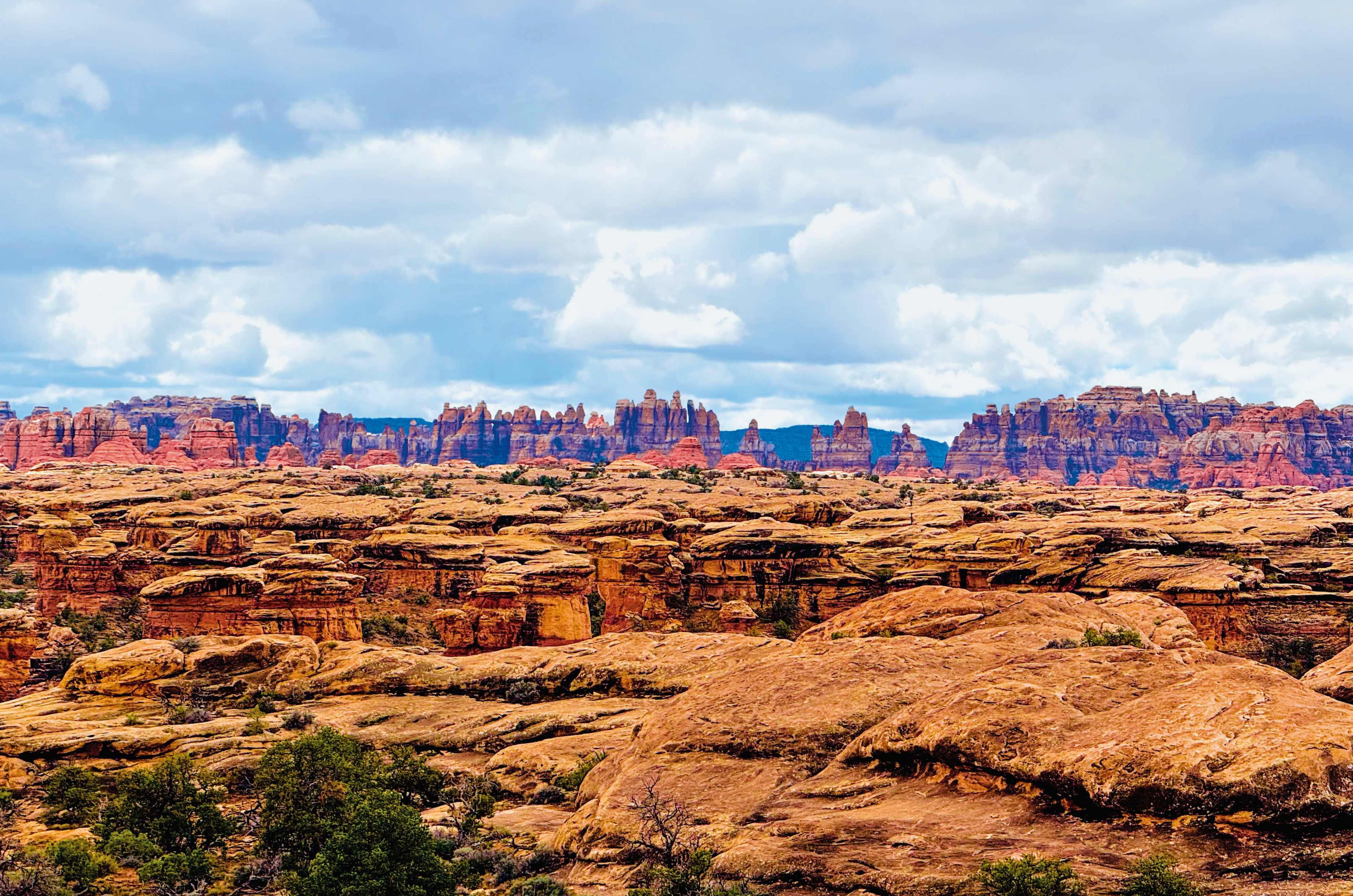
The Needles, Canyonlands – a forest of red and white banded sandstone spires, stained by iron and carved improbably thin by water patiently working through every crack.
The Expedition tipped over the edge, and we were committed. The Tremor crept down in low range, engine barely above idle, brakes doing quiet, constant work as gravel skittered from under the tyres. Every switchback flung the door mirror out over open air, nothing but red rock and sky where the road should have been, and my stomach dropped a beat before the front wheels found the turn. The cabin stayed eerily composed, no lurch, no scrabble for grip, while everything outside the glass insisted we should be afraid. At the bottom, the Colorado River came into view, and I exhaled properly for the first time in twenty minutes.
The warning isn’t for broken roads, but for deep clay bogs that require the torque and traction of a 4×4 to escape.
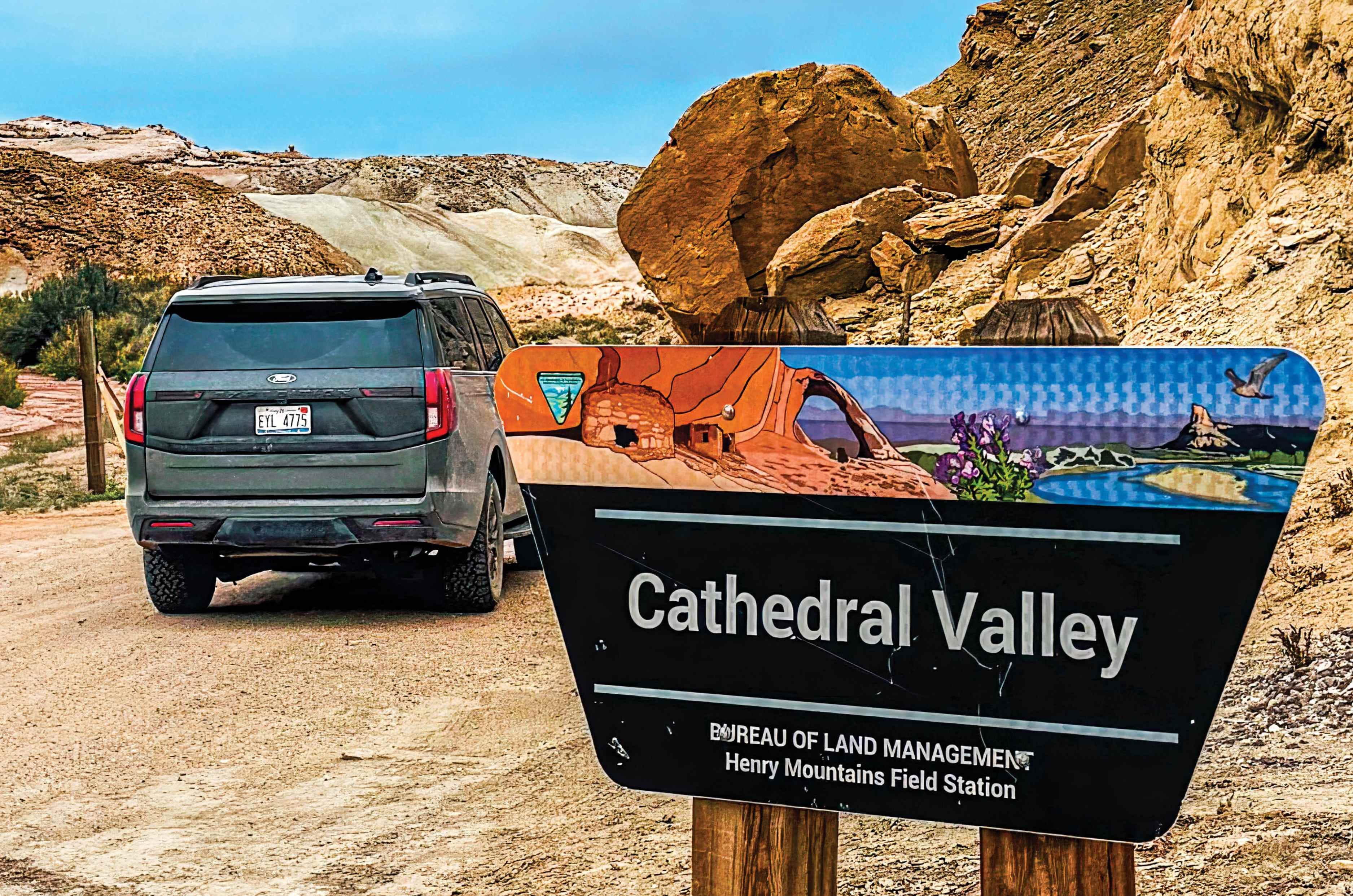
The final road I want to tell you about is the 80-mile loop through Cathedral Valley. According to Ms Ryland, this was Capitol Reef at its most remote – towering monoliths, strange badlands and perfect seclusion. At the entrance, a sign minced no words: ‘Road Impassable for Most Vehicles. Travel at Your Own Risk’.
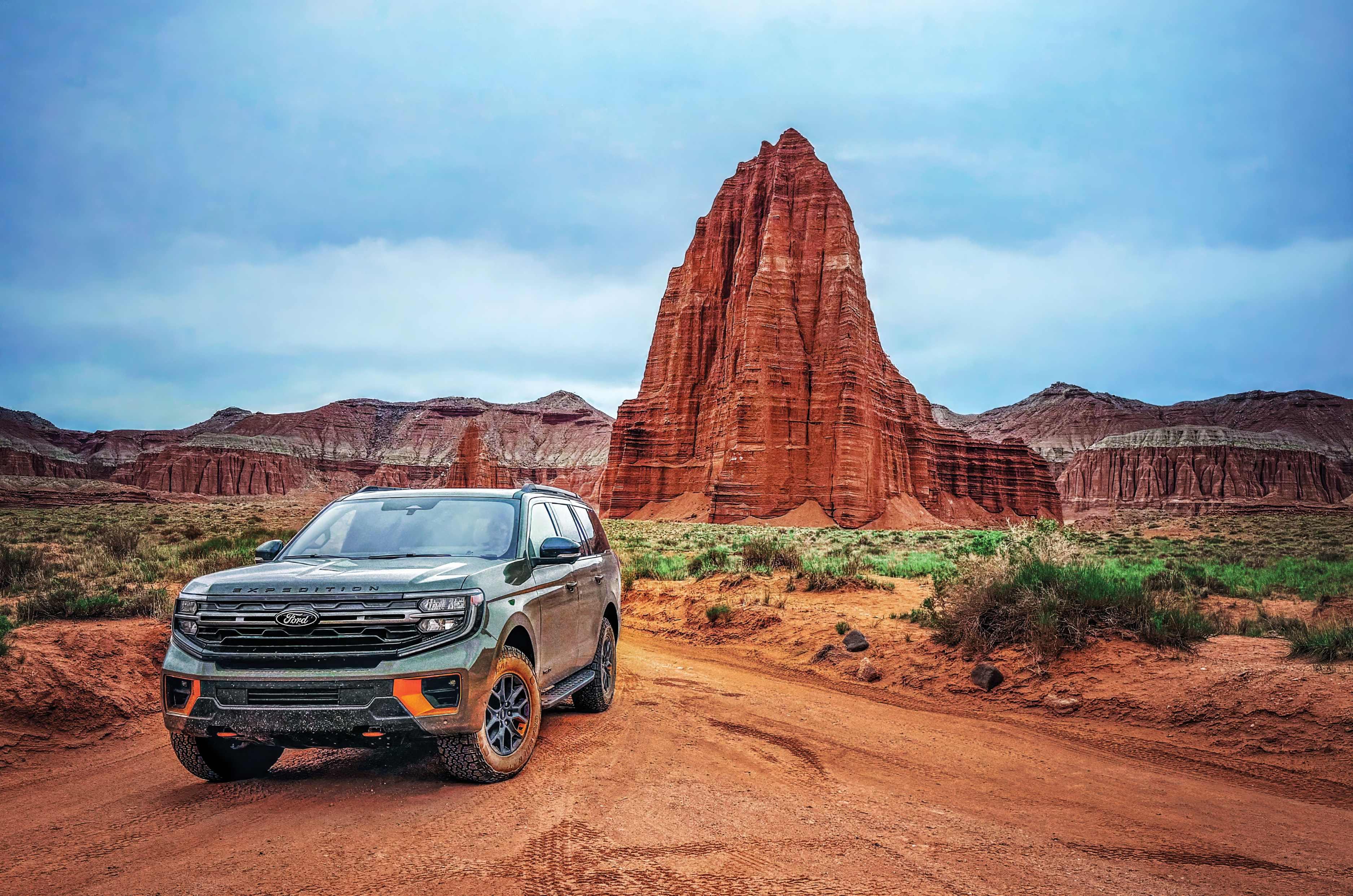
The dirt road climbs through the Bentonite Hills, bands of grey, purple and blue-green clay laid down eighty million years ago in an ancient inland sea, eroded into slopes that look lunar. Beyond them, the land opens onto a high bench where the Temples of the Sun and Moon stand, solitary honey-coloured monoliths like remnants of cathedrals of a long-lost civilisation.
What struck me most, standing before the Temple of the Sun, was how closely its silhouette echoed the thirteenth-century Temple of the Sun I knew well – still standing tall in Konark, Orissa. That was shaped by human hands wielding hammers and chisels, whereas this one by wind and water.
In the Cathedral Valley at The Temple of the Sun. Eighty million years in the making; no chisel required.
Most visitors run the Cathedral Valley Loop clockwise, meeting the Fremont River crossing at the start. We’d gone the other way, so it arrived at the very end, just short of Highway 24. Torrid brown water gushed across our path. Not crossing would mean backtracking 80 miles.
I waded in first to check for stone underfoot rather than clay, reading whether the current had strong opinions about being crossed. Satisfied, I waved the Tremor forward, and my partner drove it straight through, water climbing the doors. Then crossed again to pick me up, and once more just for fun, proof this was a vehicle built to encourage this kind of tomfoolery.
After Cathedral Valley, the long drive back to ordinary life began, the odometer past 1,300 miles. Looking back on those twelve days, I’m glad I chose the path not well trodden, as Robert Frost once suggested, in a digital age where it’s easiest to let the machines pick the route.
A badly printed, albeit meticulously researched book, an atlas, and a Ford that never once flinched had taken us somewhere far better than any algorithm would have dared suggest. Rather than a destination ticked off, Utah became one truly experienced, and that made all the difference.
The essentials
Self-sufficiency matters: A little preparation separates adventure from discomfort.
Water: Carry more than you think you need. We kept 20 litres in the Expedition.
Provisions: Stock up on energy bars, trail mix, fruit, chocolate, canned food, instant noodles, jerky and coffee. A camping stove is invaluable for hot meals in the middle of nowhere.
Fuel: Fill up whenever you can. Distances are vast and stations scarce.
Navigation: Download offline maps and carry a paper atlas. The DeLorme Utah Atlas and Gaia GPS worked well.
Clothing: Hot days, cold nights. Pack a warm layer and a sleeping bag.
Footwear: Sturdy hiking shoes.
Sun protection: A wide-brimmed hat, sunglasses, sunscreen and lip balm.
Vehicle: A high-clearance 4WD.
In-car essentials: First-aid kit, head torch, tyre gauge, air compressor and puncture repair kit.
Allow extra time. Utah ambushes you with one view after another, and the best memories happen at unplanned stops.
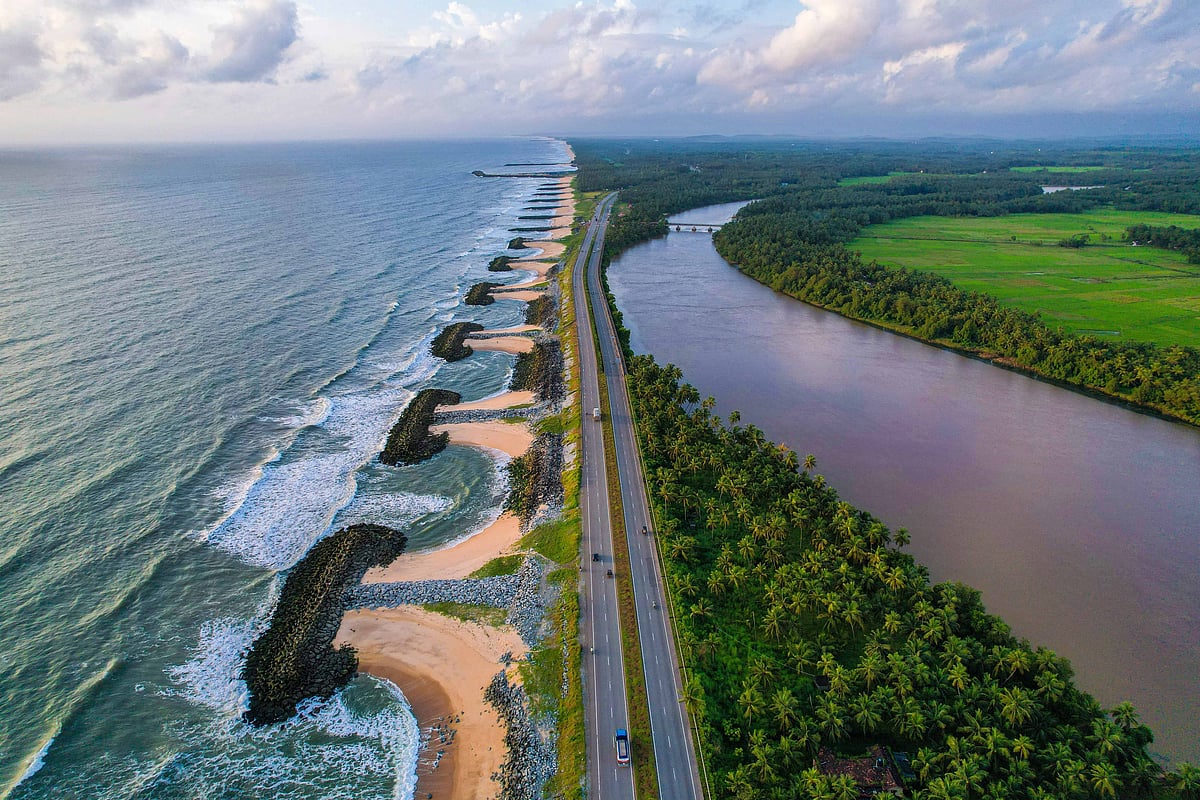
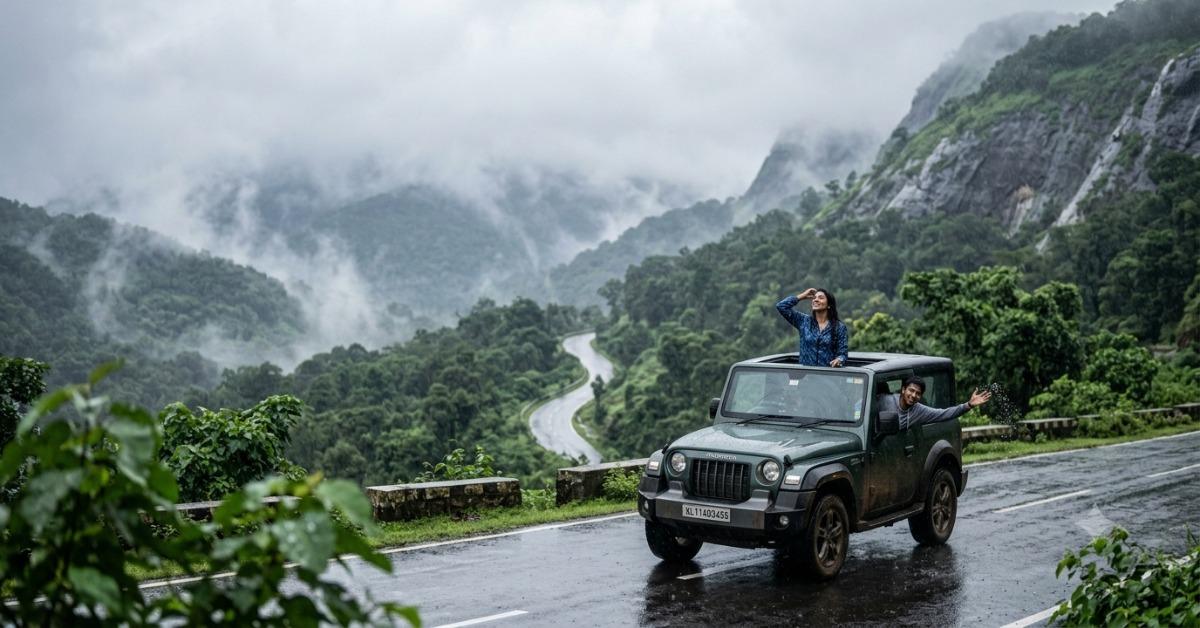
आपको लंबी ड्राइव, ठंडी हवाएं और समुद्र की लहरों का सुकून पसंद है, तो भारत की कोस्टल रोड ट्रिप्स (coastal road trip) आपके लिए परफेक्ट हैं। इन रास्तों पर सफर करते हुए एक तरफ नीला समंदर, दूसरी ओर हरियाली, पहाड़ और नारियल के पेड़ों का मनमोहक नजारा देखने को मिलता है। खासकर मानसून (monsoon) के मौसम में ये सड़कें और भी खूबसूरत हो जाती हैं। आप भी अपनी अगली छुट्टियों को यादगार बनाना चाहते हैं, तो कार या बाइक से इन सी-व्यू रोड ट्रिप्स (Sea-view road trips) का एक्सपीरियंस जरूर लें:
Goa to Gokarna (गोवा से गोकर्ण: सुकून और समुद्र का परफेक्ट कॉम्बिनेशन)
अगर आप भीड़भाड़ से दूर शांति भरा सफर करना चाहते हैं, तो गोवा से गोकर्ण की रोड ट्रिप आपके लिए बेहतरीन रहेगी। इस पूरे रास्ते में कभी समुद्र की लहरें आपका साथ देती हैं तो कभी हरियाली से घिरे खूबसूरत नजारे मन मोह लेते हैं। बीच-बीच में छोटे-छोटे बीच (beache) और तटीय गांव (coastal village) मिलते हैं, जहां कुछ देर रुककर ताजा हवा का आनंद लिया जा सकता है। यह रूट उन लोगों के लिए खास है, जो ड्राइव के साथ प्रकृति का भरपूर मजा लेना चाहते हैं।
Chennai to Puducherry (चेन्नई से पुडुचेरी: समंदर के साथ दौड़ती शानदार सड़क)
चेन्नई से पुडुचेरी तक की ईस्ट कोस्ट रोड (East Coast Road) भारत की सबसे खूबसूरत सी-फेसिंग सड़कों में गिनी जाती है। कई जगह सड़क समुद्र के बिल्कुल पास से गुजरती है, जिससे पूरे रास्ते बंगाल की खाड़ी का शानदार नजारा दिखाई देता है। सुबह की हल्की धूप या शाम की ठंडी हवा में इस रूट पर ड्राइव (Driving) करना एक अलग ही एक्सपीरियंस देता है। रास्ते में कई बीच, कैफे और व्यू पॉइंट (viewpoints) भी मिलते हैं, जहां रुककर सफर को और यादगार बनाया जा सकता है।
Kochi to Kanyakumari (कोच्चि से कन्याकुमारी: हरियाली और समुद्र का खूबसूरत संगम)
अगर आप प्रकृति के बीच लंबी ड्राइव का आनंद लेना चाहते हैं, तो कोच्चि से कन्याकुमारी का सफर जरूर करें। इस रूट पर नारियल के ऊंचे-ऊंचे पेड़, हरे-भरे नजारे और समुद्र का खूबसूरत दृश्य पूरे रास्ते आपका स्वागत करते हैं। जैसे-जैसे आप कन्याकुमारी के करीब पहुंचते हैं, समुद्र का नजारा (coastal scenery) और भी मनमोहक होता जाता है। यहां पहुंचकर सूर्योदय और सूर्यास्त देखना इस पूरी यात्रा की सबसे यादगार बात बन सकता है।
Mumbai to Goa (मुंबई से गोवा: हर मोड़ पर बदलता खूबसूरत नजारा)
मुंबई से गोवा की रोड ट्रिप (road trip) देश की सबसे पसंदीदा ट्रिप में शामिल है। कोंकण तट (Konkan coast) से गुजरने वाला यह रास्ता हरे-भरे पहाड़ों, घुमावदार सड़कों, छोटे गांवों और समुद्र के खूबसूरत दृश्यों से भरपूर है। अगर आप बिना जल्दबाजी के सफर करें, तो रास्ते में आने वाले कई बीच, लोकल मार्केट और खाने-पीने की जगहों का भी आनंद ले सकते हैं। मानसून (monsoon) में यह रूट और भी ज्यादा खूबसूरत दिखाई देता है।
Mangaluru to Goa (मंगलुरु से गोवा: शांत सफर और मनमोहक नजारे)
मंगलुरु से गोवा तक की ड्राइव उन लोगों के लिए शानदार है, जिन्हें लंबा और शांत सफर पसंद है। इस रूट पर कई जगह सड़क के एक ओर समुद्र और दूसरी ओर हरियाली का नजारा देखने को मिलता है। रास्ते में छोटे-छोटे बीच, नारियल के पेड़ों से घिरे गांव और शांत माहौल सफर को खास बना देते हैं। अगर आप नेचर के बीच आरामदायक रोड ट्रिप (road trip) चाहते हैं, तो यह रूट आपकी ट्रैवल लिस्ट में जरूर होना चाहिए।
ये जरूरी बातें रखें ध्यान
समुद्र किनारे रोड ट्रिप (coastal road trip) का मजा तभी आता है, जब सफर पूरी तरह सेफ हो। निकलने से पहले अपनी कार या बाइक के टायर, ब्रेक, इंजन ऑयल और सभी जरूरी दस्तावेज अच्छी तरह जांच लें। मानसून (monsoon) के दौरान तटीय इलाकों की सड़कें (Coastal road) फिसलन भरी हो सकती हैं, इसलिए वाहन धीरे और सावधानी से चलाएं। ट्रैफिक नियमों का पालन करें, स्पीड लिमिट का ध्यान रखें और समुद्र किनारे बने खतरनाक जगहों पर वाहन रोकने से बचें। थोड़ी-सी सावधानी आपकी रोड ट्रिप (road trip) को सेफ और यादगार दोनों बना सकती है।
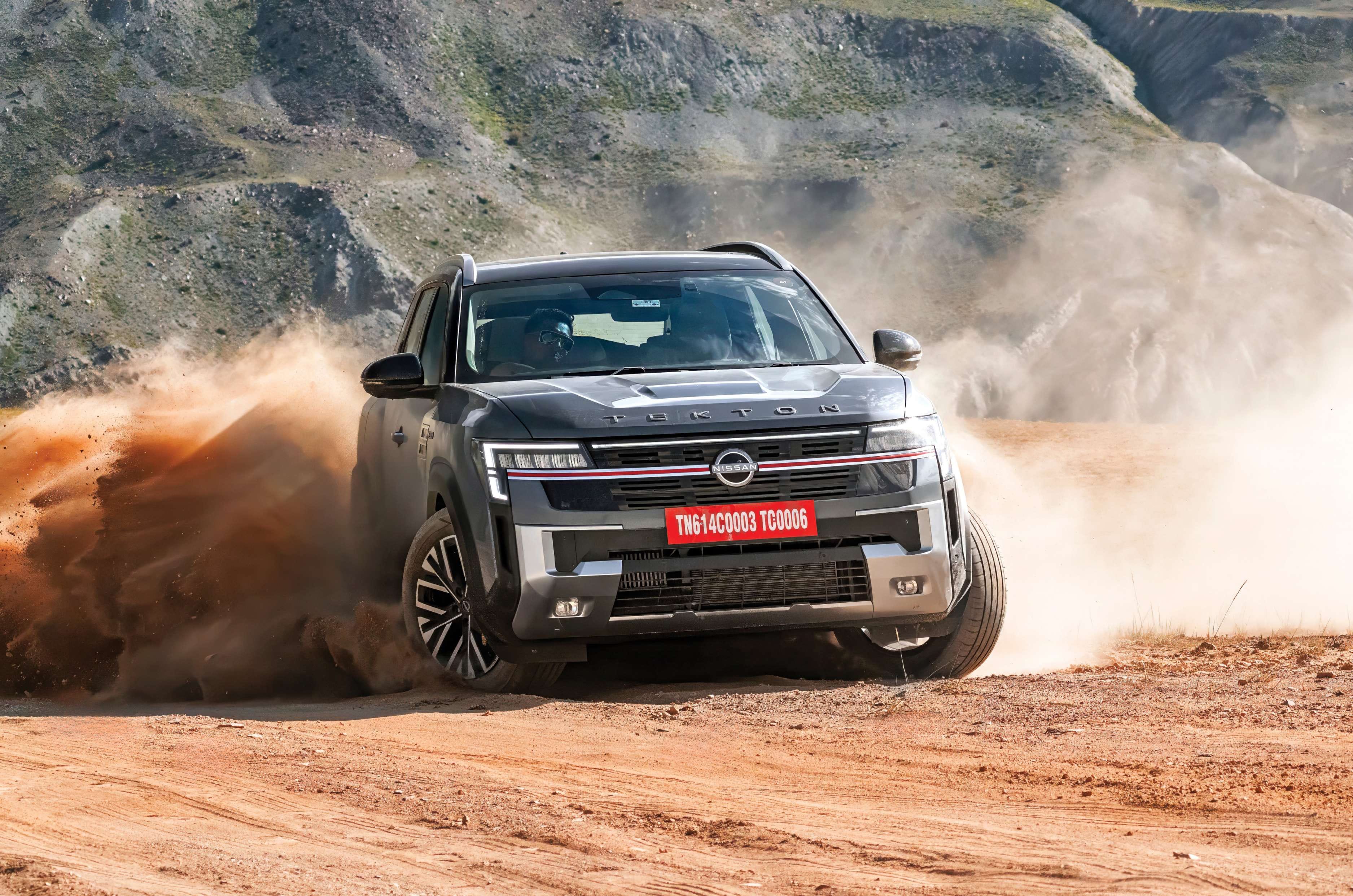
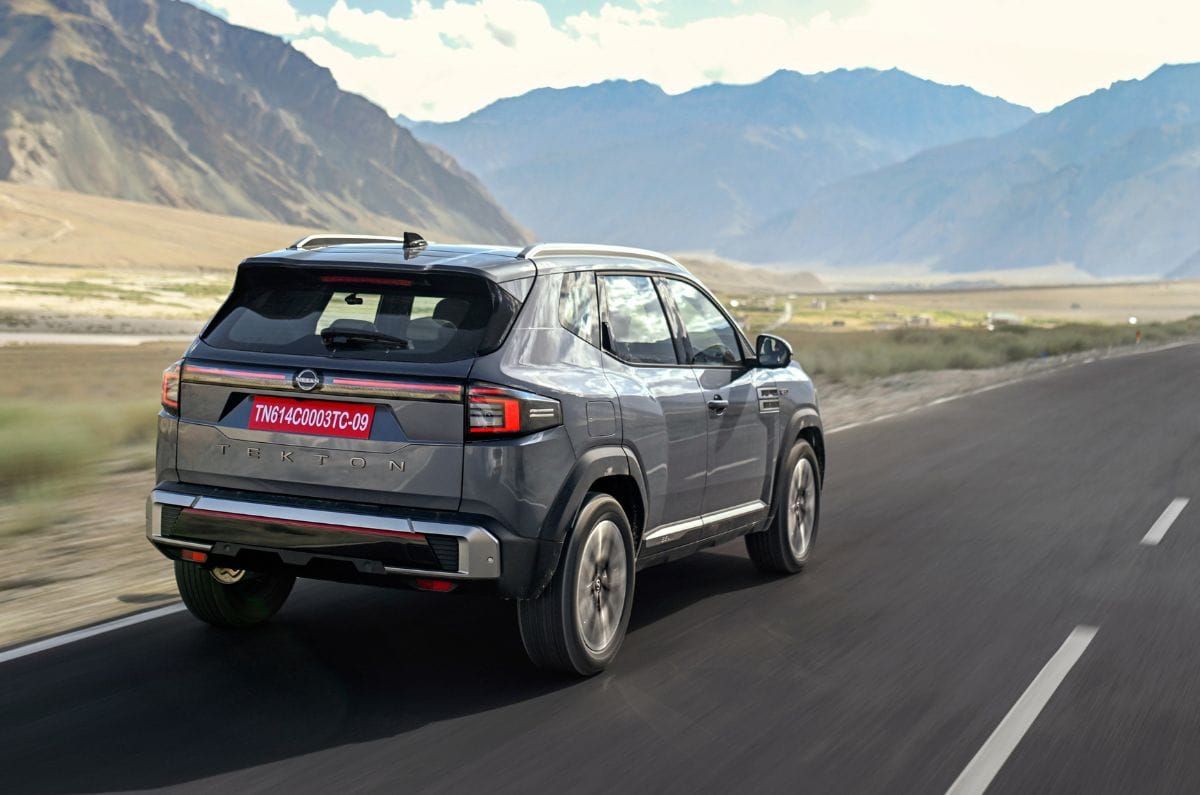
For our first drive of the all-new Tekton, Nissan organized an elaborate 700km plus test drive from Chandigarh to Leh, tackling everything from crowded city traffic and fast highways to mountain passes and broken roads. The aim was to find out whether Nissan’s new midsize SUV has what it takes to take on the Hyundai Creta, Kia Seltos and Maruti Victoris in the real world.
Nissan Tekton Exterior Design and Engineering – 9/10
The Tekton is, in essence, a badge-engineered Renault Duster. It is built at the same plant, on the same assembly line, and shares its platform, powertrains and several components with its French sibling. Nissan, however, has worked hard to give it a distinct identity, drawing inspiration from its flagship Patrol SUV.
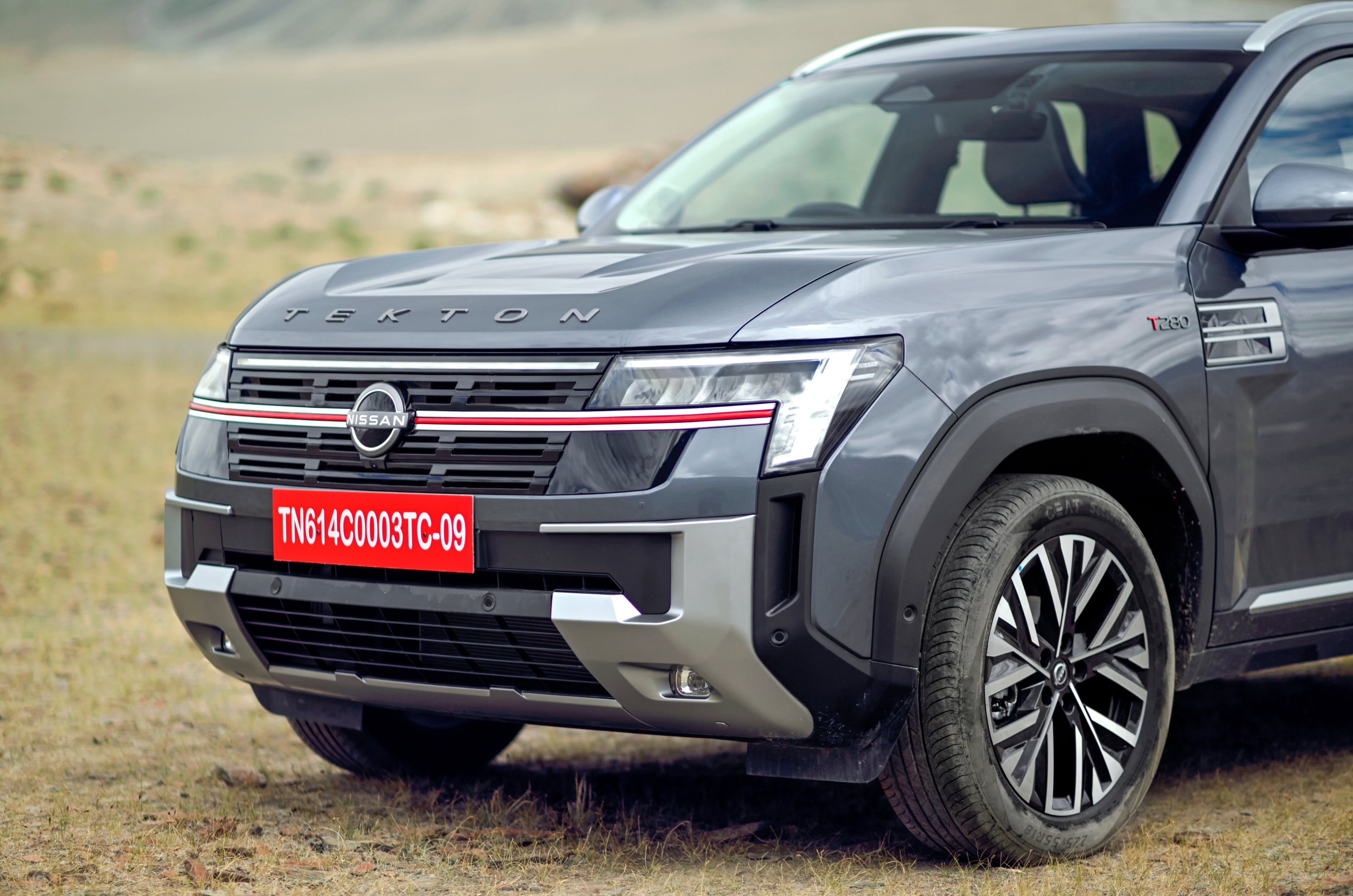
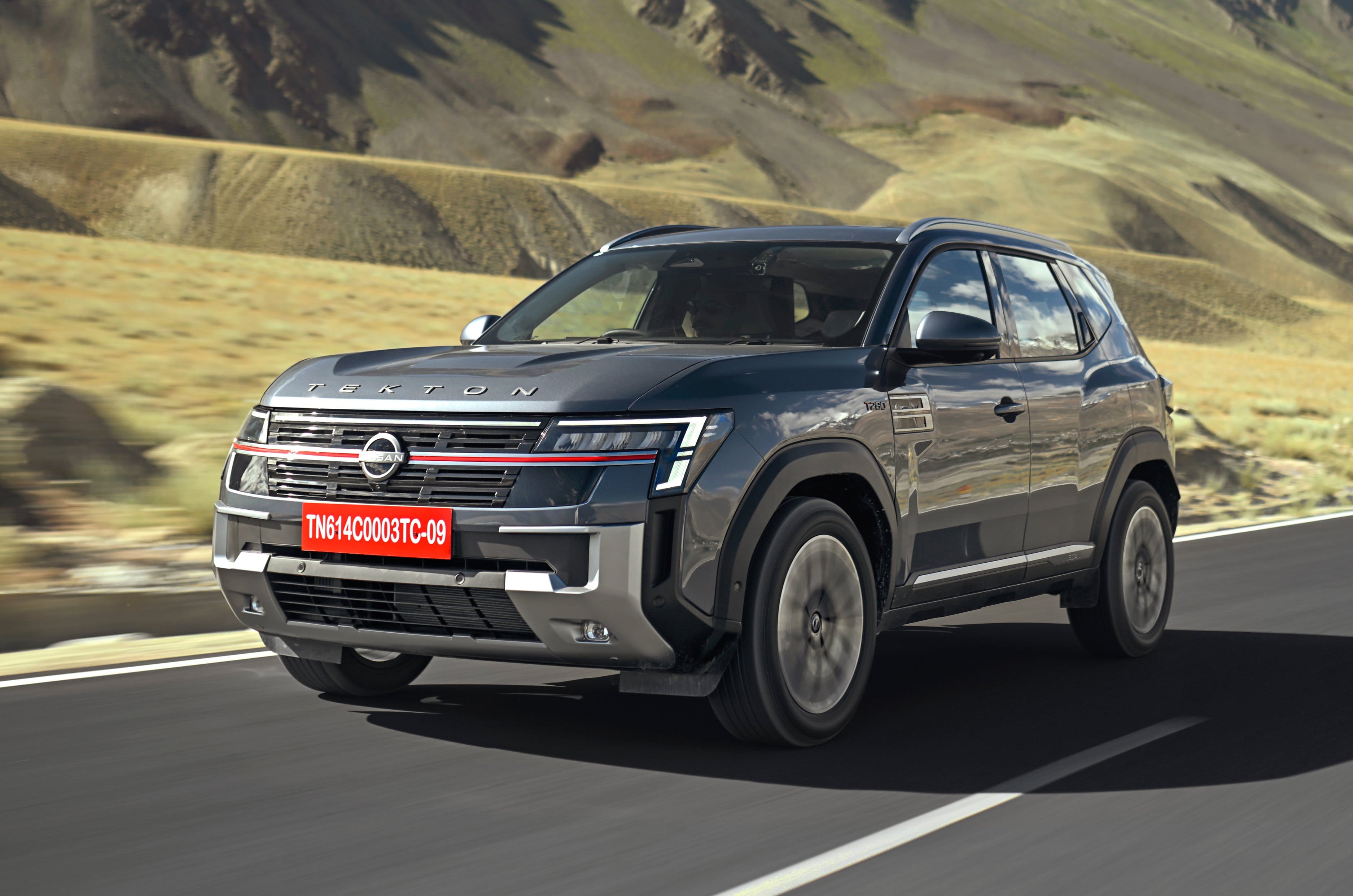
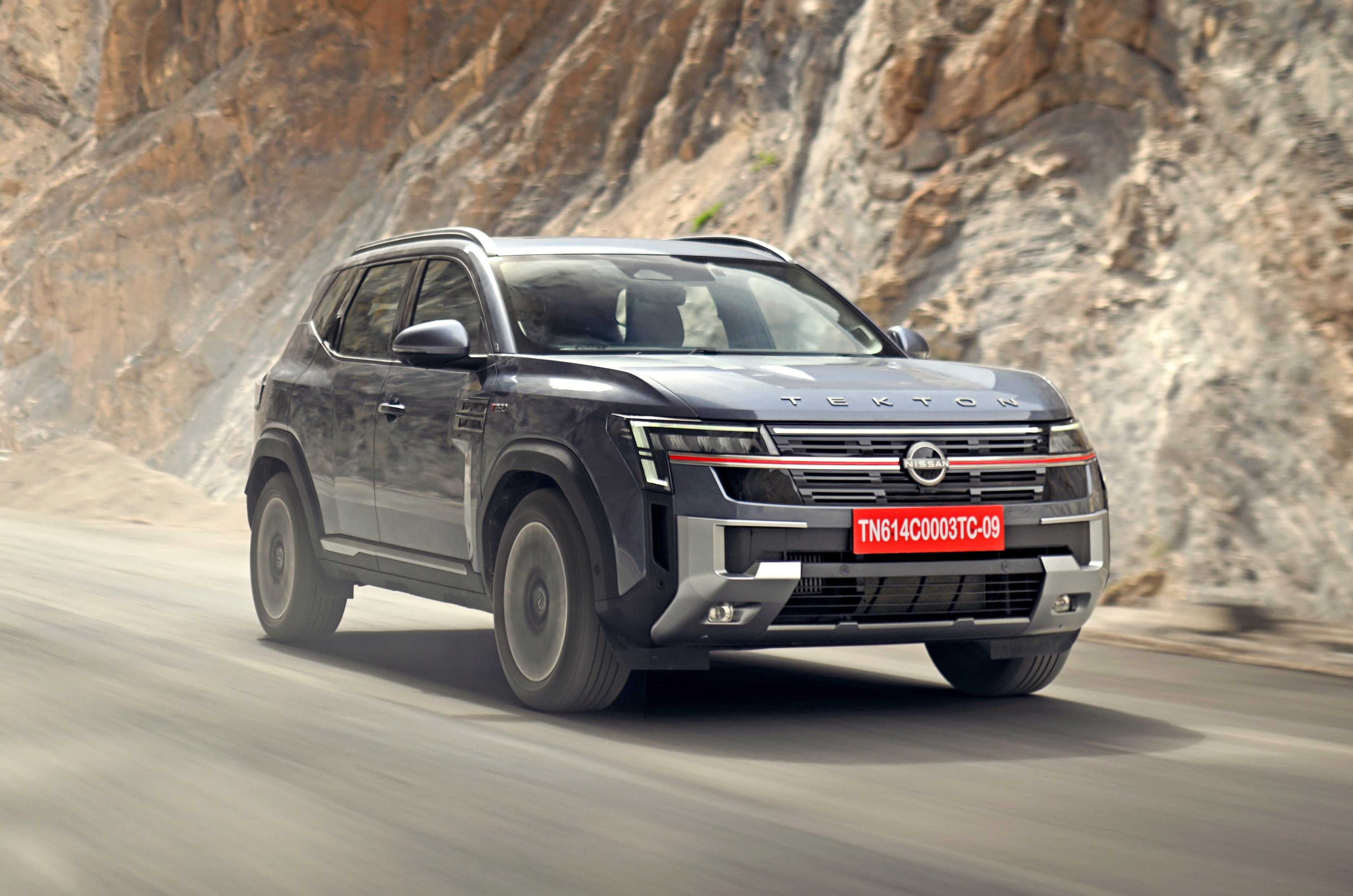
1.3 turbo variants can be identified by the red strip on the grille and T280 badge.
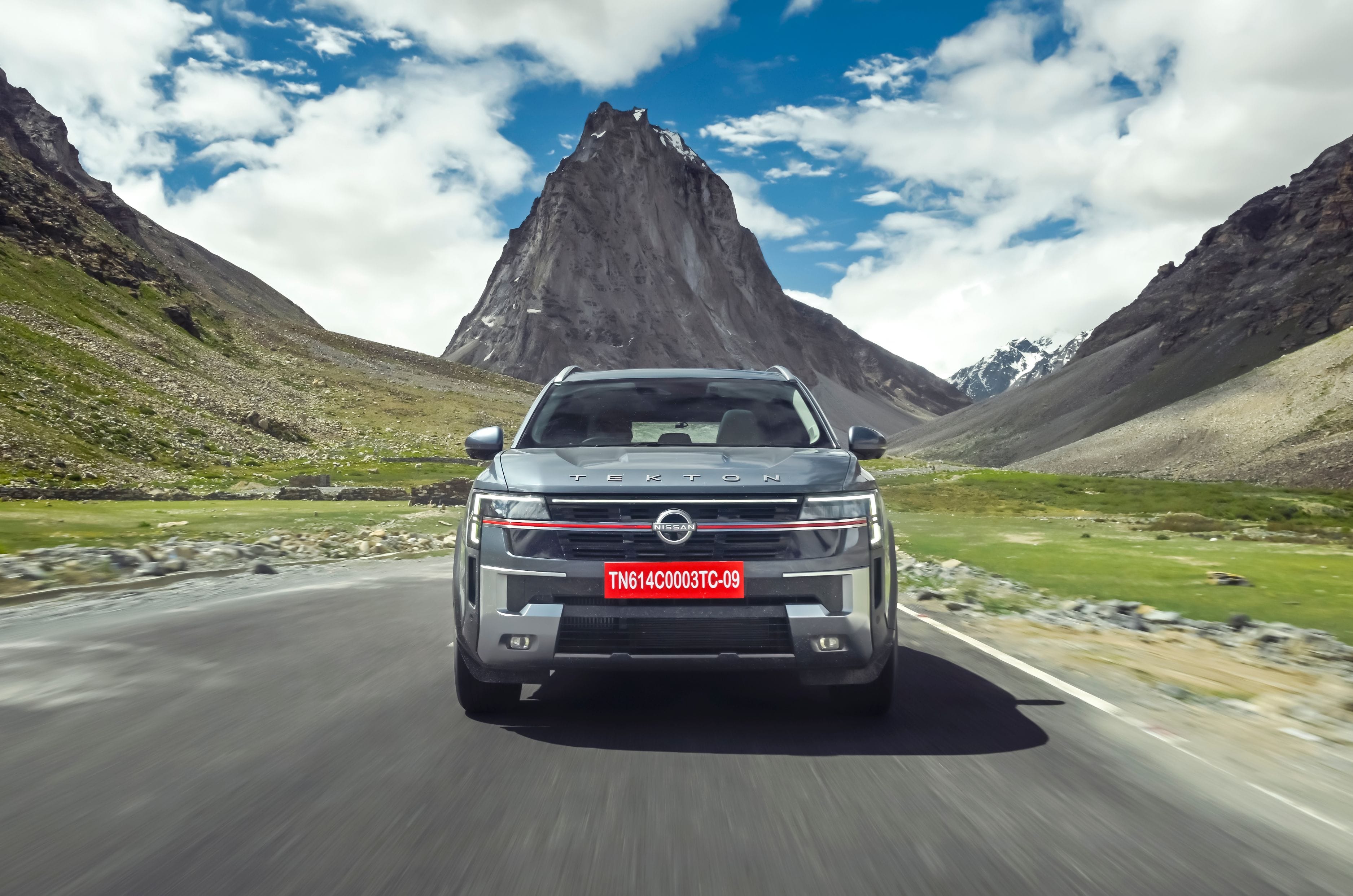
The front end is undoubtedly the highlight. The grille, connected light bar and red accents on the 1.3-litre turbo variants lend it a bold and distinctive look. It even gets functional bumper air scoops and fog lamps, the latter being an increasingly rare feature in this segment. The sculpted bonnet adds plenty of visual muscle, while the side profile is enhanced by attractive 18-inch alloy wheels wrapped in chunky, high-profile tyres.
Practicality extends beyond appearances. Ground clearance stands at an impressive 212mm, making the Tekton well suited to rough terrain. The T280 badge on the front fender denotes the 280Nm produced by the 1.3-litre turbo-petrol engine, while a unique applique depicting the Himalayas adds a touch of character. Its pillar-mounted rear door handles link ties to Nissan SUVs of yore like the Pathfinder and X-Terra.
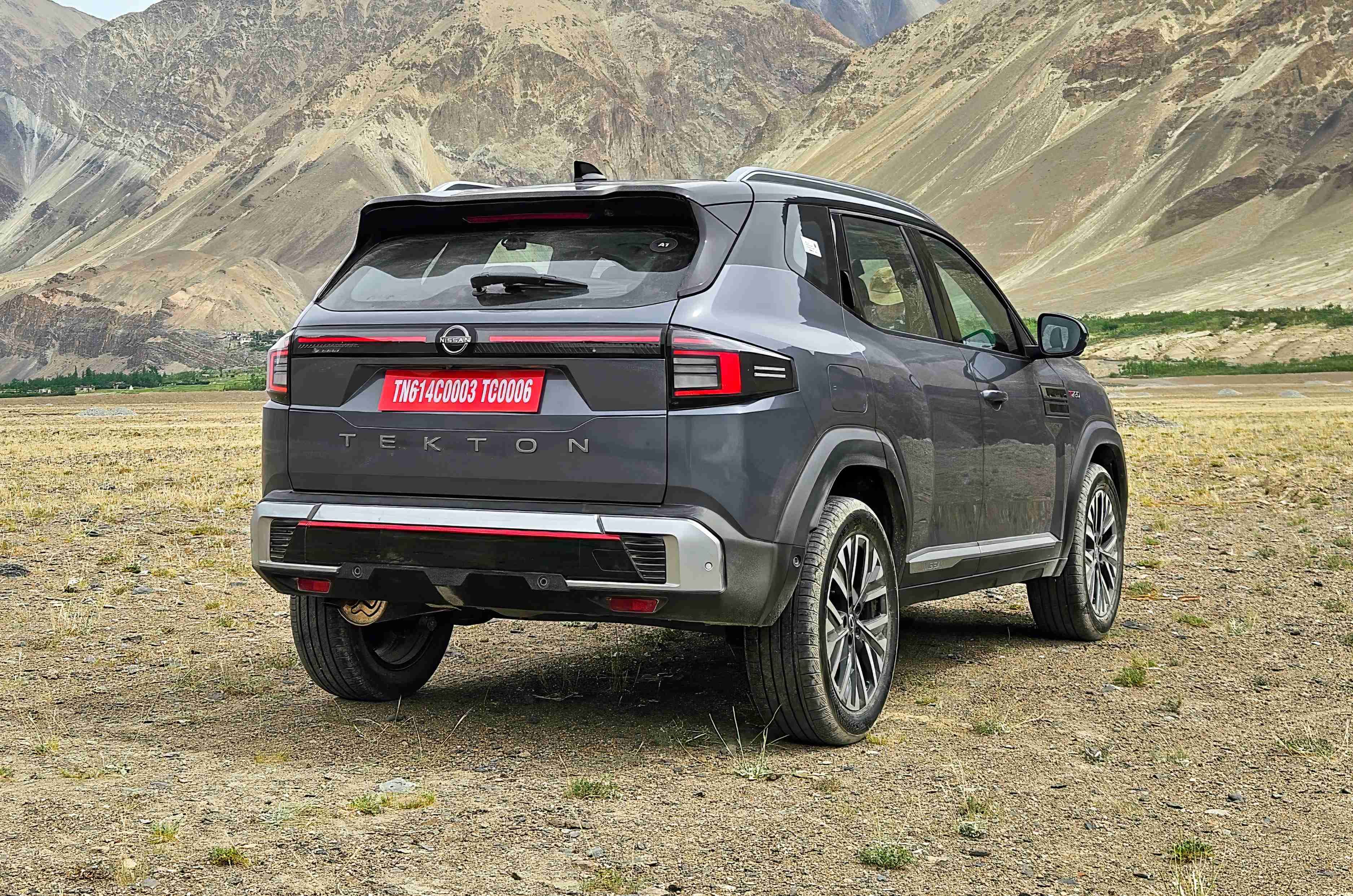
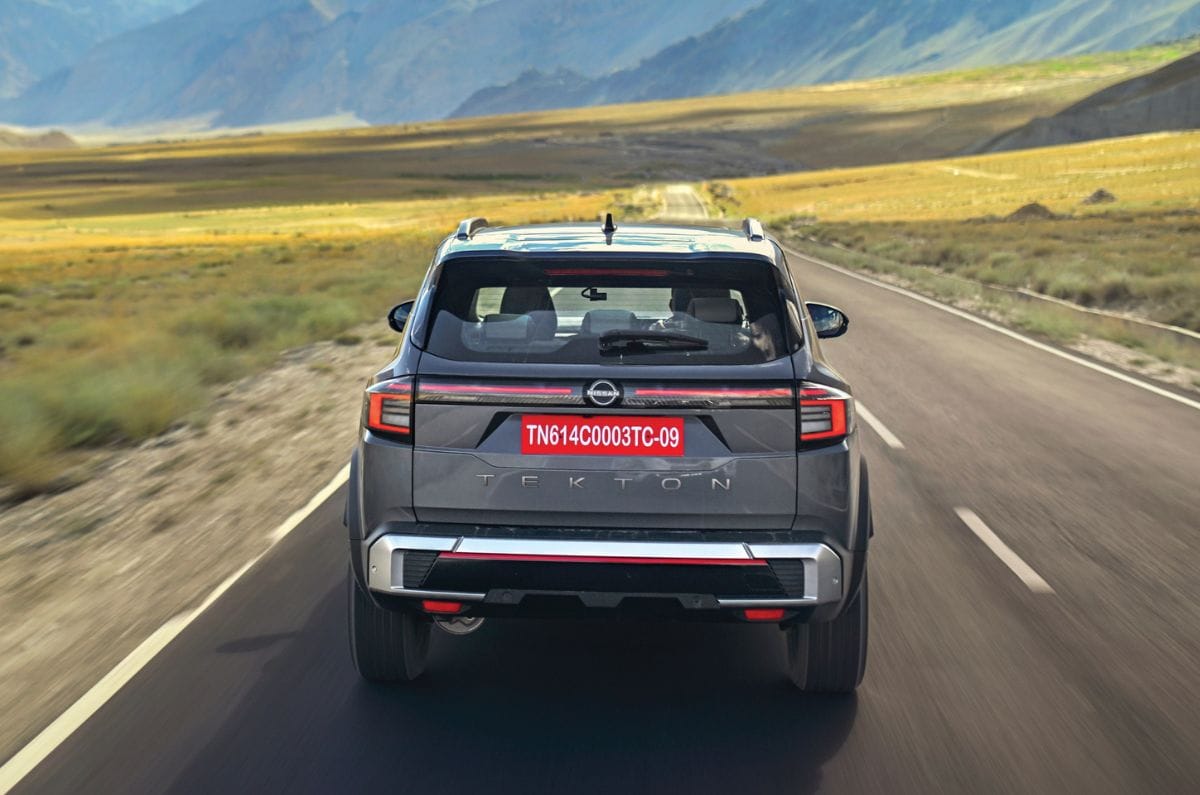
The execution of its tail-lamp design is spot on, looking most similar to the Patrol.
At the rear, the tail-lamp design bears the strongest resemblance to the Patrol and is executed rather well. While the Tekton isn’t the largest SUV in its class, it strikes a pleasing balance between road presence and urban friendliness. We suspect its styling is likely to be one of its biggest selling points.
Nissan Tekton Interior Space and Comfort – 8/10
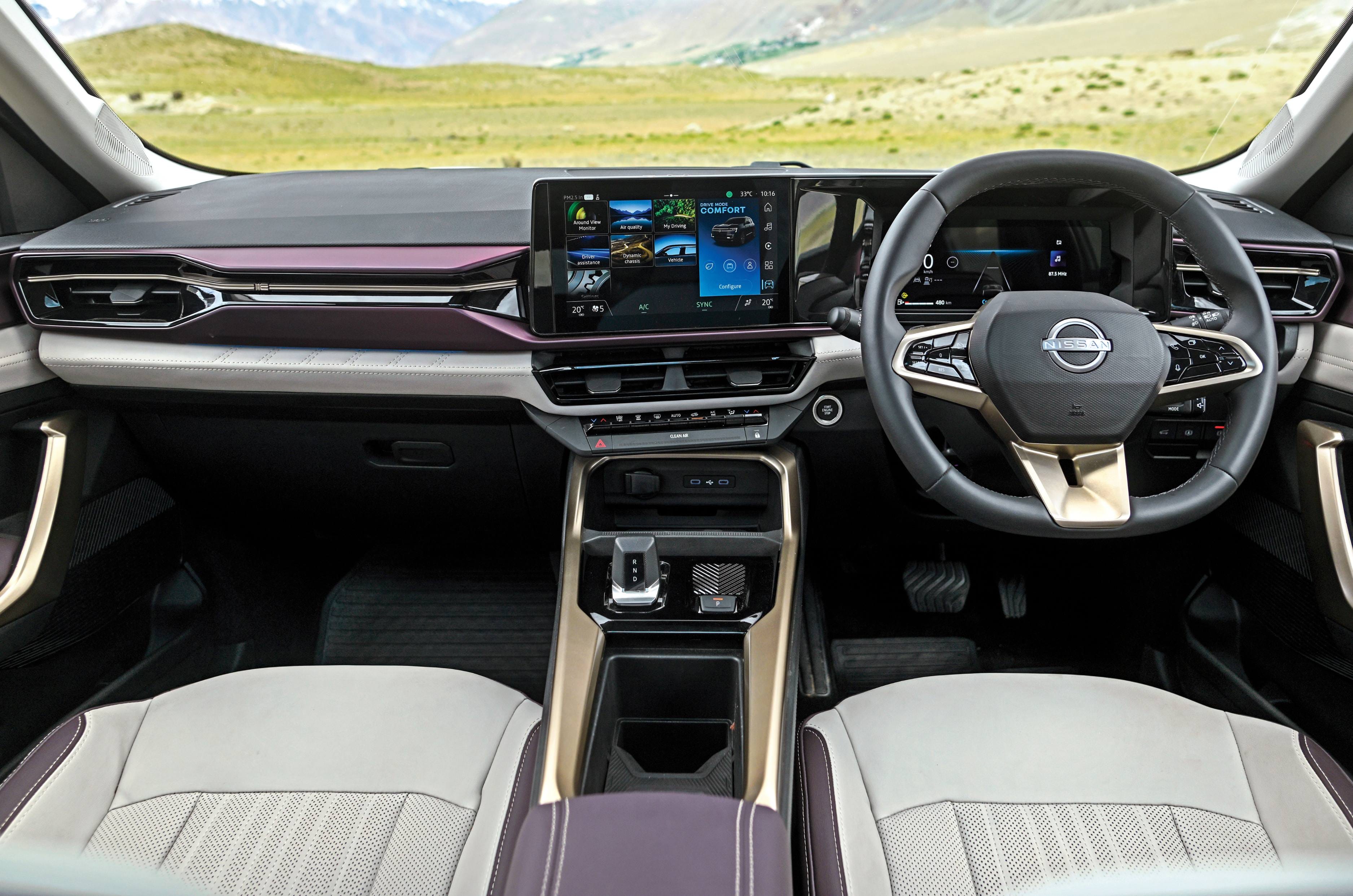
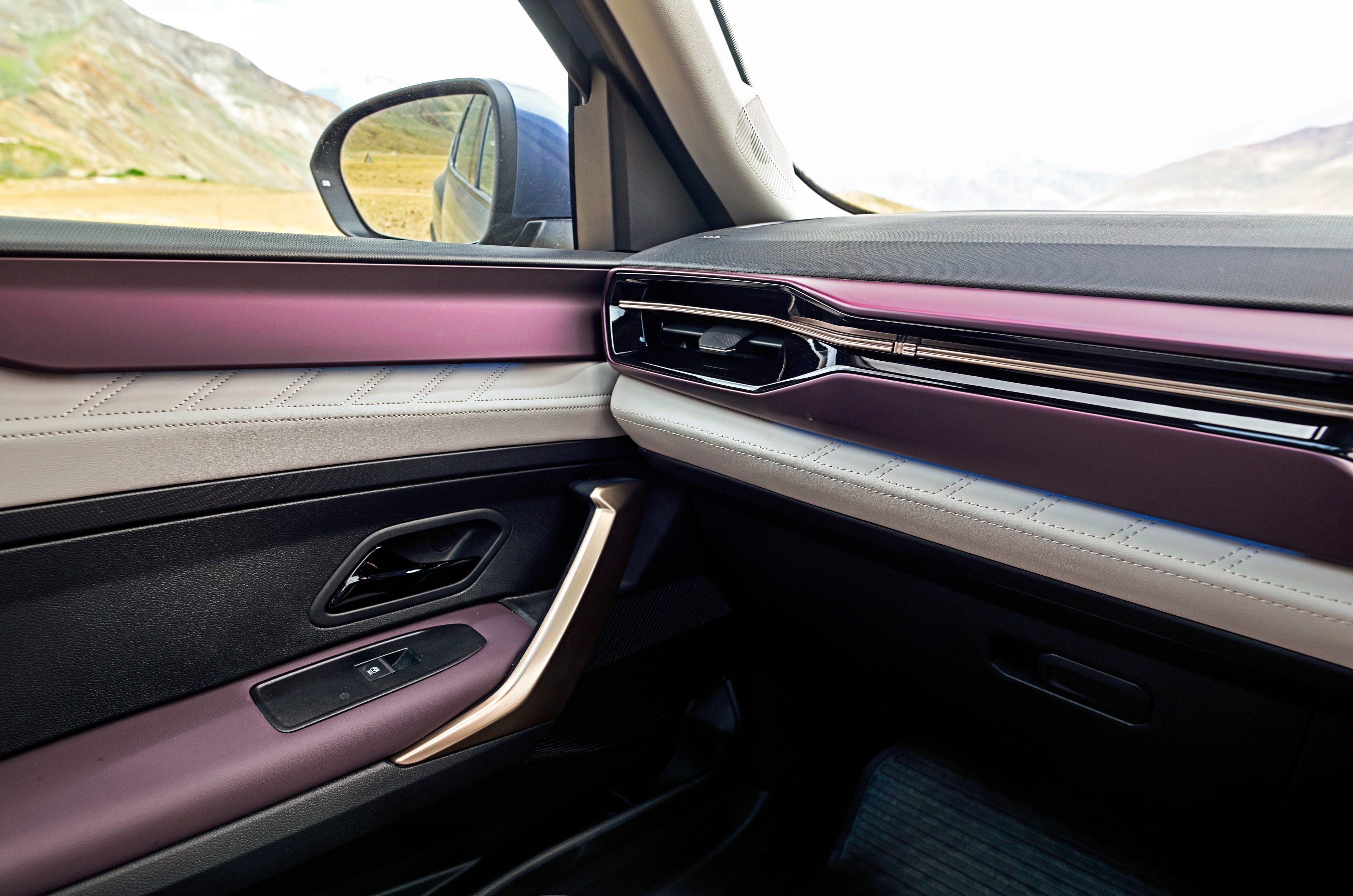
Inside, Nissan has done a commendable job differentiating the cabin from the Renault Duster. The layout remains familiar, but the padded leatherette on the dash and doorpads look classy and along with the burgundy, gold and light cream colour scheme lends the interior a more premium ambience. There are also subtle Nissan-specific touches on the dash fascia, including an Easter egg inspired by Japanese numerals represented by 2 vertical lines (Ni) and three horizontal lines (san).
Neatly dressed-up interior look and feel quite upmarket.
The driving position is excellent. Visibility is strong, the bonnet is clearly visible from the driver’s seat, and most controls fall easily to hand. Ergonomics are largely spot-on, though taller drivers who prefer a high seating position may find the large plastic panel near the A-pillar slightly intrusive.
Burgandy, gold and light cream colour scheme, along with the soft leatherette paddings enhance the cabin’s premium feel.
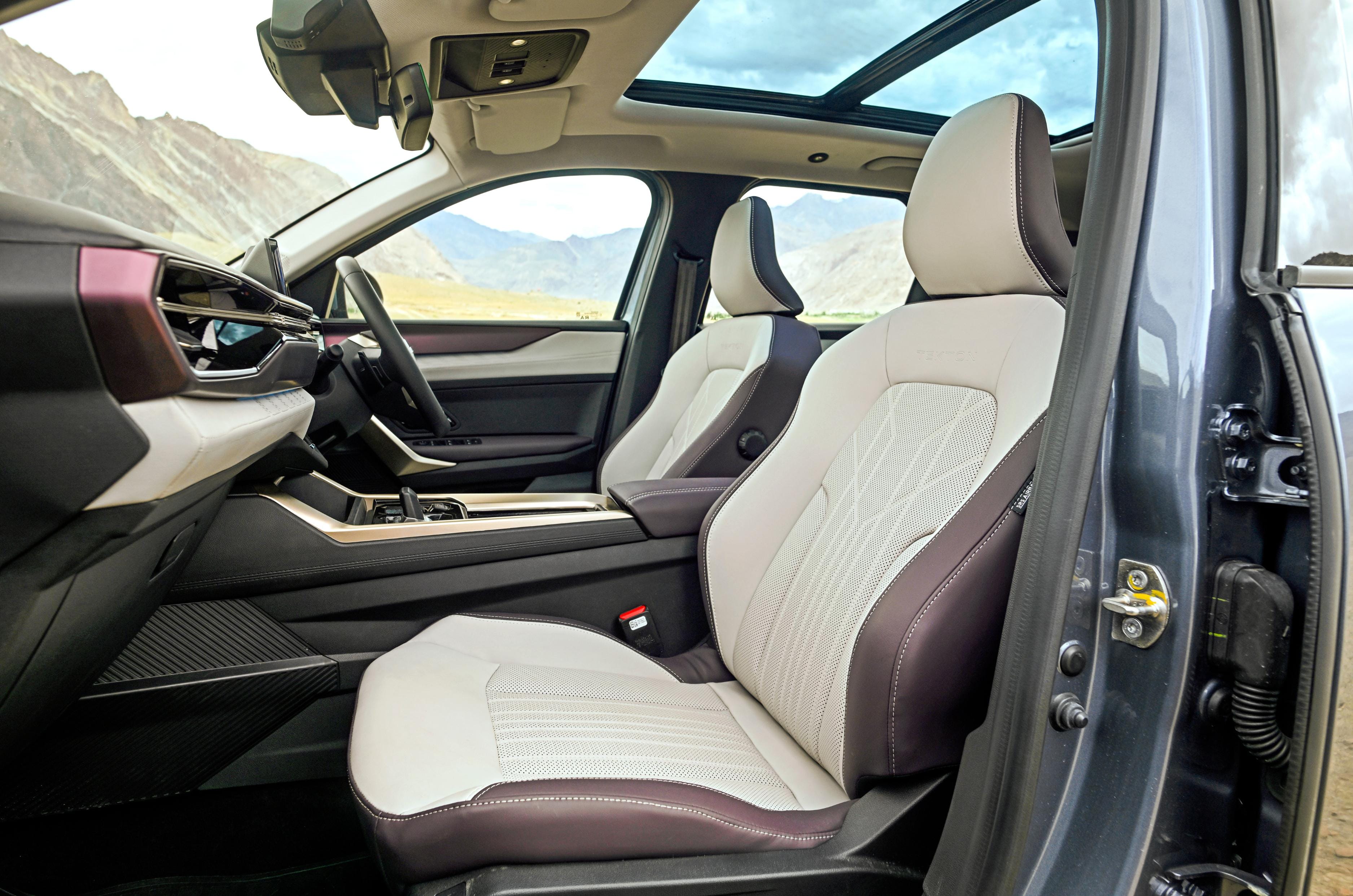
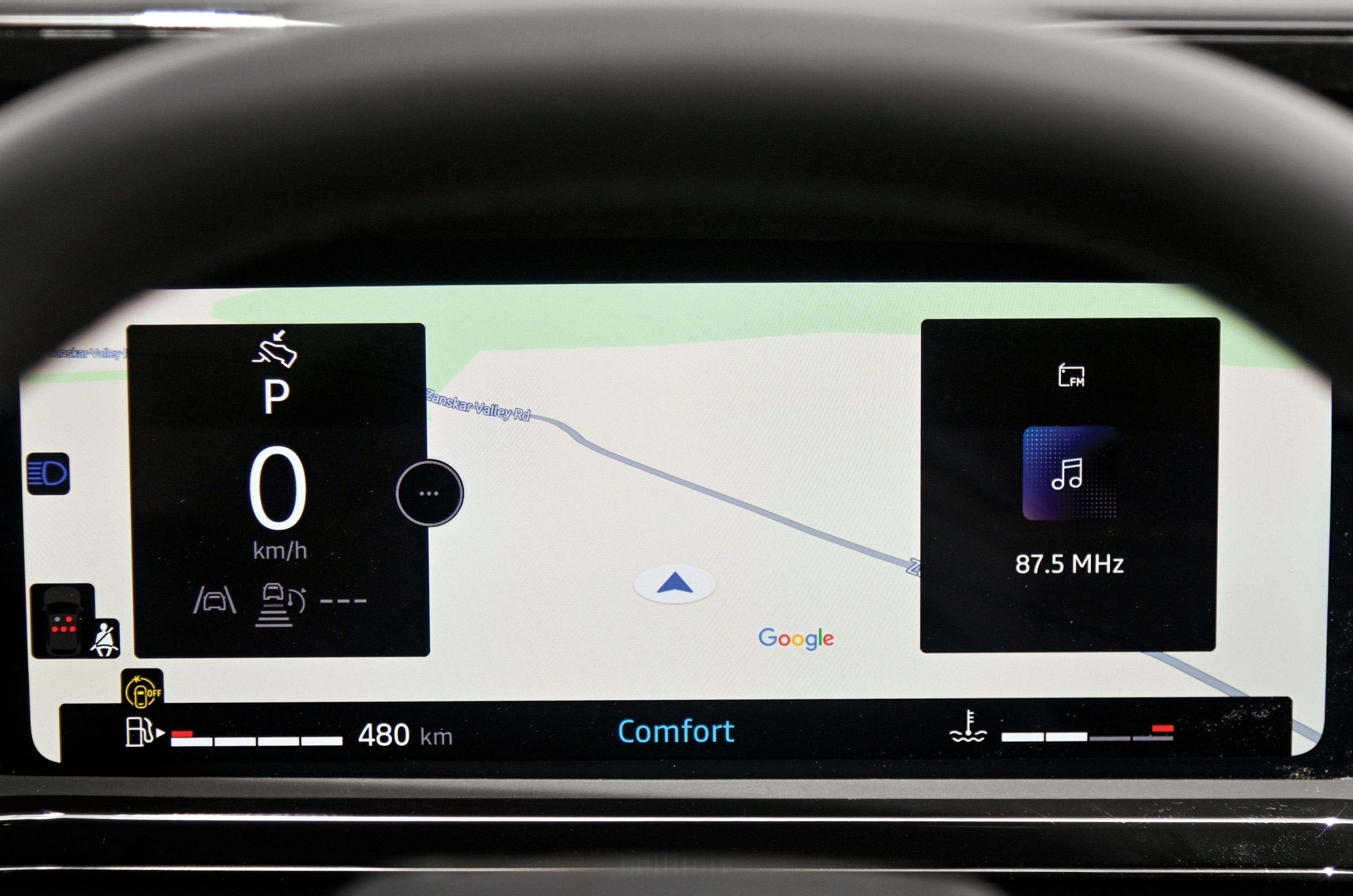
One area where the Tekton needs improvement is air conditioning performance. Even at the lowest temperature setting, the cabin takes time to cool down. Thankfully, the ventilated front seats are highly effective and help offset this weakness. The seats themselves deserve praise for their excellent support and long-distance comfort. The digital instrument cluster is clear and easy to read, offering multiple display layouts, including a full-map view. Unlike the Duster’s less intuitive tachometer display, the Nissan gets a more conventional and user-friendly setup. Physical controls for climate functions, audio settings and ADAS shortcuts are particularly welcome in an era increasingly dominated by fiddly touch panels.
Powered front seats are supportive and have a very effective ventilation function.
Storage solutions are generally well thought out. The cooled wireless charging pad prevents phones from overheating, while USB-C ports and a 12V socket are provided. However, 1-litre bottles cannot be stored vertically in the front door bins; although they can be placed vertically in the rear door bins. Useful storage spaces include deep cupholders and a large central armrest console. The glovebox is generous, though part of it is compromised by the fuse box, just as in the older-gen Duster.
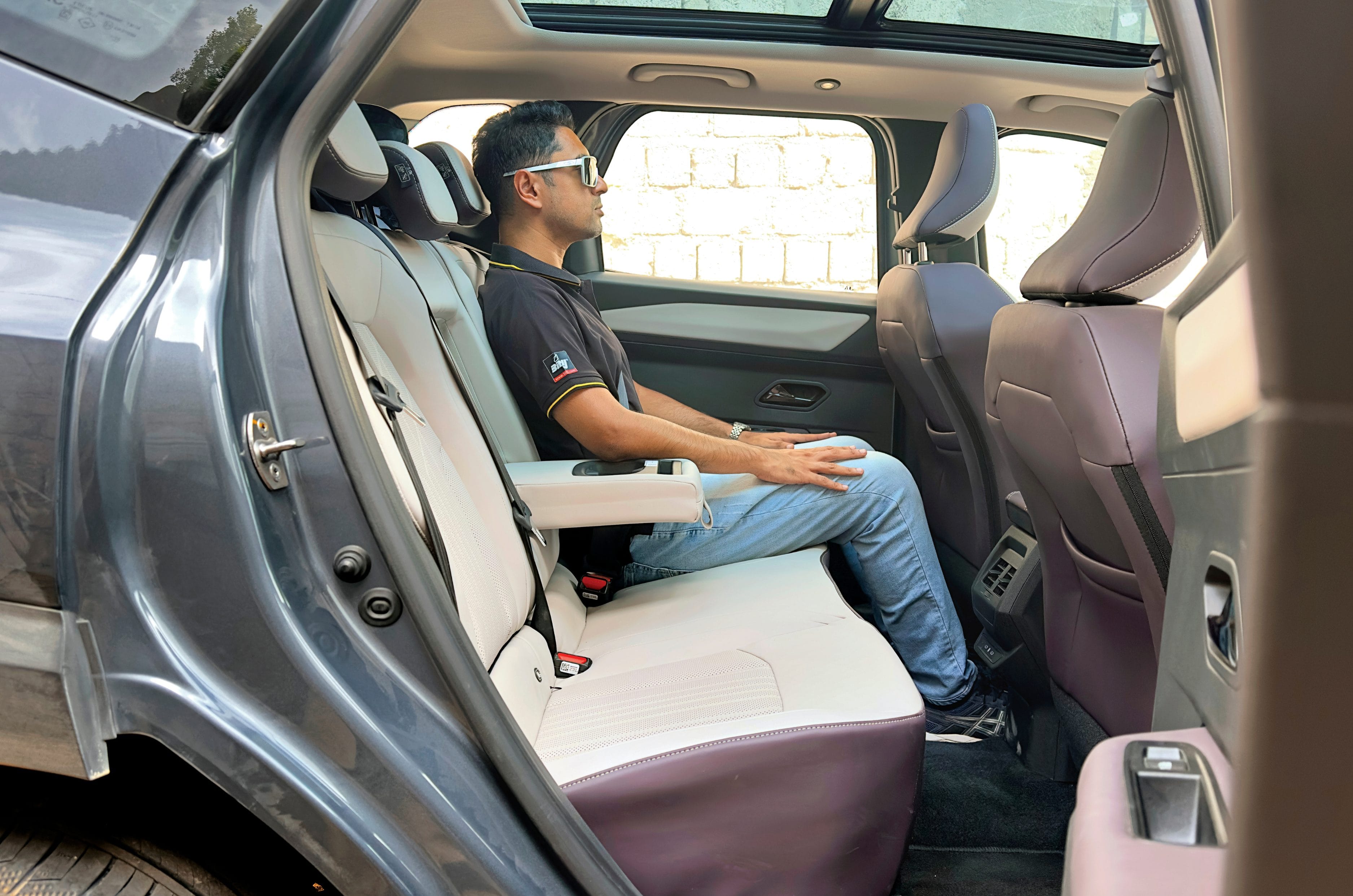
Cabin space is adequate for four adults; seats are very comfy.
Accessing the rear seat requires a bit of effort due to the high step-in and narrow opening, but once seated, comfort levels are impressive. The seat backrest is well angled, under-thigh support is good, and there’s plenty of room beneath the front seats to stretch out. The rear bench is best suited to two adults rather than three, although all occupants get individual headrests and three point seatbelts.
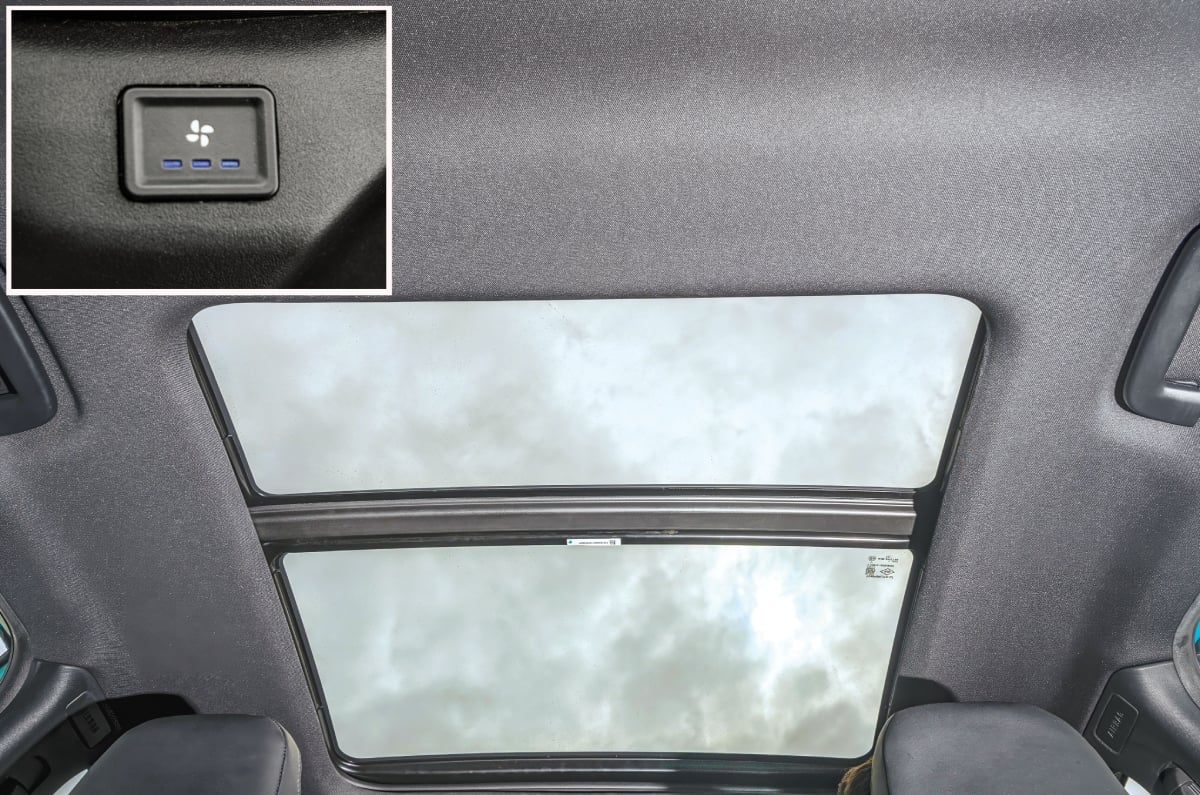
Rear-seat amenities include seatback pockets, rear AC vents, two USB charging ports, a centre armrest and a phone holder. The panoramic sunroof adds a real sense of occasion, especially on scenic drives through the mountains. That said a boss mode for the electrically adjustable front passenger seat and rear sunshades aren’t available.
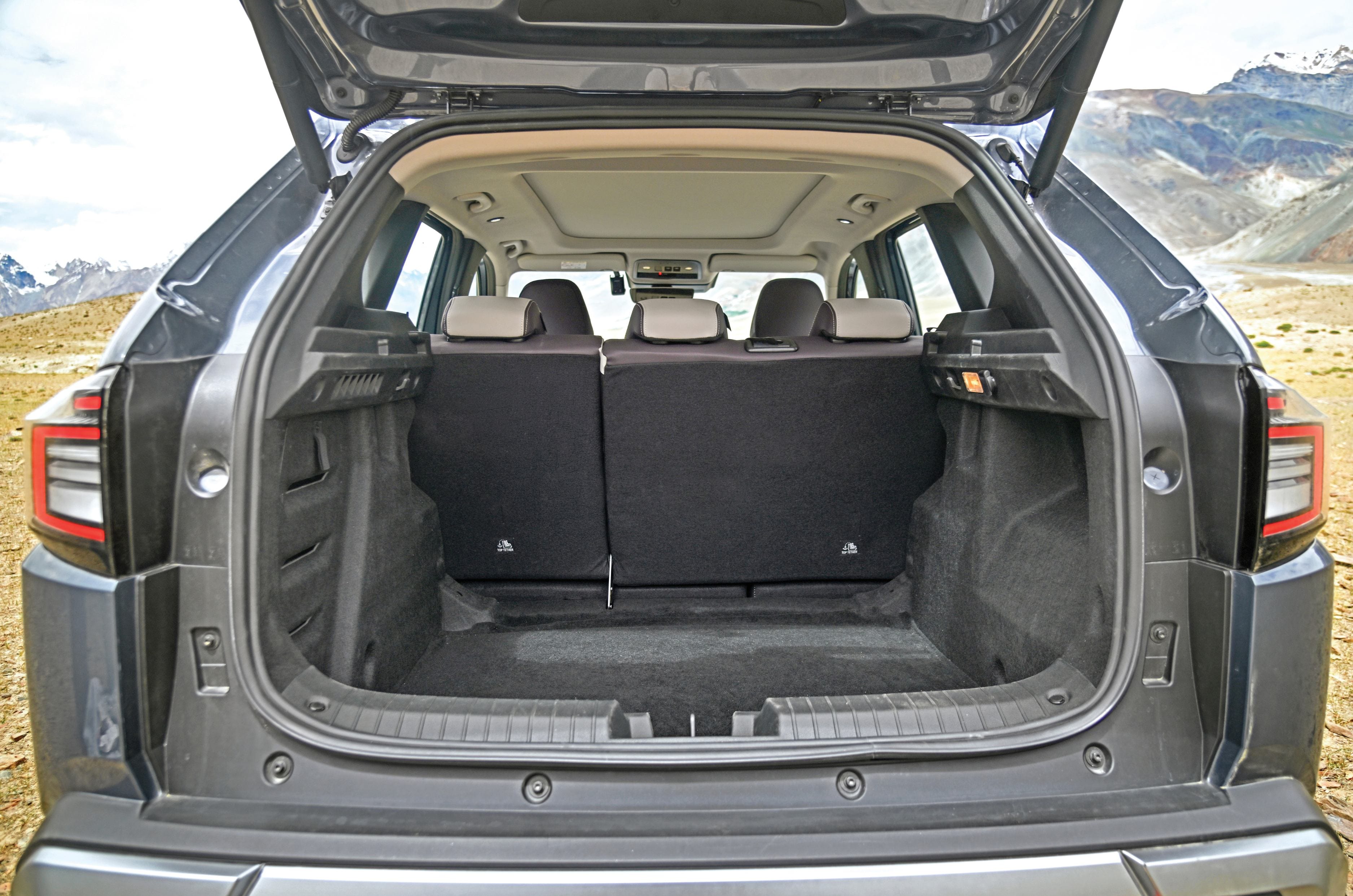
Cavernous 518-litre boot is ideal for road trips; gets a spare wheel too.
Open the electrically operated tailgate and you’re greeted by a massive 518-litre boot. It comfortably swallows luggage and is the largest in its class, making it ideal for long-distance touring. There’s a full-size spare tyre too.
Nissan Tekton Features and Safety – 9/10
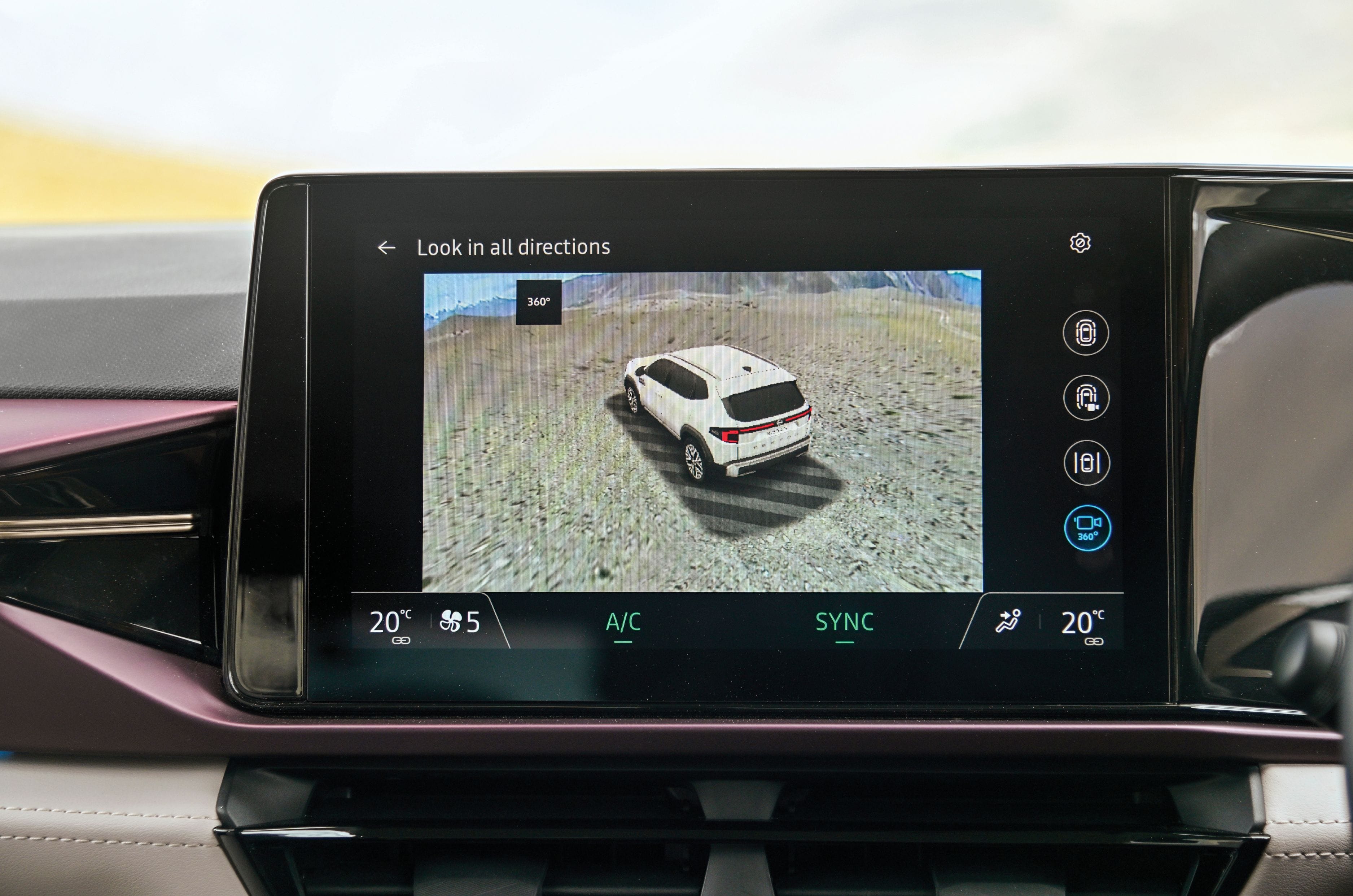
The Tekton is otherwise generously equipped with kit like panoramic sunroof, powered and ventilated front seats, 10.25-inch instrument cluster, 10.1-inch touchscreen which not only gets wireless Android Auto and Apple CarPlay, but it also gets native Google integration including Gemini voice assistant, among other notable features. The only real disappointment is the below par quality of the 360-degree camera system.
With in-built Google, screen works well; 360-degree camera quality is below par.
Safety credentials are strong. Along with a comprehensive ADAS suite, the Tekton has secured a five-star Bharat NCAP rating, just like its Renault sibling. The lane-keep assist didn’t seem to keep the vehicle properly centred within the lane, and it tended to weave between the lane markings.
The adaptive cruise control system also performed well, maintaining safe distances and slowing progressively with traffic. Its acceleration back to the set speed, however, feels somewhat slow regardless of drive mode.
10.25-inch instrument cluster is well executed; gets a full map view too.
Nissan Tekton Performance and Refinement – 7/10
The entry-level powertrain is a 1.0-litre turbo-petrol shared with the Magnite. With some updates though that has taken torque higher to 166Nm – up from 160Nm, while power remains the same at 100hp. It is paired exclusively with a six-speed manual gearbox.
To compensate for the Tekton’s weight and performance demands, Nissan has equipped this version with shorter gearing than the 1.3-litre variants. Around town, it feels perfectly adequate, but the small-capacity turbo engine suffers from noticeable turbo lag. Steep inclines often require clutch slip to get moving, and enthusiastic driving demands frequent gear changes to keep the engine in its power band. Peak boost arrives beyond 3,000rpm, while the gearbox itself lacks the slickness of some Korean and Japanese rivals.
If you love to drive, this is one of those cars that you’re surely going to like.
The 1.3-litre turbo-petrol is significantly more appealing. Refinement levels are better, performance is considerably stronger, and overtaking requires much less planning. Turbo lag is reduced compared to the 1.0-litre, though it hasn’t been eliminated entirely. On steep gradients and under stop-start conditions, the engine occasionally struggles to build revs quickly enough, exposing a weak bottom-end response.
Once past 2,500rpm, however, the turbo wakes up and the Tekton gathers speed with enthusiasm. The engine also produces an appealing turbo whoosh at higher revs, though some may find it intrusive.
Enthusiasts are likely to yearn for a bit more responsiveness from both the engines.
This engine comes with a manual as well as a six-speed wet-clutch dual-clutch automatic transmission, which is the one we drove. Shifts are impressively smooth and seamless, but responses are slower than expected. The gearbox’s tendency to upshift early can make the Tekton feel less responsive than it actually is, often prompting the use of the paddle shifters for quick overtakes.
There are two drive modes – Comfort and Eco – though enthusiasts will miss the absence of a Sport mode. Fortunately, manual mode allows greater control over the transmission and proved particularly enjoyable on mountain roads. In city traffic, however, the combination works well, with smooth low-speed behaviour and a well-calibrated creep function.
Even though we didn’t get a chance to test the Tekton for outright performance and fuel efficiency, we have extensively tested its Renault sibling, and the numbers aren’t particularly impressive. Expectedly, the Duster’s performance testing revealed that the 1.3-litre manual is the quickest variant to 100kph (10.32 sec), , while the 1.3 DCT’s reluctance to allow aggressive launches affects its outright acceleration times (11.33 sec). The 1.0-litre (13.26 sec) delivers acceleration comparable to the naturally aspirated 1.5-litre engines found in the Creta and Seltos.
Nissan Tekton Mileage and Efficiency – 6/10
Once again, taking the Duster’s figures for refence, average real-world fuel efficiency is quite weak too with the 1.0 version (10.98kpl) faring only slightly better than the 1.3 versions (10.47kpl for DCT, 10.64kpl for MT). Like the Duster, all variants of the Tekton get an Eco mode as well as an auto engine stop-start function to keep a check on fuel consumption.
Nissan Tekton Ride Comfort and Handling – 9/10
As with the Renault Duster, Nissan has absolutely nailed the ride-and-handling balance. Unlike many European cars, the Tekton does not feel overly firm at low speeds. Instead, it delivers a supple, absorbent ride that shrugs off poor road surfaces with ease. Even sharp potholes generate more noise than impact inside the cabin.
Unlike some rivals, its low speed ride doesn’t have the typical underlying firmness.
Handling is equally impressive. The Tekton changes direction eagerly and inspires confidence, making it genuinely enjoyable to drive. Its electronic power steering offers Light and Heavy modes, though the lighter setting strikes the better balance between ease and precision. The steering feel is among the best in the segment.
Braking performance is another strong point. Throughout our drive to Leh, the brakes consistently inspired confidence, delivering strong stopping power and natural pedal feel.
Nissan Tekton Value for Money – 8/10
Priced between Rs 10.50 lakh and Rs 18.5 lakh, the Tekton commands a premium of Rs 10,000-50,000 over an equivalent Renault Duster. The range consists of 12 variants: six powered by the 1.0-litre turbo petrol, two by the 1.3-litre manual and four by the 1.3-litre auto, indicating Nissan’s focus on the smaller engine.
The biggest drawbacks of the powertrains though are the lack of outright punch and responsiveness, as well as fuel efficiency that may not satisfy high-mileage users. Neither Renault nor Nissan offers a diesel option, and while the Duster is expected to receive a hybrid powertrain, Nissan has ruled out one for now.
However after 700km behind the wheel, the Nissan Tekton leaves an overall positive impression. It is handsome, well equipped and comfortable, with a premium-feeling cabin and class leading 518-litre boot. The rear seat may not be the most spacious in the segment, but it comfortably accommodates four adults, while its ride-and-handling balance ranks among the very best in class. The Tekton then is a thoroughly competent midsize SUV. And in a segment packed with strong contenders, this one too deserves serious consideration.
मध्य प्रदेश में जुलाई से अक्टूबर का समय घूमने के लिए सबसे खूबसूरत माना जाता है, क्योंकि इस दौरान मानसून की वजह से सूखे पहाड़, जंगल और घाटियां हरे-भरे हो जाते हैं। झरनों में पानी भर जाता है और नेचुरल नजारे बेहद शानदार दिखाई देते हैं। मध्य प्रदेश को ‘भारत का दिल’ कहा जाता है और इसकी वजह सिर्फ इसकी जियोग्राफिकल लोकेशन नहीं, बल्कि इसकी अनोखी पहचान भी है। यहां प्राचीन धरोहरों से लेकर घने जंगल, आध्यात्मिक जगह और प्राकृतिक नज़ारे हर तरह के टूरिस्ट को अट्रैक्ट करते हैं। यहां ऐसी जगहें हैं जहां इस मौसम में नेचर का सबसे सुंदर रूप देखने को मिलता है:
रंग-बिरंगी संस्कृति और झीलों का अट्रैक्शन
मध्य प्रदेश प्राकृतिक सुंदरता के साथ-साथ अपनी कल्चरल डाइवर्सिटी के लिए भी जाना जाता है। यहां की झीलें, हरियाली और शांत वातावरण टूरिस्ट को खास अट्रैक्ट करते हैं। राज्य में हिंदी के अलावा कई भाषाएं बोली जाती हैं। यही डाइवर्सिटी मध्य प्रदेश को सांस्कृतिक रूप से बेहद खास बनाती है।
1. Pachmarhi, पचमढ़ी – सतपुड़ा की रानी
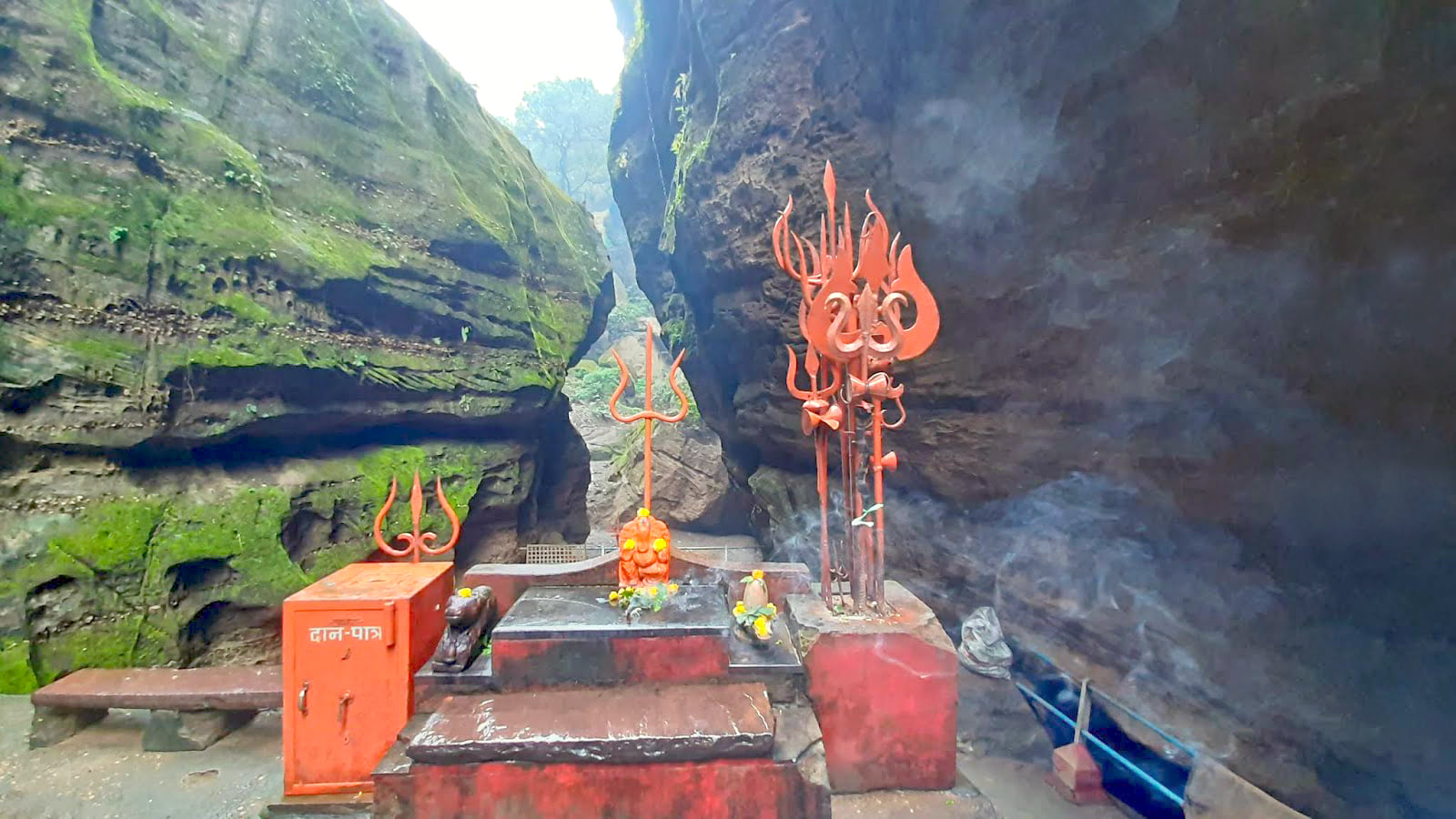
मध्य प्रदेश का सबसे पॉपुलर हिल स्टेशन पचमढ़ी मानसून में बेहद खूबसूरत हो जाता है। चारों तरफ हरियाली, बादलों से ढकी पहाड़ियां और बहते झरने इसे एक शानदार नेचुरल जगह बनाते हैं। यहां बी फॉल, अप्सरा विहार वॉटरफॉल और जटाशंकर गुफा जैसे जगह घूमने लायक हैं। जुलाई से अक्टूबर के बीच यहां की पहाड़ियां हरे रंग की चादर ओढ़ लेती हैं।
2. Bhedaghat, भेड़ाघाट – संगमरमर की चट्टानों और झरनों का नजारा
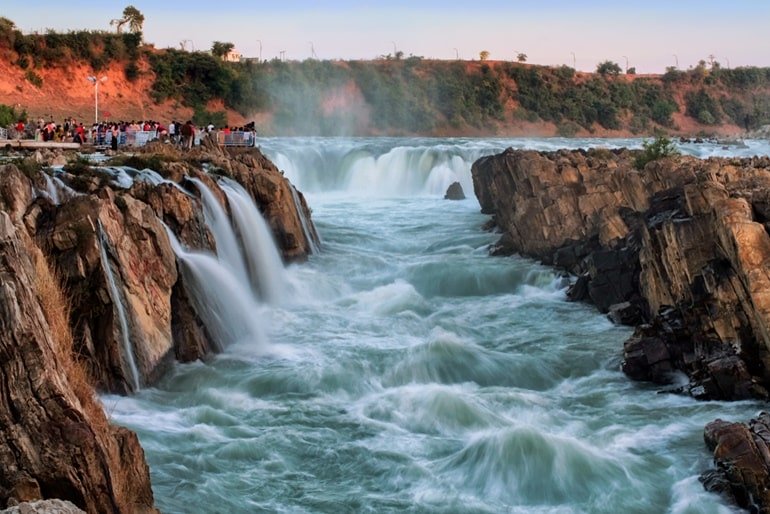
जबलपुर के पास भेड़ाघाट अपनी सफेद संगमरमर की चट्टानों और धुआंधार वॉटरफॉल के लिए पॉपुलर है। बारिश के मौसम में नर्मदा नदी का बहाव बढ़ जाता है और धुआंधार झरना बेहद शक्तिशाली दिखाई देता है। यहां नाव की सवारी करते हुए दोनों ओर ऊंची संगमरमर की चट्टानों का व्यू बेहद अट्रैक्टिव लगता है।
3. Tamia, तामिया – छिपा हुआ हरा-भरा हिल स्टेशन
तामिया मध्य प्रदेश की कम भीड़ वाली खूबसूरत जगहों में से एक है। मानसून में यहां की घाटियां, जंगल और पहाड़ियां पूरी तरह हरी हो जाती हैं। पातालकोट घाटी के शानदार दृश्य यहां का मेन अट्रैक्शन हैं। बादलों से ढकी घाटियां और शांत वातावरण इसे नेचर लवर के लिए खास बनाते हैं।
4. Kapildhara Waterfall, कपिलधारा वॉटरफॉल – अमरकंटक का खूबसूरत झरना
अमरकंटक एरिया में कपिलधारा वॉटरफॉल बारिश के मौसम में अपने पूरे रूप में दिखाई देता है। ऊंचाई से गिरता पानी और आसपास फैली हरियाली मन को अट्रैक्ट करती है। जुलाई से अक्टूबर के बीच यहां का वातावरण बेहद ठंडा और सुहावना रहता है।
5. Raneh Falls, रानेह फॉल्स – रंग-बिरंगी चट्टानों के बीच झरना
खजुराहो के पास स्थित रानेह फॉल्स बारिश के मौसम में देखने लायक होता है। यहां केन नदी गहरी घाटी से होकर बहती है और आसपास अलग-अलग रंगों की ग्रेनाइट चट्टानें दिखाई देती हैं। मानसून के समय पानी का फ्लो बढ़ जाता है और पूरा क्षेत्र नेचुरल ब्यूटी से भर जाता है।
हजारों साल पुरानी धरोहरों की पहचान
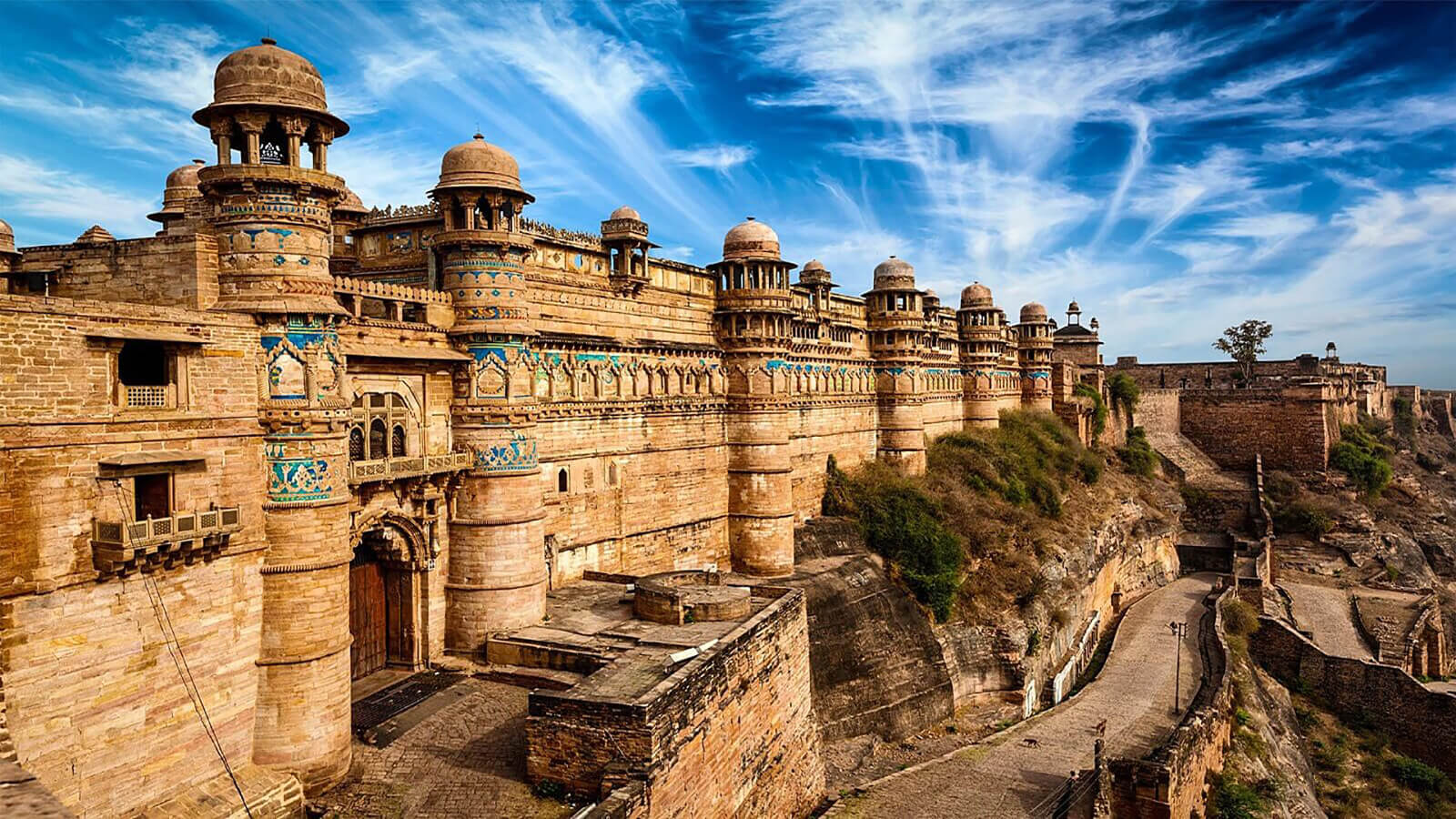
मध्य प्रदेश का गौरवशाली इतिहास इसकी प्राचीन इमारतों, मंदिरों और स्मारकों में आज भी जीवित है। यहां मौजूद सदियों पुराने मंदिर अपनी यूनिक क्राफ्टमैनशिप और आर्किटेक्टर के लिए दुनियाभर में पॉपुलर हैं। बारीक नक्काशी, ऐतिहासिक किले और प्राचीन धरोहरें इस राज्य की समृद्ध विरासत को दिखाती हैं। इतिहास में इंटरेस्ट रखने वालों के लिए यह राज्य किसी खजाने से कम नहीं है।
6. Orchha, ओरछा – नदी, जंगल और नेचुरल ब्यूटी
ओरछा अपने ऐतिहासिक महलों और मंदिरों के लिए पॉपुलर है, लेकिन बारिश के मौसम में यहां की नेचुरल ब्यूटी भी देखने लायक होती है। बेतवा नदी का बहाव, आसपास की हरियाली और शांत वातावरण इसे मानसून ट्रिप के लिए शानदार जगह बनाते हैं। यहां हिस्ट्री और नेचर दोनों का आनंद लिया जा सकता है।
7. Tincha Waterfall, तिंचा वॉटरफॉल – इंदौर के पास मानसून का पसंदीदा स्थान
इंदौर के पास तिंचा फॉल्स बारिश के मौसम में बेहद अट्रैक्टिव हो जाता है। पहाड़ियों के बीच से गिरता पानी और आसपास की हरियाली यहां का मेन अट्रैक्शन है। यह जगह दोस्तों और परिवार के साथ एक दिन की ट्रिप के लिए काफी पॉपुलर है।
8. Patalpani Waterfall, पातालपानी वॉटरफॉल – झरने और पहाड़ियों का संगम
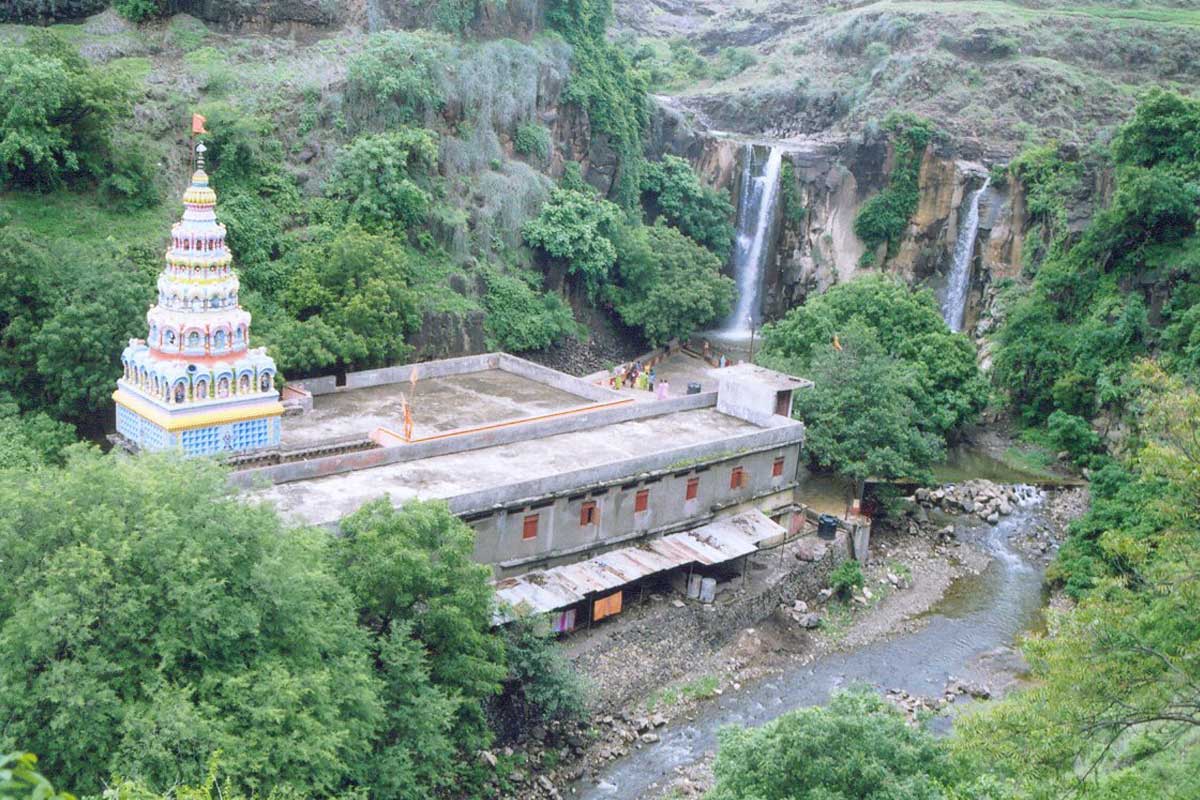
इंदौर के पास पातालपानी झरना मानसून में अपनी खूबसूरती के लिए जाना जाता है। ऊंचाई से गिरता पानी, आसपास के जंगल और पहाड़ी रास्ते इसे अट्रैक्टिव बनाते हैं। बारिश के समय यहां का वातावरण काफी हरा-भरा हो जाता है।
बाघों का सबसे बड़ा ठिकाना
भारत में सबसे ज्यादा बाघ मध्य प्रदेश में पाए जाते हैं, इसलिए इसे ‘टाइगर स्टेट ऑफ इंडिया’ कहा जाता है। यहां के घने जंगल और रिच बायोडाइवर्सिटी वाइल्डलाइफ के लिए अच्छा घर हैं। राज्य के नेशनल पार्क बाघों के साथ-साथ कई रेयर वाइल्डलाइफ कंज़र्वेशन के लिए भी पॉपुलर हैं। हर साल लाखों टूरिस्ट जंगल सफारी का रोमांच और बाघों की एक झलक पाने यहां पहुंचते हैं।
घूमने का सबसे अच्छा समय
जुलाई–सितंबर: झरनों और हरियाली का सबसे शानदार समय
अक्टूबर: मौसम सुहावना, ट्रेकिंग और घूमने के लिए परफेक्ट
बारिश के समय पहाड़ी इलाकों में जाते समय फिसलन और तेज बहाव वाले पानी से सावधानी रखना जरूरी है।
LOOK OUT FOR: Suspension rattles, Infotainment issues
The Mahindra XUV 3XO was launched in 2024 as a replacement for the XUV300. But instead of a mild facelift, Mahindra went all out and gave the compact SUV an overhauled exterior, a thoroughly reworked interior, some segment-first features, a new class-leading petrol powertrain and a new name. Mahindra’s smallest offering stands out in the crowded compact SUV segment for its roomy and premium interior and many powertrain options, making it worth considering as a used buy. Here’s what to keep in mind.
Despite the redesigned exterior, the 3XO’s rear section still looks abruptly chopped off, though it doesn’t look as awkward as the XUV300’s. The front styling, too, is bold, distinctive and splits opinion. Inside, quality took a huge step up, with the 3XO’s interior feeling genuinely premium. It’s very good on space too, and can easily accommodate five adults, though the trade-off is one of the smallest boots in the segment.
Petrol, turbo-petrol, and diesel engines; up to 21.8kpl claimed mileage
Mahindra offers the XUV 3XO with three engine options – two petrols and one diesel. The range starts with a 111hp, 1.2-litre, MPFi, turbo-petrol engine that can be had with a 6-speed manual (ARAI-rated 18.89kpl fuel economy) or a 6-speed torque converter automatic (17.96kpl) option. Then there’s a 117hp, 1.5-litre diesel, which comes with a 6-speed manual (20.6kpl) and 6-speed AMT (21.2kpl). Meanwhile, the range topper is a 131hp, 1.2-litre direct-injection turbo-petrol unit, which is available with an Aisin-sourced 6-speed torque converter automatic (18.2kpl) and a 6-speed manual option (20.1kpl).
The diesel makes sense for high-mileage users or for those who do frequent road trips owing to its higher real-world efficiency. Enthusiasts will enjoy the 131hp turbo-petrol for its punchy character and the performance it packs in. However, for most users, the 111hp turbo-petrol will do the job just fine, as it has a good balance of performance, drivability and efficiency. What’s great is that every engine option can be had with an automatic gearbox option for greater convenience.
Mahindra XUV 3XO variants and features
Twin 10.25-inch screens, panoramic sunroof
At launch, there were nine trim lines on offer – MX1, MX2, MX2 Pro, MX3, MX3 Pro, AX5, AX5 L, AX7 and AX7 L. Mahindra later launched a mid-spec RevX trim for the XUV 3XO too. As for features, the top-spec AX7L gets all-LED lighting, a seven-speaker Harman Kardon audio system with a 380W amplifier, a 10.25-inch infotainment screen and driver’s display, panoramic sunroof, AdrenoX Connect connectivity suite, wireless Android Auto and Apple CarPlay, a wireless charger, rear AC vents, and more.
All variants get safety features like 6 airbags, rear disc brakes, ESP and ISOFIX anchors. Higher-spec versions get an electronic parking brake with auto-hold, hill-start and hill-descent assist, a 360-degree camera, a blind spot monitor and Level 2 ADAS. As always, the range-topping variant will give you the best experience given all that it packs in, but for most users, the mid-spec AX5 will also suffice, as it has a good balance of features.
XUV 3XO warranty details
The XUV 3XO is a reliable SUV, with problems few and far between, and it’s backed up by Mahindra’s widespread service network throughout the country. What’s nice is that it comes with a standard warranty of 3 years / 1,00,000km, which can be extended to a total of 5 years or 1,50,000km.
What to look out for in a used Mahindra XUV 3XO
Suspension rattles
Some owners have reported rattling or thudding sounds coming from the suspension when driven through rough patches or potholes. This is often linked to worn out lower control arms. Take a test drive and drive through a rough patch of road, and listen out for any thudding or rattling from the suspension. Many of the suspension components are covered under warranty too, so this is something to keep in mind.
Infotainment issues
Owners have faced issues with the XUV 3XO’s AdrenoX infotainment system like Apple CarPlay/Android Auto disconnections, screen freezing and the reverse camera display getting stuck on a black screen. Before purchasing, check that it functions smoothly, pairs up with your phone easily, and that the system’s software is up to date.
Braking trouble
Mahindra XUV 3XO owners have reported a few distinct brake issues, ranging from inconsistent, spongy brake pedal feel to hissing noises and overly sensitive Automatic Emergency Braking (AEB). Before purchasing, it’s worth getting the brakes checked by an authorised service center.
Second hand Mahindra XUV 3XO price and resale value
Rs 6 lakh-10 lakh
Being a new model that’s still on sale, the XUV 3XO commands good value in the resale market. With such a wide spread of trim levels and powertrain options, you’ll find used options across a wide price range, but refrain from spending over Rs 10 lakh. Look for an example with the extended warranty package, as that’ll give you added peace of mind.
ट्रैवलिंग वैन आज के समय में घूमने का एक बहुत ही आरामदायक और पॉपुलर तरीका बन चुकी है। इसमें सफर के साथ-साथ रहने, खाने और आराम करने की पूरी सुविधा मिलती है। यह उन लोगों के लिए बेहतरीन ऑप्शन है जो रोड ट्रिप और एडवेंचर पसंद करते हैं। ट्रैवलिंग वैन को जरूरत और बजट के हिसाब से अलग-अलग तरह से डिजाइन किया जाता है। आइए जानते हैं ट्रैवलिंग वैन के बारे में, जो आज के समय में घूमने का एक बहुत ही आरामदायक और नया तरीका बन चुकी है:
ट्रैवलिंग वैन क्या होती है
ट्रैवलिंग वैन एक ऐसी गाड़ी होती है जिसे ट्रैवल करने और उसी में रहने दोनों के लिए डिजाइन किया जाता है। इसमें आप चलते-फिरते सफर भी करते हैं और उसी में सोने, खाने और आराम करने की फैसिलिटी मिलती है, इसलिए इसे “मोबाइल होम” भी कहा जाता है। यह लंबे रोड ट्रिप, फैमिली ट्रिप और एडवेंचर ट्रैवल के लिए एक बहुत ही आरामदायक ऑप्शन माना जाता है क्योंकि इसमें होटल की जरूरत नहीं पड़ती। भारत में इसे “ट्रैवलिंग वैन” या “हाउस ऑन व्हील्स” भी कहा जाता है। यह कॉन्सेप्ट पहले यूरोप और अमेरिका में काफी पॉपुलर था, लेकिन अब भारत में भी धीरे-धीरे इसका ट्रेंड बढ़ रहा है और लोग इसे लग्जरी रोड ट्रिप के लिए पसंद करने लगे हैं।
ट्रैवलिंग वैन की जरूरत
ट्रैवलिंग वैन अलग-अलग प्रकार की होती हैं, जो जरूरत और बजट के हिसाब से बनाई जाती हैं। इनमें बेसिक कैम्पर वैन होती है जिसमें सिर्फ जरूरी फैसिलिटी जैसे बेड और छोटा किचन होता है, जबकि लग्जरी मोटरहोम पूरी तरह एक चलता-फिरता घर होता है जिसमें बेडरूम, किचन, बाथरूम, एसी और टीवी जैसी सुविधाएँ मिलती हैं। वहीं ऑफ-रोड कैम्पर वैन पहाड़ों और खराब रास्तों के लिए बनाई जाती है, और पॉप-अप रूफ वैन में छत ऊपर उठ जाती है जिससे अंदर खड़े होकर आराम किया जा सकता है। इसके अलावा मिनी कैम्पर वैन भी होती है जो छोटी होती है और कम लोगों के लिए उपयोग की जाती है।
कैसे बनाई जाती है
ट्रैवलिंग वैन आमतौर पर बड़ी वैन या बस को पूरी तरह मॉडिफाई करके बनाई जाती है। पहले गाड़ी के अंदर का पूरा हिस्सा खाली किया जाता है, फिर उसमें मजबूत लेकिन हल्के मटेरियल जैसे लकड़ी, फाइबर, एल्युमिनियम और प्लास्टिक पैनल्स का इस्तेमाल करके नया इंटीरियर बनाया जाता है। इसके साथ इलेक्ट्रिकल सिस्टम, बैटरी बैकअप, सोलर पैनल, पानी की पाइपलाइन और वेंटिलेशन सिस्टम भी फिट किया जाता है ताकि यह पूरी तरह एक चलता-फिरता घर बन सके।
ट्रैवलिंग वैन का डिजाइन
इसका डिजाइन बहुत स्मार्ट तरीके से किया जाता है ताकि कम जगह में ज्यादा फैसिलिटी मिल सकें। आगे ड्राइविंग केबिन होता है, बीच में मल्टीपर्पज़ एरिया होता है जिसे सोफा या बेड में बदला जा सकता है, और पीछे किचन या स्टोरेज बनाया जाता है। दीवारों और छत में इंसुलेशन लगाया जाता है ताकि गर्मी, ठंड और बारिश का असर अंदर न आए और सफर आरामदायक बना रहे।
किचन सेटअप
किचन को बहुत कॉम्पैक्ट लेकिन पूरी तरह फंक्शनल बनाया जाता है। इसमें छोटा गैस स्टोव या इंडक्शन प्लेट, सिंक, मिनी फ्रिज, स्टोरेज कैबिनेट और कभी-कभी माइक्रोवेव या कॉफी मशीन भी होती है। किचन को इस तरह डिजाइन किया जाता है कि सफर के दौरान भी सेफ तरीके से खाना बनाया जा सके और गैस या इलेक्ट्रिक सिस्टम से कोई खतरा न हो।
सोने और आराम की सुविधा
ट्रैवलिंग वैन में आरामदायक बेड या कन्वर्टिबल सोफा होता है जिसे जरूरत के अनुसार बदला जा सकता है। इसके अलावा वेंटिलेशन के लिए खिड़कियां, फैन या एसी लगाया जाता है। कुछ लग्जरी वैन में टीवी, म्यूजिक सिस्टम और छोटे स्टोरेज कैबिनेट भी होते हैं ताकि सफर और भी आरामदायक बन सके।
पानी की व्यवस्था
इसमें साफ पानी के लिए फ्रेश वाटर टैंक लगाया जाता है जो आमतौर पर गाड़ी के नीचे या पीछे फिट किया जाता है। यह पाइपलाइन के जरिए किचन, सिंक और कभी-कभी बाथरूम से जुड़ा होता है। पानी का प्रेशर बनाए रखने के लिए पंप सिस्टम भी लगाया जाता है ताकि उपयोग में कोई परेशानी न हो।
वेस्ट मैनेजमेंट सिस्टम
इस्तेमाल किए गए पानी और वेस्ट के लिए ग्रे वाटर और ब्लैक वाटर टैंक लगाए जाते हैं। ये टैंक पूरी तरह सील और सेफ होते हैं और गाड़ी के नीचे फिट किए जाते हैं। इन्हें समय-समय पर खाली करना पड़ता है जो तय किए गए डिस्पोजल पॉइंट या कैंपिंग साइट पर किया जाता है, ताकि सफर साफ और इको-फ्रेंडली रहे।
खर्च कितना आता है
ट्रैवलिंग वैन का खर्च उसकी डिजाइन, साइज और लग्जरी सुविधाओं पर निर्भर करता है। बेसिक वैन लगभग ₹5 लाख से ₹15 लाख में बन सकती है, मिड-रेंज वैन ₹15 लाख से ₹40 लाख तक जाती है, जबकि हाई-एंड लग्जरी RV का खर्च ₹50 लाख से ₹1 करोड़ या उससे भी ज्यादा हो सकता है। इसमें सोलर सिस्टम, एसी और लग्जरी इंटीरियर जोड़ने से खर्च और बढ़ जाता है।
ट्रैवलिंग वैन और टेंट लगाना
ट्रैवलिंग वैन के साथ आप कही भी टेंट लगा सकते है, वैन के अंदर जगह सीमित होती है और बाहर खुली हवा में बैठने, खाने या आराम करने के लिए एक्स्ट्रा स्पेस मिल जाता है। यह खासकर नेचर ट्रिप, जंगल, पहाड़ या झील किनारे कैंपिंग में बहुत उपयोगी होता है। टेंट लगाने से आप दिन में आउटडोर एंजॉय कर सकते हैं और रात में जरूरत पड़ने पर उसमें सो भी सकते हैं, जिससे जर्नी और भी एडवेंचर बन जाती है।
ऐसे लगाएं टेंट
ट्रैवलिंग वैन के साथ टेंट लगाना बहुत आसान होता है। सबसे पहले एक सेफ और सपाट जगह चुनी जाती है, फिर वैन के पीछे या साइड में टेंट खोलकर उसकी बेस शीट (ग्राउंड कवर) बिछाई जाती है। इसके बाद टेंट की रॉड्स या पोल्स को जोड़कर उसका फ्रेम बनाया जाता है। फिर रस्सियों और पेग्स की मदद से टेंट को कसकर बांधा जाता है। अंत में वैन के साथ टेंट का कनेक्शन सही तरीके से सेट किया जाता है ताकि अंदर-बाहर आसानी से आना-जाना हो सके।
ट्रैवलिंग वैन का बहुत फायदा होता है, इसमें होटल बुकिंग की जरूरत नहीं होती और आप अपनी मर्जी से कहीं भी रुक सकते हैं। यह फैमिली ट्रिप, एडवेंचर रोड ट्रिप, नेचर ट्रैवल और लंबी ट्रिप के लिए एक बेहतरीन ऑप्शन है। यह सफर को सिर्फ ट्रिप नहीं बल्कि एक यादगार एक्सपीरियंस बना देती है जहां आराम, आज़ादी और रोमांच तीनों एक साथ मिलते हैं। तो आप भी अपनी अगली ट्रिप के लिए ट्रैवलिंग वैन का इस्तेमाल करके एक यादगार सफर का एक्सपीरियंस कर सकते हैं।