Hero Xtreme 160R 4V Carbon vs Rivals: Price and Specifications Compared

Hero Xtreme 160R 4V Carbon vs Rivals: Price and Specifications Compared
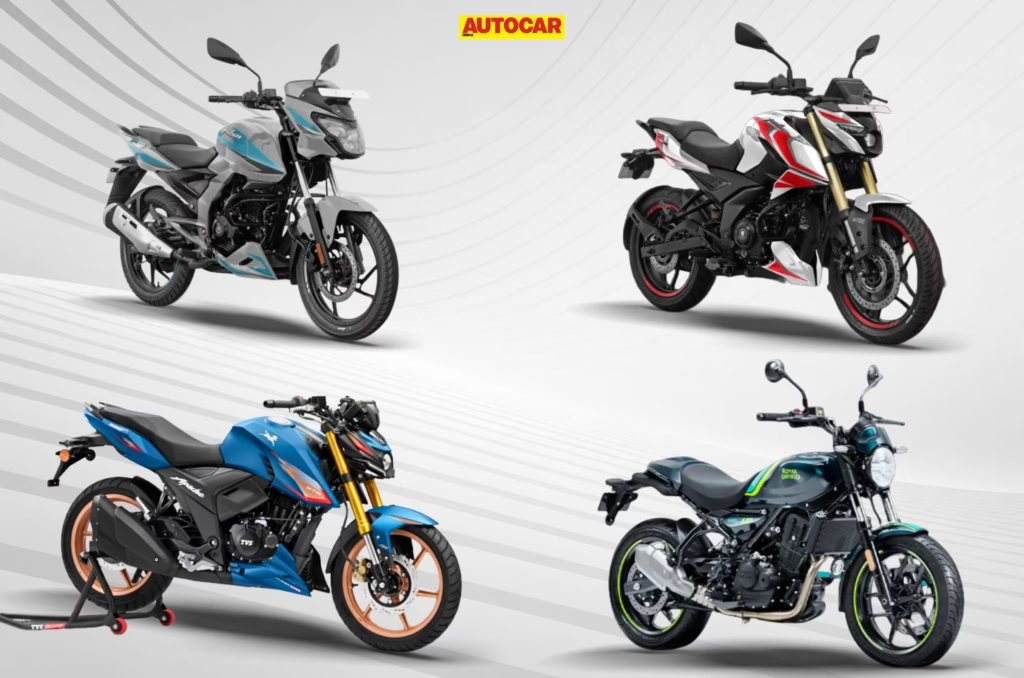
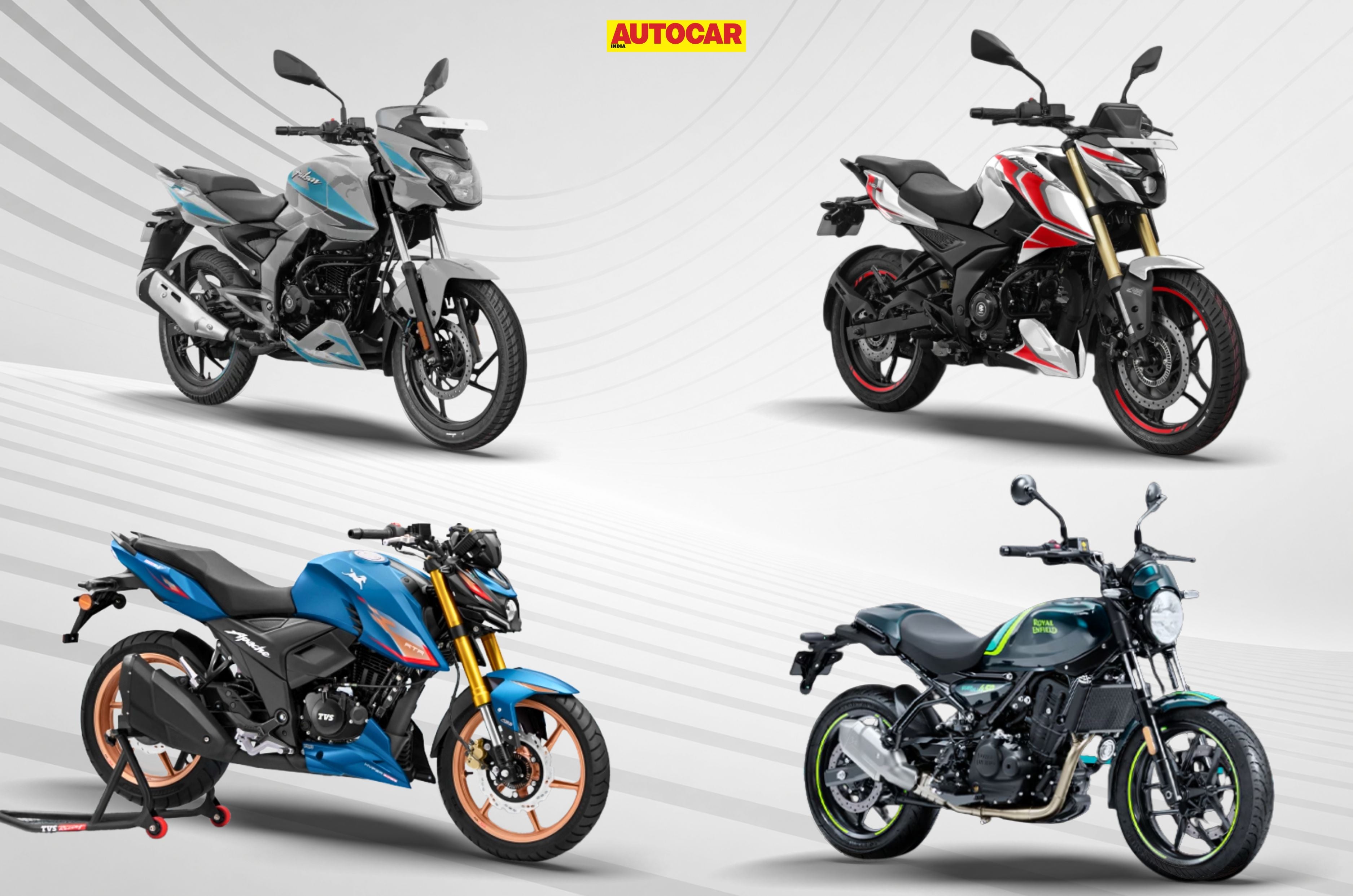
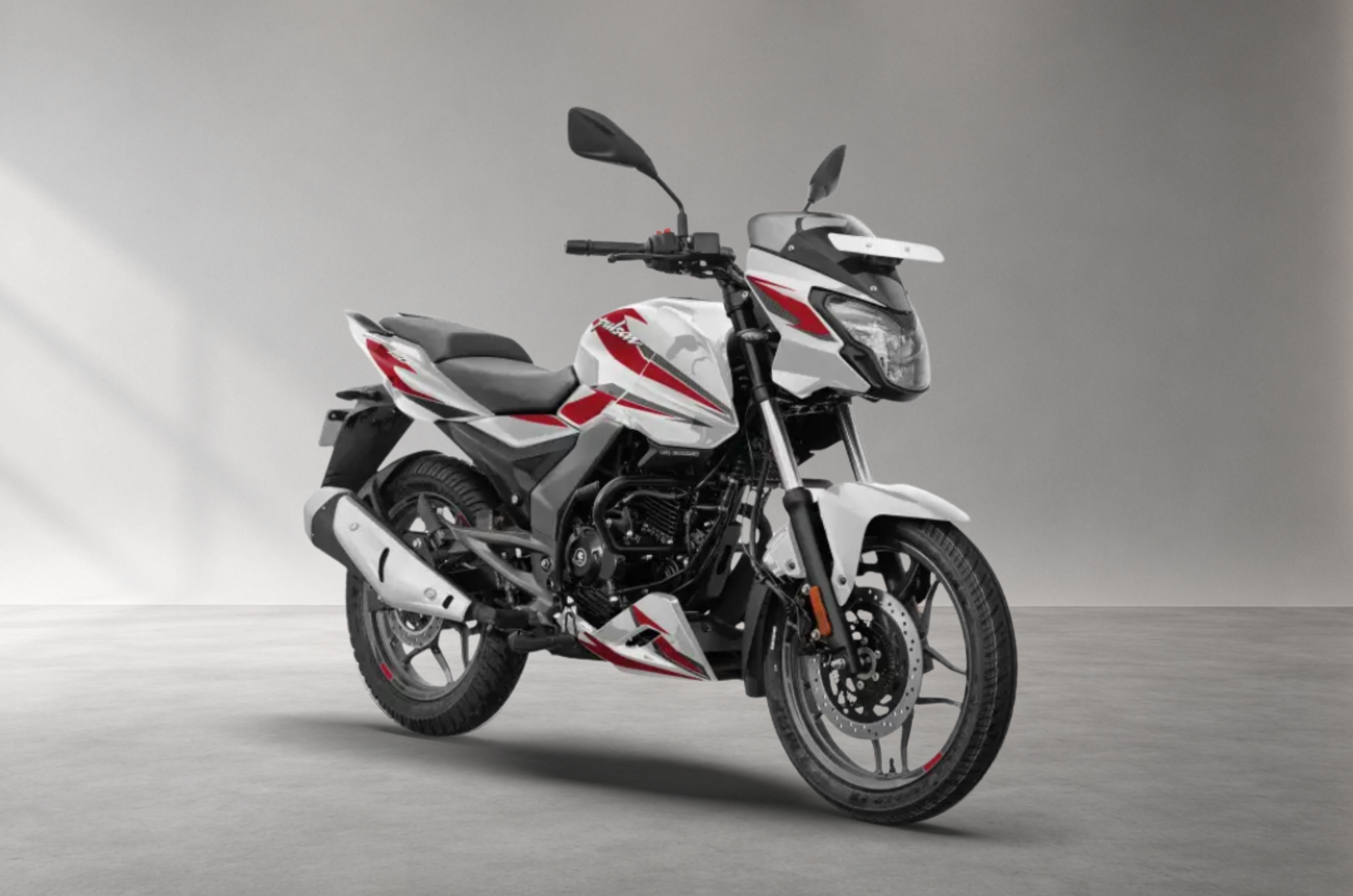
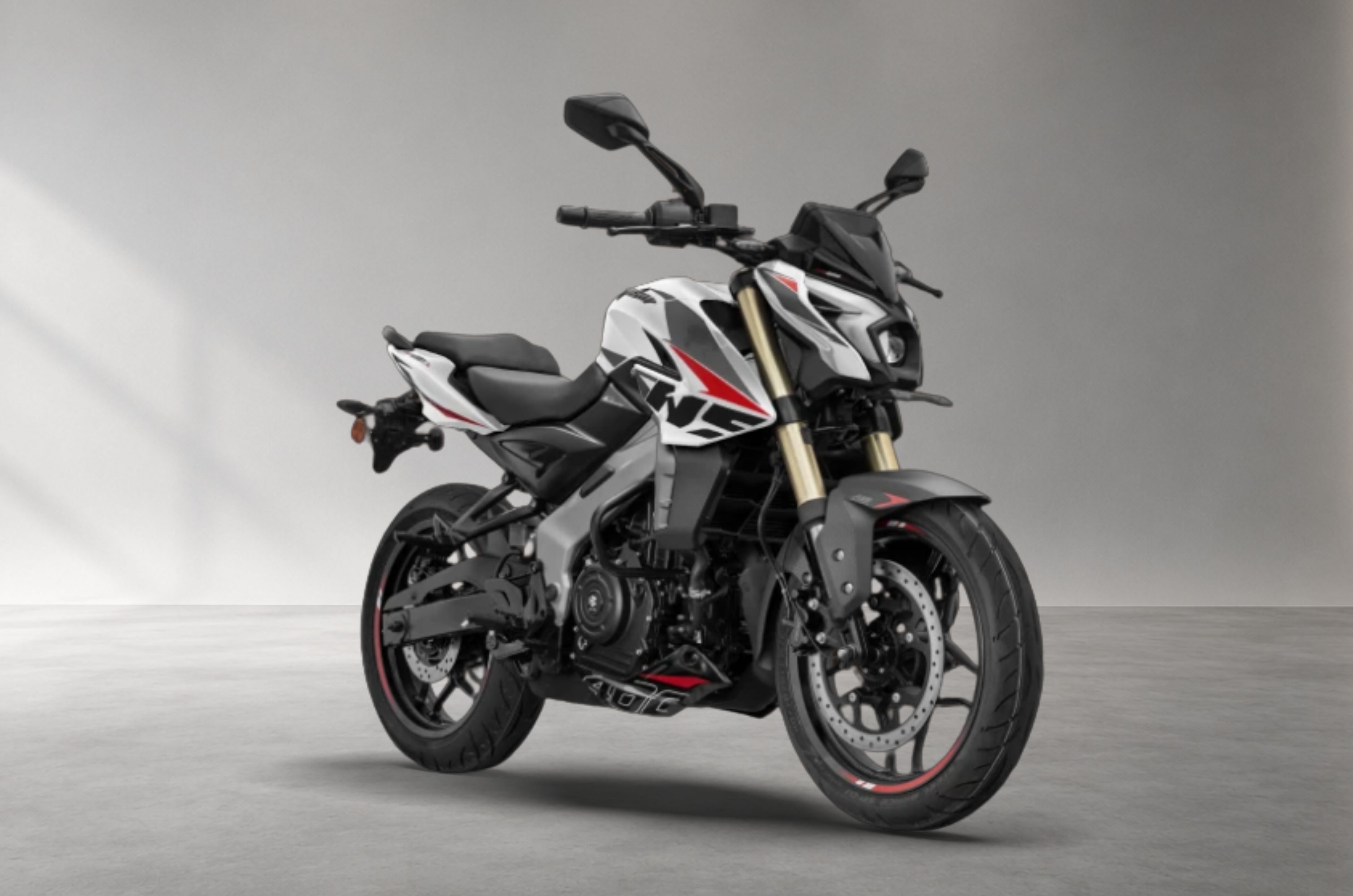
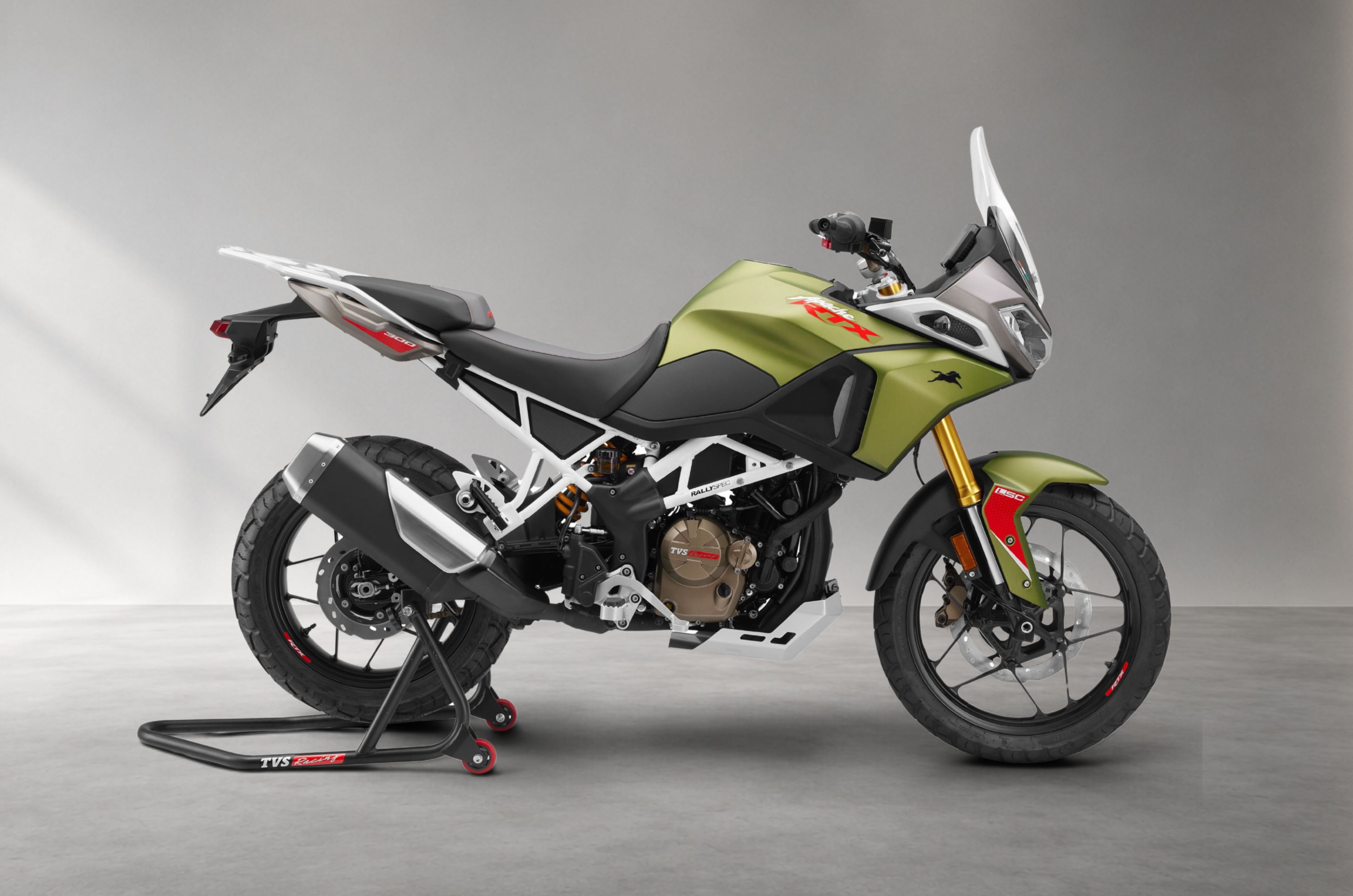
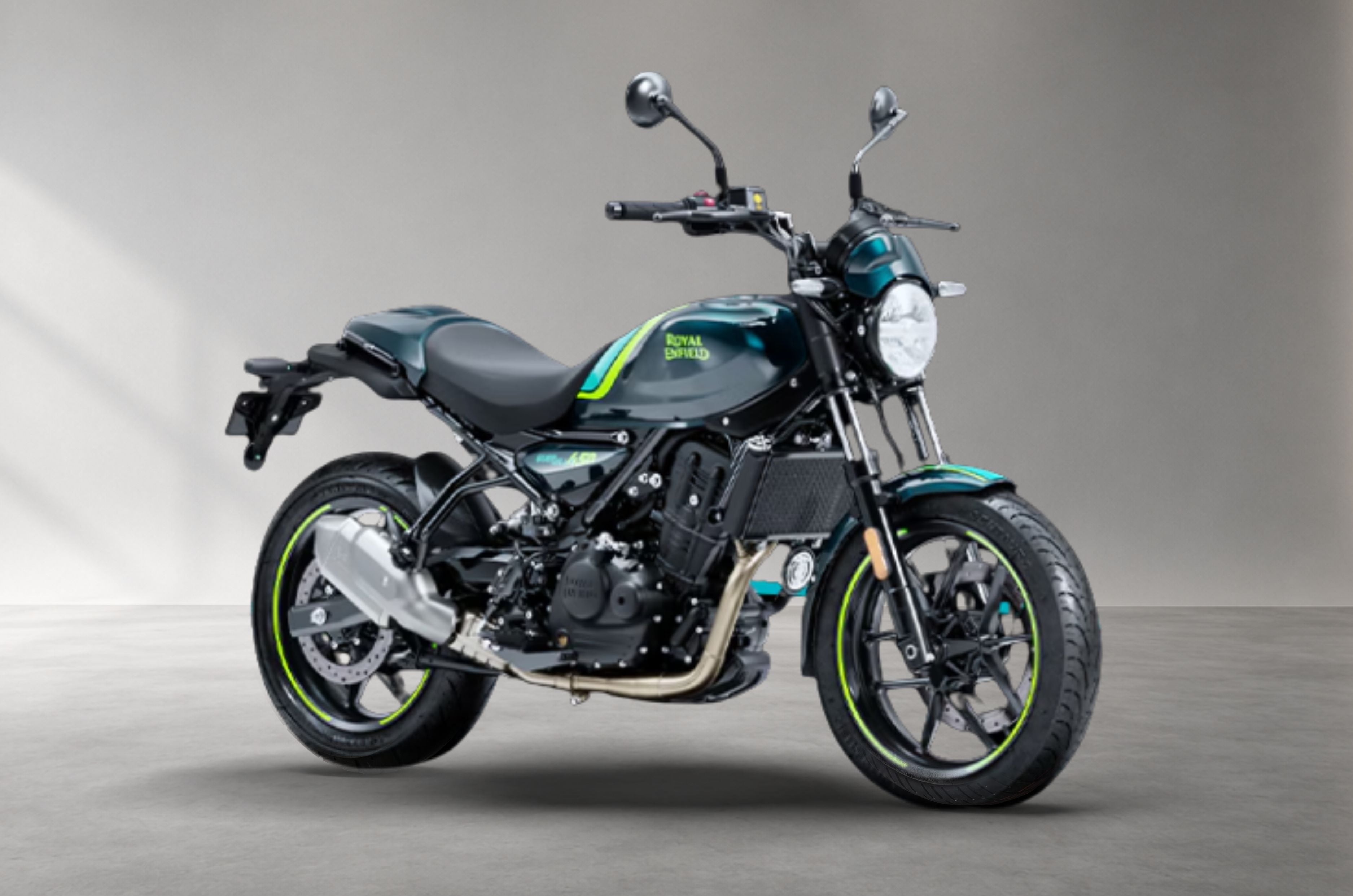
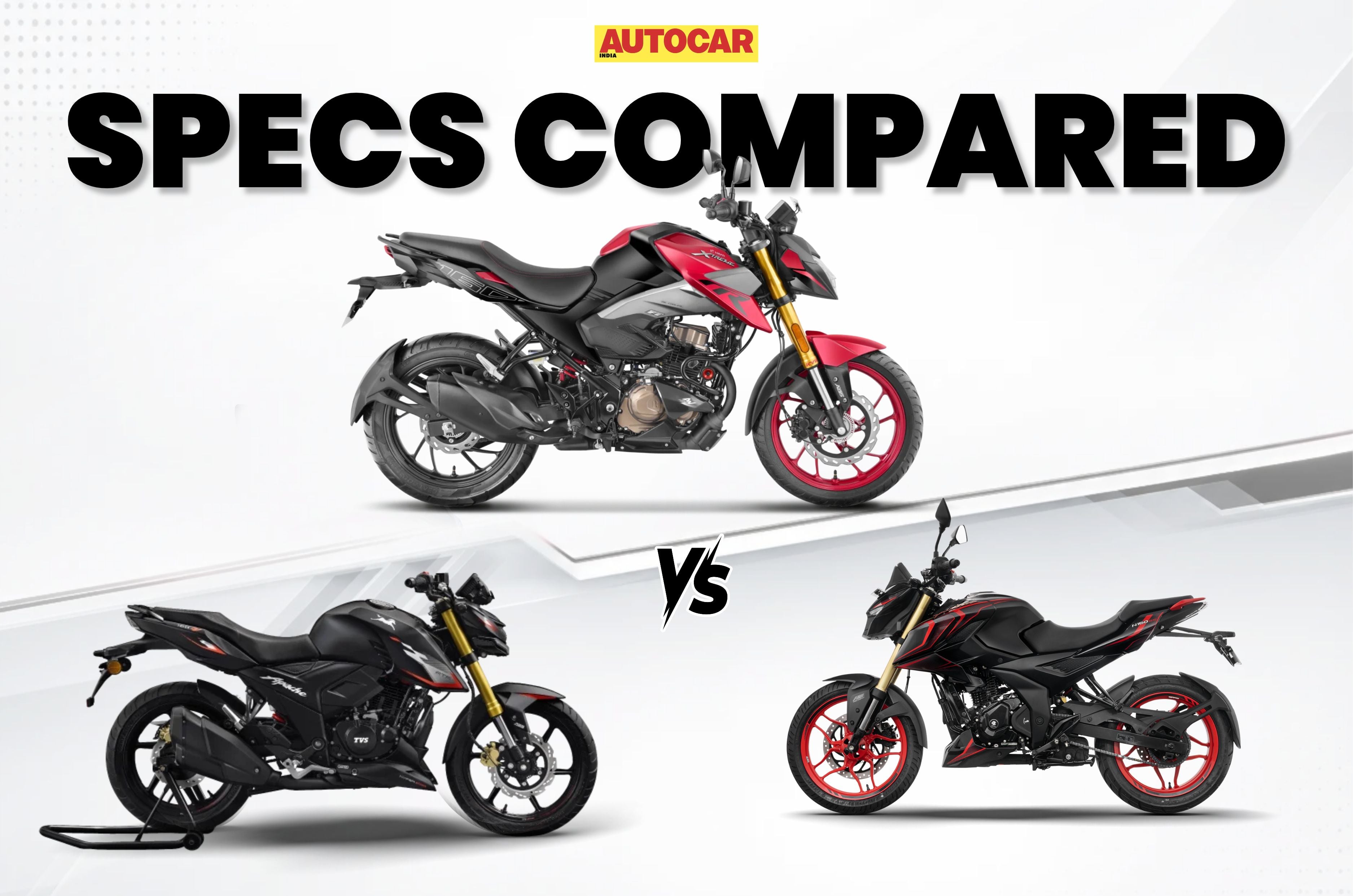
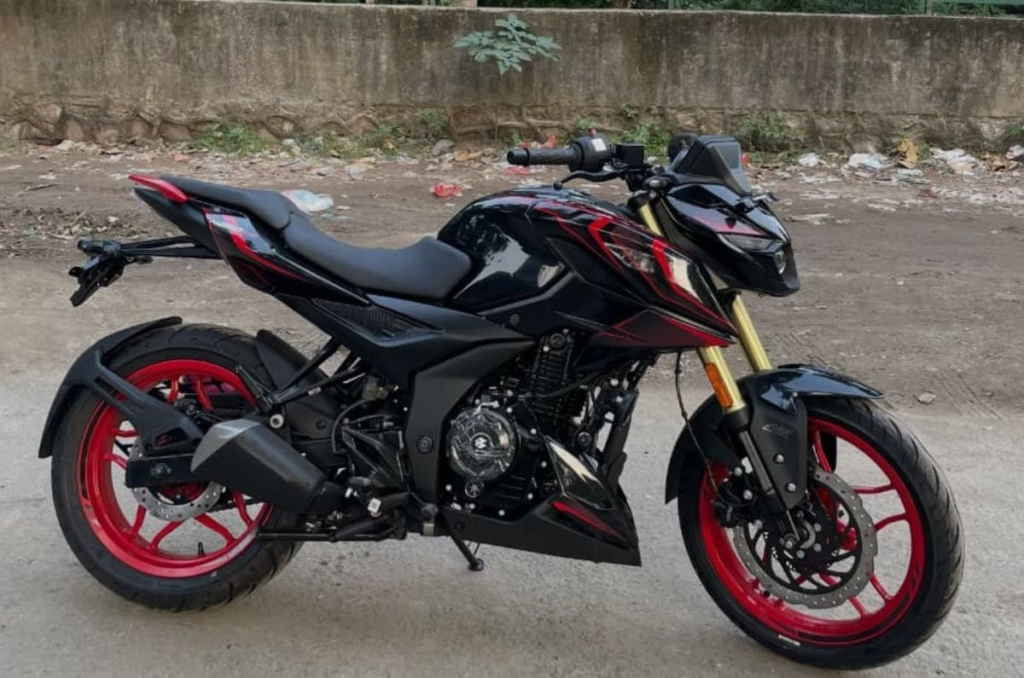
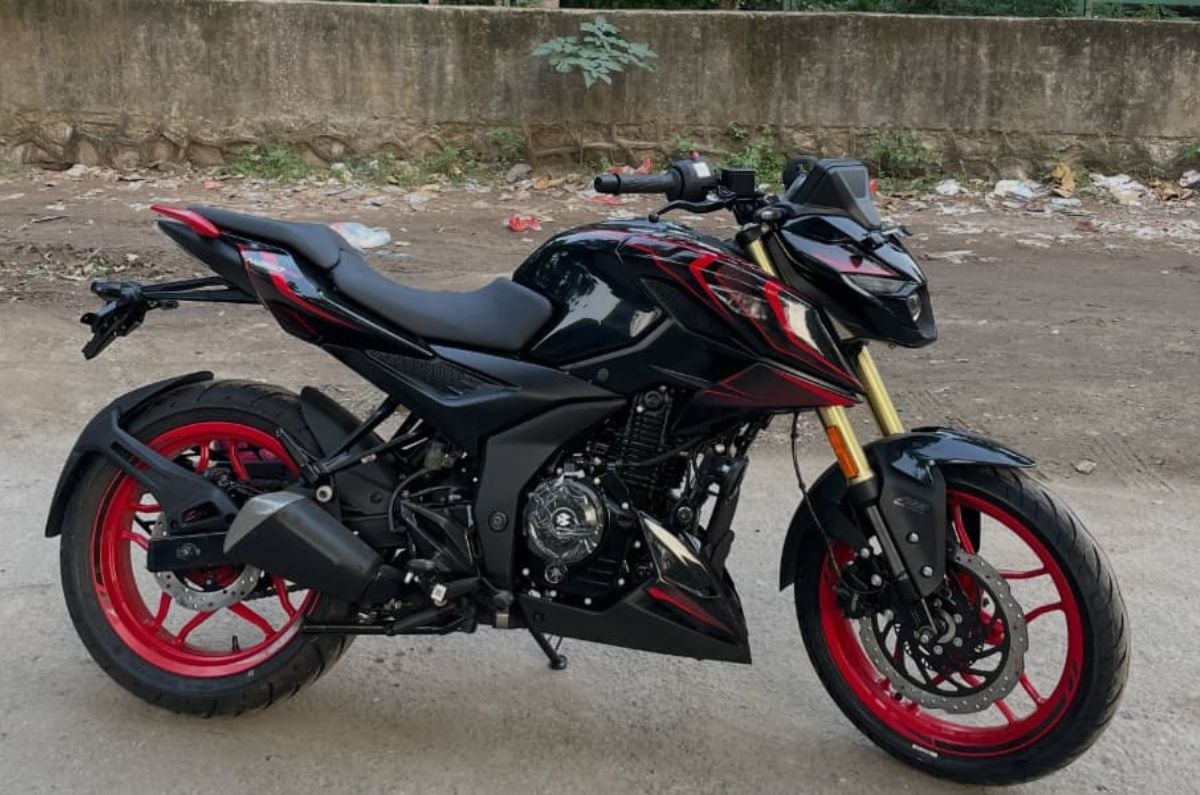
Hero Xtreme 160R Carbon, Pulsar N160 SS and TVS Apache RTR 160 4V in clockwise direction.

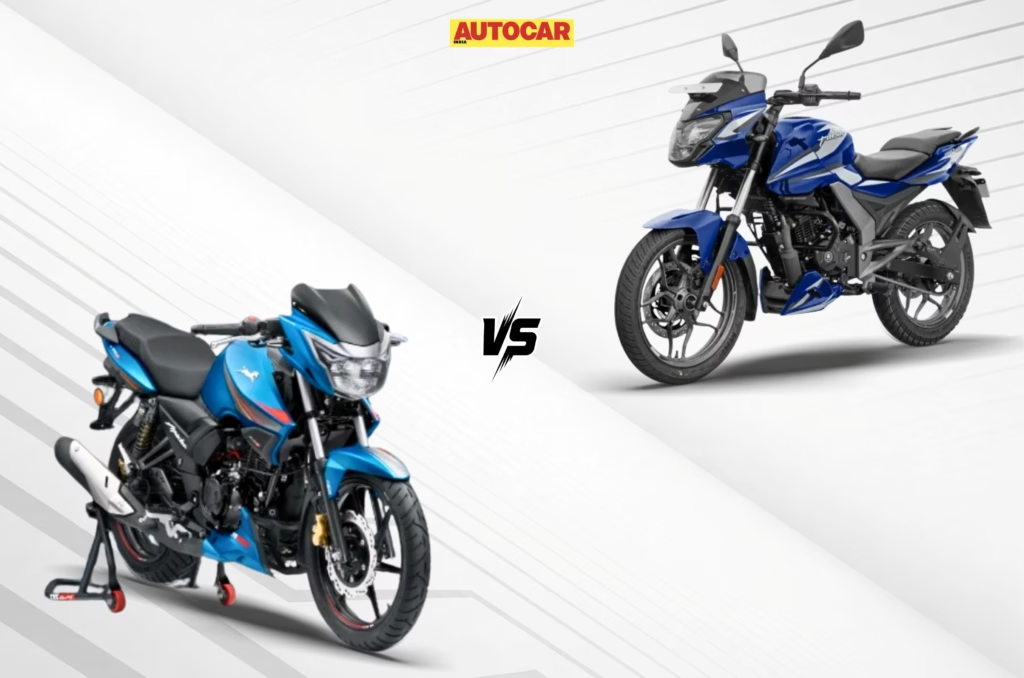
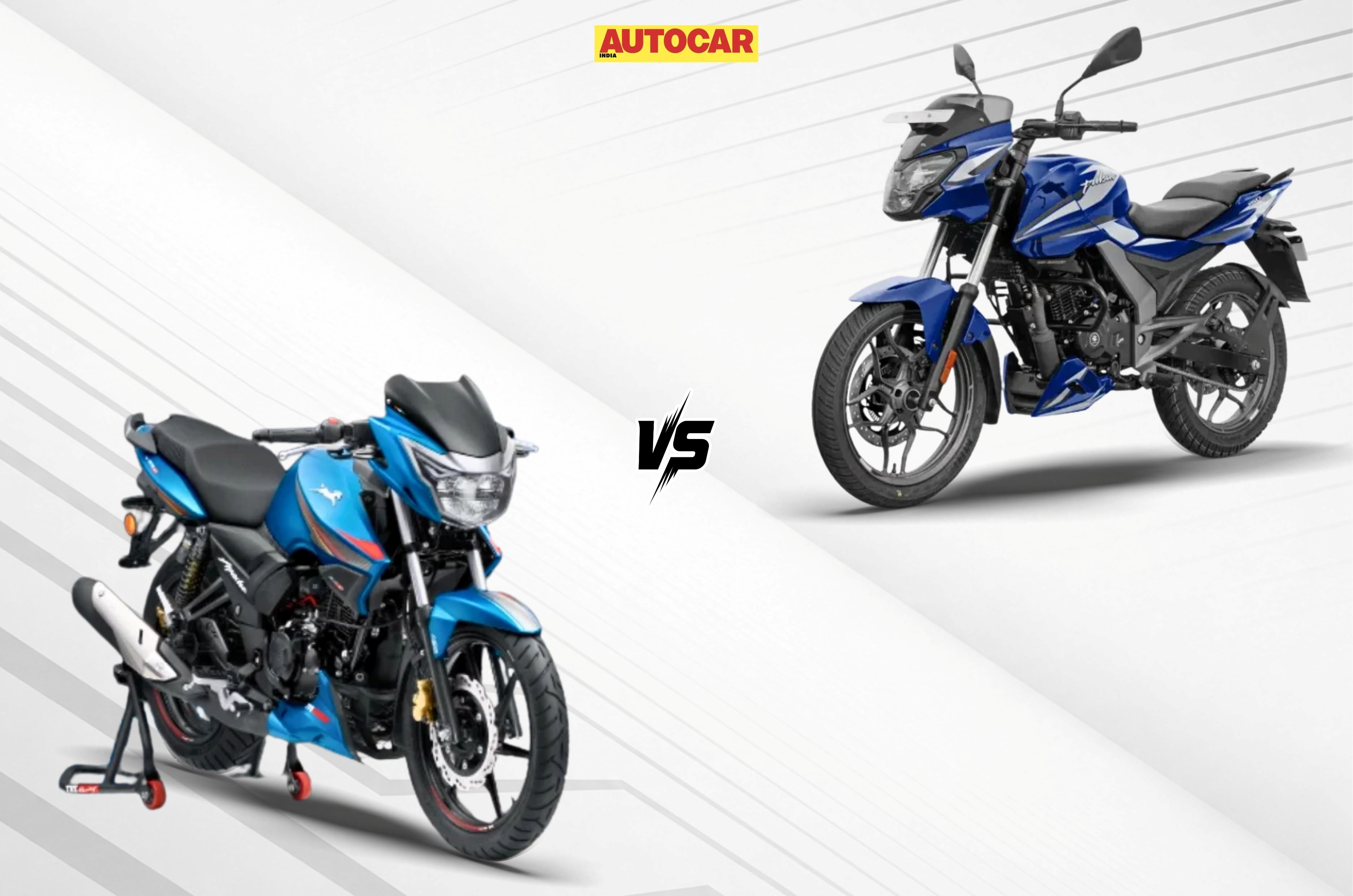
The 160cc segment was kickstarted and subsequently dominated by the TVS Apache RTR 160 and now, the RTR 160 4V is the manufacturer’s best-selling Apache, with the RTR 160 (2V) following in its footsteps. Bajaj has been attacking this duo with a trident of motorcycles, the N160, classic 150, and the NS160. In this fight, Hero’s offering the Xtreme 160R has taken a backseat all this while, but Hero’s looking to get in the front with the newly updated version of its street-naked motorcycle. Does it, really? Let’s see.

Hero Xtreme 160R 4V Carbon vs Rivals: Engine and output

Bajaj has the biggest engine with the most power


Hero Xtreme 160R 4V Carbon

TVS Apache RTR 160 4V

Bajaj Pulsar N160 SS

Engine

163.2cc, single-cylinder, oil-cooled

159.7cc, single-cylinder, oil-cooled

164.9cc, single-cylinder, oil-cooled

Power

17.1hp at 8,750rpm

17.6hp at 8,650rpm

18.5hp at 9,500rpm

Torque

14.6Nm at 6,500rpm

14.7Nm at 7,500rpm

14.4Nm at 8,000rpm

Transmission

5-speed

5-speed

5-speed

Power-to-weight ratio

114.77hp/tonne

120.21hp/tonne

122.52hp/tonne

Hero left the 163.2cc engine almost completely untouched, only raising the peak power output by a meagre 0.2hp compared to earlier. Bajaj’s upgrade to the N160 was more comprehensive than Hero and TVS, even though the other two motorcycles are chronologically newer. Said update has thus helped the N160 SS maintain the highest horsepower of the trio, though it comes in third with respect to torque.

However, the torque race is a very close one and thus unlikely to matter in real-world conditions. The noteworthy jump in power also helps Bajaj maintain a higher power-to-weight ratio, despite being the heaviest of the three motorcycles.

Hero Xtreme 160R 4V Carbon vs rivals: Dimensions and weight

Pulsar is the heaviest, but makes up for it


Hero Xtreme 160R 4V

TVS Apache RTR 160 4V

Bajaj Pulsar N160 SS

Fuel tank capacity

12 litres

12 litres

14 litres

Ground clearance

165mm

180mm

165mm

Kerb weight

149kg

146kg

151kg

Seat height

805mm

790mm

795mm

Wheelbase

1,329mm

1,357mm

1,348mm

None of these motorcycles received a generational change to the platform so the numbers largely remain the same as earlier. Starting off with the Xtreme 160R 4V, Hero has given it some additional features which has made it 1.5kg heavier than the previous Combat Edition and the seat height is a negligible 5mm taller too.

TVS added exactly two new features to the Apache so it remains exactly where it was before and is the motorcycle with the lowest seat height, while having the most amount of ground clearance. The Pulsar N160 is the heaviest of the lot, but also has two additional litres of fuel tank capacity, which is a factor in the additional weight. In this class, that translates to – at the very least – 80km of real-world range so that’s not a small advantage to the Bajaj.

Hero Xtreme 160R 4V Carbon vs Rivals: Tyres, brakes and suspension

Hero has a smaller rear brake and TVS has a narrower front tyre


Hero Xtreme 160R 4V

TVS Apache RTR 160 4V

Bajaj Pulsar N160 SS

Tyres (F, R)

100/80-17, 130/70R17

90/90-17, 130/70R17

100/80-17, 130/70R17

Brakes (F, R)

276mm disc, 220mm disc, dual-channel ABS

270mm disc, 240mm disc, dual-channel ABS

300mm disc, 230mm disc, dual-channel ABS

Suspension (F, R)

37mm USD fork, monoshock

37mm USD fork, monoshock

37mm USD fork, monoshock

Things continue to even out in this section but Bajaj makes a statement with the largest front disc rotor, which is actually from a class above. All three offer dual-channel ABS as standard on the top variants, and all have a lower variant with right-side-up (RSU) telescopic fork and single-channel ABS. Hero is the only manufacturer to offer a KYB, who is a suspension specialist, built fork but also has given the Xtreme 160R the smallest rear disc. TVS technically does have the smallest tyre of the three, but it’s not alarmingly small to imply handling issues.

Hero Xtreme 160R 4V Carbon vs Rivals: Features

Hero’s redemption attempt

This is the area Hero has caught up the most to the other two, after design. Though the Combat Edition added quite a bit to make the Xtreme 160R last year, the fight now feels even across the board, which is a great thing for you and me as consumers.

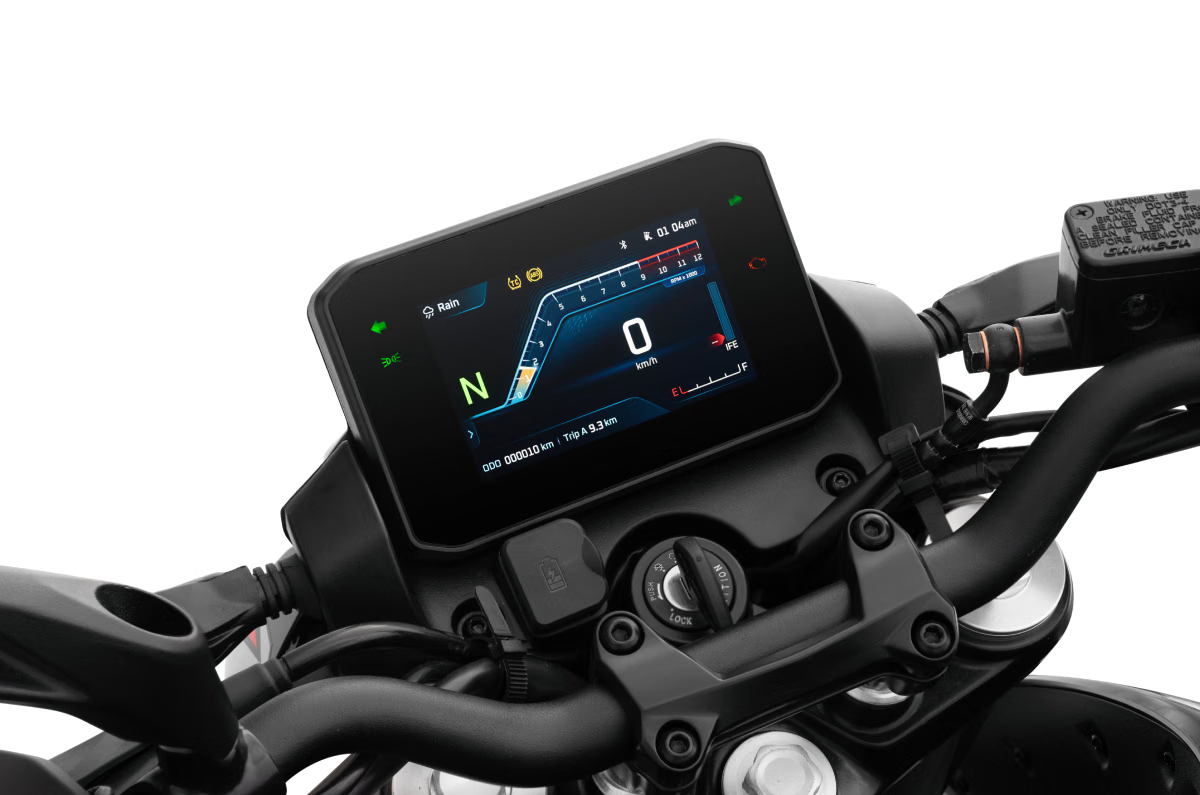
On the top Carbon variant, you get a 4.2-inch TFT display that goes toe-to-toe with the other two on this list. Xtreme 160R is the only motorcycle in this segment to give you cruise control and TVS, despite technically being the oldest platform of the lot, gives a tough fight to the other two. In terms of outright feature-set, the Bajaj still offers a higher number of features, such as an additional ride mode, document storage on the display and the likes, but TVS and Hero fight valiantly. The Hero still misses out on features such as, a slip-and-assist clutch, a dedicated mode to make low speed riding easier (Crawl mode on Bajaj, GTT on TVS) and Google Maps mirroring. So, if you’re looking for the most feature-loaded Hero, take a gander at the Xtreme 250R, which also got updated with quite a bit of features and is sitting in the segment above.

Hero Xtreme 160R 4V Carbon vs Rivals: Price

Carefully treading the affordable-line


Hero Xtreme 160R 4V

TVS Apache RTR 160 4V

Bajaj Pulsar N160 SS

Price (ex-showroom)

Rs 1.27-1.41 lakh

Rs 1.20-1.42 lakh

Rs 1.22-1.43 lakh

Hero is currently the most expensive of the three, especially if you’re looking to get the base variant; beyond that, digging further into the price difference will be splitting hairs, so look at the other sections to see if they help you make a choice. That being said, the 160cc segment in India is one of, if not, the most competitive one so whichever one you choose, you’re unlikely to make a truly bad one. See which motorcycle catches your eye the fastest and pulls your heart strings the hardest after the test ride, and you’ll probably know what you’re bringing home.

If you’re determined to live in the xtreme, er, extreme, Hero is currently taking bookings for the all-new Xtreme 160R 4V, whereas the other two motorcycles are already available in their respective showrooms. Unlike its bigger brother, the 160R 4V will be available in all Hero showrooms across the country – which is quite a large network. Deliveries for it are expected to begin in November.
Bajaj Pulsar N250 updated with TFT display and 6-speed gearbox

Bajaj Pulsar N250 updated with TFT display and 6-speed gearbox
An outdoor shot of the new Bajaj Pulsar N250 SS variant

Bajaj continues its update marathon for the Pulsar line-up. After being spotted testing alongside the NS200 last month, a new SS variant of the N250 has reached dealerships. An updated Pulsar RS200 was also seen testing recently, but no official information is available on that model either.

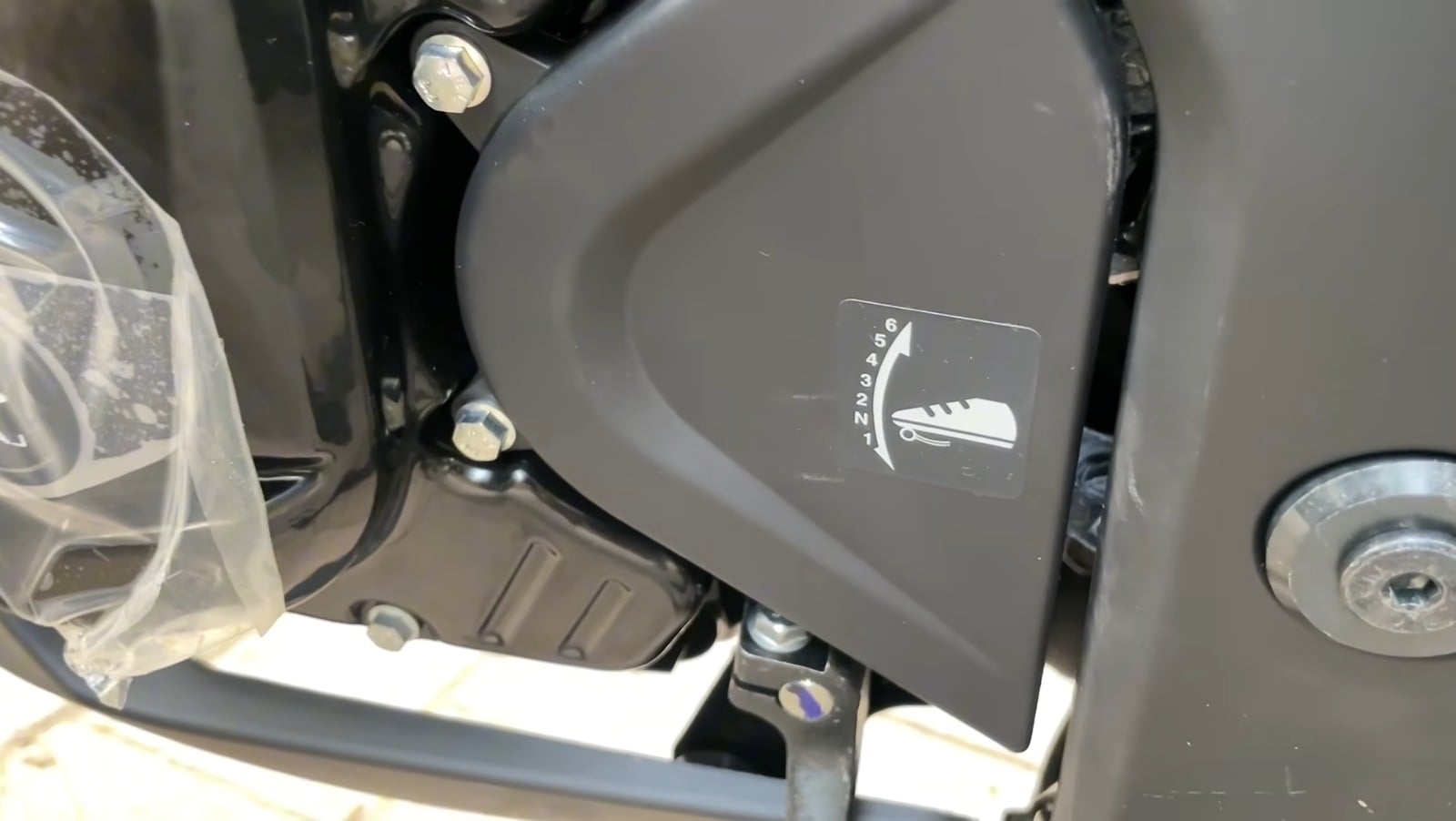
  1. Gets a new 6-speed gearbox with a quickshifter
  2. Adds a TFT display, 5 ride modes and traction control
  3. Now gets a radial rear tyre, adjustable levers and a Type-C charger

Bajaj Pulsar N250: What are the changes?  

The 249cc air/oil-cooled engine is now paired with a new 6-speed gearbox.

One of the major changes is a new 6-speed gearbox replacing the 5-speed unit. This should help the motorcycle cruise more comfortably at highway speeds. Along with the new gearbox, we could also see a slight bump in performance from the current 24.5hp and 21.5Nm. A new rear radial tyre is also a welcome addition.

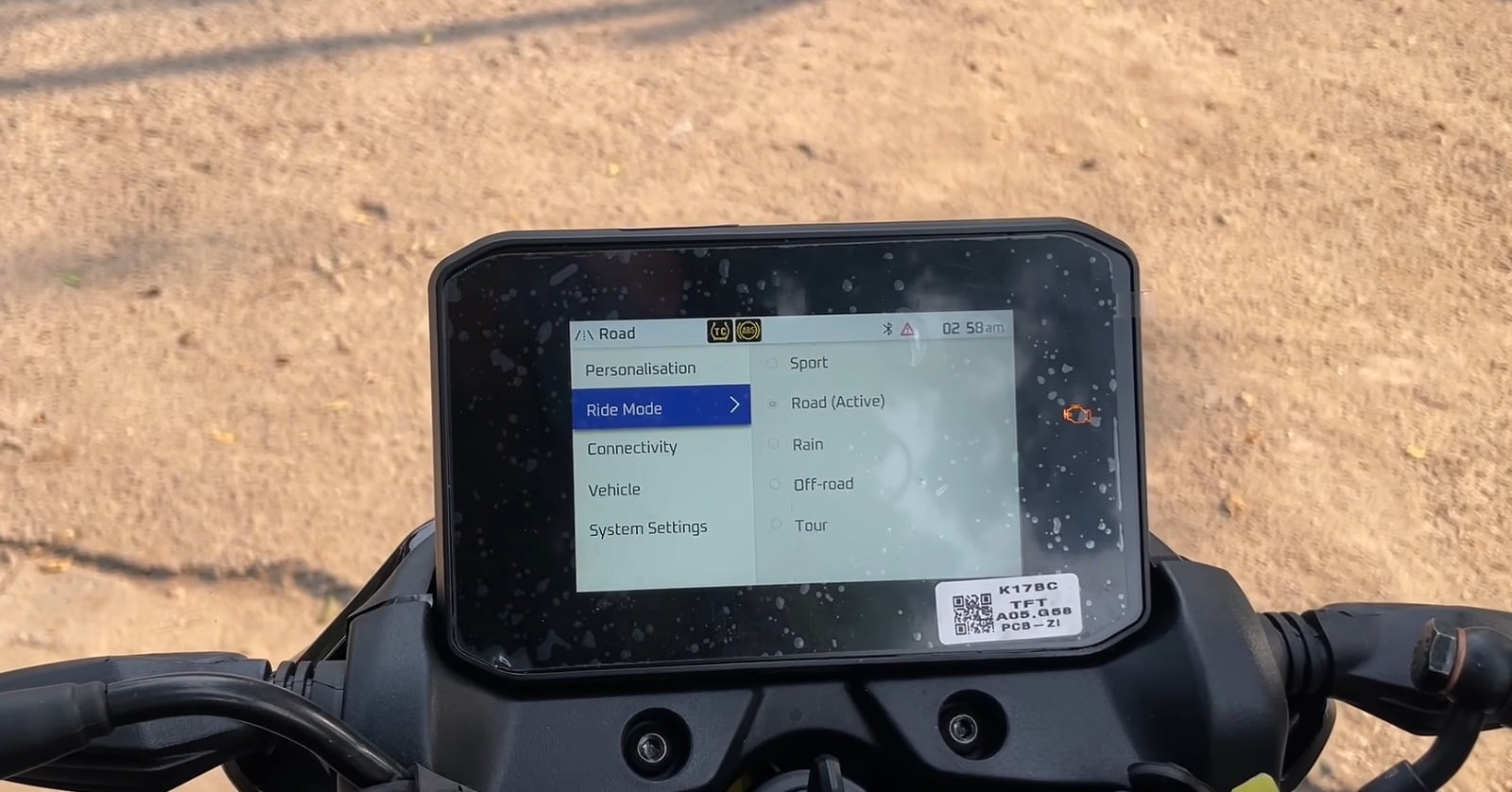
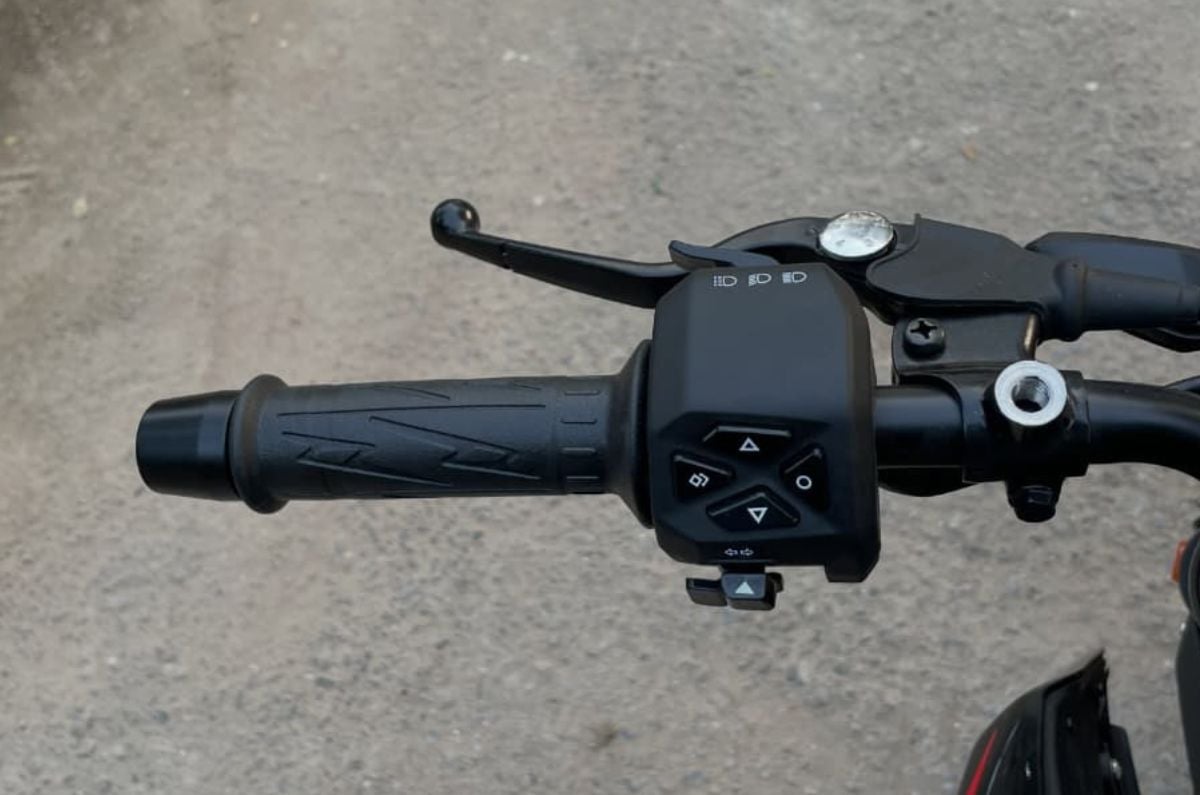
Like the other updated Pulsars, the N250 also gets an electronic suite. It comprises a 5-inch TFT instrument cluster with Google Maps mirroring, 5 riding modes (Sport, Road, Rain, Off-road and Tour), traction control, a bidirectional quickshifter, a USB Type-C charger, updated switchgear and adjustable clutch and brake levers.

For now, the new variant has reached dealerships, but Bajaj hasn’t made an official announcement yet. Currently, the standard Pulsar N250 is priced at Rs 1.45 lakh, and its chief rival, the Suzuki Gixxer 250, costs Rs 1.85 lakh. However, given the new gearbox and additional features, the upcoming SS variant will likely have a slightly higher price than the standard variant.

Image source: Machine Rules on Instagram. All prices are ex-showroom, Delhi.

Autocar India October 2026: Kia Sorento, Porsche Cayenne Electric, and more

Autocar India October 2026: Kia Sorento, Porsche Cayenne Electric, and more

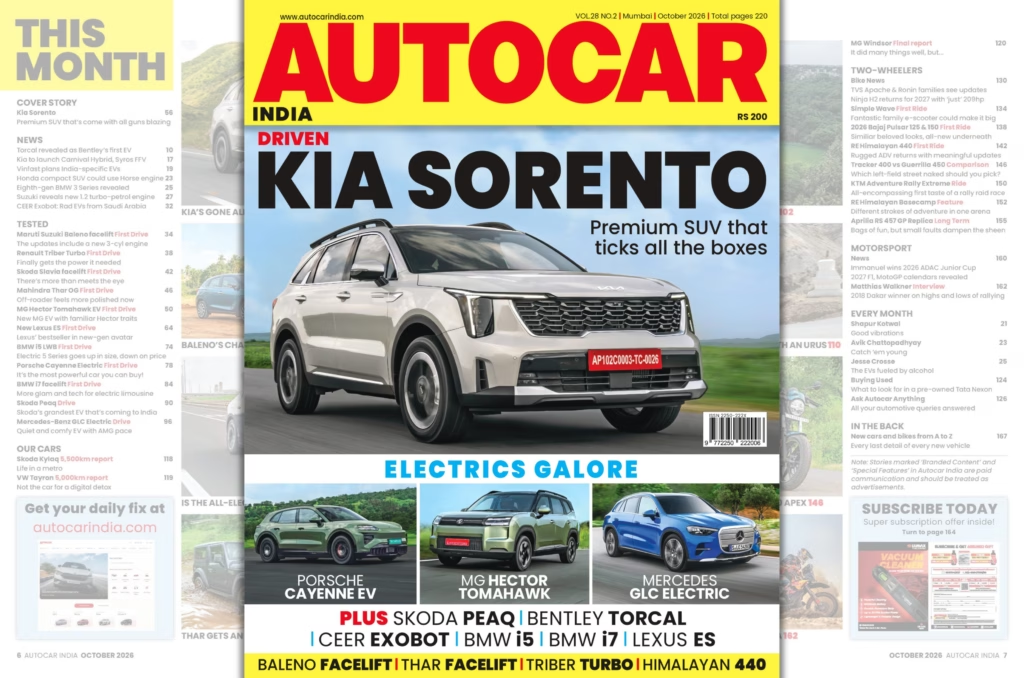
This month, we go big on power and even bigger on premium metal. The cover story is Kia’s biggest swing yet at the executive SUV segment, and then there’s a family SUV with more horsepower than a Lamborghini, and BMW’s electric onslaught continues with a new long-wheelbase sedan and a sharper flagship limousine.

Kia Sorento: Cover Story

Six trims, two powertrains, up to seven seats and 32 variants in all. Kia isn’t dipping a toe into the premium SUV pool; it’s diving straight in, locally assembling the Sorento from Rs 27.99 lakh to take on the Skoda Kodiaq and VW Tayron. Has Kia cracked the code, or has it bitten off more than it can chew?

Porsche Cayenne Electric: First Drive

Forget hypercars. The most powerful vehicle currently on sale in India is a family SUV, the Cayenne Electric, with more horsepower than your senses can fathom. We took it to an airstrip to see what that actually does to your stomach.

BMW i5 LWB & i7 Facelift: First Drives

BMW’s electric push continues, with a long-wheelbase i5 slotting in between the iX1 and flagship i7. Can BMW’s long-wheelbase playbook continue to work? And there’s also the i7 getting a sharper face and more tech to go with it, like it didn’t have enough already.

Mercedes-Benz GLC Electric: Drive

The first-gen electric GLC was far from ideal. The new one, however, is a completely new generation with an 800V architecture, 330kW charging and a claimed 715km range. We took all 489 of its horses to the Autobahn to see how much of an improvement it has been over its predecessor. 

MG Hector Tomahawk EV: First Drive

Don’t let the familiar name fool you. The Hector Tomahawk EV rides on MG’s all-new ADAPT platform, bigger than the Mahindra XEV 9S in every dimension, with a PHEV sibling already waiting in the wings.

Maruti Suzuki Baleno, Renault Triber Turbo and Skoda Slavia: First Drives

India’s favourite premium hatch, the Baleno, gets a new engine and ADAS, the budget-friendly Triber finally gets the power it’s been begging for, and the Slavia’s facelift turns out to be more than skin-deep.

Mahindra Thar OG: First Drive

The original three-door Thar gets another round of updates, bringing changes to its engines, equipment and chassis. With the off-road icon continuing to evolve, we head out to discover what this latest iteration brings to the table.

Taking the High Road: Features

Goa’s new Porvorim Elevated Corridor opens on NH66, and we test it in two ways: solo against Google Maps’ ETA in an MG Cyberster, and then flanked by a dozen supercars, Ferraris, a McLaren 750S and a Lamborghini Huracan among them, for its proper initiation.

Rocket Ship to the Moon: Feature

A Lamborghini SUV is already an exercise in excess. Take it somewhere unexpected, add a little spectacle, and you have the ingredients for an automotive adventure that refuses to be ordinary.

Royal Enfield Himalayan 440

The original Himalayan is back with a bigger engine and a handful of meaningful changes. In a world where adventure bikes keep getting more complicated, there’s something rather appealing about going back to basics.

Tracker 400 vs Guerrilla 450: Comparison

Two left-field street nakeds, the Triumph Tracker 400 and Royal Enfield Guerrilla 450, go head-to-head. One takes its inspiration from flat-track racers, while the other fancies itself a sporty roadster. Both want your money, and neither is particularly interested in being sensible about it.  

KTM Adventure Rally Extreme: Ride

Adventure riding is all well and good until the road disappears, the terrain turns hostile and you begin questioning your life choices. We get a taste of KTM’s rally raid experience, where the only shortcut is having the skill to take one.

Audi Q3 review: a fresh start for Audi

Audi Q3 review: a fresh start for Audi
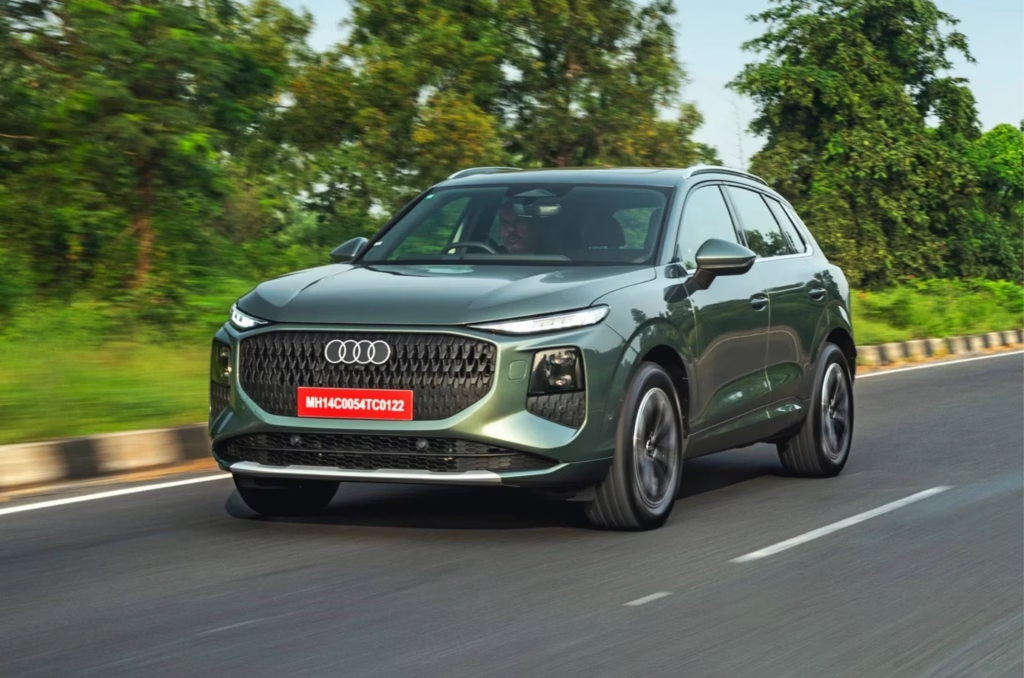
Audi Q3 India review

It would be easy to file the third-generation Q3 as just another new model but it isn’t. For Audi India, this is closer to a reset. The brand has spent the past few years soldiering on with ageing, outdated products and its showroom traffic has paid the price for this freeze in new products. But that’s all changed now. With fresh investment pouring in from its headquarters, Audi is on a new product offensive which has been kicked started with the Q3. This compact SUV is also the entry point into the brand, so it carries the burden of delivering  the maximum sales. There’s a lot riding on the Q3’s gentle shoulders and Audi is hopeful that this will model will mark the turning point for the brand. But first, Audi has to convince customers. Is the new Q3 a quantum leap over the past Q3? We drove it in Goa to find out.

Audi Q3 Exterior Design and Engineering – 8/10

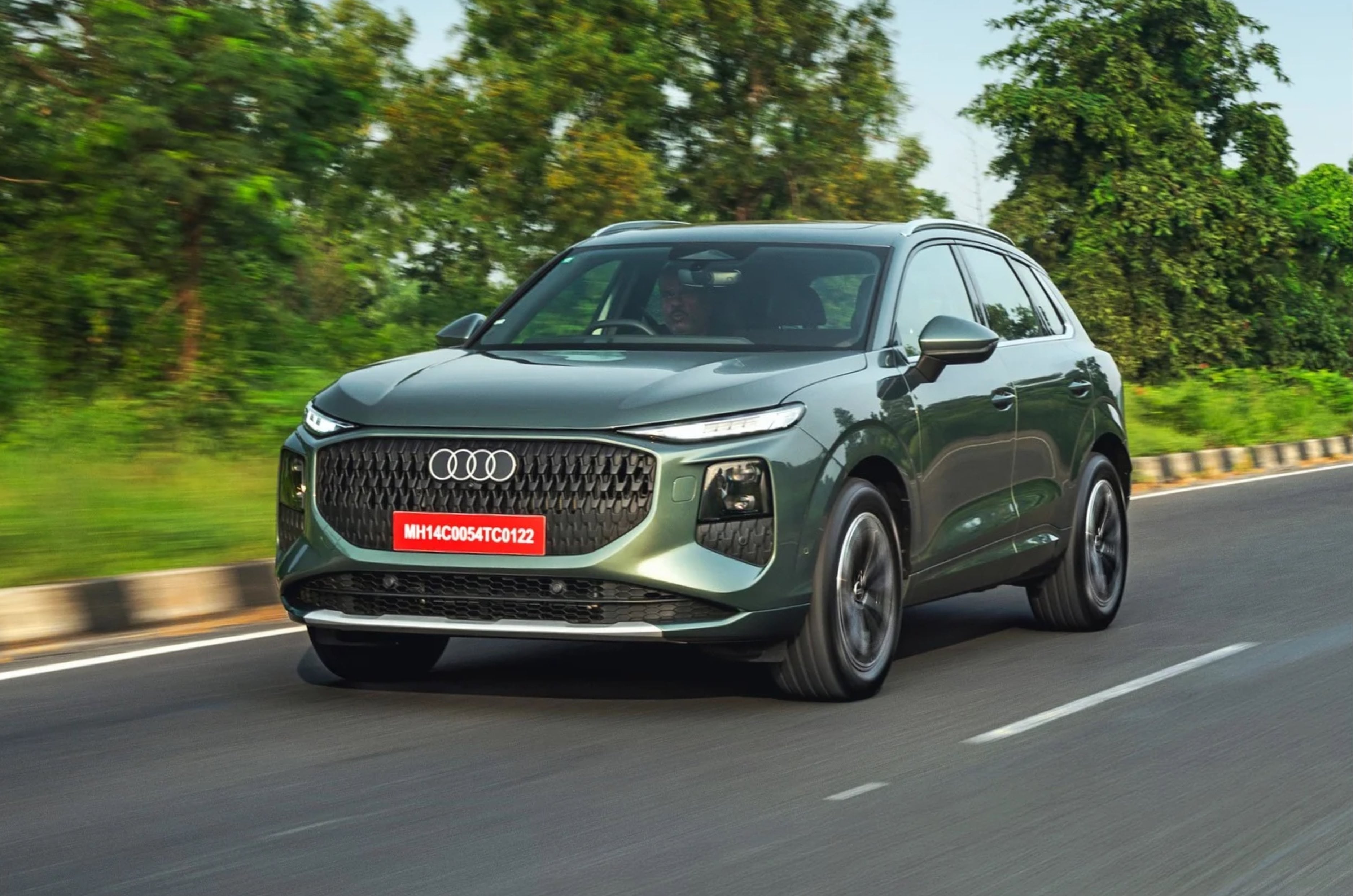
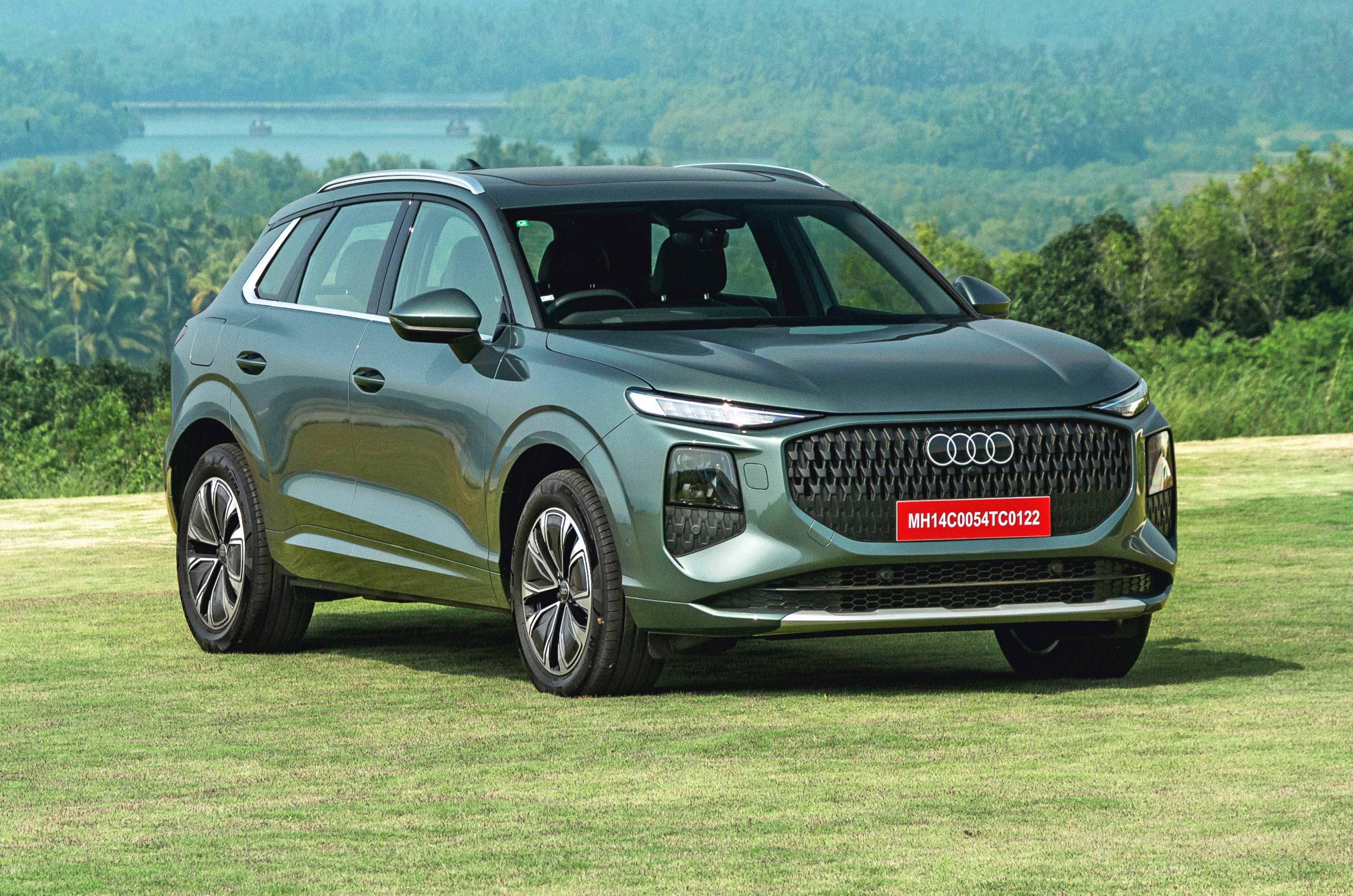
The crisp, edgy lines of the old car have made way for something more fluid and flamboyant. The new Q3 has grown marginally in every dimension, but the 2,681mm wheelbase is unchanged, so it keeps the compact footprint its urban buyers like.

A fluid and flamboyant new design language replaces the edgy styling of the old car

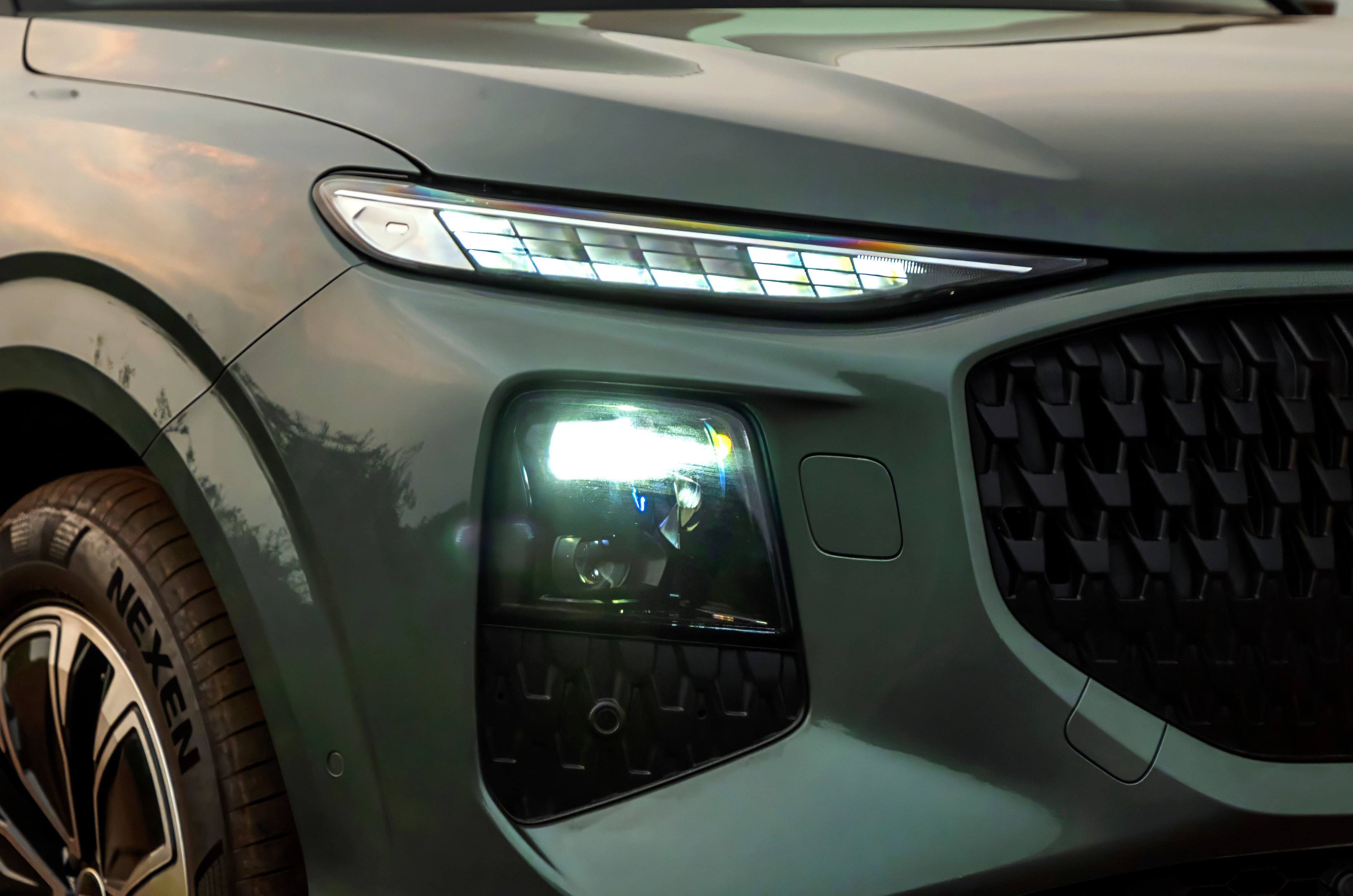
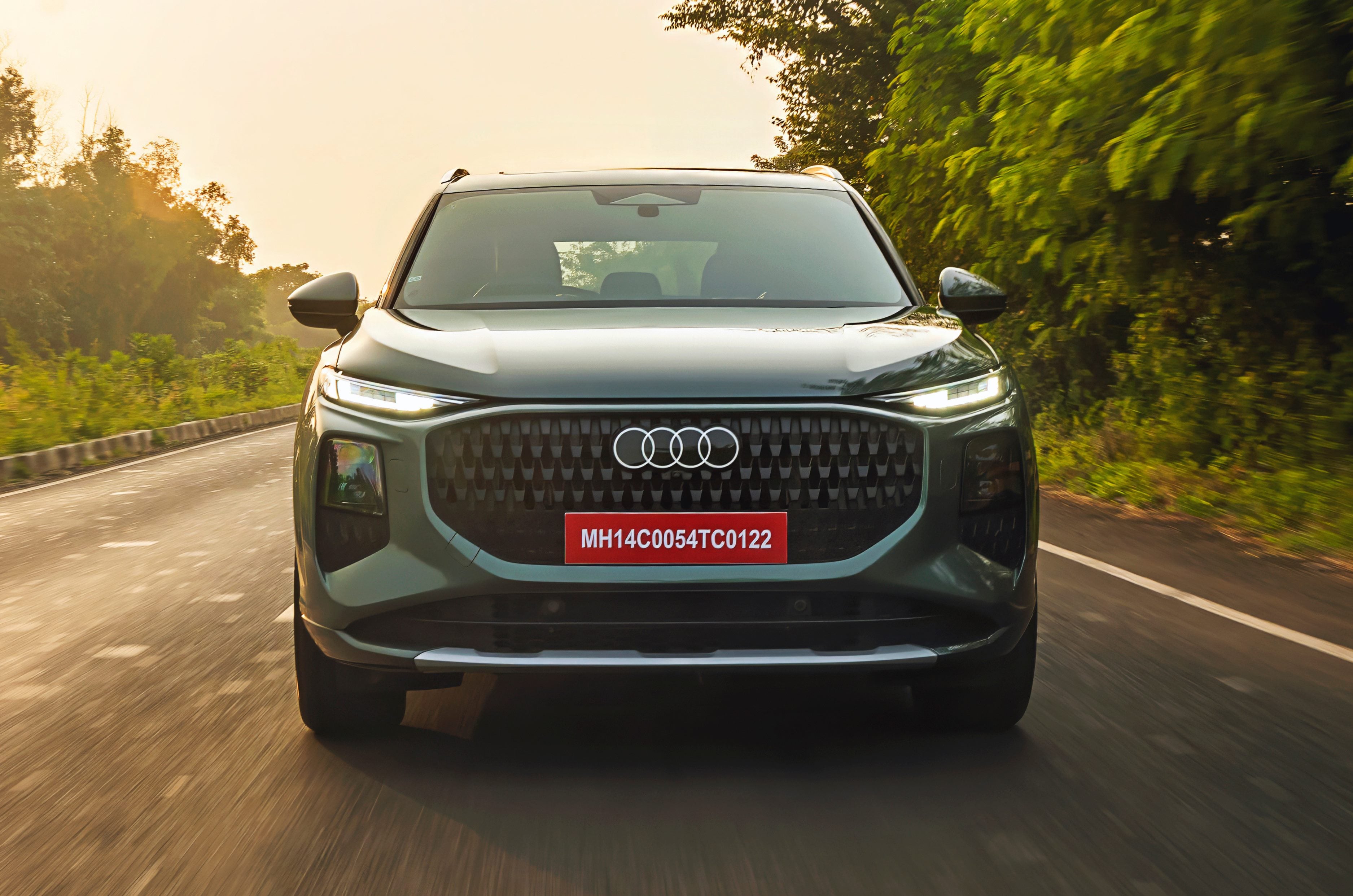
The face is split in two. Slim LED daytime running lights sit up top and double as dynamic indicators, while the main headlamps are stacked below. The wide honeycomb grille certainly makes a statement, and its flat 2D logo hides the ADAS radar. Up close, though, the grille’s finish looks a touch plasticky for a car wearing four rings.

Lighting is the real party piece. The Digital Matrix LED units use micro-LED technology, with some 25,600 individually controlled pixels per headlamp. That lets them do far more than dip and glare-free high beam. They can project a carpet of light in your own lane, and when you flick the indicator, the beam stretches across to illuminate the lane you are moving into. It’s a clever way to flag your intent and place the car on dark, unlit roads. The DRLs also offer four selectable light signatures via the touchscreen. There is a caveat. The projection tricks are at their best on pitch-black roads; with streetlights around, the effect is largely lost.

Trick Digital Matrix LED headlights use 25,600 individually controlled pixels per side

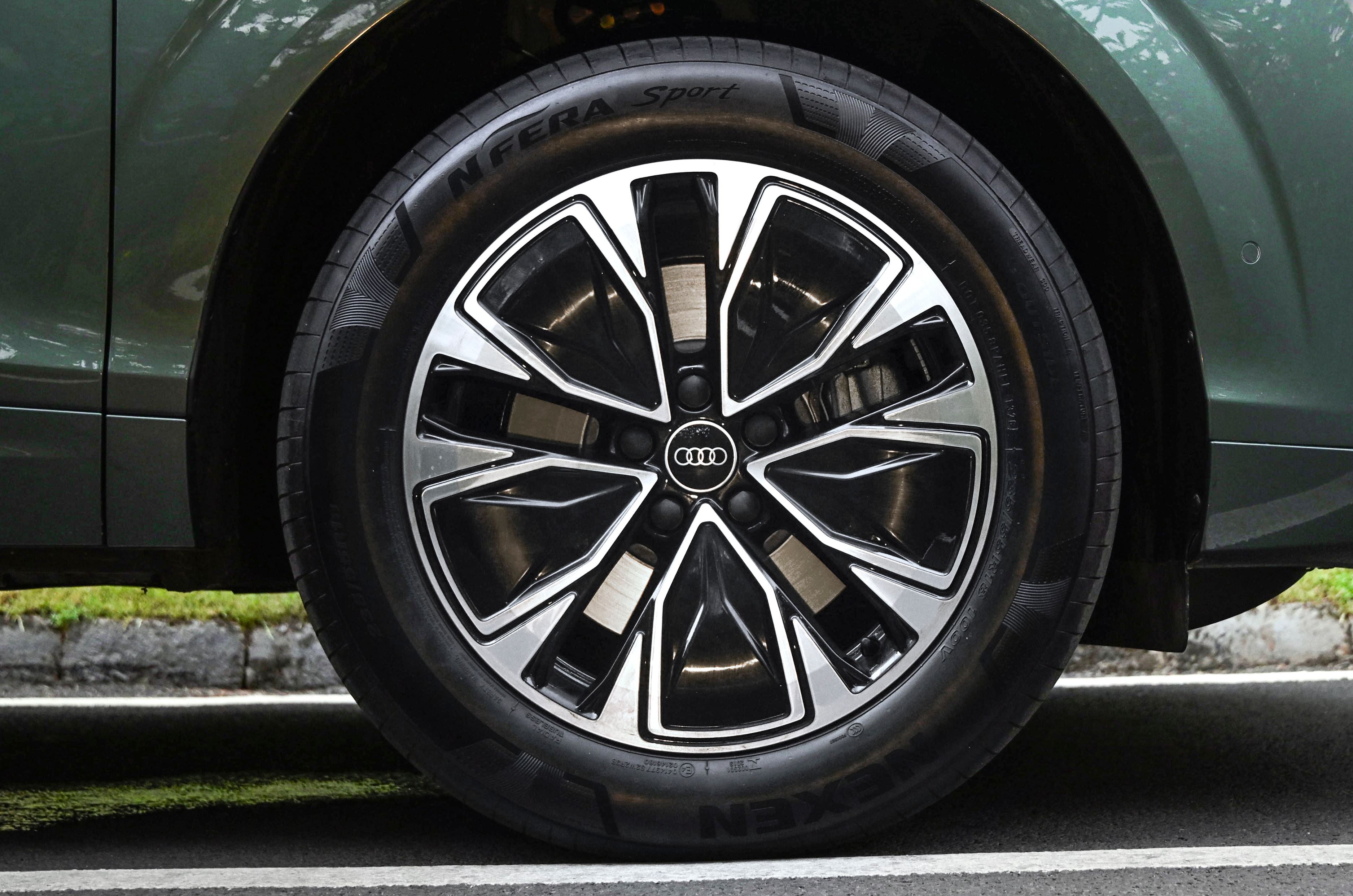
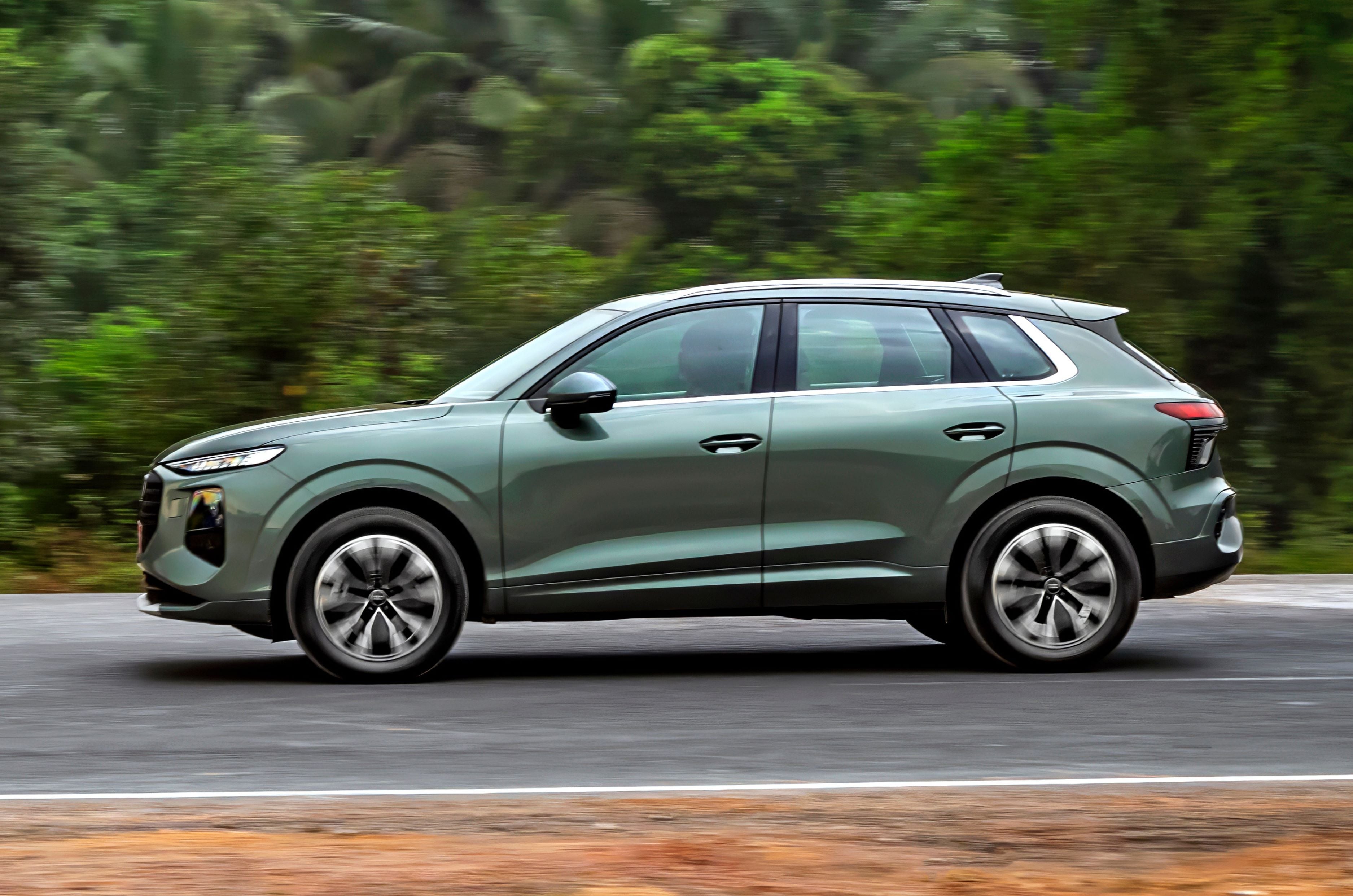
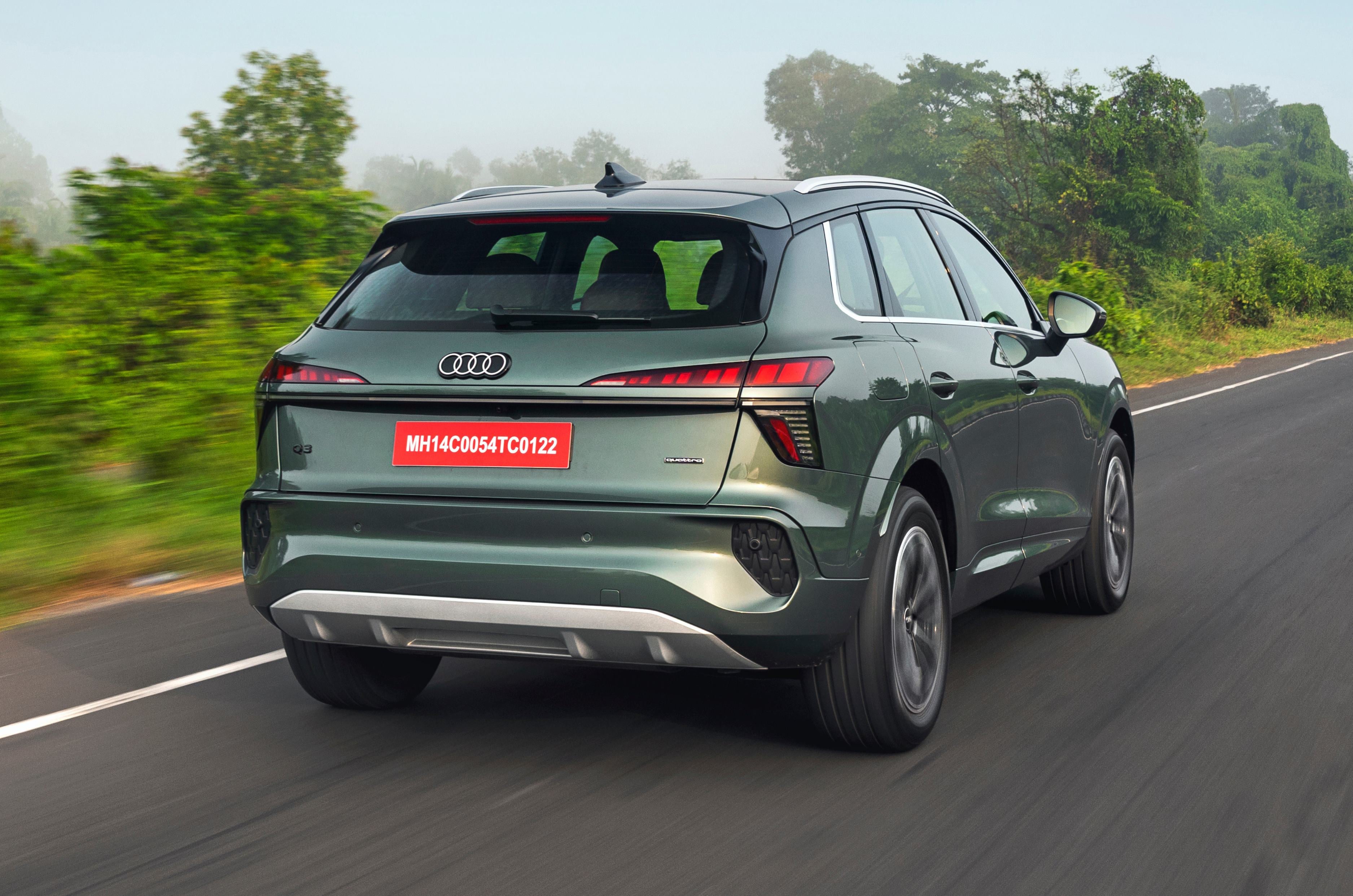
In profile, brushed aluminium below the windows and gloss black above create a floating-roof effect, and the rear haunches add a hint of muscle. For once, the wheels deserve a mention too. Audi has rarely nailed its alloy designs, but these are genuinely striking, wrapped in chunky, high-profile rubber. At the back, split LED tail-lamps are joined by a slim light bar and an illuminated Audi logo, and the tailgate is powered.

Stunning 18-inch alloys get self-leveling centre caps and are wrapped in high-profile tyres

Audi Q3 Interior Space and Comfort – 8/10

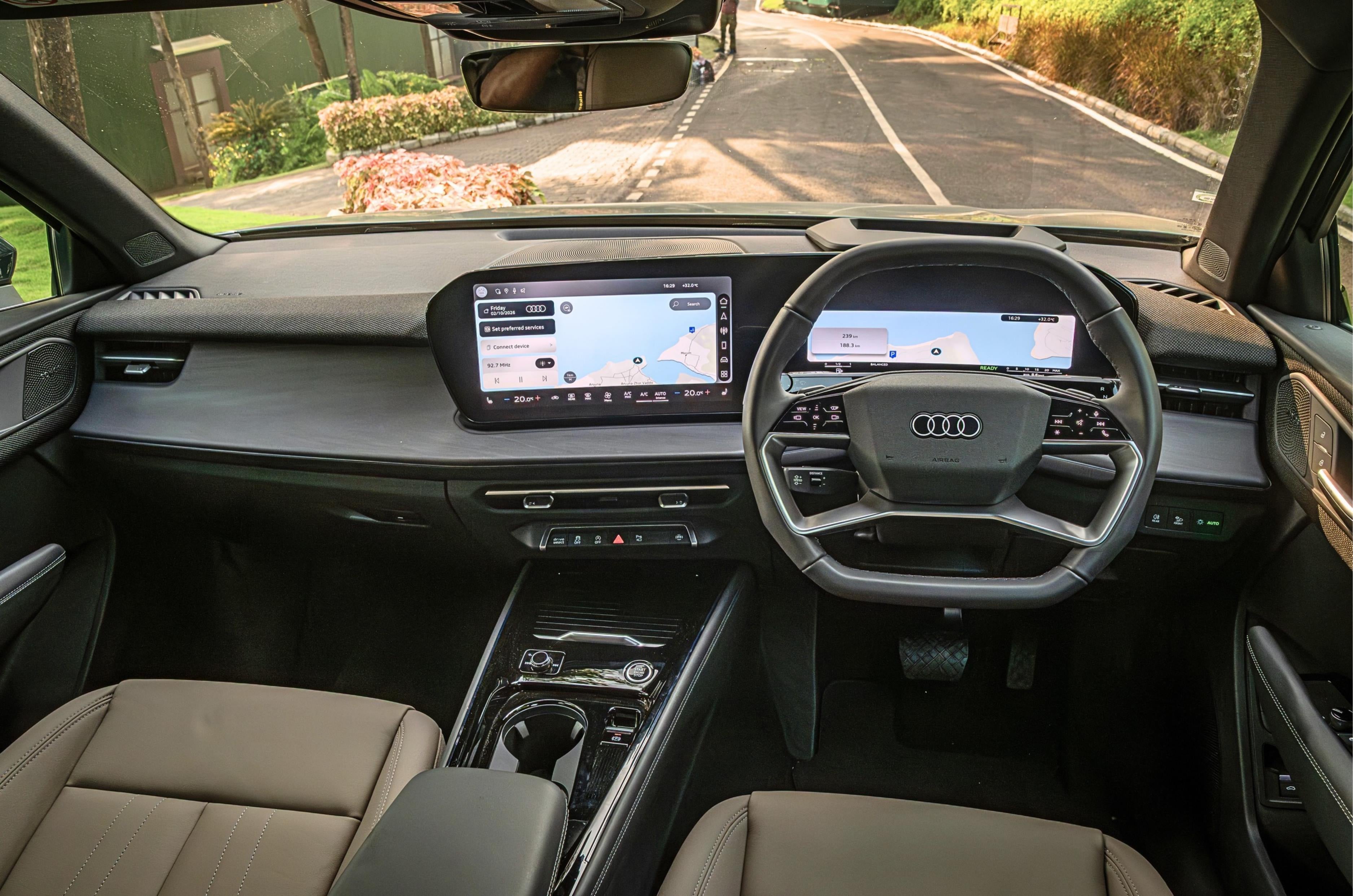
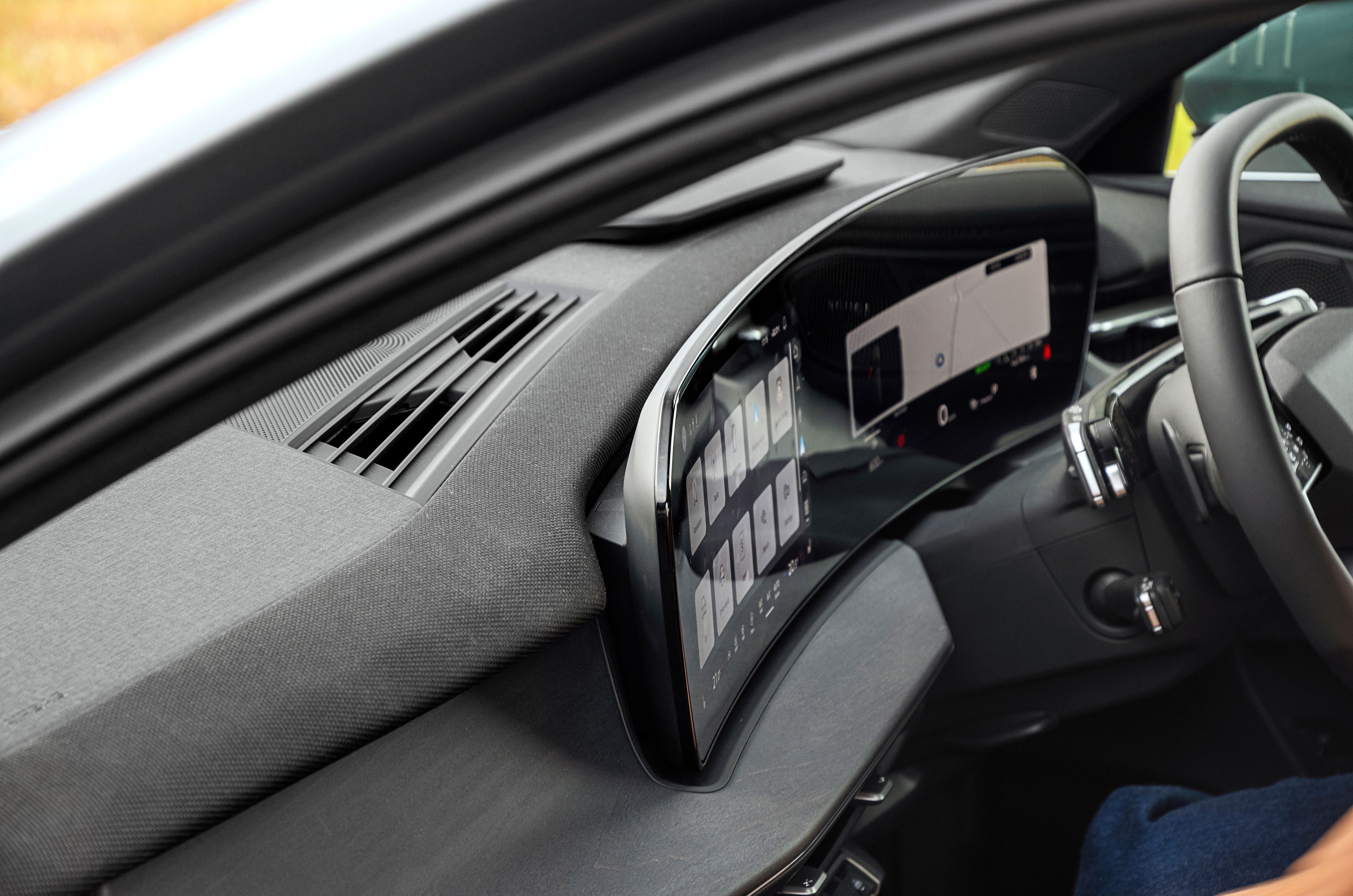
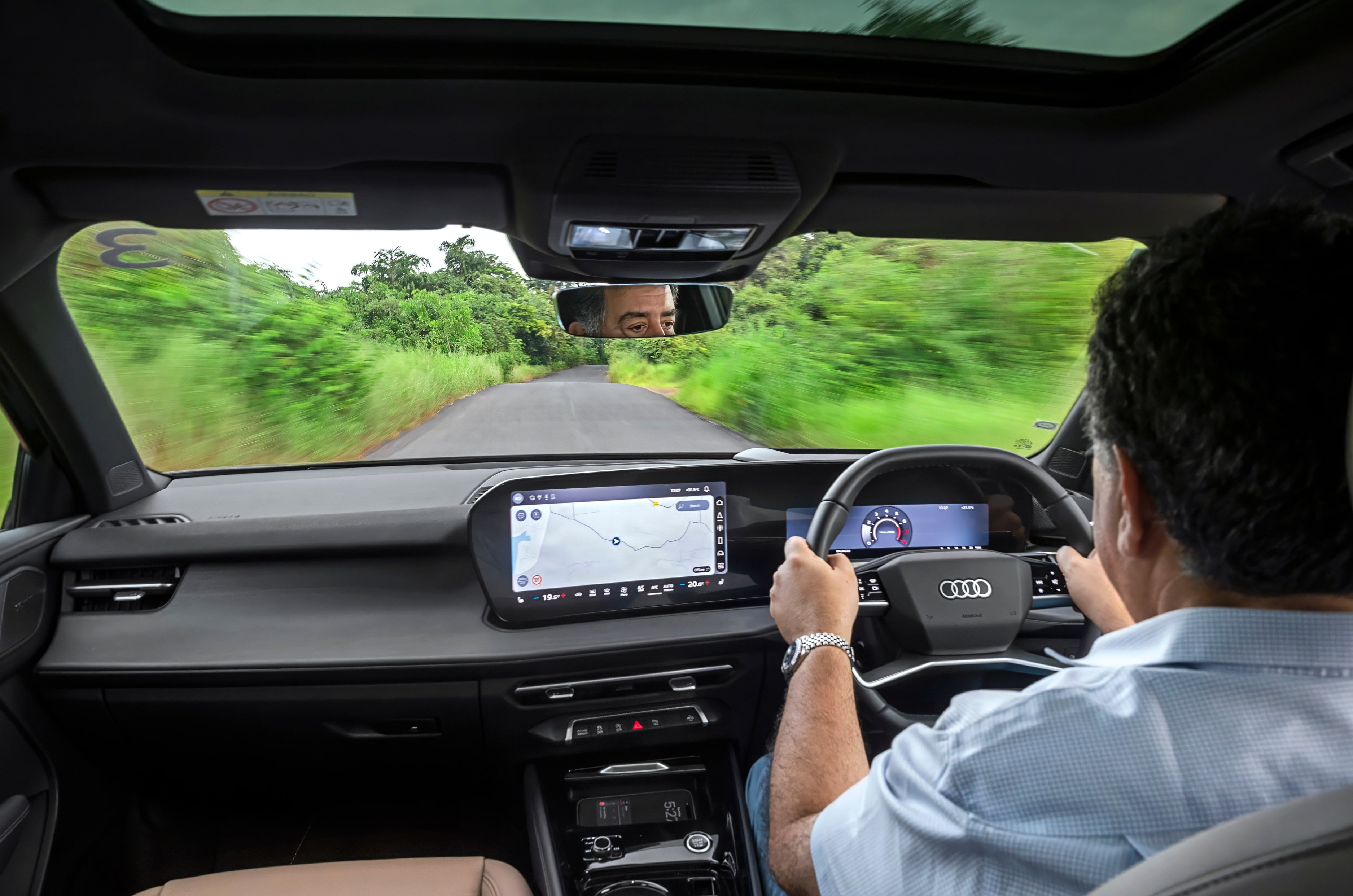
Step inside and the leap over the old Q3 is obvious. The dashboard is clean and contemporary, anchored by a curved panel that houses an 11.9-inch driver’s display and a 12.8-inch touchscreen. Fabric replaces leather across much of the cabin and the lower plastics are on the hard side. Yet the overall impression is of a cabin that’s solidly screwed together, and it feels more robust than its German rivals. Small details help: the fat tabs that adjust the air-con vents have a reassuringly substantial action.

New interior is a big leap over the last model and feels better built than its German rivals

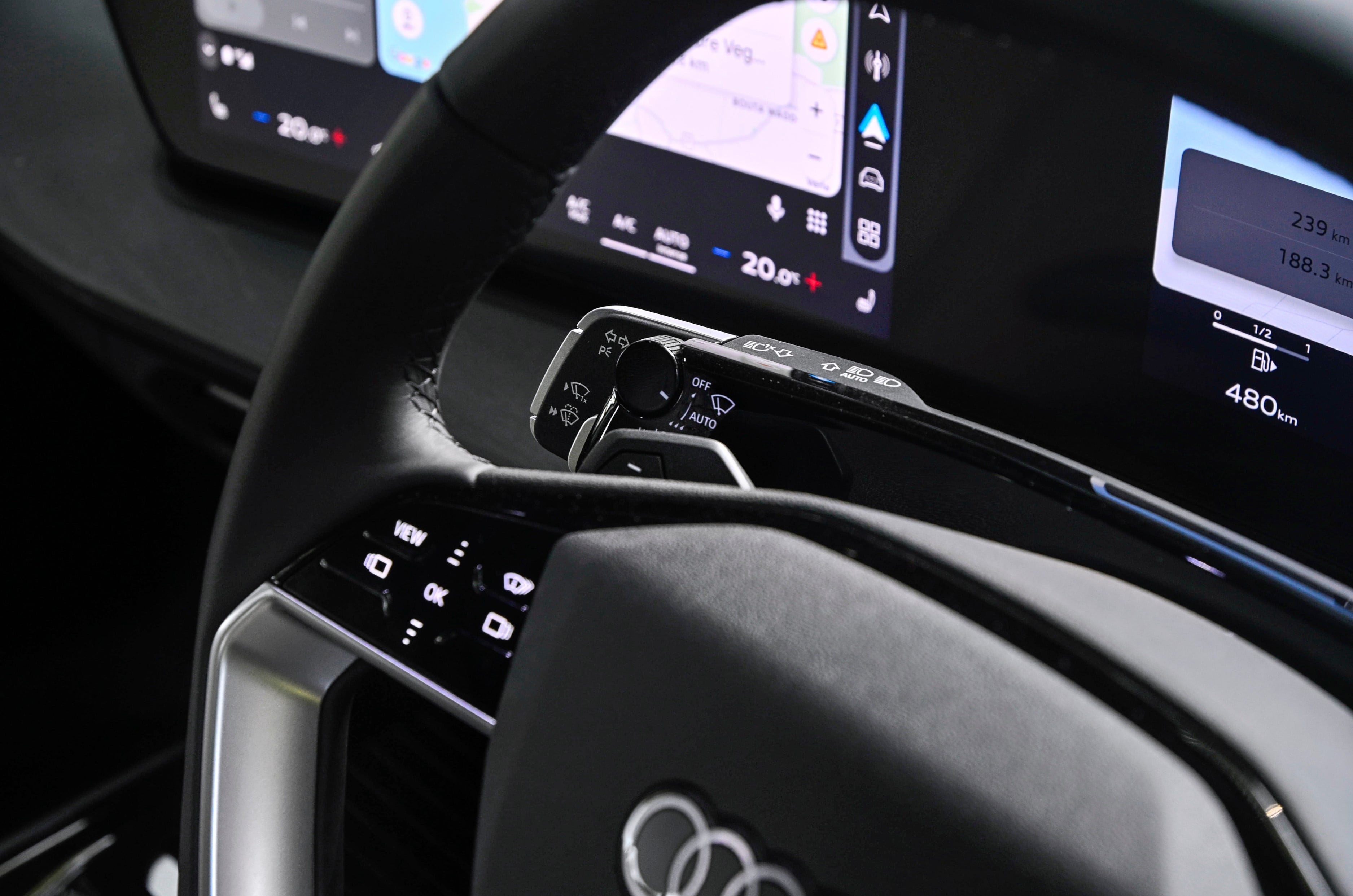
The hexagonal steering wheel takes some getting used to. So does the new control stalk, which Audi has loaded with an astonishing number of jobs: indicators, front and rear wipers and headlamp controls all live on one chunky lever. The gear selector moves to a stalk of its own on the other side. It feels awkward at first, but within a day it becomes second nature.

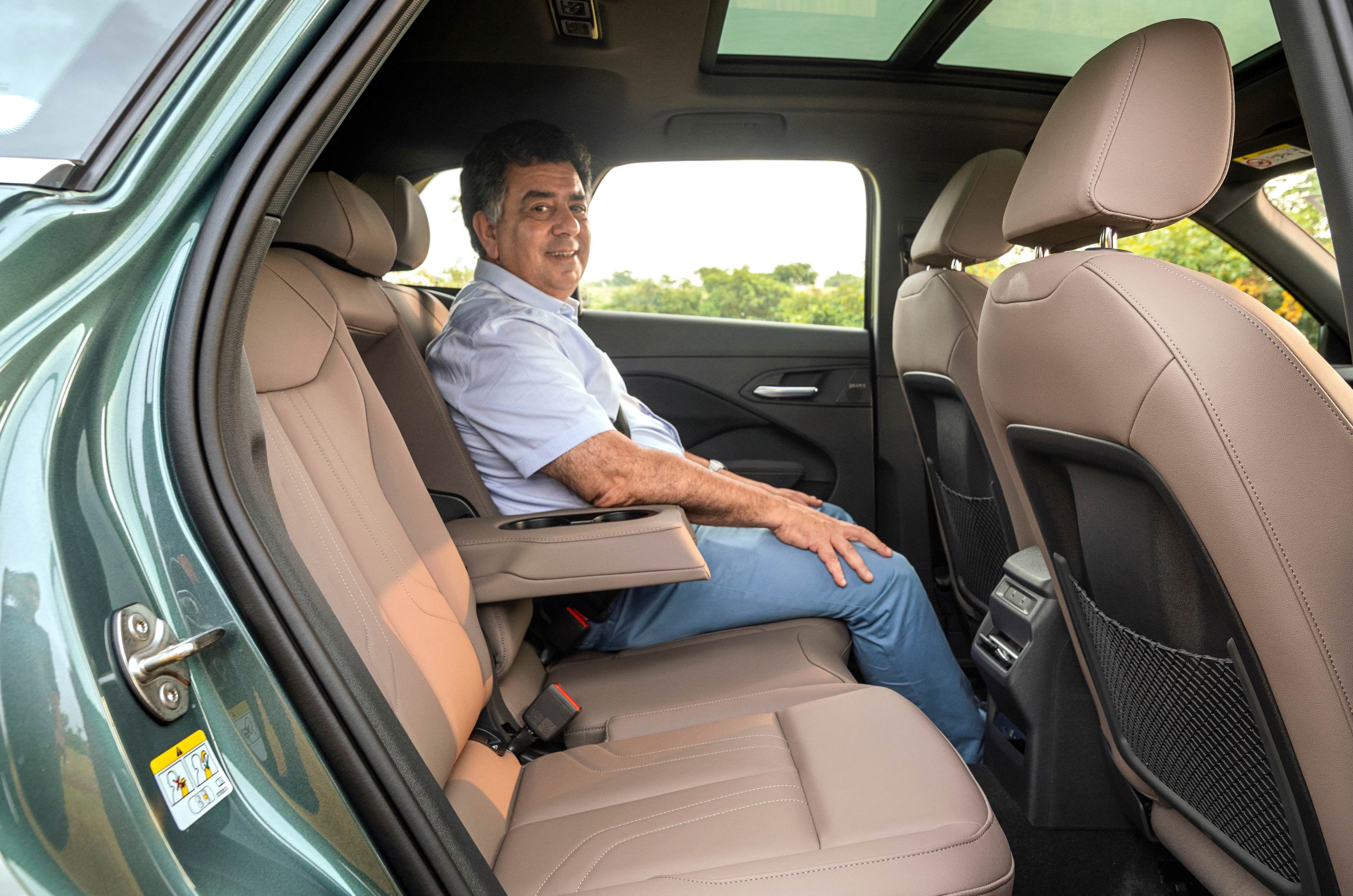
Two adults will be comfortable in the back seat, but a third will feel like a sqeeze

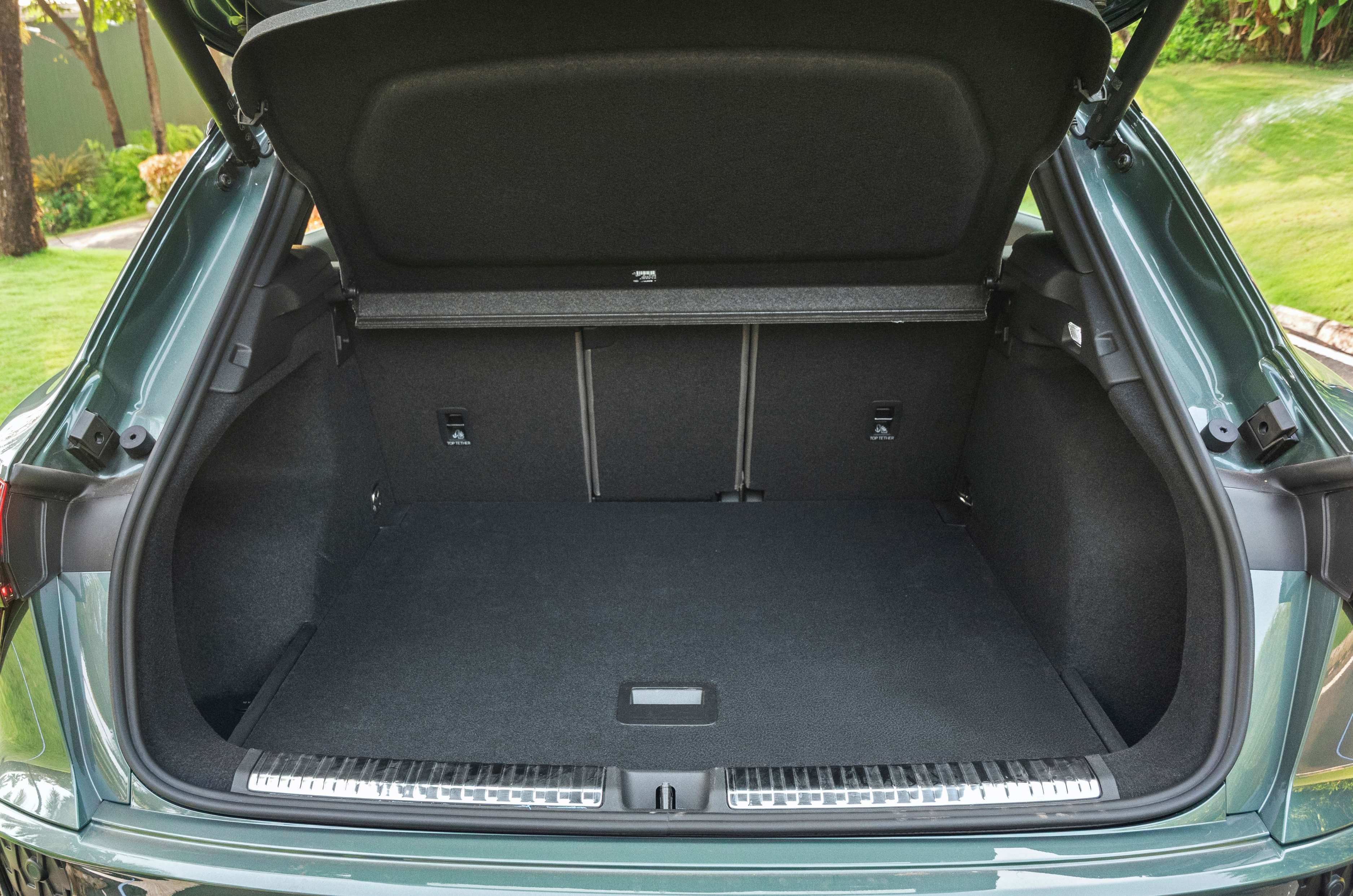
The front seats are generous, well bolstered and very comfortable over long stints. The rear hasn’t moved on much from the old car. Two large adults will be fine, but three is a squeeze; think of it as a four-seater with an occasional fifth. Rear passengers do get a third climate zone and two USB-C ports. The boot is spacious, and it’s good to find a space-saver spare under the floor.

Powered tailgate opens to a large 488-litre boot; seats split 40:20:40 for longer items

Audi Q3 Features and Safety – 7/10

The curved touchscreen works well, and the curvature itself cuts out glare and reflections. Response is smooth and quick, though the icons are, in typical Audi fashion, a bit subdued and not instantly distinguishable. Physical buttons are fewer, but the climate controls sit permanently at the base of the screen, so you never dig through menus to change the temperature or blower speed.  A head-up display brings key information into your line of sight and the fonts are crisp and sharp.

Curved display cuts out glare and reflections

Audi’s own navigation is good, but integrated Google Maps, increasingly the benchmark, is expensive to licence and hence missing. The instrument cluster is surprisingly basic too, with little configurability and minimal choice of layouts and that’s a let-down from the brand that pioneered the virtual cockpit.

We also hit a software glitch with our iPhones. Wireless phone mirroring connected initially, then dropped out and refused to reconnect, prompting a switch to USB. It’s the sort of bug an over-the-air update should fix.

Lighting and wiper controls are odd at first but easy to get used to

The equipment list isn’t thin. There’s a superb-sounding 12-speaker Sonos system, a large panoramic sunroof, powered and heated front seats with driver memory, nine airbags and adaptive cruise control. That cruise works well, too. But for a car costing over Rs 50 lakh and launching in 2026, there gaps that are hard to overlook.

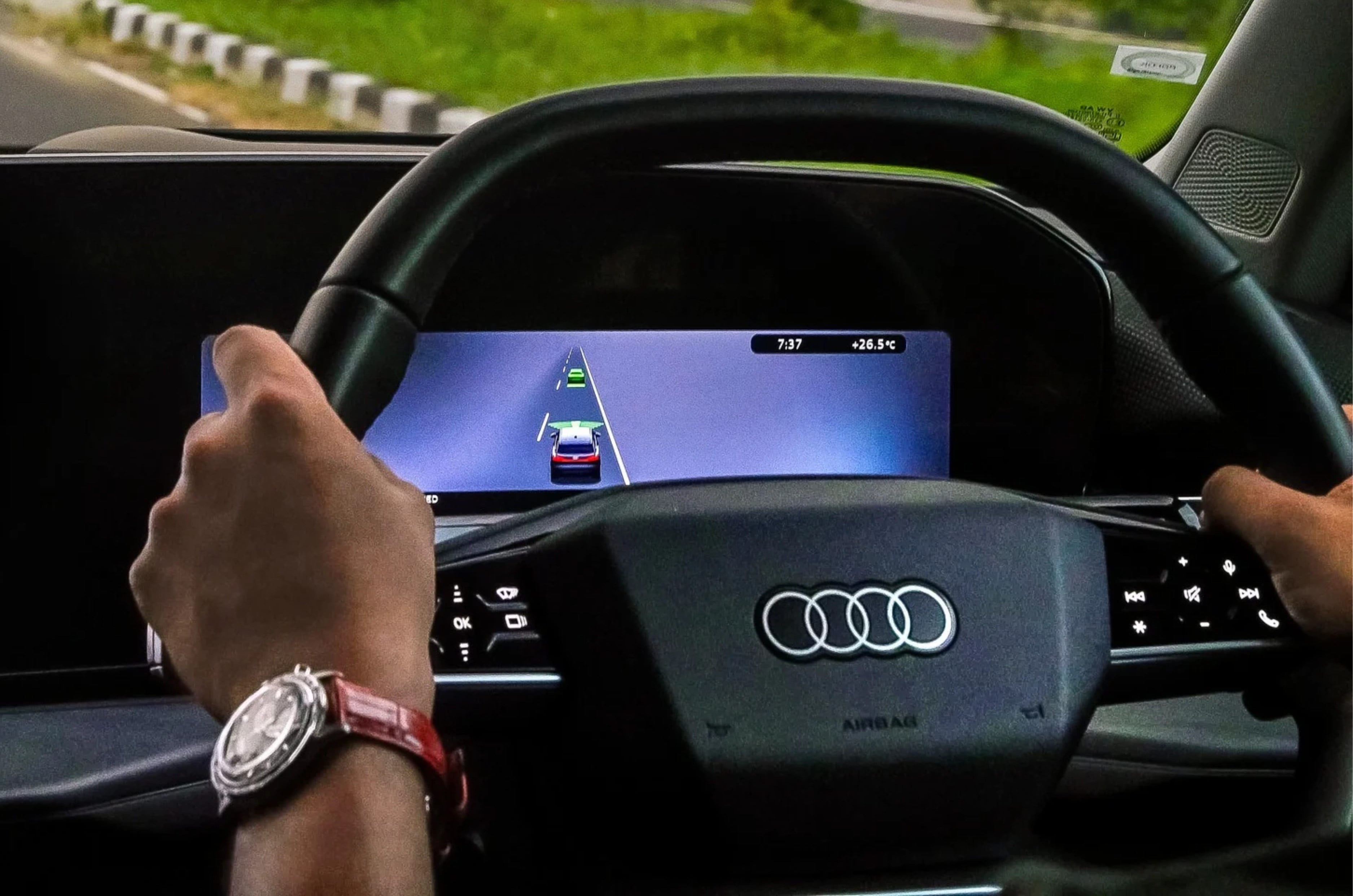
There is no lane-keep assist, so the ADAS suite stops at adaptive cruise. A full Level 2+ package is now table stakes in this class, all the more so when far cheaper mass-market cars offer one. There are no ventilated seats either, near-essential in our climate. The biggest miss, though, is a 360-degree camera, something a great many buyers actively look for. The reversing camera’s resolution is disappointing, although there is an auto-park function.

ADAS kit limited to auto emergency braking and adaptive cruise control

None of this is unusual for its rivals. But as the newest kid on the block, the Q3 should have moved the game on, and here it hasn’t.

Audi Q3 Performance and Refinement – 9/10

The engine is the star of the show. Audi’s 2.0 TFSI makes 201bhp and 320Nm, and it is smooth, strong and refined. That alone hands the Q3 a massive edge over the underwhelming, smaller-capacity motors in the X1 and GLA.

Strong and refined 2.0 TFSI makes 204hp and 320Nm, enough for 0-100kph in 7.1 seconds

It isn’t flawless. At low revs there’s a brief hesitation before it gathers itself and pulls smartly, which is why we left it in Dynamic mode most of the time. Once on the boil, though, it is eager and free-revving, a reminder of why this is the best 2-litre turbo-petrol in the business. Around town it feels responsive; on the highway it builds pace effortlessly. Audi claims 0-100kph in 7.1sec, which puts the Q3 at the top of its class.

The 7-speed dual-clutch remains a fine partner, eager to drop a gear to keep the engine in its powerband. Flick it into Sport or reach for the paddles if you want to take charge. Quattro all-wheel drive is now standard on every Q3, not an option, and there’s a range of drive modes including an off-road setting to make the most of it. It’s good insurance on slippery surfaces and gives the Q3 an edge over rivals when conditions turn tricky. Whether many owners need it, or more importantly will pay extra for it, is another question.

Strikes a great balance of ride and handling; gets Quattro all-wheel drive as standard

Audi Q3 Ride Comfort and Handling – 9/10

The big surprise is the handling. The variable-ratio steering adjusts its response to both speed and lock, so its light and effortless at parking speeds, then quicker and more direct as you wind on more lock. Barring a touch of slack around the straight-ahead, it is accurate and weights up superbly.

Quick steering often makes a car nervous at speed. Not here. The Q3 stays stable and reassuring when the needle climbs, yet changes direction with an agility you simply don’t expect from an Audi SUV.

New Progressive Steering is light at parking speeds, but gets sharper and more direct as speeds rise

What you do expect from an Audi is a good ride, and the Q3 delivers. It is on the firm side but never uncomfortable, soaking up potholes and broken patches with real composure. A big help is the 55-profile tyres. Their roughly 130mm sidewall is the first line of defence, absorbing much of the shock before it reaches the suspension and, ultimately, the cabin.

Audi Q3 Value for Money – 8/10

The new Q3 is a superbly engineered car, and its mechanical package sits well ahead of its rivals. The cabin is a big step up too, but given its timing, the Q3 doesn’t quite leapfrog the competition here; it lands a little short on equipment.

What it does do is drive brilliantly. It is by far the nicest car to drive in its class, and that matters, because Audi says 84 percent of Q3 owners drive themselves.

Easily the nicest car to drive in its class, but doesn’t leapfrog the competition in terms of features

A lot now rides on price. At around Rs 65 lakh on-road, it is steep. Not because the car isn’t worth it, but because buyers may balk at paying so much more than the outgoing Q3, whose transaction price had slipped to around Rs 40 lakh.

On the product front, though, Audi has come back with a bang. A brilliant powertrain, a superb blend of ride and handling and a genuinely classy feel make the Q3 the enthusiast’s pick of the class. If this is the opening act, Audi’s reset is off to a promising start.

Autocar India October 2026 issue

This month, we go big on power and even bigger on premium metal. The cover story is Kia’s biggest swing yet at the executive SUV segment, and then there’s a family SUV with more horsepower than a Lamborghini, and BMW’s electric onslaught continues with a new long-wheelbase sedan and a sharper flagship limousine.

Kia Sorento: Cover Story

Six trims, two powertrains, up to seven seats and 32 variants in all. Kia isn’t dipping a toe into the premium SUV pool; it’s diving straight in, locally assembling the Sorento from Rs 27.99 lakh to take on the Skoda Kodiaq and VW Tayron. Has Kia cracked the code, or has it bitten off more than it can chew?

Porsche Cayenne Electric: First Drive

Forget hypercars. The most powerful vehicle currently on sale in India is a family SUV, the Cayenne Electric, with more horsepower than your senses can fathom. We took it to an airstrip to see what that actually does to your stomach.

BMW i5 LWB & i7 Facelift: First Drives

BMW’s electric push continues, with a long-wheelbase i5 slotting in between the iX1 and flagship i7. Can BMW’s long-wheelbase playbook continue to work? And there’s also the i7 getting a sharper face and more tech to go with it, like it didn’t have enough already.

Mercedes-Benz GLC Electric: Drive

The first-gen electric GLC was far from ideal. The new one, however, is a completely new generation with an 800V architecture, 330kW charging and a claimed 715km range. We took all 489 of its horses to the Autobahn to see how much of an improvement it has been over its predecessor. 

MG Hector Tomahawk EV: First Drive

Don’t let the familiar name fool you. The Hector Tomahawk EV rides on MG’s all-new ADAPT platform, bigger than the Mahindra XEV 9S in every dimension, with a PHEV sibling already waiting in the wings.

Maruti Suzuki Baleno, Renault Triber Turbo and Skoda Slavia: First Drives

India’s favourite premium hatch, the Baleno, gets a new engine and ADAS, the budget-friendly Triber finally gets the power it’s been begging for, and the Slavia’s facelift turns out to be more than skin-deep.

Mahindra Thar OG: First Drive

The original three-door Thar gets another round of updates, bringing changes to its engines, equipment and chassis. With the off-road icon continuing to evolve, we head out to discover what this latest iteration brings to the table.

Taking the High Road: Features

Goa’s new Porvorim Elevated Corridor opens on NH66, and we test it in two ways: solo against Google Maps’ ETA in an MG Cyberster, and then flanked by a dozen supercars, Ferraris, a McLaren 750S and a Lamborghini Huracan among them, for its proper initiation.

Rocket Ship to the Moon: Feature

A Lamborghini SUV is already an exercise in excess. Take it somewhere unexpected, add a little spectacle, and you have the ingredients for an automotive adventure that refuses to be ordinary.

Royal Enfield Himalayan 440

The original Himalayan is back with a bigger engine and a handful of meaningful changes. In a world where adventure bikes keep getting more complicated, there’s something rather appealing about going back to basics.

Tracker 400 vs Guerrilla 450: Comparison

Two left-field street nakeds, the Triumph Tracker 400 and Royal Enfield Guerrilla 450, go head-to-head. One takes its inspiration from flat-track racers, while the other fancies itself a sporty roadster. Both want your money, and neither is particularly interested in being sensible about it.  

KTM Adventure Rally Extreme: Ride

Adventure riding is all well and good until the road disappears, the terrain turns hostile and you begin questioning your life choices. We get a taste of KTM’s rally raid experience, where the only shortcut is having the skill to take one.

Bajaj Pulsar NS200 Updated with Quickshifter and TFT display

Bajaj Pulsar NS200 Updated with Quickshifter and TFT display
An indoor image showing the new Nardo Grey colour of the updated Pulsar NS200

Bajaj continues to update its Pulsar line-up, and the latest one to see feature additions is the Pulsar NS200. While we had previously spotted the NS200 and the N250 with a new instrument cluster and WP USD front fork, the bike that has now reached dealerships doesn’t seem to have the latter feature.

  1. Has a Quickshifter, 4 Ride Modes, Traction control, TFT instrument cluster
  2. Now gets Radial tyres, Adjustable levers and USB Type-C charging 
  3. A New Nardo Grey colour, price expected to increase from current Rs 1.48 lakh

Bajaj Pulsar NS200: what’s new?       

The 200cc engine now produces 25.5hp, 1hp bump

Having offered a bidirectional quickshifter, traction control and riding modes on the Pulsar NS400Z, Bajaj has now trickled these features down to the Pulsar NS200 as well. While the 37mm USD fork is carried over from before, radial tyres are a new addition to the motorcycle, though it remains unclear whether the bike features radial tyres at both ends or only the rear, there has been no official communication from the brand, hence the ambiguity.

There is also a slight bump in power as well, from 24.5hp of the current model to 25.5hp on the latest version. The 5-inch TFT instrument cluster with Google Maps mirroring, first introduced on the N160 SS, has also made its way here. Other listed features include USB Type-C charging, a hazard switch, a panic brake alert, and adjustable levers, though it remains unclear if the adjustability applies to both the clutch and brake levers.

For now, the announcement remains confined to the dealership level. The current USD-fork equipped Pulsar NS 200 is priced at Rs 1.48 lakh, which is on par with its chief rival, the TVS Apache RTR 200 4V (Rs 1.48 lakh to 1.49 lakh). However, given the additional features on the upcoming model, we can expect a price bump when Bajaj officially reveals it.

Source: Tarun Bajaj (X) 

Bajaj Pulsar RS200 spotted with TFT display and USD fork

Bajaj Pulsar RS200 spotted with TFT display and USD fork
Bajaj Pulsar RS200's new 5-inch TFT screen, unchanged side profile and headlight in clockwise direction.

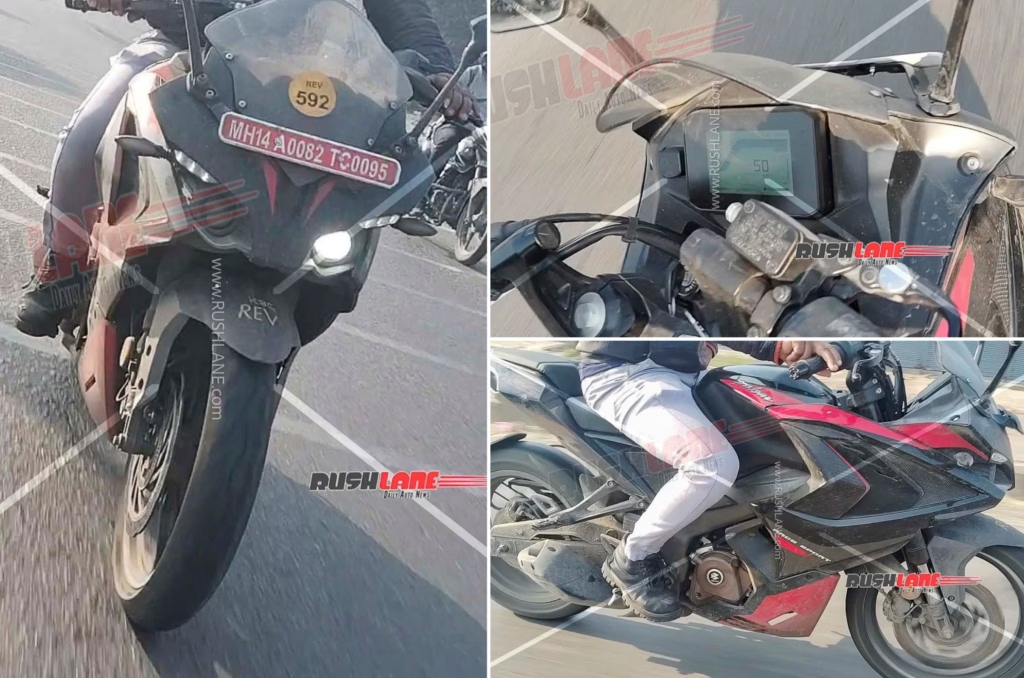
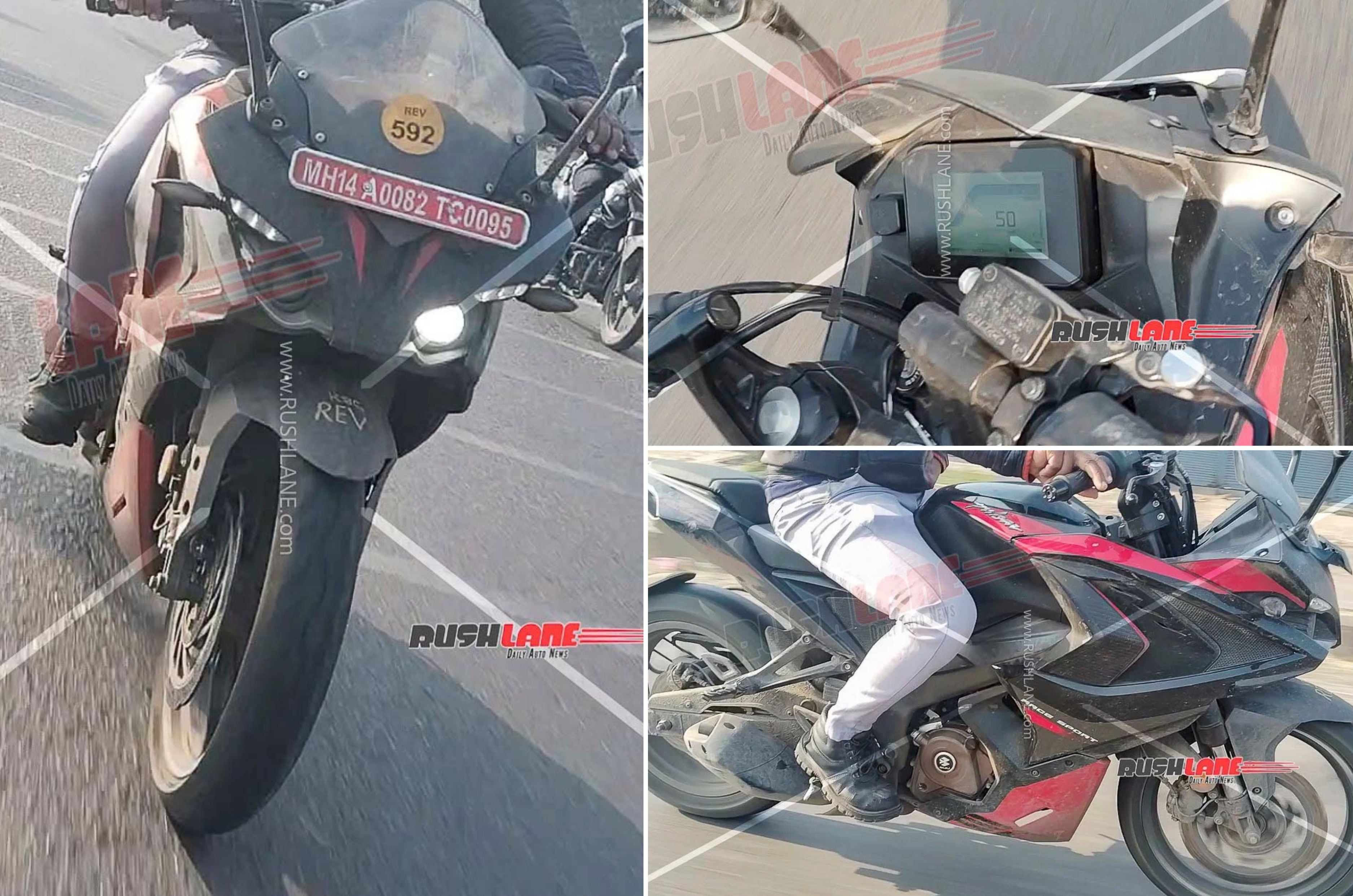
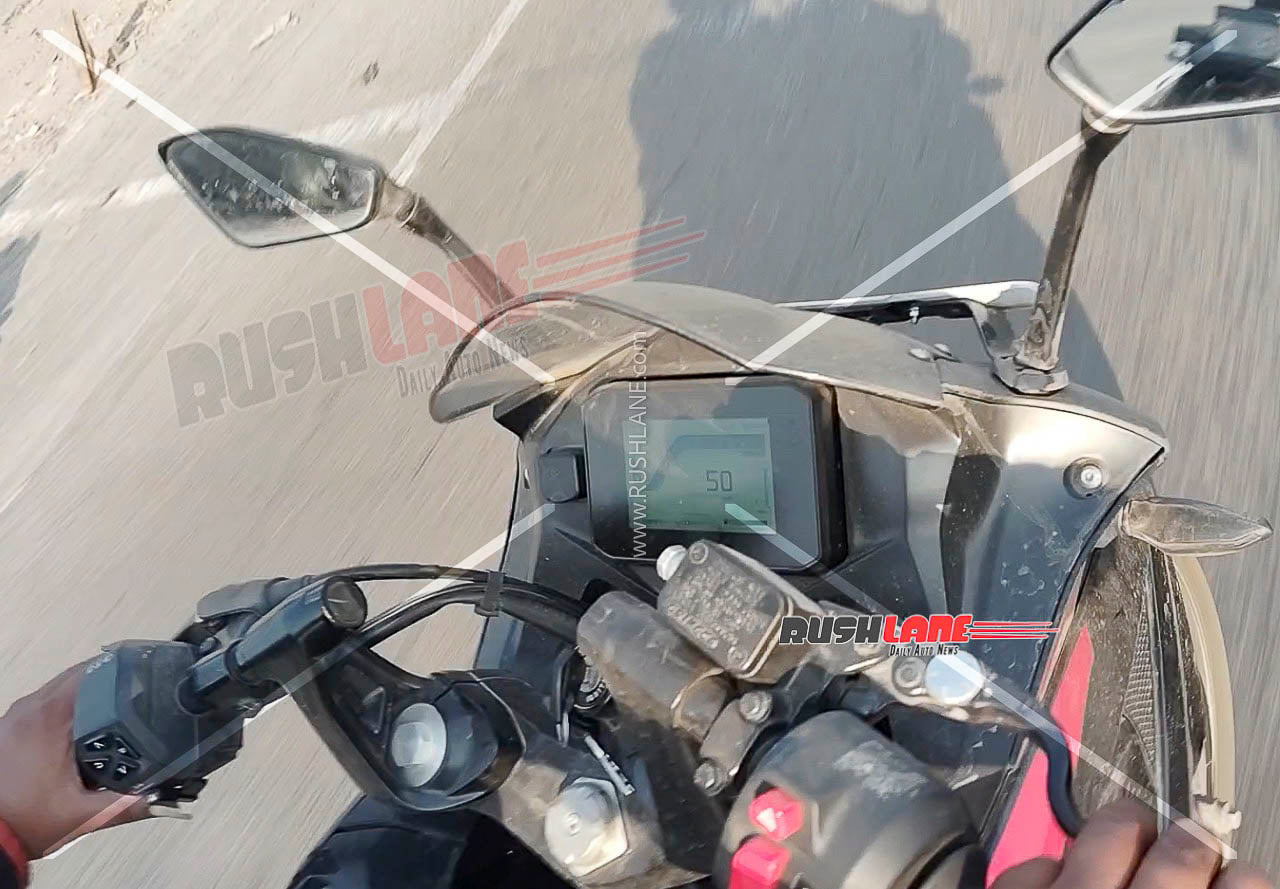
The Southwest monsoon may be over, but in Pune, it appears to be raining Pulsars. After updating the N160, 125, 150, and the NS400Z, the RS200 could be up next to get updated. If these images are anything to go by, it looks to be a pretty massive one as well. Bajaj’s only Pulsar with a fairing was spotted testing with two significant changes: an USD fork and the company’s new 5-inch TFT display that first debuted on the Pulsar N160 SS.

  1. Expected to stick to the same design and the 199.5cc engine with 24.5hp and 18.7Nm
  2. Likely to get new switch cubes and adjustable levers
  3. NS200 expected to get even more updates

Bajaj Pulsar RS200: The story so far

11 years of being in a class of one

Bajaj first introduced the RS200 in 2015, based on the NS200. The official Bajaj full form of RS is Race Sport versus the NS’ Naked Sport. At launch, it was the Pune-based automaker’s first fully-faired motorcycle and till date it remains the only one as well. In its current form, the RS200 has a 199.5cc, single-cylinder, liquid-cooled engine with 24.5hp and 18.7Nm. The standard rider aids on offer are dual-channel ABS and a slip-and-assist clutch which are expected to be carried over. The RS has largely been mechanically similar to the NS200, except of course the front suspension unit. The current RS200 has a right side up (RSU) telescopic fork compared to the NS200, which has had upside down (USD) units since 2023.

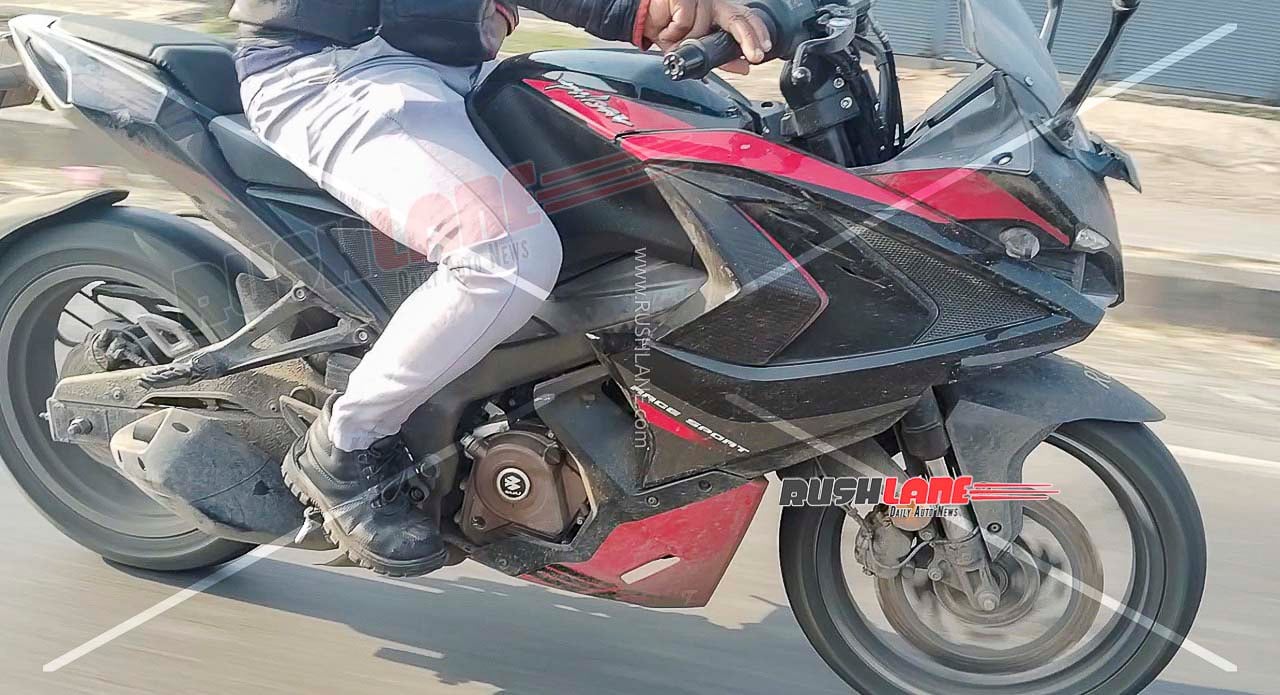
Bajaj Pulsar RS200 side profile

While this update is pretty substantial for the RS200, the NS looks poised to get even more upgrades, such as one extra hp, ride-by-wire, four ride modes, traction control, a quickshifter and radial rear tyre, besides the TFT display. It’s entirely possible that the RS200 will also get these features, and we should hear more about that closer to its launch. If that doesn’t end up being the case, the upcoming RS200 would still be a few beats behind its sport-naked sibling.

Besides giving the RS200 these two, admittedly major mechanical upgrades, Bajaj looks to be taking it easy elsewhere. The motorcycle in the images visually looks very similar to the current version, sharing even the design details on the bodywork. However, it’s possible that Bajaj will bring slight updates to the decals at launch. We do see upgraded switch cubes on both sides though, likely necessitated by the new display. Since the TFT display also supports Google Maps mirroring on the other Pulsars, it’s more than likely that the feature will be present in this RS 200 as well, possibly limited to a higher variant. Adjustable brake and clutch levers can also be seen – a nice touch from Bajaj.

Bajaj Pulsar RS200 with Bajaj's new 5-inch TFT display, USB-C port and updated switch cubes.

Excluding the Pulsars that have already been updated with the TFT display, the NS125 was spotted at a dealership with new colour options and an LCD screen. The NS200 and N250 were spotted testing with the same TFT unit and the upgraded switch cube. This leaves the NS160, Pulsar 180, and the 220F as the three Pulsars without any sort of upgrades thus far. Currently, the RS200 retails for Rs 1.81 lakh (ex-showroom, Delhi) for its single variant. It remains to be seen how much that changes when the upgraded version arrives. For context, all recently upgraded Pulsars have received price increases from Rs 5,000 to as high as Rs 14,000.

Source: Rushlane

Bajaj Pulsar 150 vs TVS Apache RTR 160: Prices and specifications compared

Bajaj Pulsar 150 vs TVS Apache RTR 160: Prices and specifications compared
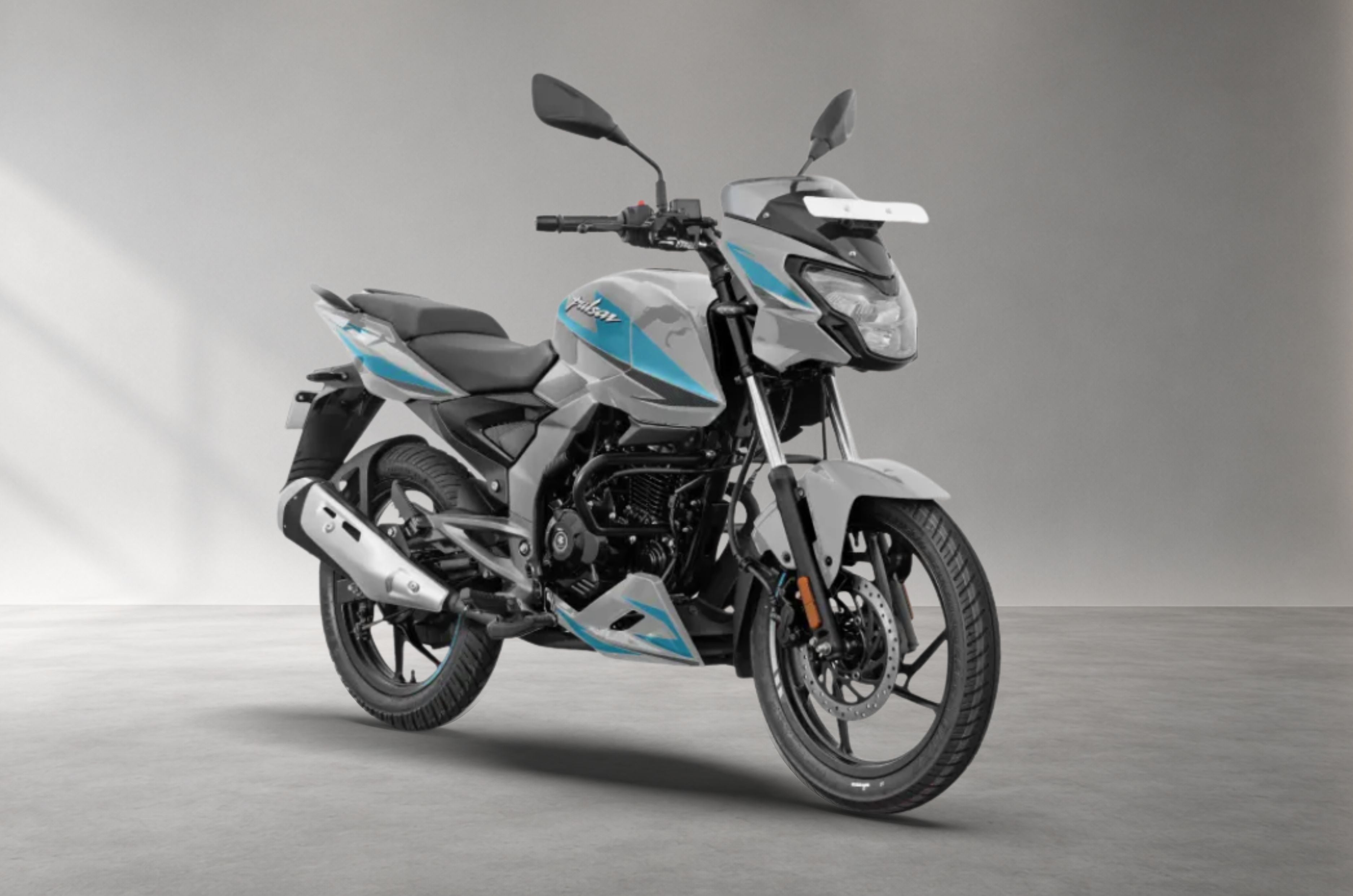
Bajaj Pulsar 150 vs TVS Apache RTR 160 (2V) in clockwise direction.

Bajaj launched the very first Pulsar 150 all the way back in 2001. TVS first responded with the Apache 150 in 2005, and upped the ante with the 160 in 2006. Bajaj, for the Pulsar’s 25th anniversary, effectively rebuilt the Pulsar 150 from scratch, marking some of its biggest changes since the original. TVS responded to this by introducing a new top-variant for the Apache 160 2V with traction control. At the time of writing, the difference in prices between the two is less than the price of six litres of petrol. If you’re not sure which one of these street-nakeds is right for you, we can help with that.

Bajaj Pulsar 150 vs TVS Apache RTR 160 (2V): Engine and output

The older motorcycle is… better?


Bajaj Pulsar 150

TVS Apache RTR 160 (2V)

Engine

149.5cc, single-cylinder, oil-cooled

159.7cc, single-cylinder, air-cooled

Power

14hp at 8,000rpm

16.04hp at 8,750rpm

Torque

14.1Nm at 6,500rpm

13.85Nm at 7,000rpm

Transmission

5-speed

5-speed

Power-to-weight ratio

99.29hp/tonne

115.40hp/tonne

Despite being the older motorcycle of the two, it’s the Apache that has the upper hand in this area. It has the better number for all the metrics; although it delivers both peak power and peak torque higher up in the rev range compared to the Pulsar. The Apache’s power and torque figures vary according to the chosen ride mode, and for this comparison, we’ve taken the figures from the Sport mode, the most powerful one of the three on offer.

Bajaj Pulsar 150 vs TVS Apache RTR 160 (2V): Dimensions and weight

Pulsar gets a notably larger fuel tank


Bajaj Pulsar 150

TVS Apache RTR 160 (2V)

Fuel tank

15 litres

12 litres

Ground clearance

186mm

180mm

Seat height

795mm

790mm

Kerb weight

141kg

139kg

Wheelbase

1338mm

1300mm

With an all-new diamond frame, Bajaj was able to achieve a weight reduction of 9kg on the Pulsar 150 compared to the previous version. However, the Apache is still lighter by 2kg for its top-most variant. It’s also most accessible with a 5mm lower seat height. Do note that the lower seat height also translates to a 6mm lesser ground clearance, and the Pulsar gives you three extra litres of capacity on its fuel tank. In this segment, that translates to at least 120km, not an insignificant number.
Bajaj Pulsar 150 vs TVS Apache RTR 160 (2V): Tyres, brakes, and suspension

TVS (mostly) has the stronger ride package


Bajaj Pulsar 150

TVS Apache RTR 160 (2V)

Tyres (F,R)

80/100-17, 100/90-17

90/90-17, 120/70-17

Brakes (F,R)

260mm disc, 230mm disc; single-channel ABS

270mm disc, 240mm disc; dual-channel ABS

Suspension (F,R)

Telescopic fork, monoshock

Telescopic fork, twin-shock

Bajaj had reduced the rear tyre size on the Pulsar 150 with the new version; the older top variant (Split Seat) had a 120/80-17 size rear tyre. As things stand, the TVS gets the larger tyre on both ends. Do note that TVS gives a slightly smaller 110/80-17 rear tyre on the lower variant. The Apache also has larger disc sizes for its brakes, but both motorcycles get 130mm drum brakes on the lower variants. Apache is the only motorcycle to offer dual-channel ABS, even if it’s limited to the top-two variants. In this section, the Pulsar’s only real advantage is that its newer frame gives it a monoshock, whereas the TVS continues with a twin-shock.

Bajaj Pulsar 150 vs TVS Apache RTR 160 (2V): Features

Newer is better

This is where the Pulsar makes its strongest case to be your motorcycle of choice. The top variant of the Pulsar 150 now gets a 5-inch TFT screen (first debuted on the Pulsar N160 SS) with Google Maps mirroring support, an integrated starter-motor-generator (ISG) to enable silent starts as well as an auto stop/start system. The TVS makes its age very obvious with its LCD instrument cluster; however, it still has bluetooth on the higher variants and can connect to your smartphone for call and SMS alerts, just like the Bajaj. 

Considering how long it’s been since TVS gave it a major upgrade though, it’s impressive how well the Apache holds up against the all-new Pulsar. To give you two examples, both companies offer their own solutions for making low speed riding easier (in stop-and-go traffic, for example); Bajaj calls its version Crawl Mode and TVS calls its version Glide Through Technology (GTT). Both also offer all LED lighting, a feature that reached the TVS later than Bajaj. However, only the Apache gets traction control.

Bajaj Pulsar 150 vs TVS Apache RTR 160 (2V): Price

Neck-and-neck


Bajaj Pulsar 150

TVS Apache RTR 160 (2V)

Price (ex-showroom, Delhi)

Rs 1,15,233-1,28,650 lakh

Rs 1,13,890-1,27,990 lakh

Bajaj has two variants of the Pulsar 150, with a lower variant replacing the TFT screen for an LCD one and losing out on the features that are associated with it. TVS, at the time of writing, offers seven variants for the Apache RTR 160, all separated by about Rs 3,000 difference. However, it’s the Apache that’s more affordable to purchase, even if the difference is just Rs 660. Hopefully, the other differences are enough to help you choose one over the other.
8 motorcycles under Rs 3 lakh with Google Maps mirroring

8 motorcycles under Rs 3 lakh with Google Maps mirroring
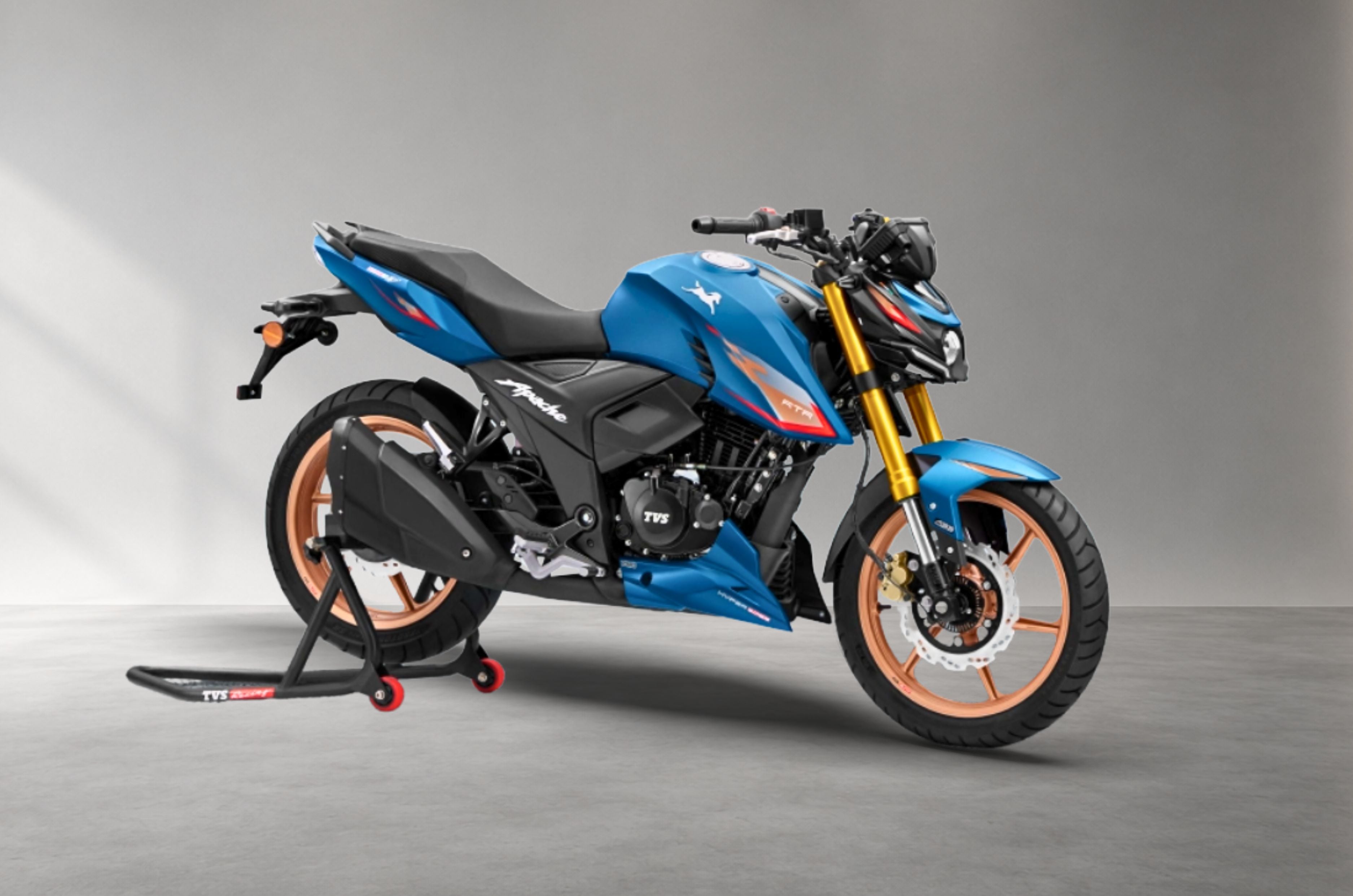
Bajaj Pulsar 125, Pulsar N160 SS, Royal Enfield Guerrilla 450 Apex, and TVS Apache RTR 160 4V in clockwise direction.

Navigation has been one of the major challenges for every aspiring motorcyclist. Unfortunately, major smartphone OS manufacturers don’t deem us profitable enough to solve it for us; but, our OEMs might have a smarter solution for that, by way of Google Maps mirroring. Today, you can buy a motorcycle for as low as Rs 1.04 lakh and still be able to navigate your way through your city, or wherever your heart takes you. Speaking of, let’s start with that very motorcycle.

All prices mentioned are ex-showroom, Delhi for the specific variant with Google Maps mirroring feature.

Bajaj Pulsar 125

Rs 1.04 lakh

Bajaj Pulsar 125

Bajaj had comprehensively upgraded the classic Pulsar 125 with many changes and a whole slew of features, including Google Maps mirroring on the top-most Split Seat variant. Besides that, you get a 124.58cc engine with 12.1hp and 11.4Nm, a front disc brake, and three ride modes. A decent choice if you mostly commute in the city, but if you find yourself on the open roads on every chance you get, look at the bigger brother.
Bajaj Pulsar 150

Rs 1.29 lakh

Bajaj Pulsar 150

Admittedly, Rs 25,000 isn’t a small step-up in this price range. However, besides retaining the same feature-set and silhouette, on the Pulsar 150 you get a larger 149.5cc engine with 14.1hp and 14.1Nm, which should make highway stints seem less stressful on you and the motorcycle; and saying that you have the Pulsar 150 has a better ring to it, but that’s a subjective opinion. If Bajaj isn’t your brand of choice, though, we have another Indian manufacturer known for pushing the envelope on features.
TVS Apache RTR 160 4V

Rs 1.41 lakh

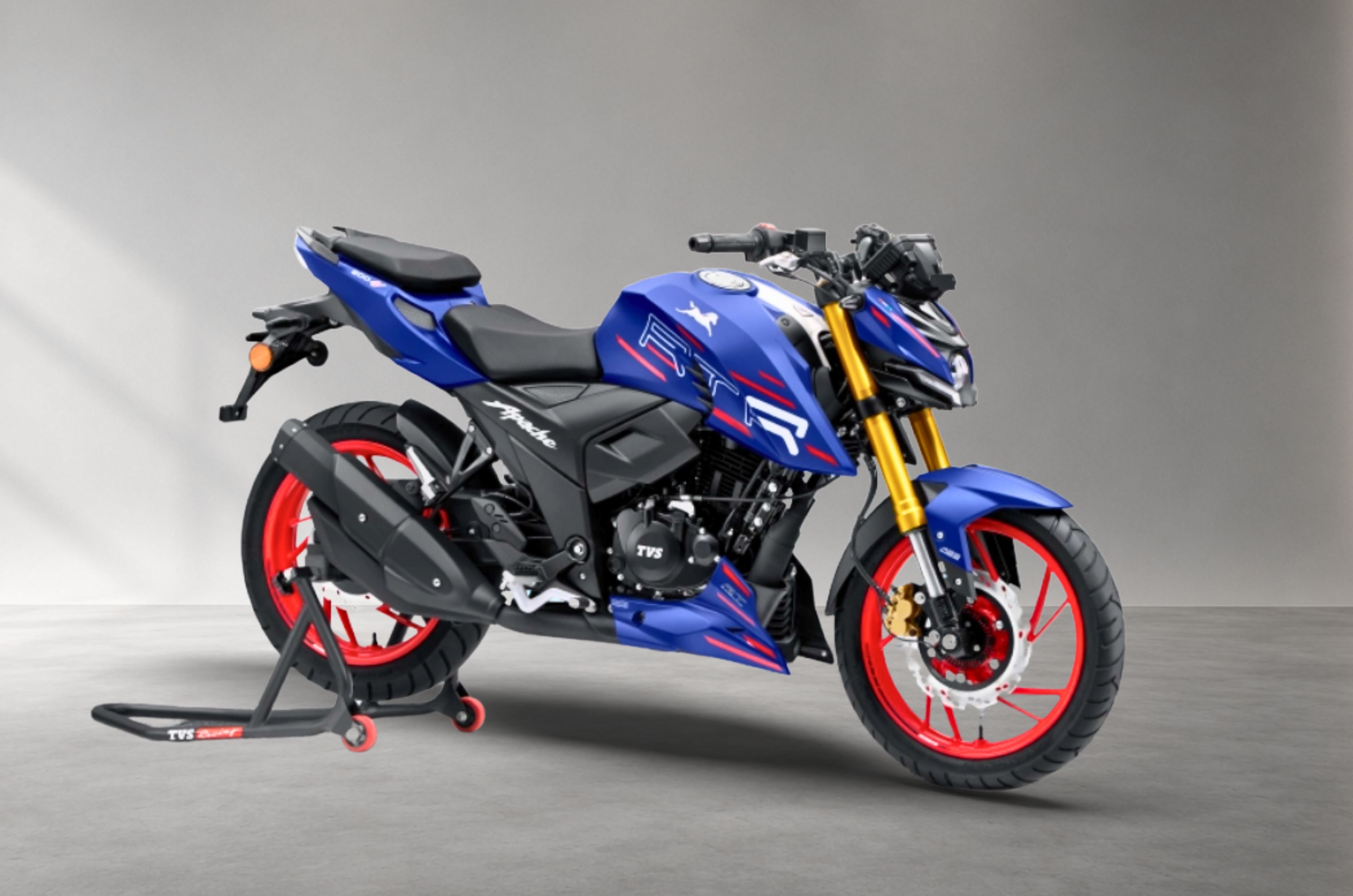
TVS Apache RTR 160 4V

TVS has made the Apache series synonymous with features over the past few years, so of course it responded to Bajaj upgrading the classic Pulsars. Its best-selling Apache RTR 160 4V now also has a TFT display that supports Google Maps mirroring. TVS, in its usual fashion, turns things up a notch by offering even more power from its 159.7cc engine (17.55hp and 14.73Nm) and a whole lot more features like dual-channel ABS, traction control, a slipper clutch, more premium design, etc., That’s quite a bit more for Rs 12,000 over the Pulsar 150 but if you wonder whether Bajaj has a similar offering, fret not.

Bajaj Pulsar N160 SS

Rs 1.43 lakh

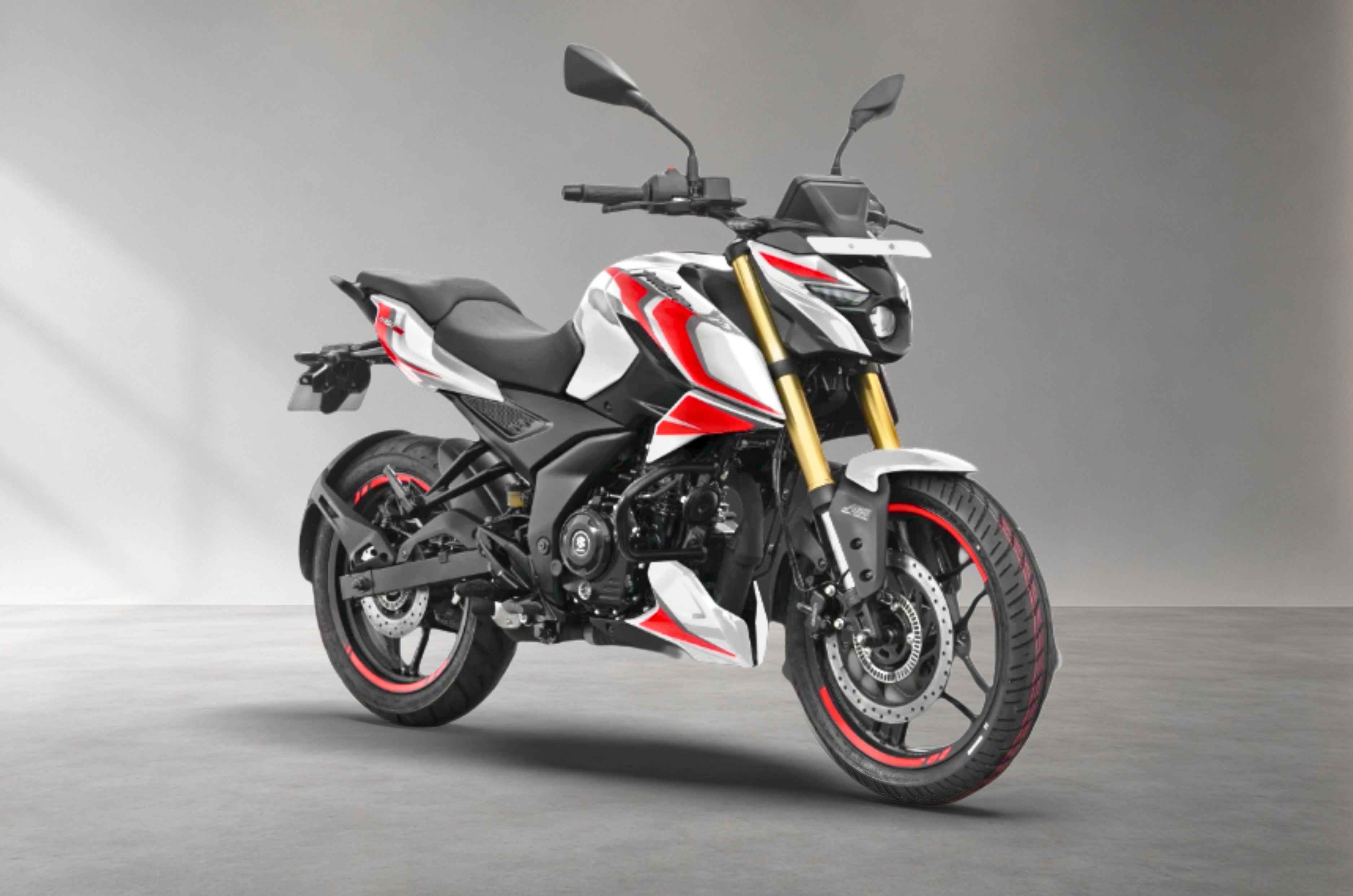
Bajaj Pulsar N160 SS

This is the first motorcycle on which Bajaj debuted the new 5-inch TFT screen with Google Maps mirroring. It’s since been extended to other Pulsars. Over the Pulsar 150, the N160 SS offers a bigger 164.9cc engine with 18.5hp and 14.4Nm (directly sparring with the RTR 160 4V), ride-by-wire, traction control, one extra ride mode, a slipper clutch, and a more modern design that may suit your preferences better. The N160 SS also offers dual-channel ABS as standard. If you feel like you’re done with the 150-160cc class, the next upgrade is closer than you think.

TVS Apache RTR 200 4V

Rs 1.50 lakh

TVS Apache RTR 200 4V

The Apache RTR 200 4V has now been relegated to getting the “et al” treatment from TVS so now it is almost too close to the RTR 160, one might say. However, it retains the bigger 197.75cc engine with close to 21hp and 17.25Nm. The only other feature that still remains exclusive to the 200 is the preload-adjustable USD fork that TVS brought back, with the recent update. Worth paying Rs 7,000 extra You decide, but if you are somehow not satisfied with the value on offer, the next motorcycle wears value-for-money as a badge of honour on its sleeve.

Bajaj Pulsar NS400Z

Rs 1.90 lakh

Bajaj Pulsar NS400Z

Bajaj’s downsized 349cc Pulsar NS400Z has gone down in price again, and the company gave it the same TFT unit as on the other Pulsars just two days ago; and we might see it in even more of their motorcycles soon. Anyway, the NS400Z gives you a steep jump in power with 40.6hp and 33Nm. It retains the feature-set from the N160 SS as-is with power and torque as its biggest differentiation from almost every other motorcycle on this list. If you’re in a phase of your life where you’re on long rides more often than commutes, you might prefer the next motorcycle more.

TVS Apache RTX 300

Rs 2.19 lakh

TVS Apache RTX 300

TVS’s first adventure tourer popularised the feature in question a year ago, offering it on the top and BTO variants. Compared to the NS400Z, you get a smaller 299.1cc engine with 36hp and 28.5Nm. However, the Apache RTX 300 is no slouch in features in any other way, matching the NS400Z on every feature on offer. If you’re an experienced motorcyclist who’d like to tune your ride more minutely, stepping up to the BTO variant at Rs 2.39 lakh might be worth it, considering it gives your adjustable suspension on both ends. If none of these sound exciting enough for you, maybe see if the last one does the trick.

Royal Enfield Guerrilla 450

Rs 2.51 lakh

Royal Enfield Guerrilla 450

Royal Enfield introduced a new 4-inch TFT display with the Himalayan 450 that could project Google Maps powered navigation onto it, making the Chennai-UK based manufacturer technically the first to have figured this solution out. If you didn’t know this already, pressing and holding the M button on your Guerrilla 450 (and the Himalayan and Bear 650) will change the dials to the ‘digital’ look. After that, connecting your smartphone to the Royal Enfield app and starting navigation will make the whole map show on your display.

Getting back to the Guerrilla 450 itself, it’s Royal Enfield’s take on a sport-naked. Similar to most motorcycles on this list, its primary purpose isn’t touring, but when has that ever stopped the determined? The Guerrilla also has a 450cc engine that doles out 40.02hp and 40Nm, making it the most powerful motorcycle on this list. It goes toe-to-toe with the other motorcycles in terms of the features on offer, although most of the additional price is for its extra power (and the 40 percent GST of course).

That concludes the list of motorcycles under Rs 3 lakh with Google Maps mirroring, for now. We expect Bajaj to extend the same TFT display to even more of their portfolio in the near future. TVS might respond to that in their own, unique way so this list is all but guaranteed to grow even more in the near future. It’s one more significant hurdle removed for a motorcyclist, and every meaningful step counts.

Bajaj Pulsar NS400Z with TFT launched at Rs 1.90 lakh

NS400Z studio image

A week after the updated Pulsar NS400Z with a TFT console was spotted at a dealership, Bajaj has officially launched the bike at Rs 1.90 lakh. Aside from the new 5-inch TFT instrument cluster, Bajaj has added a couple of noteworthy features to its flagship model.

  1. Updated NS400Z gets a 5-inch TFT with Google Maps mirroring and music control
  2. Also gains a USB Type-C port and panic brake alert
  3. Costs Rs 4,000 more than the standard NS400Z

Updated Bajaj Pulsar NS400Z details

It’s the same TFT cluster that Bajaj has been rolling out across its Pulsar range

The 5-inch TFT cluster on the updated NS400Z is the same unit Bajaj has progressively introduced across the Pulsar line-up this year: first on the N160 SS, then the Pulsar 125 and 150, and now the NS400Z. The display allows riders to use Google Maps mirroring for turn-by-turn navigation, besides offering music management and document storage. A lap timer is also included. Connectivity is handled via Bluetooth, and a USB Type-C charging port has been added as well. Another addition is a panic brake alert system, which activates the hazard lights under hard braking.

Everything else on the NS400Z remains unchanged. The 349cc single-cylinder liquid-cooled engine continues to produce 40hp at 9,000rpm and 33Nm at 7,500rpm, paired with a 6-speed gearbox. The existing package comprising an electronic throttle body, four ride modes, traction control, 43mm USD front fork, dual-channel ABS and radial tyres has been carried over.

At Rs 1.90 lakh (ex-showroom, Delhi), the model with the TFT console costs a modest Rs 4,000 more than the standard bike.