Android फोन की बैटरी लाइफ कैसे बढ़ाएं? देखें स्टेप-बाय-स्टेप प्रोसेस

हर तरह के Android स्मार्टफोन की बैटरी समय के साथ जल्दी खत्म होने लगती है, फिर चाहे उसमें कितनी भी बड़ी बैटरी क्यों न लगी हो। ऐसा इसलिए होता है क्योंकि हर चार्जिंग साइकल के साथ बैटरी अपनी ओरिजिनल क्षमता खो देती है और आखिर में इतनी खराब हो जाती है कि इस्तेमाल के लायक नहीं रहती। हालांकि, अगर आप फोन का ज्यादा इस्तेमाल करते हैं और आपका Android फोन जरूरत से पहले ही बंद हो जाता है, तो कुछ आसान आदतें अपनाकर आप बैटरी को ज्यादा समय तक चला सकते हैं। इसके अलावा, फोन की कुछ सेटिंग्स में बदलाव करके भी बैटरी लाइफ बढ़ाई जा सकती है। साथ ही, फोन में कुछ ऐप्स और प्रोसेस ऐसे भी होते हैं, जो बैकग्राउंड में चलते रहते हैं और आपको पता भी नहीं चलता कि वे बैटरी खर्च कर रहे हैं। ऐसे में आप इन सेटिंग्स को बदलकर आप फोन के अचानक बंद होने की समस्या से बच सकते हैं।

हमने आपके लिए एक स्टेप-बाय-स्टेप गाइड तैयार की है जिससे आप अपने Android हैंडसेट की बैटरी लाइफ को जितना हो सके उतना बढ़ा सकते हैं।

Android फोन की बैटरी जल्दी खत्म होने की वजहें

आपके एंड्रॉयड फोन की बैटरी उम्मीद से ज्यादा जल्दी खत्म होने के कई कारण हो सकते हैं। अगर आप लगातार अपने फोन को हाई स्क्रीन ब्राइटनेस पर इस्तेमाल करते हैं, तो बैटरी लाइफ पर बुरा असर पड़ सकता है, क्योंकि बैटरी का एक बड़ा हिस्सा डिस्प्ले को पावर देने में खर्च होता है। इसी तरह, अगर फोन के बैकग्राउंड में कई ऐप्स और प्रोसेस चल रहे हैं जिनका आप इस्तेमाल नहीं कर रहे हैं, तो आपका Android फोन आपकी जानकारी के बिना बैटरी खर्च कर सकता है।

इस तरह, अगर Wi-Fi, मोबाइल डेटा या Bluetooth जैसी कनेक्टिविटी सेटिंग्स जरूरत न होने पर भी ऑन रहती हैं, तो फोन लगातार दूसरे डिवाइस या नेटवर्क को खोजता रहता है। इससे भी बैटरी पर अतिरिक्त दबाव पड़ सकता है।

एक और वजह स्क्रीन टाइमआउट का सही तरीके से सेट न होना हो सकती है। अगर स्क्रीन लंबे समय तक अपने आप बंद नहीं होती, तो फोन इस्तेमाल न होने पर भी डिस्प्ले जलता रहता है और बैटरी तेजी से खत्म होती है।

इसके अलावा, Google Maps और अन्य नेविगेशन ऐप्स सहित लोकेशन सेवाएं लगातार आपके डिवाइस की लोकेशन ट्रैक करती रहती हैं। Google का कहना है कि इससे आपके Android फोन की बैटरी लगातार खत्म होती रहती है, चाहे आप इसका इस्तेमाल कर रहे हों या नहीं। साथ ही, Light Mode में, आपका स्मार्टफोन हल्के रंगों को दिखाने के लिए ज्यादा बैटरी पावर का इस्तेमाल करता है, खासकर अगर आपके फोन में AMOLED डिस्प्ले है। हालांकि, यह ध्यान देने योग्य है कि इस्तेमाल के साथ-साथ सभी फोन की बैटरी धीरे-धीरे कम होती जाती है।

Android फोन की बैटरी लाइफ कैसे बढ़ाएं

  1. Adaptive Brightness ऑन करें: फोन के Control Centre या Settings में जाकर Adaptive Brightness ऑन कर दें। इससे फोन का सेंसर आसपास की रोशनी के हिसाब से स्क्रीन की ब्राइटनेस अपने आप कम या ज्यादा करेगा। इससे जरूरत के मुताबिक ही बैटरी खर्च होगी।
  2. स्क्रीन की ब्राइटनेस खुद कम करें: अगर Adaptive Brightness के बाद भी स्क्रीन ज्यादा चमकदार लगती है, तो ब्राइटनेस को मैन्युअली कम कर दें। इससे बैटरी ज्यादा देर तक चल सकती है।
  3. Screen Timeout कम करें: Settings में जाकर Screen Timeout का समय कम कर दें। इससे फोन इस्तेमाल न होने पर स्क्रीन ज्यादा देर तक ऑन नहीं रहेगी और बैटरी की बचत होगी।
  4. Keyboard की आवाज और Vibrations बंद करें: कीबोर्ड की आवाज और हर टाइपिंग पर होने वाली वाइब्रेशन भी बैटरी खर्च करती है। इन्हें Settings > Keyboard Settings में जाकर बंद किया जा सकता है।
  5. Notifications को मैनेज करें: फोन में आने वाले गैर-जरूरी नोटिफिकेशन बंद कर दें। सिर्फ जरूरी ऐप्स को नोटिफिकेशन भेजने की अनुमति देने से बैटरी की खपत कम हो सकती है।
  6. Background में चलने वाले ऐप्स को सीमित करें: यह बैटरी बचाने का सबसे जरूरी तरीका है। Background App Activity को सीमित करने से इस्तेमाल न होने वाले ऐप्स बैकग्राउंड में लगातार चलने और रिफ्रेश होने से बचेंगे। इसे Settings में जाकर मैनेज किया जा सकता है।
  7. Battery Saver Mode ऑन करें: अगर फोन की बैटरी तेजी से खत्म हो रही है, तो Battery Saver Mode ऑन कर दें। इसे Quick Settings या Control Centre से आसानी से चालू किया जा सकता है।
  8. Dark Mode का इस्तेमाल करें: बैटरी बचाने के लिए Dark Mode ऑन करना भी फायदेमंद हो सकता है। खासकर AMOLED डिस्प्ले वाले फोन में काले हिस्सों के पिक्सल बंद हो जाते हैं, जिससे पावर की बचत हो सकती है।
  9. बैटरी की लाइफ बेहतर रखने के लिए फोन को बार-बार जरूरत से ज्यादा चार्ज करने से बचें। साथ ही, बैटरी पूरी तरह खत्म होने के बाद फोन बंद होने का इंतजार न करें।
  10. फोन को बहुत ज्यादा गर्मी या ठंड में इस्तेमाल करने से बचें। Extreme Temperature बैटरी की क्षमता और उसकी लाइफ पर असर डाल सकता है।
  11. अगर फोन में ऐसे Google या दूसरे अकाउंट जुड़े हैं जिनका आप इस्तेमाल नहीं करते, तो उन्हें हटा दें। Google के मुताबिक, इससे भी Android फोन की बैटरी लाइफ बेहतर रखने में मदद मिल सकती है।

यह भी पढ़ें: Lava ने लॉन्च किया दमदार 5G फोन, 6GB RAM-50MP कैमरा समेत मिलेंगे ये धांसू फीचर्स, जानें कीमत और ऑफर्स
All-new Bajaj Pulsar 150 launched from Rs 1.15 lakh

All-new Bajaj Pulsar 150 launched from Rs 1.15 lakh

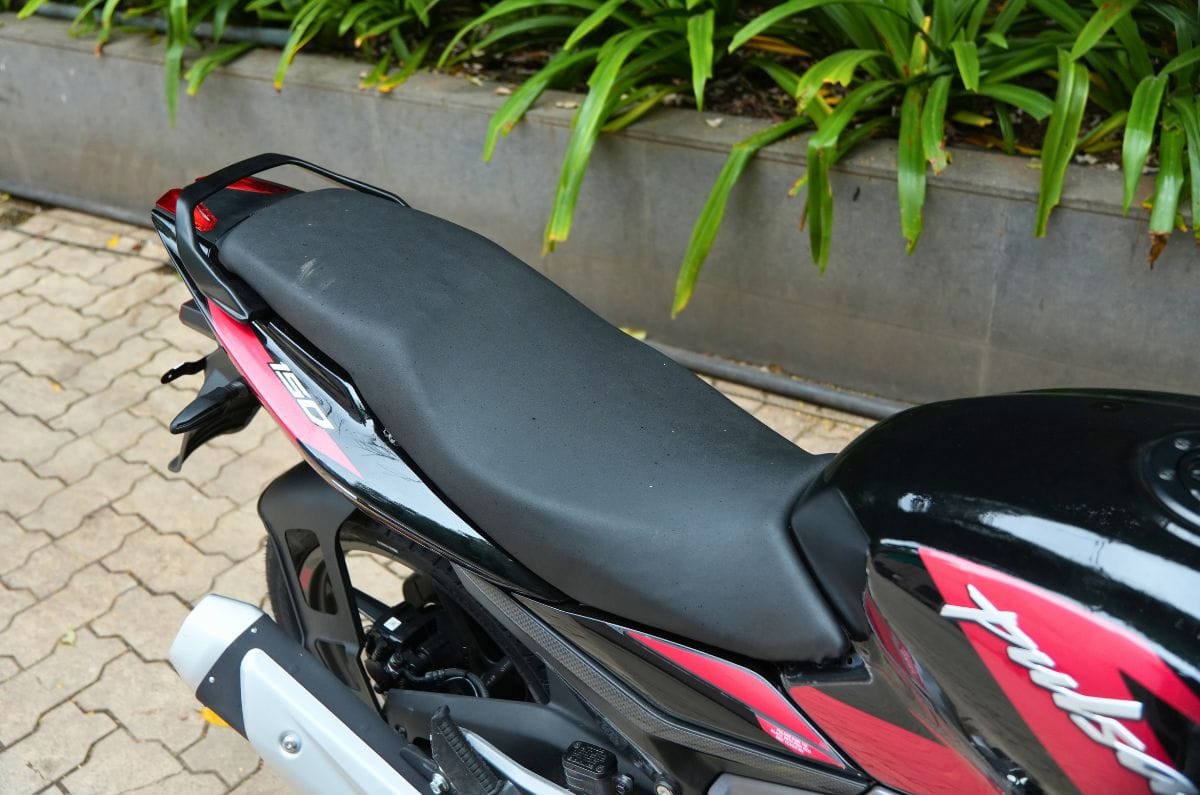
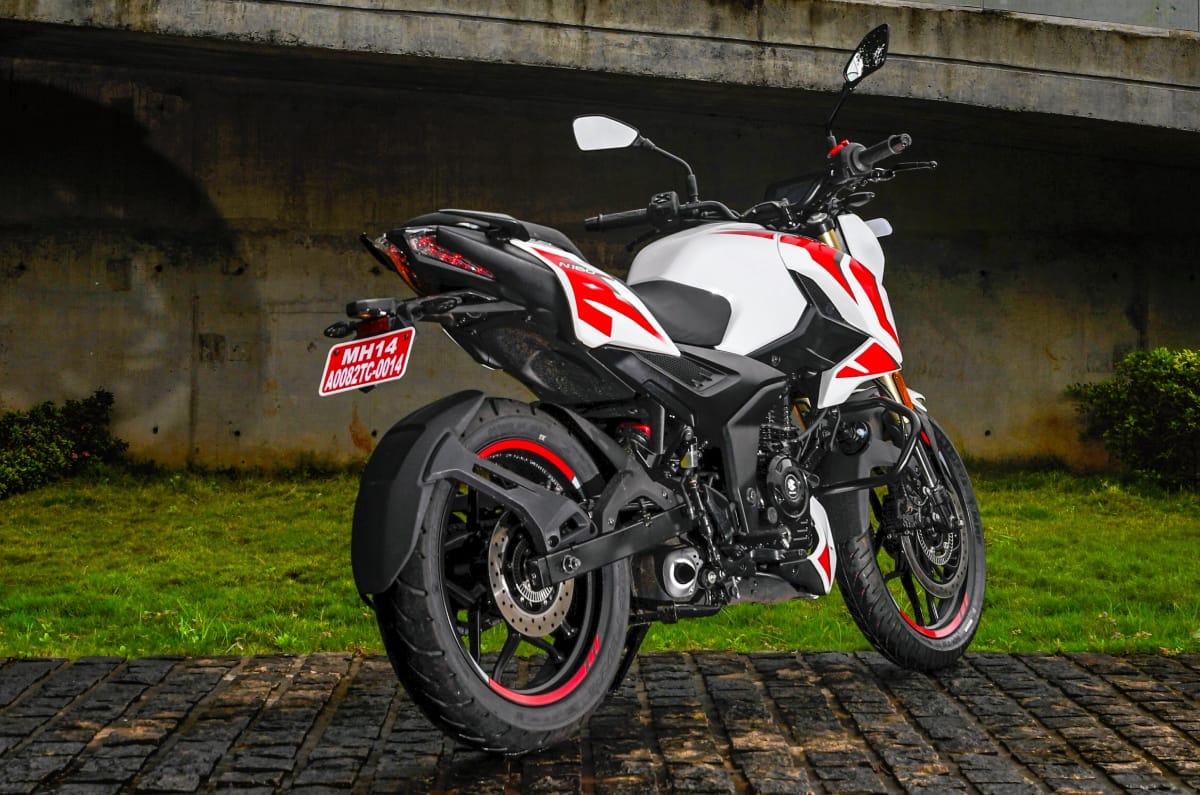
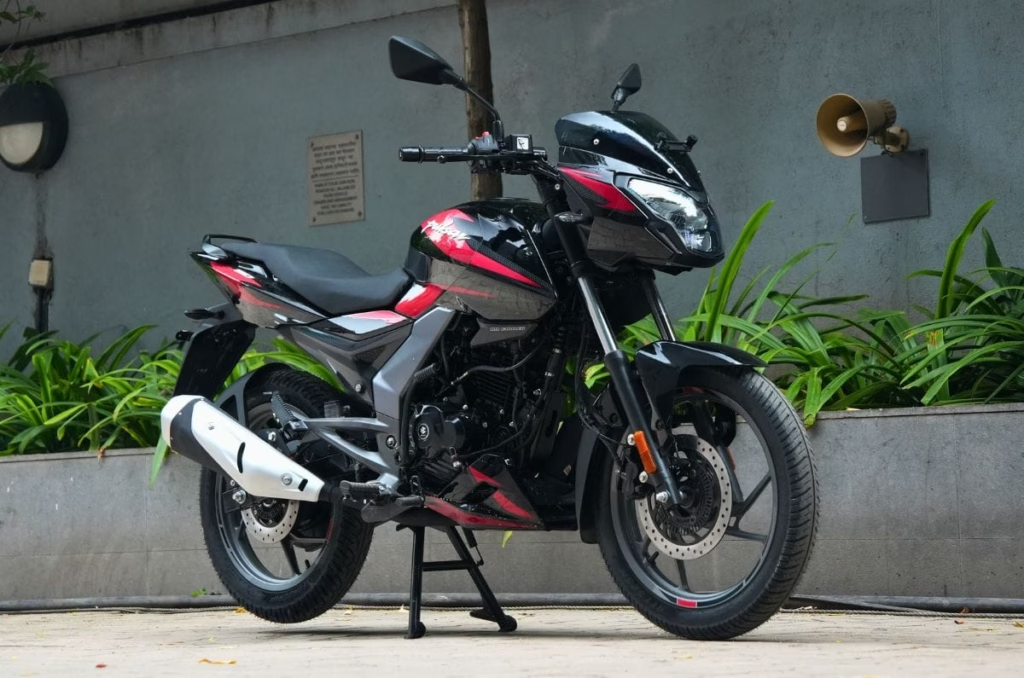
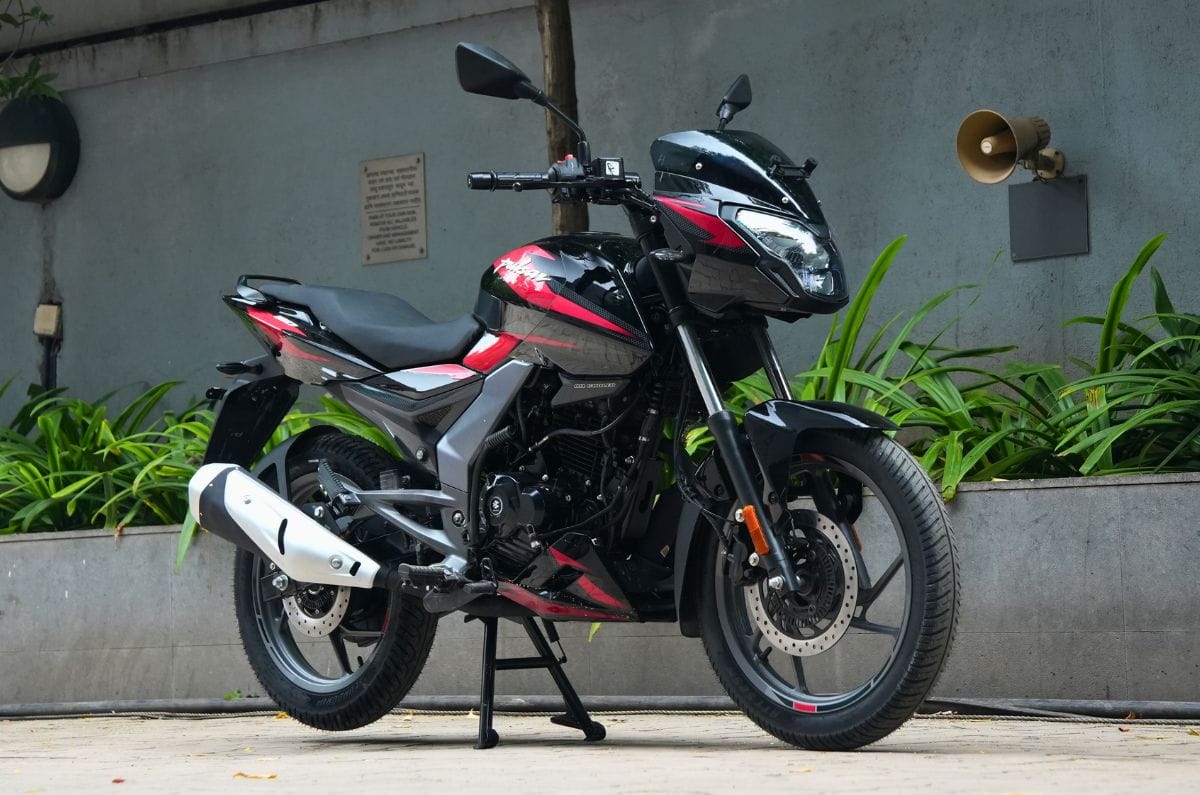
After months of anticipation and teasing, Bajaj has finally revealed an all-new Pulsar 150 today with almost all the parts of the motorcycle receiving substantial upgrades while retaining the classic Pulsar silhouette. There are three variants now, SD Single Seat, TD Single Seat, TD Split Seat. The latter two variants get a 5-inch TFT instrument cluster and an Integrated Starter Generator (ISG). All three models also get a crawl mode to make navigating traffic easier.

  1. Gets three variants, top variant gets Google Maps mirroring
  2. New gearbox with easier lower end tractability
  3. ISG and crawl modes to make low speed riding even easier

Gets meaningful updates everywhere

With a bunch of new features

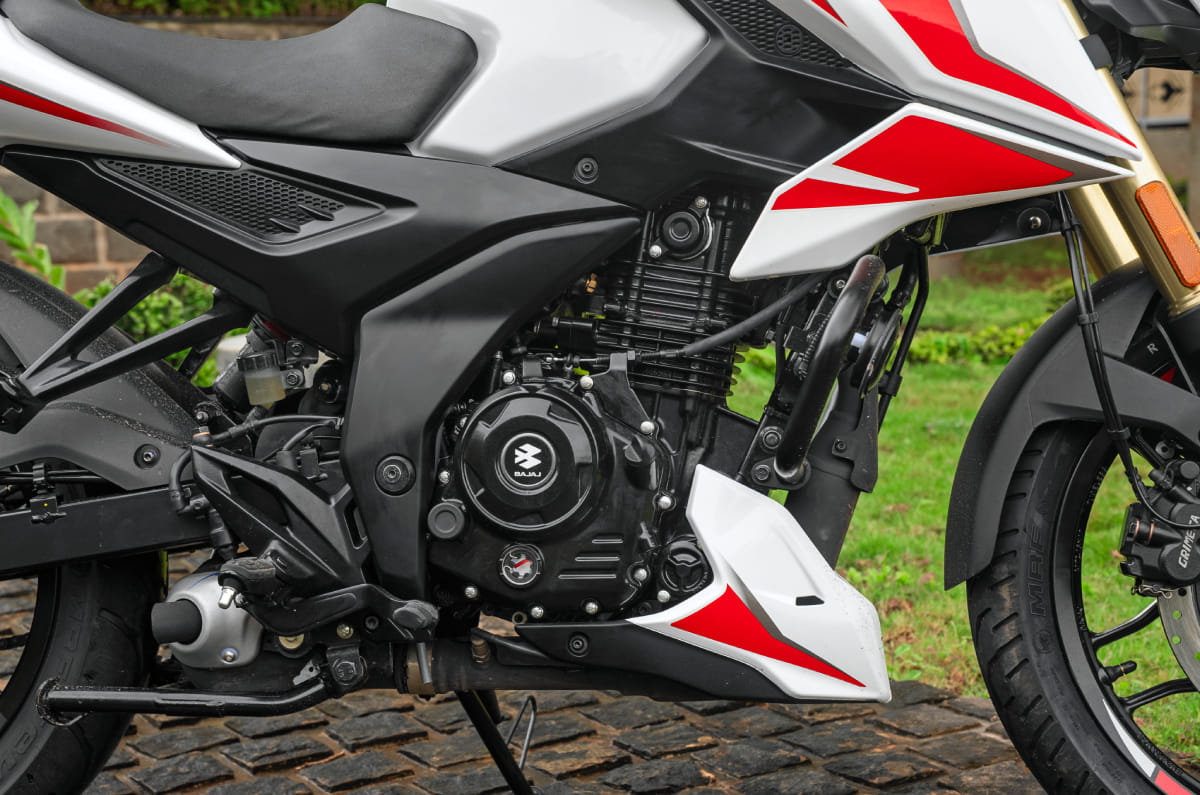
Starting with the 149.5cc, single-cylinder, air/oil-cooled engine which at first glance looks similar to the existing one, with the same 14hp power. However, the engine has two major changes. The peak power is now delivered at 8,000rpm, 500rpm earlier than the existing engine. And peak torque has gone up to 14.1Nm; 0.9Nm more than before, though it is delivered at the same 6,500rpm. Bajaj has also given the motorcycle a new gearbox with specific focus on low speed tractability. The frame too sees an upgrade with a new single-cradle frame replacing the dual-cradle frame. The engine now acts as a stressed member of the engine, which Bajaj says improves overall ride and stability.

The next big change is that the rear suspension is now a monoshock, as opposed to the conventional twin-shocks setup. The front continues with a right side up (RSU) telescopic fork with 33mm diameter with 125mm of travel and the rear suspension travel is 110mm. Stopping duties are handled by a 260mm front disc and a 230mm rear disc (130mm rear drum on the base variant). All three variants get single-channel ABS as standard. Rounding off the ride package are the tubeless 80/100-17 tyres at the front and 100/90-17 at the rear.

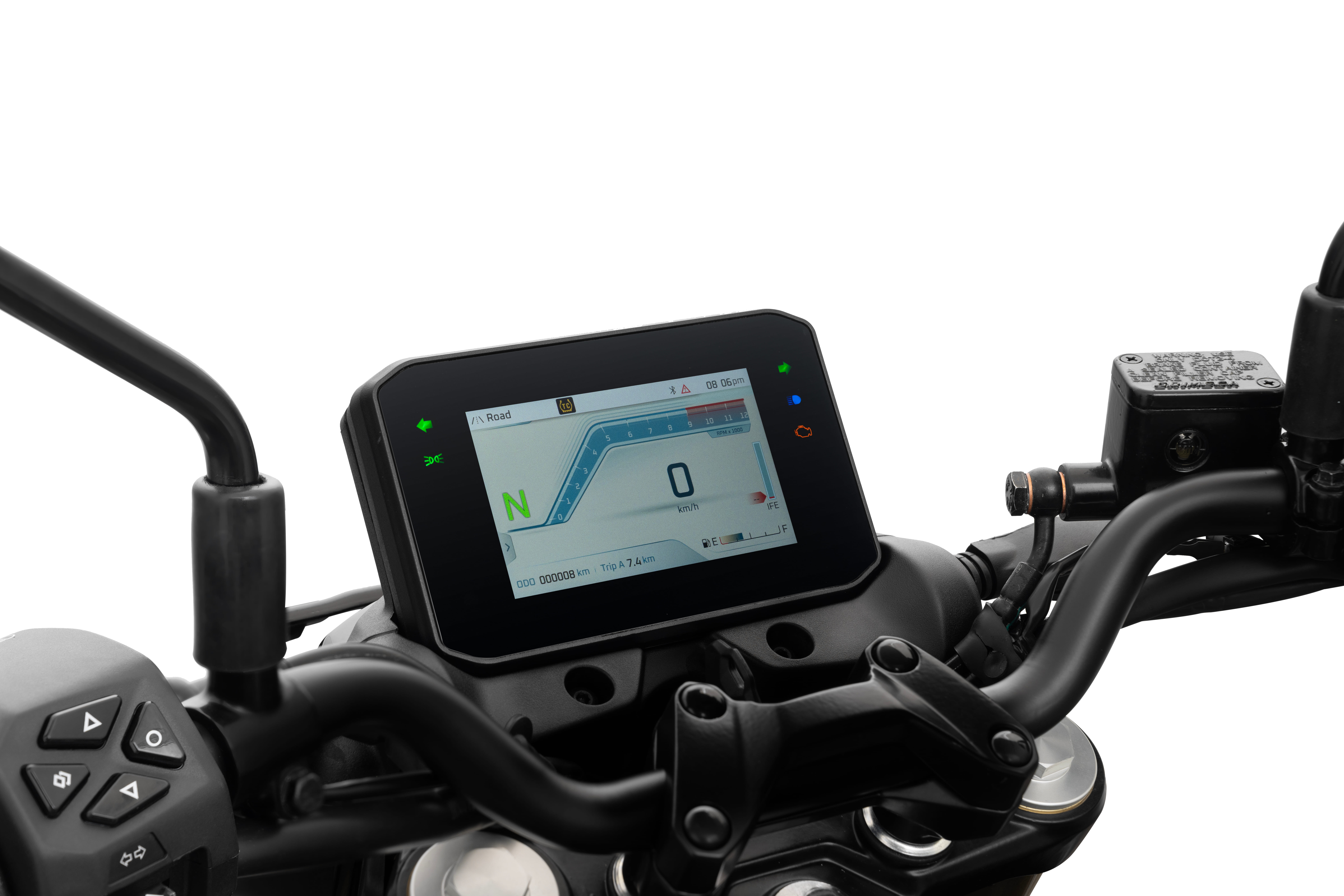
On the features front, the classic Pulsar now gets a brand-new 5-inch LCD cluster with the top two variants stepping that up to a 5-inch TFT instrument cluster. The cluster also gets other features like call and SMS alerts and an option to store your vehicle documents for quick access. However, the top variant gets WiFi support which enables Google Maps mirroring, a feature first seen on the Pulsar N160 SS. There are also three ride modes and a crawl mode. Both of which were also first seen on the Pulsar N160 S and SS. The existing model had a USB type-A port for charging with the new one swapping that for a modern, type-C port on all three variants.

Bajaj has also equipped the top two variants with ISG, which has a stop-start system that can automatically turn the motorcycle off during traffic stops, to conserve fuel, and also enables silent starts. There are minor upgrades to the lighting department as well. Though the class B LED headlight itself is shared with the outgoing Pulsar 150 that received an update last year. the fairing on the new one has been redesigned for a more aggressive look with the top two variants getting all-LED lighting as standard. Bajaj has priced the base SD Single Seat variant at Rs 1.15 lakh with the fully loaded, TD Split Seat variant costing Rs 1.23 lakh.
 

All-new Classic Bajaj Pulsar 125 launched from Rs 92,990

All-new Classic Bajaj Pulsar 125 launched from Rs 92,990

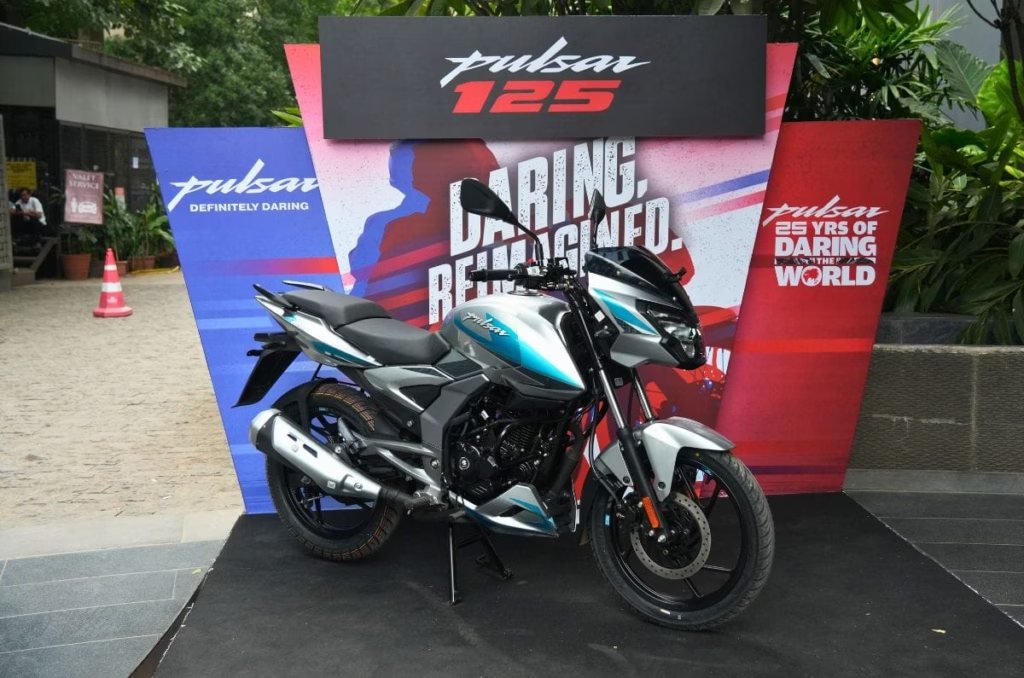
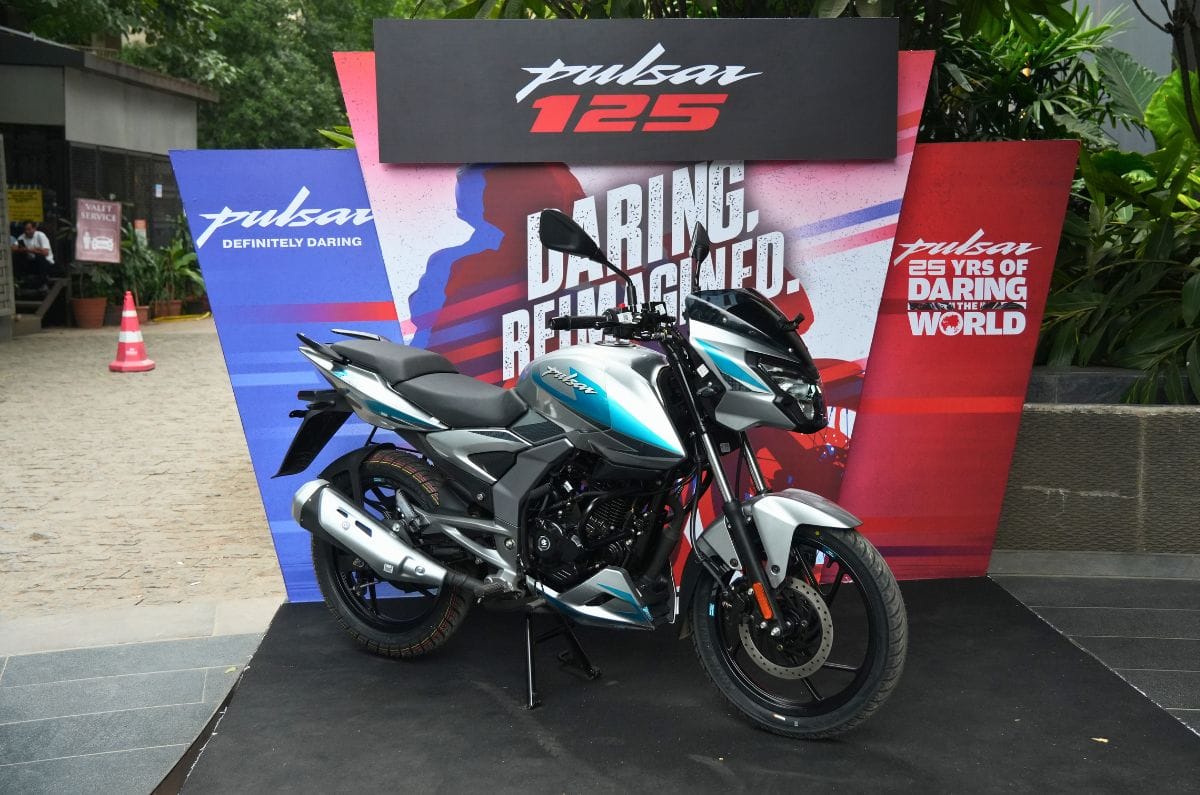
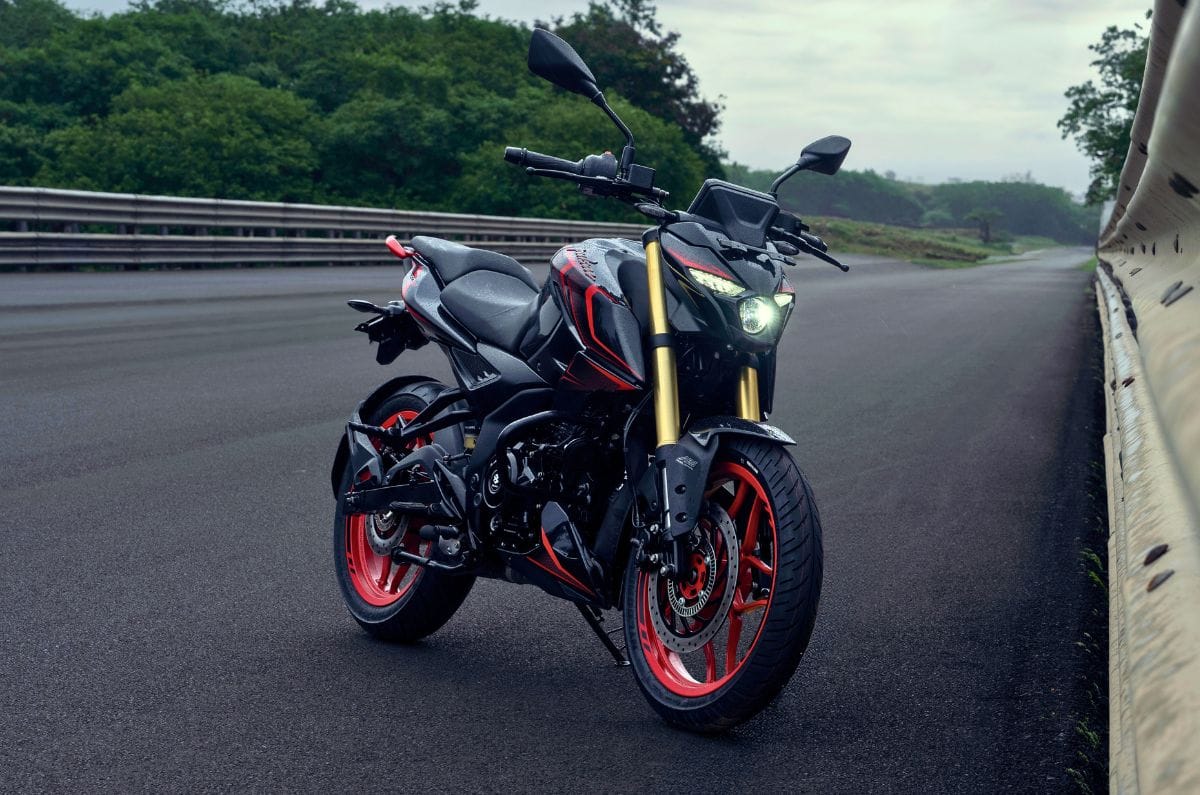
We exclusively broke the story, early this year, that Bajaj is planning on updating the Classic Pulsar range. After months of anticipation, the Chakan-based brand has finally launched the all-new Pulsar 125 as part of Pulsar’s 25th anniversary celebrations. The updated 125cc motorcycle gets a new engine and gearbox, a stiffer frame, monoshock suspension and a 5-inch TFT console with prices starting at Rs 92,990.

  1. New 124.58cc engine makes 12hp and 11Nm
  2. Gets monoshock suspension and new diamond-type frame
  3. Priced at Rs 92,990 (ex-showroom, Delhi)

Bajaj Pulsar 125 engine and specs

The new Pulsar 125 is powered by a 124.58cc, single-cylinder, air/oil-cooled engine producing 12.1hp at 8,500rpm (gain of 0.3hp) and 11.4Nm at 6,500rpm (gain of 0.6Nm). Bajaj claims it is the most powerful 125cc motorcycle in the market – a title earlier held by the now discontinued Pulsar N125. The engine is paired with an all-new 5-speed gearbox, which is claimed to improve tractive effort in the lower gears and deliver stronger low-speed performance.

Bajaj also claims an improved power-to-weight ratio enables quicker 0-60kph acceleration, although it has not specified an acceleration time.

The Pulsar 125 gets a new diamond-type frame with increased stiffness, with the engine acting as a stressed member. Bajaj says this setup improves ride stability and handling. Suspension duties are now handled by a gas-charged monoshock at the rear. 

Bajaj Pulsar 125 features

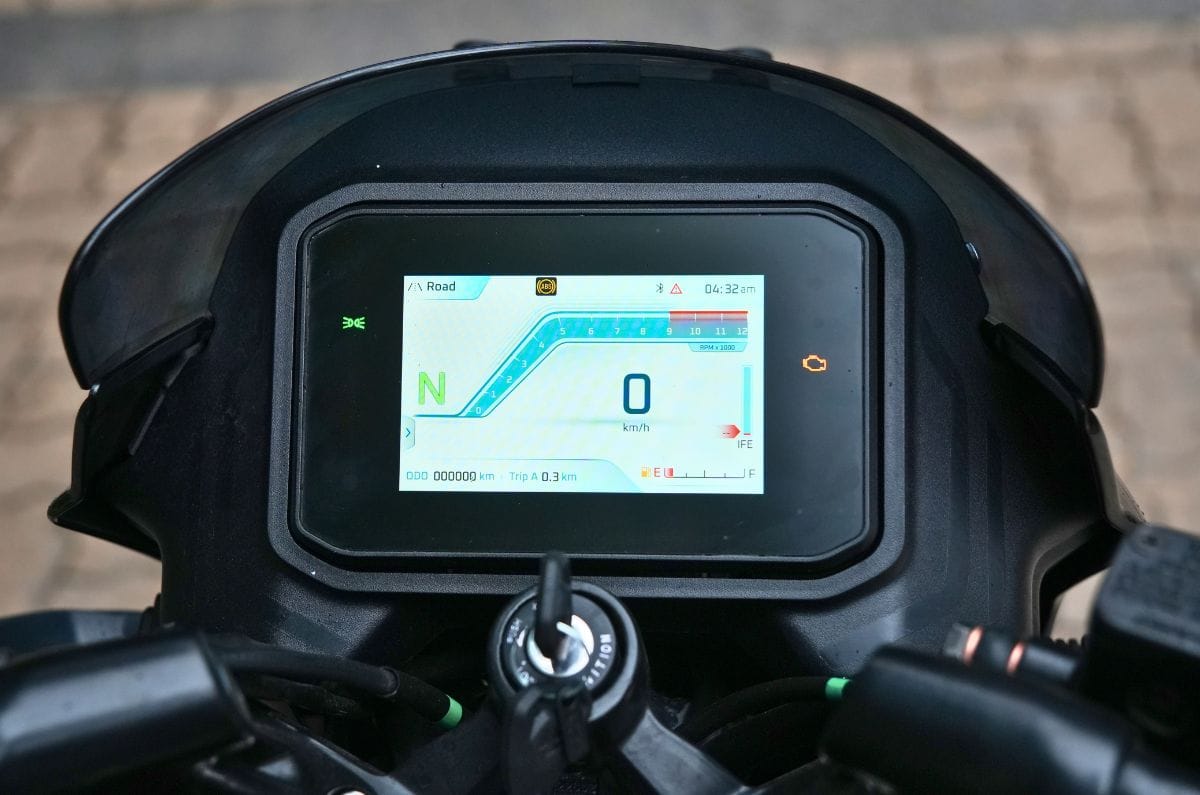
A major update is the addition of a 5-inch TFT console that debuted with the N160 SS. It supports Google Maps mirroring and navigation, while also allowing riders to store vehicle documents such as the registration certificate and insurance details.

The console also displays live call and message alerts and provides music controls. The Pulsar 125 additionally gets three ride modes: Road, Rain and Sport.

Another new feature is Crawl Tech – similar to KTM models – which is designed to provide greater control during low-speed riding in traffic.

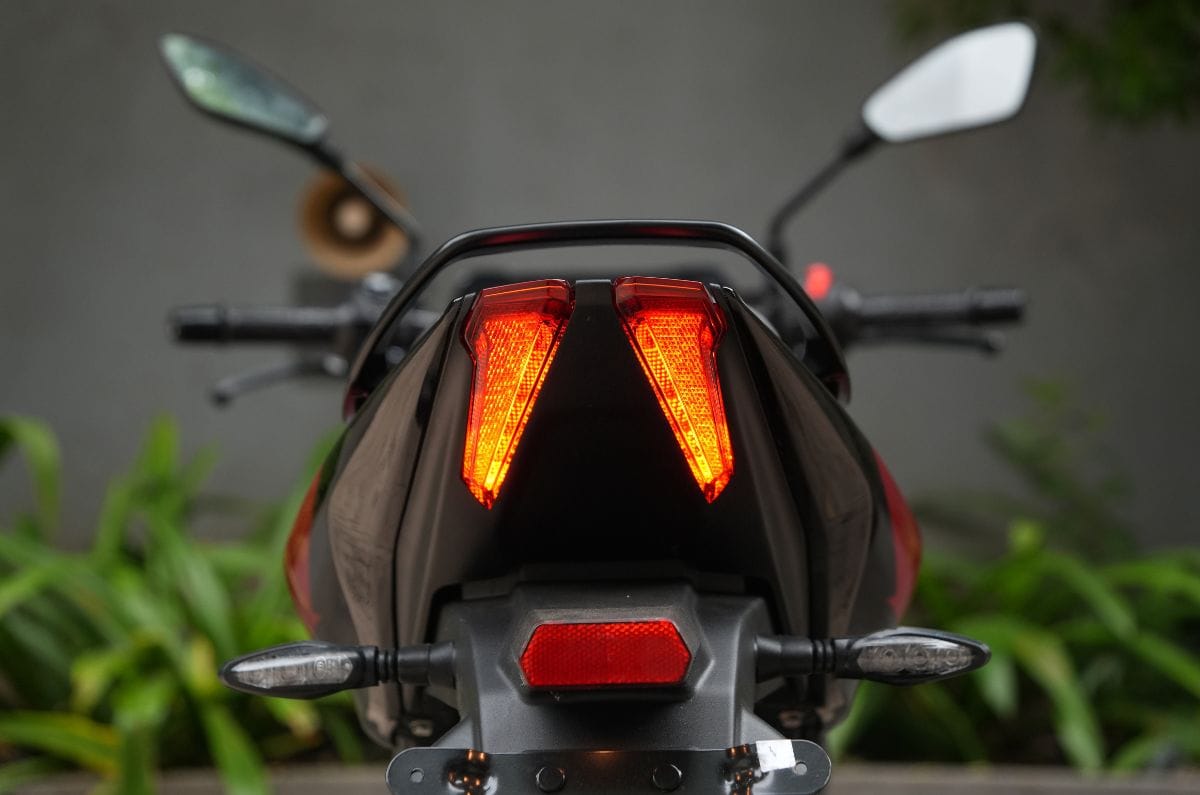
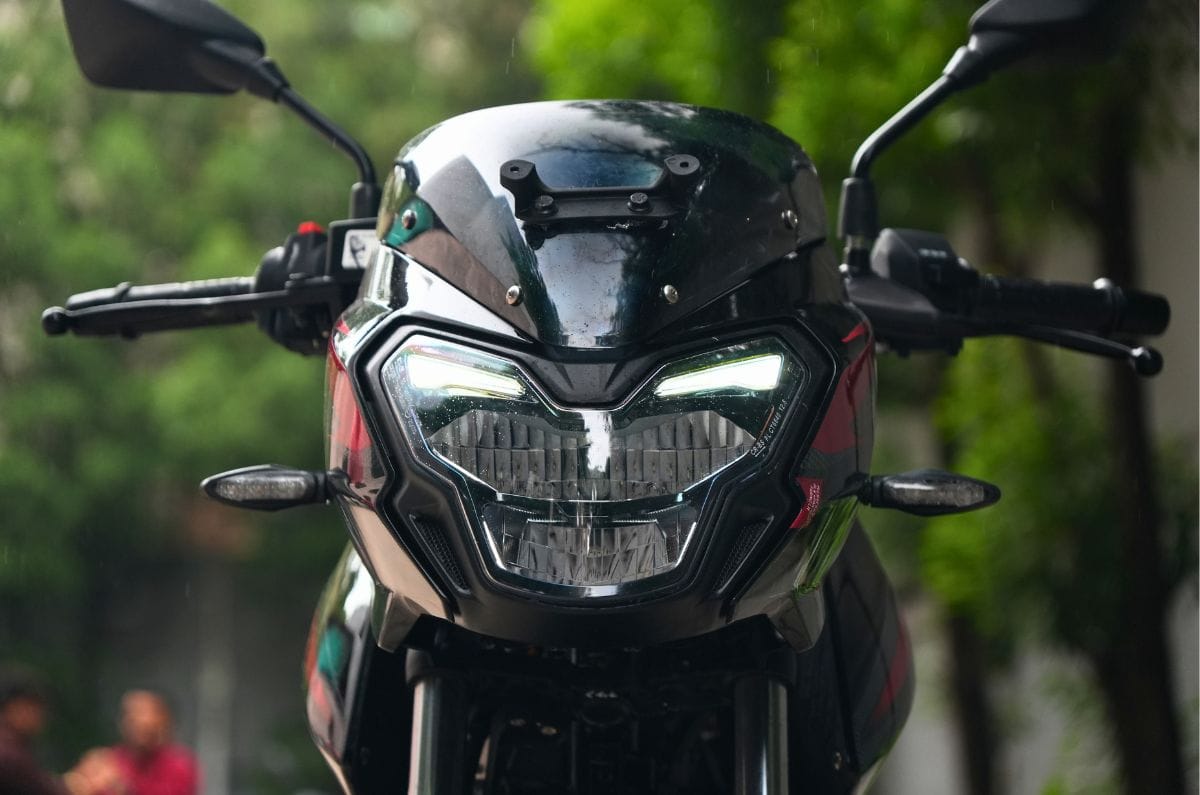
The Pulsar 125 gets a redesigned Wolf-Eye LED headlamp with larger optics, although it could only be offered . The motorcycle also features an Integrated Starter Generator (ISG) on the top three variants. The system enables automatic start-stop functionality, which Bajaj says helps improve fuel economy and enables silent starts. The new Bajaj Pulsar 125 is priced at Rs 92,990 for the LCD variant and goes up to Rs 1.04 lakh for the top-spec TFT variant(ex-showroom, Delhi).

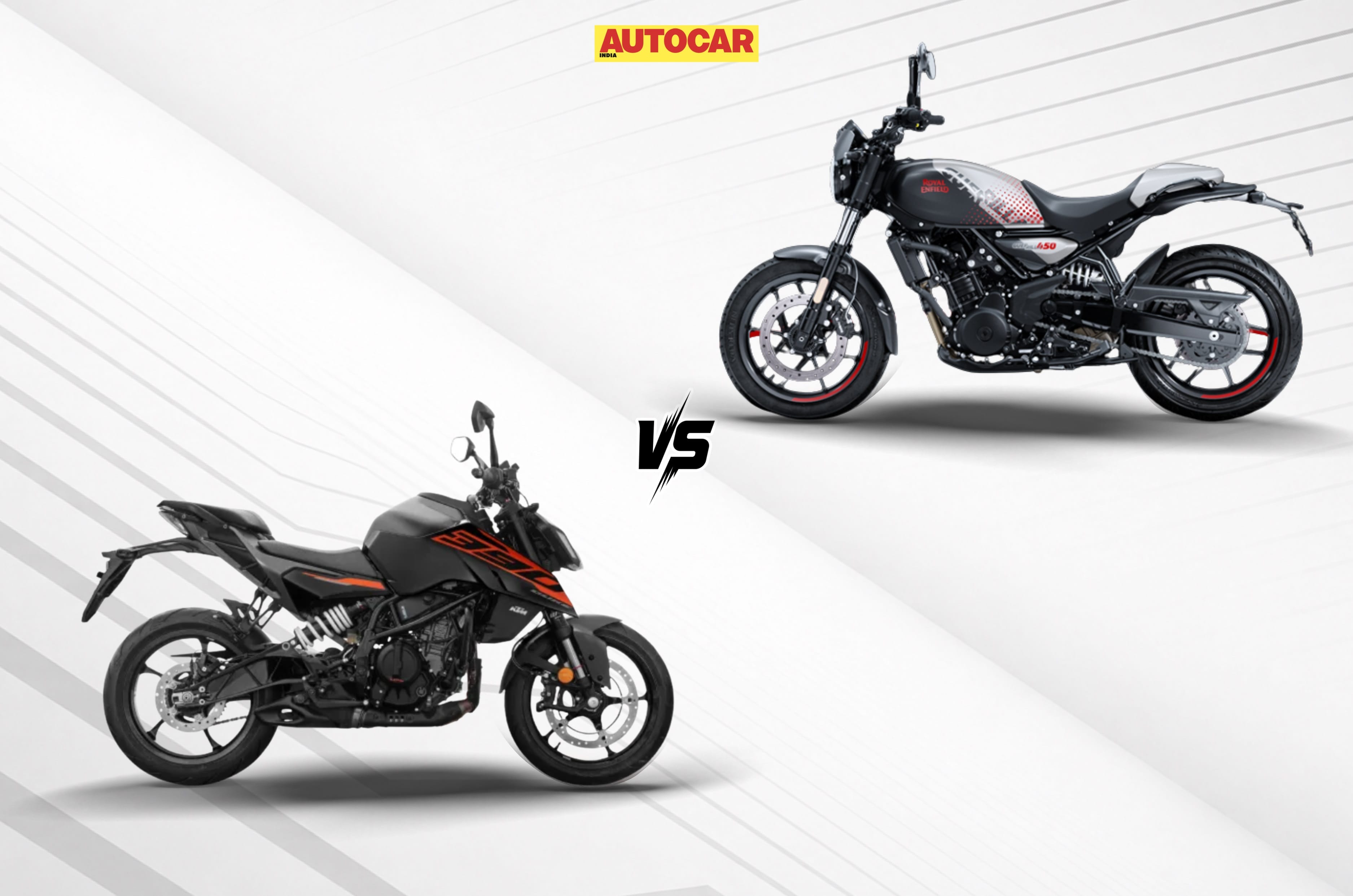
KTM 390 Duke vs RE Guerrilla 450 Apex: Price and Specification Comparison

KTM 390 Duke vs RE Guerrilla 450 Apex: Price and Specification Comparison

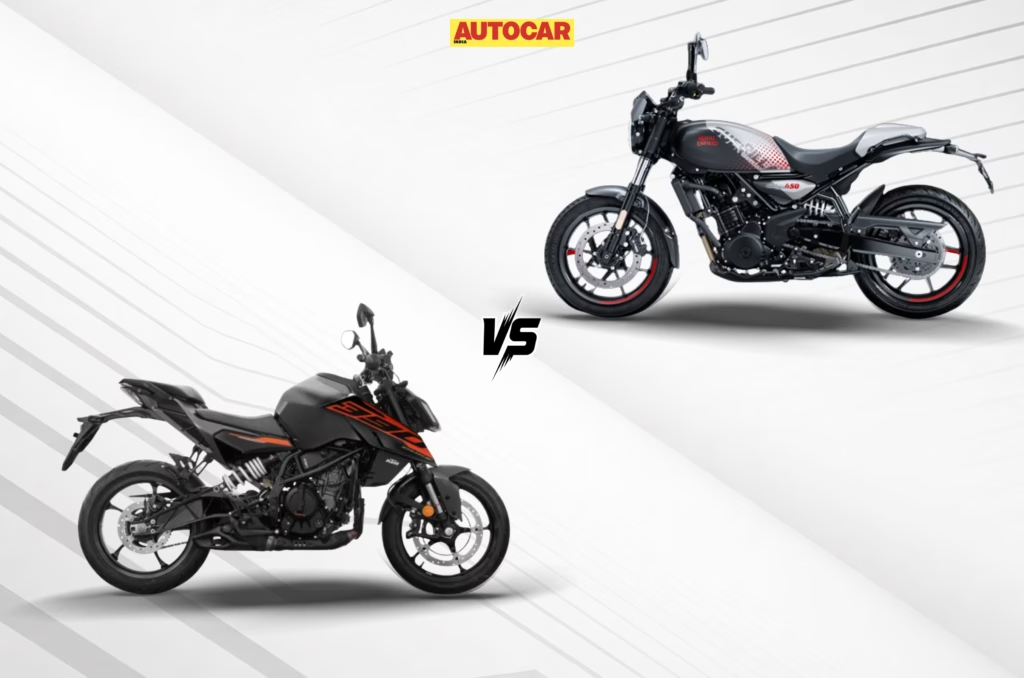
When the Guerrilla 450 first launched in 2024, comparisons to the KTM 390 Duke (now known as the Duke R) were inevitable. In 2026 though, things have changed because, following the revised GST structure on motorcycles, Bajaj decided to downsize all of its 400cc manufactured bikes to fall below the 350cc threshold. So, we now have a 390 Duke with a 349cc engine and the 398cc version continues on as the 390 Duke R. Meanwhile, the Royal Enfield Guerrilla 450 is now available in a new, sportier Apex variant. Let’s see how the motorcycles compare on paper with these redrawn boundaries.

KTM 390 Duke vs Royal Enfield Guerrilla 450 Apex: Engine and output

KTM has more power, Guerrilla has more torque


KTM 390 Duke

Royal Enfield Guerrilla 450 Apex

Engine

349.32cc, single-cylinder, liquid-cooled

452cc, single-cylinder, liquid-cooled

Power

41.5hp at 8,600rpm

40.02hp at 8,000rpm

Torque

33.5Nm at 7,000rpm

40Nm at 5,500rpm

Transmission

6-speed

6-speed

Power-to-weight ratio

246.58hp/tonne

216.32hp/tonne

The biggest reason for this comparison is the KTM’s downsized 349cc engine. It now makes 41.5hp of power (vs 46hp on the Duke R) and 33.5Nm of torque (vs 39Nm on the Duke R). Both are now delivered slightly later in rev range as well. KTM achieved this with an 8mm shorter stroke length, although the bore remains unchanged. The Guerrilla 450 Apex, on the other hand, has not changed on the engine front and retains its 452cc engine with the same power and torque figures. Thus, the Guerrilla offers quite a bit more torque than the Duke and it’s delivered much earlier in the rev range too. Which means you will have to work the throttle and gearbox comparatively less on the Royal Enfield. Thus, if you spend most of your time in the city, it will be the less cumbersome bike to ride in this regard. 

KTM 390 Duke vs Royal Enfield Guerrilla 450 Apex: Dimensions and weight

Duke is lighter despite a 30 percent larger fuel tank


KTM 390 Duke

Royal Enfield Guerrilla 450 Apex

Fuel tank capacity

15 litres

11 litres

Ground clearance

183mm

169mm

Kerb weight

168.3kg

185kg

Seat height

800mm

780mm

Wheelbase

1357mm

1440mm

The 390 Duke continues to be far lighter than the Guerrilla, which weighs a staggering 17kg more. Another pertinent detail is that despite the lower weight, the Duke gets a 4-litre larger fuel tank compared to the Guerrilla. The Guerrilla does get a 20mm lower seat height and its ground clearance is 14mm lesser than the Duke. However, it’s worth noting that both bikes are perfectly usable on our roads, pothole-ridden or otherwise.

KTM 390 Duke vs Royal Enfield Guerrilla 450 Apex: Tyres, brakes, and suspension

Duke has adjustable suspension and better brakes


KTM 390 Duke

Royal Enfield Guerrilla 450 Apex

Tyres (F, R)

110/70R17, 150/60R17

120/70R17, 160/60R17

Brakes (F, R)

320mm front disc, 240mm rear disc; dual-channel ABS

310mm front disc, 270mm rear disc; dual-channel ABS

Suspension (F, R)

43mm USD fork, monoshock

43mm RSU fork, linkage monoshock

Moving on to one of the most important links between the rider and the tarmac, the tyres. The Guerrilla gets slightly wider tyres than the Duke at both ends, but the disc brakes on the Guerrilla are slightly smaller at the front, and slightly larger at the rear. However, the KTM comes with a more sophisticated radial calliper at the front, whereas the Guerrilla makes do with a simpler axial unit. As for suspension, the Duke gives you an USD fork which is compression and rebound adjustable; and the rear monoshock is rebound and preload adjustable. The only adjustability the Guerrilla gets is for its rear preload.

KTM 390 Duke vs Royal Enfield Guerrilla 450 Apex: Features

KTM continues its tech-forward approach

KTM has always offered a myriad of tech features and rider aids on its motorcycles. Royal Enfield on the other hand has always been restrained on that front, prioritizing simplicity and ease of use instead. Depending on your preferences, you will gravitate towards one or the other. KTM offers you slip-and-assist clutch, ride modes, traction control, launch control, lean-sensitive ABS, bi-directional quickshifter, cruise control, turn-by-turn navigation, track screen, and a type-C charging port. Royal Enfield, to its credit, has given the Guerrilla a decent feature-set comprising a TFT instrument cluster which allows you to screencast Google Maps, two ride modes and a slip-and-assist clutch.

KTM 390 Duke vs Royal Enfield Guerrilla 450 Apex: Price

Guerrilla is more affordable with a bigger engine but has less features

 KTM 390 DukeRoyal Enfield Guerrilla 450 Apex
PriceRs 2.84 lakh (ex-showroom, Delhi)Rs 2.51 lakh (ex-showroom, Chennai)

Last but not least, the other reason necessitating the comparison, is the price. With its downsized engine KTM was able to meet a lower GST slab and thus the 390 Duke now costs Rs 2.84 lakh (ex-showroom, Delhi). The Guerrilla 450 Apex still manages to undercut it and by a good deal, starting at Rs 2.51 lakh and going up to Rs 2.58 lakh for the Apex Green colour.


Bajaj Pulsar N160 4V SS: Numbers game

Bajaj Pulsar N160 4V SS: Numbers game
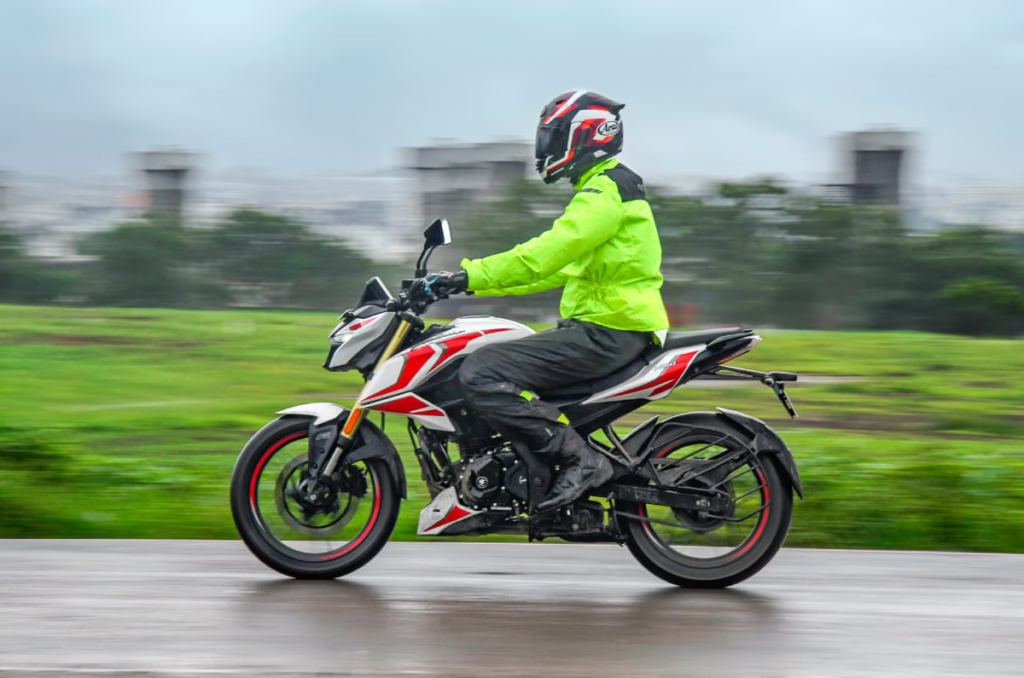
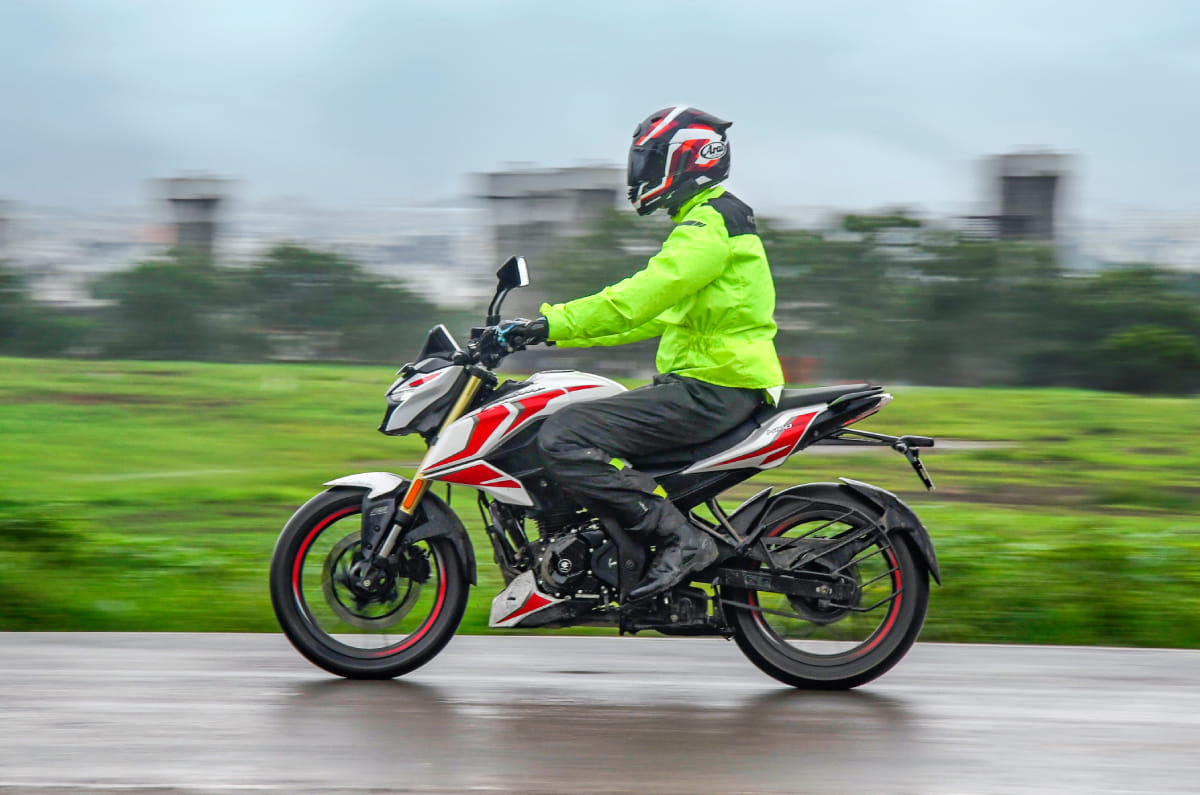
Bajaj Pulsar side tracxking image

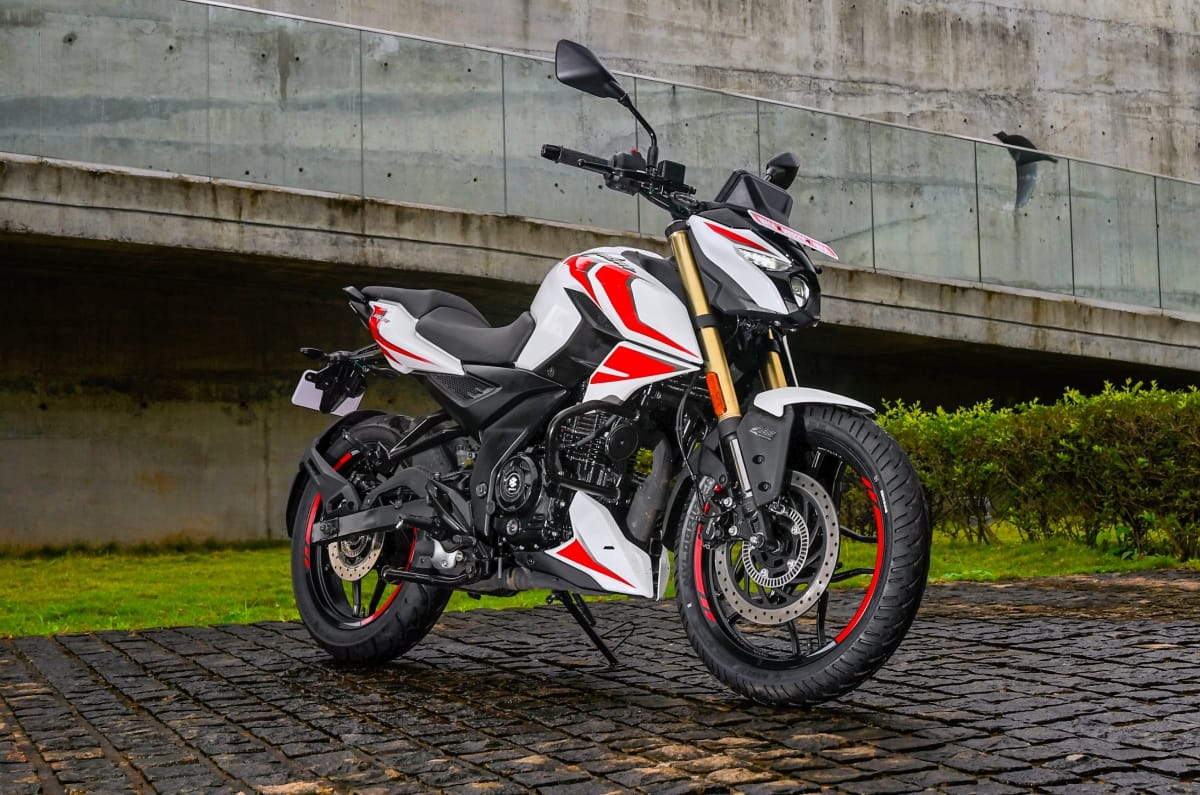
The Bajaj Pulsar N160 has gained a lot of traction in the last three years and Bajaj has now given it even more appeal with the introduction of a new 4 valve version. The existing 2-valve N160 continues to be on sale while two new 4-valve variants have been added to the line up.

Bajaj Pulsar N160 4V: Whats new

The engine changes are bigger than expected with this being a new engine that is still 165cc but now has a bigger 63.5mm bore and shorter 52mm stroke. Bajaj claims a sizable jump from 16hp at 8750rpm to 18.5hp at 9500rpm while torque drops marginally from 14.65Nm at 6750rpm to 14.4Nm at a higher 8000rpm. Bajaj also claims a high rev limit of 10,900rpm. The bottom end of the engine and the gearbox are the same as before.

The chassis is also mostly the same, but there have been some minor refinements in the main frame and swingarm which have helped offset the minor gain in engine weight as well as the move to a fatter new 37mm USD fork on the 4V models. As a result, kerb weight is unchanged at 151kg. 

Bajaj has also improved the seating ergos when compared to the previous split seat 2V model. The seat has been slightly reprofiled and the handlebar angle has been relaxed as well. Seat height remains the same at 795mm and while tall riders will prefer less of an upward curve at the back of the seat, this is still a more comfortable perch for long legged folks than the Apache 160 4V.

Bajaj Pulsar N160 Engine and Performance 8/10

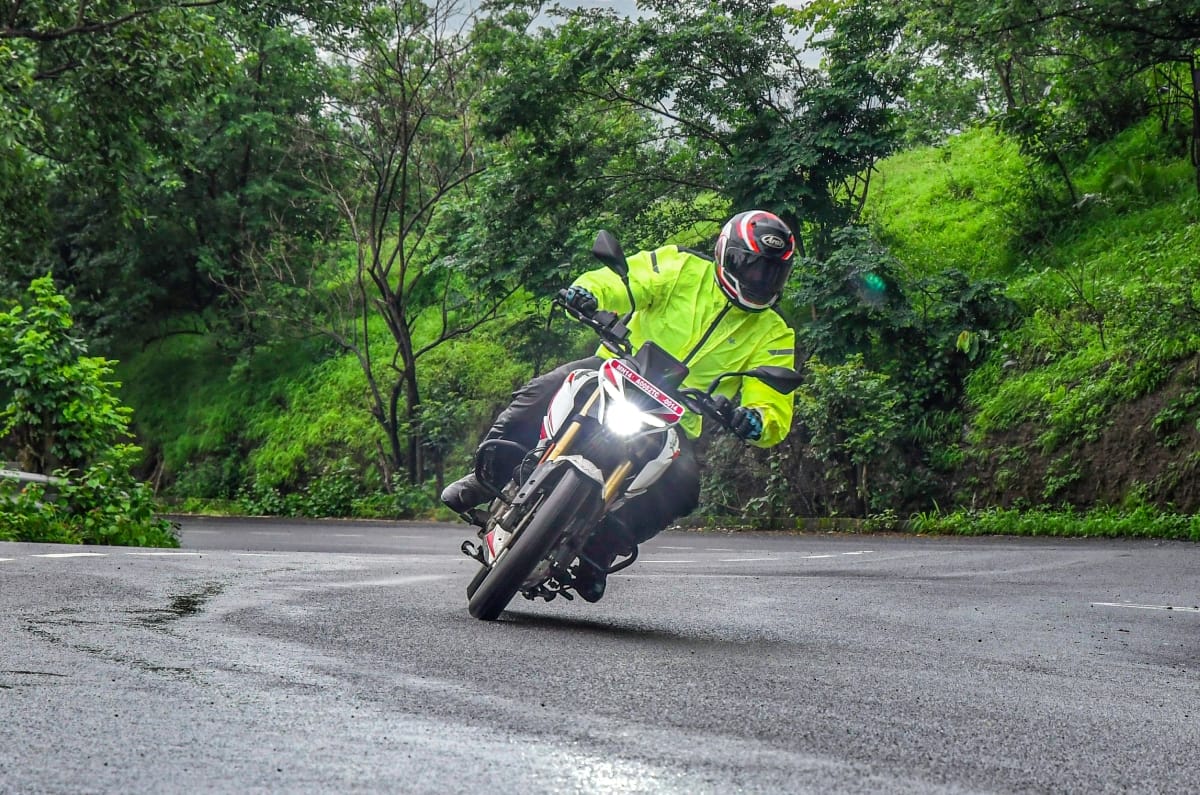
While the new power figure is actually 0.1hp more than the liquid-cooled Yamaha R15, this engine’s feel and performance is more in line with its oil-cooled rivals. It’s quick, but doesn’t feel up there with the Yamaha’s although it should now more closely match the potent Apache. The motor retains its excellent smoothness and there are only a few minor vibrations to be felt at high revs. Clutch pull is very light and the engine is quite tractable at lower revs, which makes it very pleasant to ride in the city.

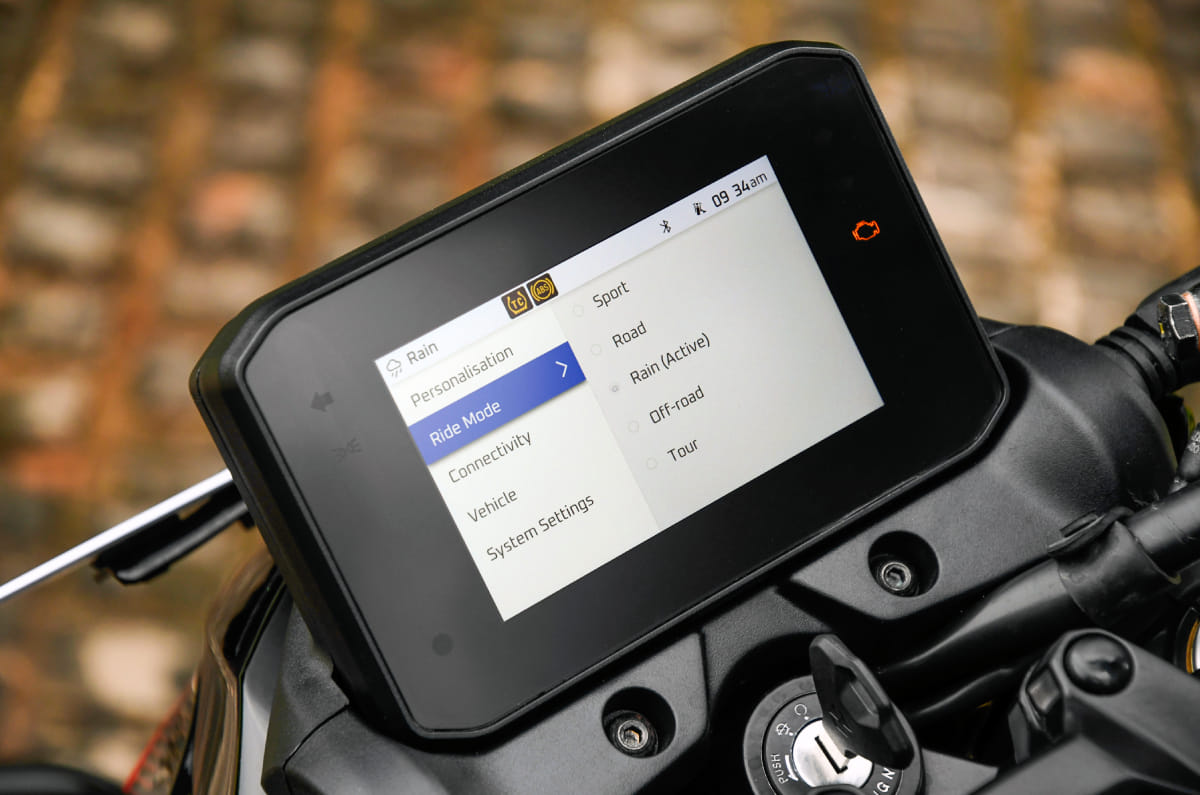
The new ride by wire throttle has unlocked four riding modes and the throttle opening feels smooth and controllable no matter the mode. While this engine does have a near 11,000rpm rev limiter (in Sport mode) we found no value in revving it much beyond 9,500rpm.

Bajaj Pulsar N160 Handling and comfort 7/10

Bajaj has moved to a new 37mm USD fork on the 4V, vs the 33mm USD on the 2V and this does give the front end more of a chunky look. Beyond that change, the way this bike rides is mostly the same as before. The suspension does have a taut feel to it and its not as soft and cushy feeling in the suspension stroke as the Apache. However, it handles rough roads well and the handling in corners is also well controlled and quite enjoyable. We did notice that the turning radius in the city could be a little more generous.

The N160 was the first bike in the category to get dual channel ABS and this SS version carries that forward. It also gets a larger 300mm front disc and overall braking performance is up to the job. The SS model also brings in a new 5-inch TFT display with a fresh looking layout and features like document storage, Bluetooth music control and even Google Maps casting. That last feature works via Bajaj’s app and you can keep your phone screen off when casting if its an Android device, but no such luck for iOS users – a Google decision, not Bajaj’s.

Bajaj Pulsar N160 price and features 9/10

The base S version of the Pulsar N160 4V comes with single channel ABS, a single seat and an LCD display and is priced at Rs 1.34 lakh ex-showroom. This SS model is priced at rs 1.43 lakh ex-showroom which places it slightly lower than the equivalent top variant of the Apache RTR 160 4V.

These new updates have not transformed the N160 into something new, but have definitely enriched the experience and widened the bikes overall appeal. It did not win when we compared it to the Apache a few years ago, but the story could be different today. It’s something we look forward to finding out. 

2026 Bajaj Pulsar N160: Price and variants explained

2026 Bajaj Pulsar N160: Price and variants explained

With the introduction of the new Pulsar N160 S and N160 SS, Bajaj now offers their most affordable ‘N’ series model in a total of five variants. The two-valve 164.9cc air-cooled engine, which makes 16hp and 14.65Nm, is available in three variants. And the new four-valve 164.5cc oil-cooled engine that makes 18.5hp and 14.4Nm is available in two variants. According to the Bajaj website, the frame, assist and slipper clutch, Bluetooth, all-LED lighting and a USB-C port are standard across all five variants. 

They all look largely the same and have a price difference of about Rs 20,000 between the absolute base and the absolute top. What exactly do you gain (or, in one case, lose) by upgrading? Let’s see. All prices mentioned here are ex-showroom, Delhi.

Pulsar N160

The Pulsar N160 is available in three variants, all of which get a USD fork and are differentiated by braking and seating configuration – single disc with single seat (Rs 1.22 lakh), twin disc with single seat (Rs 1.25 lakh) and twin disc with split seat (Rs 1.31 lakh). The mid-spec variant adds a rear disc brake and rear lift-off protection (RLP) over the base model. The top-spec variant steps up further with dual-channel ABS, traction control, a larger 300mm front disc (versus 280mm on the other two), 10mm more rear monoshock travel and LED DRLs inside the headlight.

Pulsar N160 S

The S is the base variant of the new four-valve engine. It gains a bigger front 37mm USD fork, ride-by-wire throttle, crawl tech, more advanced ride modes, and a new, bigger 5-inch LCD instrument cluster. However, compared to the top variant of the older N160, the S lacks traction control, LED DRLs, gets a smaller 280mm front disc brake, and goes back to single-channel ABS for Rs 1.33 lakh. Considering what you lose in the S for Rs 2,000 extra over the previous top variant, this is certainly not an easy choice to make.

Pulsar N160 SS

Next is the SS, which brings back traction control, the 300mm front disc, dual-channel ABS, and LED DRLs. It also swaps the S’s 5-inch LCD cluster for a TFT one with Wi-Fi support. The Wi-Fi module enables Google Maps mirroring support on the SS, which is a segment-first feature according to Bajaj. The other feature exclusive to the SS is the rear radial tyre that’s otherwise similar in size to the rest. The top variant costs Rs 1.42 lakh, a Rs 9,000 increase over the S and a Rs 11,000 increase over the top variant with the 2V engine.

Stephen Raj Antony
 

Independence Day 2026 : लालकिले की सुरक्षा के लिए एंटी-ड्रोन शील्ड तैनात, 20 हजार से ज्यादा लोगों की जांच; दिल्ली में ट्रैफिक डायवर्जन

Independence Day 2026 : लालकिले की सुरक्षा के लिए एंटी-ड्रोन शील्ड तैनात, 20 हजार से ज्यादा लोगों की जांच; दिल्ली में ट्रैफिक डायवर्जन

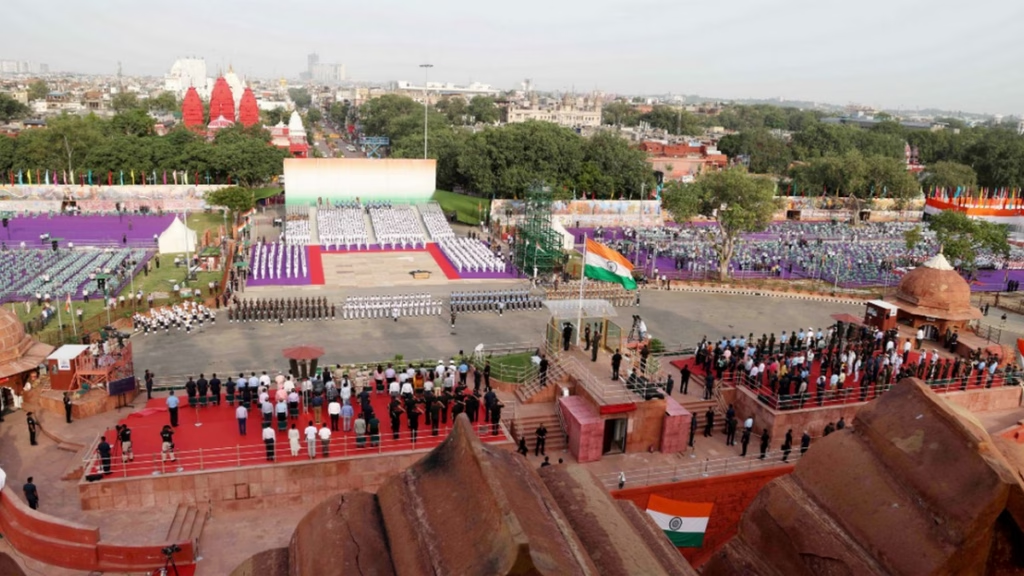
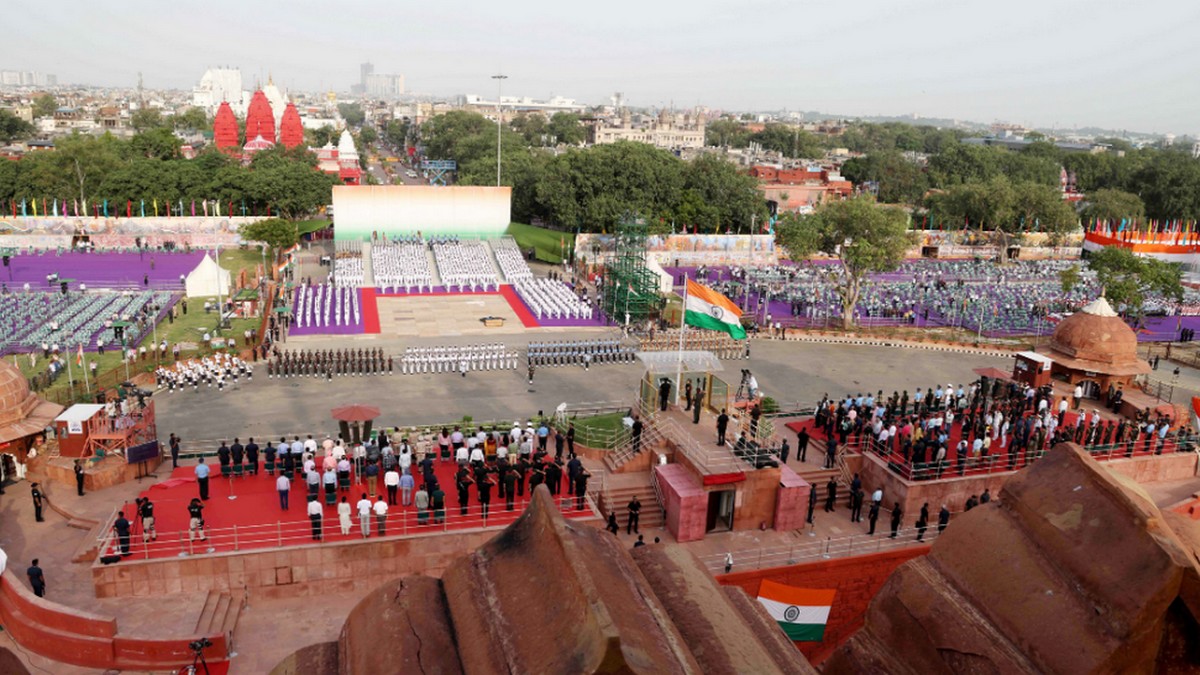
15 अगस्त को होने वाले स्वतंत्रता दिवस समारोह को लेकर राजधानी दिल्ली में सुरक्षा व्यवस्था बेहद कड़ी कर दी गई है। लालकिले और उसके आसपास के इलाकों में दिल्ली पुलिस ने सुरक्षा की कई परतें तैयार की हैं। सुरक्षा व्यवस्था के तहत बड़ी संख्या में पुलिसकर्मियों की तैनाती के साथ एंटी-ड्रोन सिस्टम भी लगाए गए हैं।


सुरक्षा एजेंसियों ने लाल किले के आसपास रहने और काम करने वाले 20 हजार से अधिक लोगों की स्क्रीनिंग और वेरिफिकेशन भी किया है। किसी भी संभावित सुरक्षा चूक या व्यवधान को रोकने के लिए दिल्ली के कई हिस्सों में ट्रैफिक डायवर्जन और भारी वाहनों की आवाजाही पर प्रतिबंध लागू किए गए हैं।


 लाल किले के आसपास कड़ी सुरक्षा


दिल्ली पुलिस के मुताबिक, स्वतंत्रता दिवस समारोह के मद्देनजर लाल किले और आसपास के संवेदनशील इलाकों में व्यापक सुरक्षा इंतजाम किए गए हैं। पुलिस और सुरक्षा एजेंसियां किसी भी संभावित खतरे से निपटने के लिए लगातार निगरानी कर रही हैं। सुरक्षा व्यवस्था के तहत एंटी-ड्रोन शील्ड तैनात की गई है ताकि आसमान से आने वाले किसी भी संभावित खतरे को समय रहते रोका जा सके।


20 हजार से ज्यादा लोगों का वेरिफिकेशन


सेंट्रल दिल्ली के डीसीपी रोहित राजबीर सिंह ने बताया कि लाल किले के आसपास के संवेदनशील क्षेत्र में रहने या काम करने वाले 20,000 से अधिक लोगों की स्क्रीनिंग और पहचान सत्यापन किया गया है। उन्होंने कहा कि स्वतंत्रता दिवस समारोह के दौरान लाल किला सबसे संवेदनशील स्थानों में से एक माना जाता है। इसलिए सुरक्षा व्यवस्था को कई स्तरों पर मजबूत किया गया है।


DTC बसों के रूट में बदलाव


दिल्ली पुलिस ने स्वतंत्रता दिवस को लेकर DTC बसों और अन्य बसों के संचालन के संबंध में भी एडवाइजरी जारी की है। अधिकारी के मुताबिक, प्रभावित मार्गों पर इस अवधि के दौरान DTC या अन्य बसें सामान्य रूप से संचालित नहीं होंगी। बसों के रूट डायवर्ट किए जाएंगे और उनके टर्मिनेशन पॉइंट रामलीला मैदान और तीस हजारी कोर्ट में निर्धारित किए गए हैं।

ALSO READ: Operation Sindoor : 88 घंटे के ऑपरेशन सिंदूर पर NSA अजीत डोभाल का बड़ा बयान, खोले रणनीति के राज

मेहमानों के लिए पार्किंग की व्यवस्था


स्वतंत्रता दिवस समारोह में आने वाले आमंत्रित मेहमानों के लिए निर्धारित पार्किंग स्थानों को Google Maps पर चिह्नित किया गया है। लोगों से ट्रैफिक और पार्किंग से जुड़ी ताजा जानकारी के लिए दिल्ली ट्रैफिक पुलिस के आधिकारिक X अकाउंट को फॉलो करने की अपील की गई है।


सुबह 4 बजे से 11 बजे तक ट्रैफिक डायवर्जन


दिल्ली पुलिस के अनुसार, लाल किले के आसपास आम लोगों के लिए ट्रैफिक डायवर्जन सुबह 4 बजे से 11 बजे तक लागू रहेगा। इसके बाद ट्रैफिक प्रतिबंध हटा दिए जाएंगे। चांदनी चौक क्षेत्र की कुछ सड़कें प्रतिबंधित समय के दौरान बंद रहेंगी। हालांकि, पुलिस के मुताबिक दुकानों, बाजारों और शॉपिंग मॉल पर कोई प्रतिबंध नहीं रहेगा।

ALSO READ: EPFO Higher Pension : ज्यादा पेंशन के लिए आवेदन किया है तो जानिए अब क्या करेगा EPFO, सरकार ने बताए 4 बड़े कदम

भारी वाहनों की आवाजाही पर भी रोक


स्वतंत्रता दिवस समारोह के दौरान सुरक्षा और यातायात व्यवस्था को सुचारु बनाए रखने के लिए दिल्ली के कई हिस्सों में भारी वाहनों की आवाजाही पर भी प्रतिबंध लगाए गए हैं। पुलिस का लक्ष्य समारोह के दौरान किसी भी तरह की सुरक्षा चूक और ट्रैफिक व्यवधान को रोकना है।

Ducati Multistrada V4 Pikes Peak Review: Shapeshifter!

Ducati Multistrada V4 Pikes Peak Review: Shapeshifter!

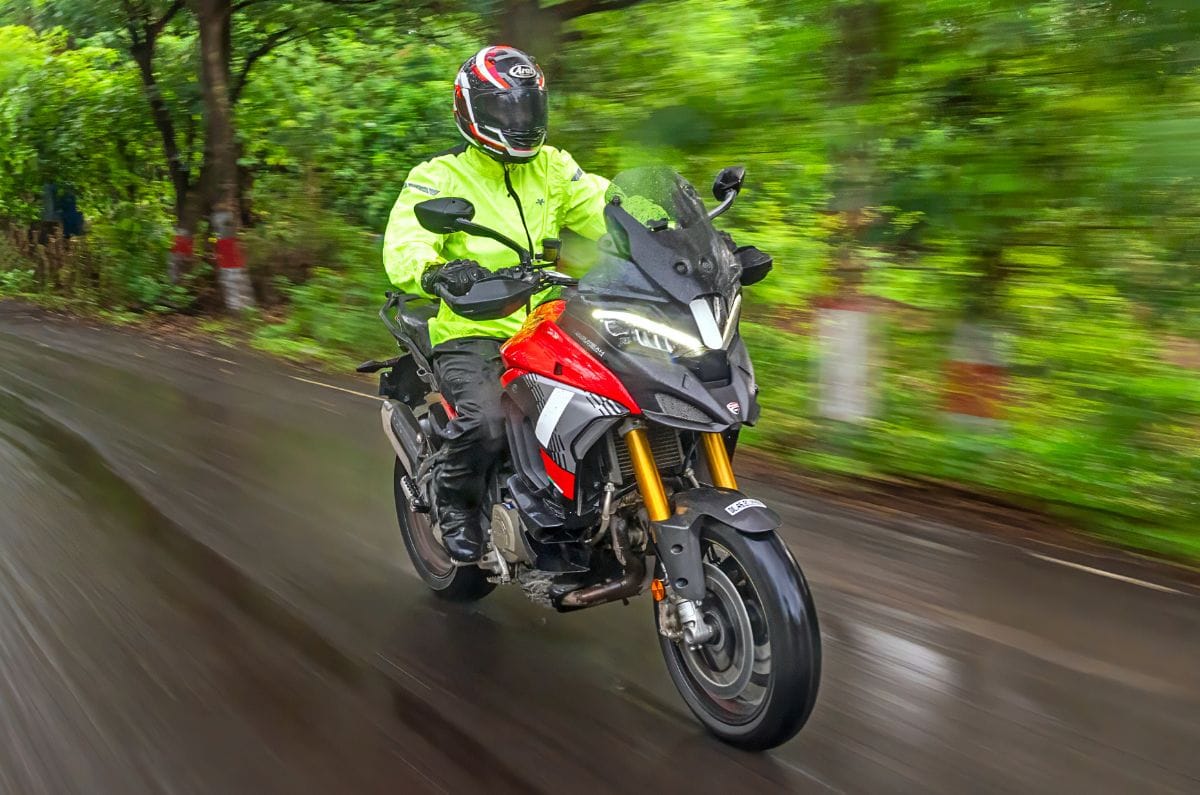
The Ducati Multistrada is one of the most successful modern motorcycles to have raced up the famed Pikes Peak hill climb, having taken 7 wins over the years. Motorcycle racing was banned at the Peak after Ducati star Carlin Dunne tragically lost his life in a crash just metres before the finish line in 2019, but Ducati still has a tribute to this race in the form of the Multistrada V4 Pikes Peak.

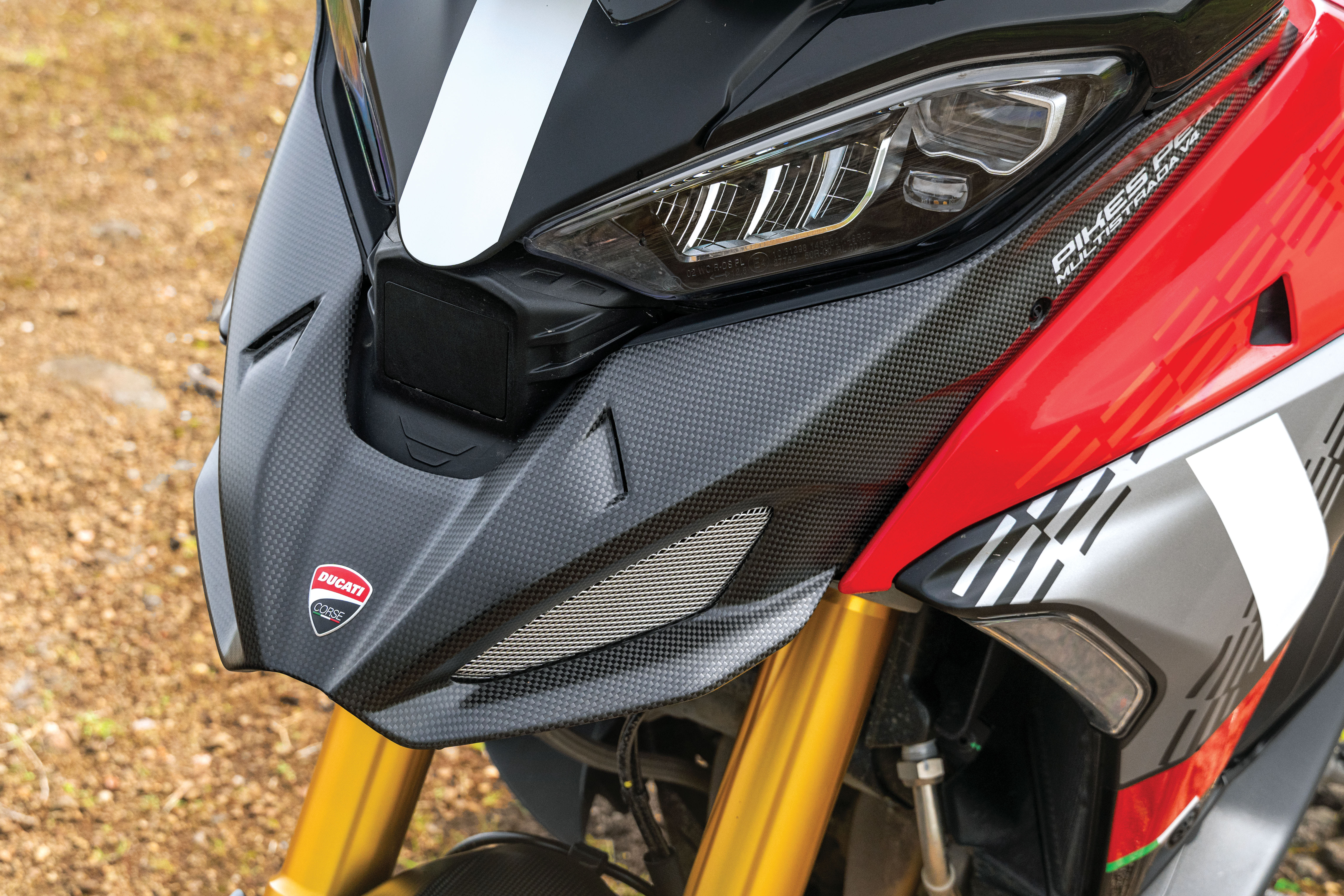
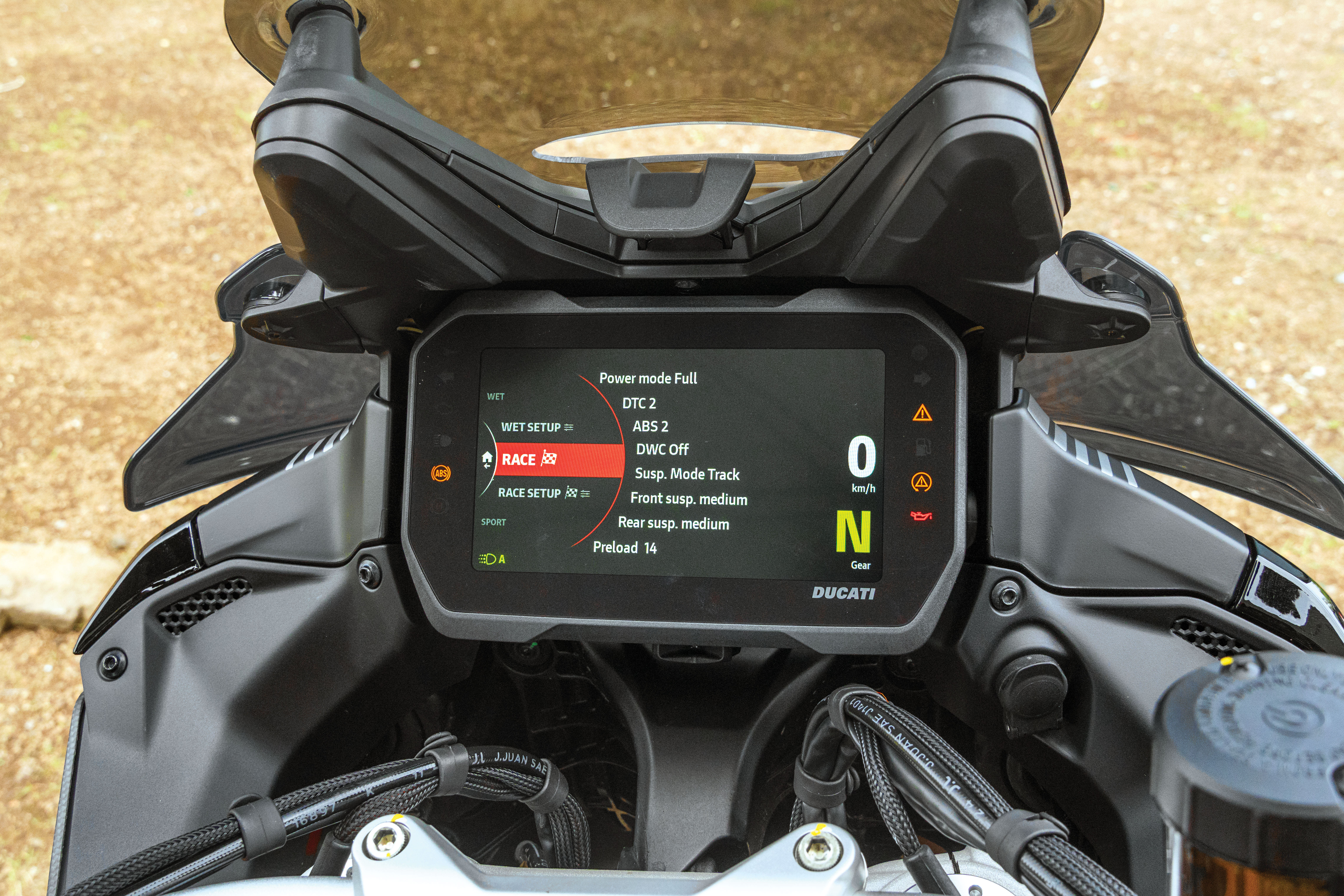
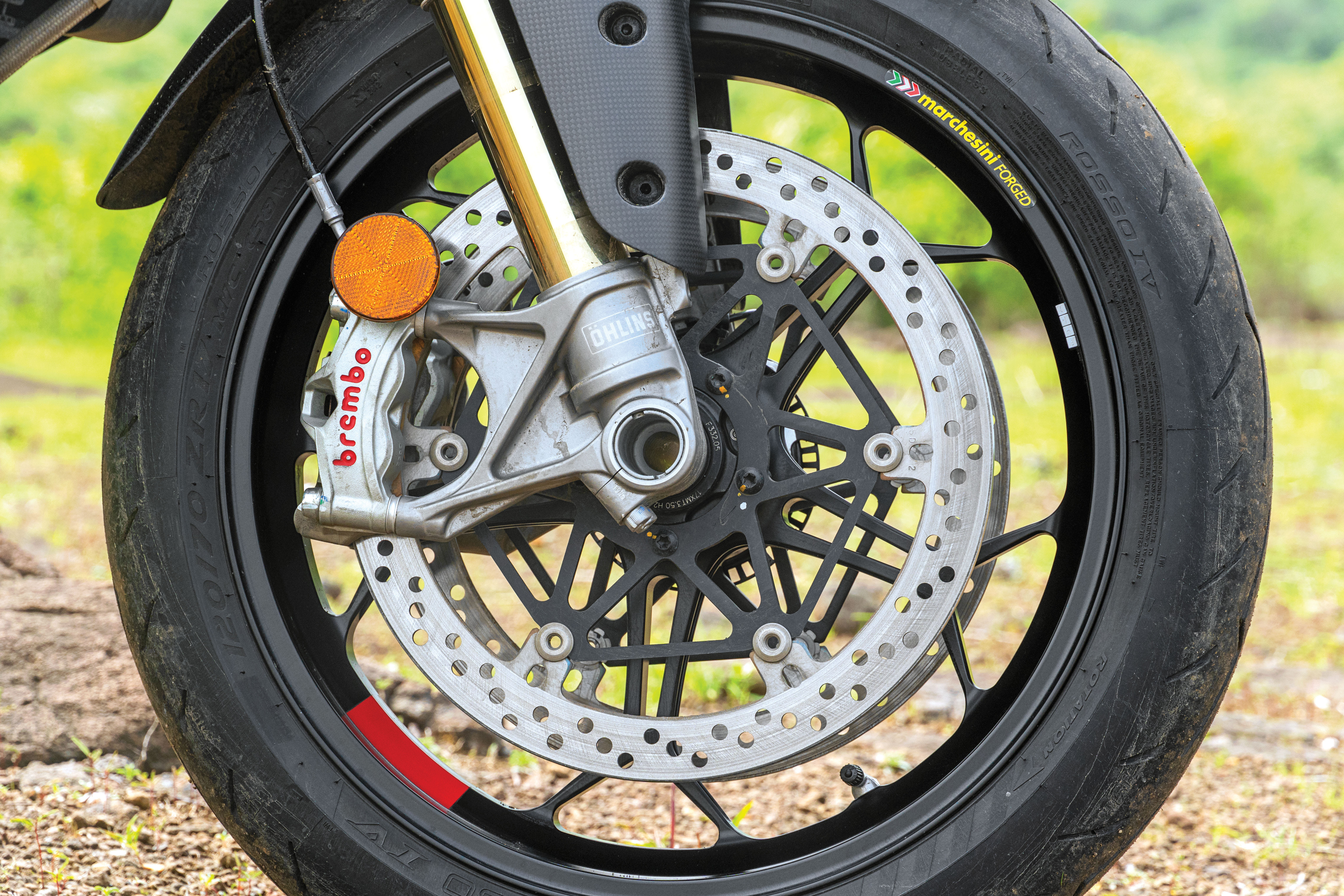
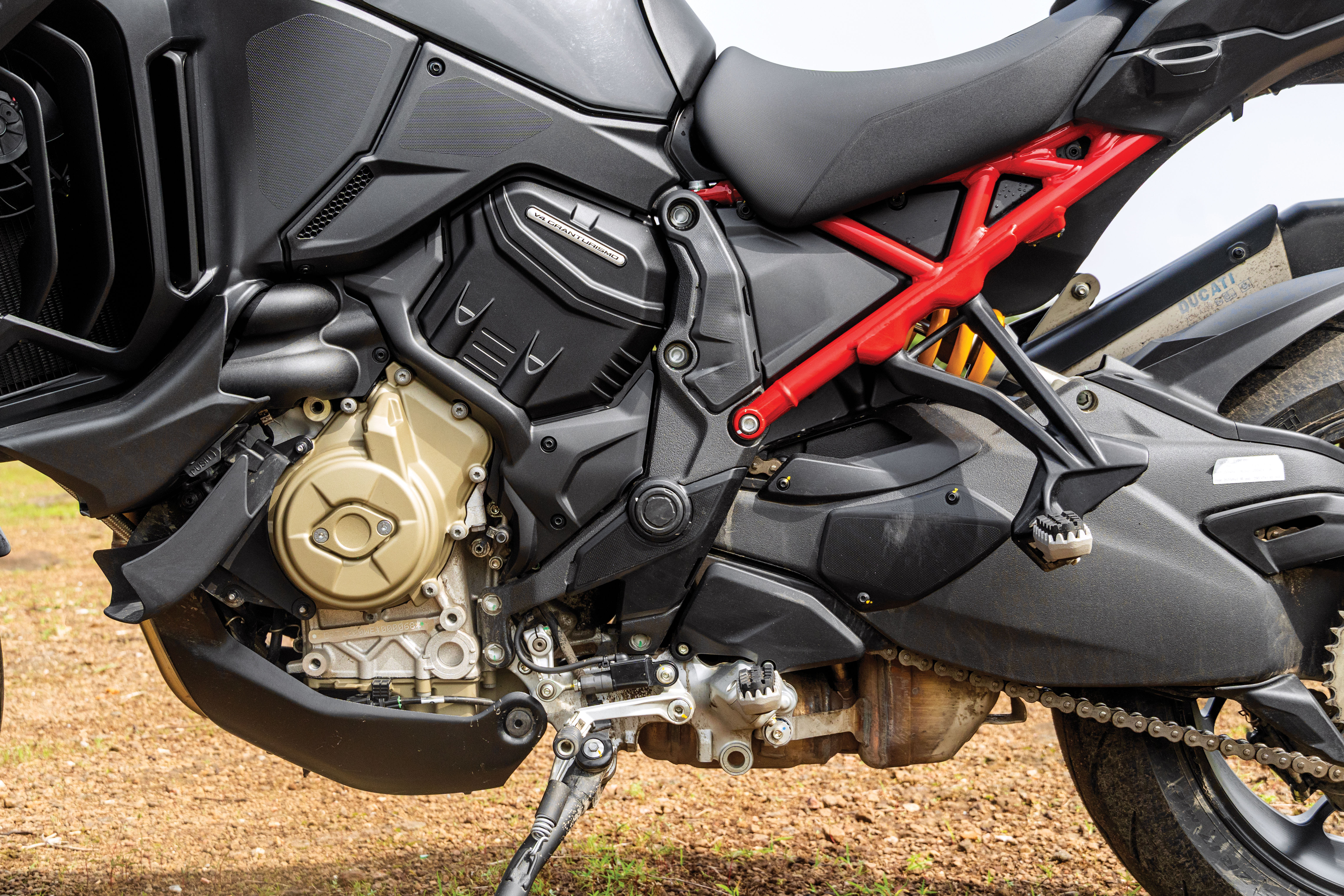
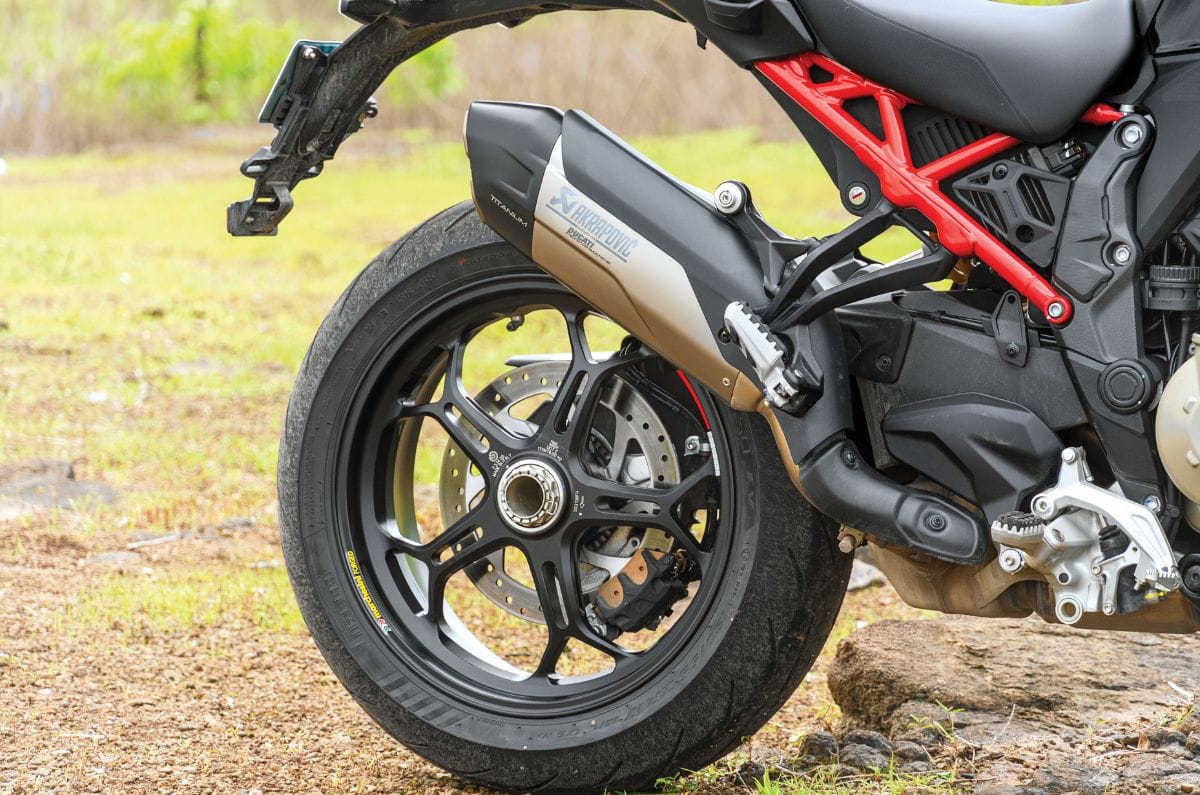
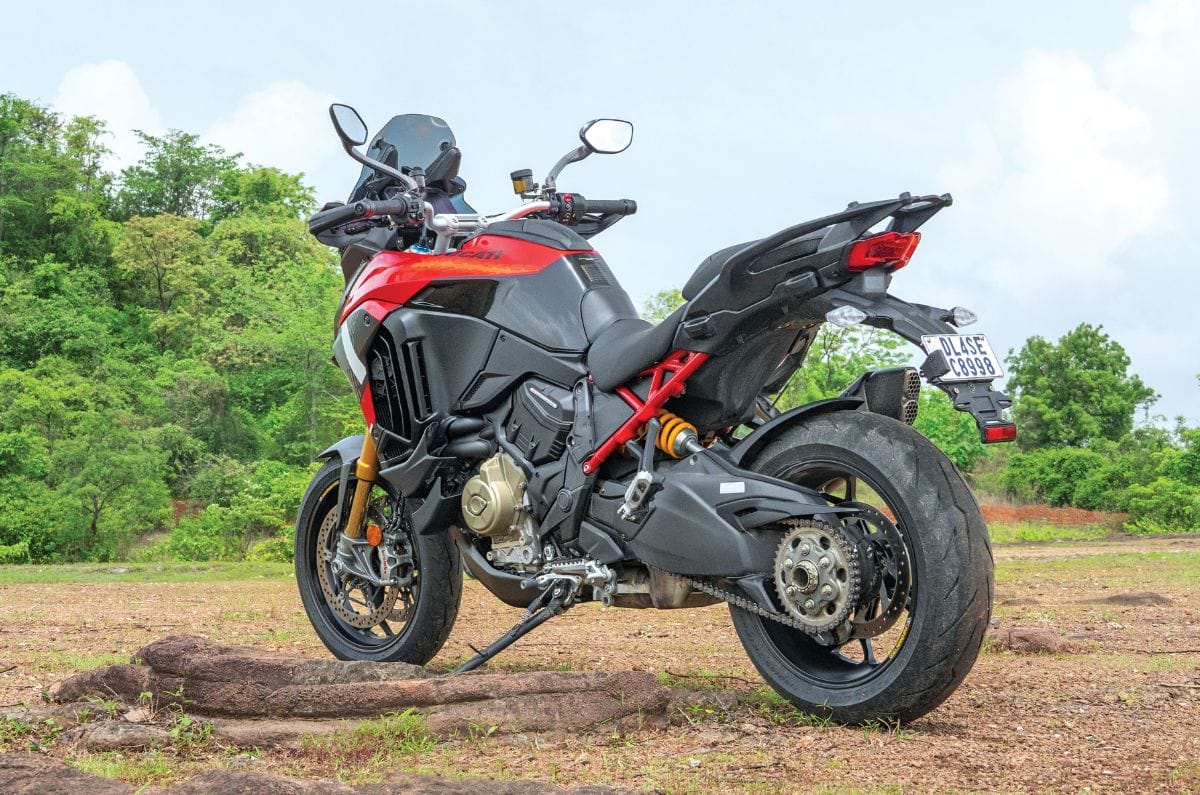
Effectively, this motorcycle goes back to the Multistrada’s roots of being a tall, sporty road-biased motorcycle. The primary sporty element comes in the shift from a 19-inch front on the standard Multistrada V4 to a 17-inch unit here. But there’s a whole lot more that you get for the (considerable) extra cash over the Multi V4 S than just a smaller front wheel. That includes a new Race Mode and Öhlins EC 2.0 semi-active suspension, just like you would have found on the previous-gen Panigale V4 S. It even gets a single-sided swingarm, forged aluminium wheels and a road-legal titanium Akrapovič end-can.

Multistrada V4 Comfort – 8/10

All of these changes are aimed at sharpening the Multi’s handling capabilities, which leaves the question – how much of an adventure bike is still in there? To find an answer, I pulled out Google Maps and picked a few random roads that I’d been eyeing over the years, but never had the opportunity to explore. The idea was to end up at the fabulous roads around Tahmini ghat, which is closer to Pune, and I’d chalked out a round-trip that came up to about 350km.

The Pikes Peak gets carbon parts, different ergos and reduced wind protection

The first quest would be the hour-long escape from the mayhem of Monday morning Mumbai. Ducatis are usually the worst bikes for being stuck in jammed traffic, but the V4-engined Multi is different. As with its lesser V4 siblings, the Pikes Peak uses twin radiators that are housed on the sides, and the bodywork neatly ducts the hot air blast away from the rider. Also, as with all Ducatis, the cooling system does a remarkable job of keeping the operating temperature below 106 degrees even when stationary.

SpecificationsValues
Engine Displacement1158 cc
Max Engine Power170 hp @ 10,750 rpm
Max Engine Torque124 Nm @ 9000 rpm
Number of Gears6

So, unless you’re stuck in a nasty bad jam where the clutch can get painful, this bike is surprisingly pleasant to manage in traffic. Of course, that’s a fairly relative statement, considering that this is a big, tall, 240-plus-kilo motorcycle.

However, after an hour or so, there’s no escaping the heat radiating off the rear cylinder bank that’s right under your thighs. I noticed that this was an issue in 36-degree afternoon heat on the highway, but not so much when the temperatures dropped in the hilly regions around Lonavala. Despite this, the Multi was far happier when it broke free from the clutches of the city.

Multistrada V4 Performance and suspension setup – 9/10

What truly blew me away on the Pikes Peak was the sheer range of its ability to change character. Like with the other V4 models, this one also has many different riding modes, a boat-load of electronic assists and minutely adjustable electronic suspension modes. However, the difference between ‘full chill’ and ‘full attack’ mode on this bike is truly breathtaking. After a couple of hours of quick and perfectly pleasant highway riding, the Multi and I soon found ourselves staring at miles of completely broken rural roads without a soul on them.

There’s no way I’d ever want to bring a sporty Italian exotic to a place like this, but putting the engine into Low Power mode (115hp instead of 170hp) and diving deep into the suspension setting menus to slack off the damping and preload completely changed the bike.

SpecificationsValues
Wheelbase1595 mm
Seat height840-860 mm
Kerb Weight227 kg
Fuel Tank Size22 L

With ADV seating comfort and the 170mm of suspension travel soaking in the terrain quite well, I had no concerns with simply riding through these non-stop broken road conditions. The bike was unbothered to the point that I could ride it at a gentle pace and enjoy the spectacular beauty of rural Maharashtra in the monsoon. However, I must also make it clear that while the Pikes Peak can tolerate this sort of punishment, it doesn’t thrive on it. Think of this as a surprisingly comfortable road-tourer rather than a true ADV.

Race-bred electronics and superbike-spec suspension are what make the Pikes Peak experience unique.

Multistrada V4 Ride and Handling – 10/10

A big Tiger or GS would have surely been more capable in these conditions, but the Pikes Peak would have simply blown away any ADV on the roads that came next. After ages of enduring gravel and shattered tarmac, we finally arrived at Tahmini to be greeted by some of the finest riding roads in the country.

It uses the standard V4 engine with conventional spring valves

A few button presses later, the Multi was now in Race mode, and the difference was startling. The bike suddenly felt tight, taut and taller, thanks to increased preload at the rear. This was no longer a cushy tourer and had suddenly turned into quite a fearsome beast that demanded respect. The raucous intake bark as the V4 engine snarled past 6,000rpm was almost as intoxicating as the way it built speed. While you could get the same sort of performance on a ‘normal’ Multi V4 that uses the same engine, the immense braking and incredible suspension composure of the Pikes Peak was something else.

Pikes Peak gets a single-sided swingarm, forged wheels and an Akrapovič end-can

I was now riding a sport bike, and it cornered and braked with such ferocity that it was easy to get carried away. I had to remind myself that this was a public road and we were going far too fast for good health! Slap on a sticky set of tyres, and this bike could genuinely embarrass a swarm of sport bike riders on the racetrack. After an awesomely exhilarating time on the ghat, there was no doubt that the Pikes Peak spirit is truly alive in this bike, and it most certainly isn’t just a branding exercise to charge a heap of money.

Multistrada V4 Price and Verdict – 8/10

Nevertheless, a heap of money is exactly what you have to pay to own this motorcycle. At Rs 36.9 lakh (ex-showroom), the Pikes Peak is exorbitantly expensive, and you still have to pay more for extras like heated grips, tyre pressure monitoring and keyless functionality for the fuel tank. At the end of the day, this is the connoisseur’s version of what is already a connoisseur’s adventure motorcycle. You’ve got to really want this particularly unique combination of all-road sport bike skills. After all, you can get either phenomenally capable super ADVs or proper super bikes for far less money.

The sheer range of its ability to change character is what is truly incredible.

I struggle to convince myself that it’s worth the price, but I’m also infinitely grateful that such a thing even exists and that we have the option to own one in India. If you’re among the precious few with the desire and funds to own such a bike, all I’d like to say is go for it!

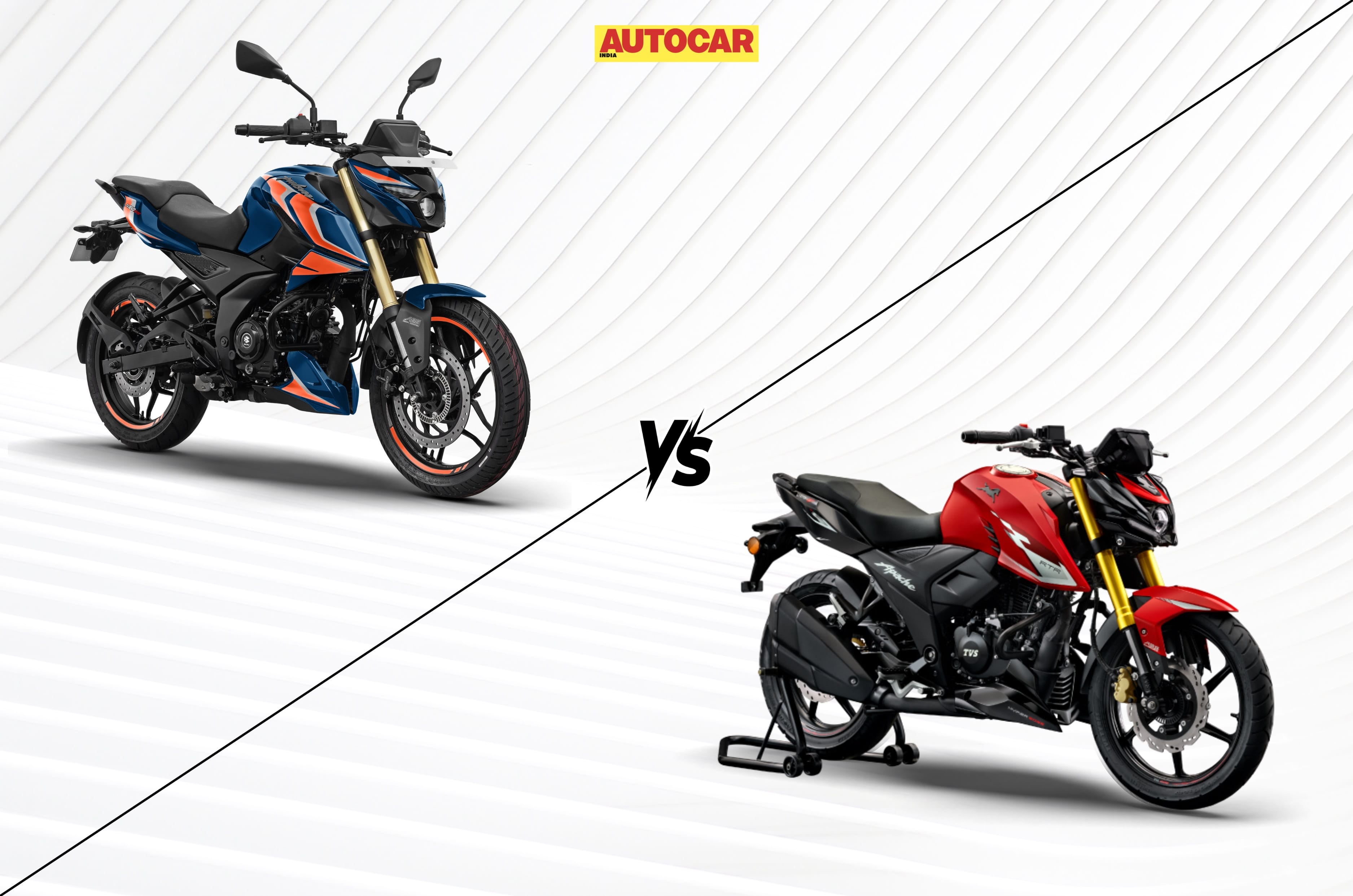
Bajaj Pulsar N160 (4V) vs TVS Apache RTR 160 4V: Price and spec comparison

Bajaj Pulsar N160 (4V) vs TVS Apache RTR 160 4V: Price and spec comparison

Bajaj has revealed the updated Pulsar N160, celebrating 25 years of the Pulsar brand’s legacy, and a simplified variant nomenclature. The motorcycle now gets a brand-new four valve engine that has more power than before. The higher variant gets a host of new features including a TFT instrument cluster with Google Maps mirroring, traction control, and four ride modes. This is perhaps the biggest challenger yet to the current segment leader, the TVS Apache RTR 160 4V, upgraded last year. Let’s see how the popular street-nakeds compare, on paper.

Bajaj Pulsar N160 (4V) vs TVS Apache RTR 160 4V: Engine and output

Similar peak power and torque figures


Bajaj Pulsar N160 (4V)

TVS Apache RTR 160 4V

Engine

164.5cc, single-cylinder, oil-cooled

159.9cc, single-cylinder, oil-cooled

Power

18.5hp at 9,500rpm

17.55hp at 9,250rpm

Torque

14.4Nm at 8,000rpm

14.73Nm at 7,500rpm

Gearbox

5-speed

5-speed

Power-to-weight ratio

122.52hp/tonne

120.21hp/tonne

Bajaj has given the N160 an all new 4V engine that’s more powerful than the existing 2V engine. You get more power and 0.25Nmslightly loweress torque although both are delivered later in the rev range than on the Pulsar N160 (2V). The 4V engine is also oil-cooled now, an upgrade from the 2V’s air-cooled engine. On the Apache both peak power and torque come in earlier in the rev range.

Bajaj Pulsar N160 (4V) vs TVS Apache RTR 160 4V: Dimensions and weight

Point to Bajaj, mostly


Bajaj Pulsar N160 (4V)

TVS Apache RTR 160 4V

Fuel tank capacity

14 litres

12 litres

Ground clearance

165mm

180mm

Kerb weight

151kg

146kg

Seat height

795mm

790mm

Wheelbase

1,348mm

1,357mm

The new Bajaj Pulsar N160 (4V) weighs 151kg which at first glance looks heavier compared to the Apache’s 146kg. However, the TVS gets a smaller 12-litre fuel tank and for motorcycles of this segment that translates to roughly 100km lesser range which isn’t a small number. As for seat height, the Apache has the upper hand with a 5mm lower seat height. The Apache also touts 15mm more ground clearance over the Pulsar, and a 9mm longer wheelbase.

Bajaj Pulsar N160 (4V) vs TVS Apache RTR 160 4V: Tyres, brakes, and suspension

Level ground


Bajaj Pulsar N160 (4V)

TVS Apache RTR 160 4V

Tyres (F,R)

100/80-17, 130/70R17

90/90-17, 130/70R17

Brakes (F,R)

300mm disc, 230mm disc, dual-channel ABS

270mm disc, 240mm disc, dual-channel ABS

Suspension (F,R)

USD fork, monoshock

USD fork, monoshock

Things start getting a bit more equal in this area, but please note that we are comparing the top variants of both bikes. On paper, the Bajaj gets a larger front tyre but it’s a minor difference. As for brakes, Bajaj has the superior numbers there with a larger front disc rotor. The suspension specifications on both are extremely similar, but real-world experiences may vary. It’s worth mentioning here that until a year or two ago, TVS was the only manufacturer in this segment offering adjustability on both front and rear suspensions, but unfortunately that’s not the case anymore as the brand doesn’t offer that adjustability anymore.

Bajaj Pulsar N160 (4V) vs TVS Apache RTR 160 4V: Features

The Pulsar N160 is the first Bajaj model to offer a TFT dash

Offering segment first features has been a TVS specialty for a while now, but Bajaj is now looking to beat them at their own game with the new Pulsar N160. Bajaj offers features like an electronic throttle body and Google Maps mirroring on the top variant of the N160. To get the Google Maps mirroring on a TVS Apache, one currently has to look at the RTX 300. They remain in lockstep with respect to other features like traction control, ride modes, TFT cluster, and a crawl mode to make navigating traffic easier.

Bajaj Pulsar N160 (4V) vs TVS Apache RTR 160 4V: Price

TVS undercuts the Bajaj by Rs 3,000


Bajaj Pulsar N160 (4V)

TVS Apache RTR 160 4V

Price (Top-most variant)

Rs 1.42 lakh

Rs 1.39 lakh

The new Pulsar N160 has two variants, S and SS, and they cost Rs 1.33 lakh and Rs 1.42 lakh respectively (ex-showroom, Delhi). The Apache RTR 160 4V, on the other hand, has four different variants at the time of writing and starts at Rs 1.19 lakh and goes all the way up to Rs 1.39 lakh for the fully loaded top variant. The differences between the two motorcycles are minor, but thankfully clear enough which should make picking one easier.
 

Bajaj Pulsar N160 S, N160 SS launched at Rs 1.34 lakh with new 4-valve engine

 Bajaj Pulsar N160 S, N160 SS launched at Rs 1.34 lakh with new 4-valve engine

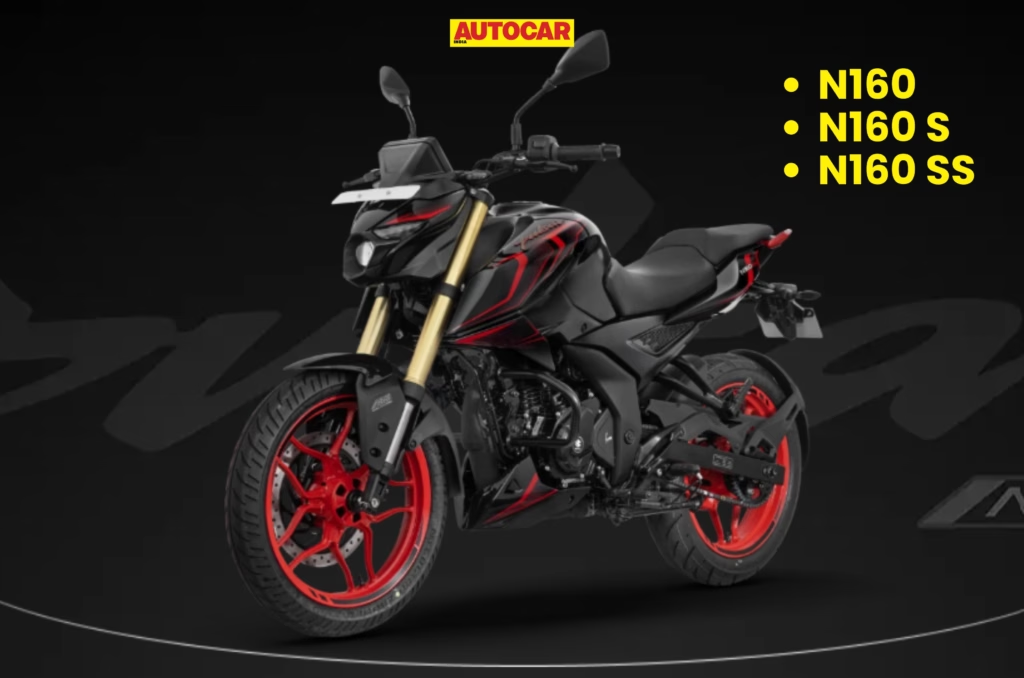
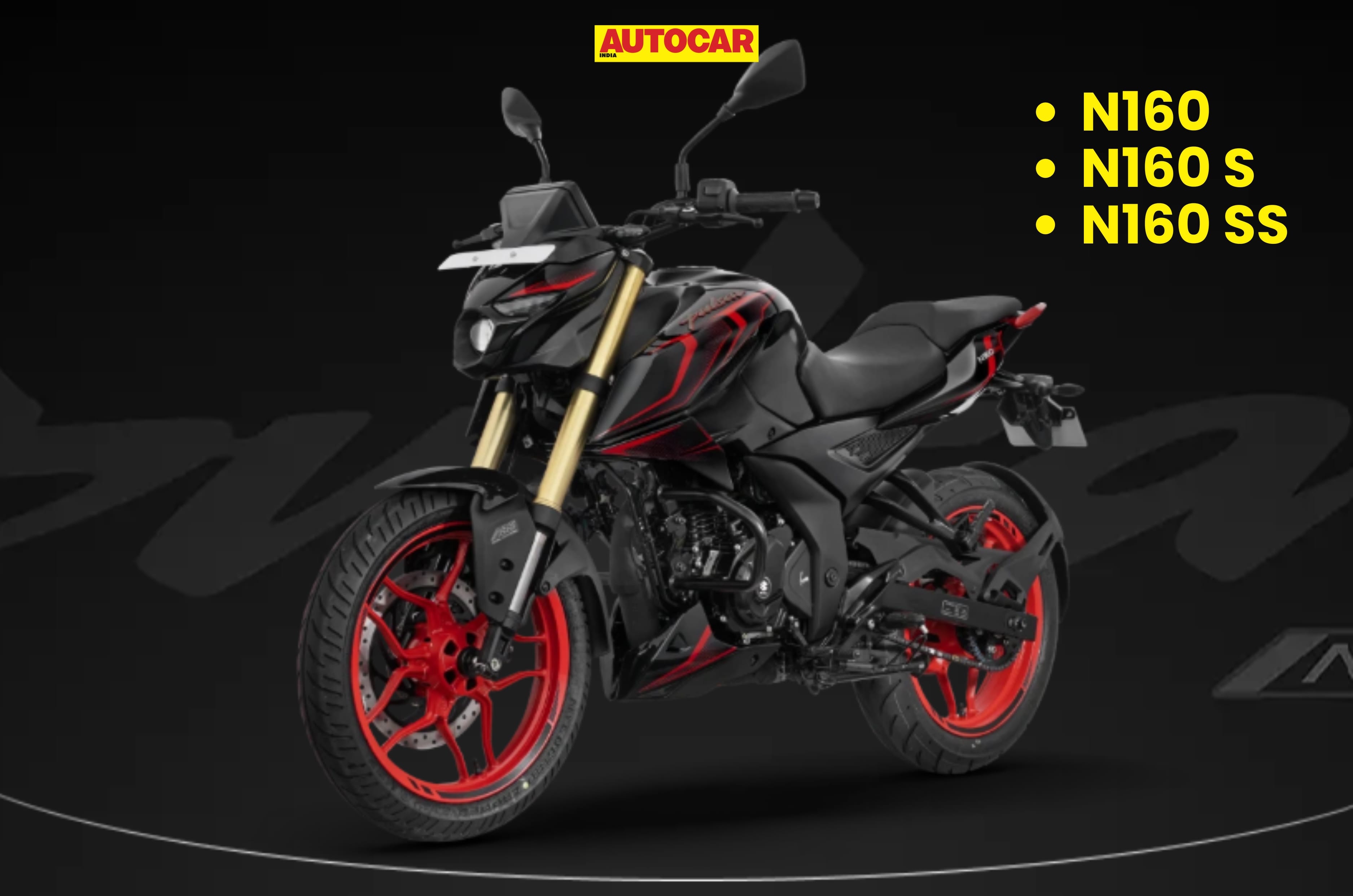
Bajaj Auto has expanded the Pulsar N160 range with the launch of the Pulsar N160 S and Pulsar N160 SS, priced at Rs 1.34 lakh and Rs 1.43 lakh (ex-showroom, Delhi), respectively. The standard Pulsar N160 will continue to be sold alongside the new variants. Compared to the outgoing N160 variants, the new N160 S is Rs 10,708 more expensive, while the flagship N160 SS commands a premium of Rs 14,089. 

  1. N160 S priced at Rs 1.34 lakh; N160 SS at Rs 1.43 lakh
  2. New 165cc, 4-valve engine produces 18.5hp
  3. Gets electronic throttle, ride modes and TFT display

Bajaj Pulsar N160 S, N160 SS: what’s new?

The biggest update is the new 164.5cc, oil-cooled, single-cylinder, 4-valve engine, which produces 18.5PS at 9,500rpm and 14.4Nm at 8,000rpm. Compared to the outgoing 2-valve motor’s 16PS and 14.65Nm, power is up by 2.5PS, while torque drops marginally by 0.25Nm. The engine also switches from a mechanical to an electronic throttle body. 

The electronic throttle enables Road, Rain, Sport and Off-road ride modes, along with Crawl Technology similar to what we see on KTM bikes, which allows the motorcycle to move at low speeds in higher gears with minimal clutch input. The flagship N160 SS additionally gets traction control. 

Other mechanical changes include 37mm USD forks in place of the previous 33mm units and a larger 300mm front disc. The monoshock, 14-litre fuel tank, 1,348mm wheelbase, 165mm ground clearance, 795mm seat height and 151kg kerb weight remain unchanged. 

The N160 SS becomes the first Bajaj motorcycle to get a 5-inch TFT display with Google Maps mirroring, while the N160 S continues with an LCD console. Other SS-exclusive additions include adjustable levers and Bluetooth plus Wi-Fi connectivity. Both new variants will be offered in Atlantic Blue, Pearl Metallic White and Brooklyn Black.