New Bajaj Pulsar 150: Price and variants explained

New Bajaj Pulsar 150: Price and variants explained
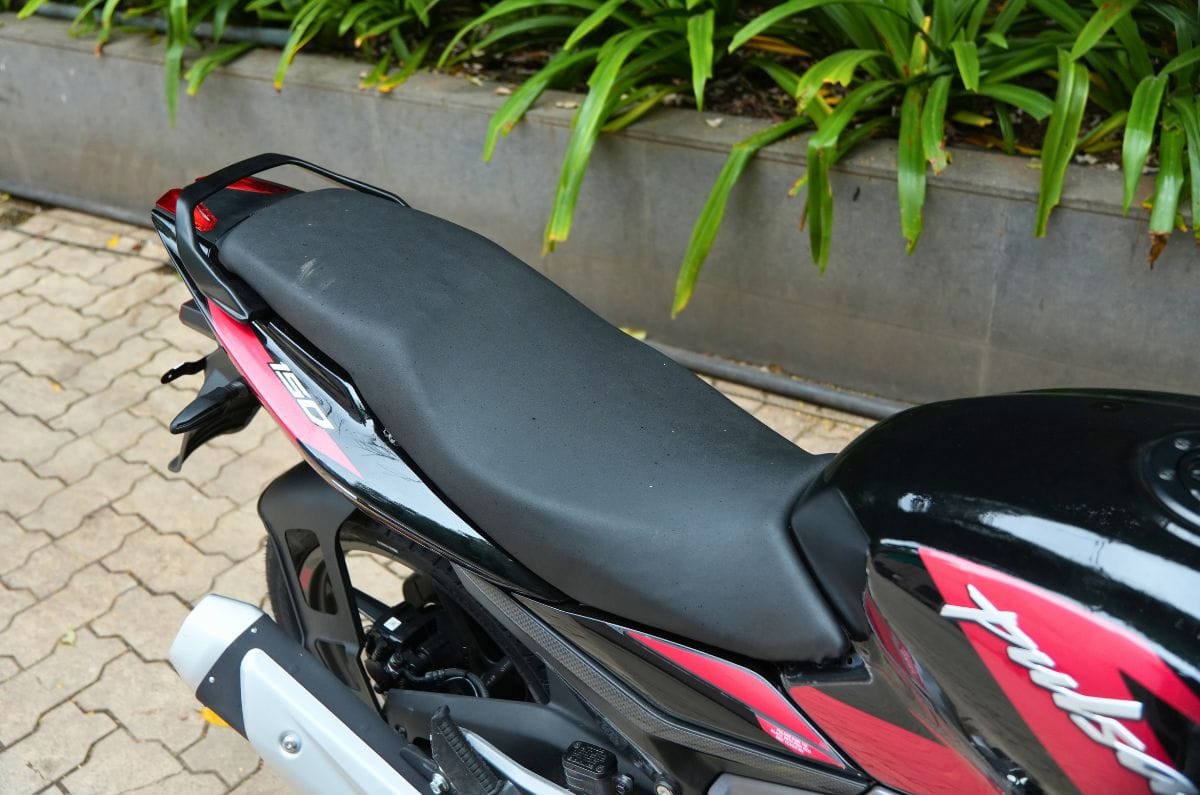
Pulsar 150 variant breakdown

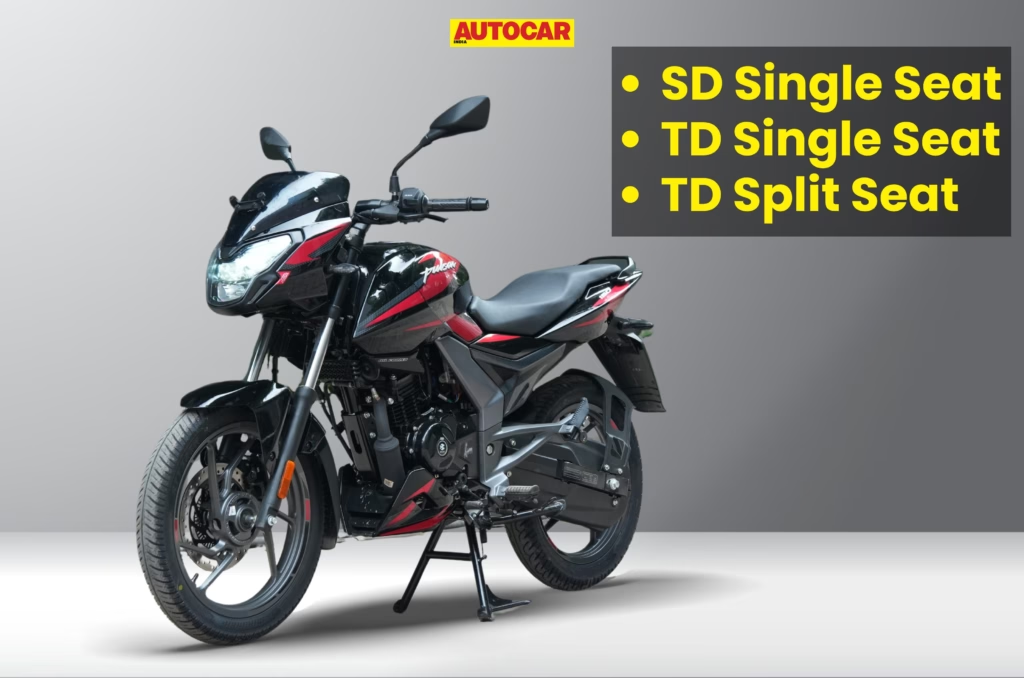
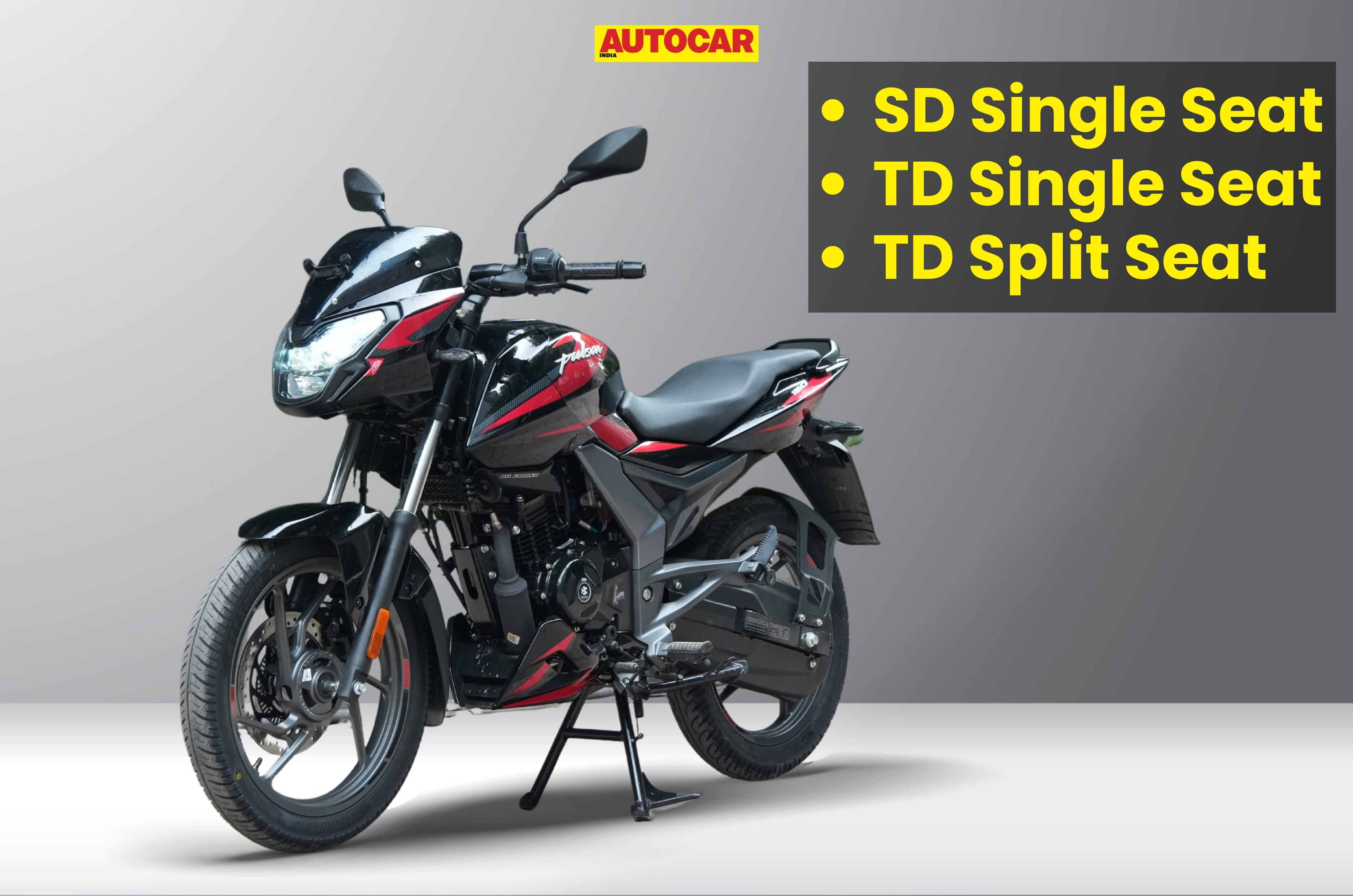
The all-new Bajaj Pulsar 150 arrives on a completely new platform with a revised engine, a new single-cradle frame, monoshock rear suspension and a host of new features. It is offered in three variants, all of which share the same mechanical package but differ in features and some hardware. Here’s a breakdown of what each variant has to offer.

Pulsar 150 variant breakdown

Pulsar 150 SD Single Seat

All three variants get the same 149.5cc, single-cylinder engine that produces peak output figures of 14hp at 8,000rpm and 14.1Nm of torque at 6,500rpm. 

The base SD Single Seat variant gets a 5-inch colour LCD display with Bluetooth and turn-by-turn navigation. Braking comes from a 260mm front disc and a 130mm rear drum, and it’s the only variant of the three to miss out on ISG, a belly pan and hazard lights. It does, however, get the same ride modes and crawl mode as the other two. It’s priced at Rs 1.15 lakh (ex-showroom, Delhi).

Pulsar 150 TD Single Seat

Stepping up to the TD Single Seat swaps in a 5-inch TFT display with Bluetooth, along with an Integrated Starter Generator (ISG) that enables a stop-start system and silent restarts. It also gains a 230mm rear disc brake in place of the drum, a belly pan and hazard lights. It’s priced at Rs 1.22 lakh.

Pulsar 150 TD Split Seat

The range-topping TD Split Seat carries over the TD Single Seat’s ISG, disc brakes, belly pan and hazard lights, but steps up to a 5-inch TFT display with Wi-Fi support that enables Google Maps mirroring – also seen on the Pulsar N160 SS. It’s the only variant of the three with a split-seat design and is priced at Rs 1.23 lakh.
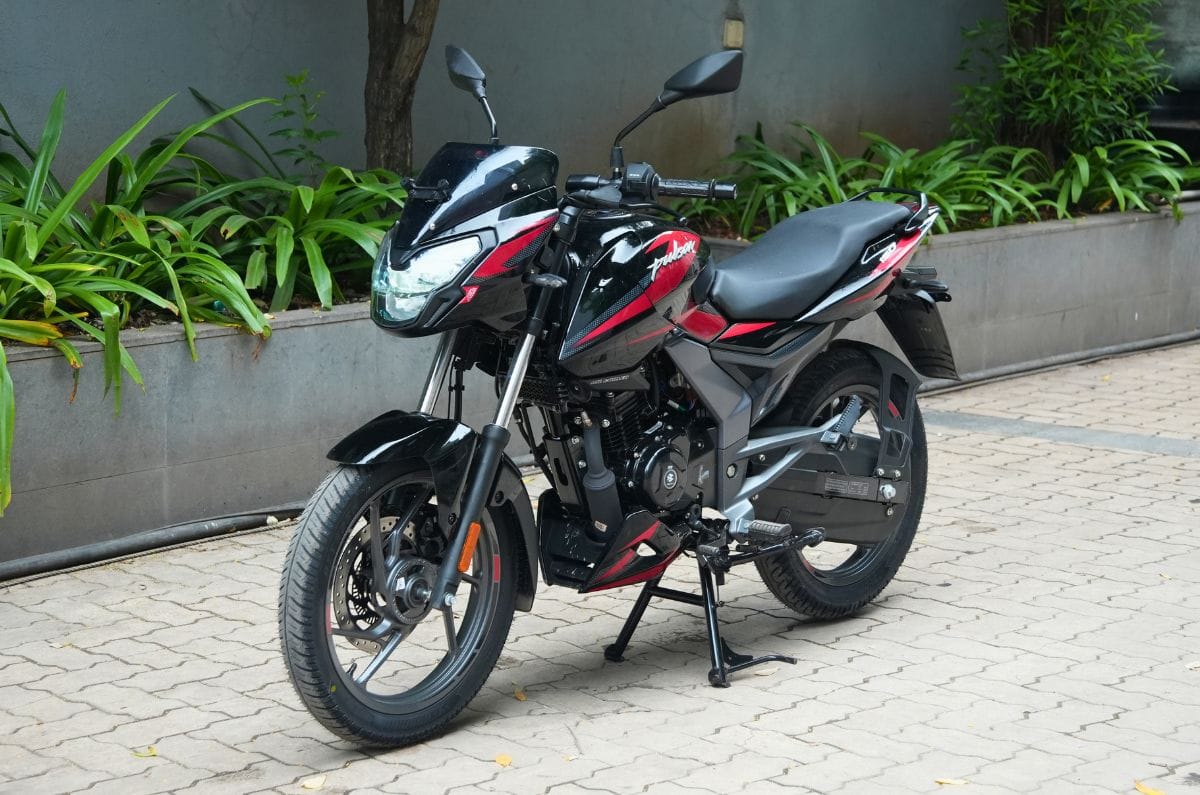
All-new Bajaj Pulsar 150 image gallery

All-new Bajaj Pulsar 150 image gallery
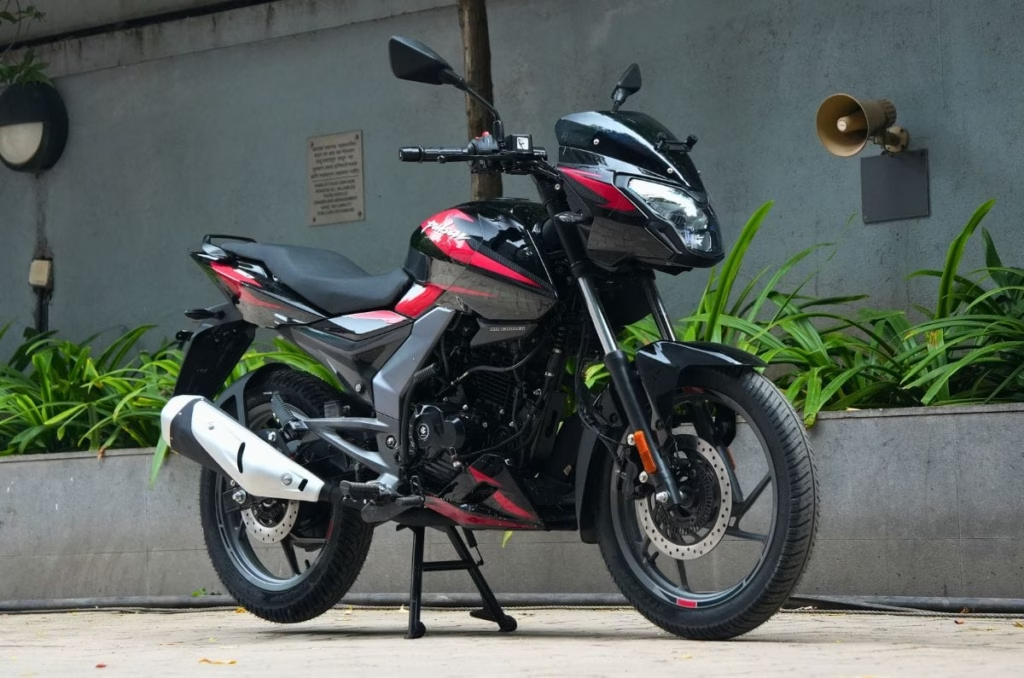
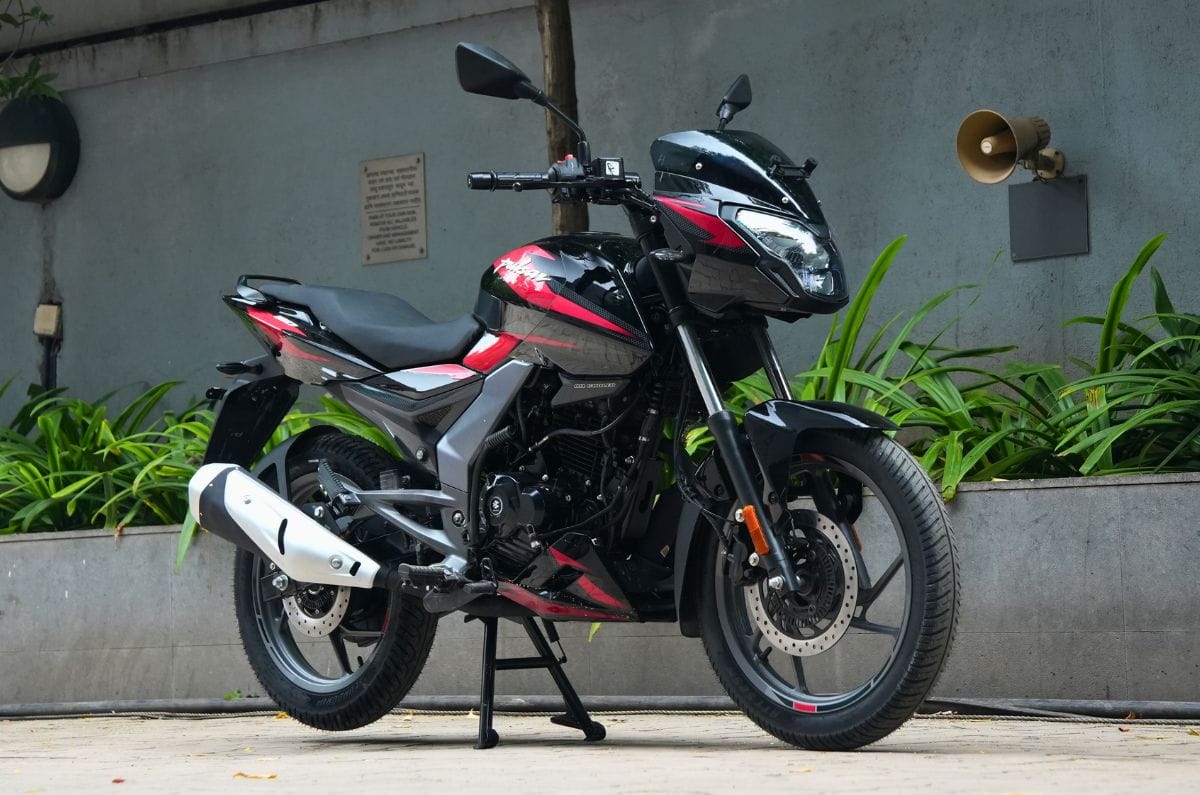
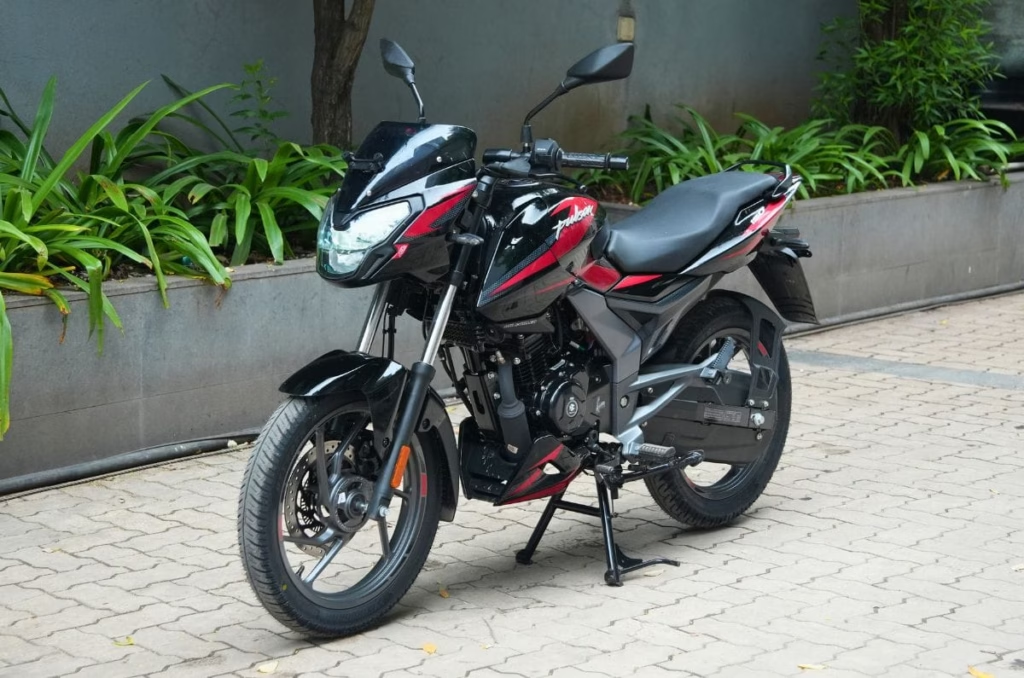
Bajaj Pulsar 150 left front three quarter

After months of anticipation and teasing, Bajaj has finally revealed an all-new Pulsar 150 today with almost all the parts of the motorcycle receiving substantial upgrades while retaining the classic Pulsar silhouette. 

Starting with the 149.5cc, single-cylinder, air/oil-cooled engine which at first glance looks similar to the existing one, with the same 14hp power. However, the engine has two major changes. The peak power is now delivered at 8,000rpm, 500rpm earlier than the existing engine. And peak torque has gone up to 14.1Nm; 0.9Nm more than before, though it is delivered at the same 6,500rpm.

The next big change is that the rear suspension is now a monoshock, as opposed to the conventional twin-shocks setup. The front continues with a right side up (RSU) telescopic fork with 33mm diameter with 125mm of travel and the rear suspension travel is 110mm. Stopping duties are handled by a 260mm front disc and a 230mm rear disc (130mm rear drum on the base variant). 

 the fairing on the new one has been redesigned for a more aggressive look with the top two variants getting all-LED lighting as standard. Bajaj has priced the base SD Single Seat variant at Rs 1.15 lakh with the fully loaded, TD Split Seat variant costing Rs 1.23 lakh.

All-new Bajaj Pulsar 150 launched from Rs 1.15 lakh

All-new Bajaj Pulsar 150 launched from Rs 1.15 lakh

After months of anticipation and teasing, Bajaj has finally revealed an all-new Pulsar 150 today with almost all the parts of the motorcycle receiving substantial upgrades while retaining the classic Pulsar silhouette. There are three variants now, SD Single Seat, TD Single Seat, TD Split Seat. The latter two variants get a 5-inch TFT instrument cluster and an Integrated Starter Generator (ISG). All three models also get a crawl mode to make navigating traffic easier.

  1. Gets three variants, top variant gets Google Maps mirroring
  2. New gearbox with easier lower end tractability
  3. ISG and crawl modes to make low speed riding even easier

Gets meaningful updates everywhere

With a bunch of new features

Starting with the 149.5cc, single-cylinder, air/oil-cooled engine which at first glance looks similar to the existing one, with the same 14hp power. However, the engine has two major changes. The peak power is now delivered at 8,000rpm, 500rpm earlier than the existing engine. And peak torque has gone up to 14.1Nm; 0.9Nm more than before, though it is delivered at the same 6,500rpm. Bajaj has also given the motorcycle a new gearbox with specific focus on low speed tractability. The frame too sees an upgrade with a new single-cradle frame replacing the dual-cradle frame. The engine now acts as a stressed member of the engine, which Bajaj says improves overall ride and stability.

The next big change is that the rear suspension is now a monoshock, as opposed to the conventional twin-shocks setup. The front continues with a right side up (RSU) telescopic fork with 33mm diameter with 125mm of travel and the rear suspension travel is 110mm. Stopping duties are handled by a 260mm front disc and a 230mm rear disc (130mm rear drum on the base variant). All three variants get single-channel ABS as standard. Rounding off the ride package are the tubeless 80/100-17 tyres at the front and 100/90-17 at the rear.

On the features front, the classic Pulsar now gets a brand-new 5-inch LCD cluster with the top two variants stepping that up to a 5-inch TFT instrument cluster. The cluster also gets other features like call and SMS alerts and an option to store your vehicle documents for quick access. However, the top variant gets WiFi support which enables Google Maps mirroring, a feature first seen on the Pulsar N160 SS. There are also three ride modes and a crawl mode. Both of which were also first seen on the Pulsar N160 S and SS. The existing model had a USB type-A port for charging with the new one swapping that for a modern, type-C port on all three variants.

Bajaj has also equipped the top two variants with ISG, which has a stop-start system that can automatically turn the motorcycle off during traffic stops, to conserve fuel, and also enables silent starts. There are minor upgrades to the lighting department as well. Though the class B LED headlight itself is shared with the outgoing Pulsar 150 that received an update last year. the fairing on the new one has been redesigned for a more aggressive look with the top two variants getting all-LED lighting as standard. Bajaj has priced the base SD Single Seat variant at Rs 1.15 lakh with the fully loaded, TD Split Seat variant costing Rs 1.23 lakh.
 

Bajaj Pulsar 150 का नया अवतार आया सामने, कलर LCD से ऑयल-कूल्ड इंजन तक मिलेंगे ये अपडेट

नई Bajaj Pulsar 150 लॉन्च से पहले डीलरशिप पर नजर आई है, जिससे इस मोटरसाइकिल के अपडेटेड प्लेटफॉर्म और इक्विपमेंट की अब तक की सबसे साफ झलक मिली है। माना जा रहा है कि आने वाला यह मॉडल Bajaj Auto की बड़ी Pulsar प्रोडक्ट रेंज का हिस्सा है। जिसमें अपडेटेड Pulsar N160 और हाल ही में देखी गई अगली पीढ़ी की Pulsar 125 शामिल हैं।

नया फ्रेम और सस्पेंशन

नई Pulsar 150 को पूरी तरह से अपडेटेड प्लेटफॉर्म पर तैयार किया गया है। इसमें सिंगल-डाउनट्यूब फ्रेम का इस्तेमाल किया गया है, जिसने पुराने आर्किटेक्चर की जगह ली है, जो कई सालों से Classic Pulsar रेंज का आधार रहा है।

एक और अहम बदलाव इसके पिछले हिस्से में हुआ है, जहां पुराने मॉडल में इस्तेमाल होने वाले ट्विन शॉक एब्जॉर्बर की जगह प्रीलोड-एडजस्टेबल मोनोशॉक दिया गया है। वहीं, सामने की तरफ टेलिस्कोपिक फोर्क पहले की तरह जारी रहने की उम्मीद है। यह सेटअप हाल ही सामने आई नई Pulsar 125 में किए गए बदलावों जैसा ही है और इससे 150 को ज्यादा मॉडर्न चेसिस लेआउट मिलने की उम्मीद है।

इंजन

इंजन की बात करें तो, सबसे बड़ा मैकेनिकल बदलाव इंजन में देखने को मिल सकता है। जहां मौजूदा Pulsar 150 में एयर-कूल्ड मोटर का इस्तेमाल होता है, वहीं नई बाइक में एयर- और ऑयल-कूल्ड यूनिट मिलेगी। इसके अलावा, अतिरिक्त कूलिंग सिस्टम से थर्मल मैनेजमेंट बेहतर हो सकता है और बजाज को इंजन की ट्यूनिंग में ज्यादा फ्लेक्सिबिलिटी मिल सकती है, हालांकि अभी तक आधिकारिक आउटपुट के आंकड़े सामने नहीं आए हैं।

जानकारी के लिए बता दें कि मौजूदा Pulsar 150 में 149.5cc का सिंगल-सिलेंडर इंजन है जो 14hp की पावर और लगभग 13.3Nm का टॉर्क देता है। उम्मीद है कि नए मॉडल में भी इंजन का साइज (डिस्प्लेसमेंट) वैसा ही रहेगा, लेकिन इसके परफॉर्मेंस के फाइनल आंकड़े और गियरबॉक्स की जानकारी लॉन्च के समय ही कन्फर्म होगी।

अपडेटेड डिजाइन और फीचर्स

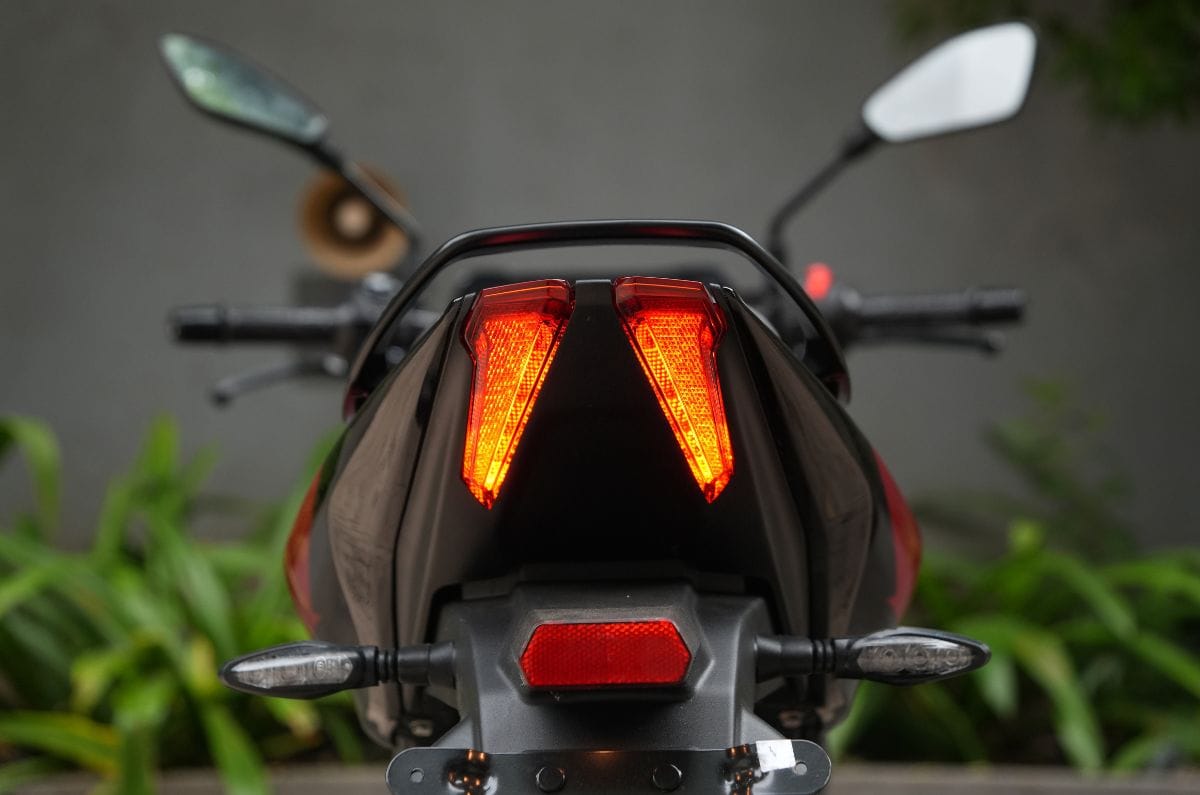
डिजाइन देखें तो, नई Pulsar 150 का ओवरऑल डिजाइन पहले जैसा ही है। हालांकि, कई डिटेल्स में बदलाव किए गए हैं। इसमें नए डिजाइन वाला हेडलाइट काउल, एक्सटेंशन के साथ मस्कुलर फ्यूल टैंक और सिग्नेचर ट्विन LED टेल-लैंप्स के साथ स्लिमर टेल सेक्शन दिया गया है।

इस मोटरसाइकिल में कलर LCD इंस्ट्रूमेंट क्लस्टर भी है, जो पुराने वर्जन के सिंपल डिस्प्ले के मुकाबले एक काम का अपग्रेड है। इसमें अलॉय व्हील्स और फ्रंट डिस्क ब्रेक जैसे दूसरे फीचर्स भी दिखते हैं, जबकि इसकी ओवरऑल स्टाइलिंग पूरी तरह से नई दिशा में जाने के बजाय Pulsar जैसी ही लगती है।

मुकाबला

लॉन्च होने के बाद, नई Bajaj Pulsar 150 का मुकाबला TVS Apache RTR 160, Honda CB150 Hornet और रोजाना के इस्तेमाल और अच्छी परफॉर्मेंस वाली दूसरी बाइक्स से होगा। साथ ही, इसकी कीमत मौजूदा मॉडल से ज्यादा हो सकती है। हालांकि, Bajaj ने अभी तक कोई कीमत नहीं बताई है।