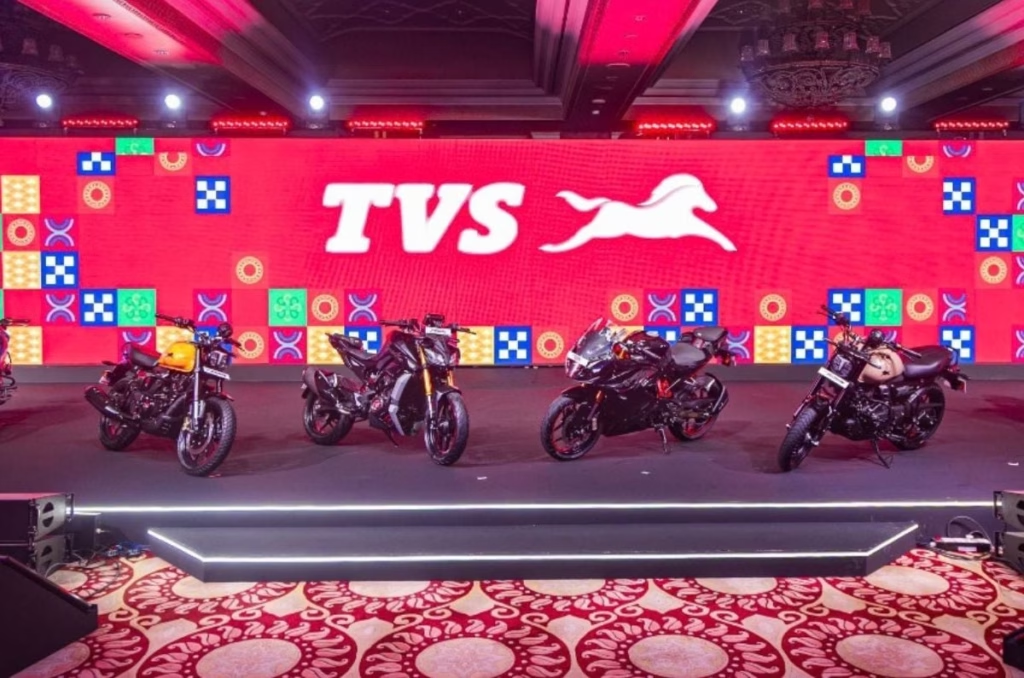
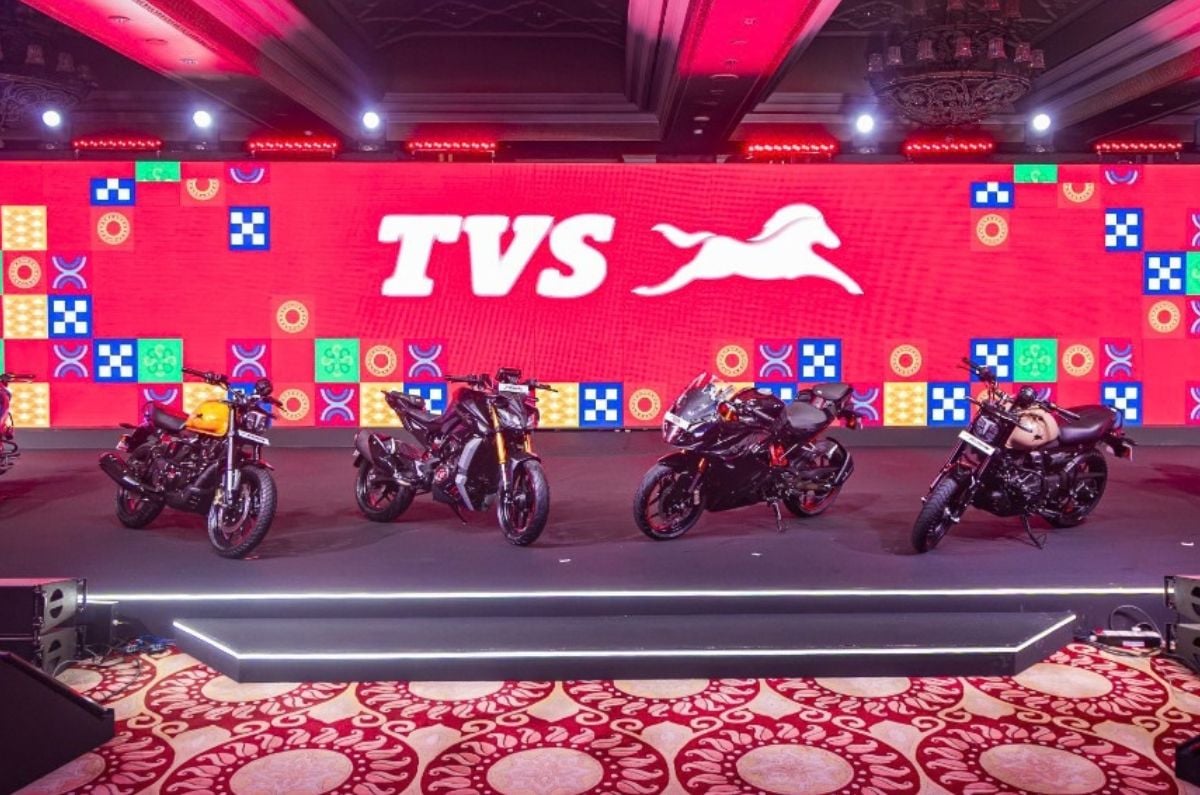
TVS has introduced new top variants for the Apache RTR 160, RTR 160 4V and RTR 200 4V, along with feature updates across the Ronin range, while the RTR 310 and RR 310 get new Black Diamond editions.
New Apache variants get added tech, including traction control, Google Maps mirroring and Type-C charging port
Deliveries of the new motorcycles will begin this festive season
TVS Apache range gets new variants
Apache RTR 160
The Apache RTR 160’s new top variant is priced at Rs 1.28 lakh. It gets traction control, hazard lights and LED indicators. It is available in four colours.
Apache RTR 160 4V
Priced at Rs 1.41 lakh, the new top variant of the Apache RTR 160 4V gets Google Maps mirroring, a panic brake alert and a Type-C charging port. Even the 4V is available in four colour options.
Apache RTR 200 4V
The new top variant of the Apache RTR 200 4V is priced at Rs 1.50 lakh. TVS says it is India’s most technologically advanced 200cc motorcycle, equipped with features such as Google Maps mirroring, a panic brake alert, a Type-C charging port and an adjustable front USD fork. The motorcycle is available in four colours.
Deliveries of the smaller-capacity Apaches are set to begin this festive season.
TVS RTR 310, RR 310 get Black Diamond editions
The TVS RTR 310 and RR 310 are now available in new Black Diamond editions, priced at Rs 2.49 lakh and Rs 2.88 lakh, respectively. Both editions get keyless-go technology.
TVS Ronin range updated
The Ronin Base+, priced at Rs 1.42 lakh, gets two new colour options and dual-channel ABS. Priced at Rs 1.51 lakh, the mid-spec Ronin gains a Type-C charging port, connected instrumentation, dual-channel ABS and a gold-finished USD fork. The range-topping Ronin, priced at Rs 1.63 lakh, gets a premium seat, traction control, a Type-C charging port and adjustable levers.
Delhi DTC Bus Strike: ज्यादा वेतन, काम के बेहतर हालात और सामाजिक सुरक्षा सहूलियतों की मांग कर रहे डीटीसी बस ड्राइवरों और कंडक्टरों की हड़ताल आज तीसरे दिन यानी गुरुवार को भी जारी रहने की आशंका है। इससे दिल्ली की सार्वजनिक यातायात व्यवस्था बुरी तरह प्रभावित हुई है। बड़ी संख्या में डीटीसी बसों के सड़कों से नदारद होने की वजह से, यात्रियों को ट्रांसपोर्ट के दूसरे तरीकों पर निर्भर रहना पड़ा।
डीटीसी कर्मचारी एकता यूनियन के मुताबिक, डीटीसी बसें चलाने वाले ड्राइवर और कंडक्टर को अभी राज्य सरकार द्वारा तय की गई न्यूनतम सैलरी 862 रुपये रोजाना मिलती है। अपने बयान में, यूनियन ने सवाल उठाया कि दिल्ली जैसे घनी आबादी वाले शहर में बड़ी बसें चलाने वाले लाइसेंस वाले और क्वालिफाइड ड्राइवरों और कंडक्टरों को क्या हर दिन Rs 862 देना “बंधुआ मजदूरी” के बराबर नहीं है।
डीटीसी की हड़ताल से मेट्रो में बढ़ी भीड़
कई रूट पर डीटीसी बसें न होने की वजह से, यात्रियों ने दिल्ली मेट्रो और ट्रांसपोर्ट के दूसरे तरीकों का सहारा लिया। कई मेट्रो स्टेशनों पर यात्रियों की भारी भीड़ देखी गई। बढ़ती मांग के कारण आने-जाने के पीक घंटों में प्लेटफॉर्म और ट्रेनों में भीड़ हो गई। यात्रियों की बढ़ती संख्या को मैनेज करने के लिए, दिल्ली मेट्रो रेल कॉर्पोरेशन (DMRC) ने बुधवार को और सर्विस शुरू करने की घोषणा की।
आठ और ट्रेनें चला रहा है डीएमआरसी
डीएमआरसी ने डीटीसी बस हड़ताल से प्रभावित और यात्रियों को ठहराने के लिए बड़े इंतज़ाम किए हैं। कॉर्पोरेशन ने अपने नेटवर्क पर 20 और ट्रेन ट्रिप बढ़ा दिए, जिसमें जरूरत के हिसाब से दिन में आठ और ट्रेनें चलाई गईं। X पर एक पोस्ट में, डीएमआरसी ने कहा कि अतिरिक्त व्यवस्था गुरुवार को भी जारी रहेगी।
स्कूल बस सर्विस में रुकावट
हड़ताल का असर दिल्ली में स्कूल ट्रांसपोर्ट सर्विस पर भी पड़ा। कई अभिभावकों ने बस की उपलबधता और इंतजाम को लेकर कन्फ्यूजन बताया। सरदार पटेल विद्यालय ने पेरेंट्स को बताया कि हड़ताल की वजह से कुछ इलाकों में उसकी स्कूल बसों का ऑपरेशनल स्टेटस अभी भी पक्का नहीं है। एक मैसेज में, स्कूल ने कहा कि उसने वापसी यात्रा के लिए दूसरे ट्रांसपोर्टेशन का इंतजाम किया है। साथ ही पेरेंट्स को सलाह दी कि सर्विस सामान्य होने तक वे अपडेट के लिए अपनी ‘बस दीदी’ के संपर्क में रहें। डीटीसी ने पब्लिक ट्रांसपोर्ट के लिए अपने फ्लीट की बढ़ती डिमांड का हवाला देते हुए 2023 शैक्षणिक सत्र से दिल्ली के स्कूलों को बसें देना बंद कर दिया है। इससे पहले, कॉर्पोरेशन बच्चों को लाने-ले जाने के लिए स्कूलों को 350 से ज्यादा बसें दे रहा था।
गुरुवार को भी हड़ताल जारी रहने का अनुमान
डीटीसी ड्राइवरों की हड़ताल गुरुवार को भी जारी रहने की आशंका है, जिससे यात्रियों और स्कूलों को और दिक्कतों का सामना करना पड़ सकता है। इस बीच डीएमआरसी डीएमआरसी ने यात्रियों की बढ़ती मांग को पूरा करने के लिए और ट्रेन सर्विस की घोषणा की है।
डेढ़ साल से नहीं बढ़ा महंगाई भत्ता
यूनियन के प्रेसिडेंट, ललित चौधरी ने कहा कि नियमों के तहत हर छह महीने में रिवाइज होने वाला महंगाई भत्ता पिछले डेढ़ साल से नहीं बढ़ाया गया है। उन्होंने आगे कहा कि हर पांच साल में मिलने वाला बेसिक इंक्रीमेंट आखिरी बार 2019 में लागू किया गया था और 2024 से पेंडिंग है।
क्या हैं डीटीसी ड्राइवर और कंडक्टर की मांगें?
एक जैसे काम के लिए कम से कम Rs 2,000 की दिहाड़ी।
सभी सरकारी छुट्टियों का पेमेंट।
सालाना बोनस।
सोशल सिक्योरिटी बेनिफिट्स, जिसमें मेडिकल स्कीम भी शामिल है।
वेतन में बदलाव और काम करने के बेहतर हालात।
लगभग 12,000 और ड्राइवर-कंडक्टर हड़ताल से जुड़े
दिल्ली में लगभग 6,840 DTC बसें हैं। चौधरी का अनुमान है कि बुधवार को लगभग 12,000 ड्राइवर और कंडक्टर हड़ताल में शामिल हुए। विरोध कर रहे कर्मचारी, जिनमें से कई नई इलेक्ट्रिक बसें चलाते हैं, मेडिकल सुविधाओं और ओवरटाइम पेमेंट की भी मांग कर रहे हैं।
ट्रांसपोर्ट मंत्री ने पंकज सिंह ने की हड़ताल खत्म करने की अपील
दिल्ली के ट्रांसपोर्ट मंत्री पंकज सिंह ने कहा कि सरकार ने डीटीसी इलेक्ट्रिक बसों को मैनेज करने वाले प्राइवेट कंसेशनेयर को ड्राइवरों की चिंताओं को तुरंत दूर करने का निर्देश दिया है। सिंह ने प्रदर्शन कर रहे कर्मचारियों से कहा, “हम यहां आपकी समस्याएं सुनने के लिए हैं, जरूरी सेवाओं पर असर नहीं पड़ना चाहिए।”
हालांकि, ललित चौधरी ने कहा कि यूनियन को सरकारी प्रतिनिधियों से कोई जानकारी नहीं मिली है। उन्होंने कहा, “अभी सरकार के किसी प्रतिनिधि ने हमसे संपर्क नहीं किया है। हमारी हड़ताल शांतिपूर्ण है और हमने बसें नहीं चलाने का फैसला किया है।”
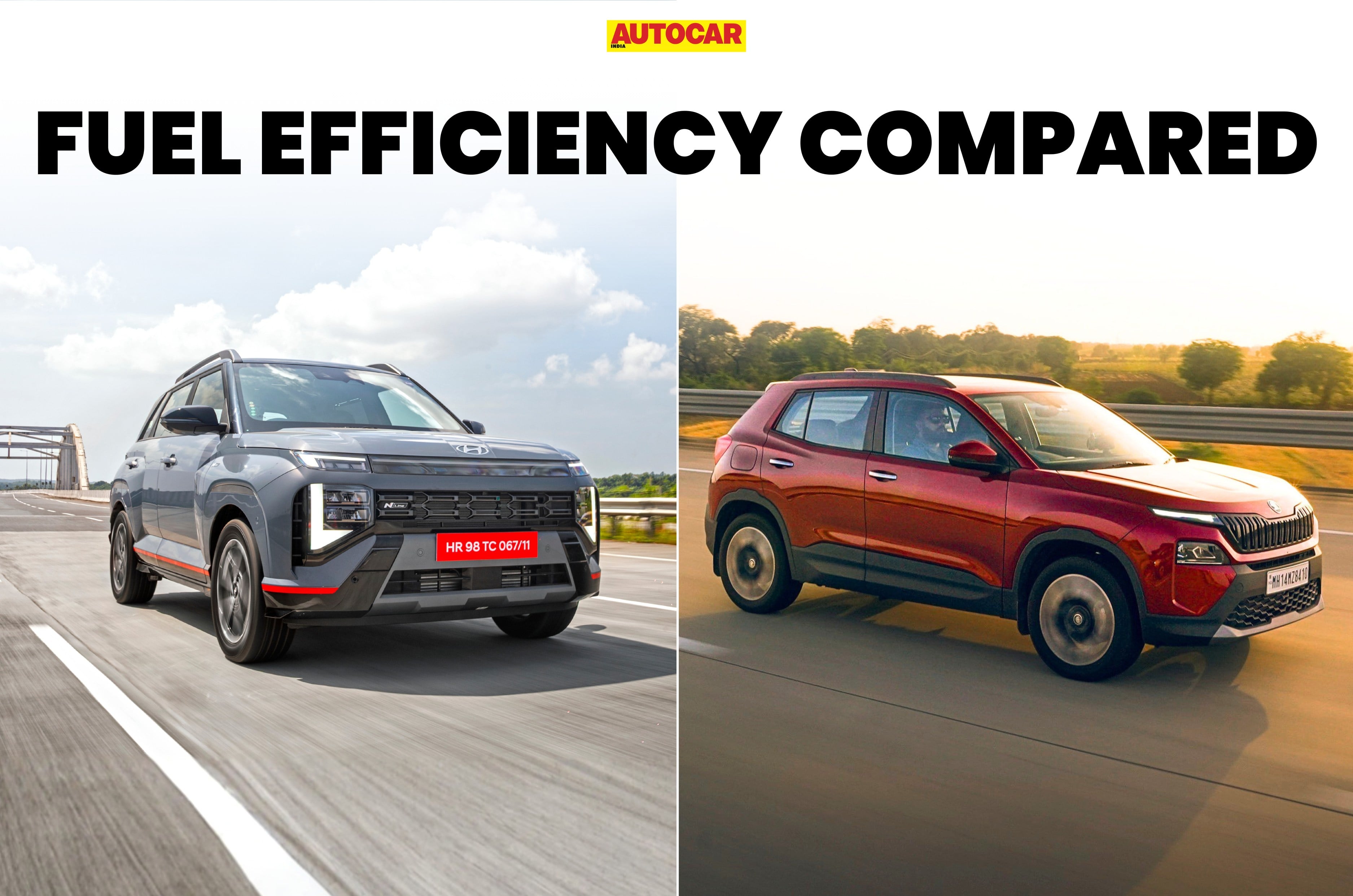
In the compact SUV space, the Hyundai Venue N Line and Skoda Kylaq promise fun behind the wheel. Both SUVs get a turbo-petrol engine option with manual and automatic transmission options. While we have already compared the real-world performance of the turbo-petrol automatic powertrain offered with the Venue N Line and Kylaq, how do these SUVs fare in real-world fuel efficiency? Let us find out.
Hyundai Venue N Line vs Skoda Kylaq: Specifications, price
Both compact SUVs offer similar engine specs, but the Venue N Line is pricier
Hyundai Venue N Line vs Skoda Kylaq: Specifications and price
Venue N Line
Kylaq
Engine
3-cyl, turbo-petrol
3-cyl, turbo-petrol
Displacement (cc)
998
999
Power (hp)
120
115
Torque (Nm)
172
178
Gearbox
7-speed DCT
6-speed AT
Fuel tank (litres)
45
45
Kerb weight (kg)
1,258
1,255
Price range (Rs, lakh)
11.56-15.49
9.25-12.99
Both the Venue N Line and Skoda Kylaq get a similar capacity 3-cylinder turbo-petrol engine with similar outputs. However, as mentioned earlier, both compact SUVs use very different automatic gearboxes – the Venue N Line gets a 7-speed dual-clutch automatic (DCT) while the Kylaq is offered with a 6-speed torque converter automatic gearbox (AT). Both rivals have a similar kerb weight and offer a 45-litre fuel tank.
The Hyundai Venue N Line turbo-petrol DCT variants are pricier than the Kylaq’s turbo-petrol AT variants, especially at the top end, where the Hyundai SUV has a Rs 2.5 lakh higher price tag than the Skoda rival.
Hyundai Venue N Line vs Skoda Kylaq: Real-world fuel efficiency
The Venue N Line turbo-DCT is more fuel-efficient than the Kylaq turbo-AT
Hyundai Venue N Line vs Skoda Kylaq: Real-world fuel efficiency
Venue N Line
Kylaq
Tested city mileage (kpl)
9.90
8.70
Tested highway mileage (kpl)
14.30
13.36
Tested average mileage (kpl)
12.10
11.03
Tested range (km)
544.50
496.35
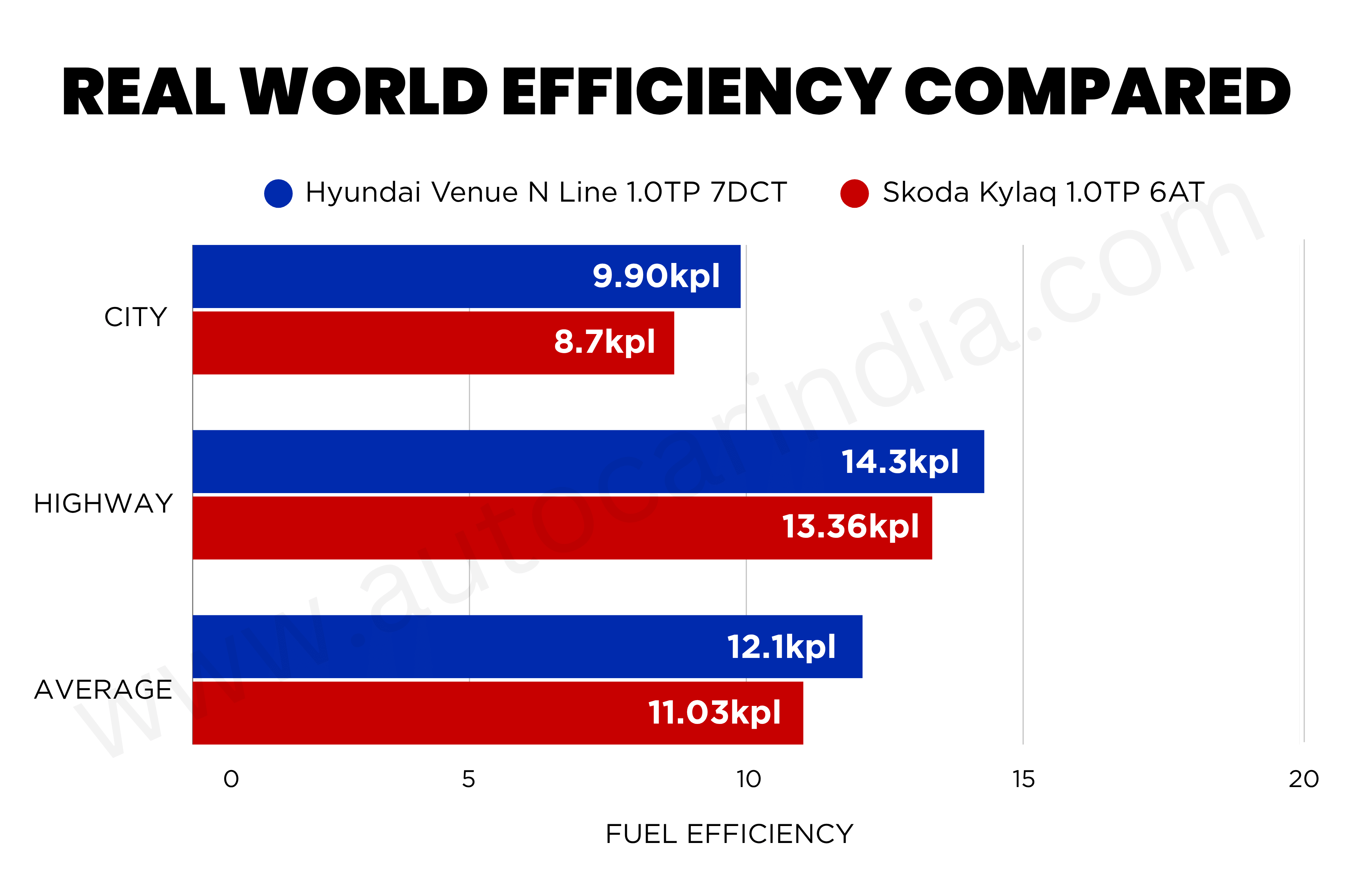
Both SUVs get an auto engine start/stop feature, but the Venue N Line is offered with three drive modes: Eco, Normal and Sport, and we used the ‘Eco’ mode during our fuel efficiency test. Such a mode is absent on the Skoda Kylaq.
In our real-world tests, we found the Venue N Line turbo-DCT is more frugal than the Kylaq turbo-AT, offering around 1kpl more. The Venue N Line’s higher fuel efficiency helps it cover over 48km more than the Kylaq on a full tank of petrol.
Autocar India’s fuel efficiency testing
Before our real-world fuel efficiency tests, we fill our test cars’ tanks to the brim and maintain tyre pressures based on the manufacturer’s recommendations. These cars are driven in fixed city and highway loops in and around Navi Mumbai, and we maintain certain average speeds. Throughout the tests, there is only one person in each car, running the air conditioner and other electricals, such as the audio system, indicators and wipers, when required, just like a regular user would. Periodic driver swaps further neutralise variations in driver patterns. At the end of each cycle, we calculate efficiency by filling the tanks to full again.
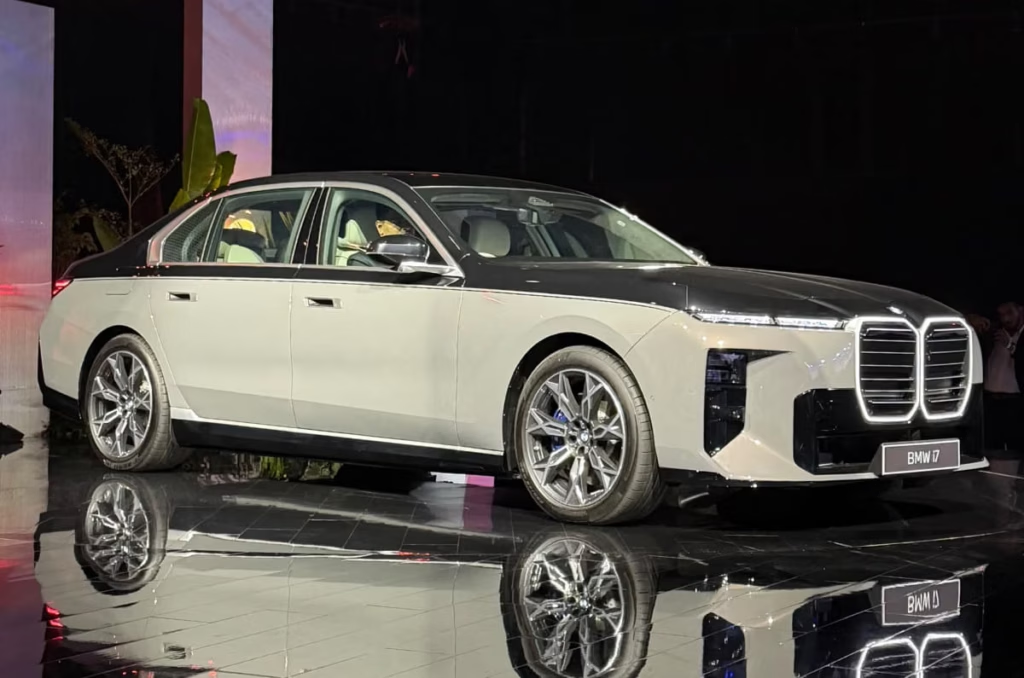
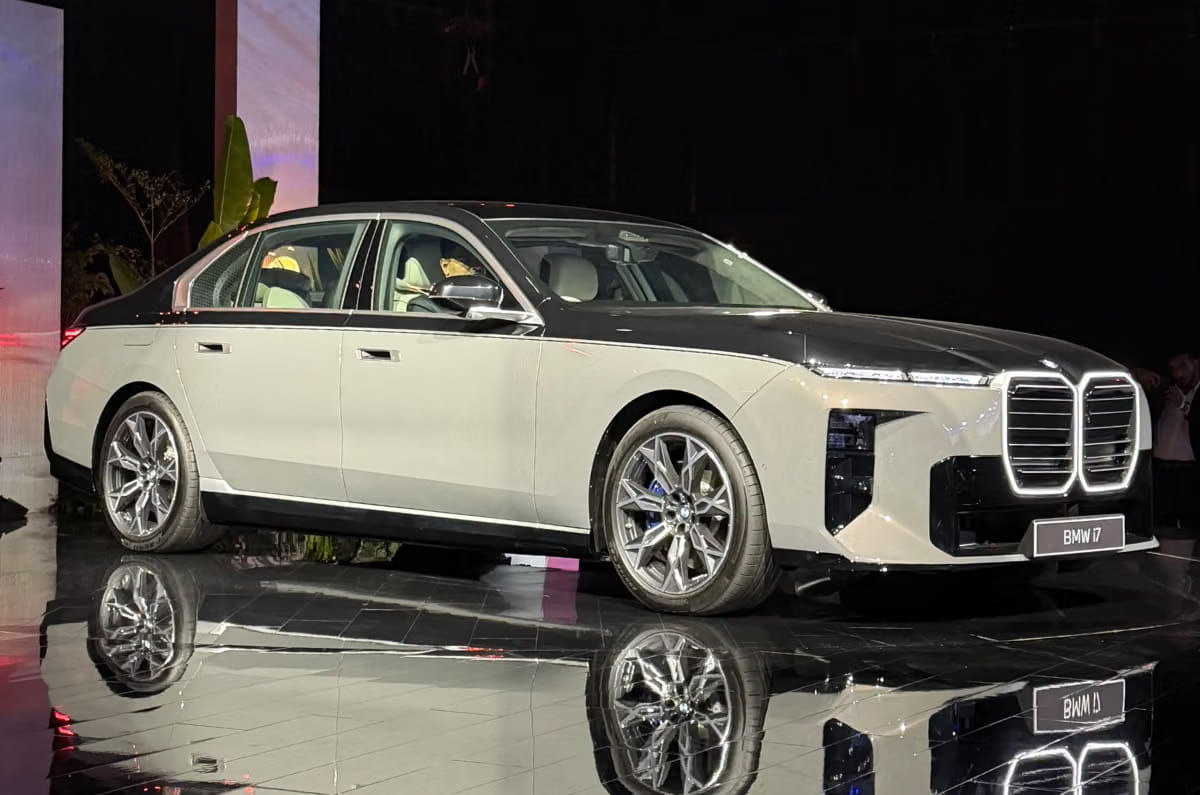
BMW has launched the facelifted i7 in India at Rs 1.95 crore for the 50 xDrive M Sport, while the M70 xDrive costs Rs 2.65 crore. Both get a 112.5kWh battery and updated electric powertrains. The 50 xDrive makes 455hp and 600Nm, with a claimed 728km WLTP range, while the M70 produces 680hp and up to 1,100Nm, with a claimed range of 686km. The facelift brings revised front and rear styling, along with a redesigned cabin featuring BMW’s Panoramic Vision display, a 17.9-inch touchscreen and a 14.6-inch passenger display. The 31.3-inch rear Theatre Screen, powered seats and powered doors continue. The 50 xDrive is locally assembled, while the M70 is imported.
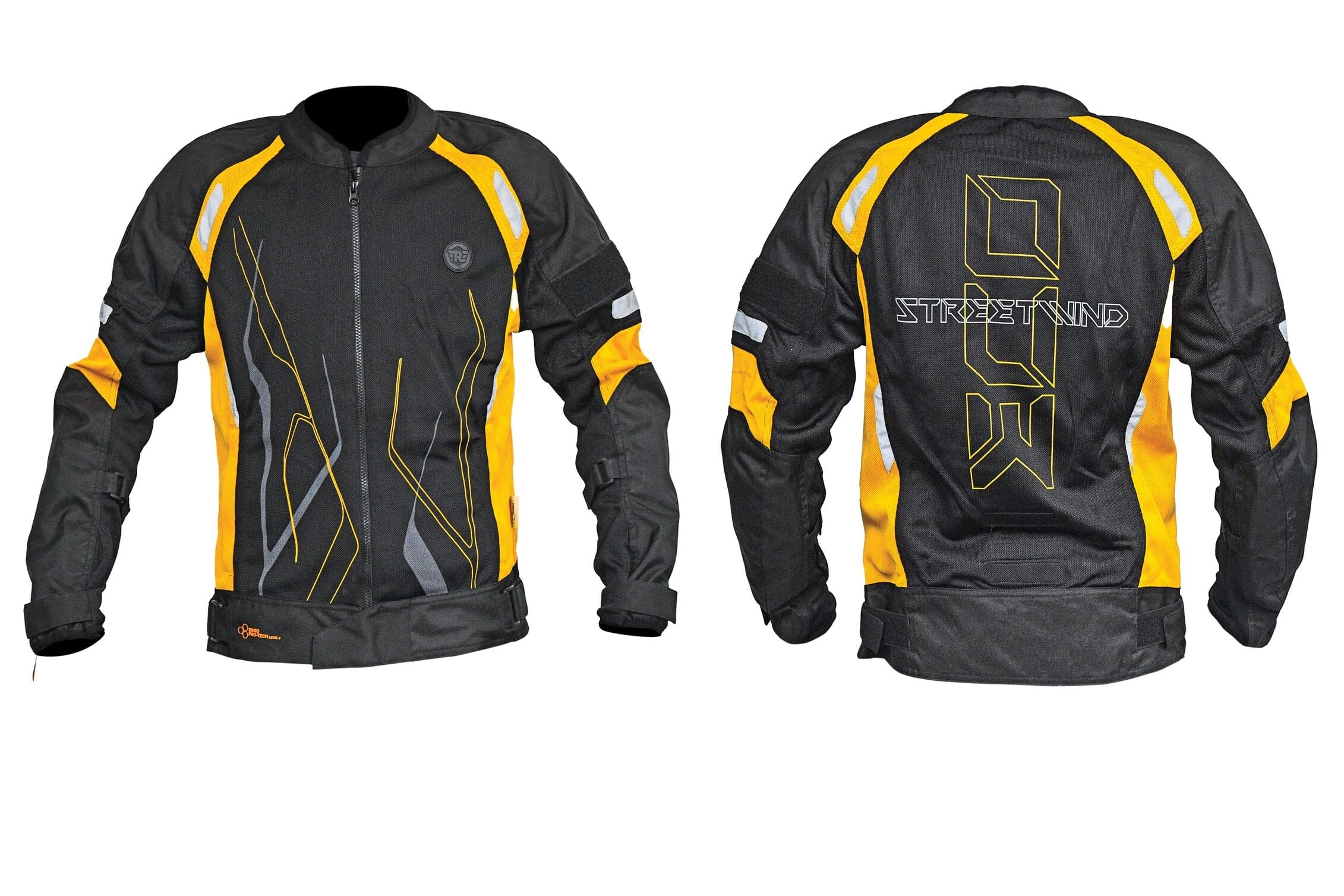
We’ve previously tested this jacket’s predecessor – the Streetwind Eco – and the biggest difference between it and the Eco 2 is in the aesthetics. Where the Eco sported a solid yellow chest and back area, the Eco 2 uses black with fine yellow and grey graphic lines, while the back gets neatly done Streetwind and Eco lettering. Like before, the jacket is available in other colourways too, but in this ‘Yellow’ version, the shade is now used as highlights on the forearms, chest and rib areas, so it’s less in-your-face but still striking enough to stand out from a sea of dull, all-black jackets.
Besides that, nothing much has changed since, but that’s just fine. Royal Enfield says this is India’s first sustainable riding jacket, made from recycled plastic bottles that are turned into yarn to weave the jacket. The weave is, of course, a mesh – RE says 90 percent is made of mesh – and it is very breathable.
We’ve had this all through summer, and ventilation has been good throughout. What’s nice is that even when you stop, you don’t feel like you’re steaming up inside. The feel of the fabric, too, is just fine and fairly soft against your body. It also has a cushioned collar, which feels nice and prevents the chafing that you tend to get from stronger fabrics. The fit seems to have improved, where earlier it felt a bit baggy, it fits tighter now, though this was on different testers this time around, but the size used was the same – small. As is the norm, there are regular adjustment tabs on the cuffs, waist, biceps, and forearms.
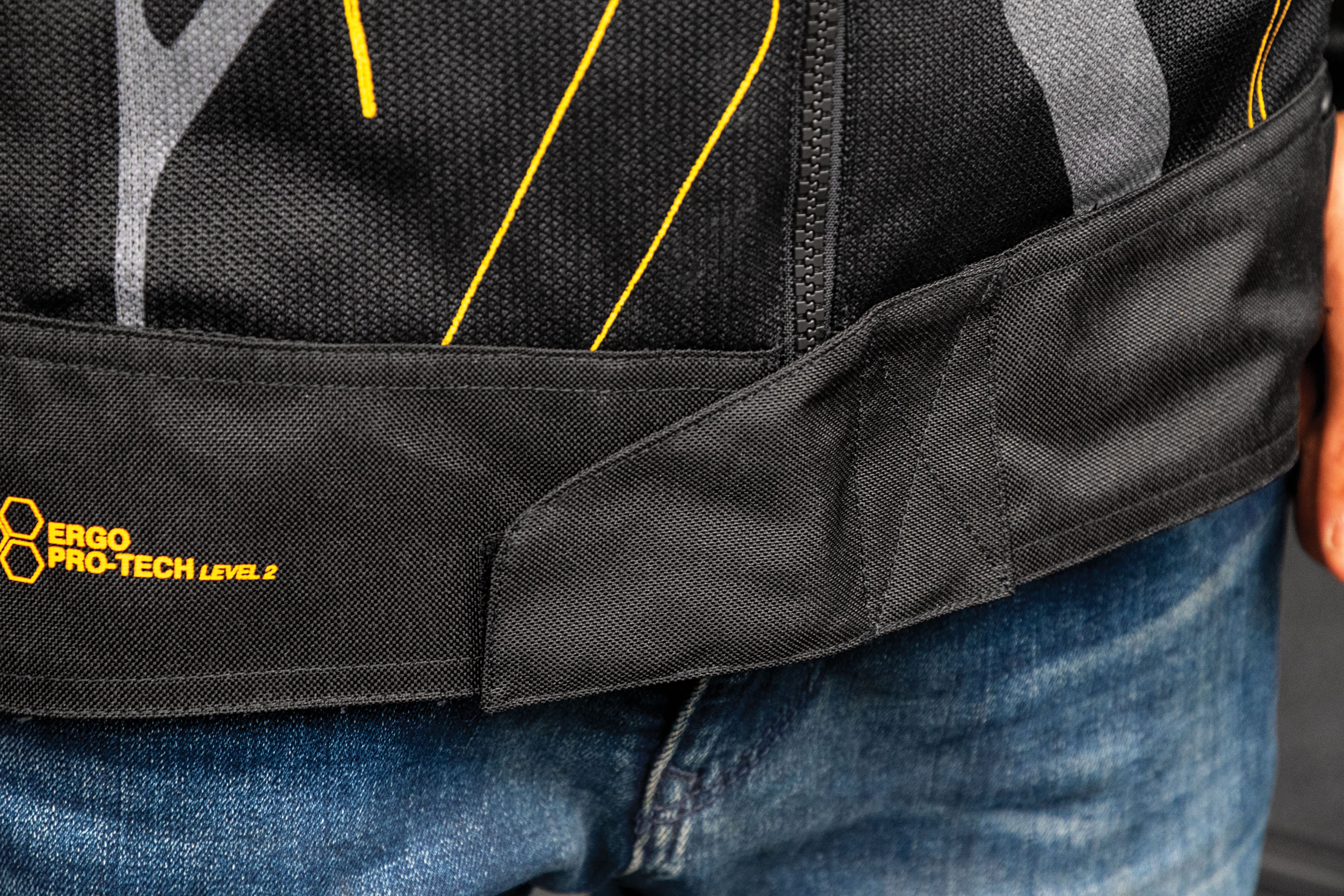
In terms of protection, the jacket is constructed with the recycled and abrasion-resistant 600d polyester and 610d Cordura fabric at impact zones. It offers CE level 2 protection via Royal Enfield’s Ergo pro-tech protectors at the shoulder and elbow. It does not have back or chest protectors; however a back protector can be added via the pocket provided.
As for utility, there are reflective accents at the front and back, along with Velcro patches on the left shoulder for any personalisation, and two front pockets with zippers, enough to accommodate a plus-sized phone.
If you are in the market for this jacket, you might find a few ongoing discounts. The MRP for this jacket stands at Rs 6,500. However, you can get it with quite a substantial discount of Rs 2,500 on multiple e-commerce websites, depending on size, bringing its effective price down to around Rs 4,000.
At its discounted price, the RE Streetwind ECO 2 does make a strong case for itself and could very well be your first investment in a proper riding jacket for the city and the occasional highway rides.
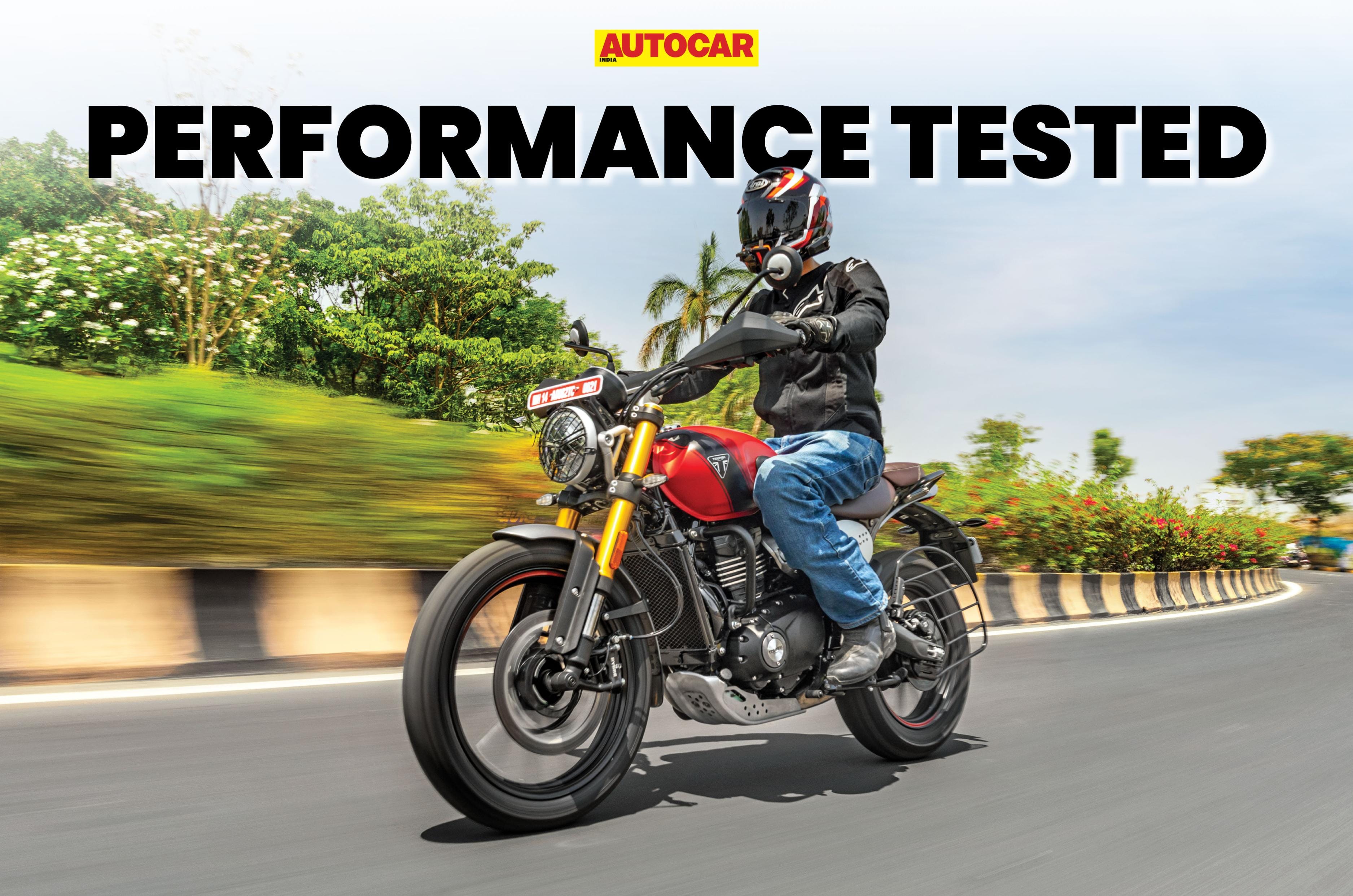
All locally manufactured Triumph motorcycles are now sold with a new 349cc single-cylinder that has been downsized from the original 399cc motor. On paper, the performance drops are small, with power going from 40hp at 8,000rpm to 37hp at 8,500rpm, and torque from 37.5Nm at 6,500rpm to 32Nm at 7,000rpm.
350cc Triumph Scrambler 400 X: Acceleration
During our test, the conditions were dry.
Acceleration
Time (seconds)
0-40kph
1.79s
0-60kph
3.27s
0-80kph
5.37s
0-100kph
8.54s
The power delivery of this new motor is now more linear. Power picks up nicely at 6,000rpm, and it redlines at 9,700rpm. The motor now produces noticeably lower vibrations, and this is something you’ll enjoy both in the city and on the highway. There are no changes to the gearing, but the bike now feels more relaxed at 100kph, and this makes it a better tourer as well.
The bike makes 37hp at 8,500rpm and 32Nm at 7,000rpm.
Roll-On Acceleration
Time (seconds)
20-50kph (2nd Gear)
2.82s
30-70kph (3rd Gear)
4.12s
50-80kph (4th Gear)
4.20s
In our roll-on acceleration tests, the bike took 2.82 seconds to get from 20-50kph, 4.12 seconds from 30-70kph, and 4.20 seconds for the 50-80kph run. In the city, it is quite tractable and easily makes quick overtakes when needed.
350cc Triumph Scrambler 400 X: Braking
Decent braking performance but could do with better feedback.
Braking
Distance
60-0kph
16.51 metres
The Scrambler 400 X still gets organic brake pads and the feel at the lever is not the sharpest. Upgrading to the sintered pads will improve the braking feedback.
350cc Triumph Scrambler 400 X: Specifications and price
The bike is available in a single variant with the option of four colour schemes.
Engine
349cc, single-cyl, liquid-cooled
Power
37hp at 8,500rpm
Torque
32Nm at 7,000rpm
Gearbox
6-speed
Fuel capacity
13 litres
Kerb weight
185kg
Seat height
835mm
Brakes (F/R)
320mm disc / 230mm disc
Tyres (F/R)
100/90-19 / 140/80-17
The 350cc Triumph Scrambler 400 X is priced at Rs 2.65 lakh (ex-showroom).
Priced at Rs 2 lakh (ex-showroom), the Keeway EZI Hypevolt-R arrives in India as a CKD and occupies the premium end of the electric scooter market.
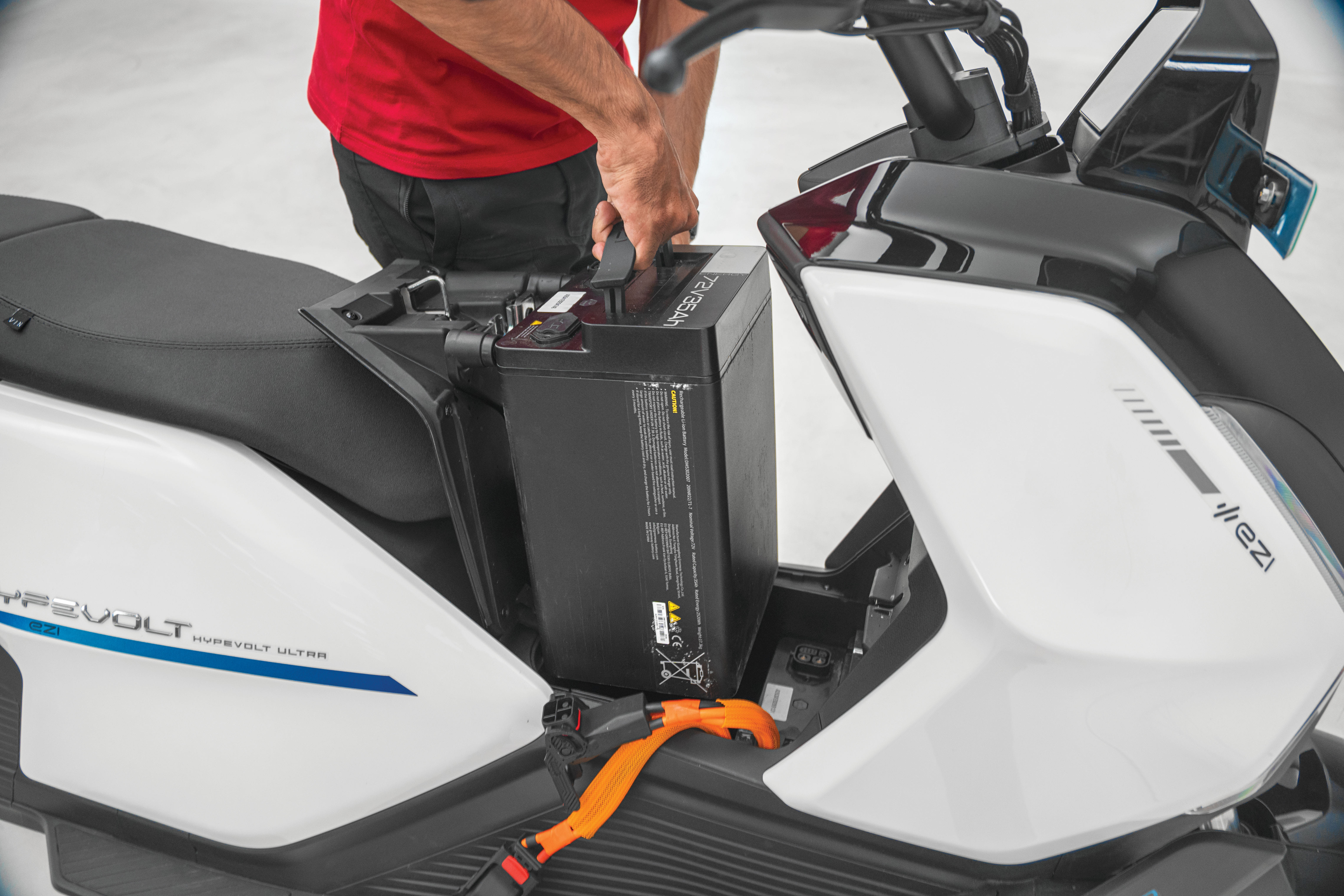
The dual-battery setup gives you the choice of charging the scooter directly or removing the batteries and charging them at home. The catch is weight: each battery weighs 17.3kg. Charging the scooter from 0-100 percent took 6hr 15min. The only issue we faced was that the charging cable is rather short, which could be inconvenient depending on where your socket is positioned.
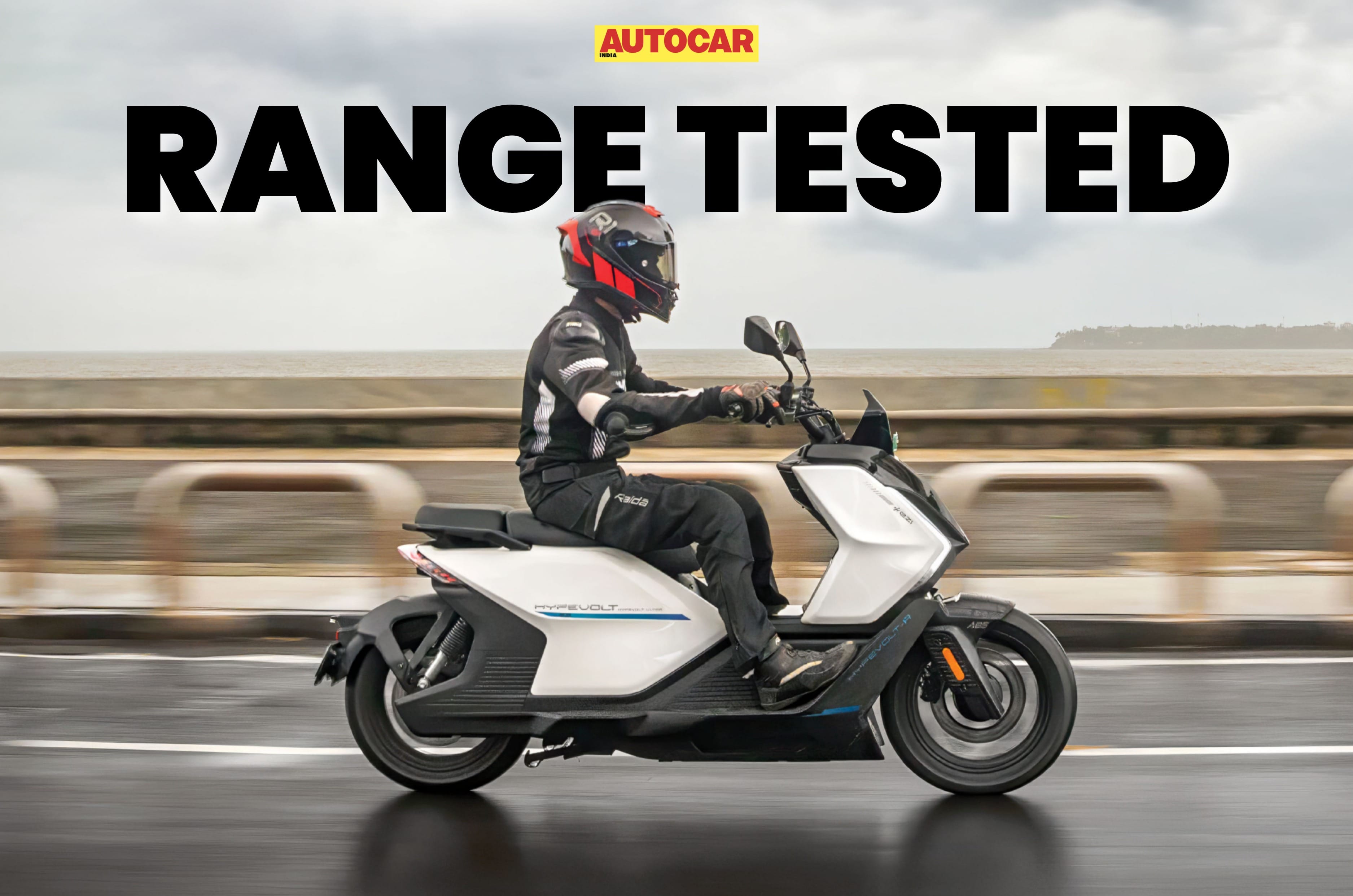
The claimed IDC range of this scooter is 180km. We conducted this range test over two days and riding mainly in Normal mode, we managed a riding range of 125km. That is a respectable real-world figure and considering the performance it offers in this mode.
Battery Percentage
Kilometres Covered
80%
32.7km
60%
60.2km
45%
77.5km
15%
109km
10%
114.6km
0%
125km
Autocar India’s range testing
Before our real-world range test, the battery of our two-wheeler on test is fully charged, and we maintain tyre pressures as recommended by the manufacturer. The two-wheeler is then ridden in the city and highway (for electric two-wheelers that are capable of doing so), and we maintain certain average speeds while following the speed limit. The vehicle is then run until the battery is completely drained and it shuts down or does not go ahead even if the screen is on.
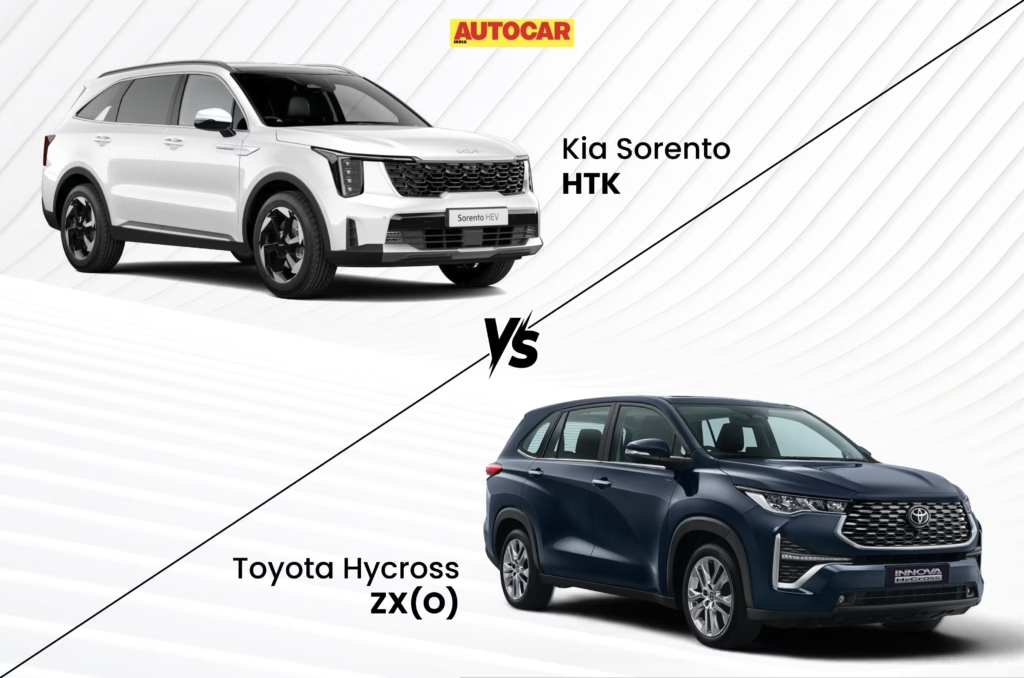
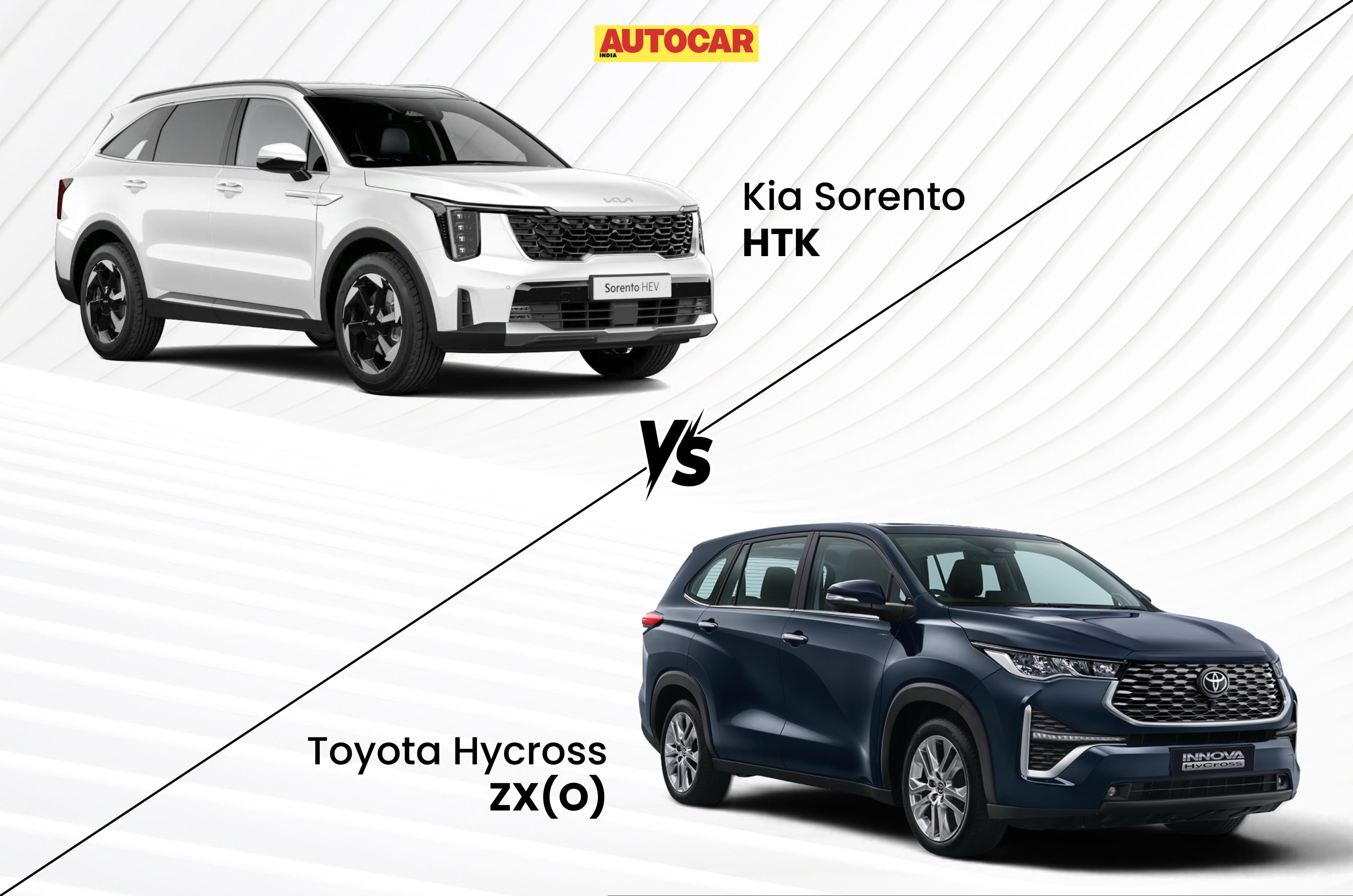
While the Kia Sorento is a direct rival to premium three-row SUVs such as the Volkswagen Tayron and Skoda Kodiaq, it can also be viewed as an indirect competitor to the Toyota Innova Hycross – both are three-row strong hybrids that somewhat overlap in price. Specifically, if you are looking to buy the top-spec Innova Hycross ZX(O) Hybrid, a relatively small budget extension will also put the mid-spec Sorento HTK Hybrid within your reach. Below, we’ve compared everything these Sorento and Innova Hycross variants offer to help you decide which one you should pull the trigger on.
Kia Sorento HTK vs Toyota Innova Hycross ZX(O): Dimensions
Sorento is longer overall and wider, Hycross offers longer wheelbase
Sorento HTK Hybrid
Innova Hycross ZX(O) Hybrid
Length (mm)
4,815
4,755
Width (mm)
1,900
1,850
Height (mm)
1,785
1,790
Wheelbase (mm)
2,815
2,850
Seating capacity
6/7
7
Wheel size (inches)
19
18
Among the key exterior distinctions between these two is that the Sorento is an SUV, and the Innova Hycross is an MPV. The Sorento is a good 60mm longer than the Innova Hycross overall, but the latter interestingly has a 35mm advantage on the wheelbase front. Height is also a narrow victory for the Innova Hycross, but the Sorento wins when it comes to width and alloy wheel size. The Kia SUV even offers a 6-seat layout but for a premium of Rs 20,000.
Kia Sorento HTK vs Toyota Innova Hycross ZX(O): Powertrains
Sorento has a smaller engine but makes much more torque
Sorento HTK Hybrid
Innova Hycross ZX(O) Hybrid
Engine
1.6-litre turbo-petrol
2.0-litre petrol
Cylinder count
4
4
Engine power (hp)
180
–
Engine torque (Nm)
265
191
Motor power (hp)
65
–
Motor torque (Nm)
264
206
Combined power (hp)
–
184
Gearbox
6-speed AT
e-CVT
Fuel tank capacity
67
52
As noted previously, both the Sorento and Innova Hycross are powered by strong hybrid setups. However, the Sorento gets a smaller direct-injection turbo-petrol engine, while the Innova Hycross gets a larger naturally aspirated mill. The Sorento’s torque figures are higher than those of the Innova Hycross, and the Toyota MPV’s combined power output is also not much higher than the Kia SUV’s engine output. Their gearboxes are quite different too, with the Sorento using a 6-speed torque converter, and the Innova Hycross an e-CVT. Lastly, the Sorento has a substantially larger fuel tank as well.
Kia Sorento HTK vs Toyota Innova Hycross ZX(O): Exterior features
Sorento gets sequential indicators and roof rails over Hycross
Sorento HTK Hybrid
Innova Hycross ZX(O) Hybrid
Auto LED headlamps
Yes
Yes
LED DRLs
Yes
Yes
Front fog lamps
Yes
Yes
LED tail-lamps
Yes
Yes
Sequential indicators
Yes
No
Roof rails
Yes
No
Powered ORVMs
Yes
Yes
Powered tailgate
Yes
Yes
Shark-fin antenna
Yes
Yes
Rear spoiler
Yes
Yes
Colour options
7, monotone
6, monotone
The Sorento and Innova Hycross are quite evenly matched in terms of functional features, with the Toyota missing out only on roof rails and sequential indicators. Exterior colours are again a win for the Sorento, as it offers one extra option over the Innova Hycross.
Kia Sorento HTK vs Toyota Innova Hycross ZX(O): Interior features
Sorento fares better on tech, but Hycross has a few aces up its sleeve
Sorento HTK Hybrid
Innova Hycross ZX(O) Hybrid
Infotainment screen
12.3-inch
10.1-inch
Instrument cluster
12.3-inch
Analogue with MID
Panoramic sunroof
Yes
Yes
Wireless charger
Yes
Yes
Powered front seats
Yes
Driver only
Ventilated front seats
Yes
Yes
Dual-zone climate control
Yes
Yes
Ambient lighting
64-colour
Blue only
Sound system
12-speaker Bose
9-speaker JBL
Apple CarPlay and Android Auto
Wireless
Wireless
Cabin air purifier
No
Yes
Connected car tech
Yes
Yes
Rear window sunshade
No
Yes
Rear centre armrest
Yes
Yes
Sliding, reclining rear seats
Yes
Yes
Rear-seat leg rests
No
Yes, powered
The Sorento is a step above the Innova Hycross when looking at nice-to-have features, such as a bigger touchscreen, a digital driver’s display, configurable ambient lighting, more speakers, a powered co-driver’s seat and more. However, the Innova Hycross holds its own on the comfort and convenience front, courtesy of goodies such as a rear window sunshade, a cabin air purifier, and powered leg rests for the second row.
Kia Sorento HTK vs Toyota Innova Hycross ZX(O): Driving features
Hycross offers adaptive cruise control
Sorento HTK Hybrid
Innova Hycross ZX(O) Hybrid
Drive modes
3
3
Acoustic vehicle alert system
Yes
Yes
Paddleshifters
Yes
Yes
Cruise control
Yes
Adaptive
Both hybrids are almost identical when it comes to driving features, but the Innova Hycross edges ahead thanks to adaptive cruise control, which can automatically adjust the car’s speed based on its proximity to the vehicle in front, making it superior to the Sorento’s standard cruise control system.
Kia Sorento HTK vs Toyota Innova Hycross ZX(O): Safety features
Sorento has 7 airbags and side sensors, while Hycross gets Level 2 ADAS
Sorento HTK Hybrid
Innova Hycross ZX(O) Hybrid
Level 2 ADAS
No
Yes
Airbags
7
6
ABS with EBD
Yes
Yes
ESC
Yes
Yes
Hill-hold control
Yes
Yes
TPMS
Yes
Yes
360-degree camera
Yes
Yes
Parking sensors
Front, rear, side
Front, rear
Electronic parking brake
Yes
Yes
Rain-sensing wipers
Yes
No
Rear wiper, defogger
Yes
Yes
Isofix child-seat anchors
Yes
Yes
Disc brakes
Front, rear
Front, rear
In its top-spec form, the Innova Hycross offers Level 2 ADAS, which the mid-spec Sorento lacks. ADAS can make highway cruising much easier, so buyers who frequently head out of the city will likely appreciate the Toyota more in this regard. The Sorento, on the other hand, offers a driver knee airbag and side parking sensors; the latter can make manoeuvrability much easier in the city.
Kia Sorento HTK vs Toyota Innova Hycross ZX(O): Prices
Hycross is Rs 2.15 lakh more affordable
Sorento HTK Hybrid 7S
Innova Hycross ZX(O) Hybrid 7S
Price (in Rs lakh)
33.99
31.84
The Sorento HTK Hybrid 7-seater commands a premium of Rs 2.15 lakh over the Innova Hycross ZX(O) Hybrid 7-seater. Some prospective buyers may find the price difference steep, but the Sorento makes it worthwhile if you want a more tech-laden and premium-looking cabin, as well as better performance. The Innova Hycross, on the other hand, packs a lot of comfort and convenience features that may interest buyers who are chauffeur-driven or frequently ferry around their families.
Car buyers today are pretty spoilt for choice. Beyond a multitude of brands, body styles and variants, there are now more fuel options than ever before. Petrol, diesel, CNG, hybrid, electric, and soon even ethanol-powered vehicles are all vying for attention, making the decision increasingly complicated. So, which powertrain makes the most sense for you?
Tata Nexon models (left to right): Petrol, diesel, petrol-CNG and EV.
To answer that question, we turned to one of the most versatile models on sale in India – the Tata Nexon. Few vehicles offer such a broad range of powertrain choices, and with design, space, practicality, safety and features remaining largely consistent across the range, the Nexon provides the perfect platform to isolate the one key variable – the fuel itself. So, we got together the turbo-petrol, CNG, diesel, as well as the EV to find out each fuel’s pros and cons, and thus, which would best fit your needs.
Disclaimer: Fuel prices vary from state to state.
Tata Nexon turbo-petrol: Fuss free
Tata’s 1.2-litre, three-cylinder ‘Revotron’ turbo-petrol engine debuted with the Nexon in 2017 and received a power bump in 2020, taking outputs to 120hp and 170Nm. Today, it is offered with an unusually wide range of transmission choices – a 5-speed manual, 6-speed manual, 6-speed AMT and a 7-speed dual-clutch automatic.
Prices start at Rs 7.40 lakh and extend up to Rs 13.90 lakh, ex-showroom (excluding dual-tone, Dark and Red Dark editions). Its broad variant spread and attractive pricing are key reasons why the turbo-petrol accounts for 42 percent of all Nexon sales.
The engine offers decent driveability and benefits from selectable Eco, City and Sport drive modes. But outright performance, refinement and smoothness aren’t class-leading and not what you get from other turbo-petrols.
Within the range, the 7-speed DCA stands out as the most desirable option. Despite accounting for less than 4 percent of total Nexon sales, it is arguably the nicest ICE-powered Nexon on sale. The wet-clutch dual-clutch transmission prioritises smoothness over sportiness and suits the engine’s character well. While downshifts can occasionally feel a touch hesitant, the overall experience is noticeably more polished than the manual and AMT alternatives. Notably, the top-spec Turbo DCA is the best-equipped ICE version and is also the only version to offer ADAS.
Fuel efficiency, however, remains this powertrain’s weakest area. In our tests, the turbo-petrol DCA returned 7.7kpl in the city and 13.9kpl on the highway, translating to an average running cost of Rs 9.46 per kilometre – the highest among all Nexon powertrains.
To put that into perspective, even though a fully loaded Fearless + A PS DCA is Rs 2.65 lakh more affordable than a top-spec Empowered + A 45 EV, the EV’s significantly lower running costs (of Rs 1.03 per km using home charging) allow owners to recover that initial price difference in roughly 32,000km.
Tata Nexon diesel: Highway star
The diesel range starts at Rs 9.15 lakh and extends up to Rs 14.40 lakh for the top-spec AMT. Interestingly, while the diesel once outsold the petrol version in the Nexon’s early years, buyer preferences shifted following the BS6 transition, causing diesel sales to gradually decline to 13 percent. Despite this, Tata has persisted with the fuel, and today remains one of the few carmakers still offering diesel engines in its portfolio.
Instead of adopting a conventional SCR setup with a urea tank, AdBlue injection system and additional electronic controls, Tata developed a Lean NOx Trap system for the 1.5-litre, four-cylinder turbo-diesel engine. Despite this relatively low-cost passive emissions-control system, the price premium over an equivalent turbo-petrol variant remains around Rs 1 lakh – broadly in line with what rivals charge. The only tangible benefit for buyers is that, unlike many competitors, there is no urea tank requiring periodic top-ups, resulting in marginal savings over time and a bit less hassle.
Like the turbo-petrol, refinement isn’t this diesel’s strongest suit. And even though turbo lag is more perceptible than in the petrol iteration, performance flows in a rather strong manner, making it well-suited for highway drives. Its tall fuel efficiency also makes it ideal for those who cover long distances frequently. In our tests, the diesel-manual delivered an impressive average of 17.95kpl, resulting in a running cost of just Rs 5.30 per kilometre – significantly lower than the turbo-petrol.
Tata Nexon EV: Smooth operator
As India’s first widely accessible electric SUV from a domestic manufacturer, the Nexon EV played a pivotal role in democratising EV ownership. Combining brisk performance, usable real-world range and a relatively accessible price point, it opened up the Tata brand to an entirely new set of buyers. For a long time, it was India’s bestselling EV. Within the Nexon range, it accounts for 14 percent of total sales.
Today, the Nexon EV range spans Rs 12.49 lakh to Rs 17.49 lakh, with buyers able to choose between two battery packs – 30kWh and 45kWh. The line-up itself is relatively straightforward, with three trims available for each battery option.
In the real world, the 30kWh version can deliver a little over 200km on a charge, while the larger 45kWh battery can comfortably manage around 350km. For buyers seeking the smoothest and most refined driving experience, nothing quite matches the seamlessness of an EV. Acceleration feels brisk, and its zippy yet seamless performance makes for a hushed, enjoyable drive experience.
The two battery versions differ in more ways than just capacity. The 45kWh version uses Tata’s newer Gen 2 motor, which is lighter, more compact and more efficient than the Gen 1 unit used in the 30kWh variant. The long-range version’s more modern architecture also enables significantly faster DC charging. To put it into perspective, the 30kWh version takes about an hour to charge from 20-80 percent using a DC fast charger, whereas the 45kWh variant achieves the same in just 29 minutes. Not only does the larger battery offer greater range, but it is also quicker to recharge despite its higher capacity, making it the more suitable choice for longer highway journeys.
Interestingly, the EV also enjoys a feature advantage over the best-equipped turbo-petrol DCA, gaining a larger 12.3-inch touchscreen, rear disc brakes, and an electronic parking brake with auto-hold functionality.
Coming to the 45kWh version’s running cost, using a home charger (at an average cost of Rs 8 per unit of electricity), buyers can enjoy driving around at just Rs 1.03 per km. Even if users opt for public DC fast-charging, the rates of which range between Rs 24 and Rs 28 per unit, still, average running costs work out to merely Rs 3.34 per km, which is almost a third of the petrol-automatic’s number and about sixty percent of a diesel-manual’s cost per km.
Tata Nexon CNG: Jack of all trades
There’s a lot Tata has got right with the Nexon CNG. For starters, prices range from Rs 8.35 lakh to Rs 13.60 lakh, positioning it neatly between the petrol and diesel alternatives.
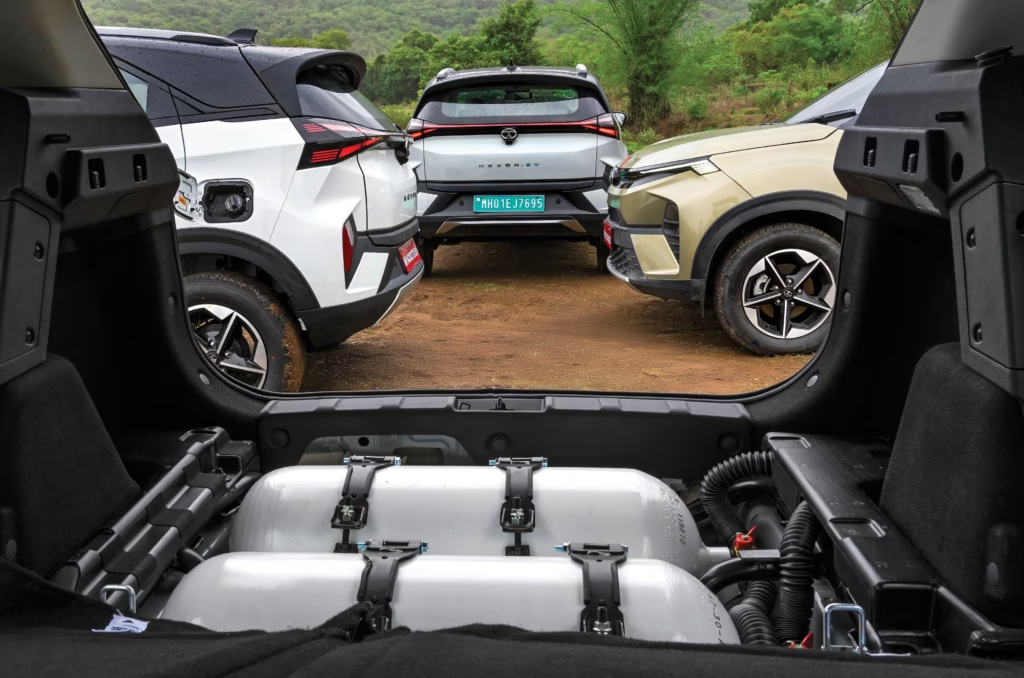
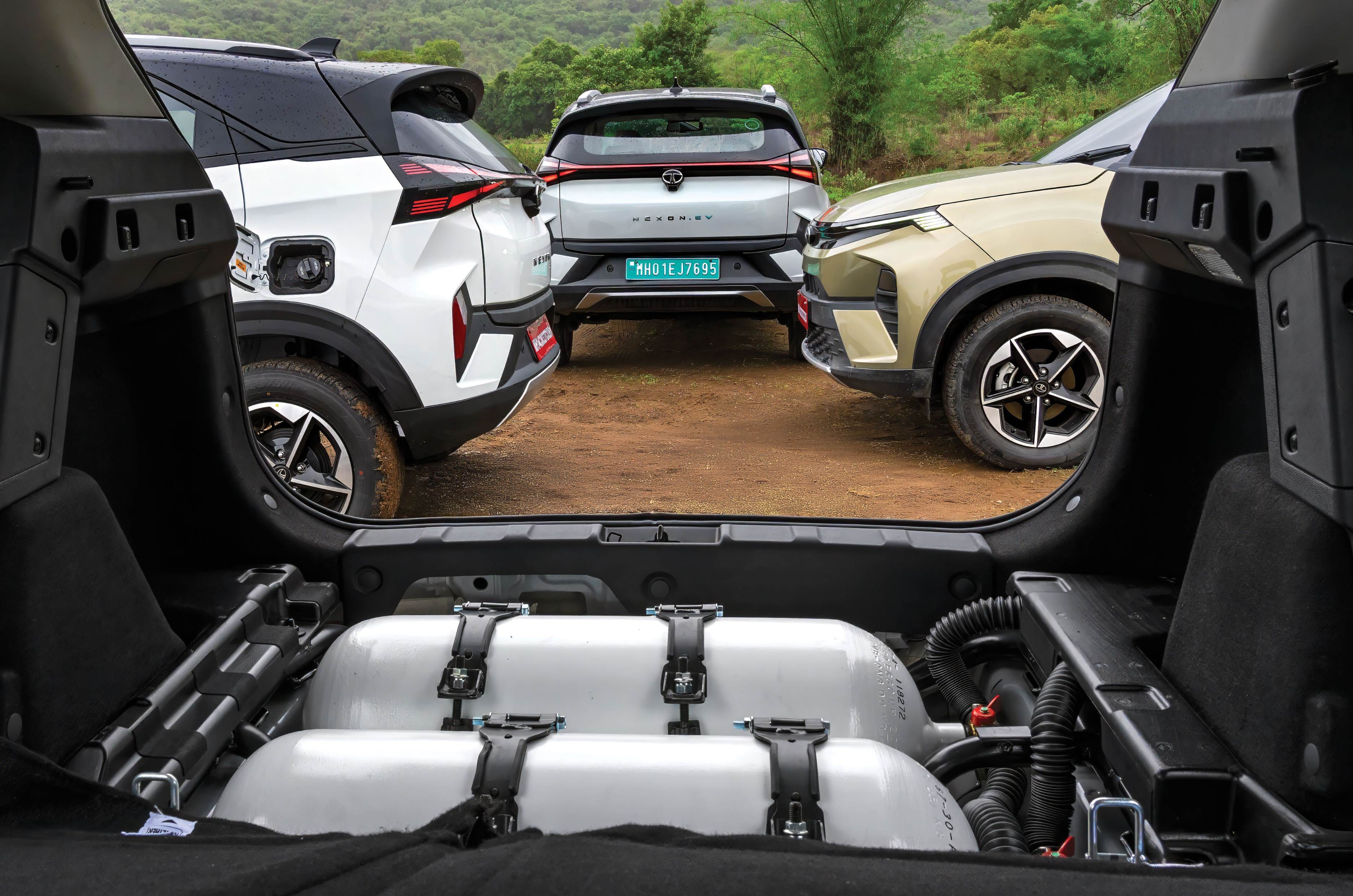
Under the bonnet is the same 1.2-litre, three-cylinder turbocharged engine found in the petrol Nexon. Not only is it India’s first turbo-petrol CNG SUV, but it is also the most powerful, producing 100hp and 170Nm when running on CNG. Impressively, peak torque remains identical to the petrol version, although it is available across a narrower band. As a result, driveability feels remarkably similar to the turbo-petrol, and users are unlikely to find themselves wanting for performance, whether in urban conditions or on the highway.
Being a turbocharged CNG engine, efficiency in city driving can take a hit. In our real-world city test involving frequent stop-start traffic, the Nexon CNG returned 15.1km/kg. Out on the highway, however, flowing traffic and the presence of a sixth gear helped it achieve close to 24km/kg. The end result is an average running cost of just Rs 4.28 per kilometre, making it the most economical option in the ICE line-up.
With driveability that’s remarkably close to the turbo-petrol, lower purchase and running costs than the diesel, and very few compromises in practicality or equipment, the Nexon CNG presents perhaps the strongest all-round case in the range. Its only notable drawback is the limited CNG infrastructure. While station availability continues to improve, rising CNG adoption often leads to longer queues and wait times at many outlets.
Unlike many CNG vehicles, the Nexon CNG doesn’t feel like a stripped-down, budget-focused alternative. It remains spacious, practical and generously equipped while delivering the lowest running costs of any ICE Nexon. Small omissions, such as cruise control, connected-car technology and JBL-branded speakers, are unlikely to be deal-breakers for most buyers.
Viewed through the lens of value, usability and cost of ownership, the Nexon CNG strikes perhaps the most convincing balance of the lot. Which perhaps explains why, despite being offered with just one engine and a manual gearbox, it now contributes more than a third of all Nexon sales.
Tata Nexon petrol vs diesel vs CNG vs EV: Verdict
The turbo-petrol’s lowest starting price, as well as the widest choice for buyers, is the reason behind its popularity. Our pick of the range, however, is the priciest 7-speed DCA, which delivers the smoothest and most polished Nexon ICE driving experience. That said, performance and efficiency aren’t exactly class-best.
The diesel’s impressive fuel efficiency and thus low running costs make it an ideal choice for those who rack up high annual mileages. Performance is the strongest among all ICE versions, and its torquey nature makes it an excellent highway companion, perfect for those who regularly cover long distances.
For buyers with reliable home charging, a predominantly urban usage pattern and high annual running, the EV is the one to pick. The 45kWh model has a genuinely usable real-world range and is also the most advanced version with a rich feature list, making it a very well-rounded option.
The Nexon CNG retains the petrol’s drivability, offers low running costs, a long range, and buyers aren’t forced to compromise features or practicality either. It thus strikes a convincing balance between price, performance and real-world usability, emerging as the sweet spot of the line-up.
The Hypevolt-R has a 5.04kWh battery pack split into two units. It gets three riding modes, each with a different top speed and throttle response. Eco is limited to 45kph, Normal takes that up to 81kph, while Sport allows the scooter to reach its claimed 115kph.
Keeway EZI Hypevolt-R: Acceleration
During our test, the conditions were damp.
Acceleration (Sport Mode)
Time (seconds)
0-40kph
2.64s
0-60kph
4.54s
0-80kph
7.49s
0-100kph
13.05s
In our performance tests in Sport mode, the Hypevolt-R achieved the 0-80kph sprint in 7.49sec and 0-100kph in 13.05sec, making it quicker than the Ather 450 Apex. It was even slightly quicker than the BMW CE 02 we tested last year. Throttle calibration is well done. Despite the strong acceleration, the scooter never feels intimidating.
Keeway EZI Hypevolt-R: Roll-On Acceleration
The scooter delivers 12kW (16.3hp) of peak power.
Roll-On Acceleration (Sport Mode)
Time (seconds)
20-50kph
2.58s
30-70kph
3.73s
50-80kph
3.96s
Roll-on acceleration times are also quick. In Sport mode, the scooter took 2.58 seconds to get from 20-50kph, 3.73 seconds from 30-70kph, and 3.96 seconds from 50-80kph. Normal mode offers enough punch for quick overtakes while preserving more range than Sport. Eco works well around town, but the 45kph limit makes Normal the more useful everyday setting.
Keeway EZI Hypevolt-R: Braking
Decent braking performance, but rear ABS intervenes quickly.
Braking
Distance
60-0kph
23.60m
The brakes are adequate at city speeds, although the rear ABS intervenes rather quickly when braking hard from higher speeds.
Keeway EZI Hypevolt-R: Specifications and price
The Hypevolt-R is an offering made by EZI, Keeway’s electric sub-brand.
Peak Power
12kW
Max Torque
72Nm
Battery Capacity
5.04kWh
Kerb Weight
140kg
Brakes (F/R)
Disc / Disc
Tyres (F/R)
110/80-14 / 120/70-14
Price (ex-showroom)
Rs 2 lakh (ex-showroom, Delhi)
Priced at Rs 2 lakh (ex-showroom), it arrives in India as a CKD and occupies the premium end of the electric scooter market. It is sold through 44 Benelli and Keeway dealerships across India.