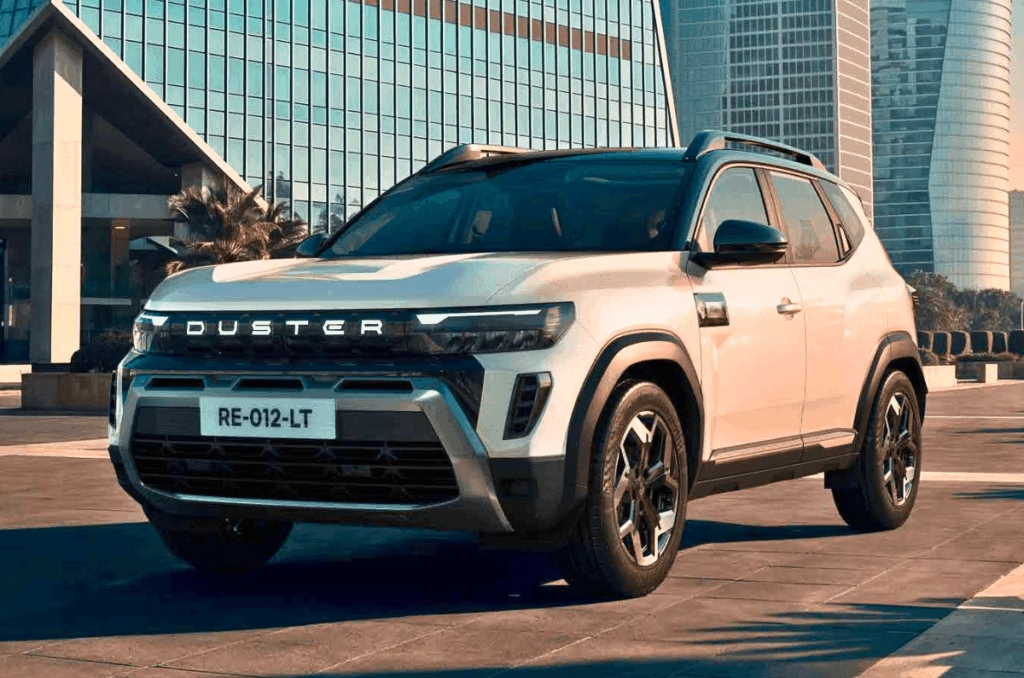
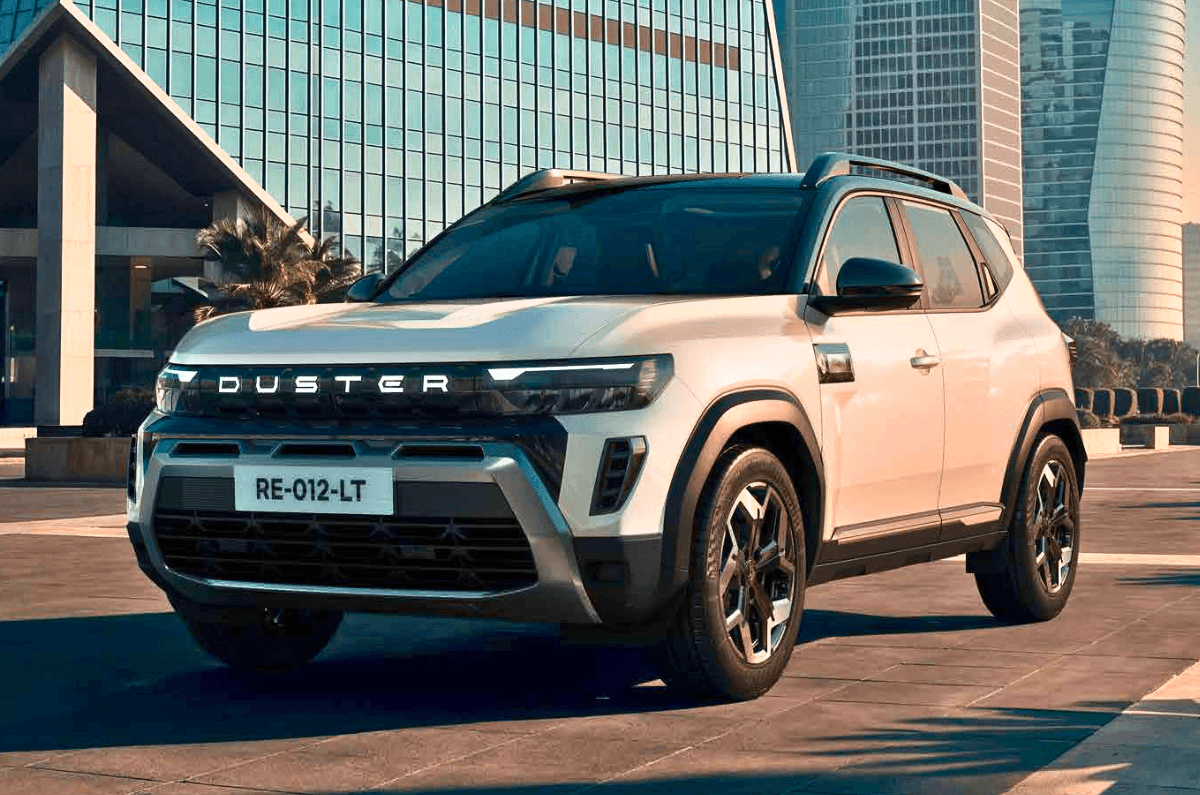
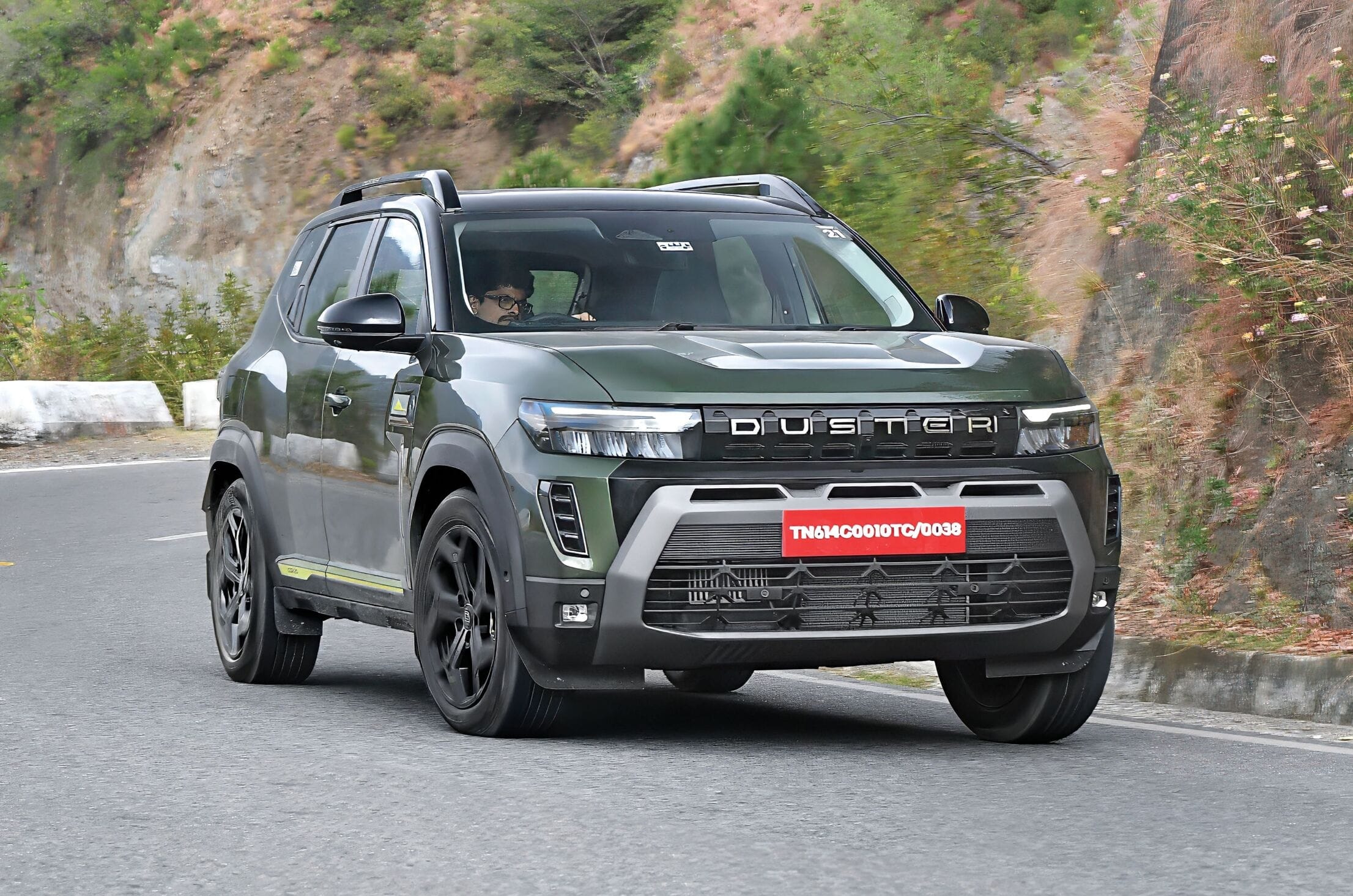
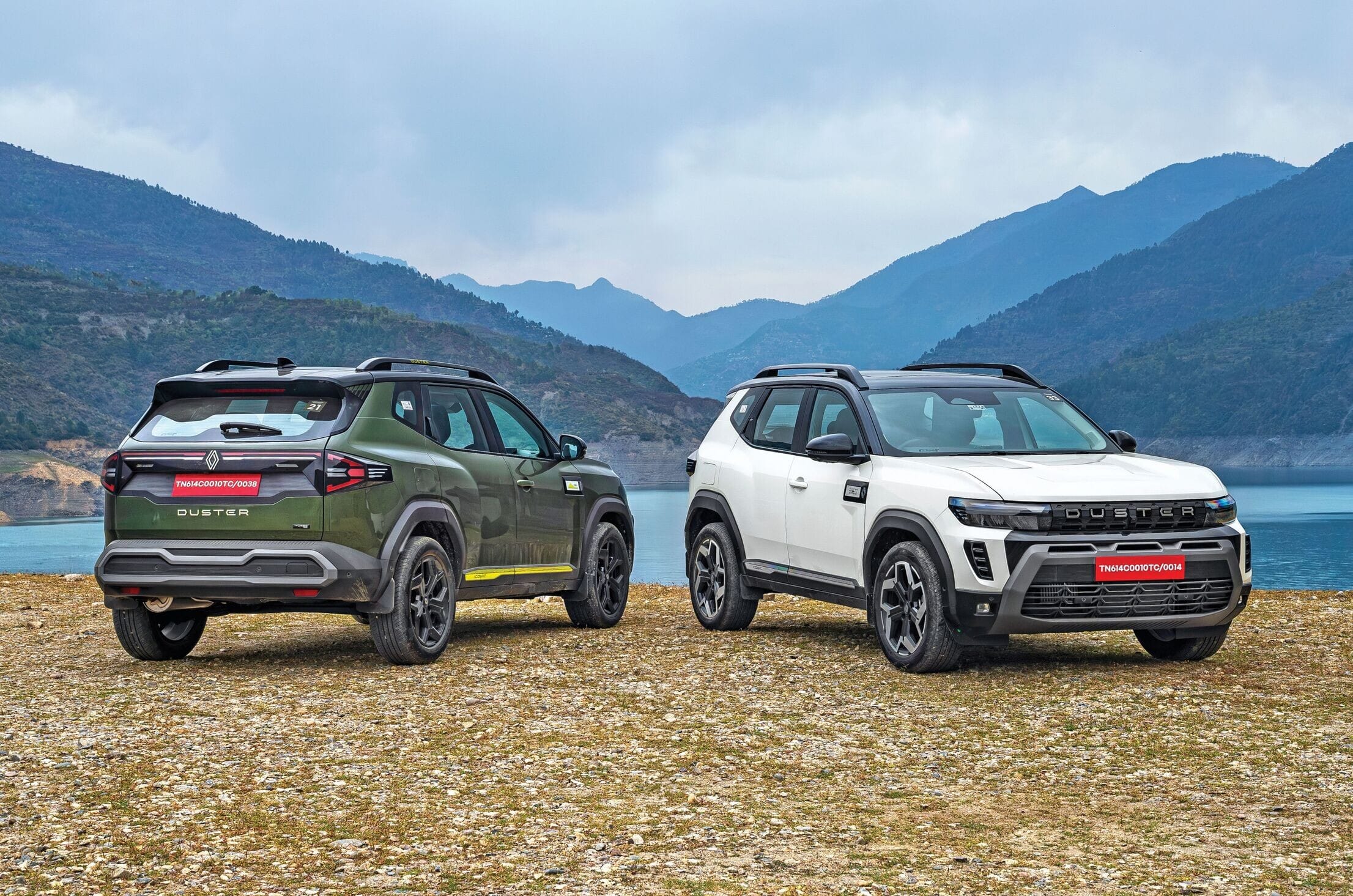
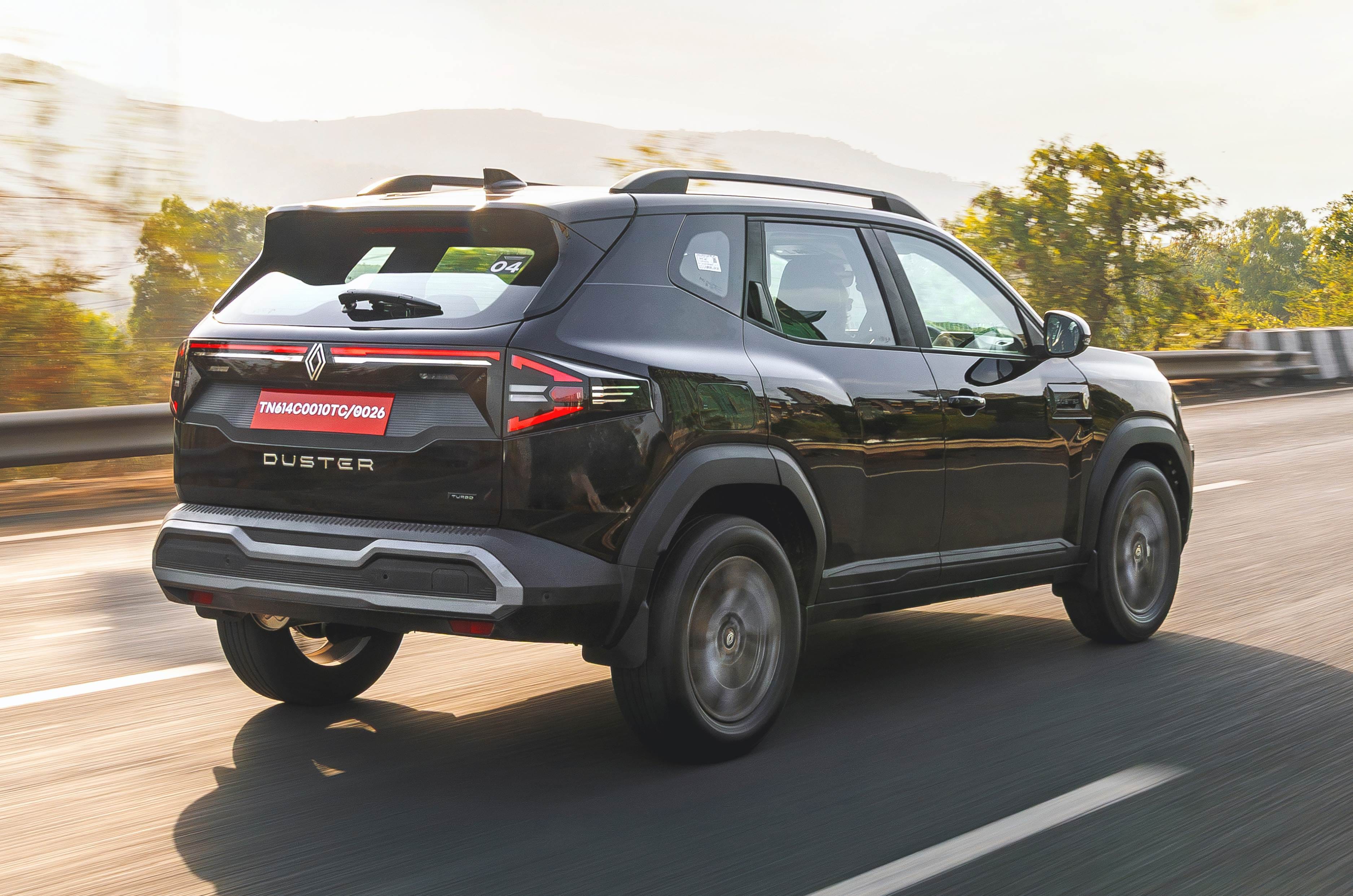
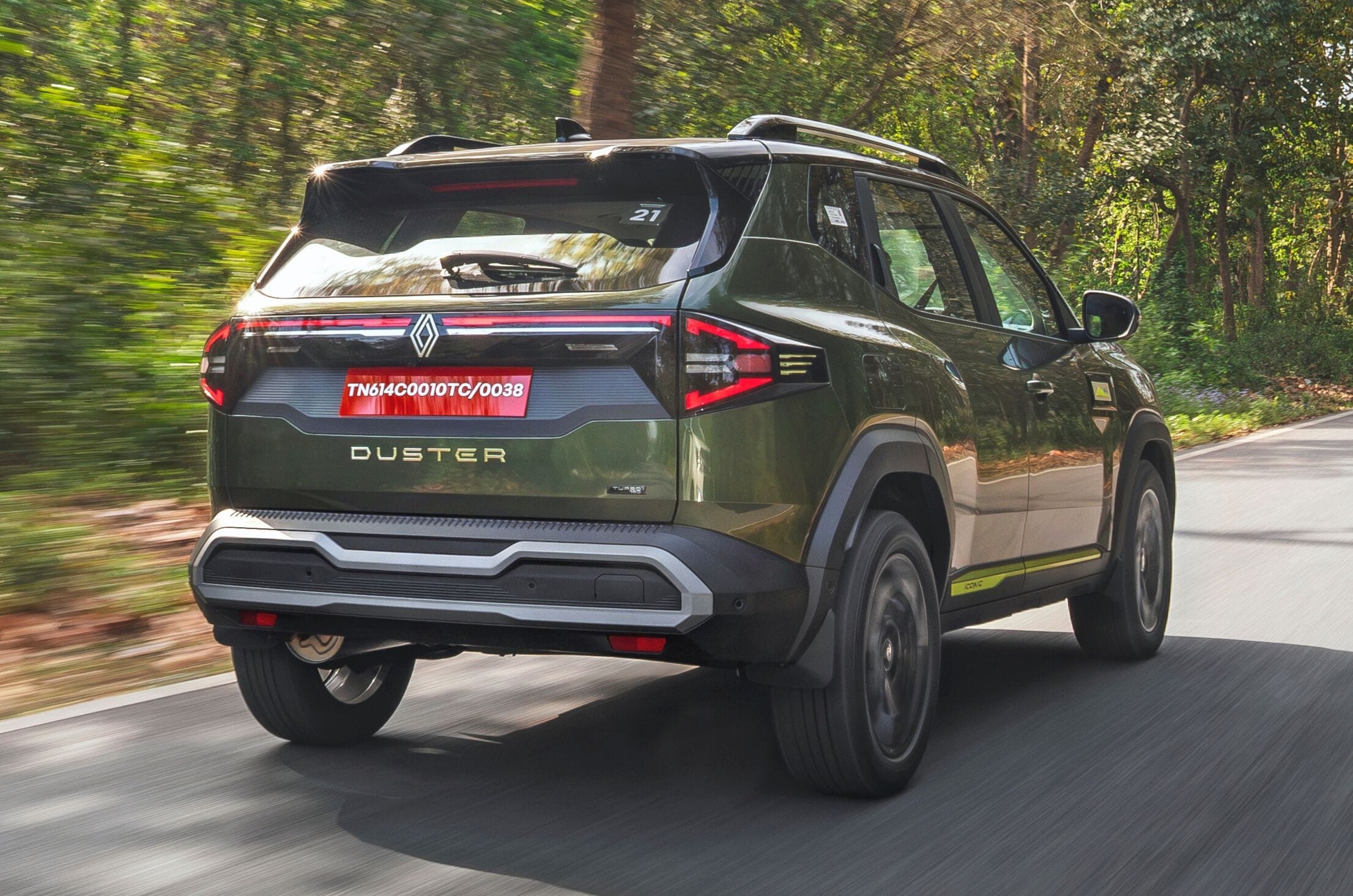
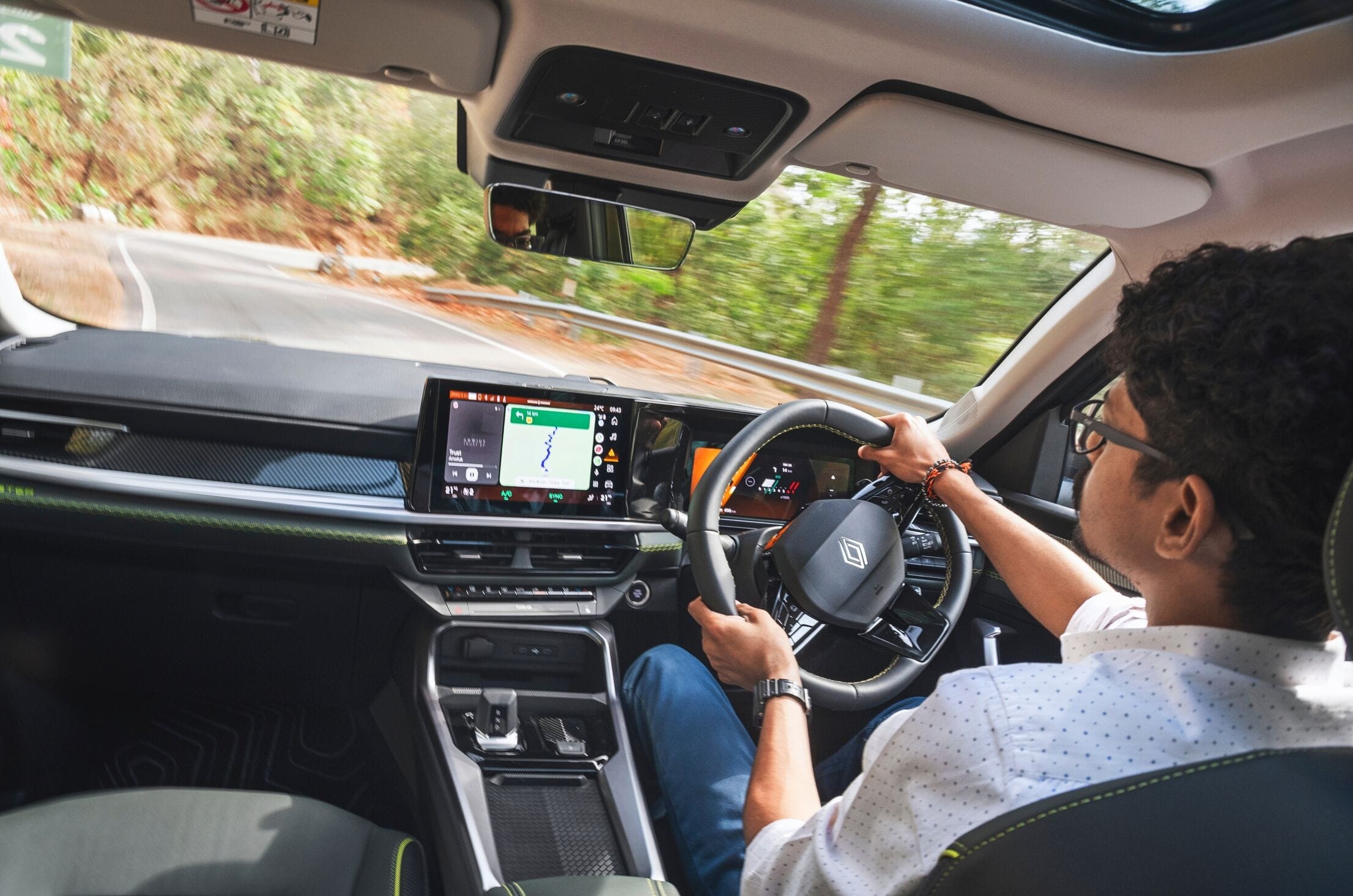
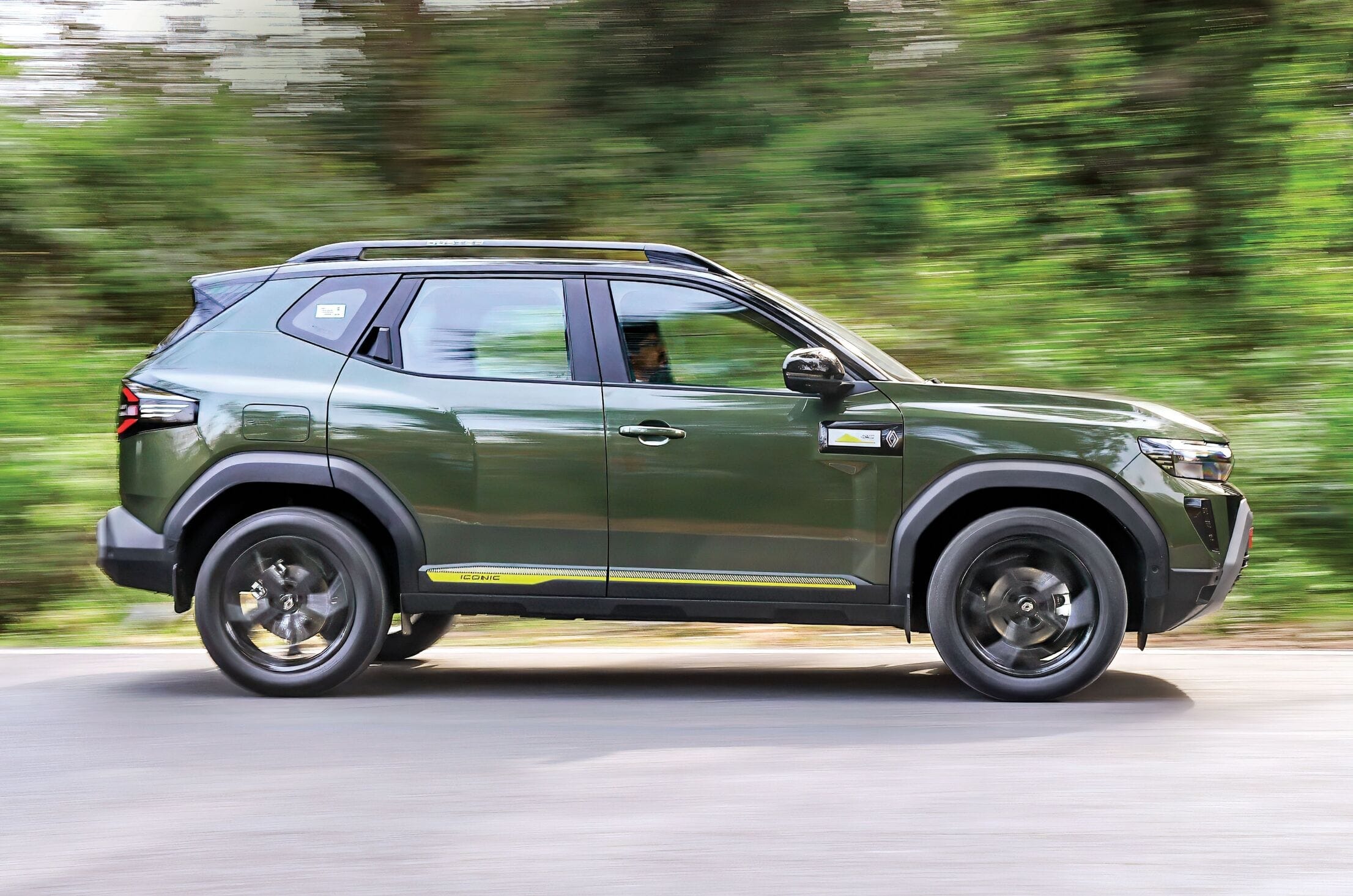
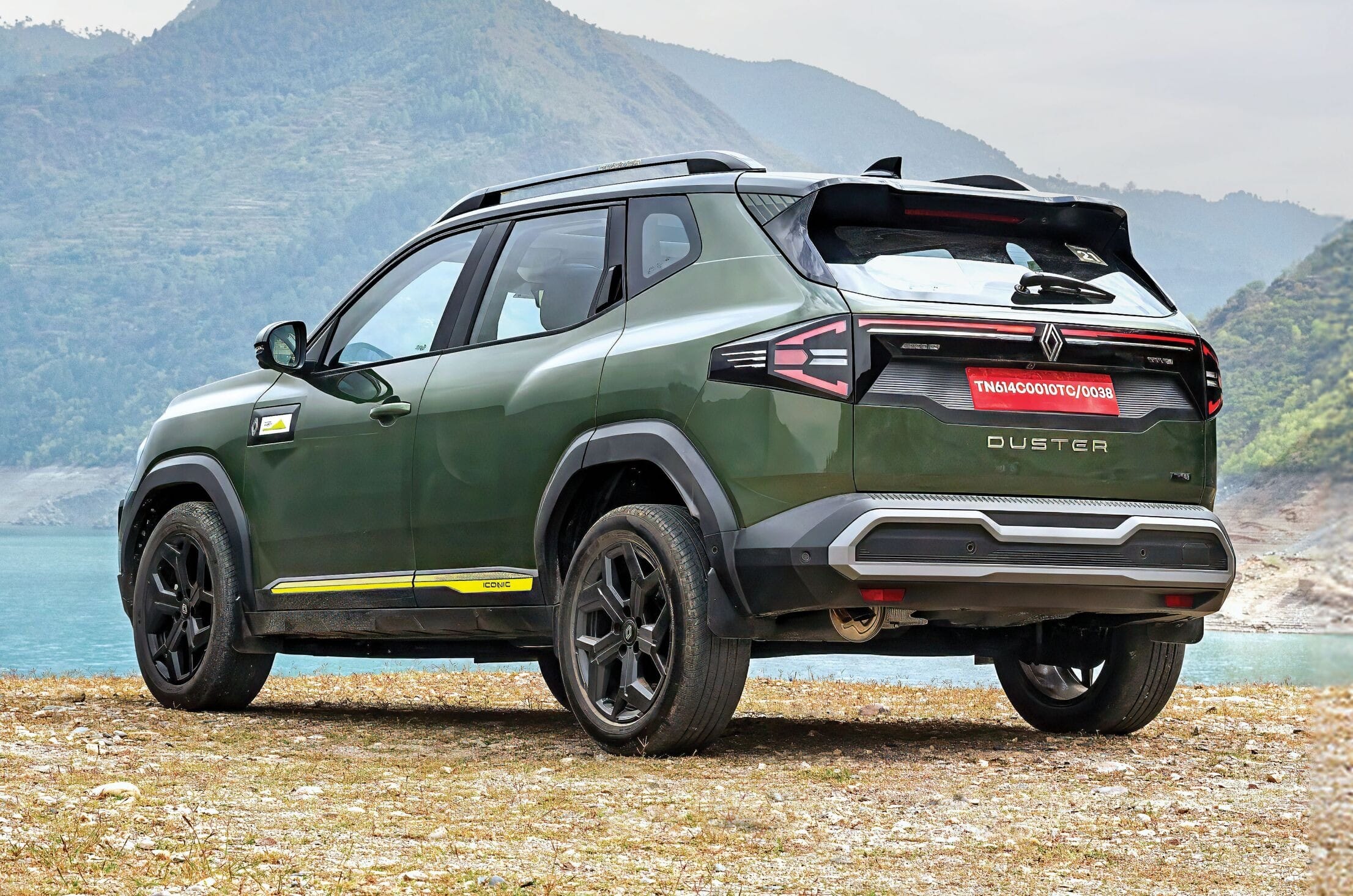
The Renault Duster is priced from Rs 10.49 lakh to Rs 19.49 lakh, ex-showroom. It recently added a hybrid powertrain, which is sold alongside the existing turbo-petrol engine options. The Duster is now available in seven trims: Authentic, Evolution, Adventure, Techno, Techno+, Iconic and Emotion.
If you want to know how much you need to pay to for the Renault Duster, here are its on-road prices across major Indian cities.
New Renault Duster turbo-petrol on-road prices in major Indian cities (in Rs lakh)
Trim
Mumbai
Delhi
Kolkata
Bengaluru
Chandigarh
Authentic 1.0 MT
12.38
12.17
12.17
12.91
11.75
Evolution 1.0 MT
13.80
13.57
13.57
14.38
13.10
Evolution 1.3 MT
15.33
15.07
15.07
15.98
14.55
Evolution 1.3 DCT
17.10
16.81
16.81
17.83
16.23
Adventure 1.0 MT
15.33
15.07
15.07
15.98
14.55
Adventure 1.3 MT
16.51
16.23
16.23
17.21
15.67
Adventure 1.3 DCT
18.17
17.86
17.86
18.94
17.24
Techno+ 1.3 MT
18.05
17.74
17.74
18.81
17.13
Techno+ 1.3 DCT
19.70
19.37
19.37
20.53
18.70
Iconic 1.3 MT
20.05
19.71
19.71
20.90
19.03
Iconic 1.3 DCT
21.82
21.45
21.45
22.75
20.71
New Renault Duster hybrid on-road prices in major Indian cities (in Rs lakh)
Trim
Mumbai
Delhi
Kolkata
Bengaluru
Chandigarh
Evolution 1.8 AT
20.05
19.71
19.71
20.90
19.03
Techno 1.8 AT
22.41
22.03
22.03
23.36
21.27
Emotion 1.8 AT
20.05
22.61
22.61
23.98
21.83
Note: On-road prices may vary based on city-specific registration charges and other cost components, including insurance, FASTag and RTO fees. Please check with your nearest Honda dealership for exact figures.
Among the major cities listed, the new Renault Duster’s on-road prices are the highest in Bengaluru and the lowest in Chandigarh. The entry-level Authentic 1.0 MT costs Rs 12.91 lakh in Bengaluru and Rs 11.75 lakh in Chandigarh, a difference of Rs 1.16 lakh. For the top-spec Iconic 1.3 DCT, the prices are Rs 22.75 lakh and Rs 20.71 lakh, respectively, a gap of Rs 2.04 lakh.
Speaking of the Duster hybrid’s on-road prices, they are also the highest in Bengaluru and lowest in Chandigarh. The most accessible variant, Evolution 1.8 AT, costs Rs 19.03 lakh in Chandigarh, while the top-spec Emotion 1.8 AT costs Rs 23.98 lakh in Bengaluru, a difference of Rs 4.95 lakh.
Prices mentioned above are as on October 18, 2026.
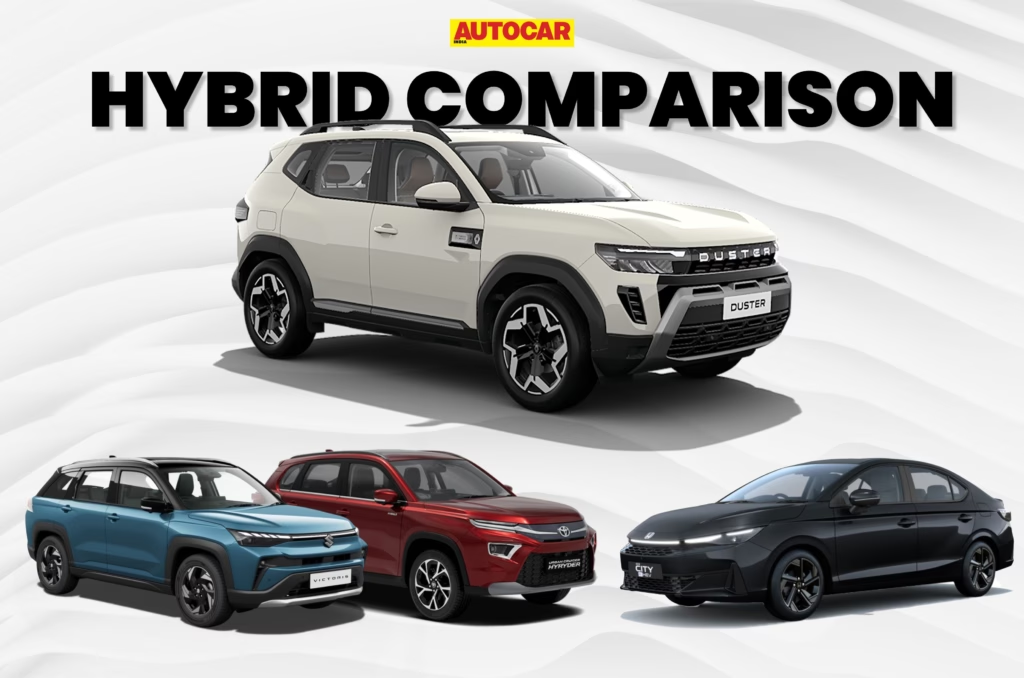
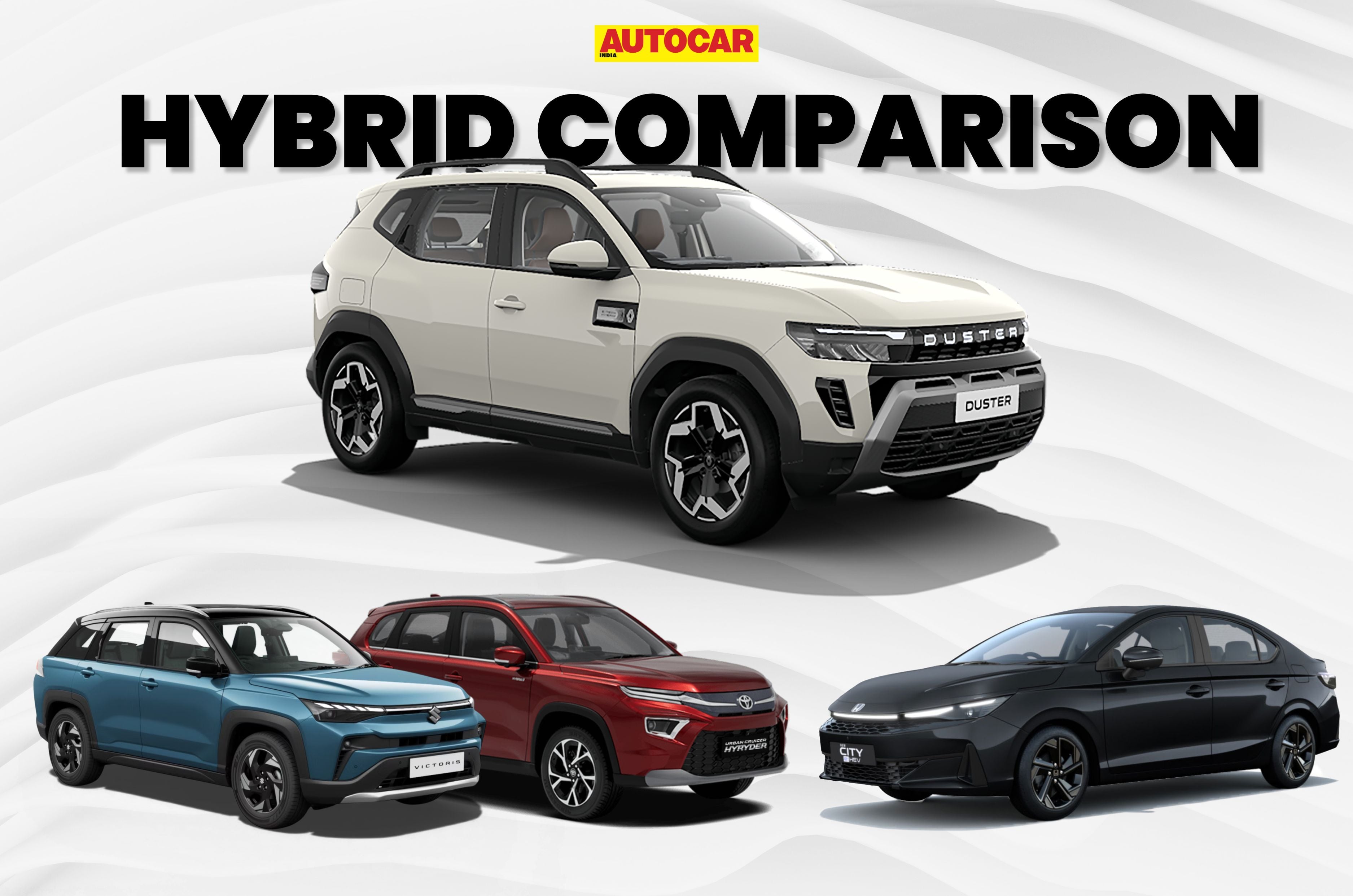
The new Renault Duster has been launched with a strong hybrid powertrain option, a first for the nameplate in India. The latest from Renault competes in the midsize SUV space, where only the Maruti Grand Vitara, Maruti Victoris and Toyota Hyryder currently offer a hybrid choice. Honda does not offer a hybrid setup with the Elevate at the moment, though the City midsize sedan has been equipped with one. But how do these vehicles stack up on paper when it comes to specifications? Let’s find out.
Renault Duster hybrid spec comparison
Duster has the highest power output
Renault Duster hybrid specs vs Grand Vitara, Victoris, Hyryder and City e:HEV
Hybrid system
Combined power
Combined torque
Transmission
Mileage
Battery size | Voltage
Duster
1.8L 4cyl + 2 e-motors
160hp
–
Multi-mode automatic
29kpl
1.4kWh | 247V
Grand Vitara
1.5L 3cyl + e-motor
116hp
141Nm
eCVT
27.97kpl
0.60kWh | 177.6V
Victoris
1.5L 3cyl + e-motor
116hp
141Nm
eCVT
28.65kpl
0.60kWh | 177.6V
Hyryder
1.5L 3cyl + e-motor
116hp
141Nm
eCVT
27.97kpl
0.60kWh | 177.6V
City e:HEV
1.5L 4cyl + e-motor
126hp
253Nm
eCVT
27.13kpl
Not available | 172.8V
While we are yet to sample the Duster hybrid in real-world conditions, the above specs table suggests it takes a more performance-led approach than the rest. Its four-cylinder naturally aspirated petrol engine is the largest by cubic capacity here, and paired with two electric motors, this hybrid setup delivers the highest peak power output. Renault claims a 0-100kph time of 9.61 seconds, which it says makes the Duster hybrid the quickest in the segment. The brand has not revealed a combined torque figure yet, though the Duster’s traction motor produces 208Nm on its own.
Renault SUV’s multi-mode gearbox stands out
The Duster’s multi-mode automatic gearbox has two gears for the motor and four gears for the engine. Renault claims that this setup creates an 8-speed combination in hybrid mode, and it stands out as the others use an eCVT unit, which is known for a smooth driving experience. Moreover, the Duster hybrid’s larger, higher-voltage battery further points to more electric assistance than the rest. The French brand claims that 80 percent of city drives are possible in EV mode alone, while the Duster hybrid’s ARAI-certified mileage of 29kpl is the highest of all the cars here.
Midsize SUVs offer most powertrains
Only PHEV is missing
Save for plug-in hybrid, midsize SUVs offer almost every major powertrain choice, including petrol, CNG, diesel and electric. Hyundai Creta is expected to adopt a hybrid powertrain in its next generation, due in 2027, and its Kia Seltos sibling is also set to follow suit. The new Tata Sierra’s ARGOS platform is hybrid-ready, giving the homegrown carmaker the flexibility to introduce a hybrid version in the future. Volkswagen and Skoda are also working on hybrid midsize SUVs for the Indian market.
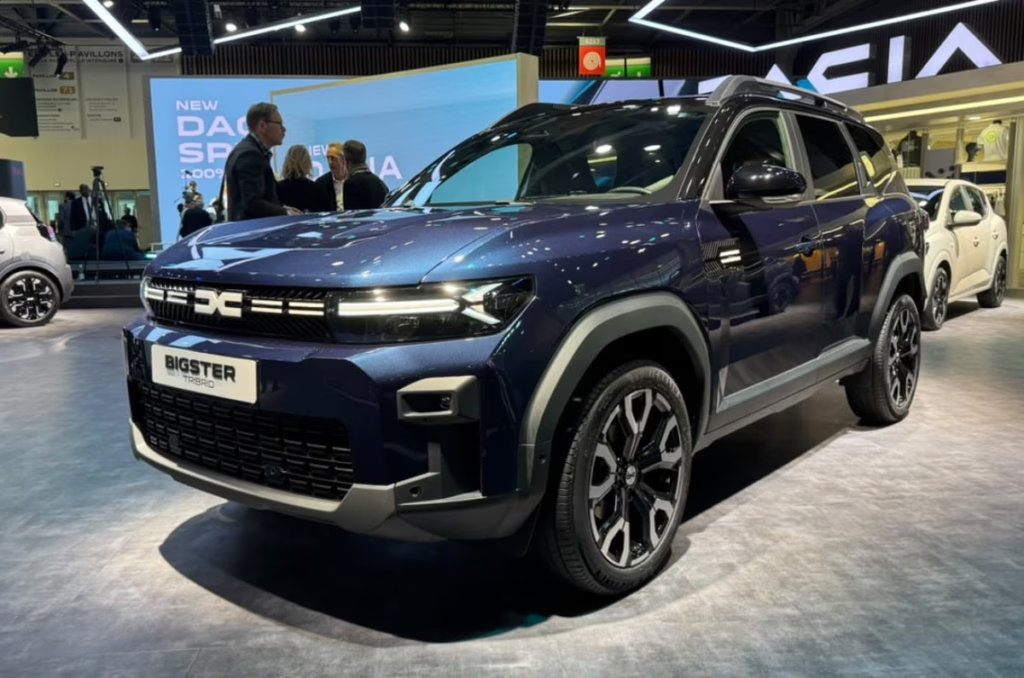
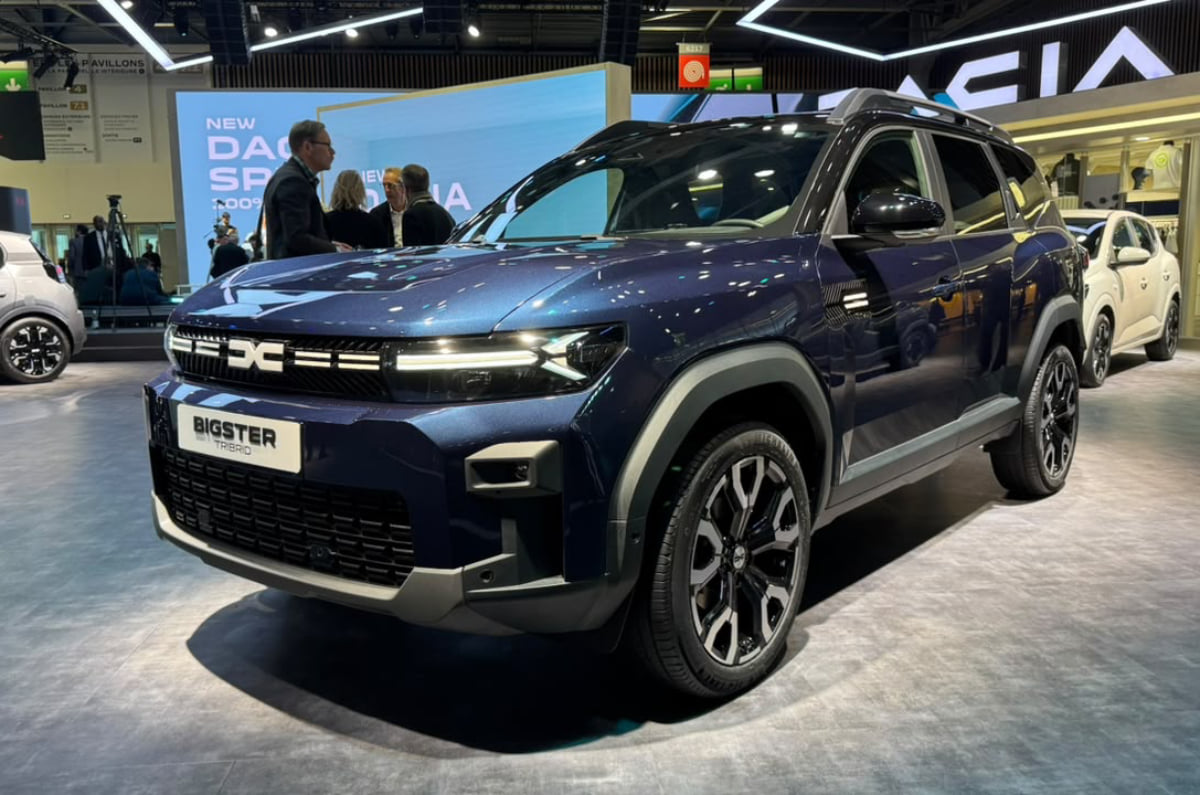
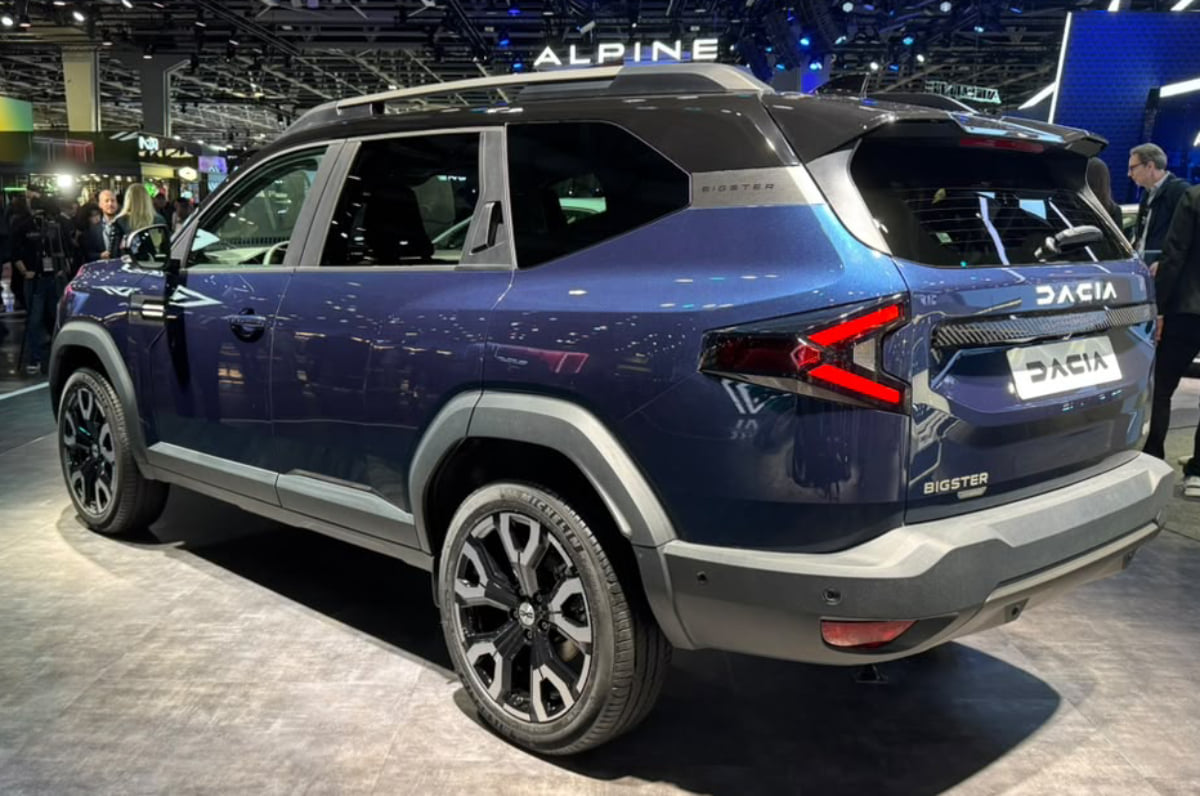
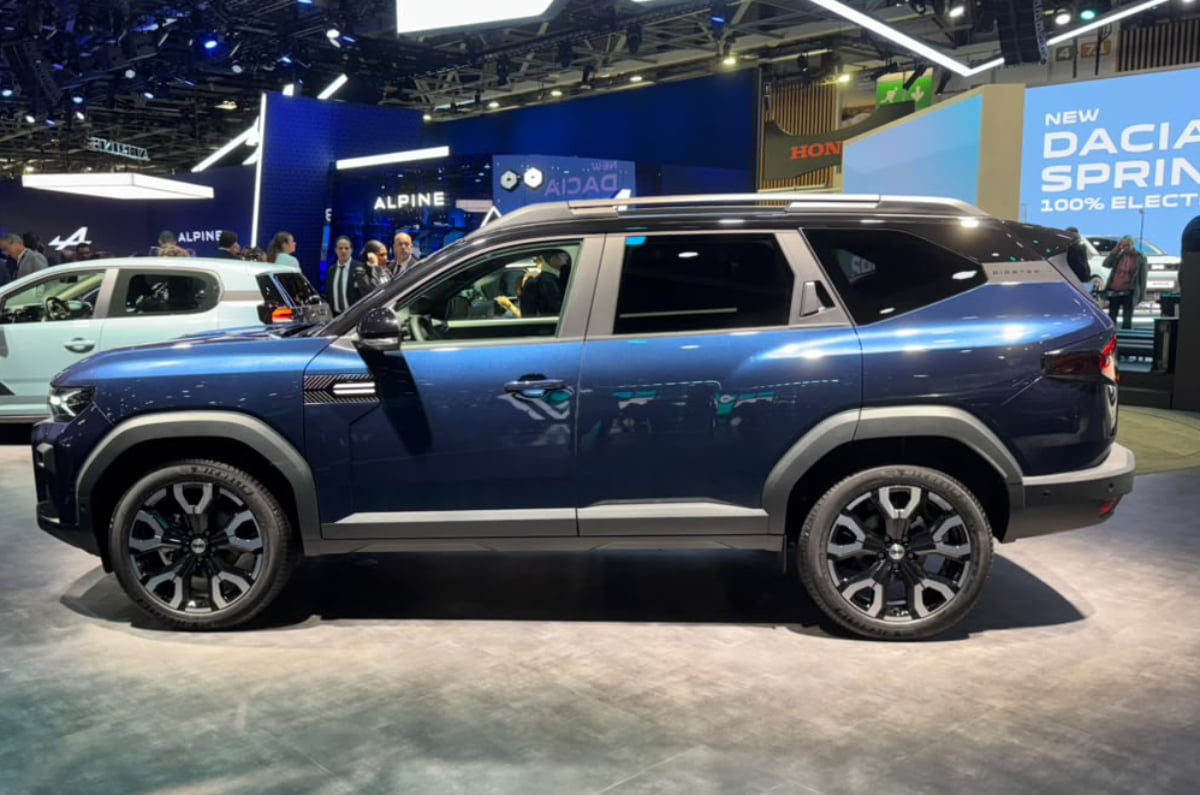
The Dacia Bigster, which is expected to come to India as a Renault in 2027, was showcased at the 2026 Paris Motor Show. The three-row SUV is expected to be positioned as a larger alternative to the Renault Duster, with turbo-petrol and strong-hybrid powertrain options. The hybrid system is set to debut in India in the Duster on October 17, 2026.
Dacia Bigster: Powertrain
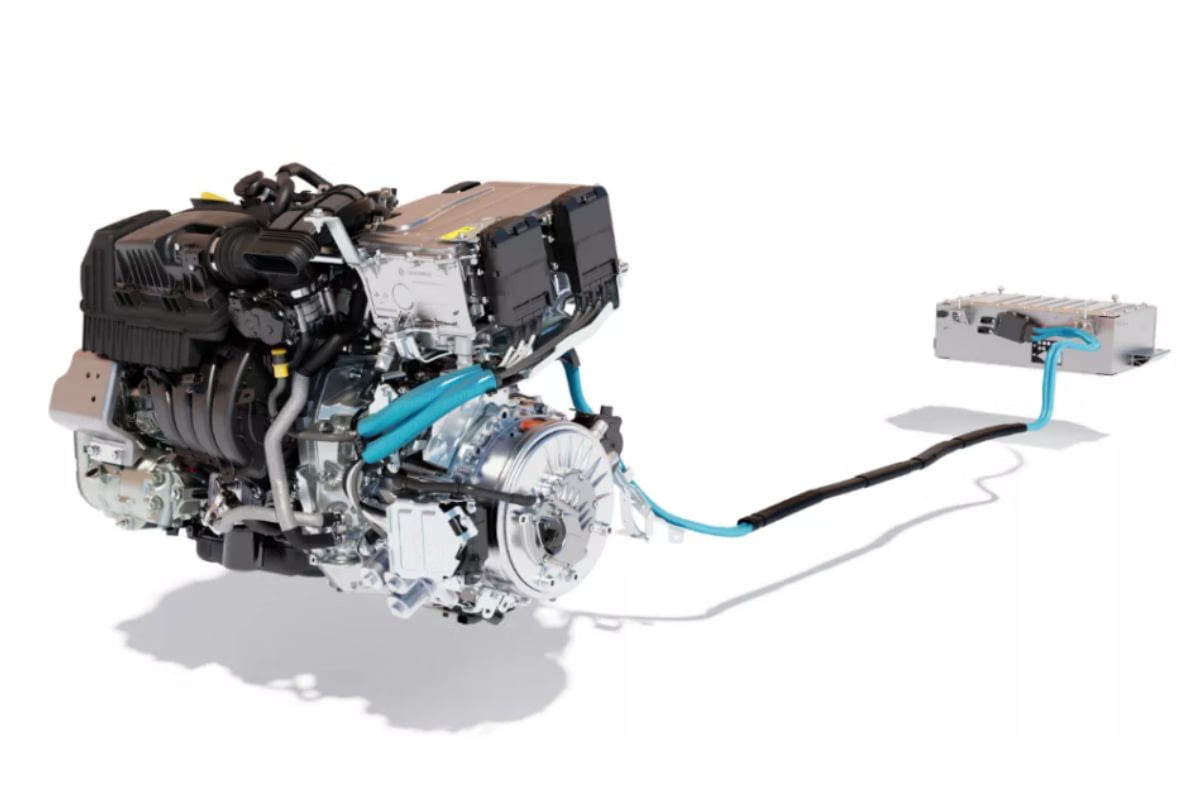
Renault strong hybrid E-Tech 160hp powertrain.
The India-bound Bigster is expected to get 1.3-litre turbo-petrol and 1.8-litre strong-hybrid powertrain options. The latter will make its India debut in the Renault Duster later this week.
In the Duster hybrid, the 1.8-litre naturally aspirated petrol engine works with two electric motors and a 1.4kWh battery to produce a combined 160hp and 172Nm. The system uses a multi-mode automatic gearbox with fixed gear ratios. Since this is a strong-hybrid setup, the battery does not require charging via an external source, and it charges while the vehicle is being driven. Renault claims the Duster hybrid can cover up to 80 percent of city driving in electric mode.
The Bigster is expected to use the same hybrid setup, though its power and torque figures could differ due to its larger size.
Dacia Bigster: Exterior
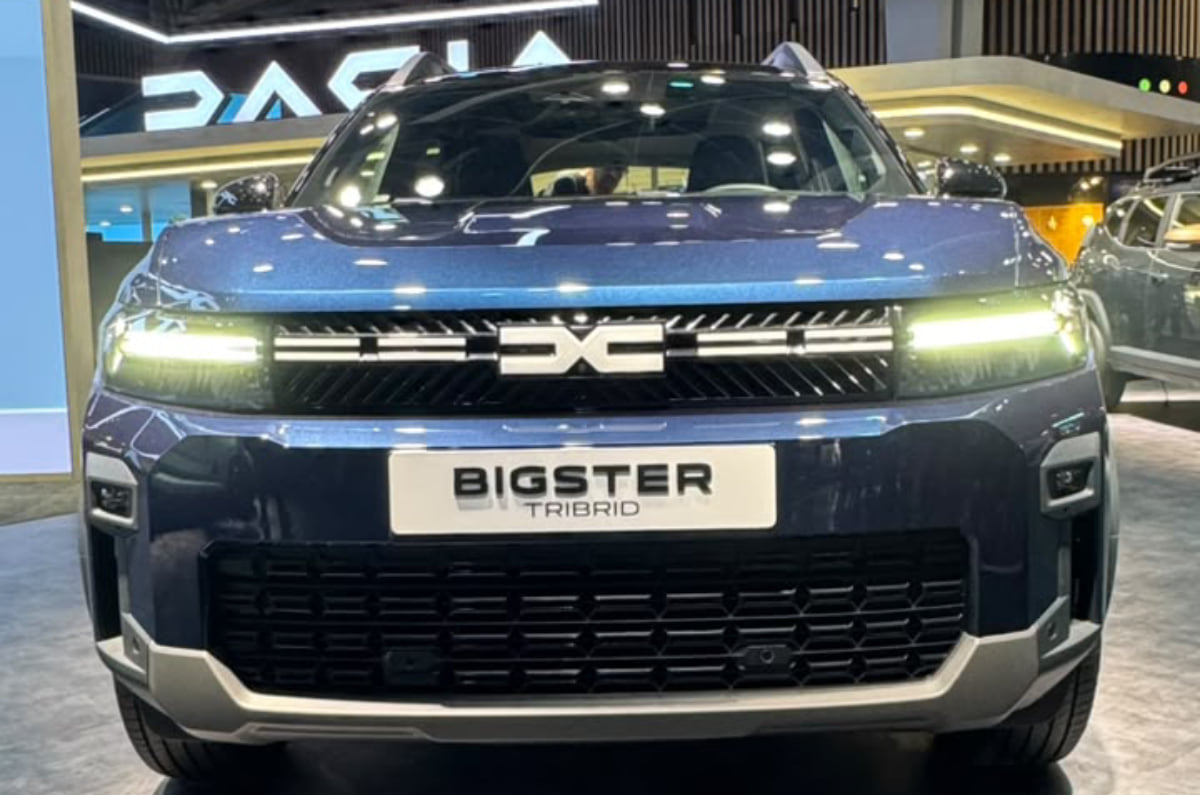
The Bigster is 230mm longer overall than the India-spec Duster, with a 45mm longer wheelbase and much of the added length at the rear overhang. The European Dacia Bigster features a chunky front skid plate, rugged-looking front and rear bumpers, and LED daytime running lights.
Like the India-spec Duster, the India-bound Bigster is expected to get revised styling compared to its Dacia counterpart, including changes to the grille and bumpers. The India-spec Duster gets connected tail-lamps, unlike the European Dacia Duster, which has separate units.
Dacia Bigster: Interior and layout
Renault Duster interior image used for representation only.
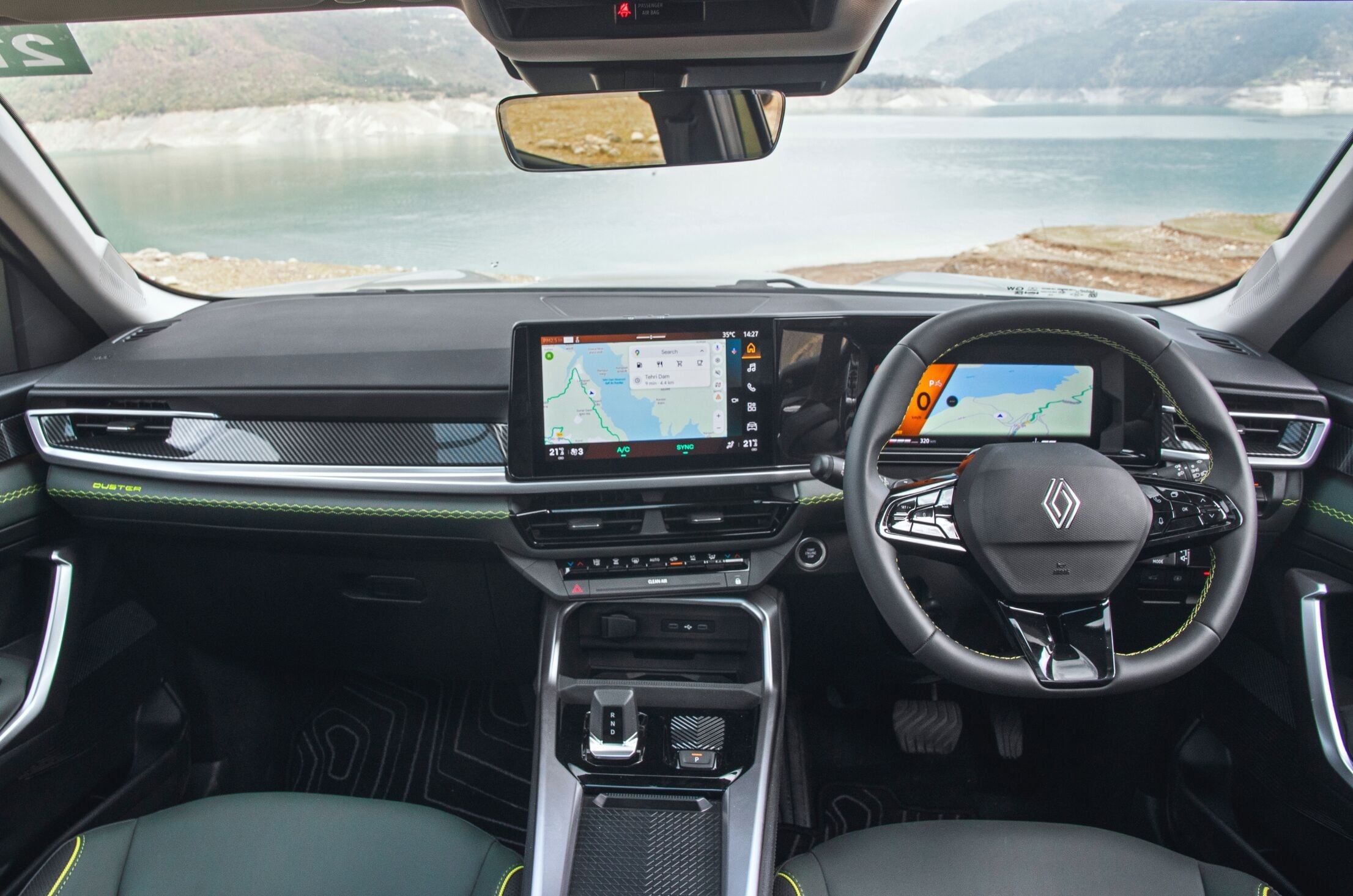
The India-bound Bigster is expected to be a seven-seater with three rows. Its cabin layout is expected to be similar to that of the new Renault Duster, with additional features likely for the larger SUV. The Duster gets a 10.1-inch touchscreen infotainment system, a 10.25-inch digital instrument cluster, dual-zone climate control and a wireless phone charger.
Dacia Bigster: India launch and rivals
The Renault-badged Bigster is expected to arrive in India in 2027. It will sit above the Duster in Renault’s SUV line-up and is expected to compete with three-row SUVs such as the Hyundai Alcazar, Mahindra XUV 7XO and MG Hector Tomahawk range.
A Nissan version of the three-row SUV has also been spotted testing in India.
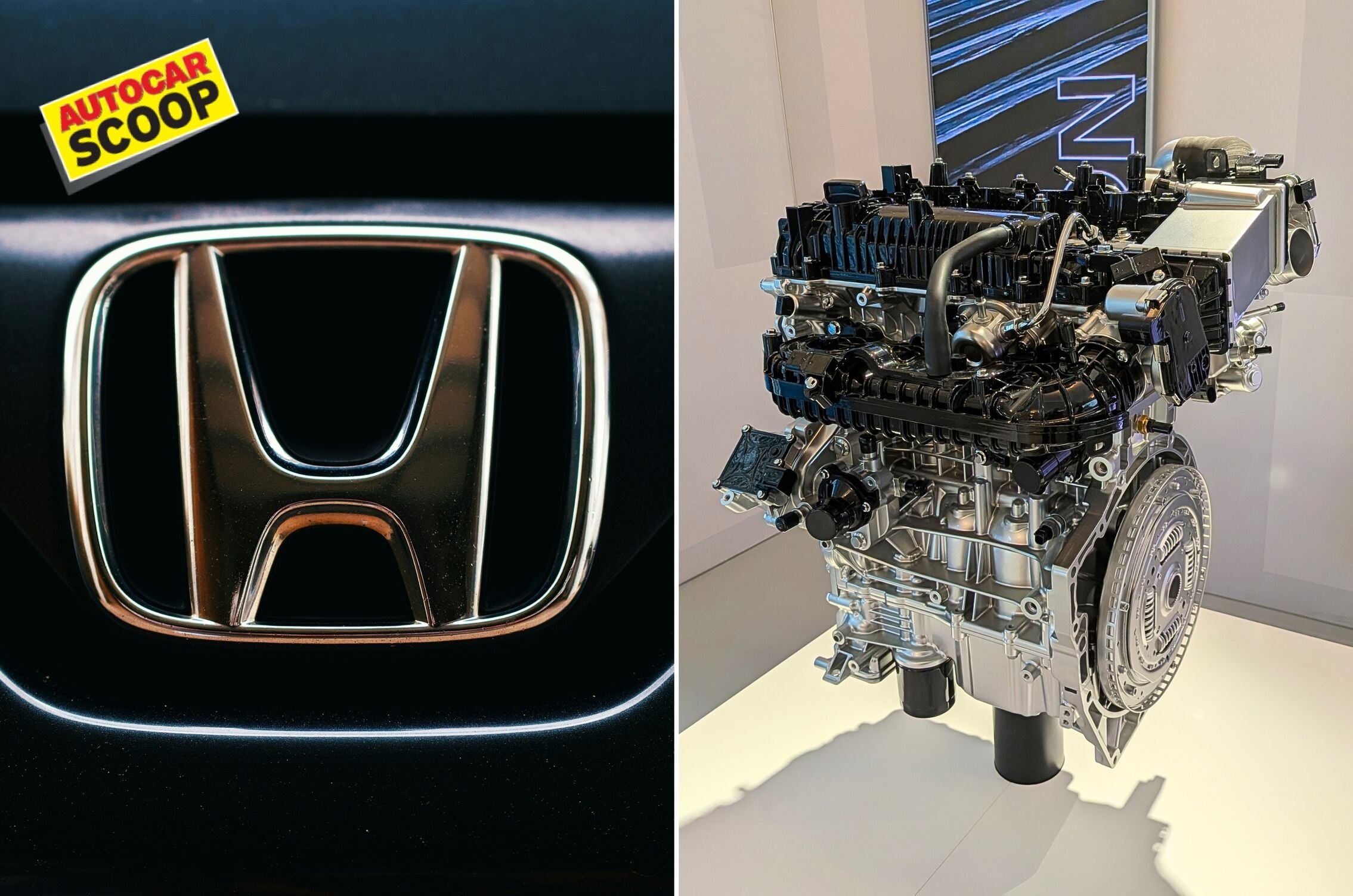
Honda Cars India is in talks with Horse Powertrain to outsource a 1.2-litre engine with petrol, hybrid and CNG options for an upcoming compact SUV, Autocar Professional, our sister publication, has learnt.
Horse Powertrain is a joint venture between Renault Group and Geely, with Saudi Aramco as a shareholder, and it specialises in combustion and hybrid powertrains. It already has a foothold in India: the new Renault Duster, due to launch on October 17, will use a Horse 1.8-litre hybrid. The company is keen to grow its customer base among Indian carmakers and is understood to be planning a local engine plant. Fully localised engines would give buyers like Honda a significant cost advantage.
For Honda, the move would be a major departure. Engines have long been the heart of its cars, and its reputation for performance, efficiency and reliability is built on them. Handing over this core component would once have been unthinkable.
However, Honda faces pressure on two fronts with its current 1.2- and 1.5-litre petrol line-up. It must meet tightening emission and fuel-efficiency norms, and it must offer the multiple fuel options Indian buyers increasingly want, especially CNG.
Developing all of that in-house for a price-sensitive segment is costly, and sourcing a ready multi-fuel engine family would solve both problems at once.
The upcoming compact SUV is understood to be under evaluation with an existing Honda platform used in Indonesia. A price range of Rs 9 lakh to Rs 12 lakh and an October 2028 start of production have been discussed as project targets. Honda has not confirmed the vehicle or its specifications.
A new way of working
The engine discussions are part of a radical change in Honda’s strategy to develop cars for India, with specialist partners taking on a larger share of the work from the outset.
Tata Technologies is being engaged for vehicle design and engineering execution, while TCS is expected to work on the infotainment system. Honda wants design, testing and supplier development to proceed in parallel, helping it bring new vehicles to market faster.
The company is targeting a reduction in the development cycle for a full model change from around 49 months to about 30 months. This is a target for its proposed development process, not a confirmed timeline for the compact SUV.
Honda’s new approach starts with the specifications and price required for India, rather than adapting a global product late in its development. The company would retain responsibility for overall vehicle performance targets and final validation, while engineering partners take a greater role in design, verification and supplier management.
Asked about the reported arrangements, Honda Cars India declined to confirm specific partners or programmes. “We work with a wide ecosystem of technology, engineering and supplier partners. However, we do not comment on specific partners, sourcing discussions or future powertrain programmes,” a company spokesperson told Autocar Professional.
“Honda is continuously strengthening its product development capabilities in India, with the objective of developing products that are increasingly relevant to Indian customers while also leveraging India’s growing engineering capabilities,” the spokesperson added.
Cost competitiveness is central to the plan. Honda intends to make greater use of Indian engineering and suppliers while retaining its vehicle performance and durability targets. It also sees an opportunity to attract customers moving from two-wheelers to their first car. Many of them currently choose rival car brands despite owning a Honda two-wheeler.
PF2 platform plan dropped
Separately, Autocar Professional understands that Honda has dropped the PF2 platform project, which had been expected to form the basis of the next-generation City sedan and Elevate SUV. The decision raises questions about which platform Honda will use for the successors to two of its key India models.
Honda Cars India declined to confirm the change. “We do not comment on speculation regarding specific future platforms or product-development programmes,” the spokesperson said.
The company stressed that the decision should not be read as a plan to discontinue either model. “City and Elevate are important models for Honda in India, and both will continue to play an important role in our business,” the spokesperson said. Details of their future generations, platforms and technologies will be announced at the appropriate time, the spokesperson added.
Honda declined to identify the architecture for future India-bound EVs. It said India would play an increasingly important role as a manufacturing and development base, with future products drawing on Honda’s global electrified technologies and local engineering capabilities.
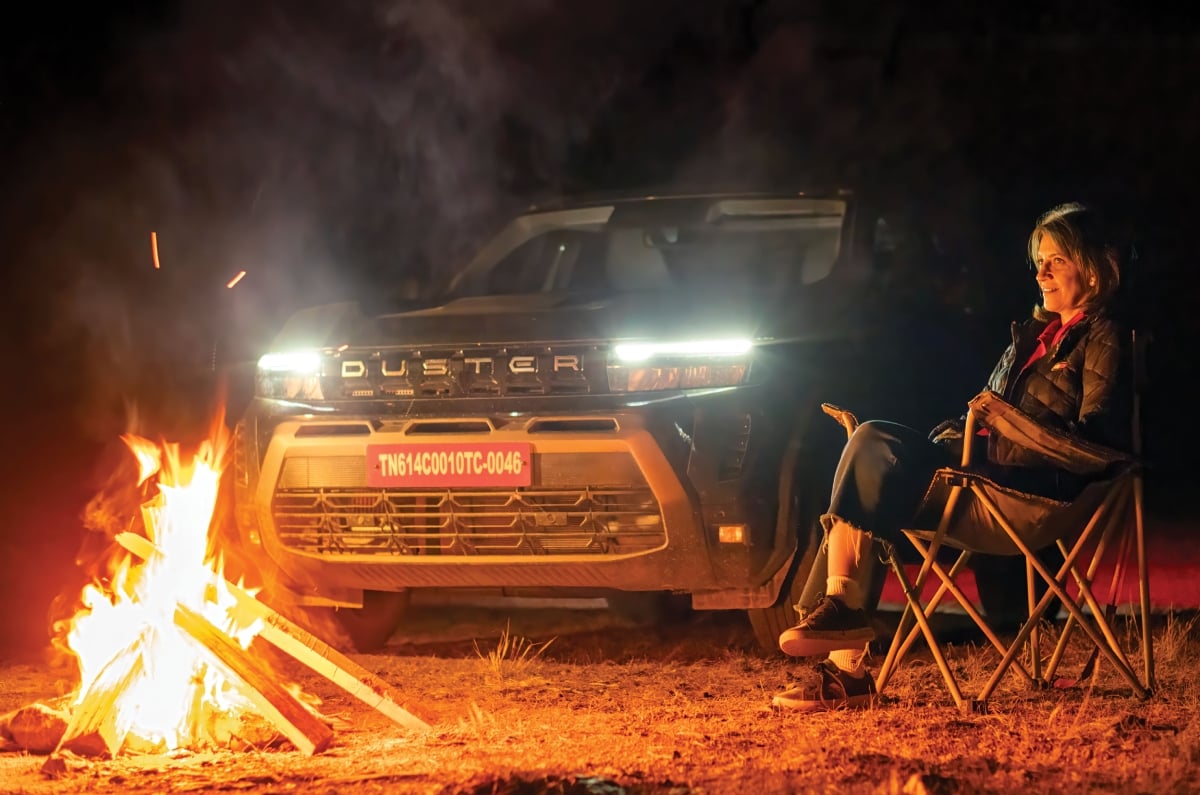
At Autocar India, we spend a lot of time talking about great driving roads. Smooth tarmac, flowing corners and fast highways are all very well, but some of the most memorable drives begin when the good roads run out. That’s the idea behind Terrible Roads to Terrific Places, a series in which we take the new Renault Duster to some of India’s most spectacular destinations, using the roads, and sometimes what passes for roads, to get there.
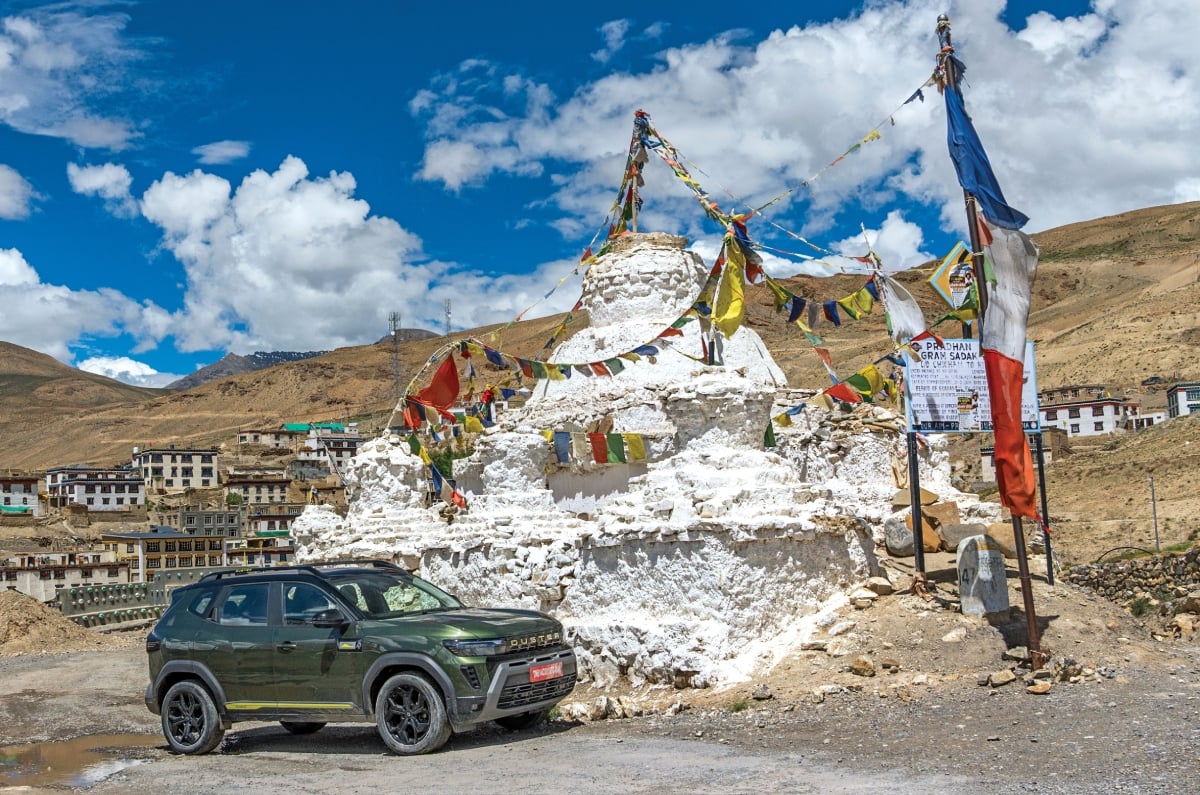
For the first drive, we picked Kibber, more than 4,200 metres above sea level in Himachal Pradesh’s Spiti Valley. Surrounded by enormous mountains and vast, stark landscapes, it’s the sort of place that looks almost too remote to be real. Getting there, however, is the tricky bit.
THE EASY PART
Our journey began in Chandigarh, with roughly 400km between us and Kibber. That might not sound like much, but distances on mountain roads aren’t like those on an expressway.
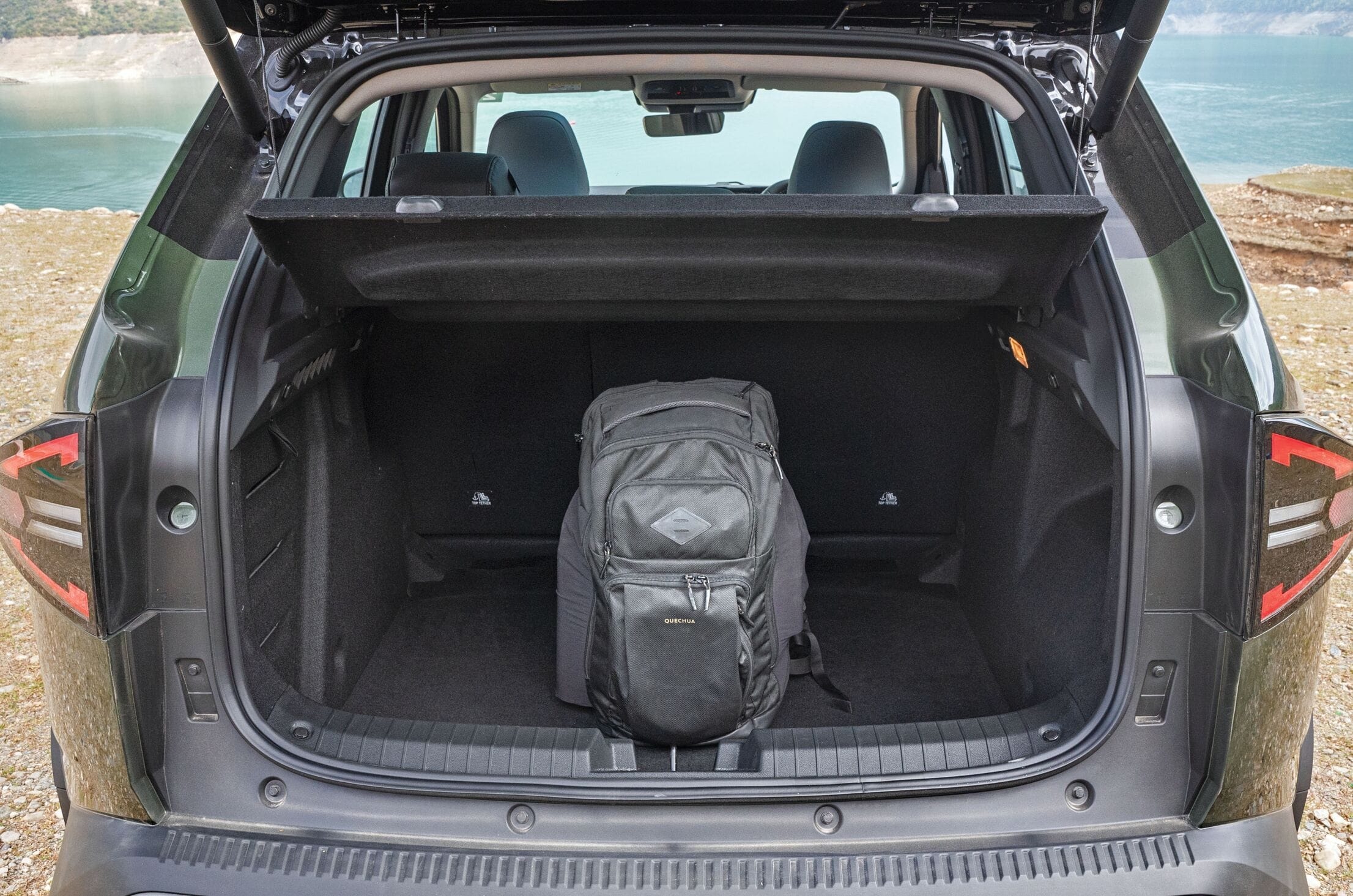
There was also the small matter of all the camera equipment and luggage that comes with a road-trip shoot. Thankfully, the Duster’s 700-litre boot (incidentally, that’s the largest in its segment) swallowed it all without complaint. With Kibber set in the navigation and Manali marked as our overnight stop, we headed out.
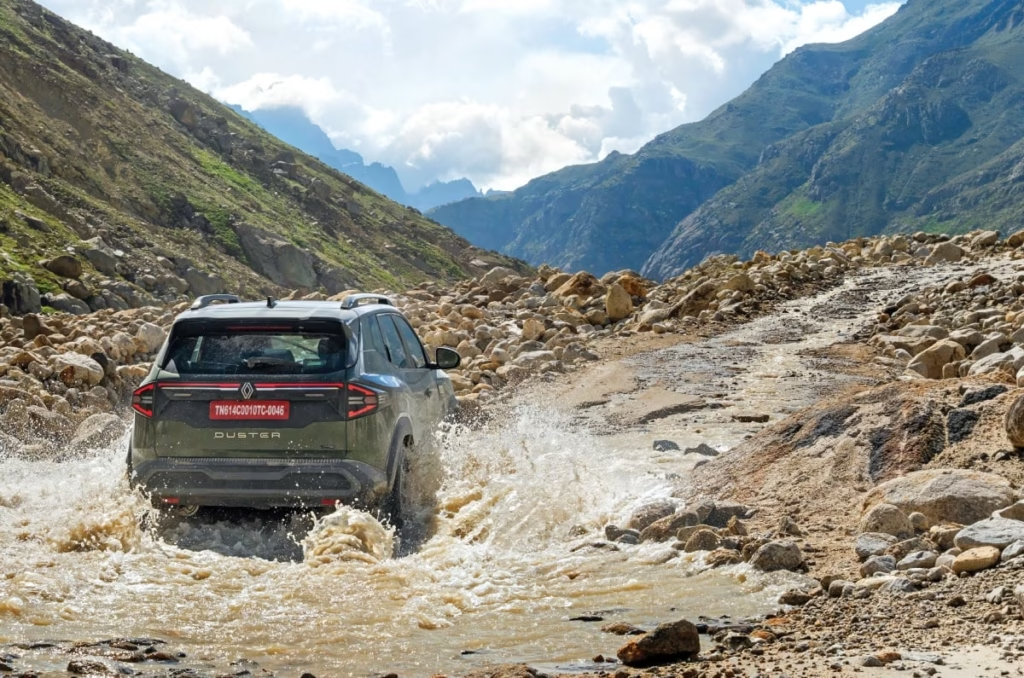
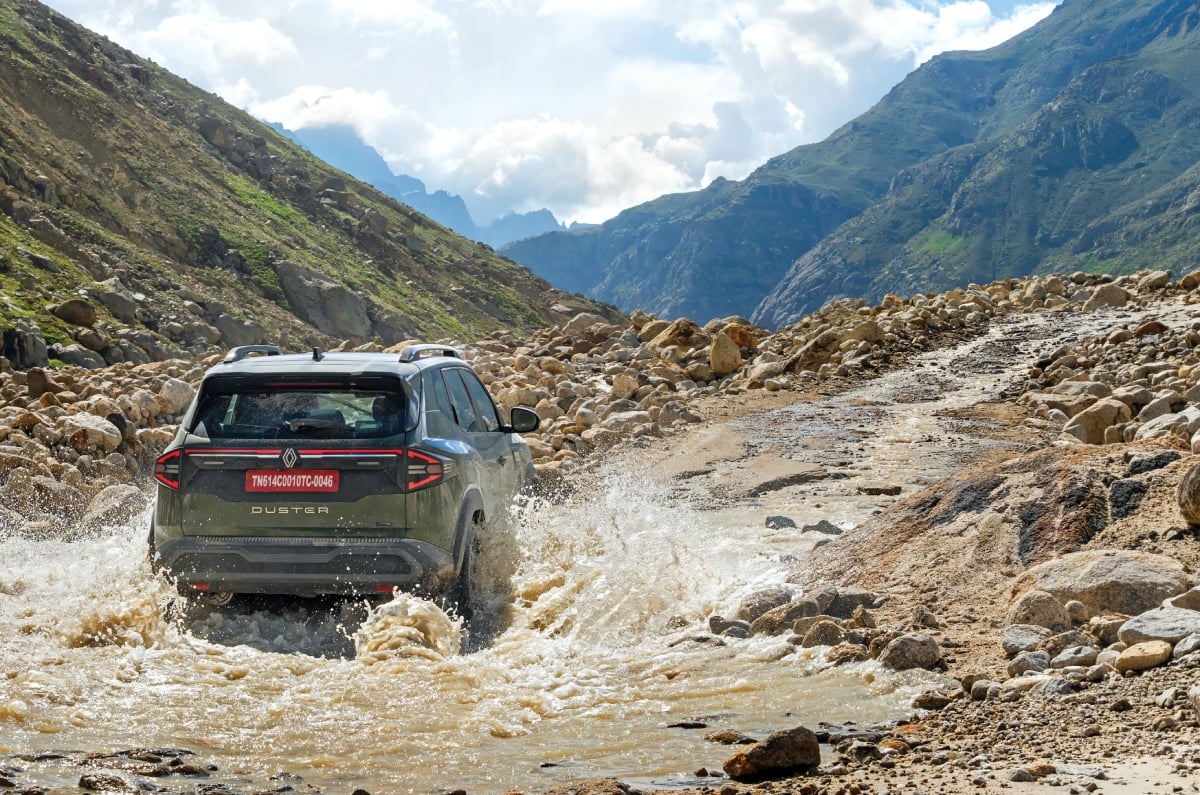
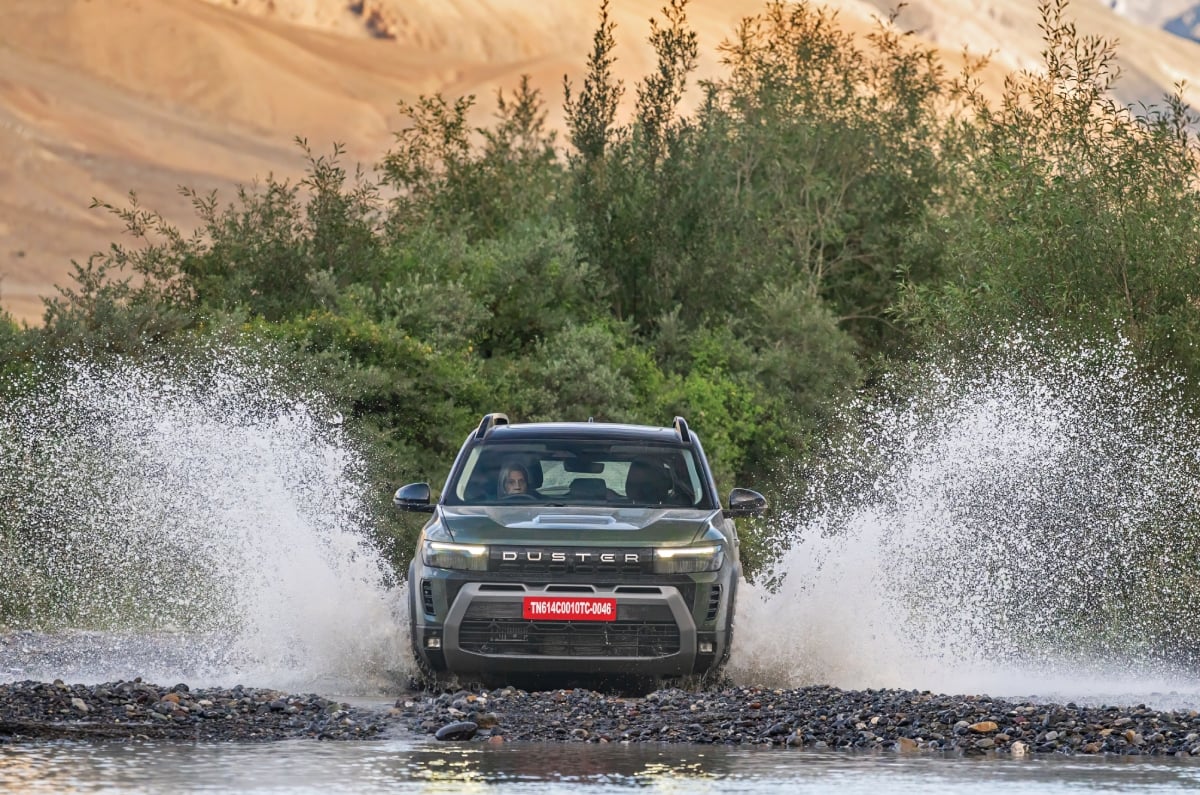
With 163hp on tap, making a splash is mandatory.
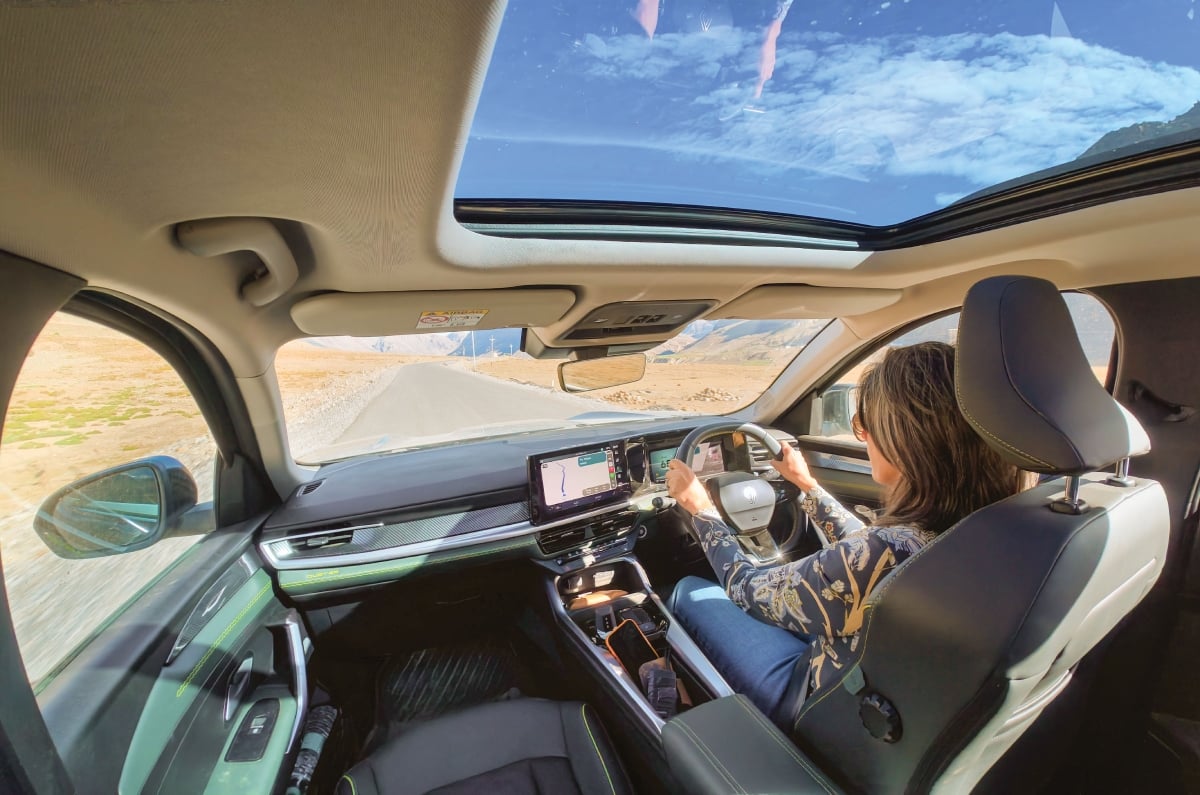
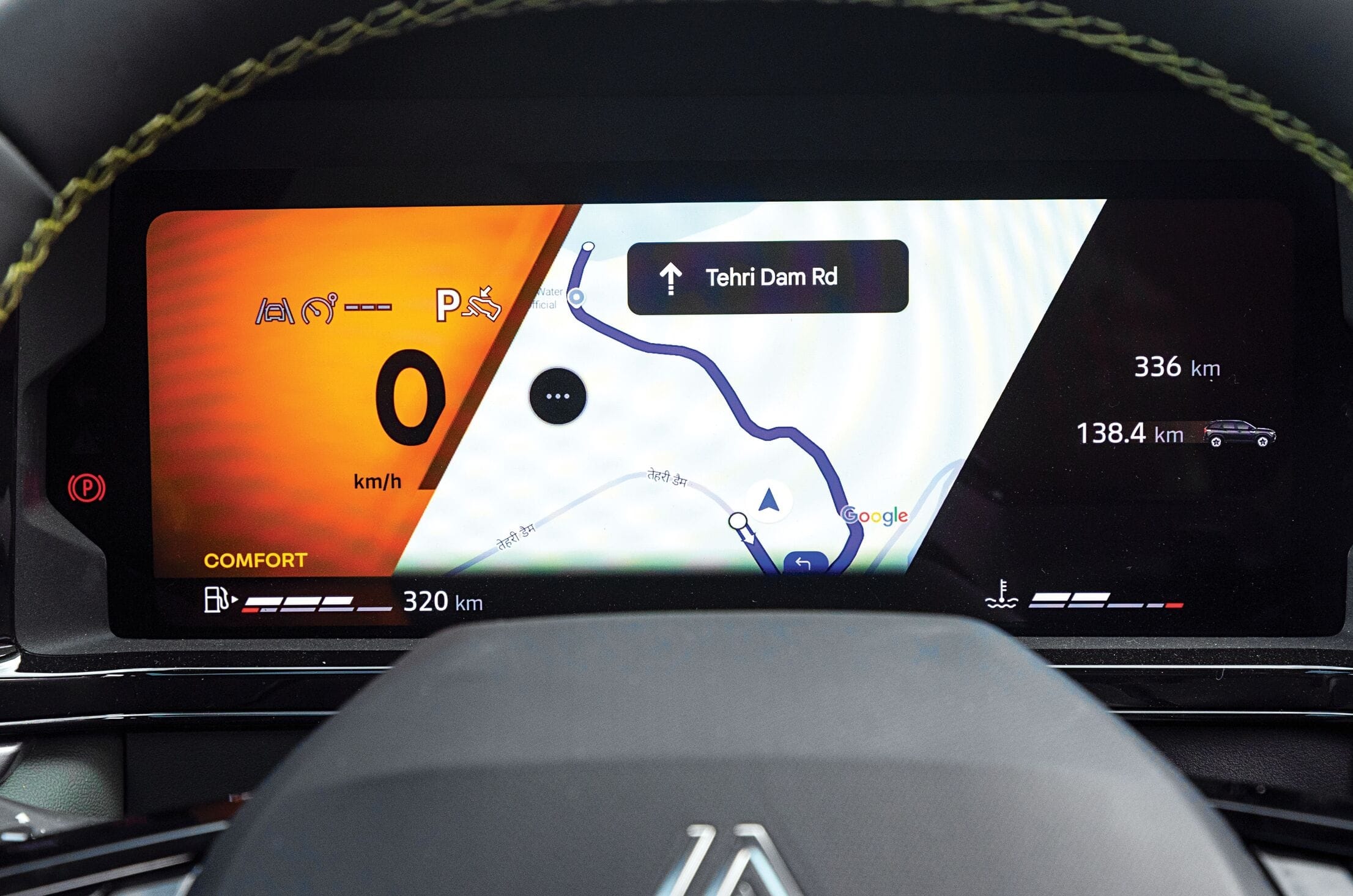
The first part of the drive was almost civilised. Chandigarh’s wide roads and smooth surfaces gave me time to settle into the Duster. The 10.1-inch infotainment screen, with Google services integration, handled navigation, calls and music, while directions also appeared on the 10.25-inch digital driver’s display, lowering the risk of distraction.
Once we left the city, the turbo-petrol engine had some room to stretch its legs. Paired with the six-speed dual-clutch automatic, it made light work of the highway, and then the foothills arrived; corners tightening, and I found myself reaching for the paddles. The scenery was getting better, and the driving was getting more interesting.
The Duster was ready for more, but we had earned a warm break.
By evening, we were in Manali. The Duster felt ready to carry on, but we weren’t. The real test was still ahead.
ROADWORKS AHEAD
The next morning was rainy and quiet, and for a moment, staying put seemed like a very good idea. Everyone we’d spoken to, though, had offered the same warning: enjoy the tarmac while it lasts. They were right.
The transition is gradual with smooth tarmac giving way to broken tarmac, then gravel, and eventually sections where you have to wonder if the road was ever there in the first place. Corners tighten even more, roadworks appear and the surface becomes increasingly unpredictable.
Not every delay is unwelcome, especially with a view like this.
This is where the Duster started showing a different side. With 212mm of ground clearance, negotiating rocks and broken surfaces wasn’t especially worrying. More impressive was the suspension. On narrow sections with no guardrails, deep ruts and rough surfaces, remarkably little of the punishment made its way into the cabin. It’s the kind of terrain where you quickly appreciate a car that can take a beating without making every bump your problem.
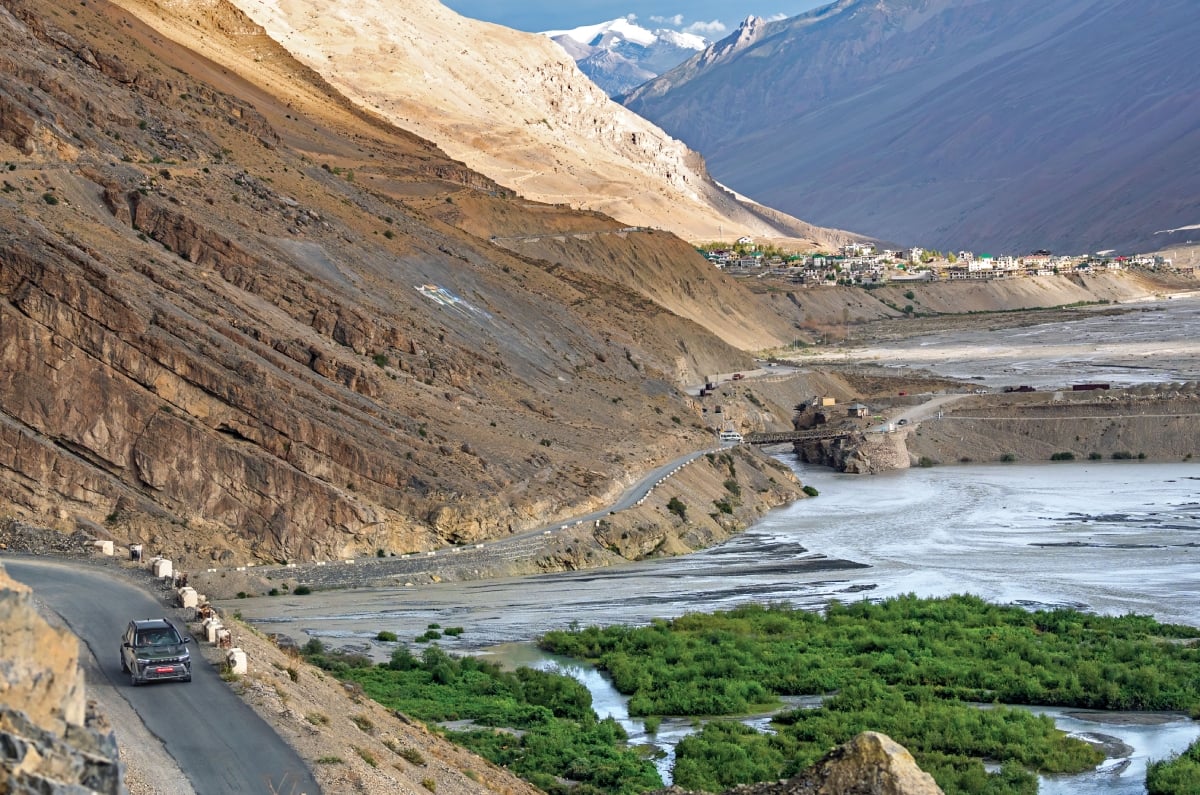
As we climbed higher, the landscape changed dramatically. The forests disappeared, villages became smaller and the gaps between them longer. Spiti is enormous, empty and almost surreal. Here, a kilometre can feel like five, especially when you’re picking your way through dirt, potholes, loose rocks, washed-away sections and water crossings.
Spiti is best explored from behind the Duster’s wheel.
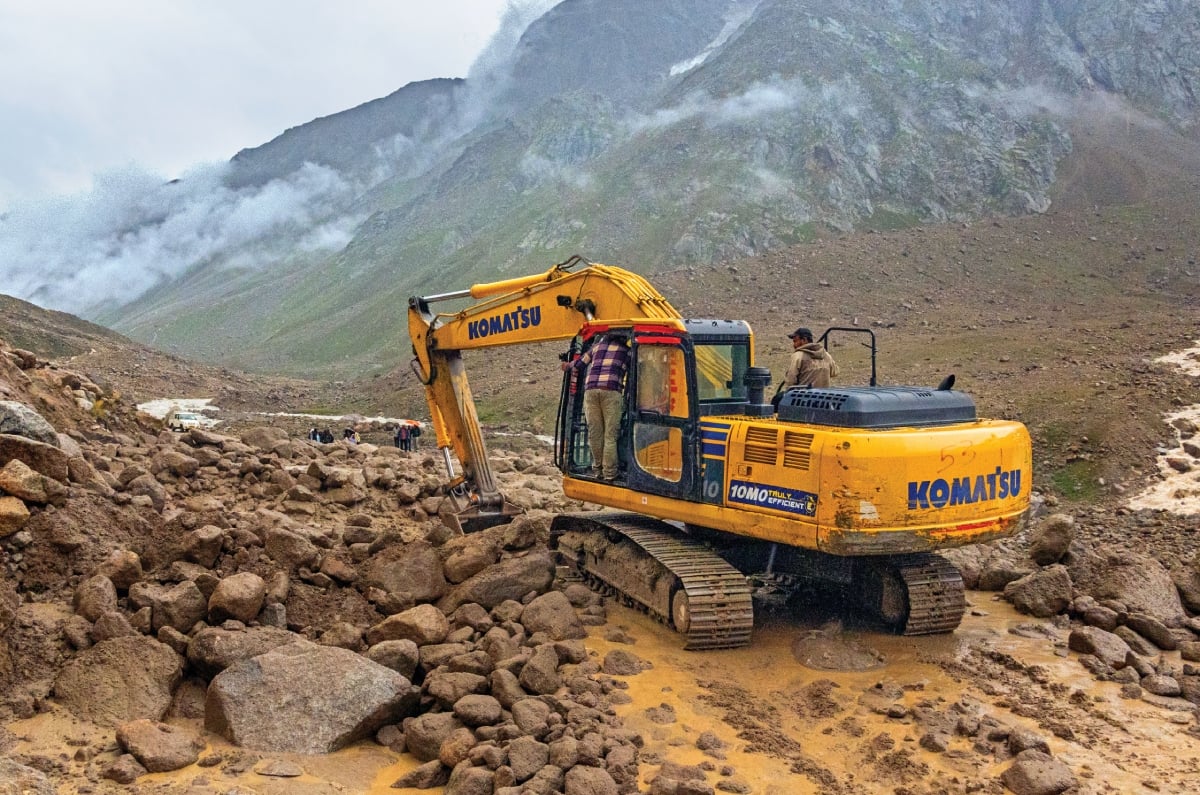
Then we hit a landslide.
An enormous pile of debris had blocked the road, so we joined the queue and waited while excavators cleared a path. That’s where we met two cyclists heading towards Kaza, one of whom happened to own a Duster back home in France. It was incredible that they were tackling these mountains on two wheels! Suddenly, our journey seemed rather comfortable. Two and a half hours later, we were moving again.
By now, dusk was setting in. The road continued to throw everything at us, from deep ruts and gravel to broken sections and water crossings. These are the moments when you want to have confidence in your car. Ground clearance helps, suspension strength matters and you need enough performance to keep moving when the going gets tough. Oncoming traffic and narrow sections also meant there was often no avoiding the worst of the potholes.
Thankfully, the final stretch to Kibber is paved to perfection.
Despite it all, I never really found myself wishing for all-wheel drive. The Duster just kept going.
PEAKING AT THE SUMMIT
The landslide had delayed our arrival, and we eventually reached Kibber late at night, tired and with no idea what the place looked like. In hindsight, that may have made the next morning even better.
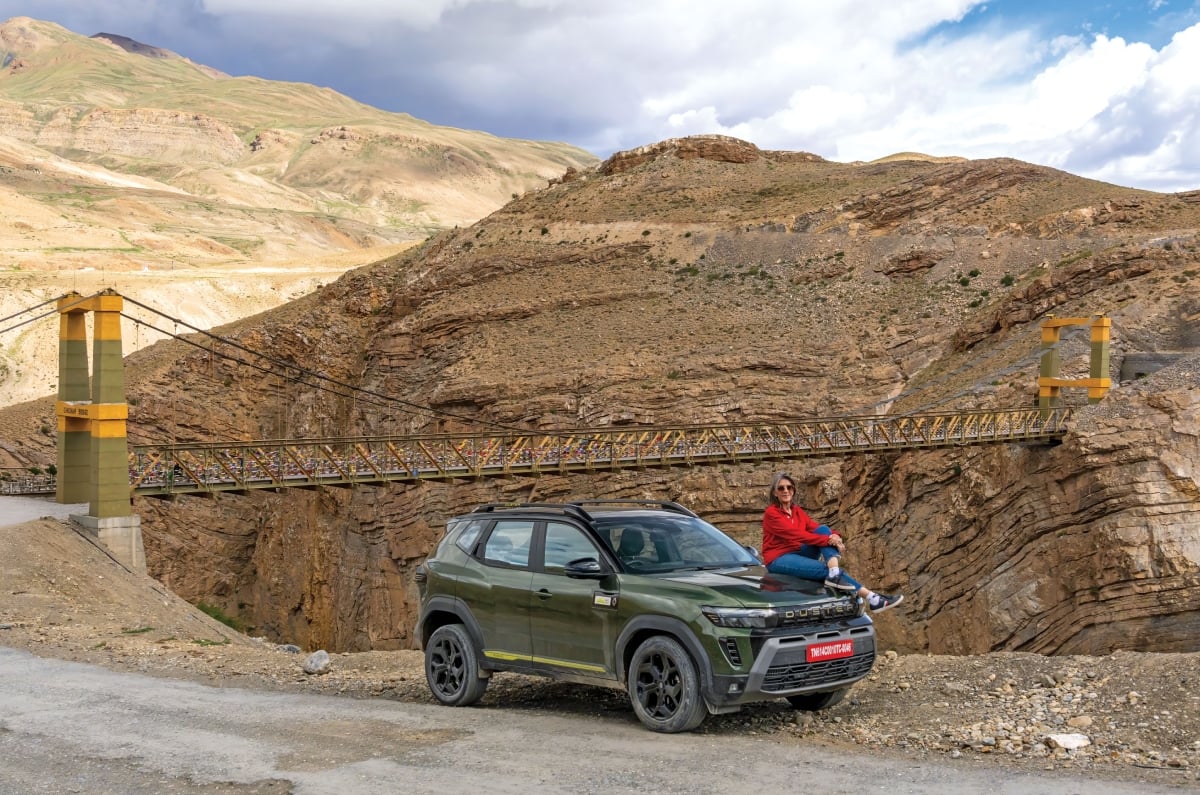
At 4,145m above sea level, Chicham Bridge is Asia’s highest suspension bridge and a sight to behold.
The first thing that struck me when I stepped outside wasn’t the view. It was the silence. There was no traffic, no rush and none of the constant background noise we’re so used to. Just a tiny village surrounded by mountains.
A short drive away, Chicham Bridge hangs dramatically over a vast gorge. Photos don’t quite prepare you for the scale of it. Standing there and looking down, you finally understand the landscape you’ve spent the past couple of days driving through.
No trip to the mountains is complete without a steaming hot plate of momos.
Looking back, the difficult bits quickly become part of the story rather than something to complain about. The landslide, the weather, the slow progress and the hours behind the wheel all fade away, leaving the views, the unexpected encounters and the satisfaction of having made it.
You don’t simply arrive at Kibber. You earn it. And that is exactly what Terrible Roads to Terrific Places is about. Some of India’s most unforgettable destinations aren’t easy to reach, and the road is as much a part of the experience as the destination itself. It helps, of course, to have a capable companion along the way. On this journey, the Renault Duster proved to be exactly that.
Kibber is only the beginning, so imagine where the road, or lack of one, will take us next. In fact, if you stay tuned to this series, you’ll find out soon. But for now, I’ll leave you with a little hint: it’s a lot closer to Autocar India’s home than you think.
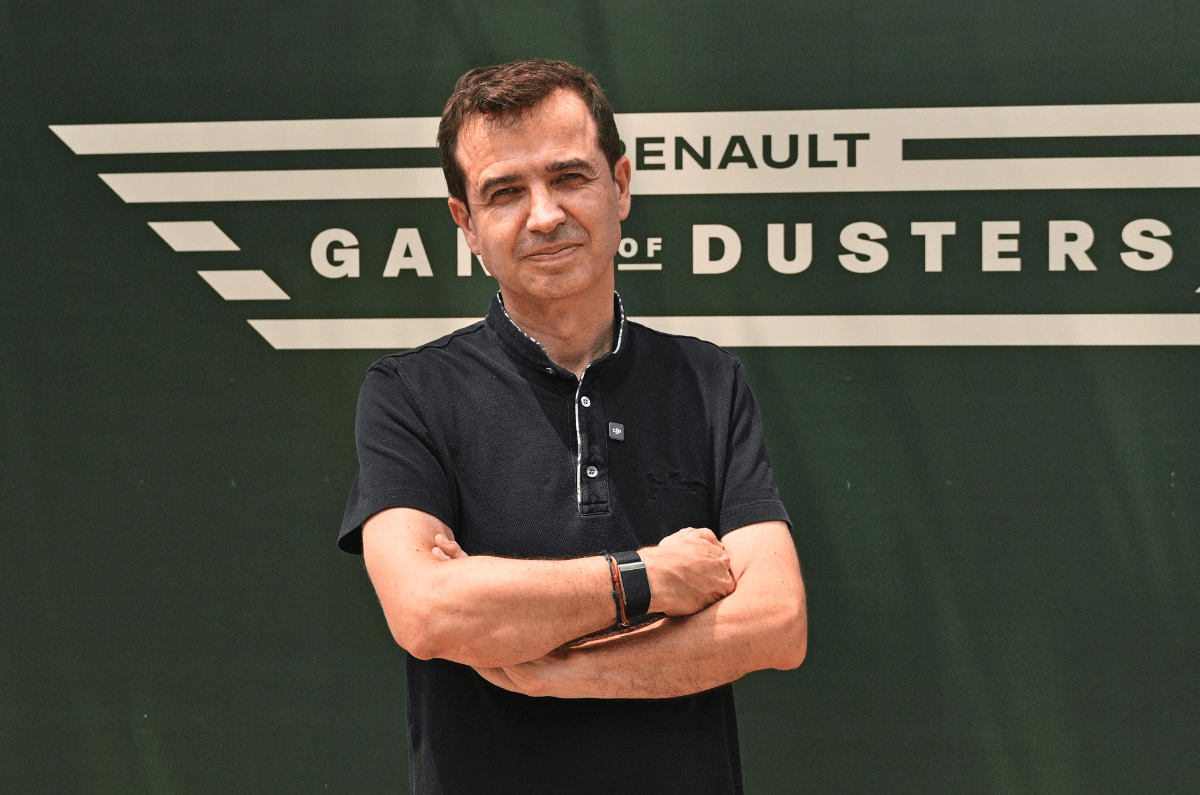
Renault Group India CEO Stephane Deblaise took charge of the company in September last year, and since then, the carmaker has been busy expanding and refreshing its India line-up. In this interview, Deblaise talks about the response to the new Renault Duster and the possibility of a more affordable automatic variant, the company’s upcoming product plans, progress on the Bridger compact SUV concept, and how Renault plans to strengthen its position in the Indian market.
On the response to the 1.0-litre Duster
It’s still early, so we don’t know the exact response, but it’s a key part of our phased strategy, which was to first focus on the 160hp DCT that is the high-end version in the ICE car. And then we want to introduce the 100hp, the more ‘regular’ car, which is less expensive. That Rs 10.5 lakh price is very, very good for people who want to enter the B+ SUV segment, and it has very good fuel efficiency. Moreover, the Duster is a very good car, and people are loyal to good cars, so we are expecting the Duster to do well on the whole.
On the slow rate of Duster bookings and deliveries
So, at Renault, we don’t overstate or overpromise. We won’t say we have 60,000 people waiting and, after that, you would discover that we did not do 60,000 deliveries. Some people do that; we don’t. We are very serious and would prefer to focus on one (variant), and then another, and a third, so in this way people keep speaking about it. For the hybrid, we were not ready; that’s why it is coming later, but with the 160hp and 100hp Duster, we wanted to focus first on the high-end and then the lower version. You know, we were in a little bit of a hibernation, and you can’t go from that to summer in one day. I think it’s good to build up step by step.
On the possibility of a 1.0-litre automatic
I am not saying what gearbox or even the engine, but what I can say is that very soon we will introduce a new, less expensive version with an automatic. It was not planned at the beginning, but since we launched the new Duster, we have been having a lot of queries about this from customers. Plus, if you look at the pricing of all the models and variants we currently have, there is a gap between the manual variants and the first automatic version.
On the rest of the Renault portfolio
I arrived in India on the 1st of September, and on the 16th of October I went to Paris to validate our India plan, and all the programmes that we decided to pursue were validated. Then, as you know, we communicated this in April this year. The programmes are completely running as per our expectations and on time. On the Renault Group Entry Platform (RGEP), we have made many modifications and carried out re-engineering to bring in new engines, new equipment and other things that you have requested. They are now finally coming. Next year will be a blowout of new products.
On the brand’s new design centre in India
The India R&D centre is playing a very big role in our local as well as global plans. When I arrived, I was requested to bring together the three entities we had, which were all separate: one dedicated to sales, one to engineering, and one dedicated to manufacturing, which was along with Nissan. Now we have all three together under one leadership – mine – and this helps a lot because communication is easier and quicker, and this is improving our agility and our ability to see and respond to the market much better. This is why we will now deliver exactly what the market needs and is asking for.
On the development of the Bridger concept
This is a very important topic. It’s my project, and I am working very hard on this with our whole team. We have three meetings per week about the project, and in the coming weeks, there is a very important milestone. But I am happy to say that everything is going nicely and is on track, so I am satisfied with our progress.
The Renault Duster impressed us at the first drive event with its muscular design, modern interior and ride and handling balance. We’ve now subjected all versions of the new Duster to our in-depth performance and efficiency testing to tell you how it stacks up against its established competition in the midsize SUV segment.
Renault Duster Exterior Design and Engineering – 9/10
Butch, muscular SUV has good road presence; India model based on RGMP platform
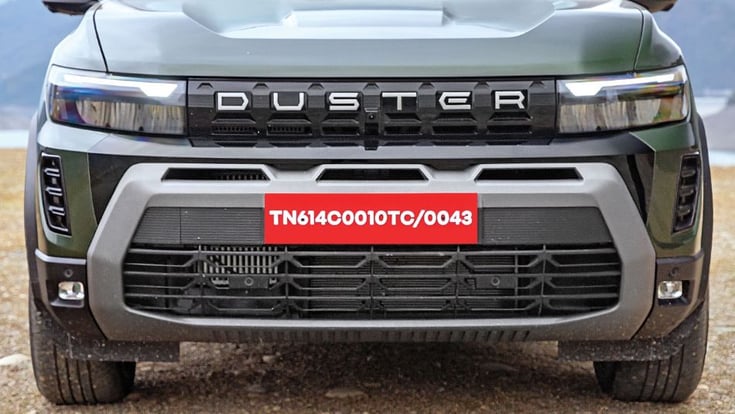
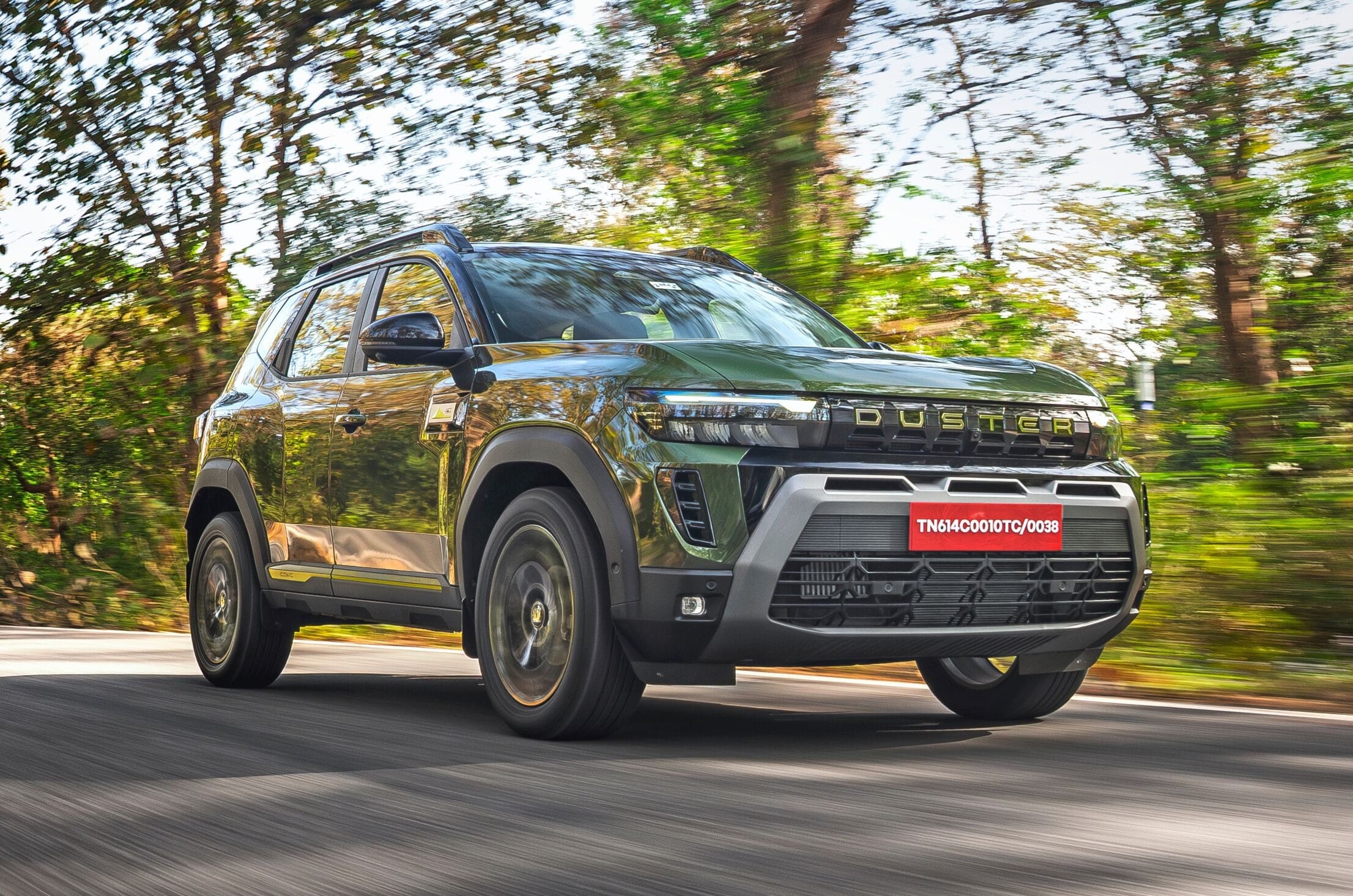
Renault has absolutely nailed the design of the new Duster. While it retains clear visual links to its predecessor, the styling feels thoroughly modern. Up front, large LED headlamps are paired with distinctive eyebrow-shaped DRLs that double as turn indicators, while the grille replaces the Renault logo with a prominent ‘Duster’ script, capitalising on the model’s strong brand recall. A protruding silver skid plate evokes memories of the original Duster, and pixel-style fog lamps, a sculpted bonnet and functional air curtains add further visual muscle.
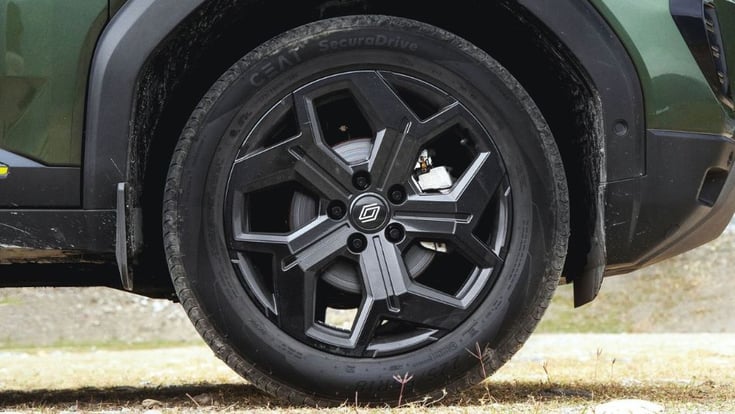
Left to right: Proudly wears the Duster badging on the nose; 18-inch alloys look proportionate.
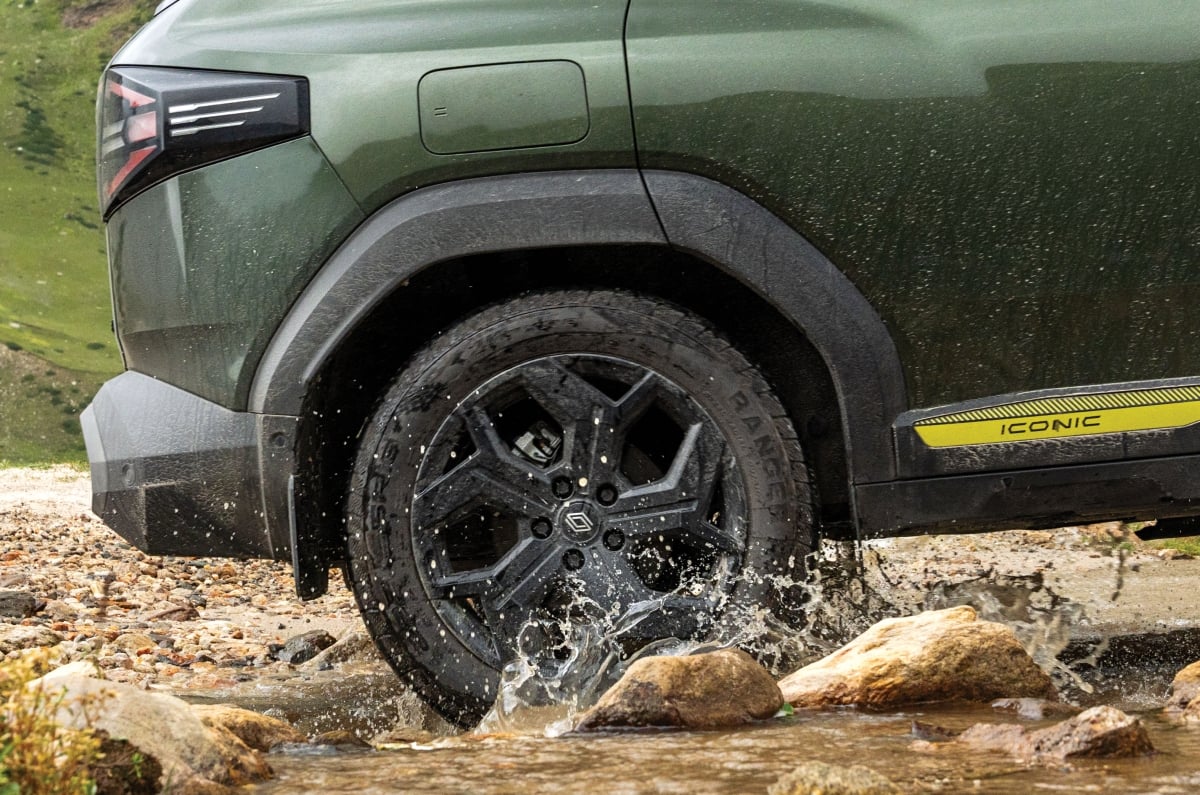
In profile, the Duster embraces a rugged SUV character with chunky black cladding, concealed rear door handles in the C-pillar and functional roof rails. It rides on striking 18-inch alloy wheels and offers 212mm of ground clearance. The rear design is relatively clean but features distinctive triangular tail-lamps connected by an LED light bar. A roof spoiler and contrasting silver insert in the bumper help enhance its stance. Overall, the Duster has considerable road presence. Colour options include Sunset Red, Pearl White, River Blue, Moonlight Silver, Stealth Black and Jade Mountain Green, while the Launch Edition adds neon-green accents and blacked-out alloys (pictured here).
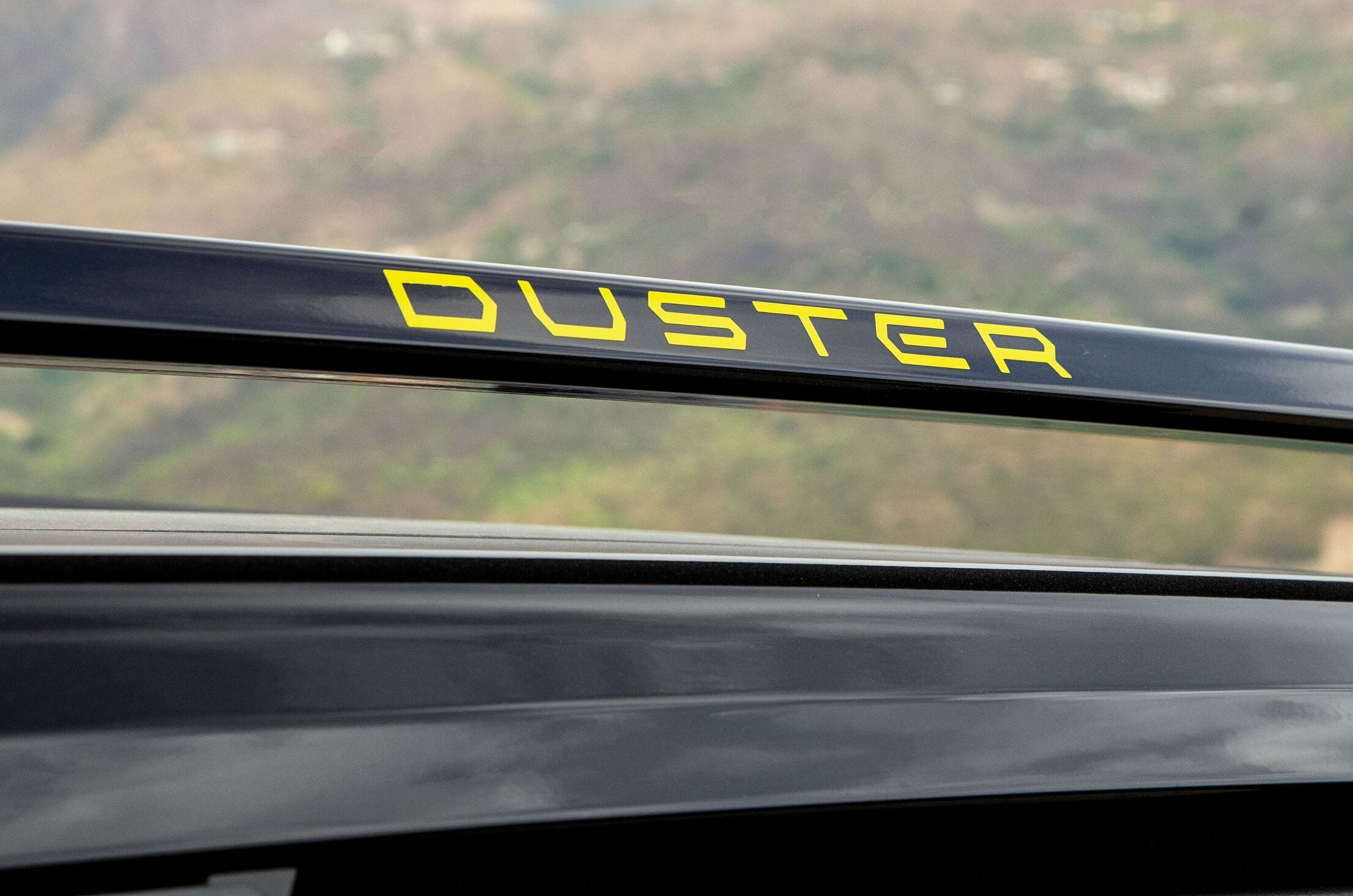
The roof rails are functional and have a rated 50 kg load-carrying capacity.
Meanwhile, the 1.0 range tops out at the mid-spec Techno trim, but Renault has done a very good job of not making it look like so. You still get the same butch and muscular styling, LED lights, roof rails and body cladding. The only prominent difference from the top trims is the alloy wheels, which are a size smaller at 17 inches and feature a slightly different design.
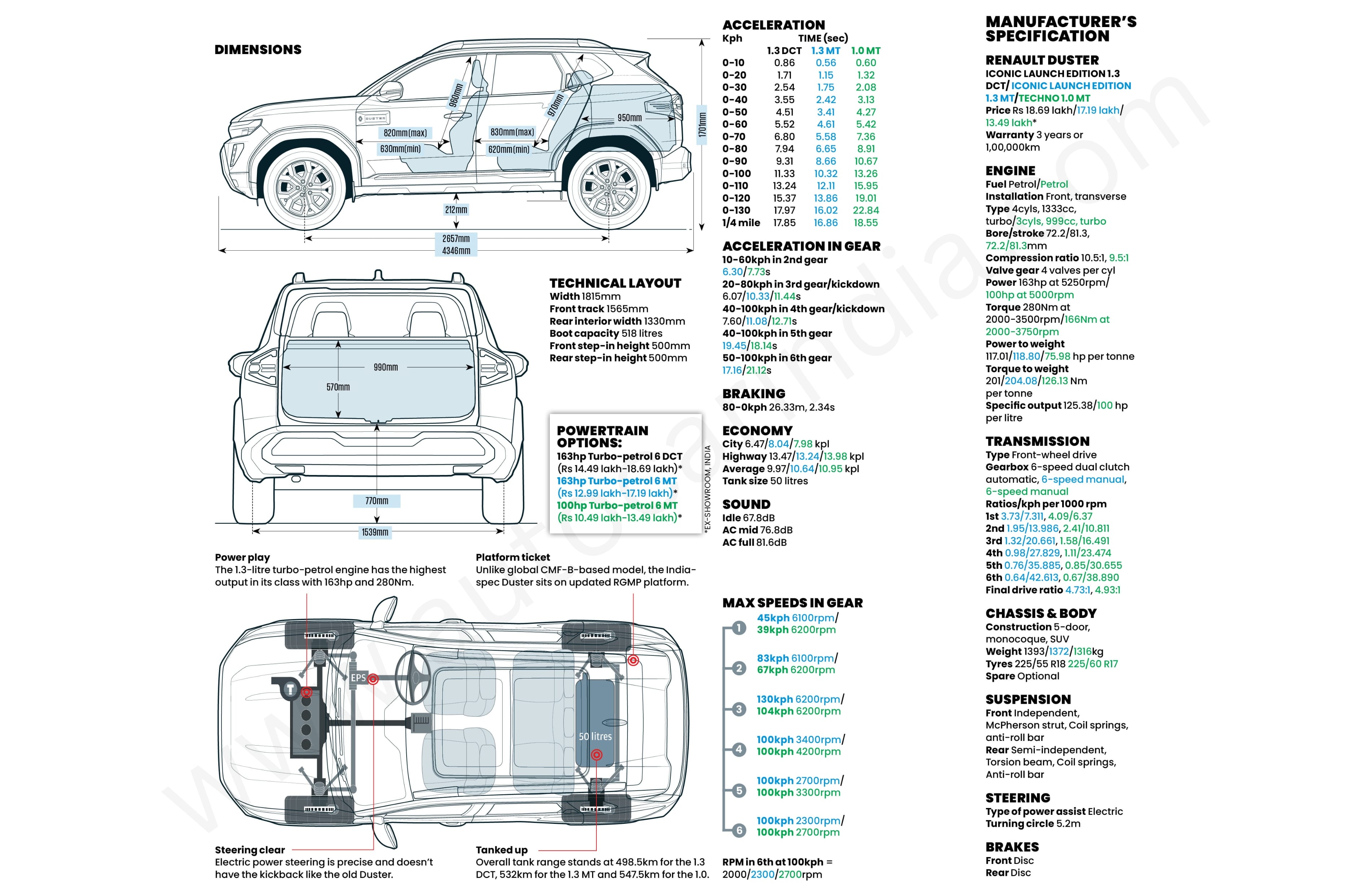
Unlike the global CMF-B-based model, the India-spec Duster sits on an updated RGMP platform.
Unlike the European-spec Duster, which uses the CMF-B platform, the India model sits on an updated version of it, which Renault calls the Global Modular Platform (RGMP). It features a Google co-developed electronic architecture, and the platform is designed to accommodate a wide range of body styles and powertrains, including hybrids, CNG and full-electric derivatives. Interestingly, the cabin is around 40mm taller due to the addition of a panoramic sunroof, which necessitated a higher roofline to preserve cabin headroom. Ground clearance is slightly higher too, making the India car 50mm taller overall than the international model. Measuring 4,343mm long, 1,813mm wide and 1,659mm tall, with a 2,657mm wheelbase, the Duster sits squarely in the midsize SUV segment.
The Duster gets a segment-best 518-litre boot, though the loading lip is high.
The powered tailgate reveals a segment-leading 518-litre boot (700 litres up to the roof), although Renault only provides a puncture repair kit instead of a spare wheel as standard. Despite no AWD option, off-road credentials remain a key part of the Duster’s appeal, with 26.9-degree approach and 34.7-degree departure angles.
Renault Duster Interior Space, Comfort and Practicality – 8/10
Modern interior impresses with its design, but it isn’t as spacious as some rivals in the segment
Fit and finish of materials inside the cabin are good.
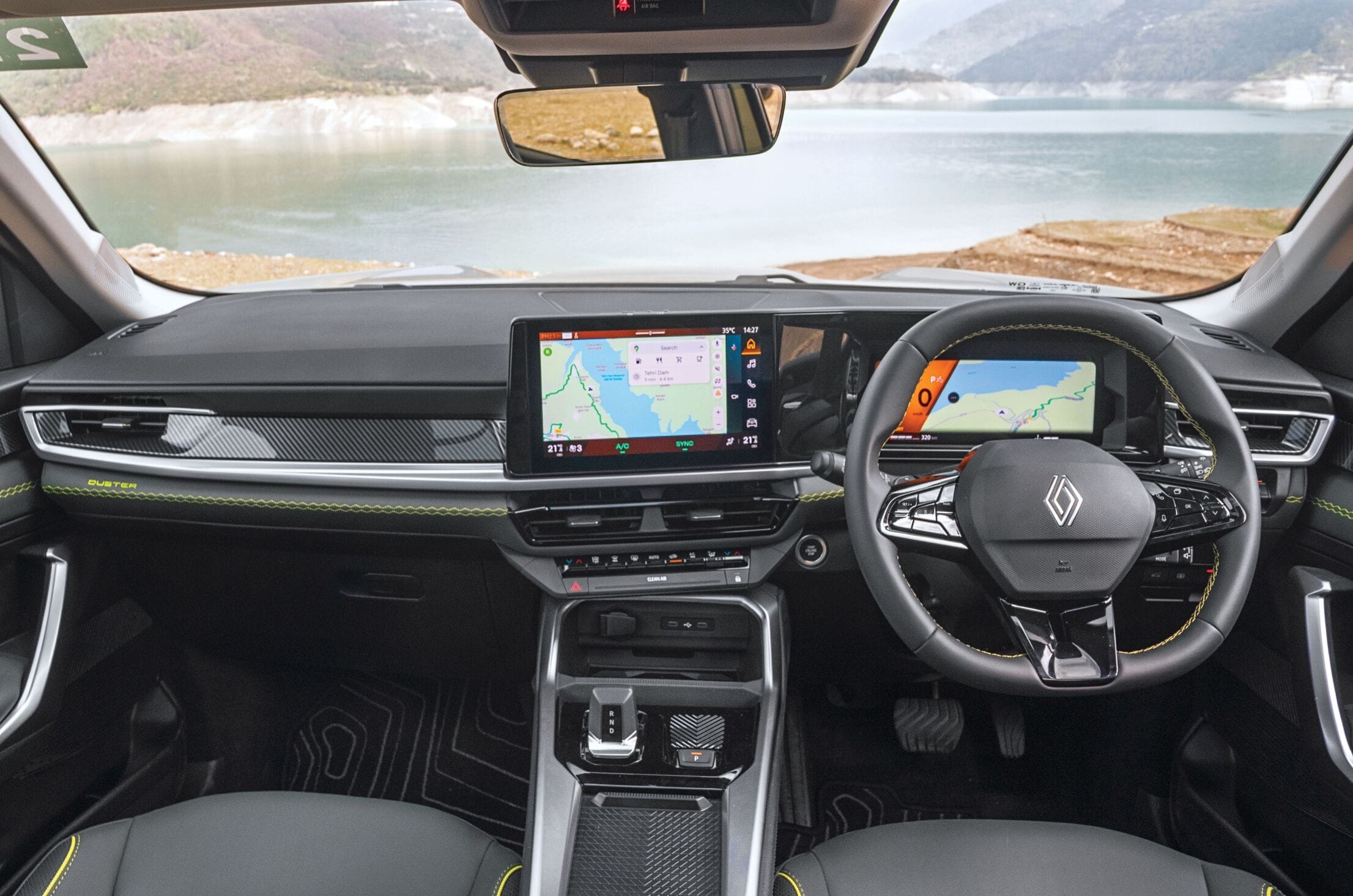
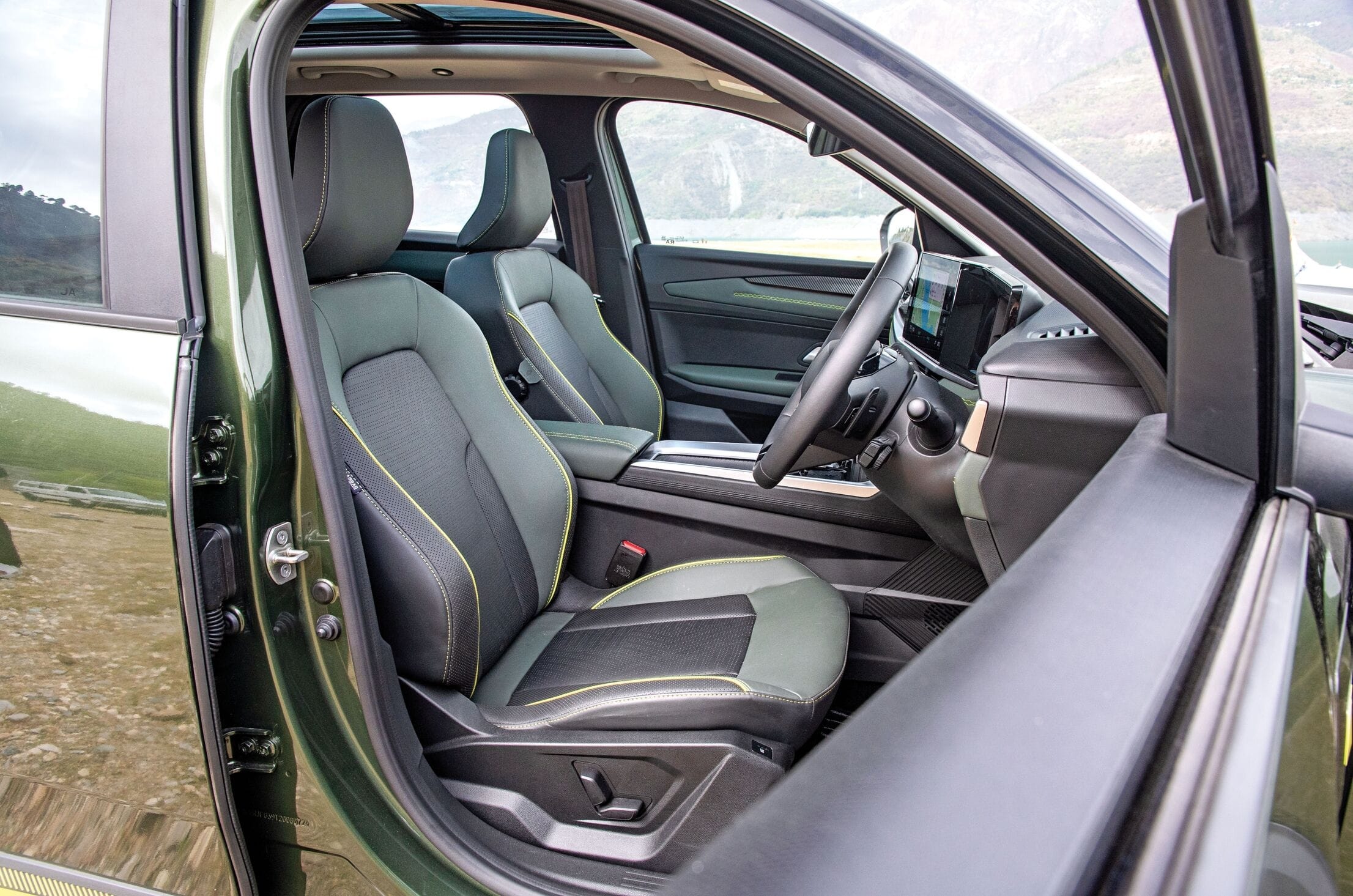
Inside, the dashboard features a twin-screen layout, with a mix of textured and soft-touch materials that lend the interior a premium feel. Silver accents, faux carbon-fibre trim and contrast green stitching add visual drama without making the cabin feel overly busy.
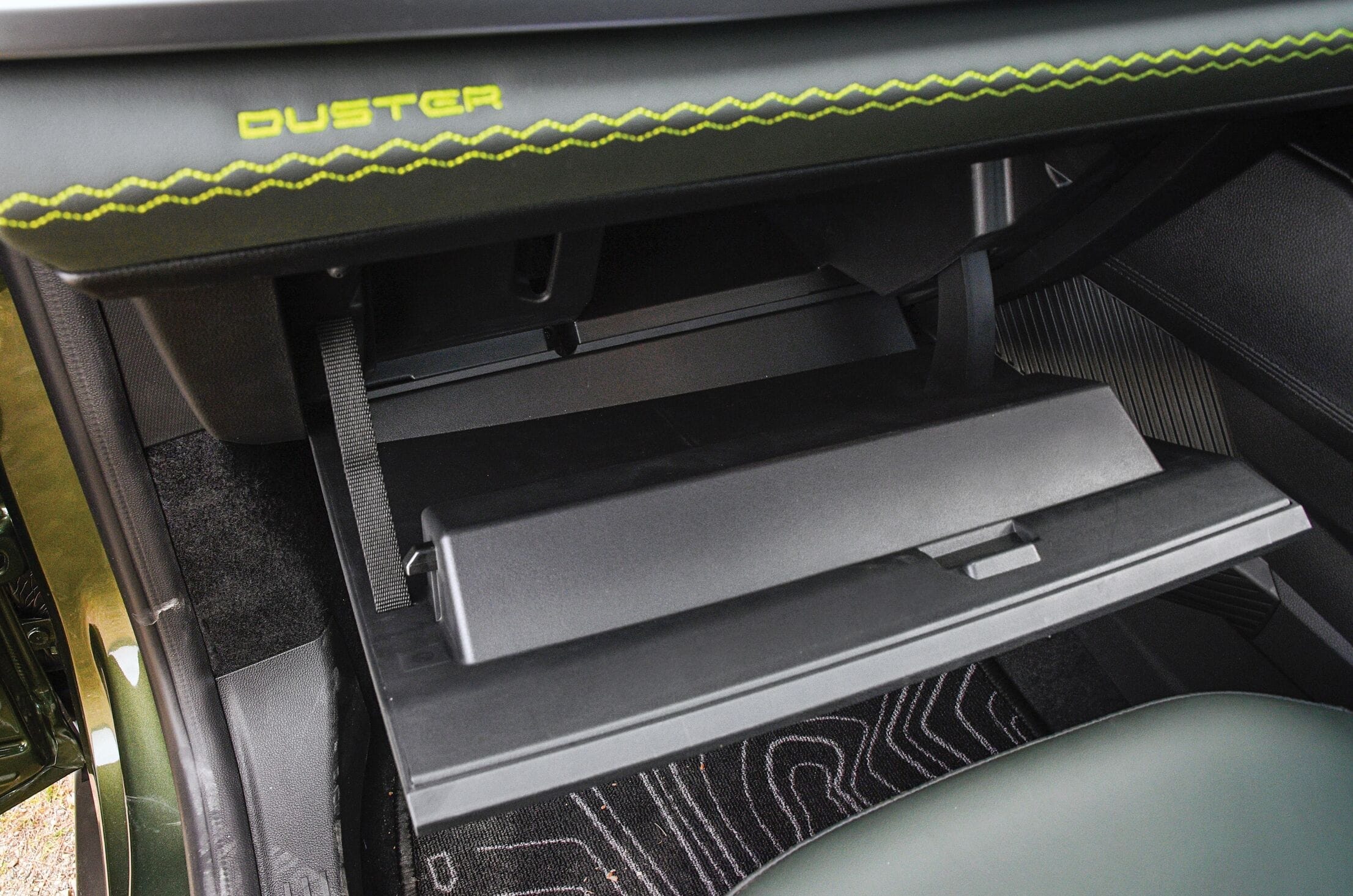
Glovebox is quite shallow and small on the whole.
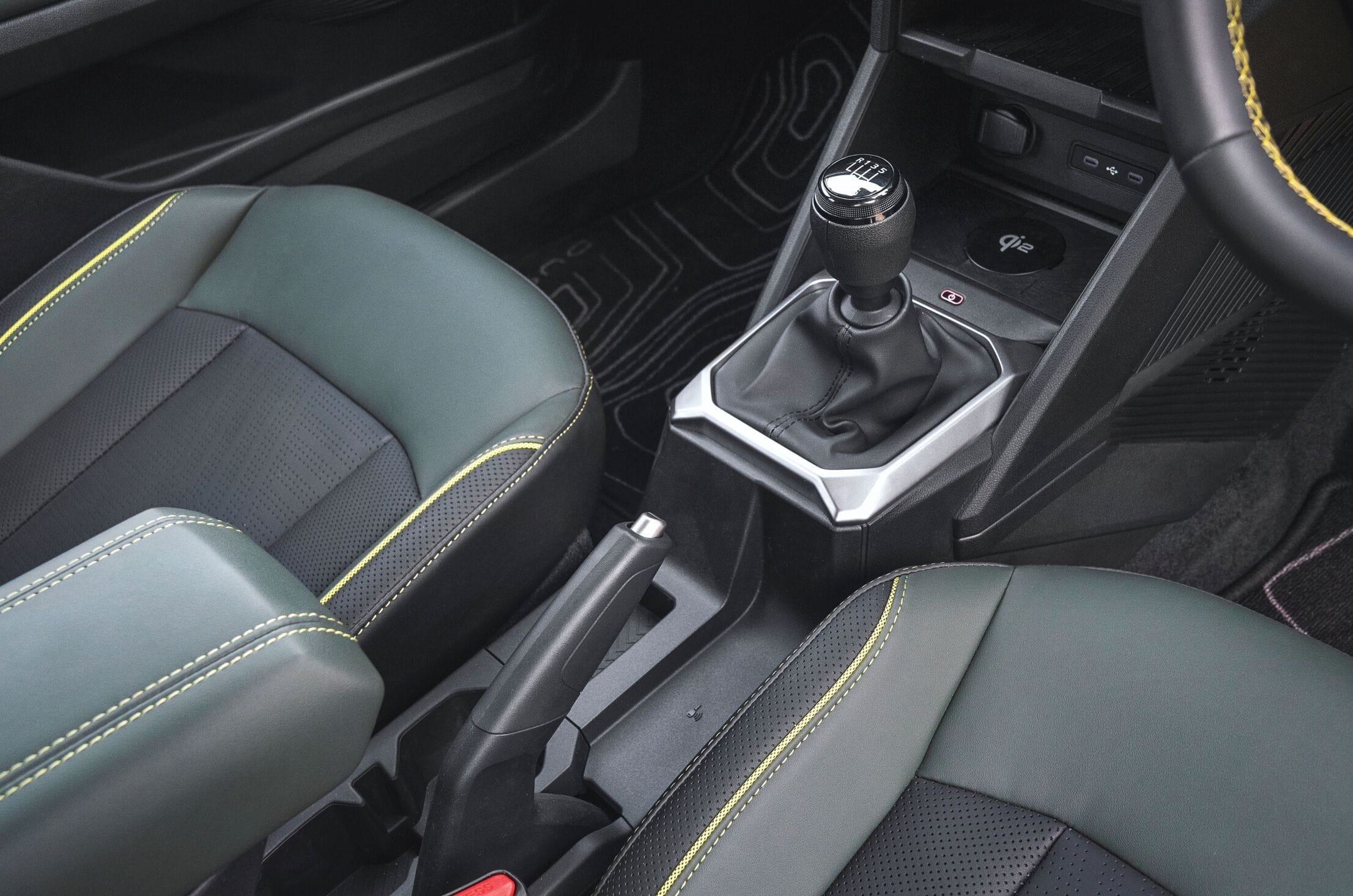
Crucially, Renault has resisted the temptation to digitise everything. The Duster strikes a sensible balance between touchscreen functions and physical controls, with a row of buttons and knobs for key functions, including the climate control system. Interestingly, the manual and automatic versions feature different centre console layouts. The automatic gets a raised console with a deep, cooled storage compartment, cup holders, a wireless charger and a stubby gear selector, while the manual features a lower-set console with a conventional handbrake and an additional storage shelf beneath the dashboard controls. The manual gear lever feels pleasingly tactile and well-engineered.
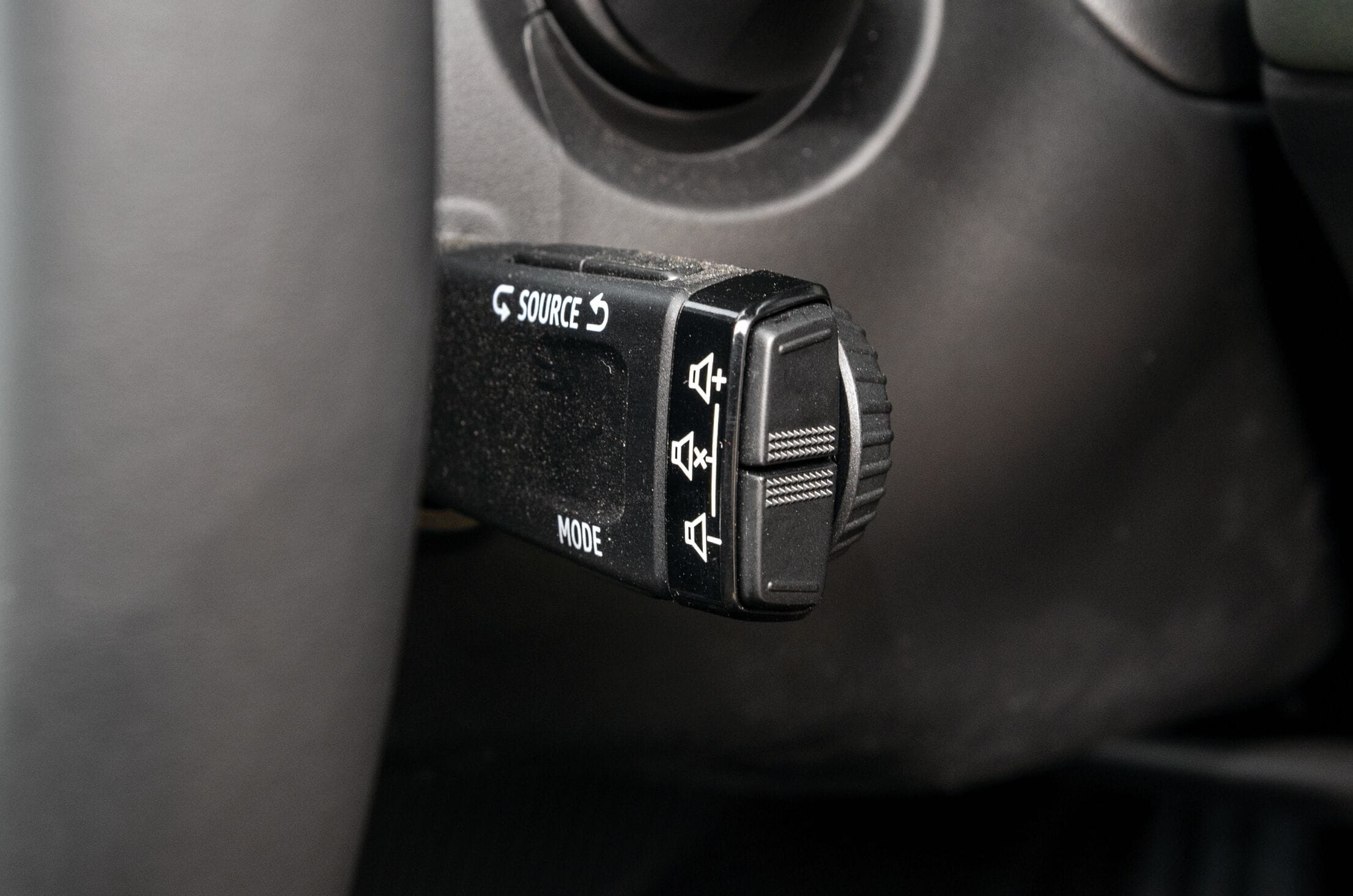
Audio controls are on a separate stalk behind the steering wheel; it takes some time getting used to.
Practicality is par for the course. The sliding front armrest incorporates a storage compartment, but the glovebox is on the smaller side, and the door pockets struggle to accommodate 1-litre bottles. The flat-bottom, flat-top steering wheel feels good to hold and houses controls for the instrument cluster and cruise control, while audio controls continue to sit on a separate stalk behind the wheel, a familiar Renault trait. What’s nice is that it features auto up/down for all windows from the base trim.
10.25-inch digital cluster has a split-screen function; some will miss classic round dials, though.
The digital instrument cluster is crisp, colourful and configurable, although some buyers will miss straightforward analogue dials. Less impressive is the key fob, shared with the Triber and Kiger, which feels very budget-oriented.
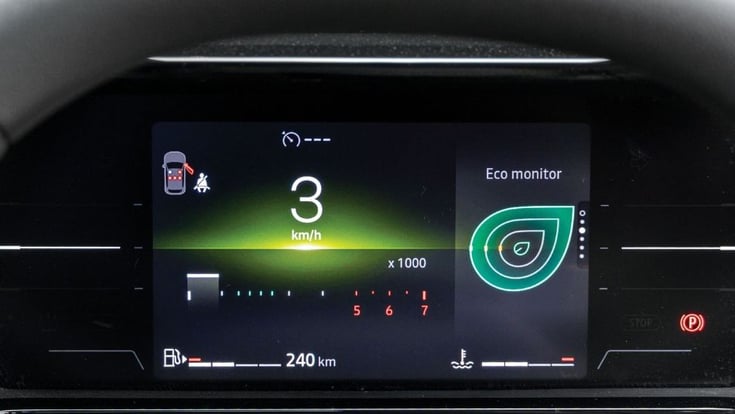
1.0 range gets a smaller 7-inch driver’s display and brown- black fabric seat upholstery.
The dual-tone black-and-dark-green upholstery with neon-green stitching in the top-spec Iconic Launch Edition adds some character to the cabin. The Techno trim, meanwhile, which is where the 1.0 tops out, features brown-and-black seat upholstery with some different trim elements.
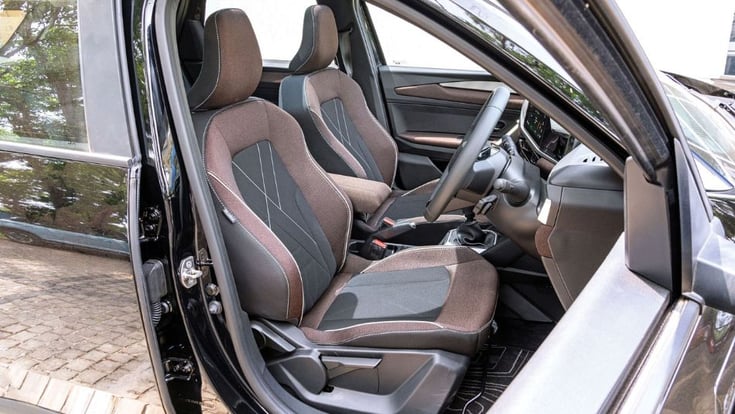
Front seats are well-padded, accommodating and ideal for long drives.
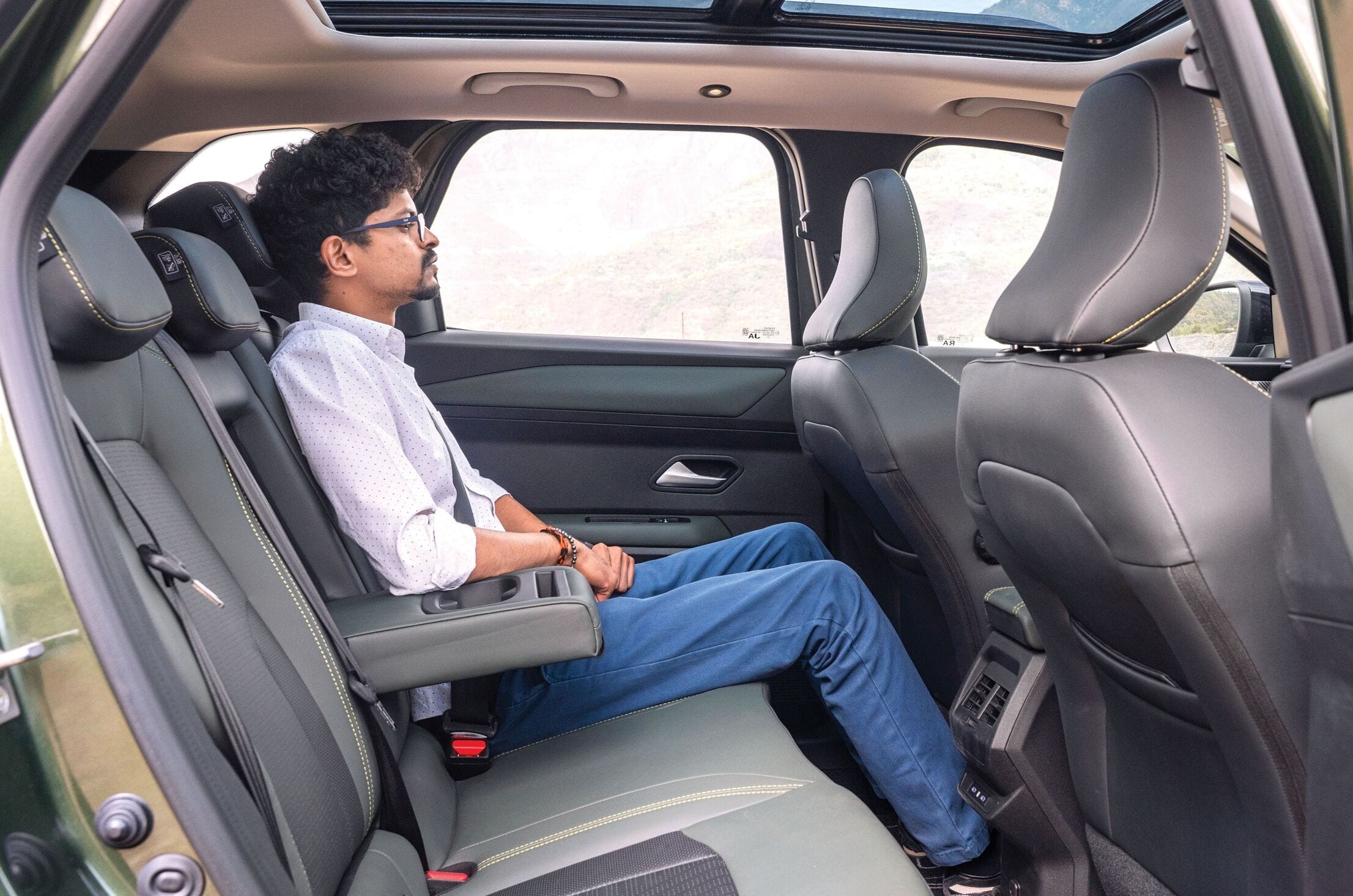
Up front, the seats are supportive and comfortable over long distances, and they feature electric adjustment and an effective ventilation function. Rear-seat comfort is good for two adults, with adequate knee room and good headroom. While a third passenger can be accommodated, limited shoulder room and the transmission tunnel make it a squeeze.
There’s good knee room and headroom on offer, but overall space is less than some rivals.
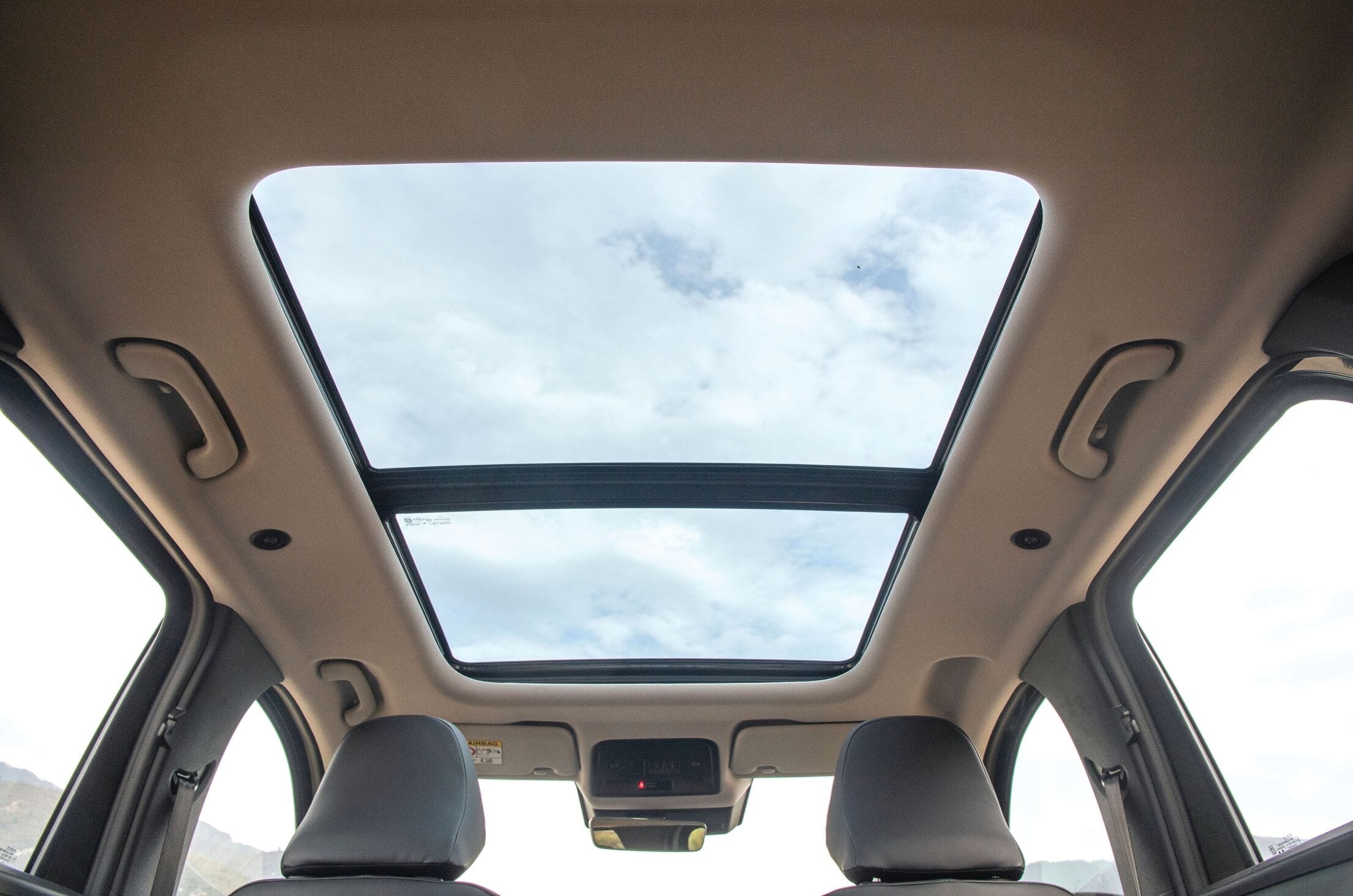
Rear occupants also get AC vents, charging ports and a centre armrest with cup holders. The large panoramic sunroof and expansive glass area help create an airy feel, although rear sun blinds are notably absent. One drawback is that the window line is considerably higher than before, meaning outward visibility isn’t quite as good as in the original Duster, which was renowned for its excellent all-round view out.
Renault Duster Features and Safety – 8/10
Top-spec comes very well-equipped, though features could’ve been better spread out
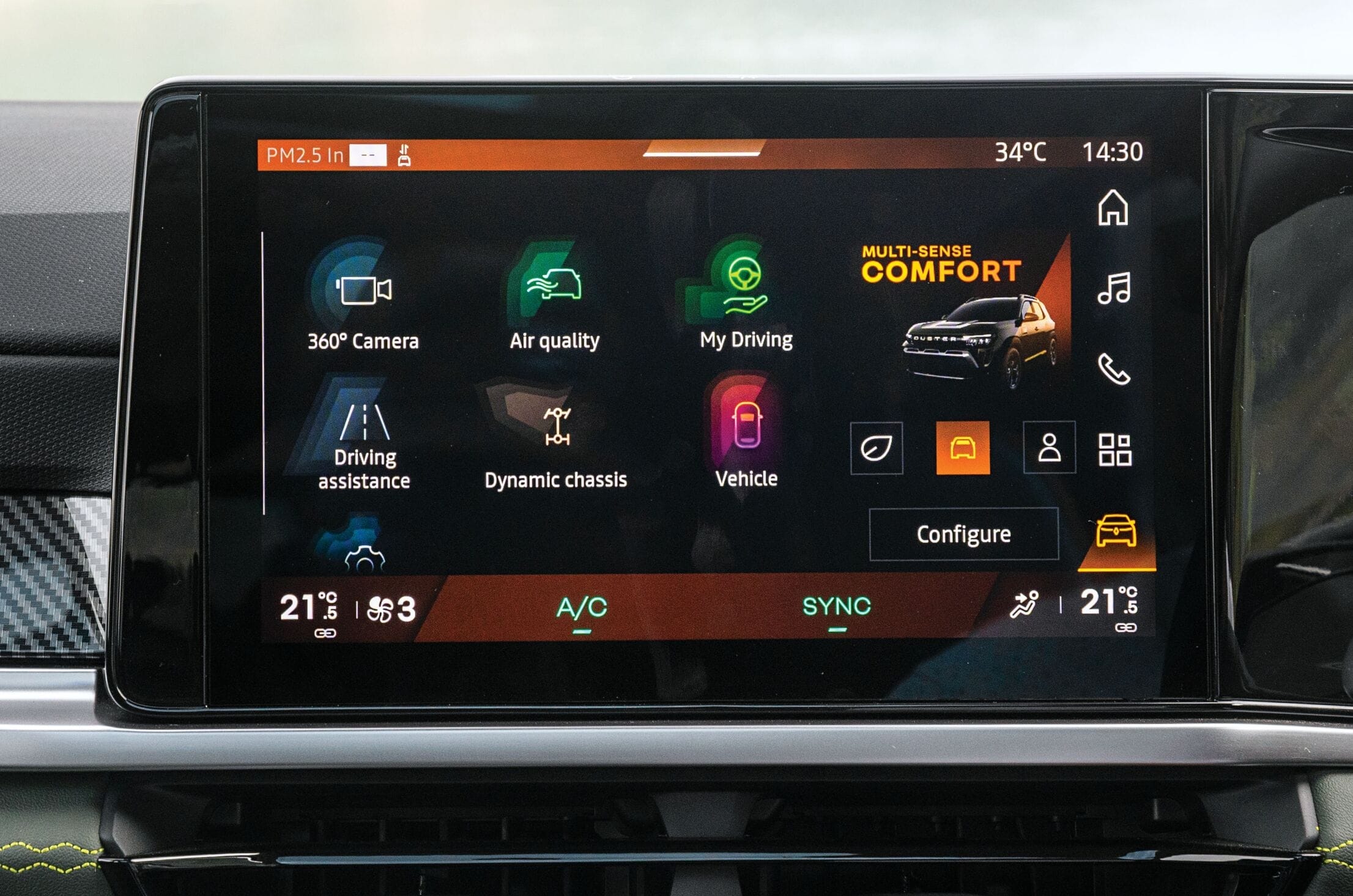
10.1-inch touchscreen is slick and high- resolution, but the UI isn’t as logical or straightforward as some rivals.
The Duster comes loaded with all the features expected of a midsize SUV. Its infotainment system supports wireless smartphone connectivity and impresses with crisp graphics and vibrant colours, matching the digital instrument cluster. However, the 10.1-inch touchscreen’s ratio makes it feel relatively slim.
The standout feature is the integration of Google services – Google Maps, Google Assistant and the Google Play Store, which are built into the system, and work seamlessly. The interface is slick and responsive, though it isn’t very intuitive to use, lacking the straightforward layout and menu structure seen in some rivals.
The large panoramic sunroof livens up the cabin without hampering headroom.
Equipment highlights include ventilated and powered front seats, a panoramic sunroof, wireless phone charging, a powered tailgate, dual-zone climate control, connected car technology, auto headlamps and wipers, and a 360-degree camera, although image quality could be sharper.
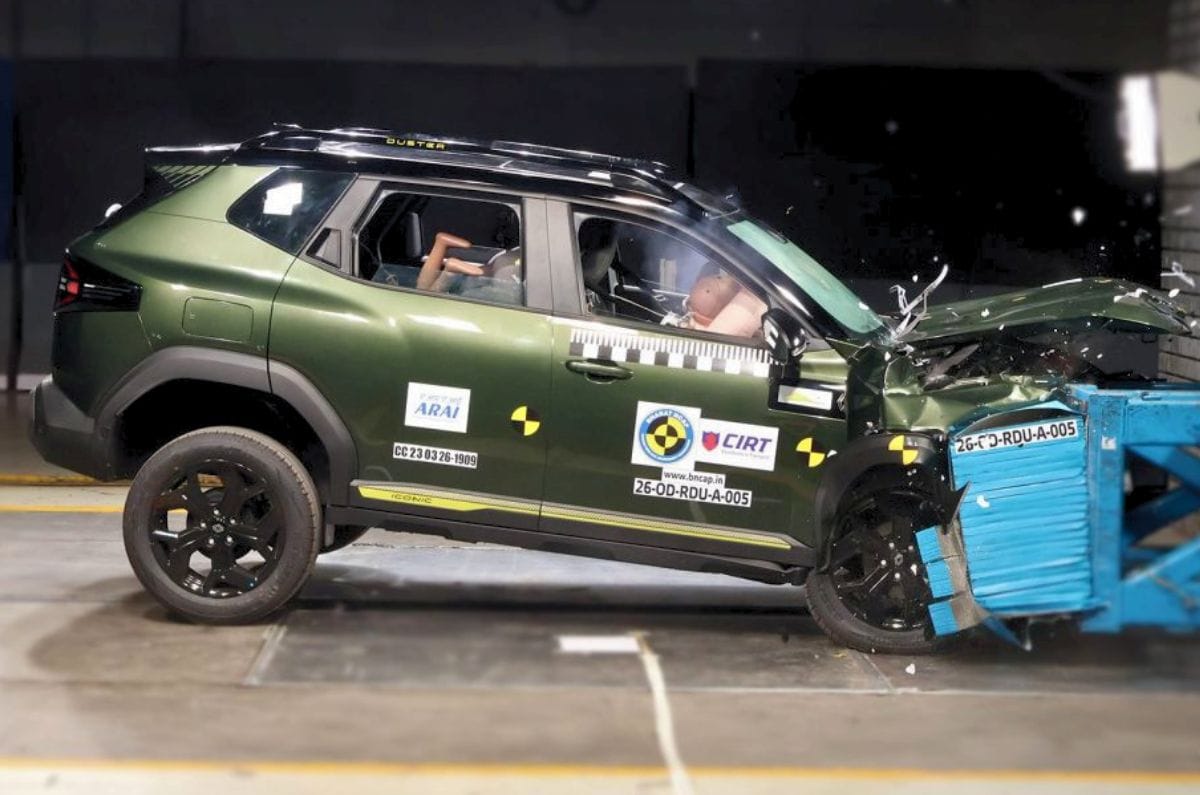
Safety equipment is comprehensive, with six airbags as standard, front and rear parking sensors, TPMS, an electronic parking brake on DCT variants, disc brakes all around, adjustable headrests and three-point seatbelts for all occupants. The Duster is also Renault India’s first model to feature Level 2 ADAS. During our drive, the system felt well calibrated and largely unobtrusive, though lane-keep assist was slightly overzealous. A dedicated button allows drivers to disable all ADAS functions without diving into touchscreen menus, which is a welcome touch. Commendably, Renault has also secured a full 5-star crash safety rating from Bharat NCAP for the SUV.
It scored 30.49/32 points for adult occupant protection and 45/49 points for child occupant protection.
Overall, the Duster is well equipped to compete with its rivals, though Renault could have distributed some premium features like ventilated seats more effectively across the range, particularly on mid-spec variants. As for the 1.0 range, the top-spec Techno is well specified with features like the same touchscreen, panoramic sunroof, powered tailgate and more.
Renault Duster equipment checklist
Auto LED headlamps
Yes
Alloy wheels
18-inch
Powered front seats
Yes
Ventilated seats
Yes
Panoramic sunroof
Yes
Ambient lighting
Yes
Touchscreen
10.1-inch
Android Auto/Apple CarPlay
Yes
Arkamys Kardon audio
Yes
ADAS
Level 2
Renault Duster Engine Refinement and Performance – 8/10
Both turbo-petrols are refined and have a strong midrange punch; DCT is the pick of the lot
The Duster range starts with a 1.0-litre three-cylinder turbo-petrol producing 100hp and 166Nm, paired exclusively with a 6-speed manual gearbox. Then there’s a 1.3-litre four-cylinder turbo-petrol with a segment-leading 163hp and 280Nm, available with either a 6-speed manual or a 6-speed DCT automatic. We’ve tested all three versions of the Duster on sale currently.
Renault Duster powertrain specs
1.0TP MT
1.3 TP MT
1.3TP DCT
Installation
Front, transverse
Front, transverse
Front, transverse
Type
3 cyls, 999cc, turbo-petrol
4 cyls, 1333cc, turbo-petrol
4 cyls, 1333cc, turbo-petrol
Bore/ stroke (mm)
72.2/81.3
72.2/81.3
72.2/81.3
Compression ratio
9.5:1
10.5:1
10.5:1
Valve gear
4 valves per cyl
4 valves per cyl
4 valves per cyl
Power (hp)
100 at 5000rpm
163 at 5250rpm
163 at 5250rpm
Torque (Nm)
166 at 2000-3750rpm
280 at 2000-3500rpm
280 at 2000-3500rpm
Power to weight (hp per tonne)
75.98
118.80
117.01
Torque to weight (Nm per tonne)
126.13
244.17
244.17
Specific output (hp per ltr)
100
125.38
125.38
Drive layout
Front-wheel drive
Front-wheel drive
Front-wheel drive
Gearbox
6-speed manual
6-speed manual
6-speed dual-clutch automatic
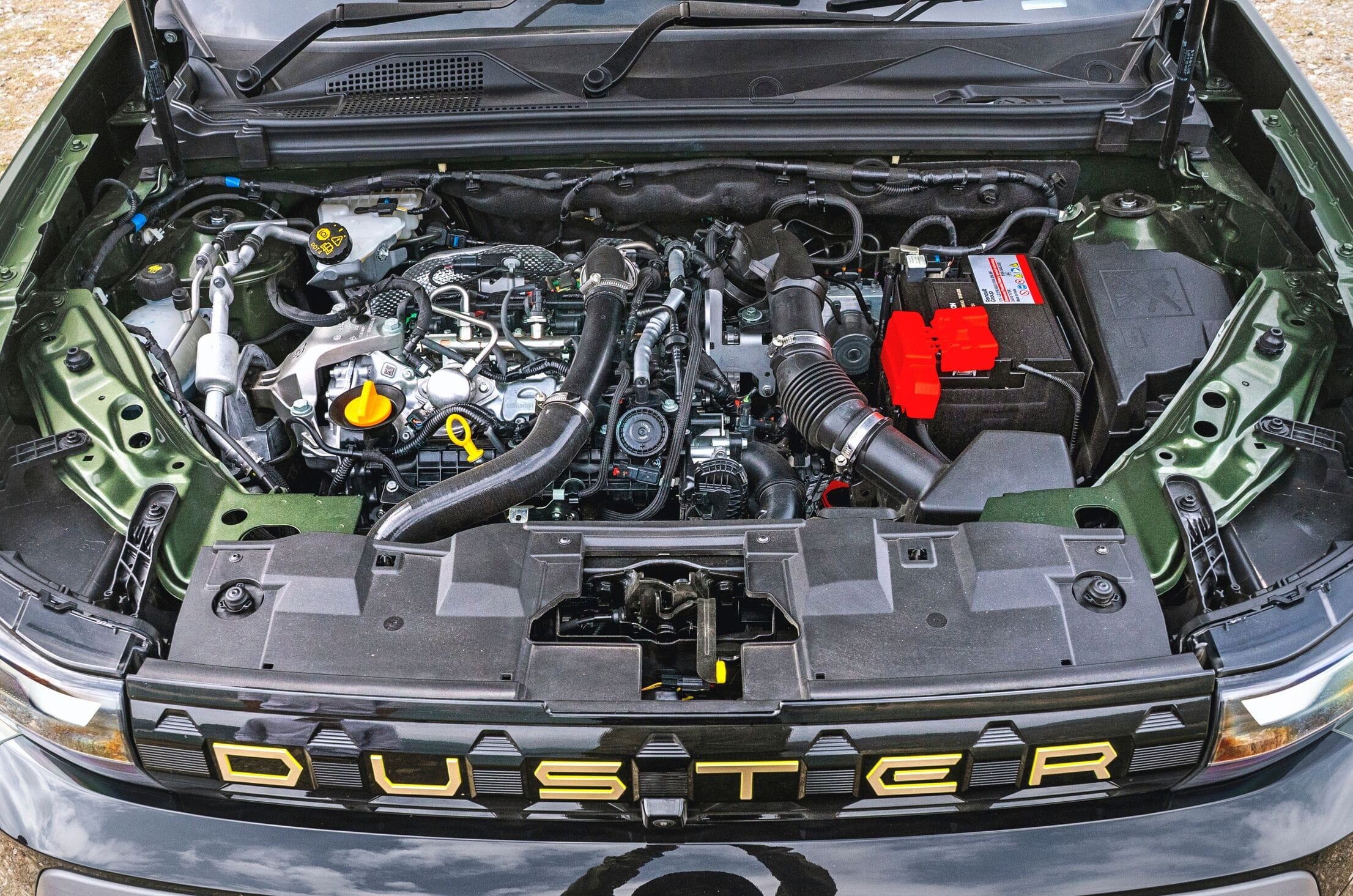
A strong-hybrid powertrain will join the line-up later this year. It combines a 109hp 1.8-litre petrol engine with a 49hp electric motor and a 20hp hybrid starter generator, drawing power from a 1.4kWh battery. Total system output stands at 160hp and 172Nm. Notably, unlike the original, the new Duster isn’t available with a diesel engine or an AWD option.
Both engines are refined and have a strong midrange, but aren’t very fuel-efficient.
The 1.3-litre engine is impressively refined, with virtually no vibrations at idle and excellent smoothness throughout the rev range. Cabin insulation is equally impressive, keeping engine noise largely out of the cabin unless you’re extending it towards the redline. You do hear quite a bit of the turbo’s blow-off sound though. There is some turbo lag, followed by a noticeable surge in performance at around 2,500rpm, after which the engine delivers a strong and eager mid range.
The 1.3-litre turbo-petrol engine has the highest output in its class with 163hp and 280Nm.
Thanks to its wet clutch, the DCT allows for some slip, given that the lubrication manages wear as well as heat build-up. Thus, shifts prioritise smoothness over outright speed, feeling more like a conventional torque-converter automatic in city driving. This makes it exceptionally easy to live with in traffic, while responsive paddle shifters add an extra layer of engagement on a spirited drive. We recorded a 0-100kph time of 11.3 seconds, which is decent for the segment. However, the tall gearing does blunt low-speed responses somewhat.
Enthusiasts will naturally gravitate towards the manual. Driven on winding and open roads, it feels engaging and rewarding, with a light clutch and a precise shift action. However, turbo lag is more noticeable here than in the DCT, particularly when accelerating from slow speeds. This does make city drives somewhat cumbersome. Combined with the tall gearing, it often requires an extra downshift to keep the engine in its sweet spot.
Manual versions get a lower-set centre console with a manual handbrake.
The manual posted a 0-100kph time of 10.3sec, making it a whole second quicker than the DCT. Both versions feature Comfort and Eco drive modes, although the addition of a Sport mode would have better suited the Duster’s otherwise enthusiastic character.
The 1.0 entry-level engine is a familiar unit that also powers the Kiger. However, Renault has made tweaks, with torque increasing to 166Nm, up by 6Nm over the Kiger, while a 6-speed manual gearbox replaces the compact SUV’s 5-speed unit. There’s no automatic option, though, which does limit its appeal.
The Duster shares its 1.0-litre engine with the smaller Kiger.
Like most three-cylinder engines, there’s a noticeable thrum and some vibrations at idle, but things smoothen out considerably once on the move. Being a small-capacity turbocharged motor, there is some lag low down in the rev range. However, once past 2,000rpm – where peak torque arrives – the engine feels responsive and pulls cleanly towards the redline. Performance is more adequate than exciting. Around town, it keeps pace with traffic comfortably, and part-throttle responses are respectable. On highways and steep inclines, however, you’ll need to work the gearbox to extract the best from the engine, particularly when overtaking.
The clutch is light, making it easy to use in traffic, while the 6-speed gearbox offers a precise shift action. It isn’t the slickest unit around, though, and enthusiastic drivers will notice that shifts require a bit more effort than expected.
Renault Duster acceleration times
Speed (kph)
1.0TP MT time (sec)
1.3TP MT time (sec)
1.3TP DCT time (sec
0-10
0.60
0.56
0.86
0-20
1.32
1.15
1.71
0-30
2.08
1.75
2.54
0-40
3.13
2.42
3.55
0-50
4.27
3.41
4.51
0-60
5.42
4.61
5.52
0-70
7.36
5.58
6.80
0-80
8.91
6.65
7.94
0-90
10.67
8.66
9.31
0-100
13.26
10.32
11.33
0-110
15.95
12.11
13.24
0-120
19.01
13.86
15.37
0-130
22.84
16.02
17.97
1/4 mile
18.55
16.86
17.85
20-80 (rolling)
11.44
10.33
6.07
40-100 (rolling)
12.71
11.08
7.60
Renault Duster Fuel Efficiency – 6/10
Small-capacity turbo engines mean efficiency isn’t great
Renault Duster tested fuel efficiency (kpl)
1.0TP MT
1.3TP MT
1.3TP DCT
City
7.98
8.04
6.47
Highway
13.98
13.24
13.47
Average
10.95
10.64
9.97
Tank size (ltr)
50
50
50
The Duster 1.0 has a claimed ARAI fuel efficiency of 19.41kpl. In our real-world tests, it returned 7.92kpl in the city and 13.98kpl out on the highway, for an average of 10.95kpl. It packs in an Eco drive mode and auto start/stop tech, which help boost its efficiency. However, the ambient temperature during our test reached a soaring 40degC, which meant the AC was working hard to keep the cabin at our preset 22degC and the auto start/stop would only shut off the car for a brief time at traffic lights, which affected the efficiency.
Overall tank range stands at 498.5km for the 1.3 DCT, 532km for the 1.3 MT and 547.5km for the 1.0.
The 1.3 MT is the second most fuel-efficient version from the Duster range, returning 8.04kpl in the city and 13.24kpl on the highway for an average of 10.64kpl. The 1.3 has better efficiency than the 1.0 in the city owing to its taller gearing, which requires less frequent shifts. Meanwhile, as you’d expect, it’s the 1.3 DCT that’s the least fuel-efficient. It managed 6.47kpl in the city and 13.47kpl on the highway, for an average of 9.97kpl. Like with the 1.0, high ambient temperatures played a role in affecting its efficiency as well. Still, compared to its rivals, the Duster’s real-world efficiency is on the lower side.
Renault Duster Ride Comfort and Handling – 9/10
Feels solid and composed over all surfaces and is engaging to drive
Renault Duster suspension, steering, and brakes
Front suspension
Independent, McPherson strut, Coil springs, anti-roll bar
Rear suspension
Semi-independent, Torsion beam, Coil springs, Anti-roll bar
Steering type
Rack and pinion
Type of power assist
Electric
Turning circle
5.2m
Front brakes
Disc
Rear brakes
Disc
Ride comfort was one of the original Duster’s defining strengths, and thankfully, that trait has carried over to the new model. There’s a distinctly European firmness to the suspension setup, particularly at lower speeds, but comfort isn’t compromised. The Duster absorbs rough patches, sharp edges and large potholes with impressive composure, preventing harsh impacts from filtering into the cabin. Unlike the older model, there’s also very little steering kickback over rough surfaces.
Electric power steering is precise and doesn’t have the kickback like the old Duster.
Contributing to this pliant ride are the relatively tall sidewalls of the 225/55 R18 tyres, which add an extra layer of cushioning. In fact, the 1.0 variants may even feel a touch plusher owing to their smaller 17-inch wheel size, though the difference is barely perceptible. At highway speeds, the Duster feels equally accomplished, remaining stable and reassuringly planted.
If you stall the manual, it will automatically restart when you press the clutch pedal.
Anti-roll bars are present at the front, and uncharacteristically, Renault has utilised one at the rear too, integrating it within the twist-beam axle. Handling is enjoyable through corners, and body control is commendable. However, there is some roll when pushed hard, and it doesn’t feel quite as agile or as tightly tied down as some other European rivals. The steering is light but accurate, with enough feedback to inspire confidence on a twisty road. Steering modes are available on the 1.3 that add useful weight for more enthusiastic driving.
Renault Duster braking performance
80-0kph
26.33mtr, 2.34s
Renault Duster Price and Verdict – 8/10
Builds on its legacy of rugged styling and engaging drive with a very modern and well-equipped cabin
Renault Duster price (Rs lakh)
Techno 1.0 MT
13.49
Iconic Launch Edition 1.3 MT AT
17.19
Iconic Launch Edition 1.3DCT
18.69
The new Renault Duster is a well-rounded package that is well equipped to take on the congested midsize SUV space. It’s not without its shortcomings, though, as it would have benefitted from a bit more rear-seat space, better real-world efficiency, and the option of a diesel would have widened its appeal.
Offered in five trims: Authentic, Evolution, Techno, Techno+, and Iconic.
That aside, it stays true to its predecessor by offering a tough and solid feel, outstanding ride comfort and an engaging drive experience, while moving the game forward. The cabin feels properly modern, with all the new-age features; it’s got punchy turbo-petrol engine options, and it’s got the rugged styling to match. There’s even a strong hybrid on the way. Bottom line is, the Duster feels fresh, desirable and a proper match for the heavy hitters in its segment.
Renault Duster Adventure Edition: अगर आप एक नई फैमिली कार लेने की सोच रहे हैं, तो यह खबर आपके काम की हो सकती है। दरअसल, Renault India ने अपनी SUV Duster का नया Adventure Edition लॉन्च किया है। यह खास वर्जन भारत में Duster की पुरानी पहचान और लोकप्रियता को ध्यान में रखते हुए पेश किया गया है। इस SUV की शुरुआती कीमत 12.99 लाख रुपये (एक्स-शोरूम) है। बता दें कि यह नया एडिशन Nissan के Tekton को पेश करने के कुछ ही दिनों बाद आया है, जिससे मिड-साइज SUV सेगमेंट में हलचल बढ़ गई है।
डिजाइन और इक्विपमेंट
Adventure Edition में कुछ ऐसे विज़ुअल टच दिए गए हैं, जो इसे स्टैंडर्ड SUV से अलग बनाते हैं। इनमें खास ‘Adventure’ डिकल्स शामिल हैं, जिन पर टोपोग्राफिकल कंटूर लाइनें और लेह के कोऑर्डिनेट्स (34.27 N, 77.60 E) बने हैं। ये उस तरह के इलाके की ओर इशारा करते हैं जिनसे भारत में Duster की पहचान जुड़ी हुई है।
इस SUV में ‘Adventure’ स्टाइलिंग एलिमेंट्स और ‘Adventure’ फ्लोर मैट्स भी मिलते हैं। Renault ने इन खूबियों के साथ कई खास फीचर्स भी दिए हैं, जैसे- फुल LED हेडलैम्प्स, इलेक्ट्रिक पैनोरमिक सनरूफ, इलेक्ट्रिक टेलगेट, ‘My Renault’ ऐप के जरिए कनेक्टेड कार सर्विसेज, ऑटोमैटिक डुअल-जोन एयर कंडीशनिंग, 10.1-इंच का openR लिंक मल्टीमीडिया सिस्टम और 17-इंच के ओशन अलॉय व्हील्स।
पावरट्रेन और कीमत
Renault Duster Adventure Edition तीन इंजन और ट्रांसमिशन कॉम्बिनेशन के साथ मार्केट में उपलब्ध है। इसकी रेंज Turbo TCe 100 MT से शुरू होती है, जिसकी कीमत ₹12.99 लाख है। जबिक Turbo TCe 160 MT की कीमत ₹13.99 लाख और Turbo TCe 160 DCT की कीमत ₹15.39 लाख है।
इंजन की बात करें तो, इस SUV में 1.0 लीटर टर्बो-पेट्रोल इंजन दिया गया है, जो 100 hp की पावर और 160 Nm का टॉर्क जनरेट करता है। इसे 6-स्पीड मैनुअल गियरबॉक्स के साथ जोड़ा गया है। वहीं, इसका बड़ा 1.3 लीटर टर्बो-पेट्रोल इंजन 163 hp की पावर और 280 Nm का टॉर्क देता है। यह इंजन 6-स्पीड मैनुअल और 6-स्पीड डुअल-क्लच ऑटोमैटिक (DCT) गियरबॉक्स दोनों विकल्पों में उपलब्ध है।
स्पेशल एडिशन
Duster लंबे समय से भारतीय बाजार में एक ऐसी SUV के तौर पर जानी जाती है जो अपनी राइड क्वालिटी, हैंडलिंग और अलग-अलग तरह की सड़कों पर चलने की क्षमता के लिए मशहूर है। Renault का कहना है कि ‘Adventure Edition’ इसी खासियत को दिखाता है और साथ ही उन ग्राहकों के अनुभवों और यादों को भी दर्शाता है, जिनकी जिंदगी के सफर में Duster ने कई सालों तक अहम भूमिका निभाई है।
बता दें कि इस SUV को नई दिल्ली में ‘बैस्टिल डे’ के मौके पर लॉन्च किया गया है। इस कार्यक्रम में भारत में फ्रांस के राजदूत थिएरी माथू और Renault Group India के CEO स्टीफन डेबलेस शामिल हुए। इस खास मौके पर Renault ने अपनी फ्रेंच पहचान और भारत में Duster की खास विरासत को भी दिखाया।