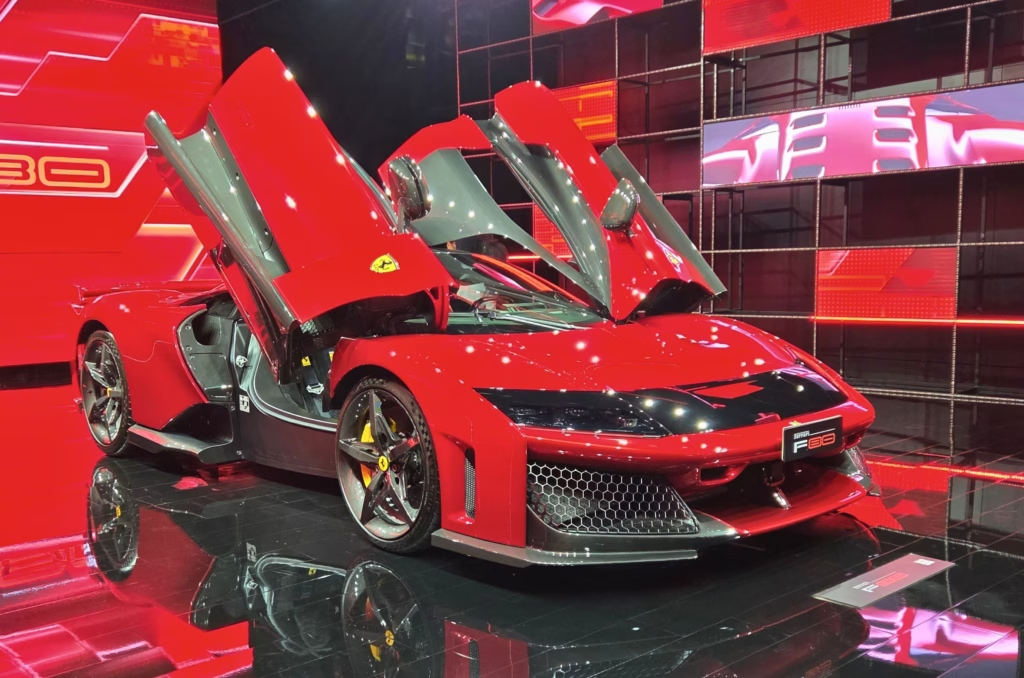
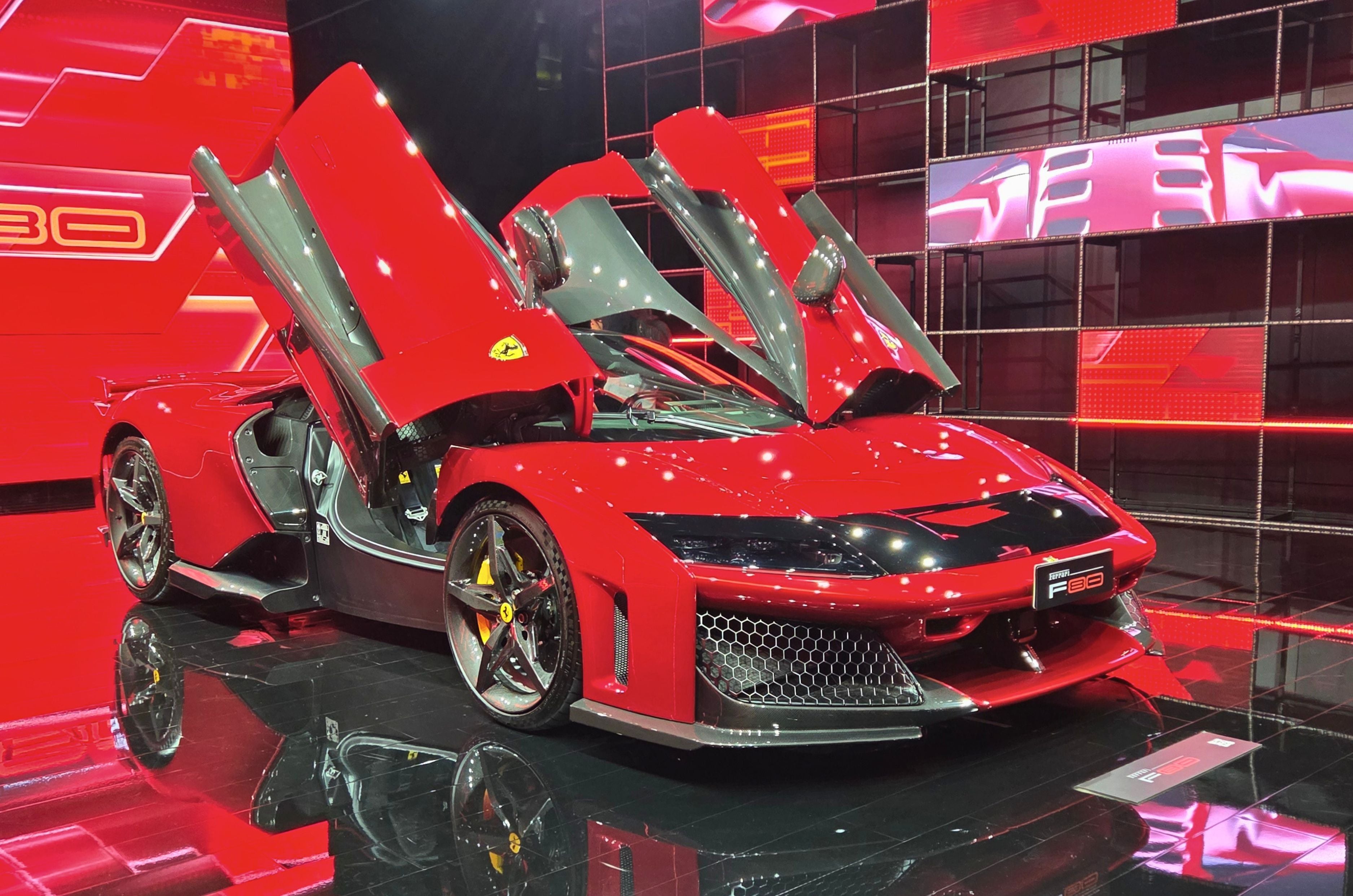
The Universo Ferrari exhibition 2026 in New Delhi has brought together the Italian brand’s road cars and race cars on the same stage. The event, which is being held at Yashobhoomi in Dwarka, will conclude on November 1. This is the Prancing Horse’s first Universo exhibition in India. Leading the line-up is the F80, the brand’s 80th anniversary hypercar. Beside it are the Luce and the 12Cilindri Manuale, which pairs a V12 with a simulated manual gearbox. Representing the racing side are the 499P Le Mans Hypercar and the SF-26, Ferrari’s 2026 Formula 1 car.
In the previous issue (August 2026), you saw the Skoda Kylaq take on the familiarity of India, the hills and traditions of Nepal, and the variety of China through Tibet’s gorgeous but bone-shaking terrain, followed by the sensory overload of food and culture. Now, it was time for a fresh experience through Central Asia on the ancient Silk Route, subsequently entering Europe towards our final destination.
Kyrgyzstan – Uzbekistan – Kazakhstan
Kyrgyzstan
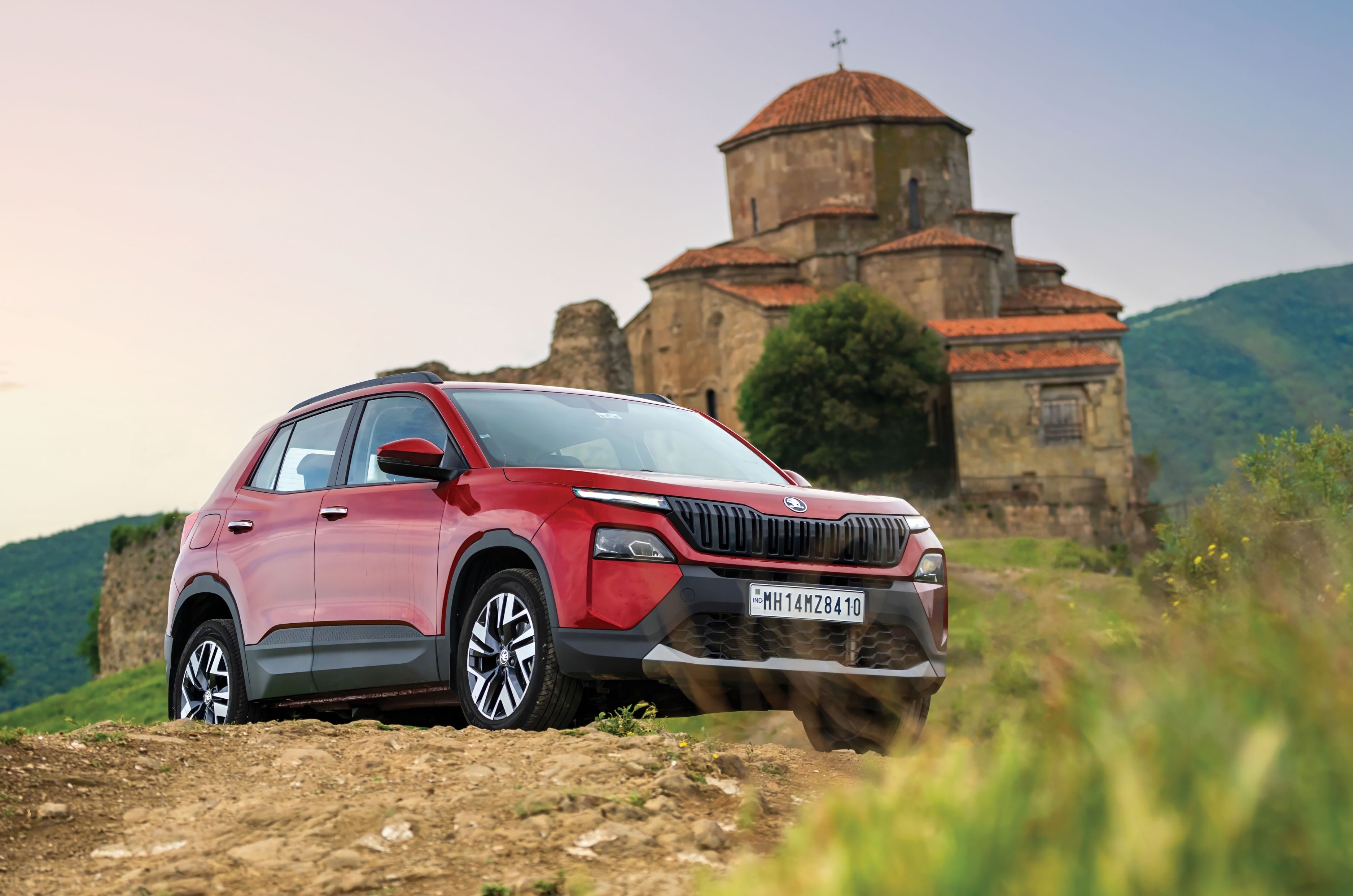
The Kylaq had everyone turning heads.
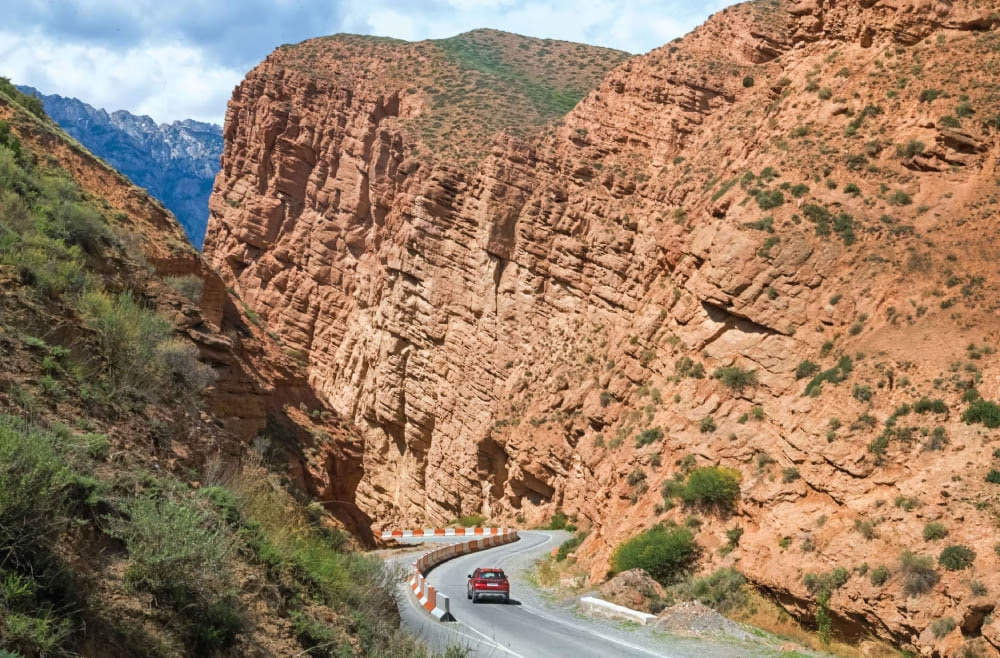
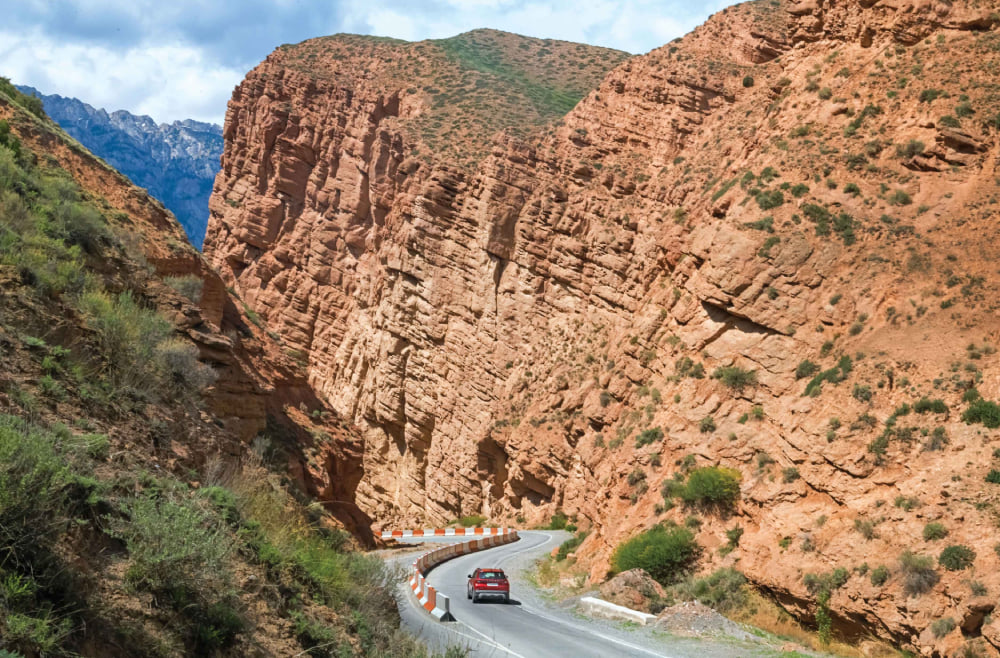
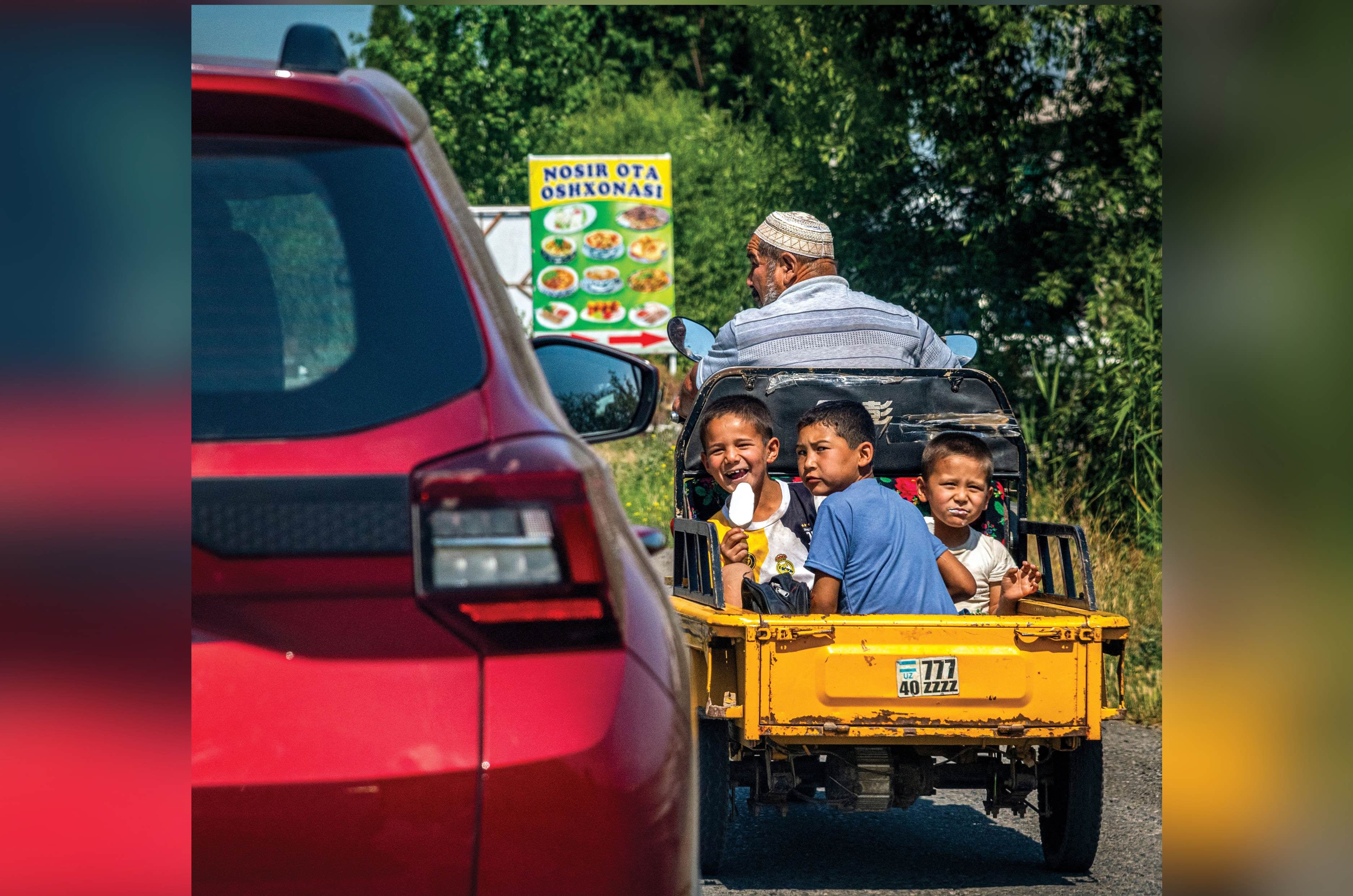
Crossing the Chinese border into Kyrgyzstan was like crossing into a different world. The differences are immediate, right from the signage, fonts and faces to the sights, terrain and traffic. Being a landlocked country peppered with alpine mountains, one doesn’t need to go far to experience what Kyrgyzstan has to offer. As you drive through the ribbon of tarmac between the peaks, you realise why it is called the “Switzerland of Asia”.
A roughly 400km drive to our first halt in Naryn was smooth sailing. However, the chilly weather was a far cry from the piercing heat of China. We pulled out our jackets that were buried deep in our bags and made a beeline the next day for the capital city of Bishkek. The roads are a driver’s delight, and while there aren’t many sights to stop and admire, the Orto-Tokoy Reservoir made for a stunning photo-op.
Kyrgyzstan in numbers
Torgart – Uzbek border
Distance covered
1,321km
Fuel consumed
126.49 litres
Average fuel economy
10.44kpl
Approx. fuel cost
Rs 11,727
Avg. per-litre fuel cost
Rs 92.58
Total time driven
34hrs 23min
Average speed
38.4kph
From Bishkek, we headed to Osh, which is also known as the capital of the south and is the oldest city in Kyrgyzstan. Walking through the Jayma Bazaar in the city centre, you may get a bit of celebrity treatment, as the locals aren’t used to having many tourists just walking through. Some playful heckling and wide smiles add to the overall experience.
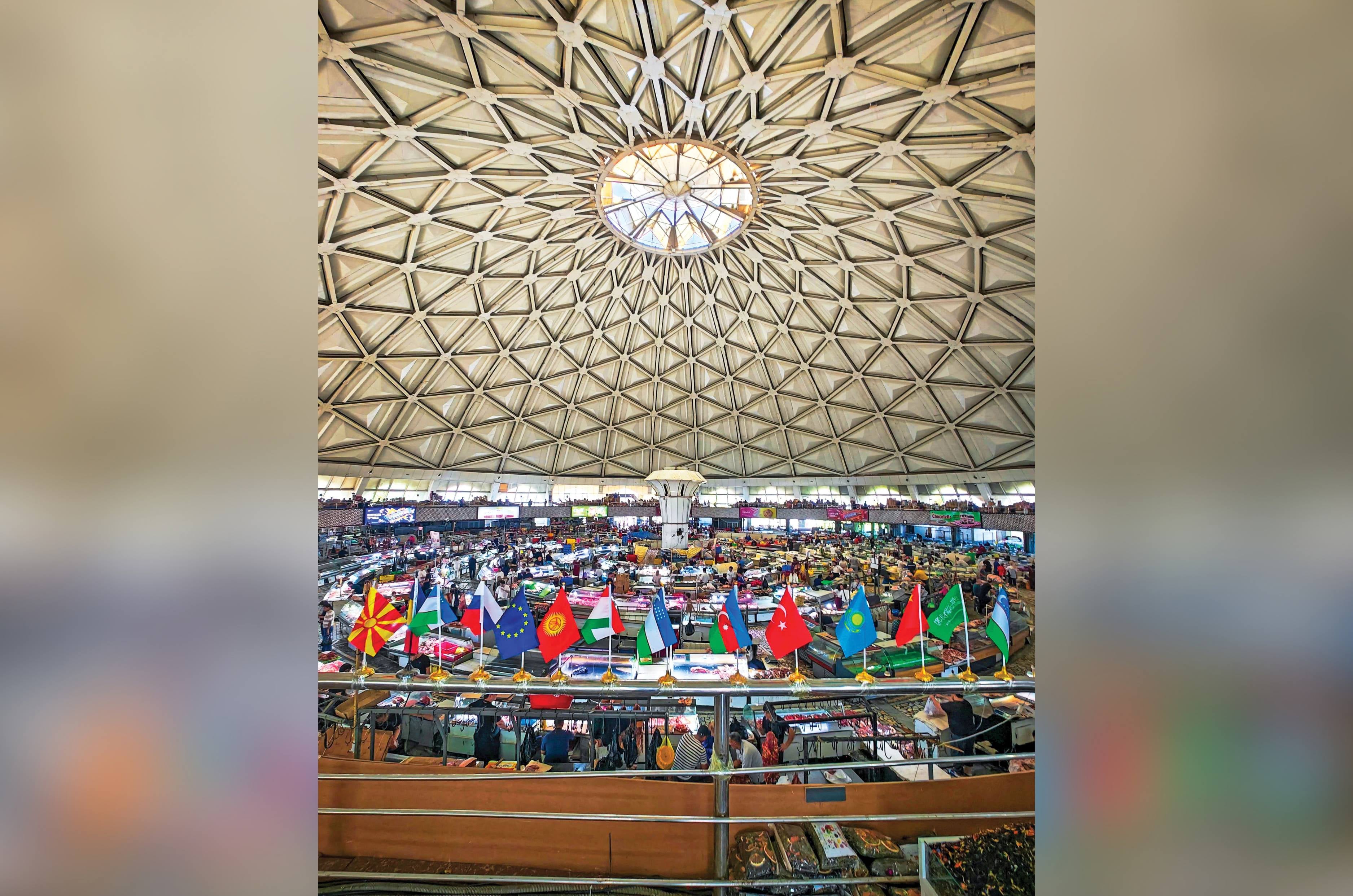
Chorsu Bazaar is a one-stop shop for everything in Tashkent.
What the market offers is mounds of kurut, a snack made from curdled milk or oghurt, salted and then hardened. The best part is its extended shelf life without needing a refrigerator. We packed some with the hope of eating it at home, knowing fully well that it would vanish by the next town.
From Osh, we would be exiting the stunning valleys and terrain of Kyrgyzstan and entering the city of Fergana in Uzbekistan.
Uzbekistan
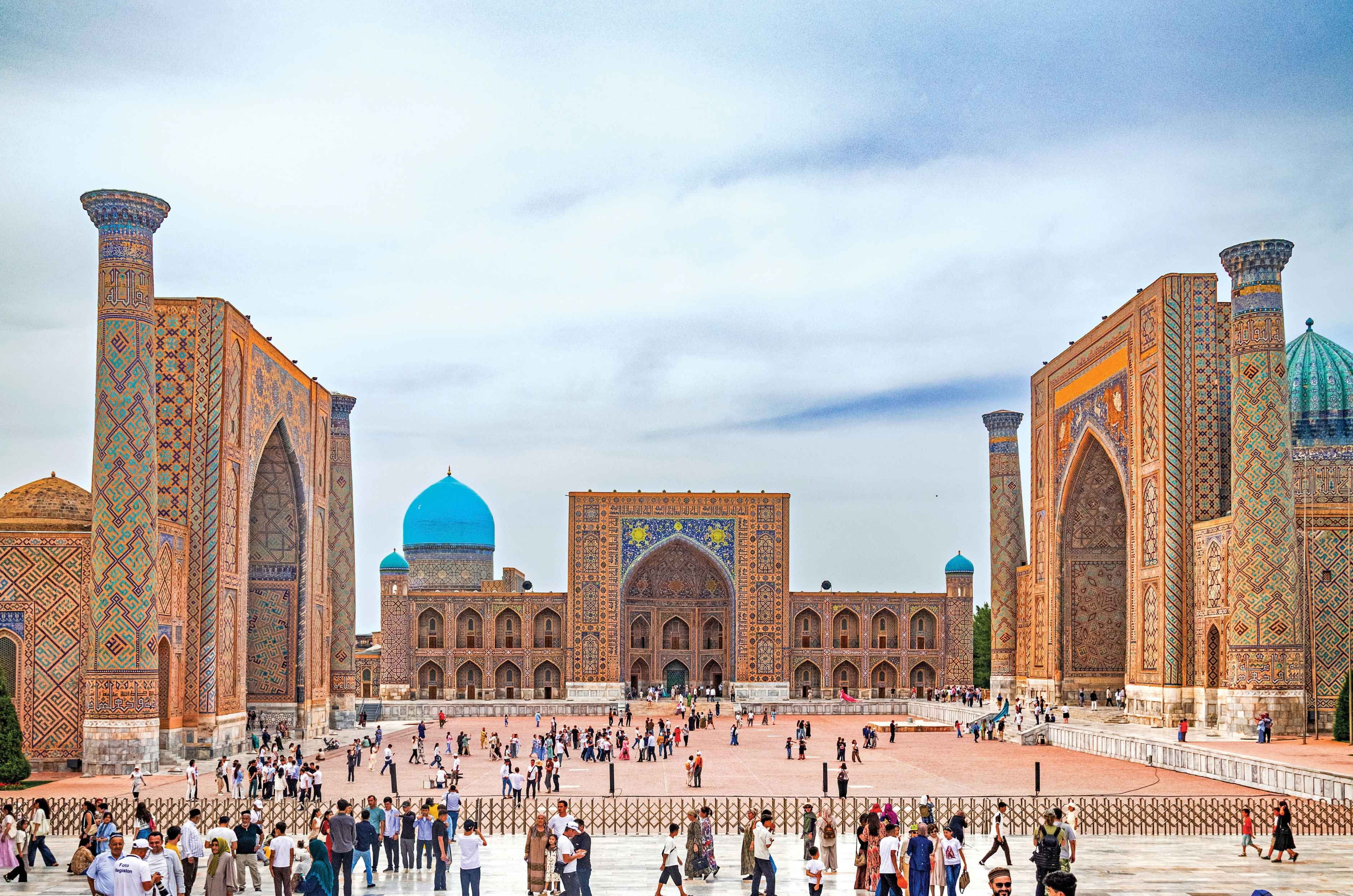
Registan Square in Samarkand is breathtaking from every angle.
Like Kyrgyzstan, Uzbekistan also has its own personality. While there are similarities in the faces and fashion, the city of Fergana has a tinge of European infrastructure. Roads are lined with trees and patir shops – flatbread made from butter or lamb fat, with intricate detailing and some sesame seeds sprinkled on top. It’s pretty enough to dissuade you from eating it, but tastes like something that would go extremely well with a cup of chai.
Uzbekistan in numbers
Kyrgyz-Uzbek border – Turkistan
Distance covered
1,257km
Fuel consumed
81.74 litres
Average fuel economy
15.37kpl
Approx. fuel cost
Rs 9,800
Avg. per-litre fuel cost
Rs 120
Total time driven
27hrs 5mins
Average speed
46.4kph
What is also fascinating is the number of old Soviet-era cars still running on the highways with no fuss. We shared road space with old Ladas crammed with luggage inside and on the roof. Over the smooth highways of Uzbekistan, the Kylaq had an easy run, allowing us to focus on the sights around us.
From Fergana, we headed to the capital city of Tashkent. A properly modern metropolis with high-end malls and low-slung supercars, parks, walkways and everything you expect from a big city. So, to get a taste of age-old tradition, we ventured towards Samarkand, which used to be a major trading hub on the Silk Route.
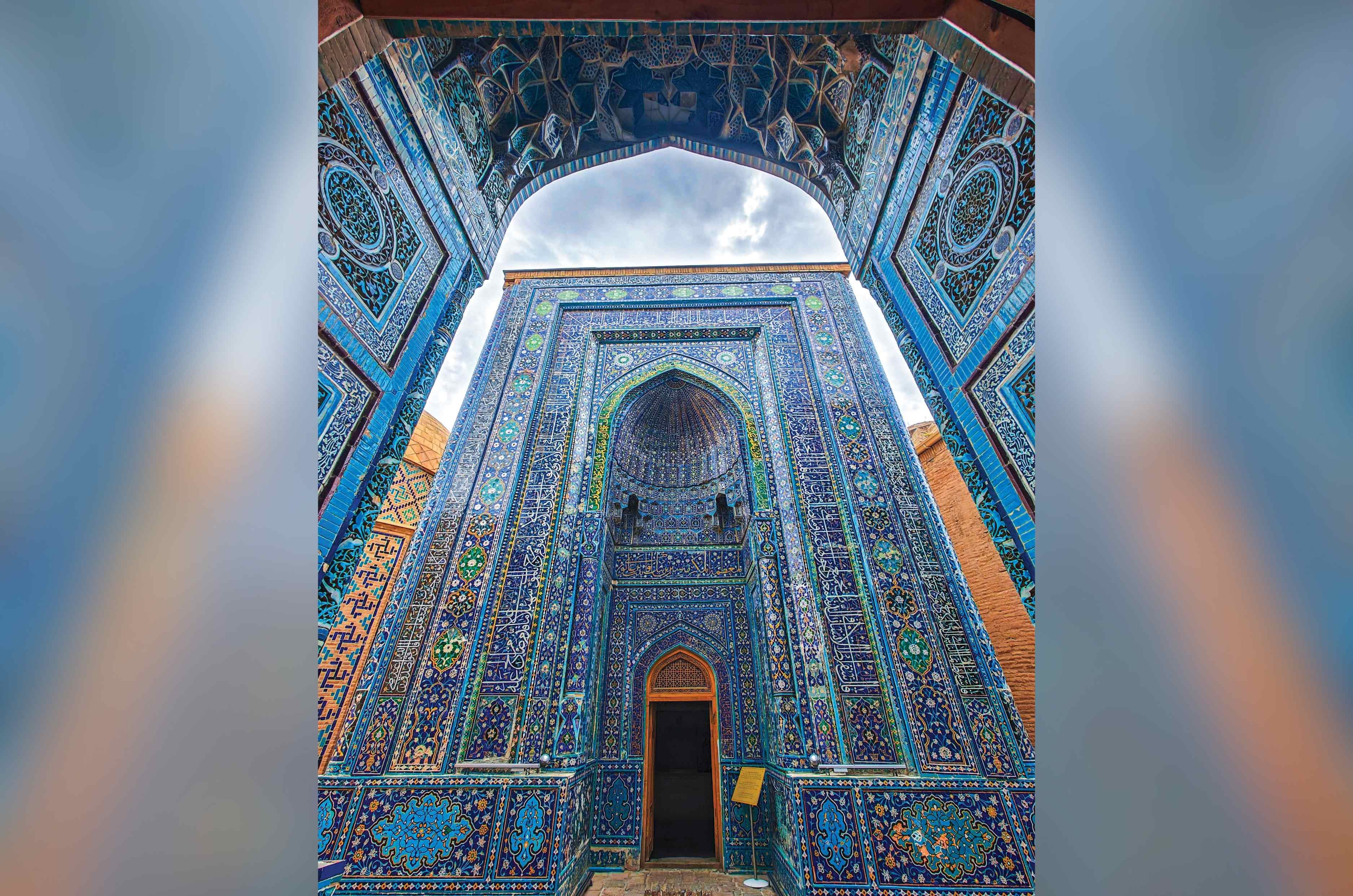
The Shah-i-Zinda ensemble has 11 mausoleums with incredibly detailed azure and turquoise tiles.
Entering Samarkand, you almost feel the tradition in the air. Years of cross-cultural civilisation have made it a stunning destination to get a glimpse of history, and it is unlike any other Western or Eastern city. The highlight here, of course, is the Bibi-Khanym Mosque in the Registan ensemble. Turquoise domes kissing the sky, with walls adorned with hand-carved artistry, are nothing short of breathtaking.
You can walk through the corridors and the square innumerable times, and each time, you will gasp at the sheer detail and effort. And to think it was built as far back as the 15th century. Magnificent is an understatement.
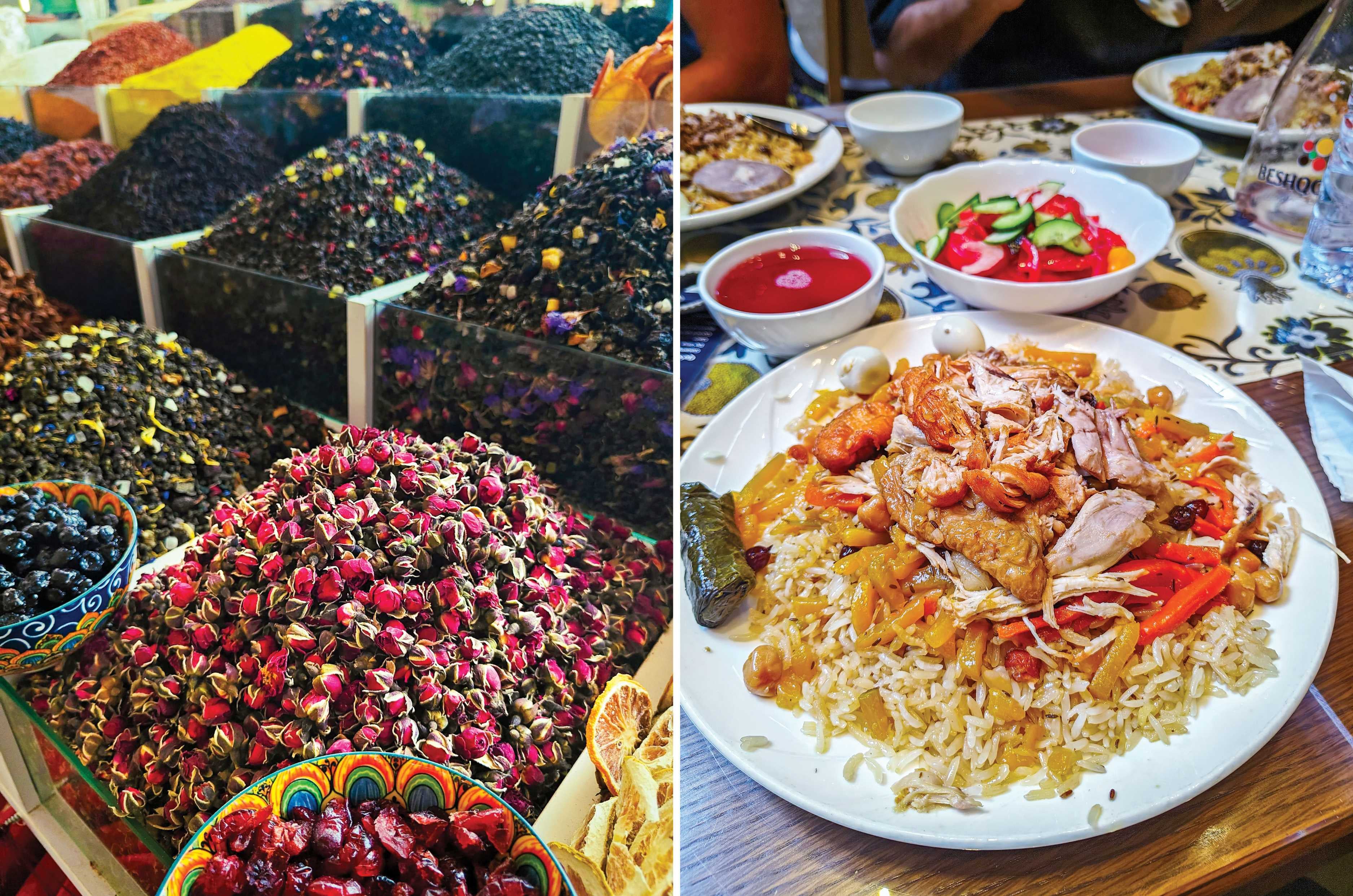
After soaking in the stunning detail, we headed back to Tashkent and straight to the equally fascinating Chorsu Bazaar. What looks like an IMAX dome on the outside is a full-fledged one-stop shop on the inside. Teas, dry fruits or even a leg of lamb, you can get it all here.
Uzbekistan’s market is nothing short of paradise for tea lovers.
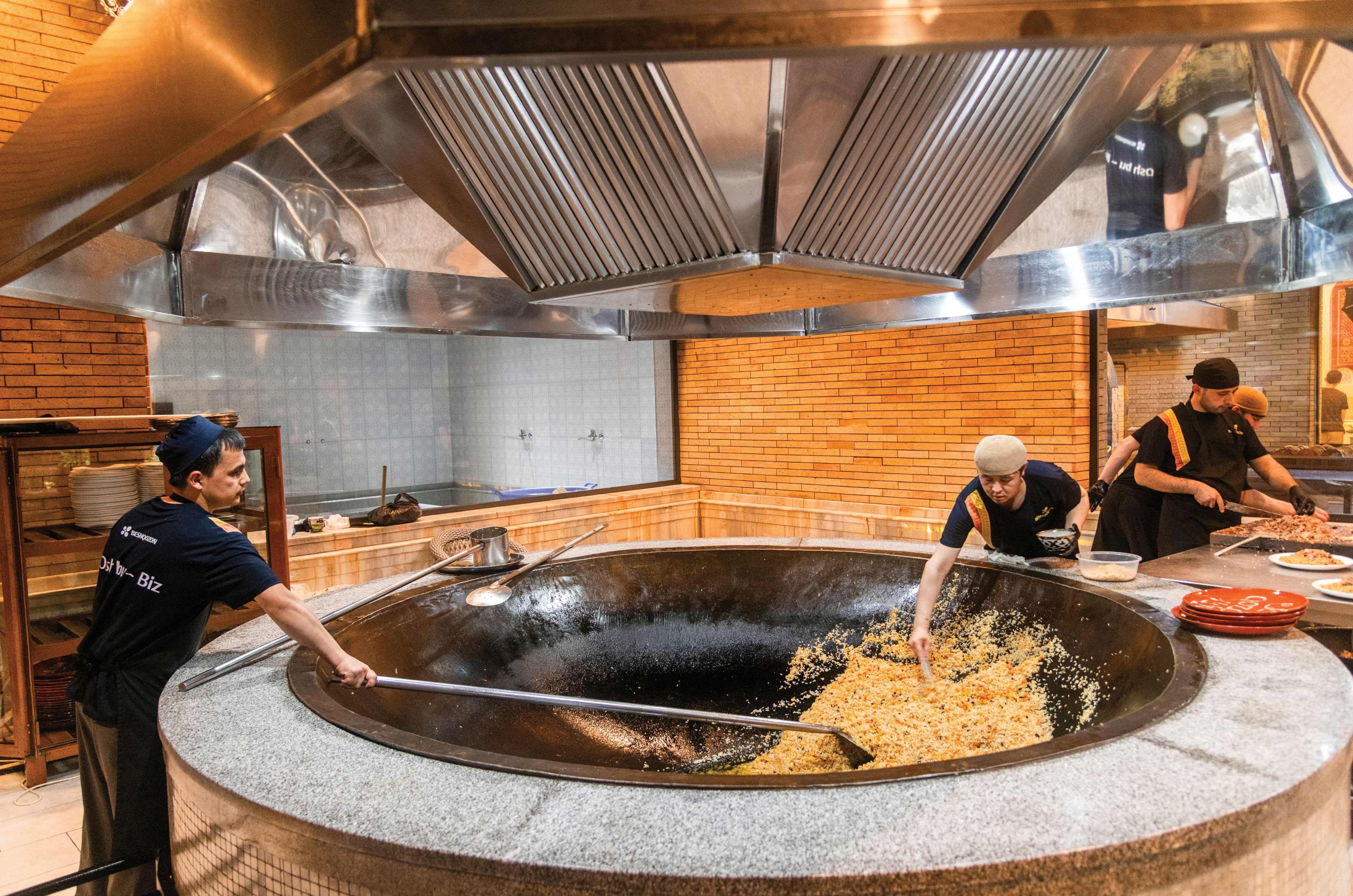
After a long walk that ended with bags of tea and dehydrated kiwis, we headed for Uzbekistan’s pièce de résistance: the famous plov. Like a biryani, but made with different spices, and if you want to go heavy on culture, you can have one with horse meat, too. Some bravehearts did try it and resorted to chicken or lamb, but it did offer the lost taste of biryani and got us homesick in the first bite.
Massive dome known as a kazan used to make the famous Uzbek plov.
After days of driving through mountains and around lakes, and walking through corridors that were once at the peak of world trade, our next adventure would take us to the Great Steppe of Kazakhstan.
Kazakhstan
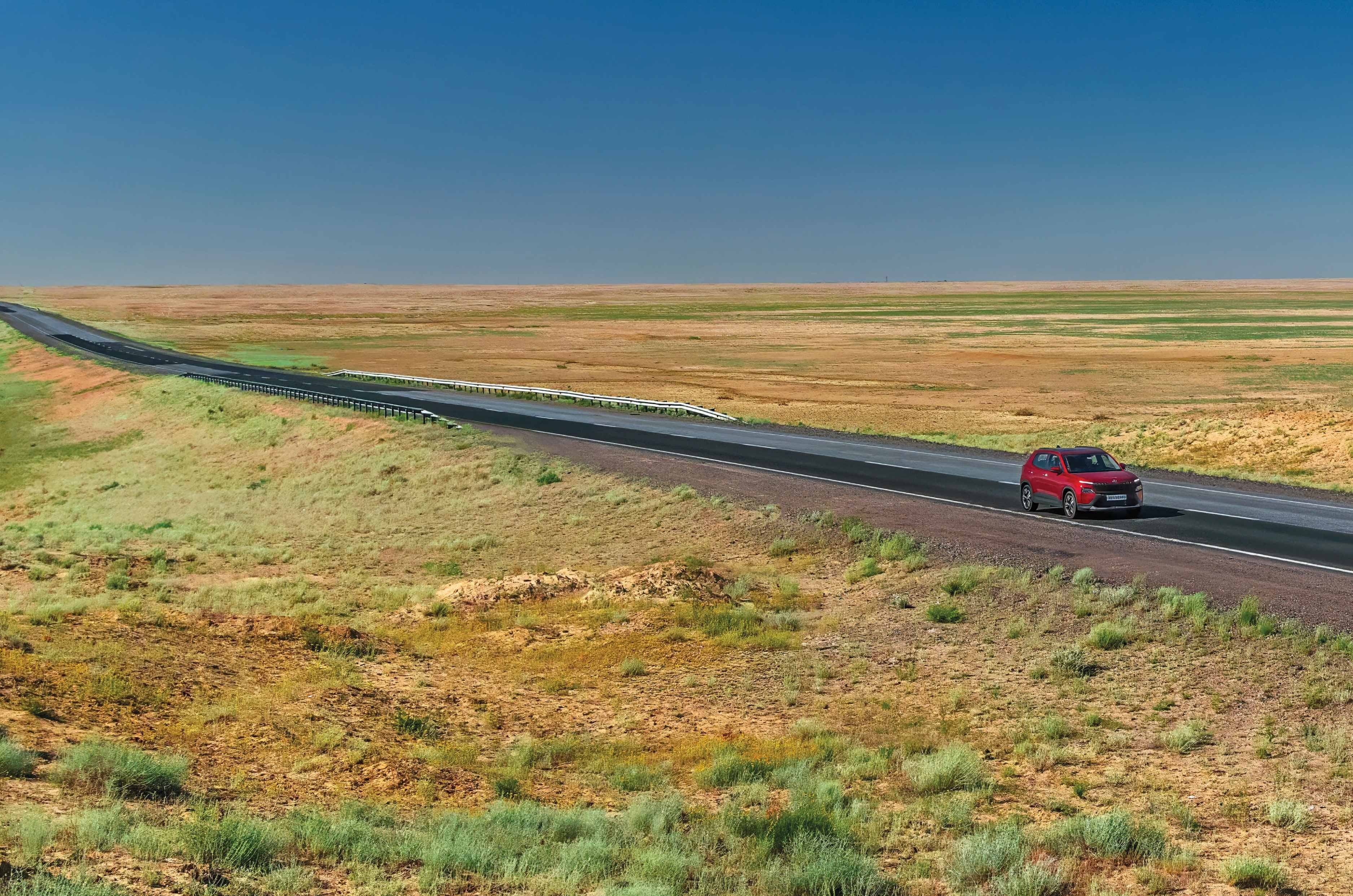
The Great Steppe in Kazakhstan feels like driving on an endless treadmill.
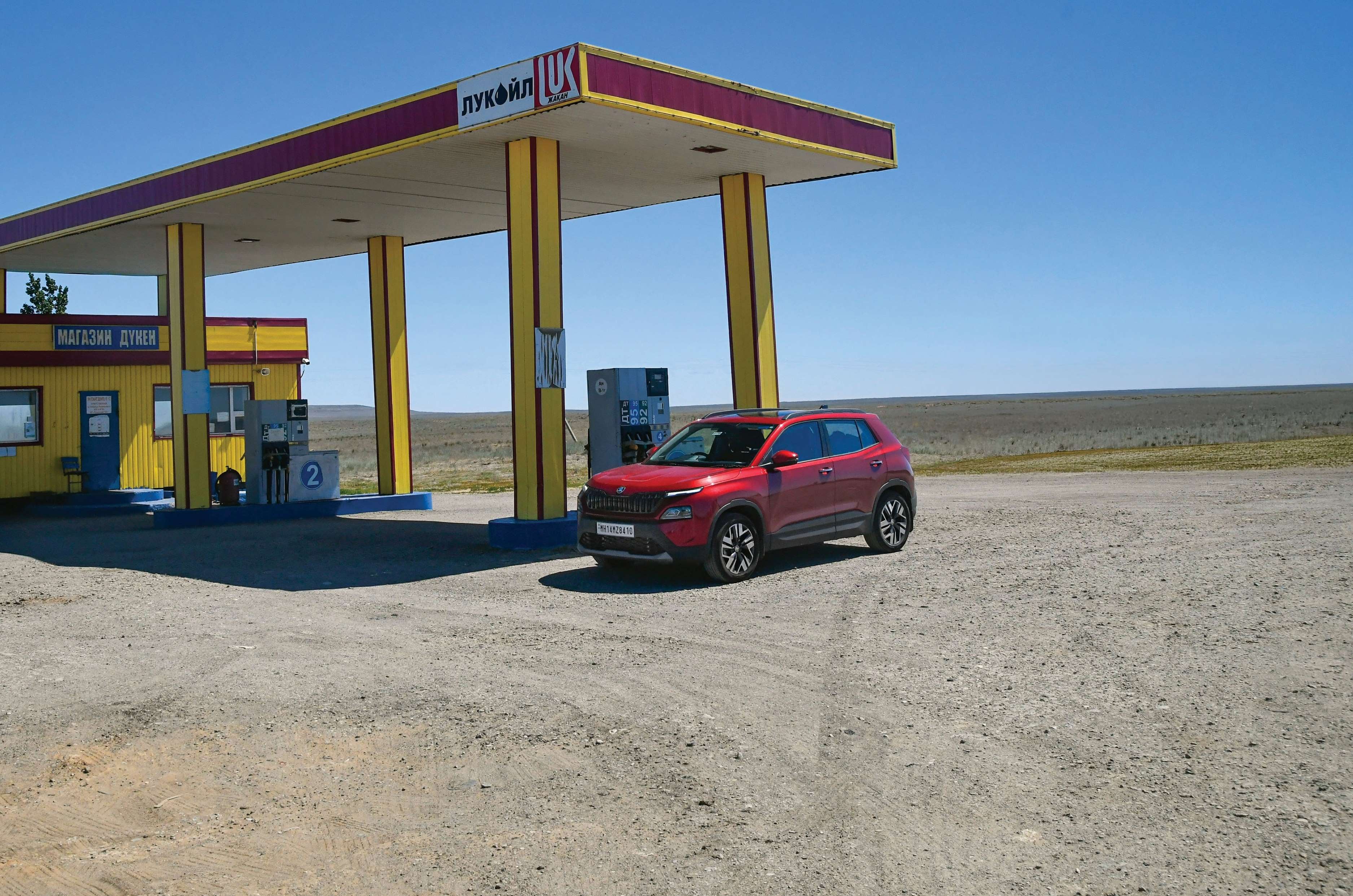
Crossing from Turkmenistan after vigorous checks, Kazakhstan feels almost desolate. Arrow-straight highways for kilometres, between acres of flat land with nothing on the horizon. We were driving through green pastures that would turn into brown, dried patches before turning green again, kilometre after kilometre.
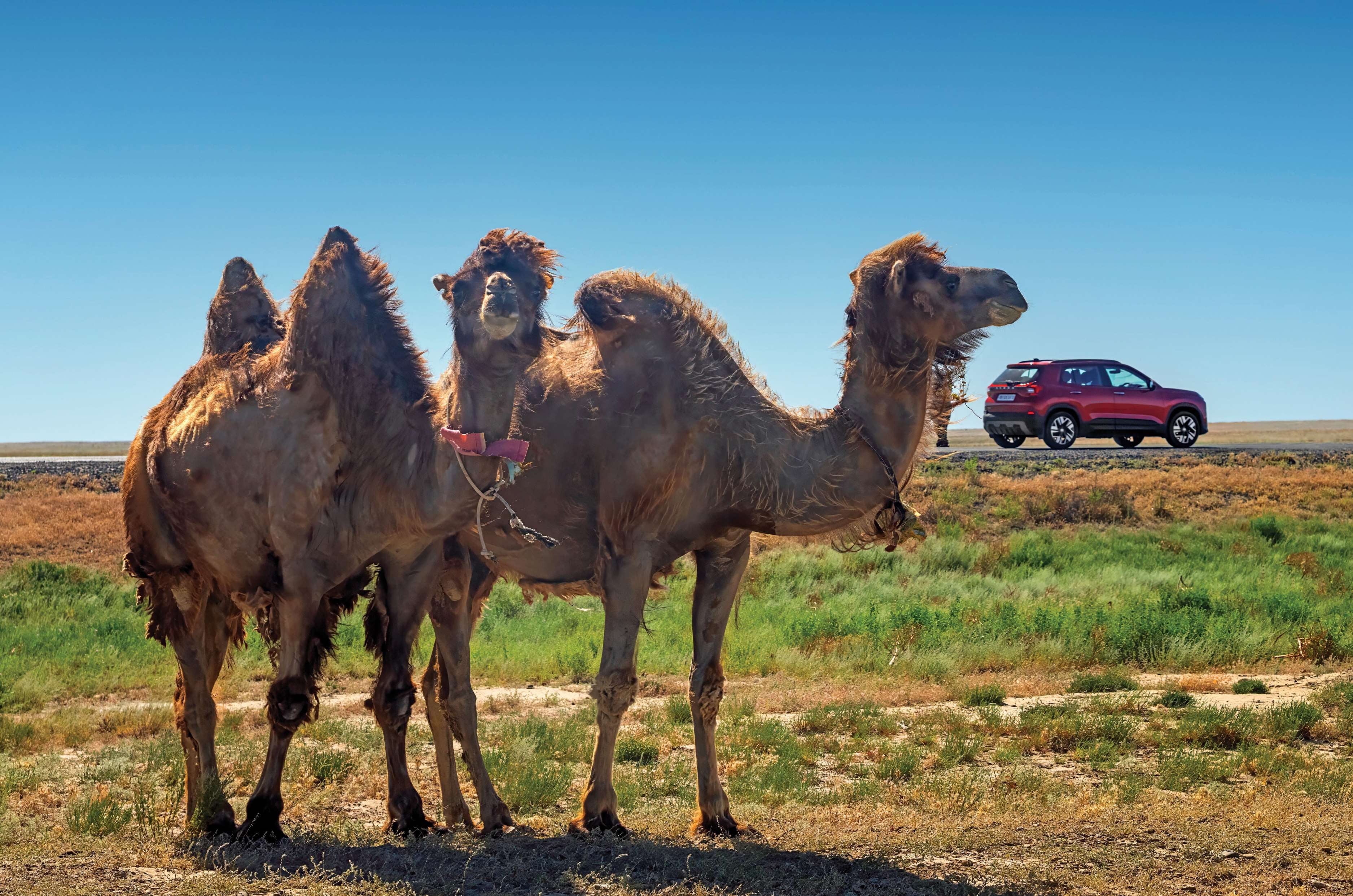
The Great Steppe, while stunning in size, is also a bit monotonous when you’re driving through it for days. The only respite would be a herd of double-humped Bactrian camels, cooling off at a nearby pond and often curious to know what a cherry-red Kylaq was doing in the middle of Kazakhstan.
At Rs 58.17 per litre, Kazakhstan offered the lowest fuel price of the entire drive.
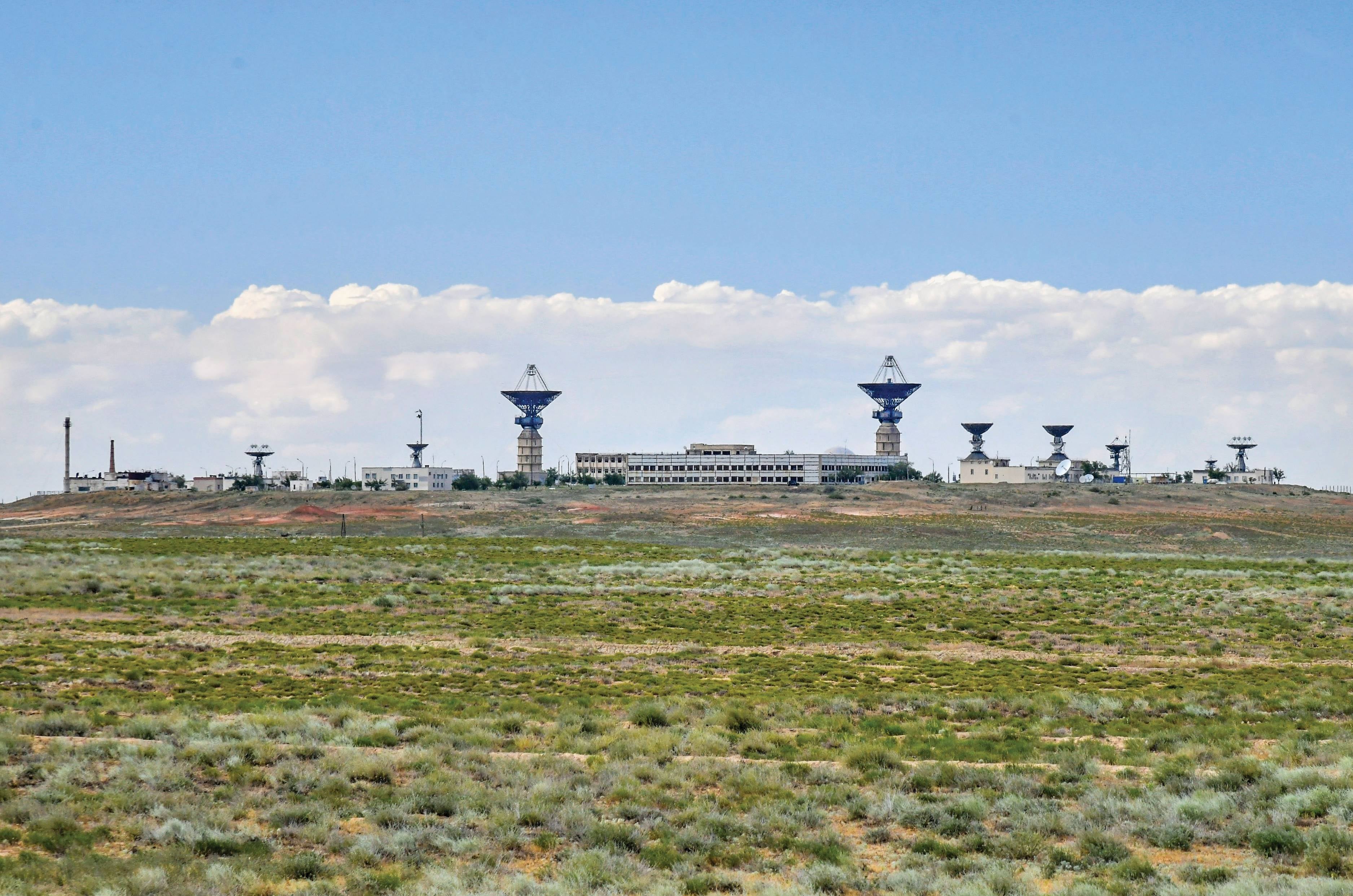
An interesting stop between Turkistan and Aral is the Baikonur Cosmodrome, which is the world’s first and largest operational space launch facility. However, thanks to the endless highways through Aral, Aktobe and Atyrau, we only got to test the Kylaq’s wheel alignment and its highway stability more than we would have liked.
Baikonur Cosmodrome – the world’s first, largest and operational space launch facility.
The mighty Stans were all about breathtaking sights, warm people and mouth-watering cuisine. The region still feels unadulterated, and that itself is what makes it special.
Kazakhstan in numbers
Turkistan – Kazakh-Russia border
Distance covered
3,237km
Fuel consumed
229.52 litres
Average fuel economy
14.10kpl
Approx. fuel cost
Rs 13,325
Avg. per-litre fuel cost
Rs 58.17
Total time driven
42 hrs
Average speed
77.1kph
Georgia – The Birthplace of Wine
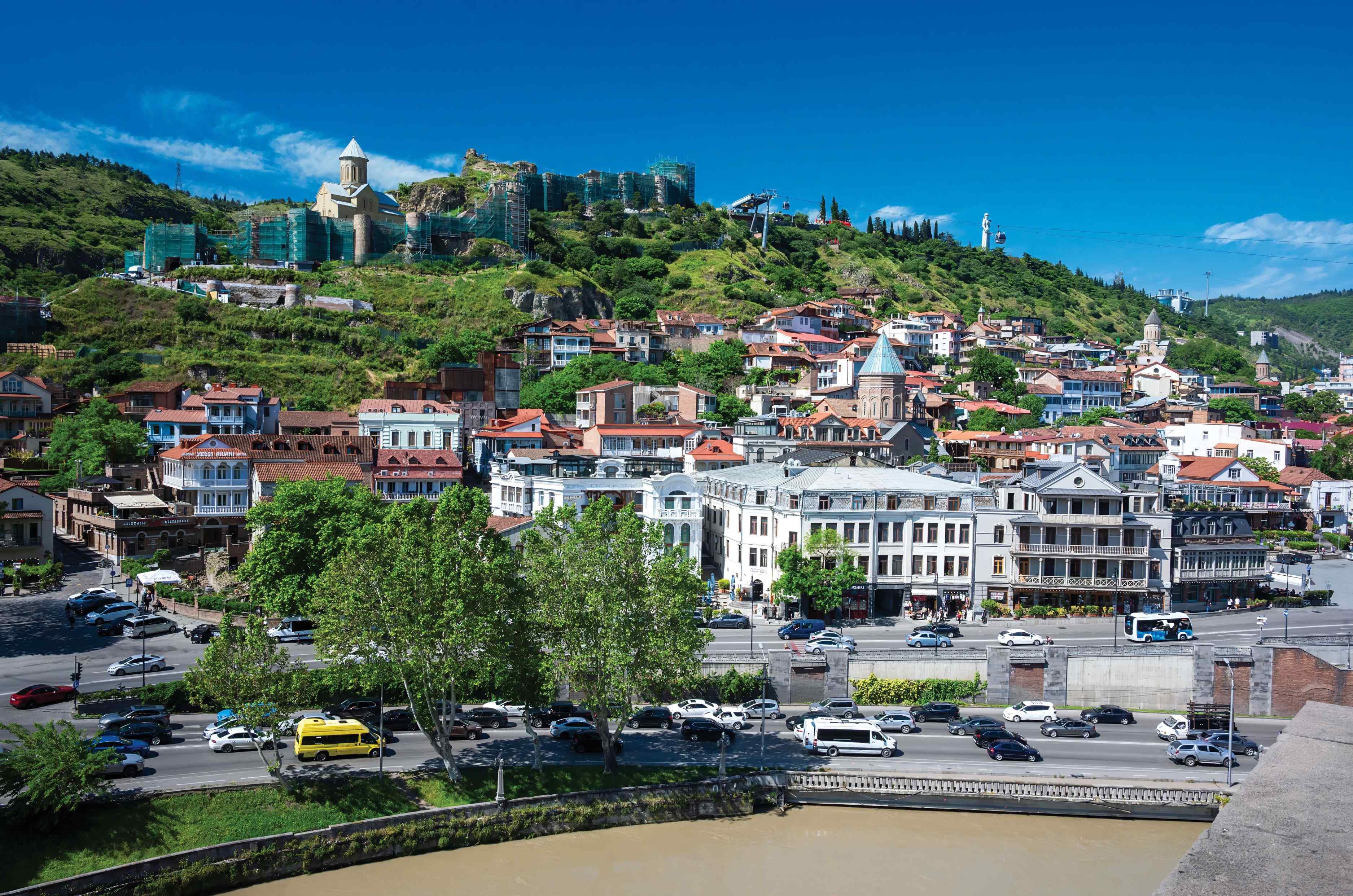
Compared to the vast landscapes and long highways of the Stans, Georgia was a contradiction. Based within the Caucasus Mountains, it has its share of twisties, which the Kylaq enjoyed. But the capital, Tbilisi, is the largest city and thereby pretty chaotic to drive in. Peak-hour traffic is just like what you would have in India, so we parked the car in a worryingly narrow alleyway and, for the most part, made our way on foot.
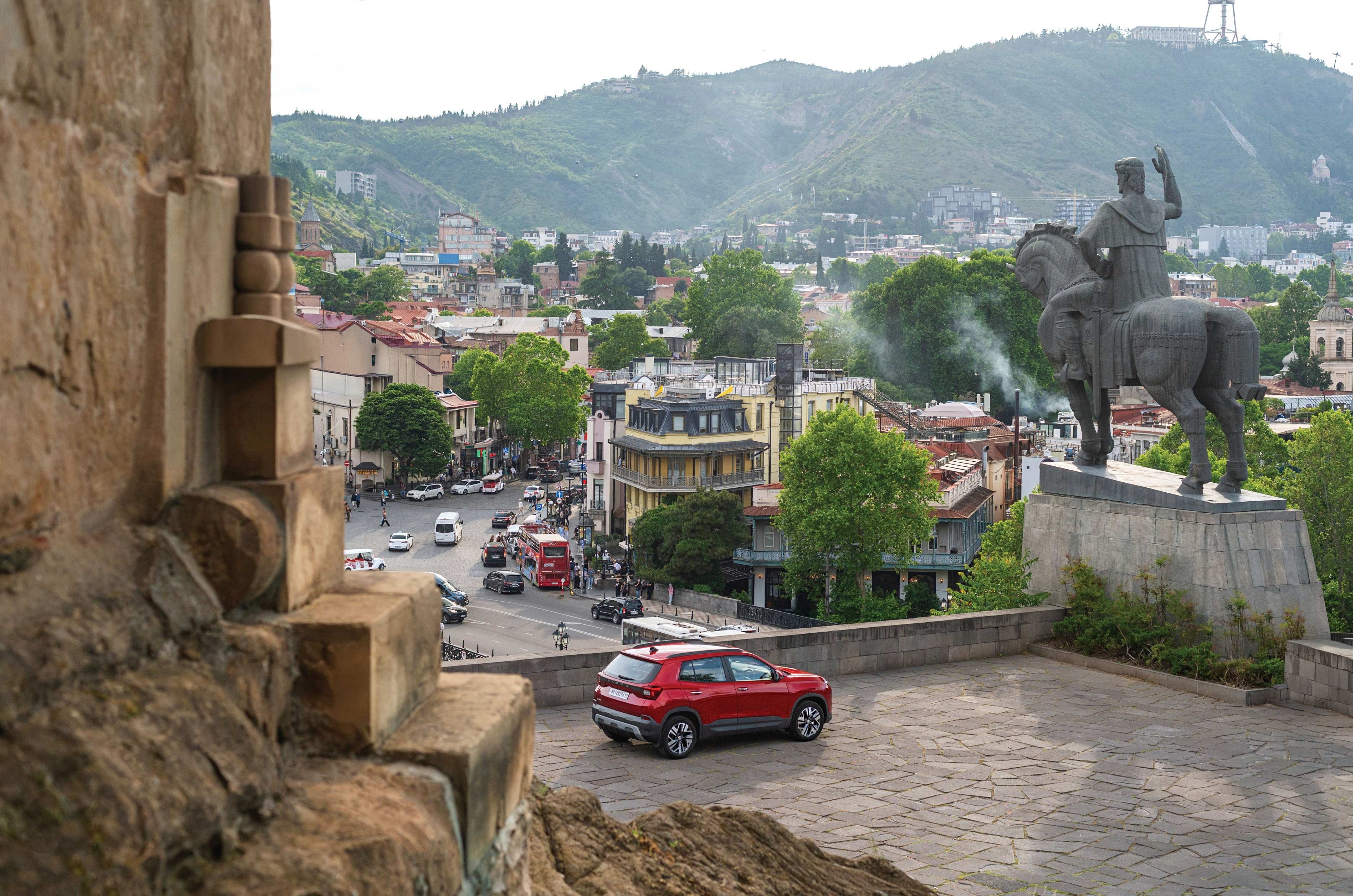
Huge statue of the founder of Tbilisi King Vakhtang I Gorgasali.
Like any big city, Tbilisi has its modern side, with glass buildings and modern restaurants, but there is still a large section that is rooted in tradition. Cobblestone streets with wooden houses and sulphur baths are a fascinating experience, as is the fantastic view from near the monument of King Vakhtang Gorgasali, the founder of Tbilisi.
The monument itself is a striking bronze equestrian statue located on a rocky cliff above the Mtkvari River, next to the historic Metekhi Church in Tbilisi, Georgia. But Georgia is known to be the birthplace of wine, and on our drive to Tbilisi, we spotted several vineyards sprawling for acres. We had to get a closer look, and thankfully, our guide’s friend owned one of them.
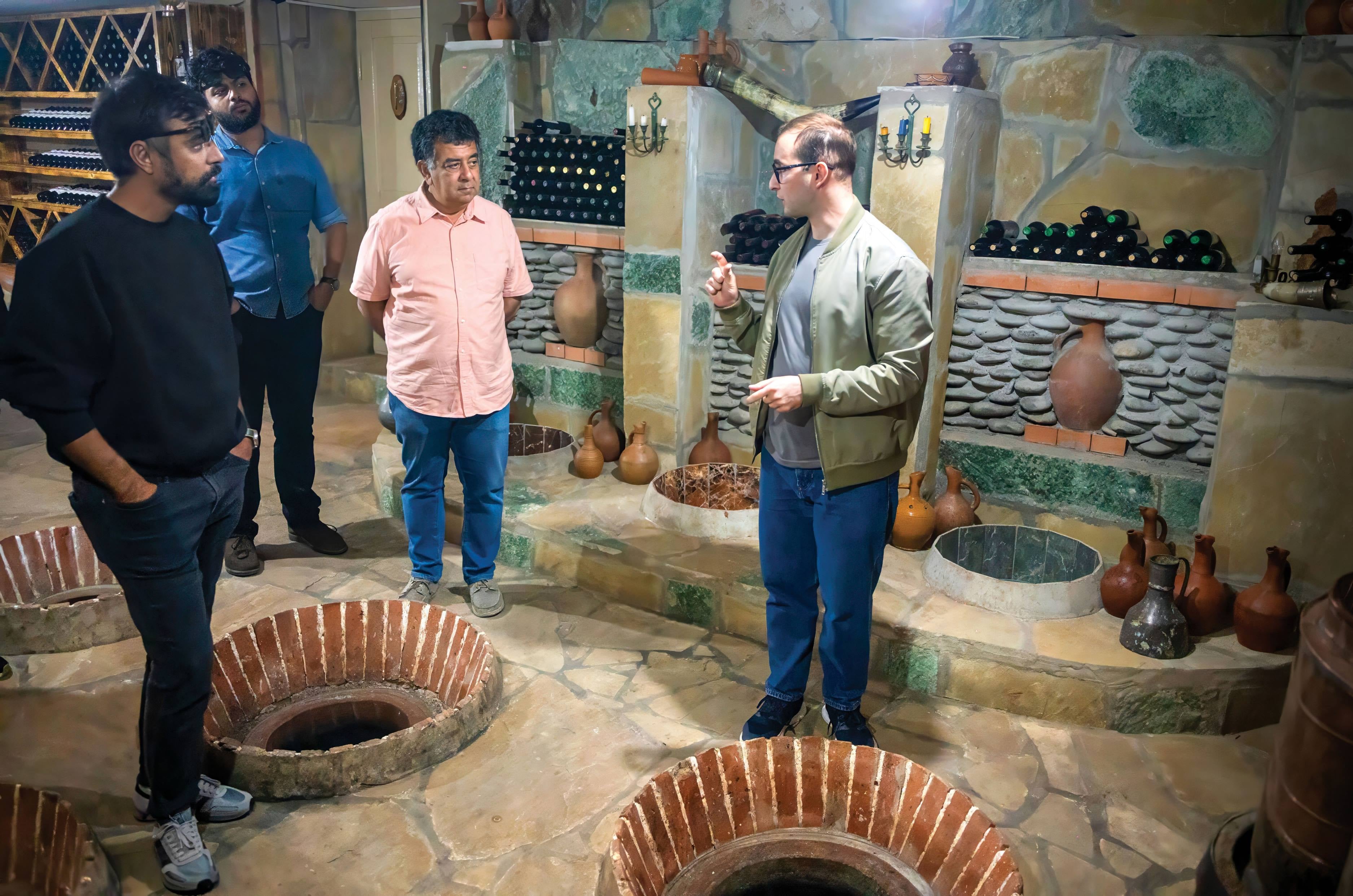
Georgian wine fermented in clay jars buried in the ground.
The Georgians still use the ancient process of fermenting wine in barrels under the floor, but have now blended it with modern technology that allows them to control the temperature and get a more consistent batch each time. Wine connoisseur or not, the experience is enthralling.
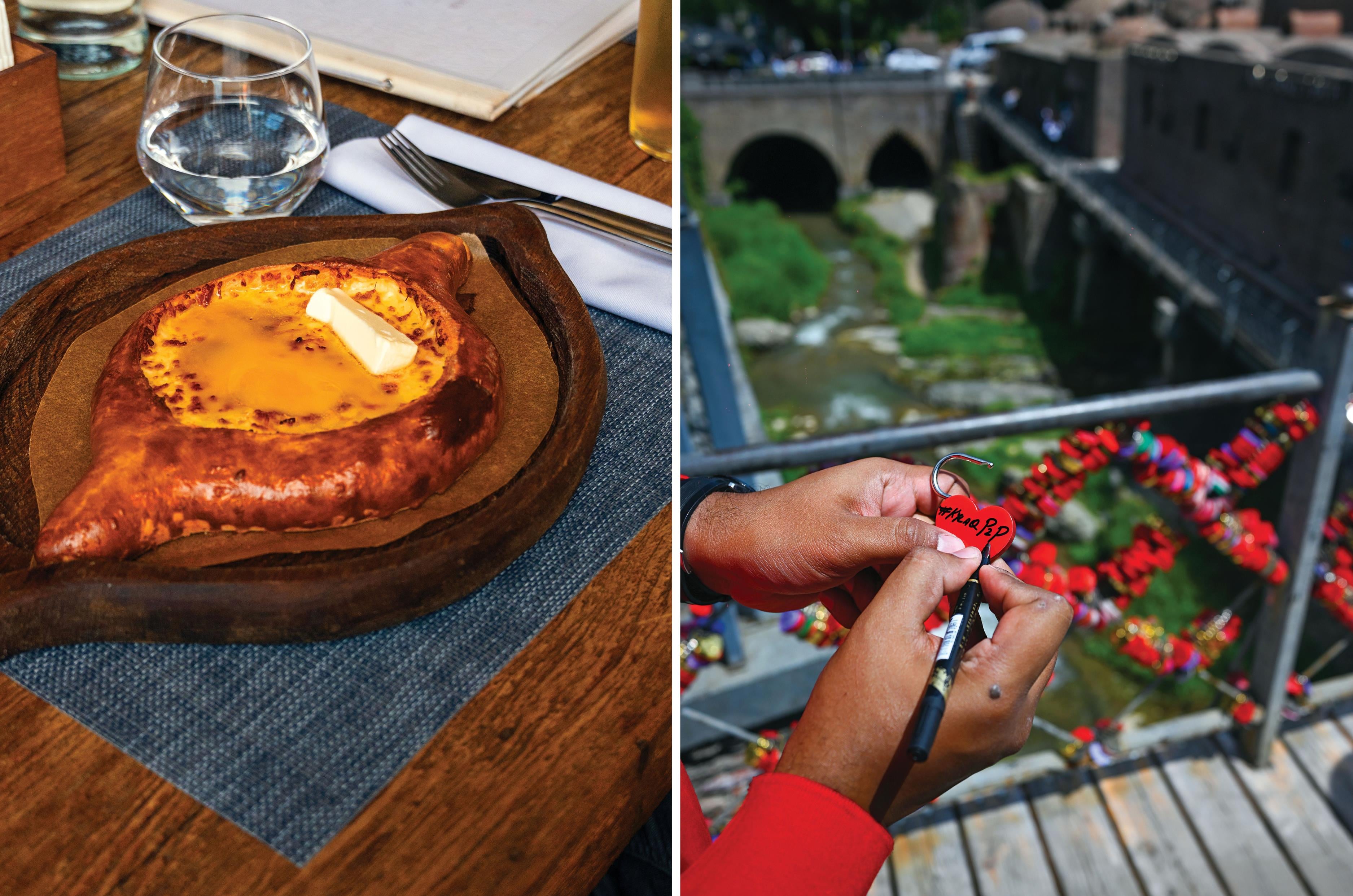
Khachapuri (flatbread with cheese and egg) is Georgia’s national snack.
The city tour built up an appetite, and we followed the scent of fresh bread for some authentic khachapuri. A Georgian flatbread that is hollowed out in the centre and filled with cheese, khachapuri varies depending on the region you’re in. You can have it with an egg cracked into it or with meat, too.
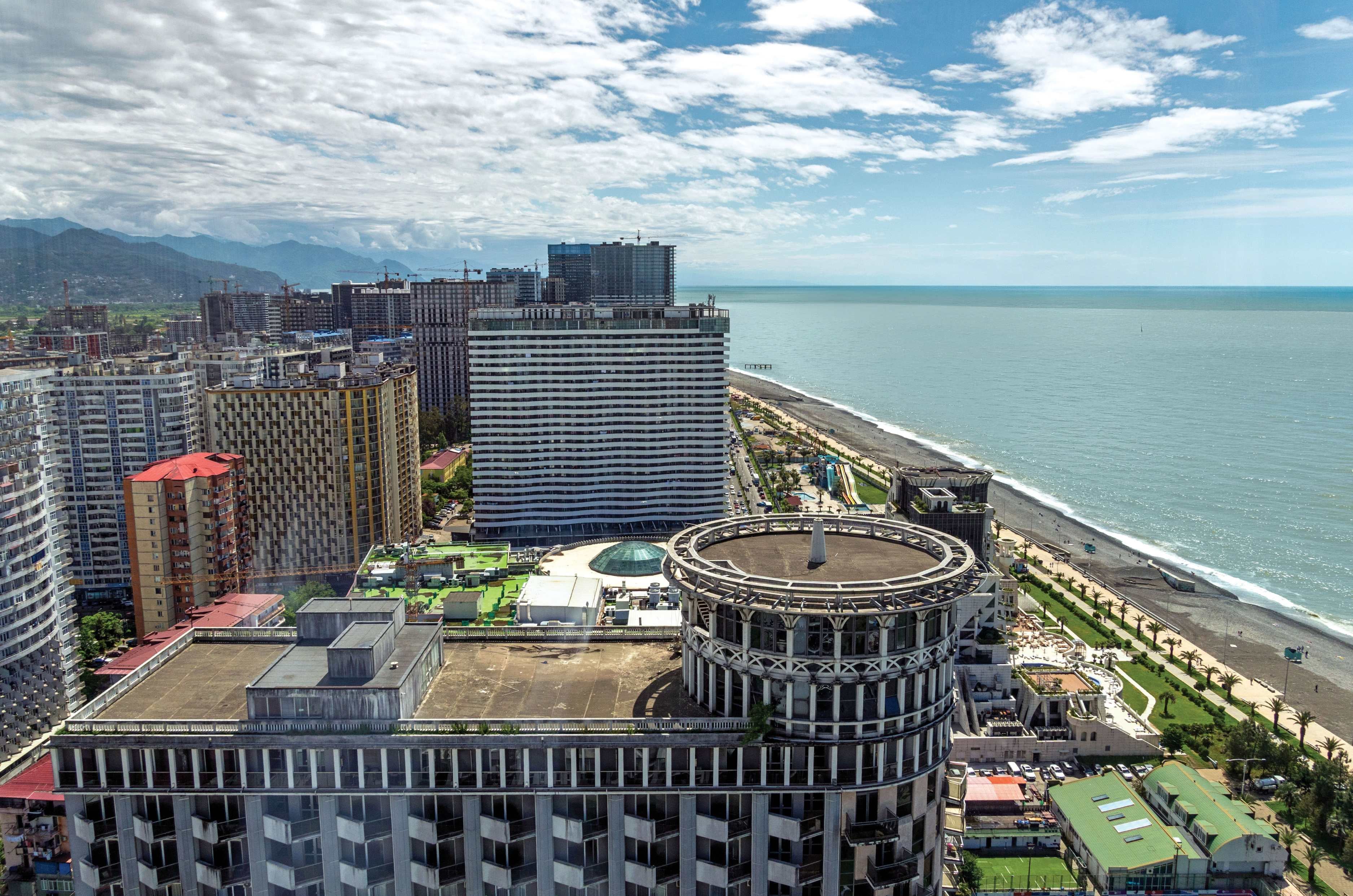
Coastal city of Batumi is a stark contrast of Tbilisi.
With sightseeing done, we drove the next day to the coastal city of Batumi. A vibrant, modern city with a lot more European influence. However, if the roads in Tbilisi were narrow, Batumi was on another level. Despite the compact dimensions of the Kylaq, our hotel parking was a sidewalk cordoned off by the hotel manager, as there simply was no space to park.
14th-century Gergeti Trinity Church has stunning views of the Caucasus Mountains.
Still, we made the most of it by strolling by the shore of the Black Sea, watching the locals angling for fish. Georgia, just like the Stans, offered a unique glimpse into this part of the world and its diverse culture. For our final stretch before Europe, we had one last country to drive through – the colourful Türkiye.
Georgia in numbers
Tbilisi – Türkiye border
Distance covered
624km
Fuel consumed
58.62 litres
Average fuel economy
10.64kpl
Approx. fuel cost
Rs 7,607
Avg. per-litre fuel cost
Rs 129.78
Total time driven
17.5hrs
Average speed
58.5kph
Türkiye – Gateway to Europe
Cappadocia’s claim to fame is well worth the hype.
As the Kylaq crossed into Türkiye, our first stop was in Erzurum. A major winter sports town, but thanks to the time of year, our ski resort was bright, sunny and without an ounce of snow. A quick stroll through the small town and we hit the sack in preparation for a 700km-plus drive to the tourist haven that is Cappadocia.
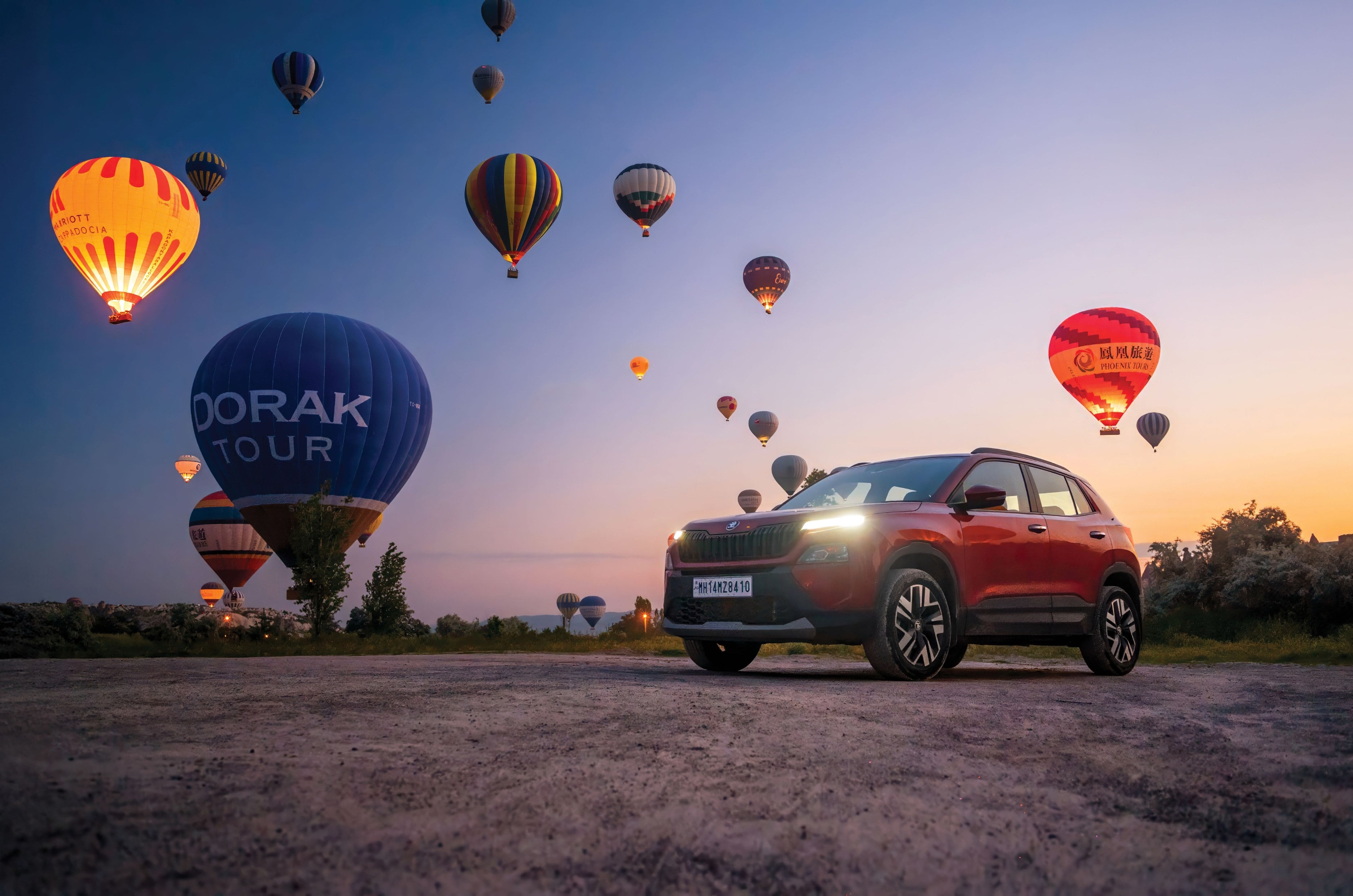
The next morning, the plan was to do what you must do in Türkiye – take a hot-air-balloon ride. A pre-dawn wake-up call is never comfortable, but the peace was soon shattered by the sound of a group of old diesel Land Rover Defenders revving to keep themselves warm while they waited to transfer tourists to the balloon launch site. The balloon ride is arguably the largest tourist attraction in Türkiye, so there was quite the rush.
We, too, loaded up the Kylaq and hit the road to get the perfect shot of the sun coming up over the hills while the sky was filled with balloons. And boy, did we get it. As the orange tinge hit the fairy chimneys, we saw what the hype was about. The visual is nothing like you have ever seen: watching one colourful hot-air balloon is rare, and here there were over a hundred. We shot GBs worth of images and videos and got back to catch up on the broken sleep from earlier.
Türkiye in numbers
Erzurum – Bulgaria border
Distance covered
1,436km
Fuel consumed
98.1 litres
Average fuel economy
14.63kpl
Approx. fuel cost
17,187
Avg. per-litre fuel cost
Rs 134.19
Total time driven
19.5 hrs
Average speed
73.64kph
A relaxing drive the next day got us to Istanbul, which, to some, might seem like the capital thanks to its bustling character – a glimpse of which we got as we got closer. A traffic jam stretching for more than a couple of kilometres brought the Kylaq to crawling speeds. To avoid the repercussions of driving next to hasty cab drivers, we parked the Kylaq and headed to check out the nightlife, but more importantly, the döner kebab.
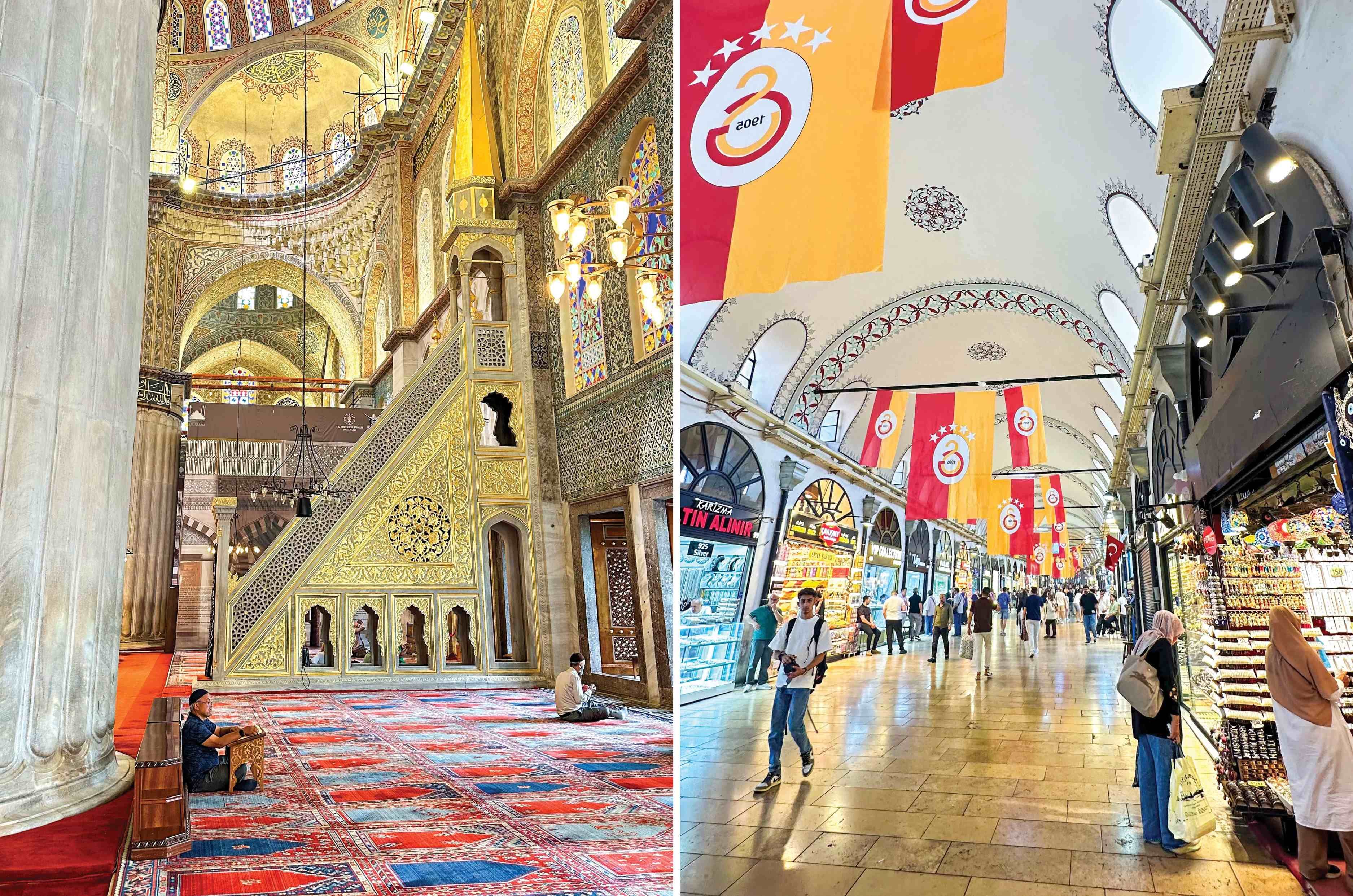
Exceptional interiors and an unbelievable calm in Istanbul.
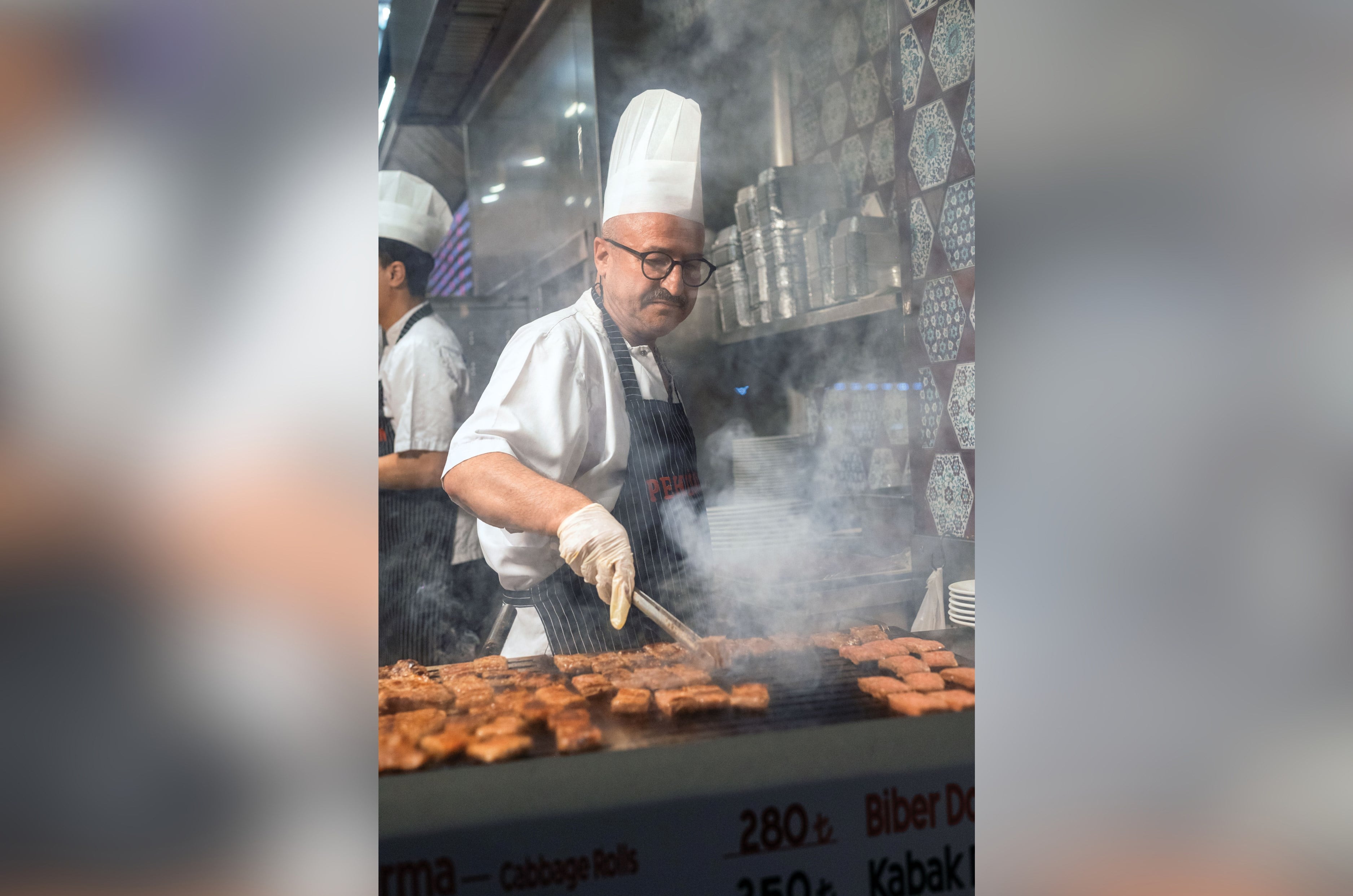
Similar to a shawarma, the döner kebab consists of a pile of meat that is cooked on a rotisserie over a flame. The dripping fat is mopped up by pita bread, which is then loaded with the sliced meat and seasonings. After a long walk through the Grand Bazaar, haggling for a fake Rolex, the döner becomes almost a necessity.
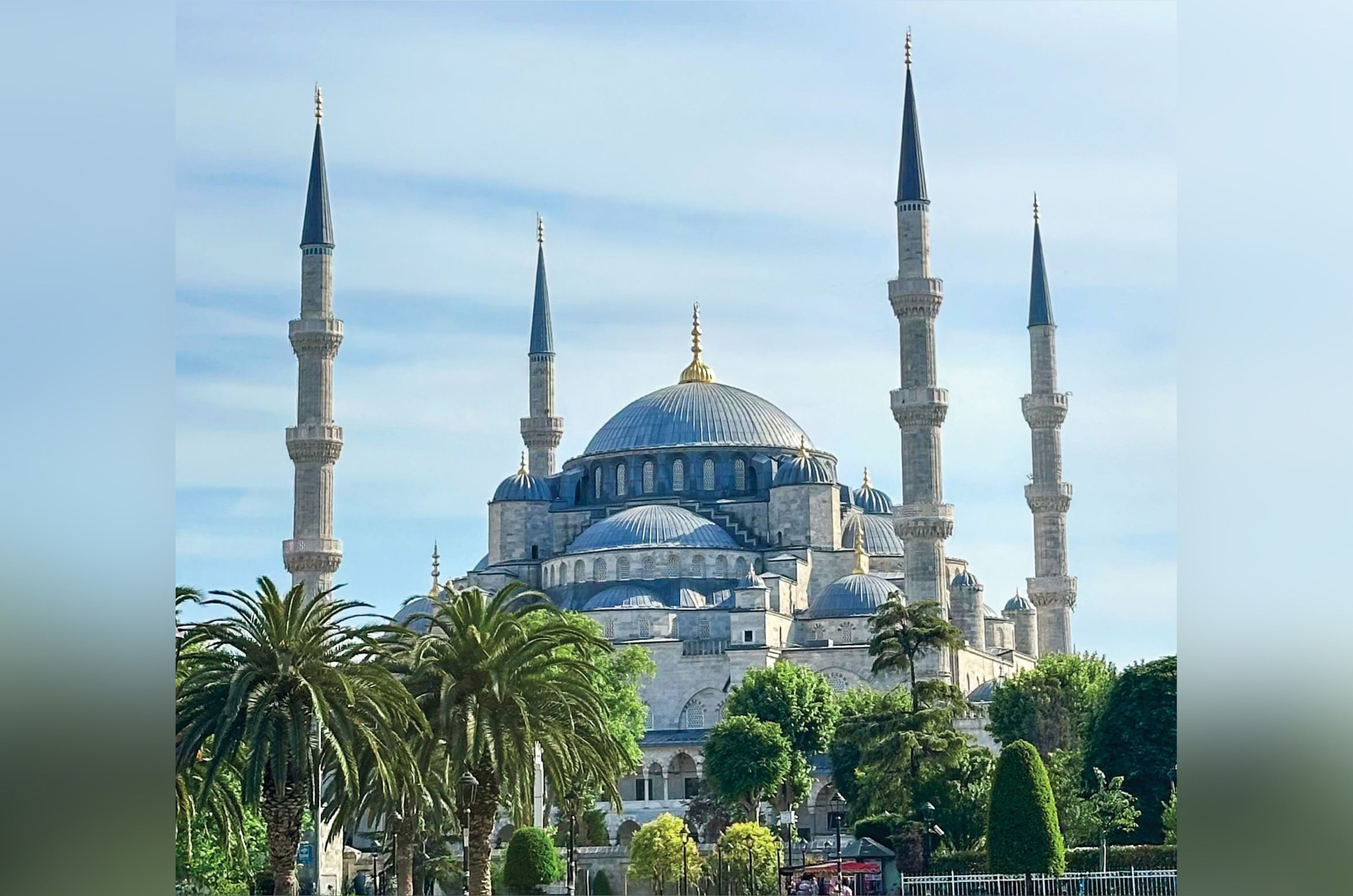
What’s also equally stunning is the Blue Mosque. Known formally as the Sultan Ahmed Mosque, it was constructed between 1609 and 1617 in the Ottoman era by Ahmed I. To get the entire mosque in frame, you need to fall back to the Hagia Sophia Mosque, which is in the same vicinity. Both equally grand, equally detailed and equally important.
The Blue Mosque, built in the Ottoman era, is majestic.
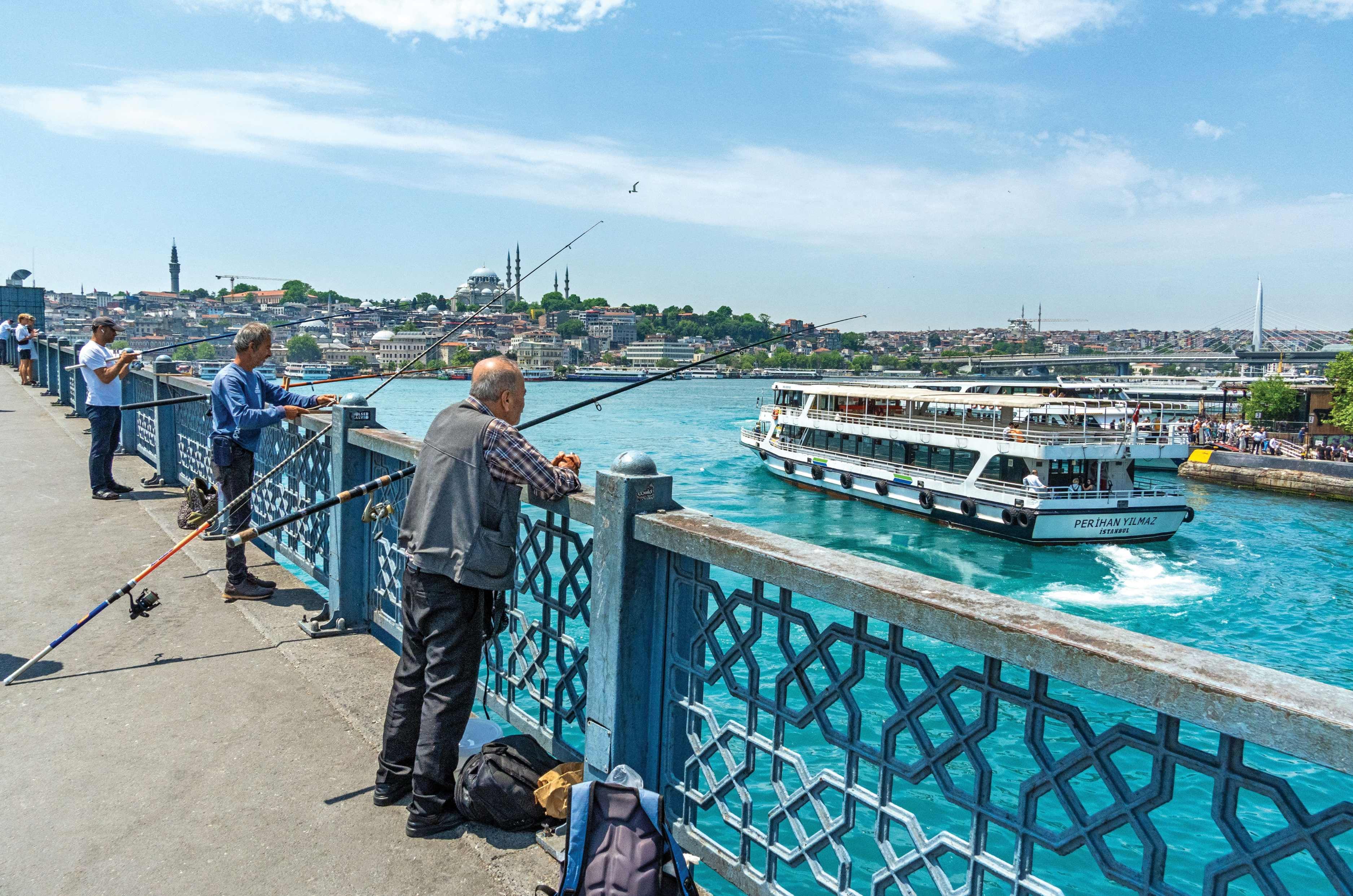
To explore more of Türkiye, we got back into the Kylaq and realised there was a bridge that is unlike any other in the world. The Bosphorus Bridge is located over the Bosphorus Strait, but its claim to fame is that it, quite literally, has one end in Asia and one end in Europe. You can cross the bridge in about two minutes, depending on traffic, but the sense that you can practically drive over from Asia into Europe before you can finish watching a reel is unreal.
Angling over the Bosphorus strait is a common hobby.
Europe – Home Stretch
Bulgaria – Romania – Hungary – Slovakia – Prague
The end of our incredible Pune-to-Prague drive was now a matter of days away. After over two months on the road, we were a couple of thousand kilometres away from the finish line. The excitement that had tapered off midway was back in full force.
We would be entering Europe through Bulgaria, and the border, as expected, was busy. Documentation, carnets, passports, stringent car checks and some explaining later, we were finally in.
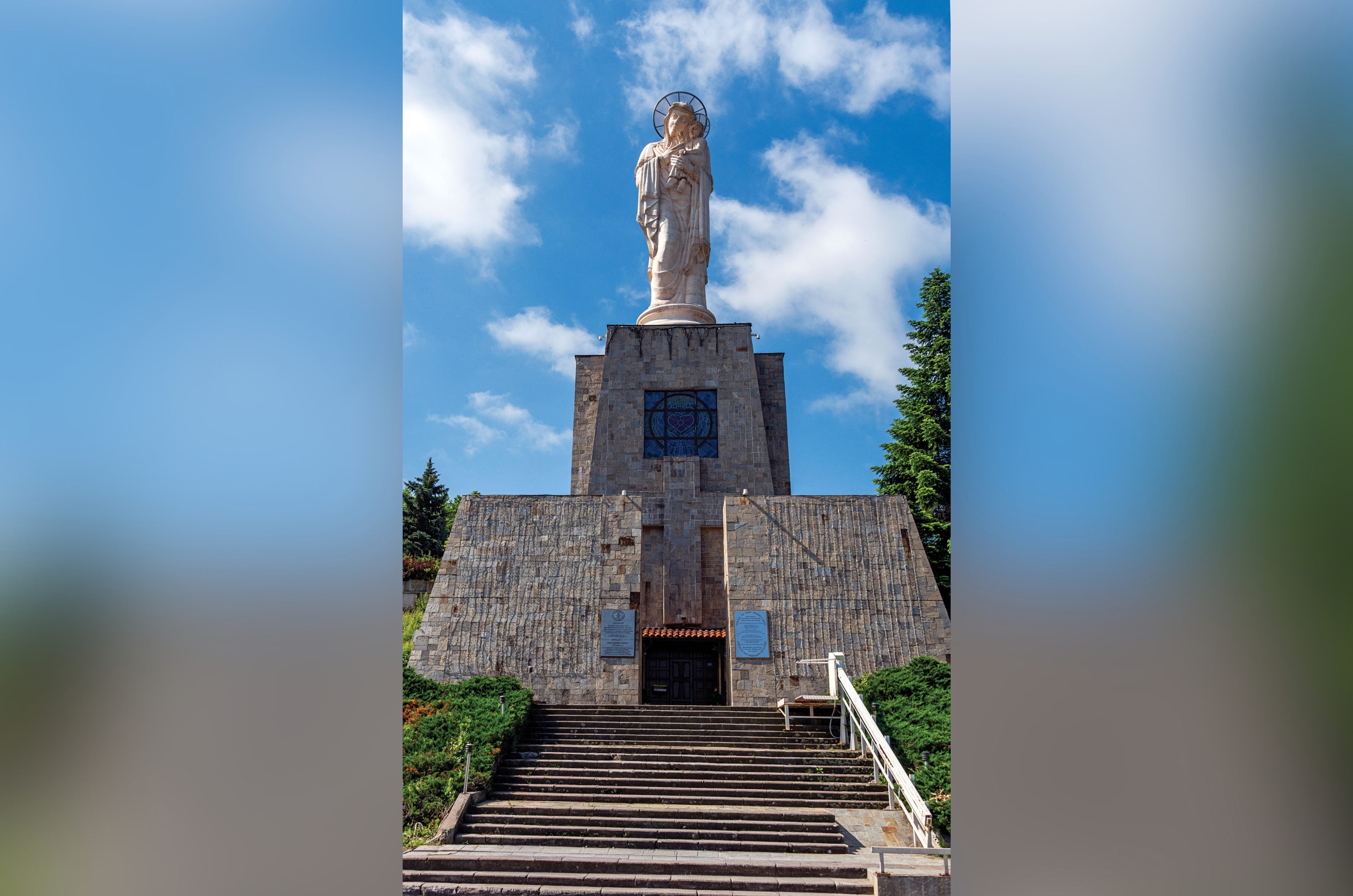
Monument of the Holy Mother of God in Haskovo.
Haskovo is a quaint town with a slow pace and none of the bustle of a European city, but it boasts a Guinness record for having the towering Monument of the Holy Mother of God, the tallest statue of the Virgin Mary and Baby Jesus in the world. Naturally, we had to check it out before we headed further.
Crossing countries in Europe is the equivalent of crossing states in India. There are no significant border checks or passport-control booths. A board with the blue EU flag and the name of the country is all you will see.
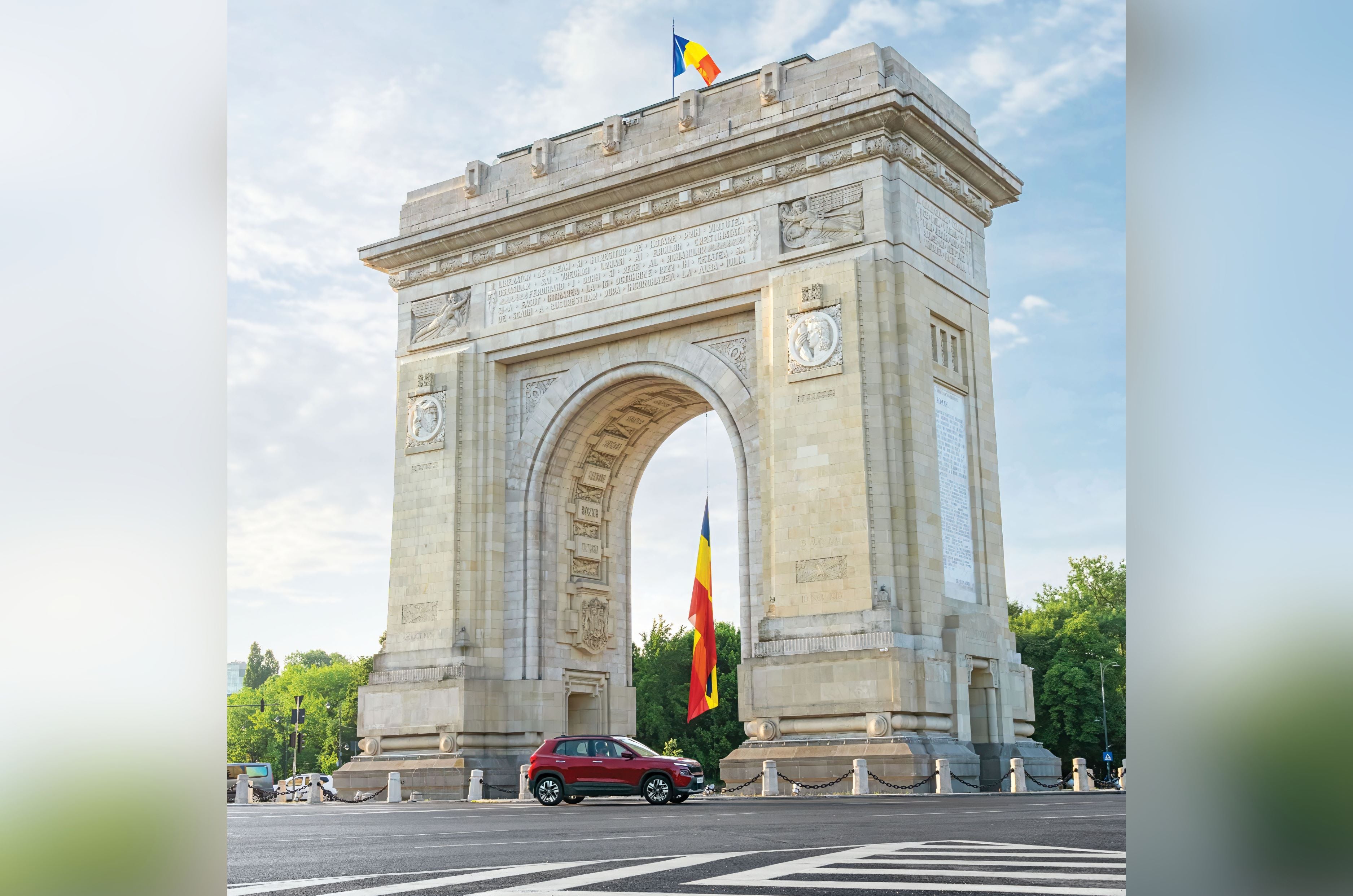
Romania’s Arcul de Triumf an ode to the one in Paris.
We crossed into Romania rather unassumingly and headed for Bucharest. The capital is picturesque and is also colloquially known as “Little Paris”. Like the Arc de Triomphe in Paris, Romania too has its own version. A tad smaller in comparison, but just as iconic.
However, what takes the cake is the Parliament Building, formally known as the Palace of the Parliament, which is also the heaviest building in the world, standing at approximately a ridiculous 4,098,500 tonnes. We couldn’t verify that, but since the Kylaq looked like a mere speck in front of it, it was all the proof we needed.
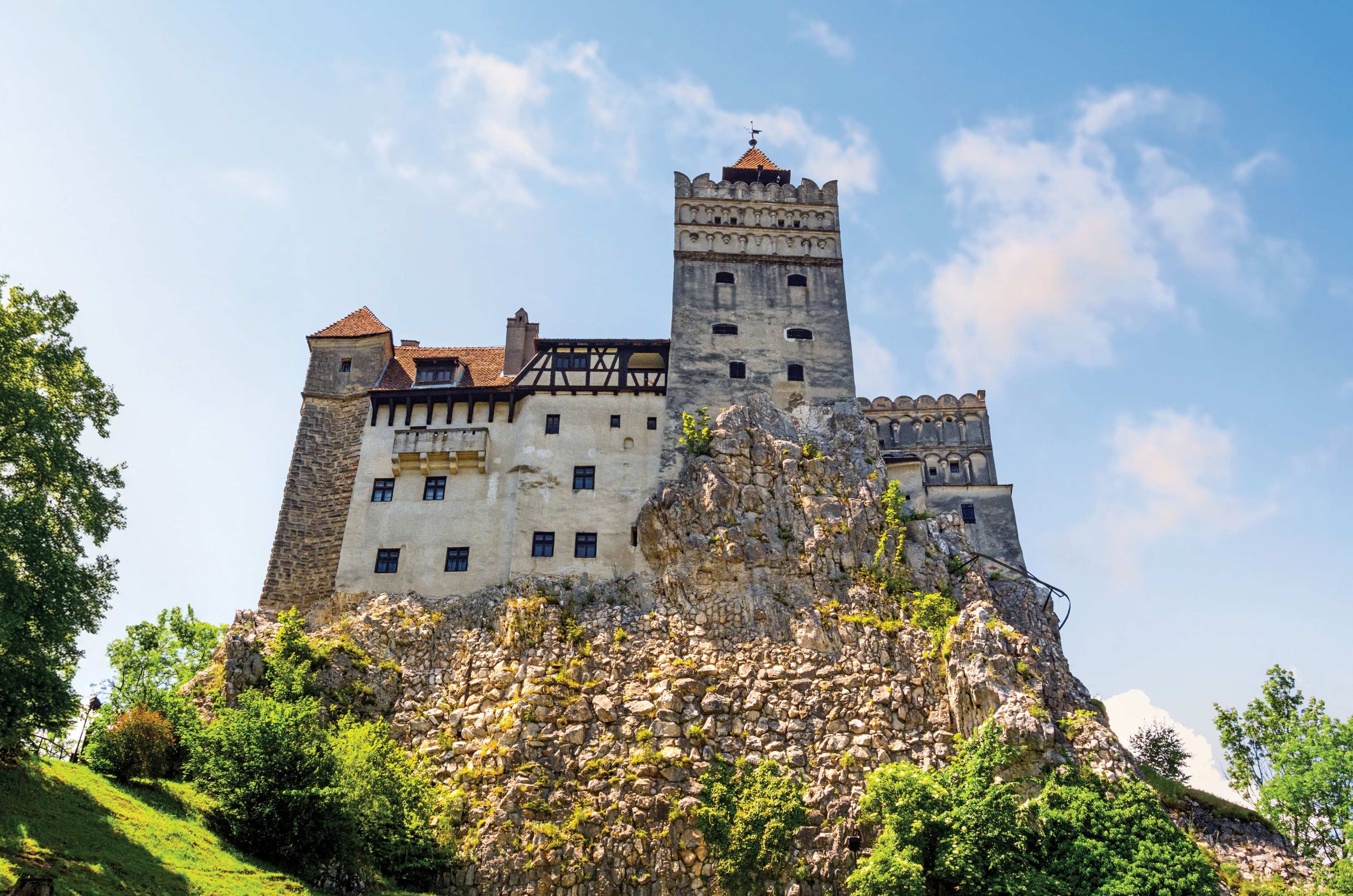
Bran Castle is widely marketed as Dracula’s home.
Bucharest also has a thriving nightlife, with the quiet cobbled streets turning into party hubs post-sunset. As we headed towards Hungary, we couldn’t help but make a stop at Bran Castle. Despite the myth that it was once home to the famous Dracula, there is nothing but merchandise at the foot of the castle to prove that claim. Historians have dismissed the claim and, while it is fascinating, there is plenty of evidence against it. Still, that did not stop us from buying some fake vampire teeth and Dracula magnets.
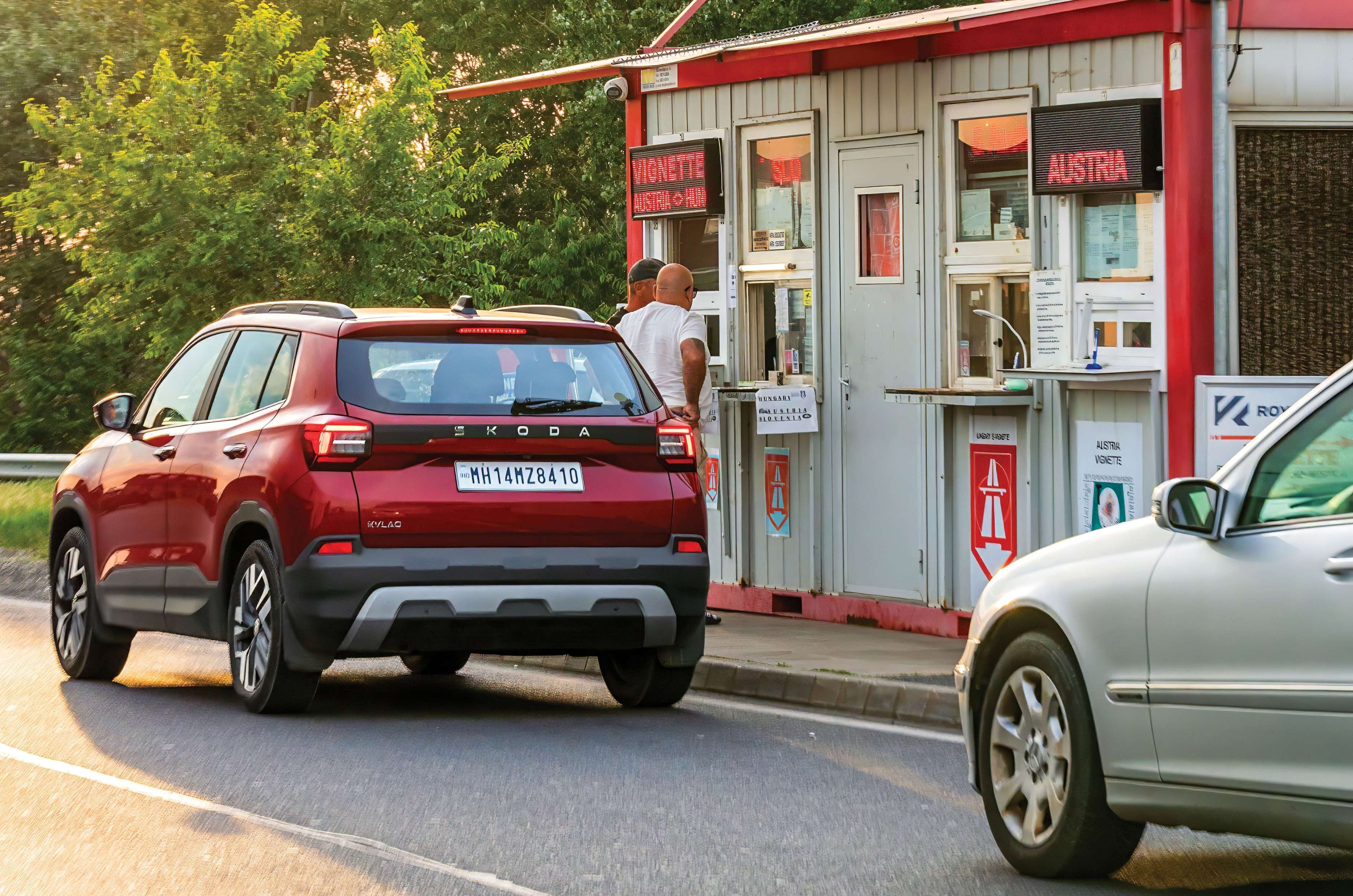
Vignette is Europe’s FASTag and is essential on the freeways.
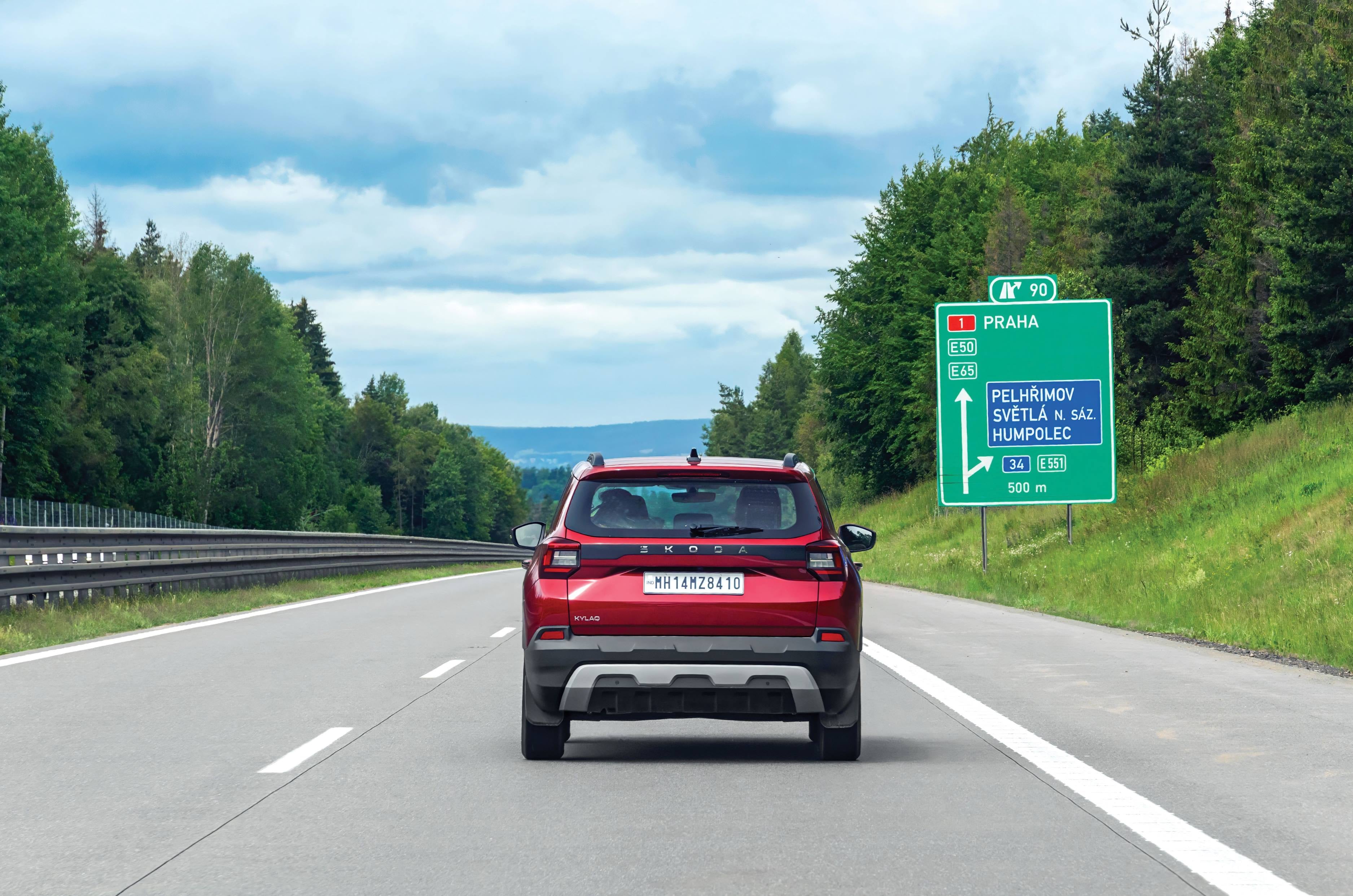
From the shores of the Black Sea, we drove into landlocked Hungary. The drive to Budapest was long, but thanks to Europe’s seamless highways, it was light work for the Kylaq. In Europe, it just blended in with the other cars, and at no point did it feel out of place. It might have been built in India, but it felt every bit as European as it got closer to Prague.
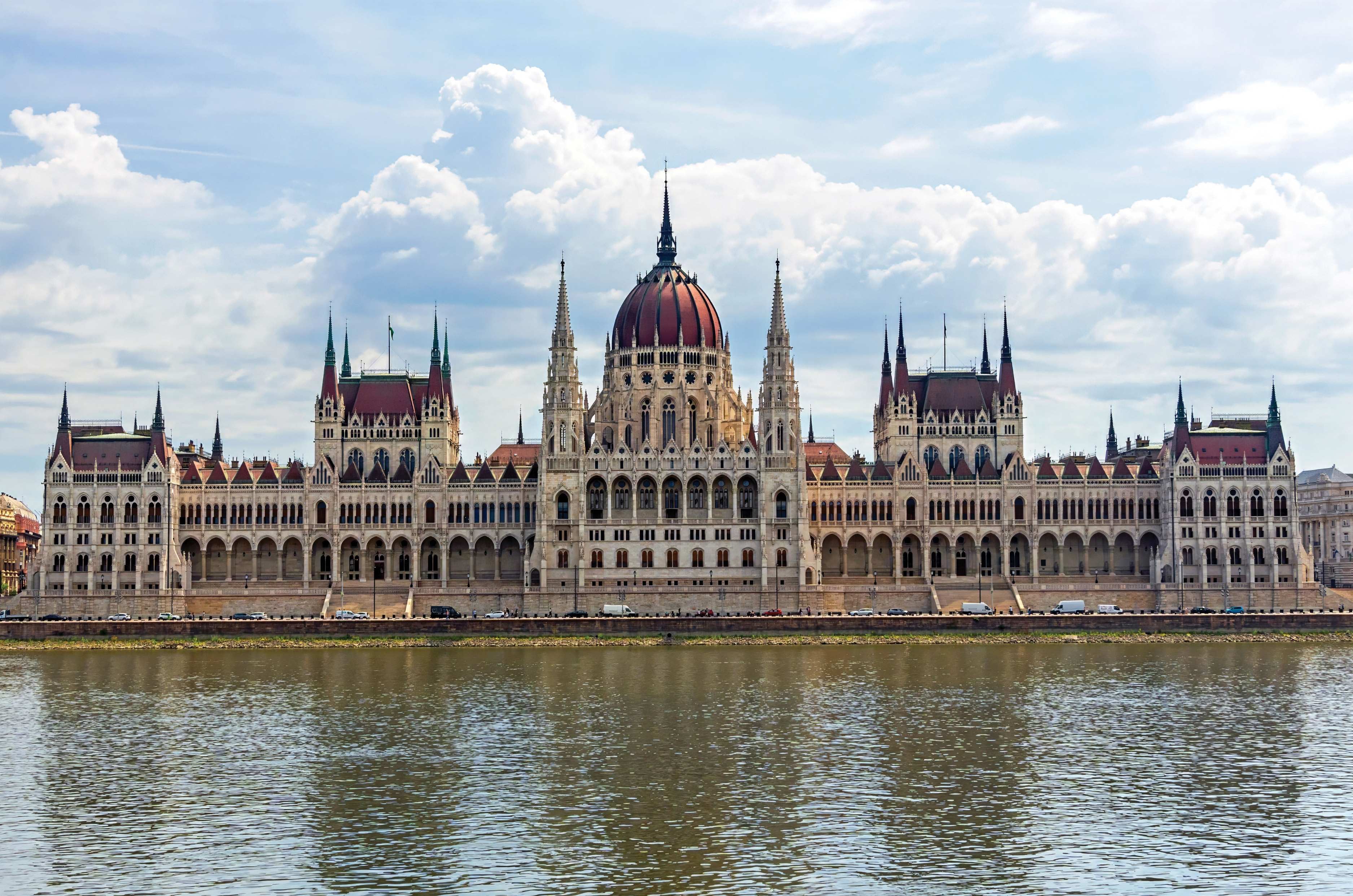
Budapest’s Parliament Building sits by the banks of the Danube River.
As we drove by the banks of the Danube, we were in awe of the stunning Hungarian Parliament Building. Budapest is also known for its bridges, with as many as 13 iconic ones, each with its own identity.
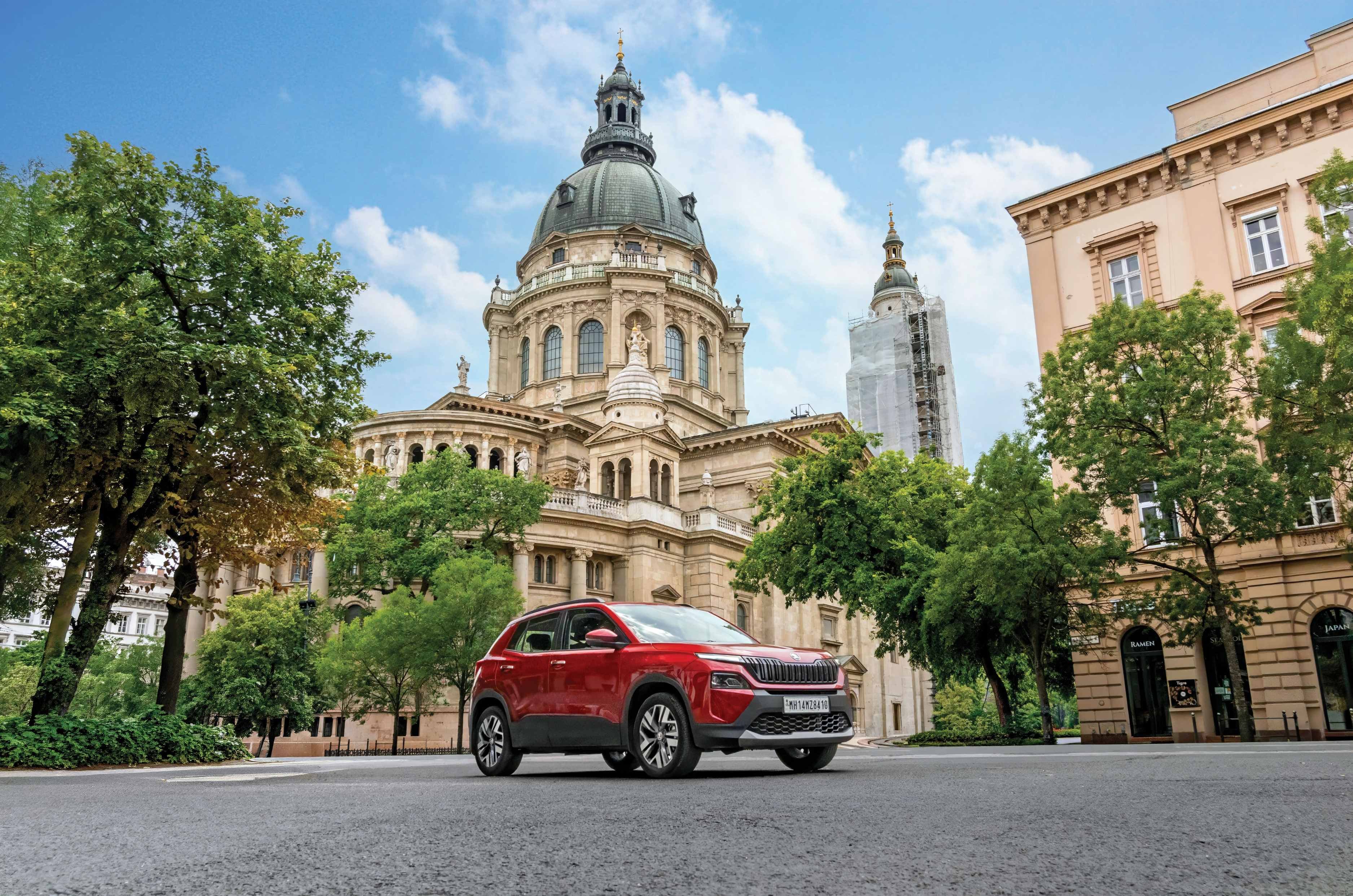
St. Stephen’s Basilica is the largest church in Budapest.
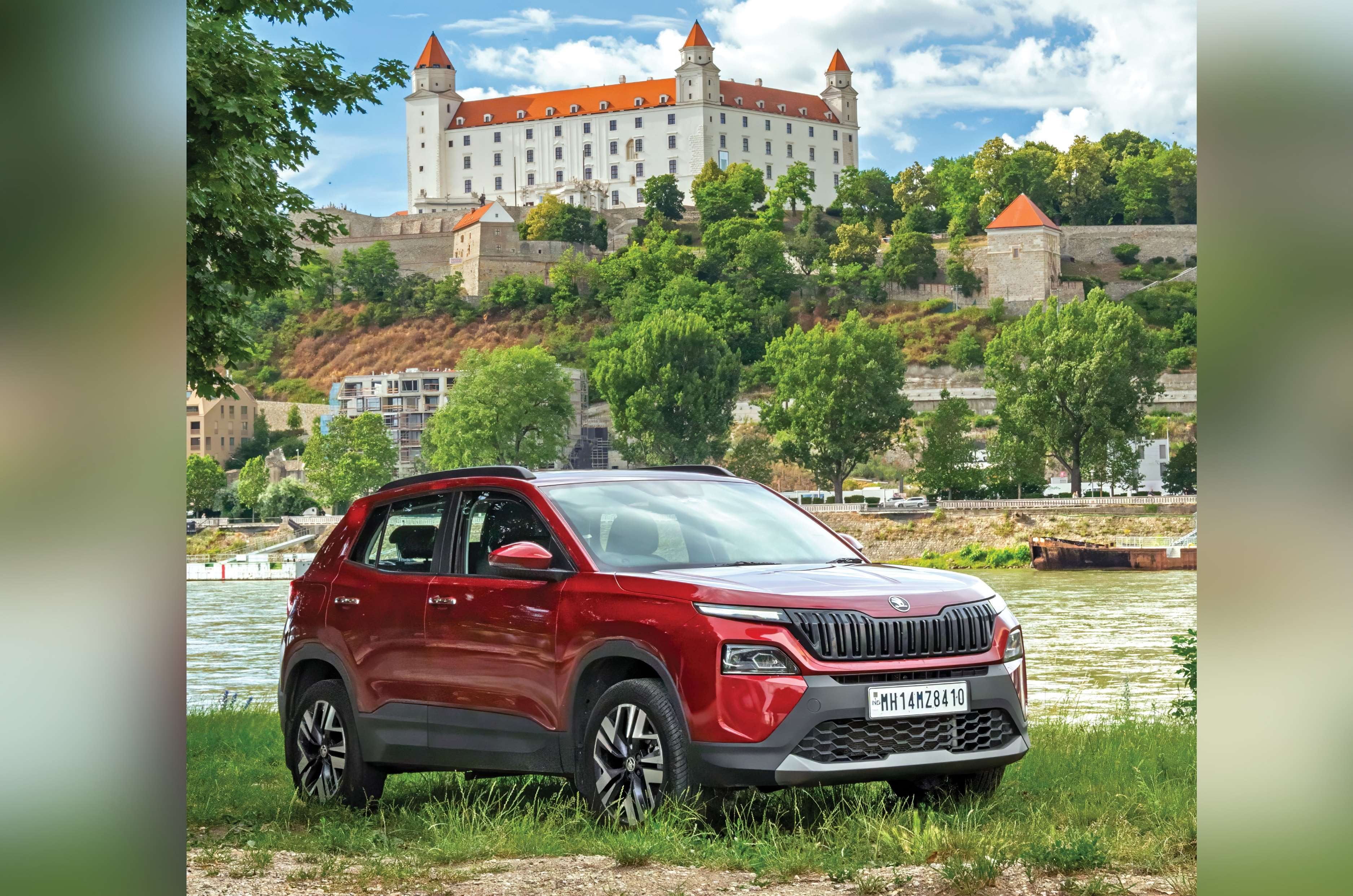
The last country before we entered the Czech Republic was Slovakia. The small country, with a quarter of the population of Mumbai, has a rather interesting Indian connection, as we found out in the pedestrian-only zone of its capital, Bratislava. Bratislava was visited by Pt. Jawaharlal Nehru in 1938, along with a young Indira Gandhi, regarding the freedom movement under British rule.
Bratislava Castle, built in the 13th century on the banks of the Danube, is now a museum.
The town square is also an open market with rich produce, handmade jewellery and a lot more. After buying the last few souvenirs before our bags exploded, we were set for the home stretch.
Prague boards were the beginning of a bittersweet end.
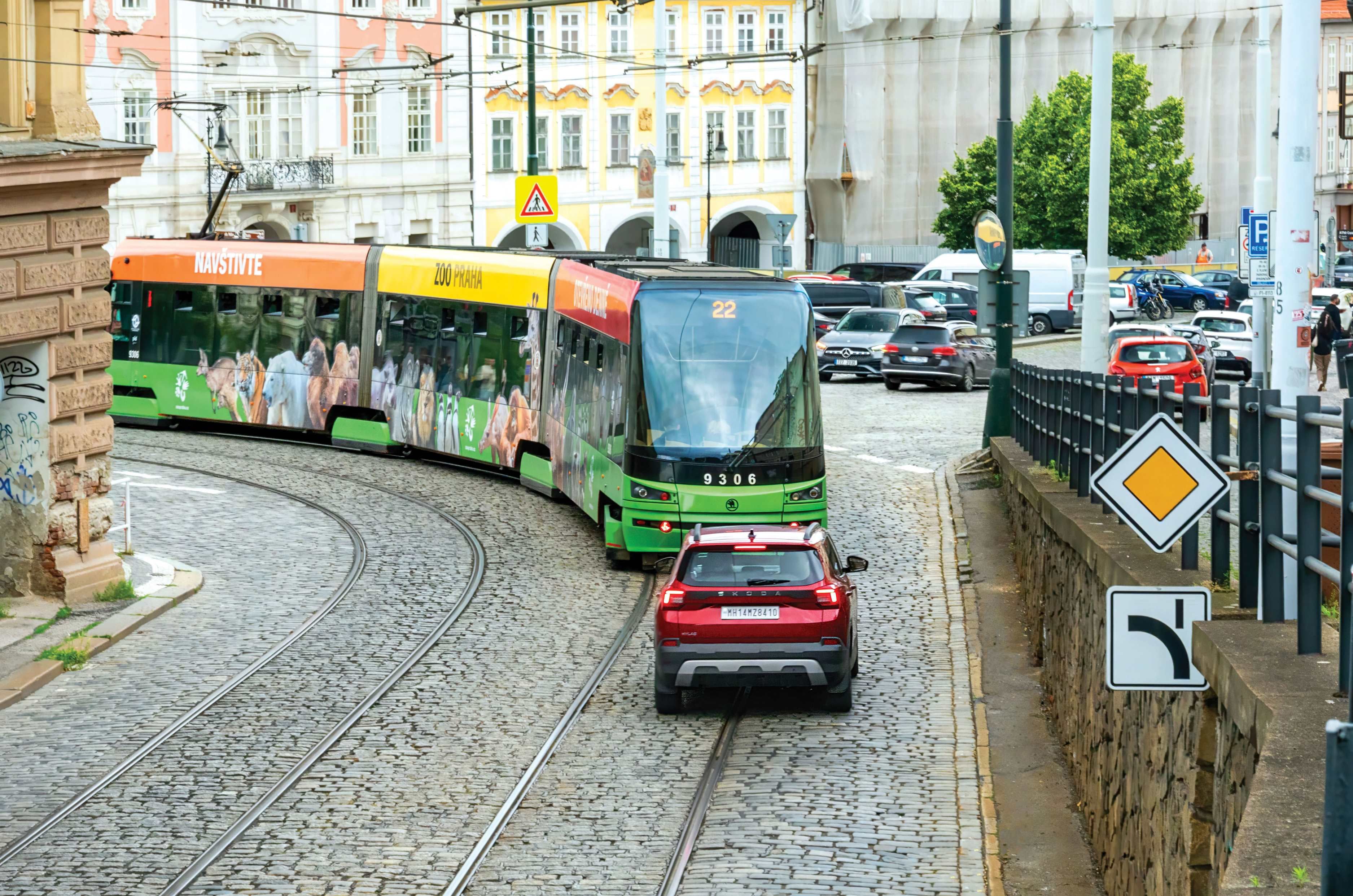
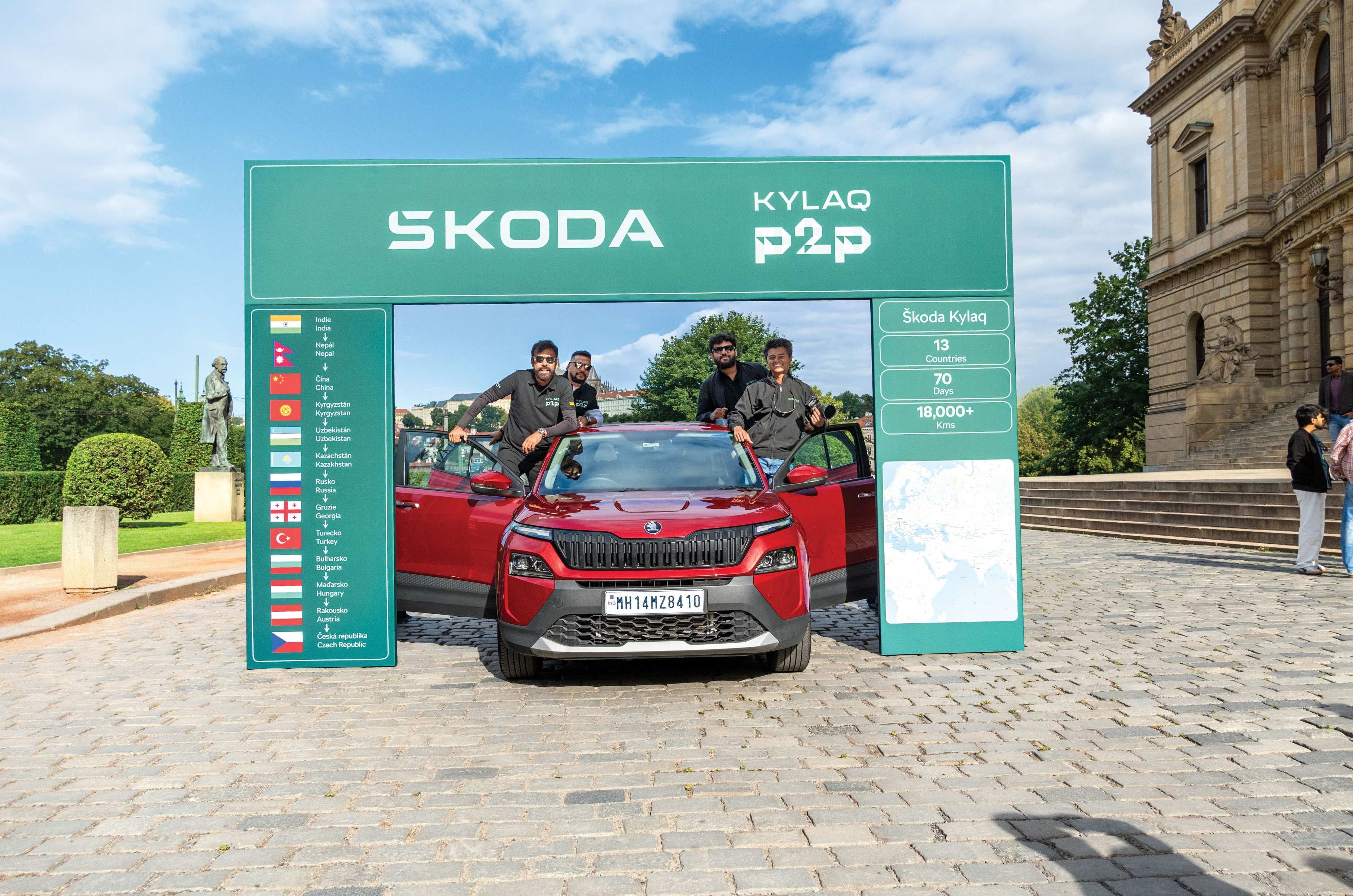
Prague was no more than 200-odd kilometres away, and the bittersweet feeling of it all coming to an end loomed over each and every one of us. As we crossed Brno and got closer to Mlada Boleslav (Skoda’s headquarters), we all reminisced about how gigantic this drive had been. Seventy days, almost 20,000km and not a single fault with the car, not even a puncture.
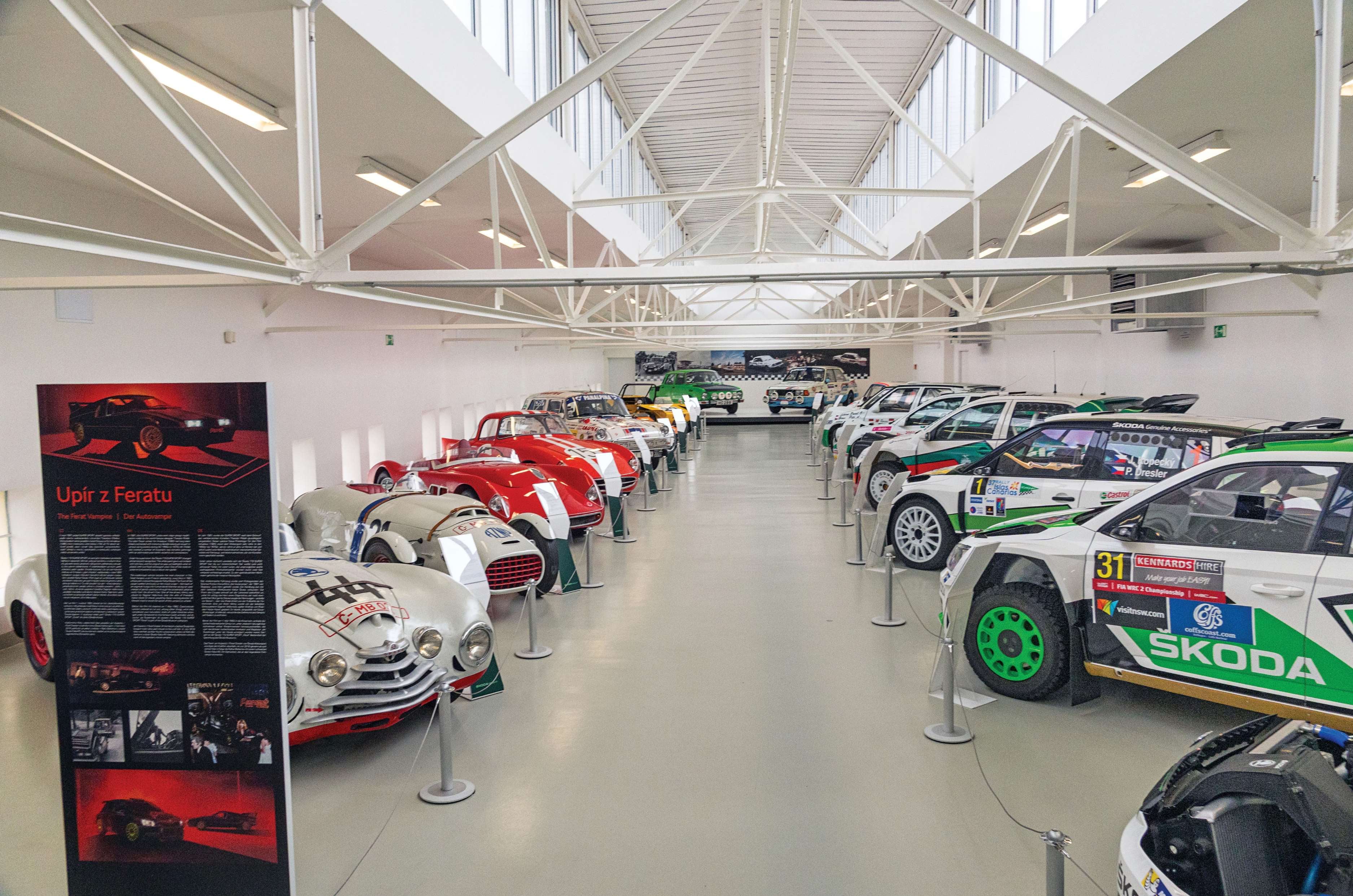
Rich history of rally and motorsport at the Skoda museum.
We crossed the Skoda factory gates with employees gazing in amusement and confusion. They had never seen this car, but strangely, it had a Skoda logo. As we parked the car near the iconic museum that preserves over 130 years of history, we had to peek in and see where it all started.
The fact that a simple bicycle gave birth to one of the largest auto manufacturers in the world is pretty astonishing. Road cars, racing cars and rally legends, Skoda has done it all. A reputation built over a century for being tough, resilient and deeply desirable.
Watching the Indian-made Kylaq sitting proud and faultless in the gleaming sunlight against the backdrop of Prague Castle, looking exactly like it did on the factory floor in Chakan, only proves that the 130-year-old ethos is still the same, no matter where Skoda builds a car.
The final picture in the camera that will always take us back in time
In a world rapidly shifting towards more screens and fewer experiences, a drive like P2P isn’t just a rarity; it’s a statement of defiance: as long as there’s a world to explore, we will find a way to drive across it.
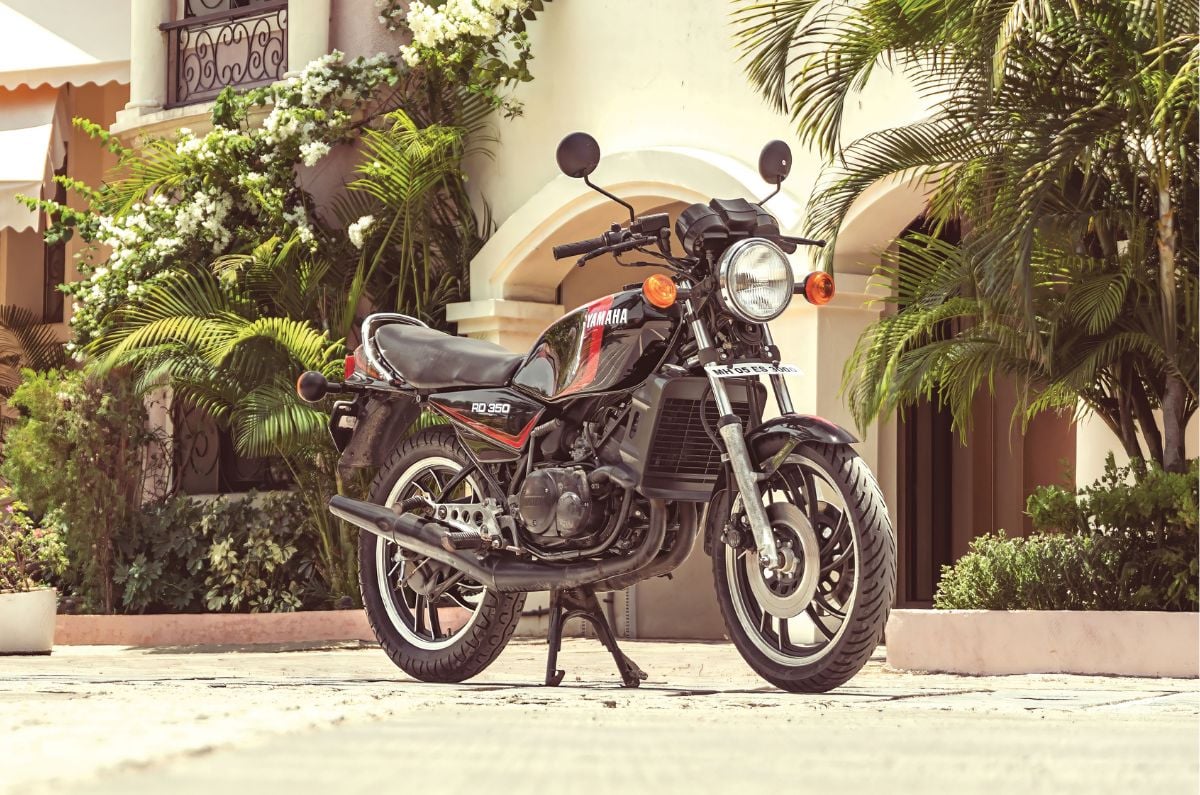
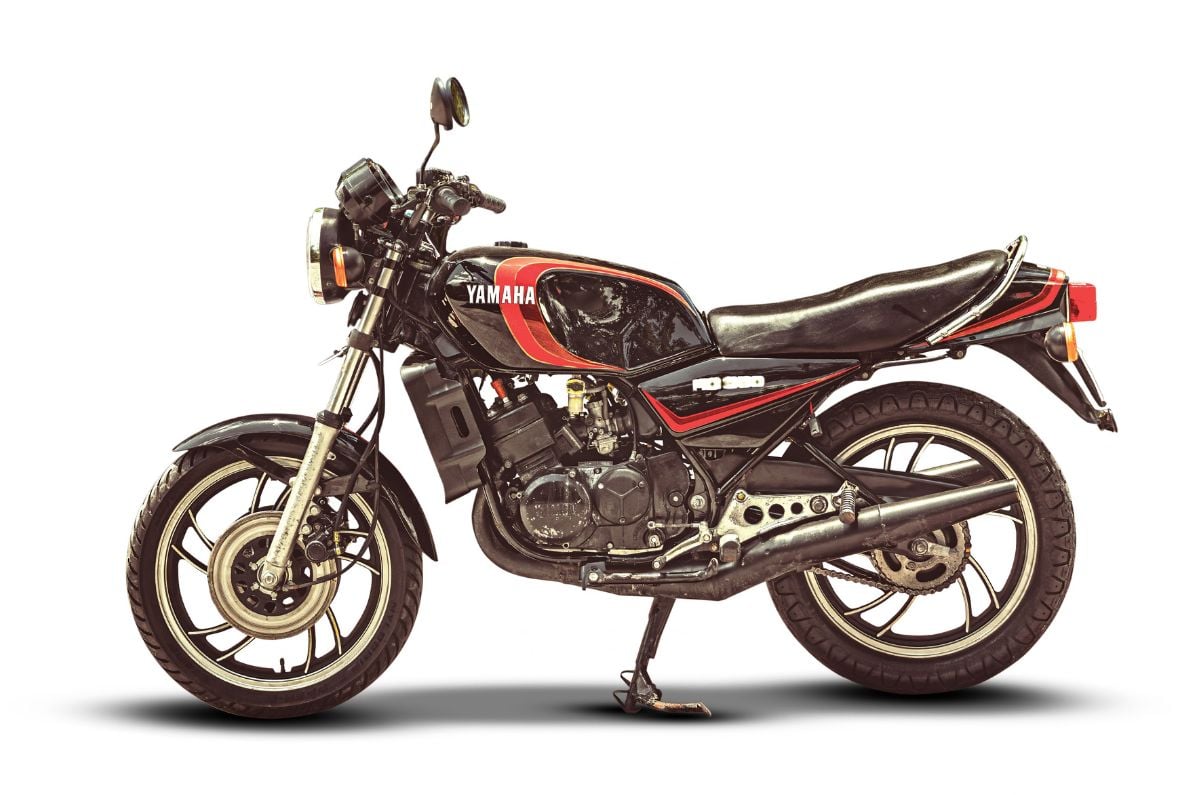
When most Indians picture a Yamaha RD350, a bike that looks like a UJM (Universal Japanese Motorcycle) with an air-cooled, twin-cylinder motor comes to mind. This was the bike on sale in India in the ‘80s via the Escorts licensing agreement, and it cemented Yamaha’s reputation as a maker of seriously fast motorcycles. However, during the same era, in global markets, there was a completely different bike being sold bearing the RD350 nameplate, crucially with an LC suffix (informally) attached to it. This version was never officially sold in India and packed a more powerful liquid-cooled motor, a sportier chassis and very different styling. What you see here is that very bike and, as you’ll read, this is quite a different animal to the air-cooled RD.
Genesis
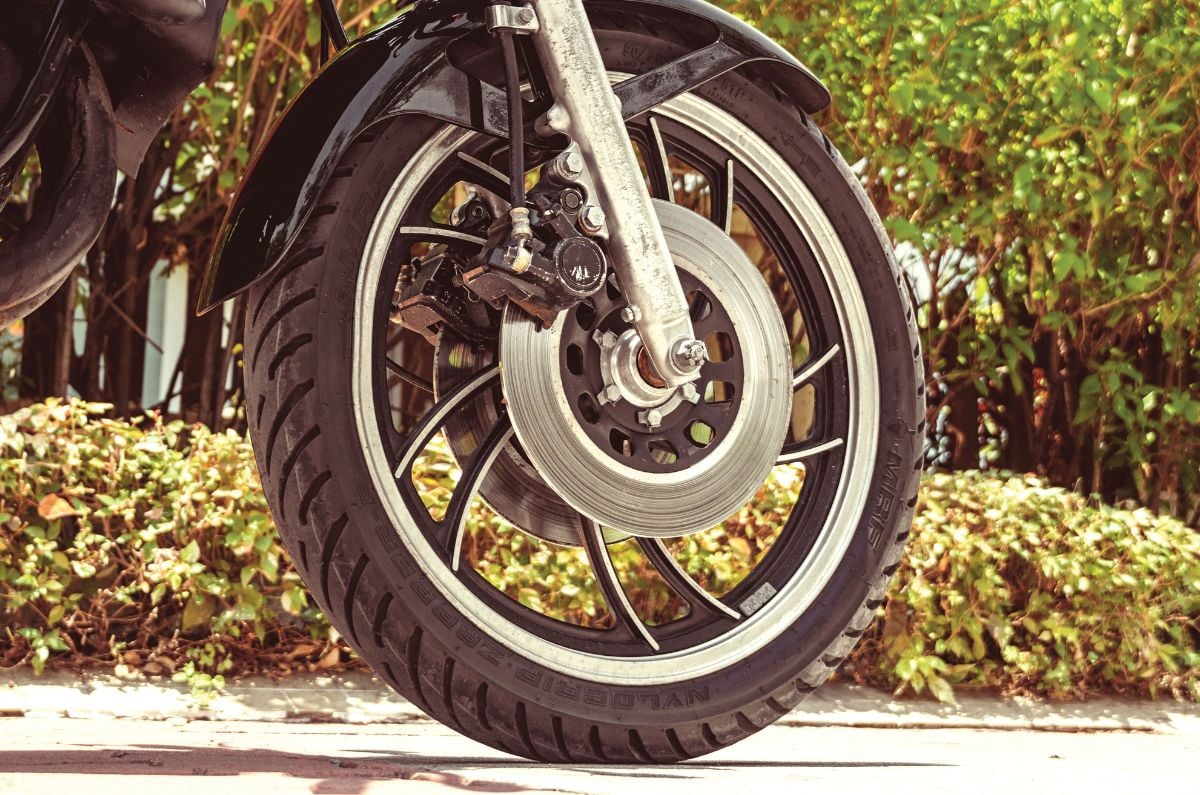
At the end of the air-cooled RD’s lifecycle, Yamaha must have realised that while it was undoubtedly violently quick, it was also like wielding a double-edged sword – the rider could get hurt when putting its power down. Taming such a ferocious engine would simply need more sophistication from the chassis. To achieve that, the LC moved from the air-cooled bike’s archaic chassis to a new one that was actually inspired by Yamaha’s TZ350 racer of the era. This was complete with monoshock rear suspension and lighter cast alloy wheels, which also brought in the convenience of tubeless tyres.
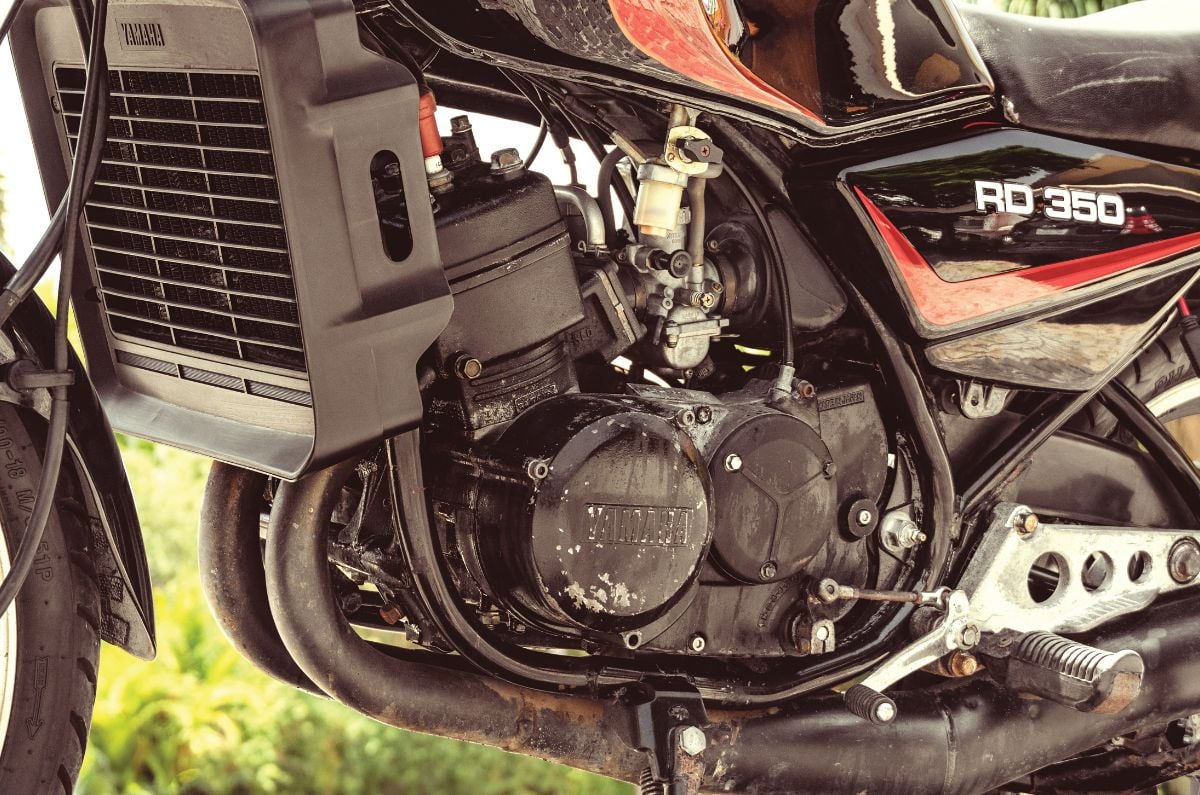
The LC suffix in its name stands for liquid cooling, and Yamaha moved to this more modern architecture to extract more output from the 347cc twin-cylinder motor. Plus, with liquid cooling, you have tighter tolerances and better reliability even when you keep pushing the performance envelope – which a lot of people back in the day did, because the LC was a common sight on racetracks overseas owing to its relative affordability.
Water-cooled twin needs revs to make power, but once you do so, you better hold on!
Over the years, there were subsequent versions that made more power courtesy of YPVS (Yamaha Power Valve System), and at one point, there was even a fully faired version. This very example is from 1980 and is one of the earliest ones from the LC’s lifecycle. Introductions made, now it’s time to get down to business – what is it like riding this nearly half-a-century-old bike?
Forward Progress
Today, this bike might be 46 years old, but it honestly doesn’t feel ancient like the air-cooled RD does in many respects. However, on both RDs, the star of the show is the vociferous and powerful engine. Once you find an empty road, it is monumental fun to chase the 9,500rpm redline, grab another gear and repeat this grin-inducing cycle. Blasting past 100-120kph is very easy and the performance that the ‘Elsie’ has to offer feels much stronger than the roughly 45-50hp output its engine can make at its peak in stock form.
Now, the three words “at its peak” are very important ones here because the bottom end is very dull and weak, and the engine vehemently protests being below 4,000rpm! Perhaps it was just this bike, but anything below 3,000rpm required constant clutch slipping, and the engine really didn’t like being there. Above that threshold, you’ll make quick progress, although the real fun is to be had between 6,000rpm and the 9,500rpm redline.
This is a trait demonstrated by pretty much every two-stroke machine, no matter its displacement, architecture or cylinder count, so this isn’t a criticism, more a personality trait you need to work your way around. In fact, I’d wager that the way the LC pulls in the top three and a half thousand revs is so hard that it feels like even some current-day 60hp machines will be left in the dust.
It is pleasantly well-behaved around a corner for a near 50 year old bike.
Another reason you’ll very much want to keep the revs up is the high-pitched banshee howl it has for an exhaust note. The sound emanating from its twin upswept pipes when the revs are high and you’ve got the throttle pinned is a thing of real beauty! It’s real childlike fun to listen to a 2-stroke motor roar its heart out, and this twin belts out an awesome soundtrack, one that – sadly – no longer exists today.
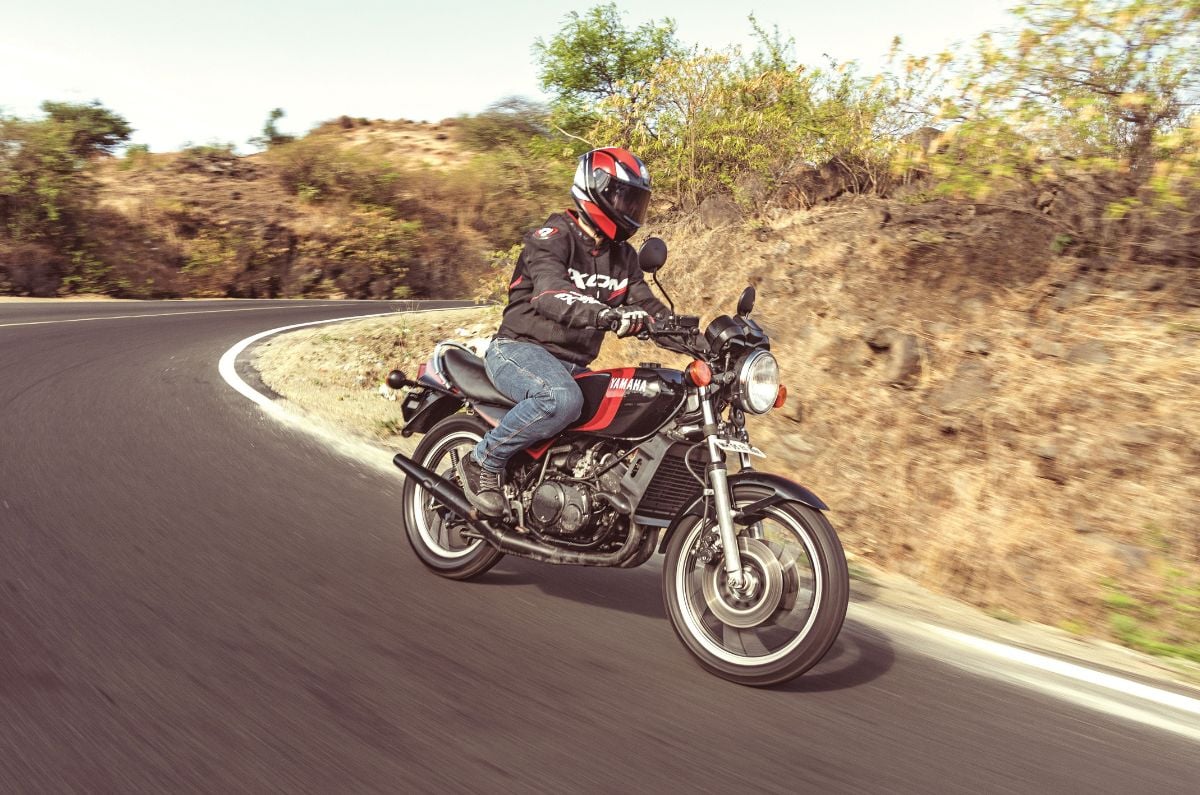
In the past, I have had the pleasure of riding an air-cooled RD350, and while the violent nature of the engine and its rather heavy clutch pull are also present here, the LC’s ride and handling are a pleasant surprise! Since the LC’s frame was inspired by the TZ350 racebike (but was unique and road-biased), you actually had decent handling to somewhat effectively wield the firepower on tap. It doesn’t feel as delightfully taut as a similarly sized modern machine, but it also doesn’t feel like a horse-drawn carriage when you take a corner at speed.
Another very welcome surprise was that the LC provided surprisingly good ride comfort. Over the few bad roads we encountered through the course of our shoot, it kept me reasonably comfortable. Truthfully, the one facet that feels woefully out of place here is the weak binders. The LC’s twin disc brakes are an upgrade on the air-cooled RD’s single disc (India-spec ones came with an even weaker front drum brake to cut costs), but the stopping force still feels more like a suggestion than a direct order.
Feeble brakes will instil the fear of God in you.
Intangible Special Sauce
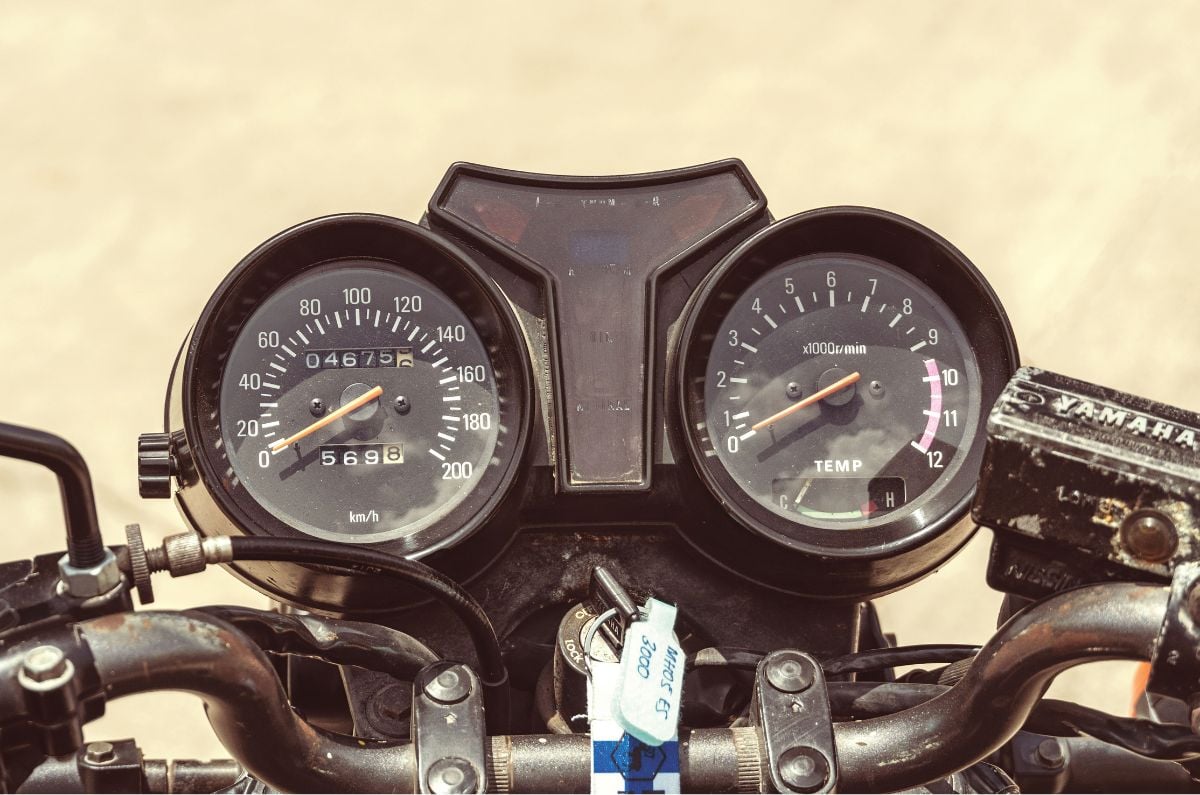
But this is not a review, and I’m not here to evaluate this bike – I’m here to experience it, and what an experience it has been! I’ve said this before and I’ll say it again, from the rider’s POV, it’s so refreshing and heartwarming to see two honest-to-goodness physical needles circling around in this day and age, and no TFT can come close to a set of analogue gauges.
Twin-pod analogue clocks a very refreshing sight today.
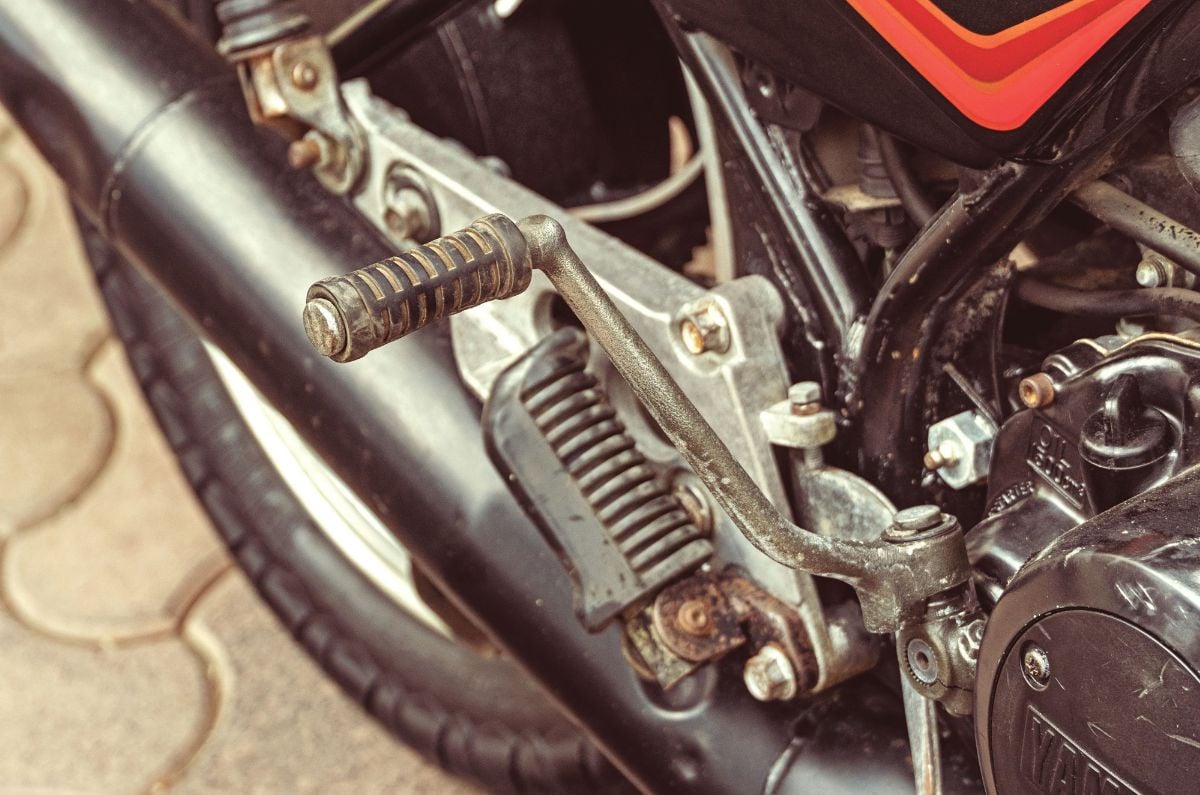
This was a raw, unadulterated machine before electronics and rider aids, so to keep yourself upright, you had to be both sensible and skilled. Of course, there’s no electric start here, and you’ll need to use your leg to start the motor, with a good old-fashioned swift kick! Speaking of, one quirk the LC had was that the rider’s footrest needed to be folded inward to make room for the kick lever to go down fully.
Rider footrest needs to be folded to kickstart the motor.
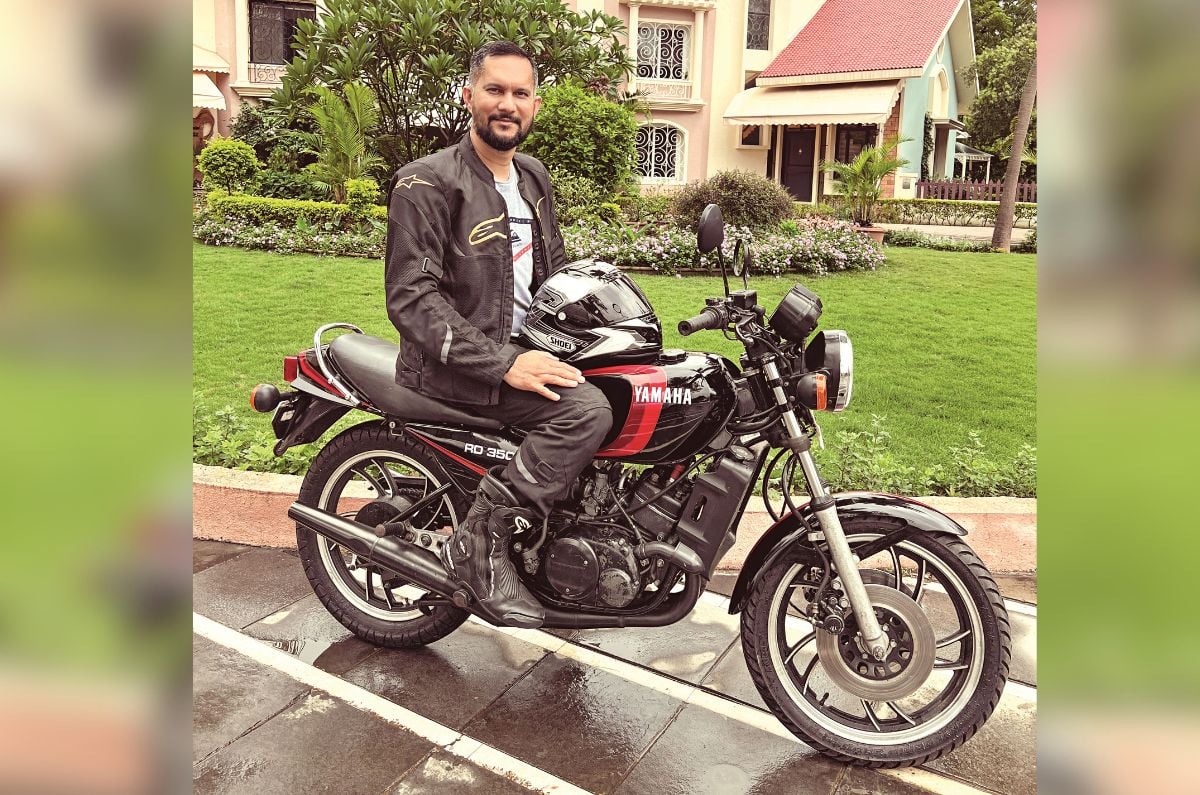
Yes, these are some areas where the LC very obviously feels its age, but today, even a single-cylinder 2-stroke machine is a rare sight, let alone a twin, and this liquid-cooled one is rarer than hen’s teeth because it was never officially sold in India. This bike was a private import back in the day (one of a single-digit handful), and currently it is in the custody of a very kind and gracious friend of mine who let us have it for a day!
Big props to the owner, Leo Noronha, for letting us have his ‘Elsie’ for a day.
One rather funny way the LC feels its age is that even though it was considered a properly sporty machine for its time, it’s actually not a hard-edged, uncompromising machine. The rider isn’t hunched over the ‘bar, there’s a flat seat, which will seat a pillion comfortably without them feeling like they’re perched precariously on the first floor, and it even has a centre stand!
I think somewhere along the way, racetrack performance, bragging rights for how much horsepower your machine has, and the latest gizmos and gadgets trumped rider involvement and real-world practicality, which seems like motorcycling may have veered off course.
Nevertheless, for one very happy morning, I got to tick off one of my bucket list riding dreams. This proverbial hero lived up to my expectations and how! Yes it’s old, yes it can be a bit cantankerous and temperamental at times, yes it pollutes the air a little too much and yes, it’s expensive to own and maintain, but all of those drawbacks pale in the face of the joy you’ll feel when you start riding!
This particular example is maintained at Kumar Auto Works in Andheri, Mumbai.
This isn’t a machine built to tick any boxes or fill a clearly demarcated role, and its only purpose is to put a smile on the rider’s face. All said and done, the RD350LC is an extinct breed in today’s ever-so-strict times, and as motorcyclists, we should ensure that bikes like these continue to survive and be enjoyed rather than just being relegated to a footnote in the history books.
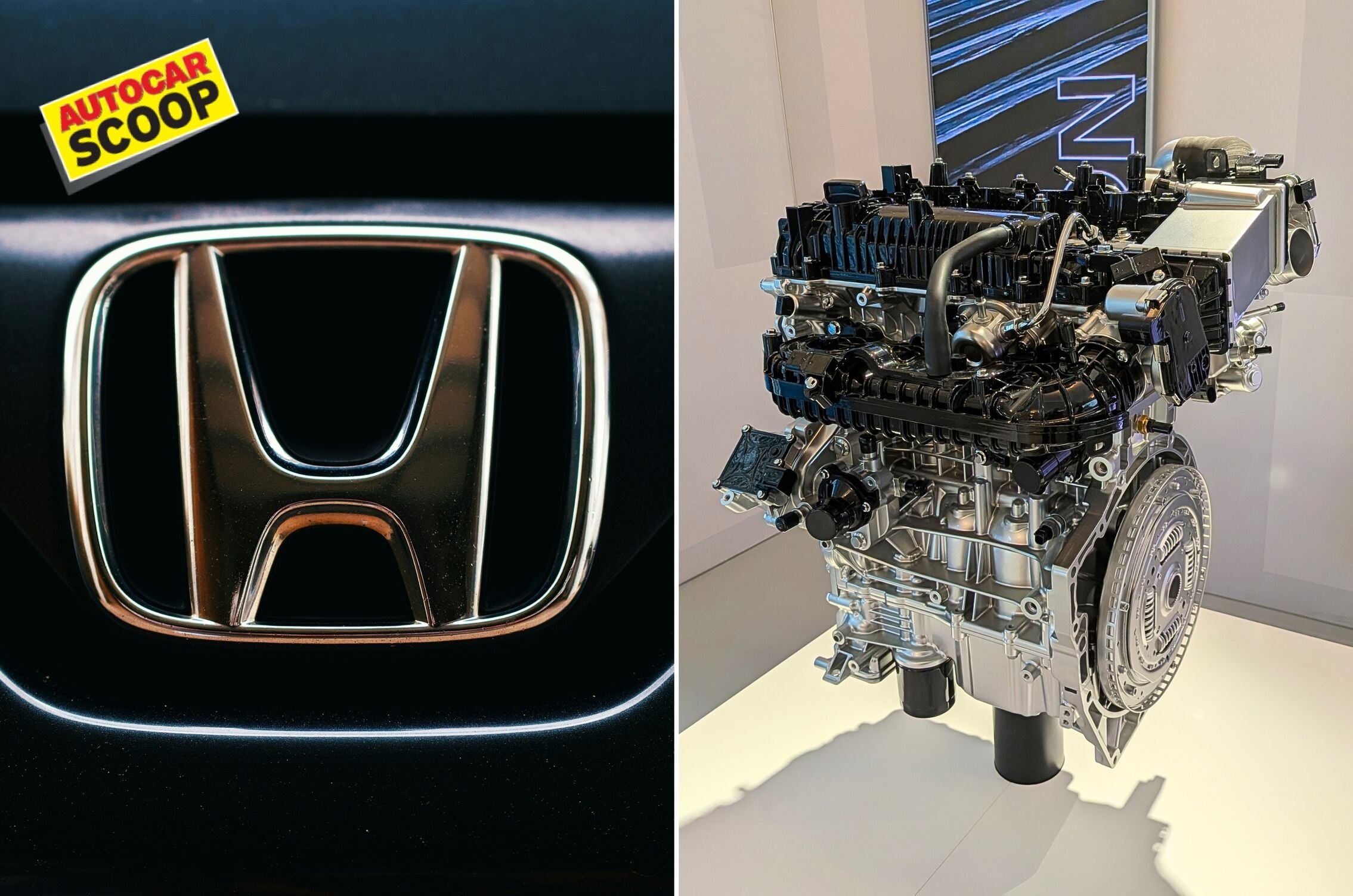
Honda Cars India is in talks with Horse Powertrain to outsource a 1.2-litre engine with petrol, hybrid and CNG options for an upcoming compact SUV, Autocar Professional, our sister publication, has learnt.
Horse Powertrain is a joint venture between Renault Group and Geely, with Saudi Aramco as a shareholder, and it specialises in combustion and hybrid powertrains. It already has a foothold in India: the new Renault Duster, due to launch on October 17, will use a Horse 1.8-litre hybrid. The company is keen to grow its customer base among Indian carmakers and is understood to be planning a local engine plant. Fully localised engines would give buyers like Honda a significant cost advantage.
For Honda, the move would be a major departure. Engines have long been the heart of its cars, and its reputation for performance, efficiency and reliability is built on them. Handing over this core component would once have been unthinkable.
However, Honda faces pressure on two fronts with its current 1.2- and 1.5-litre petrol line-up. It must meet tightening emission and fuel-efficiency norms, and it must offer the multiple fuel options Indian buyers increasingly want, especially CNG.
Developing all of that in-house for a price-sensitive segment is costly, and sourcing a ready multi-fuel engine family would solve both problems at once.
The upcoming compact SUV is understood to be under evaluation with an existing Honda platform used in Indonesia. A price range of Rs 9 lakh to Rs 12 lakh and an October 2028 start of production have been discussed as project targets. Honda has not confirmed the vehicle or its specifications.
A new way of working
The engine discussions are part of a radical change in Honda’s strategy to develop cars for India, with specialist partners taking on a larger share of the work from the outset.
Tata Technologies is being engaged for vehicle design and engineering execution, while TCS is expected to work on the infotainment system. Honda wants design, testing and supplier development to proceed in parallel, helping it bring new vehicles to market faster.
The company is targeting a reduction in the development cycle for a full model change from around 49 months to about 30 months. This is a target for its proposed development process, not a confirmed timeline for the compact SUV.
Honda’s new approach starts with the specifications and price required for India, rather than adapting a global product late in its development. The company would retain responsibility for overall vehicle performance targets and final validation, while engineering partners take a greater role in design, verification and supplier management.
Asked about the reported arrangements, Honda Cars India declined to confirm specific partners or programmes. “We work with a wide ecosystem of technology, engineering and supplier partners. However, we do not comment on specific partners, sourcing discussions or future powertrain programmes,” a company spokesperson told Autocar Professional.
“Honda is continuously strengthening its product development capabilities in India, with the objective of developing products that are increasingly relevant to Indian customers while also leveraging India’s growing engineering capabilities,” the spokesperson added.
Cost competitiveness is central to the plan. Honda intends to make greater use of Indian engineering and suppliers while retaining its vehicle performance and durability targets. It also sees an opportunity to attract customers moving from two-wheelers to their first car. Many of them currently choose rival car brands despite owning a Honda two-wheeler.
PF2 platform plan dropped
Separately, Autocar Professional understands that Honda has dropped the PF2 platform project, which had been expected to form the basis of the next-generation City sedan and Elevate SUV. The decision raises questions about which platform Honda will use for the successors to two of its key India models.
Honda Cars India declined to confirm the change. “We do not comment on speculation regarding specific future platforms or product-development programmes,” the spokesperson said.
The company stressed that the decision should not be read as a plan to discontinue either model. “City and Elevate are important models for Honda in India, and both will continue to play an important role in our business,” the spokesperson said. Details of their future generations, platforms and technologies will be announced at the appropriate time, the spokesperson added.
Honda declined to identify the architecture for future India-bound EVs. It said India would play an increasingly important role as a manufacturing and development base, with future products drawing on Honda’s global electrified technologies and local engineering capabilities.
जब इंसान थकता है तो सबसे पहले उसे आरामदायक बिस्तर और सुकून भरी नींद की तलाश होती है। लेकिन क्या आप जानते हैं कि जानवरों की दुनिया में सोने और आराम करने के तरीके काफी अलग होते हैं? कई जानवर ऐसे हैं जो बिना बिस्तर और बिना जमीन पर लेटे भी आराम कर लेते हैं। कोई खड़े-खड़े आंखें बंद कर लेता है, तो कोई पेड़ की डाल पर बैठकर ही नींद पूरी करता है। हाथी, जिराफ, घोड़े, जेब्रा और फ्लेमिंगो जैसे जानवरों की नींद से जुड़े ये तरीके प्रकृति की अनोखी समझ को दिखाते हैं। इनके लिए आराम सिर्फ शरीर को शांत करना नहीं, बल्कि आसपास के खतरे से खुद को सुरक्षित रखना भी होता है।
यही वजह है कि कई जानवरों ने अपने शरीर और व्यवहार में ऐसे खास बदलाव विकसित किए हैं, जो उन्हें अलग-अलग परिस्थितियों में आराम करने में मदद करते हैं। आइए जानते हैं उन जानवरों के बारे में, जो इंसानों से बिल्कुल अलग अंदाज में सोते हैं।
हाथी
अपने विशाल शरीर के बावजूद हाथी कभी-कभी खड़े होकर थोड़ी देर आराम या नींद ले लेते हैं। इससे उन्हें बार-बार जमीन पर लेटने और फिर उठने की जरूरत नहीं पड़ती। हालांकि, जब उन्हें ज्यादा गहरी नींद या लंबे आराम की जरूरत होती है, तो वे जमीन पर लेटना भी पसंद करते हैं। खड़े होकर आराम करना उन्हें आसपास की स्थिति पर नजर बनाए रखने में भी मदद कर सकता है।
जिराफ
जिराफ बेहद कम समय सोने वाले स्तनधारियों में गिने जाते हैं। वे परिस्थितियों के अनुसार दिन में करीब 30 मिनट से लेकर कुछ घंटों तक आराम कर सकते हैं। उनकी लंबी टांगों और गर्दन के कारण जमीन पर लेटना और फिर उठना आसान नहीं होता। इसलिए वे कई बार खड़े-खड़े ही आराम कर लेते हैं, ताकि खतरा महसूस होने पर तुरंत प्रतिक्रिया दे सकें।
मैना और कबूतर
मैना और कबूतर जैसे पक्षी पेड़ों की डालियों पर बैठकर आराम करते हैं और इसी स्थिति में सो भी सकते हैं। इनके पैरों में ऐसा प्राकृतिक तंत्र होता है, जिससे डाल पर बैठते ही पंजे मजबूती से पकड़ बना लेते हैं। यही वजह है कि नींद के दौरान भी वे आसानी से नीचे नहीं गिरते। ऊंचाई पर आराम करना उन्हें जमीन के कई शिकारियों से सुरक्षित रखने में भी मदद करता है।
फ्लेमिंगो
फ्लेमिंगो को एक पैर पर खड़े रहने के लिए जाना जाता है, लेकिन खास बात यह है कि वे इसी मुद्रा में सो भी सकते हैं। एक पैर पर खड़े रहने से पानी में शरीर की गर्मी कम निकलती है। उनके पैरों की बनावट और संतुलन की क्षमता इस अजीब दिखने वाली मुद्रा को लंबे समय तक बनाए रखने में मदद करती है।
जेब्रा
जंगल और खुले मैदानों में जेब्रा को हमेशा शिकारियों का खतरा बना रहता है। ऐसे में खड़े होकर आराम करना उनके लिए उपयोगी हो सकता है। इस तरह वे पूरी तरह जमीन पर लेटे बिना थोड़ी देर आराम कर सकते हैं और खतरा नजर आते ही तेजी से भाग सकते हैं। उनके पैरों में मौजूद विशेष संरचना लंबे समय तक खड़े रहने में मदद करती है।
गाय
गाय भी खड़े होकर आराम कर सकती हैं, खासकर तब जब वे अपने आसपास के माहौल पर नजर रखना चाहती हैं। हालांकि, लंबे आराम और बेहतर नींद के लिए वे जमीन पर लेटती हैं। सुरक्षित माहौल मिलने पर गायों को अक्सर समूह में लेटे हुए आराम करते देखा जा सकता है।
घोड़े
घोड़े खड़े होकर सोने की अपनी क्षमता के लिए शायद सबसे ज्यादा मशहूर हैं। इनके पैरों में ‘स्टे अपरेटस’ (Stay Apparatus) नाम की विशेष व्यवस्था होती है, जो पैरों को स्थिर स्थिति में रखने में मदद करती है। इससे घोड़ा बिना लगातार मांसपेशियों पर दबाव डाले खड़ा रहकर आराम कर सकता है। जंगल में रहने वाले घोड़ों के लिए यह क्षमता खास तौर पर उपयोगी है, क्योंकि खतरा सामने आते ही वे जल्दी से दौड़ सकते हैं।