BS7 draft likely in couple of months: MoRTH

BS7 draft likely in couple of months: MoRTH

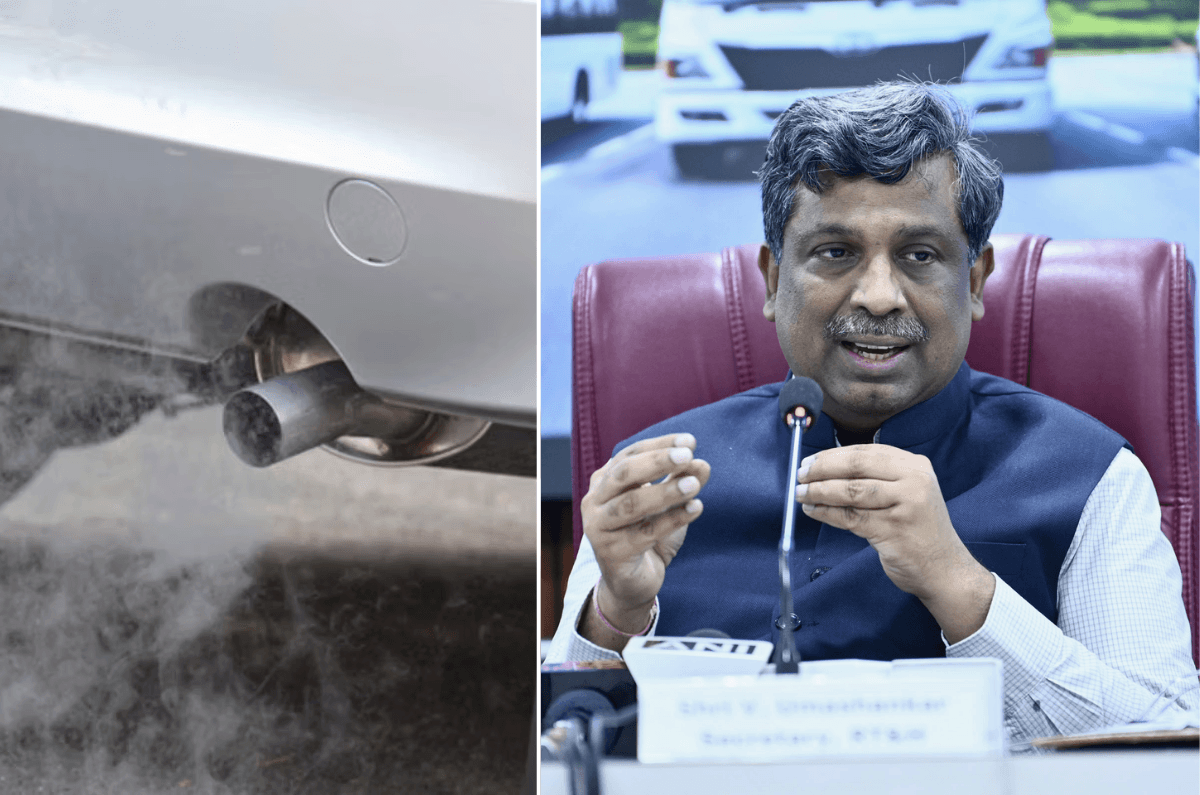
“We are ready with the next level of Bharat Stage [emission] standards and the final consultations are underway. We hopefully should be in a position to bring out the draft in a couple of months’ time for the BS 7 introduction,” Ministry of Road Transport and Highways (MoRTH) Secretary V Umashankar said at the 2026 SIAM Annual Convention in Delhi. 

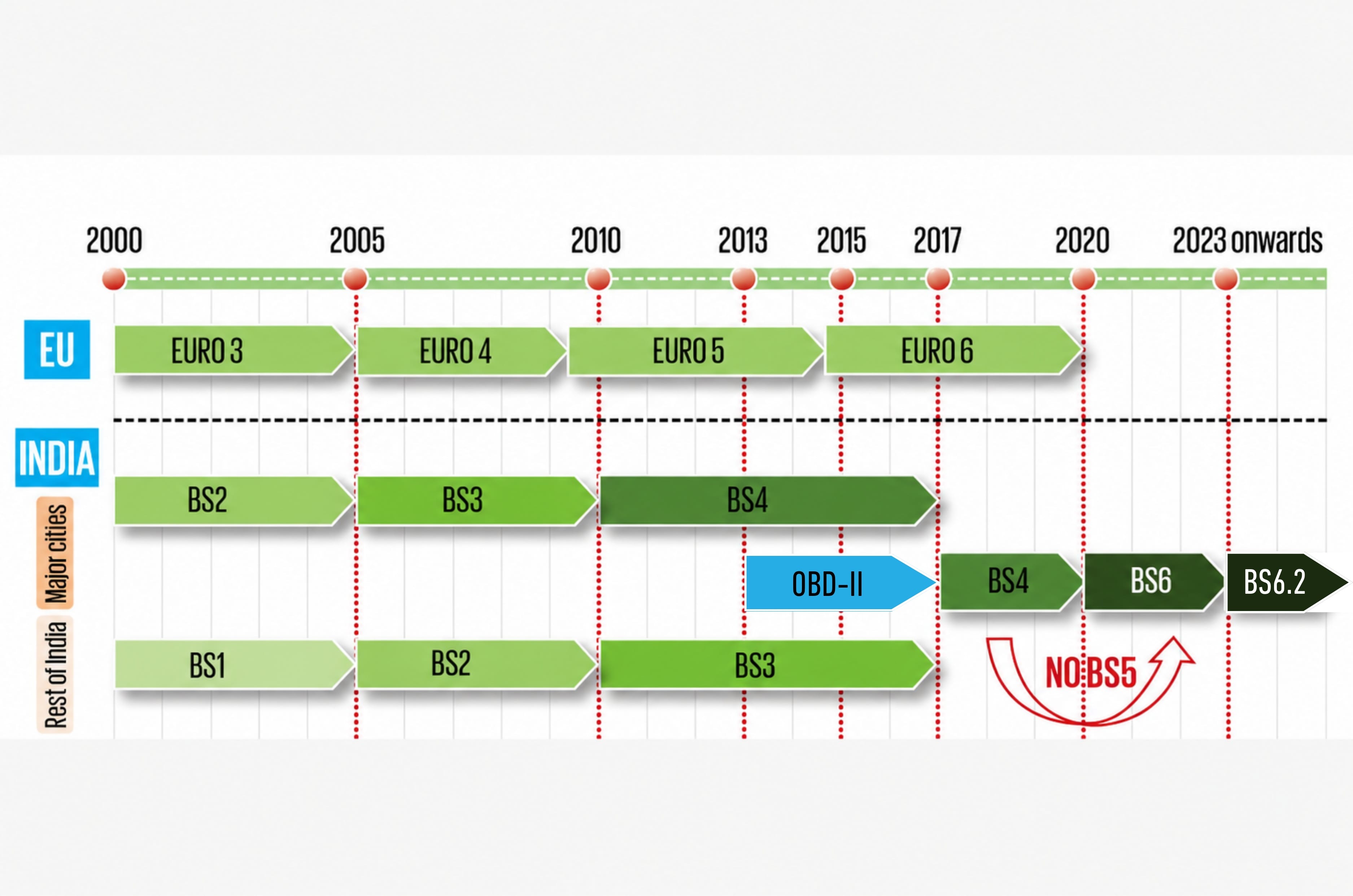
Bharat Stage norms limit the emissions of pollutants like hydrocarbons, sulphur and oxides of nitrogen from vehicles. India currently follows BS6 Phase 2 (or BS6.2) norms, which came into effect on April 1, 2023. “I think the industry is also preparing itself for it. The key challenge there would be the timelines,” Umashankar added.

What changes with BS7?

BS7 will put a greater focus on pollution levels from vehicles in real-world driving conditions rather than laboratory testing. Unlike the dramatic transition from BS4 to BS6, the move to BS7 is a natural progression from BS6. This should put relatively less pressure on manufacturers to upgrade their vehicles. Prices may also go up slightly due to the upgrades. Some models could even be discontinued if upgrading them to meet BS7 norms is not financially viable, something that we saw during the move from BS4 to BS6 in 2020.

Bharat Stage emission norms so far

Bharat Stage emission norms were introduced in India in the year 2000 with the implementation of BS1 standards, while also rolling out BS2 across major cities in a phased manner. BS2 was based on European emission regulations, with the main difference being the test cycle’s top speed – 90kph versus 120kph in Europe.

India remained one stage behind Europe until 2010, after which the oil industry could not supply the low-sulphur fuel needed to progress to BS5 before eventually leapfrogging from BS4 to BS6 in 2020.

How are CAFE norms different from BS standards?

Corporate Average Fuel Economy (CAFE) norms deal with overall fuel consumption, specifically the quantity of fuel consumed. Imposed on a carmaker’s entire fleet, and not on an individual model, it’s a limit set on the total emission of carbon dioxide produced. These norms force manufacturers to make more fuel efficient cars, which impacts many other things. Whereas, Bharat Stage norms measure emissions at a vehicular level.

Bharat NCAP 2.0 to come into effect from October 2027: Gadkari

Bharat NCAP 2.0 to come into effect from October 2027: Gadkari

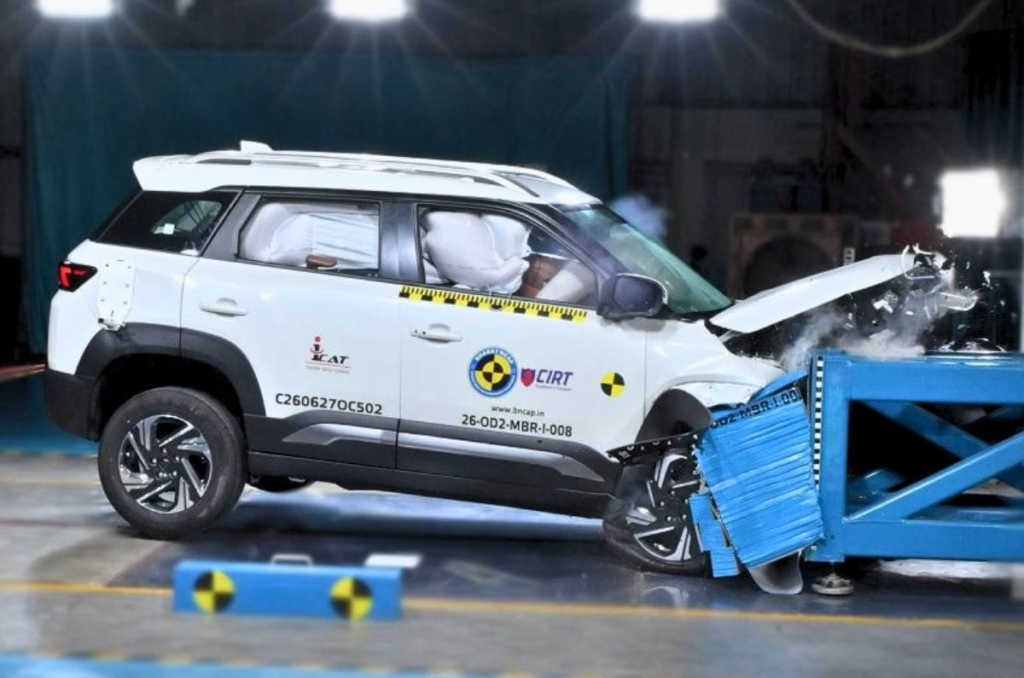
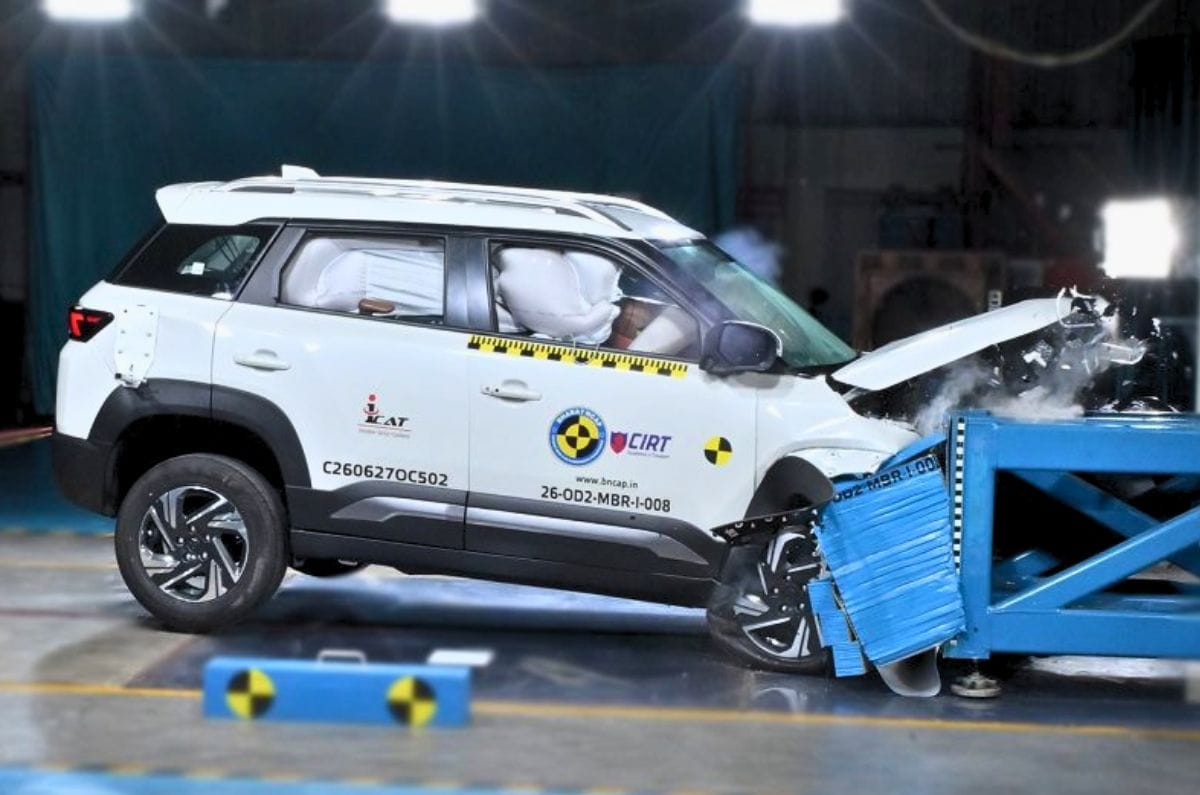
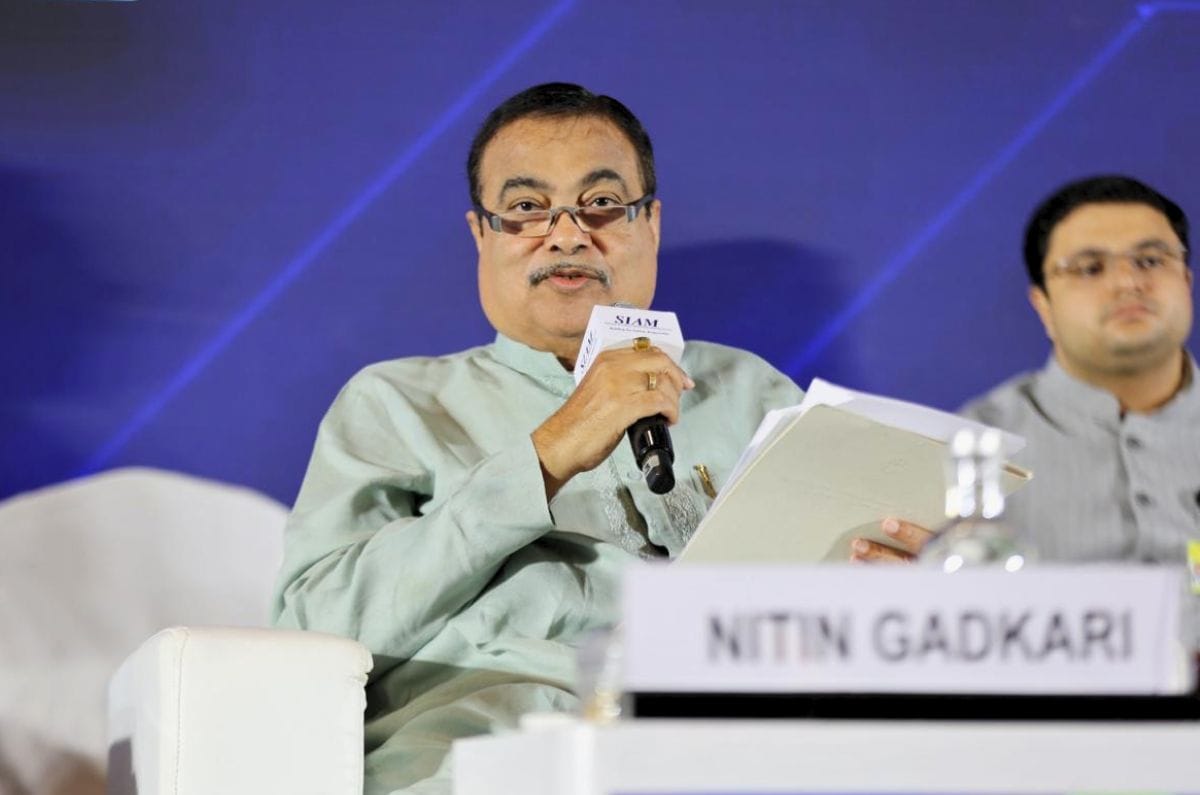
At the 66th SIAM Annual Convention, Union Minister of Road Transport and Highways, Nitin Gadkari, revealed that the government is preparing for the second phase of Bharat NCAP that’s set to take effect from October 2027. The new phase of the BNCAP, Gadkari said, is planned to broaden the vehicle assessment programme to areas such as crash avoidance, pedestrian safety and post-crash response.

  1. Entire crash chain will be evaluated, expanding beyond occupant protection
  2. Gadkari invited manufacturers to submit suggestions based on global safety practices

Bharat NCAP 2.0 plans: What was revealed?

“Entire crash chain” to be evaluated with the Bharat NCAP 2.0 programme 

“We are going ahead with making Bharat NCAP 2. This is a very important program [which will be] valid from October 2027,” said Gadkari while addressing the SIAM convention. The next phase is expected to assess a wider range of safety parameters. “We are going to evaluate the entire crash chain,” he added while identifying three broad areas – avoiding a crash, pedestrian protection, and post-crash evacuation and care – rather than focusing only on how vehicles protect occupants during a crash.

Image source: @siamindia on X

The ministry will also look at new safety technologies available globally as well as solutions being developed by Indian start-ups. Gadkari also invited vehicle manufacturers to submit suggestions based on their research, technical experience and safety practices followed in other markets “If you have any good suggestions, don’t hesitate, come to us”, he said.

Notified draft rules from MoRTH in November 2025 proposed 100-point evaluation criteria

In November 2025, MoRTH proposed new rules for the next phase of Bharat NCAP under AIS-197 (Revision 1), aimed at making the car safety testing programme more detailed and stricter. Under the proposed system, cars would receive a score out of 100 based on five areas: crash protection (55 points), protection for pedestrians and other vulnerable road users (20 points), safe driving features (10 points), accident avoidance technology (10 points), and post-crash safety (5 points).

The requirements for a 5-star safety rating would also become tougher. From 2027, a car would need to score at least 70 out of 100 to receive 5 stars, while from 2029, the minimum score would increase to 80 points.

The proposal also calls for more crash tests. In addition to the existing tests, cars would have to undergo a 50kph full-width frontal crash test, a 32kph oblique pole impact test and a 50kph rear-impact test. The speed of the existing side-pole test would also increase from 29kph to 32kph. Another major change is that cars would need to offer curtain airbags and electronic stability control (ESC) as standard to qualify for a star rating.

Ceigall India Share Price: गुजरात-महाराष्ट्र में ₹609 करोड़ का मिला REC पावर प्रोजेक्ट, शेयर 4% चढ़ा

Ceigall India Share Price: इंफ्रास्ट्रक्चर इंडस्ट्रीज कंपनी Ceigall India के शेयर 26 अगस्त को एनएसई पर 4% से ज्यादा की छलांग लगाते नजर आए। दरअसल, REC पावर डेवलपमेंट एंड कंसल्टेंसी (RECPDCL) की ओर से दिए गए एक बड़े इंटर-स्टेट ट्रांसमिशन प्रोजेक्ट के लिए सबसे कम बोली लगाने वाली कंपनी (L-1) बनी है ।

सिविल इंजीनियरिंग कंपनी ने बताया कि इस प्रोजेक्ट के लिए 35 साल की अवधि तक सालाना ट्रांसमिशन चार्ज ₹6,086.70 मिलियन (यानी ₹608.67 करोड़) होगा।Ceigall India के शेयरों में लगातार चार दिनों से बढ़त देखी जा रही है और इस दौरान इनमें लगभग 9% की बढ़ोतरी हुई है।

टैरिफ-आधारित ग्लोबल कॉम्पिटिटिव बिडिंग और ई-रिवर्स ऑक्शन के ज़रिए मिले इस प्रोजेक्ट में लकाडिया फेज़-II (7.5 GW), जाम खंभालिया फेज़-II (5.5 GW) और जामनगर फेज़-I (1 GW) से बिजली पहुंचाने (इवैक्यूएशन) के लिए एक कॉमन ट्रांसमिशन सिस्टम बनाना शामिल है।

फाइलिंग के अनुसार, इसके दायरे में 765/400 kV का एयर-इंसुलेटेड सबस्टेशन (AIS) और गुजरात व महाराष्ट्र में लगभग 300 km लंबी ट्रांसमिशन लाइनें बनाना शामिल है।

प्रोजेक्ट को पूरा करने की अवधि 36 महीने है, जबकि ऑपरेशनल अवधि तय कमीशनिंग तारीख से 35 साल होगी। यह प्रोजेक्ट RECPDCL (एक घरेलू कंपनी) ने टैरिफ-आधारित कॉम्पिटिटिव बिडिंग फ्रेमवर्क के तहत ट्रांसमिशन सर्विस प्रोवाइडर चुनने की प्रक्रिया के हिस्से के तौर पर दिया था।

कंपनी ने कहा कि यह कॉन्ट्रैक्ट ‘रिलेटेड-पार्टी ट्रांज़ैक्शन’ (आपसी हितों से जुड़े लेन-देन) के दायरे में नहीं आता है और न तो प्रमोटर, न ही प्रमोटर ग्रुप और न ही ग्रुप की कंपनियों का प्रोजेक्ट देने वाली कंपनी में कोई हित है।

इस ट्रांसमिशन सिस्टम का मकसद पहचाने गए बिजली उत्पादन क्षेत्रों से बिजली पहुंचाने में मदद करना और इंटर-स्टेट ट्रांसमिशन नेटवर्क को मजबूत करना है।

बुधवार को Ceigall India के शेयर इंट्राडे में 6.5% तक बढ़कर ₹345.35 पर पहुंच गए। दोपहर 2.14 बजे तक स्टॉक लगभग 5% की बढ़त के साथ ₹340.75 पर ट्रेड कर रहा था। पिछले महीने इसमें 0.74% की बढ़त हुई है और इस साल अब तक यह लगभग 25% ऊपर है।

सीगल इंडिया को फ्रंटियर हाईवे का ऑर्डर मिला

25 अगस्त, 2026 की कंपनी एक्सचेंज फाइलिंग के अनुसार, सीगल इंडिया को सड़क परिवहन और राजमार्ग मंत्रालय (MoRTH) से अरुणाचल प्रदेश में फ्रंटियर हाईवे के एक हिस्से के लिए ₹704.70 करोड़ का सड़क निर्माण ऑर्डर मिला है। इस कॉन्ट्रैक्ट की कीमत में GST शामिल नहीं है।

यह प्रोजेक्ट सुशी इंफ्रा एंड माइनिंग के साथ एक जॉइंट वेंचर के ज़रिए पूरा किया जाएगा, जिसमें सीगल इंडिया की 74% हिस्सेदारी होगी, जबकि सुशी इंफ्रा के पास बाकी 26% हिस्सेदारी होगी। इस कॉन्ट्रैक्ट में NH-913 के लाडा-सारली सेक्शन के 82.4 किलोमीटर लंबे हिस्से (km 85.60 से km 168.00 तक) का निर्माण इंजीनियरिंग, प्रोक्योरमेंट और कंस्ट्रक्शन (EPC) आधार पर किया जाएगा।

Advait Energy Share Price: मध्य प्रदेश पावर ट्रांसमिशन कंपनी से मिला ऑर्डर, शेयर को लगे पंख, 8% उछला

(डिस्क्लेमर: मनीकंट्रोल.कॉम पर दिए गए विचार एक्सपर्ट के अपने निजी विचार होते हैं। वेबसाइट या मैनेजमेंट इसके लिए उत्तरदाई नहीं है। यूजर्स को मनी कंट्रोल की सलाह है कि कोई भी निवेश निर्णय लेने से पहले सार्टिफाइड एक्सपर्ट की सलाह लें।

MoRTH proposes mandatory V2V communication systems from October 2028

Vehicle-to-Vehicle communication

The Ministry of Road Transport and Highways (MoRTH) has proposed making Vehicle-to-Vehicle (V2V) communication systems mandatory on all newly manufactured vehicles from October 1, 2028. According to the draft notification, the mandate will apply to L-, M- and N-category vehicles, which include two-wheelers, passenger vehicles and commercial vehicles. The proposal seeks to amend the Central Motor Vehicles Rules (CMVR), 1989.

  • AIS-230 standard introduced for V2V systems
  • Will use On-Board Units operating between 5.875GHz-5.925GHz
  • Public consultation open for 30 days

MoRTH proposes phased rollout of Vehicle-to-Vehicle communication systems

MoRTH’s draft notification proposes a phased rollout of V2V communication systems. Manufacturers voluntarily offering the technology from October 1, 2027, will have to ensure they comply with AIS-230, the new Automotive Industry Standard for V2V communication systems. If approved in its current form, the fitment of V2V communication systems will become mandatory for all newly manufactured L-, M- and N-category vehicles from October 1, 2028.

The Automotive Industry Standard lays down the minimum technical, functional, performance, environmental and cybersecurity requirements for V2V communication systems. These include radio performance, receiver sensitivity and selectivity, Global Navigation Satellite System (GNSS) and positioning requirements, electrical and power-supply requirements, electromagnetic interference and compatibility, cybersecurity and communication security, and performance requirements for road safety applications.

Furthermore, the standard specifies the use of factory-fitted On-Board Units (OBUs) based on Cellular Vehicle-to-Everything (C-V2X) technology operating in the 5.875GHz to 5.925GHz frequency band. The Department of Telecommunications exempted the use of this spectrum from licensing requirements through a notification issued on June 10, 2026.

The standard also defines safety applications such as Emergency Brake Alert, Forward Collision Warning, Wrong-way Driving Alert and Emergency Vehicle Alert, enabling vehicles to exchange real-time information and warn drivers of potential hazards. The draft notification has been opened for public consultation for 30 days, following which the ministry will review the comments received before issuing the final notification.

What is Vehicle-to-Vehicle (V2V) communication?

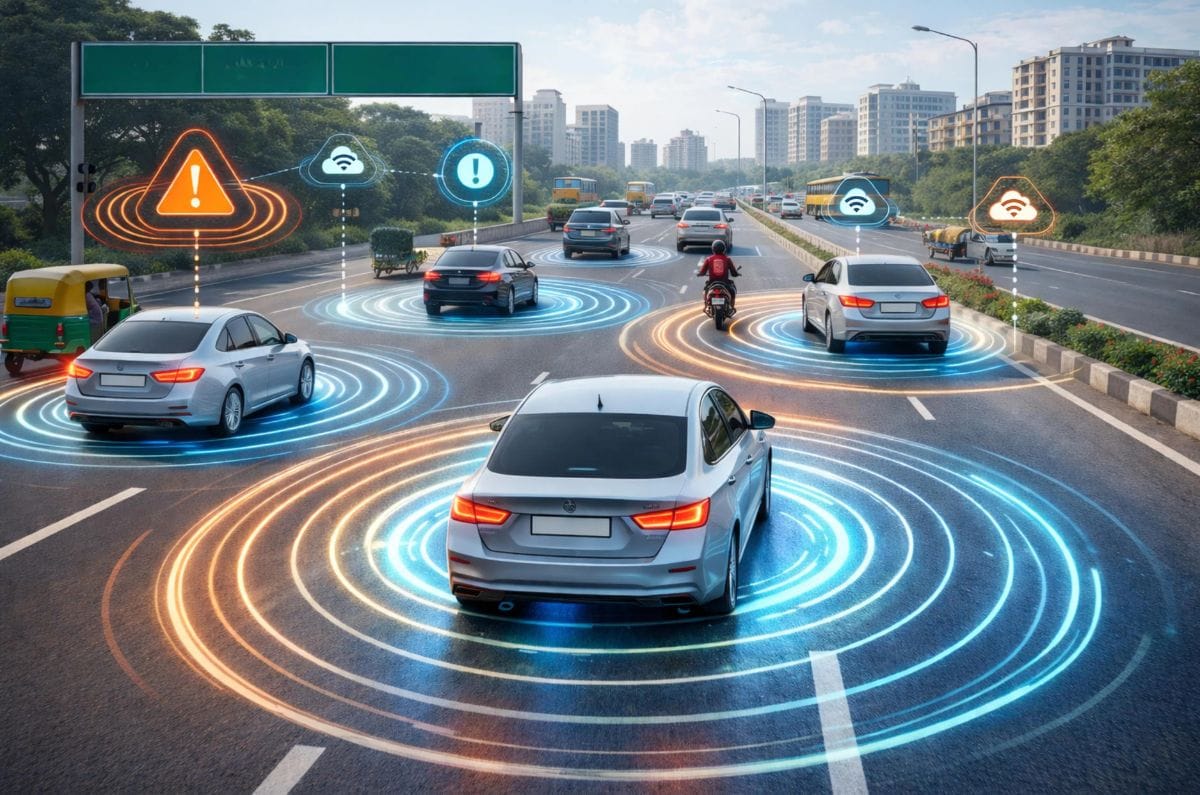
The technology enables vehicles equipped with V2V communication systems to wirelessly exchange real-time information such as speed, position, direction and acceleration. While conventional Advanced Driver Assistance Systems (ADAS) rely on cameras, radars, other onboard sensors and driver inputs, V2V allows vehicles to communicate directly with one another using Cellular Vehicle-to-Everything (C-V2X) technology.

This enables quicker detection of potential hazards that may not yet be visible to the driver and, according to the ministry, “is therefore expected to complement ADAS and support proactive accident prevention, connected mobility and future intelligent transport applications.” The ministry also says the technology can provide warnings for situations involving sudden braking, forward-collision risks, unsafe lane changes and approaching emergency vehicles.

Challenges on the implementation of V2V communication systems

While the proposal marks a major step towards introducing V2V communication systems in India, it’s not without challenges. Automakers not only need to integrate and validate these systems across various models in their line-up but also ensure they work as intended between vehicles made by different manufacturers.

In terms of costs, earlier estimates had suggested the On-Board Units (OBUs) could add around Rs 5,000 to Rs 7,000 to the cost of each vehicle, although the latest draft notification doesn’t explore the cost angle of integrating V2V technology. With connected-vehicle technologies, there will also be a need for robust cybersecurity measures, while importance must also be given to other factors such as data protection and user privacy.

When first announcing plans to introduce V2V technology earlier this year, Union Road Transport and Highways Minister Nitin Gadkari said that it would allow drivers to “talk to each other like pilots.” However, despite being under development globally for more than two decades, widespread adoption of the technology remains limited.

Also read

E20 fuel contamination linked to rise in engine issues

Govt proposes extending PUCC validity for BS6 cars from 1 year to 3 years

Government proposes new safety norms for two-wheeled ambulances

Government proposes new safety norms for two-wheeled ambulances

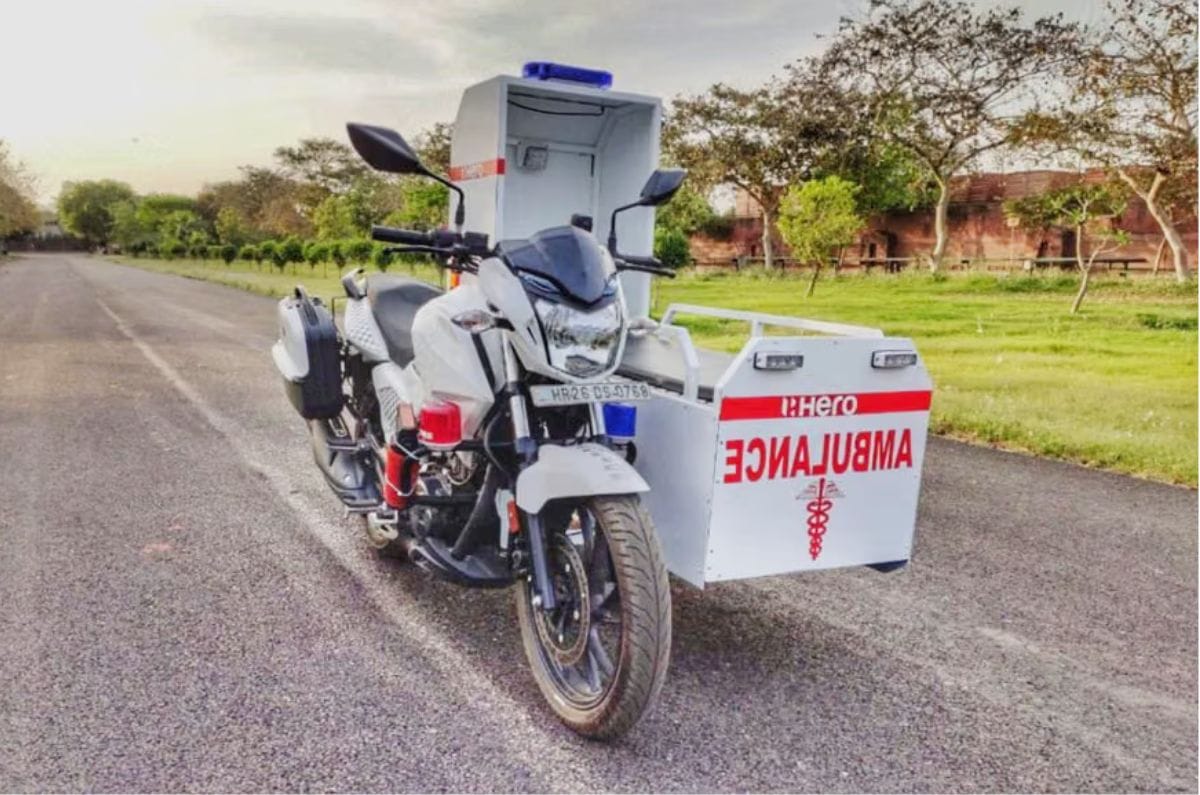
The Ministry of Road Transport and Highways (MoRTH) has proposed a new set of regulations for two-wheeled road ambulances, outlining dedicated safety, equipment and periodic fitness standards under the Central Motor Vehicles Rules, 1989.

  1. Two-wheeled ambulances to get dedicated fitness inspection norms
  2. Fitness certificate renewal proposed every two years
  3. Full AIS:209 compliance for new vehicles from October 1, 2027

What the draft rules propose

Under the draft amendments, two-wheeled road ambulances will undergo dedicated fitness inspections covering the structural integrity of the patient unit, tyres and wheels, emergency warning lights, stretcher mounting and locking mechanisms, patient restraint belts, stretcher loading systems and the presence of a valid fire extinguisher.

The proposal also fixes the validity of renewed fitness certificates for these vehicles at two years.

Compliance timeline

MoRTH has proposed that top-mounted warning lights on two-wheeled ambulances comply with AIS:209 (Part 1) from October 1, 2026. From October 1, 2027, all newly manufactured L2-category two-wheeled ambulances will have to meet the complete AIS:209 standard. These vehicles will also be allowed to operate only within areas notified by the respective state governments.


PUC Validity: अब हर साल PUC बनवाने का झंझट खत्म, BS-VI गाड़ियों का 3 साल तक वैध रहेगा सर्टिफिकेट!

Vehicle PUC Certificate New Rules: देश में करोड़ों कार-बाइक मालिकों के लिए एक राहत भरी खबर है। सड़क परिवहन और राजमार्ग मंत्रालय गाड़ियों के प्रदूषण सर्टिफिकेट को लेकर एक बड़ा बदलाव करने जा रहा है। सरकार के नए प्रस्ताव के तहत BS-VI (BS-6) निजी वाहनों का पीयूसी सर्टिफिकेट अब 3 साल तक के लिए मान्य हो सकता है।

सड़क परिवहन और राजमार्ग मंत्रालय ने केंद्रीय मोटर वाहन (संशोधन) नियमावली, 2026 का ड्राफ्ट नोटिफिकेशन जारी कर दिया है। सरकार ने इस नए प्रस्ताव पर आम जनता और हितधारकों से 30 दिनों के भीतर सुझाव और आपत्तियां मांगी हैं।

वाहनों की श्रेणी के हिसाब से PUC की नई वैधता

गैजेट नोटिफिकेशन के अनुसार, वाहनों के एमिशन नॉर्म्स और उनके इस्तेमाल (कमर्शियल या प्राइवेट) के आधार पर प्रदूषण नियंत्रण प्रमाणपत्र (PUC) की वैधता इस प्रकार तय की जाएगी:

A. BS-VI (BS-6) निजी वाहन

शुरुआती 6 साल तक: प्रथम पंजीकरण की तारीख से पहले 6 साल तक 3 साल की वैधता मिलेगी।

6 से 10 साल पुराने वाहन: 6 साल से अधिक लेकिन 10 साल तक पुराने होने पर 1 साल की वैधता मिलेगी।

10 साल से पुराने वाहन: 10 वर्ष से अधिक पुराने होने पर 6 महीने की वैधता रहेगी।

B. BS-VI (BS-6) कमर्शियल वाहन

शुरुआती 6 साल तक: प्रथम पंजीकरण की तारीख से पहले 6 साल तक 2 साल की वैधता मिलेगी।

6 से 10 साल पुराने वाहन: 1 साल की वैधता मिलेगी।

10 साल से पुराने वाहन: 6 महीने की वैधता रहेगी।

C. अन्य BS स्टेज वाले वाहन

BS-I, BS-II और BS-III वाहन: इन गाड़ियों के लिए पीयूसी की वैधता 3 महीने रहेगी।

BS-IV (BS-4) वाहन: बीएस-4 उत्सर्जन मानकों वाली सभी गाड़ियों के लिए पीयूसी की वैधता 6 महीने होगी।

रिन्यूअल के लिए बनाए गए खास नियम

ड्राफ्ट में पीयूसी सर्टिफिकेट के नवीनीकरण को लेकर भी स्पष्टता दी गई है। अगर कोई वाहन मालिक अपने पीयूसी समाप्त होने की तारीख से 15 दिन पहले ही नया सर्टिफिकेट बनवा लेता है, तो नया सर्टिफिकेट पुरानी समाप्ति तिथि से ही प्रभावी माना जाएगा। अन्य सभी मामलों में, नया सर्टिफिकेट उसकी जारी होने या नवीनीकरण की तारीख से लागू होगा।

30 दिनों में मांगे गए सुझाव और आपत्तियां

सरकार द्वारा 22 जुलाई 2026 को हस्ताक्षरित और 24 जुलाई 2026 को भारत के राजपत्र में प्रकाशित इस ड्राफ्ट नोटिफिकेशन पर 30 दिनों का समय दिया गया है। आम जनता या कोई भी हितधारक अपने सुझाव या आपत्तियां ईमेल आईडी comments-morth@gov.in पर भेज सकते हैं। 30 दिन की अवधि समाप्त होने के बाद प्राप्त सुझावों पर विचार करके केंद्र सरकार अंतिम नियम लागू करेगी।

India drafts cybersecurity rules for connected vehicles

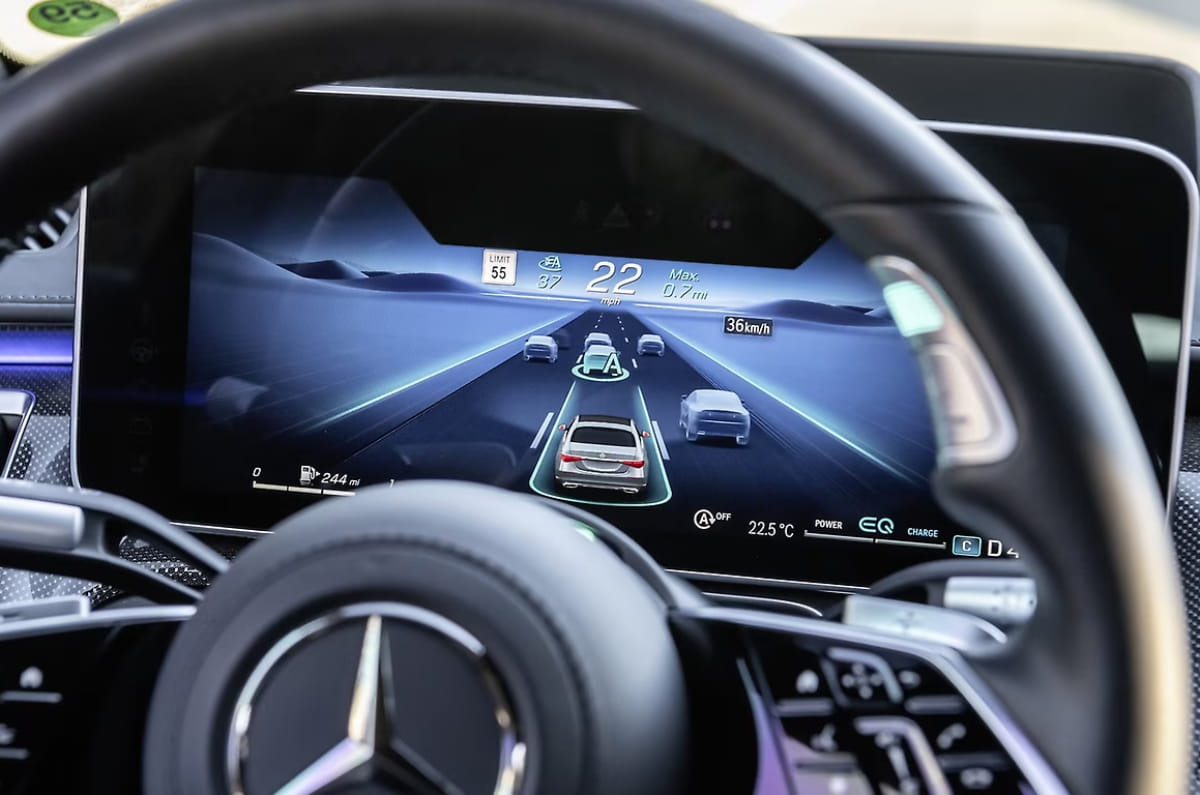
Mercedes Drive Pilot

The Ministry of Road Transport and Highways (MoRTH) has published draft rules that would, for the first time, make cybersecurity and software-update management mandatory for certain categories of motor vehicles in India. The proposed regulations introduce two new provisions under the Central Motor Vehicles Rules, 1989, and are open for public comments for 30 days before being finalized.

  1. New rules introduce mandatory cybersecurity and software-update standards
  2. New standards to remain in force until BIS issues its own norms
  3. India aligns with vehicle regulations followed in the EU, Japan and South Korea

New cybersecurity and software-update rules proposed

The draft notification proposes adding Rules 125-T and 125-U to the Central Motor Vehicles Rules, 1989. Rule 125-T covers vehicle cybersecurity and requires eligible vehicles to comply with AIS-189, India’s cybersecurity standard, while Rule 125-U mandates compliance with AIS-190 for software updates. Both standards will remain in force until the Bureau of Indian Standards (BIS) issues its own specifications, at which point those will take over.

The cybersecurity rules will apply to passenger vehicles, commercial vehicles and tractors equipped with at least one electronic control unit (ECU), as well as quadricycles with Level 3 or higher automated driving capability. The software-update requirements will cover a wider range of vehicles, including passenger vehicles, commercial vehicles, trailers and semi-trailers.

Rollout to be phased until 2029

Rather than applying the rules to all vehicles at once, MoRTH has proposed a phased rollout based on risk exposure. Vehicles with Level 3 or higher automated driving systems will be the first to comply, with deadlines beginning in October 2026 for new models and April 2027 for existing ones. Vehicles capable of receiving over-the-air (OTA) software updates will follow between April and October 2028, while all other vehicles with software-update capability will come under the rules from October 2029.

India moves closer to global regulations

According to the draft notification, the proposed rules align India with the United Nations regulatory framework already adopted in markets such as the European Union, Japan and South Korea, where cybersecurity and software-update management are mandatory requirements for vehicle type approval.

Stock in Focus: रेलवे से डिफेंस तक… इन 6 कंपनियों को मिले बड़े ऑर्डर, 22 जून को शेयरों पर रहेगी नजर

Stock in Focus: रेलवे, डिफेंस, डेटा सेंटर, पावर और इलेक्ट्रिक मोबिलिटी सेक्टर से जुड़ी कंपनियों को बड़े ऑर्डर मिले हैं। इनसे कंपनियों की ऑर्डर बुक और रेवेन्यू को सहारा मिलने की उम्मीद है। यही वजह है कि सोमवार के कारोबार में इन शेयरों पर निवेशकों की खास नजर रह सकती है।

Knowledge Marine

इंजीनियरिंग कंपनी Knowledge Marine & Engineering Works (KMEW) को Inland Waterways Authority of India (IWAI) से 66.11 करोड़ रुपये का ऑर्डर मिला है। कंपनी 20 यात्रियों की क्षमता वाली 10 हाइब्रिड इलेक्ट्रिक फेरी बनाएगी। ऑर्डर में मैन्युफैक्चरिंग के साथ 5 साल का मेंटेनेंस भी शामिल है। यह KMEW का पहला बाहरी कमर्शियल शिपबिल्डिंग ऑर्डर है। इसके जरिए कंपनी ग्रीन शिपबिल्डिंग सेगमेंट में भी कदम रख रही है।

इस बीच SBI Funds Management ने कंपनी में 1.64% हिस्सेदारी खरीदी है। वहीं प्रमोटर्स ने ब्लॉक डील के जरिए कुछ हिस्सेदारी बेची है। शुक्रवार को कंपनी का शेयर 0.91% की बढ़त के साथ 2,072.90 रुपये पर बंद हुआ।

Power Mech

बिजली कंपनी Power Mech Projects को JSW Thermal Energy से 1,008.90 करोड़ रुपये का ऑर्डर मिला है। कंपनी पश्चिम बंगाल के सालबोनी में बन रहे 2×800 मेगावाट के थर्मल पावर प्रोजेक्ट में सिविल और स्ट्रक्चरल काम करेगी। इस प्रोजेक्ट को 36 महीने में पूरा करना है।

यह हाल के दिनों में कंपनी को मिला दूसरा बड़ा ऑर्डर है। इससे पहले जून में Adani Infrastructure Management Services से 266 करोड़ रुपये मिला था। अप्रैल में मुंबई मोनोरेल के संचालन-रखरखाव के लिए 296 करोड़ रुपये का ऑर्डर मिला था। शुक्रवार को Power Mech Projects का शेयर NSE पर 1.24% की बढ़त के साथ 2,849 रुपये पर बंद हुआ।

RVNL

सरकारी रेल कंपनी RVNL को एक अन्य सरकारी कंपनी NMDC से 2,977 करोड़ रुपये का ऑर्डर मिला है। कंपनी आंध्र प्रदेश के विशाखापट्टनम में 10 मिलियन टन सालाना क्षमता वाला बफर स्टॉकपाइल और ब्लेंडिंग यार्ड बनाएगी। यह प्रोजेक्ट NMDC की लॉजिस्टिक्स क्षमता बढ़ाने में मदद करेगा। साथ ही लौह अयस्क और दूसरे कच्चे माल की ढुलाई व हैंडलिंग को भी आसान बनाएगा।

प्रोजेक्ट को 42 महीने में पूरा करना है। बफर स्टॉकपाइल और ब्लेंडिंग यार्ड की मदद से स्टॉक का बेहतर मैनेजमेंट किया जा सकता है। इससे ग्राहकों को एक जैसी गुणवत्ता वाला माल उपलब्ध कराने में भी मदद मिलती है। RVNL के शेयरों में शुक्रवार को 1.32% की गिरावट आई थी और ये 244.31 रुपये पर बंद हुए थे।

Kirloskar Oil

इंजन बनाने वाली Kirloskar Oil Engines (KOEL) को HyperNext से भारत में बन रहे एक बड़े डेटा सेंटर प्रोजेक्ट के लिए ऑर्डर मिला है। कंपनी 192 मेगावाट क्षमता के पावर जनरेशन सिस्टम उपलब्ध कराएगी। इसके तहत KOEL के 2500 kVA Optiprime Dual Core सिस्टम की 96 यूनिट लगाई जाएंगी। इनका इस्तेमाल AI, क्लाउड कंप्यूटिंग और बड़े डेटा सेंटर इंफ्रास्ट्रक्चर को बिजली बैकअप देने के लिए होगा।

कंपनी का कहना है कि AI और क्लाउड सेवाओं की बढ़ती मांग के बीच डेटा सेंटरों को मजबूत बैकअप पावर सिस्टम की जरूरत है। शुक्रवार को कंपनी का शेयर 0.83% की बढ़त के साथ 2,000 रुपये पर बंद हुआ।

Bharat Forge

डिफेंस कंपनी Bharat Forge को रक्षा मंत्रालय से 425 करोड़ रुपये का ऑर्डर मिला है। कंपनी भारतीय नौसेना के कोलकाता-क्लास युद्धपोतों के लिए Gas Turbine Generators (GTGs) की सप्लाई करेगी। ये 1.25 मेगावाट क्षमता वाले सिस्टम जहाजों पर बिजली उत्पादन के लिए इस्तेमाल होंगे और मौजूदा कम क्षमता वाले सिस्टम की जगह लेंगे। इस ऑर्डर को अगले 5 साल में पूरा किया जाएगा।

इससे एक दिन पहले Bharat Forge की रक्षा इकाई Kalyani Strategic Systems ने अमेरिकी कंपनी AM General के साथ साझेदारी की थी। दोनों कंपनियां दुनिया भर की सेनाओं के लिए 155mm आर्टिलरी गन प्लेटफॉर्म पेश करेंगी। शुक्रवार को Bharat Forge का शेयर 1.45% की बढ़त के साथ 2,048 रुपये पर बंद हुआ।

Tata Motors CV

टाटा ग्रुप की Tata Motors CV को 3,400 से ज्यादा इलेक्ट्रिक कमर्शियल व्हीकल्स (eCV) के ऑर्डर मिले हैं। इनमें करीब 2,000 छोटे कमर्शियल व्हीकल और पिक-अप, 900 ट्रक और 500 बसें शामिल हैं। इन गाड़ियों का इस्तेमाल ई-कॉमर्स, लॉजिस्टिक्स, FMCG, सीमेंट, स्टील, माइनिंग, एयरपोर्ट ऑपरेशन्स और यात्री परिवहन जैसे क्षेत्रों में किया जाएगा। कंपनी का कहना है कि यह बड़े पैमाने पर इलेक्ट्रिक व्हीकल्स को अपनाए जाने का संकेत है।

हाल ही में कंपनी ने पुराने ट्रकों और बसों को बदलने की सरकारी योजना में शामिल होने के लिए MoRTH के साथ समझौता किया है। शुक्रवार को Tata Motors का शेयर 401.95 रुपये पर बंद हुआ।

Stocks to Buy: ये 10 स्टॉक्स दे सकते हैं 47% तक रिटर्न, एक्सपर्ट ने दी खरीदने की सलाह

Disclaimer: मनीकंट्रोल.कॉम पर दिए गए सलाह या विचार एक्सपर्ट/ब्रोकरेज फर्म के अपने निजी विचार होते हैं। वेबसाइट या मैनेजमेंट इसके लिए उत्तरदायी नहीं है। यूजर्स को मनीकंट्रोल की सलाह है कि कोई भी निवेश निर्णय लेने से पहले हमेशा सर्टिफाइड एक्सपर्ट की सलाह लें।

Tata Motors को 3400 से ज्यादा eCV के ऑर्डर, सोमवार को शेयर भर सकता है फर्राटा

टाटा ग्रुप के कमर्शियल व्हीकल बिजनेस टाटा मोटर्स के शेयरों में सोमवार, 22 जून को अच्छी तेजी देखने को मिल सकती है। कंपनी को माल ढुलाई, लॉजिस्टिक्स और यात्री परिवहन जैसे क्षेत्रों में 3,400 से ज्यादा इलेक्ट्रिक कमर्शियल वाहनों (eCV) के ऑर्डर मिले हैं। इस बारे में कंपनी ने शेयर बाजारों को जानकारी दी है। एक्सचेंज फाइलिंग में टाटा मोटर्स ने कहा कि इन ऑर्डर्स में लगभग 2,000 छोटे कमर्शियल व्हीकल्स और पिक-अप्स, 900 ट्रक और 500 बसें शामिल हैं।

इनका इस्तेमाल कई तरह के कामों में होगा, जैसे कि ई-कॉमर्स, लॉजिस्टिक्स, FMCG और FMCD डिस्ट्रीब्यूशन, शहर के अंदर आवाजाही, और साथ ही सीमेंट, स्टील, माइनिंग और एयरपोर्ट ऑपरेशन्स जैसे मुश्किल क्षेत्रों में भी। इसके अलावा, ये वाहन शहर के अंदर और शहरों के बीच यात्री परिवहन के लिए भी इस्तेमाल किए जाएंगे।

टाटा मोटर्स के मुताबिक, इतने बड़े पैमाने पर इलेक्ट्रिक व्हीकल्स का इस्तेमाल असल हालात में इलेक्ट्रिक मोबिलिटी समाधानों पर ग्राहकों के बढ़ते भरोसे को दिखाता है। साथ ही, यह पायलट प्रोग्राम से आगे बढ़कर अलग-अलग तरह के कामों में EV को बड़े पैमाने पर और ऑपरेशनल तौर पर शामिल करने की दिशा में एक अहम बदलाव का संकेत है। टाटा मोटर्स के शेयर की कीमत वर्तमान में BSE पर 401.95 रुपये है। कंपनी का मार्केट कैप 1.48 लाख करोड़ रुपये है। शेयर BSE 100 इंडेक्स का हिस्सा है।

12 महीनों में eCV पोर्टफोलियो किया काफी मजबूत

कंपनी ने कहा कि पिछले 12 महीनों में उसने अपने इलेक्ट्रिक कमर्शियल व्हीकल पोर्टफोलियो को काफी मजबूत किया है। अलग-अलग तरह के कामों और ऑपरेशंस की स्थितियों के हिसाब से नई पीढ़ी के eCV पेश किए हैं। टाटा मोटर्स की पहले से ही बड़ी संख्या में इलेक्ट्रिक गाड़ियां चल रही हैं। कई शहरों में इसकी 3,800 से ज्यादा इलेक्ट्रिक बसें ऑपरेशनल हैं। ये बसें कुल मिलाकर 55 करोड़ किलोमीटर से ज्यादा चल चुकी हैं। छोटे कमर्शियल व्हीकल्स सेगमेंट की बात करें तो सड़कों पर 17,000 से ज्यादा Tata eSCV चल रहे हैं।

Park Medi World के शेयर में 26% तक उछाल का दम, एमके ग्लोबल ने ‘बाय’ रेटिंग के साथ शुरू किया कवरेज

हाल ही में सरकार के साथ किया है एक समझौता

हाल ही में टाटा मोटर्स ने सड़क परिवहन और राजमार्ग मंत्रालय (MoRTH) के साथ समझौता किया है। इसके तहत कंपनी दिल्ली-एनसीआर में पुराने ट्रकों और बसों को नई और कम प्रदूषण फैलाने वाली गाड़ियों से बदलने की सरकारी योजना में हिस्सा लेगी। योजना के तहत टाटा मोटर्स पात्र ग्राहकों को नए ट्रक और बस खरीदने पर एक्स-शोरूम कीमत पर 8% तक की छूट देगी। इलेक्ट्रिक व्हीकल्स (EV) पर भी छूट मिलेगी।

योजना में शामिल लोगों को केंद्र सरकार की ओर से कई फायदे मिलेंगे। सरकार 5% ब्याज सब्सिडी देगी। इसके अलावा 5 साल तक हर महीने फ्यूल वाउचर भी दिए जाएंगे। योजना में शामिल राज्य सरकारें मोटर व्हीकल टैक्स में 10 साल तक 100% तक की छूट दे सकती हैं। इसके अलावा पात्र लोगों को व्हीकल रजिस्ट्रेशन फीस भी नहीं देनी होगी। योजना को लागू करने के लिए Ashok Leyland और Switch Mobility ने भी सरकार के साथ समझौता किया है।

Disclaimer: यहां मुहैया जानकारी सिर्फ सूचना के लिए दी जा रही है। यहां बताना जरूरी है कि मार्केट में निवेश बाजार जोखिमों के अधीन है। निवेशक के तौर पर पैसा लगाने से पहले हमेशा एक्सपर्ट से सलाह लें। मनीकंट्रोल की तरफ से किसी को भी पैसा लगाने की यहां कभी भी सलाह नहीं दी जाती है।

टाटा मोटर्स ने सरकार से मिलाया हाथ, पुराने ट्रक-बस बदलने पर मिलेगी खास छूट; शेयरों पर रहेगी नजर

Tata Motors share price: टाटा ग्रुप की ऑटो कंपनी टाटा मोटर्स कमर्शियल व्हीकल (Tata Motors CV) ने सड़क परिवहन और राजमार्ग मंत्रालय (MoRTH) के साथ समझौता किया है। इसके तहत कंपनी दिल्ली-एनसीआर में पुराने ट्रक और बसों को हटाकर नए और कम प्रदूषण फैलाने वाली गाड़ियों से बदलने की सरकारी योजना में हिस्सा लेगी।

नए ट्रक और बस खरीदने पर मिलेगी 8% तक छूट

इस योजना के तहत टाटा मोटर्स पात्र ग्राहकों को नए ट्रक और बस खरीदने पर एक्स-शोरूम कीमत पर 8% तक की छूट देगी। इलेक्ट्रिक व्हीकल्स (EV) पर भी छूट मिलेगी। हालांकि, EV पर मिलने वाली छूट उसी कैटेगरी के डीजल या पेट्रोल व्हीकल पर लागू छूट तक सीमित रहेगी।

सरकार भी देगी अतिरिक्त फायदे

योजना में शामिल लोगों को केंद्र सरकार की ओर से कई फायदे मिलेंगे। सरकार 5% ब्याज सब्सिडी देगी। इसके अलावा पांच साल तक हर महीने फ्यूल वाउचर भी दिए जाएंगे।

योजना में शामिल राज्य सरकारें मोटर व्हीकल टैक्स में 10 साल तक 100% तक की छूट दे सकती हैं। इसके अलावा पात्र लोगों को व्हीकल रजिस्ट्रेशन फीस भी नहीं देनी होगी।

इस योजना को लागू करने के लिए Ashok Leyland और Switch Mobility ने भी सरकार के साथ समझौता किया है। ट्रक और बस बाजार में इन दोनों कंपनियों की संयुक्त हिस्सेदारी करीब 50% है।

क्या है 5,041 करोड़ रुपये की योजना?

केंद्र सरकार ने इसी महीने 5,041 करोड़ रुपये की योजना को मंजूरी दी थी। इसका मकसद दिल्ली-एनसीआर में चल रहे 2 लाख से ज्यादा पुराने ट्रक और बसों को हटाना है। उनकी जगह BS-VI या इलेक्ट्रिक व्हीकल्स लाए जाएंगे।

योजना के दायरे में 1.9 लाख से ज्यादा ट्रक और करीब 16,000 बसें आएंगी। ये ऐसे व्हीकल्स हैं जो BS-IV या उससे पुराने इमिशन नॉर्म्स पर चलते हैं।

प्रदूषण कम करने पर फोकस

केंद्रीय मंत्री अश्विनी वैष्णव के मुताबिक दिल्ली-एनसीआर में होने वाले कुल पार्टिकुलेट प्रदूषण का करीब 40% हिस्सा ट्रांसपोर्ट सेक्टर से आता है। इसमें डीजल और पेट्रोल से चलने वाले दोपहिया, कार, बस और ट्रक शामिल हैं।

सरकार का कहना है कि BS-I से BS-IV मानकों वाले पुराने व्हीकल्स, BS-VI व्हीकल्स की तुलना में 67% ज्यादा कार्बन मोनोऑक्साइड और 97% ज्यादा पार्टिकुलेट मैटर छोड़ते हैं। यही वजह है कि पुराने ट्रक और बसों को हटाने पर जोर दिया जा रहा है।

कौन करेगा योजना लागू?

इस योजना को सड़क परिवहन और राजमार्ग मंत्रालय (MoRTH), नेशनल कैपिटल रीजन प्लानिंग बोर्ड (NCRPB) और दिल्ली, हरियाणा, उत्तर प्रदेश व राजस्थान की राज्य सरकारें मिलकर लागू करेंगी।

Tata Motors CV का शेयर गुरुवार को 1.06% बढ़कर ₹ 407 पर बंद हुआ।

Stocks to Watch: शुक्रवार 19 जून को फोकस में रहेंगे ये 12 स्टॉक्स, दिख सकती है बड़ी हलचल

Disclaimer: मनीकंट्रोल.कॉम पर दिए गए सलाह या विचार एक्सपर्ट/ब्रोकरेज फर्म के अपने निजी विचार होते हैं। वेबसाइट या मैनेजमेंट इसके लिए उत्तरदायी नहीं है। यूजर्स को मनीकंट्रोल की सलाह है कि कोई भी निवेश निर्णय लेने से पहले हमेशा सर्टिफाइड एक्सपर्ट की सलाह लें।