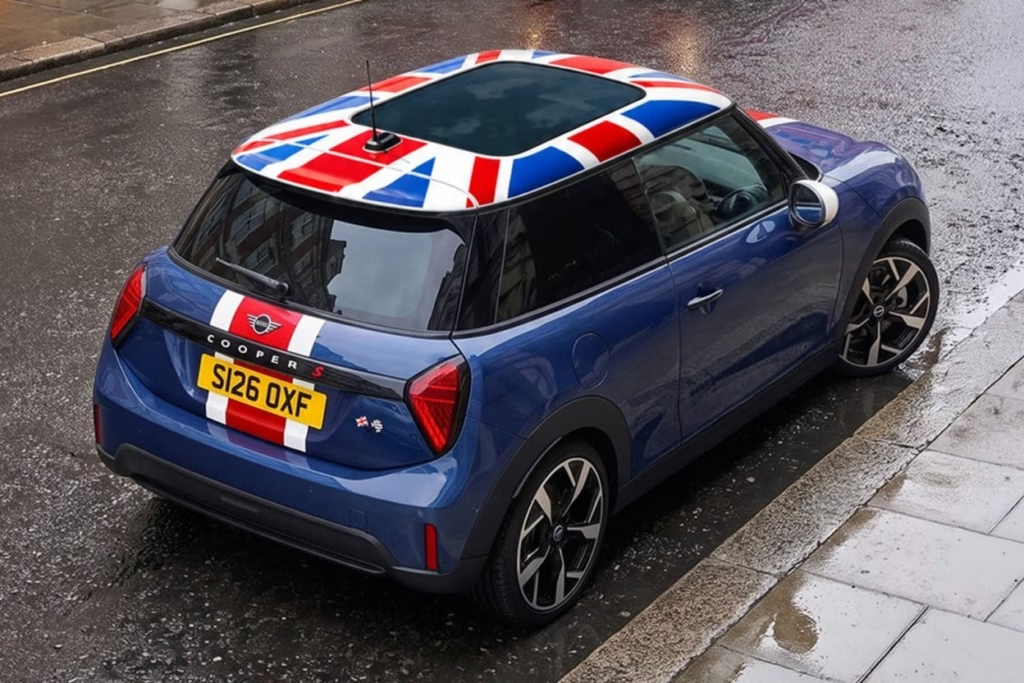
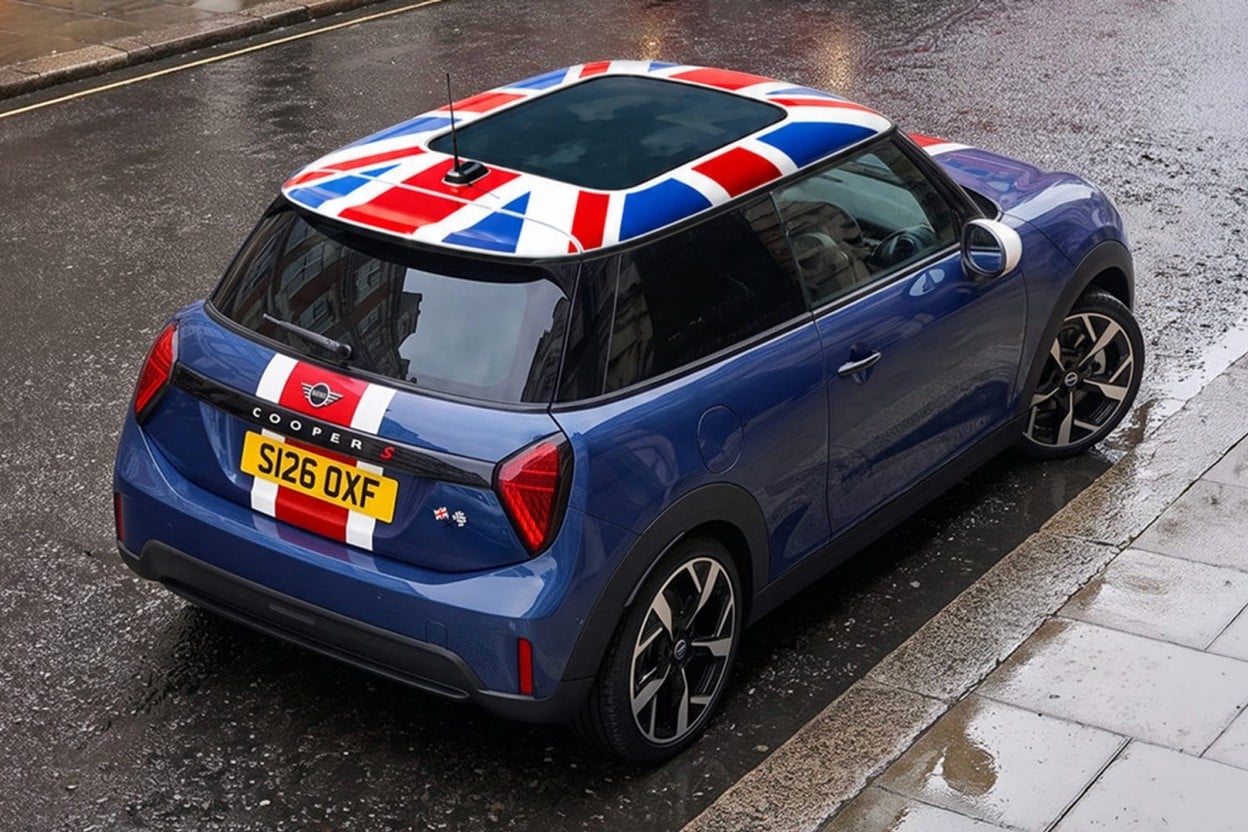
Mini India has launched the Cooper Oxford Edition in India at an asking price of Rs 55.5 lakh (ex-showroom). The special-edition 3-door hatchback celebrates a quarter-century of modern Mini production at the BMW Group’s Oxford plant. As such, the Cooper Oxford Edition sports lots of design touches inspired by the Union Jack. Mini is offering the Cooper Oxford Edition in limited quantities, with deliveries starting immediately.
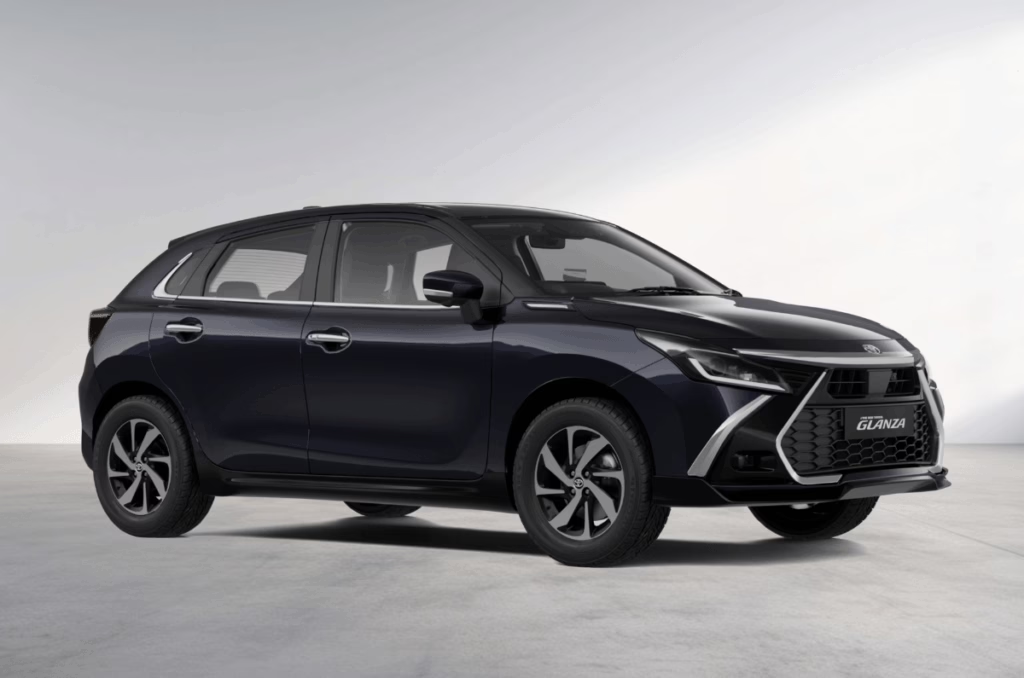
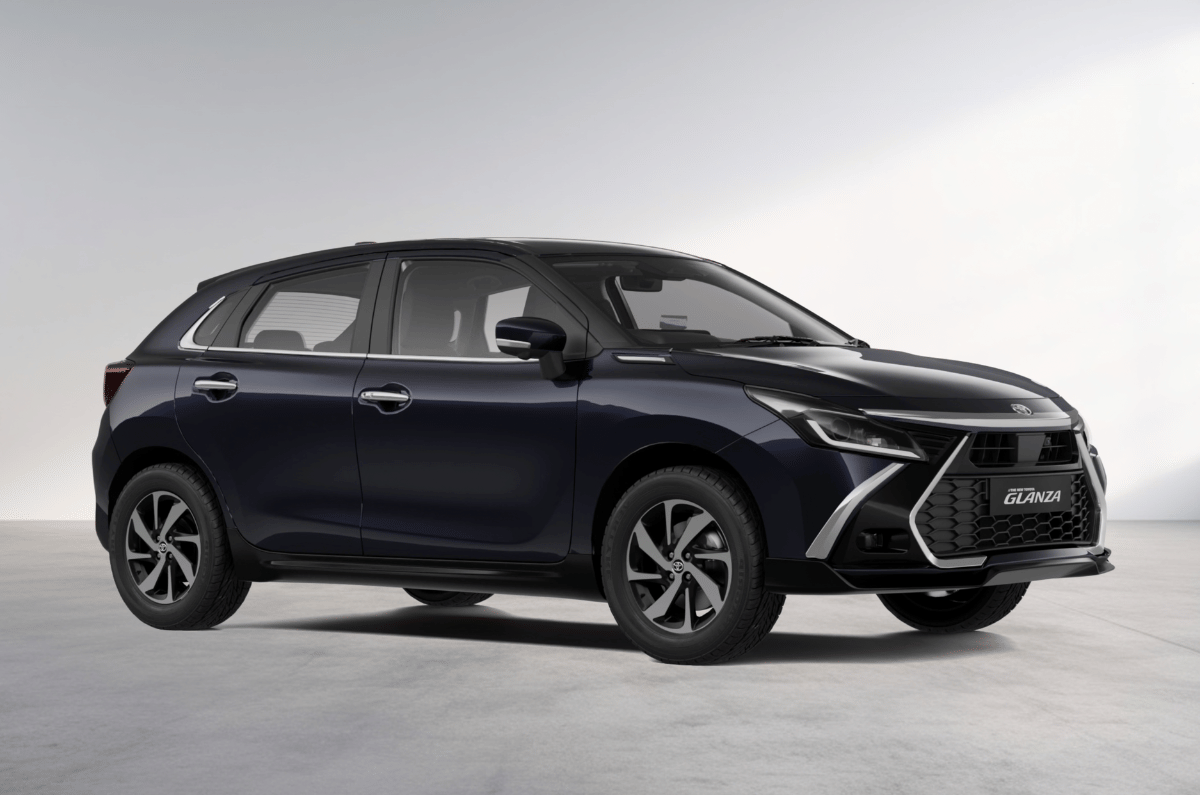
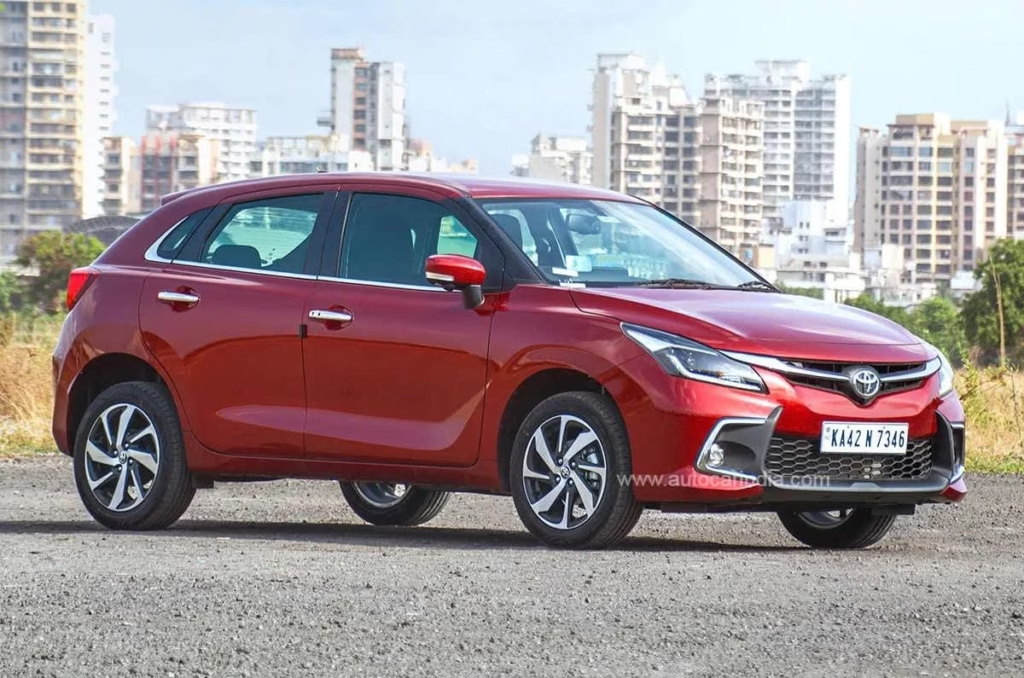
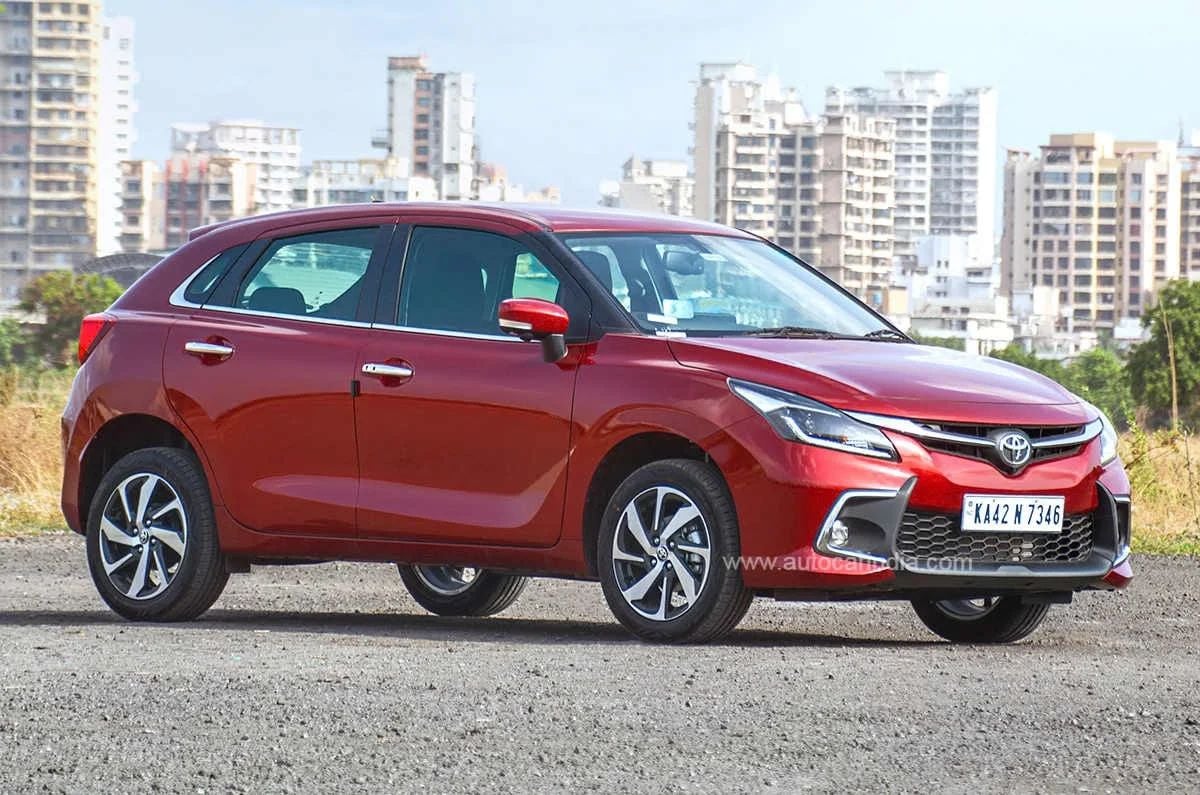
The 2026 Toyota Glanza facelift was launched in October, and it gets new powertrain options, additional features and minor design changes. However, it also misses out on a few things. Here, we look at what the updated Toyota hatchback gets right and where there is room for improvement.
Hits
More efficient powertrain
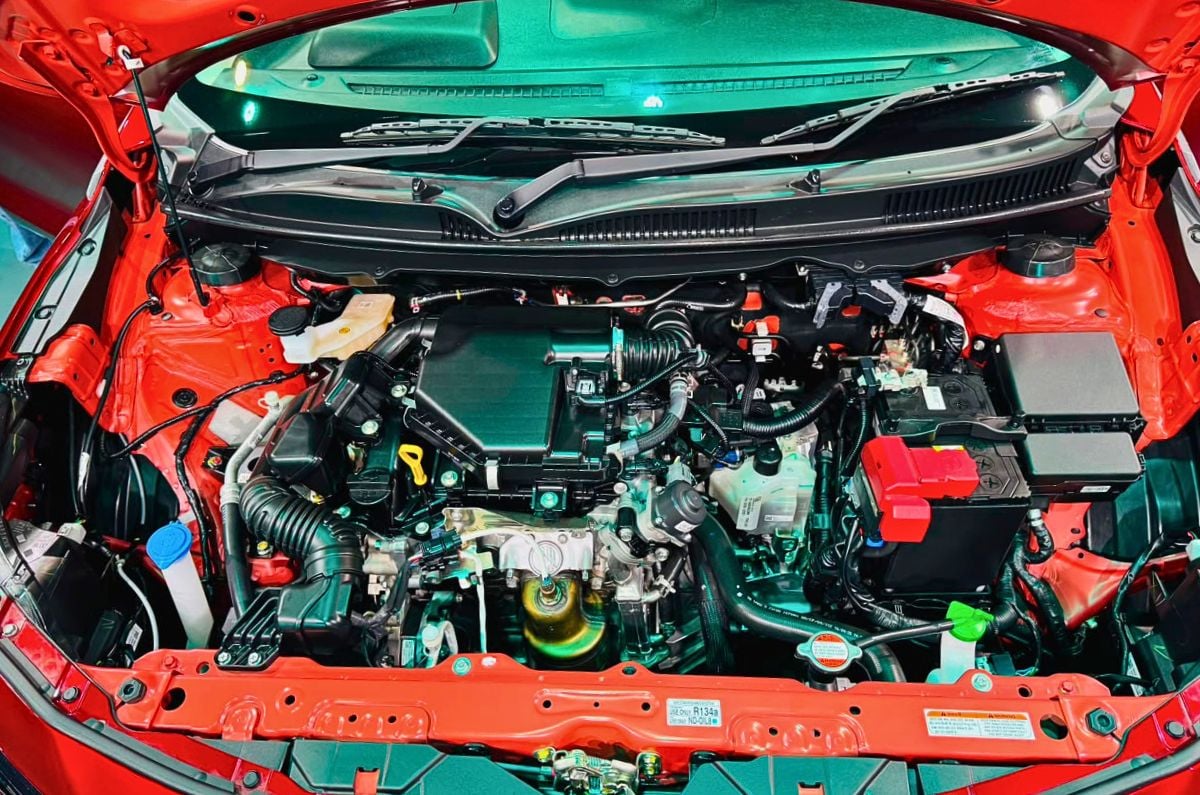
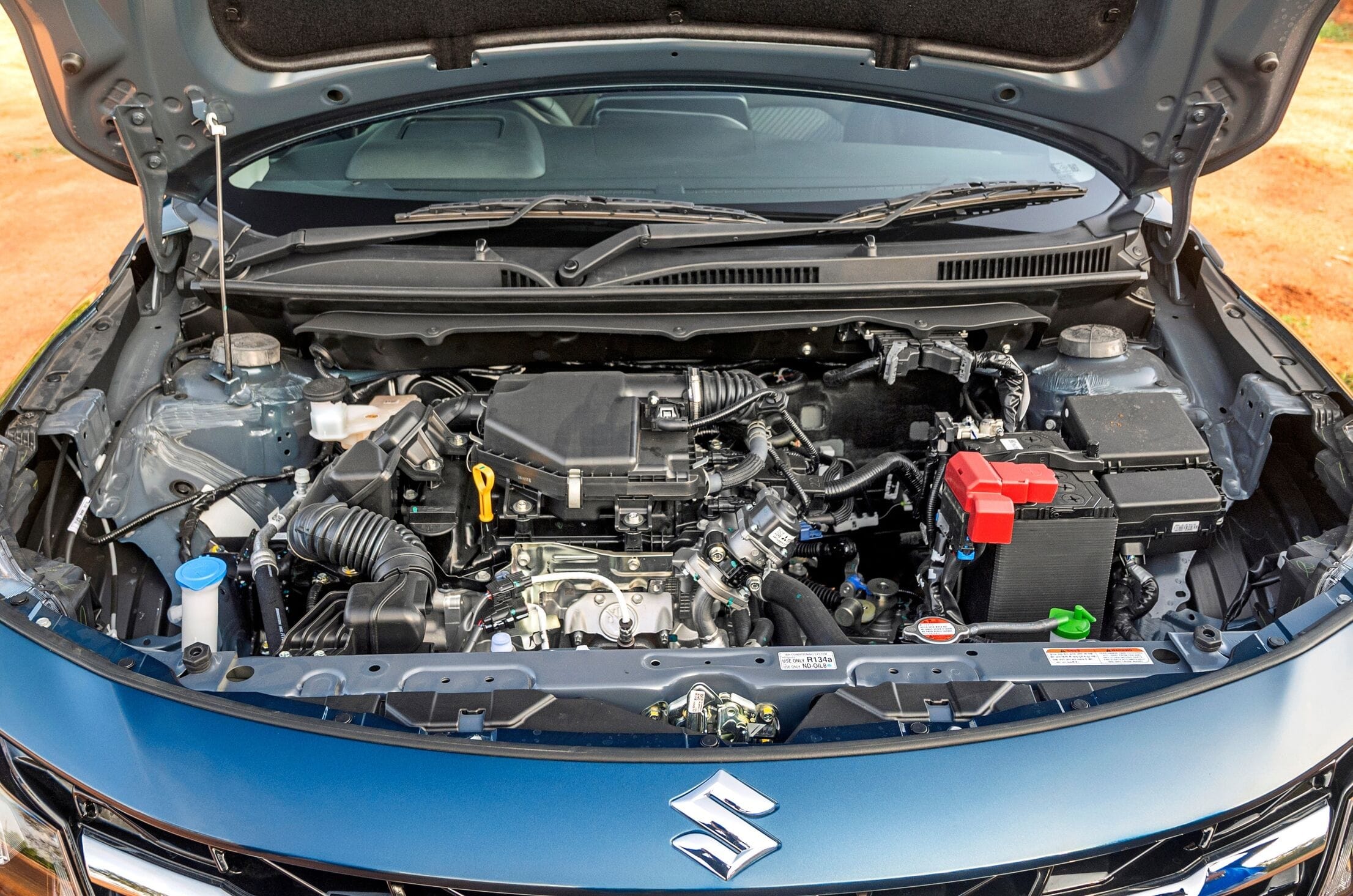
The Glanza now gets a new 1.2-litre, 3-cylinder naturally aspirated engine that runs on petrol and CNG. Compared to the previous four-cylinder engine, claimed fuel efficiency in petrol mode has improved to 23.80kpl with the manual transmission, up from 22.35kpl, and 24.77kpl with the AMT, up from 22.94kpl.
In CNG mode, the claimed mileage has increased to 33.61km/kg with the manual gearbox, up from 30.61km/kg. The new AMT option for the Glanza CNG has a claimed mileage of 34.47km/kg.
Automatic gearbox choice with CNG
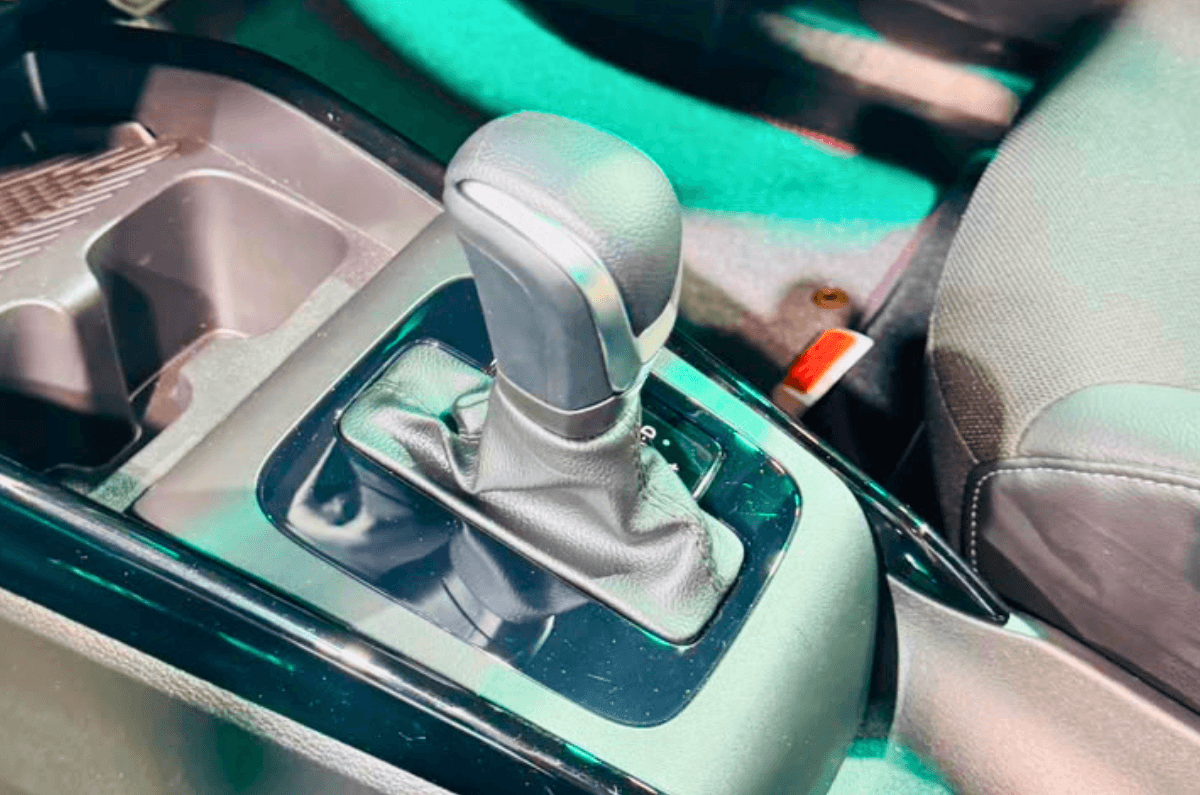
With the Glanza facelift, Toyota has introduced the choice of an automatic gearbox, an AMT in this case. Buyers who regularly commute in stop-and-go traffic will appreciate the ease of driving, along with the good fuel efficiency claimed by the carmaker.
New convenience and safety features
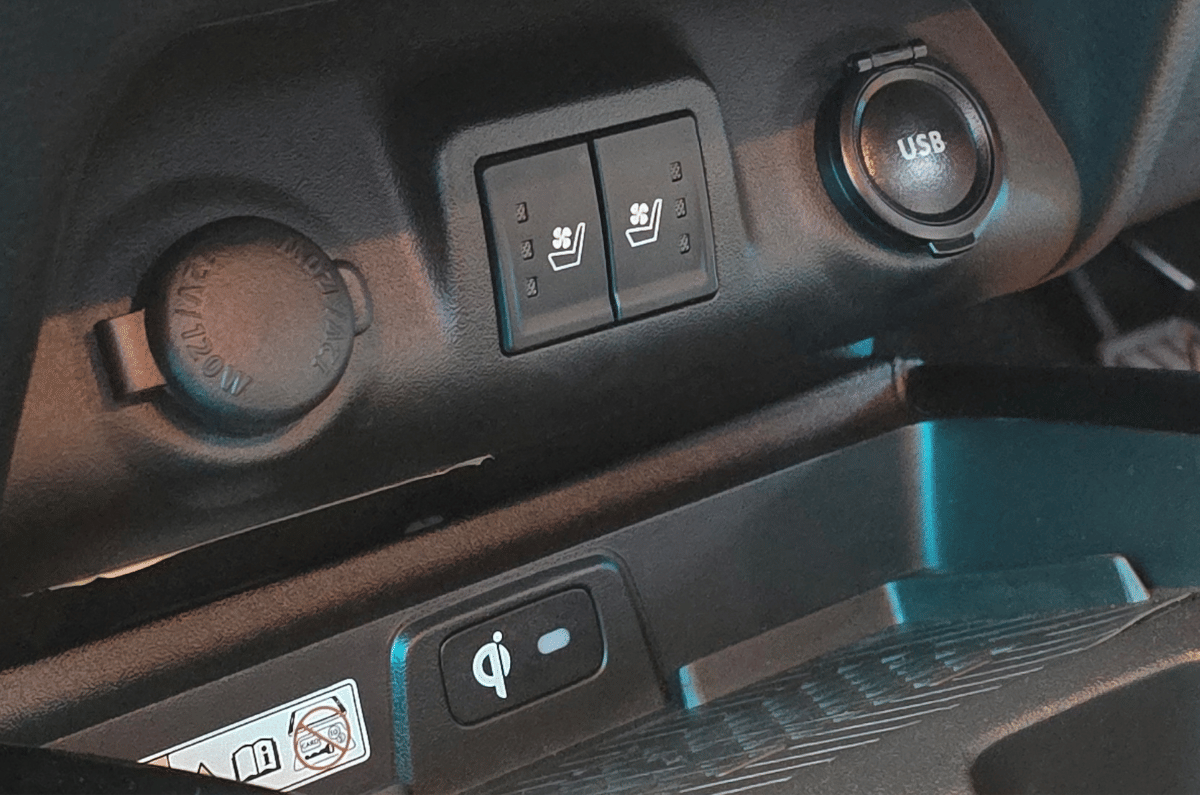
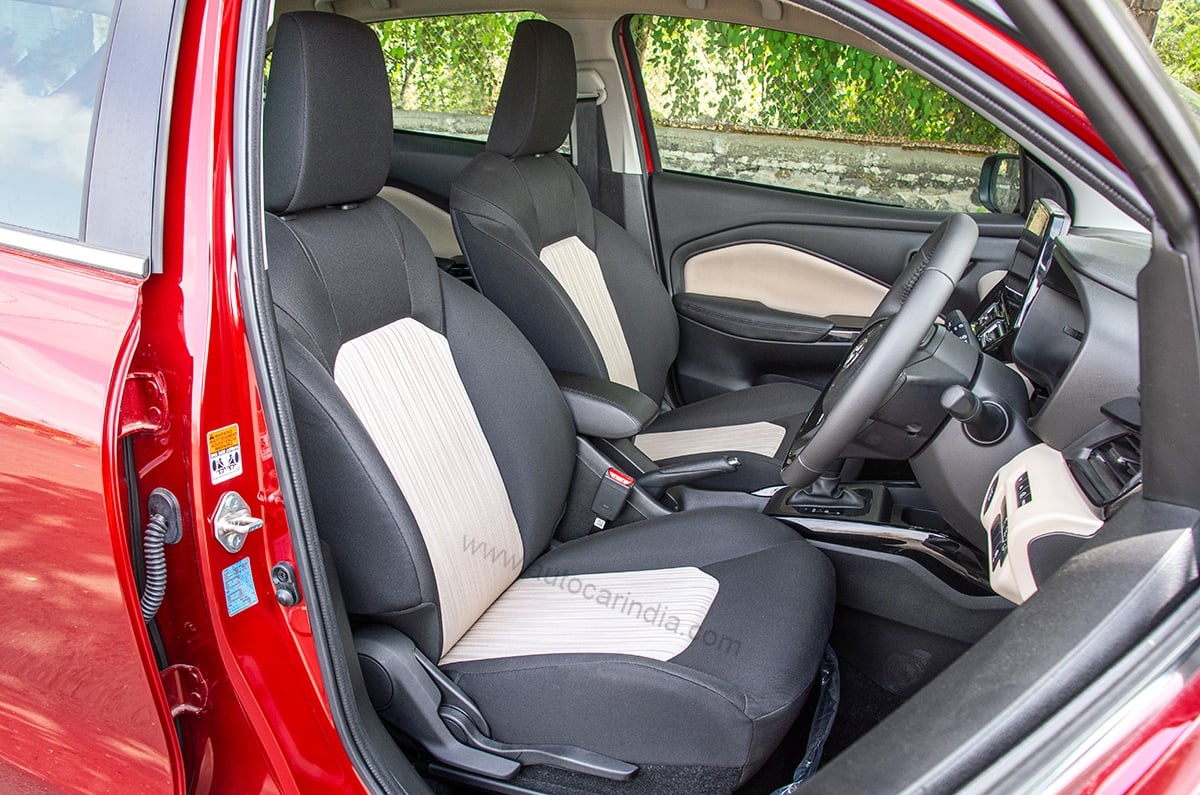
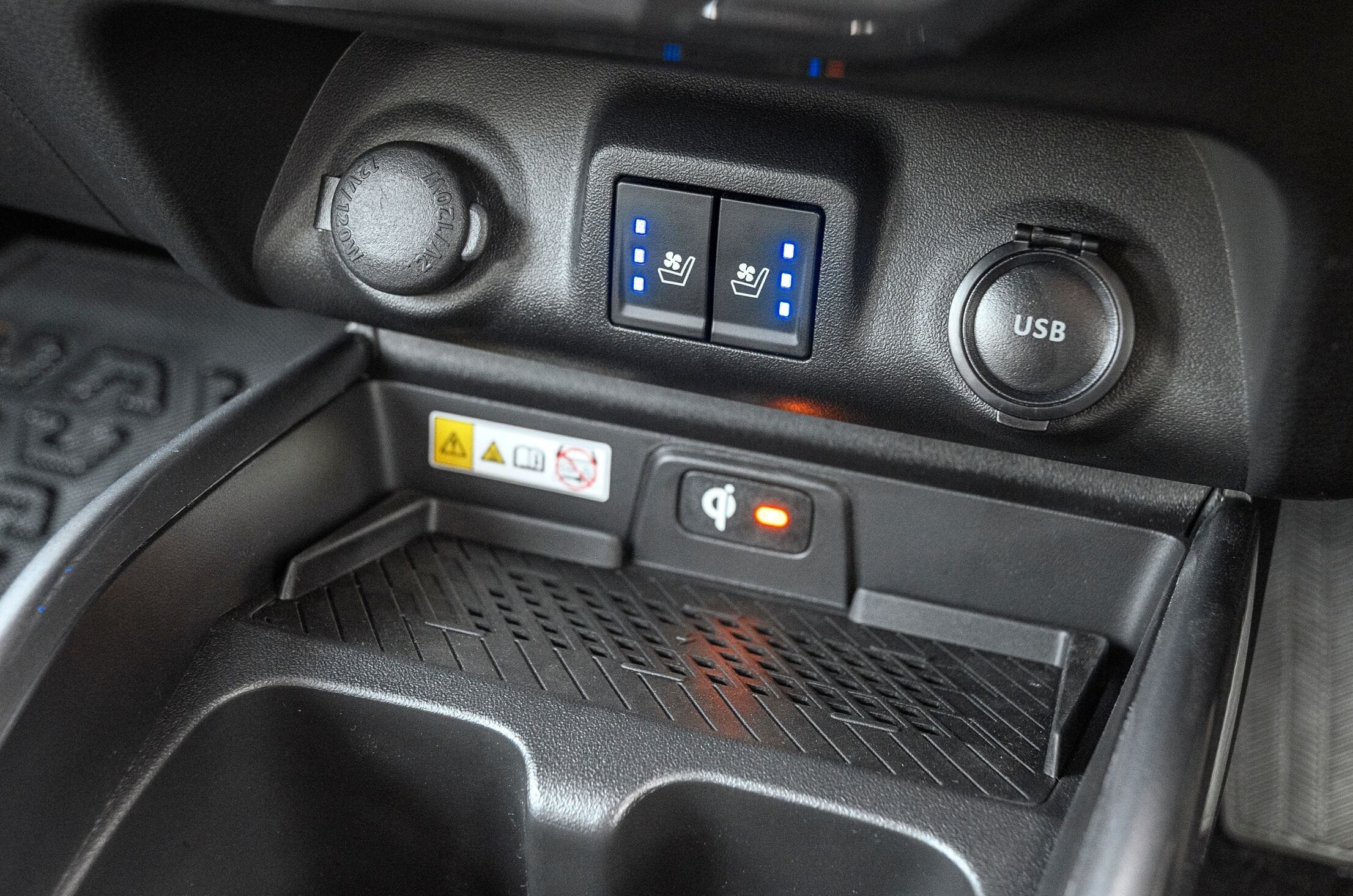
Given our climate, ventilated front seats are a welcome addition. The new Level 2 ADAS suite should also improve the Glanza’s safety quotient.
While we haven’t reviewed the new Glanza yet, our experience with the Baleno facelift gives us a reference point. During our brief test drive, the ADAS features worked as intended and felt well calibrated, without being overly intrusive. A wireless charger with ventilation has been added as well.
Continues to offer physical controls
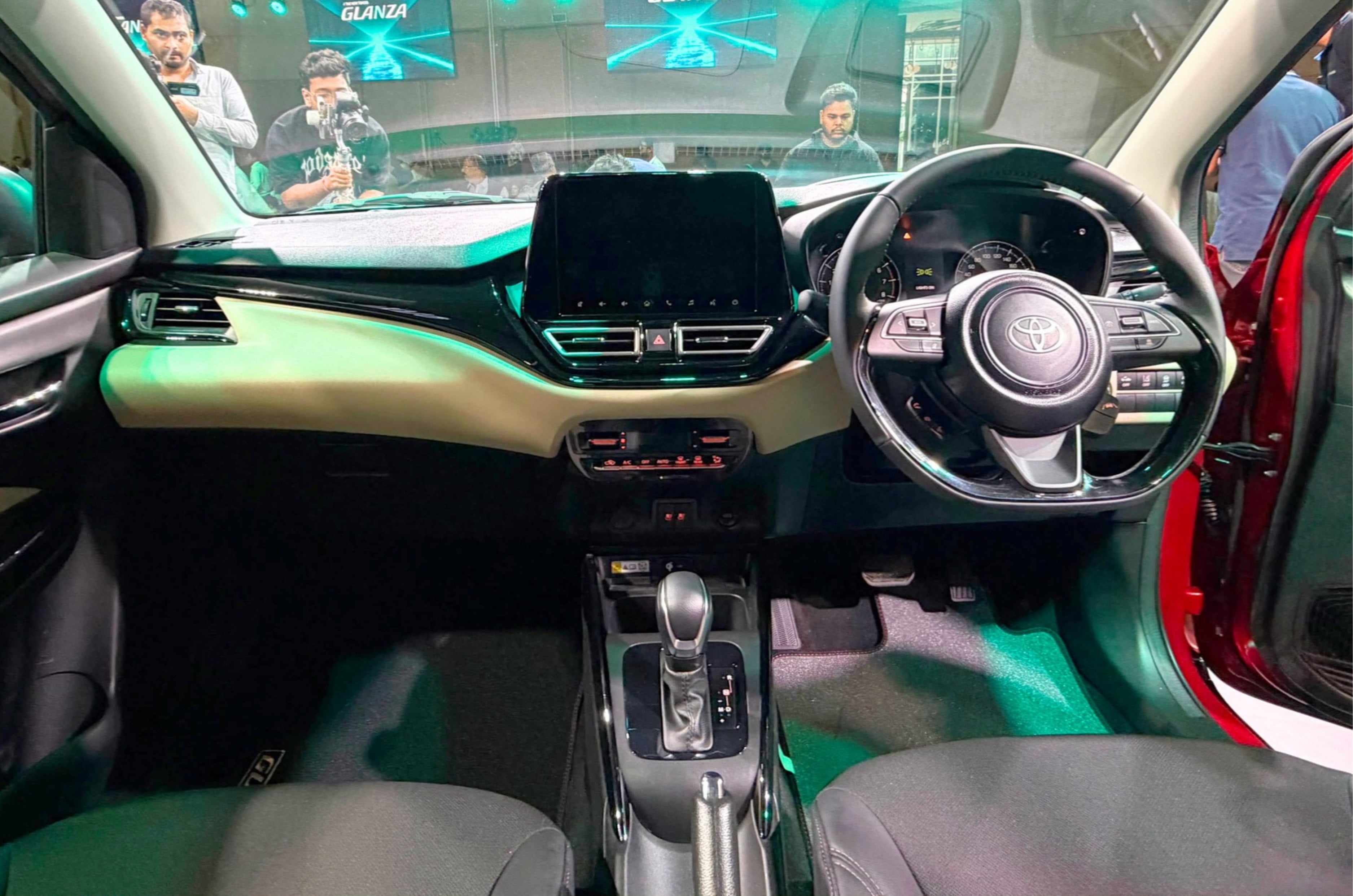
Like the outgoing model, the facelifted Glanza continues to offer plenty of physical controls for functions such as climate control and audio. These are easier to use and less distracting than accessing functions buried under multiple sub-menus on the touchscreen.
Misses
Priced comparatively higher than Baleno
Glanza vs Baleno petrol prices (Rs lakh)
Glanza petrol trim
Price
Baleno petrol trim
Price
Price difference
E MT
6.99
Sigma MT
5.99
-1
S MT | AMT
7.71 | 8.31
Delta MT | AMT
7 | 7.5
-0.71 | -0.81
G MT | AMT
8.73 | 9.33
Zeta MT | AMT
8 | 8.5
-0.73 | -0.83
V MT | AMT
9.99 | 10.59
Alpha MT | AMT
9.1 | 9.6
-0.89 | -0.99
V(O) MT | AMT
10.49 | 10.98
Alpha (O) MT | AMT
9.5 | 9.99
-0.99
Glanza vs Baleno CNG prices (Rs lakh)
Glanza CNG trim
Price
Baleno CNG trim
Price
Price difference
S MT | AMT
8.76 | 9.31
Delta MT | AMT
7.92 | 8.32
-0.84 | -0.99
G MT | AMT
9.68 | 10.23
Zeta MT | AMT
8.92 | 9.32
-0.76 | -0.91
The Glanza is pricier than the Baleno across comparable petrol variants, with the price difference ranging from Rs 71,000 to Rs 1 lakh. The gap is similar for the CNG versions, with the Toyota hatchback costing between Rs 76,000 to Rs 99,000 relatively more. Since the changes between the two are largely cosmetic, the price difference seems significant.
New engine makes relatively less power and torque
In petrol mode, the new engine produces 83hp and 112Nm, which is 7hp and 1Nm less than the outgoing model’s four-cylinder unit. In CNG mode, it produces 70hp and 102Nm. This is 7hp less but 4.5Nm more than the outgoing model. Based on our experience with the Baleno, which uses the same powertrains, the new engine doesn’t feel as peppy as the older K-Series unit or as strong at higher revs.
Misses out on some features offered by rivals
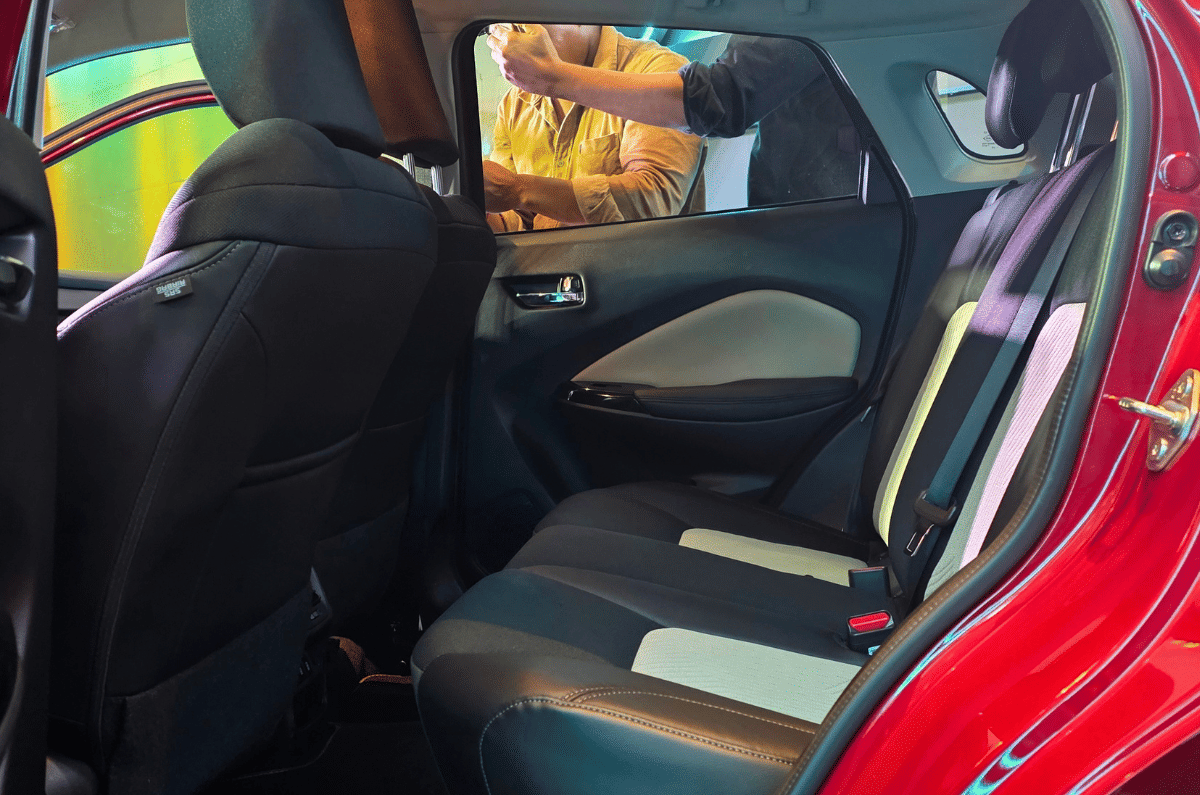
A rear centre armrest would have improved passenger comfort in a premium hatchback like the Glanza, and a single-pane sunroof would also have added to its appeal. Both features are available on its direct rivals, the Tata Altroz and Hyundai i20.
Toyota has launched the 2026 Glanza, with prices ranging from Rs 6.99 lakh to Rs 10.98 lakh (ex-showroom). One of the biggest changes in the facelifted model is a new Z-series 1.2-litre 3-cylinder naturally aspirated engine, less powerful than the previous K-series 4-cylinder mill but offering better fuel efficiency. Both the petrol and CNG versions are offered with a 5-speed manual and a 5-speed automated manual transmission (AMT).
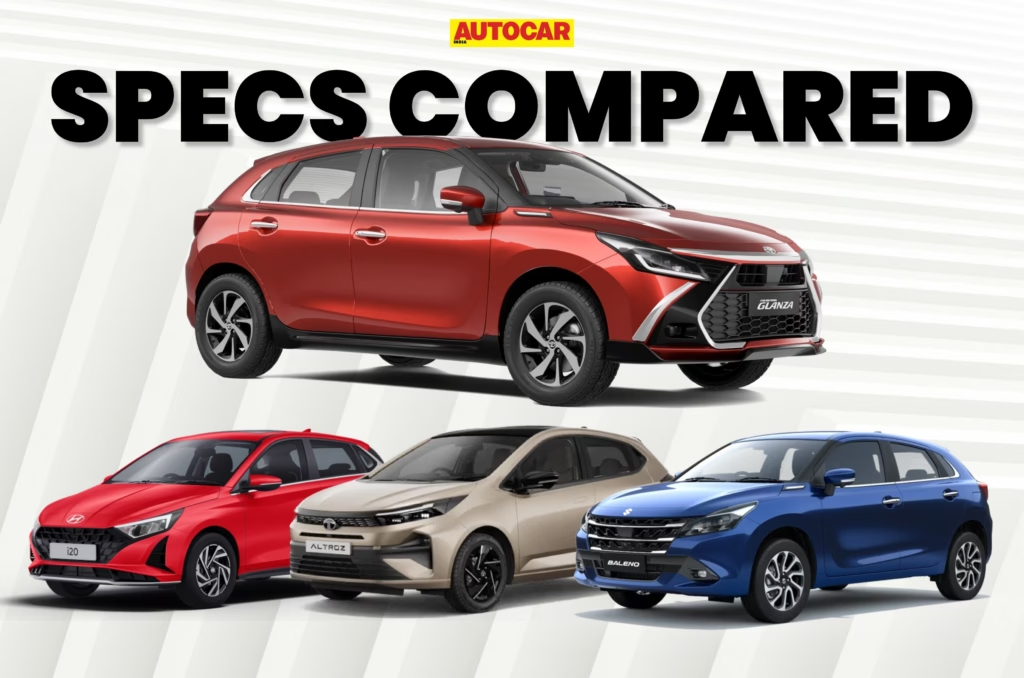
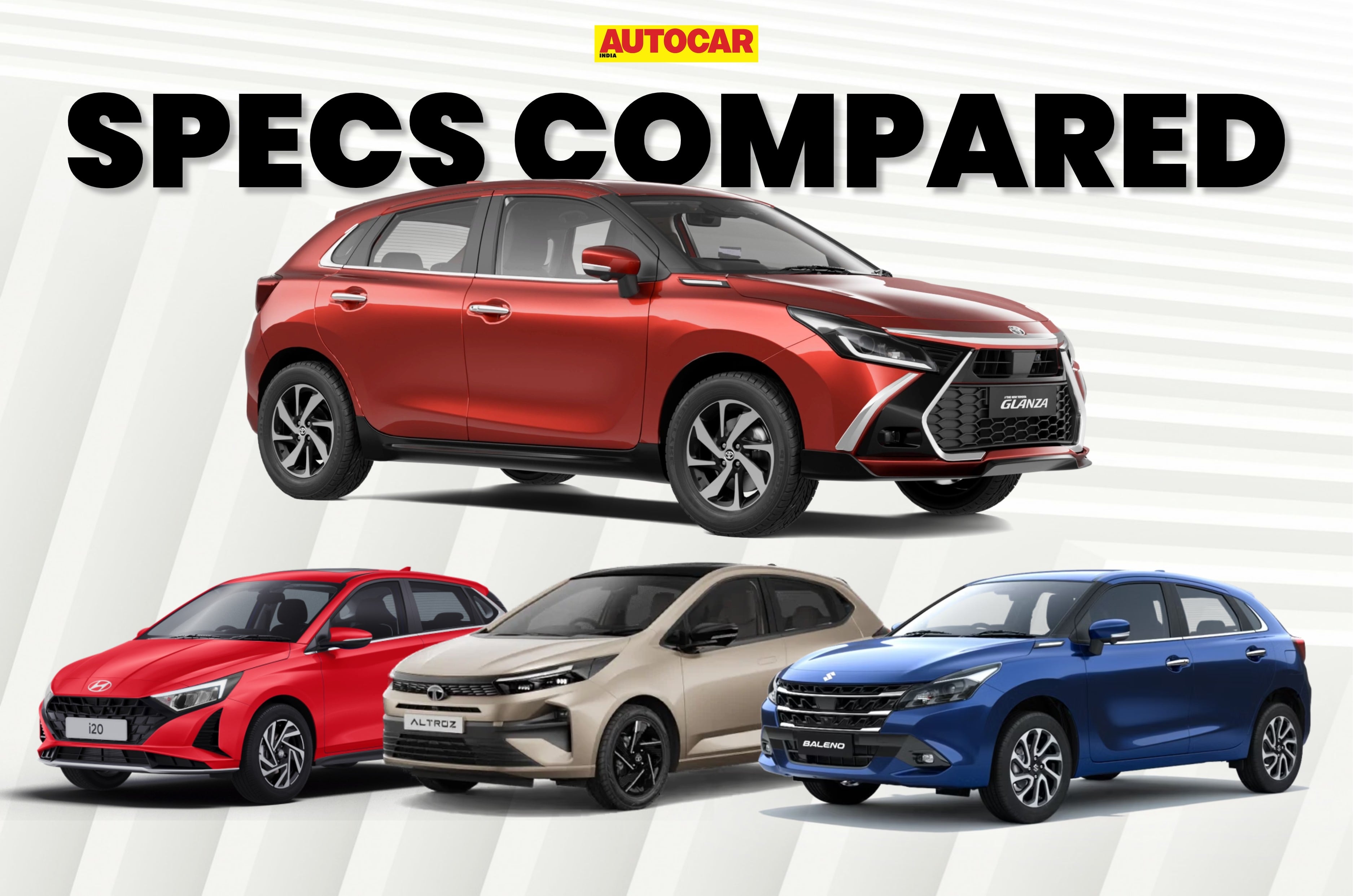
The 2026 Toyota Glanza rivals the Maruti Baleno, Hyundai i20 and Tata Altroz. Except for the missing CNG option on the i20, all rivals offer manual and automatic gearboxes with petrol and CNG versions. Here’s how the Glanza’s claimed mileage compares with the rivals.
2026 Toyota Glanza petrol mileage compared with rivals
Glanza petrol’s claimed mileage numbers are among the highest in the segment
2026 Toyota Glanza petrol mileage compared with rivals (in kpl)
Petrol-manual
Petrol-automatic*
2026 Toyota Glanza
23.80
24.77
Old Toyota Glanza
22.35
22.94
Maruti Baleno
23.80
24.77
Hyundai i20
Not disclosed
Not disclosed
Tata Altroz
19.33
Not disclosed
*Glanza and Baleno get an AMT, i20 gets a CVT, and Altroz gets both AMT and DCT options
The petrol-powered Toyota Glanza and Maruti Suzuki Baleno deliver identical claimed fuel efficiency figures, as the two premium hatchbacks are badge-engineered siblings. However, compared to its predecessor, the facelifted Glanza offers improved efficiency, with the petrol-MT and petrol-AT variants delivering 1.45kpl and 1.83kpl more, respectively. The 2026 Glanza petrol-MT is also 4.47kpl more efficient than the Tata Altroz with the same powertrain. While the claimed mileage figures for the Altroz petrol-AMT and the Hyundai i20 petrol-MT and petrol-AMT are yet to be announced, the Glanza and Baleno are expected to retain their advantage in terms of claimed fuel efficiency.
2026 Toyota Glanza CNG mileage compared with rivals
CNG-powered 2026 Glanza has identical mileage as the Maruti Baleno
2026 Toyota Glanza petrol mileage compared with rivals (in km/kg)
CNG-MT
CNG-AMT
2026 Toyota Glanza
33.61
34.47
Old Toyota Glanza
30.61
–
Maruti Baleno
33.61
34.47
Hyundai i20
–
–
Tata Altroz
27.8
Not disclosed
The Hyundai i20 is the only premium hatchback in the segment without a CNG option, while all other models offer CNG with both MT and automated manual AMT choices. The Toyota Glanza and Maruti Suzuki Baleno lead the segment in claimed CNG fuel efficiency, with identical mileage figures, just like their petrol counterparts. The Glanza CNG-MT is 2.81km/kg more efficient than the Tata Altroz CNG-MT. However, the claimed mileage for the Altroz CNG-AMT is yet to be announced. Compared to the previous model, the Glanza CNG-MT also delivers a 3km/kg improvement in fuel efficiency.
Interestingly, the Tata Altroz is the only premium hatchback to offer a diesel engine, and the i20 N Line offers a turbo-petrol engine; such options are not available with the 2026 Toyota Glanza.
The Toyota Glanza is a premium hatchback that shares its underpinnings and powertrain with the Maruti Suzuki Baleno. The 2026 update brings changes to its styling and features, along with a CNG-AMT option. We compare it with the Baleno, Hyundai i20 and Tata Altroz in terms of specifications, features and prices.
2026 Toyota Glanza vs rivals: Dimensions
The i20 has the longest wheelbase, while the Altroz has the largest boot
Dimensions
Toyota Glanza
Maruti Suzuki Baleno
Hyundai i20
Tata Altroz
Length
3,990mm
3,990mm
3,995mm
3,990mm
Width
1,745mm
1,745mm
1,775mm
1,755mm
Height
1,530mm
1,530mm
1,505mm
1,523mm
Wheelbase
2,520mm
2,520mm
2,580mm
2,501mm
Boot space
TBA
318 litres
311 litres
345 litres
The Glanza and Baleno share the same length, width, height and wheelbase. The i20 is marginally longer than the other three and has the greatest width and wheelbase. The Altroz offers the largest boot capacity at 345 litres, ahead of the Baleno’s 318 litres and the i20’s 311 litres. Toyota has yet to confirm the facelifted Glanza’s boot capacity, although its badge-engineered relationship with the Baleno suggests the two could have similar luggage space.
2026 Toyota Glanza vs rivals: Engine specifications
The Glanza gets petrol and CNG options, with manual and AMT gearboxes
Engine specifications
Toyota Glanza
Maruti Suzuki Baleno
Hyundai i20
Tata Altroz
Petrol engine
1.2-litre, 3-cylinder
1.2-litre, 3-cylinder
1.2-litre, 4-cylinder
1.2-litre, 3-cylinder
Petrol power
83hp
83hp
83hp (MT); 88hp (IVT)
88hp
Petrol torque
112Nm
112Nm
114.7Nm
115Nm
CNG option
Yes
Yes
No
Yes
CNG power
70hp
70hp
–
74hp
CNG torque
102Nm
102Nm
–
103Nm
Diesel option
No
No
No
Yes
Transmission options
5-speed MT, 5-speed AMT
5-speed MT, 5-speed AMT
5-speed MT, IVT
5-speed MT, 5-speed AMT, 6-speed DCT
The Glanza’s new 1.2-litre three-cylinder engine produces 83hp and 112Nm in petrol mode, down 7hp and 1Nm compared with the outgoing four-cylinder unit. Claimed fuel efficiency stands at 23.80kpl with the manual and 24.77kpl with the AMT. In CNG mode, output drops to 70hp and 102Nm, with claimed efficiency of 33.61km/kg for the manual and 34.47km/kg for the AMT.
Like the Glanza, the Baleno offers petrol and CNG powertrains with manual and AMT options. The i20 is petrol-only, while the Altroz offers petrol, CNG and diesel engines. The Altroz is also the only one of these four to offer a diesel engine, while the Glanza and Baleno now add the convenience of an AMT with CNG.
2026 Toyota Glanza vs rivals: Features
Glanza adds ventilated seats and Level 2 ADAS, while the i20 and Altroz get sunroofs
Features
Toyota Glanza
Maruti Suzuki Baleno
Hyundai i20
Tata Altroz
Head-up display
Yes
Yes
No
No
Ventilated front seats
Yes
Yes
No
No
360-degree camera
Yes
Yes
No
Yes
Wireless phone charger
Yes, with cooling
Yes, with cooling
Yes
Yes
Sunroof
No
No
Yes
Yes
Infotainment touchscreen
9-inch
9-inch
10.25-inch
10.25-inch
Instrument cluster
Analogue dials with MID
Analogue dials with MID
TFT display
10.25-inch digital
Wireless Android Auto and Apple CarPlay
Yes
Yes
Yes
Yes
Automatic climate control
Yes
Yes
Yes
Yes
Rear AC vents
Yes
Yes
Yes
Yes
Adaptive cruise control
Yes
Yes
No
No
The Glanza and Baleno share several key features, including a head-up display, ventilated front seats, a 360-degree camera and a cooled wireless charger. Both also use a 9-inch touchscreen and analogue instrument dials with a multi-information display.
The i20 and Altroz offer larger 10.25-inch infotainment screens and sunroofs, which the Glanza and Baleno do not get. The Altroz also has a fully digital instrument cluster. All four offer automatic climate control, rear AC vents and wireless smartphone connectivity.
2026 Toyota Glanza vs rivals: Safety
Glanza and Baleno get Level 2 ADAS
Safety features
Toyota Glanza
Maruti Suzuki Baleno
Hyundai i20
Tata Altroz
Level 2 ADAS
Yes
Yes
No
No
Airbags
6
6
6
6
Tyre-pressure monitoring system
Yes
Yes
Yes
Yes
Electronic stability control
Yes
Yes
Yes
Yes
Hill-hold assist
Yes
Yes
Yes
Yes
ABS with EBD
Yes
Yes
Yes
Yes
ISOFIX child-seat mounts
Yes
Yes
Yes
Yes
The Glanza facelift adds Level 2 ADAS, including adaptive cruise control, lane-keeping assist, lane-departure warning and prevention, autonomous emergency braking and high-beam assist. It also gets a tyre-pressure monitoring system. The Baleno offers Level 2 ADAS as well, while all four hatchbacks have six airbags, electronic stability control, hill-hold assist, ABS with EBD and ISOFIX child-seat mounts.
2026 Toyota Glanza vs rivals: Price
Glanza prices range from Rs 6.99 lakh to Rs 10.98 lakh
Price (ex-showroom)
Toyota Glanza
Maruti Suzuki Baleno
Hyundai i20
Tata Altroz
Price range
Rs 6.99 lakh-10.98 lakh
Rs 5.99 lakh-9.99 lakh
Rs 6 lakh-11.64 lakh*
Rs 6.30 lakh-10.75 lakh
The Baleno has the lowest starting price at Rs 5.99 lakh, making it Rs 1 lakh cheaper than the Glanza. The Altroz starts at Rs 6.30 lakh, while the i20’s entry price is Rs 6 lakh. At the top end, the i20 is the most expensive at Rs 11.64 lakh with the N-line trim, followed by the Glanza at Rs 10.98 lakh. The Altroz tops out at Rs 10.75 lakh, while the Baleno has the lowest top-spec price at Rs 9.99 lakh. The Glanza’s higher starting and top-end prices place it above its badge-engineered sibling, the Baleno, across the range.
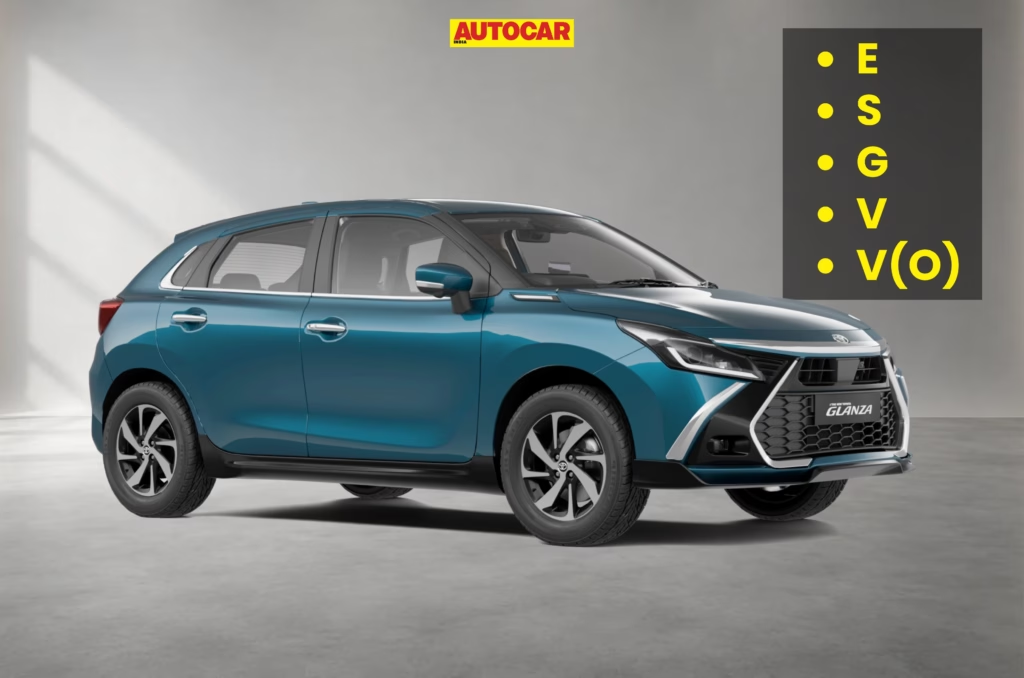
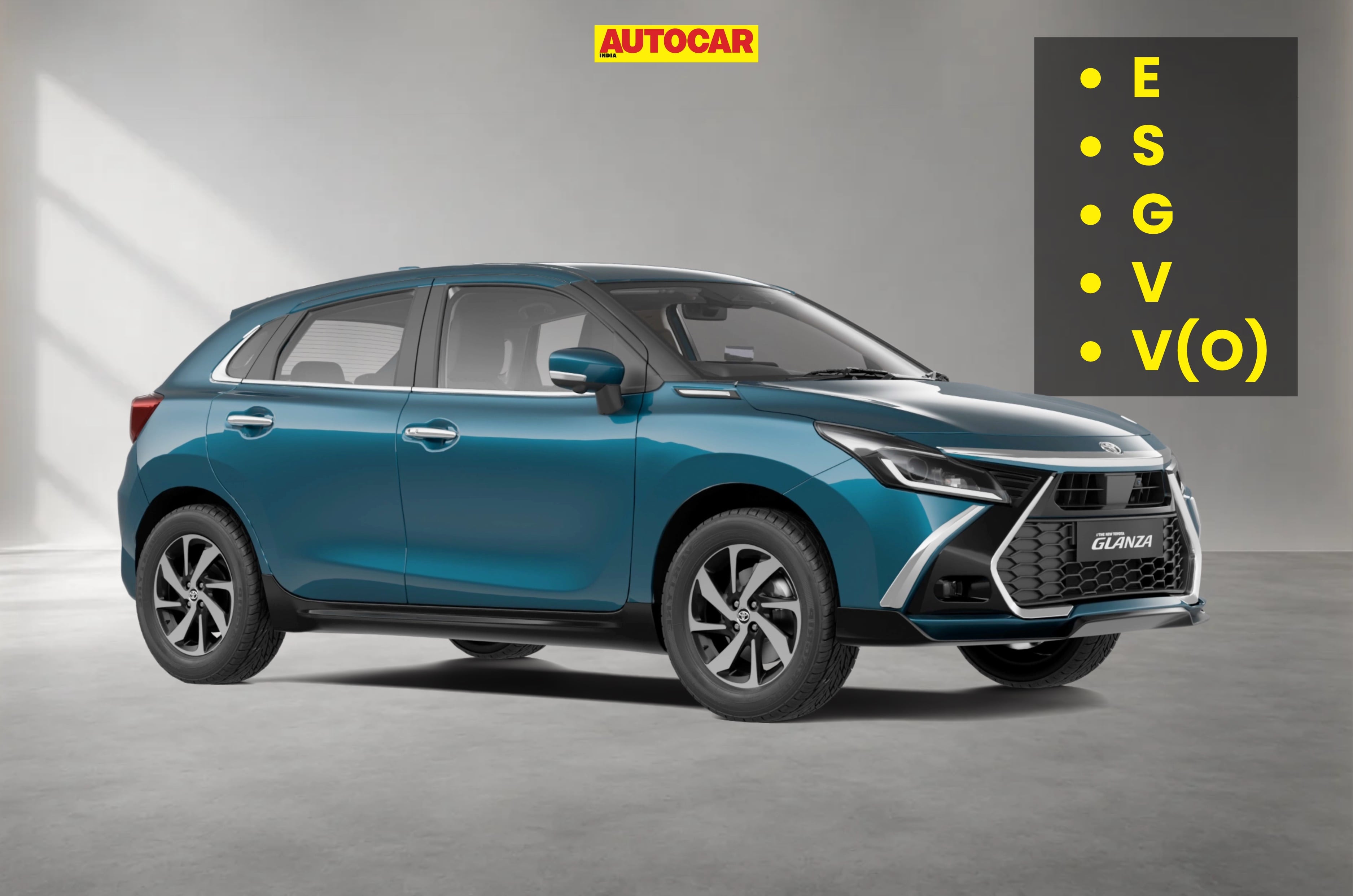
The Toyota Glanza received a facelift in October 2026, with prices starting at Rs 6.99 lakh, ex-showroom. As part of this mid-lifecycle update, the premium Toyota hatchback gets a slightly tweaked exterior, additional features, an upgraded safety suite and a new petrol engine. Here, we take a closer look at the Glanza’s variants and their features.
Toyota Glanza prices and powertrains
New Toyota Glanza prices (Rs lakh)
Trim
1.2 petrol MT
1.2 petrol AMT
1.2 petrol-CNG MT
1.2 petrol-CNG AMT
E
6.99
–
–
–
S
7.71
8.31
8.76
9.31
G
8.73
9.33
9.68
10.23
V
9.99
10.59
–
–
V(O)
10.49
10.98
–
–
Toyota has deployed a 1.2-litre 3-cylinder naturally aspirated petrol engine to power the new Glanza, and it produces peak outputs of 83hp and 112Nm. Both 5-speed manual and 5-speed AMT options are available with this engine. As before, a factory-fitted CNG option is also on offer. In CNG mode, power and torque fall to 70hp and 102Nm, respectively. A 5-speed manual gearbox continues to be available here, and Toyota has also introduced an AMT option with the Glanza CNG.
Toyota Glanza exterior colour options
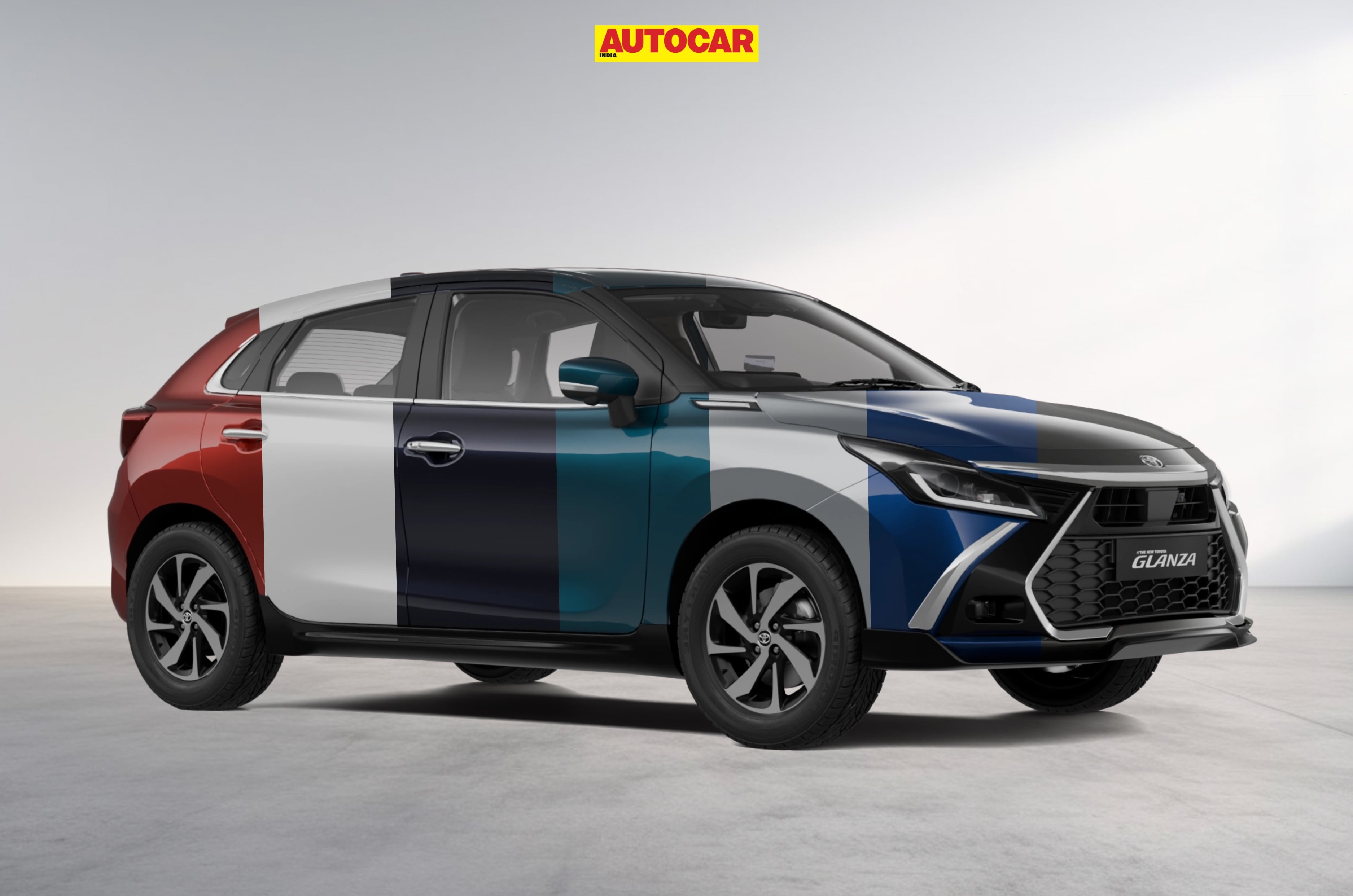
A total of seven exterior colours are offered with the new Glanza. These include Sportin Red, Cafe White, Gaming Grey, Insta Blue, Enticing Silver, Bluish Black and Digital Teal Green. The latter two colours have been introduced with the Glanza facelfit.
Toyota Glanza variant-wise features
E – Rs 6.99 lakh
1.2-litre petrol with 5MT
6 airbags
ABS with EBD
Electronic stability program (ESP) with hill-hold control
Rear window defogger
Three-point seatbelts for all passengers
Keyless entry
Power windows for all passengers
One-touch up/ down for the driver’s side power window
Fabric upholstery
Tilt adjustment for the steering wheel
Adjustable seat headrests
15-inch wheels with cover
Halogen projector headlamps
LED tail-lights
Shark fin-type antenna
Body-coloured bumpers
S – Rs 7.71 lakh onwards
1.2-litre petrol with 5MT/ AMT, CNG with MT/AMT
In addition to E
Tyre-pressure monitoring system (TPMS)
Rear AC vents
Rear fast-charging USB Type-A and Type-C ports
Steering-mounted audio controls
Electrically foldable and adjustable outside rearview mirrors (ORVMs)
7-inch touchscreen
Wireless Android Auto and Apple CarPlay
Four speakers
Front centre sliding armrest
Rear parcel shelf
Body-coloured door handles
Body-coloured ORVMs with turn indicators
G – Rs 8.73 lakh onwards
1.2-litre petrol with 5MT/ AMT, CNG with MT/AMT
In addition to S
Rearview camera
Toyota i-Connect safety features
Rear wiper with washer
Telescopic adjustment for the steering wheel
Driver’s seat height adjustment
Push-button start/stop
Automatic climate control
Wireless charger with a cooling vent underneath
9-inch touchscreen
Six-speaker Arkamys sound system
Footwell lighting
Automatic LED projector headlights
16-inch alloy wheels
LED daytime running lights (DRLs)
Chrome-finished door handles
V – Rs 9.99 lakh onwards
1.2-litre petrol with 5MT/ AMT
In addition to G
360-degree camera
Head-up display
Cruise control
Auto-dimming interior rearview mirror (IRVM)
Vanity mirror lamp
Leatherette seat upholstery
Leather-wrapped steering wheel
Clarion sound system
Front ventilated seats
LED fog lamps
V (O) – Rs 10.49 lakh onwards
1.2-litre petrol with 5MT/ AMT
In addition to V
Level 2 ADAS
Adaptive cruise control
Lane keep assist
Lane departure warning
Advanced emergency braking
Forward collision warning
Which Toyota Glanza variant should you buy?
Considering the good mix of useful and feel-good features, as well as the powertrain options on offer, the mid-spec G variant is the one we recommend. It’s also one of the only two Glanza trims to offer the full range of engine and transmission options, adding further to its appeal. The Glanza G range starts at Rs 8.73 lakh and goes up to Rs 10.23 lakh.
Ex-showroom prices mentioned above are as on October 14, 2026.
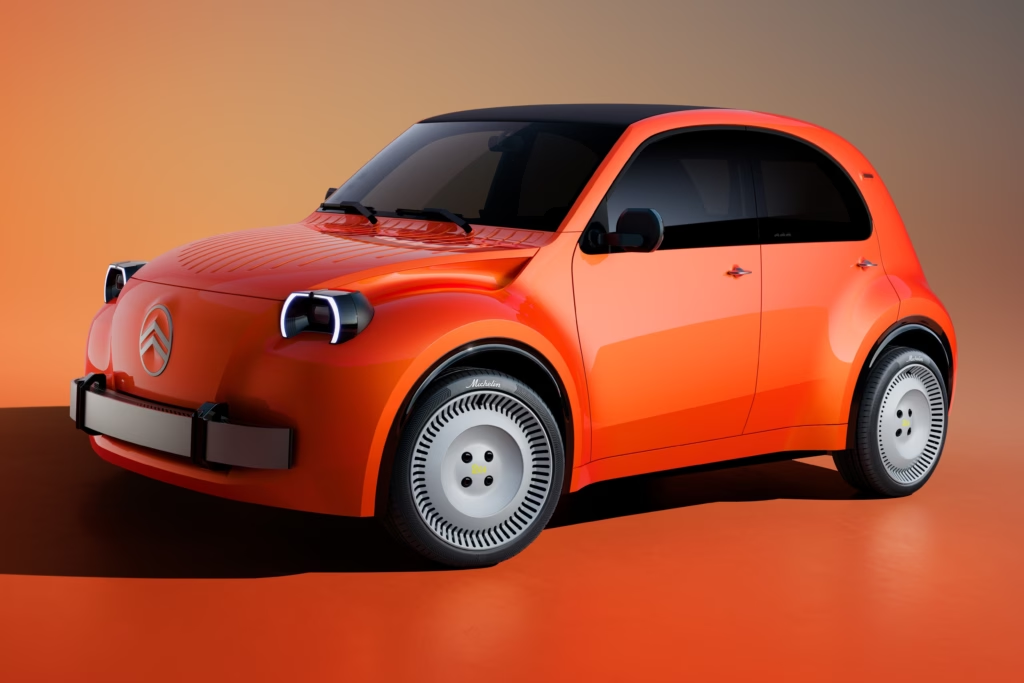
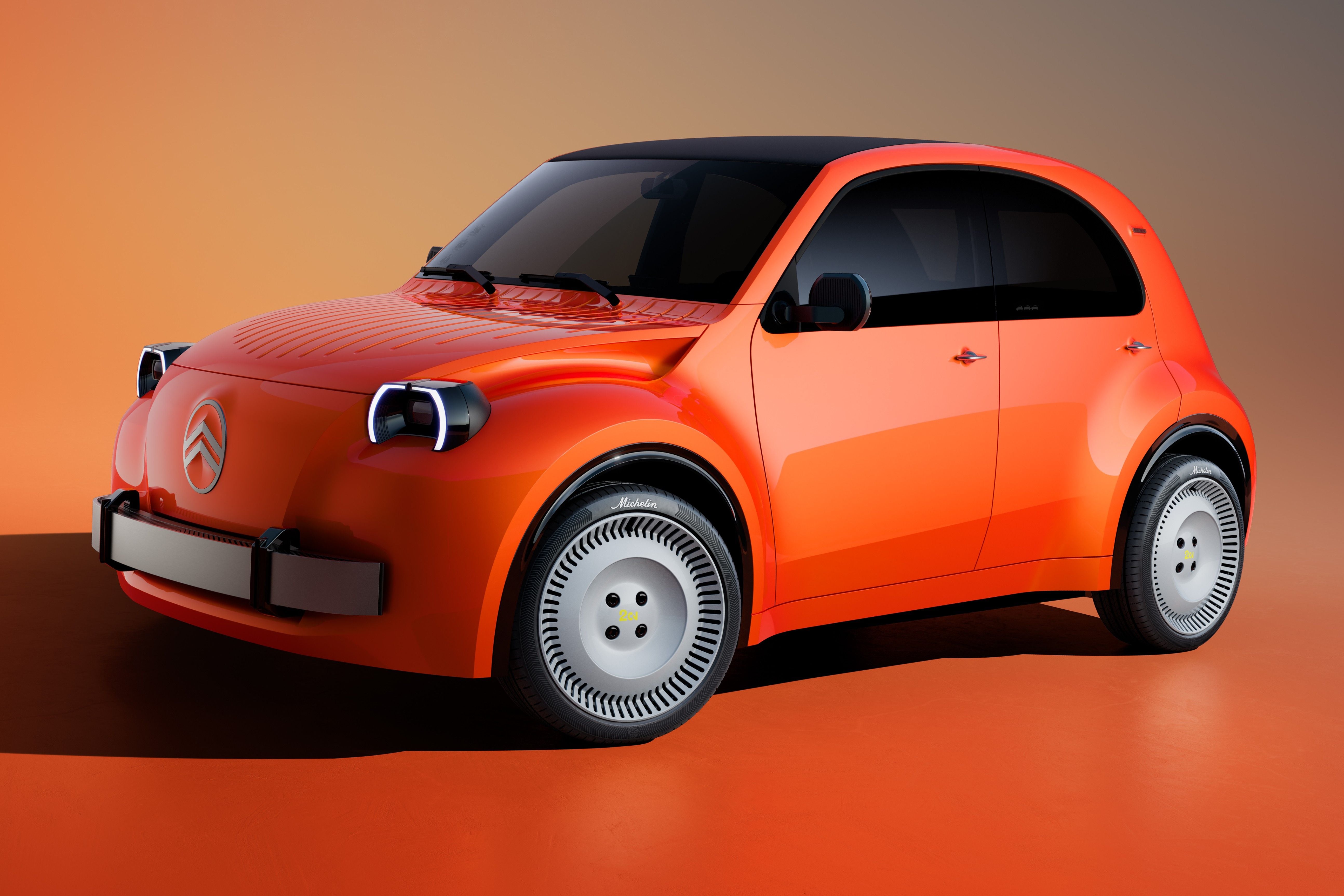
Citroen has unveiled the 2 CV concept at the 2026 Paris Motor Show. The 2 CV concept is a neo-retro take on the original Citroen 2 CV, an iconic nameplate in the carmaker’s lineup. Notably, the nameplate returns at the Paris Motor Show 78 years after the original 2 CV was showcased in 1948. The Citroen 2 CV concept previews a small electric hatchback that’s due in 2028 with a starting price of 15,000 Euros.
Production-spec version due in 2028; to sit between Ami and C3.
Takes design cues from the original 2 CV with a modern twist.
Quirky interior gets bench seats and does without a dashboard and centre console.
Citroen 2 CV concept: All you need to know
The production-spec 2CV will sit between the Ami and C3 hatchback in Citroens global portfolio. At 3.76 metres, the 2 CV concept is shorter than the original model. Additionally, Citroen is aiming for a sub-1-tonne weight in order to utilise a “cost-effective battery with range tailored for everyday use and low running costs.”
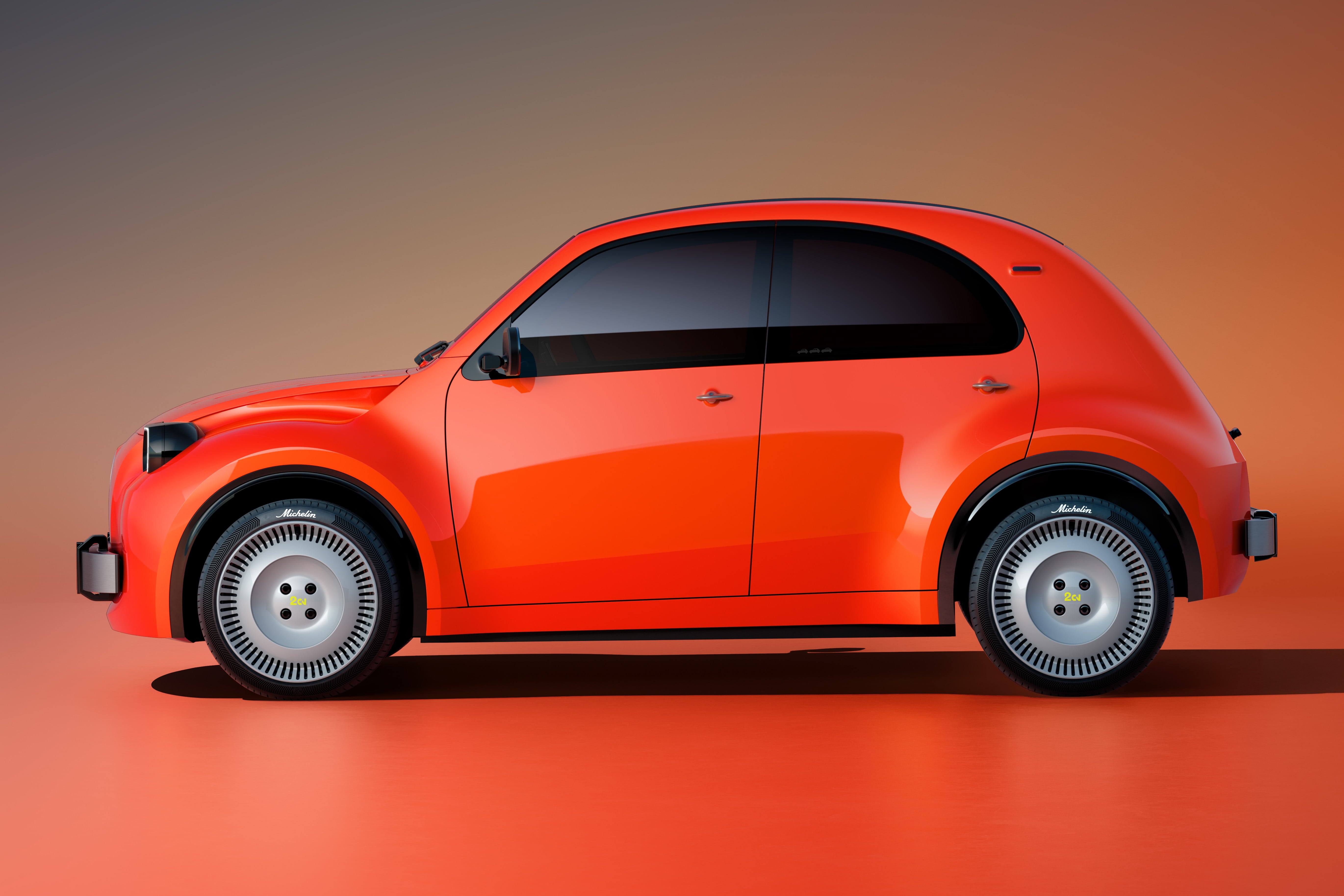
The 2 CV concept’s design takes inspiration from the circular design cues of the original model. At the front are LED headlamps surrounded by semi-circular DRL signatures, a blanked-off grille with the Citroen badge and a ridge pattern on the bonnet. The numbers 48, 90, and 26 inscribed on the windscreen refer to the years 1948, 1990, and 2026, which mark the original model’s launch, end of production, and new concept unveiling, respectively. When viewed head-on, the V-shaped design of the bonnet and the thick silver strip are elements reminiscent of the older 2 CV. In profile, there’s a curved roofline that smoothly integrates into the rear section, rounded-off wheel arches with a gloss-black finish, and C-pillar-mounted turn indicators.
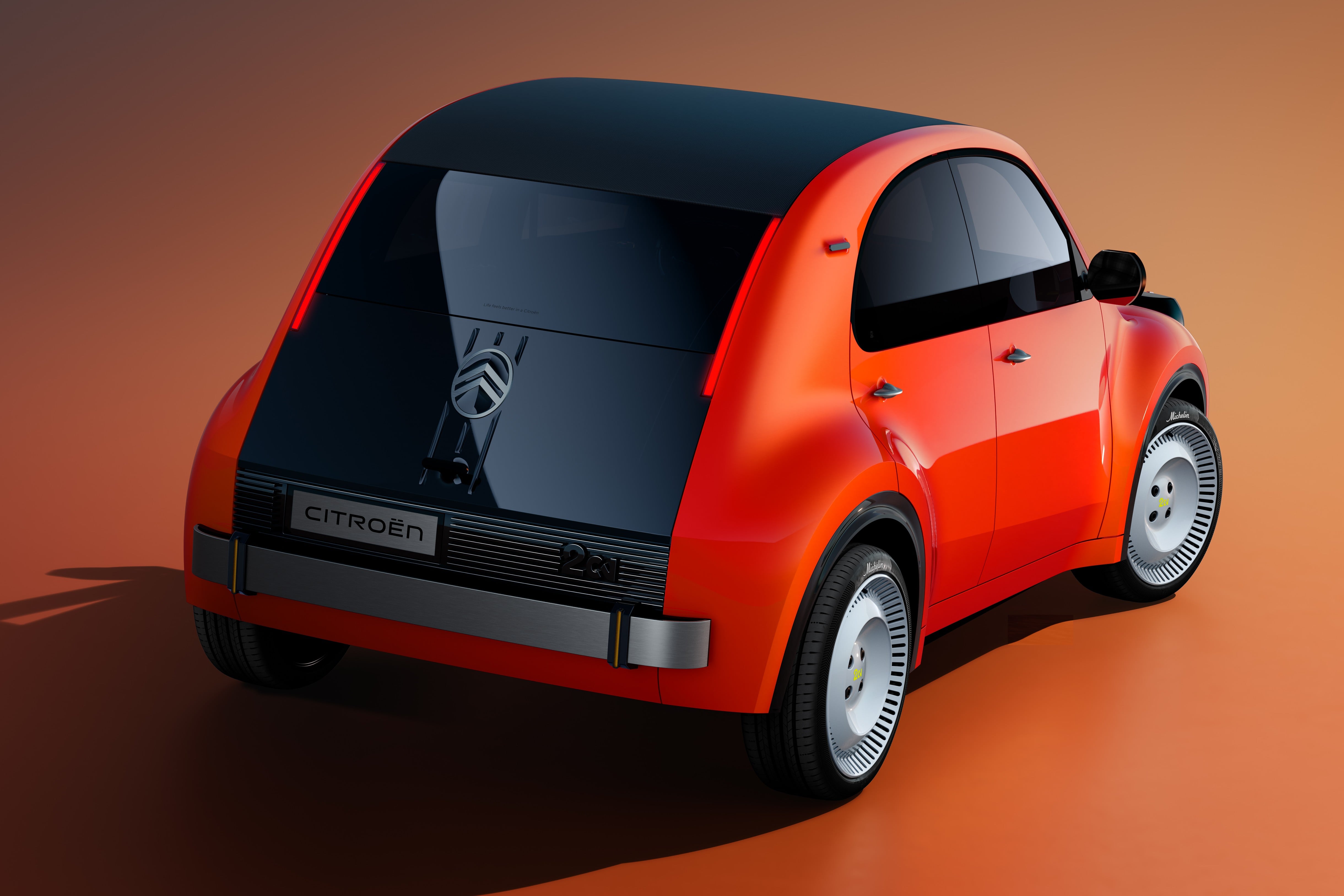
The 18-inch steel wheels have a design inspired by the original 2 CV, and the tyre sidewalls feature Michelin branding and the Citroen chevron pattern. Michelin has developed a technology dubbed ‘universal digital twin of the tyre’ that Citroen says helps the vehicle’s behaviour to adapt to its environment and monitor tyre condition continuously. At the rear is a black tailgate that extends towards the bumper like the older 2CV, three horizontal stripes, a short overhang, a tailgate handle, LED lights on either side of the tailgate, and a number plate with the 2 CV’s international nicknames on it. Like the front, there’s a thick silver strip here as well.
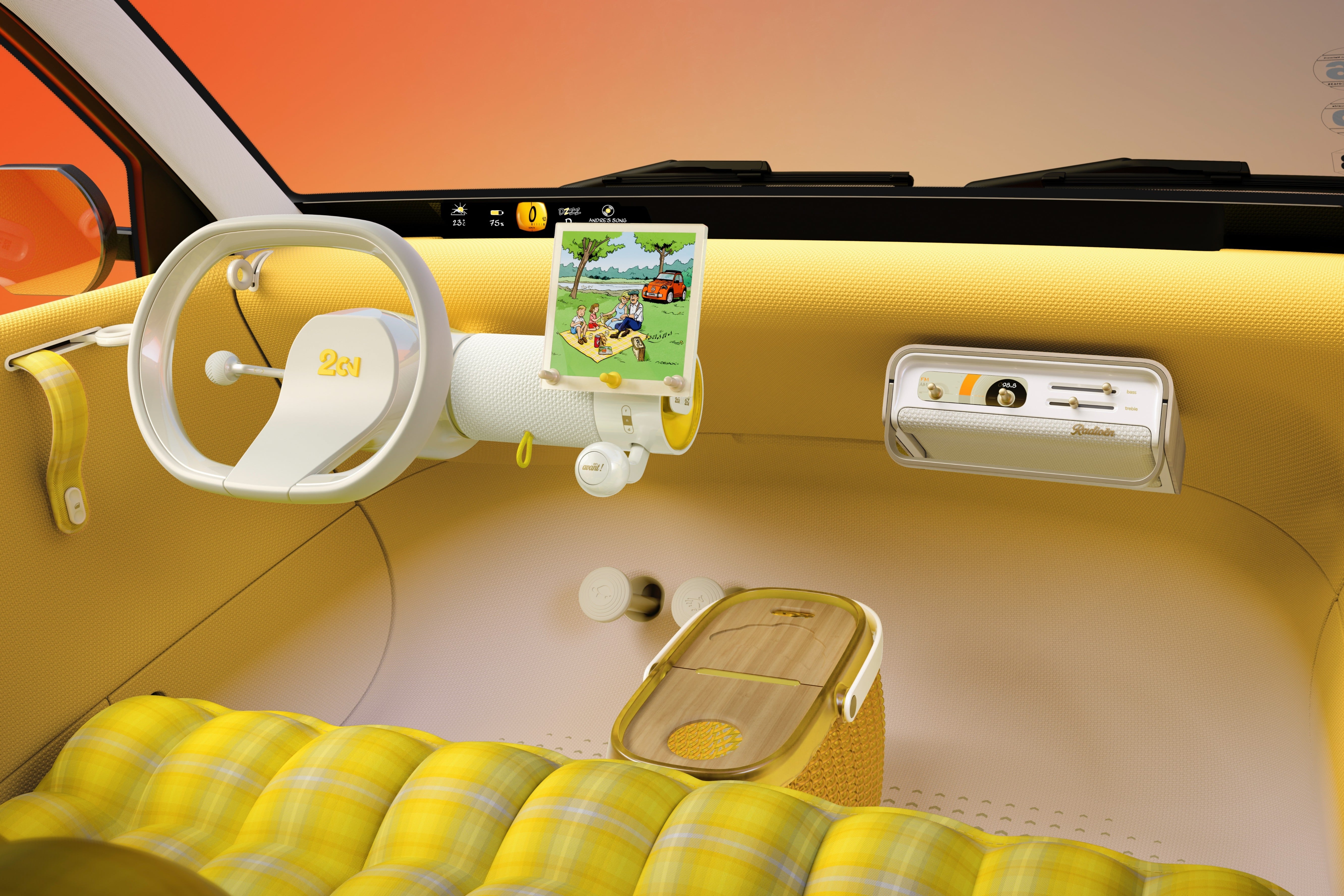
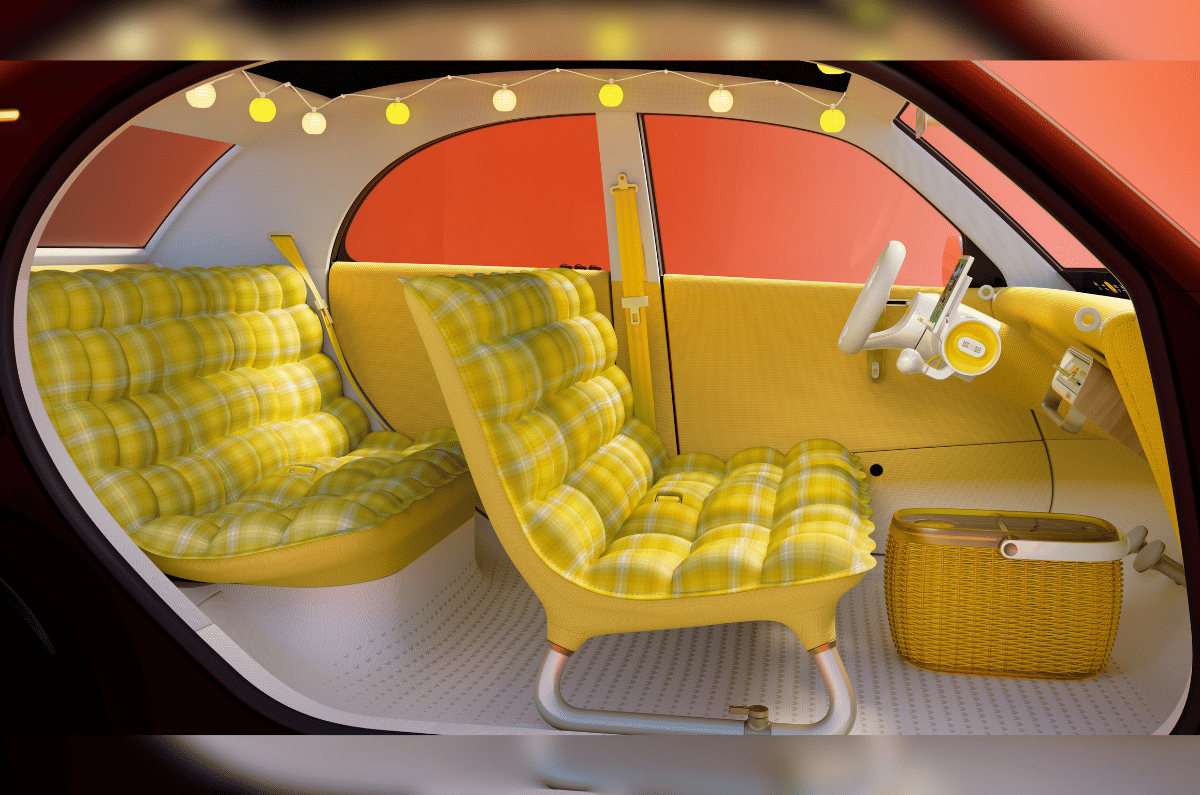
The interior gets a lively white and yellow theme, while the floor, dashboard, and door panels have a fabric finish with a texture that takes inspiration from cane basketry, and the bench-type seats are wrapped in a Tartan yellow upholstery. The 2 CV concept employs a cabin design that’s devoid of a traditional dashboard, increasing the sense of space. In place of the dashboard is a single cylindrical structure, on which is a single-spoke steering wheel, a single control lever, and an 8-inch touchscreen with comic book-inspired graphics and toggle switches under it.
You get a digital driver’s display below the windscreen, a removable 3D-printed storage basket instead of a centre console, and straps for door handles. Additionally, there’s a fabric sunroof and ‘Radioën’, a radio unit that can be detached and used as a speaker. Interesting details include a rabbit and tortoise inscription on the accelerator and brake pedals.
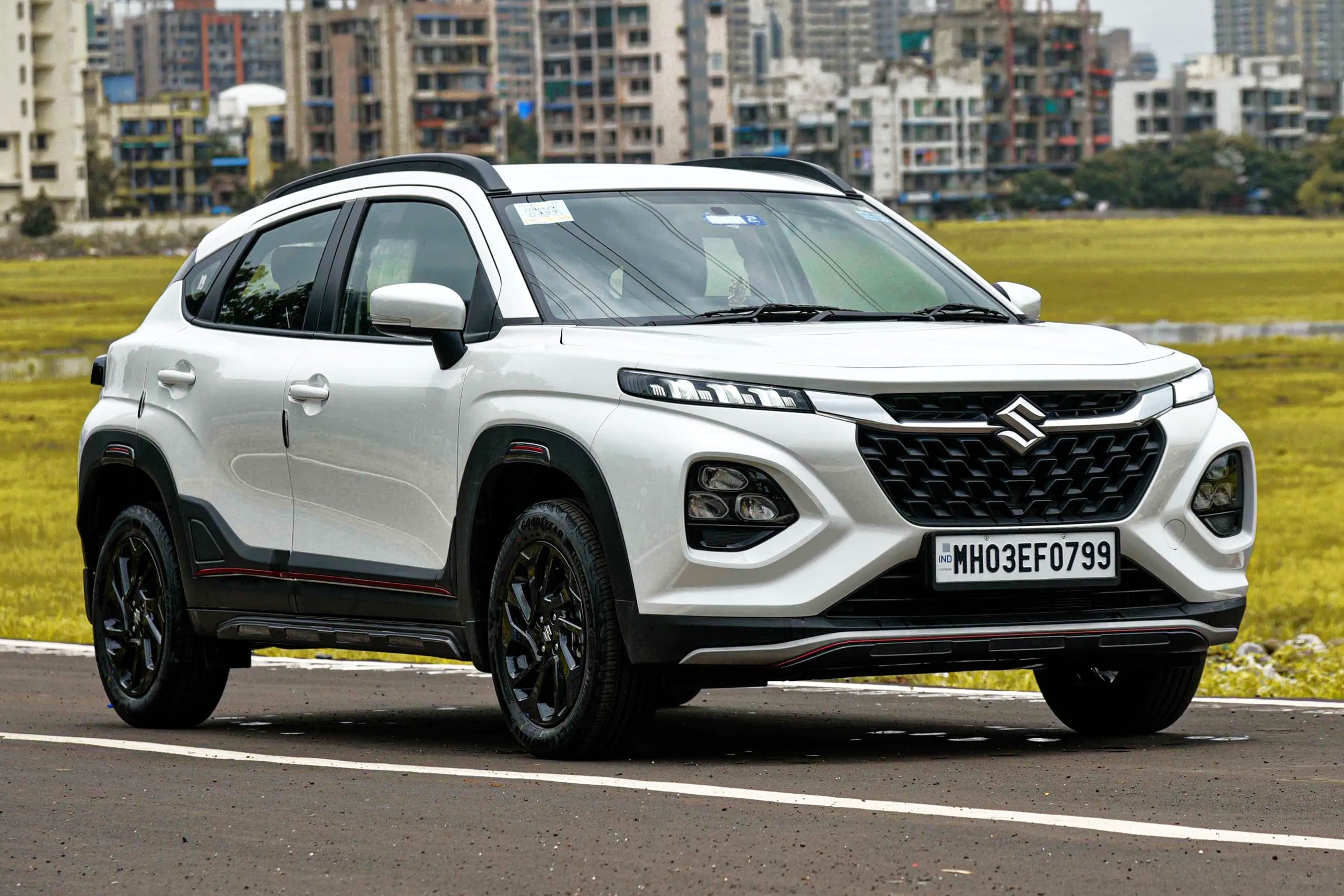
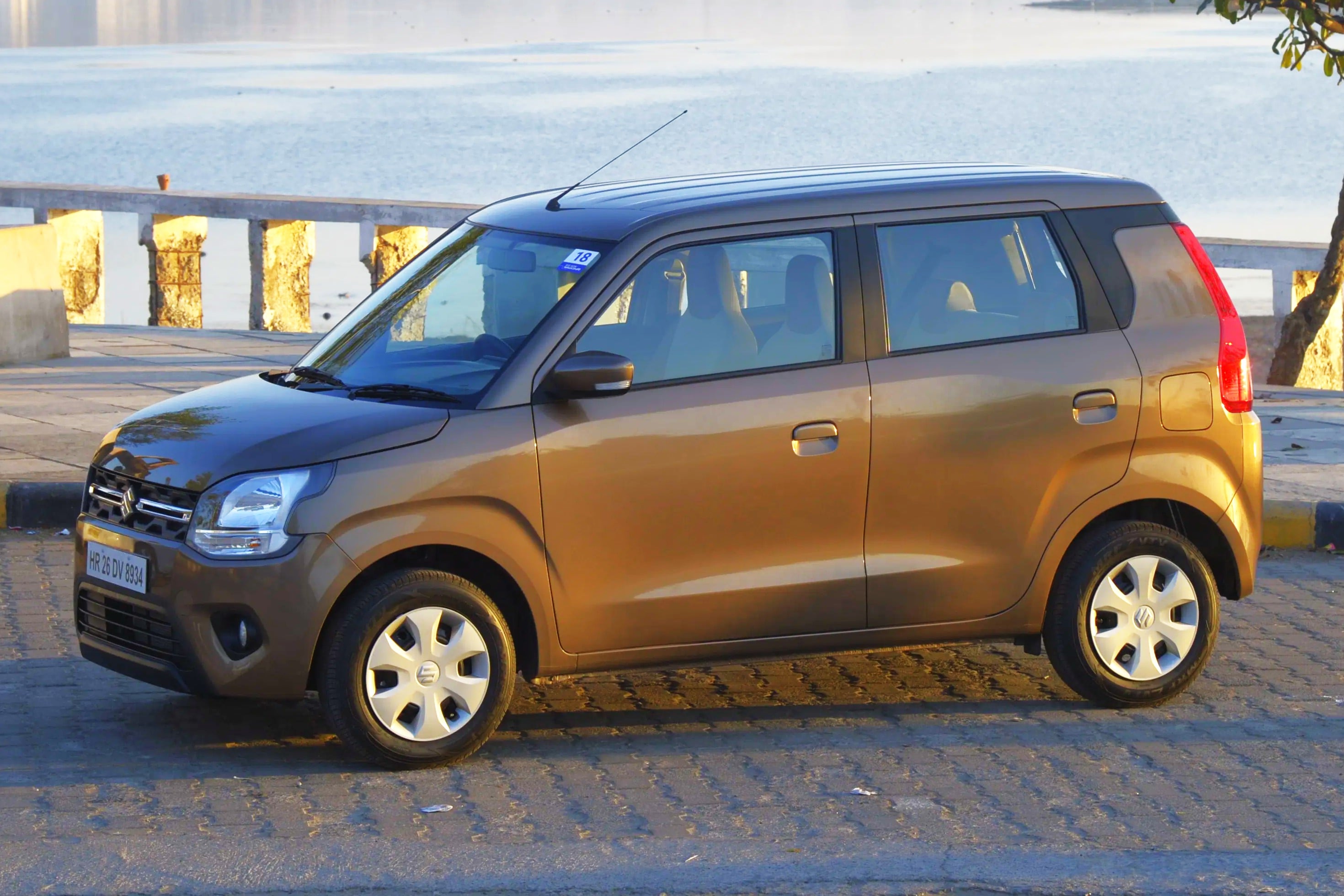
September 2026 saw the Maruti Suzuki Baleno top the best-selling cars list with 25,392 units dispatched, a 93 percent increase year on year. The Tata Nexon and Punch ranked second and third, respectively, with over 20,000 units each. Combined dispatches of the top 10 models rose 15.5 percent to 1,91,332 units. Maruti Suzuki had six models on the list, followed by Tata Motors with two, and Hyundai and Mahindra with one each.
Top 10 best-selling cars in September 2026
Rank
Model
Sep 2026 sales (units)
Aug 2026 sales (units)
Sep 2025 sales (units)
MoM change (%)
YoY change (%)
1
Maruti Baleno
25,392
15,376
13,173
+61
+93
2
Tata Nexon
20,456
18,431
22,573
+11
-9
3
Tata Punch
20,333
21,320
15,891
-5
+28
4
Maruti Fronx
19,282
18,730
13,767
+3
+40
5
Maruti Wagon R
18,835
20,180
15,388
-7
+22
6
Maruti Dzire
17,754
18,418
20,038
-4
-11
7
Hyundai Creta
17,657
16,288
18,861
+8
-6
8
Maruti Swift
17,399
19,832
15,547
-12
+12
9
Mahindra Scorpio
17,313
15,576
18,372
+11
-6
10
Maruti Ertiga
16,911
18,516
12,115
-9
+40
1. Maruti Suzuki Baleno
The Maruti Suzuki Baleno topped the September 2026 sales rankings with 25,392 units, compared with 13,173 units in September 2025. Its dispatches increased 93 percent year on year, the highest growth rate among the 10 models. The premium hatchback recently received a facelift and is sold through Maruti Suzuki’s Nexa dealership network. It rivals the Hyundai i20, Tata Altroz and Toyota Glanza. The Baleno is priced between Rs 5.99 lakh and Rs 9.99 lakh.
2. Tata Nexon
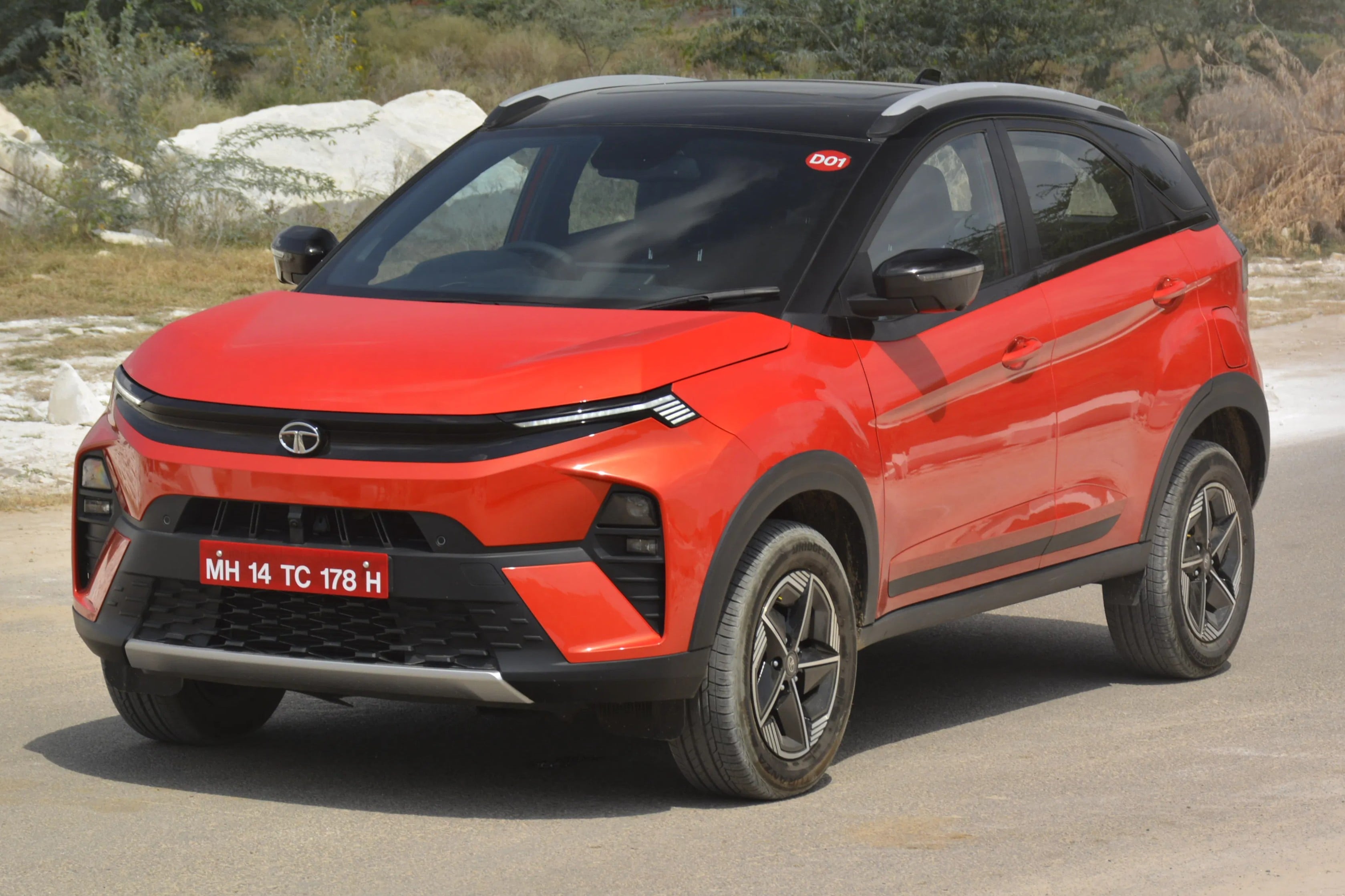
The Tata Nexon, including the Nexon EV, recorded 20,456 units in September 2026, down 9 percent from 22,573 units in the same month last year. It finished second, just 123 units ahead of the Punch. The Nexon is available with petrol, diesel, CNG and electric powertrains. It rivals the Maruti Suzuki Brezza, Hyundai Venue, Kia Sonet and Mahindra XUV 3XO and is priced from Rs 7.40 lakh to Rs 14.52 lakh for the ICE powered Nexon, while the Nexon EV starts at Rs 12.49 lakh and goes up to 17.89 lakh.
3. Tata Punch
The Tata Punch, including the Punch EV, recorded 20,333 units in September 2026, up 28 percent from 15,891 units a year earlier. It ranked third in the overall list, with the Nexon finishing narrowly ahead. Tata’s smallest SUV is offered with multiple powertrain options, while its compact dimensions and ride-and-handling balance remain key strengths. The Punch rivals the Hyundai Exter and Citroen C3 and is priced from Rs 5.75 lakh to Rs 10.77 lakh. The Punch EV meanwhile is priced from Rs 9.79 lakh to Rs 12.99 lakh.
4. Maruti Suzuki Fronx
The Maruti Suzuki Fronx ranked fourth in September 2026 with 19,282 units, compared with 13,767 units in September 2025. Its dispatches increased 40 percent year on year. The Fronx’s crossover styling, comfortable cabin and fuel-efficient powertrains continue to support demand, although it lacks some popular features. It rivals the Nissan Magnite and Renault Kiger and is priced between Rs 6.85 lakh and Rs 11.84 lakh.
5. Maruti Suzuki Wagon R
The Maruti Suzuki Wagon R recorded 18,835 units in September 2026, up 22 percent from 15,388 units in the same month last year. It finished fifth in the rankings. Its spacious cabin, ease of driving and low running costs remain key strengths, although its light build and limited highway ability are drawbacks. The Wagon R rivals the Tata Tiago and Citroen C3 and is priced between Rs 4.99 lakh and Rs 7.24 lakh.
6. Maruti Suzuki Dzire
The Maruti Suzuki Dzire recorded 17,754 units in September 2026, down 11 percent from 20,038 units in September 2025. It ranked sixth and was the only sedan in the top 10. Strong fleet demand, fuel efficiency and a well-balanced ride and handling setup continue to support the compact sedan’s volumes. The Dzire rivals the Hyundai Aura, Honda Amaze and Tata Tigor and is priced between Rs 6.31 lakh and Rs 9.41 lakh.
7. Hyundai Creta
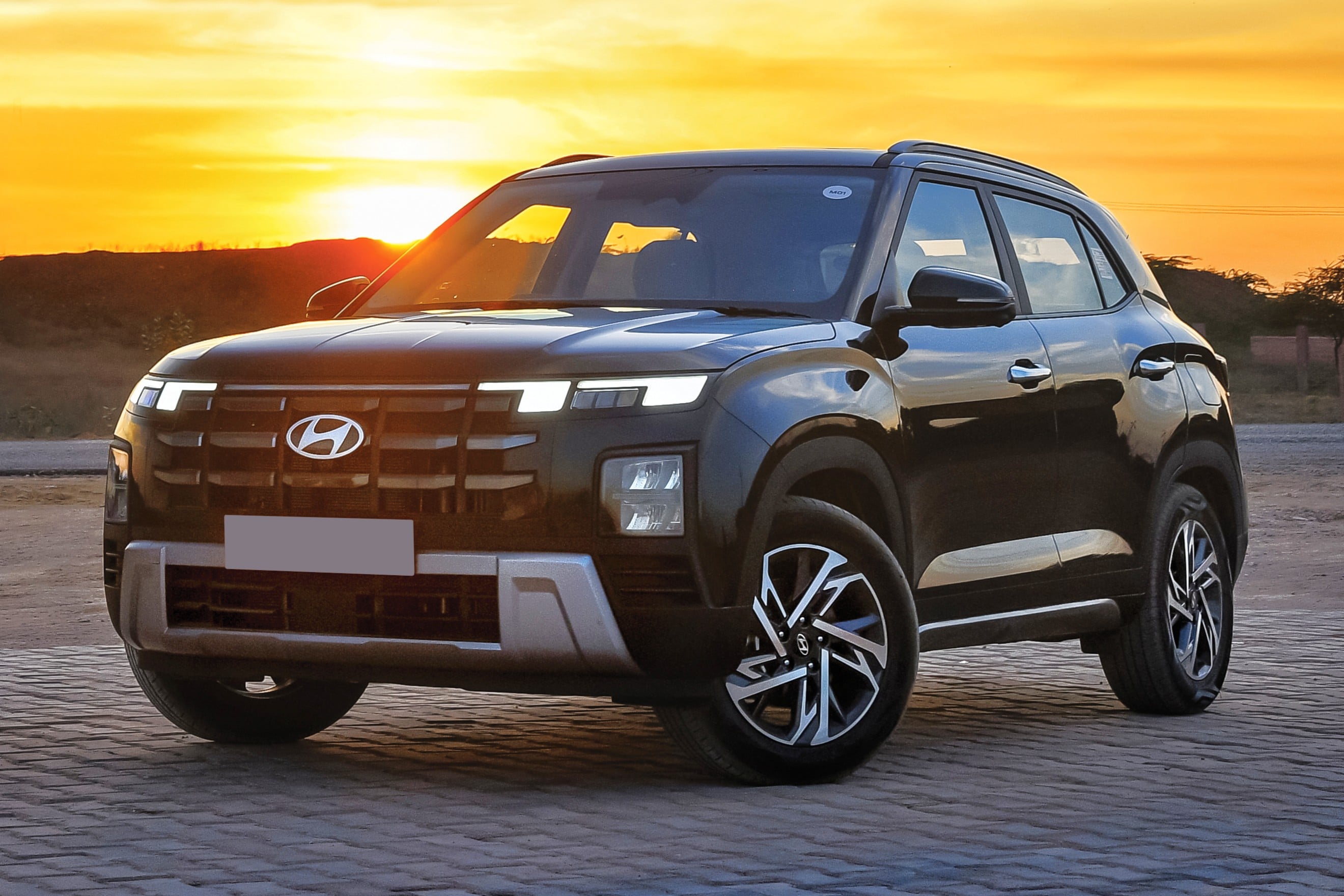
The Hyundai Creta, including the Creta Electric, recorded 17,657 units in September 2026, a 6 percent decline from 18,861 units in the year-ago month. It was the only Hyundai model in the top 10, finishing seventh. A roomy cabin, multiple powertrain options and a long feature list continue to attract buyers, although the top variants are expensive and some interior plastics could be better. The Creta rivals the Kia Seltos, Maruti Suzuki Grand Vitara, Toyota Urban Cruiser Hyryder, Honda Elevate and Tata Sierra. It is priced between Rs 10.91 lakh and Rs 20.14 lakh.
8. Maruti Suzuki Swift
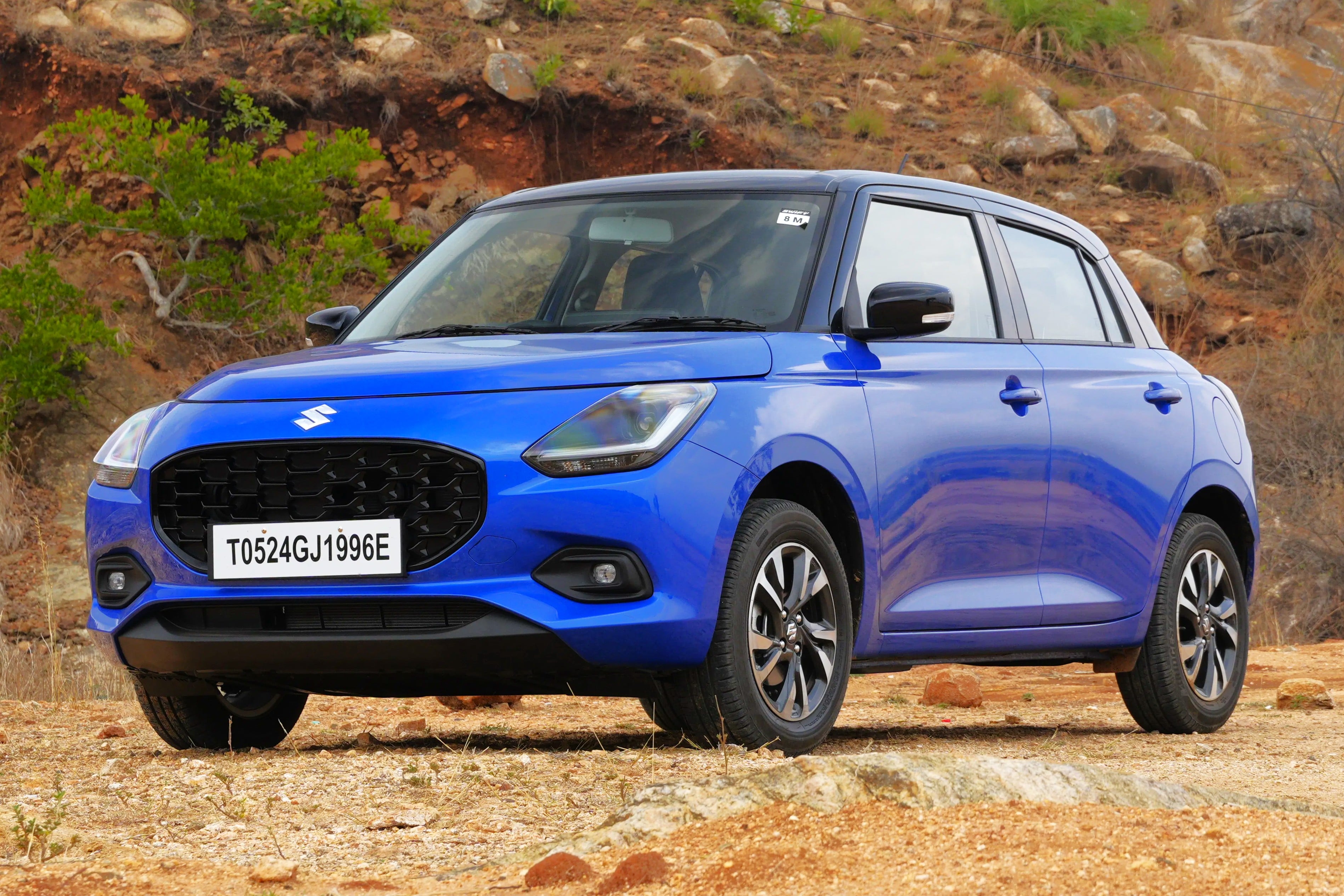
The Maruti Suzuki Swift recorded 17,399 units in September 2026, up 12 percent from 15,547 units a year earlier. It finished eighth and was one of three Maruti Suzuki hatchbacks in the top 10. Its high fuel efficiency, light controls and easy-to-drive nature continue to support demand, although the top variants are priced close to the more premium Baleno. The Swift rivals the Hyundai Grand i10 Nios and Tata Tiago and is priced between Rs 5.84 lakh and Rs 8.74 lakh.
9. Mahindra Scorpio
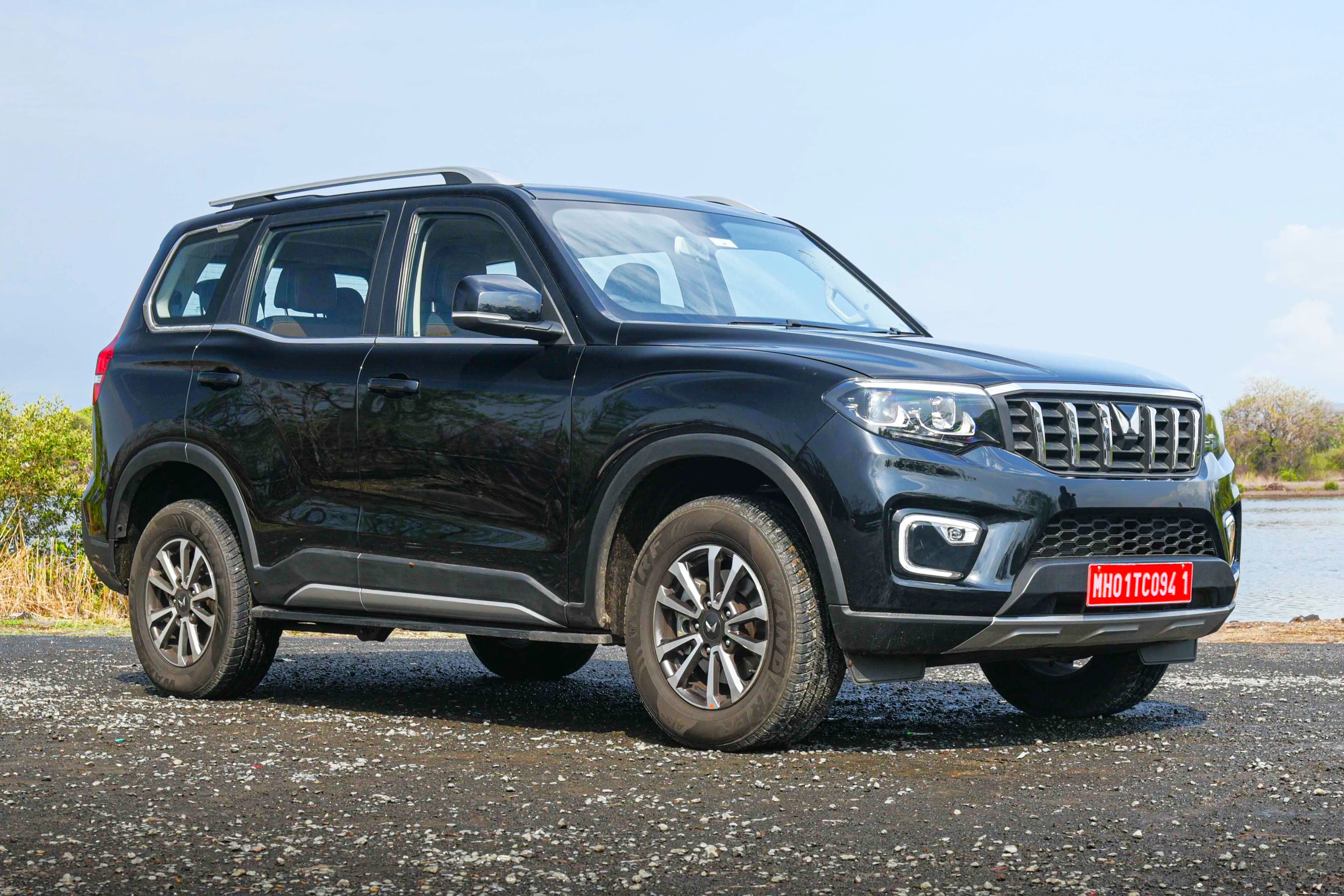
The Mahindra Scorpio, combining the Scorpio N and Scorpio Classic, recorded 17,313 units in September 2026. This was down 6 percent from 18,372 units in September 2025, placing it ninth. The Scorpio nameplate remains popular for its strong engines, rugged character and off-road ability. However, the third-row seating is cramped and the luggage area is not particularly practical. The Scorpio N rivals the Tata Safari, Hyundai Alcazar and Mahindra XUV 7XO and is priced from Rs 13.69 lakh to Rs 25.49 lakh.
10. Maruti Suzuki Ertiga
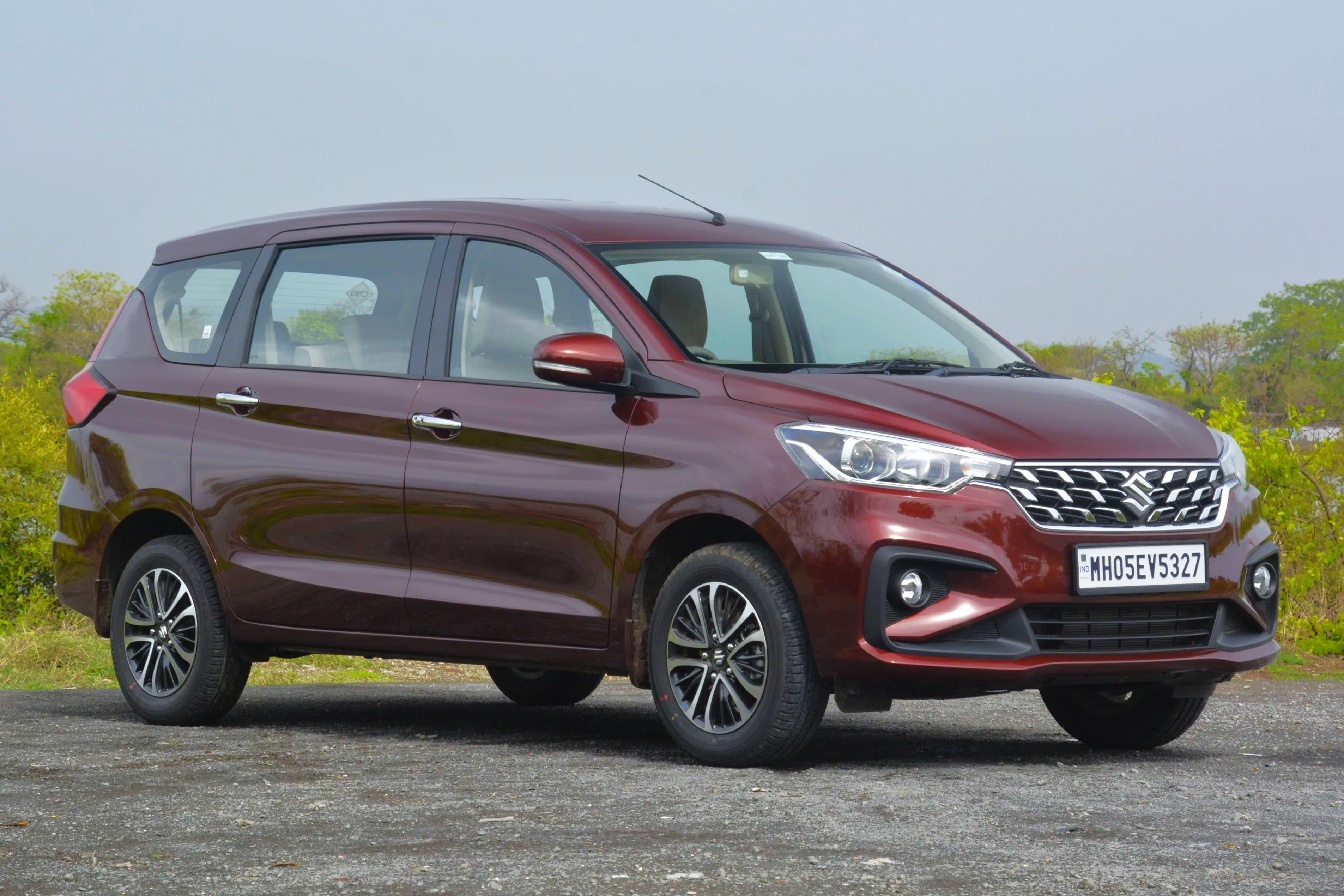
The Maruti Suzuki Ertiga completed the top 10 with 16,911 units in September 2026, up 40 percent from 12,115 units in the same month last year. It was the sixth Maruti Suzuki model in the rankings. The Ertiga continues to hold the title of India’s highest-selling MPV. Its practical cabin, strong fuel efficiency and value-for-money positioning attract both private and fleet buyers, although it misses out on some features offered by rivals. It is priced from Rs 8.90 lakh to Rs 13.04 lakh and rivals the Kia Carens and Toyota Rumion.
Toyota is all set to launch the Glanza facelift on October 14, 2026, about a month after the launch of the 2026 Maruti Suzuki Baleno facelift. The Japanese automaker has released an official teaser, giving us a glimpse of the upcoming premium hatchback’s design. Here’s what you can expect from the 2026 Toyota Glanza facelift.
1. What will the 2026 Toyota Glanza facelift look like?
Official teaser shows the hatchback sporting a thoroughly revised front fascia
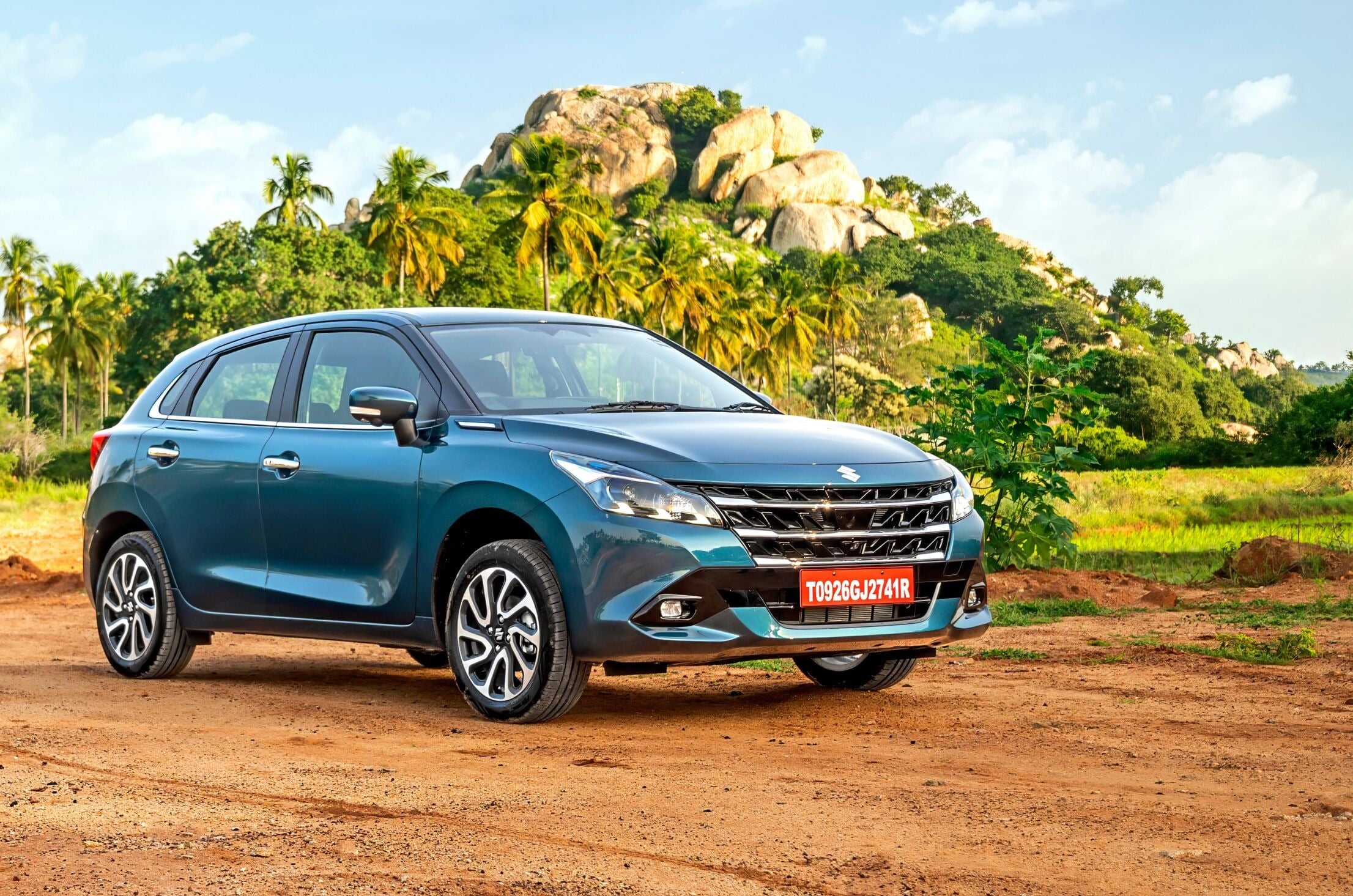
While the Japanese automaker is yet to fully reveal the 2026 Glanza facelift, the teaser gives us a decent glimpse of this hatchback’s front fascia. Understandably, there are some similarities between the upcoming Glanza and the updated Maruti Baleno. Like the latter, most of the changes to the outside are to be focused up front. This starts with the Toyota logo, which has been moved from the grille to the leading edge of the bonnet.
Another noticeable design cue on the front fascia of this facelift is the shiny garnish that extends down into the revised bumper. The circular fog lamps of the outgoing model have now been replaced by rectangular units, while the revised air-intake sports a hexagonal pattern. The 2026 Toyota Glanza facelift could also get an ADAS unit at the front like the updated Baleno. There could be new colour options, with dimensions of the upcoming Glanza facelift unlikely to change.
2. How different will the interior of the Toyota Glanza facelift be?
Cabin is likely to retain the familiar layout of the outgoing model
Pre-facelift Toyota Glanza’s interior shown for representational purposes.
Like the updated Baleno, the interior design and layout of the 2026 Toyota Glanza facelift are also expected to stay largely unchanged. This means that we can expect to find the same layered dashboard, plenty of physical switchgear, and a dash-top infotainment screen as in the pre-facelift model. What could be new are additional buttons on the steering wheel, tied to the expected ADAS feature.
3. What features are expected with the 2026 Toyota Glanza facelift?
Highlights with update could include Level 2 ADAS and ventilated front seats
Toyota could introduce the 2026 Glanza facelift with the set of new features that the updated Maruti Baleno received. This means niceties like ventilated front seats, a wireless charging pad with cooling, and an upgraded audio system could be made available on top trims. Features like the 9-inch touchscreen, automatic climate control and connected car tech are to be carried over.
The feature set is expected to be similar to that of the updated Maruti Baleno.
The upcoming Glanza facelift’s safety add-ons are likely to include Level 2 ADAS (advanced driver assistance systems) and a tyre-pressure monitoring system (TPMS). Like with the updated Baleno, the former’s functionalities would include adaptive cruise control with auto-emergency braking and lane-keep assist. Other safety features like the 360-degree camera, head-up display, hill-hold assist, stability control and 6 airbags could be retained as well.
4. What engine and gearbox will the Toyota Glanza facelift use?
A three-cylinder petrol engine is expected to replace the outgoing four-cylinder unit
A major change with the 2026 Toyota Glanza facelift is expected under the bonnet. The 1.2-litre four-cylinder K-series petrol engine from Maruti is to be replaced by the brand’s newer 1.2-litre three-cylinder Z-series unit. In the updated Baleno, this mill produces 83hp and 112Nm – down from 90hp and 113Nm developed by the older four-cylinder engine.
Powertrain options are expected to be the same as the 2026 Maruti Baleno.
Gearbox options are expected to remain the same, which means a 5-speed manual or a 5-speed AMT (automated manual transmission). Similar to the outgoing Glanza, the facelift is also expected to be available in CNG variants. The output figures for the Glanza CNG facelift could be comparable with its Maruti counterpart, where the output is 70hp and 102Nm. Fuel efficiency is expected to improve over the outgoing model, which for reference is rated at between 22.35kpl and 22.94kpl.
5. What is the expected price of the 2026 Toyota Glanza facelift?
The updates could lead to a bump in price over the outgoing model
Considering the feature additions and design updates, the upcoming Toyota Glanza facelift could be priced higher than its predecessor. For reference, the outgoing Glanza is priced between Rs 6.73 lakh and Rs 9.99 lakh (ex-showroom). The Toyota Glanza facelift will continue to compete against the Maruti Suzuki Baleno, Tata Altroz and Hyundai i20.
Mini India has commenced pre-bookings of the Cooper Oxford Edition. This limited-run edition of the hatchback pays homage to the brand’s hometown of Oxford, UK, the brand says. It will arrive here in ‘S’ guise, getting the same 2.0-litre direct-injection turbo-petrol engine as the standard Cooper 3-door hatchback.
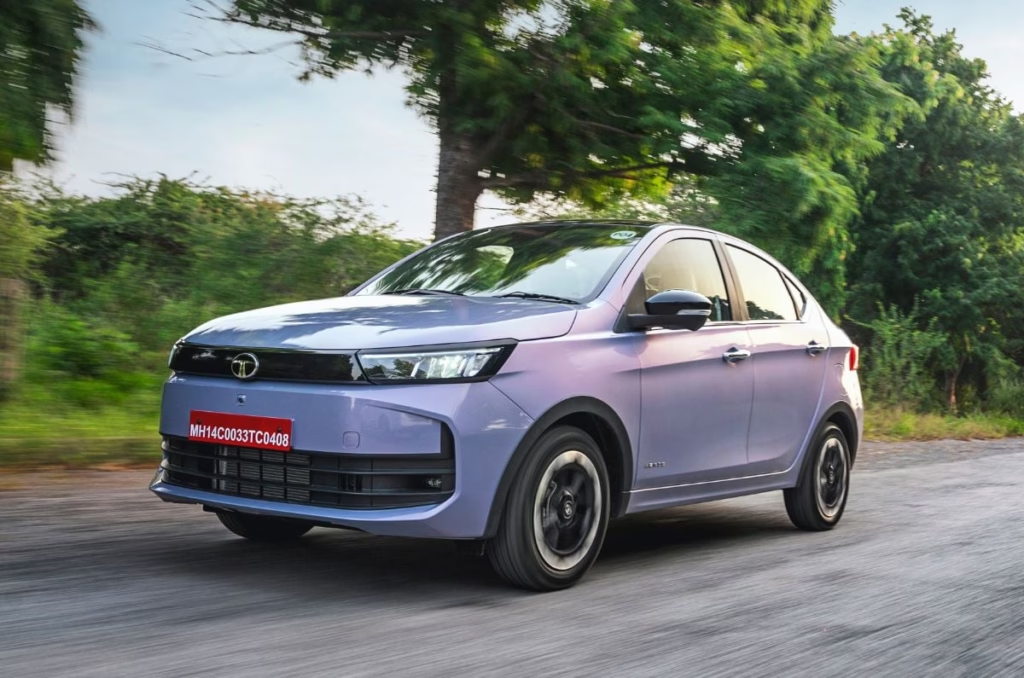
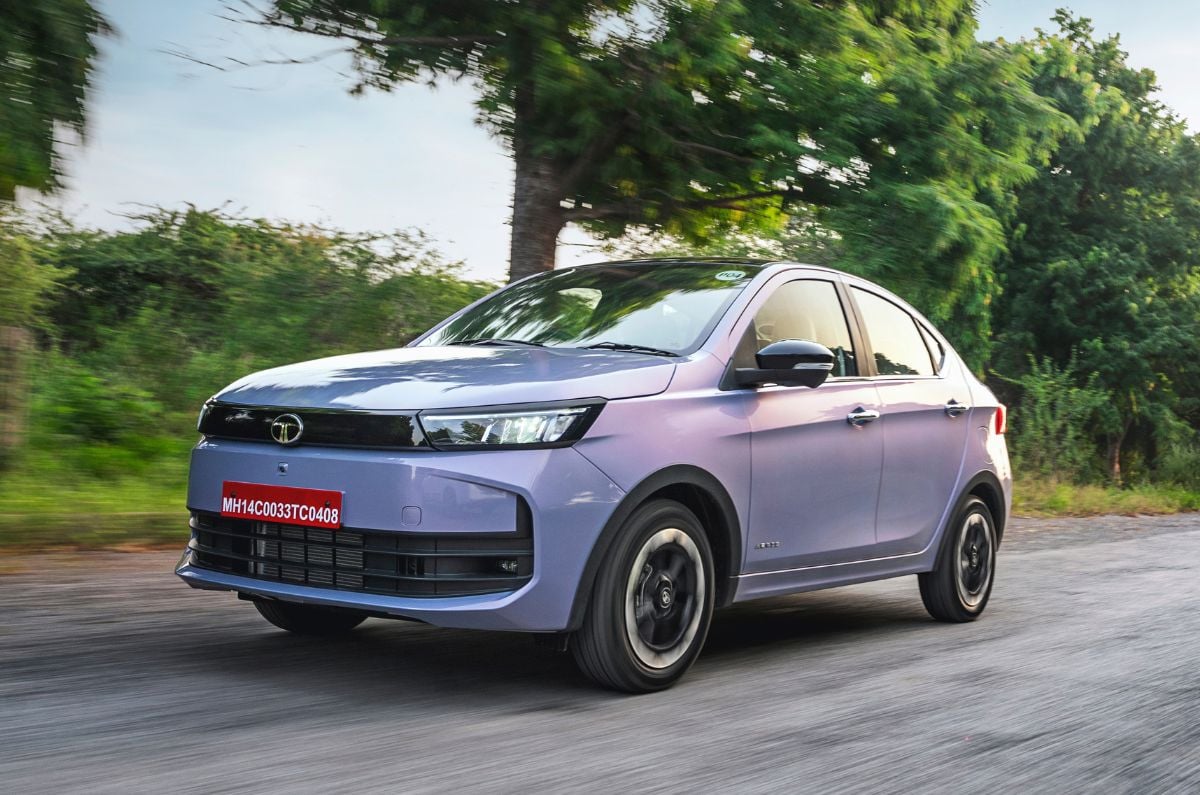
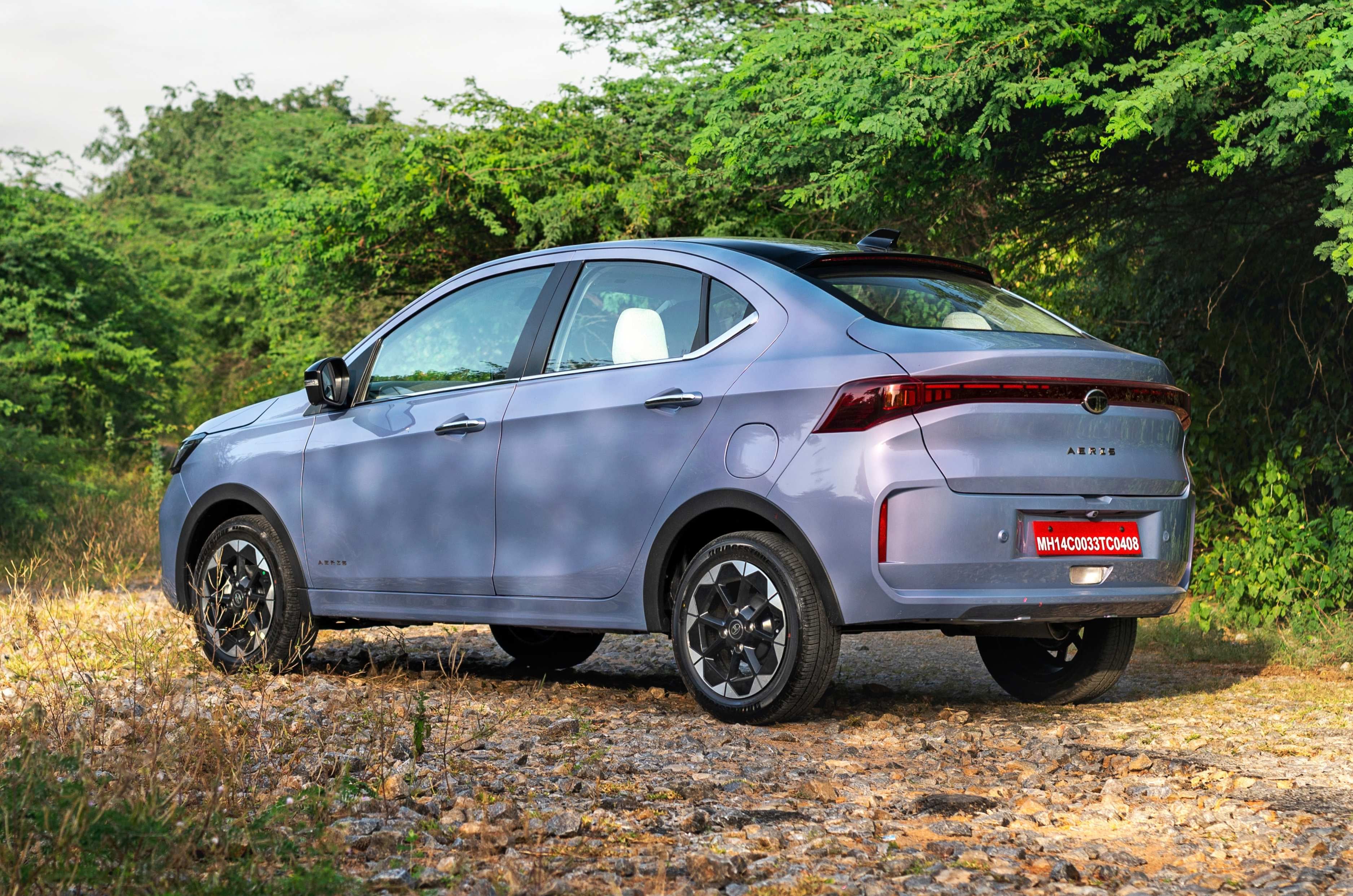
The Tata Aeris may be a new name, but its roots lie in the Tigor, which has enjoyed considerable popularity since 2017 for its distinctive styling, practical cabin, comfortable ride and decent powertrains. The Aeris builds on that foundation with a sharper design, a more upmarket cabin and an even more generous equipment list while retaining the same basic mechanical package underneath. Having already driven the iCNG version, we now get behind the wheel of the petrol Aeris to see how it fares as an everyday sedan.
Tata Aeris petrol performance and refinement – 7/10
The petrol engine gives it slightly better cruising capability than the CNG
3-cylinder engine is so-so on refinement and sounds coarse when revved hard
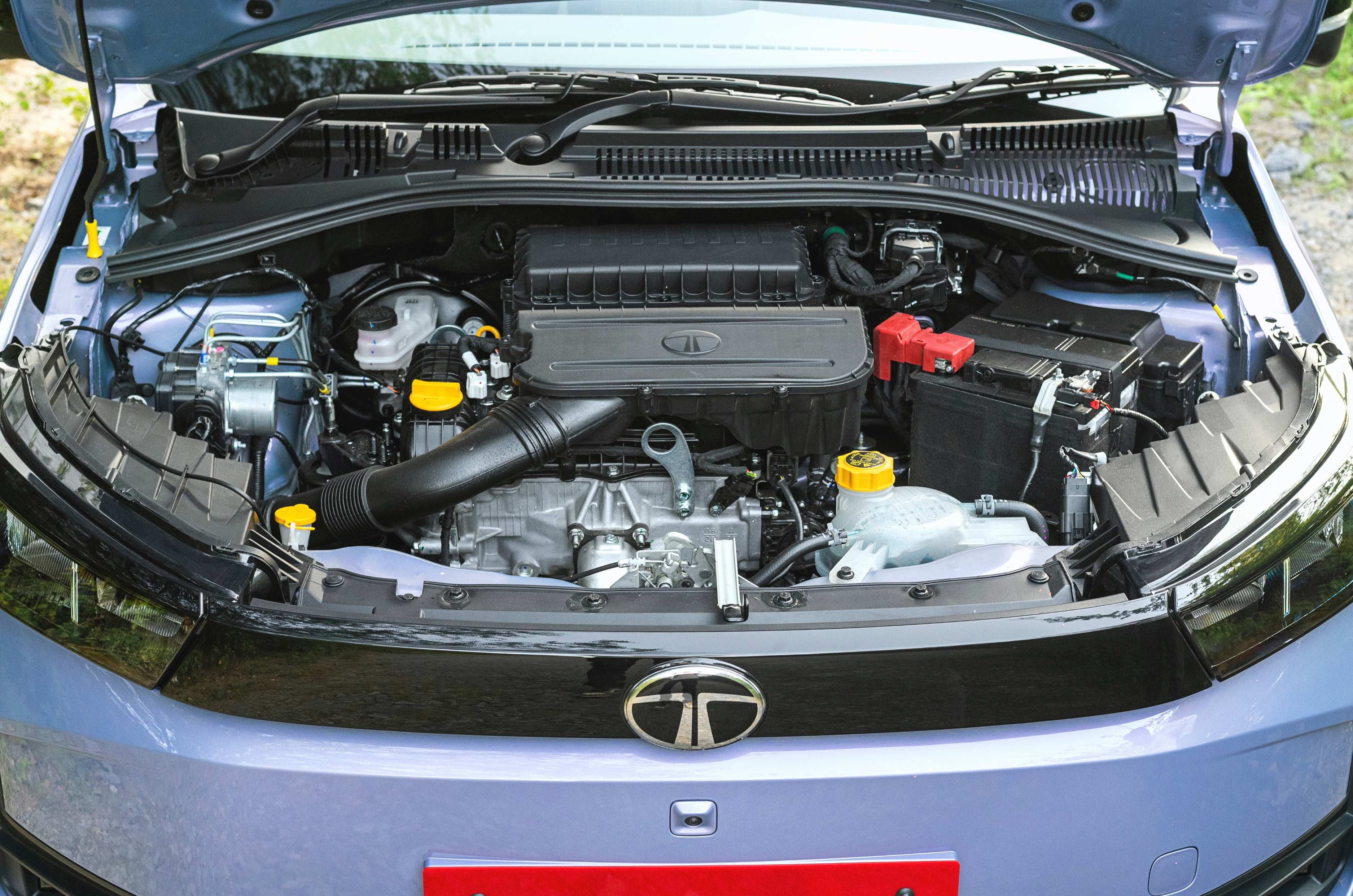
The Tata Aeris comes with a 1.2-litre 3-cylinder naturally aspirated engine that produces 86hp and 113Nm in its petrol guise and is offered with a choice between a 5-speed manual and a 5-speed automated manual transmission (AMT). The three-cylinder engine isn’t the smoothest in the segment, while the sound insulation also has room for improvement. There are noticeable vibrations at idle and low speeds, though these settle down once you’re on the move. However, they make a comeback beyond 2,500rpm, accompanied by a coarse engine note that can get intrusive and tiring on longer high-speed drives.
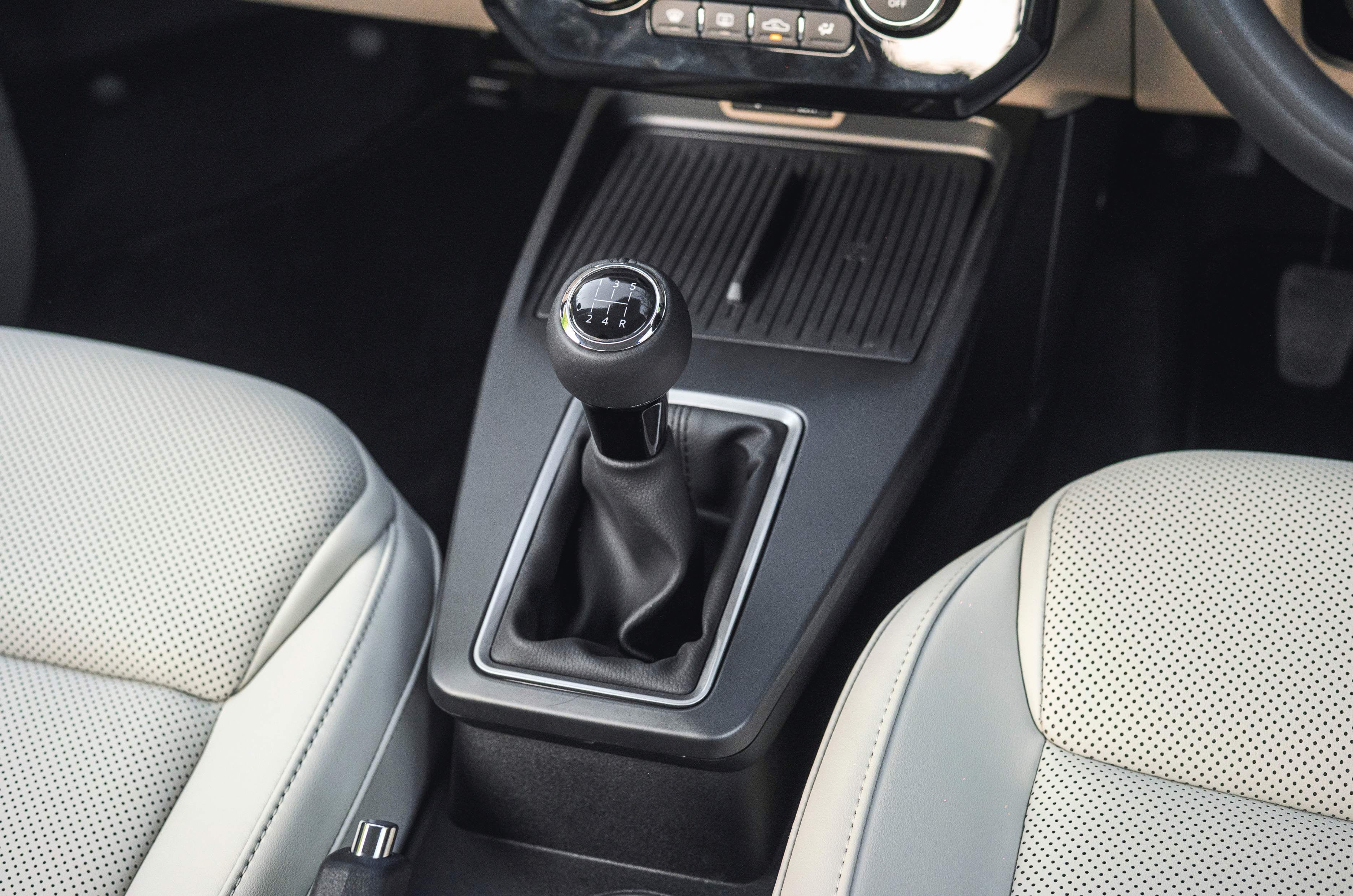
Manual lever looks premium for the price, offering short throws and defined gear gates.
The petrol version’s output figures are 10hp and 16Nm higher than the CNG version, which may look modest on paper, but the difference is discernible out on the road. We drove the petrol-powered Aeris with a 5-speed manual gearbox and noticed it offers short shift throws and well-defined gear gates. While it is not the slickest gearbox compared to its Maruti, Honda and Hyundai rivals, it is still a step up from the Tigor’s in terms of smoothness.
Aeris’ petrol version feels adequate for the city and is fine for gentle highway cruises too.
The performance in city speeds is adequate, and the powertrain is peppy enough for everyday driving. The clutch is light and has a predictable bite point, meaning you do not strain your left foot even in bumper-to-bumper traffic. There’s a dead pedal too, but it feels narrower than what we would have liked.
It is fairly quick to reach 80kph, but takes some time to reach triple-digit speeds. However, the petrol-powered Aeris maintains these speeds with relative ease, which makes it a decent highway cruiser. Unlike the CNG, the Aeris petrol does not feel out of breath when overtaking, and as long as you are in the right gear, it maintains good momentum.
AMT adds convenience for city drives but doesn’t like being rushed; the manual gearbox is easy to use.
We got a taste of the AMT during our earlier stint with the Aeris iCNG, when we switched to petrol mode, and found that the gearbox offered reasonable acceleration with measured inputs. Push the accelerator aggressively, though, and the typical AMT hesitation became evident, meaning overtakes need to be planned well. The AMT also gets a creep function, which comes in handy in bumper-to-bumper traffic.
All of this makes the AMT a good option for city driving, but for high-speed highway cruising, we recommend the manual gearbox, which offers greater control and a more engaging experience. That said, opting for the manual in the city is not a compromise either.
Tata Aeris petrol ride comfort and handling – 8/10
It allows for a confident drive at both low and high speeds
Like other Tata offerings, ride quality is one area where the Aeris excels. It takes broken roads in its stride, with the suspension absorbing rough patches well and keeping most surface irregularities from filtering into the cabin. The 170mm ground clearance is also adequate for tackling large speed breakers without much concern. That said, the CNG version has an edge in this department, thanks to its 14-inch steel wheels with taller sidewalls, which offer a more cushioned ride than the 15-inch alloys on the top-spec petrol version. Notably, lower Aeris trims get 14-inch wheels.
Well-tuned suspension keeps the Aeris comfortable and confident on all roads.
At high speed too, the suspension stiffens enough to keep the Aeris composed through quick lane changes, without feeling floaty. On the highways, it remains stable and inspires confidence at higher speeds. The steering, however, could do with more precision, as it feels slightly vague around the centre. While it weighs up nicely as speeds rise, a sharper response around the centre would have further enhanced the Aeris’ high-speed confidence.
Tata Aeris petrol mileage and efficiency
We expect the Aeris petrol to have similar fuel efficiency as the Tiago
Tata has yet to reveal the official fuel-efficiency figures for the petrol-powered Aeris. But it gets the same powertrain as the pre-facelift Tiago we tested in 2022. In that test, it returned 13.30kpl in the city and 16.60kpl on the highway. The Aeris could have similar fuel efficiency. However, we will be able to give you a more definitive assessment once we put the Aeris through our standard fuel-efficiency tests.
Tata Aeris petrol exterior design and engineering – 8/10
Has a sleeker and more modern exterior design and comes with LED lights all around
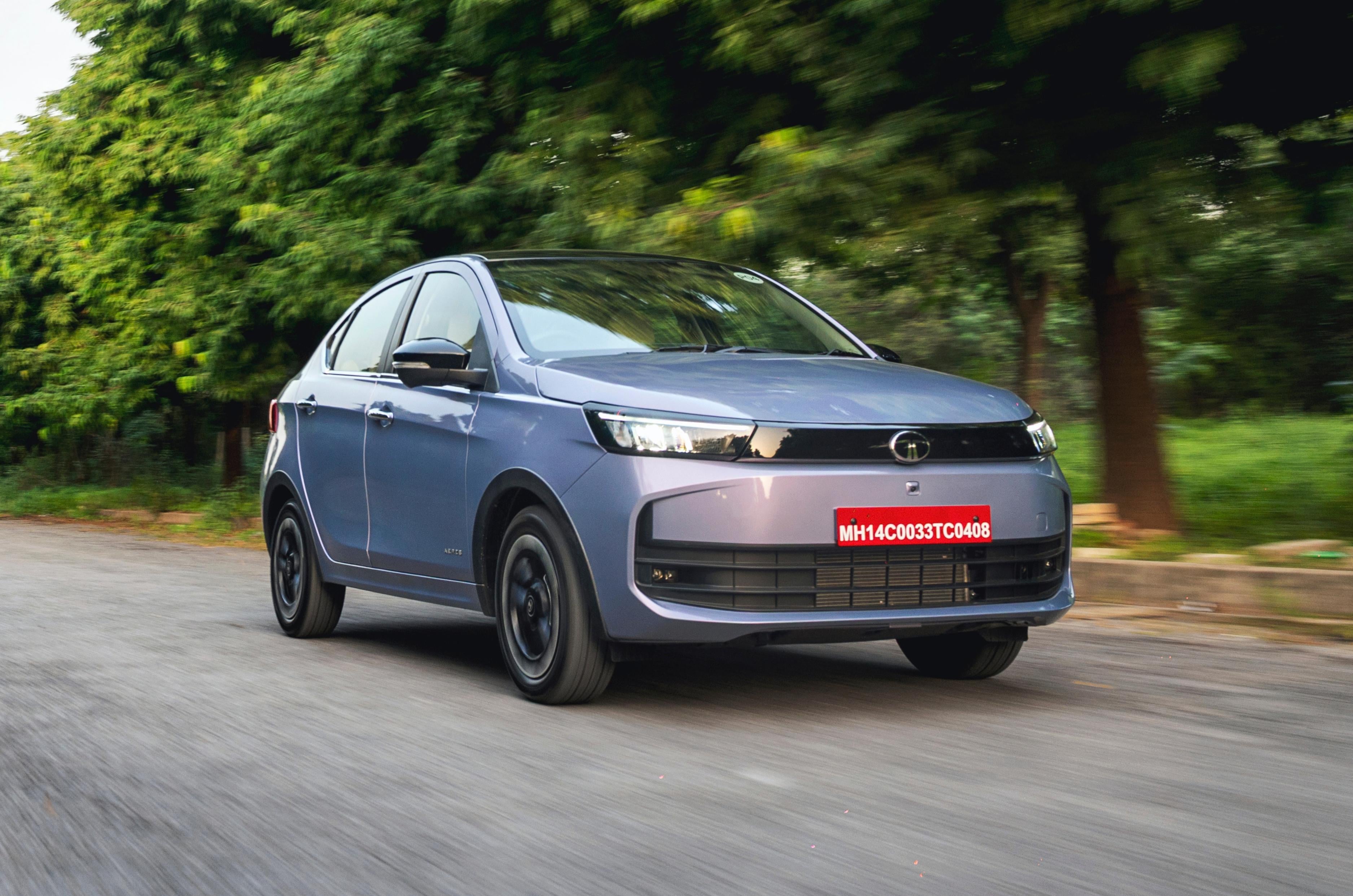
Save for the new bumper, the fascia is similar to the Tiago’s and looks very modern.
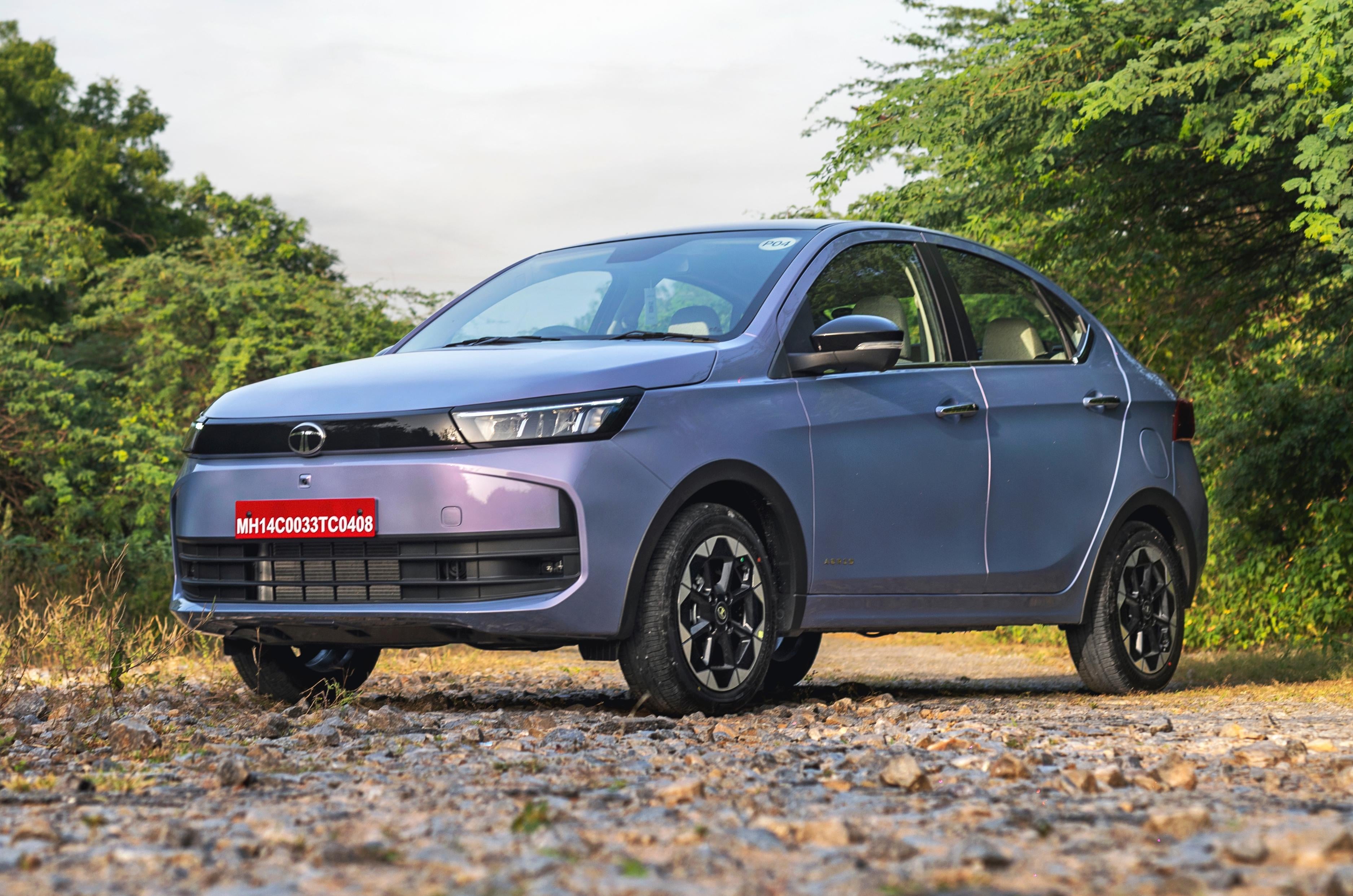
The Tata Aeris looks sleeker than before, with its design now closely aligned with the Tiago hatchback, something we have seen previously with the Tigor. Another factor that could work in the Aeris’ favour is Tata’s decision to offer it exclusively to private buyers, while retaining the Xpres, the fleet version of the Tigor, for commercial customers. This should help the Aeris steer clear of the ‘taxi’ tag often associated with rival compact sedans.
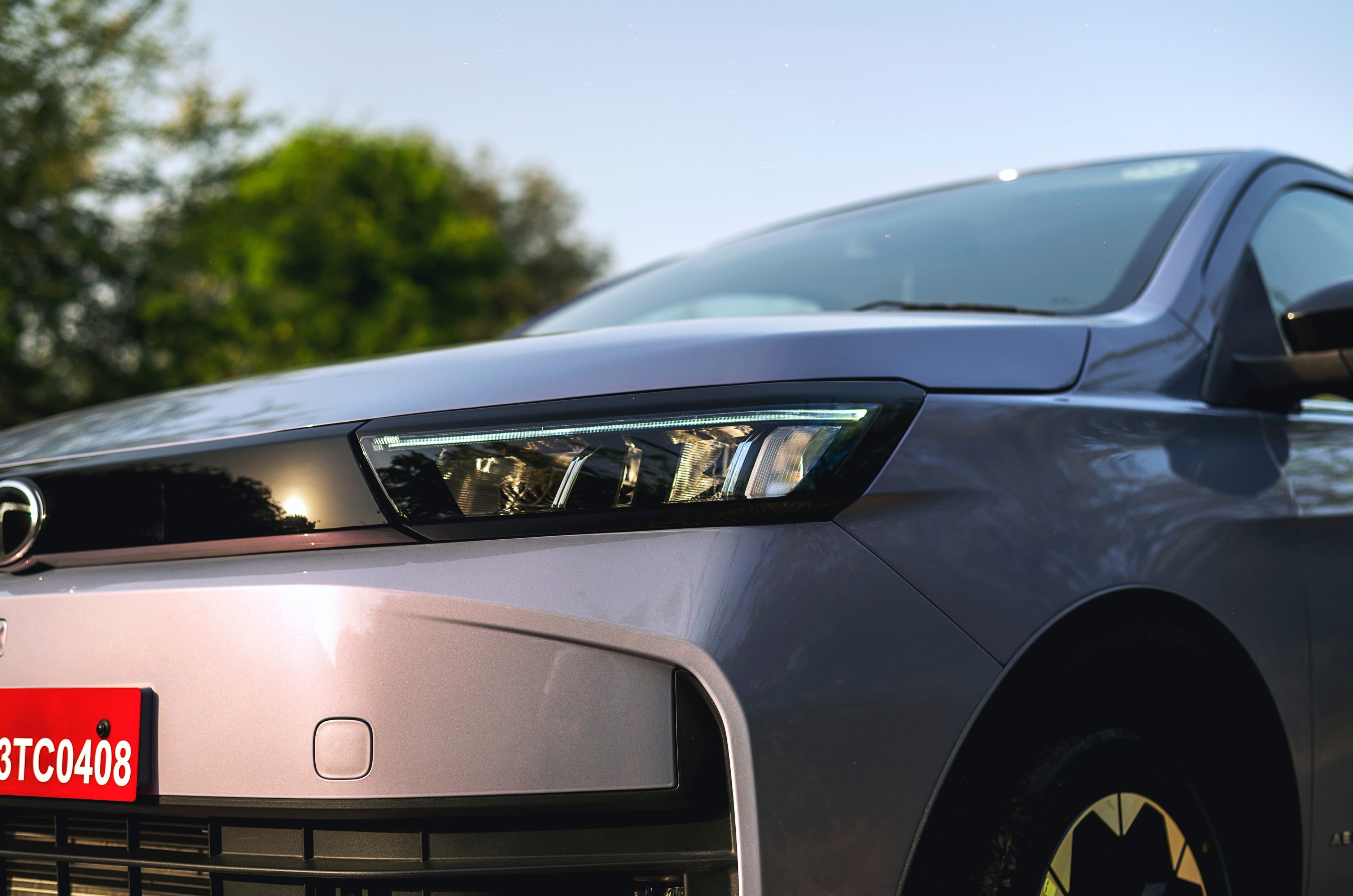
LED headlights with LED DRLs, which are connected by a black trim, make it look sleeker.
Up front, the new clamshell bonnet leads into slim LED headlights with thin LED DRL strips integrated into them. The headlights are connected by a gloss-black trim. The front bumper is also new, featuring wider air intakes and LED fog lamps, a welcome upgrade over the Tigor’s halogen units.
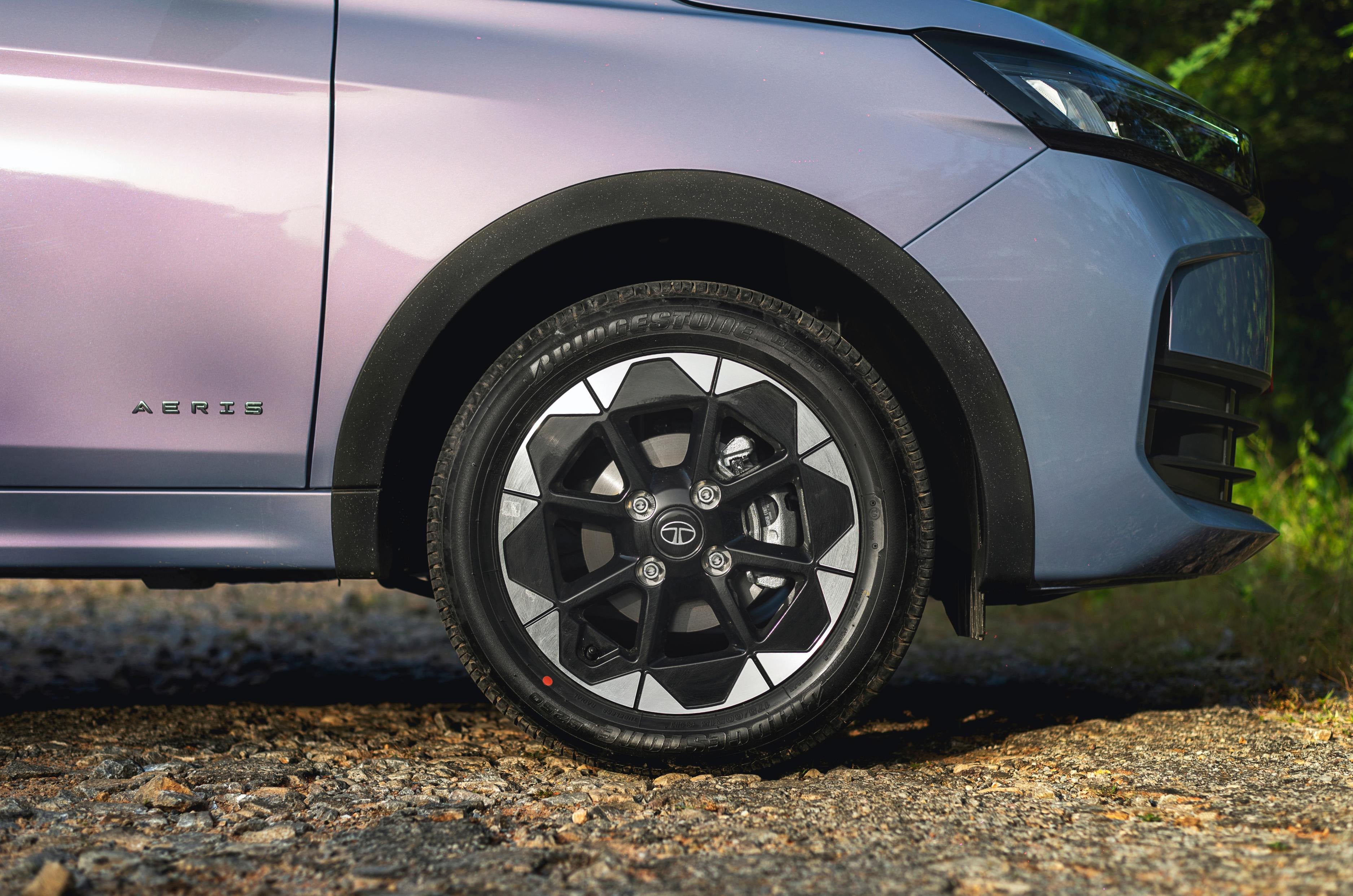
Top versions get 15-inch alloy wheels; 14-inch wheels on other variants appear undersized.
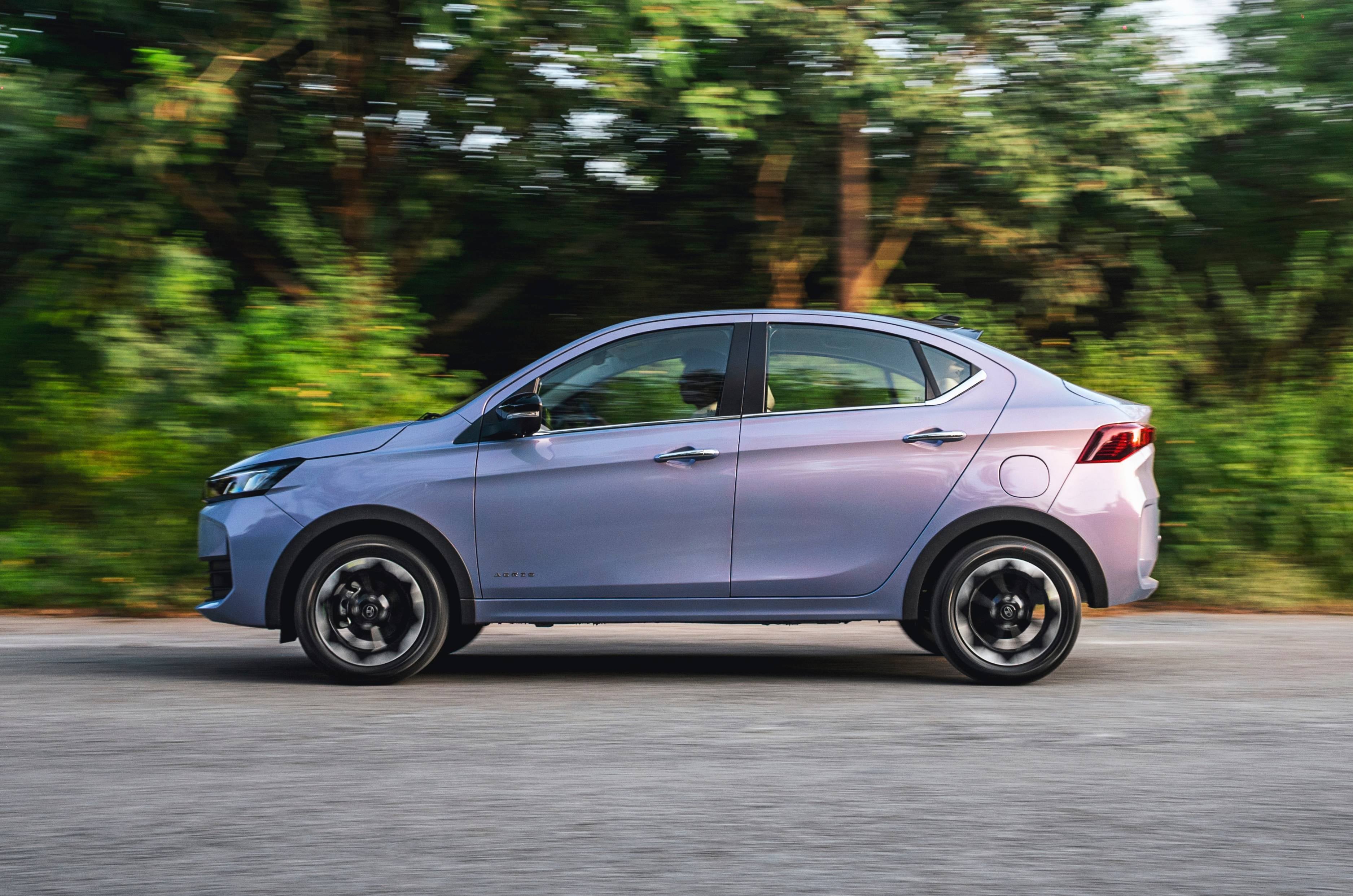
In profile, the 15-inch dual-tone alloy wheels fill the wheel arches nicely, and their contrasting finish looks particularly appealing when the Aeris is on the move. The wheel arches get slim cladding, which Tata says is made from recycled materials and features a distinctive speckled texture. Like the Tigor, the Aeris also gets chrome door handles and a chrome strip along the window line, adding some contrast to the otherwise clean design.
Fastback-like roofline remains a distinctive design element.
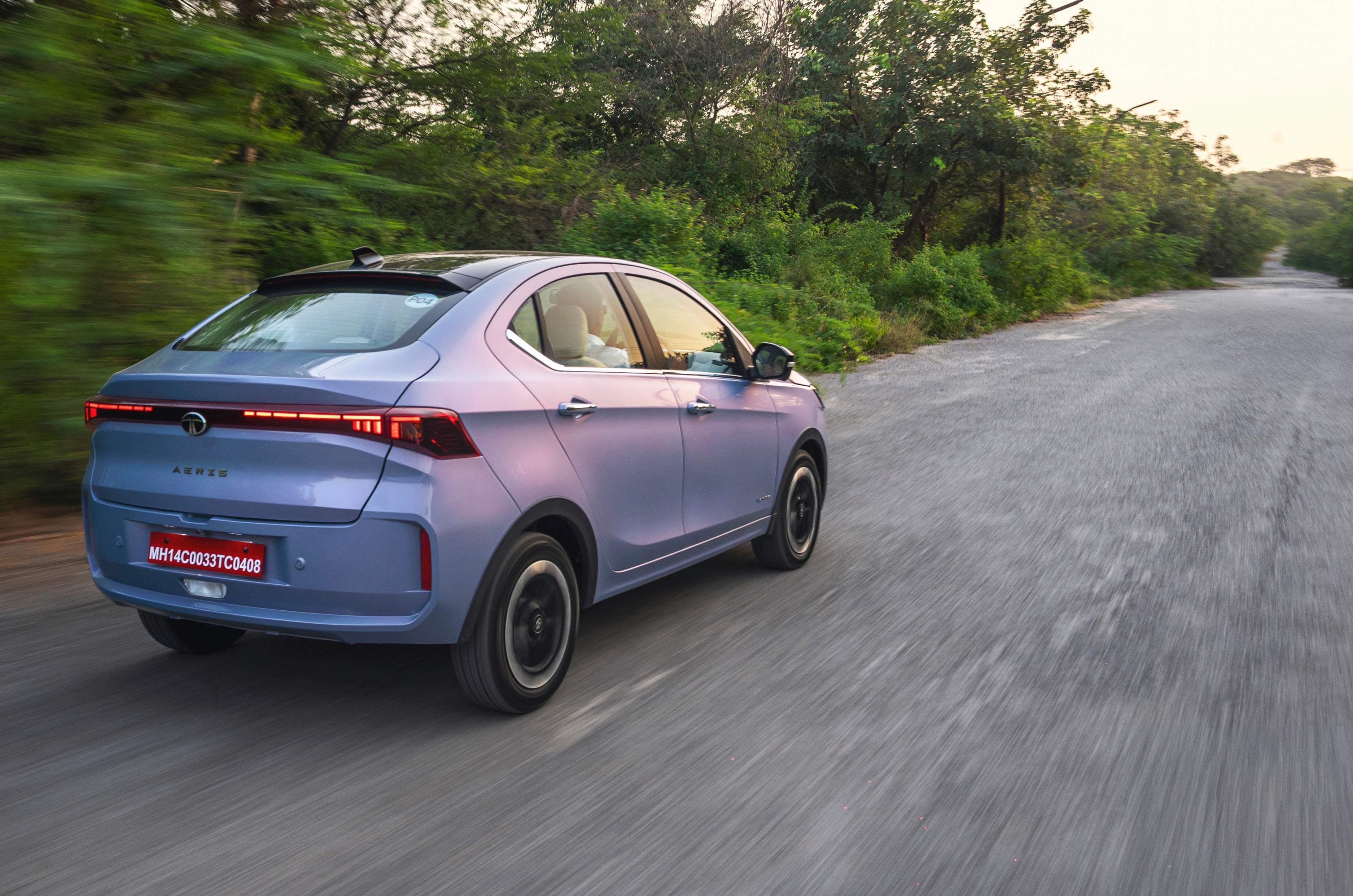
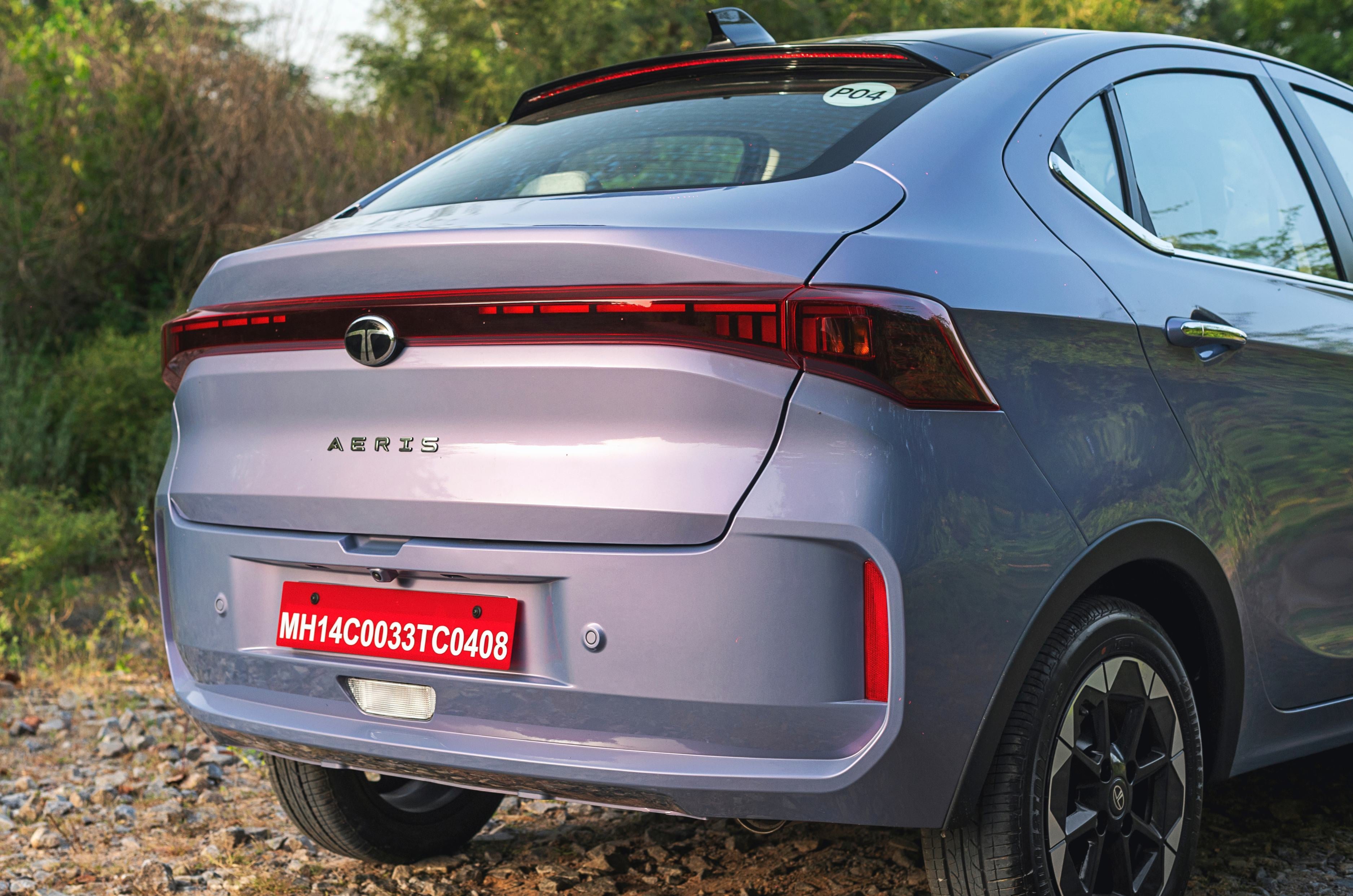
The coupe-like, tapering roofline remains unchanged from the Tigor, and continues to make the Aeris’ overall design cohesive. At the rear, the new taillights give the sedan a more modern appearance, while the red trim connecting them visually makes the Aeris appear larger than it is. The rear bumper is cleanly styled, with the reverse light neatly positioned in the centre.
The Aeris measures 3,995mm in length, 1,684mm in width and 1,532mm in height, and has a 2,450mm wheelbase.
Tata Aeris petrol interior space and comfort – 8/10
Beige theme makes the interior feel airy, and everything is nicely laid out in the cabin
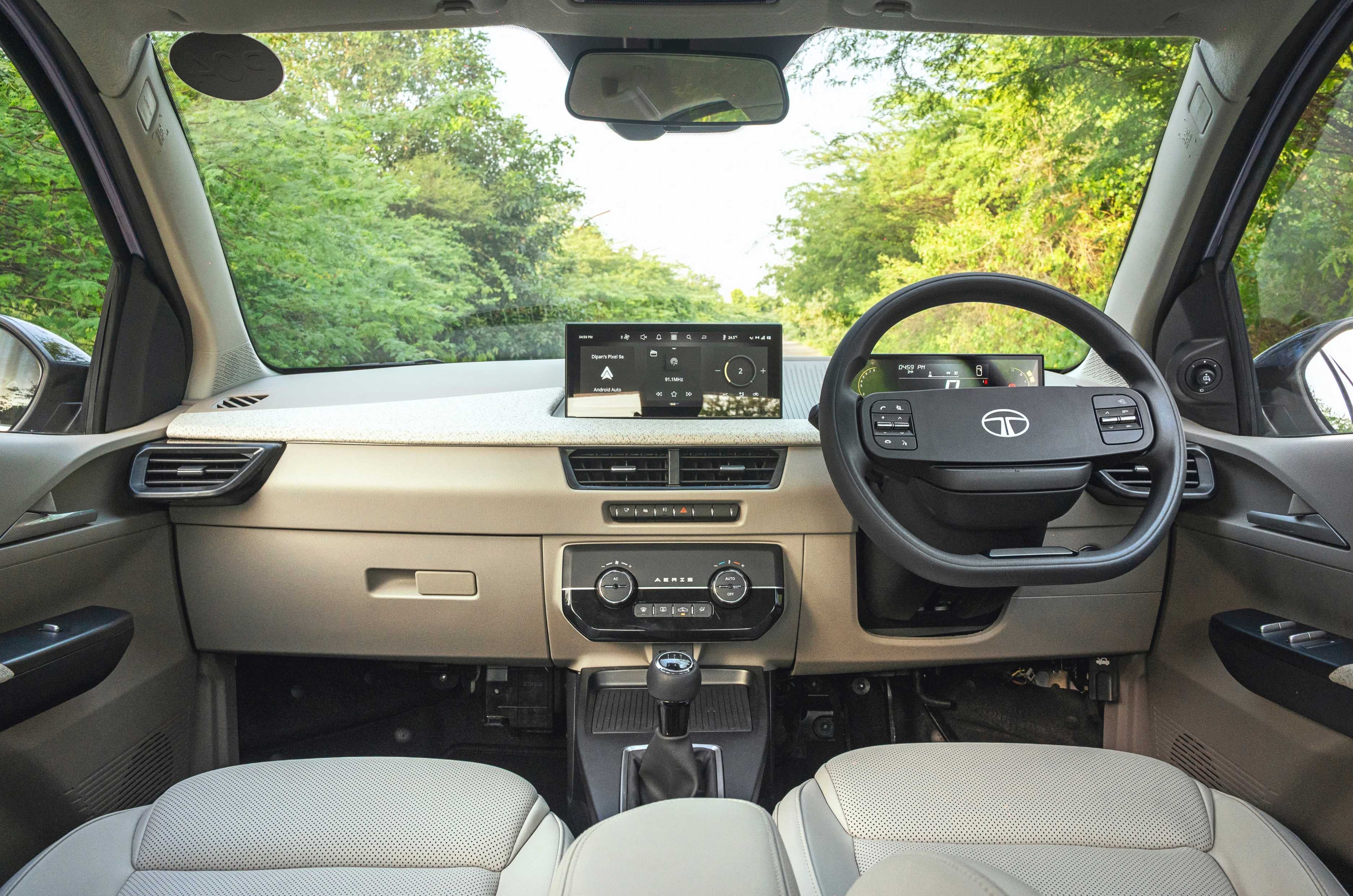
Beige theme lends the cabin an airy feel; dashboard is neatly laid out.
The Aeris’ interior is neatly laid out and looks fairly modern. The cabin gets a beige colour scheme, which makes it feel airy and gives the sedan a greater sense of space. However, the light shade could prove difficult to keep spick and span, especially with regular use.
The dashboard houses a 10.25-inch infotainment touchscreen, a free-standing semi-digital instrument cluster and a revised two-spoke steering wheel. The latter retains physical buttons and, thankfully, does away with the scratch-prone gloss-black finish seen on the Tigor. The door handles look floating like the Sierra and feel sturdy. Lower down, Tata has retained rotary dials and physical buttons for the climate control. They feel solid and do not come across as flimsy.
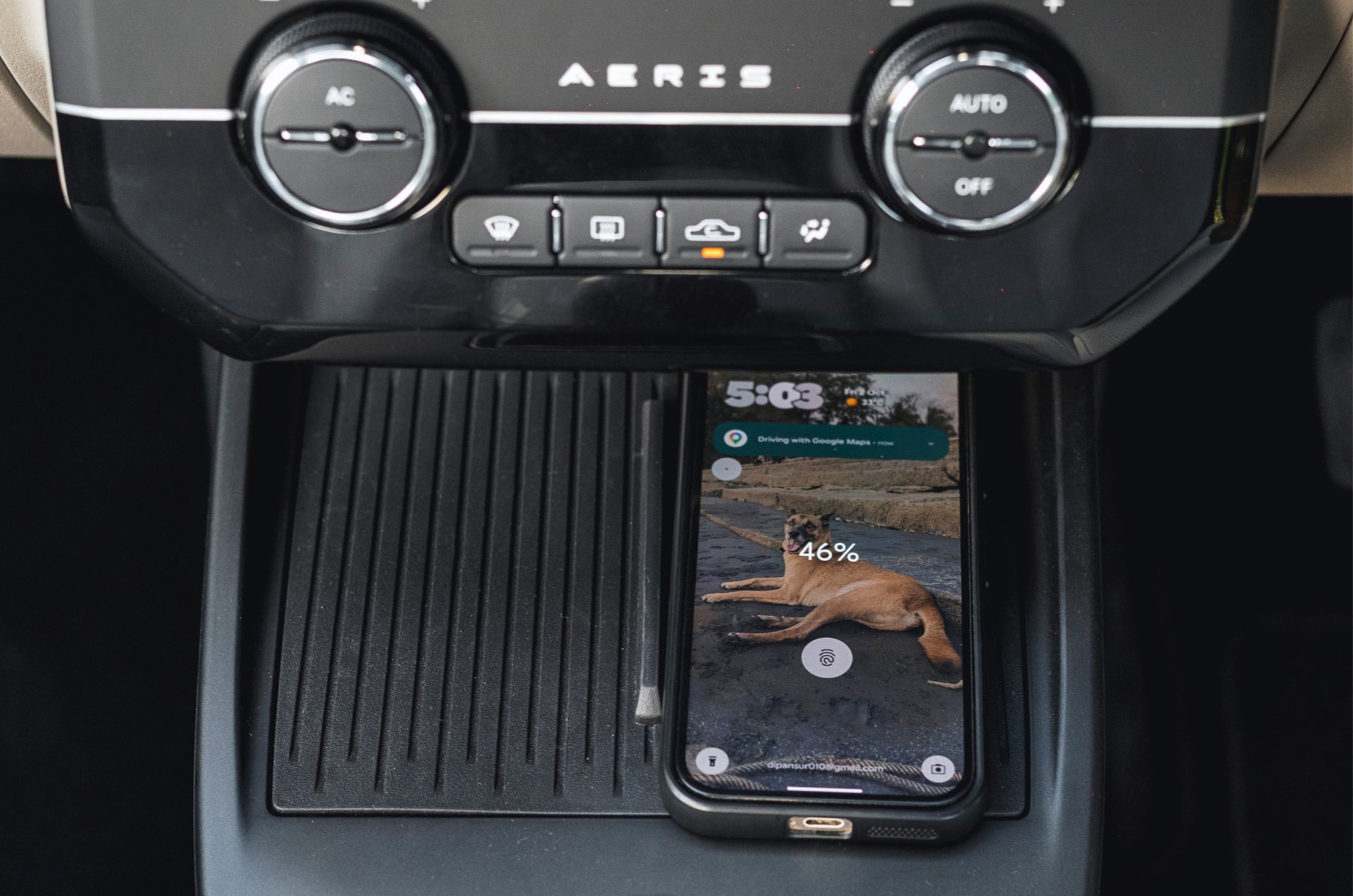
The wireless charger works well but tends to make the phone hot during prolonged use.
The centre console has been thoroughly redesigned and looks neat. The manual gear lever looks premium and feels good to hold, while the AMT gets a rotary dial that also feels solid and operates seamlessly. Two rubberised phone holders on the console keep phones from sliding around, and the top-spec Accomplished trim offers wireless charging in one slot. The centre console also gets two cupholders and a leatherette-wrapped centre armrest with integrated storage space underneath.
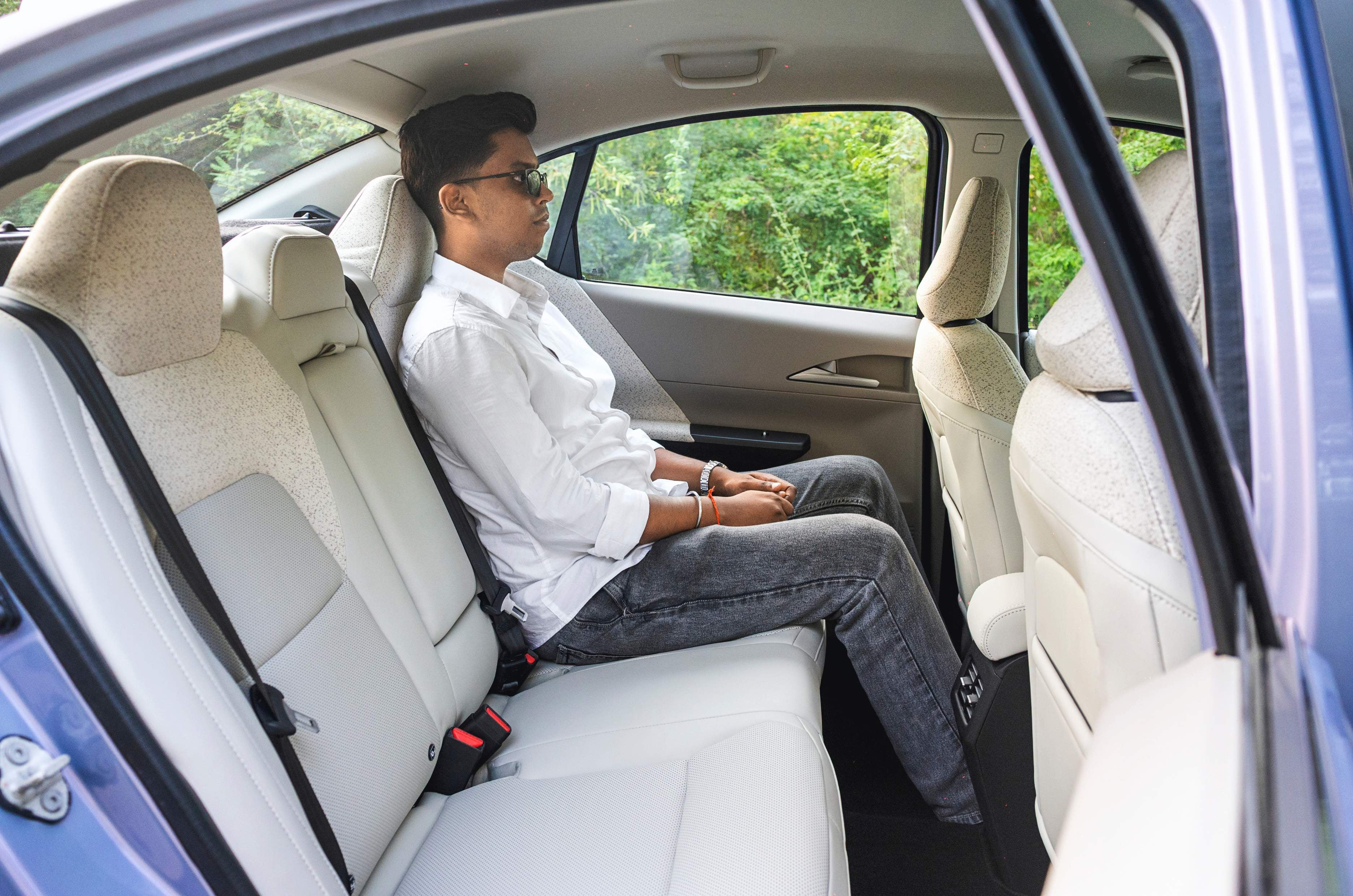
The rear seat offers good kneeroom and legroom, while headroom can be tight for taller passengers.
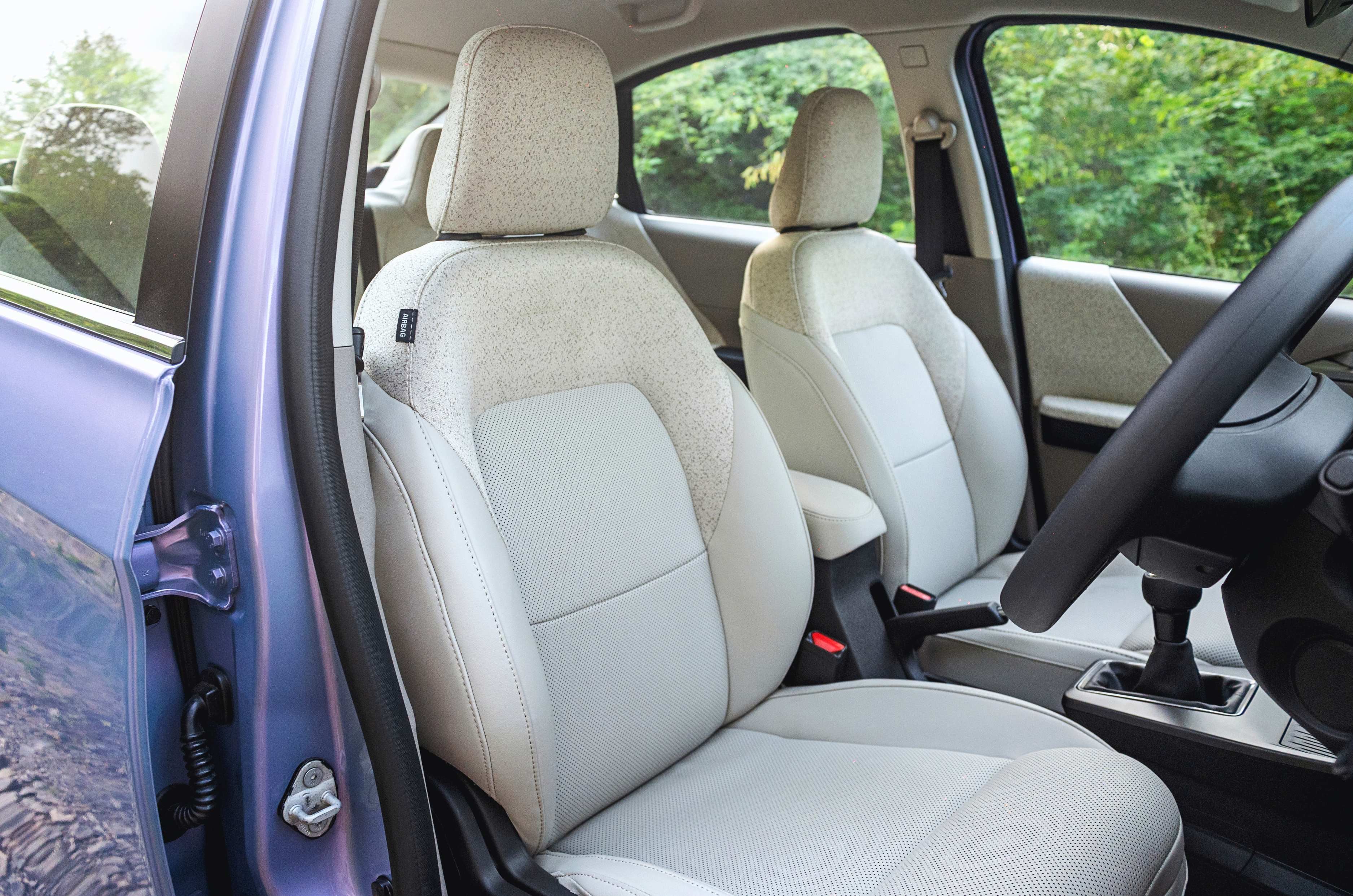
Tata offers part-leatherette upholstery and has revised the cushioning and bolstering, ensuring comfort even on long journeys. They also get a segment-first ventilation function. The rear seats are comfortable too, with good legroom and kneeroom, although headroom is a little tight for passengers over six feet tall. Under-thigh support is adequate.
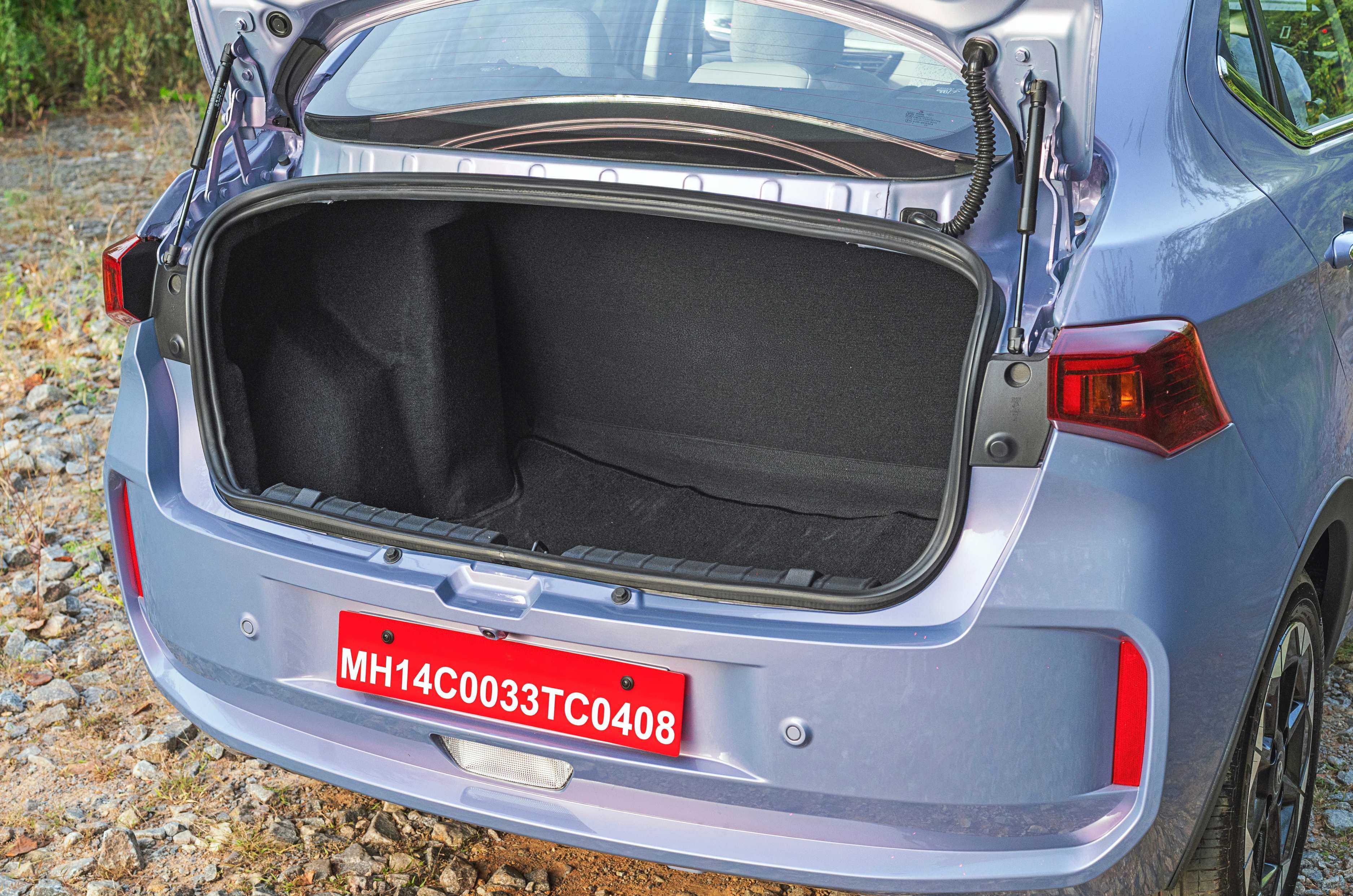
The 419-litre boot is handily large, but the aperture makes loading tricky. Struts free up more usable space.
The Aeris offers 419 litres of boot space, marginally more than the Amaze’s 416 litres and comfortably ahead of the Dzire’s 382 litres and Aura’s 402 litres. The boot itself is large and can swallow a substantial amount of luggage. The use of mechanical struts instead of conventional hinges is a clever touch, as they do not eat into the available boot space. Despite the large boot, the Aeris gets a 14-inch underbody-mounted spare wheel, which is always more promising than a puncture repair kit.
Tata Aeris petrol features and safety – 9/10
Loaded with features to the brim, most of which are well integrated
Blind-spot monitor is very useful but takes up the full screen and hides the map display.
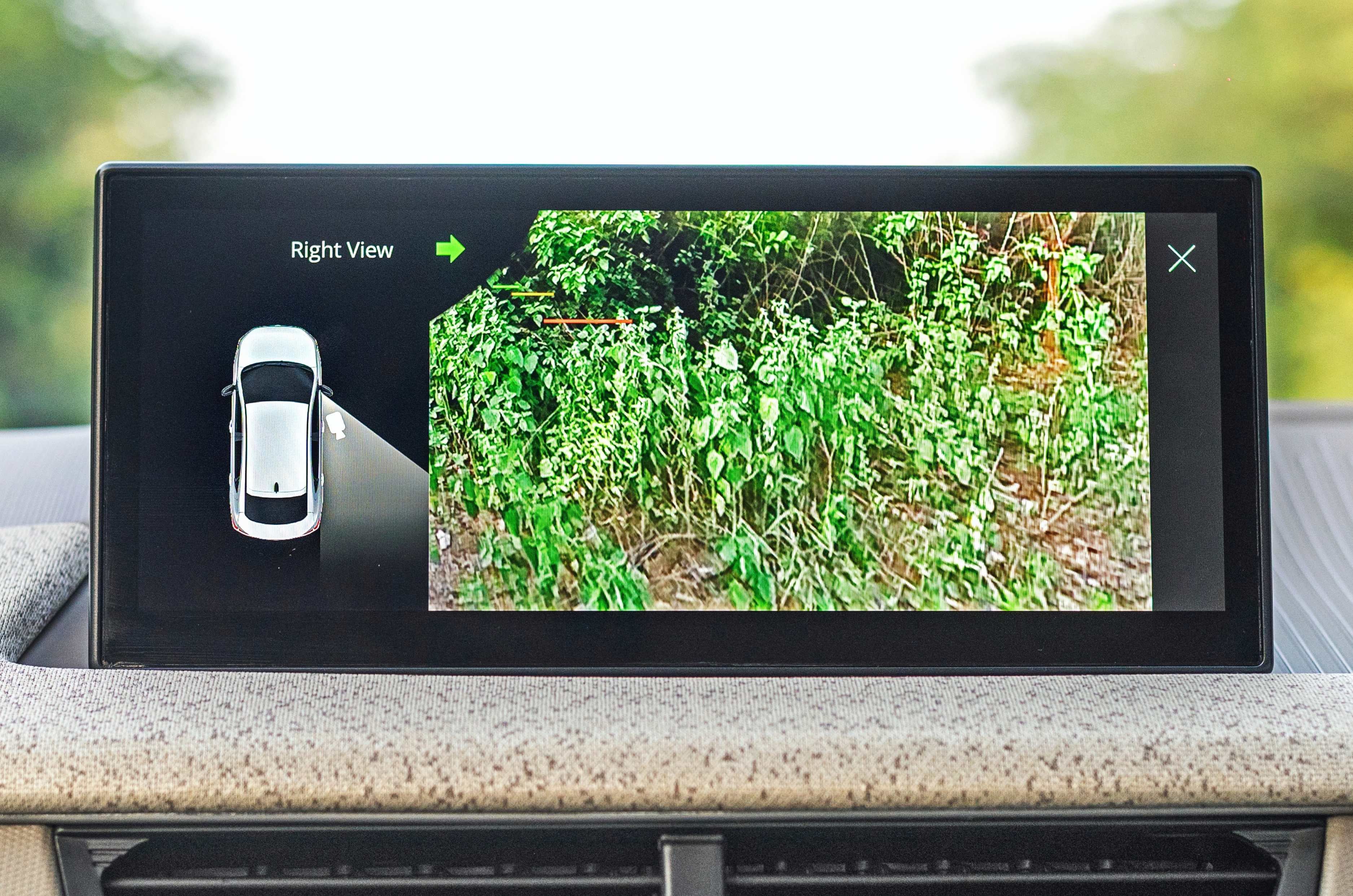
Like other Tata cars, the Aeris is packed with features. The 10.25-inch infotainment touchscreen is slick to use and remains responsive even when navigating through multiple menus. It also displays the 360-degree camera feed, which is lag-free, although the image quality isn’t the best. Tata has also added a new DVR function that allows the surround-view cameras to record the car’s surroundings, ensuring you do not shell out extra for a dashcam. The infotainment screen automatically switches to the blind-spot monitor when indicators are used, which is useful. However, this can be annoying when you are using navigation, although there is an option to disable the view completely.
Revised cushioning and bolstering, and a new ventilation function on the front seats improve overall comfort.
The front-seat ventilation function works well too. During our time with the car, it proved effective at keeping us cool in Faridabad’s near 40deg C ambient temperature. However, the infotainment screen or driver’s display shows nothing when the ventilation is on or the level is adjusted, which can be a little inconvenient.
Part-digital Instrument cluster includes screen flanked by rev counter and fuel gauge.
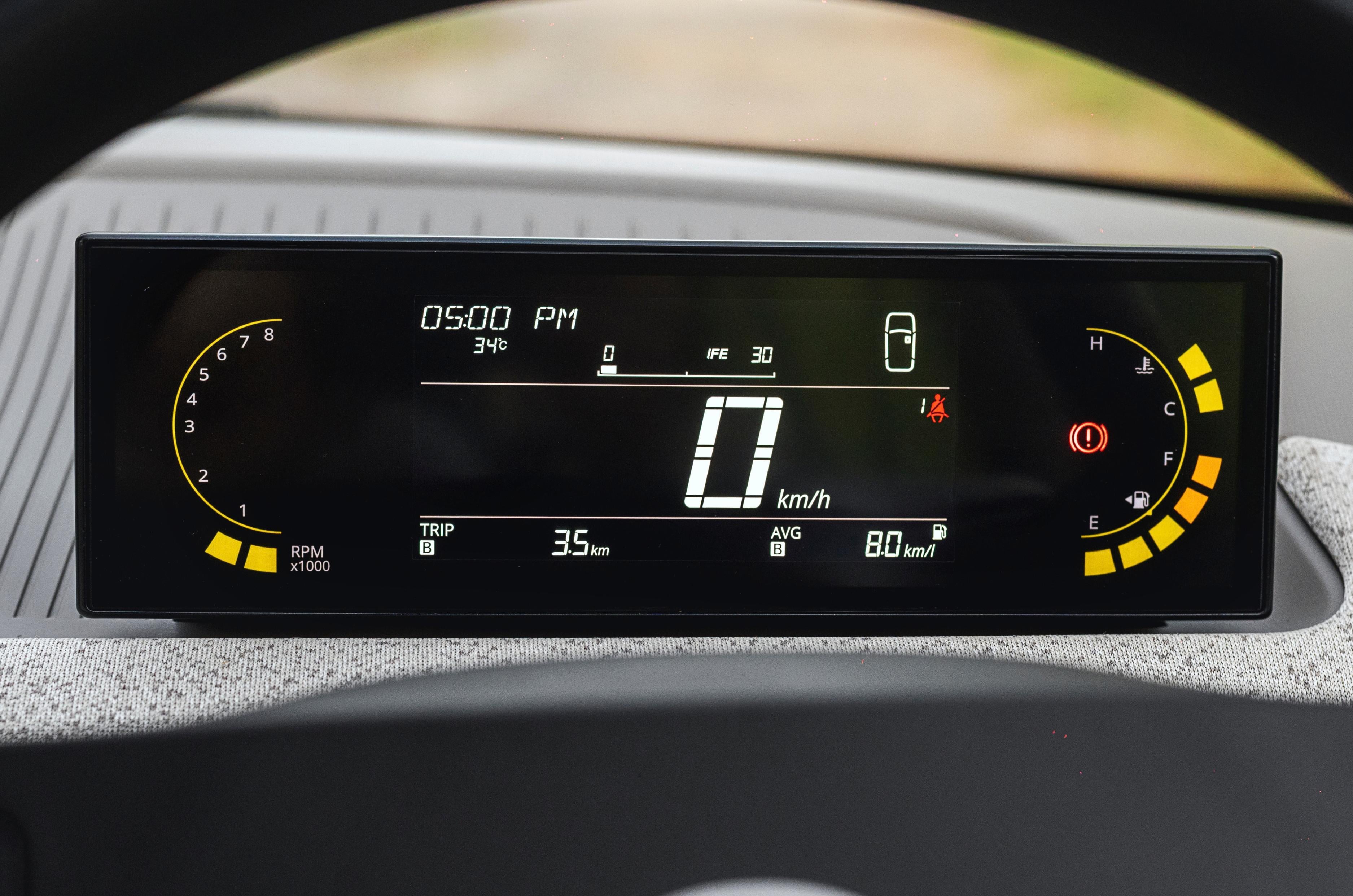
The instrument cluster itself is fairly basic, with analogue dials for the fuel level and rev counter, while a digital display handles the speed and other general information. Depending on the steering wheel’s tilt angle and the driver’s seating position, some of this information can occasionally be obscured.
The four-speaker, two-tweeter audio system is a step down from the Tigor’s four-speaker, four-tweeter setup, although sound quality remains good enough for the segment. The rear seats lack pressure sensors, meaning the seat-belt warning will sound until the belts are fastened.
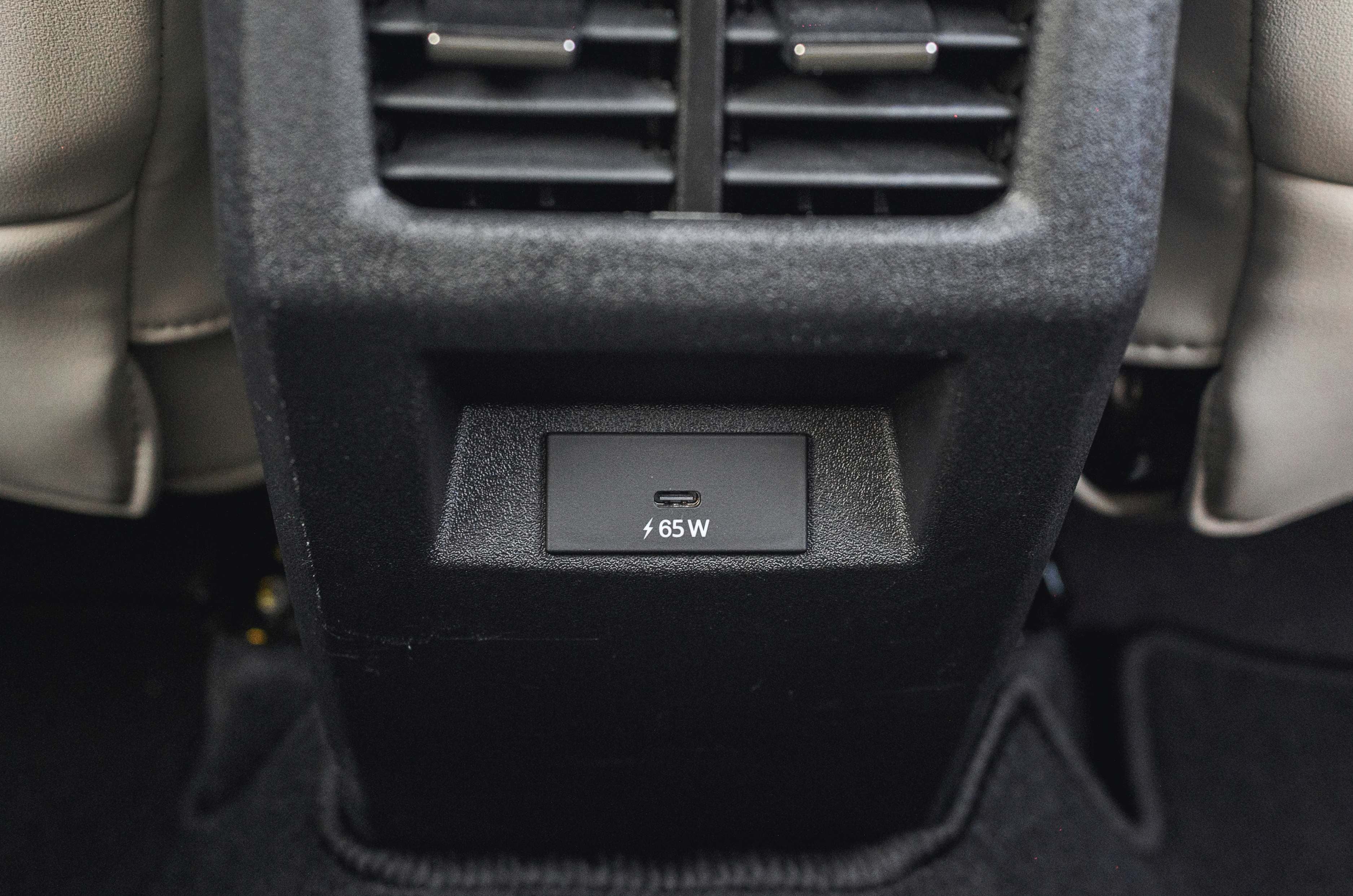
AC vents and a 65W Type-C charging port are among the additions at the back.
On the safety front, the Aeris gets six airbags, Isofix child-seat anchorages for the rear seats, rear parking sensors and three-point seat belts with reminders for all occupants as standard. Higher variants add a 360-degree camera, a day/night inside rear-view mirror, rain-sensing wipers, a rear defogger, a tyre pressure monitoring system (TPMS) and ESP with traction control. The pre-facelift Tigor scored four stars in Global NCAP testing in 2020, but a Bharat NCAP test for the Aeris is due.
Tata Aeris petrol value for money and verdict – 8/10
A well-rounded compact sedan, with the petrol engine making it more versatile
Priced from Rs 5.29 lakh, it offers strong value in a segment where affordability matters.
The Tata Aeris is a much more appealing proposition than the Tigor it replaces. Its fresh design, well-equipped cabin, generous boot and comfortable ride make it easy to live with, while the petrol engine gives it enough performance for both city and high-speed highway cruising. The manual gearbox is light and easy to use, while the AMT is better suited to relaxed city driving than enthusiastic highway use. The long list of features adds further appeal to the package.
There are some shortcomings too, including a coarse engine and poor cabin insulation. However, the Aeris’ biggest strength is its pricing. The petrol variants are priced from Rs 5.29 lakh to Rs 8.74 lakh (ex-showroom), and it undercuts rivals by a fair margin, making a strong case for itself in a segment where value for money remains a key consideration.