Ventilated seats are among the most desirable features car buyers look for and are especially useful in the summer. Having ventilated seats in your hatchback, sedan, MPV, or SUV can be advantageous for staying cool. Ten years ago, this feature was quite rare in the mass-market segment, with buyers needing to spend around Rs 30 lakh to get it. Today, however, there are plenty of SUVs and even a hatchback available with ventilated seats. So, here are the 10 most affordable cars on sale in India with ventilated seats.
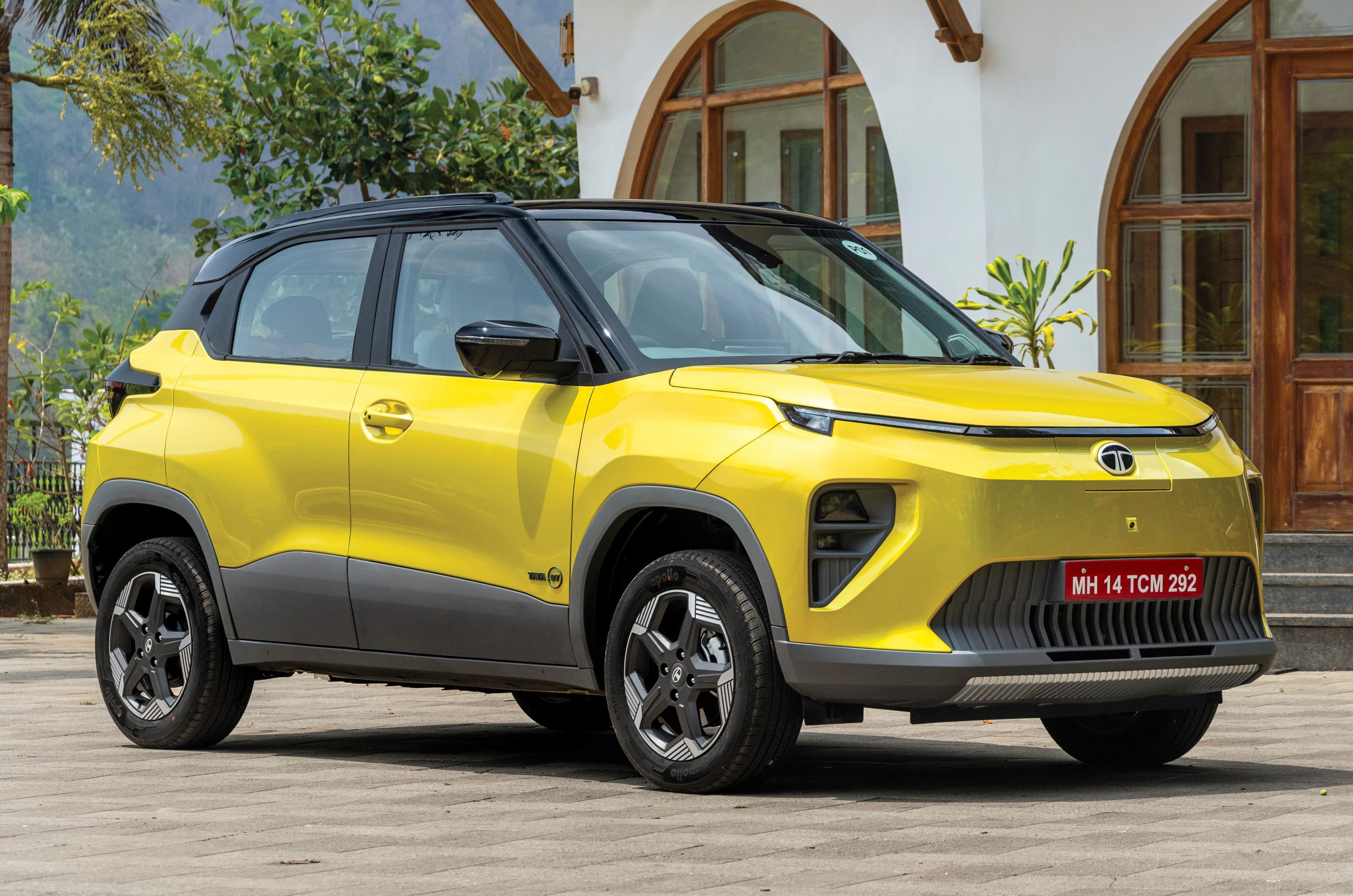
10. Tata Punch EV
Price: Rs 12.99 lakh
Tata’s smallest eSUV, the Punch EV, gets ventilated seats in its range-topping Empowered+ S 40 trim. The Tata Punch EV is offered with a choice between a 30kWh battery and a 40kWh pack, with respective claimed ranges of 365km and 468km. The Tata Punch EV is the most affordable EV on sale in India with such a convenience feature.
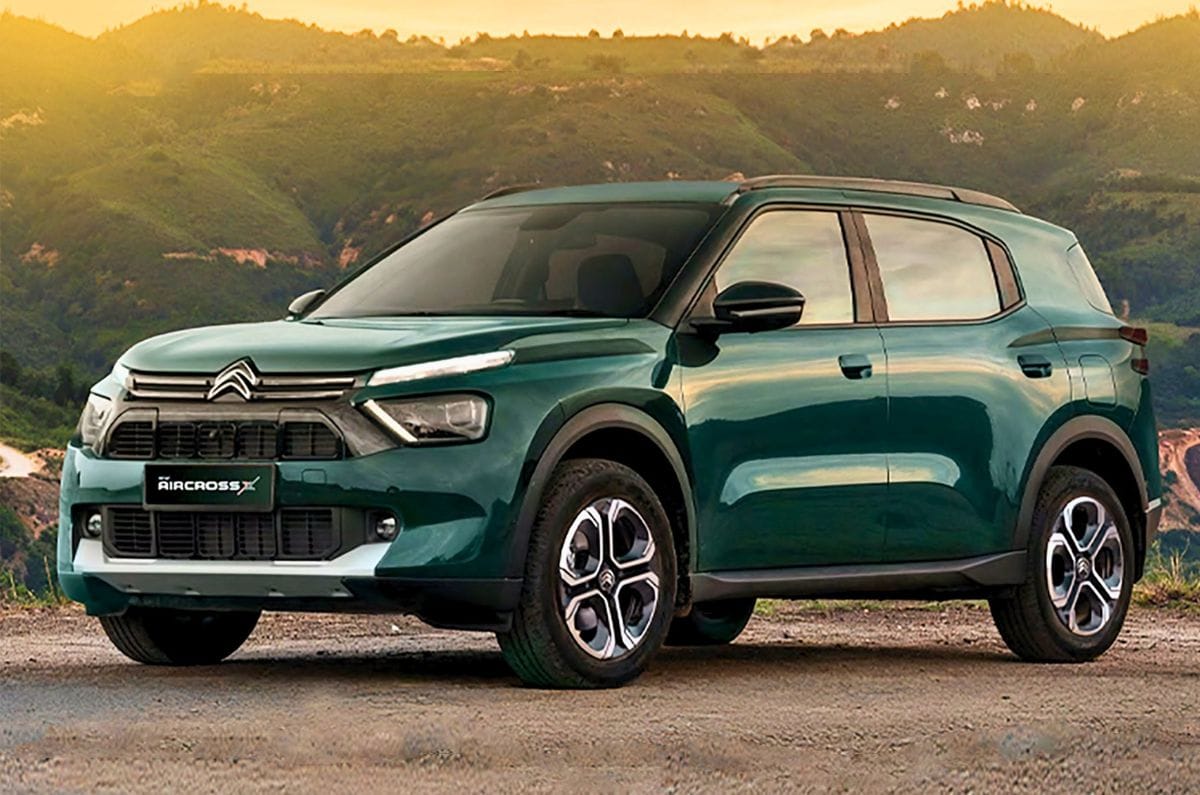
9. Citroen Aircross
Prices: Rs 11.62 lakh to Rs 14.52 lakh
In the Citroen Aircross, ventilated front seats are available only on the top-spec Max trim, offered with both 5- and 7-seater configurations. The Max trim is available both with an 82hp, 1.2-litre naturally aspirated petrol engine or a 110hp, 1.2-litre turbo-petrol engine, producing 110hp, and is offered with both manual and automatic transmissions. It’s not only the most affordable Citroen SUV with this feature, but also the cheapest midsize SUV in India with ventilated seats.
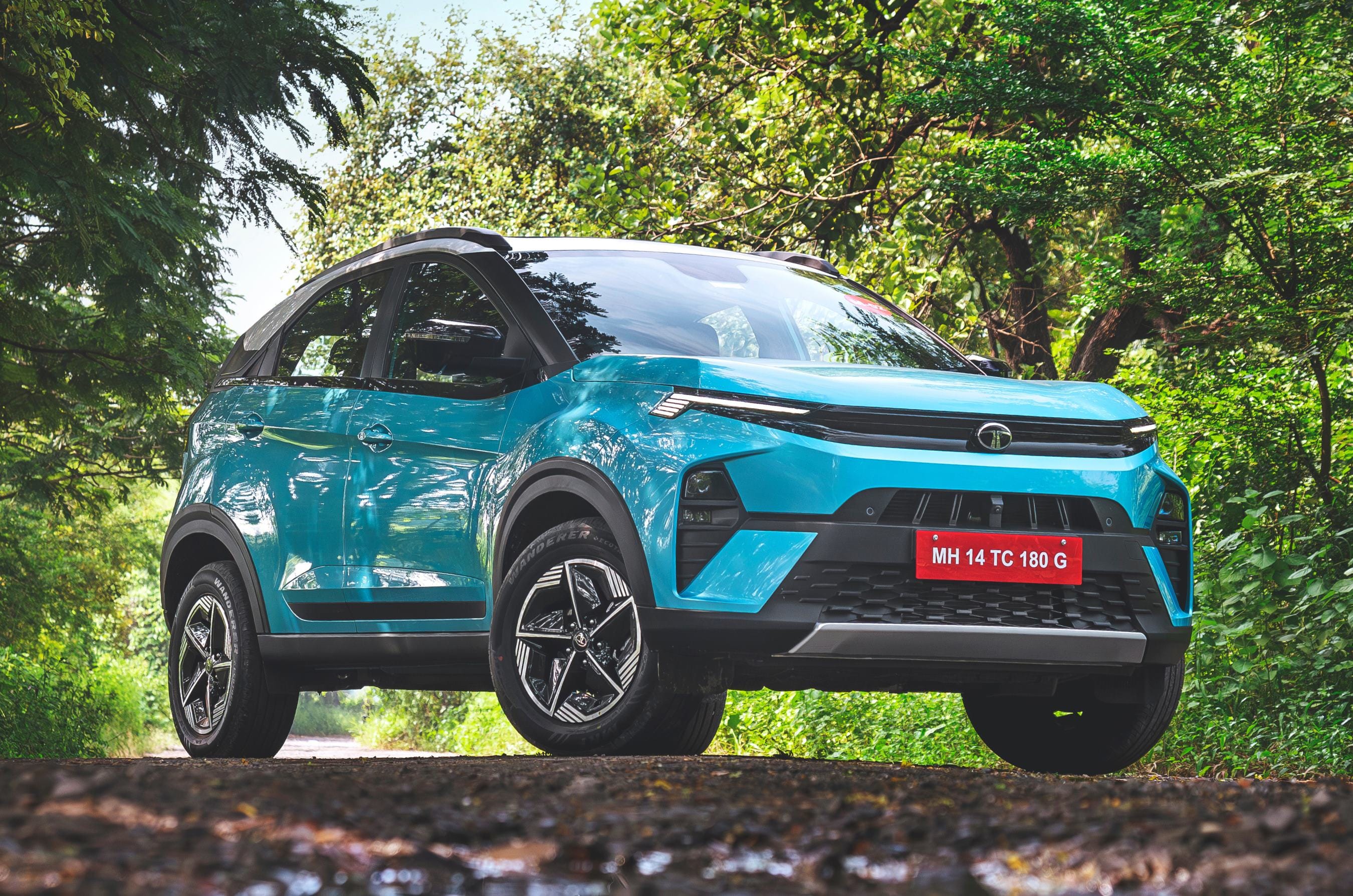
8. Tata Nexon
Prices: Rs 12.42 lakh to Rs 14.22 lakh
Ventilated front seats are available only on the top-spec Tata Nexon Fearless+ PS trim. Interestingly, a CNG option is also available in this trim, making it the most affordable CNG-powered model with cooled seats. The Nexon is available with a 120hp 1.2-litre turbo-petrol engine, a 100hp CNG-powered version of the three-cylinder turbocharged unit, and a 115hp 1.5-litre diesel engine. In its range-topping form, the petrol gets a 6-speed manual and 7-speed dual-clutch auto gearbox options, while the diesel gets 6-speed manual and AMT options.
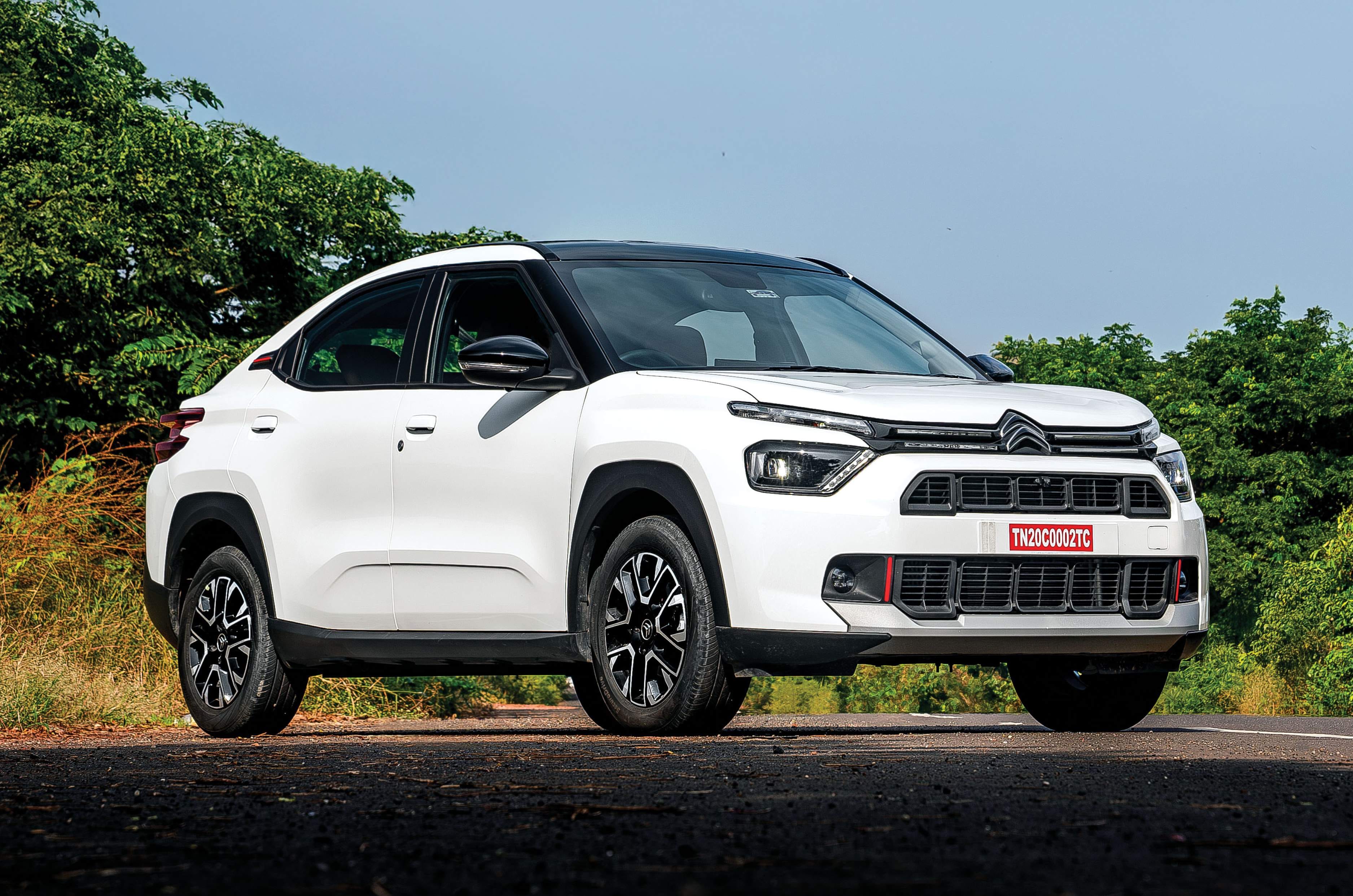
7. Citroen Basalt
Prices: Rs 11.34 lakh to Rs 13.90 lakh
Like the Aircross, the Citroen Basalt offers seat ventilation in the top-spec Max trim. This trim is available with either an 82 hp, 1.2-litre naturally aspirated engine with only a 5-speed manual transmission, or the 110hp, 1.2-litre turbo petrol engine, paired with a 6-speed manual or a 6-speed torque converter automatic gearbox option.
6. Hyundai Venue
Prices: Rs 11.91 lakh to Rs 15.51 lakh
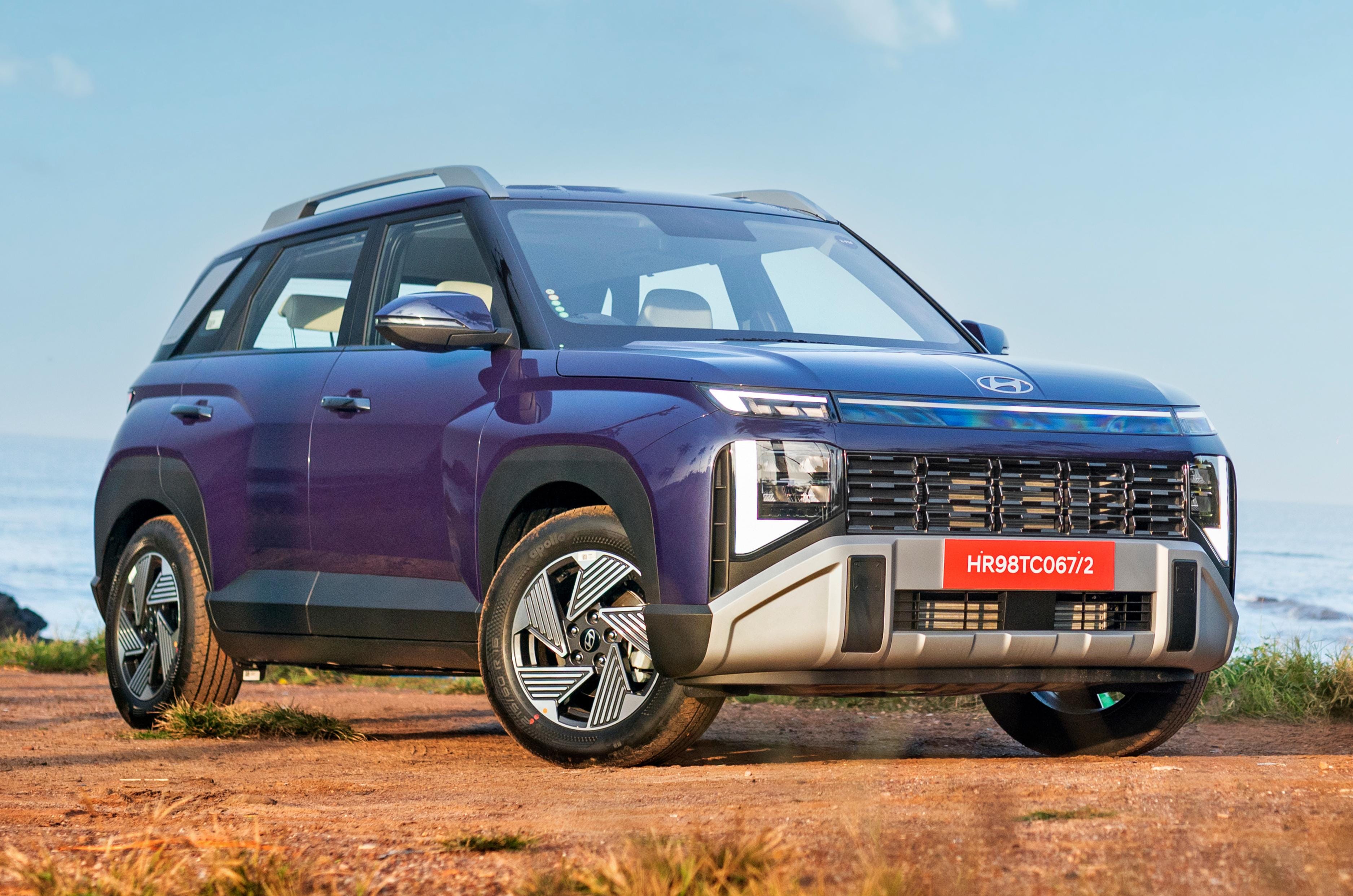
The newest car here, the second-gen Hyundai Venue, is available with ventilated front seats on the top-end HX8 and HX10 trims. The new Venue N Line’s N10 trim also gets cooled seats. These top trims are powered by either the 1.0-litre turbo-petrol or a 1.5-litre diesel mill. Transmission options include a 6-speed manual, a 7-speed DCT and a 6-speed torque-converter automatic. Some of the Venue’s notable features include Level 2 ADAS and twin 12.3-inch displays.
5. Kia Sonet
Prices: Rs 11.75 lakh to Rs 13.80 lakh
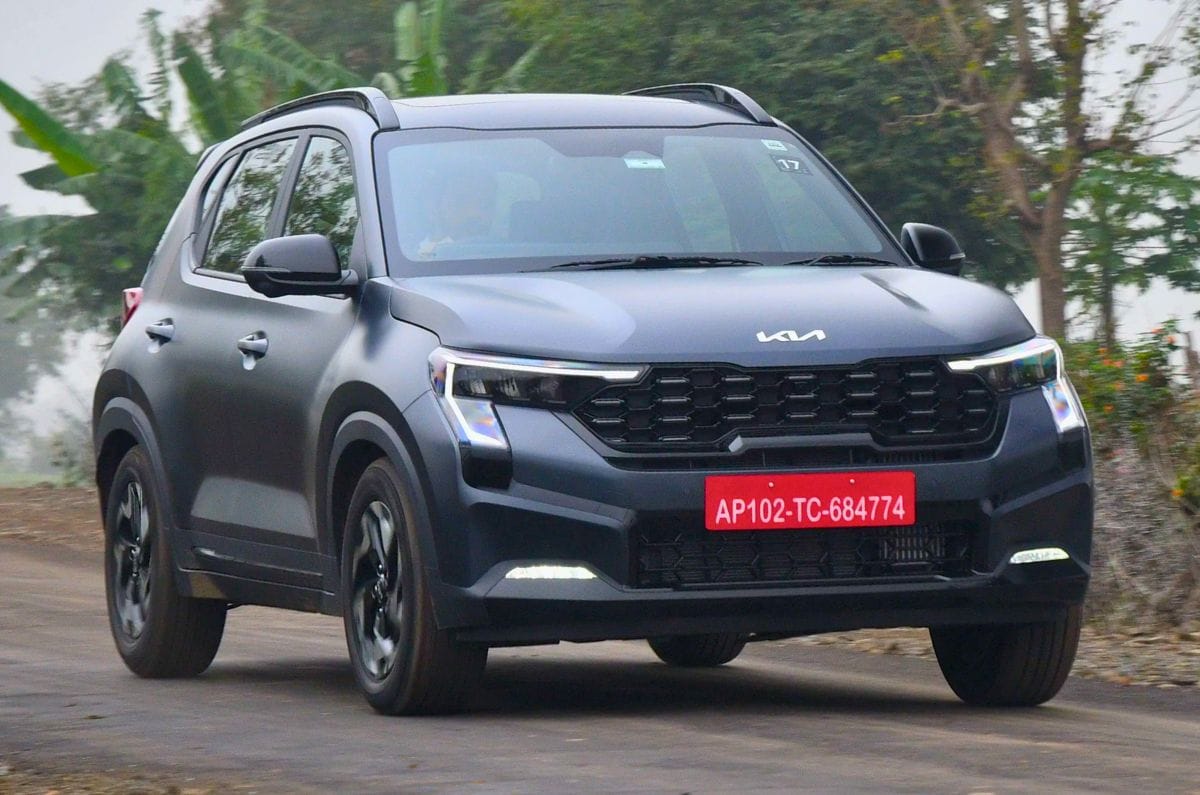
The Sonet is the most affordable Kia SUV that gets cooled front seats on the top-spec HTX, GTX+ and X-Line variants. These range-topping trims are available only with the 120hp, 1.0-litre turbo-petrol engine and the 116hp, 1.5-litre diesel unit; a 7-speed dual-clutch automatic transmission is offered on the Kia Sonet petrol, while the diesel is available with both a 6-speed manual and a 6-speed torque converter automatic gearbox. However, the HTX diesel-manual is not offered with ventilated seats, unlike the diesel-automatic variant.
4. Skoda Kylaq
Prices: Rs 11.75 lakh to Rs 12.99 lakh
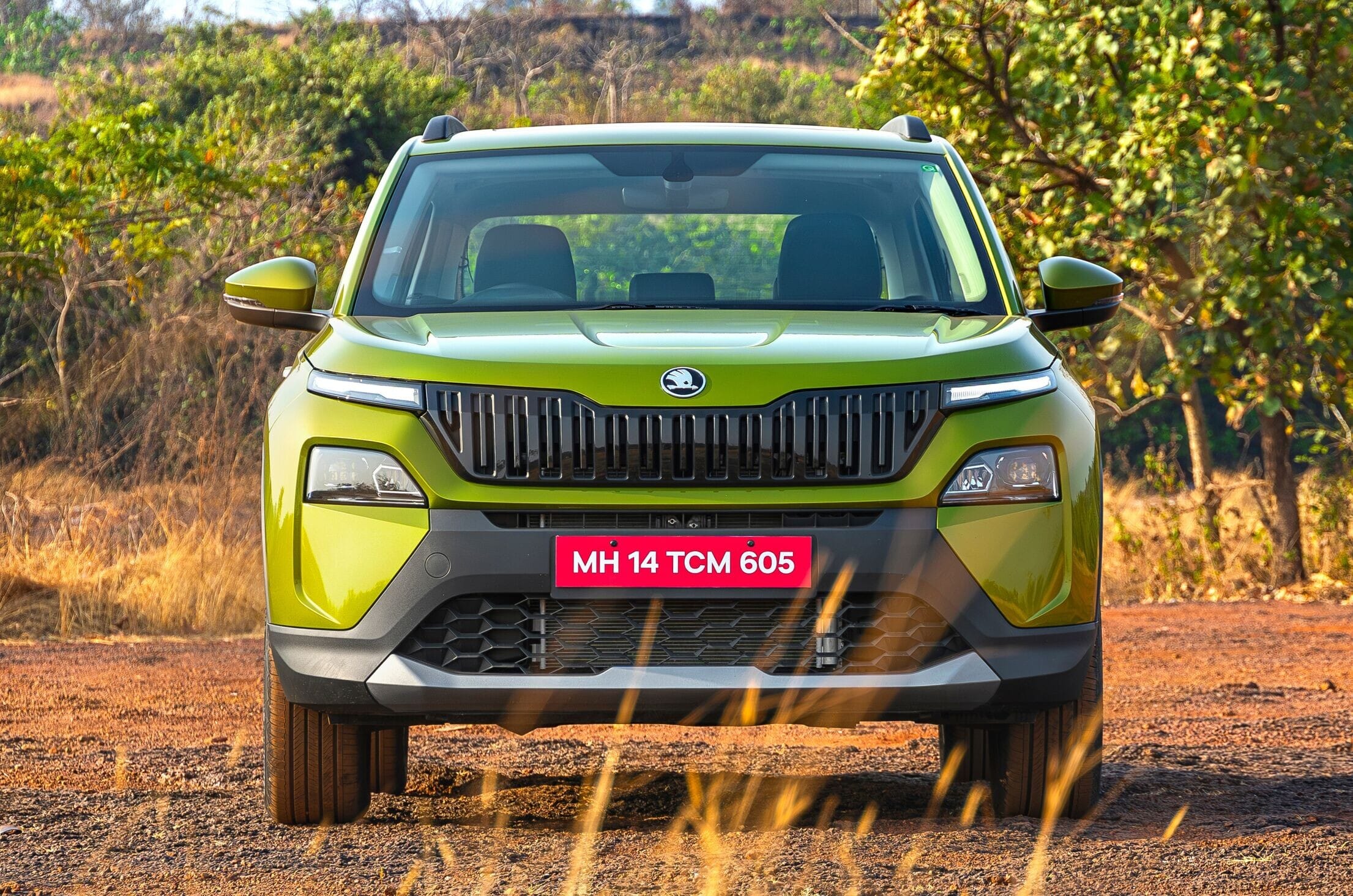
Skoda’s first compact SUV, the Kylaq, comes with ventilated front seats, but only on the higher-spec Prestige and Prestige+ trims. The Skoda Kylaq is powered by a 115hp, 1.0-litre turbo-petrol engine paired with a 6-speed manual or a 6-speed torque converter automatic gearbox.
3. Maruti Brezza
Prices: Rs 11.16 lakh to Rs 13.71 lakh
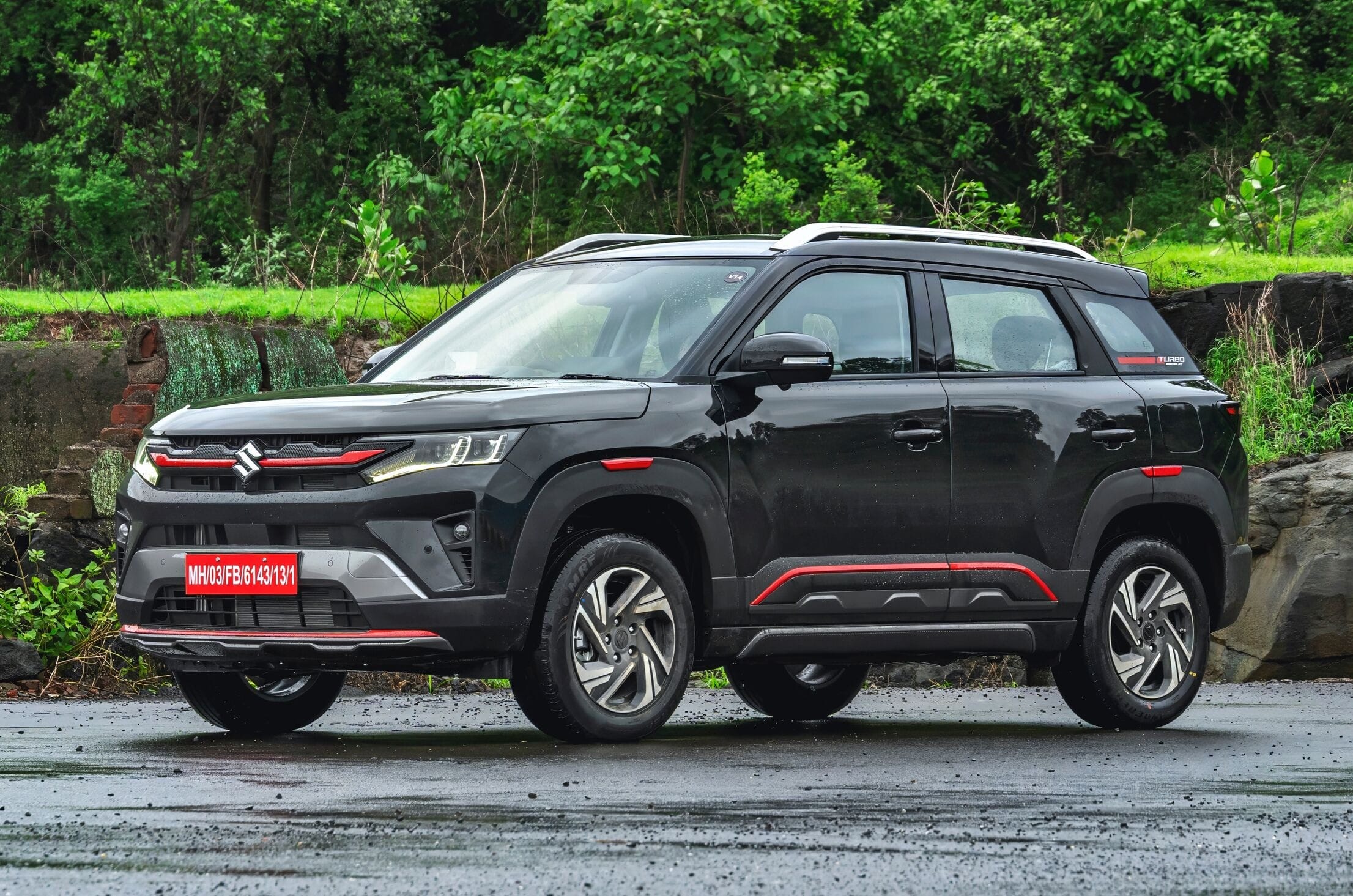
Maruti is offering the facelifted Brezza with ventilated front seats on the top-spec ZXi+ trim. It is offered both with a 110hp, 1.0-litre turbo-petrol engine and a 103hp, 1.5-litre petrol engine. In the ZXi+ trim, the turbo-petrol engine is offered with a 6-speed manual gearbox, while the larger petrol engine gets a 6-speed torque converter gearbox only.
2. Maruti Baleno
Prices: Rs 9.10 lakh to Rs 9.99 lakh
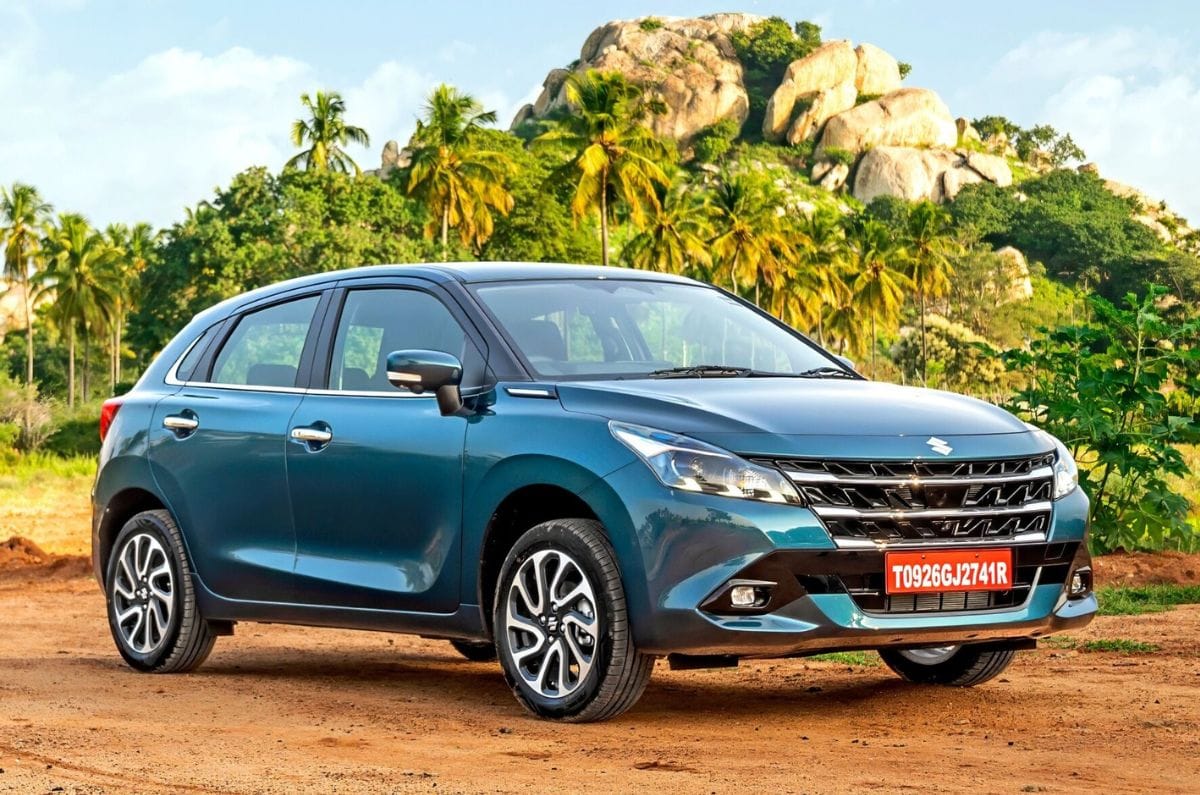
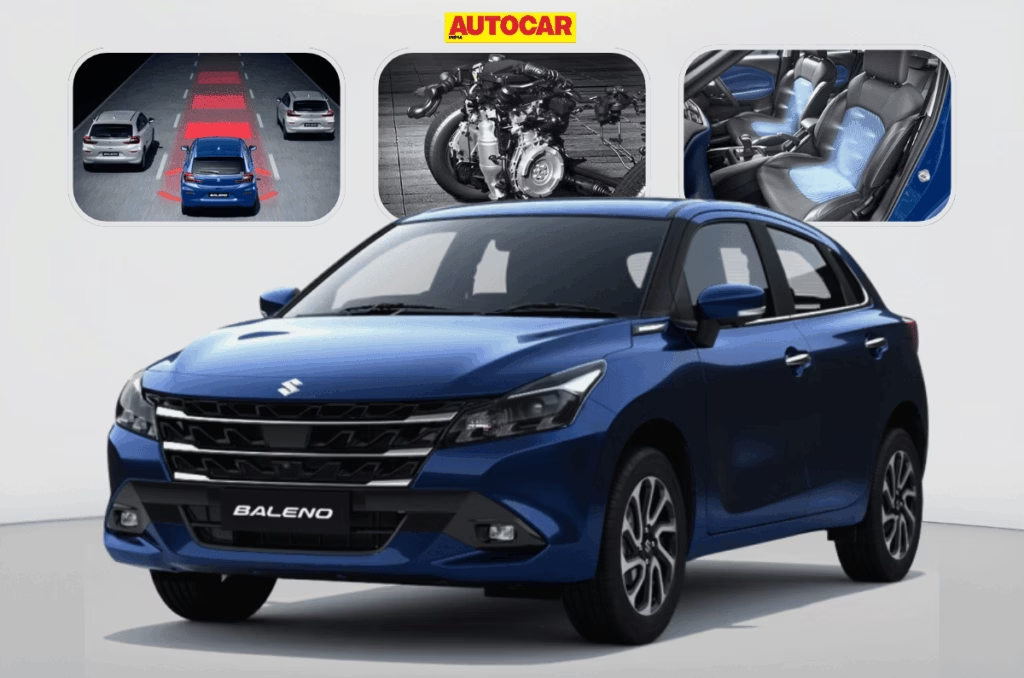
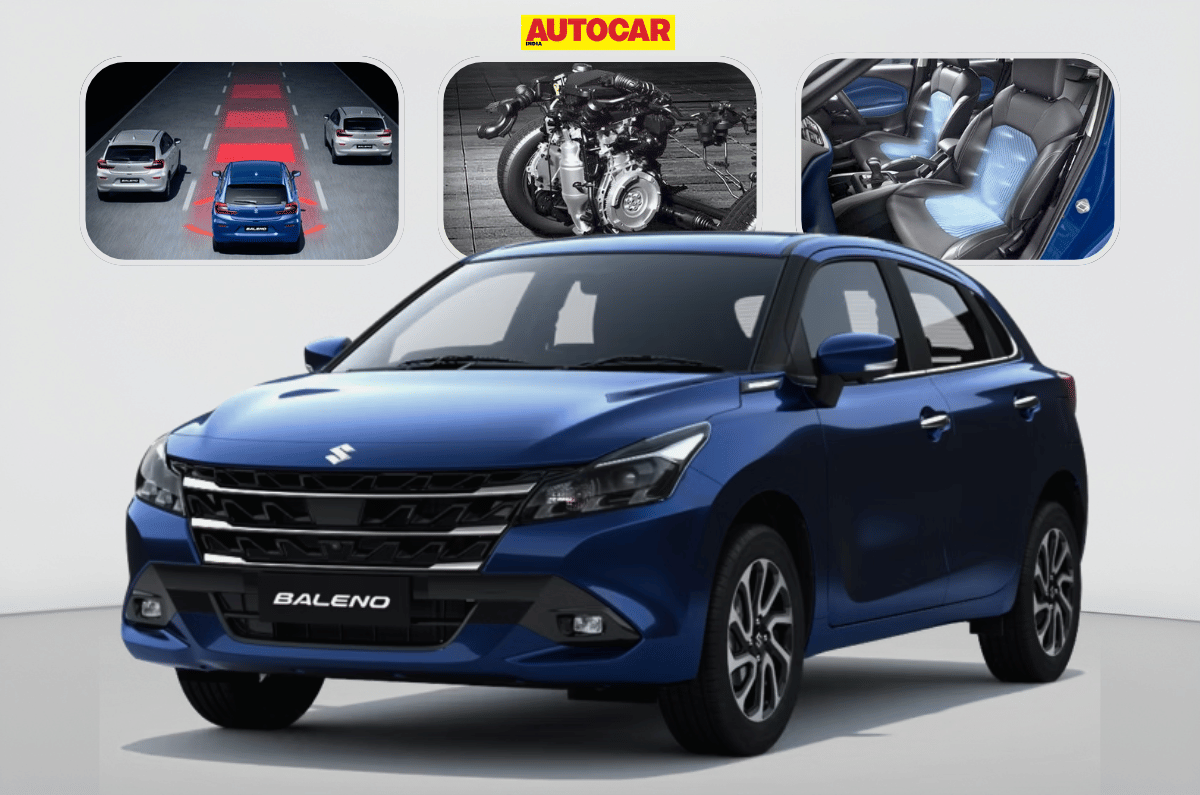
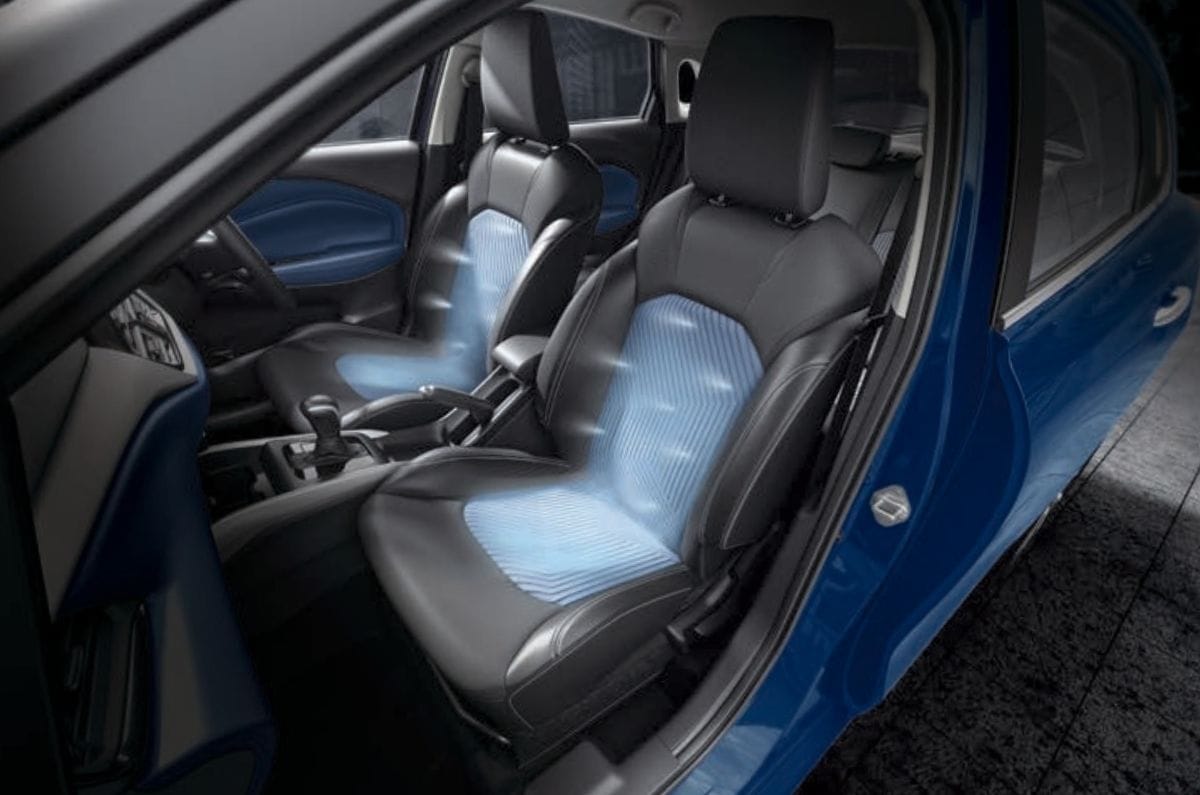
The Maruti Baleno is the only hatchback in India to be offered with ventilated front seats. It offers this feature on the Baleno’s Alpha and Alpha (O) trims, which are below Rs 10 lakh. However, this is not a segment-first feature, as the Tata Altroz Racer introduced it. However, this feature was removed from the Altroz with the 2025 facelift. The Alpha and Alpha (O) trims of the Baleno are offered with an 83hp, 1.2-litre 3-cylinder petrol engine, with a 5-speed manual or a 5-speed AMT option.
1. Renault Kiger
Prices: Rs 8.50 lakh to Rs 10.40 lakh
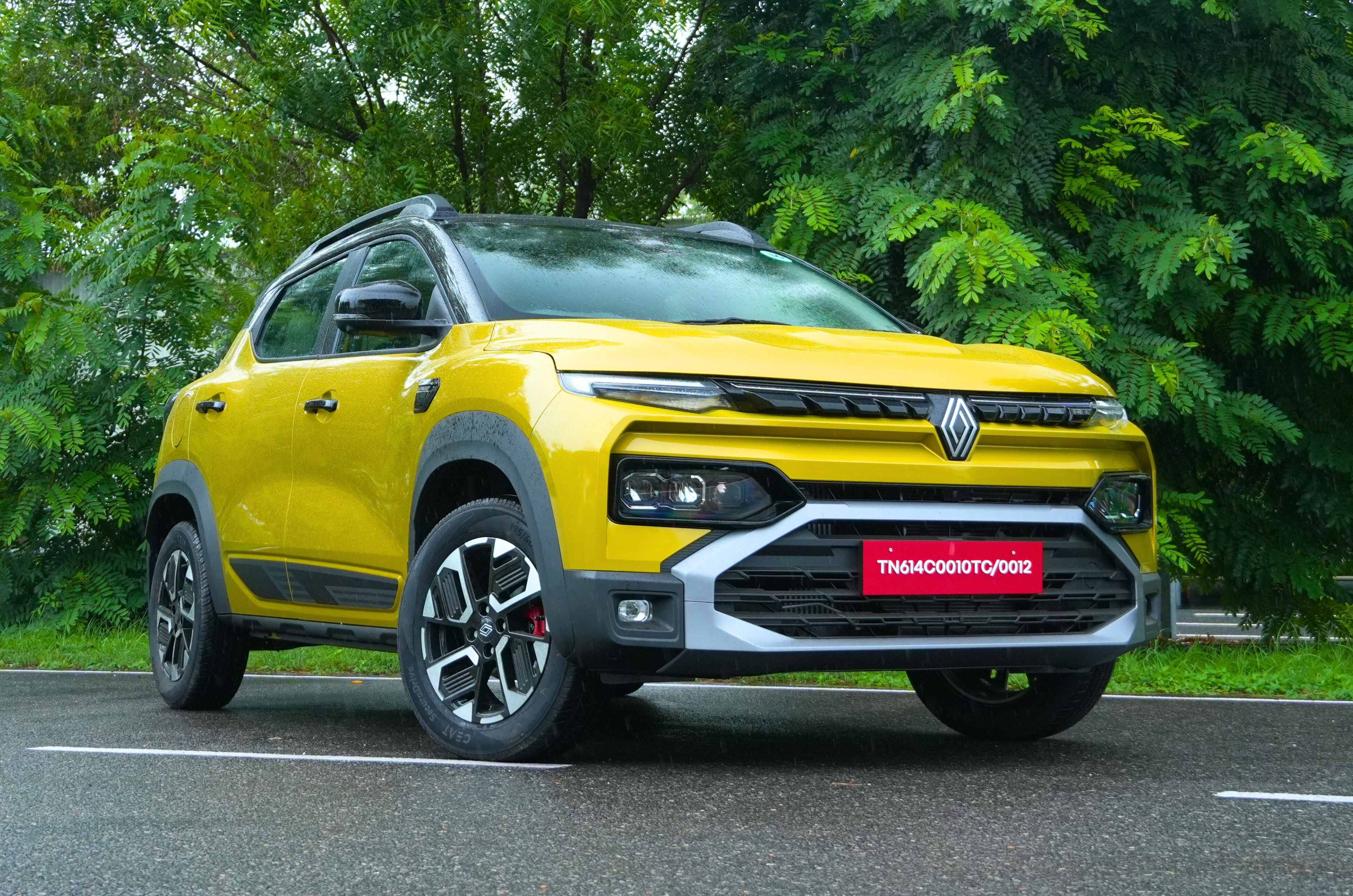
The Renault Kiger is the most affordable car in India with ventilated front seats, as it offers the feature at just Rs 8.50 lakh in the top-spec Emotion trim. In fact, it is also the only SUV under Rs 10 lakh to offer the convenience amenity. The Kiger’s Emotion trim is available with 72hp 1.0-litre petrol and 100hp, 1.0-litre turbo-petrol engine options; the former gets a 5-speed manual only, while the turbocharged unit has a CVT option too.
Maruti Suzuki has revealed the full price list of the 2026 Baleno. The carmaker’s premium hatchback has an ex-showroom price ranging from Rs 5.98 lakh to Rs 9.99 lakh. For MY26, the Baleno gets a new three-cylinder naturally aspirated petrol engine, updated fascia, feature additions like Level 2 ADAS, and front seat ventilation along with safety enhancements.
The 2026 Baleno is available in five trim levels, namely, Sigma, Delta, Zeta, Alpha, and Alpha (O). Out of these, the Alpha (O) is a new top-end trim in the Baleno lineup and offers Level 2 ADAS. If you’re considering getting the 2026 Baleno, below is a list of on-road prices across major Indian cities.
2026 Maruti Baleno on-road price range
2026 Maruti Baleno on-road price range in top Indian cities (Rs lakh)
Delhi
Mumbai
Hyderabad
Kolkata
Chennai
Sigma MT
6.50
6.92
7.10
6.86
7.04
Delta MT
7.81
8.09
8.30
8.02
8.23
Delta AMT
8.37
8.67
8.89
8.59
8.82
Delta CNG MT
9.10
8.84
9.10
9.08
9.10
Zeta MT
8.92
9.23
9.47
9.15
9.39
Zeta AMT
9.48
9.81
10.06
9.73
9.98
Zeta CNG MT
10.23
9.95
10.23
10.22
10.23
Alpha MT
10.15
10.52
10.79
10.42
10.70
Alpha AMT
10.71
10.93
11.38
11.00
11.11
Alpha (O) MT
10.57
11.09
11.20
10.84
11.28
Alpha (O) AMT
11.14
11.54
11.84
11.44
11.74
Note: On-road prices may vary based on city-specific registration charges and other cost components, including insurance, FASTag and RTO fees. Please check with your nearest Maruti Suzuki Nexa dealership for the exact figures.
For petrol-powered versions of the Baleno, Delhi has the lowest on-road prices. It is followed by Kolkata and Mumbai. Meanwhile, Chennai and Hyderabad have the highest on-road prices for the petrol MT and petrol AMT versions of the Baleno, respectively. Compared to Delhi, the on-road prices of the petrol MT versions of the Baleno in Chennai are up to Rs 71,000 higher, while petrol AMT variants in Hyderabad are up to Rs 70,000 higher. As far as CNG versions are concerned, Mumbai has the most affordable price range.
Maruti Suzuki has updated the Baleno for 2026, with changes to its powertrain, styling and equipment. It continues to compete with the Hyundai i20, Tata Altroz and Toyota Glanza in the premium hatchback segment. Here’s how the four compare on dimensions, specifications, features and prices.
2026 Maruti Baleno vs rivals: Dimensions
i20 has the longest wheelbase; Altroz has the biggest boot
Dimensions
Maruti Baleno
Hyundai i20
Tata Altroz
Toyota Glanza
Length
3,990mm
3,995mm
3,990mm
3,990mm
Width
1,745mm
1,775mm
1,755mm
1,745mm
Height
1,530mm
1,505mm
1,523mm
1,500mm
Wheelbase
2,520mm
2,580mm
2,501mm
2,520mm
Boot space
318 litres
311 litres
345 litres
318 litres
The i20 is the longest and widest of the four and also has the longest wheelbase, while the Altroz has the largest boot at 345 litres, although with CNG it falls to 210 litres. The Baleno and Glanza being badge-engineered siblings share identical length, width and wheelbase figures, although the new Baleno is 30mm taller. The Baleno also has a larger boot than the i20, despite being slightly shorter overall.
2026 Maruti Baleno vs rivals: Engine specifications
Altroz offers the widest choice of powertrains
Engine specifications
Maruti Baleno
Hyundai i20
Tata Altroz
Toyota Glanza
Engine*
1.2P | 1.2C
1.2P
1.2P | 1.2C | 1.5D
1.2P | 1.2C
No. of cylinders
3 | 3
4
3 | 3 | 4
4 | 4
Power (hp)
83 | 70
83 (MT), 88 (IVT)
88 | 74 | 90
90 | 77
Torque (Nm)
112 | 102
114.7
115 | 103 | 200
113 | 98.5
Transmission
5MT, 5AMT | 5MT
5MT, IVT
5MT, 5AMT, 6DCT | 5MT, 5AMT | 5MT
5MT, 5AMT | 5MT
*P = Naturally aspirated petrol, C = CNG, D = Diesel
The Altroz offers the widest choice of powertrains, with petrol, CNG and diesel options, while the Baleno and Glanza also get CNG variants and the i20 is petrol-only. It is also the only hatchback in India to offer a diesel engine. The Baleno and Altroz use three-cylinder petrol engines, whereas the i20 and Glanza use four-cylinder units.
The Glanza’s petrol and Altroz’s diesel engines makes the most power at 90hp, while the Altroz diesel has the highest torque at 200Nm. For automatics, the Baleno and Glanza get AMTs, the i20 gets an IVT, and the Altroz offers both AMT and dual-clutch automatic options.
2026 Maruti Baleno vs rivals: Features
Baleno is the only in the segment to offer ventilated front seats
Features
Maruti Baleno
Hyundai i20
Tata Altroz
Toyota Glanza
Head-up display
Yes
No
No
Yes
Ventilated front seats
Yes
No
No
No
360-degree camera
Yes
No
Yes
Yes
Wireless charger
Yes, cooled
Yes
Yes
No
Sunroof
No
Yes
Yes
No
Touchscreen
9-inch
10.25-inch
10.25-inch
9-inch
Instrument cluster
Analog + MID display
TFT display
10.25-inch digital
Analog + MID display
Android Auto/Apple CarPlay
Wireless
Wireless
Wireless
Wireless
Automatic climate control
Yes
Yes
Yes
Yes
Rear AC vents
Yes
Yes
Yes
Yes
Cruise control
Yes, adaptive
Yes
Yes
Yes
Connected car technology
Yes
Yes
Yes
Yes
Auto-folding ORVMs
Yes
—
Yes
Yes
Push-button start/stop
Yes
Yes
Yes
Yes
Rear USB charging
Yes
Yes
Yes
Yes
Premium audio system
Clarion, 4-speakers
Bose, 7-speaker
AudioWorX
No
The four hatchbacks offer a broadly similar level of equipment, but there are some notable differences. Both the Baleno and Glanza get a head-up display, while the Baleno stands out with ventilated front seats. The i20 and Altroz get larger 10.25-inch infotainment screens, compared with the 9-inch units in the Baleno and Glanza. All four get automatic climate control, rear AC vents, cruise control and wireless Android Auto and Apple CarPlay.
The Baleno also gets a cooled wireless charger and a 360-degree camera, while the i20 and Altroz offer sunroofs. Both the Altroz and i20 get 10.25-inch digital instrument displays, although the Altroz uses an LED display and the i20 gets a TFT unit. The Baleno and Glanza, meanwhile, use analogue dials with a MID. Overall, the four offer plenty of equipment, but buyers will have to decide whether they value features such as ventilated seats and a head-up display or a larger screen and sunroof more.
2026 Maruti Baleno vs rivals: Safety
Baleno brings Level 2 ADAS to the segment
Safety features
Maruti Baleno
Hyundai i20
Tata Altroz
Toyota Glanza
Level 2 ADAS
Yes
No
No
No
Airbags
6
6
6
6
TPMS
Yes
Yes
Yes
No
Electronic stability control
Yes
Yes
Yes
Yes
Hill-hold assist
Yes
Yes
Yes
Yes
ABS with EBD
Yes
Yes
Yes
Yes
ISOFIX mounts
Yes
Yes
Yes
Yes
All four cars get six airbags, electronic stability control, hill-hold assist, ABS with EBD and ISOFIX mounts as standard, making the core safety equipment broadly similar. The Baleno, however, has a clear advantage with Level 2 ADAS, which adds features such as adaptive cruise control, lane-keep assist, lane-departure warning and automatic emergency braking. The system is offered on the top-spec Alpha (O) trim. TPMS is also available on the Baleno, i20 and Altroz, but not on the Glanza. With the addition of ADAS, the Baleno has the most advanced active-safety package of these four hatchbacks on paper.
2026 Maruti Baleno vs rivals: Price
Baleno starts between the i20 and Altroz
Price (ex-showroom), Rs lakhs
Maruti Baleno
6.10 – Not disclosed
Hyundai i20
6 – 10.63
Tata Altroz
6.30 – 10.51
Toyota Glanza
6.73 – 9.99
At Rs 6.10 lakh, the Baleno’s starting price sits between the Hyundai i20 and Tata Altroz, while it undercuts the Toyota Glanza by Rs 63,000. Maruti Suzuki has not yet revealed the prices of the Baleno’s higher variants, so a complete price comparison with its rivals is not possible yet.
It remains to be seen how competitively the Baleno is priced at the higher end of the range and how much value it offers for the additional equipment available over its rivals.
Over four years since its introduction, Maruti has given the second-generation Baleno a facelift. The premium hatchback sold via the brand’s Nexa dealerships continues to drive volumes for Maruti and consistently ranks among the top 10 best-selling cars in India every month. If you’re keen on finding out everything that’s new on the Baleno facelift, look no further, as we take a deep dive into the changes and similarities compared to its predecessor.
2026 Maruti Baleno vs old: Powertrain
New Z-Series engine low on power but high on efficiency
2026 Maruti Baleno vs old: Powertrain
2026 Baleno
Old Baleno
Powertrain
Naturally aspirated petrol | CNG
Naturally aspirated petrol | CNG
Capacity
1.2-litre
1.2-litre
No of cylinders
3
4
Power (hp)
82 | 70
90 | 78
Torque (Nm)
112 | 102
113 | 99
Gearbox
5MT / 5AMT | 5MT
5MT / 5AMT | 5MT
Claimed fuel efficiency
23.80 (MT) 24.77kpl (AMT) | 33.61km/kg
22.35 (MT) 22.94 (AMT) | 30.61km/kg
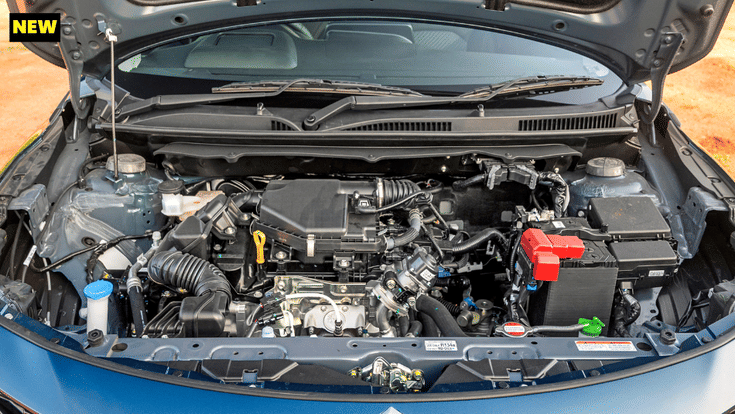
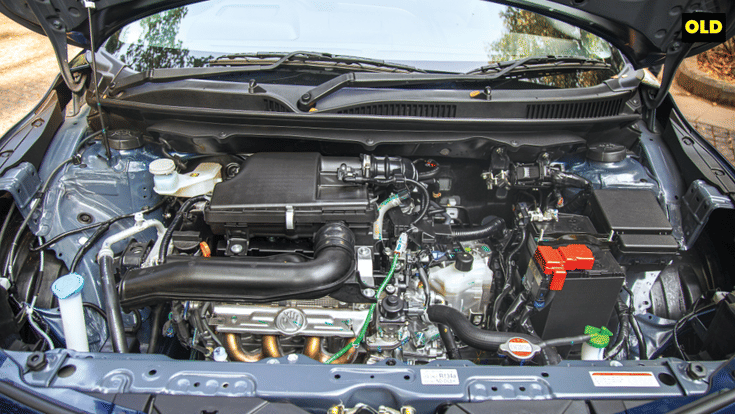
The new Baleno gets Maruti’s Z-Series engine, which is already used in the Swift and Dzire. In comparison to the pre-facelift Baleno’s K-Series engine, the Z-Series engine has the same capacity but drops a cylinder. Additionally, the latter develops lower power figures than the former in petrol guise, but the CNG version sees a slight bump in torque.
Though the new Baleno develops lower power figures, fuel efficiency, on the other hand, has increased. Company-claimed fuel efficiencies of the facelift’s petrol and CNG versions have increased by up to 1.83kpl and 3km/kg, respectively.
2026 Maruti Baleno vs old: Exterior
Revised fascia gets a bolder design
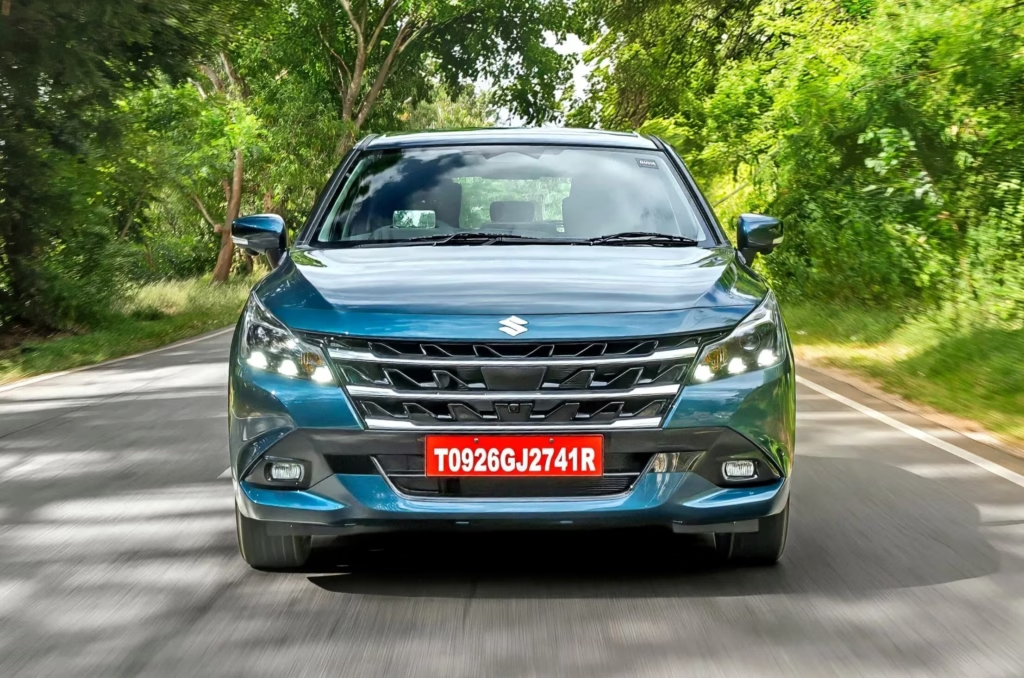
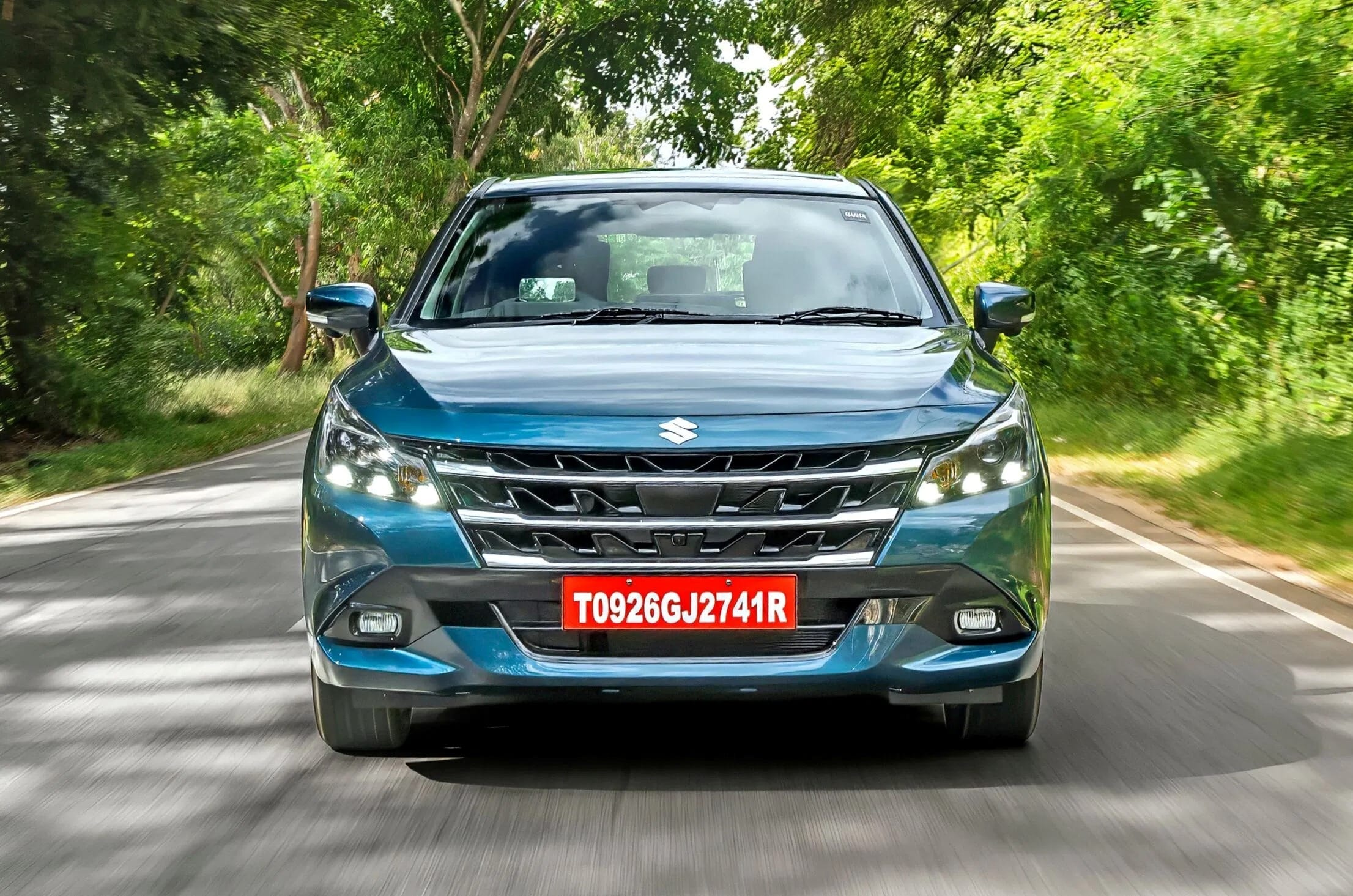
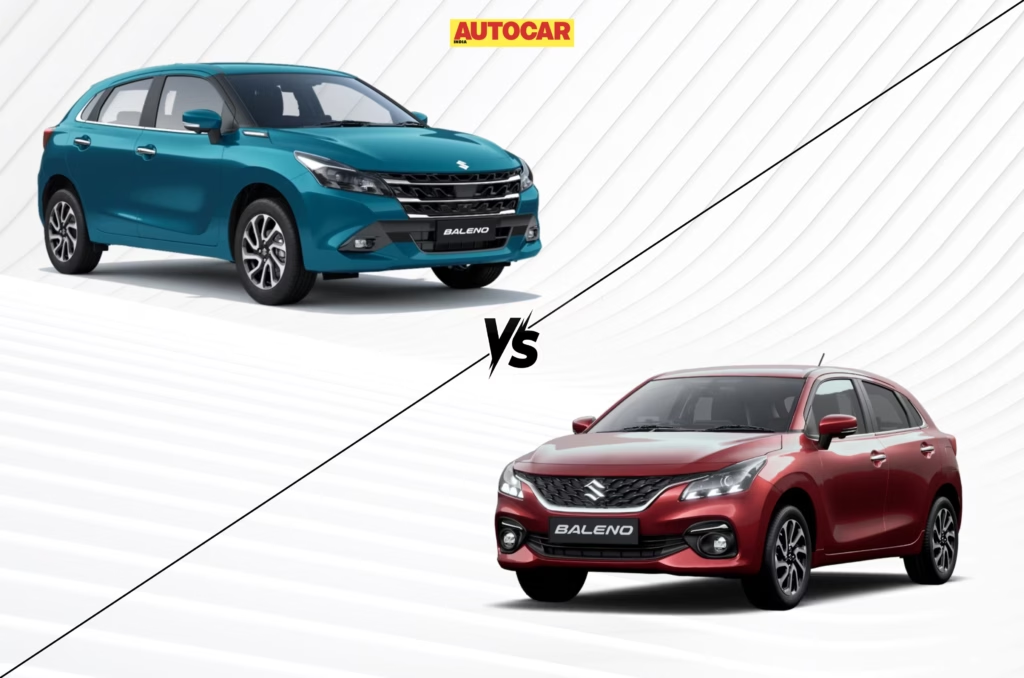
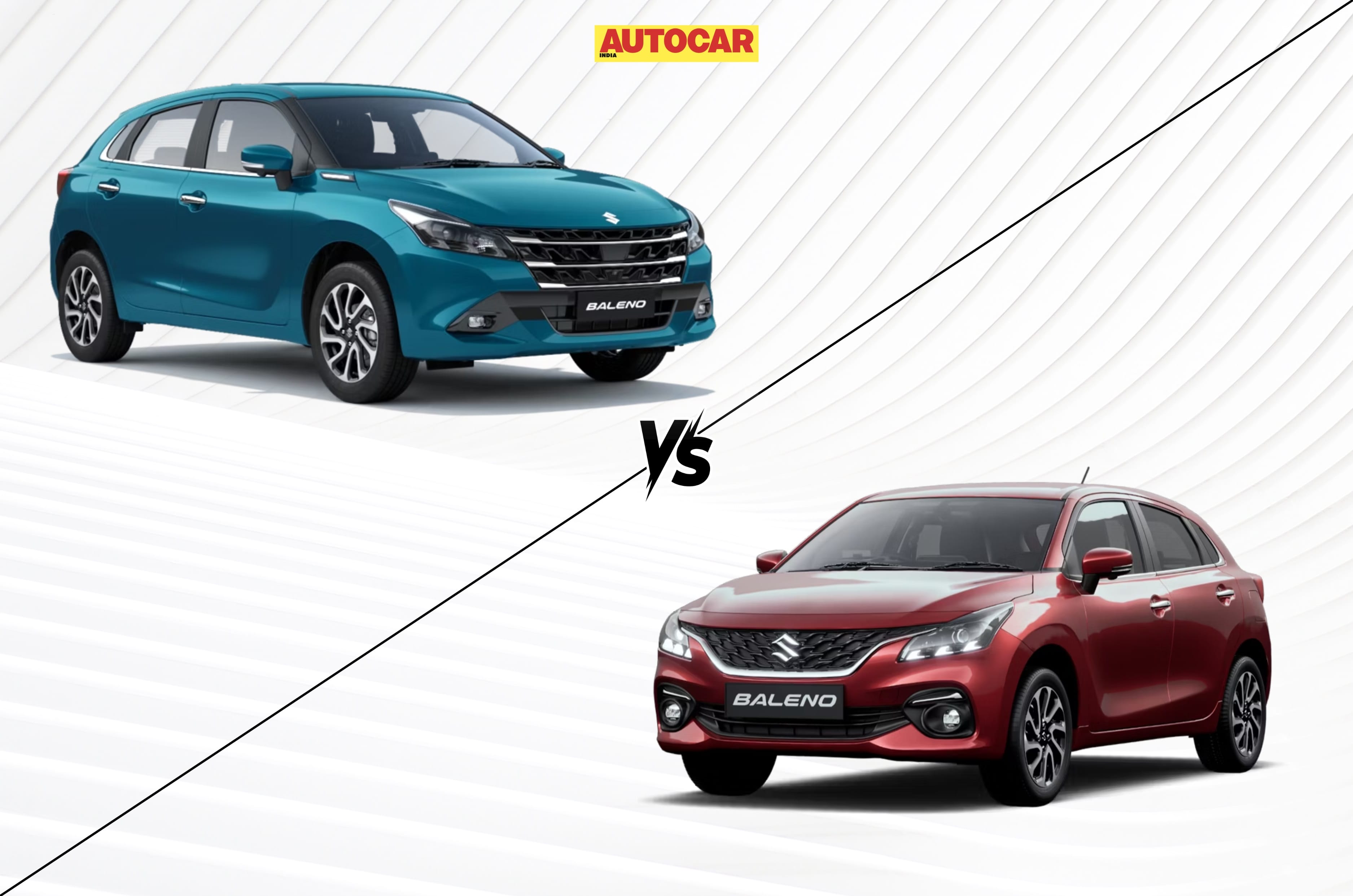
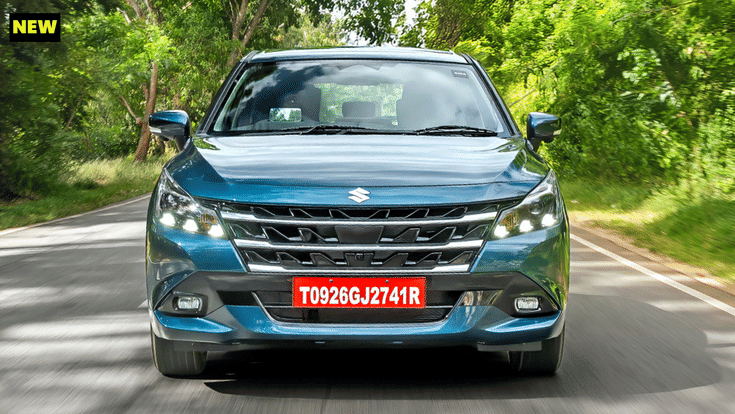
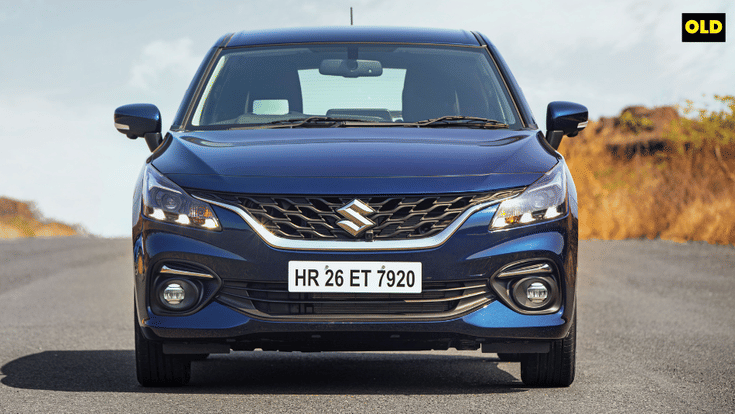
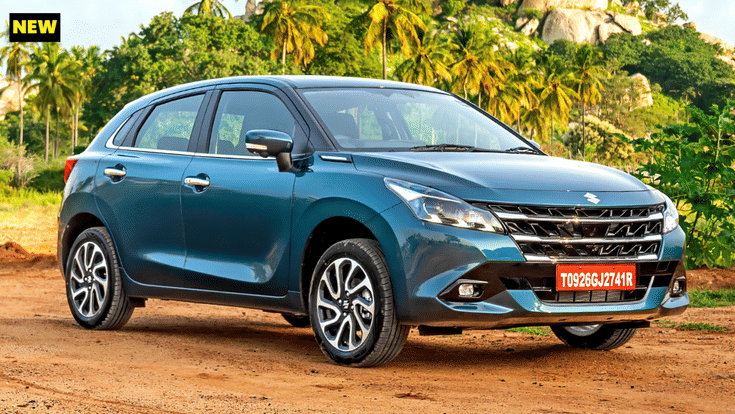
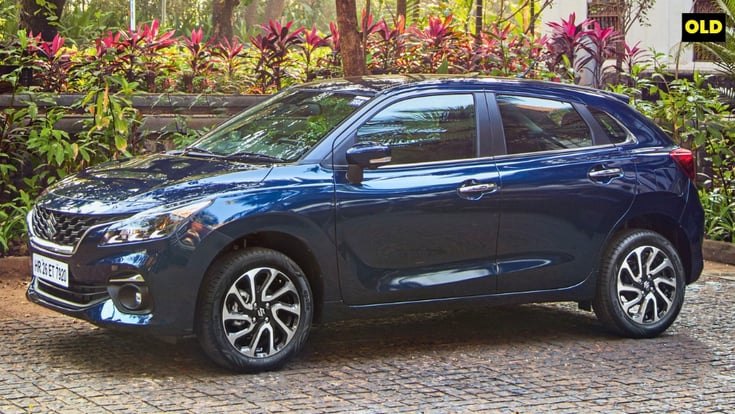
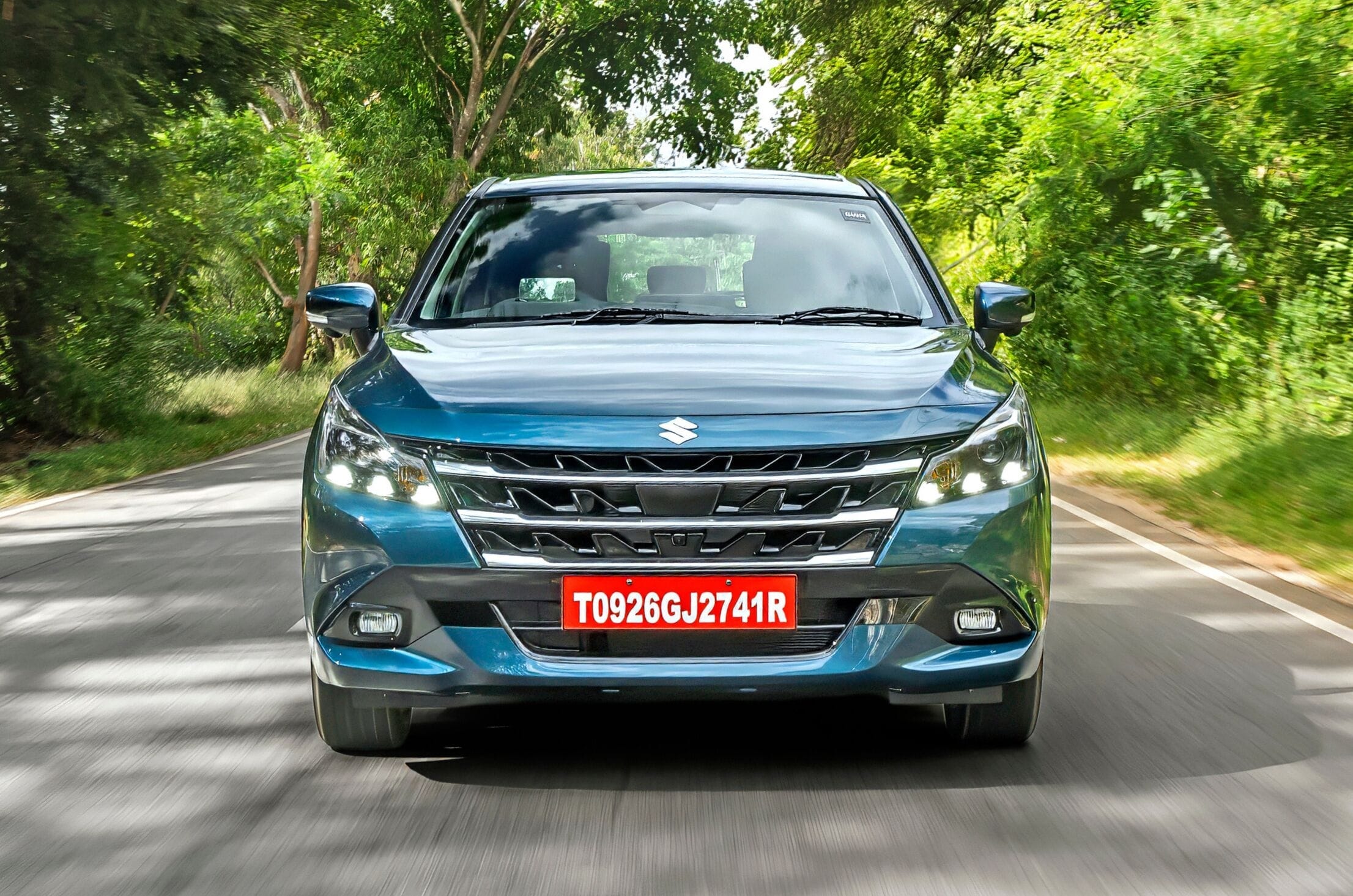
Visually, a majority of the changes to the Baleno facelift are mainly focused on the fascia. Over its predecessor, it gets a much larger grille with three chrome strips and the Suzuki badge repositioned above it. The bumper is restyled with a width-long black trim, giving it a dual-tone look, and it encases rectangular LED fog lamps. Other exterior updates include a shark fin antenna and a chrome garnish on the front fenders.
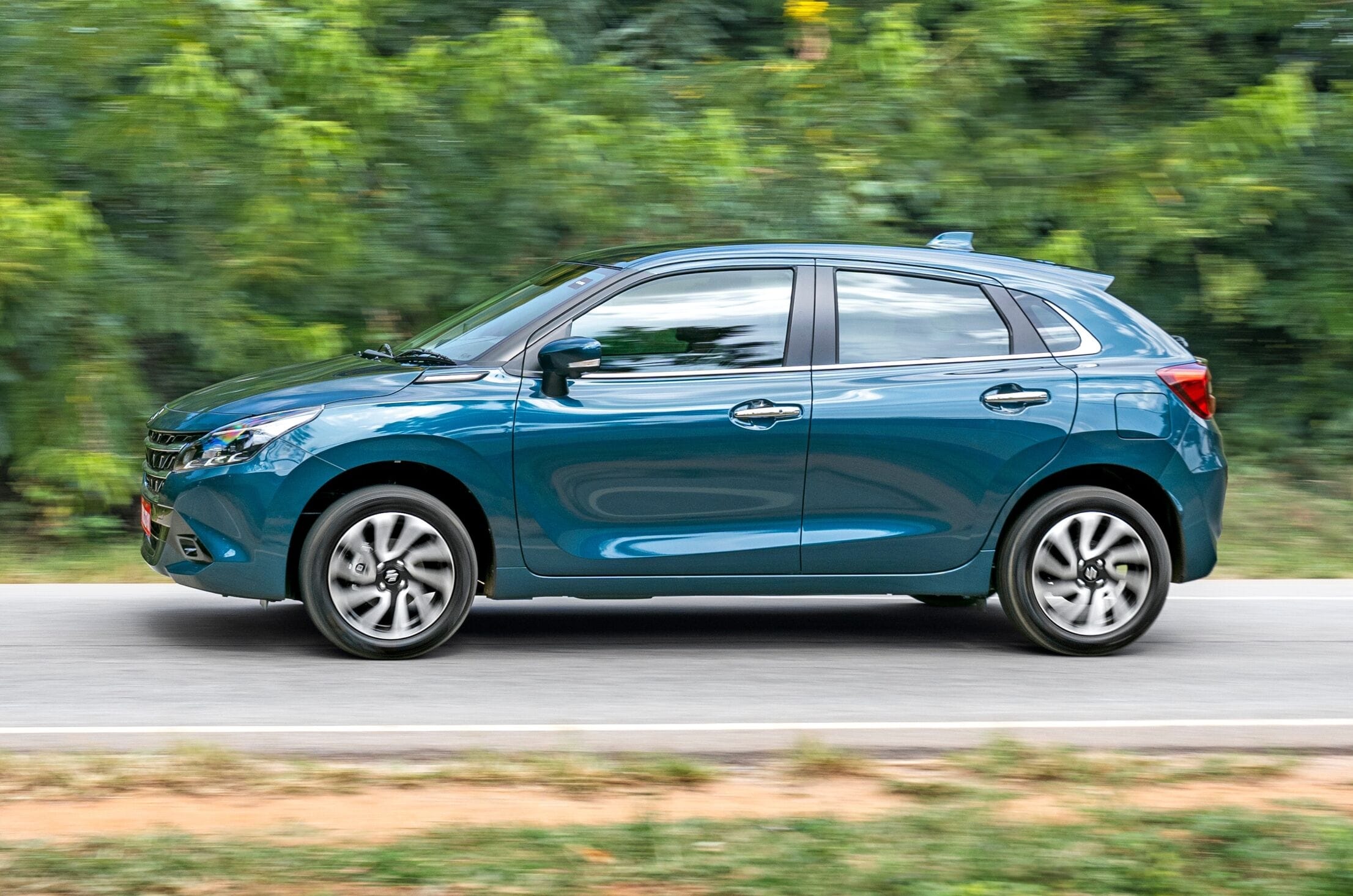
Apart from these updates, pretty much everything else remains the same. The overall silhouette is retained, and you continue to get the same alloy wheel design, chrome door handles, chrome window beltline, and subtle body moulding on the sides. Place the rear ends of both versions side by side, and it won’t take long to notice that both look identical in this regard.
2026 Maruti Baleno vs old: Features and safety
Baleno facelift gets an improved feature suite and safety kit
L2 ADAS in the 2026 Maruti Baleno
Maruti has heavily bolstered the features and safety kit on the Baleno facelift over its predecessor. New goodies are a wireless phone charger with active cooling, a Clarion sound system, and front-seat ventilation, a segment-only feature. On the safety front, Maruti has made much-needed improvements. These include six airbags fitted as standard across the lineup, a dedicated head restraint and a three-point seatbelt for the central rear passenger, and a tyre pressure monitoring system. Additionally, the Baleno facelift also gets a Level 2 ADAS suite, which is another segment-only feature. The inclusion of ADAS in the Baleno makes it Maruti’s only compact model and the only mainstream hatchback in India to have this tech.
2026 Maruti Baleno vs old: Interior
The facelift retains much of the predecessor’s cabin layout
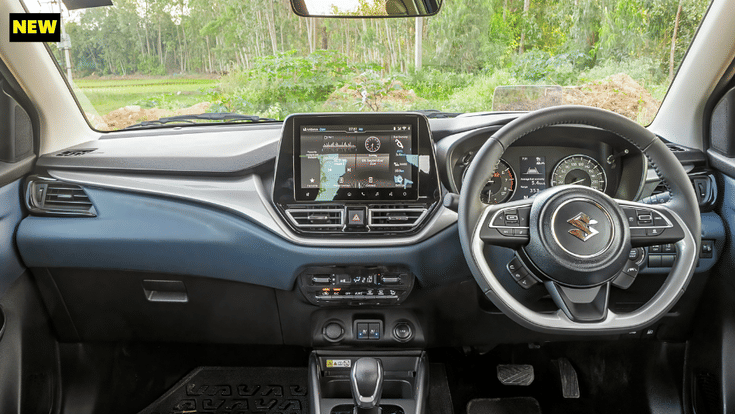
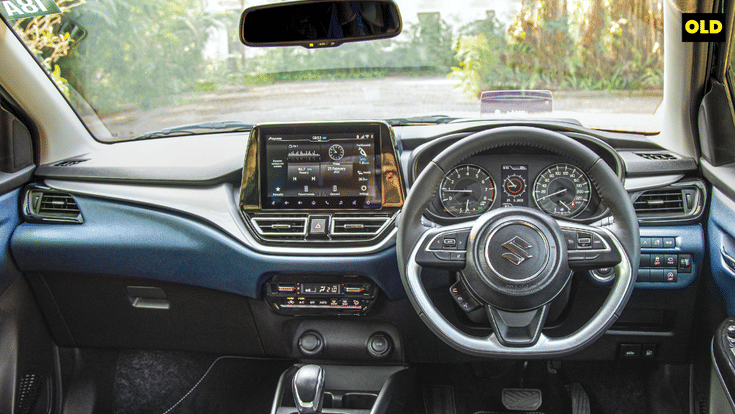
Changes to the interior of the Maruti Baleno facelift are minimal. It retains the black and blue theme and the multi-layered dashboard design from the pre-facelift model. However, the central lower section of the dashboard sees revisions to accommodate the new wireless phone charger and seat ventilation controls. Additionally, the fabric seats from the pre-facelift have been upgraded to semi-leatherette upholstery in the facelift.
2026 Maruti Baleno vs old: Price
Updates make the facelift pricier than the older model
At Rs 6.10 lakh, the Baleno facelift is pricier than the pre-facelift’s starting price of Rs 5.99 lakh. Though a variant-wise price list is awaited, the former is expected to come at a premium over the latter, especially considering the powertrain and feature additions. While the Sigma, Delta, Zeta, and Alpha trims continue to be part of the Baleno lineup, the facelift sees the addition of a new Alpha(O) trim. It sits above the Alpha trim and gets the Level 2 ADAS suite.
Maruti Suzuki recently updated the Baleno with new features, cosmetic changes and, most significantly, a new 1.2-litre three-cylinder petrol engine. It is available with petrol and CNG powertrains, with manual and AMT gearbox options on offer, and is priced from Rs 6.10 lakh onwards. But does it have what it takes to be the right premium hatchback for you? Here are three reasons to consider the Baleno and two reasons why you may want to look elsewhere.
Pros
1. Spacious and well-equipped cabin
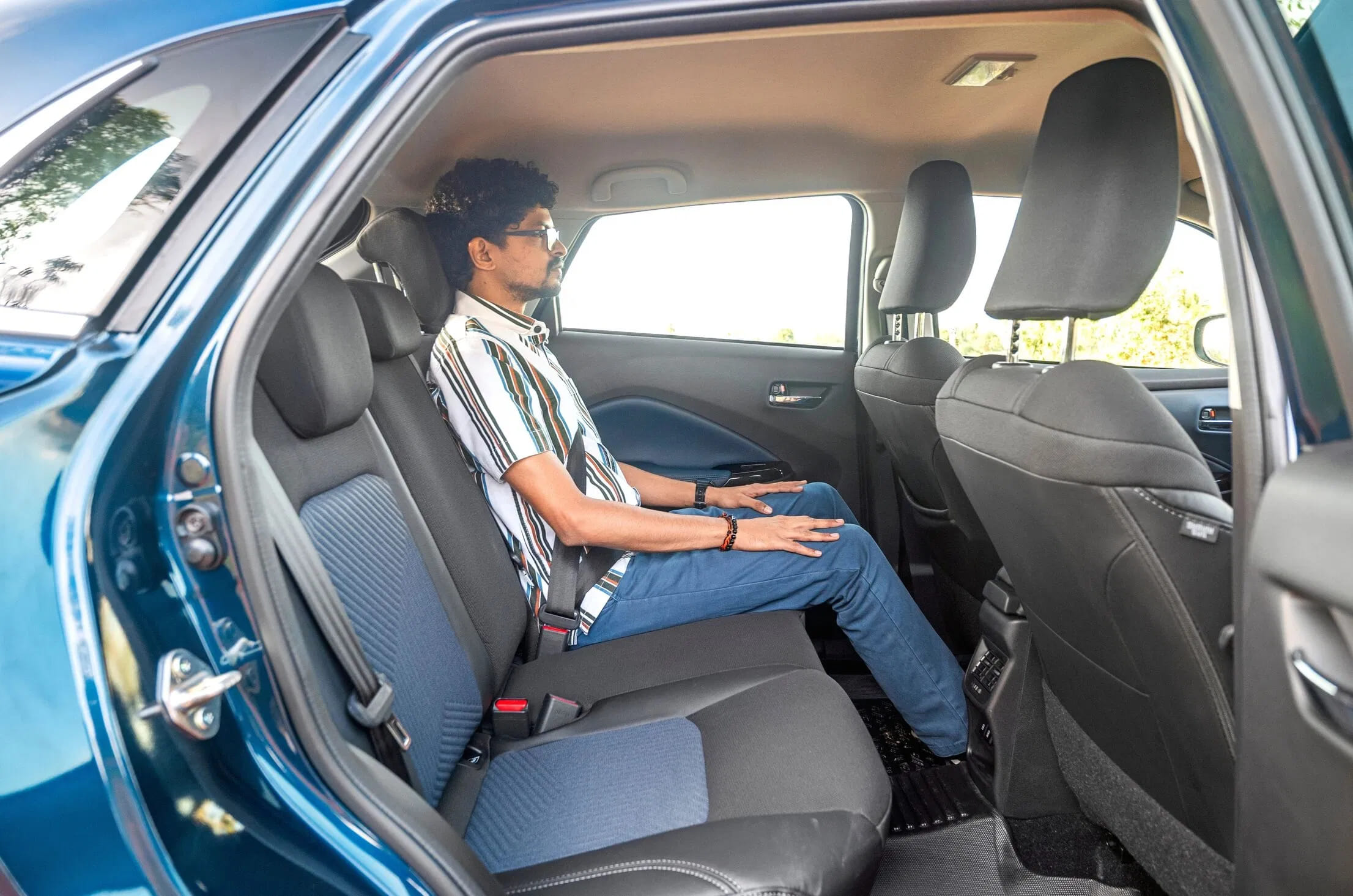
The Baleno has a spacious cabin, particularly at the rear, with ample headroom and legroom for tall passengers. The seats offer good cushioning and under-thigh support, while rear passengers get dedicated AC vents and USB charging ports. The 318-litre boot is useful for everyday needs, although the loading lip is high.
The equipment list is also a highlight, with the Baleno being the only in its segment to offer Level 2 ADAS and ventilated front seats. A head-up display is another useful addition, while the top-spec Alpha (O) also gets a 9-inch touchscreen with wireless smartphone integration, automatic climate control, a cooled wireless charger and connected-car features. Six airbags and traction control are standard.
2. Refined engine with strong claimed fuel efficiency
The 1.2-litre three-cylinder Z-series petrol engine produces 83hp and 112Nm and is one of the more refined three-cylinder engines. It has good low-end response, smooth power delivery and is well suited to everyday city driving. Fuel efficiency is another strong point. The petrol-manual has a claimed 23.80kpl, while the AMT claims 24.77kpl. The CNG version is rated at 33.61km/kg, although these are claimed figures and real-world efficiency will be lower.
3. Comfortable ride and good high-speed composure
The Baleno’s soft suspension delivers an excellent low-speed ride, absorbing most road imperfections with ease. Only sharp bumps and large potholes tend to unsettle it, making the car particularly comfortable around town.
It also remains composed at higher speeds, with well-contained body movements. The steering is light at low speeds for easy manoeuvring and gains weight as speed increases, while body control is good through corners.
Cons
1. AMT can hesitate during quick overtakes
The five-speed AMT is reasonably smooth but has a noticeable head-nod between shifts. More importantly, it can take time to downshift when a quick overtake is required, resulting in hesitation. Manual mode helps by letting the driver select the required gear, while the five-speed manual itself is smoother and more satisfying to use, with a light clutch and short, well-defined shifts.
2. Outright performance is not its strength
The Z-series engine has good low-end response and smooth power delivery, but it lacks punch higher up the rev range. It is also less peppy than the older K-series engine, while its lower output and the new Baleno’s higher weight compared to its predecessor result in slower outright acceleration. For regular city driving, the engine is adequate and easy to use. However, buyers looking for stronger acceleration, particularly during highway overtakes, may find it lacking.
The Maruti Suzuki Baleno has proven to be hugely successful, with the premium hatchback going home to 1.9 million buyers since its introduction in 2015. And in a time when compact SUVs are all the rage, the Baleno continues to buck the trend and bring in the numbers for the brand. And now in a bid to keep it fresh and relevant, Maruti Suzuki has updated it with a tweaked design, new comfort and safety features and even a new petrol engine.
Maruti Baleno Exterior Design and Engineering – 7/10
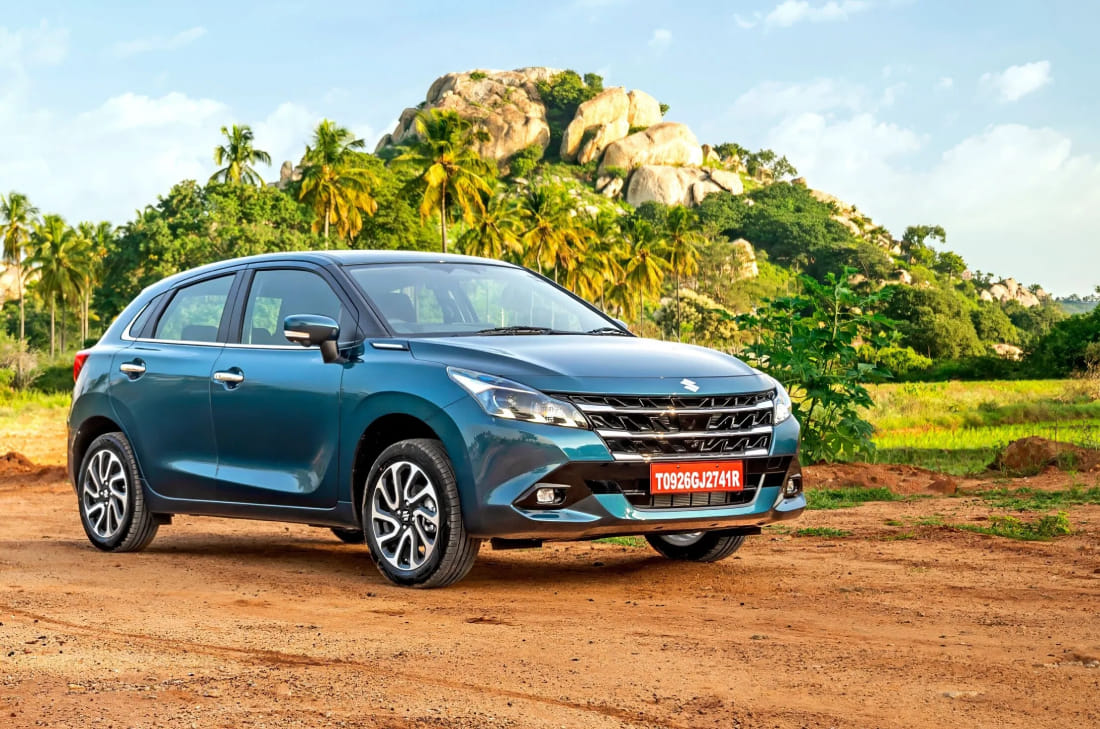
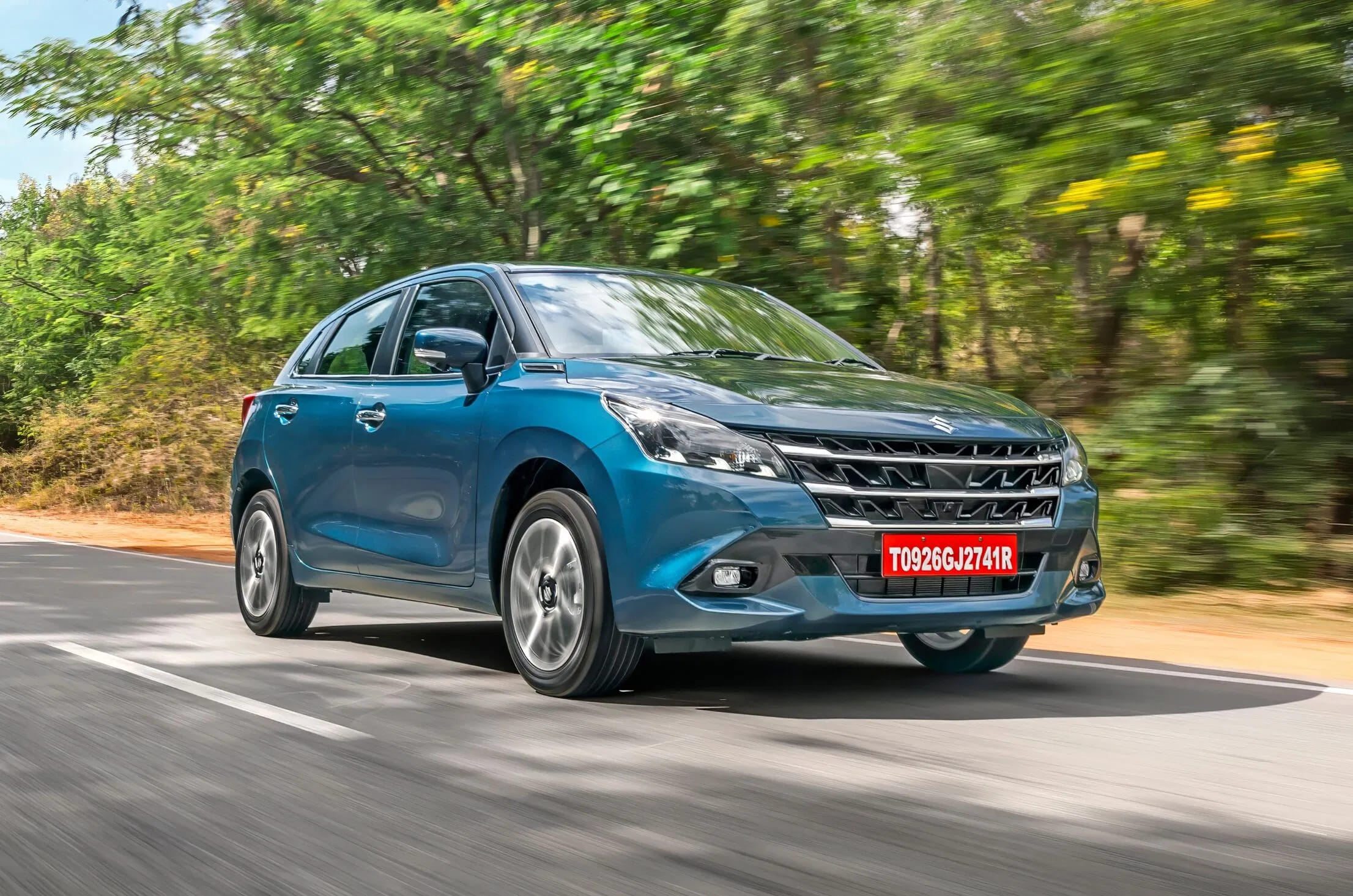
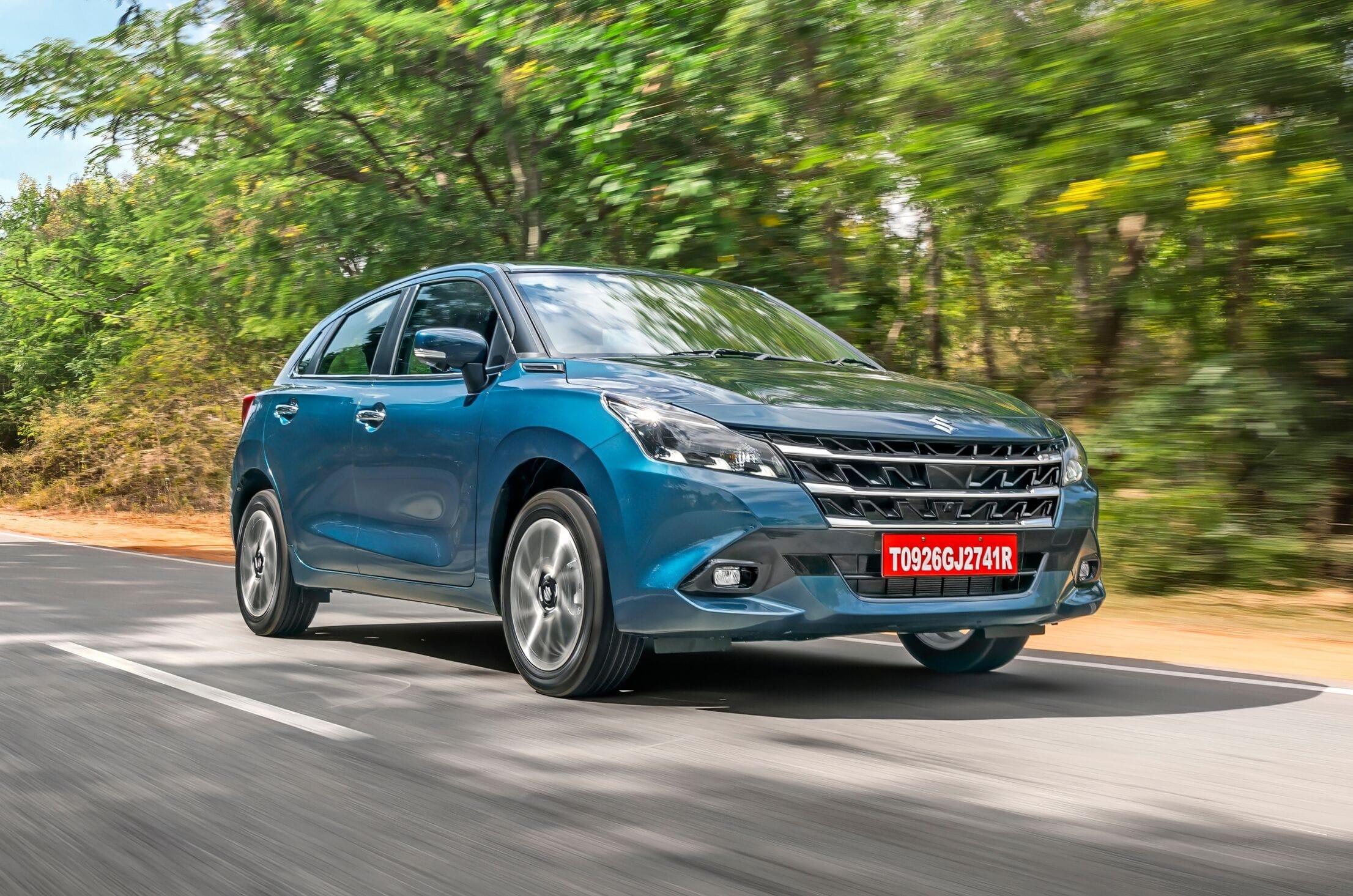
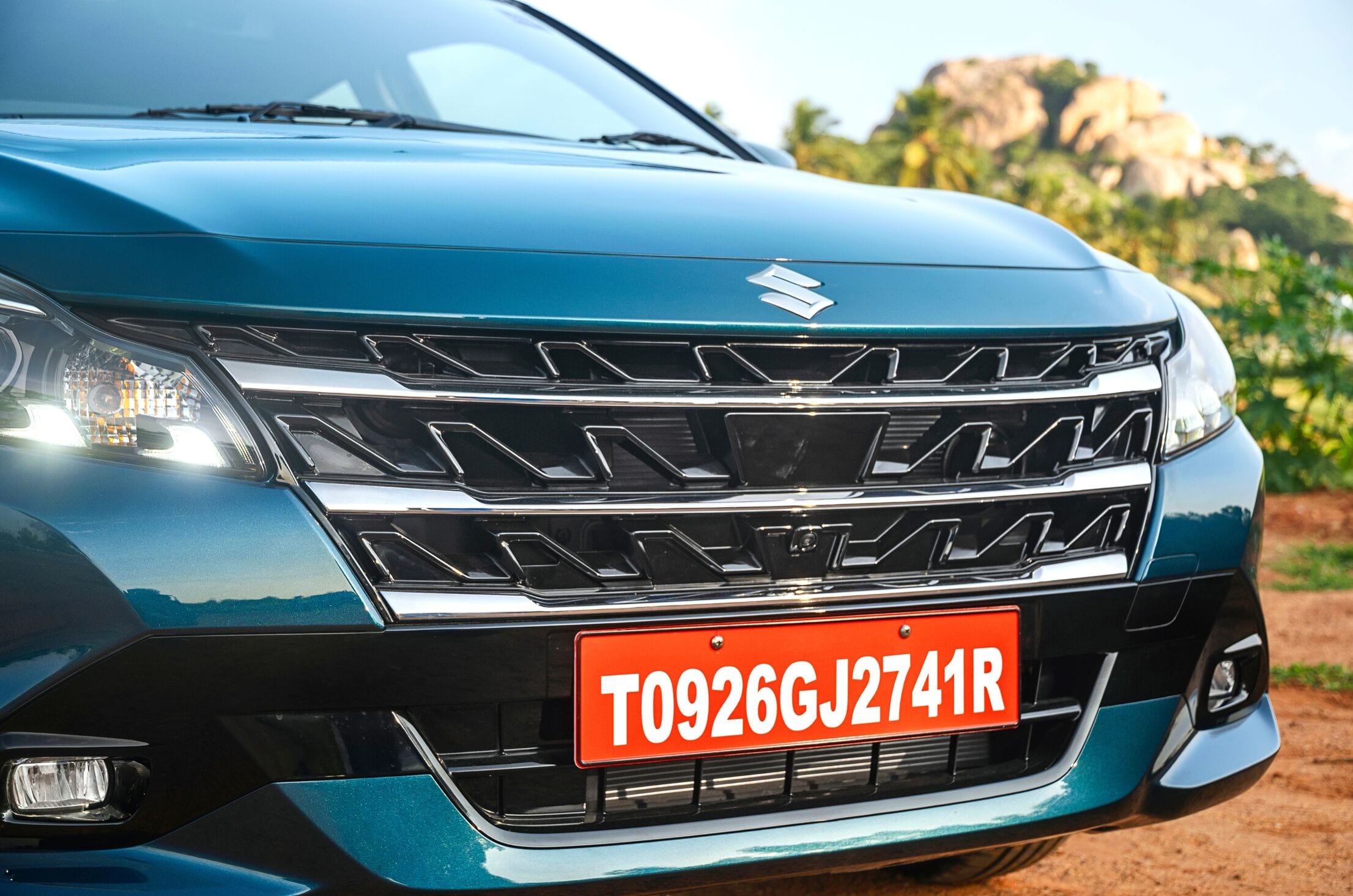
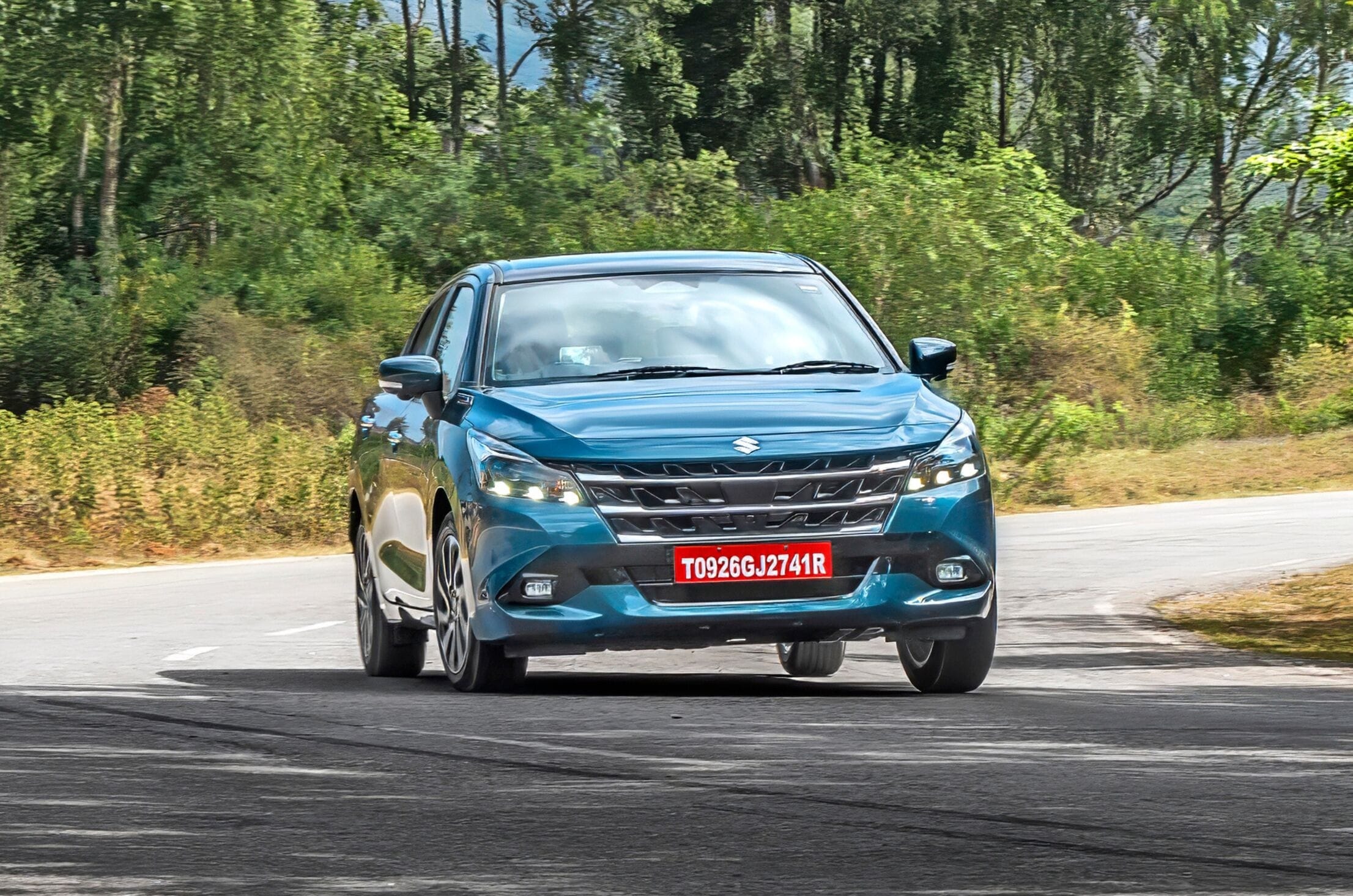
Being a mid-life-cycle update, the Baleno doesn’t get a design overhaul but rather tweaked styling with the bulk of the design changes concentrated at the front end. The grille is now much larger than before with three horizontal chrome slats and gloss black detailing, with a radar module in the centre for the new ADAS tech. The bumper is new too and features a gloss black trim that links the new LED fog lamps and the Suzuki logo has also been moved above the grille. Otherwise, the clamshell bonnet with the two character lines and the LED headlamps with the three-block DRL signature are carried over unchanged.
Gets a new larger grille with chrome slats, a new bumper and new fog lamps.
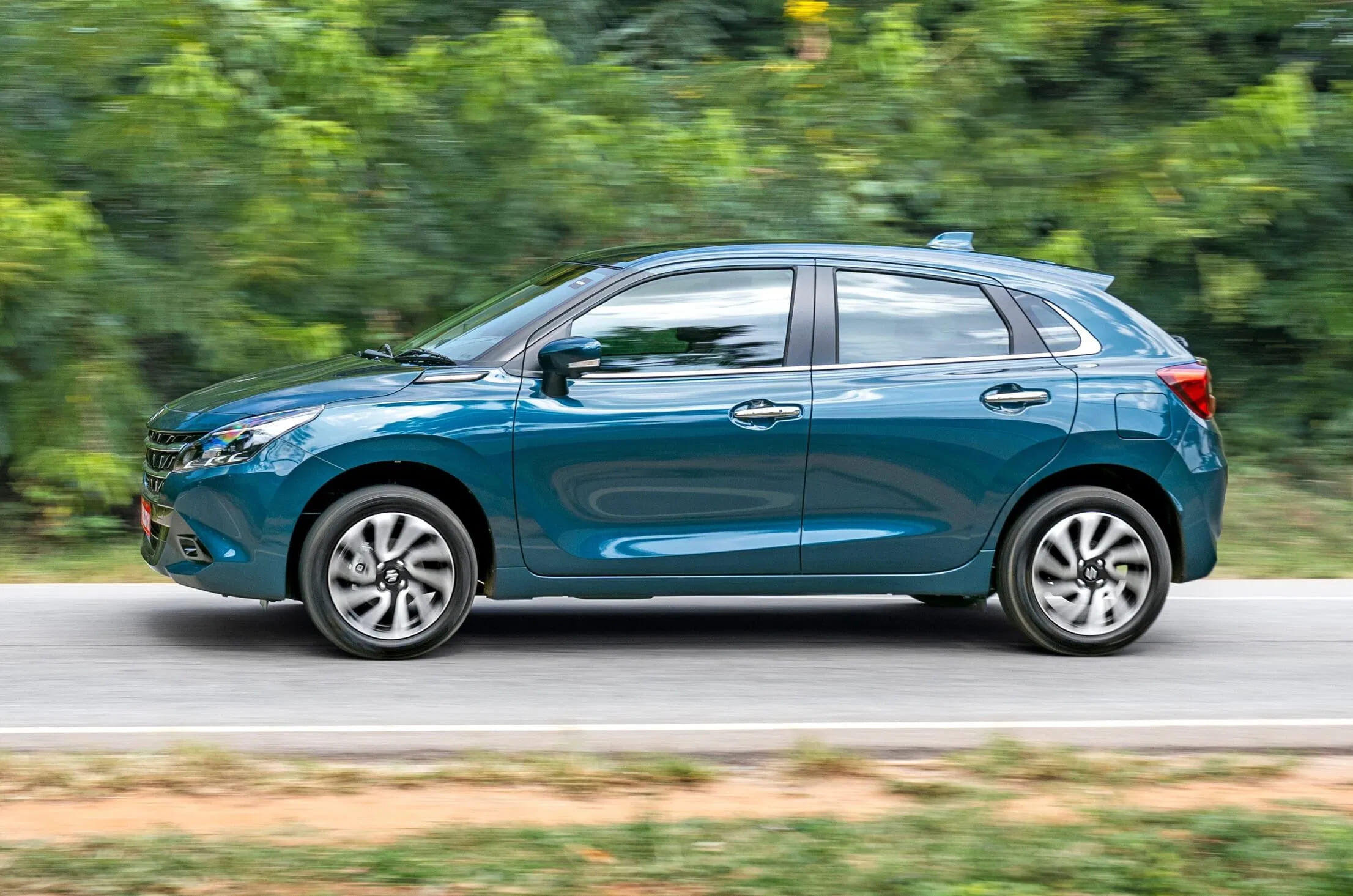
Changes along the sides are minimal, with the only distinguishing factors being a chrome garnish on the front fender and a shark fin antenna on the roof. The facelift retains the older Baleno’s chrome lining under the windows that extends up till the C-pillar, chrome door handles and the dual-tone 16-inch alloy wheels on this top-spec Alpha (O) variant.
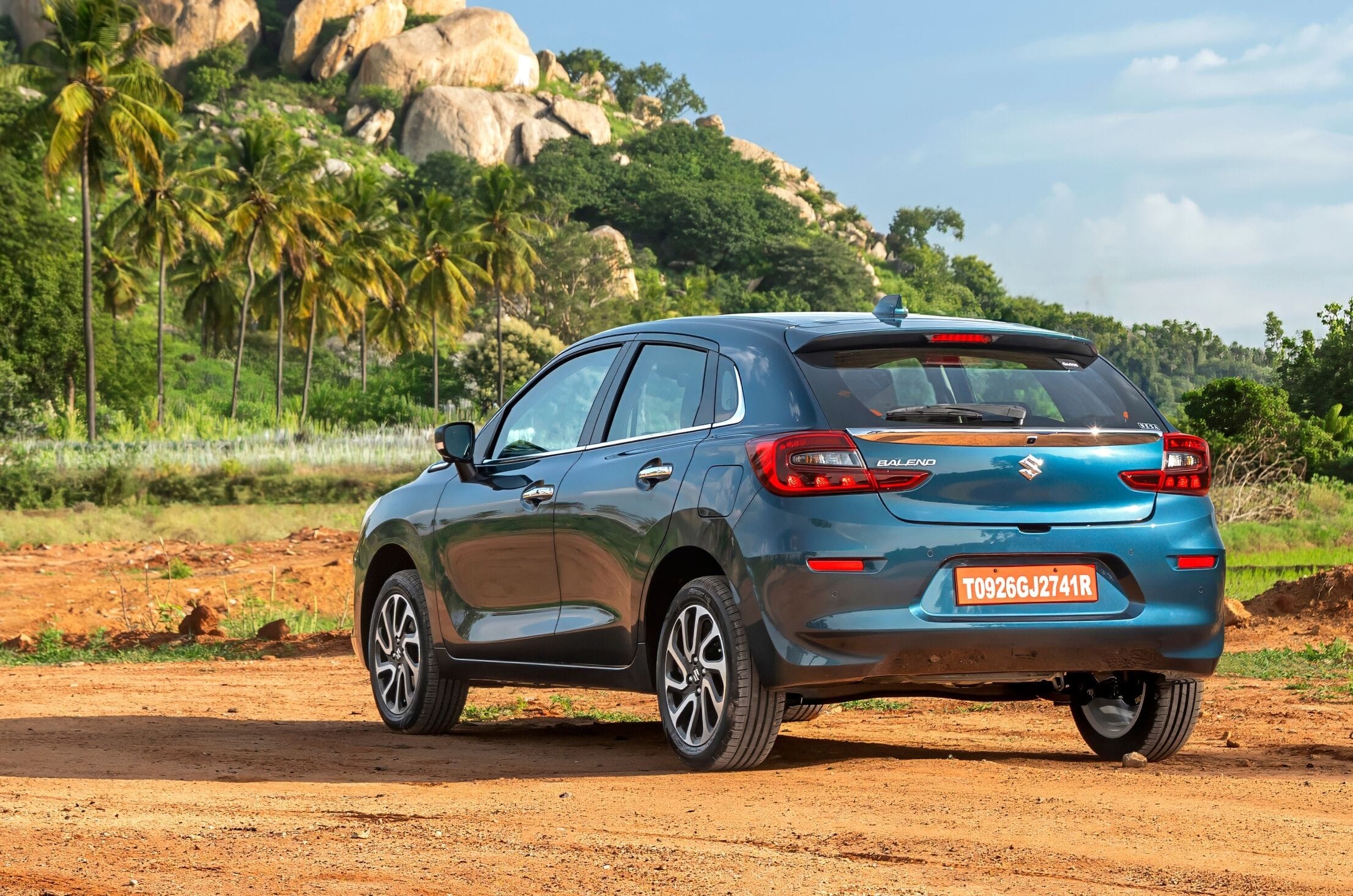
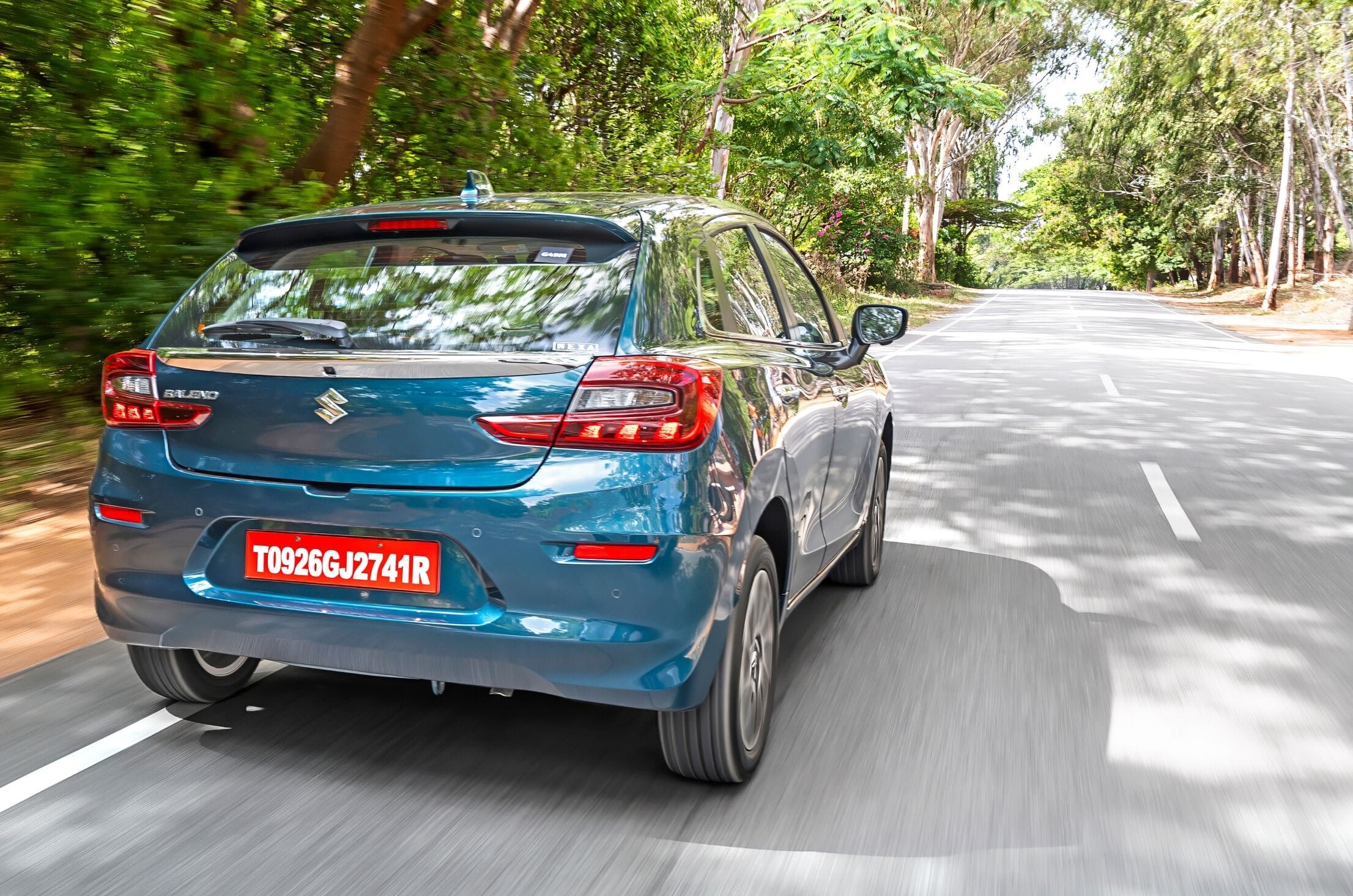
The rear however, stays identical to the pre-facelift Baleno with its C-shaped LED taillamps that also feature the three-block pattern, a chrome band running across the tailgate and a small, roof-mounted spoiler. There’s also a new Enigmatic Teal Green paint shade as seen in the pictures here. Overall, the Baleno sticks to the formula that’s made it as successful as it is with minor tweaks in order to keep it fresh. The front grille, though, splits opinion and certainly doesn’t appear as cohesive as the one on the model it replaces.
Rear stays identical to the pre-facelift model, with the same dual-tone alloys as well
Maruti Baleno Interior Space and Comfort – 8/10
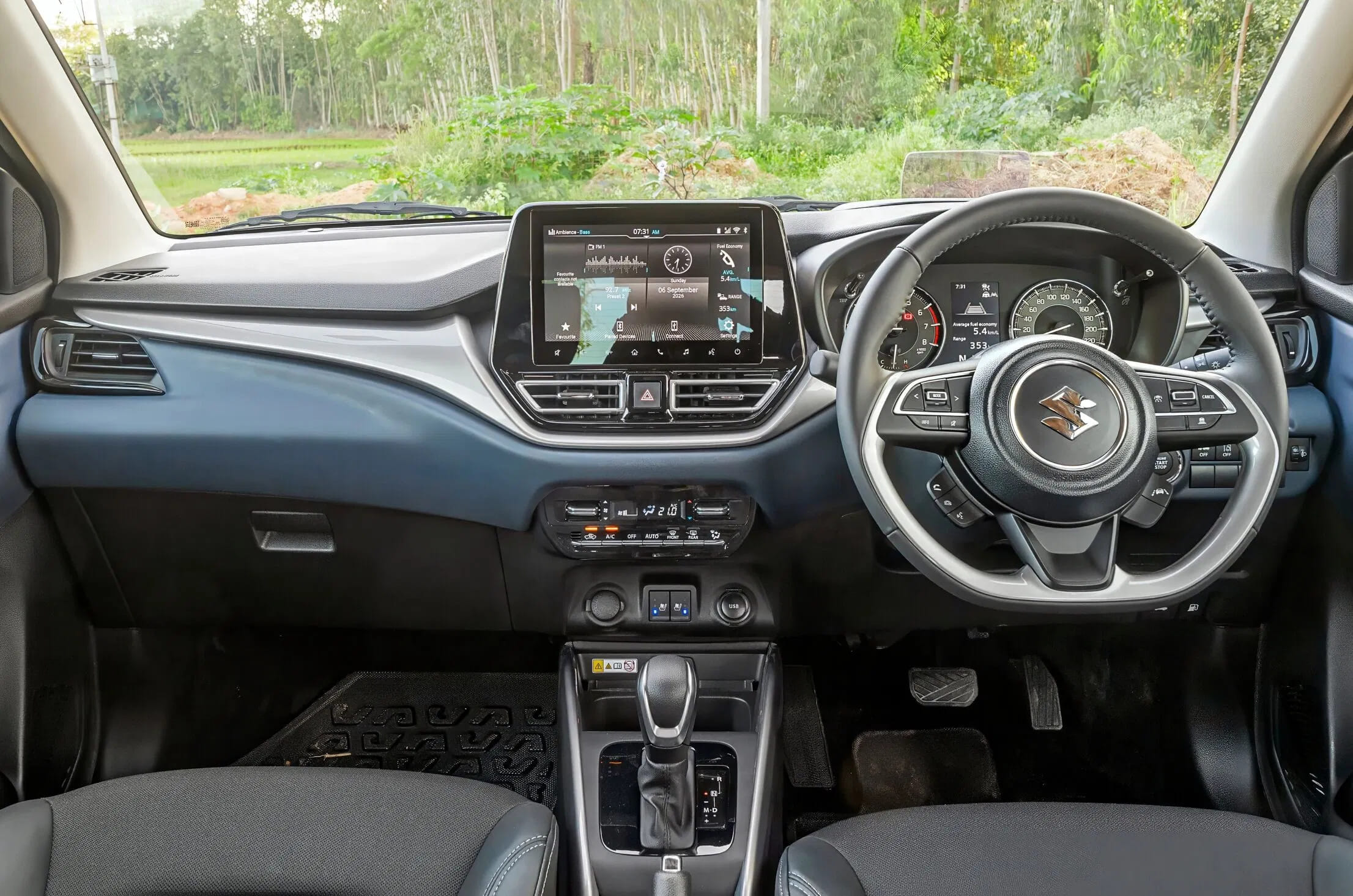
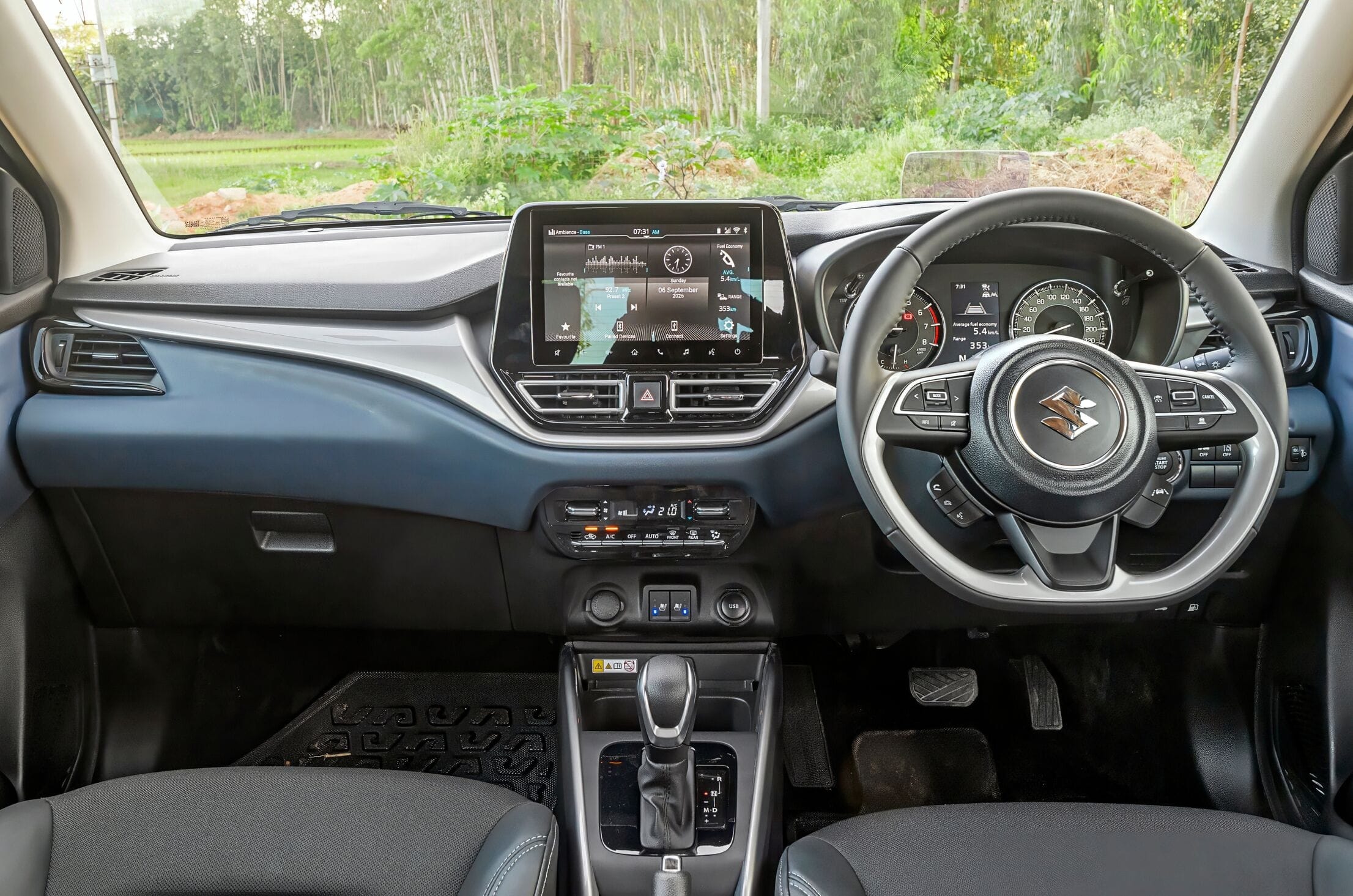
The interior of the Baleno facelift stays near-identical, with the same layered, V-shaped dashboard, flat-bottom three-spoke steering wheel and dual-tone black and blue colour scheme. There have been some tweaks however. The steering now features buttons on the right side for the adaptive cruise control and lane keep assist, there are more buttons on the right of the steering too (near the start/stop button) to turn off certain ADAS features and the seats now feature part-leatherette upholstery. The seats still majorly feature fabric upholstery but the outer edges are now finished in leatherette, which helps up the premium feel.
Layered dashboard with a dual-tone black-and-blue interior theme is carried over unchanged
Otherwise, this cabin is made up of good quality materials, particularly the soft touch leather wrapped steering and the padded elbow rests on the doorcards. The only sore points are the hard plastics and the simple woven roofliner. It’s a practical place too, with big door pockets, a decent-sized glovebox and storage in the centre console, with big cupholders and a small bin under the centre armrest.
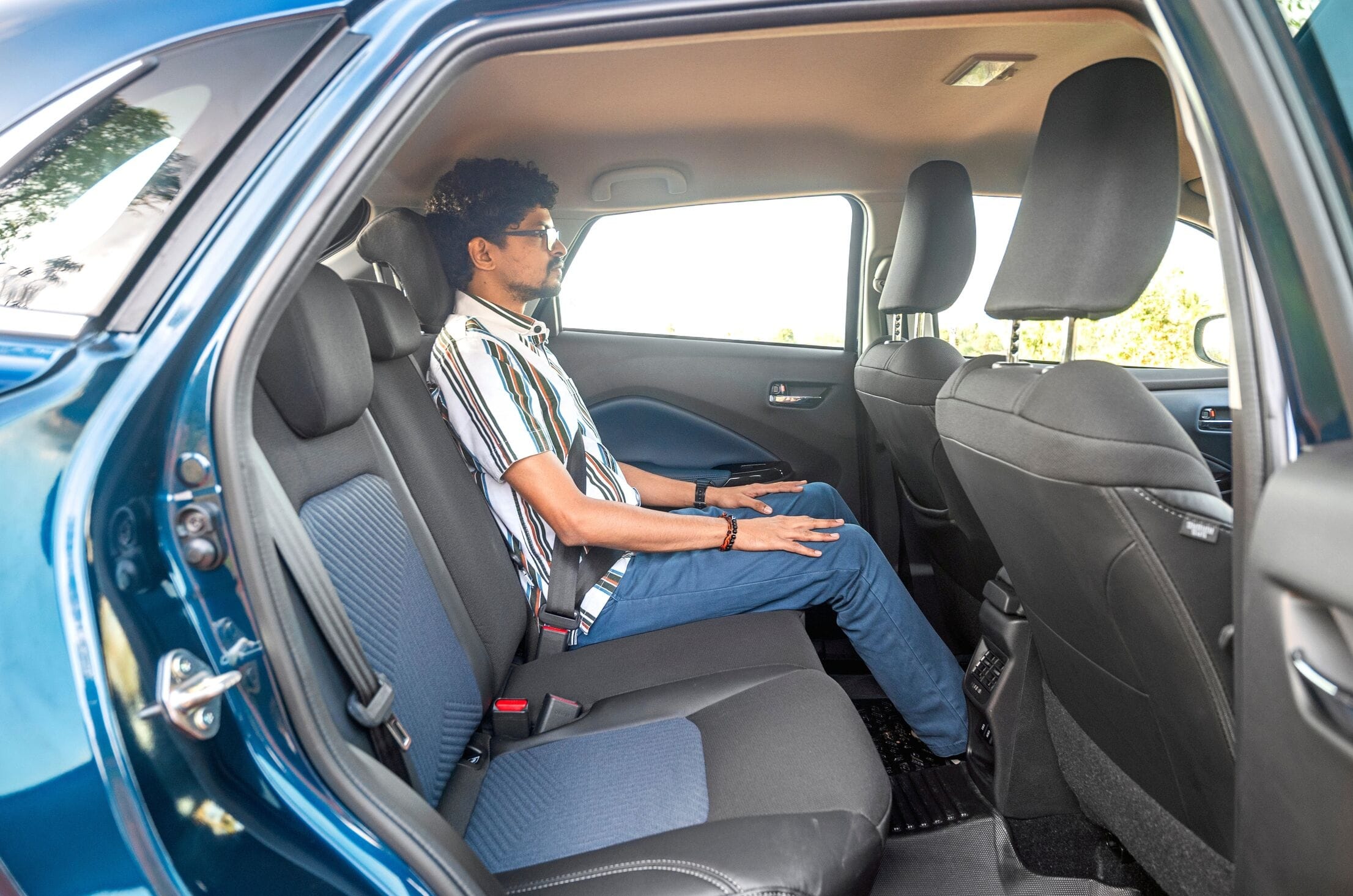
The front seats are unchanged and that’s a good thing as they are accommodating, supportive and offer nice cushioning. Thanks to the height adjustable driver’s seat and tilt/telescopic steering, finding an ideal driving position is an easy affair. Space at the rear is excellent, and even tall passengers won’t find a shortage of headroom or legroom. There’s good underthigh support, the seat cushioning is on point and on the whole, this is a comfy place to be. A welcome addition is an adjustable headrest and three-point seatbelt for the rear centre passenger. Rear passengers also get dedicated AC vents and USB charging ports.
Rear seat space is excellent and even tall passengers won’t find a shortage of headroom or legroom
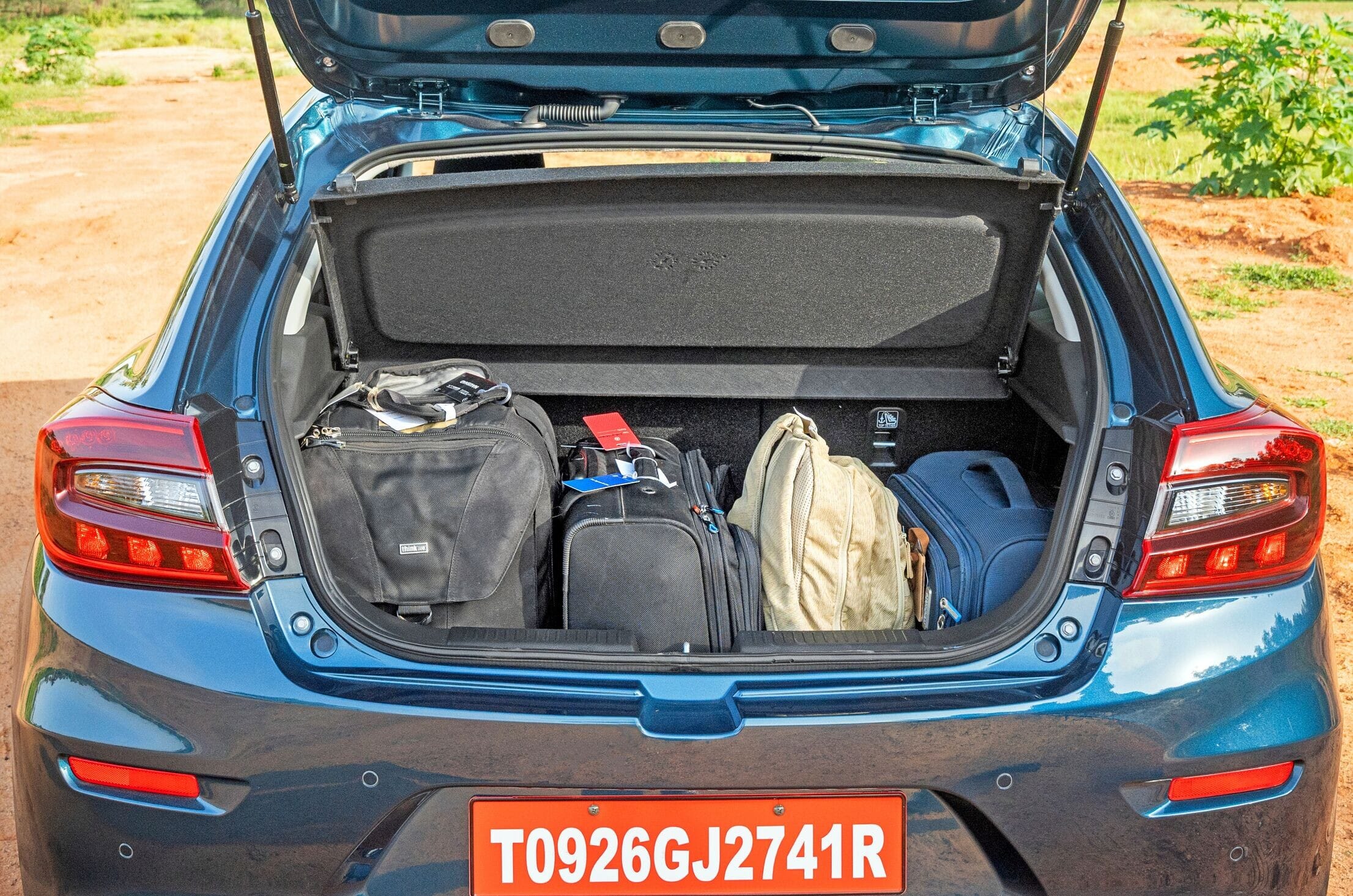
What further enhances overall comfort are the UV-cut glasses, which helps keep the heat out. As for boot space, it’s a sizable 318 litres, though the loading lip is quite high. It’s also nice to see that it retains a spare tyre under the boot floor, when many modern cars are pivoting to puncture repair kits.
Boot is a sizeable 318-litres though the loading lip is quite high; continues to get a spare tyre
Maruti Baleno Features and Safety – 9/10
There have been some important additions when it comes to features, as the Baleno now gets ventilated front seats, a cooled wireless phone charger, a tyre pressure monitoring system, a Clarion sound system, and perhaps most importantly, segment-first ADAS Level 2 features.
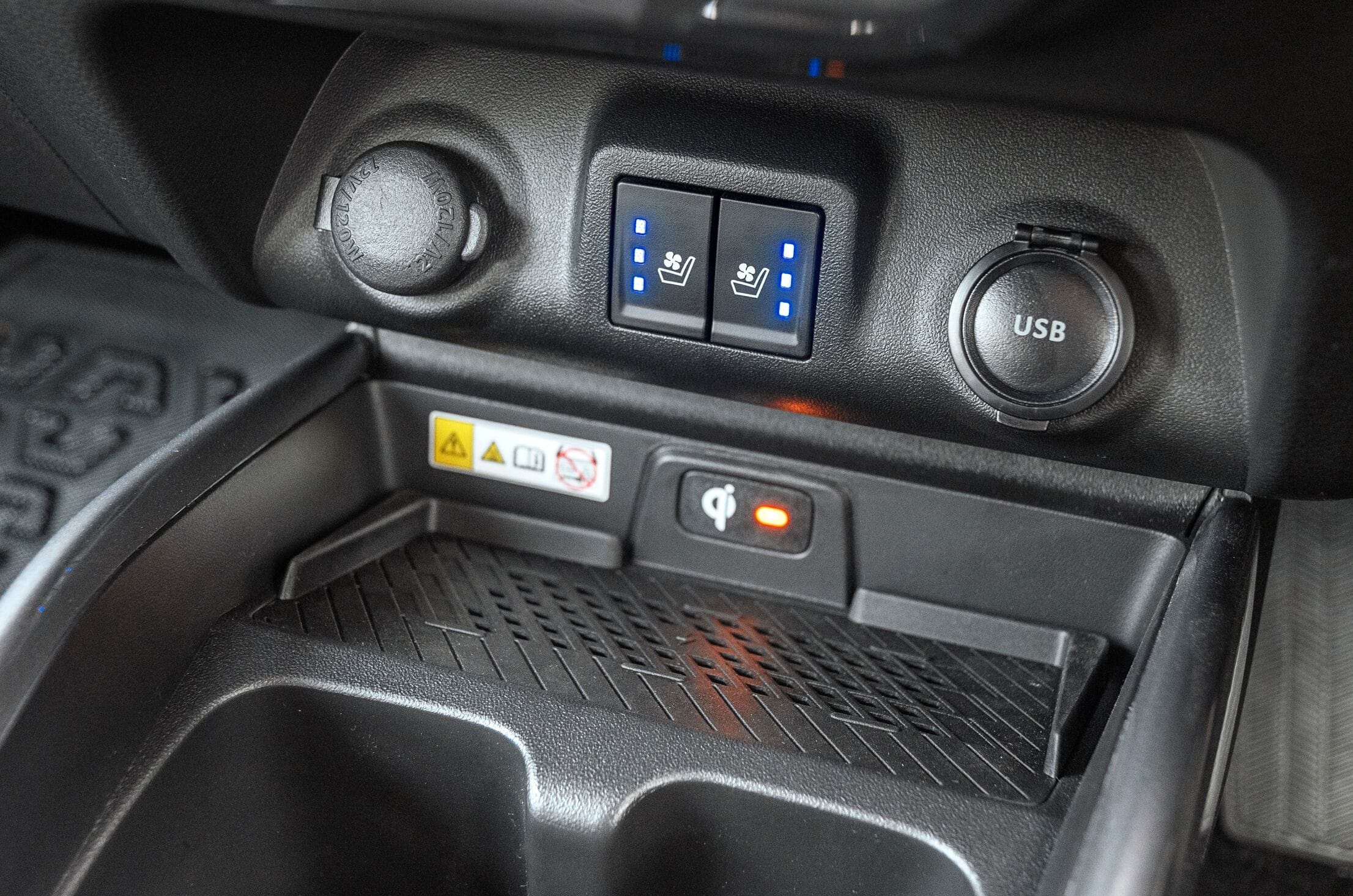
Ventilated front seats and a cooled wireless charging pad are among the new additions
Other than that, the features list was fairly expansive as is, with this top-spec Alpha (O) also getting a 9-inch infotainment touchscreen with wireless smartphone integration, auto climate control, a heads-up display, colour MID, auto headlamps, auto-dimming IRVM, keyless entry and go, rear wiper/washer, connected car tech and more. Safety kit includes 6 airbags as standard, traction control, a 360-degree parking camera (its quite low res though) and ISOFIX child seat mounts. The outgoing Baleno had a 4-star crash safety rating from Bharat NCAP and that should be the case for this one as well.
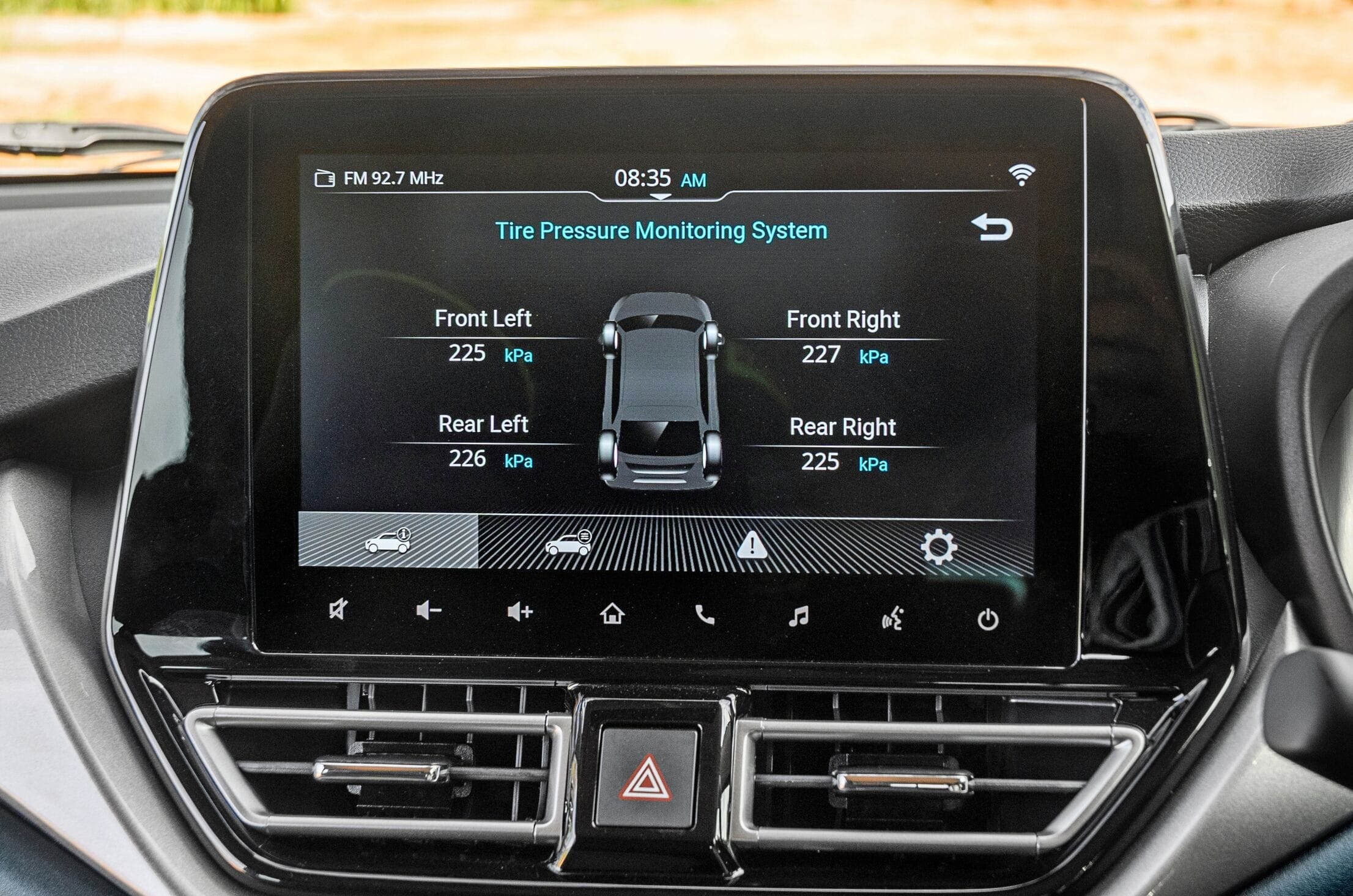
9-inch touchscreen has been retained; now features a TPMS
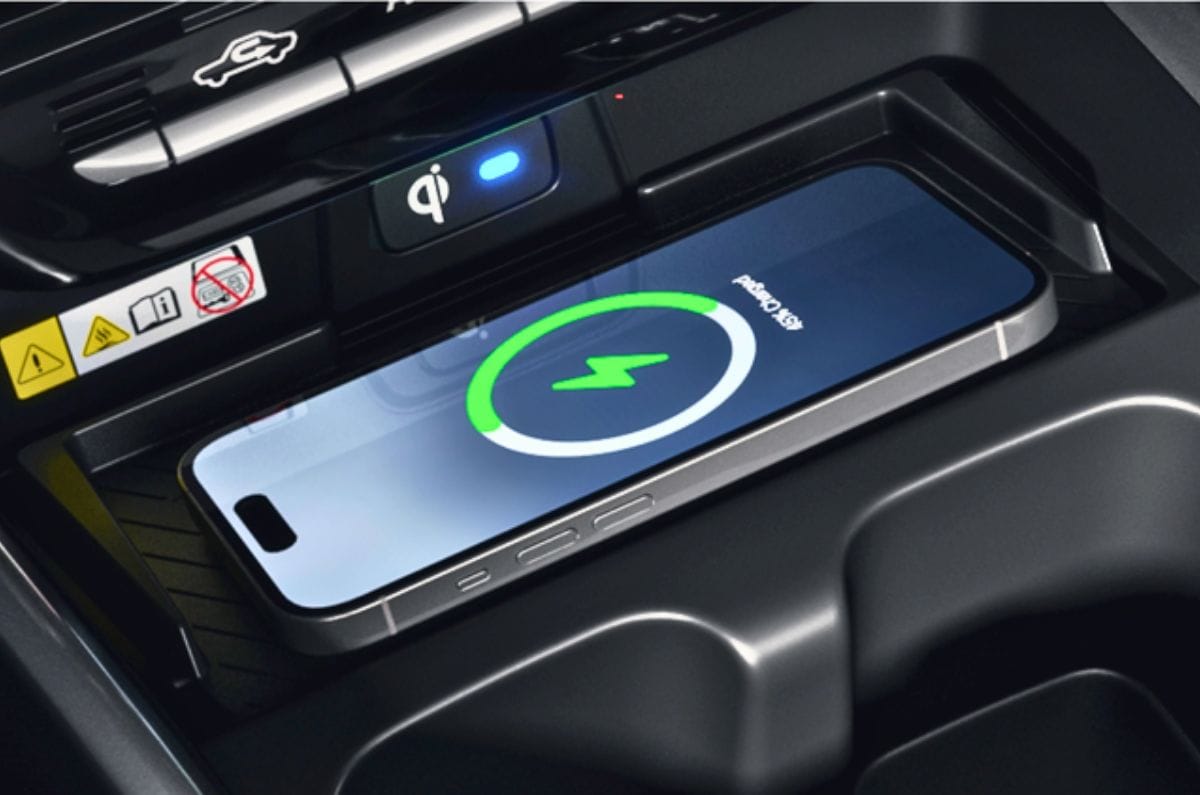
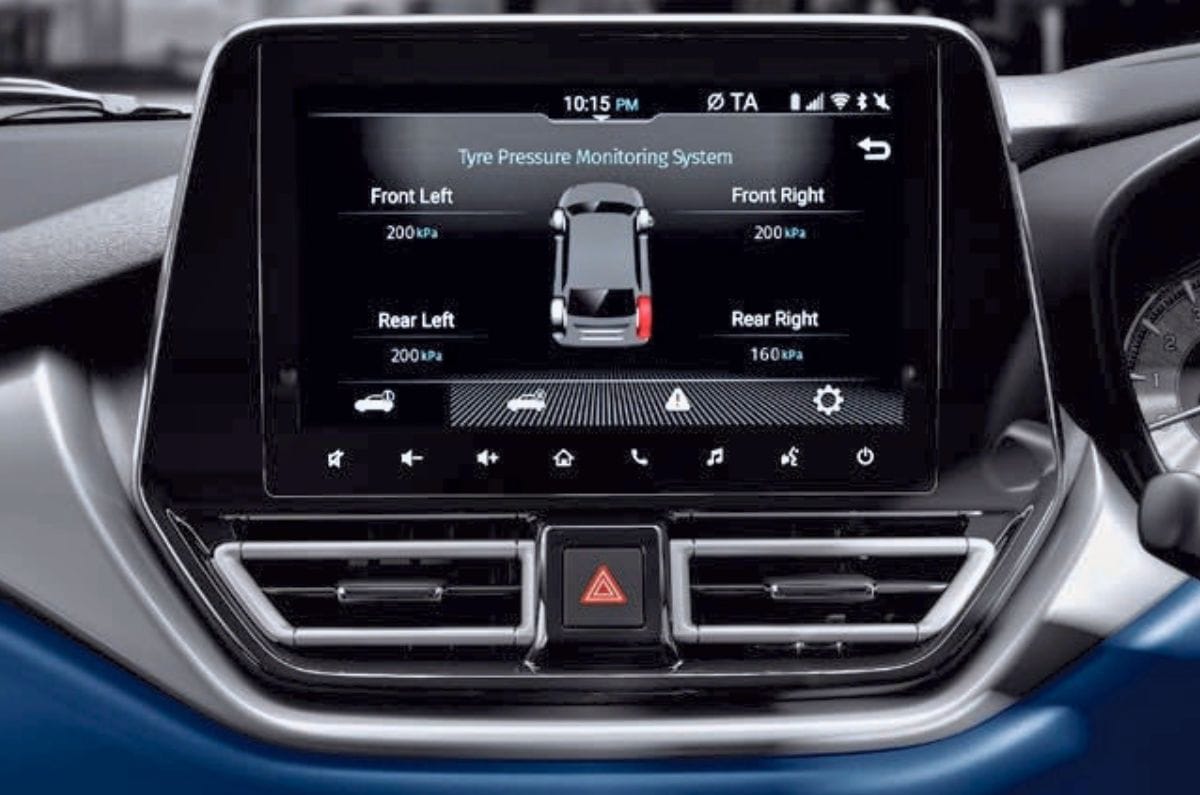
Of the newer features, the ventilated front seats work effectively though the blower is quite audible while the wireless charger charges your phone’s battery at a good rate without overheating it. The TPMS too worked as intended, while the Clarion audio system is better than the outgoing model’s it still falls short of what rivals offer.
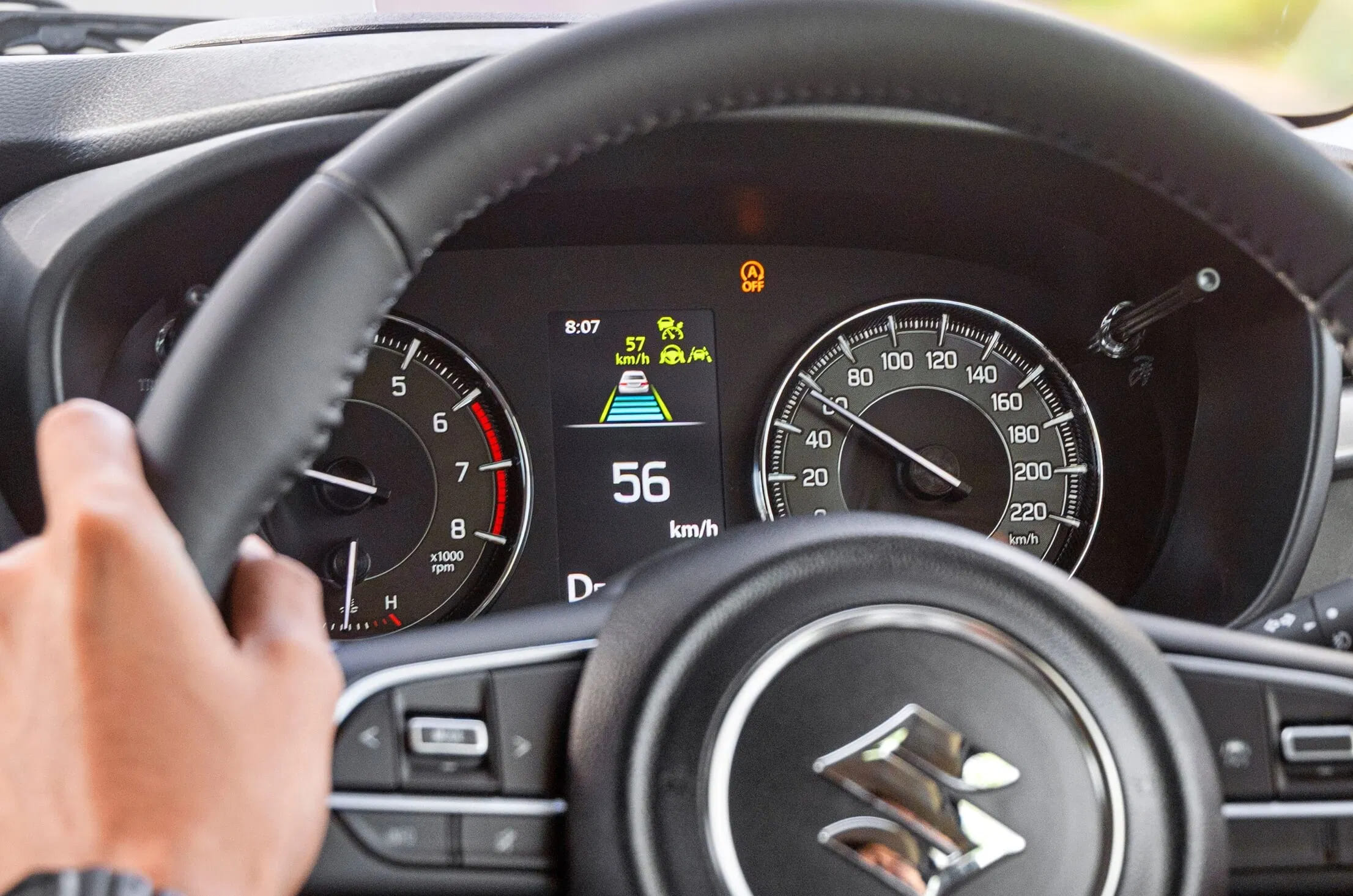
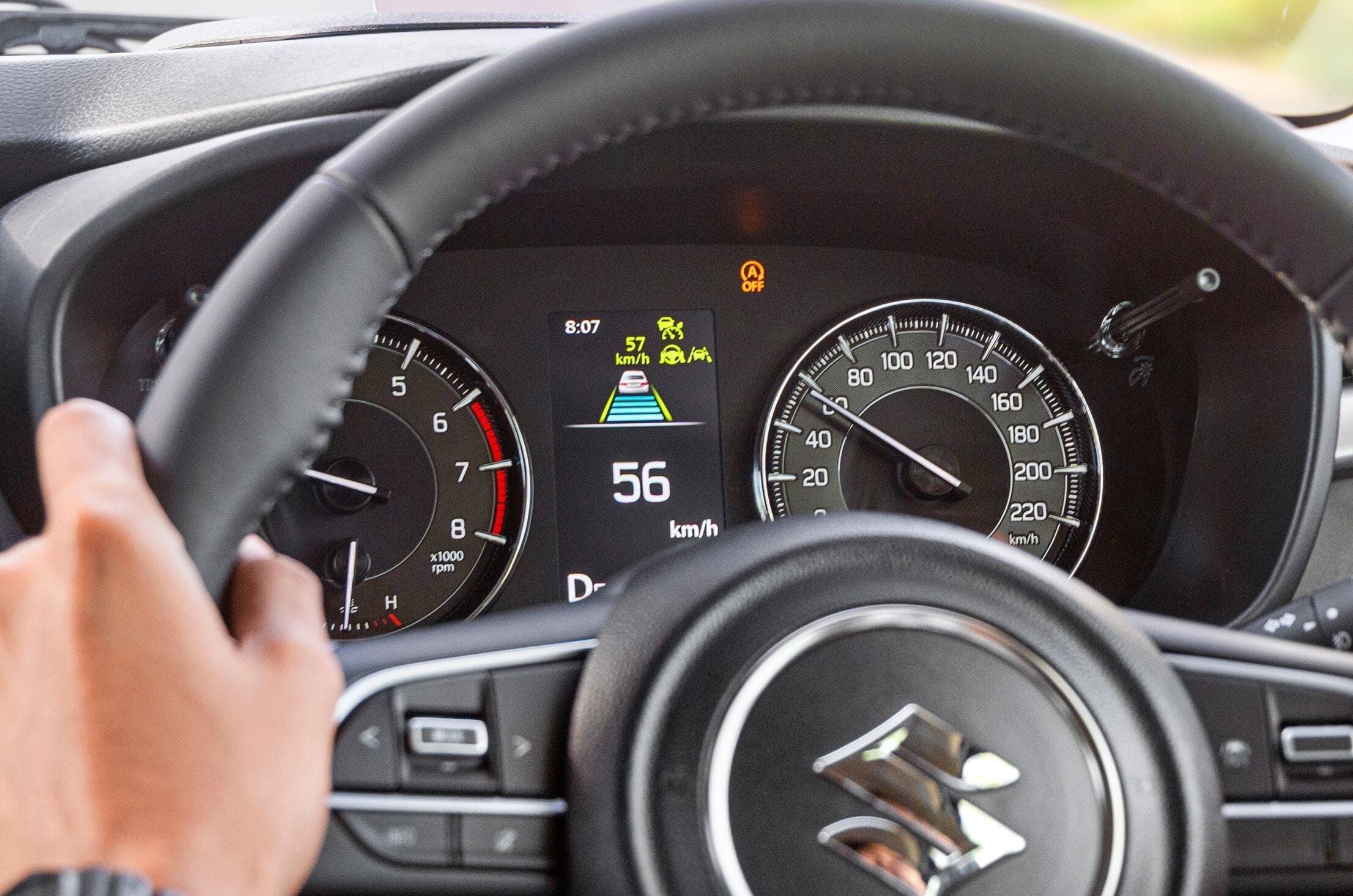
The addition of Level 2 ADAS tech however, greatly boosts the Baleno’s safety quotient. It’s a camera and radar-based system that brings in features like auto emergency braking, adaptive cruise control, lane keep assist, lane departure warning and more. On our brief test drive, the ADAS features worked as intended and seemed well calibrated as they weren’t overly intrusive. However, if you turn off the ADAS features they will automatically switch back on everytime you start the car.
Gets segment-first Level 2 ADAS features which seemed well calibrated for our conditions
As for features then, the Baleno facelift takes a step up and almost has all bases covered. Only things missing are a rear centre armrest and a sunroof, both of which its rivals offer.
Maruti Baleno Performance and Refinement – 8/10
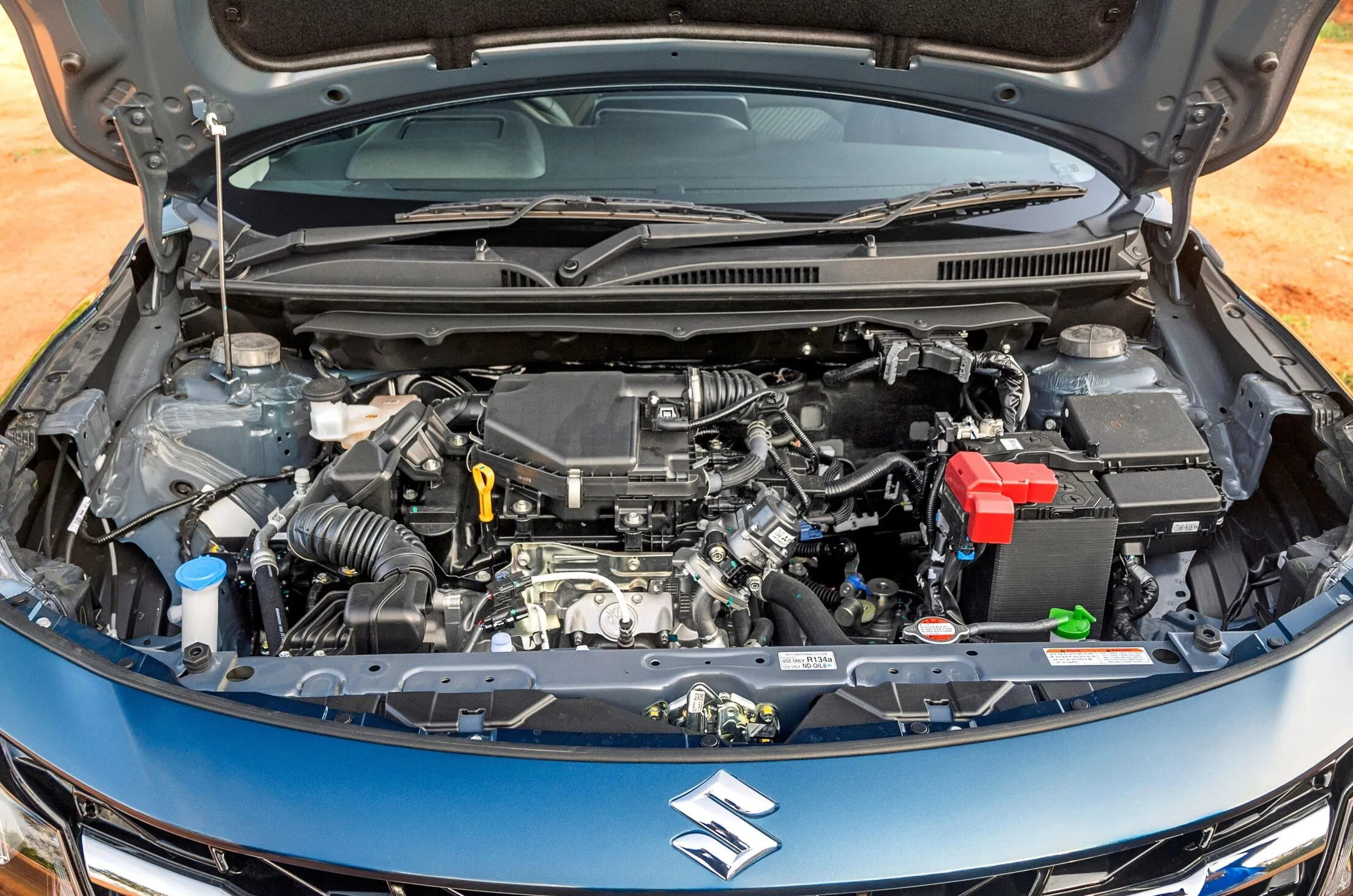
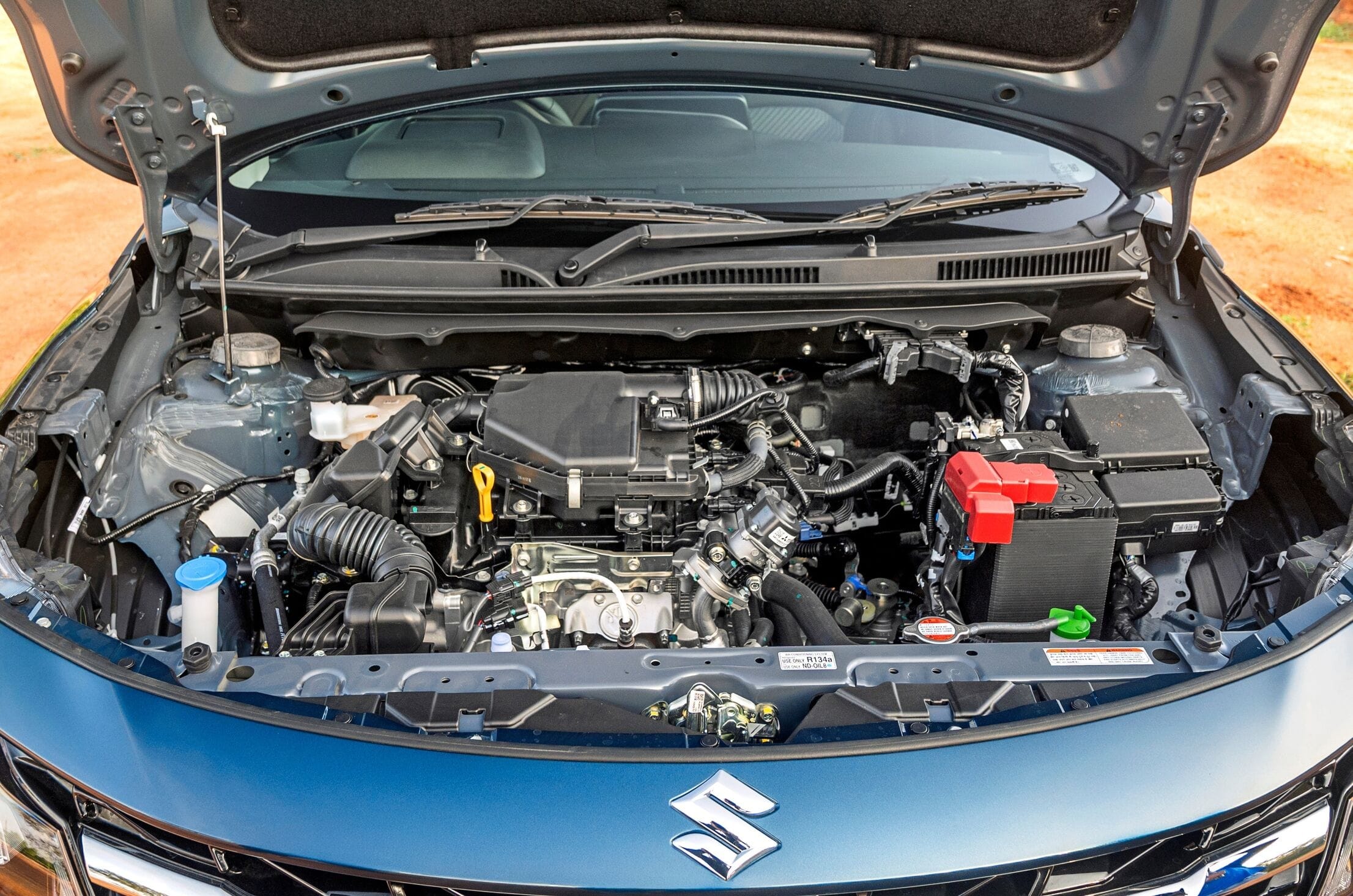
By far the biggest change with the facelift comes under the hood and it’s rare that we get to see a new engine with a facelift. Out goes the 1.2-litre, four-cylinder, K-series engine and in comes the 1.2-litre, three-cylinder, Z-series engine from the likes of the Swift and the Dzire. Yes, the Baleno is down a cylinder and as such, down on output too. The Z12E engine makes 83hp and 112Nm, which is 7hp and 1Nm lower than the older K12N engine. Maruti has moved to this engine as it is newer, is less polluting, more efficient and also opens it up to the possibility of hybridisation in the future.
New Z-series engine impresses with its drivability, low end response and promises more efficiency
This Z-series naturally aspirated engine is one of the most refined three-cylinder engines around. There is some of that typical three-cylinder thrum at idle but that smoothens out as the revs climb. It’s fairly quiet too at idle and it’s only when you’re at the top of the rev range that it becomes audible inside the cabin.
As we’ve experienced in the Swift and Dzire, this Z-series engine impresses with its low-end response and drivability. Power builds in a smooth linear manner, it moves off the line cleanly and part-throttle responses are good too. However, it doesn’t feel as peppy as the older K-series engine and doesn’t feel as strong at the top of the rev range. And considering that it’s down on power and heavier than the outgoing car, it isn’t as quick in terms of outright acceleration. But for a daily urban runabout, this engine is up to the task. For reference, we managed a 0-100kph time of 13.03sec and 15.89sec for the Swift MT and Swift AMT, respectively and you can expect the Baleno to be slightly slower than this owing to its higher kerb weight.
Power builds in a smooth linear manner and part-throttle responses are good, too.
As was the case earlier, the Baleno facelift can be had with either a 5-speed manual or a 5-speed AMT automatic. The manual gearbox is particularly impressive with its effortlessness and our pick of the two. The clutch pedal is light and easy to modulate, while the gearbox is smooth and has nice, short throws and well defined gates.
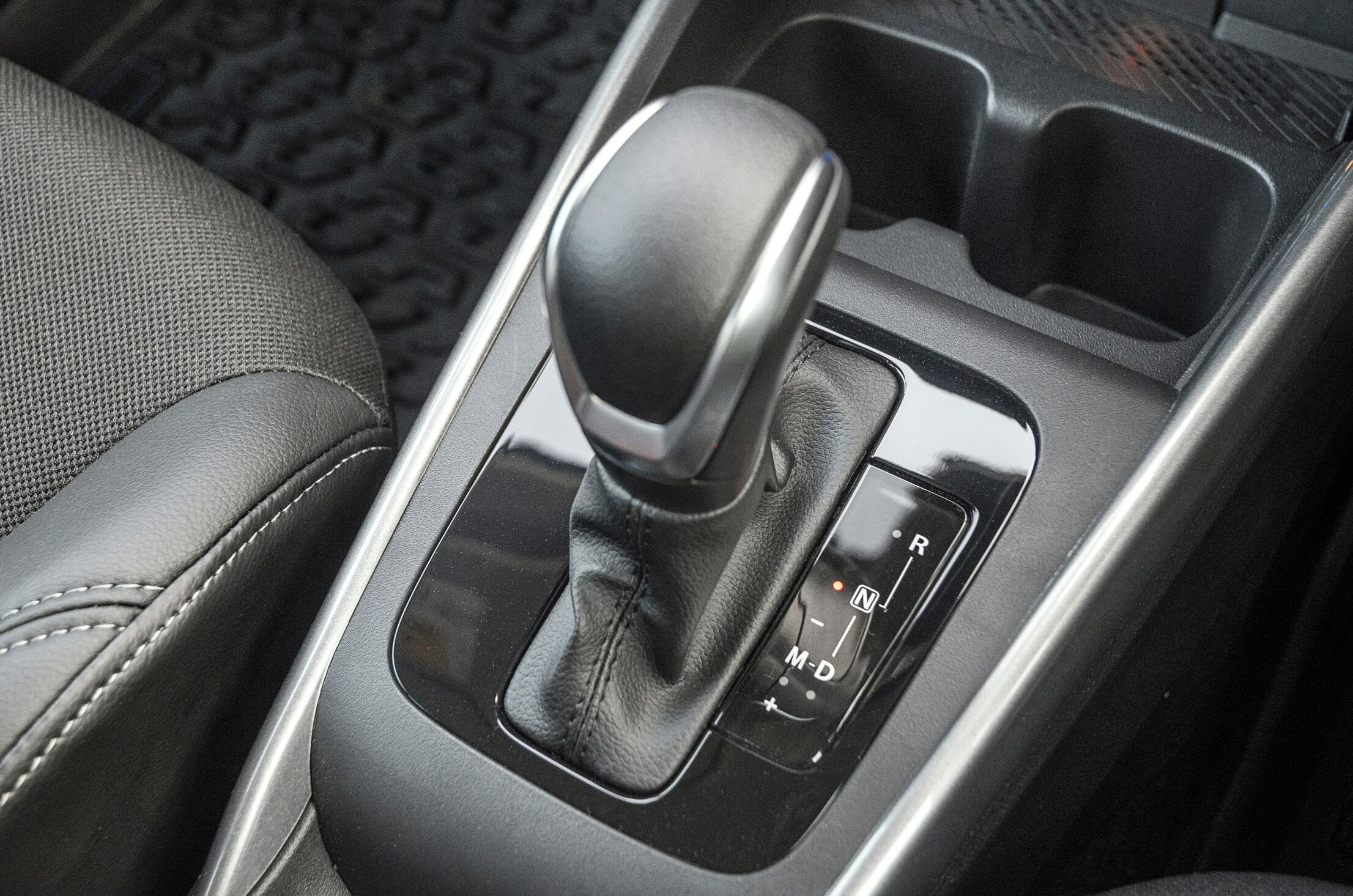
In comparison to its rivals, which offer more sophisticated automatics in the form of a CVT and a DCT, the Baleno only comes with a simpler, more cost-effective AMT. The AMT makes for a good option for those who wish for greater convenience and it’s smooth as far as AMTs go. There is still that noticeable headnod effect that you get between shifts and it is hesitant when you try to make a quick overtake, as it takes some time to downshift. That can be alleviated however, by shifting to manual mode via the gear lever and what’s nice is that it won’t auto upshift in this mode.
AMT adds a layer of convenience but feels hesitant when you try to make a quick overtake
A factory-fitted CNG option is also available with the Baleno facelift. It uses the same engine but power and torque outputs fall to 70hp and 102Nm, respectively, when run on CNG, and it can only be had with the 5-speed manual gearbox. However, we’re yet to experience the Baleno facelift CNG.
Maruti Baleno Mileage and Efficiency – 9/10
Both manual and AMT variants see an improvement in claimed efficiency with the new engine.
The biggest advantage with the move to the Z-series engine comes in the form of fuel efficiency. The Baleno petrol-manual is now claimed to return 23.80kpl (1.45kpl more), while the AMT is said to do 24.77kpl, which is a 1.83kpl improvement. The Baleno CNG meanwhile, sees an improvement of 3km/kg, with a claimed 33.61km/kg. As always, these are claimed figures tested in ideal conditions and expect real-world fuel efficiency to be lower. What’s interesting is that the Baleno has become more efficient despite becoming up to 30kg heavier than the outgoing version.
Maruti Baleno Ride Comfort and Handling – 8/10
As before, the Baleno continues to impress with its ride comfort. The suspension has a softness to it, which means low speed ride is excellent and it’s only the sharpest bumps and big potholes that manage to unsettle it. It also manages to iron out road imperfections with considerable ease and stays composed at higher speeds, with well-contained vertical and side-to-side movements.
Good body control with minimal roll and the steering weighs up nicely as you pick up the pace
Handling isn’t its strongest suit but the Baleno displays good body control with minimal roll around the corners. The steering, meanwhile, is light at low speeds, which aids city driving, but it adds some reassuring weight as you pick up the pace which is confidence-inspiring. It’s not particularly feelsome but that’s nothing to complain about, given its an urban premium hatchback. As for braking, it continues with the same discs up front and drums at the rear setup and the stopping power is more than adequate. On the whole then, the Baleno feels mature and composed on the move.
Maruti Baleno Value for Money – 8/10
The Maruti Baleno facelift is priced from Rs 6.10 lakh (ex-showroom, India), though this is a special festive price and Maruti is yet to disclose complete variant-wise pricing. It continues to get a 3 year/1,00,000km standard warranty and as before, rivals other premium hatchbacks in the Hyundai i20 and Tata Altroz, both of which are priced from Rs 6 lakh (ex-showroom, India).
The added features and the promise of greater fuel efficiency just further enhance the Baleno’s appeal
There are some drawbacks of course, like the hesitant AMT automatic and it doesn’t feel as peppy as the older K-series Baleno. But those pale in comparison to the Baleno’s inherent strengths of a spacious and comfortable cabin, an effortless drive thanks to its light controls, a refined engine and a good ride comfort and handling balance. The added comfort and safety features and the promise of greater fuel efficiency with the new engine just further enhance its appeal. As such, the Baleno is all set to retain its spot at the top of the premium hatchback chain.
The Maruti Suzuki Baleno is not just the bestselling premium hatchback but among India’s bestselling cars. The updated model, then, is a big deal. We tell you all that’s changed and how it all comes together.
Citroen has expanded the powertrain lineup on the Aircross X and Basalt X models, making the turbocharged engine more affordable while also extending the naturally aspirated engine to higher-spec trims of both models. Citroen has also updated the eC3X electric hatchback with some additional range along with introducing new flexible EMI options for all three models. Let’s look at all the updates in closer detail.
Citroen Basalt X, Aircross X powertrain lineup expanded
Until now, both the Aircross X and the Basalt X got the 110hp, 1.2-litre 3-cylinder turbocharged petrol engine from the mid-spec Plus trim onwards. This latest update now makes it available on the base trim, bringing down the price of the turbocharged variant by Rs 1.50 lakh and Rs 1.58 lakh on the Aircross X and the Basalt X respectively.
At the same time, the 82hp, naturally aspirated version of the same engine has now been extended to the top Max trim, offering buyers a more affordable engine option but with all the bells and whistles of the top trim. Notably, the naturally aspirated petrol engine can also be had in CNG-spec on any trim, although Citroen hasn’t revealed exact specifications or prices of the CNG variants.
Aircross X variants
Price (ex-showroom)
Basalt X variants
Price (ex-showromm)
You
Rs 8.89 lakh
You
Rs 8.55 lakh
Turbo You 7-seat
Rs 10.49 lakh
Turbo You
Rs 9.99 lakh
Plus
Rs 9.99 lakh
Plus
Rs 9.99 lakh
Turbo Plus
Rs 11.99 lakh
Turbo Plus
Rs 11.57 lakh
Max 5-seat
Rs 11.62 lakh
Turbo AT Plus
Rs 12.82 lakh
Turbo Max 5-seat
Rs 12.42 lakh
Max
Rs 11.34 lah
Turbo Max 7-seat
Rs 13.35 lakh
Turbo Max
Rs 12.62 lakh
Turbo Max AT 5-seat
Rs 14.14 lakh
Turbo AT Max
Rs 13.89 lakh
Turbo Max AT 7-seat
Rs 14.52 lakh
The base-spec You trim of both models also get a Comfort Edition package. This adds an ambient lighting package, a 10.25-inch touchscreen and beige leatherette upholstery from the higher trims for an additional Rs 20,000.
Citroen eC3 X updated with more range
Alongside the Aircross X and Basalt X’s expanded powertrain lineup, the eC3 X now offers up to 330km of MIDC claimed range, up from 325km. Citroen says this has been achieved by using the energy more effectively, likely through a software update.
eC3 X variant
Price (ex-showroom)
Live
Rs 11.99 lakh
Live (O)
Rs 12.35 lakh
Shine
Rs 13.26 lakh
The eC3 X is now also available under the BaaS program, under which the ex-showroom price starts at Rs 6.99 lakh and Rs 2.26 is charged per km of usage.
New EMI options introduced for all models
To make these new variants more accessible, Citroen is also offering a step-up finance scheme with loan tenures of up to seven years, which lowers EMI outflow in the initial years compared to a regular loan structure. Under this scheme, EMIs start from Rs 9,999 for the BasaltX range and Rs 10,555 for the AircrossX range in the first year. The EMI amounts are applicable for the first year of the step-up finance scheme considering 20 percent down payment.
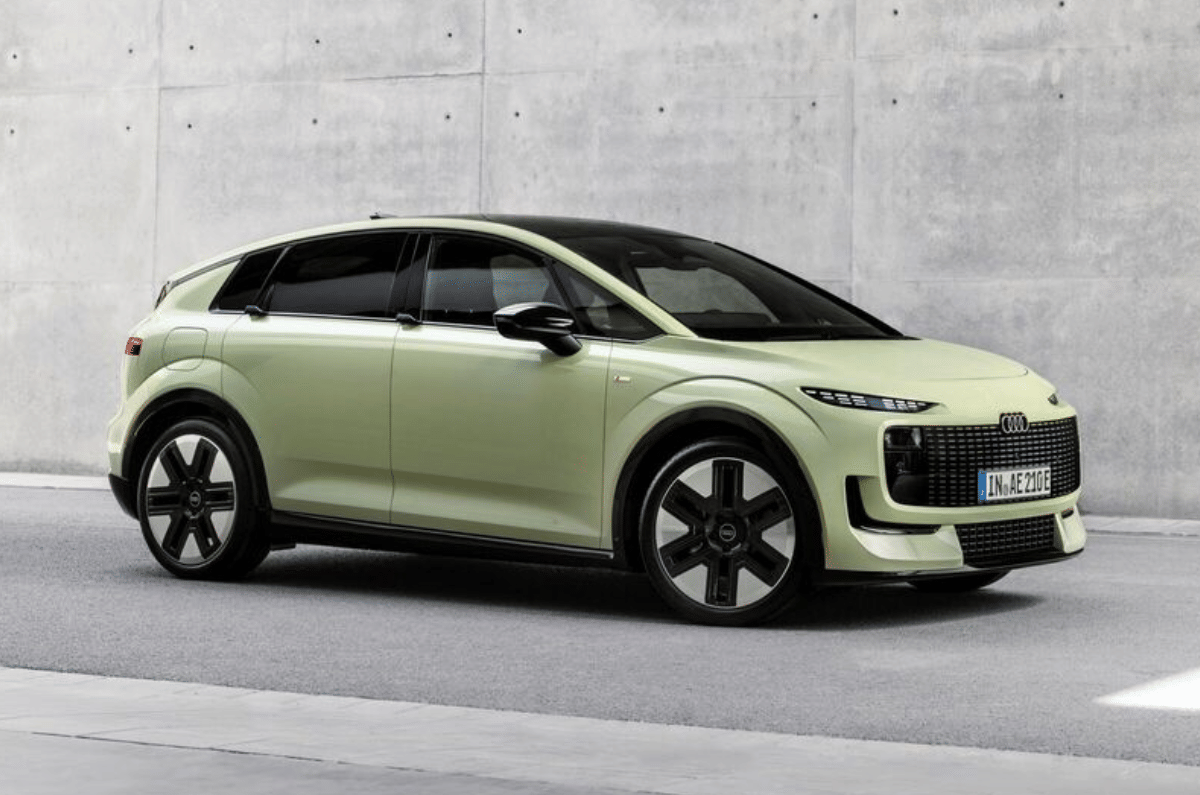
Audi has taken the wraps off the A2 e-tron hatchback, its most efficient production EV yet with a range of up to 646km (according to WLTP cycle). The original, combustion-run Audi A2, sold from 1999 to 2005, was also built to deliver excellent fuel economy, and its EV successor clearly follows the same efficiency-first approach.
The Maruti Baleno facelift has been launched with prices starting at Rs 6.10 lakh (ex-showroom). It is offered in five trims: Sigma, Delta, Zeta, Alpha and Alpha (O), although Maruti is yet to reveal the full variant-wise pricing. The facelifted Baleno gets an updated fascia along with several functional additions. Here’s a look at these new features:
1.2-litre 3-cylinder ‘Z12E’ petrol engine
Gets the same engine as the Swift and Dzire
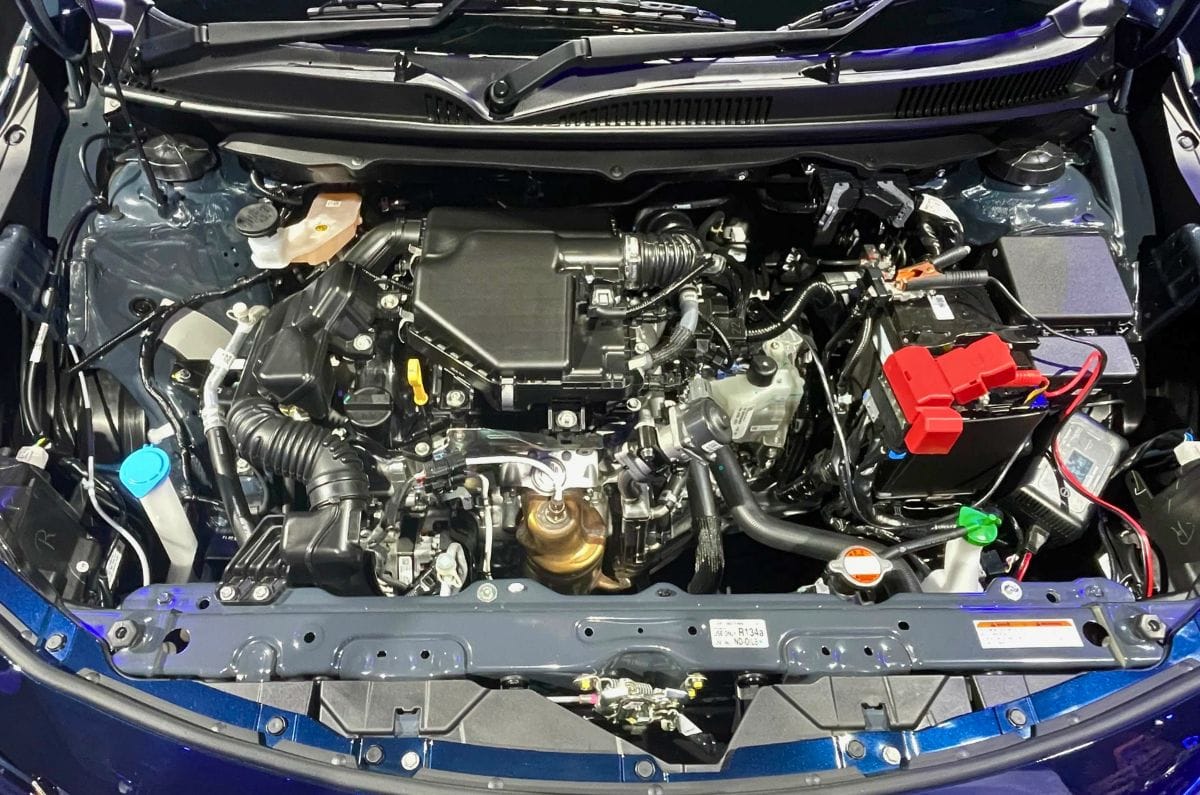
With the facelifted model, Maruti has replaced the older model’s K12N four-cylinder engine with a new Z12E 1.2-litre, three-cylinder naturally aspirated petrol engine producing 83hp and 112Nm. It is paired with either a 5-speed manual or a 5-speed automated manual gearbox (AMT), and is the same engine that powers the Swift and Dzire. While it makes 7hp and 1Nm less than the outgoing engine, fuel efficiency has improved to 23.80kpl with the MT (up by 1.45kpl) and 24.77kpl with the AMT (up by 1.83kpl).
The 1.2-litre engine is also available with CNG in the mid-spec Delta and Zeta trims, only with the manual gearbox. In this guise, it produces 70hp and 102Nm and delivers a claimed 33.61km per kg, which is 3km per kg more than the previous model.
Level 2 ADAS
Third Maruti model to come with an ADAS suite
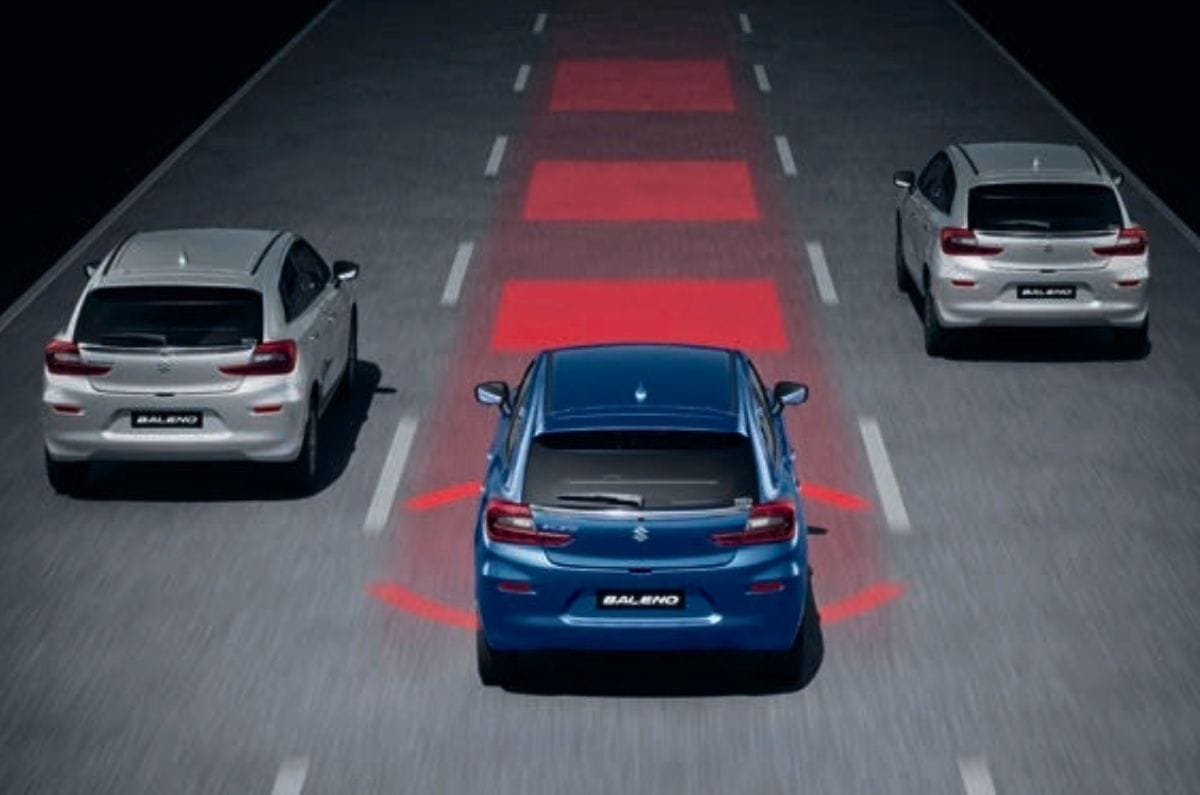
The Maruti Baleno is offered with a Level 2 advanced driver assistance system (ADAS) suite, making it the only car in its segment to offer the technology. The suite includes features such as adaptive cruise control, automatic emergency braking, lane keep assist and high-beam assist. It is available only on the top-spec Alpha (O) trim. With the addition of ADAS, the Baleno becomes the third Maruti model in India to offer the technology, after the Victoris and e Vitara.
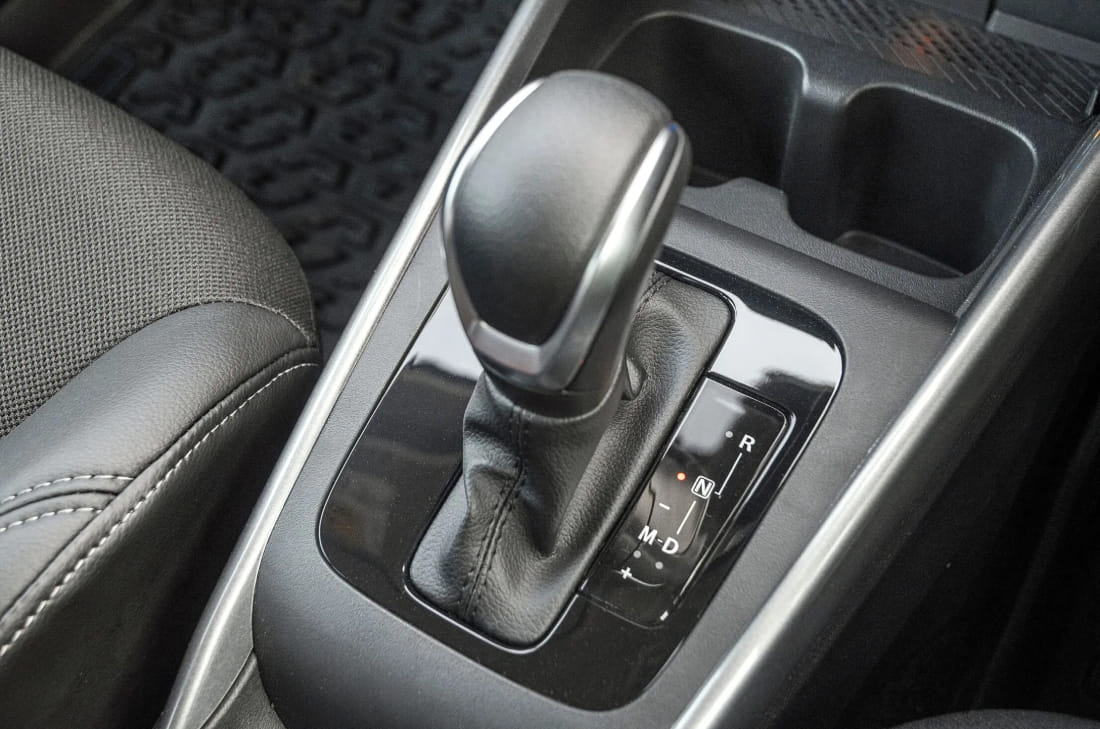
Ventilated front seats
Only car in the segment currently to offer this feature
Ventilated seats have become an important feature in India, particularly given the country’s hot and humid climate. The Maruti Baleno gets them on the higher-spec Alpha and Alpha (O) trims, making it the only car in its segment to offer the feature. The Tata Altroz Racer also offered ventilated seats, but it was discontinued in 2025 and was not carried over to the facelifted Altroz.
Wireless phone charger
Zeta, Alpha and Alpha(O) trims are offered with this feature
The Maruti Baleno facelift is also equipped with a wireless phone charger with a cooling function that helps keep the phone cool while charging. It is offered from the mid-spec Zeta trim onwards.
Clairon sound system
Higher-spec Alpha and Alpha (O) trims get this sound system
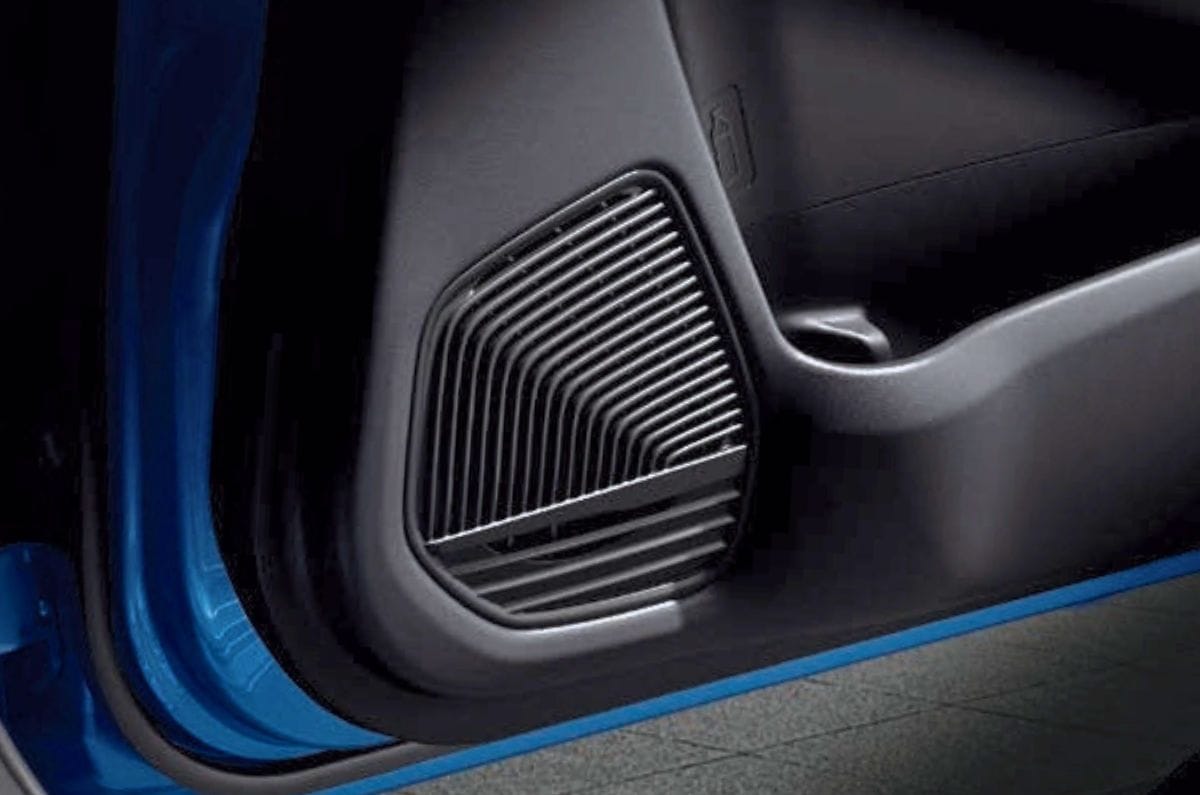
The Maruti Baleno facelift gets a new Clarion sound system with four speakers and two tweeters, offered on the higher-spec Alpha and Alpha (O) trims. The previous model also featured a four-speaker, two-tweeter setup on these trims, but it was not a branded unit.
Tyre pressure monitoring system
Offered with all trims except the base-spec Sigma
A tyre pressure monitoring system (TPMS) has become one of the most crucial safety features in cars today, and the Baleno facelift now gets it as a new addition. However, it is offered only from the Zeta trim onwards, leaving the base Delta without the feature.
As mentioned earlier, Maruti is yet to reveal the full variant-wise pricing of the Baleno facelift, which is expected to be announced soon. Once revealed, the pricing will give a clearer picture of how the facelifted premium hatchback stacks up against rivals such as the Tata Altroz, Hyundai i20 and Toyota Glanza.