
Tata Aeris petrol review: More desirable now?

Tata Aeris petrol review: More desirable now?

The Tata Aeris may be a new name, but its roots lie in the Tigor, which has enjoyed considerable popularity since 2017 for its distinctive styling, practical cabin, comfortable ride and decent powertrains. The Aeris builds on that foundation with a sharper design, a more upmarket cabin and an even more generous equipment list while retaining the same basic mechanical package underneath. Having already driven the iCNG version, we now get behind the wheel of the petrol Aeris to see how it fares as an everyday sedan.

Tata Aeris petrol performance and refinement – 7/10

The petrol engine gives it slightly better cruising capability than the CNG
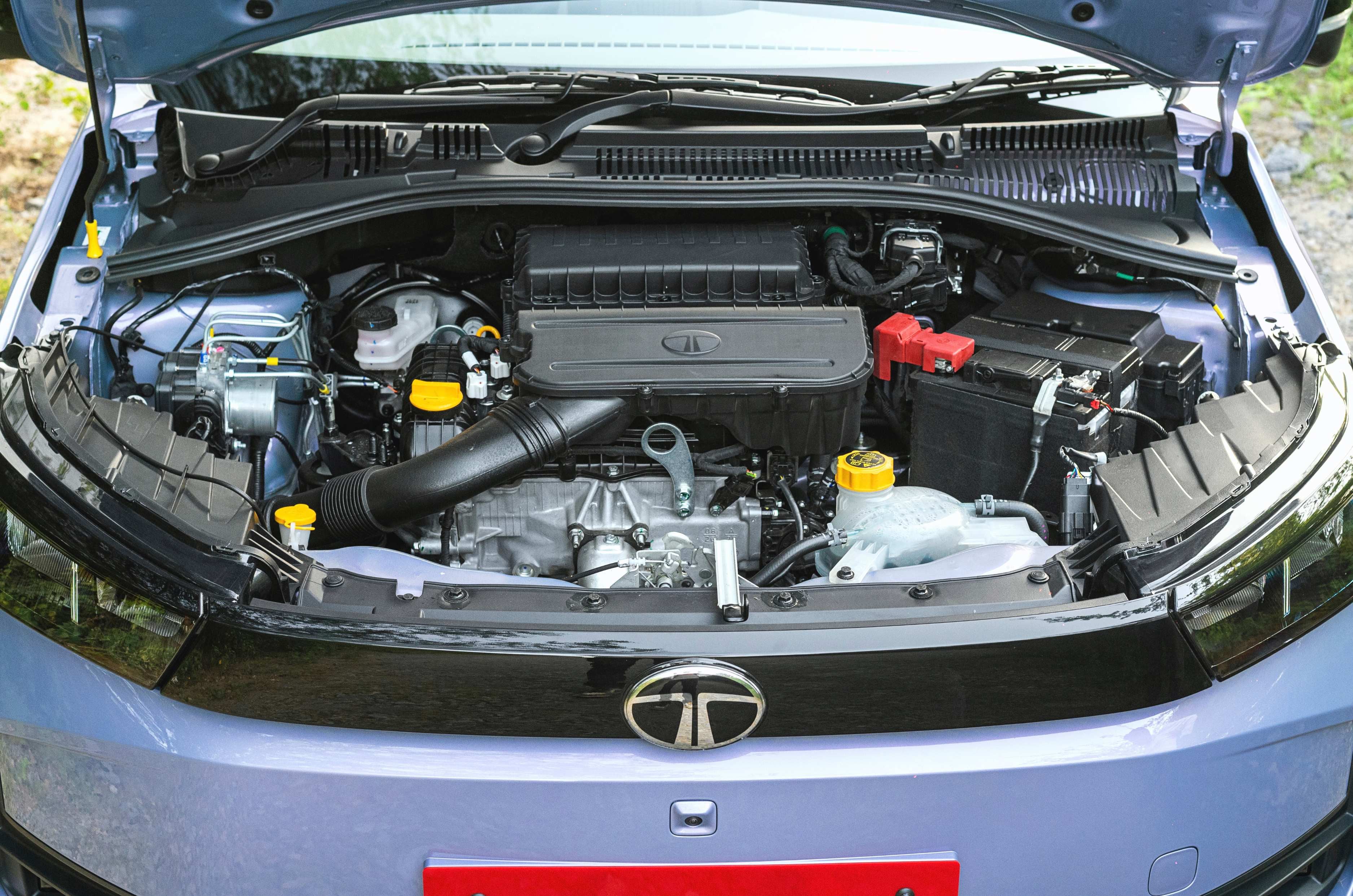
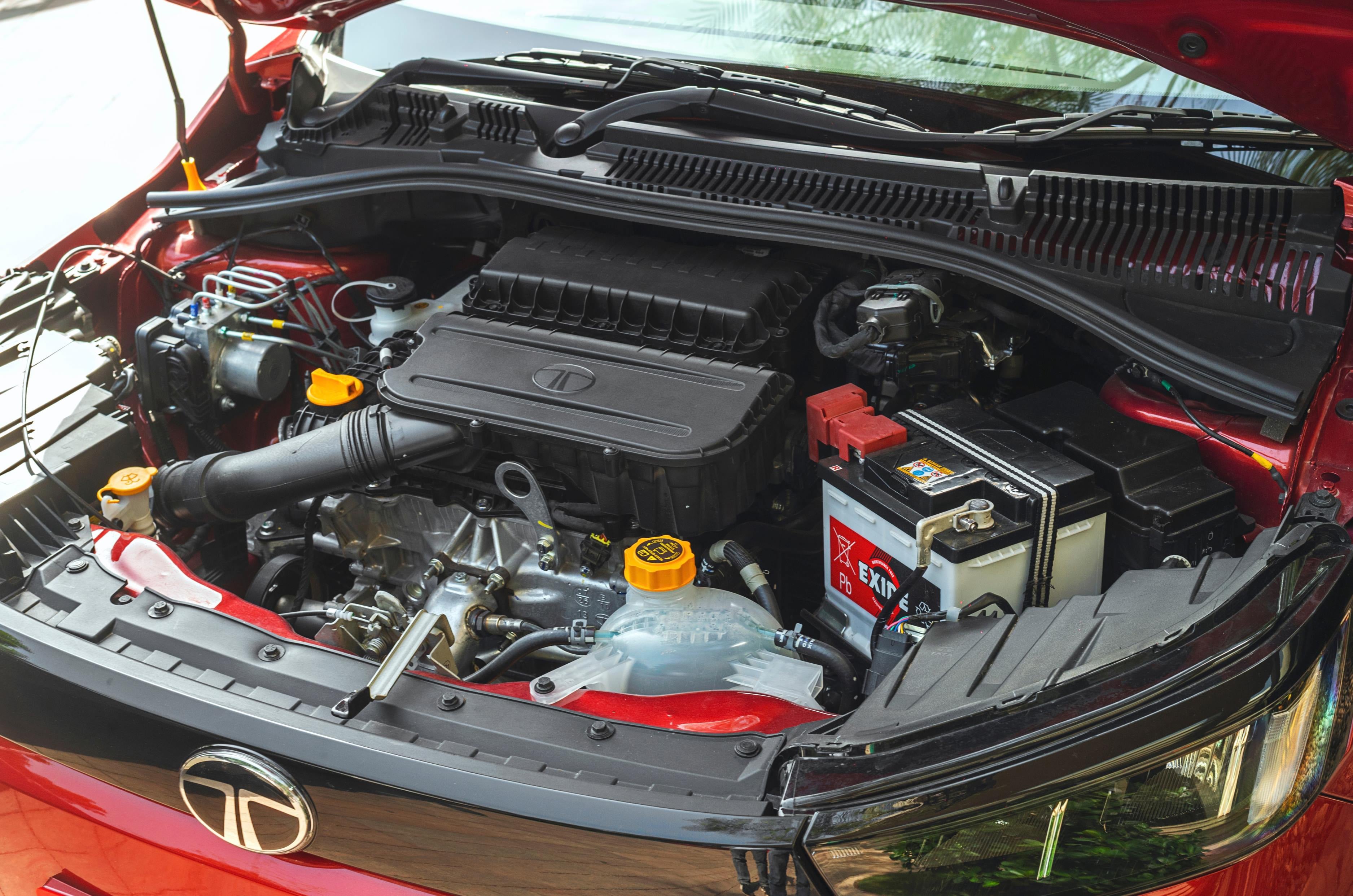
 3-cylinder engine is so-so on refinement and sounds coarse when revved hard

The Tata Aeris comes with a 1.2-litre 3-cylinder naturally aspirated engine that produces 86hp and 113Nm in its petrol guise and is offered with a choice between a 5-speed manual and a 5-speed automated manual transmission (AMT). The three-cylinder engine isn’t the smoothest in the segment, while the sound insulation also has room for improvement. There are noticeable vibrations at idle and low speeds, though these settle down once you’re on the move. However, they make a comeback beyond 2,500rpm, accompanied by a coarse engine note that can get intrusive and tiring on longer high-speed drives.
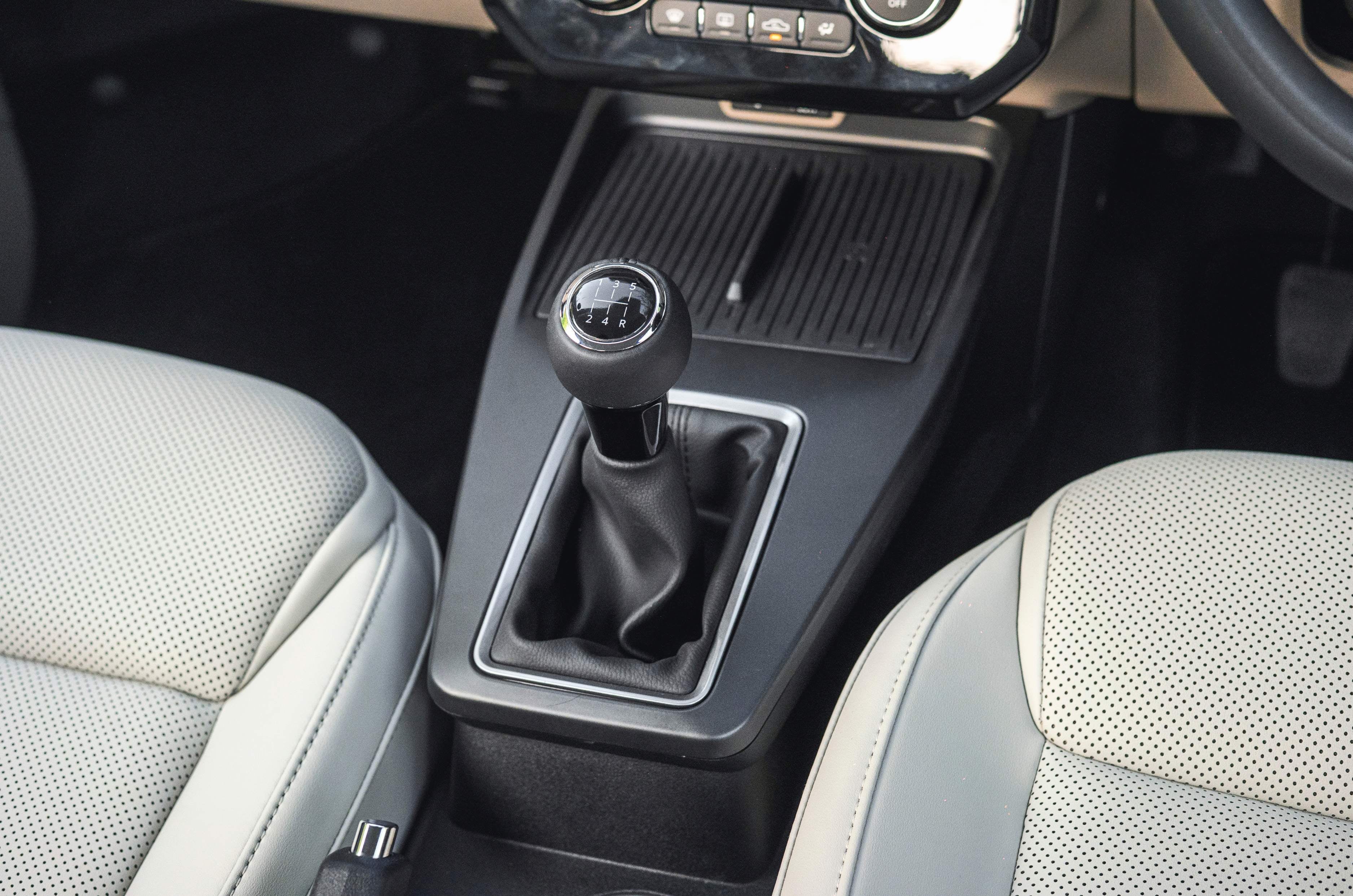
Manual lever looks premium for the price, offering short throws and defined gear gates.

The petrol version’s output figures are 10hp and 16Nm higher than the CNG version, which may look modest on paper, but the difference is discernible out on the road. We drove the petrol-powered Aeris with a 5-speed manual gearbox and noticed it offers short shift throws and well-defined gear gates. While it is not the slickest gearbox compared to its Maruti, Honda and Hyundai rivals, it is still a step up from the Tigor’s in terms of smoothness. 
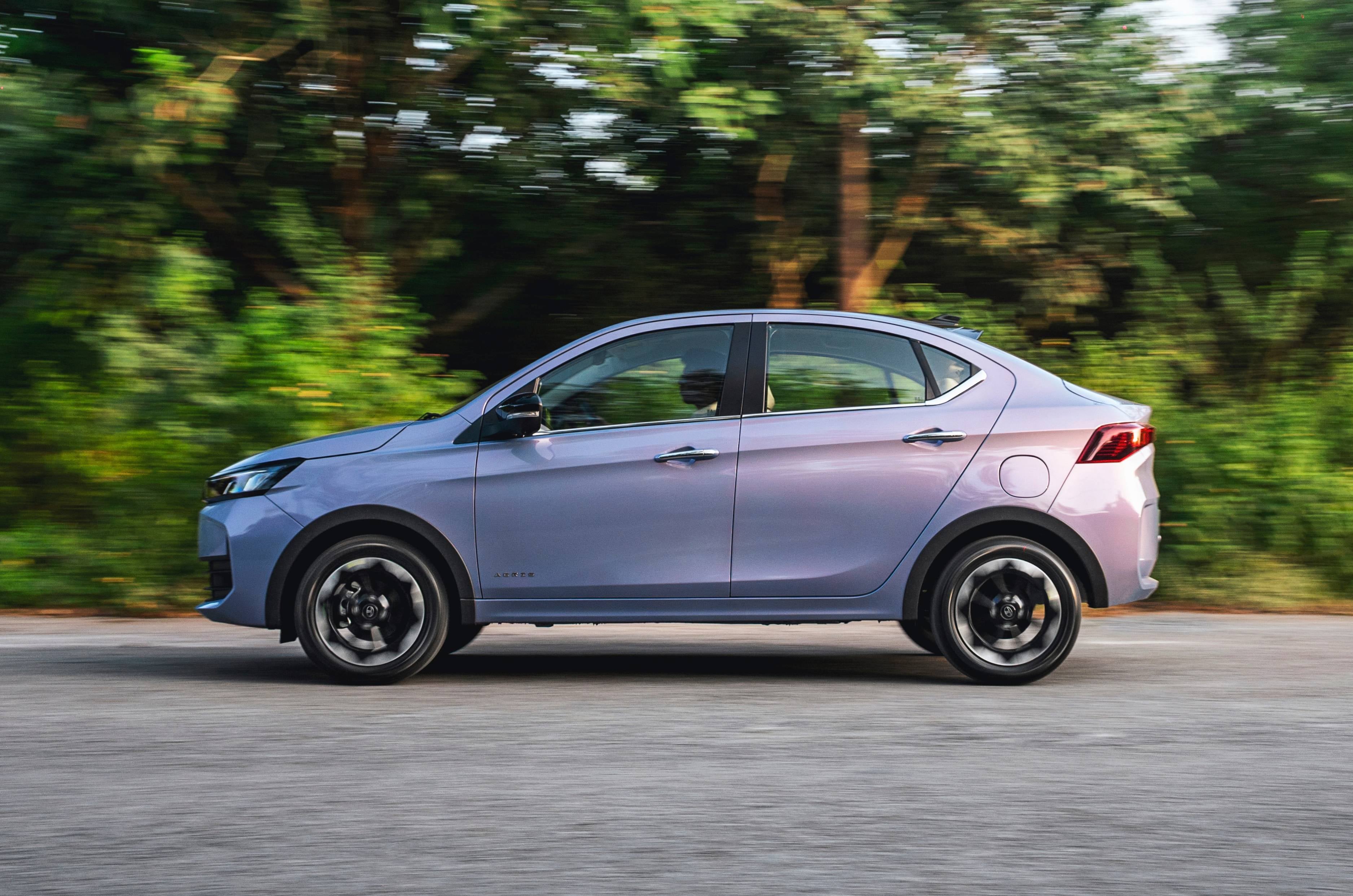
Aeris’ petrol version feels adequate for the city and is fine for gentle highway cruises too.

The performance in city speeds is adequate, and the powertrain is peppy enough for everyday driving. The clutch is light and has a predictable bite point, meaning you do not strain your left foot even in bumper-to-bumper traffic. There’s a dead pedal too, but it feels narrower than what we would have liked. 

It is fairly quick to reach 80kph, but takes some time to reach triple-digit speeds. However, the petrol-powered Aeris maintains these speeds with relative ease, which makes it a decent highway cruiser. Unlike the CNG, the Aeris petrol does not feel out of breath when overtaking, and as long as you are in the right gear, it maintains good momentum.
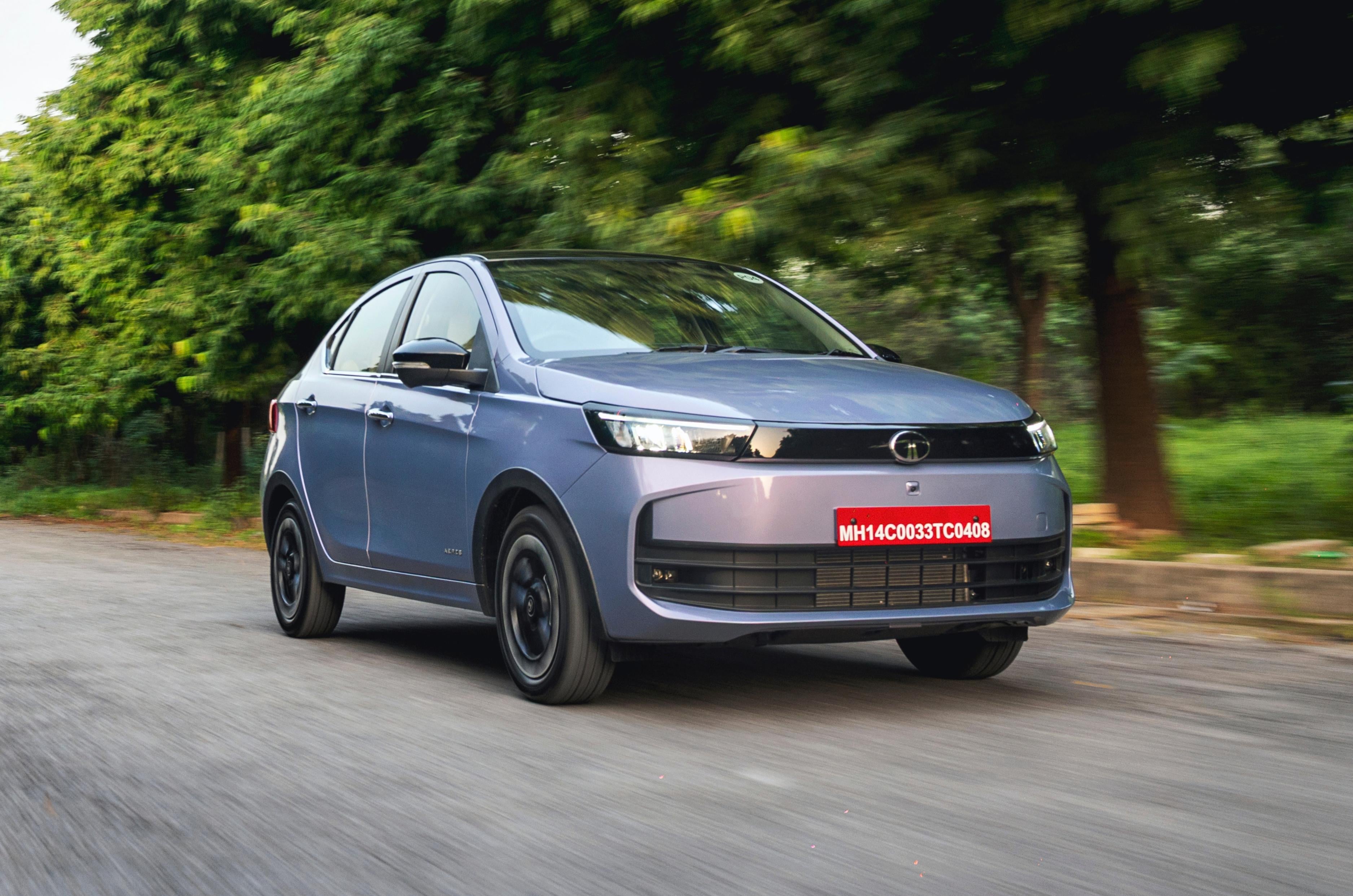
AMT adds convenience for city drives but doesn’t like being rushed; the manual gearbox is easy to use.

We got a taste of the AMT during our earlier stint with the Aeris iCNG, when we switched to petrol mode, and found that the gearbox offered reasonable acceleration with measured inputs. Push the accelerator aggressively, though, and the typical AMT hesitation became evident, meaning overtakes need to be planned well. The AMT also gets a creep function, which comes in handy in bumper-to-bumper traffic. 

All of this makes the AMT a good option for city driving, but for high-speed highway cruising, we recommend the manual gearbox, which offers greater control and a more engaging experience. That said, opting for the manual in the city is not a compromise either.

Tata Aeris petrol ride comfort and handling – 8/10

It allows for a confident drive at both low and high speeds

Like other Tata offerings, ride quality is one area where the Aeris excels. It takes broken roads in its stride, with the suspension absorbing rough patches well and keeping most surface irregularities from filtering into the cabin. The 170mm ground clearance is also adequate for tackling large speed breakers without much concern. That said, the CNG version has an edge in this department, thanks to its 14-inch steel wheels with taller sidewalls, which offer a more cushioned ride than the 15-inch alloys on the top-spec petrol version. Notably, lower Aeris trims get 14-inch wheels.
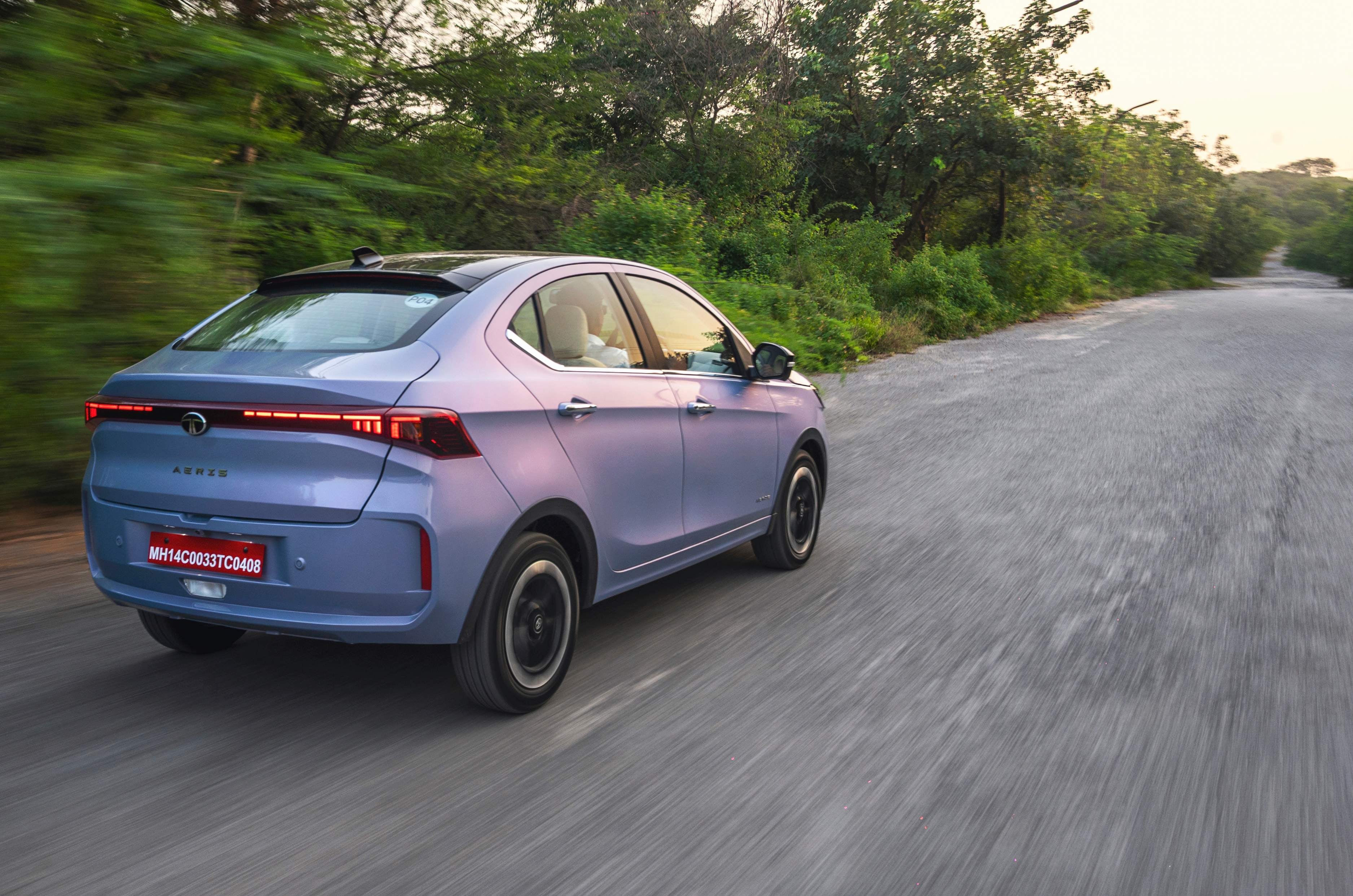
Well-tuned suspension keeps the Aeris comfortable and confident on all roads.

At high speed too, the suspension stiffens enough to keep the Aeris composed through quick lane changes, without feeling floaty. On the highways, it remains stable and inspires confidence at higher speeds. The steering, however, could do with more precision, as it feels slightly vague around the centre. While it weighs up nicely as speeds rise, a sharper response around the centre would have further enhanced the Aeris’ high-speed confidence.

Tata Aeris petrol mileage and efficiency

We expect the Aeris petrol to have similar fuel efficiency as the Tiago

Tata has yet to reveal the official fuel-efficiency figures for the petrol-powered Aeris. But it gets the same powertrain as the pre-facelift Tiago we tested in 2022. In that test, it returned 13.30kpl in the city and 16.60kpl on the highway. The Aeris could have similar fuel efficiency. However, we will be able to give you a more definitive assessment once we put the Aeris through our standard fuel-efficiency tests.

Tata Aeris petrol exterior design and engineering – 8/10

Has a sleeker and more modern exterior design and comes with LED lights all around 
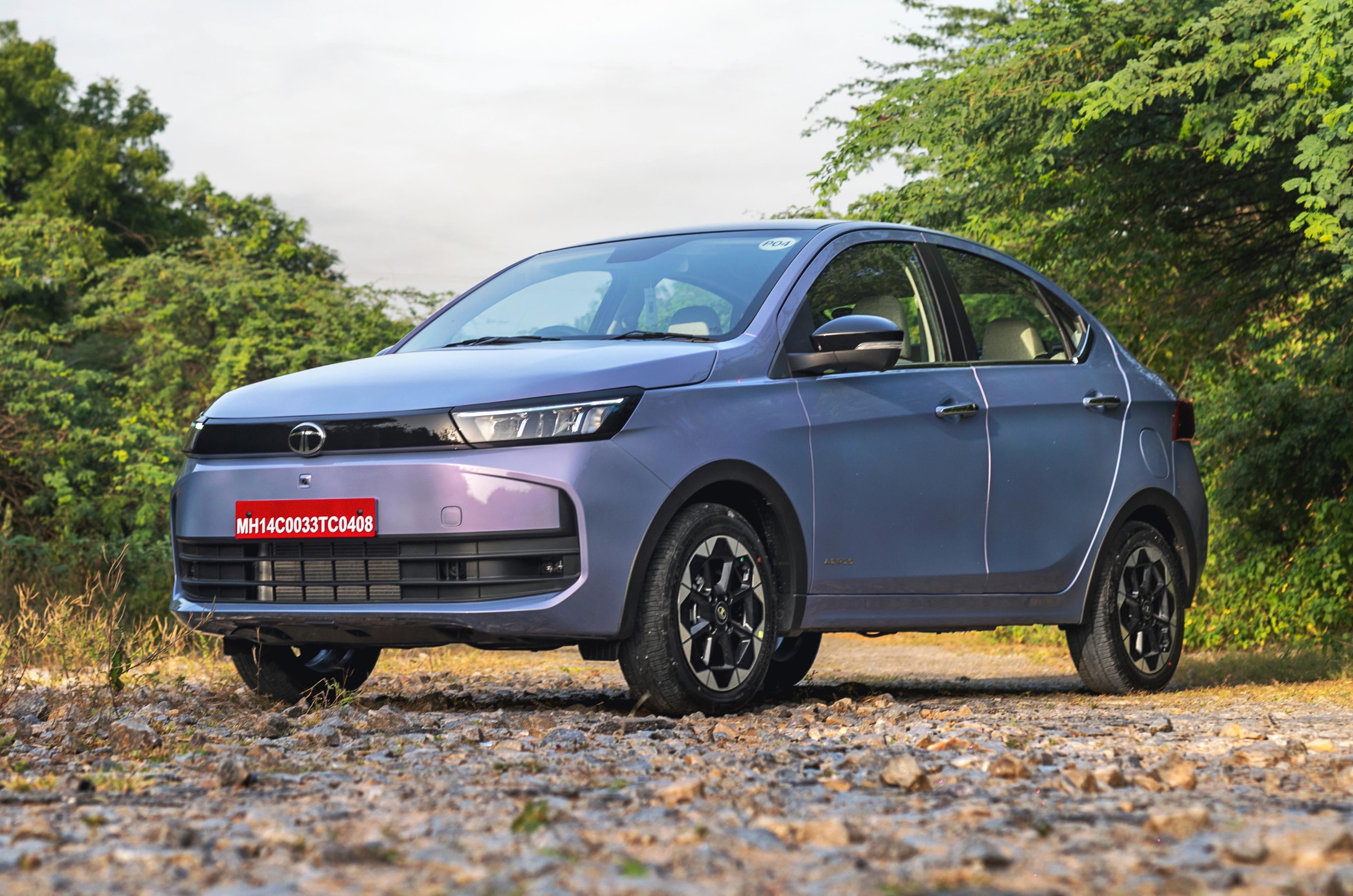
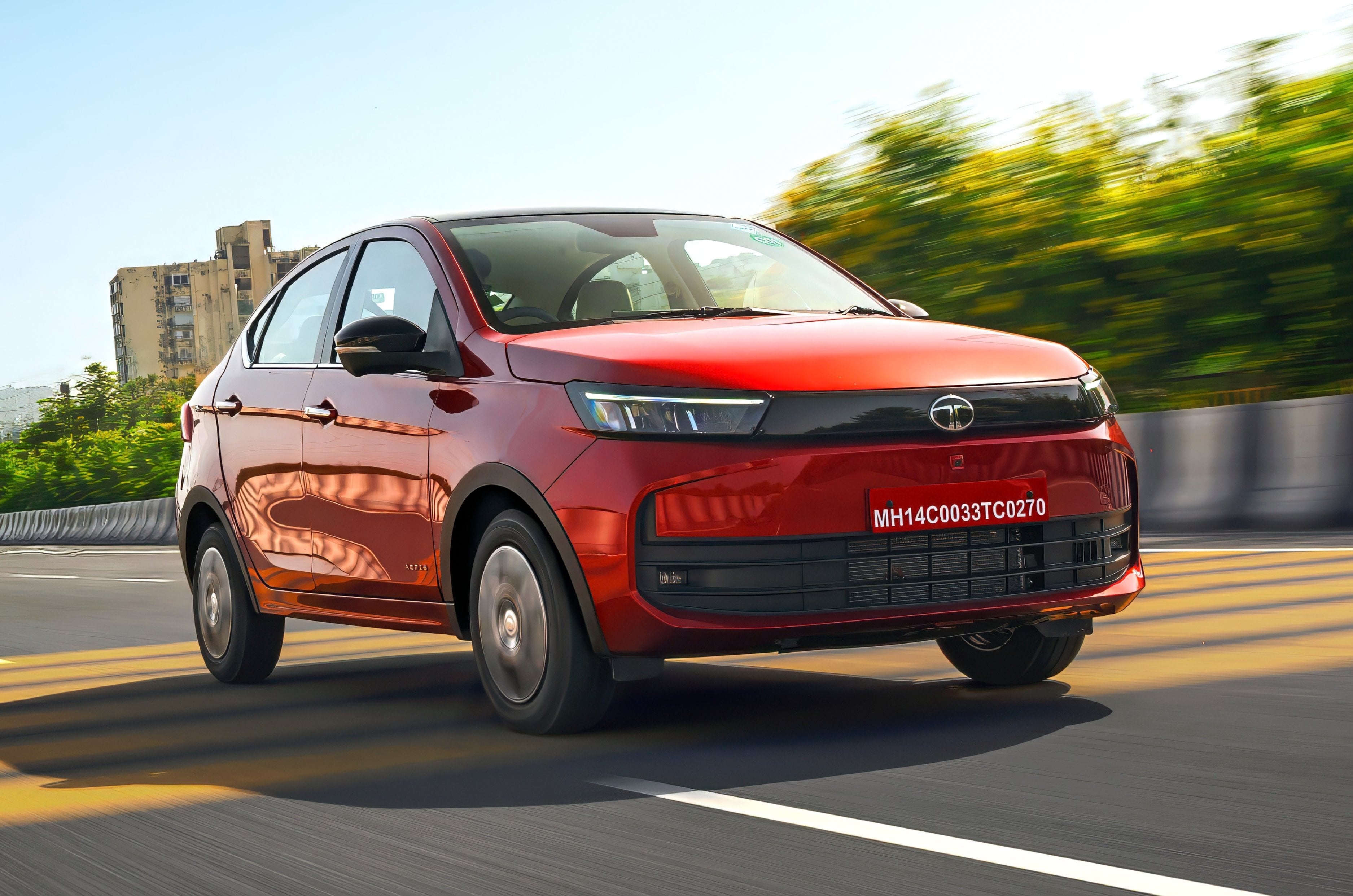
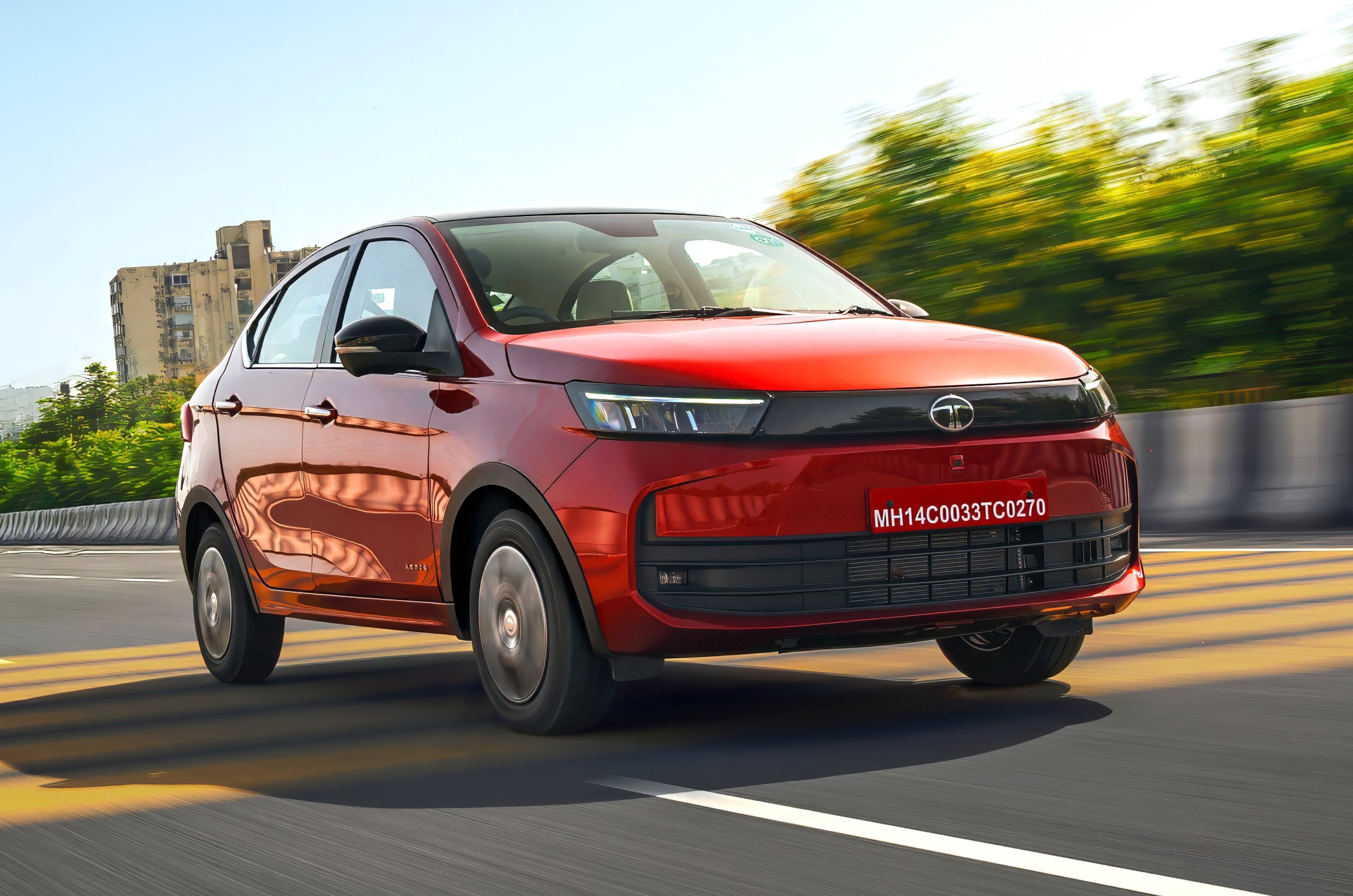
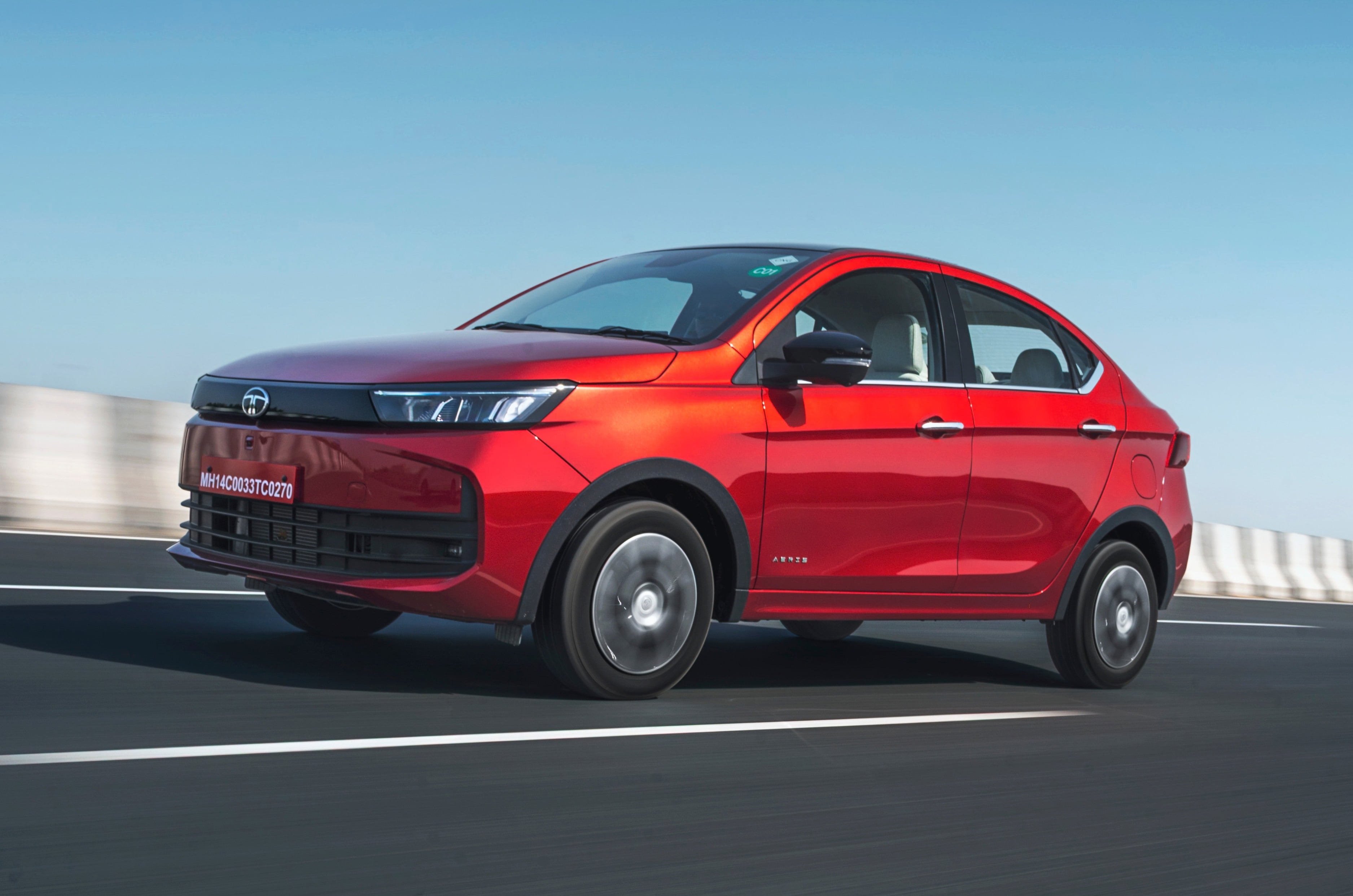
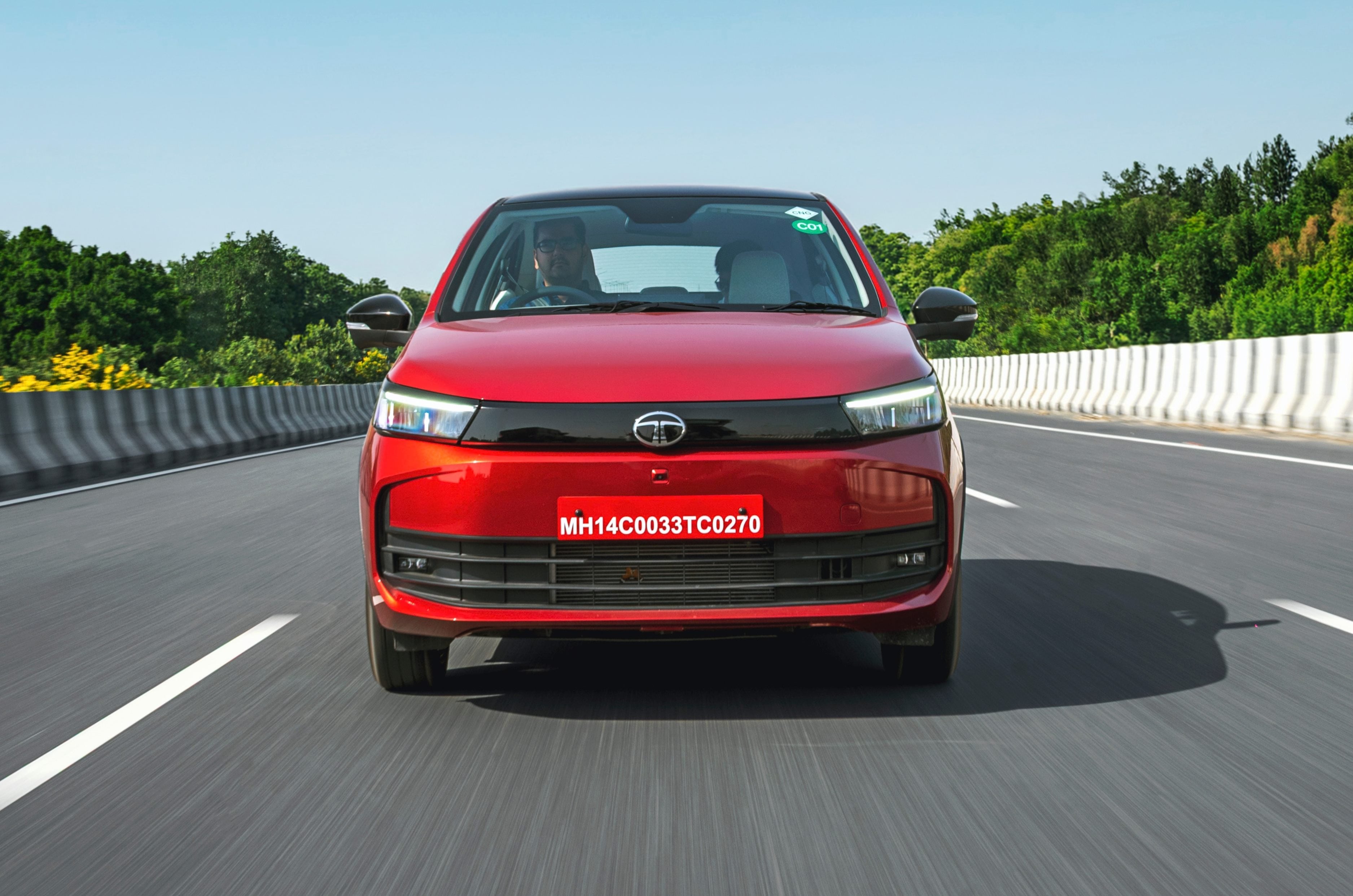
Save for the new bumper, the fascia is similar to the Tiago’s and looks very modern.

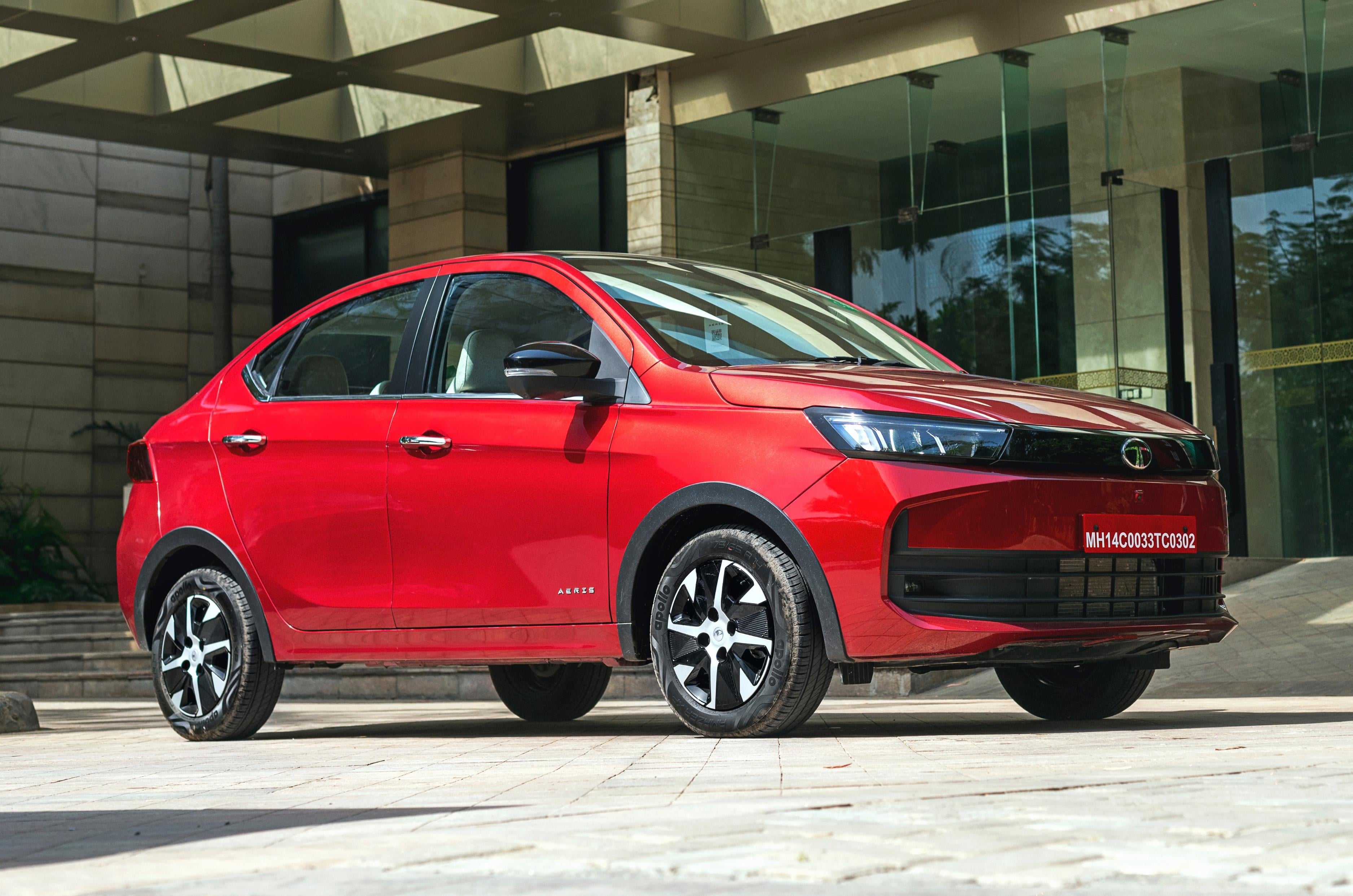
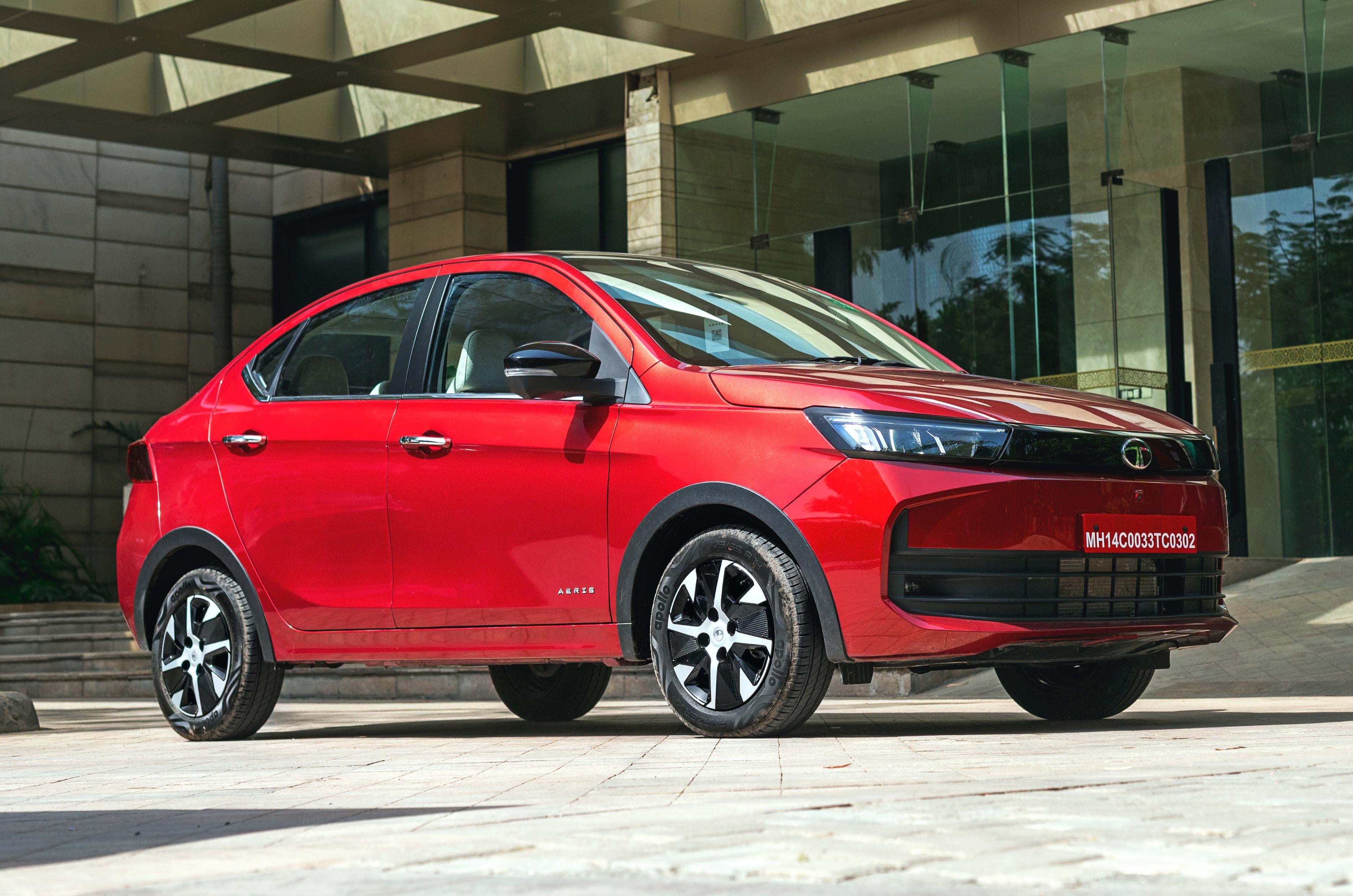
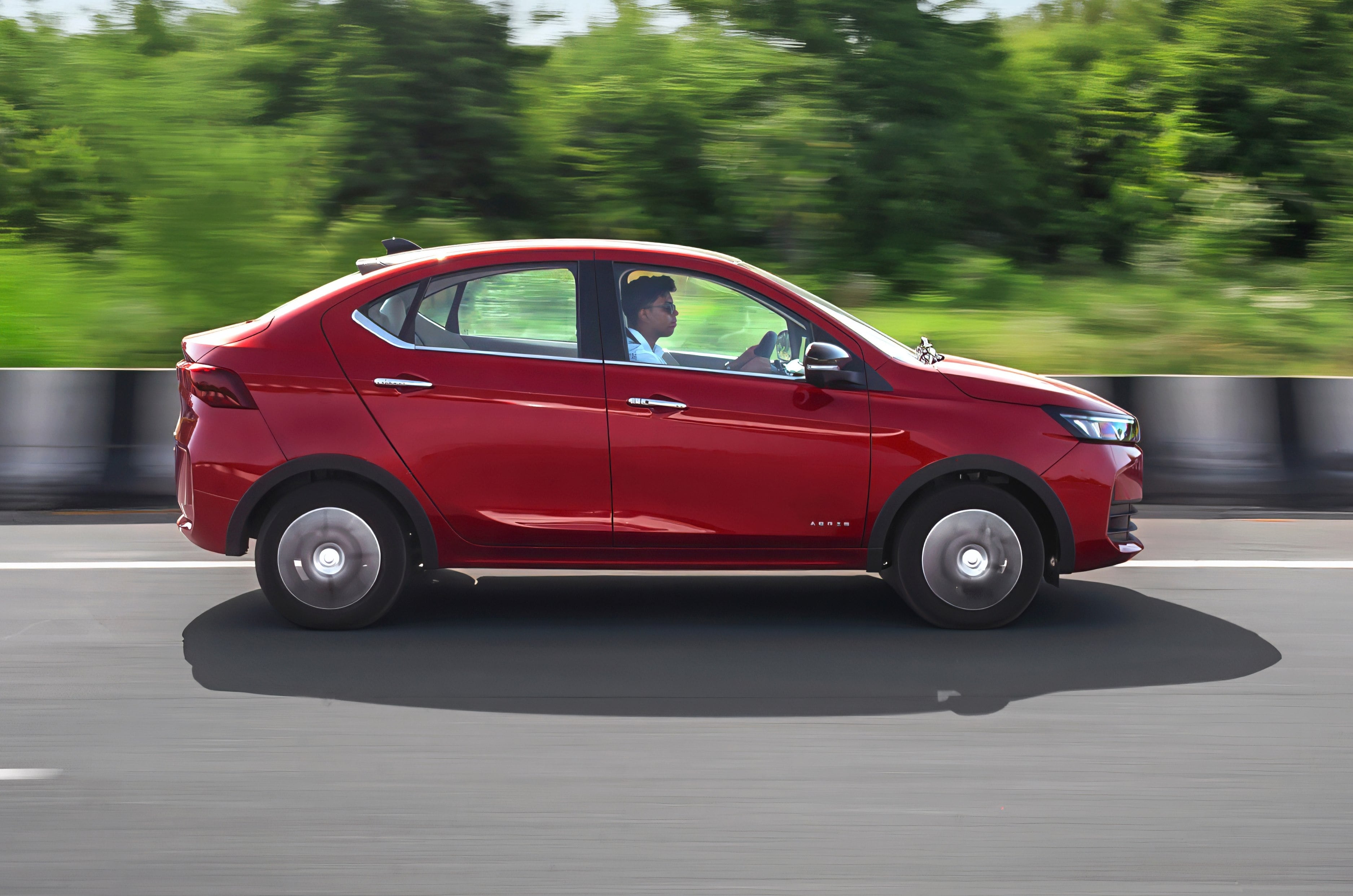
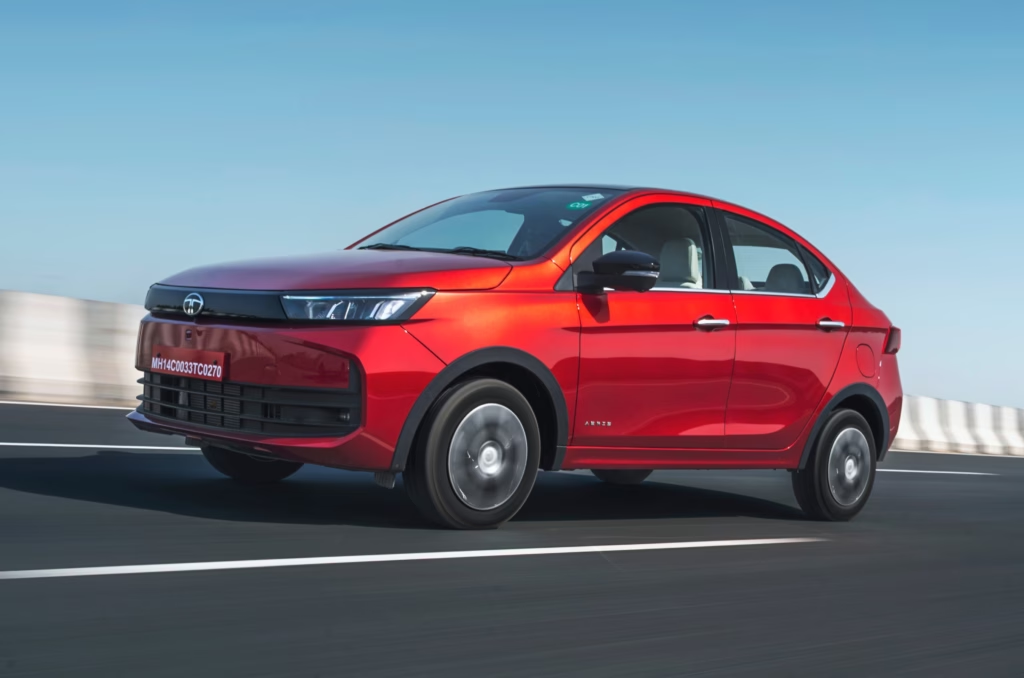
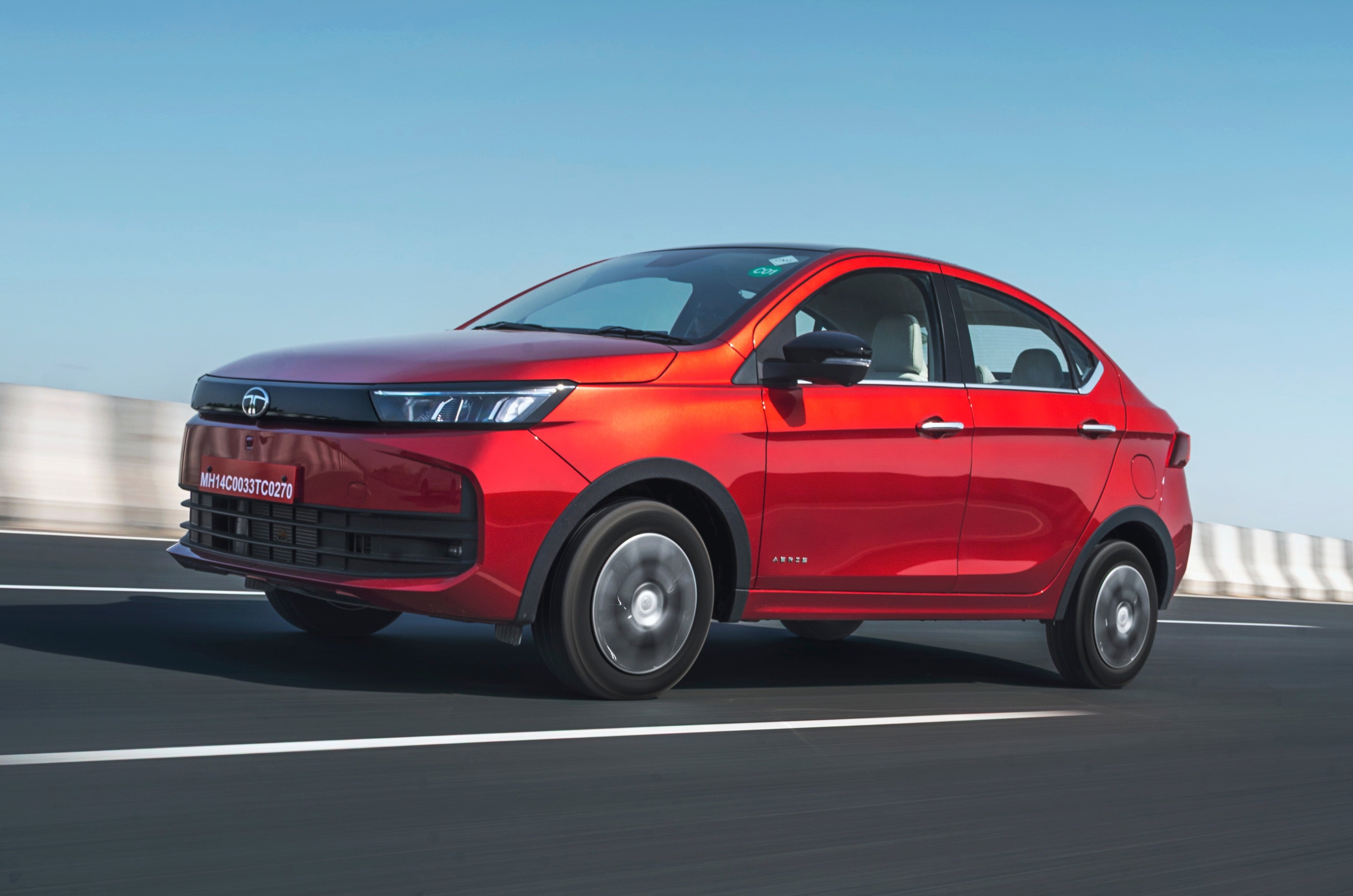
The Tata Aeris looks sleeker than before, with its design now closely aligned with the Tiago hatchback, something we have seen previously with the Tigor. Another factor that could work in the Aeris’ favour is Tata’s decision to offer it exclusively to private buyers, while retaining the Xpres, the fleet version of the Tigor, for commercial customers. This should help the Aeris steer clear of the ‘taxi’ tag often associated with rival compact sedans. 
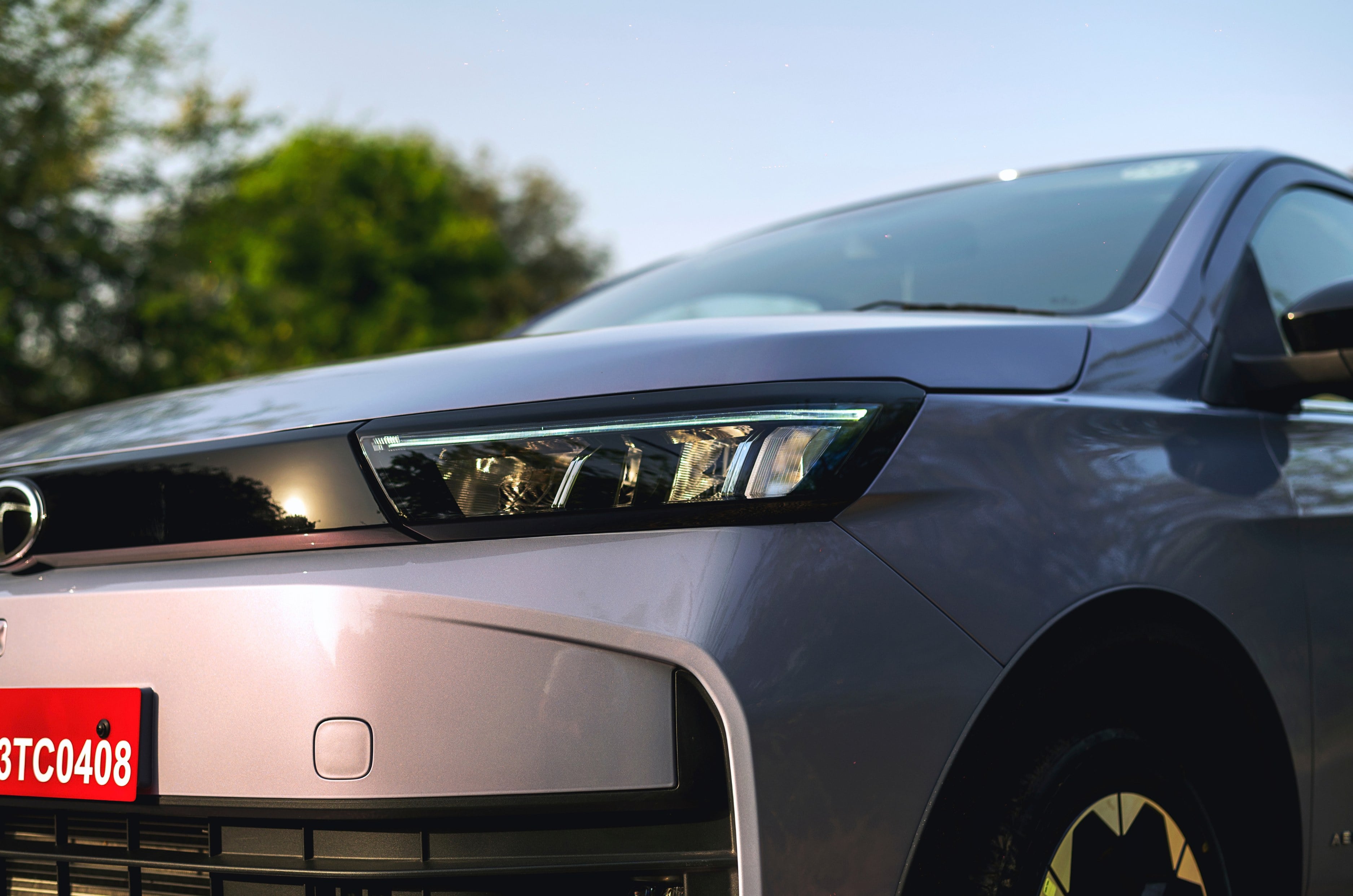
LED headlights with LED DRLs, which are connected by a black trim, make it look sleeker.

Up front, the new clamshell bonnet leads into slim LED headlights with thin LED DRL strips integrated into them. The headlights are connected by a gloss-black trim. The front bumper is also new, featuring wider air intakes and LED fog lamps, a welcome upgrade over the Tigor’s halogen units.
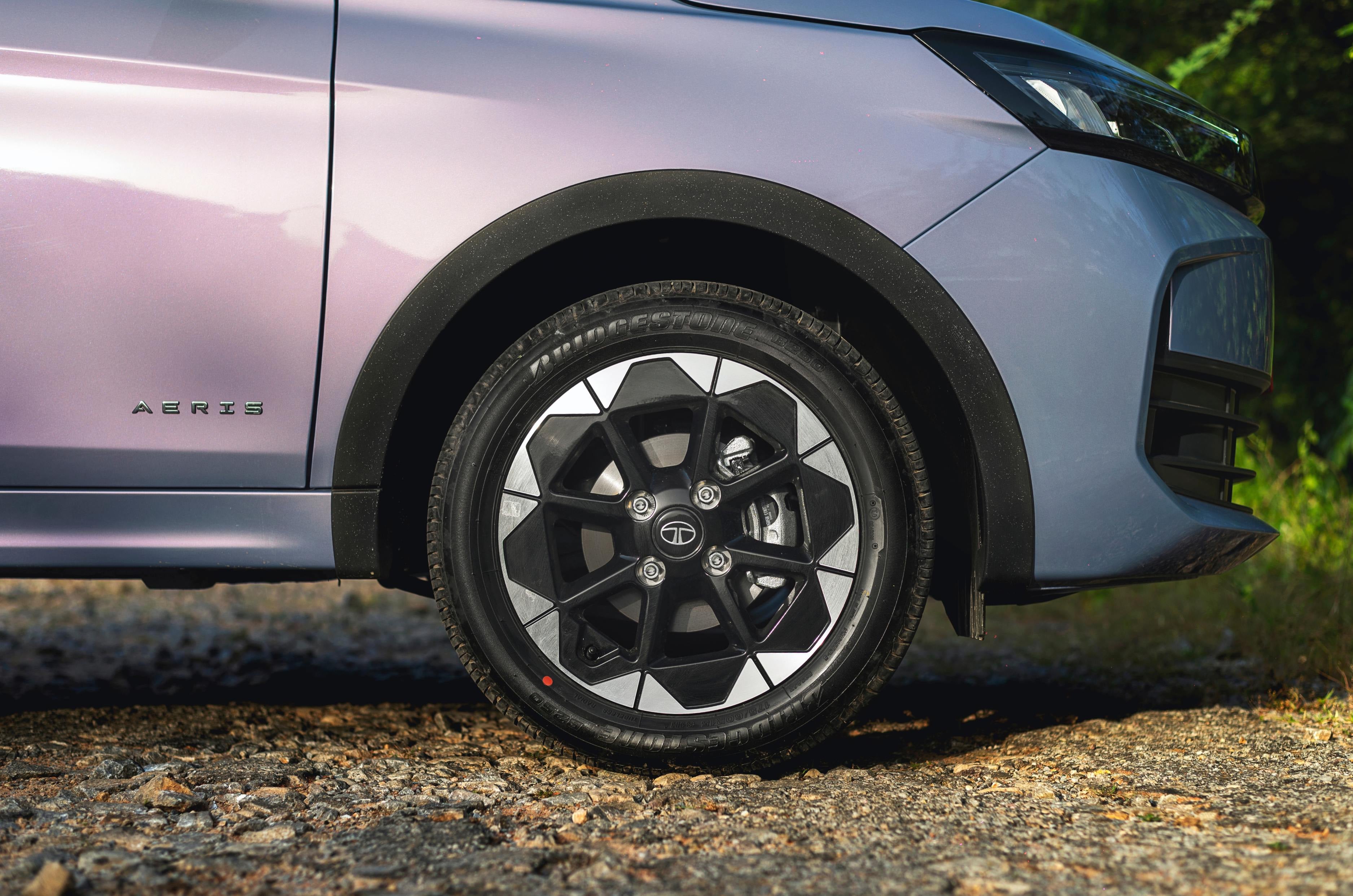
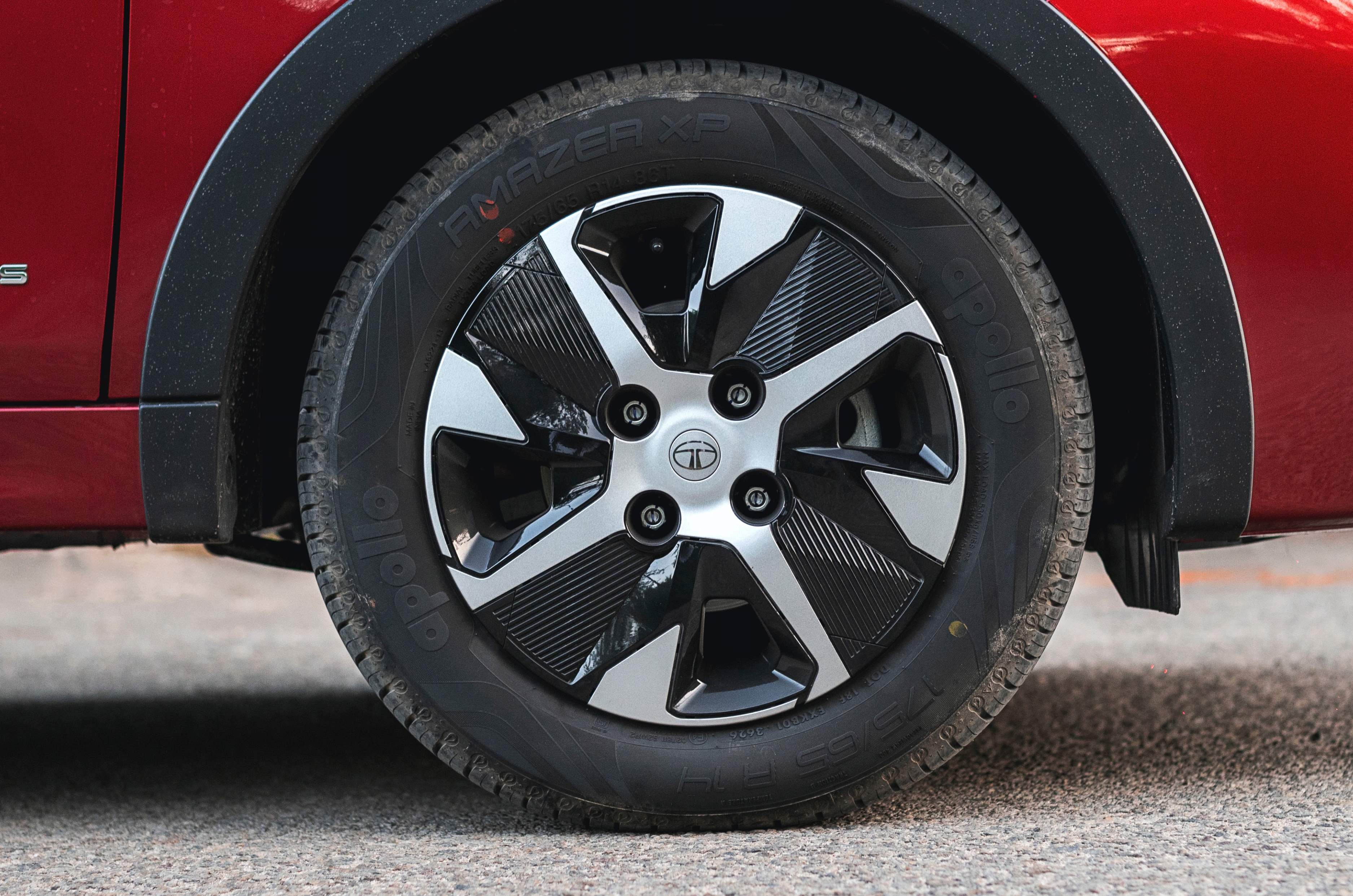
Top versions get 15-inch alloy wheels; 14-inch wheels on other variants appear undersized.

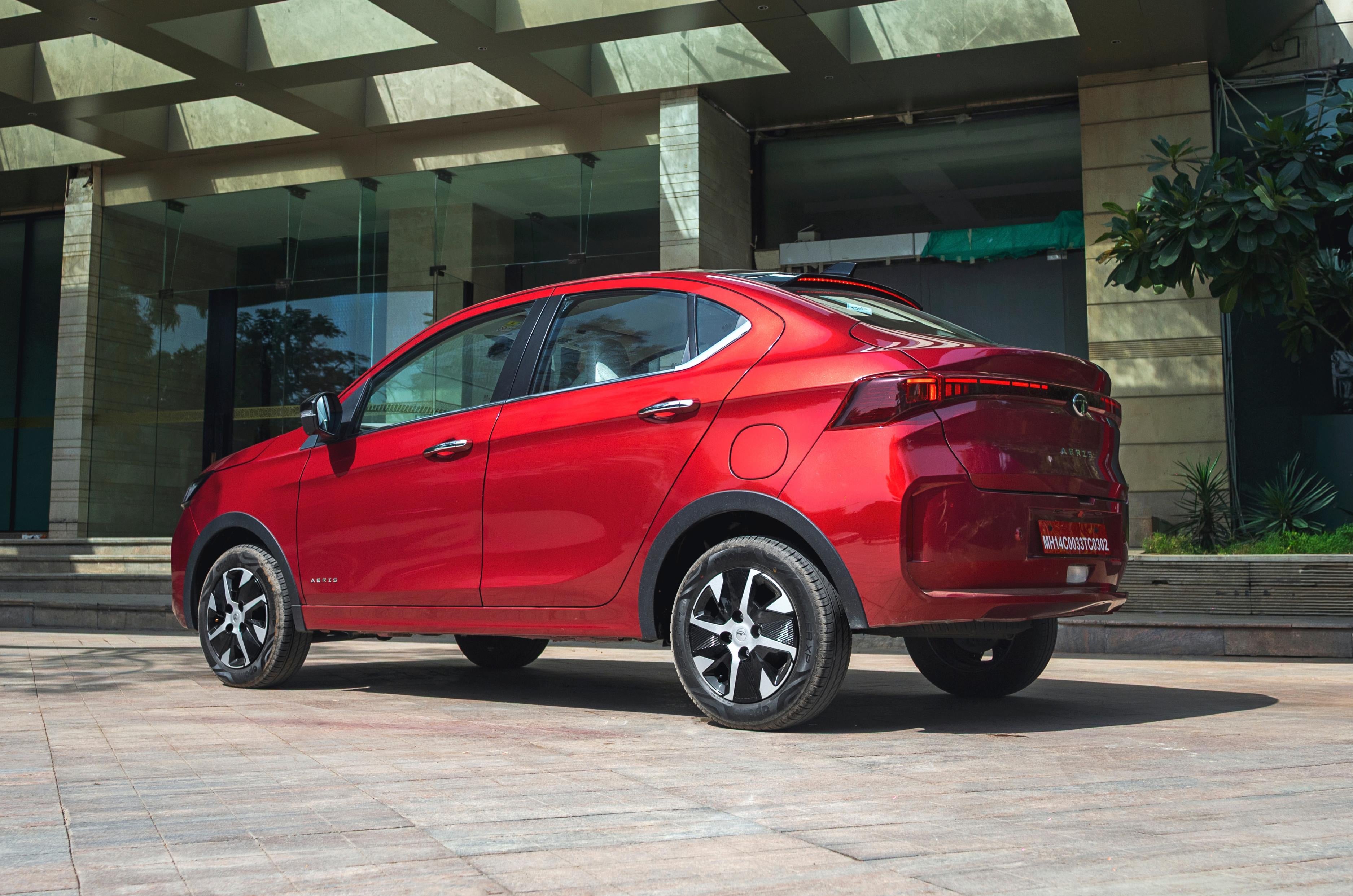
In profile, the 15-inch dual-tone alloy wheels fill the wheel arches nicely, and their contrasting finish looks particularly appealing when the Aeris is on the move. The wheel arches get slim cladding, which Tata says is made from recycled materials and features a distinctive speckled texture. Like the Tigor, the Aeris also gets chrome door handles and a chrome strip along the window line, adding some contrast to the otherwise clean design.
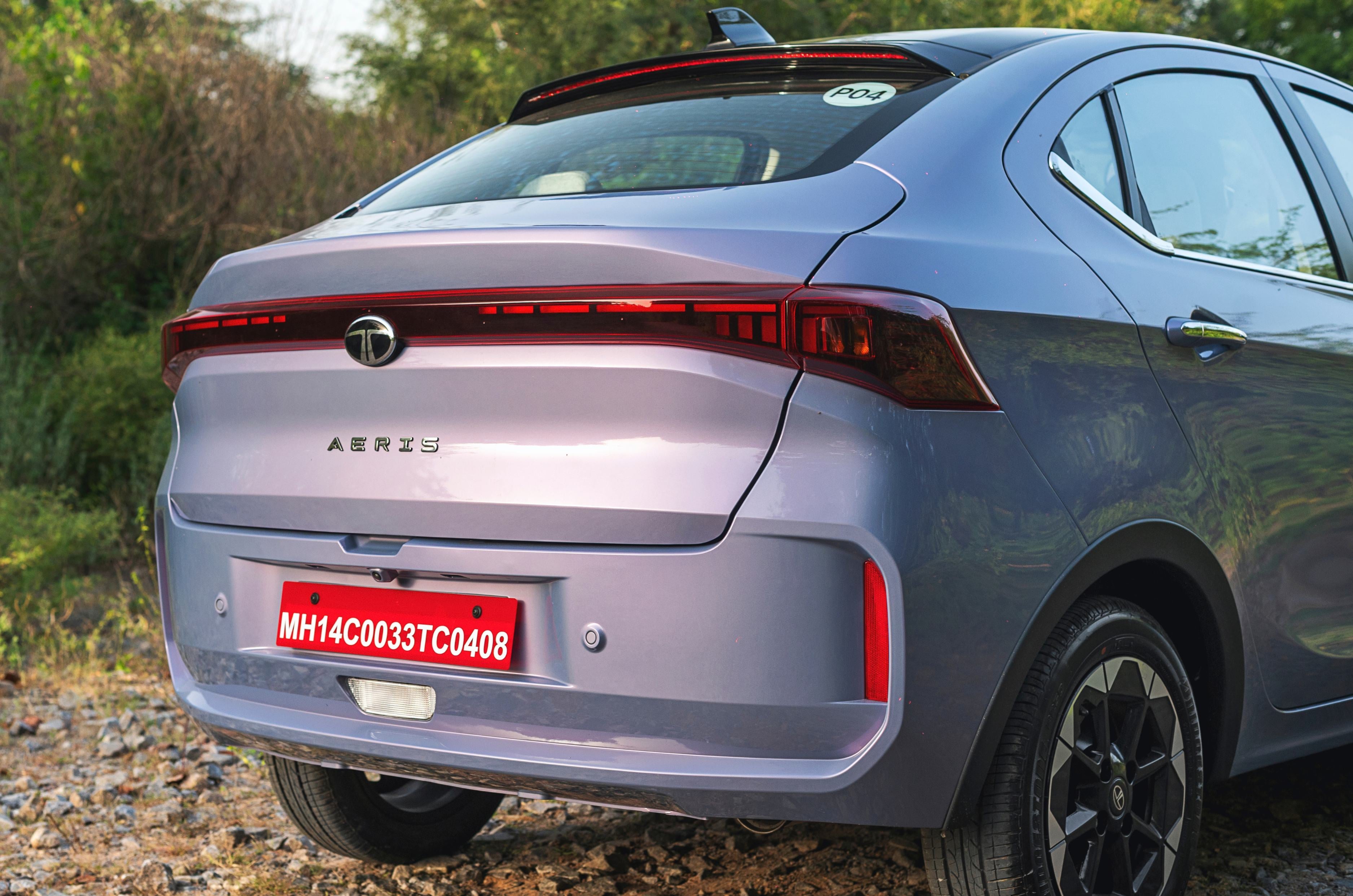
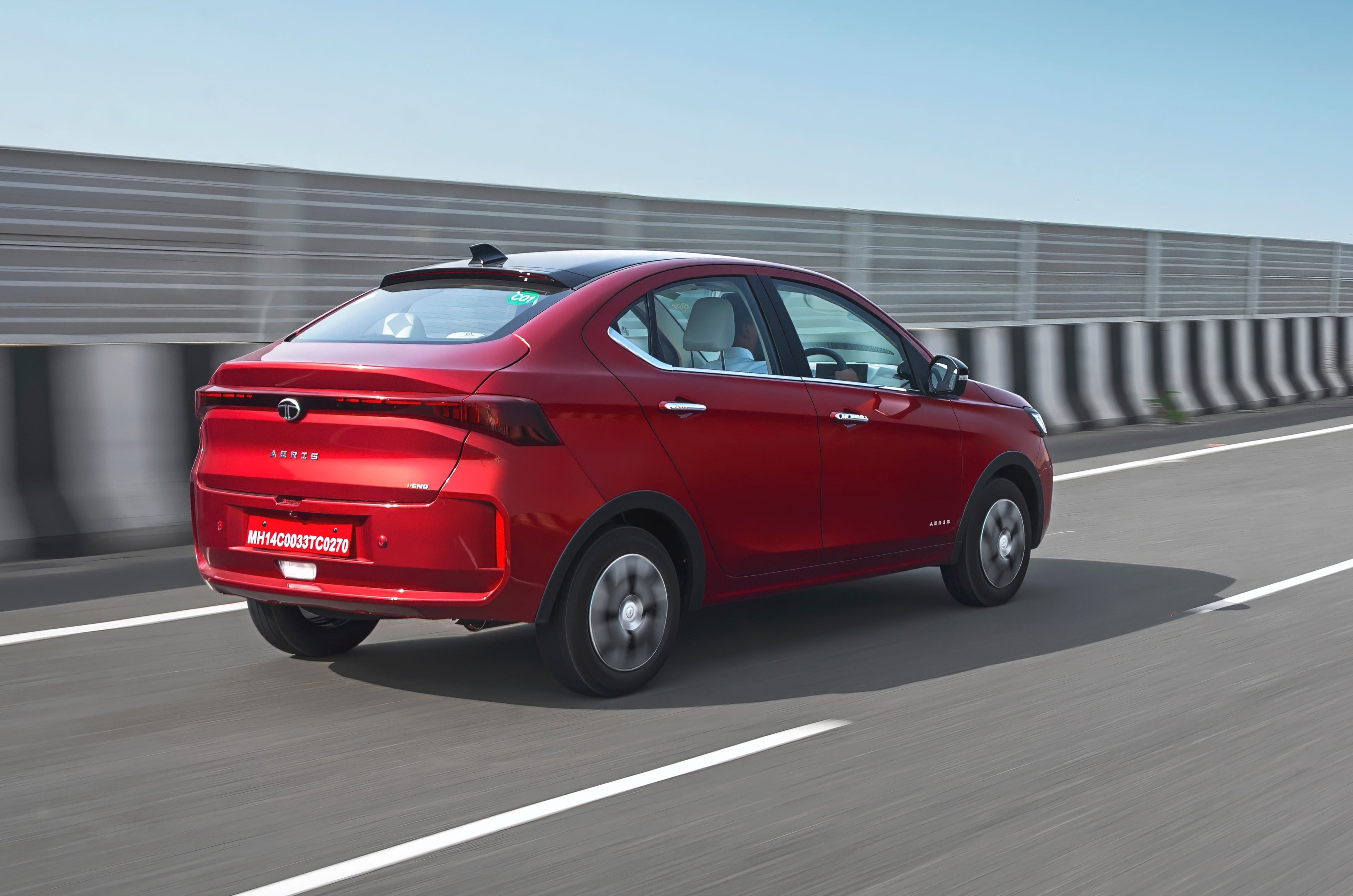
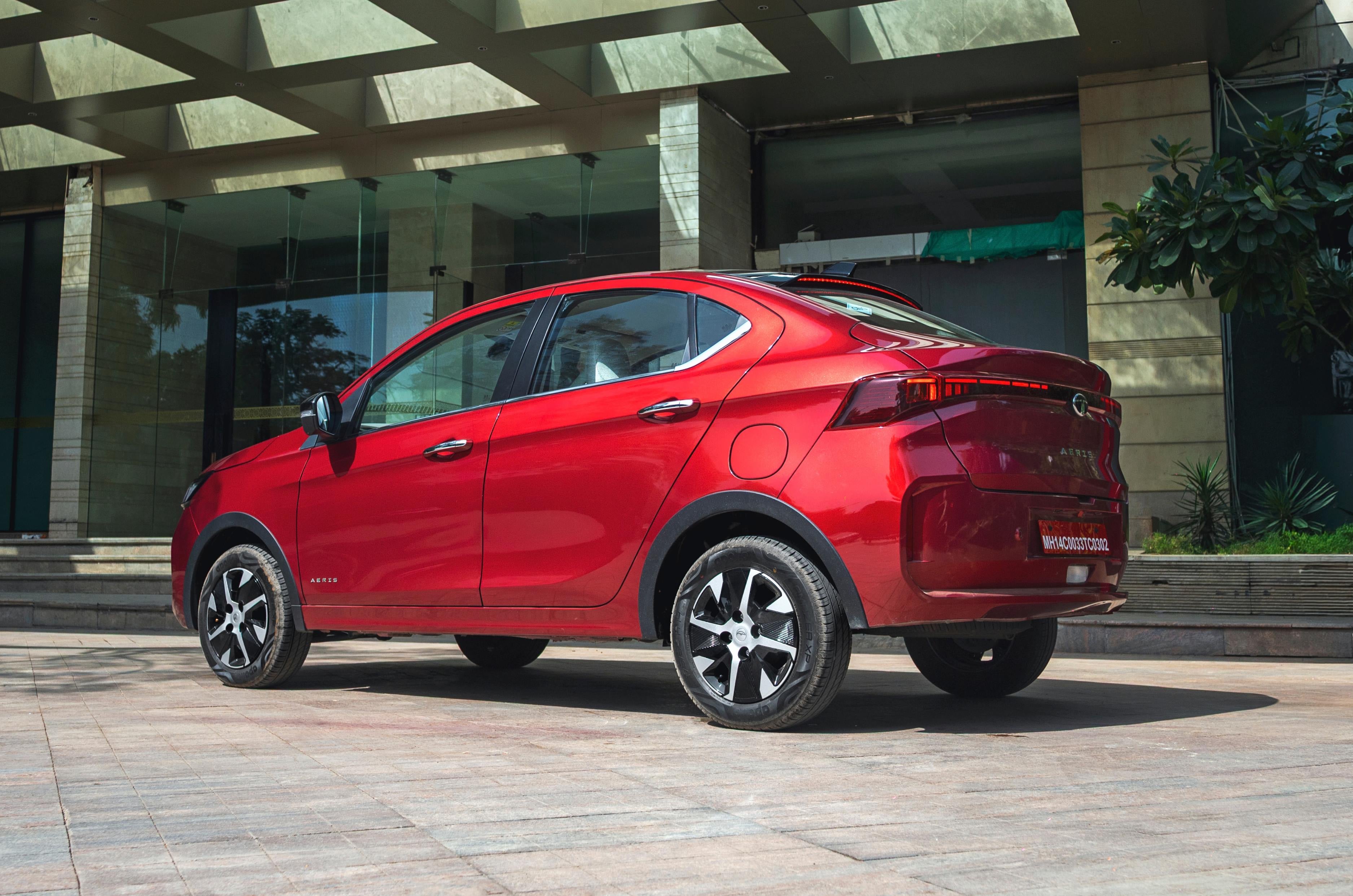
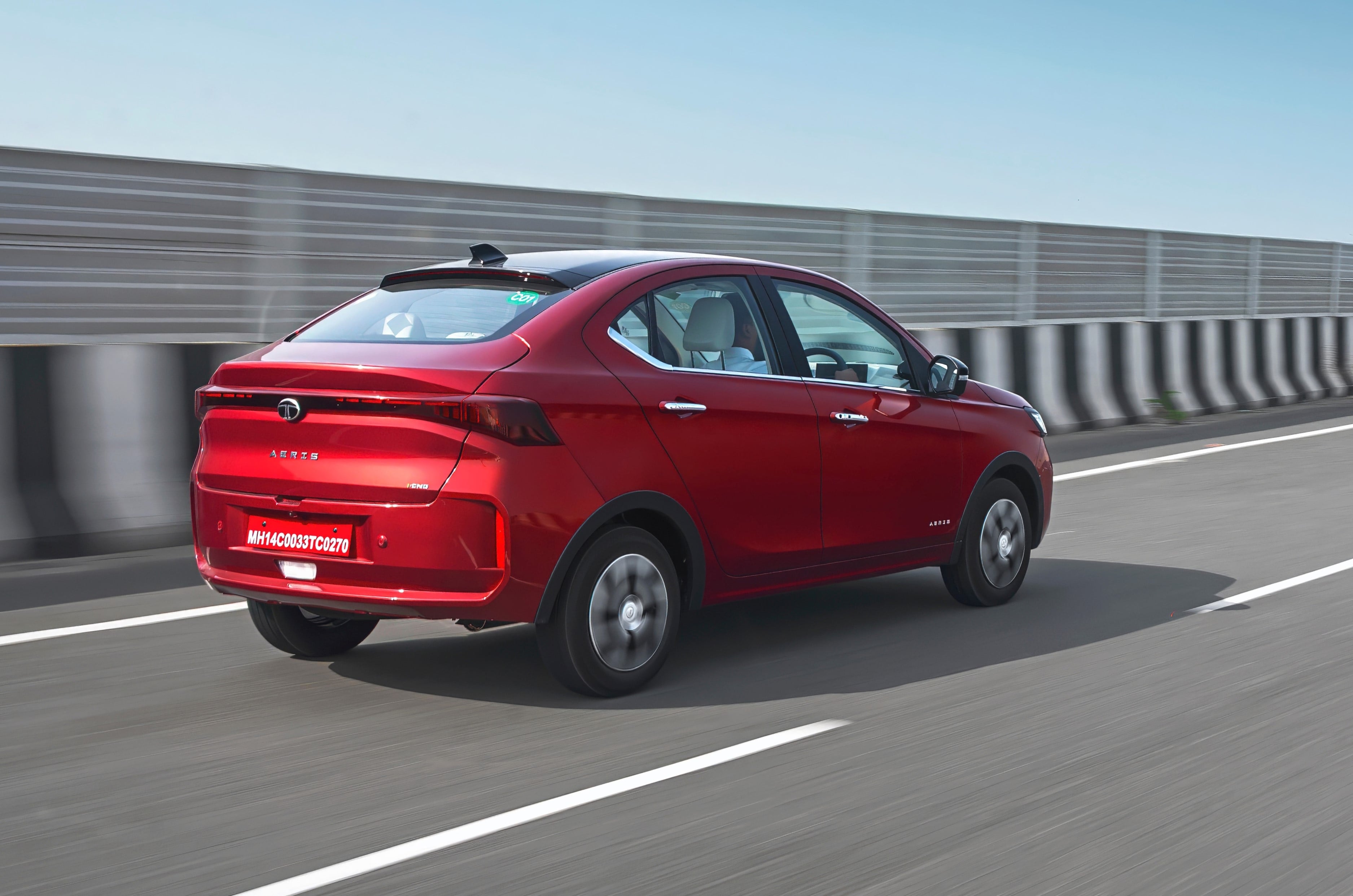
Fastback-like roofline remains a distinctive design element.

The coupe-like, tapering roofline remains unchanged from the Tigor, and continues to make the Aeris’ overall design cohesive. At the rear, the new taillights give the sedan a more modern appearance, while the red trim connecting them visually makes the Aeris appear larger than it is. The rear bumper is cleanly styled, with the reverse light neatly positioned in the centre.

The Aeris measures 3,995mm in length, 1,684mm in width and 1,532mm in height, and has a 2,450mm wheelbase. 

Tata Aeris petrol interior space and comfort – 8/10

Beige theme makes the interior feel airy, and everything is nicely laid out in the cabin
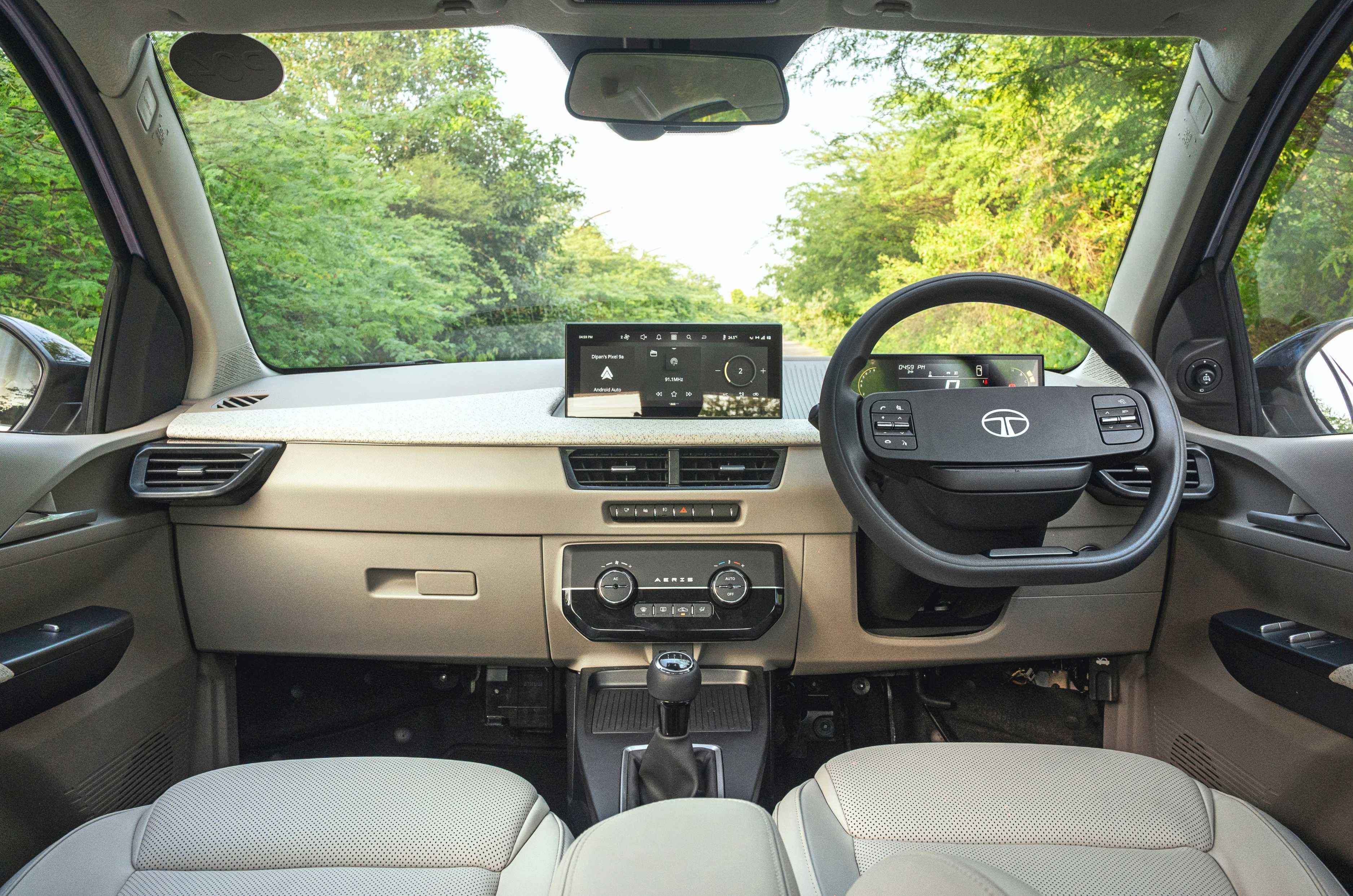
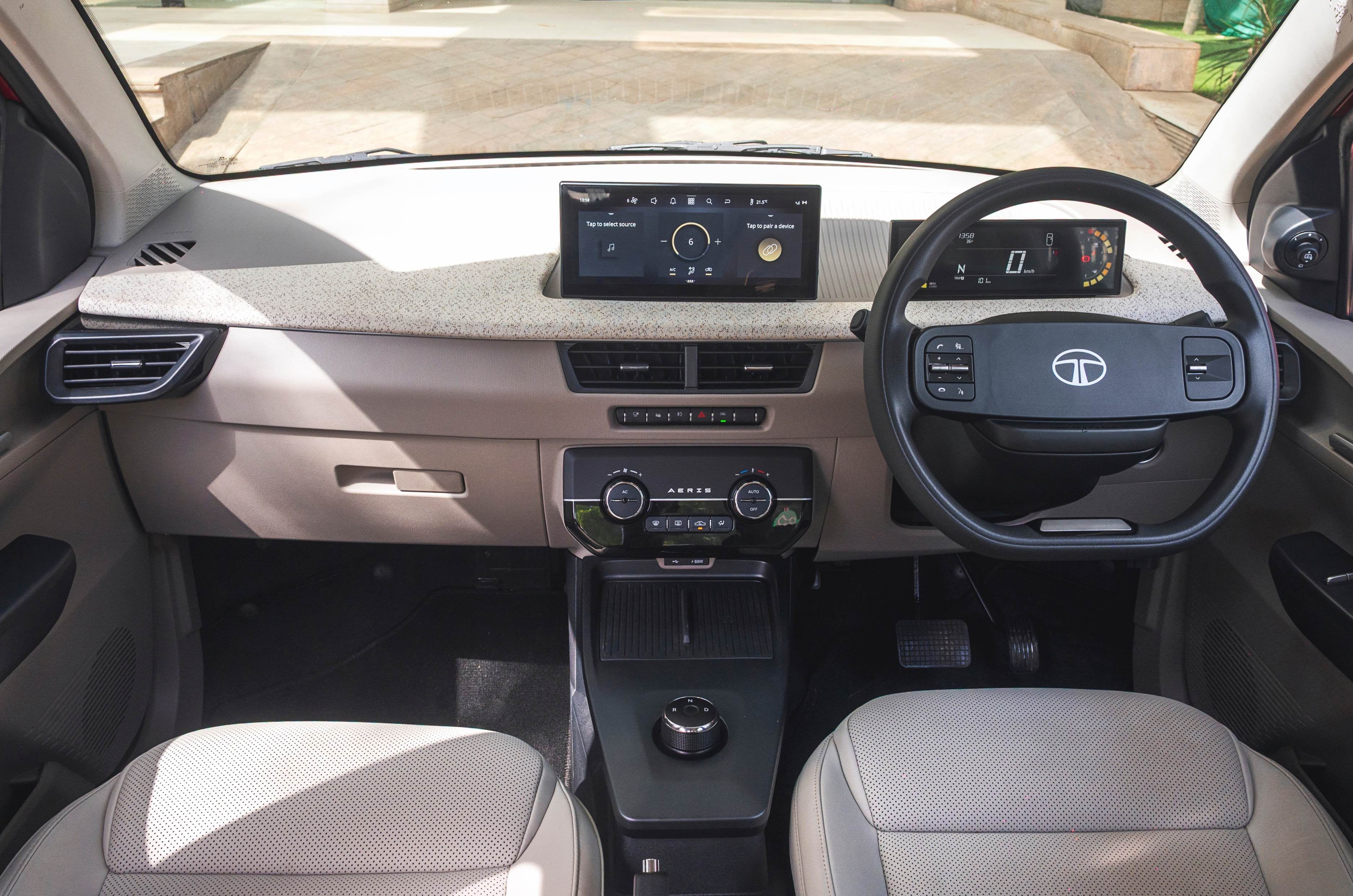
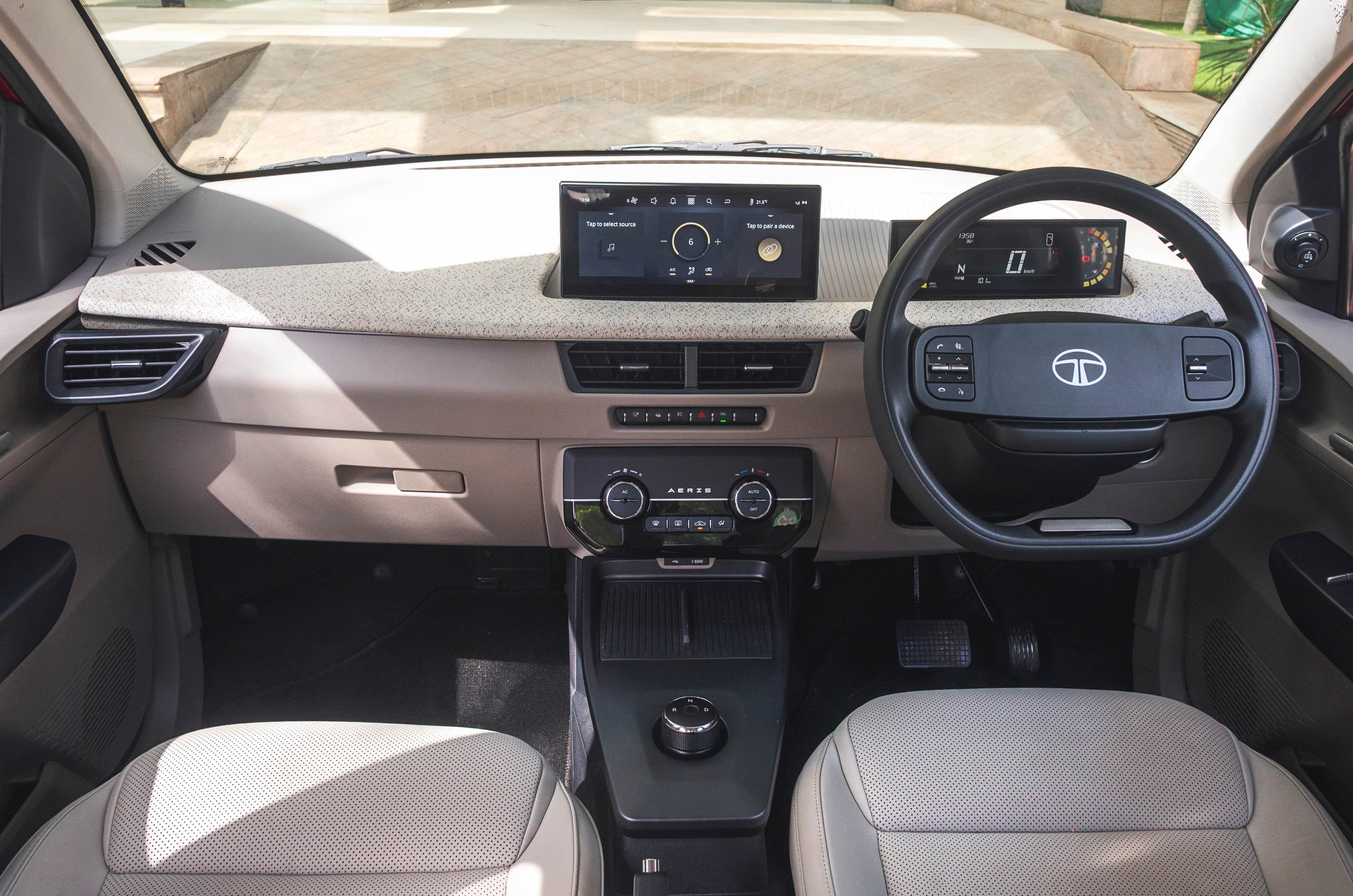
Beige theme lends the cabin an airy feel; dashboard is neatly laid out.

The Aeris’ interior is neatly laid out and looks fairly modern. The cabin gets a beige colour scheme, which makes it feel airy and gives the sedan a greater sense of space. However, the light shade could prove difficult to keep spick and span, especially with regular use.

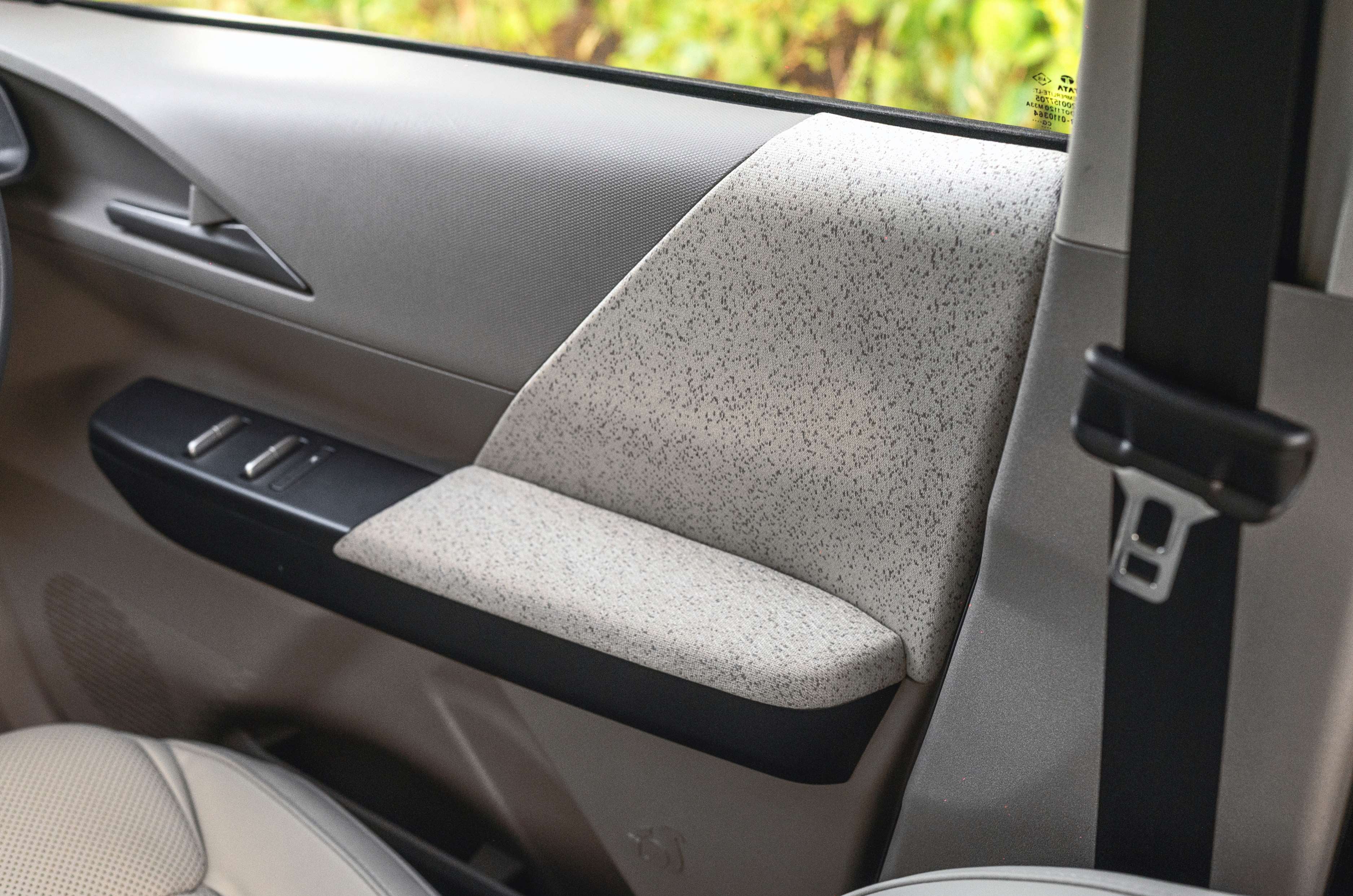
The dashboard houses a 10.25-inch infotainment touchscreen, a free-standing semi-digital instrument cluster and a revised two-spoke steering wheel. The latter retains physical buttons and, thankfully, does away with the scratch-prone gloss-black finish seen on the Tigor. The door handles look floating like the Sierra and feel sturdy. Lower down, Tata has retained rotary dials and physical buttons for the climate control. They feel solid and do not come across as flimsy. 
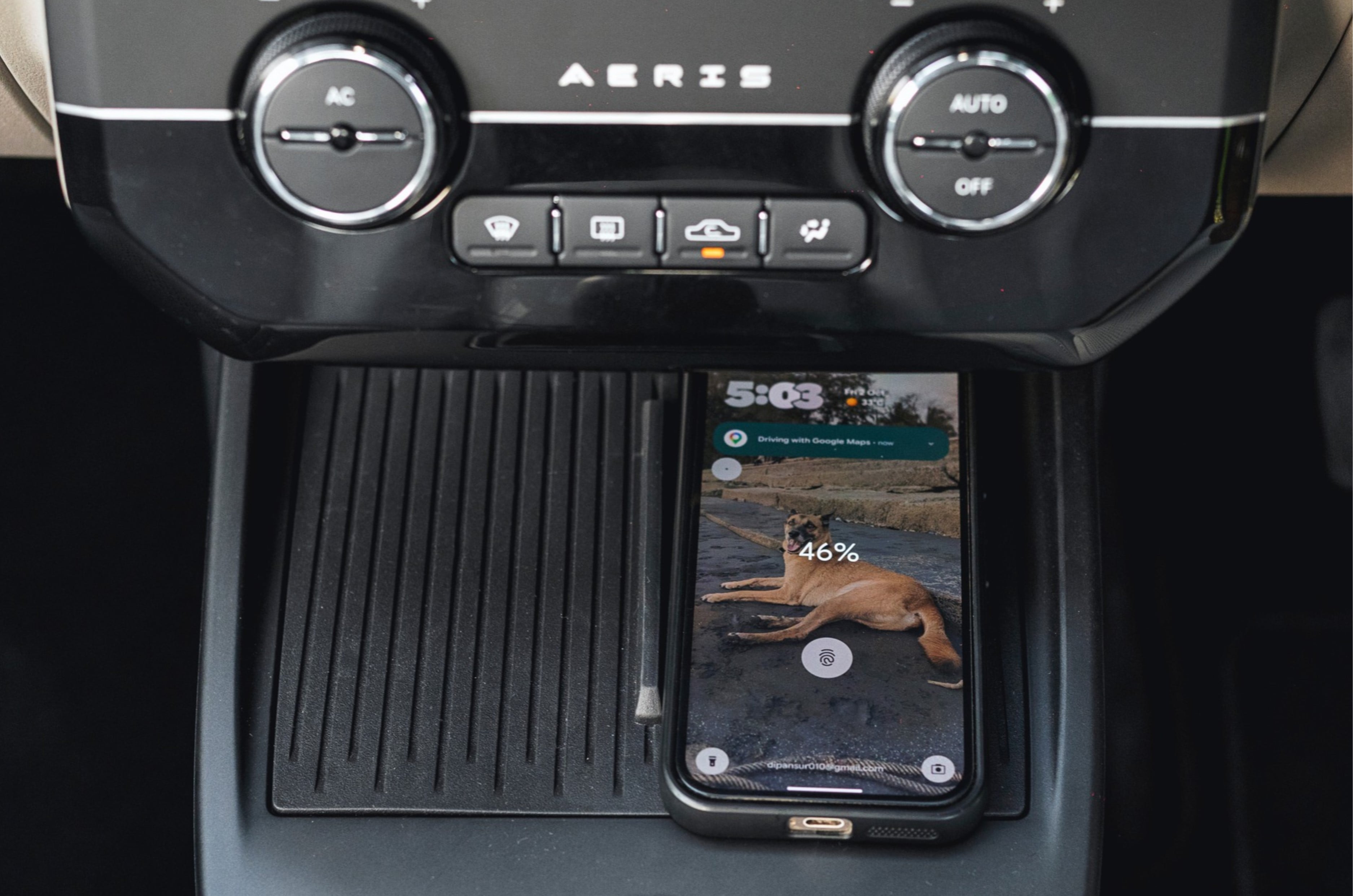
The wireless charger works well but tends to make the phone hot during prolonged use.

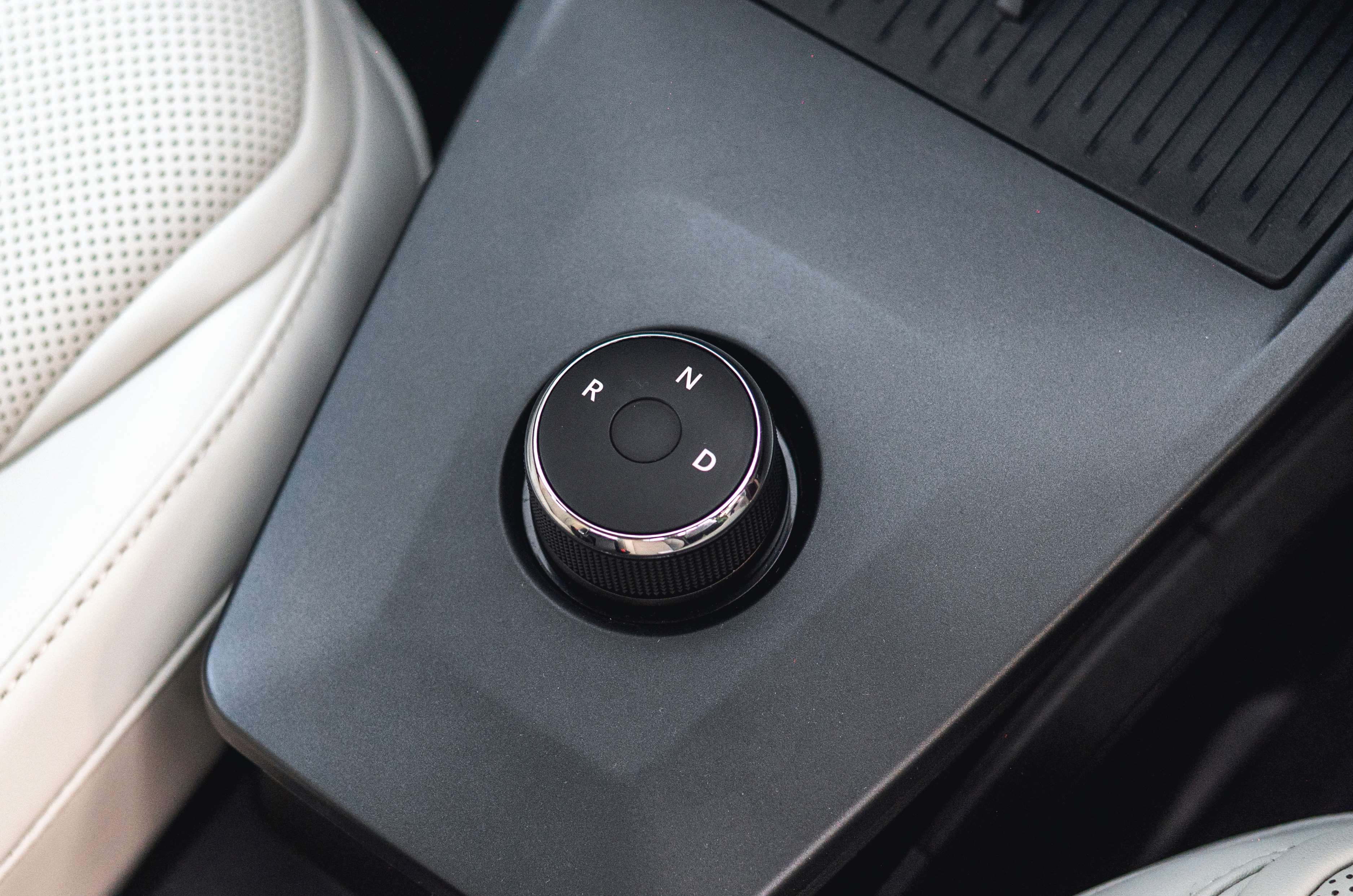
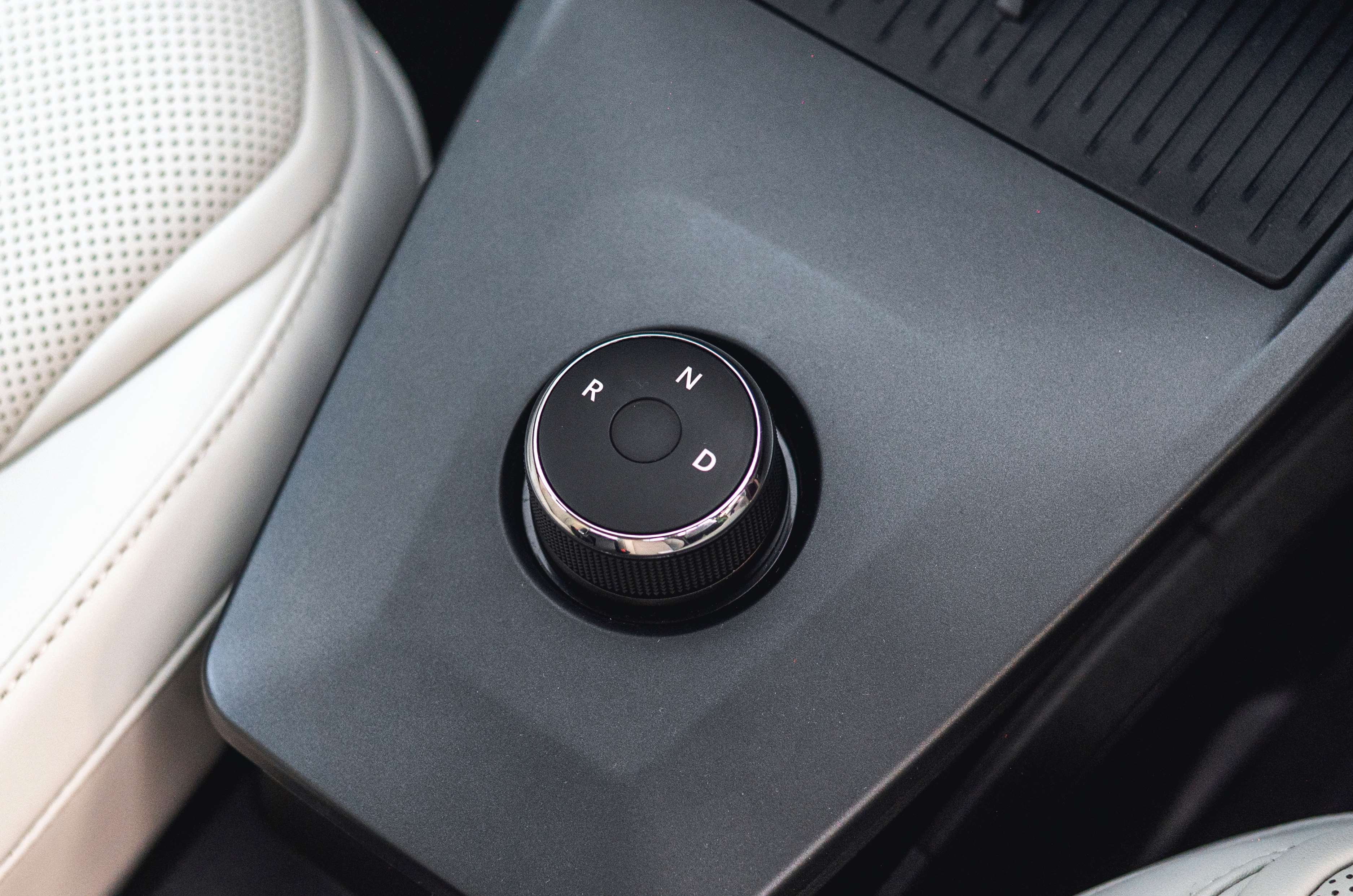
The centre console has been thoroughly redesigned and looks neat. The manual gear lever looks premium and feels good to hold, while the AMT gets a rotary dial that also feels solid and operates seamlessly. Two rubberised phone holders on the console keep phones from sliding around, and the top-spec Accomplished trim offers wireless charging in one slot. The centre console also gets two cupholders and a leatherette-wrapped centre armrest with integrated storage space underneath.
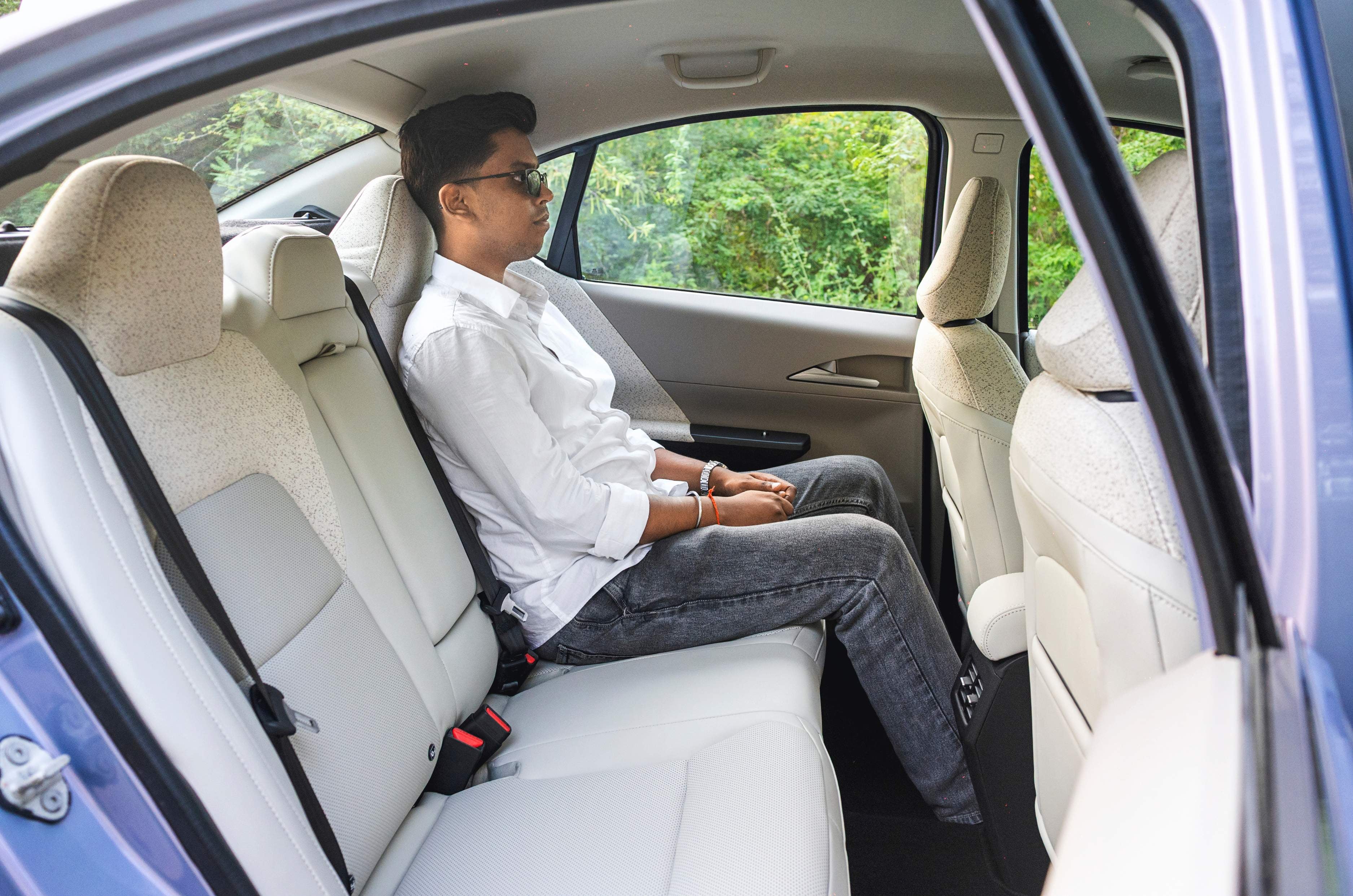
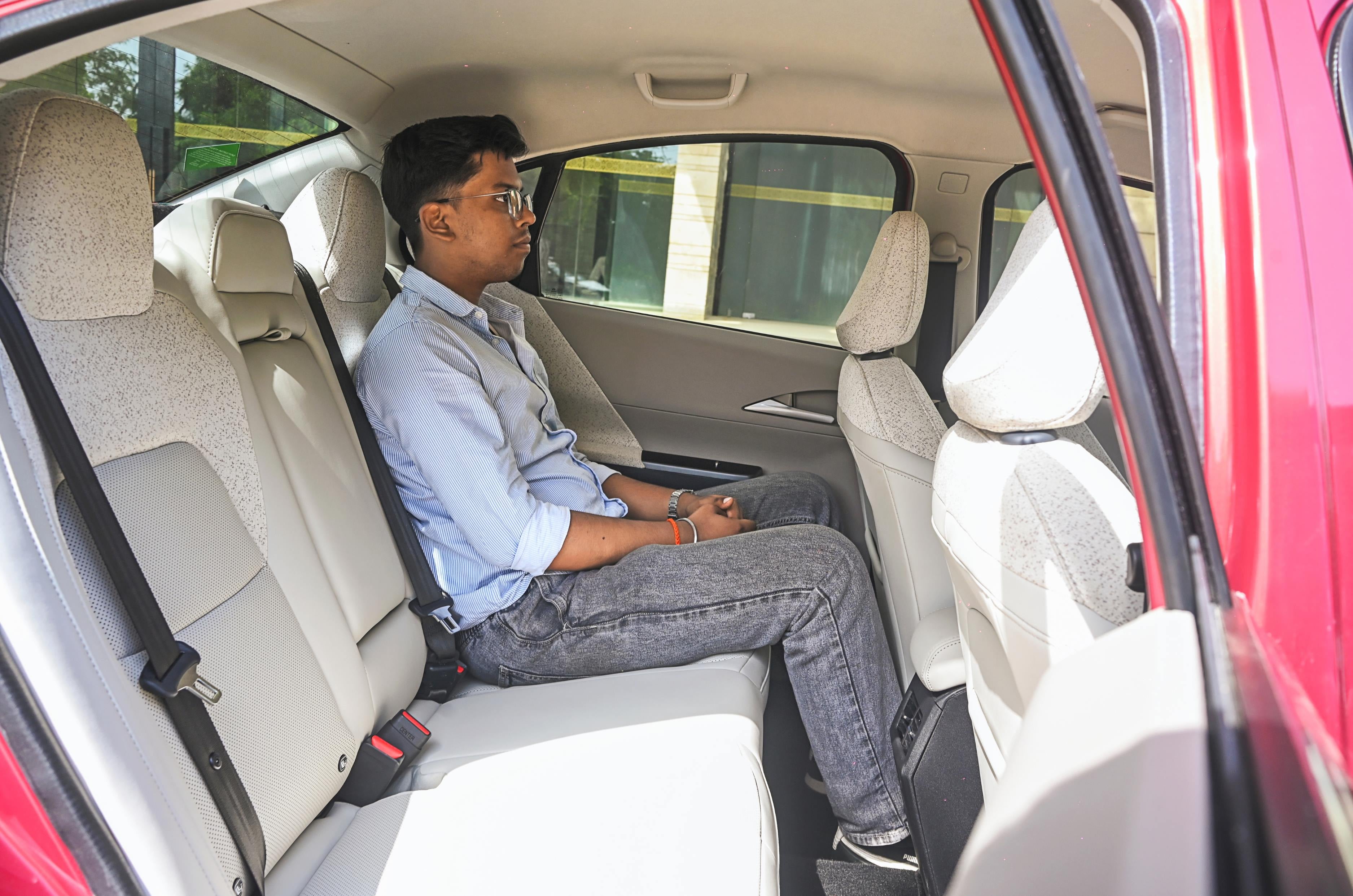
The rear seat offers good kneeroom and legroom, while headroom can be tight for taller passengers.

Tata offers part-leatherette upholstery and has revised the cushioning and bolstering, ensuring comfort even on long journeys. They also get a segment-first ventilation function. The rear seats are comfortable too, with good legroom and kneeroom, although headroom is a little tight for passengers over six feet tall. Under-thigh support is adequate.
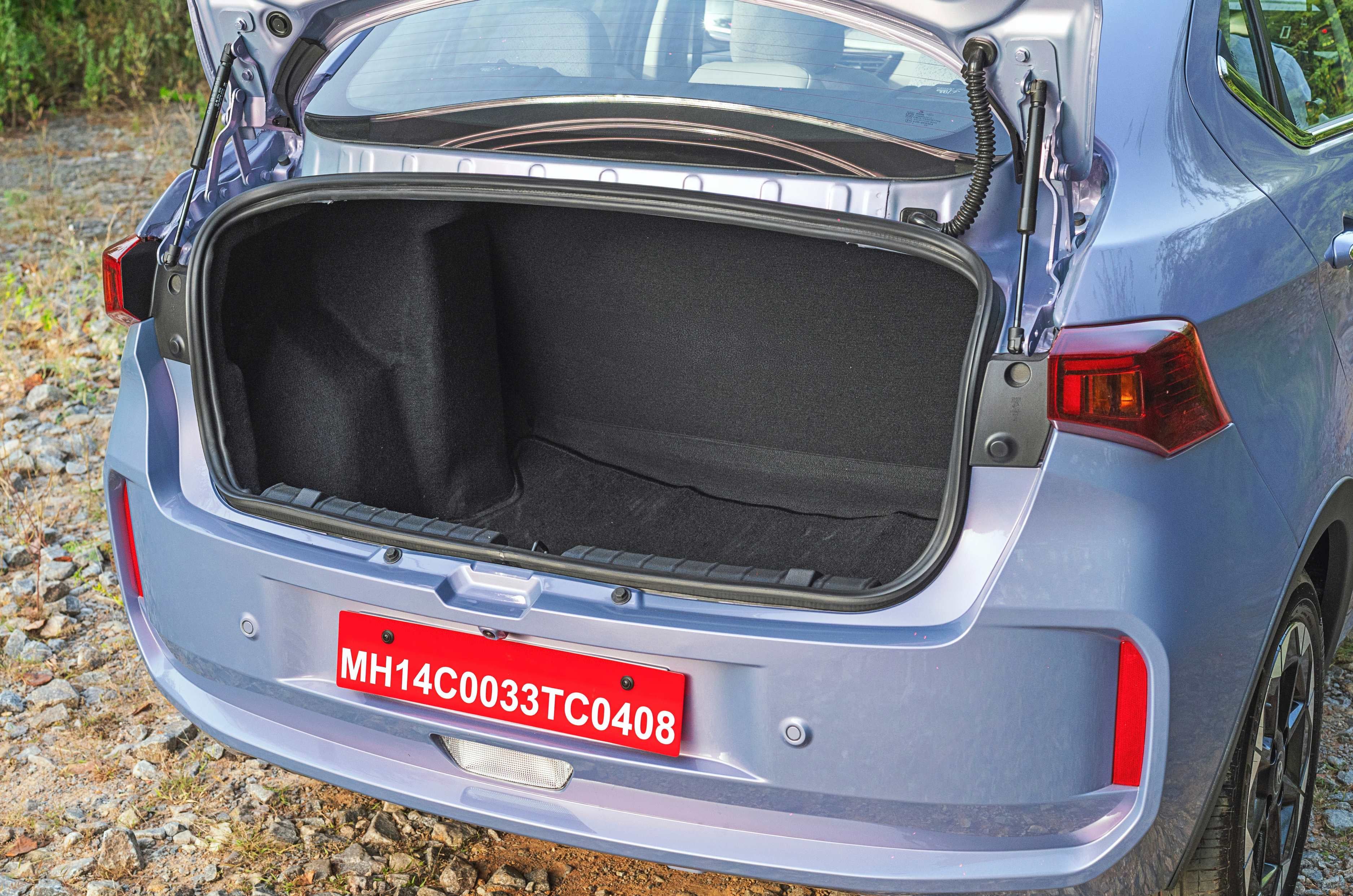
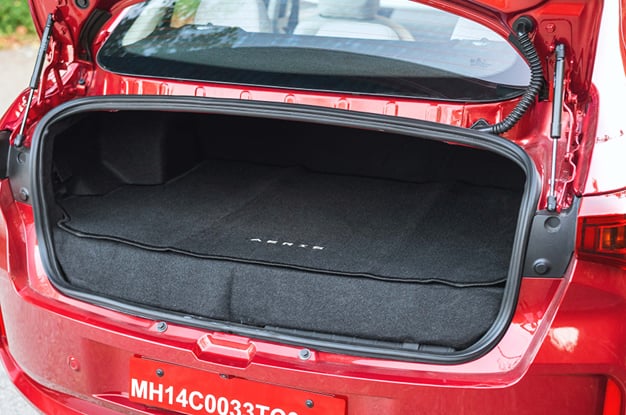
The 419-litre boot is handily large, but the aperture makes loading tricky. Struts free up more usable space.

The Aeris offers 419 litres of boot space, marginally more than the Amaze’s 416 litres and comfortably ahead of the Dzire’s 382 litres and Aura’s 402 litres. The boot itself is large and can swallow a substantial amount of luggage. The use of mechanical struts instead of conventional hinges is a clever touch, as they do not eat into the available boot space. Despite the large boot, the Aeris gets a 14-inch underbody-mounted spare wheel, which is always more promising than a puncture repair kit.

Tata Aeris petrol features and safety – 9/10

Loaded with features to the brim, most of which are well integrated
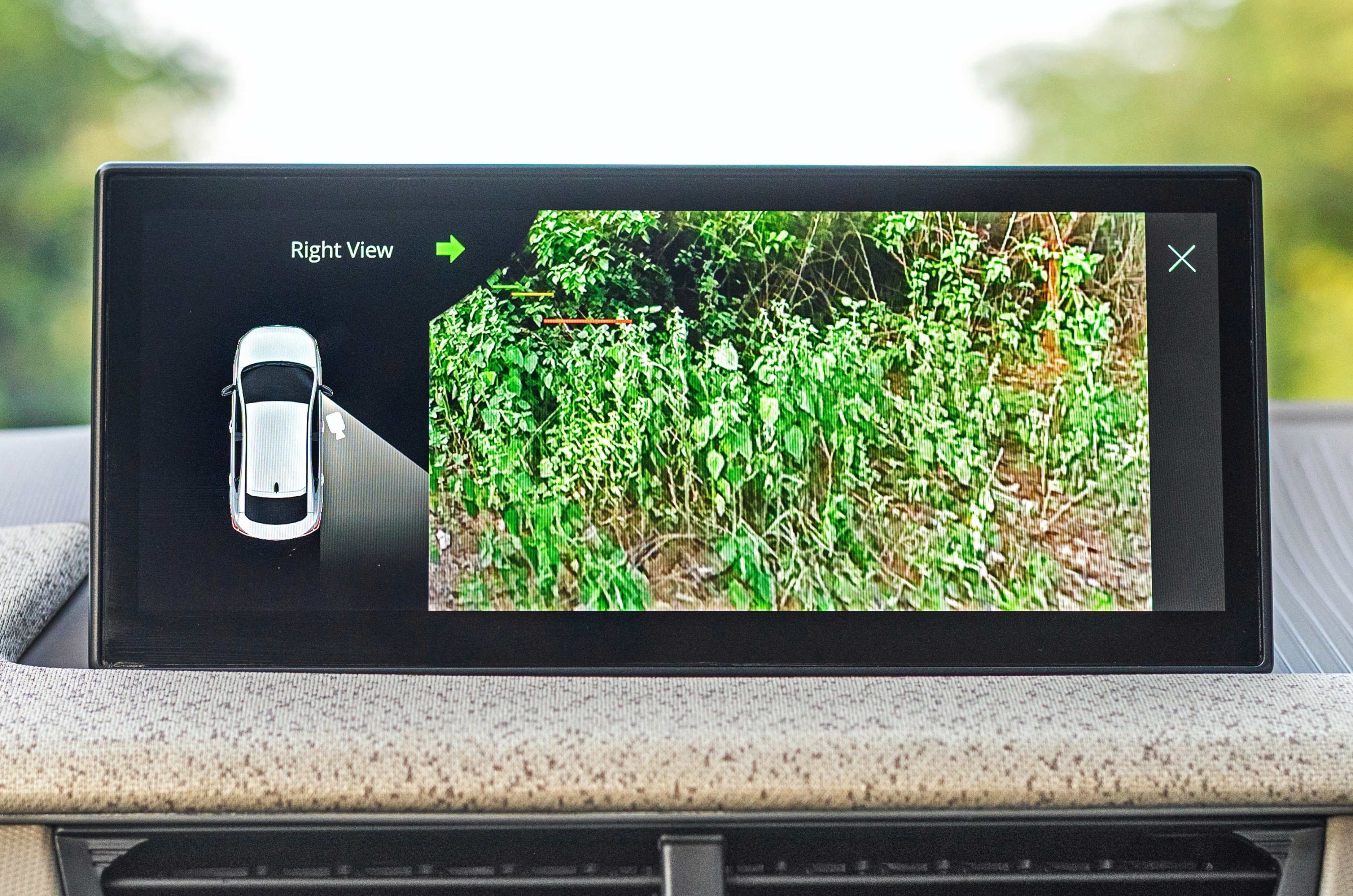
Blind-spot monitor is very useful but takes up the full screen and hides the map display.

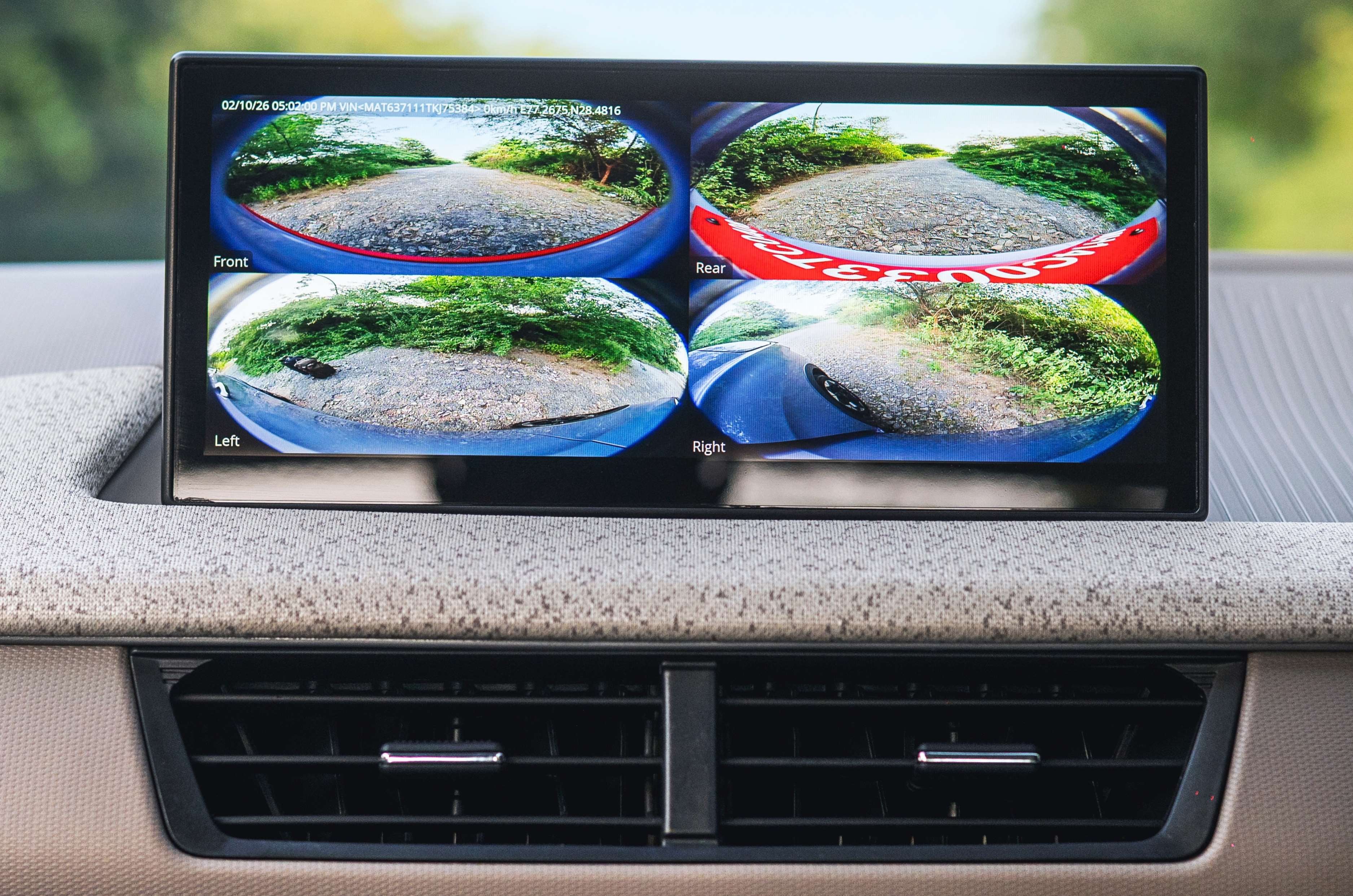
Like other Tata cars, the Aeris is packed with features. The 10.25-inch infotainment touchscreen is slick to use and remains responsive even when navigating through multiple menus. It also displays the 360-degree camera feed, which is lag-free, although the image quality isn’t the best. Tata has also added a new DVR function that allows the surround-view cameras to record the car’s surroundings, ensuring you do not shell out extra for a dashcam. The infotainment screen automatically switches to the blind-spot monitor when indicators are used, which is useful. However, this can be annoying when you are using navigation, although there is an option to disable the view completely.
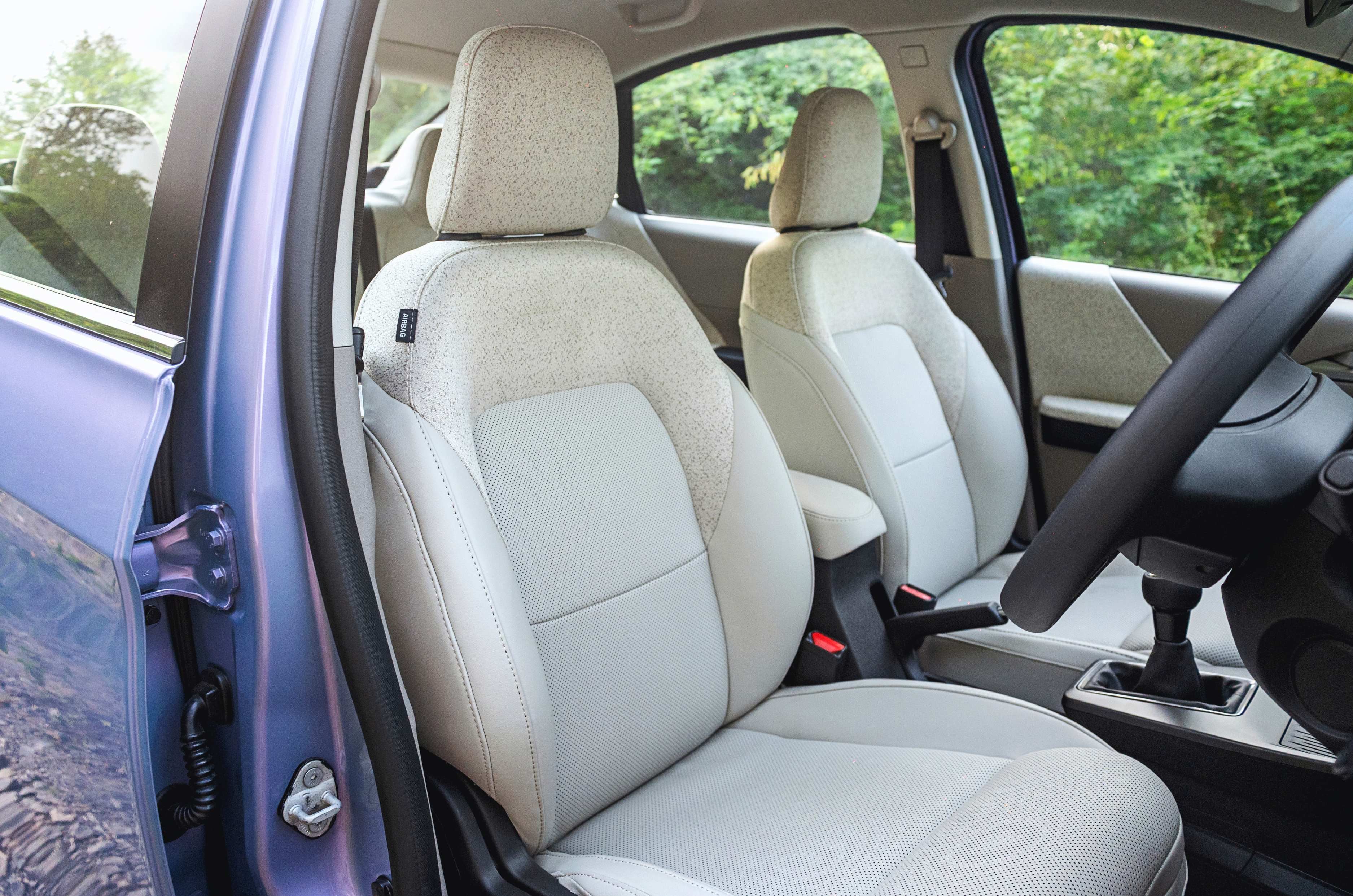
Revised cushioning and bolstering, and a new ventilation function on the front seats improve overall comfort.

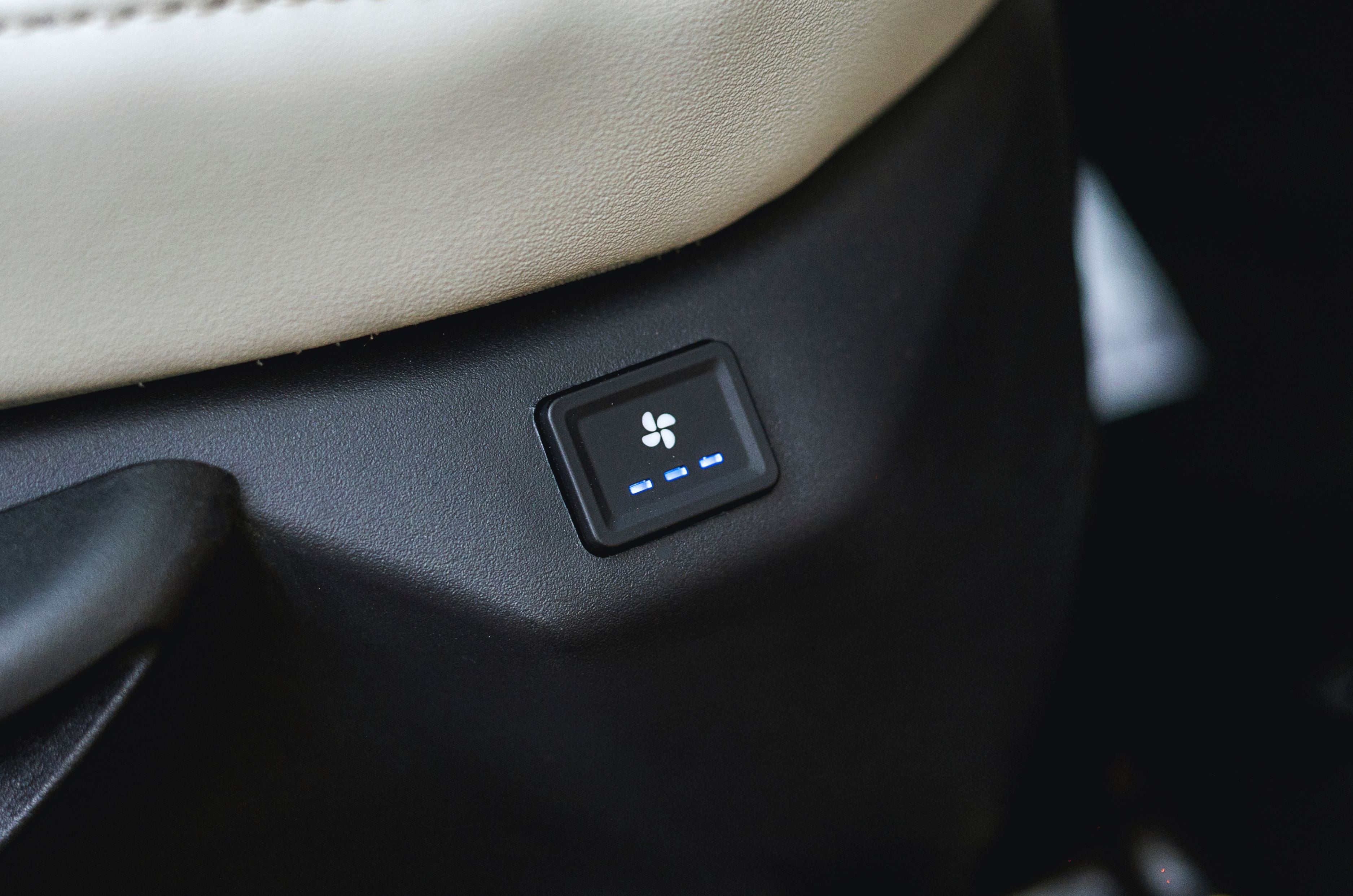
The front-seat ventilation function works well too. During our time with the car, it proved effective at keeping us cool in Faridabad’s near 40deg C ambient temperature. However, the infotainment screen or driver’s display shows nothing when the ventilation is on or the level is adjusted, which can be a little inconvenient.
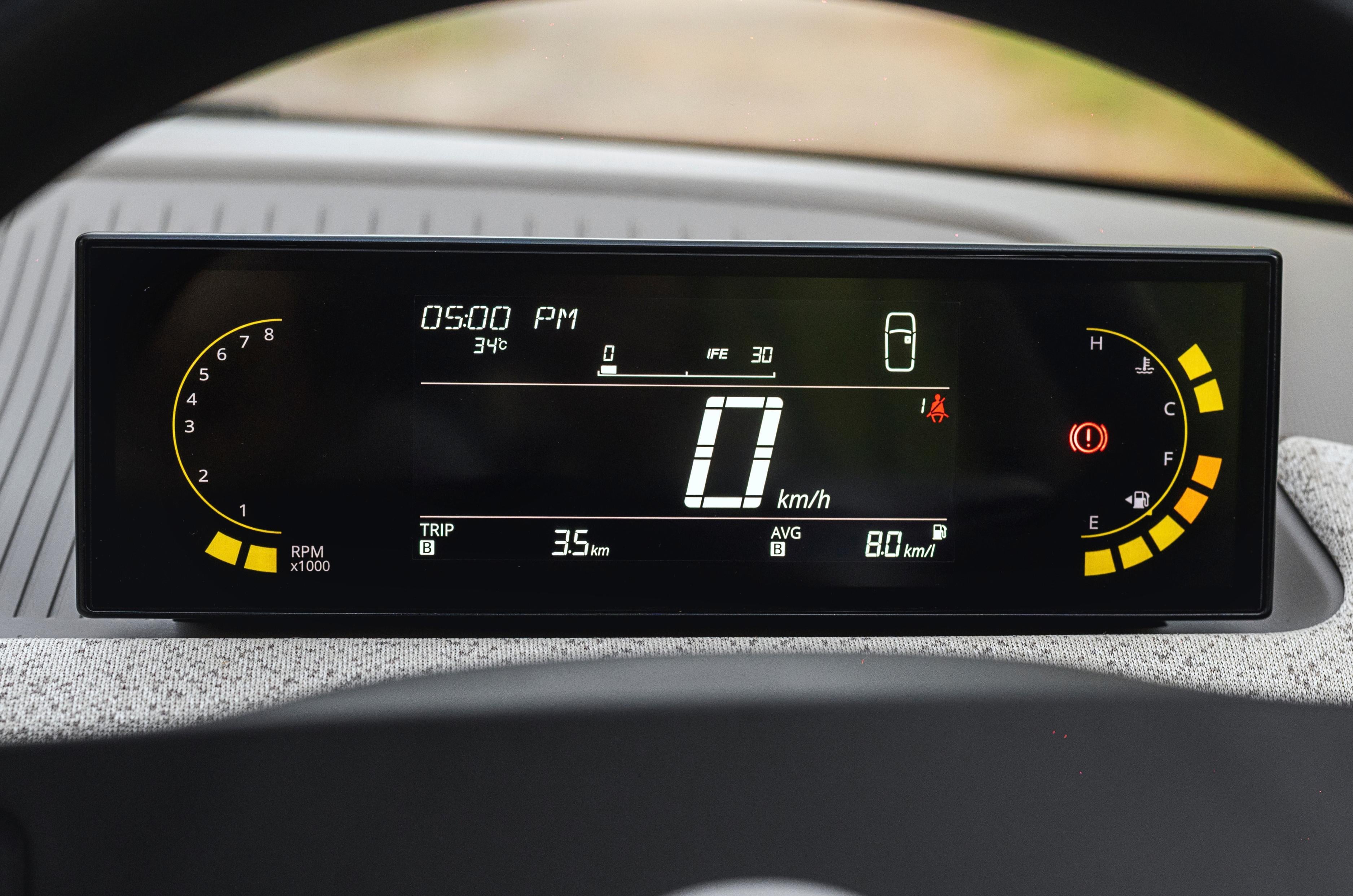
Part-digital Instrument cluster includes screen flanked by rev counter and fuel gauge.

The instrument cluster itself is fairly basic, with analogue dials for the fuel level and rev counter, while a digital display handles the speed and other general information. Depending on the steering wheel’s tilt angle and the driver’s seating position, some of this information can occasionally be obscured. 

The four-speaker, two-tweeter audio system is a step down from the Tigor’s four-speaker, four-tweeter setup, although sound quality remains good enough for the segment. The rear seats lack pressure sensors, meaning the seat-belt warning will sound until the belts are fastened.
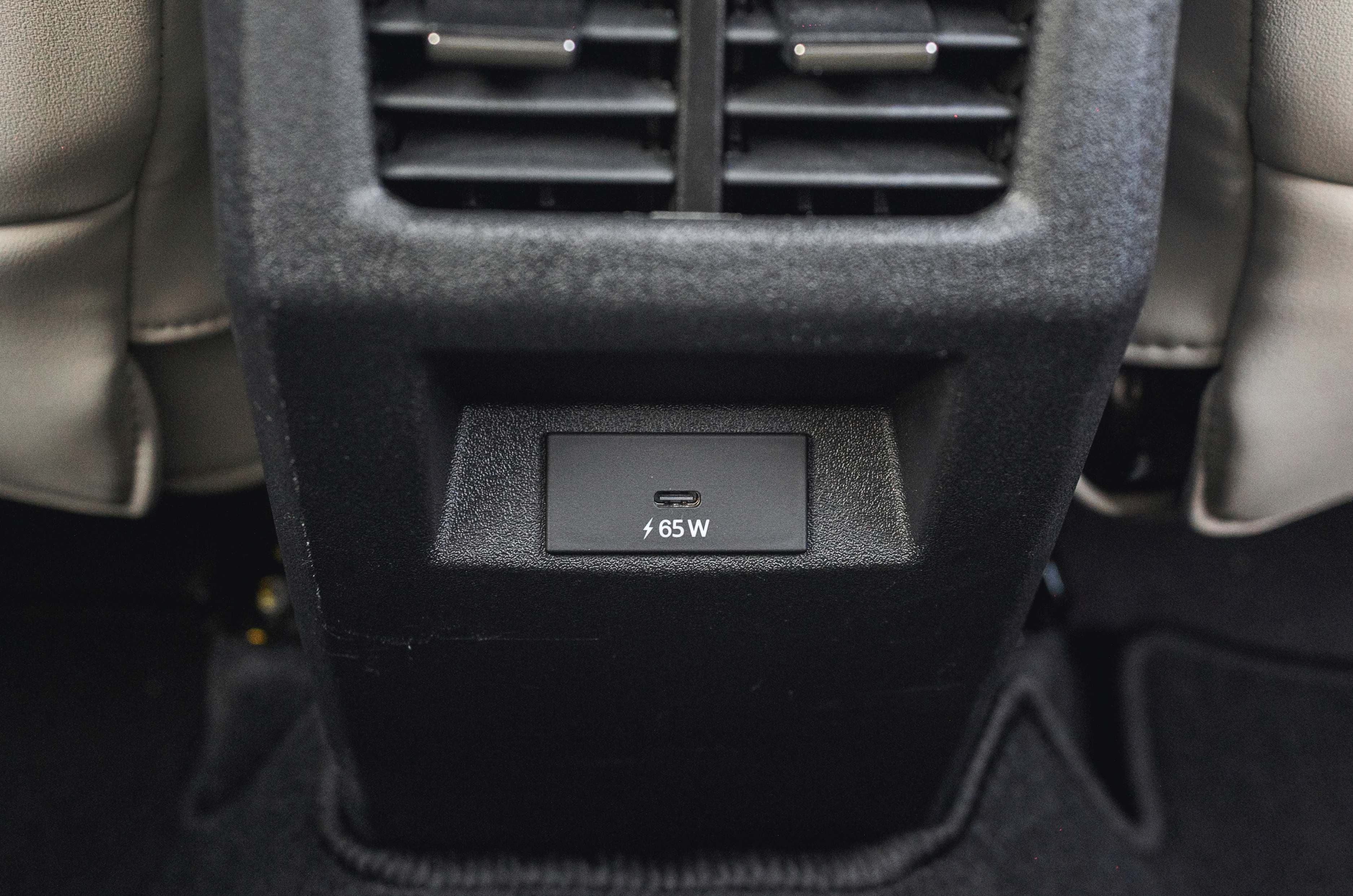
AC vents and a 65W Type-C charging port are among the additions at the back.

On the safety front, the Aeris gets six airbags, Isofix child-seat anchorages for the rear seats, rear parking sensors and three-point seat belts with reminders for all occupants as standard. Higher variants add a 360-degree camera, a day/night inside rear-view mirror, rain-sensing wipers, a rear defogger, a tyre pressure monitoring system (TPMS) and ESP with traction control. The pre-facelift Tigor scored four stars in Global NCAP testing in 2020, but a Bharat NCAP test for the Aeris is due.

Tata Aeris petrol value for money and verdict – 8/10

A well-rounded compact sedan, with the petrol engine making it more versatile
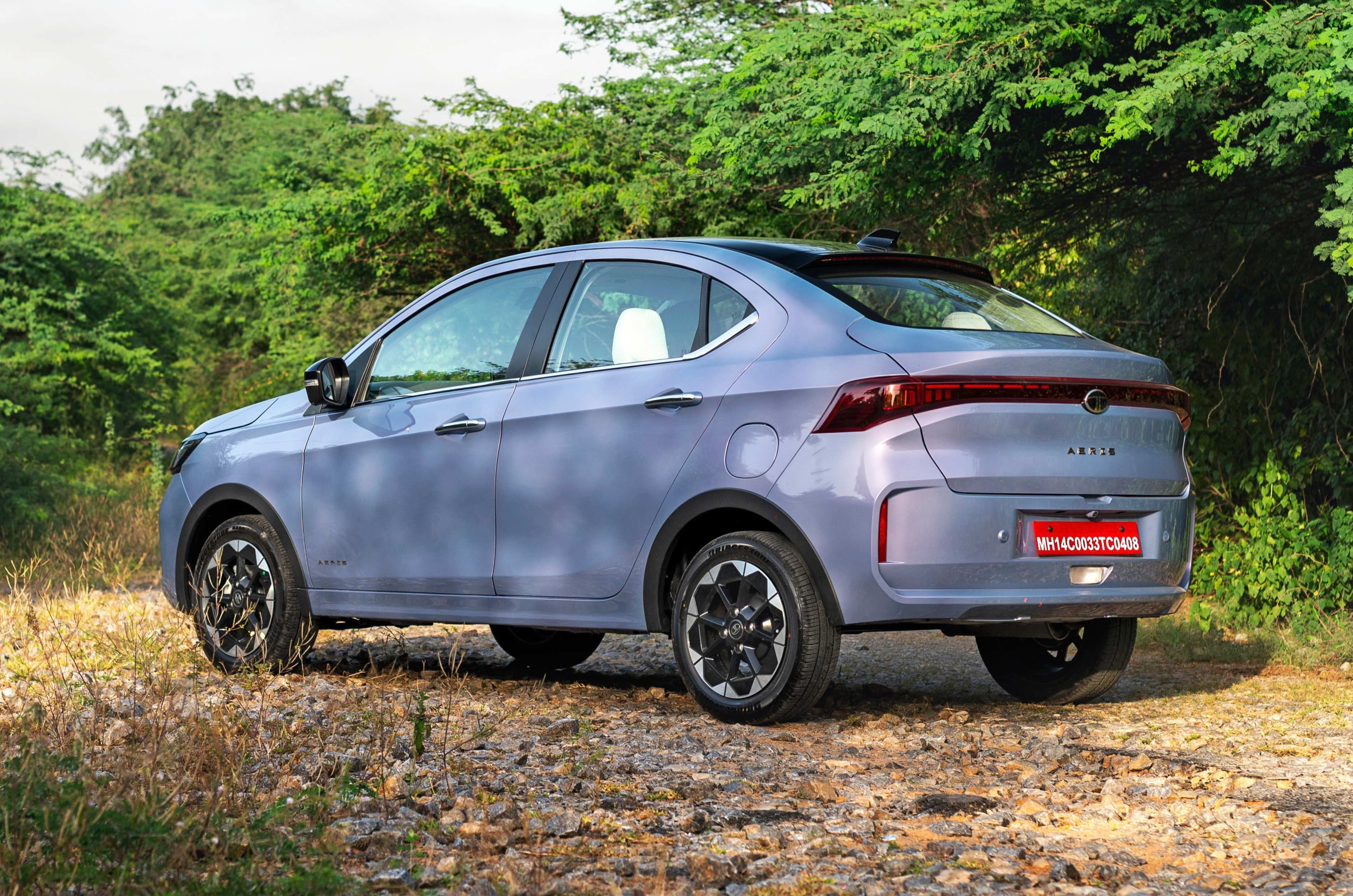
Priced from Rs 5.29 lakh, it offers strong value in a segment where affordability matters.

The Tata Aeris is a much more appealing proposition than the Tigor it replaces. Its fresh design, well-equipped cabin, generous boot and comfortable ride make it easy to live with, while the petrol engine gives it enough performance for both city and high-speed highway cruising. The manual gearbox is light and easy to use, while the AMT is better suited to relaxed city driving than enthusiastic highway use. The long list of features adds further appeal to the package.

There are some shortcomings too, including a coarse engine and poor cabin insulation. However, the Aeris’ biggest strength is its pricing. The petrol variants are priced from Rs 5.29 lakh to Rs 8.74 lakh (ex-showroom), and it undercuts rivals by a fair margin, making a strong case for itself in a segment where value for money remains a key consideration.
3 reasons to buy the Tata Aeris iCNG, 2 reasons not to

3 reasons to buy the Tata Aeris iCNG, 2 reasons not to

The Tata Aeris was launched recently as a facelifted and reworked version of the Tigor, with a fresh and modern exterior look and a minimalistic interior brimming with features. The powertrain options, however, are the same as those of the Tigor. We recently drove the Aeris iCNG, and here are three reasons why you should consider buying it and two reasons that could deter you.

Reasons to buy the Tata Aeris CNG

Modern exterior design and well-equipped interior

The Tata Aeris is clearly a step up from the Tigor and looks modern. It gets slim LED headlights with integrated LED daytime running lamps (DRLs) joined by a gloss-black trim, all of which give it a clean look. Some contrast is added via the front bumper, which features a black section around the wide air inlets. The new LED fog lamps and the clamshell bonnet also look good.

In profile, the CNG variants’ 14-inch stylised steel wheels look undersized, particularly against the prominent wheel-arch cladding. Chrome elements on the door handles and window line add contrast. The Aeris retains the Tigor’s distinct coupe-like roof that flows into the tail. The tail-lights wrapped within a red trim make the Aeris feel bigger and nicer.

Inside, the Aeris looks minimalistic and modern. It gets two free-standing screens – a 10.25-inch infotainment touchscreen and a semi-digital driver’s display. The infotainment screen particularly has a pleasant UI and crisp graphics. The Aeris also debuts premium-looking part-leatherette seat upholstery and ventilated front seats that add to the comfort. Other features include automatic climate control with rear vents, a 360-degree camera with a blind-spot monitor and a 6-speaker sound system.

Practical dual-cylinder CNG setup

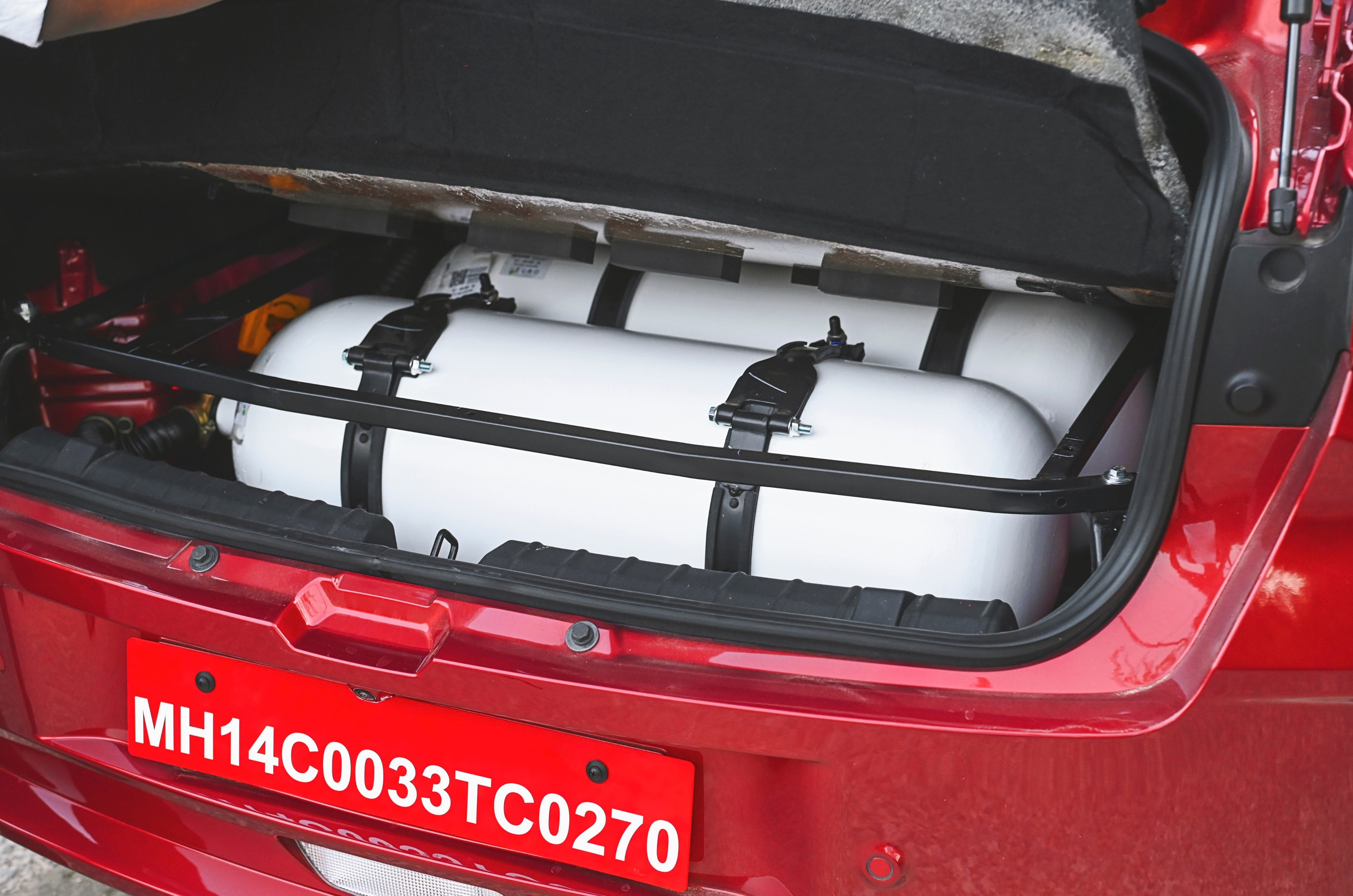
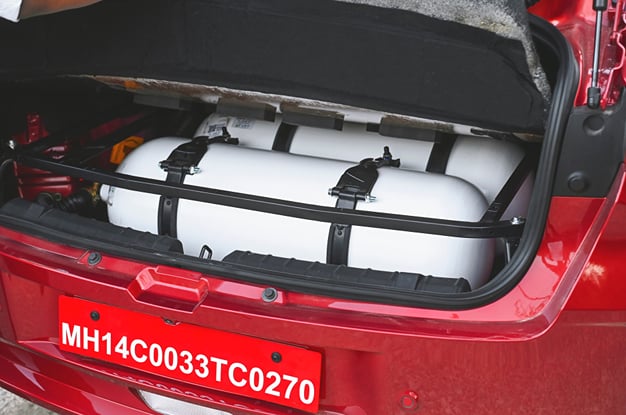
Instead of a single CNG tank that eats up all the boot space in its rivals, the Aeris is offered with dual CNG cylinders, enabling space for a couple of backpacks and a cabin-sized trolley. While Tata has yet to reveal the official figure, with a similar dual-cylinder setup, the Tigor offers a 227-litre boot. Other than this, the Aeris offers bottle holders and cubby space on all doors, a storage space underneath the front centre armrest, cup holders in the centre console and rear centre armrest, and a large glove box, all adding to its practicality.  

Excellent ride quality and handling manners

Like other Tata cars, the Aeris has a suspension that is well-tuned for Indian conditions, and it offers a commendable ride quality on both rough roads and highways. Over poor roads, the suspension comfortably absorbs broken surfaces without unsettling the car. The ground clearance figure is yet to be revealed, but in our test, we found it adequate for tackling rough roads and large speed breakers.

Out on the highway, the Aeris is equally composed. It stays planted at triple-digit speeds and does not feel floaty or nervous when driven quickly. The steering also offers decent feedback, weighing up nicely as speeds increase. However, there is some vagueness around the centre that hampers confidence a little.

Reasons not to buy the Tata Aeris CNG

Slow and jerky AMT responses

The CNG-AMT is easy to use in slow-moving traffic thanks to its smooth creep function, which makes crawling through traffic and manoeuvring in tight spaces fairly effortless. However, things get less polished once you press the accelerator. There is a noticeable pause before the powertrain responds, followed by a head-nod as the car picks up, making acceleration feel jerky. The delayed response is particularly noticeable when you need to accelerate quickly, and overtaking on the highway requires some planning as a result.

Poor NVH and cabin insulation 

The Aeris is reasonably quiet when driven gently around town, but the engine gets noticeably louder and harsher once the revs climb beyond 2,500rpm. Vibrations also make their way into the cabin, while wind and road noise become increasingly noticeable as speeds rise. This takes away from the otherwise comfortable nature of the car, particularly on longer highway drives where the engine and tyre noise can become tiring.

Tata Aeris iCNG AMT review: Fresh yet familiar

Tata Aeris iCNG AMT review: Fresh yet familiar
Tata Aeris iCNG review: Fresh yet familiar

The Tata Tigor never quite made the impact the manufacturer hoped for in the compact sedan segment. Now, Tata has reworked it and given it a new identity as the Aeris, with a fresh design, a more upmarket cabin and a longer list of features. That alone makes the Aeris an interesting proposition, but there is another reason its arrival is well timed.

Tata has a CNG option in a market where demand for the fuel is growing rapidly, with CNG cars accounting for nearly 22 percent of passenger vehicle sales in FY2026, up from around 12-13 percent three years ago in FY2023. That gives the manufacturer an interesting opportunity, but the bigger question is whether the Aeris itself has enough going for it this time around.

Tata Aeris iCNG exterior design and engineering – 8/10

Looks more modern than the Tigor, but the Tiago influence is hard to miss

Save for the new bumper, the fascia is similar to the Tiago and looks very modern.

The Tata Aeris looks more modern and sleeker than the older Tigor, but there’s a strong sense of familiarity to its exterior design. It borrows several elements from the Tiago, giving the two cars a similar visual identity, but that also means the Aeris does not look particularly distinctive.

At the front, it gets slim LED headlights with integrated LED DRLs, joined by a gloss black trim, a design treatment that is very similar to the Tiago. What’s new is the front bumper with wider air inlets. It also features fog lamps that get an LED upgrade from the Tigor’s halogens. The Aeris also gets a new clamshell bonnet.

The wheel arch cladding adds contrast, but they make 14-inch wheels look undersized.

In profile, the iCNG gets the 14-inch stylised steel wheels which look undersized, particularly against the prominent wheel-arch cladding. The cladding is made from recycled materials and features a speckled texture. The use of chrome on the door handles and the window line further gives some contrast to the Aeris’ otherwise clean profile.

The Aeris retains the Tigor’s distinct coupe-like roof that flows into the tail. The rear features segmented LED taillights joined by red plastic trim, and new Aeris lettering on the centre of the tailgate. The rear bumper features a reverse light and has an overall clean design.

Tigor’s fastback-like sloping roofline is retained; new taillights make it appear larger.

The Aeris is 3,995mm long, 1,684mm wide and stands 1,532mm tall. It has a wheelbase of 2,450mm. These dimensions are similar to the older Tigor. While Tata has not quoted an official ground clearance figure, we found it adequate for broken roads and large speed breakers. All of this is expected to appeal to most buyers.

Tata Aeris iCNG interior space and comfort – 8/10

Lighter theme makes the cabin feel airy, and revised cushioning improves seat comfort

The dashboard looks minimalistic, and the lighter theme makes the cabin feel airy.

The Tata Aeris’ interior layout is the same as the Tiago and looks neat. The lighter beige theme makes the cabin feel airy. However, this same thing might make it difficult to keep the interior spick and span. The dashboard has a clean look, featuring two free-standing displays and a revised 2-spoke steering wheel.

The rotary dial does not have illuminated drive modes, but operating it is a breeze.

The manual variants feature a new, more premium-looking gear stalk, while the AMT variants get a cleaner-looking rotary drive selector with N (neutral), D (drive) and R (reverse) modes. The rotary dial does not feel finicky, and the modes switch seamlessly. One complaint, however, is that the drive modes (N, D and R) are not illuminated, which means you rely on the instrument cluster to know which mode is selected.

The Aeris gets floating door handles like on the Sierra, which feel sturdy.

The centre console has also been thoroughly redesigned for a cleaner look and a more practical application. It features two rubberised pads to keep phones, one of which gets wireless charging capability in the top-spec Accomplished trim. The centre console also features two cupholders and a leatherette-wrapped centre armrest which integrates a decent cubby space. The doors have floating-style handles integrated with the armrest, which feel sturdy.

Legroom and kneeroom won’t be an issue for most, but taller passengers could feel the headroom is tight.

The seats feature revised cushions and bolsters that have increased the overall comfort and are wrapped in a part leatherette upholstery that feels premium. The rear seats are comfortable as well and offer good legroom and kneeroom. The headroom, however, could be an issue for passengers over 6 feet tall. The rear passengers benefit from dedicated air vents and a 65-watt Type-C charger. These seats get fixed headrests.

Tata Aeris iCNG dual-cylinder setup
Tata Aeris iCNG boot space
 

Aeris CNG’s boot space figure is not revealed, but could be similar to the Tigor CNG’s 227-litre space.

The Aeris iCNG gets a dual-cylinder tank setup inside the boot, unlike its rivals that use a single CNG tank and are left with very little usable boot space. Despite the additional tank, the Aeris has enough room for a couple of backpacks and a small luggage bag. Tata also offers a 13-inch underbody-mounted spare wheel, which is more useful than a puncture repair kit.

Tata Aeris iCNG features and safety – 9/10

Gets a lot of modern-day features, some of which could have better integration

Segment-only ventilated seats cool effectively and mark a step up in the comfort quotient.

Like other Tata cars, the Aeris is filled with features to the brim. It debuts a front seat ventilation function for the compact sedan segment, which is offered with the Aeris’ top Accomplished trim. During our drive, the seat ventilation was very effective in cooling the cabin in Faridabad’s near 40deg ambient temperature. However, there’s no confirmation on the infotainment system or the driver’s display when the feature is engaged or the ventilation level is changed.

360-degree camera system has a crisp feed and can record the surroundings.

A 10.25-inch infotainment touchscreen is the same as before, which remains slick to use and has no lag even when browsing through multiple menus. The user interface (UI) is also easy to get used to. The Aeris continues with a 360-degree camera setup that is also lag-free and works well even in low-light conditions. Tata has added a new DVR feature, which allows the surround-view cameras to double up as a dashcam and record the surroundings of the car. These recordings can be stored and accessed either on the infotainment touchscreen or a USB drive, and can also be seen on a phone via a QR code.

The instrument cluster has a retro theme and displays all the important driving data, but the steering wheel’s tilt angle and the driver’s seating position sometimes obscure certain details. The steering wheel lacks the leatherette wrap offered with the Tigor, but feels nice to hold nevertheless. The wheel is now free of the Tigor’s scratch-prone gloss black trim and thankfully retains physical controls. It also gets cruise control, but only with the manual variants.

The wireless charger works well, but tends to make the phone hot during prolonged use.

The 4-speaker, 2-tweeter audio system is a step down from the Tigor’s 4-speaker, 4-tweeter setup, although sound quality is still good enough for the price. Certain features also could have been integrated better. The wireless charging pad can also heat up phones, particularly during extended use. Cooling vents near the pad could have fixed the issue. The infotainment system switches to the blind-spot monitor every time the indicators are used, which can be annoying when following navigation. The rear seats also lack pressure sensors, so the seatbelt warning continues to chime until the belts are fastened.

Standard safety features include 6 airbags, ISOFIX child seat anchorages on the rear seats, rear parking sensors and 3-point seatbelts with reminders on all seats. Higher variants equip the Aeris with a 360-degree camera, a day/night inside rearview mirror (IRVM), rain-sensing wipers, rear defogger, a tyre pressure monitoring system (TPMS) and ESP with traction control. The pre-facelift Tigor received a four-star rating from Global NCAP in 2020, but the Aeris has yet to be tested by Bharat NCAP.

Tata Aeris iCNG performance and refinement – 6/10

Performance in the city is adequate, but it feels out of breath if pushed hard

The 3-cylinder engine is not the smoothest in the segment and the NVH levels are also not the best.

The Tata Aeris continues with the Tigor’s 1.2-litre, three-cylinder naturally aspirated engine, producing 76hp and 97Nm in CNG guise. It is offered with a five-speed manual and a five-speed AMT, and we drove the latter.

At city speeds, the engine has enough performance to keep up with traffic, but the CNG-AMT combination is not particularly responsive. There is a noticeable pause between pressing the accelerator and the powertrain responding, which becomes more evident when you need to accelerate quickly.

Performance is adequate in the city, but it feels out of breath during overtakes. 

The AMT also makes starts from standstill quite jerky, which can get tiresome in stop-and-go traffic. Once up to speed, however, the Aeris settles into a relaxed rhythm and is comfortable enough when driven at a steady pace. The AMT also gets paddle shifters for manual gear changes, which are useful when you want more control over the gearbox, particularly during overtakes.

On the highway, the lack of response is more noticeable, particularly when overtaking. The Aeris can maintain triple-digit speeds, but building speed takes time, and overtaking requires some planning. The rotary gear selector itself, however, as mentioned above, is neat and easy to use.

As you start driving, the vibrations from the 3-cylinder engine are ironed out till you reach 2,500rpm. 

Refinement is another weak point. Refinement is another weak point. The engine feels generally smooth when driven gently, but above 2,500rpm, engine noise and vibrations become quite pronounced. Wind and road noise insulation isn’t particularly strong either, so the cabin gets fairly noisy at higher speeds.

Tata Aeris iCNG ride comfort and handling – 8/10

Has a commendable ride quality for a sedan on both rough roads and highways

Like other Tata cars, the suspension is well tuned to Indian conditions.

The Aeris is particularly impressive over poor roads. The suspension does a good job of absorbing broken surfaces and larger bumps without unsettling the car, while the ground clearance is adequate for tackling rough roads and large speed breakers. Despite being a sedan, it does not feel particularly vulnerable to bad roads.

Out on the highway, the Aeris is equally composed. It stays planted at triple-digit speeds and does not feel floaty or nervous when driven quickly. The steering is also nice to hold and offers decent feedback, although there is some vagueness around the centre that takes away a little from the confidence.

Tata Aeris iCNG mileage and efficiency

We expect it to offer a real-world mileage in the 25-30km/kg range

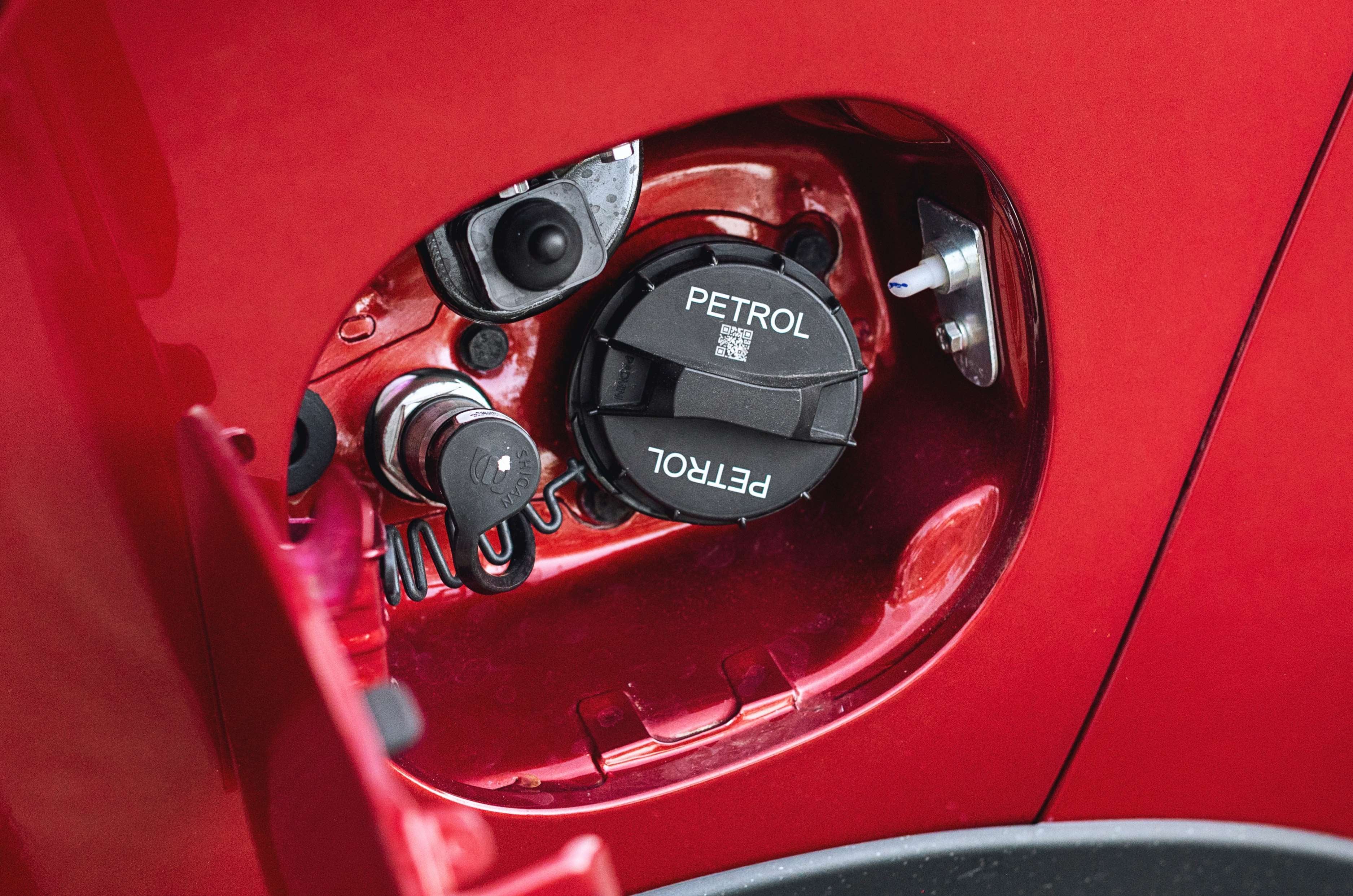
It kills the ignition whenever the fuel lid is opened, offering a layer of safety while filling fuel. 

While we haven’t put the Aeris iCNG through our full test yet, its CNG powertrain should make it considerably more economical to run than the petrol version. Tata is yet to reveal an official efficiency figure, but we expect real-world mileage to be in the 25-30km/kg range. We’ll bring you our tested mileage figures once we put the Aeris iCNG through our standardised test procedures.

Tata Aeris iCNG value for money – 8/10

CNG buyers don’t have to compromise on features, but the AMT isn’t ideal

The Aeris CNG offers good value, but AMT should be chosen only if city driving is a priority. 

The Aeris, priced from Rs 5.70 lakh to Rs 9.10 lakh (ex-showroom), is a more convincing compact sedan than the Tigor ever was. Its modern design, well-equipped cabin, comfortable ride and, most importantly, useful boot space despite the CNG setup give it plenty going for it. The fact that Tata offers the CNG powertrain with higher-spec variants also means buyers don’t have to sacrifice features for lower running costs.

The CNG-AMT powertrain, however, takes some shine off the package. The slow responses, jerky starts and excessive NVH at higher revs make it better suited to relaxed city driving than frequent highway use. Even so, for buyers looking for a practical and well-equipped CNG sedan, the Aeris does make a stronger case than its predecessor and even against its rivals.

Tata Sierra का नया Dark Edition लॉन्च, All Black लुक के साथ मिलेंगे पर्पल क्रोम एक्सेंट, जानें कीमत और फीचर्स

Tata Sierra Dark Edition: Tata ने Sierra का ‘Dark Editon’ लॉन्च किया है, जो पूरी तरह से ऑल-ब्लैक स्पेशल एडिशन है। इसकी शुरुआती कीमत ₹13.99 लाख (एक्स-शोरूम) है और यह 6 ट्रिम्स और 5 इंजन-गियरबॉक्स कॉम्बिनेशन में उपलब्ध है। भारतीय बाजार के लिए यह इसलिए अहम है क्योंकि यह किसी एक वेरिएंट पर लगाया गया सीमित समय का कॉस्मेटिक पैकेज नहीं है, बल्कि यह लगभग पूरी Sierra Legend Series लाइनअप में मिलता है। इससे खरीदारों को एक ही ‘ऑल-ब्लैक’ थीम के साथ अपनी पसंद का ट्रिम चुनने की आजादी मिलती है। बता दें कि Sierra Dark Edition Tata की मौजूदा #DARK रेंज में शामिल हो गया है, जिसमें पहले से ही कई अन्य मॉडल मौजूद हैं। आइए जानते हैं कि #DARK ट्रीटमेंट में असल में क्या-क्या शामिल है और पूरी रेंज में इसकी कीमतें किस तरह तय की गई हैं।

Tata Sierra Dark Edition: एक्स-शोरूम कीमतें

यहां नई Sierra Dark Edition के अलग-अलग वेरिएंट्स की एक्स-शोरूम कीमतें दी गई हैं।

वेरिएंटमैनुअल कीमतऑटोमैटिक कीमत
Pure L #DARK₹13.99 लाख से शुरू₹15.29 लाख से शुरू
Pure L (O) #DARK₹14.59 लाख से शुरू₹15.89 लाख से शुरू
Pure+ L #DARK₹15.29 लाख से शुरू₹16.59 लाख से शुरू
Adventure+ L #DARK₹17.29 लाख से शुरू₹18.59 लाख से शुरू
Accomplished #DARK₹18.29 लाख से शुरू₹20.29 लाख से शुरू
Accomplished+ #DARK₹20.59 लाख₹21.29 लाख से शुरू

Tata Sierra: Dark Edition में क्या खास बदला?

Sierra Dark Edition में ‘Friesian Black’ एक्सटीरियर के साथ ‘Violet Eclipse’ थीम वाला ऑल-ब्लैक लेदरेट केबिन दिया गया है। इसके एक्सटीरियर और इंटीरियर दोनों में पर्पल क्रोम एक्सेंट का इस्तेमाल किया गया है, जो इसके मोनोक्रोम लुक से अलग एक खास पहचान बनाते हैं।

फीचर्स की बात करें तो, Tata Motors का कहना है कि #DARK ट्रिम्स में उनके जैसे ही स्टैंडर्ड Sierra वेरिएंट्स वाले सभी फीचर्स मौजूद हैं। इसका मतलब है कि इसे कम फीचर्स वाले या ज्यादा कीमत वाले स्पेशल एडिशन के बजाय, सिर्फ दिखने और ट्रिम-लेवल में अलग दिखने वाले मॉडल के तौर पर पेश किया गया है।

अलग-अलग वेरिएंट्स की कीमतें कैसे तय की गई हैं?

#DARK ट्रीटमेंट Sierra Legend Series के 6 वेरिएंट्स में उपलब्ध है: Pure L, Pure L (O), Pure+ L, Adventure+ L, Accomplished और Accomplished+। हर वंरिएंट में हर इंजन-गियरबॉक्स कॉम्बिनेशन नहीं मिलता है — बेस Pure L #DARK की कीमत 1.5-लीटर Revotron मैनुअल के साथ ₹13.99 लाख से शुरू होती है, जो Kryojet मैनुअल के साथ ₹15.44 लाख और Revotron डुअल-क्लच ऑटोमैटिक के साथ ₹15.29 लाख तक जाती है, लेकिन इसमें Kryojet या Hyperion ऑटोमैटिक ऑप्शन नहीं मिलते जो ऊंचे वेरिएंट्स में उपलब्ध हैं।

सबसे ऊंचे वेरिएंट, Accomplished+ #DARK की कीमत गियरबॉक्स के चुनाव के आधार पर ₹20.59 लाख से ₹21.59 लाख के बीच है, जिसमें इस ट्रिम पर सिर्फ Kryojet ऑटोमैटिक और Hyperion ऑटोमैटिक ट्रांसमिशन ऑप्शन मिलते हैं। ध्यान दें कि बताई गई कीमतें एक्स-शोरूम हैं।

अगर किसी ग्राहक ने पहले से Sierra का कोई खास वेरिएंट और इंजन-गियरबॉक्स कॉम्बिनेशन तय कर रखा है, तो अब वह उसी वेरिएंट में #DARK एडिशन का विकल्प चुन सकता है। इसके लिए उसे जरूरी नहीं कि अपनी पसंद से ऊपर के किसी दूसरे वेरिएंट पर जाना पड़े।

#DARK एडिशन में मिलने वाली पर्पल-क्रोम डिटेलिंग और ऑल-ब्लैक केबिन को चुनना है या स्टैंडर्ड वेरिएंट को, यह काफी हद तक ग्राहक की अपनी पसंद पर निर्भर करेगा। दोनों के फीचर्स में बड़ा अंतर नहीं है।

यह भी पढ़ें: Kia की 7-सीटर CNG कारें लॉन्च, 60-लीटर टैंक के साथ मिलेंगे ये खास फीचर्स, कीमत ₹12.12 लाख से शुरू

टाटा मोटर्स पैसेंजर व्हीकल्स ने बदली पहचान, अब Tata.Cars नाम से दिखेगी कंपनी

टाटा ग्रुप की पैसेंजर गाड़ी बनाने वाली कंपनी Tata Motors Passenger Vehicles (TMPV) अब ग्राहकों के सामने Tata.Cars नाम से नजर आएगी। कंपनी के MD और CEO शैलेश चंद्रा ने यह जानकारी दी। अब डीलरशिप, शोरूम और मार्केटिंग में Tata.Cars नाम ज्यादा दिखेगा।

हालांकि, कंपनी का कानूनी नाम नहीं बदला है। Tata Motors Passenger Vehicles ही कंपनी की रजिस्टर्ड कॉरपोरेट एंटिटी रहेगी। यह बदलाव सिर्फ ग्राहकों के सामने कंपनी की पहचान को लेकर है।

Tata.Cars नाम क्यों अपनाया?

पैसेंजर गाड़ी कंपनी Tata Motors अपने इस कारोबार की अलग पहचान मजबूत करना चाहती है। कंपनी पेट्रोल और डीजल के साथ इलेक्ट्रिक गाड़ियां भी बेचती है। ऐसे में Tata.Cars नाम के जरिए पैसेंजर गाड़ी कारोबार को एक साफ ब्रांड पहचान देने की कोशिश है।

EV पर Tata ने कब लगाया था दांव?

Tata Motors Passenger Vehicles ने इलेक्ट्रिक गाड़ियों पर उस समय दांव लगाया था, जब भारत में EV का बाजार काफी शुरुआती दौर में था। उस समय लोगों को इलेक्ट्रिक गाड़ियों पर ज्यादा भरोसा नहीं था। चार्जिंग स्टेशन भी बहुत कम थे।

यानी समस्या दोनों तरफ थी। ग्राहक चार्जिंग की कमी के कारण EV नहीं खरीद रहे थे। कंपनियां कम EV होने की वजह से चार्जिंग नेटवर्क पर बड़ा निवेश नहीं कर रही थीं। Tata Motors ने इस चक्र को तोड़ने की कोशिश की।

Tata Group की कंपनियों ने दिया साथ

EV का पूरा इकोसिस्टम बनाने में Tata Group की कई कंपनियों ने मदद की। Tata Power ने चार्जिंग नेटवर्क में सहयोग किया। Tata AutoComp ने कंपोनेंट्स में मदद की। Tata Technologies, Tata Elxsi और TCS ने इंजीनियरिंग और टेक्नोलॉजी से जुड़ा सपोर्ट दिया।

कंपनी का मानना था कि EV से प्रदूषण कम करने में मदद मिलेगी। इससे इंपोर्टेड फॉसिल फ्यूल पर निर्भरता भी घट सकती है। बाद में Tata Motors भारत के इलेक्ट्रिक पैसेंजर गाड़ी बाजार की प्रमुख कंपनियों में शामिल हो गई।

Tata Motors Passenger Vehicles शेयर

Tata Motors Passenger Vehicles का शेयर गुरुवार, 27 अगस्त को 0.86% बढ़कर ₹315.80 पर बंद हुआ। पिछले 6 महीने में स्टॉक 17.47% गिरा है। वहीं, 1 साल में यह 22.77% टूटा है। कंपनी का मार्केट कैप 1.15 लाख करोड़ रुपये है।

Stock in Focus: सरकार कंपनी को ₹134 करोड़ के 5 ऑर्डर मिले, शेयरों पर रहेगी नजर

Disclaimer: यहां मुहैया जानकारी सिर्फ सूचना के लिए दी जा रही है। यहां बताना जरूरी है कि मार्केट में निवेश बाजार जोखिमों के अधीन है। निवेशक के तौर पर पैसा लगाने से पहले हमेशा एक्सपर्ट से सलाह लें। मनीकंट्रोल की तरफ से किसी को भी पैसा लगाने की यहां कभी भी सलाह नहीं दी जाती है।