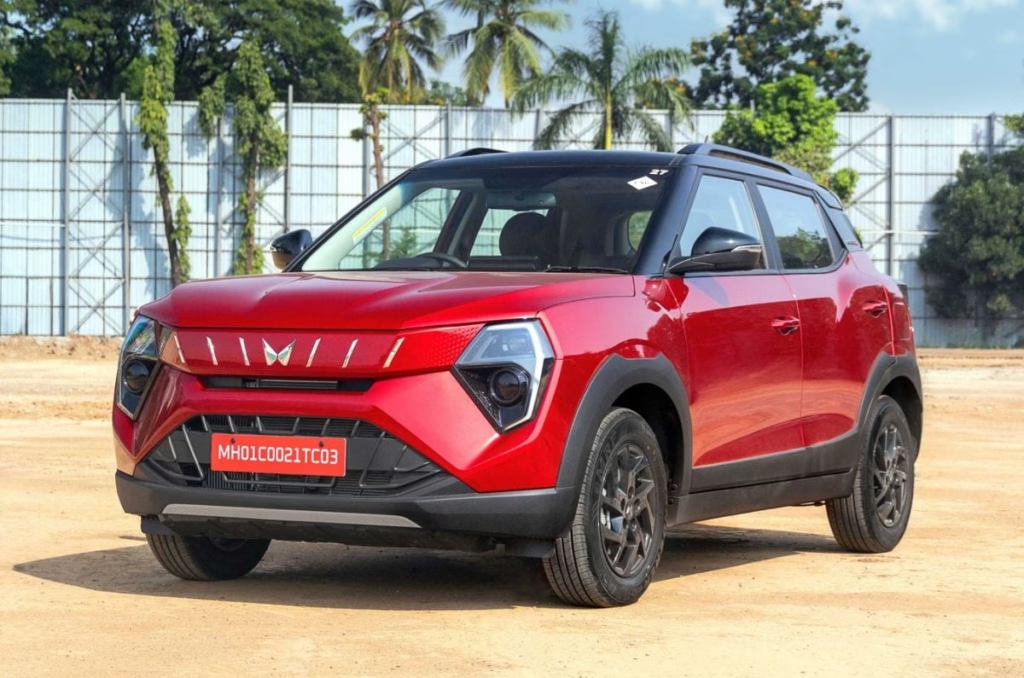
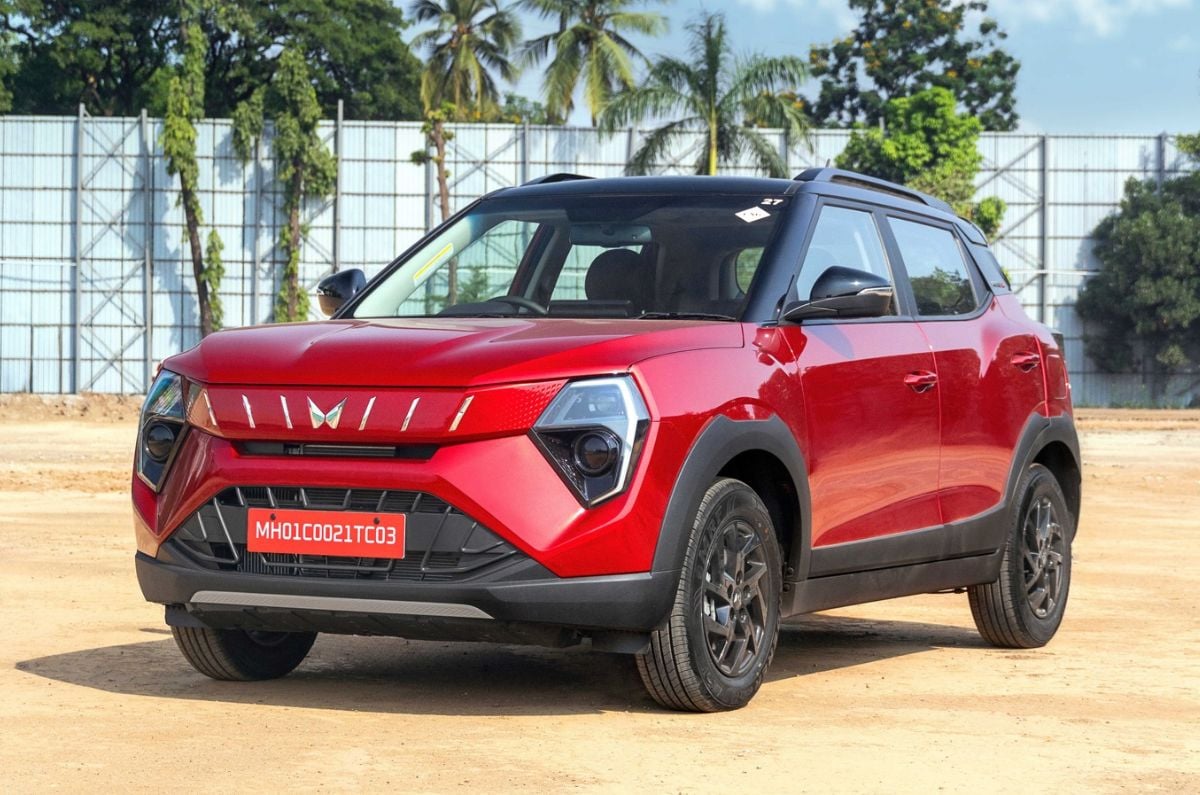
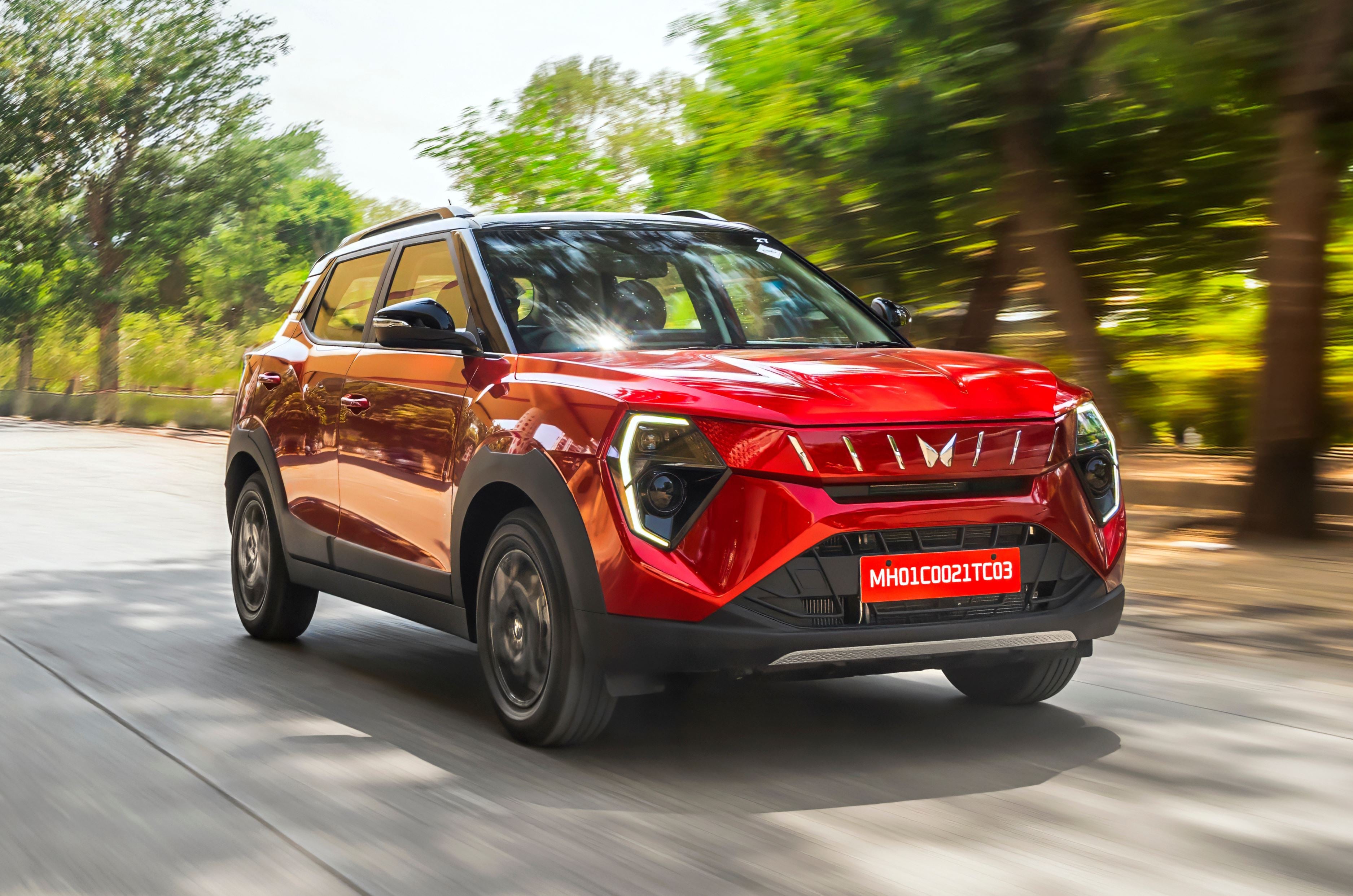
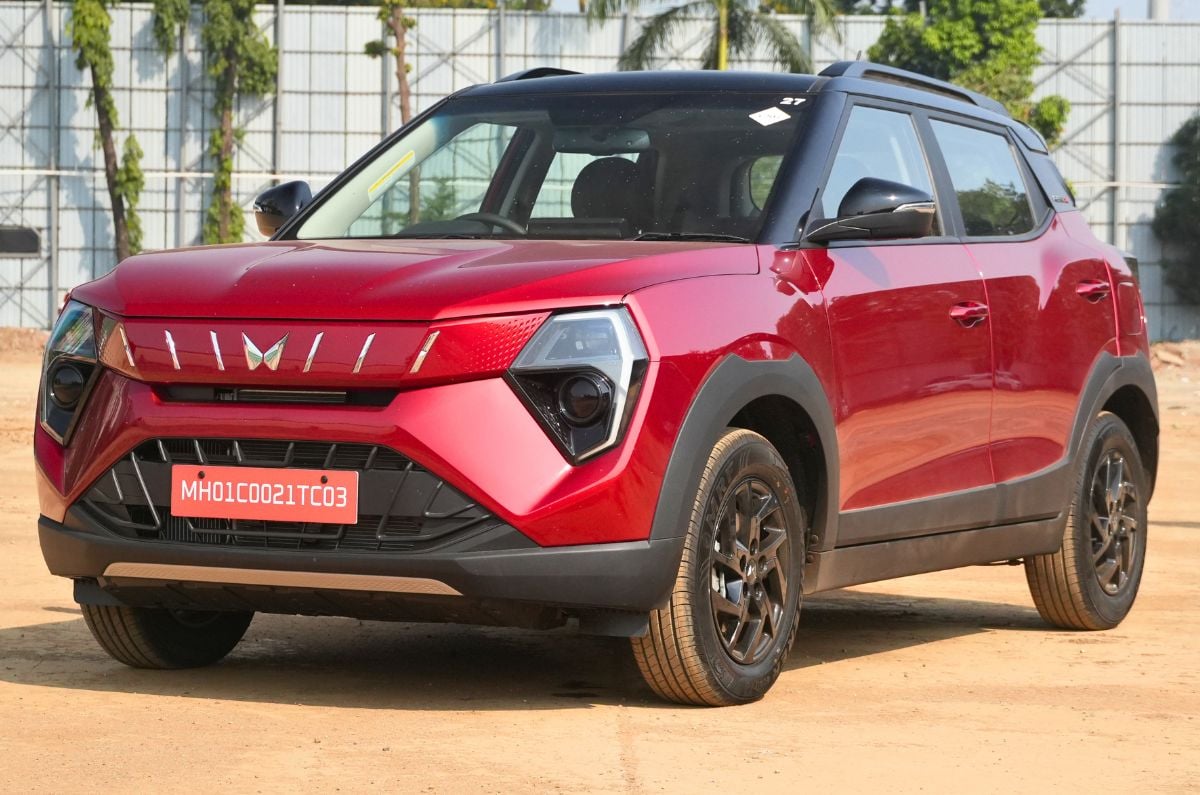
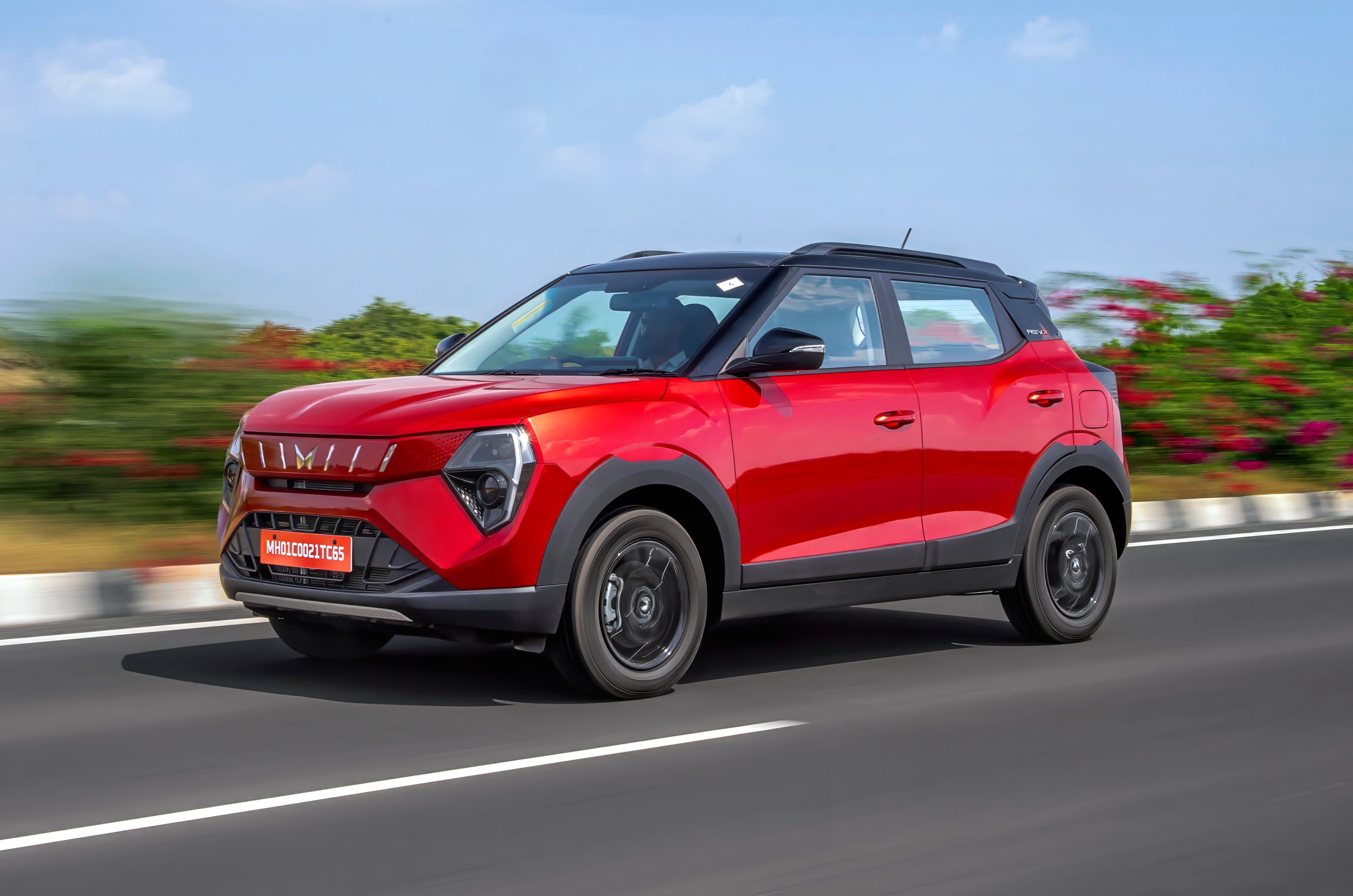
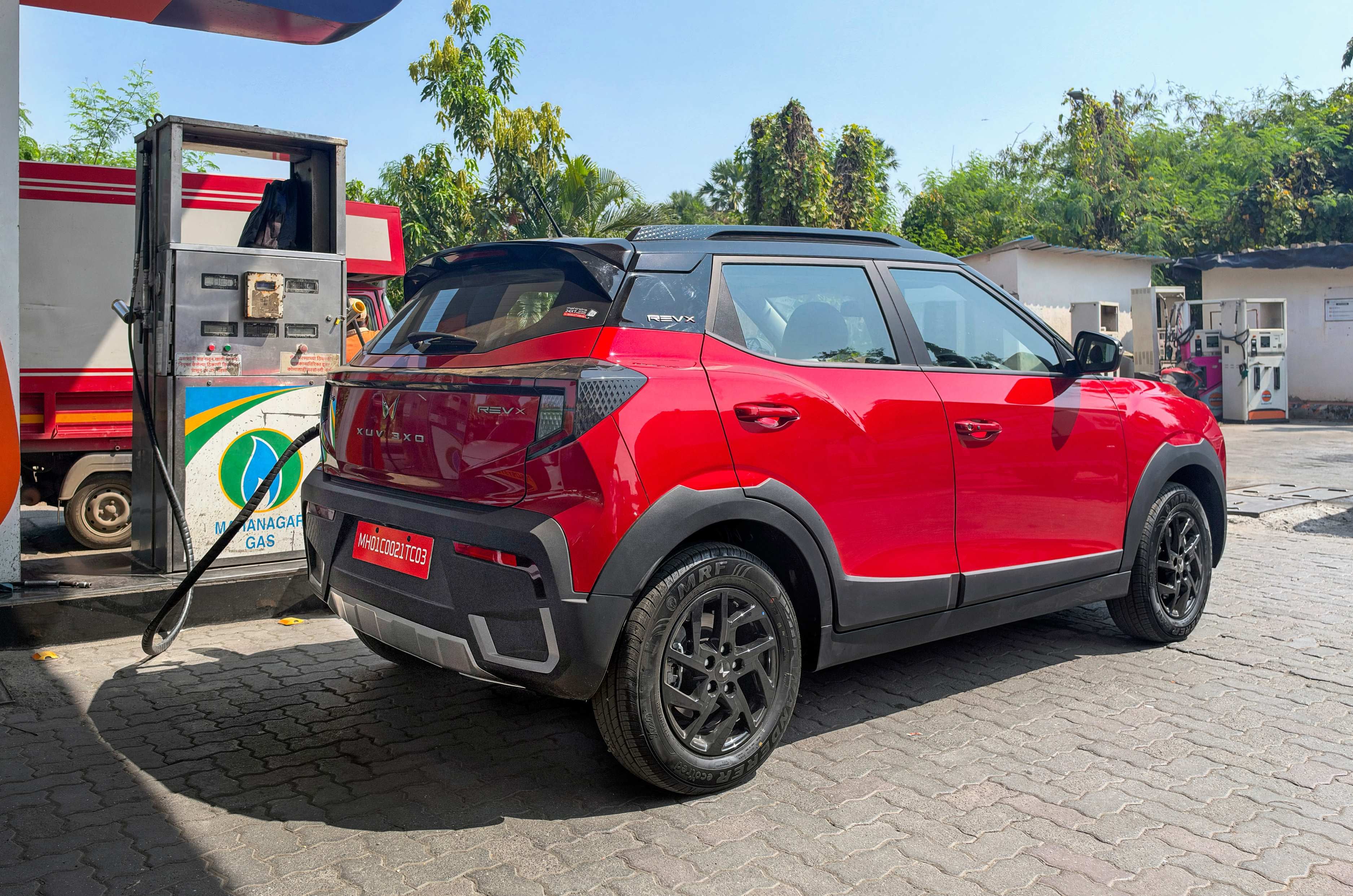
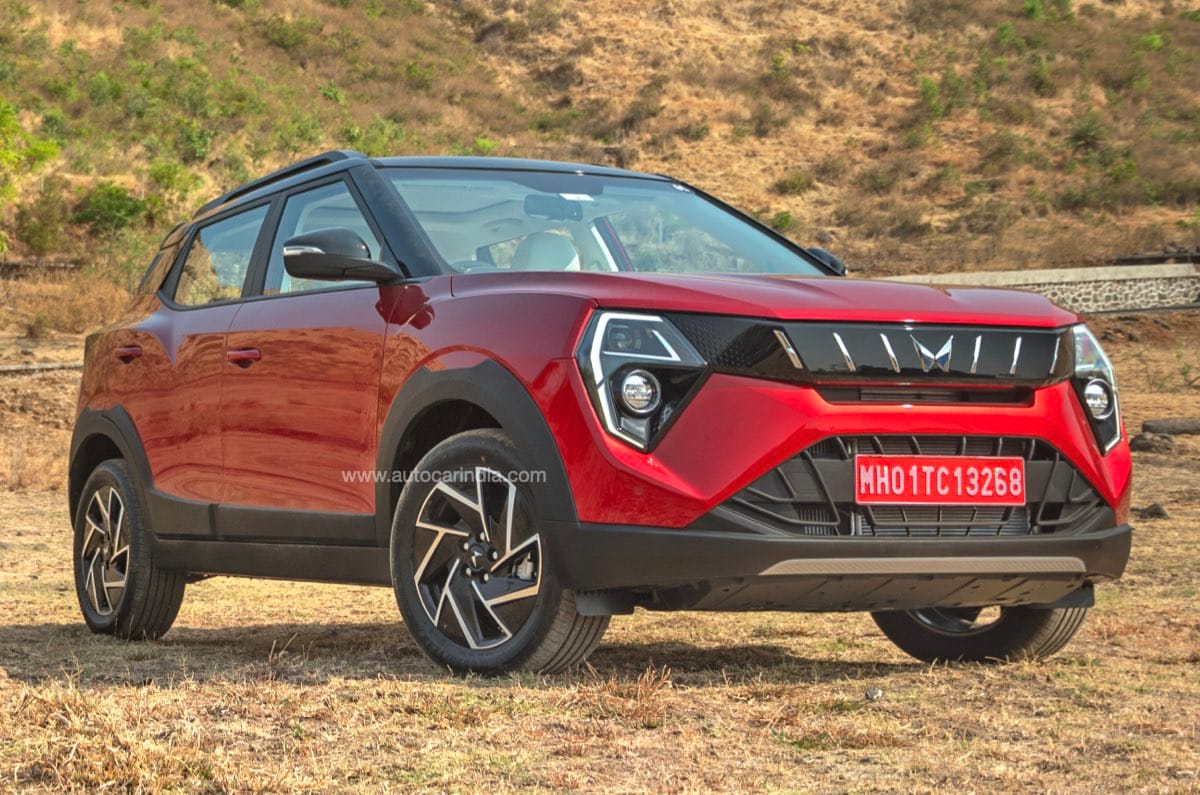
The Mahindra XUV 3XO ZNG takes on the Tata Nexon iCNG and the Maruti Brezza CNG in the CNG compact SUV space. Priced from Rs 9.99 lakh to Rs 12.27 lakh (ex-showroom), it carries a premium of Rs 1 lakh to Rs 1.2 lakh over the corresponding petrol versions. Before signing on the dotted line, here are the key strengths and weaknesses of this Mahindra SUV.
Reasons to buy the Mahindra XUV 3XO CNG
Strong performance on CNG
The XUV 3XO CNG loses none of its power when running on gas
The 1.2-litre MPFI (multi-point fuel-injected) turbo-petrol engine of the XUV 3XO CNG is the same unit found in the lower and mid-spec petrol trims. Here it develops 111hp and 200Nm in both petrol and CNG modes. While there’s some turbo lag below 2,000rpm, the engine pulls eagerly once it crosses that mark. This unit is also notable for its refinement and tractability, rarely requiring one to drop down to first gear, for going over speed breakers, for example.
Switching between petrol and CNG is seamless as well, and few would be able to tell which fuel the XUV 3XO ZNG is running on. While we’re yet to test it, Mahindra claims a mileage of 24.7km/kg for this compact SUV, translating to a theoretical range of 247km on CNG.
Comfy ride and tidy handling
Mahindra has retuned the suspension to accommodate the extra heft of the CNG kit
The CNG hardware adds around 100kg to the XUV 3XO’s kerb weight, with the majority of it being over the rear axle. Mahindra has reworked the suspension to compensate for this heft. The result is a slightly firm ride but one that deals with bad roads quite well.
Adding to the overall comfort here are the 16-inch wheels wrapped with high-profile tyres. These manage to cushion the cabin from sharp bumps. The XUV 3XO CNG rides better than most cars in its segment. What’s good is that this ride comfort doesn’t come at the cost of sloppy handling. In fact, this Mahindra SUV feels tight and planted around corners. The steering is direct and doesn’t require much effort, with drivers being offered three steering modes for flexibility.
Upmarket cabin
This cabin is just as plush as that of the petrol and diesel versions
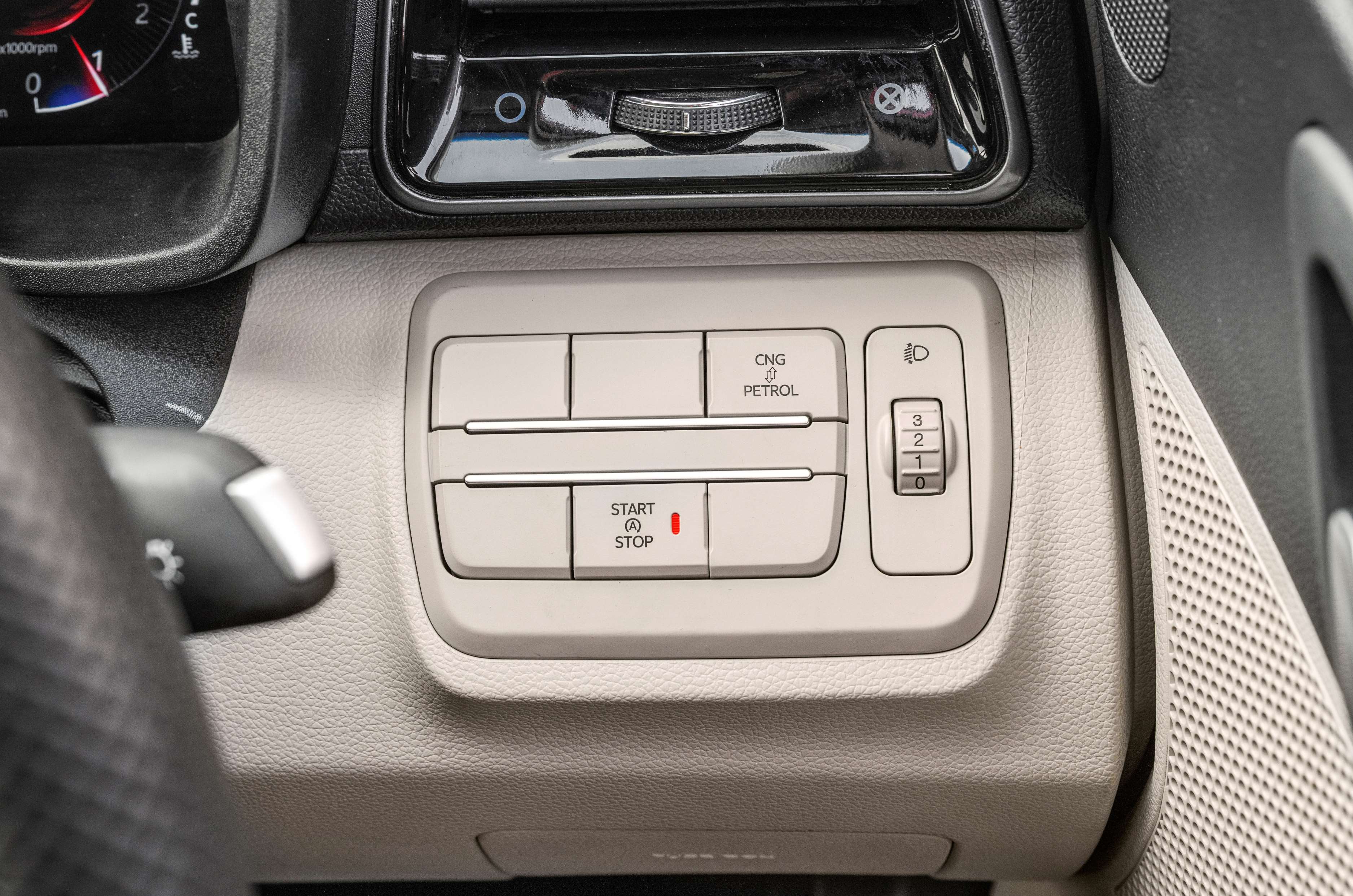
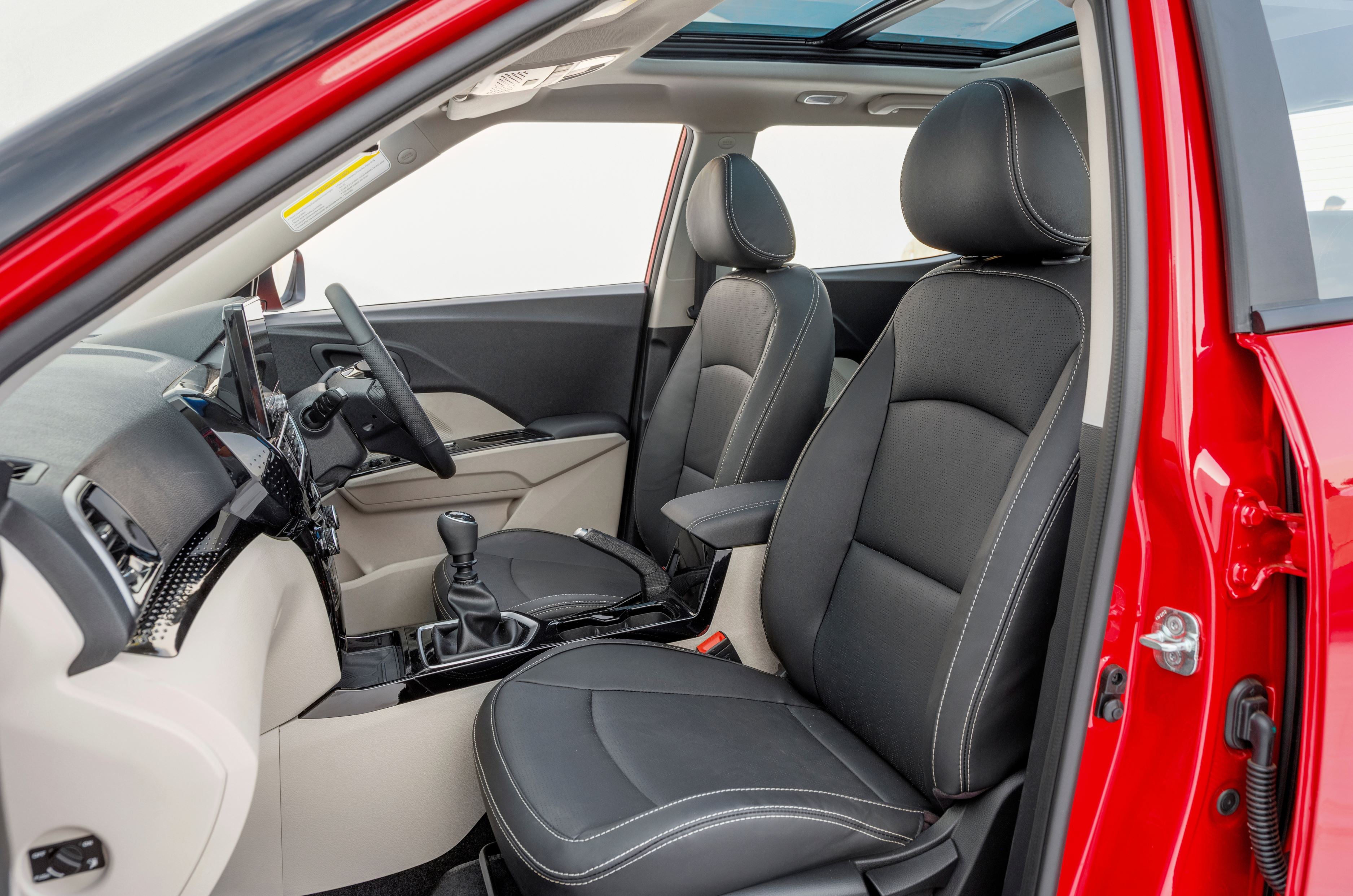
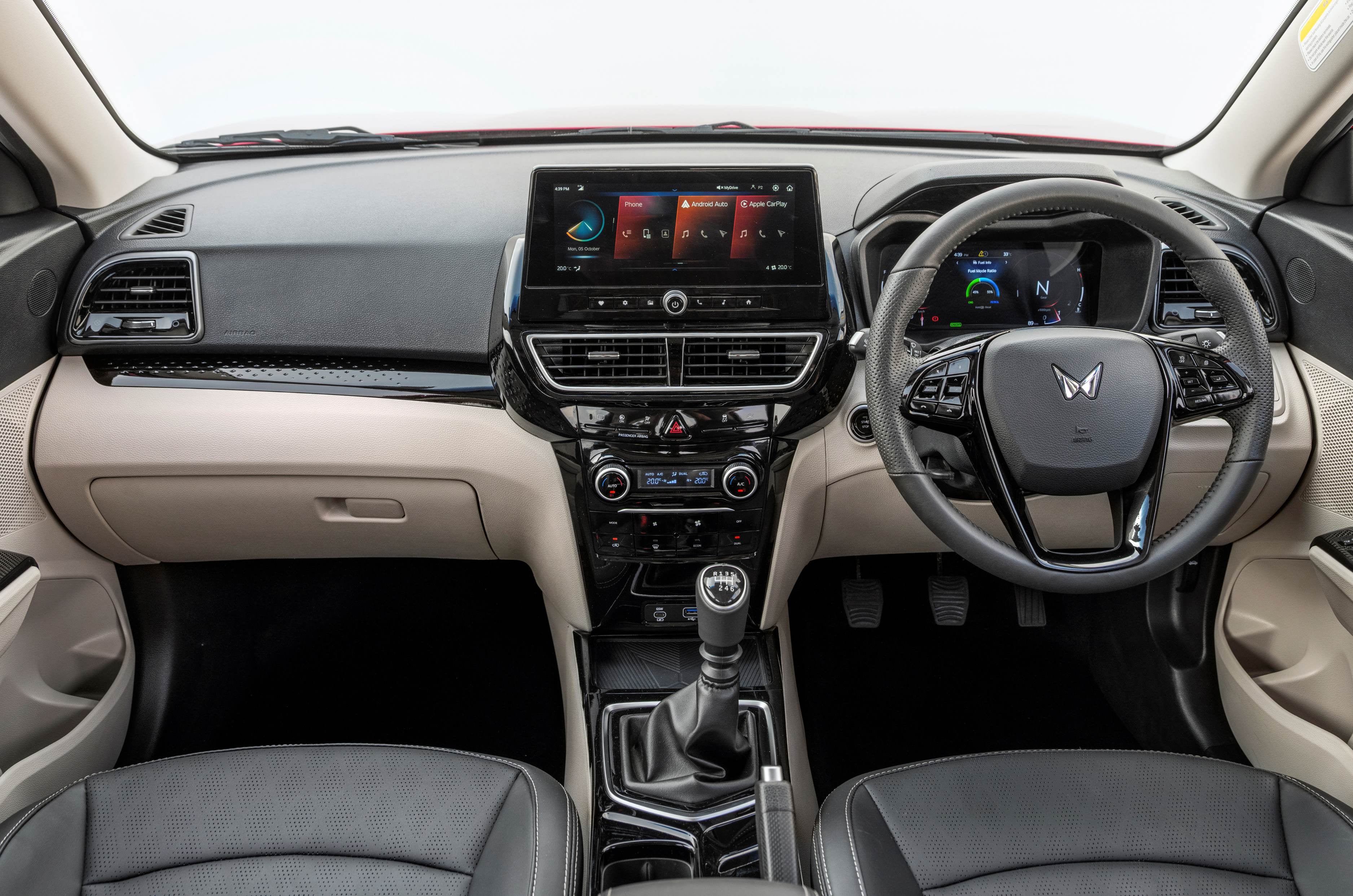
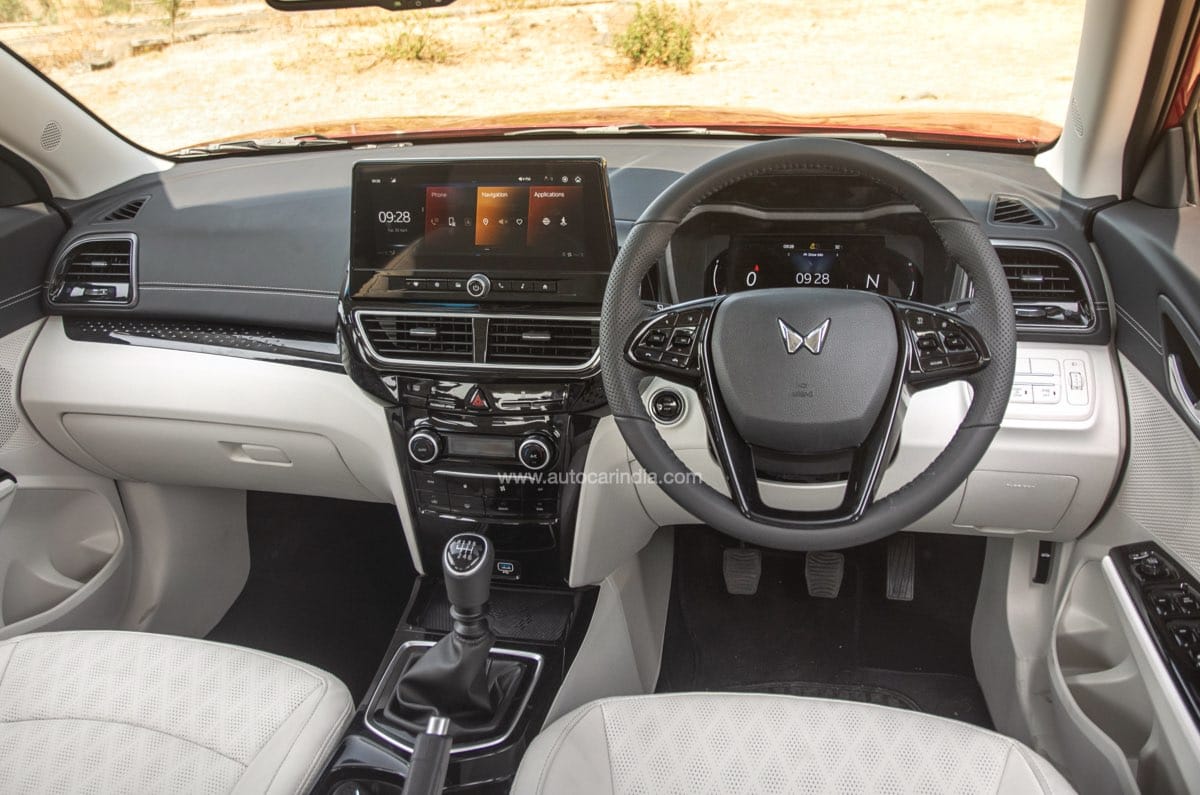
A CNG switch next to the steering wheel aside, the cabin of the XUV 3XO CNG is identical to that of non-CNG versions. While it can’t be had in equally top-end trim levels, the CNG version is available with a dual-tone dashboard, gloss black accents and leatherette upholstery. Overall, there’s a feeling of good build that’s backed by a sense of premiumness. Meanwhile, the rear seat is quite roomy for the class and can accommodate three adults without much fuss.
The top-spec RevX A trim gets twin 10.25-inch screens, a panoramic sunroof and a 6-speaker audio system with Dolby Atmos. Mahindra says the CNG version is engineered to match the five-star Bharat NCAP safety rating of other combustion-powered XUV 3XO versions. Standard safety features here include 6 airbags, stability control, ISOFIX anchors and a reversing camera.
Reasons not to buy the Mahindra XUV 3XO CNG
Small boot
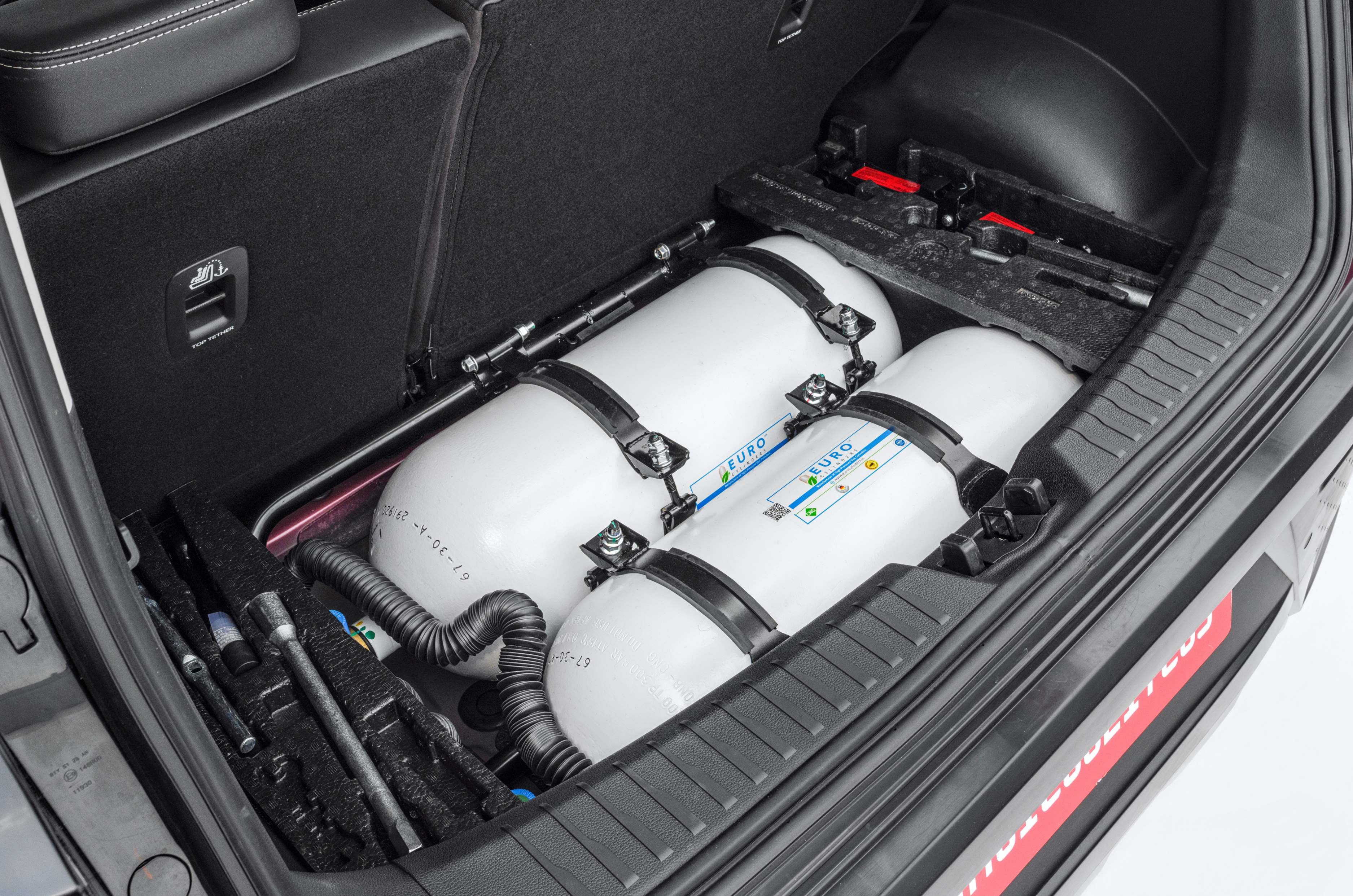
The twin-tank setup eats into what was already a small boot
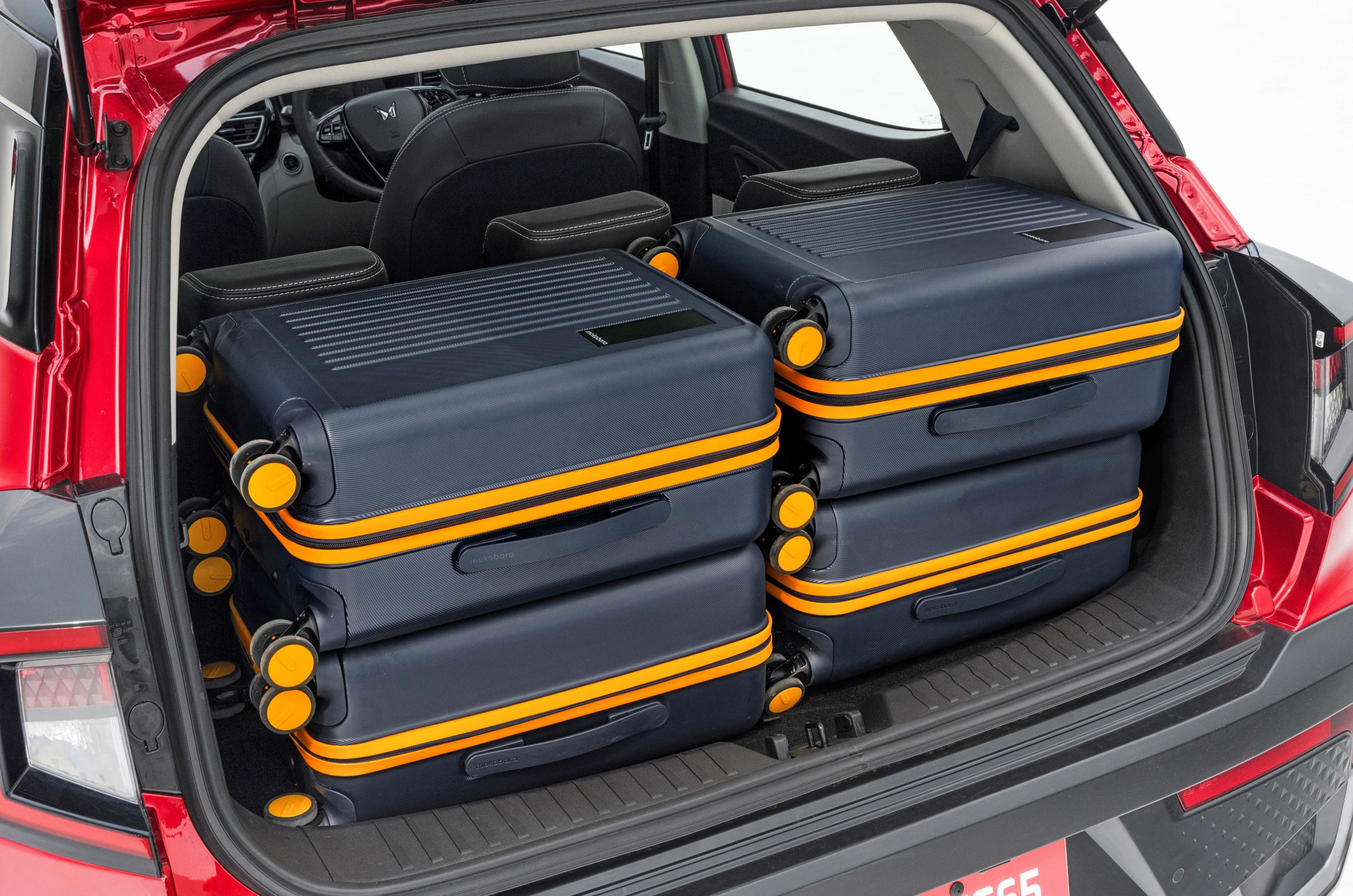
The 295-litre boot of the XUV 3XO was already the most compact in the segment. Despite moving the spare wheel under the car’s body and fitting the twin cylinders beneath the boot floor, the XUV 3XO CNG’s boot is even more compromised – offering just 270 litres of cargo space. It’s only its width that allows up to four cabin-sized bags to be stored.
Cabin niggles
The XUV 3XO CNG’s interior isn’t devoid of ergonomic flaws
While the black leatherette seats look sporty, they don’t get a ventilation function. This means that, on a bright sunny day, they will heat up quite quickly. If you’ve a larger build, the front seats of the XUV 3XO CNG will feel lacking in space. Adding to the ergonomic niggles is the steering wheel, which cannot be adjusted for reach, making it harder to find a comfortable driving position. Lastly, not only is the XUV 3XO CNG’s driver footwell cramped, there’s also no dead pedal.
Limited options
Customers get only mid-spec trim levels with the CNG version
The CNG version of the Mahindra XUV 3XO is sold in just four trim levels, all of which are mid-spec options within the broader line-up. This limitation becomes obvious given the lack of a 360-degree camera, ventilated front seats, or a wireless charging pad – these are available in the Nexon iCNG. There are no fog lamps, either. Another limitation is that the CNG version only comes with a 6-speed manual, which has long throws and a fair amount of clutch pedal travel.
CNG is shaping up to be the new diesel. For the second year running, CNG passenger vehicles outsold diesels, accounting for 21.98 percent of the market compared to 18.08 percent for oil burners in FY2026. That is a very big deal. Big enough for Mahindra – traditionally a diesel-first brand – to sit up, take notice and want a piece of the action. Its first attempt – if you don’t count the fleet-only KUV100 CNG – is the Mahindra XUV 3XO ZNG. Read as Zee-NG and pronounced Zing. The headline is that it makes the same amount of power as the pure-petrol 3XO TCMPFi. We experienced it in Mumbai to see if it really has zing.
Mahindra XUV 3XO ZNG Exterior Design and Engineering – 7/10
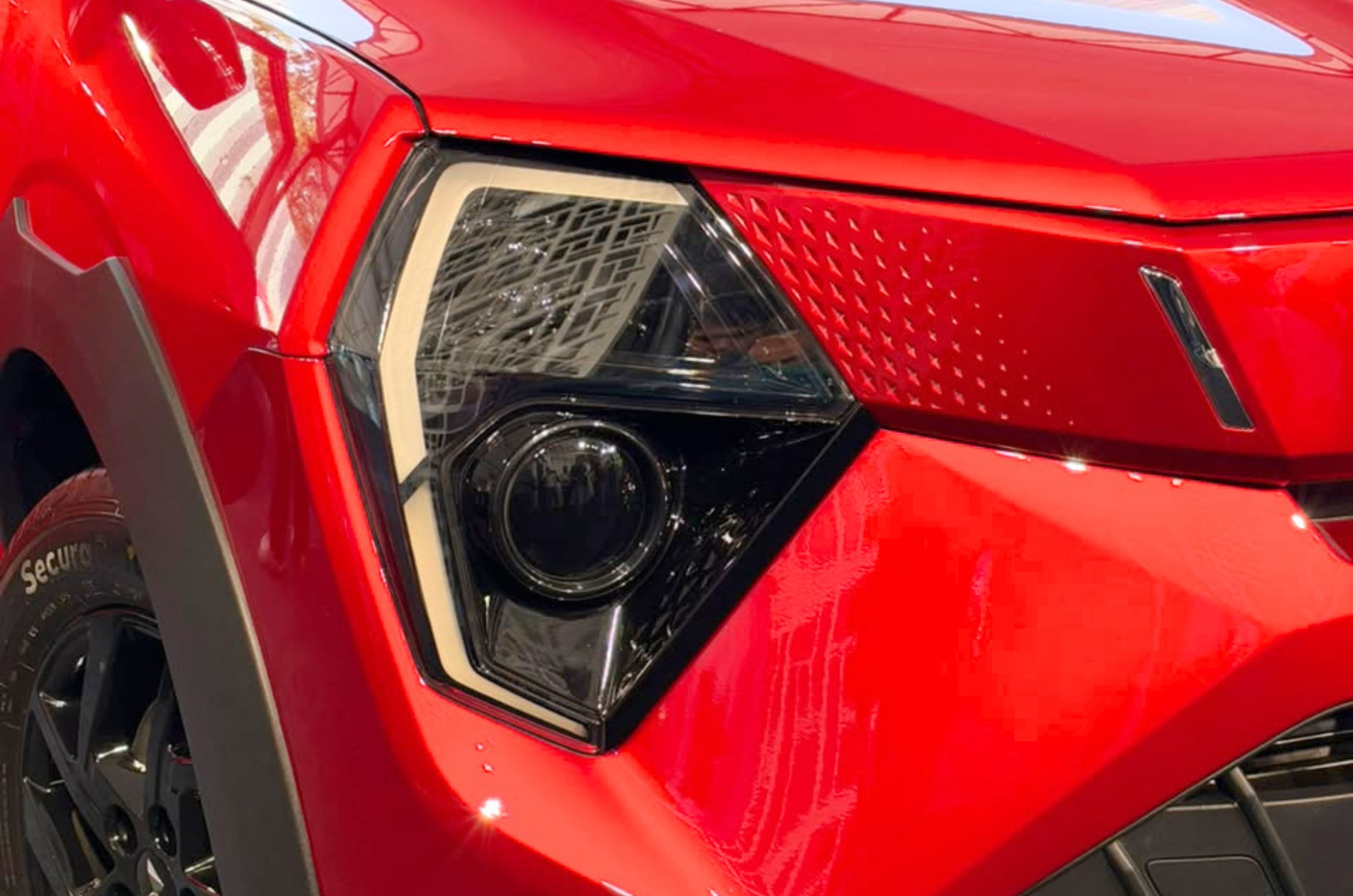
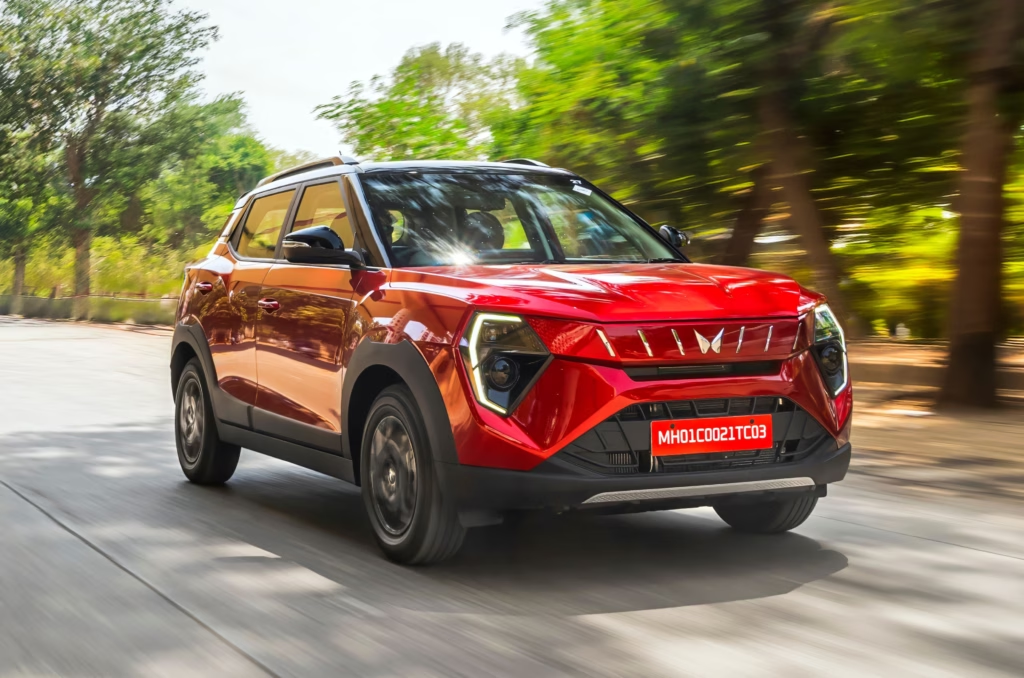
Outside, there isn’t much to tell the ZNG apart from the regular XUV 3XO. Our test car is based on the REVX trim and gets a body-coloured grille, while other trims gloss black. LED lighting is present, though fog lamps are missing even on the top REVX A CNG trim.
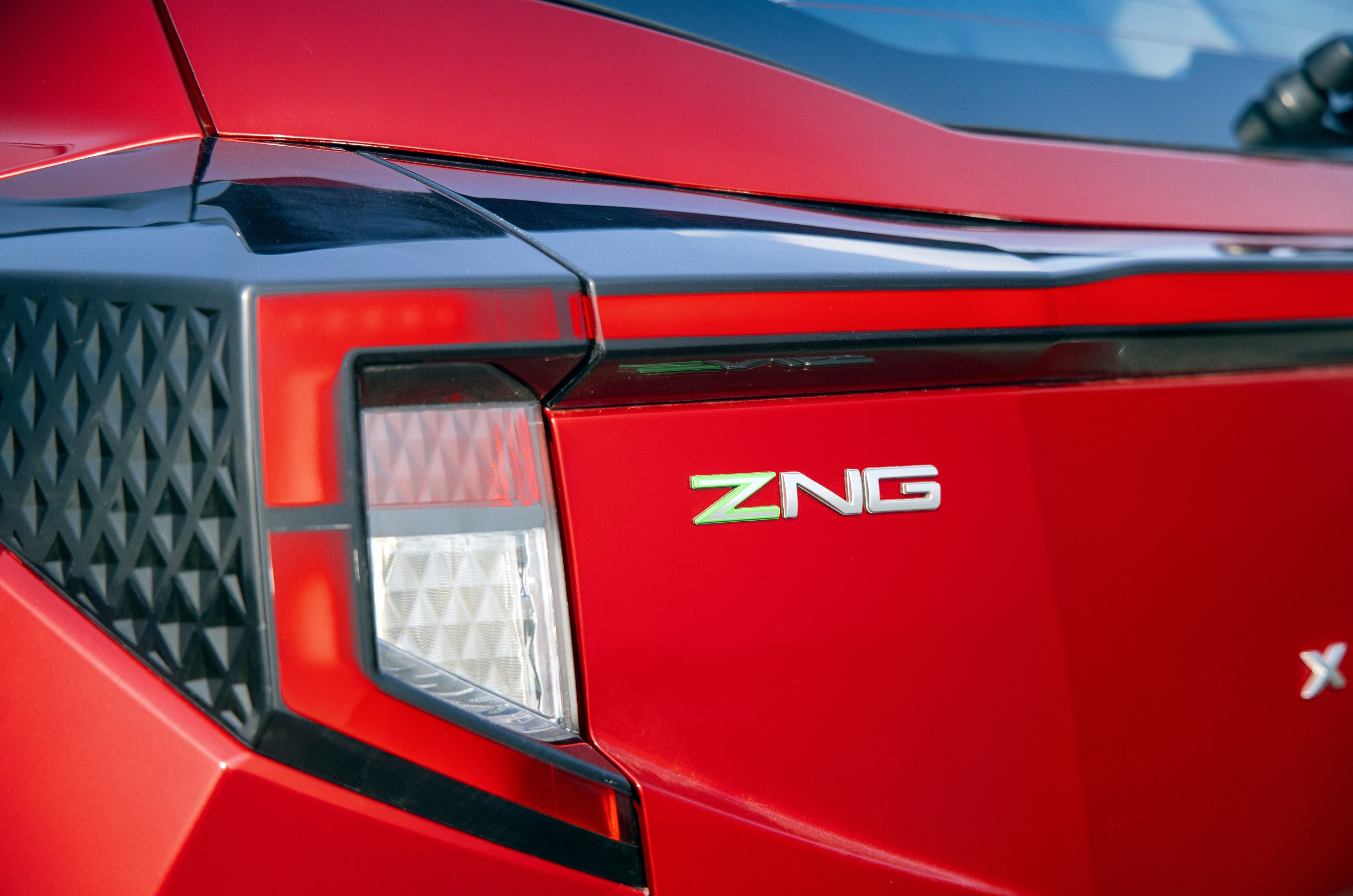
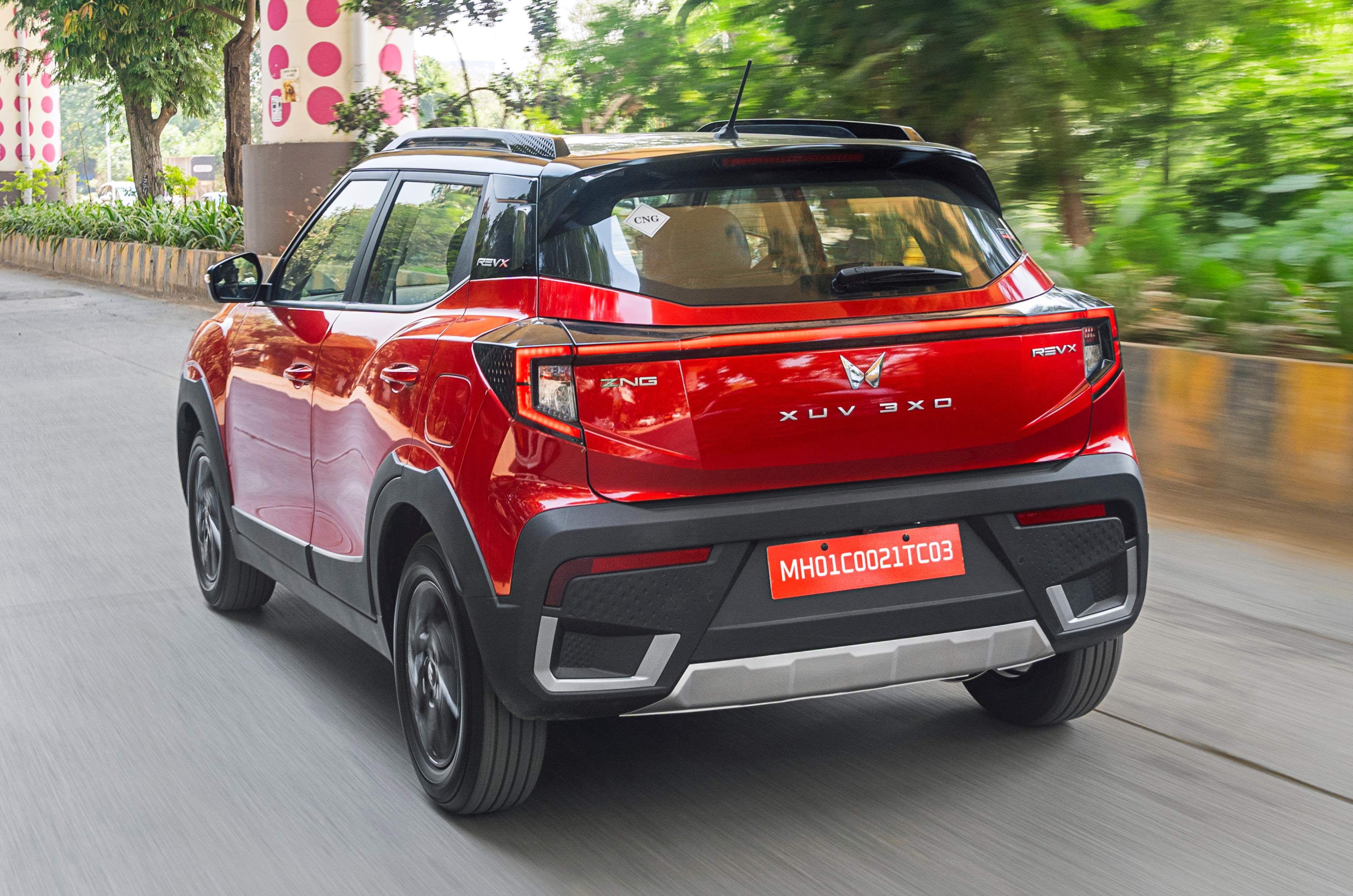
ZNG badge on the tailgate is the only exterior telltale of the CNG powertrain.
In profile, you’ll notice the gloss black 16-inch wheels – the largest size available on the ZNG, with 17s reserved for the pure-petrol TGDi. At the rear is the clearest giveaway of its CNG powertrain: a ZNG badge on the tailgate.
XUV 3XO ZNG Interior Space and Comfort – 8/10
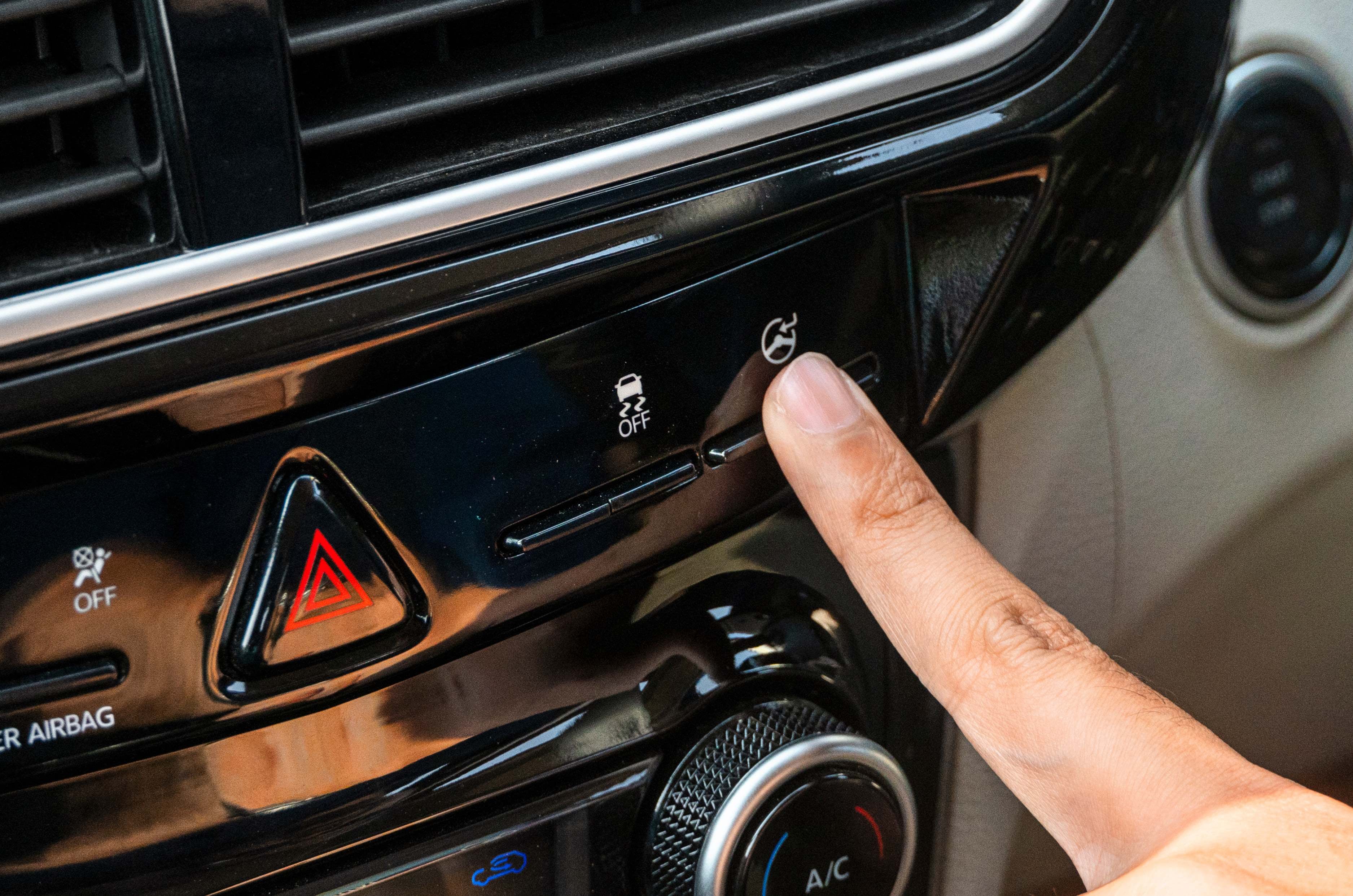
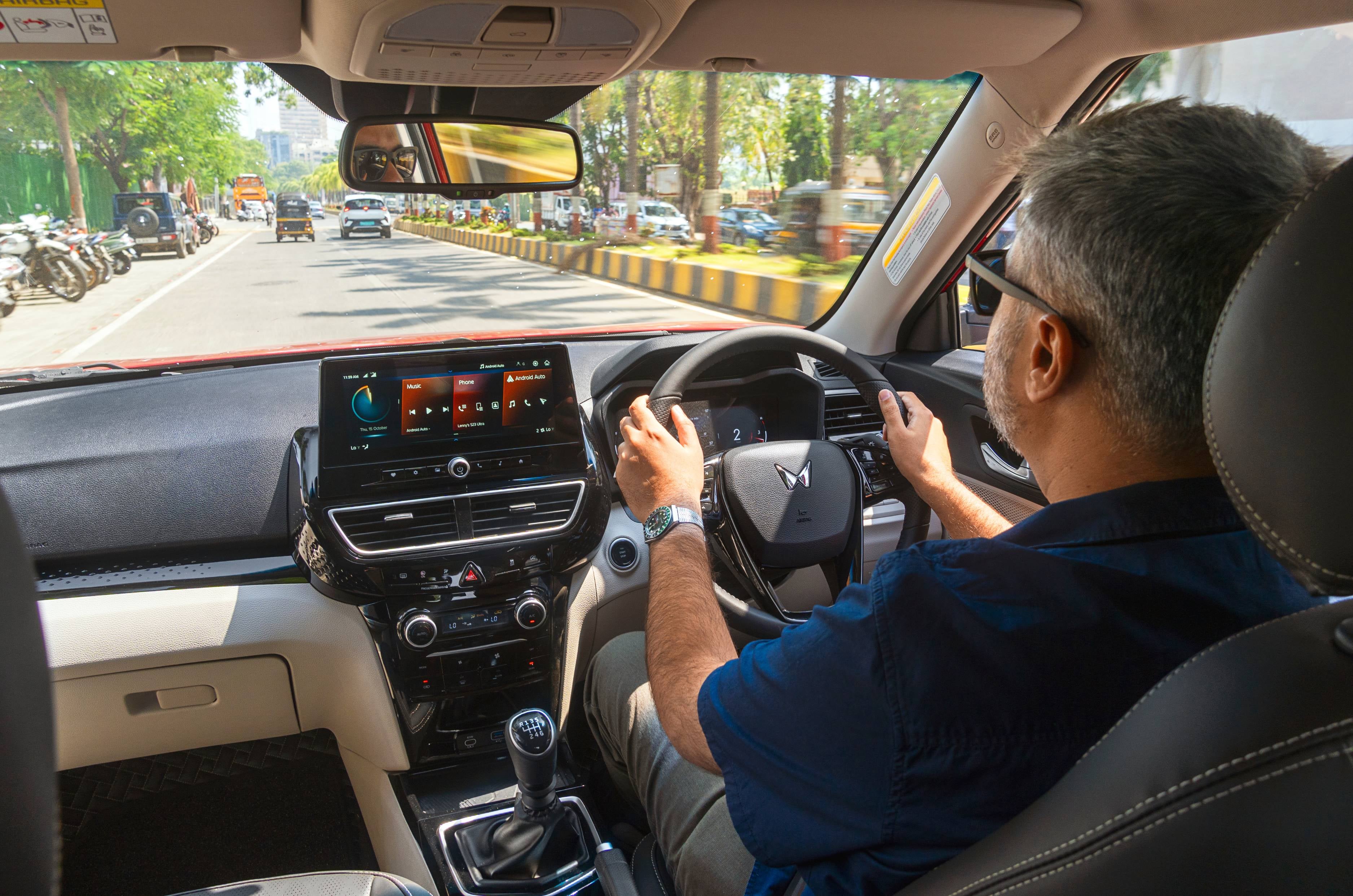
Inside, too, the ZNG is largely identical to its petrol and diesel counterparts, with a CNG switch to the right of the steering wheel being the only real giveaway. The dual-tone dashboard with lots of gloss black trim is otherwise carried over unchanged. Despite not being the top of the line variant, the cabin has an upmarket and well-trimmed air to it.
Our REVX A test car gets black leatherette seats, which can get quite hot, and they lack ventilation, just like the regular 3XO. The front seats are also a bit tight for larger frames, and the lack of a telescoping steering makes it hard to get comfy. Another ergonomic gripe is the tight driver’s footwell, with no dead pedal – pertinent as a six-speed manual is your only gearbox option.
The rear seat remains spacious and comfortable for its segment, and accommodating three abreast is not an issue. One area where the 3XO fell short was boot space, measuring just 295 litres – the smallest in the segment. To keep as much of the boot intact as possible, Mahindra has moved the space-saver spare under the body and placed a dual-tank setup under the boot floor. The combined liquid capacity of the tanks is 60 litres, which translates to 10kg of CNG capacity.
Boot capacity has dropped to 270 litres, which is smallest amongst immediate rivals, however it remains fairly wide and can accommodate up to four cabin bags.
Mahindra XUV 3XO ZNG Features and Safety – 8/10
The 3XO ZNG is available in four trims, which offer the same features as their petrol and diesel counterparts. The highlights are a pair of sharp 10.25-inch screens for infotainment and instrumentation, a panoramic sunroof and a six-speaker audio system with Dolby Atmos.
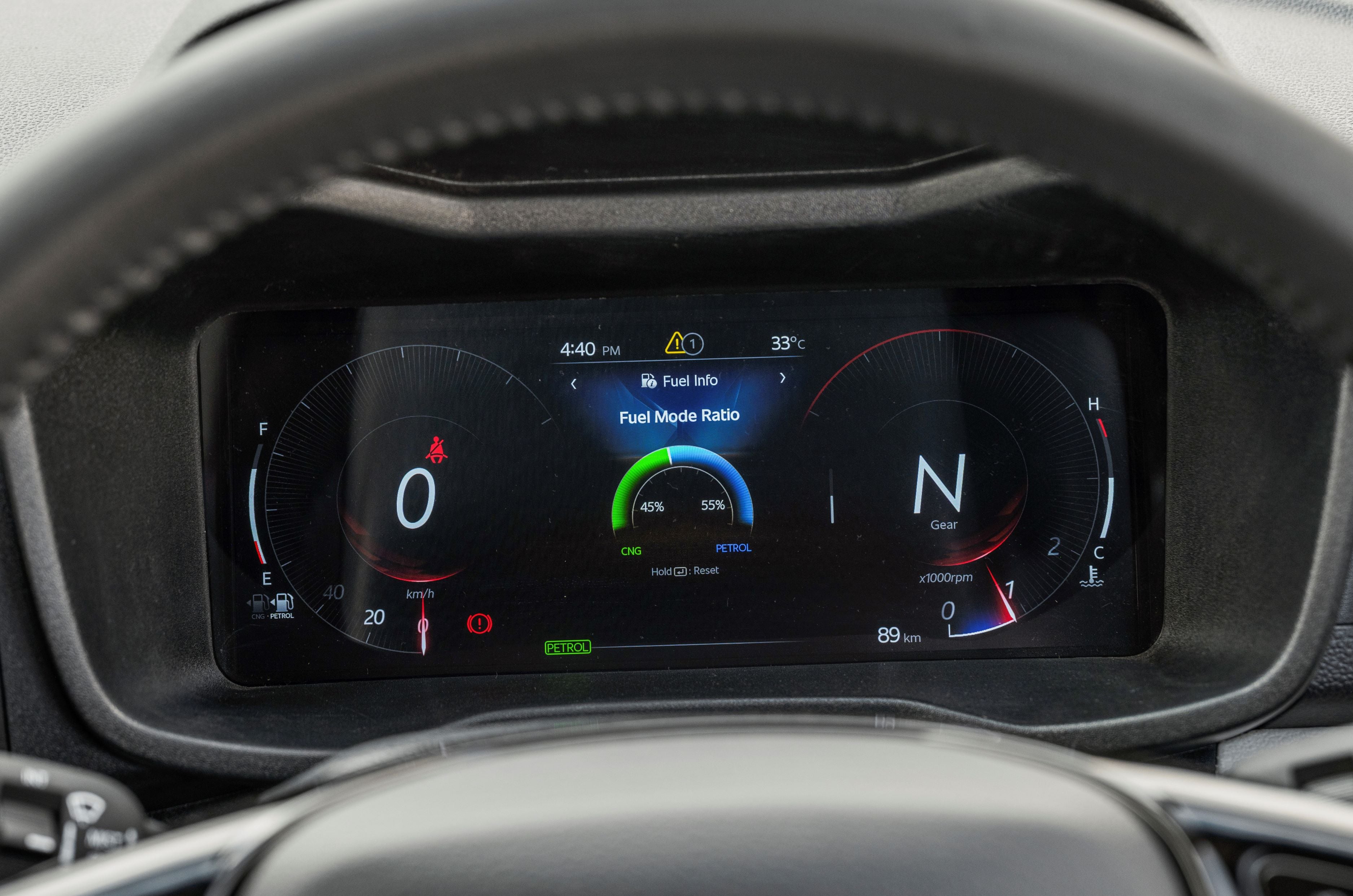
The digital instrument cluster has a few more CNG-related functions. Hit the CNG switch, and an indicator on the digital instrument cluster confirms the fuel you are using, while the fuel gauge changes to display the fuel level. The cluster can also show the ratio of time spent in each fuel mode and the corresponding fuel efficiency.
As such, the 3XO ZNG is reasonably well equipped compared to equivalent variants of its main rival, the Tata Nexon iCNG. However, the Nexon offers a wider choice of CNG variants, with top-spec versions getting features such as a 360-degree camera, ventilated front seats and a wireless charger, all of which the Mahindra misses out on.
The safety kit is quite comprehensive, featuring six airbags, ESC, ISOFIX mounts, a tyre pressure monitoring system and a reversing camera. The regular XUV 3XO is also a five-star Bharat NCAP safety-rated car, and Mahindra says the ZNG has been engineered to meet the same standards.
Mahindra XUV 3XO ZNG Performance and Refinement – 8/10
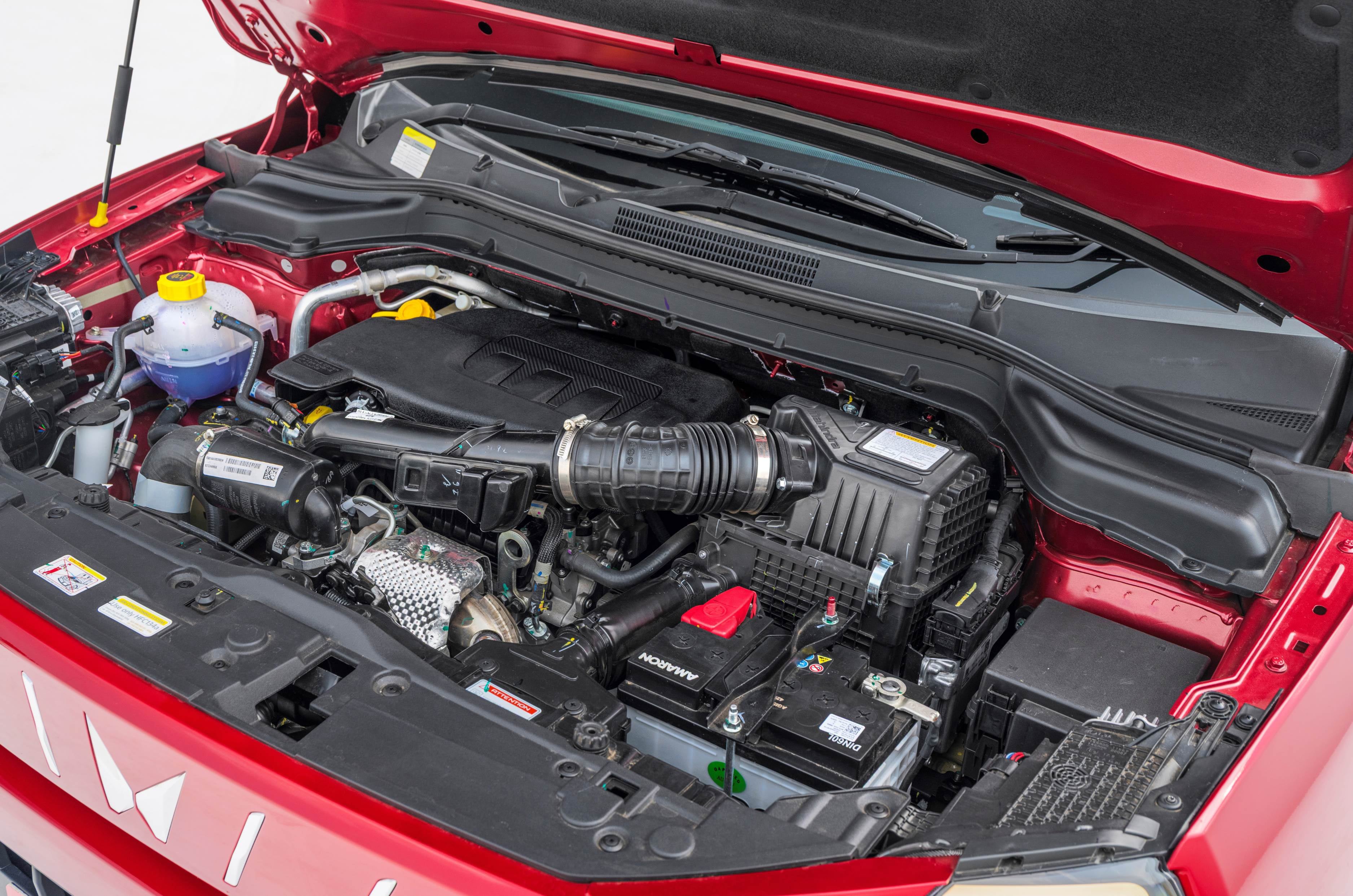
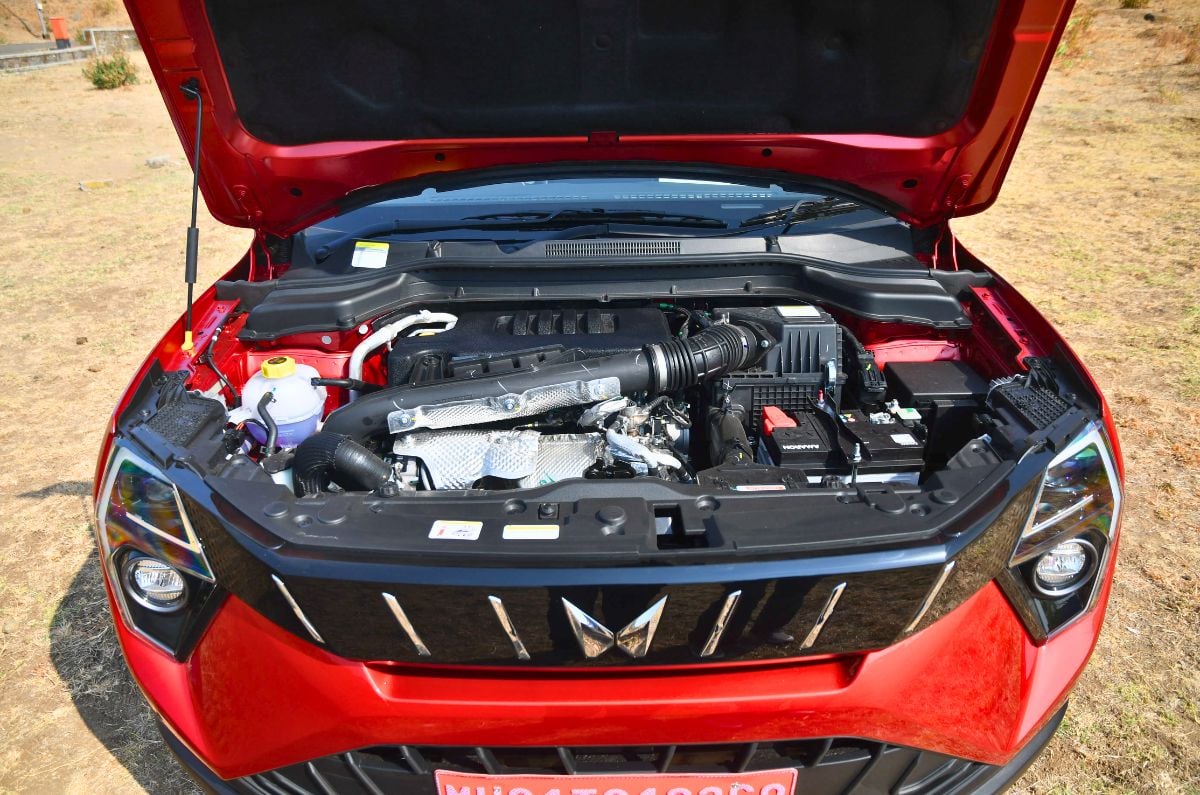
Powering the ZNG is the same 1.2-litre multi-point fuel injection (MPFi) turbo-petrol engine that does duty on the lower and mid-level trims of the 3XO. The kicker is that Mahindra quotes the exact same power and torque figures for CNG as for the pure-petrol version – 111hp and 200Nm. That is highly unusual, as a 10 to 15 percent drop in power figures is the norm. For comparison, its direct rival, the Tata Nexon iCNG, loses 20hp when switching from petrol to CNG. Mahindra says it has managed this with the use of a 10-bar CNG injection system. It also says the turbocharger and ECU calibration have been optimised to run on CNG, and initial impressions seem to back this up.
1.2-litre TCMPFI engine uses a 10-bar CNG injection system; Mahindra claims identical 111hp and 200Nm figures for petrol and CNG.
In everyday driving, the difference between CNG and petrol modes is barely noticeable. The engine feels smooth and refined in both, only becoming audible when extended. Performance, too, is very similar. Throttle response is good and the motor feels tractable, rarely requiring a shift into first when negotiating a speed breaker. There is a bit of turbo lag below 2,000rpm, but get past this and performance feels brisk.
The switch between modes is also quite seamless, with no apparent jerkiness or change in engine note. However, switch back and forth a few times, and you’ll notice the throttle response is ever so slightly duller in CNG mode, and there are times when it will hesitate on sudden throttle inputs. Overall, though, calibration in CNG mode is very good, and in everyday driving, there is very little to fault.
Performance feels brisk once you get past 2000rpm.
While the pure-petrol version of this engine can be had with a six-speed torque-converter automatic, the ZNG is only available with the six-speed manual. While its immediate rivals don’t offer an automatic with CNG either, Mahindra would have done well to offer at least an AMT. As it is, the manual is a smooth and easy-to-use unit, but not quite at the level of its Japanese or Korean competition. Its throws are a bit too long, and the clutch, while light, has a long travel.
In terms of outright performance, Mahindra claims an 11.8sec 0-100kph time for the ZNG. We conducted a quick performance test (not to Autocar India standards), which resulted in a 0-100kph time of 12.98s on petrol and 12.64s on CNG – a difference we put down to the launch. In-gear acceleration figures paint a clearer picture, where the ZNG was quicker in petrol mode by about 0.7 seconds in both 20-80kph and 40-100kph runs. Nevertheless, performance in either CNG or petrol is so close that most drivers would be hard-pressed to tell the difference.
Mahindra XUV 3XO ZNG Mileage and Efficiency – 8/10
Mahindra claims an efficiency figure of 24.7km/kg for the XUV 3XO ZNG, which translates to a theoretical range of 247km from its 10kg CNG capacity.
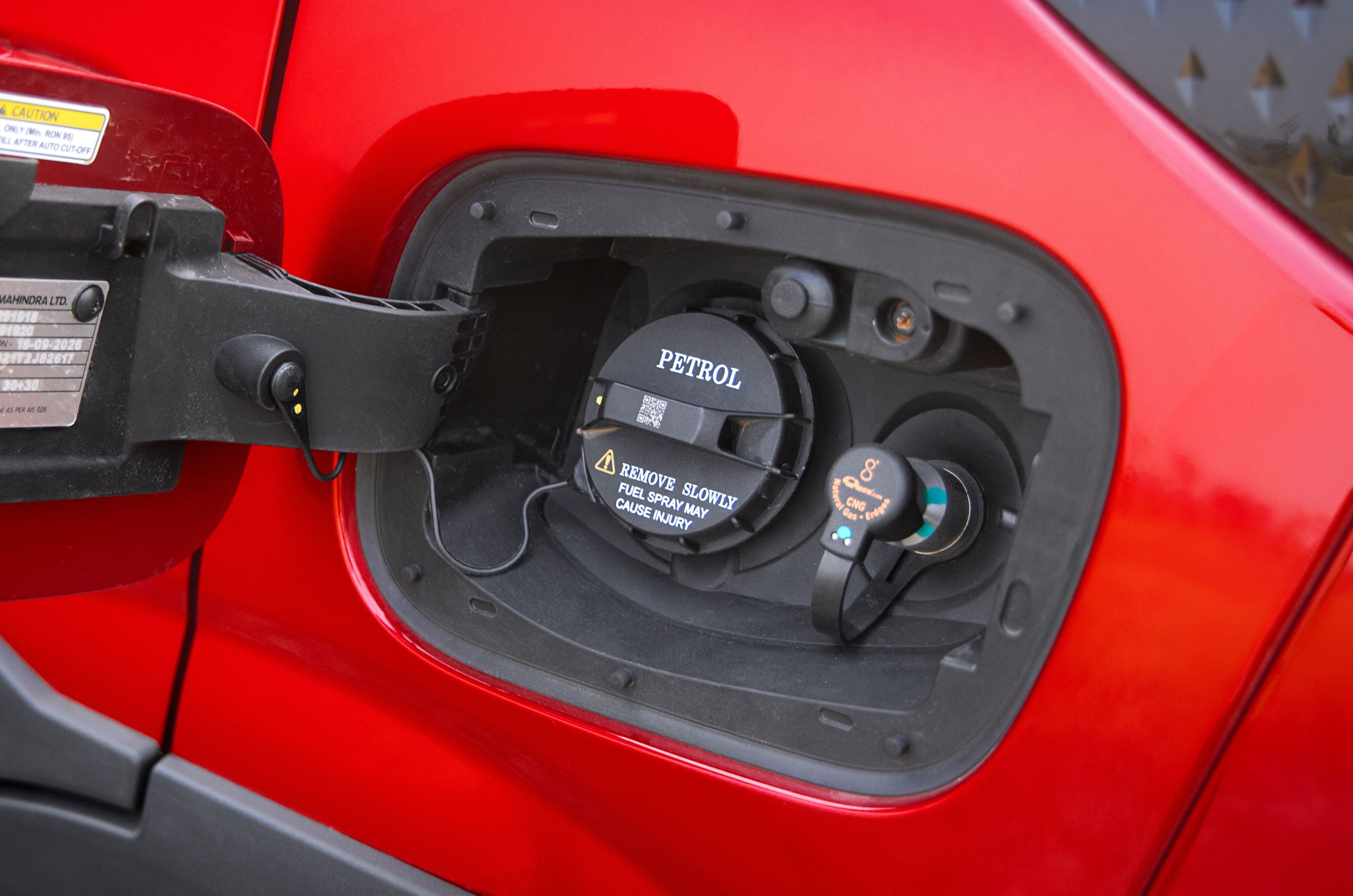
CNG filler neatly positioned beside the fuel filler; fuel filler door still has a manual release in the cabin.
It also gets an idle-stop/start function, which should help efficiency. We will verify these claims with a real-world test soon.
Mahindra XUV 3XO ZNG Ride Comfort and Handling – 9/10
Light steering works well in town; steering modes dial up resistance but don’t offer better feel.
The switch to CNG adds around 100kg to the 3XO, most of it concentrated at the rear. To ensure this doesn’t affect ride or handling, Mahindra has tweaked the suspension to cope with the extra weight. The ZNG’s ride has a slightly firm edge, but overall it deals with bad roads very well.
16-inch wheels and tall tyres are better at absorbing sharper bumps than the 17s on higher petrol trims.
The smaller 16-inch wheels also play an important part here, as their taller-sidewall tyres absorb sharp edges before they make their way to the cabin. Overall, the ride remains amongst the best in the class.
Handling, too, remains tight and engaging, with a planted feel around the bends. The steering is light and direct, and while you can dial up the resistance using the three steering modes, this adds little in terms of feel or feedback.
Mahindra XUV 3XO ZNG Value for Money – 8/10
Overall, the Mahindra XUV 3XO offers good value for money and makes for a compelling entrant into the CNG compact SUV space. Prices for the Mahindra XUV 3XO ZNG start at Rs 9.99 lakh and go up to Rs 12.27 lakh, which is between Rs 1 lakh and Rs 1.2 lakh more than the equivalent petrol trims. Pricing is on par with comparable variants of the Tata Nexon iCNG. However, the Nexon has a wider range and also offers more features on the higher trims.
Mahindra has packaged the CNG tanks cleverly, minimising the impact on boot space. That said, the 3XO’s boot wasn’t particularly large to begin with, and that remains a drawback. What sets it apart is the driving experience. CNG calibration is very good, and performance in CNG mode is close enough to petrol for most people not to notice a real difference. For a first attempt, the XUV 3XO ZNG certainly ticks a lot of boxes.
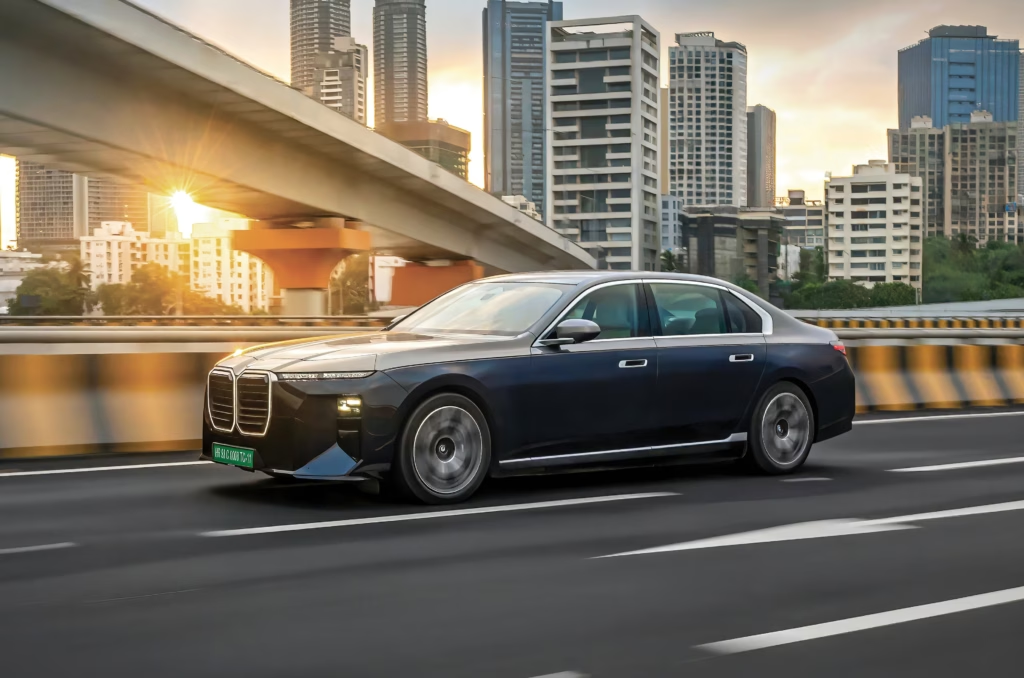
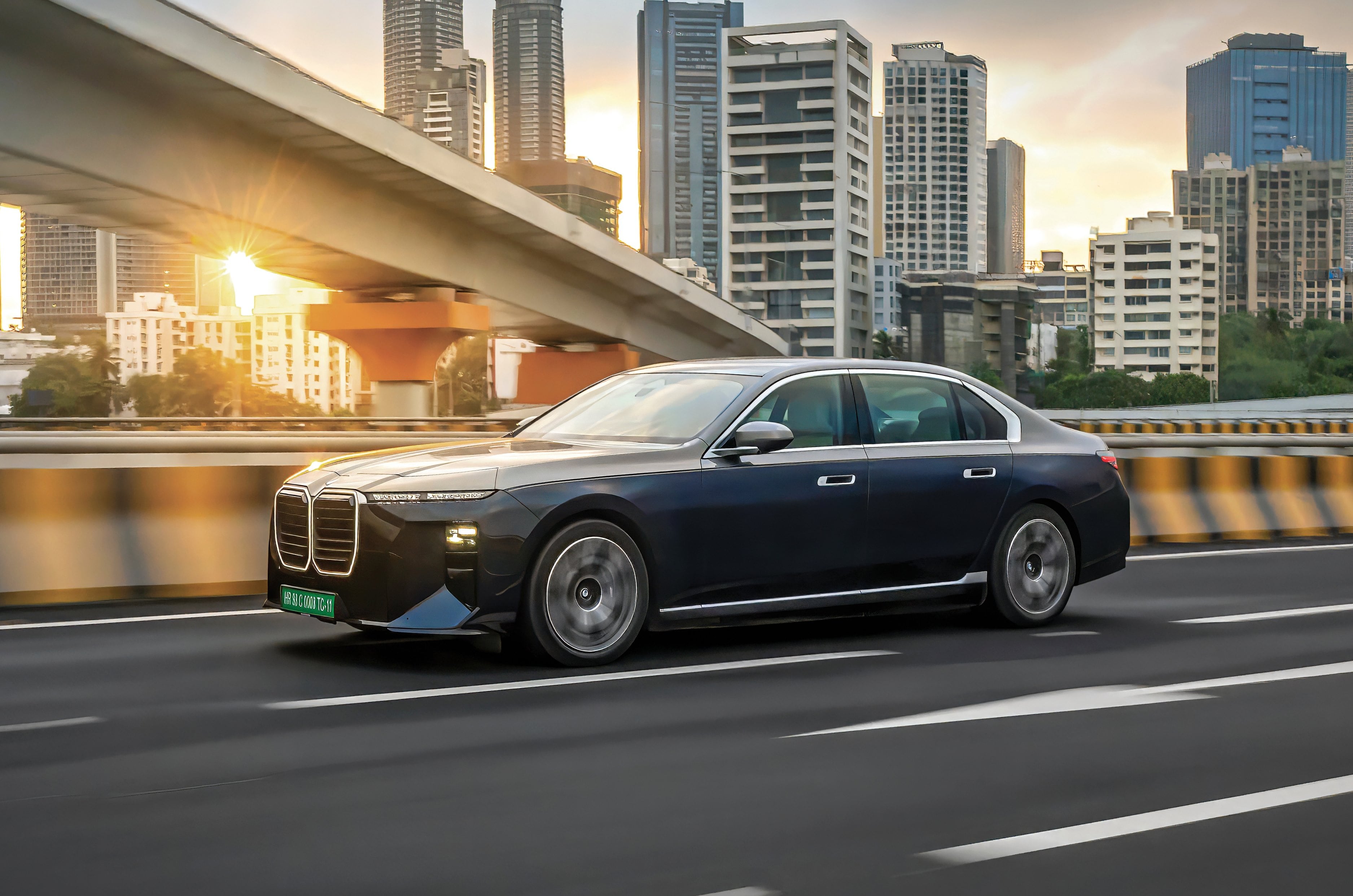
The BMW i7 has been embraced wholeheartedly by India’s ultra-high-net-worth buyers. Since its launch in 2023, it has dominated the high-end luxury sedan space, and interestingly, has consistently outsold its own petrol sibling. In fact, around 60 percent of 7 Series buyers have opted for the EV. With the 2026 i7 now being locally assembled in India and the i7 50 xDrive priced at Rs 1.95 crore, exactly at par with the petrol 740, BMW expects the scales to tilt even further in favour of the electric version.
BMW has also introduced the significantly more powerful i7 M70 xDrive. However, as a full import priced at Rs 2.65 crore, it commands a substantial Rs 70 lakh premium, which is likely to limit its appeal. For most buyers then, the locally assembled i7 50 xDrive is expected to remain the sweet spot of the range.
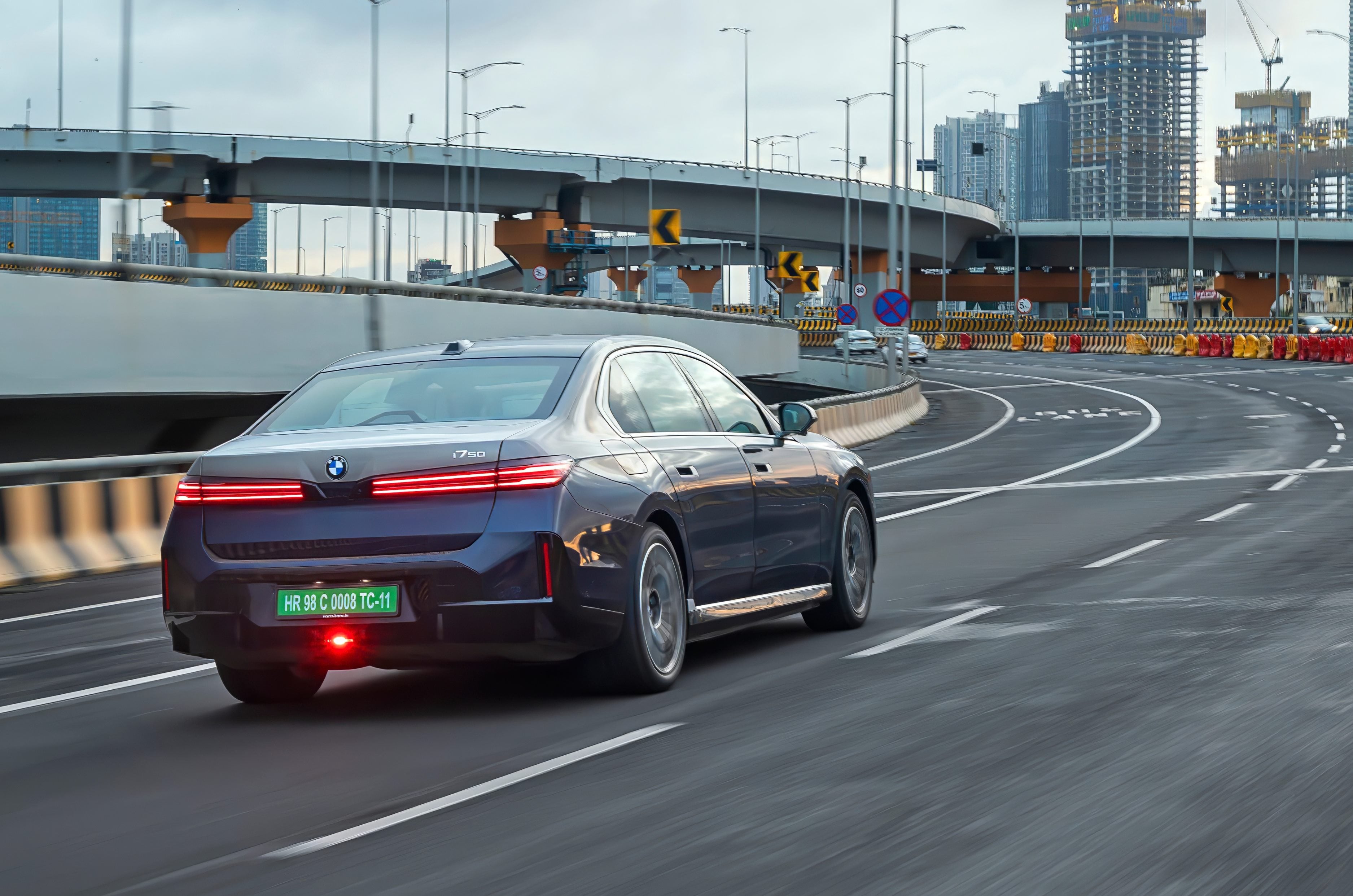
BMW i7 50 xDrive Exterior Design and Engineering – 8/10
The cleaned-up styling looks significantly more palatable than its predecessor.
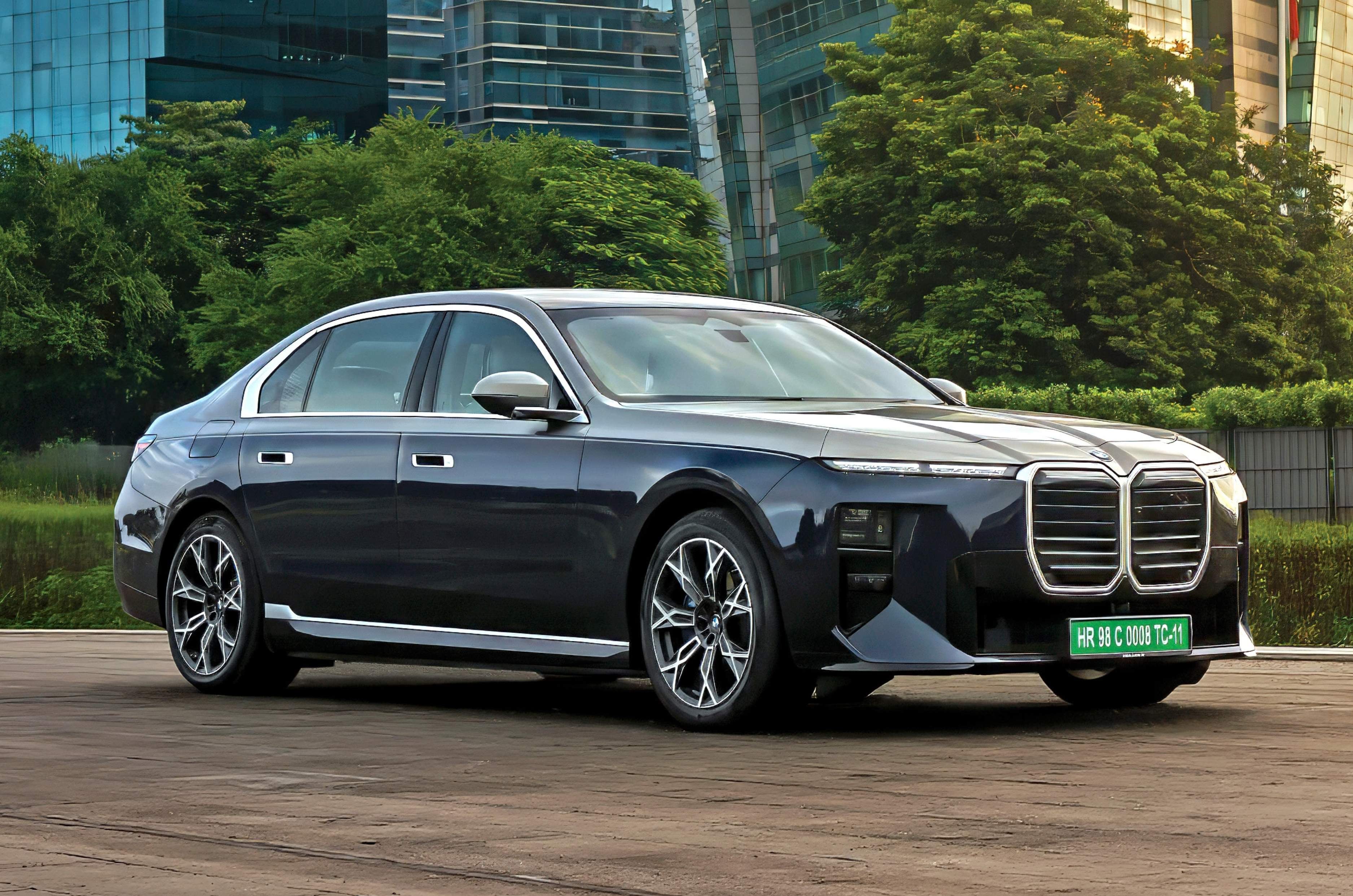
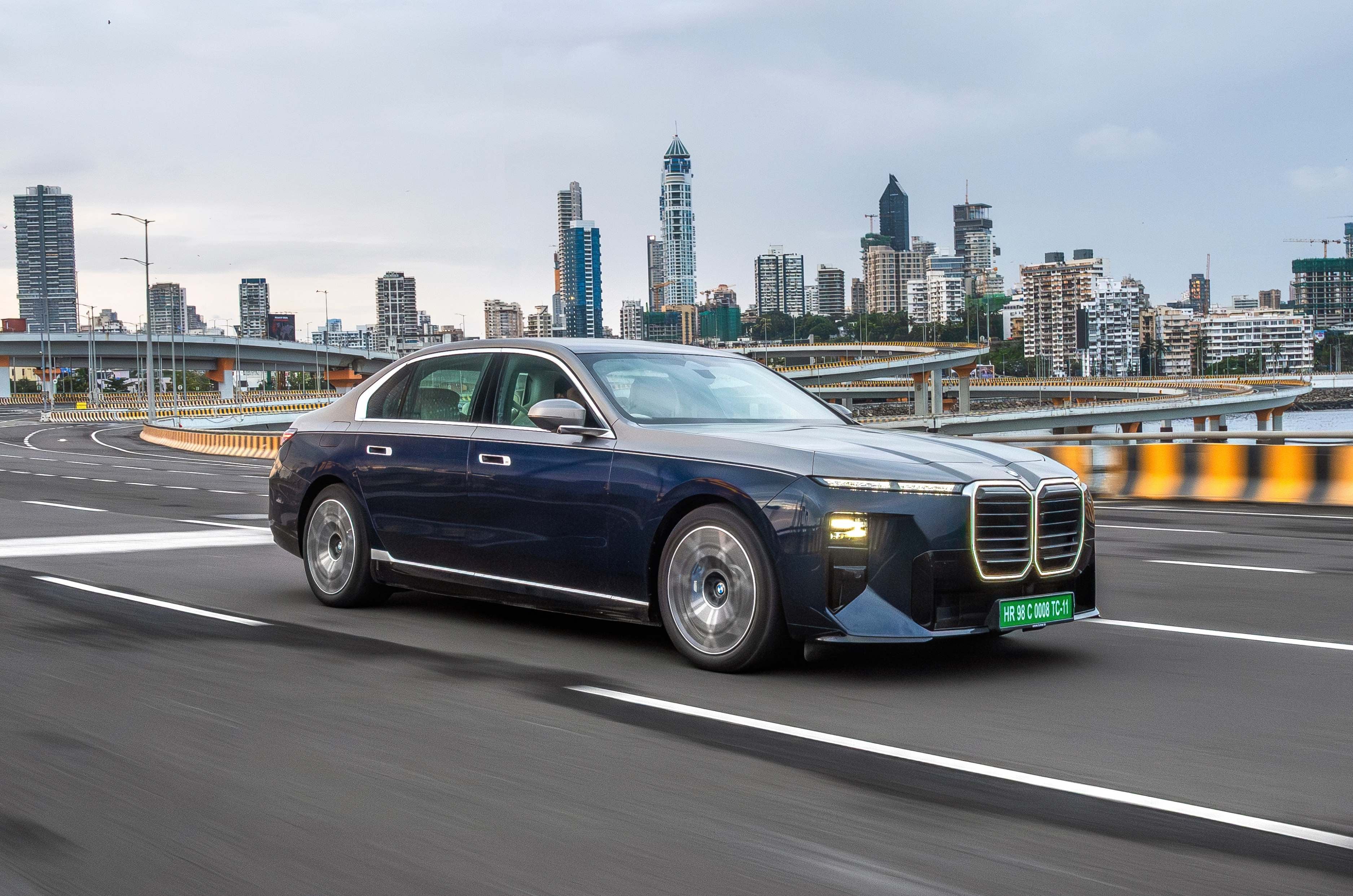
BMW has made substantial changes to the i7’s styling. The DRLs are now longer and slimmer, and feature a crystalline effect that looks absolutely stunning up close. The oversized kidney grille has also been redesigned and, like before, remains illuminated. The air dam adopts a more rectangular design, the headlamps are vertically oriented, and the excessive black treatment has been done away with completely.
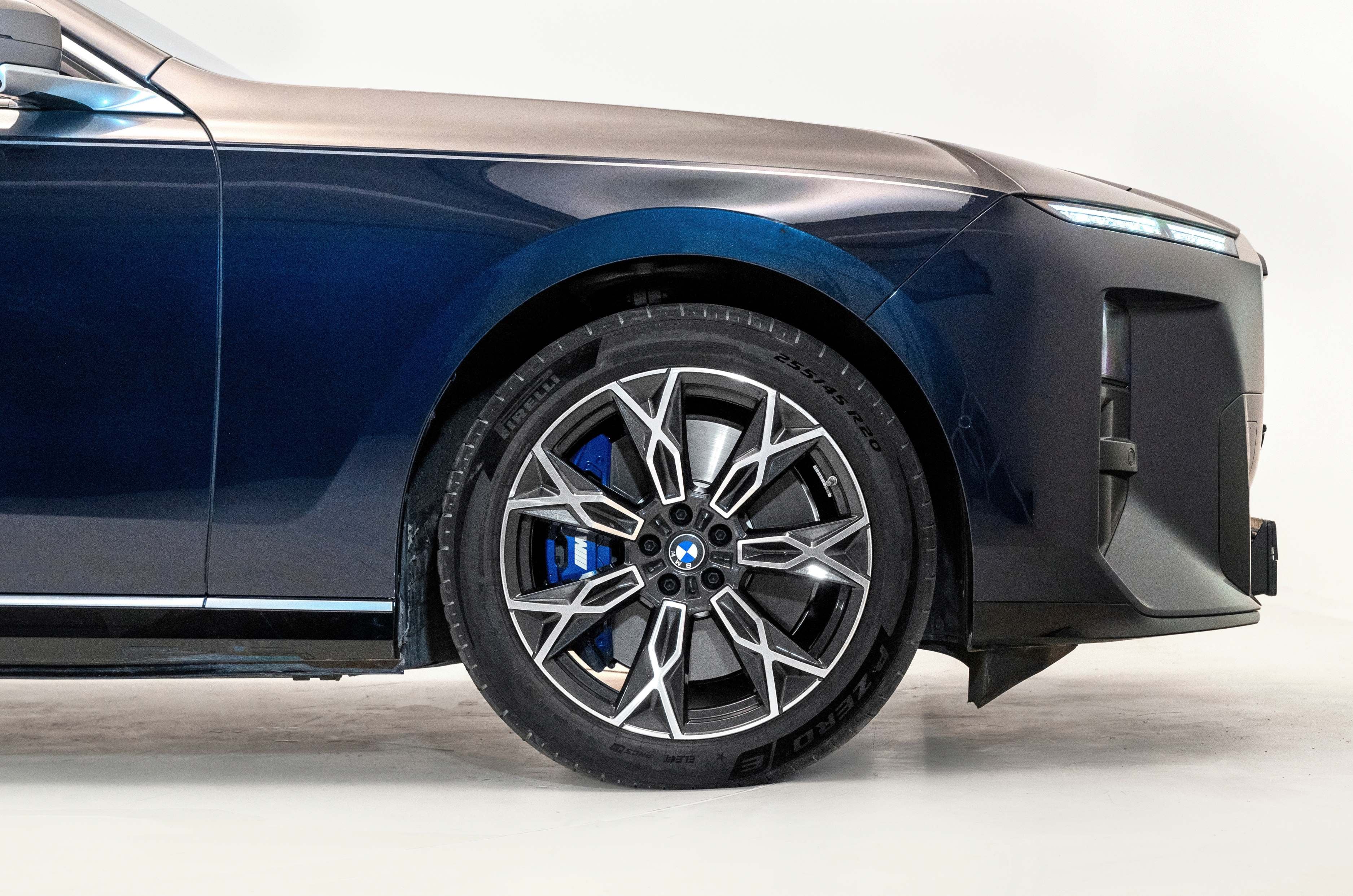
The tyres appear undersized but owners are unlikely to complain given the ride comfort benefits that come with the higher-profile tyres.
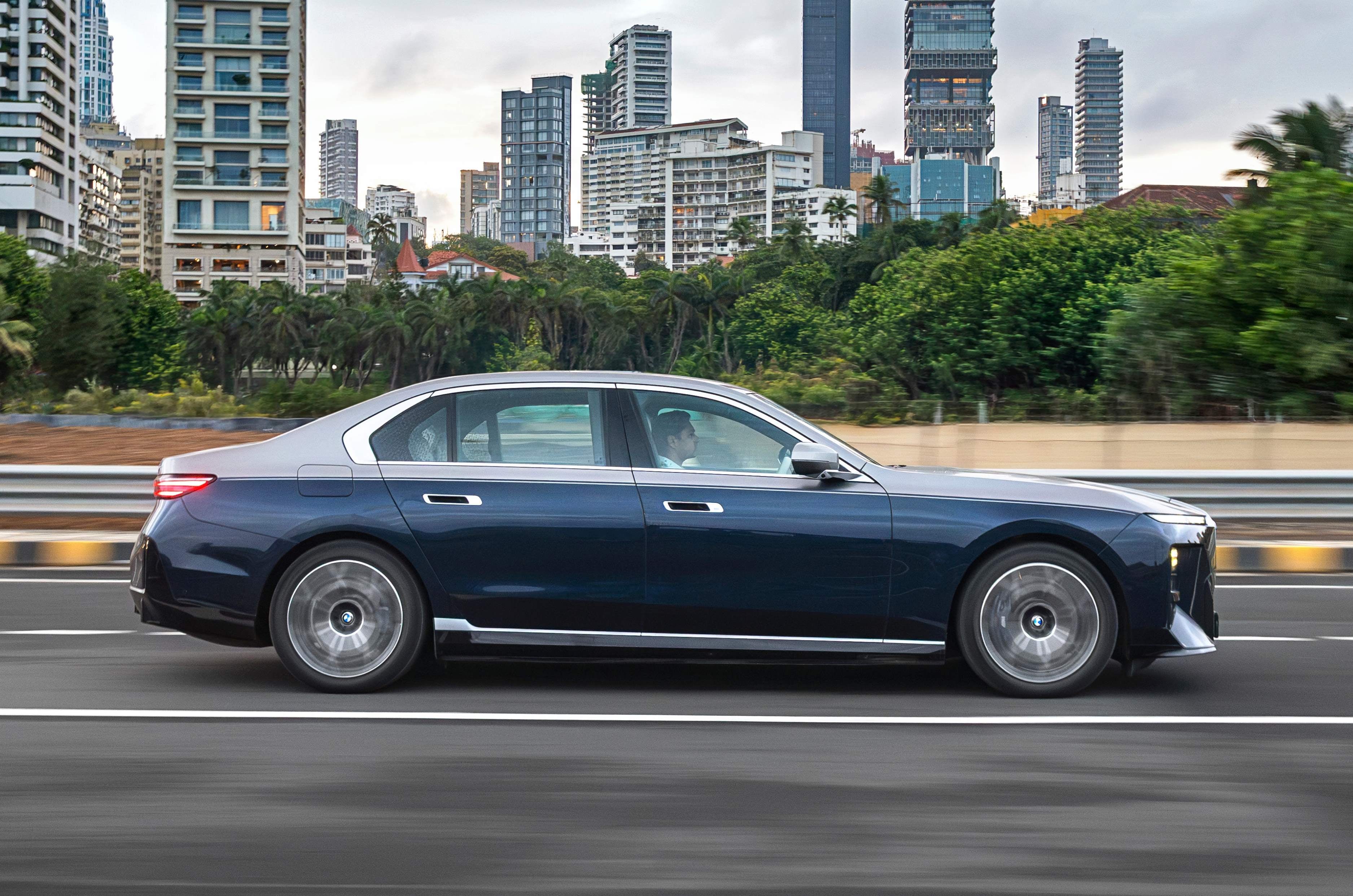
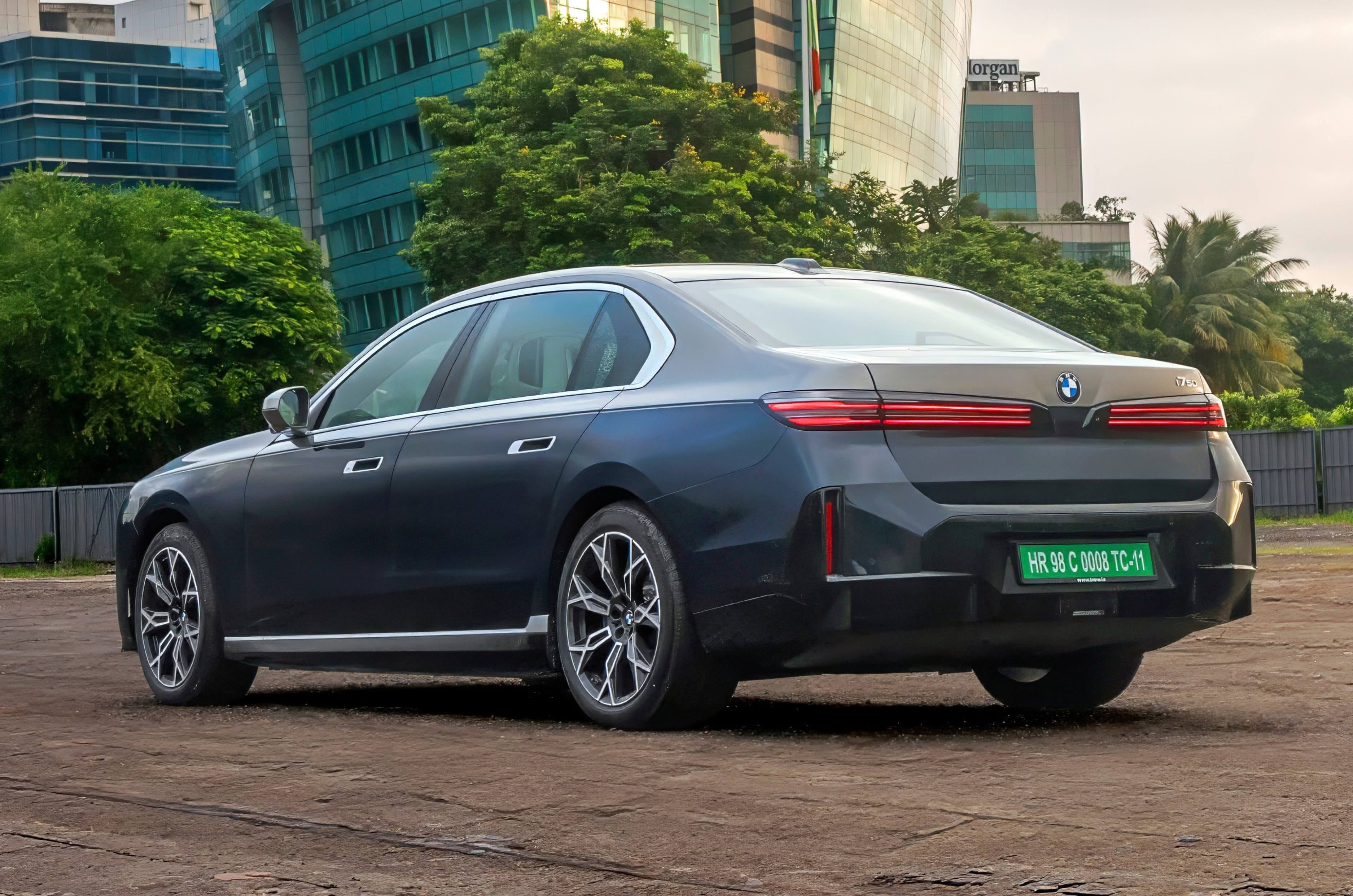
New 20-inch alloy wheels replace the outgoing version’s 21-inch units. While some might argue they appear slightly undersized, owners are unlikely to complain given the ride comfort benefits that come with the higher-profile tyres.
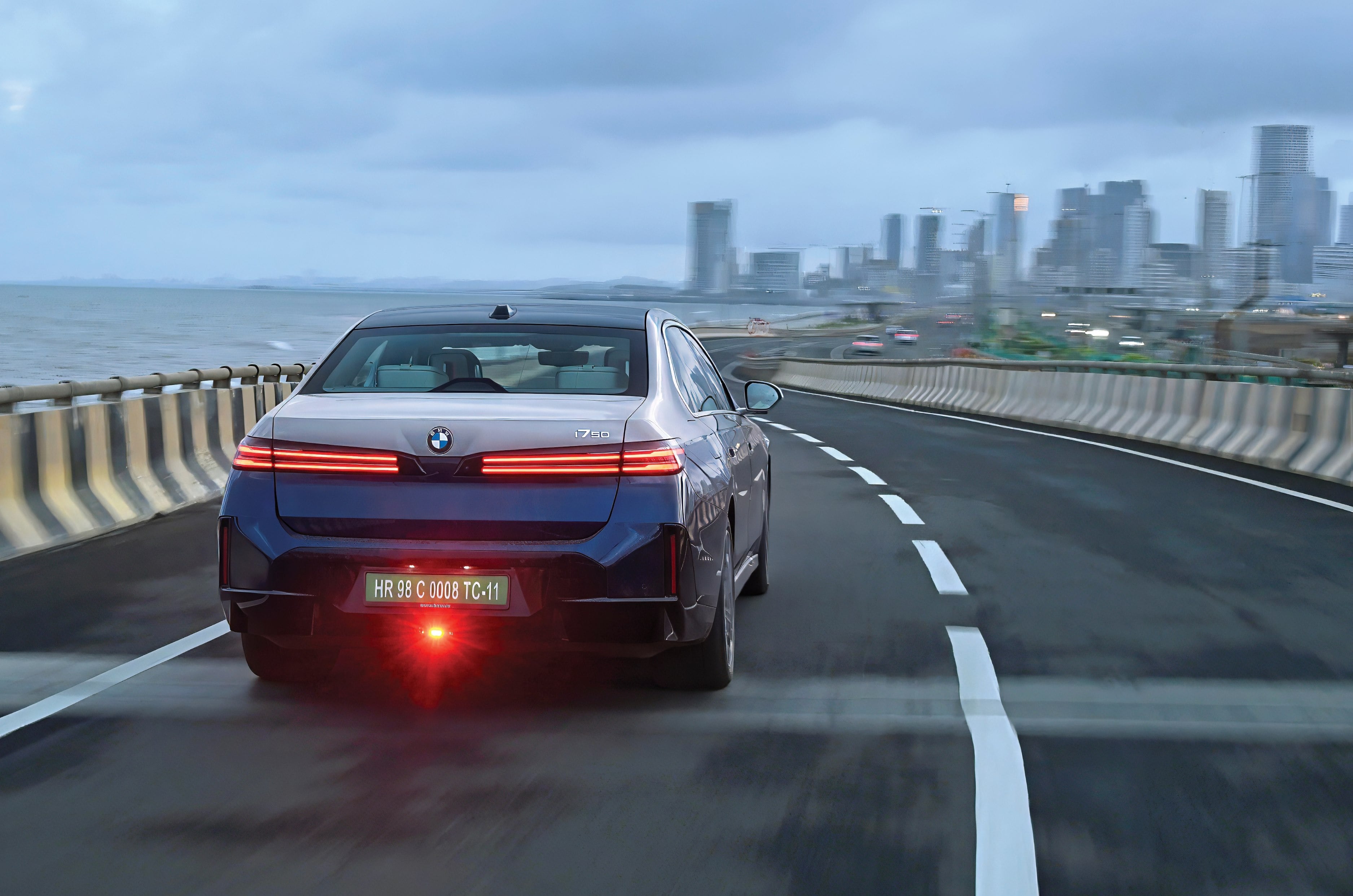
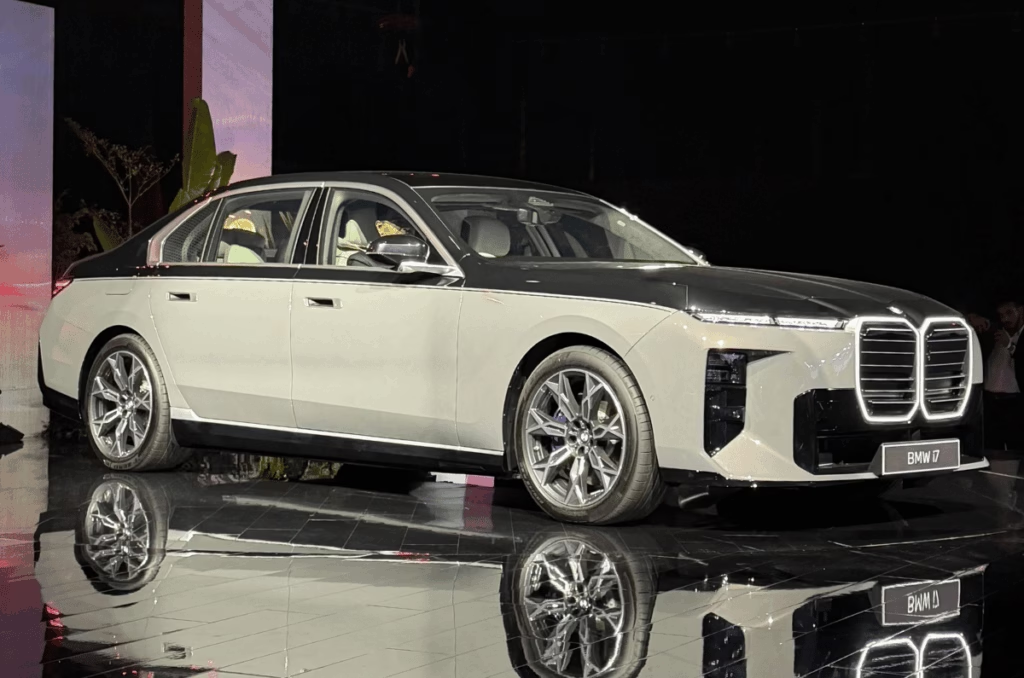
Like the front, the rear has also been cleaned up. There’s a new diffuser, broader tail-lamps, and a neater bumper design. Overall, this iteration looks significantly more palatable than its predecessor, and in the optional two-tone paint finish of our test car, road presence was immense.
BMW i7 50 xDrive Interior Space and Comfort – 9/10
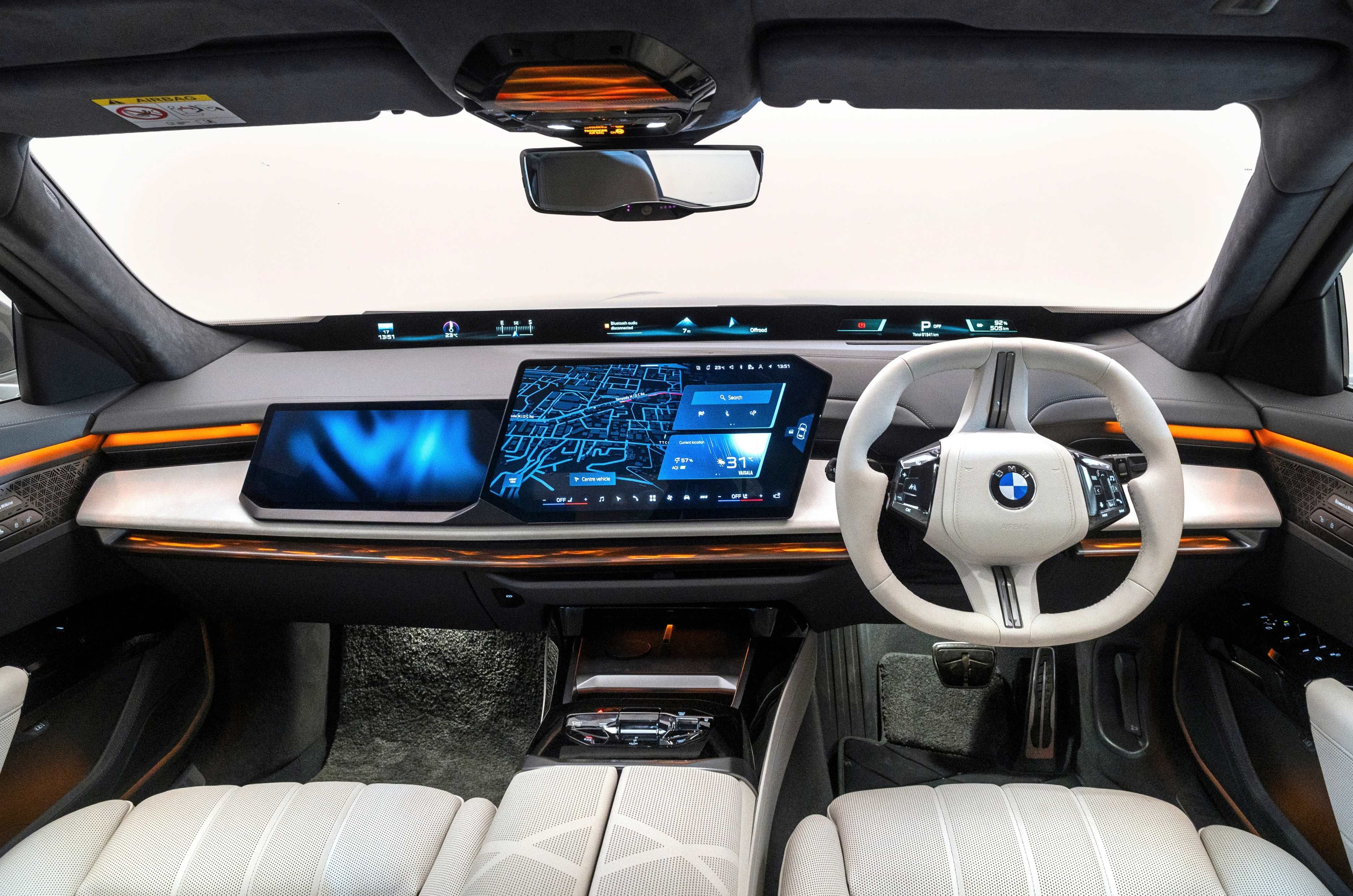
The redesigned dashboard adds freshness and previews the direction BMW’s future interiors are expected to take.
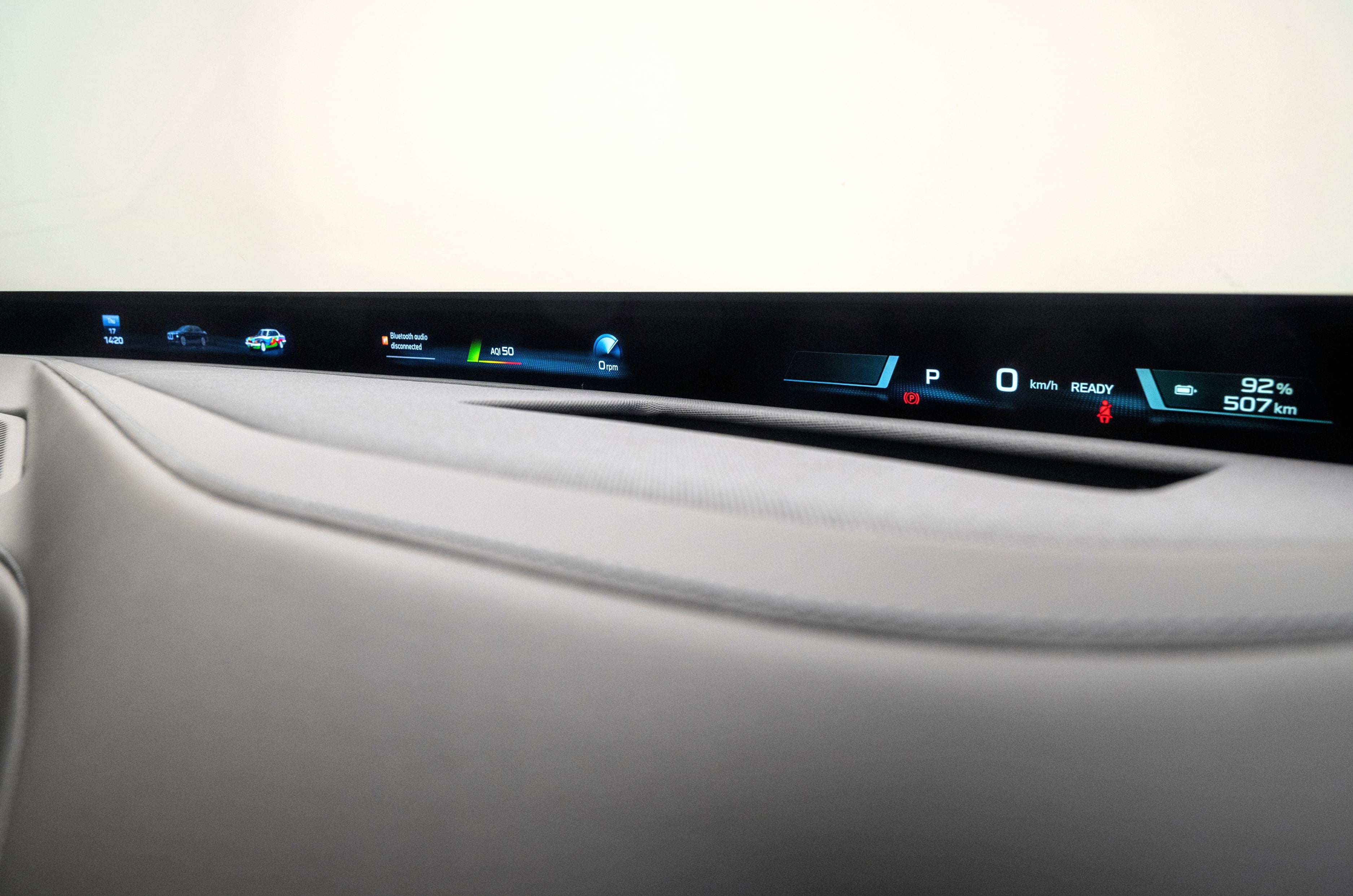
The i7’s dashboard has been completely redesigned, adding much-needed freshness while also previewing the direction BMW’s future interiors are expected to take. The biggest talking point is the deletion of the conventional instrument cluster. In its place sits a new panoramic head-up display positioned right at the base of the windscreen, projecting a wealth of information. It is highly customisable and, besides essentials like speed, charge status and warnings, can display motor speed, navigation, compass information, audio details, date and time, outside temperature, air quality, or even one of BMW’s Art Cars as a decorative element in the remaining six slots. The display is sharp, brilliantly executed, and sits naturally within your field of vision without becoming distracting.
A panoramic head-up display projects a wealth of information, it’s highly customisable and the display is sharp and brilliantly executed.
As for design, the new steering wheel is far more divisive. Its octagonal shape, combined with spokes extending from the horn boss at the 12 and 6 o’clock positions, makes it look unconventional. The light-coloured finish is also likely to be difficult to keep clean — you may even find yourself asking your chauffeur to wear gloves. On the plus side, it feels pleasant to hold, and the controls, though limited in number and not individual buttons, are satisfying to use.
There’s also a new 17.9-inch free-standing touchscreen along with a smaller passenger display, both adopting a parallelogram shape. Curiously, the top-right corner of the central screen appears as though it has been chipped off, although that isn’t actually the case. Generous ambient lighting, crystalline detailing for the drive selector, volume controller and start-stop button, silver speaker grilles, and an overall light-coloured cabin theme further elevate the sense of luxury.
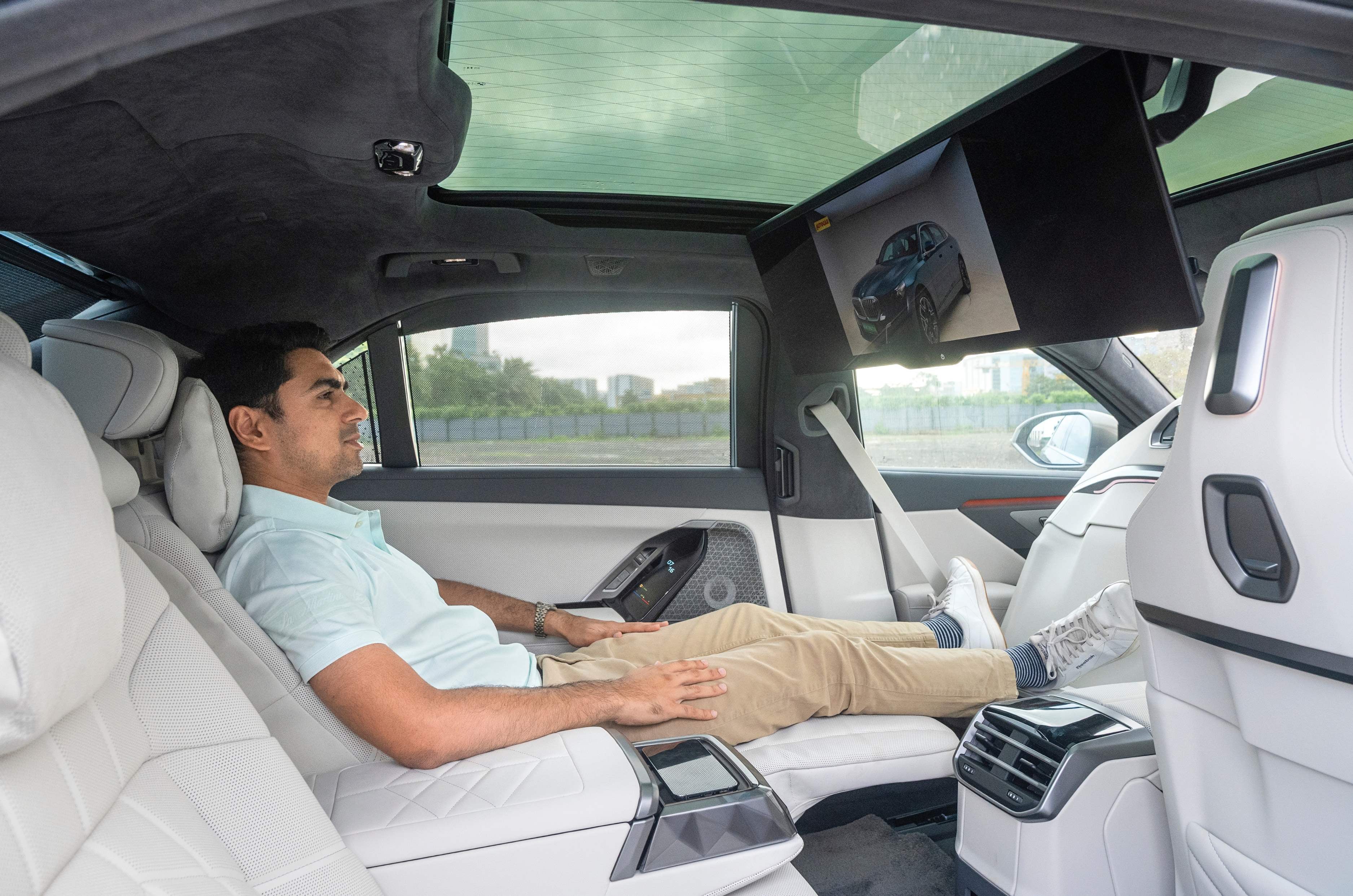
A one-touch relaxation mode transforms the rear seat into a lounge-like position. Updated 8K theatre screen is still part of the package.
Expectedly, the seats are supremely comfortable. All four seats get heating, ventilation and massage functions. Additionally, the rear-left seat features a one-touch relaxation mode that transforms it into a lounge-like position, complete with a raised ottoman, a fully-forward front passenger seat, and a fold-down footrest. Sadly, like the outgoing model, the spare wheel remains mounted on the boot floor, significantly compromising luggage capacity.
BMW i7 50 xDrive Features and Safety – 10/10
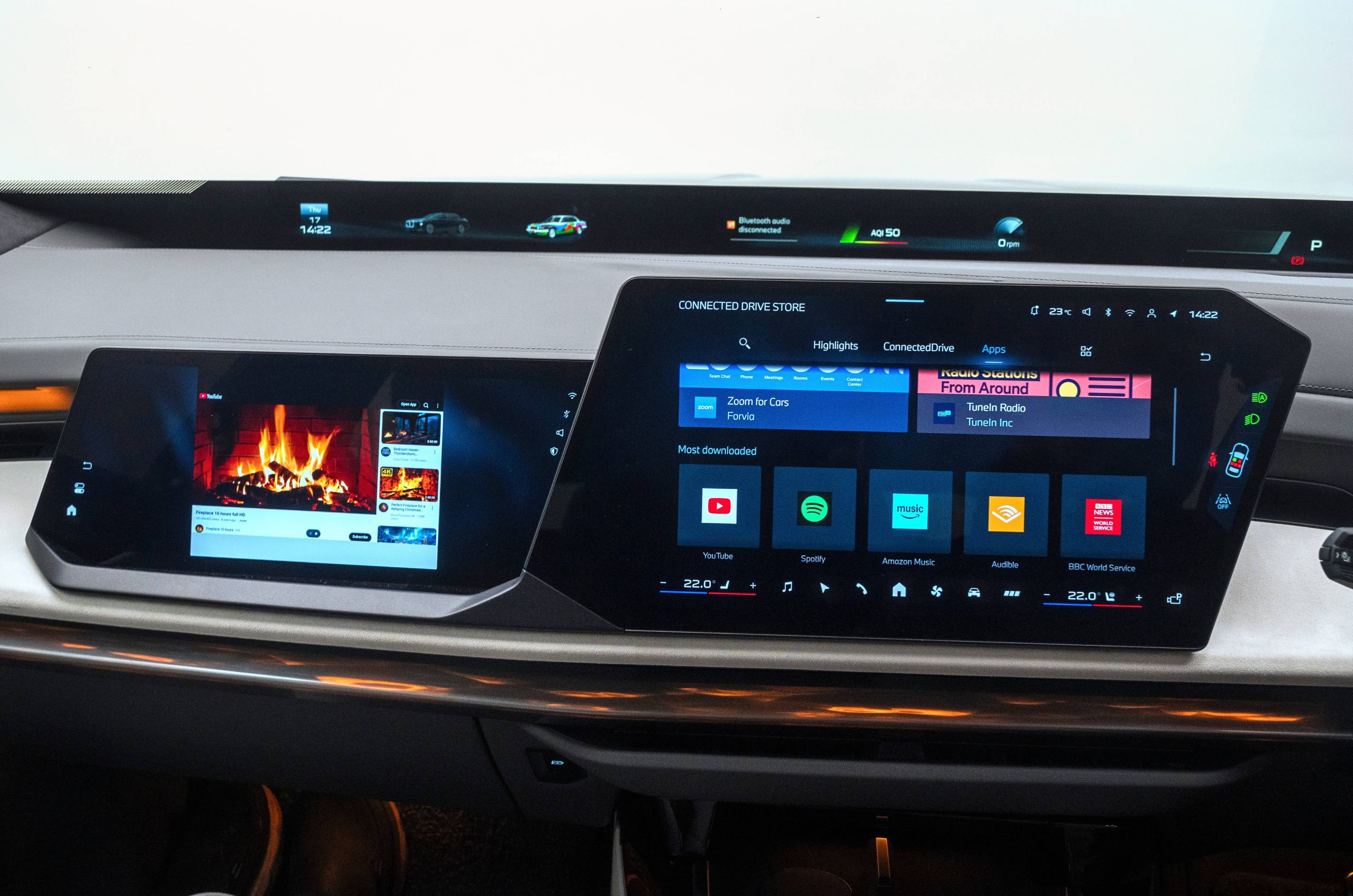
The i7 50 M Sport comes loaded with virtually every feature luxury sedan buyers could ask for. The new panoramic end-to-end head-up display replaces the conventional instrument cluster and is not only unique and highly customisable, but also exceptionally well executed. The 17.9-inch touchscreen is new too, and now benefits from additional shortcut keys in addition to permanently displayed climate-control functions, making it marginally easier to operate than before. However, the user interface still feels somewhat overwhelming, with an abundance of functions buried within multiple sub-menus.
The central screen is marginally easier to operate than before. The new front passenger entertainment display is likely to be of limited relevance to most owners.
Also new is a front passenger entertainment display, though we suspect it will be of limited relevance to most owners. The new 31.3-inch 8K rear theatre screen, on the other hand, is likely to see much greater use, particularly on longer journeys.
Carried over from the outgoing version and continuing to add a sense of occasion are the powered doors, which open and close at the touch of a button.
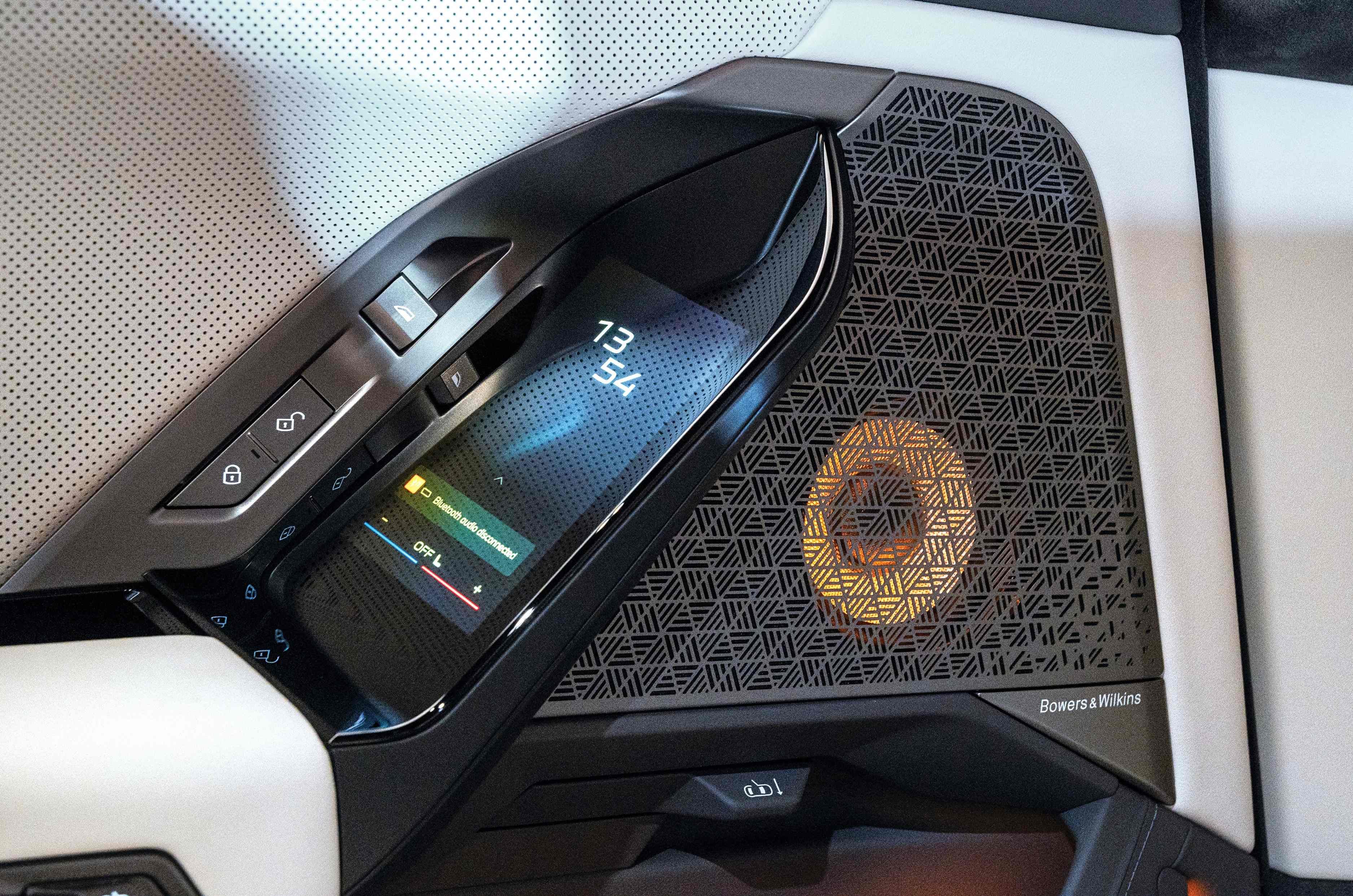
Its Bowers & Wilkins Diamond Surround Sound System with Dolby Atmos delivers an incredibly immersive audio experience.
The highlight, however, is the outstanding Bowers & Wilkins Diamond Surround Sound System with Dolby Atmos and a whopping 35 speakers. It even delivers a 4D experience, with a pronounced thump felt through all four seats. The result is an incredibly immersive audio experience that is sure to impress even the most discerning audiophile.
BMW i7 50 xDrive Performance and Refinement – 9/10
Its performance feels effortless and reassuring, while the accelerator calibration is smooth and progressive for everyday driving.
The i7 50 xDrive uses a dual-motor setup producing a combined 483hp and 660Nm, which is more than adequate for a luxury sedan of this nature. There’s rarely any need to switch out of Efficient mode because there is always a vast reserve of torque available. The effortless performance feels reassuring, while the accelerator calibration is smooth and progressive during everyday driving.
Press the accelerator beyond the halfway mark and the i7 takes off like a scalded cat. Acceleration is rapid, with this 2.8-tonne luxury sedan sprinting from 0-100kph in just 5.5 seconds and reaching 200kph in a shade under 19 seconds. Owners can also choose to activate synthetic motor sounds that play through the speakers, adding a dramatic, sci-fi soundtrack to acceleration. These can be switched off entirely for a completely silent experience.
There are multiple regenerative braking settings, including Adaptive, High, Mid and Low. Of these, Adaptive stands out for its excellent calibration, intelligently varying regeneration and coasting based on traffic and road conditions. There’s also a dedicated one-pedal ‘B’ mode selectable via the drive selector. It delivers regeneration similar to the High setting but, unlike it, can bring the car to a complete stop without any brake pedal input.
BMW i7 50 xDrive Range and Efficiency – 9/10
The i7 50 xDrive gets a larger 112.5kWh battery pack with NMC cell chemistry, replacing the outgoing version’s 101.7kWh unit. As a result, this version claims a WLTP range of up to 728km. Although we haven’t yet subjected it to our range tests, we expect it to comfortably deliver over 500km in real-world conditions, which is more than sufficient for most users. BMW claims the battery can charge from 10-80 percent in 28 minutes using a 250kW (or higher) DC fast charger. On a 22kW AC charger, a full charge takes approximately six hours.
BMW i7 50 xDrive Ride Comfort and Handling – 10/10
What’s truly impressive is the pillowy ride quality. It shrugs off badly broken roads with ease, and maintains excellent body control.
Piloting the i7 may initially seem intimidating given its considerable dimensions, but its light steering and rear-axle steering significantly aid manoeuvrability. The latter allows the rear wheels to turn either with or against the fronts by up to 3.5 degrees, helping the car feel remarkably agile for its size.
What’s truly impressive is the pillowy ride quality. The thick, high-profile tyres add another layer of cushioning, allowing the i7 to shrug off even badly broken roads with ease. It absorbs potholes effortlessly, keeps road shocks well isolated, and maintains excellent body control. Passengers are also spared the uncomfortable side-to-side movements over unusually rough patches.
Selecting Sport mode does firm things up slightly, but while the air suspension becomes tauter and body control improves further, ride comfort never suffers. Handling feels predictable and, thanks to xDrive all-wheel drive, the i7 feels exceptionally planted and offers impressive grip when tackling corners. Rear-wheel steering also does a remarkable job of disguising its size.
In short, the i7 can be driven surprisingly enthusiastically, and for a luxo-barge, it drives exceptionally well. We would, however, recommend leaving the steering in Comfort mode, as it feels unnecessarily heavy in Sport.
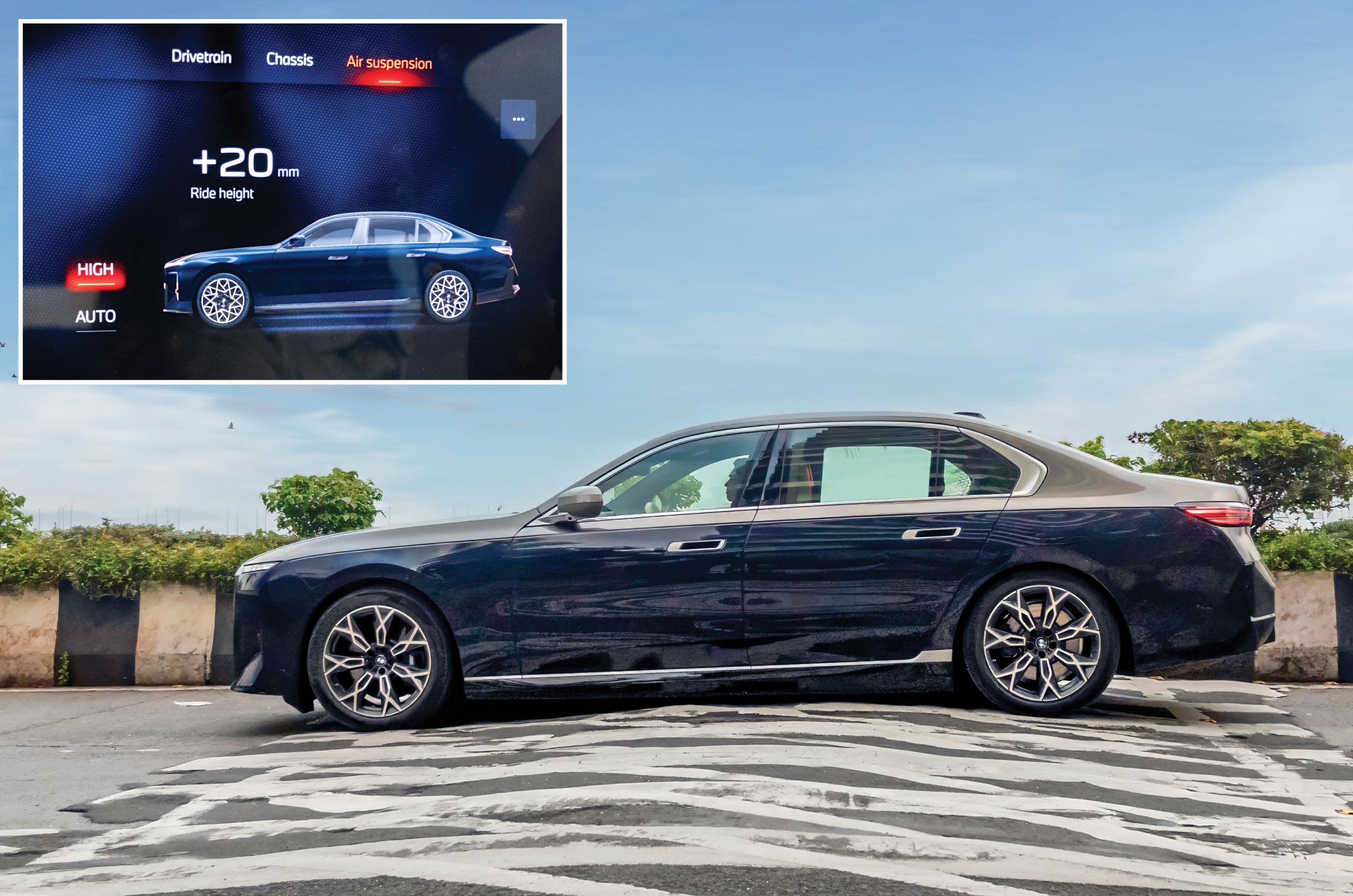
The suspension raises by 20mm over the 136mm standard setting, allowing it to clear all but the most poorly designed obstacles.
Sport mode also lowers the ride height by 10mm from the standard 136mm setting. While beneficial for dynamics, it makes the underbody vulnerable even on relatively small speed breakers. Thankfully, two taps on the touchscreen raise the suspension by 20mm over the standard setting, allowing it to clear all but the most poorly designed obstacles. Cabin insulation is outstanding too, keeping road, wind and ambient noise effectively isolated from occupants.
BMW i7 50 xDrive Price and Verdict – 9/10
At Rs 1.95 crore, the locally assembled i7 50 xDrive is priced exactly at par with the petrol-powered 740 and is even a few lakhs more affordable than its chief rival, the Mercedes-Benz S-Class. Yet pricing alone isn’t what makes the i7 such a compelling proposition.
What truly sets it apart is the sheer sense of occasion it delivers. Its styling is bold, the cabin feels genuinely special, ride comfort is exceptional, and the level of technology on offer significantly elevates its desirability. Add to that an extraordinary audio system and the effortless refinement that only a luxury EV can deliver, and the i7 feels every bit the flagship it is.
Yes, luggage space remains compromised by the spare wheel placement, and the touchscreen interface isn’t quite as intuitive as that of its chief rival. But in this segment, neither is likely to be a deal-breaker.
The bigger takeaway is that BMW has successfully made the electric version of its flagship sedan the more desirable one. For buyers seeking luxury, comfort and technology, the i7 50 xDrive isn’t merely an excellent EV, it’s quite simply all the luxury car you’ll ever need.
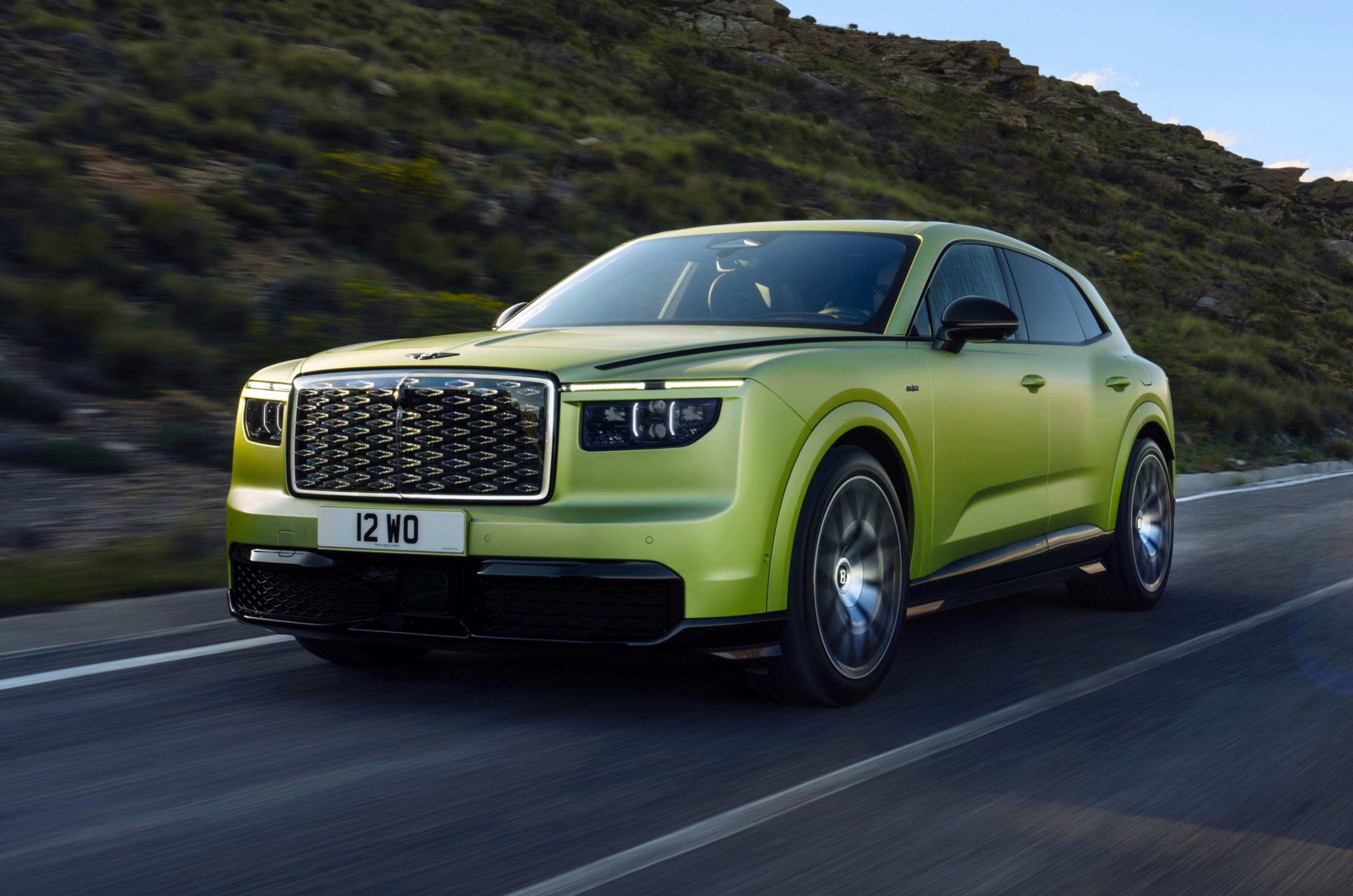
For 107 years, Bentley has been defined by what sits under the bonnet: supercharged Blowers, mighty W12s and thundering V8s. The Torcal has none of that. It’s Bentley’s fourth model line and its first electric car. It slots in below the Bentayga, and it will never get a petrol engine. Bentley also calls it the template for every Bentley that follows, whatever the powertrain.
Like many modern Bentleys, the Torcal is named after a natural wonder. El Torcal de Antequera is a dramatic landscape of weathered limestone in southern Spain. The car is also the first Bentley to wear the brand’s redesigned, modernised emblem, which was revealed last year. That leaves one question that matters. Take away the engine, and is it still a Bentley? We haven’t driven it yet, so the full answer will have to wait. After a close look at the First Edition, the fully loaded launch car, there’s plenty to go on.
Bentley Torcal exterior design: light is the new chrome
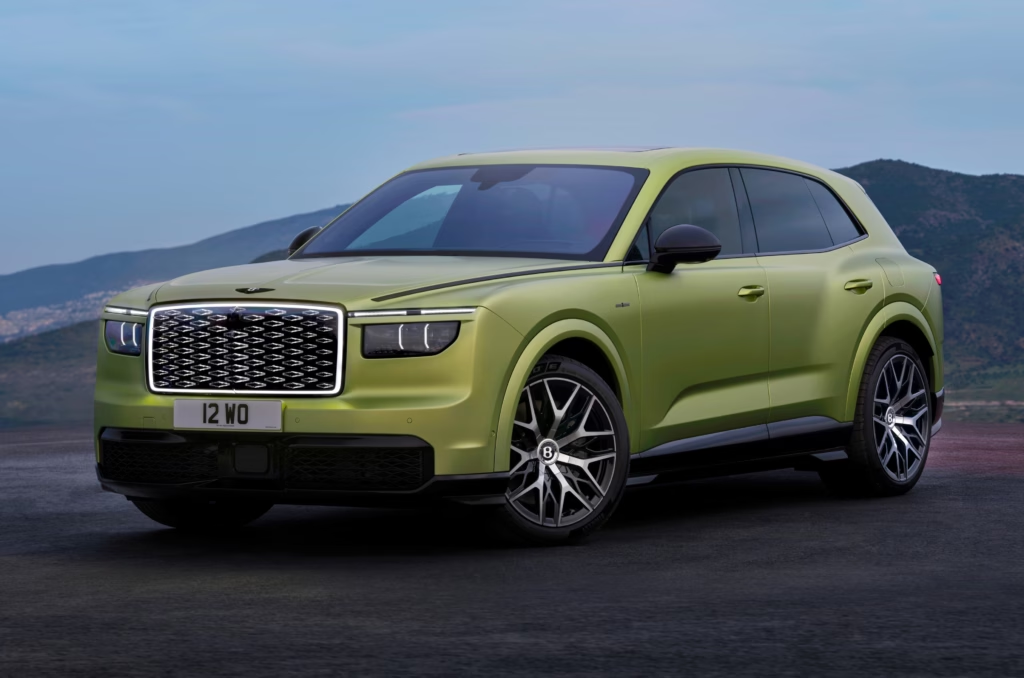
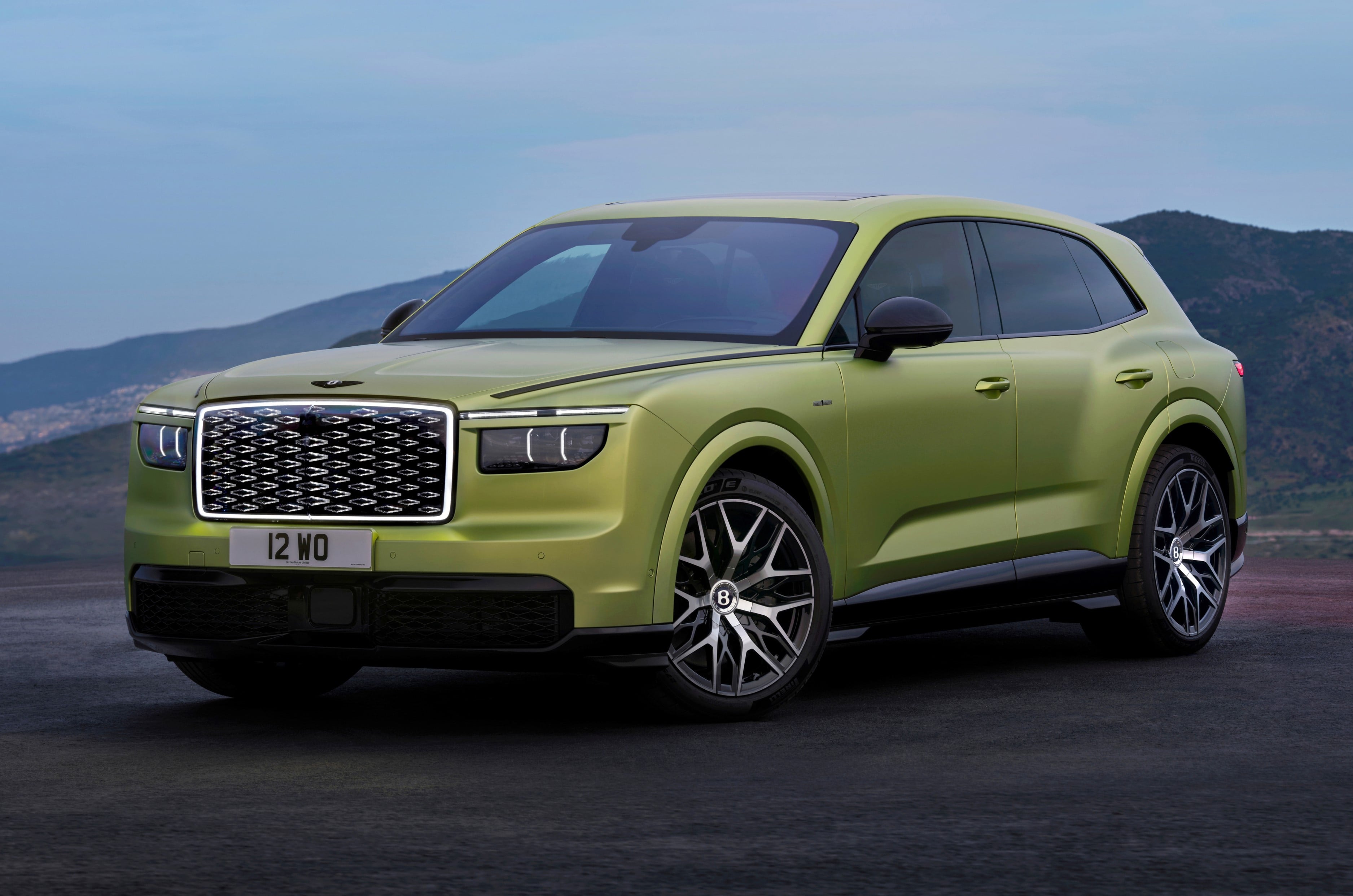
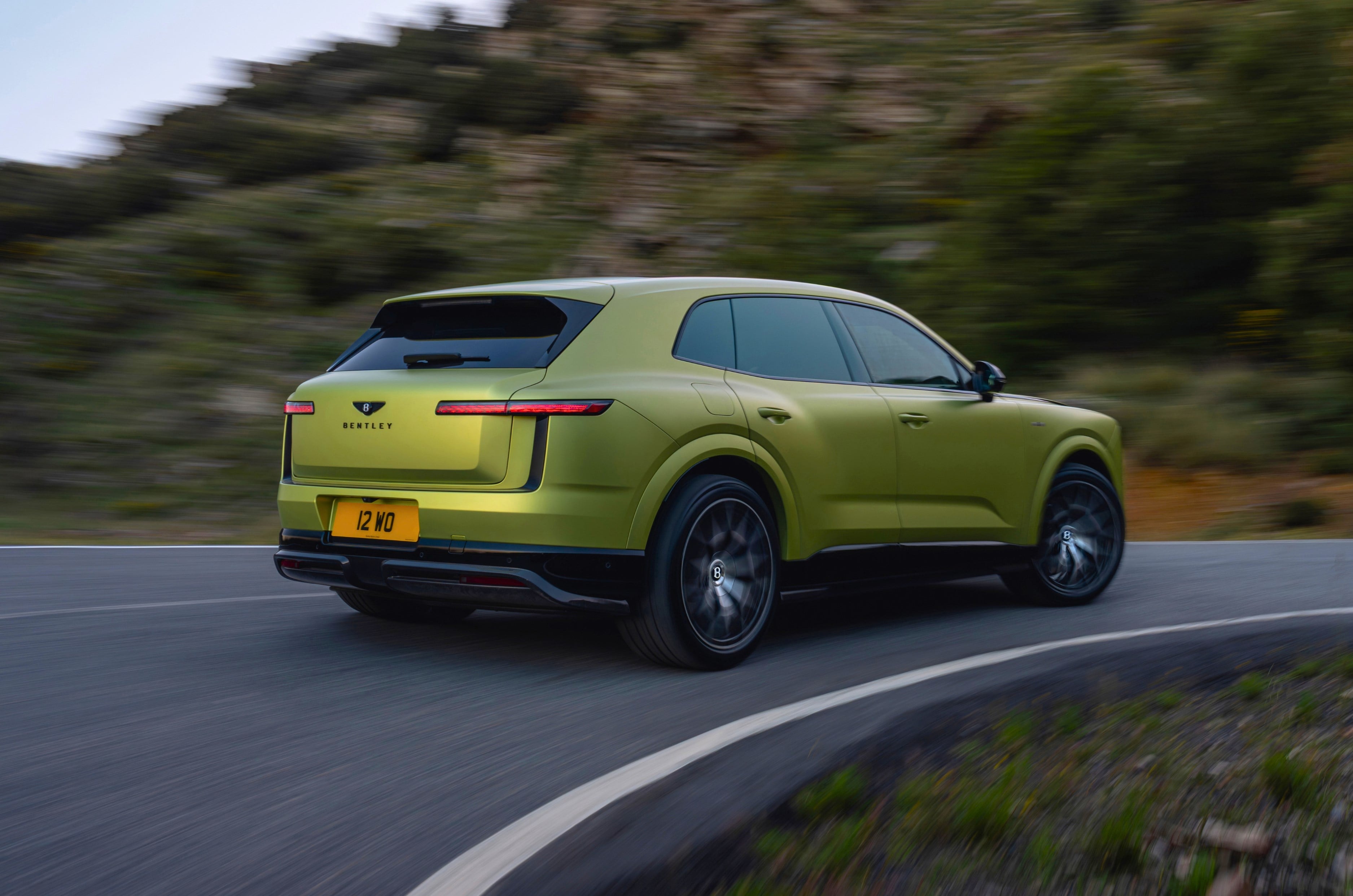
Designing an EV for a brand with this much pedigree was never going to be easy, but Robin Page’s in-house team at Crewe has done a fine job. The Torcal sits 50mm lower and is 120mm shorter than a standard-wheelbase Bentayga, yet it looks the better proportioned of the two. The wheelbase is just over three metres, the car is about five metres long, and the overhangs are short. Bentley’s signature ‘endless bonnet’ does much of the visual heavy lifting.
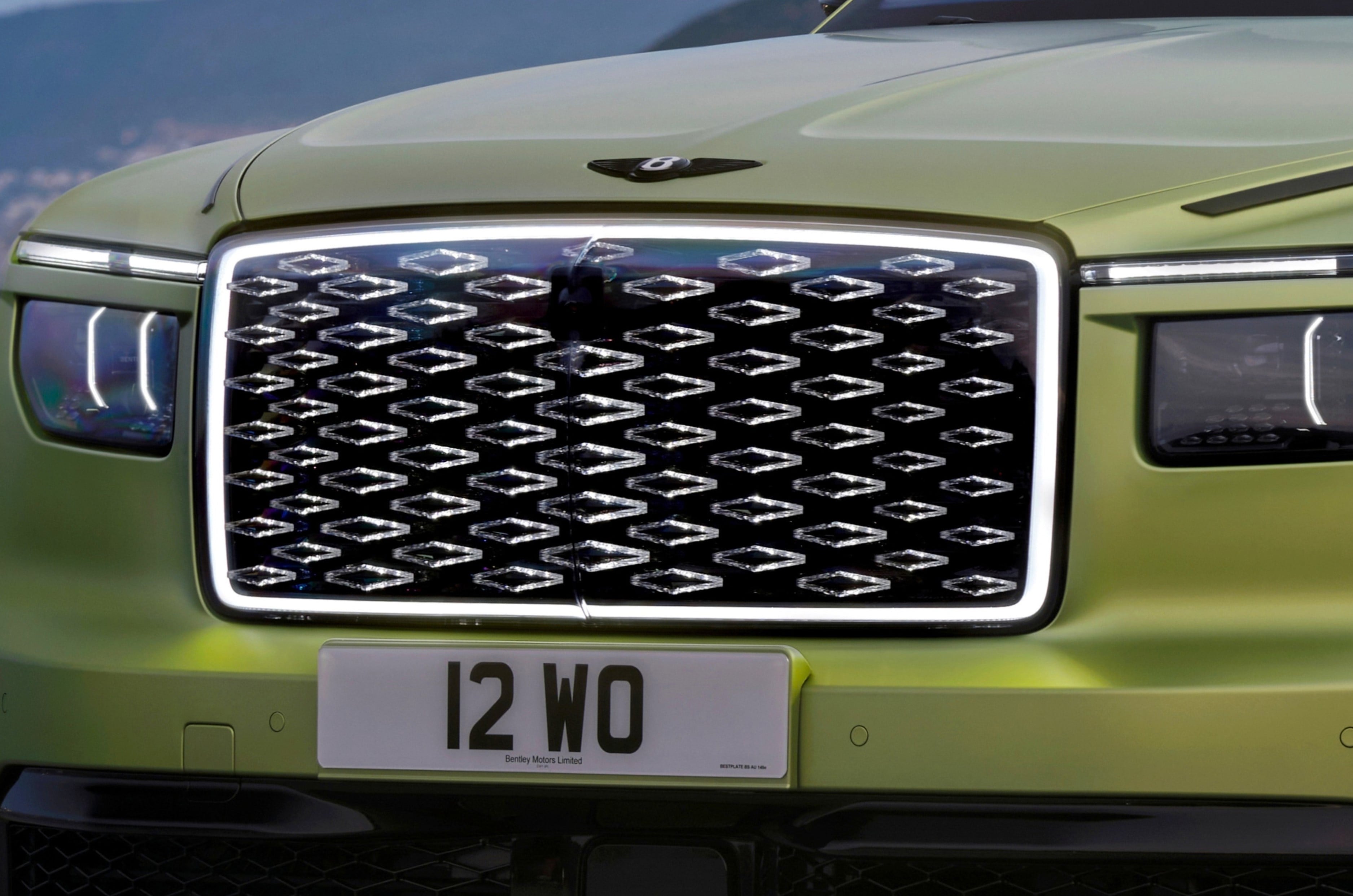
The Torcal gets a clear polycarbonate panel with diamond-like elements for a grille.
An EV doesn’t need a grille for cooling, but Bentley argues that a car without one is faceless. The Torcal’s solution is an illuminated one with crystal-effect, diamond-like elements set behind a clear polycarbonate panel. It’s the car’s signature piece, and it will look spectacular filling someone’s rear-view mirror. The face echoes the Continental T, reinterpreted through slim, high-tech lighting.
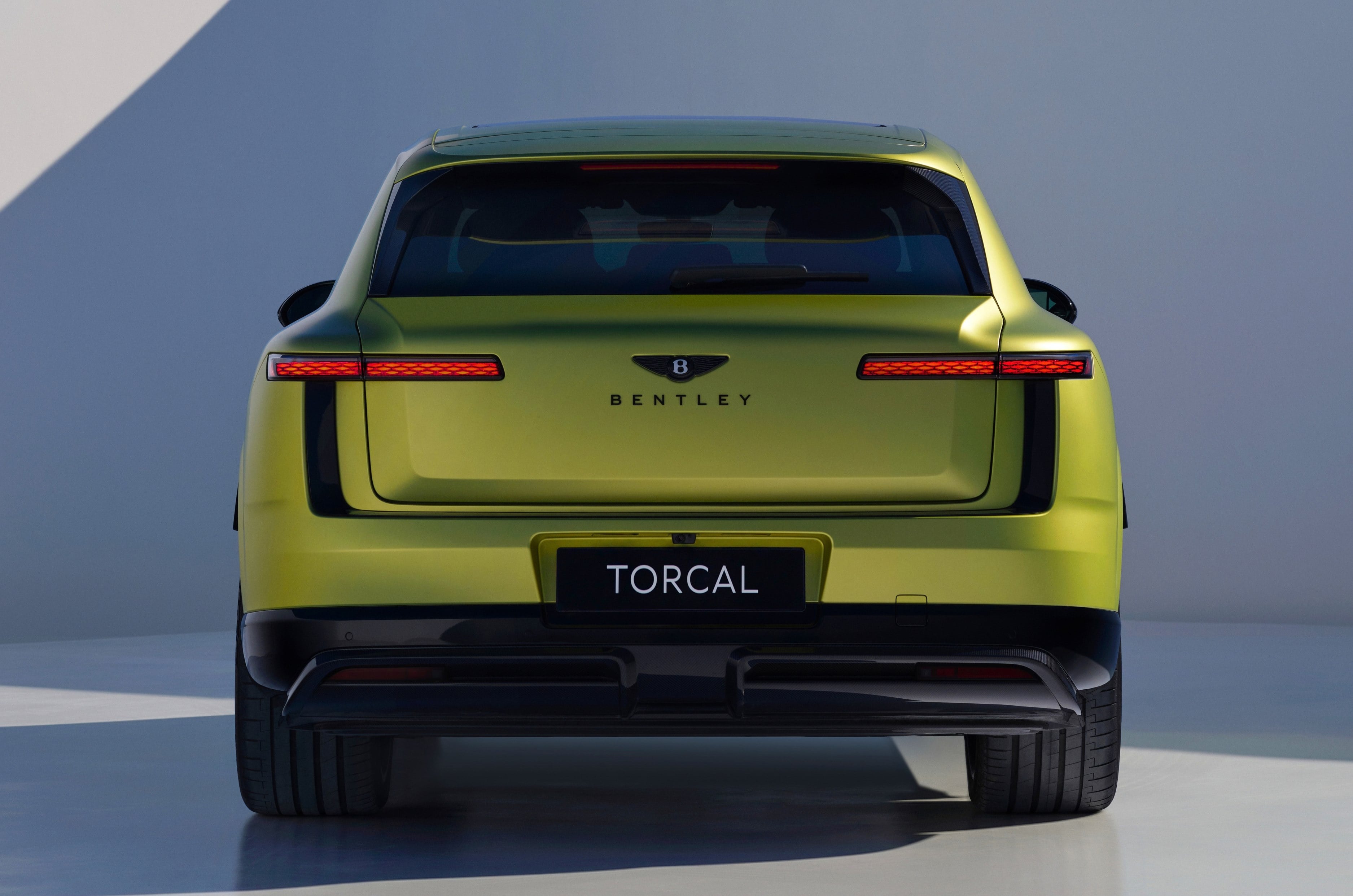
The flanks are deliberately free of fussy creases. The cabin tapers towards the rear so the body can swell over the back wheels, a look the designers call the ‘resting beast’. At the back, Bentley claims are some of the slimmest tail-lamps in the industry. A U-shaped motif ties them together and emphasises the car’s width.
U-shaped motif at the rear ties the tail lamps together.
Our car rode on 22-inch wheels. The core car gets 21s as standard, and India-spec cars may well get the smaller, higher-profile rim. Other neat touches include a charging flap that slides open when you wave a hand over it, and a 90-litre frunk under that long bonnet. The 460-litre boot isn’t especially generous, and there’s no spare wheel, only a puncture repair kit. On Indian roads that could be an issue, though most owners will simply leave a flat to the chauffeur to fix
Bentley Torcal interior: Screens, with restraint
The cabin is completely new, and the tricks start before you’re inside. All four doors are powered and radar-controlled. The driver shuts theirs by pressing the brake pedal, and passengers can close theirs simply by buckling up.
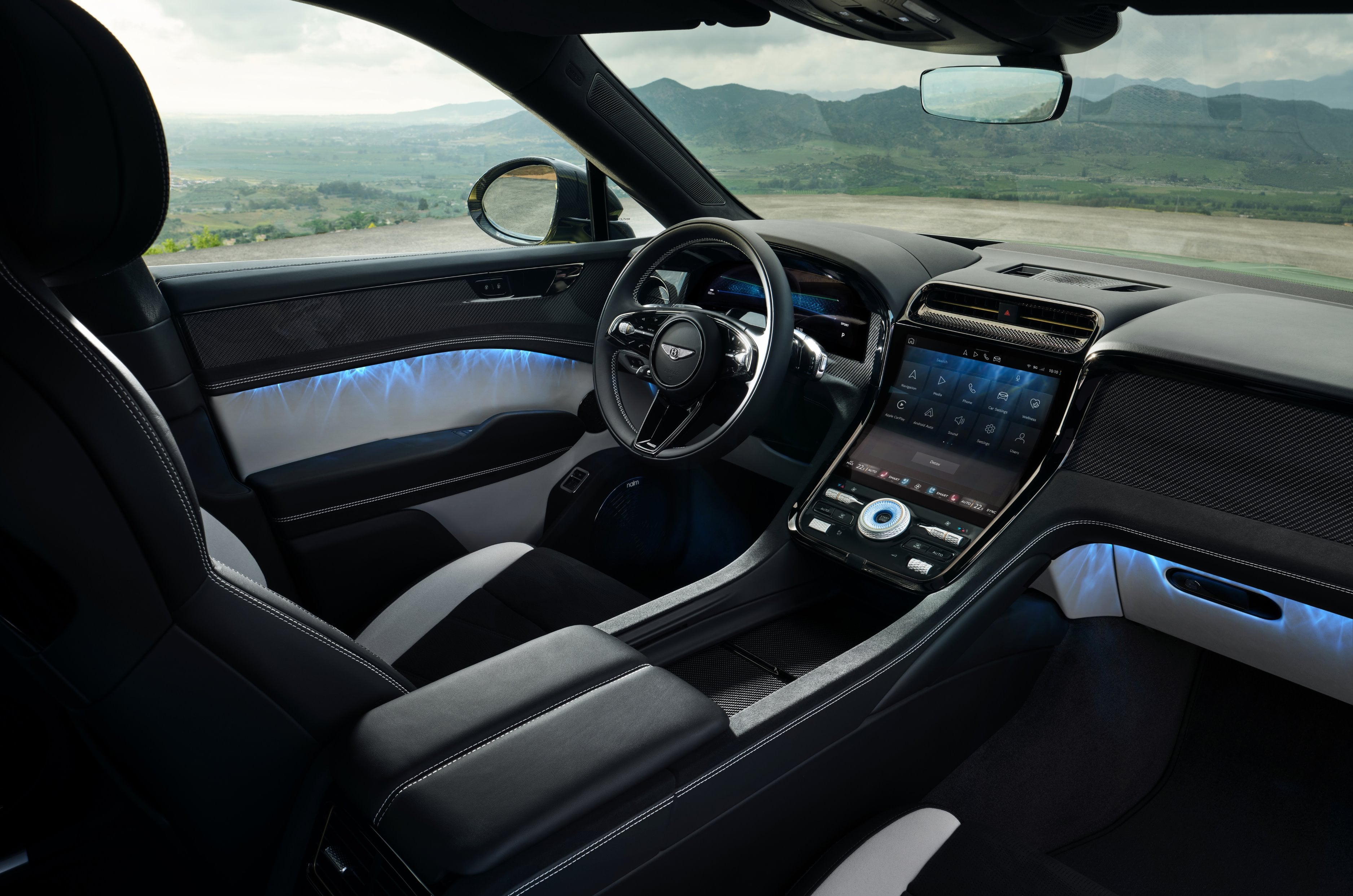
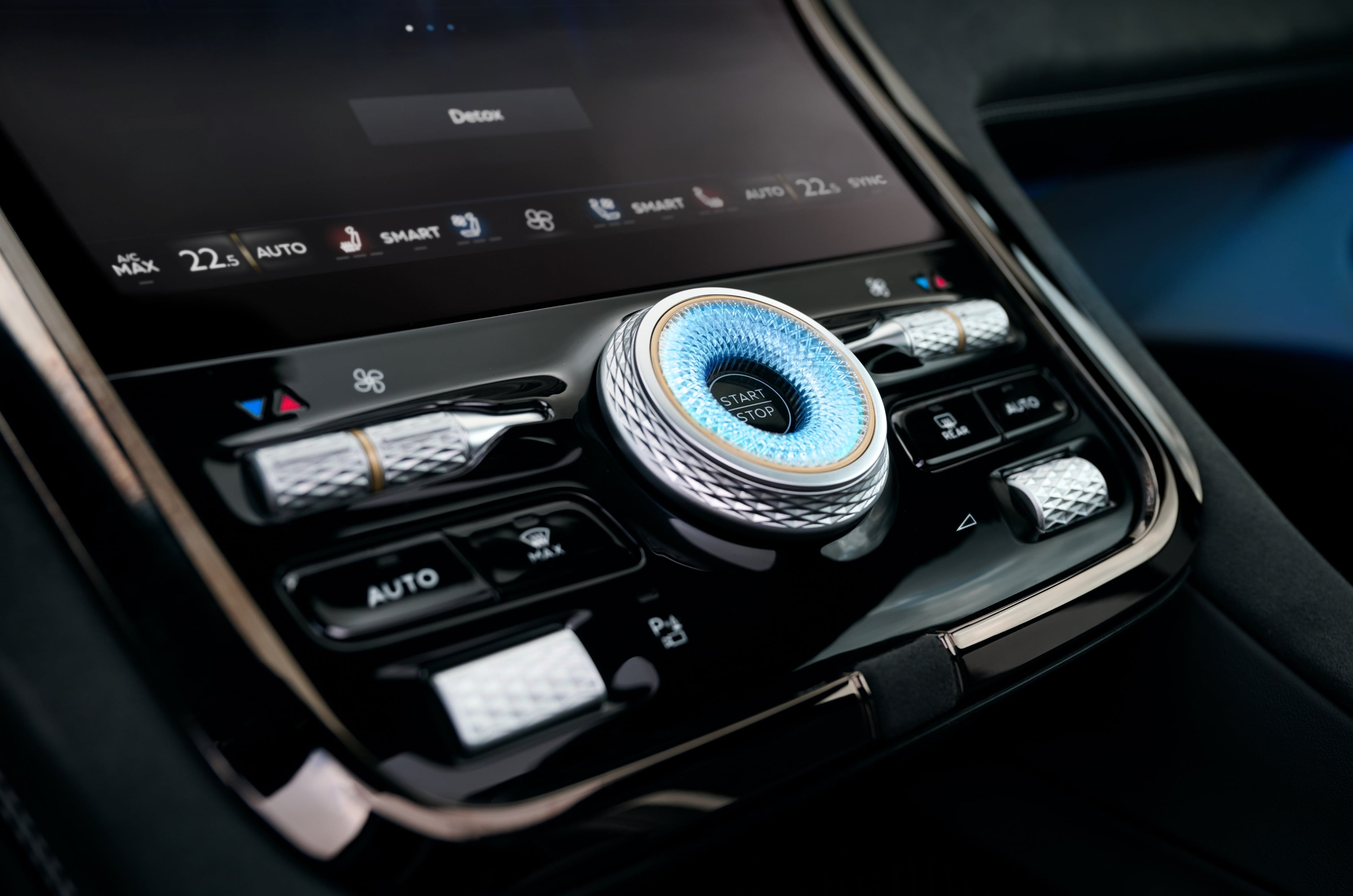
The first thing you notice is that Bentley hasn’t turned the Torcal into an iPad showroom. The centrepiece is the curved OLED centre screen. It doesn’t perch on the dash like a tablet; it sweeps down and flows into the centre console as one continuous form, and nothing else in the class looks quite like it. The OLED panel gives deep blacks and rich colours, and the curve brings every corner of the display within easier reach. Crucially, physical controls haven’t been binned. The switches have a beautiful knurled finish and satisfying, precise clicks, and purists will love them.
A curved OLED touchscreen infotainment is the centrepiece of the interior.
There’s one gripe. The direction of the front air vents is set through the touchscreen, a trend creeping into many luxury cars, and a physical slider would have been far nicer. Otherwise, we haven’t seen any car balance digital and physical controls better.
The tech runs deep. A facial-recognition camera in the rear-view mirror identifies the driver and loads their seat, steering and ADAS settings. An augmented-reality head-up display projects navigation arrows and hazard markers into the driver’s line of sight.
Curated experience
Twist the rotary collar around the starter button and you cycle through four Experience Modes. Each one changes the cabin’s lighting, sound, climate and displays as well as the car’s dynamics.
Rotary dial around the starter button can be used to cycle through four Experience modes.
Sport bathes the cabin in blue rather than the expected red. Bentley’s reasoning is that red signals anger while blue signals focus, which makes it a better colour for driving fast. Bentley mode balances performance and comfort. Comfort mode calms things down and offers a ‘digital detox’ that hides all but essential information. Refresh ups the fresh-air flow and brightens the lighting.
Drumming up character
The hardest thing about an electric Bentley is making it feel like a Bentley. For traditional owners, that means sound. The 6¾-litre V8 is iconic, but it was never a perfect engine. Bentley’s view is that its flaws, like in humans, give it emotion and character. So rather than synthesising a flawless digital imitation, Bentley recorded real musicians on drums, viola and bass guitar. The result is the ‘Dynamic Symphony’, complete with tiny imperfections. It responds to torque demand and speed, grows louder in Sport, and can be switched off entirely.
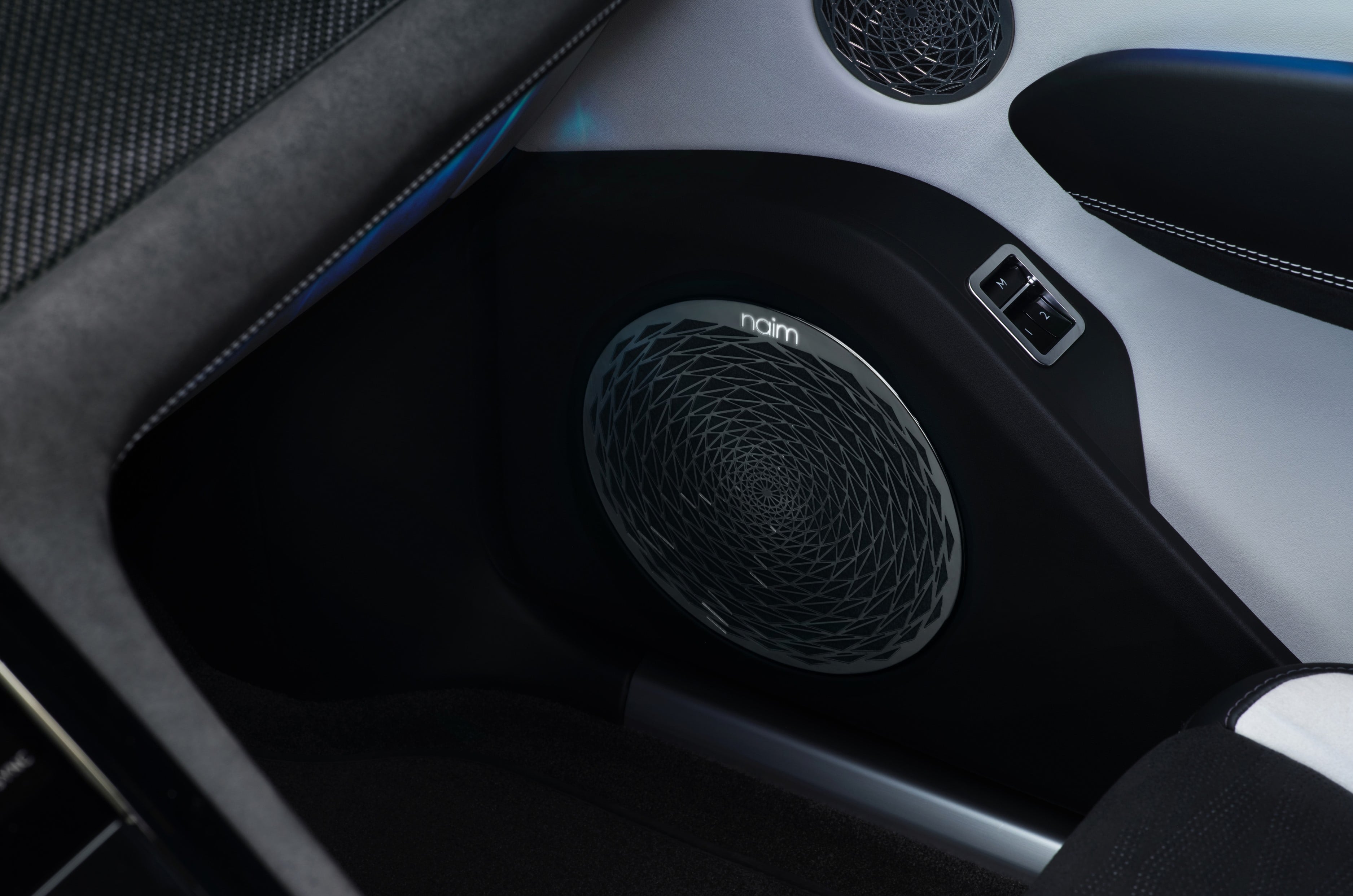
Optional Naim audio brings 28 speakers with Dolby Atmos 7.1
The attention to sound goes further. The indicator tick is a recording of a hammer striking leather in Bentley’s upholstery workshop, and the touchscreen chime comes from a crystal glass. Standard audio is a 620W, 16-speaker system. The Naim option runs to 1,780W and 28 speakers, with headrest speakers, seat shakers and Dolby Atmos 7.1
Material world
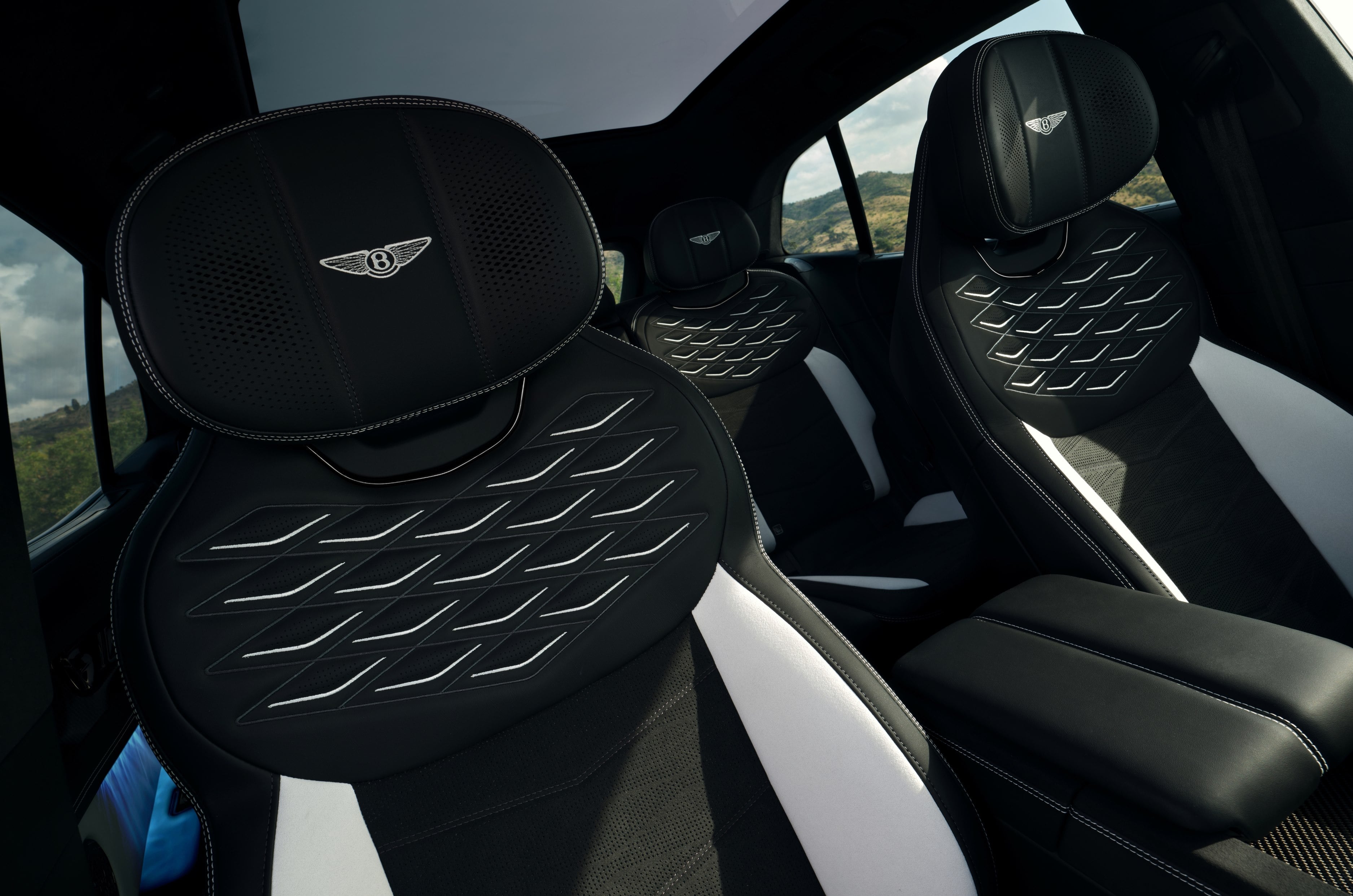
Materials are traditional Bentley, pushed further. There are wood veneers less than a millimetre thick, crisp aluminium and a deep piano black. Leather comes in 15 shades. The real headline is the world’s first 100 per cent Merino wool automotive fabric, developed with Somerset weavers Fox Brothers.
Scope for personalisation is vast, with 15 different shades just for the leather.
New Mulliner finishes include Ombré Walnut, which presses up to 1,000 layers of walnut off-cuts and recycled paper into a veneer that fades from black to smoke. Sunburst Aluminium reinterprets the engine-turned dashboards of old Bentleys. Overhead, the Frosted Diamond sunroof uses switchable glass, so you decide how much light floods in. The scope for personalisation is vast. A second car we saw, trimmed in lighter upholstery with far more brushed aluminium, felt like a different interior altogether.
Bentley Trocal back seat experience
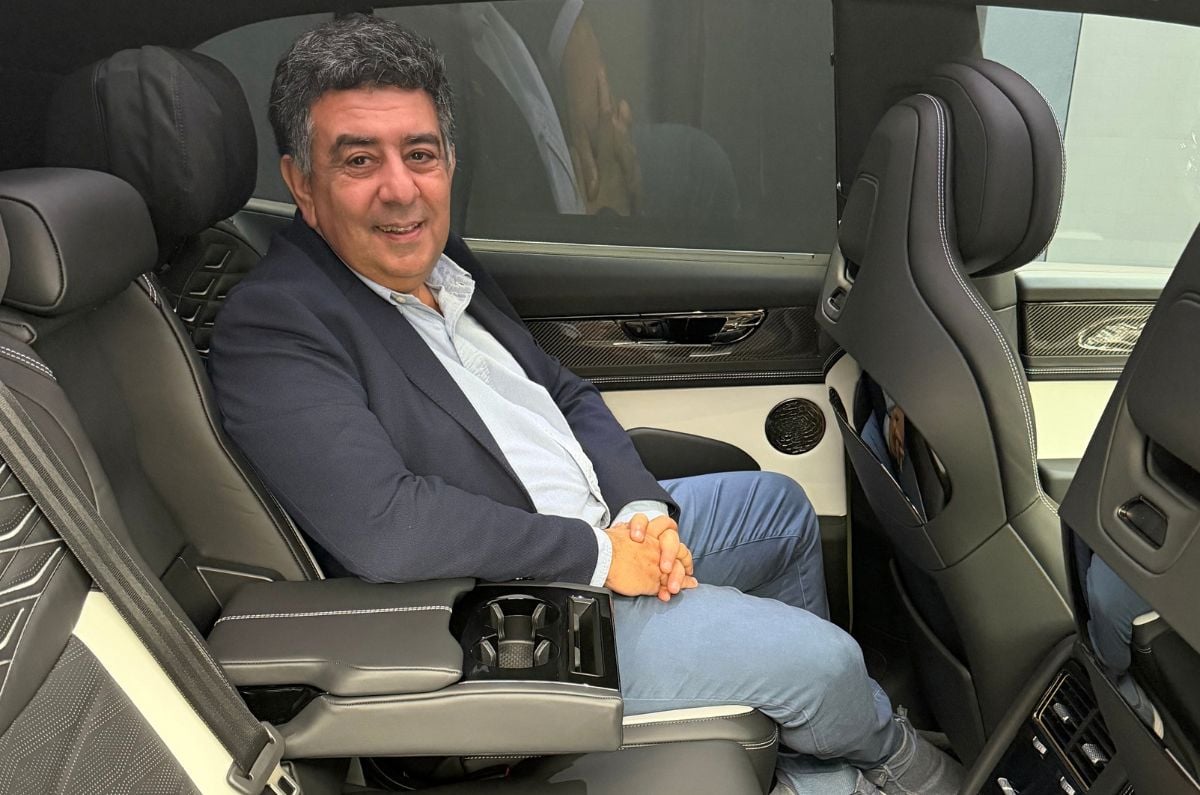
Legroom and headroom at the back are quite decent.
The rear seat matters most for Indian buyers, many of whom will be chauffeured. It’s impressive for a car smaller than a Bentayga. Under-thigh support is genuinely good, which is rare in an EV, where the battery usually pushes the floor up. Legroom and headroom are decent, though this is ultimately a car to be driven.
The rear climate vents get the physical controls the front vents lack. There are heated and cooled seats, and three USB-C ports, one of them rated at 100W for charging a laptop. The rear bench is also the first in a Bentley to power-fold.
Bentley Torcal specs, battery and range
The Torcal gets a 113kWh battery for a claimed WLTP range of 600km.
The Torcal rides on the PPE platform that underpins Porsche’s Cayenne Electric. The Cayenne tops 1,100hp in its most potent form, but Bentley has deliberately stopped short. The flagship makes 888hp and 1,350Nm, the most torque of any Bentley ever and has launch control which I doubt will ever be used!That’s enough to take a roughly 2.7-tonne SUV from 0-100kph in 2.9 seconds. Bentley’s research found that most customers find anything more violent uncomfortable.
Two permanent-magnet motors draw from a 113kWh (net), 800V battery, which carries a 10-year, 100,000-mile warranty. Claimed range is 600km WLTP. This is a continent-crosser, so charging speed was a priority. On a 400kW charger, a 10-80 per cent top-up takes 16 minutes, and around 160km of range goes in during a seven-minute coffee stop. India currently has no such high-speed chargers, yet.
It also gets fully active suspension and rear-wheel steering.
The chassis is Bentley’s most advanced yet. Fully active suspension replaces anti-roll bars altogether, and five degrees of rear-wheel steer shrink the turning circle to 11.1m. Carbon-ceramic brakes with 440mm front discs are optional. The ADAS suite uses 25 radars, sensors and cameras. It can reverse the car along the last 50 metres of its route, and it can park itself in a designated space up to 200 metres away.
Bentley Torcal India launch plans
The Torcal arrives in India in the second half of 2027. It’s a smidgen smaller than the Bentayga but will be substantially pricier, because EVs don’t get the same customs-duty benefit under the new UK-India FTA. Expect around Rs 4.5 crore, ex-showroom. Is it worth it? We’ll tell you once we’ve driven it. Standing still, at least, the Torcal makes a convincing case that a Bentley without an engine is still a Bentley.
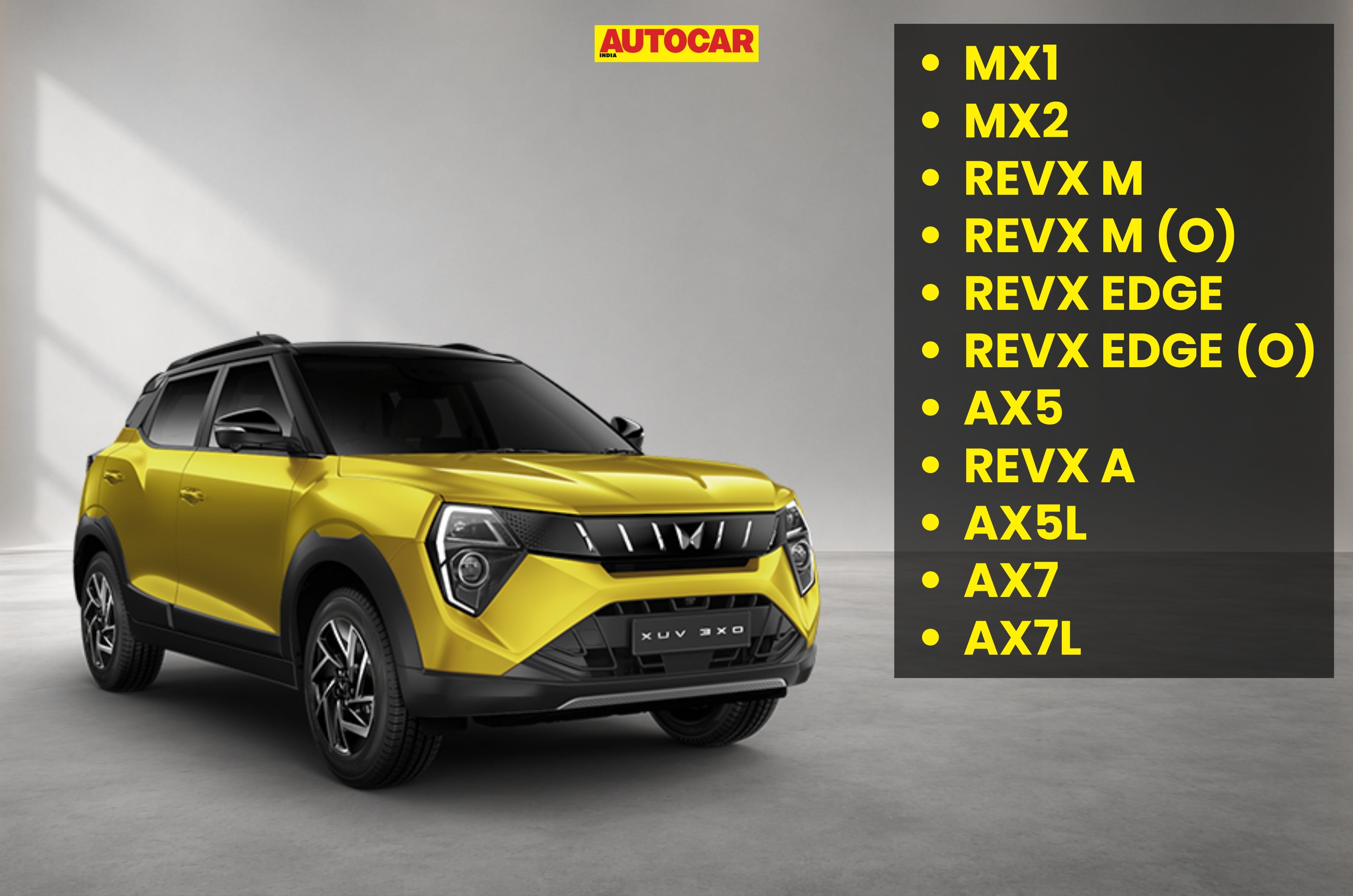
Mahindra launched the XUV 3XO in April 2024 as the facelifted version of the XUV300, with a redesigned exterior and interior, and new convenience and safety features. Over the years, the manufacturer has rejigged the variant-wise feature distribution and has added RevX trims to keep it relevant in the highly contested compact SUV space. Currently, the XUV 3XO is being offered in 11 trims and with 3 engine options. Among these, which variant should you choose? Let us find out.
Mahindra XUV 3XO powertrain options and prices
Available in 11 trims, offered with two turbo-petrol and a diesel engine option
Mahindra offers the XUV 3XO with two turbo-petrol engines and a diesel mill. These include a 1.2-litre MPFi turbo-petrol engine producing 111hp and 200Nm, a 1.2-litre TGDi turbo-petrol engine producing 131hp and 230Nm, and a 1.5-litre diesel engine producing 117hp and 300Nm. Both turbo-petrol engines are offered with a choice between a 6-speed manual and a 6-speed torque converter automatic transmission (AT). The diesel engine is paired with either a 6-speed manual or a 6-speed automated manual transmission (AMT).
Here are the powertrain-wise prices of the Mahindra XUV 3XO:
Mahindra XUV 3XO variant-wise ex-showroom prices (in Rs, lakh)
Turbo-petrol MT
Turbo-petrol AT
Diesel MT
Diesel AMT
MX1
7.79
–
–
–
MX2
–
–
9.36
–
RevX M
8.59
–
–
–
RevX M (O)
9.09
9.99
–
–
RevX Edge
9.39
10.59
10.59
–
RevX Edge (O)
9.89
11.09
11.09
11.91
AX5
10.30
11.88
11.40
12.20
RevX A
11.28
12.40
–
–
AX5L
12.03
13.28
–
–
AX7
12.20
13.34
13.04
13.80
AX7L
13.33
15.04
14.08
–
In the Mahindra XUV 3XO lineup, the more potent 131hp 1.2-litre TGDi turbo-petrol engine is offered only with the higher-spec RevX A, AX5L, AX7 and AX7L trims. The other lower-spec trims are offered with the 111hp 1.2-litre MPFi turbo-petrol engine.
Mahindra XUV 3XO colour options
Offered in 8 exterior hues, all of which are offered in dual-tone options too
Mahindra XUV 3XO Tango Red colour option.
The Mahindra XUV 3XO is offered in eight colour options: Citrine Yellow, Deep Forest, Dune Beige, Everest White, Galaxy Grey, Nebula Blue, Stealth Black, and Tango Red. All these colours are also offered in a dual-tone shade featuring either a Stealth Black or a Galvano Grey roof. Among these hues, only the Everest White, Galaxy Grey, Tango Red, Nebula Blue, and Stealth Black are being offered with the RevX trims.
Mahindra XUV 3XO variant-wise features
The top-spec AX7L’s dashboard image is shown for representational purposes only.
All four power windows with one-touch down on the driver-side window
USB Type-C charging ports for front and rear passengers
12V charging socket for front passengers
Front centre armrest with integrated storage space
Adjustable headrests on 2nd row (except middle passenger seat)
60:40 split rear seat
Auto engine start/stop
6 airbags
Rear parking sensors
Height-adjustable seatbelts for front passengers
ISOFIX child seat anchorages
Electronic stability control (ESC)
MX2
Price: Rs 9.36 lakh
Powertrain: 117hp diesel MT
Features over MX1
10.25-inch infotainment touchscreen
Wired Android Auto and Apple CarPlay
4-speaker sound system
Steering-mounted audio controls
Keyless entry
Follow-me-home headlight function
USB Type-A port for front passengers
RevX M
Price: Rs 8.59 lakh
Powertrain: 111hp turbo petrol MT
Features over MX2
Height-adjustable driver seat (manual)
Black leatherette seat upholstery
Black wheel covers on 16-inch steel wheels
Rear centre armrest with cupholders
Adjustable headrest for 2nd row middle passenger seat
Body coloured or Gunmetal Grey grille
Dual-tone roof
RevX M (O)
Price: Rs 9.09 lakh to Rs 9.99 lakh
Powertrain: 111hp turbo petrol MT/AT, 117hp diesel-MT
Features over RevX M
Single-pane sunroof
RevX Edge
Price: Rs 9.39 lakh to Rs 10.59 lakh
Powertrain: 111hp turbo petrol MT/AT
Features over RevX M
Wireless Android Auto and wired Apple CarPlay
Rear parking camera
Cruise control
RevX Edge (O)
Price: Rs 9.89 lakh to Rs 11.09 lakh
Powertrain: 111hp turbo petrol MT/AT, 117hp diesel-MT/AMT
Features over RevX Edge
Panoramic sunroof
Push-button start/stop
Electrically folding ORVMs
Auto headlights and wipers
Passive keyless entry
Roof rails
AX5
Price: Rs 10.30 lakh to Rs 12.20 lakh
Powertrain: 111hp turbo petrol MT/AT, 117hp diesel-MT/AMT
Features over MX2
10.25-inch digital instrument cluster
10.25-inch infotainment touchscreen
Wireless Android Auto and Apple CarPlay
6-speaker sound system
Connected car technology with built-in navigation
Dual-zone automatic climate control
Single-pane sunroof
Rear parking camera
Tyre pressure monitoring system (TPMS)
Auto projector LED headlights and LED DRLs
Connected LED taillights
Rear wiper and washers
Automatic wipers
Rear defogger
Passive keyless entry
Push-button start/stop
Electrically folding ORVMs
Height-adjustable driver’s seat (manual)
Rear centre armrest with cupholders
Leatherette-wrapped steering wheel and gear lever
One-touch up function for driver-side power window
RevX A
Price: Rs 11.28 lakh to Rs 12.40 lakh
Powertrain: 131hp TGDi turbo petrol MT/AT
Features over AX5
Panoramic sunroof
Dolby Atmos surround-sound support
16-inch black alloy wheels
Black leatherette seat upholstery
Body coloured or Gunmetal Grey grille
Dual-tone roof
AX5L
Price: Rs 12.03 lakh to Rs 13.28 lakh
Powertrain: 131hp TGDi turbo petrol MT/AT
Features over AX5
Level 2 advanced driver assistance system (ADAS)
360-degree camera with blind-spot monitor
Wireless phone charger
Auto-dimming inside rearview mirror (IRVM)
Electronic parking brake with auto-hold function
Cooled glovebox
Dolby Atmos surround-sound support
AX7
Price: Rs 12.20 lakh to Rs 13.80 lakh
Powertrain: 131hp TGDi turbo petrol MT/AT, 117hp diesel MT/AMT
Features over AX5
Panoramic sunroof
Wireless phone charger
Harman Kardon sound system with an amplifier and a subwoofer
Front LED fog lights
17-inch dual-tone alloy wheels
Front parking sensors
Cooled and illuminated glovebox
Dolby Atmos surround-sound support
Soft-touch leatherette elements on dashboard and door trims
AX7L
Price: Rs 13.33 lakh to Rs 14.08 lakh
Powertrain: 131hp TGDi turbo petrol MT/AT, 117hp diesel MT
Features over AX7
Level 2 ADAS
360-degree camera with blind-spot assist
Electronic parking brake with auto-hold function
Which variant of the Mahindra XUV 3XO should you buy?
AX5L is recommended, but the RevX Edge (O) is a good option for budget buyers
The Mahindra XUV 3XO’s higher-spec AX5L offers a fine balance between value for money and a loaded feature list. The most significant feature misses in this trim include a panoramic sunroof and a Harman Kardon sound system, but it is still loaded with modern-day features. However, if you want a diesel engine, the AX7 is the option to go for, which also equips it with features missing on the AX5L. If you are on a budget, the mid-spec RevX Edge (O) is the most value-for-money trim in the SUV’s lineup.
Xiaomi ने भारत में अपनी Redmi Note 17 सीरीज के दो नए स्मार्टफोन Redmi Note 17 Pro और Redmi Note 17 Pro Max लॉन्च कर दिए हैं। इनमें Pro Max को ज्यादा प्रीमियम मॉडल के तौर पर पेश किया गया है। इसकी सबसे बड़ी खासियत 10,000mAh की सिलिकॉन-कार्बन बैटरी है। वहीं Redmi Note 17 Pro में 9,000mAh की बैटरी दी गई है। दोनों फोन में 6.83 इंच का 1.5K AMOLED डिस्प्ले, 120Hz रिफ्रेश रेट और 3,500 निट्स तक की पीक ब्राइटनेस मिलती है। फोन Android 16 पर आधारित Xiaomi के HyperOS 3 पर चलते हैं।
Redmi Note 17 Pro को दो स्टोरेज वेरिएंट में लॉन्च किया गया है।
8GB RAM + 128GB: ₹33,999
8GB RAM + 256GB: ₹36,999
इस फोन की बिक्री 17 सितंबर से शुरू होगी।
Redmi Note 17 Pro Max की कीमत
Pro Max की कीमत ज्यादा है, लेकिन इसमें बड़ी बैटरी और ज्यादा पावरफुल फीचर्स मिलते हैं।
8GB RAM + 256GB: ₹44,999
12GB RAM + 256GB: ₹50,999
इसकी बिक्री 23 सितंबर से शुरू होगी।
कंपनी नए फोन पर बैंक ऑफर के तहत ₹5,000 तक की छूट भी दे रही है। दोनों स्मार्टफोन Amazon, Xiaomi के ऑनलाइन स्टोर और चुनिंदा ऑफलाइन रिटेल स्टोर्स के जरिए खरीदे जा सकेंगे।
3,500 निट्स की ब्राइटनेस वाला AMOLED डिस्प्ले
Redmi Note 17 Pro और Pro Max दोनों में 6.83 इंच का 1.5K AMOLED डिस्प्ले दिया गया है। इसका रिफ्रेश रेट 120Hz है, जिससे स्क्रॉलिंग और एनिमेशन ज्यादा स्मूद नजर आ सकते हैं।
डिस्प्ले में:
1.5K रेजोल्यूशन
120Hz रिफ्रेश रेट
3,200Hz टच सैंपलिंग रेट
3,500 निट्स तक पीक ब्राइटनेस
12-बिट कलर टेक्नोलॉजी
68.7 अरब तक कलर्स का सपोर्ट
मिलता है।
स्क्रीन को Corning Gorilla Glass Victus 2 से सुरक्षा दी गई है। दोनों फोन में Dolby Atmos सपोर्ट वाले स्टीरियो स्पीकर भी मिलते हैं। बैटरी में बड़ा अंतर, Pro Max में 10,000mAh
बैटरी इन दोनों फोन की सबसे बड़ी खासियतों में से एक है।
Redmi Note 17 Pro में 9,000mAh की सिलिकॉन-कार्बन बैटरी दी गई है, जो 67W फास्ट चार्जिंग सपोर्ट करती है। वहीं Redmi Note 17 Pro Max में 10,000mAh की सिलिकॉन-कार्बन बैटरी है और यह 100W फास्ट चार्जिंग सपोर्ट करता है।
Xiaomi के मुताबिक Pro Max की बैटरी 1,600 से ज्यादा चार्जिंग साइकल के बाद भी 80 प्रतिशत क्षमता बनाए रखने के लिए रेटेड है। इसमें 27W वायर्ड रिवर्स चार्जिंग का फीचर भी दिया गया है। यानी जो यूजर फोन को बार-बार चार्ज नहीं करना चाहते या लंबे समय तक गेमिंग, वीडियो और दूसरे काम करते हैं, उनके लिए Pro Max ज्यादा आकर्षक विकल्प हो सकता है।
दोनों स्मार्टफोन में डुअल रियर कैमरा सेटअप दिया गया है।
इसमें:
50MP मेन कैमरा
8MP सुपर-वाइड एंगल कैमरा
शामिल हैं।
हालांकि सेल्फी कैमरे में दोनों मॉडल अलग हैं। Redmi Note 17 Pro Max में 32MP फ्रंट कैमरा, जबकि Redmi Note 17 Pro में 16MP सेल्फी कैमरा दिया गया है। फोन में AI आधारित इमेजिंग फीचर्स भी मिलते हैं, जिनकी मदद से फोटो से ग्लेयर, रिफ्लेक्शन और अनचाही वस्तुओं को हटाया जा सकता है।
Pro और Pro Max में अलग-अलग प्रोसेसर
परफॉर्मेंस के लिए दोनों मॉडल में अलग चिपसेट दिए गए हैं। Redmi Note 17 Pro में Snapdragon 6s Gen 4 प्रोसेसर और 8GB तक RAM मिलती है। Redmi Note 17 Pro Max में Qualcomm Snapdragon 6 Gen 5 प्रोसेसर और 12GB तक RAM का विकल्प है। इसलिए दोनों में केवल बैटरी ही नहीं, बल्कि प्रोसेसिंग पावर और RAM के मामले में भी अंतर है।
HyperOS 3 और Android 16
दोनों फोन Xiaomi के HyperOS 3 पर चलते हैं, जो Android 16 पर आधारित है। कंपनी ने इन स्मार्टफोन के लिए 4 साल के OS अपडेट और 6 साल के सिक्योरिटी अपडेट देने का वादा किया है। लंबे समय तक फोन इस्तेमाल करने वाले ग्राहकों के लिए यह एक महत्वपूर्ण बात है।
पानी और धूल से सुरक्षा
Redmi Note 17 Pro सीरीज में मजबूत प्रोटेक्शन भी दिया गया है। दोनों फोन को IP66, IP68 और IP69K रेटिंग के साथ पेश किया गया है। Pro Max में एक फोटोक्रोमिक रियर पैनल का विकल्प भी मिलता है, जो सीधी धूप पड़ने पर अपना रंग/शेड बदल सकता है।
अगर आपका बजट करीब ₹34,000-₹37,000 है और आप बड़ी बैटरी के साथ AMOLED डिस्प्ले वाला फोन चाहते हैं, तो Redmi Note 17 Pro पर विचार किया जा सकता है। वहीं अगर आपका बजट ₹45,000 से ऊपर है और आपकी प्राथमिकता बड़ी बैटरी, 100W चार्जिंग, ज्यादा RAM और बेहतर सेल्फी कैमरा है, तो Redmi Note 17 Pro Max ज्यादा फीचर वाला विकल्प है। खास तौर पर 10,000mAh बैटरी और 100W चार्जिंग Pro Max को उन यूजर्स के लिए अलग बनाती है जो बैटरी बैकअप को सबसे ज्यादा महत्व देते हैं।
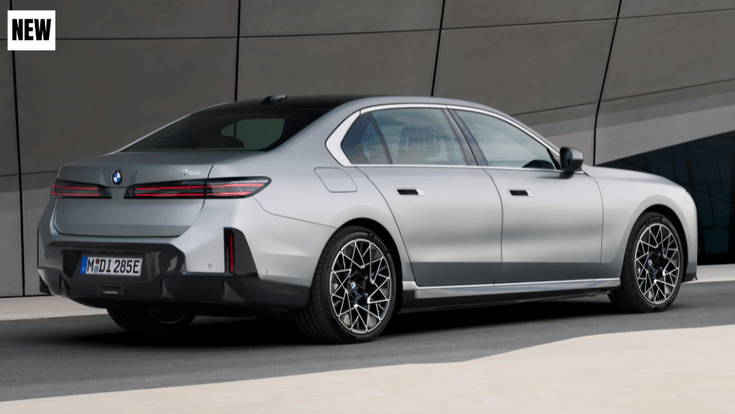
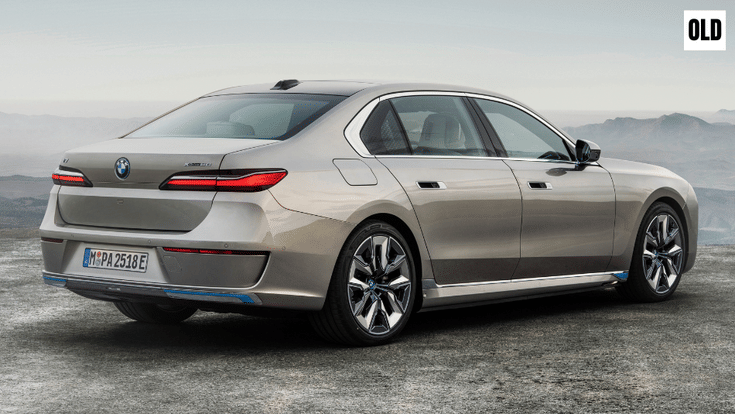
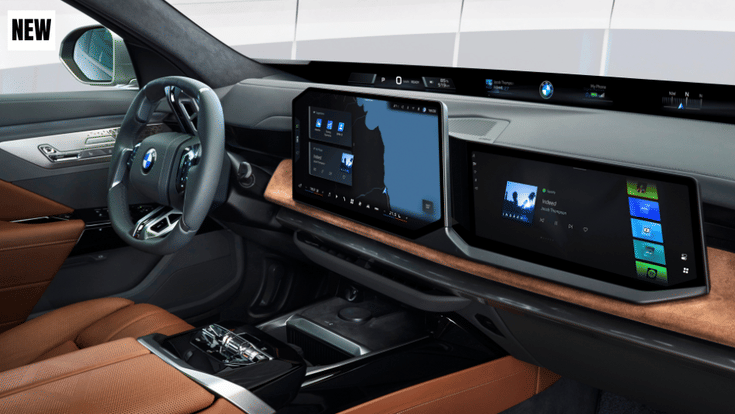
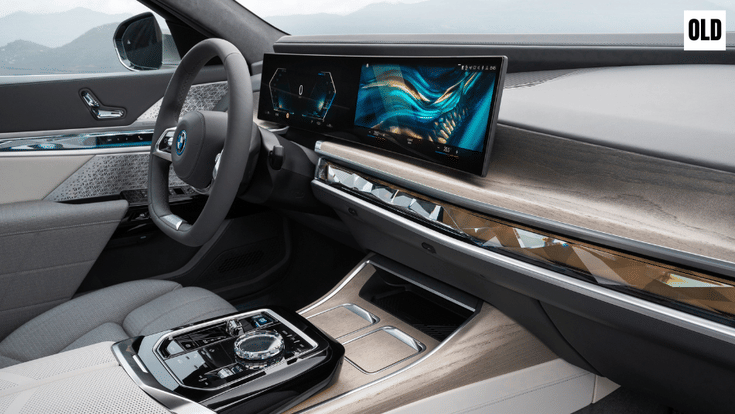
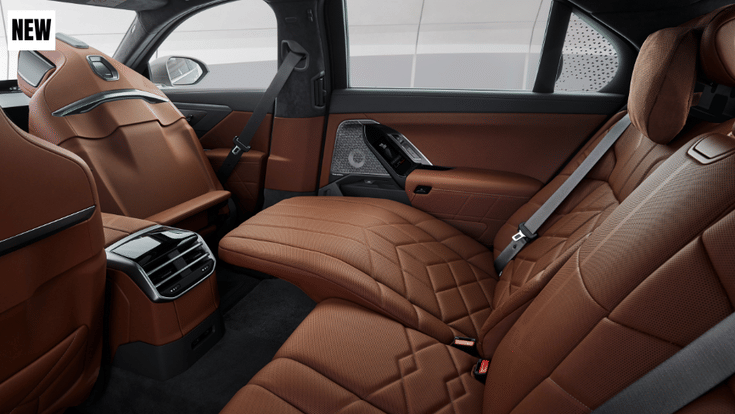
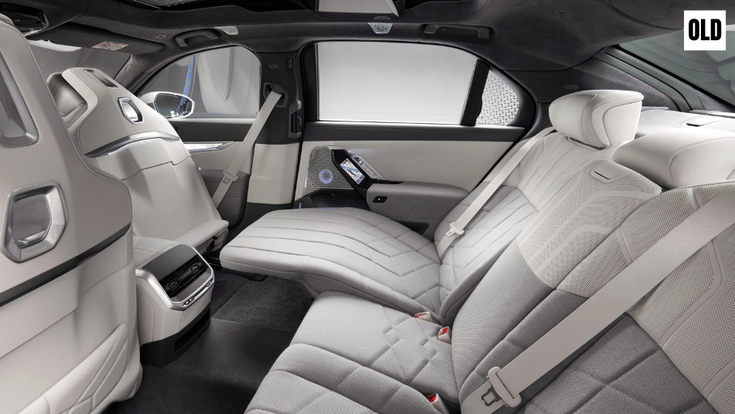
BMW has revealed the facelifted 7 Series, along with its electric counterpart, the i7. This mid-lifecycle update brings subtle changes to the exterior, but the bigger updates are inside, inspired by the brand’s latest Neue Klasse flair. There are also gains across powertrains, with improved outputs across the range. Here is a closer look at what has changed and how the updated BMW 7 Series compares with the outgoing model.
Disclaimer: The image sliders below feature global-spec BMW i7 models.
2026 BMW 7 Series vs old model: Exterior design
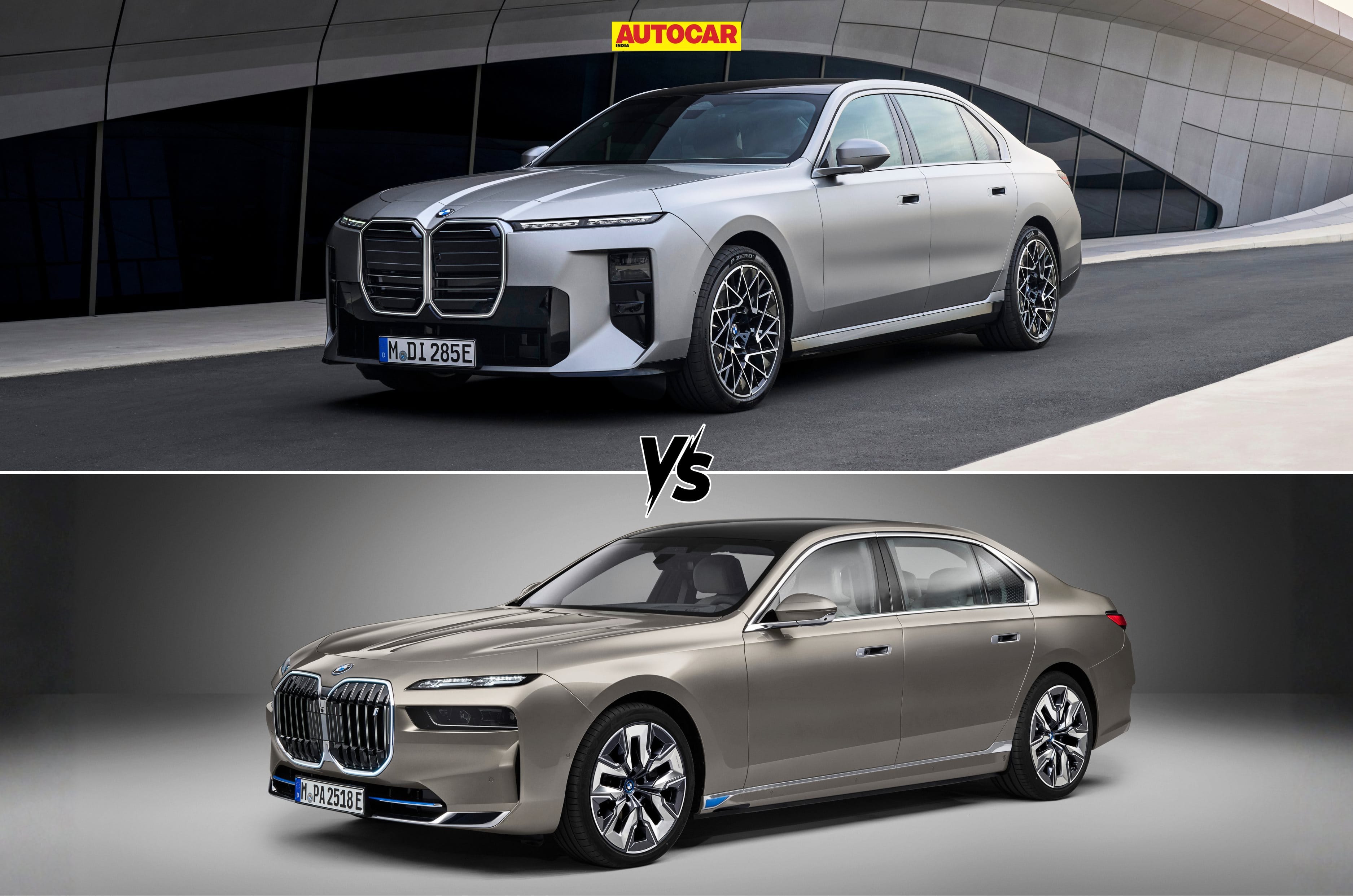
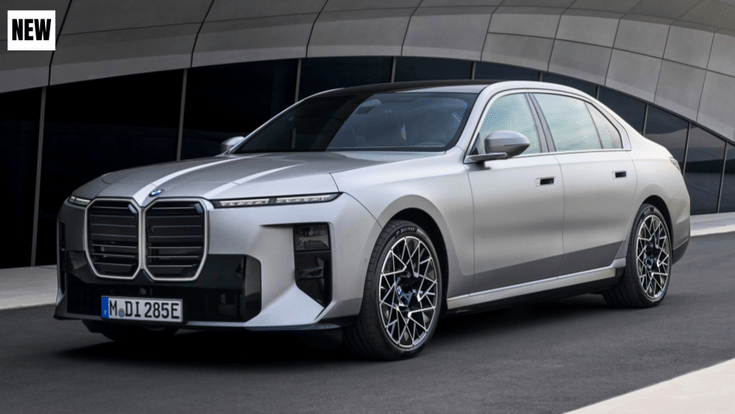
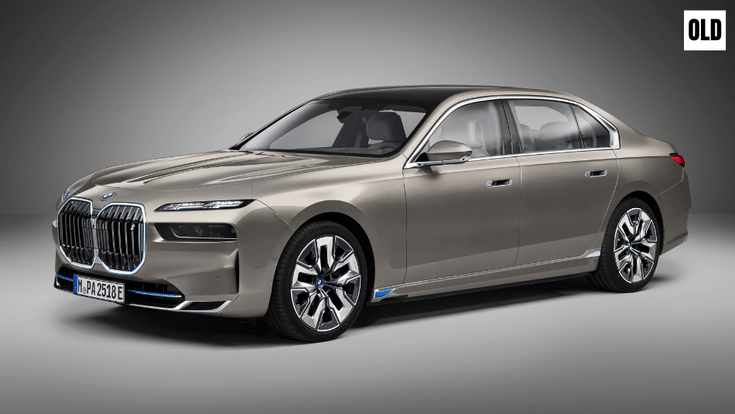
Unlike the predecessor that had the M-Sport package on certain variants, the 2026 7 Series gets it as standard. The facelifted 7 Series gets a much cleaner front end than the outgoing model. The biggest change is the updated illuminated kidney grille, which is now slimmer and more upright, and it also gets a new horizontal light graphic. While a split headlamp setup is carried over, the DRLs get a slimmer look, while the main headlamp units are now vertically stacked as opposed to the predecessor’s horizontal ones. The BMW badge on the bonnet is also new, larger, and finished in matte. BMW says the radar, camera, sensors, and washer nozzles are hidden inside the grille area, which helps keep the front uncluttered.
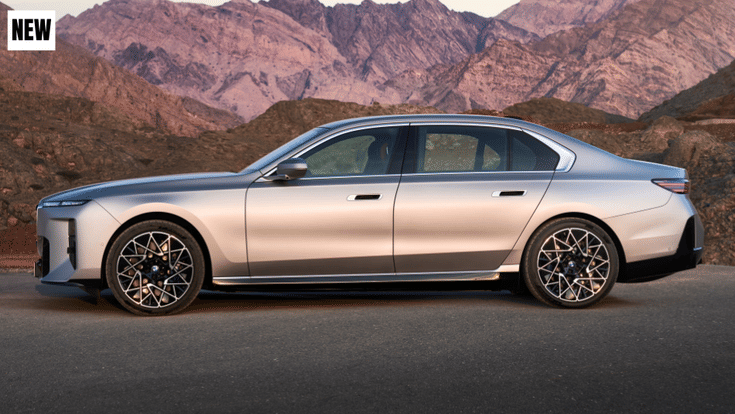
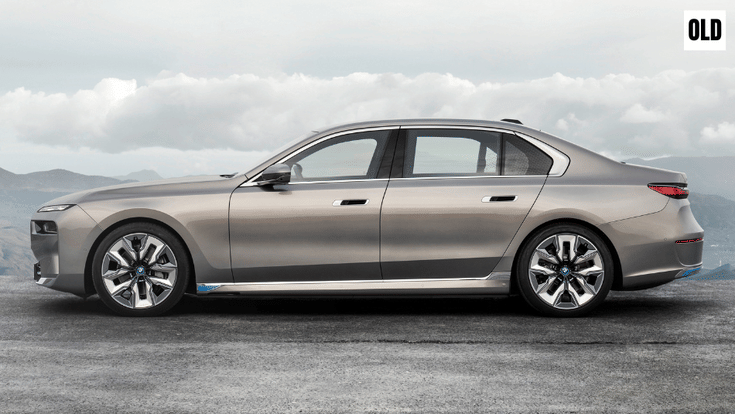
In profile, the facelift retains the clean and simple design. The door handles continue to be flush with the body, giving the surface a clean look. The trim around the handles is finished in Satin Aluminium, and the wheel design has been reworked. The B-pillar also has a visible embossed “7” when both doors on one side are opened.
The rear gets new taillights, and this is one of the most obvious changes compared to the old model. They are slimmer, stretched further into the body, and give the car a wider look. BMW has also used chrome detailing inside the lamps and smoked glass for a darker finish. Like at the front, many of the technical bits, such as the boot release, rear camera, and washer nozzle, are tucked away. The rear bumper also gets a diffuser-like trim for a more modern look.
2026 BMW 7 Series vs old model: Interior and features
The facelifted 7 Series gets a 17.9-inch central touchscreen, a 14.6-inch front passenger display, and a projection across the full width of the windscreen’s base in contrast to its predecessor’s dual-screen setup. The touchscreen runs BMW’s Operating System X and supports over-the-air updates, wireless Apple CarPlay and Android Auto, and improved voice control. The four-spoke steering wheel is also new, inspired by classic BMW cars. The centre console has crystal-type controls for the engine start/stop button, gear selector, and volume control. There is also an illuminated cup holder and a smartphone tray with wireless charging.
The 2026 7 Series comes with a Bowers & Wilkins Diamond Surround Sound System as standard, 4D audio, and Dolby Atmos. The carmaker has added a new lighting setup inside the car. There is a full-width ambient light strip across the cabin, lighting elements behind the front seats, illuminated rear-door speaker covers, and extra reading lights in the back. The optional panoramic glass roof also gets LED lighting with a graphic pattern. As per BMW, the lighting changes with the selected driving mode.
As for interior trim choices, the regular 7 Series models come standard with a fine oak wood trim and are available with either a black-and-brown or black-and-white theme with leather-upholstered seats. Other options include carbon-fiber and cashmere trims.
Standard seats come with electric adjustment, heating, massaging, armrest heating, lumbar support, and active ventilation. At the rear, BMW offers Executive Lounge Seating with a leg rest, a heated centre armrest and a more relaxed seating position. The front passenger seat can move fully forward to create more room for the rear passenger behind it. The rear gets a major update, too. The optional Theatre Screen is now a 31.3-inch 8K touchscreen and can be used for video calls, streaming, and gaming.
The rear doors get updated screens that let passengers move these units, change the viewing angle, and control other functions. The facelift also brings new automatic doors with better-placed open and close buttons. BMW says they work with a touch of the flush-fitting handles and can even be operated through the My BMW app or voice commands.
2026 BMW 7 Series facelift vs old model: Powertrains
7 Series petrol and diesel
7 Series old vs new: Powertrains
Variant
740i M Sport (old)
740 M Sport (new)
Engine
3L inline-6 + 48V
3L inline-6 + 48V
Power
381hp
400hp
Torque
520Nm
540Nm
Transmission
8AT
8AT
Drive layout
RWD
RWD
With the facelift, the ICE-powered 7 Series has dropped the diesel engine and is now a petrol-only model. The new 740 does without the ‘i’ suffix and now makes 400hp and 540Nm, which is up by 19hp and 20Nm over the outgoing car.
i7 EV
i7 old vs new: Powertrains
Variant
50 eDrive (old)
50 xDrive (new)
M70 xDrive (old)
M70 xDrive (new)
Battery
101.7kWh
112.4kWh
101.7kWh
112.4kWh
Motor power
449hp
455hp
650hp
680hp
Torque
650Nm
660Nm
1,015Nm
up to 1,100Nm
Drive layout
RWD
AWD
AWD
AWD
For the electric i7, the biggest change is at the entry point. The old rear-wheel-drive 50 eDrive is gone, and BMW now offers a 50 xDrive with all-wheel drive instead. That variant now gets a bigger 112.4kWh battery, up from 101.7kWh, while power has risen only slightly from 449hp to 455hp and torque has gone up by 10Nm to 660Nm. The M70 xDrive also gets a similar battery upgrade. Power has increased by 30hp, from 650hp to 680hp, while torque has climbed from 1,015Nm to up to 1,100Nm.
BMW India has launched the 2026 i7 facelift at Rs 1.95 crore (eDrive 50 trim), ex-showroom. The range-topping M70 xDrive trim costs Rs 2.65 crore. With this year’s mid-lifecycle update, BMW’s flagship electric sedan gets powertrain upgrades, along with several exterior and interior design tweaks.
2026 BMW i7 facelift: Powertrain specs
The range-starting i7 eDrive 50 trim makes 455hp and 600Nm, accelerating from 0-100kph in 5.5 seconds and topping out at 210kph. It uses a 112.5kWh battery pack, allowing for a single charge range of 728km (WLTP rated). BMW claims that is an increase of 125km over the outgoing model.
The top-spec i7 M70 xDrive (all-wheel drive in BMW speak) makes higher outputs of 680hp, and 1,015Nm (in Sport mode) and 1,100Nm (with Sport Boost function). As a result, it does the sprint from rest to 100kph in just 3.8 seconds; top speed is 250kph. Range, however, stands at 686km (also WLTP).
With a 250kW DC fast charger, a 10-80 percent charge takes 28 minutes; BMW claims that a 10-minute charging top-up can add a range of 235km. Whereas, it takes about six hours to charge the battery from 0-100 percent with a 22kW AC charger. Both trims come with a complimentary wallbox charger with installation. It can be installed at home to enable charging at speeds of up to 22kW.
2026 BMW i7 facelift: Exterior highlights
The updated i7 sedan receives subtle styling revisions, though it carries over the overall design of the outgoing model. Part of the changes include a more squared-off kidney grille with illuminated surrounds, revised LED headlamps and a new front bumper. Along the sides, BMW has introduced a new alloy wheel design while retaining the flush-fitting door handles. At the rear, the i7 gets new tail-lamps with smoked lenses, along with a redesigned tailgate and bumper.
Compared to the standard sedan, i7 M70 xDrive gets a larger front air intake. In addition to the grille, this trim also gets M badges on the Hofmeister kink of the side windows and on the outer edges of the rear lights. The M70 rides on 21-inch wheels.
2026 BMW i7 facelift: Interior features
The biggest changes are inside the cabin. Instead of a traditional driver’s display, the facelift gets BMW’s Panoramic Vision full-width projection at the windscreen’s base. The rhomboidal touchscreen in the centre measures 17.9 inches, and it runs the latest BMW Operating System X, supports over-the-air updates, wireless Apple CarPlay and Android Auto, and features improved voice controls. There’s a new passenger screen as well, and it measures 14.6 inches.
Even the centre console has been redesigned with a more storage space, lesser buttons, and a new cylindrical rotary drive selector. BMW has also redesigned the dashboard, introduced a new four-spoke steering wheel like in its Neue Klasse models.
As before, the i7 gets a massive 31.3-inch 8K Theatre Screen at the rear. Audio duties are taken care of by a Bowers & Wilkins surround sound system with Dolby Atmos. Powered doors have been retained as well. The panoramic glass roof can be specified with more than 40 LED lights. Other features include Boss mode, powered ottomans, connected car tech, Level 2 ADAS, and powered, heated, ventilated, and massaging seats.
The 2026 BMW i7 eDrive 50 will be locally-assembled at the company’s Chennai plant, while the M70 xDrive version will arrive here as a fully imported model.
क्या आप नई इलेक्ट्रिक SUV लेने का प्लान बना रहे हैं? अगर हां, तो इस खबर को आपको जरूर पढ़ना चाहिए। दरअसल, Mahindra & Mahindra ने आज BE 6 Sporteq को भारत में लॉन्च कर दिया है। यह कंपनी की BE 6 इलेक्ट्रिक SUV पर आधारित नई सीरीज है। इसकी शुरुआती कीमत 19.45 लाख रुपये (एक्स-शोरूम) है और इसमें बैटरी की कीमत भी शामिल है।
कंपनी ने इसे Battery as a Service (BaaS) मॉडल के साथ भी पेश किया है। इस मॉडल में BE 6 Sporteq की शुरुआती कीमत 11.45 लाख रुपये (एक्स-शोरूम) है। इसके अलावा बैटरी इस्तेमाल करने के लिए 3.75 रुपये प्रति किलोमीटर का चार्ज देना होगा।
BaaS मॉडल में 3.75 रुपये प्रति किलोमीटर का बैटरी चार्ज रोजाना करीब 60 किलोमीटर की ड्राइविंग को ध्यान में रखकर तय किया गया है। बता दें कि BE 6 Sporteq की डिलीवरी 26 अगस्त 2026 से शुरू होगी।
इस नई सीरीज को आप 8 वेरिएंट में खरीद सकते हैं — One, Two, Three, Three+, Four, FE (फ्रीडम एडिशन), FE Four और लॉन्च एडिशन। ग्राहक अपनी जरूरत और वेरिएंट के हिसाब से 59kWh, 70kWh और 79kWh बैटरी पैक में से चुन सकते हैं।
Mahindra BE 6 Sporteq की कीमतें
59 kWh बैटरी वाले BE 6 Sporteq One की कीमत BaaS के तहत ₹11.45 लाख और बैटरी के साथ ₹19.45 लाख है। Two वेरिएंट की कीमत BaaS के तहत ₹12.95 लाख और 59 kWh बैटरी के साथ ₹20.95 लाख है।
Three वेरिएंट की कीमत 59 kWh बैटरी के साथ ₹21.95 लाख और 70 kWh यूनिट के साथ ₹22.95 लाख है। वहीं, Three+ की कीमत 70 kWh बैटरी के साथ ₹23.95 लाख और 79 kWh बैटरी के साथ ₹24.95 लाख है।
इसके अलावा, Four और ‘लॉन्च एडिशन’ (Launch Edition), दोनों ही 79 kWh बैटरी के साथ आते हैं और इनकी कीमत 26.95 लाख रुपये है। FE की कीमत 24.45 लाख रुपये है, जबकि FE फोर की कीमत 26.95 लाख रुपये है। फॉर्मूला E से प्रेरित इन दोनों ही वेरिएंट्स में 79 kWh की बैटरी का इस्तेमाल किया गया है।
ये सभी कीमतें एक्स-शोरूम हैं और इनमें वॉल चार्जर और उसके इंस्टॉलेशन का खर्च शामिल नहीं है।
तीन-स्क्रीन वाला डिजिटल कॉकपिट
Mahindra ने BE 6 Sporteq सीरीज को 12 एक्सटीरियर कलर ऑप्शन में पेश किया है। इनमें चार नए कलर भी शामिल हैं—Rosso Impulso, Ruby Velvet, Graphite Storm और Firestorm Orange Satin।
Two वेरिएंट से आगे के सभी मॉडल में तीन-स्क्रीन वाला कोस्ट-टू-कोस्ट डिजिटल कॉकपिट दिया गया है। हालांकि, Formula E से प्रेरित Freedom Edition खरीदने वाले ग्राहकों को पहले वाला दो-स्क्रीन कॉकपिट और खास ‘हेलो डिजाइन’ मिलेगा।
Sporteq रेंज में छह नए टेक्नोलॉजी सुइट्स भी पेश किए गए हैं — TEQ_Talk, TEQ_Play, TEQ_Drive, TEQ_Me, TEQ_Secure और TEQ_xting। ये सभी MAIA (महिंद्रा का आर्टिफिशियल इंटेलिजेंस आर्किटेक्चर) पर आधारित हैं, जो कंपनी की ‘सॉफ्टवेयर-डिफाइंड व्हीकल’ स्ट्रैटेजी का आधार है।
Google Gemini-पावर्ड वॉइस असिस्टेंट
TEQ_Talk को Google Gemini के साथ बनाया गया है और इसमें 17 खास AI एजेंट का इस्तेमाल किया गया है। Mahindra के अनुसार, यह सिस्टम 100 से ज्यादा मुख्य फंक्शन और 48 एप्लीकेशन को सपोर्ट करता है, जिनमें गाड़ी के कंट्रोल, नेविगेशन, म्यूजिक और न्यूज शामिल हैं।
TEQ_Play में एंटरटेनमेंट फीचर जैसे कि कराओके, ‘ब्रिंग-योर-ओन-डिवाइस’ (BYOD) मोड वाला इन-कार गेमिंग सुइट, प्राइवेट ऑडियो, Dolby Vision, Dolby Atmos और GrooveMe Party शामिल हैं। Mahindra का दावा है कि भारत में ऑटोमोटिव बनाने वाली कंपनियों में कराओके फ़ीचर और BYOD मोड में गेमिंग की सुविधा सबसे पहले इसी में दी गई है।
TEQ_Drive में परफॉर्मेंस से जुड़े फंक्शन जैसे कस्टम ड्राइव मोड, ड्रिफ़्ट मोड, ट्राइब ड्राइव, रिवाइव और रिवाइव SOS शामिल हैं। Formula E Freedom Edition में एक अतिरिक्त ‘एक्सेलरेशन बूस्ट’ फंक्शन भी मिलता है।
TEQ_Me में ऑटोमैटिक डिटेक्शन वाले यूजर प्रोफाइल की सुविधा है, जबकि TEQ_xting मालिकों को टेलगेट के लिए पर्सनलाइज्ड मैसेज बनाने की सुविधा देता है।
TEQ_Secure में Secure360 Pro शामिल है, जो ऑडियो रिले और घुसपैठ की चेतावनी (intrusion alert) के साथ लाइव व्यू देता है। इसमें iPhone, Apple Watch, Android और Samsung स्मार्टफोन के साथ-साथ NFC की-कार्ड के ज़रिए NFC और डिजिटल कार-की का सपोर्ट भी मिलता है।
महिंद्रा का दावा है कि वह पहली भारतीय ऑटोमोटिव कंपनी है जो कई डिवाइस इकोसिस्टम में ‘कार कनेक्टिविटी कंसोर्टियम’ (CCC) के नियमों के मुताबिक Digital Car-Key फंक्शनैलिटी देती है। इस सुइट में तीसरी स्क्रीन के लिए पैरेंटल लॉक भी शामिल है।.
मौजूदा महिंद्रा इलेक्ट्रिक SUV में अपडेट्स आएंगे
महिंद्रा ने कहा कि Sporteq सीरीज के साथ पेश की गई सभी नई टेक्नोलॉजी और सॉफ्टवेयर फीचर्स को मौजूदा BE 6, XEV 9e और XEV 9S गाड़ियों में धीरे-धीरे लाया जाएगा, हालांकि उपलब्ध फीचर्स मॉडल और वैरिएंट के हिसाब से अलग-अलग होंगे। यह रोलआउट जनवरी 2027 से चरणों में शुरू होगा।
Mahindra & Mahindra के ऑटोमोटिव बिजनेस के प्रेसिडेंट और महिंद्रा इलेक्ट्रिक ऑटोमोबाइल लिमिटेड के मैनेजिंग डायरेक्टर, आर वेलुसामी ने कहा, “इलेक्ट्रिक मोबिलिटी एक नए दौर में प्रवेश कर रही है। ग्राहक अब EV को सिर्फ उसकी रेंज या तेजी (एक्सेलरेशन) से नहीं आंकते हैं। वे उम्मीद करते हैं कि यह अपनी पूरी लाइफ-साइकिल के दौरान ज्यादा स्मार्ट, ज्यादा पर्सनल और ज्यादा काबिल बने। Sporteq इसी बदलाव को दिखाता है। MAIA से पावर्ड, यह AI, पर्सनलाइजेशन, परफॉर्मेंस और एंटरटेनमेंट को इस तरह से एक साथ लाता है कि हर सफर ज्यादा आसान और बेहतर (इंट्यूटिव) बन जाता है।”
लॉन्च एडिशन और फॉर्मूला E फ्रीडम एडिशन
रेंज के टॉप मॉडल के तौर पर BE 6 Sporteq Launch Edition को खास Graphite Storm एक्सटीरियर फिनिश के साथ पेश किया गया है। इसके केबिन में Racing Tan कलर की पूरी लेदर जैसी फिनिश वाली सीटें और इंटीरियर दिया गया है।
वहीं, Formula E Freedom Edition का डिजाइन Mahindra Racing के Formula E रेसिंग प्रोग्राम से प्रेरित है। इसमें BE 6 के पुराने हेडलैंप डिजाइन को बरकरार रखा गया है। इसके अलावा, कार में तिरंगे वाले एक्सटीरियर एक्सेंट, सैटिन पेंट ऑप्शन और नया Rosso Impulso कलर मिलता है।
इसके केबिन में Black और Firestorm Orange थीम दी गई है। साथ ही इसमें दो-स्क्रीन डिजिटल कॉकपिट और कंपनी का खास Halo डिजाइन मिलता है।
Acceleration Boost फीचर की मदद से Formula E Freedom Edition महज 6.44 सेकंड में 0 से 100 किमी/घंटा की रफ्तार पकड़ सकती है। यह कंपनी द्वारा बताया गया दावा किया गया आंकड़ा है।
Moto G Max: अगर आप एक ऐसा स्मार्टफोन लेना चाहते हैं, जो कम बजट में बेहतरीन फीचर्स दे तो यह खबर आपके लिए फायदेमंद साबित हो सकती है। दरअसल, Motorola ने भारत में अपना नया Moto G Max स्मार्टफोन लॉन्च कर दिया है। इसमें आपको 7000mAh की बड़ी बैटरी, 50MP का Sony LYTIA कैमरा, 120Hz डिस्प्ले, Snapdragon प्रोसेसर और Android 16 जैसे फीचर्स दिए गए हैं। इसके अलावा, इस नए फोन को तीन कलर ऑप्शन में भी खरीद सकेंगे- Pantone Stargazer, Pantone Alaskan Blue और Pantone Malaga।
Moto G Max की भारत में कीमत, कलर और उपलब्धता
भारत में Moto G Max की कीमत 27,999 रुपये रखी गई है। यह कीमत फोन के 6GB RAM और 128GB स्टोरेज वाले वेरिएंट की है। हालांकि, खरीदारों को 1,000 रुपये का इंस्टेंट बैंक डिस्काउंट भी मिल सकता है, जिसके बाद फोन की प्रभावी कीमत 26,999 रुपये रह जाएगी।
बता दें कि यह फोन 20 अगस्त से Flipkart, Motorola की वेबसाइट और प्रमुख रिटेल स्टोर पर उपलब्ध होगा।
Moto G Max के स्पेसिफिकेशन्स
इस स्मार्टफोन में 6.72-इंच का Full HD+ LCD डिस्प्ले है, जो 120Hz रिफ्रेश रेट, 1050 निट्स तक की ब्राइटनेस, डिस्प्ले कलर बूस्ट और वॉटर टच टेक्नोलॉजी को सपोर्ट करता है। डिवाइस में IP64 वॉटर रेजिस्टेंस और Corning Gorilla Glass 7i भी दिया गया है।
इसके अलावा, यह फोन Qualcomm Snapdragon 6s Gen 4 चिपसेट पर चलता है, जिसमें 6GB LPDDR5X RAM और 128GB UFS 3.1 स्टोरेज दी गई है। Motorola के RAM बूस्ट फीचर से RAM को वर्चुअली 18GB तक बढ़ाया जा सकता है।
इस फोन के अन्य फीचर्स में Dolby Atmos के साथ स्टीरियो स्पीकर, 3.5mm हेडफोन जैक, डुअल सिम सपोर्ट, साइड-माउंटेड फिंगरप्रिंट सेंसर और 5G कनेक्टिविटी दी गई है।
फोटोग्राफी के लिए, इस Moto G Max में 50MP का Sony LYTIA 600 प्राइमरी कैमरा और 8MP का अल्ट्रा-वाइड कैमरा दिया गया है। इसमें सेल्फी के लिए 32MP का फ्रट कैमरा भी है।
वहीं, कैमरा फीचर्स की बात करें तो इसमें नाइट विजन, पोर्ट्रेट मोड, प्रो मोड, अल्ट्रा-रेस, ऑटो स्माइल कैप्चर और Google Lens इंटीग्रेशन शामिल हैं। यह फोन Google Photos के जरिए AI-पावर्ड एडिटिंग टूल्स को भी सपोर्ट करता है, जिनमें Magic Eraser, Photo Unblur और Reimagine शामिल हैं।
इस स्मार्टफोन में 7000mAh की बड़ी बैटरी दी गई है, जिसके बारे में Motorola का दावा है कि यह 63 घंटे तक की बैटरी लाइफ दे सकती है। इसके अलावा, यह फोन Android 16 पर चलता है और इसमें दो Android OS अपग्रेड और तीन साल के सिक्योरिटी अपडेट मिलते हैं।
Motorola India के मैनेजिंग डायरेक्टर T.M. नरसिम्हन ने एक बयान में कहा, “नए Moto G Max के साथ, हमने प्रीमियम डिजाइन और शानदार साटन फिनिश को बेहतरीन फोटोग्राफी, जबरदस्त बैटरी लाइफ, स्मूद परफॉर्मेंस और मजबूती के साथ जोड़ा है। इससे एक ऐसा स्मार्टफोन बना है जो आज की तेजी से बदलती लाइफस्टाइल के हिसाब से बनाया गया है।”