Aprilia SXR GT 175 vs Rivals: Price and specifications compared

Aprilia SXR GT 175 vs Rivals: Price and specifications compared
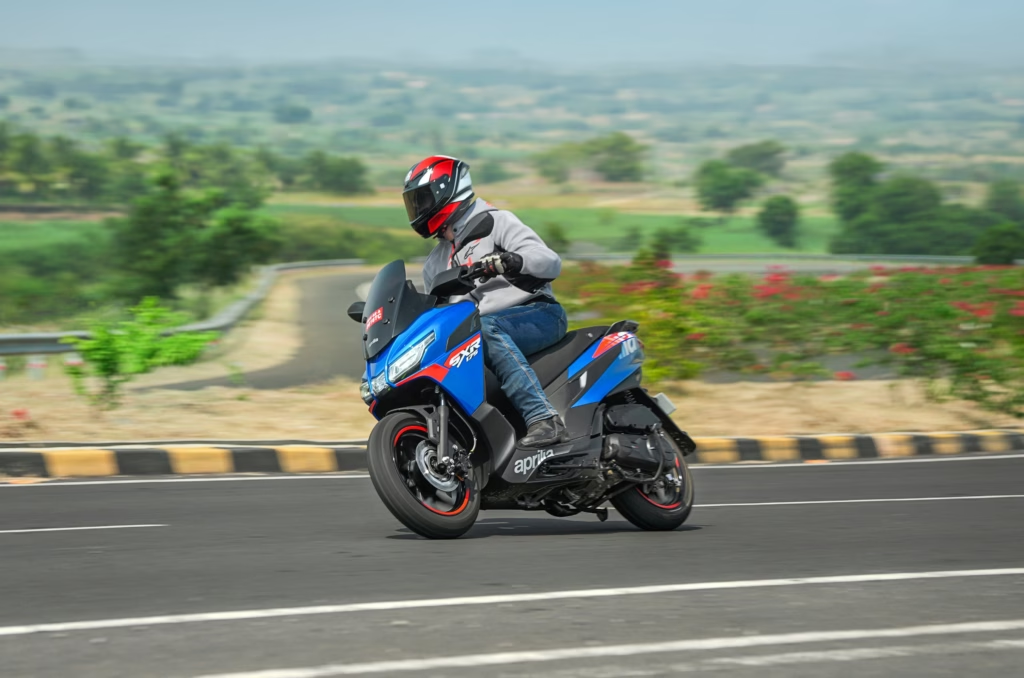
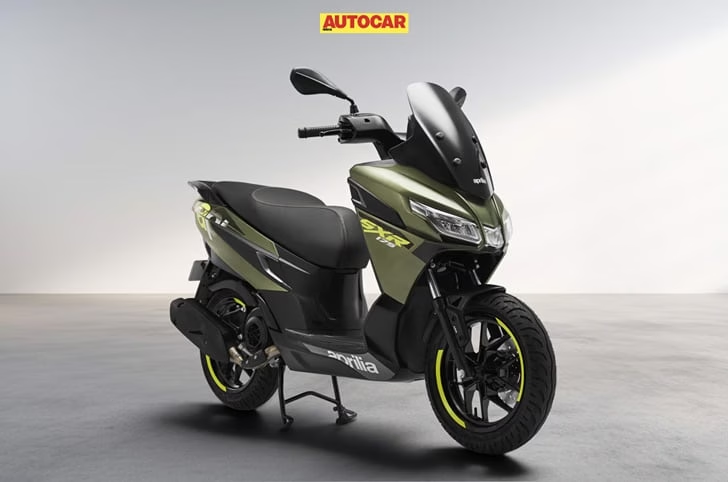
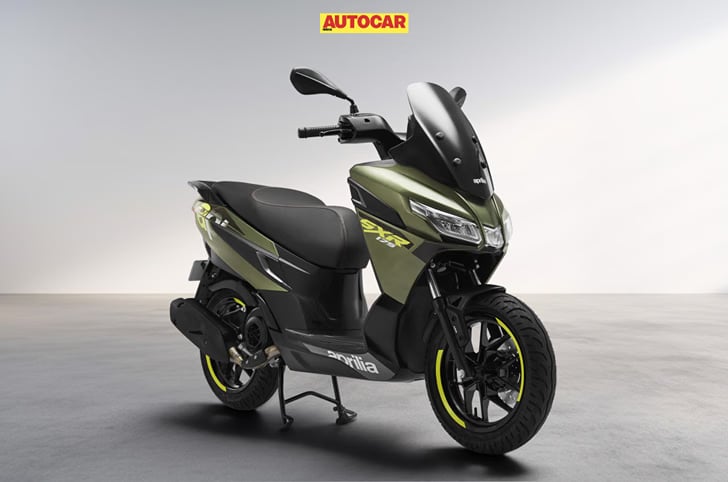
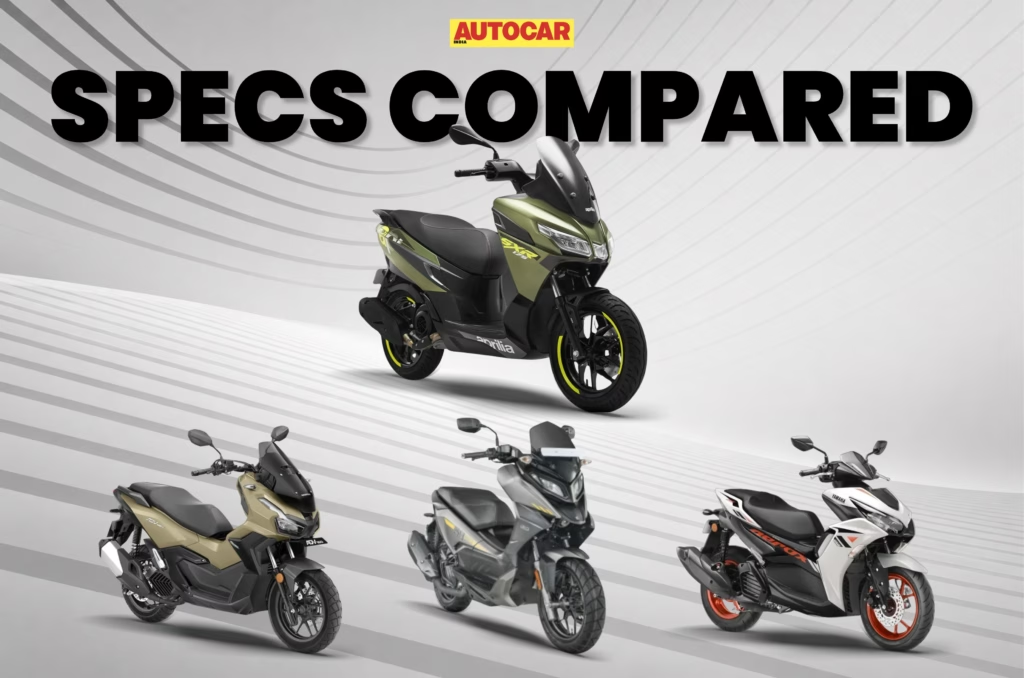
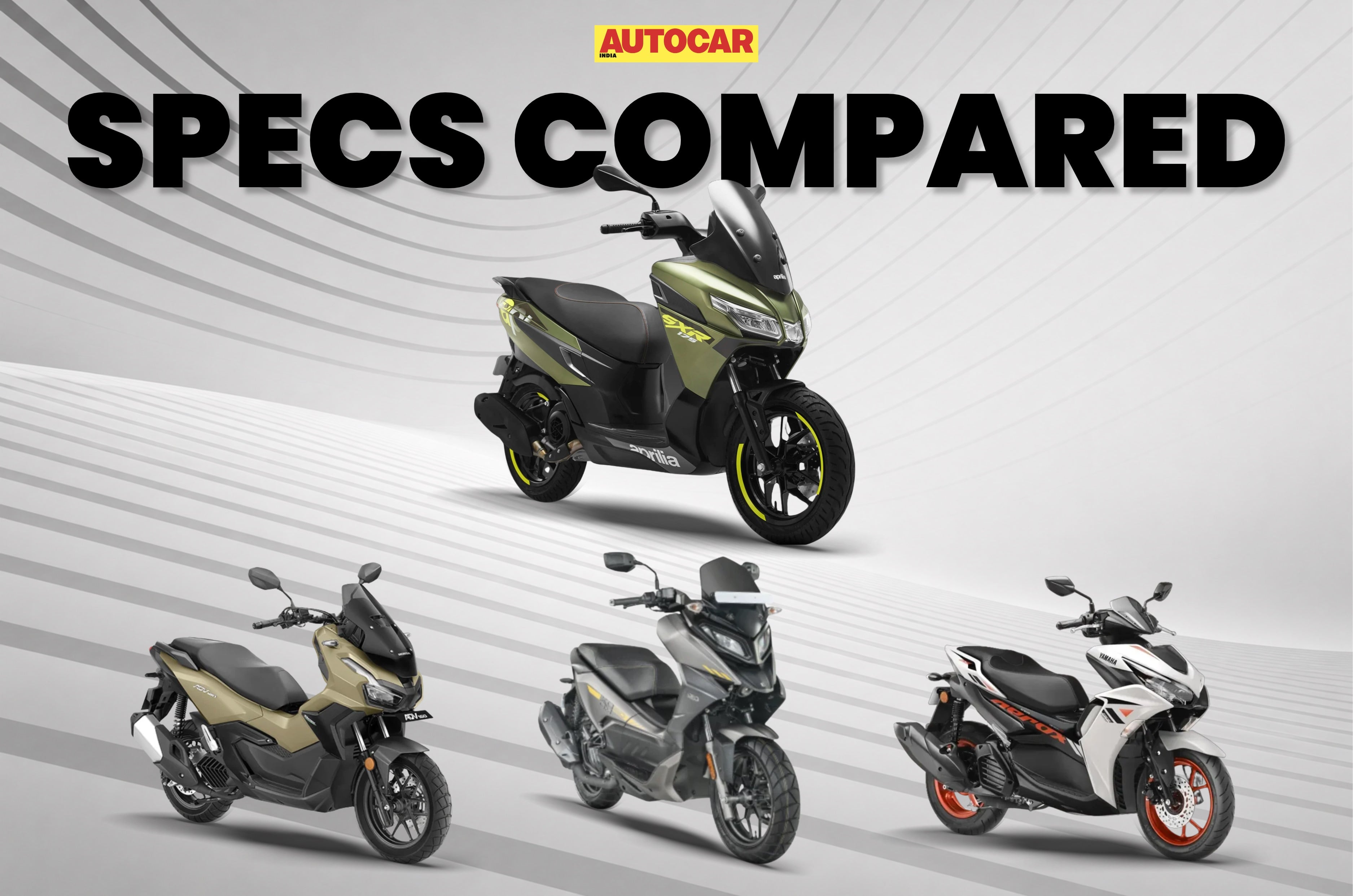
Aprilia SXR GT 175, Yamaha Aerox 155 S, Hero Xoom 160 and Honda ADV160 in clockwise direction.

Maxi scooters have technically been around in our market since 2006, thanks to the Kinetic Blaze but the idea was first popularised by the Suzuki Burgman and later the Yamaha Aerox added to it. “Popularised” being the operating word because Aprilia also had a player in there from 2020, which has just been updated. So, what’s the maxi scooter scene like today and which one should you go get a test ride of? Let’s see.

Aprilia SXR GT 175 hp-e vs Rivals: Engine and output

Smaller rivals all make more power


Aprilia SXR GT 175 hp-e

Honda ADV160

Hero Xoom 160

Yamaha Aerox 155

Engine

174.7cc, single-cylinder, air-cooled

156.9cc, single-cylinder, liquid-cooled

156cc, single-cylinder, liquid-cooled

155cc, single-cylinder, liquid-cooled

Power

13.3hp at 7,200rpm

16.3hp at 8,750rpm

14.8hp at 8,000rpm

15hp at 8,000rpm

Torque

14.14Nm at 6,000rpm

14.9Nm at 6,500rpm

14Nm at 6,250rpm

13.9Nm at 6,500rpm

Transmission

CVT

CVT

CVT

CVT

Power-to-weight ratio

100.76hp/tonne

118.98hp/tonne

104.23hp/tonne

119.05hp/tonne

Don’t let the bigger displacement number mislead you into thinking the Aprilia SXR GT 175 is the most powerful of these scooters, because that’s not the case. The SXR has the only air-cooled mill in this class, possibly contributing to its lower output figures. Combine that with the weight and the Aprilia’s case only becomes weaker. For what it’s worth the Italian scooter delivers its peak torque faster than the others so that should be an advantage while plying within the city.

The Yamaha has the lowest kerb weight on this list, which contributes  to  the highest power-to-weight ratio, very closely followed by the Honda.

Aprilia SXR GT 175 hp-e vs Rivals: Dimensions and weight

Hero is the heaviest, Yamaha is the lightest


Aprilia SXR GT 175 hp-e

Honda ADV160

Hero Xoom 160

Yamaha Aerox 155

Fuel tank capacity

7 litres

8.1 litres

7 litres

5.5 litres

Ground clearance

170mm

175mm

155mm

145mm

Seat height

800mm

NA

787mm

790mm

Kerb weight

132kg

137kg

142kg

126kg

Wheelbase

1362mm

1333mm

1348mm

1350mm

Aprilia gains some ground, or rather gets away from ground with its second highest ground clearance figures. However, it also has the tallest seat height of this bunch. While Yamaha’s ground clearance numbers seem the lowest, do note that the website specifies it to be minimum, which means that it’s measured under laden conditions. So, it’s actually the Hero that has the lowest ground clearance.

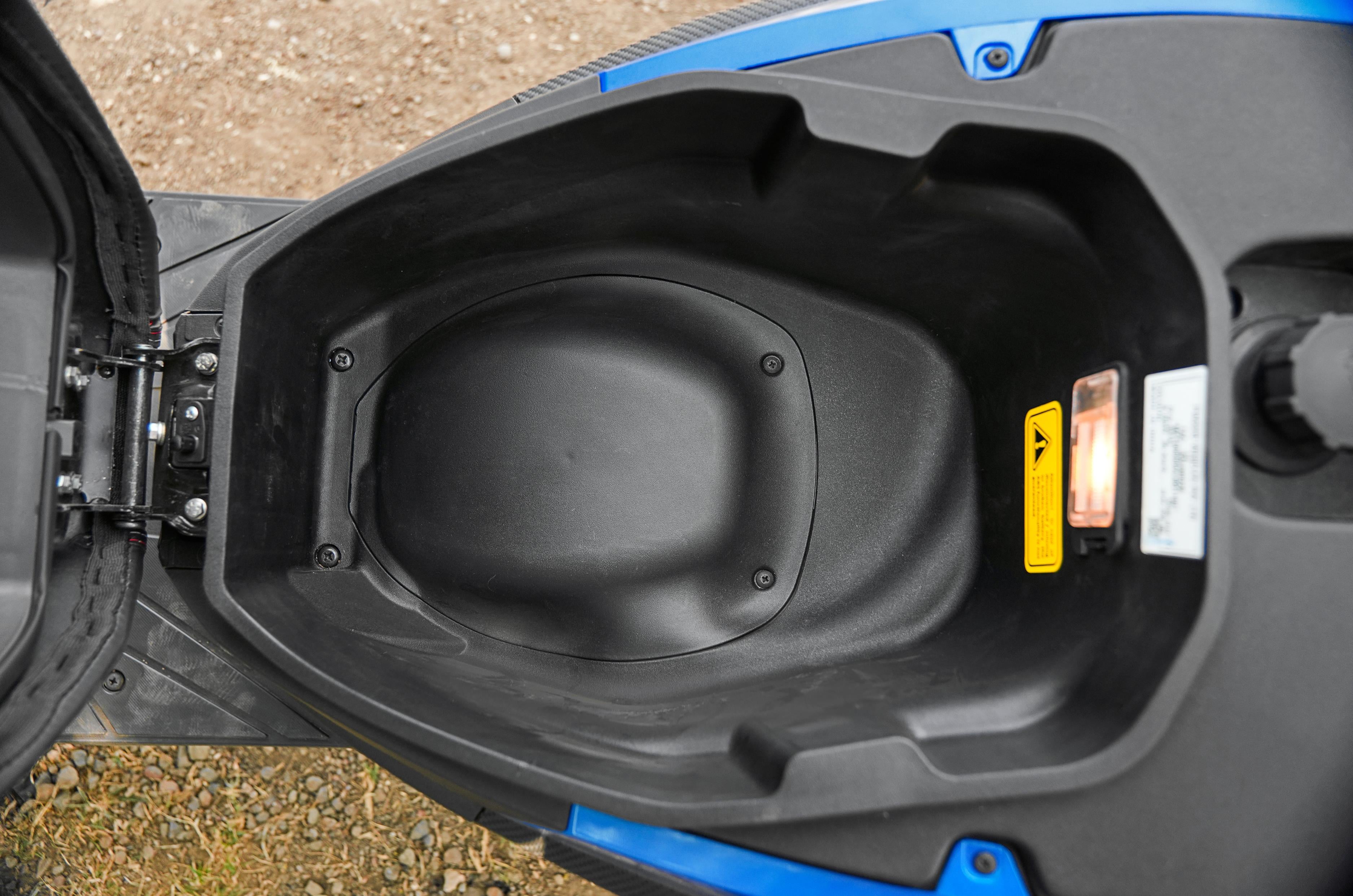
As for seat height, Honda doesn’t specify that for the ADV160, but it shouldn’t be too tall for it to be a concern for most Indians. On the other hand, the Xoom 160 is the heaviest of these four, which could prove to be tricky to some at low speed rides and reversing out of parking lots. Aprilia and Hero have neglected mentioning the under seat storage but none of these is likely to impress you in that specific aspect. For what it’s worth, the Honda ADV160 has the highest number of the lot, 27 litres followed by the Yamaha Aerox at 24.5 litres.

Aprilia SXR GT 175 hp-e vs Rivals: Tyres, brakes and suspension

Honda strikes the best balance in equipment


Aprilia SXR GT 175 hp-e

Honda ADV160

Hero Xoom 160

Yamaha Aerox 155

Tyres (F, R)

120/70-14, 120/70-14

110/80-14, 130/70-13

120/70R14, 140/60R14

110/80-14, 140/70-14

Brakes (F, R)

220mm disc, 140mm drum; single-channel ABS

Disc, disc; single-channel ABS

240mm disc, drum; single-channel ABS

230mm disc, 130mm drum; single-channel ABS

Suspension (F, R)

Telescopic fork, Monoshock

Telescopic fork, twin-shock

Telescopic fork, twin-shock

Telescopic fork, twin-shock

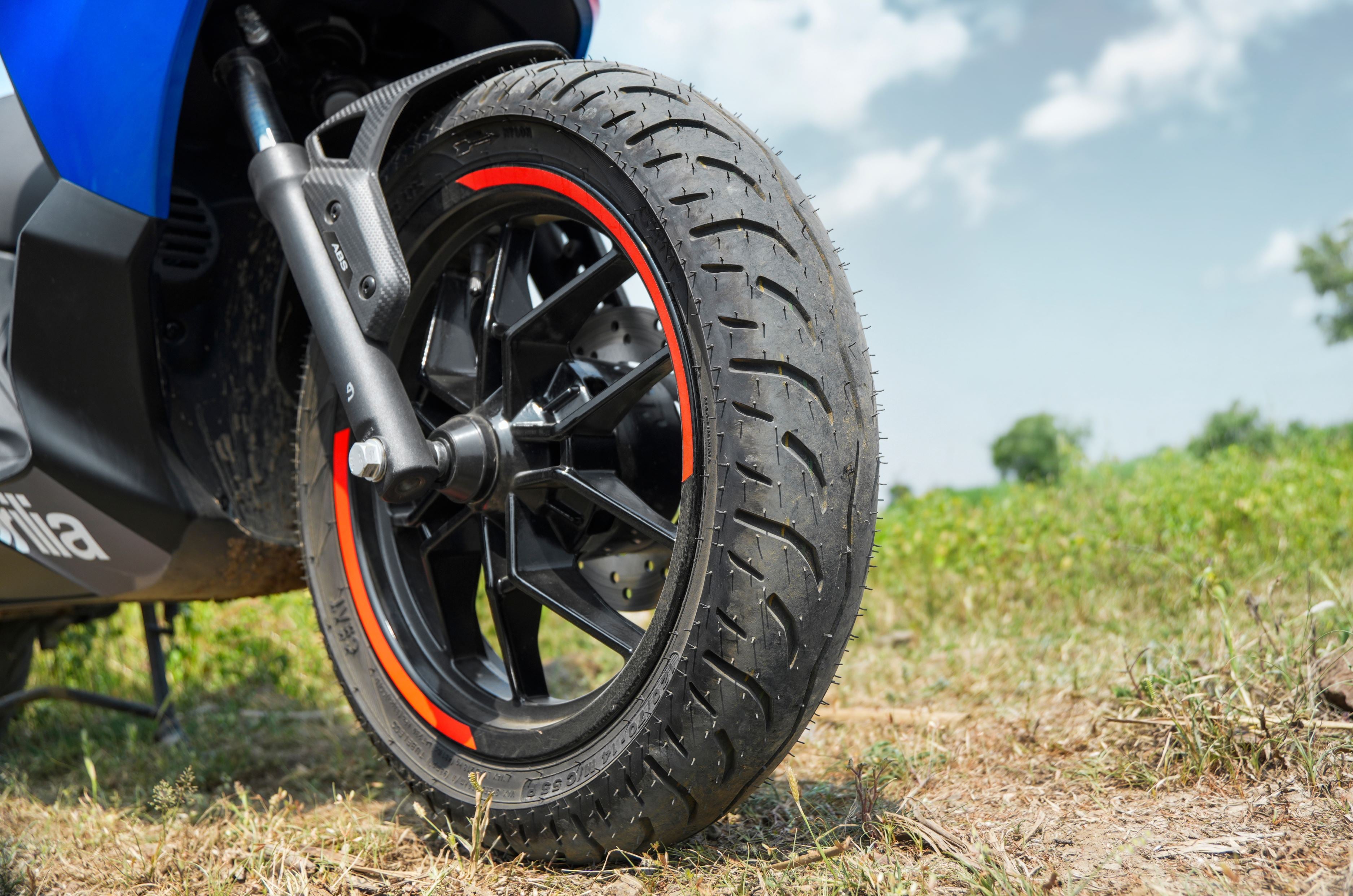
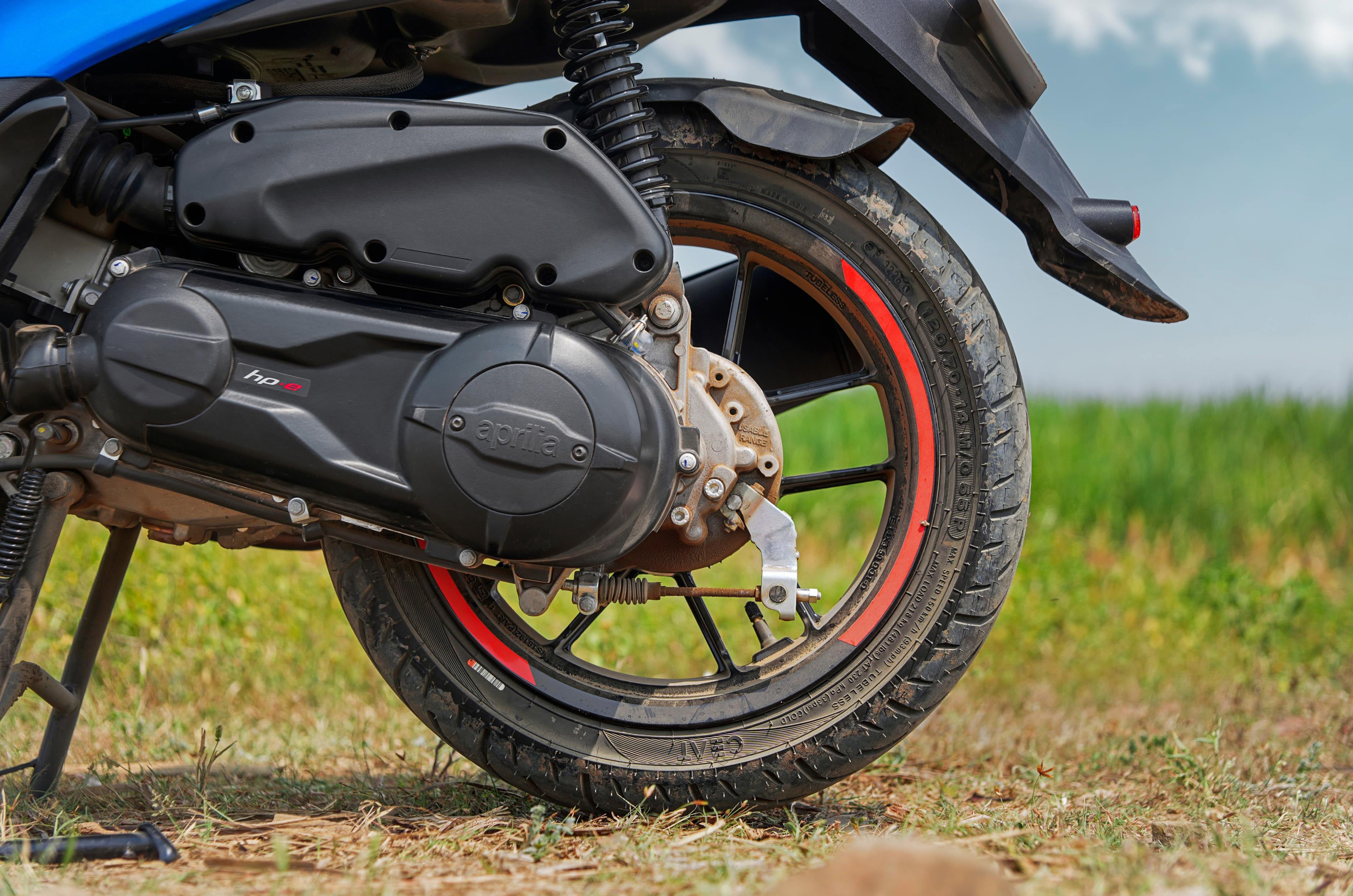
Aprilia has given the SXR GT 175 the widest front tyre, but the rear tyre too is the exact same size which makes it the narrowest rear tyre in this list. Honda appears to have struck the best balance, with respect to the equipment on offer. Though that could change depending on the odd 14-13 front-rear wheel size’s real world implications on the ADV160’s handling.

Aprilia SXR GT 175 hp-e vs Rivals: Features

Honda has an unbeatable ‘feature’

A keyless system is present on all scooters but the Aprilia although Yamaha requires you to pony up for the Aerox S variant to get it. Of the four, Hero and Yamaha’s cockpit views are going to feel the oldest, simply because of their LCD screens. Both companies have packed it with features (call and SMS alerts, metrics on the app and turn-by-turn navigation, to name a few) but apples to apples, the SXR and ADV160 have more modern-looking TFT displays and they also match the former two in features. This will make a difference only if you clearly prefer one over the other, for otherwise there isn’t anything to fault with the Hero and the Yamaha’s displays.

Elsewhere, all offer some type of USB port for charging your devices, front cubby storage and LED lighting. On the convenience front, Hero, Honda and Yamaha offer an integrated starter-motor-generator which gives their scooters features like auto stop/start and a silent start. Honda and Yamaha offer traction control as standard.

A big advantage that only the Honda ADV160 can boast at the moment though, is its E85 compatibility. While Hero and Yamaha do offer other vehicles in their line-up with flex fuel compatibility, the Xoom and the Aerox respectively, do not have that and in these uncertain times, that’s certainly an unmissable advantage of the Honda.

Aprilia SXR GT 175 hp-e vs Rivals: Price

Honda’s advantages have a price to pay


Aprilia SXR GT 175 hp-e

Honda ADV160

Hero Xoom 160

Yamaha Aerox 155

Price (ex-showroom)

Rs 1.30 lakh

Rs 1.70 lakh

Rs 1.45 lakh

Rs 1.46-1.50 lakh

The Aprilia’s an unbeatable bargain at this price with its nearest rival being the Xoom 160, closely followed by the Yamaha for its non-S version. Honda appears to offer the best balance of everything along with a currently significant E85 compatibility, but also costs Rs 40,000 over the Aprilia. While it’s easy to get confused over what is the right scooter for you, all of these – thankfully – make it unmistakably clear what they intend to offer. Hence, if you’re confused, figuring out your priorities and taking test rides (hopefully back-to-back) should help you pick the right one for you. If that happens to be the ADV160, you now know what you’re paying for.
Electric Scooter : सस्ते स्कूटर की होने वाली है धमाकेदार इंट्री, जान लीजिए फीचर्स, और क्या हो सकती है कीमत

Electric Scooter : सस्ते स्कूटर की होने वाली है धमाकेदार इंट्री, जान लीजिए फीचर्स, और क्या हो सकती है कीमत

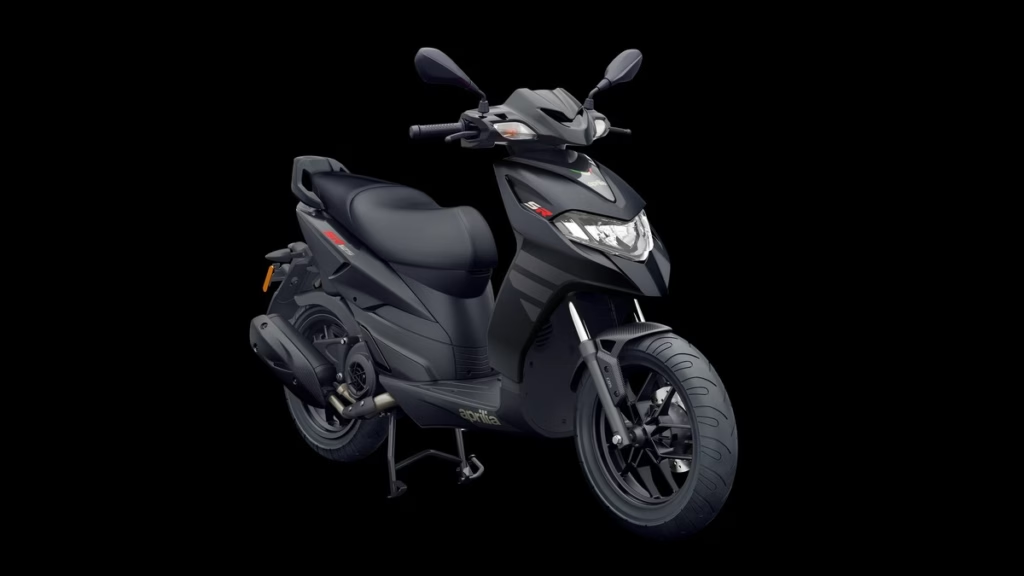
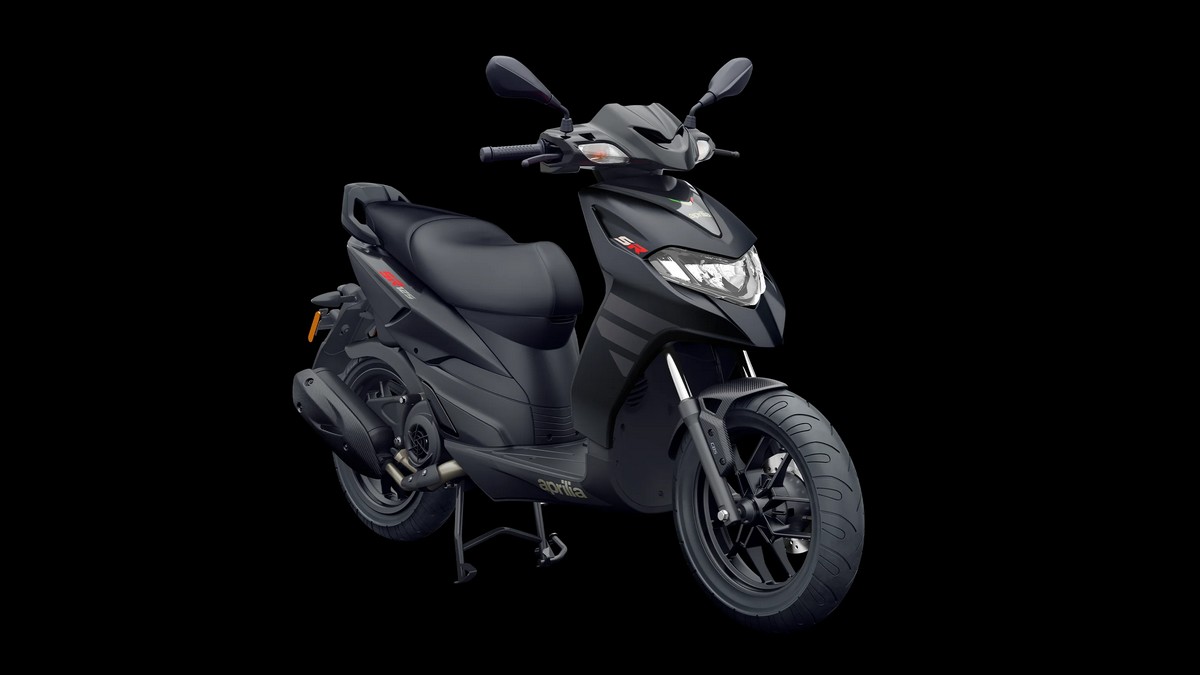
aprila scooter

इटली की वाहन निर्माता कंपनी पियाजियो ग्रुप (Piaggio Group) भारतीय बाजार में अपनी इलेक्ट्रिक स्कूटर रेंज का विस्तार करने की तैयारी कर रही है। कंपनी भारत के लिए एक नया स्कूटर प्लेटफॉर्म विकसित कर रही है, जिस पर पेट्रोल और इलेक्ट्रिक दोनों तरह के स्कूटर तैयार किए जाएंगे। कंपनी की योजना इस नई रेंज को 2027 में अप्रिलिया (Aprilia) ब्रांड के तहत लॉन्च करने की है। इसकी शुरुआती कीमत करीब 85,000 रुपये (एक्स-शोरूम) हो सकती है।

ALSO READ: Electric Scooter : सस्ते इलेक्ट्रिक स्कूटर के साथ रोजाना का सफर होगा आसान, मिलेगी 130 KM की रेंज, जान लीजिए दूसरे फीचर्स

पियाजियो व्हीकल्स के चेयरमैन, सीईओ और मैनेजिंग डायरेक्टर डिएगो ग्राफी ने नई स्कूटर रेंज की योजनाओं की पुष्टि की है। कंपनी के मुताबिक, इस रेंज में इलेक्ट्रिक स्कूटर के साथ 125cc पेट्रोल इंजन वाला मॉडल भी शामिल होगा। इनकी कीमत 85,000 रुपये से लेकर 1.30 लाख रुपये (एक्स-शोरूम) के बीच रखी जा सकती है। इस रेंज के ऊंचे कीमत वाले मॉडल प्रीमियम इलेक्ट्रिक स्कूटर होंगे।


₹85,000 से ₹1.30 लाख के बीच होगी कीमत


कंपनी का लक्ष्य भारतीय बाजार में उन ग्राहकों को आकर्षित करना है, जो किफायती कीमत पर नया पेट्रोल या इलेक्ट्रिक स्कूटर खरीदना चाहते हैं। डिएगो ग्राफी के मुताबिक, कंपनी 85,000-90,000 रुपये की शुरुआती कीमत से लेकर 1.20-1.30 लाख रुपये तक के सेगमेंट को ध्यान में रखकर उत्पाद पेश करेगी। इस रेंज में अधिक कीमत वाले प्रीमियम इलेक्ट्रिक वेरिएंट भी शामिल होंगे।


कंपनी पिछले कुछ वर्षों से भारत के लिए इस नए प्लेटफॉर्म पर काम कर रही है। यह प्लेटफॉर्म भारत में पियाजियो की विस्तार योजनाओं का अहम हिस्सा है। इसके जरिए कंपनी पेट्रोल स्कूटर के साथ इलेक्ट्रिक दोपहिया वाहनों के बाजार में भी अपनी मौजूदगी मजबूत करना चाहती है।

ALSO READ: Electric Scooter : इलेक्ट्रिक स्कूटर क्यों हैं भविष्य की सवारी? जानिए वो फायदे जिन्हें नजरअंदाज करना मुश्किल

इलेक्ट्रिक और पेट्रोल दोनों स्कूटर के लिए बनेगा नया प्लेटफॉर्म


पियाजियो का नया प्लेटफॉर्म खासतौर पर भारतीय बाजार की जरूरतों को ध्यान में रखकर विकसित किया जा रहा है। कंपनी ने इसे शुरुआत से ही इलेक्ट्रिक और पेट्रोल, दोनों तरह के स्कूटरों को ध्यान में रखकर डिजाइन किया है।


आमतौर पर कंपनियां अपने मौजूदा पेट्रोल स्कूटर प्लेटफॉर्म में बदलाव करके इलेक्ट्रिक मॉडल तैयार करती हैं। हालांकि, पियाजियो का कहना है कि उसका नया प्लेटफॉर्म शुरुआत से ही इलेक्ट्रिक पावरट्रेन को समायोजित करने के लिए तैयार किया गया है। इससे लागत, परफॉर्मेंस और ड्राइविंग रेंज के बीच बेहतर संतुलन बनाने में मदद मिल सकती है।


कंपनी भारत में इलेक्ट्रिक दोपहिया वाहन उद्योग से जुड़े नए घटनाक्रमों पर भी नजर रख रही है। इनमें दिल्ली की घोषित ईवी पॉलिसी 2026 भी शामिल है। हालांकि, पियाजियो की रणनीति किसी एक राज्य तक सीमित रहने के बजाय पूरे भारतीय बाजार को ध्यान में रखकर स्कूटर लॉन्च करने की है।


Vespa ब्रांड के तहत फिलहाल नहीं आएगा इलेक्ट्रिक स्कूटर


पियाजियो ने यह भी स्पष्ट किया है कि फिलहाल वेस्पा (Vespa) ब्रांड के तहत इलेक्ट्रिक स्कूटर लॉन्च करने की उसकी योजना नहीं है। कंपनी के मुताबिक, मौजूदा कॉन्फिगरेशन में किफायती कीमत के साथ अपेक्षित रेंज और परफॉर्मेंस हासिल करना चुनौतीपूर्ण है।


इसी वजह से कंपनी नए प्लेटफॉर्म पर ध्यान केंद्रित कर रही है, जिसे इलेक्ट्रिक स्कूटर की जरूरतों के मुताबिक तैयार किया जा रहा है। कंपनी का उद्देश्य लागत को नियंत्रित रखते हुए बेहतर परफॉर्मेंस, पर्याप्त रेंज और ग्राहकों की जरूरतों के अनुरूप उत्पाद तैयार करना है।


भारत से दूसरे देशों में भी निर्यात करेगी कंपनी


पियाजियो भारत को सिर्फ घरेलू बिक्री का बाजार नहीं, बल्कि वैश्विक उत्पादन और निर्यात केंद्र के रूप में भी विकसित करना चाहती है। कंपनी के महाराष्ट्र स्थित बारामती प्लांट में बनने वाले कुल दोपहिया वाहनों में से फिलहाल लगभग 10-20 प्रतिशत का निर्यात विभिन्न देशों में किया जाता है।


कंपनी का लक्ष्य इस हिस्सेदारी को बढ़ाकर कम से कम 50 प्रतिशत तक पहुंचाना है। यानी भारत में बनने वाले उसके कुल दोपहिया वाहनों का आधा हिस्सा घरेलू बाजार के साथ-साथ अंतरराष्ट्रीय बाजारों में निर्यात के लिए तैयार करने की योजना है।


भारत में निर्मित अप्रिलिया RS 457 और Tuono 457 पहले से ही कई अंतरराष्ट्रीय बाजारों में निर्यात किए जाते हैं। कंपनी भविष्य में आने वाले मॉडलों के साथ भी इसी रणनीति को अपनाना चाहती है।

ALSO READ: Electric Scooter : इलेक्ट्रिक या पेट्रोल स्कूटर: रोजाना 30 KM चलाने पर किसमें होगी ज्यादा बचत? जानिए 5 साल का पूरा हिसाब

यूरोप में भी बिकेंगे नए स्कूटर


डिएगो ग्राफी के मुताबिक, विकास के चरण में मौजूद नए इलेक्ट्रिक और पेट्रोल स्कूटर सिर्फ भारत के लिए नहीं होंगे। इनके समान वेरिएंट यूरोप के बाजारों में भी निर्यात किए जाएंगे।


इस तरह पियाजियो की आगामी स्कूटर रेंज भारतीय ग्राहकों के लिए किफायती विकल्प उपलब्ध कराने के साथ-साथ कंपनी की वैश्विक विस्तार रणनीति का भी हिस्सा होगी। हालांकि, इन स्कूटरों के अंतिम डिजाइन, फीचर्स, बैटरी क्षमता, वास्तविक रेंज और लॉन्च की सटीक तारीख की जानकारी अभी सामने नहीं आई है।


BMW F 450 RR vs Rivals: Specification comparison

BMW F 450 RR vs Rivals: Specification comparison
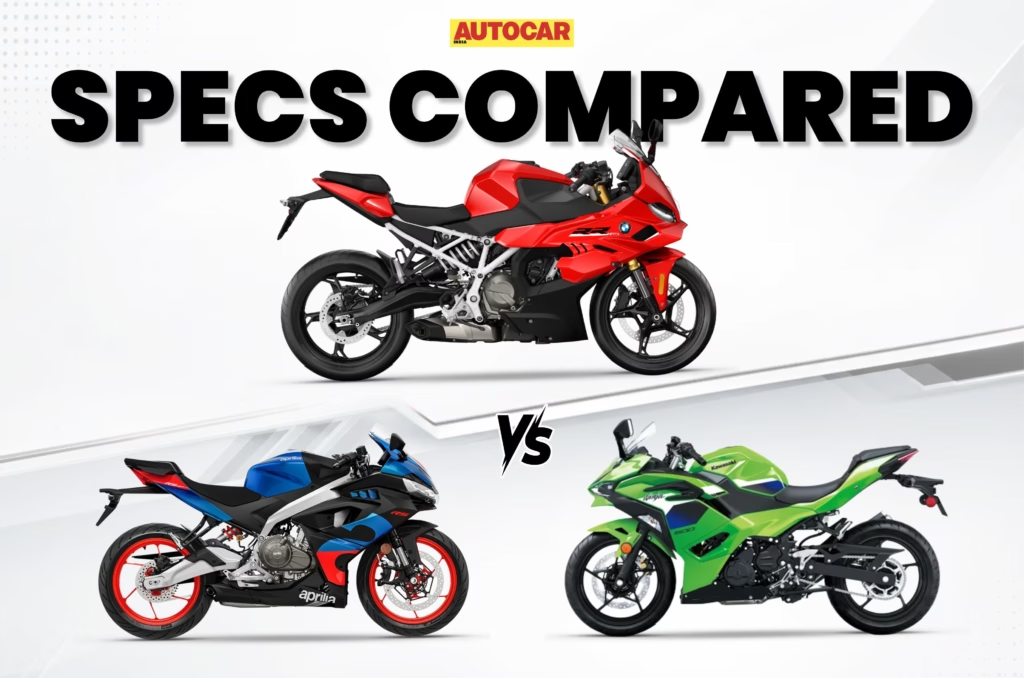
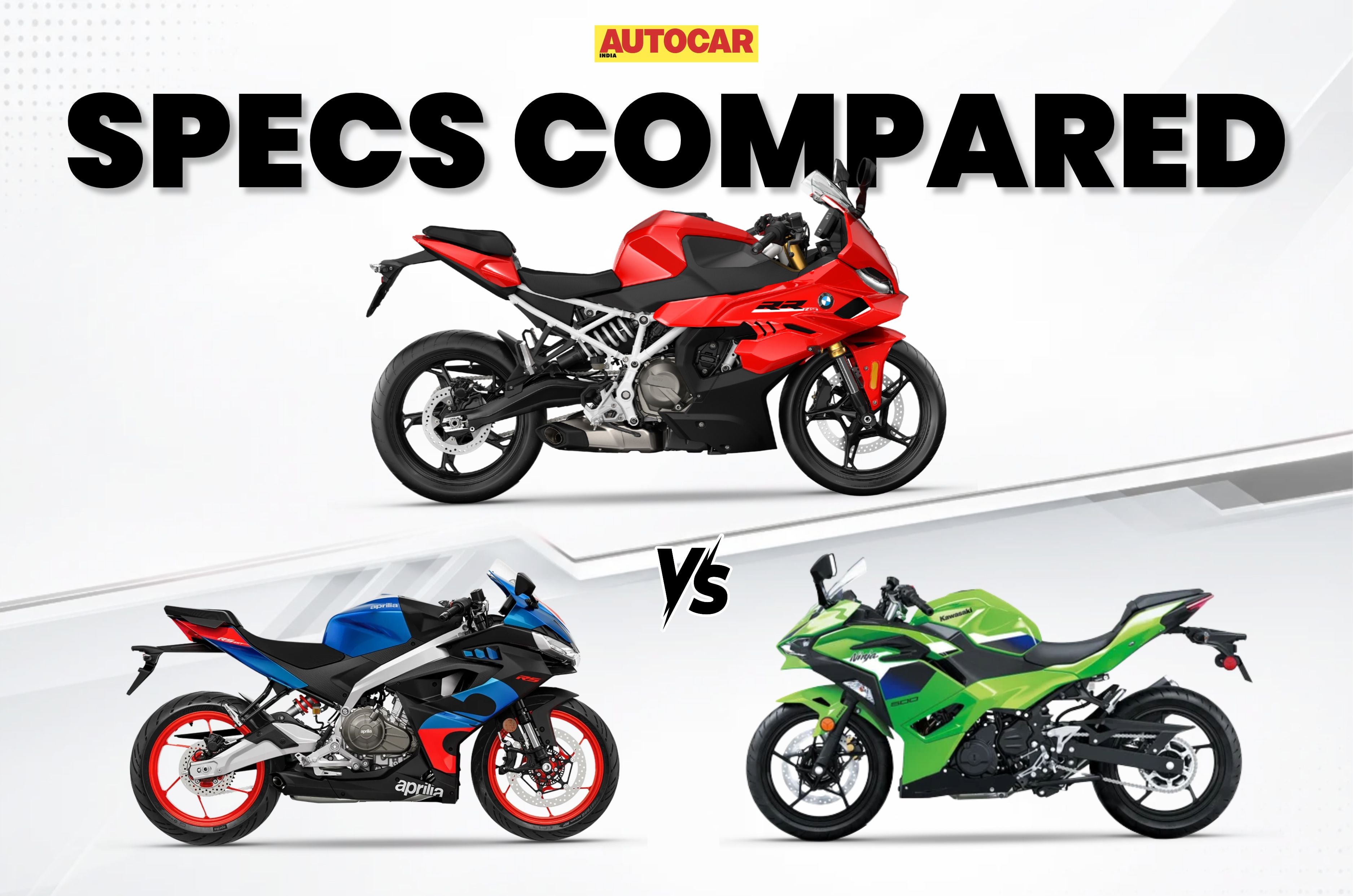
A render showing the recently revealed BMW F 450 RR, Aprilia RS 457 and Kawasaki Ninja 500

The recently revealed F 450 RR is the new supersport motorcycle in BMW’s lineup. As a fully-faired supersport with a parallel-twin engine, it finds itself in the same segment as the Aprilia RS 457 and the Kawasaki Ninja 500, Here is how these superbikes stack up against each other.

BMW F 450 RR vs Aprilia RS 457 vs Kawasaki Ninja 500: Engine and output  

The F 450 RR is the most powerful in its segment


BMW F450 RR

Aprilia RS 457

Kawasaki Ninja 500

Engine

420cc, twin-cylinder, liquid-cooled

457cc, twin-cylinder, liquid-cooled

451cc, twin-cylinder, liquid-cooled

Power

48hp at 8,750rpm

47.6hp at 9,400rpm

45.41hp at 9,000rpm

Torque

43Nm at 6,750rpm

43.5Nm at 6,700rpm

42.6Nm at 6,000rpm

Gearbox

6-speed

6-speed

6-speed

Power-to-weight ratio

270hp/tonne

272hp/tonne

252hp/tonne

BMW didn’t make any changes to the powertrain for the F 450 RR, it uses the same 420cc parallel twin-cylinder liquid-cooled engine that makes 48hp at 8,750rpm and 43Nm of torque at 6,750rpm that debuted in the F 450 GS. In contrast the Aprilia RS 457’s parallel-twin 457cc engine makes 47.6hp and 43.5Nm. The BMW has a marginally more powerful engine on paper, but we’ll be able to comment on real world performance against its rivals only once we’ve ridden the bike.

BMW F 450 RR vs Aprilia RS 457 vs Kawasaki Ninja 500: Dimension and weight

The Ninja 500 offers the more accessible saddle


BMW F 450 RR

Aprilia RS 457

Kawasaki Ninja 500

Fuel tank capacity

14 litres

13 litres

14 litres

Ground Clearance

NA

NA

145mm

Kerb weight

178kg

175kg

176kg

Seat Height

790mm

800mm

785mm

Wheelbase

1405mm

NA

1375mm

Here, the Kawasaki is one step ahead by offering the lowest seat height as standard, making it more accessible for shorter riders. BMW offers an optional low rider seat, which reduces seat height by 15mm (775mm) and a high sport rider seat, that raises seat height by 20mm (810mm). As standard Aprilia has the tallest saddle in the segment. Neither Aprilia nor BMW share ground clearance numbers, and Aprilia doesn’t list RS 457’s wheelbase either. Kawasaki has a 30mm shorter wheelbase compared to the BMW.

BMW F 450 RR vs Aprilia RS 457 vs Kawasaki Ninja 500: Tyres, brakes and suspension

BMW and Aprilia offers adjustable suspension


BMW F 450 RR

Aprilia RS 457

Kawasaki Ninja 500

Tyre (F, R)

110/70R17, 150/60R17

110/70R17, 150/60R17

110/70R17, 150/60R17

Brakes (F/R)

310mm disc/ 240mm disc (dual-channel ABS)

320mm disc/

220mm disc (dual-channel ABS)

310mm disc

220mm disc (dual-channel ABS)

Suspension (F/R)

USD fork/ Monoshock 

USD fork/ Monoshock

Telescopic fork /  Monoshock 

While all three motorcycles ride on 17-inch alloy wheels wrapped in 110-section front and 150-section rear tyres, their suspension and braking hardware take different approaches. The F 450 RR has a 43mm USD fork at the front (with optional adjustable rebound and compression damping) and a monoshock with adjustable preload and rebound damping at the rear. The RS 457 gets a 41mm preload-adjustable USD fork, whereas the Ninja 500 uses a 41mm telescopic fork, and both bikes feature a preload-adjustable monoshock.

The BMW and the Aprilia have a more sophisticated braking setup compared to the Kawasaki. BMW uses a 310mm front disc and Aprilia uses a 320mm front disc, both are paired with a radially mounted caliper, whereas the Kawasaki uses a 310mm disc with axially mounted caliper. All three bikes are equipped with dual-channel ABS as standard.

BMW F 450 RR vs Aprilia RS 457 vs Kawasaki Ninja 500: Features

F 450 RR is loaded with tech

The F 450 RR has a clear edge when it comes to features and electronics, offering optional Easy Ride Clutch (ERC), configurable ride modes and a bidirectional quickshifter on higher variants. While offering a comprehensive electronic suite of rider aids, comprising three riding modes, lean sensitive ABS and traction control, and heated grips as standard. It also gets a 6.5-inch TFT display with smartphone connectivity and turn-by-turn navigation.

The Aprilia RS 457 follows with its electronic suite of rider aids, comprising three riding modes, three levels of traction control and an optional bidirectional quickshifter. It also gets a 5-inch TFT display with Bluetooth connectivity and turn-by-turn navigation.

The Ninja 500, in contrast, takes a simpler approach. The India-spec motorcycle comes with an LCD instrument cluster, LED lighting, dual-channel ABS and an assist-and-slipper clutch as standard but lacks electronic rider aids such as traction control, riding modes and a quickshifter. 

Aprilia SXR GT 175 review: The next step

Aprilia SXR GT 175 review: The next step
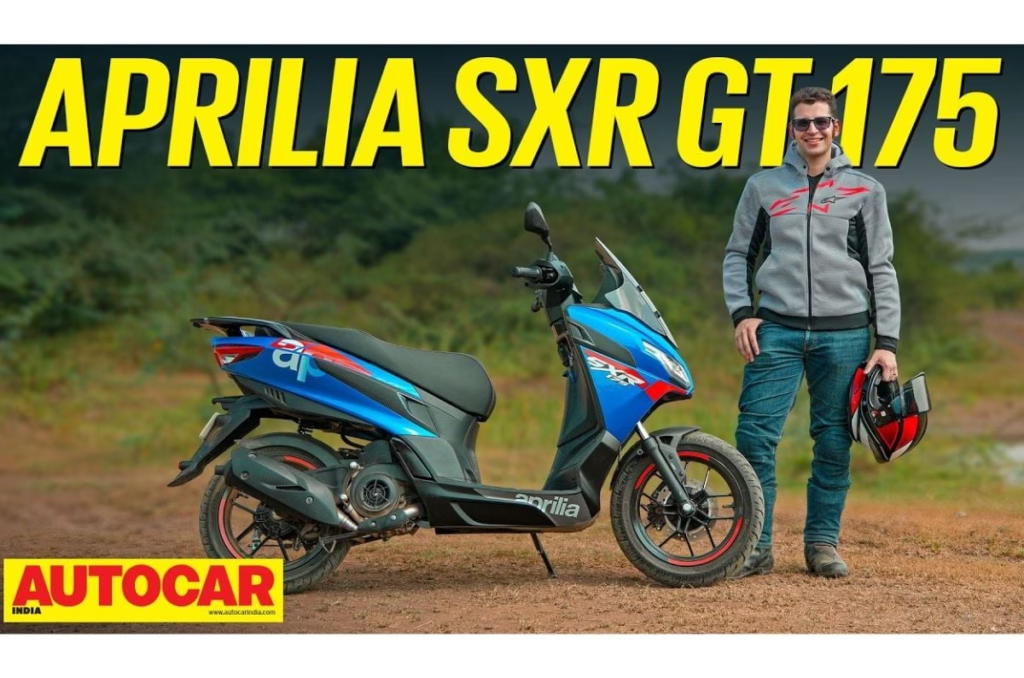
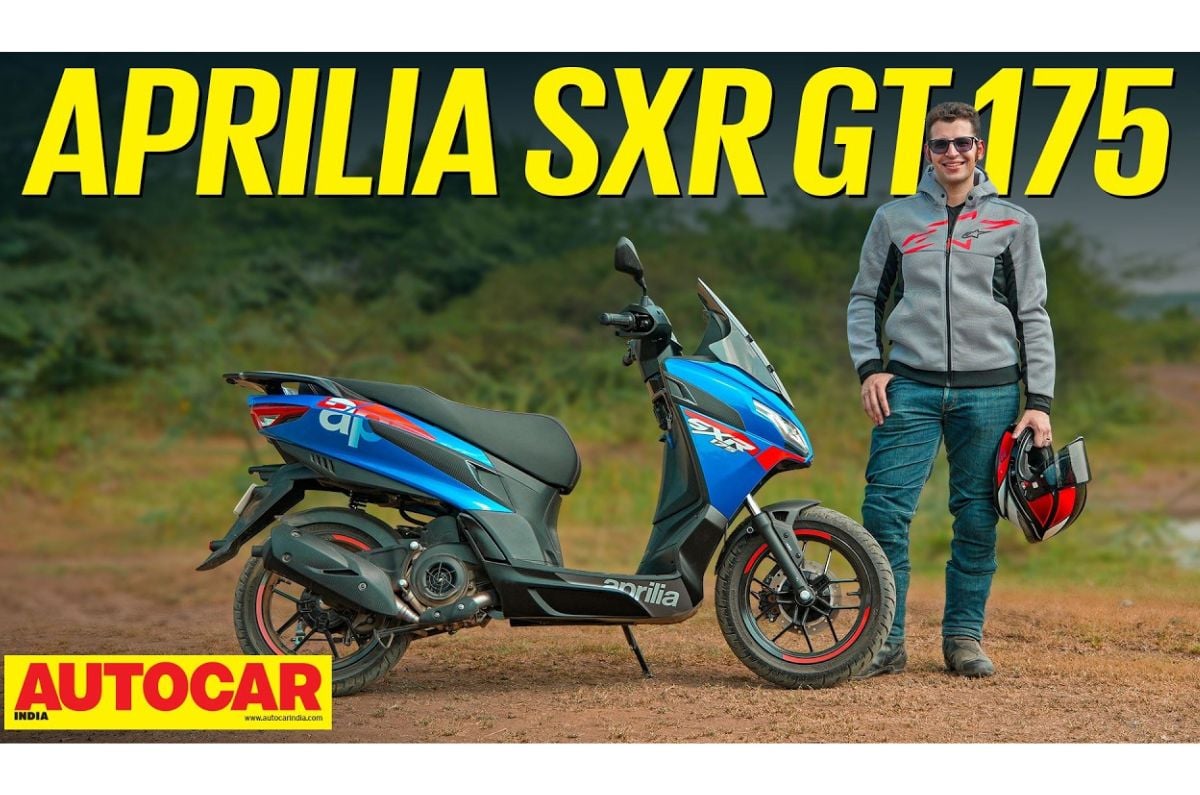
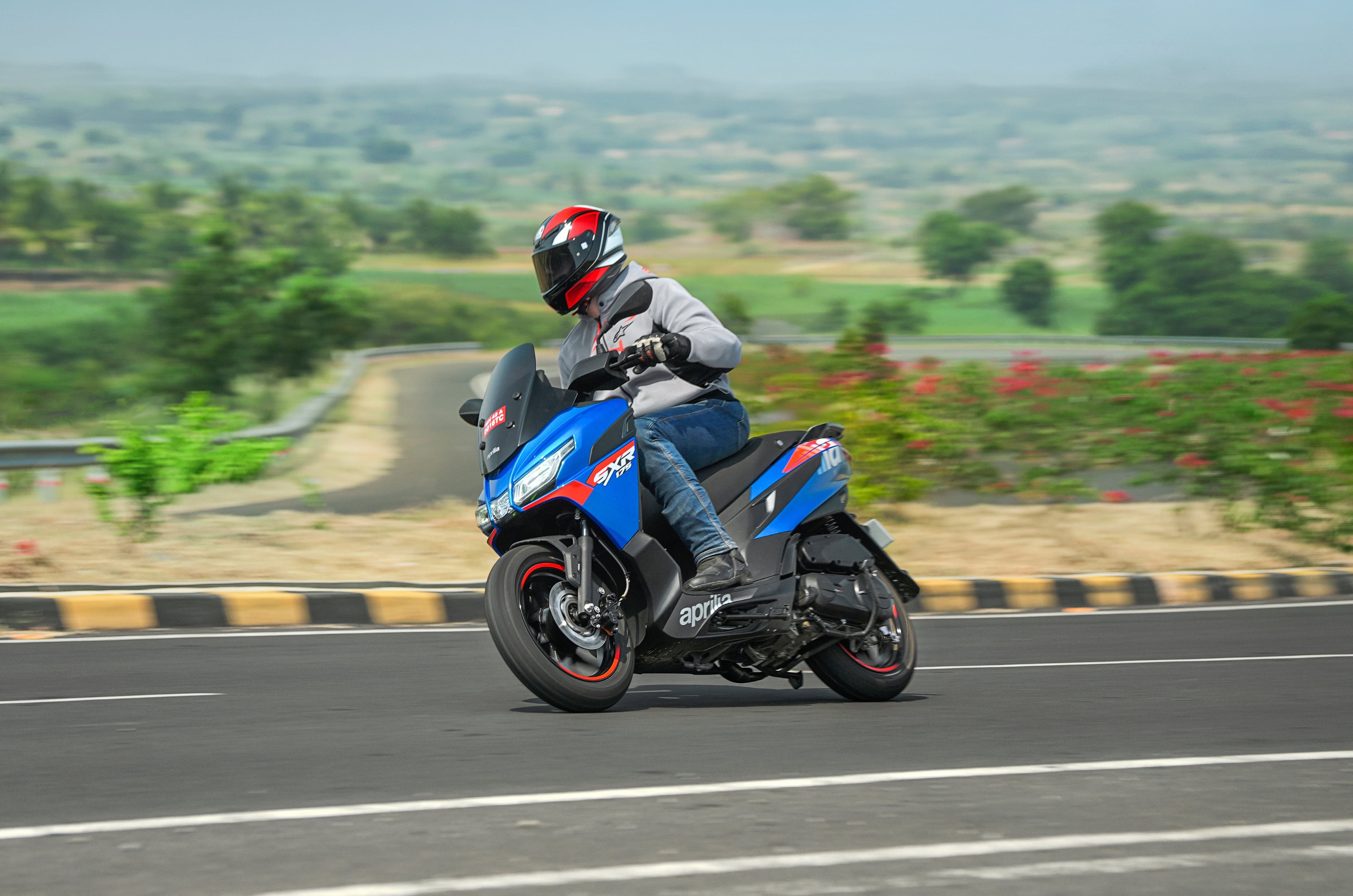
An outdoor shot of a rider cornering the new Aprilia SXR GT 175

Aprilia may not be the biggest player in the Indian scooter market but it is certainly one of the most radical. It was the first to give us a taste of a true-blue affordable performance scooter with the SR 150 in 2015 and in 2020 the company then upped the ante and introduced India to a premium, yet attainable maxi-style scooter with the SXR 160.

However, six years is a long time and in this interim, the niche that Aprilia was the sole occupant of has now been infringed upon by TVS, Hero, Yamaha and more recently, even Honda! To counter, Aprilia has now taken the next step in the SXR’s evolution and has introduced two models with new engines (125cc and 175cc), more features and a GT suffix. We were given a chance to sample the larger 175cc version and here are our initial impressions. 

Aprilia SXR GT 175 Design and features – 7/10

It’s an old design but still looks good; has received a good features upgrade

This design may be 6 years old, but it still manages to look good and turn heads

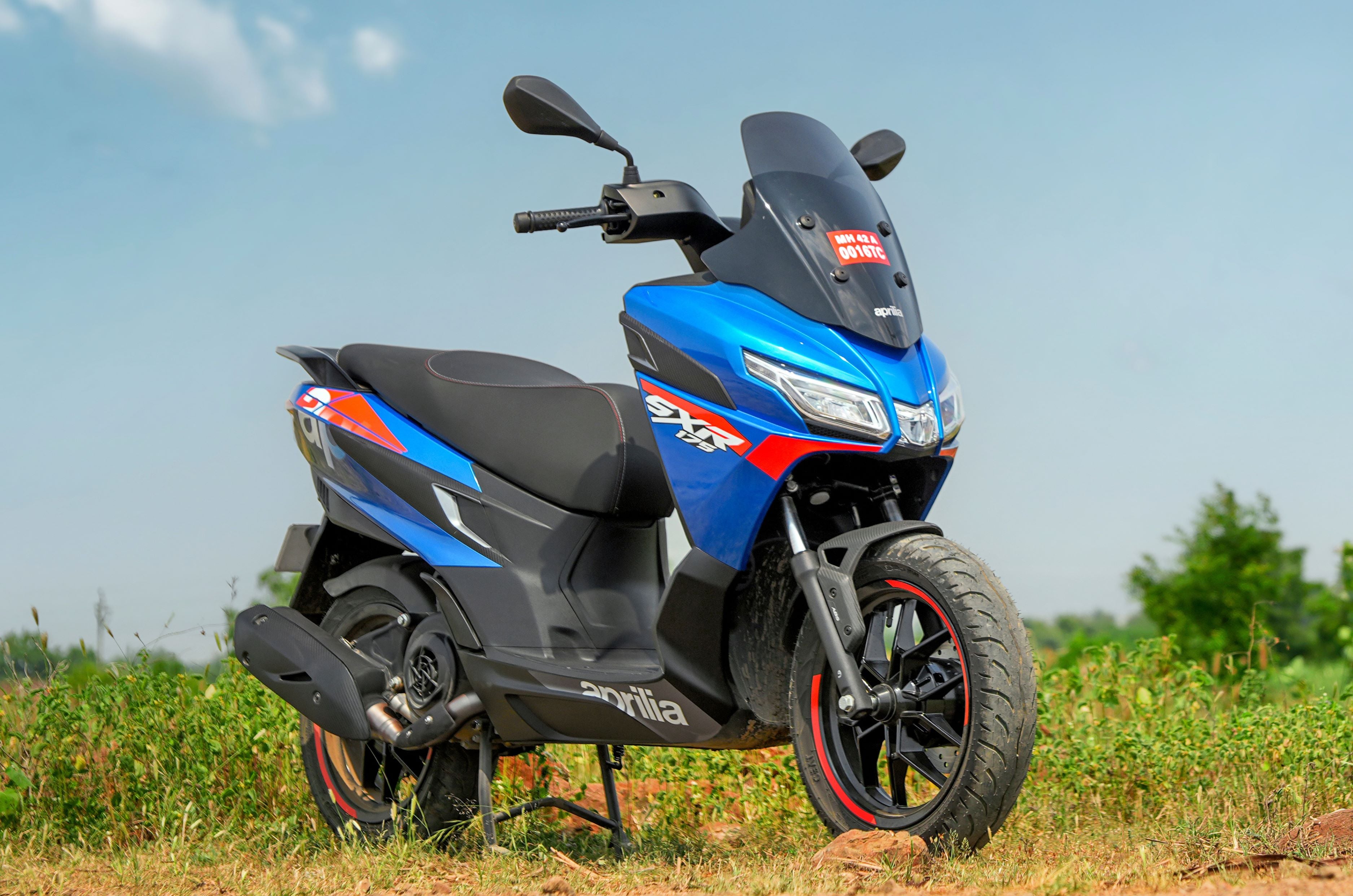
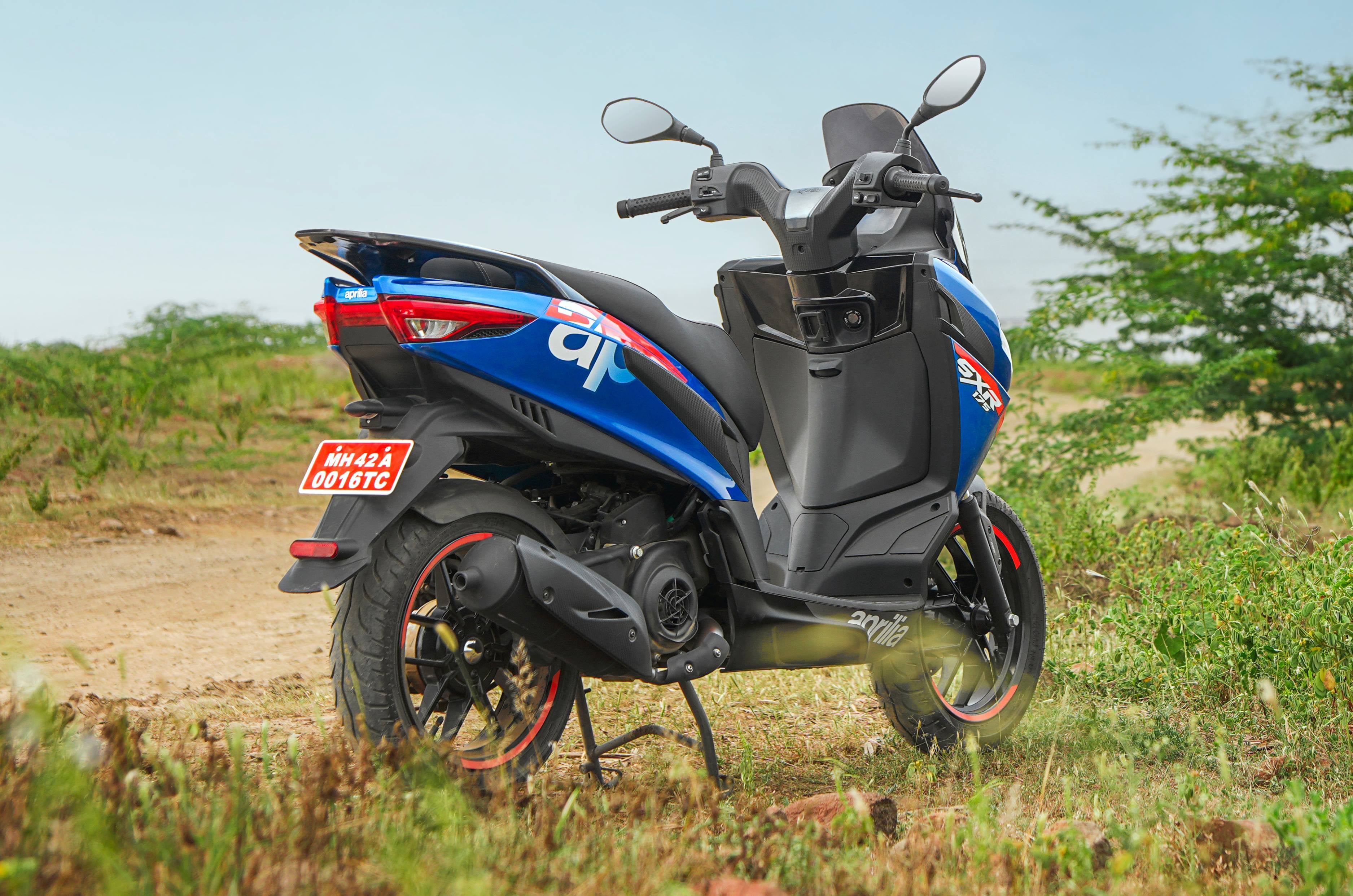
At this juncture, you’re probably wondering aside from the new colours and graphics, how different is the SXR GT 175 to the erstwhile SXR 160 it replaces? The answer to that question is, not very much. Aside from larger 14-in wheels, the SXR GTs look identical to the models they replace and you can certainly feel like it wouldn’t be unreasonable to expect more from the company. However, what you can’t deny is that the scooters still look handsome and striking without going over the top, despite looking nearly the same as they did 6 years ago – that’s Italian design brilliance for you! There are three new colours on offer – the vibrant blue you see here accompanied by a stealthy black and a camo army green scheme.

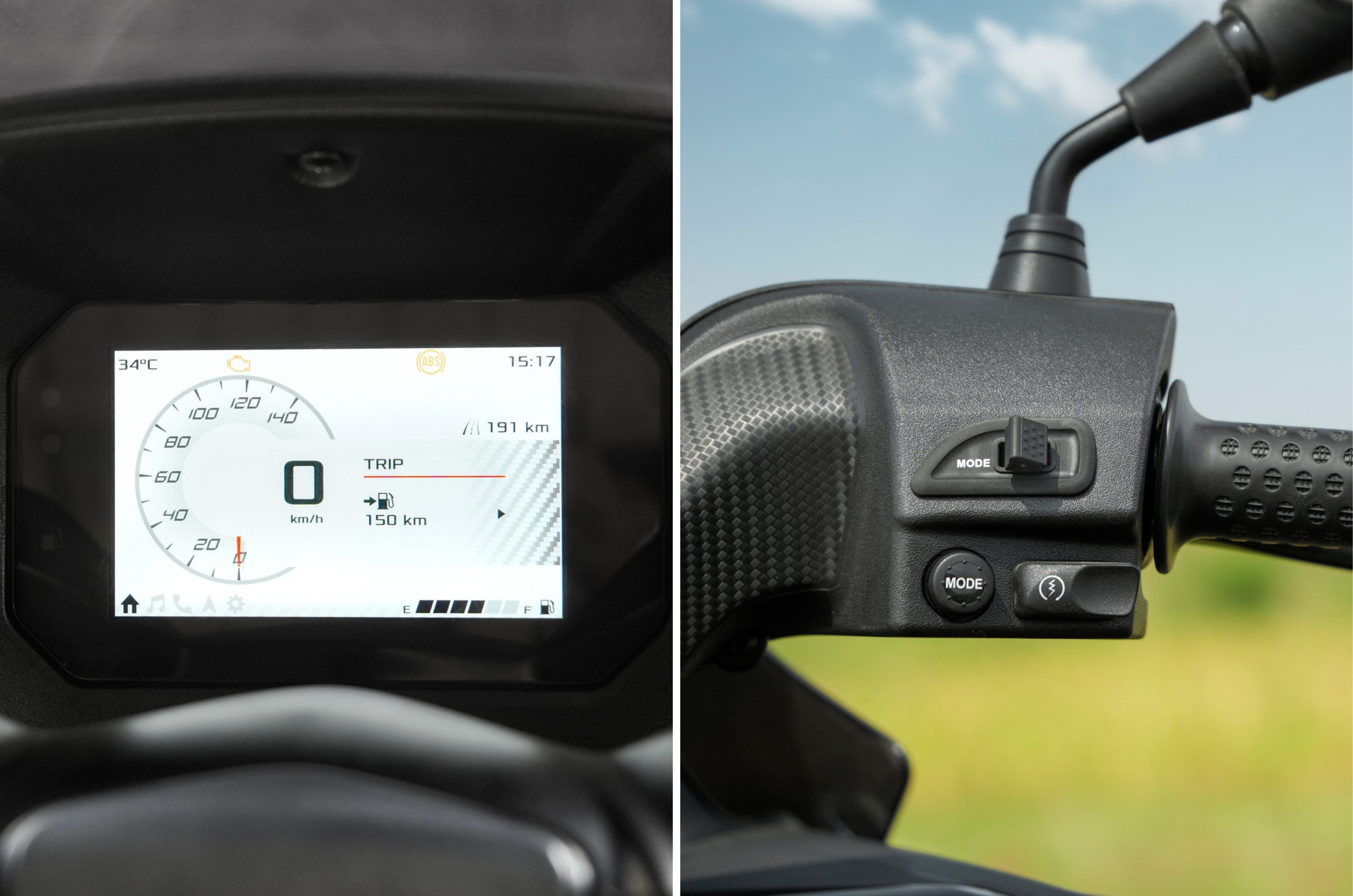
5-in TFT also shared with SR 175, is well laid out but UI isn’t entirely straightforward

However, once you get astride, you’ll realise that there are a fair few changes going on. For starters, the SXR GT 175 uses the same bright and well laid-out colour TFT display as the SR 175 and this dash is replete with Bluetooth functionality which brings in call/notification alerts & navigation prompts. Like that scooter, the overall user interface is a bit complicated and you will need to learn some of the secret handshakes necessary to fully utilise it. Another gripe I have with this dash is that while it has a lot of tech, you have to make do with a single trip meter, which seems like a small but unnecessary omission. 

Bootspace is nothing to write home about

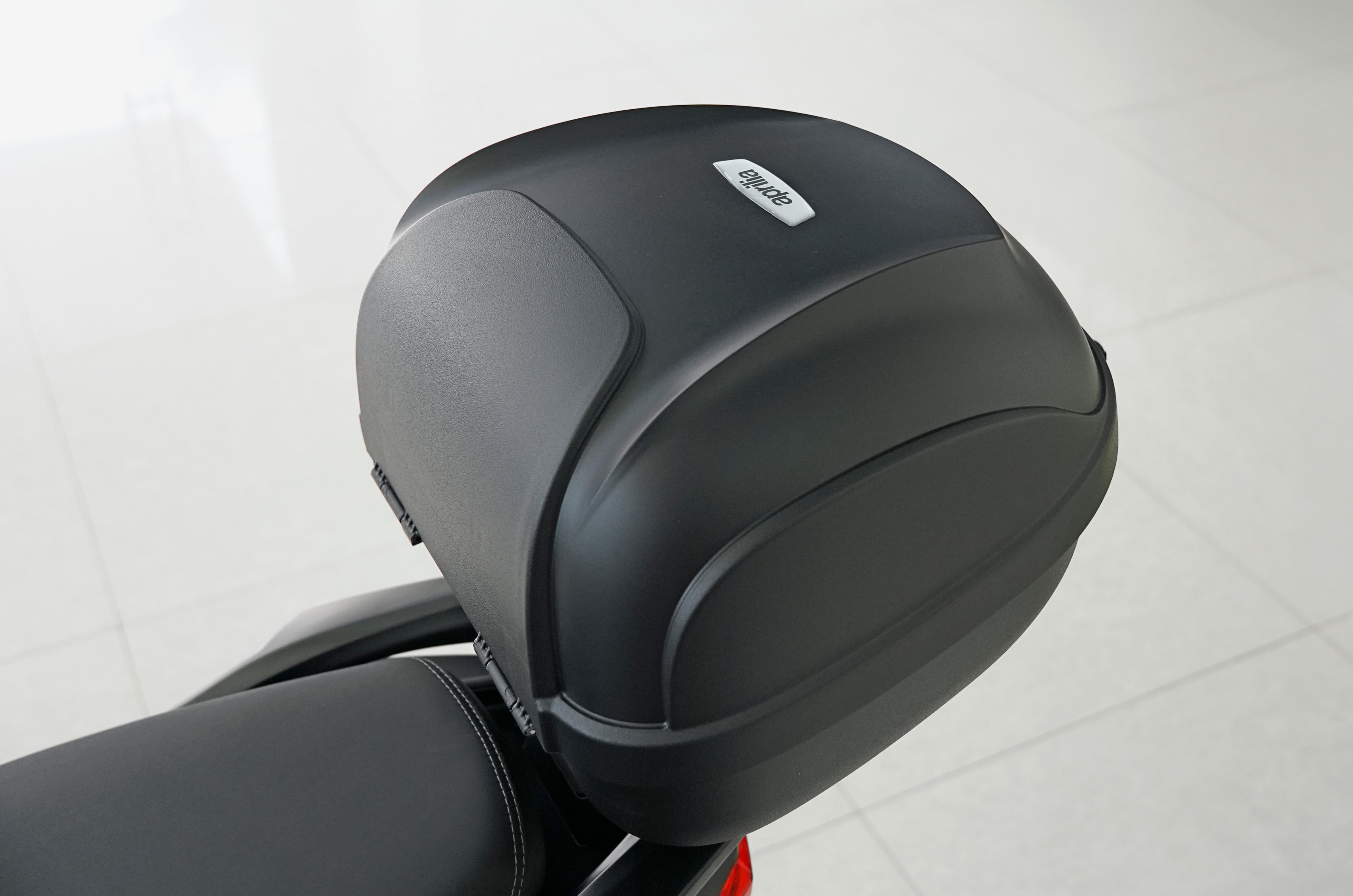
Another small omission is the absence of a multi-function ignition key slot, which means you need to remove the key and put it in its dedicated slot to open the seat and access the boot – something most smaller and cheaper scooters have long moved past. The underseat storage space here isn’t anything to write home about either. However, Aprilia will sell you a pretty spacious 32 litre accessory top box to alleviate that issue, although we don’t have a price for that yet.

 But Aprilia will sell you an accessory 32L top box to alleviate that issue

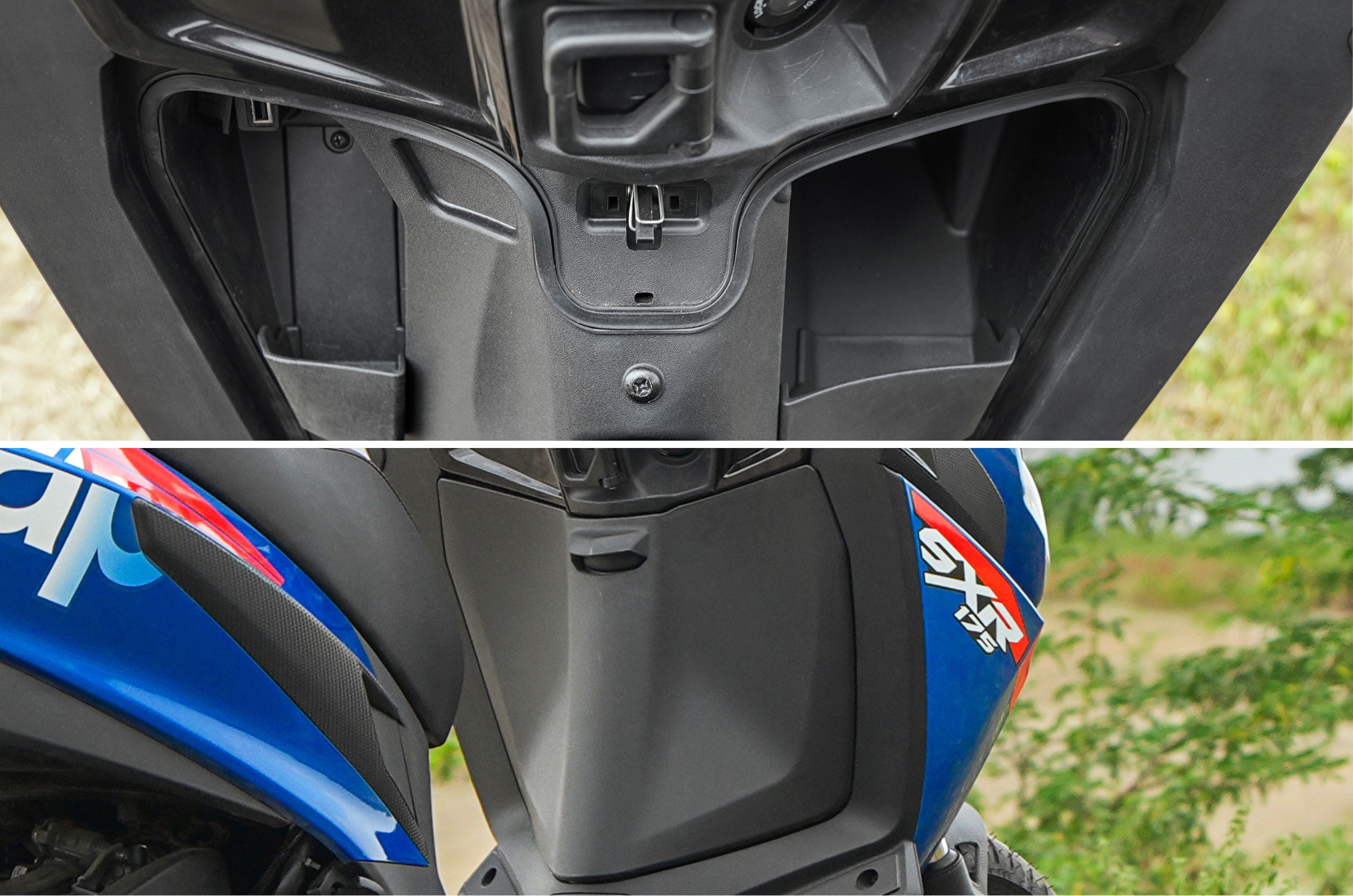
What is a nifty storage solution that comes as standard – carried over from the SXR 160 – are the fully enclosed cubbies on the front apron, and one of them even has a USB-A charging port. While this is surely a safe and practical storage area for your knick-knacks, it’s not the most convenient solution to access when on the move. That’s because you first need to come to a stop, then twist the key to its off position and press it inwards to unlock the cubby. 

Enclosed, lockable area opens up to reveal 2 small cubbies; one of them has a USB Type-A charger

Aprilia SXR GT 175 Ergonomic – 7/10

Has one of the tallest seat heights in the scooter space; rider’s triangle is neutral

Of course, the new feature that is visible most prominently on the SXR GT is its new 14-inch wheel setup, which has its set of pros and cons. On the plus side, the proportions of the scooter are now better than ever before and its ground clearance has also now risen to 170mm – always a good thing on our unpredictable roads. However, because of the larger wheels, the SXR’s seat height has now risen to 800mm, which makes it the tallest seat height on any made-in-India petrol scooter.

14-inch wheels bring in surefooted handling and high-speed stability but the trade-off is heavier steering at slower speeds demanding more effort

Credit where it’s due, this number may seem big on paper but in the real world its not an unapproachable machine. Our photographer Omkar (who’s 5’2) could move the scooter around at our shoot location while seated without too much trouble. However, for someone that wants a friendly and approachable machine, the 132kg SXR is not where you should be looking.

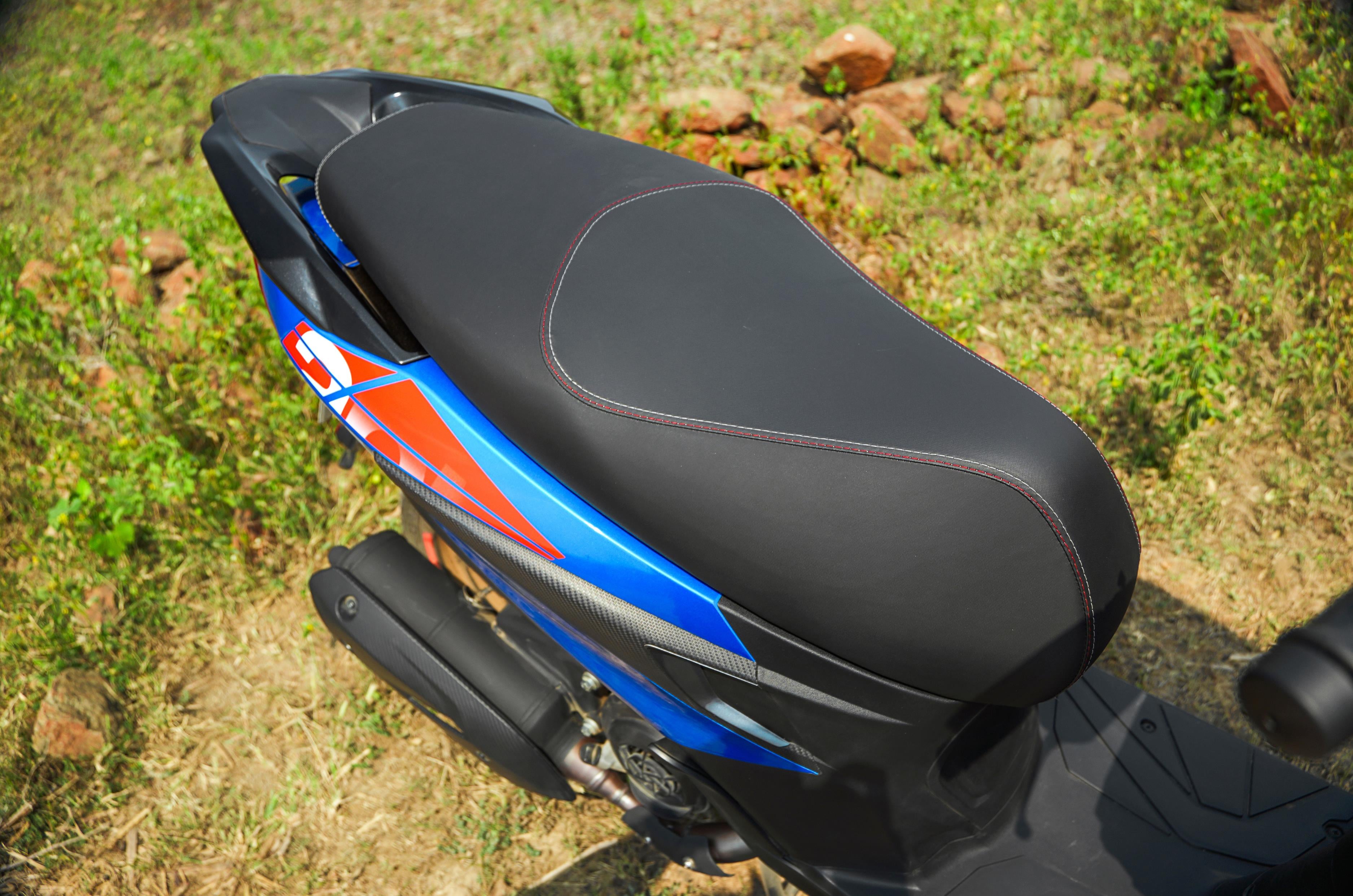
Aside from that, the SXR’s ergonomics haven’t changed and it retains the neutral and upright riding position from before. The seat’s padding is on the stiffer side, which will be especially noticeable on shorter trips but it works well for longer durations and for a person like myself that’s on the heavier side of the scale (80kg without gear). What, however, doesn’t work for a taller person like me (5’11) is that the handlebar is placed a tad low and fouls my knees when making lock-to-lock u-turns. 

Neutral and upright ergonomics are unchanged from before; spacious seat’s padding is on the stiffer side

Aprilia SXR GT 175 Performance – 8/10

Engine provides sprightly performance, is smooth at high speeds

While practicality and convenience are one half of the story when it comes to a scooter like this, what plays an equally important role is how the scooter rides and handles. It will probably not come as any surprise to you when I say that this is surely a fun scooter.

From the moment you thumb the starter and the motor settles into its gruff idle, the 174.4cc, 3-valve motor makes its intentions quite clear – it wants to be ridden quickly. While the vibrations do subside once you get going, the engine clearly rewards energetic riding because the faster you go, the smoother it seems to get! Not just 80kph, even at a speedo-indicated 100kph, it remains absolutely smooth at all the touch points with no signs of protest. For all you top speed nuts, we were able to see an indicated 110kph on the display before the rev limiter kicked in.

Sprightly 174.4cc engine shared with SR 175 has enough performance to placidly sustain 80-100kph

While the SXR is a quick scooter, from what I remember, it doesn’t feel as quick as the lighter and sportier SR. The 0-50kph dash is quite energetic but after that, acceleration becomes more measured. Nevertheless, this level of performance is more than acceptable for our environs and you’ll rarely wish for more power. 

Aprilia SXR GT 175 Ride and Handling – 7/10

Planted and surefooted handler, but not the easiest to manage at slower speeds

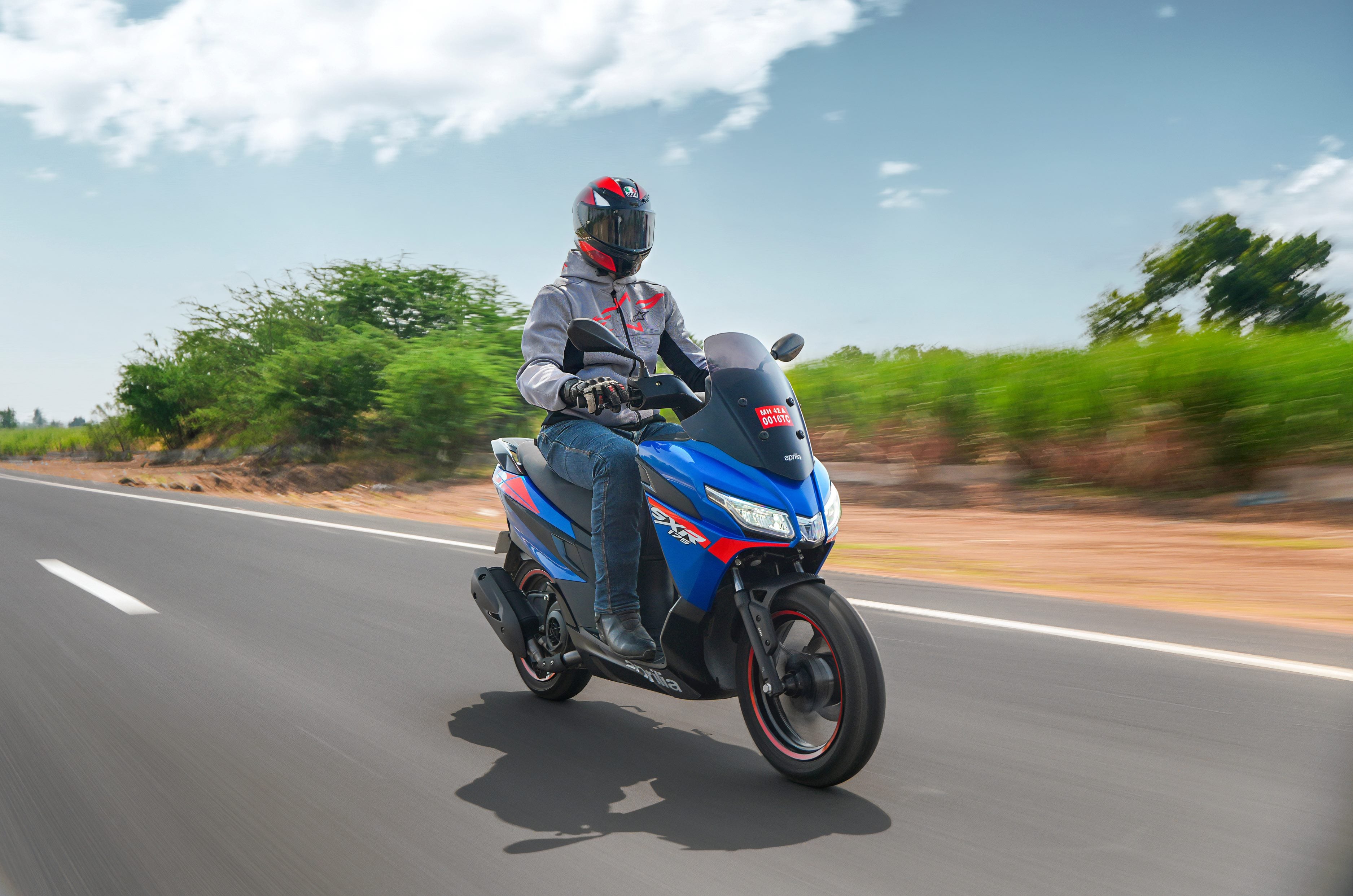
Equally as enticing as its performance is the SXR GT 175’s handling. The new and bigger 14 inch wheels lend it a newfound sense of stability around corners and at higher speeds. To ride, this feels like a proper maxi scooter experience rather than just a styling exercise. However, the tradeoff is noticeably heavier steering at slower speeds which demands quite a bit more effort. If you’re going to spend a lot of time in dense stop and go traffic that you constantly need to manoeuvre around, the SXR GT is not the ideal machine for that task.

To account for these larger wheels, Aprilia has also tuned the SXR’s suspension differently to before. The damping and shock absorption are really quite composed at the rear but the fork feels stiff and jarring over rough roads and does bottom out over larger, sharper-edged bumps. Since Mumbai’s roads are dominated by these conditions, we’re not sure how comfortable the SXR GT will be there, but hope to find out soon.  

It sticks to the Aprilia SXR formula of giving you a decently-priced,  good-looking scooter with both functional practicality and zippy performance

Aprilia SXR GT 175 Verdict (Overall Rating) – 7/10

Well-priced and stands out but its not for everyone

In the scooter segment, Aprilia operates in its own niche where people that really value style and performance continue to choose its offerings over mainstream options. We don’t see that changing with the SXR GT because even though it is more well-rounded than its sporty SR sibling, it still has some hurdles to overcome both on the product’s as well as the after-sales side and fresh styling would have helped increase the appeal after all these years. Nevertheless, the company assures us it is working on the after sales front and it aims to have 250 showrooms in India before the year ends, up from the current 230. Still, that’s vastly lower than the sales reach of Aprilia’s rivals.

To sum up, this latest iteration hasn’t really diverged from what has been the cornerstone of the Aprilia SXR formula – to give you a decently-priced, good-looking scooter with both functional practicality and zippy performance. Speaking of price, the SXR GT 175 is priced at Rs 1.30 lakh (introductory, ex-showroom, Maharashtra) which is a pretty decent price considering what it brings to the table. If you must have a stylish and fun scooter that stands out of the crowd without breaking the bank, the Aprilia SXR GT should be on your radar.

5 things you need to know about the new Aprilia SXR GT 125

5 things you need to know about the new Aprilia SXR GT 125
Aprilia SXR GT 125 studio image

The Aprilia SXR GT 125 is the successor to the SXR 125, which was quietly discontinued in May this year. It shares its platform with the SR 125 hp-e and brings larger wheels and some additional features. Here are answers to some of the most commonly asked questions about it.

What is the difference between the SXR GT 125 and the SXR 125?

The SXR GT 125 replaces the now-discontinued SXR 125 as the brand’s entry-level maxi-scooter in our market. The most notable change is the move to 14-inch wheels, up from the 12-inch wheels on the older model. The SXR GT 125 also uses an updated 124.5cc engine and shares its platform with the current SR 125 hp-e.

What does the SXR GT 125 engine offer?

The SXR GT 125 is powered by a 124.5cc single-cylinder engine producing 10.6hp at 7,400rpm and 10.4Nm of torque at 6,200rpm. It meets BS6 OBD-II Stage B norms and is compatible with E20-blended fuel.

What features does the SXR GT 125 have?

The SXR GT 125 gets a 5-inch LCD instrument cluster and a combined braking system (CBS). In comparison, the SXR GT 175, which was launched alongside it, gets a TFT display with Bluetooth connectivity, turn-by-turn navigation and single-channel ABS.

What are the SXR GT 125 colour options?

The Aprilia SXR GT 125 is available in three colour options – Matte Black, Glossy Azzurro and Glossy White.

What is the SXR GT 125 price?

The Aprilia SXR GT 125 is priced at Rs 1.10 lakh and should be available at Aprilia dealerships nationwide. At this price point, the new SXR is about Rs 5,000 more expensive than the similarly styled Suzuki Burgman Street, which is priced at Rs 1.06 lakh.

All prices ex-showroom, Maharashtra.

MotoGP 2026: Marco Bezzecchi wins Indonesian GP

MotoGP 2026: Marco Bezzecchi wins Indonesian GP
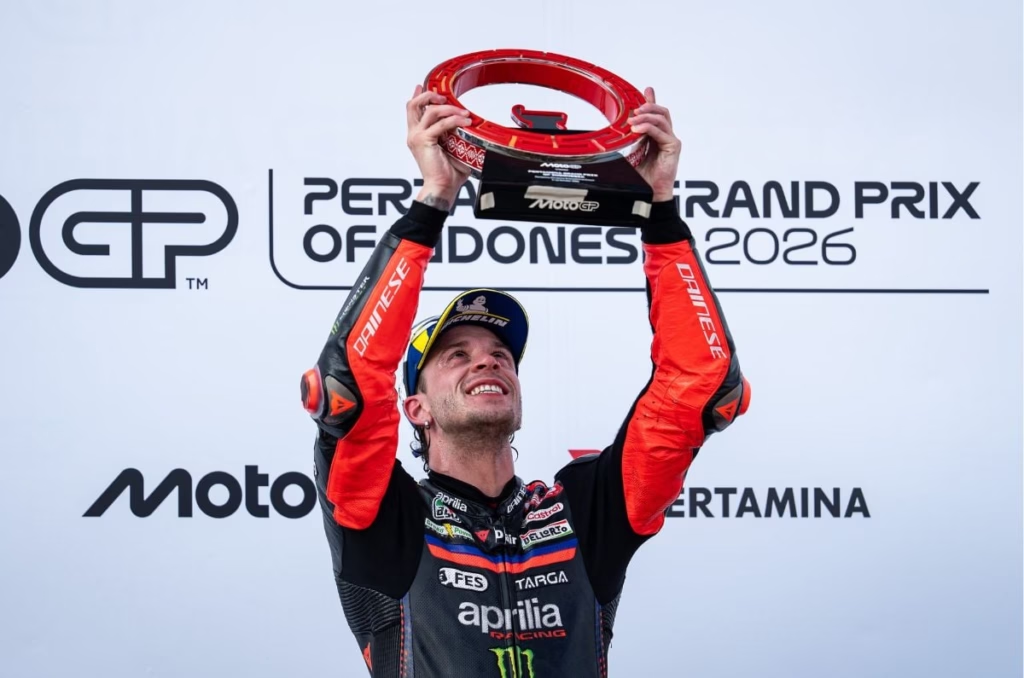
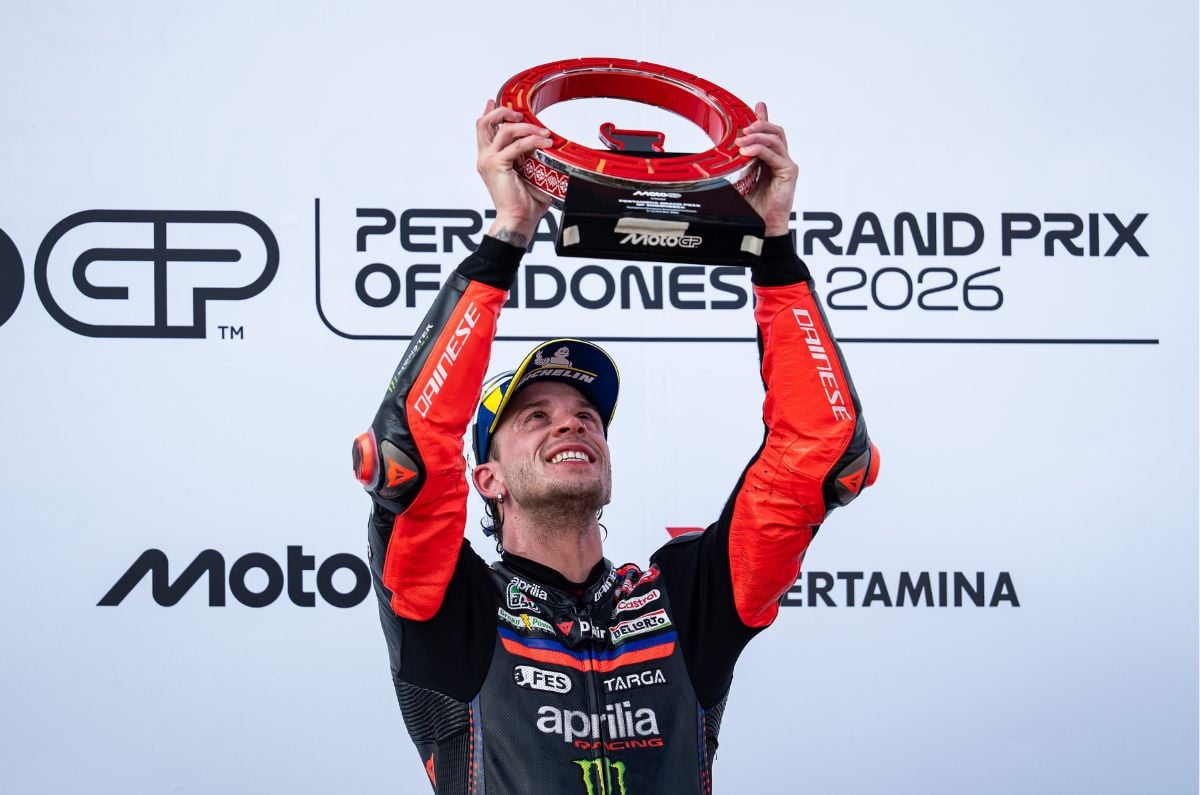
Marco Bezzecchi on the P1 podium at the Indonesian GP.

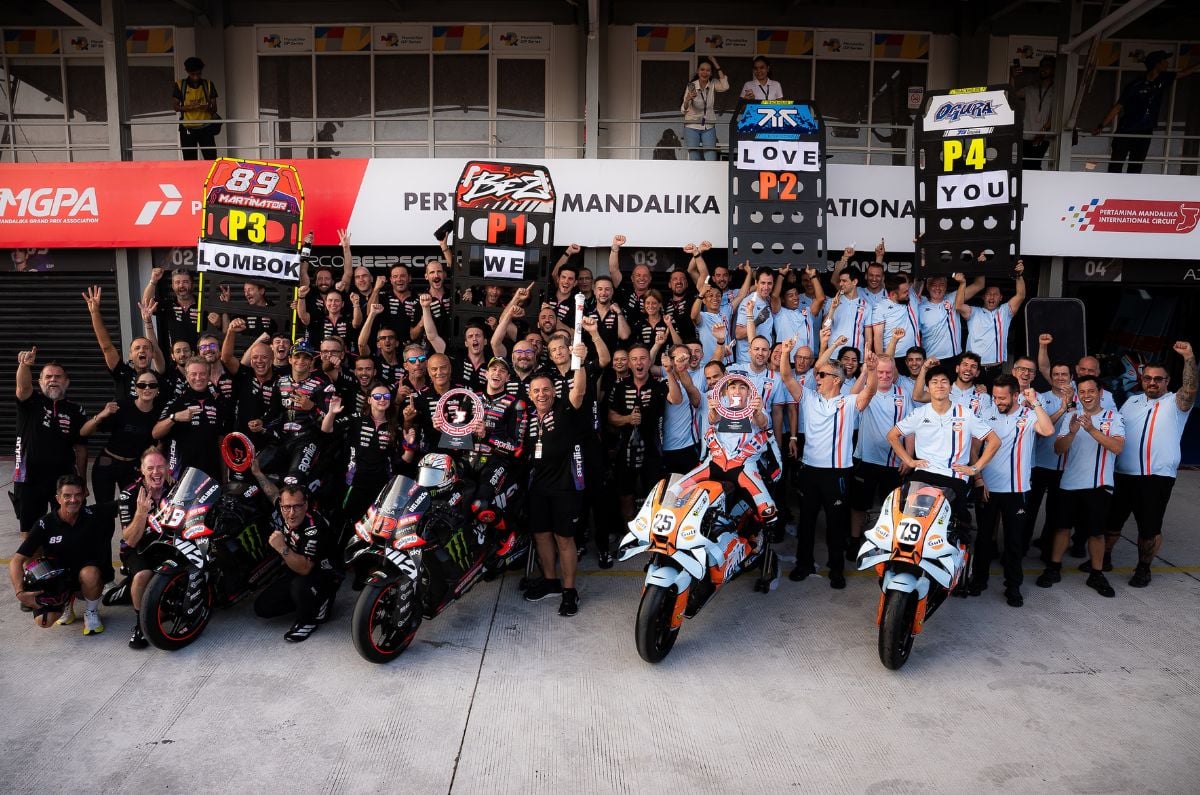
The last leg of the 2026 MotoGP season is here, and the stakes are only getting higher. Aprilia Racing rider Marco Bezzecchi, currently P3 in the world championship, won the Indonesian GP (133 days after his last win), and Jorge Martin, who currently leads the standings, took P3. Raul Fernandez and Ai Ogura of the Trackhouse MotoGP team ranked P2 and P4, resulting in an Aprilia 1-2-3-4 for the first time in the history of the premier class.

  1. Marco  Bezzecchi wins for the first time since the dominant Italian GP victory
  2. Martin and Marquez are separated by 2 points, same as after Motegi the previous week
  3. Maximo Quiles wins Moto3 championship, with Izan Guevara continuing to chip away at Manu Gonzalez’s lead in Moto2

Marc Marquez started off strong with Sprint win

Aided by Raul and Marco’s crash

Going into the weekend, Aprilia was expected to be the better performer and that largely held true throughout the practice sessions. However, during Saturday’s sprint, Marco Bezzecchi’s momentary lapse in judgement resulted in him and Raul Fernandez crashing out in the very first corner of the first lap. This gave the lead to Jorge Martin (started in P5), who held on to it until lap 9, when a front tyre pressure warning forced him to slow down and let the trailing rider, Marc Marquez, overtake him. Marc then started building a gap between the two of them, and while Martin sorted out his issues and started catching up to Marc, he ran wide on the last lap, thereby falling out of the podium positions, with a final P4 result.

Pedro Acosta was actively in the battle for podium with Fabio DiGiannantonio and Ai Ogura, until he received a long lap penalty for track limits and ended the Sprint with P6, behind Alex Marquez. A series of technical issues and the early crash guided Marc to a Sprint win, making him the outright championship leader on Saturday by 4 points, with Fabio and Ogura finishing in P2 and P3, respectively. Fernandez ended up with a broken index finger as a result of the crash but was cleared to race on Sunday.

An eventful Grand Prix, dominated by Aprilias

An injury-stricken Raul showed admirable resilience

The Sunday race, though, went as expected as can be. Fernandez started from pole position and had to modify his riding technique to brake with his middle finger, owing to his broken index finger. He was quick to race away from the rest of the pack, with Marco closely following for 17 out of the 27 laps, where he finally overtook him on turn 1 and won the race eventually. In addition to winning, Bezzecchi also set the fastest lap of the race at 1:29:660 and finished the race 21.060 seconds quicker compared to 2025.

Marc Marquez – rejuvenated by his Sprint victory – started strong in P3 but was subsequently overtaken by Jorge Martin and then Pedro Acosta later in the race. Marc and Pedro had a back-and-forth for some laps, where they both faced apparent front tyre pressure warnings (similar to Martin on Saturday), so they let each other pass a few times to let their tyres recover. Once Pedro resolved the issue, he overtook Marc but was then overtaken by Ogura. The race ended with Martin in P3, Ogura in P4, Pedro in P5 and Marc in P6.

Jorge Martin, Marco Bezzecchi, Raul Fernandez and Ai Ogura celebrating the Aprilia 1-2-3-4 with their teams.
Left to right: Jorge Martin (P3), Marco Bezzecchi (P1), Raul Fernandez (P2) and Ai Ogura (P4) celebrating the historic Aprilia 1-2-3-4 with their teams.

Fabio DiGiannantonio had a desirable race start at P3 but was quickly overtaken by all the riders above as well as Alex Marquez, ending his race with P8. Pedro was once again the best performing KTM rider, after Enea Bastianini out-performed him in Motegi. Speaking of whom, Enea ended his run with P10, followed by Pedro’s teammate Brad Binder in P11.

After his win in the Japanese GP, Marc Marquez had reduced the points gap to leader Jorge Martin to 2; and he briefly led the championship after his Sprint win. However, the race results have brought the duo back to the same gap with Jorge Martin once again becoming the leader, followed by Marc Maquez with a two points deficit going to Phillip Island, Australia.

Hot track, hotter riders, notable crashes

Four DNFs and one DNS

The Indonesian GP, hosted in the Lambok island, is considered to be a trying track for the riders as well as their motorcycles. During the MotoGP race, the track temperature was at a scalding 62 degree celsius and the air temperature was bordering around 29 degrees with 73 percent humidity. The conditions remained similarly scorching throughout the weekend, and evidently, it was a tough environment to race in. Fermin Aldeguer, last year’s Indonesian GP winner, crashed out at the end of lap 1, followed by Jack Miller and Pecco Bagnaia – separate incidents – in lap 5. Toprak Razgatlioglu retired in lap 8, due to weakness and lack of feeling in his right shoulder following a massive highside on Saturday practice, as he explained in post race interviews.

Honda had announced Aleix Espargaro will be replacing Joan Mir for the weekend and Aleix partook in all the practice sessions and the Sprint. However, he withdrew from the Grand Prix, citing arm pump issues and choosing to focus on Honda’s 850cc tests in Sepang next week.

Maximo Quiles takes Moto3 championship

A chaos filled Moto2 race with a closer championship fight than MotoGP

The other two races were just as eventful and perhaps more chaotic than MotoGP. After an impressive 2026 campaign, Maximo Quiles of CFMoto Gaviota Aspar team became the Moto3 World Champion with five races remaining. Quiles has the second-best win rate of 58.8 percent, trailing only David Alonso’s dominant run of 2024, with a 70 percent win rate.

Speaking of David Alonso, his Moto2 race came to a sadly premature end. Alonso started as P2 in the race, but in the first turn of the first lap, his CFMoto Power Electronics Aspar teammate Dani Holgado crashed into him leading to Alonso’s bike getting severely damaged. The crash also took out Joe Roberts and Collin Veijer, which brought red flags out, and resulted in a race restart with a reduced 14 laps (versus planned 22 laps). Except Alonso, the other three riders were able to restart their races, although Joe Roberts quickly retired because of an issue with his rear brake.

Klint Racing’s Alex Escrig was quick to overtake Izan Guevara and held on to the lead successfully, until a technical issue with his bike made him drop out of the race with two laps to go, handing Izan the victory. The final race results saw Izan Guevara in P1, current rider championship leader Manu Gonzalez in P2, and Dani Holgado in P3. With his hattrick race win, Izan has reduced the points gap to Manu to 6.5, going to Phillip Island in two weeks’ time.

2026 Aprilia Tuareg 660 & Tuareg Rally Image Gallery

2026 Aprilia Tuareg 660 & Tuareg Rally Image Gallery
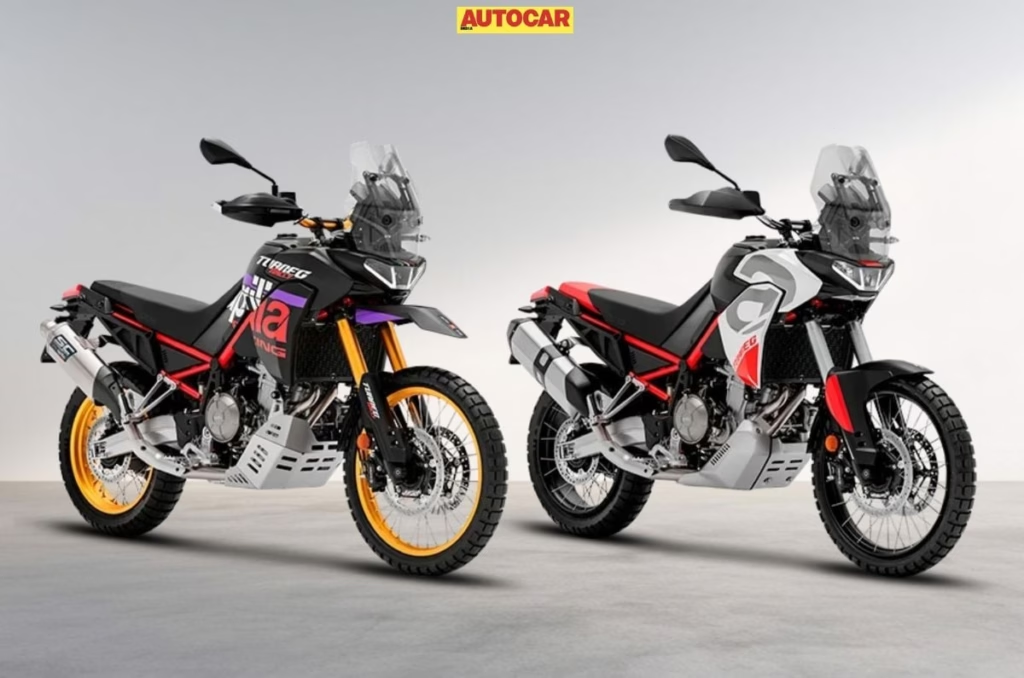
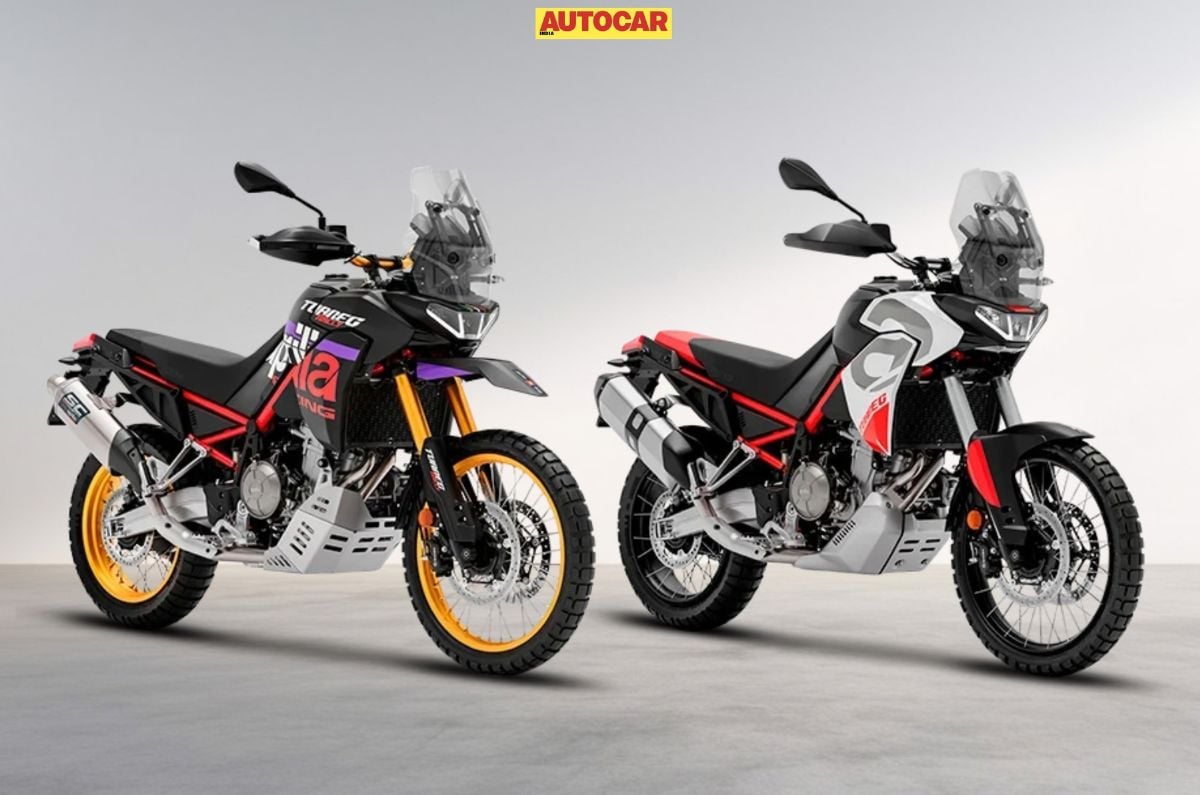
An indoor render showcasing the Aprilia Tuareg 660 and Tuareg Rally

The Aprilia Tuareg 660 is the brand’s renowned middleweight adventure motorcycle in its global lineup. It is driven by a derivative of Aprilia’s 659cc parallel-twin engine, which shared with its supersport sibling, the RS660. This engine is specifically re-tuned to enhance low-and-mid range tractability. The liquid-cooled twin-cylinder engine produces 80hp at 9,250rpm and 70Nm of torque at 6,500rpm, paired with a 6-speed gearbox. For the Tuareg Rally, the powertrain gains larger 52mm throttle bodies and a dedicated SC-project titanium exhaust system, shedding weight down to 199kg.

The Standard Tuareg 660 comes standard with fully adjustable 43mm KYB USD front fork and a rear monoshock, both offering a 240mm of wheel travel. On the other hand, the Rally variant upgrades to race-tuned linear-rate spring, and 880mm saddle, and heavy-duty Ergal spoked wheels fitted with tube-type off-road tyres, compared to the tubeless 21-inch front and 18-inch rear cross-spoked set on the standard bike.

Both models feature the APRC (Aprilia Performance Ride Control) suite with ride-by-wire throttle, offering four riding modes:Urban, Explore, off-road and Individual. Traction control and multi-map ABS can be completely deactivated for aggressive off-road excursions. Delivering readouts for the electronics is a 5-inch color TFT display. In India, the standard Aprilia Tuareg 660 was listed at an ex-showroom price of Rs 20.15 lakh, with the Rally variant expected to carry a further premium.

TVS Motor ने मचाई धूम, सितंबर में बिक्री 24% बढ़ी; इलेक्ट्रिक स्कूटरों की डिमांड दोगुनी से ज्यादा

TVS Motor Sales September 2026: TVS Motor Company ने सितंबर 2026 में शानदार बिक्री दर्ज की है। कंपनी ने इस महीने कुल 6.73 लाख यूनिट्स बेचीं, जो पिछले साल सितंबर के मुकाबले 24% ज्यादा है। कंपनी की दोपहिया गाड़ियों की बढ़ती मांग, इलेक्ट्रिक व्हीकल्स की बिक्री में तेज बढ़ोतरी और विदेशों में मजबूत कारोबार की वजह से बिक्री में यह बढ़त देखने को मिली। कंपनी की कुल बिक्री में सबसे बड़ा हिस्सा दोपहिया वाहनों का रहा। सितंबर 2026 में TVS Motor ने 6.46 लाख दोपहिया वाहन बेचे। यह सितंबर 2025 में बिके 5.24 लाख यूनिट्स के मुकाबले करीब 23% ज्यादा है। भारत में भी कंपनी की बिक्री में अच्छी बढ़ोतरी हुई। घरेलू बाजार में TVS Motor ने सितंबर 2026 में 4.82 लाख यूनिट्स बेचीं, जबकि एक साल पहले इसी महीने में 4.13 लाख यूनिट्स की बिक्री हुई थी। यानी घरेलू बिक्री में करीब 17% की बढ़ोतरी दर्ज की गई।

TVS Motor के इलेक्ट्रिक टू-व्हीलर की बिक्री में 110% की जबरदस्त बढ़ोतरी

TVS Motor के इलेक्ट्रिक स्कूटरों की मांग भी तेजी से बढ़ रही है। सितंबर 2026 में कंपनी ने इलेक्ट्रिक दोपहिया वाहनों की 65,799 यूनिट्स बेचीं। जबकि पिछले साल सितंबर में कंपनी की इलेक्ट्रिक दोपहिया बिक्री 31,266 यूनिट्स थी। इस तरह सालाना आधार पर इलेक्ट्रिक दोपहिया वाहनों की बिक्री में 110% की बढ़ोतरी दर्ज की गई।

खास बात यह है कि TVS की इलेक्ट्रिक गाड़ियों की बिक्री में यह तेजी सिर्फ सितंबर तक सीमित नहीं रही। वित्त वर्ष 2026-27 की दूसरी तिमाही (Q2) में कंपनी ने कुल 1.86 लाख इलेक्ट्रिक दोपहिया वाहन बेचे। यह पिछले साल की इसी तिमाही के मुकाबले 133% ज्यादा है।

ग्लोबल शिपमेंट में 48% की बढ़ोतरी

TVS Motor ने सितंबर में सिर्फ घरेलू बाजार में ही नहीं, बल्कि विदेशी बाजारों में भी शानदार प्रदर्शन किया। सितंबर 2026 में कंपनी की कुल इंटरनेशनल बिक्री 1.81 लाख यूनिट्स रही, जो सितंबर 2025 में 1.22 लाख यूनिट्स के मुकाबले 48% ज्यादा है।

विदेशी बाजारों में कंपनी के कारोबार में सबसे बड़ा योगदान दोपहिया वाहनों का रहा। सितंबर में TVS ने 1.64 लाख दोपहिया वाहन एक्सपोर्ट किए, जबकि पिछले साल इसी महीने में यह आंकड़ा 1.11 लाख यूनिट्स था। यानी दोपहिया वाहनों के निर्यात में भी सालाना आधार पर 48% की बढ़ोतरी दर्ज की गई।

TVS Motor की इंटरनेशनल बिक्री में यह तेजी सिर्फ सितंबर तक सीमित नहीं रही। वित्त वर्ष 2026-27 की दूसरी तिमाही (Q2) में कंपनी की कुल इंटरनेशनल बिक्री में 35% की बढ़ोतरी दर्ज की गई। इससे साफ है कि विदेशी बाजारों में भी TVS के दोपहिया वाहनों की मांग लगातार मजबूत हो रही है।

अन्य खास बातें

थ्री-व्हीलर की बात करें तो, कंपनी ने सालाना आधार पर 57% की बढ़ोतरी दर्ज की और बिक्री 26,835 यूनिट रही, जबकि सितंबर 2025 में यह आंकड़ा 17,141 यूनिट था। TVS ने वित्त वर्ष 2026-27 की दूसरी तिमाही (Q2) में कुल लगभग 19 लाख (1.9 मिलियन) यूनिट की बिक्री दर्ज की, जिसमें टू-व्हीलर की हिस्सेदारी लगभग 18 लाख (1.8 मिलियन) यूनिट थी। इस तिमाही के दौरान टू-व्हीलर की बिक्री में पिछले साल की इसी अवधि की तुलना में 27% की बढ़ोतरी हुई। दूसरी तिमाही में थ्री-व्हीलर की बिक्री भी 47% बढ़कर 78,475 यूनिट हो गई, जो वित्त वर्ष 2025-26 की दूसरी तिमाही में 53,449 यूनिट थी।

यह भी पढ़ें: Aprilia SXR GT 125 और GT 175 लॉन्च, जानें कीमत, इंजन, ABS और फीचर्स की पूरी डिटेल

TVS Racing International Championship goes to Europe for the first time

TVS Racing International Championship goes to Europe for the first time
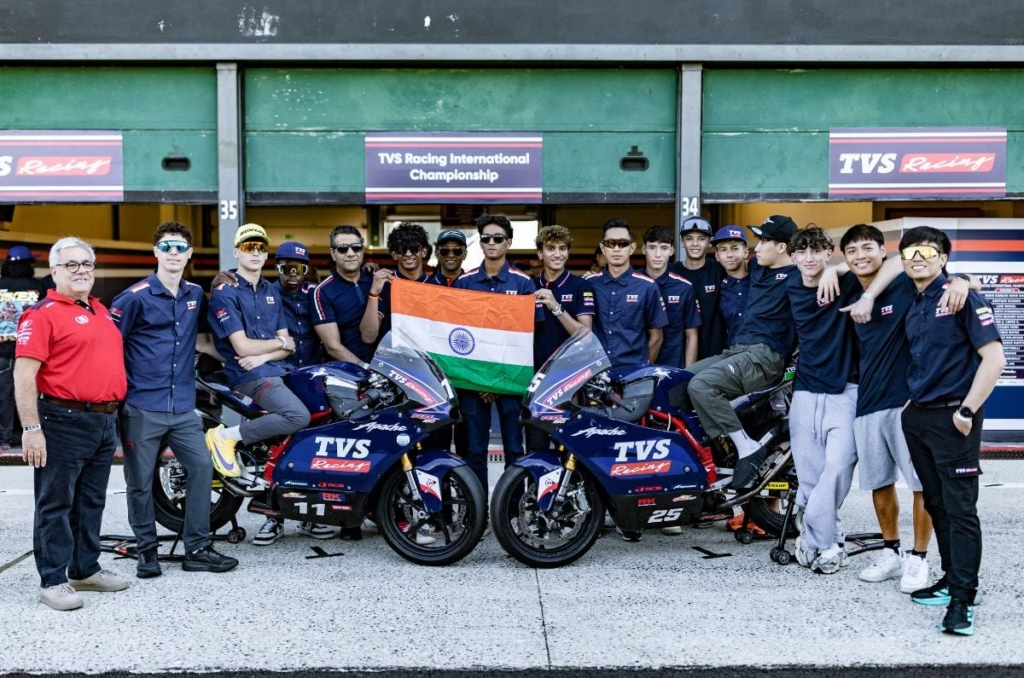
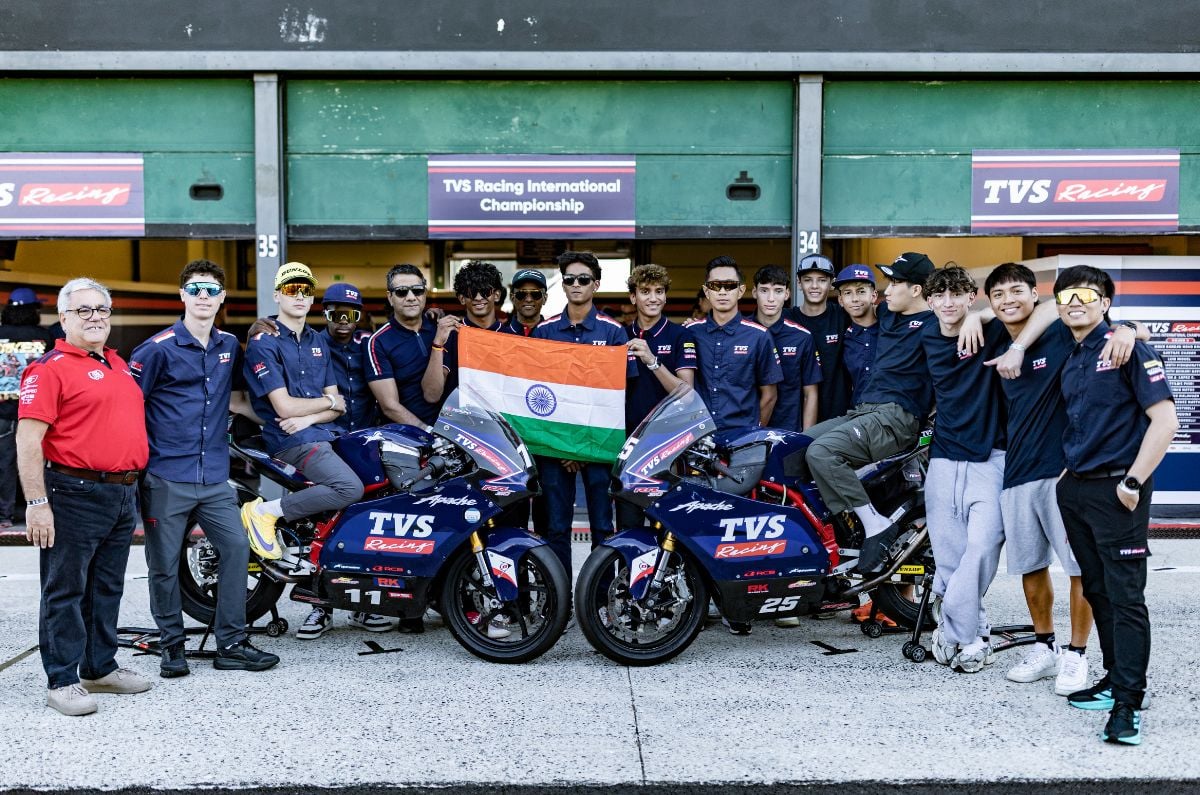
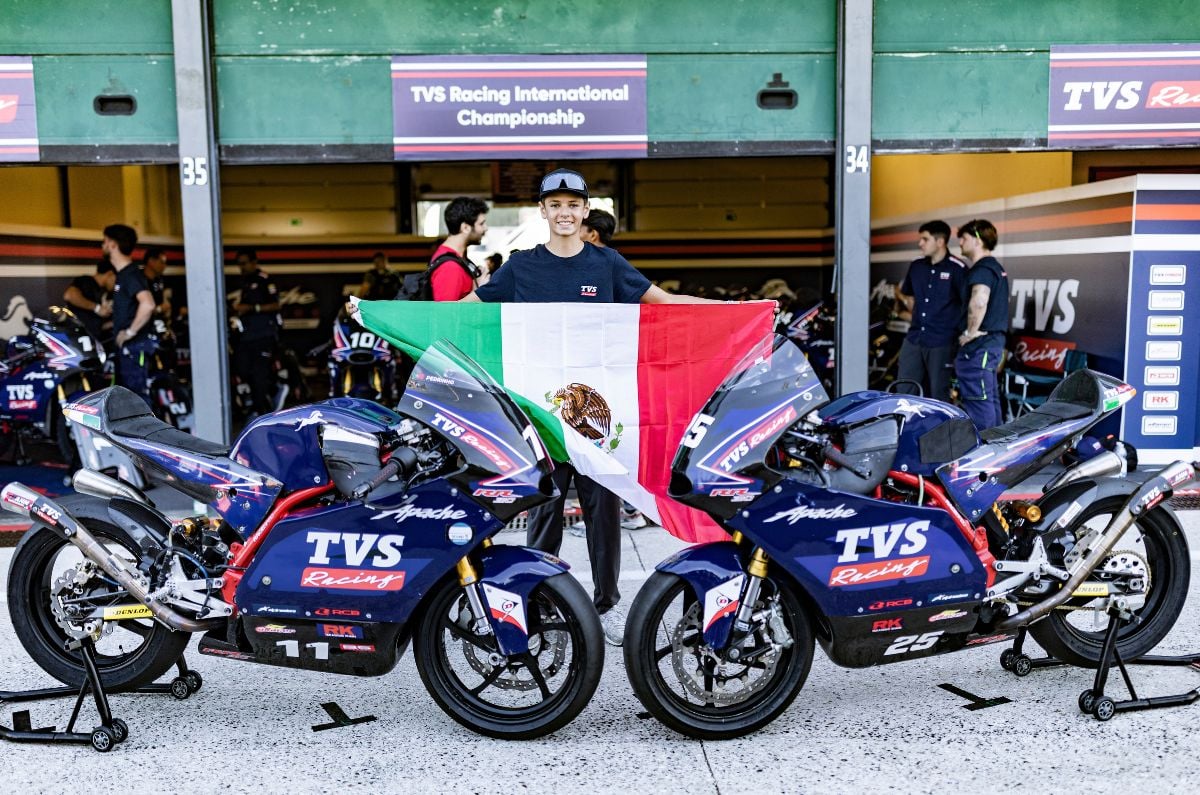
14 riders who participated on behalf of TVS Racing.

TVS Racing International Championship has gone to a European racetrack for the first time. The second last round of the season unfolded at the Misano World Circuit in Italy, alongside the Coppa Italia racing weekend – which includes superbike races, a Yamaha R7 one-make and an Aprilia RS 457 one-make racing championship.

  1. 14 riders competed in the TVS championship during the weekend
  2. Three of the 14 TVS Racing riders were from India

TVS Racing International Championship: First European racing weekend

Italian rider Cristian Borelli takes P1, Sarthak Chavan was the best Indian rider

Racing is hardly new for TVS as the company has had a factory racing program since 1982, starting with the TVS 50 moped. Two of its biggest developments in recent times were the team’s entry into the Asia Road Racing Championship (ARRC) in 2020 and a partnership with Petronas in 2022, which resulted in the creation of TVS Racing One Make Championship in Asia; now known as the TVS Racing International Championship.

However, this is the first time the championship has gone to Europe. In this case, to the Misano World Circuit in Italy. The paddock and the circuit last weekend were shared with Coppa Italia (Italian cup), with 14 riders of the TVS Racing program participating in two races of seven laps each. Three of the fourteen riders were from India, with Sarthak Chavan being the best performer of the three, finishing P7 in the first race, and P6 in the second. The other two Indian riders, Chiranth Vishwanath and Rakshith Srihari Dave finished their races in P10 and P11 in the first; and P8 and P12 in the second, respectively. Sarthak began both races in last after a crash in qualifying. The best overall performer was Italian rider Cristian Borrelli, who finished P1 in both races; the gap between him and Chavan was just 1.973 seconds in the second race.

Cristian Borrelli, winner of both races in TVS Racing International Championship Round 4
Cristian Borrelli from Italy won both the races earning a double home victory.

With the previous round three in Motegi, Japan, Malaysian rider Mohd Ramdan Rosli tops the ARRC standings with 101 points. India’s Sarthak Chavan follows him with 80 points. Luis Miguel (Spain) with 54 points, Oratilwe Phiri (Republic of South Africa) also with 54 points, and Chiranth Vishwanath (India) with 49 points follow the two in P3, P4 and P5 respectively. Chiranth won the first of two races conducted in Round 3 with a 0.014 second lead awarding him the win.

The concluded round in Italy was round four and the second last round of the championship, with the last round slated to happen in Buriram, Thailand alongside ARRC. While this was the first time the championship went to an European racetrack, it certainly won’t be the last time. TVS Racing is likely to take the championship out of Asia again next year for at least one round, although exact details are yet to be revealed.