Aston Martin has delayed the launch of its first electric car to 2033 or later, with CEO Adrian Hallmark saying the company no longer has a fixed launch date. Speaking to our sister publication Autocar UK, Hallmark said, “We only need BEVs to be compliant for legislative reasons [in certain markets] just before 2035,” adding that the timing “could be 2035, it might be 2033”. He described Aston Martin as “not BEV deniers but BEV delayers”, and said the company will be “predominantly ICE-based” until 2035.
Aston Martin EV launch delayed again
Aston Martin’s EV plans have been pushed back several times. The company had previously targeted 2025, later moved the launch to 2026, and subsequently indicated that its first EV would arrive by 2030. The latest timeline moves it into the 2033-35 window.
Hallmark said the change reflects the pace at which EV demand and legislation are evolving. He said they are “changing way faster than any car company can cope with”, making it difficult for Aston Martin to set a firm launch date. “I’m not going to give an absolute date, because it’s imprecise. It could be 2035, it might be 2033, but it’s in that three-year-window. It’s not 2031,” Hallmark added.
The latest delay follows comments from executive chairman Lawrence Stroll in 2024 that EV demand at Aston Martin’s price point was lower than expected. At the time, the company had outlined plans for four EVs based on a dedicated architecture, spanning a GT, SUV, crossover and mid-engined supercar.
Lucid technology to underpin future EVs
Aston Martin has an agreement with Lucid for EV technology and has a partnership with current engine supplier Mercedes-Benz. Hallmark said the delay will give the company more time to assess how the technology develops before making major investments.
“Because we delayed, by the time we activate that deal, the technology that we will get is totally different to what we signed up the original contract for,” Hallmark said. He added that “looking at BEVs in the future, even if [we launch our first in] 2033, we’ve got three years where we can keep looking, keep thinking and keep evaluating different technologies and how they’re changing, and the markets and the legislation. And it’s only then that we would need to kick off investment. So today we’ve got very low-level investment, but it’s research and study, not even single-digit millions of investment.”
V8 and V12 engines to continue
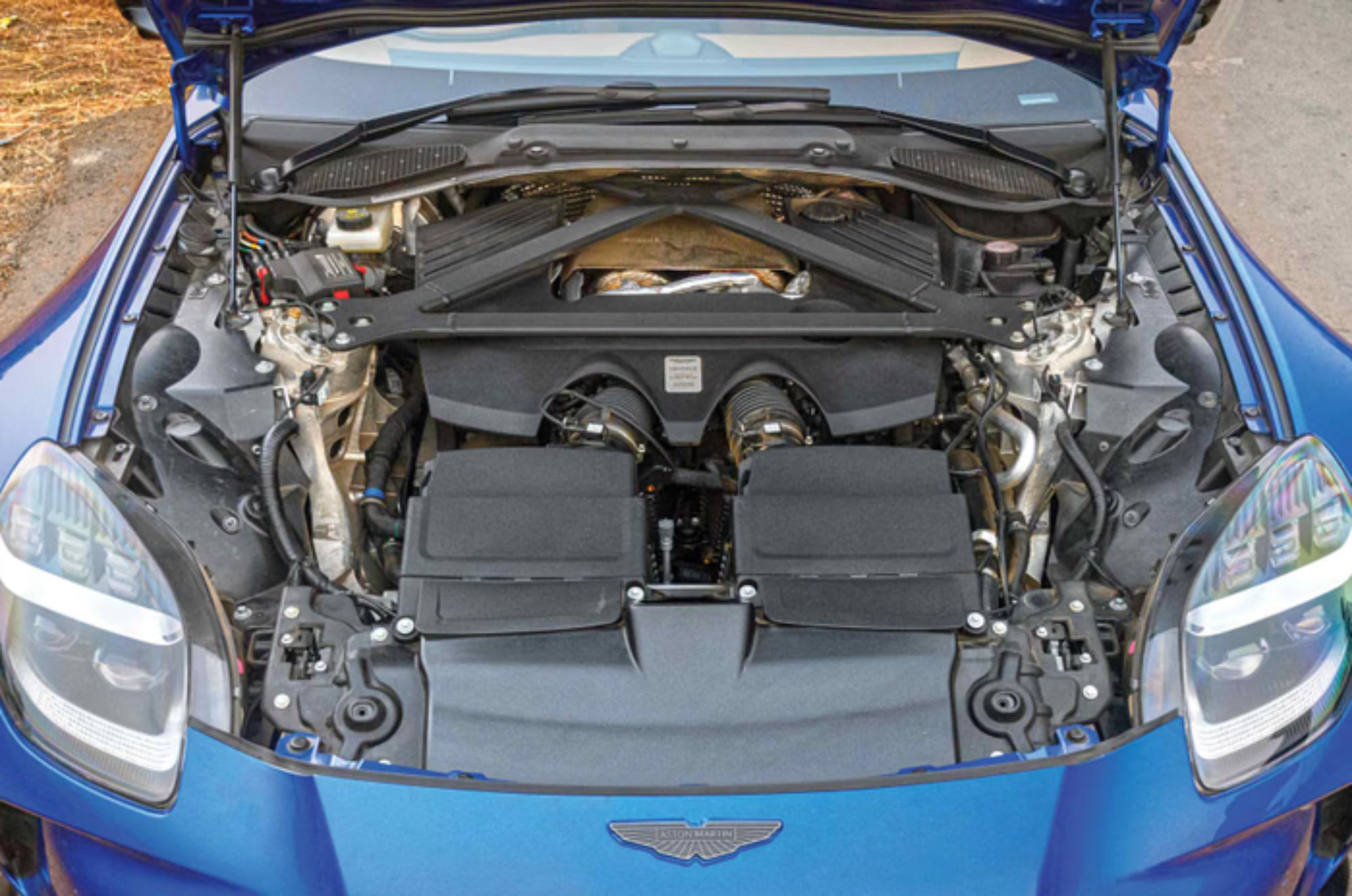
Aston Martin Vantage’s 665hp V8
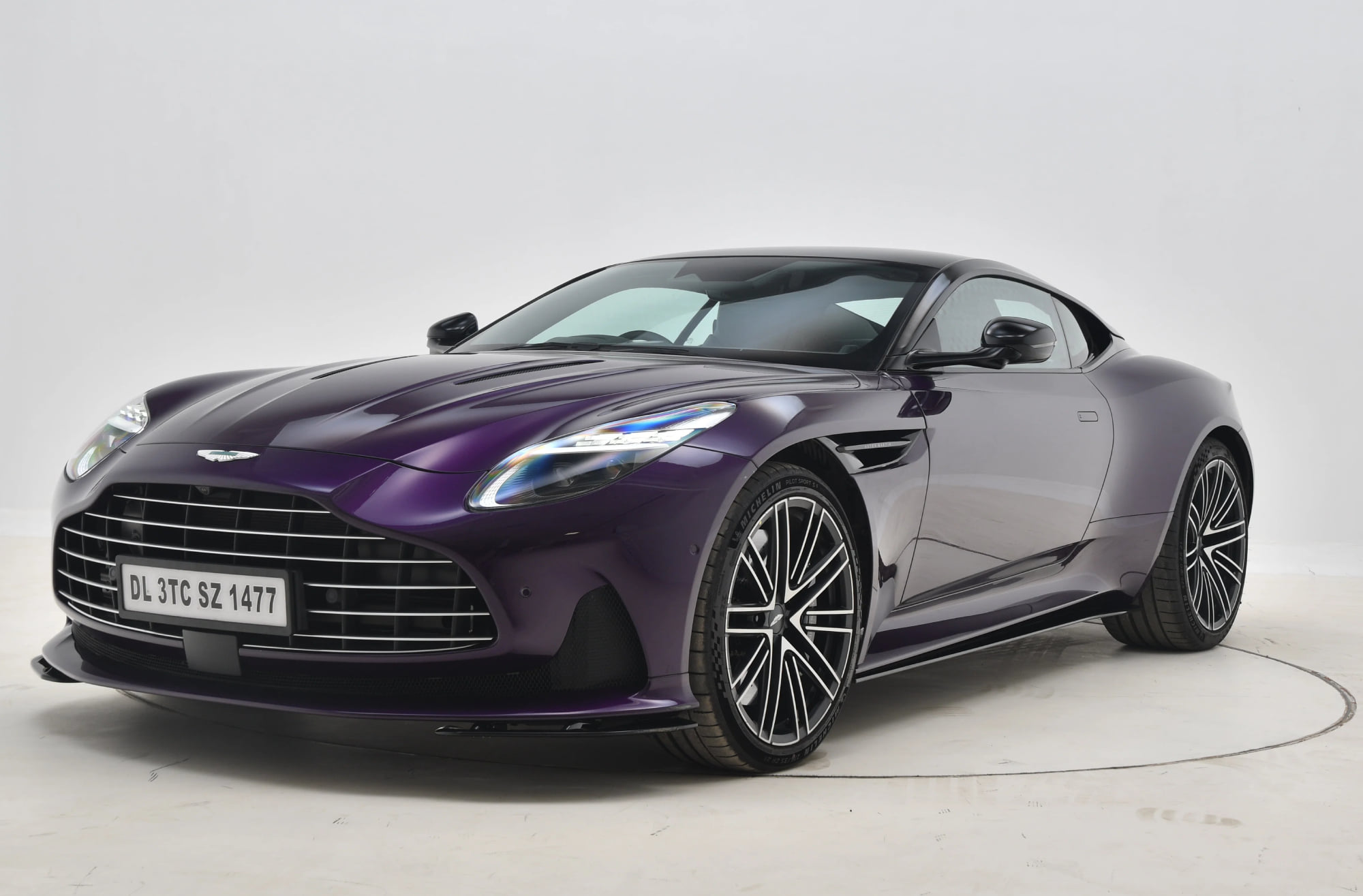
Aston Martin plans to continue offering combustion-engined cars well into the 2030s. Hallmark said the company has a roadmap to keep both its V8 and V12 engines compliant through at least 2035. “We have a roadmap to keep the bigger and smaller engines alive and compliant all the way through to the end of that period,” Hallmark said.
This extends the approach outlined by Stroll in 2024, when he said Aston Martin would continue making combustion-engined cars for as long as regulations allowed. The company had also increased its investment in plug-in hybrid technology as its EV plans were pushed back. Stroll had said Aston Martin had “decided to invest very heavily in PHEVs” – technology, he said, that would “play out for a long while and we will have an extensive offering”.
However, the latest strategy is different from that earlier plan. Hallmark said Aston Martin will use hybridisation, but “probably not” plug-in hybrid systems because of their added weight. “There would be hybridisation,” Hallmark said. “Probably not plug-in, because we don’t need it; we don’t need the 200kg penalties.”
Hallmark said “between 2030 and 2035 everything will be replaced” in Aston Martin’s product line-up, adding that “the attributes, performance and quality of the vehicles will take them up a level”. He also confirmed that Aston Martin will continue with the Valhalla hypercar, hinting that “there might be a derivative of it that has a different roof”. The company is investing in the Valhalla platform for future low-volume special edition models, he said.
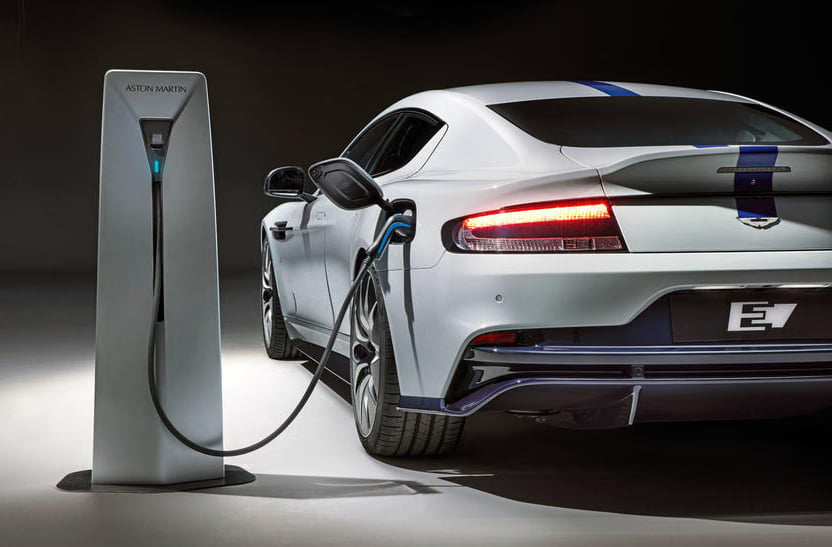
Rapide E never entered production
Aston Martin had planned to build 155 examples of the Rapide E, which was revealed as an electric four-door in 2019, but the production programme was cancelled before customer cars were built. The project was instead turned into an electrification research project, rather than being sold to customers. The Rapide E used an 800V battery and two electric motors with a combined target output of more than 610hp and 950Nm.
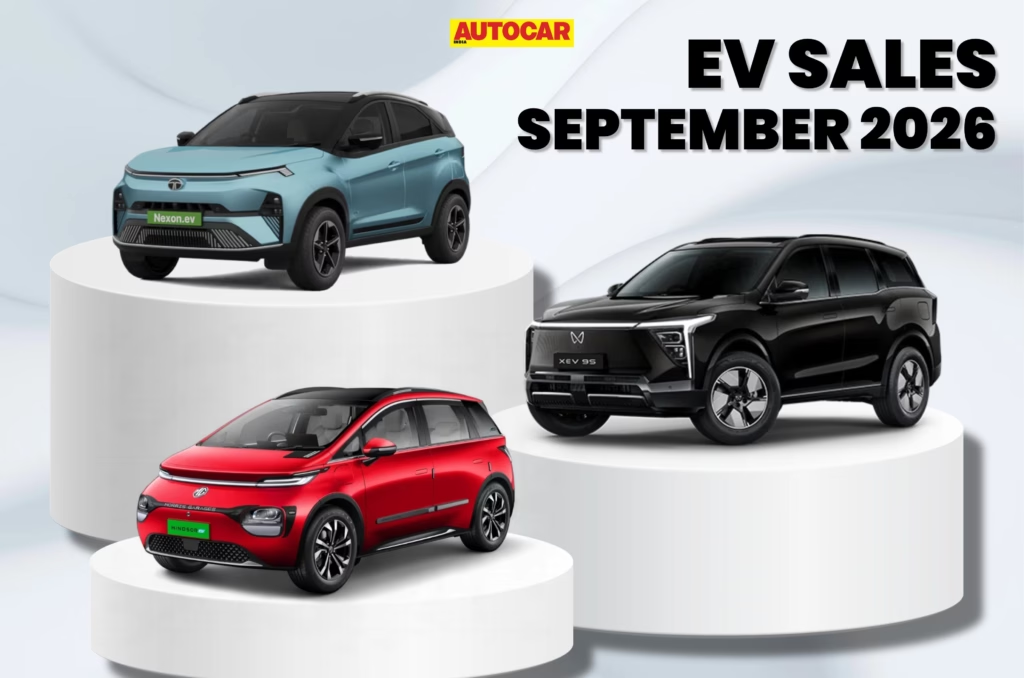
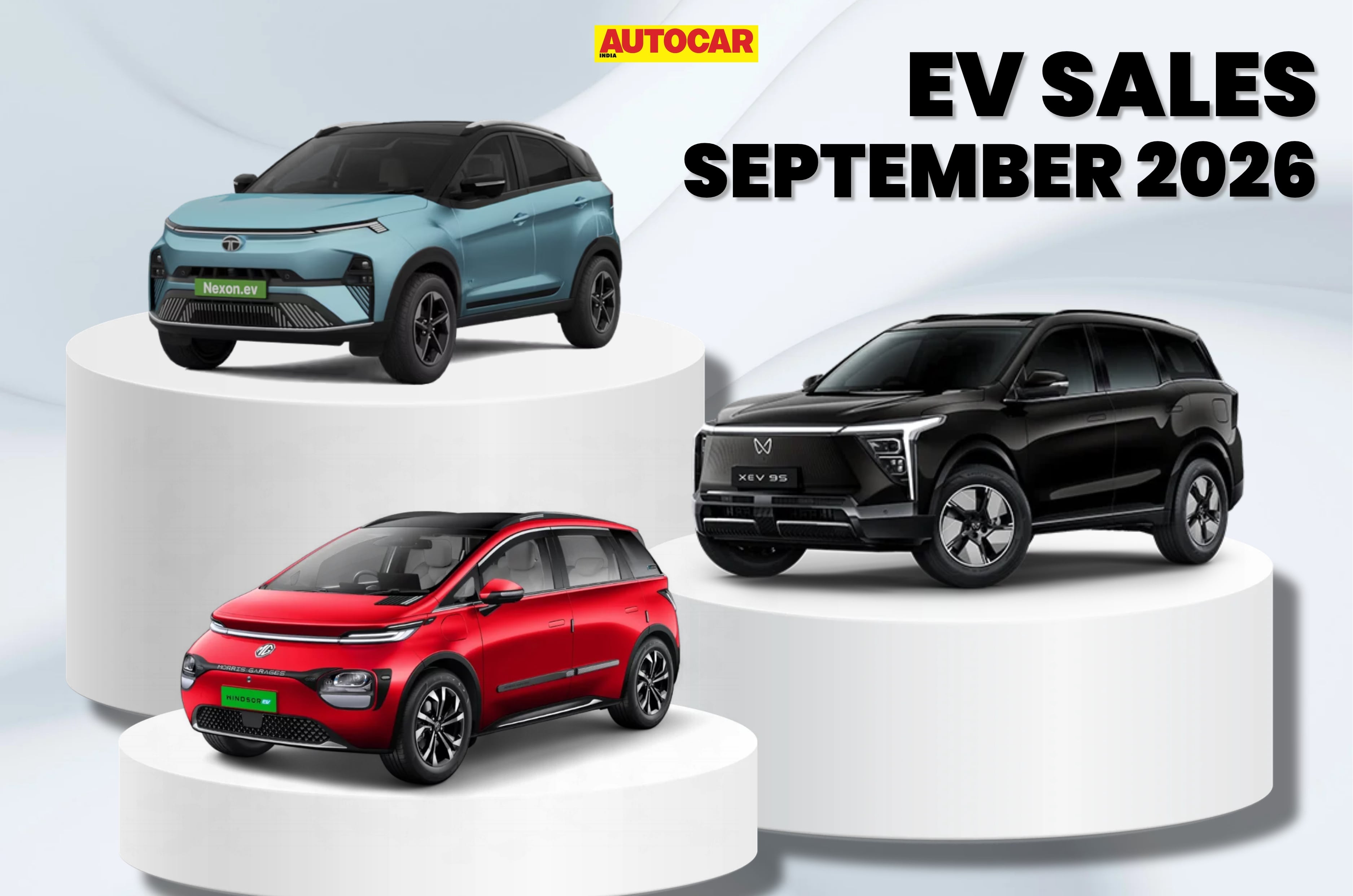
Retail sales of electric passenger vehicles reached a new monthly high of 35,995 units in September 2026, up 94 percent from the same month last year and marking the fourth consecutive month with sales above 30,000 units. Tata Motors retained the top spot with 14,769 units and a 41 percent market share, while Kia moved ahead of Maruti Suzuki to take fifth place. H1 FY2027 EV sales now stand at 1,90,946 units, up 88 percent year on year, putting the industry within 29,971 units of the full-year FY2026 tally.
September 2026 EV sales
Rank
OEM
Sep 2026
Sep 2025
YoY change
Market share
1
Tata Motors
14,769
7,353
101%
41.03%
2
Mahindra & Mahindra
7,779
3,972
96%
21.61%
3
JSW MG Motor India
5,242
4,800
9%
14.56%
4
Vinfast India
2,963
6
49,283%
8.23%
5
Kia India
1,263
598
111%
3.50%
6
Maruti Suzuki India
1,103
–
–
3.06%
7
BYD India
836
732
14%
2.32%
8
Hyundai Motor India
792
404
96%
2.20%
9
BMW India
502
369
36%
1.39%
10
Tesla
291
69
322%
0.80%
11
Toyota Kirloskar Motor
218
–
–
0.60%
12
Mercedes-Benz India
125
137
-9%
0.34%
13
Stellantis India
55
47
17%
0.15%
14
Volvo India
45
24
88%
0.12%
15
Porsche India
11
8
38%
0.03%
16
JLR India
1
0
–
0.00%
17
Audi India
0
0
–
0.00%
18
Lotus
0
0
–
0.00%
19
Rolls-Royce
0
1
-100%
0.00%
Total
35,995
18,520
94%
100%
Tata Motors
14,769 units, up 101 percent YoY
Tata Motors sold 14,769 electric passenger vehicles in September, up 101 percent from 7,353 units in the same month last year. This was the company’s highest monthly EV sales yet, surpassing the previous record of 14,388 units in July. September was also its fourth consecutive month with sales above 12,000 units.
Tata’s EV market share stood at 41.03 percent, up from 39.70 percent in September 2025. The Nexon EV remains its biggest volume driver, while the updated Tiago EV and Punch EV have also contributed to sales. During the month, Tata also extended its Battery-as-a-Service (BaaS) offering to the Nexon EV, Curvv EV, Sierra EV and Harrier EV.
Mahindra
7,779 units, up 96 percent YoY
Mahindra sold 7,779 EVs in September, up 96 percent from 3,972 units a year ago. The company retained second place in the electric PV market, although its sales remained below the monthly record of 8,131 units set in July. Mahindra’s EV market share increased to 21.61 percent from 21.44 percent in September 2025. The BE 6 and XEV 9e continue to make up its main EV offering, while the XEV 9S adds a three-row model to the line-up. Mahindra also recently extended its Battery-as-a-Service (BaaS) ownership programme to the XEV 9S and the XEV 9e.
JSW MG Motor
5,242 units, up 9 percent YoY
JSW MG Motor recorded 5,242 EV sales in September, up 9 percent from 4,800 units a year earlier and 6 percent from August. The company retained third place, although its market share fell to 14.56 percent from 25.91 percent in September 2025.
June remains MG’s best month so far, with 6,220 units. The Windsor EV continues to be its highest-selling model, while the recently launched Hector Tomahawk EV adds another model to its electric line-up. MG also has introduced a battery-as-a-service (BaaS) scheme for the Cyberster and M9 EVs.
Vinfast
2,963 units, up 49,283 percent YoY
Vinfast retained fourth place with 2,963 EVs sold in September, its highest monthly sales since entering India’s electric passenger vehicle market. Sales were up 32 percent from August, giving the company an 8.23 percent market share.
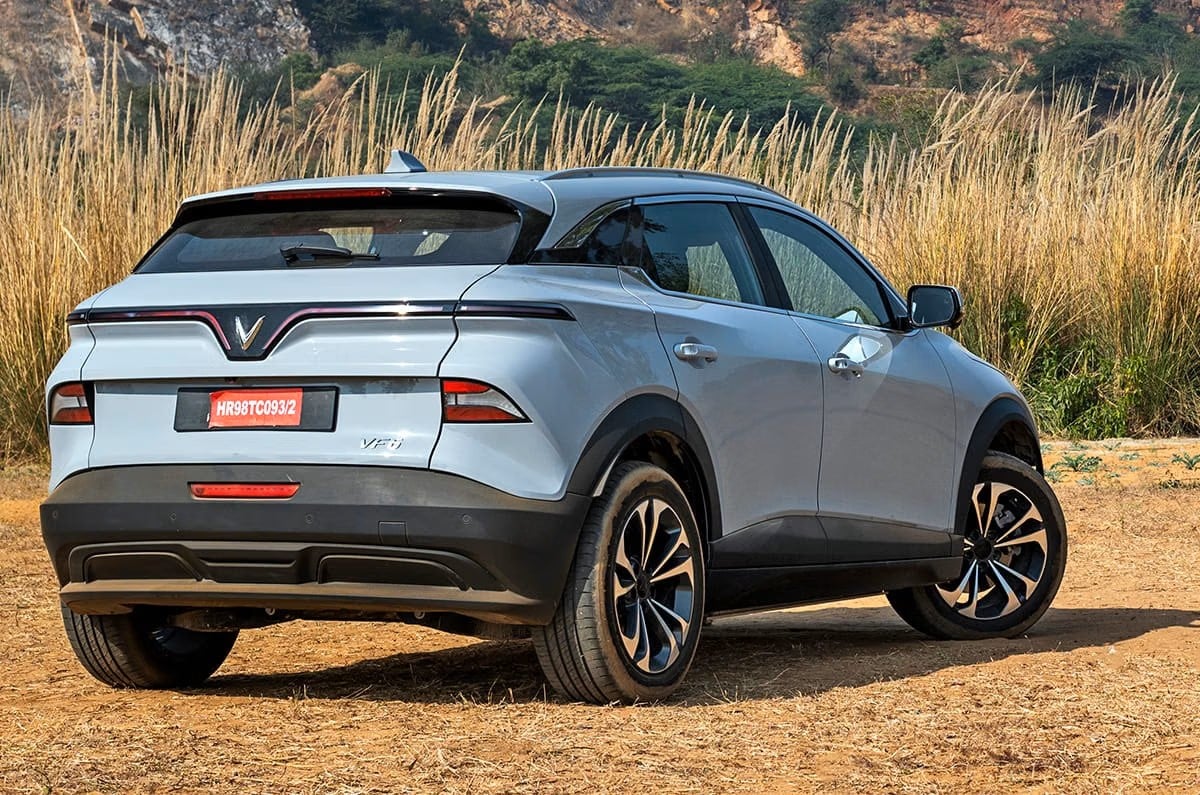
Vinfast currently has three models in its passenger vehicle portfolio: the VF6 and VF7 SUVs, and the VF MPV 7. Its cumulative H1 FY2027 sales stand at 10,826 units.
Kia
1,263 units, up 111 percent YoY
Kia moved ahead of Maruti Suzuki to take fifth place in September after recording 1,263 EV sales, up 111 percent from 598 units in September 2025. Sales also increased 48 percent from August’s 851 units. Kia’s EV market share increased to 3.50 percent, compared with 3.22 percent a year earlier. The increase follows the launch of the Syros EV in August. Kia also sells the Carens Clavis EV in India, while the EV6 and EV9 are sold as fully imported models.
Maruti Suzuki
1,103 units
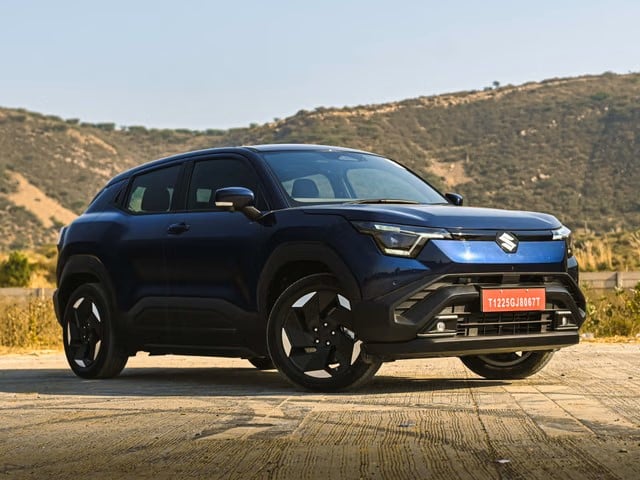
Maruti Suzuki slipped to sixth place, with 1,103 e Vitara units sold in September. Sales declined 25 percent from August’s 1,472 units, although September marked the company’s sixth consecutive month with four-digit EV sales. The e Vitara has so far seen limited domestic availability as a larger share of production was allocated for exports. Maruti is expected to increase domestic production with the start of operations at its new manufacturing line at the Hansalpur plant in Gujarat.
BYD
836 units, up 14 percent YoY
BYD sold 836 EVs in September, up 14 percent from 732 units in the same month last year. Its market share stood at 2.32 percent, down from 3.95 percent a year earlier. June remains BYD India’s highest-selling month so far, with 938 units. Its current line-up includes the Atto 3, eMax 7, Seal and Sealion 7, while the company has confirmed plans to launch the Seal U later this year.
Hyundai
792 units, up 96 percent YoY
Hyundai sold 792 EVs in September, up 96 percent from 404 units a year ago. This was its second-highest monthly sales tally in FY2027, after 840 units in August. The company sold a total of 3,650 EVs in H1 FY2027, down 8 percent from the 3,951 units sold in H1 FY2026. Hyundai currently has the Creta Electric and Ioniq 5 in its EV line-up.
Toyota
218 units
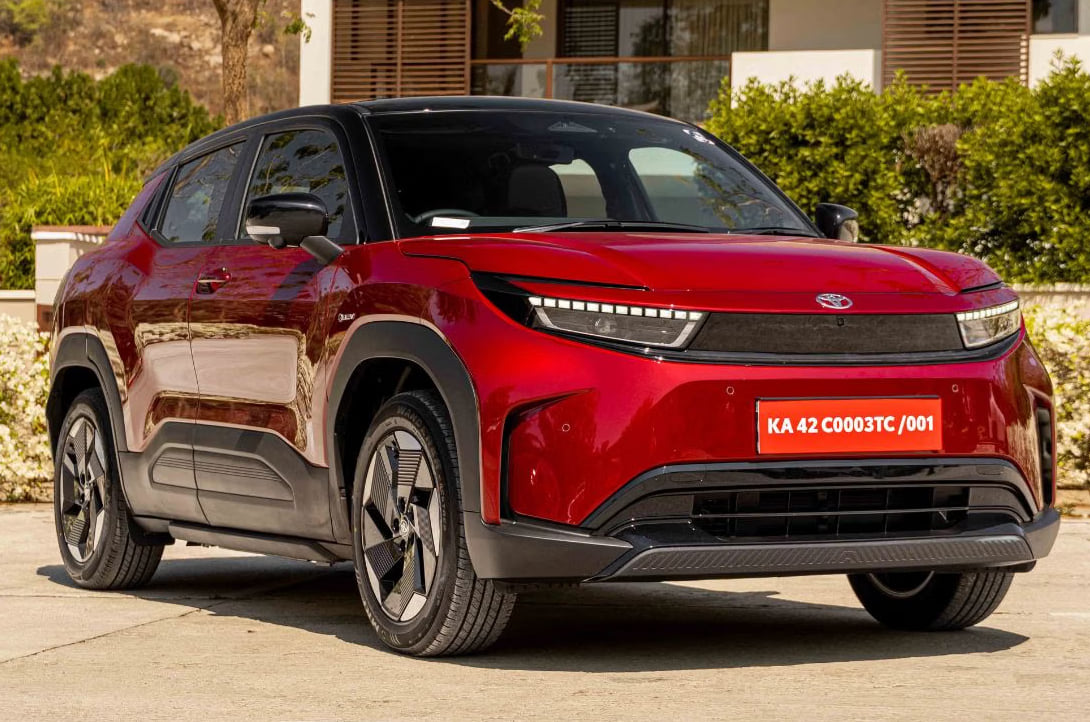
Toyota recorded 218 units of the Urban Cruiser Ebella in September, its highest monthly sales of the electric SUV since launch. Sales were up 30 percent from the 168 units sold in August. The Ebella is Toyota’s version of the Maruti e Vitara and is positioned against models including the Mahindra BE 6, Vinfast VF6, MG ZS EV, Hyundai Creta Electric and Tata Nexon EV.
Luxury EV sales hit new high
Luxury electric passenger vehicle sales also reached a new monthly high of 975 units in September, up 60 percent from 608 units a year earlier. This surpassed the previous record of 853 units set in June. Luxury EVs accounted for 2.70 percent of total electric passenger vehicle sales in September.
BMW
502 units, up 36 percent YoY
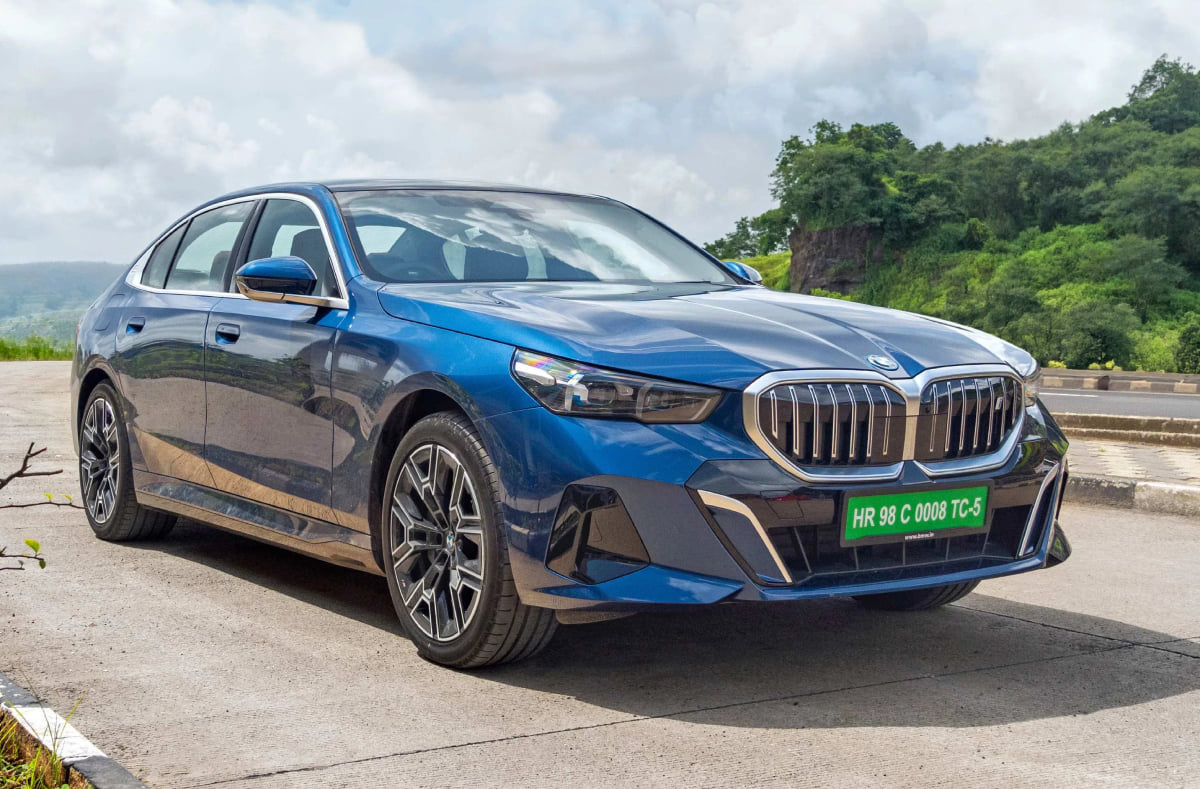
BMW remained the largest luxury EV seller in September with 502 units, up 36 percent from 369 units a year earlier. Its market share stood at 51.48 percent, down from 60.69 percent in September 2025. BMW recently expanded its electric line-up with the i5 Long Wheelbase, which was launched in India in September at Rs 79.6 lakh. It is the company’s first locally produced electric sedan in India. BMW has also recently updated the i7 range, with 50 xDrive M Sport trim and the top-spec M70 xDrive.
Tesla
291 units, up 322 percent YoY
Tesla recorded 291 units in September, its highest monthly sales in India, up 322 percent from 69 units a year earlier. The increase moved Tesla ahead of Mercedes-Benz and into second place in the luxury EV segment for the first time. Its segment share rose to 29.84 percent from 11.34 percent in September 2025.
Mercedes-Benz
125 units, down 9 percent YoY
Mercedes-Benz sold 125 EVs in September, down 9 percent from 137 units in the same month last year. Its share of the luxury EV segment fell to 12.82 percent, from 22.53 percent a year earlier. The company’s highest monthly EV sales this year came in June, when it recorded 245 units.
Volvo
45 units, up 88 percent YoY
Volvo recorded 45 EV sales in September, up 88 percent from 24 units a year earlier. Its market share increased to 4.61 percent, from 3.94 percent in September 2025.
Porsche
11 units, up 38 percent YoY
Porsche sold 11 EVs in September, up 38 percent from eight units in September 2025. It accounted for 1.12 percent of luxury EV sales during the month.
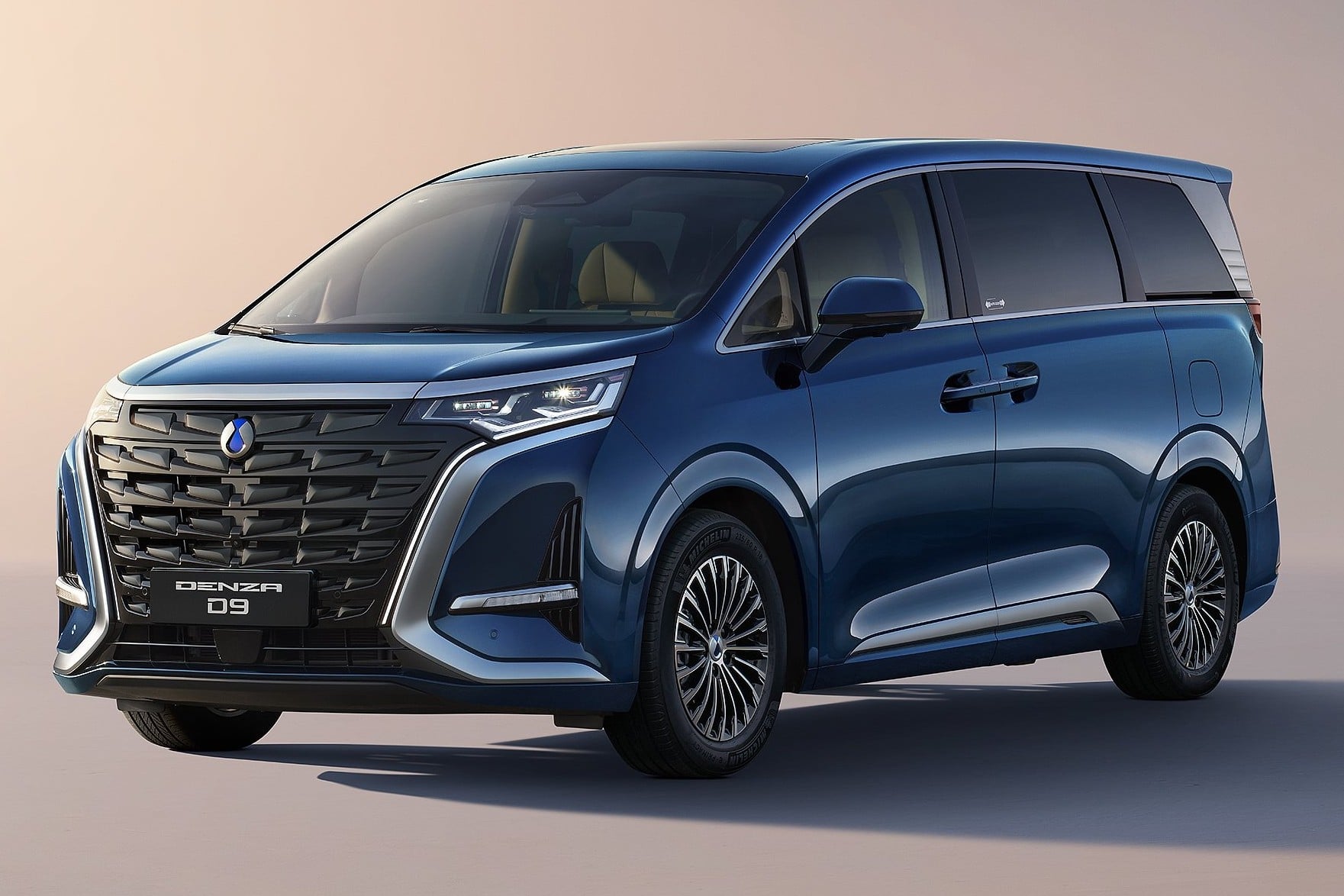
Denza, the luxury brand of Chinese carmaker BYD, has announced its India entry by way of a recent social media post. This confirms our prior report on BYD bringing Denza to the Indian market in the coming months. The report also contained details surrounding Denza’s first pair of models for India.
BYD Denza India entry announcement
A recent social media post from Denza India shows the brand’s blue-and-silver hourglass-esque logo with “Arriving soon” written above. The caption adds that Denza is set to introduce a “sophisticated, high-performance EV experience” to the Indian market, which sounds par for the course for the brand. Denza models will be positioned above those offered by BYD, particularly above the Rs 80 lakh price point.
Denza was founded in 2010 as a joint venture between BYD and Mercedes-Benz Group. By 2024, Mercedes-Benz Group relinquished its shares in Denza entirely and transferred ownership to BYD. As it stands, Denza operates in markets like Southeast Asia, China, Australia, Europe, and Latin America, offering luxury and performance EVs and plug-in hybrids.
Which Denza cars are coming to India
Z9 GT
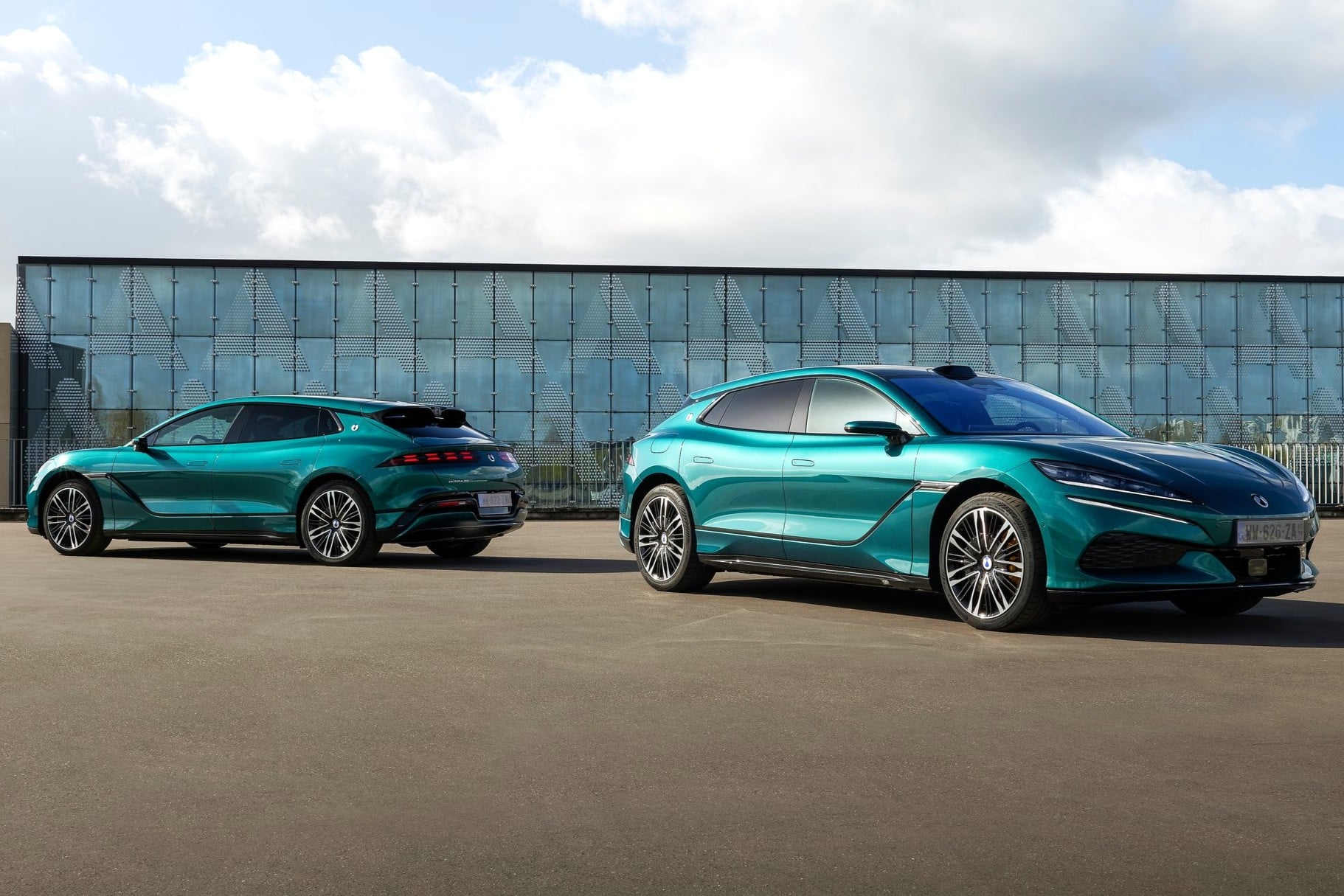
The Denza Z9 GT is a four-door shooting brake, which will make it the only one of its kind in the Indian market. It comes with a massive 122.5kWh battery pack powering a trio of electric motors that produce 1,156hp, sent to all four wheels. 0-100kph comes up in a claimed 2.7 seconds, and the top speed is rated at 270kph. The Z9 GT delivers a WLTP-rated range of 600km, and can be charged at up to a whopping 1,500kW – at this wattage, the battery takes just nine minutes for a 10 to 97 percent charge.
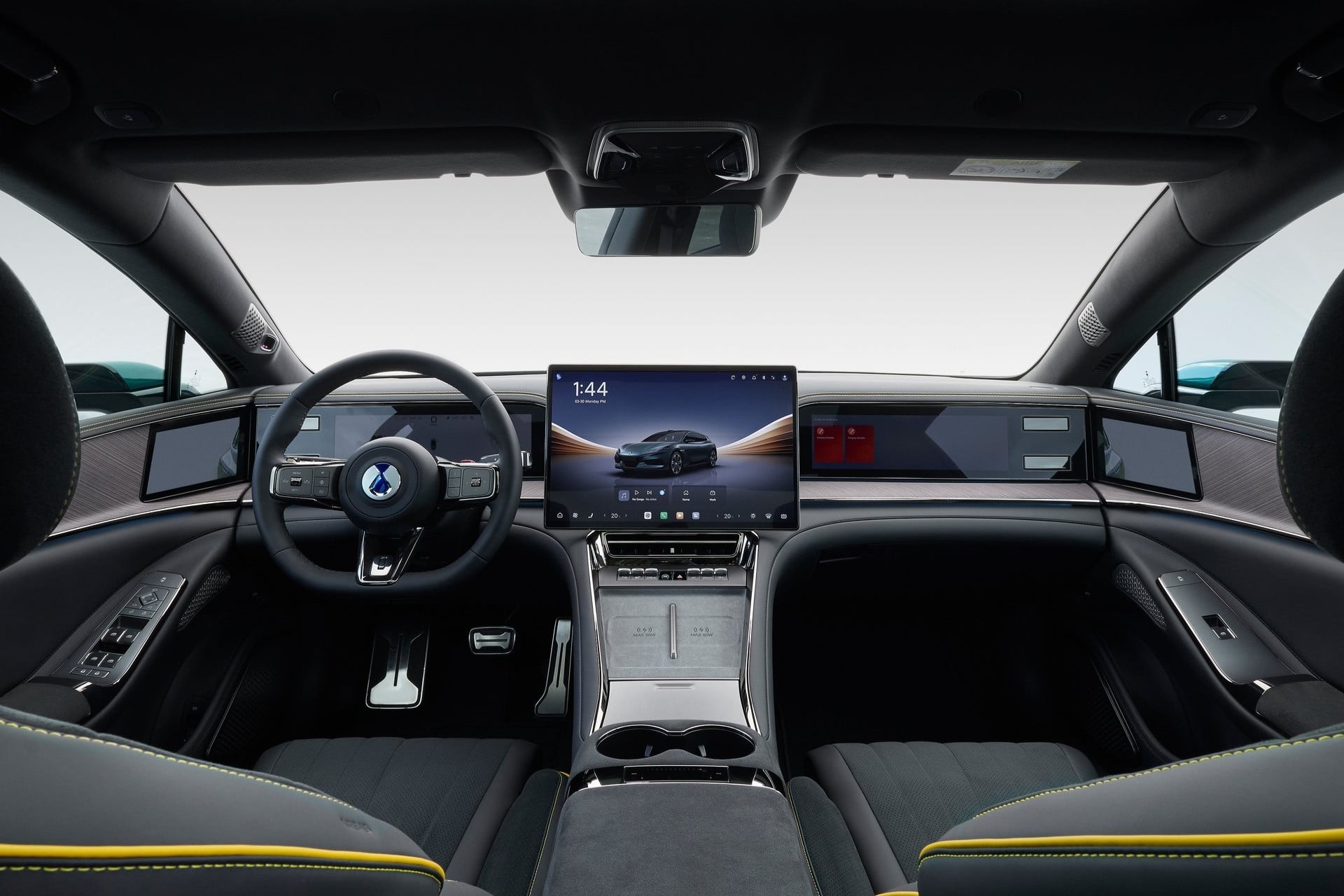
Rear-wheel steering is also part of the package, and enables cool features like the ‘crab walk’, where the Z9 GT can move sideways, and ‘Compass Turn 360°’, which can perform a full rotation of the car akin to the Mercedes G-Class Electric’s G-Turn function. Inside, the Z9 GT offers a triple-screen setup on the dashboard, along with two screens that project a feed of the outside cameras. Other notable features include Level 2+ ADAS, full leather upholstery, a 20-speaker Devialet sound system, powered, heated, ventilated, and massaging front seats, and more. Pricing for the Z9 GT is expected to land in the Rs 1.2 crore-1.5 crore range.
D9
Rounding off the duo is the Denza D9, a large luxury MPV that will take on the likes of the MG M9 and Toyota Vellfire. The India-spec D9 is likely to get a 103kWh battery pack with a front-mounted motor outputting 313hp and 360Nm. WLTP range for the D9 is 520km, and it can be charged at up to 200kW DC.
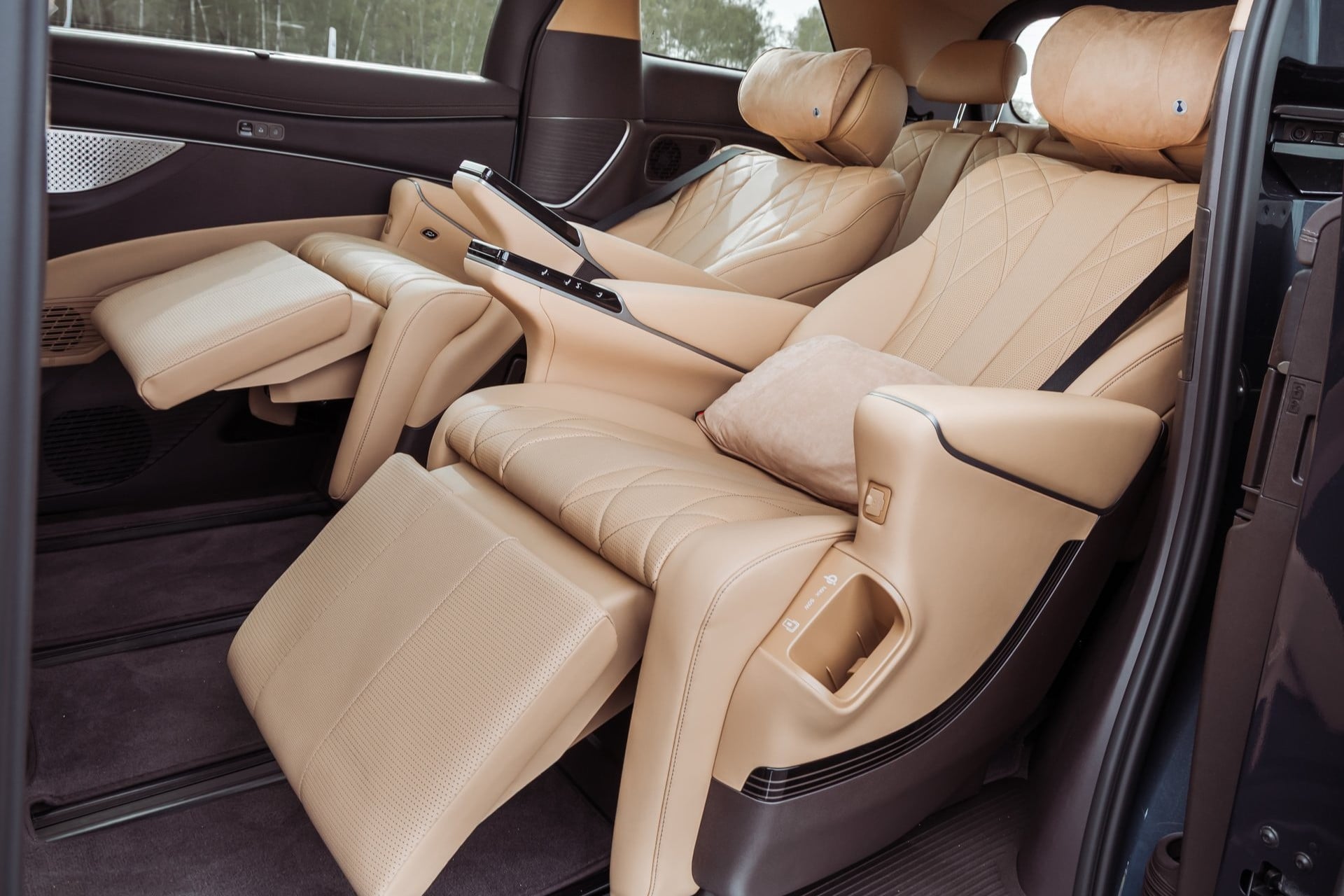
Inside, there’s a 2+2+3 seating layout, which means you get second-row captain’s chairs with electrical adjustment, heating, ventilation, and massage functions. Three-zone climate control, powered thigh extenders, a Dynaudio sound system, full leather upholstery, ambient lighting, and more are also part of the equipment list. Expect the D9 to be priced at around Rs 90 lakh, placing it between the M9 and Vellfire.
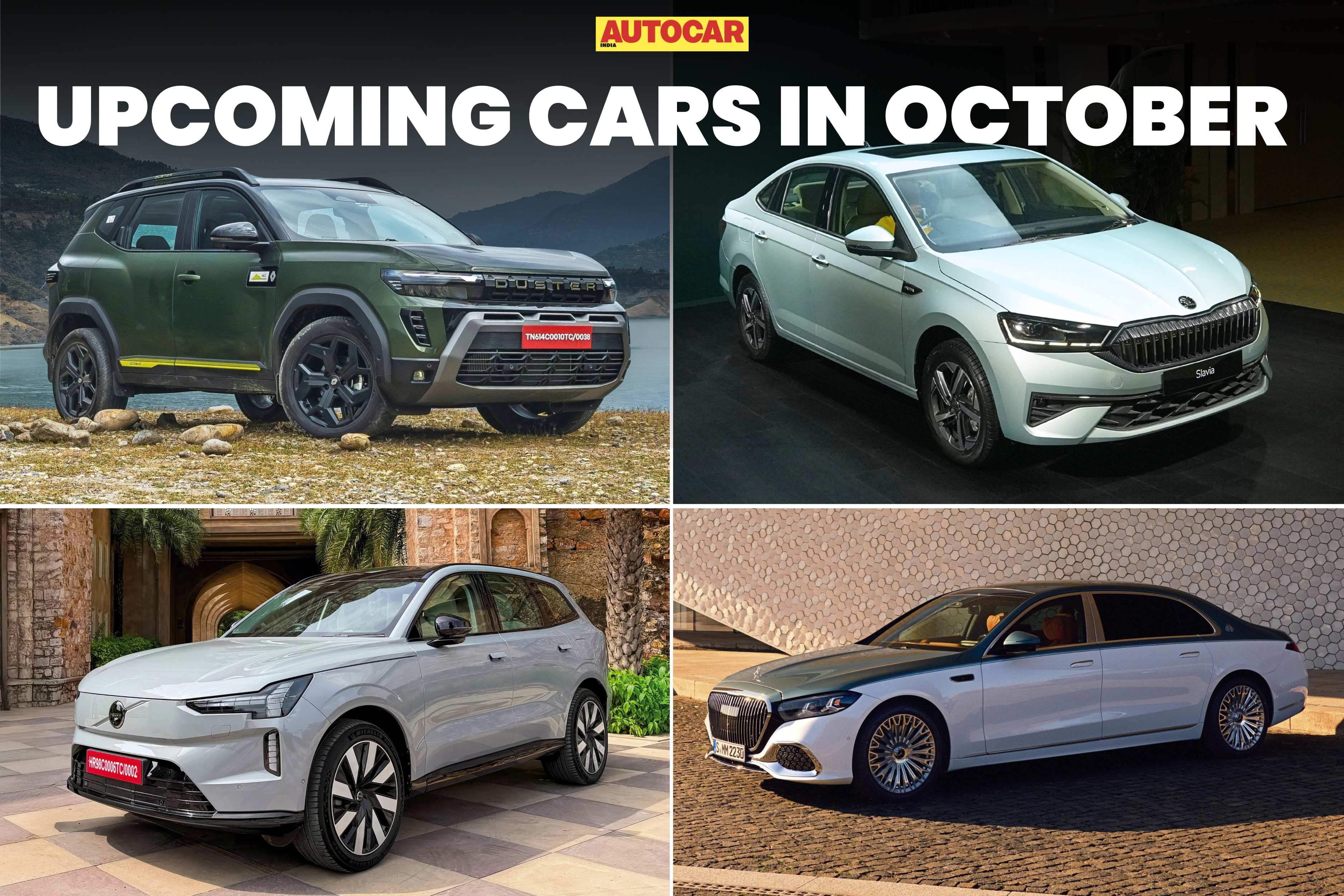
October marks the onset of the festive season in India, which means manufacturers line up a barrage of new car launches and debuts for prospective buyers to consider. It’s no different this year, with October 2026 looking quite stacked with fresh launches and debuts, especially during the first half of the month. Let’s delve into every new car that will either go on sale or debut in India next month.
Mercedes-Benz Maybach S-Class facelift
Launch: 5 October
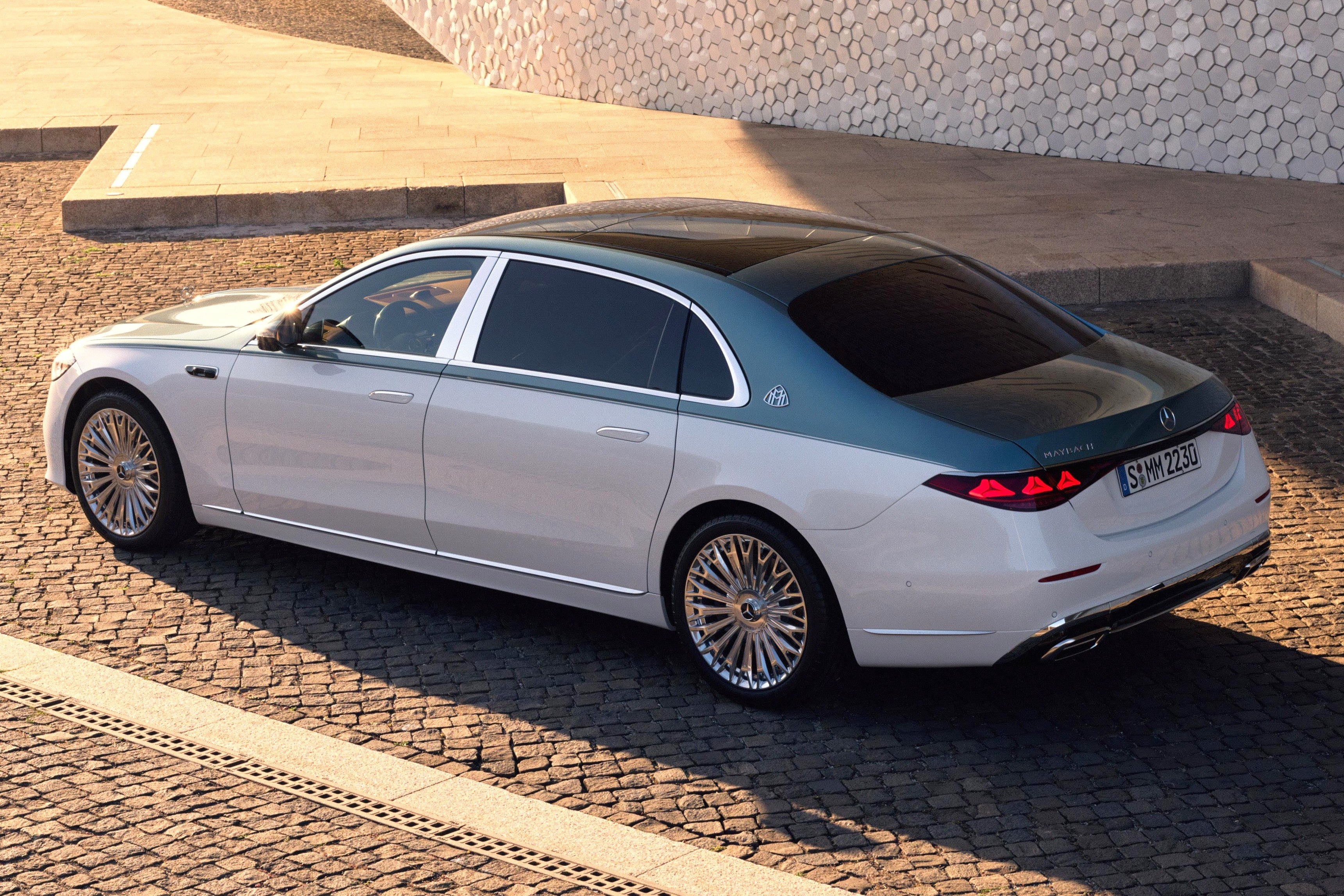
Following the launch of the 2026 S-Class facelift back in June, Mercedes-Benz India will bring the sedan’s longer and more luxurious Maybach derivative in October. Compared to its standard version, the Maybach S-Class facelift continues to be 180mm longer, but carries styling differentiators like a vertically-slatted grille adorned with a ‘Maybach’ wordmark, mildly revised bumpers, bespoke wheel designs, lots of Maybach logos peppered across the bodywork, and the signature dual-tone exterior finish.
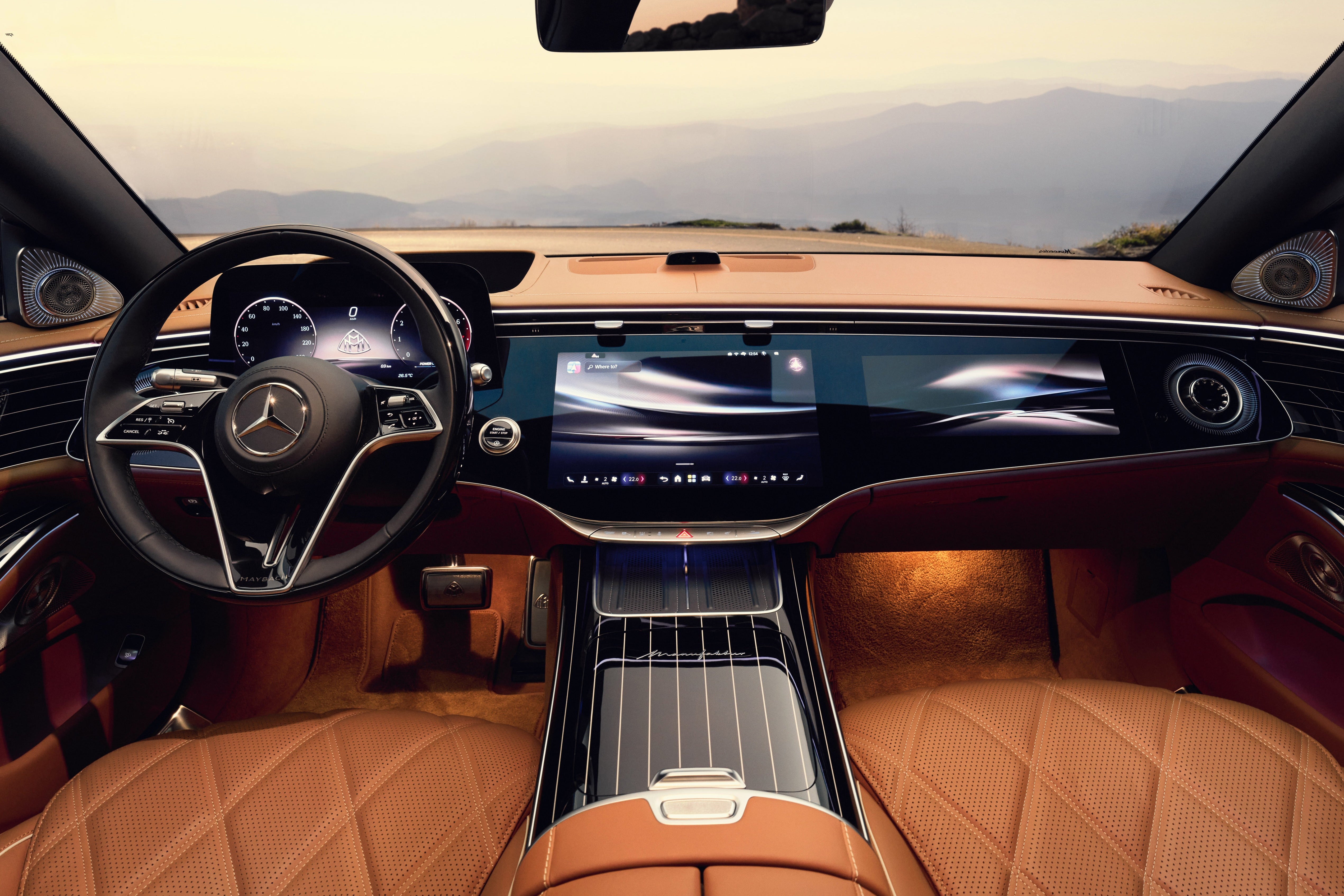
Inside, the Maybach prominently retains the standard S-Class’s Superscreen setup, comprising a 12.3-inch digital driver’s display, a 14.4-inch central touchscreen, and a 12.3-inch passenger display. New upholstery choices include extended leather and a leather-free vegan option. The rear seats remain largely unchanged, offering up to 43 degrees of recline, along with heating, ventilation, and massage functions. Globally, the Maybach S-Class can be had with either a 4.0-litre twin-turbo mild-hybrid V8 (S 580), a 4.0-litre twin-turbo V8 plug-in hybrid (S 580e), or a 612hp 6.0-litre twin-turbo V12 (S 680). Mercedes-Benz India is likely to offer the updated Maybach S-Class in S 580 or S 580e spec.
Honda Elevate facelift
Launch: 6 October
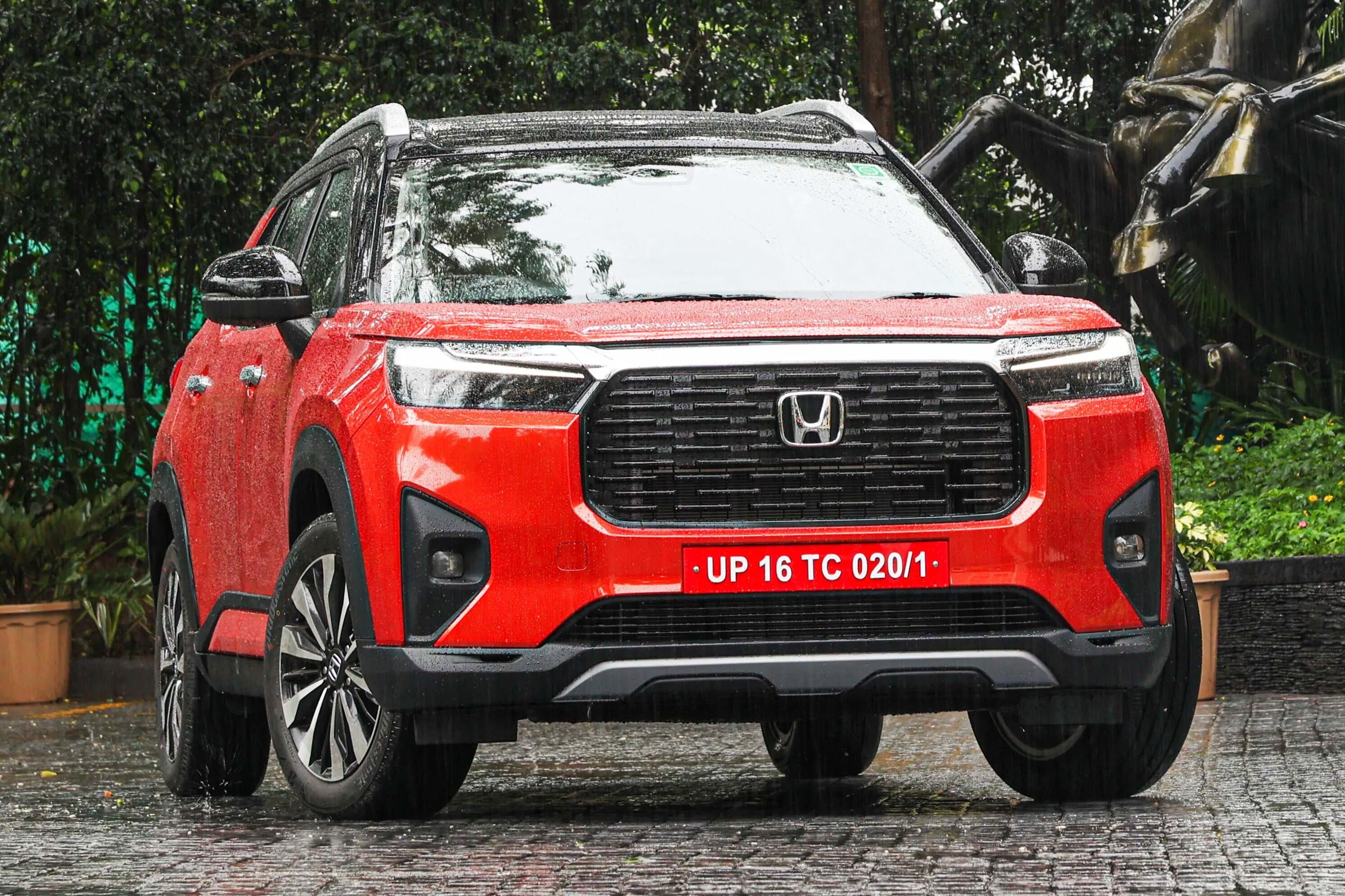
Current Honda Elevate. Image used for representation only.
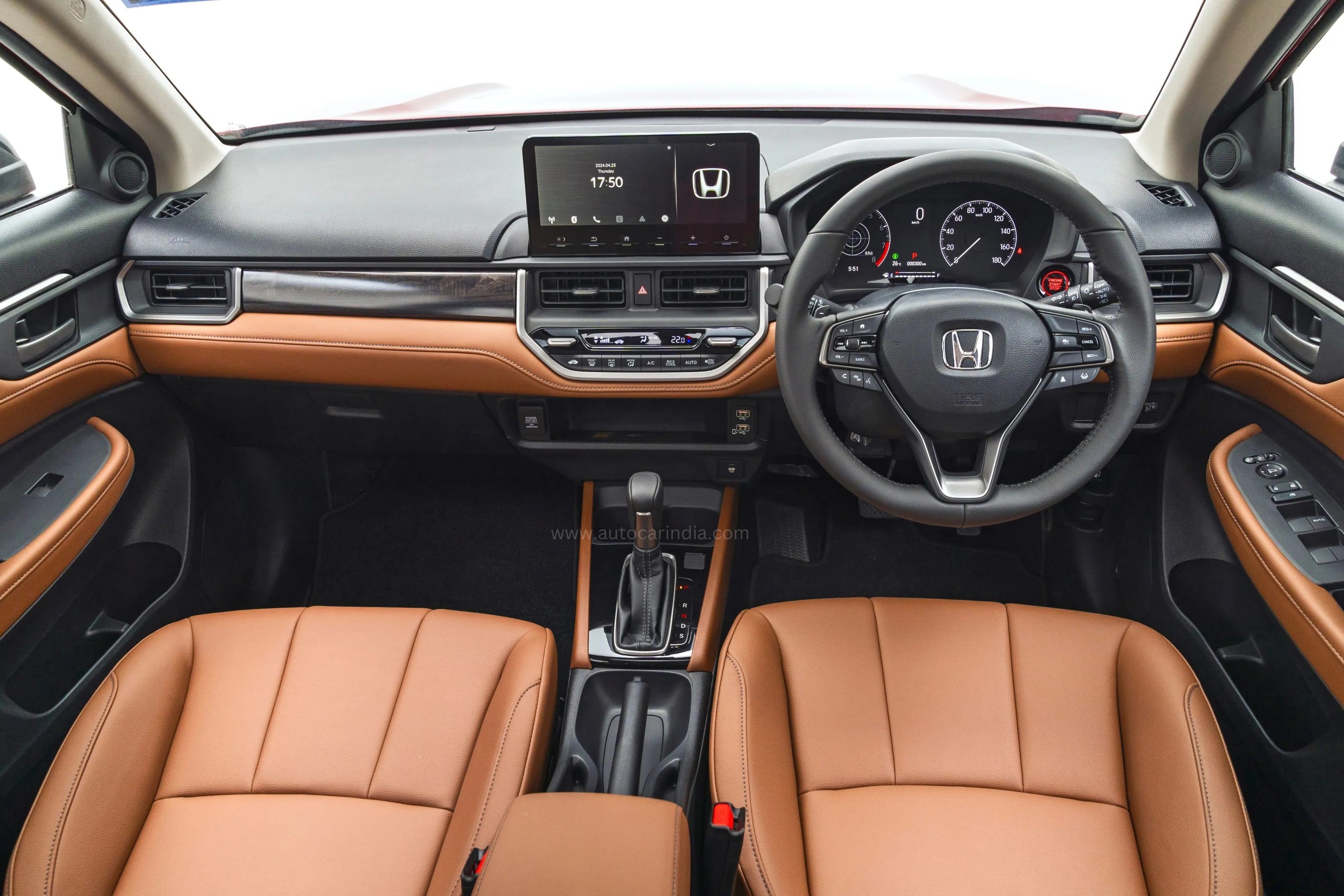
Following in the footsteps of the 2026 City facelift, Honda will launch an updated version of the Elevate SUV in October. Expect the Elevate facelift to sport revised styling cues, including the headlamps, tail-lamps, bumpers, grille, and wheels. The interior is anticipated to see changes like a larger infotainment touchscreen and revised colour schemes, along with feature upgrades like ventilated front seats, a 360-degree camera, ambient lighting, and more.
Current Honda Elevate interior. Image used for representation only.
The facelifted Elevate is likely to retain the current model’s 121hp 1.5-litre four-cylinder naturally aspirated petrol engine, and its 6-speed manual and CVT automatic gearbox options. It remains to be seen if Honda will additionally offer the Elevate facelift with the City e:HEV’s 126hp 1.5-litre four-cylinder petrol-hybrid powertrain, which is solely mated to an e-CVT automatic. A strong hybrid version of the Elevate would allow it to compete directly with established hybrid midsize SUVs like the Maruti Grand Vitara, Victoris, and Toyota Hyryder, as well as the upcoming Renault Duster hybrid – also slated for launch next month.
Skoda Slavia facelift
Launch: 6 October
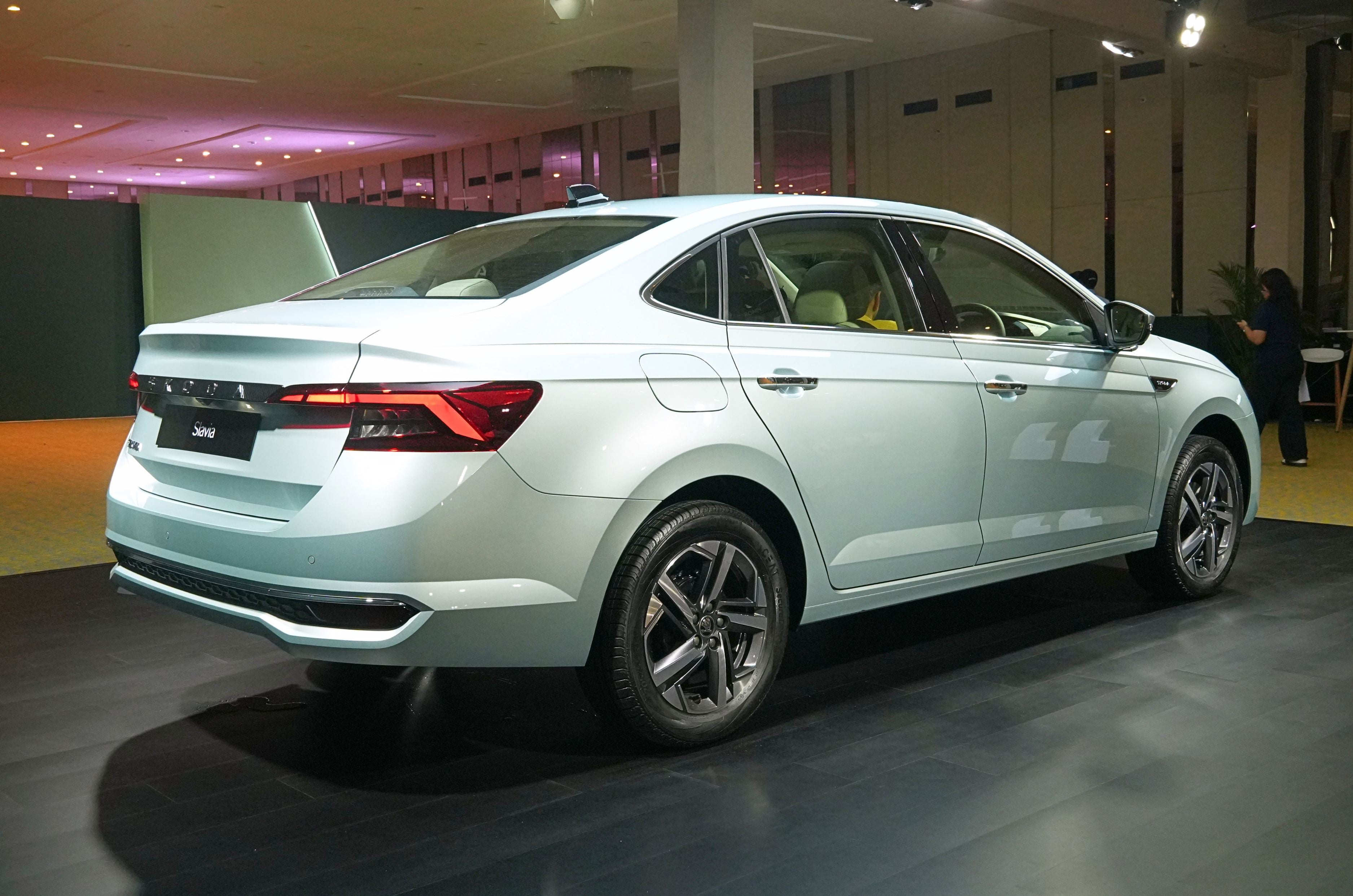
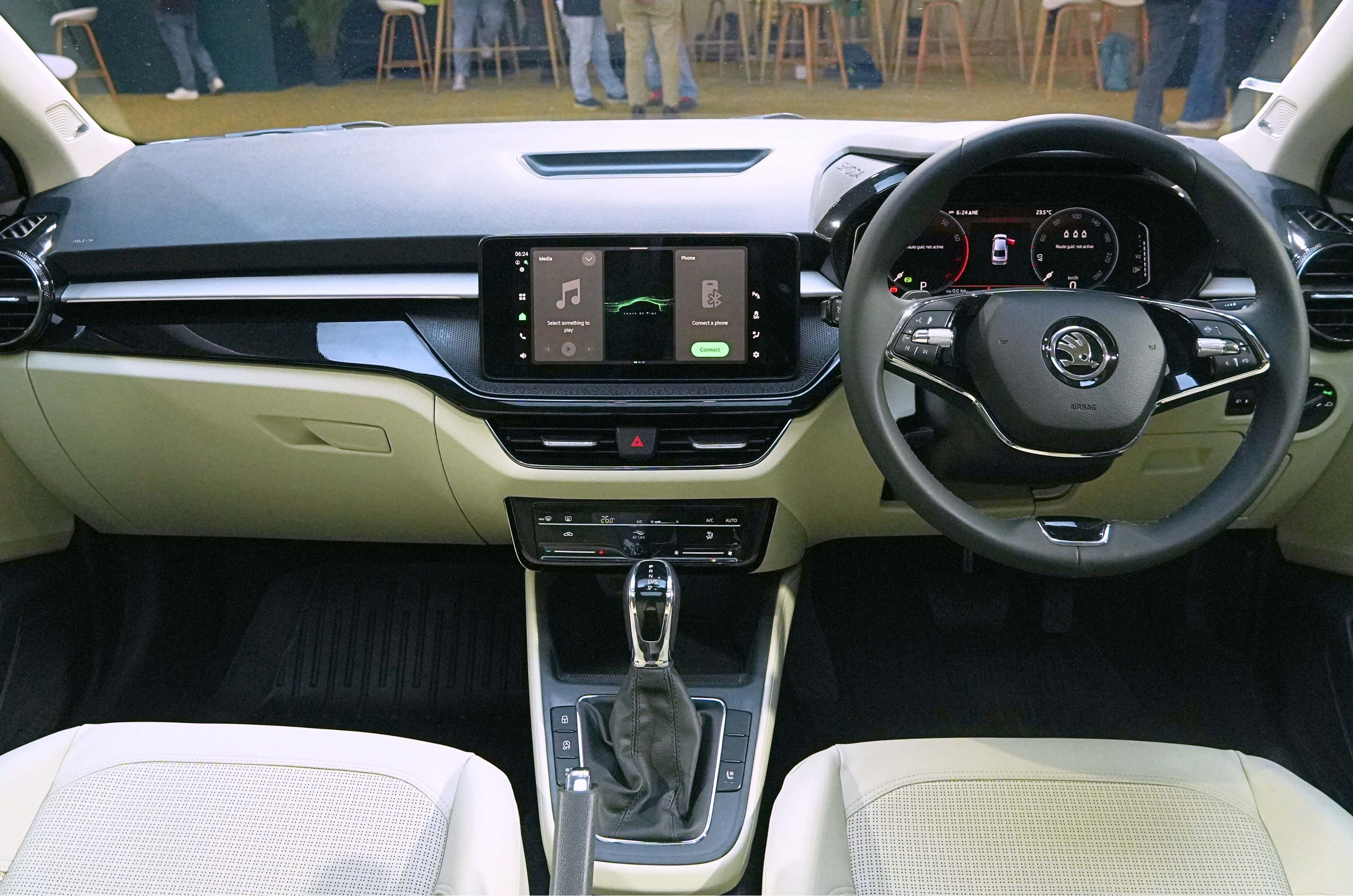
Having debuted back in August, the facelifted Skoda Slavia’s prices will be announced next month. The Slavia facelift brings a host of exterior tweaks, like new DRL signatures for the headlamps, an updated grille, redesigned bumpers, and fresh alloy wheels. Not much has changed on the inside, but there are new colour schemes on offer. Skoda has also added features like a 360-degree camera, a massage function for the outboard rear seats, a larger 10.25-inch digital driver’s display, a Google-based AI assistant, an upgraded variable-geometry AC compressor, and front parking sensors.
Under the bonnet, the Slavia facelift retains its 115hp 1.0-litre three-cylinder direct-injection turbo-petrol and 150hp 1.5-litre four-cylinder direct-injection turbo-petrol engines. The big change here is that the 6-speed torque converter automatic that was previously available for the 1.0 TSI has been swapped with an 8-speed unit, which should deliver better fuel efficiency on the highway. A 6-speed manual gearbox is also available for the 1.0 TSI, whereas the 1.5 TSI continues to be paired exclusively with a 7-speed dual-clutch automatic. The 1.5 TSI will be offered with rear disc brakes too – a much-requested upgrade.
Volvo ES90
Launch: 12 October
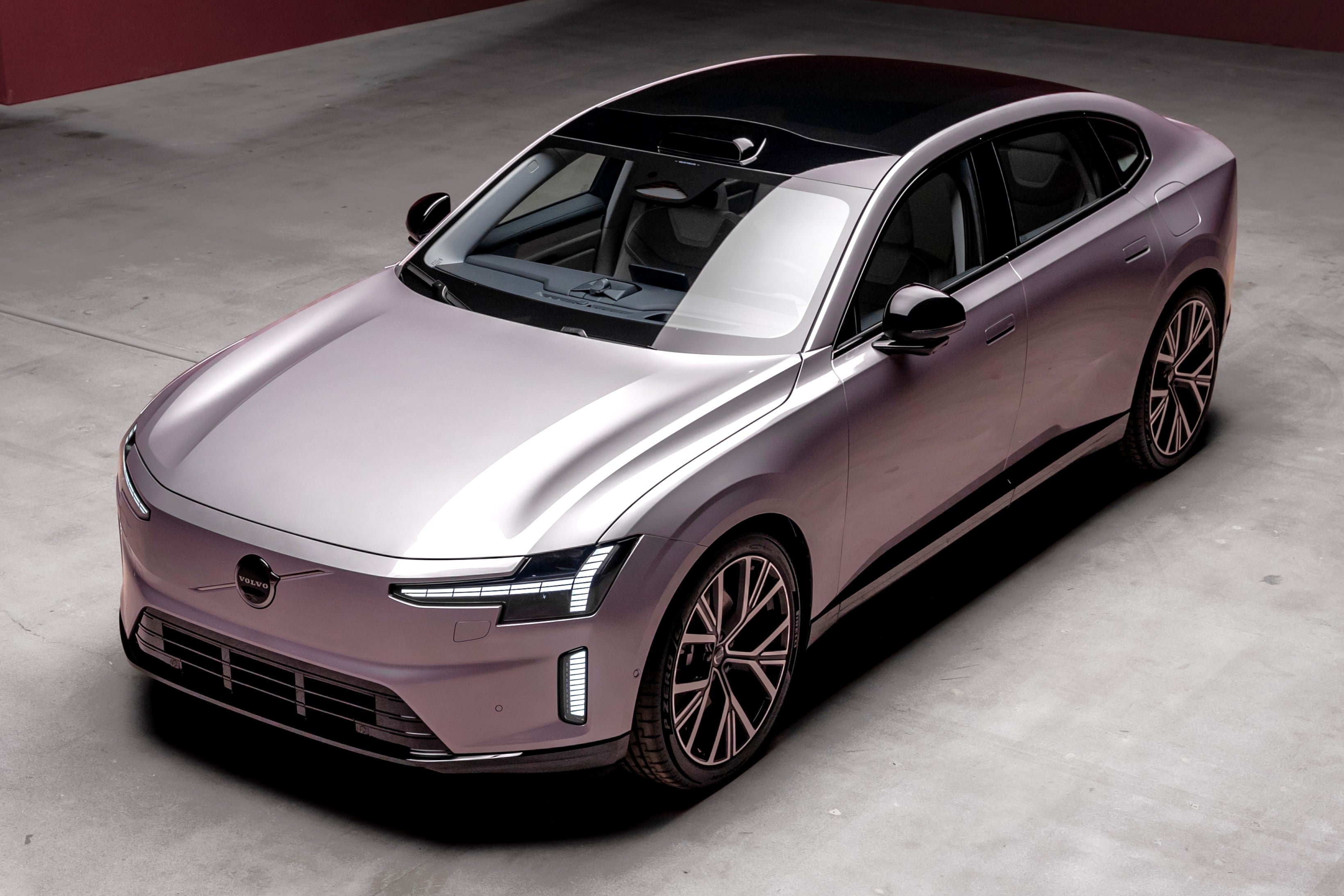
Volvo will return to the luxury sedan space next month with the launch of the all-electric ES90. It’s based on Volvo’s 800V SPA2 platform, and is likely to be offered with a 106kWh battery, dual-motor AWD setup in India. Combined output is pegged at 456hp and 670Nm, which is good for a claimed 0-100kph time of 5.3 seconds. As for WLTP range, the ES90 is rated at 696km, and the sedan can charge at up to 350kW DC, taking 22 minutes for a 10-80 percent top-up.
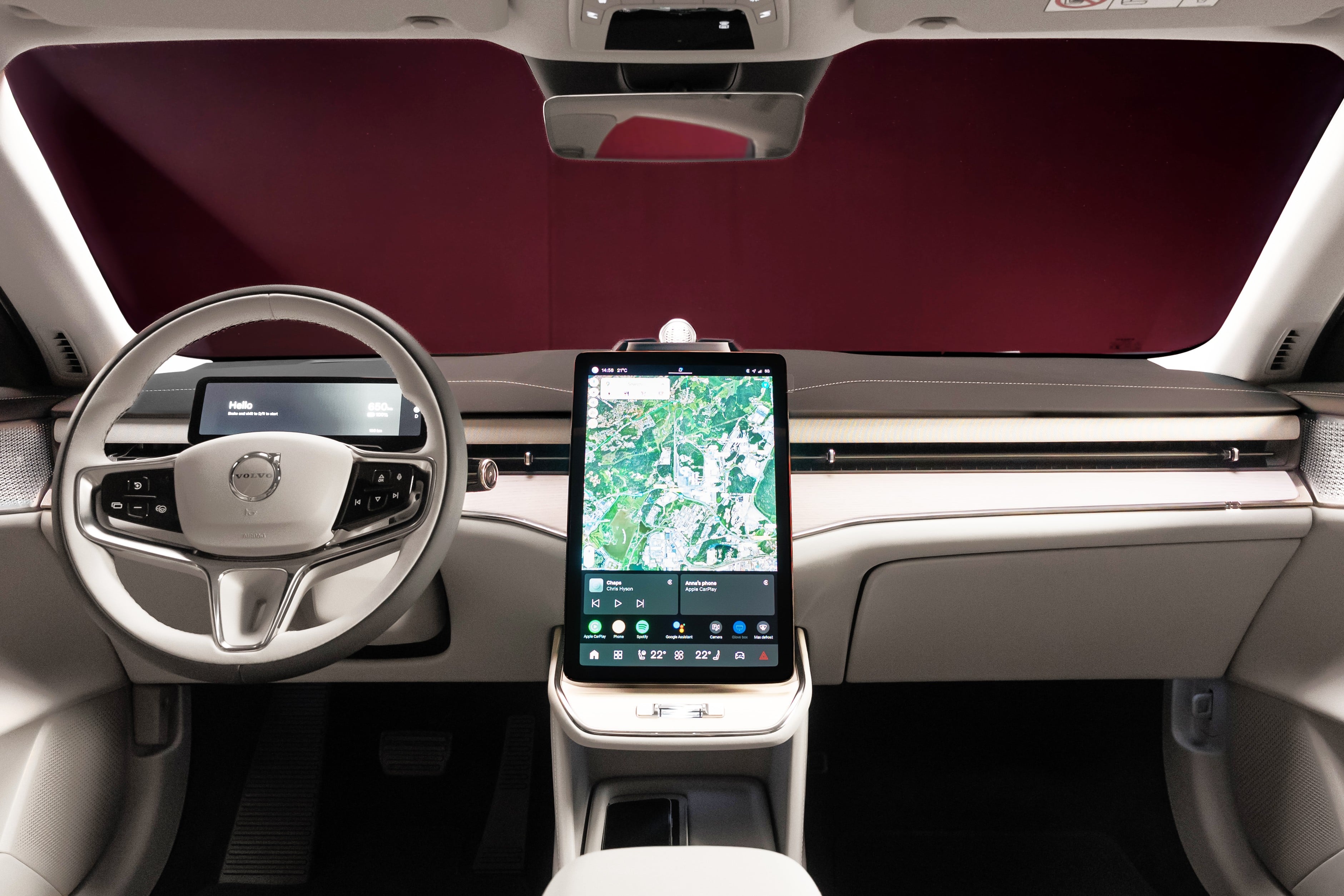
On the outside, the ES90 looks sleek and quietly aggressive, with T-shaped LED headlamps, vertically oriented front fog lamps, clean panelling, and C-shaped tail-lamps. Moreover, it has a drag coefficient of 0.25, making it the most aerodynamic Volvo car yet. Inside, the ES90 packs a 14.5-inch Google-based portrait touchscreen, a floating centre console, a three-spoke steering wheel, a slim 9-inch digital driver’s display, a 13.2-inch head-up display, a panoramic glass roof, four-zone climate control, powered front seats, Level 3 ADAS, and a Bose sound system.
Volvo EX90
Launch: 12 October
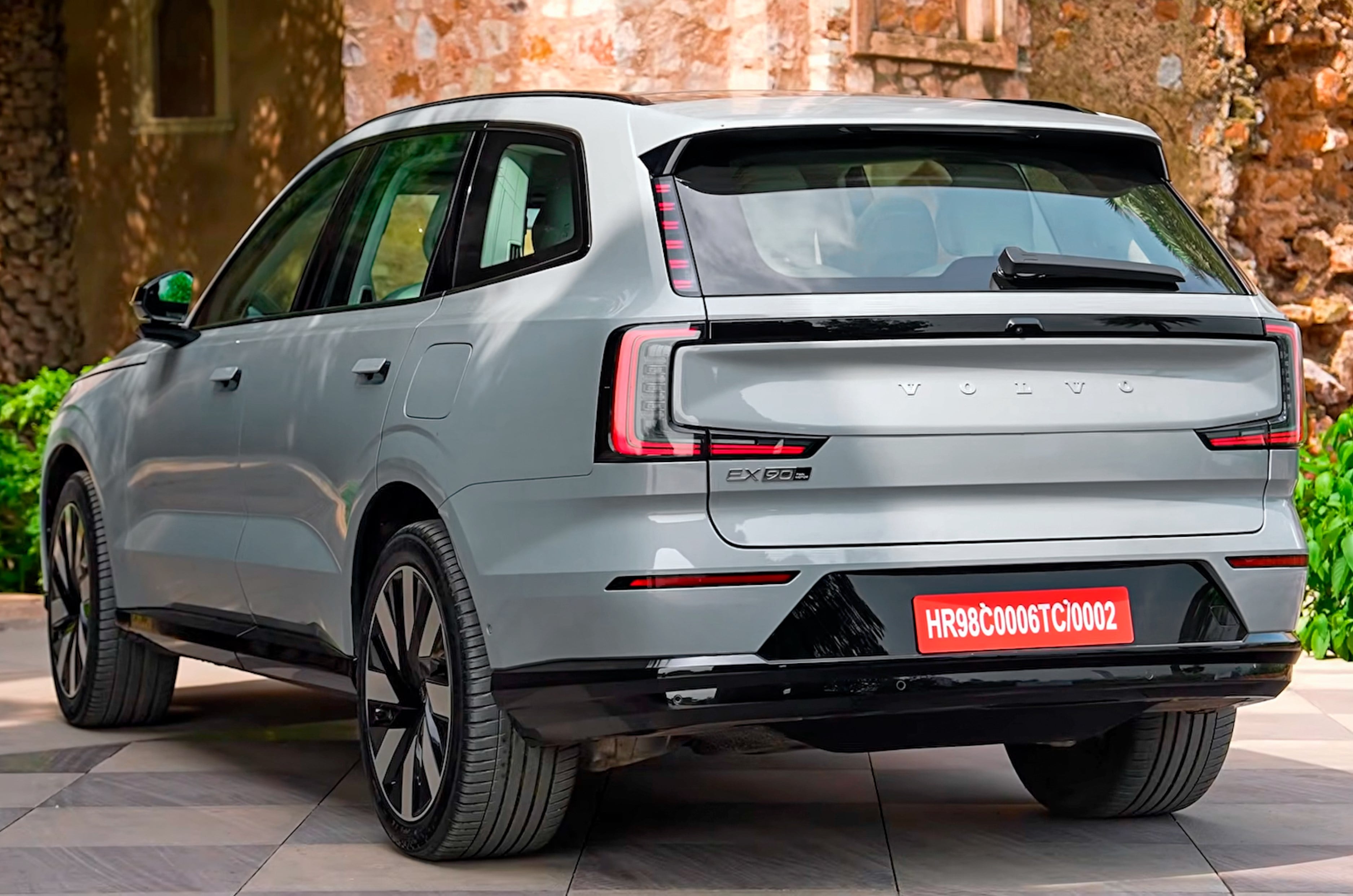
Alongside the ES90, Volvo will launch its SUV counterpart, the EX90. The electric SUV is also based on the SPA2 platform and is expected to offer the same 106kWh dual-motor AWD powertrain. Owing to its higher-riding stance, the EX90’s WLTP range is slightly lower at 625km, but the SUV impressively claims the same 5.3sec 0-100kph time.
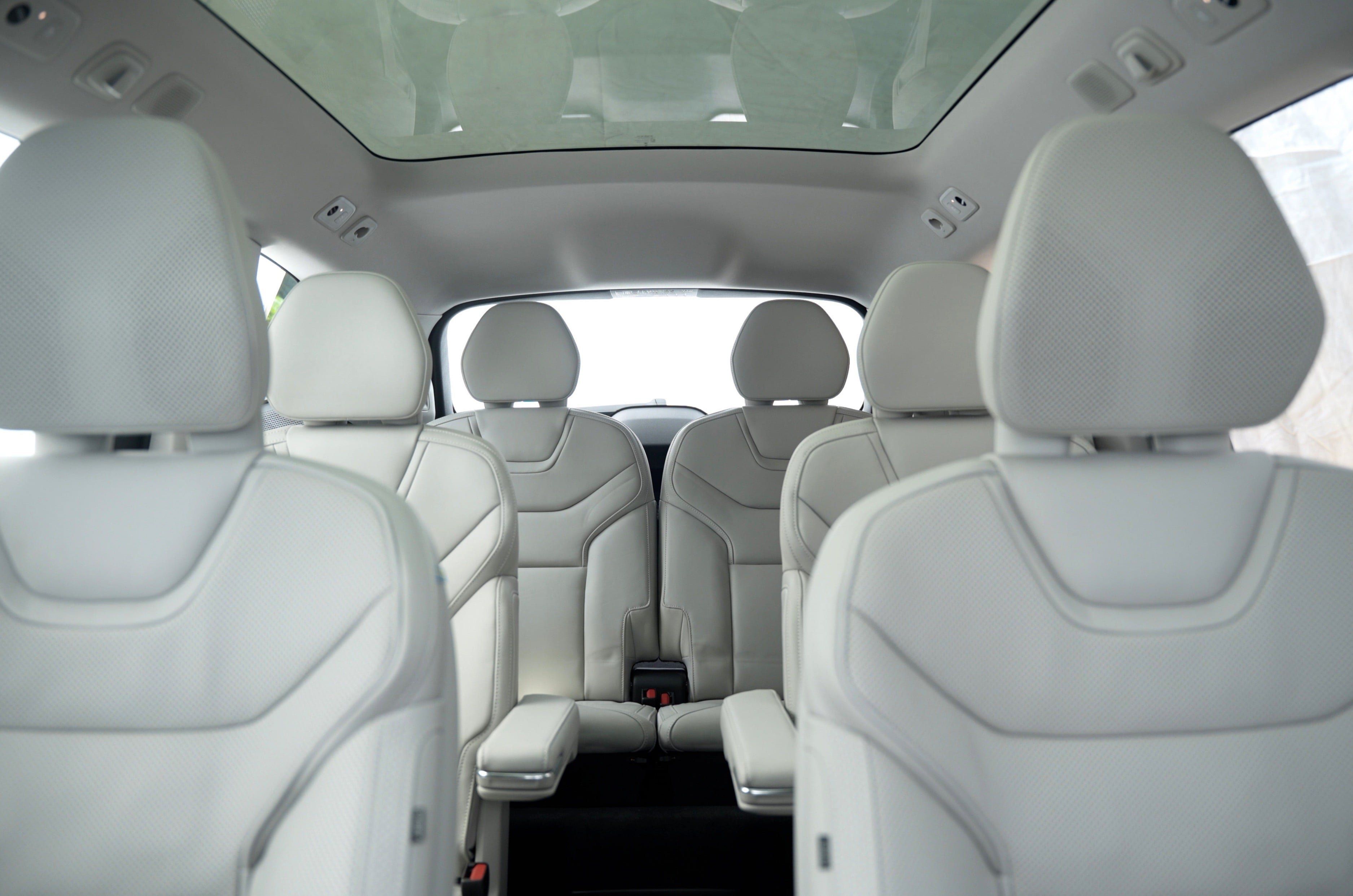
Even in terms of exterior design, the core elements are quite similar between the EX90 and ES90. The same holds true for the interior and equipment list as well, with the only major difference being that the EX90 can seat up to six occupants and gets second-row captain’s chairs.
Toyota Glanza facelift
Debut: 14 October
Current Toyota Glanza. Image used for representation only.
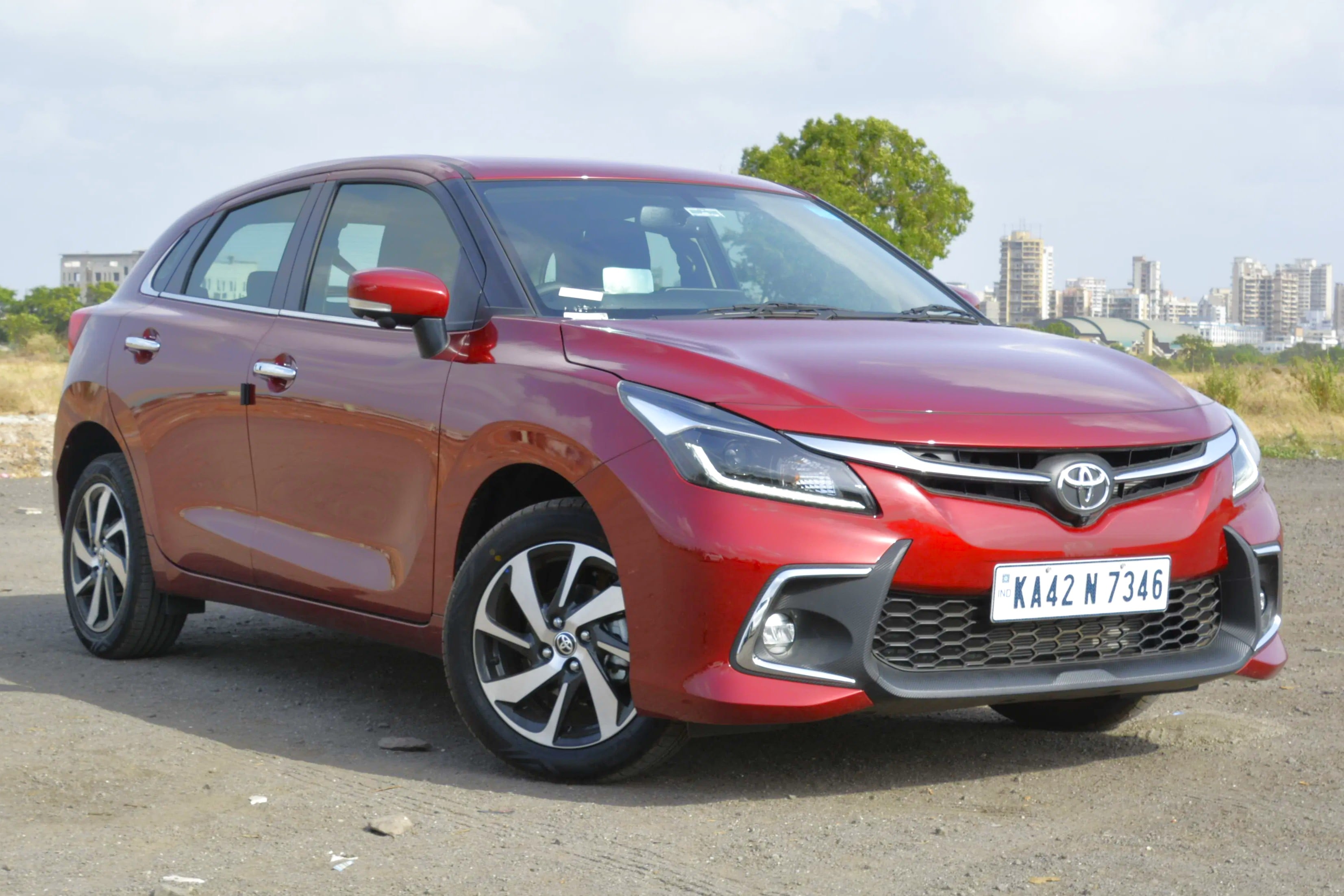
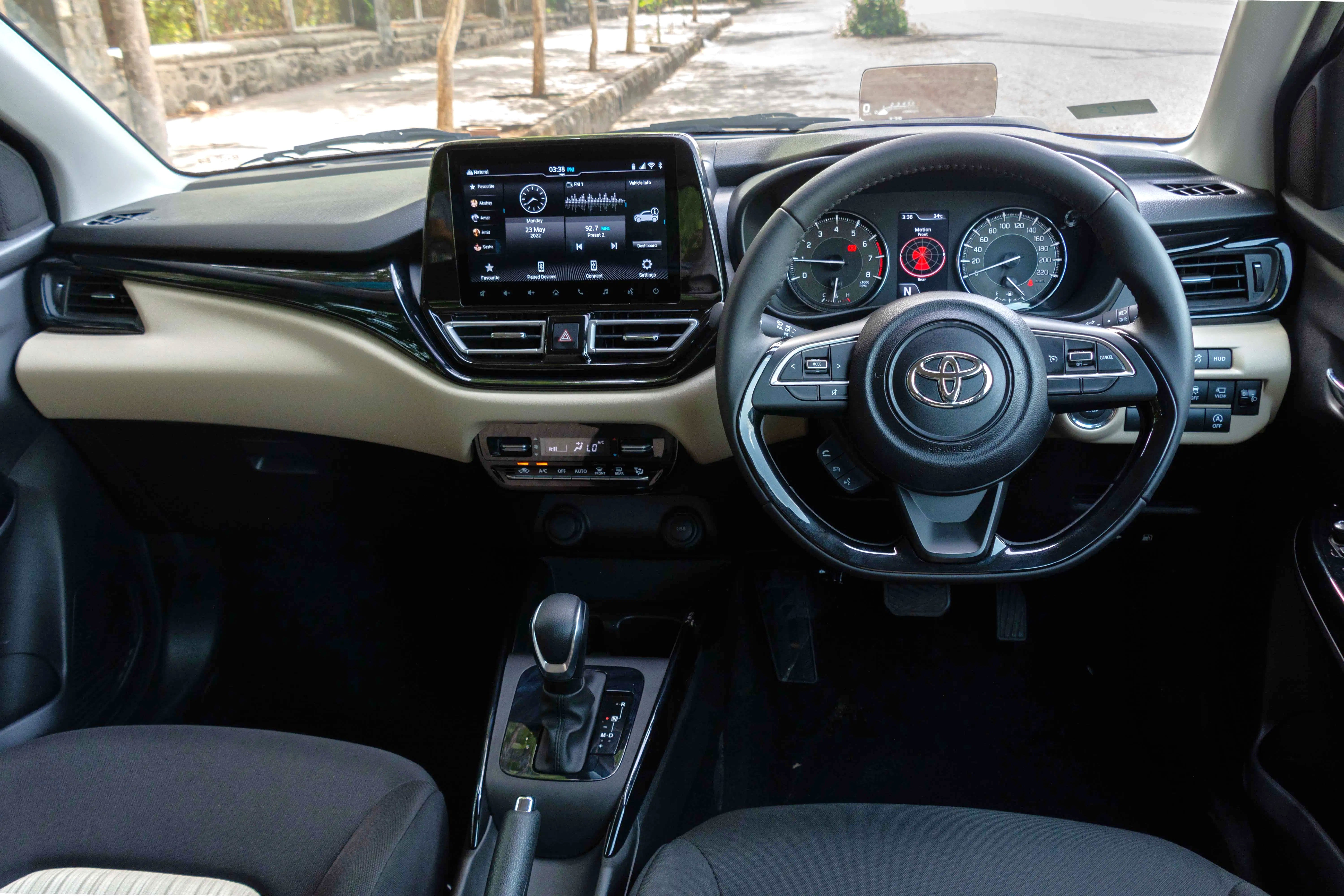
Just a month after the launch of the Baleno facelift, the updated form of its Toyota-badged counterpart, the Glanza, will be revealed. The Glanza facelift is likely to feature styling revisions similar to those of the updated Baleno, like a larger grille, redesigned bumpers, and new alloy wheel designs. Inside, the Toyota hatchback’s dashboard layout is expected to be largely unchanged, save for fresh seat upholstery. New creature comforts are likely to include Level 2 ADAS, a wireless charging pad, and ventilated front seats.
Current Toyota Glanza interior. Image used for representation only.
Under the bonnet, the Glanza facelift is anticipated to mirror the Baleno in dropping its current 90hp 1.2-litre four-cylinder K12N petrol engine in favour of the 83hp 1.2-litre three-cylinder Z12E mill. Like in the Baleno facelift, this engine is expected to be offered with either a 5-speed manual or 5-speed AMT in the updated Glanza, along with a 70hp CNG option.
Third-gen Audi Q3
Launch: 16 October
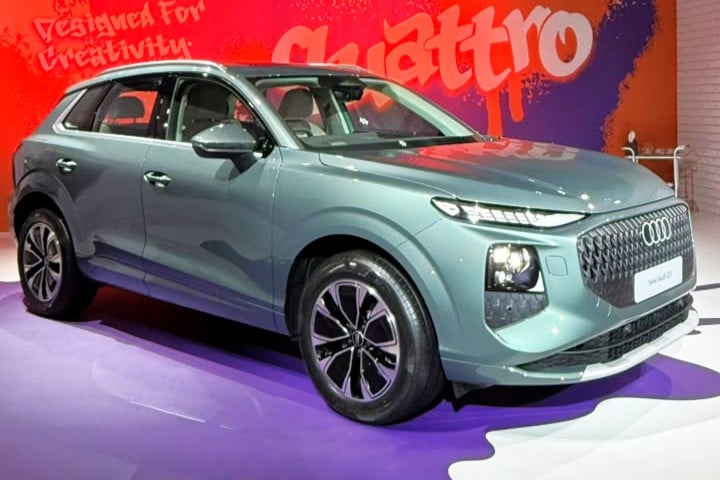
Audi India will launch the latest generation of its entry-level SUV, the Q3, next month. The India-spec third-gen Q3 was unveiled back in August, and will continue to rival the BMW X1 and Mercedes-Benz GLA. On the outside, the new Q3 is larger than its predecessor in every dimension and bears a sharper design language, which includes split LED headlamps, a wide grille, 18-inch alloy wheels, and a rear light bar with an illuminated Audi emblem.
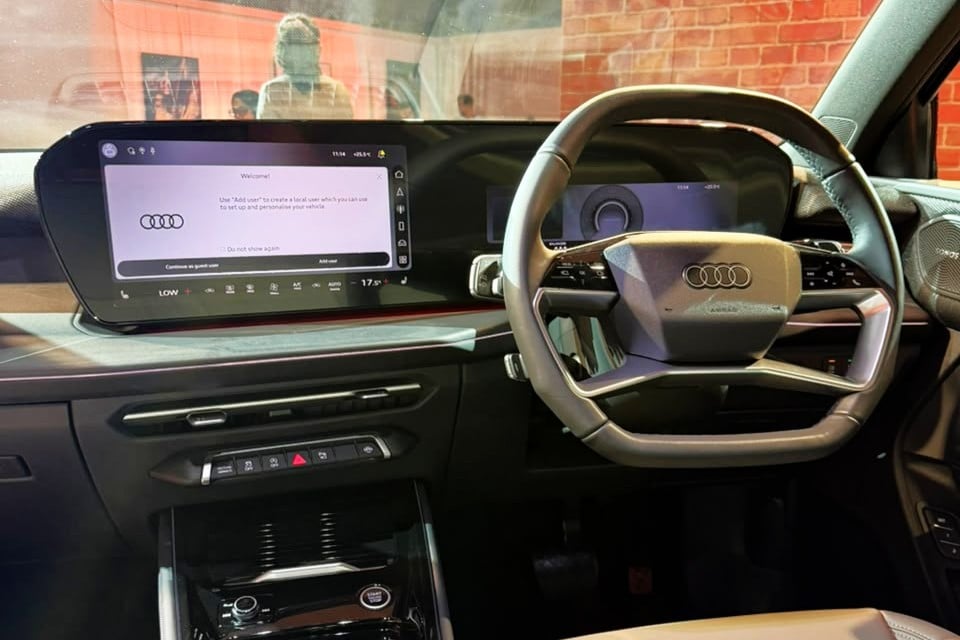
The interior of the third-gen Q3 is more modern and feature-loaded too, offering a 12.8-inch touchscreen, an 11.9-inch digital driver’s display, a new squircle-shaped four-spoke steering wheel, ambient lighting, a Sonos sound system, a panoramic sunroof, ambient lighting, a 360-degree camera, dual-zone climate control, among others. Under the bonnet, the Q3 continues to get a 204hp 2.0-litre four-cylinder direct-injection turbo-petrol engine, mated to a 7-speed dual-clutch automatic and Audi’s Quattro AWD system. 0-100kph comes up in a claimed 7.1 seconds, and the top speed is rated at 229kph.
Renault Duster hybrid
Launch: 17 October
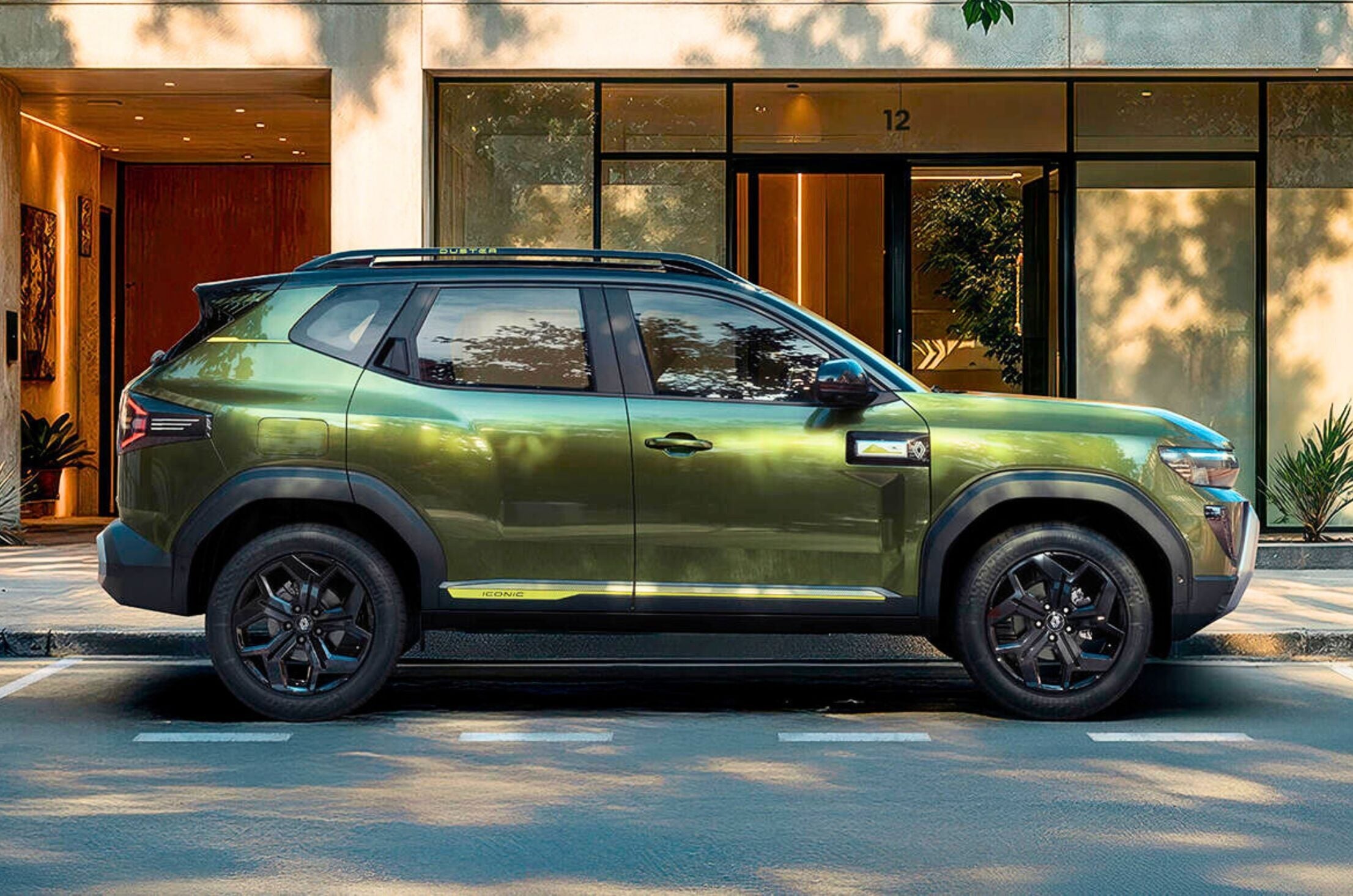
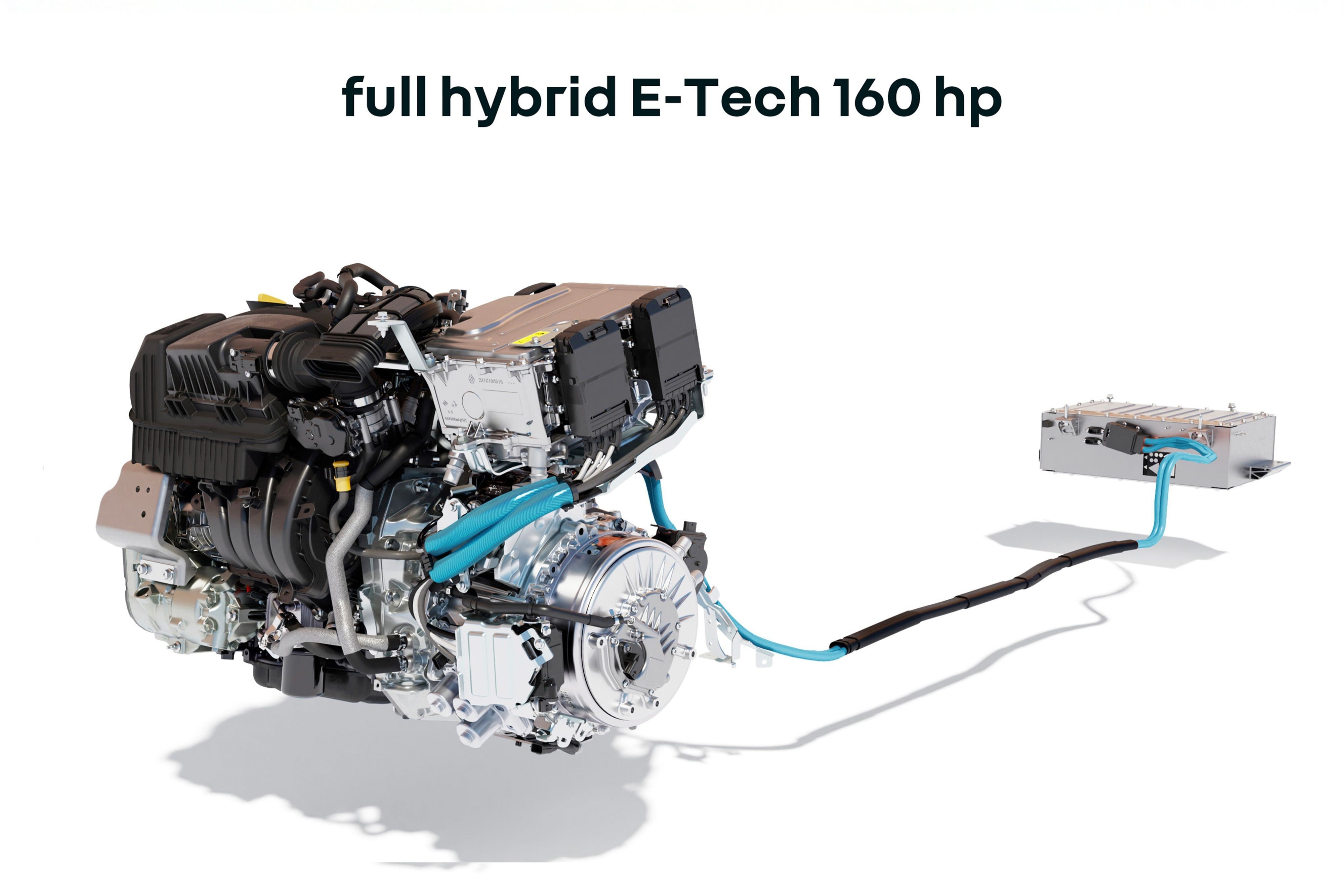
Since its launch earlier this year, the Renault Duster has been available with a couple of turbo-petrol engines only, but that will change come October 17. Renault will bolster the Duster’s line-up with a strong hybrid powertrain dubbed the E-Tech 160. It pairs a 1.8-litre four-cylinder naturally aspirated petrol engine with two electric motors and a 1.4kWh battery pack, developing a combined 160hp and 172Nm.
This setup will be paired with a segment-first 8-speed dedicated hybrid transmission (DHT) that uses fixed gear ratios, unlike the e-CVTs seen in hybrid SUV rivals like the Grand Vitara, Victoris, and Hyryder. The DHT should therefore enable a more natural driving feel to the Duster hybrid. Thanks to its 1.4kWh battery, the E-Tech 160 is also claimed to deliver 80 percent of urban driving in all-electric mode, which should help the Duster hybrid achieve great fuel efficiency.
Hyundai Bayon
Launch: Mid to late October
Hyundai’s second midsize SUV for India, the Bayon, is expected to be fully revealed and launched next month – bookings commenced on 23 September. The Bayon will slot between the Venue and Creta, offering the latter’s 1.5-litre naturally aspirated engine in petrol and CNG guises. Gearbox options are likely to include a 6-speed manual and CVT automatic. On the outside, the Bayon will feature Hyundai’s ‘Art of Steel’ design language, with styling cues like L-shaped front and rear LEDs, rakish proportions, an upward-sloping window line, and more. It’s also expected to be the first Hyundai car to come with an underbody CNG tank.
The interior of the Bayon is likely to offer a curved dual-screen setup, a three-spoke steering wheel bearing Hyundai’s four-dot motif, and a vertically oriented centre console – the dashboard layout will resemble that of the fourth-gen i20, which was revealed for the Brazilian market a few months ago.
Audi India ने ऑफिशियली कन्फर्म किया है कि उसकी सबसे बड़ी और सबसे महंगी SUV, Q9, अगले साल भारत में लॉन्च होगी। यह कदम इसलिए अहम है क्योंकि इससे Audi को Mercedes-Benz GLS और BMW X7 से मुकाबला करने के लिए एक असली फ्लैगशिप गाड़ी मिल जाएगी। यह जानकारी Audi India के ब्रांड डायरेक्टर बलबीर सिंह ढिल्लों ने सोशल मीडिया पर दी। हालांकि, भारत में आने वाले मॉडल की पूरी जानकारी अभी सामने नहीं आई है।
Audi Q9: साइज और सीटिंग
Audi Q9 को कंपनी ने काफी बड़ा बनाया है। इसकी लंबाई 5.3 मीटर से ज्यादा है, यानी भारत में यह Audi की अब तक की सबसे बड़ी और ज्यादा स्पेस वाली SUV होगी। यह SUV स्टैंडर्ड तौर पर 7-सीटर लेआउट में आएगी। इसके अलावा ग्राहकों को 6-सीटर का विकल्प भी मिलेगा। इसमें दूसरी रो में पावर एडजस्टमेंट वाली कैप्टन सीटें दी जाएंगी। यह सेटअप उन लोगों के लिए ज्यादा उपयोगी होगा, जो ज्यादा सीटों के बजाय पीछे बैठने वालों के आराम को प्राथमिकता देते हैं।
Audi Q9: बाहरी खासियतें
Audi Q9 के फ्रंट में बड़ी ग्रिल दी गई है, जिसमें रोशनी वाली वर्टिकल स्लैट्स मिलती हैं। इसके साथ इसमें स्प्लिट Digital Matrix LED हेडलाइट्स दी गई हैं। ये हेडलाइट्स सड़क पर आगे चेतावनी वाले सिंबल भी प्रोजेक्ट कर सकती हैं। यानी यह फीचर सिर्फ कार को आकर्षक दिखाने के लिए नहीं, बल्कि सेफ्टी के लिहाज से भी काम आएगा।
पीछे की तरफ Q9 में 3D कर्व्ड डिजिटल OLED टेललाइट्स दी गई हैं, जो इस सेगमेंट में पहली बार देखने को मिलेंगी। SUV में सॉफ्ट-क्लोजिंग ऑटोमैटिक डोर भी मिलेंगे। इन दरवाजों में टक्कर का पता लगाने वाले सेंसर भी दिए गए हैं। इसके अलावा ग्राहक 20 से 23 इंच तक के अलग-अलग अलॉय व्हील ऑप्शन चुन सकेंगे।
Audi Q9: केबिन टेक
Audi Q9 के अंदर टेक्नोलॉजी पर भी खास ध्यान दिया गया है। इसके डैशबोर्ड में ट्रिपल-स्क्रीन लेआउट है। इसमें ड्राइवर के लिए 12.3-इंच का डिजिटल डिस्प्ले, Automotive OS पर चलने वाला 14.5-इंच का सेंट्रल टचस्क्रीन और फ्रंट पैसेंजर के लिए अलग 12.3-इंच का डिस्प्ले दिया गया है, जिसमें इन-बिल्ट प्राइवेसी मोड है। यह फीचर उन पैसेंजर्स के लिए काम का है जो नहीं चाहते कि उनकी स्क्रीन ड्राइवर की सीट से दिखाई दे।
Audi Q9: इंजन ऑप्शन
ग्लोबली, Audi Q9 को 3.0-लीटर V6 डीज़ल (295bhp, 630Nm) और 2.9-लीटर ट्विन-टर्बो V6 पेट्रोल (425bhp, 599Nm) इंजन के साथ पेश करती है, जबकि परफॉर्मेंस-फोक्स्ड SQ9 वैरिएंट में 4.0-लीटर ट्विन-टर्बो V8 पेट्रोल इंजन मिलता है जो 587bhp और 800Nm की पावर देता है। हर कॉन्फिगरेशन में आठ-स्पीड ऑटोमैटिक गियरबॉक्स, परमानेंट क्वाट्रो ऑल-व्हील ड्राइव और एडेप्टिव एयर सस्पेंशन स्टैंडर्ड तौर पर मिलते हैं। हालांकि, इनमें से कौन सा इंजन असल में भारत आएगा, इसकी पुष्टि अभी नहीं हुई है।
चूंकि Audi ने सिर्फ लॉन्च के साल की पुष्टि की है और भारत में स्पेसिफिक ट्रिम्स, कीमत या स्थानीय स्तर पर कौन से इंजन पेश किए जाएंगे, इस बारे में कोई जानकारी नहीं दी है, इसलिए इस सेगमेंट में दिलचस्पी रखने वाले खरीदारों को इसे GLS या X7 की खरीद में देरी करने की वजह के बजाय एक शुरुआती जानकारी के तौर पर देखना चाहिए। इसके साइज और फीचर्स को देखते हुए, उम्मीद है कि Q9 की कीमत भारत में Audi की मौजूदा सबसे बड़ी SUV से काफी ज्यादा होगी, जिससे यह शायद एक कम-वॉल्यूम वाली फ्लैगशिप कार के तौर पर पेश की जाएगी।
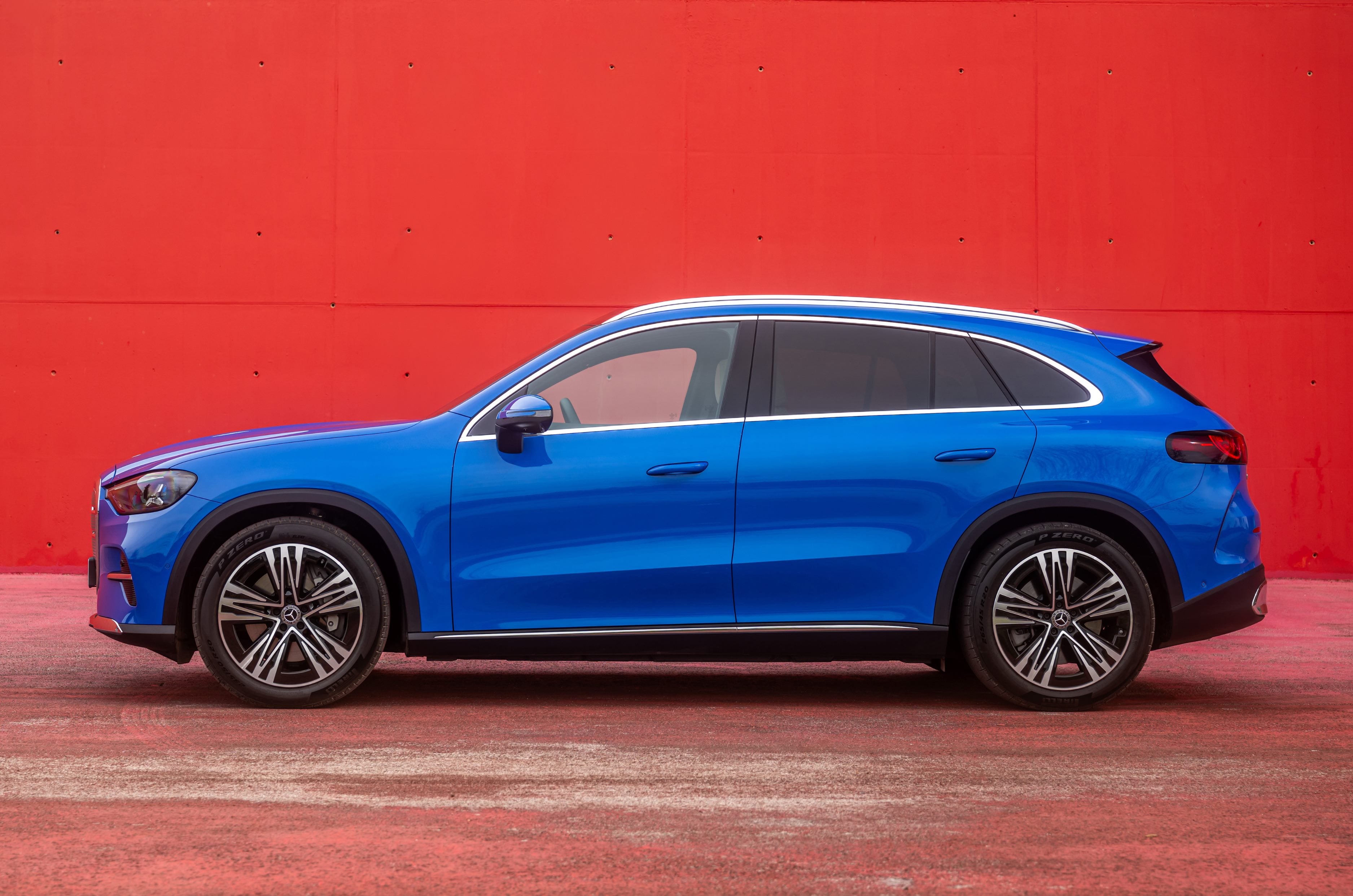
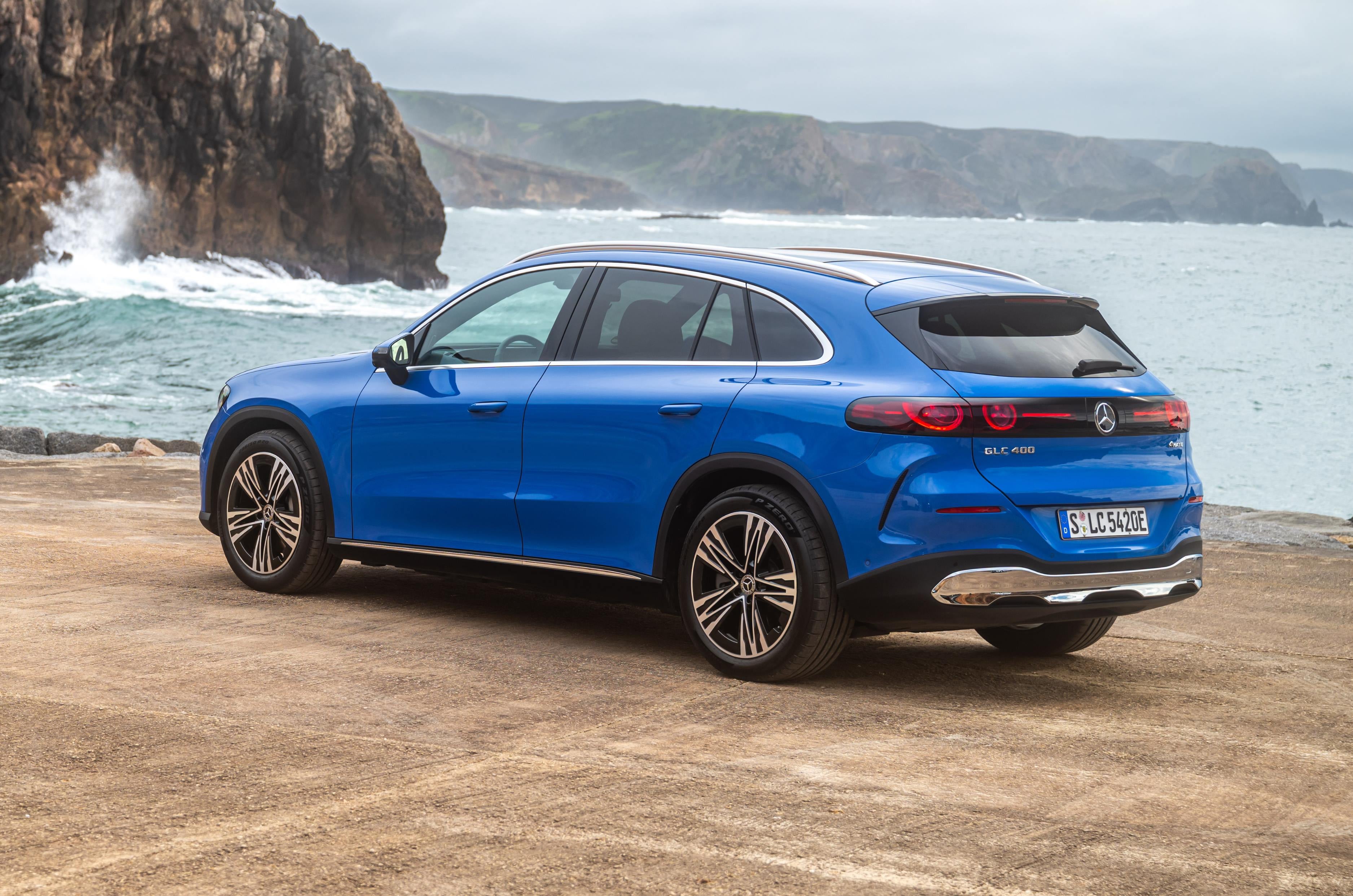
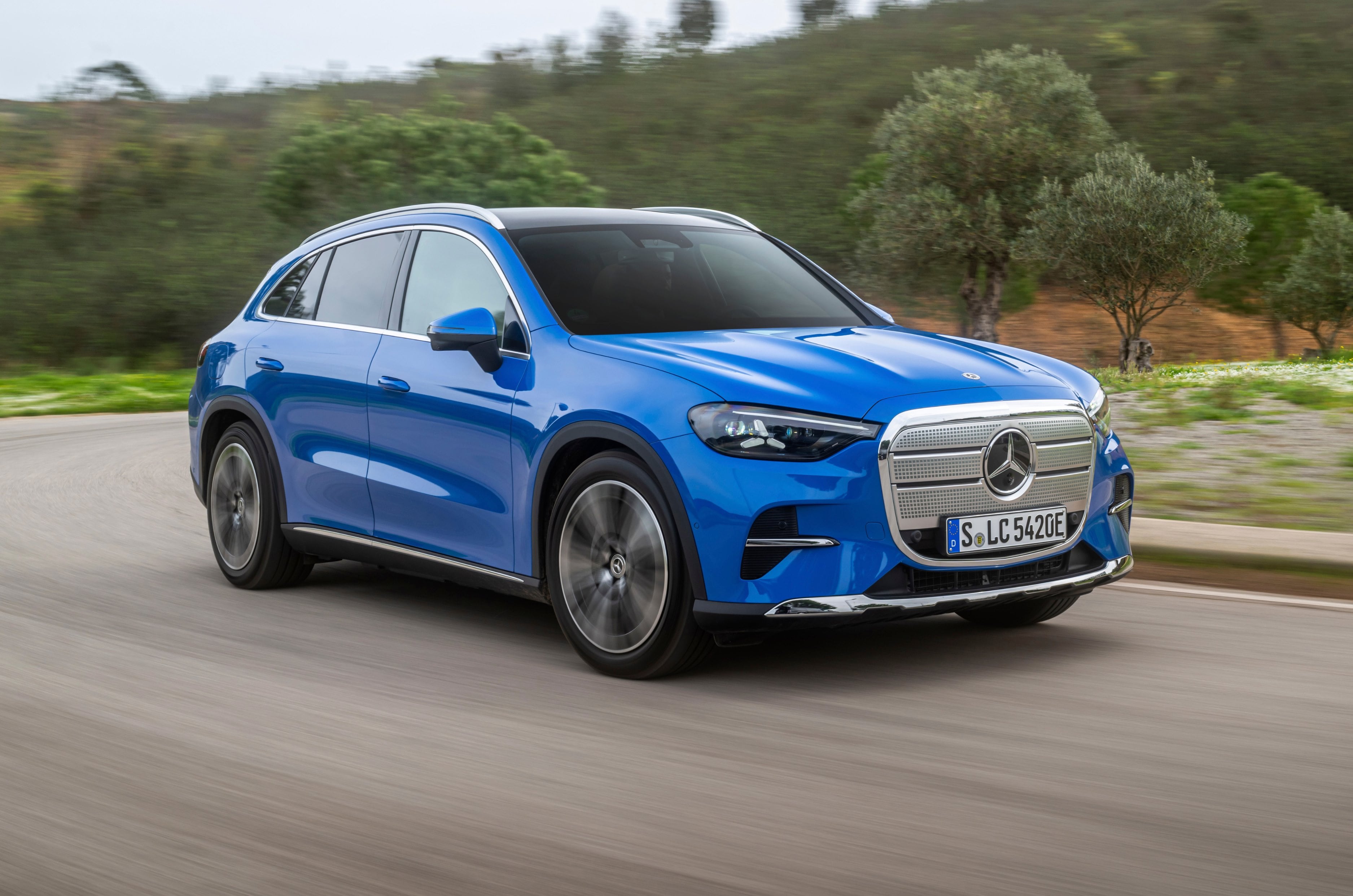
Mercedes-Benz will launch the GLC Electric in India on November 4, 2026. The electric SUV will be assembled at the manufacturer’s Chakan plant in Pune and, according to Mercedes-Benz, will become the fastest global model to arrive in India as a locally assembled vehicle, just six months after sales began in Europe. The GLC Electric will be offered here in the 400 4Matic guise, and bookings are set to open in October.
Mercedes-Benz GLC Electric: All you need to know
Will get dual electric motors producing 490hp and 800Nm
The Mercedes-Benz GLC Electric 400 4Matic is available internationally with a 94kWh battery pack and a claimed WLTP range of 715km. Its dual-motor all-wheel-drive (AWD) setup produces a combined 490hp and 800Nm, enabling the 2.5-tonne SUV to accelerate from 0-100kph in a claimed 4.3 seconds.
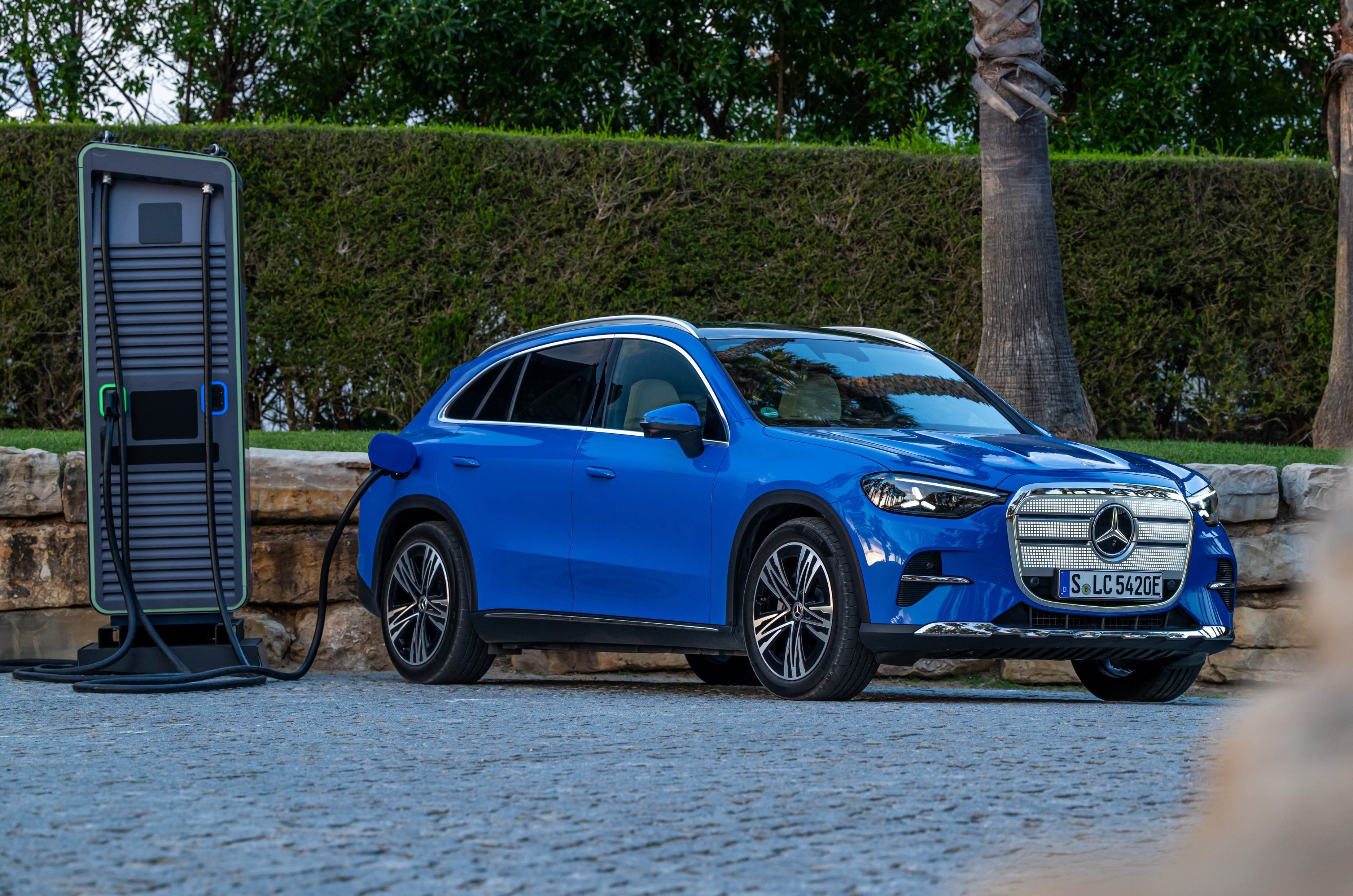
It supports up to 330kW DC fast charging, which can top up the battery for a claimed range of up to 300km in 10 minutes. The international-spec GLC Electric 400 4Matic is offered with 4.5-degree rear-axle steering and air suspension.
Gets plenty of illuminated elements outside
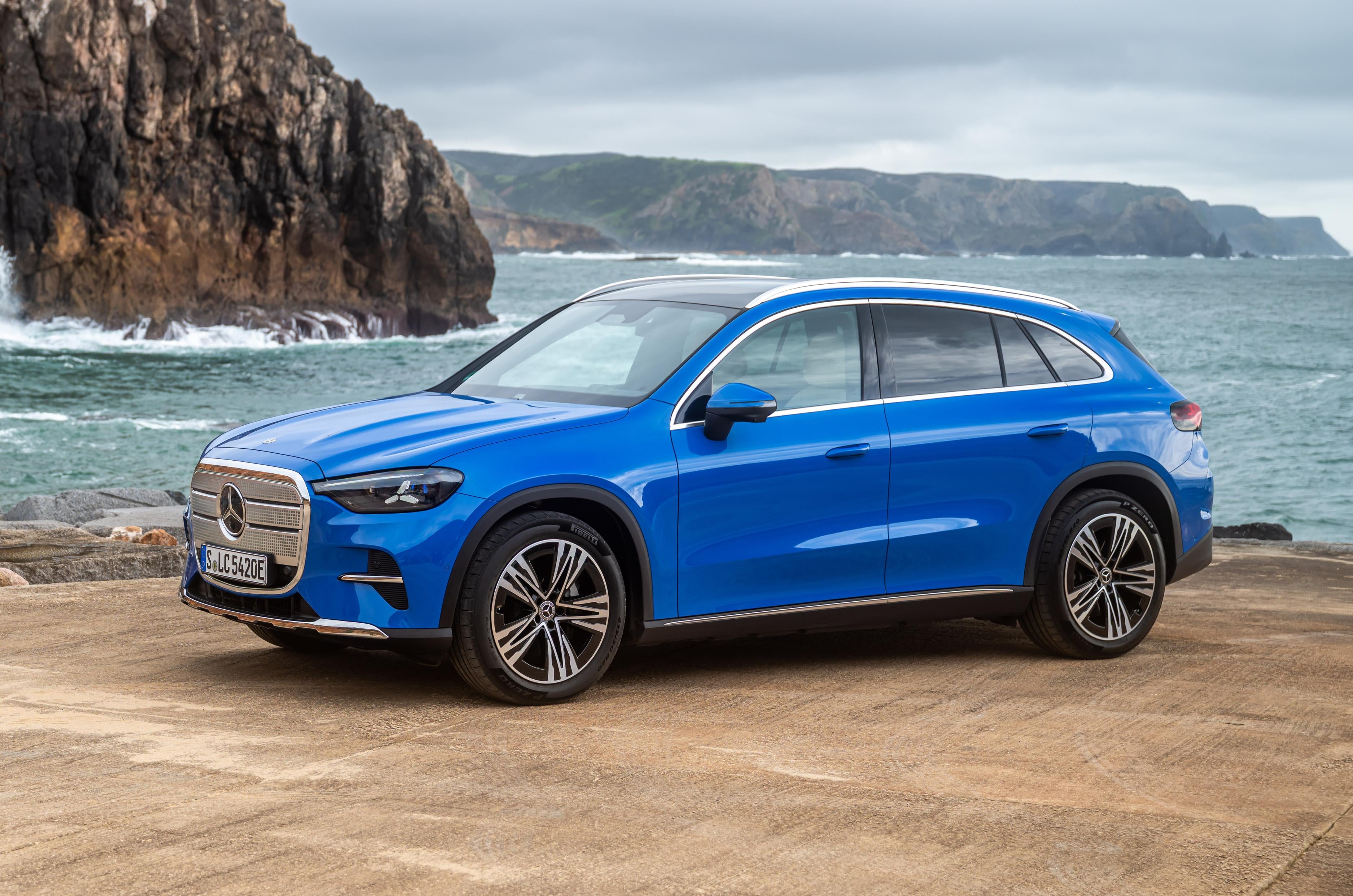
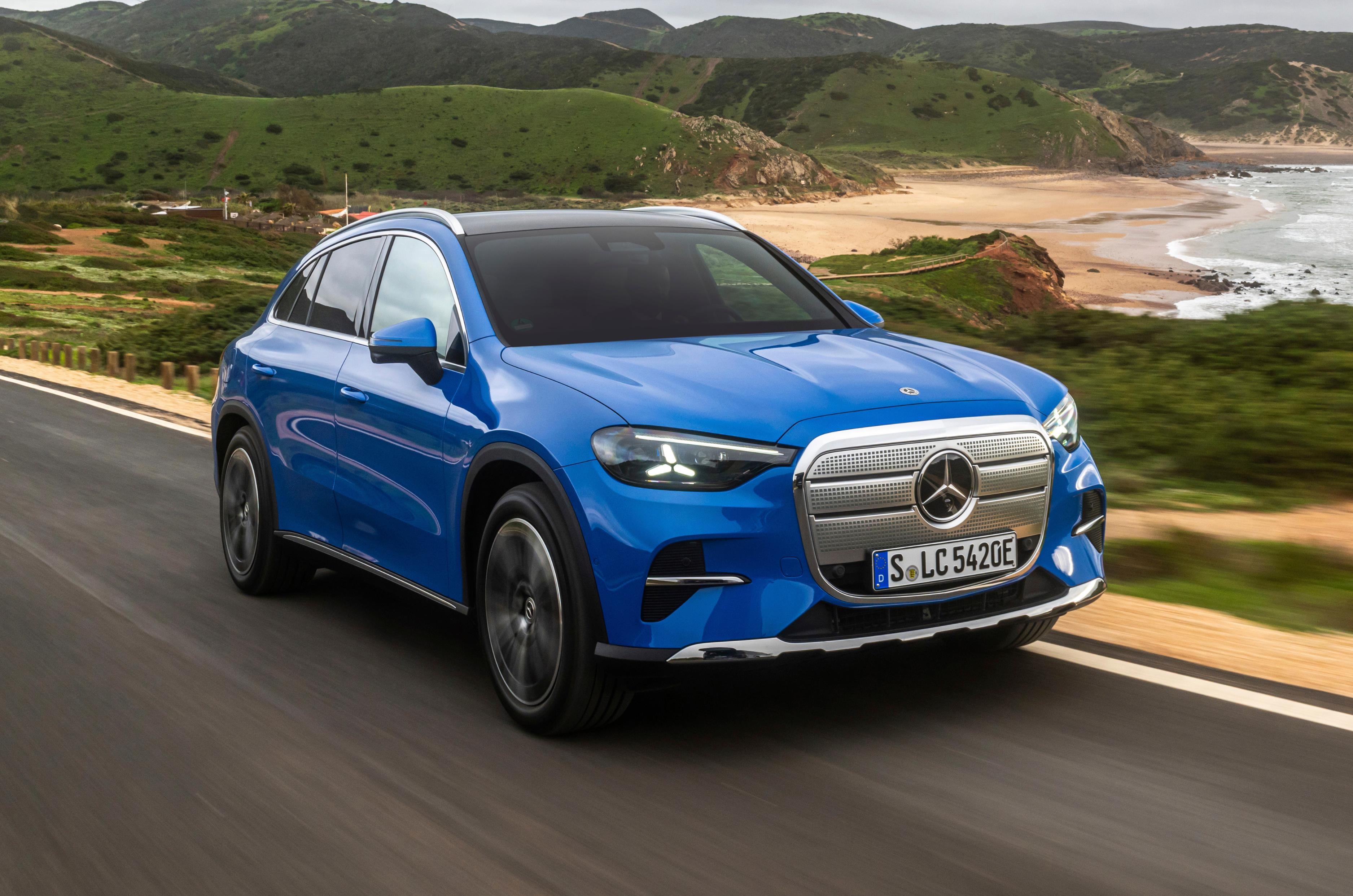
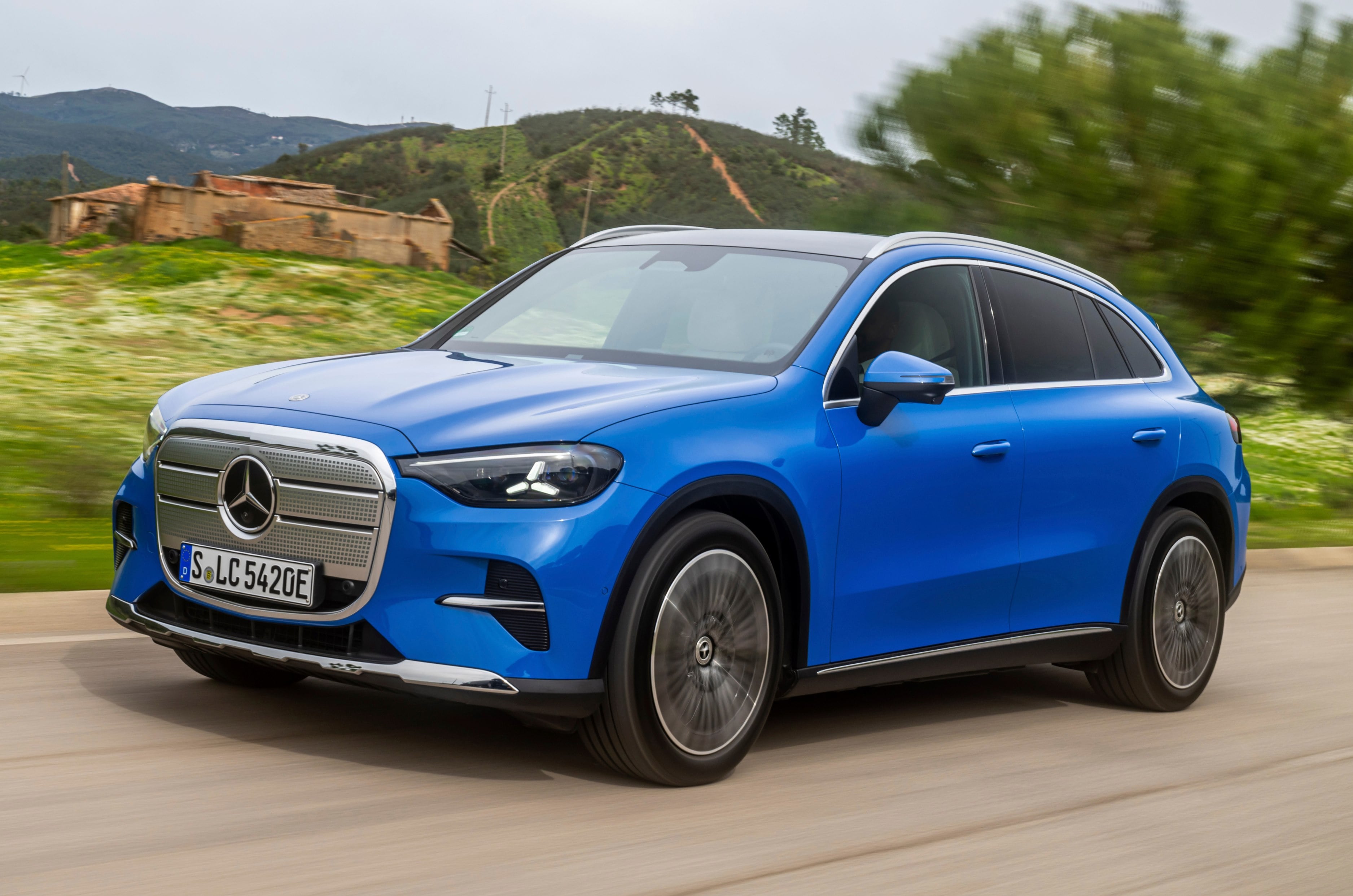
Unlike some of Mercedes-Benz’s newer designs, which can be polarising, the GLC Electric has a more conventional appearance. At the front, it features a large, rounded-edge grille with illuminated elements, star-shaped LED daytime running lamps (DRLs) and projector LED headlights. The side profile is relatively simple, with up to 21-inch alloy wheels, flush-fitting door handles and slim cladding on the wheel arches.
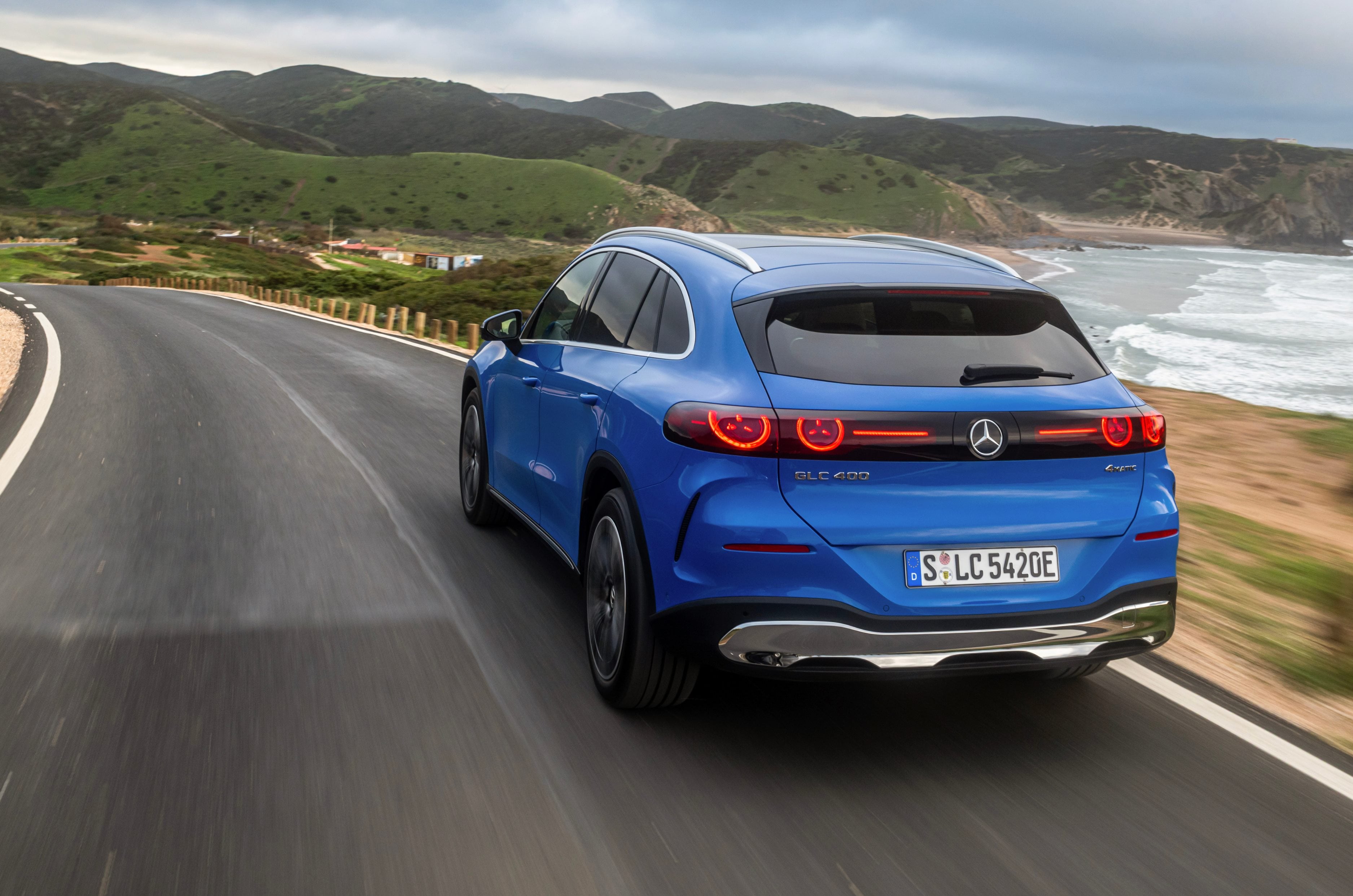
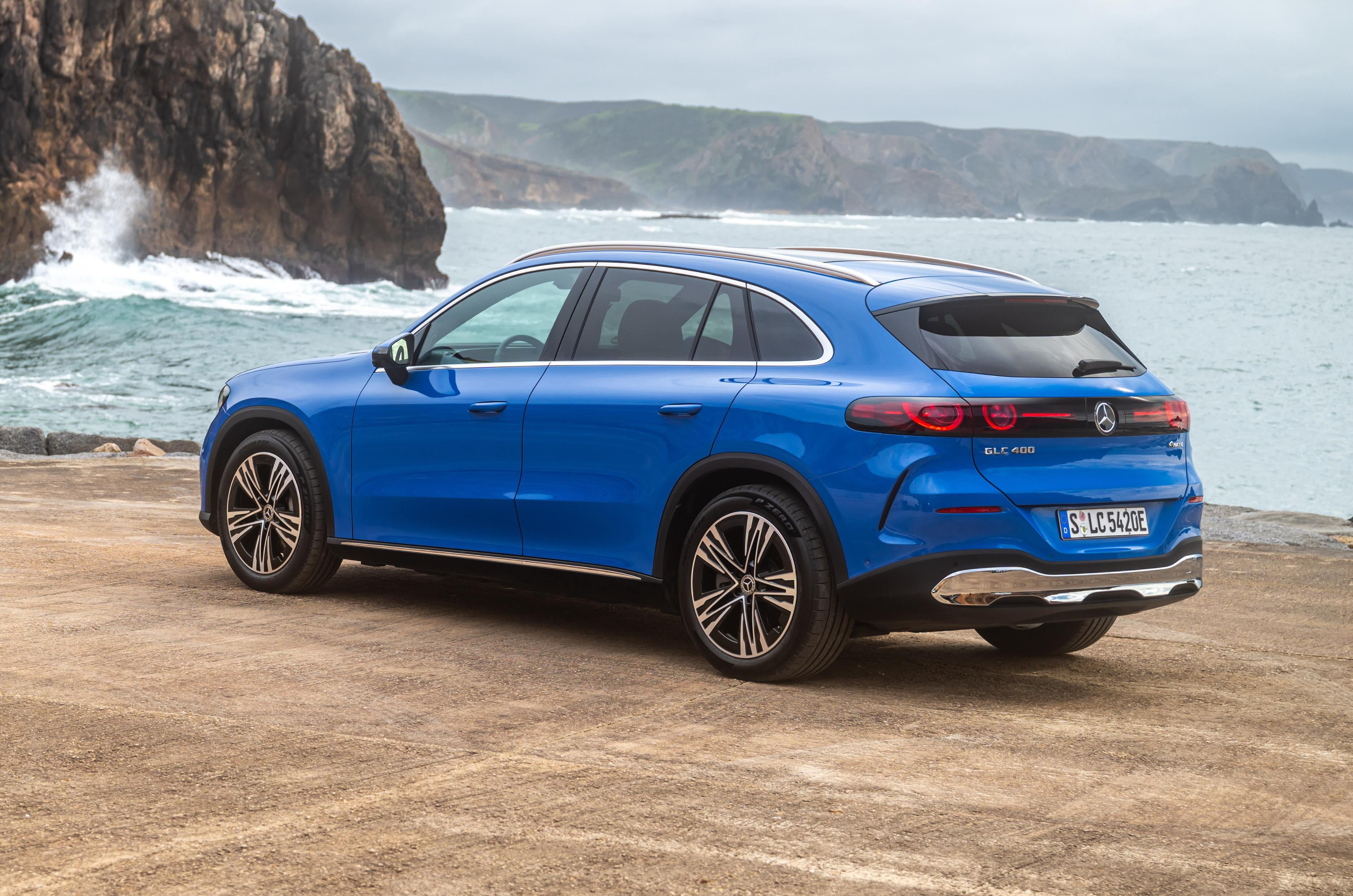
At the rear, the GLC Electric gets star-shaped LED tail-lights with circular outlines, connected by a gloss-black trim. While the front Mercedes logo is illuminated, the rear features a solid 3D badge. Internationally, the 400 4Matic is also available in an AMG Line guise, which gets a more aggressive grille and sportier alloy-wheel designs.
Features a massive 39.1-inch MBUX Hyperscreen on the dashboard
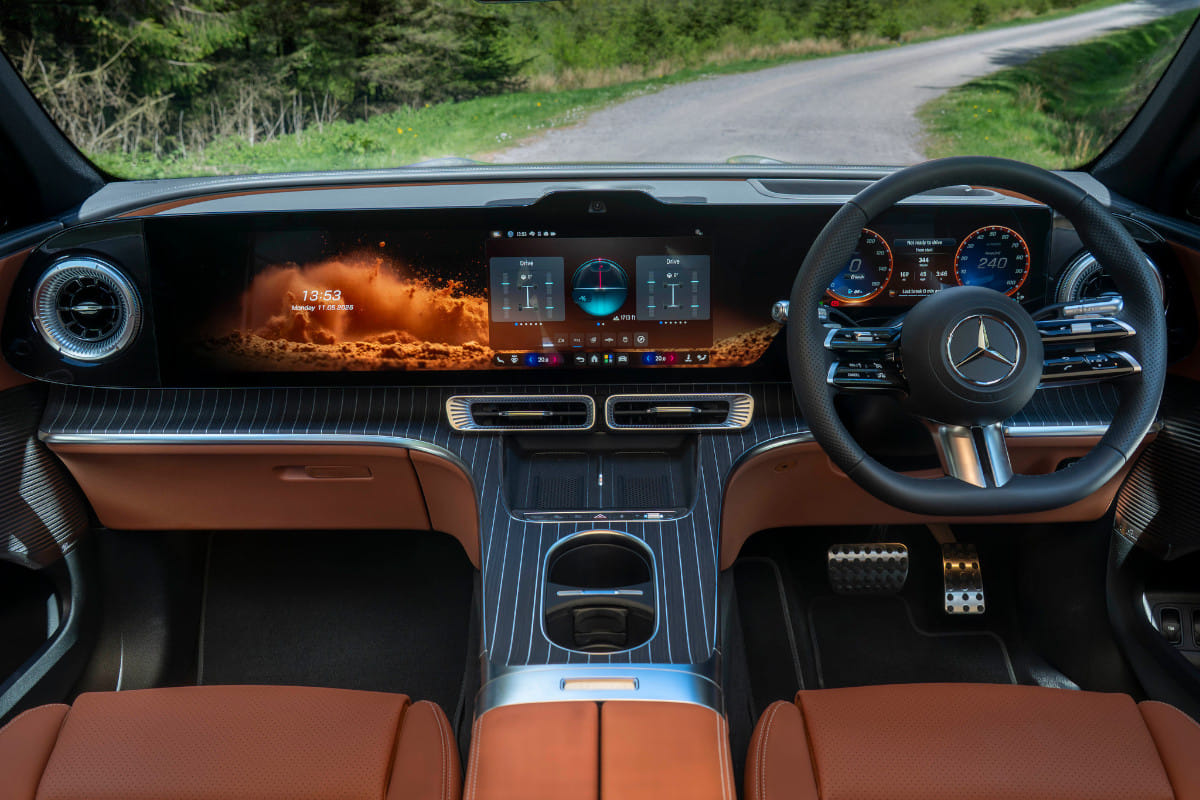
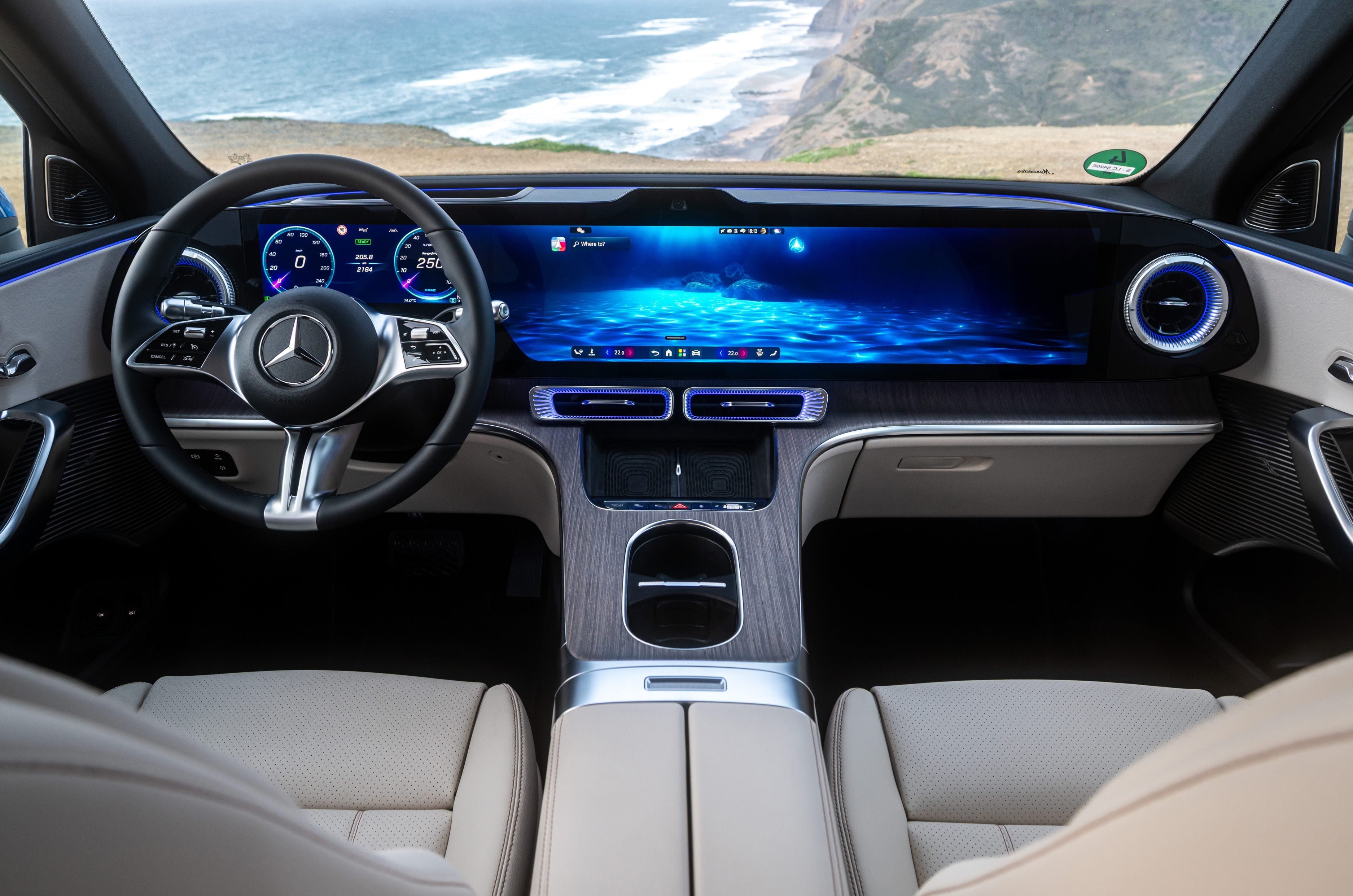
Inside, the GLC Electric features a massive 39.1-inch MBUX Hyperscreen, which Mercedes-Benz claims is the largest display it has ever fitted to a car. The setup seamlessly integrates the driver’s display, infotainment touchscreen and passenger display into a single unit. It runs on the fourth-generation MBUX interface and features a built-in AI assistant. Unlike many modern EVs, the GLC Electric also retains physical controls on the steering wheel and centre console. It has a five-seat configuration.
The Mercedes-Benz GLC Electric is expected to be priced in the range of Rs 80 lakh to Rs 90 lakh (ex-showroom). It will rival the BMW iX3 Long Wheelbase, which is slated to launch in India in 2027.
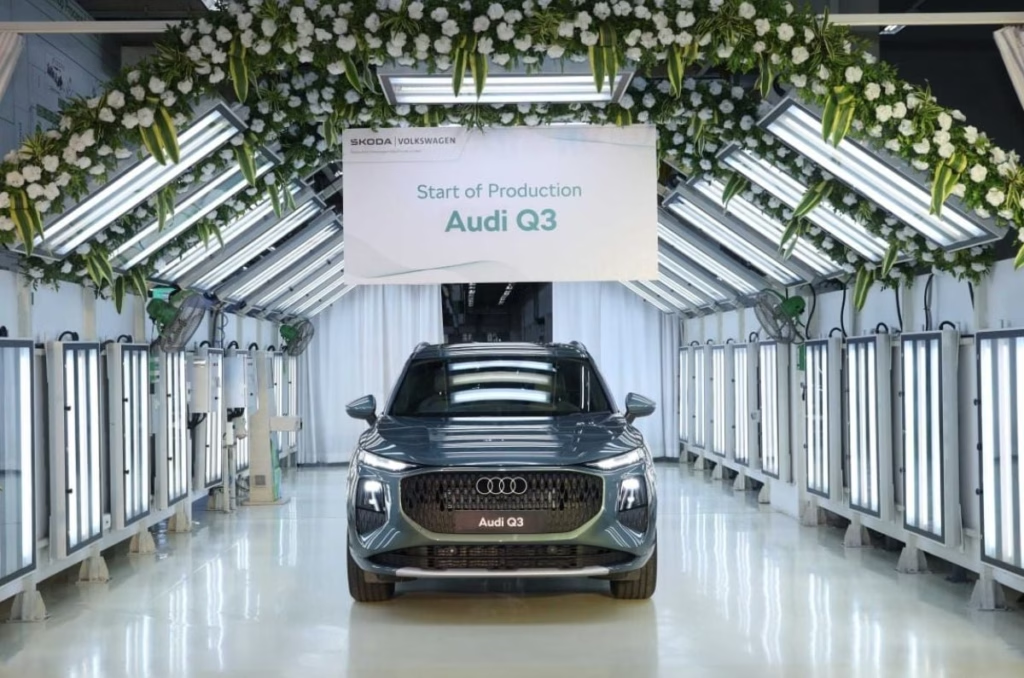
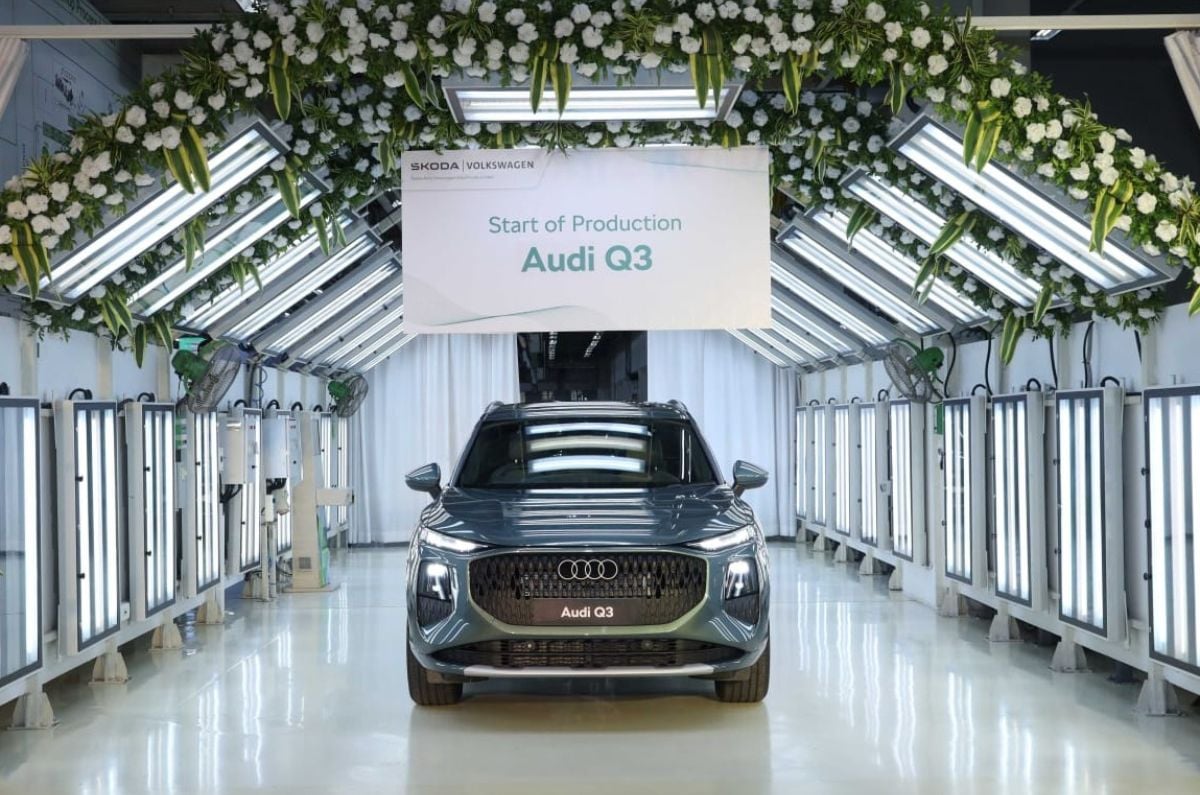
Audi has commenced local assembly of the third-gen Q3. The entry-level luxury SUV will be locally assembled at the brand’s facility in Chhatrapati Sambhajinagar, Maharashtra. Pre-bookings for the new Q3 have already begun for an amount of Rs 1 lakh. The new Q3 will launch on October 16, 2026.
Powered by a 2.0-litre direct-injection turbo-petrol engine.
Expected to arrive with a price tag ranging between Rs 55 lakh and Rs 60 lakh.
Audi Q3: All you need to know
Looks sportier and comes packed with tech
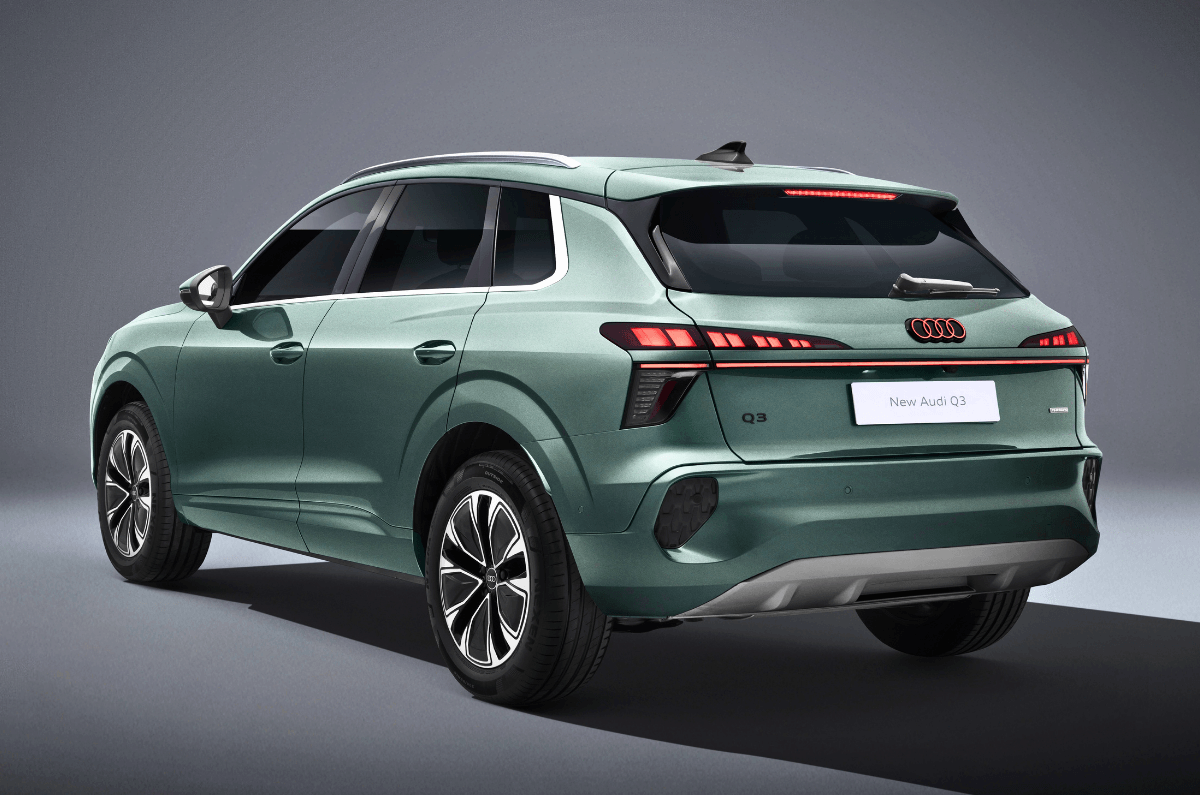
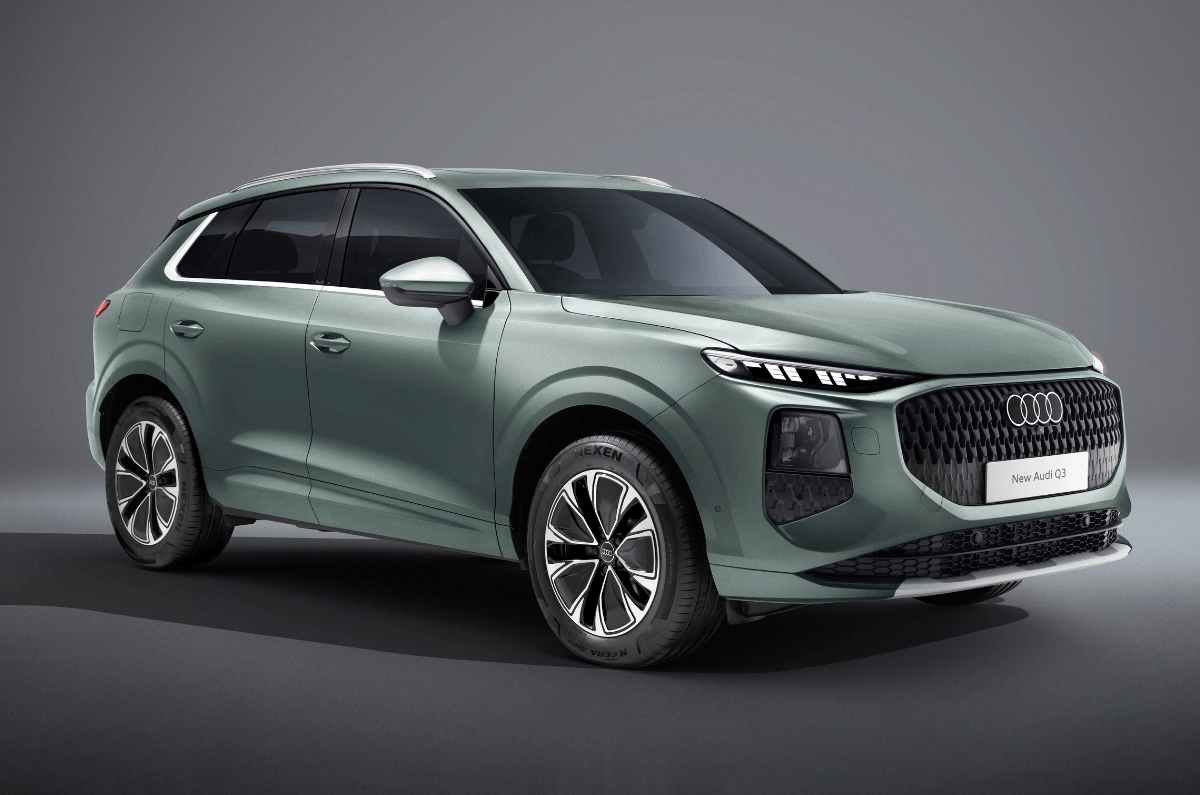
The new-gen Q3’s exterior marks a huge departure from its predecessor’s understated design. There’s a split-headlamp setup at the front, with DRLs that can be configured with multiple signatures, a larger grille, and vertically stacked headlamps on either side of the bumper. In profile, the Q3 gets body-coloured cladding, 18-inch alloys and a chrome window line.
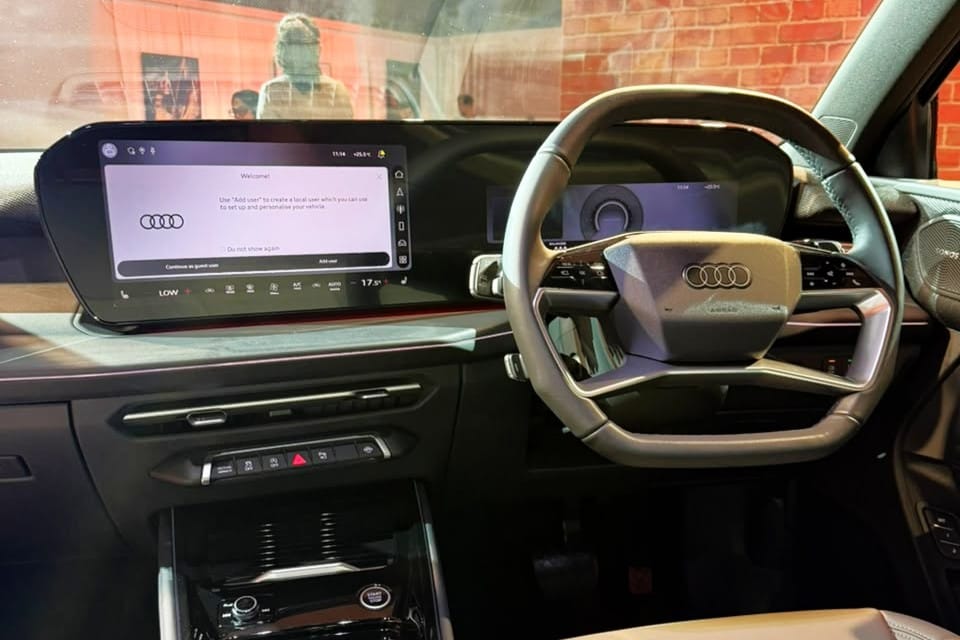
Inside, there’s a revamped cabin with the dashboard dominated by a dual-screen setup for the 12.8-inch infotainment and 11.9-inch digital driver’s display. Additionally, there’s a new design for the steering wheel, leather-upholstered seats with a two-tone finish, and a high-set centre console that comprises a wireless phone charger and cupholders. Features include a Sonos sound system, a panoramic sunroof, wireless Apple CarPlay and Android Auto, dual-zone climate control, configurable ambient lighting, a 360-degree camera setup, and a powered bootlid.
Powering the Audi Q3 will be a 2.0-litre direct-injection turbo-petrol engine that’s expected to produce 204hp and 320Nm. Transmission duties are handled by a 7-speed DCT, and you also get Audi’s Quattro AWD layout. Expect the Audi Q3’s ex-showroom price to be in the range of Rs 55 lakh to Rs 60 lakh. It will take on rivals like the Mercedes-Benz GLA, BMW X1, and the Mini Countryman C.
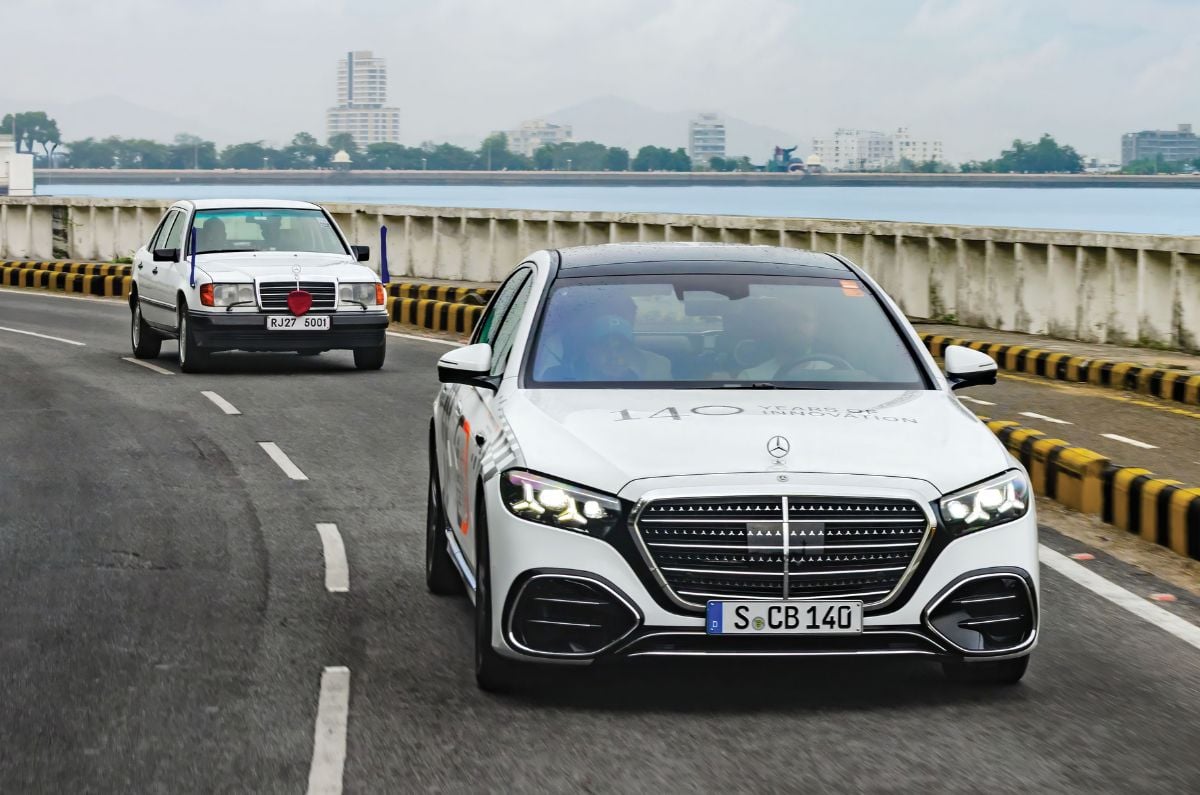
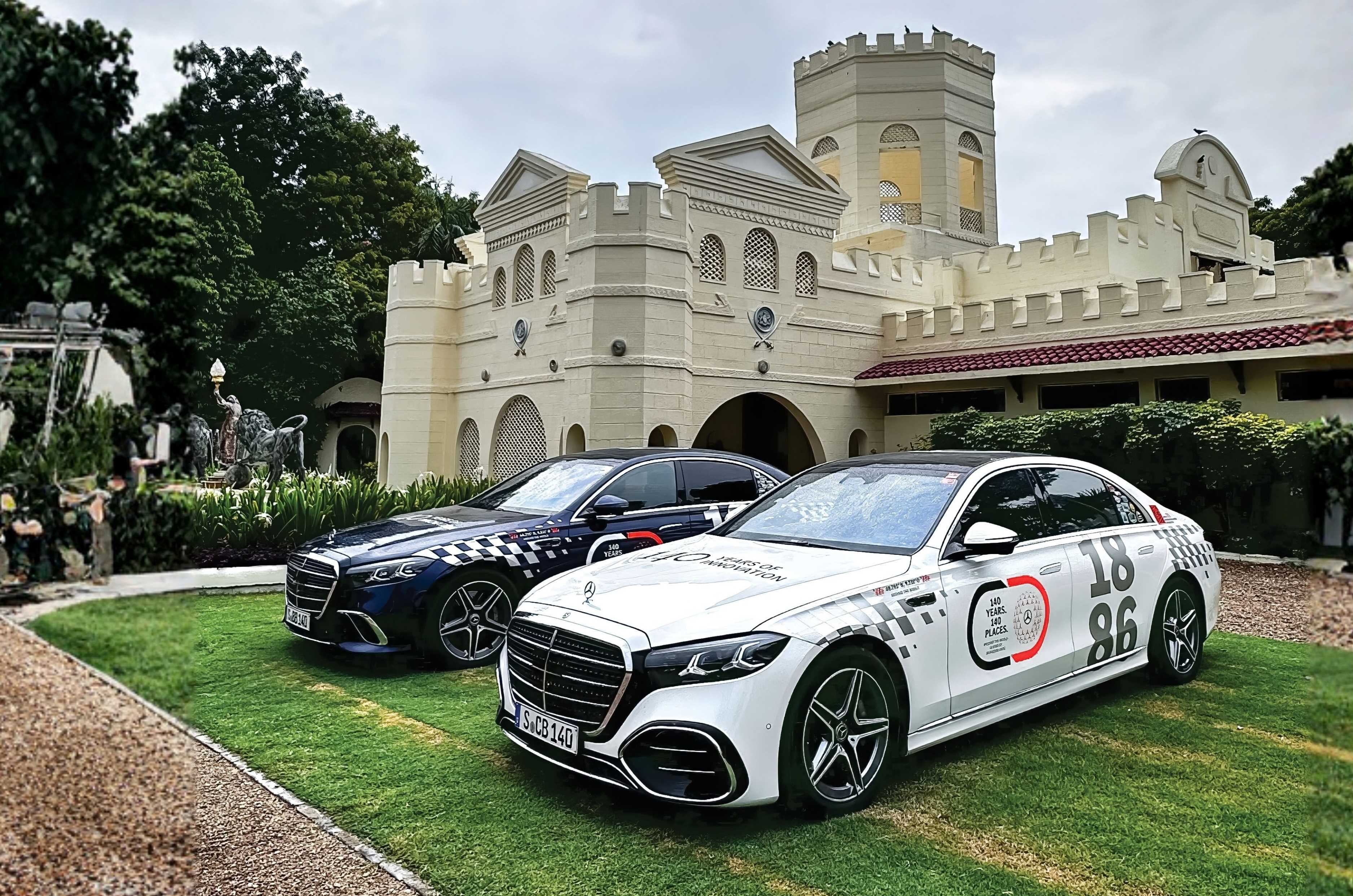
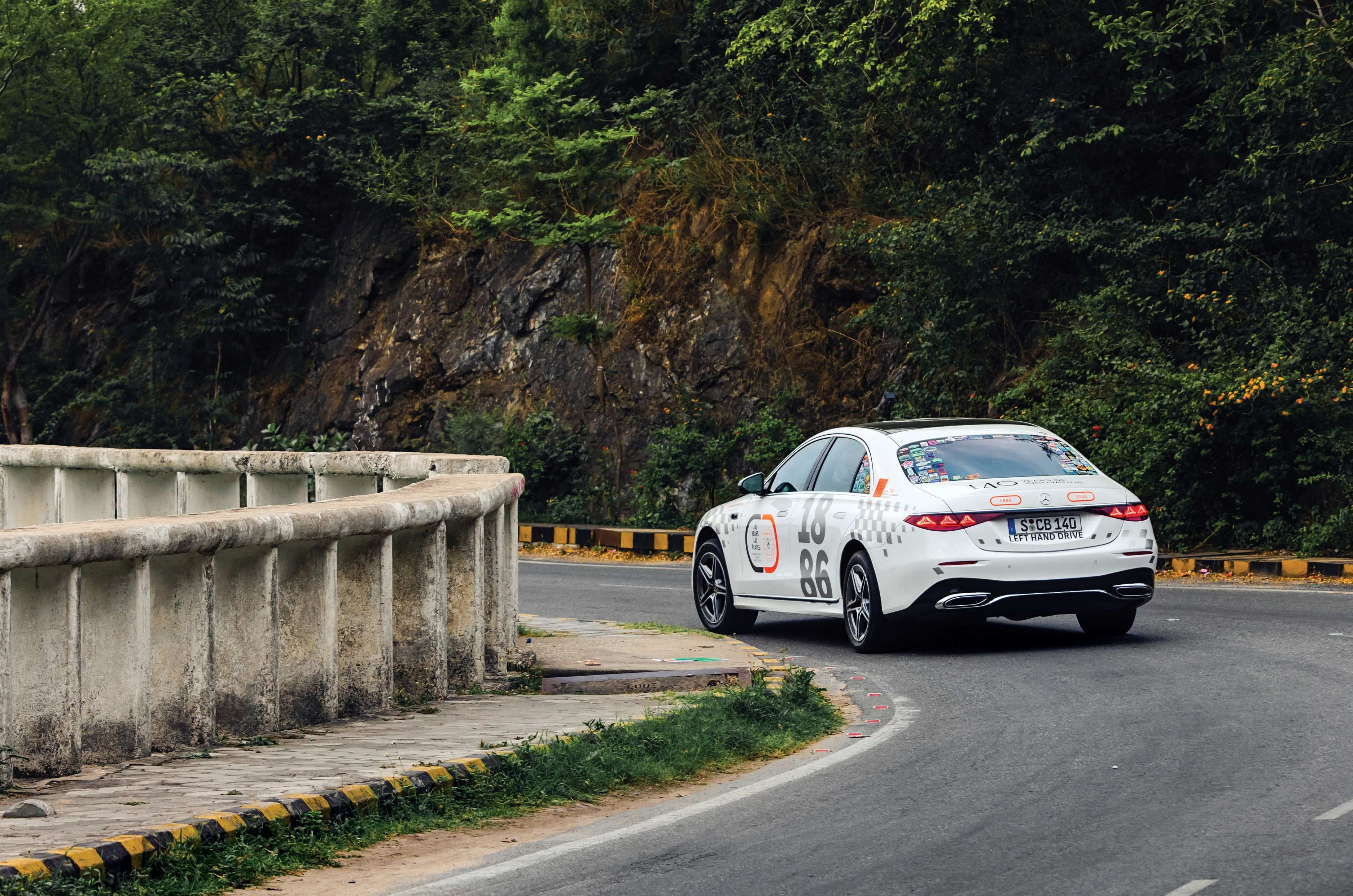
Mercedes-Benz’s 140 Years, 140 Places odyssey is a celebration of the carmaker’s origins in 1886. Spanning six continents, covering over 60,000 kilometres, it is as massive in significance as it is in scale. The tour kicked off at the Mercedes-Benz Museum in Stuttgart on the 29th of January, the same day Carl Benz received the patent for his first car 140 years ago! The cars then went to the Daimler house in Bad Cannstatt, they tracked the original route of Bertha Benz’s historic 1888 drive and drove the iconic Spa-Francorchamps racetrack in Belgium in wheel tracks of the W109 ‘Red Pig’ that made such a splash in 1971. The cars then went to the US, visiting the first plant in the US started by William Steinway (of Steinway & Sons, the famous German Piano makers), South America, Australia, Japan, Korea and Japan.
Legacy and history
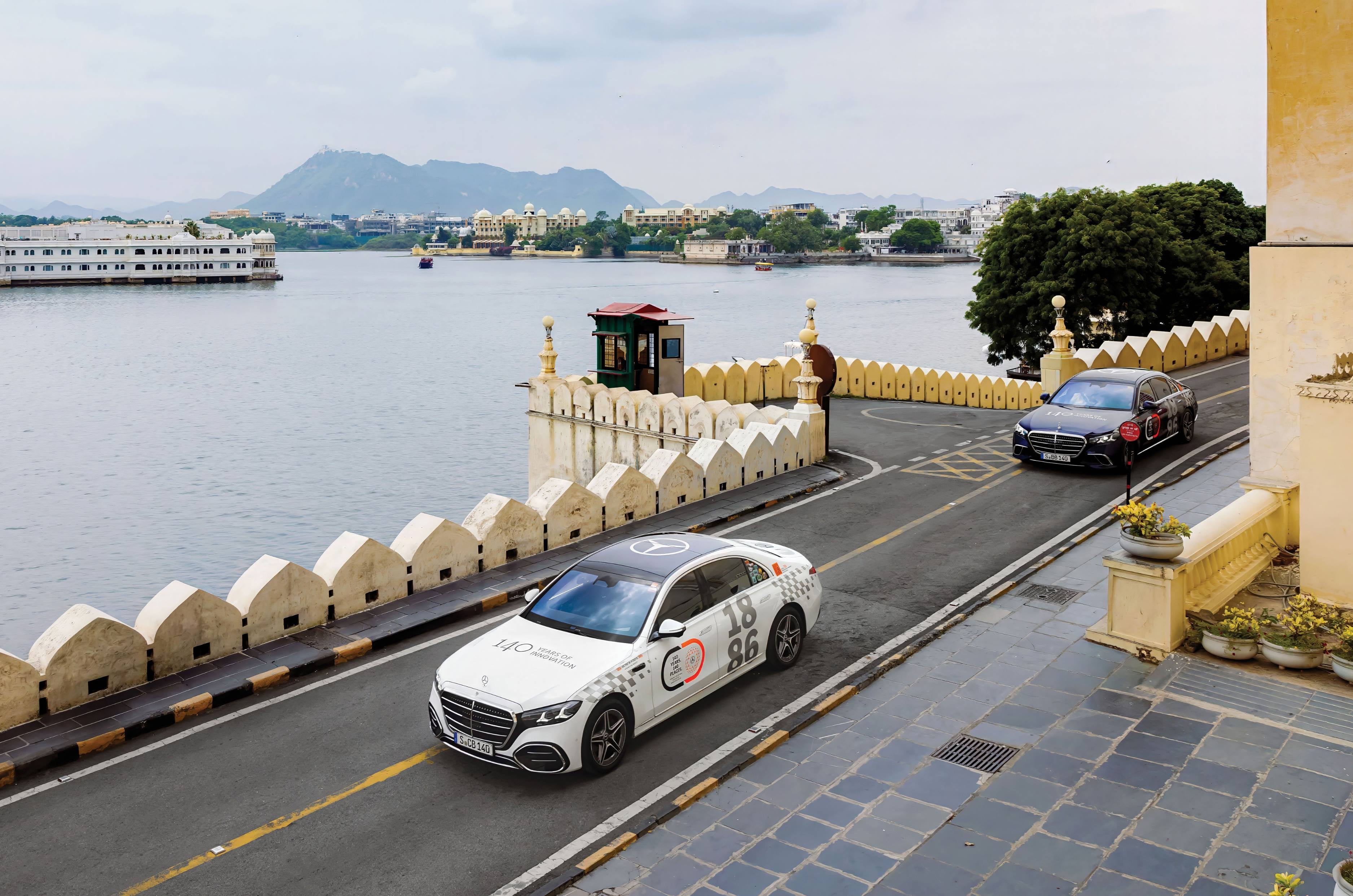
With their royal and regal air, the S-Classes feel right at home in Udaipur.
Part of the 140 Years, 140 Places expedition, Udaipur is one of the more stunning locations the Mercedes drive will visit on this India leg, and what’s incredible is that we have been chosen to be a part of it. What a privilege. The lake city of Udaipur also has tremendous historical significance. Home to one of the longest-serving dynasties, one that spans 1,500 years, this leg sees a coming together of the world’s oldest carmaker and one of the oldest dynasties. And while this trans-continental excursion is called 140 Years, 140 Places, it could also easily have been called 140 Years of Automotive Technology. With these S-Class pre-production cars dripping with both mechanical and electronic tech, what we are also celebrating is the journey of the car from a three-wheeler with a single-cylinder engine to this technological marvel. The company that invented the motorcar is still widely regarded as the one that makes ‘the best car in the world’.
Luxe Supreme
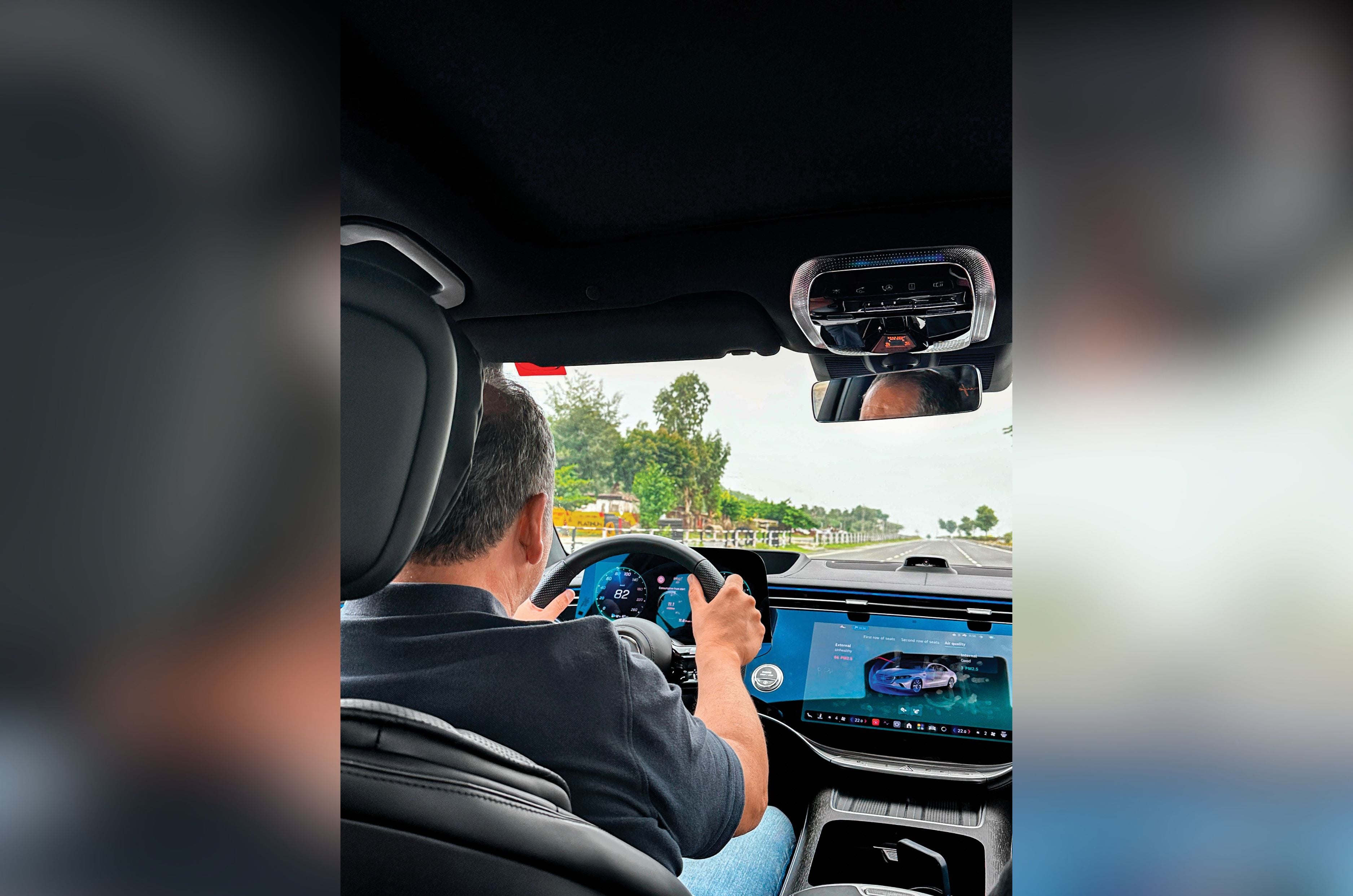
Everything is perfectly still. Not a gauge in the car is moving, and there’s no real sensation of speed. I must have dozed off. Blame it on the incredibly comfortable back seats and the sensory isolation. This car just shuts you off from the rest of the world. Then I discover we are cruising at 100kph, and not just 30 or 40. Up ahead is the lake city of Udaipur. Ahh.
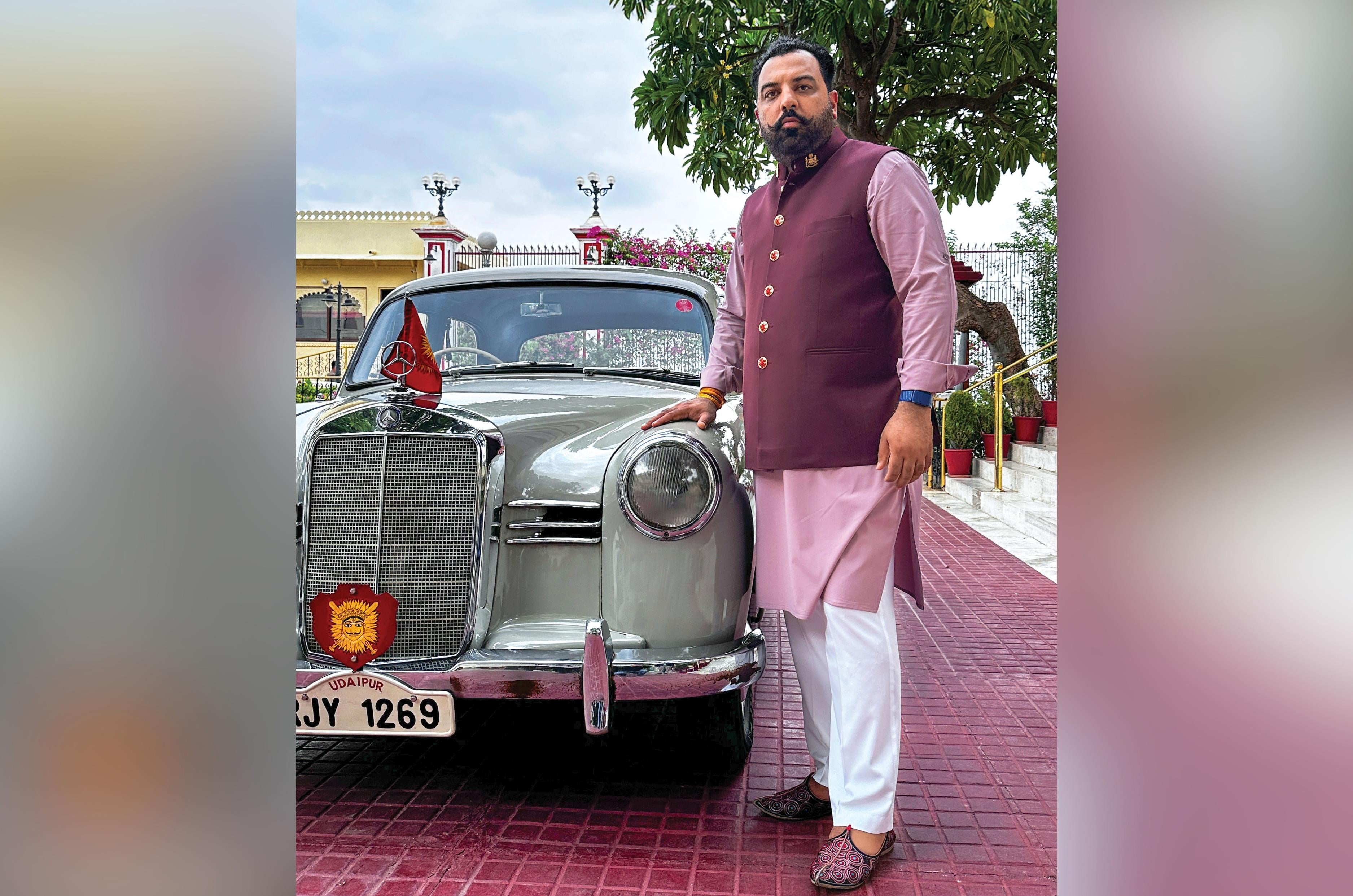
The Maharana of Udaipur with a car that has been in his family for three generations.
We start our journey on this leg from a very significant place, the palace situated on the lakeside at Udaipur. And not only does Lakhsyaraj, the 77th Custodian of the House of Mewar (formally Shriji Huzoor Dr Lakshyaraj Singh of Udaipur), play the perfect host, but he also parks an olive-green 180D in the foyer, a car that has been used by three generations of his family. The symbolism is rich; two legacies converging in a place that embodies the spirit of grandeur and continuity.
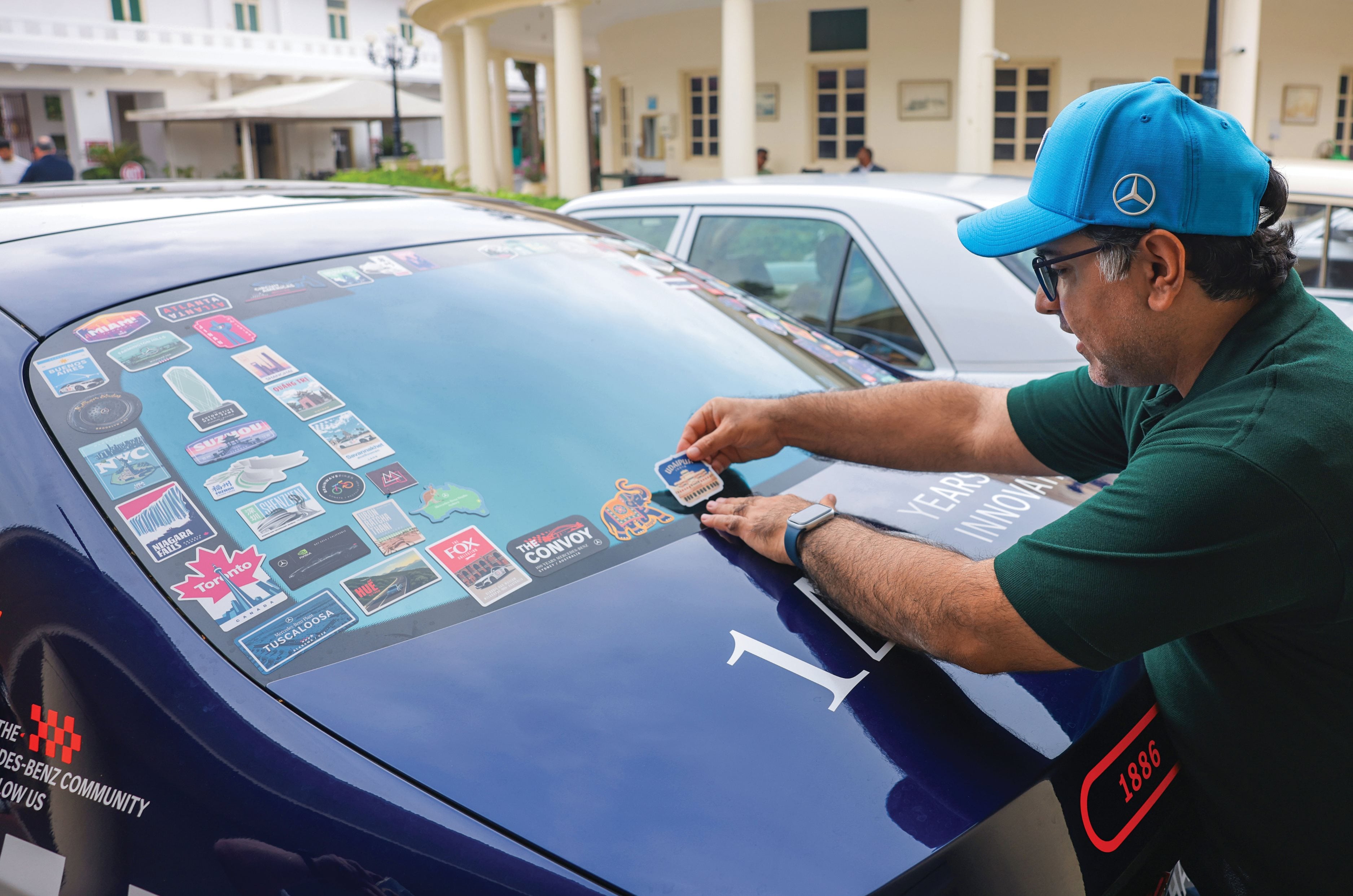
Perseus places the sticker on ‘Bertha’ in Udaipur.
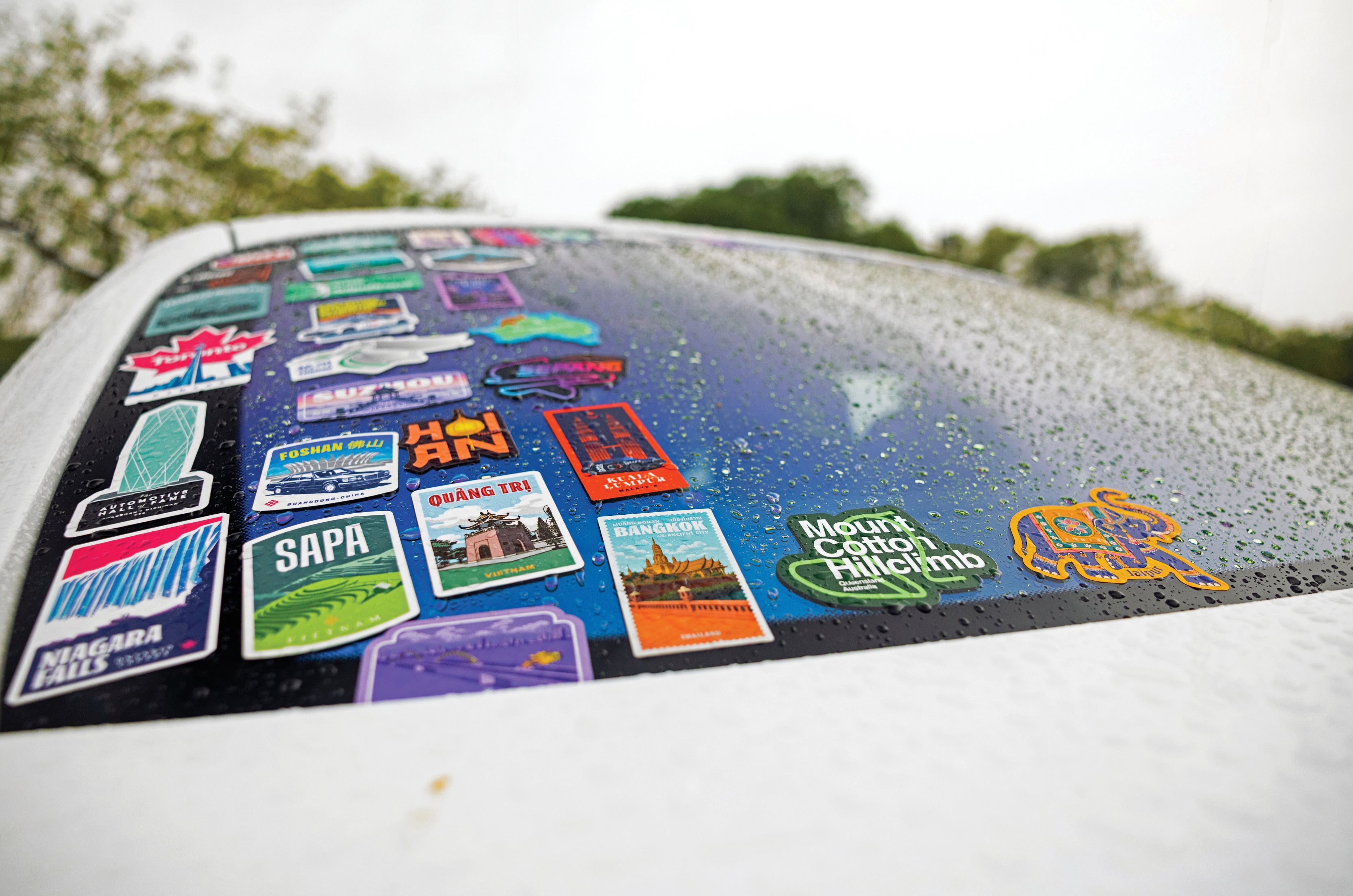
Since Udaipur is one of the 140 iconic destinations on the drive, Mercedes asks him to place an Udaipur sticker on the rear of the car; fitting. These cars, all three (the third is on another leg elsewhere in India), will eventually be housed in the Mercedes museum in Stuttgart, and what’s cool is that you can trace their journey via the stickers. Lakshyaraj then takes one of the cars for a brief drive. He wants to see just how much better this new version, with all its 2,700 new bits, is over his pre-facelifted car. And yes, he loves driving. I’d bumped into him earlier in the day at the airport, where his S-Class had come to pick him up, flags flying and uniformed driver and assistant in tow. But instead of climbing into the rear, he’d gotten straight behind the wheel. Tells you a lot.
Still at the top
Late prototypes of the New S-Class made the journey.
Later in the day, I get another demonstration of why the S-Class is so special. We decide to drive around the lake for the cameras, the orange glow of the setting sun adding to the drama of this once James Bond film set. Sitting in the back feels almost magical, as the S-Class slips forward effortlessly, the sun glistening off the lake. It skips over cratered roads, glides silently through noisy bazaars and intersections and then, as the road around the lake opens out, I barely hear it even though Mercedes’ test driver is pulling the torque-y straight-six hard. This car is named Bertha, after Carl Benz’s wife, the one who undertook the world’s first long-distance drive; quite a story that. And the other, the white one, is Carl; BB and CB, both on Stuttgart number plates.
Hello Grandpa
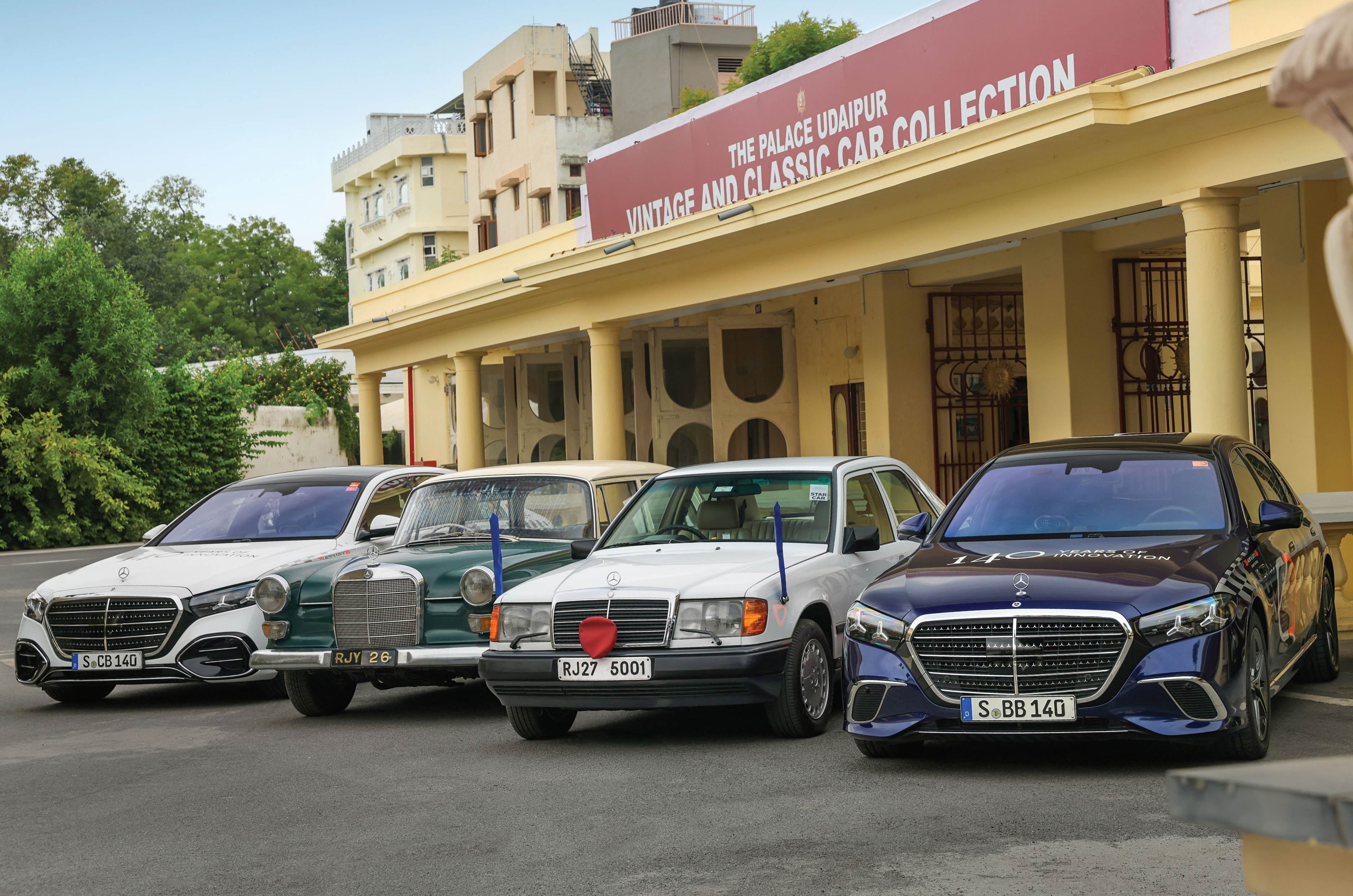
The S-Classes, along with the fin-tail and the 300D.
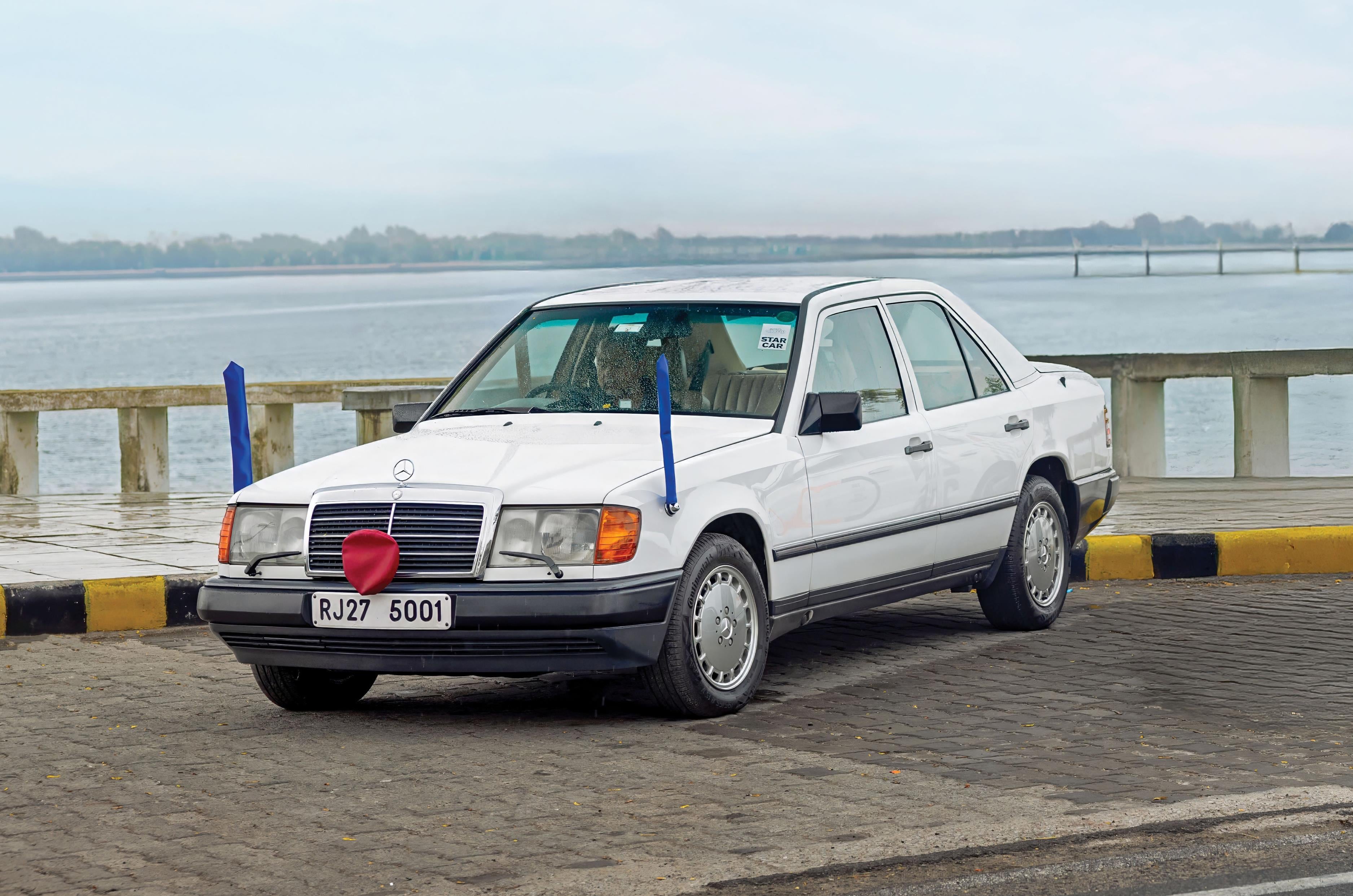
The next day, we set off to see the Udaipur Royal Garage, where we are met by other Mercedes cars. There’s a fin-tail that was used to pick up and drop off guests of the Royal family from neighbouring ‘states’ and a very special W124 300D. The latter, an import rather than a locally assembled W124, stands out from Indian-assembled cars with its black bumpers, headlamp wipers and amber indicators. This six-cylinder diesel with more than 2,00,000km on the clock was used by Shri Arvind Singh Mewar, the earlier Maharana, to cover long distances like Ahmedabad or Jodhpur. Recently restored, it was presented at the Mercedes-Benz Classic Car Rally in Mumbai. The 300D is in such fine nick, I can’t resist a quick spin around another of Udaipur’s stunning lakes, Fateh Sagar.
Why the 300D is such a legend
The W124 300D is an import.
On the outside, the 300D looks sort of underwhelming. Starting up the straight-six diesel is relatively straightforward, although I have to wait for the glow plug to heat up (remember those?). While the roughly 110hp engine doesn’t feel responsive, it feels smooth and refined for a diesel, especially after 2,500rpm. And though it is slow by today’s standards, it doesn’t feel like you’re dragging anchor either. The chunky 300D also feels as tough as a Godrej safe.
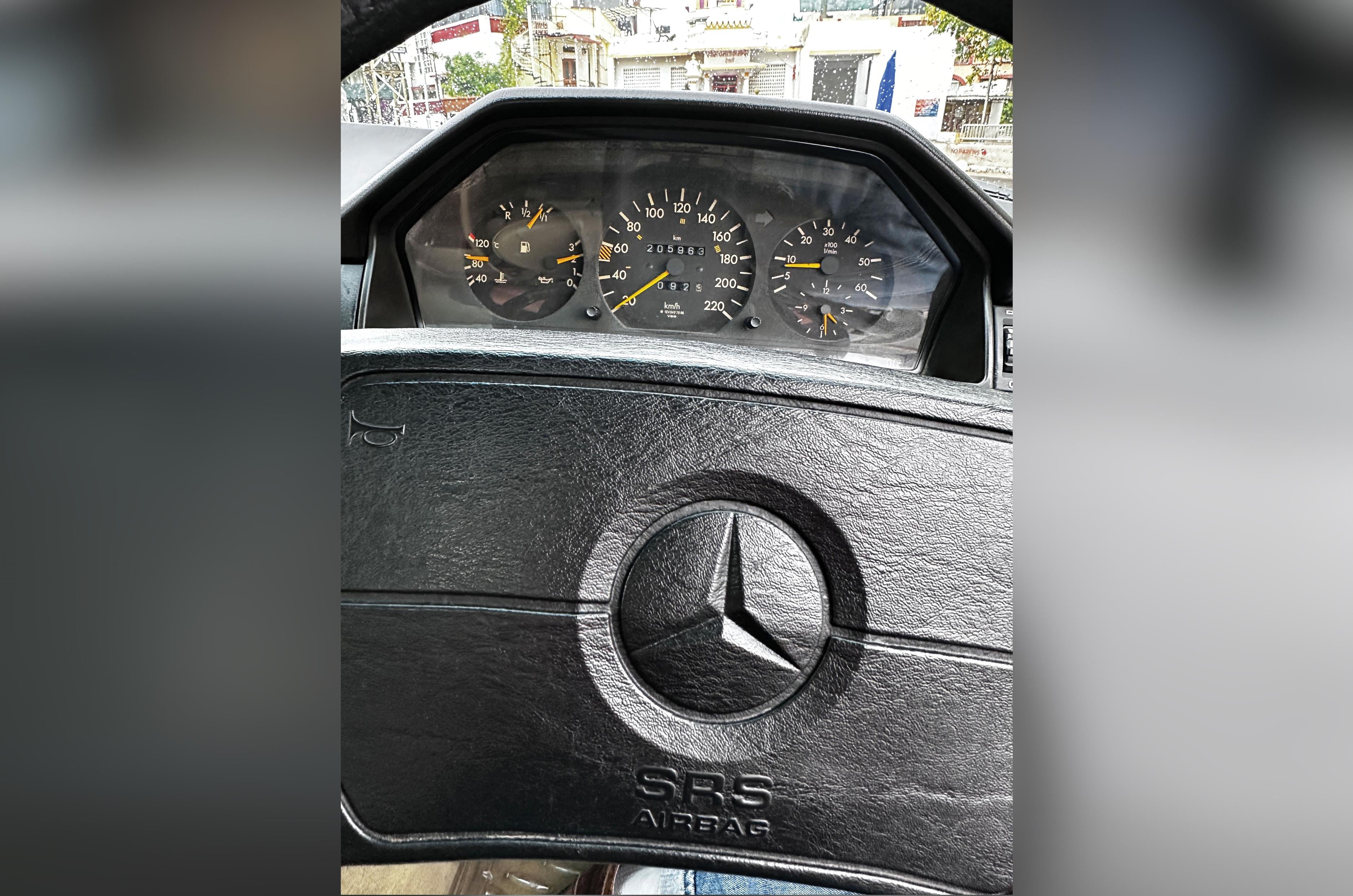
It has 2,00,000km on the odo, but hardly feels like it.
Then I catch a glimpse of the odometer; it reads in excess of 2,00,000 kilometres! Surely my eyes are playing tricks on me. Yes, this car has been recently refurbished, and the suspension has been tightened up, but this thing feels like it has just rolled out of the showroom only recently. It tracks straight, the steering is well weighted and, when I plonk my foot down, it even generates a reasonable amount of torque. This ‘OM603’ straight-six uses indirect injection and a pre-chamber, and has a simple two-valve-per-cylinder setup. Legend has it, it can do a million miles with only basic care. And what of turbo lag, you ask? It doesn’t have one.
Performance tech
The next morning, I get straight behind the wheel of CB or Carl Benz. I’m particularly excited because Carl has a V8 under the hood. What makes this V8 different is that it has some unique tech. This new S-Class is fitted with the ‘M177 Evo’ V8 engine that uses a flat-plane crankshaft! Made popular by Ferrari, a flat-plane crank is used on sportscars to help bunch up the firing order of the cylinders, so you get more of a kick from overlapping strokes. These engines, however, are not as smooth. So why has Mercedes used it in the S-Class, an out-and-out luxury car? Simple: it delivers better efficiency and lower emissions, as the crankshaft is lighter and there’s less reciprocating mass. And what of the vibrations? Mercedes says it has thrown tech at the problem.
V8-equipped S-Class feels effortlessly quick.
Initially, the going is slow as we exit the city. But once we get onto the wide highway, a small tap on the throttle releases a swell of torque just off 2,000rpm. And with 537hp propelling the limousine forward, it just shrinks the long straights on the highway. What’s cool is that the engine never feels brutish or AMG-like; the V8 soundtrack and rumble are superbly muted. The tech works. The new engine, in fact, is so well behaved that I have to check if it is indeed the one with the flat plane crank. At the next stop, I turn around and ask Mario Schneider, head of development for all Mercedes-Benz sedans, who just happens to be in the rear seat.
Also along for the drive is Perseus Bandrawalla, Autocar India’s curator of classic and modern classic events. Five minutes behind the wheel and he is waxing lyrical about the Mercedes V8 engines of days gone past – the M100, the M119 that powered the SL and others. It brings into perspective just how many great V8s Mercedes has had over the years, the 6.3 AMG V8, of course, included.
Cruise control
The three screens and updated cabin created a futuristic setup in a traditional environment.
Further up, we get to a ghat section. Not only does the ride on this updated air suspension and adaptive dampers feel a bit more supple, it also feels at home on the winding road, the rear-wheel steering helps it into corners neatly. Even cooler, despite all the tech, it retains a natural fluidity and a sense of mechanical harmony, which make long drives feel just effortless. Are city-bound S-Class owners missing what’s best about this car? Absolutely! Talking about tech, this car also gets Level 3 autonomous driving (in places where it’s allowed), where the driver can be hands off, and even eyes off, with Mercedes Drive Pilot taking responsibility for safety. It is only one of two cars to get this globally.
As we get into traffic, what I notice is that the updated cabin, with its three screens and ambient lighting, creates an environment that is both futuristic and traditional. The seats, with massage and cooling functions, are thrones in their own right. And it’s not just the size, specifications and features it has; it’s how well everything is executed, from the solid build of the cabin to the new phone-like remote controls in the rear.
Collector’s edition
Streamlined Maybach SW38 four door could do 160kph
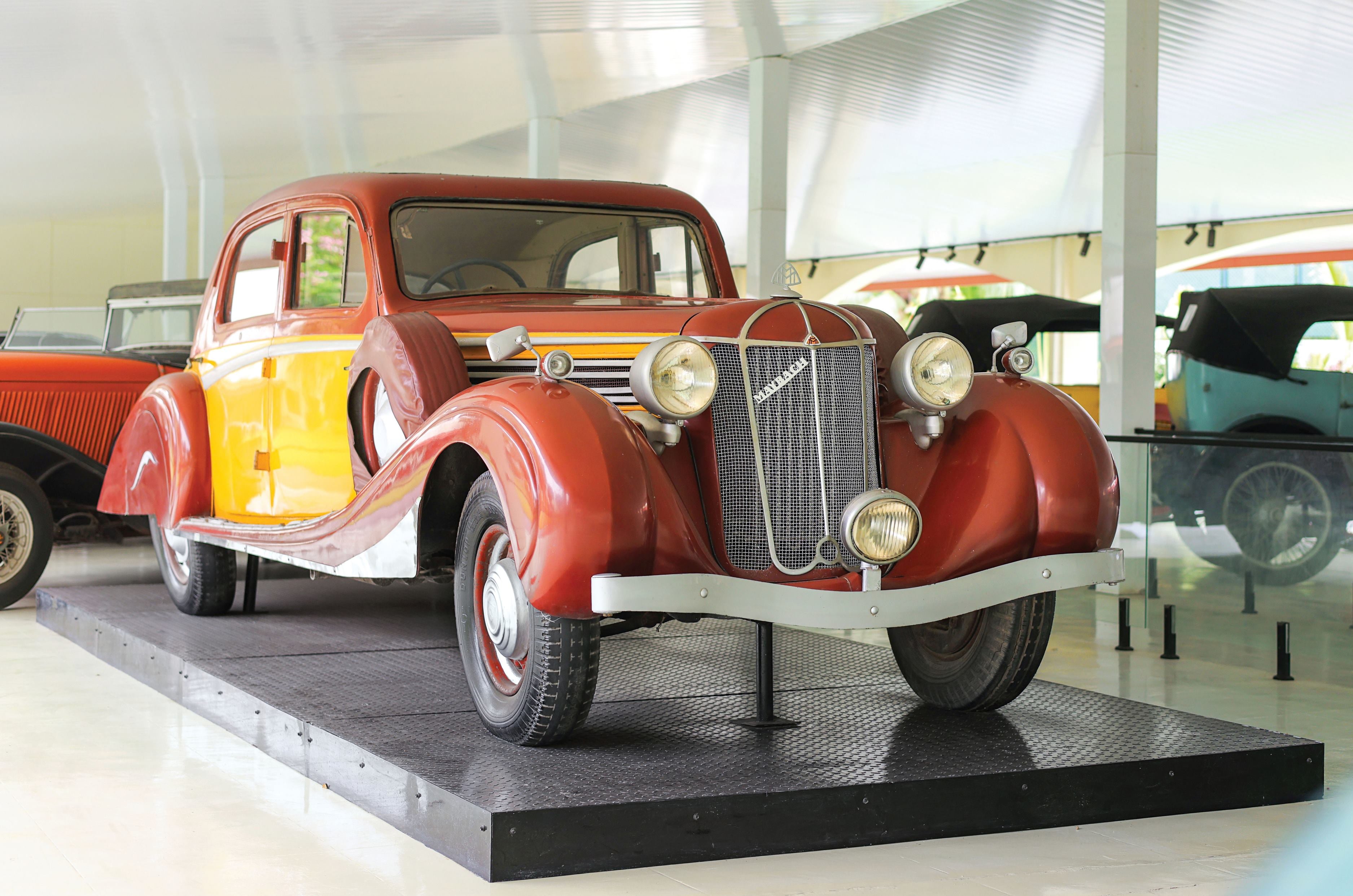
As we get to Ahmedabad, we turn into another historical location, Dastan Auto World – collector extraordinaire Pranlal Bhogilal’s collection, where the modern S-Classes met some more of their ancestors. A Maybach SW38, ordered by Maharaja Umaid Singh of Kota, draws admiring stares from the German members of the Mercedes crew, especially its aerodynamic profile. Capable of nearly 160kph, it was one of the fastest four-doors of its time. Equally captivating are Mercedes’ post-war comeback cars – the 300S ‘Adenauers’. Named after Germany’s first Chancellor, who famously rode in one with his hat on, this limousine is what eventually evolved into the S-Class.
Heritage and high tech
You can trace the journey via the stickers on the cars.
The 140 Years, 140 Places drive captured the duality of Mercedes perfectly; the brand embodies both heritage and innovation in equal measure, both streams converging seamlessly. As the convoy continues its odyssey, what’s clear is that this is a celebration not only of Mercedes’ past, but also the brand’s ability to connect eras, cultures and people through the universal language of the automobile.
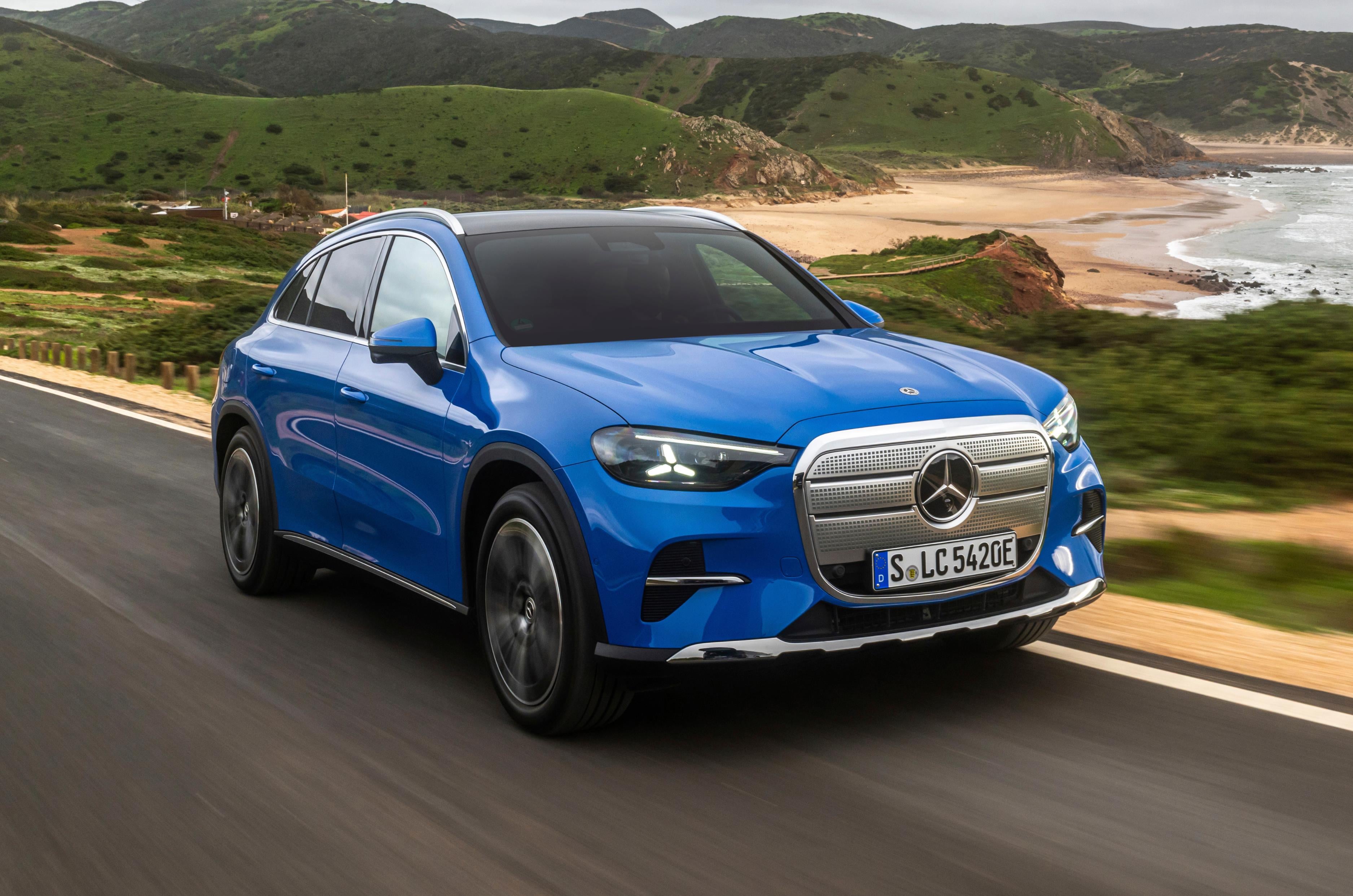
The Mercedes-Benz GLC EV you see here is not merely an electric derivative of the GLC you and I are familiar with. It’s built on an all-electric platform, and it’s longer, wider, and built on a slightly larger wheelbase than the GLC. And it also does 0-100kph in just 4.3 seconds.
The big news is that it’s coming to India by the end of the year. There’s lots to talk about, so let’s go one by one.
Mercedes-Benz GLC EV Exterior Design and Engineering – 8/10
Large new grille reminiscent of older Mercs
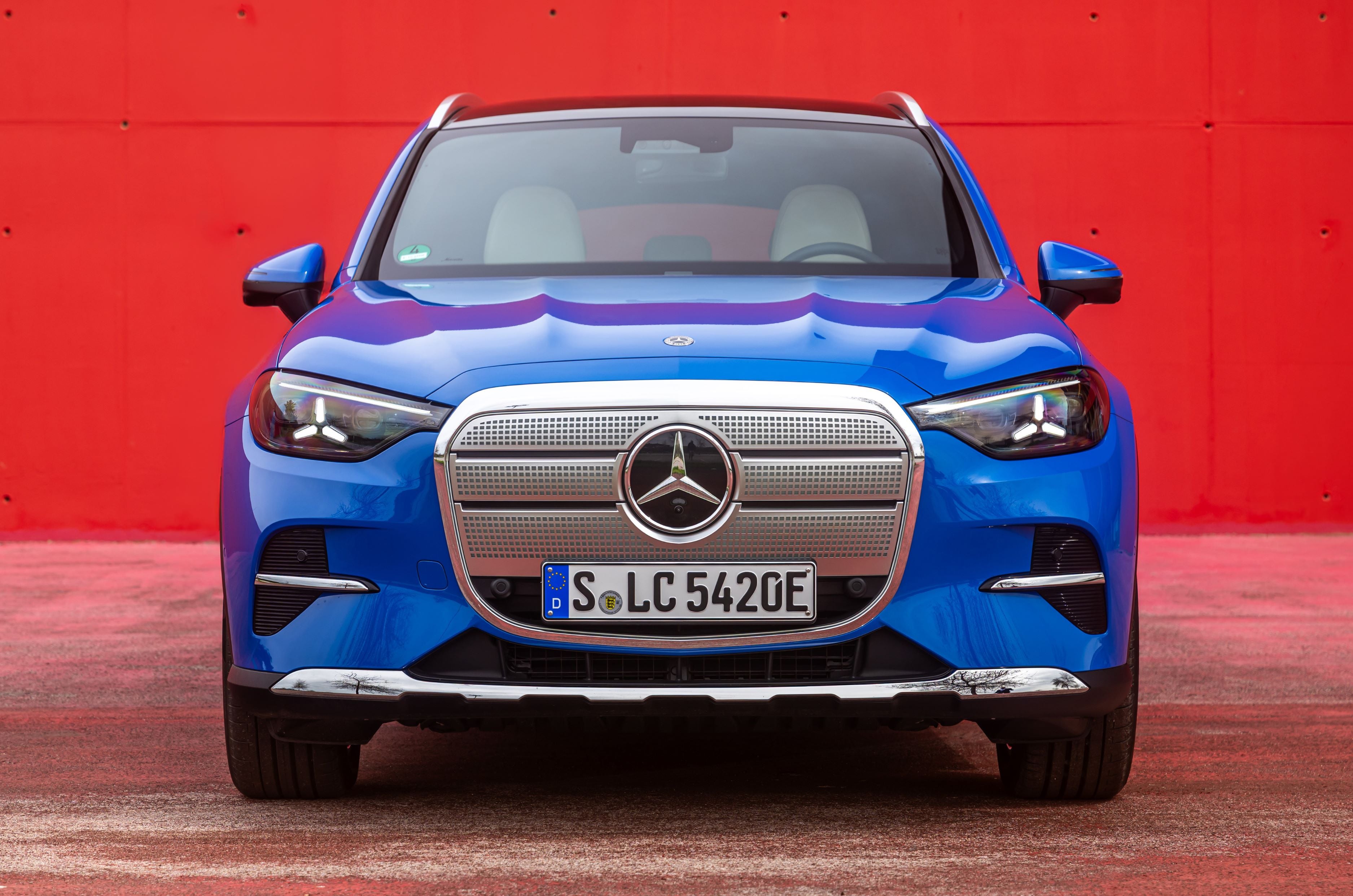
Let’s talk styling first, and what catches your attention up front is this large new grille. It’s very different from what we’ve seen of Mercs of late, but it actually has a link to Mercs of old. The upright grille is styled to look like the one on iconic models like the W112 S-Class, but there’s a lot of modernity built into it as well. There are 942 lighting elements in it! Talking of lighting, the three-pointed star on the nose glows and there’s a tri-star DRL pattern in the headlights too. And unlike other Merc EVs from the (recent) past, there is a functional frunk with a handy 129 litres of space.
Gets an 84mm longer wheelbase than the ICE version.
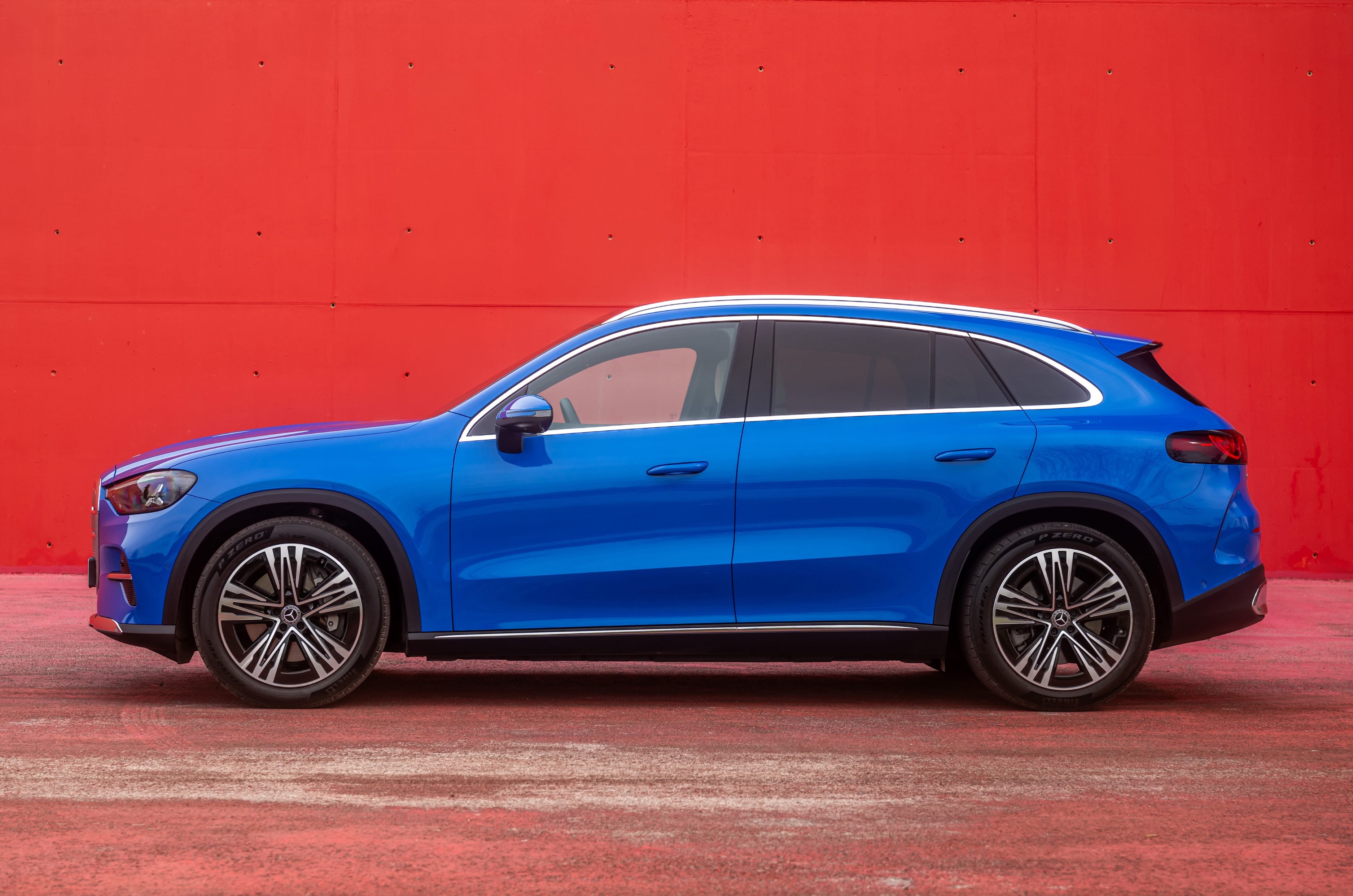
The GLC EV doesn’t look all too different to the ICE GLC in profile. Which is to say it is not an upright SUV but curvy, low-slung and aerodynamic. What is noticeably different is the wheelbase, which is a full 84mm longer. Mind you, this is the standard wheelbase GLC EV. There’s a long-wheelbase version sold in markets like China. India will get the GLC with 20-inch rims and flush-fitted door handles that pop out when the doors are unlocked.
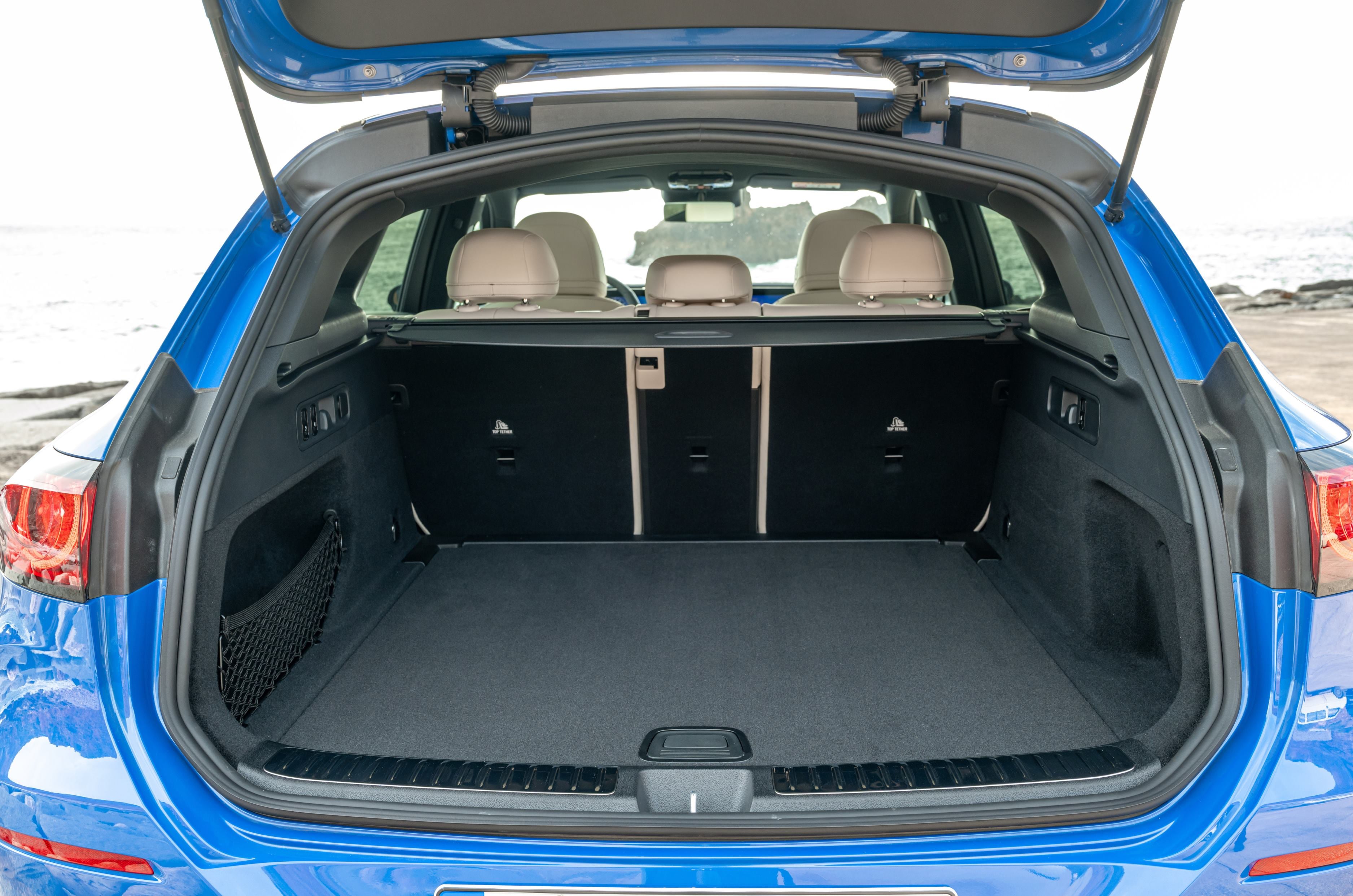
570-litre boot is spacious, but a caveat is the absence of a spare wheel.
Styling at the back is quite distinct from the other lot of Mercedes SUVs, and that’s thanks to a band of black that runs the width of the tailgate. There’s full-LED lighting at the back replete with three-pointed star light signatures.
The powered tailgate opens up to a 570-litre luggage area, which is quite sizable. The only catch is that there’s no space for a spare tyre. Mercedes India will probably have to provide one to sit on the boot floor, which means not much space will be left for luggage.
Before we proceed, I have to admit, I didn’t like what I saw of the GLC EV in pictures. In reality, it is eye-catching, and in a very good way.
Mercedes-Benz GLC EV Interior Space and Comfort – 8/10
Interior quality is impressive, with open-pore wood trim while physical steering knobs and AC vents have a tactile feel
That new-age Mercedes vibe continues inside too, and that feeling is all thanks to a 39-inch Hyperscreen that extends nearly the entire width of the dash. There’s a seamless connection between the digital instrument cluster, the centre touchscreen and front passenger display, and it does look really impressive. That being said, the screens have taken away some of the warmth that you’d expect in a Merc.
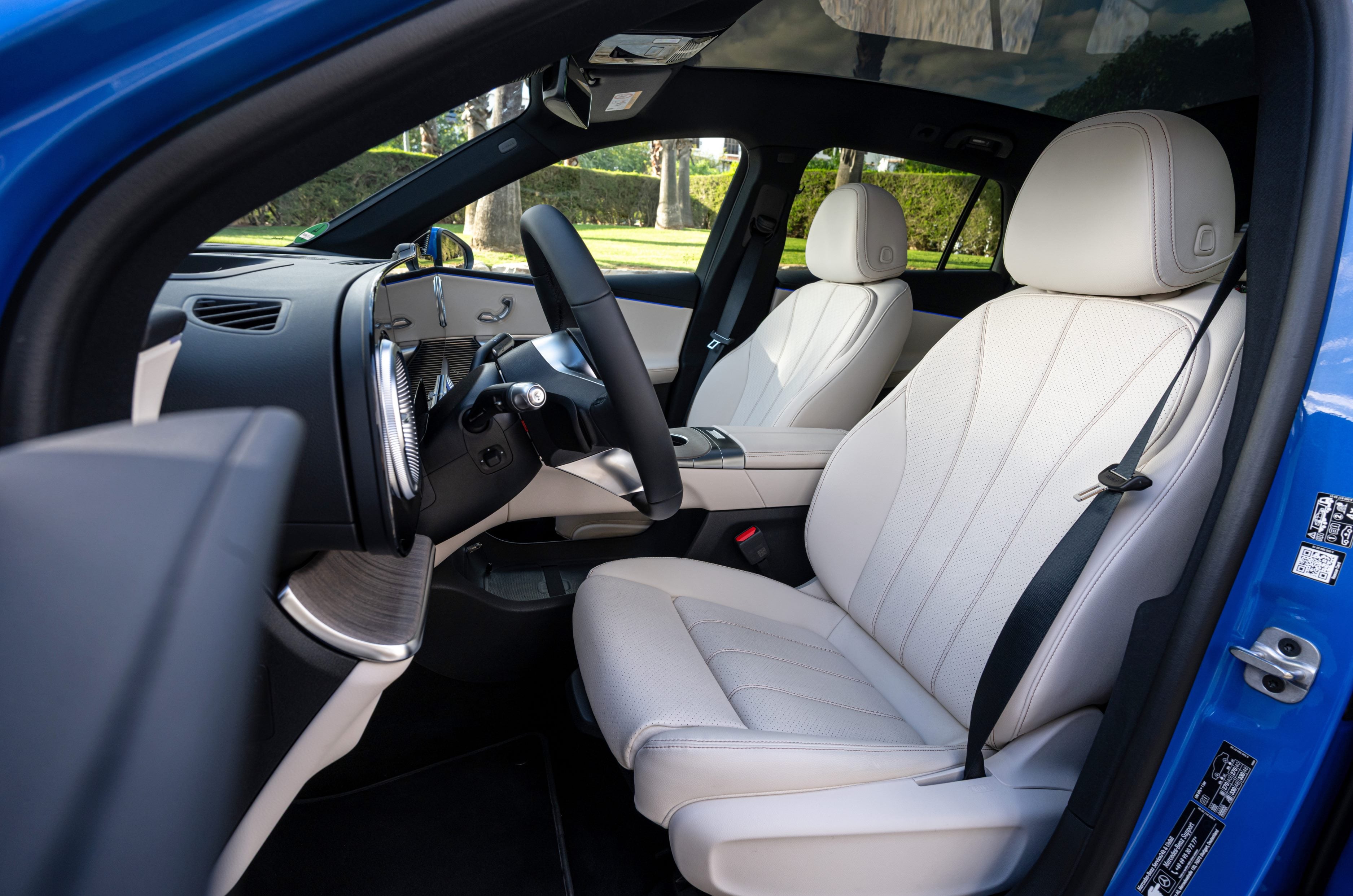
Comfy front seats come with various levels of adjustment, massage and heating. India-spec model expected to come with a cooling function.
In terms of quality, though, the GLC EV feels like an expensive Mercedes. There’s open-pore wood, the AC vents operate with very satisfying clicks and clacks, and physical rotary controllers make a welcome comeback to the steering wheel.
The front seats are as comfy as they look, with multi-way powered adjustment, massage and heating. We expect the model for India to pack in ventilation as well.
You get more space than the standard GLC, and unlike some EVs, you do get good foot room. However, it’s best suited for two.
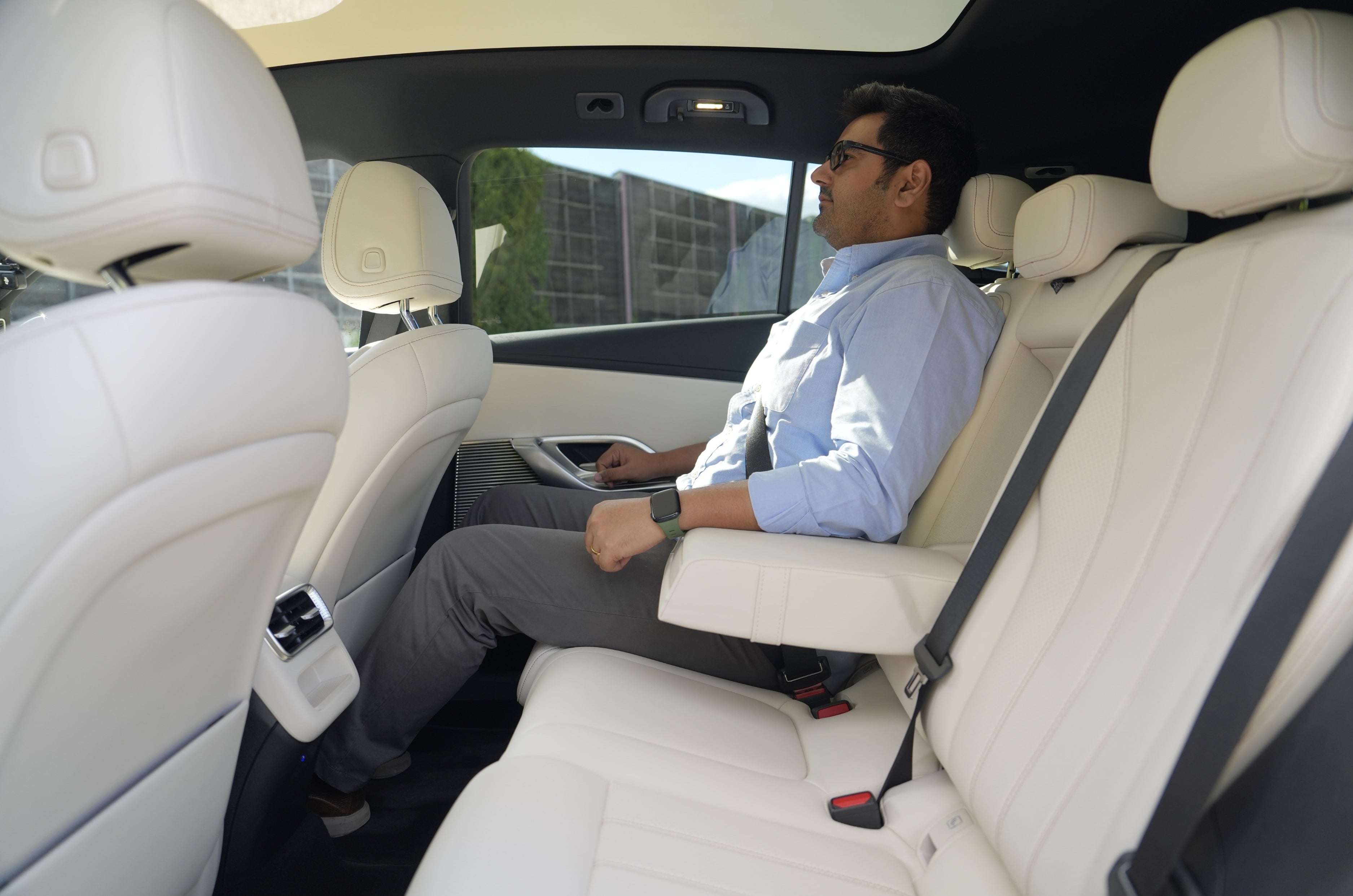
It’s at the back where things get really interesting for buyers confused between a GLC and a GLC EV. Rear seat space is a bit more generous than the standard GLC. There’s also good foot room under the front seats, which is not something you can say about all EVs, and even the seating position isn’t the typical knees-up that we’ve come to associate with EVs. A longer seat squab would have upped the experience. Also, the rear seat is best for two. A middle passenger will have to contend with a high centre tunnel.
Mercedes-Benz GLC EV Features and Safety – 9/10
The Hyperscreen is the focal point of the dash and delivers brilliant graphics across the entire display. The digital dials, centre touchscreen and passenger screen appear to be part of a seamless display and look terrific. There are themes for the screen too that also adjust other functions for the full effect. For instance, a bonfire on the screen will be accompanied by the seat heating coming on.
Massive 39-inch hyperscreen has a good UI and seamlessly integrates with other in-car displays but packs in too many functions.
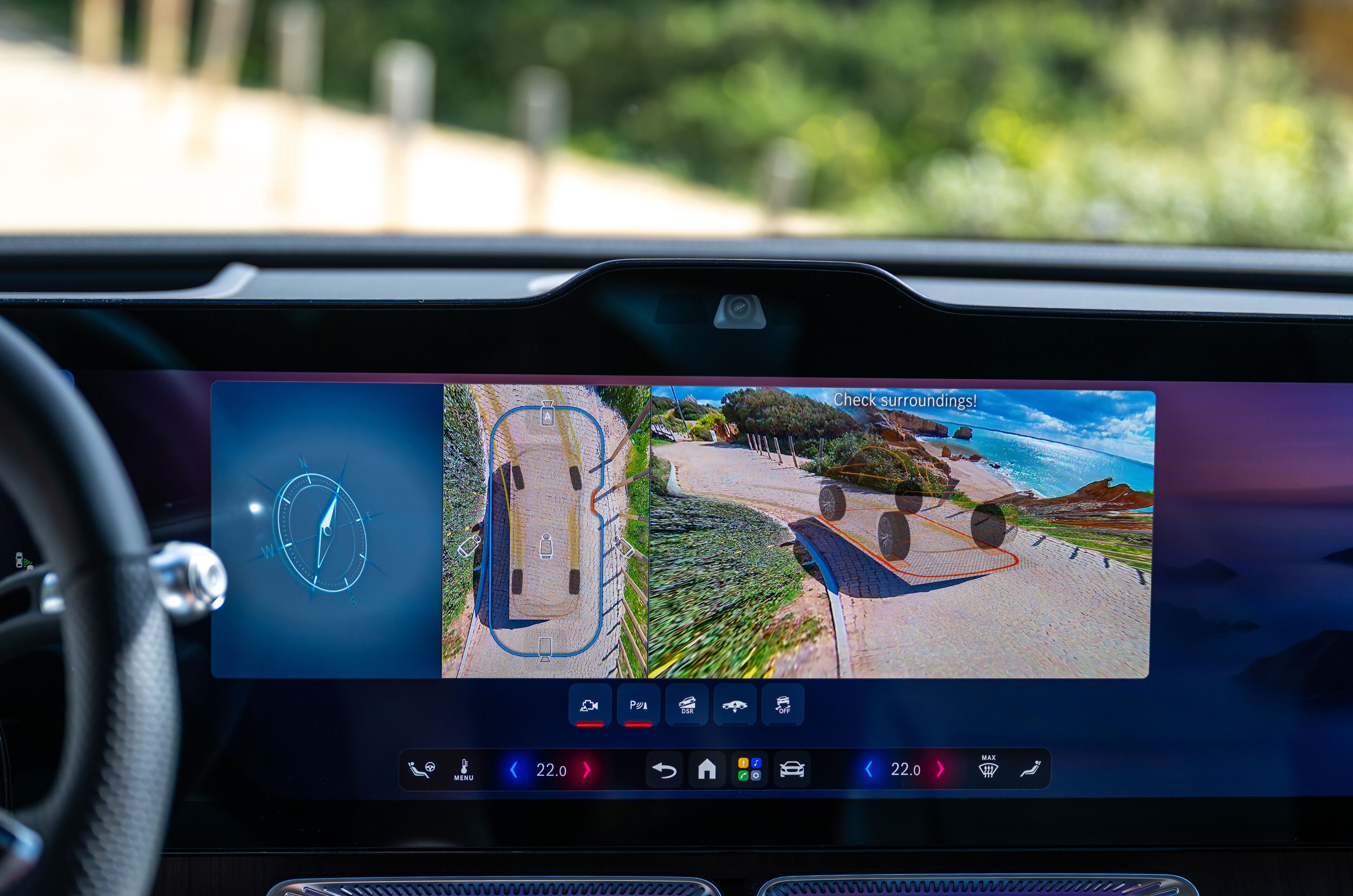
The thing is, there’s just too much packed onto the centre touchscreen. The UI is good but more physical controls would just make life easier. The passenger display is slick in its own right but only blanks out if it detects the driver looking at it (a camera on the dash monitors the driver’s gaze). A privacy glass would have just been better.
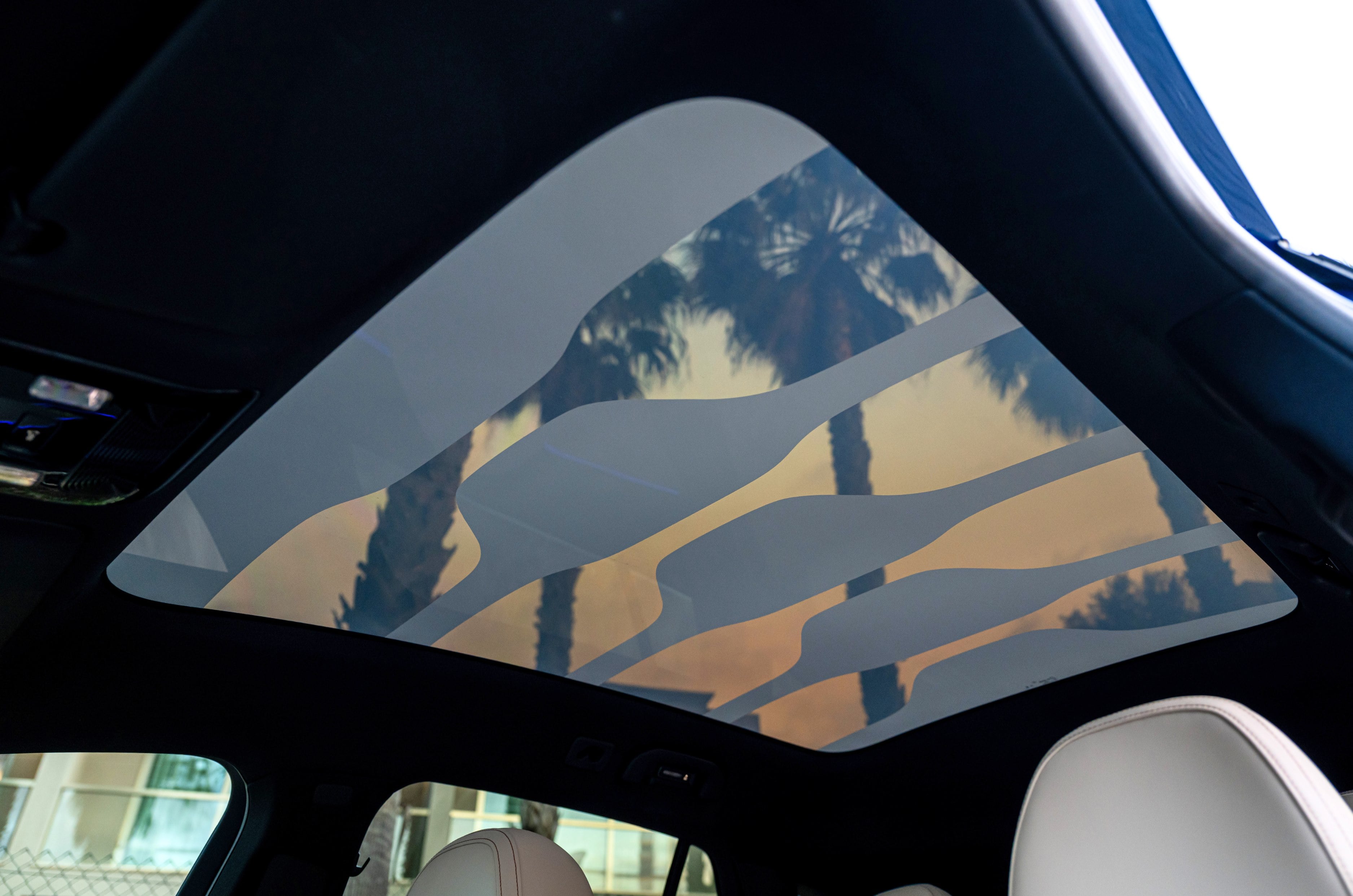
Among the other features, the panoramic glass roof is made up of nine segments which can be individually controlled for transparency. You can make them completely opaque, and they did a surprisingly good job of keeping the heat out. You could even have the glass roof specced with 162 stars that change colour with the ambient lighting.
Panoramic glass roof comprises nine individually configurable segments to control transparency.
Features-wise, aside from the screens and glass roof, the other highlight is the Burmester 4D sound system with exciters in the seat, so you can actually feel the bass. The head-up display and cameras are also top-class, while the AI integration doesn’t feel like a tick-mark item. You can actually converse with your car for restaurant recommendations or even abstract general knowledge.
The safety suite includes 9 airbags, ESC and a full suite of ADAS features.
Mercedes-Benz GLC EV Performance and Refinement – 9/10
Your friendly Mercedes salesperson will only be too happy to run you through the GLC 400’s big numbers: 489hp, 800Nm and a 4.3 sec 0-100kph time. The figures are made possible by front and rear permanently excited motors that draw power from a 94kWh battery pack.
489hp from its dual motors makes the GLC EV feel like an AMG compared to its ICE counterpart.
How does it all come together? The first thing that gets you is the silence. The drive experience is just what you’d expect in a plush Mercedes electric car. So it’s really quiet, and you don’t hear much of the world outside. There is a bit of wind noise if you really pay attention, but honestly, with some music piping out of the Burmester sound system, it’s not something that will catch your attention in the least.
What’s also clear is that the GLC EV is the strong and silent type. The performance makes the GLC EV feel like an AMG compared to the standard GLC petrol and diesel. A two-speed gearbox ensures quick getaways when needed, as well as the long legs for a more relaxed drive. Stomp down on the accelerator from a steady cruise, and you can feel the kickdown.
You won’t need to drive like a hoon to enjoy the GLC EV. Performance, no surprises, is very brisk when you put some weight on the accelerator pedal, with easy access to power. You can make the GLC EV feel a bit more urgent when you play around with the drive modes, but honestly, you won’t really need to because of how friendly the power feels and how ready the GLC EV feels at all times.
Power is easily accessible and is ready to push further when you put your foot down.
You’ll also take very naturally to the regen braking levels. One-pedal driving is included, and there’s the option of an intelligent mode too that reads the driving environment and optimises regen force.
The GLC EV also gets sound profiles, and we have to say they’re a bit unusual. They’re not trying to mimic the sound of a V8 or a V6 or any kind of ICE engine. The sounds are more on the sci-fi spectrum, so if you accelerate hard, you’d get the feeling of being in a UFO, which is disconcerting, if we can be honest. We’d rather enjoy the quiet inside.
Mercedes-Benz GLC EV Range and Efficiency – 8/10
Its large 94kWh battery can be charged from 10-80 percent in 22 minutes with a 330kW DC fast charger.
Now, on to the matter of range. Mercedes claims a 715-kilometre range on the WLTP cycle. Even if you account for real-world Indian conditions, you’re looking at a comfortable range of over 550 kilometres. Drive with a bit of care, and you could see that figure go past 600 kilometres. We really have come a long way in just a few years, haven’t we?
Of course, the go-to charging solution for most owners will be home charging. There’s up to 22kW AC support. The GLC can also be charged at up to 330kW using DC charging. Theoretically, at max speed, the GLC EV’s 94kWh battery can be juiced up from 10 to 80 percent in 22 minutes. A 10-minute charge alone can give you 300 kilometres of range.
Mercedes-Benz GLC EV Ride Comfort and Handling – 8/10
We can’t give a definitive verdict on cornering ability, as the bulk of our route was on the Autobahn outside Stuttgart, which has the gentlest of curves.
At Autobahn speeds, the GLC EV feels really planted and drives like a proper German car should. There’s pleasant weight at the steering wheel as well.
In terms of high-speed ride comfort, the GLC EV doesn’t come across as softly sprung as something like an EQS SUV, which really feels a bit roly-poly. There is still some vertical movement even when you switch to Sport mode, but it’s not to the point of being an irritant.
Feels planted out on the Autobahn and the steering is well-weighted
We’ll reserve judgement on the air suspension’s bump absorption till we drive the GLC EV on our roads, but on the sole patch of broken road on our route, the GLC EV didn’t feel entirely plush. Perhaps that’s something for Mercedes India to have on their list of things to do for the version headed our way.
A cool feature on the GLC’s suspension is its use of Google Maps to identify the vehicle’s environment and adjust ride height. For instance, the car automatically lowers on a highway. Also cutting-edge is how the suspension preps damping force in advance of a bump based on Car2X information from a Mercedes vehicle driving ahead. The systems better be up for the challenge of our roads.
Bundled in with air suspension is rear-axle steer, and the 4.5 degrees of movement does help greatly at parking speeds.
Mercedes-Benz GLC EV Should You Buy Now or Wait – 9/10
Bookings for the GLC EV open in early October, and the model will be launched in India within 2026.
It’s a big deal because the GLC EV comes to India within just six months of its European rollout. What makes the timeline even more impressive is the fact that the GLC EV won’t be an import, but will be assembled in India. Local assembly points at keen pricing.
The GLC EV will be locally assembled 6 months after its European version goes on sale.
We expect the model to be priced at about Rs 85-90 lakh (estimated, ex-showroom), which wouldn’t be all too far from the ICE GLC’s price. Factor in the registration benefits on EVs, and the price gets more tempting still.
As a product, the GLC EV does have lots going for it. It’s got the power, the refinement and the tech you’d expect on a luxury EV. Importantly, it doesn’t feel like your dad’s Mercedes, and that new-age cool is something many buyers will resonate with.
BMW’s iX3 Long Wheelbase and Audi’s Q6 e-tron are alternatives to watch out for in 2027, but in the near future, the GLC EV looks set for a clean run.
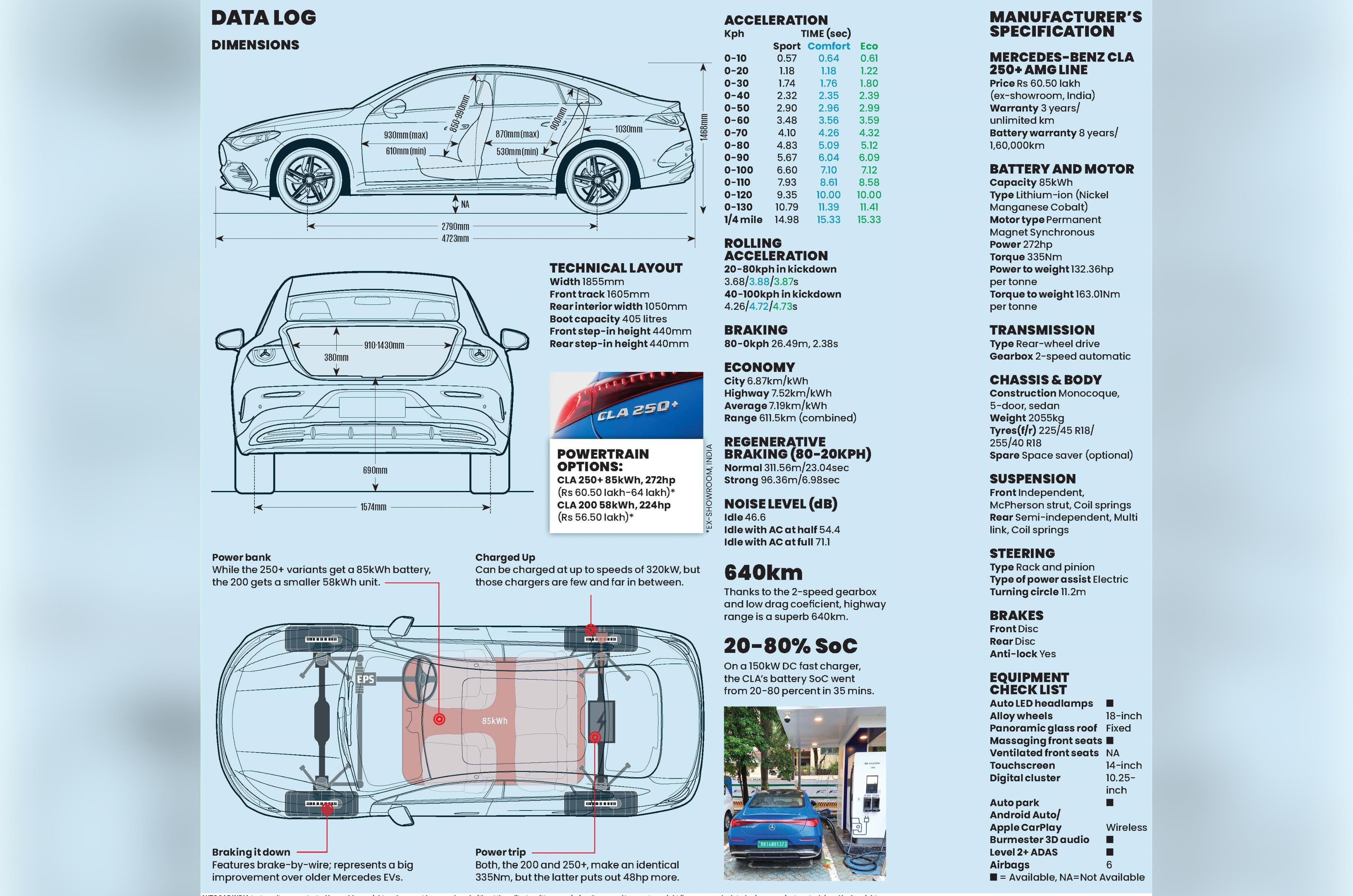
When we first drove the all-new, all-electric Mercedes-Benz CLA, we came away impressed with its smooth powertrain and its promise of a substantial real-world range. We’ve now subjected it to our real-world performance and efficiency tests to see if it delivers on that promise.
Mercedes CLA 250+ exterior design and engineering – 8/10
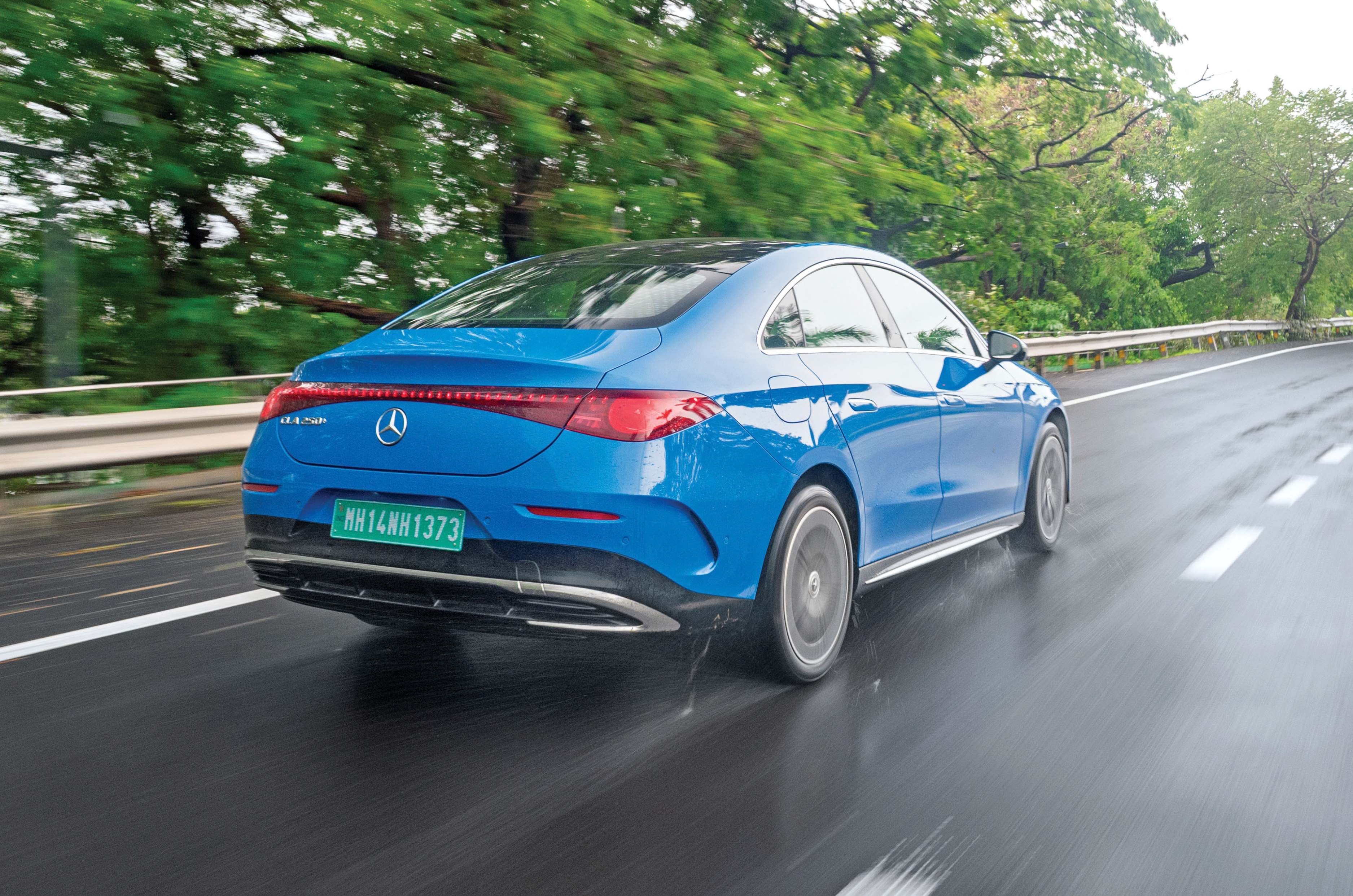
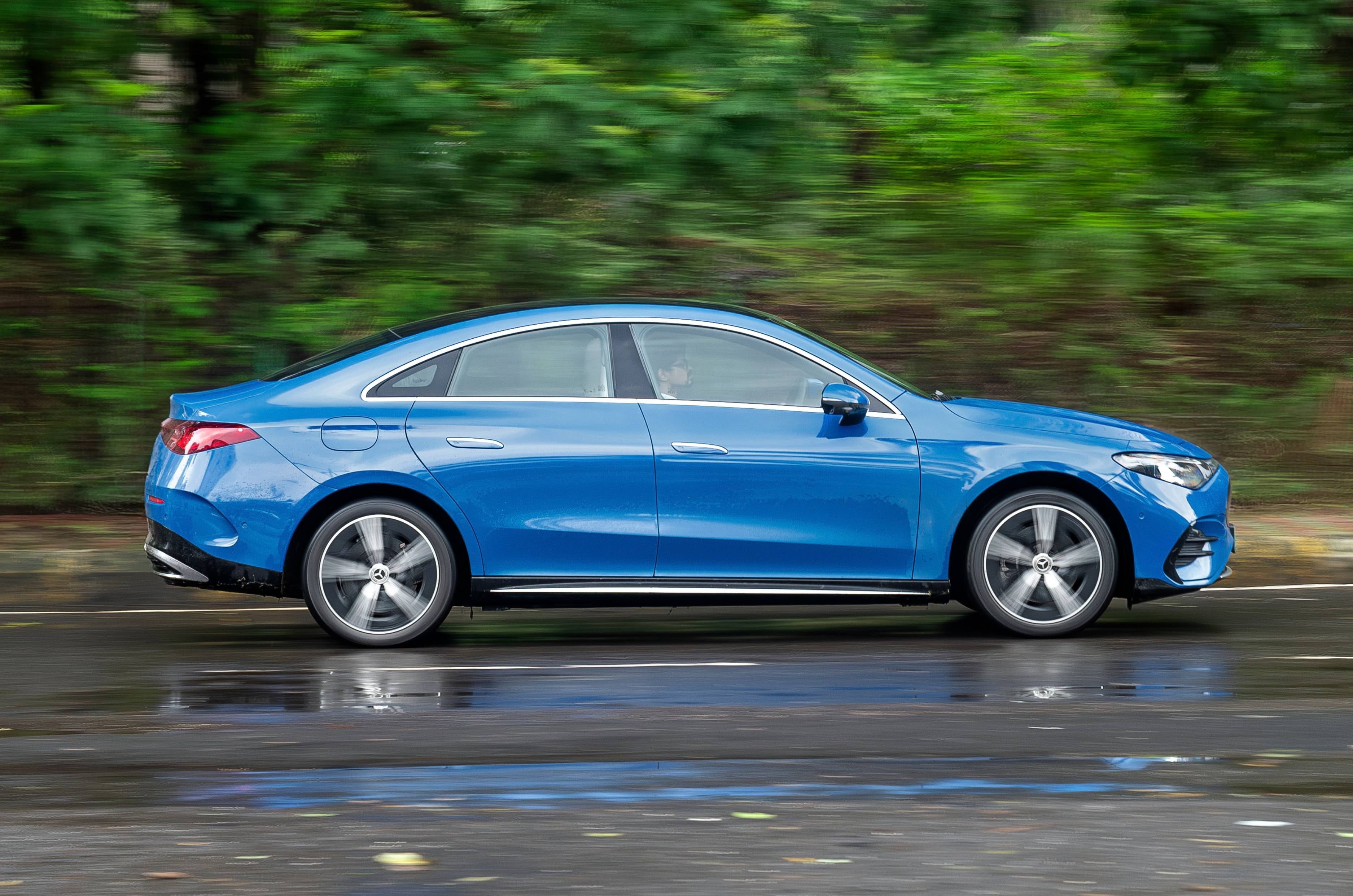
Polarising, aero-efficient design; based on new MMA platform.
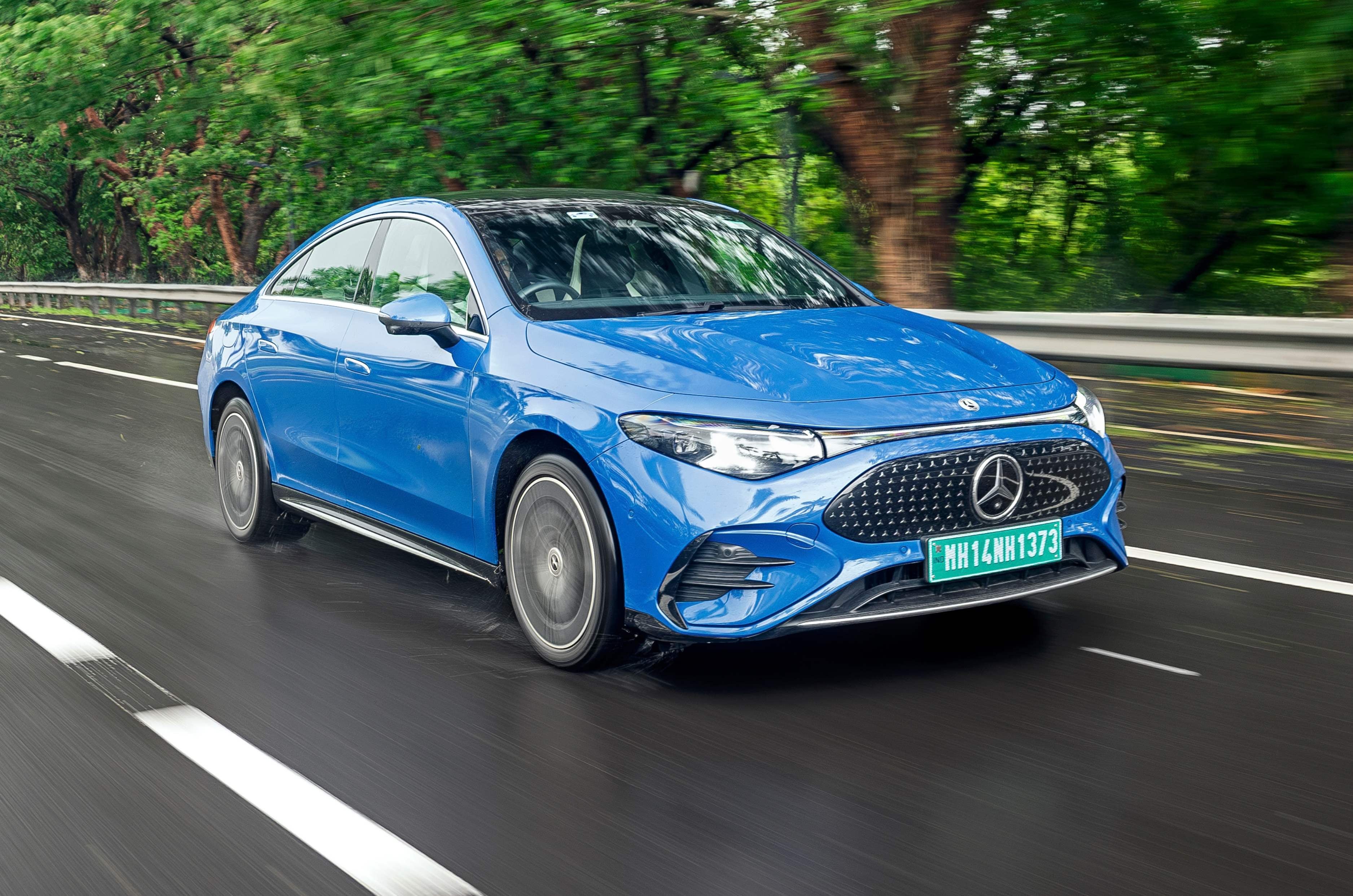
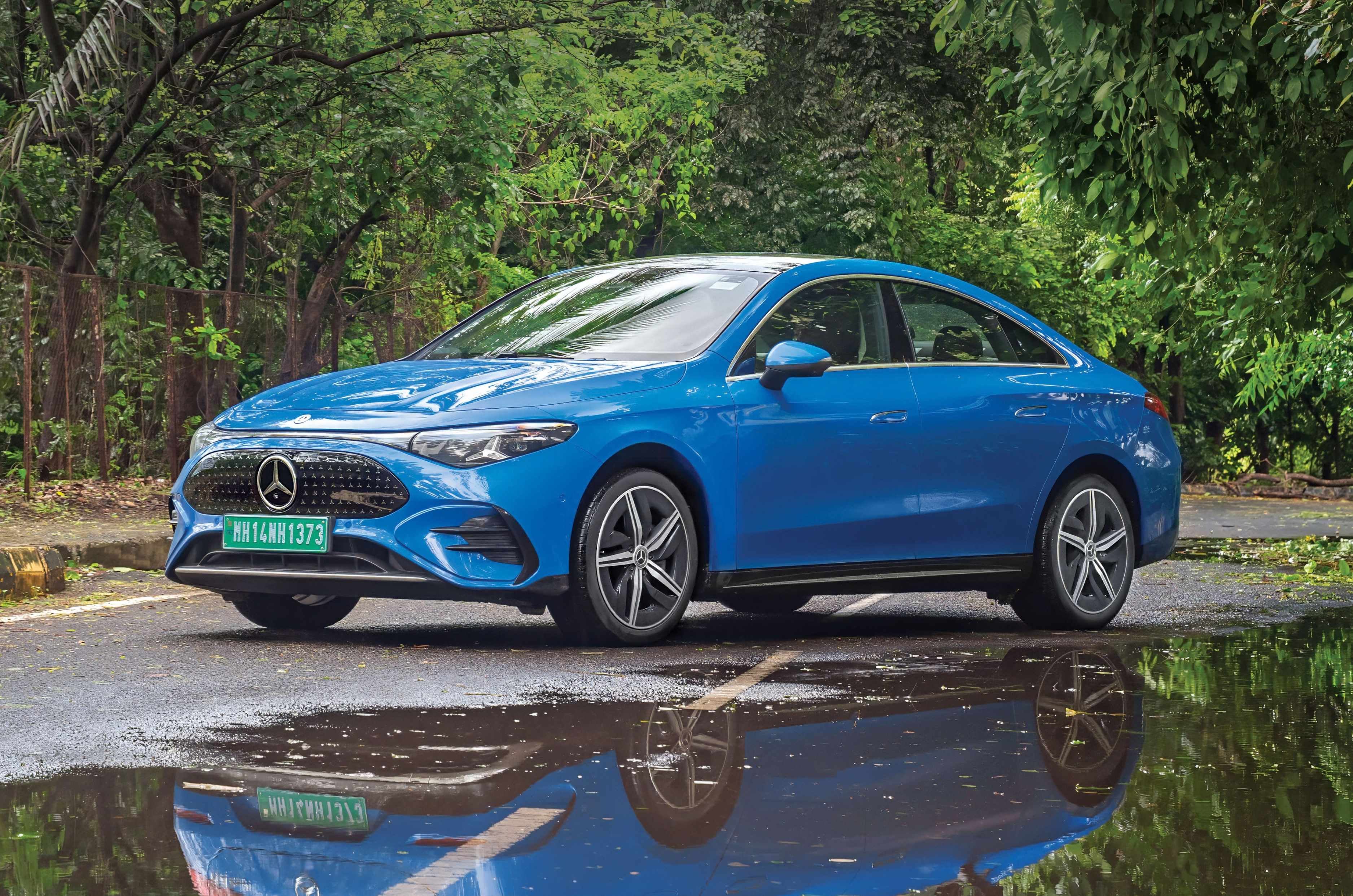
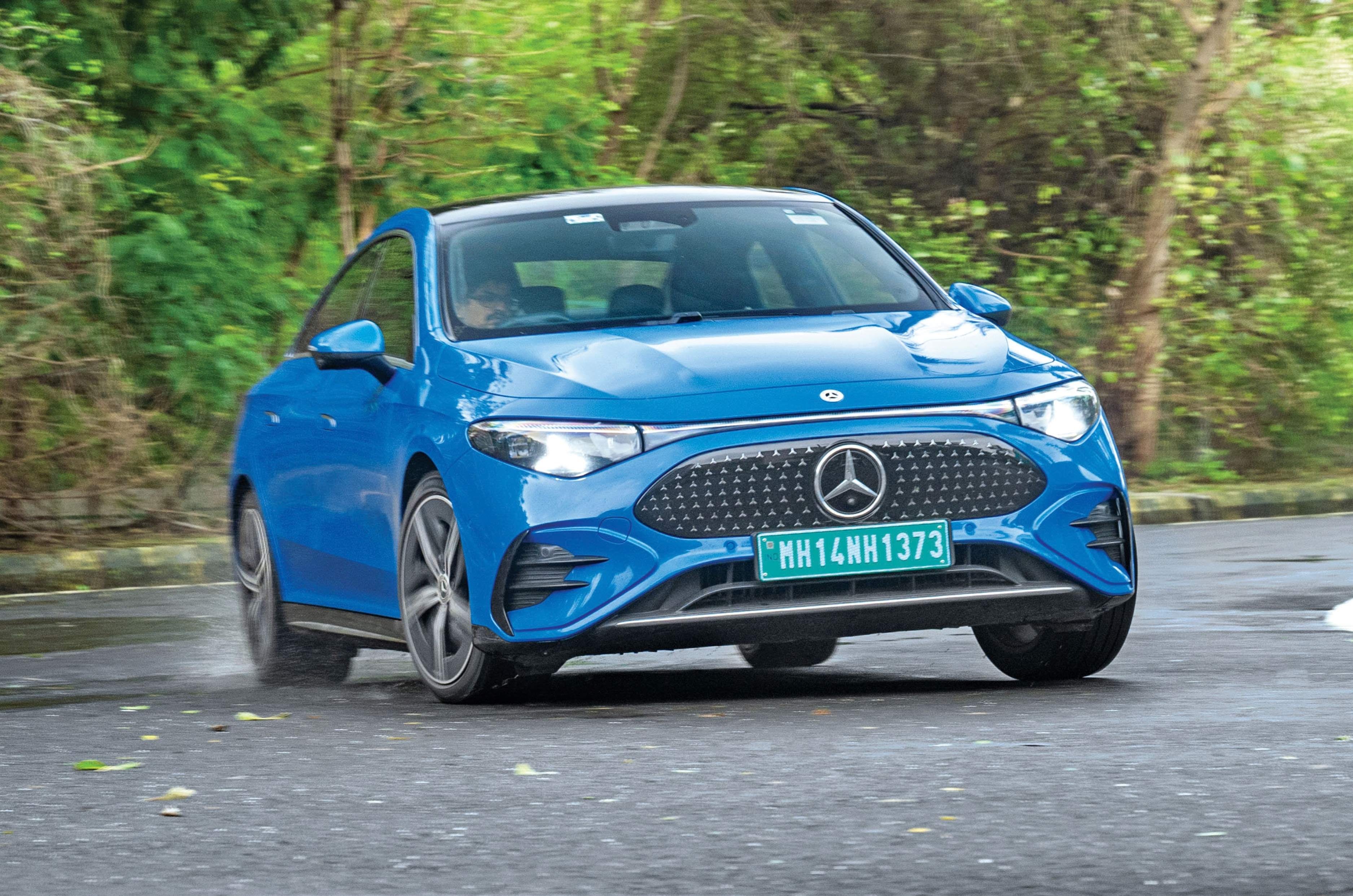
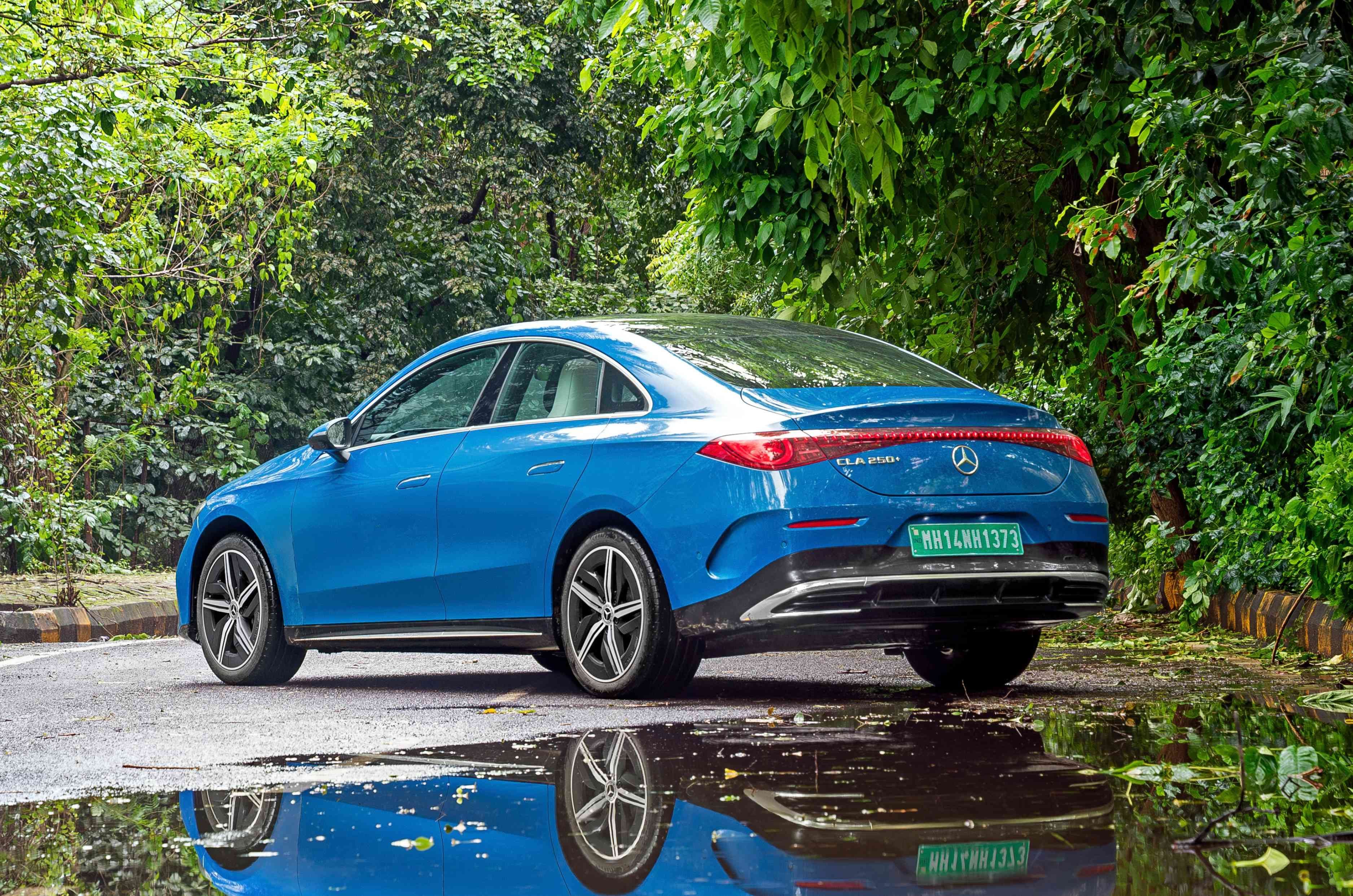
The new CLA has been designed with efficiency very much in mind, but Mercedes hasn’t completely abandoned the visual character that made the original car appealing. Its smooth, rounded silhouette is familiar from other Mercedes EVs, yet the low-slung, coupé-like roofline and frameless doors give it a distinct identity. Flush-fitting door handles, a sealed-off grille, aero-optimised 18-inch AMG alloys and a fully sealed underbody all contribute to an exceptionally slippery shape, with a drag coefficient of just 0.21Cd.
Mercedes’ three-pointed star features prominently across the CLA, appearing on the bonnet, grille, headlamps and tail-lamps. The grille itself gets 142 illuminated stars, which might sound excessive on paper, but they do give the CLA a distinctive look and, in person, seem to work rather well.
More significant, however, is what lies underneath. The CLA EV is the first Mercedes to use the new Modular Architecture (MMA) skateboard platform, which will also underpin future models. At over 4.7m long, more than 1.8m wide and over 1.4m tall, with a wheelbase approaching 2.8m, it is roughly the same size as a BYD Seal.
Mercedes CLA 250+ interior space and comfort – 7/10
Impresses with tech and quality; cramped rear with high floor.
The CLA makes a good first impression inside. Its doors open wide for easy access, while the cabin combines smart design with good materials and build quality. The CLA 250+ is offered in AMG Line trim, so you get a flat-bottomed AMG steering wheel, sporty metal pedals and AMG-spec upholstery.
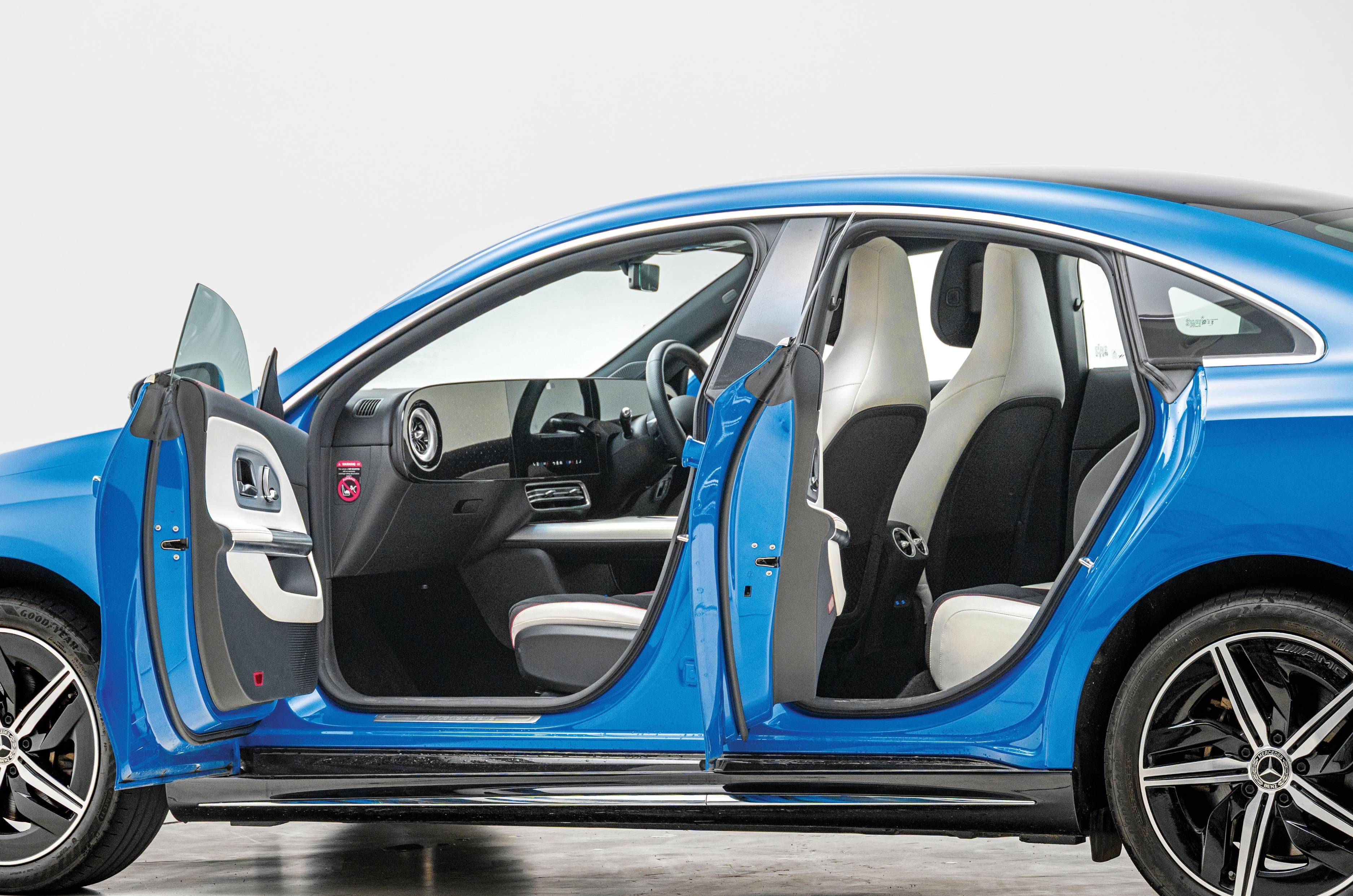
Doors open wide to aid access to the cabin; retains the stylish frameless doors.
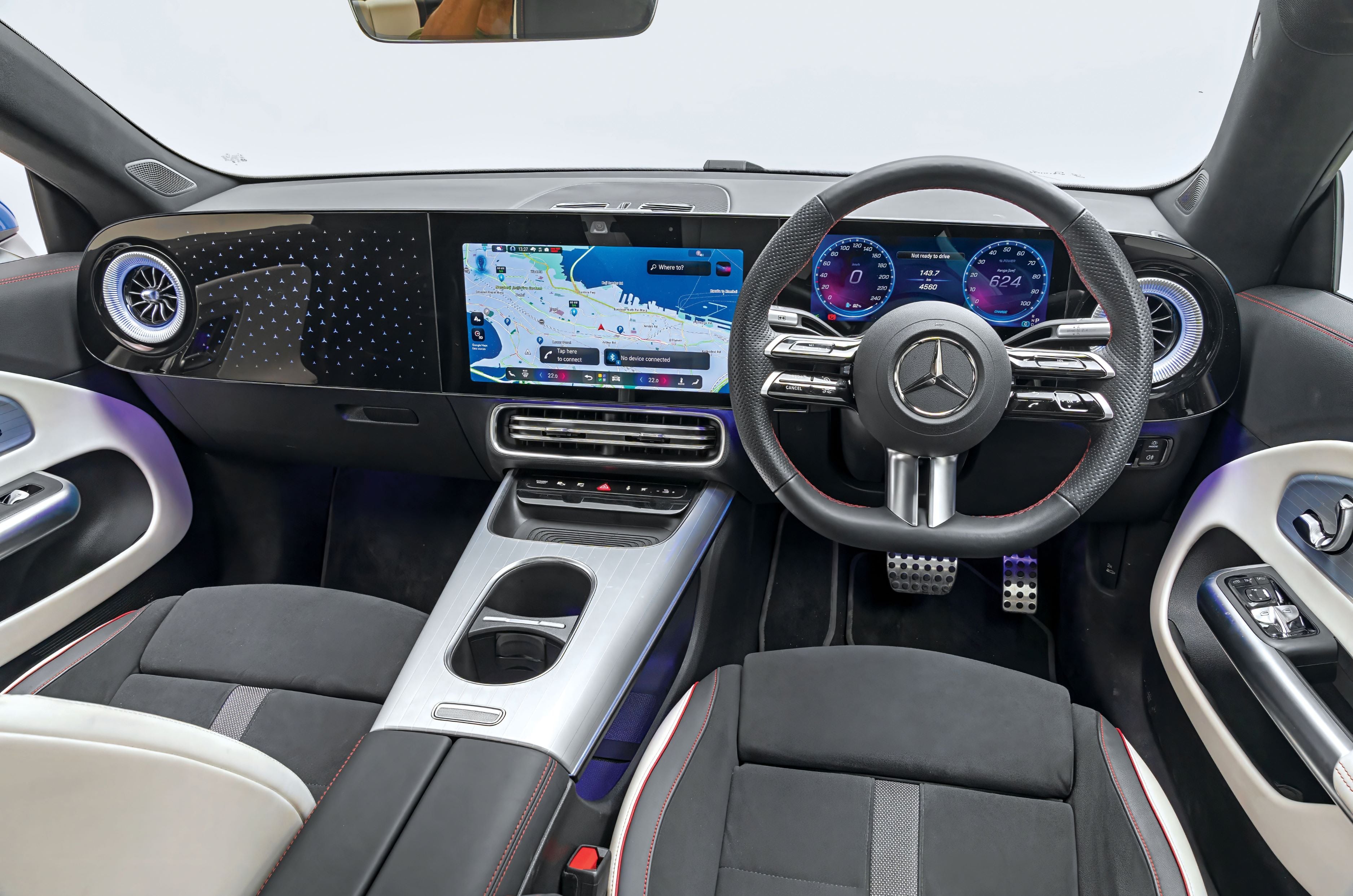
The dashboard is dominated by a large gloss-black panel housing the digital displays. The graphics are sharp, the interface is clean, and the system is easy to navigate. What isn’t quite as convincing is the near-total absence of physical controls. Apart from a few capacitive shortcuts for functions such as volume and drive modes, most functions are accessed through the touchscreen, which isn’t ideal while on the move.
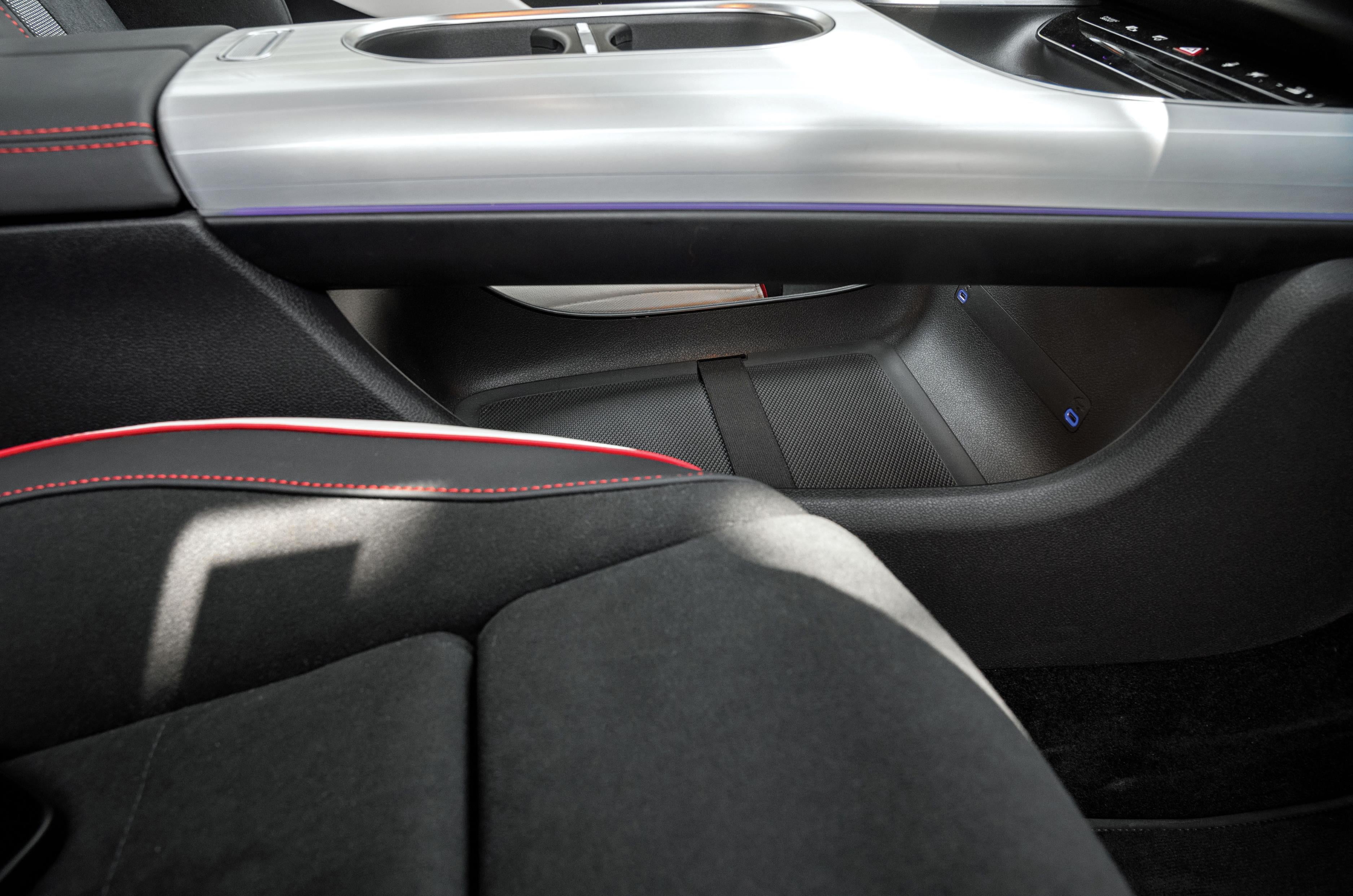
Centre console has two levels, with the top featuring cupholders and a wireless charger, and a large cubby space below.
The third passenger display offered in the 250+ Launch Edition has been omitted here, with its place taken by a gloss-black panel featuring illuminated Mercedes stars. The turbine-style air vents at either end of the dashboard are a nice touch, though, and are particularly satisfying to operate.
There is decent storage, too. You get a large glovebox, storage beneath the centre armrest, bottle holders in the doors and a floating centre console with cupholders and a wireless charger on top, along with a large storage area underneath.
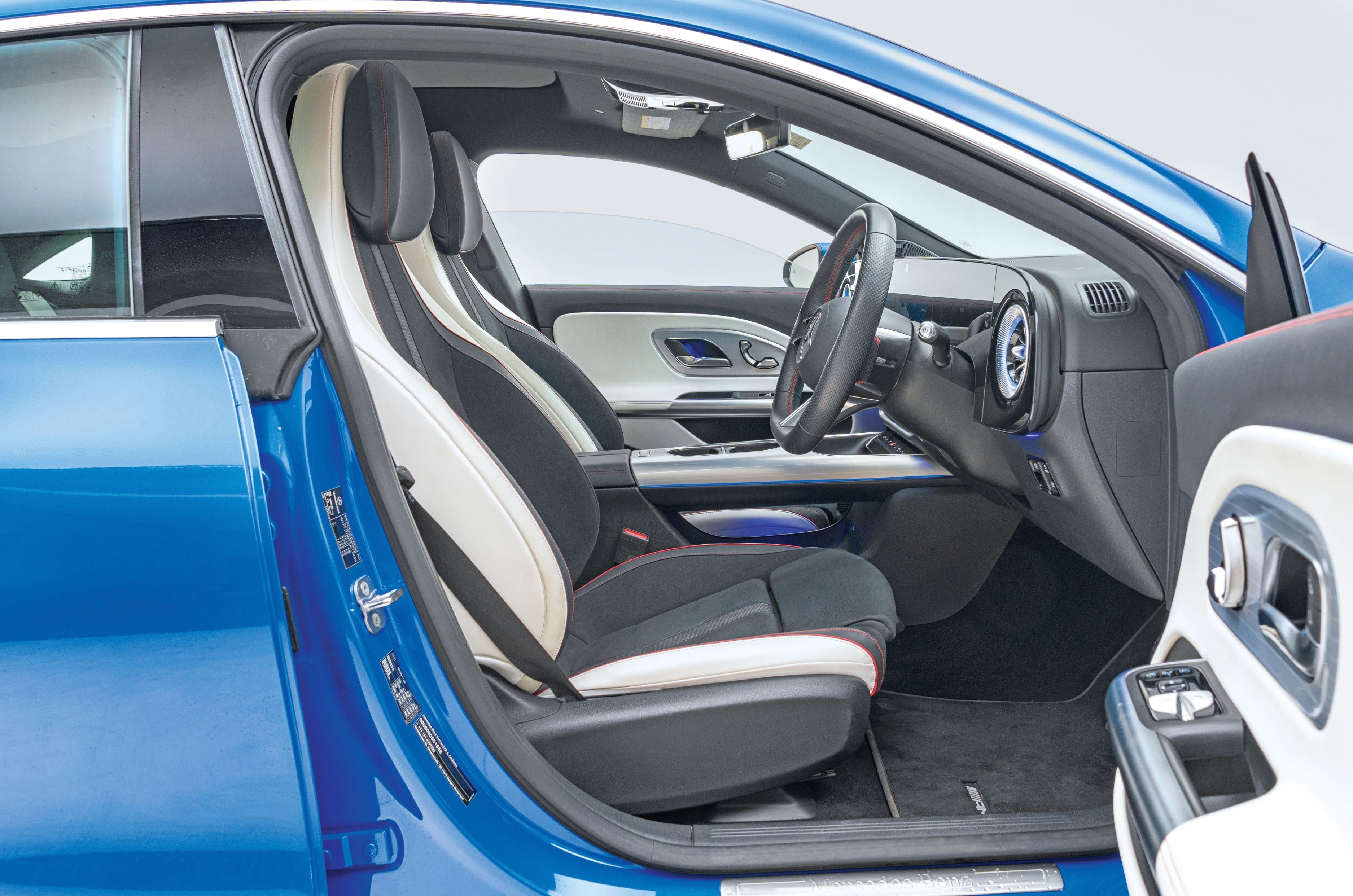
AMG Line brings Alcantara and leather trim for the snug and supportive seats; relatively knees-up seating here too.
The front seats are supportive and well padded, although larger occupants might find them a little snug. More importantly, the relatively high floor means you sit with your knees raised even in the front. At the rear, this issue is more pronounced.
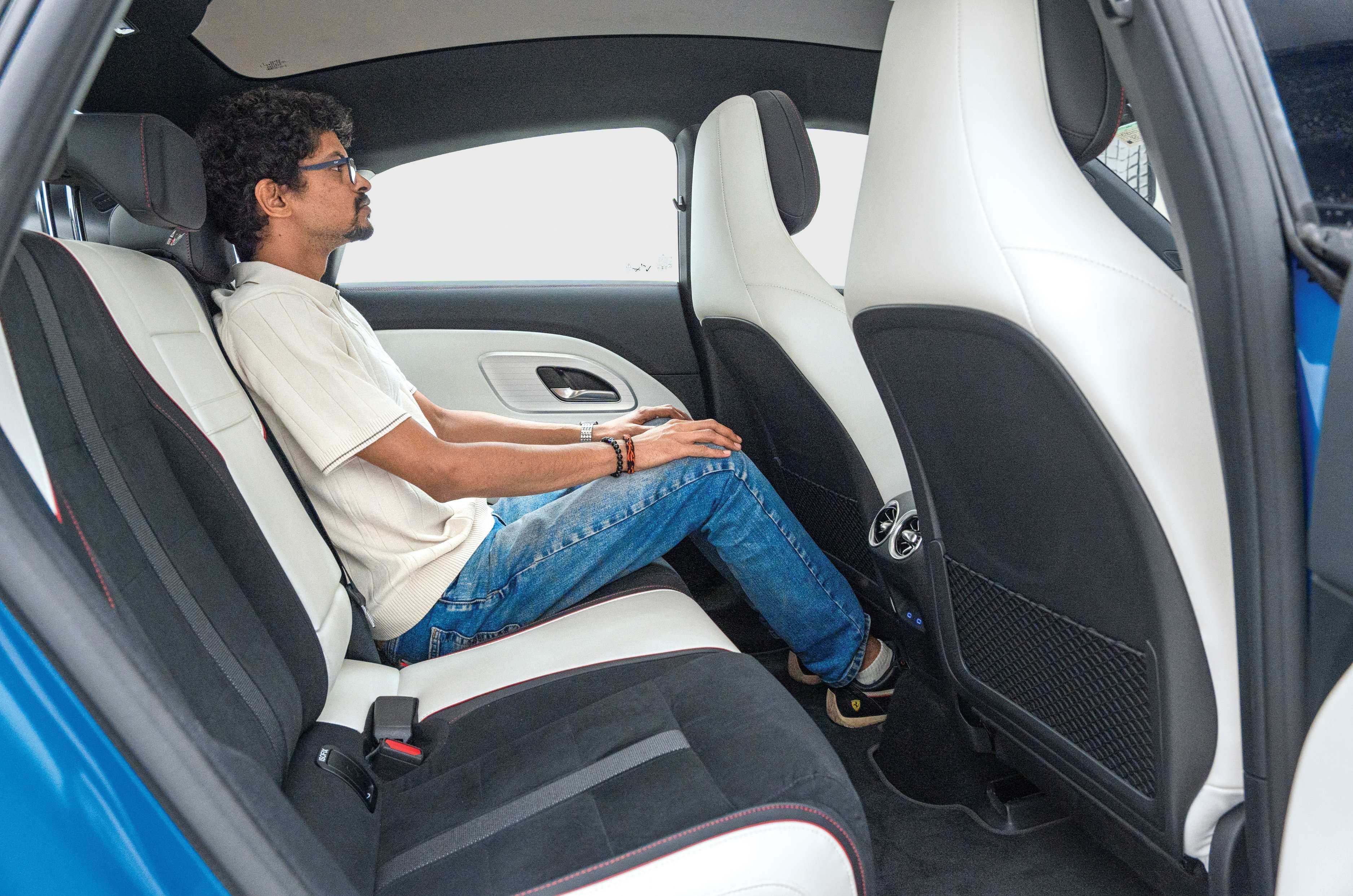
High floor results in knees-up seating, upright backrest and sloping roof further compromise rear seat’s comfort.
Although the CLA has a longer wheelbase than its predecessor, which improves knee room, the battery beneath the floor eats into under-thigh support and results in a knees-up seating position. The upright backrest and sloping roofline further compromise comfort, particularly for taller passengers. There is a centre armrest with cupholders and dedicated rear AC vents, but this still isn’t a car we’d recommend for regular chauffeur-driven use.
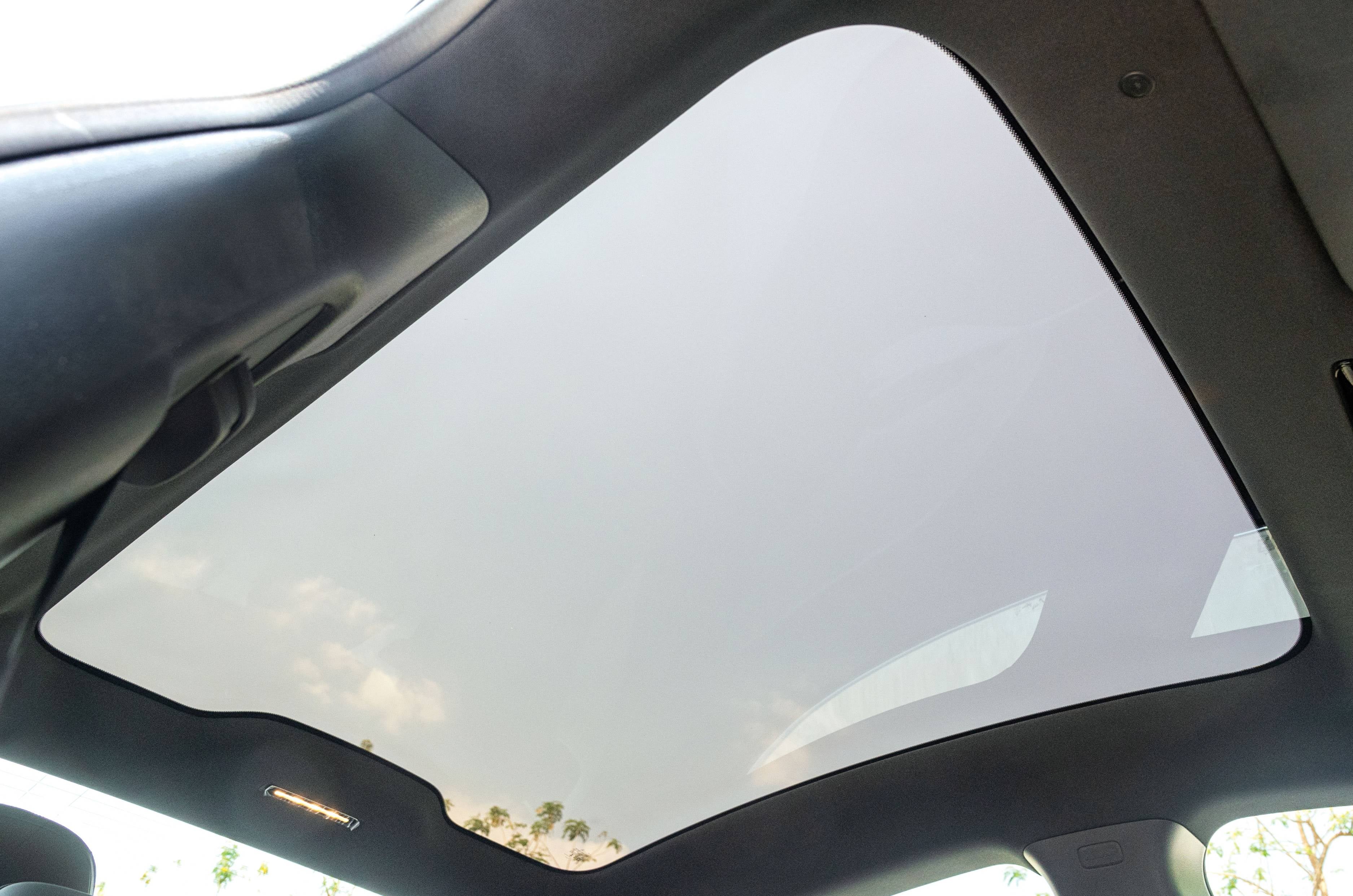
There is a large fixed panoramic glass roof that does make the cabin feel more spacious. Mercedes says the glass is heat-insulated, but a sunshade would have been welcome, particularly in our climate. It also misses sunblinds for the rear windows, meaning the rear AC has to work particularly hard to keep the back of the cabin cool.
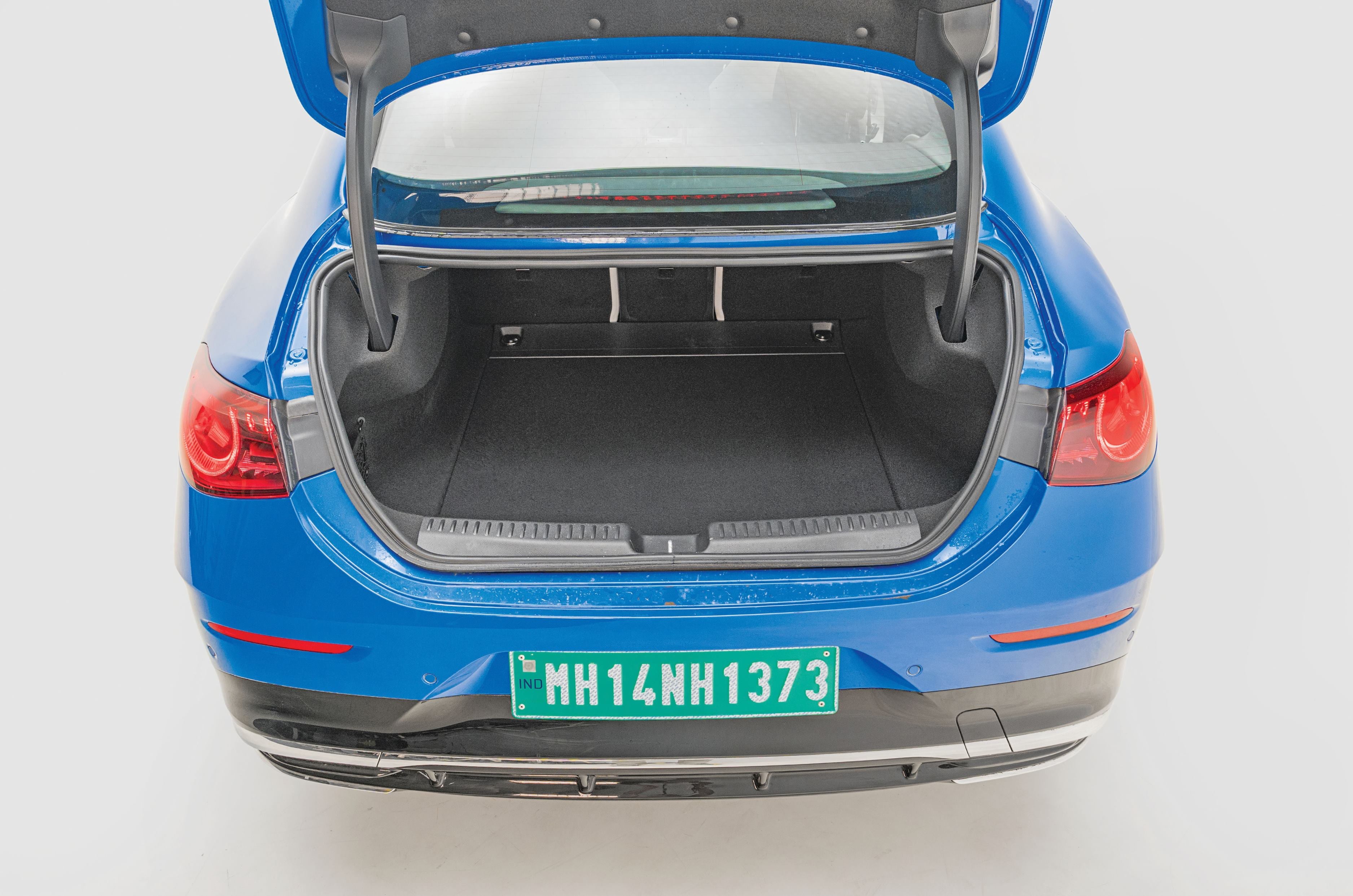
Cargo space is a useful 405 litres; boot opening isn’t large, though.
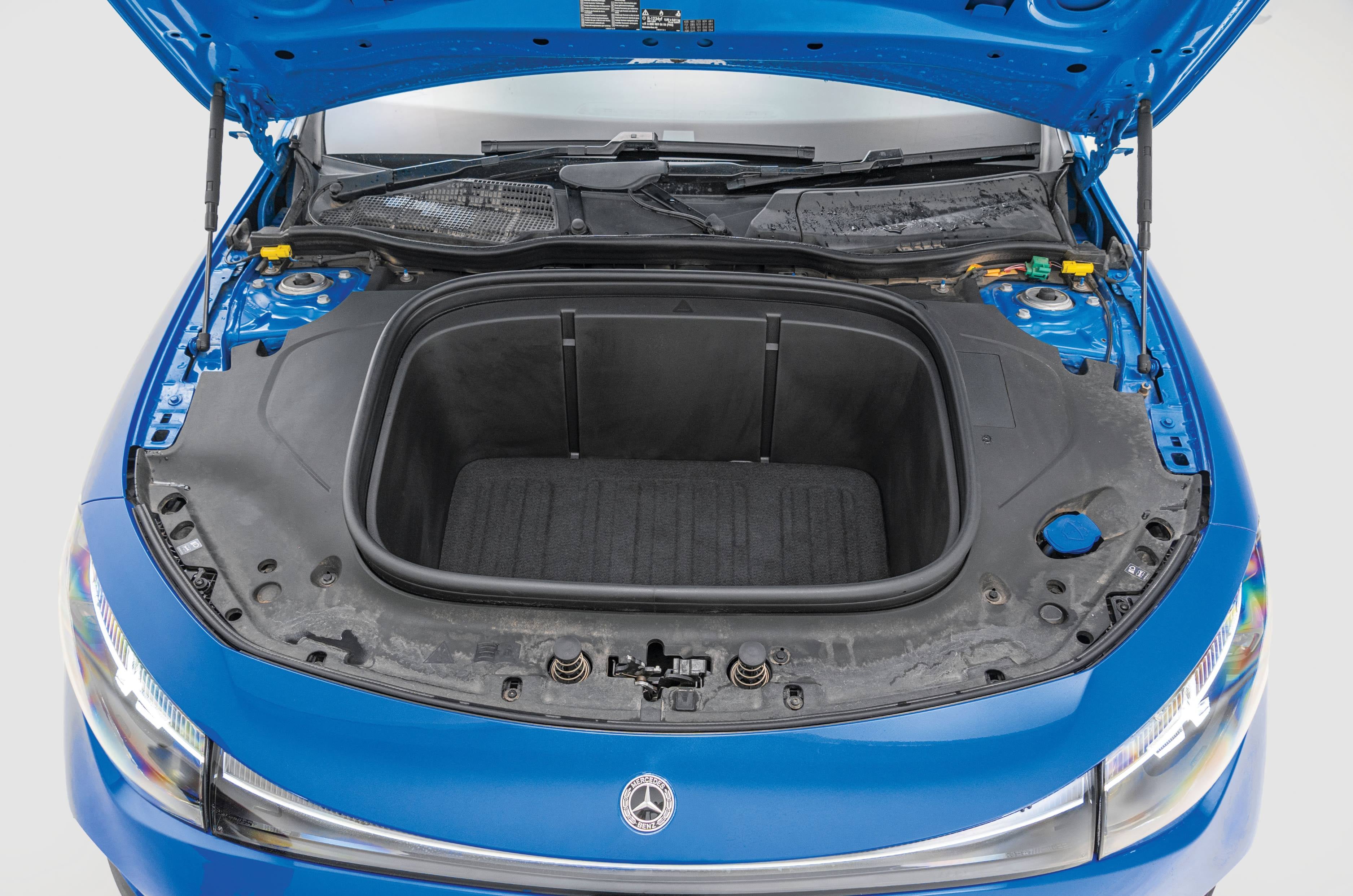
Boot space stands at a useful 405 litres. More interestingly, the CLA gets a 101-litre front trunk – the first time Mercedes has offered a frunk on one of its EVs.
In a first for Mercedes-Benz EVs, there’s a convenient 101-litre front trunk.
Mercedes CLA 250+ features and safety – 9/10
Packed with cutting-edge tech and features; no seat ventilation.
The CLA is a showcase for Mercedes’ latest technology. Four supercomputers provide the computing power, which Mercedes says is more than 200 times that of the previous CLA. It is also the first Mercedes to use the company’s new MB.OS infotainment operating system.
With the AMG Line styling package, the 250+ gets a flat-bottomed AMG steering, metal pedals and AMG seat upholstery; third passenger screen is reserved for the Launch Edition; cabin is practical with loads of storage, and overall fit/finish is good.
An Nvidia processor allows for quick responses, while over-the-air updates mean the system can be updated without a visit to the workshop. There’s also a new MBUX Virtual Assistant, which learns about the driver, including their language, accent and mood. It uses AI tools, including ChatGPT, Gemini and Bing, to further make your life easier, and you can ask them to do just about anything from setting navigation to changing the AC and so much more.
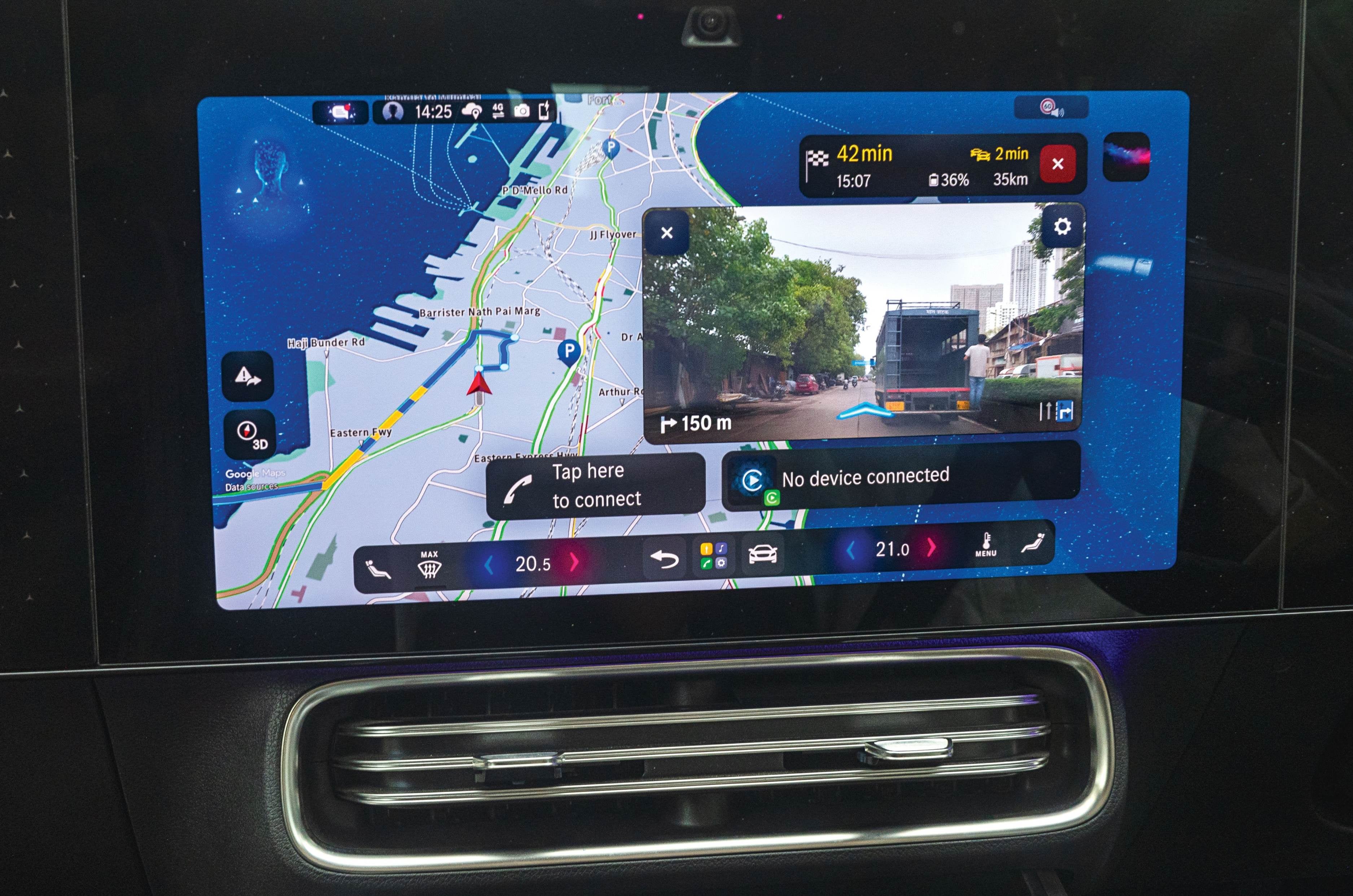
Screen is slick, has sharp graphics and native maps, which show directions in real-time using the camera feed.
The CLA also gets the new MB.Charge app, which brings charging providers together in one place. It can locate chargers, show their real-time availability, help plan a journey and even handle payment for a charging session.
The feature list is extensive. Highlights include a 14-inch central touchscreen, 10.25-inch digital driver’s display, powered, heated and massaging front seats, dual-zone climate control, configurable ambient lighting, a panoramic glass roof, Burmester 3D audio, wireless phone charging and auto parking. Ventilated front seats, however, aren’t offered.
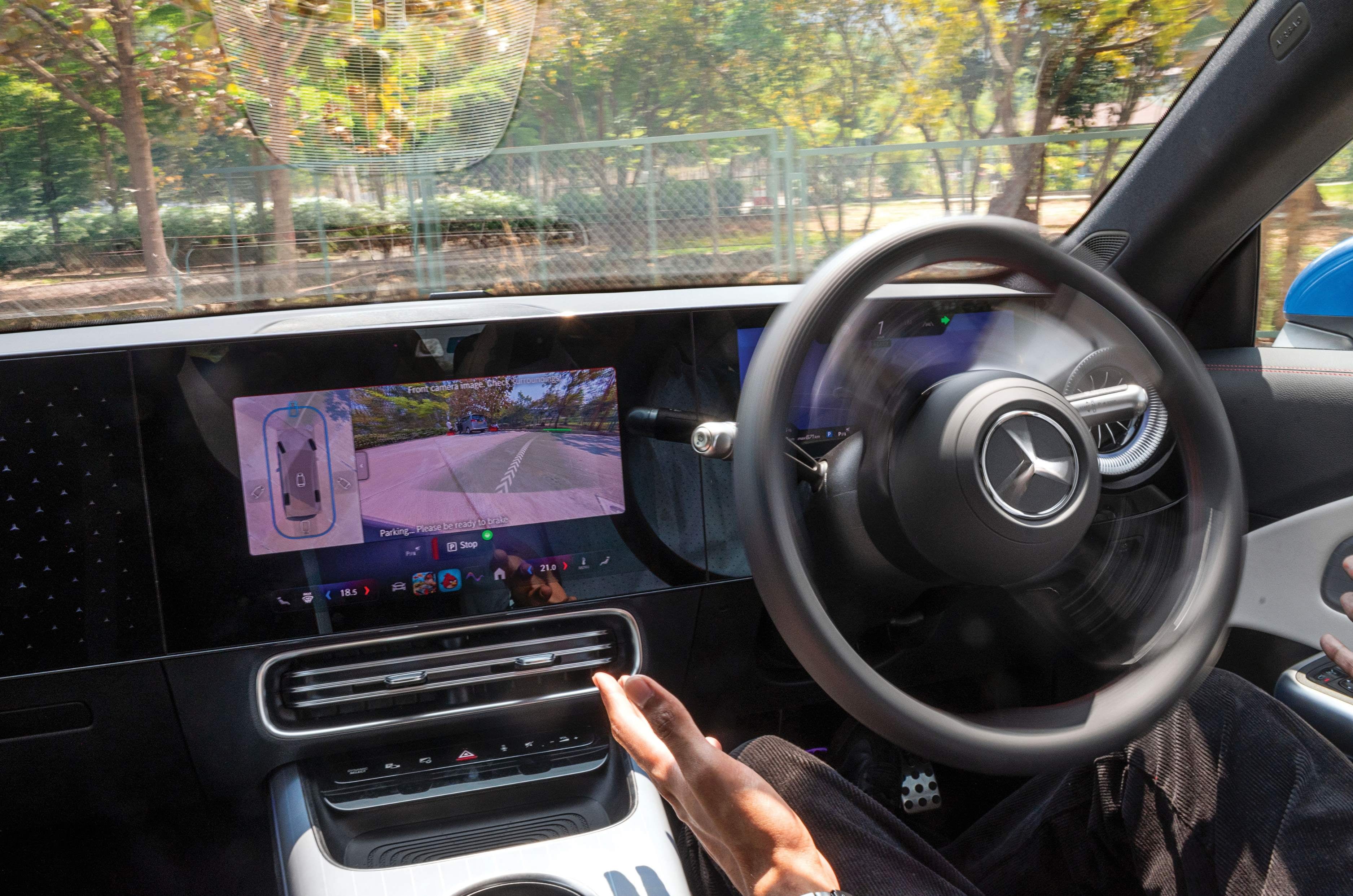
CLA 250+ packs in an auto park feature, which works very well in unmarked spaces too.
Safety equipment is comprehensive, with six airbags, a 360-degree camera and Level 2+ ADAS, which Mercedes calls MB.Drive. It includes adaptive cruise control, lane-keep assist, blind-spot monitoring, autonomous emergency braking and semi-autonomous driving functions. The system uses a combination of radar sensors and cameras and didn’t feel overly intrusive; better than previous Mercs, which feel trigger-happy with emergency braking. The CLA was also the safest car tested by Euro NCAP in 2025.
Mercedes CLA 250+ performance and refinement – 9/10
Smooth, progressive powertrain; refinement is impressive.
The CLA 250+ uses a rear-mounted electric motor producing 272hp and 335Nm. Performance is brisk, but what stands out more than outright acceleration is the way it delivers its performance.
Unlike some performance EVs that deliver power aggressively from the moment you bury the accelerator, the CLA builds speed in a smooth, progressive manner. The power delivery is linear, and there’s always enough performance on tap. Sport mode sharpens the response, while synthesised sounds played through the speakers add a little more theatre.
In our performance tests, it managed a 0-100kph time of 6.6sec in Sport mode, narrowly beating the claimed time of 6.7sec. Rolling acceleration is impressive too, with 20-80kph in Sport taking 3.68sec, and 40-100kph being dealt with in 4.26sec. Naturally, performance in the Comfort and Eco drive modes is more sedate than Sport, with the difference between the former two being almost negligible.
Mercedes has also opted for a two-speed gearbox, which is unusual for an EV, but makes sense here. The short 11:1 first gear helps with initial acceleration, while the taller 5:1 second gear is intended to improve efficiency at higher speeds. And from behind the wheel, you can feel when it shifts gears. Mercedes claims a drivetrain efficiency of 93 percent, and that plays an important role in the CLA’s impressive range.
The new brake-by-wire system is another area where the CLA makes a big improvement over older Mercedes EVs. Brake response is reassuring, with a good bite and a natural, consistent feel. In our braking test, the CLA came to a halt from 80kph in 26.49m despite it being on a damp surface.
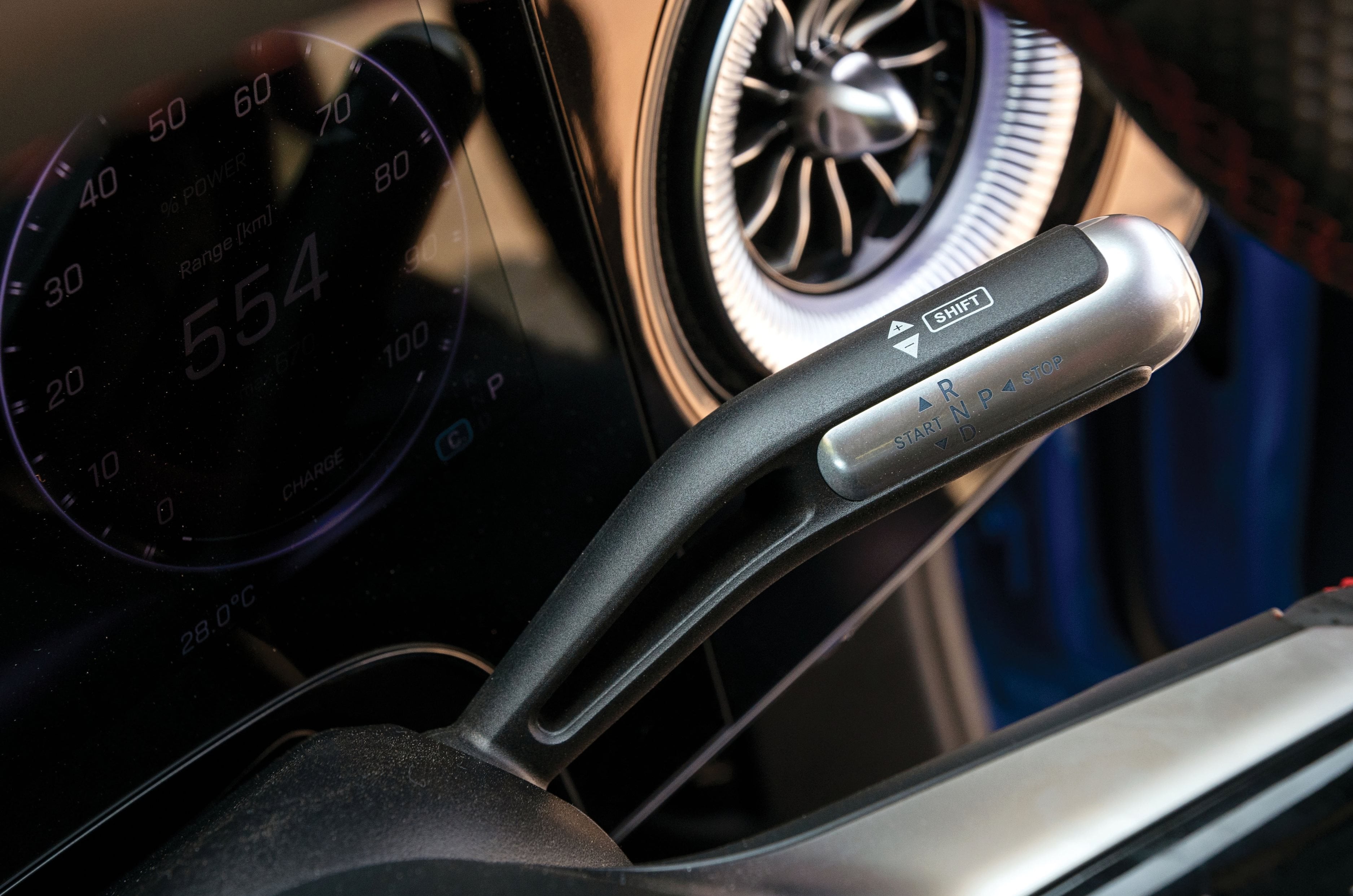
Control stalk now houses the start/stop button, the drive selector, and is also used to toggle between regen braking modes.
There are four levels of regenerative braking, including a one-pedal mode and an adaptive setting. They work well, with the Normal setting bringing it from 80-20kph in 311.56m, while the Strong setting takes 96.36m for the same. It’s worth noting, however, that Mercedes has moved the controls for the regen from the steering-mounted paddles used on some EVs to the gear selector stalk. You push or pull the stalk to change the regen level, and this isn’t quite as intuitive. The same stalk also incorporates the start/stop button.
Where the CLA really impresses is refinement. The absence of an engine obviously helps, but Mercedes has also done an excellent job of keeping wind and road noise out. At speed, the cabin remains remarkably quiet. A CLA 200 variant is also available in India, using the same rear-mounted motor layout but producing a lower 224hp and 335Nm. However, we’re yet to test this version.
Mercedes CLA 250+ tested acceleration times (sec)
Sport
Comfort
Eco
0-10kph
0.57
0.64
0.61
0-20kph
1.18
1.18
1.22
0-30kph
1.74
1.76
1.80
0-40kph
2.32
2.35
2.39
0-50kph
2.90
2.96
2.99
0-60kph
3.48
3.56
3.59
0-70kph
4.10
4.26
4.32
0-80kph
4.83
5.09
5.12
0-90kph
5.67
6.04
6.09
0-100kph
6.60
7.10
7.12
0-110kph
7.93
8.61
8.58
0-120kph
9.35
10
10
0-130kph
10.79
11.39
11.41
1/4 mile
14.98
15.33
15.33
20-80kph (rolling)
3.68
3.88
3.87
40-100kph (rolling)
4.26
4.72
4.73
Mercedes CLA 250+ range and efficiency – 9/10
Low drag, efficient powertrain mean superb real-world range.
Mercedes claims a WLTP range of 792km from the 85kWh (net) NMC battery, although, predictably, the real-world range is lower. In the city, with the regen set to the strongest mode, it delivered an efficiency of 6.87km/kWh that translates to a range of 584km. On the highway, with the regen set to ‘Normal’, it delivered an efficiency of 7.52km/kWh for a 640km range. With an average efficiency of 7.2km/kWh, you can expect a real-world range of 612km on a single charge, which is very impressive.
In the city, the strongest regen setting enabled it to recoup energy effectively, which helped boost efficiency, while the two-speed gearbox, with its taller 5:1 second gear, enabled greater efficiency at higher speeds and thus contributed to the EV’s highway efficiency. Combined with the low 0.21Cd drag coefficient and the normal regen mode that allows for more coasting, it proved even more efficient on the highway, which isn’t usually the case with EVs.
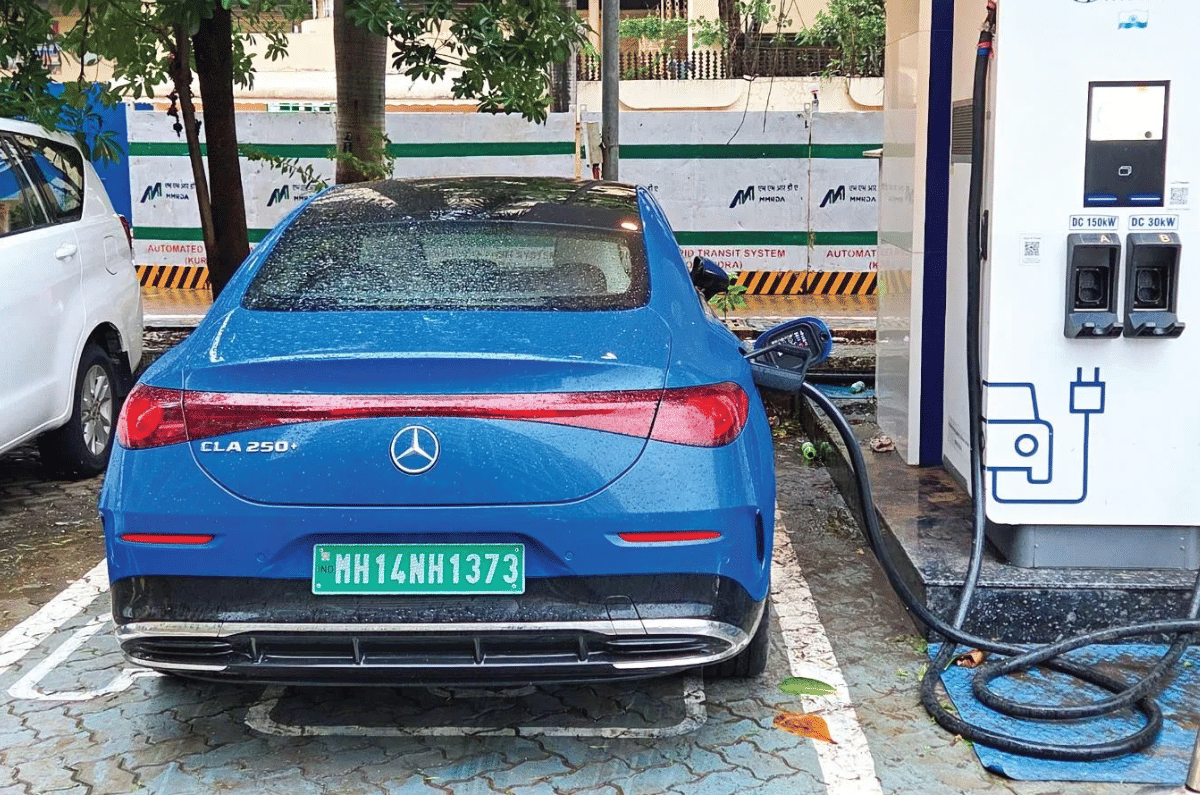
The CLA 250+ uses an 800V electrical architecture and supports charging at up to 320kW, but chargers capable of delivering that output remain few and far between in India. In our charging test using a 150kW DC fast charger, we saw an average charging speed of around 92kW with a peak charging speed of 125kW. To charge from 20-80 percent, it took 35 minutes and consumed 53.89kWh in total. This, combined with the efficiency and large real-world range, should make long-distance driving relatively stress-free.
Mercedes CLA 250+ tested range
City (km/kWh)
6.87
Highway (km/kWh)
7.52
Average (km/kWh)
7.19
Range (km)
611.5
Mercedes CLA 250+ ride comfort and handling – 8/10
Strikes a mature balance between ride and handling.
The CLA’s rear-wheel-drive layout gives it an enjoyable character on a winding road, and the steering is one of its stronger points. With no drive being sent through the front wheels, it feels precise, building up weight progressively with speed. It’s light enough at low speeds to make manoeuvring easy, yet gains enough weight as you go faster.
Thanks to the CLA’s rear-wheel-drive setup and precise steering, it feels agile and good fun around corners.
Mercedes has increased the Euro-spec CLA’s 107mm ground clearance for India and made suspension changes to better suit our roads, and both have worked. There’s enough clearance to deal with regular-sized speed breakers, while the additional height hasn’t really compromised the car’s handling or comfort. Around corners, the CLA remains agile, and body roll is well controlled. The ride does have a hint of firmness to it, but it deals with road imperfections without fuss and feels composed at both low and high speeds. Overall, it’s a mature combination of ride comfort, stability and handling.
Mercedes CLA 250+ value for money – 8/10
Refined and efficient powertrain, long range and sorted ride and handling make it Merc’s best EV yet.
Priced at Rs 60.50 lakh (ex-showroom), the CLA 250+ is a fairly compelling proposition, considering what it brings to the table. There are shortcomings, most notably the cramped rear seat, knees-up seating even at the front, and the absence of sunshades for the panoramic roof and rear windows. But if you’re going to drive yourself and want a luxury EV that’s distinctive, the CLA makes a strong case for itself.
Its powertrain is smooth and refined, its efficiency is excellent, it has an impressive real-world range of over 600km, and it strikes a very good balance between ride comfort and handling. Add to that a cabin packed with cutting-edge tech, and the new CLA emerges as one of the company’s most accomplished EVs yet.