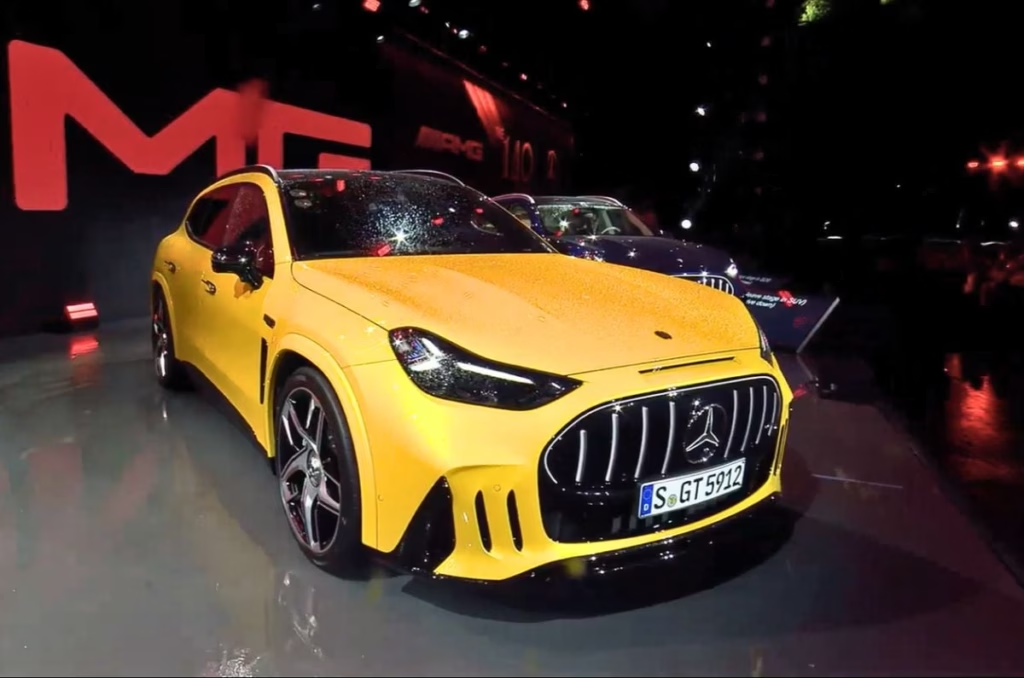
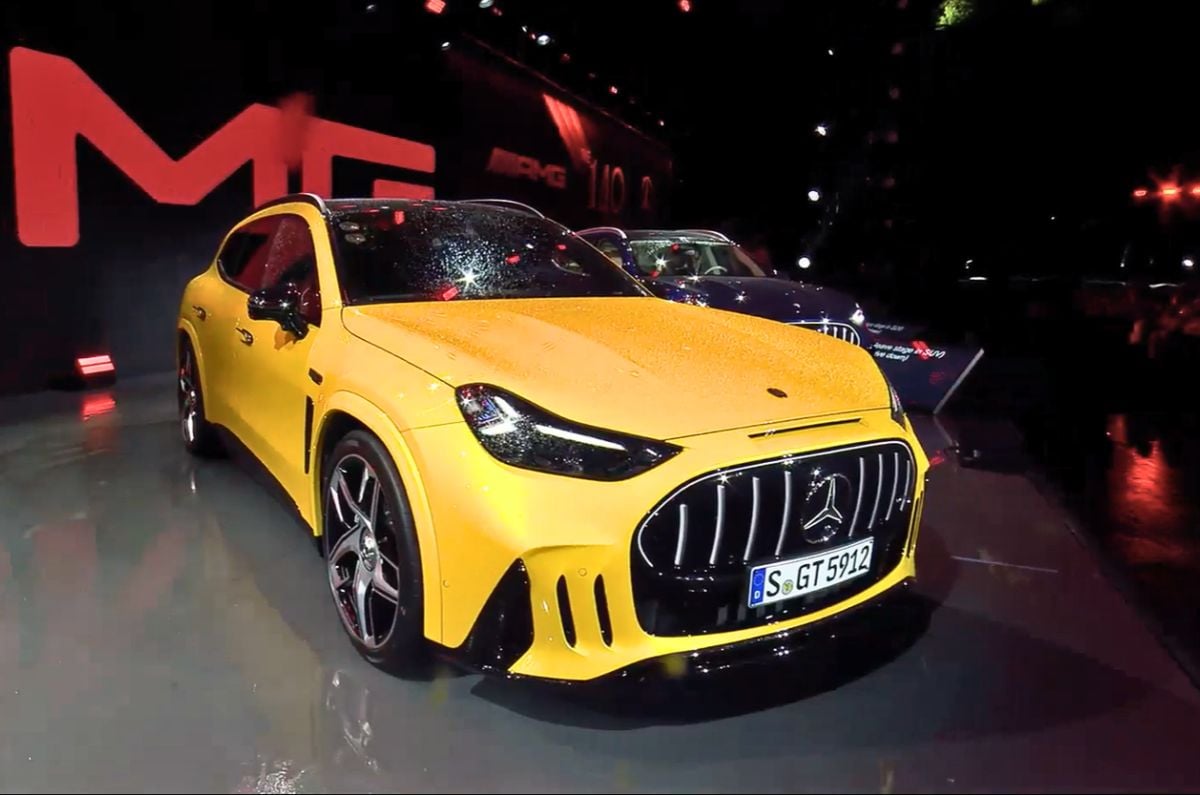
Mercedes has taken the wraps off the AMG GT SUV which, according to the German marque, is the first full-size SUV it has developed completely in-house. The five-seat performance EV shares its underpinnings with the fully electric GT 4-Door Coupe, and will be available in GT 53, GT 55 and GT 63 guises, the last of which makes up to 1,169hp. The GT 53 will be the first to go on sale, with the more powerful variants joining the line-up in spring 2027.
Star-shaped DRLs, illuminated badging, active aero and more.
Personalisation options from the Manufaktur programme.
Three digital displays, built-in AI assistants, AMG-specific apps and more.
Claimed WLTP range of up to 700km, with DC fast charging of up to 710kW.
Mercedes-AMG GT SUV exterior
Illuminated badging, sloping roofline, active aerodynamics, Manufaktur paint options and more
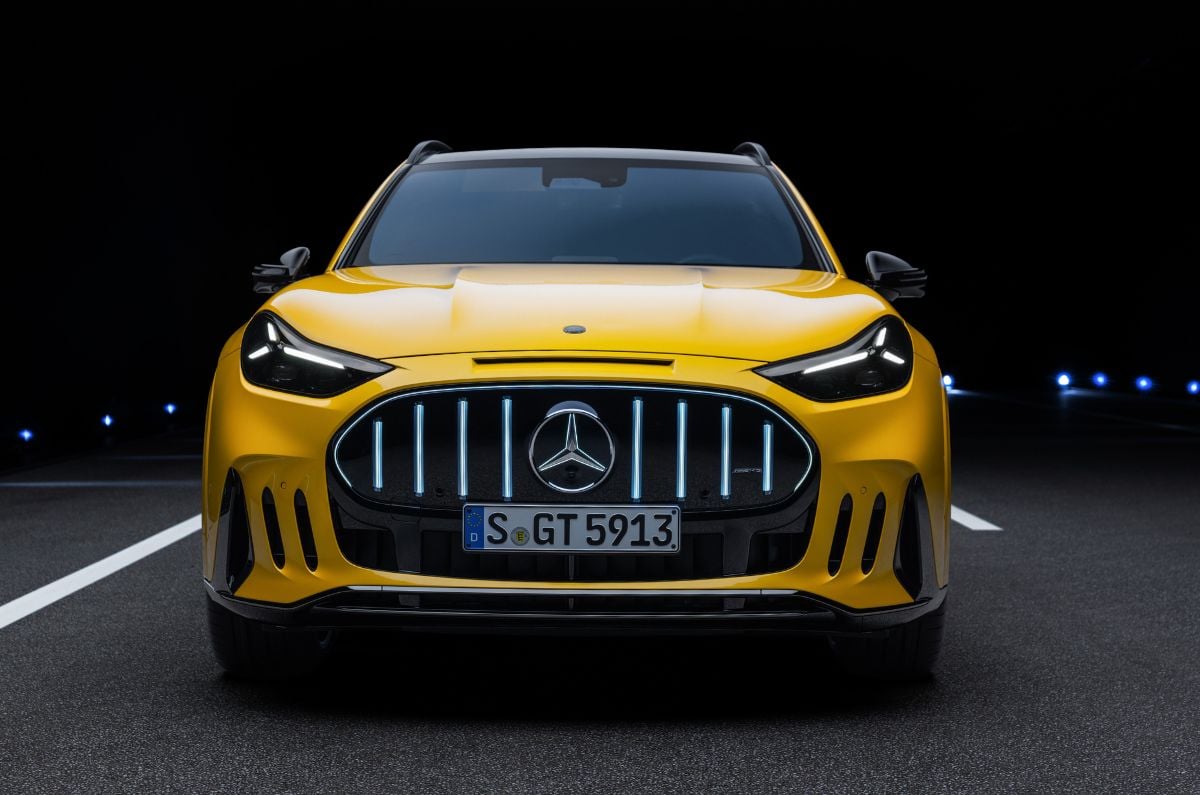
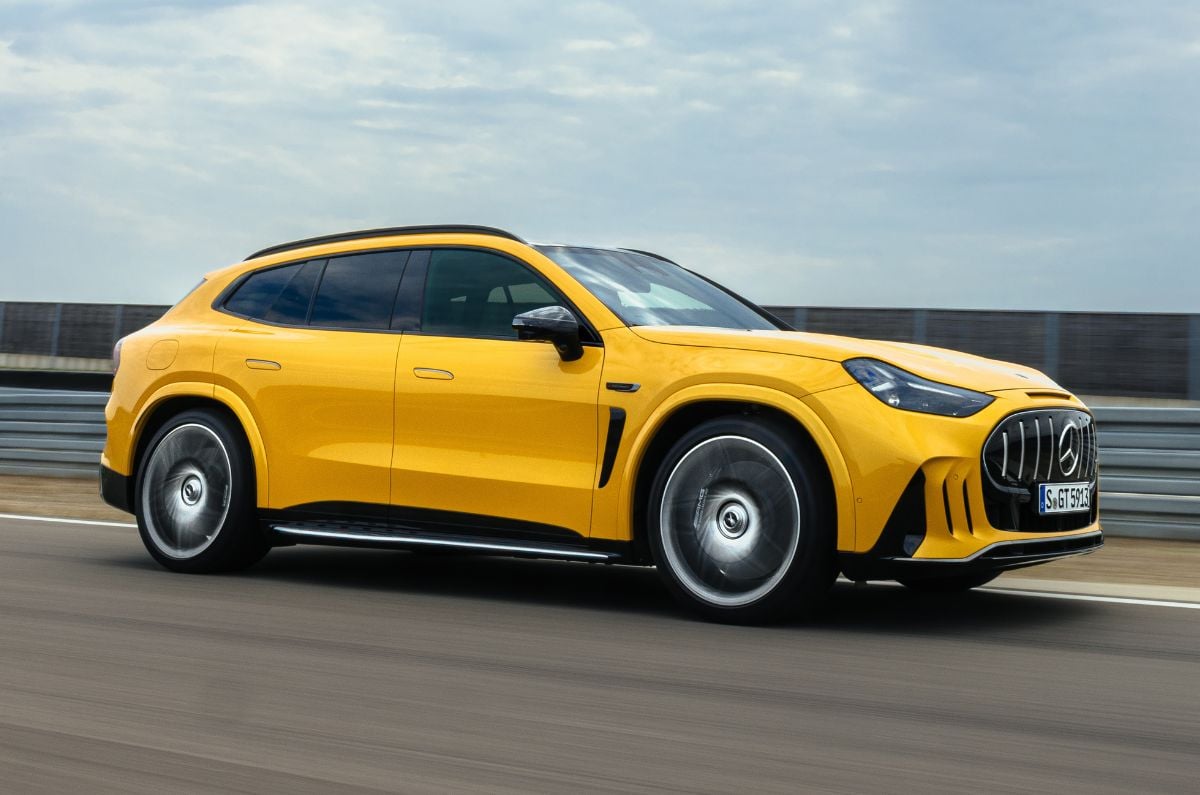
The Mercedes-AMG GT SUV comes in at 5,084mm long, 2,001mm wide and 1,656mm tall, and it has a wheelbase of 3,040mm. The front fascia sports AMG’s vertical-slat grille and Mercedes star, both of which can be optionally illuminated, flanking which are LED headlamps with star-shaped DRLs (daytime running lights). The front bumper features active slats, which only open when components need extra cooling.
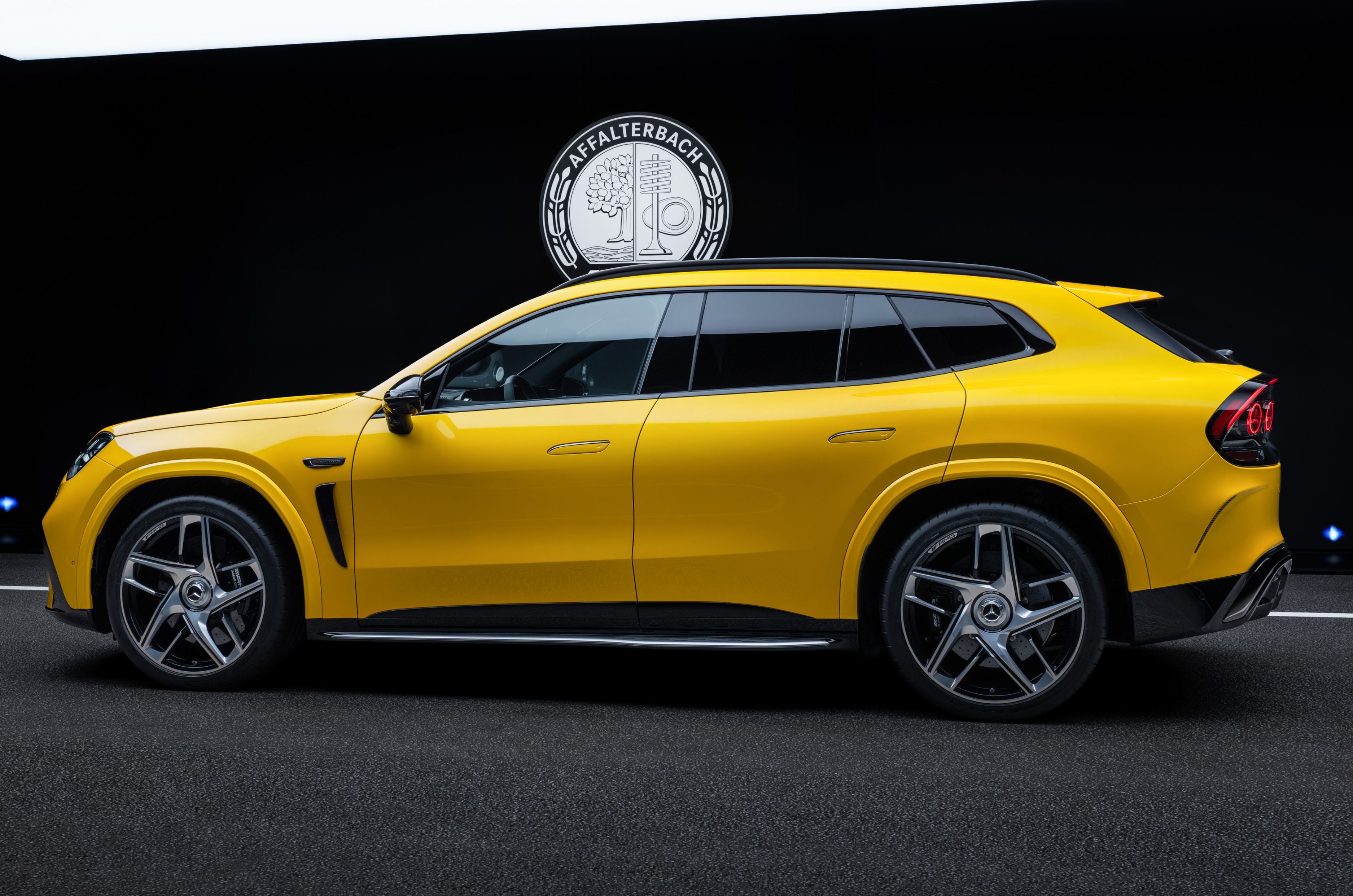
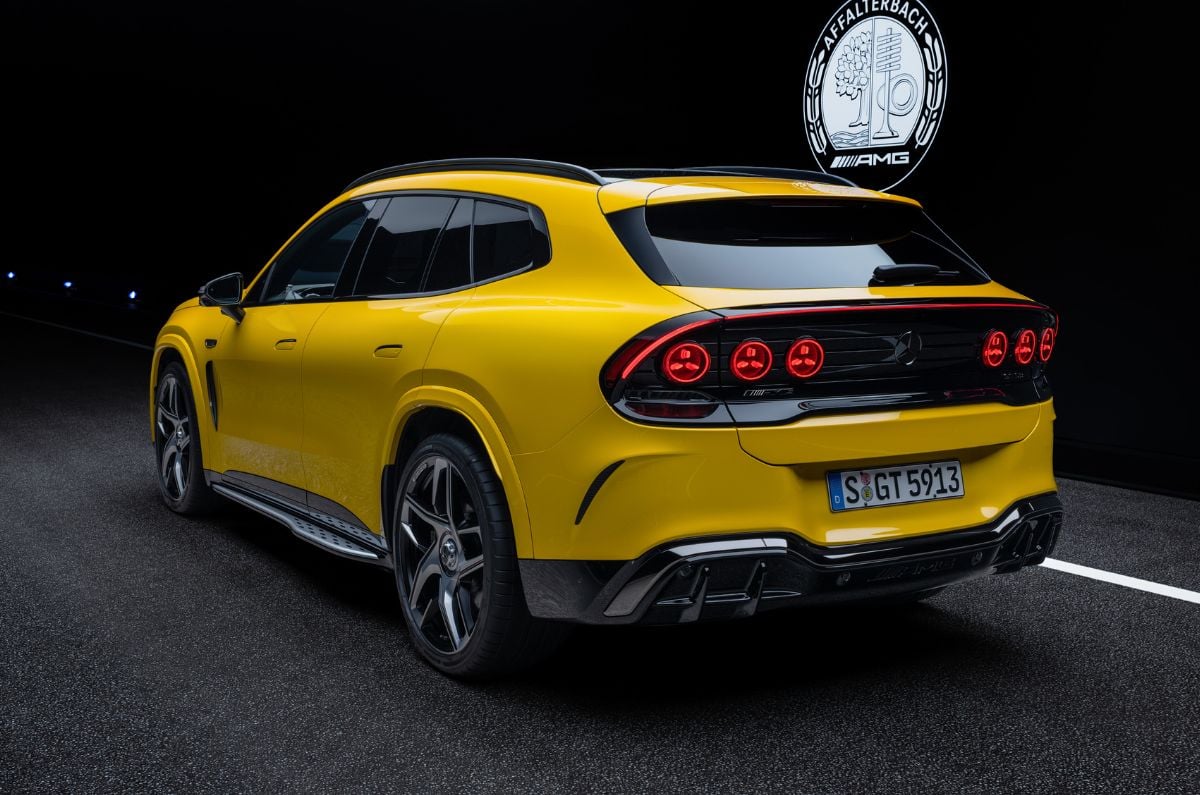
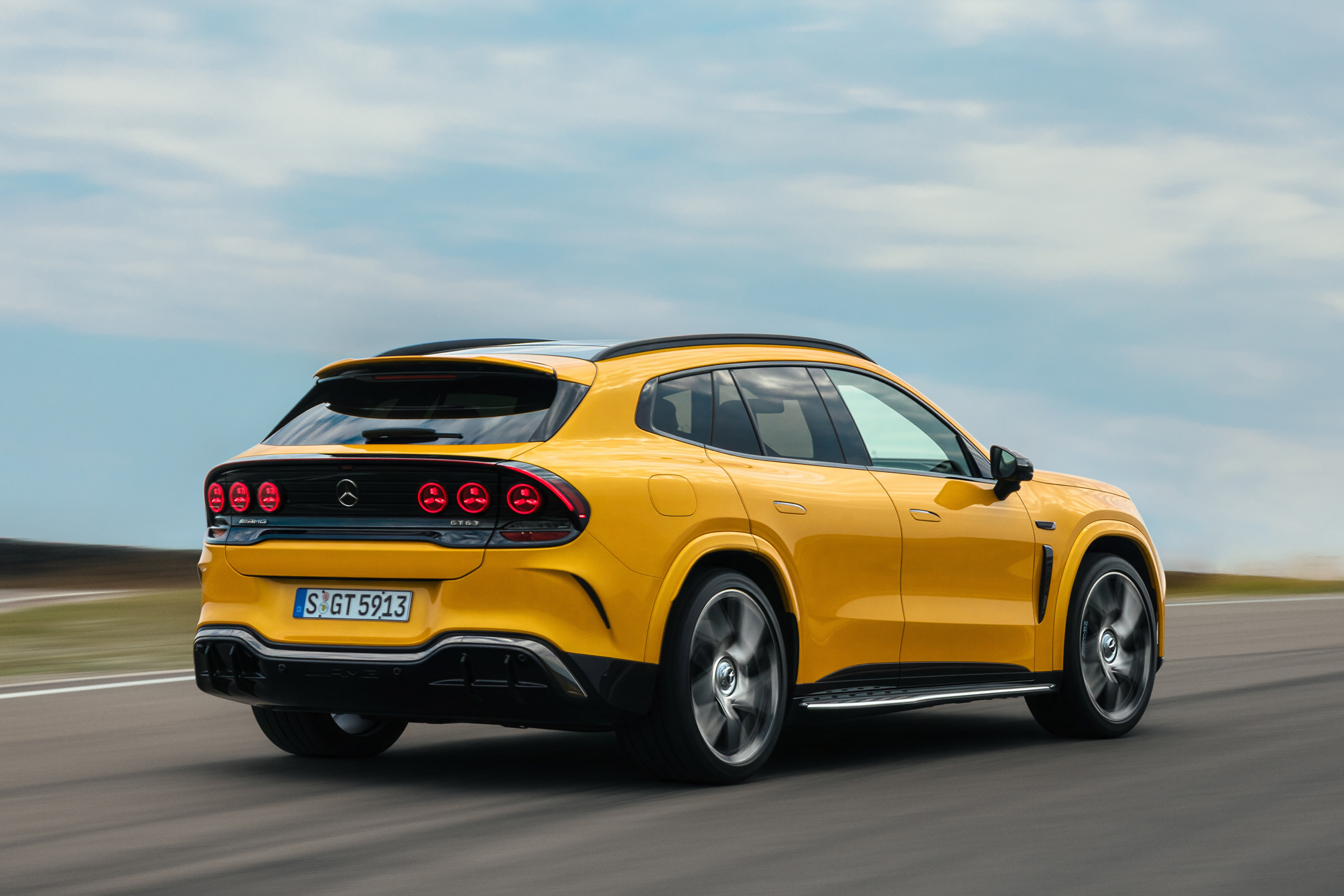
The profile showcases a low-slung roofline that slopes towards the rear along with pronounced wheel arches. Other details here include frameless side windows and compact wing mirrors. Moving to the rear of the AMG GT SUV reveals six circular tail-lamps as seen on the GT 4-Door Coupe, and customers can also opt for a full-width light strip.
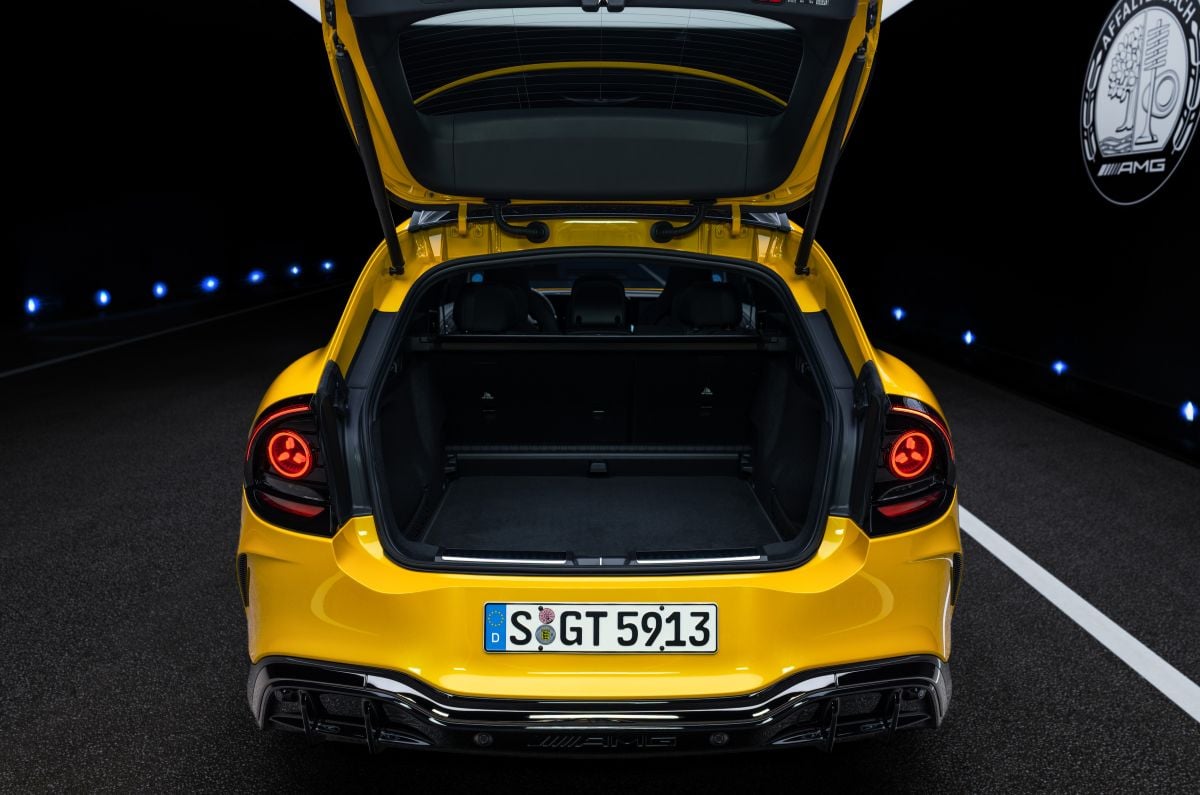
Stepping up to the GT 55 and GT 63 means an active rear spoiler that remains flush with the roof until 150kph, changing its angle depending on the driving scenario. Mercedes-AMG also claims a drag coefficient of 0.28 for the GT 53, while the other two are rated at 0.27. The main boot has a claimed capacity of 607 litres, with the frunk capable of accommodating 78 litres worth of luggage.
Buyers can personalise the GT SUV through the brand’s Manufaktur programme, which presents over 60 paint options. Customers can also opt for AMG’s forged wheels in colour accents, which includes Matt Vanadium Silver and Matt Copper, Matt Black with a rim flange in Angel Blue, Sunny Lime, or Orange Flame.
Mercedes-AMG GT SUV interior and features
Stand-out tech includes dual 14-inch screens, AI assistants and AMG-specific apps
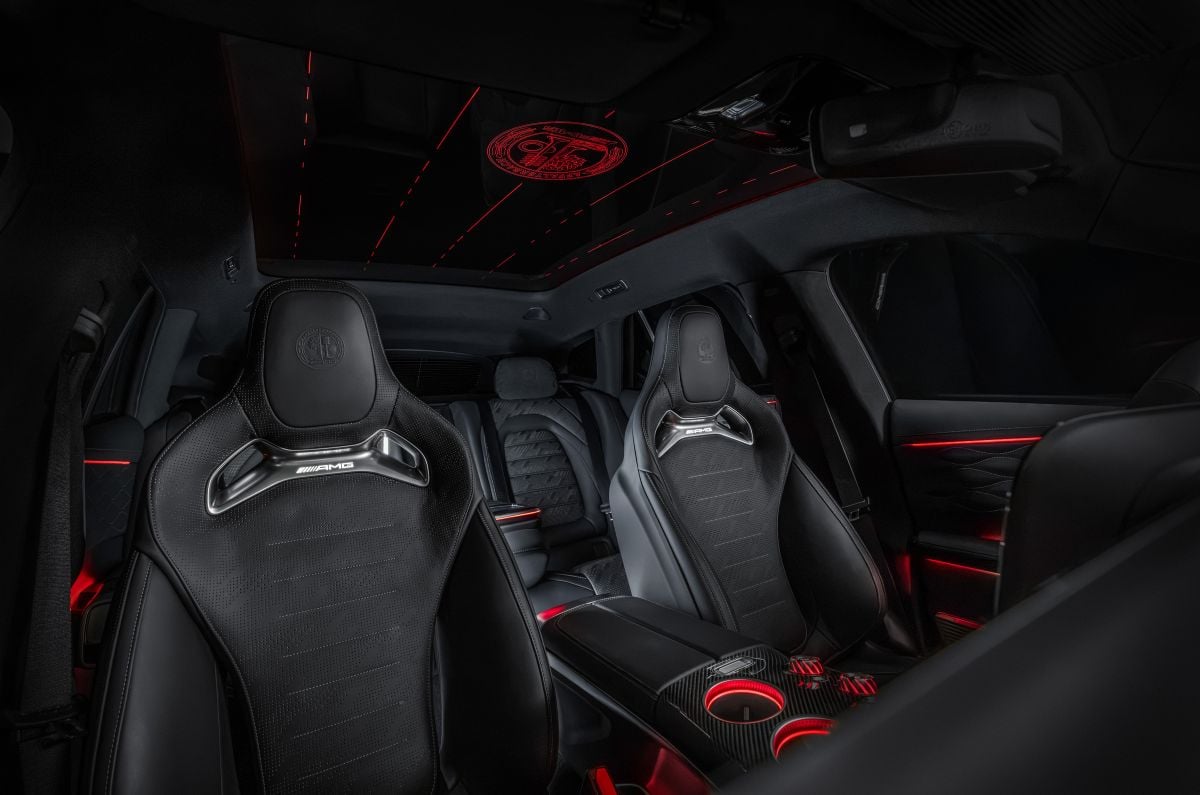
Just like the exterior, the interior of the Mercedes-AMG GT SUV can be personalised using the Manufaktur catalogue. Some of the options that will be offered to customers include accent colours and seatbelts trimmed in Fjord Blue, Green Hell or Orange Flame. The automaker claims that the seating position here is akin to that of a sports car rather than an SUV. Providing comfort up front are multi-way power-adjustable seats, while the three-seat rear bench gets power-folding headrests.
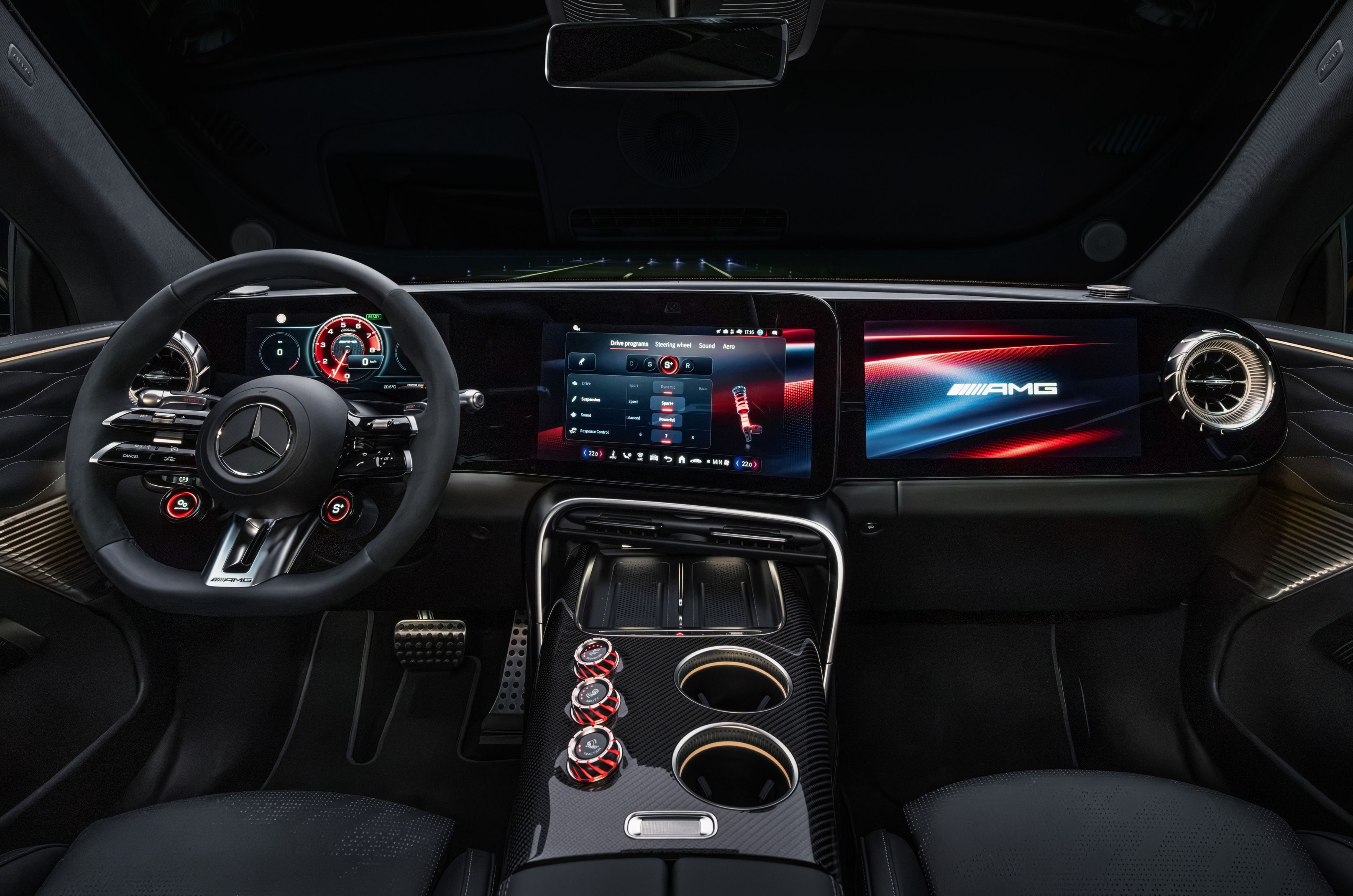
The dashboard pairs a 10.2-inch digital instrument cluster with a 14-inch touchscreen that’s angled towards the driver, while a 14-inch screen is optional for the front occupant. The AMG Performance steering wheel is equipped with paddles to adjust brake-regen levels, while adding to the design are door panels with floating armrests and diamond-pattern stitching. There’s also multi-colour ambient lighting whose colours can be matched to the bevy of displays and controls.
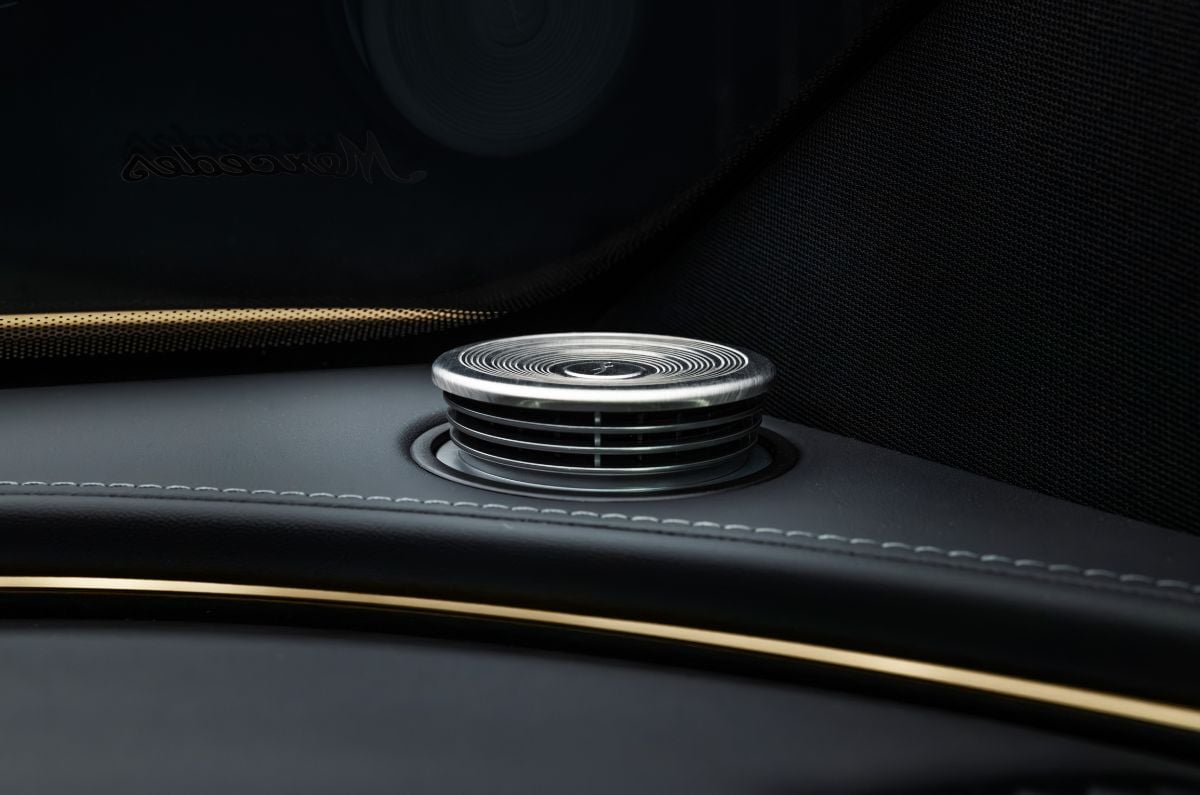
The infotainment system features the German brand’s latest MBUX software, which is based on the MB.OS (Mercedes-Benz Operating System). It integrates AI agents such as ChatGPT, Microsoft Bing and Google Gemini. This luxury SUV also comes with three AMG-specific apps. Firstly, there’s ‘AMG Performance Menu’, which displays real-time data on power, tyre temperatures and active aero status.
Second is ‘AMG Set-up’ – this lets the driver customise the buttons on the steering wheel as well as aero settings. Finally, there’s ‘AMG Track Pace’, which records lap times and telemetry. Drivers can also use it to show optimal braking points and the ideal racing line in the head-up display. Meanwhile, the optional dashcam allows laps to be recorded with data overlays. The AMG GT SUV is also available with an electrically dimming panoramic glass roof, AMG lighting effects, AMG Performance seats and a Burmester 4D audio system, among many optional features.
Mercedes-AMG GT SUV powertrain and performance
The EV gets up to three electric motors and a WLTP range of up to 700km
The entry-level GT 53 variant of the Mercedes-AMG GT SUV uses two synchronous motors – one on each axle – with a two-speed gearbox located at the rear. Its output is rated at 544hp and 800Nm, with Mercedes-AMG claiming a 0-100kph time of 4.2 seconds and a top speed of 250kph. Then there are the mid-spec GT 55 and the top-spec GT 63. These come with two axial flux motors at the rear and one at the front, the latter disengaging when not needed to save energy.
The tri-motor setup of the GT 55 outputs 816hp and 1,860Nm, allowing for a claimed 0-100kph time of 3.1 seconds. Sitting at the top of the Mercedes-AMG GT SUV line-up is the GT 63, which is rated at 1,169hp and 2,000Nm and does 0-100kph in 2.7 seconds. Regardless, the all-wheel-drive GT 55 and GT 63 have a claimed top speed of 270kph with the optional Driver’s Package.
The GT 53’s 106kWh battery pack offers a claimed WLTP range of up to 668km, while the 128kWh battery of the GT 55 and GT 63 is rated at up to 700km. These 800V packs offer DC fast charging of 600kW and 710kW, respectively. Mercedes-AMG claims that charging these batteries from 10-80 percent takes 11-12 minutes, though it also says that these figures are preliminary.
The GT SUV gets rear-wheel steering as standard while also debuting AMG’s new ‘Active Ride Control+’ suspension. The latter, which is standard on the top-spec GT 63, replaces traditional anti-roll bars with hydraulic units that, according to the automaker, curb body roll and pitch. The top-spec variant also gets carbon-ceramic brakes as standard.
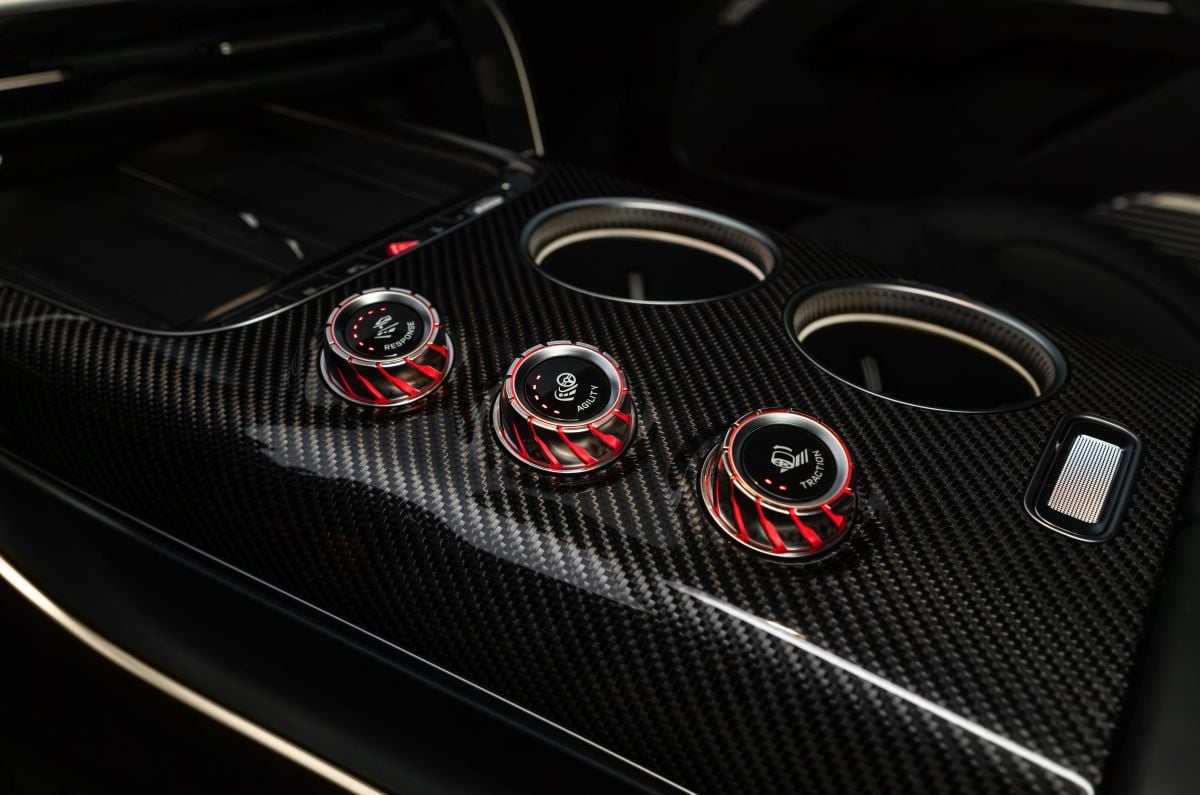
In the tri-motor variants, drivers can adjust the throttle response, cornering behaviour and traction control using dials on the centre console. Mercedes-AMG also said that the ‘AMGForce Sport+’ mode recreates the sound of an AMG V8 (or a six-cylinder in the GT 53) along with simulated gearshifts. As for India, the German marque is yet to reveal its plans for the AMG GT SUV.
Skoda has launched the Slavia facelift at Rs 10 lakh. This is the first mid-life cycle update that the mid-size sedan has received since its introduction in 2022. Updates include a refreshed exterior, mild interior changes, feature additions, and a new gearbox option. The Slavia facelift takes on the likes of the Volkswagen Virtus, Honda City, and the Hyundai Verna.
Gets a new 8-speed AT for the 1.0-litre TSI mill.
Larger screens, 360-degree camera now part of the feature list
Variable geometry compressor improves AC performance.
Exterior gets all-LED lighting, sportier bumpers and new colour options.
Skoda Slavia facelift full price list
1.0 TSI MT
1.0 TSI AT
1.5 TSI AT
Classic
10.00
–
–
Classic+
10.99
12.49
–
Signature
13.94
14.94
–
Sportline
14.34
15.34
–
Prestige
15.89
16.89
18.59
Monte Carlo
–
17.29
18.84
The Slavia facelift has an identical starting price as its predecessor at Rs 10 lakh. However, at the top end, the former is Rs 64,000 pricier than the latter.
Skoda Slavia facelift exterior updates
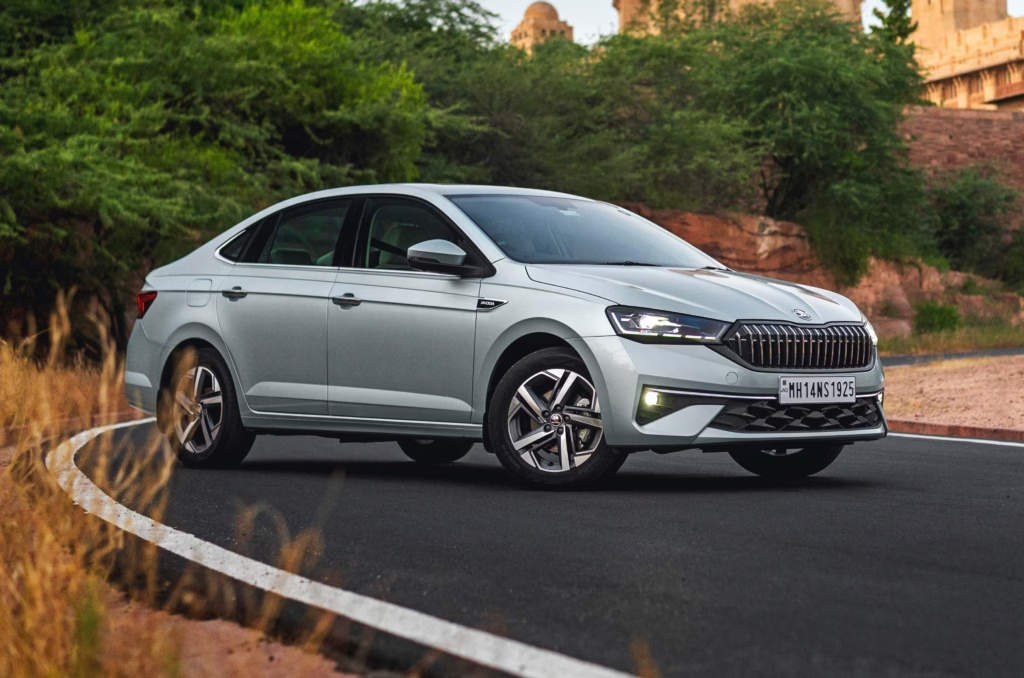
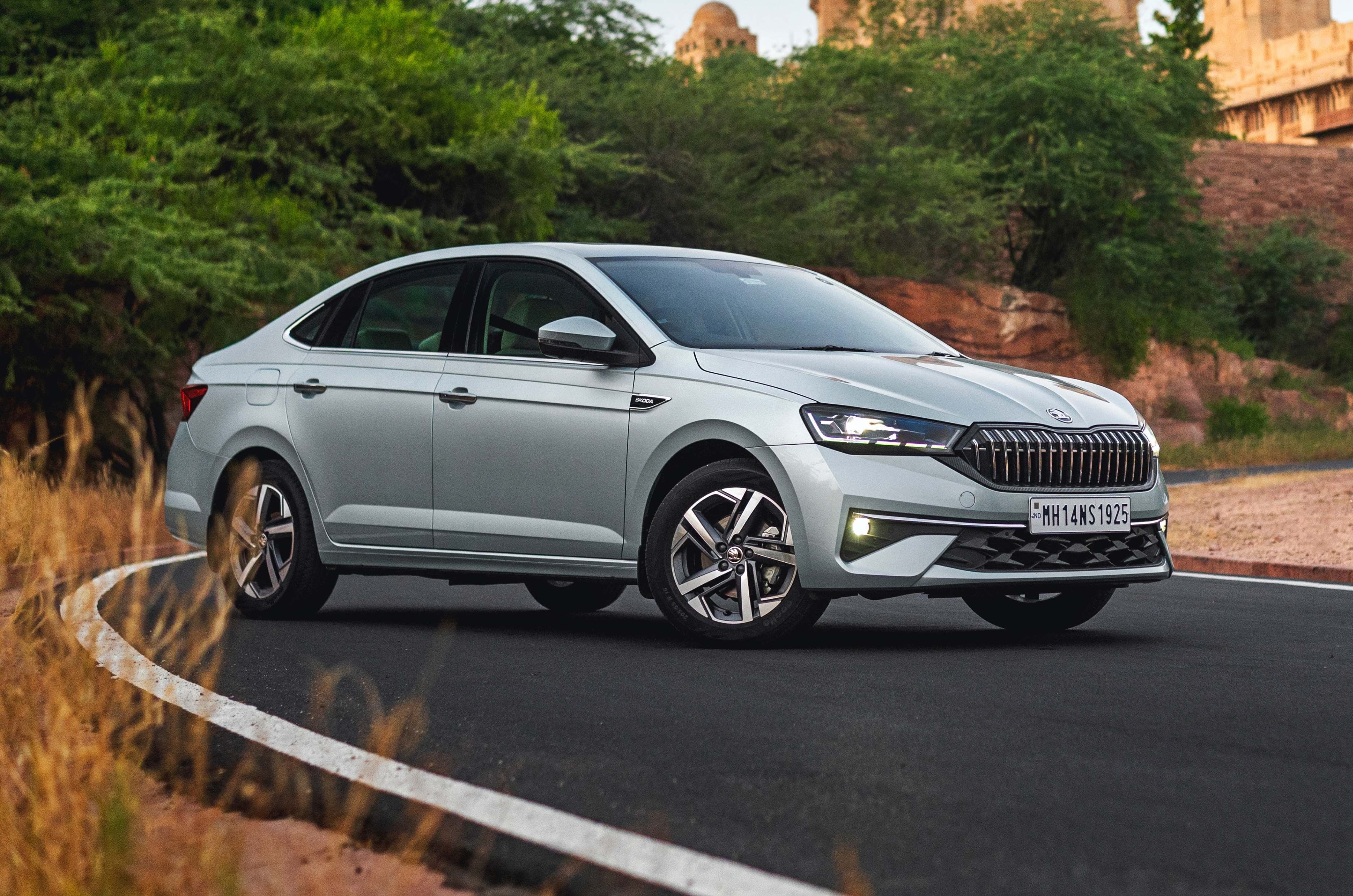
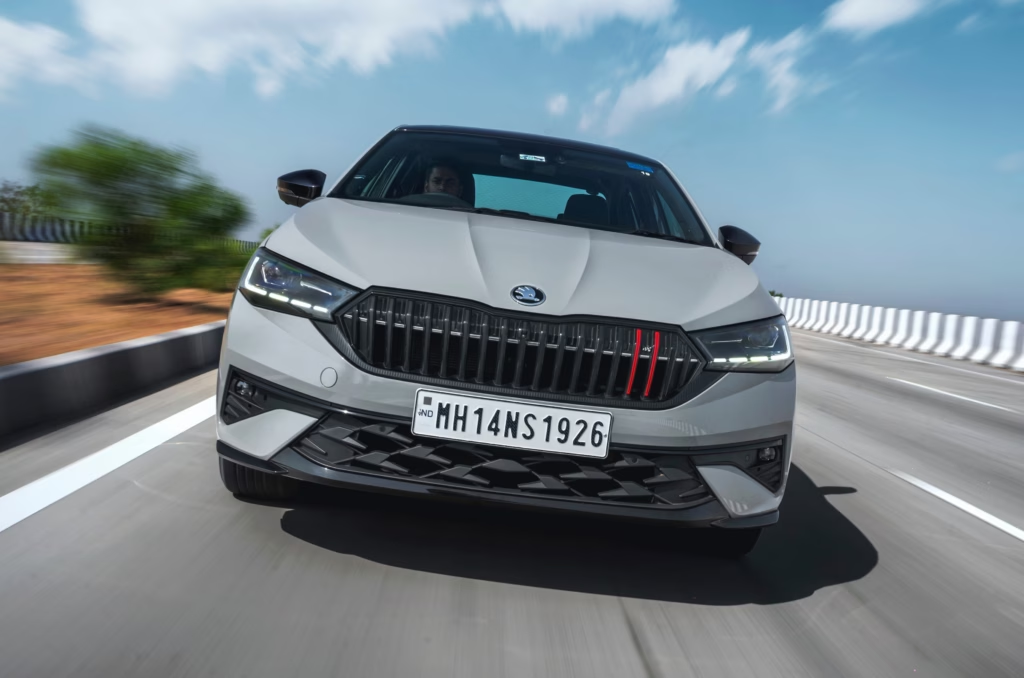
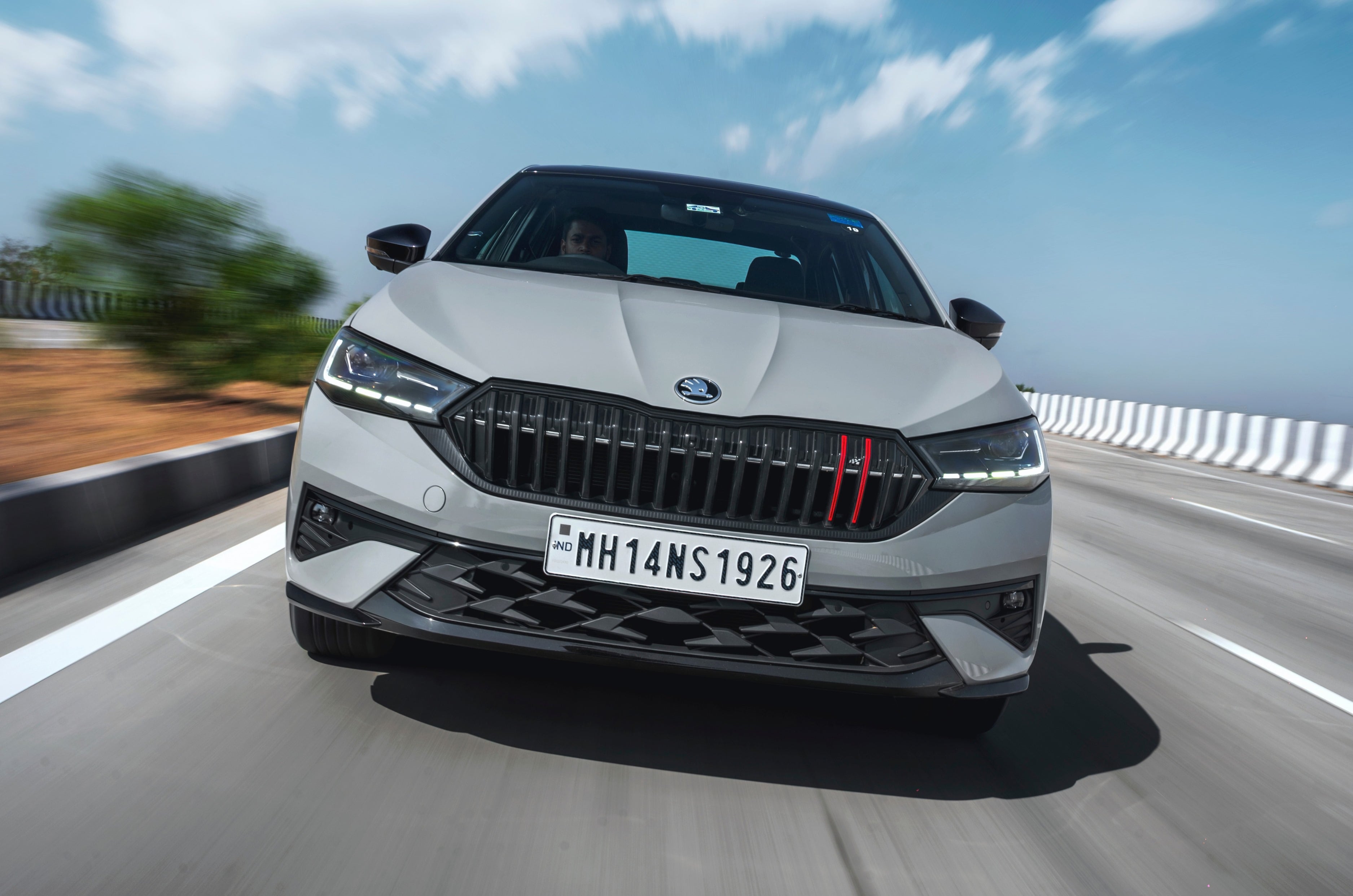
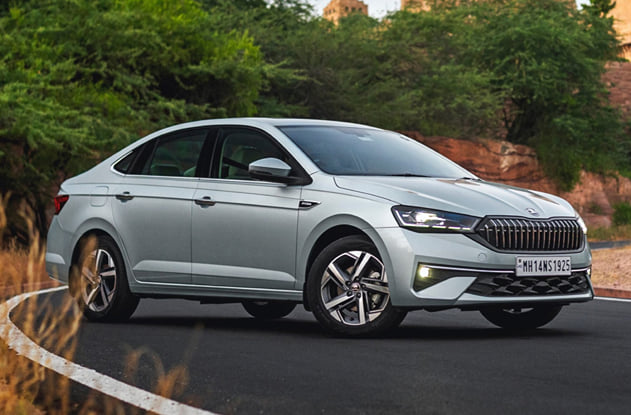
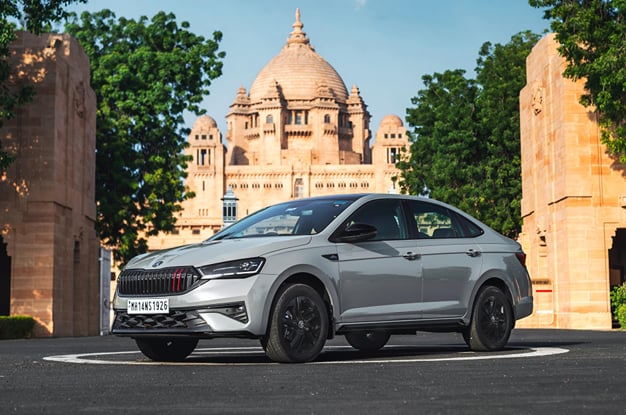
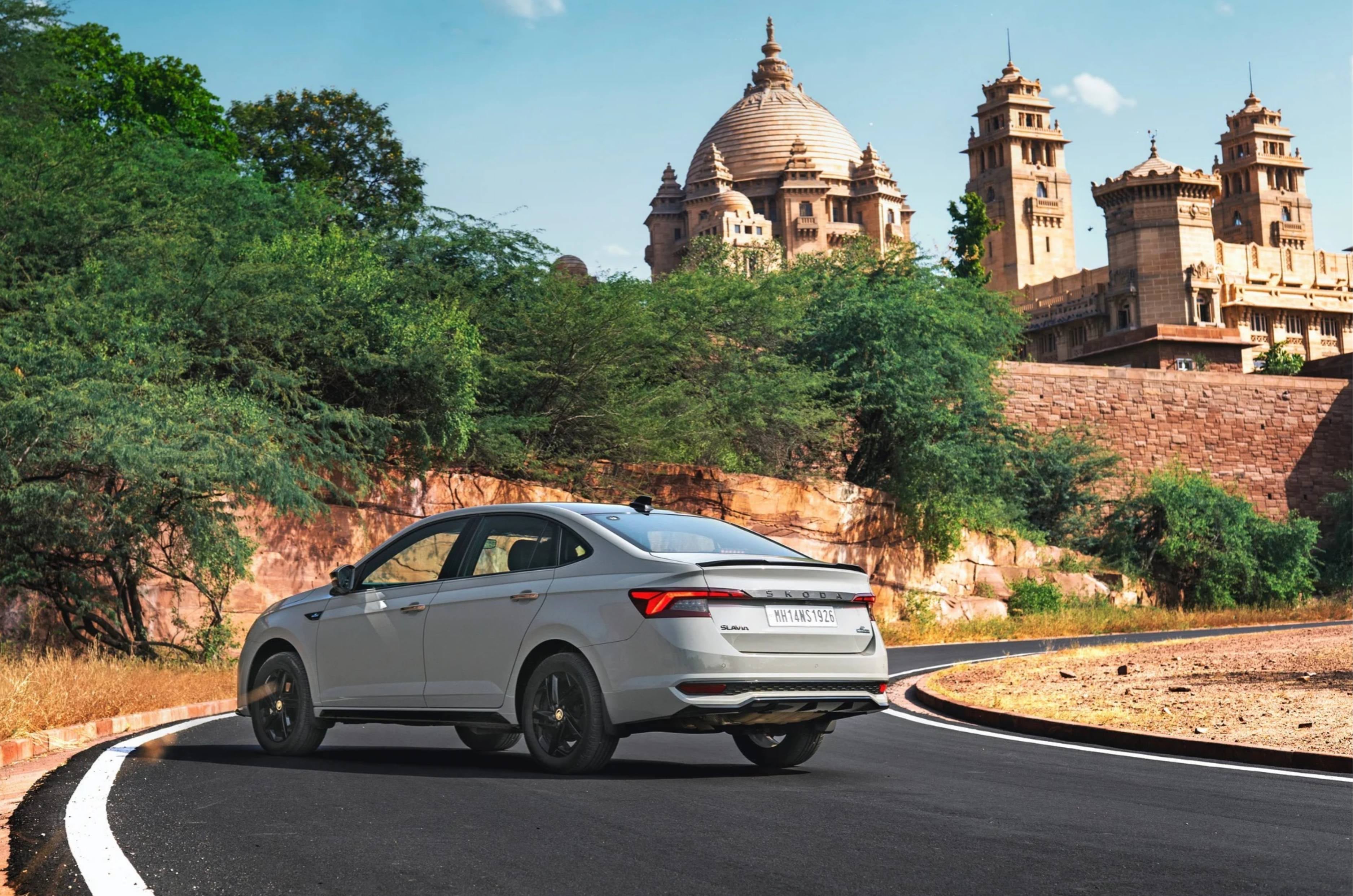
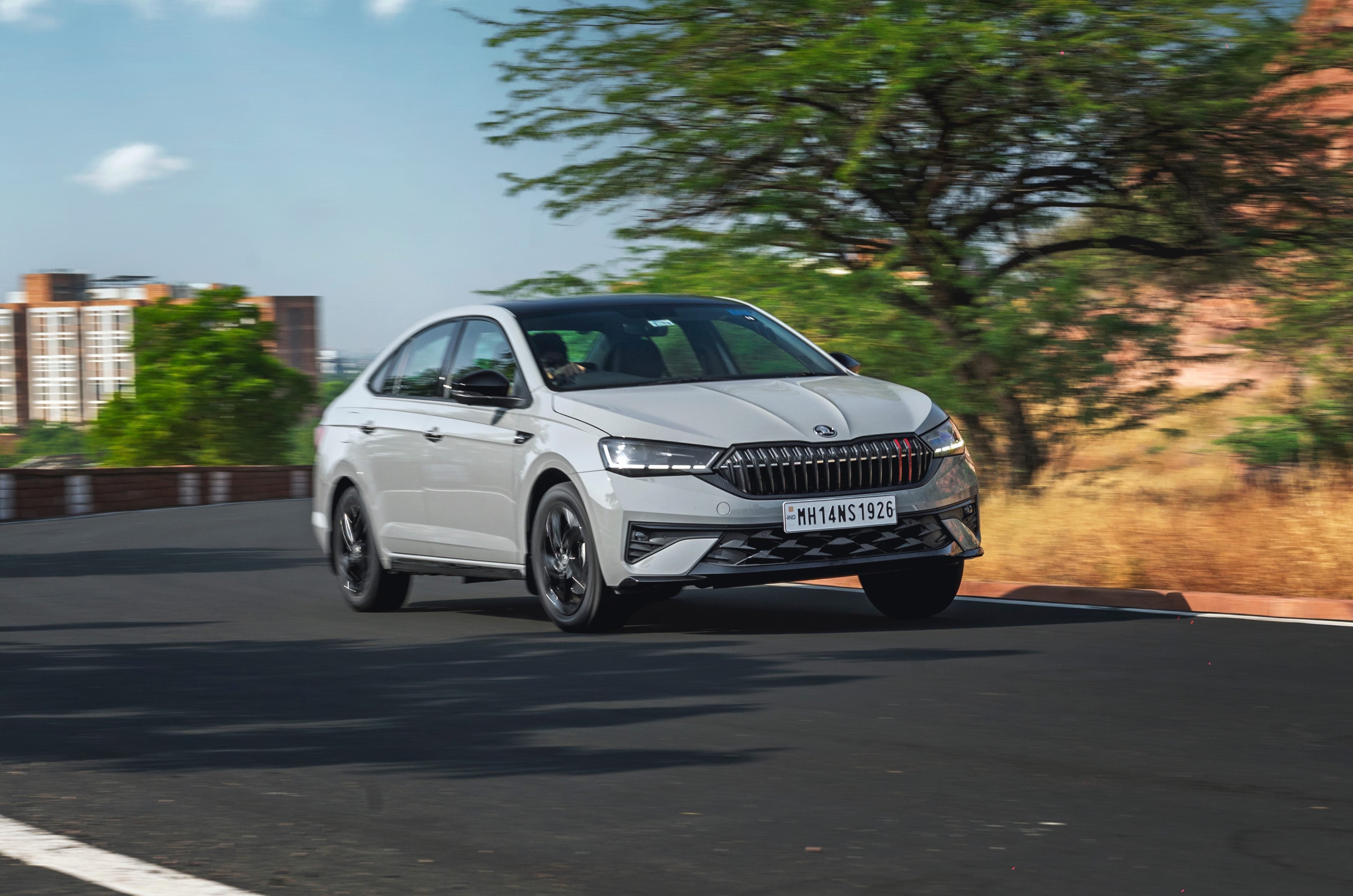
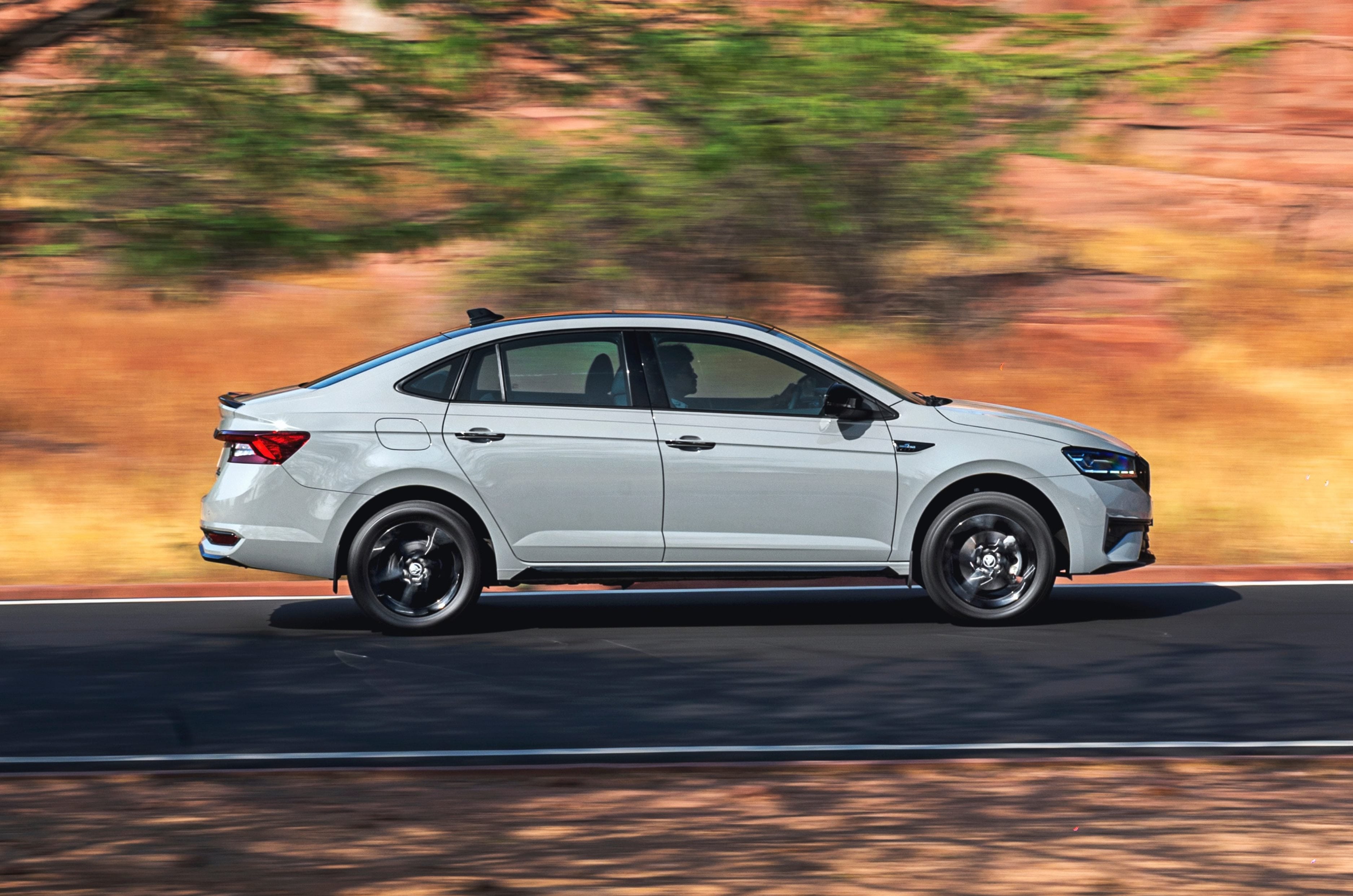
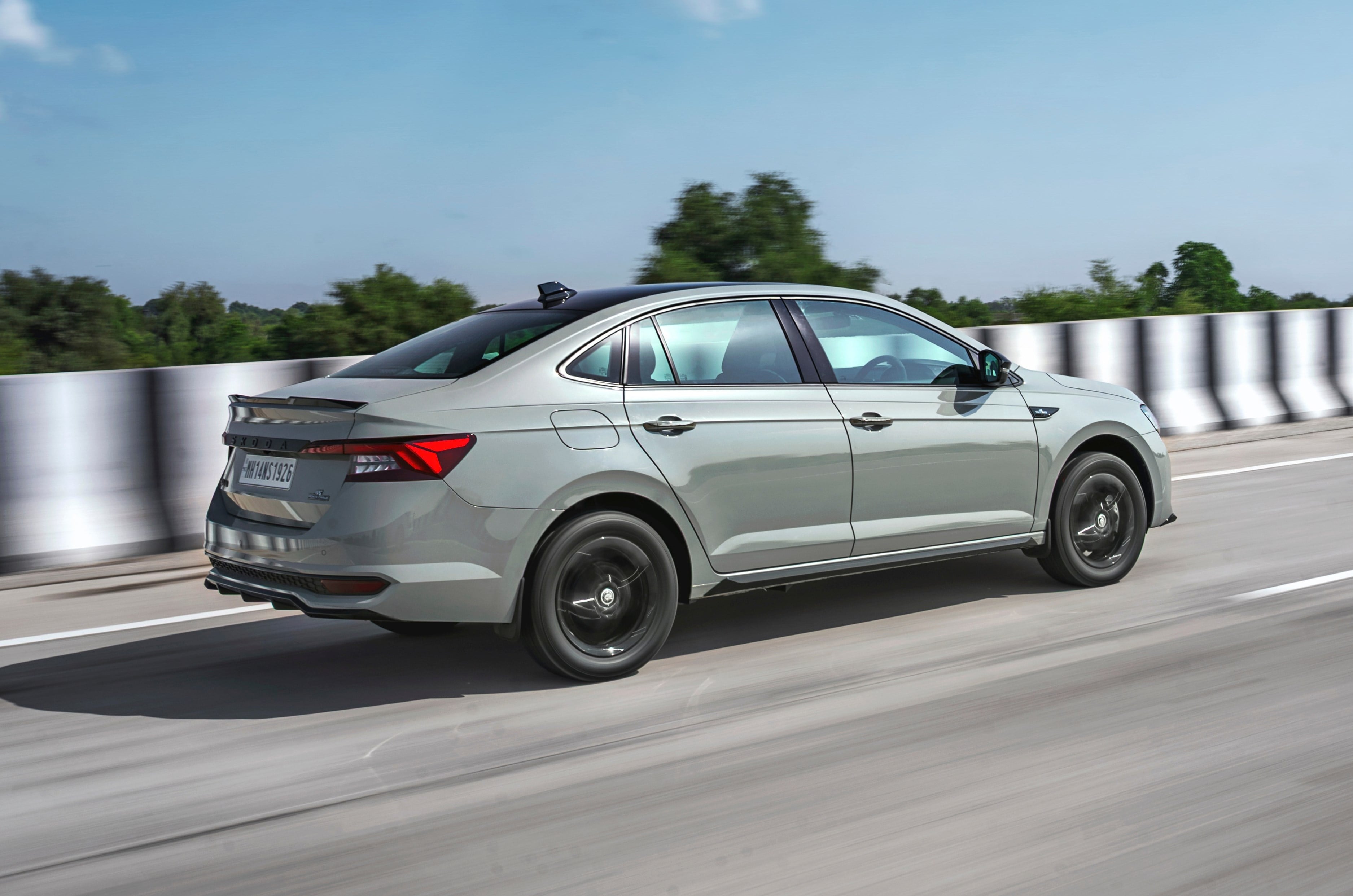
The Slavia facelift retains the overall silhouette of its outgoing version, but subtle updates give it a sharper look than before. The front sees updated detailing for the LED headlamps with segmented DRLs, a segmented chrome strip on the grille, new LED foglamp units, and a sportier bumper with a revised air dam. In profile, there’s a new design for the 16-inch alloy wheels, sharp body lines across the sides, and a chrome-tipped window line. Revised LED tail-lamps with sequential turn indicators, updated Skoda branding, and a restyled bumper make up the rear of the Slavia facelift. New colours for the Slavia include Arctic Silver and Capuccino Beige. Monte Carlo versions come with blacked-out exterior elements, badges and alloy wheels, red accents on the grille, special ‘Monte Carlo’ badges and dual-tone colour choices.
Skoda Slavia facelift dimensions
Skoda Slavia facelift dimensions
Length (mm)
4,552
Width (mm)
1,752
Height (mm)
1,507
Wheelbase (mm)
2,651
Ground clearance (mm)
179
Boot space (litres)
521
Skoda Slavia facelift interior updates
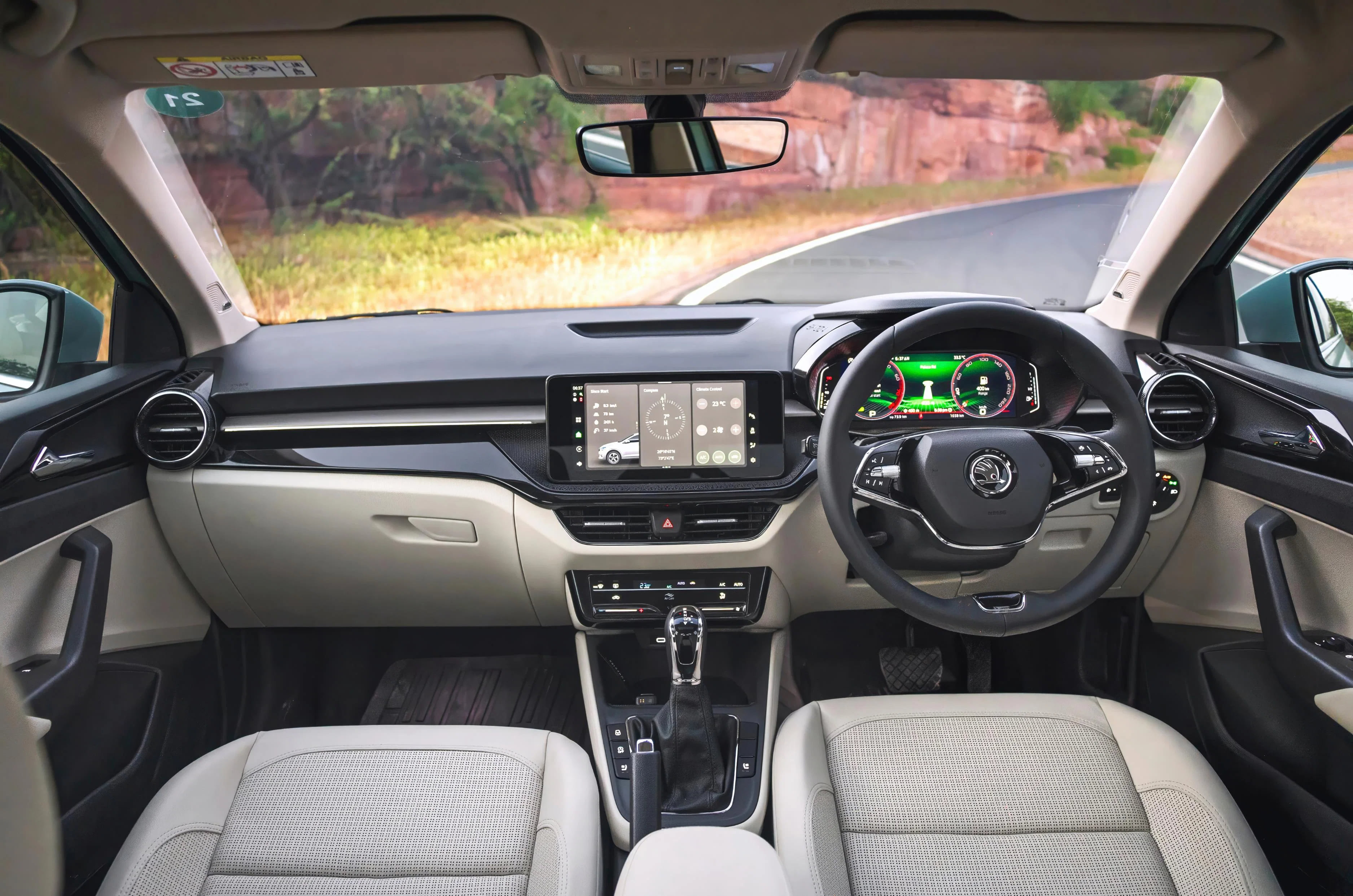
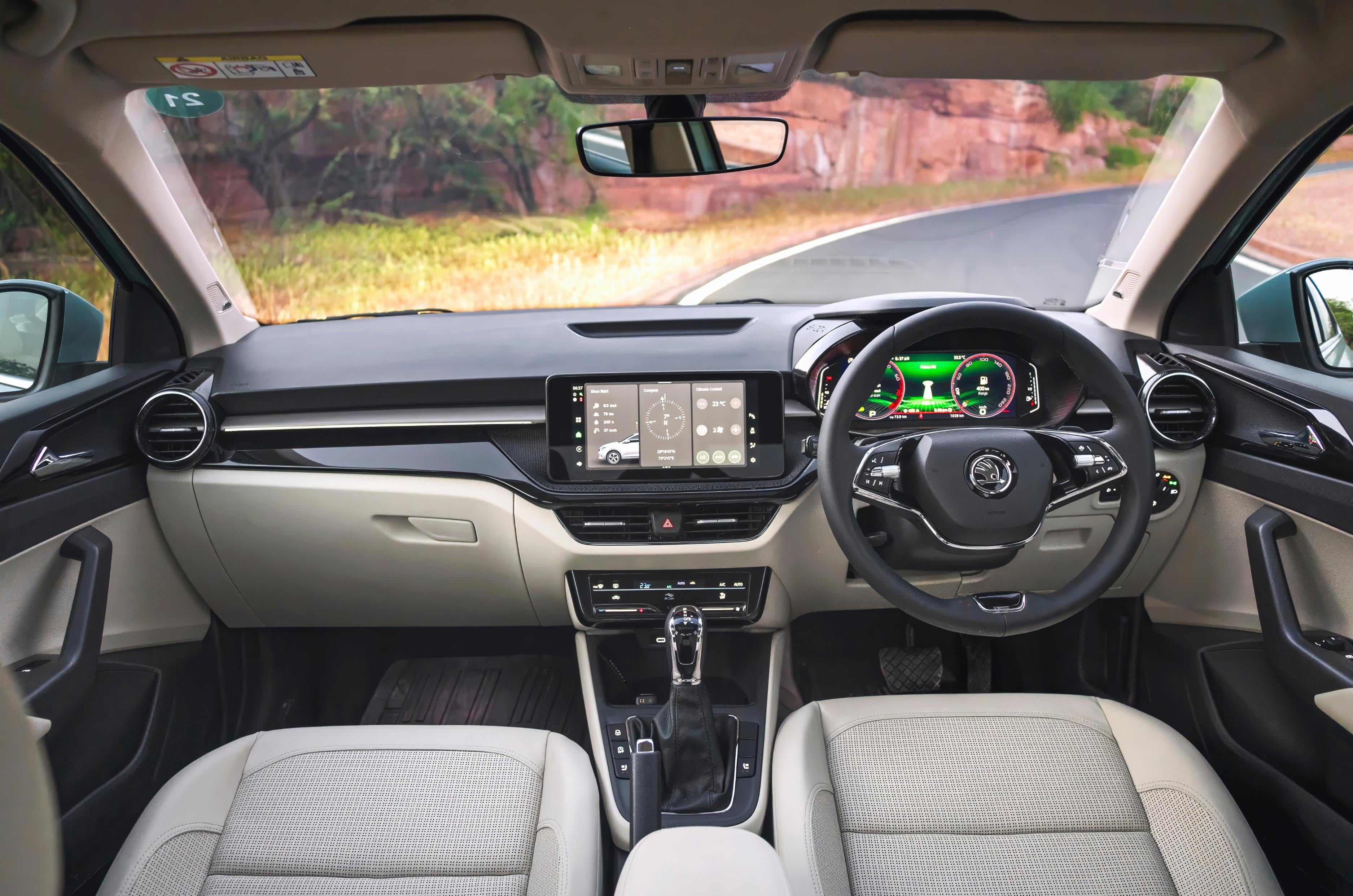
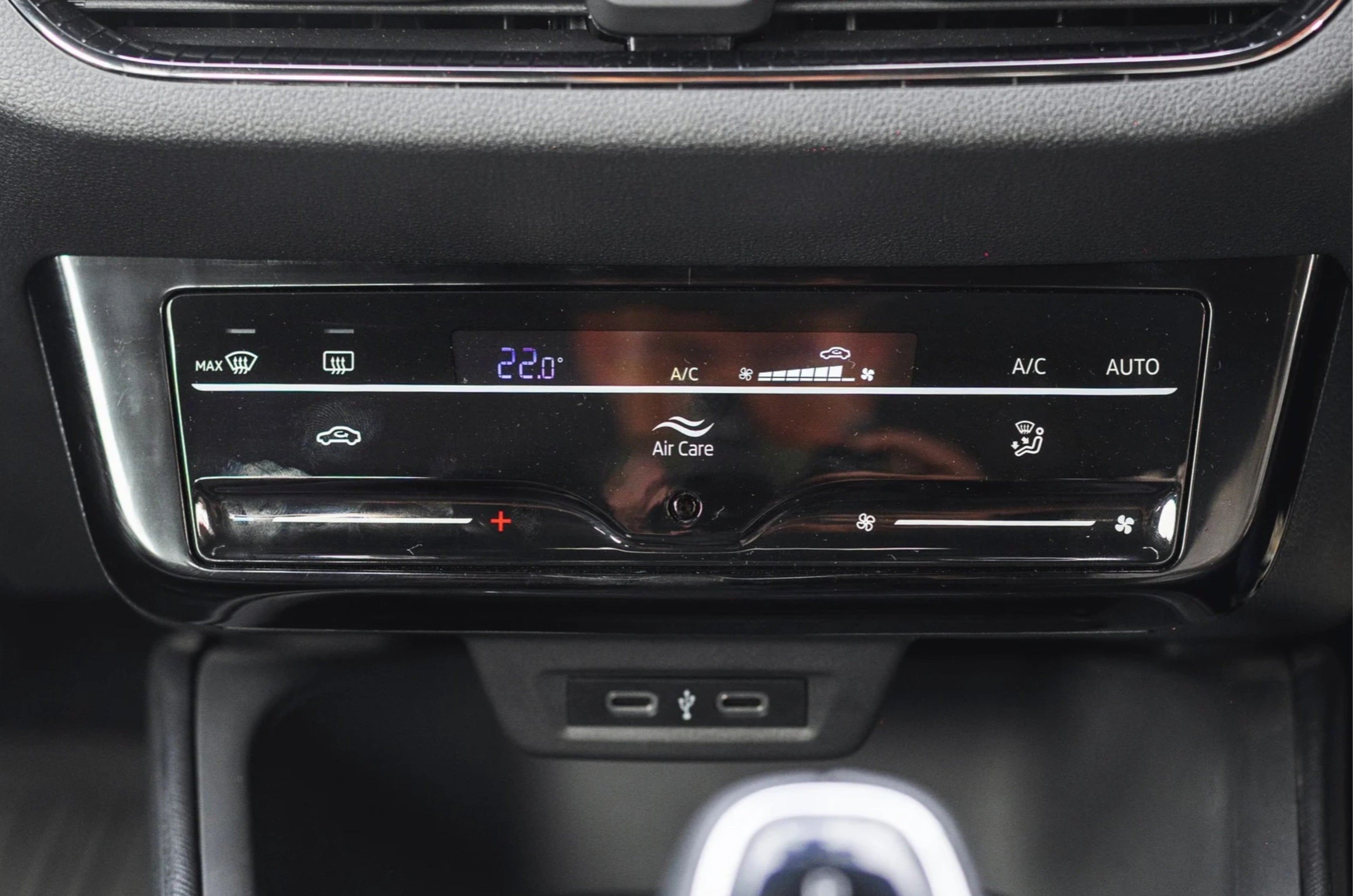
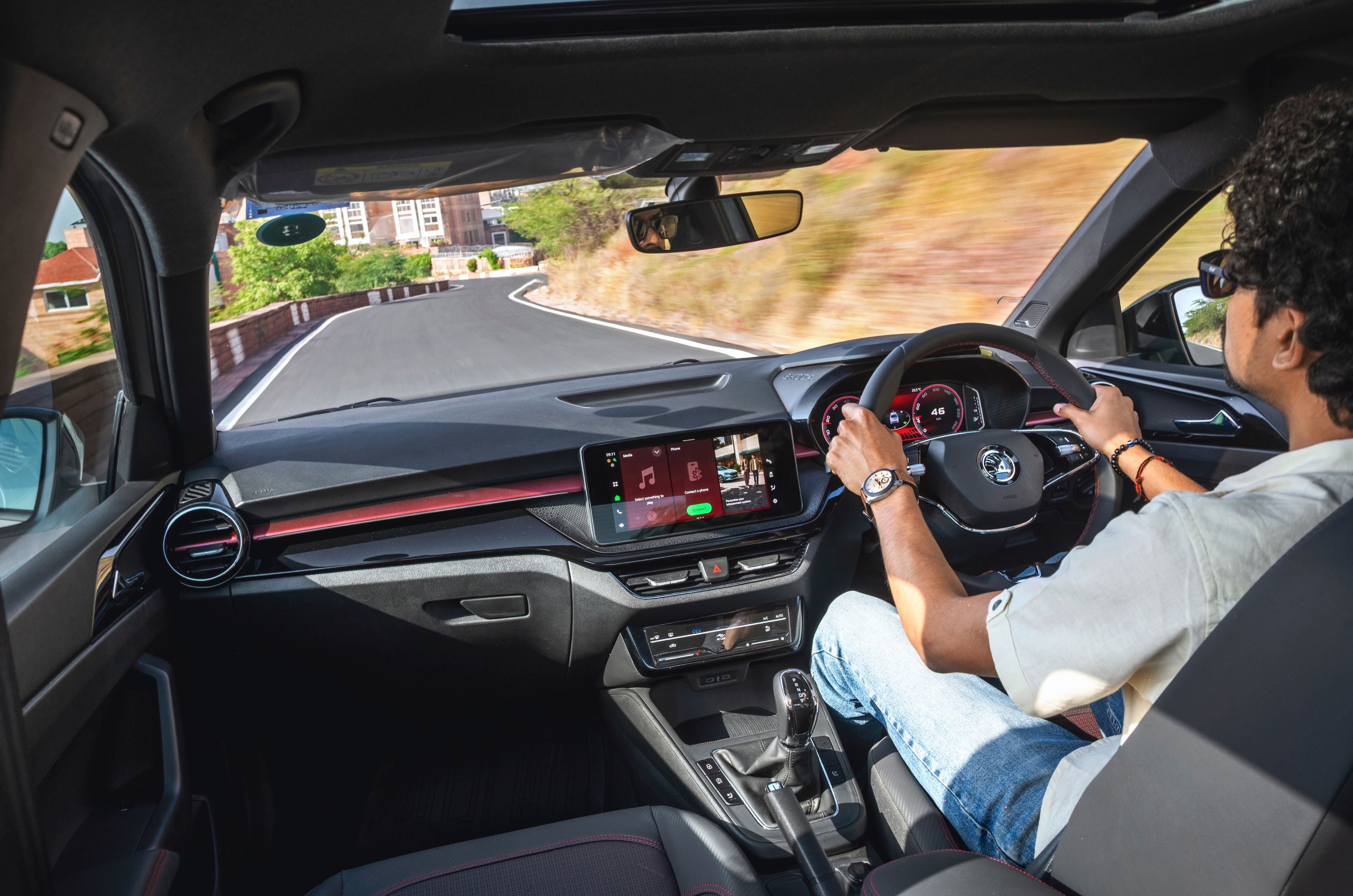
Inside, the Slavia facelift looks largely similar to the outgoing model, with the standard model carrying over the beige-and-black theme with copper inserts. Monte Carlo versions get an all-black theme with red inserts and exclusive red graphics across the screens. Meanwhile, the standard Slavia’s leatherette-upholstered seats have a monotone finish, as opposed to the older model’s dual-tone finish. On the other hand, Monte Carlo versions come with black leatherette seats and contrast red stitching. Elements like the two-spoke steering wheel, recessed space on the dash, circular air vents, and touch-based HVAC controls have been carried over.
Skoda Slavia facelift features
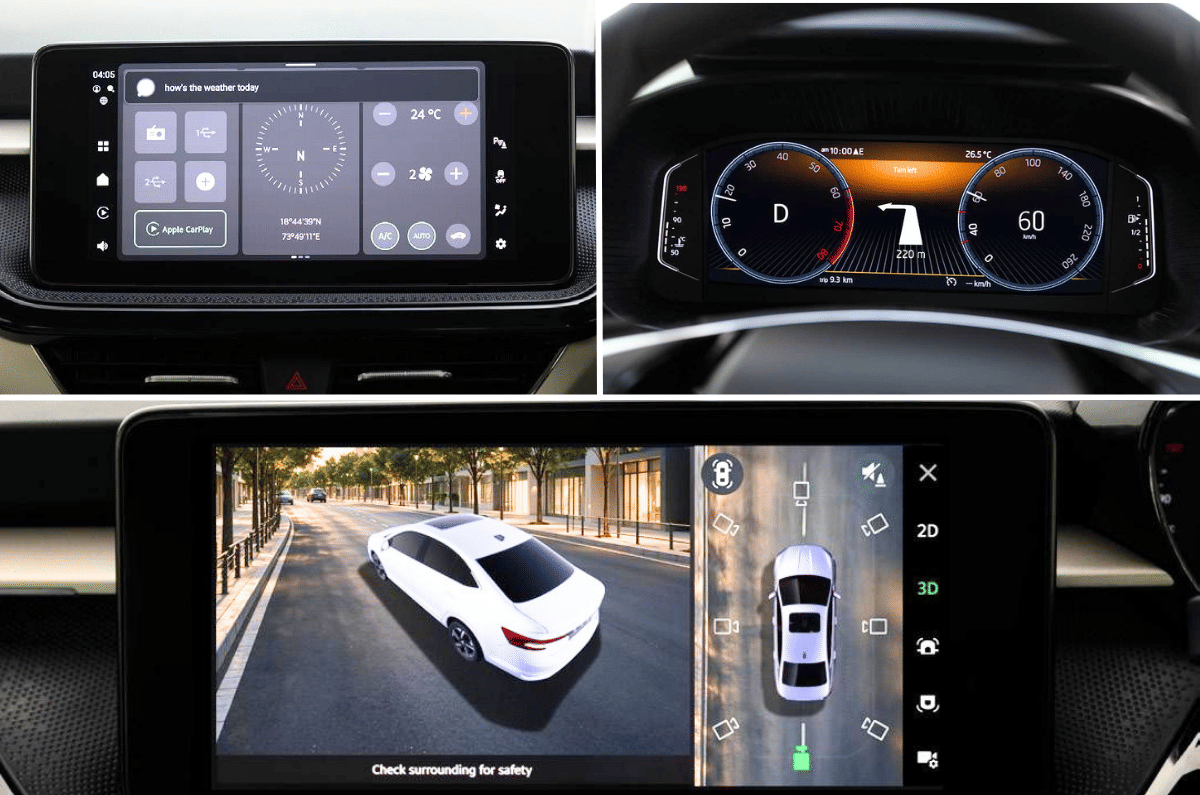
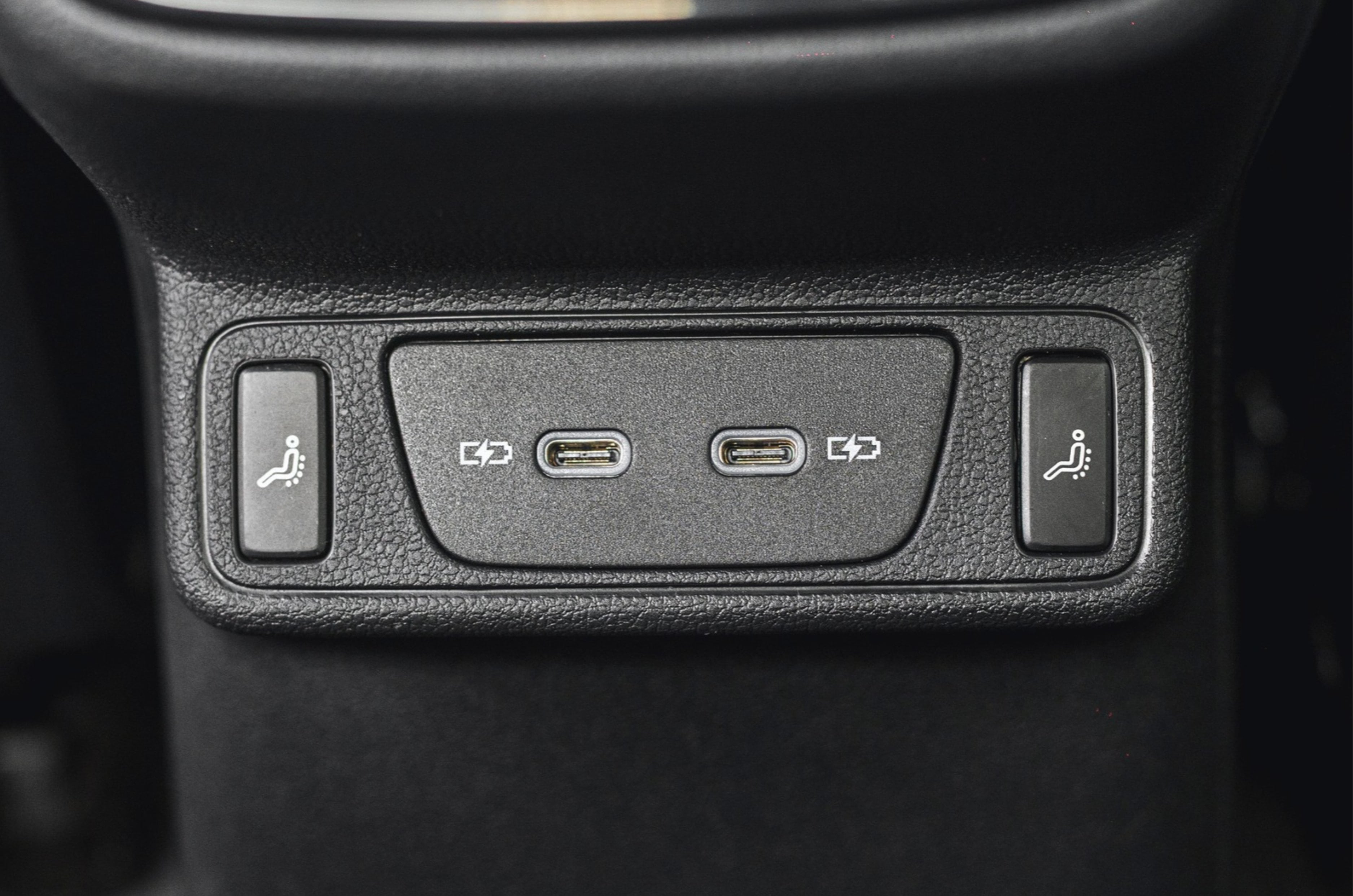
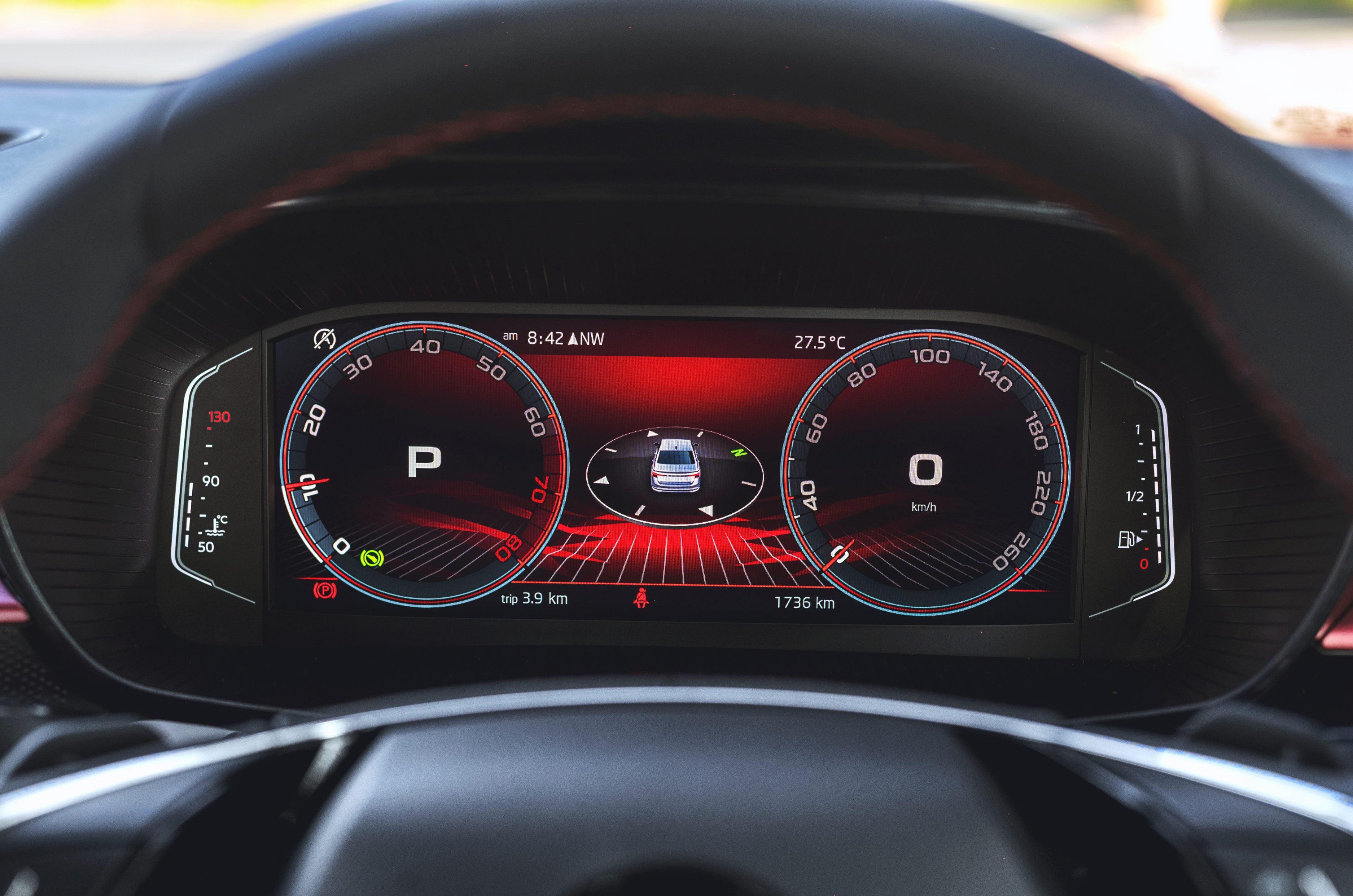
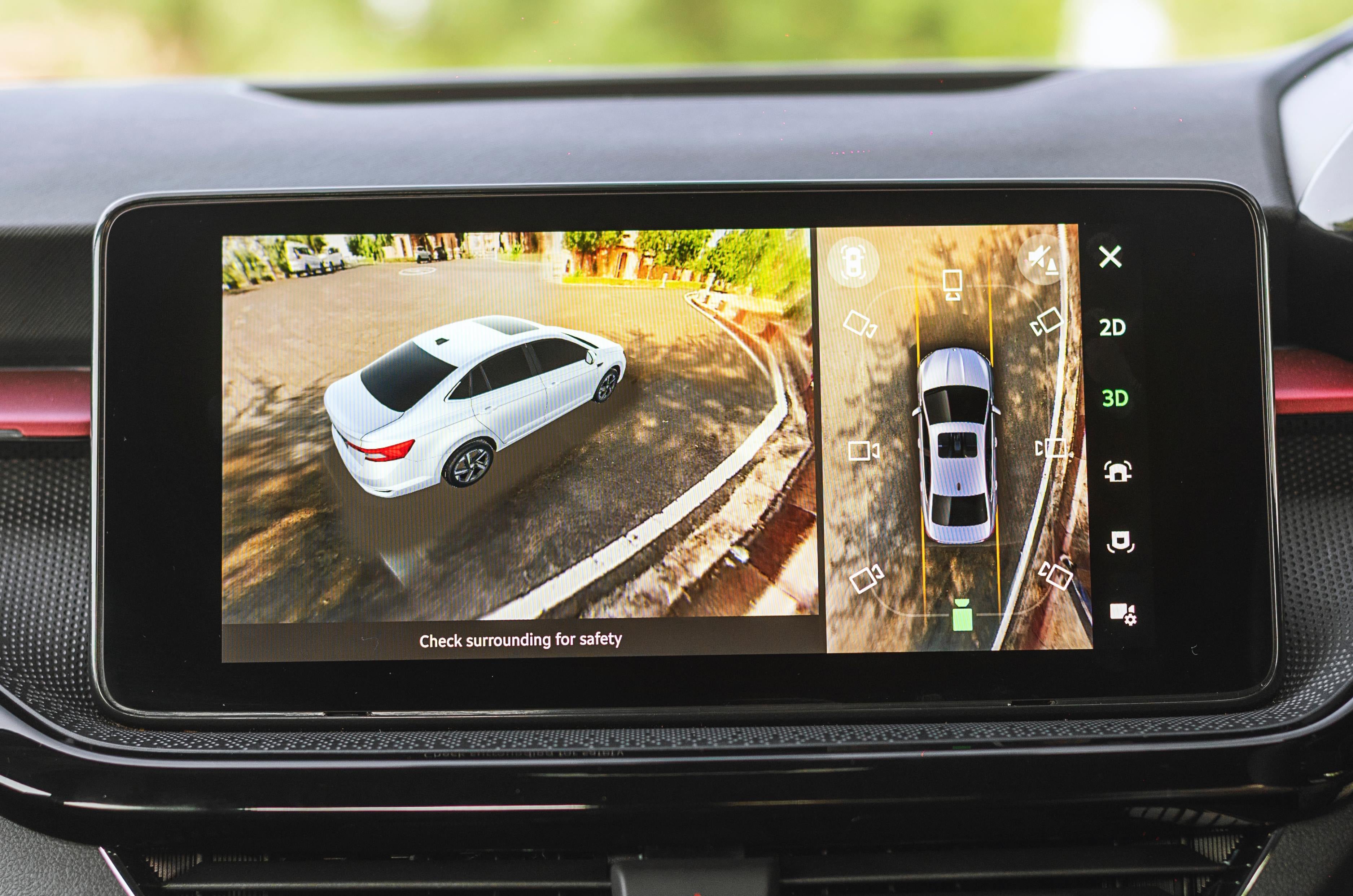
Skoda has bolstered the Slavia facelift’s equipment list, introducing a slightly larger 10.1-inch infotainment system with Google AI assistant, a new 10.25-inch digital driver’s display with configurable screens, segment-only rear seat massage function, and a 360-degree camera. A new variable-geometry compressor for the HVAC brings a much-needed improvement to AC performance. Other goodies like a single-pane sunroof, wireless Apple CarPlay and Android Auto, a wireless phone charger, powered and ventilated front seats, and an 8-speaker audio system have been retained. However, it skips an ADAS suite that rivals offer.
Skoda Slavia facelift powertrain options
The Slavia facelift retains its 115hp, 178Nm, 1.0-litre and 150hp, 250Nm, 1.5-litre direct-injection turbo-petrol engines. Additionally, the former and latter retain their 6-speed manual and 7-speed DCT gearboxes, respectively. However, automatic versions of the 1.0-litre engine are now paired with a new 8-speed torque converter automatic, replacing the older 6-speed unit. Ahead of its launch, we’ve had the opportunity to review the Skoda Slavia facelift.
Skoda’s Slavia sedan has received its first major update since its introduction back in 2022. In order to keep it in touch with recently updated rivals like the Hyundai Verna and Honda City, the Slavia gets sharper styling, more equipment and even a significant mechanical change. Here’s what it’s like.
Skoda Slavia facelift exterior design and engineering – 8/10
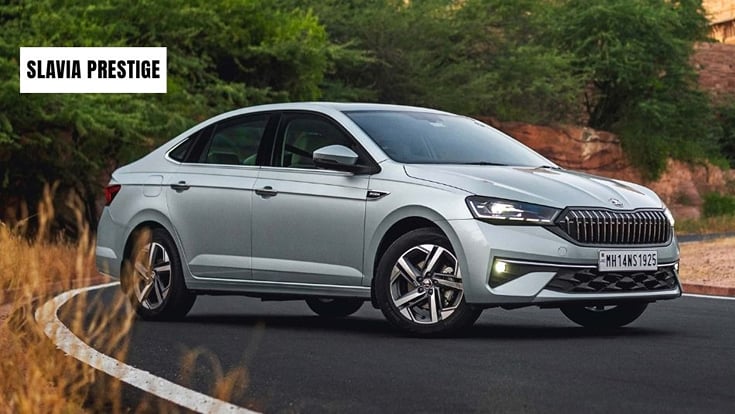
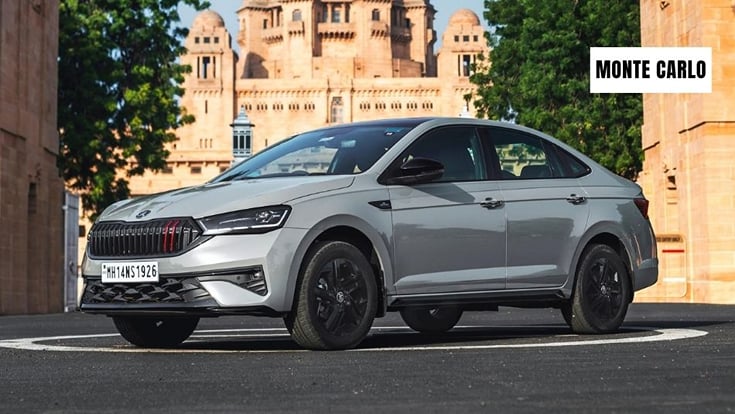
Skoda Slavia Prestige (left) and Monte Carlo (right)
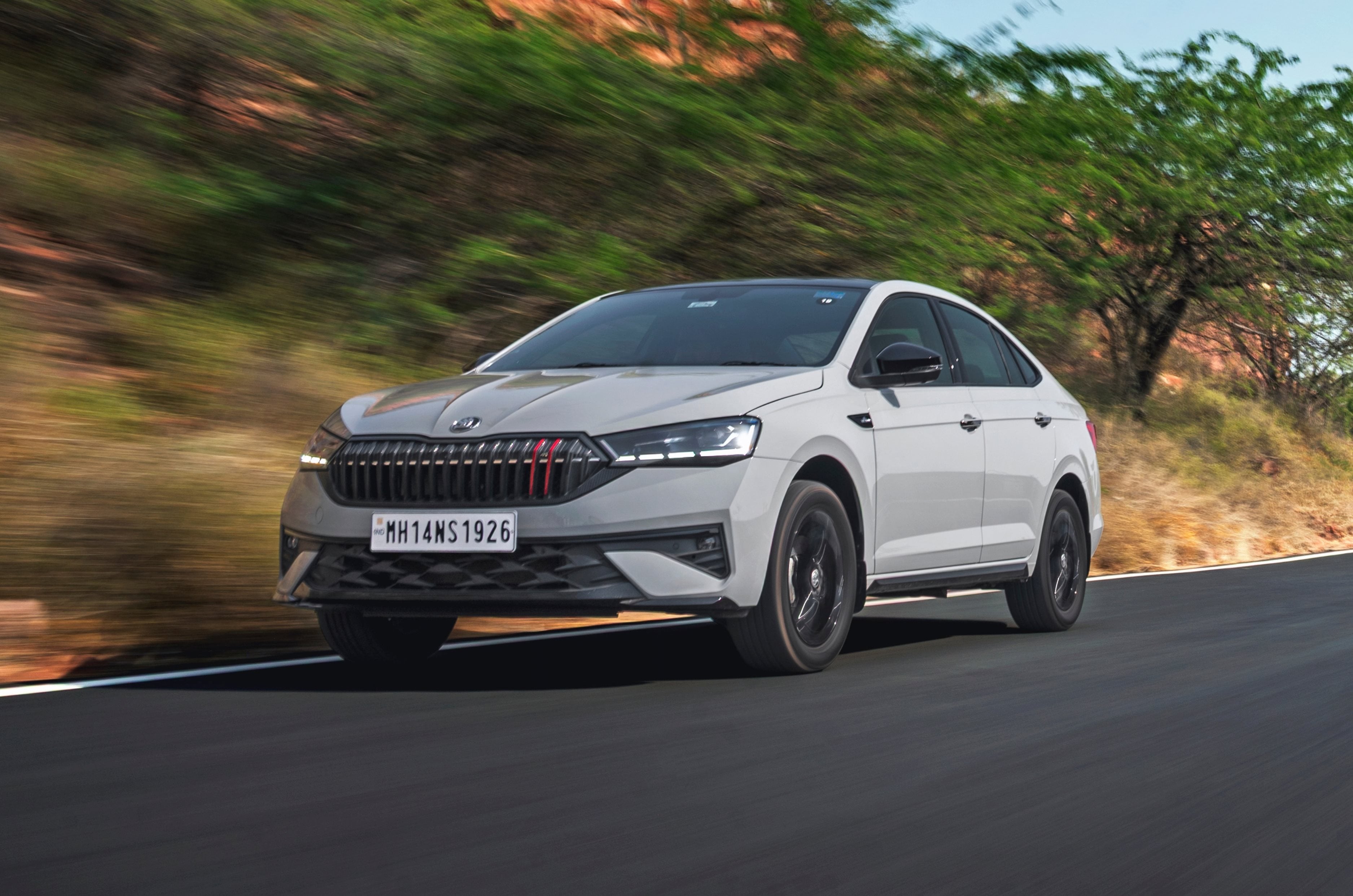
Being a facelift, the Slavia’s overall silhouette and proportions are unchanged, and that’s a good thing. Its design is clean and elegant rather than flashy, with crisp body lines, a long bonnet and a flowing roofline giving it a distinctly European appearance. The signature butterfly grille features new segmented chrome trim and sharp LED headlamps also get a new segmented LED DRL signature. The bumper is all new, featuring new LED fog lamps along with a reworked airdam. Along the sides, there’s a new design for the 16-inch alloys while the 179mm (unladen) ground clearance gives it a degree of SUV-like usability without making the sedan look too ungainly.
At the rear, it gets new sequential turn indicators and different LED elements in the tail lights. There’s a new trim piece connecting the tail-lights, with prominent ‘SKODA’ lettering, which gives the rear a cleaner, more contemporary look. As before, the Slavia is offered in a more luxurious Prestige trim, which brings chrome elements and a dual-tone finish for the alloys, and a sporty Monte Carlo trim that features blacked-out elements which include the grille, alloys, ORVMs, roof and bootlid spoiler. There’s also two new colours, Arctic Silver and Cappuccino Beige, which the former looking particularly tasteful.
Under the skin, the Slavia continues to use the MQB A0 IN platform, shared with the Kushaq and Volkswagen Virtus. This India-specific architecture allows the Slavia to retain its proper three-box sedan proportions while offering the ground clearance and practicality needed for Indian road conditions. Overall, the updates are evolutionary rather than revolutionary, but they do enough to keep the Slavia’s understated design looking fresh.
Skoda Slavia facelift interior space and comfort – 8/10
Step inside, and the door shuts with a reassuring thud and you’re greeted by the same layered dashboard. Like the exterior, the interior trim differs too depending on which trim you opt for. The more luxurious Prestige trim gets a beige and black upholstery with copper-coloured inserts on the dash, while the sporty Monte Carlo gets an all-black theme with contrasting red details on the dashboard, the stitching and the seat perforation. Build quality is solid overall, with a well put-together feel to the cabin. It’s also a practical space with plenty of storage spaces and the typical Skoda “Simply Clever” features like a ticket holder, coat hooks, phone pocket in the seatbacks and more.
The front seats are wide and supportive, with generous cushioning that makes the Slavia comfortable over long journeys, and finding your ideal driving position is easy too thanks to the electrically adjustable seats and reach/rake adjustment for the steering.
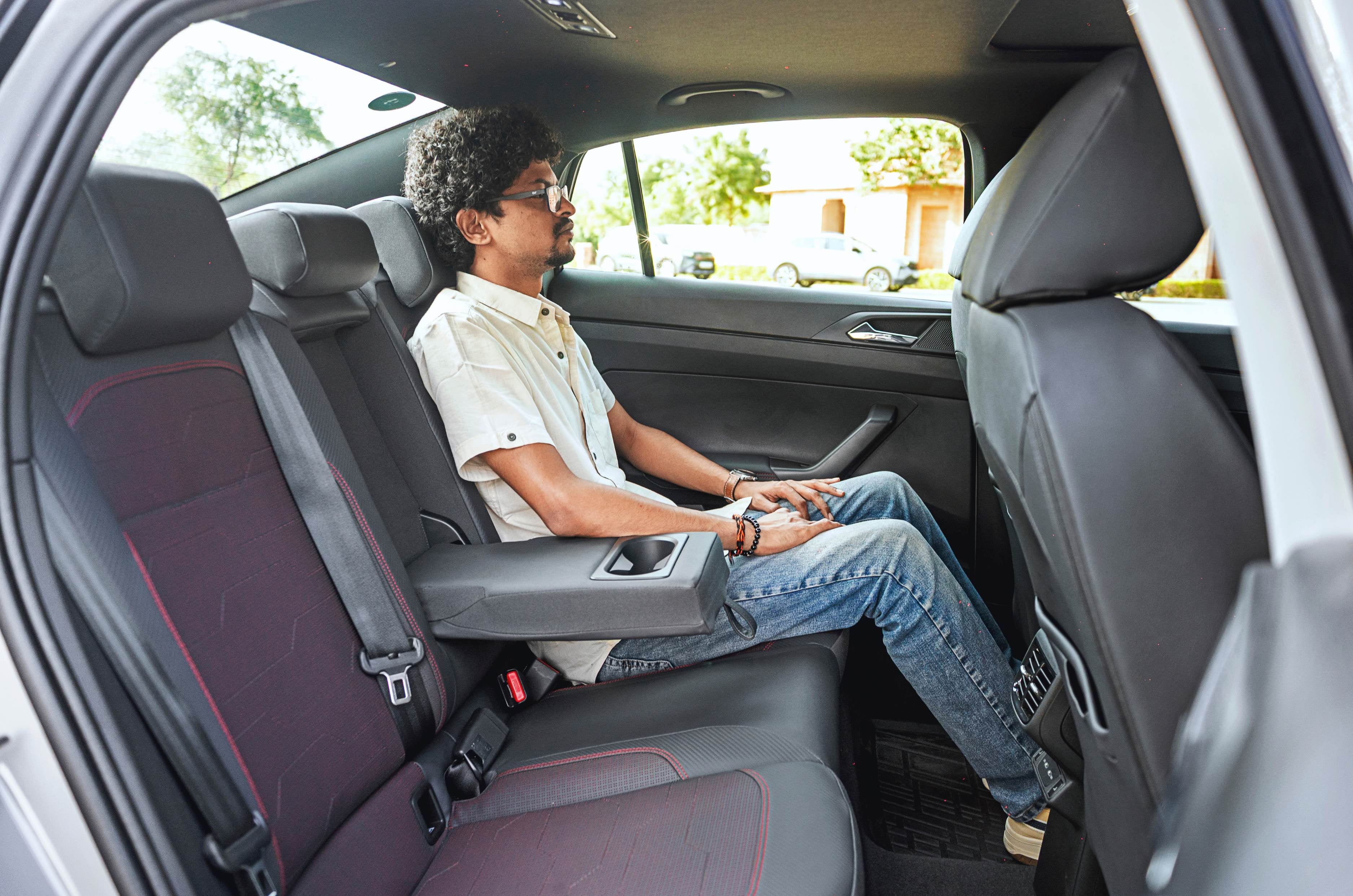
Rear-seat space remains one of Slavia’s biggest strengths. The long wheelbase translates into generous legroom and ample footroom, and the windows are also large enough. Headroom though, can be a little tight for taller passengers, and the contoured rear bench along with the transmission hump in the centre mean it’s more naturally suited to two adults than three.
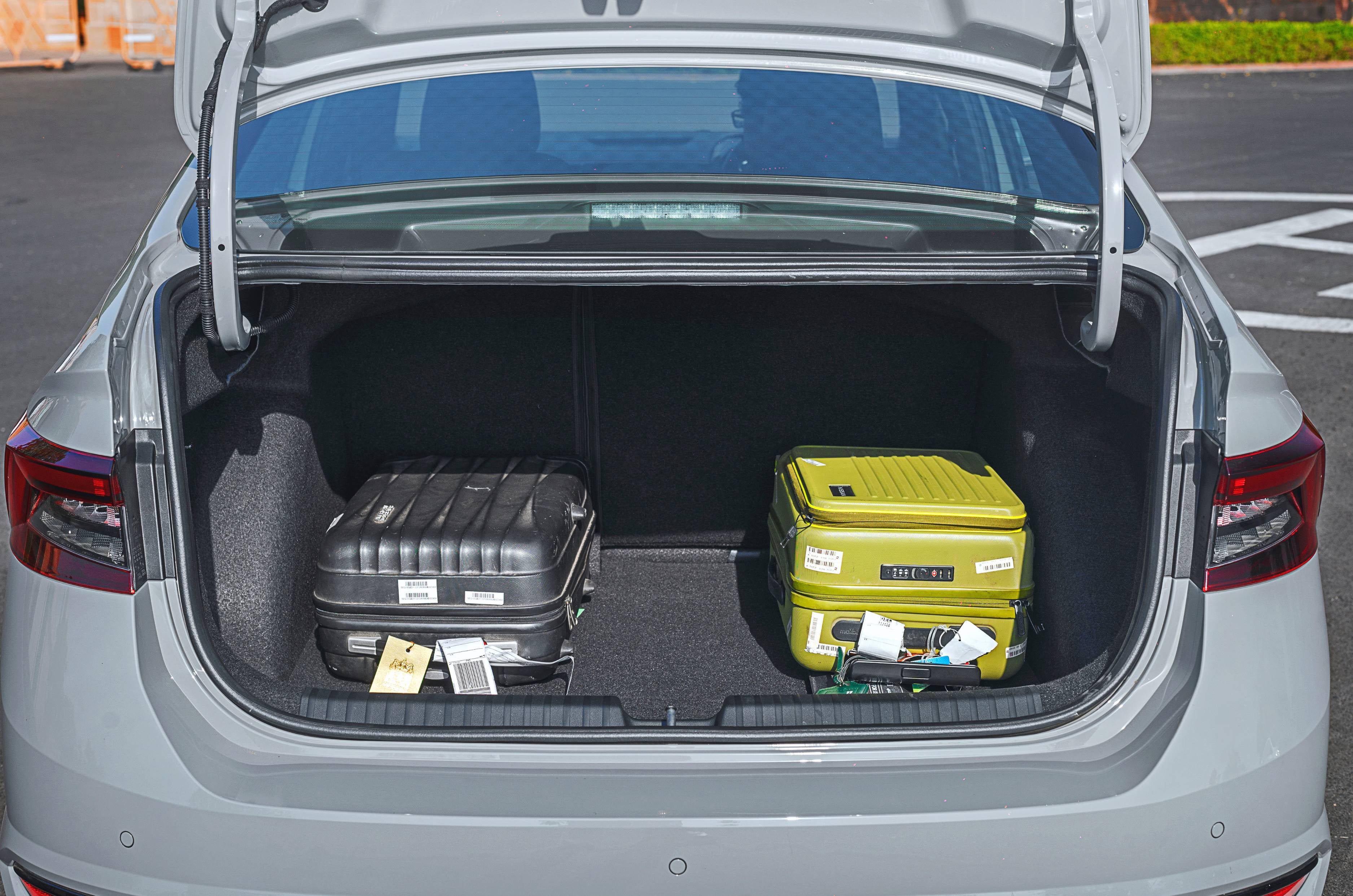
The 521-litre boot is among the largest in the segment, and the squared-off shape makes it easy to load. The 60:40 split-folding rear seats add further versatility. It also continues to get a space tyre and a subwoofer under the boot floor.
Skoda Slavia facelift features and safety – 9/10
The Slavia facelift brings a useful upgrade in equipment, with the highlight being a segment-first rear seat massaging function. It’s a feature more commonly associated with larger, more expensive cars and adds another layer of comfort to what is already a spacious rear bench. This feature works very well and will be a hit with the chauffeur-driven.
The infotainment and instrumentation have also been upgraded. The previous 10-inch touchscreen has been replaced by a slightly larger 10.1-inch unit, while the driver’s display grows substantially from 8 inches to 10.25 inches. Both screens get new graphics and additional features, giving the cabin a more contemporary feel and bringing the Slavia’s interface up to date. The touchscreen has a slick interface and also benefits from an AI voice assistant and connected car features, while the digital cluster gets multiple layouts along with a turn-by-turn navigation feature. The themes for both these screens also differ depending on whether you’ve gone for the Prestige or the Monte Carlo trim.
Another significant upgrade is the addition of a 360-degree camera, replacing the previous rear-view-only camera. This marks a huge improvement and the clarity and crispness of this camera is one of the best at this price point. And finally, like the Kushaq, the Slavia facelift also gets a new variable geometry compressor instead of a fixed geometry unit for the AC system, which has improved the cooling performance significantly.
Other than these, it continues to feature ventilated and powered front seats, a sunroof, wireless smartphone integration, a great-sounding audio system, auto climate control, ambient lighting, LED lights, auto headlamps/wipers, cruise control, leatherette upholstery, 6 airbags, ESC, traction control, hill-hold assist and much more. The pre-facelift Slavia has also received a full 5-star crash safety rating from Global NCAP. However, some features that rivals offer and are missing here include an electronic parking brake and ADAS tech.
All together, the feature additions make the facelift feel more complete, with the new screens, 360-degree camera and rear seat massage adding both convenience and a greater sense of sophistication to the cabin.
Skoda Slavia facelift powertrain and performance – 8/10
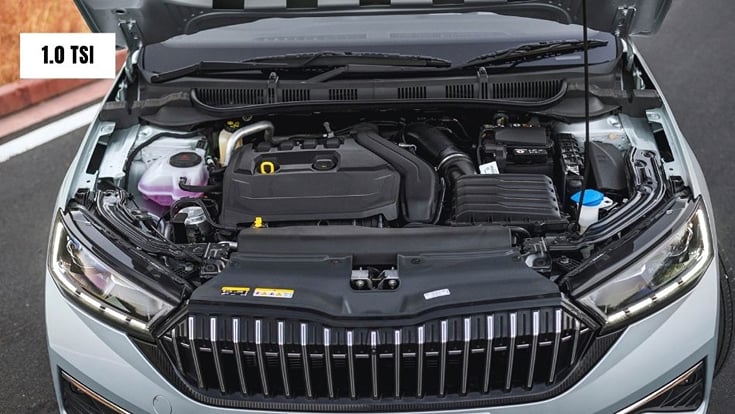
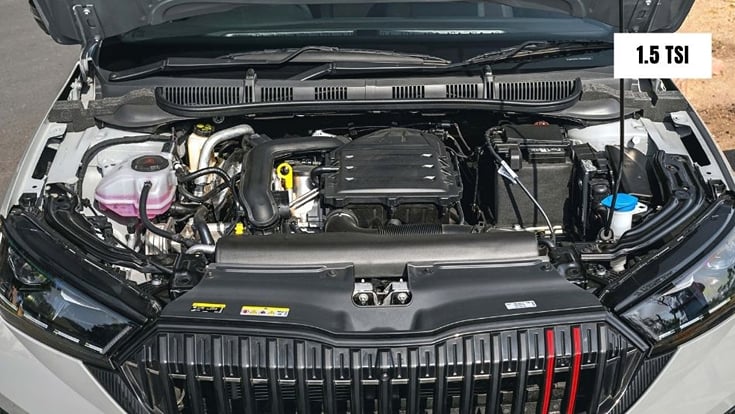
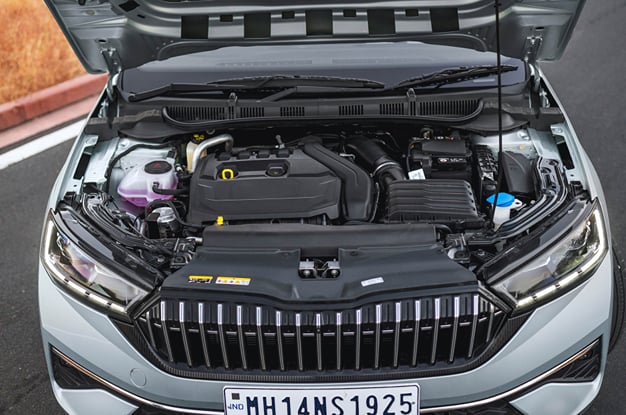
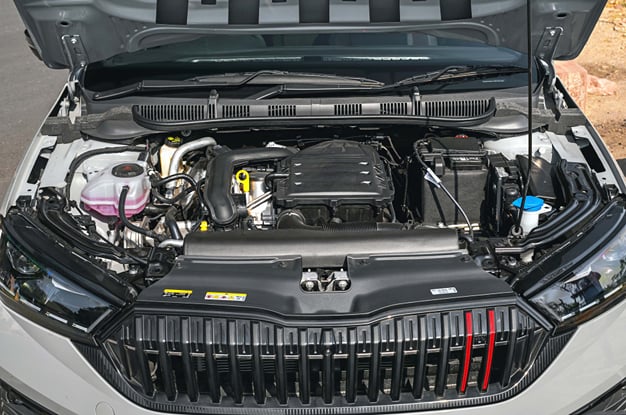
Skoda Slavia 1.0-litre TSI engine (left), 1.5-litre TSI engine (right)
The Slavia retains the same engine options as earlier, so you have a choice between two direct-injection turbo petrols. There’s a 1.0-litre, three-cylinder unit that puts out 115hp and 178Nm and a 1.5-litre, four-cylinder mill that produces 150hp and 250Nm.
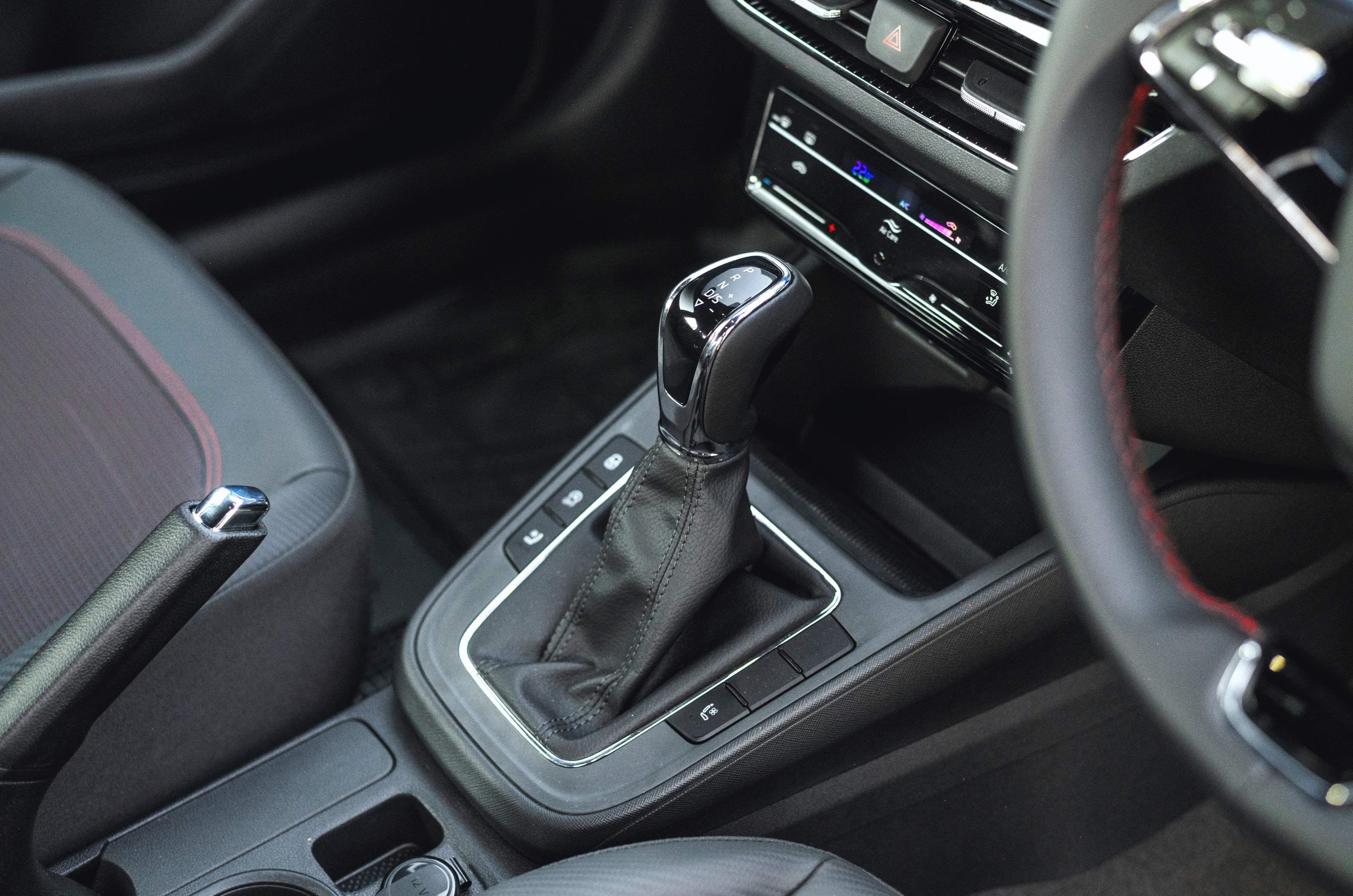
The 1.5 TSI can only be had with a 7-speed dual clutch automatic and enthusiasts will miss the option of a 6-speed manual with this engine, which was on offer earlier. The 1.0 TSI does get a 6-speed manual option, but the gearbox of major interest with this engine is the new 8-speed torque converter automatic. It’s the Aisin-sourced AQ300, replacing the earlier AQ250 6-speed unit, and this helps lower emissions and fuel consumption.
The new gearbox brings a welcome improvement to the Slavia’s low-speed manners. While the previous car had a tendency to leap forward from a standstill, this one now feels much more controlled than before. Once on the move, shifts are smooth and seamless, as you’d expect from a torque-converter automatic. What’s particularly impressive, though, is the speed of the manual shifts, whether you use the paddles or the Tiptronic gear lever. In manual mode, the gearbox also allows the engine to rev close to its limit before shifting up which makes the Slavia 1.0 TSI engaging to drive. The only real gripe with the gearbox is that all the ratios feel rather short. Third tops out at just over 100kph, while at 100kph in 8th, the engine is spinning at a little over 2,000rpm, which is higher than you’d expect given the number of ratios it has to play with.
Although we didn’t get a chance to time it, expect it to complete the 0-100kph sprint in around 11sec, similar to the 6-speed AT’s 11.16sec time. At idle, there is some of that familiar vibrations of a three-cylinder engine. It settles when you drive gently, but push beyond 3000rpm and the gravelly note makes itself heard inside. For the smaller and less powerful petrol engine, refinement could have been better, and more insulation would have helped too.
The 1.5-litre four-cylinder TSI continues unchanged and remains the stronger, more effortless performer of the two. Acceleration is brisk and flat-out performance is strong, while shifts via the paddles are, as expected, quick. The pre-facelift Slavia 1.5 TSI DSG managed 0-100kph in 8.96sec in our tests, and performance with the updated car should remain in the same ballpark.
Between the two engines, the 1.5 TSI is the one that feels more complete, not just because of its stronger performance but also because it is smoother and benefits from cylinder-deactivation technology. Under light engine loads, two of its four cylinders shut down to save fuel, and the transition is seamless as well. However like the 1.0, the 1.5-litre also becomes quite audible when worked hard and some road noise from coarse surfaces also make its way into the cabin.
Skoda Slavia facelift fuel efficiency – 7/10
Our brief test drive meant we didn’t get a chance to test the fuel efficiency of the Slavia facelift, however we have tested the Kushaq facelift which is mechanically identical. In our real-world fuel efficiency tests, the Kushaq 1.0 TSI AT averaged better than the 1.5 TSI DSG by 0.48kpl. In the city, the 1.0 TSI (10.7kpl) was more efficient than the 1.5 TSI (9.55kpl) by 1.15kpl, thanks to the 1.0’s lighter kerb weight and aggressive start/stop system. In contrast, the 1.5’s twin-cylinder deactivation tech helped it be more efficient on the highway (15.29kpl) than the 1.0 (15.10kpl) by 0.19kpl. However, we’re yet to test the 1.0 MT’s fuel efficiency.
Skoda Slavia facelift ride comfort and handling – 8/10
Ride and handling are areas where the Slavia continues to impress. Despite its generous 179mm ground clearance, the handling doesn’t feel compromised. Body roll is well controlled, while the car remains composed and predictable when you go around corners. The steering is on the lighter side but picks up weight progressively as speeds rise.
There is that typical low-speed firmness in the ride quality that you’d normally associate with European cars. But it never feels overly stiff and instead gives it tremendous stability at highway speeds. The suspension also deals with broken surfaces and undulations with maturity, absorbing sharper imperfections without becoming unsettled. It is this combination of an agile chassis, well-controlled body movements and mature ride quality that makes the Slavia enjoyable to drive.
The Slavia’s braking performance remains strong and reassuring but the 1.5 TSI has now gained rear disc brakes. During our test drive, we didn’t find a noticeable difference to the earlier drum brake setup. The 1.0 TSI meanwhile, continues with the same setup as before.
Skoda Slavia facelift value for money and verdict – 8/10
Prices for the Skoda Slavia facelift are set to be announced in the coming days, but expect it to cost a bit more than the Rs 10 lakh to 18.20 lakh (ex-showroom) the pre-facelift model demanded. What’s nice though is that the new 8-speed AT can be had right from the second-to-base Classic+ trim. As before, it continues to go up against the likes of the Hyundai Verna, Honda City and its Volkswagen sibling, the Virtus.
With this facelift, Skoda has enhanced the Slavia further with a sleeker design that looks timeless, important comfort and safety feature additions and relevant technical updates. Some shortcomings remain, like the slightly firm low speed ride, the absence of a manual gearbox with the more potent engine and it does miss a couple of features compared to rivals. But then whatever features have been added have enriched the experience, like the rear seat massage, the new AC compressor and the 360-degree camera. And as before, it remains very enjoyable to drive thanks to the punchy engines, the sorted handling and the mature high speed manners.
The Slavia facelift then, stands out as one of the most complete and well-rounded sedans around, with a great blend of comfort, practicality, features and driving pleasure.
Copper News: शेयर मार्केट में हाहाकार मचा हुआ ही है, कमोडिटी मार्केट में भी स्थिति बहुत अच्छी नहीं है। निफ्टी (Nifty) वीकली लेवल पर लगातार आठ हफ्ते कमजोर हुआ है और इतनी लंबी गिरावट 25 साल बाद दिखी है। अब कमोडिटी मार्केट में बात करें तो कॉपर जो धड़ाधड़ ऊपर भाग रहा था, अब मई के बाद से सबसे बड़ी वीकली गिरावट की तरफ बढ़ रहा है। शुक्रवार को डॉलर में गिरावट के साथ लंदन मेटल एक्सचेंज पर इसके फ्यूचर्स प्रति टन $14,300 प्रति टन से ऊपर चले गए, लेकिन फिर भी वीकली लेवल पर हफ्ते की समाप्ति पर इसमें लगभग 2% की गिरावट रहने के आसार हैं।
क्यों फीका पड़ा Copper?
एनर्जी की लागत में बढ़ोतरी और चीन के लड़खड़ाते इंडस्ट्रियल सेक्टर की वजह से मांग कम होने के डर से कॉपर को झटका लगा। एनर्जी की लागत इसलिए बढ़ रही है क्योंकि पश्चिमी एशिया में अमेरिका और ईरान के बीच चल रहे युद्ध ने तेल की सप्लाई को बुरी तरह प्रभावित किया हुआ है, जिससे यह उबल पड़ा और कॉपर को भी इसकी आंच महसूस हुई। इसके अलावा चीन में इंडस्ट्रियल कमजोरी के आंकड़ो ने भी कॉपर पर दबाव बनाया।
अभी कितना टूटेगा भाव?
चीन में इंडस्ट्रियल एक्टिविटीज की कमजोर और कच्चे तेल में उबाल ने कॉपर को नरम किया है लेकिन सप्लाई की कमी के कारण कीमतें ऊपरी लेवल पर बनी हुई है यानी कि इसमें अधिक गिरावट की गुंजाइश नहीं दिख रही है। रिफाइंड मेटल पर अमेरिकी टैरिफ के डर से ट्रेडर्स ने लाखों टन मेटल अमेरिका भेजा है, जिससे दूसरी जगहों पर कमी का खतरा पैदा हो गया है। चिली की एक बड़ी खदान में भी हड़ताल चल रही है।
बैंक ऑफ अमेरिका कॉरपोरेशन के एनालिस्ट्स ने अपने नोट में जिक्र किया है कि जब तक पश्चिमी एशिया में युद्ध जारी रहेगा, बेस मेटल्स में बढ़ोतरी सीमित हो सकती है लेकिन एल्युमीनियम, कॉपर और निकेल की सप्लाई में कमी से कीमतों को सपोर्ट मिलना चाहिए।
अभी अमेरिका में सितंबर महीने का रोजगार डेटा आना है, जिसमें मार्केट का अनुमान है कि हायरिंग में बड़ी सुस्ती देखने को मिल सकती है। यह आंकड़ा आज शुक्रवार को आना है। इसमें सुस्ती का असर ये होगा कि अमेरिकी फेडरल रिजर्व की अपनी मौद्रिक नीतियों को और सख्त करने की संभावना फीकी होगी, जो कॉपर के लिए पॉजिटिव हो सकता है।
डिस्क्लेमर: मनीकंट्रोल.कॉम पर दिए गए सलाह या विचार एक्सपर्ट/ब्रोकरेज फर्म के अपने निजी विचार होते हैं। वेबसाइट या मैनेजमेंट इसके लिए उत्तरदायी नहीं है। यूजर्स को मनीकंट्रोल की सलाह है कि कोई भी निवेश निर्णय लेने से पहले हमेशा सर्टिफाइड एक्सपर्ट की सलाह लें।
त्योहारों का सीजन बस शुरू होने वाला है और अक्टूबर आते ही लोग घर की जरूरत का सामान खरीदने की तैयारी करने लगते हैं। अगर आप भी इस बार नई वॉशिंग मशीन, LED TV या फ्रिज खरीदने का प्लान बना रहे हैं, तो आपके लिए एक जरूरी खबर है। दरअसल, 1 अक्टूबर 2026 से इन सामानों की कीमत बढ़ सकती है। ऐसे में त्योहारी ऑफर्स का इंतजार करने से पहले कीमतों में होने वाले बदलाव पर नजर रखना आपके लिए फायदेमंद हो सकता है।
जाने-माने टिप्सटर अभिषेक यादव के अनुसार, AC की कीमतें 5% से 8% तक बढ़ सकती हैं, जबकि कुछ ब्रांड दूसरे होम अप्लायंस की कीमतों में भी करीब 3% से 4% तक इजाफा कर सकते हैं। यह संभावित कीमत बढ़ोतरी ऐसे समय में सामने आई है, जब दिवाली का शॉपिंग सीजन आने वाला है। इस दौरान आमतौर पर लोग घर के लिए नए इलेक्ट्रॉनिक्स और होम अप्लायंस खरीदना पसंद करते हैं।
I forgot to post this, starting tomorrow i.e. October 1 appliance prices are increasing in India
AC prices are going up by 5 to 8%, and some brands are also raising prices of fridges, washing machines and LED TVs by around 3 to 4%
LG is hiking AC prices by 5 to 7% from October 1, Haier by around 5% on ACs and 2 to 3% on TVs and washing machines, and Blue Star, Godrej and others have also confirmed hikes, some from October and some from November
Reason is costly copper, steel, plastics and freight, and this is already the third price hike this year
Haier even says it may raise prices again in December and January, around 15% in total by January
One good thing, shops still have old stock at old prices, so if you were planning to buy an AC or fridge for Diwali, better do it soon
फ्रिज, वॉशिंग मशीन और टीवी की कीमतें भी बढ़ सकती हैं
लीक हुई जानकारी के अनुसार, कीमतों में बढ़ोतरी सिर्फ एयर कंडीशनर तक ही सीमित नहीं है। कुछ मैन्युफैक्चरर्स के कीमतें बदलने की वजह से रेफ्रिजरेटर, वॉशिंग मशीन और LED टेलीविजन के भी महंगे होने की संभावना है।
यादव ने X पर लिखा कि Haier टेलीविजन और वॉशिंग मशीन की कीमतों में लगभग 2% से 3% की बढ़ोतरी करने की योजना बना रहा है। वहीं, Blue Star, Godrej और अन्य ब्रांड्स ने भी कीमतों में बढ़ोतरी की पुष्टि की है, हालांकि अलग-अलग ब्रांड्स के लिए इसे लागू करने की तारीखें अलग-अलग हो सकती हैं।
यादव ने X पर लिखा, “LG 1 अक्टूबर से AC की कीमतों में 5 से 7% की बढ़ोतरी कर रहा है, Haier AC पर लगभग 5% और TV व वॉशिंग मशीन पर 2 से 3% की बढ़ोतरी कर रहा है, और Blue Star, Godrej व अन्य ने भी बढ़ोतरी की पुष्टि की है। कुछ अक्टूबर से और कुछ नवंबर से।”
आखिर क्यों बढ़ रही हैं होम अप्लायंस की कीमतें?
होम अप्लायंस की कीमतों में बढ़ोतरी के पीछे कई वजहें हो सकती हैं। इनमें कच्चे माल और सामान की ढुलाई यानी ट्रांसपोर्टेशन की बढ़ती लागत प्रमुख कारण मानी जा रही है। फ्रिज, वॉशिंग मशीन और TV जैसे प्रोडक्ट बनाने में कॉपर, स्टील और प्लास्टिक जैसी चीजों का बड़े पैमाने पर इस्तेमाल होता है। इसके अलावा, सामान को एक जगह से दूसरी जगह पहुंचाने का खर्च बढ़ने से भी कंपनियों की कुल लागत बढ़ सकती है।
टिप्स्टर अभिषेक यादव ने कीमतों में बढ़ोतरी की वजह बताते हुए महंगे कॉपर, स्टील, प्लास्टिक और बढ़ी हुई फ्रेट लागत का जिक्र किया है। उनके मुताबिक, इस साल कंपनियों की ओर से यह तीसरी बार कीमतों में बढ़ोतरी हो सकती है।
अगर कंपनियों की प्रोडक्शन और ट्रांसपोर्ट लागत आगे भी बढ़ती रहती है, तो आने वाले महीनों में होम अप्लायंस की कीमतों में और बदलाव देखने को मिल सकते हैं। हालांकि, कीमत कितनी बढ़ेगी और कब से लागू होगी, यह हर कंपनी के फैसले पर निर्भर करेगा।
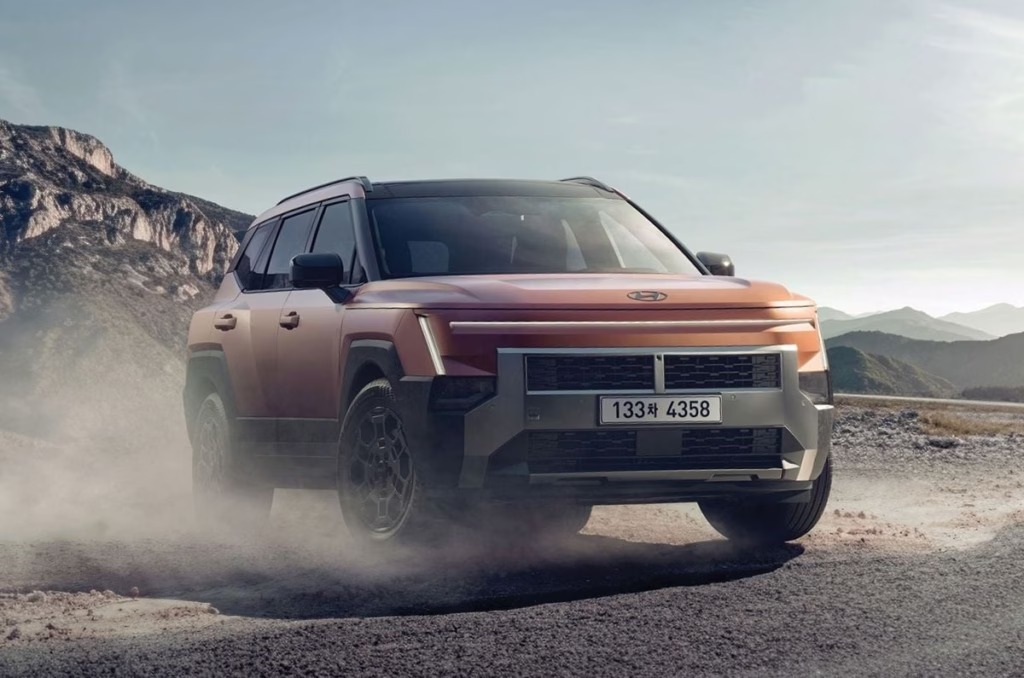
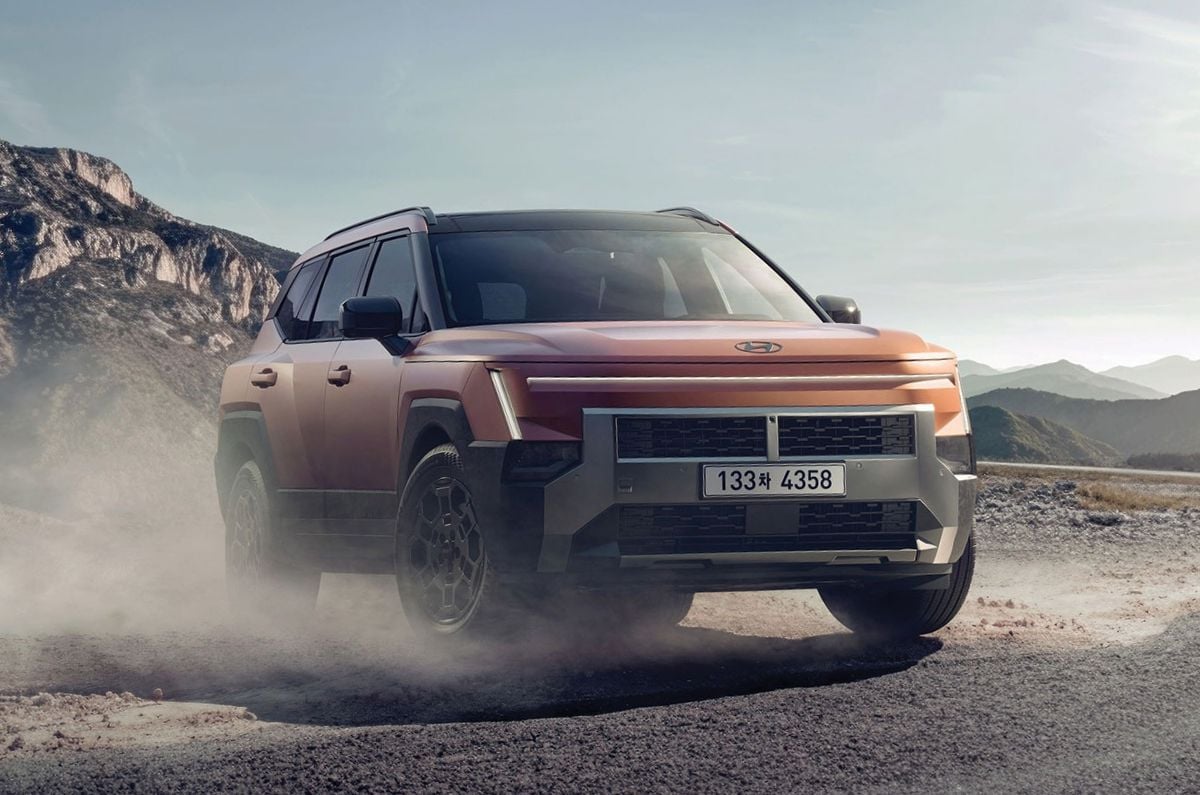
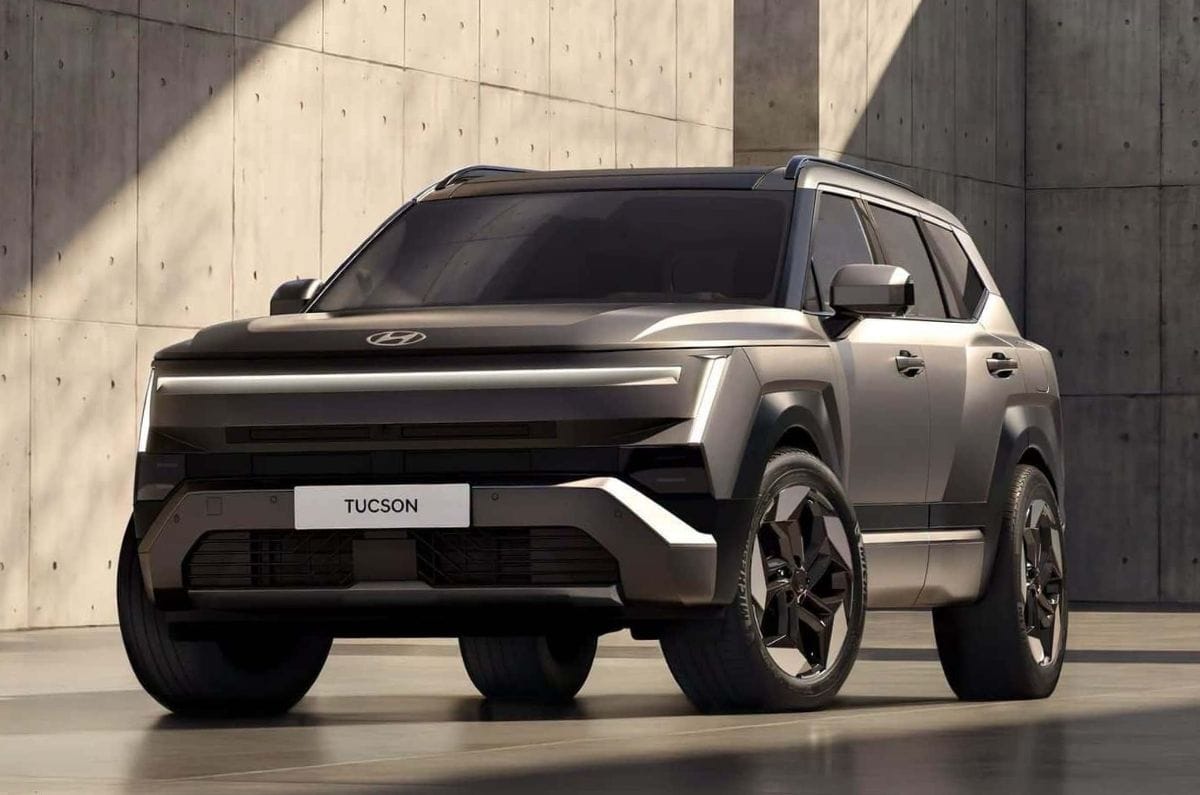
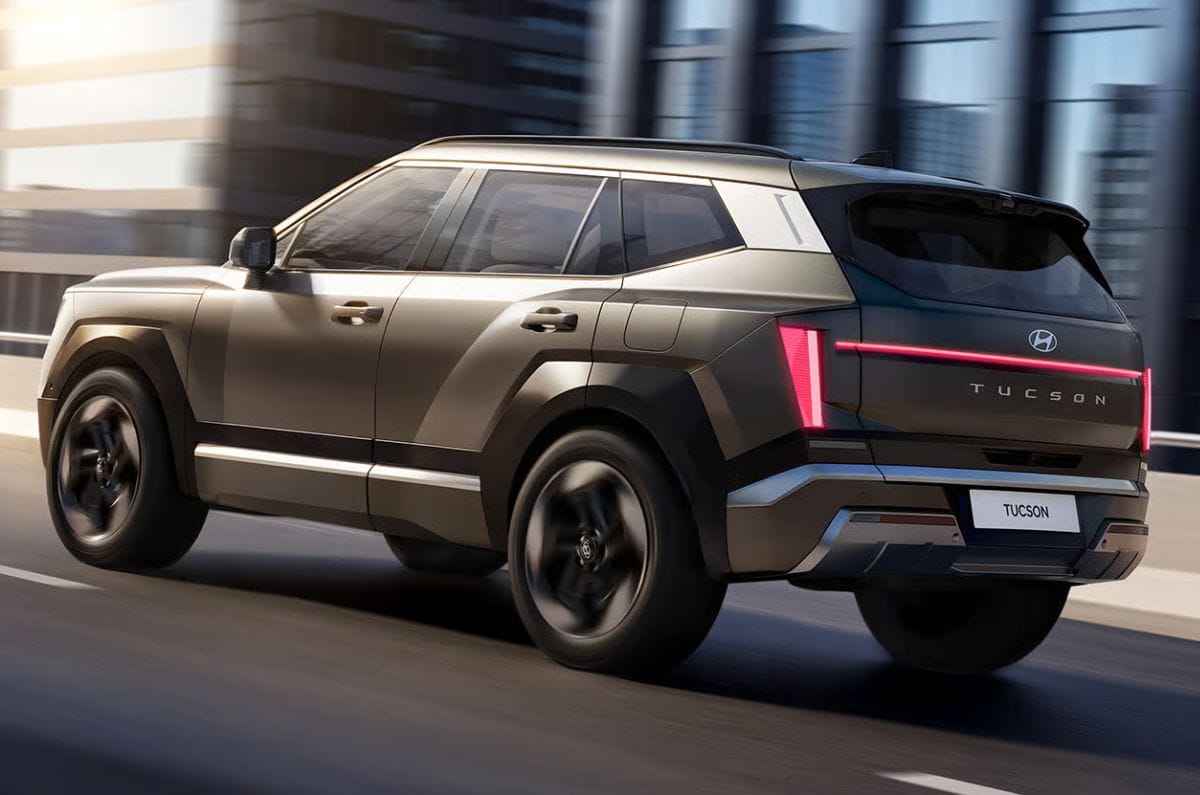
Hyundai has officially revealed several technical details of its upcoming 2027 Tucson at a media event in South Korea, ahead of the SUV’s domestic launch in October 2026. This generational update brings larger dimensions over the old model, along with two powertrain options and a long list of safety and connectivity tech. Hyundai has not detailed any plans of bringing the fifth-gen Tucson to India yet.
Gets active air flaps, a rear bumper spoiler and more for better aero
1.6 turbo-petrol and 1.6 turbo-hybrid powertrains offered
Tucson hybrid has a claimed mileage of 17.4kpl
2027 Hyundai Tucson dimensions
The next-gen model has grown in terms of length, width and wheelbase
Compared to the outgoing model, the next-gen Hyundai Tucson is 60mm longer and 40mm wider – the wheelbase has grown by 30mm. Hyundai claims that the larger dimensions have resulted in the second-row headroom increasing by 29mm (to 1,031mm), while the rear doors can now open to 83 degrees (up from the previous model’s 73 degrees).
2027 Hyundai Tucson suspension and chassis
The Tucson now gets new suspension and increased sound insulation measures
Hyundai has reinforced the mounting points for the front suspension, along with strengthening the underbody structure that supports the rear suspension. The 2027 Tucson also features a new suspension valve, whilst the overall setup has been tuned to better control body movement and reduce road shocks.
The E-Traction feature of the hybrid version utilises a drive motor to minimise its body movements, while Hyundai says that the larger dimensions of the 2027 Tucson hasn’t come at the cost of body roll even when executing corners at high speeds. The next-gen Tucson also comes with refinement improvements over the previous-gen model. Revised engine mounts, plus additional sound-deadening for the dashboard and thicker glass for the doors, mean engine and wind noise should be better controlled.
The drag coefficient of the 2027 Tucson petrol and 2027 Tucson hybrid have both gone down from 0.33 to 0.30. Hyundai claims that this has been achieved with the help of active air flaps, a roof spoiler, a dedicated rear bumper spoiler and the new 17-inch wheel design.
2027 Hyundai Tucson engine and gearbox details
Both non-hybrid and hybrid powertrains use a turbo-petrol engine
The 2027 Hyundai Tucson gets a 1.6-litre turbo-petrol engine rated at 193hp and 265Nm, and mated to an 8-speed automatic gearbox. Compared to the equivalent unit powering the outgoing model, this unit’s output is higher by 13hp. The 2027 Tucson hybrid clubs a 1.6-litre turbo-petrol engine with what Hyundai calls its next-generation hybrid system. The combined output of this hybrid setup is 245hp, while the claimed mileage figure is 17.4kpl. A ‘Inertial Driving Guidance’ feature even prompts the driver to get off the accelerator pedal to improve fuel economy.
2027 Hyundai Tucson feature set
The next-gen Tucson isn’t short on modern technology or safety measures
The 2027 Hyundai Tucson comes with 9 airbags as standard, plus a navigation-based adaptive cruise control feature with front & rear collision-avoidance assist. The next-gen Tucson gets a memory-based reverse assist function, which Hyundai says is capable of automatically steering the car by retracing its path.
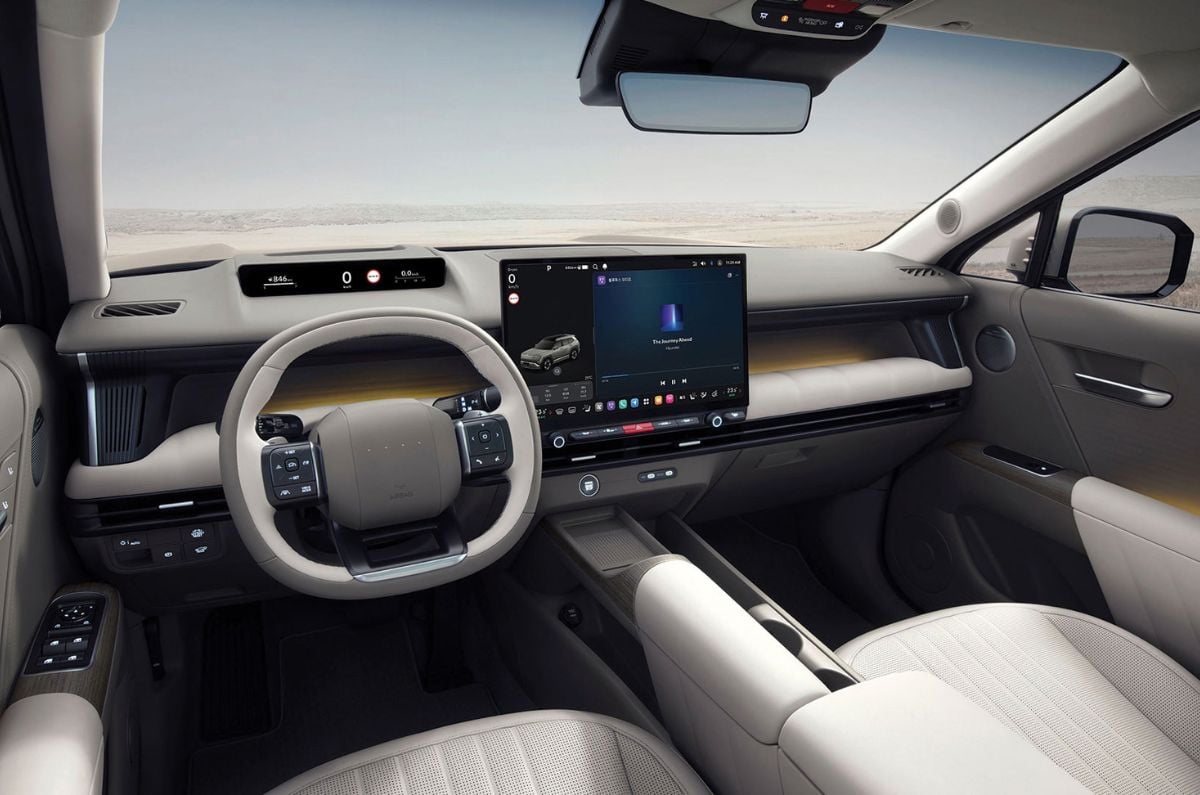
Meanwhile, the ‘Ground View’ function displays the surface beneath the car on the infotainment screen. The next-gen Hyundai Tucson also features the brand’s Pleos Connect system with built-in Gleo AI, along with third-party app support via the Pleos App Market. The interior has a floating-style dashboard, D-cut steering wheel, a slim digital driver’s display and a large touchscreen (either 12.9-inch or 17-inch). There will be four mono-tone and three dual-tone interior themes, which include Mud Grey & Dove Grey, Black & Sand Beige, and a Black & Inlay Soil Brown colours.
2027 Hyundai Tucson design
The next-gen model uses the brand’s ‘Art of Steel’ design language
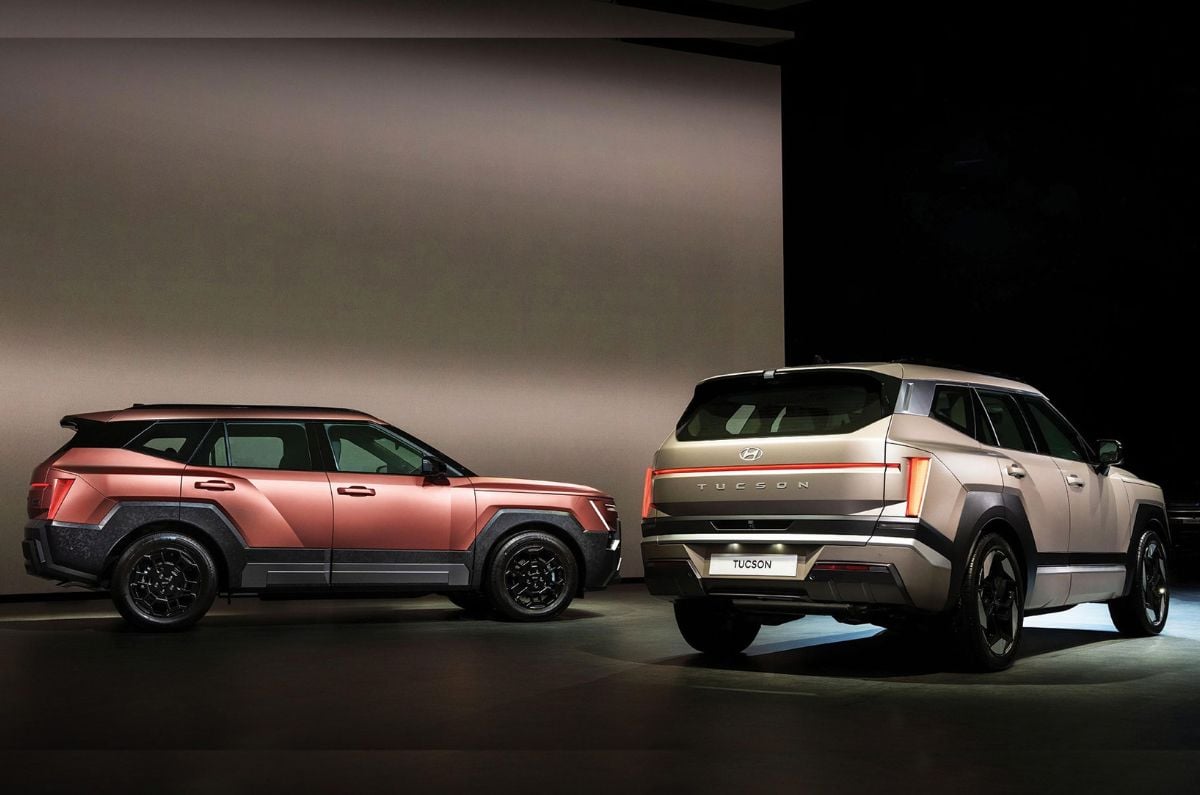
The 2027 Hyundai Tucson sports the brand’s ‘Art of Steel’ design language. There are vertical H-shaped LED daytime running lights up front, a slim horizontal centre light strip, and a prism-effect rear light design. The next-gen Tucson gets roof rails, flared wheel arches and conventional pull-type door handles, while the more rugged-looking XRT trim gets a different grille, wheel-arch garnish and skid plate. The 2027 Hyundai Tucson will be sold in 8 colour options – Serenity White Pearl, Driftwood Grey Matte, Driftwood Grey Metallic, Redrock Orange Matte and Goyo Copper Pearl.
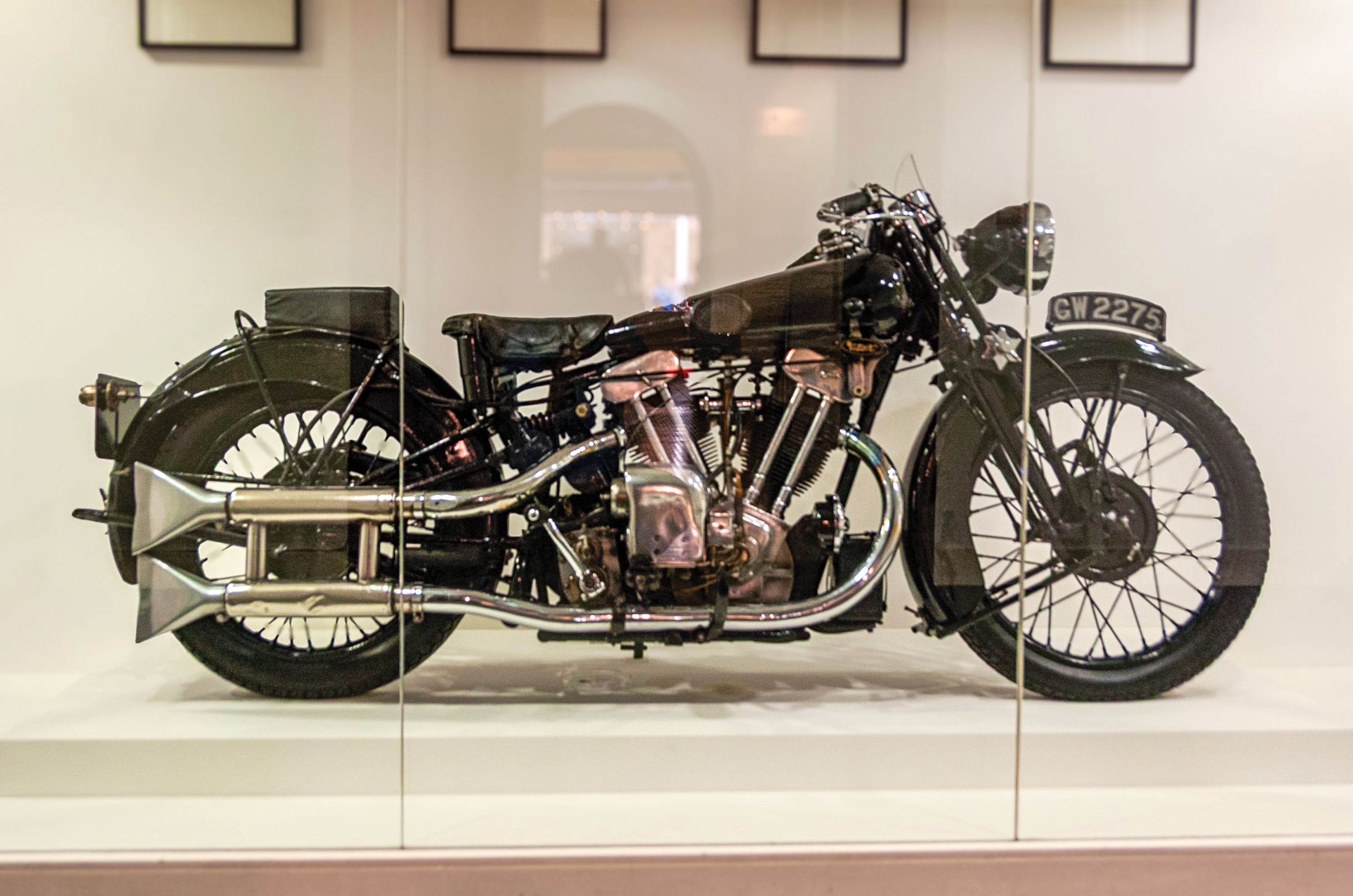
Seventeen years ago, in the Imperial War Museum on Lambeth Road in London, I stood mesmerised in front of a motorcycle with the number plate GW 2275, enclosed in a glass case. It was a beautiful, brooding machine, low and long, finished in deep black with just enough nickel and chrome to catch the museum lights: twin fishtail exhausts sweeping back in a graceful curve, the big JAP V-twin sitting exposed and unapologetic between the frame rails, cylinders splayed wide, cooling fins stacked like the pages of a book. Thin copper oil lines ran externally along the frame, feeding the total-loss lubrication system of the era, a solution that looked almost primitive next to a modern engine yet was efficient enough to survive being wrung out past 100mph on 1930s public roads.
A flamboyant form, every component left exposed, hinting at George Brough’s intention to let you see exactly what you were paying for. This was, in its day, the pinnacle of what was once the finest motorcycle industry in the world, the British motorcycle industry. Standing there, it was easy to understand why a certain kind of Englishman, restless, brilliant, and a little broken, would have fallen entirely in love with a machine like this.
The very Brough Superior SS100 Lawrence died on, photographed at the Imperial War Museum in 2008. Its last known owner, reclusive collector John Weekly, kept it in his lounge for over 45 years before his death in 2024. After which the Brough’s whereabouts are unknown.
It took me straight back to being a teenager watching Lawrence of Arabia for the first time. The film famously opens with this motorcycle: the frantic braking, the fatal swerve to avoid two boys on bicycles, before flashing back to how a restless desk officer became a legendary guerrilla leader in the Arab Revolt, and how that legend curdled into cynicism once Britain betrayed the cause he’d fought for. This was the actual Brough Superior SS100 that TE Lawrence was ripping home on from Bovington on May 13, 1935, when he went over the handlebars, struck his head, and died six days later without regaining consciousness.
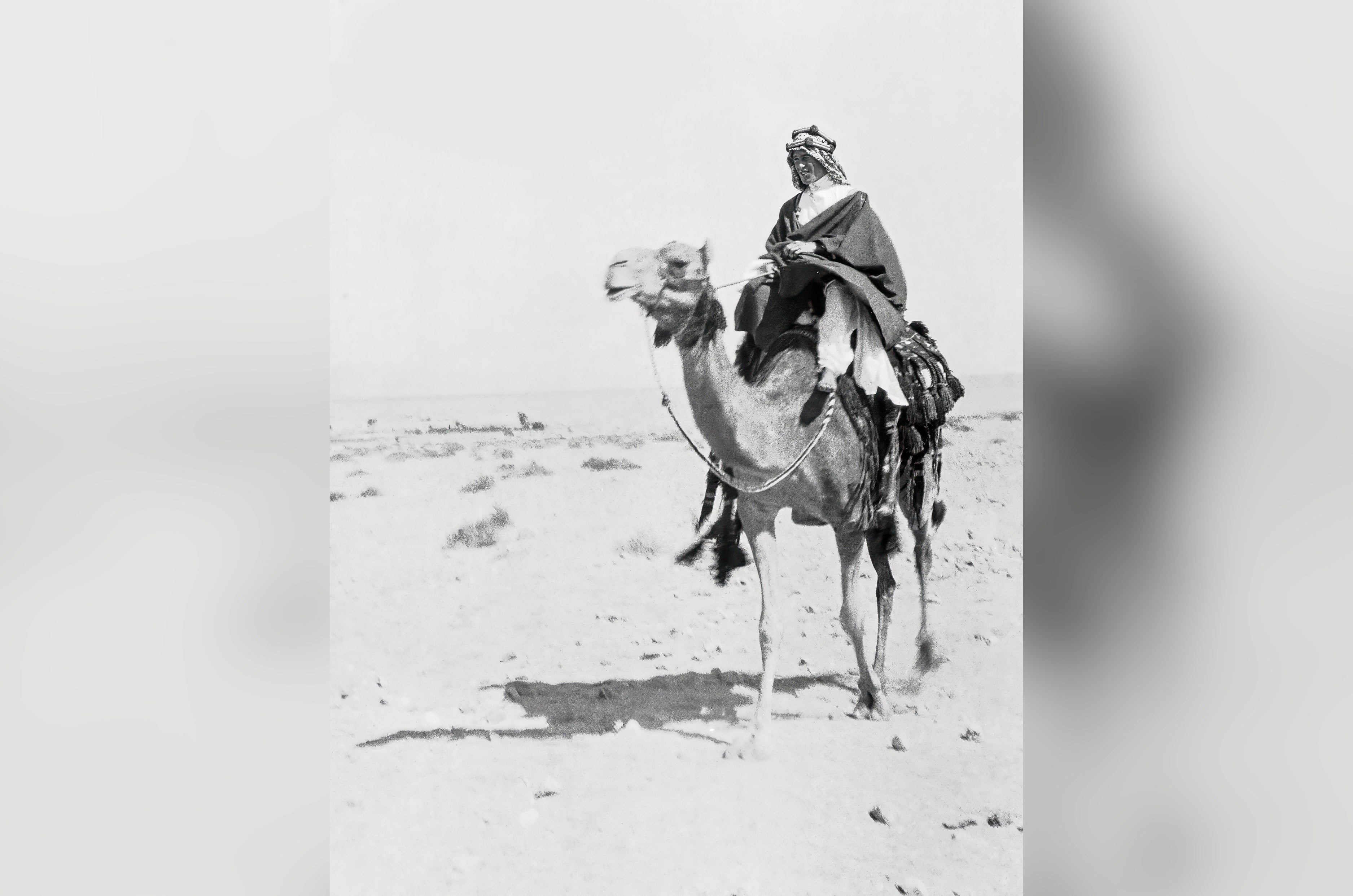
Motorcycle or camel, Lawrence rode with consummate ease.
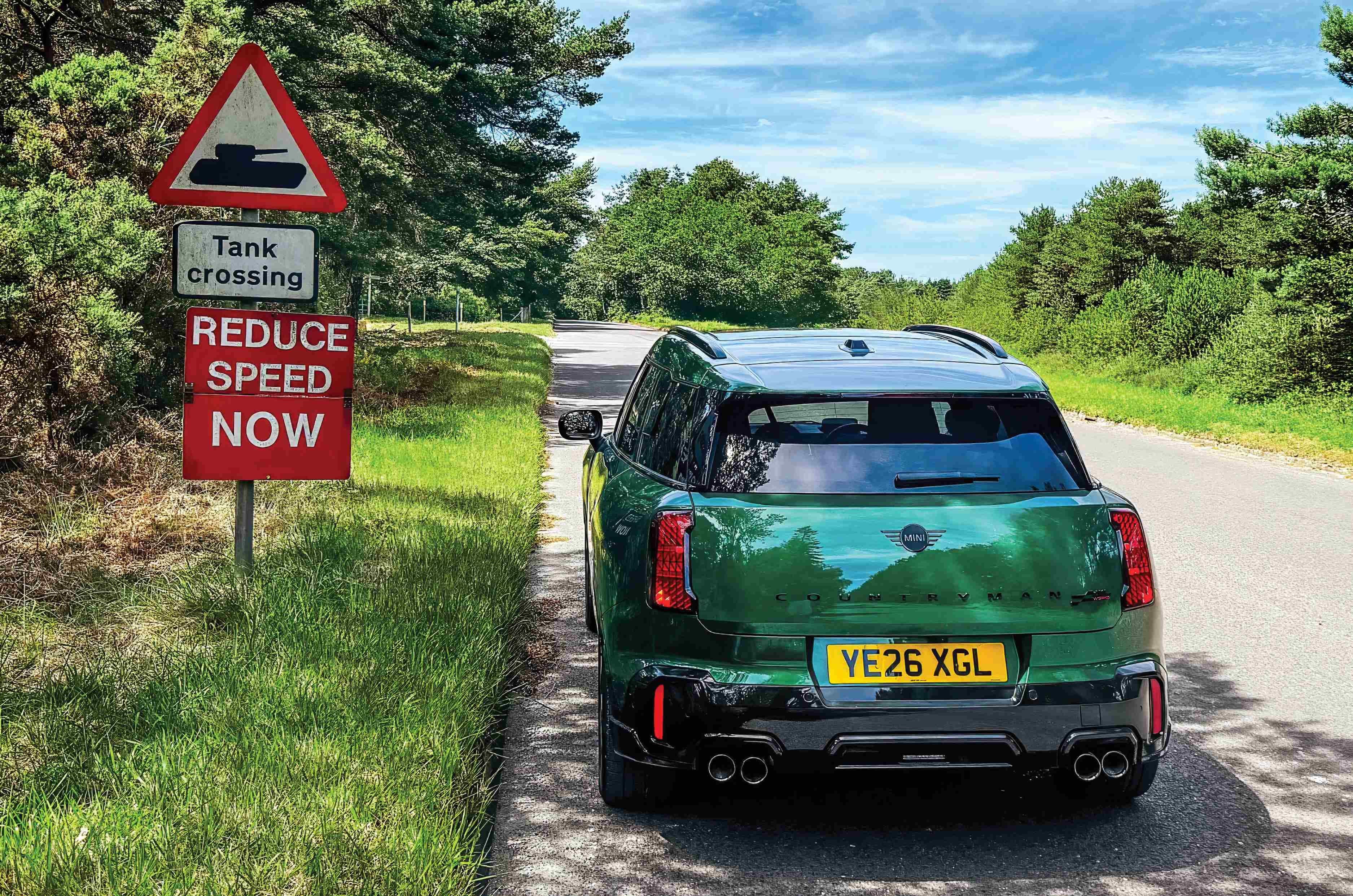
I have always felt a pull towards places where history happened, where the past has left something tangible behind, and this anniversary issue gave me the excuse I needed to follow Lawrence’s last ride. For this quest, I got behind the wheel of the new Mini Countryman John Cooper Works. A slightly contradictory choice of car for a story about a restless man who spent his last years trying to shrink his own reputation by changing his name twice to get away from the legend he’d unwillingly become. Because the new Countryman is going through much the same thing but in reverse.
By the very virtue of its name, the Mini has a reputation of being a compact and cheeky car that seems to occupy hardly any road at all, but this Mini is large and an SUV, accentuated by beefy curves with all-wheel drive as standard and sporty vivid red disc calipers. Under the bonnet sits a potent 2.0-litre turbo four-cylinder engine with 300 horsepower of shove and 400Nm of tug.
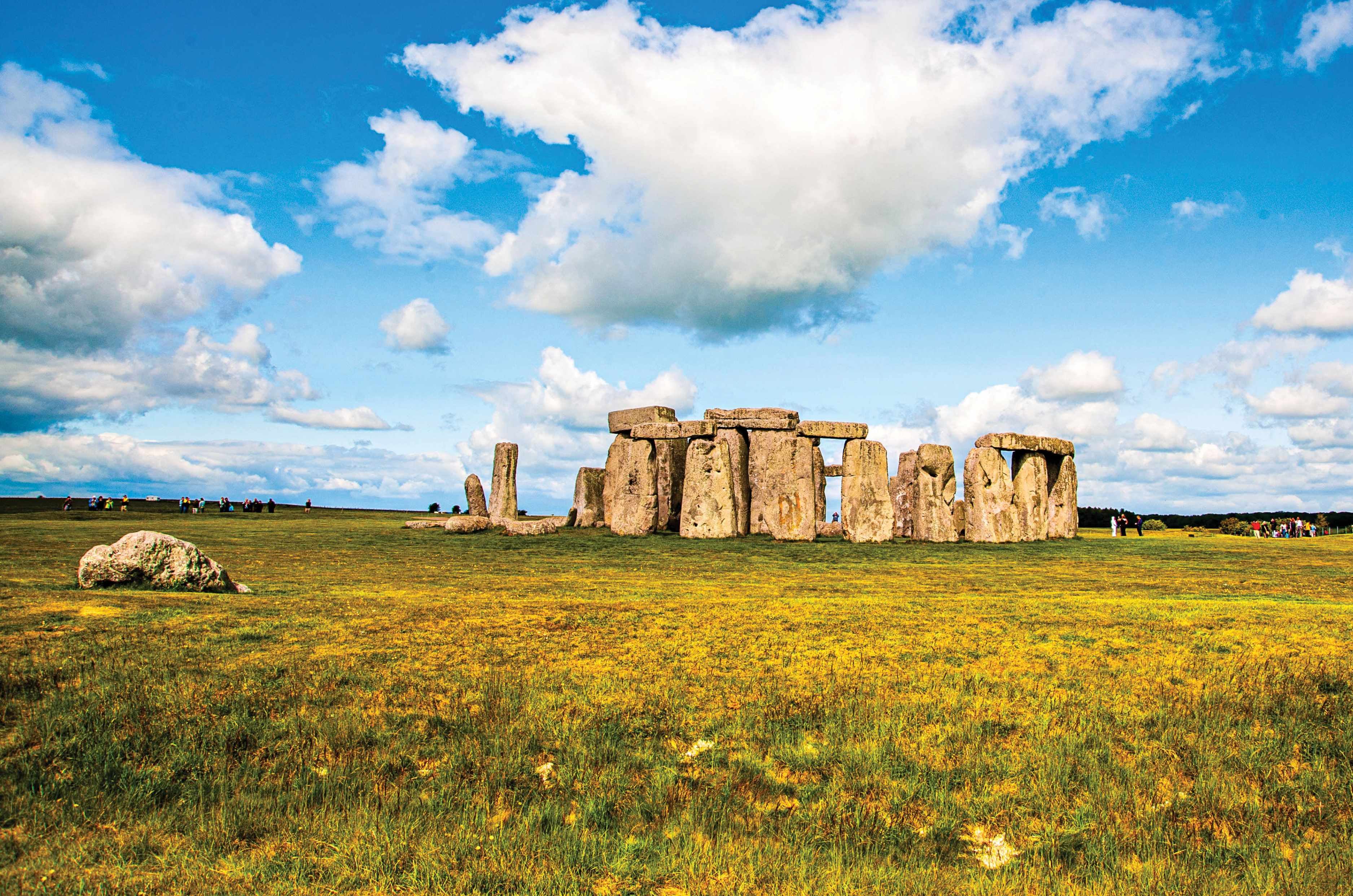
The irony was not lost on me: I was driving a car that had outgrown its own name, setting off to chase a man who’d spent his final years trying to shrink his. I pointed the car west out of London on the M3, then the A303, pulling over near Stonehenge for a quick photograph before pressing on toward another English icon further down the road.
The road to Clouds Hill
Stonehenge bursts into view without warning as the A303 tops a crest, the ancient stones suddenly filling the windscreen against the Salisbury Plain.
Beyond Stonehenge, the Countryman ate the tarmac in complete comfort, cabin hushed, adaptive cruise doing most of the thinking. The road eventually dropped south onto narrower country lanes for the final approach into Dorset, and it was here, as the hedgerows closed in, that the JCW visibly changed character. All-wheel drive dug in through the bends, the exhaust note sharpened, and for a few minutes on the approach to Clouds Hill, this bulked-up, grown-up Mini showed me that the nimbleness of its ancestors still lived somewhere in its genes.
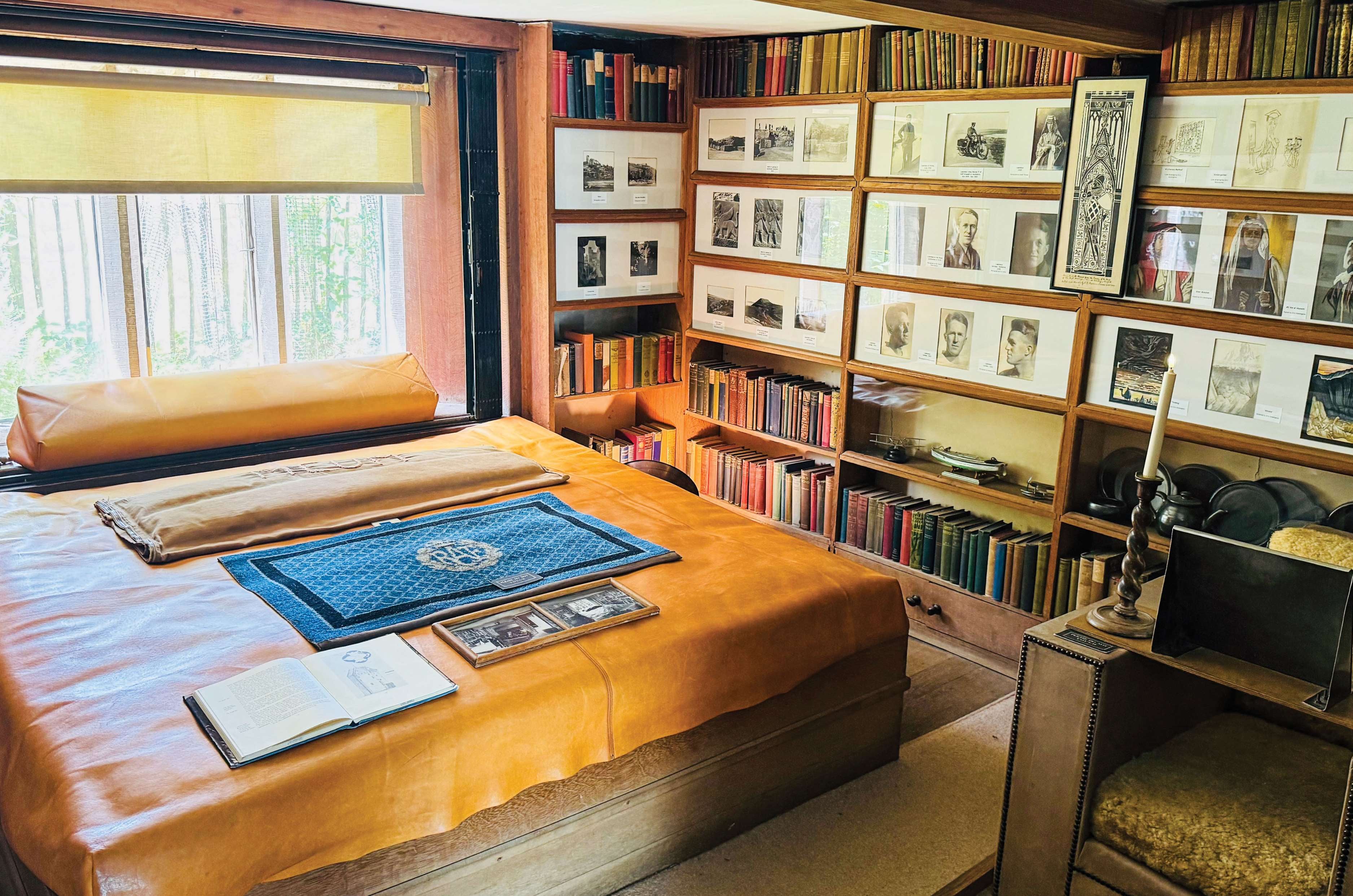
Inside Clouds Hill: Lawrence’s daybed and bookshelves, preserved almost as he left them.
Clouds Hill itself is almost comically modest for a man who became one of the most famous people in England. It’s a four-room labourer’s cottage with no electricity, which Lawrence first rented in 1923 while stationed at nearby Bovington, then painstakingly rebuilt with his own hands before buying it outright in 1929. Inside, the leather-topped daybed, bookshelves crammed with correspondence and photographs, and framed portraits of Bedouin faces and RAF colleagues remain much as he left them, preserved by the National Trust.
What hints at the pull of Lawrence’s personality is who came all the way here to visit him. George Bernard Shaw, EM Forster, Thomas Hardy and Robert Graves all found their way to this tiny, electricity-less retreat, which was slightly ironic, because Lawrence was doing his best to disappear. The world knew him as Lawrence of Arabia, the flamboyant soldier in Arab robes who’d become one of the most recognisable figures of the First World War, and he wanted none of the celebrity that came with it.
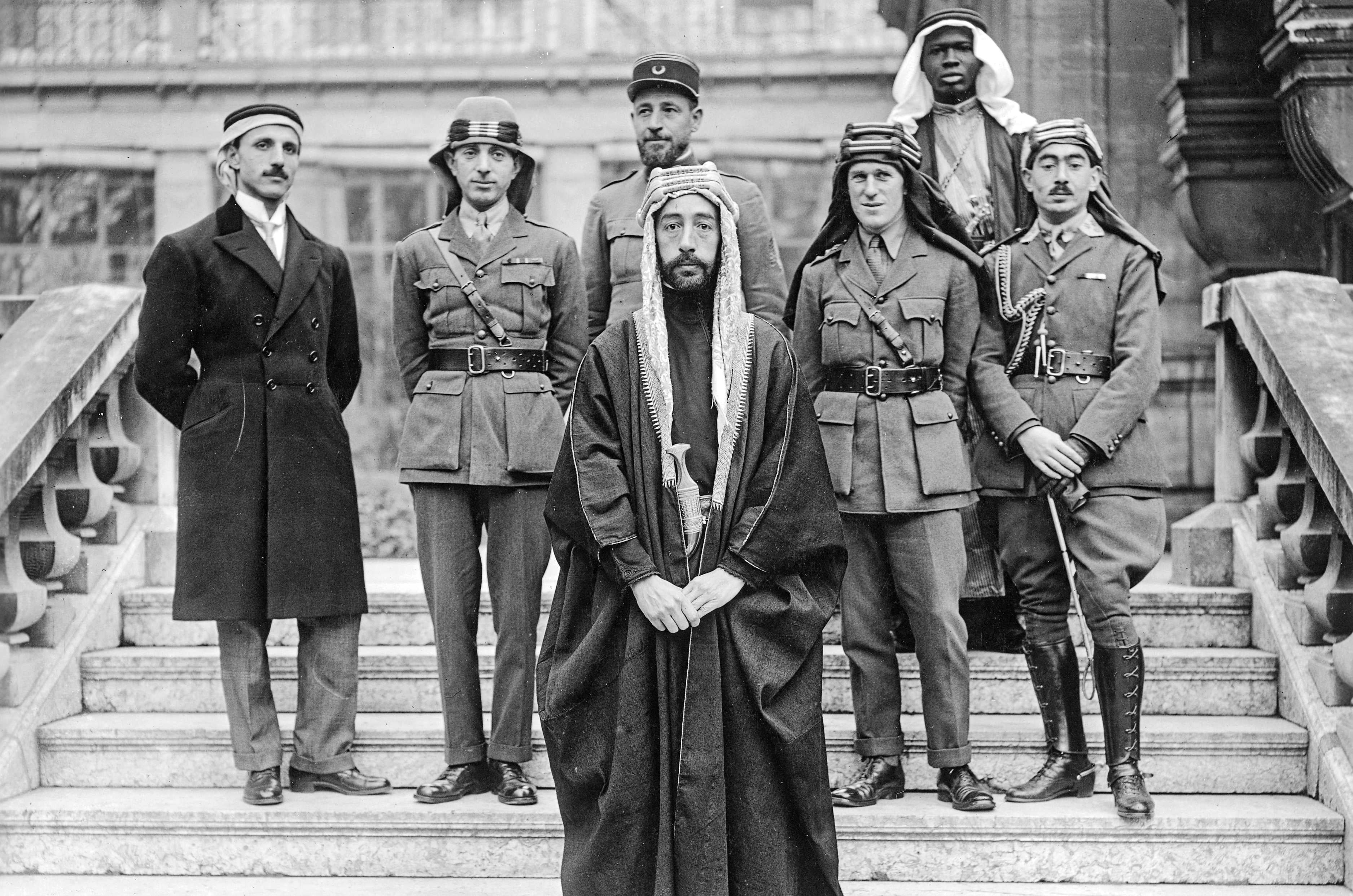
Prince Faisal’s delegation at the 1919 Paris Peace Conference. Lawrence (third from left) stood among men Britain would soon betray.
He’d already tried once: in 1922, he joined the RAF under the name John Hume Ross, but the press uncovered him within months. The following year, he joined the Tank Corps as TE Shaw, a name he kept for the rest of his life. Clouds Hill became his refuge, a place to read, write, listen to music, work on his boats and motorcycles, and retreat from a world determined to keep finding him.
He did make forays out. Winston Churchill was a genuine friend, and Lawrence would occasionally turn up unannounced at Chartwell, Churchill’s home about 130 miles away. He liked to boast that his long-distance visits to friends like Churchill and Lady Astor were made in “record time” thanks to the Brough’s speed, calling the machine “the silkiest thing I have ever ridden.”
Churchill’s daughter Mary remembered him arriving as “a short, nondescript, sandy-haired airman riding a motorcycle,” only to reappear at dinner transformed, “presenting himself in the flowing robes of a Prince of Arabia.” She also recalled the “pin-drop silence” that fell over the room whenever Lawrence spoke, a silence that apparently included her father, who himself considered Seven Pillars of Wisdom “unsurpassable” as a war narrative. It was an odd, quietly moving thing to stand in a room with no electricity and realise the man who once sat there could hold some of the loudest reputations in England spellbound.
The road that killed him
This road has widened over the decades, much like the Mini brand, which now includes an SUV.
From Clouds Hill, the road towards Bovington Camp is the one Lawrence rode almost daily, and it’s easy to see why he loved it: well cambered, with quick, confident curves that seem made for two wheels rather than four. The road has changed considerably since 1935, widened, realigned and smoothed out, the dips Lawrence knew long gone, but the bends remain, and the JCW flowed through them on silky modern tarmac with barely a shudder.
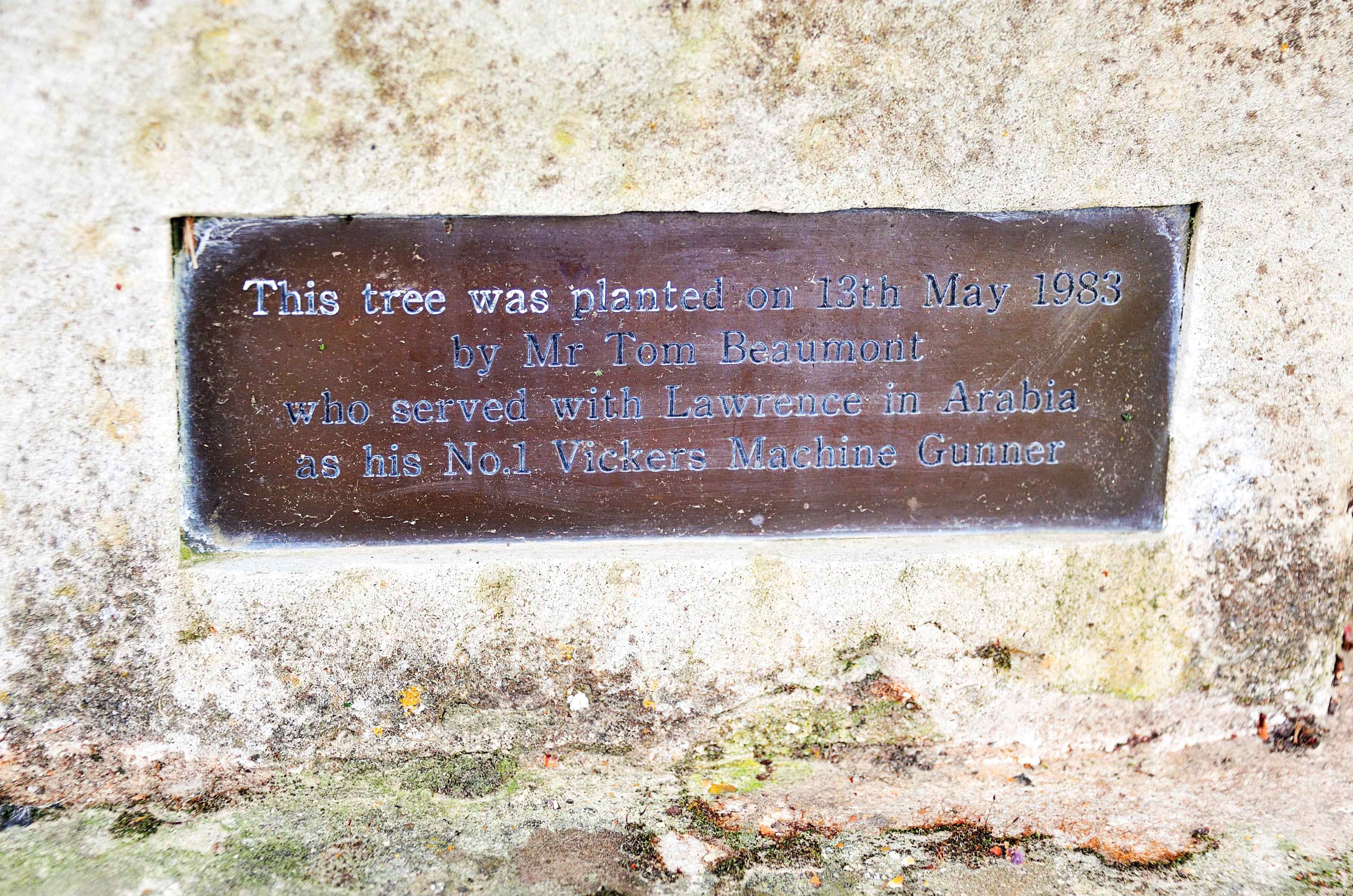
The plaque marking the tree planted by T.E. Lawrence’s former Vickers gunner, Tom Beaumont, in 1983.
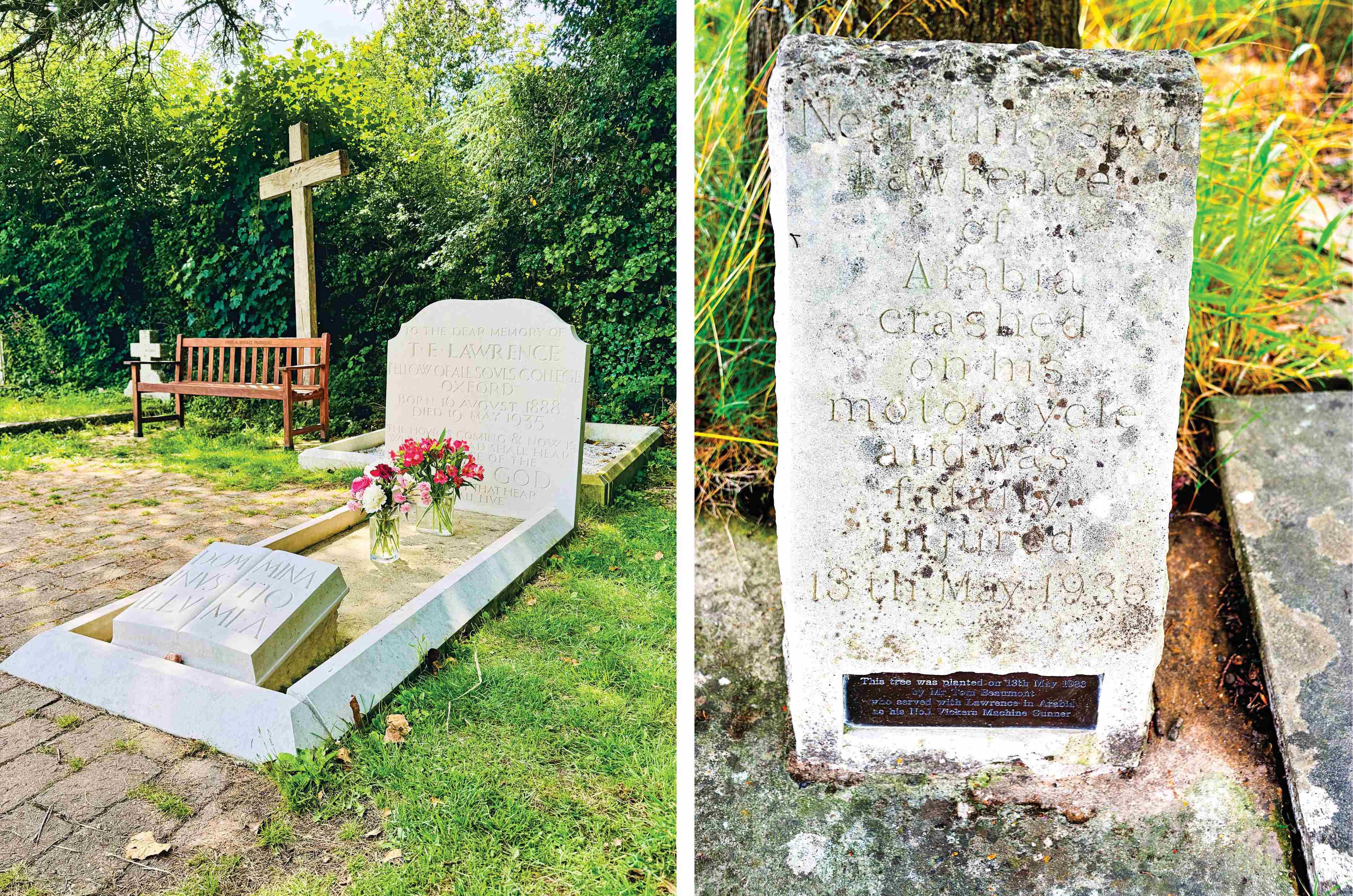
Lawrence was known to push his Brough to 100mph on roads like this despite the rougher surfaces and primitive brakes of the time. It takes a particular sort of nerve to do that. Sadly, this is also the road on which he died. A small, weathered stone marker stands by the roadside near the crash site, its inscription barely legible: Near this spot Lawrence of Arabia crashed on his motorcycle and was fatally injured, 13th May 1935.
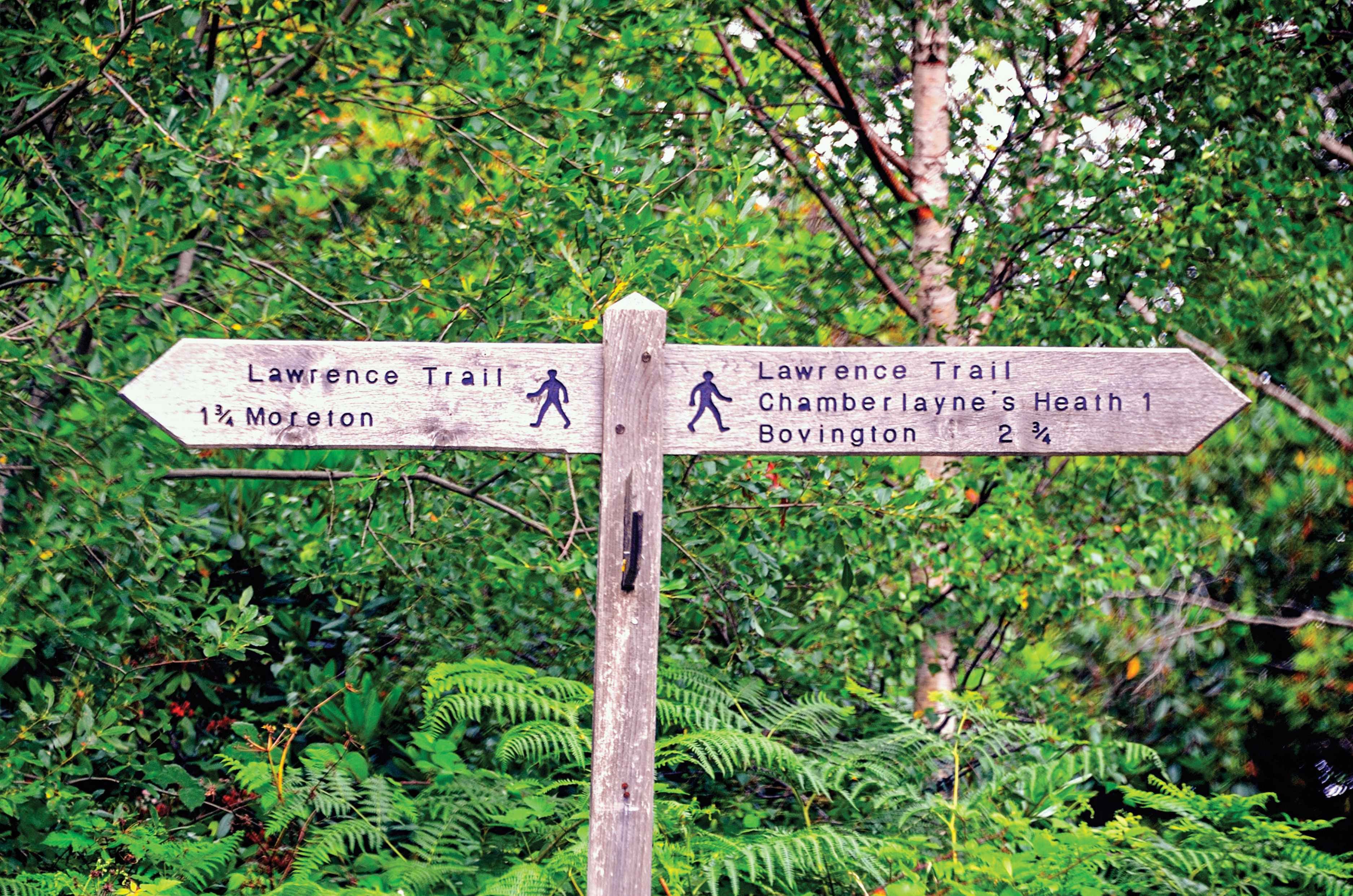
A signpost for the Lawrence of Arabia Trail.
Below it, a plaque records that the tree beside the marker was planted in 1983 by Tom Beaumont, who had served as Lawrence’s Vickers machine gunner in Arabia, one old comrade returning nearly half a century later to mark where another had died. It’s a small, unshowy memorial for a man who became the subject of an Oscar-winning film. Bovington Camp is also the start and finish point of the circular 10.8km Lawrence of Arabia Trail, which strings together the cottage, the crash site, and the church at Moreton in one walkable loop.
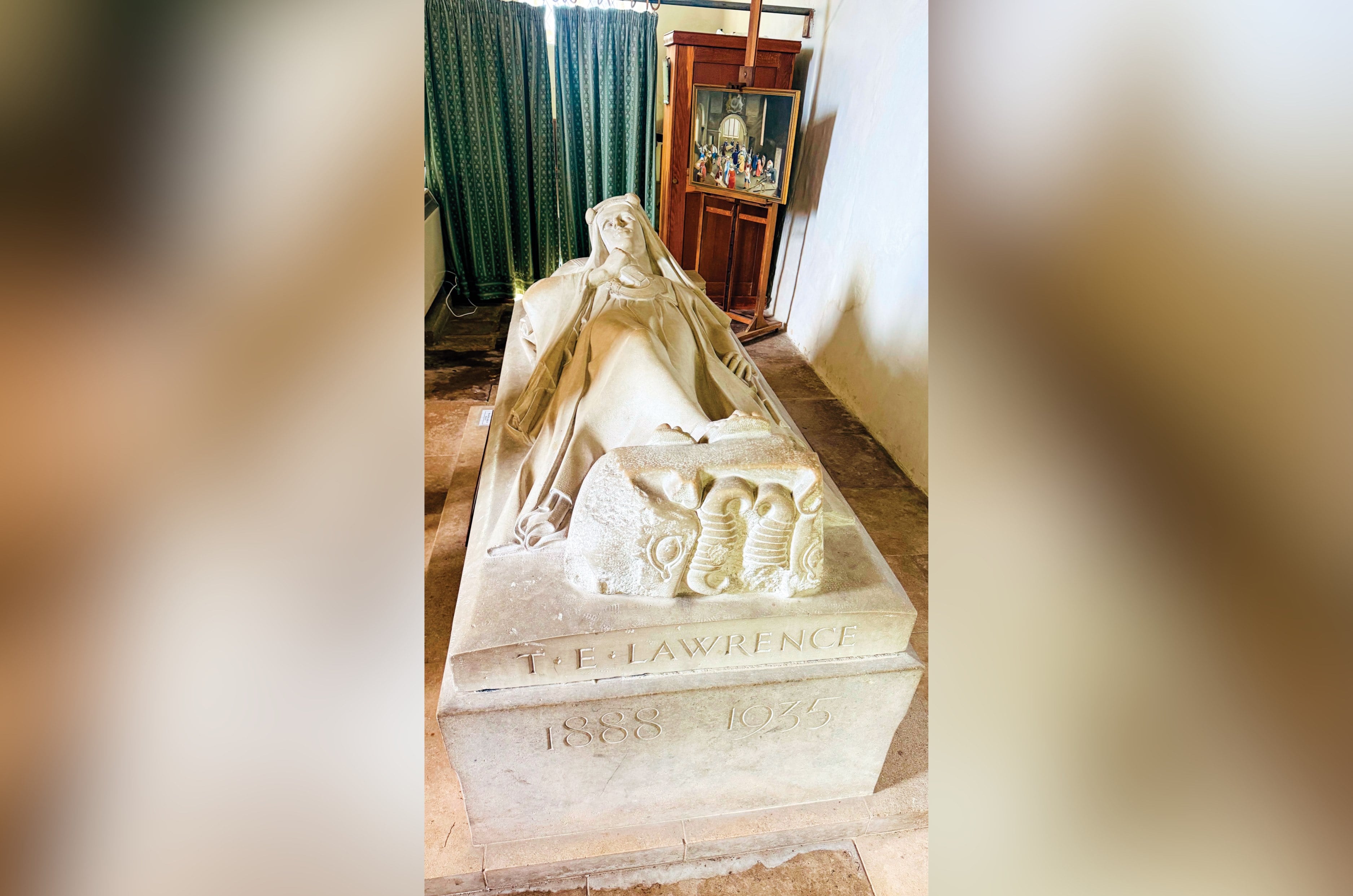
Lawrence’s effigy at St Martin’s Church, Wareham, carved by his friend Eric Kennington.
A short drive away in Wareham is one more stop worth making: the Saxon church of St Martin’s, home to a life-size effigy of Lawrence carved by his friend Eric Kennington, originally intended for St Paul’s Cathedral before being rejected there and finding its way to this small parish church instead.
Moreton and the memory of him
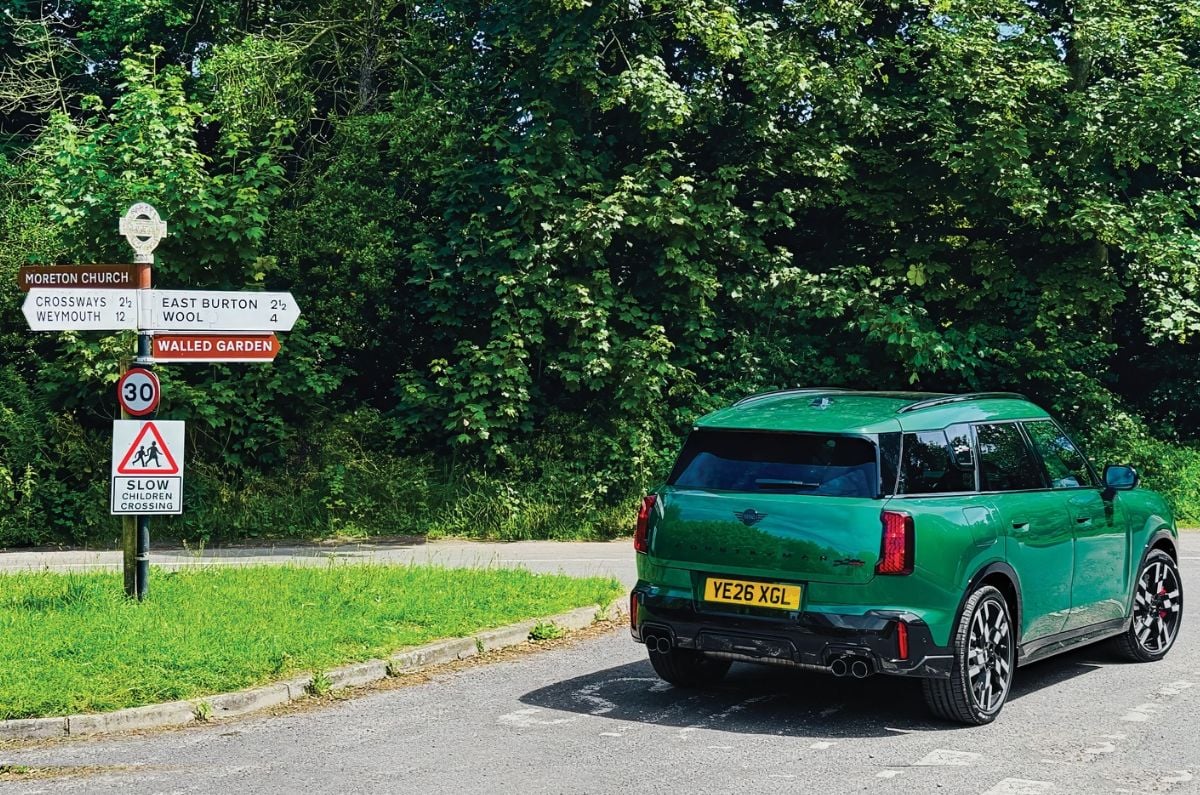
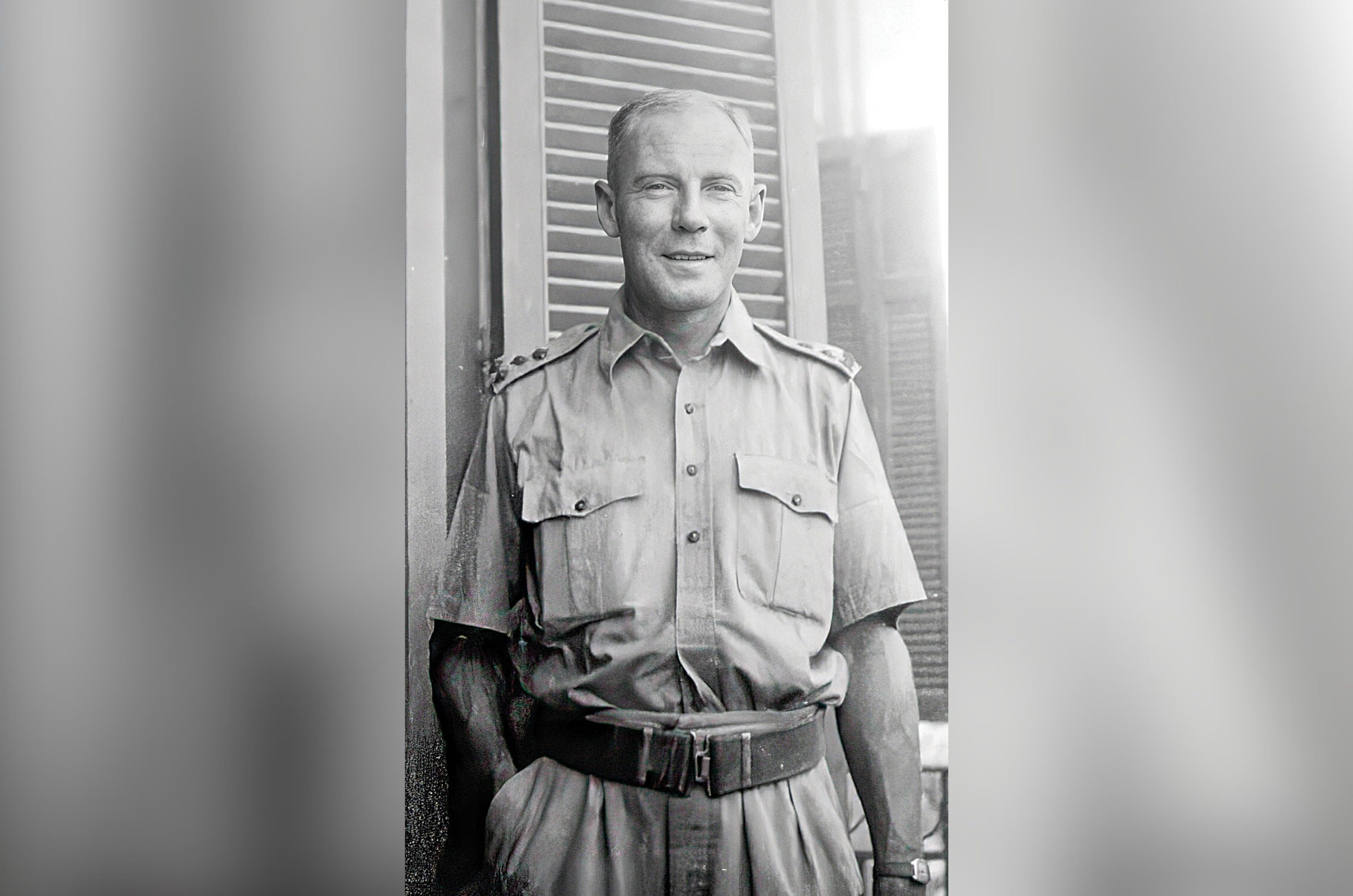
Moreton itself is a proper Dorset postcard, a signpost outside St Nicholas’ Church pointing the way to “Walled Garden” beside directions to Wool and Weymouth, as if history and horticulture share equal billing. Lawrence’s small and very private funeral and burial were held here on May 21, 1935, and the mourners included Churchill, Lady Astor, General Wavell (who flew in by autogiro), and author Henry Williamson.
Left: T.E. Lawrence’s grave at St Nicholas’ Church, Moreton. Simple white stone, flowers left fresh by visitors. Right: The weathered marker near Bovington, barely legible, recording the spot of Lawrence’s crash.
His grave sits a short walk from the church, simple white stone, flowers laid fresh by visitors, the inscription noting he was a Fellow of All Souls College, Oxford, and making no mention at all of Arabia.
The coast, and letting the car breathe
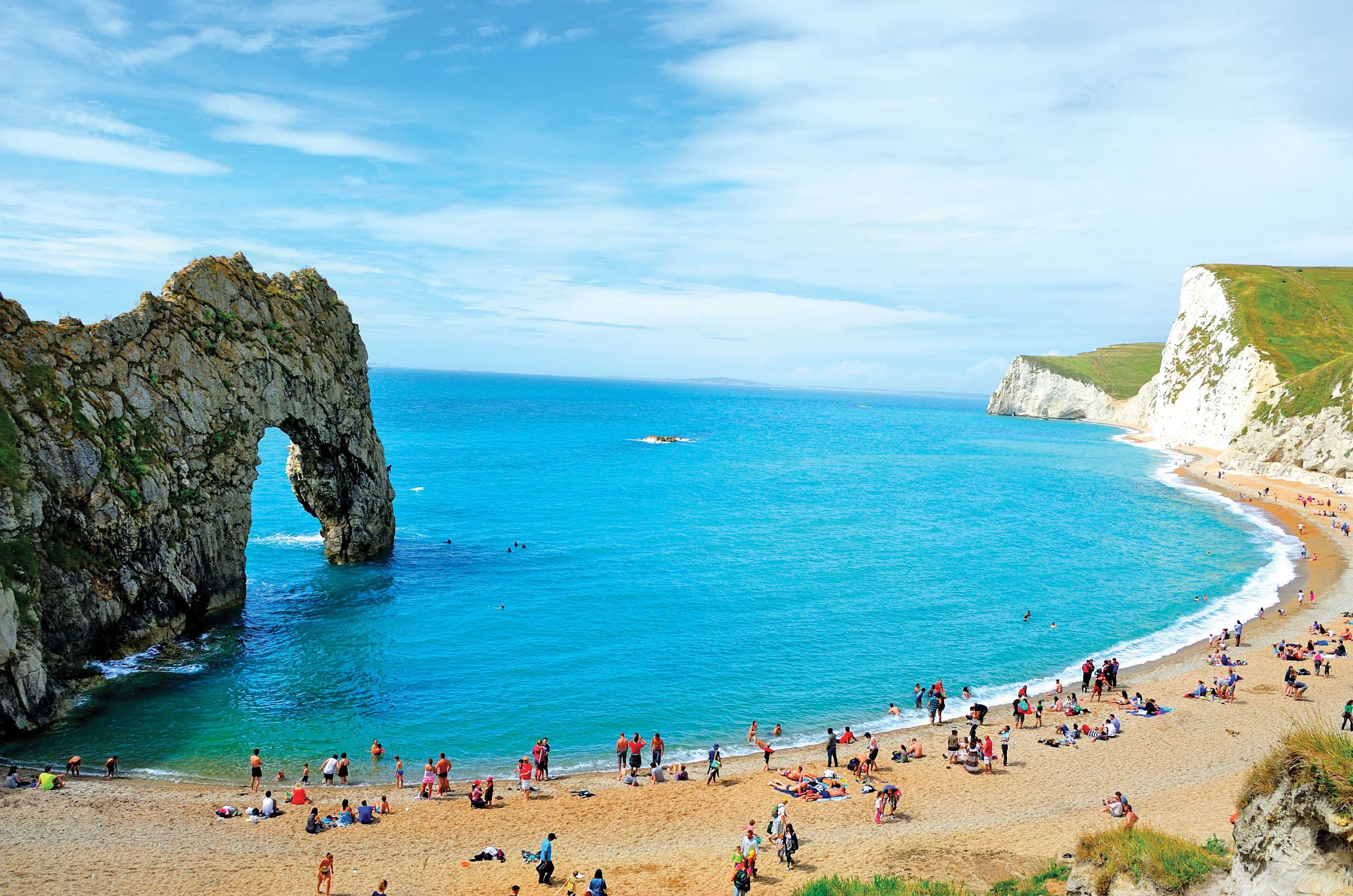
Durdle Door, the natural limestone arch that draws crowds to this stretch of coastline.
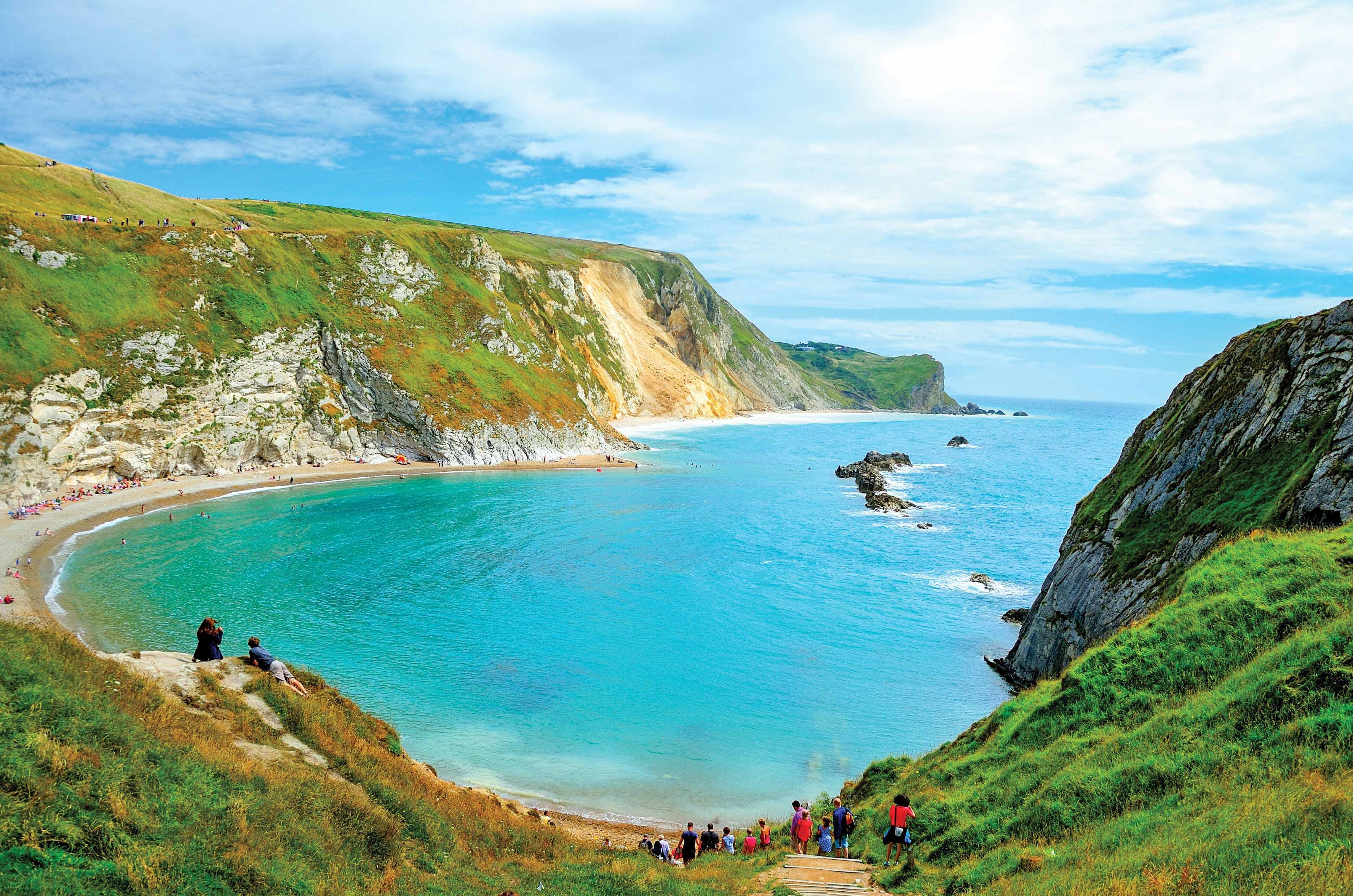
I couldn’t leave Dorset without giving the JCW a proper stretch, so I pushed south to the Jurassic Coast, Durdle Door and Lulworth Cove, a slight detour from Lawrence’s own story, but too good to leave out of a day like this. Every mile of the drive validated it being classed as an SUV. The properly deep boot held picnic mats, beach gear, including chairs and an umbrella, without the need of the rear seats being dropped.
Lulworth Cove’s chalk cliffs and turquoise water, a world away from Lawrence’s Dorset lanes.
The cabin felt roomy, and the ride height shrugged off potholed coastal car parks without a second thought. There’s real engine grunt for those urgent overtakes on narrow country lanes when stuck behind agonizingly slow motorhomes that make you feel like tearing your hair out.
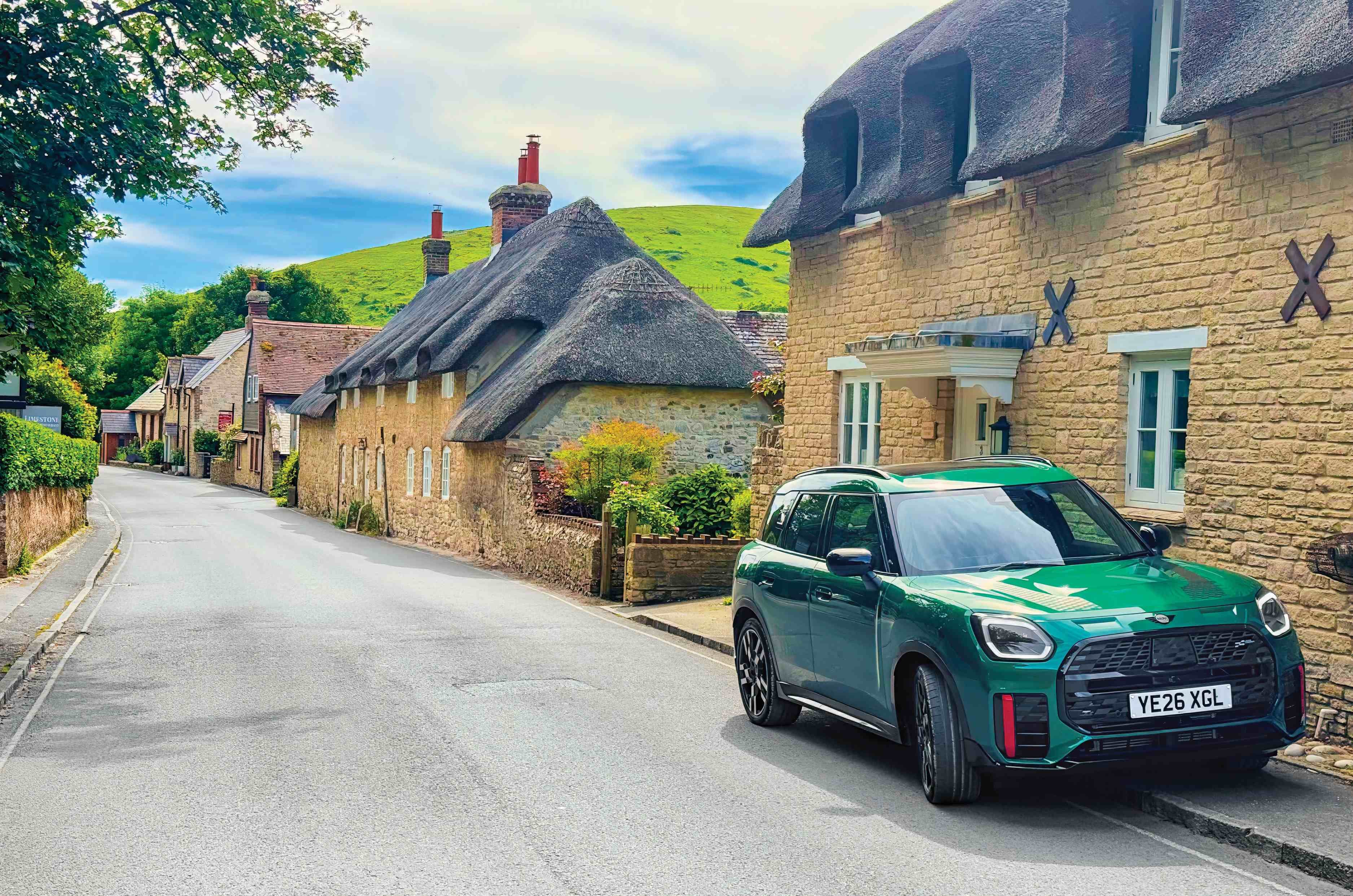
West Lulworth, all thatched roofs and honey-coloured stone, is about as quintessentially Dorset as a village gets.
The all-wheel-drive system quietly sorts out grip on the tighter, greasier lanes, especially with the left wheels on a shoulder slick with wet grass. Flick it into its sportiest mode, and the exhaust note gets a synthesised boost through the speakers. It may be all theatre, but it certainly made me grin, and that’s a win because sound plays such a large part in defining how a car makes me feel.
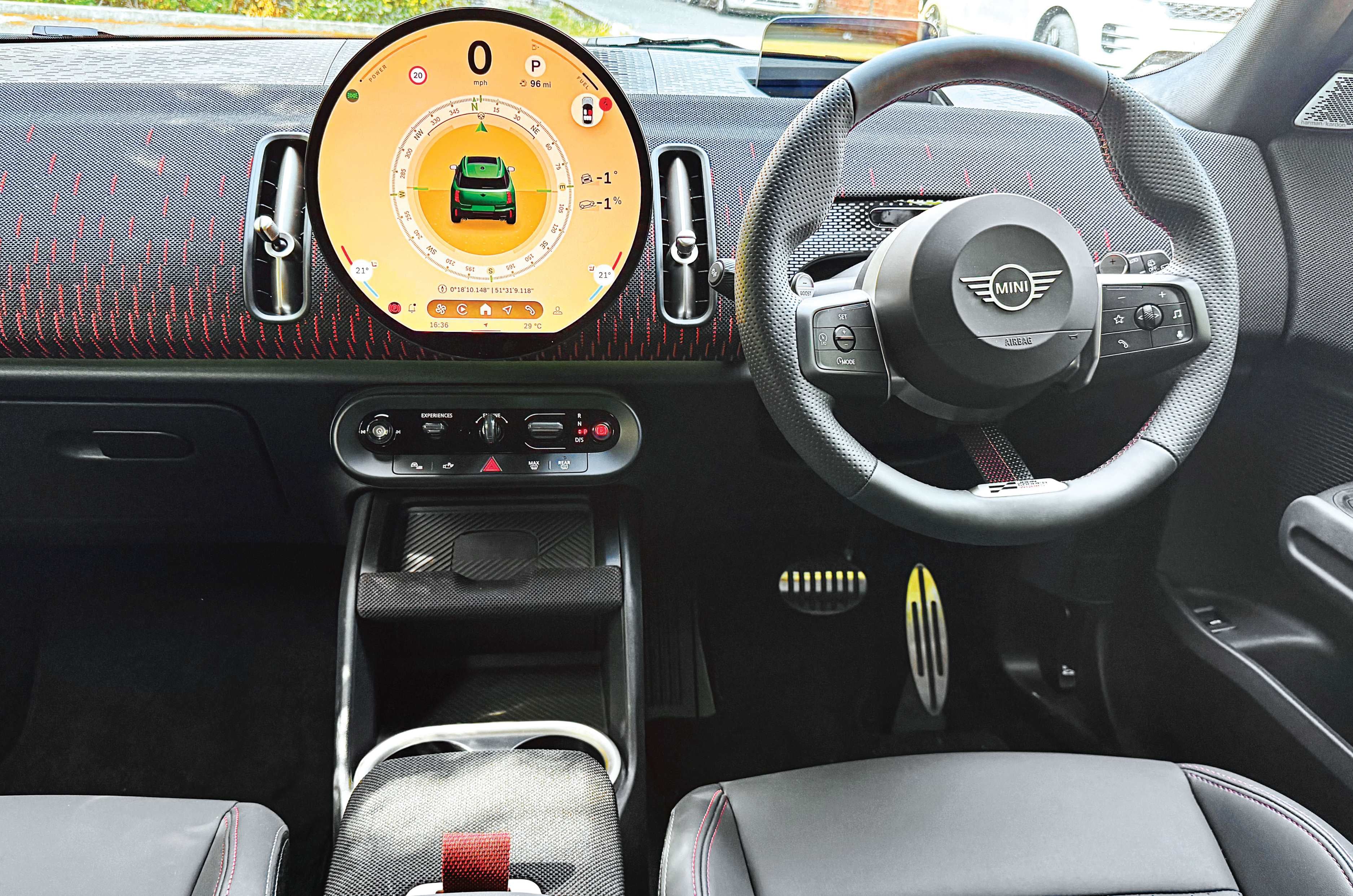
A compass and live pitch-and-roll readout flaunts SUV identity; instrumentation no traditional Mini has ever needed.
By the time I rolled back into London, it was quite clear to me that at the wheel of a Mini Countryman, what you get is a car that is actually larger and roomier than the Jeep Compass. It has the space, the grunt and the ground clearance, and from the smooth roads of Dorset to the Jeep-only trails of Zanskar, this Mini is genuinely man enough for whatever the country throws at it.
The Helmet He Never Wore
Lawrence’s fatal crash had one consequence far beyond Dorset. Among the doctors treating him at Bovington Camp Military Hospital was a young Australian neurosurgeon named Hugh Cairns, who had himself served in the Middle East during the First World War. Watching Lawrence die of head injuries that a helmet might have prevented left a deep impression on him, and he began studying motorcycle head trauma as a direct consequence.
Sir Hugh Cairns
Crash helmets already existed, invented back in 1914 for racing at Brooklands, but nobody wore them on the road. It took the Second World War, and Cairns’s appointment as a head injuries adviser to the Ministry of Health, for that to change. Researching fatalities among military despatch riders, he found that head injuries were the single biggest killer among motorcyclists and that, of the few riders wearing helmets when they crashed, not one had died.
His 1941 paper was damning enough that helmets became compulsory for all military motorcyclists within a month, and a 1946 follow-up showed the death rate had fallen sharply as a result. Cairns argued the same logic should extend to every civilian rider. It took another 27 years, and Cairns didn’t live to see it, for that to become UK law in 1973. But the chain runs in a straight, almost eerie line from one Dorset lane to millions of ordinary commutes: the man who died avoiding two boys on bicycles ended up, through the doctor who treated him, saving countless lives on two wheels after his own.
“The Rolls-Royce of Motorcycles”
Every Brough Superior was hand-built at George Brough’s works on Haydn Road, Nottingham, and Brough himself was as singular as his machines. Rarely seen without his trademark tailored flat cap, he carried himself more like landed gentry than a factory owner, and his standards bordered on obsessive. Born to motorcycle pioneer William Edward Brough, George forged his own path in 1919 after a rift with his father over how grand and expensive motorcycles ought to be.
Left: George Brough, Right: T.E. Lawrence
A friend suggested adding “Superior” to the name, which Brough senior took as a personal insult. That pursuit of excellence defined the marque: each machine was assembled once to fit every component together, then stripped down for painting and plating, then reassembled for delivery. Brough tested every SS100 himself on public roads past 100mph, and each one left the factory with George Brough’s personal approval and a written certificate guaranteeing it had been timed at the ton over a flying quarter mile.
‘SS’ stood for Super Sports, ‘100’ for that guaranteed top speed of a 100mph, and Brough pushed the idea further still in 1928, setting a 130.6mph record at Arpajon in France. The “Rolls-Royce of Motorcycles” nickname was coined by journalist HD Teague of The Motor Cycle, and Brough liked it enough to use it in his own advertising, reportedly with the real Rolls-Royce’s blessing.
War ended civilian production in 1940, when the factory turned to munitions and aircraft parts, and the specialised J.A. Prestwich (JAP) 998cc, air-cooled, 50-degree OHV V-twin engines Brough relied on were never commercially viable again. Around 3,100 machines were made across 19 models in the marque’s 21-year run, and roughly a third survive today, making every survivor a priceless piece of automotive art.
Lawrence’s relationship with the marque ran deeper than most customers’. Writing to Brough in 1926, he said he’d ridden five Broughs and covered 1,00,000 miles in four years, calling them the greatest delight of his life, two of them possessing “a speed and reliability that reminded me of an express train.” Between 1922 and 1935, he owned eight. The first, bought in 1922, was nicknamed “Boa,” short for Boanerges, meaning “son of thunder.”
The seven that followed were named George I through George VII, with a ninth, George VIII, still being built when he died. At around £200 apiece, enough to buy a modest cottage, this was extraordinary indulgence for a man on an RAF aircraftman’s pay, though royalties from Seven Pillars of Wisdom helped fund it. The Brough he crashed on May 13, 1935, registration GW 2275, was George VII, his last completed machine.
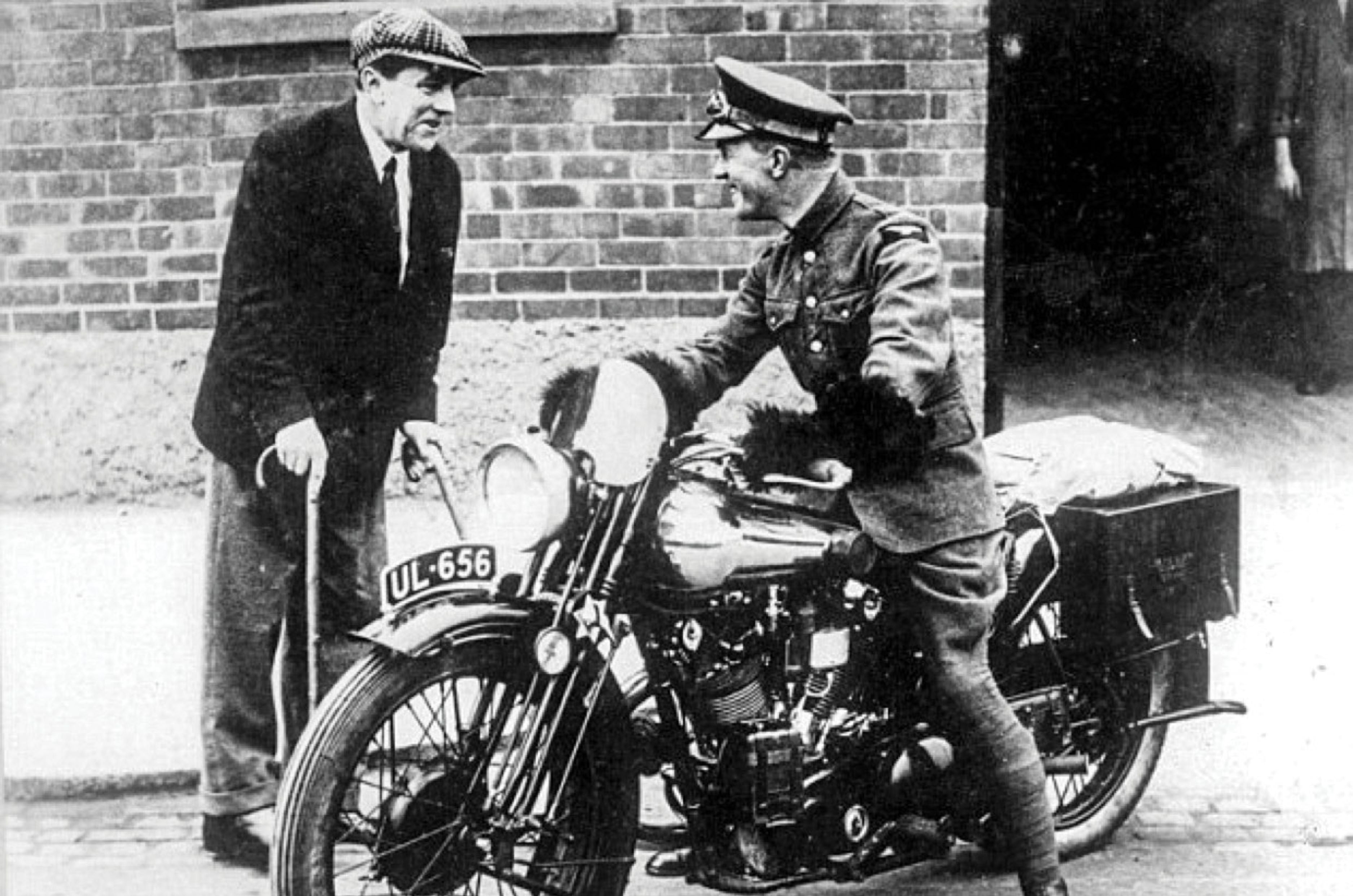
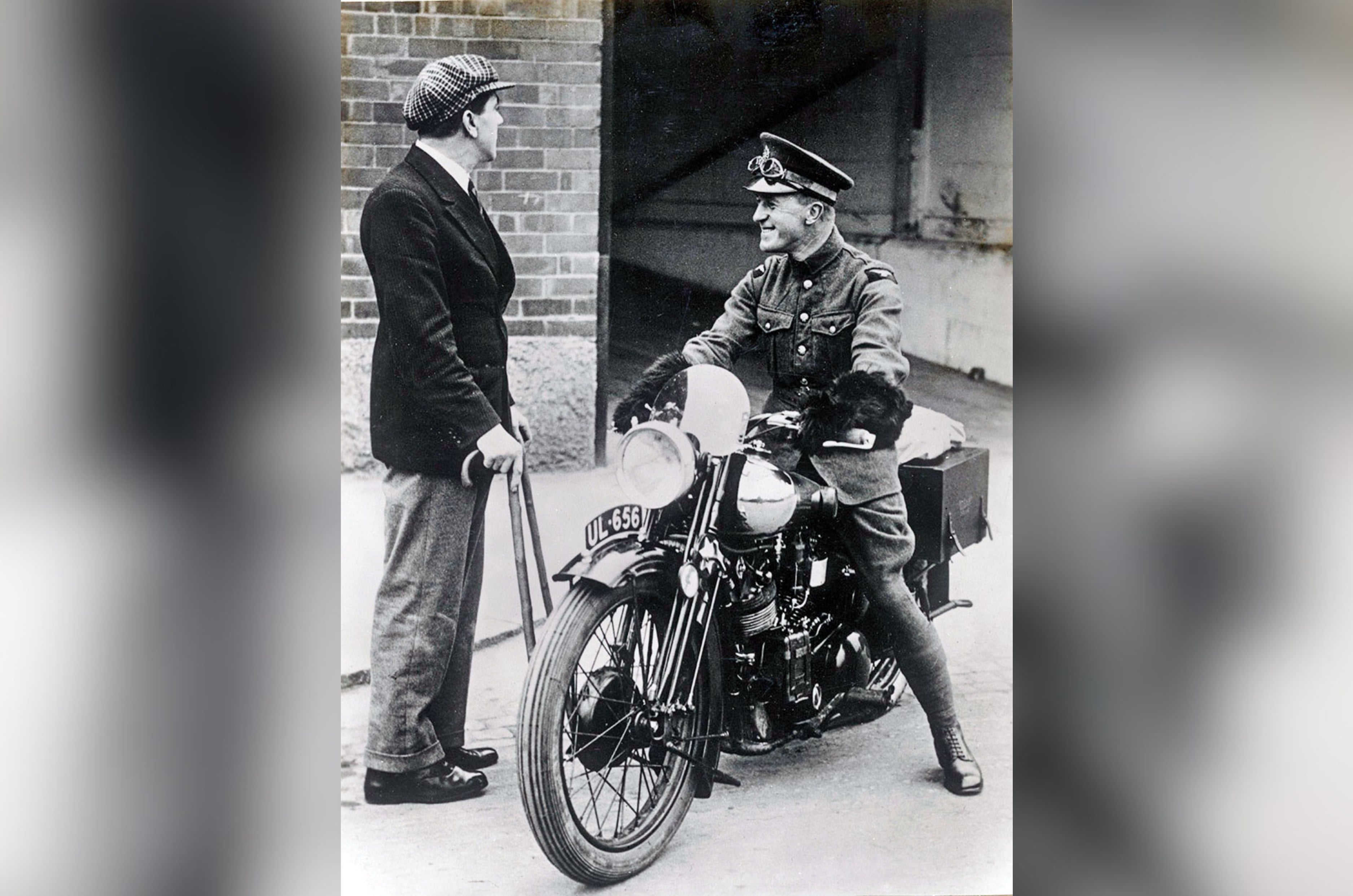
The photographs here are of George Brough and Lawrence on the Brough nicknamed George VI. They were taken during one of Lawrence’s frequent, unassuming visits to the Haydn Road factory by Jack Hallsworth, a Nottingham Journal photographer who knew George Brough and had been tipped off to bring his camera one afternoon.
It’s a rare glimpse of a man famously camera-shy and almost never photographed candidly, hinting at the genuine warmth behind the machines: two very different Englishmen, one a self-effacing war hero trying to vanish into rural obscurity, the other a flamboyant engineer-showman happy to let Rolls-Royce’s name do some of his advertising for him, bound by a friendship that outlasted their differences.
फेस्टिव सीजन की मांग का फायदा उठाने के लिए Classic Legends ने Jawa 42 All Stars लॉन्च की है, जिसकी शुरुआती कीमत 1.85 लाख रुपये (एक्स-शोरूम) है। स्टैंडर्ड मॉडल के मुकाबले 10,000 रुपये ज्यादा कीमत वाले इस स्पेशल एडिशन में कॉस्मेटिक बदलाव और खास ‘All Stars’ ब्रांडिंग दी गई है, जबकि इसका मैकेनिकल पैकेज वही है।
Jawa 42 ‘All Stars’ एडिशन में सिर्फ कॉस्मेटिक बदलाव किए गए हैं, जैसे नए ग्राफिक्स, खास स्टार-थीम वाली डिटेलिंग और ‘All-Stars’ बैजिंग।
बता दें कि इस हफ्ते की शुरुआत में आनंद महिंद्रा ने Global Chess League 2026 के दौरान Jawa 42 Bobber All Stars को पेश किया। ये स्पेशल एडिशन ब्रांड की ‘ऑल स्टार्स’ लाइनअप को बढ़ाते हैं, और Jawa 42 Bobber All Stars की कीमत 2.09 लाख रुपये (एक्स-शोरूम) रखी गई है।
Jawa 42 रेंज में 294.72 cc का सिंगल-सिलेंडर, लिक्विड-कूल्ड DOHC इंजन है, जो छह-स्पीड गियरबॉक्स के साथ आता है और 27.1 hp की पावर और 26.3 Nm का टॉर्क देता है। ब्रेकिंग के लिए इसमें आगे 280 mm और पीछे 240 mm के डिस्क ब्रेक दिए गए हैं, जो डुअल-चैनल ABS के साथ आते हैं। मोटरसाइकिल का व्हीलबेस 1,369 mm और सीट की ऊंचाई 795 mm है, जो रोजाना इस्तेमाल और आरामदायक राइडिंग पोजिशन के बीच अच्छा तालमेल बिठाती है।
Jawa All Stars 42 Bobber: वेरिएंट के हिसाब से कीमतें
All Stars Mystic Copper – Rs 2,08,942
All Stars Jasper Red – Rs 2,15,942
All Stars Silver Knight – Rs 2,15,942
All Stars Shadow Black – Rs 2,17,942
All Stars Black Mirror – Rs 2,19,942
Jawa 42 All Stars: वेरिएंट के हिसाब से कीमतें
Black: Rs 1,89,942
Nebula Blue: Rs 1,86,942
Battle Green: Rs 1,86,942
Moss Grey: Rs 1,86,942
All Stars Ivory: Rs 1,84,942
Jawa 42 All Stars की बुकिंग शुरू हो गई है। ग्राहकों को बाइक की डिलीवरी 14 सितंबर 2026 से मिलनी शुरू होगी। यह तारीख त्योहारी सीजन की शुरुआत के साथ मेल खाती है।
कंपनी जिसे ‘Jawa के कैरेक्टर, कंडक्ट और करेज (चरित्र, व्यवहार और साहस) का साझा कोड’ कहती है, उसे ध्यान में रखते हुए इन मोटरसाइकिलों की पूरी रेंज में ‘All-Stars’ का निशान और स्टार के डिजाइन दिए गए हैं।
Jawa 42 मॉडर्न-क्लासिक मोटरसाइकिल सेगमेंट में Royal Enfield Classic 350, Royal Enfield Meteor 350 और Honda CB350 H’ness जैसी मोटरसाइकिलों को टक्कर देती है।
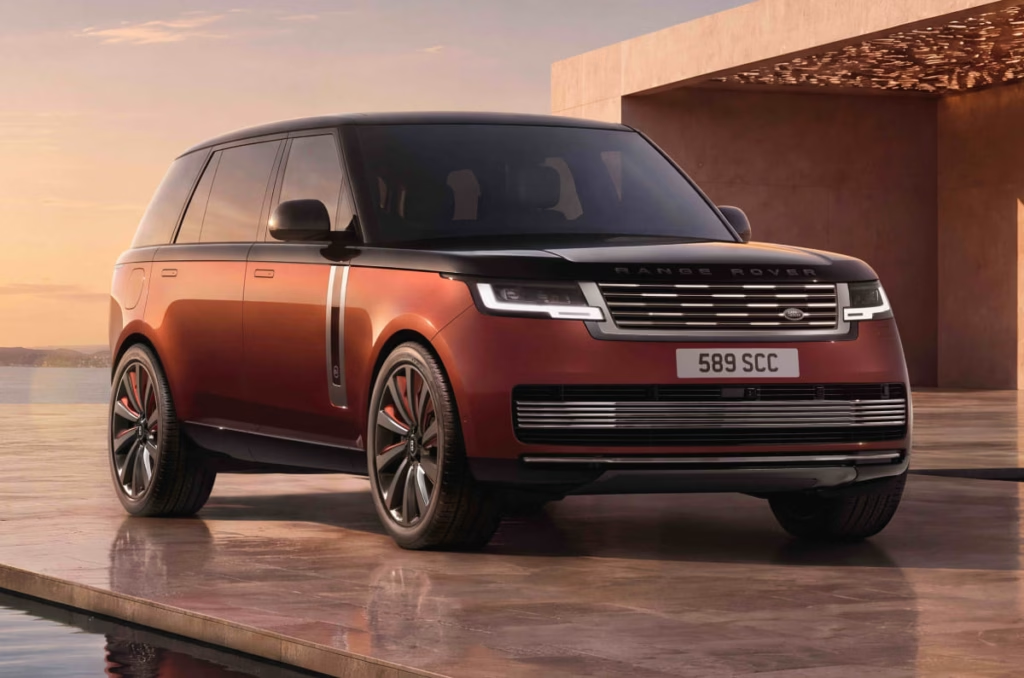
Range Rover has introduced a new Duo-Tone Fade paint finish through its Bespoke service. It uses two exterior colours that gradually blend from the roof and bonnet into the body sides and rear. The finish is available exclusively for the Range Rover SV. Range Rover has not announced a specific price for the paint option.
Range Rover SV Bespoke paint options
Four Duo-Tone Fade combinations are available: Velvet Depths, Sunstone Lustre, Ashen Amaranthine and Nacre Allure. Each is paired with a dual-tone interior.
Velvet Depths combines Obsidian with Sunrise Copper, while Sunstone Lustre pairs Obsidian with Tourmaline Brown. Ashen Amaranthine combines Obsidian with Amethyst, and Nacre Allure uses Obsidian with British Racing Green.
The finish is created using multiple layers of paint. The base colour is applied first, followed by the second colour, which is then blended into the base to create the fade. The process involves hand preparation and precision application, with the materials and colour combinations tested for compatibility.
Range Rover SV: What is it?
The Range Rover SV is the performance-focused version of the Range Rover and is available with both petrol and electric powertrains. The petrol version uses a 4.4-litre twin-turbo V8 mild-hybrid producing 537hp and 750Nm, while the electric version has a claimed range of up to 600km.
The SV gets features including a 13.1-inch infotainment touchscreen, 13.7-inch digital driver’s display, 13.1-inch rear entertainment screens, heated steering wheel, powered rear sunblinds, four-zone climate control, head-up display, ambient lighting, 360-degree camera and air purifier. All seats are electrically adjustable and get heating, ventilation, massage and memory functions.
Range Rover also offers the SV Bespoke service, which allows customers to customise the exterior and interior of their SUV.
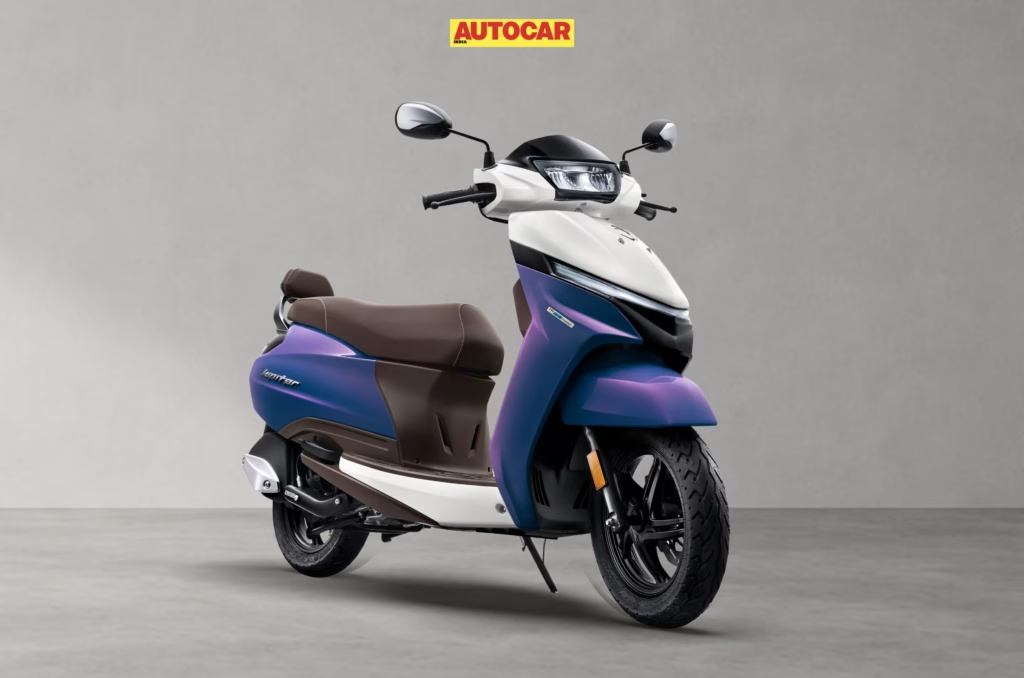
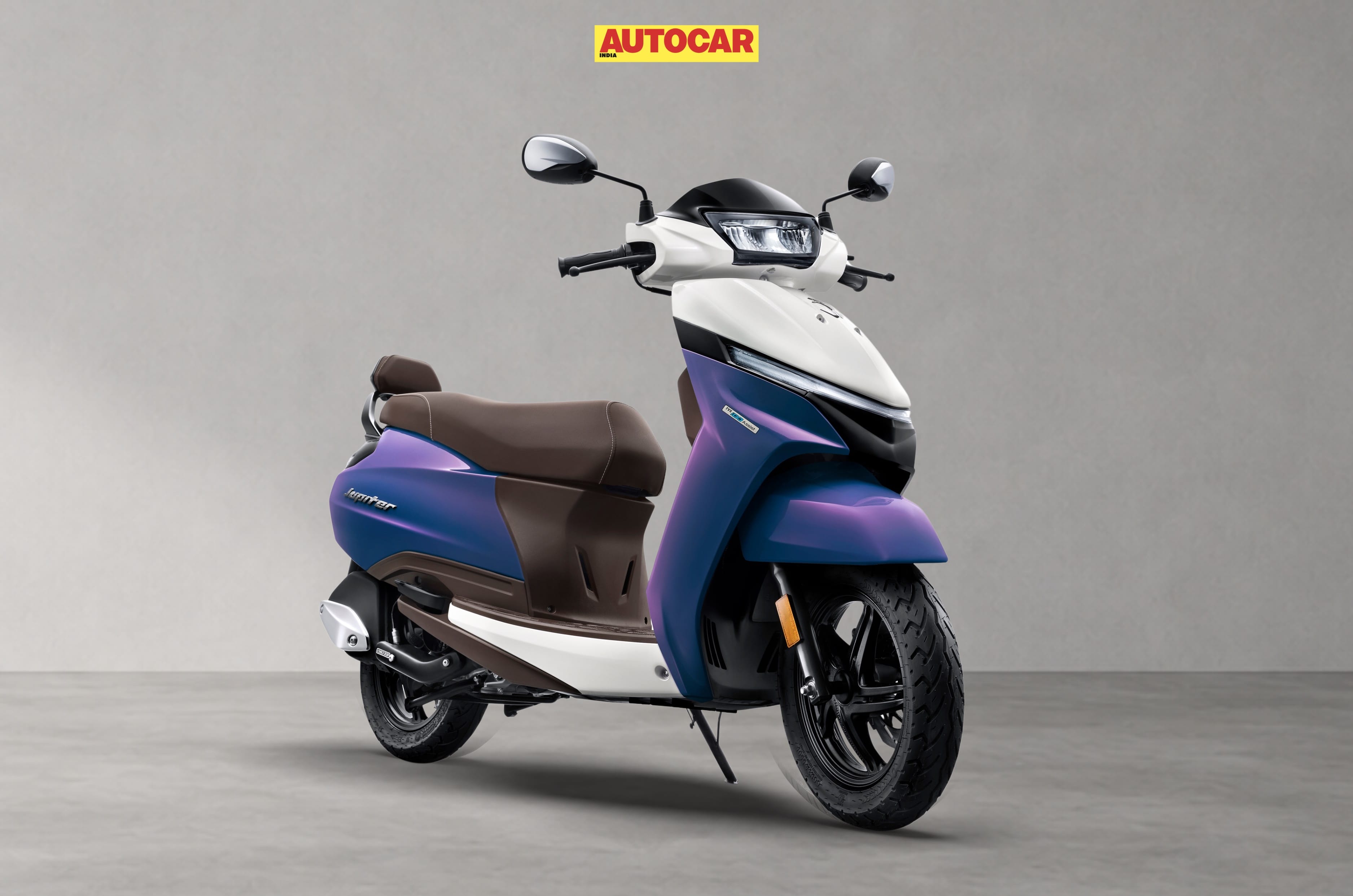
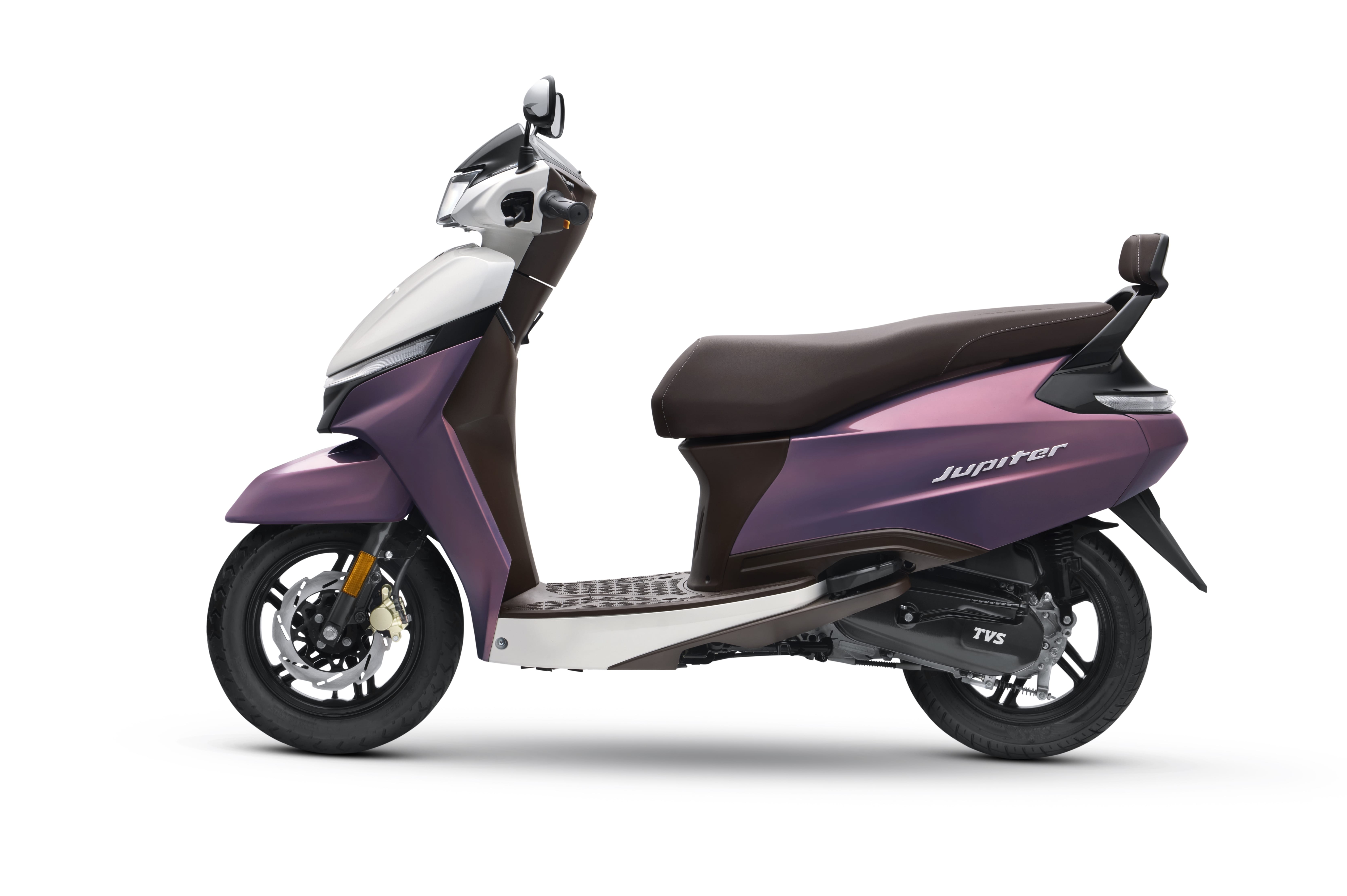
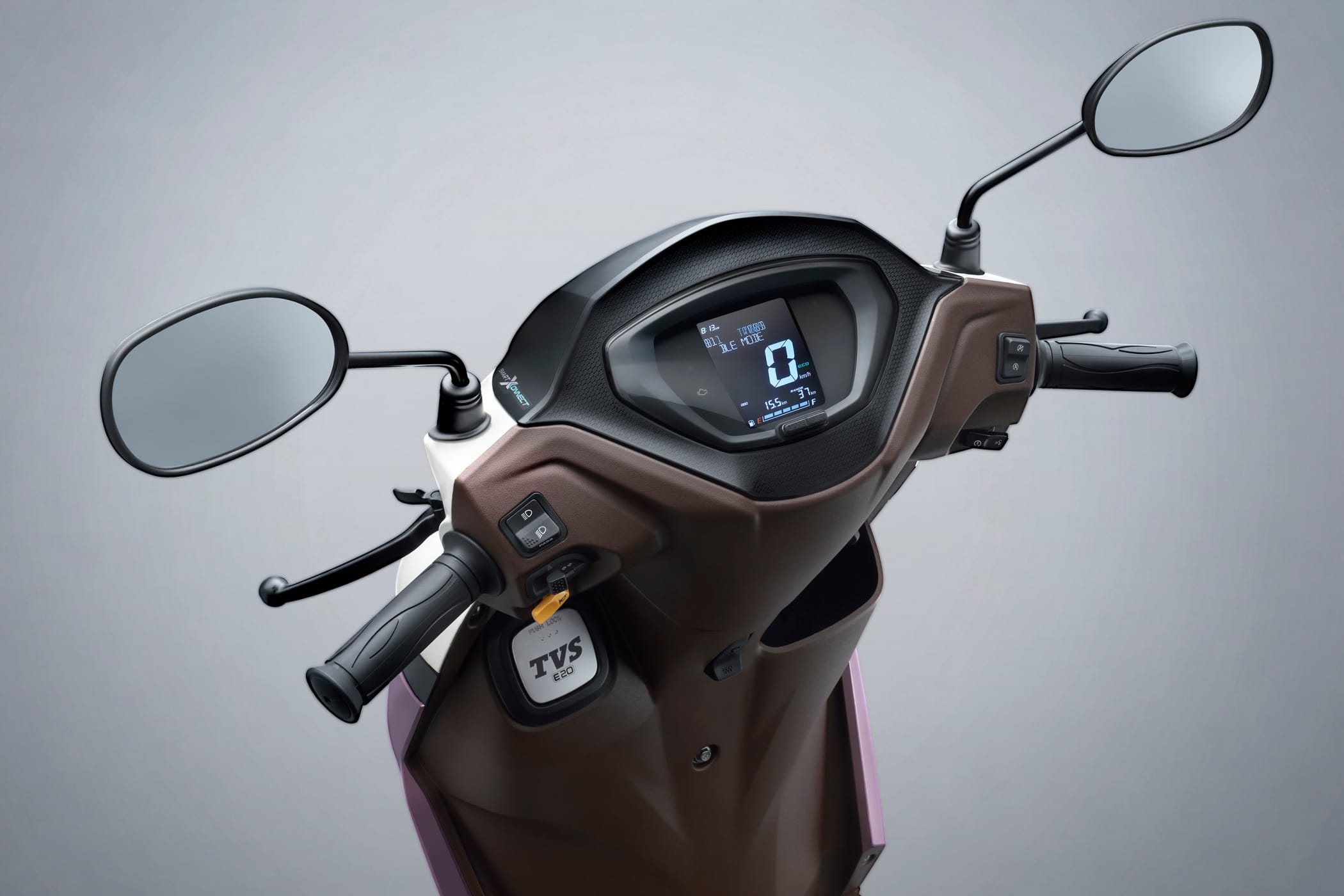
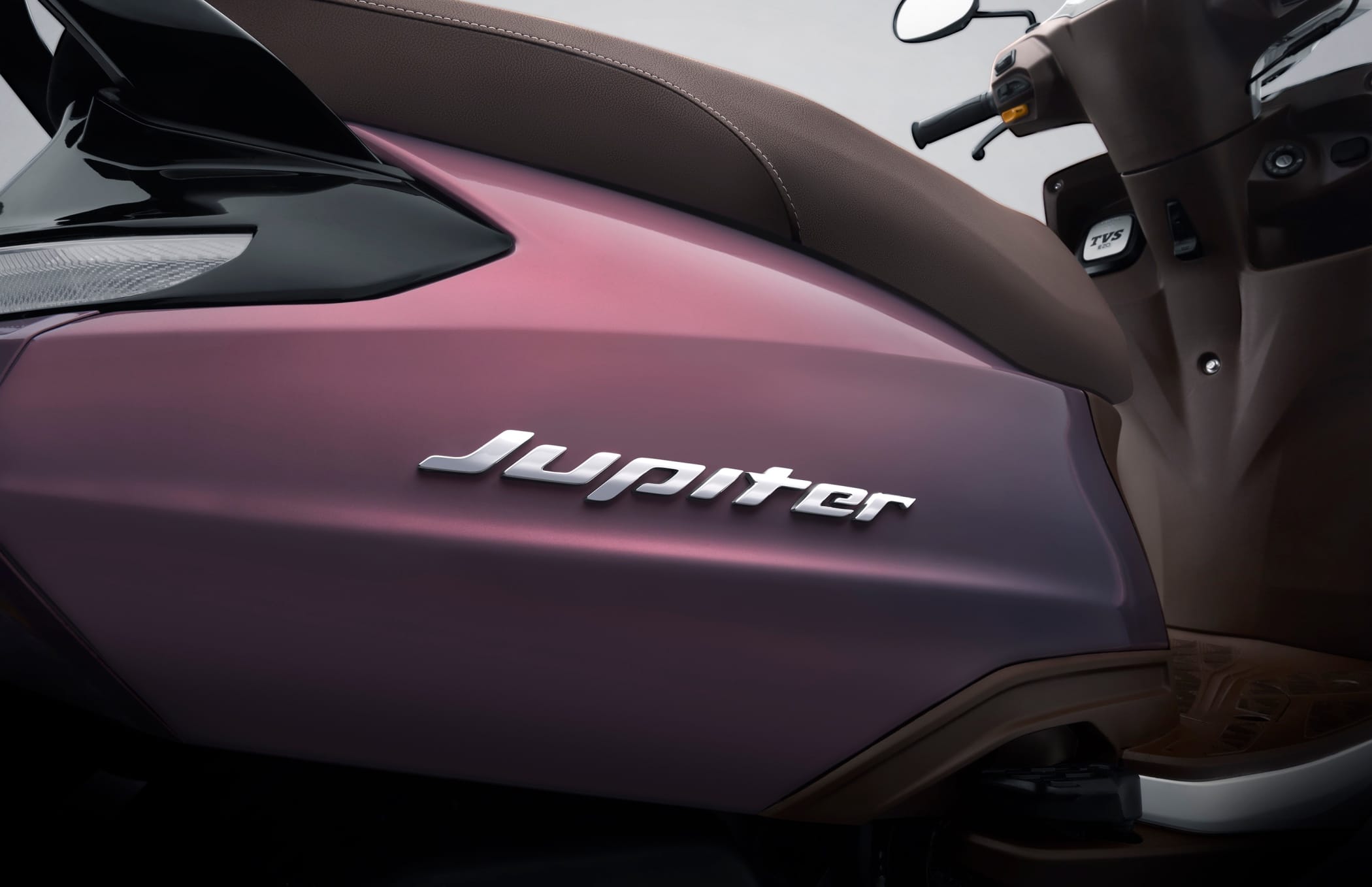
TVS has a new variant for the Jupiter 110, their family scooter, called the Dual-Tone Edition. Offered in two exclusive Spectral Blue and Spectral Copper colours, the new variant sits at the top of the range at Rs 89,825 (ex-showroom, Delhi). If the colours and the price appeal to you, here are some things you need to know before deciding to buy one.
1. How is the Dual-Tone Edition different from the SmartXonnect Disc variant?
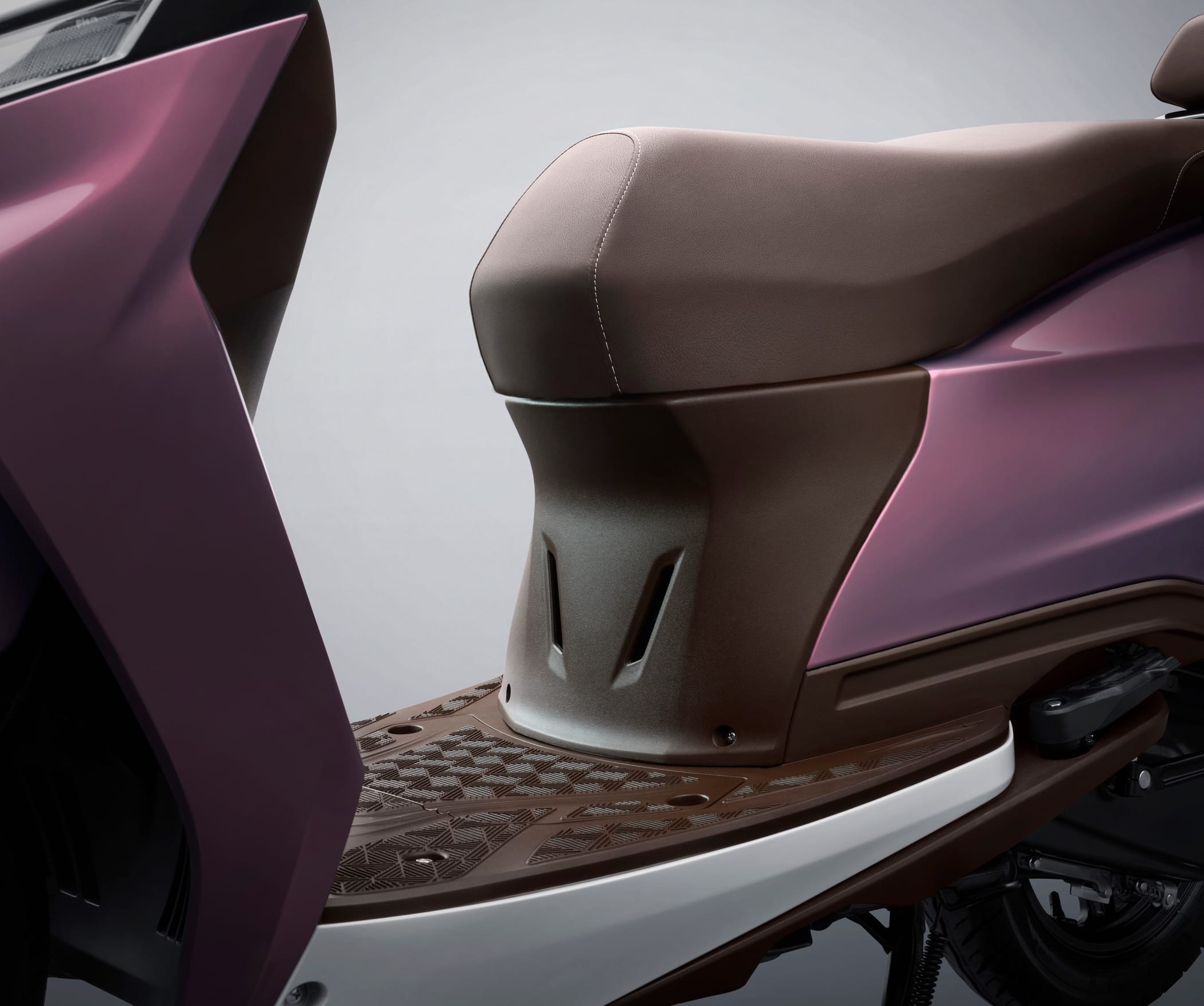
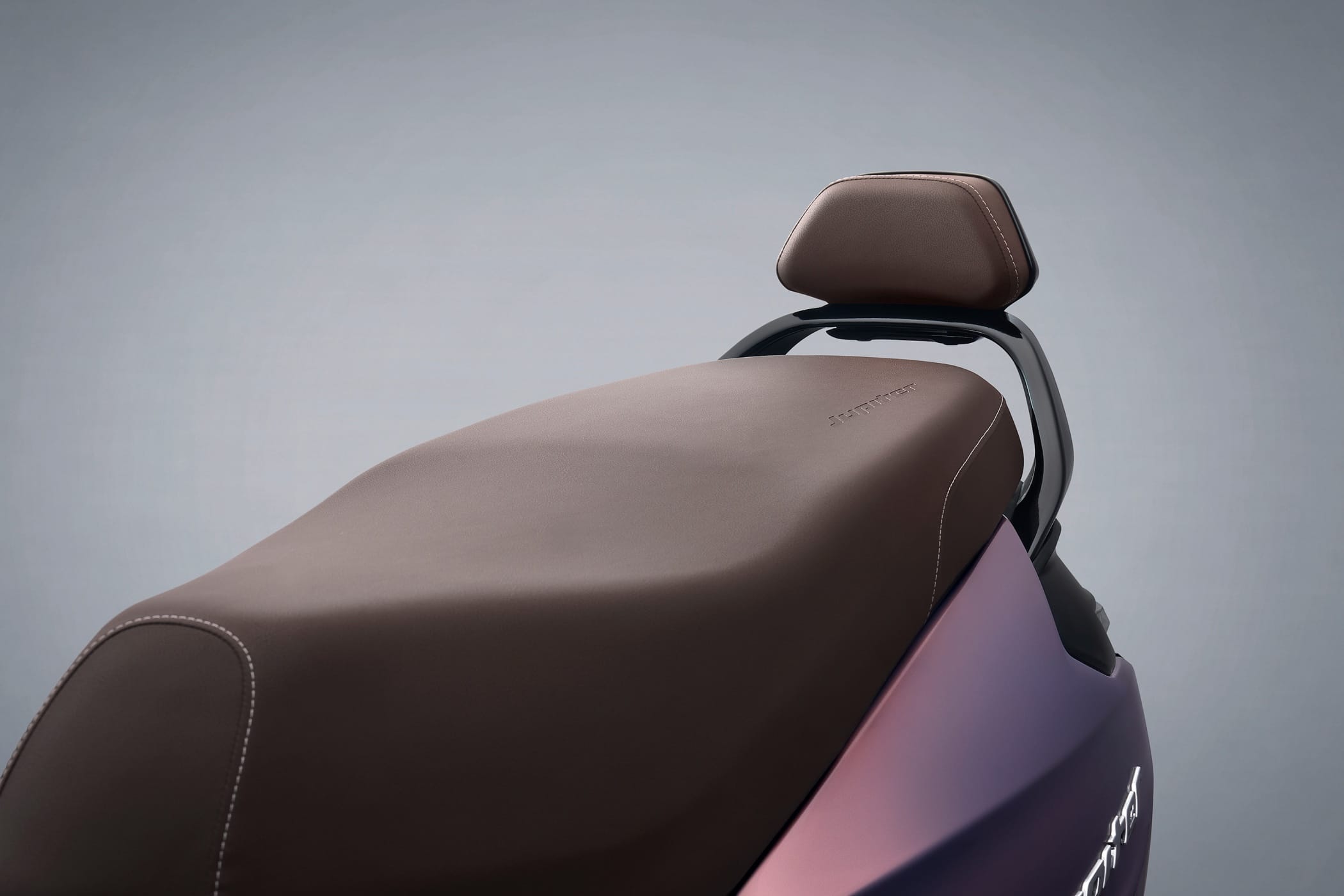
The obvious difference is in the colours, with the new variant sporting dual-tone colour scheme with two colours over SmartXonnect’s single colour scheme, offered in three colours at the moment. Besides that, the dual-tone variant gets colour co-ordinated inner panels, new seat colour, and partial chrome mirrors. The Spectral variant offers two new features, an integrated backrest and sequential indicators, the latter is a segment-first.
2. How many variants are there in the TVS Jupiter now?
At the moment, TVS Jupiter has six different variants across a Rs 15,000 price range. The base variant, Drum starts at Rs 74,125 and the Spectral Edition comes in at Rs 89,825. Both prices are ex-showroom, Delhi.
3. Why do some Jupiter variants have SXC in their name?
That’s an abbreviation for SmartXonnect, TVS’ smartphone connectivity suite. Currently, it’s offered in the top four variants, which of course includes the Spectral Edition though it doesn’t have SXC in the name. With the suite, you can connect the Jupiter to your smartphone to gain features like call and SMS alerts, turn-by-turn navigation, find my scooter, and the connected variants exclusively get a vertical, fully digital instrument cluster. The others stick to a different analogue-digital cluster.
4. Are there any changes to the convenience features offered with the new variant?
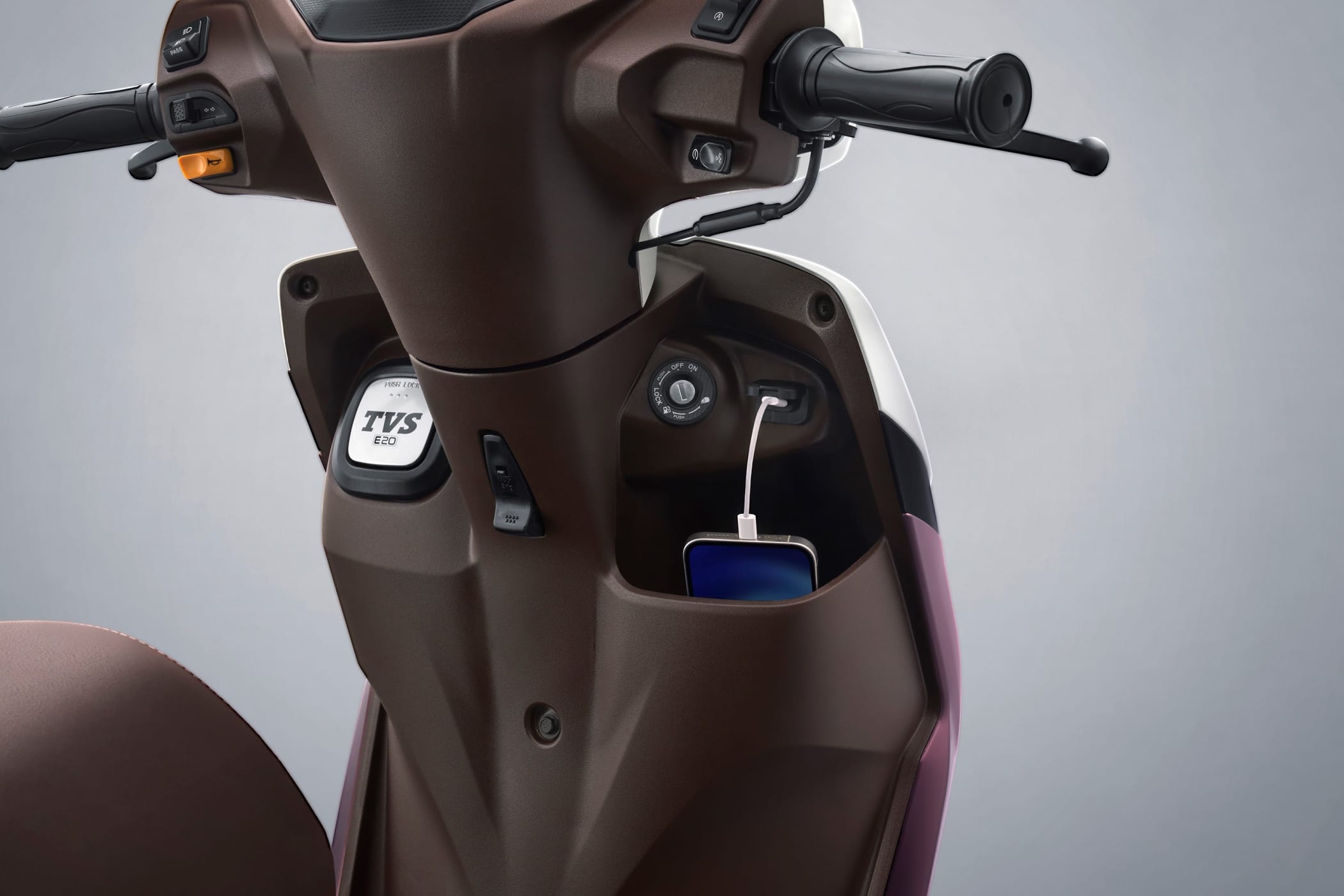
No, the Jupiter continues with a 33L boot that’s the largest on any ICE scooter in its segment. It also retains the USB charger at the front, enabling you to charge your devices on the go. Other auxiliary convenience features like the front apron mounted fuel tank and the easy to operate centre stand also continue on offer.
5. What’s TVS iGo assist? Is that also exclusive to SmartXonnect variants?
Yes, it is. iGo assist refers to TVS’ integrated starter generator (ISG). It enables features like silent start, auto stop/start at traffic to conserve fuel and adds 0.6Nm of torque to the existing 9.2Nm of torque on the scooter.
6. I want a front disc brake. What’s the most affordable Jupiter variant I can buy?
TVS currently offers the front disc brake only with SmartXonnect included, so the most affordable variant with one is SmartXonnect Disc, coming in at Rs 86,825 (ex-showroom, Delhi).
7. Some Jupiter 125 variants are priced similar to the 110. Should I buy that instead?
Sure, as long as you don’t mind the older looking design on the 125. The Jupiter 125 offers a front disc brake without SmartXonnect. However, the 125, as the name suggests, does get a larger engine that should lend it some additional power but that could also affect its frugality. Both the scooters share the platform so the experience will be similar, but take a test ride before deciding for or against one.
8. The Access 125 is also priced similar to the Jupiters. Worth considering?
Absolutely. The Access has always been a value 125 offering and that continues with the latest one as well. Worth checking out if you’re alright with the extremely conventional family scooter design.