The real Lawrence of Arabia’s last ride retraced in a Mini Countryman JCW

The real Lawrence of Arabia's last ride retraced in a Mini Countryman JCW
Mini Countryman JCW travelogue in Dorset

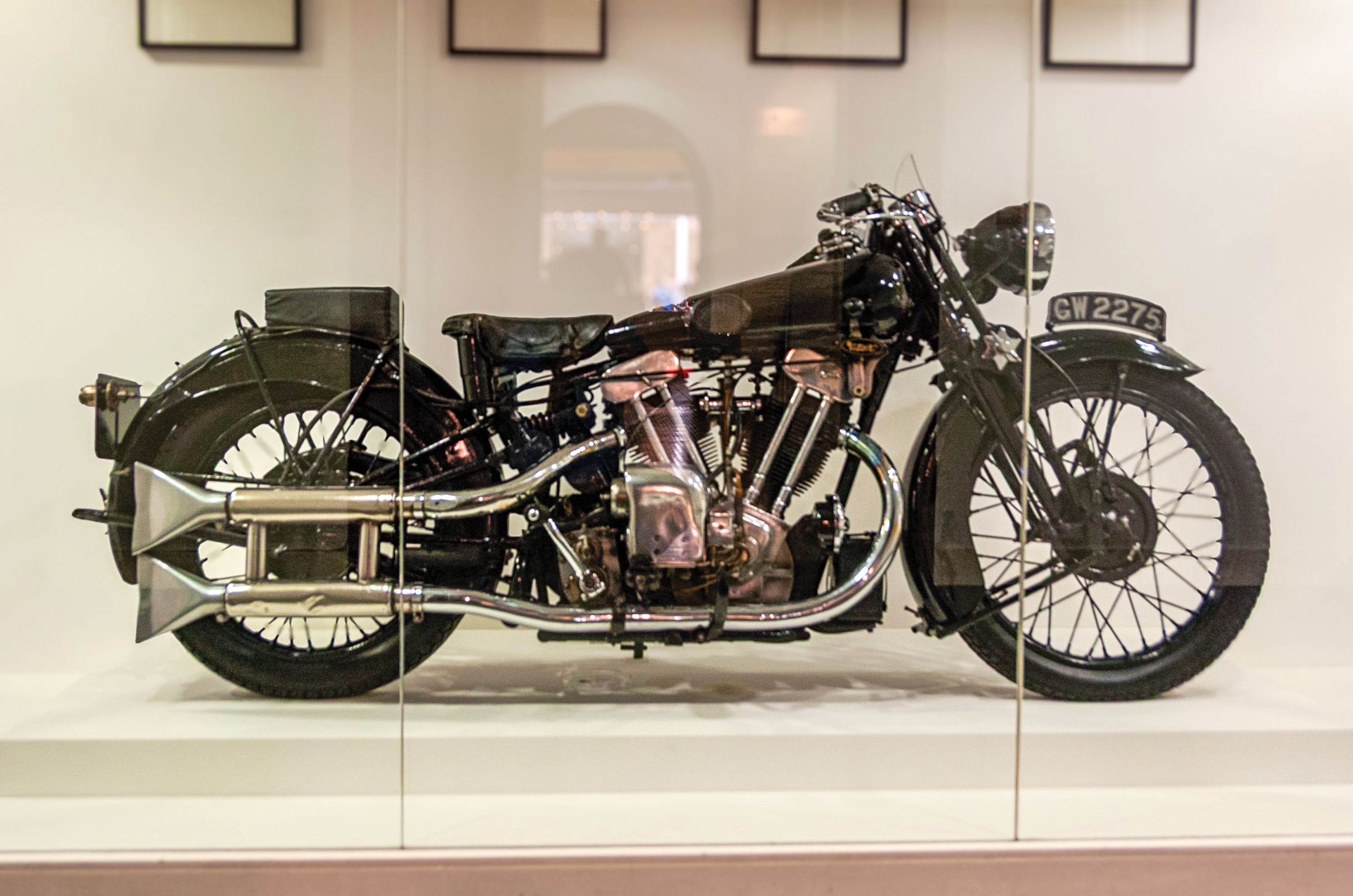
Seventeen years ago, in the Imperial War Museum on Lambeth Road in London, I stood mesmerised in front of a motorcycle with the number plate GW 2275, enclosed in a glass case. It was a beautiful, brooding machine, low and long, finished in deep black with just enough nickel and chrome to catch the museum lights: twin fishtail exhausts sweeping back in a graceful curve, the big JAP V-twin sitting exposed and unapologetic between the frame rails, cylinders splayed wide, cooling fins stacked like the pages of a book. Thin copper oil lines ran externally along the frame, feeding the total-loss lubrication system of the era, a solution that looked almost primitive next to a modern engine yet was efficient enough to survive being wrung out past 100mph on 1930s public roads.

A flamboyant form, every component left exposed, hinting at George Brough’s intention to let you see exactly what you were paying for. This was, in its day, the pinnacle of what was once the finest motorcycle industry in the world, the British motorcycle industry. Standing there, it was easy to understand why a certain kind of Englishman, restless, brilliant, and a little broken, would have fallen entirely in love with a machine like this.
T.E. Lawrence's Brough Superior SS100
The very Brough Superior SS100 Lawrence died on, photographed at the Imperial War Museum in 2008. Its last known owner, reclusive collector John Weekly, kept it in his lounge for over 45 years before his death in 2024. After which the Brough’s whereabouts are unknown.

It took me straight back to being a teenager watching Lawrence of Arabia for the first time. The film famously opens with this motorcycle: the frantic braking, the fatal swerve to avoid two boys on bicycles, before flashing back to how a restless desk officer became a legendary guerrilla leader in the Arab Revolt, and how that legend curdled into cynicism once Britain betrayed the cause he’d fought for. This was the actual Brough Superior SS100 that TE Lawrence was ripping home on from Bovington on May 13, 1935, when he went over the handlebars, struck his head, and died six days later without regaining consciousness.
T.E. Lawrence on a camel
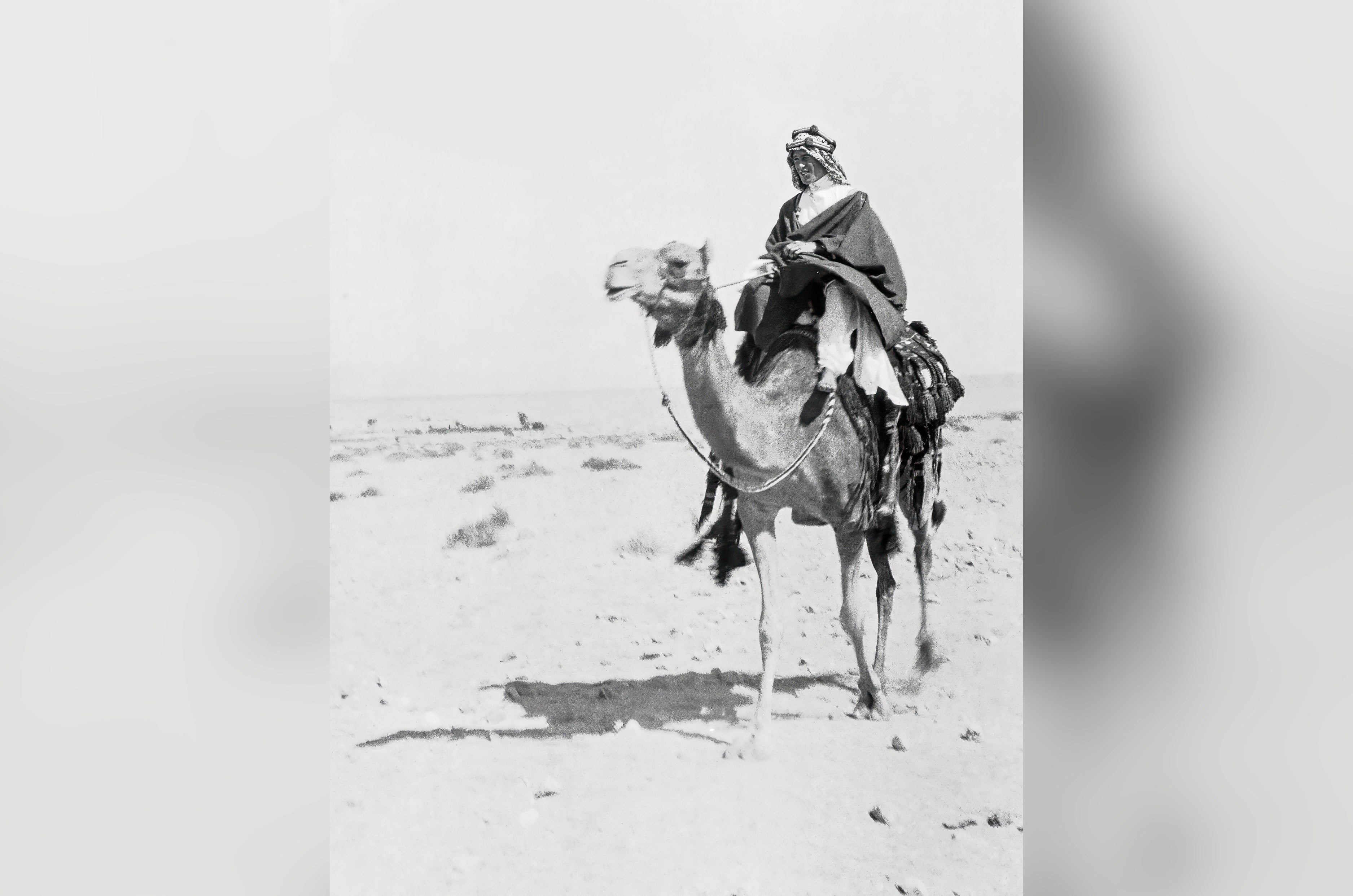
Motorcycle or camel, Lawrence rode with consummate ease.

I have always felt a pull towards places where history happened, where the past has left something tangible behind, and this anniversary issue gave me the excuse I needed to follow Lawrence’s last ride. For this quest, I got behind the wheel of the new Mini Countryman John Cooper Works. A slightly contradictory choice of car for a story about a restless man who spent his last years trying to shrink his own reputation by changing his name twice to get away from the legend he’d unwillingly become. Because the new Countryman is going through much the same thing but in reverse.

By the very virtue of its name, the Mini has a reputation of being a compact and cheeky car that seems to occupy hardly any road at all, but this Mini is large and an SUV, accentuated by beefy curves with all-wheel drive as standard and sporty vivid red disc calipers. Under the bonnet sits a potent 2.0-litre turbo four-cylinder engine with 300 horsepower of shove and 400Nm of tug.

The irony was not lost on me: I was driving a car that had outgrown its own name, setting off to chase a man who’d spent his final years trying to shrink his. I pointed the car west out of London on the M3, then the A303, pulling over near Stonehenge for a quick photograph before pressing on toward another English icon further down the road.

The road to Clouds Hill
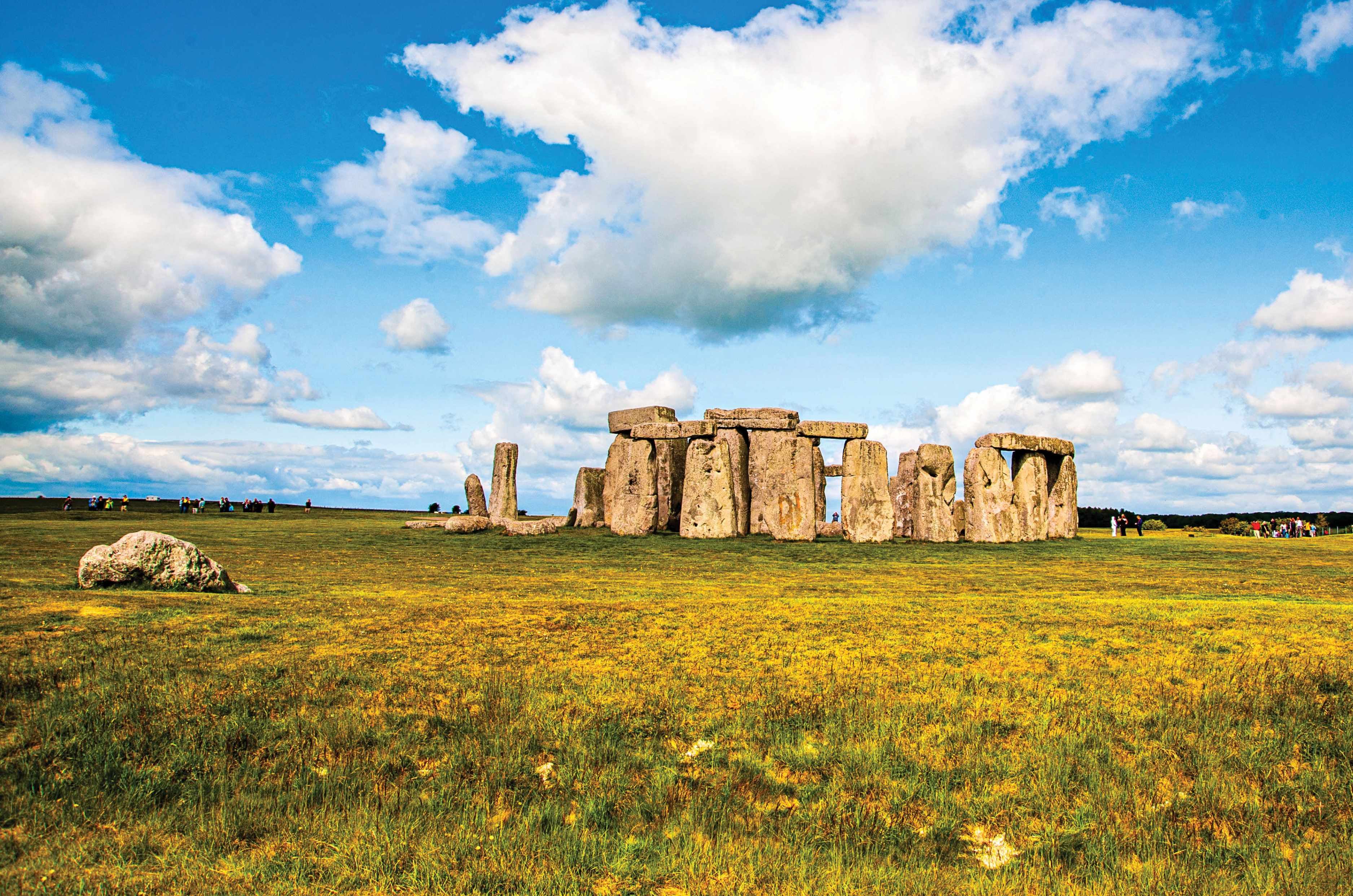
Stonehenge
Stonehenge bursts into view without warning as the A303 tops a crest, the ancient stones suddenly filling the windscreen against the Salisbury Plain.

Beyond Stonehenge, the Countryman ate the tarmac in complete comfort, cabin hushed, adaptive cruise doing most of the thinking. The road eventually dropped south onto narrower country lanes for the final approach into Dorset, and it was here, as the hedgerows closed in, that the JCW visibly changed character. All-wheel drive dug in through the bends, the exhaust note sharpened, and for a few minutes on the approach to Clouds Hill, this bulked-up, grown-up Mini showed me that the nimbleness of its ancestors still lived somewhere in its genes.
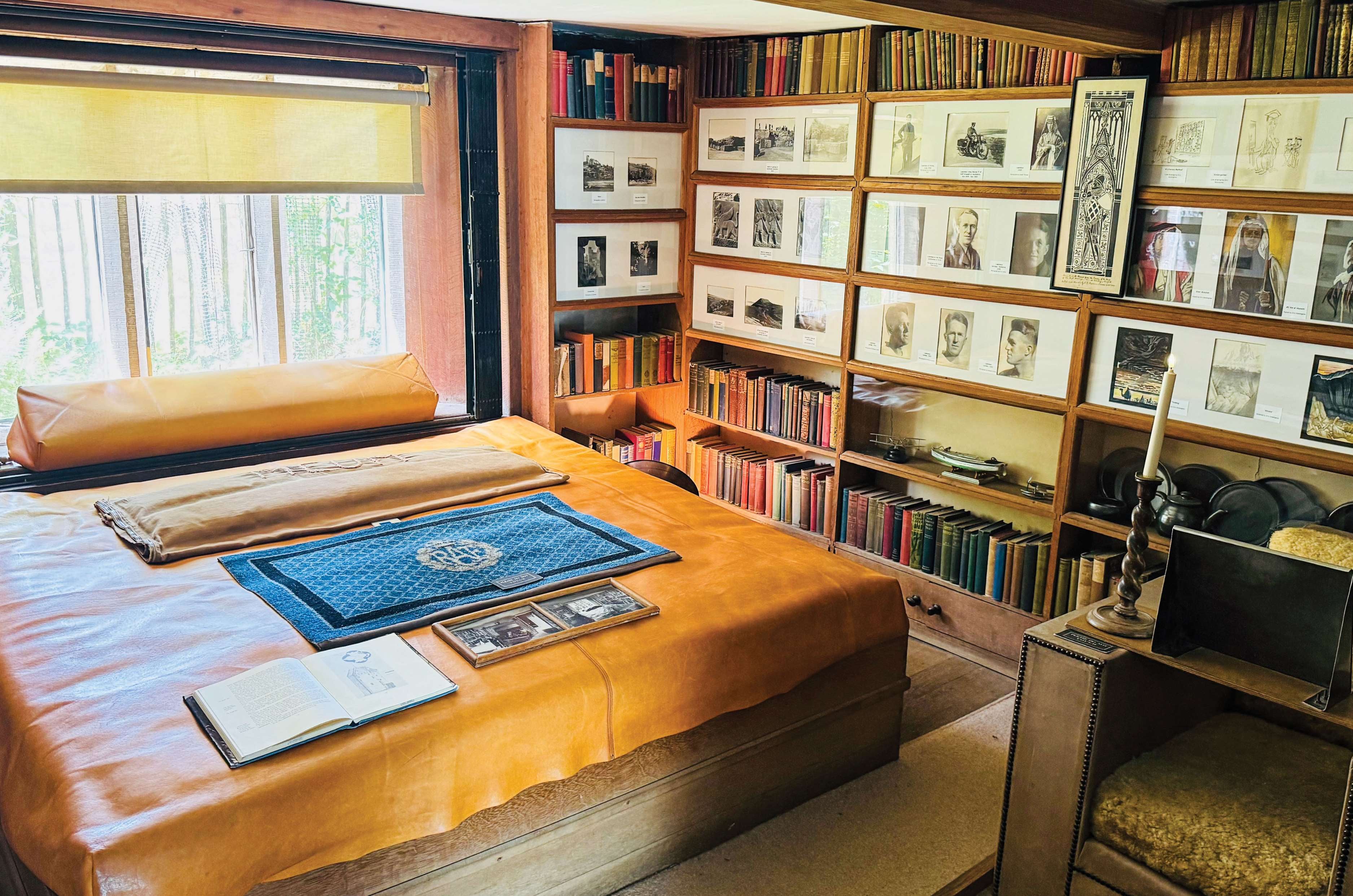
Lawrence's Daybed and Bookshelves
Inside Clouds Hill: Lawrence’s daybed and bookshelves, preserved almost as he left them.

Clouds Hill itself is almost comically modest for a man who became one of the most famous people in England. It’s a four-room labourer’s cottage with no electricity, which Lawrence first rented in 1923 while stationed at nearby Bovington, then painstakingly rebuilt with his own hands before buying it outright in 1929. Inside, the leather-topped daybed, bookshelves crammed with correspondence and photographs, and framed portraits of Bedouin faces and RAF colleagues remain much as he left them, preserved by the National Trust.

What hints at the pull of Lawrence’s personality is who came all the way here to visit him. George Bernard Shaw, EM Forster, Thomas Hardy and Robert Graves all found their way to this tiny, electricity-less retreat, which was slightly ironic, because Lawrence was doing his best to disappear. The world knew him as Lawrence of Arabia, the flamboyant soldier in Arab robes who’d become one of the most recognisable figures of the First World War, and he wanted none of the celebrity that came with it.
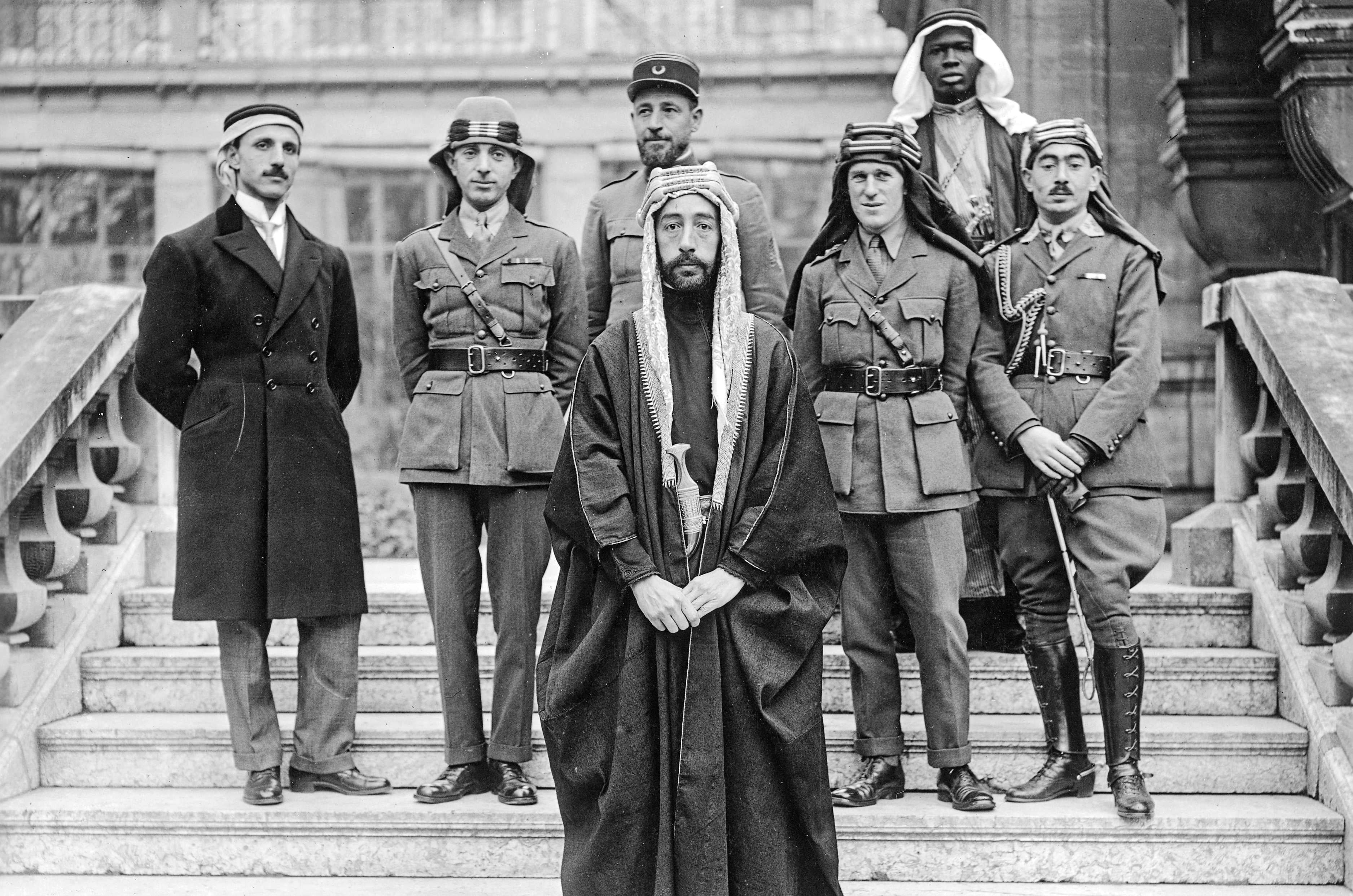
Prince Faisal's Delegation
Prince Faisal’s delegation at the 1919 Paris Peace Conference. Lawrence (third from left) stood among men Britain would soon betray.

He’d already tried once: in 1922, he joined the RAF under the name John Hume Ross, but the press uncovered him within months. The following year, he joined the Tank Corps as TE Shaw, a name he kept for the rest of his life. Clouds Hill became his refuge, a place to read, write, listen to music, work on his boats and motorcycles, and retreat from a world determined to keep finding him.

He did make forays out. Winston Churchill was a genuine friend, and Lawrence would occasionally turn up unannounced at Chartwell, Churchill’s home about 130 miles away. He liked to boast that his long-distance visits to friends like Churchill and Lady Astor were made in “record time” thanks to the Brough’s speed, calling the machine “the silkiest thing I have ever ridden.”

Churchill’s daughter Mary remembered him arriving as “a short, nondescript, sandy-haired airman riding a motorcycle,” only to reappear at dinner transformed, “presenting himself in the flowing robes of a Prince of Arabia.” She also recalled the “pin-drop silence” that fell over the room whenever Lawrence spoke, a silence that apparently included her father, who himself considered Seven Pillars of Wisdom “unsurpassable” as a war narrative. It was an odd, quietly moving thing to stand in a room with no electricity and realise the man who once sat there could hold some of the loudest reputations in England spellbound.

The road that killed him
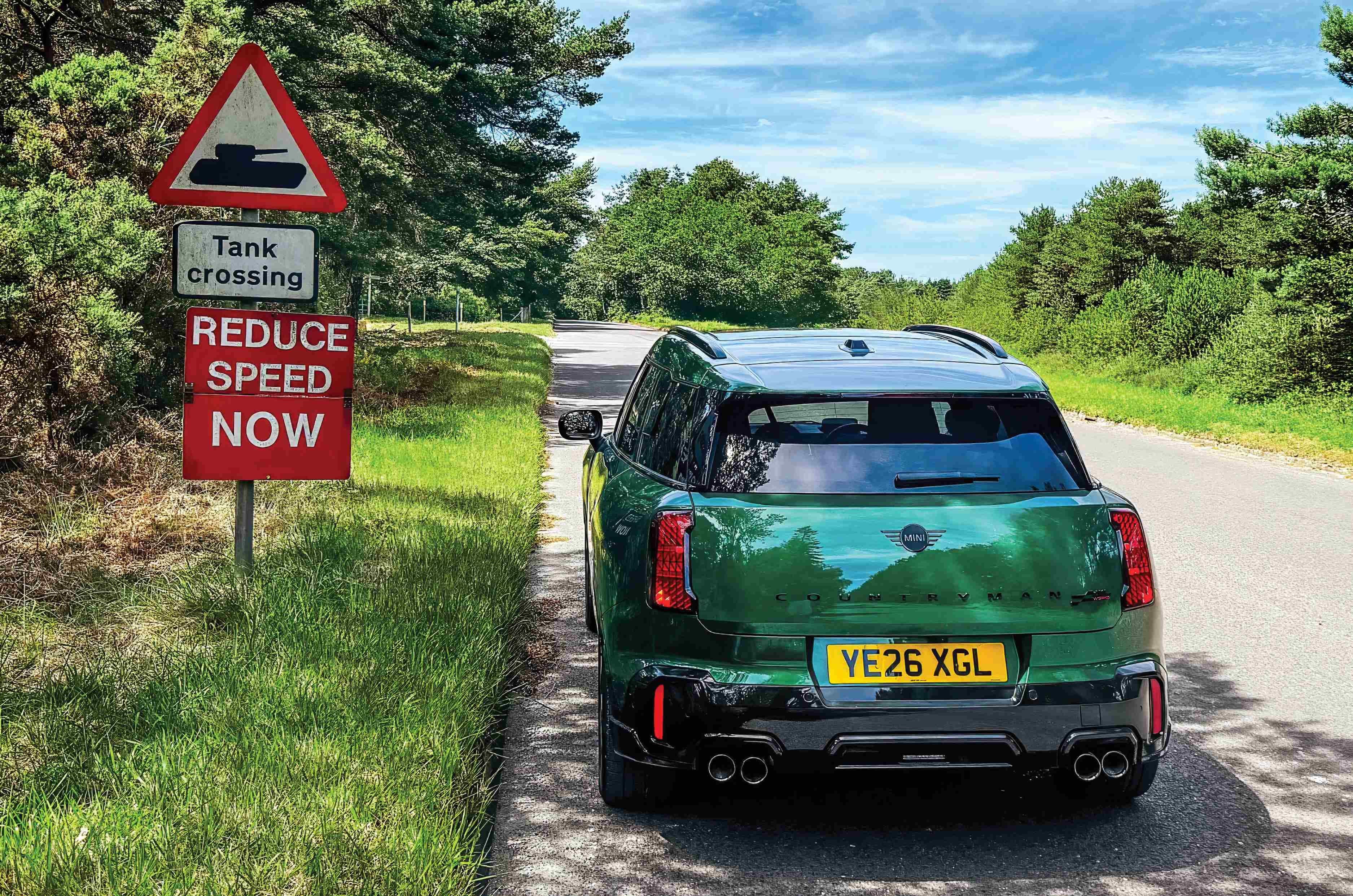
Mini Countryman JCW Rear Static
This road has widened over the decades, much like the Mini brand, which now includes an SUV.

From Clouds Hill, the road towards Bovington Camp is the one Lawrence rode almost daily, and it’s easy to see why he loved it: well cambered, with quick, confident curves that seem made for two wheels rather than four. The road has changed considerably since 1935, widened, realigned and smoothed out, the dips Lawrence knew long gone, but the bends remain, and the JCW flowed through them on silky modern tarmac with barely a shudder.
T.E. Lawrence's grave marking
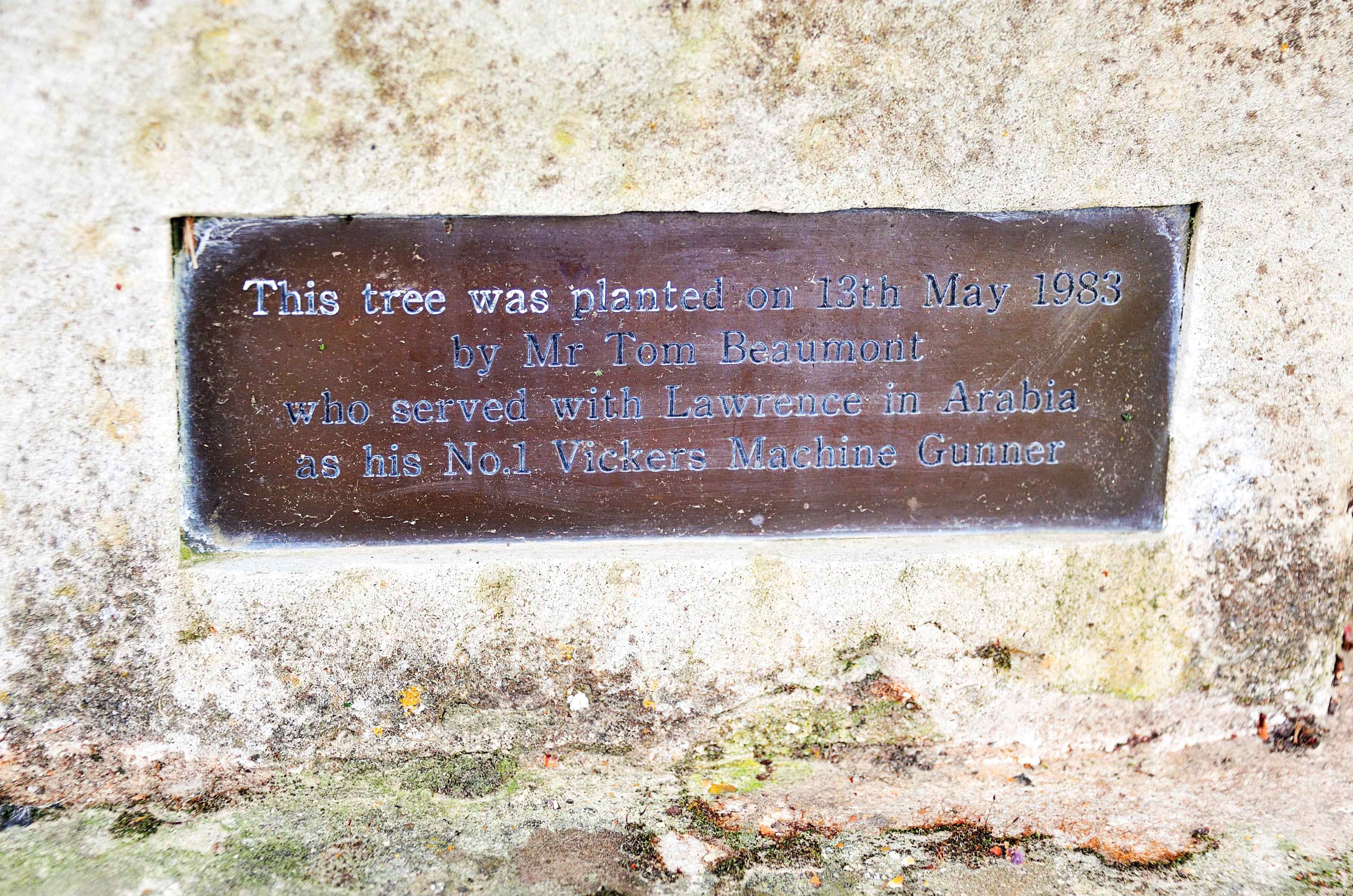
The plaque marking the tree planted by T.E. Lawrence’s former Vickers gunner, Tom Beaumont, in 1983.

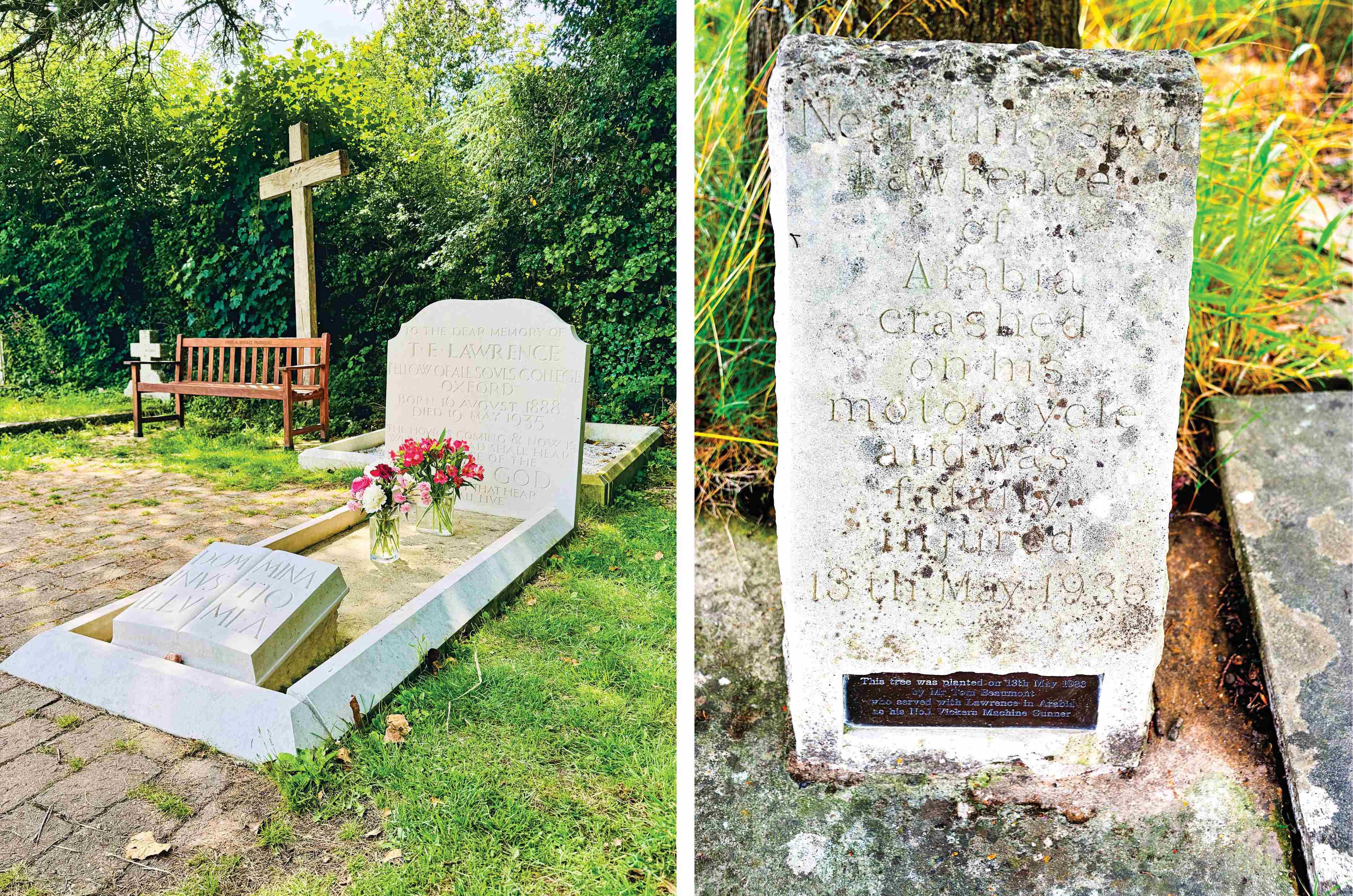
Lawrence was known to push his Brough to 100mph on roads like this despite the rougher surfaces and primitive brakes of the time. It takes a particular sort of nerve to do that. Sadly, this is also the road on which he died. A small, weathered stone marker stands by the roadside near the crash site, its inscription barely legible: Near this spot Lawrence of Arabia crashed on his motorcycle and was fatally injured, 13th May 1935.
Signpost for the Lawrence of Arabia Trail
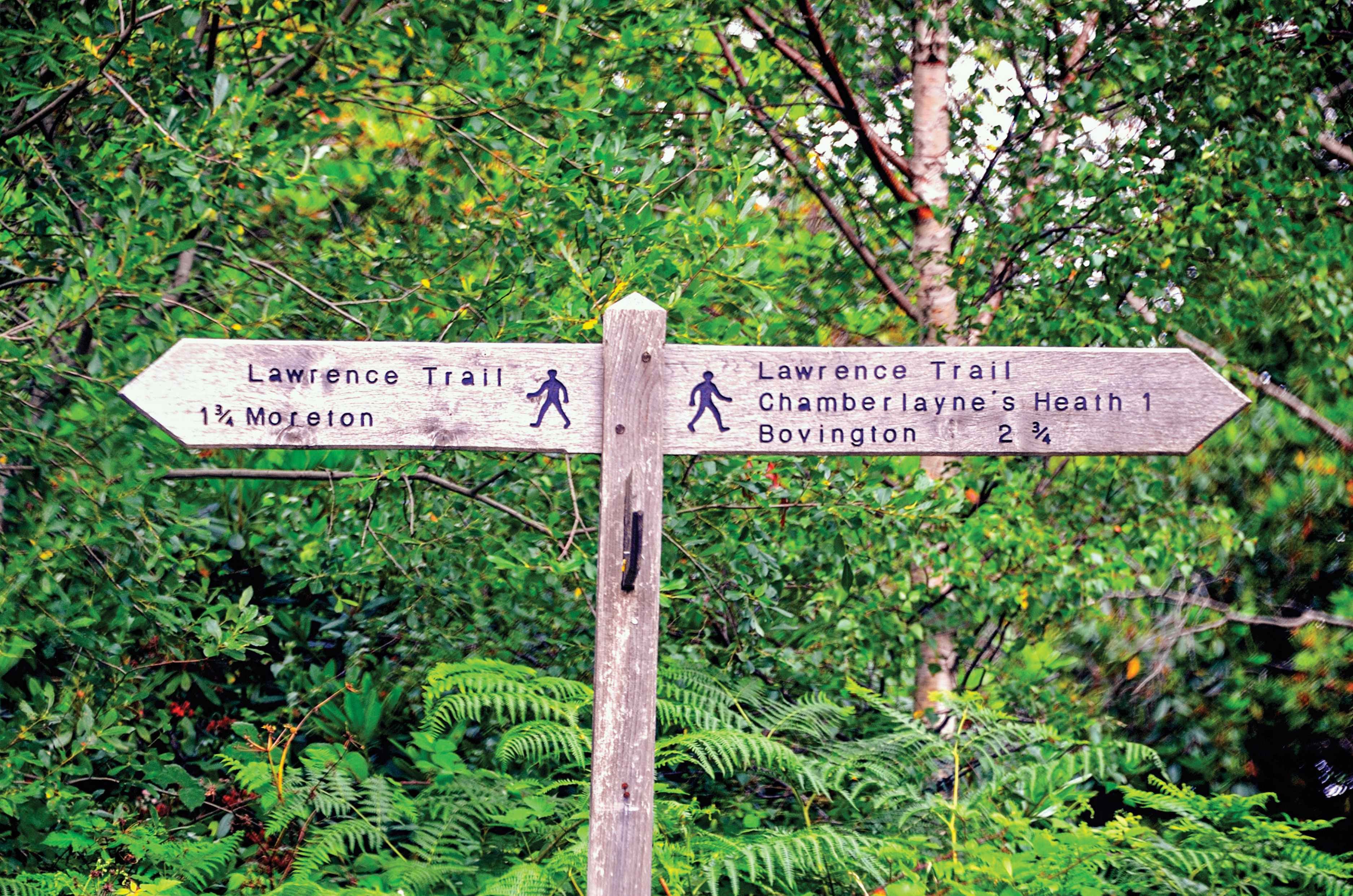
A signpost for the Lawrence of Arabia Trail.

Below it, a plaque records that the tree beside the marker was planted in 1983 by Tom Beaumont, who had served as Lawrence’s Vickers machine gunner in Arabia, one old comrade returning nearly half a century later to mark where another had died. It’s a small, unshowy memorial for a man who became the subject of an Oscar-winning film. Bovington Camp is also the start and finish point of the circular 10.8km Lawrence of Arabia Trail, which strings together the cottage, the crash site, and the church at Moreton in one walkable loop.
T.E. Lawrence's effigy at St.Martin Church
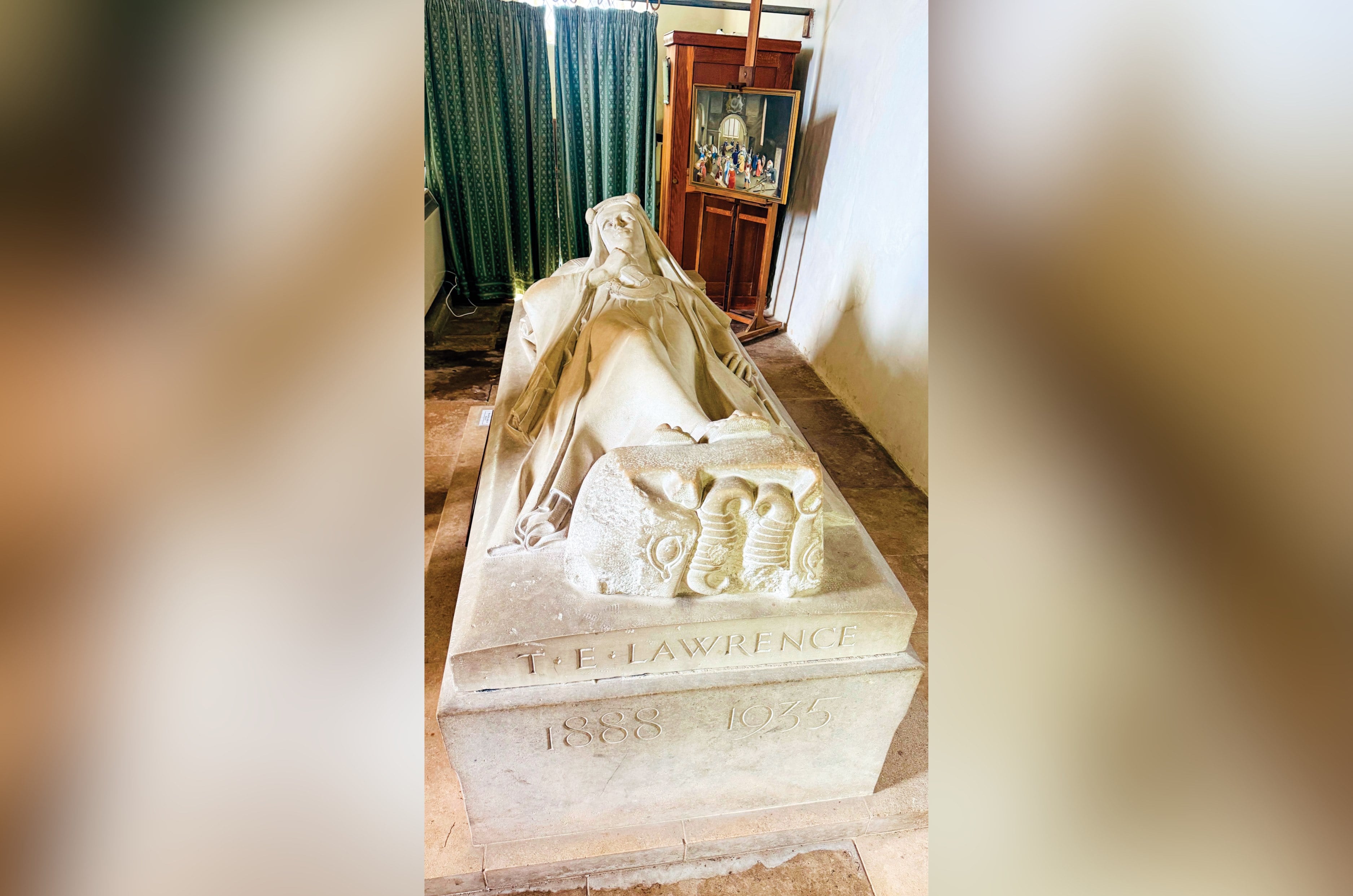
Lawrence’s effigy at St Martin’s Church, Wareham, carved by his friend Eric Kennington.

A short drive away in Wareham is one more stop worth making: the Saxon church of St Martin’s, home to a life-size effigy of Lawrence carved by his friend Eric Kennington, originally intended for St Paul’s Cathedral before being rejected there and finding its way to this small parish church instead.

Moreton and the memory of him

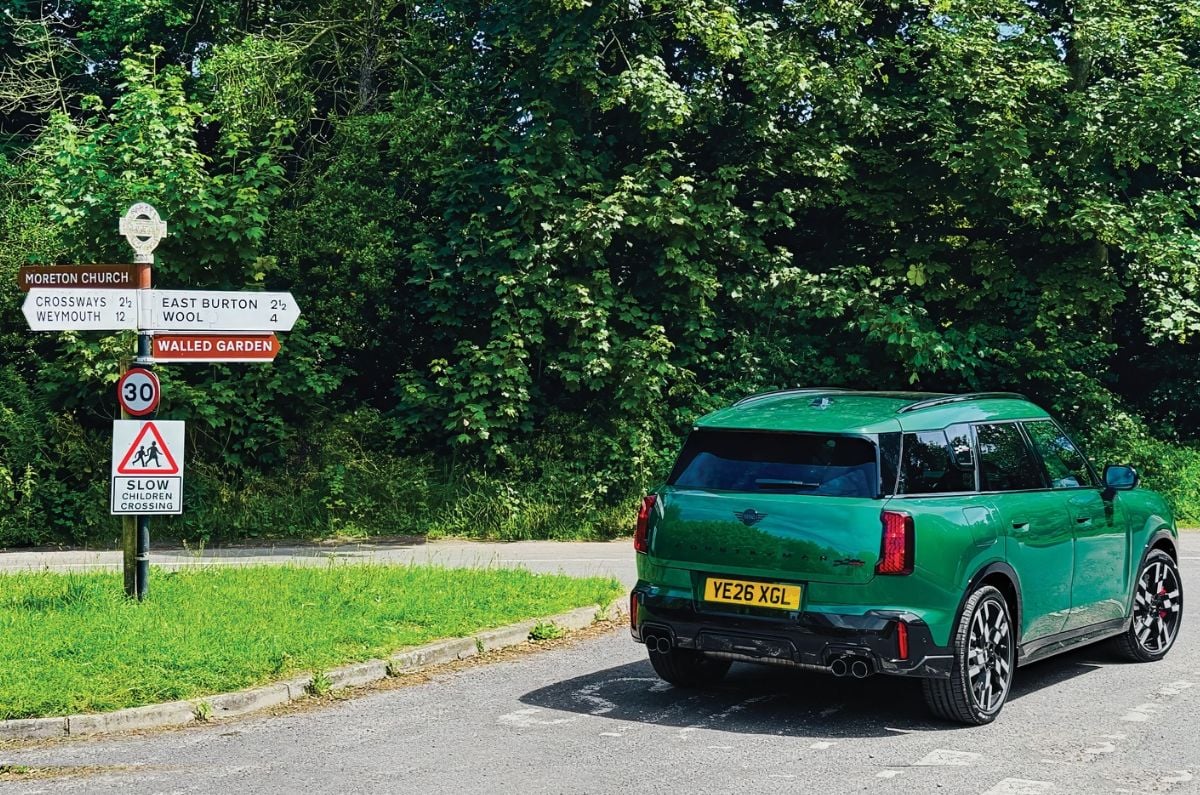
Moreton itself is a proper Dorset postcard, a signpost outside St Nicholas’ Church pointing the way to “Walled Garden” beside directions to Wool and Weymouth, as if history and horticulture share equal billing. Lawrence’s small and very private funeral and burial were held here on May 21, 1935, and the mourners included Churchill, Lady Astor, General Wavell (who flew in by autogiro), and author Henry Williamson.
T.E. Lawrence's grave
Left: T.E. Lawrence’s grave at St Nicholas’ Church, Moreton. Simple white stone, flowers left fresh by visitors. Right: The weathered marker near Bovington, barely legible, recording the spot of Lawrence’s crash.

His grave sits a short walk from the church, simple white stone, flowers laid fresh by visitors, the inscription noting he was a Fellow of All Souls College, Oxford, and making no mention at all of Arabia.

The coast, and letting the car breathe
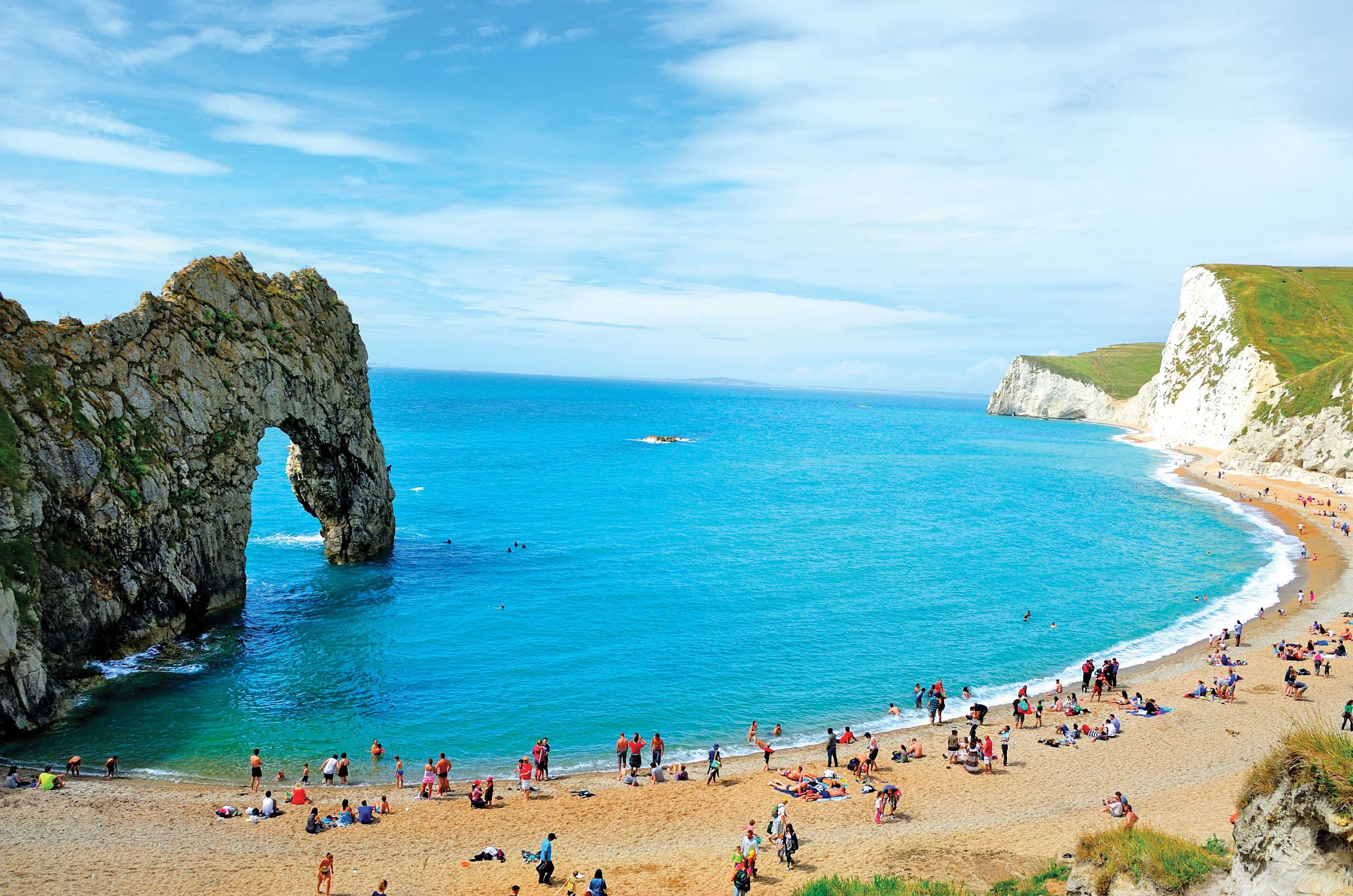
Durdle Door
Durdle Door, the natural limestone arch that draws crowds to this stretch of coastline.

I couldn’t leave Dorset without giving the JCW a proper stretch, so I pushed south to the Jurassic Coast, Durdle Door and Lulworth Cove, a slight detour from Lawrence’s own story, but too good to leave out of a day like this. Every mile of the drive validated it being classed as an SUV. The properly deep boot held picnic mats, beach gear, including chairs and an umbrella, without the need of the rear seats being dropped.
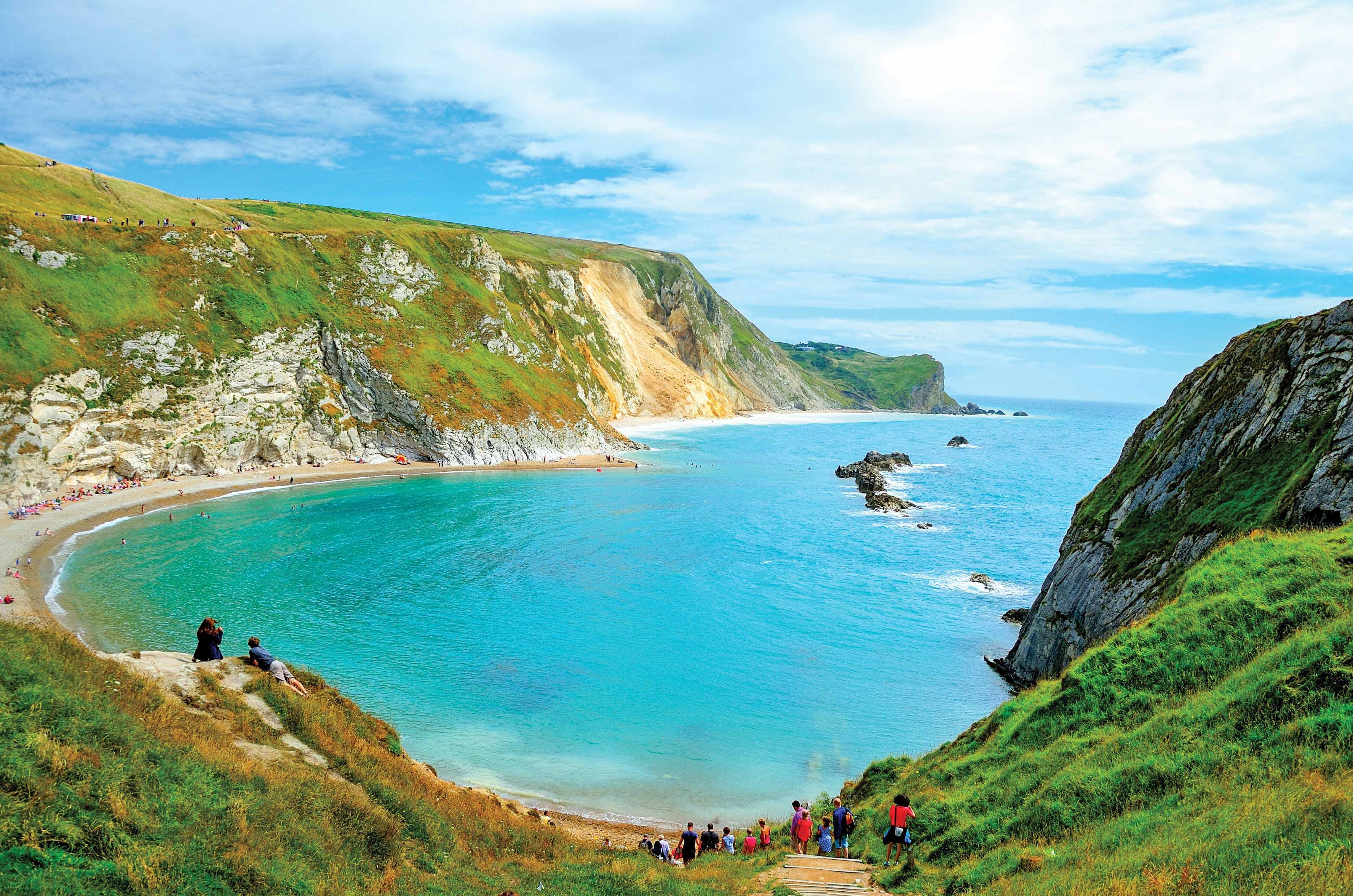
Lulworth Cove
Lulworth Cove’s chalk cliffs and turquoise water, a world away from Lawrence’s Dorset lanes.

The cabin felt roomy, and the ride height shrugged off potholed coastal car parks without a second thought. There’s real engine grunt for those urgent overtakes on narrow country lanes when stuck behind agonizingly slow motorhomes that make you feel like tearing your hair out.
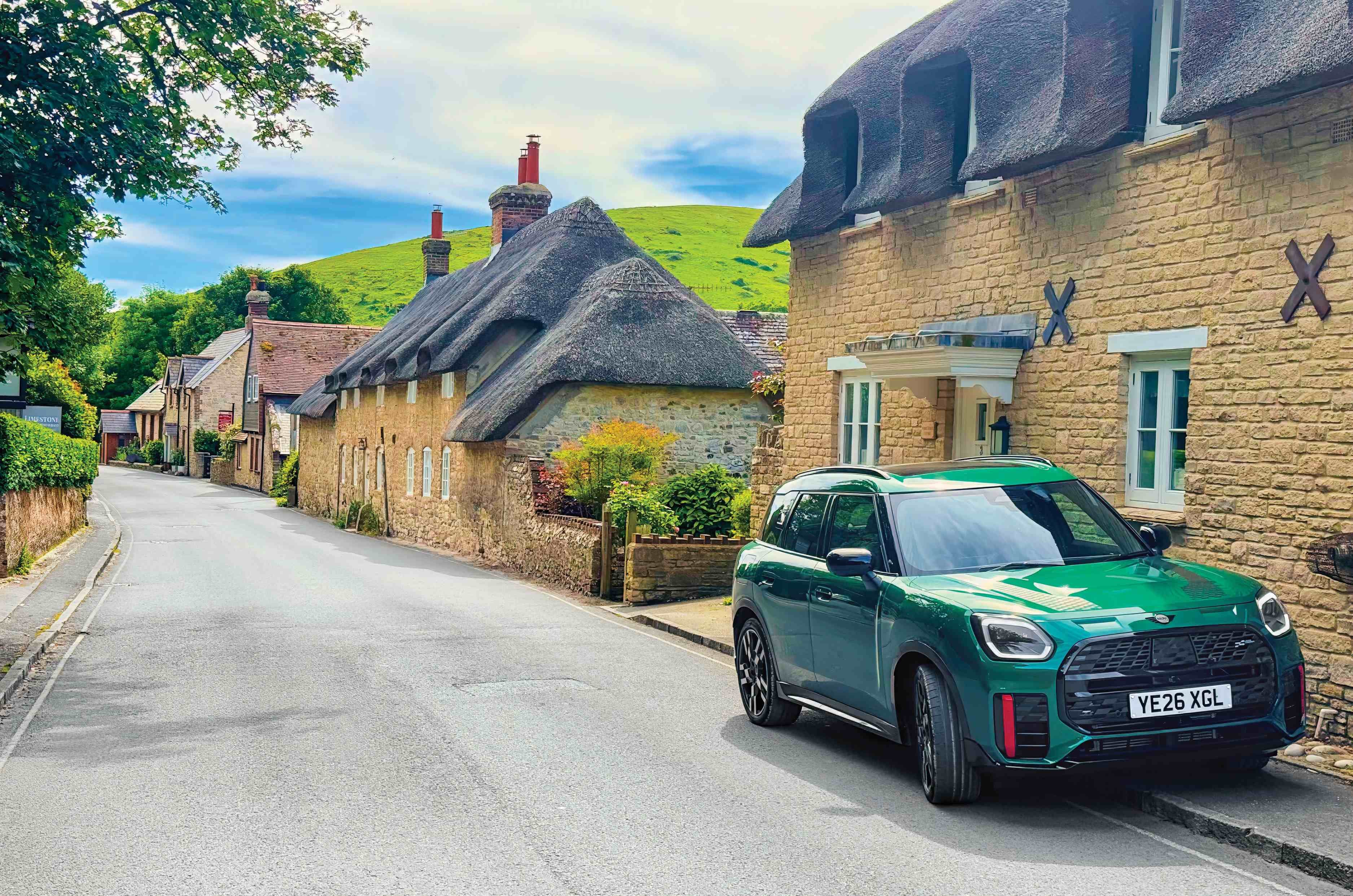
Mini Countryman JCW in West Lulworth
West Lulworth, all thatched roofs and honey-coloured stone, is about as quintessentially Dorset as a village gets.

The all-wheel-drive system quietly sorts out grip on the tighter, greasier lanes, especially with the left wheels on a shoulder slick with wet grass. Flick it into its sportiest mode, and the exhaust note gets a synthesised boost through the speakers. It may be all theatre, but it certainly made me grin, and that’s a win because sound plays such a large part in defining how a car makes me feel.
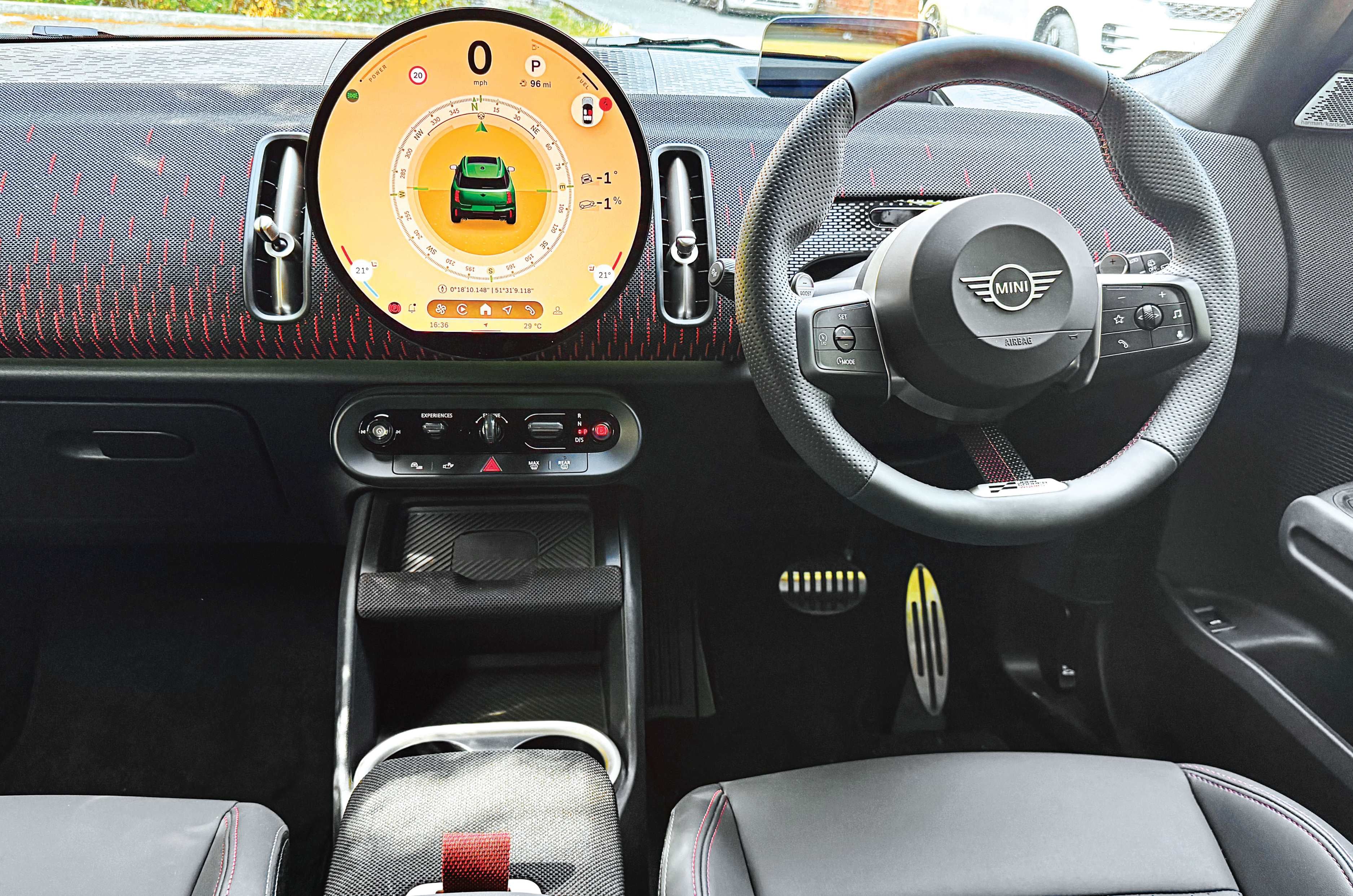
Mini Countryman JCW interior
A compass and live pitch-and-roll readout flaunts SUV identity; instrumentation no traditional Mini has ever needed.

By the time I rolled back into London, it was quite clear to me that at the wheel of a Mini Countryman, what you get is a car that is actually larger and roomier than the Jeep Compass. It has the space, the grunt and the ground clearance, and from the smooth roads of Dorset to the Jeep-only trails of Zanskar, this Mini is genuinely man enough for whatever the country throws at it.

The Helmet He Never Wore

Lawrence’s fatal crash had one consequence far beyond Dorset. Among the doctors treating him at Bovington Camp Military Hospital was a young Australian neurosurgeon named Hugh Cairns, who had himself served in the Middle East during the First World War. Watching Lawrence die of head injuries that a helmet might have prevented left a deep impression on him, and he began studying motorcycle head trauma as a direct consequence.
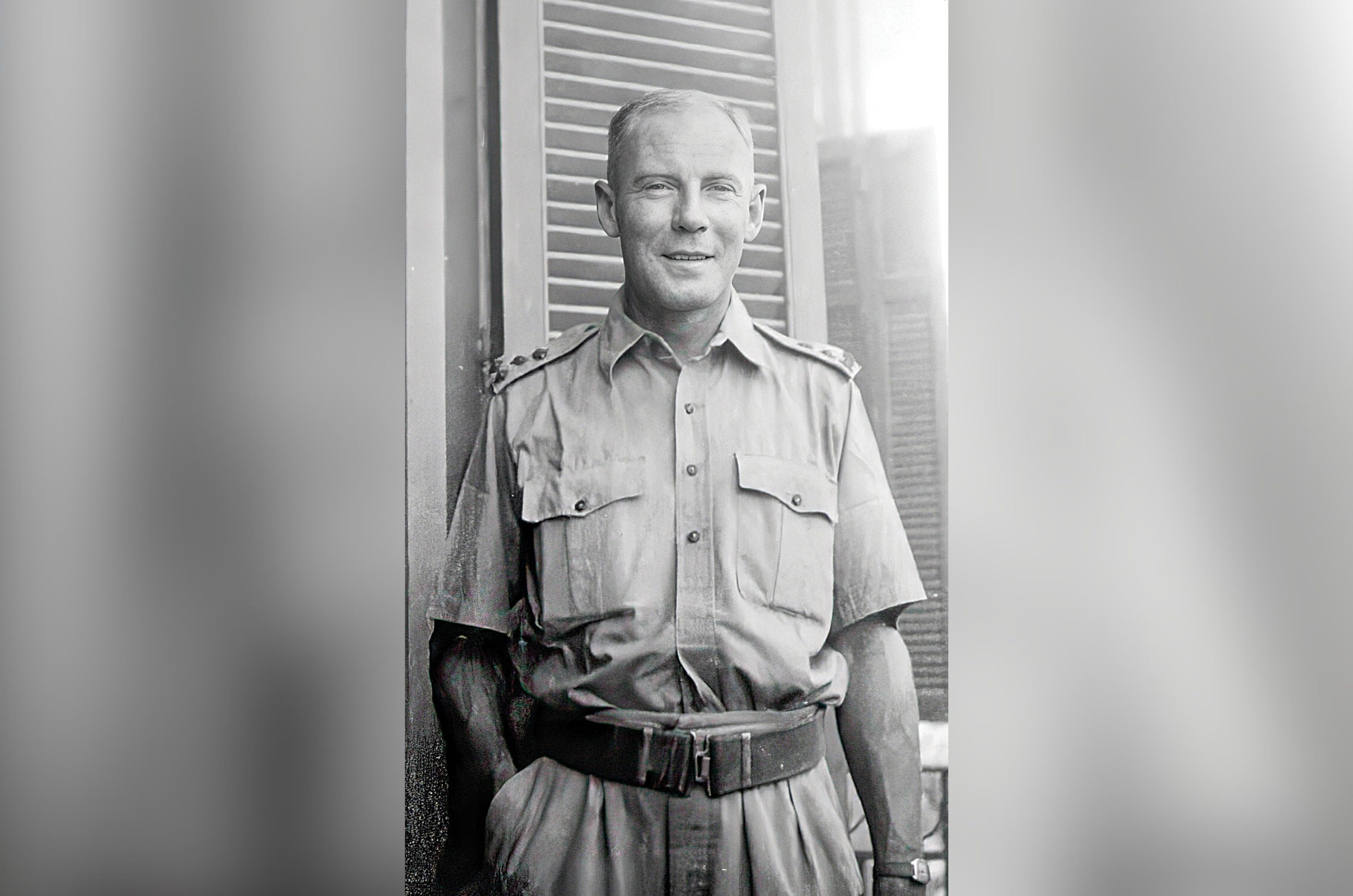
Sir Hugh Cairns
Sir Hugh Cairns

Crash helmets already existed, invented back in 1914 for racing at Brooklands, but nobody wore them on the road. It took the Second World War, and Cairns’s appointment as a head injuries adviser to the Ministry of Health, for that to change. Researching fatalities among military despatch riders, he found that head injuries were the single biggest killer among motorcyclists and that, of the few riders wearing helmets when they crashed, not one had died.

His 1941 paper was damning enough that helmets became compulsory for all military motorcyclists within a month, and a 1946 follow-up showed the death rate had fallen sharply as a result. Cairns argued the same logic should extend to every civilian rider. It took another 27 years, and Cairns didn’t live to see it, for that to become UK law in 1973. But the chain runs in a straight, almost eerie line from one Dorset lane to millions of ordinary commutes: the man who died avoiding two boys on bicycles ended up, through the doctor who treated him, saving countless lives on two wheels after his own.

“The Rolls-Royce of Motorcycles”

Every Brough Superior was hand-built at George Brough’s works on Haydn Road, Nottingham, and Brough himself was as singular as his machines. Rarely seen without his trademark tailored flat cap, he carried himself more like landed gentry than a factory owner, and his standards bordered on obsessive. Born to motorcycle pioneer William Edward Brough, George forged his own path in 1919 after a rift with his father over how grand and expensive motorcycles ought to be.
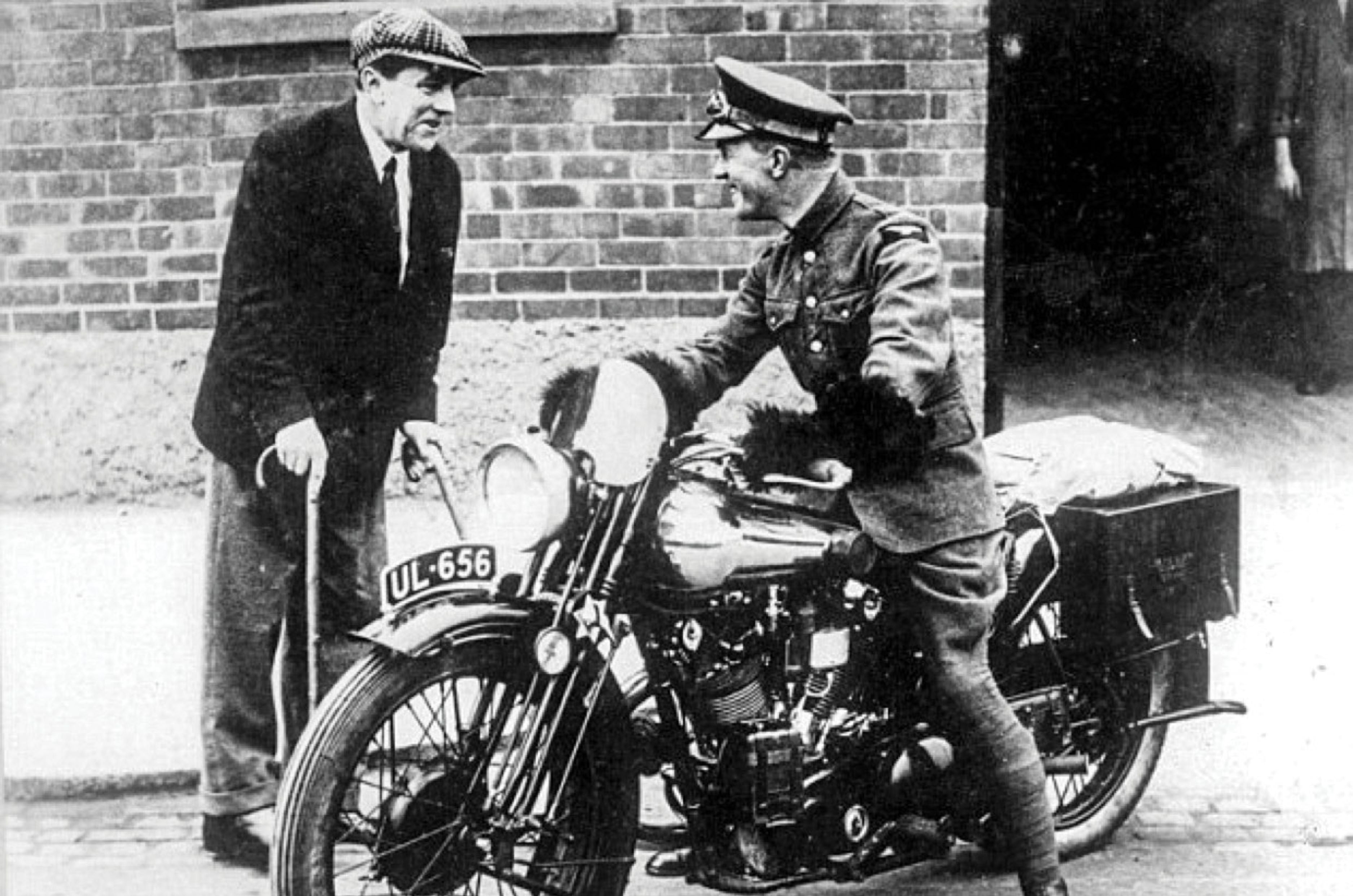
T.E. Lawrence on his Brough Superior
Left: George Brough, Right: T.E. Lawrence

A friend suggested adding “Superior” to the name, which Brough senior took as a personal insult. That pursuit of excellence defined the marque: each machine was assembled once to fit every component together, then stripped down for painting and plating, then reassembled for delivery. Brough tested every SS100 himself on public roads past 100mph, and each one left the factory with George Brough’s personal approval and a written certificate guaranteeing it had been timed at the ton over a flying quarter mile.

‘SS’ stood for Super Sports, ‘100’ for that guaranteed top speed of a 100mph, and Brough pushed the idea further still in 1928, setting a 130.6mph record at Arpajon in France. The “Rolls-Royce of Motorcycles” nickname was coined by journalist HD Teague of The Motor Cycle, and Brough liked it enough to use it in his own advertising, reportedly with the real Rolls-Royce’s blessing.

War ended civilian production in 1940, when the factory turned to munitions and aircraft parts, and the specialised J.A. Prestwich (JAP) 998cc, air-cooled, 50-degree OHV V-twin engines Brough relied on were never commercially viable again. Around 3,100 machines were made across 19 models in the marque’s 21-year run, and roughly a third survive today, making every survivor a priceless piece of automotive art.
Lawrence’s relationship with the marque ran deeper than most customers’. Writing to Brough in 1926, he said he’d ridden five Broughs and covered 1,00,000 miles in four years, calling them the greatest delight of his life, two of them possessing “a speed and reliability that reminded me of an express train.” Between 1922 and 1935, he owned eight. The first, bought in 1922, was nicknamed “Boa,” short for Boanerges, meaning “son of thunder.”

The seven that followed were named George I through George VII, with a ninth, George VIII, still being built when he died. At around £200 apiece, enough to buy a modest cottage, this was extraordinary indulgence for a man on an RAF aircraftman’s pay, though royalties from Seven Pillars of Wisdom helped fund it. The Brough he crashed on May 13, 1935, registration GW 2275, was George VII, his last completed machine.
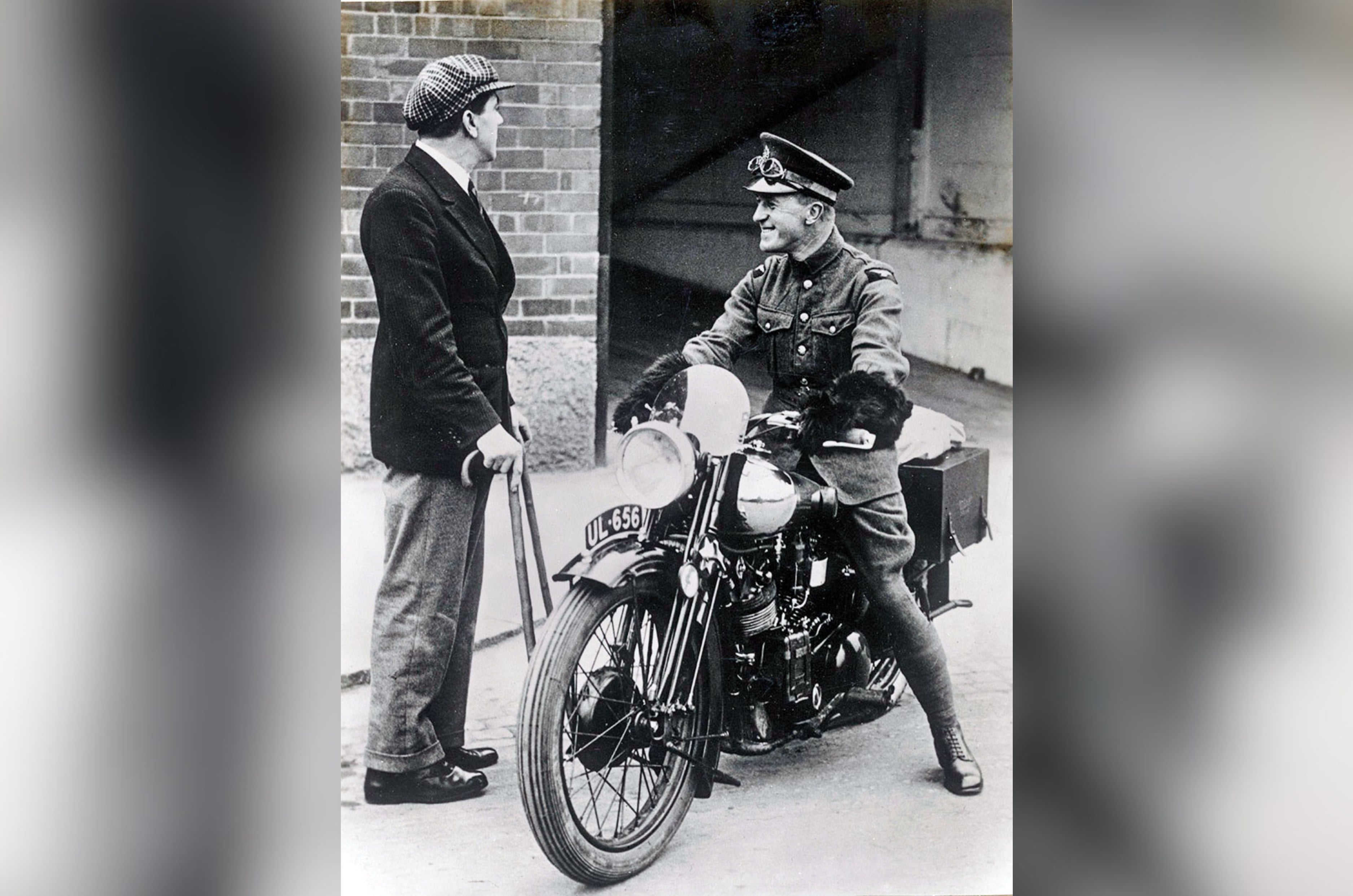
George Brough and T.E. Lawrence

The photographs here are of George Brough and Lawrence on the Brough nicknamed George VI. They were taken during one of Lawrence’s frequent, unassuming visits to the Haydn Road factory by Jack Hallsworth, a Nottingham Journal photographer who knew George Brough and had been tipped off to bring his camera one afternoon.

It’s a rare glimpse of a man famously camera-shy and almost never photographed candidly, hinting at the genuine warmth behind the machines: two very different Englishmen, one a self-effacing war hero trying to vanish into rural obscurity, the other a flamboyant engineer-showman happy to let Rolls-Royce’s name do some of his advertising for him, bound by a friendship that outlasted their differences.

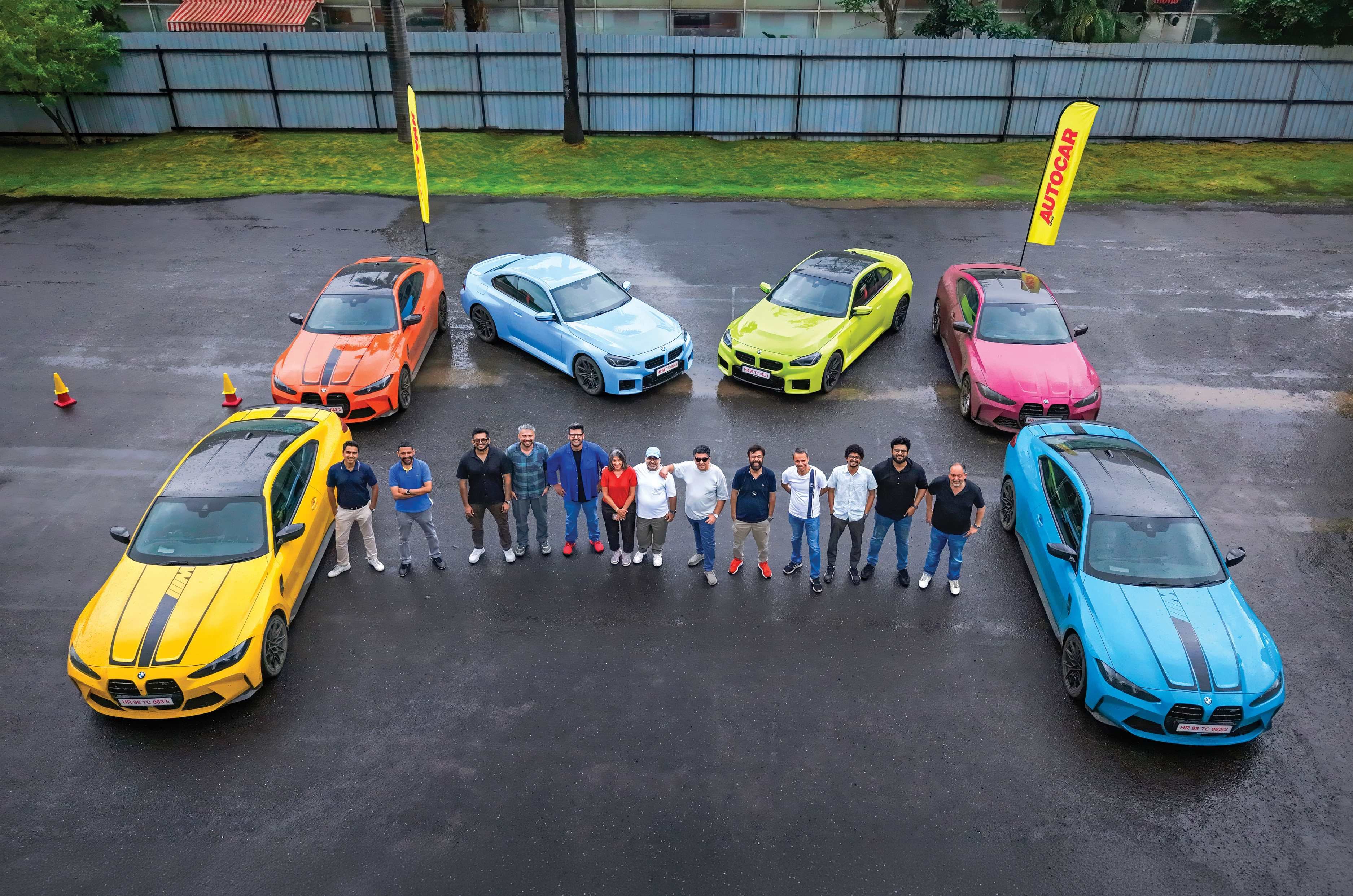


Autocar’s Day Out: M-ployees of the month

Autocar's Day Out: M-ployees of the month

Company off-sites are designed to take employees away from the chaos and stress of everyday work for a few moments of relaxation. At Autocar India, things are a bit different. No cocktails by the pool or playing Housie before dinner. Instead, what we got were six BMW M cars (four M4s and two M2s) and a deserted concrete ground thanks to our friends at Raymond Realty. The day brought pouring rain, wet socks and no breakfast. Sounds like punishment, but not to us.

The objective was simple: pick a car, do your best in the three challenges and earn bragging rights for the rest of the year.

We rarely get to compete against each other, and with equal machinery, there could be no excuses. This was going to be intense.

Challenge 1: The Slalom Switch

Partners picked by (un)lucky draw from a bag of M&M’s as colourful as our Ms, each pair then picks a BMW and makes their way through the cones to the other side. Switch drivers and race back through the cones, then stop within the start box. Hit a cone or fail to stop within the box and you earn a penalty.

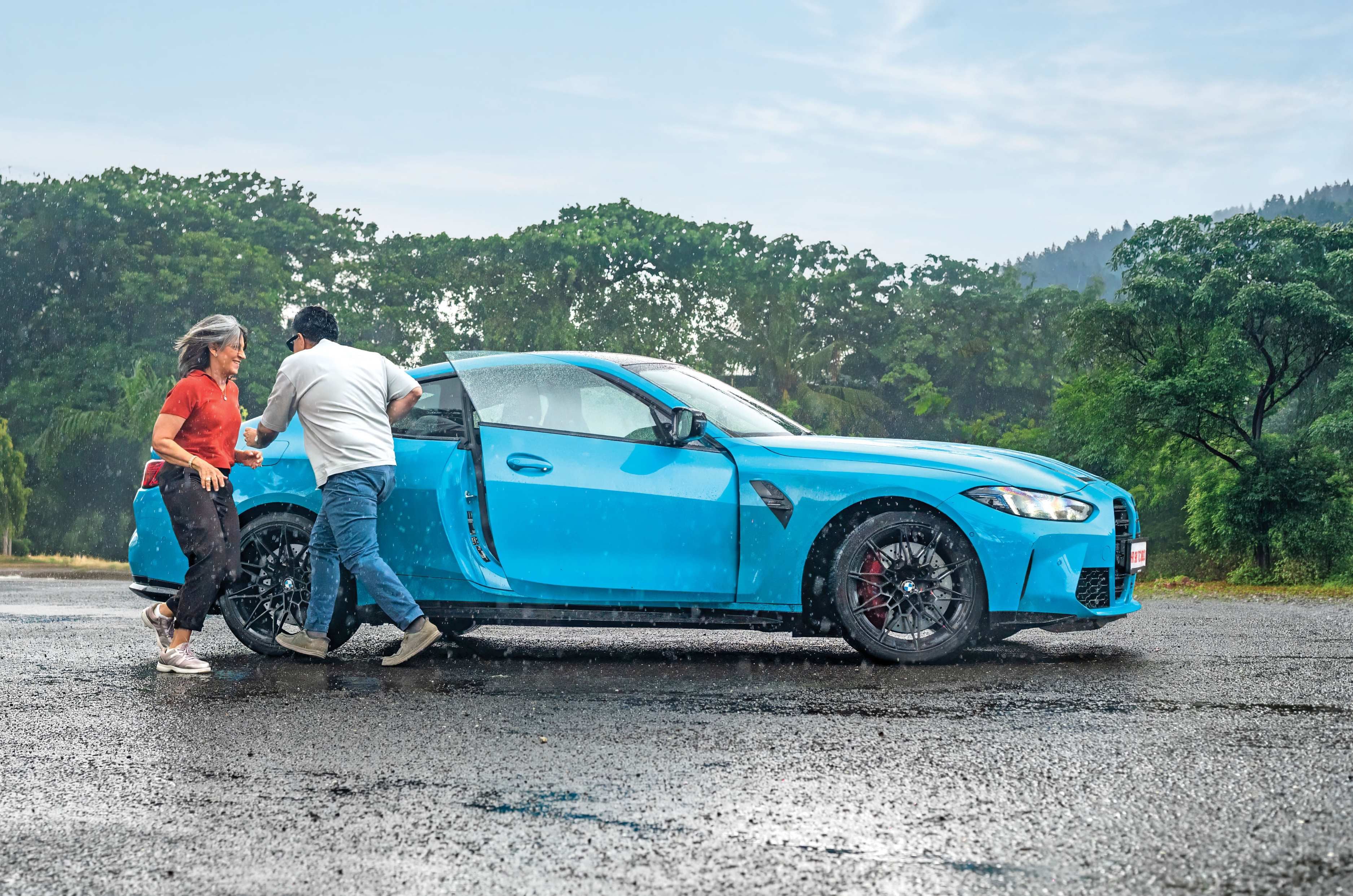
The M4 might be tail-happy, but it can also dance its way through cones with precision.

Gavin and Ameya chose an M2 for its compact size. However, the drivers’ wildly different body sizes would play spoilsport here, as finding a seat position that suited both was an issue. A clean run with decent athleticism resulted in a time of 35.93sec.

Soham and Sergius followed in the other M2, with a bit of wheelspin off the line. A rapid driver change, thanks to their slender builds, meant a quick 34.36sec. The time to beat.

Lenny and I went against conventional wisdom and picked the bigger, more powerful M4 over the compact and nimble M2. It might be heavier, but we wanted the power advantage for off-the-line speed, given that each run had, in reality, two launches. We went through the cones super-quick, but we bungled the driver swap, nearly running into each other, and with Soham slamming the door shut and me spending precious seconds opening it, the time, then, was simply thrown away and, well, not worthy of printing. 

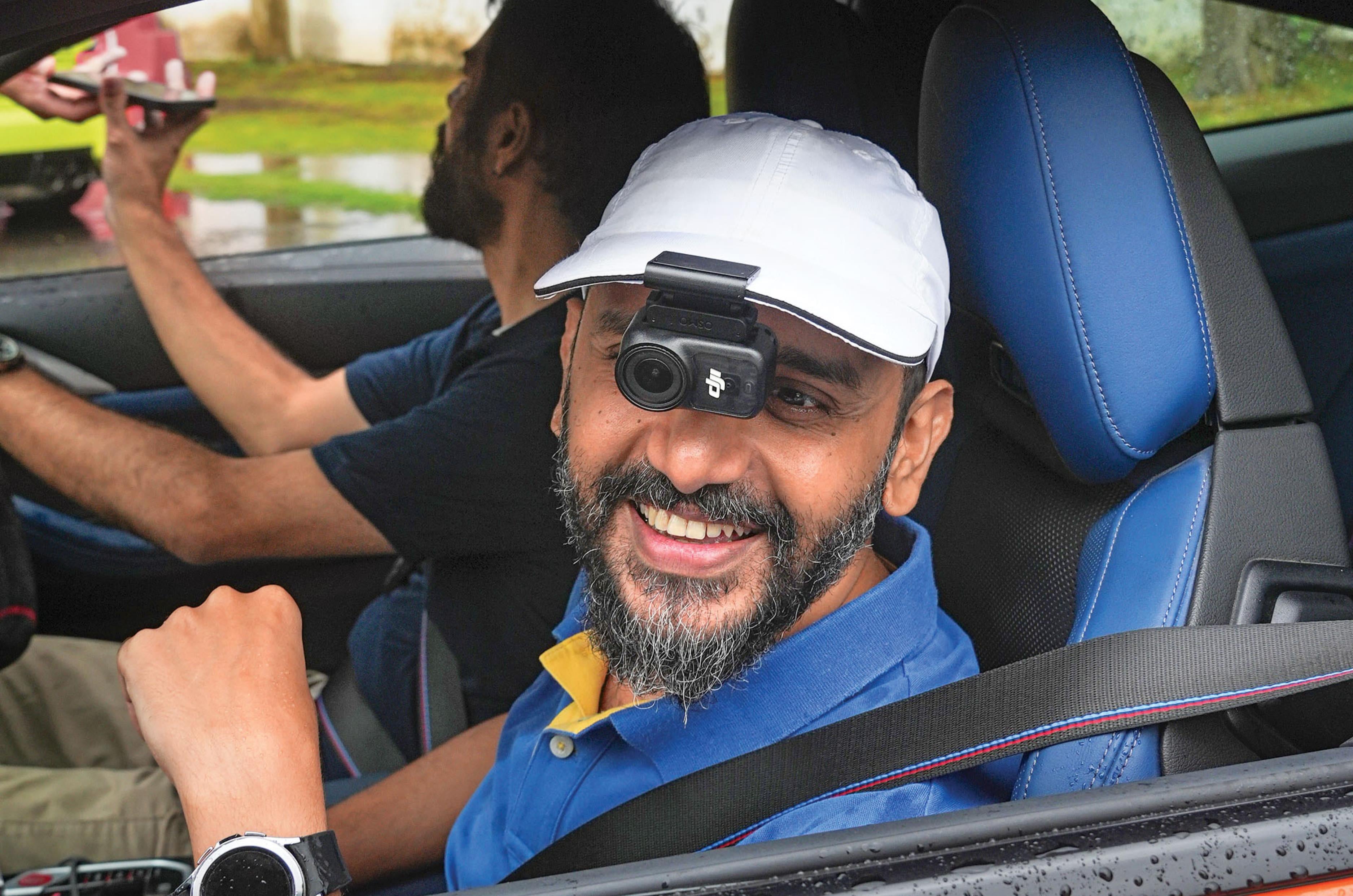
What was meant to be a relaxing team outing turned into a war.

The chaos subsided as Hormazd arrived with Renuka. Ready to prove that experience counts more than anything else, they put in an honest effort with the M4, which was commendable. But on the way back, Renuka clipped a few cones, which added big chunks to their time. 

Self-proclaimed racers Saumil and Rahul were confident as they snuck into the fuchsia M4, certain they could put down the power best. A clean run and swap, but a controversial on-the-line stop caused a ruckus. Penalty given; the time was 36.23sec.

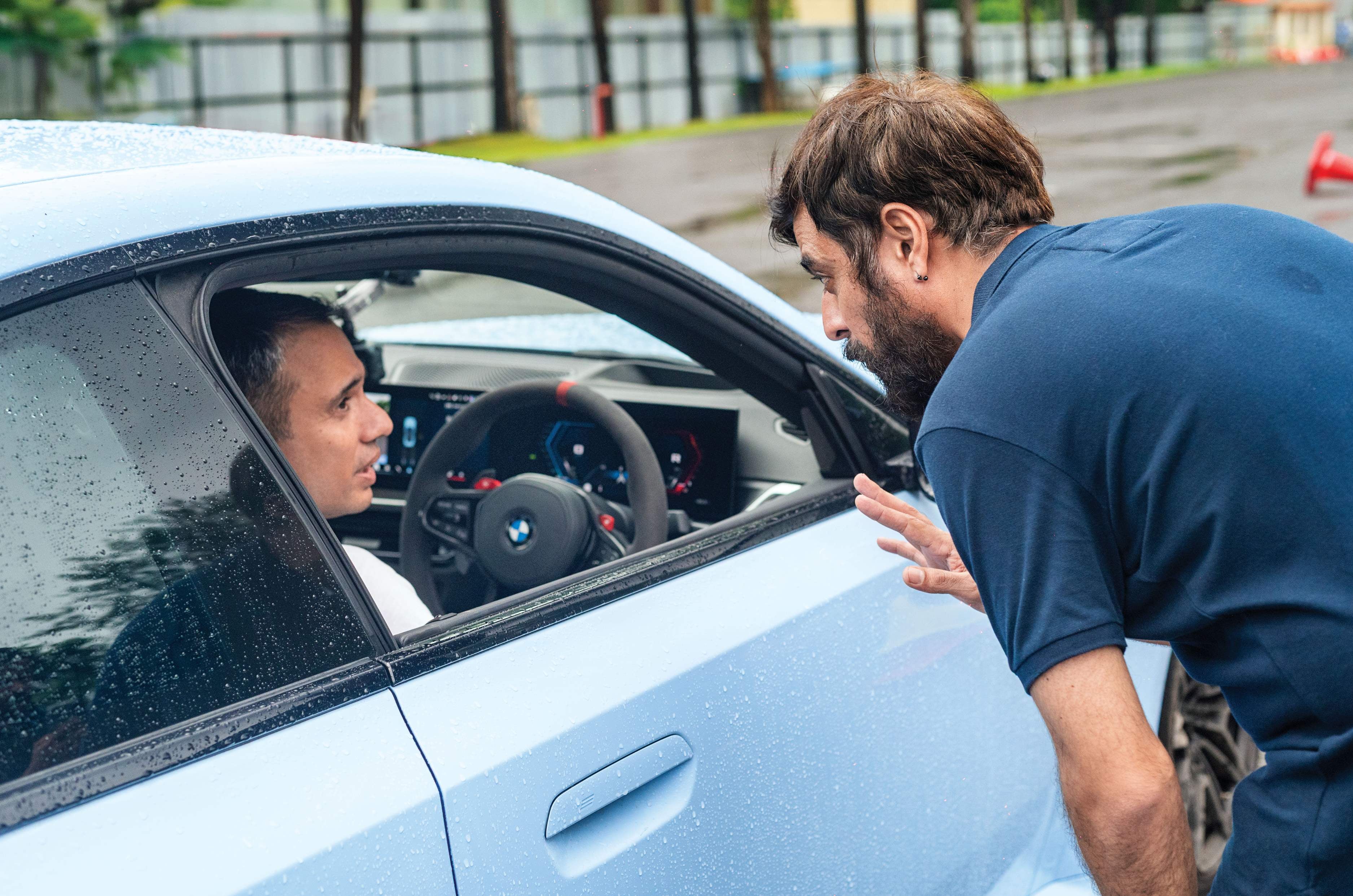
Rahul advising us all before each run, and we dutifully didn’t follow a word of what he said.

Next, Shapur and Nikhil. Power over light weight here, as the pair went for another 530hp M4. The speed gained at launch was soon lost at the driver swap – they both literally ran into each other – and for good measure, hit a cone on the way back, resulting in a penalty and a time of 42.24sec. A new low.

In the end, seeing how incompetent we were at working together, we abandoned teamwork and did the runs by ourselves and agreed the following challenges should be run solo. 

Challenge 2: The Free Kick

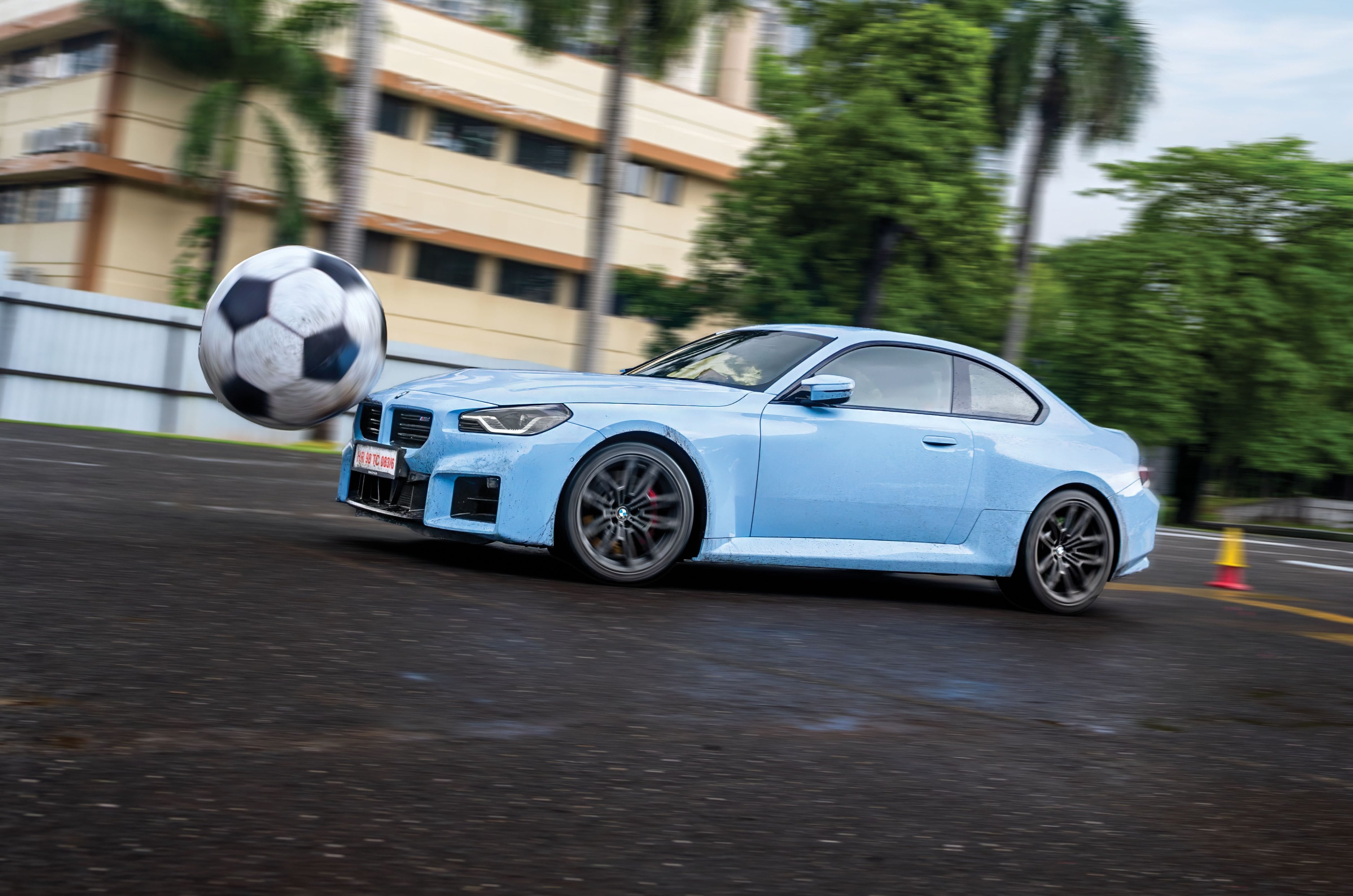
Hop into an M2, line up behind the large inflatable football and race to the finish line, ensuring the ball goes past the flag poles. The fastest to score a goal wins. The M2 was the car of choice, thanks to its upright front-end, which would be a safe bet for pushing a giant football.

The M2 is agile, surefooted and has massive grip.

With the pressure of being from football-crazy Goa, Sergius had his work cut out. But he did Goans proud, guiding the ball with swift, deft steering corrections, and in 9.9sec, we had our first goal and the time to beat.
A run-up-style start with a hard launch turned out to be the fastest way, though, as Rahul scored the goal in just over seven seconds. Talk about choosing the wrong career.

A Zidane-style Panenka was Ameya’s strategy as the ball flicked up with none of Zidane’s flair. A poor 16.64sec, but he managed to score. After watching the slow approach fail, Soham powered through the first half, only to lose the ball and have to reverse to get it in. Way off the times set so far.  With a smooth start, Gavin lost the ball towards the end and had to waste time getting around it, which took over 18 seconds. At least the goal counts.

Content is king, and the more angles we have, the more the evidence.

Since the company had paid for the ball (and would also likely have to cover any damage to the car), Hormazd chose the slow-and-steady way. He eased the ball very slowly into the goal, but we cheered louder than we ever had. Appraisals are around the corner. An overly cautious approach, using 4 of the 460hp available, still resulted in Nikhil missing the ball and failing to get it through the posts. Second attempt made it through at a glacial pace.

With enough evidence of how to go about it, I had to choose between rough and smooth, and the former was more enticing. It looked dramatic as the ball flung high, but pushing it through the goal wasted time.

Finally, in an attempt to beat Rahul, using his style, Shapur hit the ball so far off that, by the time it bounced once, he had already reached ahead. He managed to get it in after much effort, but by his next attempt, the ball had deflated. Good riddance.

Challenge 3:The Drift King

Engage ‘Drift Mode’ in the M4 and achieve the best possible score on the Drift Meter.

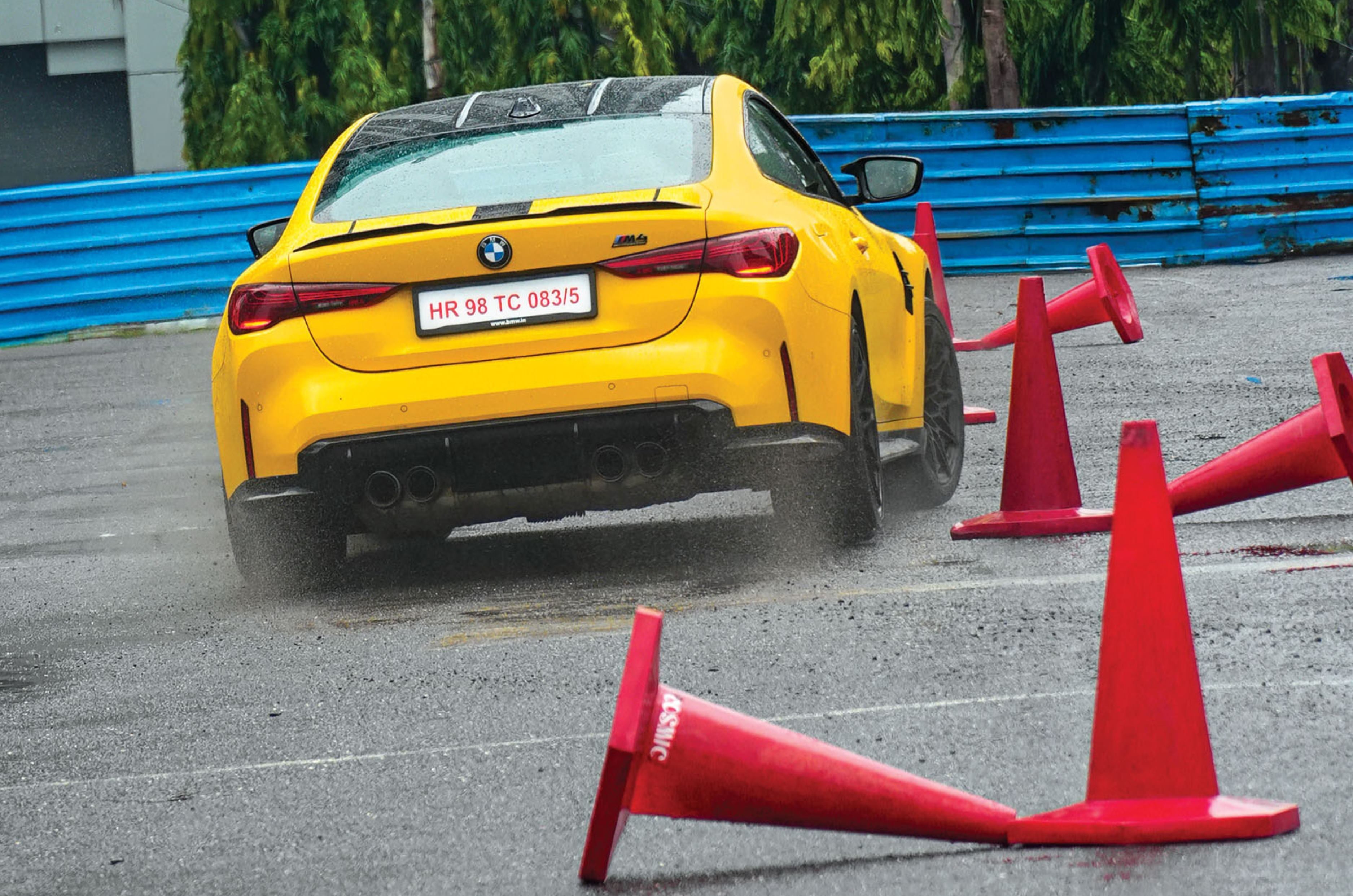
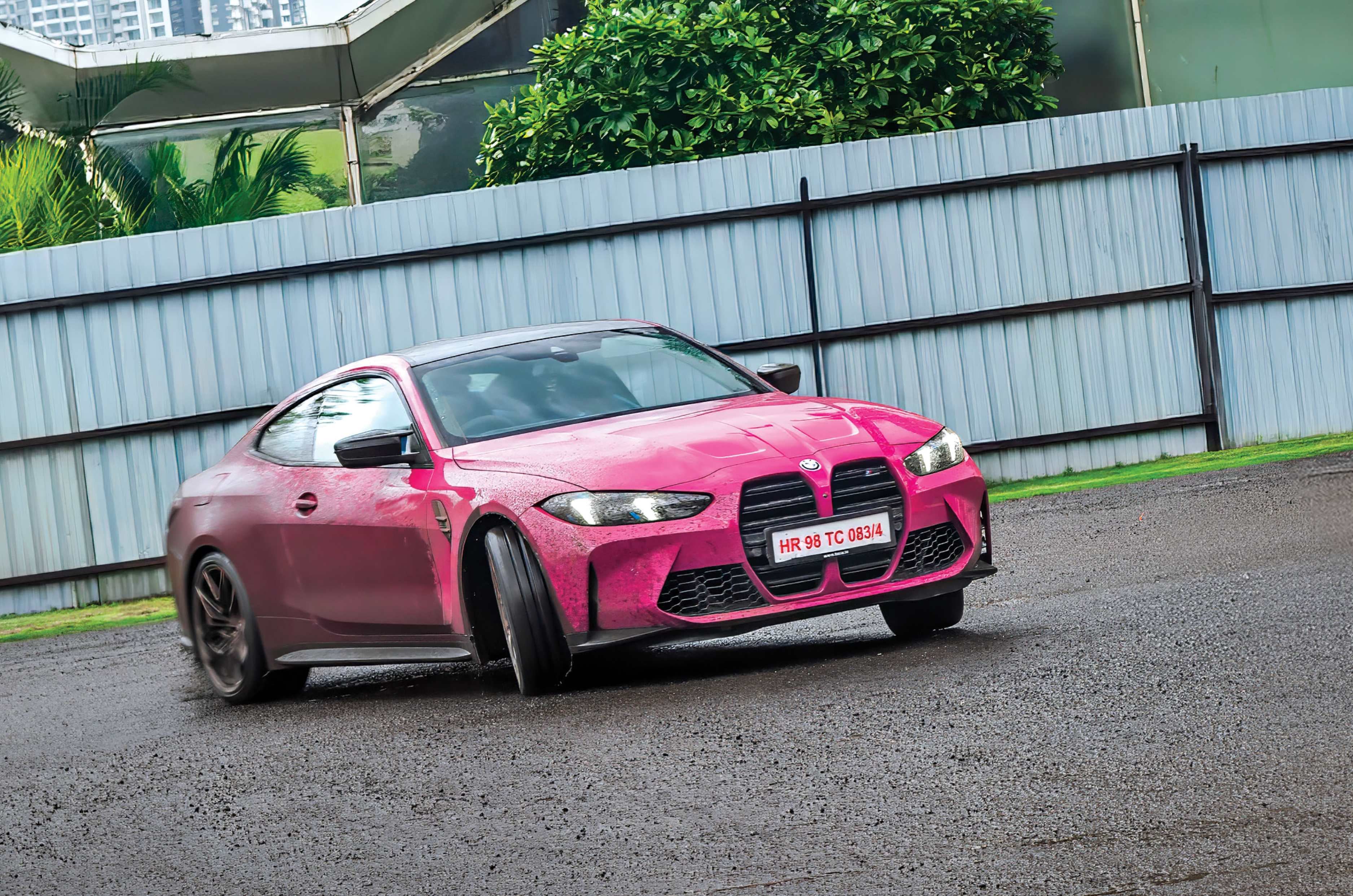
Rear wheel drive mode and adjustable traction settings allow for some proper tail-out fun on the M4. 

Before we got to sideways action, we stopped for some grub. As ridiculous as it sounded to have lunch right before drifting in circles, who can get between a bunch of car journos and brown bags of greasy food? After washing down carbs with sugar, we hopped into the M4s for the ultimate bragging rights. The M4 and M2 are both exceptionally playful, and it doesn’t take a lot to get them to break traction. However, the Drift Meter and the extra power of the M4 made it the default choice for drifting.

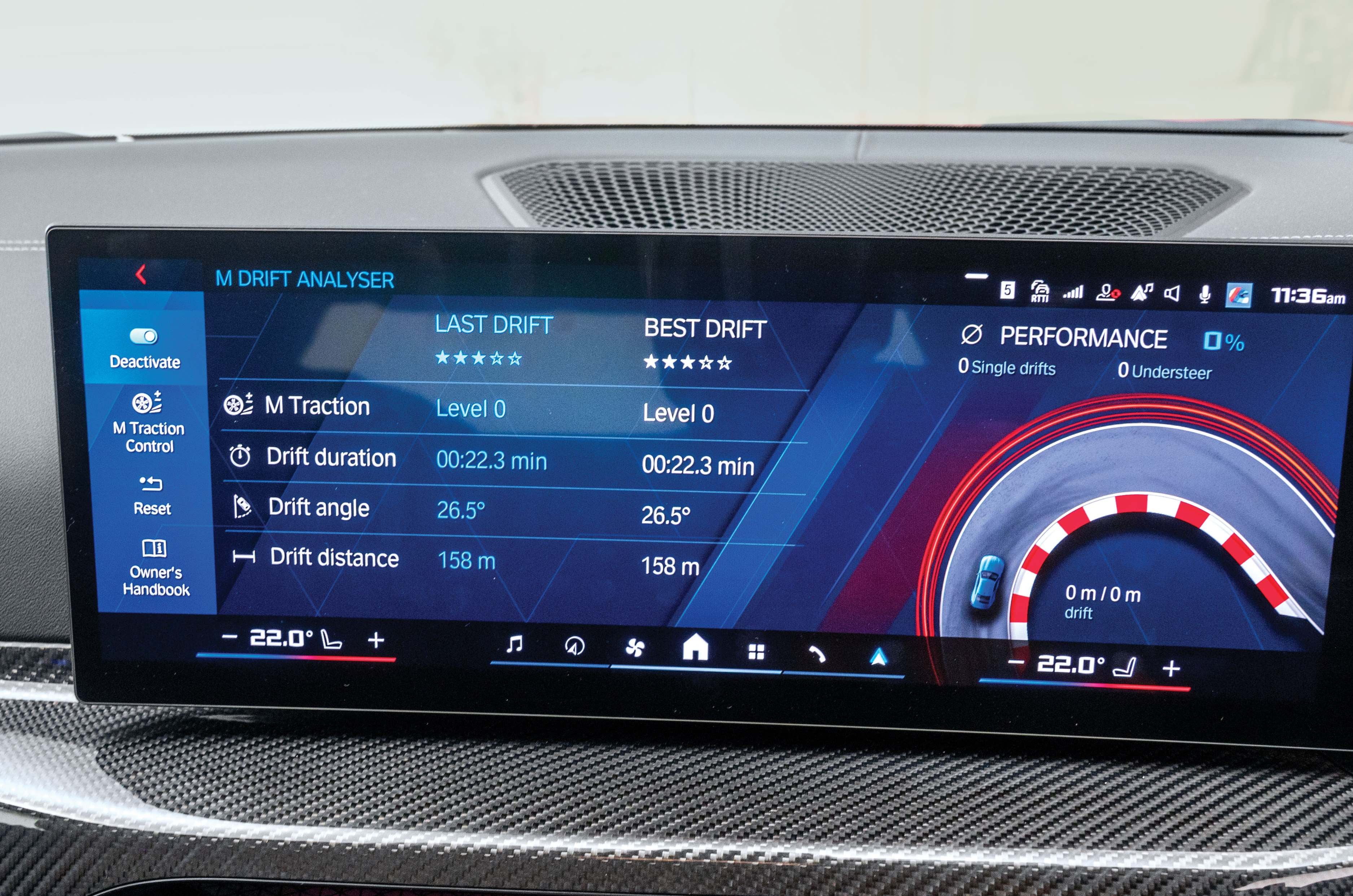
The drift analyser on the M4 gives you a detailed report of your work with no place to hide.

To begin with, we were all pretty rubbish, but the levels of traction control and the incredible steering feel meant it wasn’t long before everyone got meaningful slides in. Holding it and making circles was something only a few of us managed, with the Drift Meter further confusing us all. Still, the table alongside tells the story, and while it will start a new war in the office, it was surely worth it.

Off-sites like these might seem like another day at work, but if the point is to relax and rejuvenate, no beach resort will ever come close to smoking some tyres.

M-ployee

Drift angle

Drift distance

Goal time

Slalom time

Sergius

23.4deg

233 metres

9.96 seconds

18.88 seconds

Hormazd

30deg

248 metres

16.28 seconds

22.85 seconds

Lenny

25.5deg

241 metres

31.34 seconds

17.68 seconds

Nikhil

36.4deg

34 metres

30.85 seconds

17.39 seconds

Soham

28.5deg

161 metres

24.51 seconds

18.51 seconds

Shapur

28.7deg

186 metres

31.31 seconds

17.6 seconds

Gavin

34deg

337 metres

18.93 seconds

18.66 seconds

Jay

27.3deg

129 metres

17.38 seconds

18.03 seconds

Rahul

26.5deg

128 metres

7.4 seconds

17.89 seconds

Saumil

39deg

341 metres

19.91 seconds

22.96 seconds

लंबी पारी नहीं खेल पाते रोहित शर्मा, Ex GF सोफिया हयात ने दिया बयान (Video)

sofiya hayat_rohit sharma

लॉर्ड्स के मैदान पर आए एकदिवसीय शतक को छोड़ दे तो रोहित शर्मा मैदान पर लंबी पारी खेलने के लिए तरस रहे हैं। लेकिन उनकी पूर्व प्रेमिका सोफिया हयात ने यह बताया है कि बिस्तर पर भी रोहित शर्मा लंबी पारी नहीं खेल पाते हैं। यह खुलासा उन्होंने एक पॉडकास्ट में किया। इस कार्यक्रम का नाम Straight Talk Queer Wisdom है।

पॉडकास्ट में सोफिया हयात ने यह भी दावा किया कि वह रोहित शर्मा की पहली प्रेमिका भी हैं। उनके अनुसार लंदन क्लब में दोनों की मुलाकात साल 2012 में हुई थी। पहली ही मुलाकात में रोहित शर्मा फिसल गए थे और सोफिया हयात को चूम लिया था।हालांकि रोहित शर्मा ने इस संबंध को लेकर हमेशा चुप्पी साधी हुई है।

कभी खबर थी कि रोहित शर्मा के साथ अपने अंतरंग संबंधों का जिक्र सोफिया हयात करने वाली हैं। वे एक किताब लिख रही हैं जिसमें रोहित और उनके रिश्ते पर वे विस्तार से लिखेंगी। सोफिया ने बताया था कि कैसे रोहित से उनका रिश्ता टूटा। सोफिया ने कहा था कि दोस्तों के बीच रोहित ने मुझे अपना फैन बताकर परिचय दिया तो उनका दिल टूट गया और दोनों में दूरियां पैदा होने लगीं।

सोफिया विवादास्तद शख्सियत की मालिक हैं। आए दिन उनका विवादों से नाता जुड़ता रहता है। कभी वे नन बन जाती हैं तो कभी फिर ग्लैमर वर्ल्ड में कदम रख कर विवाह रचा लेती हैं। फिर अपने ही पति पर आरोप लगाती हैं। शायद इसीलिए उन्हें ज्यादा गंभीरता से नहीं लिया जाता।

हाल ही में रोहित शर्मा ने वेस्टइंडीज के खिलाफ एकदिवसीय सीरीज के लिए नेट्स में अभ्यास शुरु कर दिया है। रोहित शर्मा यह बताना चाहते हैं कि भले ही वह अपने शो Family Full House with Rohit Sharma का प्रचार प्रसार कर रहे हैं लेकिन वह क्रिकेट से दूर नहीं हुए हैं। यह उनको चयनकर्ताओं की नजर में रखने के लिए उठाया गया कदम भी समझा जा रहा है।

2027 एकदिवसीय विश्व कप की टीम में जगह पाने के लिए लड़ रहे हैं रोहित शर्मा

भारत के स्टार क्रिकेटर रोहित शर्मा ने अगले साल होने वाले वनडे विश्व कप में खेलने की संभावना के बारे में पूछे जाने पर कहा कि अक्टूबर 2027 अभी बहुत दूर है। एक कार्यक्रम के दौरान पूर्व कप्तान ने एक पंक्ति में जवाब दिया। टी20 अंतरराष्ट्रीय और टेस्ट क्रिकेट में नहीं खेलने के कारण रोहित के वनडे प्रारूप में भविष्य को लेकर अटकलें लगाई जा रहे हैं।

रोहित ने कार्यक्रम के दौरान एक सवाल के जवाब में कहा, ‘‘ अक्टूबर 2027 अभी बहुत दूर है, तब देखेंगे।’’वनडे विश्व कप 2027 की सह-मेजबानी दक्षिण अफ्रीका, जिम्बाब्वे और नामीबिया करेंगे।’भारतीय क्रिकेट बोर्ड (बीसीसीआई) के सचिव देवजीत सैकिया ने कुछ दिन पहले स्पष्ट कर दिया था कि रोहित को लेकर अटकलों की कोई गुंजाइश नहीं है क्योंकि वह अच्छा प्रदर्शन कर रहे हैं।

कृष्ण वाणी: मन को मजबूत कैसे बनाये? भगवान श्री कृष्ण ने भगवत गीता में बताया मुश्किलों से लड़ने का सीक्रेट!

भगवान श्री कृष्ण की भगवद गीता की सीख हमें जीवन को एक अलग नजरिए से देखने की राह दिखाती है। जीवन में कई बार ऐसा समय आता है, जब नौकरी को लेकर चिंता बनी रहती है, पैसों की परेशानी जल्दी खत्म नहीं होती या किसी रिश्ते को ठीक करने की कोशिश के बावजूद हालात वैसे ही रहते हैं। ऐसे समय में मन बार-बार यही सोचता है कि आखिर बदलाव कब आएगा और हमें कोई रास्ता या संकेत कब मिलेगा। हर दिन एक जैसा लगने लगता है और इंतजार करना भी मुश्किल हो जाता है। गीता का यह संदेश हमें याद दिलाता है कि जीवन में कोई भी सिचुएशन हमेशा एक जैसी नहीं रहती।

geeta

1. लोगों से अटैचमेंट छोड़ें

जब कोई परेशानी लंबे समय तक चलती है, तो हमें लगने लगता है कि अब जिंदगी शायद हमेशा ऐसी ही रहेगी। करियर में बार-बार निराशा मिलना, पैसों की कमी या किसी अपने का साथ न होना उस समय बहुत बड़ी परेशानी लग सकती है। धीरे-धीरे इंसान उसी सिचुएशन को अपनी जिंदगी का हिस्सा मान लेता है और सोचने लगता है कि इसमें अब कुछ नहीं बदलेगा। लेकिन श्री कृष्ण की सीख हमें याद दिलाती है कि जिंदगी में कोई भी सिचुएशन हमेशा एक जैसी नहीं रहती। जैसे मौसम बदलता है, वैसे ही सुख-दुख और जिंदगी के हालात भी बदलते रहते हैं।2. नई आदतें और हुनर अपनाएं

कई बार हम सिर्फ नतीजे देखकर तय करते हैं कि हमारी जिंदगी आगे बढ़ रही है या नहीं। प्रमोशन नहीं मिला, तो लगता है कि करियर रुक गया है। सैलरी नहीं बढ़ी, तो लगता है कि मेहनत का कोई फायदा नहीं हुआ। असल जिंदगी में बदलाव धीरे-धीरे होता है और उसका असर तुरंत दिखाई नहीं देता। हो सकता है कि इस दौरान आपका एक्सपीरियंस बढ़ रहा हो, आप नई चीजें सीख रहे हों या आपको अपनी जिंदगी और जरूरतों को पहले से बेहतर समझ आने लगा हो।3. करियर रीसेट करें

मुश्किल दौर से गुजरना और पूरी जिंदगी को मुश्किल मान लेना, दोनों अलग बातें हैं। कोई रिश्ता खत्म हो गया, तो इसका मतलब यह नहीं कि आपको आगे कभी अच्छा रिश्ता नहीं मिलेगा। करियर में रुकावट आई है, तो इसका मतलब यह भी नहीं कि आप आगे सफल नहीं हो सकते। इसी तरह आज पैसों की परेशानी है, तो जरूरी नहीं कि आगे भी हालात वैसे ही रहें। श्री कृष्ण की सीख है कि बाहर की सिचुएशन चाहे जैसी हों, हमें खुद को अंदर से मजबूत और शांत रखने की कोशिश करनी चाहिए।4. बदलाव की शुरुआत खुद से करें

समय बदलने का इंतजार करना ठीक है, लेकिन इसके लिए हाथ पर हाथ रखकर बैठना जरूरी नहीं है। अगर नौकरी नहीं मिल रही है, तो नई जगह कोशिश की जा सकती है या कोई नया हुनर सीखा जा सकता है। पैसों की परेशानी है, तो खर्चों पर ध्यान देकर बचत शुरू की जा सकती है। किसी रिश्ते में परेशानी है, तो अपनी सीमाएं तय करने या सही तरीके से बात करने की जरूरत हो सकती है। कई बार जिंदगी में आगे बढ़ने के लिए कुछ पुरानी आदतों, लोगों या कामों को छोड़ना भी जरूरी होता है।

5. कल की चिंता छोड़ें

मुश्किल समय में हमारा ध्यान अक्सर इस बात पर लगा रहता है कि चीजें कब ठीक होंगी। लेकिन श्री कृष्ण की सीख है कि हमें फ्यूचर के नतीजे की चिंता में अपना आज खराब नहीं करना चाहिए। जो काम इस समय हमारे हाथ में है, उसे पूरी ईमानदारी और मेहनत से करते रहें।

श्री कृष्ण की यह सीख उन लोगों के लिए बहुत खास है, जो काफी समय से किसी मुश्किल दौर से गुजर रहे हैं। गीता हमें यह उम्मीद नहीं देती कि हर परेशानी एक पल में खत्म हो जाएगी, बल्कि यह समझाती है कि आज की मुश्किल को अपने पूरे जीवन की सच्चाई न मानें। सही दिशा में छोटे-छोटे कदम उठाते रहें, क्योंकि समय और हालात हमेशा एक जैसे नहीं रहते।

भारतीय पेसर जसप्रीत बुमराह श्रीलंका दौरे से हुए बाहर, COE का बना मजाक

Jasprit Bumrah

कुछ दिनों पहले ही यह खबर आई थी कि जसप्रीत बुमराह ने अपने सभी फिटनेस टेस्ट पास कर लिए हैं। लेकिन रविवार को जब खबर आई कि जसप्रीत बुमराह चोट के कारण पूरे श्रीलंका दौरे से ही बाहर हो गए हैं तो बैंगलूरू स्थित सैंटर ऑफ एक्सिलेंस पर भारतीय क्रिकेट फैंस सवाल उठाने लग गए।

श्रीलंका में स्पिन की मुफीद पिचें भारत का इंतजार करेंगी ऐसे में जसप्रीत बुमराह को ऐसी पिच पर आराम देने की सलाह रविचंद्रन अश्विन ने दी थी। लेकिन विश्व टेस्ट चैंपियनशित चक्र 2025-27 को देखते हुए अब भारत की टीम ज्यादा जोखिम नहीं ले सकती। टीम इंडिया के लिए बचे हुए 9 मैचों में से 7 जीतने आवश्यक है।ऐसे में जसप्रीत बुमराह श्रीलंका के खिलाफ अगर भारत के लिए सलामी गेंदबाजी करते तो मैच जल्दी समाप्त करने में अहम भूमिका निभा सकते थे।

गौरतलब है कि जसप्रीत बुमराह ने कार्यभार प्रबंधन के तहत बोर्ड को पिछले साल इंग्लैंड टेस्ट दौरे पर यह बताया था कि वह 5 में से सिर्फ 3 मैचों का हिस्सा रहेंगे। यह सीरीज जब 2-2 से बराबर हुई तो जसप्रीत बुमराह को साफ शब्दों में बताया गया कि वह पूरी सीरीज के लिए उपलब्ध रहें या फिर पूरी सीरीज से आराम ले लें।

तेज गेंदबाज हर्षित राणा और ऑलराउंडर नीतीश रेड्डी चोटिल होने के कारण श्रीलंका के खिलाफ श्रृंखला में नहीं खेल पाएंगे। ऑलराउंडर वाशिंगटन सुंदर भी मांसपेशियों में खिंचाव के कारण पहले टेस्ट मैच से बाहर हो गए हैं जबकि तेज गेंदबाज आकाशदीप अभी तक पीठ की दर्द से नहीं उबर पाए हैं।

खुद को जानो! सुकरात का वह सिद्धांत, जिसे बूढ़े होने से पहले हर इंसान को अपनाना चाहिए

ज्यादातर लोग सुकरात को सिर्फ महान फिलोसोफर मानते हैं, उनका मानना था कि मजबूत दिमाग के साथ मजबूत शरीर भी उतना ही जरूरी है। उनका यह विचार आज भी हमें याद दिलाता है कि अपनी क्षमता को पहचानना और खुद को एक अच्छा इंसान बनाना खुद की जिम्मेदारी है।

सुकरात का आज का विचार (Socrates’ Thought of the Day)

सुकरात का कहना था कि हर इंसान को अपने शरीर का ध्यान रखना चाहिए। अगर कोई व्यक्ति अपनी ताकत और क्षमता को जाने बिना बूढ़ा हो जाए, तो यह दुख की बात है। उनका यह विचार सिर्फ अच्छी बॉडी बनाने के बारे में नहीं था, बल्कि अपने शरीर को हेल्दी और मजबूत रखने के बारे में था। जैसे हम पढ़ाई और काम में मेहनत करते हैं, उसी तरह शरीर के लिए भी समय निकालना भी जरूरी है।

फिटनेस नहीं, जिम्मेदारी (More Than Fitness)

सुकरात कहते है कि फिट रहना सिर्फ अच्छा दिखने के लिए नहीं है। यह हमारी अपनी जिम्मेदारी भी है। अगर शरीर हेल्दी रहेगा, तो रोज के काम आसानी से होंगे, कॉन्फिडेंस बढ़ेगा और जीवन भी खुशनुमा होगा। इसलिए सेहत को कभी नजरअंदाज नहीं करना चाहिए।

शरीर और दिमाग साथ-साथ (Mind & Body Connection)

सुकरात मानते थे कि शरीर और दिमाग एक-दूसरे से जुड़े हैं। अगर शरीर हेल्दी रहेगा, तो मन भी अच्छा रहेगा और सोचने-समझने की क्षमता बढ़ेगी। वहीं, अगर शरीर कमजोर होगा तो इसका असर कॉन्फिडेंस और काम करने की क्षमता पर भी पड़ सकता है। इसलिए दोनों का बराबर ध्यान रखना जरूरी है।

अपनी ताकत पहचानें (Discover Your Potential)

हर इंसान के अंदर कोई न कोई खास क्षमता होती है। सुकरात कहते है कि हमें अपनी इस क्षमता को पहचानना चाहिए और उसे आगे बढ़ाने की कोशिश करनी चाहिए। अगर हम कोशिश ही नहीं करेंगे, तो हमें कभी पता नहीं चलेगा कि हम क्या-क्या कर सकते हैं।

अनुशासन की अहमियत (Power of Discipline)

सुकरात का मानना था कि अच्छी आदतें इंसान को आगे बढ़ाती हैं। रोज थोड़ी एक्सरसाइज करना, नई चीजें सीखना और टाइम का सही उपयोग करना ये सब बातें आगे चलकर बड़ी सक्सेस दिलाती हैं। डिसिप्लिन इंसान को मजबूत और बेहतर बनाता है।

सिर्फ दार्शनिक नहीं, सैनिक भी थे (Socrates as a Soldier)

सुकरात सिर्फ ज्ञान की बातें नहीं करते थे, बल्कि उन्होंने खुद भी कठिन जीवन जिया था। पेलोपोनेसियन युद्ध में सैनिक रहे और मुश्किल परिस्थितियों का सामना किया। यही वजह है कि वे शारीरिक ताकत और डिसिप्लिन को बहुत महत्व देते थे।

सवाल पूछकर सिखाते थे (Socratic Method)

सुकरात लोगों को सीधे जवाब नहीं देते थे देने के बजाय बल्कि इनसे सवाल पूछते थे। उनका मानना था कि जब इंसान खुद से जवाब ढूंढता है, तभी वह सही मायने में सीखता है। आज भी कई स्कूलों, कॉलेजों और लॉ कॉलेजों में इस तरीके का उपयोग किया जाता है।

खास है यह सीख (Still Matters Today)

आज की भागदौड़ भरी जिंदगी में लोग काम और मोबाइल में इतने बिजी हो जाते हैं कि अपनी सेहत पर ध्यान नहीं दे पाते। तब सुकरात की यह सीख पहले से भी ज्यादा जरूरी लगती है। उनका मैसेज है कि अच्छा जीवन जीने के लिए सिर्फ पैसा या सफलता नहीं, बल्कि स्वस्थ शरीर और बेहतर जीवन भी जरूरी है।