Tesla Model Y L review: Going the extra mile

Tesla Model Y L review: Going the extra mile
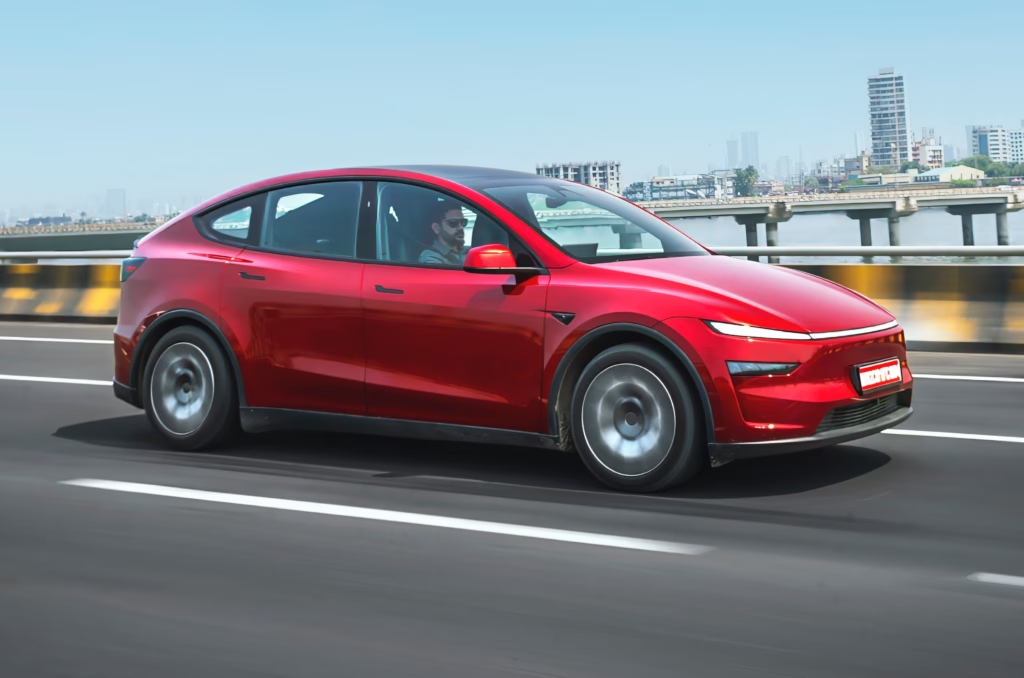
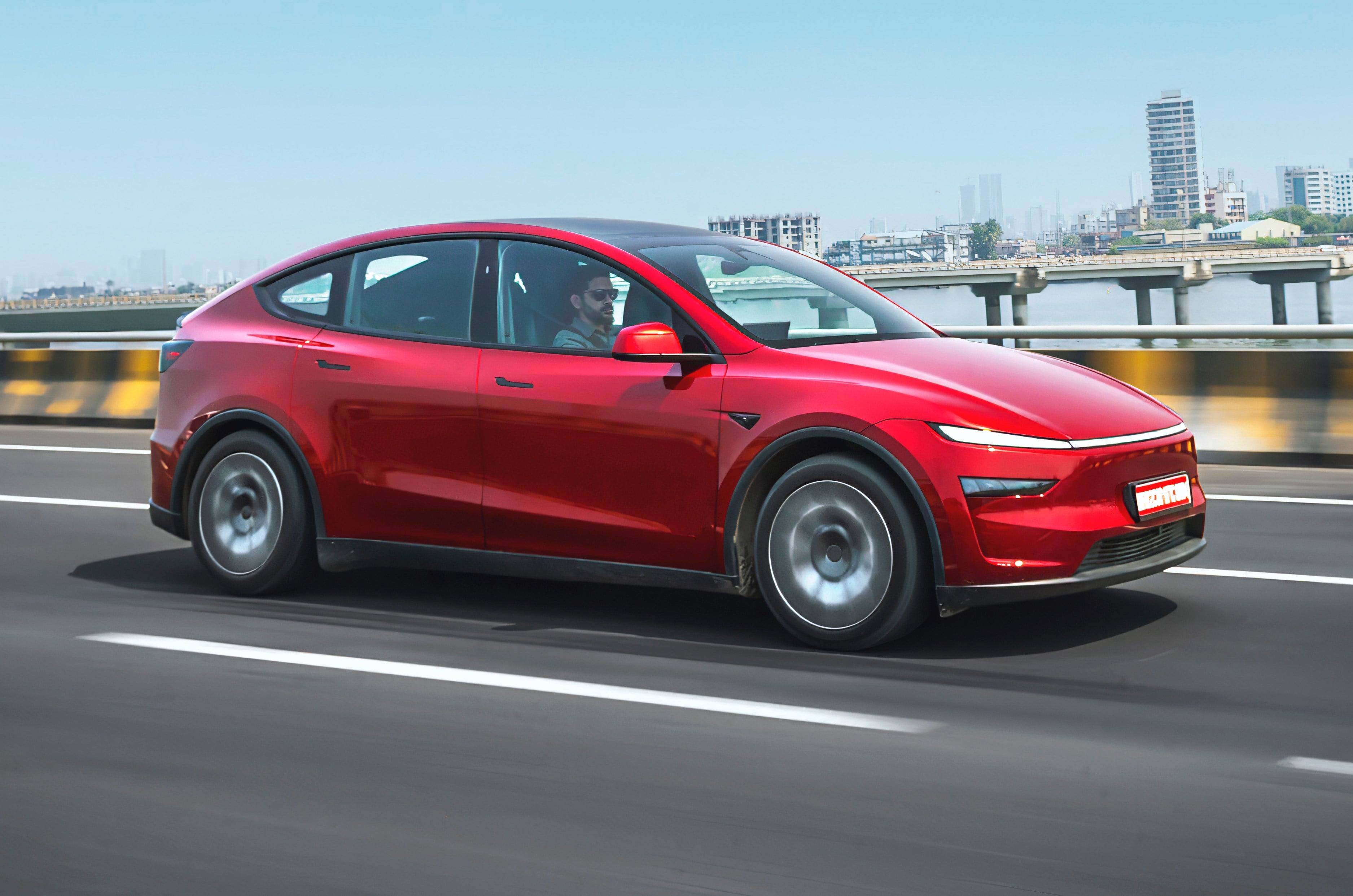
Tesla Model Y L front quarter tracking

The Tesla Model Y is a tech-loaded electric crossover that prioritises cabin space and performance over everything else. The new Model Y L takes that formula a step further, adding a third row of seats, a longer wheelbase, more power with an all-wheel drive setup, more range and more sophisticated suspension as well. Given the additions, naturally it costs more than the standard-wheelbase, real wheel drive versions, but is the Y L actually worth the extra outlay?

Model Y Exterior Design and Engineering – 6/10
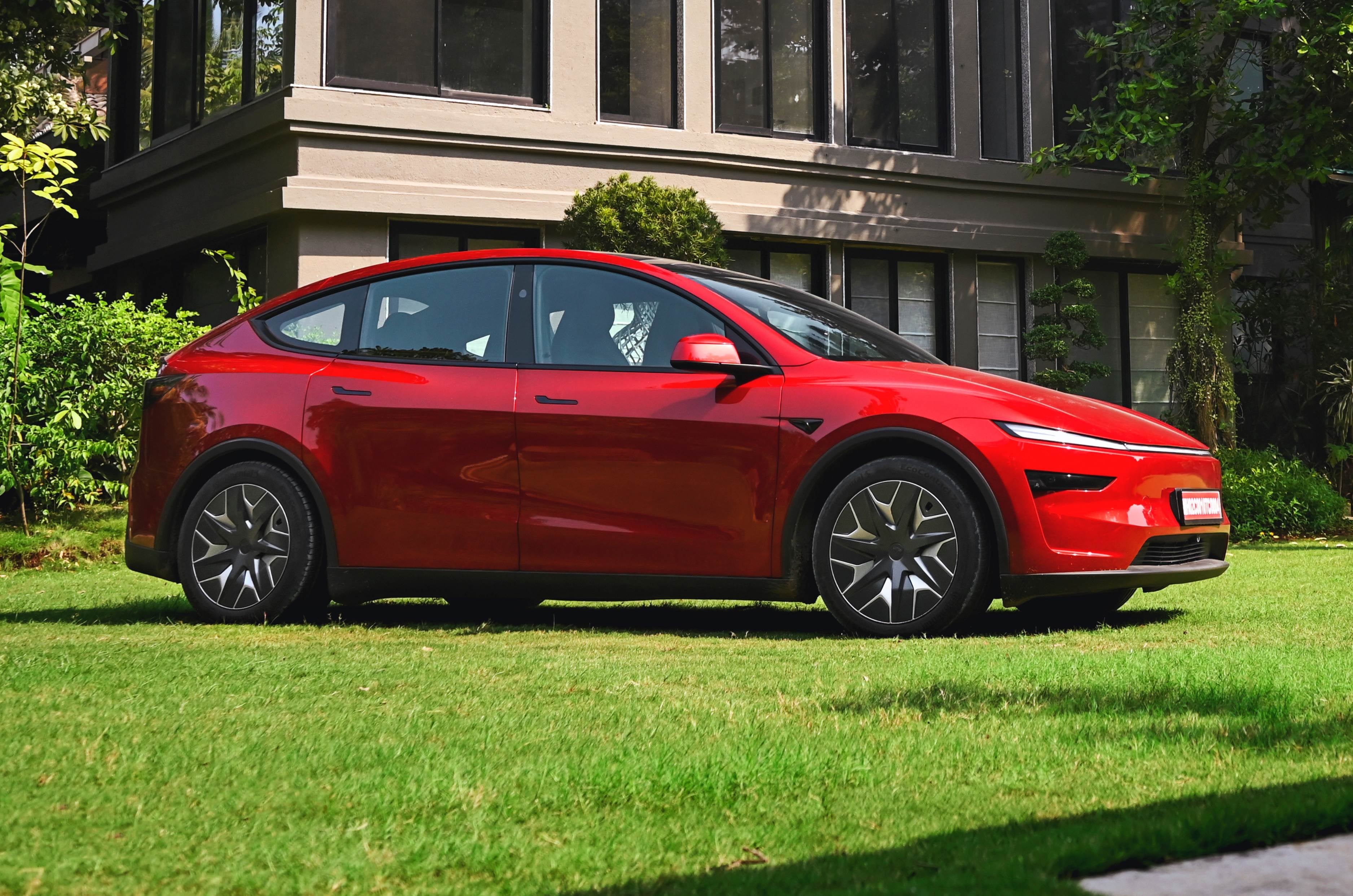
Appears near-identical to the Model Y, but the Y L is longer, taller and has a longer wheelbase.

At first glance, the L looks very familiar to the Model Y,  but this version looks noticeably larger from the side and rear. The Model Y L measures 4,969mm in length and 1,664mm in height, 1,982mm in width with a 3,040mm wheelbase, which makes it 179mm longer overall and 40mm taller than the Model Y, and it also has a 150mm longer wheelbase. At 166mm (unladen), the Y L has decent ground clearance but considering the longer wheelbase, you have to be extra careful going over big speedbreakers otherwise you will end up scraping the belly.

The growth in dimensions is particularly apparent in the raised and extended roofline, plus the expanded rear glass and rear-quarter glass area. The other changes include a new bootlid spoiler and the 19-inch alloy wheels have a more enclosed design, both in the interest of further aero optimisation. 
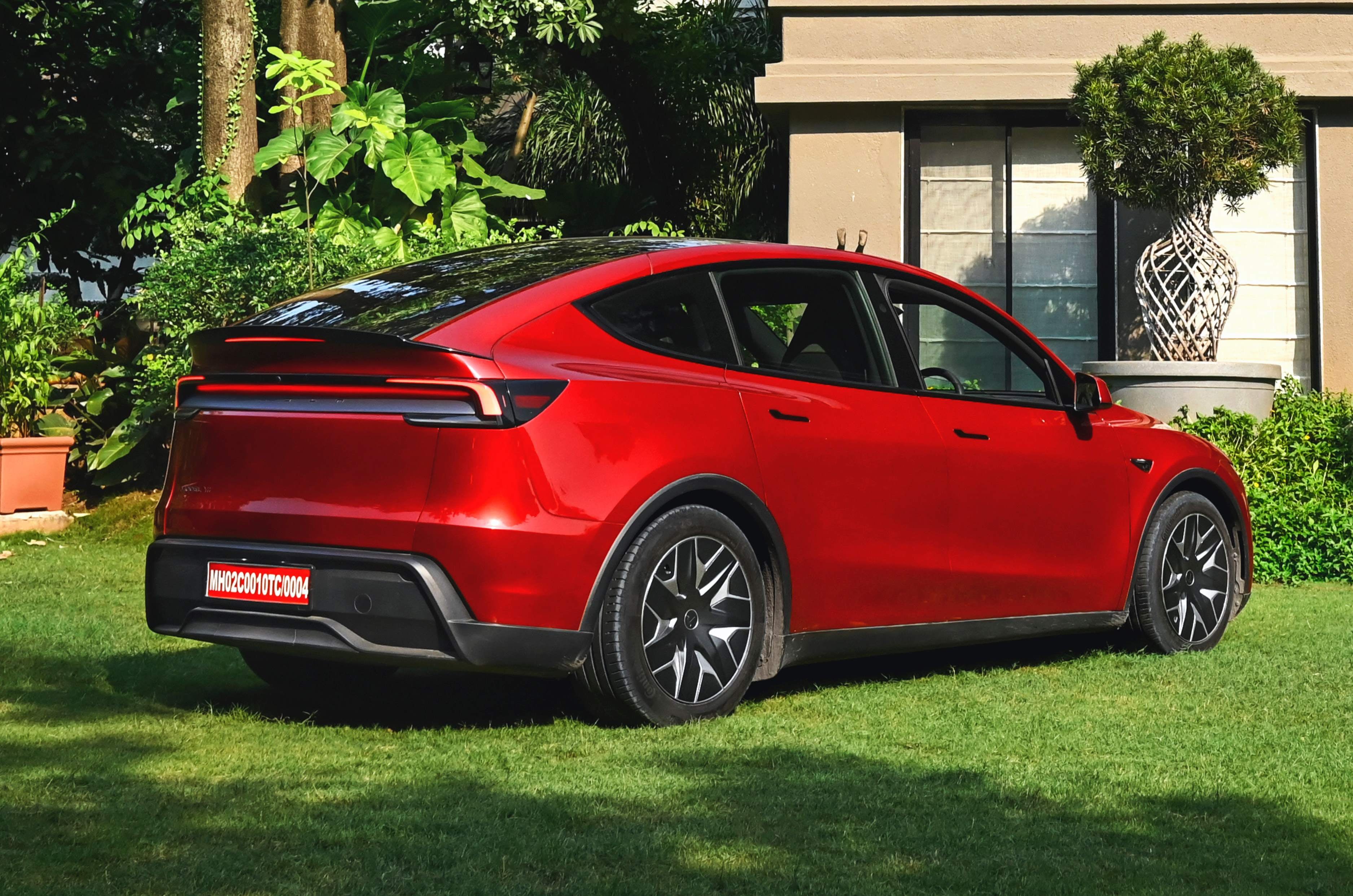
Other than that, the smooth, aerodynamic silhouette with minimalist detailing and distinctive lighting elements remain. The overall design is unmistakably Tesla, although the extra length gives it slightly more road presence. That said, the Model Y L doesn’t suddenly become a traditional SUV just because it has grown. Its rounded, slightly anonymous shape with clean surfacing continues to favour aerodynamic efficiency over visual appeal. But it looks distinctive and as such, has carved out a niche for itself in terms of design.

Model Y Interior Space and Comfort – 8/10
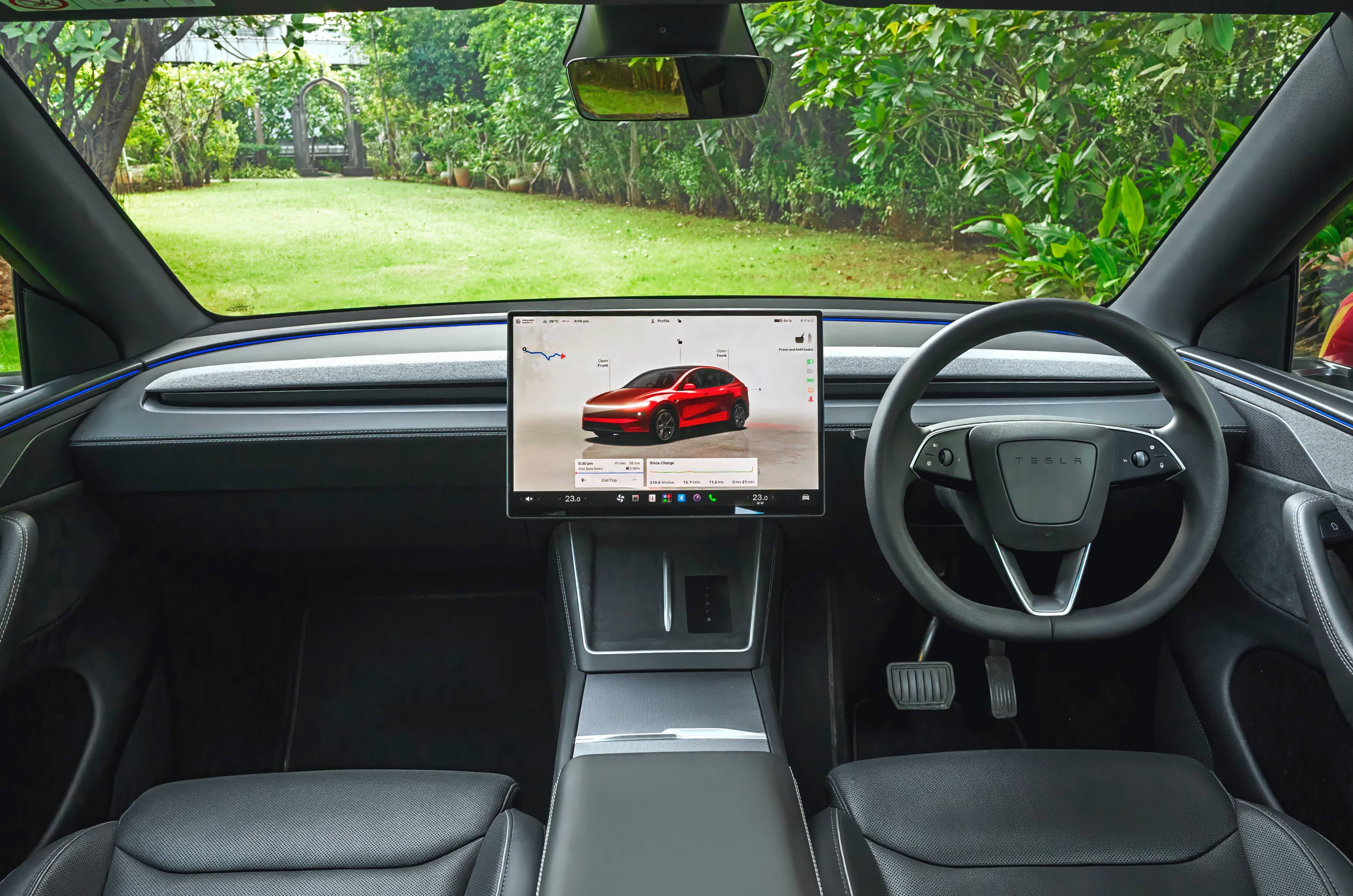
Minimalist design remains the same, save for a new textured finish on top of the dashboard.

This is where the Model Y L takes a larger step up. The standard Model Y already had a spacious cabin, but the Y L has even more room and brings further versatility, by adding a third row of seats. It is a six-seater rather than a seven-seater, with two individual captain’s chairs in the middle row instead of the standard car’s bench.

The front seats may be simple-looking but they are plush and comfy, and the extended underthigh support enhances comfort especially for taller people. These seats are also heated, cooled and feature electric adjustment. The second row is arguably the highlight, however. The individual captain’s seats are very comfy, and they feature integrated headrests, a heating and cooling function, along with power adjustment and powered armrests too. The extra wheelbase and taller roof of course gives passengers more room to stretch out and as such there’s no shortage of legroom or headroom here. The larger windows, coupled with the tinted panoramic glass roof further enhances the sense of space. However, since there are no window blinds or a sunshade for the roof, the large glasshouse area means the cabin heats up too easily especially on a hot, sunny day.
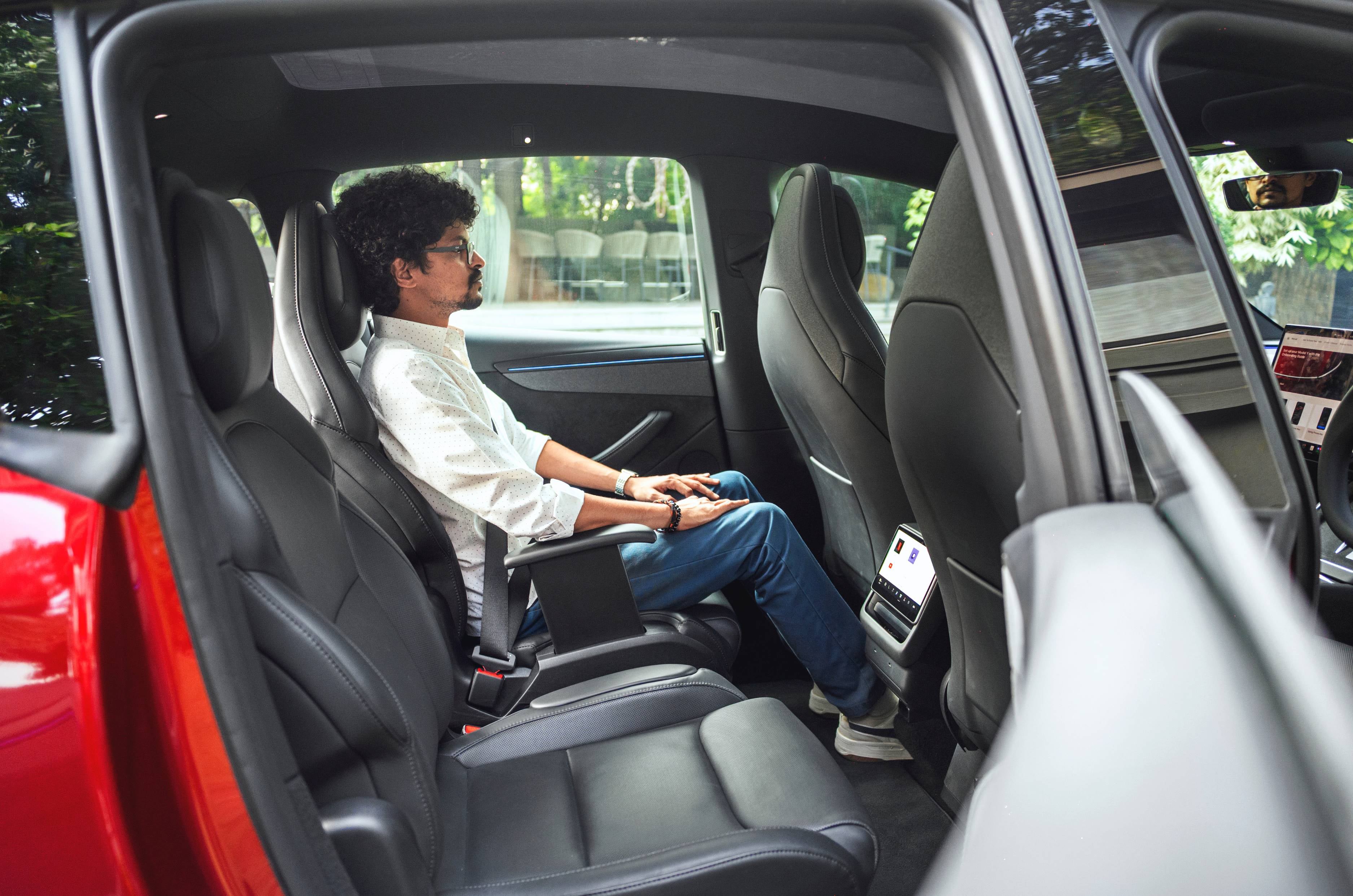
Captain seats are very comfy and there’s plenty of legroom and headroom here.

Middle row passengers are well-catered too, however. Apart from the aforementioned heated/cooled and powered seats, you also get cupholders, charging ports, cupholders and a 8-inch touchscreen. This centrally-mounted unit is just as slick to use as the one in the front and it controls several functions, along with the ability to play videos and games. 
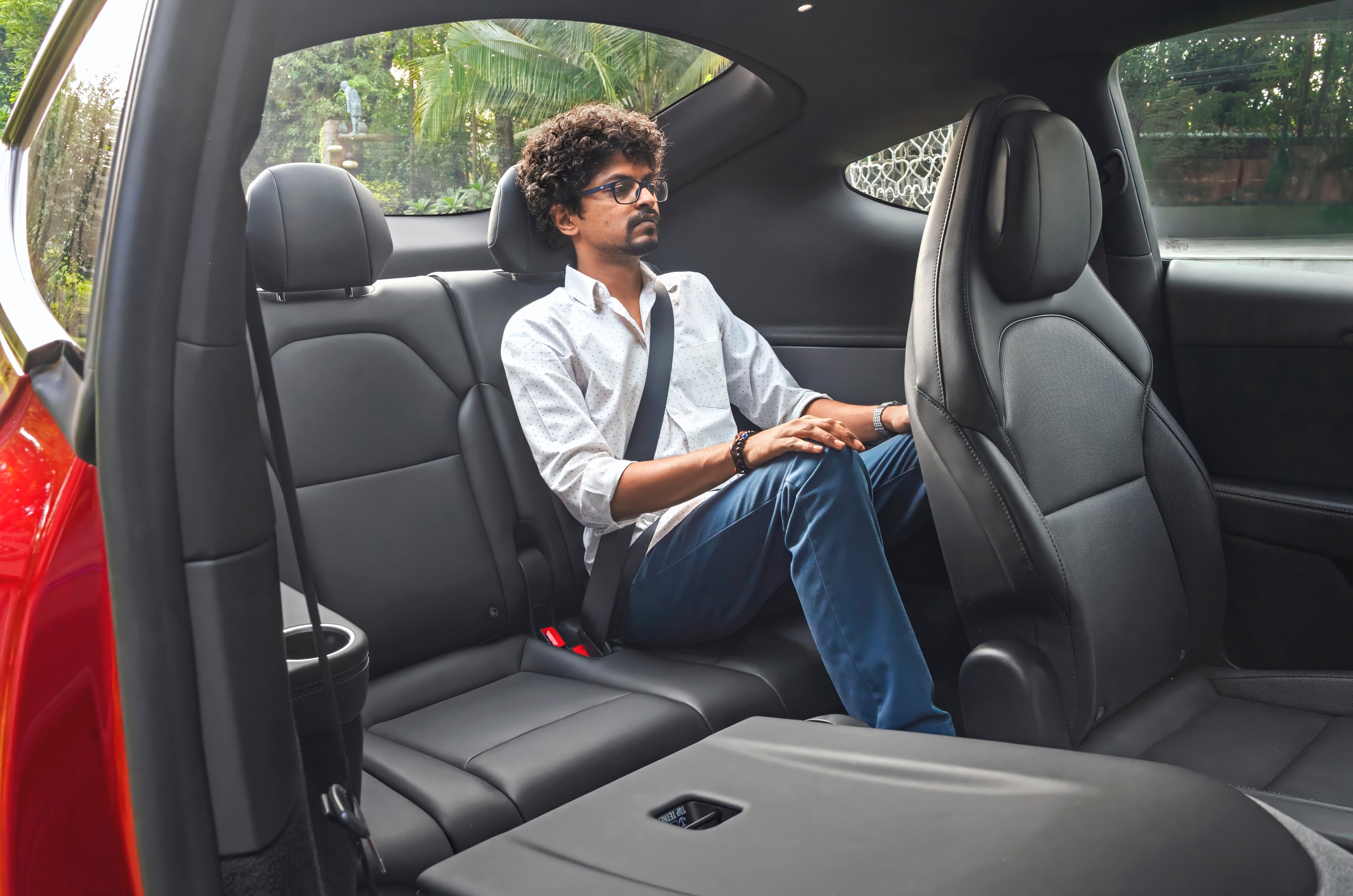
Seating is knees-up, but the third row is usable even for adults.

The third row, however, comes as a bit of a surprise. Considering the low seat, you’re sat in a knees-up position but space back here is genuinely usable for adults, with adequate headroom and kneeroom. Dedicated AC vents, cup holders and type C charging ports are useful inclusions and show that the rearmost seats aren’t simply an afterthought. Like in the middle, here too the large window and untinted rear windscreen lets in a considerable amount of heat. 
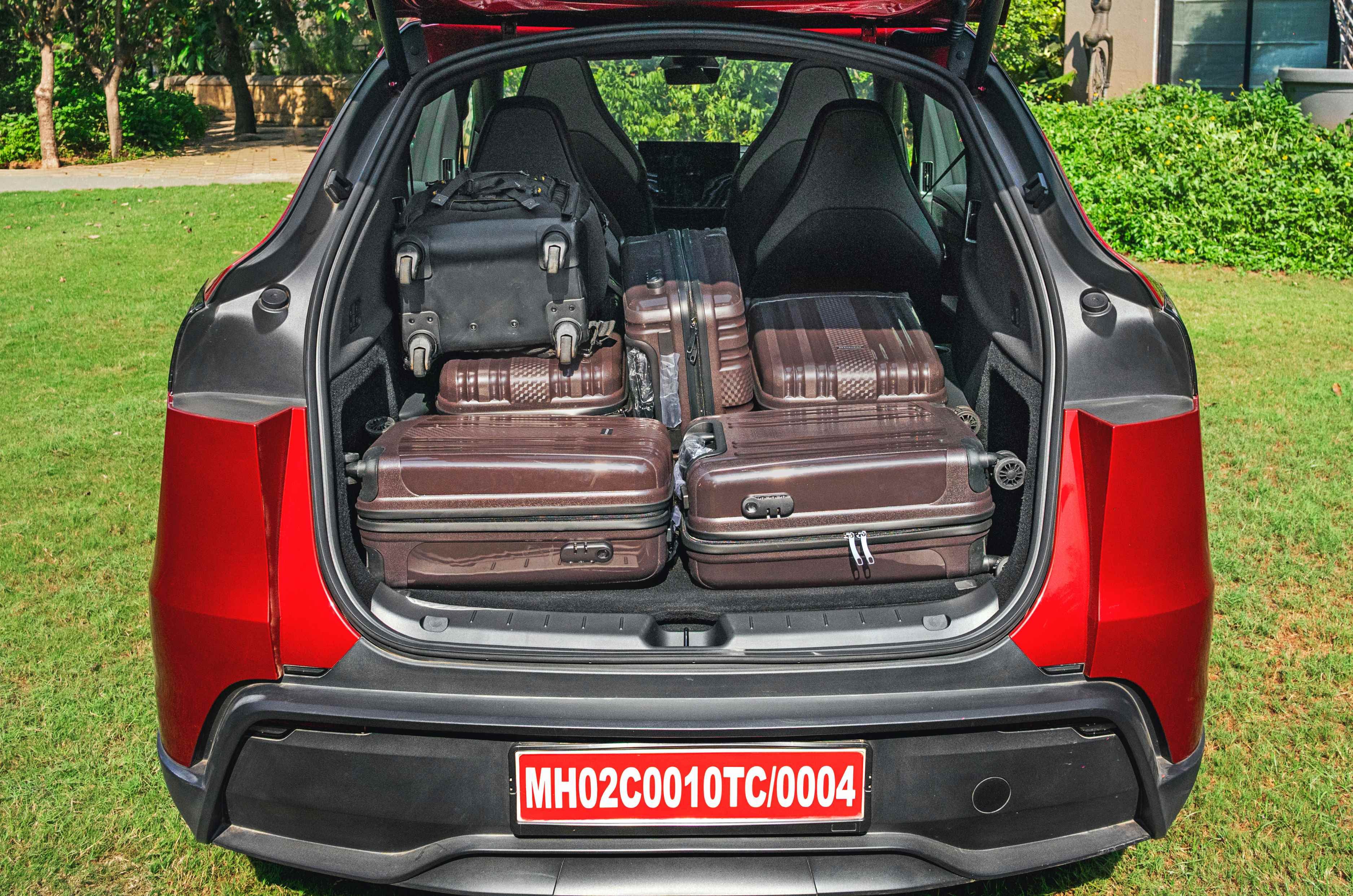
420-litre boot can be expanded to a massive 1,076 litres by folding the third row; more room under the boot floor too. 

Luggage space is another important consideration for a family focused car such as the Y L. With all three rows up, boot space is a respectable 420 litres which can be further expanded to a massive 1,076 litres by electronically folding the third row. Then there’s also a considerable amount of storage space under the boot floor and a properly usable 117-litre frunk. As such, the Y L remains practical despite the added seats. It’s worth noting though, there’s no spare wheel.
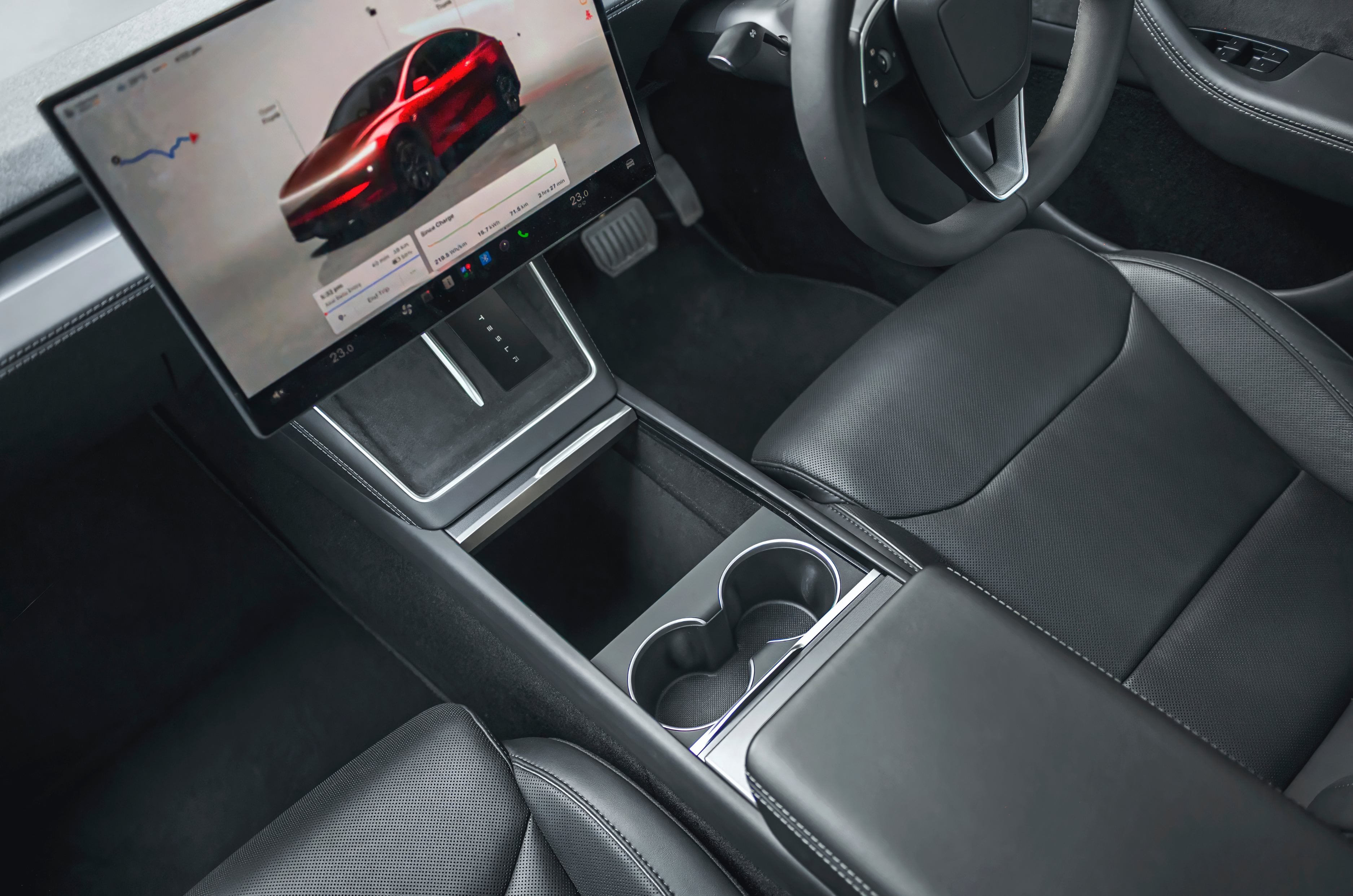
Practical cabin features a large storage box in the centre, cup holders, two wireless phone chargers, and space under the centre armrest. 

Up front, the cabin retains Tesla’s familiar minimalist layout. A large central touchscreen dominates the dashboard, with very few physical controls to interrupt the clean design. This  extended model gets a textured finish on top of the dashboard, but the overall layout remains largely unchanged. It also remains a practical place, with a large cubby space in the centre console, storage under the centre armrest, multiple cupholders and seat back pockets.  

Model Y Features and Safety – 7/10
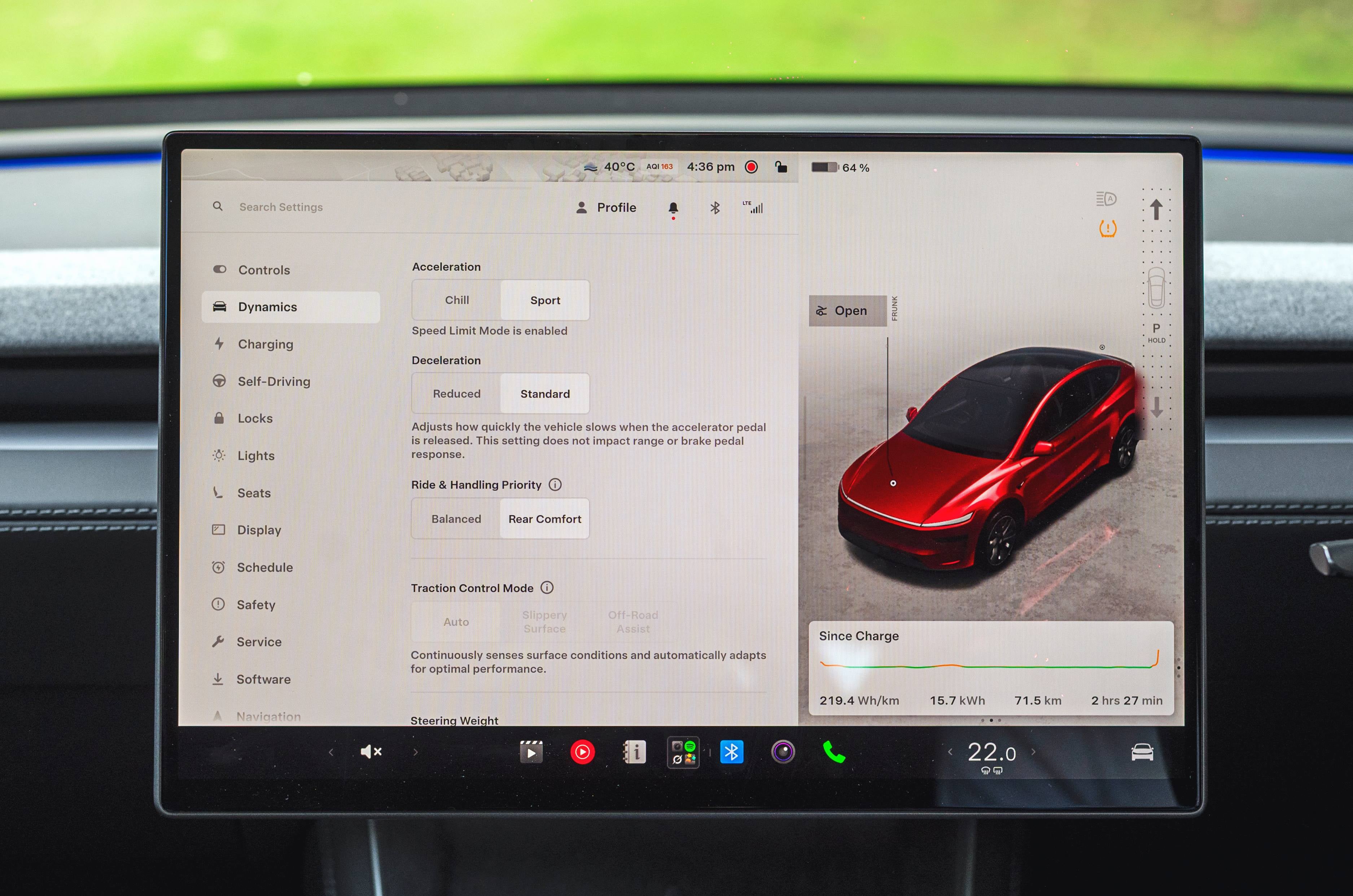
Y L gets a Sport drive mode and two settings for the new adaptive dampers.

Technology has always been central to Tesla’s appeal, and the Model Y L continues with that approach. Apart from the aforementioned 8-inch rear screen, the main party piece of this car is the central 16-inch touchscreen. This screen is easily one of the best in the business in terms of resolution and responsiveness. 
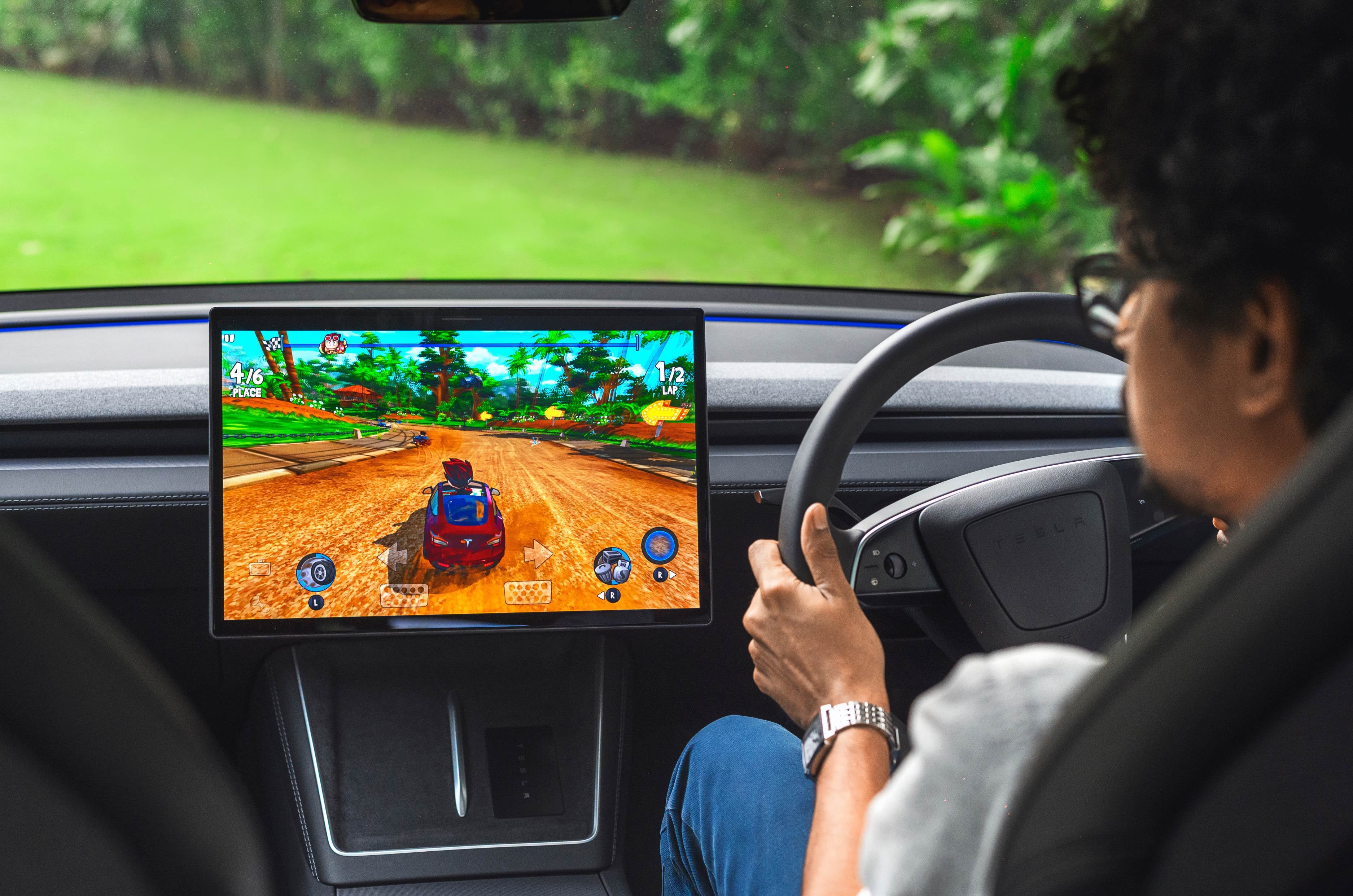
16-inch touchscreen is one of the sharpest around and packs in the typical Tesla quirks and features.

The screen is slick and feature-packed, but the reliance on it for everyday functions remains a usability compromise. Adjusting climate settings and accessing basic vehicle functions like adjusting the mirrors and opening the frunk require navigating menus, which isn’t as intuitive as using dedicated switches. It looks modern and gives the cabin a clean appearance, but a little more emphasis on straightforward ergonomics wouldn’t hurt.
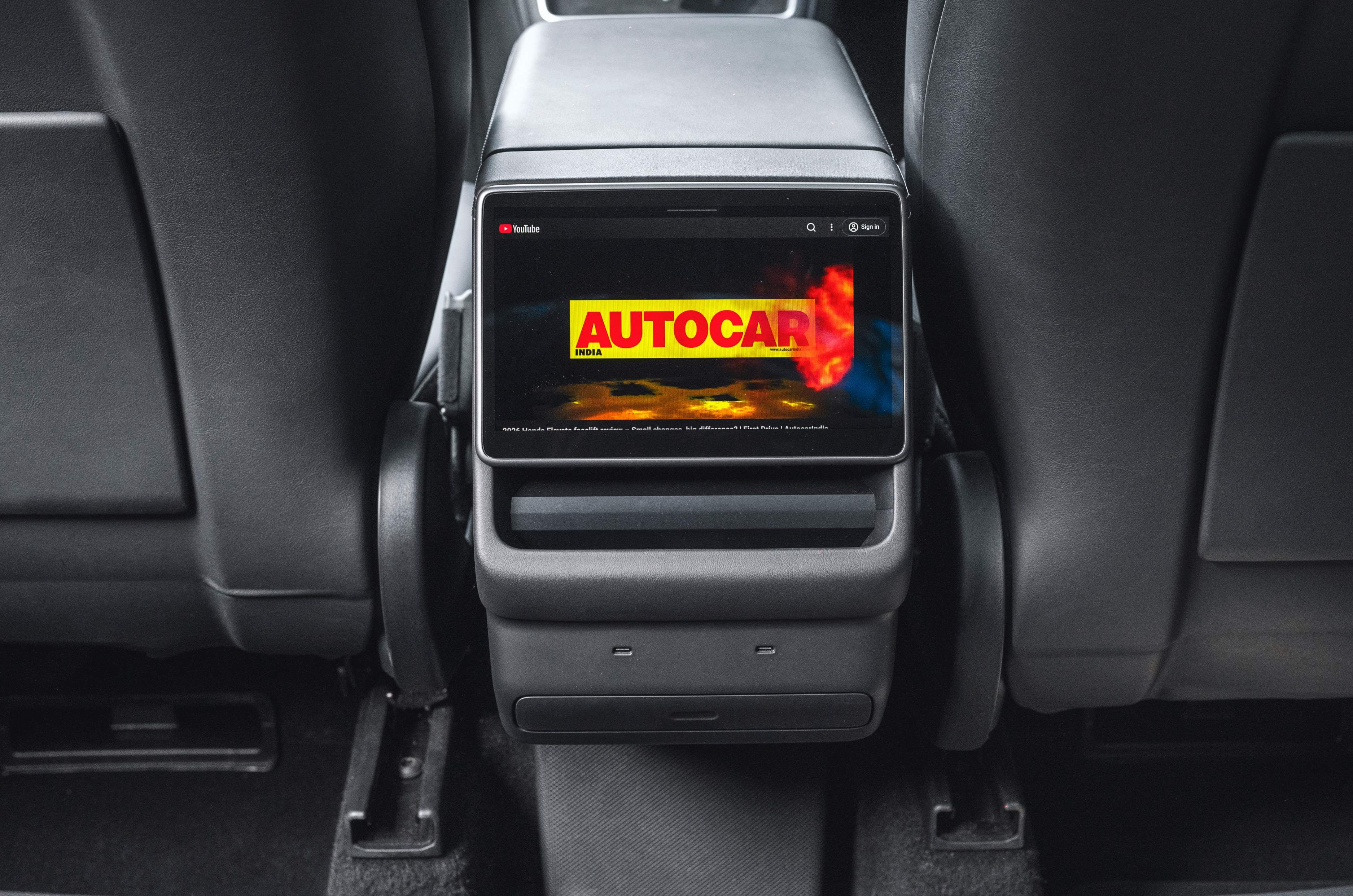
8-inch rear screen is just as slick and can bes used to play videos and control other functions.

But thankfully, you do get the Grok AI assistant as a part of the package which can pretty much do everything for you right from setting the AC, to setting the navigation, finding a charger and much more. It can converse in multiple languages and also constantly learns more about you, so it’s said to get more intuitive as you spend more time with it.  

Other features include a panoramic glass roof, dual wireless phone chargers, multi-colour ambient lighting, a superb sounding audio system with 18 speakers and a subwoofer, heated/ventilated and powered front two rows of seats, heated third row seats, all LED lights and so much more. There’s also connected-car tech, and as with any Tesla it gets over-the-air updates, so the car is constantly improving without the need to visit a service centre.
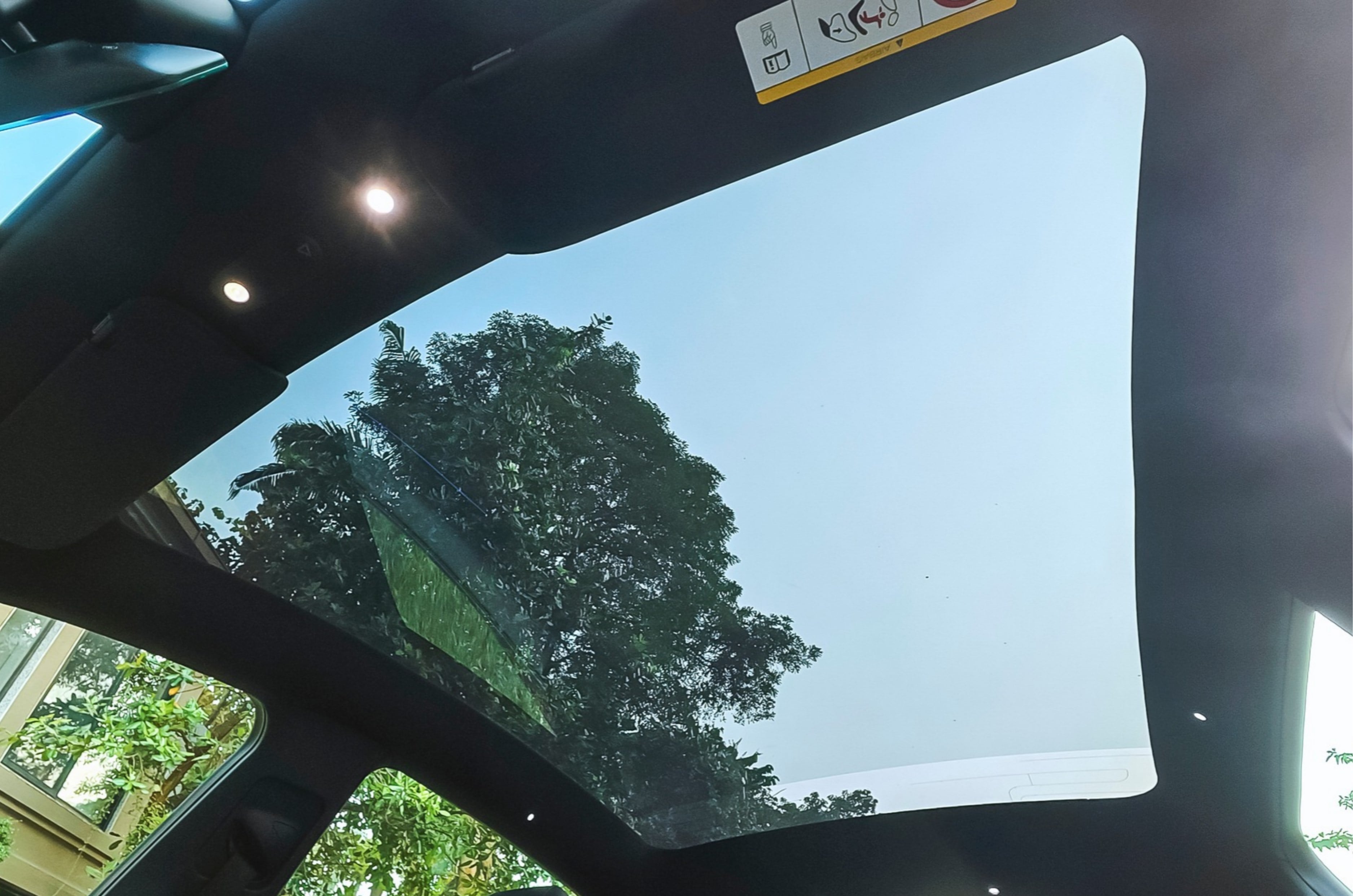
Tinted glass roof helps the cabin feel airy but no sunshade means it heats up quickly as well.

Safety equipment includes nine airbags and a suite of driver-assistance features, including lane-departure warning, lane-keeping assist and blind-spot monitoring. The car also has high-resolution cameras all around it which provide a great view of the surroundings, although Tesla’s more advanced Autopilot capabilities remain absent in India.

The technology is impressive, but the screen-centric interface requires some acclimatisation. Some buyers may find the learning curve frustrating, especially while driving. But for the tech-savvy buyers the Y L is aimed at, they will find this approach very appealing.

Model Y Performance and Refinement – 9/10
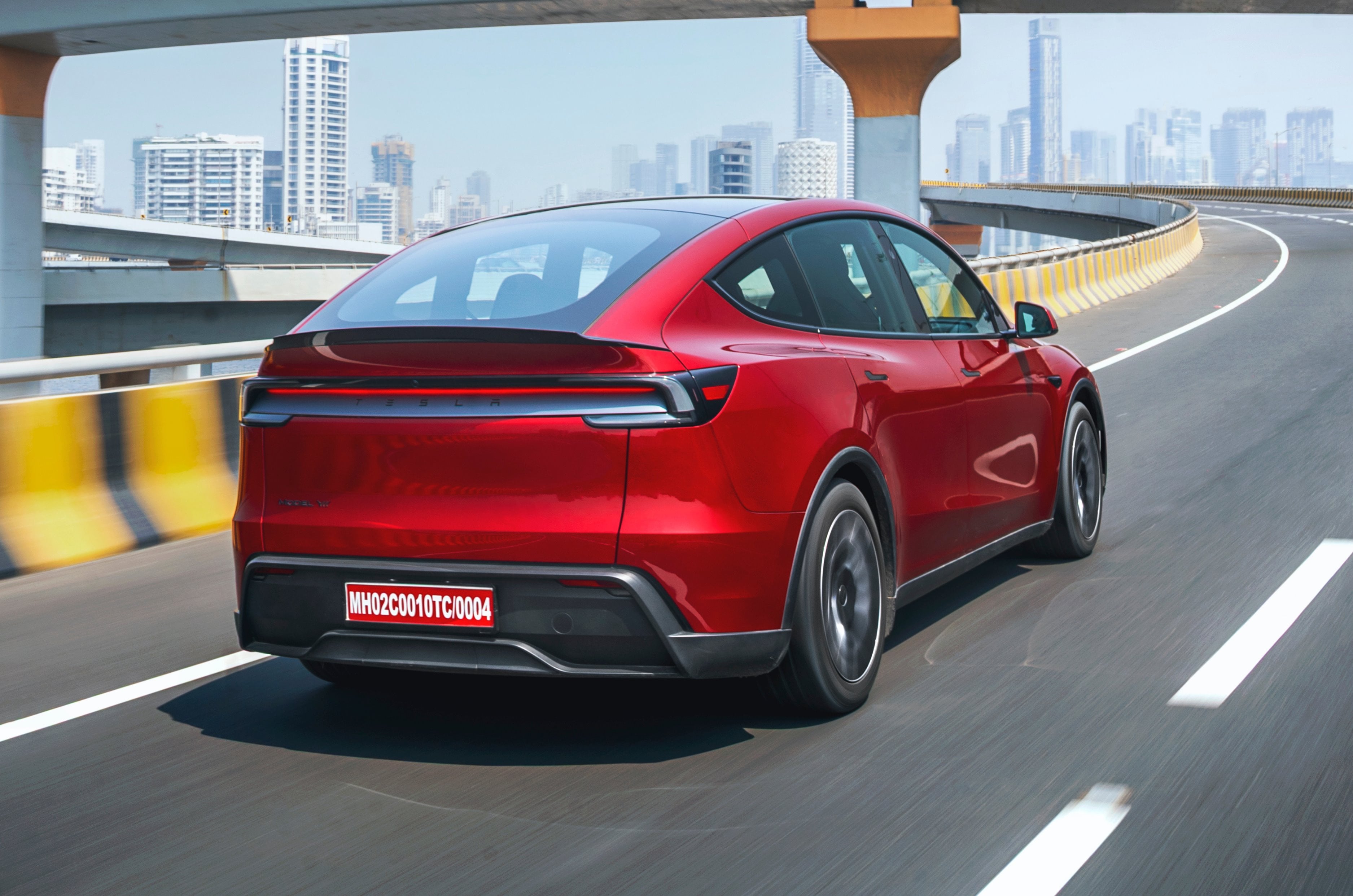
Dual-motor, all-wheel-drive powertrain puts out over 500hp and does 0-100kph in a claimed 5 seconds.

The Model Y L is offered in India with a dual-motor all-wheel-drive setup, unlike the rear-wheel-drive only Model Y variants. Tesla does not officially list powertrain specifications, but it has an estimated combined system output of 514hp and 590Nm and the brand claims a 0-100kph time of 5 sec and a top speed of 201kph. We did a quick acceleration test and managed a 0-100kph time of 5.02sec, though we couldn’t test the top speed as our car was electronically limited to 120kph. For a family crossover which is estimated to weigh over two tonnes, the performance is properly brisk. Expectedly, acceleration feels very potent and as typical of any high-performance EV, the Model Y L pins you back into the seat. However, there is a certain progression to the power delivery and the added traction of the all wheel drive setup makes it feel manageable and not overwhelming. There’s also two drive modes, Chill and Sport, the latter of which is exclusive for the Y L. And they have a corresponding effect on the response of the powertrain, with Sport obviously feeling much more immediate.

The added performance also makes overtaking on highways and closing gaps in traffic particularly effortless, as is reflected in the rolling acceleration figures. 20-80kph takes 2.85sec while 40-100kph is dispatched in just 2.94sec.

As with the standard Model Y, the Model Y L also impresses with its refinement. The cabin is superbly insulated from the outside world, thanks in part to the double glazed windows, with barely any road, tyre and wind noise filtering through into the cabin.

Model Y Mileage / Range and Efficiency – 7/10
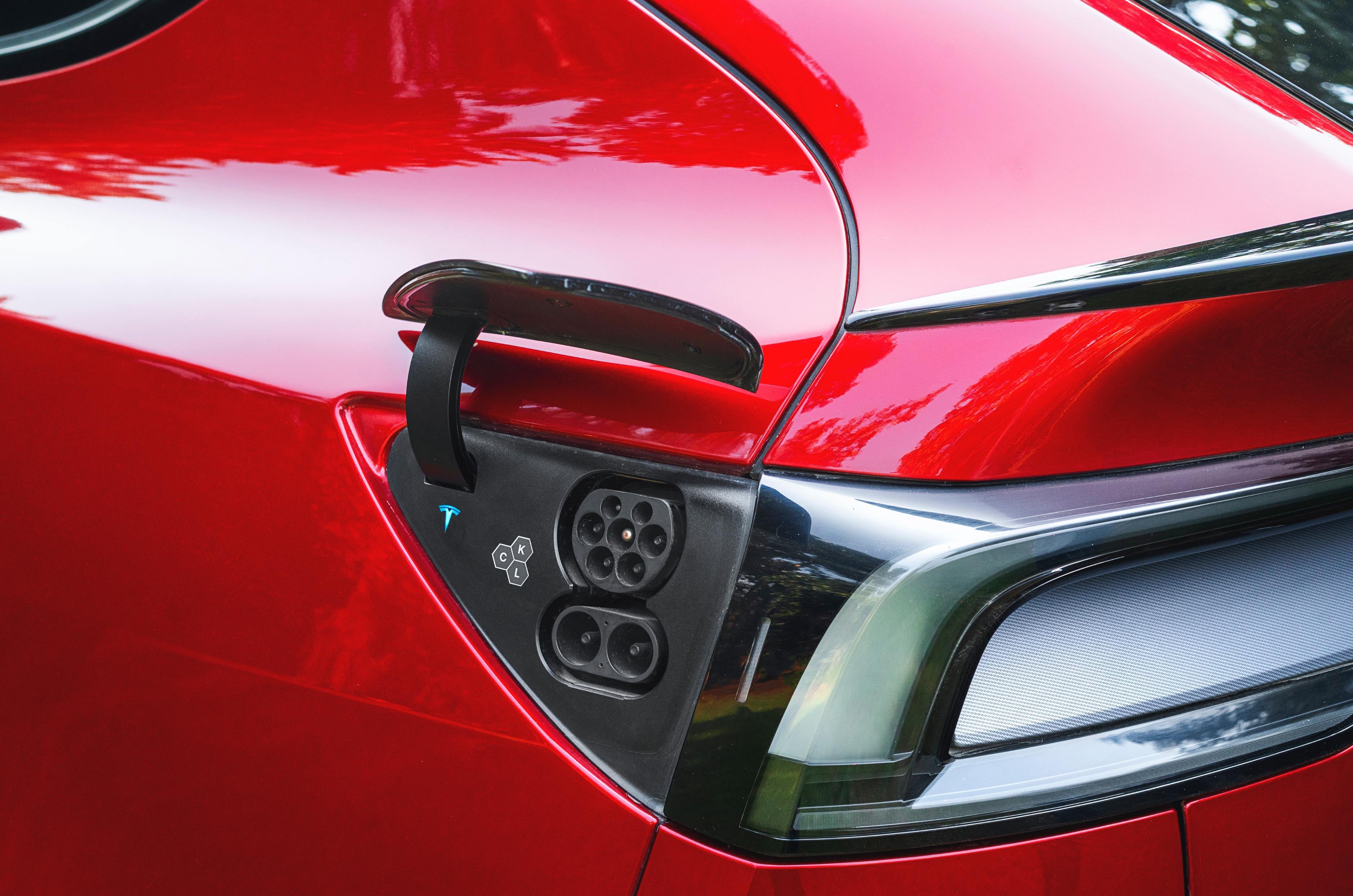
Tesla Supercharger is said to add up to 288km of range in 15 mins; has a WLTP-rated range of 681km.

Tesla claims a WLTP range of 681km, from the Model Y L’s 88kWh (estimated) NMC battery pack. That’s more than the standard RWD Model Y, for reference. It can also add up to 288km of range in 15 minutes when connected to a Tesla Supercharger, according to the company. Speaking of which, the electric crossover is capable of accepting up to 250kW on DC fast charging and 11kW on AC charging. As always, real world range will depend on driving conditions, speed, weather and other factors.

Model Y Ride Comfort and Handling – 7/10
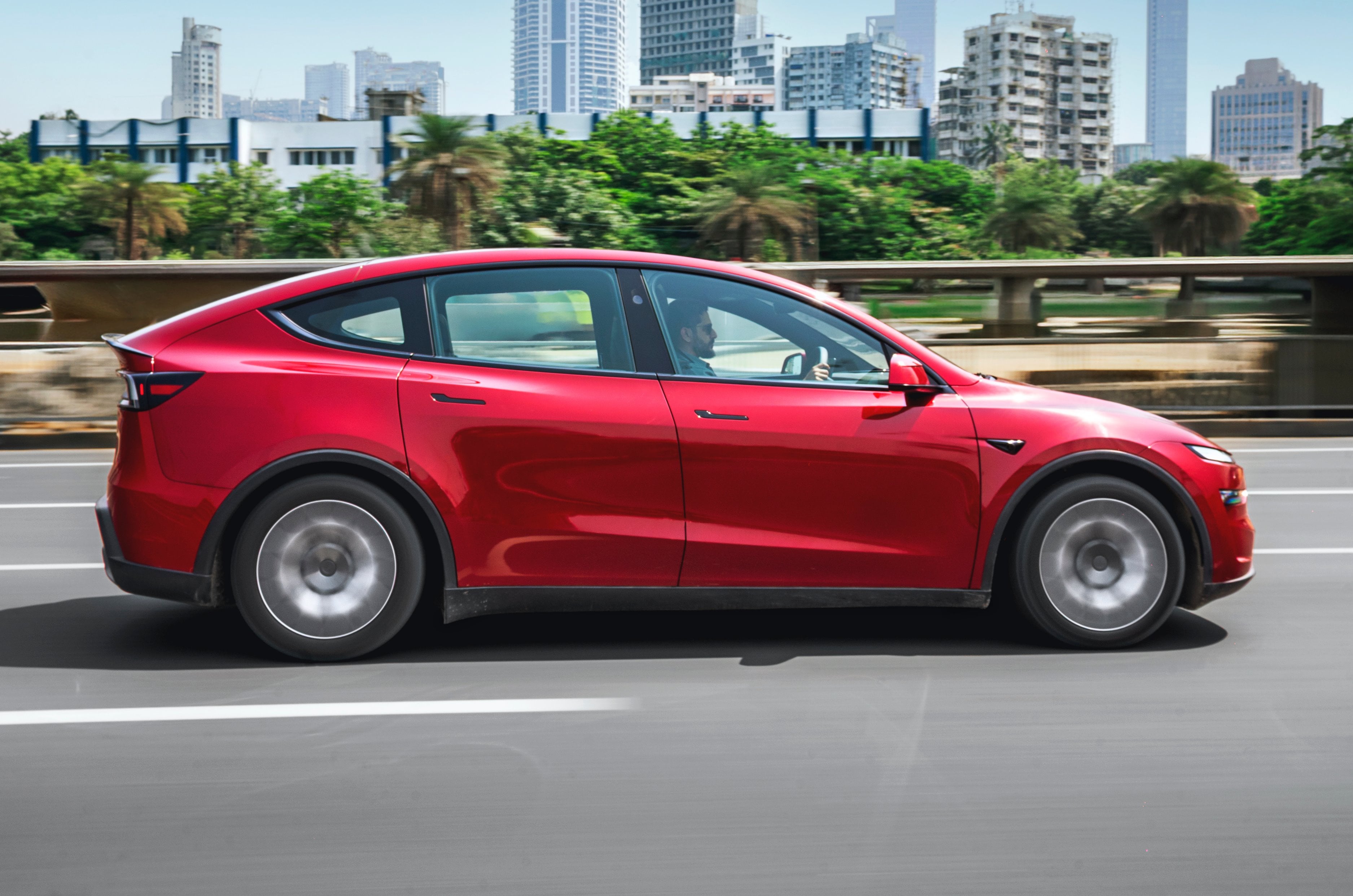
Adaptive dampers and longer wheelbase does make the Y L feel more settlled than the standard Model Y.

The standard Model Y’s ride and handling package is competent, although its low-speed ride is noticeably firm, especially on uneven surfaces. Tesla has made changes to the L’s suspension, equipping it with adaptive dampers in a bid to improve comfort and body control.

This is a particularly relevant upgrade for a longer, heavier vehicle designed to carry more passengers. As with everything else, this is also controlled via the touchscreen with two settings available – Balanced and Rear Comfort. The latter softens things down and gives it a slightly plusher feel, while the former represents a good middle ground between ride comfort and handling. Even though the difference in the modes isn’t that great, the Y L does feel more composed over broken roads and avoids transmitting as much movement into the cabin as the Standard Model Y.
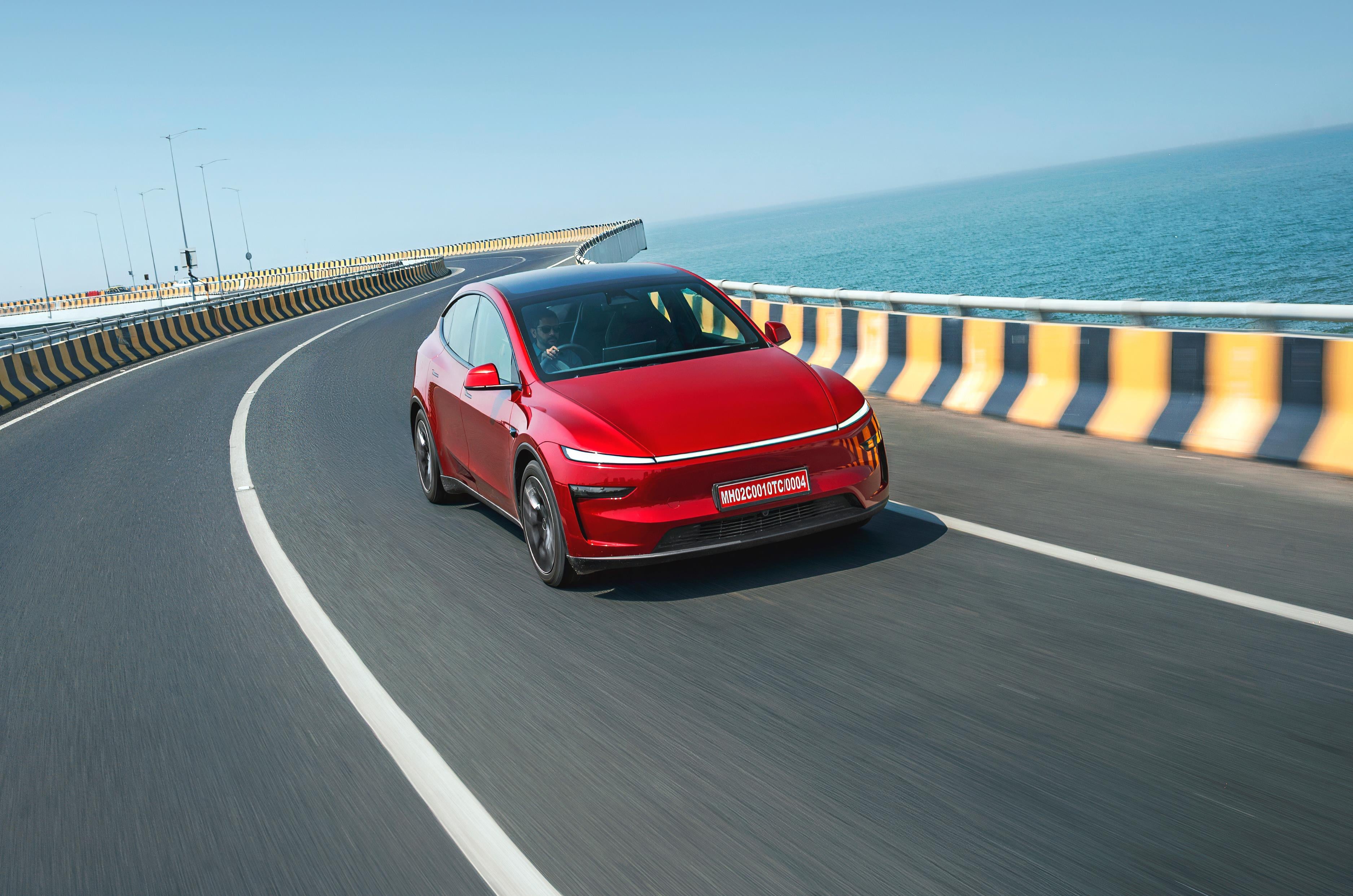
The longer wheelbase also helps the car feel a bit more settled at speed, although manoeuvring in confined spaces is more cumbersome, and this is particularly amplified thanks to the rather poor turning circle. Like the standard Model Y’s, the Y L’s steering is light and easy to use, but it isn’t particularly feelsome. There’s also three modes for the steering, which progressively add more weight. The handling too is more competent and predictable rather than entertaining. It doesn’t feel as agile as the Model Y but body movements do seem better controlled thanks to the adaptive dampers.

There’s two levels of regenerative braking – Standard and Reduced. Standard is the stronger setting and best for use in the city as it almost functions like a one-pedal mode while Reduced is for highway use as it allows for some coasting.

Model Y Value for Money – 7/10
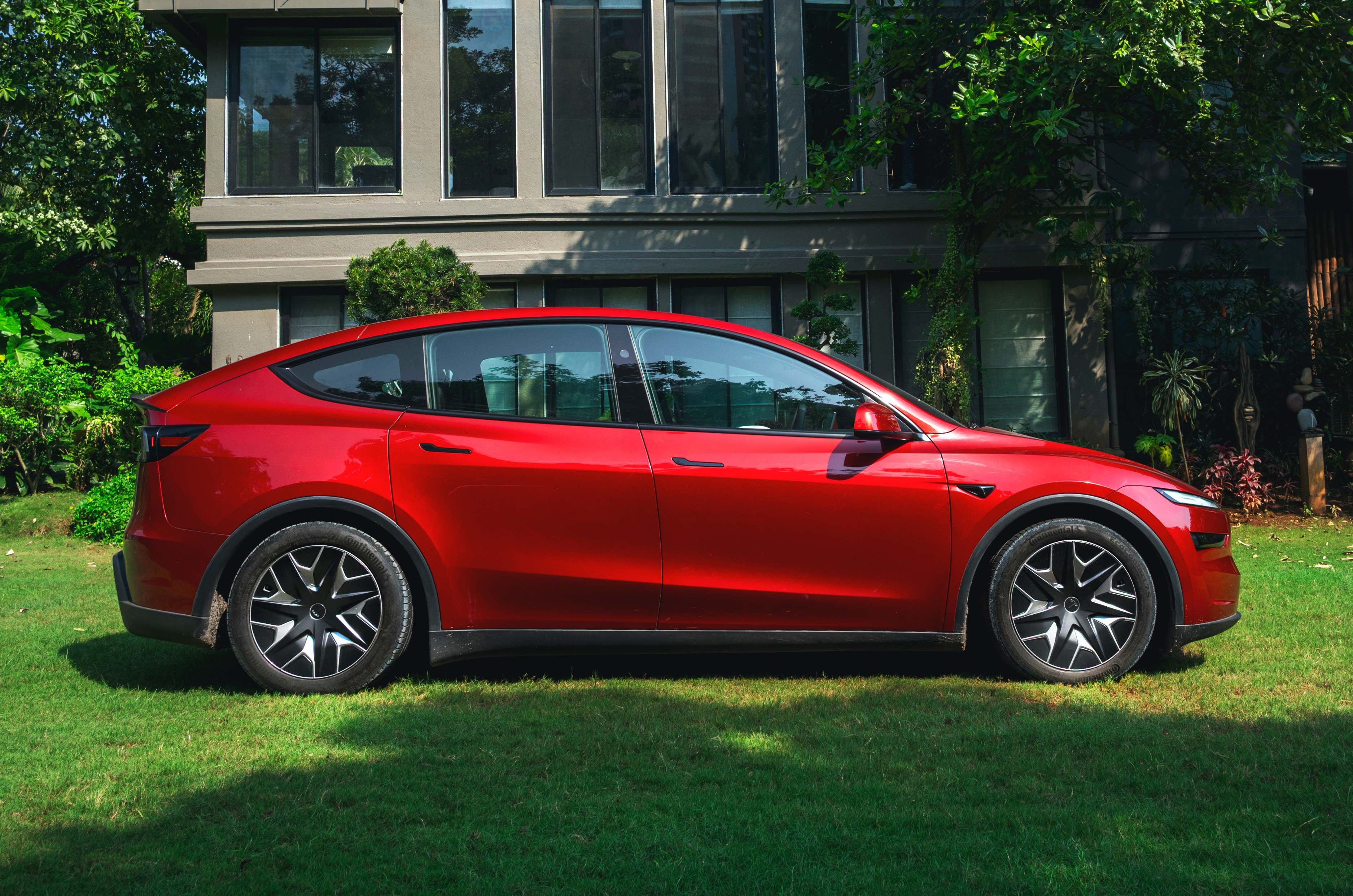
The Model Y L is for those who want a spacious, quick, refined, and cutting-edge premium EV for the family.

Priced at Rs 61.99 lakh (ex-showroom), the Tesla Model Y L makes for a more compelling case than the standard Model Y despite costing 10 lakh more. It still costs a fair bit more than its most direct rivals, the BMW iX1 LWB and the BYD Sealion 7, but the Y L is more spacious with more seats. The Model Y L does have its compromises though. It’s over reliant on the touchscreen for even basic functions and the large glasshouse means the cabin heats up easily. The larger dimensions, poor turning circle, low ground clearance and long wheelbase also means it is more challenging to maneuver in the city and while parking.

But it brings a lot more to the table too. There’s more cabin space, the added versatility of a third row, a more potent dual-motor powertrain with all-wheel-drive and a higher claimed range as well. And it retains its strengths of being featured-packed, with excellent refinement and massive cargo space. Tesla says that buyers are now preferring to opt for the Y L over the Model Y considering all the additional things it brings, and that really doesn’t come as a surprise. So for buyers who want a spacious, quick, refined and cutting-edge electric crossover for the family, the Tesla Model Y L fits the bill perfectly.
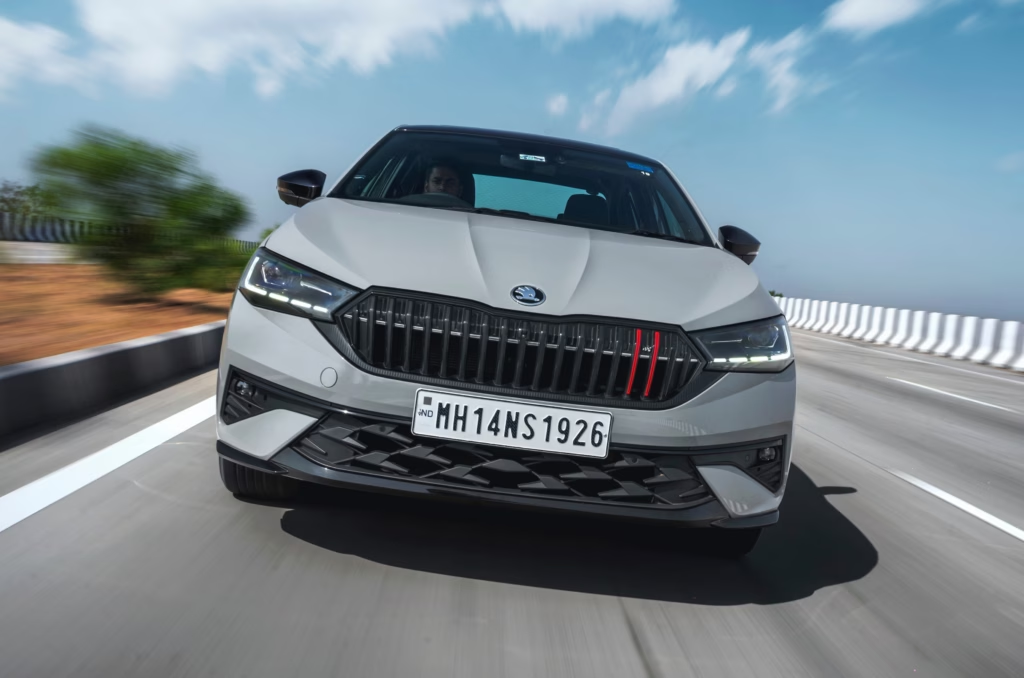
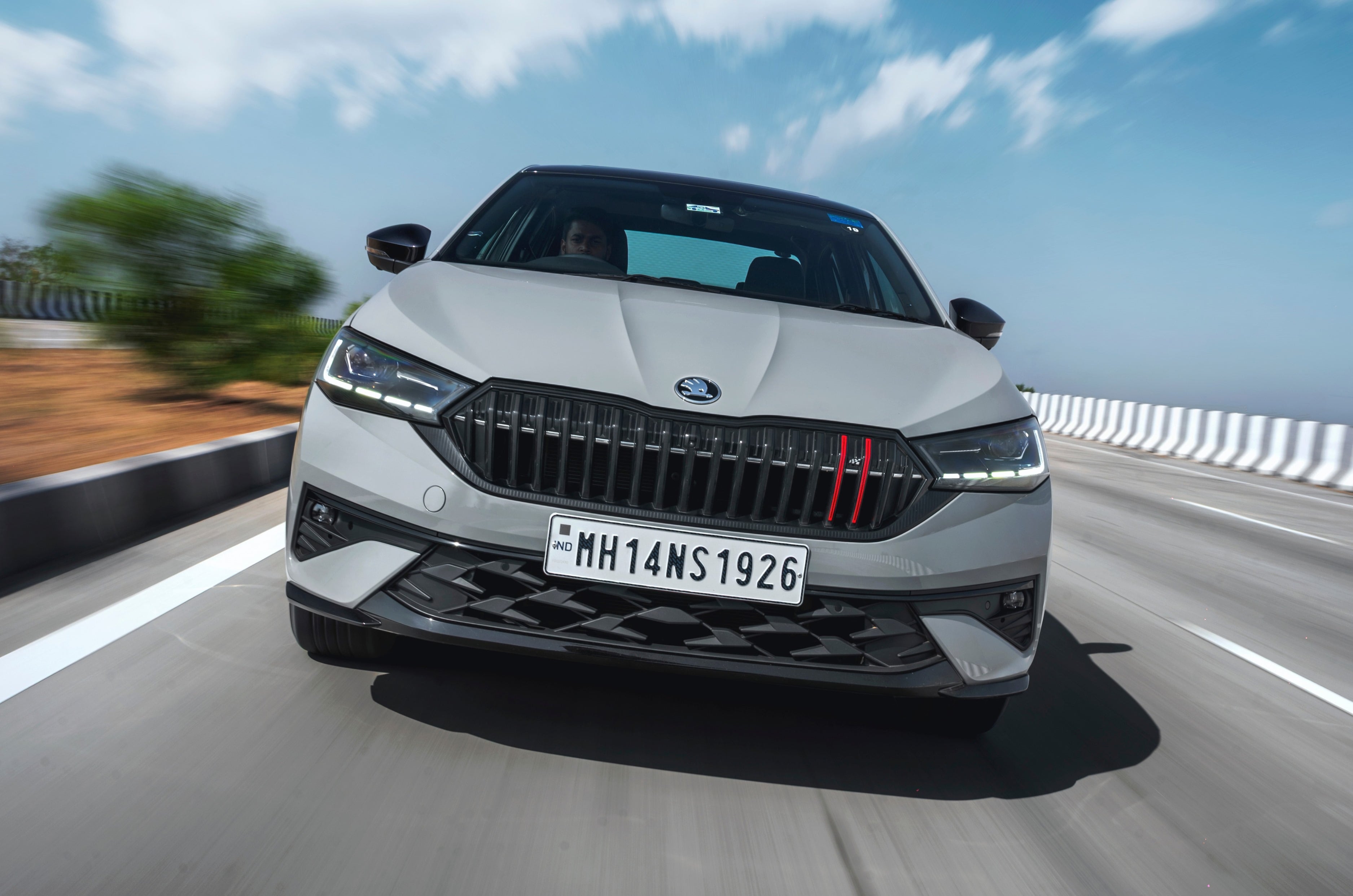
Skoda Slavia facelift review: Small changes add up

Skoda Slavia facelift review: Small changes add up

Skoda’s Slavia sedan has received its first major update since its introduction back in 2022. In order to keep it in touch with recently updated rivals like the Hyundai Verna and Honda City, the Slavia gets sharper styling, more equipment and even a significant mechanical change. Here’s what it’s like.

Skoda Slavia facelift exterior design and engineering – 8/10

Slavia
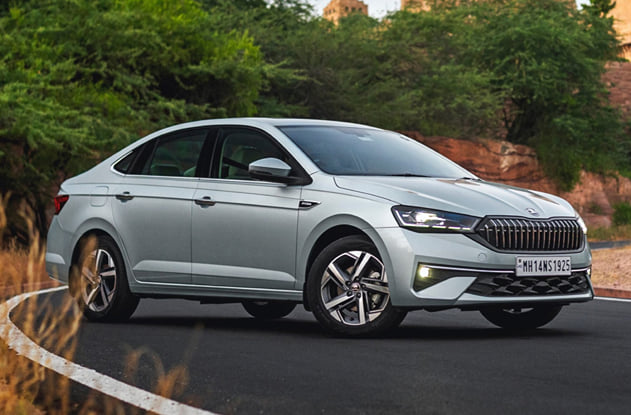
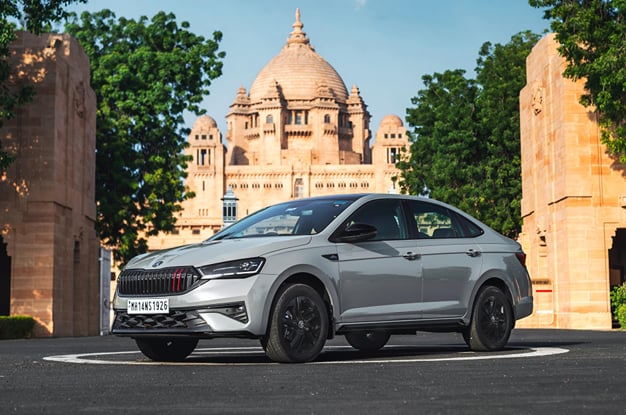
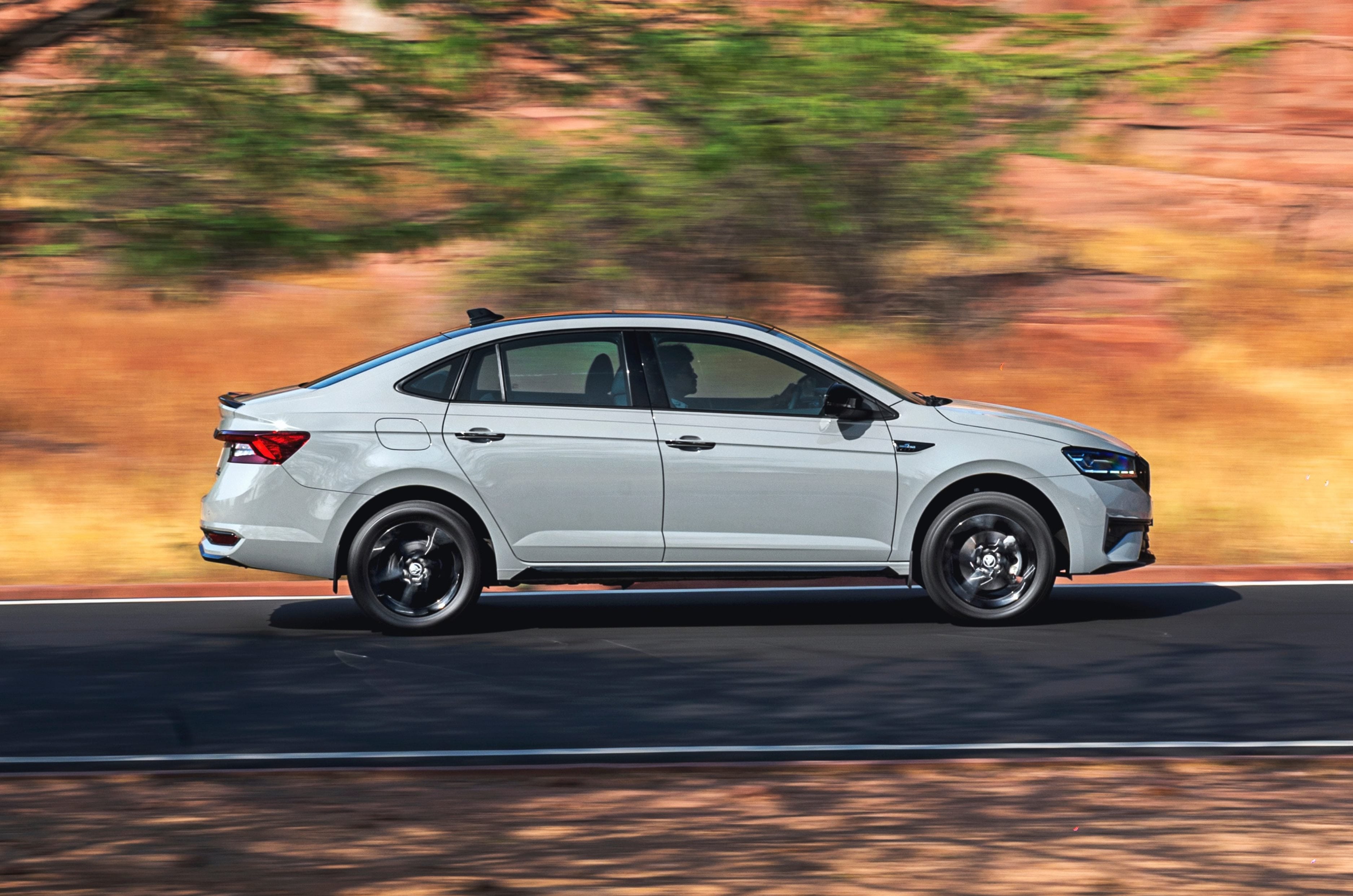
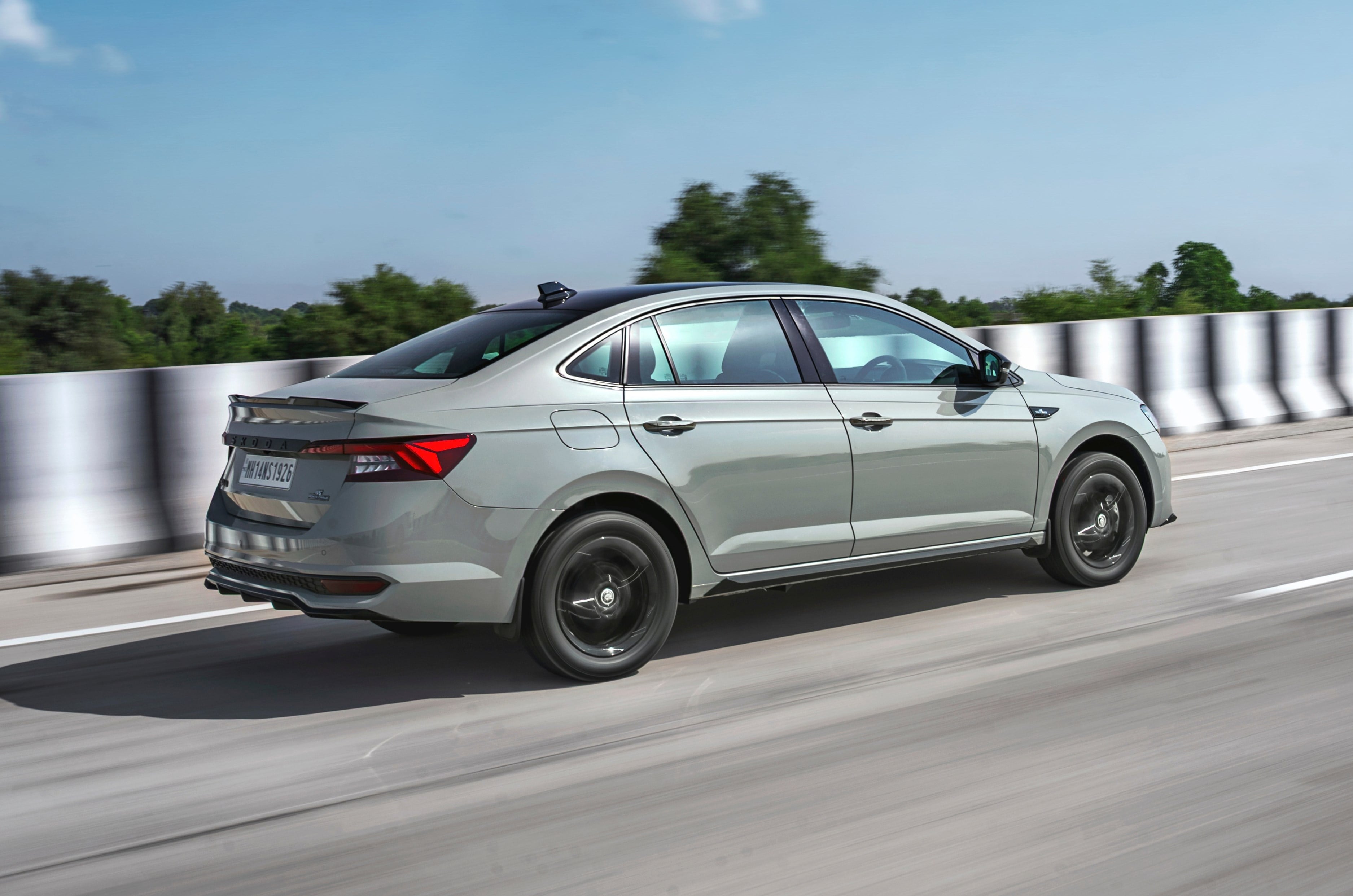
Skoda Slavia Monte Carlo front qiuarter static

Skoda Slavia Prestige (left) and Monte Carlo (right)

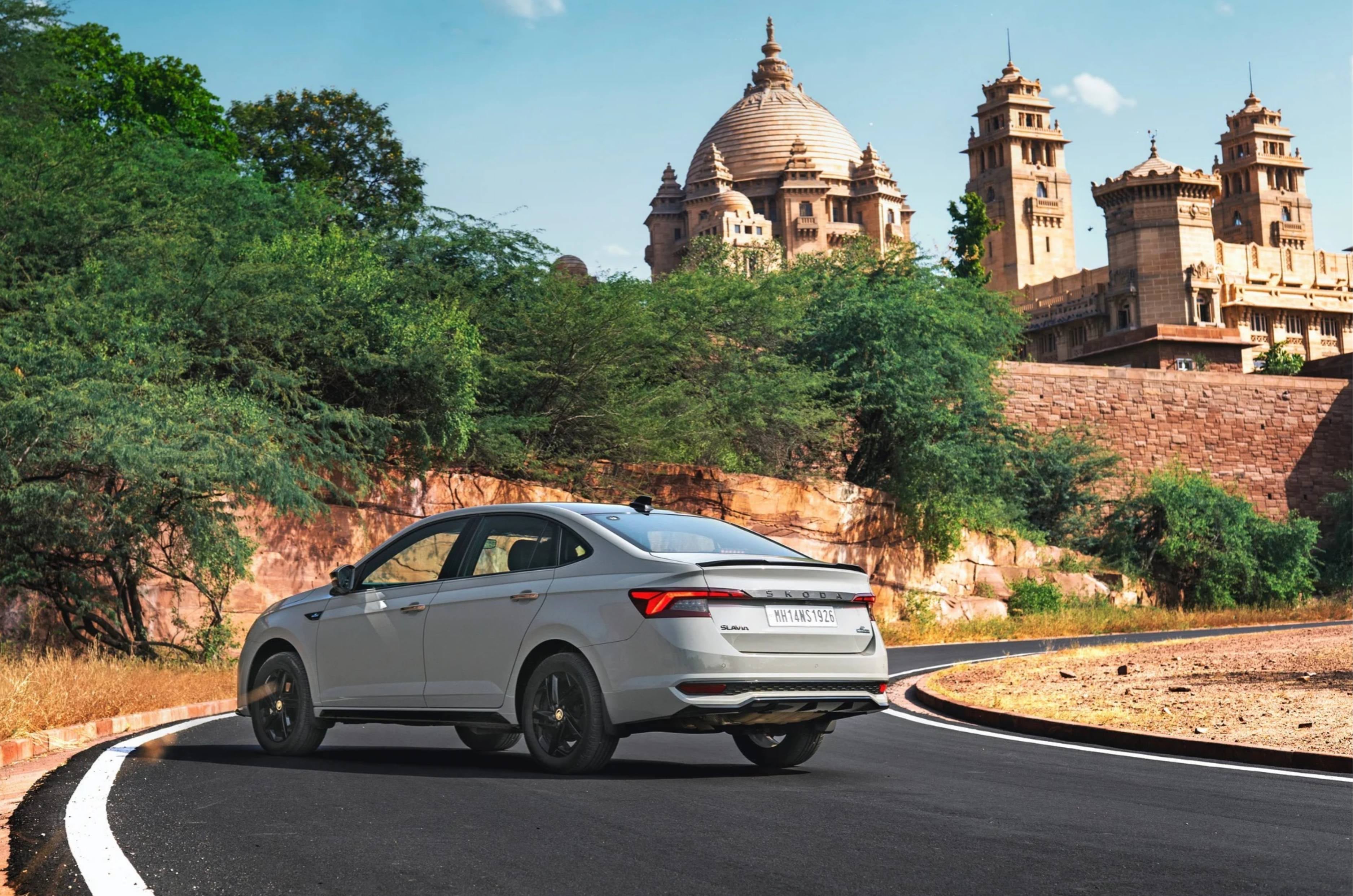
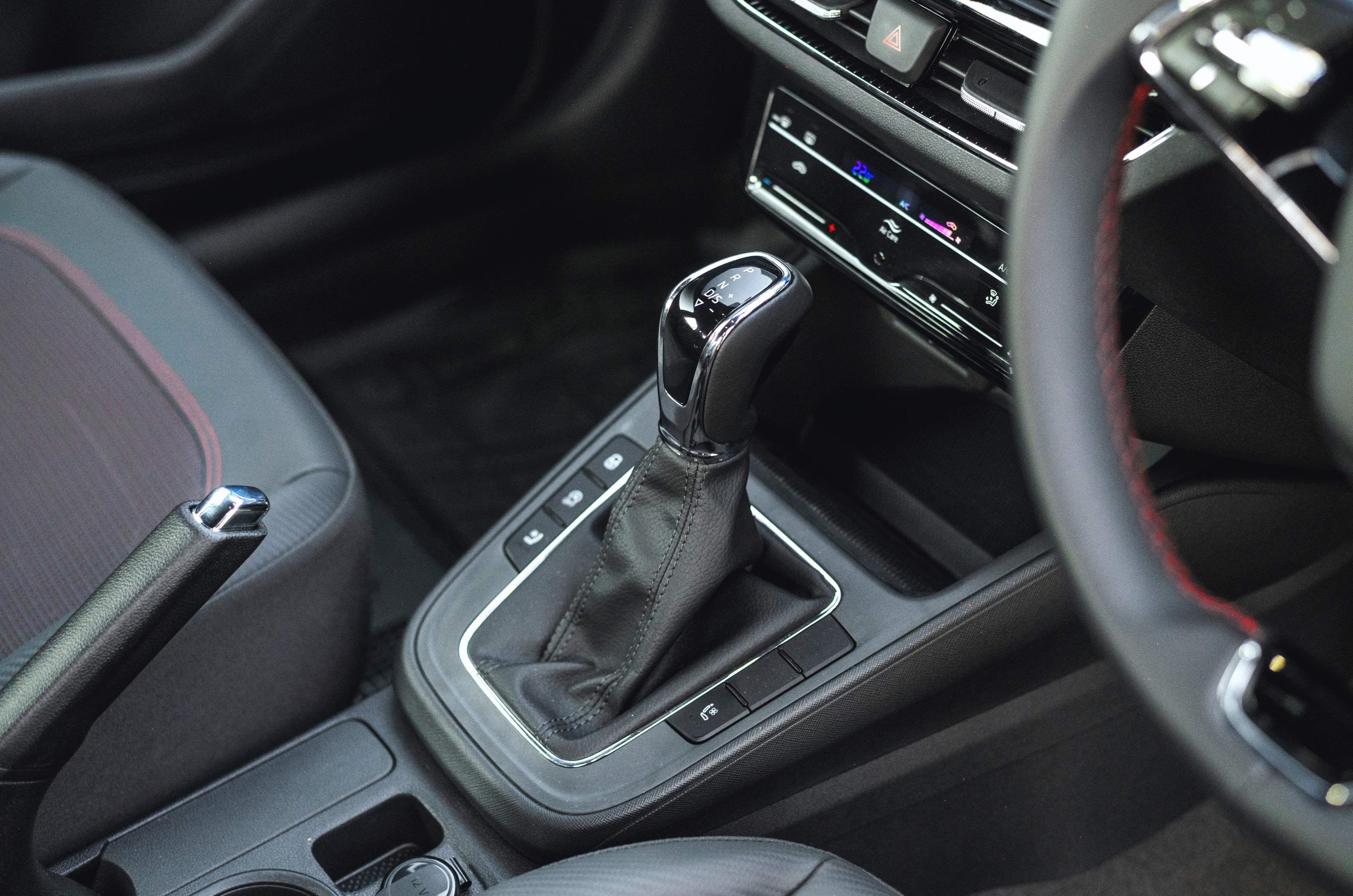
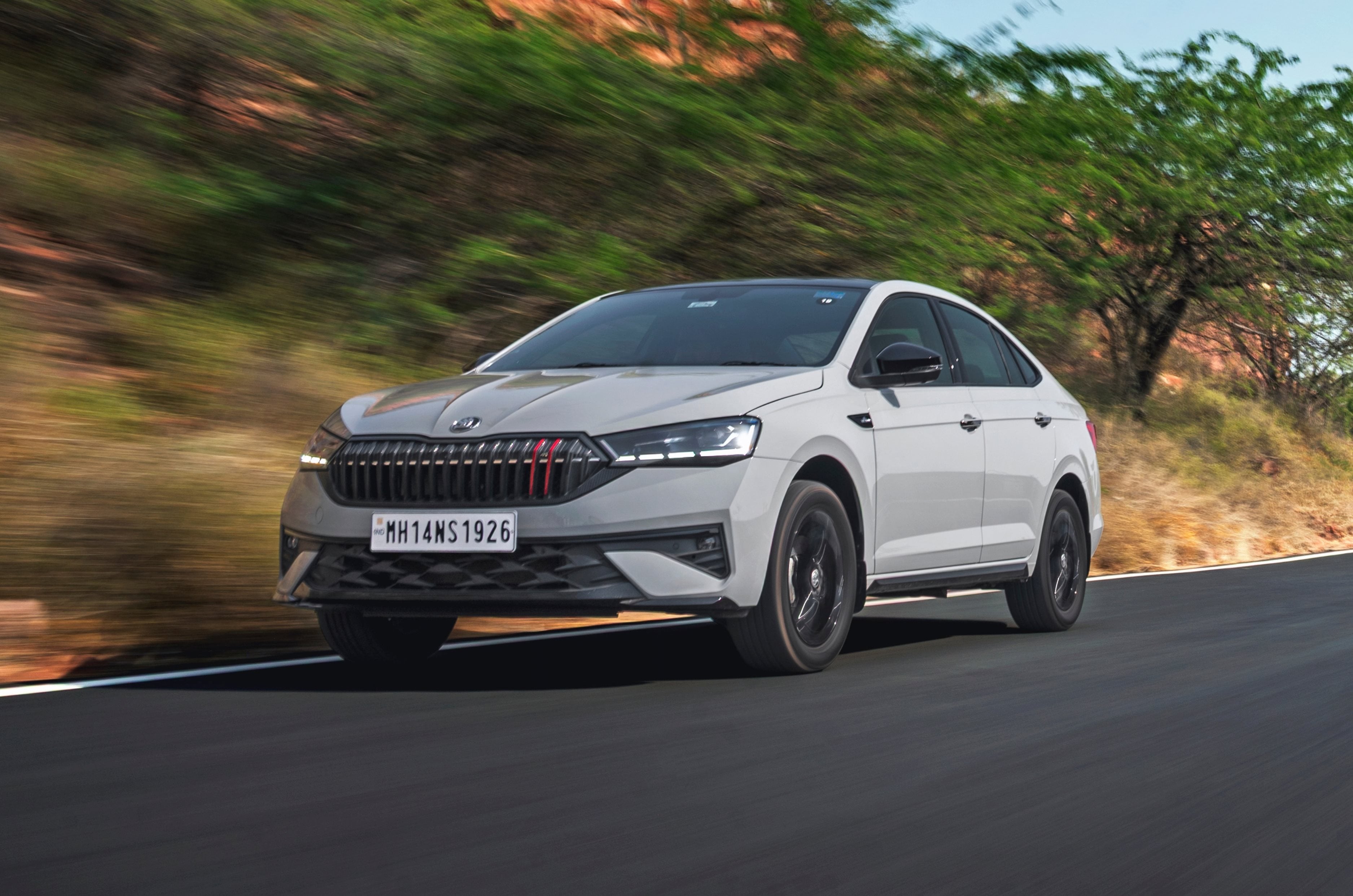
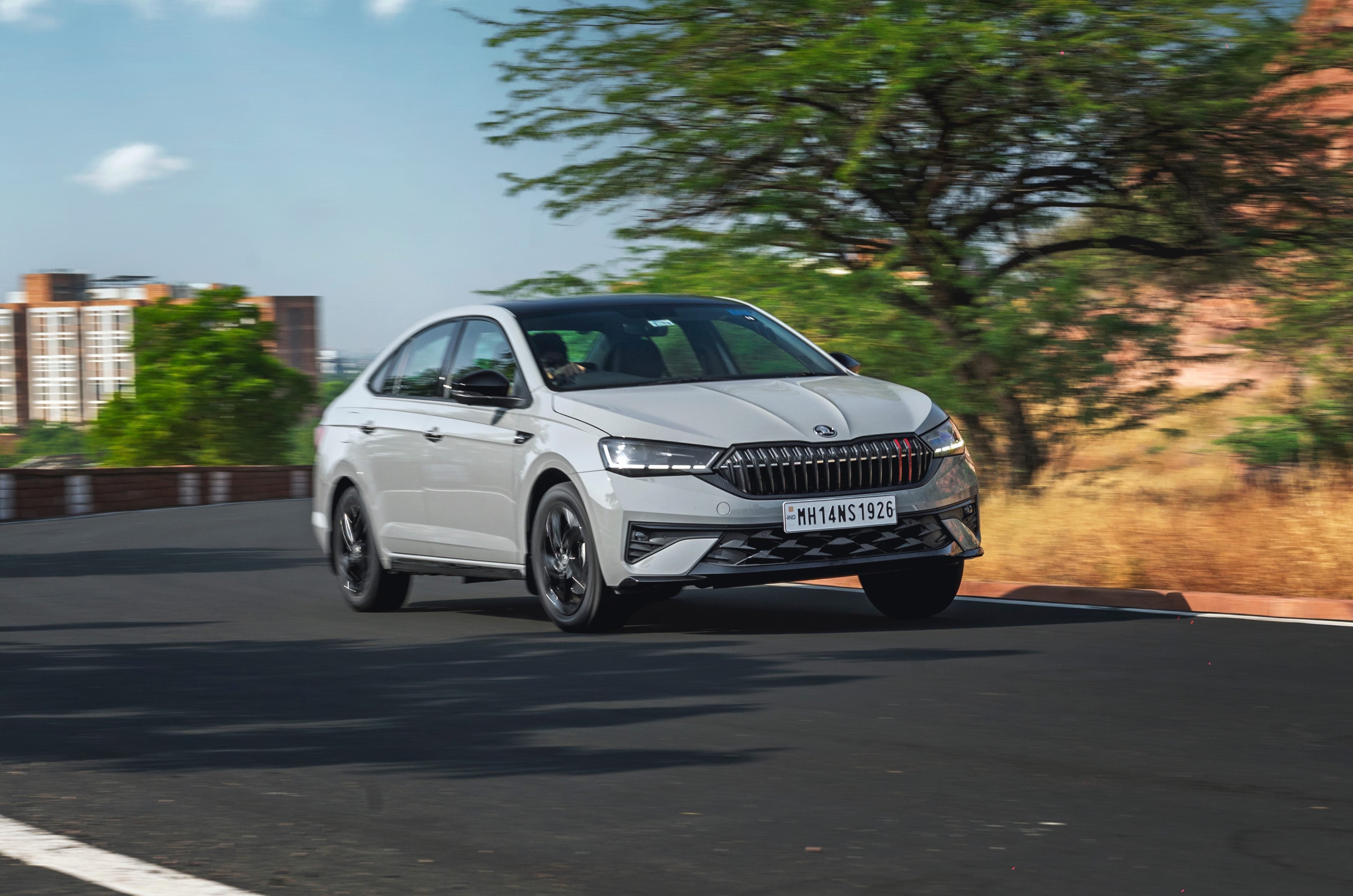
Being a facelift, the Slavia’s overall silhouette and proportions are unchanged, and that’s a good thing. Its design is clean and elegant rather than flashy, with crisp body lines, a long bonnet and a flowing roofline giving it a distinctly European appearance. The signature butterfly grille features new segmented chrome trim and sharp LED headlamps also get a new segmented LED DRL signature. The bumper is all new, featuring new LED fog lamps along with a reworked airdam. Along the sides, there’s a new design for the 16-inch alloys while the 179mm (unladen) ground clearance gives it a degree of SUV-like usability without making the sedan look too ungainly.

At the rear, it gets new sequential turn indicators and different LED elements in the tail lights. There’s a new trim piece connecting the tail-lights, with prominent ‘SKODA’ lettering, which gives the rear a cleaner, more contemporary look. As before, the Slavia is offered in a more luxurious Prestige trim, which brings chrome elements and a dual-tone finish for the alloys, and a sporty Monte Carlo trim that features blacked-out elements which include the grille, alloys, ORVMs, roof and bootlid spoiler. There’s also two new colours, Arctic Silver and Cappuccino Beige, which the former looking particularly tasteful.

Under the skin, the Slavia continues to use the MQB A0 IN platform, shared with the Kushaq and Volkswagen Virtus. This India-specific architecture allows the Slavia to retain its proper three-box sedan proportions while offering the ground clearance and practicality needed for Indian road conditions. Overall, the updates are evolutionary rather than revolutionary, but they do enough to keep the Slavia’s understated design looking fresh.

Skoda Slavia facelift interior space and comfort – 8/10

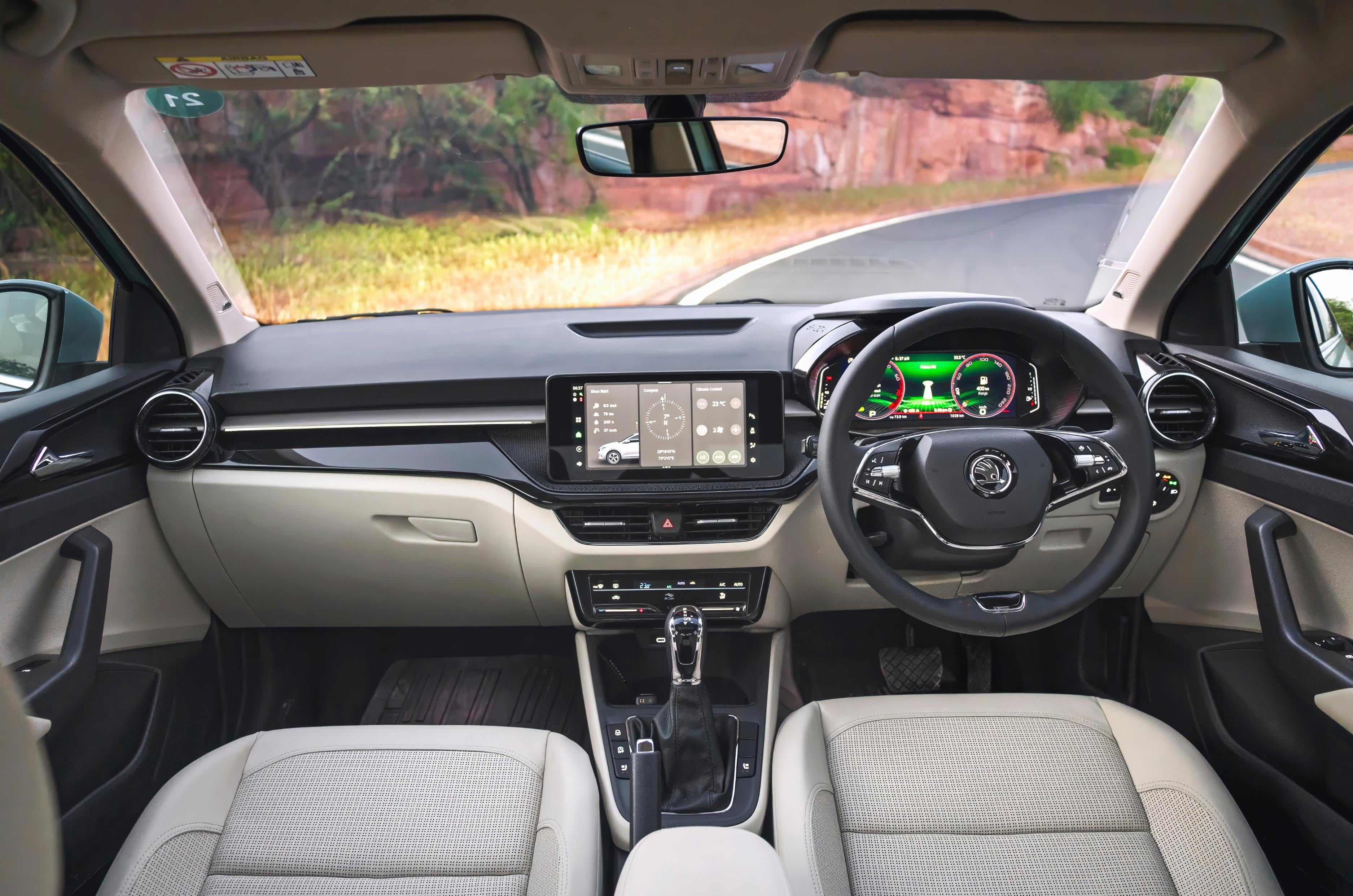
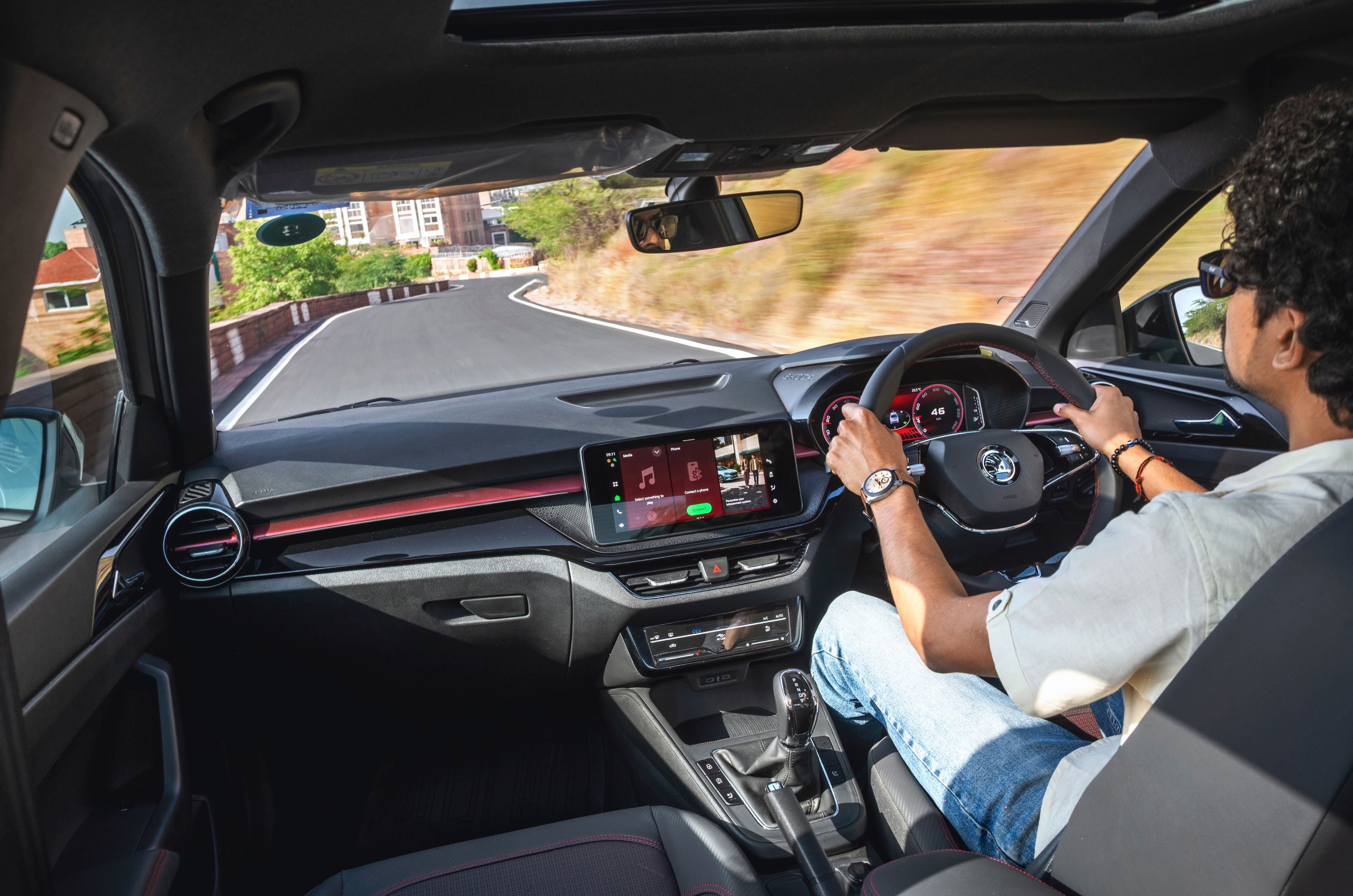
Step inside, and the door shuts with a reassuring thud and you’re greeted by the same layered dashboard. Like the exterior, the interior trim differs too depending on which trim you opt for. The more luxurious Prestige trim gets a beige and black upholstery with copper-coloured inserts on the dash, while the sporty Monte Carlo gets an all-black theme with contrasting red details on the dashboard, the stitching and the seat perforation. Build quality is solid overall, with a well put-together feel to the cabin. It’s also a practical space with plenty of storage spaces and the typical Skoda “Simply Clever” features like a ticket holder, coat hooks, phone pocket in the seatbacks and more.

The front seats are wide and supportive, with generous cushioning that makes the Slavia comfortable over long journeys, and finding your ideal driving position is easy too thanks to the electrically adjustable seats and reach/rake adjustment for the steering.

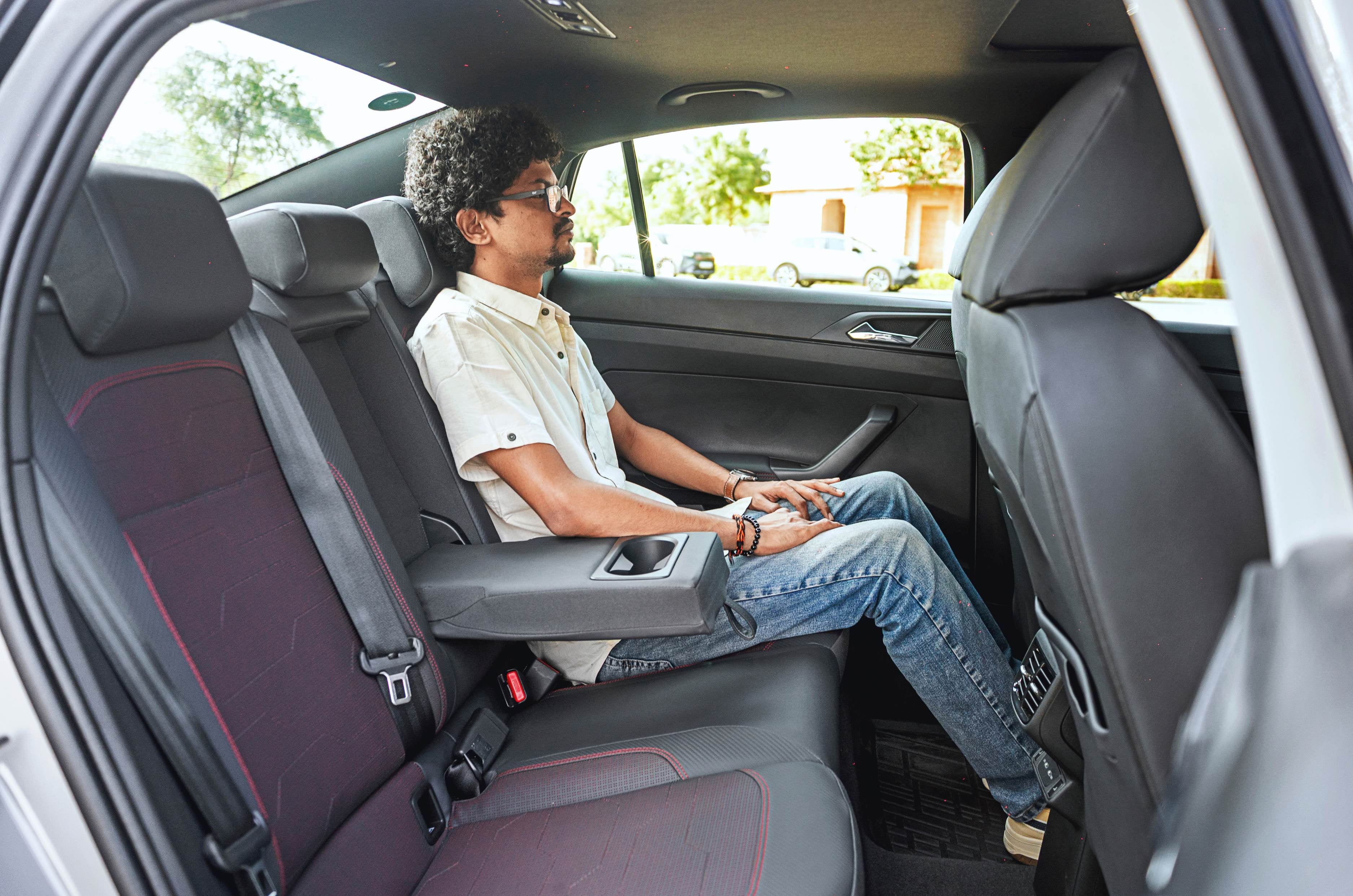
Rear-seat space remains one of Slavia’s biggest strengths. The long wheelbase translates into generous legroom and ample footroom, and the windows are also large enough. Headroom though, can be a little tight for taller passengers, and the contoured rear bench along with the transmission hump in the centre mean it’s more naturally suited to two adults than three. 

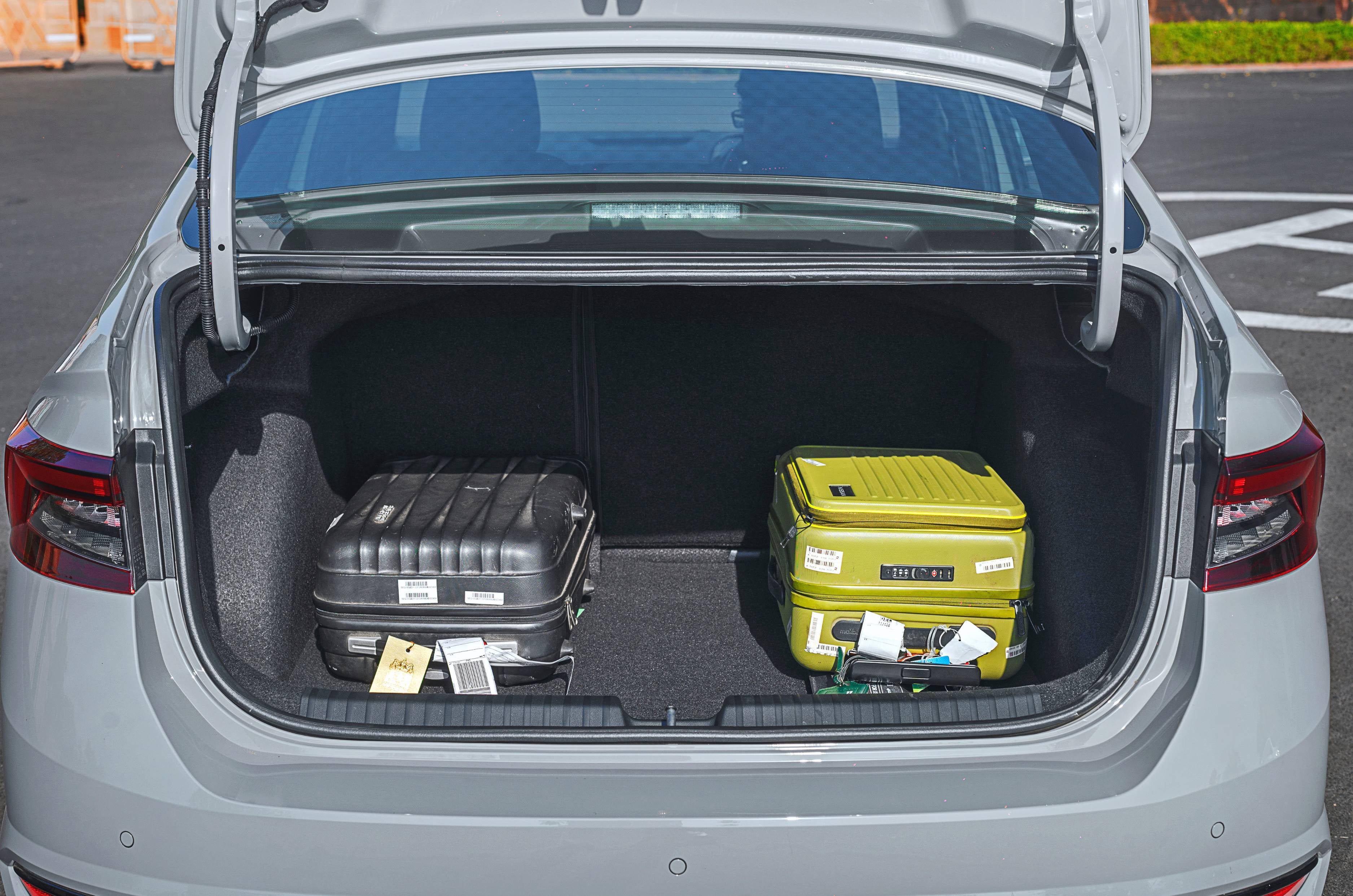
The 521-litre boot is among the largest in the segment, and the squared-off shape makes it easy to load. The 60:40 split-folding rear seats add further versatility. It also continues to get a space tyre and a subwoofer under the boot floor.

Skoda Slavia facelift features and safety – 9/10

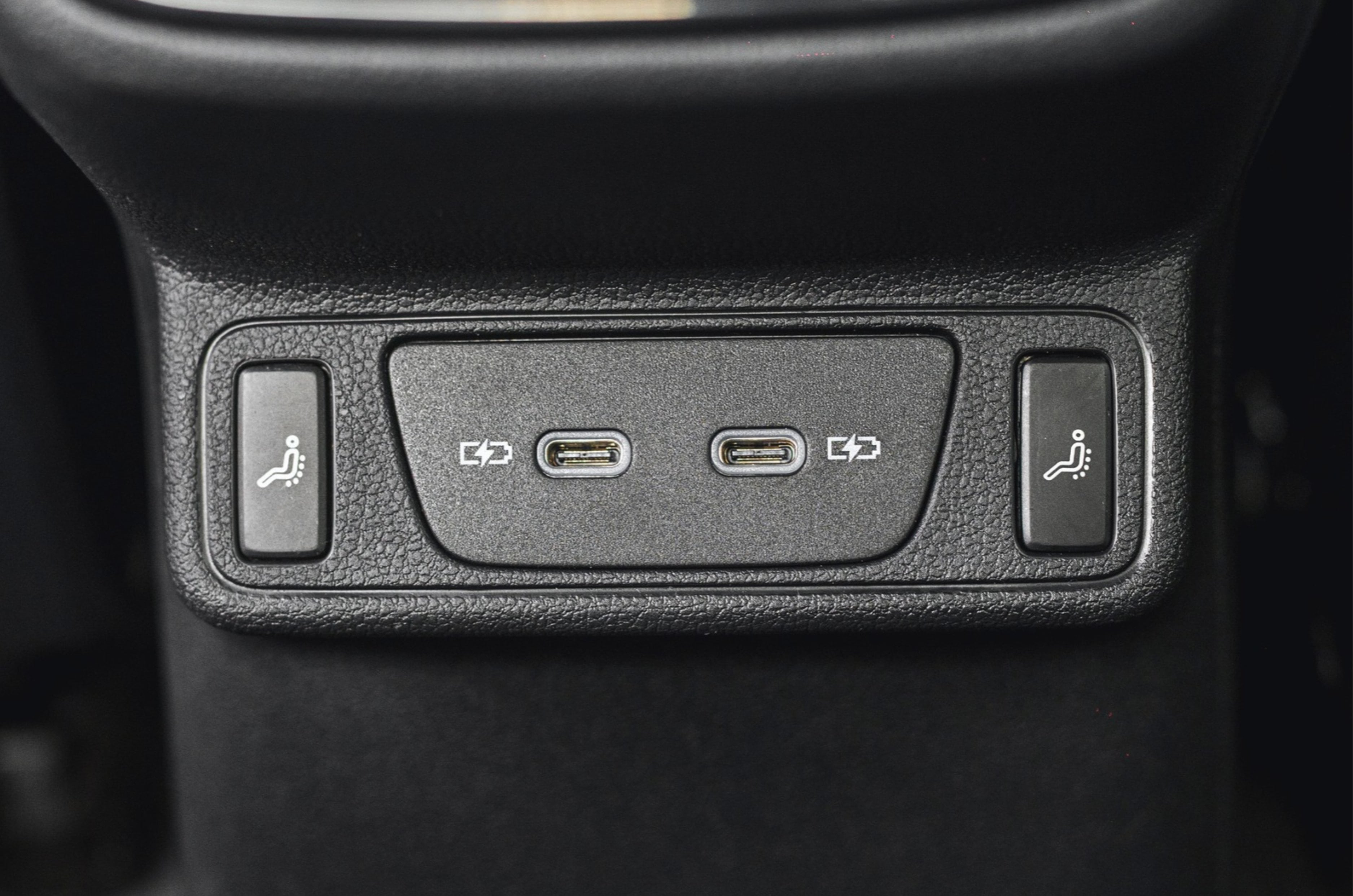
The Slavia facelift brings a useful upgrade in equipment, with the highlight being a segment-first rear seat massaging function. It’s a feature more commonly associated with larger, more expensive cars and adds another layer of comfort to what is already a spacious rear bench. This feature works very well and will be a hit with the chauffeur-driven.

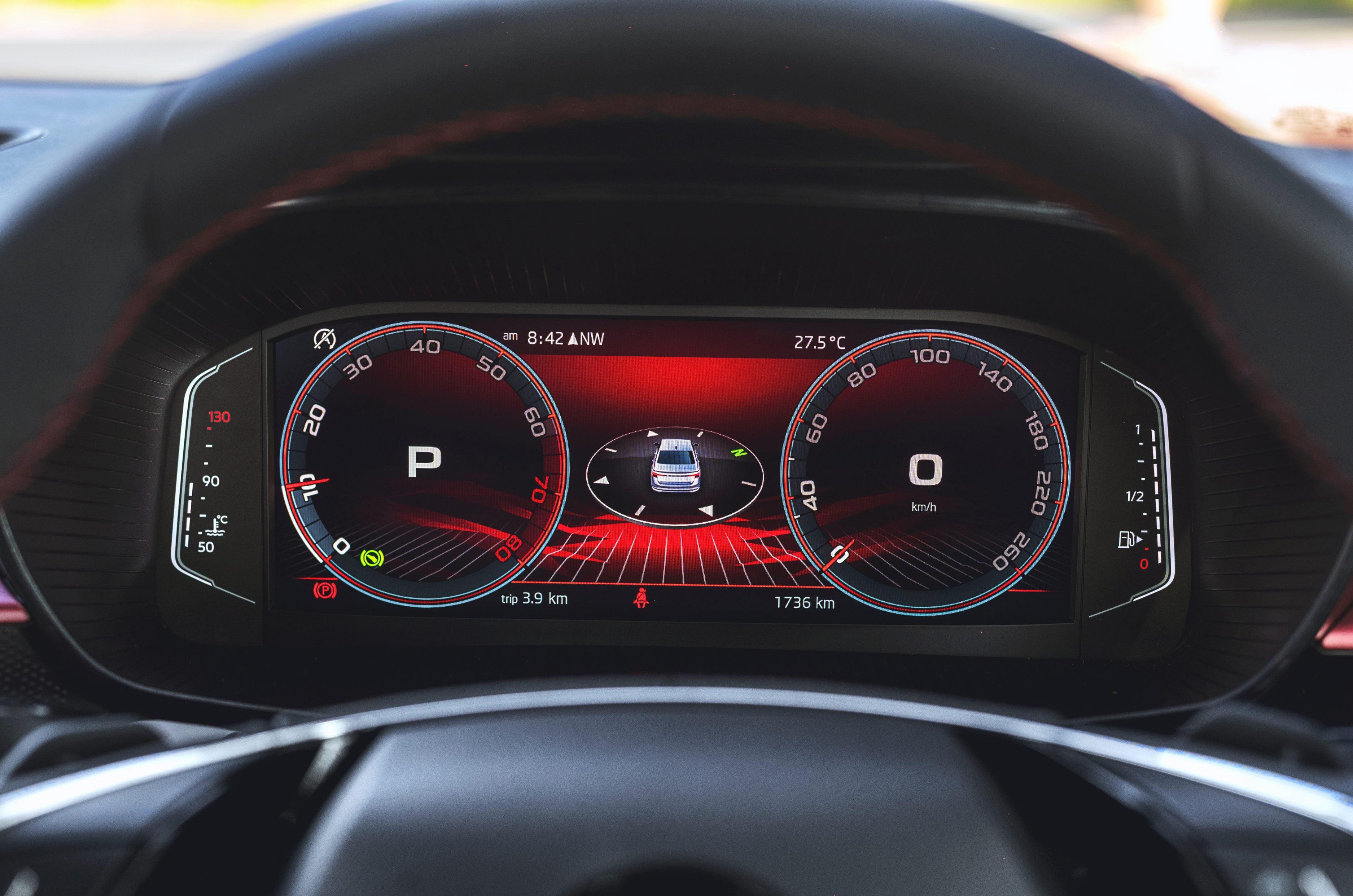
The infotainment and instrumentation have also been upgraded. The previous 10-inch touchscreen has been replaced by a slightly larger 10.1-inch unit, while the driver’s display grows substantially from 8 inches to 10.25 inches. Both screens get new graphics and additional features, giving the cabin a more contemporary feel and bringing the Slavia’s interface up to date. The touchscreen has a slick interface and also benefits from an AI voice assistant and connected car features, while the digital cluster gets multiple layouts along with a turn-by-turn navigation feature. The themes for both these screens also differ depending on whether you’ve gone for the Prestige or the Monte Carlo trim.

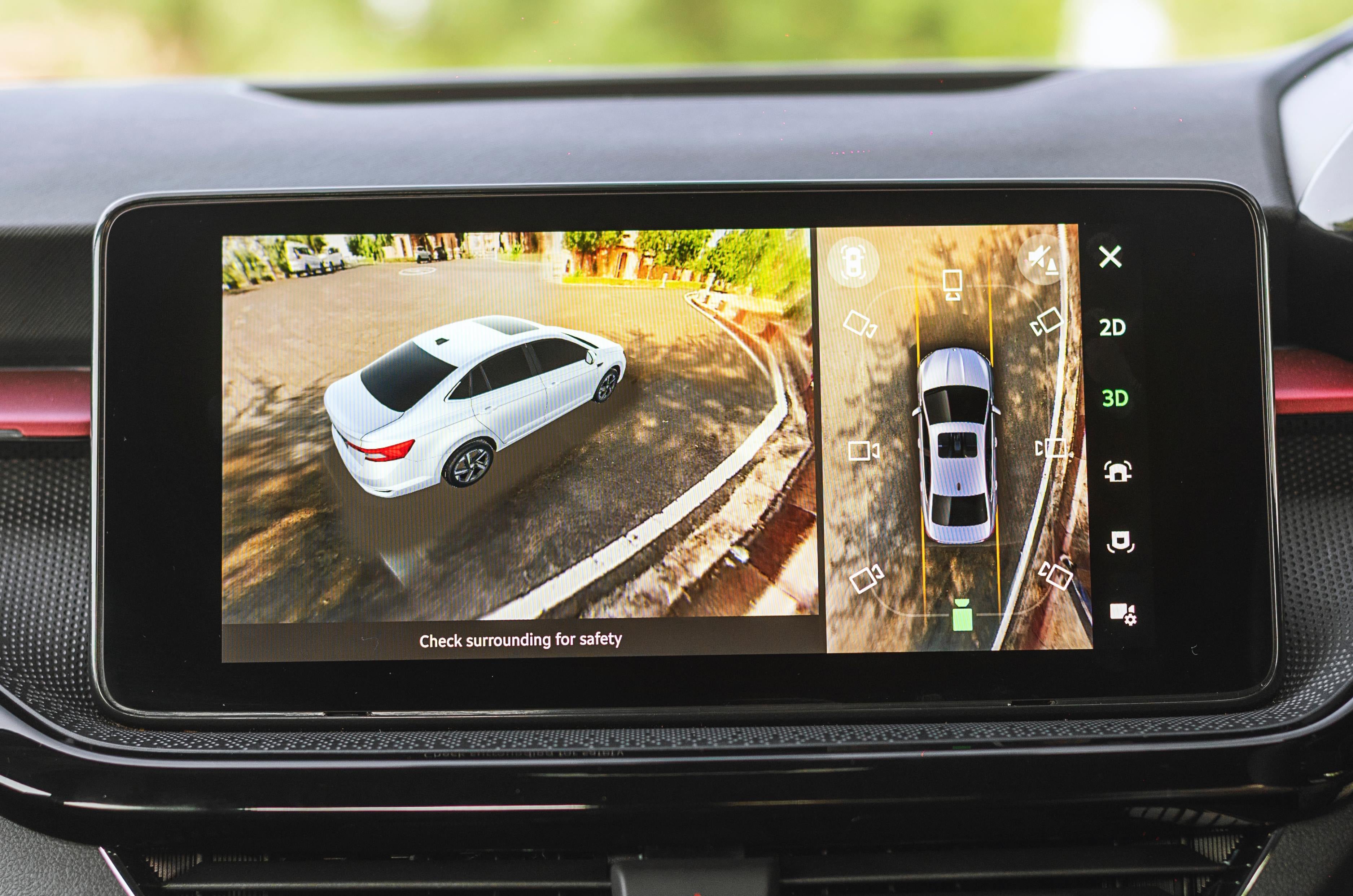
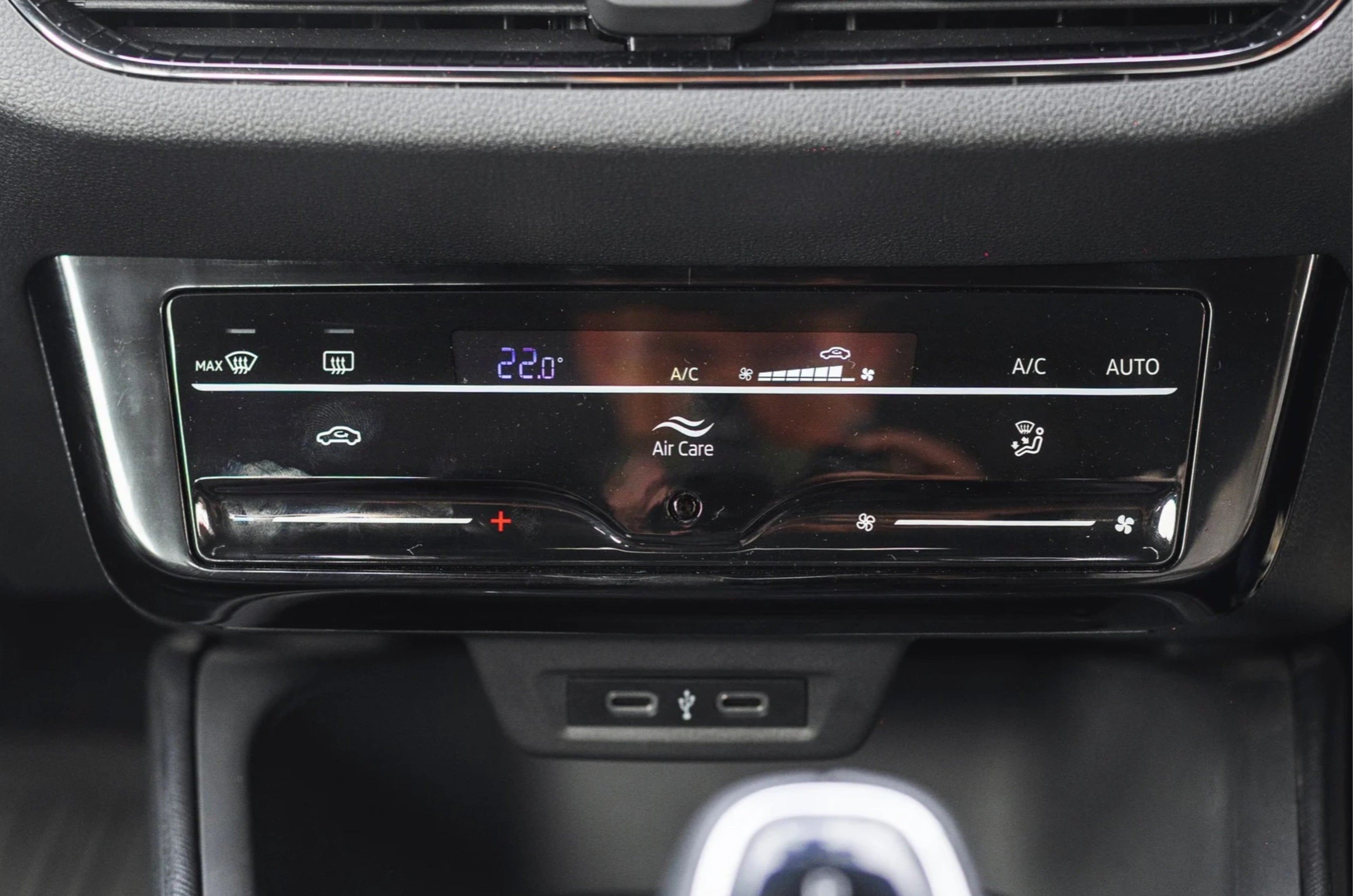
Another significant upgrade is the addition of a 360-degree camera, replacing the previous rear-view-only camera. This marks a huge improvement and the clarity and crispness of this camera is one of the best at this price point. And finally, like the Kushaq, the Slavia facelift also gets a new variable geometry compressor instead of a fixed geometry unit for the AC system, which has improved the cooling performance significantly.

Other than these, it continues to feature ventilated and powered front seats, a sunroof, wireless smartphone integration, a great-sounding audio system, auto climate control, ambient lighting, LED lights, auto headlamps/wipers, cruise control, leatherette upholstery, 6 airbags, ESC, traction control, hill-hold assist and much more. The pre-facelift Slavia has also received a full 5-star crash safety rating from Global NCAP. However, some features that rivals offer and are missing here include an electronic parking brake and ADAS tech.  

All together, the feature additions make the facelift feel more complete, with the new screens, 360-degree camera and rear seat massage adding both convenience and a greater sense of sophistication to the cabin.

Skoda Slavia facelift powertrain and performance – 8/10

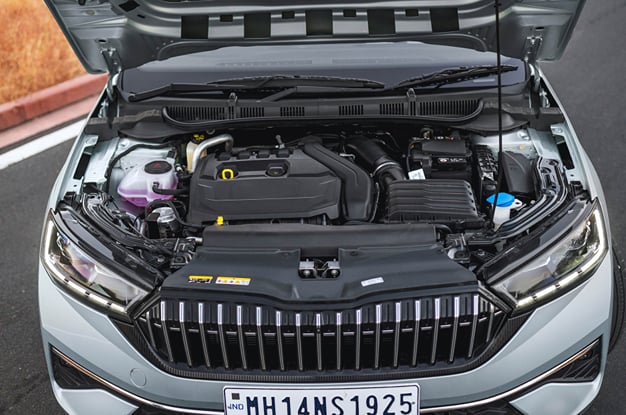
Skoda Slavia 1.0-litre TSI engine
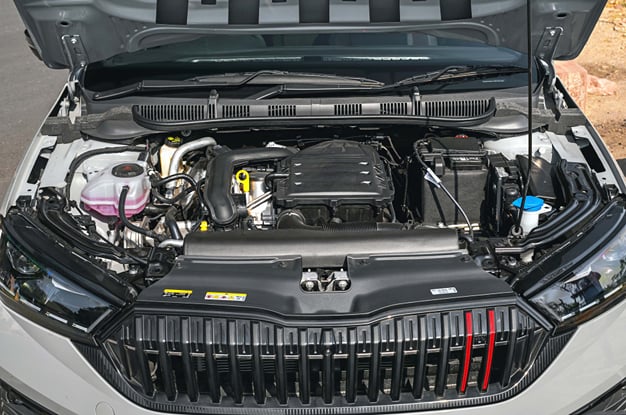
Skoda Slavia 1.5-litre TSI engine
 

Skoda Slavia 1.0-litre TSI engine (left), 1.5-litre TSI engine (right)

The Slavia retains the same engine options as earlier, so you have a choice between two direct-injection turbo petrols. There’s a 1.0-litre, three-cylinder unit that puts out 115hp and 178Nm and a 1.5-litre, four-cylinder mill that produces 150hp and 250Nm.

The 1.5 TSI can only be had with a 7-speed dual clutch automatic and enthusiasts will miss the option of a 6-speed manual with this engine, which was on offer earlier. The 1.0 TSI does get a 6-speed manual option, but the gearbox of major interest with this engine is the new 8-speed torque converter automatic. It’s the Aisin-sourced AQ300, replacing the earlier AQ250 6-speed unit, and this helps lower emissions and fuel consumption.

The new gearbox brings a welcome improvement to the Slavia’s low-speed manners. While the previous car had a tendency to leap forward from a standstill, this one now feels much more controlled than before. Once on the move, shifts are smooth and seamless, as you’d expect from a torque-converter automatic. What’s particularly impressive, though, is the speed of the manual shifts, whether you use the paddles or the Tiptronic gear lever. In manual mode, the gearbox also allows the engine to rev close to its limit before shifting up which makes the Slavia 1.0 TSI engaging to drive. The only real gripe with the gearbox is that all the ratios feel rather short. Third tops out at just over 100kph, while at 100kph in 8th, the engine is spinning at a little over 2,000rpm, which is higher than you’d expect given the number of ratios it has to play with.

Although we didn’t get a chance to time it, expect it to complete the 0-100kph sprint in around 11sec, similar to the 6-speed AT’s 11.16sec time. At idle, there is some of that familiar vibrations of a three-cylinder engine. It settles when you drive gently, but push beyond 3000rpm and the gravelly note makes itself heard inside. For the smaller and less powerful petrol engine, refinement could have been better, and more insulation would have helped too.

The 1.5-litre four-cylinder TSI continues unchanged and remains the stronger, more effortless performer of the two. Acceleration is brisk and flat-out performance is strong, while shifts via the paddles are, as expected, quick. The pre-facelift Slavia 1.5 TSI DSG managed 0-100kph in 8.96sec in our tests, and performance with the updated car should remain in the same ballpark.

Between the two engines, the 1.5 TSI is the one that feels more complete, not just because of its stronger performance but also because it is smoother and benefits from cylinder-deactivation technology. Under light engine loads, two of its four cylinders shut down to save fuel, and the transition is seamless as well. However like the 1.0, the 1.5-litre also becomes quite audible when worked hard and some road noise from coarse surfaces also make its way into the cabin.

Skoda Slavia facelift fuel efficiency – 7/10

Our brief test drive meant we didn’t get a chance to test the fuel efficiency of the Slavia facelift, however we have tested the Kushaq facelift which is mechanically identical. In our real-world fuel efficiency tests, the Kushaq 1.0 TSI AT averaged better than the 1.5 TSI DSG by 0.48kpl. In the city, the 1.0 TSI (10.7kpl) was more efficient than the 1.5 TSI (9.55kpl) by 1.15kpl, thanks to the 1.0’s lighter kerb weight and aggressive start/stop system. In contrast, the 1.5’s twin-cylinder deactivation tech helped it be more efficient on the highway (15.29kpl) than the 1.0 (15.10kpl) by 0.19kpl. However, we’re yet to test the 1.0 MT’s fuel efficiency.

Skoda Slavia facelift ride comfort and handling – 8/10

Ride and handling are areas where the Slavia continues to impress. Despite its generous 179mm ground clearance, the handling doesn’t feel compromised. Body roll is well controlled, while the car remains composed and predictable when you go around corners. The steering is on the lighter side but picks up weight progressively as speeds rise.

There is that typical low-speed firmness in the ride quality that you’d normally associate with European cars. But it never feels overly stiff and instead gives it tremendous stability at highway speeds. The suspension also deals with broken surfaces and undulations with maturity, absorbing sharper imperfections without becoming unsettled. It is this combination of an agile chassis, well-controlled body movements and mature ride quality that makes the Slavia enjoyable to drive.

The Slavia’s braking performance remains strong and reassuring but the 1.5 TSI has now gained rear disc brakes. During our test drive, we didn’t find a noticeable difference to the earlier drum brake setup. The 1.0 TSI meanwhile, continues with the same setup as before. 

Skoda Slavia facelift value for money and verdict – 8/10

Prices for the Skoda Slavia facelift are set to be announced in the coming days, but expect it to cost a bit more than the Rs 10 lakh to 18.20 lakh (ex-showroom) the pre-facelift model demanded. What’s nice though is that the new 8-speed AT can be had right from the second-to-base Classic+ trim. As before, it continues to go up against the likes of the Hyundai Verna, Honda City and its Volkswagen sibling, the Virtus.

With this facelift, Skoda has enhanced the Slavia further with a sleeker design that looks timeless, important comfort and safety feature additions and relevant technical updates. Some shortcomings remain, like the slightly firm low speed ride, the absence of a manual gearbox with the more potent engine and it does miss a couple of features compared to rivals. But then whatever features have been added have enriched the experience, like the rear seat massage, the new AC compressor and the 360-degree camera. And as before, it remains very enjoyable to drive thanks to the punchy engines, the sorted handling and the mature high speed manners. 

The Slavia facelift then, stands out as one of the most complete and well-rounded sedans around, with a great blend of comfort, practicality, features and driving pleasure.

TVS Ntorq 150 long term review, 4,000km report

TVS Ntorq 150 long term review, 4,000km report
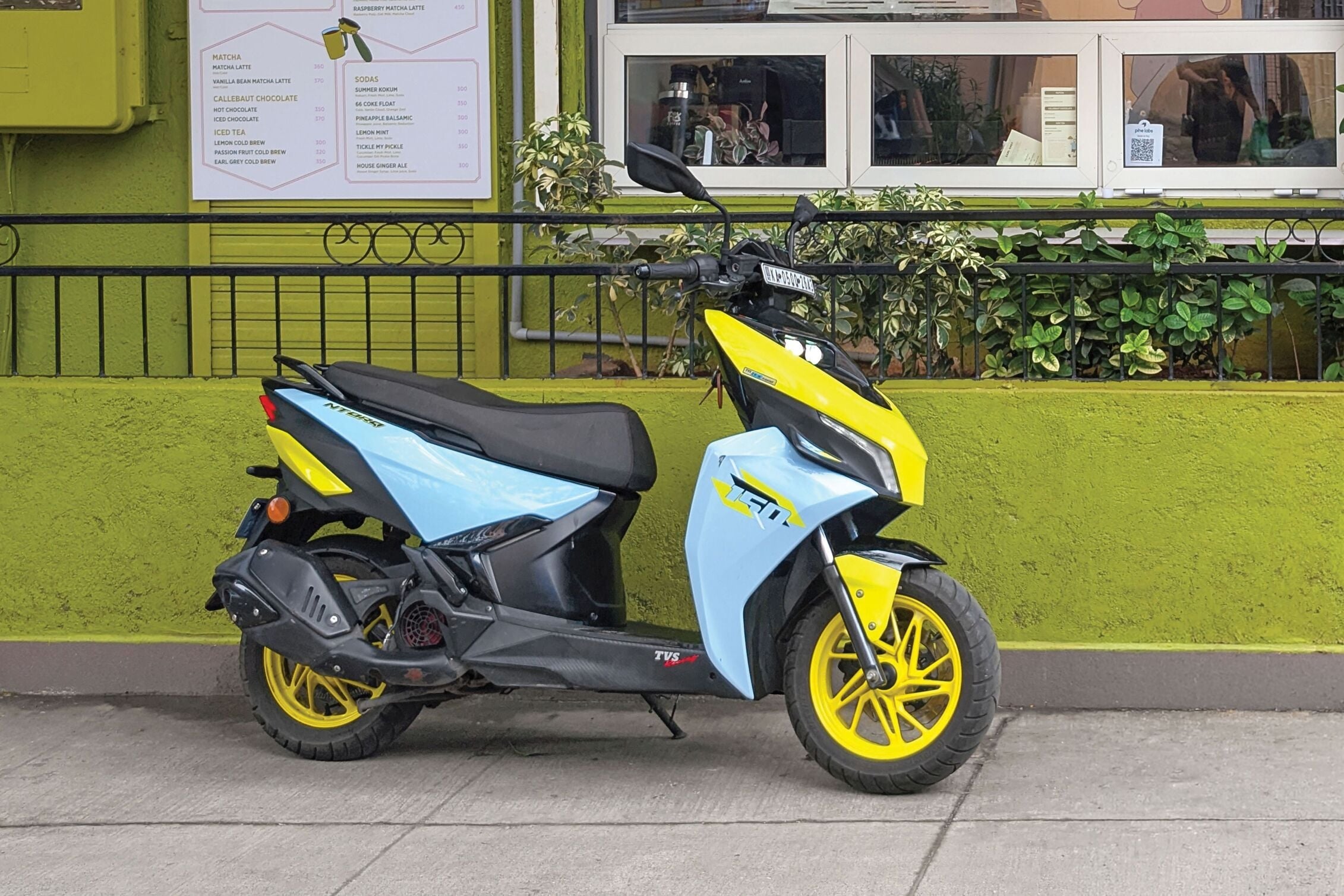
TVS Ntorq 150 long term review, 4,000km report lead image

While scooters are more practical than motorcycles, the choice comes down to how and where you use them. I have preferred motorcycles for daily commuting, mainly because their larger wheels and better suspension tend to offer a more composed ride, while the extra performance makes quick progress through traffic easier.

With our long-term motorcycles already being used by other colleagues, I found myself spending more time with the TVS Ntorq 150. Since our last report, it has covered another 1,000km.

The first thing any enthusiast is likely to appreciate about the Ntorq is its performance. Overtakes are easy, and you rarely need to twist the throttle all the way to make a quick move through traffic. Adding to the character of this scooter is an engaging exhaust note. The riding modes also add a useful layer of versatility. During torrential rains, with poor visibility and slippery roads, I found Street mode quite useful. It slightly reduces power delivery, making it easier to manage when conditions aren’t ideal. 

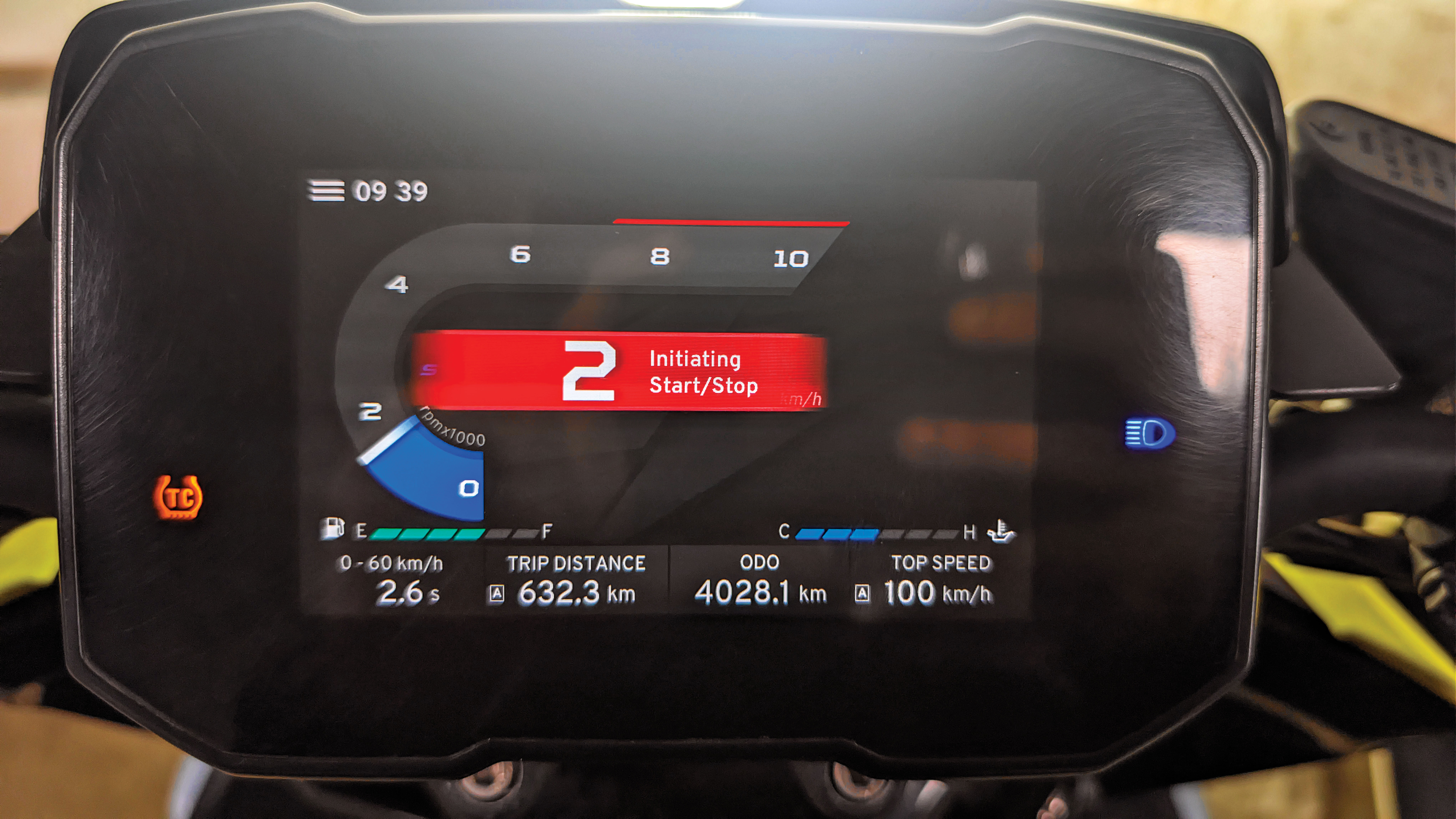
However, I don’t particularly like the start-stop system that is activated in Street mode. It takes a second longer than I would like to restart when the throttle is opened, which can be irritating when launching away from a traffic light. I prefer switching it off and letting the engine idle instead.

Start/stop feature takes a little longer than expected to restart the scooter.

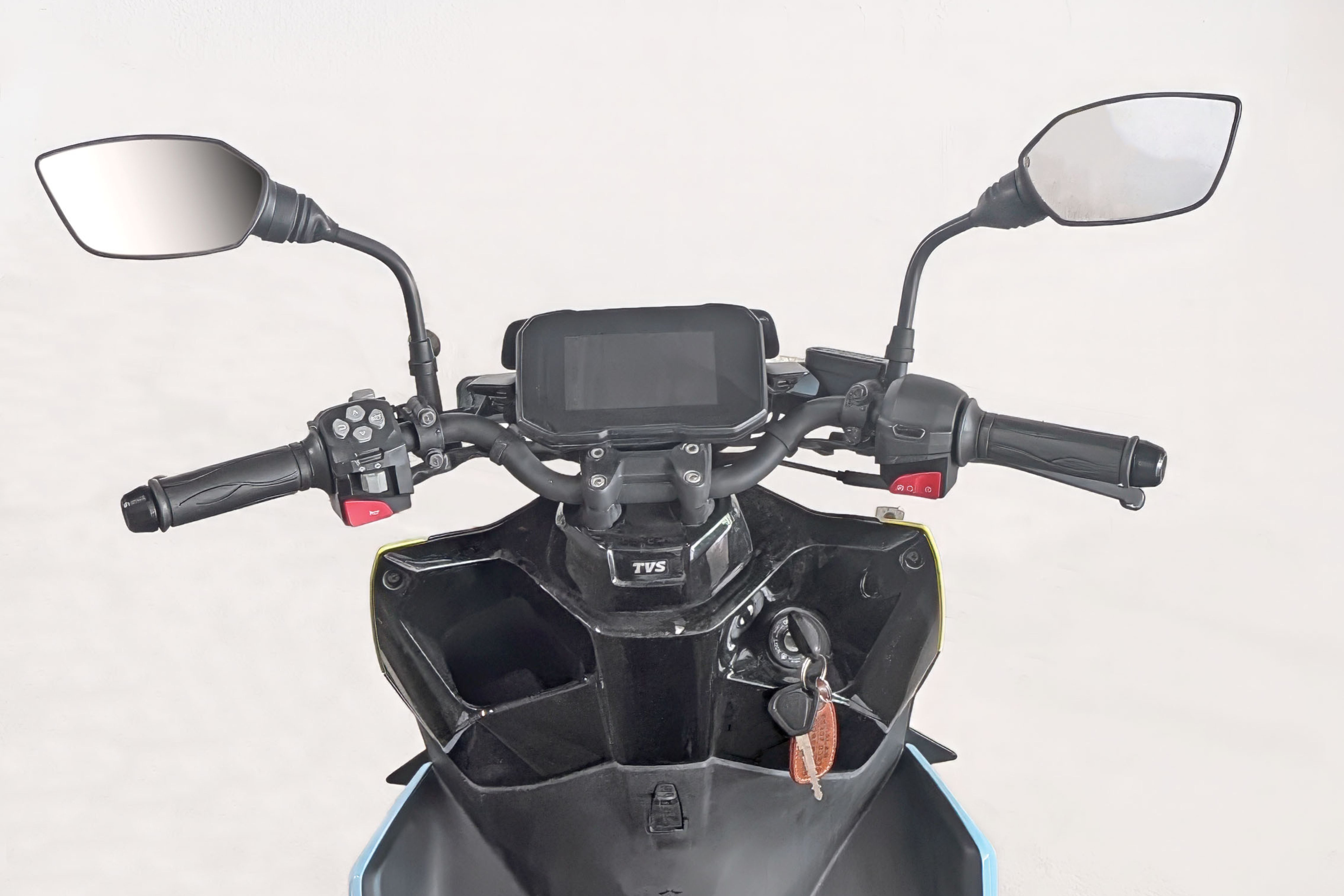
The mirrors are another small annoyance. They provide a good field of view, but they stick out quite a bit and can make squeezing through tight traffic gaps a bit more difficult. 

Mirrors jut out too much and come in the way of filtering through tight traffic.

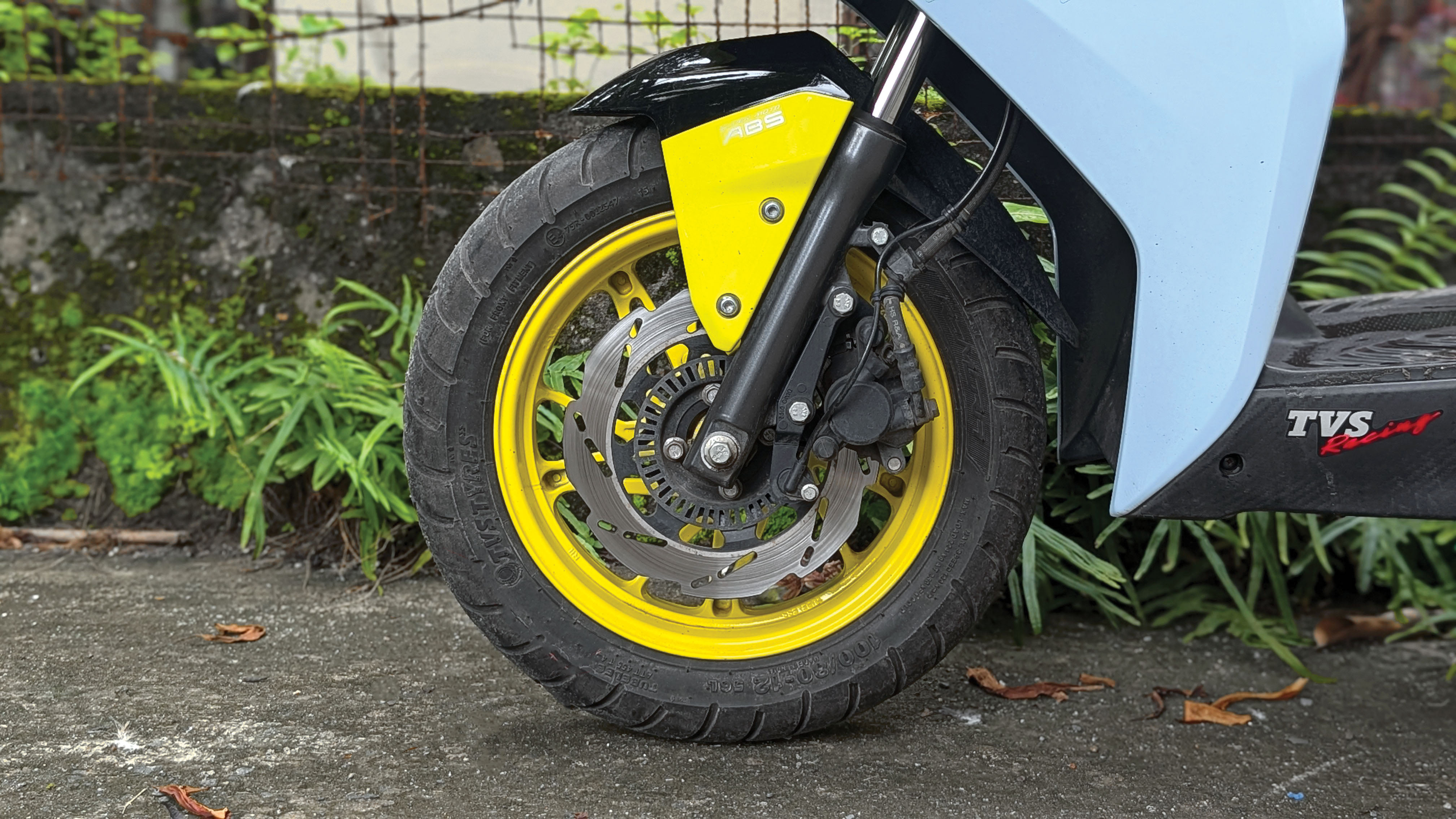
The front disc brake, on the other hand, has been impressive, offering strong stopping power, while the ABS isn’t intrusive. I have noticed that the rear drum brake needs adjustment roughly every 300km, though.

The front disc brake offers strong performance, and the ABS is not intrusive.

Despite being a sport-oriented scooter, its suspension does a really good job of dealing with potholes and broken roads. In fact, I would say it handles rough roads better than several family-oriented scooters I have used in the past. 

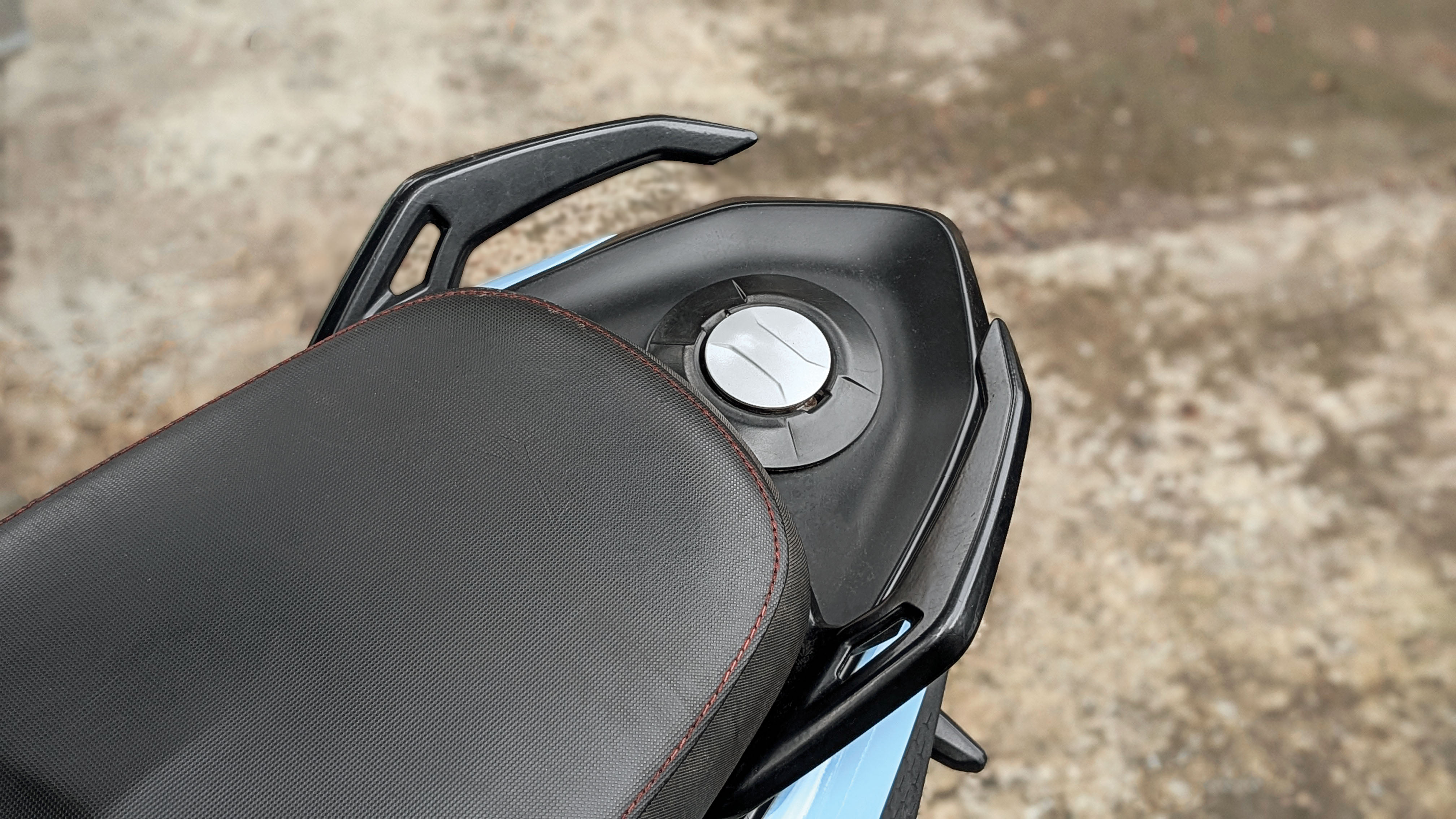
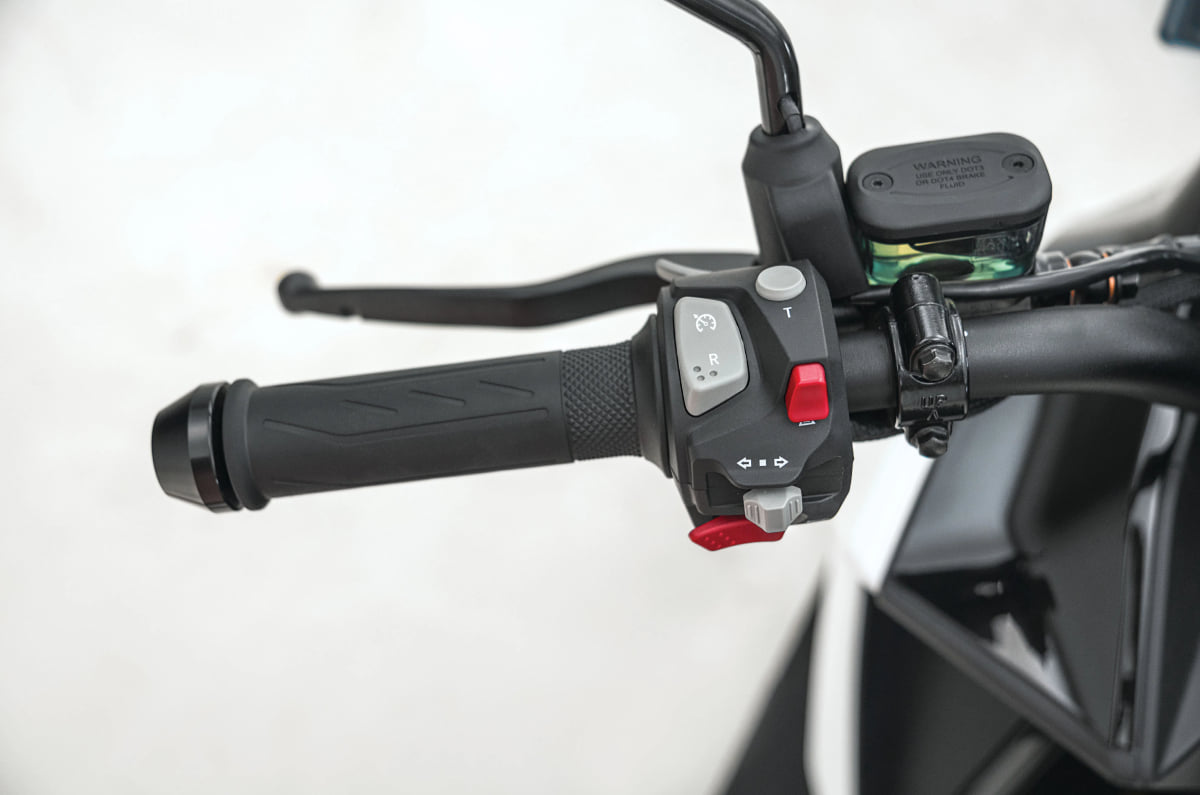
In terms of convenience, the under-seat storage is adequate for my requirements, while the left-hand switchgear makes navigating the menus on the TFT display fairly straightforward. The external fuel filler is another small but useful touch. 

The convenience of an external filler makes fuel stops very efficient.

After another 1,000km, the Ntorq 150 has made a convincing case for itself as a daily commuter. It has the performance to keep an enthusiast entertained, the ride quality to tackle our battered roads and enough everyday convenience to make commuting easy. It isn’t without a few niggles, but the longer I spend with it, the more I understand why this sporty scooter makes a strong argument for leaving the motorcycle at home for the daily grind.

Odometer4,020km
PriceRs 1.21 lakh (ex-showroom)
FaultsNone
Maintainance costsNone
Previous reportsJune 2026

Keeway EZI Hypevolt-R: 3 reasons to buy and 2 reasons to skip it

Keeway EZI Hypevolt-R: 3 reasons to buy and 2 reasons to skip it
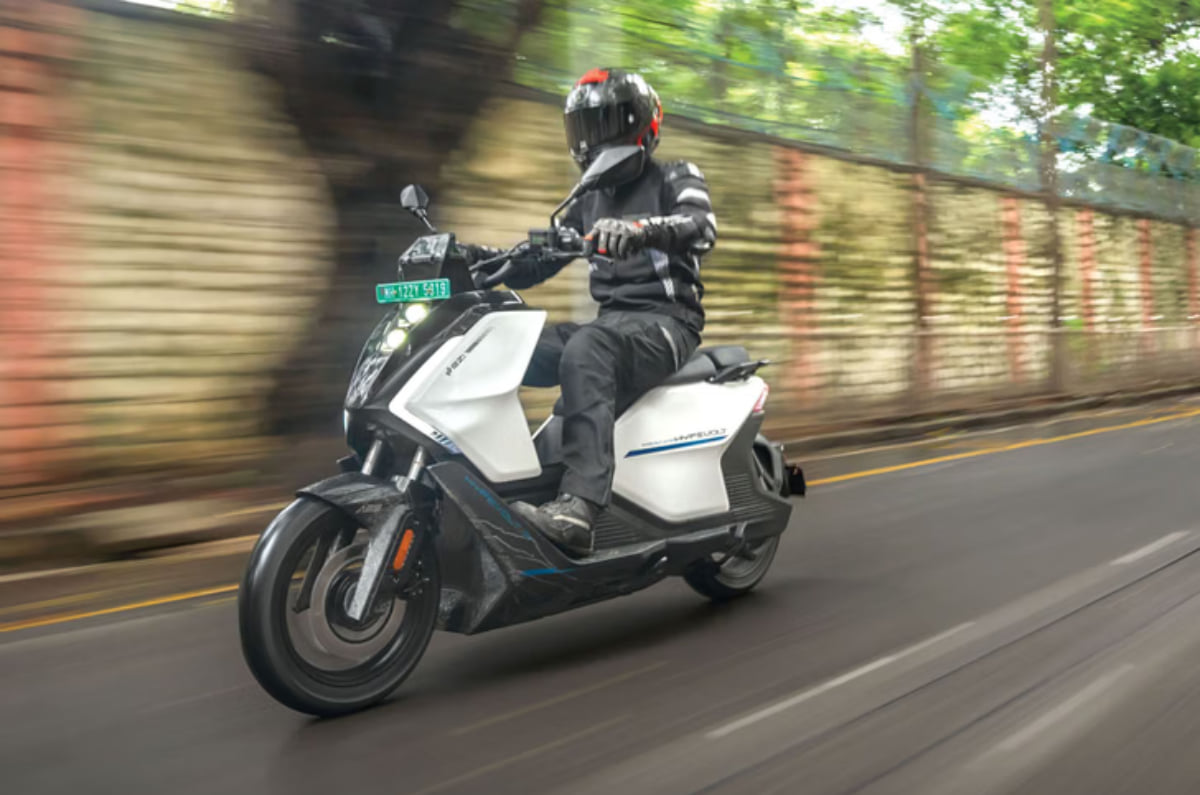
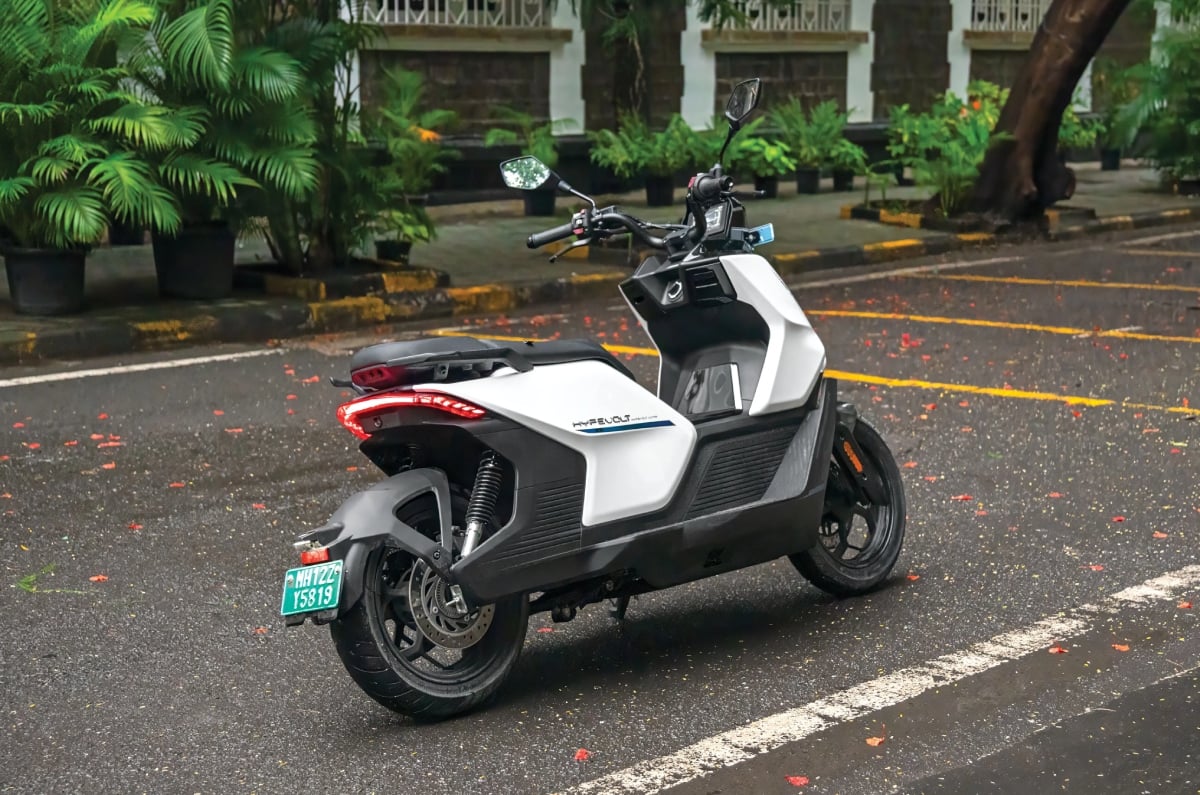
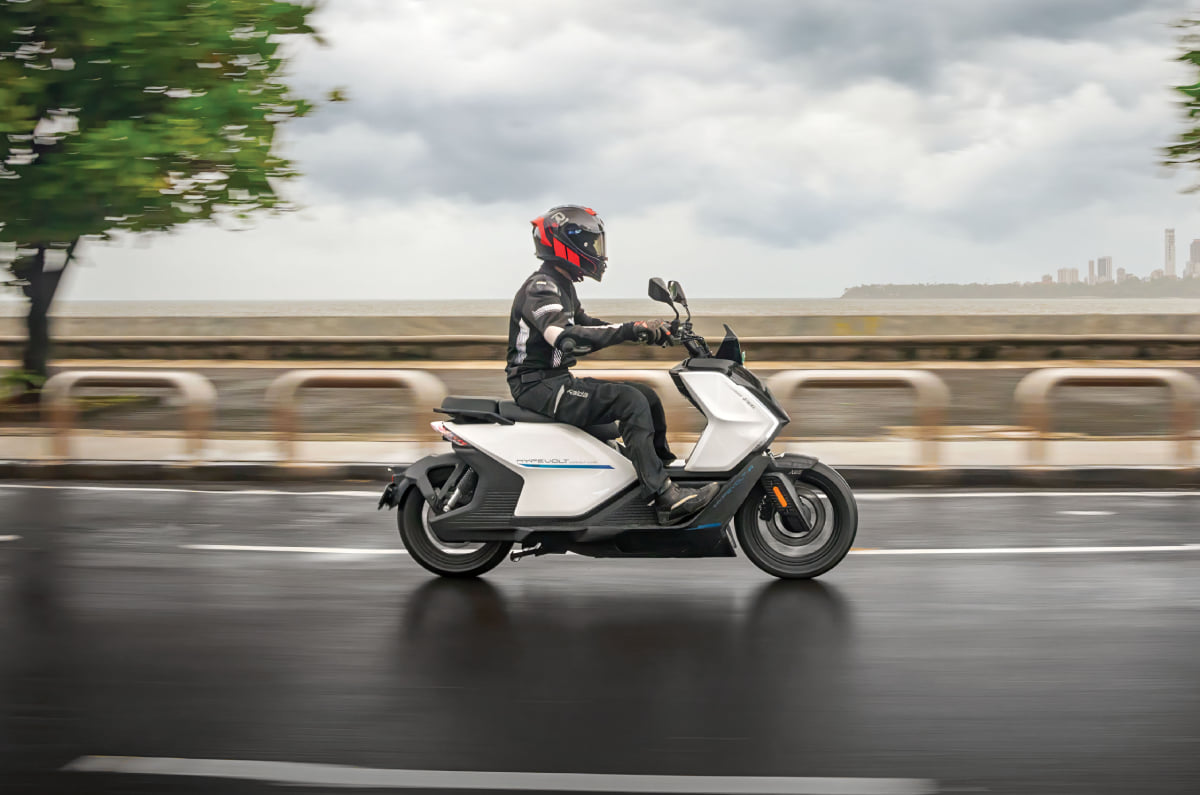
Keeway EZI Hypevolt-R

The Keeway EZI Hypevolt-R is a premium step-through electric scooter that arrives in India as a CKD product, sold through Benelli and Keeway dealerships. It is the first product from EZI, Keeway’s electric sub-brand, to reach our market. In our time with the scooter, we found it to be a genuinely capable product with some real strengths, but also a few areas that need attention.

Reasons to buy the Keeway EZI Hypevolt-R

Genuinely strong performance

The Hypevolt-R’s most pleasant surprise is how quick it is. With a 12kW motor and a 5.04kWh dual-battery pack, it manages the 0-80kph sprint in 7.49 seconds and 0-100kph in 13.05 seconds in Sport mode, which is genuinely impressive for an electric scooter. Three riding modes – Eco (45kph), Normal (81kph) and Sport (115kph) – give it useful versatility. Normal mode is the sweet spot for everyday use, offering enough punch for overtakes while preserving range. In our testing, riding mainly in Normal mode, we covered 125km on a charge.

Striking design, premium build quality and a practical package

The Hypevolt-R makes a strong first impression. The arrow-shaped side panels, motorcycle-style handlebar and large 14-inch wheels give it a distinctive stance, and the overall fit and finish is impressive for the price. Switchgear feels premium, disc brakes with dual-channel ABS are fitted at both ends, and the 27 litres of underseat storage is enough for a half-face helmet and the provided charger. This is complemented by 4.6 litres of front compartment storage. USB Type-A and Type-C charging ports are also included. 

Comfortable for longer rides

The seat is excellent and even after covering around 70km in a day, there was no discomfort. The 770mm seat height isn’t particularly tall, and the raised floorboard allows for a relaxed riding position. The broad proportions mean shorter riders may find themselves on their toes, but for most riders the ergonomics work well for extended use. The suspension handles city speeds competently, and the Yosun tyres offer good grip in both wet and dry conditions.

Reasons to skip the Keeway EZI Hypevolt-R

Battery compartment sealing is a concern

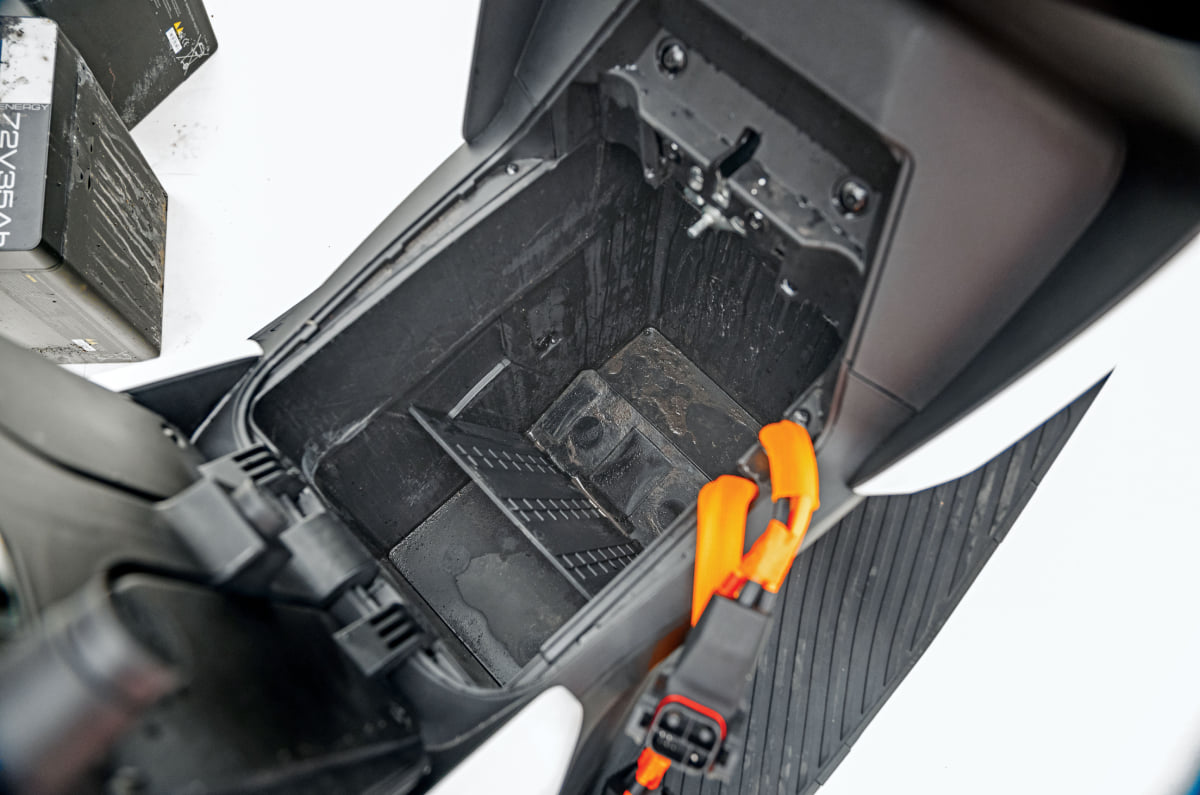
After extensive use in the rain, we found a significant amount of water, dirt and muck inside the battery compartment when we removed the batteries. Beyond being unpleasant to deal with, the compartment is also difficult to clean. Each battery also weighs 17.3kg, making them cumbersome to remove for home charging. The charging cable itself is quite short, which could be inconvenient depending on socket placement. 

Electronics are feature-rich but unnecessarily complicated

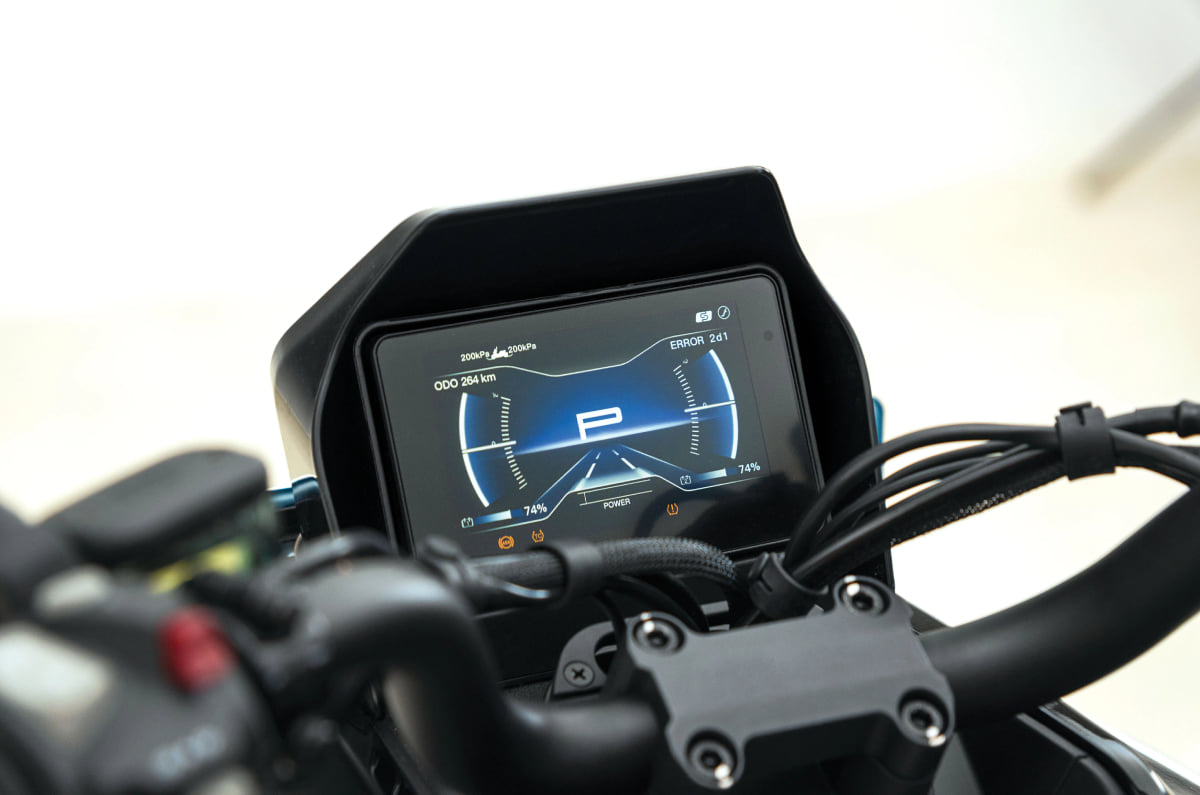
The Hypevolt-R is loaded with technology like traction control, adjustable regenerative braking, blind-spot detection with a reverse camera, cruise control and Bluetooth connectivity, but the way it’s all integrated makes it harder to use than it should be. There is no range estimate on the TFT display; you have to check the app on your phone instead. Riding mode selection, traction control settings and regeneration levels are all managed through the app rather than the instrument cluster. Lastly, the keyless system requires you to press the unlock button on the fob first rather than unlocking automatically on proximity. For a scooter at this price, the electronics should be more intuitive.

With input from Azaman Chothia

Royal Enfield Wanderer Waterproof Boots review

Royal Enfield Wanderer Waterproof Boots review
Royal Enfield Wanderer Waterproof Boots

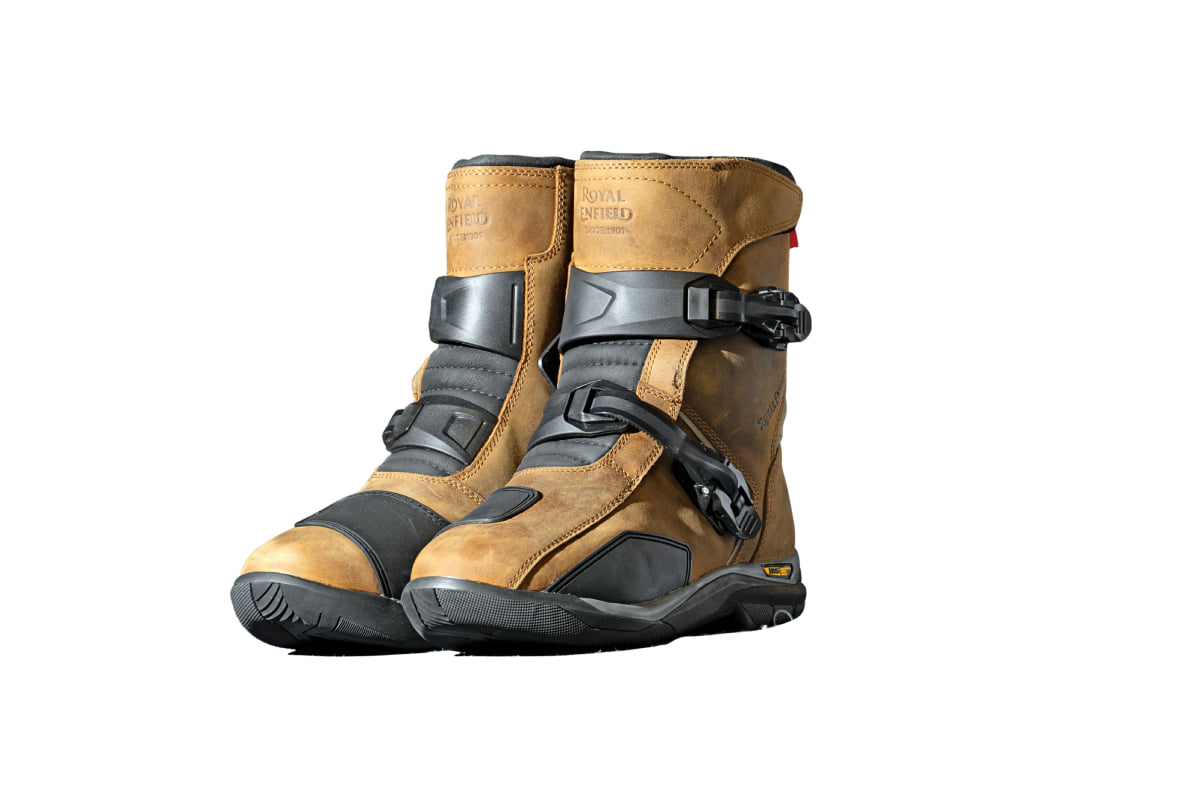
These are versatile riding boots that sit between an everyday motorcycle boot and a more rugged touring option. They use leather as the primary outer material and feature a sturdy construction with a grippy sole. For waterproofing, the boots use a membrane/liner and sealed seams.

They feel substantial and sturdy when you first put them on. They weren’t uncomfortable but didn’t have the flexibility you would expect. It took around 500-600km of riding for them to properly break in. Once they did, the difference was quite noticeable. They became more comfortable and allowed greater freedom of movement. They also started feeling more natural when walking around off the bike, which is important for a pair of boots that you’re likely to use as a daily option in the rainy season.

On the motorcycle, these boots give you a good sense of security. They feel sturdy around your feet and ankles, and the solid construction with TPR protectors in the heel cup, toe box, and ankle inspires confidence while riding. Whether shifting gears, using the rear brake or standing on the pegs, they were secure without feeling cumbersome.

The boots are also alright for some mild off-road riding. I wouldn’t recommend them for particularly technical or hardcore trails, where a dedicated off-road boot would offer greater protection, but for lighter trails and the occasional gravel or dirt section, they get the job done. 

The waterproofing, however, is where these boots have a limitation. During shorter rides, they performed well. I used them extensively around the city and encountered wet conditions without any water seeping through. Even for longer commutes of 50-60km, the waterproof liner did a good job of keeping water out.

However, things changed on a longer tour. After around 300km of riding in wet conditions, water eventually started making its way inside the boots. Of course, this also depends on the intensity of rain and how much water is hitting each boot. From my experience, more water seeped into the right boot compared to the left. So, I’d be more inclined to recommend the Wanderers for city use and shorter weekend getaways rather than long rides. Additionally, once they get wet from the inside, they take quite some time to dry out. In other respects, the boots work really well as touring footwear. 

Priced at Rs 9,990, they offer a good mix of protection, comfort and versatility, especially once they have been properly broken in.

Where: royalenfield.store

Price: Rs 9,990

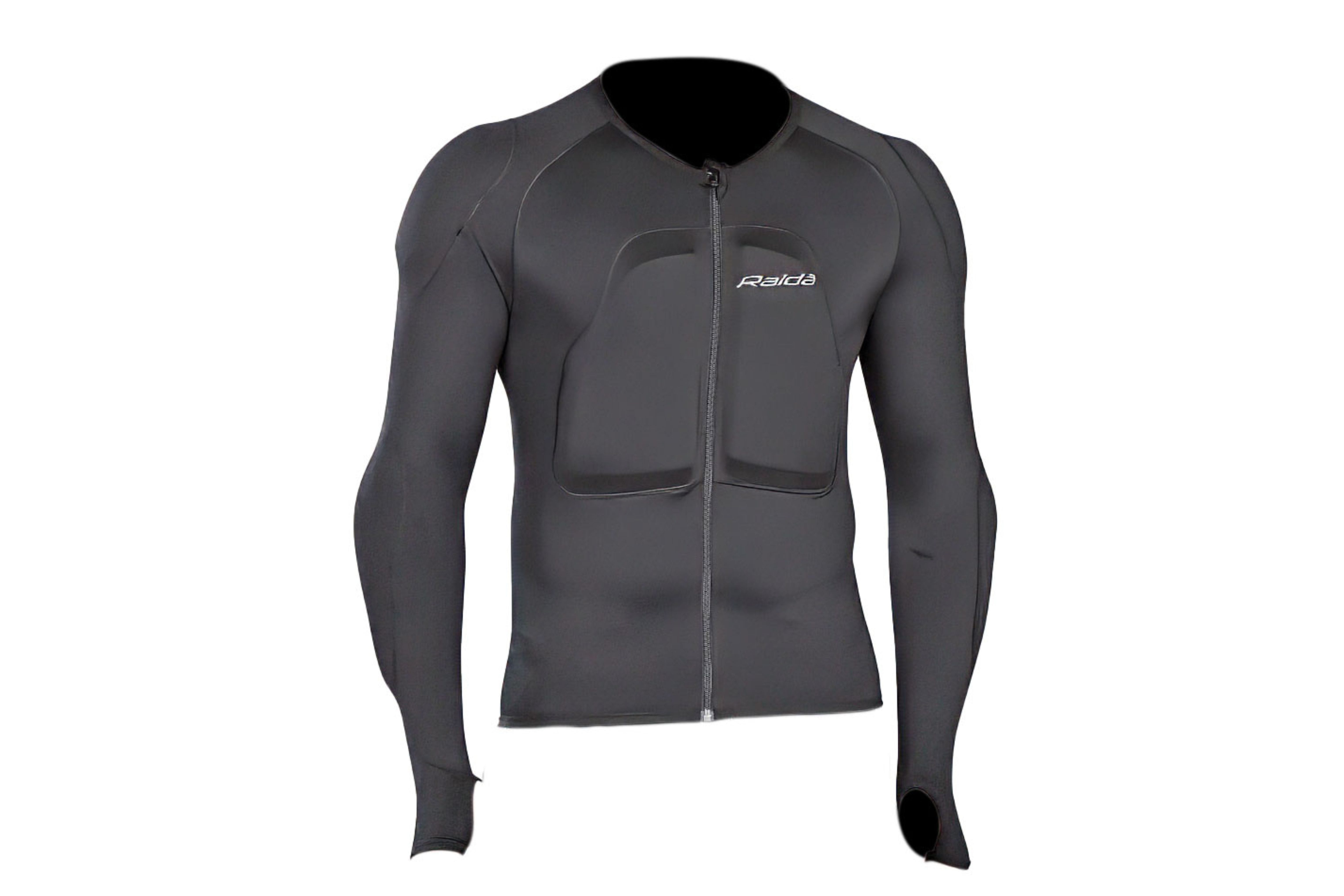
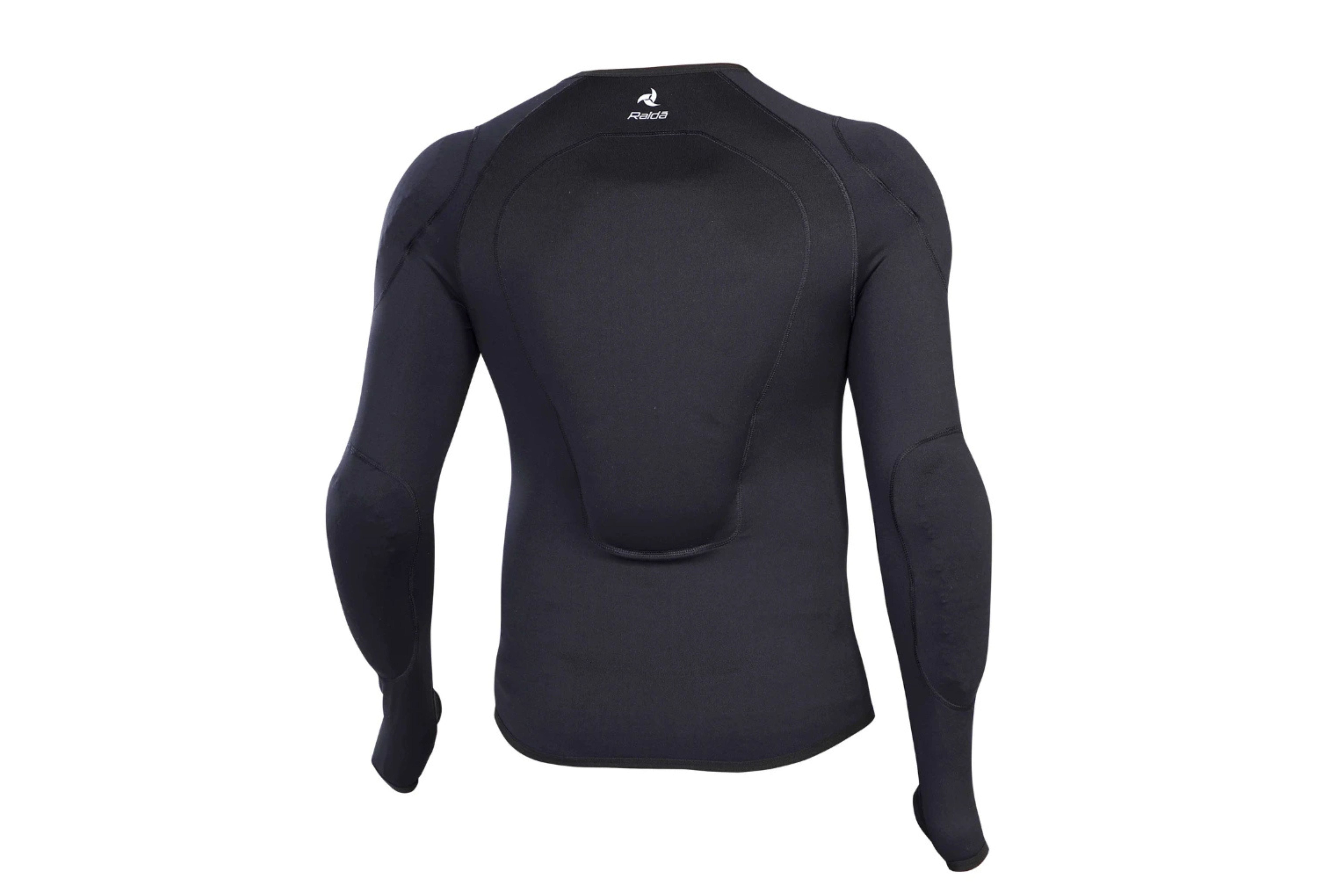
Raida Trailcraft Armored Base Layer Review

Raida Trailcraft Armored Base Layer Review
Raida Trailcraft Armored Base Layer Review thumbnail

Off-road riding is physically demanding, requires a lot of stamina, and a conventional riding jacket often becomes more of a hindrance than help. It traps heat, feels bulky and restrictive, and can leave you feeling fatigued much sooner than expected.

This layer is designed to address that problem, offering a combination of protection and breathability that you can wear under an MX jersey for trail or off-road riding. Essentially, it is a lightweight, zippered base layer with impact protection (CE Level 2 armour at the elbows, shoulders, back, and CE Level 1 chest protectors). It is available in six sizes, ranging from S to 3XL. Like most riding jackets, a size S fit me perfectly, and it paired seamlessly with a size M Raida jersey.

What immediately stood out was the material. It allows for plenty of airflow and feels much lighter than a conventional riding jacket. More importantly, it offers a greater range of movement, which is useful when standing on the pegs or shifting your body weight.

Another advantage is its versatility. It can be worn under an MX jersey for trail riding or used as a base layer beneath a riding jacket with its original armour removed. Additionally, removing the armour from this layer to wash it requires less effort, thanks to the stretchable fabric. This adaptability makes it a practical addition to any rider’s gear collection. 

Comfort is surely one of the main highlights of this TrailCraft base layer. The lightweight construction and breathable fabric contribute to a pleasant riding experience, especially while riding through trails on a hot, sunny day. Airflow through the material keeps you cool, and that ultimately gets you less tired. Like most armoured base layers, however, it can still feel warm when stationary, particularly in traffic or during breaks.

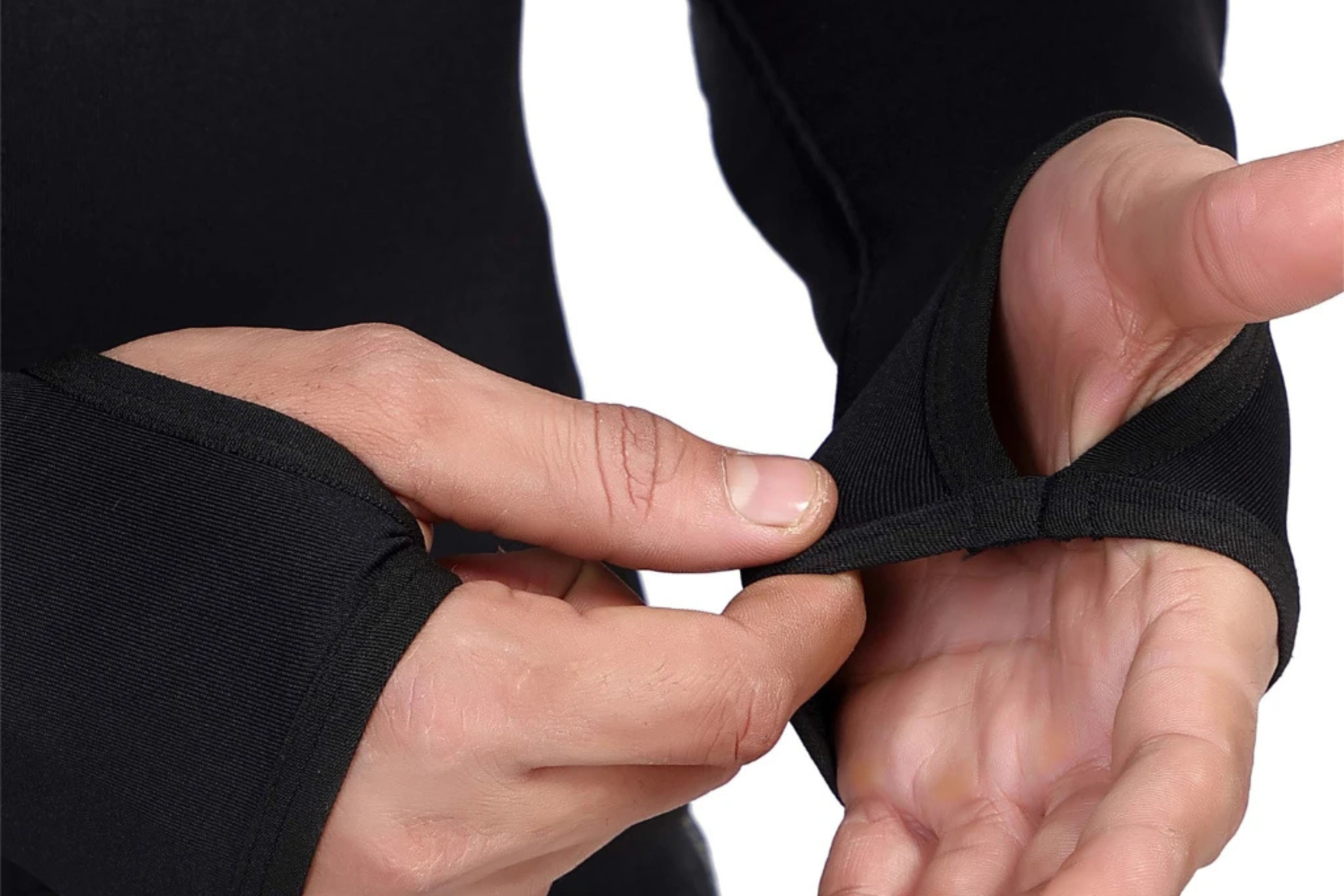
In terms of fit, the back, chest and shoulder protectors remained securely in place, while integrated thumb loops helped keep the sleeves positioned correctly. The elbow protectors did require occasional adjustments, although that is partly down to my slim arms.

It has quickly become my go-to choice for hot, sunny days on the trails. At Rs 5,699, it delivers a really good combination of protection, comfort and practicality without breaking the bank. But do keep in mind, it won’t serve much abrasion protection on the road if worn without a riding jacket. But for beginner and intermediate off-road/trail riders looking for a lightweight and versatile protective solution, the TrailCraft is easy to recommend.

Where: raidagears.com
Price: Rs 5,699
 

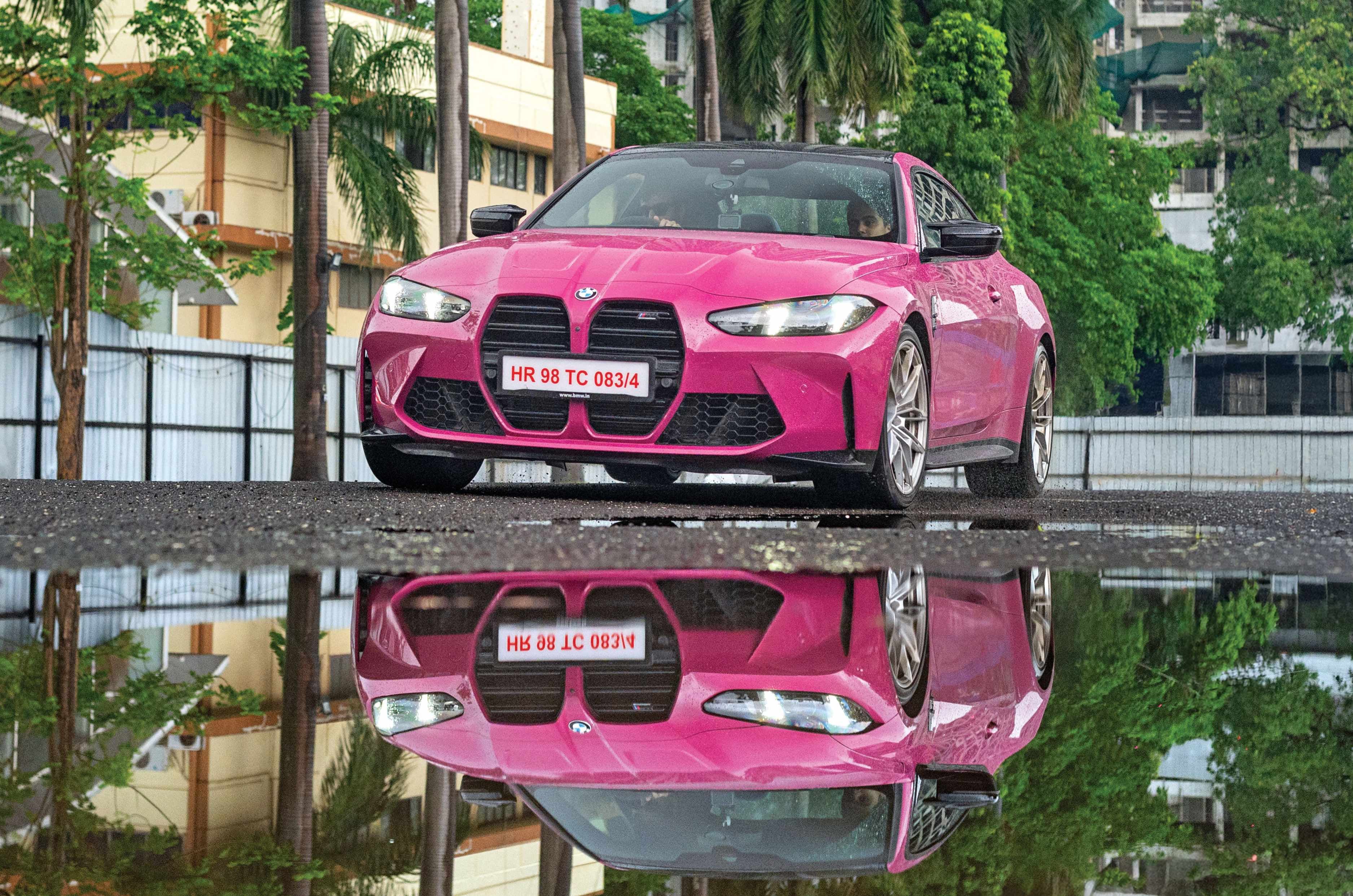
BMW M4 Competition review: No competition?

BMW M4 Competition review: No competition?
BMW M4 Competition driving

This G82-gen BMW M4 that you see has been on sale internationally since 2020, it came to India in 2022, and it even received a facelift (LCI or Life Cycle Impulse in BMW speak) a few years back. Yet, somehow, we never got a chance to drive it on Indian tarmac all these years. Now, however, we’ve finally spent some meaningful time with the BMW M4 Competition on home turf to see what it’s like.

BMW M4 Competition exterior design and engineering – 8/10

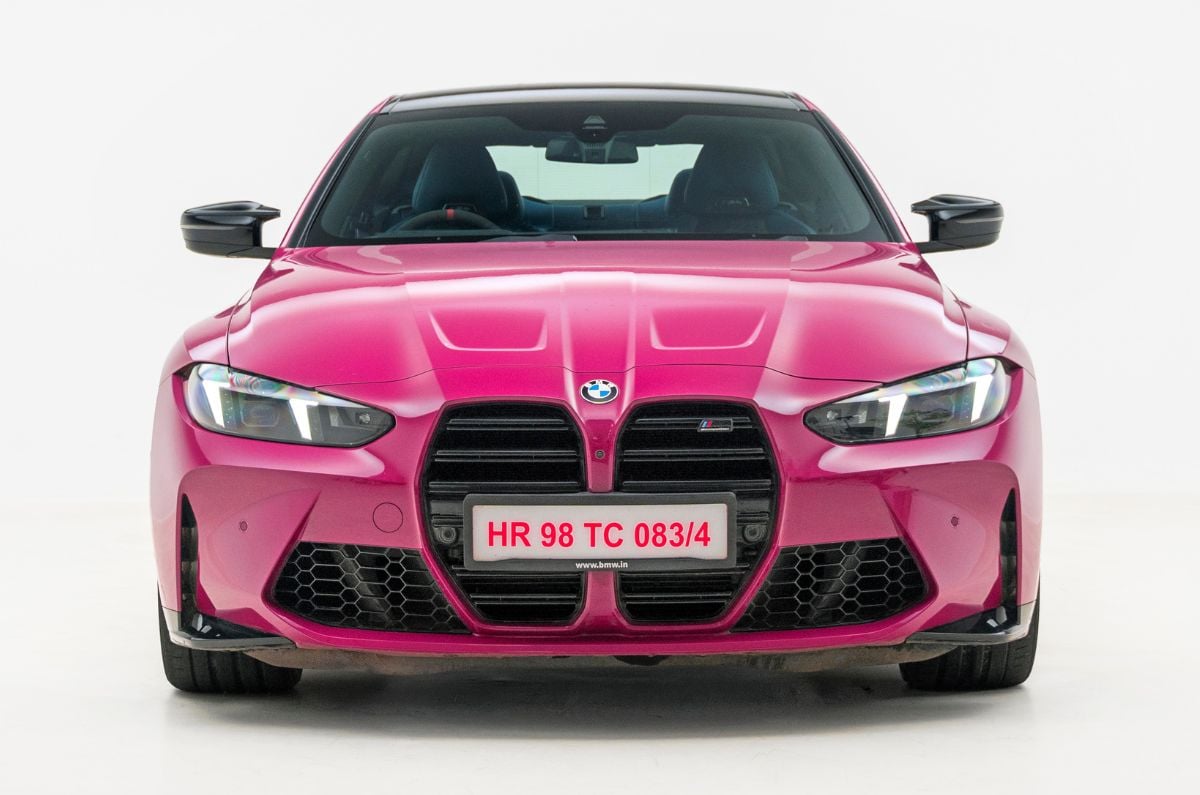
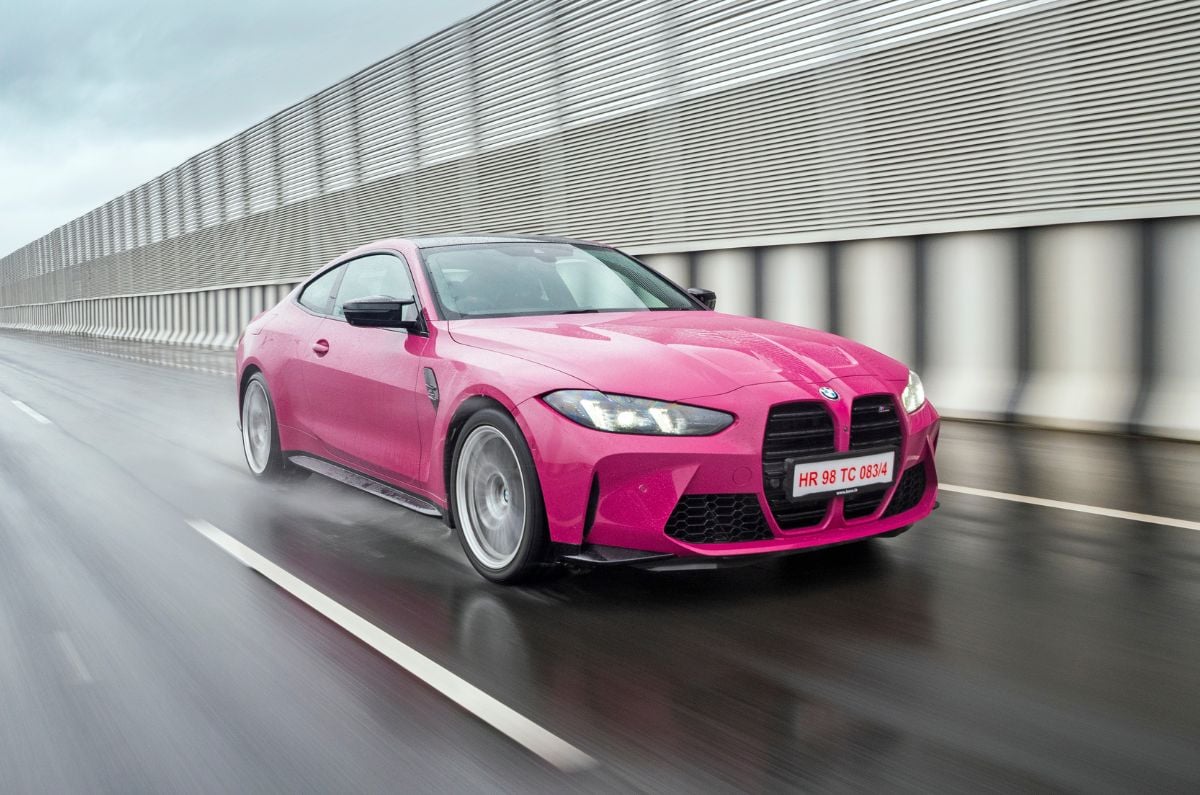
Whether you like it or not, the huge kidney grille gives it an imposing road presence.

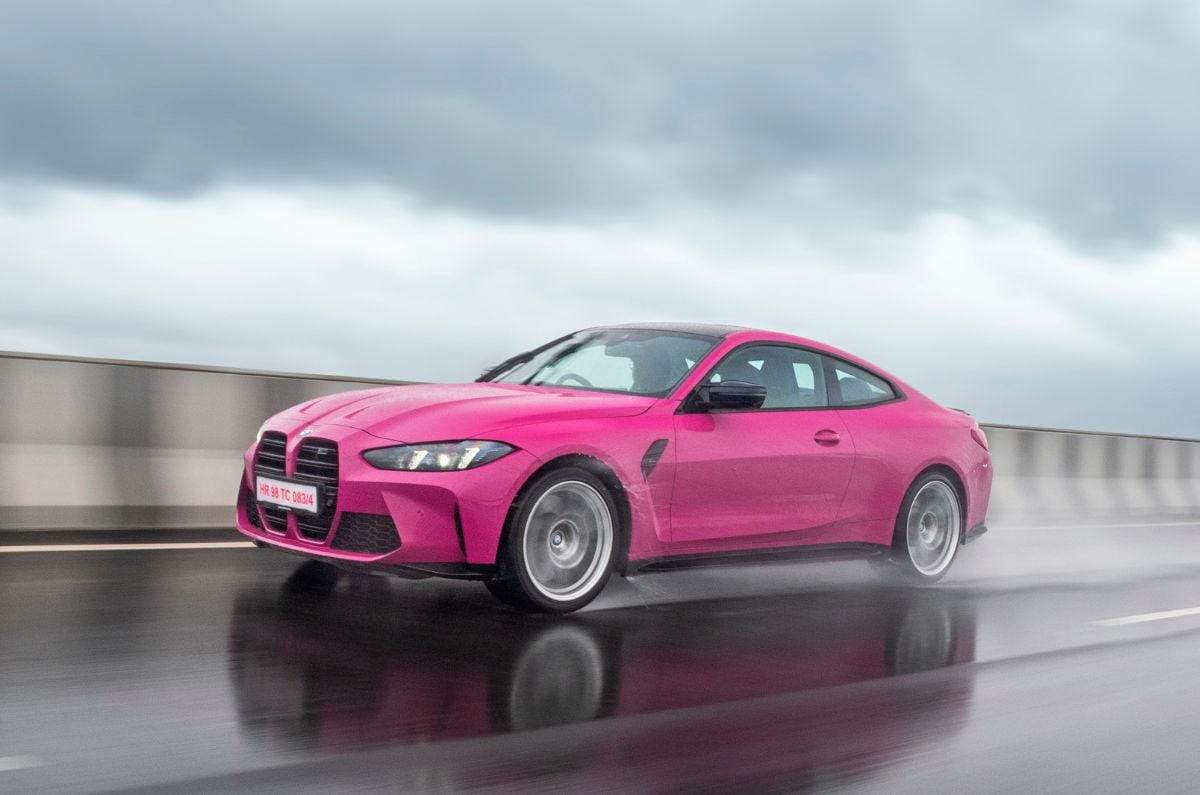
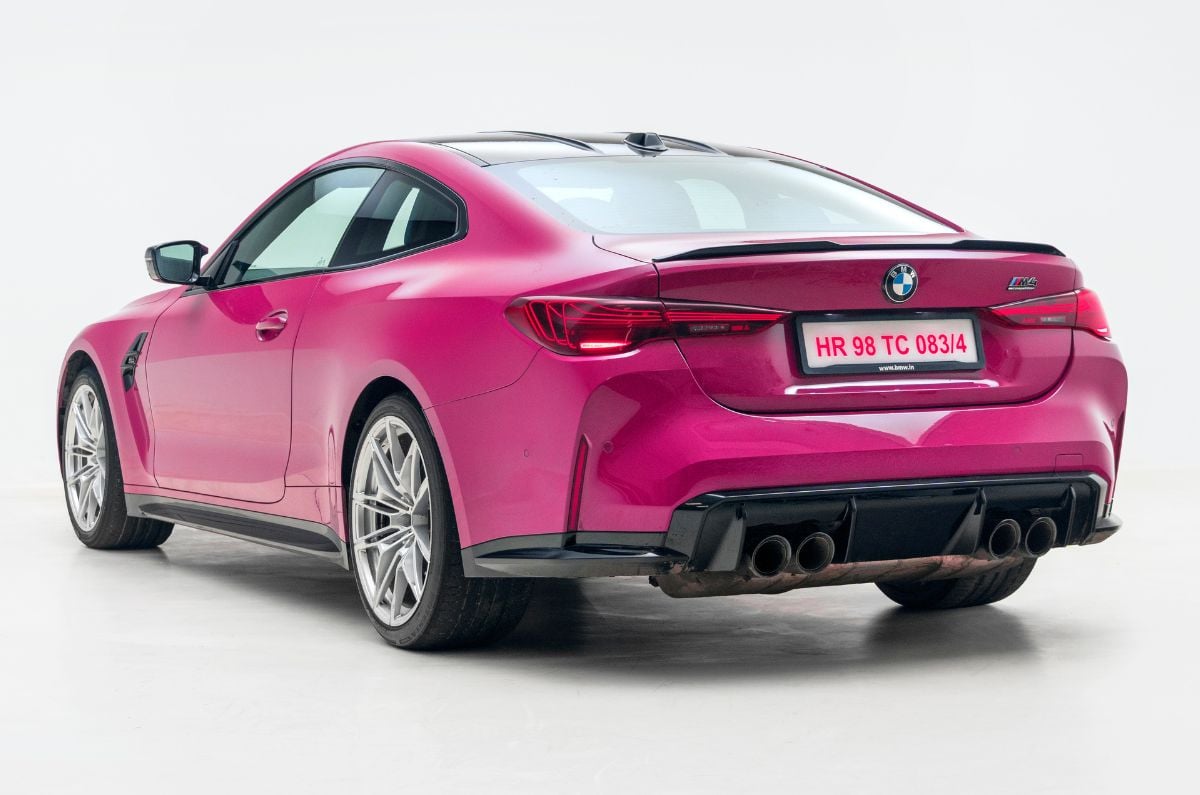
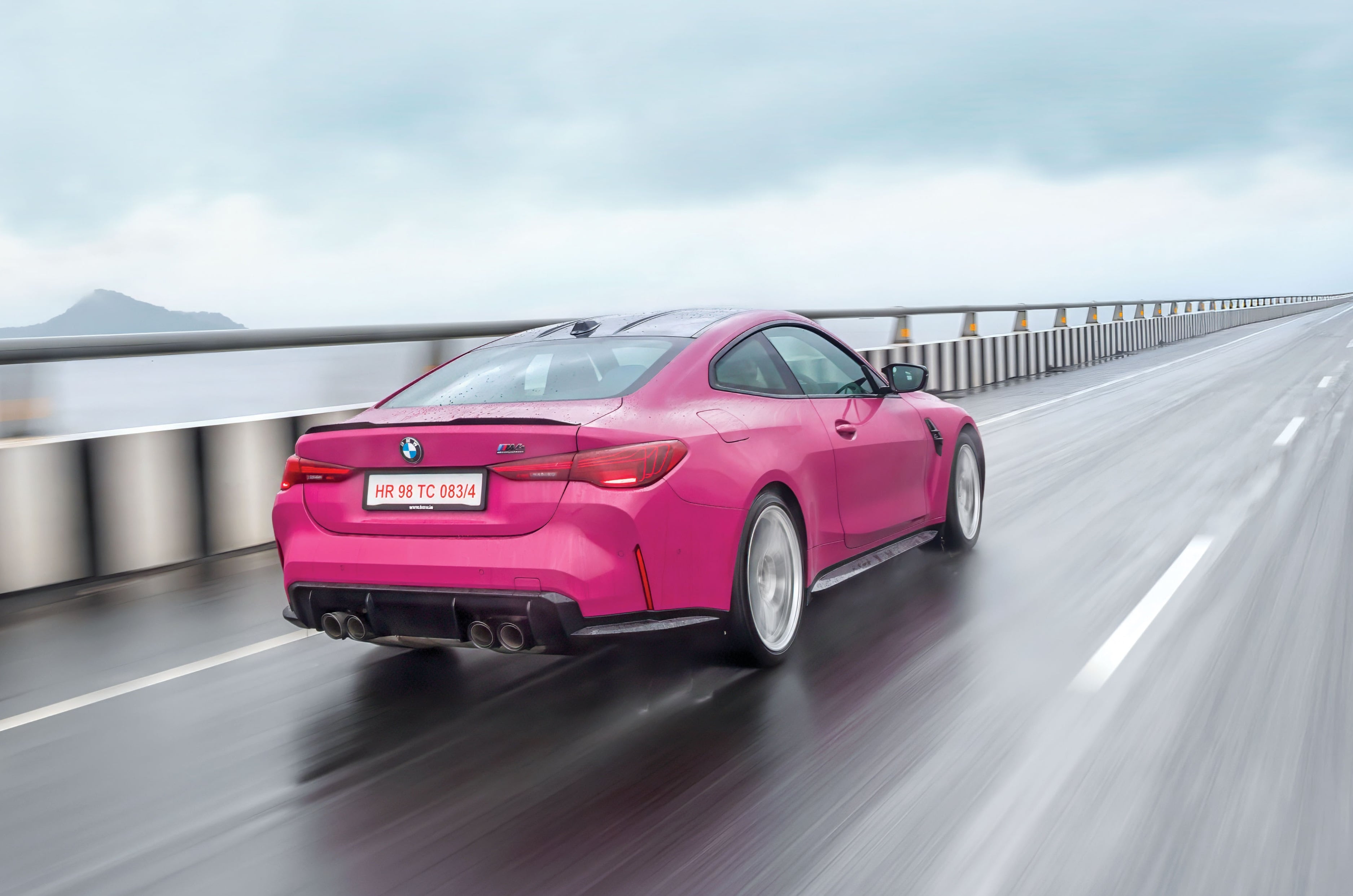
The BMW M4 Competition remains one of those cars that gets people talking before they’ve even heard it start. The enormous kidney grille is still the defining feature, and whether you like it or not, it gives the M4 a face that is impossible to mistake for anything else. The rest of the design is far more cohesive, with a long bonnet, heavily sculpted surfaces, flared wheel arches and a low, wide stance. At the rear, the quad exhausts, bootlip spoiler and prominent diffuser just add more drama to the design.

There’s serious engineering behind the visual drama, too. The M4 gets M-specific suspension hardware and aluminium suspension components, while the near-50:50 weight distribution helps give it the balance expected of an M car. And unlike all previous M3s and M4s, this one gets BMW’s M xDrive all-wheel-drive system, and it rides on staggered 19-inch front and 20-inch rear wheels.

Quad exhausts is an M signature and this LCI also gets beautifully detailed Laser LED taillights.

At 4,801mm long and 1,887mm wide, it’s a substantial car, and at 1,850kg, it’s certainly not light. But BMW has worked hard to keep the mass low and central, like with the use of a carbon-fibre roof, for example.

BMW M4 Competition interior space and comfort – 8/10

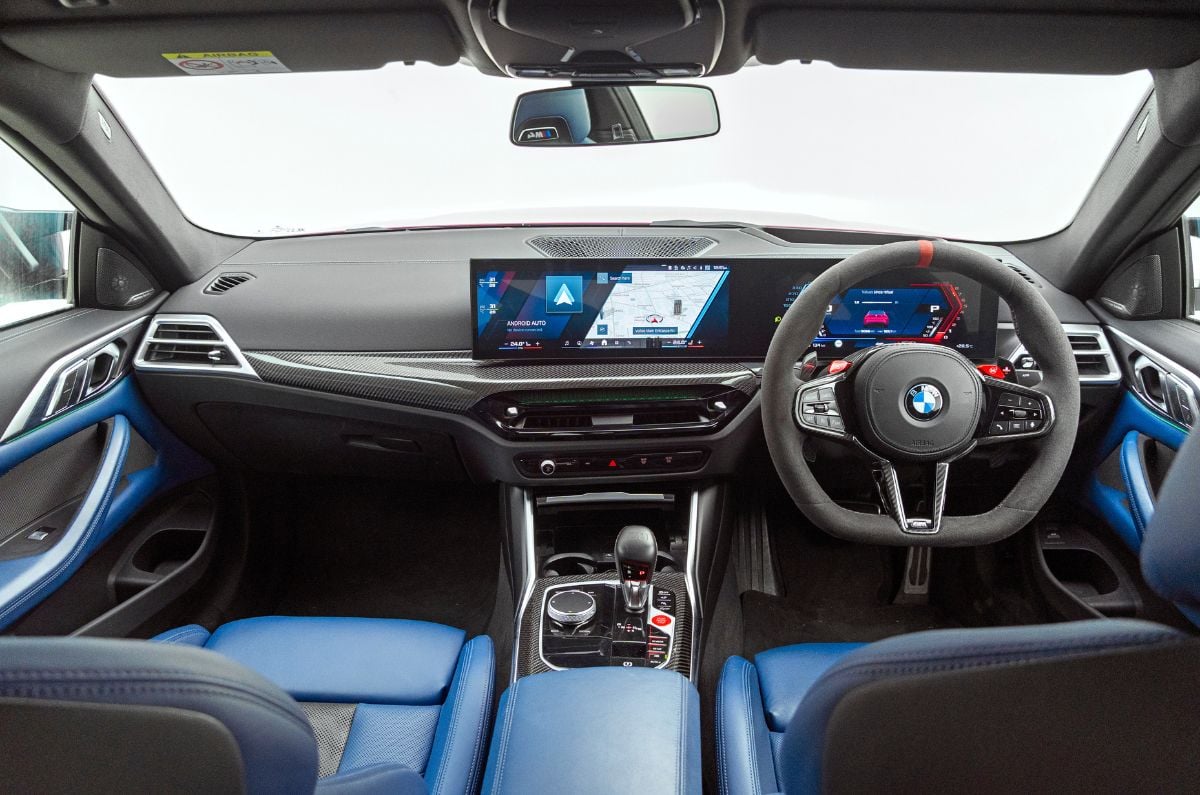
High-quality, driver-focused cabin is a mix of leather, carbon fibre and Alcantara.

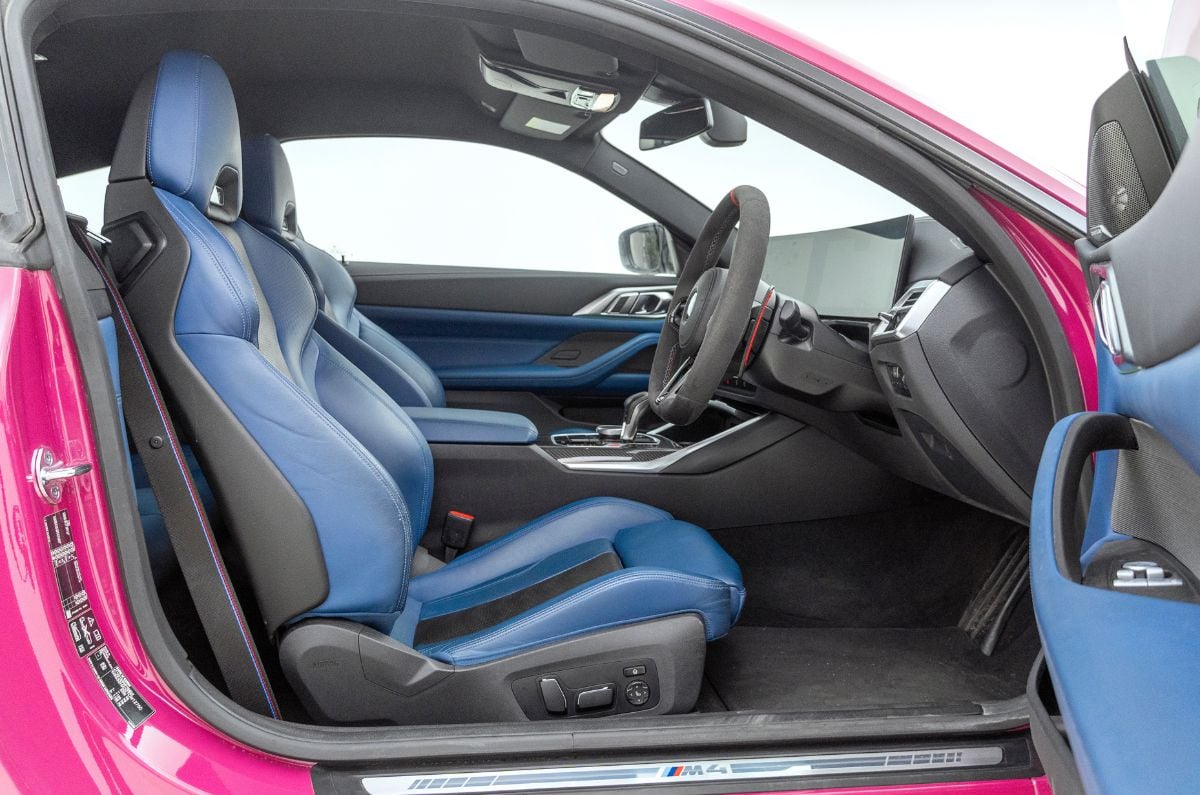
The M4’s cabin is a good example of how far modern M cars have moved from being purely performance machines. There’s plenty of everyday usability here, but the driving position still feels special. You sit low, the steering wheel is perfectly positioned, and the large front seats are supportive and comfortable, and hold you securely when you start driving enthusiastically.
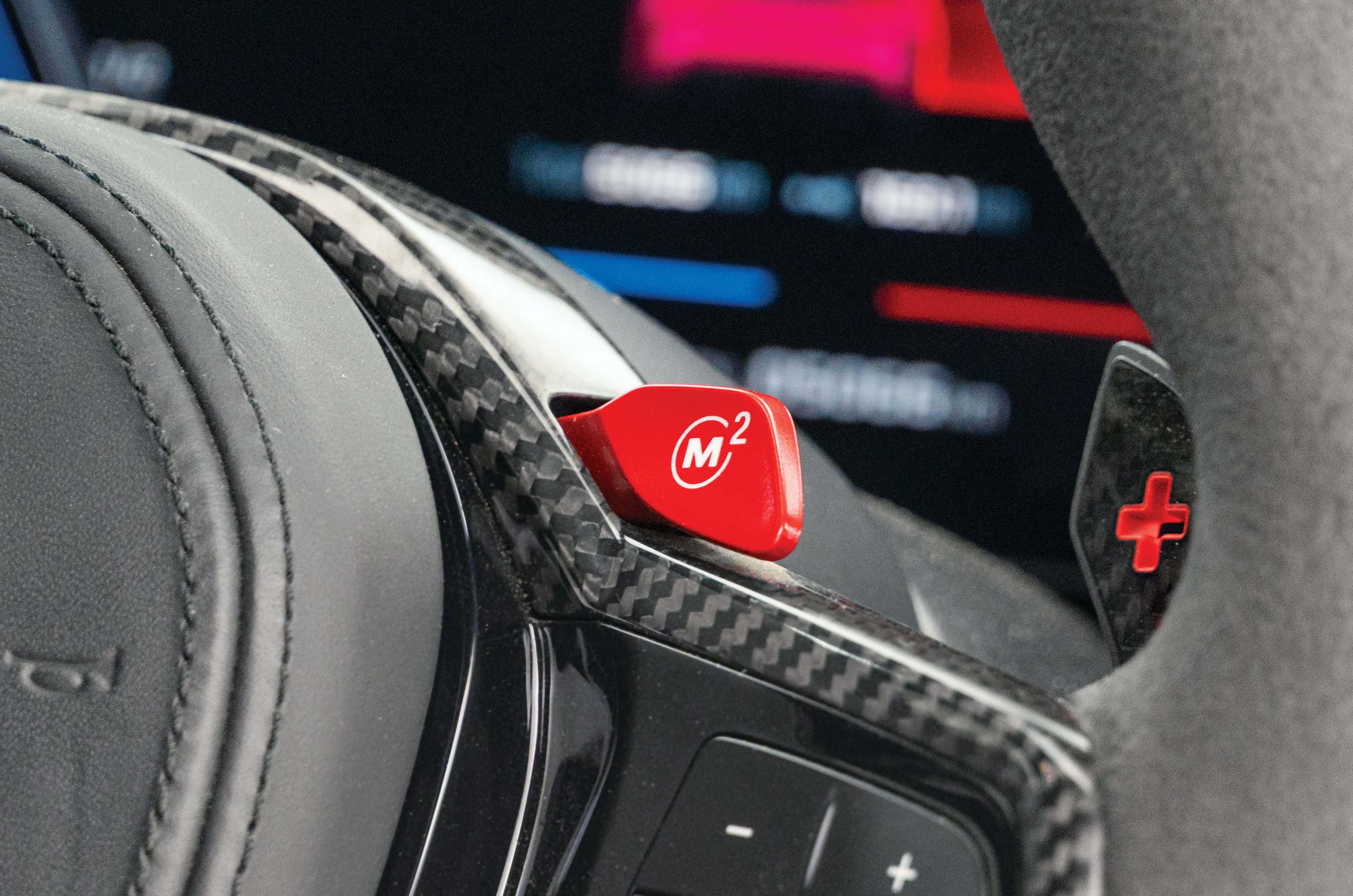
The dashboard follows BMW’s familiar layout, dominated by the curved display, while M-specific details like carbon-fibre trim throughout, M colours on the seatbelts and the red M1 and M2 buttons give the cabin enough visual distinction.

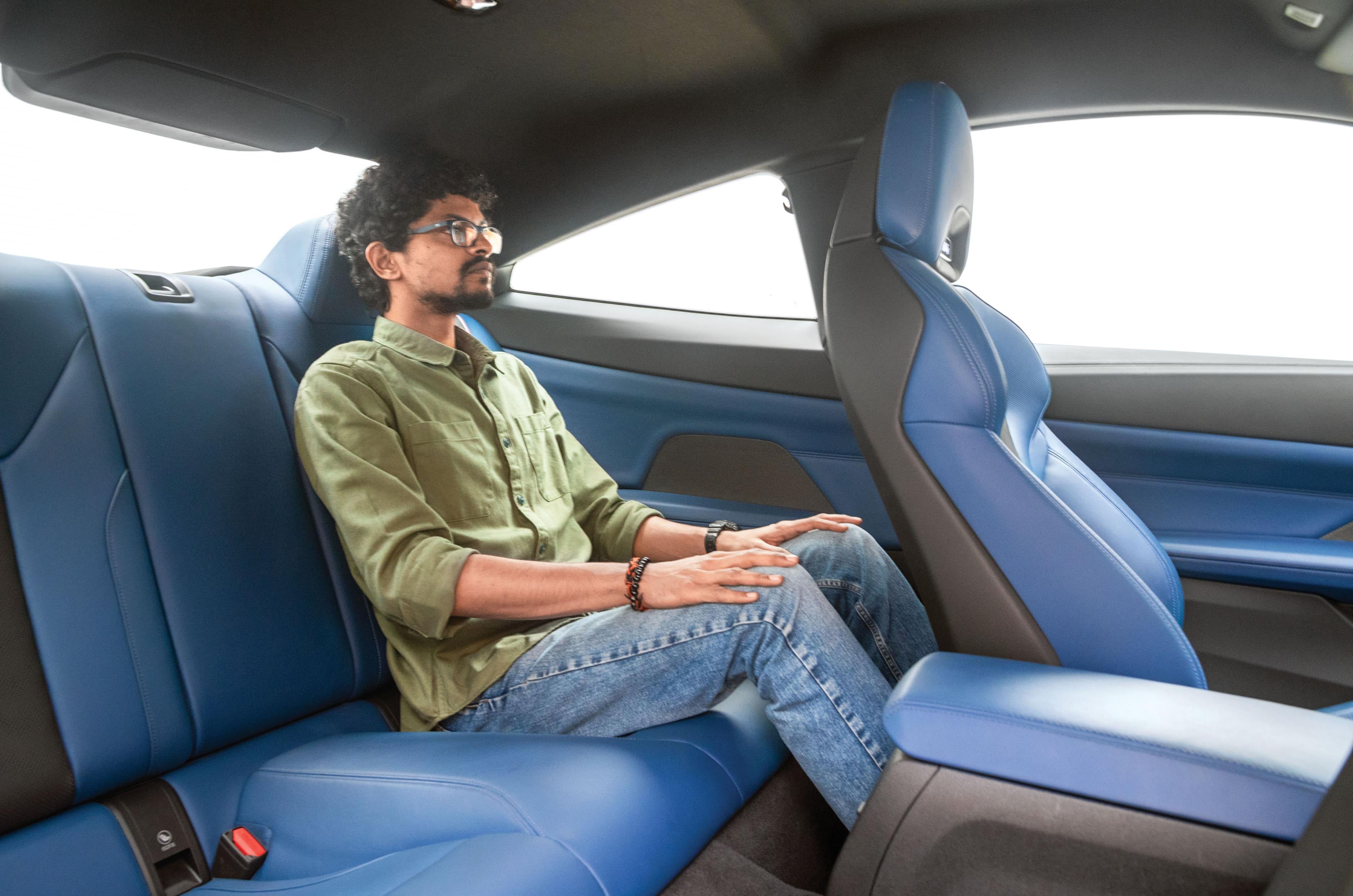
Access to the rear is tricky, though it’s a reasonably spacious place to be.

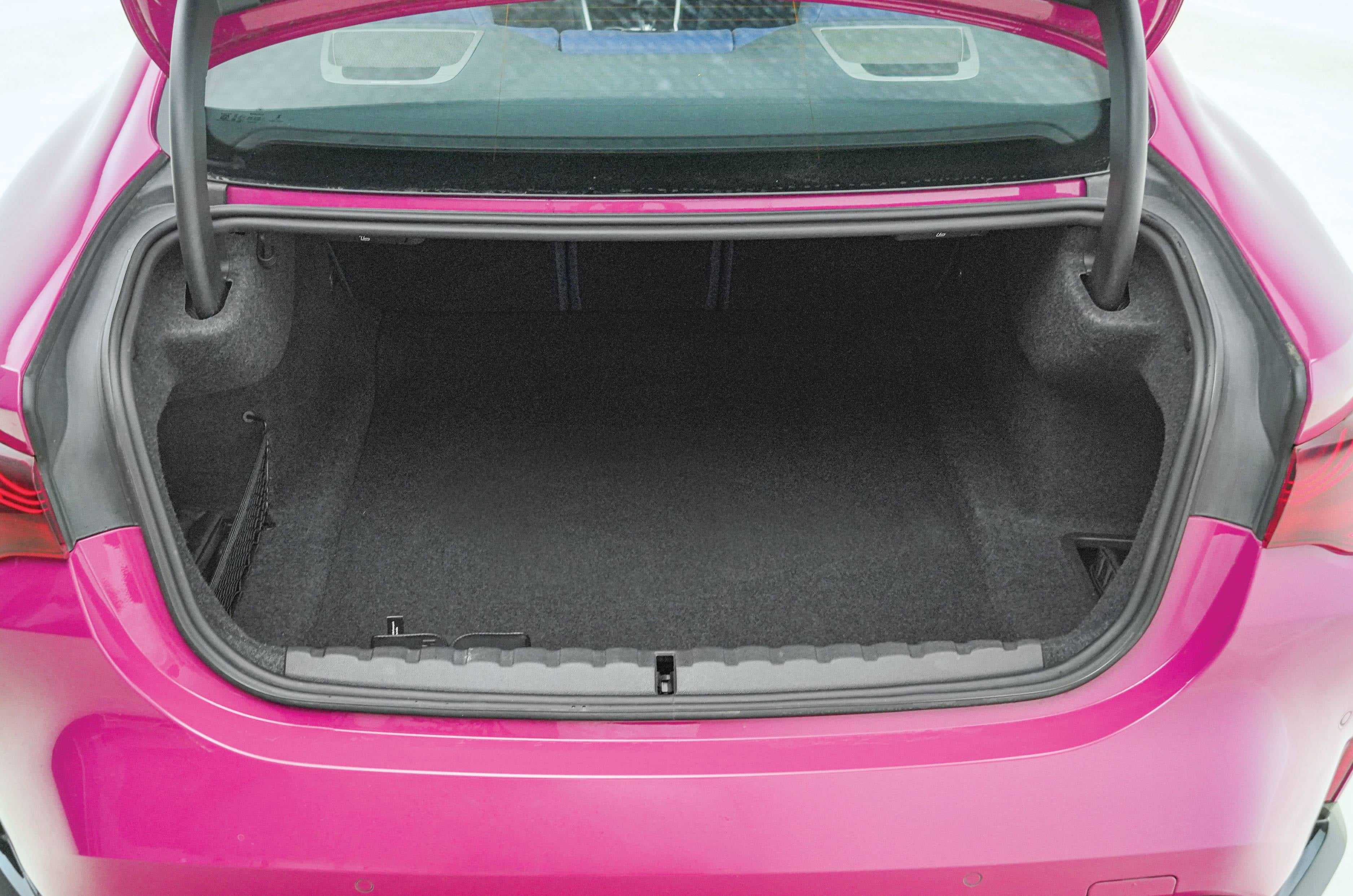
The coupe body does limit rear-seat access and space, but the back seats are still surprisingly usable, and not merely for show. There’s also a 440-litre boot, which means the M4 can manage luggage for a weekend away without too much hassle. That combination of usable cabin room and decent boot space is one of the car’s biggest strengths; very few cars with this level of performance are this practical.

440-litre boot can easily swallow up your luggage for the weekend.

It’s also relatively easy to live with in everyday conditions. The visibility is manageable, the controls are familiar and, at low speeds, the M4 is far more relaxed than its appearance suggests.

BMW M4 Competition features and safety – 8/10

The M4 Competition gets the technology expected of a modern BMW, but the really interesting equipment is the hardware and software designed to make its performance accessible.

M1 and M2 buttons are shortcuts for your preferred, pre-selected drive settings. 

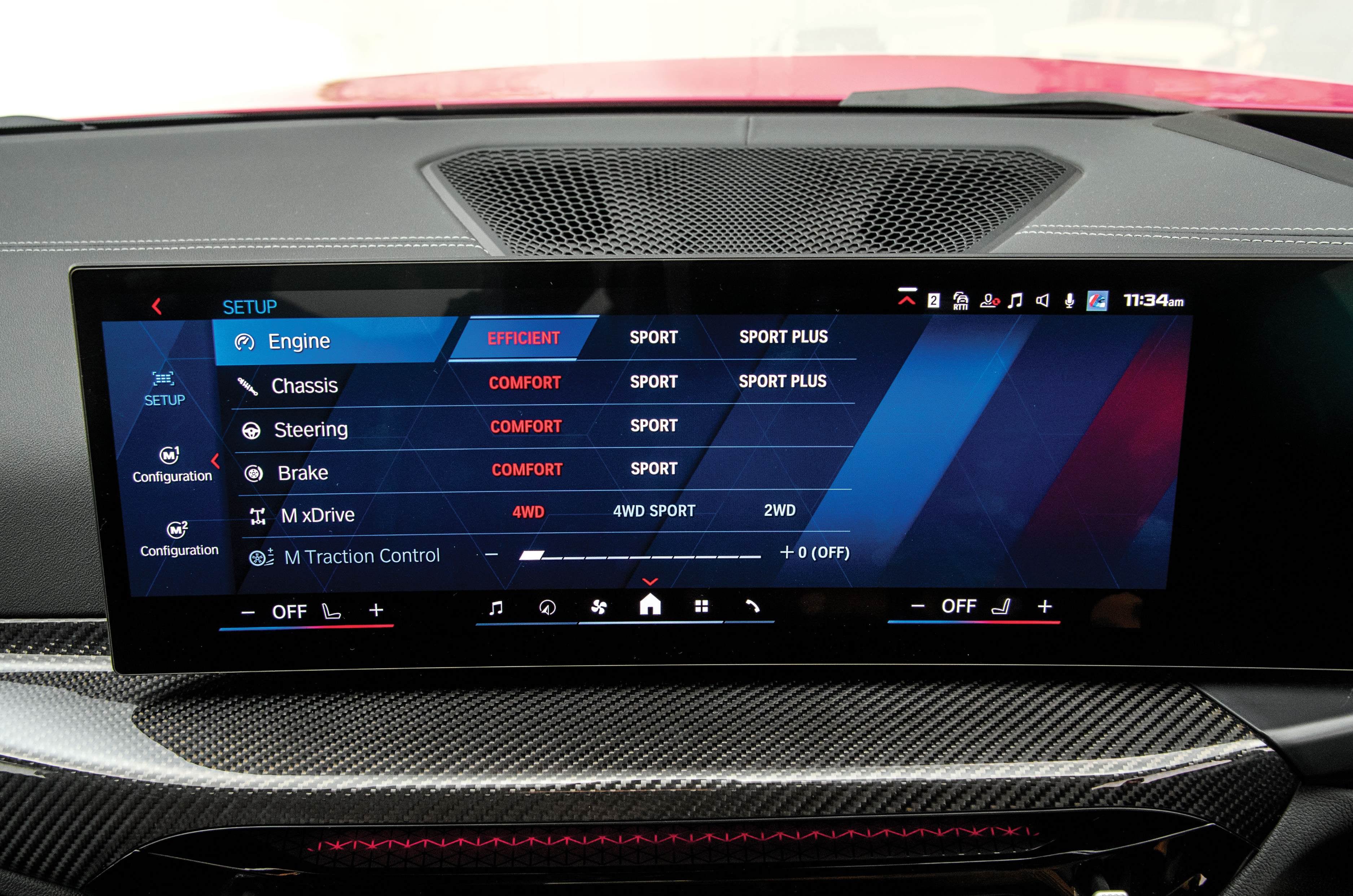
The adaptive M suspension can be adjusted through Comfort, Sport and Sport Plus settings, allowing the car to switch between everyday usability and sharper responses. M Drive lets you save preferred combinations of chassis, steering, engine and transmission settings, and these preferred settings can be designated to the M1 and M2 buttons on the chunky steering wheel.

Then there’s the more serious performance tech. The M4 gets a selectable rear-wheel-drive mode, which essentially allows you to turn the all-wheel-drive M4 into a rear-driven machine, while the M Drift Analyser adds another layer of entertainment for those inclined to explore the car’s limits in a controlled environment. While it’s nice to have this level of customisation, some may find configuring it a bit too confusing and overwhelming.

The screen is crisp, but navigating through the sub-menus gets confusing.

And that’s the case with the touchscreen as well. It’s super-crisp, slick to the touch and has M-coloured themes, which look quite cool, but the myriad apps and sub-menus are confusing to operate, to say the least. And that problem is amplified when you’re trying to make adjustments on the move.

Front seats are large, supportive and feature ventilation too. 

There’s a three-zone climate control, powered and ventilated front seats, a HUD, a Harman/Kardon sound system, wireless smartphone integration, a wireless charger, a curved display, and so much more. So, the M4 isn’t lacking in the areas that matter for everyday use.

As for safety, there are multiple airbags, ADAS tech, stability and braking systems and electronic assistance systems working in the background, although in a car like this, it’s the multiple drive modes and traction systems that are arguably the more important features.

BMW M4 Competition powertrain and performance – 9/10

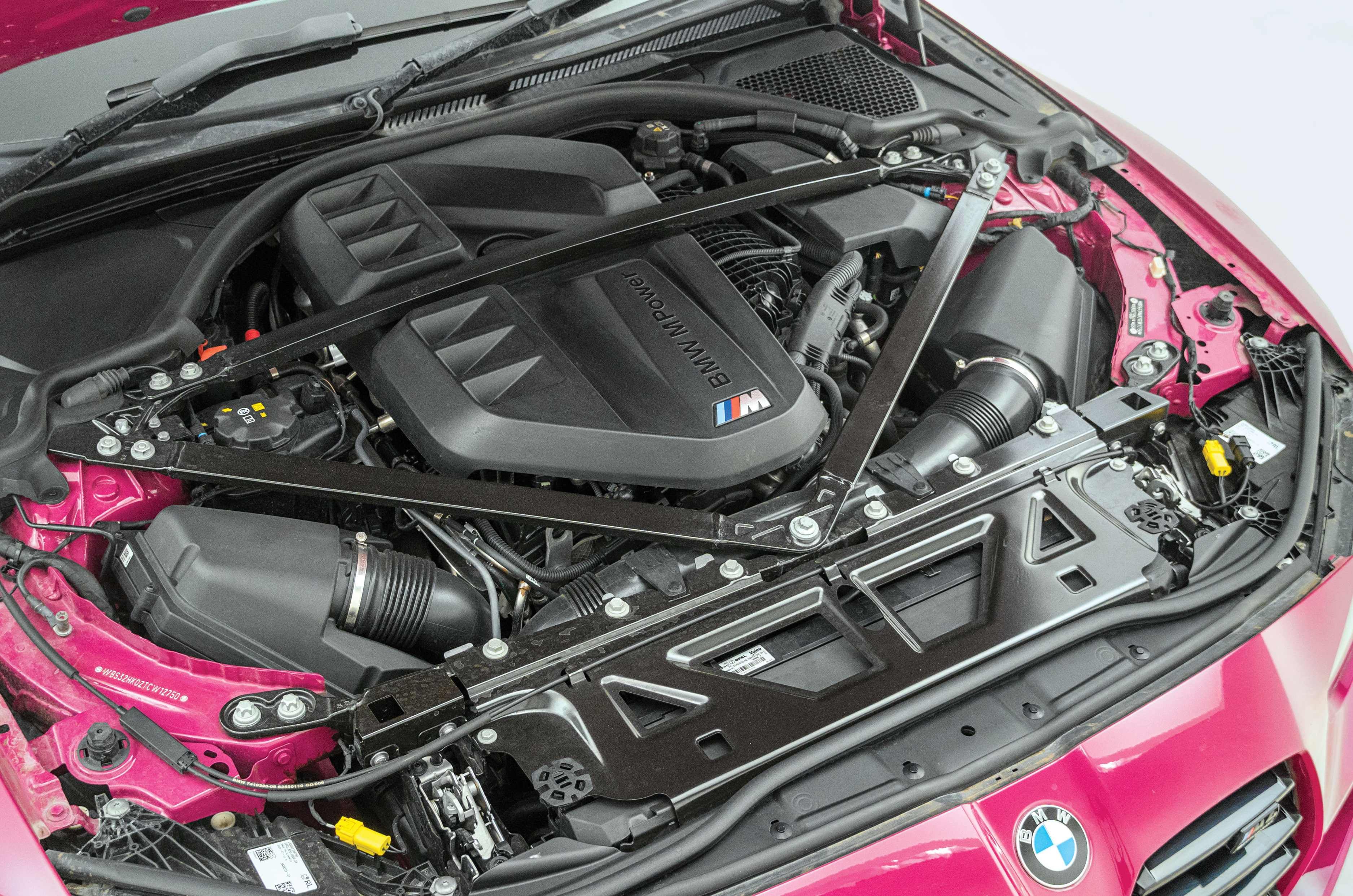
530hp, twin-turbo, straight-six pulls relentlessly and sounds good too.

The M4 Competition’s 3.0-litre twin-turbocharged S58 straight-six is the real star of the show, however. In this form, it develops 530hp and 650Nm and sends power through an 8-speed torque converter automatic to all four wheels, and BMW claims 0-100kph in 3.5sec.

What makes the engine so impressive isn’t just the numbers, but the way it delivers them. There’s almost none of the old-fashioned turbo lag here. Instead, power builds in an almost naturally aspirated fashion, with the engine pulling strongly through the rev range. It’s linear, responsive and keeps pulling hard all the way till the redline.

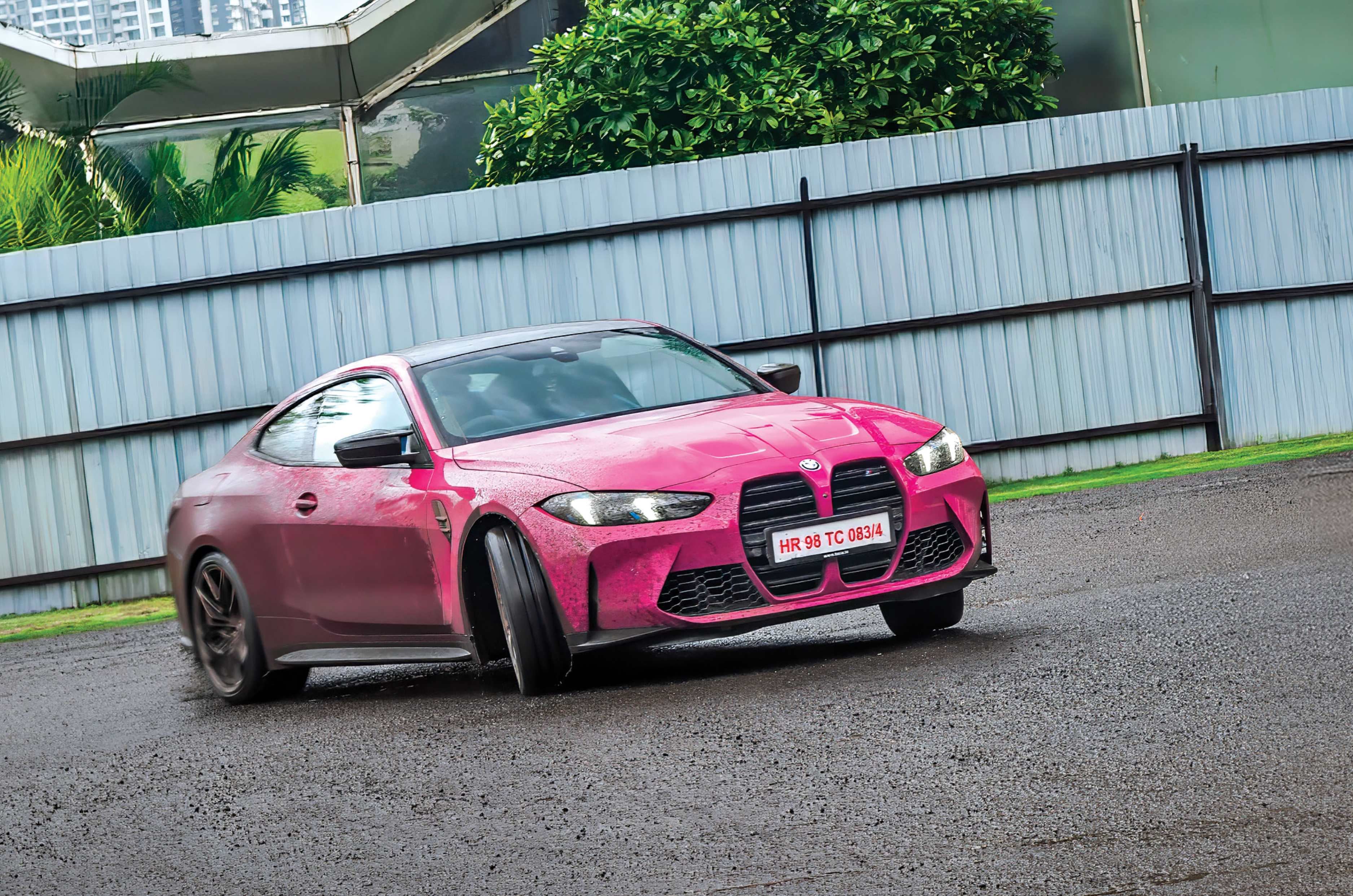
Be it drifting or touring, the M4 is up for both.

The gearbox is smooth when left to its own devices and can be calibrated to shift much more aggressively when you start driving harder. It can occasionally feel less urgent than you might expect, especially in comparison to the last-gen M4’s DCT, but the sheer performance of the engine means there’s never any shortage of pulling power.

The all-wheel-drive setup also makes it devastatingly effective when you have the space to exploit it, and it doesn’t scare you like the older rear-wheel-drive M4. The best part is that it doesn’t feel like a car that needs to be driven at ten-tenths to be entertaining. More importantly, the M4 doesn’t compromise everyday usability simply because it is so performance-focused. Driven gently, the drivetrain can be remarkably civilised.

The ride is compliant enough to make long distance travel feasible.

There’s also a pleasing authenticity to the engine note. It may not have the theatrical soundtrack of some older M cars, but the straight-six’s sound is sufficiently characterful without relying heavily on artificial enhancement.

BMW M4 Competition fuel efficiency – 6/10

Fuel economy, expectedly, isn’t the M4’s strongest suit, but the 59-litre fuel tank gives it enough range to be usable as a long-distance car, although enthusiastic driving will inevitably bring that figure down considerably.
BMW M4 Competition ride comfort and handling – 8/10

At city speeds, the M4 can be surprisingly subdued. The steering is light, and there’s little indication of the aggression that lies underneath. The ride, though, even with the adaptive dampers set to Comfort, is firm, and sharp bumps do filter through to the cabin.
What’s impressive is how effectively BMW disguises the M4’s 1,850kg mass. It is a heavy car, but it rarely feels unwieldy when you’re attacking a sequence of corners. There is a bit of understeer, but there’s virtually no body roll, making it feel agile. The M4’s grip is immense, and the xDrive system allows you to put down its considerable power remarkably effectively. Yet, it isn’t simply a point-and-shoot machine. The adjustable traction control and rear-wheel-drive mode (or even the semi-lenient ‘AWD Sport’ mode) allow considerably more freedom, revealing the car’s playful side that isn’t immediately apparent in normal driving.

Rear wheel drive mode and adjustable traction settings allow for some proper tail out fun. 

The electric power steering isn’t as feelsome as the hydraulic-steering M cars of old, but the accuracy is excellent. The M4 goes precisely where you point it, and the chassis remains composed even when you begin to carry serious speed. It’s decently capable at dealing with speed breakers too, as long as you take them slow and the large ones at an angle. Road noise, however, does become apparent at higher speeds over concrete surfaces.

The M4 really has a dual personality. Around town, it can be relaxed and relatively easy to live with; on an open road, it becomes seriously fast and agile. The ride is not plush or comfy, but it is compliant enough to make long-distance driving feasible.

BMW M4 Competition value for money and verdict – 8/10

As far as fast, versatile coupes go, there’s few better than the M4 Competition.

At Rs 1.60 crore (ex-showroom, before options), the M4 Competition is a difficult car to categorise, with no real direct rivals, and that is precisely why it works so well. It has the performance to keep up with exotic sports cars, yet it retains usable rear seats, a decent boot, and it is easy enough to be driven every day.

The polarising styling remains subjective, the ride quality is stiff and the infotainment interface is unintuitive. But once you find an open road, those shortcomings simply melt away. What you’re left with is a very capable all-rounder. The 530hp straight-six provides devastating performance without being difficult to manage, the all-wheel-drive system provides great traction and a useful safety net, and it has enough adjustability to keep even the most experienced driver entertained. Fast, practical, hugely capable and remarkably usable, that versatility is ultimately what makes the M4 Competition such a compelling performance car.

Awarapan 2: ‘इमरान हाशमी को बिना किस करते देखना गैरकानूनी सा लगता है…’, ‘आवारापन 2’ में किसिंग सीन न होने पर फैंस ने दिए मजेदार रिएक्शन

Awarapan 2: इमरान हाशमी इन दिनों बहुत खुश हैं, क्योंकि उनकी 2007 की फ़िल्म ‘आवारापन’ का सीक्वल बॉक्स ऑफ़िस पर हिट साबित हो रहा है। एक्टर की इस नई फिल्म को क्रिटिक्स और दर्शकों, दोनों से ही काफी अच्छे रिव्यूज मिले हैं और कई दर्शक तो ओरिजिनल फ़िल्म से जुड़ी पुरानी यादों को भी पसंद कर रहे हैं। हालांकि, फैन्स ने ‘आवारापन 2’ में एक बात पर ध्यान दिया कि इसमें इमरान का कोई किसिंग सीन नहीं है।

‘सब लोग मर्डर वाले इमरान हाशमी को ढूंढ रहे थे’

अपने करियर के शुरुआती सालों में ‘सीरियल किसर’ के रूप में मशहूर इमरान फिल्मों में इंटीमेट सीन और जोशीले रोमांस के लिए जाने जाते थे। हालांकि, प्रशंसकों ने गौर किया कि इमरान की नई फिल्म में कोई किसिंग सीन नहीं है और इस पर कई लोगों ने मजेदार प्रतिक्रियाएं दीं। कुछ प्रशंसकों ने तो मजाक में यह भी कहा कि वे फिल्म में ‘पुराने’ इमरान हाशमी को ढूंढ रहे हैं।

एक यूजर ने लिखा था, “उम्र हो गई है वो वाला इमरान हाशमी अब नहीं रहा।” एक अन्य दर्शक ने लिखा, “सब यहां इस सीन में मर्डर वाले इमरान हाशमी को ढूंढ रहे हैं।” एक और कमेंट में लिखा था, “इमरान हाशमी को बिना किसिंग सीन के देखना गैरकानूनी सा लगता है।” एक और कमेंट में लिखा था, “इमरान भाई, दिशा को किस कर लो ना, आलिया देख तो नहीं रही है ना। Awarapan2।”

एक और कमेंट में लिखा था, “मैंने अपनी मम्मी से कहा था कि हमें कुछ और देखना चाहिए क्योंकि इमरान हाशमी इस फिल्म में हैं। पता चला कि इसमें एक भी नॉर्मल किस सीन नहीं था, और कहानी तो वाकई बहुत अच्छी थी।”

‘उन्होंने खुद इसे कम किया और इससे दूर हो गए’

हालांकि, हर किसी ने किसिंग सीन न होने को नकारात्मक रूप से नहीं देखा। कुछ फैंस ने इस बात की सराहना की कि इमरान अपने करियर की शुरुआत में बनी अपनी छवि से आगे बढ़ चुके हैं। एक सोशल मीडिया यूज़र ने कमेंट कहा, “वह शादीशुदा हैं। उन्होंने खुद इसे कम किया और कामुक फिल्मों से दूर हो गए। कम से कम इसकी तो सराहना करें।” एक अन्य दर्शक ने बस इतना लिखा, “अच्छा है कि कोई किसिंग सीन नहीं है।”

अपनी इमेज बदलने पर इमरान हाशमी

एक पुरानी बातचीत में, इमरान ने ‘सीरियल किसर’ वाली इमेज से बाहर निकलने और इस बात पर चर्चा की कि कैसे यह आज भी उनके करियर से जुड़ी एक अहम बात बनी हुई है। उन्होंने हिंदुस्तान टाइम्स से कहा, “होता यह है कि जब आपकी इमेज इतनी मज़बूत हो जाती है – खासकर भारत जैसे बहुत रूढ़िवादी समाज में – तो लोग उसे ही पकड़े रहते हैं। जैसे, अगर आप कुछ दिन पहले हुई प्रेस कॉन्फ्रेंस में लोगों को देखें, तो वहां भी किस (kiss) को लेकर सवाल उठ ही गया। लेकिन भारत ऐसा ही है। लोग अभी भी उसी चीज़ में उलझे रहते हैं। आपको बस आगे बढ़कर खेलना होगा और अपनी वर्सटैलिटी (अलग-अलग तरह के रोल करने की काबिलियत) दिखाने के लिए कुछ करना होगा। बस बाहर निकलिए और जो काम आप कर रहे हैं, उसमें हिम्मत दिखाइए।”

पिछले कुछ सालों में, इमरान ने सोच-समझकर अलग-अलग तरह की फ़िल्मों और किरदारों में काम किया है, जिनमें ‘हक़’, ‘ग्राउंड ज़ीरो’, ‘चेहरे’, ‘सेल्फ़ी’ और दूसरी फ़िल्में शामिल हैं। ‘आवारापन 2’, 2007 की फ़िल्म ‘आवारापन’ का सीक्वल है। इसमें इमरान हाशमी, दिशा पाटनी और शबाना आज़मी हैं और इसे नितिन कक्कड़ ने डायरेक्ट किया है। यह फ़िल्म बॉक्स ऑफ़िस पर हिट रही है। अब तक भारत में इसकी कुल नेट कमाई ₹67.46 करोड़ रही है।