Google Fitbit Air: Google ने भारत में Fitbit Air लॉन्च किया है, जो हेल्थ और फिटनेस ट्रैकिंग के लिए बिना स्क्रीन वाला तरीका लेकर आया है। यह छोटा पहनने वाला डिवाइस दिन भर हेल्थ डेटा को मॉनिटर करने में मदद करता है, साथ ही नोटिफिकेशन और स्मार्टफोन जैसी दूसरी चीजों से होने वाली रुकावटों को कलाई से दूर रखता है। इसमें लगातार हार्ट-रेट मॉनिटरिंग, स्लीप ट्रैकिंग और एक्टिविटी डिटेक्शन के साथ-साथ पर्सनलाइज्ड गाइडेंस के लिए Google का Health Coach भी शामिल है।
Fitbit Air को इस तरह डिजाइन किया गया है कि इसे लंबे समय तक कलाई पर पहना जा सके। यह हल्का है, इसका डिजाइन पेबल-स्टाइल का है और इसकी बैटरी 7 दिनों तक चलती है। यूज़र्स Google Health ऐप के जरिए अपना हेल्थ और फिटनेस डेटा देख सकते हैं, और इसके बदले जा सकने वाले बैंड की वजह से ट्रैकर को वर्कआउट के साथ-साथ रोजमर्रा की गतिविधियों में भी इस्तेमाल किया जा सकता है।
Google Fitbit Air: कीमत और उपलब्धता
भारत में Fitbit Air की कीमत ₹13,999 है और यह चार कलर ऑप्शन में उपलब्ध है: bsidian, Berry, Lavender और Fog। Google इस डिवाइस के साथ Google Health Premium का तीन महीने का ट्रायल भी दे रहा है, जिससे Google Health Coach का एक्सेस मिलता है।
लॉन्च ऑफर की बात करें तो फुल स्वाइप ट्रांजैक्शन पर 1,000 रुपये तक का कैशबैक मिल सकता है। इसके अलावा, चुनिंदा HDFC Bank और ICICI Bank कार्ड से 6 महीने की नो-कॉस्ट EMI के साथ 1,000 रुपये का कैशबैक भी दिया जा रहा है। वहीं, कंज्यूमर लोन के जरिए 12 महीने तक की नो-कॉस्ट EMI का विकल्प भी मिल रहा है।
Google Fitbit Air: फीचर्स
Fitbit Air बिना स्क्रीन वाला एक पहनने योग्य डिवाइस (वेयरेबल) है, जो कनेक्टेड स्मार्टफोन पर Google Health ऐप को हेल्थ और वेलनेस से जुड़ी जानकारी भेजता है। यह लगातार हार्ट-रेट मॉनिटरिंग, रेस्टिंग हार्ट रेट और हार्ट रेट वेरिएबिलिटी ट्रैकिंग के साथ-साथ अनियमित हार्ट रिदम (Afib) के नोटिफिकेशन को भी सपोर्ट करता है।
नींद को ट्रैक करने के लिए, यह डिवाइस नींद की अवधि और उसके चरणों (stages) पर नजर रखता है। इसमें ब्लड ऑक्सीजन (SpO2) ट्रैकिंग और ऑटोमैटिक एक्टिविटी डिटेक्शन की सुविधा भी मिलती है।
Google का दावा है कि Fitbit Air एक बार चार्ज करने पर 7 दिनों तक चल सकता है। वहीं, इसे 5 मिनट चार्ज करने पर एक दिन तक की बैटरी लाइफ मिल सकती है।
यह वियरेबल Google Health Coach के साथ काम करता है, जो इकट्ठा किए गए डेटा का इस्तेमाल करके पर्सनलाइज्ड गाइडेंस देता है। यूजर्स अपने वर्कआउट को अपने-आप रिकॉर्ड कर सकते हैं, गाइडेड सेशन को फॉलो कर सकते हैं और अपनी एक्टिविटीज को रिकॉर्ड करने के लिए जिम इक्विपमेंट या वर्कआउट रूटीन की फोटो का इस्तेमाल कर सकते हैं।
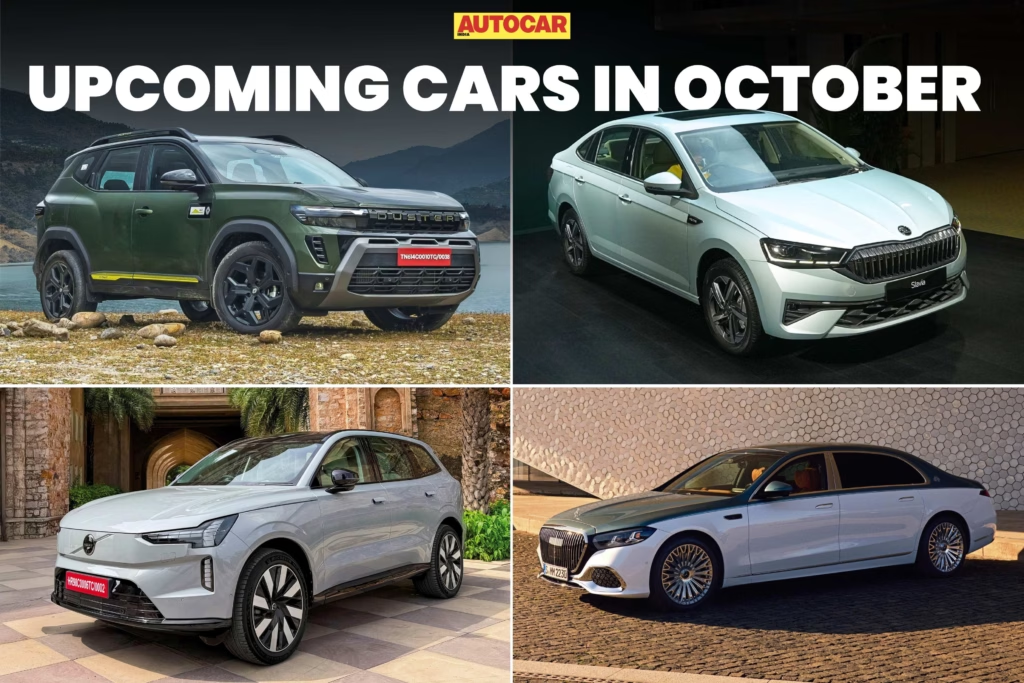
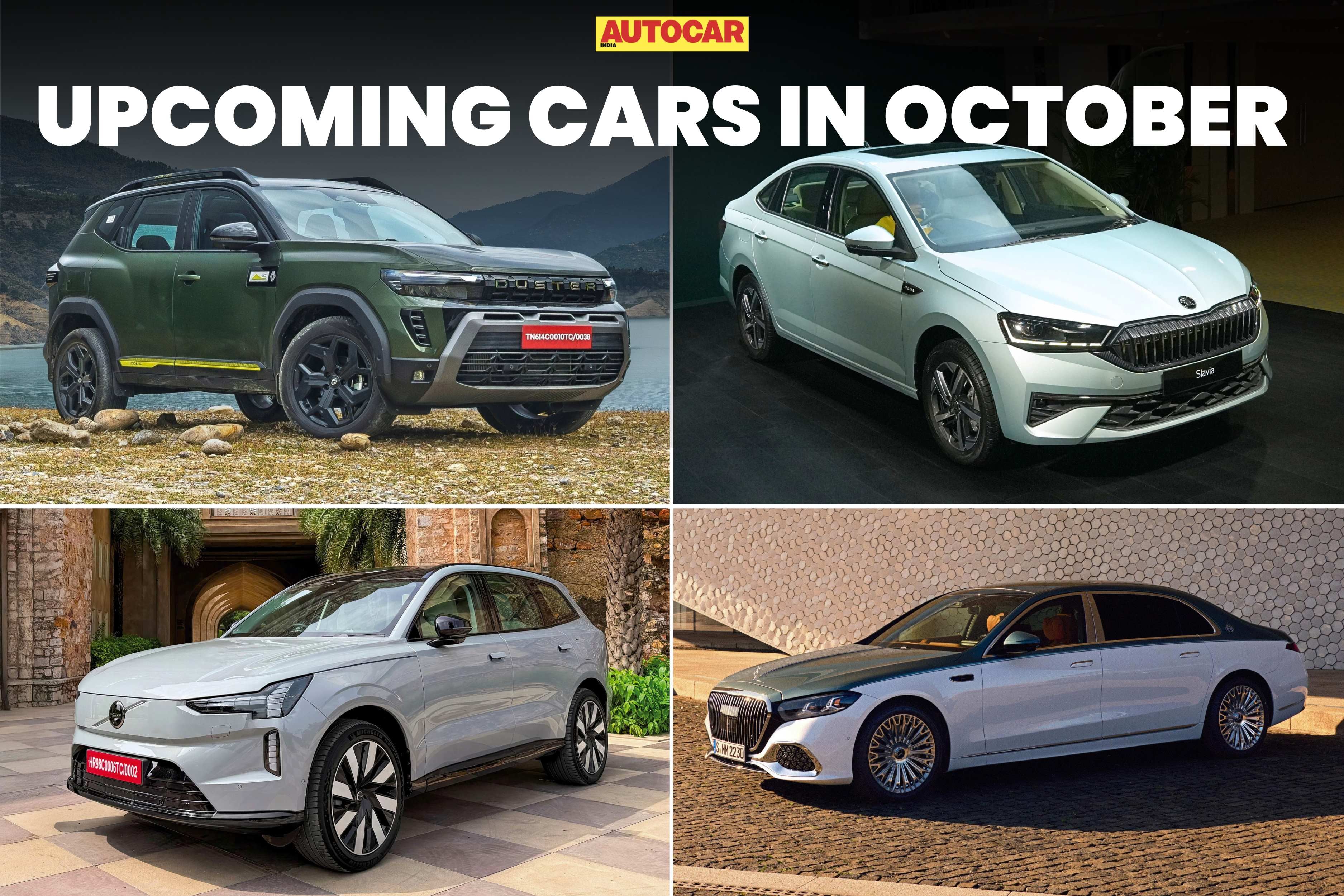
October marks the onset of the festive season in India, which means manufacturers line up a barrage of new car launches and debuts for prospective buyers to consider. It’s no different this year, with October 2026 looking quite stacked with fresh launches and debuts, especially during the first half of the month. Let’s delve into every new car that will either go on sale or debut in India next month.
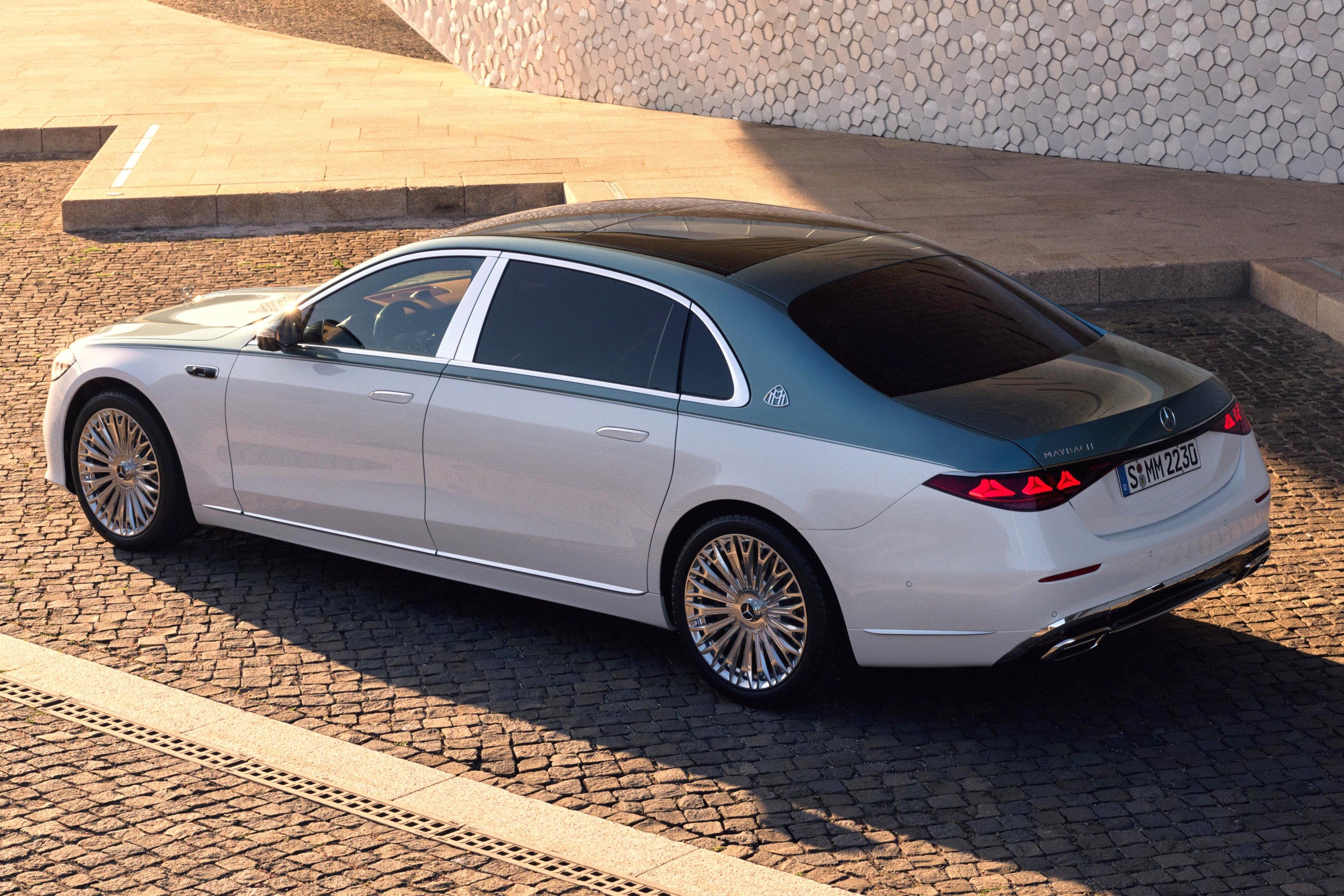
Mercedes-Benz Maybach S-Class facelift
Launch: 5 October
Following the launch of the 2026 S-Class facelift back in June, Mercedes-Benz India will bring the sedan’s longer and more luxurious Maybach derivative in October. Compared to its standard version, the Maybach S-Class facelift continues to be 180mm longer, but carries styling differentiators like a vertically-slatted grille adorned with a ‘Maybach’ wordmark, mildly revised bumpers, bespoke wheel designs, lots of Maybach logos peppered across the bodywork, and the signature dual-tone exterior finish.
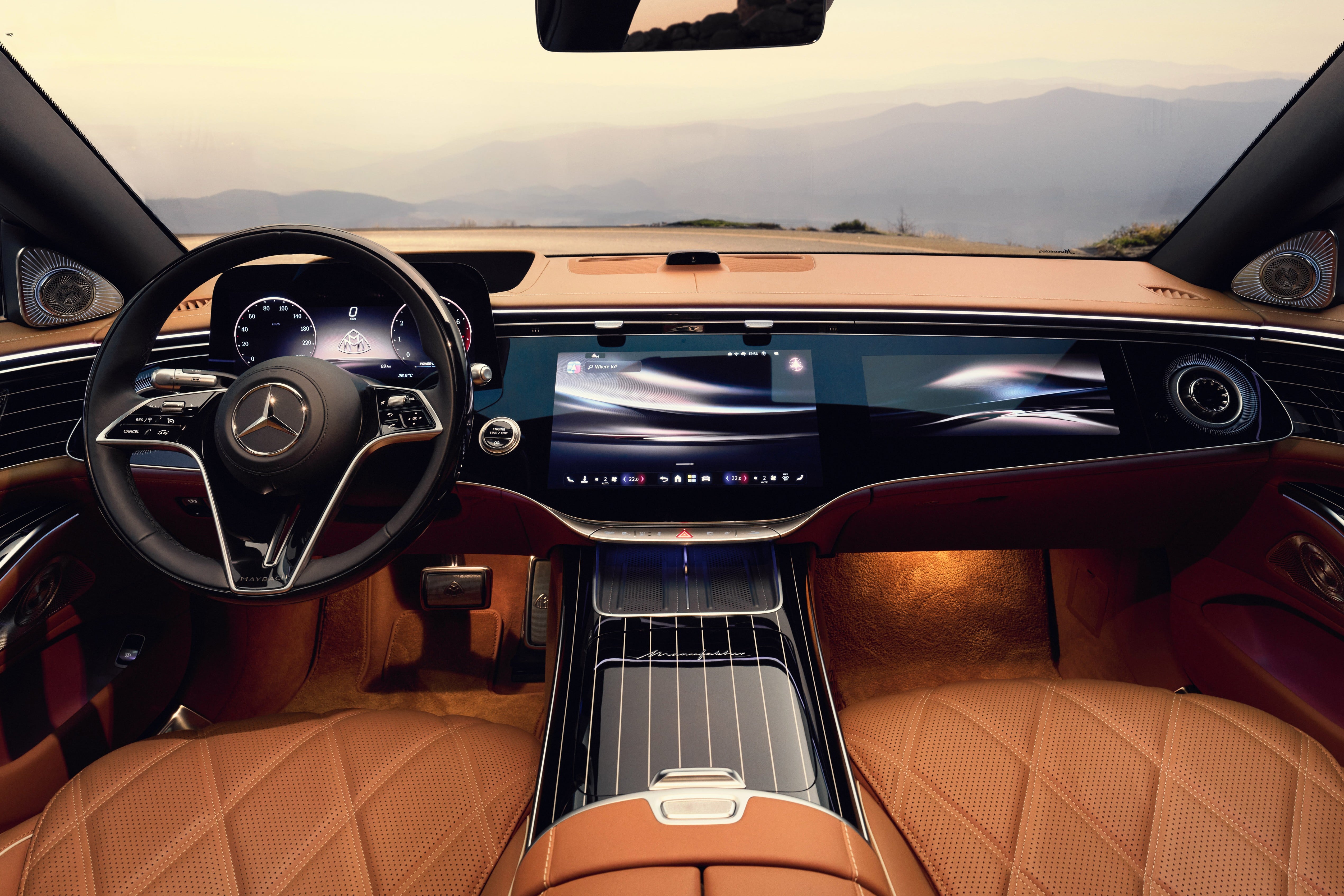
Inside, the Maybach prominently retains the standard S-Class’s Superscreen setup, comprising a 12.3-inch digital driver’s display, a 14.4-inch central touchscreen, and a 12.3-inch passenger display. New upholstery choices include extended leather and a leather-free vegan option. The rear seats remain largely unchanged, offering up to 43 degrees of recline, along with heating, ventilation, and massage functions. Globally, the Maybach S-Class can be had with either a 4.0-litre twin-turbo mild-hybrid V8 (S 580), a 4.0-litre twin-turbo V8 plug-in hybrid (S 580e), or a 612hp 6.0-litre twin-turbo V12 (S 680). Mercedes-Benz India is likely to offer the updated Maybach S-Class in S 580 or S 580e spec.
Honda Elevate facelift
Launch: 6 October
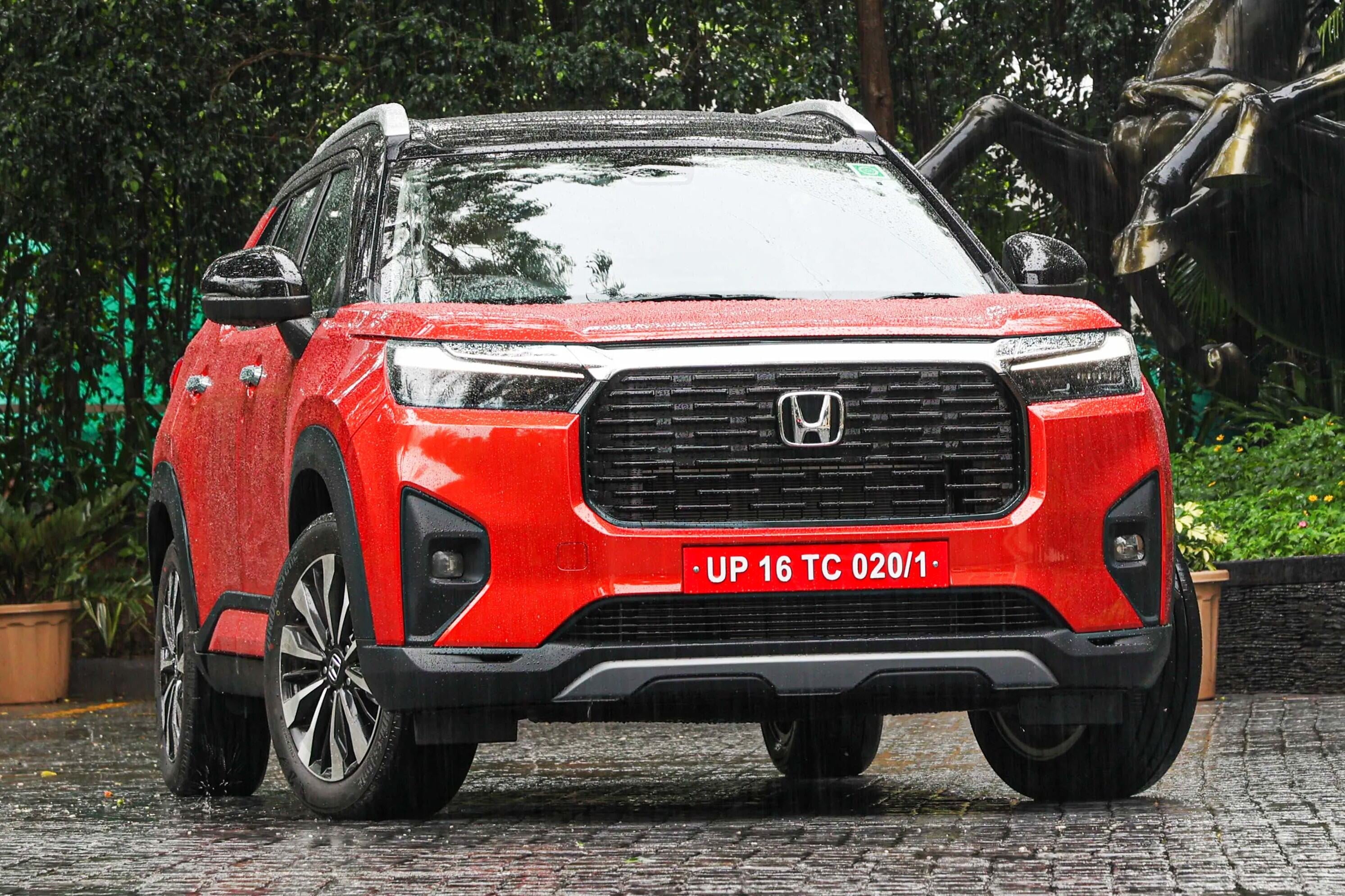
Current Honda Elevate. Image used for representation only.
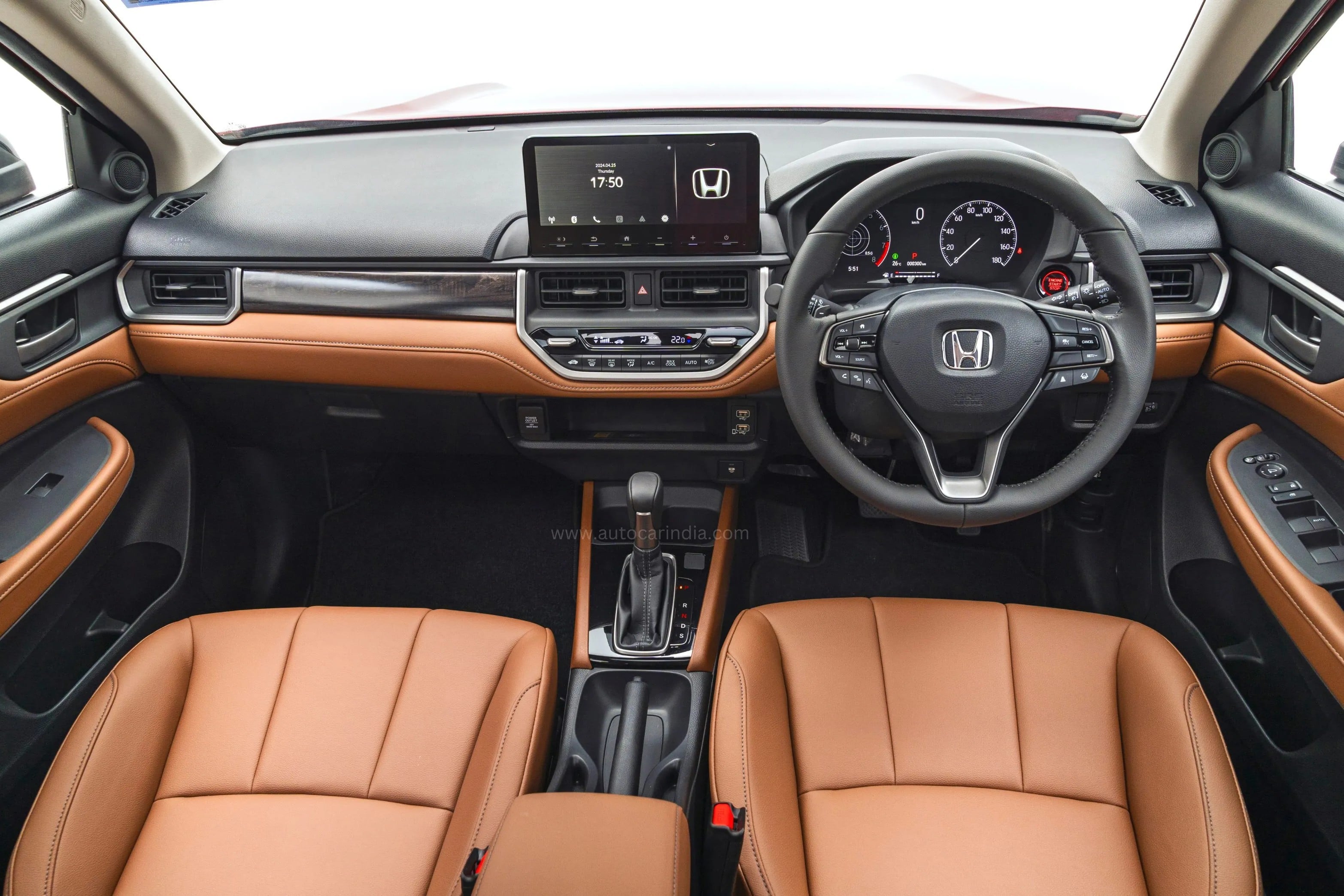
Following in the footsteps of the 2026 City facelift, Honda will launch an updated version of the Elevate SUV in October. Expect the Elevate facelift to sport revised styling cues, including the headlamps, tail-lamps, bumpers, grille, and wheels. The interior is anticipated to see changes like a larger infotainment touchscreen and revised colour schemes, along with feature upgrades like ventilated front seats, a 360-degree camera, ambient lighting, and more.
Current Honda Elevate interior. Image used for representation only.
The facelifted Elevate is likely to retain the current model’s 121hp 1.5-litre four-cylinder naturally aspirated petrol engine, and its 6-speed manual and CVT automatic gearbox options. It remains to be seen if Honda will additionally offer the Elevate facelift with the City e:HEV’s 126hp 1.5-litre four-cylinder petrol-hybrid powertrain, which is solely mated to an e-CVT automatic. A strong hybrid version of the Elevate would allow it to compete directly with established hybrid midsize SUVs like the Maruti Grand Vitara, Victoris, and Toyota Hyryder, as well as the upcoming Renault Duster hybrid – also slated for launch next month.
Skoda Slavia facelift
Launch: 6 October
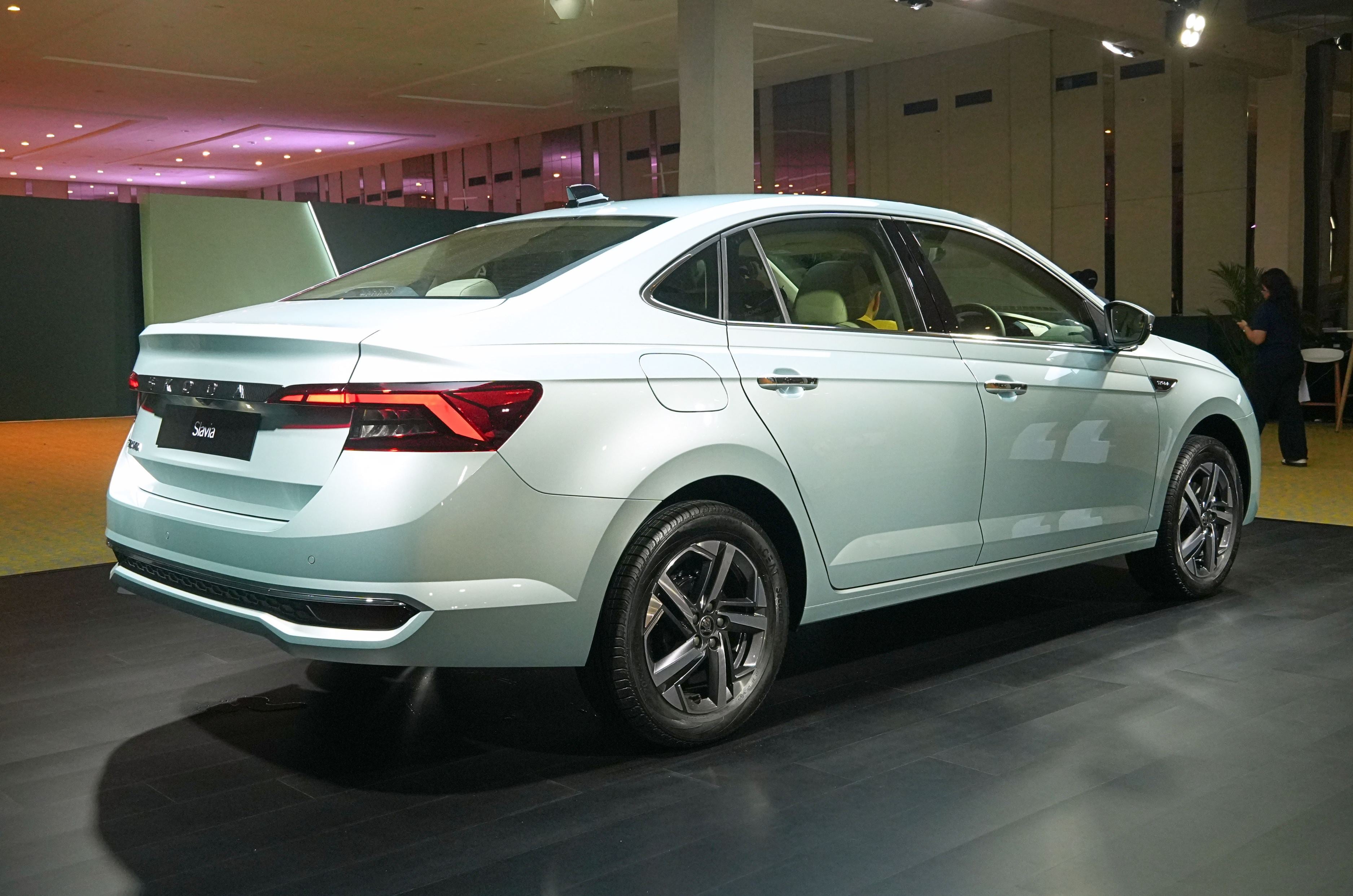
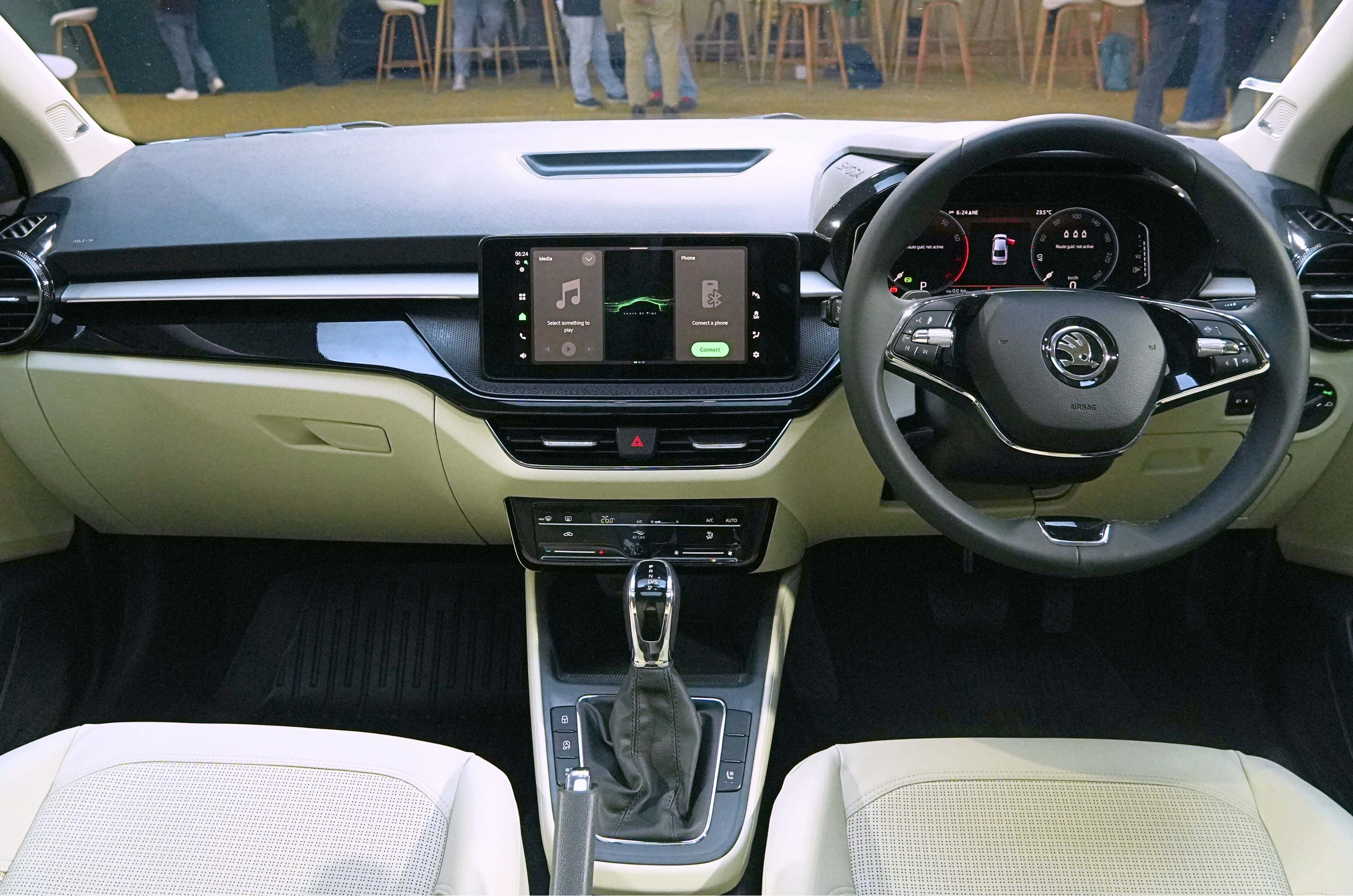
Having debuted back in August, the facelifted Skoda Slavia’s prices will be announced next month. The Slavia facelift brings a host of exterior tweaks, like new DRL signatures for the headlamps, an updated grille, redesigned bumpers, and fresh alloy wheels. Not much has changed on the inside, but there are new colour schemes on offer. Skoda has also added features like a 360-degree camera, a massage function for the outboard rear seats, a larger 10.25-inch digital driver’s display, a Google-based AI assistant, an upgraded variable-geometry AC compressor, and front parking sensors.
Under the bonnet, the Slavia facelift retains its 115hp 1.0-litre three-cylinder direct-injection turbo-petrol and 150hp 1.5-litre four-cylinder direct-injection turbo-petrol engines. The big change here is that the 6-speed torque converter automatic that was previously available for the 1.0 TSI has been swapped with an 8-speed unit, which should deliver better fuel efficiency on the highway. A 6-speed manual gearbox is also available for the 1.0 TSI, whereas the 1.5 TSI continues to be paired exclusively with a 7-speed dual-clutch automatic. The 1.5 TSI will be offered with rear disc brakes too – a much-requested upgrade.
Volvo ES90
Launch: 12 October
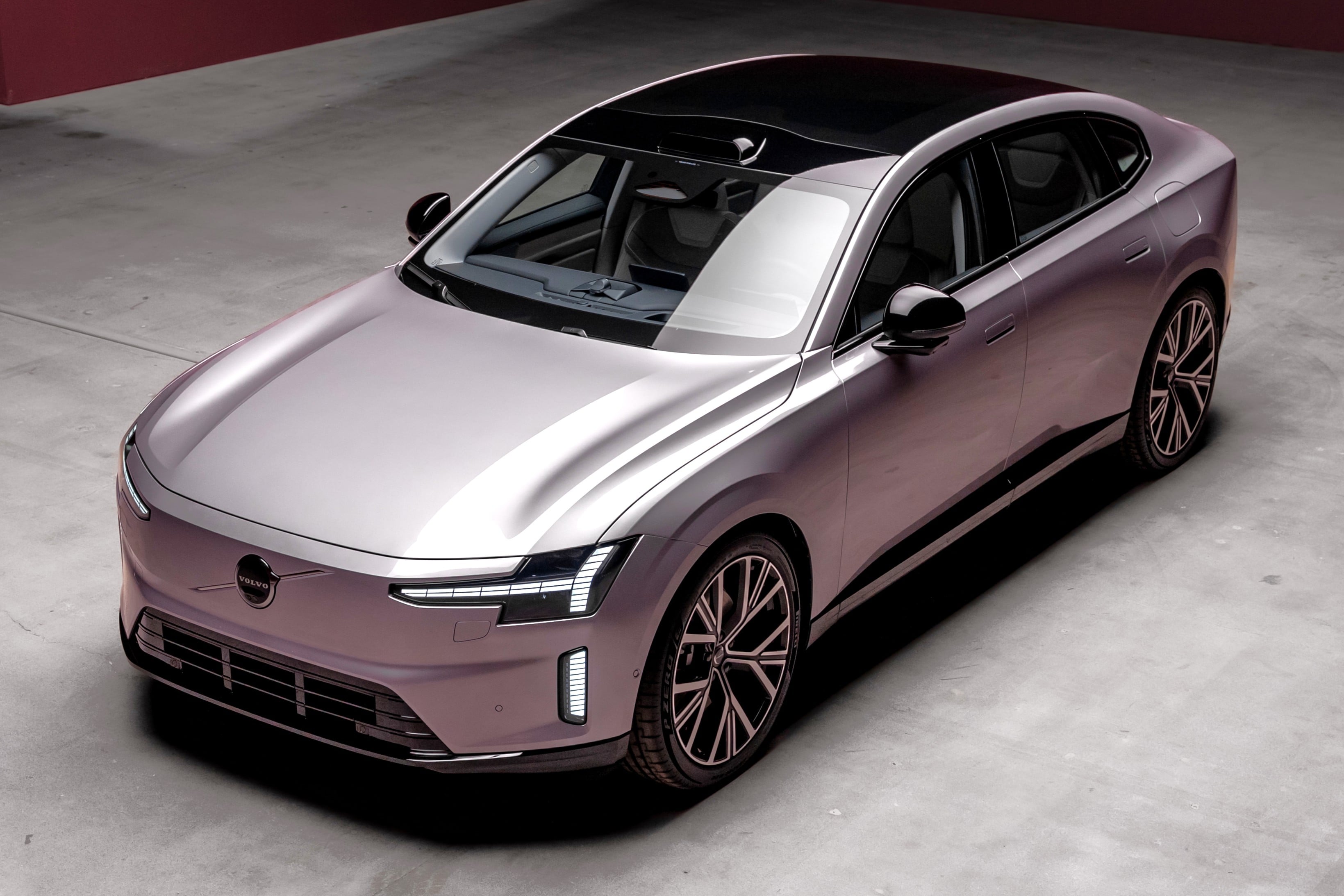
Volvo will return to the luxury sedan space next month with the launch of the all-electric ES90. It’s based on Volvo’s 800V SPA2 platform, and is likely to be offered with a 106kWh battery, dual-motor AWD setup in India. Combined output is pegged at 456hp and 670Nm, which is good for a claimed 0-100kph time of 5.3 seconds. As for WLTP range, the ES90 is rated at 696km, and the sedan can charge at up to 350kW DC, taking 22 minutes for a 10-80 percent top-up.
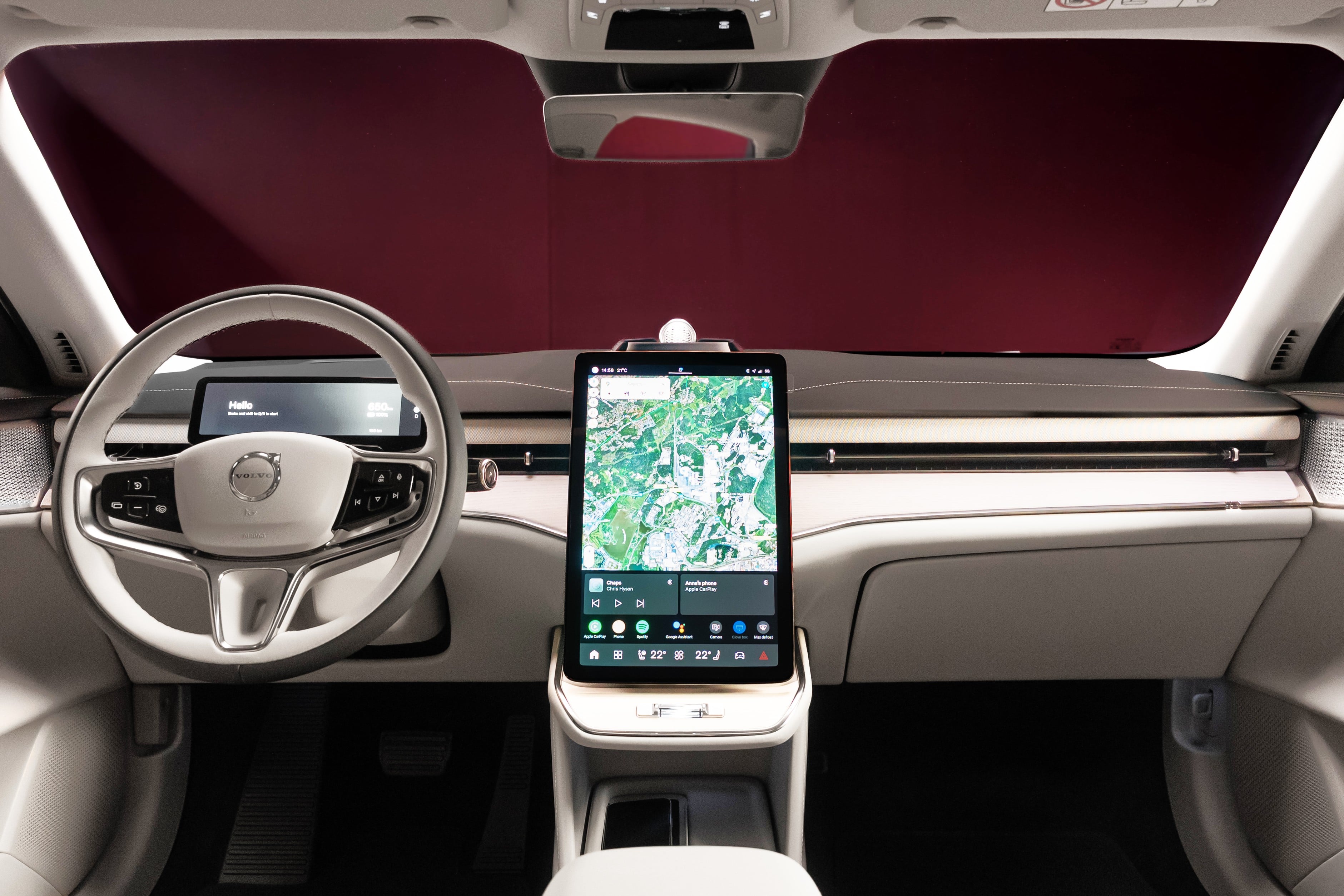
On the outside, the ES90 looks sleek and quietly aggressive, with T-shaped LED headlamps, vertically oriented front fog lamps, clean panelling, and C-shaped tail-lamps. Moreover, it has a drag coefficient of 0.25, making it the most aerodynamic Volvo car yet. Inside, the ES90 packs a 14.5-inch Google-based portrait touchscreen, a floating centre console, a three-spoke steering wheel, a slim 9-inch digital driver’s display, a 13.2-inch head-up display, a panoramic glass roof, four-zone climate control, powered front seats, Level 3 ADAS, and a Bose sound system.
Volvo EX90
Launch: 12 October
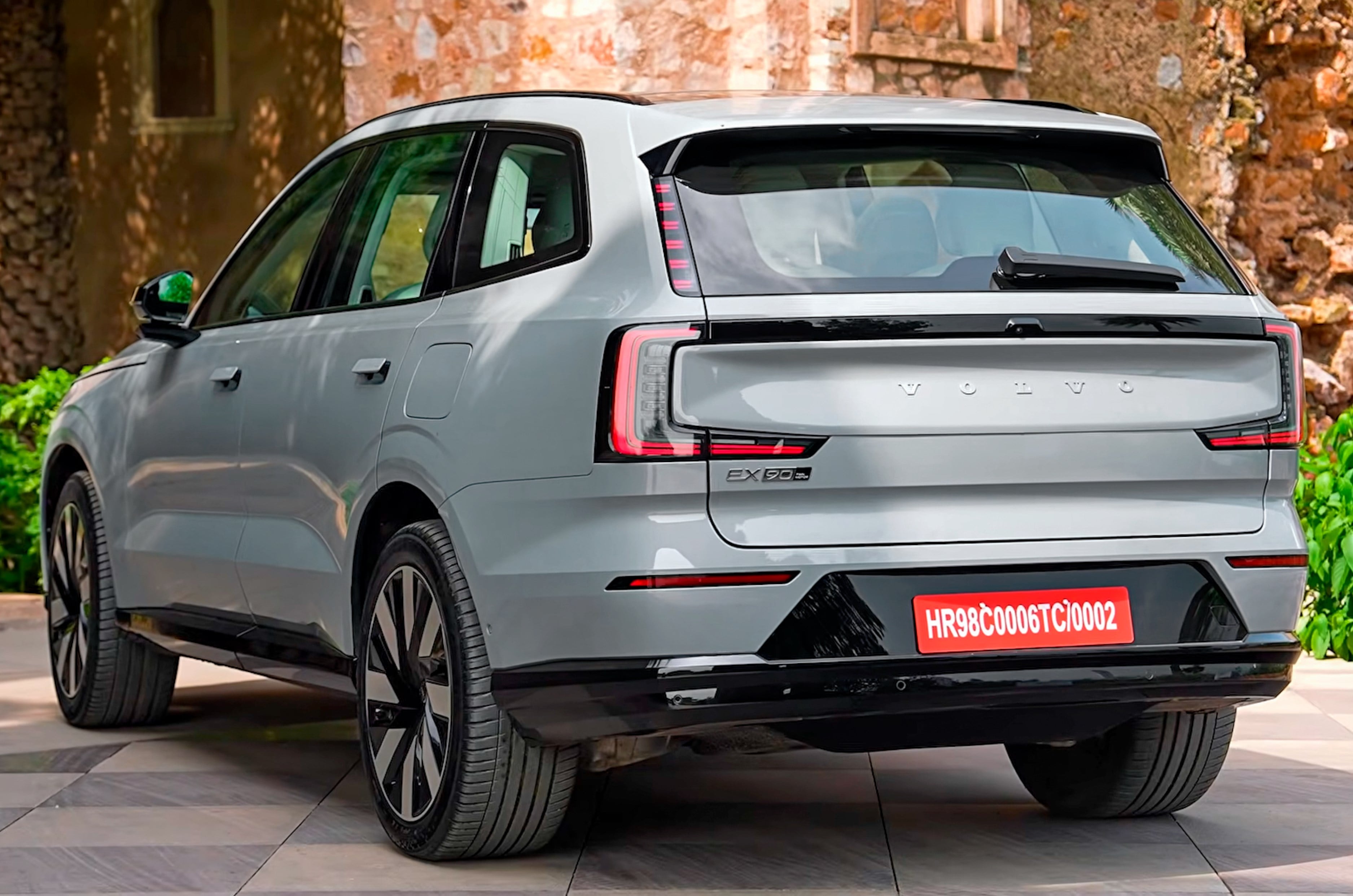
Alongside the ES90, Volvo will launch its SUV counterpart, the EX90. The electric SUV is also based on the SPA2 platform and is expected to offer the same 106kWh dual-motor AWD powertrain. Owing to its higher-riding stance, the EX90’s WLTP range is slightly lower at 625km, but the SUV impressively claims the same 5.3sec 0-100kph time.
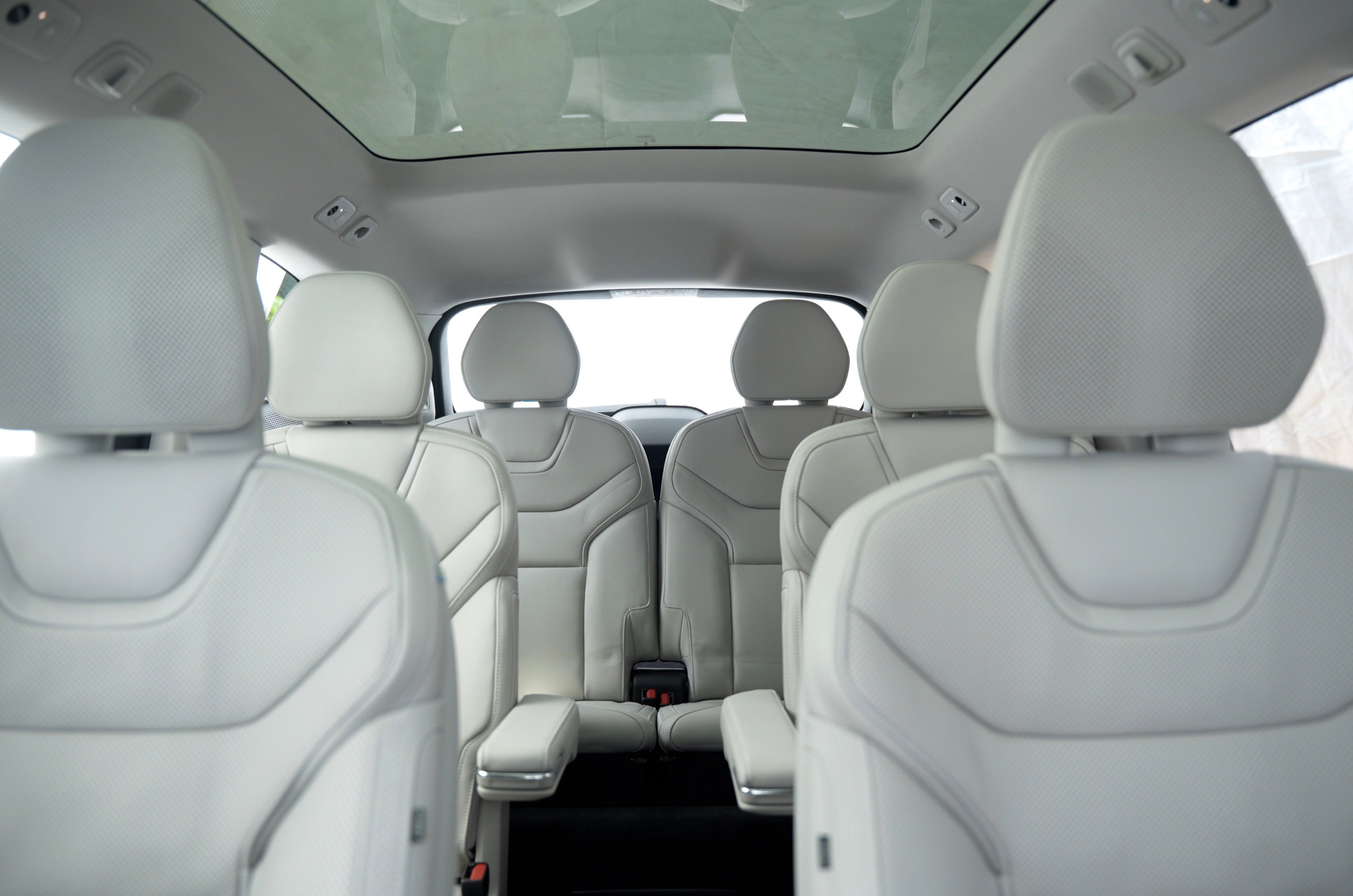
Even in terms of exterior design, the core elements are quite similar between the EX90 and ES90. The same holds true for the interior and equipment list as well, with the only major difference being that the EX90 can seat up to six occupants and gets second-row captain’s chairs.
Toyota Glanza facelift
Debut: 14 October
Current Toyota Glanza. Image used for representation only.
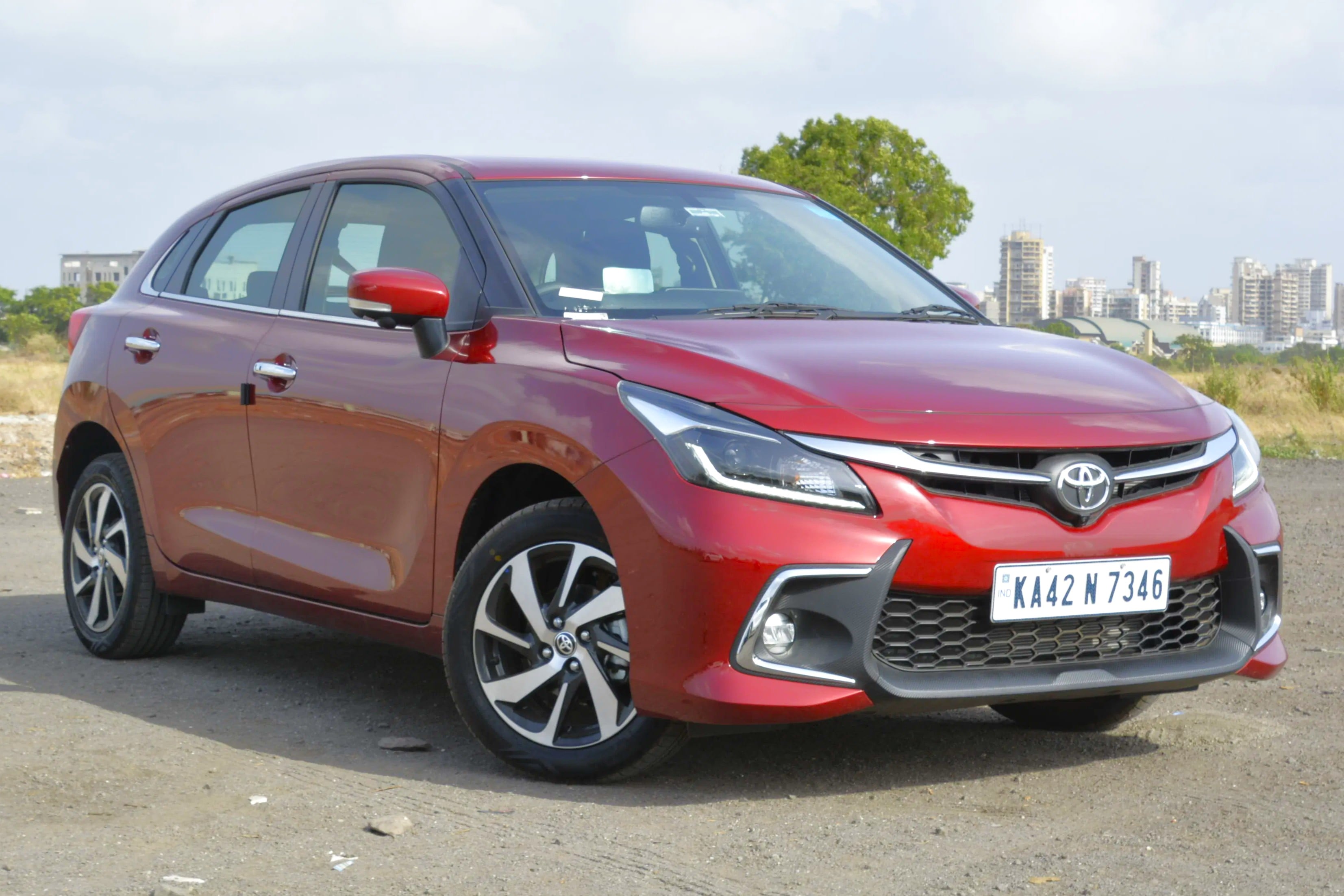
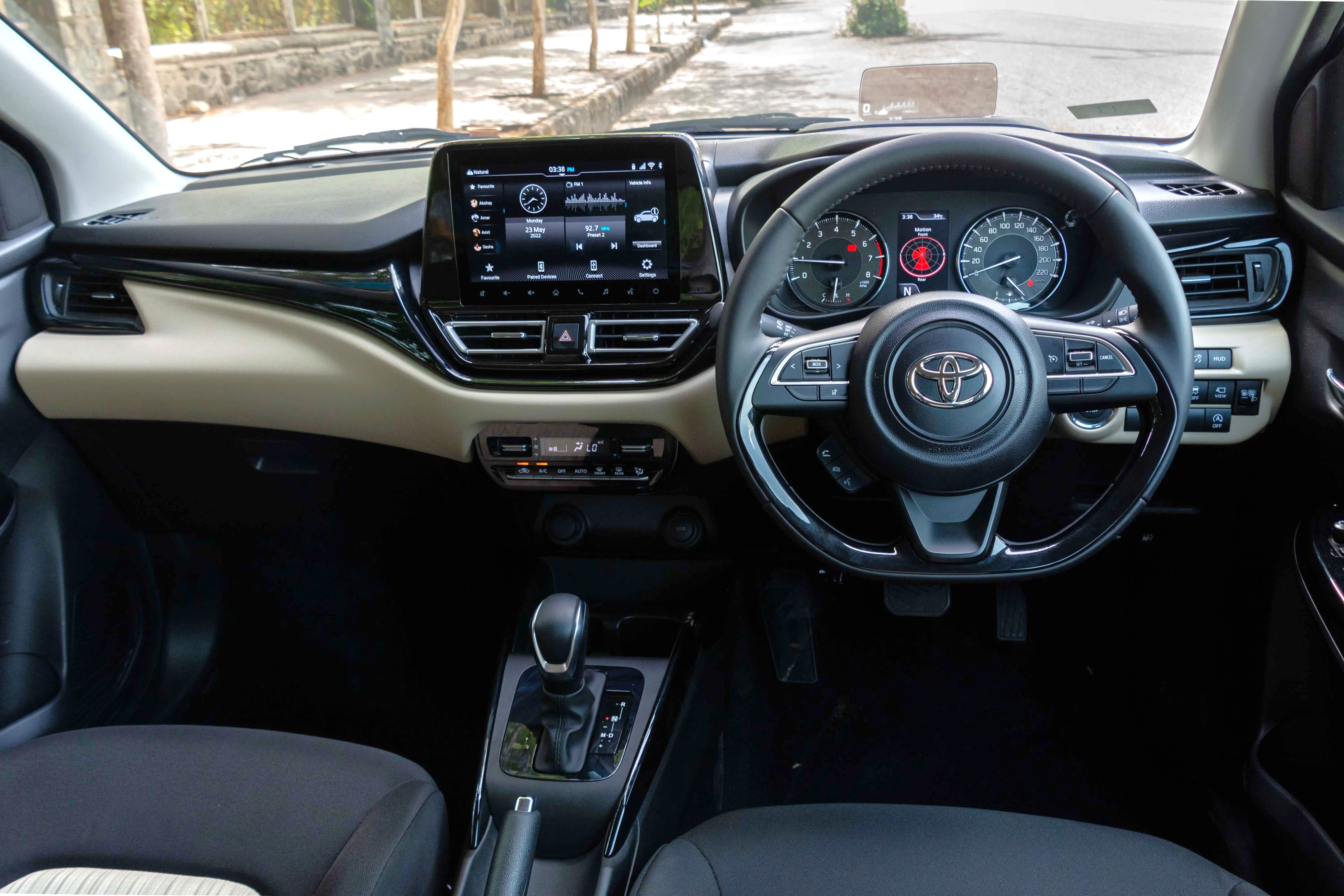
Just a month after the launch of the Baleno facelift, the updated form of its Toyota-badged counterpart, the Glanza, will be revealed. The Glanza facelift is likely to feature styling revisions similar to those of the updated Baleno, like a larger grille, redesigned bumpers, and new alloy wheel designs. Inside, the Toyota hatchback’s dashboard layout is expected to be largely unchanged, save for fresh seat upholstery. New creature comforts are likely to include Level 2 ADAS, a wireless charging pad, and ventilated front seats.
Current Toyota Glanza interior. Image used for representation only.
Under the bonnet, the Glanza facelift is anticipated to mirror the Baleno in dropping its current 90hp 1.2-litre four-cylinder K12N petrol engine in favour of the 83hp 1.2-litre three-cylinder Z12E mill. Like in the Baleno facelift, this engine is expected to be offered with either a 5-speed manual or 5-speed AMT in the updated Glanza, along with a 70hp CNG option.
Third-gen Audi Q3
Launch: 16 October
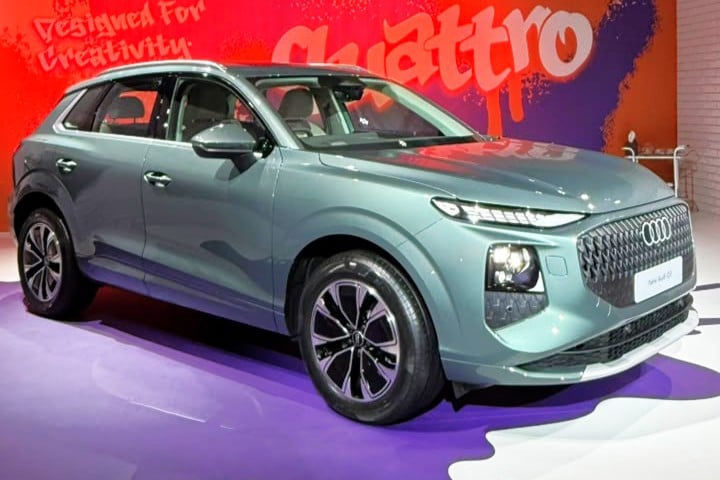
Audi India will launch the latest generation of its entry-level SUV, the Q3, next month. The India-spec third-gen Q3 was unveiled back in August, and will continue to rival the BMW X1 and Mercedes-Benz GLA. On the outside, the new Q3 is larger than its predecessor in every dimension and bears a sharper design language, which includes split LED headlamps, a wide grille, 18-inch alloy wheels, and a rear light bar with an illuminated Audi emblem.
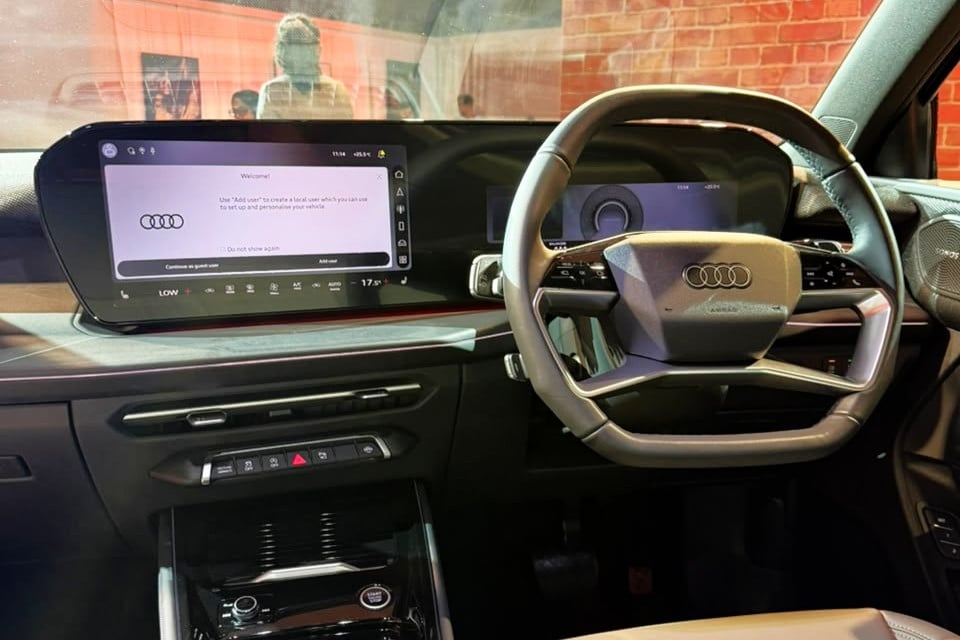
The interior of the third-gen Q3 is more modern and feature-loaded too, offering a 12.8-inch touchscreen, an 11.9-inch digital driver’s display, a new squircle-shaped four-spoke steering wheel, ambient lighting, a Sonos sound system, a panoramic sunroof, ambient lighting, a 360-degree camera, dual-zone climate control, among others. Under the bonnet, the Q3 continues to get a 204hp 2.0-litre four-cylinder direct-injection turbo-petrol engine, mated to a 7-speed dual-clutch automatic and Audi’s Quattro AWD system. 0-100kph comes up in a claimed 7.1 seconds, and the top speed is rated at 229kph.
Renault Duster hybrid
Launch: 17 October
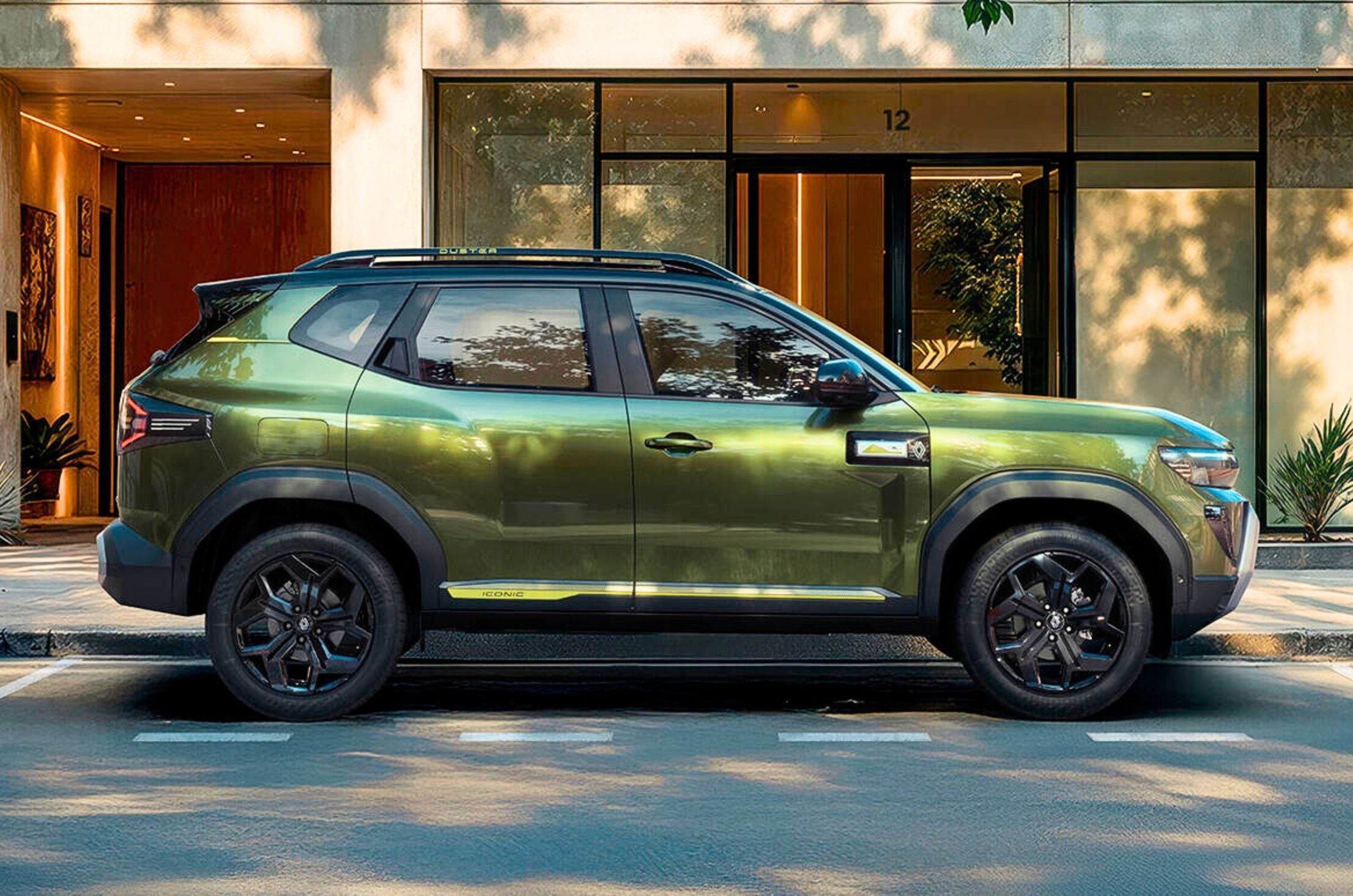
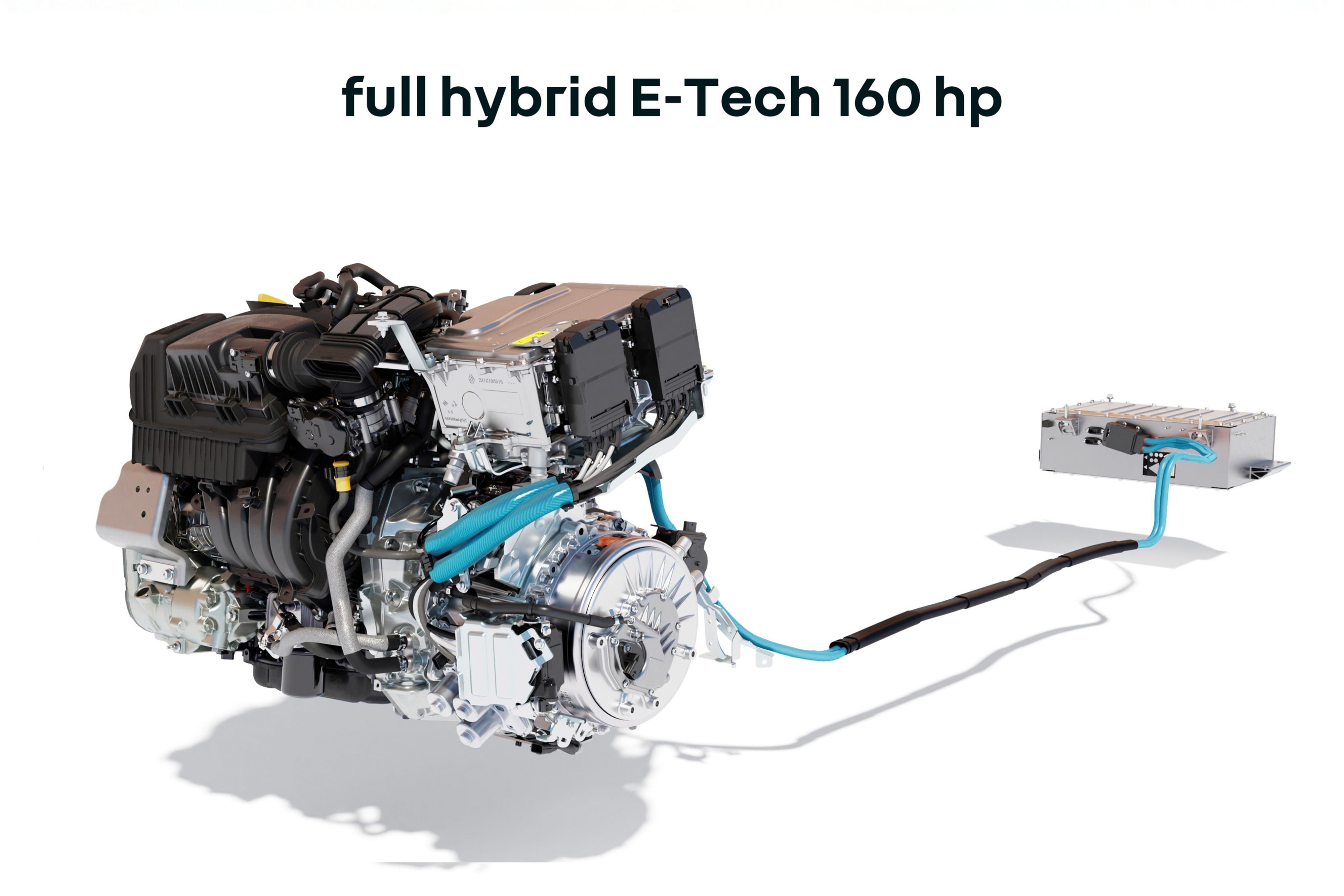
Since its launch earlier this year, the Renault Duster has been available with a couple of turbo-petrol engines only, but that will change come October 17. Renault will bolster the Duster’s line-up with a strong hybrid powertrain dubbed the E-Tech 160. It pairs a 1.8-litre four-cylinder naturally aspirated petrol engine with two electric motors and a 1.4kWh battery pack, developing a combined 160hp and 172Nm.
This setup will be paired with a segment-first 8-speed dedicated hybrid transmission (DHT) that uses fixed gear ratios, unlike the e-CVTs seen in hybrid SUV rivals like the Grand Vitara, Victoris, and Hyryder. The DHT should therefore enable a more natural driving feel to the Duster hybrid. Thanks to its 1.4kWh battery, the E-Tech 160 is also claimed to deliver 80 percent of urban driving in all-electric mode, which should help the Duster hybrid achieve great fuel efficiency.
Hyundai Bayon
Launch: Mid to late October
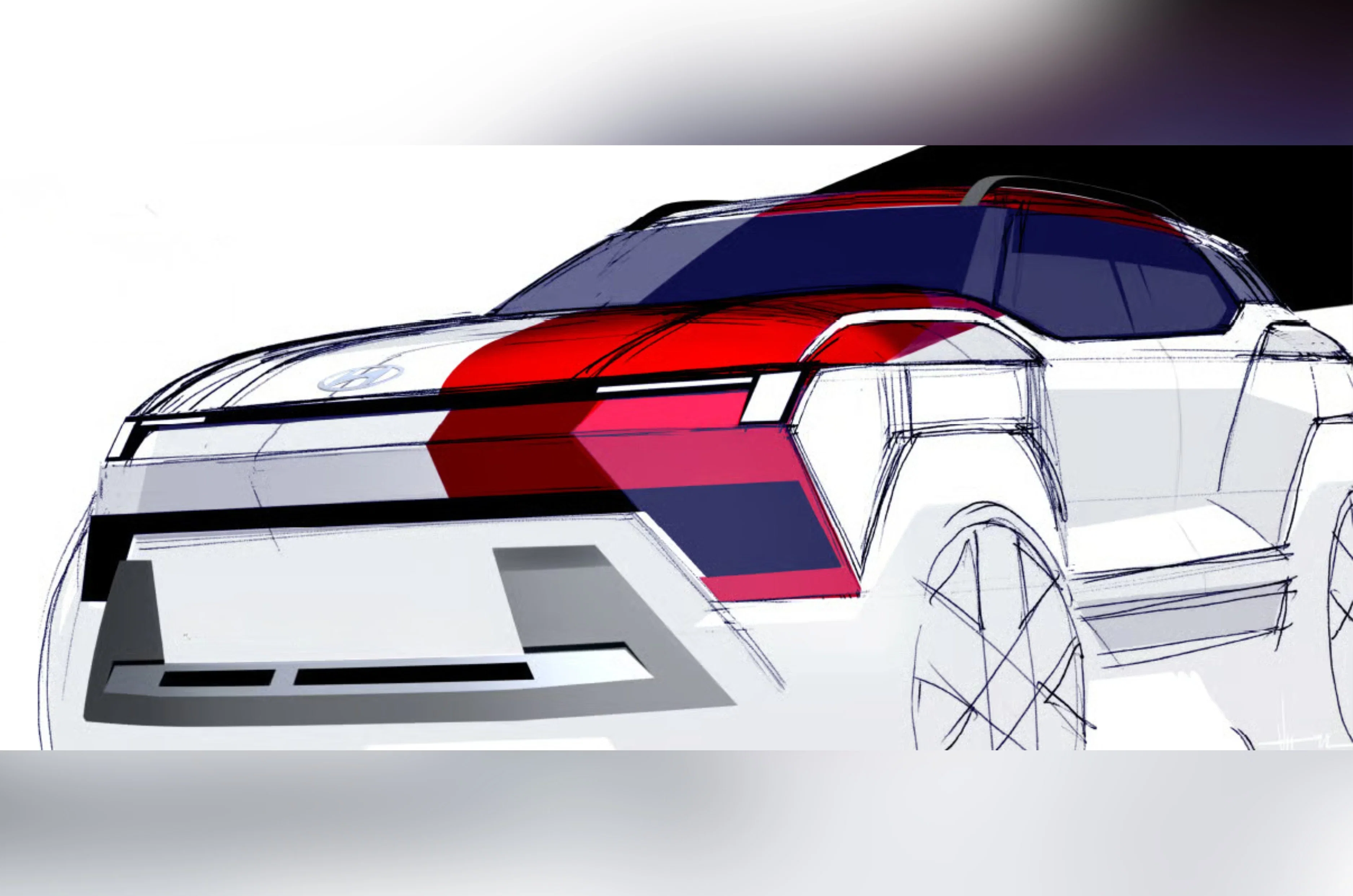
Hyundai’s second midsize SUV for India, the Bayon, is expected to be fully revealed and launched next month – bookings commenced on 23 September. The Bayon will slot between the Venue and Creta, offering the latter’s 1.5-litre naturally aspirated engine in petrol and CNG guises. Gearbox options are likely to include a 6-speed manual and CVT automatic. On the outside, the Bayon will feature Hyundai’s ‘Art of Steel’ design language, with styling cues like L-shaped front and rear LEDs, rakish proportions, an upward-sloping window line, and more. It’s also expected to be the first Hyundai car to come with an underbody CNG tank.
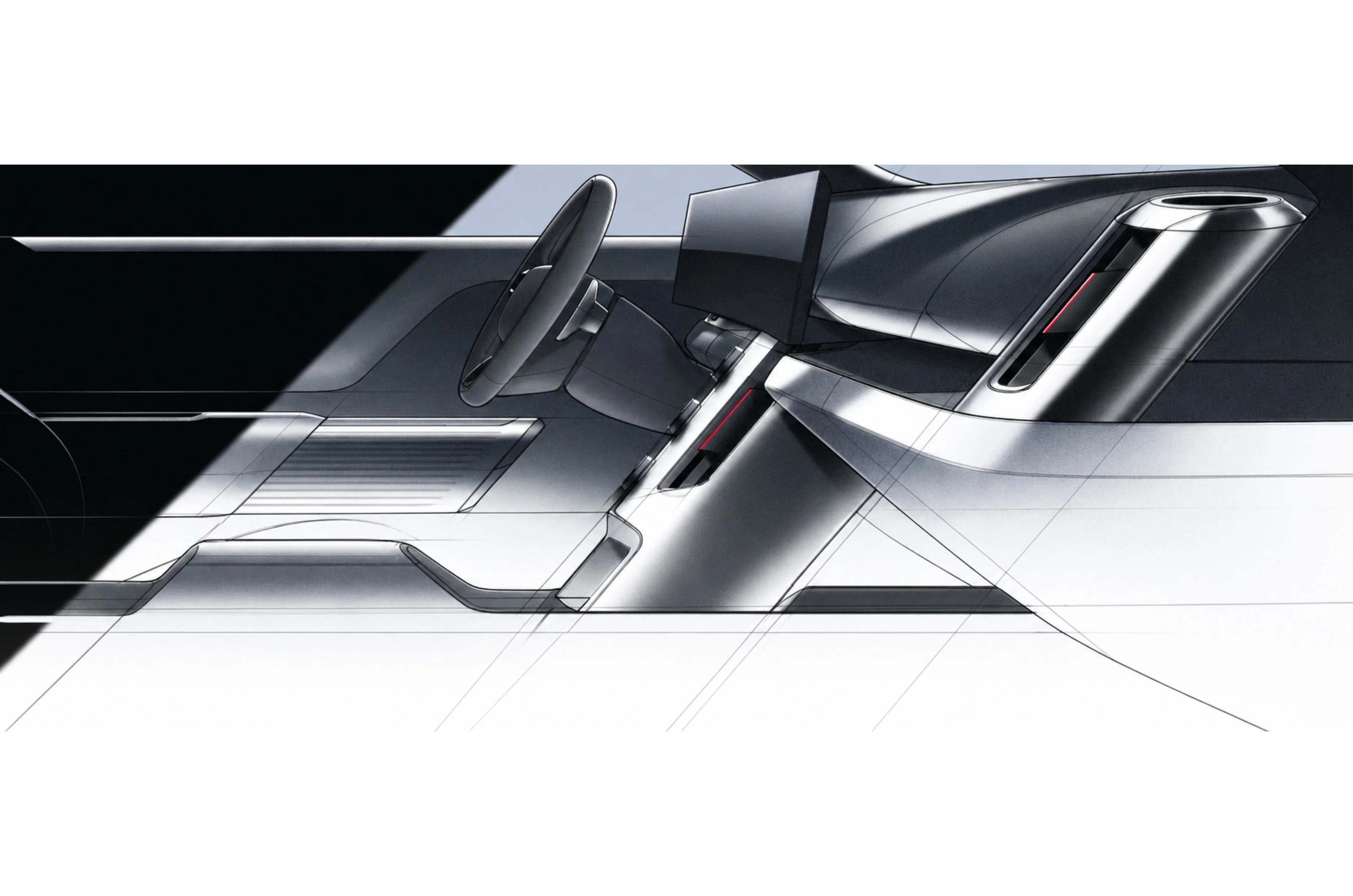
The interior of the Bayon is likely to offer a curved dual-screen setup, a three-spoke steering wheel bearing Hyundai’s four-dot motif, and a vertically oriented centre console – the dashboard layout will resemble that of the fourth-gen i20, which was revealed for the Brazilian market a few months ago.
ब्रोकरेज फर्म ग्रो ने पिछले हफ्ते अपने ऐप पर अमेरिकी कंपनियों के शेयरों में निवेश की सुविधा शुरू कर दी। हालांकि, ग्रो के सभी यूजर्स के लिए इस सुविधा के अगले हफ्ते से उपलब्ध होने की संभावना है। सूत्रों ने मनीकंट्रोल को यह बताया। ग्रो को इस साल जुलाई में गिफ्ट सिटी के जरिए ग्लोबल कंपनियों के शेयरों में निवेश के लिए आईएफएससीए लाइसेंस मिला था।
Groww ने विदेशी कंपनियों के शेयरों में निवेश की सुविधा देने के लिए ब्रोकरेज इंफ्रास्ट्रक्चर ऑफर करने वाली कंपनी Alpaca Securities से समझौता किया है। ग्रो ने इस सुविधा के बारे में मनीकंट्रोल के सवालों के जवाब नहीं दिए। ग्रो की इस सुविधा से इनवेस्टर्स उसके ऐप के जरिए अमेरिकी स्टॉक एक्सचेंज में लिस्टेड कंपनियों के शेयर खरीद और बेच सकेंगे।
ग्रो के प्लेटफॉर्म से इनवेस्टर्स को 10,000 से ज्यादा कंपनियों के स्टॉक्स और ईटीएफ में निवेश की सुविधा मिलेगी। इनमें Google, Apple, Nvidia, Tesla, Amazon और Meta जैसी दिग्गज अमेरिकी टेक्नोलॉजी कंपनियां शामिल हैं। Zerodha, Angel One और Upstox को भी गिफ्टी सिटी के जरिए अपने प्लेटफॉर्म के जरिए अमेरिकी कंपनियों के शेयरों में निवेश की सुविधा ऑफर करने की इजाजत मिल चुकी है।
Gift City ने अगस्त 2025 में ग्लोबल एक्सेस प्रोवाइडर (GAP) रजिस्ट्रेशन लॉन्च की थी। इसका मकसद इनवेस्टर्स को विदेशी कंपनियों के शेयरों में निवेश का किफायती रास्ता देना है। विदेशी कंपनी के शेयर बचने पर इनवेस्टर्स जब पैसा भारत लाएगा तो उसे किसी तरह की कॉस्ट नहीं चुकानी होगी। इससे भारतीय इनवेस्टर्स को विदेशी कंपनियों के शेयरों में निवेश का आसान रास्ता खुलेगा।
ग्रो यूजर्स की संख्या के लिहाज से देश की सबसे बड़ी ब्रोकरेज फर्म है। इसके 2 करोड़ से ज्यादा एक्टिव यूजर्स हैं। यह 4 लाख करोड़ रुपये से ज्यादा के एसेट्स का प्रबंधन करती है। इसकी शुरुआत एक म्यूचअल फंड प्लेटफॉर्म के रूप में हुई थी। अब तक विदेशी कंपनियों में निवेश की सुविधा देने वाले प्लेटफॉर्म्स में IndMoney, Smallcase और Vested Finance का दबदबा रहा है।
बीते करीब 2 सालों में अमेरिका, ताइवान और दक्षिण कोरिया में एआई और सेमीकंडक्टर से जुड़ी कंपनियों के शेयरों में जबर्दस्त तेजी आई है। चूंकि, इंडिया में ऐसी कंपनियां नहीं हैं, जिससे भारतीय इनवेस्टर्स की दिलचस्पी विदेश में इन कंपनियों के शेयरों में निवेश के मौके तलाने में बढ़ी है। इसके अलावा कई बड़ी AI कंपनियों का प्लान अमेरिकी स्टॉक एक्सचेंजों में खुद को लिस्ट कराने का है। ये कंपनियां अपने आईपीओ पेश करने वाली हैं।
Skoda Slavia Facelift, जिसे पिछले महीने भारत में पेश किया गया था, 6 अक्टूबर 2026 को देश में लॉन्च होने वाली है। बता दें कि इस नई सेडान का प्रोडक्शन पुणे के चाकन स्थित कंपनी के प्लांट में शुरू हो चुका है। वहीं, कंपनी नई Slavia को 6 ट्रिम लेवल में पेश करेंगी: Classic, Classic+, Signature, Sportline, Prestige और Monte Carlo। फिलहाल, इसकी बुकिंग शुरू हो चुकी है, जबकि डिलीवरी की तारीख लॉन्च के समय बताई जाएगी। कीतम की बात करें तो, मौजूदा मॉडल की कीमत 10 लाख रुपये से 18.19 लाख रुपये के बीच है, और अपडेटेड सेडान की कीमत काफी ज्यादा हो सकती है क्योंकि इसके बाहरी और अंदरूनी हिस्से में काफी बदलाव किए गए हैं।
Skoda Slavia Facelift: एक्सटीरियर और इंटीरियर
मेकओवर के बाद, Skoda ने कार की बनावट (सिलुएट) को तो वैसा ही रखा है, लेकिन डिटेल्स में काफी बदलाव किए हैं जिससे Facelifted मॉडल एकदम नया और फ्रेश लगता है। इसमें नए डिजाइन वाले LED हेडलैंप्स दिए गए हैं। इसके अलावा, Skoda ने बंपर्स में भी बदलाव किए हैं। वहीं, पिछले हिस्से में अपडेटेड टेललैंप्स और सीक्वेंशियल इंडिकेटर्स दिए गए हैं। अपडेटेड सेडान में नए अलॉय व्हील्स भी मिलते हैं। इसके अलावा, कलर ऑप्शन में दो नए एक्सटीरियर कलर्स (Arctic Silver और Cappuccino Beige) भी जोड़े गए हैं।
अपडेटेड Slavia के केबिन में अब बड़ी 10.1-इंच की इंफोटेनमेंट स्क्रीन और 10.25-इंच का डिजिटल ड्राइवर डिस्प्ले मिलता है। Google Cloud पर आधारित नए AI कंपैनियन के साथ, Slavia फेसलिफ्ट में वायरलेस Android Auto और Apple CarPlay की सुविधा भी दी गई है। अन्य फीचर्स में 360-डिग्री एरिया व्यू कैमरा और पिछली सीट पर मसाज फंक्शन शामिल हैं। एयर-कंडीशनिंग सिस्टम के लिए एक वेरिएबल-जियोमेट्री कंप्रेसर भी जोड़ा गया है।
Skoda Slavia Facelift: इंजन
मैकेनिकल तौर पर, नई Slavia में दो टर्बो-पेट्रोल इंजन मिलते हैं: 1.0-लीटर इंजन (115hp और 178Nm) और 1.5-लीटर इंजन (150hp और 250Nm)। छोटे इंजन को 6-स्पीड मैनुअल या नए 8-स्पीड ऑटोमैटिक गियरबॉक्स के साथ जोड़ा जा सकता है। इस ट्रांसमिशन ने पुरानी Slavia के छह-स्पीड ऑटोमैटिक की जगह ली है। वहीं, पावरफुल 1.5-लीटर इंजन सात-स्पीड डुअल-क्लच ऑटोमैटिक के साथ आता है।
Skoda Slavia Facelift: बुकिंग और मुकाबले की गाड़ियां
अपडेटेड Slavia की बुकिंग 15,000 रुपये में शुरू हो चुकी है। इस सेगमेंट में इसका मुकाबला Volkswagen Virtus, Hyundai Verna और Honda City से होगा।
Jio Recharge Plan: अगर आपने कभी प्रीपेड प्लान से रिचार्ज किया हो और तुरंत ही आपको पता चला हो कि किसी दूसरे प्लान में बेहतर फायदे मिल रहे हैं, तो ऐसा सोचने वाले आप अकेले नहीं हैं। सही प्लान चुनना कभी-कभी मुश्किल हो सकता है, खासकर तब जब आपके डेटा या कॉलिंग की जरूरतें बदल जाती हैं। हो सकता है कि आपने जरूरत से ज्यादा डेटा वाला प्लान चुन लिया हो, आपका रोज का डेटा उम्मीद से पहले ही खत्म हो गया हो, या आप बस अलग वैलिडिटी वाला प्लान चाहते हों।
ऐसे में अगर आप Jio यूजर हैं, तो आपके पास मौजूदा प्लान के खत्म होने का इंतज़ार किए बिना दूसरा प्लान चुनने का विकल्प है। अकाउंट में नया रिचार्ज जोड़ा जा सकता है और इसे मैनेज करने के तरीके के आधार पर, यह या तो बाद के लिए कतार (queue) यानी बाद में इस्तेमाल के लिए रखा जा सकता है या तुरंत एक्टिवेट किया जा सकता है।
Jio Prepaid Plans: क्या जानना जरूरी है
Jio के पास कई तरह के प्रीपेड प्लान हैं। इनमें अलग-अलग डेटा, कॉलिंग, SMS, वैलिडिटी और दूसरे फायदे मिलते हैं। आप MyJio ऐप या Jio की वेबसाइट पर जाकर उपलब्ध प्लान देख सकते हैं और अपनी जरूरत के हिसाब से रिचार्ज कर सकते हैं। MyJio ऐप में आप अपना मौजूदा और आने वाला प्लान भी देख सकते हैं। साथ ही, इसमें प्लान की वैलिडिटी और बचे हुए फायदे की जानकारी भी मिल जाती है।
प्रीपेड प्लान बदलने के कई कारण हो सकते हैं। उदाहरण के लिए, हो सकता है कि किसी का रोज़ का डेटा जल्दी खत्म हो जाता हो और वह ज़्यादा डेटा वाले प्लान पर जाना चाहता हो, जबकि कोई और ज़्यादा वैलिडिटी वाला प्लान पसंद कर सकता है। ऐसा भी हो सकता है कि आपने गलती से कोई दूसरा प्लान चुन लिया हो और आप उसके खत्म होने का इंतज़ार करने के बजाय उसे बदलना चाहते हों।
नए Jio प्रीपेड प्लान से रिचार्ज कैसे करें
स्टेप 1: MyJio ऐप खोलें और अपने Jio मोबाइल नंबर से लॉग इन करें। आप चाहें तो Jio की वेबसाइट पर जाकर भी साइन इन कर सकते हैं।
स्टेप 2: रिचार्ज सेक्शन में जाएं।
स्टेप 3: यहां उपलब्ध प्रीपेड प्लान देखें और अपनी पसंद का प्लान चुनें।
स्टेप 4: प्लान का डेटा अलाउंस, वैलिडिटी और अन्य फायदे देखें।
स्टेप 5: अपनी पसंद के पेमेंट तरीके से पेमेंट पूरा करें।
स्टेप 6: रिचार्ज सफल होने के बाद, आपके अकाउंट और मौजूदा प्लान के आधार पर नया प्लान या तो एक्टिव हो जाएगा या फिर ‘अपकमिंग प्लान’ के तौर पर जुड़ जाएगा।
अपकमिंग Jio प्लान को कैसे एक्टिवेट करें
अगर आपने पहले ही नए प्लान से रिचार्ज कर लिया है, लेकिन मौजूदा प्लान के खत्म होने का इंतजार नहीं करना चाहते, तो MyJio ऐप के जरिए queued में रखे गए प्लान को एक्टिव कर सकते हैं। अगर आप इसे खुद से एक्टिव नहीं करते हैं, तो आमतौर पर मौजूदा प्लान की वैलिडिटी खत्म होने के बाद नया प्लान अपने आप शुरू हो जाएगा।
स्टेप 1: MyJio ऐप खोलें और Mobile पर टैप करें।
स्टेप 2: मेन्यू आइकन पर टैप करें।
स्टेप 3: My Plans चुनें।
स्टेप 4: Upcoming टैब पर जाएं।
स्टेप 5: यहां उस queued प्रीपेड प्लान को ढूंढें, जिसे आप एक्टिव करना चाहते हैं।
Vivo X Fold 6: भारत में फोल्डेबल स्मार्टफोन का मार्केट और ज्यादा कॉम्पिटिटिव होता जा रहा है, क्योंकि Apple भी iPhone Duo के साथ इस सेगमेंट में एंट्री कर ली है। हालांकि, मार्केट में पहले से ही Samsung Galaxy Z Fold 8 Ultra, Galaxy Z Fold 8 और Google Pixel 11 Pro Fold मौजूद हैं। लेकिन अब, Vivo भी अपना नया फोल्डेबल फोन भारत में लाने की तैयारी में है। ऐसे में आने वाले दिनों में फोल्डेबल फोन के बाजार में मुकाबला और दिलचस्प हो सकता है।
रिपोर्ट्स के मुताबिक, प्रीमियम फोल्डेबल सेगमेंट में Google, Apple और Samsung को टक्कर देने के लिए चीनी टेक कंपनी अगले महीने भारत में अपना लेटेस्ट बुक-स्टाइल फोल्डेबल, Vivo X Fold 6 लॉन्च कर सकती है।
टिपस्टर अभिषेक यादव की X पोस्ट के अनुसार, Fold X 5 का सक्सेसर 6 अक्टूबर को लॉन्च हो सकता है। हालांकि, कंपनी ने अभी तक भारत में लॉन्च की तारीख की आधिकारिक पुष्टि नहीं की है, लेकिन रिपोर्ट्स बताती हैं कि ग्लोबल लॉन्च 1 अक्टूबर को हो सकता है और उसके कुछ दिनों बाद भारत में लॉन्च किया जा सकता है।
बता दें कि Vivo ने पहले ही कन्फर्म कर दिया था कि X Fold 6 को चुनिंदा ग्लोबल मार्केट में लॉन्च किया जाएगा।
उम्मीद की जा रही है कि भारत में आने वाला मॉडल दो स्टोरेज कॉन्फिगरेशन में उपलब्ध होगा। इनमें 12GB RAM के साथ 256GB स्टोरेज और 12GB RAM के साथ 512GB स्टोरेज शामिल हो सकते हैं। साथ ही, यह भी कहा जा रहा है कि यह फोन Prism Black और Nebula Teal कलर ऑप्शन में आएगा।
फिलहाल, ये जानकारी लीक पर आधारित है और जब तक Vivo कोई आधिकारिक घोषणा नहीं करता, तब तक इसे कन्फर्म नहीं माना जाना चाहिए।
Vivo X Fold 6 के स्पेसिफिकेशन्स
Vivo X Fold 6 को चीन में पहले ही लॉन्च किया जा चुका है, जिससे हमें भारत में आने वाले मॉडल के बारे में अच्छी जानकारी मिल जाती है। इस फोल्डेबल फोन में 8.02-इंच का AMOLED इनर डिस्प्ले और 6.51-इंच का कवर डिस्प्ले है, और दोनों ही स्क्रीन 120Hz रिफ्रेश रेट को सपोर्ट करती हैं।
फोन के अंदर MediaTek Dimensity 9500 Super चिपसेट दिया गया है। इसमें 7,000mAh की बड़ी बैटरी भी है, जो 80W वायर्ड चार्जिंग और 40W वायरलेस चार्जिंग को सपोर्ट करती है।
कैमरे की बात करें तो, Vivo X Fold 6 में Zeiss ट्यूनिंग वाला ट्रिपल रियर कैमरा सेटअप दिया गया है। इसका मेन कैमरा 200MP का है। फोन में प्रीमियम बिल्ड के साथ IP59 रेटिंग मिलने की भी उम्मीद है।
रिपोर्ट्स के मुताबिक, Vivo X Fold 6 ऐसे सेगमेंट में आएगा जहां Apple और Samsung के पास पहले से ही बेहतरीन प्रीमियम फोल्डेबल फोन मौजूद हैं। Apple के iPhone Duo में 7.6-इंच का फोल्डेबल डिस्प्ले है, जबकि Samsung के Galaxy Z Fold 8 Ultra में 8-इंच का इंटरनल डिस्प्ले है।
फिलहाल, Vivo ने अभी तक भारत में इसकी कीमत के बारे में कोई जानकारी नहीं दी है। लेकिन चीन में X Fold 6 की शुरुआती कीमत CNY 7,999 है, जबकि पिछला Vivo X Fold 5 भारत में ₹1,59,999 में लॉन्च हुआ था। लीक हुई जानकारी के अनुसार, उम्मीद है कि Vivo का नया फोल्डेबल फोन भारत में ₹1,79,999 की शुरुआती कीमत पर लॉन्च हो सकता है।
Flipkart Big Billion Days Sale 2026: फेस्टिव सीजन आते ही ऑनलाइन शॉपिंग प्लेटफॉर्म पर सेल का इंतजार भी शुरू हो जाता है। अगर आप इस बार नया स्मार्टफोन खरीदने का प्लान बना रहे हैं, तो Flipkart Big Billion Days Sale 2026 आपके लिए खास हो सकती है। Flipkart ने अभी से इस सेल में मिलने वाले स्मार्टफोन ऑफर्स की झलक दिखानी शुरू कर दी है। कंपनी ने कुछ लोकप्रिय फोन की इफेक्टिव कीमतें भी सामने रख दी हैं।
इस लिस्ट में Apple iPhone 17, Google Pixel 11 और Pixel 10a जैसे स्मार्टफोन शामिल हैं। Flipkart के मुताबिक, सेल में iPhone 17 की इफेक्टिव कीमत 77,999 रुपये होगी। वहीं, Google Pixel 11 को 69,999 रुपये और Pixel 10a को 39,999 रुपये की इफेक्टिव कीमत में खरीदा जा सकेगा।
iPhone 17 की Big Billion Days में कीमत
Flipkart की Big Billion Days Sale 2026 के दौरान iPhone 17 की प्रभावी कीमत ₹77,999 होगी। यह ऑफर योग्य ग्राहकों के लिए उपलब्ध होगा और Flipkart की लागू शर्तों और नियमों के मुताबिक होगा। अभी Apple भारत में iPhone 17 के 256GB वेरिएंट को ₹99,900 में बेच रहा है। यानी सेल के दौरान इसकी इफेक्टिव कीमत मौजूदा कीमत से काफी कम होगी। वहीं, Google Pixel 11 की इफेक्टिव कीमत 69,999 रुपये होगी। इसके अलावा, Google Pixel 10a को 39,999 रुपये की इफेक्टिव कीमत में खरीदा जा सकेगा।
Flipkart ने और भी स्मार्टफोन के बारे में जानकारी दी
iPhone 17 और Google Pixel मॉडल के अलावा, Flipkart ने अपनी आने वाली सेल के ऑफर में कई अन्य स्मार्टफोन और उनकी प्रभावी कीमतों का भी जिक्र किया है। इनमें शामिल हैं:
Moto G06 Power 13,999 रुपये में
Oppo K14 5G 23,499 रुपये में
Nova 2 Power 5G 15,999 रुपये में
Motorola Signature 57,499 रुपये में
Motorola Edge 70 Max 51,999 रुपये में
Motorola Edge 70 Fusion 29,999 रुपये में
डिस्काउंट मिलने वाले स्मार्टफोन्स की लिस्ट
Realme P4 5G, Poco M8X 5G, Boltt EVO 4G, Samsung Galaxy F07, Motorola Edge 70 Pro+ 5G, Moto G37, Tecno Spark 50, Oppo K14x 5G, Vivo T5x 5G
ई-कॉमर्स कंपनी सेल शुरू होने के करीब आने पर स्मार्टफोन्स से जुड़े और भी ऑफर्स और उनकी कीमतों की जानकारी जारी कर सकती है। बता दें कि Flipkart की ‘Big Billion Days Sale 2026’ आधिकारिक तौर पर 9 अक्टूबर को शुरू होगी, जबकि योग्य ग्राहकों के लिए अर्ली एक्सेस 8 अक्टूबर की आधी रात से शुरू हो जाएगा।
जानकारी के मुताबिक, Apple ने सितंबर 2025 में भारत में iPhone 17 का 256GB मॉडल ₹82,900 में लॉन्च किया था।
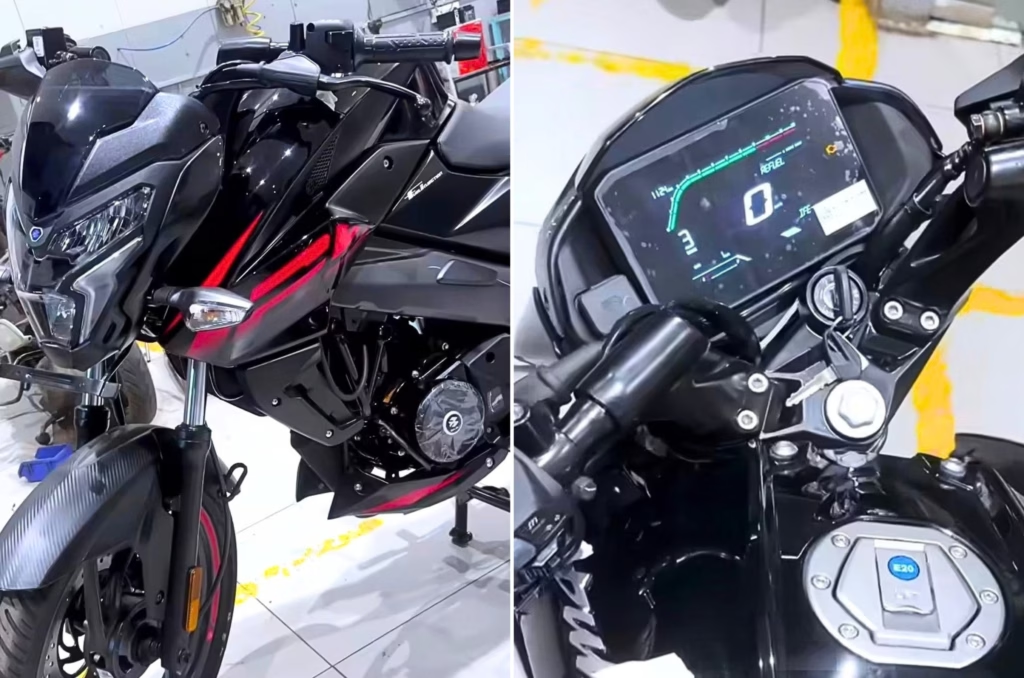
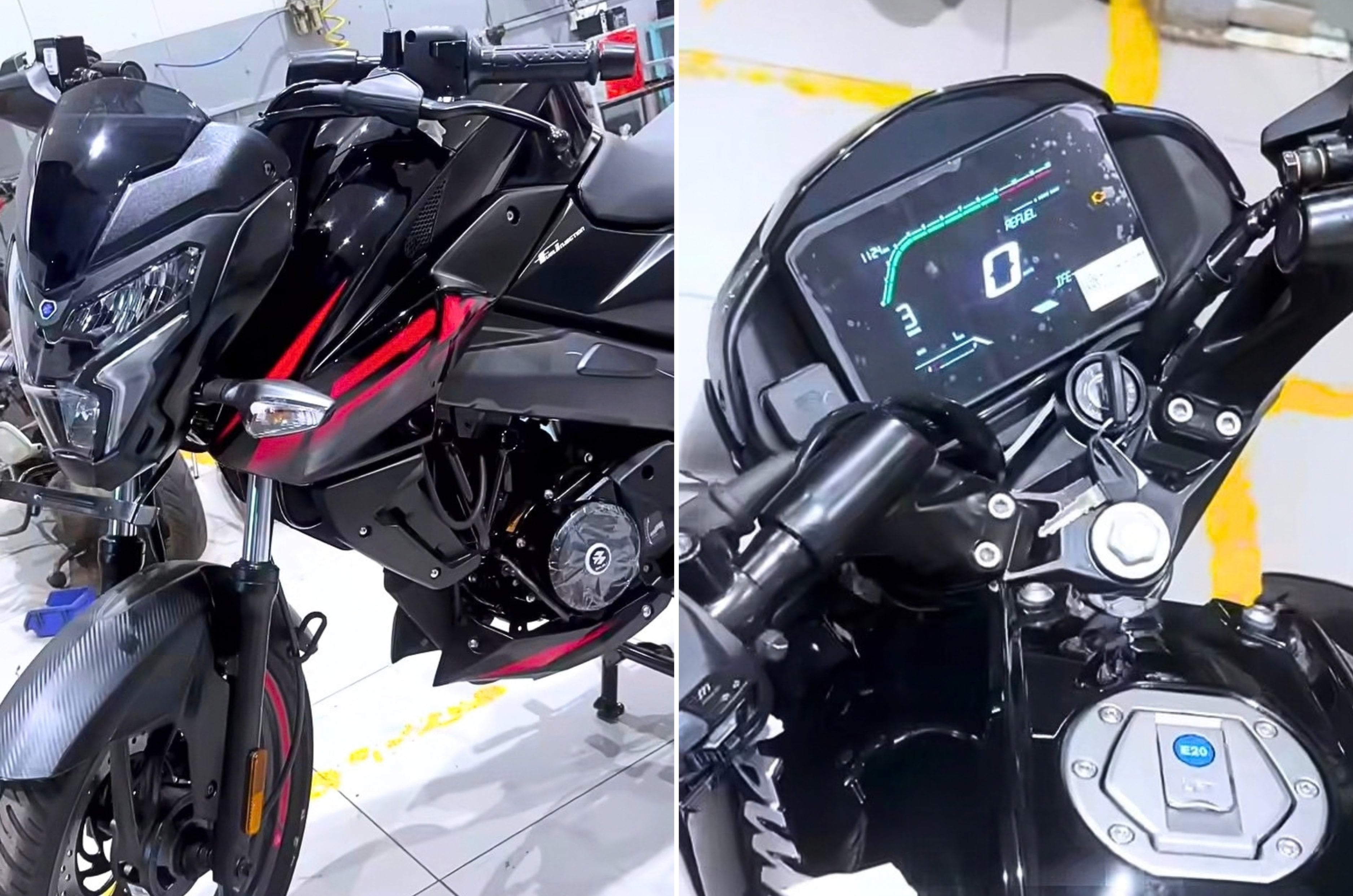
Bajaj, like we predicted, appears to be bringing a slew of updates across their line-up. Only a few days after the Pulsar NS400Z was spotted with the new TFT display, now the entry-level NS125 looks to be next in line. Just like the NS400Z, the update seems to be centred around colours and an updated display.
There could be a higher variant with a TFT display; same as the one from the all-new Pulsar 125 etc.,
Updated colour options also expected, mechanical changes unlikely
Updated Pulsar NS125 could launch soon
New colours and an instrument cluster are the main changes
Just last week, we spotted the NS400Z – the apex NS – with an updated TFT display and colour schemes. Bajaj had first introduced the display with the SS variant of the N160, later giving it to the top variants of the classic Pulsar 125 and 150 as well. The headlining feature of the display was the ability to mirror Google Maps navigation on the bike. Later, updated versions of the N250 and the NS200 were also spotted testing, sporting the new display. Now, the entry-level NS125 looks to be getting an updated display too.
The production-looking version of the Pulsar NS125 was spotted with a new LCD screen, replacing the negative LCD unit on the current version. While the images give us a look at the model with an LCD screen (also available on lower variants of the 125, 150, and N160), there will likely be a higher variant with the same TFT display as the aforementioned siblings. Bajaj appears to have slightly updated the colours too, bringing the palette closer to the recently updated Pulsars. The images show us the bike in black/red, black/neon green, and black/grey.
Besides these two changes, the baby NS is expected to remain unchanged. Which means, it’ll hang on to its 124.45cc engine delivering 12hp and 11Nm of torque. For context, the updated classic Pulsar 125 has a 124.38cc engine that makes 11.8hp and 10.8Nm of torque. TVS Raider, the current best-seller of the sporty 125s, has a 124.8cc engine making 11.38hp and 11.2Nm of torque (11.75Nm on ISG variants). Since the motorcycle appears to have reached dealerships already, deliveries will likely start soon as well. Currently, the Bajaj Pulsar NS125 starts at Rs 99,622 and it remains to be seen if that increases with these updates.
आर सिस्टम्स इंटरनेशनल ने दूसरे अंतरिम डिविडेंड का ऐलान किया है। कंपनी प्रति शेयर 8 रुपये का अंतरिम डिविडेंड शेयरहोल्डर्स को देगी। कंपनी ने इस बारे में स्टॉक एक्सचेंजों को शुक्रवार यानी 25 सितंबर को बताया। शुक्रवार को कंपनी का शेयर 0.18 फीसदी गिरकर 237 रुपये पर बंद हुआ।
24 अक्टूबर को या इससे पहले डिविडेंड का पेमेंट हो जाएगा
R Systems International के एक शेयर की फेस वैल्यू 1 रुपये है। इसका मतलब है कि अंतरिम डिविडेंड फेस वैल्यू का 800 फीसदी होगा। कंपनी ने कहा है कि शेयरहोल्डर्स को डिविडेंड का पेमेंट 24 अक्तूबर, 2026 को या इससे पहले कर दिया जाएगा। कंपनी ने कहा है कि डिविडेंड के लिए रिकॉर्ड डेट 1 अक्तूबर होगी। इसका मतलब है कि 1 अक्तूबर तक जिन शेयरहोल्डर्स के डीमैट अकाउंट में कंपनी के शेयर होंगे, वे डिविडेंड के हकदार होंगे।
कंपनी ने मार्च में प्रति शेयर 6 रुपये डिविडेंड का ऐलान किया था
यह डिविडेंड साल 2026 के लिए होगा। इससे पहले कंपनी ने 6 मार्च को प्रति शेयर 6 रुपये अंतरिम डिविडेंड का ऐलान किया था। इसके लिए कंपनी ने 12 मार्च रिकॉर्ड डेट तय की थी। दोनों डिविडेंड को मिलाकर कंपनी का कुल अंतरिम डिविडेंड 2026 में 14 रुपये पहुंच गया है।
दुनियाभर में कंपनी के 18 डिलीवरी सेंटर
आर सिस्टम्स इंटरनेशनल ने गुरप्रीत सिंह को कंपनी सेक्रेटरी एवं कंप्लायंस अफसर नियुक्त किया है। यह नियुक्ति 25 सितंबर से प्रभावी हो गई है। आर सिस्टम्स इंटरनेशनल की शुरुआत 1993 में हुई थी। कंपनी आईटी सर्विसेज ऑफर करती है। इसका फोकस प्रोडक्ट इंजीनियरिंग पर है। इसके क्लाइंट्स में कई बड़ी कंपनियां शामिल हैं, जिनमें Amazon Web Services, Microsoft और Google Cloud शामिल हैं। इसके नॉर्थ अमेरिका, यूरोप, एशिया पैसेफिक और भारत में 18 डिलीवरी सेंटर हैं।
आर सिस्टम्स इंटरनेशनल का शेयर इस साल 42% गिरा
आर सिस्टम्स इंटरनेशनल के शेयरों पर आईटी सेक्टर पर दबाव का असर पड़ा है। यह शेयर 2026 में अब तक करीब 42 फीसदी गिरा है। इस दौरान दूसरी आईटी कंपनियों के शेयरों में भी गिरावट आई है। TCS का शेयर इस दौरान 35 फीसदी से ज्यादा फिसला है। Infosys का शेयर करीब 39 फीसदी गिरा है। HCL Tech का शेयर 23 फीसदी और विप्रो का शेयर करीब 39 फीसदी टूटा है।
शेयर बाजारों में सेंटीमेंट लगातार कमजोर बना हुआ है। इसकी बड़ी वजह मध्यपूर्व क्राइसिस है। इसकी वजह से क्रूड की कीमतों में उछाल आया है। इससे दुनियाभर में महंगाई बढ़ने का डर बढ़ा है। हालांकि, 25 सितंबर को भारतीय शेयर बाजारों के प्रमुख सूचकांकों में रिकवरी देखने को मिली। इनवेस्टर्स की नजरें अब अगले हफ्ते बाजार की चाल पर हैं।
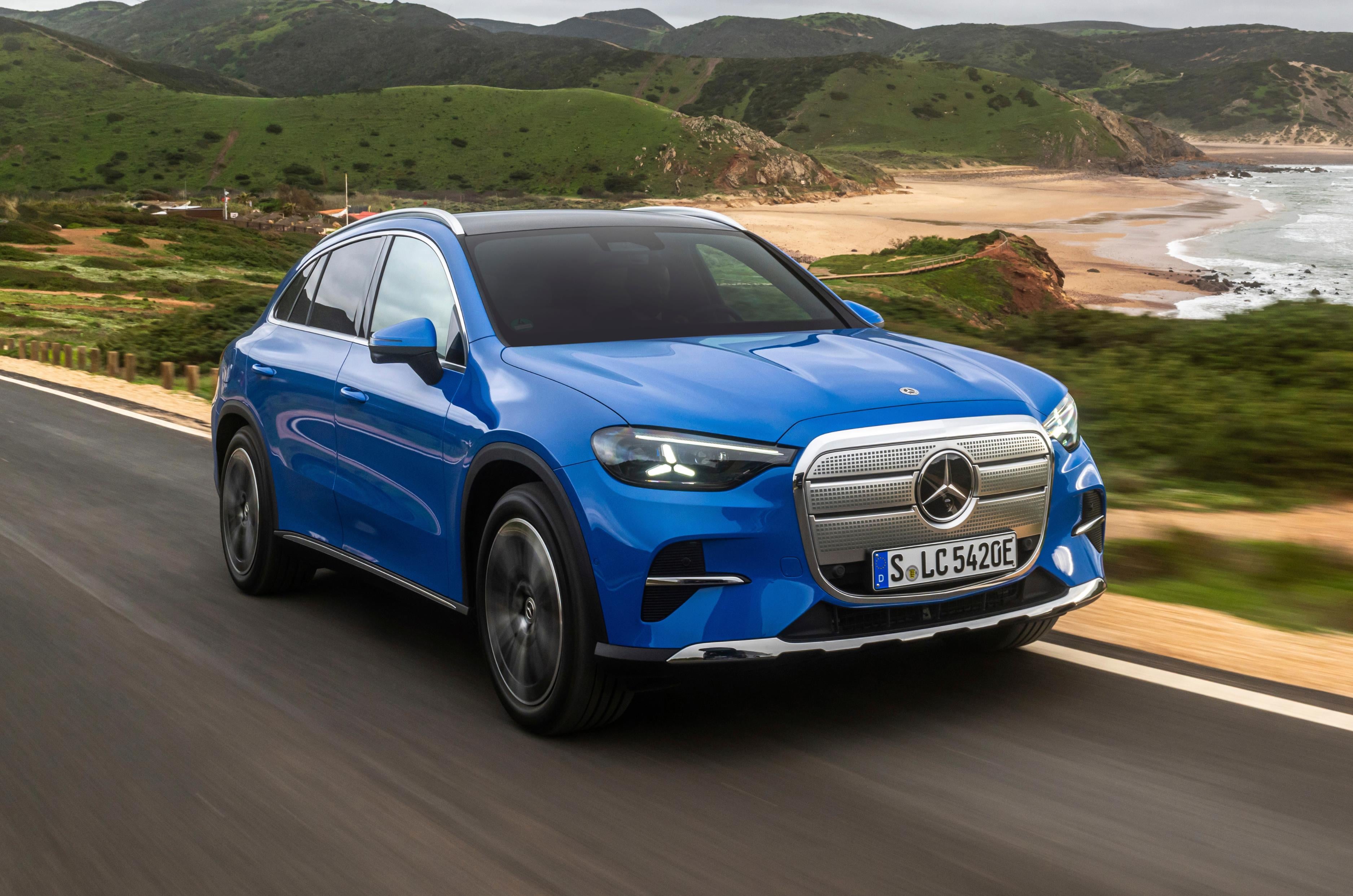
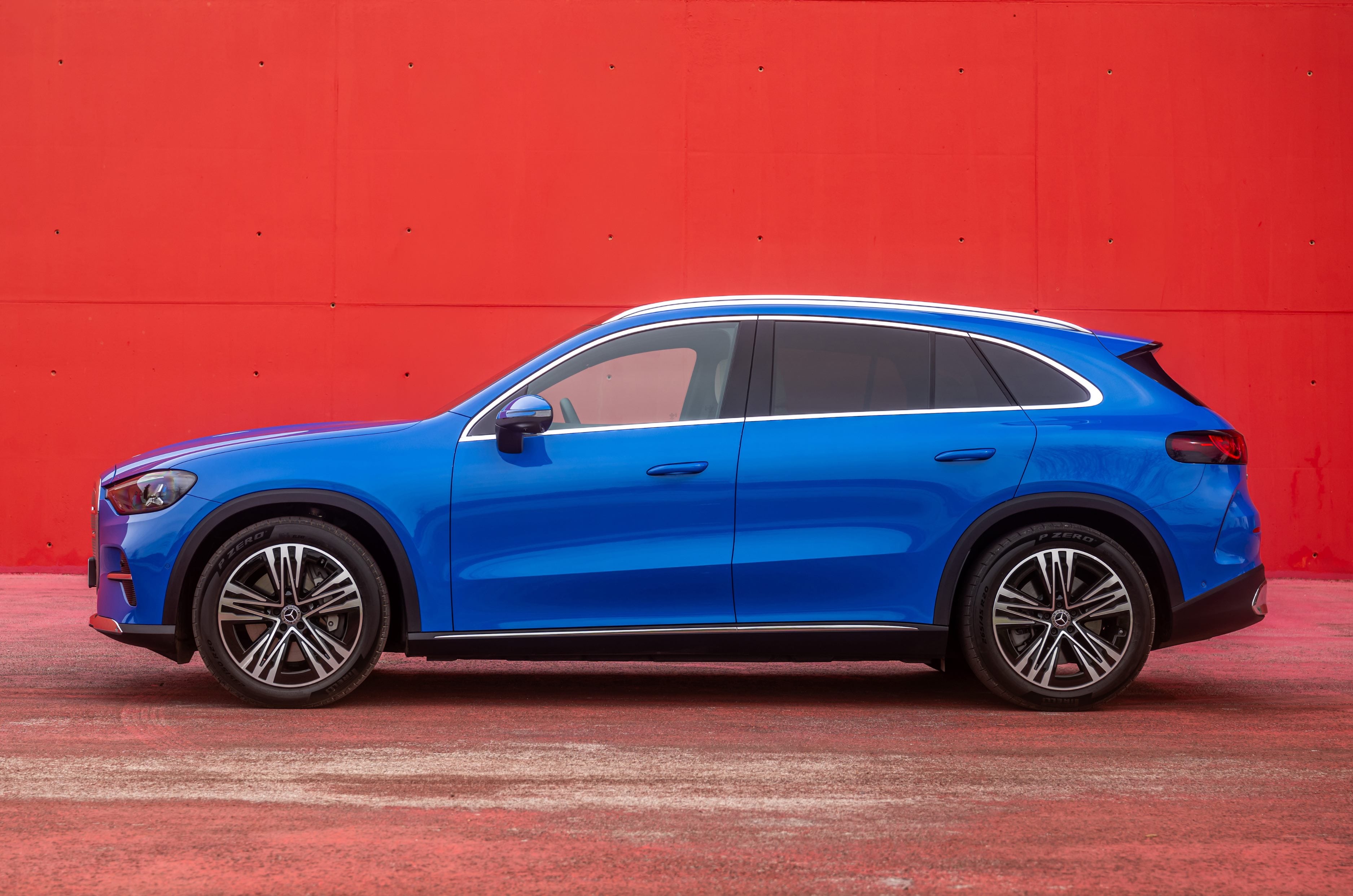
The Mercedes-Benz GLC EV you see here is not merely an electric derivative of the GLC you and I are familiar with. It’s built on an all-electric platform, and it’s longer, wider, and built on a slightly larger wheelbase than the GLC. And it also does 0-100kph in just 4.3 seconds.
The big news is that it’s coming to India by the end of the year. There’s lots to talk about, so let’s go one by one.
Mercedes-Benz GLC EV Exterior Design and Engineering – 8/10
Large new grille reminiscent of older Mercs
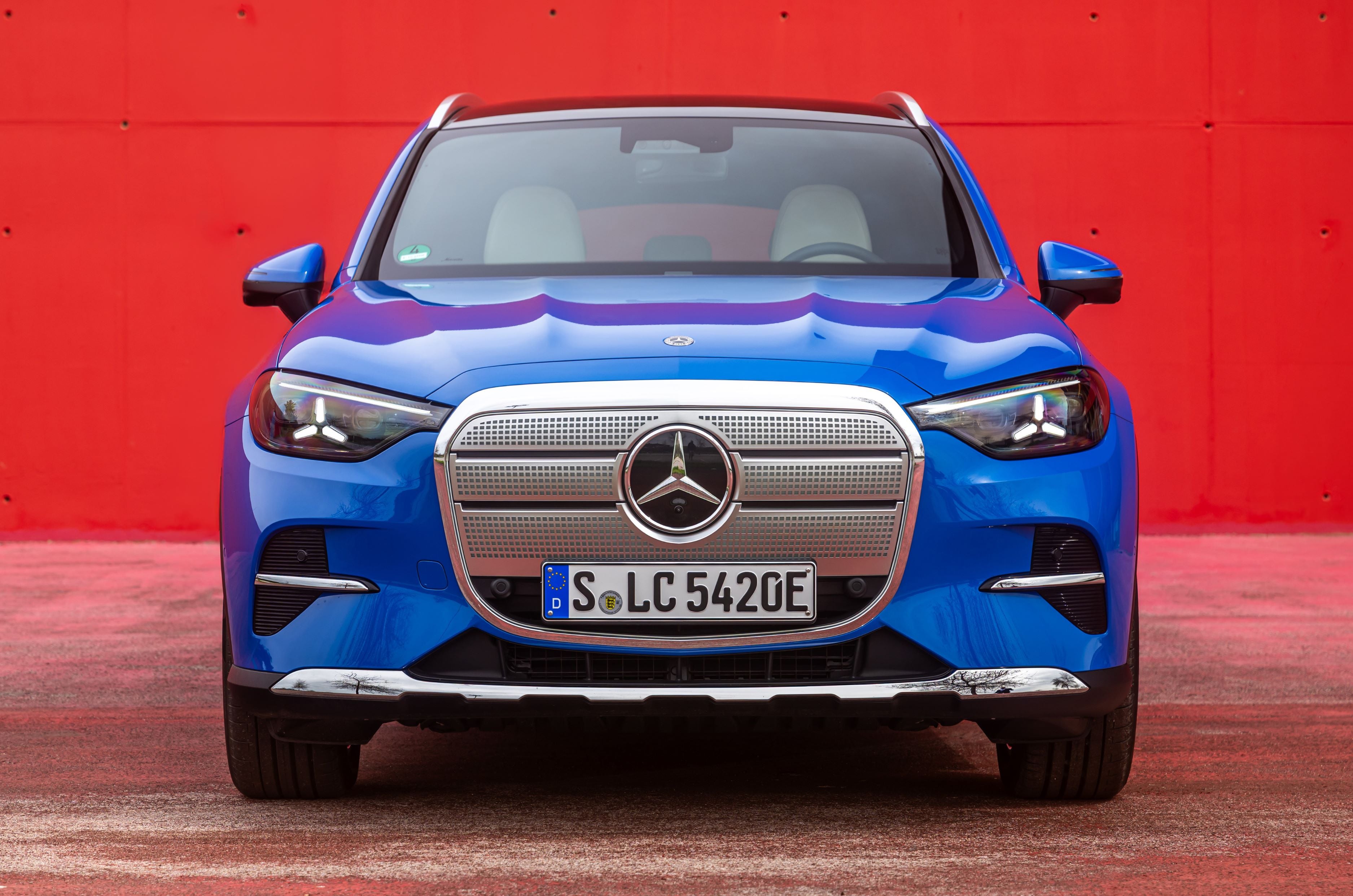
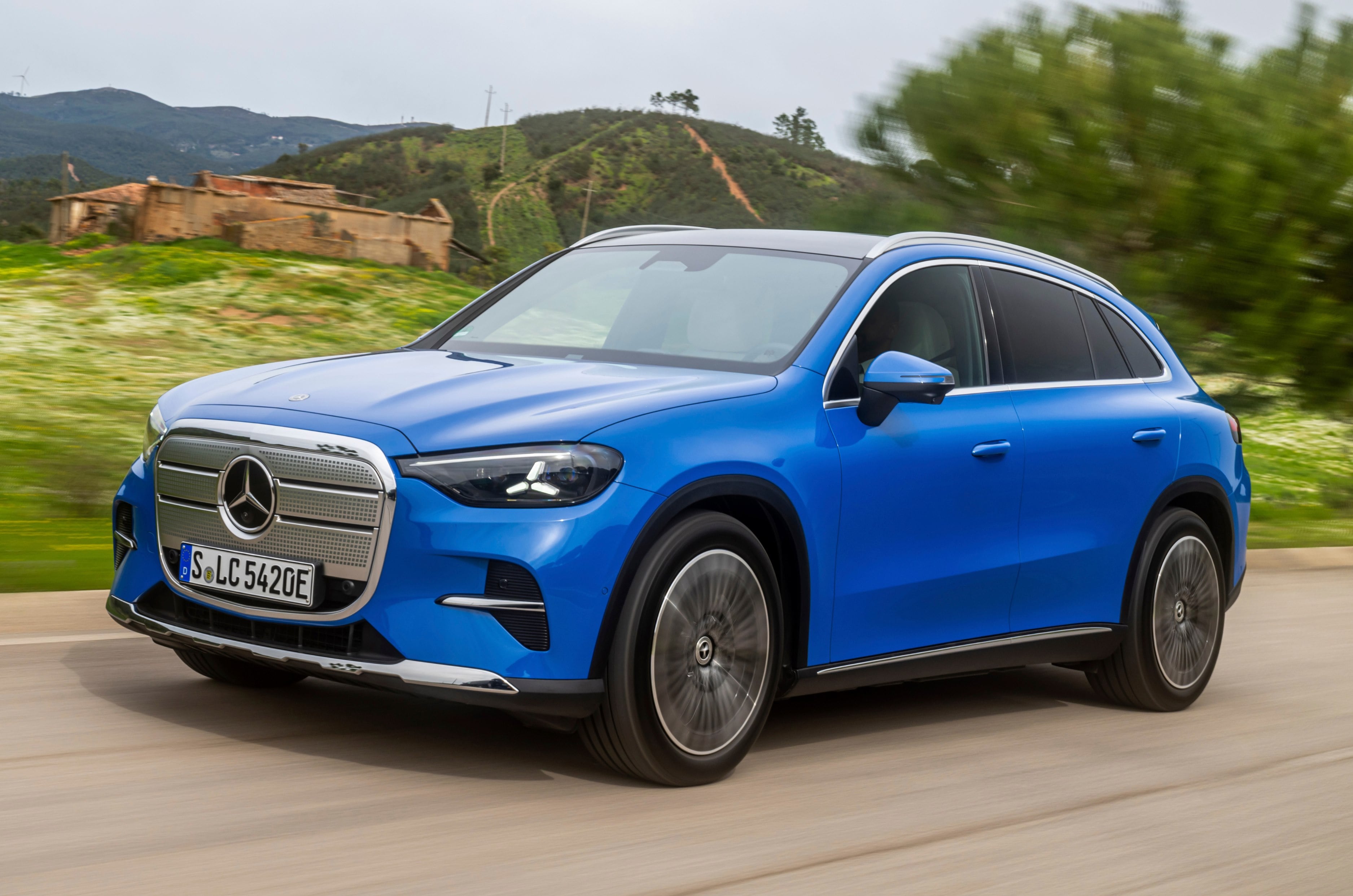
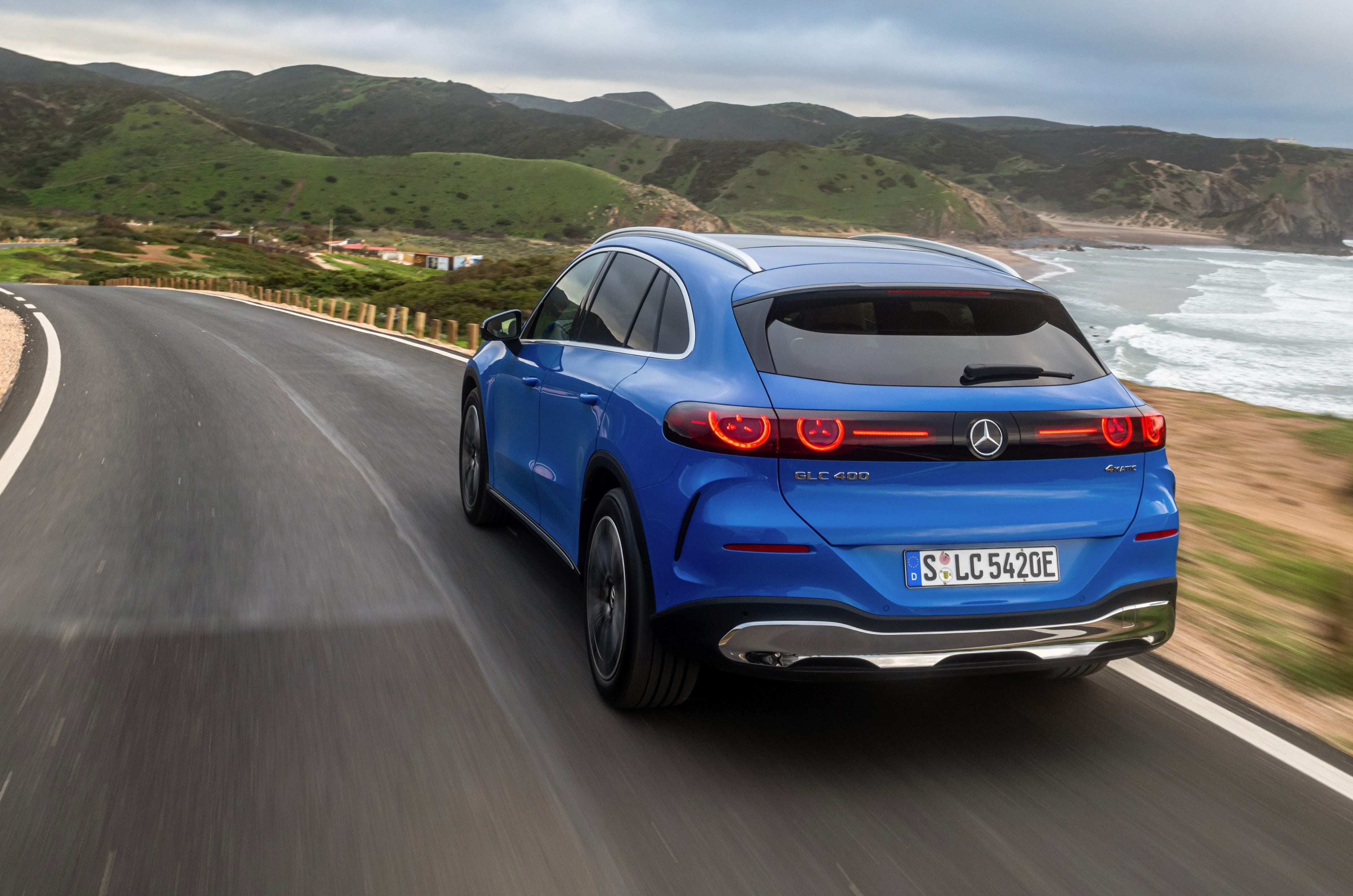
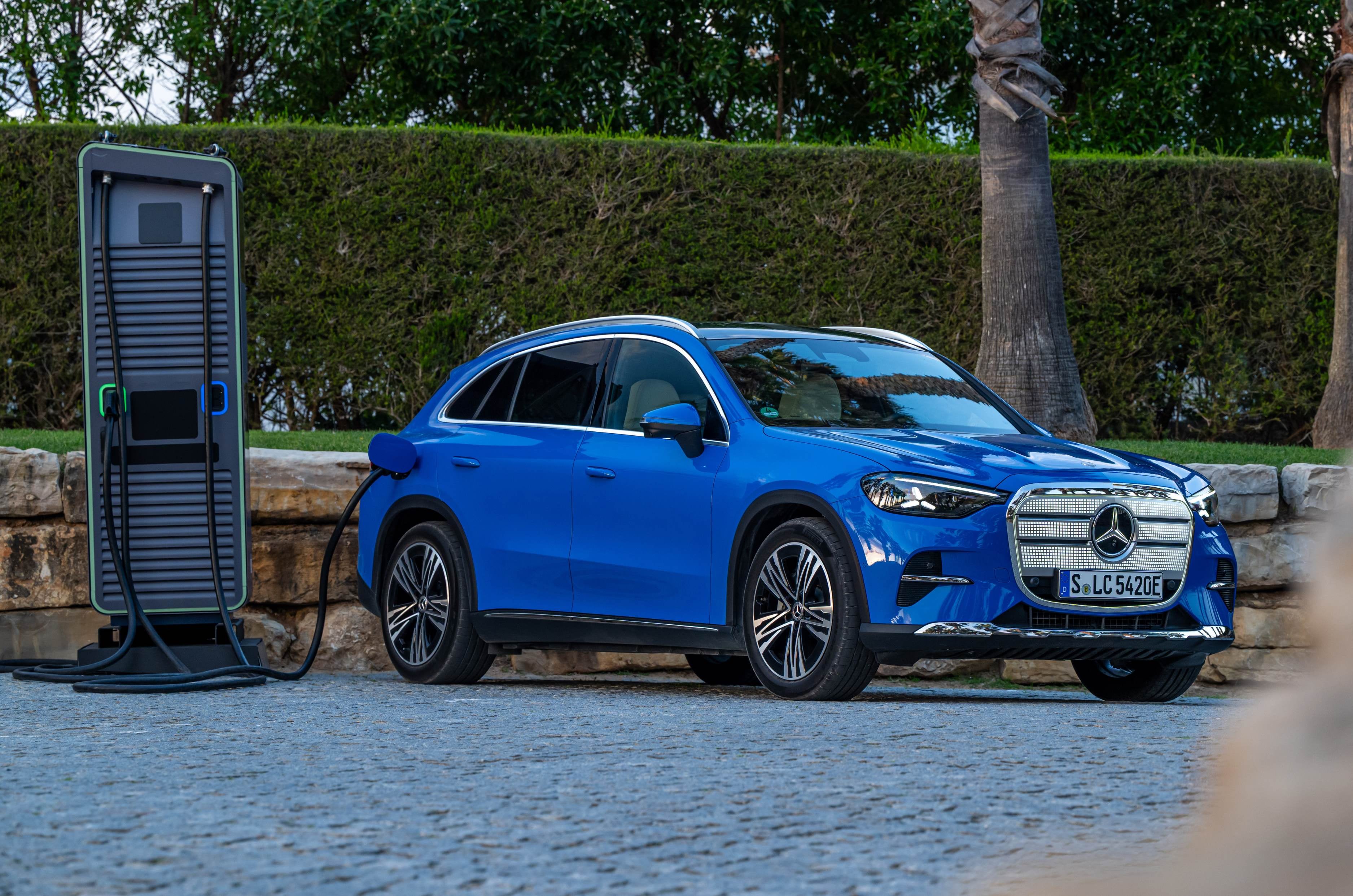
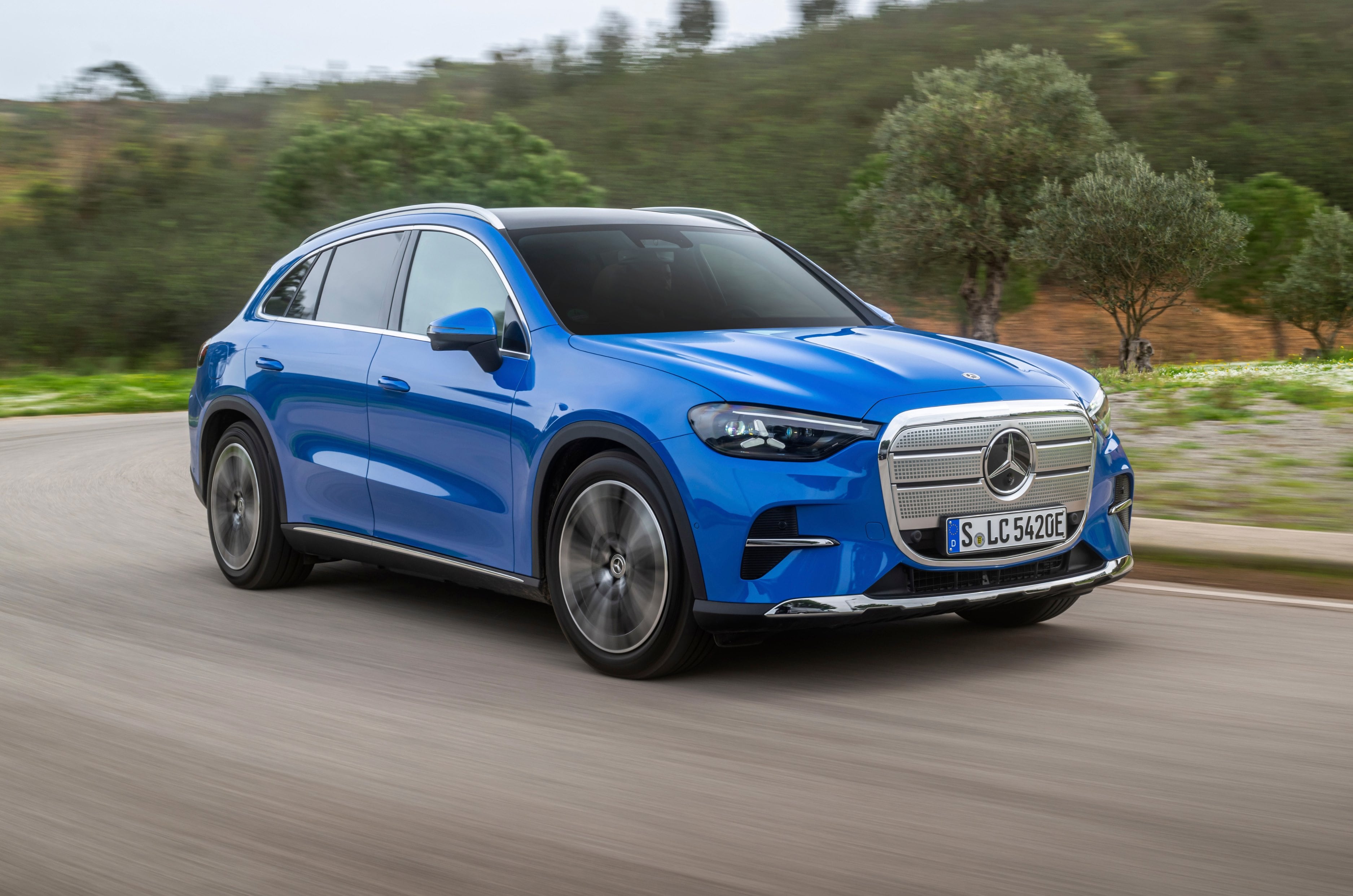
Let’s talk styling first, and what catches your attention up front is this large new grille. It’s very different from what we’ve seen of Mercs of late, but it actually has a link to Mercs of old. The upright grille is styled to look like the one on iconic models like the W112 S-Class, but there’s a lot of modernity built into it as well. There are 942 lighting elements in it! Talking of lighting, the three-pointed star on the nose glows and there’s a tri-star DRL pattern in the headlights too. And unlike other Merc EVs from the (recent) past, there is a functional frunk with a handy 129 litres of space.
Gets an 84mm longer wheelbase than the ICE version.
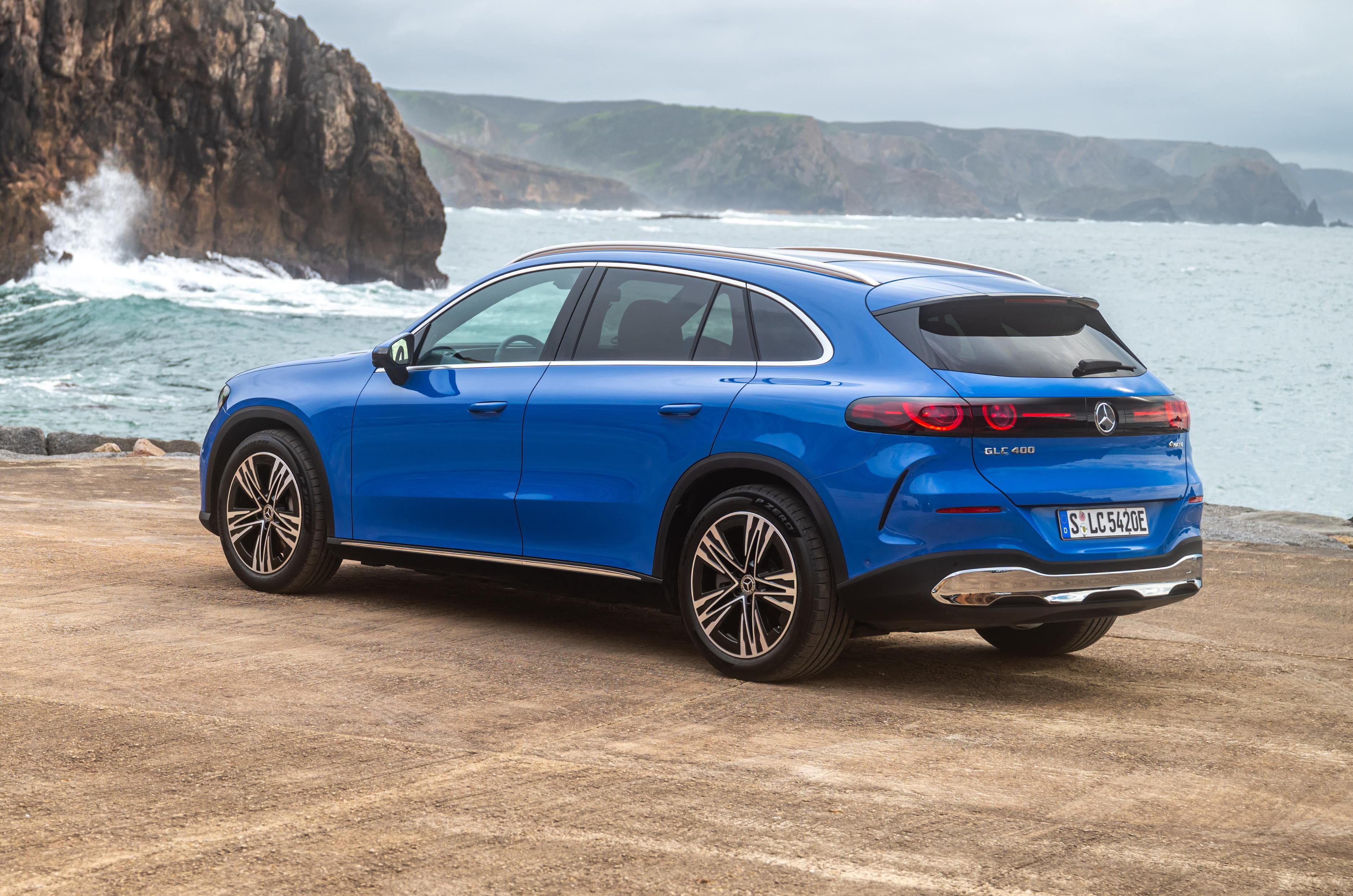
The GLC EV doesn’t look all too different to the ICE GLC in profile. Which is to say it is not an upright SUV but curvy, low-slung and aerodynamic. What is noticeably different is the wheelbase, which is a full 84mm longer. Mind you, this is the standard wheelbase GLC EV. There’s a long-wheelbase version sold in markets like China. India will get the GLC with 20-inch rims and flush-fitted door handles that pop out when the doors are unlocked.
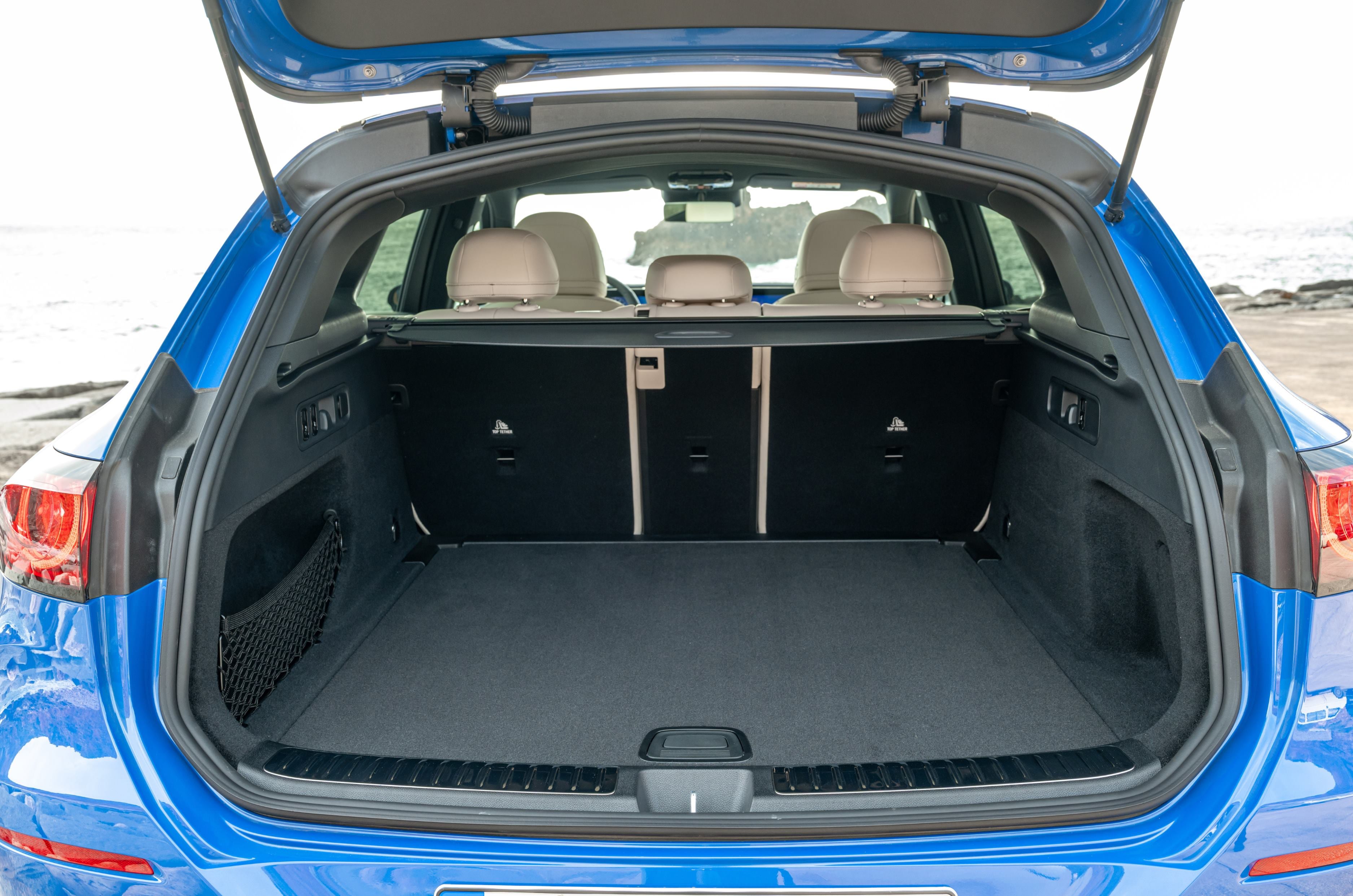
570-litre boot is spacious, but a caveat is the absence of a spare wheel.
Styling at the back is quite distinct from the other lot of Mercedes SUVs, and that’s thanks to a band of black that runs the width of the tailgate. There’s full-LED lighting at the back replete with three-pointed star light signatures.
The powered tailgate opens up to a 570-litre luggage area, which is quite sizable. The only catch is that there’s no space for a spare tyre. Mercedes India will probably have to provide one to sit on the boot floor, which means not much space will be left for luggage.
Before we proceed, I have to admit, I didn’t like what I saw of the GLC EV in pictures. In reality, it is eye-catching, and in a very good way.
Mercedes-Benz GLC EV Interior Space and Comfort – 8/10
Interior quality is impressive, with open-pore wood trim while physical steering knobs and AC vents have a tactile feel
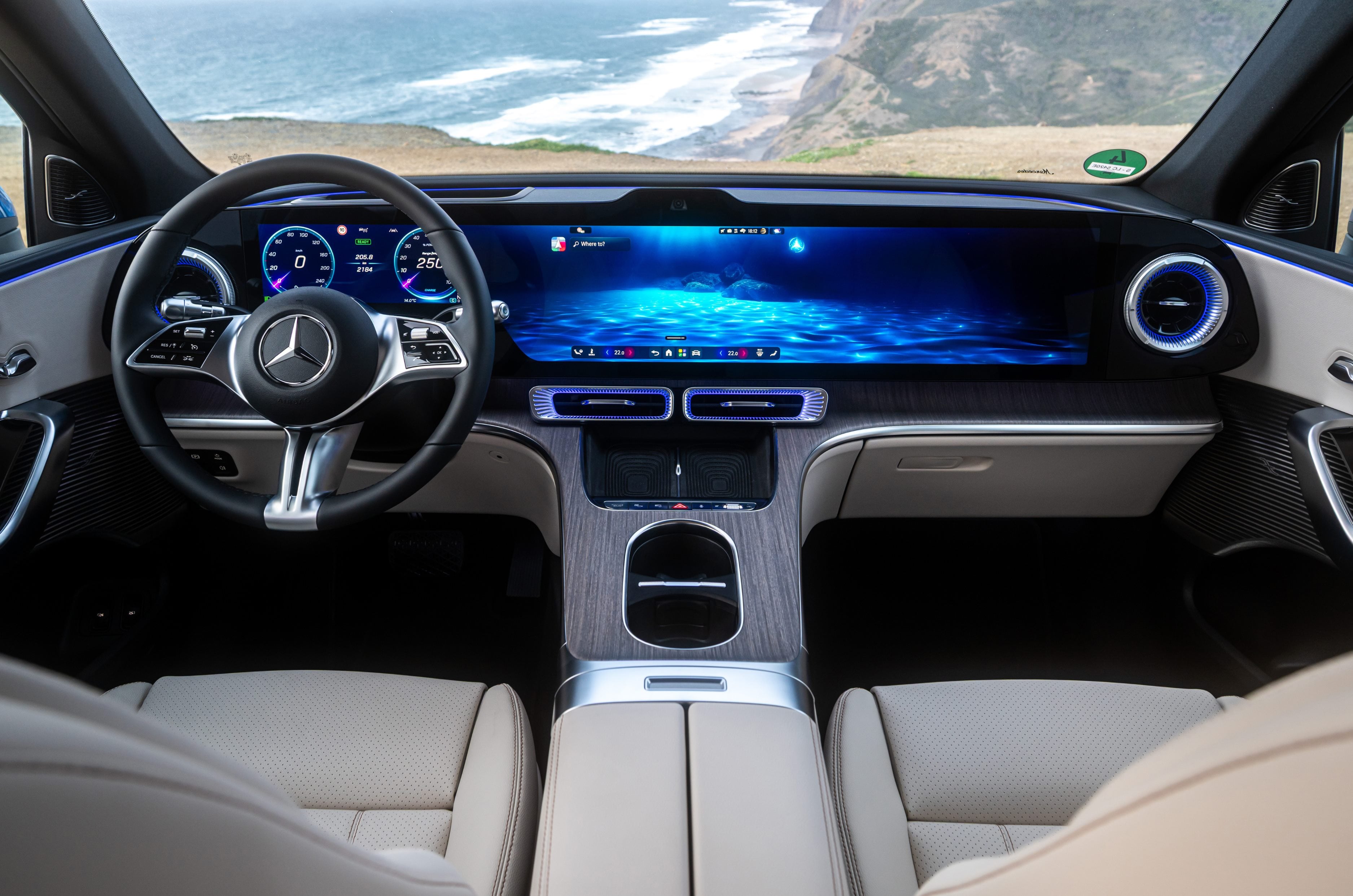
That new-age Mercedes vibe continues inside too, and that feeling is all thanks to a 39-inch Hyperscreen that extends nearly the entire width of the dash. There’s a seamless connection between the digital instrument cluster, the centre touchscreen and front passenger display, and it does look really impressive. That being said, the screens have taken away some of the warmth that you’d expect in a Merc.
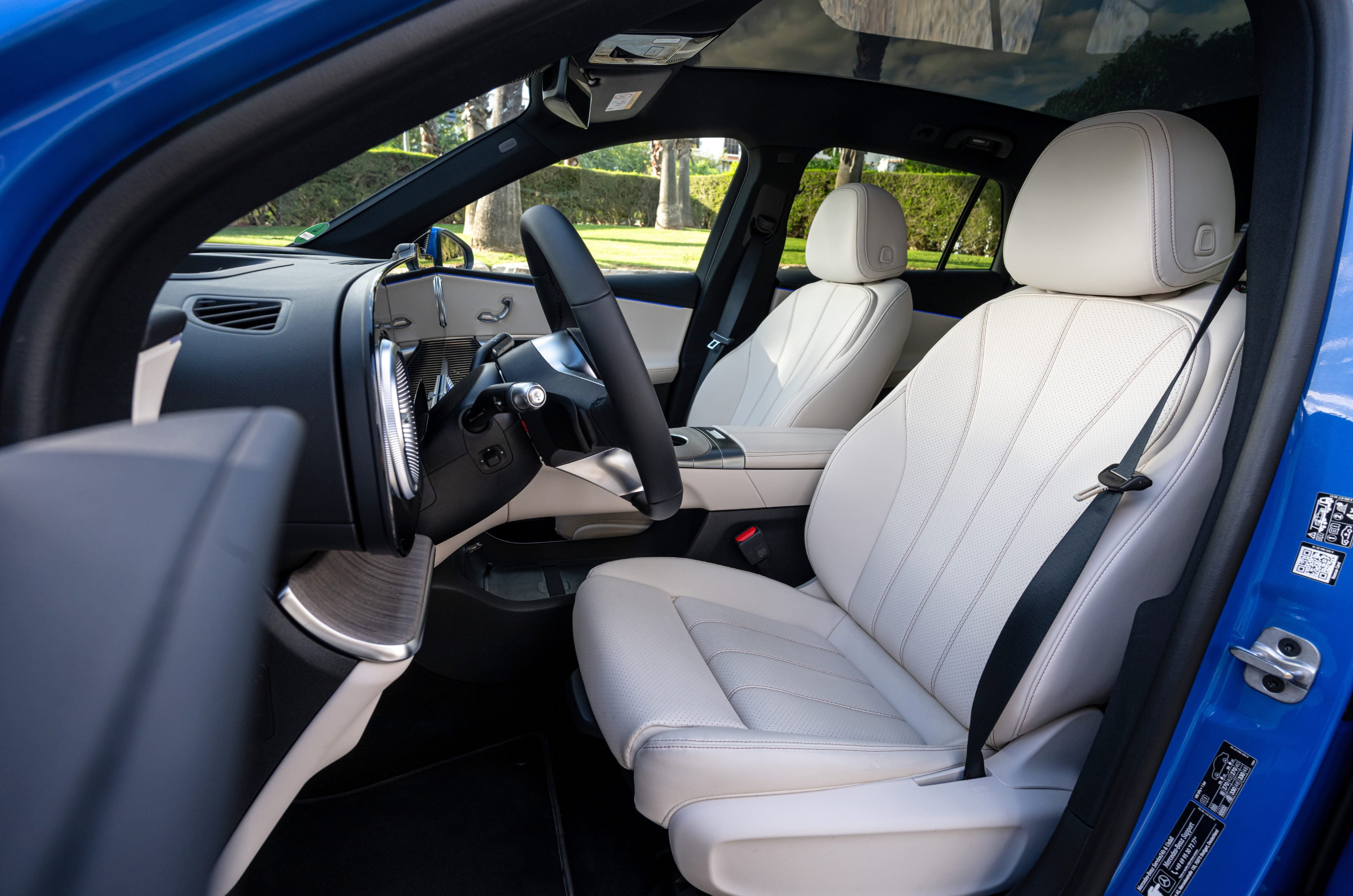
Comfy front seats come with various levels of adjustment, massage and heating. India-spec model expected to come with a cooling function.
In terms of quality, though, the GLC EV feels like an expensive Mercedes. There’s open-pore wood, the AC vents operate with very satisfying clicks and clacks, and physical rotary controllers make a welcome comeback to the steering wheel.
The front seats are as comfy as they look, with multi-way powered adjustment, massage and heating. We expect the model for India to pack in ventilation as well.
You get more space than the standard GLC, and unlike some EVs, you do get good foot room. However, it’s best suited for two.
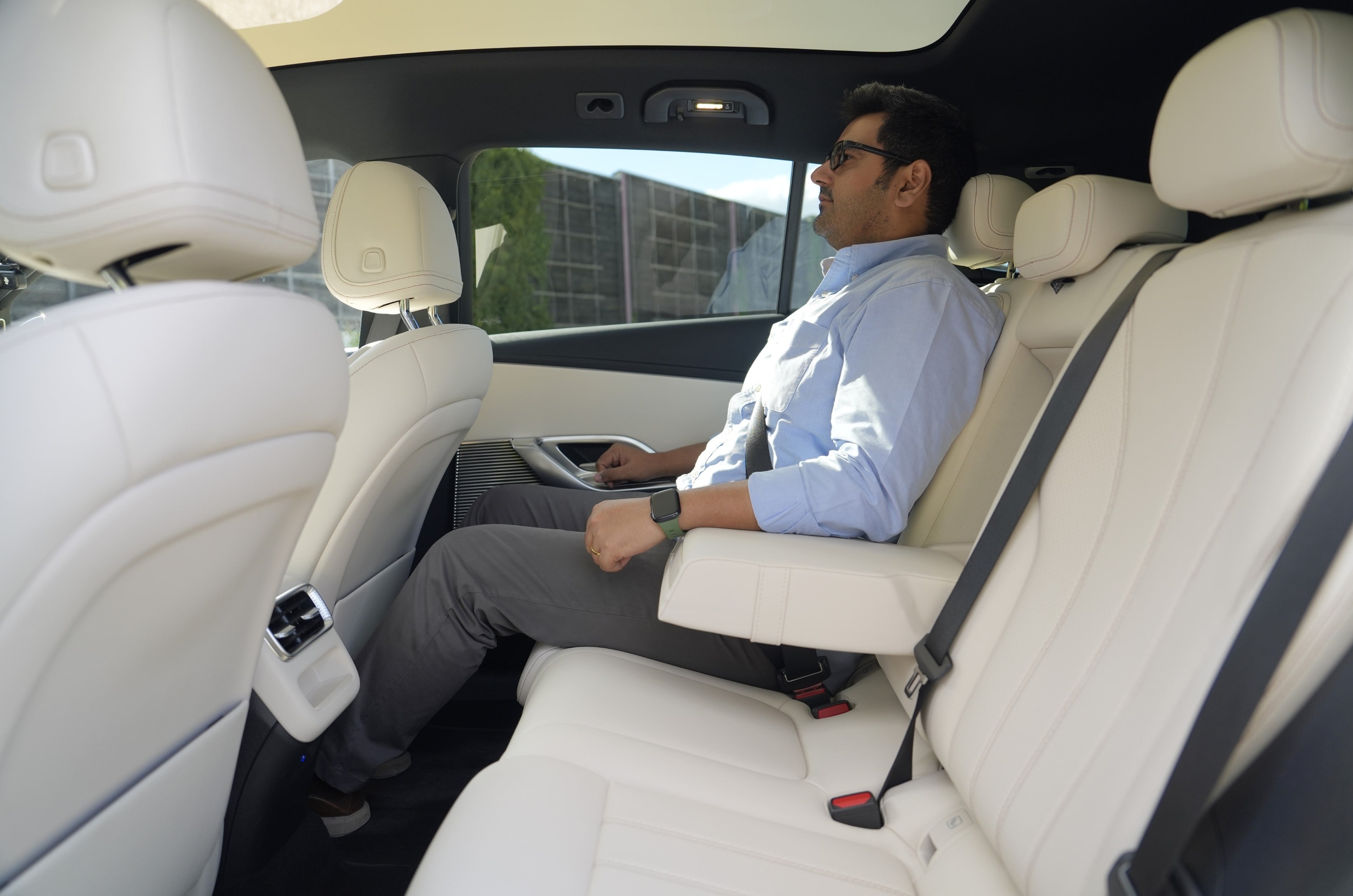
It’s at the back where things get really interesting for buyers confused between a GLC and a GLC EV. Rear seat space is a bit more generous than the standard GLC. There’s also good foot room under the front seats, which is not something you can say about all EVs, and even the seating position isn’t the typical knees-up that we’ve come to associate with EVs. A longer seat squab would have upped the experience. Also, the rear seat is best for two. A middle passenger will have to contend with a high centre tunnel.
Mercedes-Benz GLC EV Features and Safety – 9/10
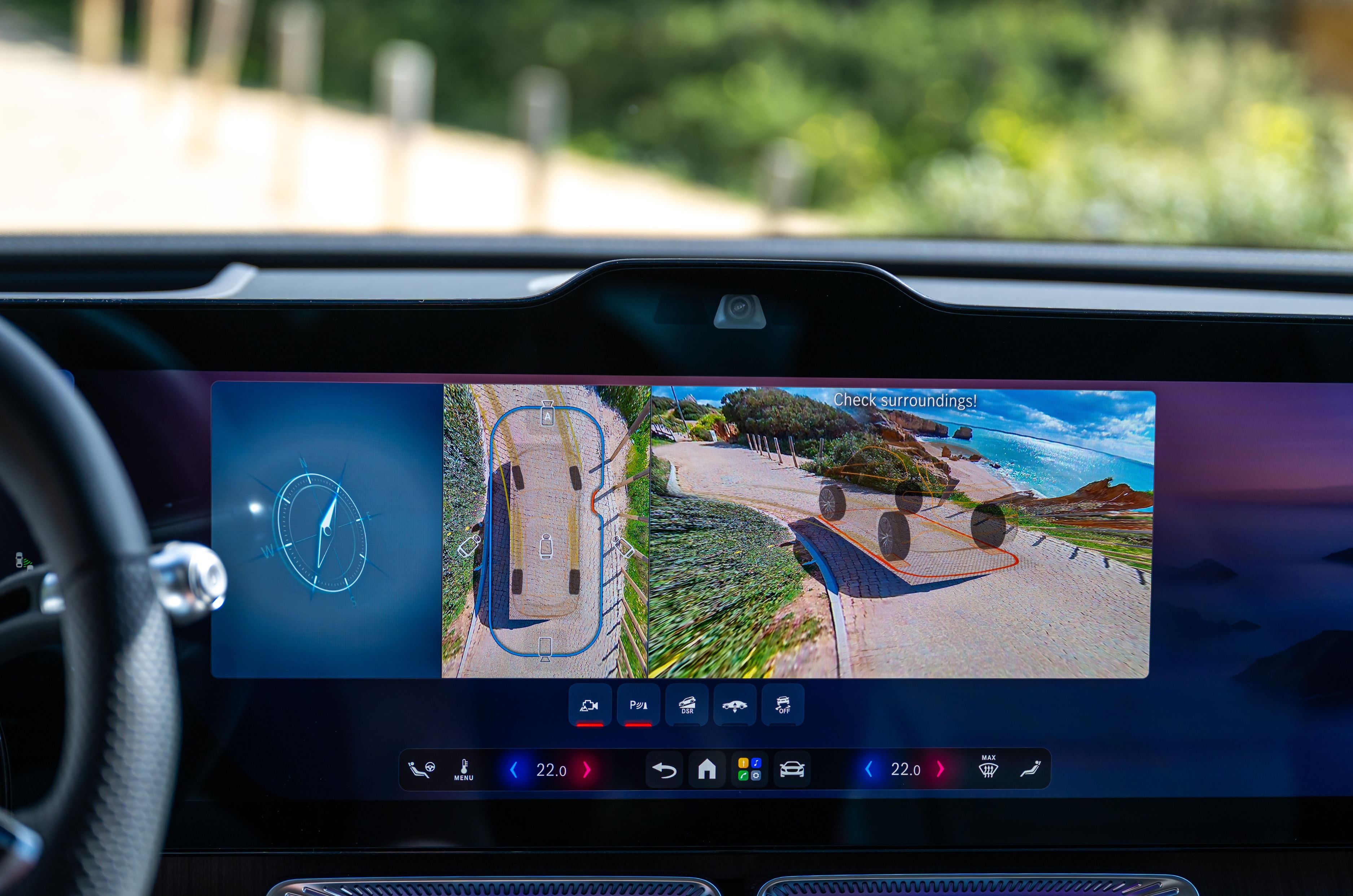
The Hyperscreen is the focal point of the dash and delivers brilliant graphics across the entire display. The digital dials, centre touchscreen and passenger screen appear to be part of a seamless display and look terrific. There are themes for the screen too that also adjust other functions for the full effect. For instance, a bonfire on the screen will be accompanied by the seat heating coming on.
Massive 39-inch hyperscreen has a good UI and seamlessly integrates with other in-car displays but packs in too many functions.
The thing is, there’s just too much packed onto the centre touchscreen. The UI is good but more physical controls would just make life easier. The passenger display is slick in its own right but only blanks out if it detects the driver looking at it (a camera on the dash monitors the driver’s gaze). A privacy glass would have just been better.
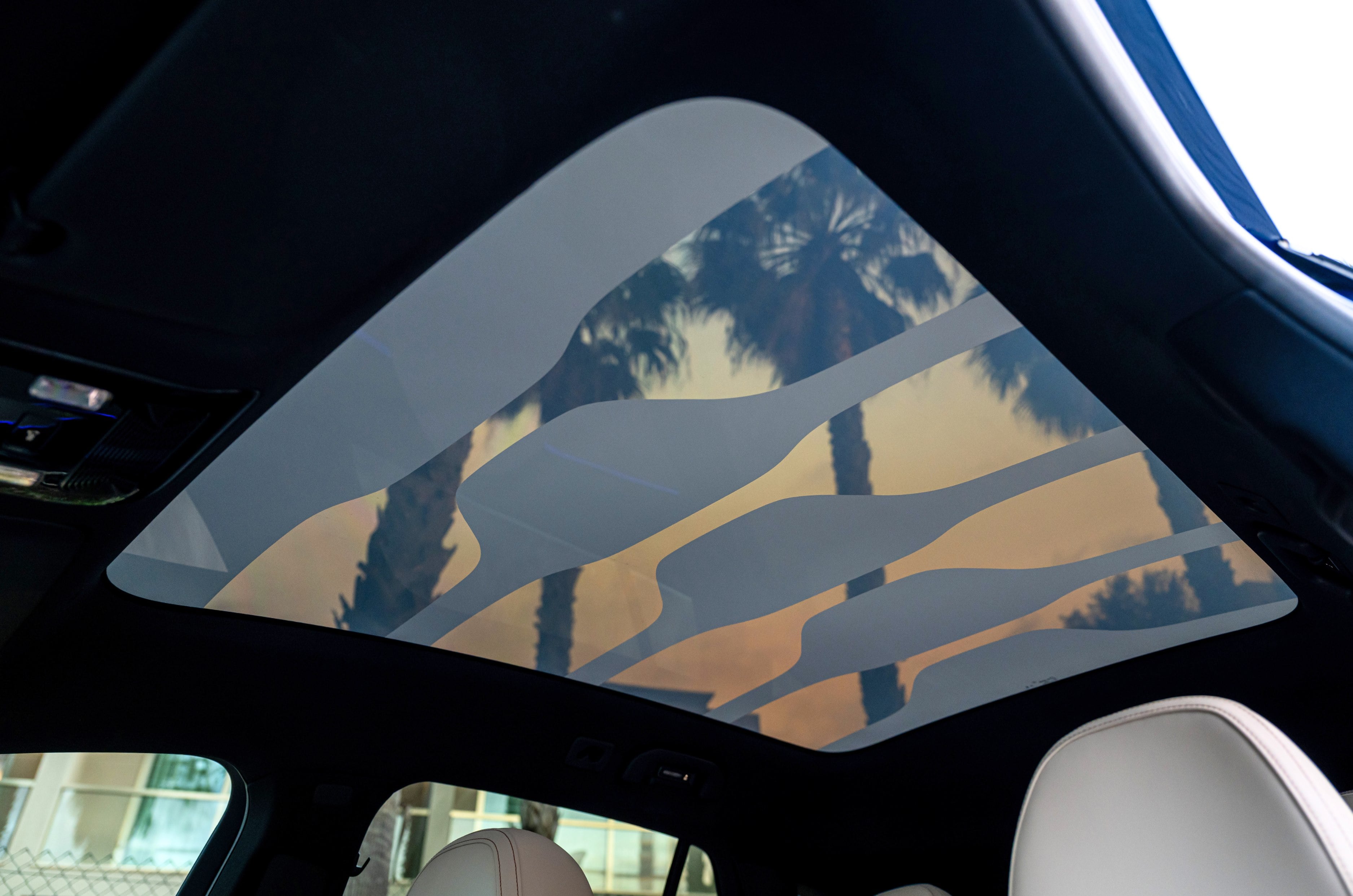
Among the other features, the panoramic glass roof is made up of nine segments which can be individually controlled for transparency. You can make them completely opaque, and they did a surprisingly good job of keeping the heat out. You could even have the glass roof specced with 162 stars that change colour with the ambient lighting.
Panoramic glass roof comprises nine individually configurable segments to control transparency.
Features-wise, aside from the screens and glass roof, the other highlight is the Burmester 4D sound system with exciters in the seat, so you can actually feel the bass. The head-up display and cameras are also top-class, while the AI integration doesn’t feel like a tick-mark item. You can actually converse with your car for restaurant recommendations or even abstract general knowledge.
The safety suite includes 9 airbags, ESC and a full suite of ADAS features.
Mercedes-Benz GLC EV Performance and Refinement – 9/10
Your friendly Mercedes salesperson will only be too happy to run you through the GLC 400’s big numbers: 489hp, 800Nm and a 4.3 sec 0-100kph time. The figures are made possible by front and rear permanently excited motors that draw power from a 94kWh battery pack.
489hp from its dual motors makes the GLC EV feel like an AMG compared to its ICE counterpart.
How does it all come together? The first thing that gets you is the silence. The drive experience is just what you’d expect in a plush Mercedes electric car. So it’s really quiet, and you don’t hear much of the world outside. There is a bit of wind noise if you really pay attention, but honestly, with some music piping out of the Burmester sound system, it’s not something that will catch your attention in the least.
What’s also clear is that the GLC EV is the strong and silent type. The performance makes the GLC EV feel like an AMG compared to the standard GLC petrol and diesel. A two-speed gearbox ensures quick getaways when needed, as well as the long legs for a more relaxed drive. Stomp down on the accelerator from a steady cruise, and you can feel the kickdown.
You won’t need to drive like a hoon to enjoy the GLC EV. Performance, no surprises, is very brisk when you put some weight on the accelerator pedal, with easy access to power. You can make the GLC EV feel a bit more urgent when you play around with the drive modes, but honestly, you won’t really need to because of how friendly the power feels and how ready the GLC EV feels at all times.
Power is easily accessible and is ready to push further when you put your foot down.
You’ll also take very naturally to the regen braking levels. One-pedal driving is included, and there’s the option of an intelligent mode too that reads the driving environment and optimises regen force.
The GLC EV also gets sound profiles, and we have to say they’re a bit unusual. They’re not trying to mimic the sound of a V8 or a V6 or any kind of ICE engine. The sounds are more on the sci-fi spectrum, so if you accelerate hard, you’d get the feeling of being in a UFO, which is disconcerting, if we can be honest. We’d rather enjoy the quiet inside.
Mercedes-Benz GLC EV Range and Efficiency – 8/10
Its large 94kWh battery can be charged from 10-80 percent in 22 minutes with a 330kW DC fast charger.
Now, on to the matter of range. Mercedes claims a 715-kilometre range on the WLTP cycle. Even if you account for real-world Indian conditions, you’re looking at a comfortable range of over 550 kilometres. Drive with a bit of care, and you could see that figure go past 600 kilometres. We really have come a long way in just a few years, haven’t we?
Of course, the go-to charging solution for most owners will be home charging. There’s up to 22kW AC support. The GLC can also be charged at up to 330kW using DC charging. Theoretically, at max speed, the GLC EV’s 94kWh battery can be juiced up from 10 to 80 percent in 22 minutes. A 10-minute charge alone can give you 300 kilometres of range.
Mercedes-Benz GLC EV Ride Comfort and Handling – 8/10
We can’t give a definitive verdict on cornering ability, as the bulk of our route was on the Autobahn outside Stuttgart, which has the gentlest of curves.
At Autobahn speeds, the GLC EV feels really planted and drives like a proper German car should. There’s pleasant weight at the steering wheel as well.
In terms of high-speed ride comfort, the GLC EV doesn’t come across as softly sprung as something like an EQS SUV, which really feels a bit roly-poly. There is still some vertical movement even when you switch to Sport mode, but it’s not to the point of being an irritant.
Feels planted out on the Autobahn and the steering is well-weighted
We’ll reserve judgement on the air suspension’s bump absorption till we drive the GLC EV on our roads, but on the sole patch of broken road on our route, the GLC EV didn’t feel entirely plush. Perhaps that’s something for Mercedes India to have on their list of things to do for the version headed our way.
A cool feature on the GLC’s suspension is its use of Google Maps to identify the vehicle’s environment and adjust ride height. For instance, the car automatically lowers on a highway. Also cutting-edge is how the suspension preps damping force in advance of a bump based on Car2X information from a Mercedes vehicle driving ahead. The systems better be up for the challenge of our roads.
Bundled in with air suspension is rear-axle steer, and the 4.5 degrees of movement does help greatly at parking speeds.
Mercedes-Benz GLC EV Should You Buy Now or Wait – 9/10
Bookings for the GLC EV open in early October, and the model will be launched in India within 2026.
It’s a big deal because the GLC EV comes to India within just six months of its European rollout. What makes the timeline even more impressive is the fact that the GLC EV won’t be an import, but will be assembled in India. Local assembly points at keen pricing.
The GLC EV will be locally assembled 6 months after its European version goes on sale.
We expect the model to be priced at about Rs 85-90 lakh (estimated, ex-showroom), which wouldn’t be all too far from the ICE GLC’s price. Factor in the registration benefits on EVs, and the price gets more tempting still.
As a product, the GLC EV does have lots going for it. It’s got the power, the refinement and the tech you’d expect on a luxury EV. Importantly, it doesn’t feel like your dad’s Mercedes, and that new-age cool is something many buyers will resonate with.
BMW’s iX3 Long Wheelbase and Audi’s Q6 e-tron are alternatives to watch out for in 2027, but in the near future, the GLC EV looks set for a clean run.