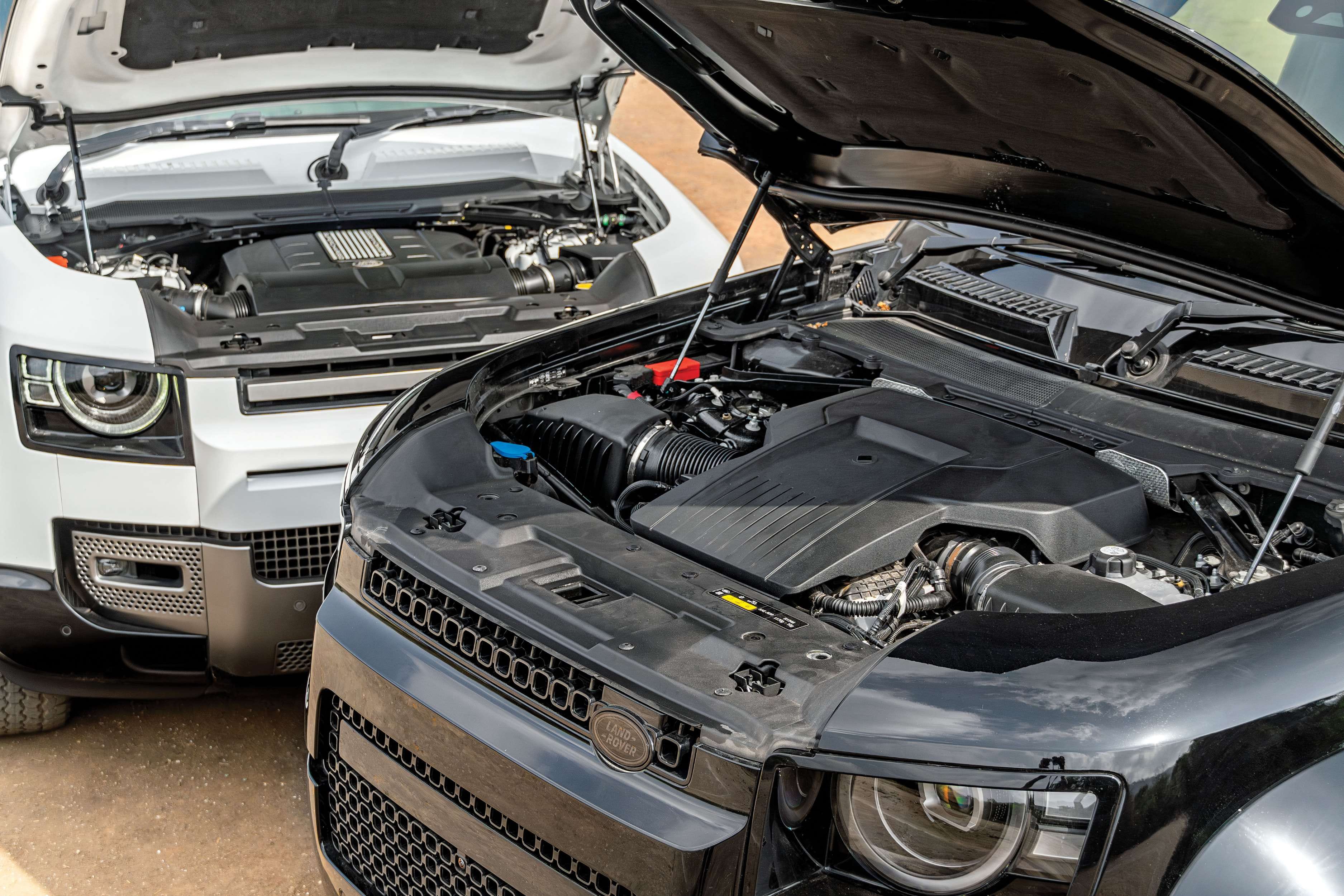
Defender: A tale of two V8s

Defender: A tale of two V8s
land rover defender V8 comparison

SUVs powered by V8 engines are becoming rarer by the day. Downsizing, electrification, ever‑tightening emissions regulations – the V8 is fading. Yet here we are in 2026, with Land Rover offering not one but two V8s. On the same model! Calls for a mini celebration, doesn’t it? And something of a journey of discovery. So how, and why, does the Defender come powered by two distinctly different V8s? Are they different enough to co-exist? Do their specifications tell a story? And are they fundamentally different from behind the wheel? Answers to these and more in this fascinating tale of two V8s.

Individual identity

The Octa looks much more menacing than the regular Defender.

Job number one: telling them apart. Which is relatively easy when you have the two sitting cheek by jowl. But out on their own, with no reference and no back-and-forth visual comparison, it’s more difficult.

Now, most of us – at least those of us who admire the Defender – know the Octa. A bold move from Land Rover, it comes with BMW’s 4.4‑litre twin‑turbo S68 under the louvered bonnet. That, and its linked suspension, which make the Octa super stable over rough ground. Not only does it get the V8 from BMW’s sledgehammer M5, the Octa, like all good performance cars, wears its intent on the outside. A wider stance, flared wheel arches, square exhaust tips and a stance that screams ‘Defender on steroids’. Most of the visual enhancements are also functional, but it also looks wide-shouldered and bulked up without going over the top… a job well done. And then, of course, there is the Octa badge, both on the grille and behind the ‘C’ pillar.
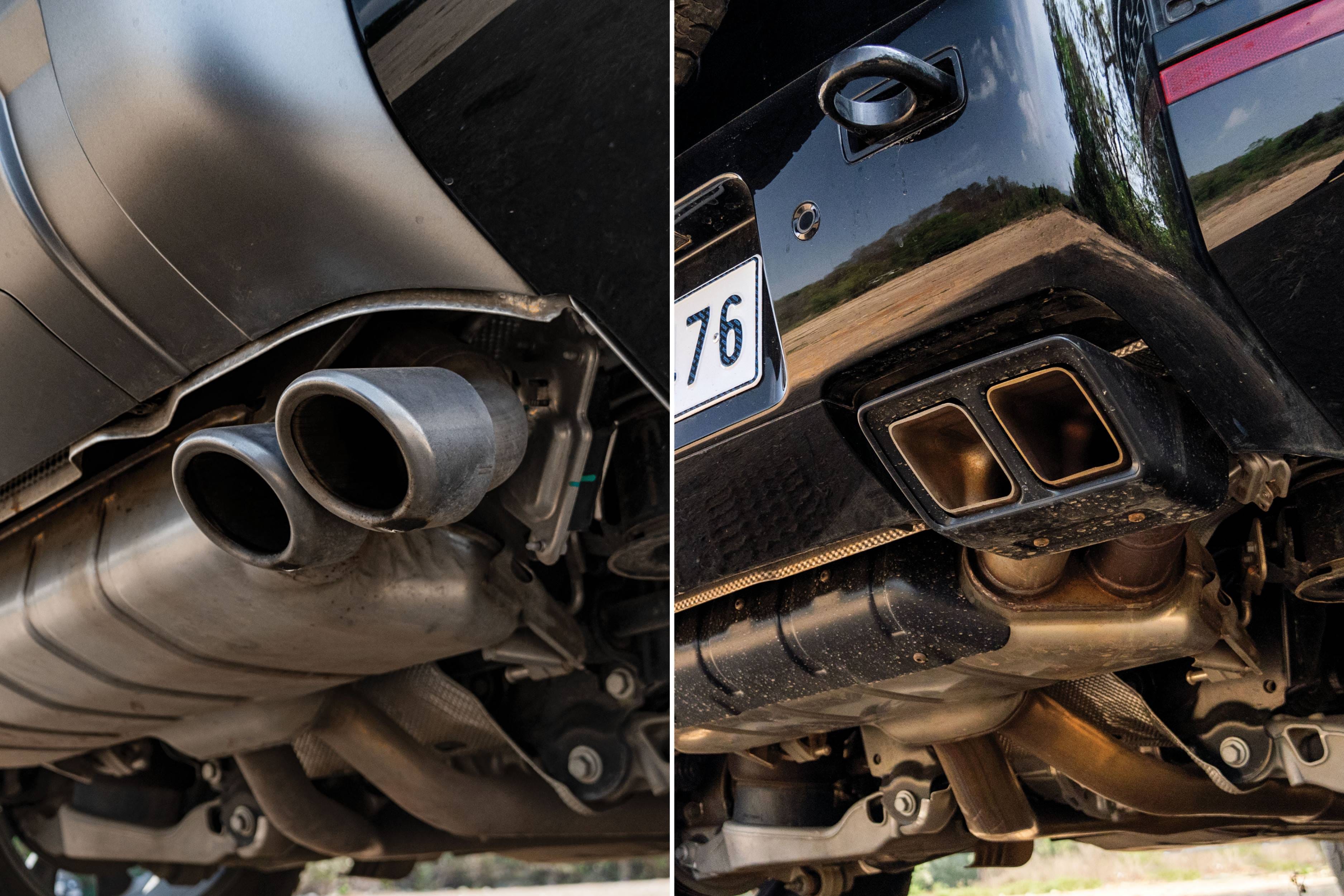
L: The Defender V8 gets more traditional rounded exhausts; R: The Octa’s quad rectangular exhaust tips stand out.

The Defender V8, which gets Jaguar’s AJ133 engine, is much stealthier and less in your face. From the outside, it looks like a regular Defender. No V8 badge, no identifying features, nothing. In fact, look at it from the front or the side, and it’s almost impossible to tell. You can, however, tell from the rear. The horizontally placed quad round exhausts stick out at the rear and clearly tell you this is something special. Otherwise, this is a regular Defender – attractive and full of visual appeal, but not something that stands out as something special. Could this be the Defender’s best‑kept secret?

Supercharged slayer
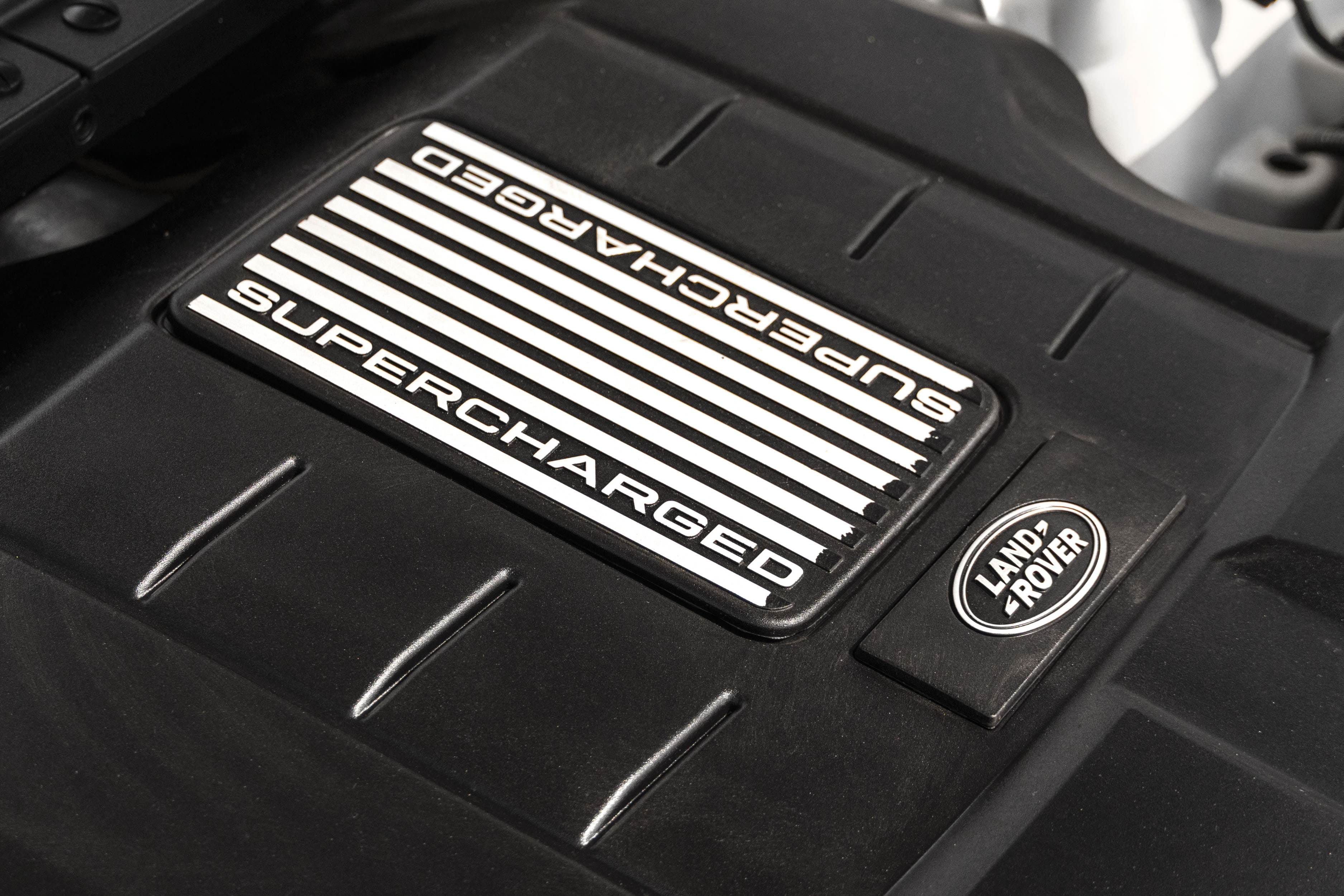
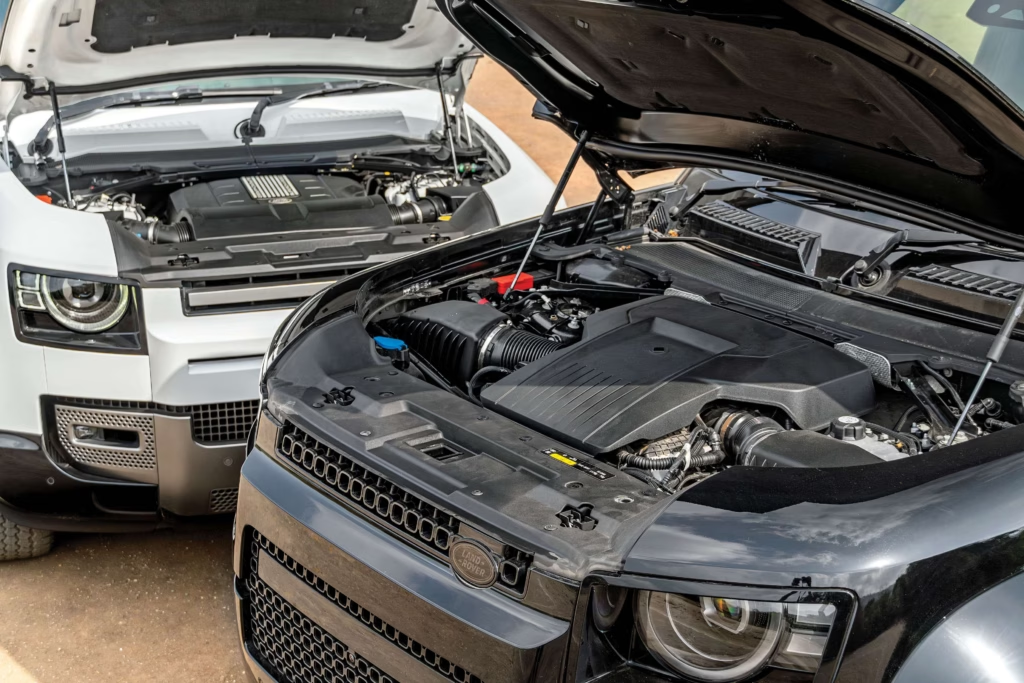
Defender V8 gets ‘supercharged’ written on the cover.

From behind the wheel, the differences are stark. The AJ133 engine is a familiar friend, earlier seen in many a Jaguar and Range Rover. In this Defender, it produces 425hp, with a large Roots-type supercharger adding some refined whine to the exhaust note. The sound that dominates, however, is a silky-smooth but unmistakable V8 ‘woofle’. Rev the engine even slightly, and a meaty growl emerges with crisp burbles on the overrun. It’s not AMG loud, nowhere near, or as raucous either, but the sound of the honey-smooth V8 is pure theatre and just gets me grinning. Why does it sound so clear and clean? There’s no turbo muffling the exhaust note, of course, and no turbo lag either. Which also explains the immediacy of the throttle responses.

In fact, tap the pedal even from idle, and the Defender V8 shoots forward, the crankshaft-driven supercharger pumping air into the engine instantly. This makes the Defender V8 feel light on its feet, and what’s even more charming is that it pulls cleanly in the mid-range, the engine spinning freely and enthusiastically towards the top. This is addictive, and long pulls to the redline are just so much fun. If you value thoroughbred engine characteristics over everything else, this engine will delight you.

Supercharger makes for instant low-end response from the AJ V8.

Now, putting so much performance into a dedicated off-roader may seem futile. But what Land Rover has done is make the Defender fundamentally sound. It’s not a ladder frame, for one, so when you drive around corners, it manages to do it in a neat and tidy manner. And that’s despite the additional weighty hardware like bulky differentials, stout driveshafts, and a robust transfer case, all needed for serious off-roading and not just slippery conditions.

So it comes as something of a surprise that the Defender V8, with its light steering and neat and tidy driving manners, can handle the performance without any fuss. It speaks volumes about how well Land Rover has engineered this platform and given it both loads of on-road capability as well as bona fide off-road chops.
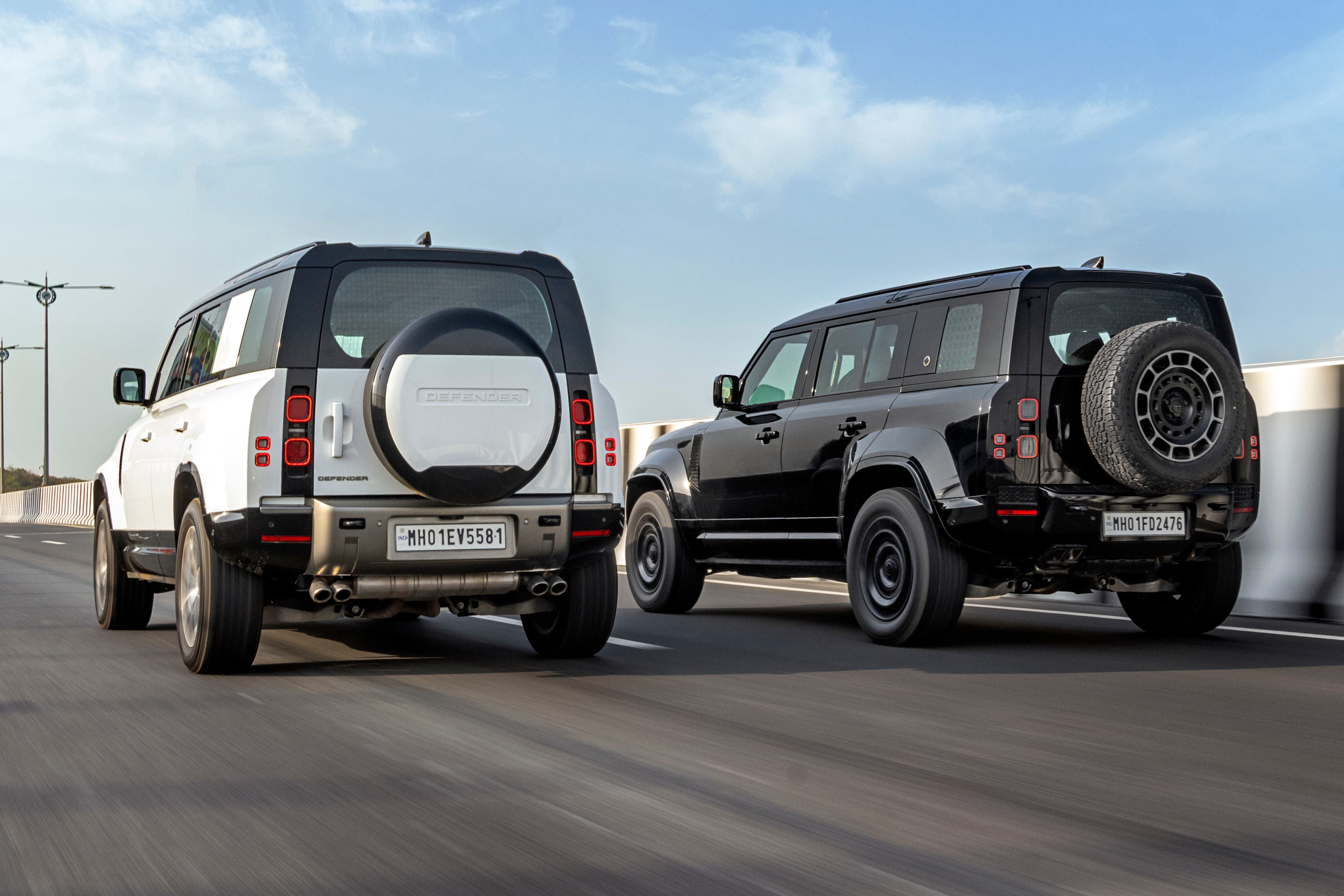
The AJ-V8-powered Defender is not as effective a performance machine as the Octa.

Try and use all the performance all the time, and that feeling of composure slowly fades. You start feeling the bulk, you want more stability and confidence from the brakes, and the gearbox feels slow and laid back. And what’s this, no paddle shifters? Huh?

All pumped up

The Defender Octa amps it up to another level. Bold, brash and devastatingly effective when its full potential is unleashed, it is an all new type of animal. Initial impressions, however, immediately tell you the V8 is turbocharged. Squeeze the throttle, and the responses are initially laid back. This is especially true in comparison to the supercharged V8.

Both engines are brilliant, but both are also very distinct in the manner in which they make power.

Once past the initial softness in the throttle, however, it surges forward with relentless force, a flood of torque unleashed from the turbos spooling up. And that’s even if you haven’t pinned the throttle. A few more purposeful prods of the throttle, and the massive gulf in performance between the two Defenders is soon apparent. It’s not the 0-100kph or even the 0-150kph times, it’s just the massive surge you feel in raw thrust when you feed in the throttle.

The BMW‑sourced 4.4‑litre twin‑turbo V8 is a technological powerhouse and one of the most technically complex engines around. With 635hp and up to 800Nm in launch mode, it transforms the Defender into something approaching a super off-roader. And where the Jaguar engine is all about response, this BMW one, in contrast, is all about mid‑range and top-end muscle. In fact, knock back a few gears on the quick gearbox, plant your foot, and the Defender Octa charges forward with such ferocity that you’ll question the need for anything faster.

Where the BMW engine also differs is in the soundtrack. At low revs, the turbos and cross-bank exhaust system muffle and mute the V8’s natural exuberance and growl. But while the engine sounds are muffled at low revs, they soon build into a deep, muscular roar as the revs climb. Clearly not as sweet or as sonorous as the Jaguar V8, but well in line with the heady performance the Octa delivers.  
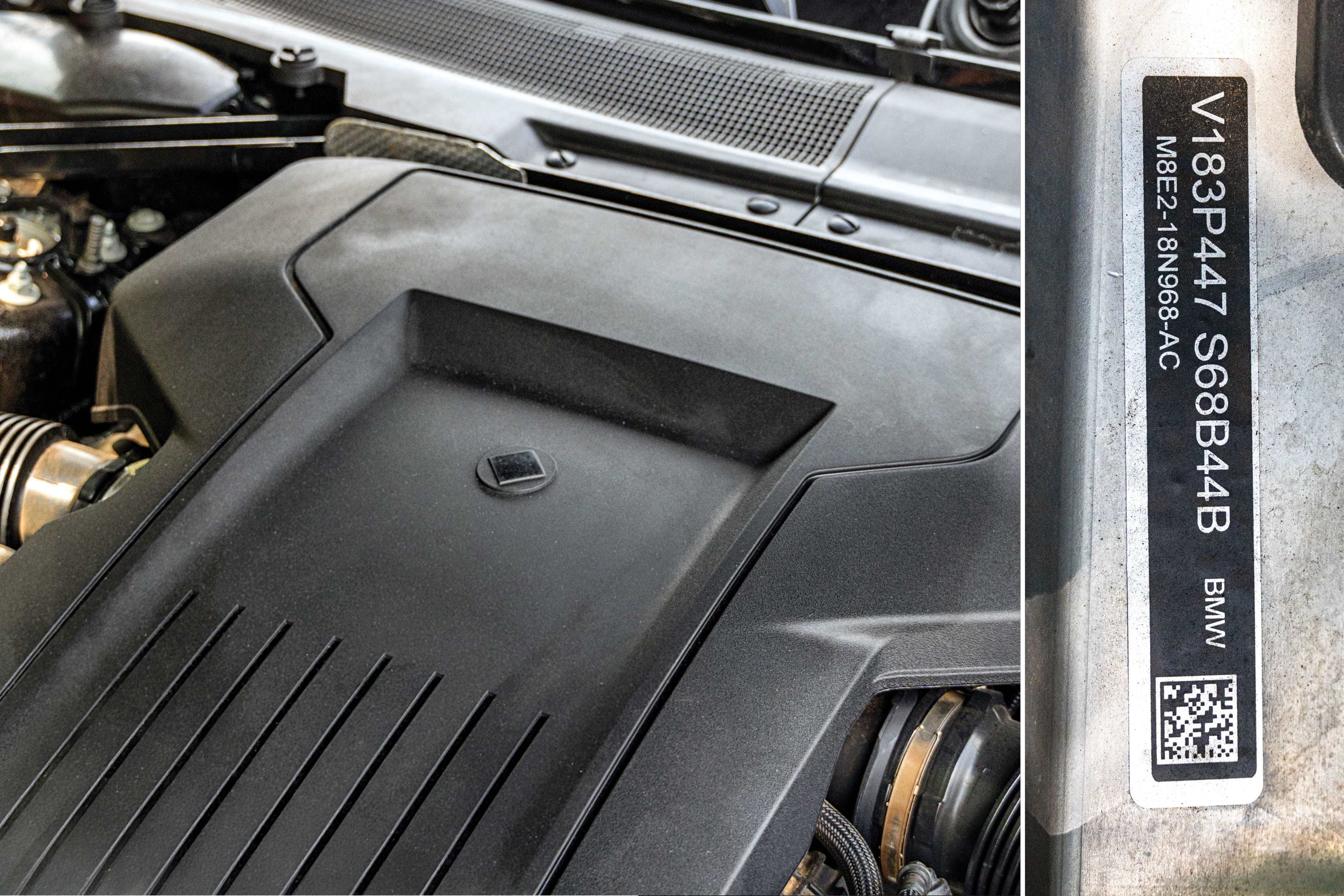
Octa badge (and BMW part number) tell the BMW V8-powered Defender apart.

The Octa also sits higher off the ground, thanks to its Tenneco‑Monroe 6D suspension system. This clever setup links all four dampers, acting like a virtual anti‑roll bar. The result is uncanny composure as the Octa just smothers broken roads. Drive over a poorly paved surface, and you initially feel there’s something not right. The layer of insulation between the road and you is so thick, you feel almost nothing. No big movements, no being tossed around, no big thuds. And then, what really is a game changer is that the Octa stays relatively flat when you hurl it into a corner, the tall SUV staying composed and relaxed while off-road-centric tyres howl away in protest. And it isn’t just well composed in corners, there’s very little pitching either, so you fly down poorly paved and broken sections like you are riding a hovercraft-like stable platform.

This technical marvel allows the two‑and‑a‑half‑tonne off‑roader to feel agile and secure, furthering the impression that the Octa is a Defender on steroids. Also of note, this genuinely feels like two SUVs in one – a real off-roader and the other a bona fide performance SUV that can carry real speed and put power down even on gravel, dirt tracks and unpaved sections.

Defenders of the faith

So why two V8s? The answer lies in the regulations. The AJ V8 cannot meet upcoming Euro 7 norms, but India doesn’t yet enforce equivalent standards. And that allows JLR to continue offering it here. The BMW V8 future‑proofs the Defender and has created an all-new type of performance off-roader with the Octa.

These performance off-roaders are so accomplished on road, they genuinely are multi-role SUVs.

It’s also a clever product strategy. The AJ V8-powered Defender starts at Rs 1.40 crore, offering V8 thrills at a much more affordable price. The more capable Defender Octa, on the other hand, starts at a much loftier Rs 2.62 crore. One has the traditional feel of a V8, smooth, refined and powerful; the other is a bona fide performance icon, with brutal power delivery and a massive ability to carry speed over just about any surface.  

Two distinct flavours, two distinct price points, one model line.

The Defender’s dual‑V8 strategy is nothing short of remarkable. In a world where eight‑cylinders are disappearing, Land Rover offers buyers a choice between a supercharged and a turbocharged V8. Together, they make the Defender unique. And that makes this one of the most fascinating chapters in the Defender story. Take a bow, Land Rover.  

Bits, bolts, and burbles
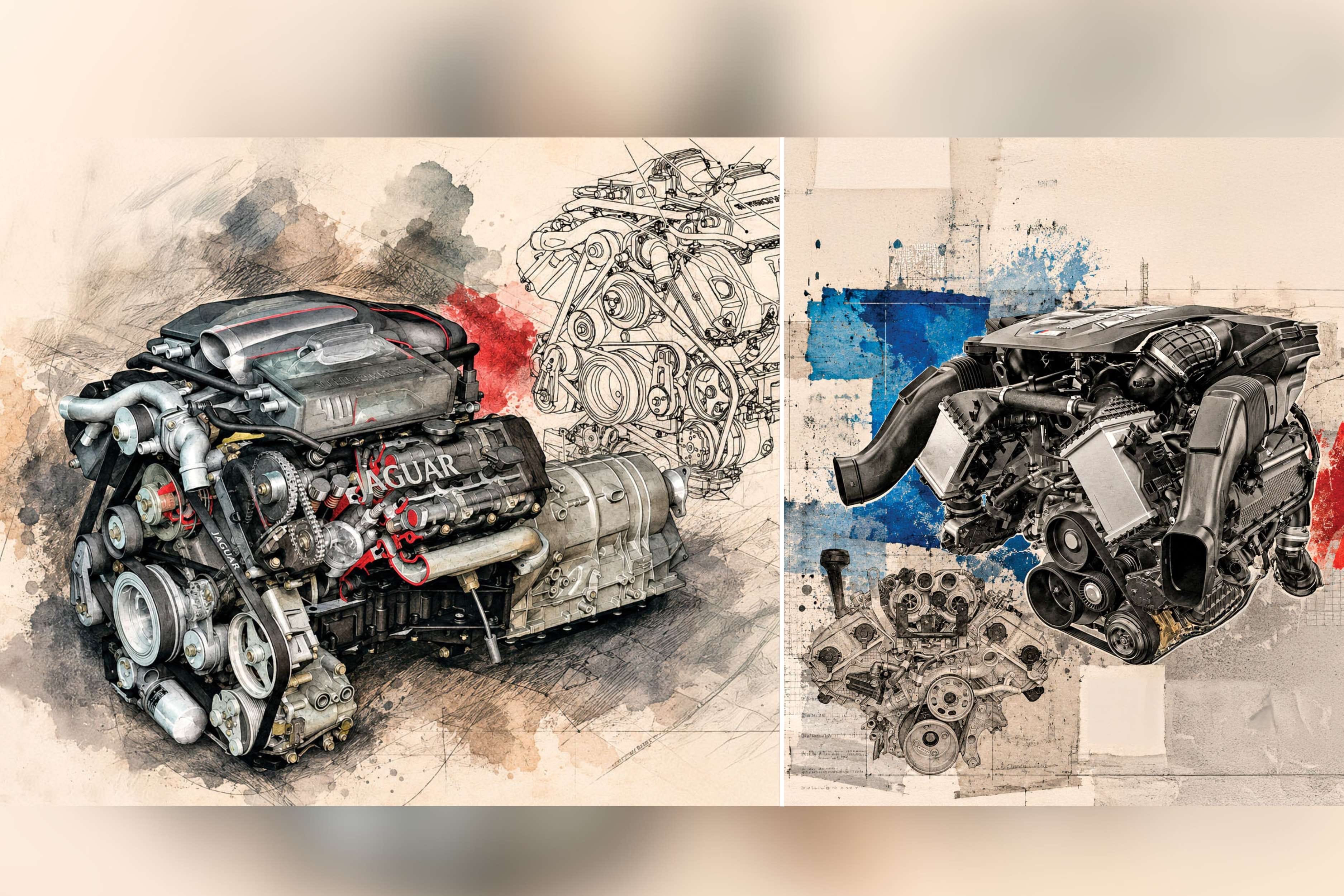
BMW’s S68 is an ‘M’ engine that displaces 4.4 litres. It uses an aluminium block and heads, and a cross-plane crankshaft. The bore and stroke dimensions (89mm × 88.3mm) are typically BMW – square. The engine revs to 7,200rpm, and the DOHC valvetrain gets an electrically actuated VANOS system for faster, more precise camshaft phasing. The hot vee twin-turbo layout is designed to reduce turbo lag, and the cross-bank exhaust manifold merges pulses to optimise turbine efficiency. This sacrifices some of the traditional V8 burble but sharpens response. To handle the extra loads, a high-capacity oil pump with an external oil cooler ensures consistent pressure under high lateral loads, while a multi-stage cooling circuit stabilises temperatures during track use. The S68 also integrates a 48V mild-hybrid system that provides a 9kW and 200Nm of torque fill.

Defender V8 fact file

 110 P425*Octa
PriceRs 1.40 croreRs 2.62 crore
Kerb weight2,434kg2,585kg
Engine5,000cc supercharged V84,395cc twin-turbo V8
Bore and stroke92.5mm x 93.0mm89mm x 88.3mm
Compression ratio9.510.5
Power425hp at 6600rpm635hp at 7000rpm
Torque550Nm from 1800-5000rpm750Nm from 1800-5855rpm
Claimed 0-100kph time5.8sec4.0sec
Maximum speed191kph250kph

*The supercharged-V8 Defender variants are temporarily unavailable for purchase in India, but they’re expected to return soon.

The Jaguar AJ V8 is a family of aluminium V8s produced from 1996 onwards. Offered in naturally aspirated and supercharged forms, it was Jaguar’s flagship petrol engine, engineered to combine refinement with strong performance. Evolving through three generations, the aluminium block and heads kept weight down to around 205-215kg, and it used chain driven camshafts, later evolving to double roller chains for greater durability. Supercharged “R” variants like the one in the Defender pushed outputs to 450hp, giving cars like the XJR and XKR formidable pace at the time. By 2009, the Gen III AJ V8 expanded to 5.0 litres (94 × 92mm bore and stroke), introduced direct fuel injection, and raised compression to 11.5:1. Power on the supercharged versions could exceed 500hp, and this 450hp version, with a bit of digital massaging, could also be made to increase in power.

All prices are ex-showroom, India.
LPG Rate 22 August 2026: आपके शहर में कितने का मिल रहा गैस सिलेंडर? यहां देखें घरेलू और कमर्शियल रेट

LPG Rate 22 August 2026:  रसोई गैस की कीमतों में होने वाला बदलाव सीधे आम परिवारों के बजट पर असर डालता है। महीने की शुरुआत में सिलेंडर का खर्च पहले से तय करना पड़ता है, इसलिए LPG के दाम स्थिर रहना लोगों के लिए राहत की खबर होती है। 22 अगस्त 2026 को घरेलू LPG सिलेंडर की कीमतों में कोई बदलाव नहीं किया गया है। यानी आज उपभोक्ताओं को गैस के लिए अतिरिक्त रकम नहीं चुकानी पड़ेगी। हालांकि, अलग-अलग शहरों में LPG के दाम अलग हो सकते हैं।

स्थानीय टैक्स और अन्य खर्चों की वजह से कीमतों में अंतर देखने को मिलता है। ऐसे में अपने शहर का ताजा रेट जानना जरूरी है। फिलहाल घरेलू गैस की कीमतें स्थिर रहने से परिवारों के मासिक बजट पर अतिरिक्त दबाव नहीं पड़ा है। आने वाले दिनों में LPG की कीमतों में किसी बदलाव पर उपभोक्ताओं की नजर बनी रहेगी।

आपके शहर में LPG सिलेंडर का क्या भाव है?

शहर के हिसाब से LPG की कीमतों में अंतर देखने को मिलता है। स्थानीय टैक्स और अन्य लागतों की वजह से एक ही सिलेंडर के लिए अलग-अलग शहरों में ग्राहकों को अलग कीमत चुकानी पड़ सकती है।

शहरघरेलू LPG (14.2 किलो)कमर्शियल LPG (19 किलो)
कोलकाता₹968.00₹2,872.50
मुंबई₹941.50₹2,691.50
चेन्नई₹957.50₹2,906.00
गुड़गांव₹950.50₹2,755.00
नोएडा₹939.50₹2,738.00
बैंगलोर₹944.50₹2,821.00
भुवनेश्वर₹968.00₹2,908.00
चंडीगढ़₹951.50₹2,760.00
हैदराबाद₹994.00₹2,985.00
जयपुर₹945.50₹2,765.50
लखनऊ₹979.50₹2,860.50
पटना₹1,031.50₹3,018.00
तिरुवनंतपुरम₹951.00

कमर्शियल सिलेंडर की कीमत ज्यादा क्यों?

घरेलू और कमर्शियल LPG सिलेंडर के दाम अलग होते हैं। 19 किलो वाला सिलेंडर मुख्य रूप से व्यावसायिक इस्तेमाल के लिए होता है और इसकी कीमत घरेलू सिलेंडर की तुलना में अधिक रहती है। होटल, रेस्टोरेंट और अन्य कारोबारों के लिए इसका खर्च सीधे संचालन लागत का हिस्सा बनता है।

घर बैठे ऐसे जानें LPG सिलेंडर का ताजा रेट

अगर आप Indane Gas का इस्तेमाल करते हैं, तो अपने क्षेत्र में LPG सिलेंडर की मौजूदा कीमत ऑनलाइन देख सकते हैं। इसके लिए Indian Oil की आधिकारिक वेबसाइट पर जाकर अपना राज्य और जिला चुनना होगा।

वहीं, Bharat Gas के ग्राहक ebharatgas.com पर मौजूद ‘Quick Book & Pay’ विकल्प के जरिए सिलेंडर की लेटेस्ट कीमत चेक कर सकते हैं।

इसके अलावा, HP Gas के उपभोक्ता HP Pay ऐप पर LPG सिलेंडर का ताजा रेट देख सकते हैं। सरकार के UMANG ऐप की मदद से भी ग्राहक LPG रिफिल बुक करने के साथ-साथ उसकी मौजूदा कीमत की जानकारी हासिल कर सकते हैं।

Petrol Diesel Price Today: पेट्रोल-डीजल के नए रेट जारी, दिल्ली समेत इन शहरों में पेट्रोल 100 रुपये के पार

Petrol Diesel Price Today: पेट्रोल-डीजल के नए रेट जारी, दिल्ली समेत इन शहरों में पेट्रोल 100 रुपये के पार

Petrol Diesel Price Today: हर दिन की शुरुआत सिर्फ सूरज की किरणों से नहीं होती, बल्कि पेट्रोल और डीजल की नई कीमतों से भी होती है, जो आम आदमी की जेब पर सीधा असर डालती हैं। सुबह 6 बजे देश की तेल विपणन कंपनियां (OMCs) ताजा दरें जारी करती हैं, जो अंतरराष्ट्रीय बाजार में कच्चे तेल की कीमतों और डॉलर-रुपए की विनिमय दर में आए बदलावों पर आधारित होती हैं। ये बदलाव रोजमर्रा की जिंदगी को प्रभावित करते हैं, चाहे वो ऑफिस जाने वाला व्यक्ति हो या फल-सब्जी बेचने वाला व्यापारी।

ऐसे में हर दिन की कीमतों की जानकारी रखना सिर्फ जरूरी ही नहीं, बल्कि समझदारी भी है। सरकार की यह प्रणाली पारदर्शिता सुनिश्चित करती है ताकि उपभोक्ताओं को किसी तरह की भ्रमित जानकारी न मिले।

आपके शहर में आज का पेट्रोल-डीजल का भाव

ये रहे 22 आगस्त 2026 के प्रमुख शहरों के पेट्रोल-डीजल के ताजा रेट

नई दिल्ली: पेट्रोल ₹102.12 प्रति लीटर और डीजल ₹95.20 प्रति लीटर।

मुंबई: पेट्रोल ₹111.18 और डीजल ₹97.83 प्रति लीटर।

कोलकाता: पेट्रोल ₹113.47 जबकि डीजल ₹99.82 प्रति लीटर।

चेन्नई: पेट्रोल ₹107.77 और डीजल ₹99.55 प्रति लीटर।

गुरुग्राम: पेट्रोल ₹102.77 तथा डीजल ₹95.44 प्रति लीटर।

नोएडा: पेट्रोल ₹102.12 और डीजल ₹95.56 प्रति लीटर।

बेंगलुरु: पेट्रोल ₹110.93 जबकि डीजल ₹98.80 प्रति लीटर।

भुवनेश्वर: पेट्रोल ₹109.92 और डीजल ₹100.92 प्रति लीटर।

चंडीगढ़: पेट्रोल ₹98.10 तथा डीजल ₹86.09 प्रति लीटर।

हैदराबाद: पेट्रोल ₹115.69 और डीजल ₹103.82 प्रति लीटर।

जयपुर: पेट्रोल ₹112.66 जबकि डीजल ₹97.78 प्रति लीटर।

लखनऊ: पेट्रोल ₹102.05 और डीजल ₹95.55 प्रति लीटर।

पटना: पेट्रोल ₹113.35 तथा डीजल ₹99.36 प्रति लीटर।

तिरुवनंतपुरम: पेट्रोल ₹115.49 और डीजल ₹104.40 प्रति लीटर।

पिछले दो साल से स्थिर क्यों हैं कीमतें?

मई 2022 के बाद से केंद्र और कई राज्यों द्वारा टैक्स में कटौती की गई, जिसके बाद पेट्रोल-डीजल की कीमतों में स्थिरता देखी जा रही है। हालांकि अंतरराष्ट्रीय बाजार में उतार-चढ़ाव होता रहता है, फिर भी भारतीय उपभोक्ताओं के लिए कीमतें तुलनात्मक रूप से स्थिर बनी हुई हैं।

किन कारणों से तय होती हैं ईंधन की कीमतें?

  1. कच्चे तेल की कीमतें:

पेट्रोल और डीजल का उत्पादन मुख्य रूप से कच्चे तेल से होता है। जब अंतरराष्ट्रीय स्तर पर कच्चे तेल की कीमतें बढ़ती हैं, तो इसका असर सीधे भारतीय बाजार पर पड़ता है।

  1. डॉलर के मुकाबले रुपया:

भारत अधिकतर कच्चा तेल आयात करता है, और यह डॉलर में खरीदा जाता है। यदि रुपया कमजोर होता है, तो ईंधन महंगा हो जाता है।

  1. सरकारी टैक्स और शुल्क:

केंद्र और राज्य सरकारें पेट्रोल-डीजल पर भारी टैक्स लगाती हैं, जो खुदरा मूल्य का बड़ा हिस्सा होते हैं। यही कारण है कि राज्यों में कीमतों में अंतर होता है।

  1. रिफाइनिंग की लागत:

कच्चे तेल को इस्तेमाल लायक बनाने की प्रक्रिया (रिफाइनिंग) में भी खर्च होता है। ये लागत कच्चे तेल की गुणवत्ता और रिफाइनरी की क्षमता पर निर्भर करती है।

  1. मांग और आपूर्ति का संतुलन:

बाजार में ईंधन की मांग अगर बढ़ जाती है, तो कीमतें भी ऊपर जाने लगती हैं। खासकर त्योहारों, गर्मी या सर्दी के मौसम में ईंधन की खपत ज्यादा होती है।

कैसे करें अपने शहर की कीमतें SMS से चेक?

अगर आप मोबाइल से ईंधन की कीमत जानना चाहते हैं, तो ये प्रक्रिया आसान है:

Indian Oil ग्राहक: अपने शहर का कोड टाइप करें और उसे “RSP” के साथ 9224992249 पर भेजें।

BPCL ग्राहक: “RSP” लिखकर 9223112222 पर भेजें।

HPCL ग्राहक: “HP Price” लिखकर 9222201122 पर भेजें।

Dividend Stocks: बंपर डिविडेंड कमाने का आज आखिरी मौका, कल से इन शेयरों में निवेश पर नहीं मिलेगा डिविडेंड

Dividend Stocks: कई इनवेस्टर्स कमाई के लिए उन कंपनियों के शेयरों में निवेश करते हैं, जिनका डिविडेंड देने का रिकॉर्ड अच्छा है। इससे उन्हें दो तरह से कमाई होती है। शेयरों की कीमतों में इजाफा होने पर उनके निवेश की वैल्यू बढ़ती है। साथ ही जब तक शेयर उनके पोर्टफोलियो में रहता है, उन्हें डिविडेंड मिलता रहता है। अगर आप भी डिविडेंड के लिए निवेश करना चाहते हैं तो आज बड़ा मौका है। करीब तीन दर्जन कंपनियों ने डिविडेंड के लिए 21 अगस्त को रिकॉर्ड डेट तय किया है।

डिविडेंड के लिए 21 अगस्त तक डीमैट अकाउंट में होने चाहिए शेयर

ये कंपनियां उन शेयरहोल्डर्स को डिविडेंड देंगी, जिनके डीमैट अकाउंट में 21 अगस्त को शेयर होंगे। इसका मतलब है कि अगर आप इन कंपनियों के शेयरों में निवेश करते हैं तो कल यानी 21 अगस्त (शुक्रवार) को आपके डीमैट अकाउंट में शेयर आ जाएंगे। इसका मतलब है कि डिविडेंड इनकम के लिए जा इन शेयरों को खरीदने का अंतिम मौका है। अगर कोई इनवेस्टर 21 अगस्त को इन शेयरों को खरीदता है तो वह डिविडेंड का हकदार नहीं होगा।

सबसे ज्यादा 22 रुपये का डिविडेंड एके कैपिटल दे रही है

AK Capital Services सबसे ज्यादा 22 रुपये का डिविडेंड दे रही है। इसका मतलब है कि 21 अगस्त को जिन इनवेस्टर्स के डीमैट अकाउंट में कंपनी के शेयर होंगे, उन्हें प्रति शेयर 22 रुपये का डिविडेंड मिलेगा। अगर आपके पास एके कैपिटल सर्विसेज के 10 शेयर हैं तो आपको कंपनी की तरफ से कुल 220 रुपये का डिविडेंड मिलेगा। AK Capital Services का शेयर 20 अगस्त को 1:20 बजे 1.36 फीसदी चढ़कर 1,778 रुपये पर चल रहा था।

वाडीलाल इंडस्ट्रीज प्रति शेयर 17 रुपये का डिविडेंड देगी

Vadilal Industries ने भी बंपर डिविडेंड का ऐलान किया है। कंपनी हर एक शेयर पर 17 रुपये का अंतरिम डिविडेंड देगी। वाडीलाल इंडस्ट्रीज का शेयर 20 अगस्त को 0.66 फीसदी चढ़कर 7,450 रुपये पर चल रहा था। इस साल इस शेयर में जबर्दस्त तेजी आई है। यह 2026 में 51 फीसदी से ज्यादा चढ़ा है। इस कंपनी के शेयर पर डिविडेंड कमाने के लिए आपको आज ही इसके शेयर में निवेश करना होगा।

LICHF के शेयरों से भी डिविडेंड कमाने का यह बड़ा मौका

LIC Housing Finance (LICHF) ने भी प्रति शेयर 10 रुपये डिविडेंड का ऐलान किया है। इसकी रिकॉर्ड डेट 21 अगस्त है। इसका मतलब है कि प्रति शेयर 10 रुपये डिवलिडेंड कमाने के लिए आपको इस शेयर में आज ही निवेश करना होगा। यह देश की सबसे बड़ी इंश्योरेंस कंपनी LIC की हाउसिंग फाइनेंस कंपनी है। यह घर खरीदने के लिए लोन देती है। LICHF का शेयर 20 अगस्त को 2.09 फीसदी चढ़कर 508 रुपये पर चल रहा था। बीते एक साल में यह शेयर 12 फीसदी से ज्यादा गिरा है।

हिताची एनर्जी प्रत्येक शेयर पर 8 रुपये का डिविडेंड देगी

Hitachi Energy ने प्रति शेयर 8 रुपये डिविडेंड का ऐलान किया है। अगर आप इस डिविडेंड का फायदा उठाना चाहते हैं तो आज ही आपको इस शेयर में निवेश करना होगा। हिताची एनर्जी का शेयर 20 अगस्त को 0.67 फीसदी गिरकर 33,575 रुपये पर चल रहा था। हालांकि, बीते एक साल में इस शेयर ने निवेशकों को मालामाल किया है। इस दौरान यह शेयर करीब 68 फीसदी उछला है।

यह भी पढ़ें: दिग्गज इनवेस्टर विजय केडिया के 20 लाख शेयर खरीदते ही रॉकेट बने इस कंपनी के स्टॉक

ये कंपनियां भी दे रही हैं शेयरों पर अट्रैक्टिव डिविडेंड 

पतंजिल फूड्स, जिंदल स्टेनलेस, जिंदल स्टील, GE Vernova T&D India, Veljan Denison, KSE, Mayur Uniquoters, Savita Oil Technologies, Patels Airtemp, Deep Industries के शेयरों पर भी डिविडेंड की रिकॉर्ड डेट 21 अगस्त है। इसका मतलब है कि इन शेयरों से डिविडेंड इनकम के लिए आज ही इनमें निवेश करना पड़ेगा।

Petrol Diesel Rate Today: सुबह 6 बजे जारी हुए नए रेट, जानें आपके शहर में पेट्रोल-डीजल की कीमत

Petrol Diesel Price Today: हर दिन की शुरुआत सिर्फ सूरज की किरणों से नहीं होती, बल्कि पेट्रोल और डीजल की नई कीमतों से भी होती है, जो आम आदमी की जेब पर सीधा असर डालती हैं। सुबह 6 बजे देश की तेल विपणन कंपनियां (OMCs) ताजा दरें जारी करती हैं, जो अंतरराष्ट्रीय बाजार में कच्चे तेल की कीमतों और डॉलर-रुपए की विनिमय दर में आए बदलावों पर आधारित होती हैं। ये बदलाव रोजमर्रा की जिंदगी को प्रभावित करते हैं, चाहे वो ऑफिस जाने वाला व्यक्ति हो या फल-सब्जी बेचने वाला व्यापारी।

ऐसे में हर दिन की कीमतों की जानकारी रखना सिर्फ जरूरी ही नहीं, बल्कि समझदारी भी है। सरकार की यह प्रणाली पारदर्शिता सुनिश्चित करती है ताकि उपभोक्ताओं को किसी तरह की भ्रमित जानकारी न मिले।

आपके शहर में आज का पेट्रोल-डीजल का भाव

ये रहे 20 आगस्त 2026 के प्रमुख शहरों के पेट्रोल-डीजल के ताजा रेट

नई दिल्ली: पेट्रोल ₹102.12 प्रति लीटर और डीजल ₹95.20 प्रति लीटर।

मुंबई: पेट्रोल ₹111.18 और डीजल ₹97.83 प्रति लीटर।

कोलकाता: पेट्रोल ₹113.47 जबकि डीजल ₹99.82 प्रति लीटर।

चेन्नई: पेट्रोल ₹107.77 और डीजल ₹99.55 प्रति लीटर।

गुरुग्राम: पेट्रोल ₹102.77 तथा डीजल ₹95.44 प्रति लीटर।

नोएडा: पेट्रोल ₹102.12 और डीजल ₹95.56 प्रति लीटर।

बेंगलुरु: पेट्रोल ₹110.93 जबकि डीजल ₹98.80 प्रति लीटर।

भुवनेश्वर: पेट्रोल ₹109.92 और डीजल ₹100.92 प्रति लीटर।

चंडीगढ़: पेट्रोल ₹98.10 तथा डीजल ₹86.09 प्रति लीटर।

हैदराबाद: पेट्रोल ₹115.69 और डीजल ₹103.82 प्रति लीटर।

जयपुर: पेट्रोल ₹112.66 जबकि डीजल ₹97.78 प्रति लीटर।

लखनऊ: पेट्रोल ₹102.05 और डीजल ₹95.55 प्रति लीटर।

पटना: पेट्रोल ₹113.35 तथा डीजल ₹99.36 प्रति लीटर।

तिरुवनंतपुरम: पेट्रोल ₹115.49 और डीजल ₹104.40 प्रति लीटर।

पिछले दो साल से स्थिर क्यों हैं कीमतें?

मई 2022 के बाद से केंद्र और कई राज्यों द्वारा टैक्स में कटौती की गई, जिसके बाद पेट्रोल-डीजल की कीमतों में स्थिरता देखी जा रही है। हालांकि अंतरराष्ट्रीय बाजार में उतार-चढ़ाव होता रहता है, फिर भी भारतीय उपभोक्ताओं के लिए कीमतें तुलनात्मक रूप से स्थिर बनी हुई हैं।

किन कारणों से तय होती हैं ईंधन की कीमतें?

  1. कच्चे तेल की कीमतें:

पेट्रोल और डीजल का उत्पादन मुख्य रूप से कच्चे तेल से होता है। जब अंतरराष्ट्रीय स्तर पर कच्चे तेल की कीमतें बढ़ती हैं, तो इसका असर सीधे भारतीय बाजार पर पड़ता है।

  1. डॉलर के मुकाबले रुपया:

भारत अधिकतर कच्चा तेल आयात करता है, और यह डॉलर में खरीदा जाता है। यदि रुपया कमजोर होता है, तो ईंधन महंगा हो जाता है।

  1. सरकारी टैक्स और शुल्क:

केंद्र और राज्य सरकारें पेट्रोल-डीजल पर भारी टैक्स लगाती हैं, जो खुदरा मूल्य का बड़ा हिस्सा होते हैं। यही कारण है कि राज्यों में कीमतों में अंतर होता है।

  1. रिफाइनिंग की लागत:

कच्चे तेल को इस्तेमाल लायक बनाने की प्रक्रिया (रिफाइनिंग) में भी खर्च होता है। ये लागत कच्चे तेल की गुणवत्ता और रिफाइनरी की क्षमता पर निर्भर करती है।

  1. मांग और आपूर्ति का संतुलन:

बाजार में ईंधन की मांग अगर बढ़ जाती है, तो कीमतें भी ऊपर जाने लगती हैं। खासकर त्योहारों, गर्मी या सर्दी के मौसम में ईंधन की खपत ज्यादा होती है।

कैसे करें अपने शहर की कीमतें SMS से चेक?

अगर आप मोबाइल से ईंधन की कीमत जानना चाहते हैं, तो ये प्रक्रिया आसान है:

Indian Oil ग्राहक: अपने शहर का कोड टाइप करें और उसे “RSP” के साथ 9224992249 पर भेजें।

BPCL ग्राहक: “RSP” लिखकर 9223112222 पर भेजें।

HPCL ग्राहक: “HP Price” लिखकर 9222201122 पर भेजें।

Stocks to Watch: हुंडई से ऑयल इंडिया तक, 20 अगस्त को इन 10 शेयरों पर रहेगी बाजार की नजर

Stocks to Watch: गुरुवार, 20 अगस्त के कारोबार में कई कंपनियों से जुड़ी बड़ी खबरें आई हैं। कहीं कीमतें बढ़ाने का ऐलान हुआ है, कहीं डिविडेंड की रिकॉर्ड डेट तय हुई है। कुछ कंपनियों ने फंड जुटाने, नए CEO की नियुक्ति और बड़े ऑर्डर जैसी घोषणाएं भी की हैं। ऐसे में 20 अगस्त के कारोबार में इन शेयरों पर निवेशकों की करीबी नजर रह सकती है।

Hyundai Motor India

ऑटो कंपनी Hyundai Motor India सितंबर 2026 से अपनी गाड़ियों की कीमतें 1% तक बढ़ाएगी। कंपनी ने इसकी वजह महंगा कच्चा माल, बढ़ता ऑपरेटिंग खर्च और वैश्विक अनिश्चितता बताई है।

Hexaware Technologies

आईटी सर्विसेज कंपनी Hexaware Technologies ने कहा कि उसके सिस्टम या ग्राहकों के डेटा में सेंध लगने का कोई भरोसेमंद सबूत नहीं मिला है। यह बयान उन रिपोर्ट्स के बाद आया, जिनमें एक हैकर ग्रुप ने कुछ कर्मचारियों की जानकारी लीक होने का दावा किया था।

HEG

ग्रेफाइट इलेक्ट्रोड बनाने वाली HEG को NCLT की मंजूरी मिल गई है। डिमर्जर के बाद HEG Graphite अलग लिस्टेड कंपनी बनेगी। HEG के शेयरधारकों को हर 1 शेयर पर 1 HEG Graphite शेयर मिलेगा।

Aditya Infotech

सिक्योरिटी और सर्विलांस प्रोडक्ट्स बनाने वाली Aditya Infotech ने 1,500 करोड़ रुपये तक जुटाने के प्रस्ताव को मंजूरी दी है। कंपनी यह रकम पब्लिक इश्यू, QIP या दूसरे मंजूर तरीकों से जुटा सकती है। इसके लिए शेयरधारकों और रेगुलेटरी मंजूरी की जरूरत होगी।

HDFC Life Insurance

प्राइवेट लाइफ इंश्योरेंस कंपनी HDFC Life को IRDAI से बड़ी मंजूरी मिली है। रेगुलेटर ने विभा पडलकर को अगले पांच साल के लिए फिर से MD और CEO नियुक्त करने की अनुमति दे दी है। उनका नया कार्यकाल 12 सितंबर 2026 से शुरू होगा।

Oil India

महानवरत्न सरकारी कंपनी Oil India ने 4 सितंबर 2026 को फाइनल डिविडेंड की रिकॉर्ड डेट तय की है। यह डिविडेंड FY26 के लिए है। शेयरधारकों की मंजूरी मिलने के बाद 30 दिनों के भीतर इसका भुगतान किया जाएगा।

Kolte-Patil Developers

रियल एस्टेट कंपनी Kolte-Patil Developers ने ऋषिकेश परांडेकर को नया CEO नियुक्त किया है। उनकी नियुक्ति 24 अगस्त 2026 से प्रभावी होगी। कंपनी को उम्मीद है कि इससे बिजनेस की अगली ग्रोथ रणनीति को गति मिलेगी।

Fedbank Financial Services

NBFC कंपनी Fedbank Financial Services 25 अगस्त की बोर्ड बैठक में 2,500 करोड़ रुपये तक जुटाने पर विचार करेगी। यह रकम NCD समेत दूसरे डेट इंस्ट्रूमेंट्स के जरिए जुटाई जा सकती है।

Dr Lal PathLabs

डायग्नोस्टिक कंपनी Dr Lal PathLabs ने उज्बेकिस्तान में अपनी मौजूदगी बढ़ाई है। उसकी दुबई स्थित सब्सिडियरी ने ताशकंद में नई कंपनी बनाई है। नई इकाई में उसकी 70% हिस्सेदारी होगी।

EMS

इंफ्रास्ट्रक्चर कंपनी EMS राजस्थान के कोटा में 190.86 करोड़ रुपये के वाटर ट्रीटमेंट प्लांट प्रोजेक्ट की L1 बिडर बनी है। यह प्रोजेक्ट राज्य के पब्लिक हेल्थ इंजीनियरिंग विभाग की ओर से दिया गया है।

Ramco Systems

एंटरप्राइज सॉफ्टवेयर कंपनी Ramco Systems की अमेरिकी इकाई को नया अंतरराष्ट्रीय ऑर्डर मिला है। Pem-Air अपने इंजन MRO ऑपरेशंस के लिए कंपनी का AI आधारित एविएशन सॉफ्टवेयर अपनाएगी। इससे उसके इंजन मेंटेनेंस का डिजिटल ट्रांसफॉर्मेशन होगा।

IPO Returns: इस साल 5 छोटे IPO ने किया बड़ा धमाका, 149% तक चढ़े स्टॉक्स

Disclaimer: यहां मुहैया जानकारी सिर्फ सूचना के लिए दी जा रही है। यहां बताना जरूरी है कि मार्केट में निवेश बाजार जोखिमों के अधीन है। निवेशक के तौर पर पैसा लगाने से पहले हमेशा एक्सपर्ट से सलाह लें। मनीकंट्रोल की तरफ से किसी को भी पैसा लगाने की यहां कभी भी सलाह नहीं दी जाती है।

What Brazil’s 50-year ethanol experiment tells us

What Brazil’s 50-year ethanol experiment tells us
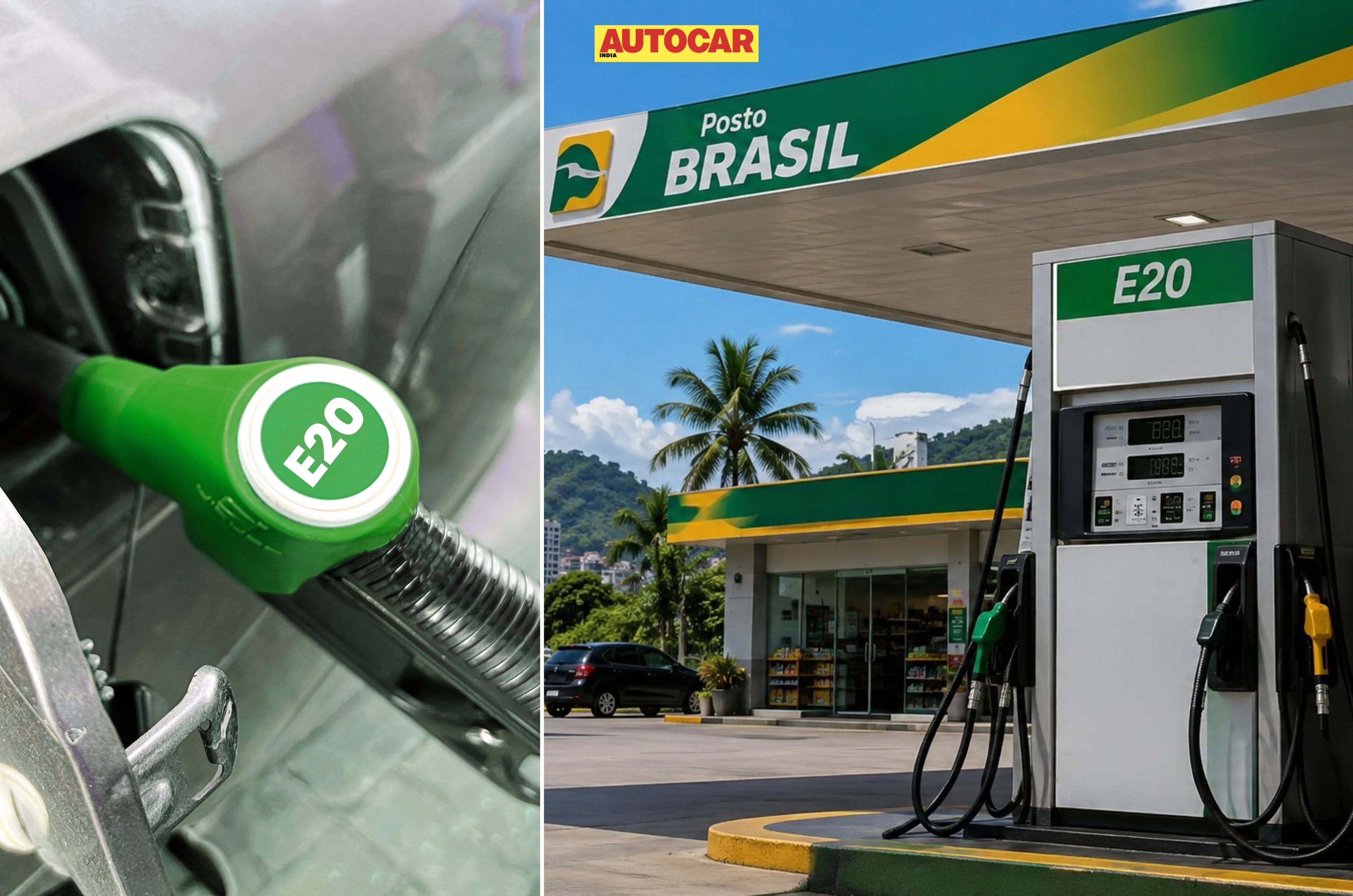
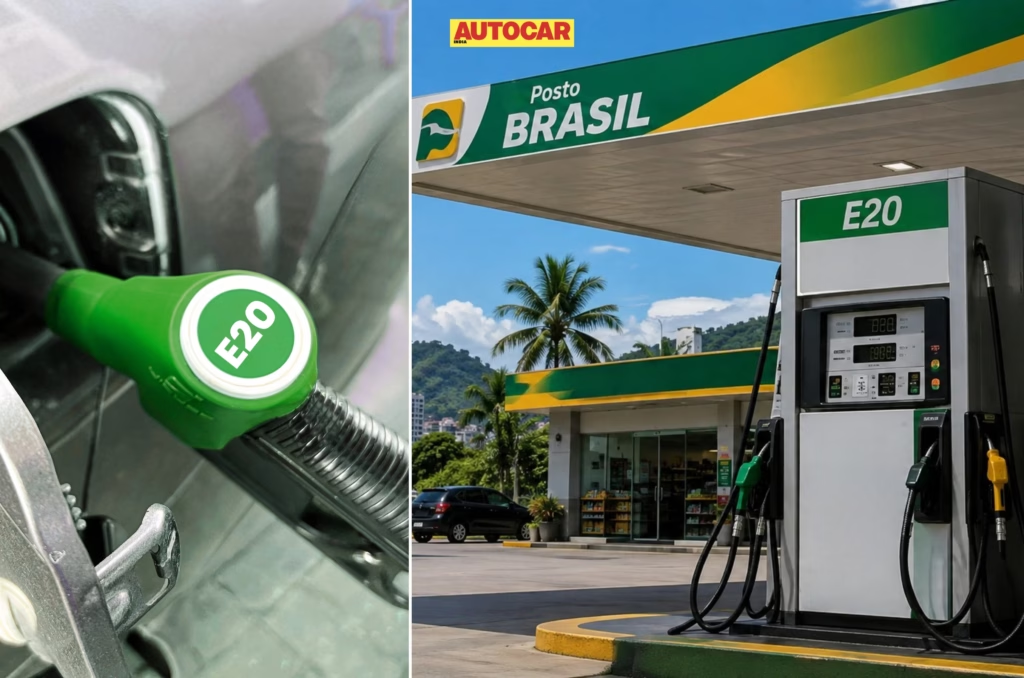
E20 fuel in Brazil

The forced introduction of E20 has set social media ablaze, with outraged car and bike owners complaining bitterly of damage to their vehicles and a drop in fuel efficiency. The anger isn’t irrational. The efficiency drop is real and, going by Autocar India’s own tests, larger than the figures the government itself has acknowledged. 

But while there’s no debate over the mileage penalty, the bigger fear is long-term damage to the vast majority of cars on our roads that are not E20-compliant. It’s a worry fanned by social media and by the way the government has handled the concern. Field trials conducted by the Automotive Research Association of India (ARAI) before the rollout reportedly found no major compatibility issues even in legacy vehicles. 

However, that report has never been made public, which has only deepened suspicion among car and bike owners. Most damaging of all was the Society of Indian Automobile Manufacturers (SIAM) formally flagging alarming levels of contamination in a letter it was later forced to publicly withdraw. Crucially, SIAM’s concern was contaminated fuel carrying worrying levels of chlorine, not the blend itself. That distinction has been lost in the noise, and it sits at the heart of the confusion, even panic, among customers fearing the worst.

So, is E20 the menace it is being made out to be, or is fuel contamination the bigger issue? The fact is, there is no workshop epidemic yet, though sceptics will argue it’s only a matter of time before engines start giving trouble. What social media is amplifying right now is the theoretical damage of a higher blend. That doesn’t make the concerns baseless, since long-term effects take years to show, but the truth is that panic and outrage are currently running well ahead of the evidence. Which makes it worth studying the one country that actually has the evidence, gathered over 50 years: Brazil.

The Brazil experience

If you think India’s leap from E10 to E20 was abrupt, consider what happened there. In November 1975, squeezed by the oil crisis and desperate to protect its foreign currency reserves, the Brazilian government launched Proalcool and shoved its motorists in at the deep end. “The blends with gasoline started at 20 percent. It went very soon up to 30 percent, and it was imposed by the government,” says Peter Gilbert, head of Operational Marketing and Customer Tech Services at Infineum Brazil, a fuel and lubricant additive specialist company whose business, it should be said, depends on ethanol-blended fuels working well. 

The documented history broadly bears him out, with one point worth noting: there was a brief low-blend ramp-up with E10, but that lasted roughly two to three years against the five decades of E20 and above since. Compare that with India, which took nearly two decades from its 2003 blending programme to reach E10. And like India, Brazil never kept an escape hatch. “There was no E0 when E20 was introduced,” says Gilbert, and there is none today: the mandated blend has since climbed through 25, 27 and 30 percent, and since August this year, all pumps in Brazil, including the super-premium ones, dispense E32.

But what is telling is the kind of cars running around on E20 in the late 1970s. Back then, cars were mainly carburetted with no fuel injection, no closed-loop control and no lambda sensors – machinery far cruder than even the oldest E10-era car on Indian roads today. So what broke?

According to Gilbert, remarkably little that could be pinned on E20 itself. “There weren’t any major issues reported,” he says. “There were issues related to the materials of the fuel system, the gaskets and the rubbers used at that time, but that has changed.”

His colleague Leandro Benvenutti, Infineum’s product manager for Latin America, says the trouble in 1970s and 1980s Brazil came almost entirely from dedicated alcohol cars running pure hydrous ethanol (E100), not from petrol cars on E20. “Everything we can remember from that time is related to these alcohol vehicles, not to the gasoline vehicles using E20,” he says. Carburettor corrosion, clogged jets, perished hoses and O-rings: all of it, in their experience, traced back to E100. “If there were problems in the other [non-flex fuel] vehicles, they were really not important at all.”

A caveat both experts volunteer: 1970s Brazil is not 2020s India, and the comparison is not like-for-like. “It’s difficult to correlate to vehicles today,” Gilbert admits. What the Brazilian record offers is not proof that nothing will go wrong here, but a large, long-running natural experiment in which the E20-specific damage everyone feared did not show up.

So what about India’s E10 cars?

Asked what he’d tell a worried Indian owner running an E10-era car on E20, Benvenutti replies, “There is no reason for panic. We don’t expect any immediate impact.” Note the word immediate. The honest answer regarding the long term is unknown, and to their credit, neither of Infineum’s experts pretends otherwise. Over years, rubber components in cars whose materials weren’t specified for E20 may embrittle sooner, and Benvenutti concedes older cars and motorcycles “may see issues with time”. But complicating the issue is attribution – what is due to ethanol and what is not. Rubber parts perish with pure petrol, too. 

Benvenutti recalls his father’s flex-fuel car whose fuel hose dried out and leaked after years of use. “Was that really caused by the ethanol, or was that something going to happen anyway after five or ten years?” If there is a cost to owners, in other words, it is most likely a shortened life for cheap parts such as hoses, gaskets and O-rings rather than failures of expensive ones. “The risk for the metal components, the hard components like valves, injectors and pumps, is much lower if you maintain this product within spec,” explains Gilbert. That last clause matters, and we’ll revisit it.

On material margins, Benvenutti is careful not to overclaim. He believes manufacturers build in buffers. “If I am developing an engine, I would prefer to keep some buffer,” he remarks but adds that he is not a materials specialist and that the buffer may mean a component lasting eight years instead of 10. Whether every manufacturer selling in India engineered that headroom is a question only the manufacturers can answer.

Calibration is key

The more concrete near-term issue isn’t corrosion. It’s calibration. E20 carries less energy per litre, so the engine management system must inject more fuel to keep the mixture correct. Most closed-loop systems that have been around since the move to BS-II fuel-injection in 2000 should easily adapt, but if an older car’s injectors or fuel-trim maps run out of adjustment range, the mixture runs lean. The tell-tale? “Probably the most impactful result will be a light on your cluster. You will see the malfunction indication light on,” says Benvenutti. If your check engine light comes on after the switch to E20, that’s your car telling you it can’t fully compensate. Whether yours will is a manufacturer-by-manufacturer, even model-by-model chance.

Then there is Brazil’s import experience, which is genuinely striking and even reassuring. European and Japanese cars homologated for E10 markets are sold in Brazil and run on E30, now E32, every day. “I haven’t seen any report on issues with those engines,” says Gilbert. And there is no exemption at the top of the market. With no E0 sold anywhere in the country, every Ferrari, Lamborghini and Porsche in Brazil fills up on E32; even the super-premium pumps dispense it. Ask whether a supercar owner can escape the blend, and the answer is emphatic. “No way,” says Benvenutti. 

Low volumes are no excuse to offer a special blend, unlike in India, where supercars have the safety net of a high-priced E0 premium fuel. Benvenutti points out that even a manufacturer bringing in a handful of sports cars must ensure the car is fit for the market’s fuel. “I would not imagine any OEM bringing one unit and selling it if that’s not prepared for that market.” The one genuine weak spot he flags concerns independent, grey-market imports, which arrive exactly as built for the European or Japanese market with no local adaptation. Much of ethanol’s impact is based on anecdotal data rather than any controlled study, but it is decades of anecdotes across millions of cars, from hatchbacks to hypercars.

How much evidence of ethanol impact is there?

Enough of it to take seriously. Start with a fact that rarely features in the Indian debate: Brazil is not a country of new cars. Punishing taxes on new vehicles and tight credit mean Brazilians hold on to their cars for a long time, and the tax system actively rewards them for doing so. Most states have long exempted the oldest cars from the annual IPVA vehicle tax, and a constitutional amendment now makes that exemption national for anything 20 years or older. The result, as per the Brazilian auto components association Sindipeças, is a fleet averaging over 11 years old, with 7.3 million vehicles past 16 years and some 220,000 past 25. Every one of them fills up on E27-to-E32 petrol because nothing else is sold. No doubt, much of this ageing fleet is flex-fuel, engineered from birth to drink anything up to E100, so their survival may seem overplayed, but only up to a point. 

Flex-fuel technology arrived in Brazil only in 2003 with the Volkswagen Golf, which means the country’s first two and a half decades on E20-and-higher blends were served entirely by ordinary petrol cars, and the earliest of those were designed for no ethanol whatsoever; the blend was simply imposed on them, which is exactly what’s happening in India today. The cars that predate the flex era and the imported non-flex cars still running on E32 haven’t seen a trend of ethanol casualties. There is no scrapyard full of ethanol victims; the old cars are still on the road.

Then there’s the formal testing. Before Brazil raised its mandate from E27 to E30 in August 2025, a working group under the country’s Ministry of Mines and Energy ran durability tests on vehicles representative of the national fleet. ANFAVEA, Brazil’s association of vehicle manufacturers (the counterpart to our SIAM), reported that the tests showed no adverse effects on engine durability or performance, with one telling condition attached: provided fuel quality standards are met. Independently, a year-long University of Nebraska-Lincoln study ran E30 in ordinary non-flex-fuel state government vehicles in the US and found no adverse effects either. None of this is a guarantee for every ageing car in India, but it is consistent, multi-source evidence that corroborates Infineum’s findings.

The dangerous C word 

So is the all-clear justified? Only conditionally, and the condition is the same one ANFAVEA attached: clean fuel made and blended to specification. And this is where India’s real problem appears to lie. If genuine damage is occurring in Indian fuel systems, the evidence points not to the ethanol blend but to what’s riding along with it: chloride contamination picked up during the production process and from storage tanks. SIAM’s now-withdrawn letter reported chloride levels of up to 500 ppm in samples from vehicle tanks and 350 ppm at retail outlets, figures the petroleum ministry has vehemently contested. Ministry officials say their own testing found high chlorine levels at just two pumps and that plastic sample containers had corrupted some tests and thrown up false readings. Yet, even a fraction of SIAM’s figures would dwarf the 3 ppm the ministry itself treats as the acceptable ceiling. 

Also, 3 ppm is only a guideline. India has yet to mandate BIS limits for chloride in fuel ethanol – something Brazil has enforced by law at 1 ppm for years. Chlorides corrode fuel pumps, injectors and valves regardless of whether a car was designed for E10 or E20, which is precisely why blaming the blend misdiagnoses the disease. The Brazilian experience, in short, largely acquits ethanol. It says nothing to acquit the fuel quality actually coming out of Indian pumps, and fixing that is a question of standards and enforcement, not of retreating to E10. 

The E20 debate, now thoroughly political, will no doubt rage on: the government and its agencies on one side, and on the other, opposition parties and a swarm of influencers and social media experts riding the outrage for popularity and views, but few of them have bothered to put an independent expert on record. The good thing is that science and first-hand experience – Brazil’s, in this case – take no sides. And that’s the side we are on.

New Bajaj Pulsar 125 and Pulsar 150 to launch on August 24

New Bajaj Pulsar 125 and Pulsar 150 to launch on August 24
 New Bajaj Pulsar 125 and Pulsar 150 to launch on August 24

We’ve known for some time that Bajaj is working on an updated Pulsar 150, and a Pulsar 125. Earlier expected by August 12, we now expect them to arrive on August 24. The two models had recently been spotted arriving at dealerships, making the launch imminent.

  1. Will get a new engine and chassis
  2. Replaces the current twin-shock with a monoshock suspension
  3. Expected to get many features from the recently launched N160

What to expect from the new Pulsar 125 and 150?

Revised design and lots of new features

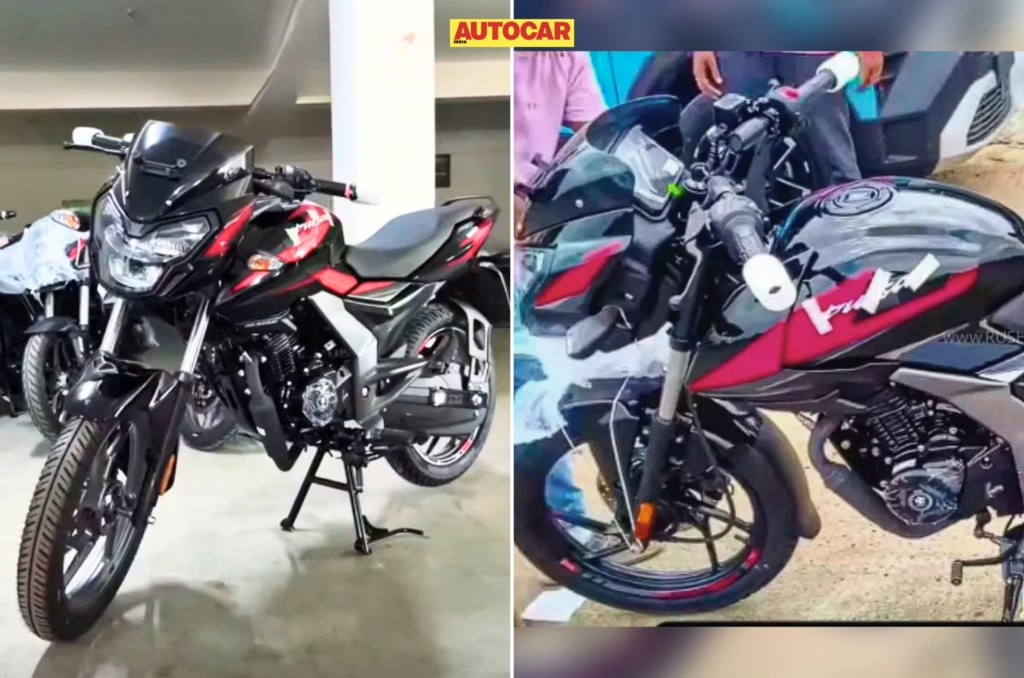
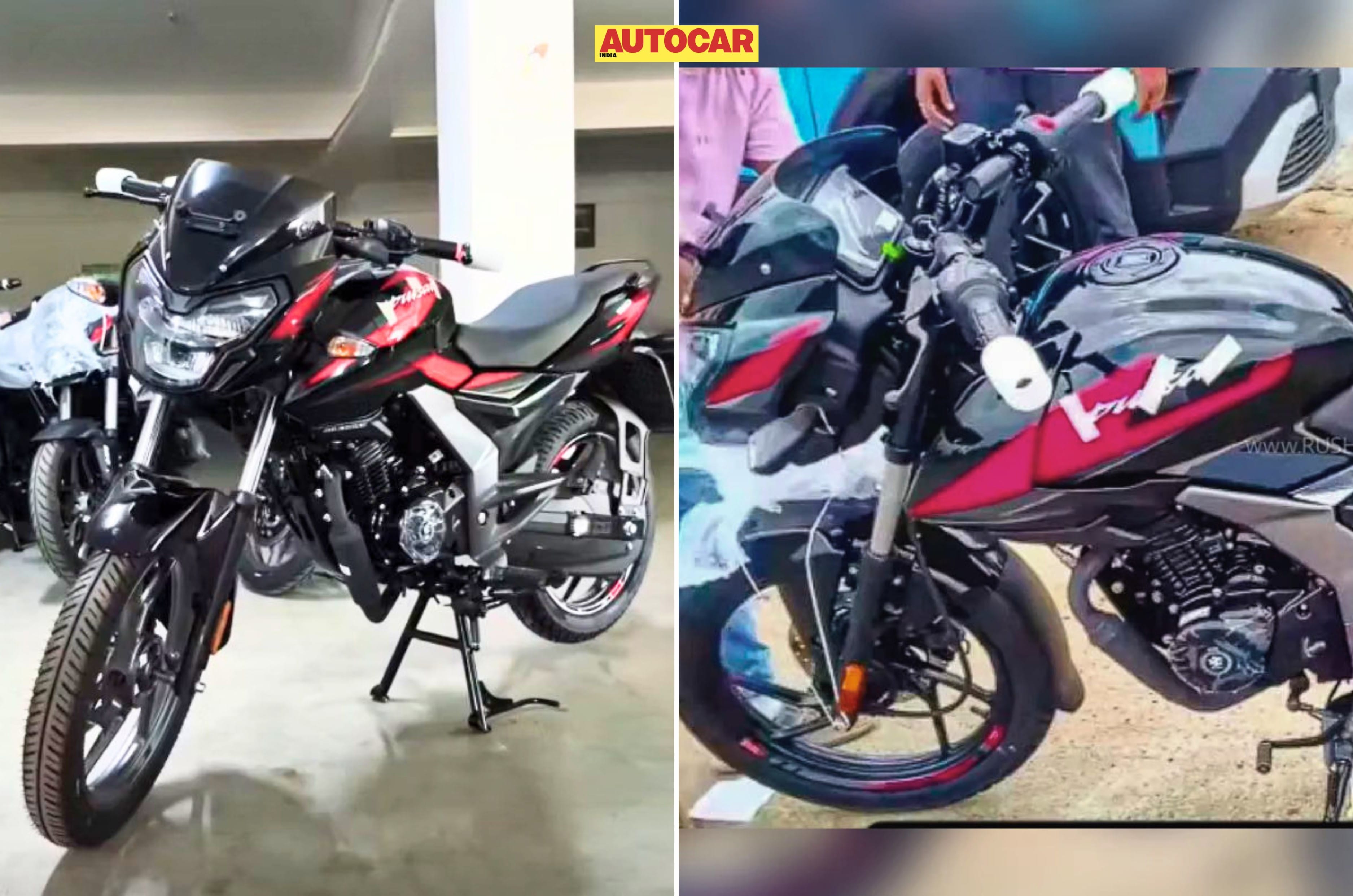
An earlier leak gave us a very detailed look at both the motorcycles. From them, we understood that Bajaj has revised the design heavily on both, with the 150 (at least) getting an updated oil-cooled engine. Power figures are unknown at this time, but the improved cooling should mean improvement on the performance front. For reference, the current Pulsar 125 is powered by a 124.4cc single-cylinder, air-cooled engine producing 11.8hp of power and 10.8Nm of torque; the current Pulsar 150 is powered by a 149.5cc single-cylinder, air-cooled engine producing 14hp and 13.3Nm of torque.

The chassis, however, is going to be brand-new with a single-downtube frame replacing the twin-cradle frame units seen on the current Pulsars. Suspension is expected to be conventional RSU (right side up) telescopic fork at the front, but the current rear twin-shock will be replaced with a monoshock unit. Braking duties appear to be handled by a front disc brake and a rear drum brake, which tacitly confirms at least the base variants will only get single-channel ABS.

Looks and features-wise classic Pulsar fans have a lot to look forward to. The familiar Pulsar silhouette is being retained, but Bajaj appears to have modernised the design more with a reworked headlight cowl, side panels, and a new, fully digital LCD instrument cluster. Though it is entirely possible that higher variants would get a TFT instrument cluster like on the updated Pulsar N160’s top variant. Another minor change is the heel-toe gear shifter on the current Pulsars being replaced with just a toe shifter. Both the dealership sightings have shown us Pulsars with single-piece seats, but it’s likely that the higher variants of the 150—if not both—will also have split seat versions.

Bajaj has tried to comprehensively update/replace the classic Pulsar(s) many times in the past, but inevitably had to keep them alive owing to their demand, while adding new branches to the stable. It remains to be seen if these two will finally get the job done. We should know more closer to August 24.

Image credits: Rushlane and Akram Saifullah

Crude Oil Price: ईरान-US में तनाव बढ़ने क्रूड में भारी उछाल, $91 के पार पहुंचा भाव

US-Iran war: मंगलवार को तेल की कीमतें बढ़ गई। मिडिल ईस्ट में चल रहे झगड़े को खत्म करने के लिए किसी समझौते की उम्मीद कम हो गई। ईरान ने ज़्यादा आक्रामक रुख दिखाया और US ने युद्धविराम को आगे बढ़ाने से इनकार कर दिया। इन घटनाक्रमों ने एनर्जी सप्लाई में रुकावट की आशंकाओं को बढ़ा दिया।

पिछले सेशन में 30 जुलाई के बाद के सबसे ऊंचे स्तर पर पहुंचने के बाद, ब्रेंट क्रूड फ्यूचर्स 27 सेंट या 0.3% बढ़कर $91.14 प्रति बैरल हो गए। US वेस्ट टेक्सास इंटरमीडिएट (WTI) क्रूड फ्यूचर्स 42 सेंट बढ़कर $85.04 प्रति बैरल हो गए, जबकि इससे पहले इसमें 1% से ज़्यादा की बढ़त हुई थी और यह $85.37 तक पहुंच गया था, जो 31 जुलाई के बाद का सबसे ऊंचा स्तर था।

 कीमतें क्यों बढ़ रही हैं?

US प्रेसिडेंट द्वारा बताए गए मेमोरैंडम पर जून में साइन किए गए थे और तकनीकी रूप से, इसकी समय सीमा सोमवार को खत्म हो गई।

हालांकि, स्ट्रेट ऑफ़ होर्मुज़ समेत कई अहम मुद्दों पर वॉशिंगटन और तेहरान के बीच गहरी असहमति बनी हुई है। ईरान अभी इस अहम समुद्री रास्ते के मैनेजमेंट को लेकर ओमान के साथ बातचीत कर रहा है, जबकि US इस बातचीत में शामिल नहीं है। फॉक्स न्यूज़ की रिपोर्ट के मुताबिक, ट्रंप ने धमकी दी है कि अगर ओमान ने US के नेतृत्व वाली नाकेबंदी में दखल दिया तो वे ओमान पर बम गिरा देंगे।

US अधिकारियों ने यह भी संकेत दिया है कि वॉशिंगटन इस झगड़े को खत्म करने की कोई जल्दबाजी में नहीं है, जो अब छठे महीने में प्रवेश कर रहा है। एनर्जी सेक्रेटरी क्रिस राइट ने फॉक्स न्यूज़ को बताया कि US ईरान से निपटने के लिए लंबे समय का नज़रिया अपना रहा है, जबकि दूत जेरेड कुशनर ने कहा कि ट्रंप समझौते के लिए धैर्य रखने को तैयार हैं।

इस साल क्रूड ऑयल की कीमतें लगभग 50% बढ़ गई हैं क्योंकि लंबे समय से चल रहे युद्ध ने मिडिल ईस्ट से एनर्जी की सप्लाई में रुकावट पैदा की है। हालांकि, पर्शियन गल्फ के प्रोड्यूसर स्ट्रेट ऑफ होर्मुज के ज़रिए तेल भेजने और इंटरनेशनल मार्केट में सप्लाई करने के ज़्यादा असरदार तरीके ढूंढते दिख रहे हैं। सऊदी अरब अब ऐसे कार्गो की पेशकश कर रहा है जो चोकपॉइंट के बाहर से आते हैं, जिससे पता चलता है कि किंगडम तेल एक्सपोर्ट करने के लिए UAE की तरह वैकल्पिक रास्ते खोजने की रणनीति अपना सकता है।

“आज ब्रेंट की कीमतें बढ़कर $89.5 प्रति बैरल हो गईं और WTI $83 के पार पहुंच गया। ऐसा इसलिए हुआ क्योंकि US-ईरान तनाव कम करने के लिए किसी समझौते की उम्मीदें कम होती जा रही हैं, साथ ही लेबनान में नई लड़ाई और होर्मुज से गुजरने वाले जहाजों पर लगातार हमलों के कारण सप्लाई का रिस्क बना हुआ है।

US-ईरान के बीच अंतिम समझौते के लिए तय 60 दिन की समय-सीमा बिना किसी समझौते के खत्म हो गई, और ट्रेजरी सेक्रेटरी बेसेंट द्वारा ईरान पर लगाए जाने वाले अभूतपूर्व प्रतिबंधों की घोषणा – जिनकी उम्मीद इस हफ्ते थी,अभी भी बाकी है। होर्मुज की स्थिति, खत्म हो चुकी समय-सीमा और संभावित प्रतिबंधों को देखते हुए कीमतों में उतार-चढ़ाव जारी रहने की संभावना है। कोटक सिक्योरिटीज में कमोडिटी रिसर्च की AVP कायनात चेनवाला ने कहा अगर तनाव बढ़ता है या प्रतिबंधों के कारण स्थिति बिगड़ती है तो कच्चे तेल की कीमत $95 तक जा सकती है, जबकि हमलों में कमी आने पर कीमतों में बढ़ोतरी सीमित हो सकती है।

(डिस्क्लेमर: मनीकंट्रोल.कॉम पर दिए गए विचार एक्सपर्ट के अपने निजी विचार होते हैं। वेबसाइट या मैनेजमेंट इसके लिए उत्तरदाई नहीं है। यूजर्स को मनी कंट्रोल की सलाह है कि कोई भी निवेश निर्णय लेने से पहले सार्टिफाइड एक्सपर्ट की सलाह लें।

Petrol Diesel Price Today: पेट्रोल-डीजल के दाम स्थिर, जानें आपके शहर में क्या है रेट

Petrol Diesel Price Today: हर दिन की शुरुआत सिर्फ सूरज की किरणों से नहीं होती, बल्कि पेट्रोल और डीजल की नई कीमतों से भी होती है, जो आम आदमी की जेब पर सीधा असर डालती हैं। सुबह 6 बजे देश की तेल विपणन कंपनियां (OMCs) ताजा दरें जारी करती हैं, जो अंतरराष्ट्रीय बाजार में कच्चे तेल की कीमतों और डॉलर-रुपए की विनिमय दर में आए बदलावों पर आधारित होती हैं। ये बदलाव रोजमर्रा की जिंदगी को प्रभावित करते हैं, चाहे वो ऑफिस जाने वाला व्यक्ति हो या फल-सब्जी बेचने वाला व्यापारी।

ऐसे में हर दिन की कीमतों की जानकारी रखना सिर्फ जरूरी ही नहीं, बल्कि समझदारी भी है। सरकार की यह प्रणाली पारदर्शिता सुनिश्चित करती है ताकि उपभोक्ताओं को किसी तरह की भ्रमित जानकारी न मिले।

आपके शहर में आज का पेट्रोल-डीजल का भाव

ये रहे 18 आगस्त 2026 के प्रमुख शहरों के पेट्रोल-डीजल के ताजा रेट

नई दिल्ली: पेट्रोल ₹102.12 प्रति लीटर और डीजल ₹95.20 प्रति लीटर।

मुंबई: पेट्रोल ₹111.18 और डीजल ₹97.83 प्रति लीटर।

कोलकाता: पेट्रोल ₹113.47 जबकि डीजल ₹99.82 प्रति लीटर।

चेन्नई: पेट्रोल ₹107.77 और डीजल ₹99.55 प्रति लीटर।

गुरुग्राम: पेट्रोल ₹102.77 तथा डीजल ₹95.44 प्रति लीटर।

नोएडा: पेट्रोल ₹102.12 और डीजल ₹95.56 प्रति लीटर।

बेंगलुरु: पेट्रोल ₹110.93 जबकि डीजल ₹98.80 प्रति लीटर।

भुवनेश्वर: पेट्रोल ₹109.92 और डीजल ₹100.92 प्रति लीटर।

चंडीगढ़: पेट्रोल ₹98.10 तथा डीजल ₹86.09 प्रति लीटर।

हैदराबाद: पेट्रोल ₹115.69 और डीजल ₹103.82 प्रति लीटर।

जयपुर: पेट्रोल ₹112.66 जबकि डीजल ₹97.78 प्रति लीटर।

लखनऊ: पेट्रोल ₹102.05 और डीजल ₹95.55 प्रति लीटर।

पटना: पेट्रोल ₹113.35 तथा डीजल ₹99.36 प्रति लीटर।

तिरुवनंतपुरम: पेट्रोल ₹115.49 और डीजल ₹104.40 प्रति लीटर।

पिछले दो साल से स्थिर क्यों हैं कीमतें?

मई 2022 के बाद से केंद्र और कई राज्यों द्वारा टैक्स में कटौती की गई, जिसके बाद पेट्रोल-डीजल की कीमतों में स्थिरता देखी जा रही है। हालांकि अंतरराष्ट्रीय बाजार में उतार-चढ़ाव होता रहता है, फिर भी भारतीय उपभोक्ताओं के लिए कीमतें तुलनात्मक रूप से स्थिर बनी हुई हैं।

किन कारणों से तय होती हैं ईंधन की कीमतें?

  1. कच्चे तेल की कीमतें:

पेट्रोल और डीजल का उत्पादन मुख्य रूप से कच्चे तेल से होता है। जब अंतरराष्ट्रीय स्तर पर कच्चे तेल की कीमतें बढ़ती हैं, तो इसका असर सीधे भारतीय बाजार पर पड़ता है।

  1. डॉलर के मुकाबले रुपया:

भारत अधिकतर कच्चा तेल आयात करता है, और यह डॉलर में खरीदा जाता है। यदि रुपया कमजोर होता है, तो ईंधन महंगा हो जाता है।

  1. सरकारी टैक्स और शुल्क:

केंद्र और राज्य सरकारें पेट्रोल-डीजल पर भारी टैक्स लगाती हैं, जो खुदरा मूल्य का बड़ा हिस्सा होते हैं। यही कारण है कि राज्यों में कीमतों में अंतर होता है।

  1. रिफाइनिंग की लागत:

कच्चे तेल को इस्तेमाल लायक बनाने की प्रक्रिया (रिफाइनिंग) में भी खर्च होता है। ये लागत कच्चे तेल की गुणवत्ता और रिफाइनरी की क्षमता पर निर्भर करती है।

  1. मांग और आपूर्ति का संतुलन:

बाजार में ईंधन की मांग अगर बढ़ जाती है, तो कीमतें भी ऊपर जाने लगती हैं। खासकर त्योहारों, गर्मी या सर्दी के मौसम में ईंधन की खपत ज्यादा होती है।

कैसे करें अपने शहर की कीमतें SMS से चेक?

अगर आप मोबाइल से ईंधन की कीमत जानना चाहते हैं, तो ये प्रक्रिया आसान है:

Indian Oil ग्राहक: अपने शहर का कोड टाइप करें और उसे “RSP” के साथ 9224992249 पर भेजें।

BPCL ग्राहक: “RSP” लिखकर 9223112222 पर भेजें।

HPCL ग्राहक: “HP Price” लिखकर 9222201122 पर भेजें।