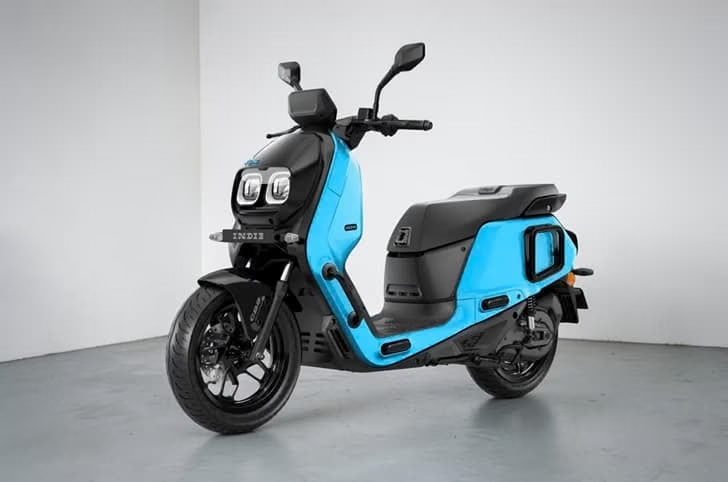
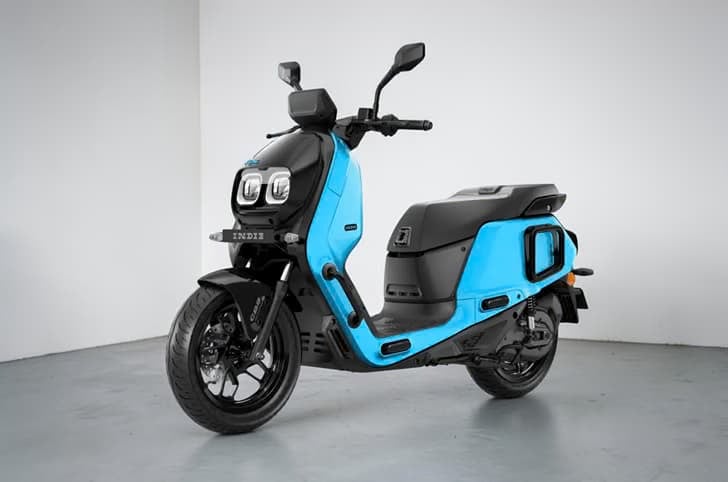
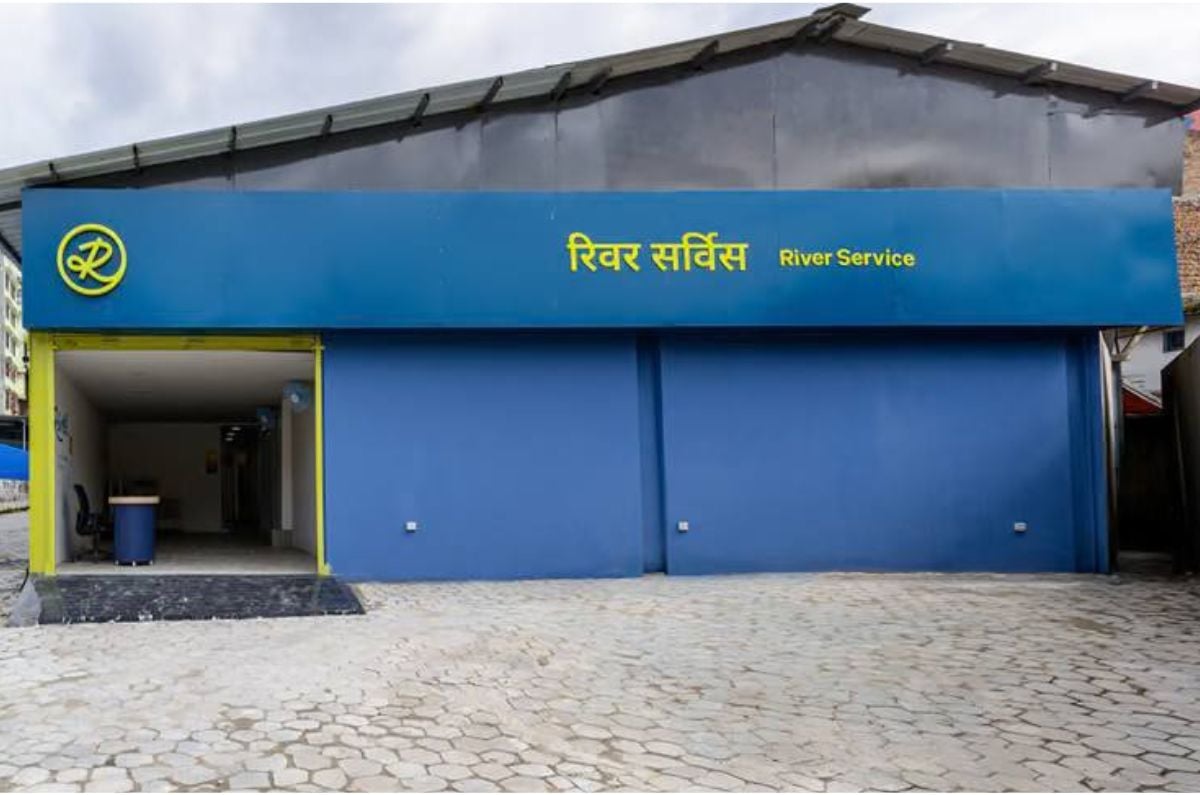
River Mobility has entered Nepal in partnership with Vishal Group opening its first international retail and service outlet in Kathmandu. Its flagship electric scooter, the Indie, is priced at NPR 3.7 lakh (ex-showroom, Kathmandu).
Partnered with Vishal Group to open first international store
Will retail flagship Indie electric scooter
Nepal is the first market River enters outside India
River Mobility International Expansion
Plans to expand its network across Nepal
Bengaluru-based electric two-wheeler manufacturer River Mobility has opened its first international store in Nepal. The retail and service outlet in Naxal, Kathmandu, was made possible through a partnership with regional conglomerate Vishal Group. Through this outlet, the brand will retail its flagship electric scooter the Indie, along with accessories and merchandise. To provide after-sales services and customer support, a dedicated service centre has also been established.
Beyond Kathmandu, River plans to expand its footprint to key cities across Nepal to broaden customer access and after-sales reach. The River Indie is priced at NPR 3.7 lakh (ex-showroom, Kathmandu), equivalent to approximately Rs 2.30 lakh, making it roughly Rs 73,000 more expensive than its Indian price tag (Rs 1.57 lakh ex-showroom, Bengaluru). Test rides and bookings are available at the new outlet.
River currently operates over 90 stores across India, including Karnataka, Kerala, Tamil Nadu, Maharashtra, Telangana, Andhra Pradesh and Delhi-NCR, with plans to increase its domestic retail network to more than 400 stores by March 2028, covering existing and new markets.
With inputs from Eshisha Java and Suraj Sreekumar. NPR-to-INR conversions are based on exchange rates at the time of writing.
Kerala Congress: कांग्रेस की केरल इकाई के आधिकारिक सोशल मीडिया प्लेटफॉर्म X अकाउंट से भारत के प्रधान न्यायाधीश (सीजेआई) सूर्यकांत के खिलाफ की गई एक विवादित पोस्ट सोमवार को व्यापक रूप से वायरल हुई। लेकिन सोशल मीडिया पर कड़ी आलोचना होने के बाद इसे हटा दिया गया। पार्टी ने पोस्ट करने के लिए जिम्मेदार व्यक्ति को भी पद से हटा दिया। केरलम प्रदेश कांग्रेस कमेटी (KPCC) के अध्यक्ष सनी जोसेफ ने एक बयान में कहा कि पार्टी के आधिकारिक X अकाउंट पर प्रधान न्यायाधीश के खिलाफ विवादित पोस्ट करने वाले जिम्मेदार व्यक्ति को पद से हटा दिया गया है।
जोसेफ ने कहा कि यह पोस्ट केपीसीसी नेतृत्व की जानकारी, सहमति या परामर्श के बिना की गई थी। उन्होंने कहा, “केपीसीसी इस बात की जांच करेगी कि ऐसी पोस्ट किन परिस्थितियों में की गई।” उन्होंने स्पष्ट किया कि न्यायपालिका की निष्पक्षता को लेकर कांग्रेस पार्टी को कोई असहमति नहीं है। जोसेफ ने कहा कि सोशल मीडिया पर इस रुख के विपरीत व्यक्त किए गए विचार केपीसीसी नेतृत्व का आधिकारिक रुख नहीं है।
इससे पहले, केंद्रीय मंत्री किरेन रीजीजू ने हटाई जा चुकी पोस्ट का स्क्रीनशॉट शेयर करते हुए कांग्रेस की आलोचना की। उन्होंने कहा कि उन्होंने पहले ही चेतावनी दी थी कि न्यायपालिका पार्टी का अगला निशाना होगी। रीजीजू ने X पर एक पोस्ट में कहा, “कांग्रेस भारत के सभी संवैधानिक और लोकतांत्रिक संस्थानों को नष्ट करना चाहती है। सभी भारत-विरोधी गिरोह एकजुट हो रहे हैं। सभी देशभक्त भारतीय भी एकजुट होंगे।”
BJP ने बताया शर्मनाक
भारतीय जनता पार्टी (BJP) ने CJI के इस्तीफे की मांग को लेकर कांग्रेस पर तीखा हमला बोला। बीजेपी ने आरोप लगाया कि पार्टी अब हर संवैधानिक संस्था को ध्वस्त करके भारत में अराजकता पैदा करने की कोशिश में जुट गई है जो बेहद शर्मनाक है। BJP के प्रवक्ता सुधांशु त्रिवेदी ने भी इस मुद्दे पर विपक्षी दल पर हमला बोला। उन्होंने कहा, “मुस्लिम लीग की माओवादी कांग्रेस में पूरी तरह बदल चुकी और चरम ‘दिमागी नक्सल’ मानसिकता अपना चुकी कांग्रेस अब हर संवैधानिक संस्था को ध्वस्त करके भारत में अराजकता पैदा करने की कोशिश में जुट गई है, जो शर्मनाक है।”
BJP प्रवक्ता सिद्धार्थ यादव ने भी कांग्रेस पर निशाना साधते हुए कहा कि उसकी मानसिकता पूरी तरह अराजकतावादी हो गई है। यादव ने X पर एक पोस्ट में कहा, “अब कांग्रेस पार्टी के आधिकारिक हैंडल से CJI के इस्तीफे की मांग की जा रही है।” उन्होंने सवाल किया, “संवैधानिक संस्थाओं पर हमला करने और साथ ही संविधान की दुहाई देने से बड़ी राजनीतिक पाखंड की मिसाल क्या हो सकती है?”
उन्होंने कहा, “अगर चुनाव हारते हैं, तो निर्वाचन आयोग पर सवाल उठाते हैं। अगर फैसला उनके खिलाफ आता है, तो न्यायपालिका को निशाना बनाते हैं।” BJP सांसद निशिकांत दुबे ने भी केरल कांग्रेस की ओर से प्रधान न्यायाधीश के इस्तीफे की मांग को लेकर राहुल गांधी पर हमला बोला।
दुबे ने X पर कहा, “राष्ट्रपति, उपराष्ट्रपति, प्रधानमंत्री और मुख्य निर्वाचन आयुक्त के इस्तीफे की मांग करने के बाद ‘महाराजा’ राहुल गांधी ने अब उच्चतम न्यायालय के प्रधान न्यायाधीश के इस्तीफे की भी मांग कर दी है।” BJP सांसद ने तंज कसते हुए कहा, “सूत्रों के अनुसार, इन इस्तीफों के बाद राहुल गांधी प्रधानमंत्री बनेंगे, शरजील इमाम राष्ट्रपति बनेंगे, अभिजीत दीपके उपराष्ट्रपति बनेंगे, प्रियंका गांधी सुप्रीम कोर्ट की चीफ जस्टिस बनेंगी और खालिस्तानी पन्नून को मुख्य निर्वाचन आयुक्त नियुक्त किया जाएगा।”
उन्होंने कहा, “इस बीच, (जॉर्ज) सोरोस भारत के अमेरिका में राजदूत होंगे।” BJP के एक अन्य प्रवक्ता गौरव भाटिया ने कहा कि CJI द्वारा गांधी और विपक्षी नेताओं से मिलने से इनकार किए जाने से यह महत्वपूर्ण संदेश गया है कि न्यायपालिका को रोजमर्रा की राजनीतिक लड़ाइयों से ऊपर रहना चाहिए।
कब शुरू हुआ विवाद?
पिछले कुछ दिनों से दिल्ली में मुख्य निर्वाचन आयुक्त (सीईसी) ज्ञानेश कुमार के खिलाफ जारी प्रदर्शनों और उनसे जुड़ी पाबंदियों के मद्देनजर स्थिति के बारे में पूछे जाने पर चीफ जस्टिस सूर्यकांत ने कहा था, “ये कानून-व्यवस्था का मुद्दा है। ये मेरा विषय नहीं है।” CJI राष्ट्रीय मानवाधिकार आयोग (एनएचआरसी) की स्थापना की 33वीं वर्षगांठ के अवसर पर आयोजित एक कार्यक्रम से इतर पत्रकारों से बातचीत के दौरान कहा कि सुप्रीम कोर्ट के दरवाजे हर किसी के लिए खुले हैं, चाहे वह आम नागरिक हो या कानून बनाने वाला कोई व्यक्ति। उनसे पूछा गया था कि कांग्रेस अध्यक्ष मल्लिकार्जुन खड़गे और लोकसभा में नेता प्रतिपक्ष राहुल गांधी से मुलाकात करने से इनकार किए जाने के बाद विपक्षी नेता अपनी शिकायतें उनके सामने कैसे रख सकते हैं।
CJI की टिप्पणी पर प्रतिक्रिया देते हुए कांग्रेस की केरल इकाई ने C पर एक पोस्ट में कहा, “प्रिय सूर्यकांत, अगर कानून-व्यवस्था आपका विषय नहीं है, तो अभी इस्तीफा दे दीजिए। हम आपका स्थान लेने के लिए किसी ऐसे व्यक्ति को ढूंढ लेंगे जो इसे संभाल सके।” हालांकि, बाद में इस पोस्ट को हटा दिया गया।
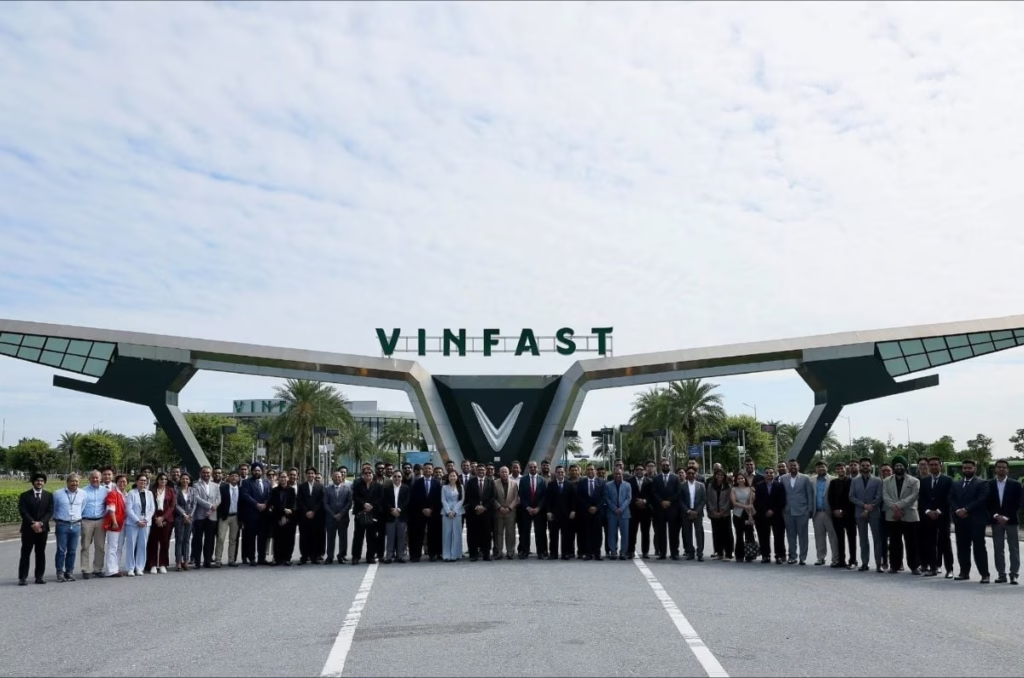
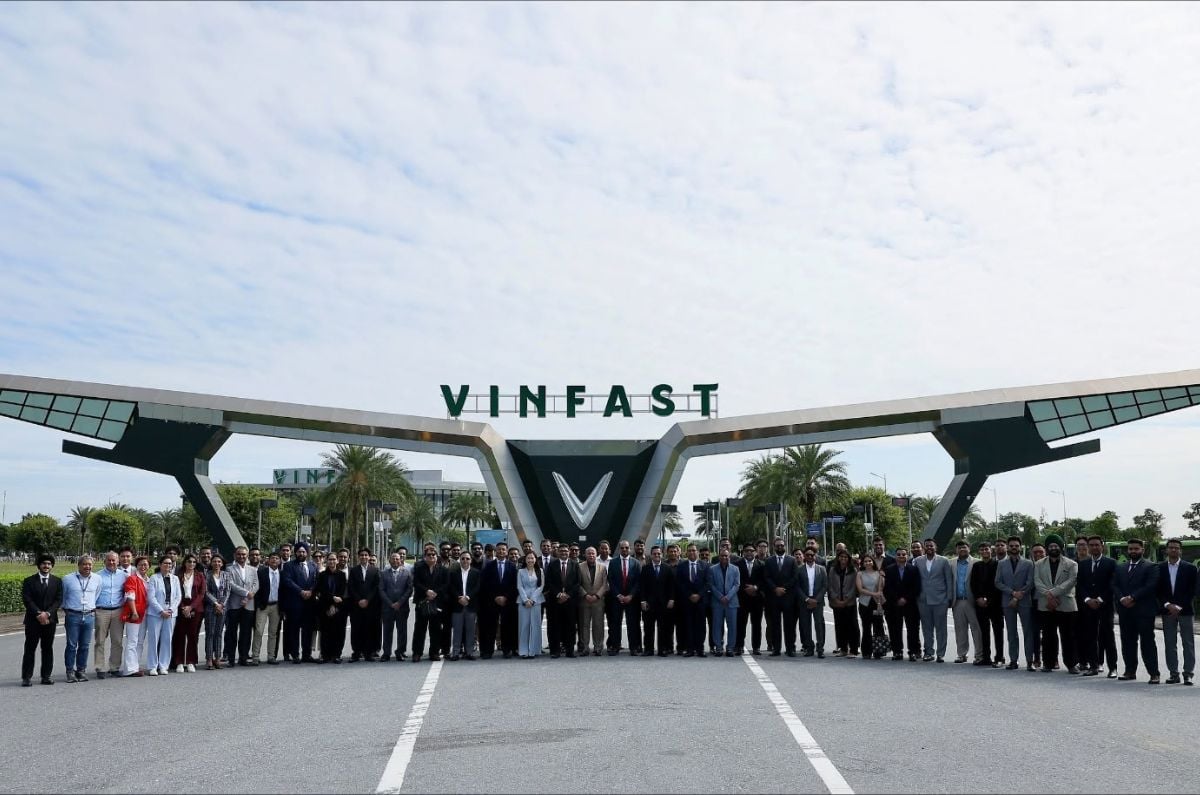
VinFast entered the Indian market in 2025, with activities spanning from the distribution, manufacturing and assembly of electric cars. Following this, the brand also showed some e-scooters at Auto Expo and then subsequently patented designs of some of them in our market, all hinting at plans to enter the huge Indian two-wheeler market. The signing of these letters of intent (LOIs) and partnering with numerous electric two-wheeler dealers now marks a new phase in the brand’s expansion in the Indian market.
Partnered with 50+ electric two-wheeler dealers across 15 states
Plans to establish showrooms across 34 cities
Line-up likely to feature the recently patented Viper and Rasad e-scooters
Retail network expansion details
Over 50 showrooms panned 15 states
Vinfast and its dealer partners will work together to establish 50+ electric two-wheeler showrooms across 34 cities in 15 states and territories. The locations that the company is targeting to establish a presence in first include Delhi, Rajasthan, Punjab, Madhya Pradesh, Chhattisgarh, Uttar Pradesh, Maharashtra, Gujarat, Karnataka, Telangana, Tamil Nadu, Kerala, Andhra Pradesh, West Bengal and Odisha. Through these partnerships VinFast plans to bring its electric scooter line-up to the country, though it hasn’t shared any timelines so far. Initial line-up expected to feature the Viper and Rasad electric scooters, following design patents filed in India earlier this year.
These selected cities and regions have large two-wheeler markets, providing significant room for the brand’s expansion. VinFast says in fiscal year 2025-2026 there were 21.41 million two-wheelers registered, of which electric vehicles accounted for only 6.54 percent. When VinFast does officially launch some of its models in our country, it will have to ward off stiff competition from both established legacy players as well as mould-breaking start-ups like Bajaj, TVS, Hero, Suzuki, Yamaha, Ather and River.
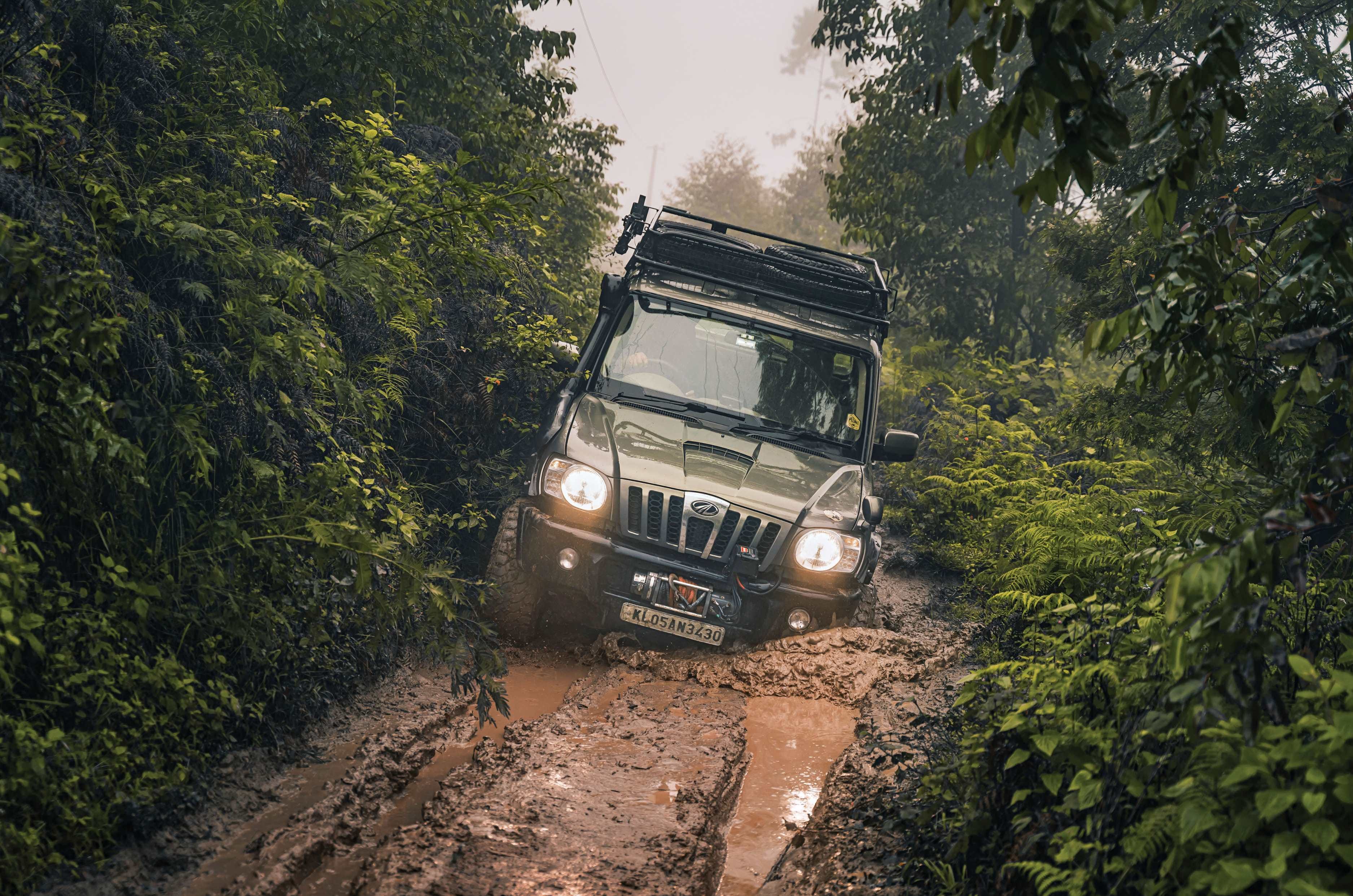
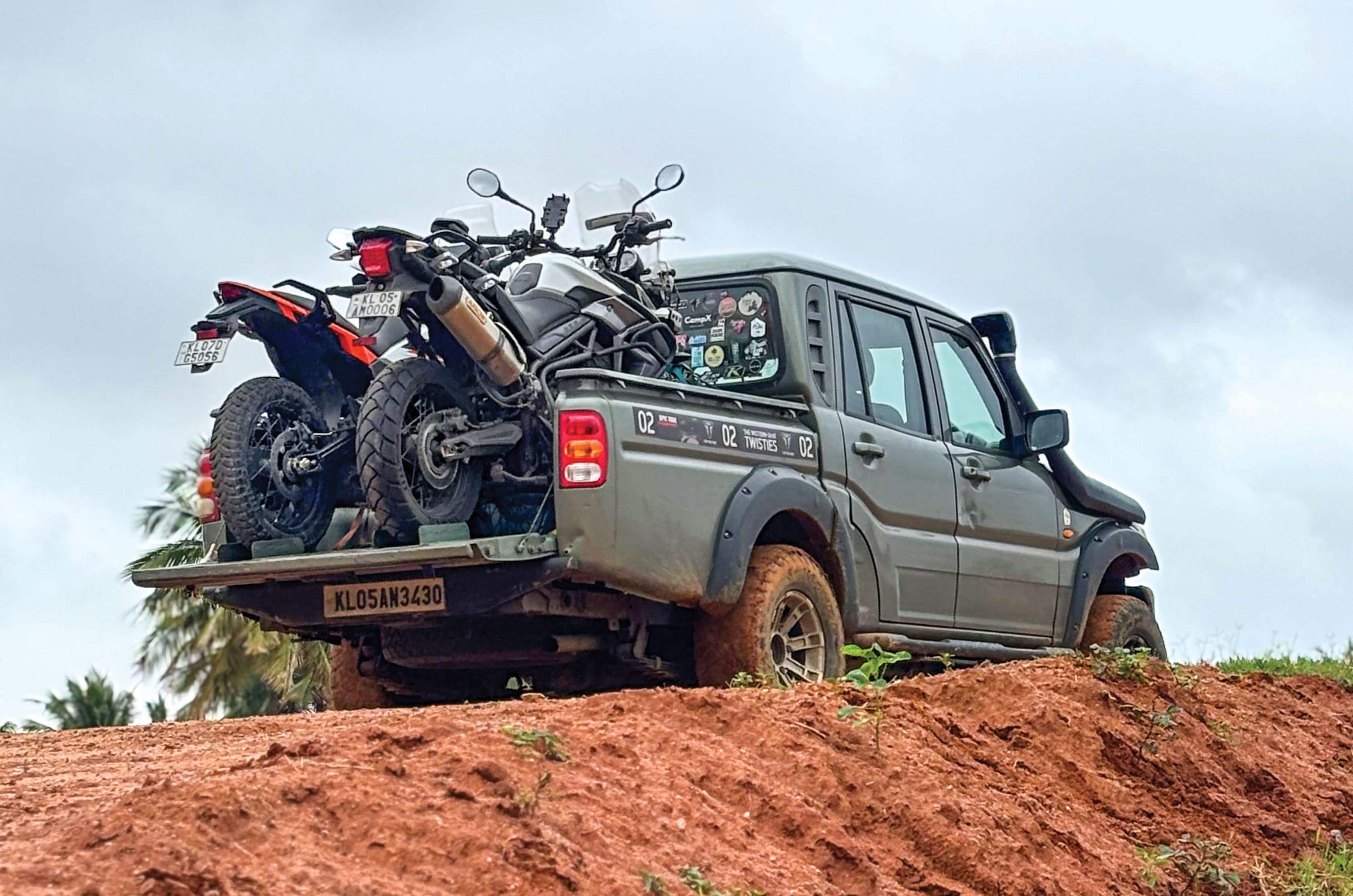
This is the story of a 1,50,000km-old Mahindra Scorpio Getaway that has lived the life it was designed for.
My name is Ouseph Chacko, and I am part-owner of this Getaway because it is my company car. As a partner of an off-road motorcycle school and adventure touring company, I can tell you that if we didn’t have the Getaway from when we started out, it would have taken us a lot longer to get here. We would have been a fair bit lighter of wallet too.
To tell this story properly, I need to rewind a bit – pickup trucks by their very nature are designed to be versatile, and that’s the story of this Getaway. Back in 2016, my business partner Rish was big into long-distance cycling, kayaking and camping tours and needed a vehicle that could accommodate his expensive cycles, carry a couple of kayaks and have the ability to lug around enough gear to make camping, glamping.
The Getaway offered power steering, power windows, power mirrors, air conditioning, front seat armrests and a rear defogger! It also had the electronic shift-on-the-fly four-wheel-drive system and was the most powerful pickup truck on offer.
First things first
While the Getaway looked as lifestyle as could be for pickup trucks back then, it still looked more BRO than Special Forces (no disrespect to the BRO but you get the picture), it needed upgrades.
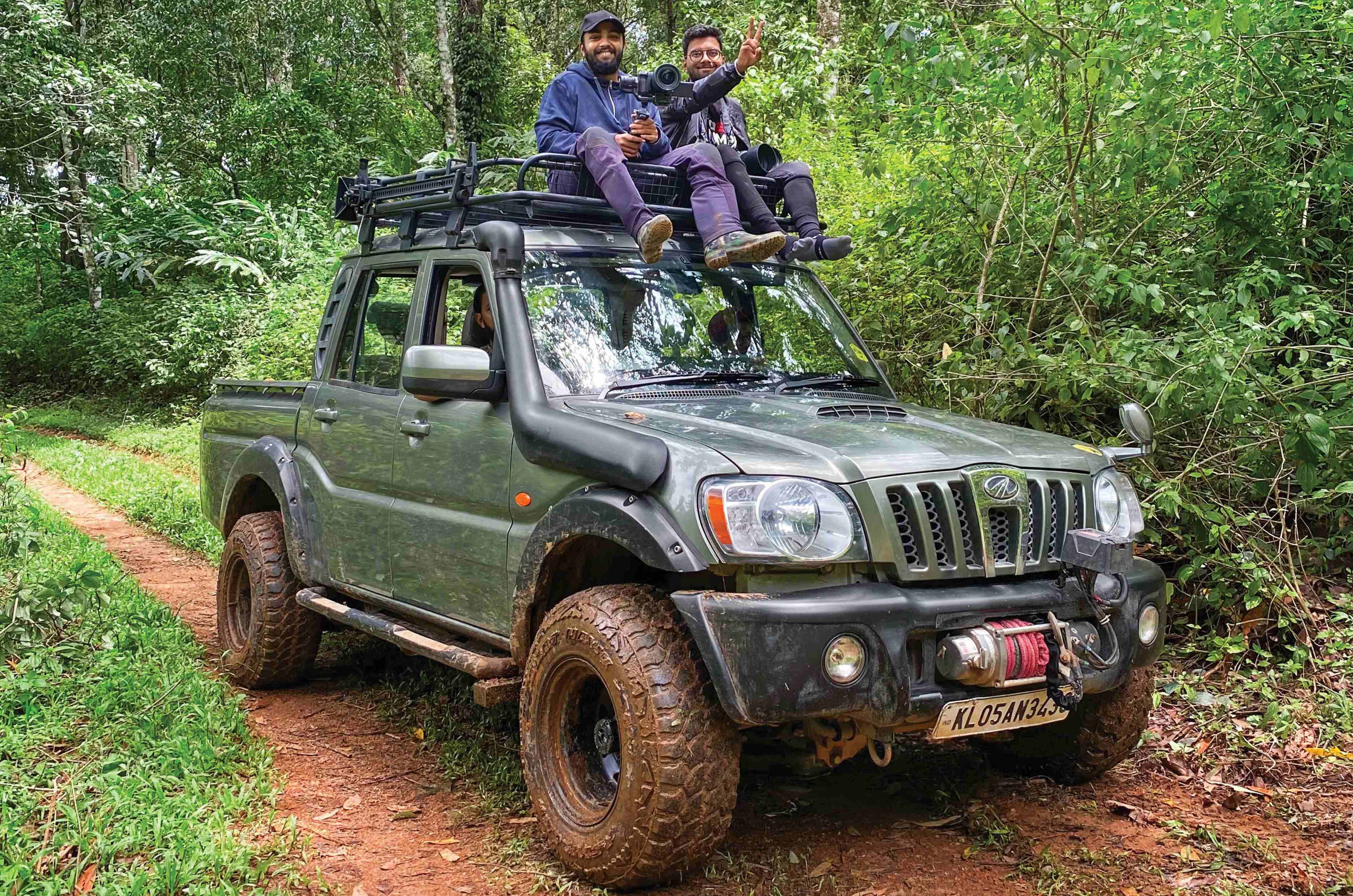
Who needs drones when you have a roof carrier?
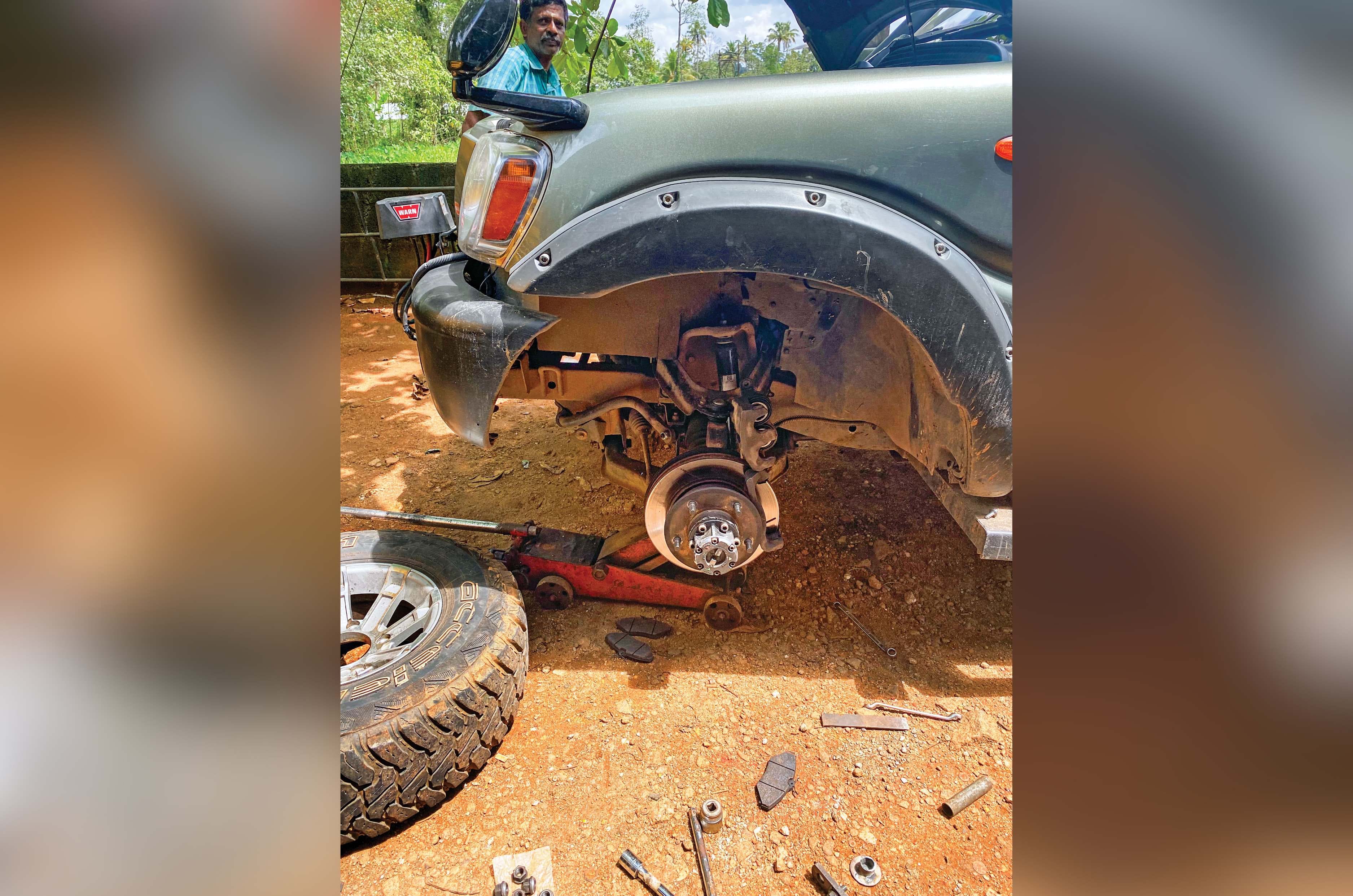
To ensure Rish got stuck further down the trail, a Lamda cable-operated locking differential found its way into the rear axle, while the front axle got manual locking hubs (the factory-fitted auto-locking hubs were prone to breaking under heavy load). The engine was left untouched, but to allow adequate wheel arch clearance for the planned high-profile fat tyres, a two-inch body-lift kit was installed. When you lift it, you need to stance it, and so, the vanilla factory wheels made way for off-road -30 off-set steel wheels and faux wheel arch extensions that muscled up the looks but also let us squeeze in fatter tyres without alerting the RTO.
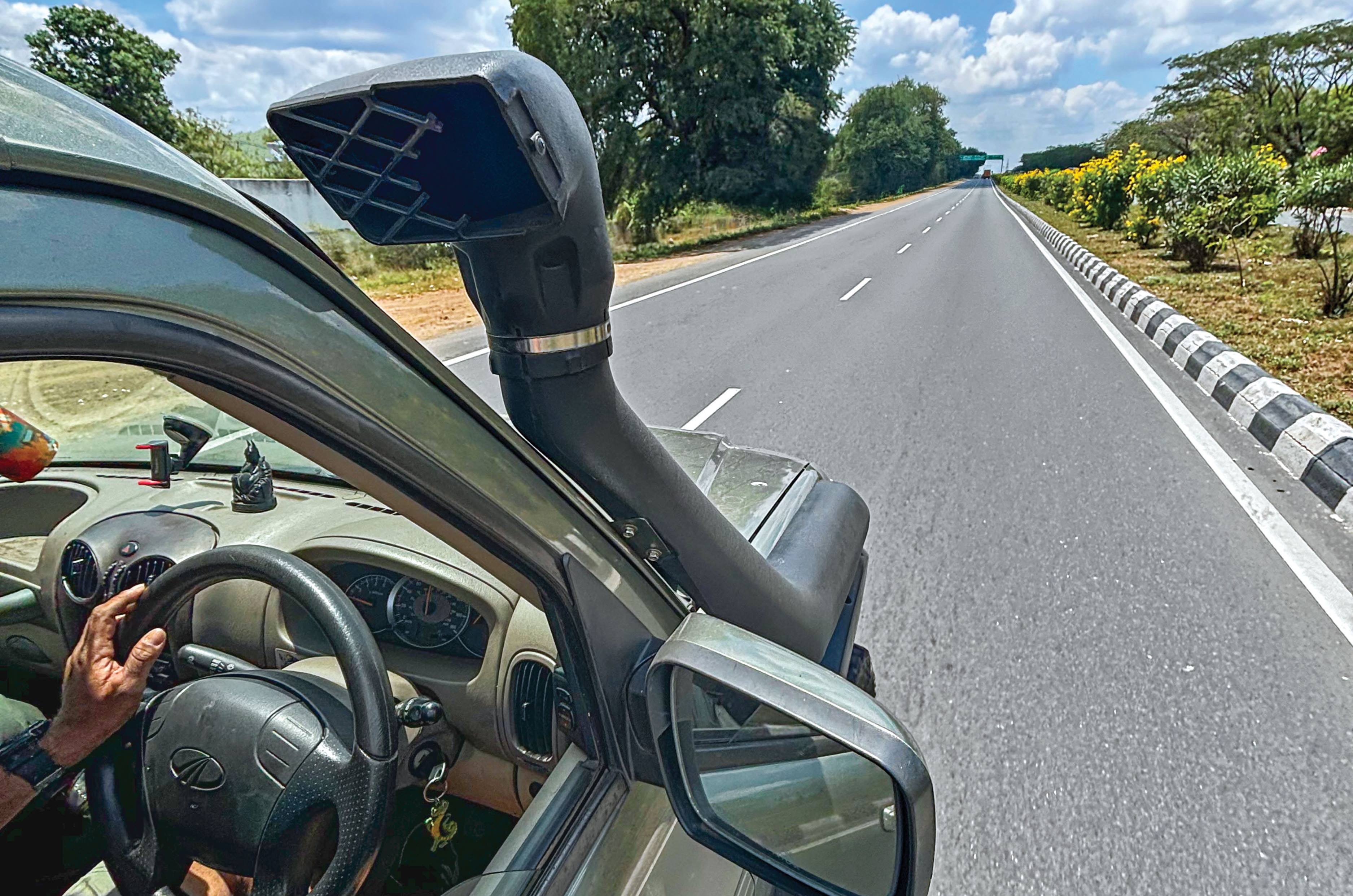
A canopy was added to cover the pickup bed, custom bicycle mounts were welded onto the floor of the bed, a roof-mounted tent, a side awning, solar panels on the roof, an AC-to-DC converter to run devices off the solar panels, a roof carrier, a snorkel, the legendary Warn M8000 winch, metal off-road bumpers, nine auxiliary lamps. Kitchen sink? Pah! There was no space left!
Life has other plans
The snorkel allows some river crossing, but the Brahmaputra had to be crossed on this raft.
For reasons beyond the scope of this story, the Getaway spent most of its first two years parked up with no place to go. It preened, posed, went for the occasional camping trip and lent itself to all the mall crawler memes you can think of.
Then came August 2018. The skies over Kerala opened up. Rivers breached banks, houses were flooded up to the first floor in some places, and parts of middle Kerala were unreachable unless you had a boat or a vehicle with a snorkel. The official rescue teams quickly found themselves overwhelmed, so the Getaway, along with all of Kerala’s 4×4 community, stepped in to assist. The need of the hour was clean bedsheets, towels, underwear, drinking water, easy-to-reheat food and a way to get these supplies to people stranded in homes surrounded by flood waters or cut off by landslides. We loaded the Getaway’s pickup bed to the sky and drove through bonnet-deep water for about three days, handing out generously donated essentials. We stopped only when the rains subsided and when one of the people we thought needed help asked if we were carrying blue underwear. His favourite colour apparently!
Extremely useful as a backup car for our business because it can carry a mechanic, medic, tools, medical kit and motorcycles, with room to spare.
Soon after the rains subsided, the Motor Vehicles Department in Kerala started a serious clampdown run on modified vehicles, and we figured it was time to strip the Getaway of everything but the essentials. The School Of Dirt – our off-road motorcycling school – was in full swing by then, and the Getaway was the backup car because it could carry a mechanic, medic and two broken motorcycles at a go. We kept the winch, the snorkel and the mud-terrain tyres. We added new features like the comprehensive tool kit for off-road trail fixes and an exhaustive medical kit for when things go wrong far from a hospital. This thing can carry a lot!
We’ve had a few heart-in-mouth moments, but the Getaway always got us home safe.
The next eight years were when the Getaway really pulled its own weight in gold. Most notably, the two 8,000km Kottayam-to-Kohima round trips, mostly with a 250kg Tiger 1200 strapped to its back, and about 1,10,000km criss-crossing South India with us and paraphernalia in it. It has been our hotel room and our home away from home when the adventure motorcycle thrill started booming. More than anything, it has been as reliable as a hammer and didn’t need much more than a full tank of diesel and some duct tape to get to the next destination.
Wear and tear on big bikes is expensive. Getaway helps mitigate that expense.
We figured a long time ago that using its ‘certified’ 600kg payload capacity to carry a motorcycle is a huge cost saving for a startup business. Ever since all nice and fast things became sin goods in the eyes of the government, carrying the bike to the start of the trip and using it only at the event became a much more economical proposition than riding it all the way. An example? A proper load- and speed-rated rear tyre on the Tiger 1200 costs Rs 25,000, and with the way I ride the bike, I obliterate that poor tyre in just 3,500km. That and the expensive mechanical wear and tear on these big bikes ultimately meant it was cheaper to load the bike on the back of the Getaway and transport it to the event.
Spare a thought
This being a Mahindra and based largely on the Scorpio, parts are available everywhere in India, and mechanics know their way around the Getaway’s Scorpio bloodline despite the pickup’s rarity. We run the car on a preventive maintenance schedule because we really work it hard, and no matter what, it gets fresh air, oil and diesel filters every 5,000km. The engine and transmission oil get changed at the same time, the leaf springs at the back are realigned and reshaped every 15,000km and the torsion bar front suspension gets re-adjusted every time we notice it starting to sag. We don’t have a bed liner for the pickup bed, so once a year, we check it in to a paint spa for a fresh coat to prevent rusting from all the scratches. That’s it.
Easily repaired because it shares a lot of parts with the Scorpio.
The engine has never needed an overhaul, and it is helpful that the bomb-proof 2.6 CRDe engine will run on anything that resembles diesel. The weak link in the mechanical package is the clutch – if you’re not reasonably careful every time you start off on a slope, it’ll vaporise fast. Still, the clutch pack along with the clutch release bearing works out to something like Rs 6,000, so apart from the inconvenience of being stranded, it really doesn’t hurt the wallet.
Also, because of our carelessness, we’ve chewed through three rear differentials in the course of the last decade (sometimes the cable-operated Lamda differential doesn’t fully disengage thanks to a corroded cable, and if you are not careful, you end up driving with a partially locked differential on the road). The rear differential turned out to be one of the most expensive spares on the Getaway, working out to around Rs 40,000 a pop, and even that is not too bad considering a broken tail-lamp on a Hilux will set you back Rs 30,000. We’ve since discarded the locking differential and keep fingers crossed that the winch will yank us out when the time comes. Also, don’t break the rear windshield – it is harder to source than a Ferrari 250 GTO!
With a full load, the Getaway still runs around 10 kilometres for every litre of diesel consumed, and that, along with its 60-litre fuel tank, gives it a useful range of 600km.
1,50,000km of highways and trails, and it is still going strong!
The Getaway doesn’t seem to lose much on resale value either. Back in 2016, Rish bought it for Rs 11 lakh and some spare change (on road!). Because every other new lifestyle pickup truck in the market is considerably more expensive, I think people are coming around to the sweet spot of utility, value and comfort that the Getaway hits. It is a reasonably simple vehicle with zero electronics (no ABS even!) and so lends itself to hard work and easy fixes happily. Still, well-maintained Getaways are few and far between and their owners (like us) are loathe to let them go. The ones you find on used-car portals are bad. Trust me, I’ve looked.
What next?
No one is more excited about the launch of the Getaway’s replacement than I am. The new Lifestyler (weird name) looks very cool, and the more powerful engines will definitely make fully loaded cross-country trips effortless. The expected base price is positively tasty, and I hope it will come with maintenance costs to match.
It does seem a bit too fancy, though, and I worry about the interiors that are no longer the hose-down kind. I hope Mahindra will offer a more pared-down version that will allow people like me to use it with dirty boots and greasy gloves guilt-free. In the mountaineering world, when someone successfully summits a peak, you ask, “Who’s your sherpa” The Getaway has been The School Of Dirt’s unfailing sherpa. The Lifestyler has its work cut out.
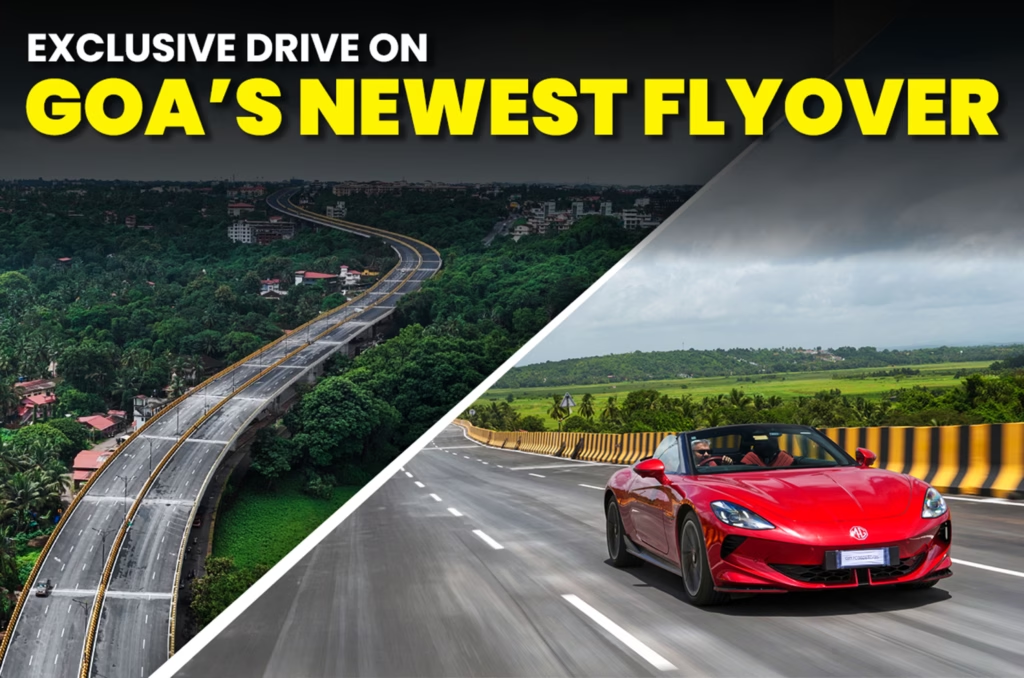
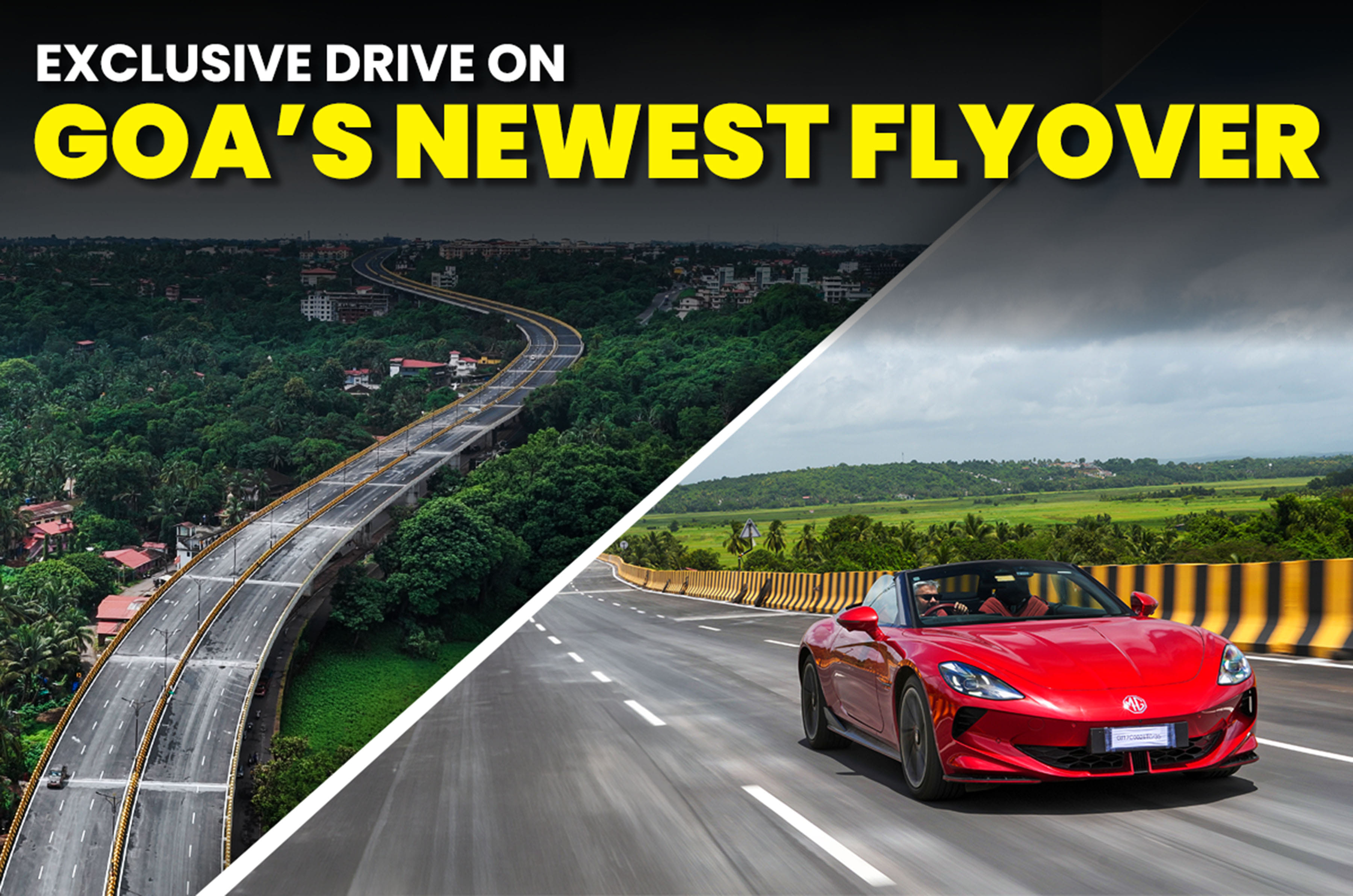
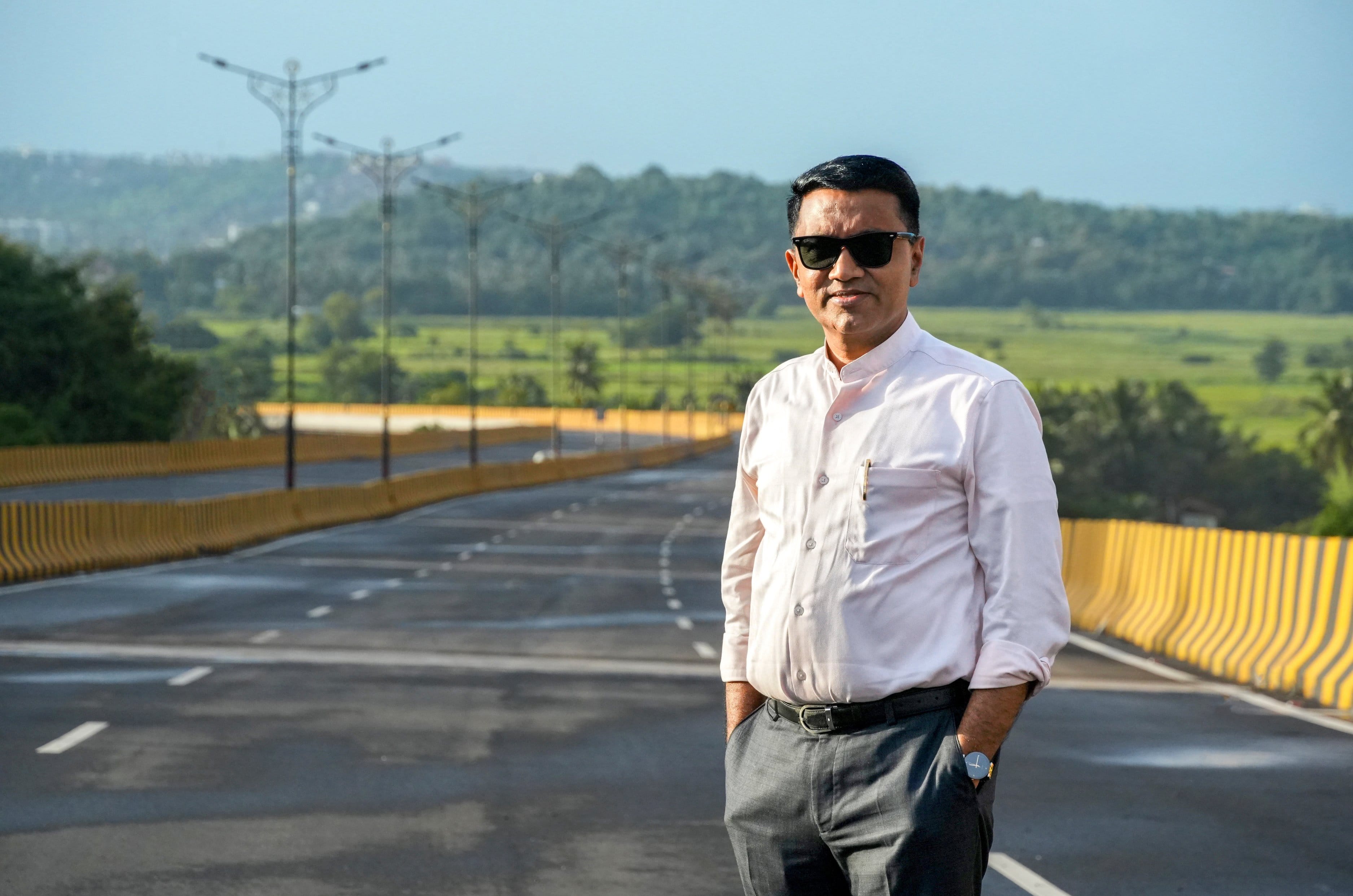
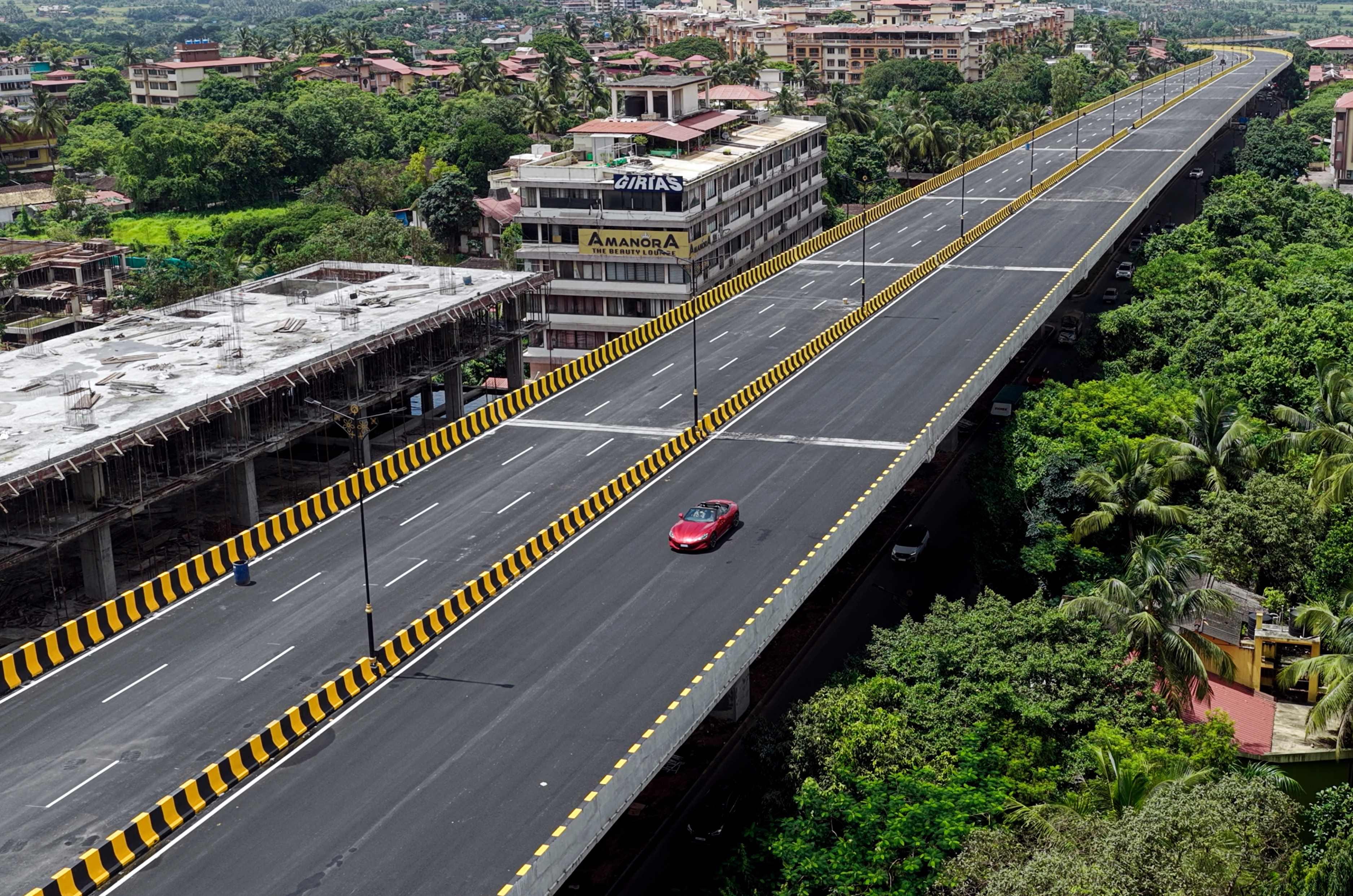
If a holiday in Goa is a fixture on your calendar, you will have noticed that the state has changed a fair bit in the last few years. There is a new airport to fly into, new bridges replacing the old, not to mention the wider highways. The latest upgrade to the state’s road network is the Porvorim Elevated Corridor, targeting a major bottleneck on NH66. We were given an exclusive opportunity to experience it for ourselves before the official inauguration on Sep 9, and we brought along a very ‘Goa’ car for the occasion – the MG Cyberster.
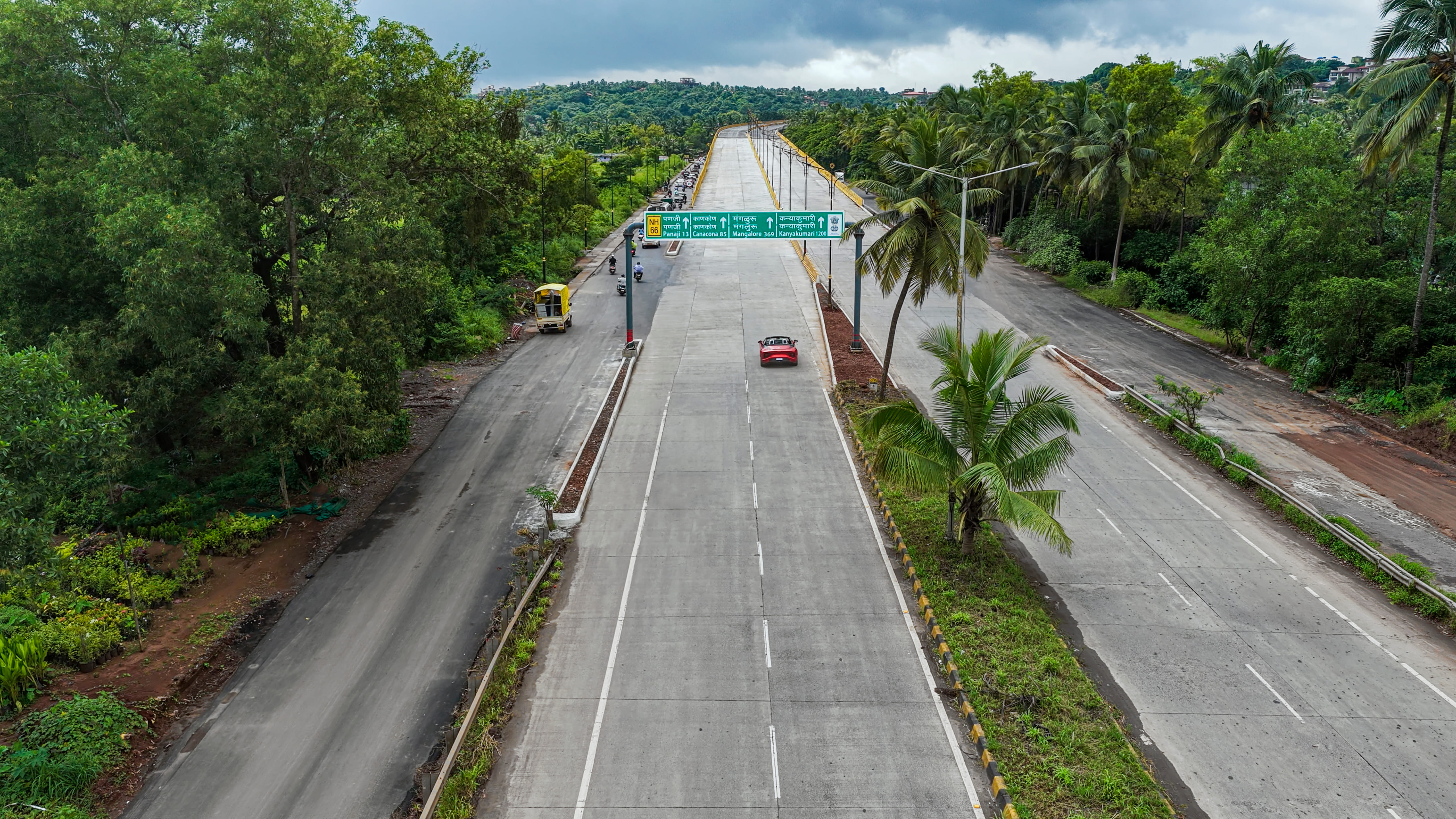
First, a bit of quick history and geography. National Highway 66 is a 1,640km arterial highway running from Panvel in Maharashtra to Kanyakumari in Tamil Nadu. 124km of NH66 is in Goa and, for years, Porvorim has been its most notorious bottleneck. The new 5.15km Porvorim Elevated Corridor lets traffic sail clean over all that congestion below, connecting directly to the Atal Setu bridge that crosses the Mandovi River. It promises to cut travel time between Mapusa in the north and the capital Panaji by up to 30 minutes – a claim we set out to test.
Six-laned Porvorim Elevated Corridor brings North Goa and Panaji closer than ever.
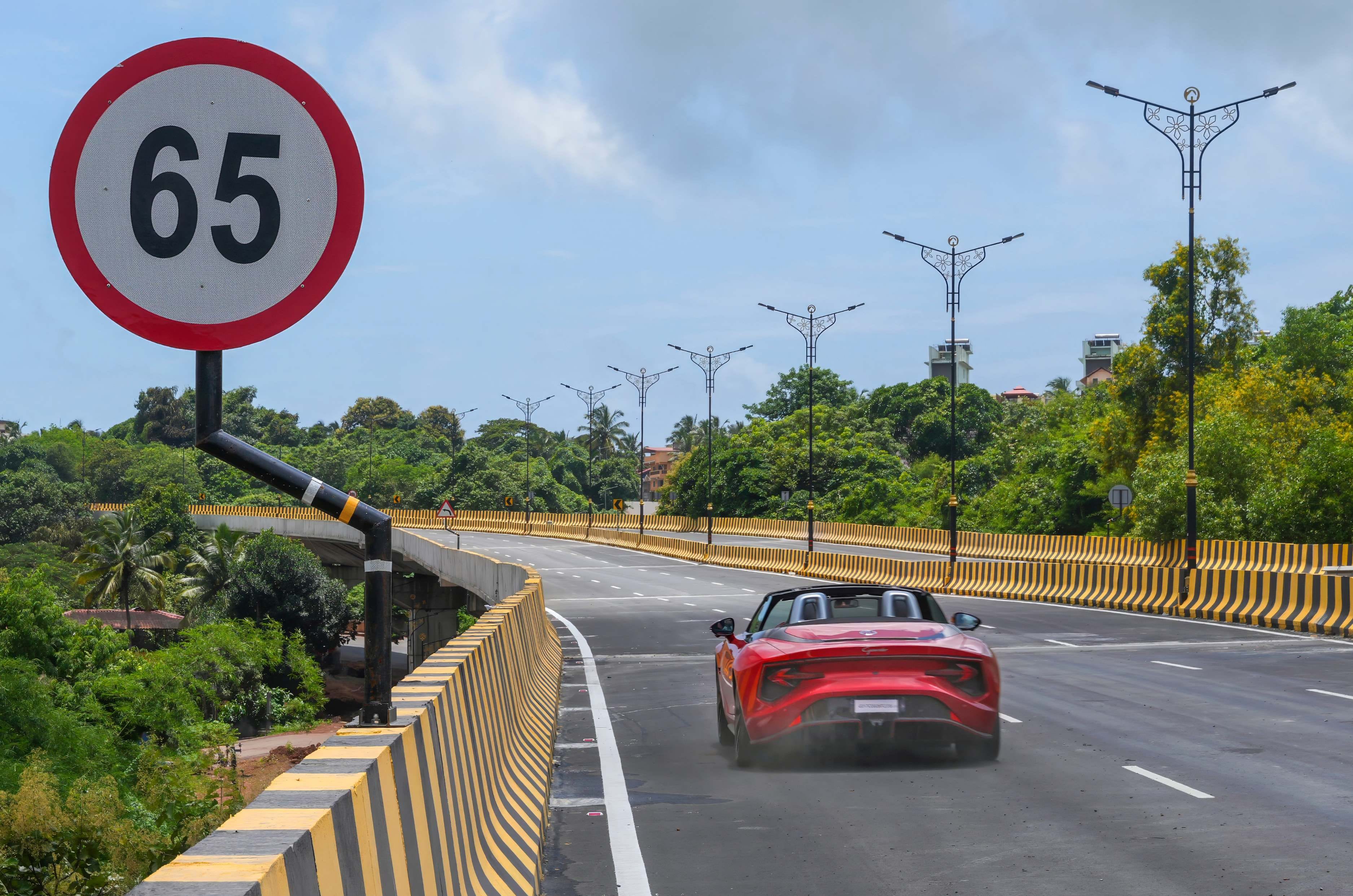
Our starting point was the north end of the corridor, a couple of kilometres away from Guirim village near Mapusa. We started our stopwatch on the concrete ramp leading up the PEC – one we would only stop once we crossed over the Atal Setu Bridge and entered Panaji. And even with 510hp and 725Nm on tap and the road all to ourselves, we would be sticking to the 65kph speed limit.
From the concrete on-ramp, it’s only a few metres until you drive onto the actual viaduct section, which is paved tarmac broken up only by expansion joints. It is not completely straight either – the north end has some lovely sweeping curves. In a car like the Cyberster, it is quite tempting to push through the bends but, exercising restraint, we instead indulged in the joys of open-top motoring. The Cyberster drops its top in 10 seconds at speeds up to 50kph, giving us superb views all around. Importantly, it also raises the top just as quickly, which comes in handy during sudden showers.
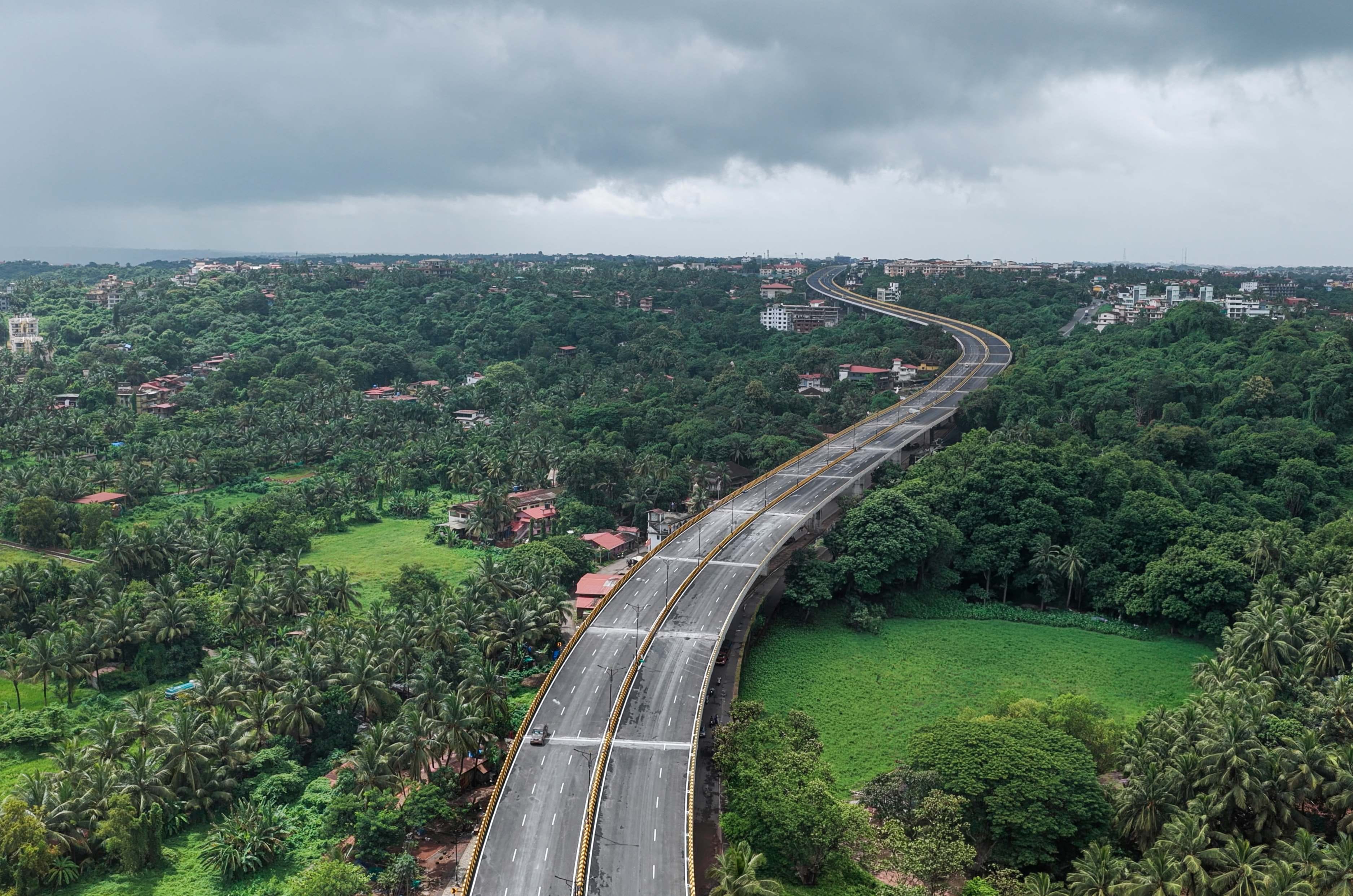
No more jams! 5.15km flyover sails over congestion at Porvorim junction.
From the driver’s seat, the panoramic view of Porvorim’s greenery was quite stunning – something you would never notice stuck in traffic below. Drive on, and the road becomes arrow-straight, and you start to notice how close some of the buildings are to the corridor. This proximity to adjoining structures, along with the fact that NH66 had to stay operational below, were among the biggest challenges the engineers faced.
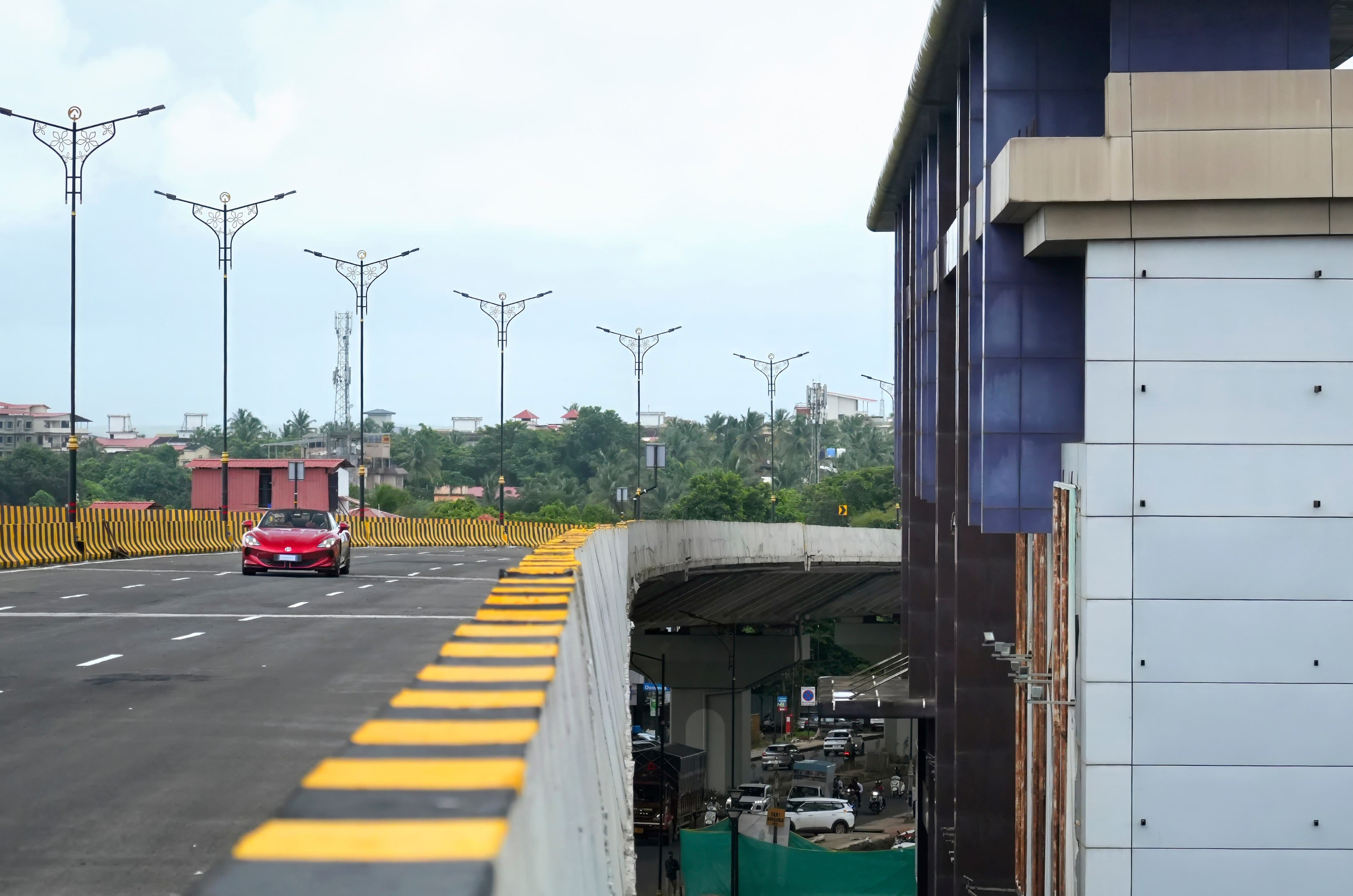
Some buildings were a little too close for comfort making construction quite challenging.
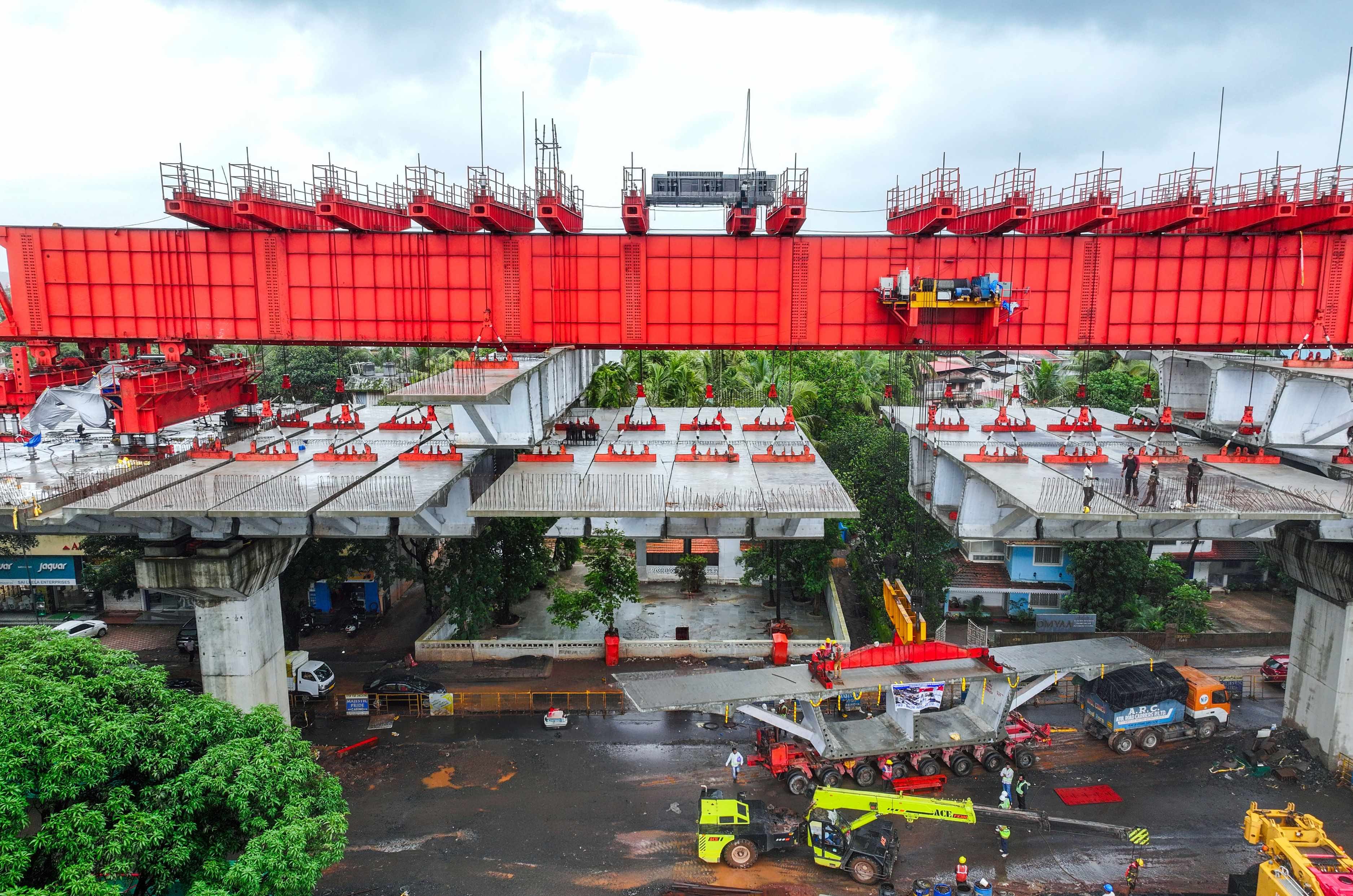
The 4.19km viaduct section is supported by 87 pillars. Each span running between two pillars requires between 13 and 17 individual pre-cast concrete sections. These sections are about 24 metres wide and weigh a whopping 120 tonnes each. They were cast in a yard down the road, trucked to the site, hoisted 11 metres high and installed in place – all in a narrow space between buildings with absolutely no room for error, while ensuring minimal traffic disruptions below.
Considering the challenges, it is quite remarkable that the Porvorim Elevated Corridor was completed in just two years and five months. Below the main structure, 10.30 kilometres of service roads and 28 minor junctions keep local traffic moving, while the corridor sails above it all. Also featured are eight box culverts and a rainwater harvesting system, so the monsoon doesn’t slow traffic down. A modern lighting setup with 515 streetlights has already been installed, while two high-mast lights and ten overhead gantries with cameras are to be put up soon. All constructed at a cost of Rs 641.46 crore.
New flyover part of NH 66 open to cars, two-wheelers and CVs. Speed limit 65kph.
Before long, we were passing the Mall de Goa – close enough to see the expressions on the faces of people in the food court, as they watched the bright red Cyberster whizz past their window. As we made our way down the off-ramp, the stopwatch showed that it had been just over four and a half minutes. Heading towards the Atal Setu, we merged with the dozens coming from the diversion and became part of regular traffic.
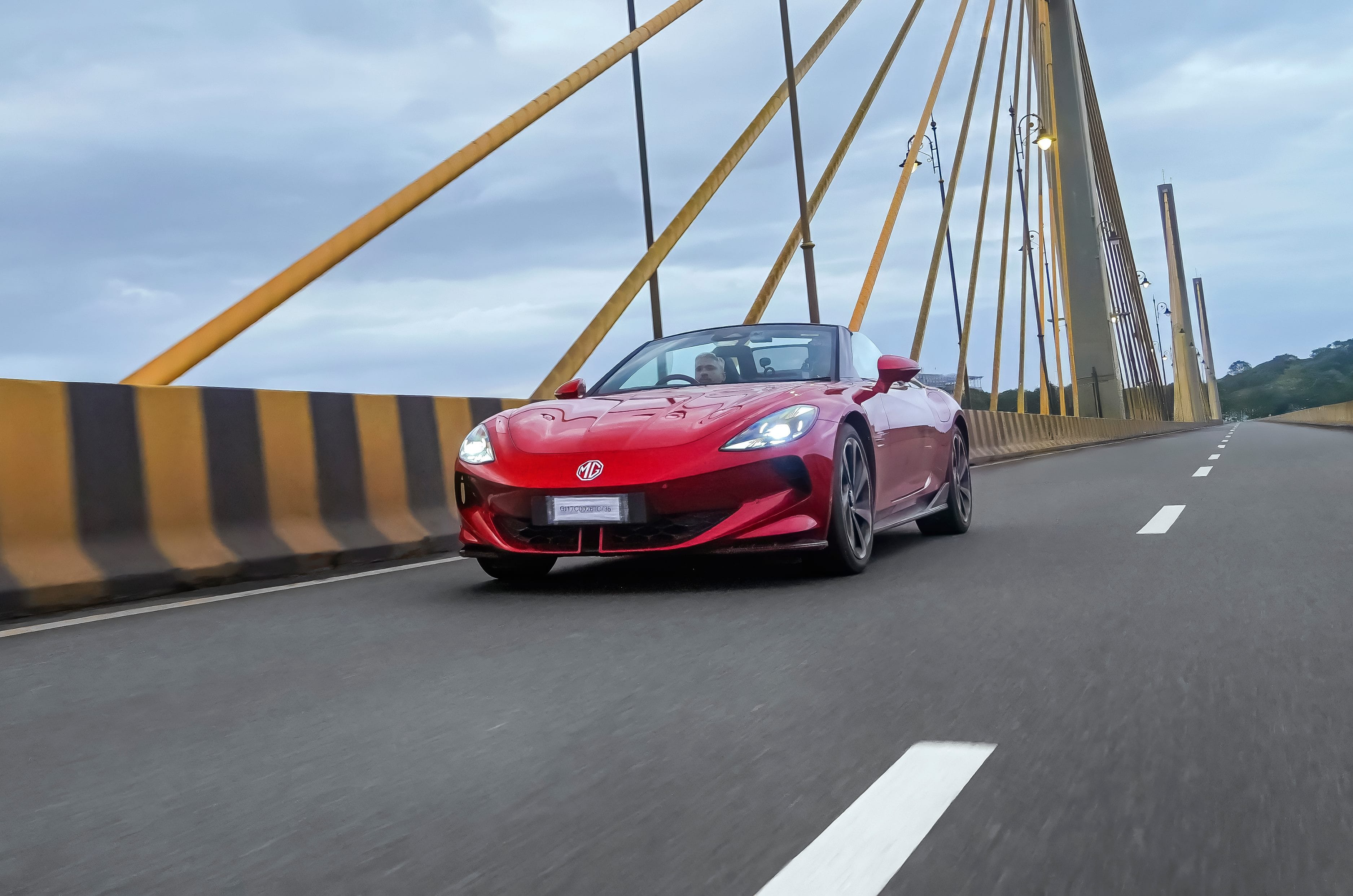
And just like that, we were climbing the Atal Setu bridge, which would take us across the Mandovi River and into Panaji. To the right, stunning views of Panaji city and Miramar beach in the distance, and to the left, Old Goa with its historic churches, while above me, through the open roof of the Cyberster, panoramic views of the bridge’s iconic pylons and yellow cable stays.
Drop top MG Cyberster a great match for Goa’s vibe
Coming down the Atal Setu into Panaji, our stopwatch read just under 10 minutes. Even if you factor in a couple of extra minutes for traffic once the PEC opens, it equates to a real-world saving of about 30 minutes in peak hours, which is quite significant. In fact, the PEC is said to have a capacity of 70,000 PCU, or passenger car units, per day, so traffic flow is expected to be quite swift. Simultaneously, it will reduce the burden on the service and other connecting roads below the corridor, improving flow for local traffic too.
Connects directly to (yet another) Atal Setu bridge and brings you closer to Goa’s historic sites.
The Porvorim Elevated Corridor, along with other recent infra projects such as the Atal Setu, the New Zuari Bridge and the widening of NH66, is expected to boost the economy by improving intra-state connectivity to Goa’s industrial hubs, as well as flow between the airports and ports. It should also make commutes easier for residents and change the way tourists experience Goa – less time spent travelling, more time to explore the beaches, the culture and everything Goa has to offer.
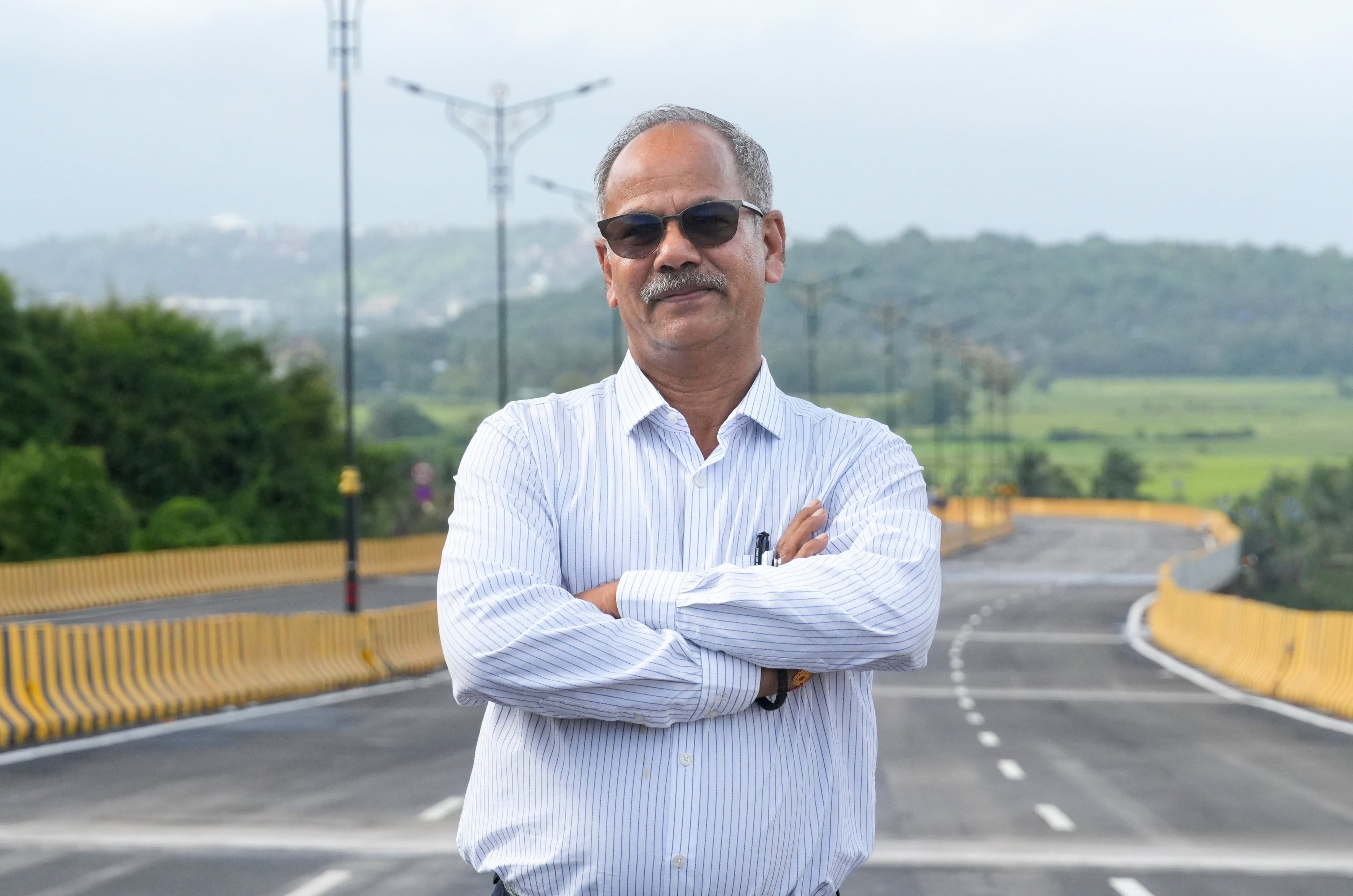
In conversation with Sandip Prabhu Chodnekar, Principal Chief Engineer, Goa Public Works Department (PWD)
On the challenges faced during construction
This bridge is about 24 metres wide, but the right of way is only 25 metres. Constructing such a wide structure when both sides are already fully developed was very challenging. One of the biggest challenges was lifting the segments. Each segment is nearly 24 metres wide and weighs around 120 tonnes. We could not divert the traffic, so we had to carry out most of the work at night. During the daytime, we stopped heavy traffic so that the segments could be lifted safely and normal traffic could resume quickly.
Lifting 25 metre wide sections that weigh 120 tonnes called for nerves of steel.
On other highlights of the project
We tried to harvest the rainwater to recharge the groundwater and increase the water table. There is a median between the service roads below, where we are also planting trees. The corridor’s rainwater harvesting system collects the water and directs it into this median. From there, the water flows into pits that we have dug and filled with aggregates and strainers, allowing the rainwater to percolate into the ground. This helps harvest the rainwater and increase the water table on the plateau during the monsoon.
On traffic and usage
Below the corridor, things will be quite different. Once around 50,000 PCUs of traffic are taken off the existing four-lane road, there could be a tendency for people to park on these lanes. So, we will have to manage parking as well. We have streamlined the junctions and completely reworked the at-grade traffic flow. Motorcycles are also allowed on the Porvorim Elevated Corridor.
In conversation with Dr. Pramod Sawant, Chief Minister, Goa
On the importance of the project
The Porvorim Elevated Corridor is actually important not only for Goa but also for Maharashtra, Karnataka and Kerala. Porvorim had become a problem because it is a congested and newly developed city, with development on both sides of the road. Even after the road was widened, it was very difficult to manage, and it had become an accident-prone zone. That is why the Porvorim flyover was required, to ensure smooth traffic on NH-66.
Greater connectivity a boon for residents, tourists and businesses.
On the project’s wider connectivity benefits
With the opening of Manohar International Airport in North Goa, there was a need to improve connectivity towards South Goa. People arriving at Manohar International Airport and travelling towards South Goa were facing a lot of congestion. Now, that congestion will be reduced and this will definitely help tourism and vehicle movement in the state.
Furthermore, there will be better connectivity between the airports and ports, which will havea positive economic impact. It is also a very important project for the people of Goa. Especially those travelling between North Goa and the capital; they will save time and money, and their daily commute will become much easier.
On Goa’s future infrastructure plans
Almost all the projects on the National Highway network in Goa have been completed. One of the remaining projects is the Borim Bridge, which will connect the Ponda side. The tendering process for it will happen in the next few days.
We are planning to improve connectivity across rural Goa, from one end of Maharashtra towards Karnataka. We are considering a ring road for Goa, because traffic currently comes into the interior areas and cities. In the future, we want traffic to be able to move around the interior villages and across the state without having to enter the cities.
केरल (Kerala) सरकार की नई प्रीमियम बस इन दिनों सोशल मीडिया पर काफी चर्चा में है। इस बस को खास तौर पर पैसेंजर को कम्फर्टेबल और बेहतर ट्रैवल देने के लिए तैयार किया गया है। बस के अंदर की फैसिलिटी और इसका प्रीमियम लुक लोगों का ध्यान खींच रहा है। इसे देखकर कहा जा रहा है कि अब रोड ट्रैवल करने वालों को भी हवाई जहाज जैसा आराम और फैसिलिटीज मिल सकती है।
केरल स्टेट रोड ट्रांसपोर्ट कॉर्पोरेशन (KSRTC) की यह बस लंबी दूरी के सफर को पहले से ज्यादा कम्फर्टेबल बनाने की कोशिश है। बस में पैसेंजर की फैसिलिटी का खास ध्यान रखा गया है, इसलिए आम बस ट्रिप के मुकाबले इसका एक्सपीरियंस काफी अलग नजर आता है। इसी वजह से इसका वीडियो सोशल मीडिया पर तेजी से लोगों के बीच हॉट टॉपिक बन गया है।
एयरोप्लेन जैसा एक्सपीरियंस
केरल की नई प्रीमियम बस को पैसेंजर के आराम का ध्यान रखते हुए तैयार किया गया है। इसमें कम्फर्टेबल लेदर सीटें लगी हैं और हर सीट पर अलग एंटरटेनमेंट स्क्रीन दी गई है। जर्नी में पैसेंजर स्क्रीन पर एंटरटेनमेंट कर सकते हैं। इसके अलावा बस में फ्री वाई-फाई और सीट के पास चार्जिंग पोर्ट की फैसिलिटी भी मिलती है। इससे पैसेंजर ट्रेवलिंग में अपने मोबाइल और दूसरे डिवाइस आसानी से चला और चार्ज कर सकते हैं। फैसिलिटी को एक ही बस में रखा गया है। यही वजह है कि इस सर्विस की तुलना एयरोप्लेन ट्रैवल से की जा रही है।
सफर के साथ स्वाद का मजा
इस बस में पैसेंजर की फैसिलिटी के लिए होस्टेस भी मौजूद रहती है। बस में होस्टेस पैसेंजर को गर्म ड्रिंक और शावरमा रोल जैसी खाने-पीने की चीजें देती हैं। इससे पैसेंजर को लॉन्ग जर्नी के दौरान खाने-पीने की फैसिलिटी बस में ही मिल जाती है। यह फैसिलिटी आम बस ट्रिप से इसे थोड़ा यूनिक और स्पेशल बनाती है। इस सुविधा से सफर थोड़ा ज्यादा कम्फर्टेबल और कनविनिएंट बन जाता है। बस में पैंट्री, कॉफी मेकर और मिनी फ्रिज जैसी फैसिलिटी भी दी गई हैं, जिससे इसे आम बस ट्रिप से अलग प्रीमियम एक्सपीरियंस मिलता है।
बस के अंदर ही वॉशरूम फैसिलिटी
लॉन्ग जर्नी में सबसे ज्यादा परेशानी वॉशरूम को लेकर होती है, लेकिन इस बस में इसका भी इंतजाम किया गया है। बस के अंदर ही वॉशरूम बनाया गया है, जिससे जरूरत पड़ने पर पैसेंजर को बस से नीचे उतरने की जरूरत नहीं होगी। बस का वॉशरूम भी साफ-सुथरा और ऑर्गनाइज होता है। यह फैसिलिटी खासतौर पर लॉन्ग डिस्टेंस ट्रैवल करने वाले पैसेंजर के लिए काफी काम की है। यही सुविधा इस बस को सामान्य लॉन्ग जर्नी की बसों से थोड़ा अलग बनाती है और लोगों को इसमें हवाई जहाज जैसा सफर महसूस हो रहा है।केरल (Kerala ) की यह नई प्रीमियम बस सड़क के सफर को ज्यादा कम्फर्टेबल बनाने की कोशिश है। तिरुवनंतपुरम (Thiruvananthapuram) और कोच्चि (Ernakulam, Kochi)के बीच चलने वाली इस प्रीमियम बस का वीडियो सोशल मीडिया पर भी खूब चर्चा में है। इस रूट का टिकट ₹671 बताया गया है। यह सर्विस 20 अगस्त 2026 से शुरू हुई थी। इसे लेकर लोग सरकारी बस में मिलने वाली इन नई फैसिलिटी की तारीफ कर रहे हैं। बस में मिलने वाली मॉडर्न फैसिलिटी से पैसेंजर को लॉन्ग डिस्टेंस जर्नी में ज्यादा फैसिलिटी मिल सकती है।
केरल के त्रिशूर जिले में राष्ट्रीय राजमार्ग पर एक भीषण सड़क हादसे में तमिलनाडु के एक इंजीनियरिंग कॉलेज के 8 छात्रों की मौत हो गई। कार सड़क किनारे खड़ी लॉरी से जा टकराई थी। 7 लोगों की मौके पर ही मौत हो गई, जबकि एक घायल अस्पताल में इलाज के दौरान दम तोड़ गया।
यह हादसा आधी रात के करीब पनामबिकुन्नु सेंटर के पास हुआ। इसके तुरंत बाद राहत और बचाव कार्य शुरू हुआ। मीडिया खबरों के अनुसार, कार में सवार लोग तमिलनाडु के डिंडीगुल स्थित एक इंजीनियरिंग कॉलेज के छात्र थे। घटनास्थल से डिंडीगुल के पीएसएनए इंजीनियरिंग कॉलेज के एक छात्र का पहचान पत्र बरामद हुआ है।
#KERALA#Eight students from PSNA College of Engineering and Technology, Dindigul, were killed in Kerala's Thrissur when their Tamil Nadu-registered car crashed into the rear of a parked, goods-laden lorry at Kaipamangalam. pic.twitter.com/wcpHVTeyZW
बताया जा रहा है कि छात्रों से भरी कार गुरुवायूर से कोडुंगल्लूर की ओर जा रही थी। तभी सड़क पर चल रहे निर्माण कार्य के कारण उसी दिशा में खड़ी लॉरी से उसकी जोरदार टक्कर हो गई। टक्कर से कार बुरी तरह क्षतिग्रस्त हो गई और उसमें सवार लोगों को बाहर निकालने के लिए गाड़ी को काटकर खोलना पड़ा।
“तुम हीरोइन जैसी नहीं दिखती” निमिषा साजयन ने ये बात कई बार सुनी थी। उनके सांवले रंग और लुक्स का मज़ाक उड़ाया गया। लेकिन उन्होंने खुद को बदलने के बजाय अपना रास्ता बदल दिया। 19 साल की उम्र में Thondimuthalum Driksakshiyum से शुरुआत की। फिर ऐसे किरदार चुने जिन्होंने खूबसूरती के पुराने पैमानों को चुनौती दी। Chola में उनकी परफॉर्मेंस ने उन्हें Kerala State Award for Best Actress दिलाया।
और अब Babita Singh Reporting में बबीता बनकर वो और कई साँचे तोड़ रही है, क्योंकि निमिषा कभी Beauty Standards में फिट होने नहीं निकलीं थी, वो Beauty Standards तोड़ने निकली थीं।
@nimisha_sajayan
Nimisha Sajayan Kerala State Award Best Actress, dusky Indian actress, Indian actresses who broke beauty standards, Nimisha Sajayan in Babita Singh Reporting, Nimisha Sajayan Films
The Ministry of Petroleum and Natural Gas has launched a massive quality-control campaign across India’s retail fuel network and, as of August 25, 2026, stopped petrol sales at 2,573 non-compliant outlets, according to highly placed ministry sources. Indian Oil Corporation (IOCL) leads with 1,257 halted pumps, followed by Hindustan Petroleum (HPCL) at 915 and Bharat Petroleum (BPCL) at 401.
The trigger was a letter from the Society of Indian Automobile Manufacturers (SIAM) to the ministry on July 28, leaked soon after, flagging alarmingly high levels of chloride contamination in E20 fuel samples tested across the country. SIAM withdrew the letter within days, saying the figures “needed further verification”, but the damage was done. A subsequent Reuters investigation into carmakers’ internal testing data kept the contamination question firmly in the public eye and has forced the government to react.
To restore consumer confidence and tackle contaminants and water in the supply chain, the government has mandated water-ingress testing of underground tanks 8 to 12 times a day, a rigorous regime already underway at 88,995 dealerships. A sweeping audit prioritising older retail outlets has covered 84,687 fuel stations; field teams are checking tank integrity during rainfall, and automation systems with monitoring probes are active at 85,649 outlets, with malfunctioning units being repaired on priority.
Oil-marketing companies (OMCs) have conducted 7,296 sulphur tests and 1,079 chloride tests on ethanol-carrying tankers, along with 151 chloride tests on their own storage tanks.
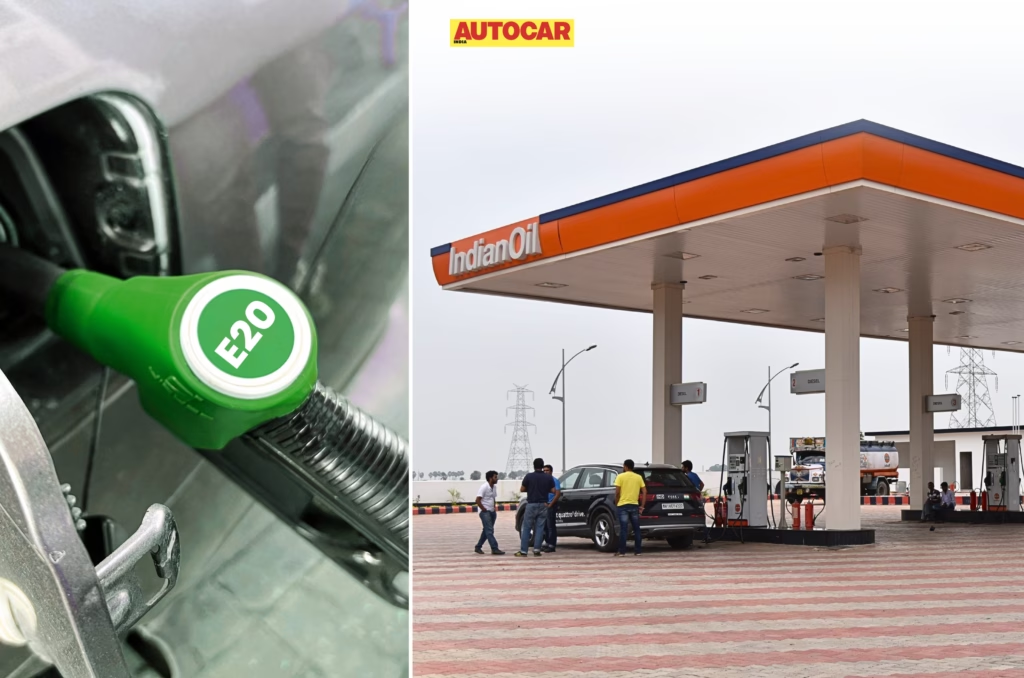
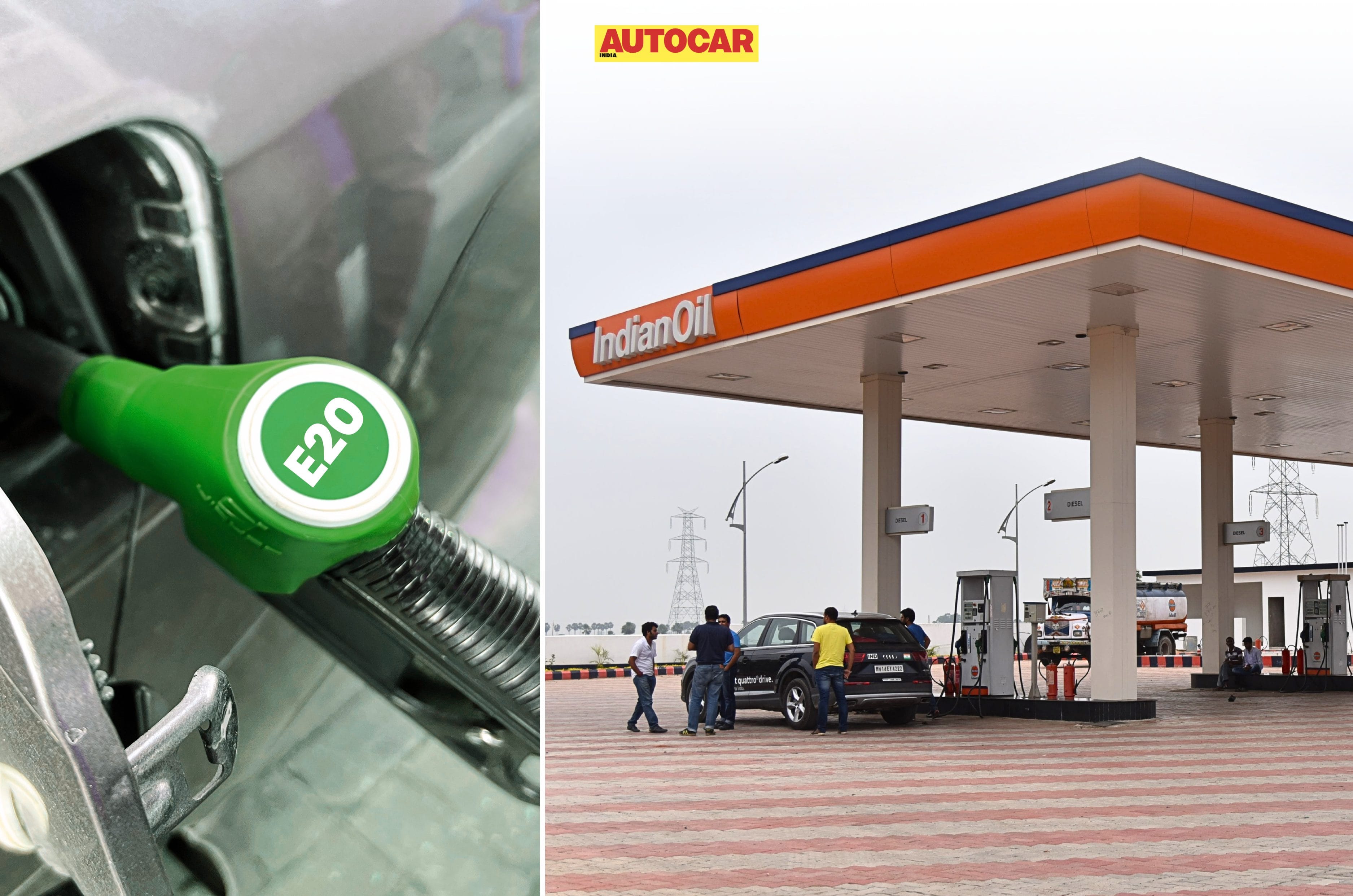
The intensity of the crackdown reflects a government under pressure to protect the integrity of its green-energy transition. The rollout of E20 (petrol blended with 20 percent ethanol) was accelerated ahead of its original schedule. Since April 1, E20 has been the only petrol available at Indian pumps, leaving motorists with no option of buying the earlier E10 blend.
Automakers’ extensive fuel-testing drive
The move to ensure that the prescribed standards are met at the forecourts is a direct response to growing opposition from motorists and anxiety among the country’s leading vehicle manufacturers.
For motorists, the transition to E20 has brought tangible financial losses arising from lower fuel efficiency and potential mechanical risks. In a widely publicised dispute, a consumer court in Raipur recently directed Maruti Suzuki to replace a Grand Vitara over an E20-related engine complaint, underlining the legal and warranty vulnerabilities facing carmakers. Concerns over mileage loss, accelerated component wear and the compatibility of pre-2023 vehicles have simmered for months.
Behind closed doors, the anxiety ran deeper. While brands like Toyota, Maruti Suzuki and Hero MotoCorp publicly backed the government’s green mandate, a Reuters review of leaked internal communications revealed that Maruti Suzuki, Tata Motors and Mahindra & Mahindra had privately flagged severe contamination in E20 petrol. Over the course of a year, the three carmakers quietly conducted the most extensive fuel-testing drive since the national rollout, collecting and analysing over 250 samples from petrol pumps across 21 states and Union territories.
Leaked report rings alarm bells
The industry findings, compiled by SIAM and reviewed by Reuters, painted a starkly different picture from official compliance narratives. Against the government’s permissible chloride limit of 3 parts per million (ppm) or 3mg/kg, automaker testing found alarming levels across 18 states: Rajasthan recorded 6 to 570ppm — 190 times the limit; Delhi-NCR ranged from 1.4 to 420ppm and Madhya Pradesh from 4.1 to 550ppm. Karnataka and Kerala, by contrast, stayed well within the safe zone at 1 to 2.2ppm.
Water content spiked to 13,000ppm in Andhra Pradesh and 12,500ppm in Uttar Pradesh, which is more than four times the official permissible limit of 3,000ppm.
In modern engines, these deviations can be damaging. Organic chloride is highly corrosive, and modern precision fuel injectors are engineered to tolerate just 1-3ppm to align with international standards. In a leaked July email, a senior Mahindra executive warned that organic chloride was the root cause of rapid vehicle failures, capable of destroying fuel systems and engines in as little as 200km. Mahindra has since described interpretations drawn from the email as baseless, calling the industry data limited and preliminary.
Skoda Auto India brand director Ashish Gupta, in a recent interaction with Autocar Professional, acknowledged a genuine issue with EPC (Electronic Power Control) and fuel pump failures in certain parts of the country, particularly in Punjab. He added that while fuel-sample testing has not shown a definitive chemical difference, engineers suspect high chloride or high sulphur levels, which can clog the fuel-pump filters.
The regulatory gap
To be fair, BIS standards currently lack a formally mandated statutory threshold for inorganic chlorides in finished ethanol-blended petrol (like E20). However, the petroleum ministry and OMCs enforce internal procurement guidelines, capping the limit at 3ppm for ethanol manufacturers. Setting BIS standards that make chloride limits mandatory is urgently needed, as the main culprit for vehicle damage is not E20 petrol but the chloride levels in it.
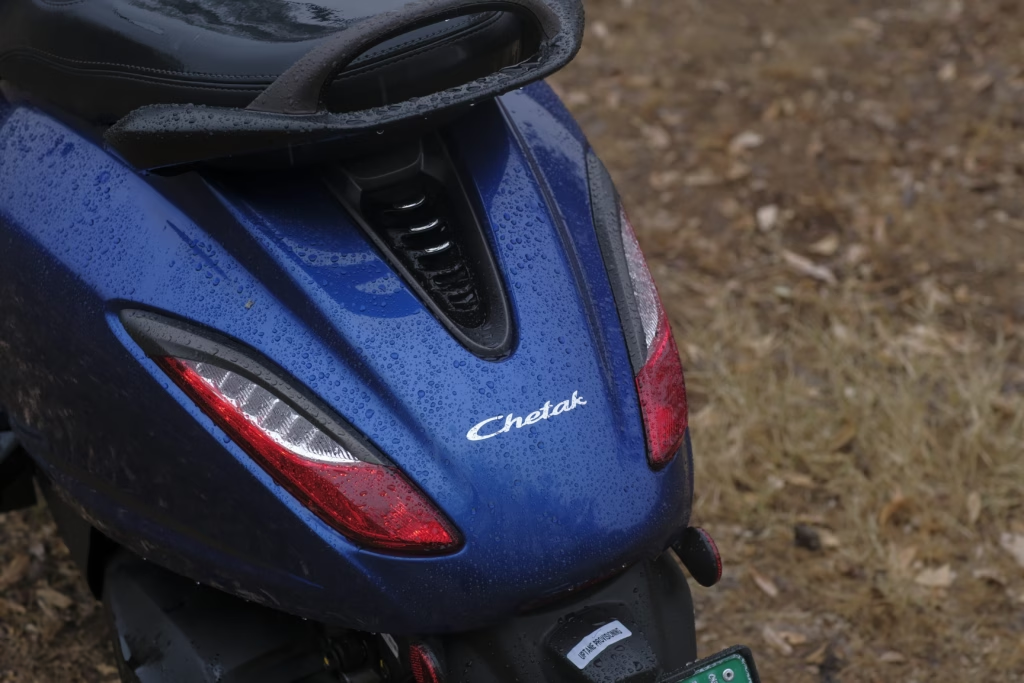
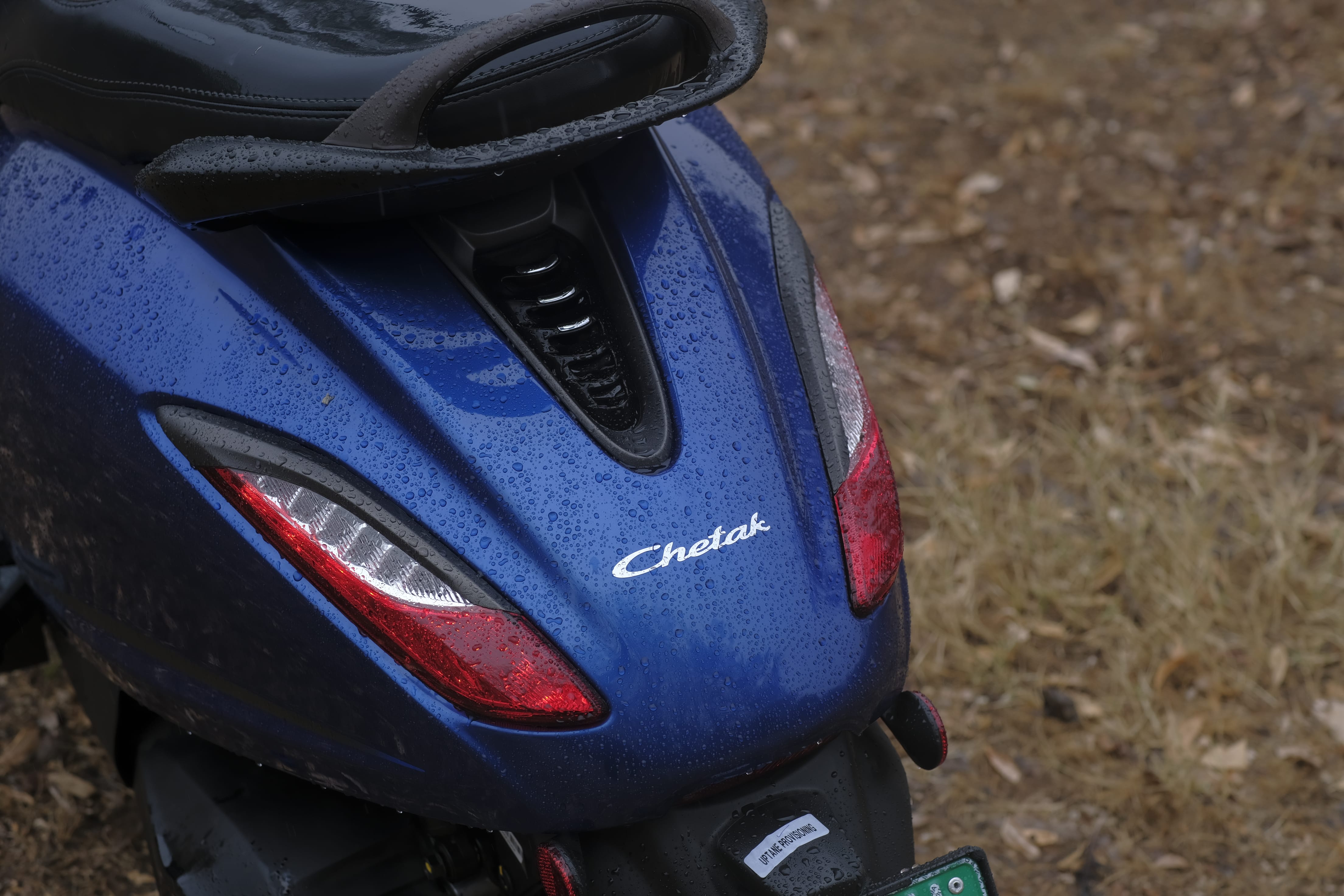
Chetak’s Kerala network has grown from just two outlets to 103 customer touchpoints, as the electric scooter brand continues to expand its retail and service reach alongside rapidly increasing sales.
Kerala network now comprises 18 Chetak Experience Centres and 85 Bajaj Auto touchpoints
Chetak has more than 50,000 customers in Kerala
Chetak sold 3.03 lakh units in FY2026, up from 2.60 lakh in FY2025
Chetak has expanded its sales and service network in Kerala to 103 customer touchpoints, comprising 18 Chetak Experience Centres and 85 Bajaj Auto Ltd touchpoints.
The company says its network in the state has grown from an initial two outlets and that it now has more than 50,000 Chetak customers in Kerala. The network covers locations including Kochi, Wayanad, Thiruvananthapuram and Palakkad.
While Chetak’s presence in Kerala is not the biggest takeaway by itself, the scale of the network expansion highlights the growth the brand has seen in the state and the infrastructure it has added to support its expanding customer base.
The wider Chetak business has also continued to grow. Bajaj Auto recorded 3,02,674 domestic Chetak sales in FY2026, up from 2,60,033 units in FY2025, according to its annual report. Chetak’s share of India’s electric two-wheeler market increased to 20.7 percent during the year.
The expanded Kerala network provides customers with access to sales, test rides and service support through both dedicated Chetak Experience Centres and Bajaj Auto dealerships.