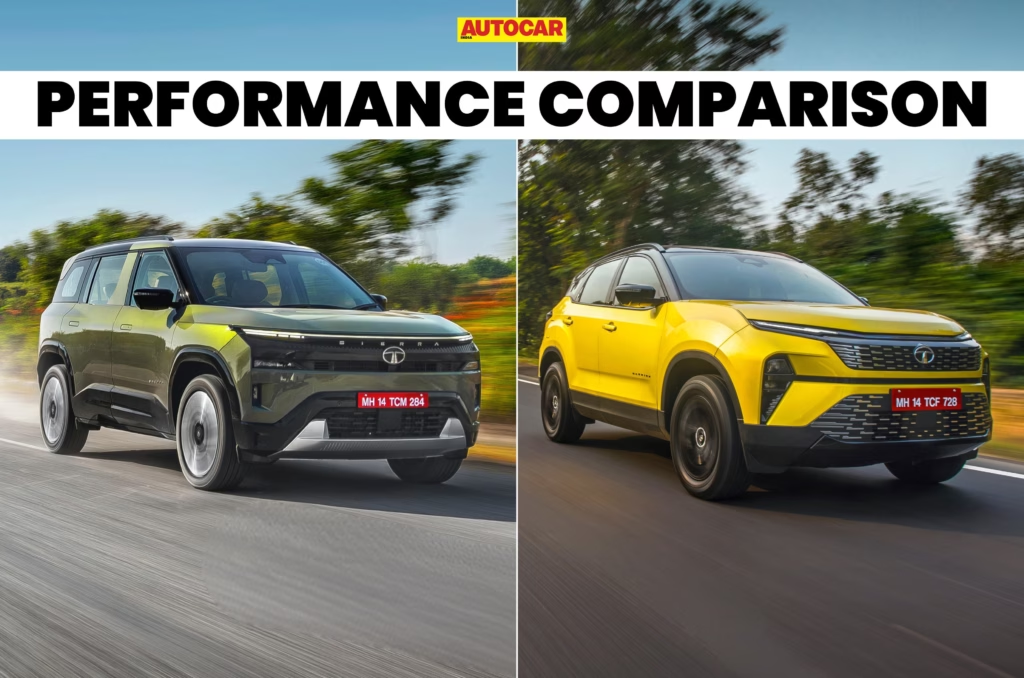
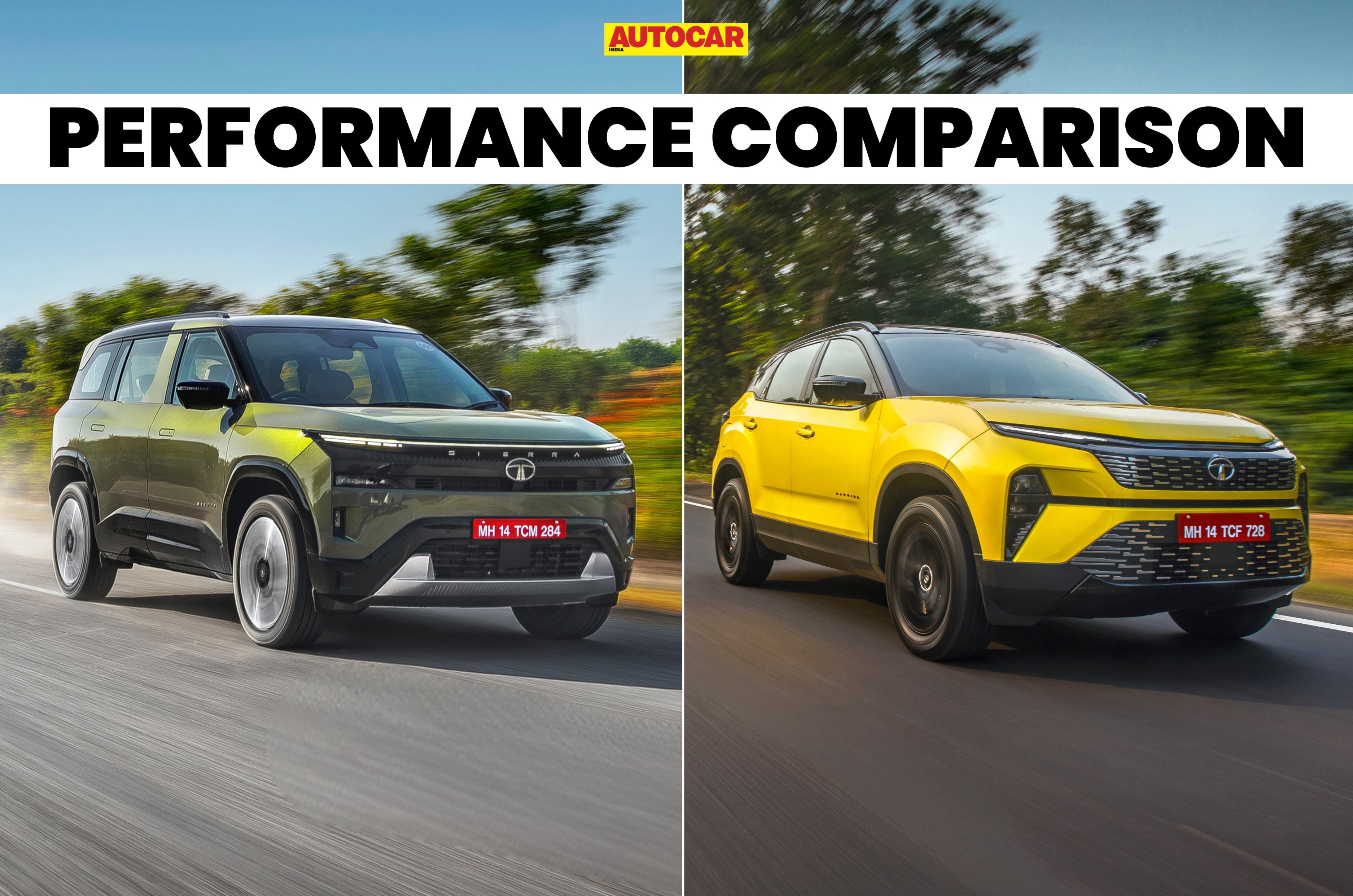
The Tata Sierra is one of the newer midsize SUVs to offer a diesel engine, a powertrain that is becoming increasingly rare in the segment. Positioned below the Harrier in Tata’s SUV lineup, the Sierra gets a 1.5-litre diesel engine, while a 2.0-litre diesel powers the larger Harrier. Both SUVs are available with a 6-speed automatic gearbox, but with different engines under the hood, how do they compare in terms of performance? Let’s find out.
Tata Sierra vs Harrier diesel AT: Specifications and price
The Sierra’s smaller engine offers less performance, but it is also more affordable
Tata Sierra vs Harrier diesel AT: Specifications and price
Tata Sierra 1.5D AT
Tata Harrier 2.0D AT
Engine
4-cyl, turbo-diesel
4-cyl, turbo-diesel
Displacement (cc)
1,497
1,956
Power (hp)
118
170
Torque (Nm)
280
350
Kerb weight (kg)
NA
1,823
Power-to-weight (hp per tonne)
–
93.25
Torque-to-weight (Nm per tonne)
–
191.99
Price range (Rs, lakh)
15.99-21.29
18.85-25.40
The Tata Harrier gets a larger 2.0-litre diesel engine, making 52hp and 70Nm more than the Sierra’s 1.5-litre diesel. Tata is yet to reveal the Sierra diesel’s kerb weight, but it will be lower than the Harrier diesel’s weight because of its smaller size. For reference, the Sierra’s turbo-petrol AT weighs 1,552kg.
The Sierra diesel also has a clear price advantage. Its starting price is Rs 2.86 lakh lower than the Harrier’s, while the top-spec Sierra diesel undercuts the Harrier by a substantial Rs 4.11 lakh.
Tata Sierra vs Harrier diesel AT: 0-100kph acceleration test
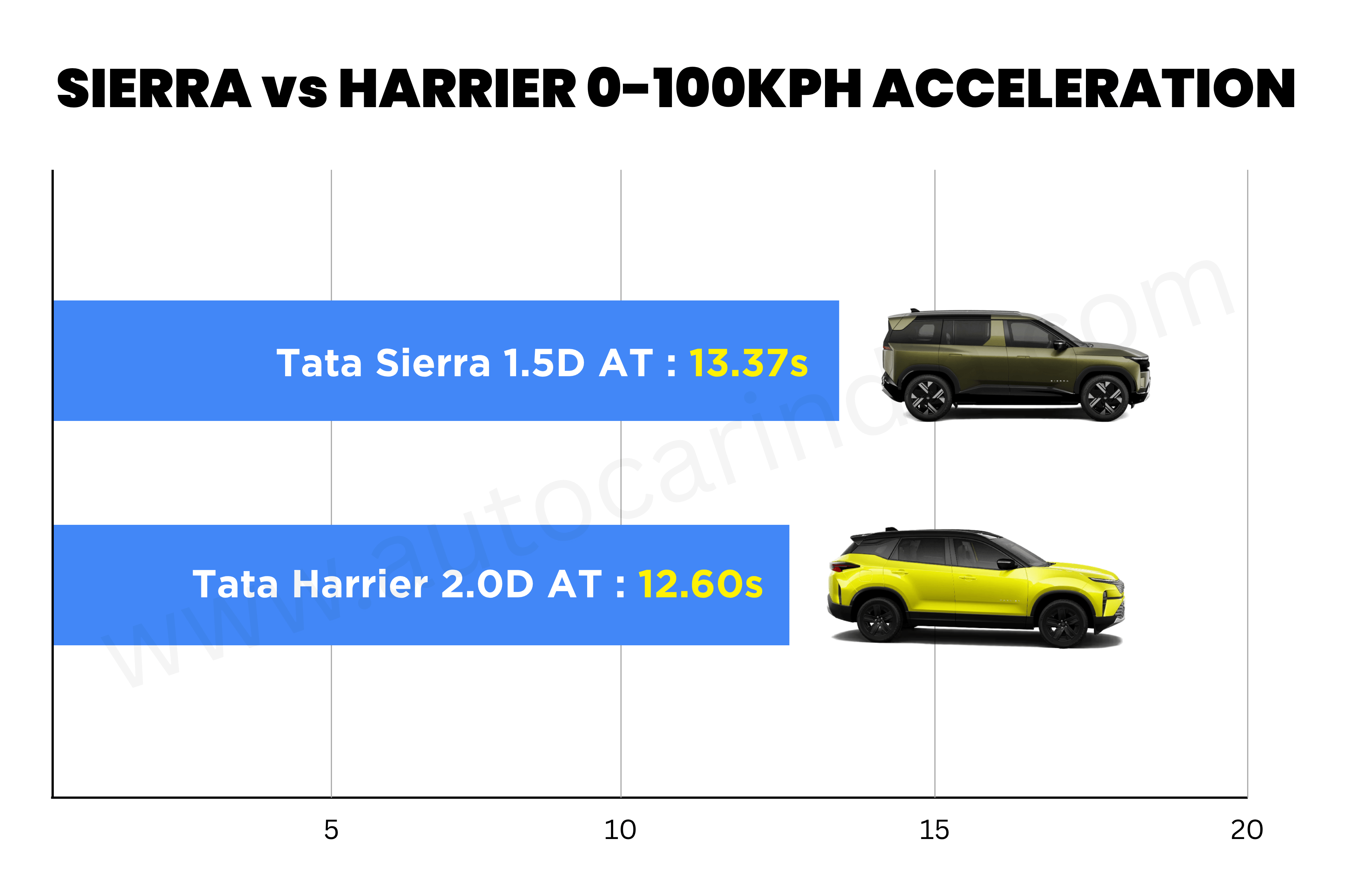
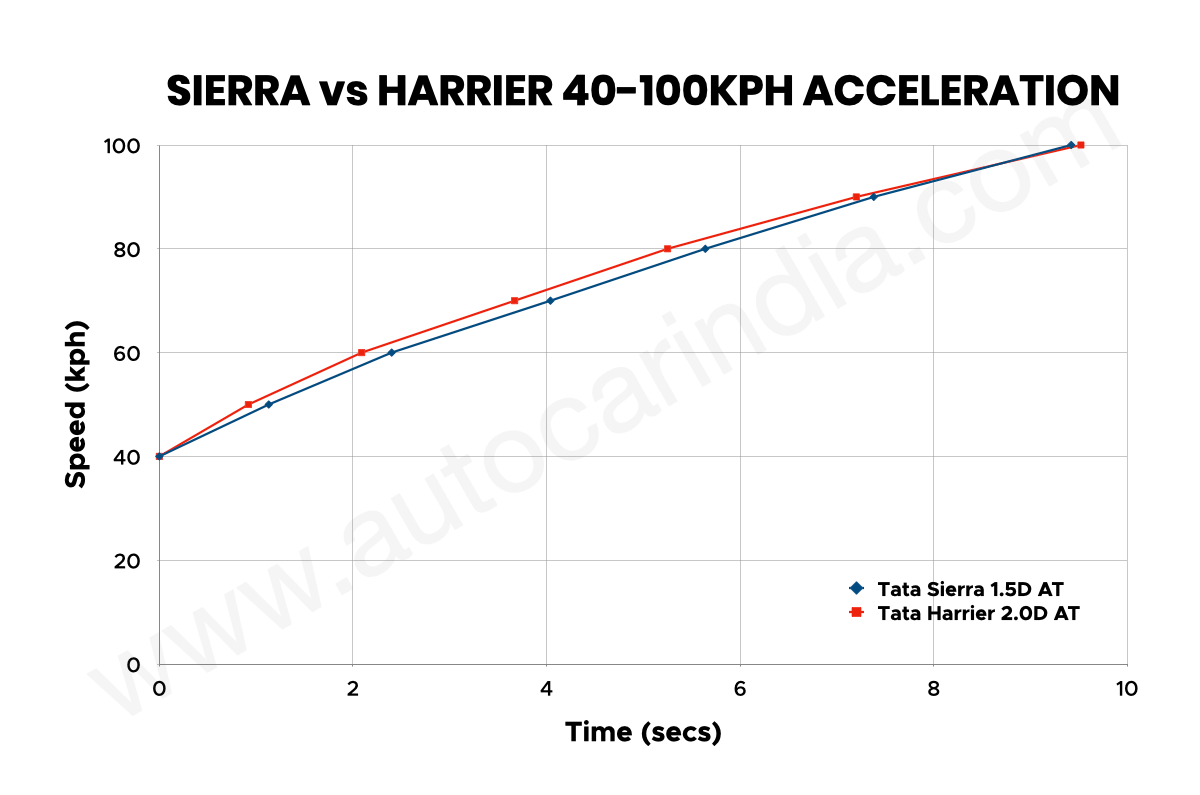
The Harrier is 0.77s faster than the Sierra to reach 100kph from a standstill
Tata Sierra vs Harrier diesel AT: Acceleration from rest (in seconds)
Tata Sierra 1.5D AT
Tata Harrier 2.0D AT
20kph
1.44
1.33
40kph
3.53
2.94
60kph
5.93
5.16
80kph
9.31
8.30
100kph
13.37
12.60
The Harrier diesel-AT gets off the line 0.11 seconds quicker than the Sierra diesel-AT and continues to pull ahead as speeds rise. By 60kph, the Harrier’s lead grows to 0.77 seconds, a gap it maintains through to 100kph.
Tata Sierra vs Harrier diesel AT: Rolling acceleration tests
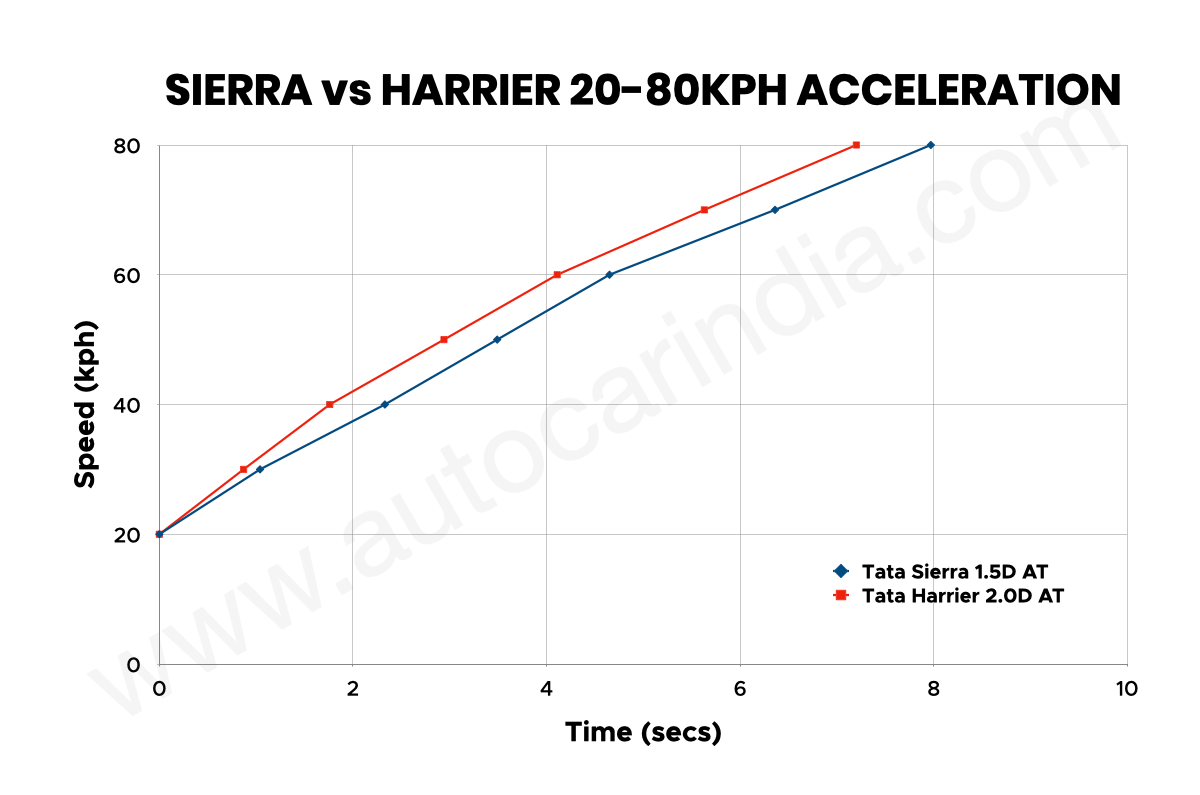
While the Harrier clocks a faster 20-80kph run, the Sierra is quicker to do 40-100kph
Tata Sierra vs Harrier diesel AT: Rolling acceleration (in seconds)
Tata Sierra 1.5D AT
Tata Harrier 2.0D AT
20-80kph
7.97
7.20
40-100kph
9.42
9.52
In the rolling acceleration tests, the Harrier diesel-AT is again quicker in the 20-80kph test, taking 0.77 seconds less than the Sierra diesel-AT.
However, the Sierra clocks a 0.10-second quicker 40-100kph time. In the real world, we noticed that the Sierra’s 1.5-litre engine builds power linearly and lacks the midrange punch associated with diesel engines. On the other hand, the Harrier offers a punchy mid-range and the powertrain feels more responsive to throttle inputs.
Autocar India’s testing standards
Before we conduct our performance tests, we check and maintain tyre pressures based on the manufacturer’s recommendation and ensure the car has a full tank of fuel. The car is then tested in a controlled environment with two people on board, and the data is collected via highly accurate GPS-based timing equipment.
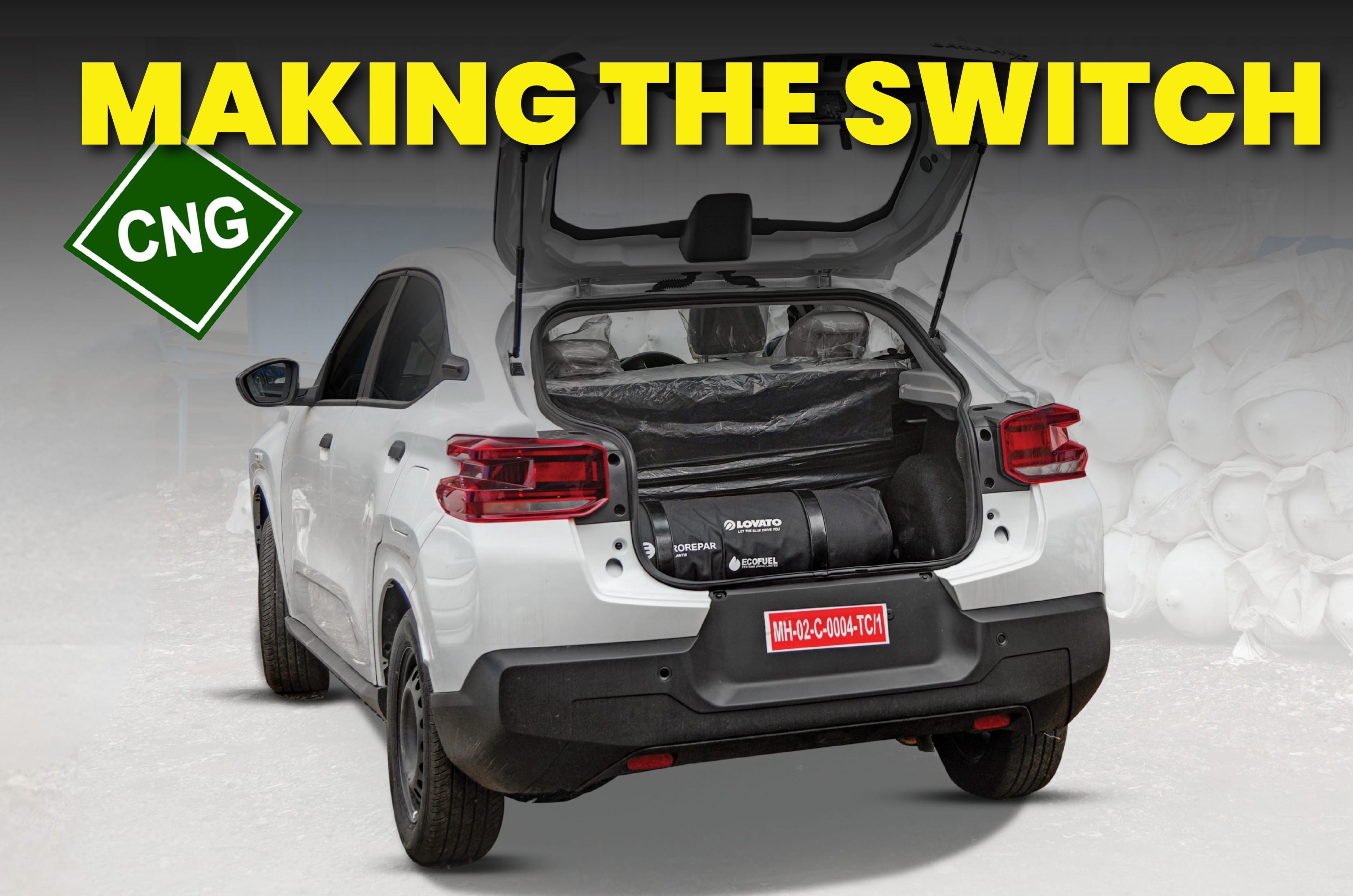
While aftermarket CNG conversions are not new, with the rise in fuel prices, there has been a noticeable spike in interest surrounding them. Although there are more factory-fitted CNG cars on the market than ever before, several models still do not give you the option. Not to mention, existing car owners are increasingly looking to convert their cars to CNG to reduce running costs.
Naturally, this increased interest brings up several questions about the technology, the installation, the legalities and more. We thus teamed up with Lovato CNG’s authorised distributor in Maharashtra, Blue Drive Traders, as well as Lets Go CNG and its authorised installer in Mumbai, M.S Motors, to answer questions about CNG conversions.
Know your CNG kit
There are three broad types of kits available on the market today. The oldest is the Venturi type, typically used for cars that are Bharat Stage 3-compatible and older. These use a Venturi mixer, similar to a carburettor, that mixes CNG with air before it is injected into the intake manifold. They are the most affordable, usually costing between Rs 30,000 and Rs 40,000, including installation and registration, but they are not the most efficient and bring a significant drop in performance. Since the cars they are compatible with are also reaching the end of their lifecycle, these kits are gradually being phased out.
Modern naturally aspirated MPFI cars require a sequential type kit. These use individual injectors that inject CNG directly into the intake manifold and feature their own ECU that controls timing, volume and other parameters based on RPM and driver inputs. These are much more fuel-efficient, and the drop in performance is nominal in everyday driving conditions. Like the older Venturi kits, these too require the car to be started on petrol before switching over to CNG. However, they automate the process by making the switch once a certain engine temperature is reached. Prices vary depending on the manufacturer and the specifications of each kit, ranging from Rs 40,000-Rs 50,000 for older BS4 cars, to Rs 50,000-Rs 65,000 for smaller BS6 cars, stretching to Rs 70,000-Rs 75,000 for larger cars that require an eight-injector kit.
The newest type of kit to hit the market is the direct-injection kit, used for cars with direct petrol injection. Like sequential kits, these too inject CNG into the intake manifold. However, direct-injection engines cannot run purely on CNG. The fuel injectors in a DI engine sit within the combustion chamber, so to prevent them from overheating, a small amount of petrol still needs to be injected through them even when running on CNG. Therefore, a turbocharged direct-injection engine can only run on a maximum 80:20 ratio of CNG and petrol. As a result, fuel efficiency gains are not quite as high as with a naturally aspirated engine, and kit prices range from Rs 1 lakh to Rs 1.5 lakh, thus pushing the breakeven point further away.
What’s in the box?
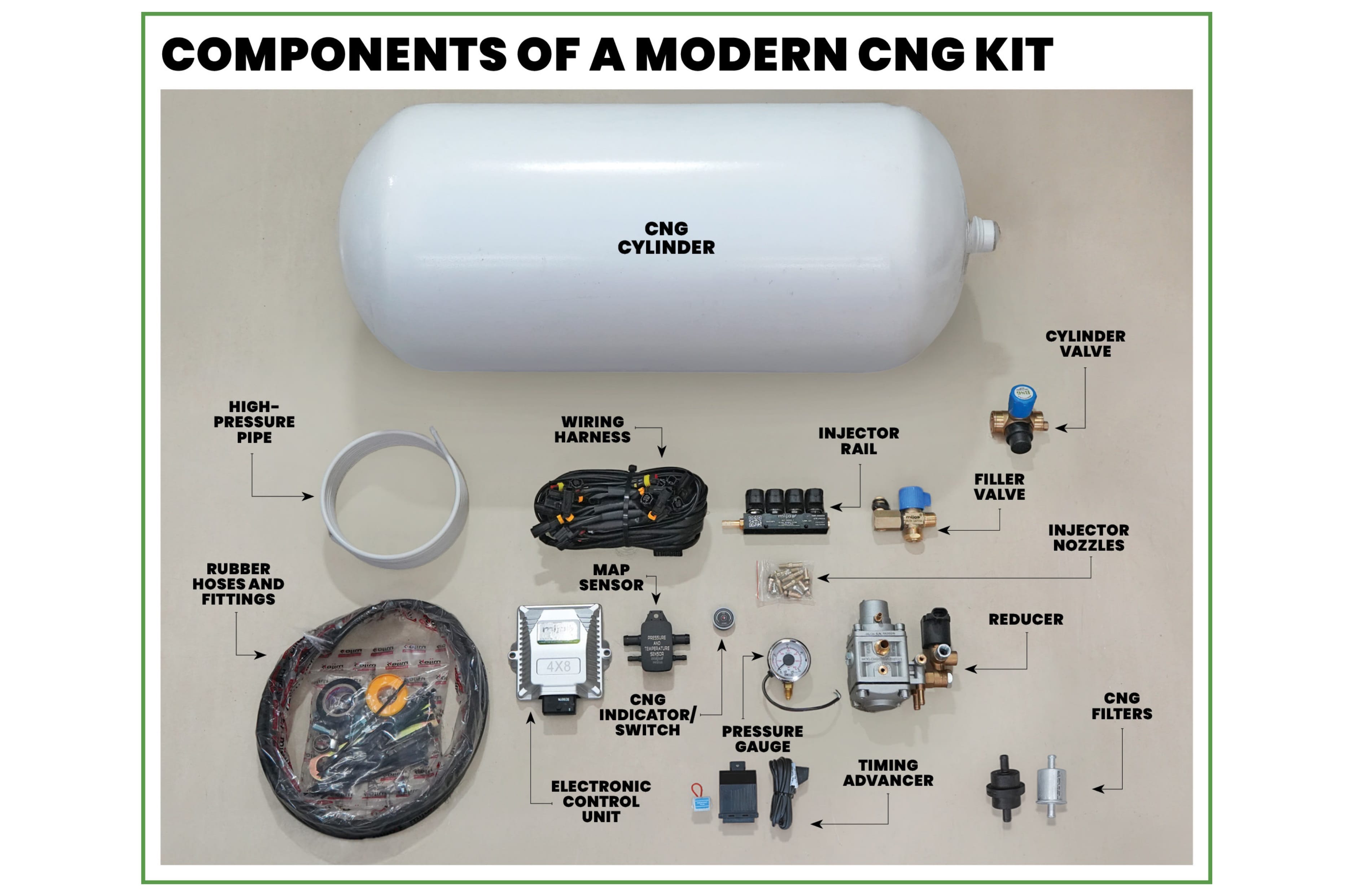
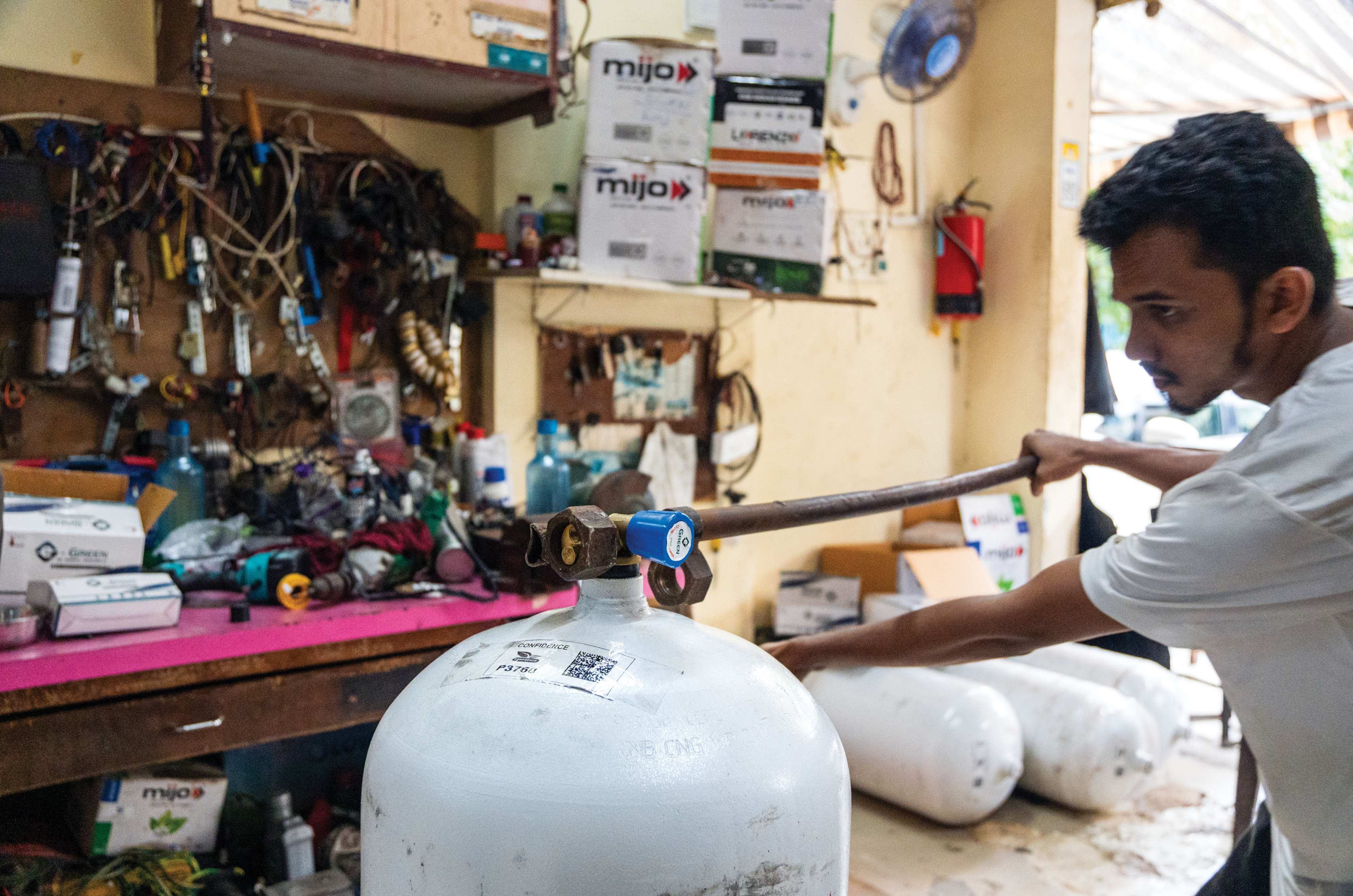
The largest and heaviest component of a typical CNG kit is the tank itself. Made from seamless steel, these can weigh close to 70kg empty, with volumetric capacities ranging from 60 to 65 litres. Metal-lined composite cylinders and carbon fibre-reinforced plastic cylinders are also now available, and while they are significantly lighter, they usually cost two or three times more. Attached to the tank is a valve with a manual shut-off.
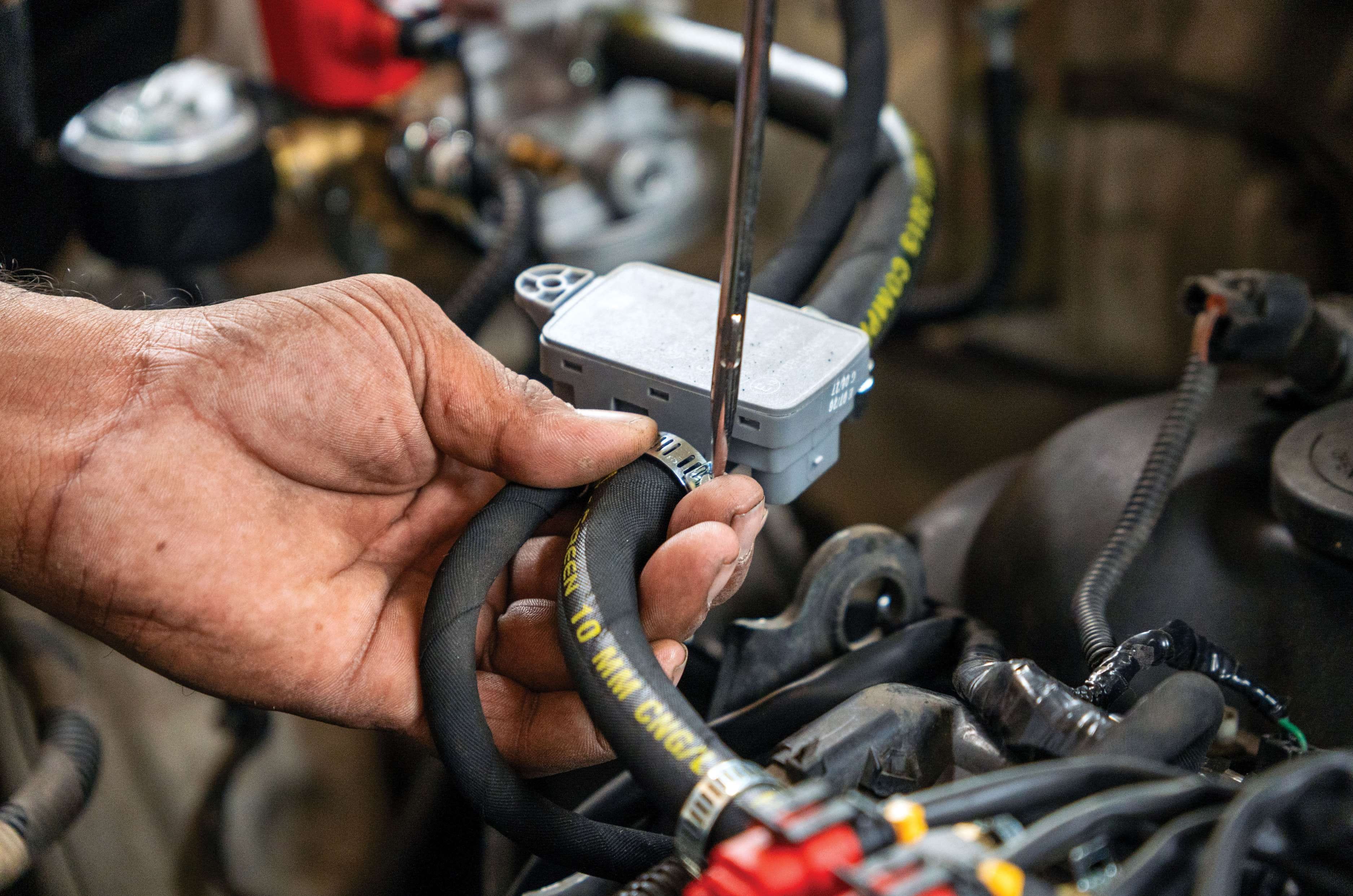
The filling valve, through which CNG is filled, can either be placed under the bonnet or beside the petrol filler cap, depending on the vehicle. Transporting the gas from the tank to the pressure reducer under the bonnet is high-pressure tubing made from carbon steel and coated in polymers. The reducer has a pressure gauge and lowers gas pressure from about 200bar in the tank to a manageable 2-3 bar. From here, the gas is routed to the injector rail that sits atop the engine, which further distributes it to nozzles drilled into the intake manifold via reinforced rubber hoses. Between the reducer and the injector rail sits a Manifold Absolute Pressure (MAP) sensor to measure the pressure as well as the temperature of the gas. There is also an optional filter to remove any impurities in the line.
Controlling the injector rail is an Electronic Control Unit (ECU) that uses signals from the MAP sensor and communicates with the car’s original ECU to dictate the amount of CNG being injected and the timing. Modern kits also come with a comprehensive wiring harness that can plug into the car’s original wiring via OBD connectors. Older pre-BS6 cars, however, may require some wire splicing. Optionally available is an Advancer, which advances ignition timing when running on CNG and negates some of the power loss, particularly on smaller-capacity engines. Some sedans and hatchbacks also require a rear coil spring spacer to compensate for the added weight of the tank in the boot.
How a CNG kit is installed
A professional CNG installation takes around 4 to 5 hours to complete. Here’s what happens behind the workshop doors.
Health check
The engine is inspected to ensure it’s suitable for CNG conversion. A basic service is performed if required, with spark plugs and ignition coils replaced as needed and the throttle body cleaned.
Components positioned
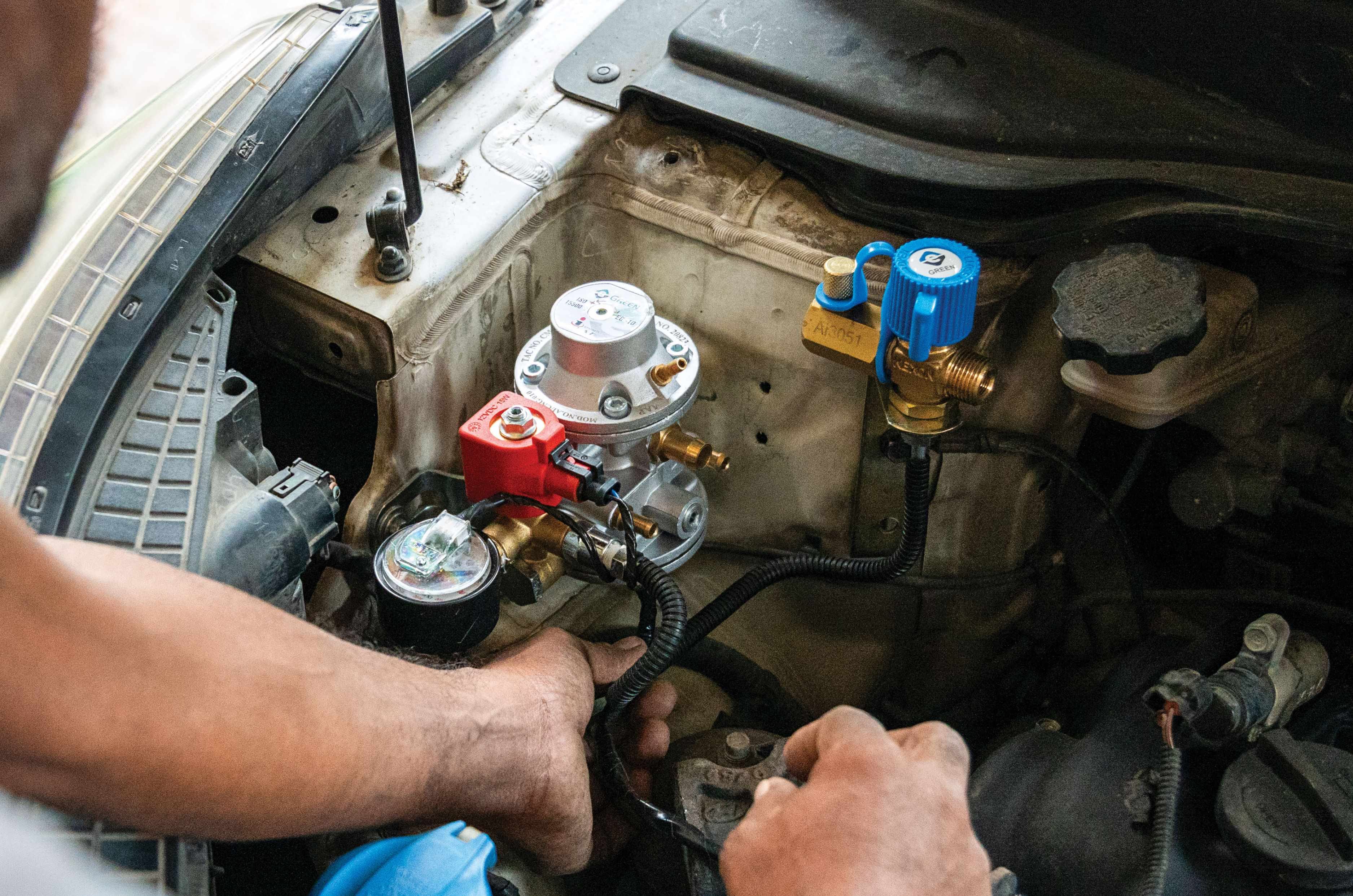
The reducer and its pressure gauge are mocked up in the engine bay before mounting points are marked and drilled. The filler valve may be located alongside them or next to the petrol filler cap, depending on the vehicle.
Injectors installed
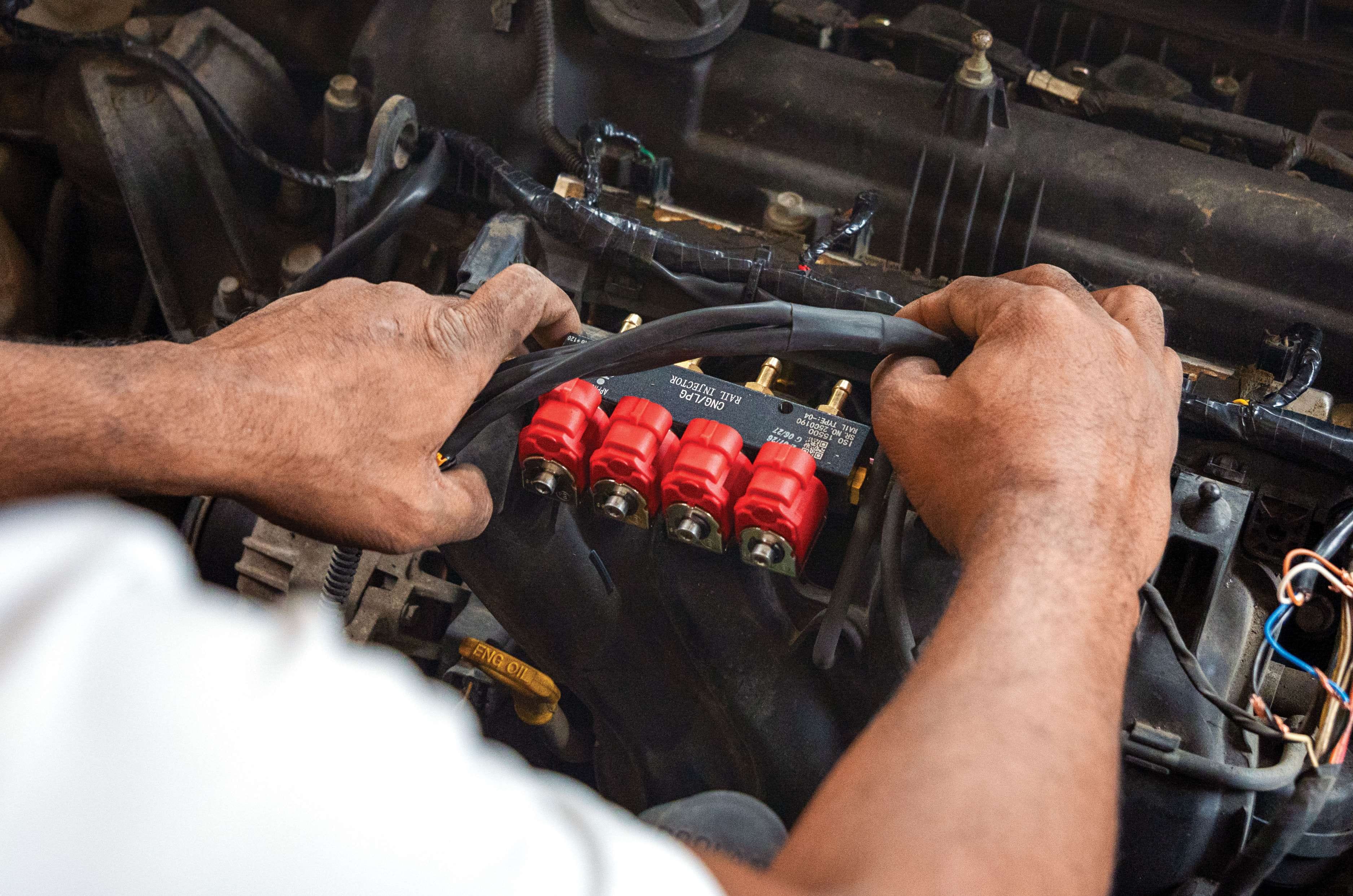
The CNG injector rail is mounted on its dedicated bracket close to the petrol injectors. This will send CNG to corresponding nozzles that are drilled and fitted into the vehicle’s plastic intake manifold.
ECU wired in
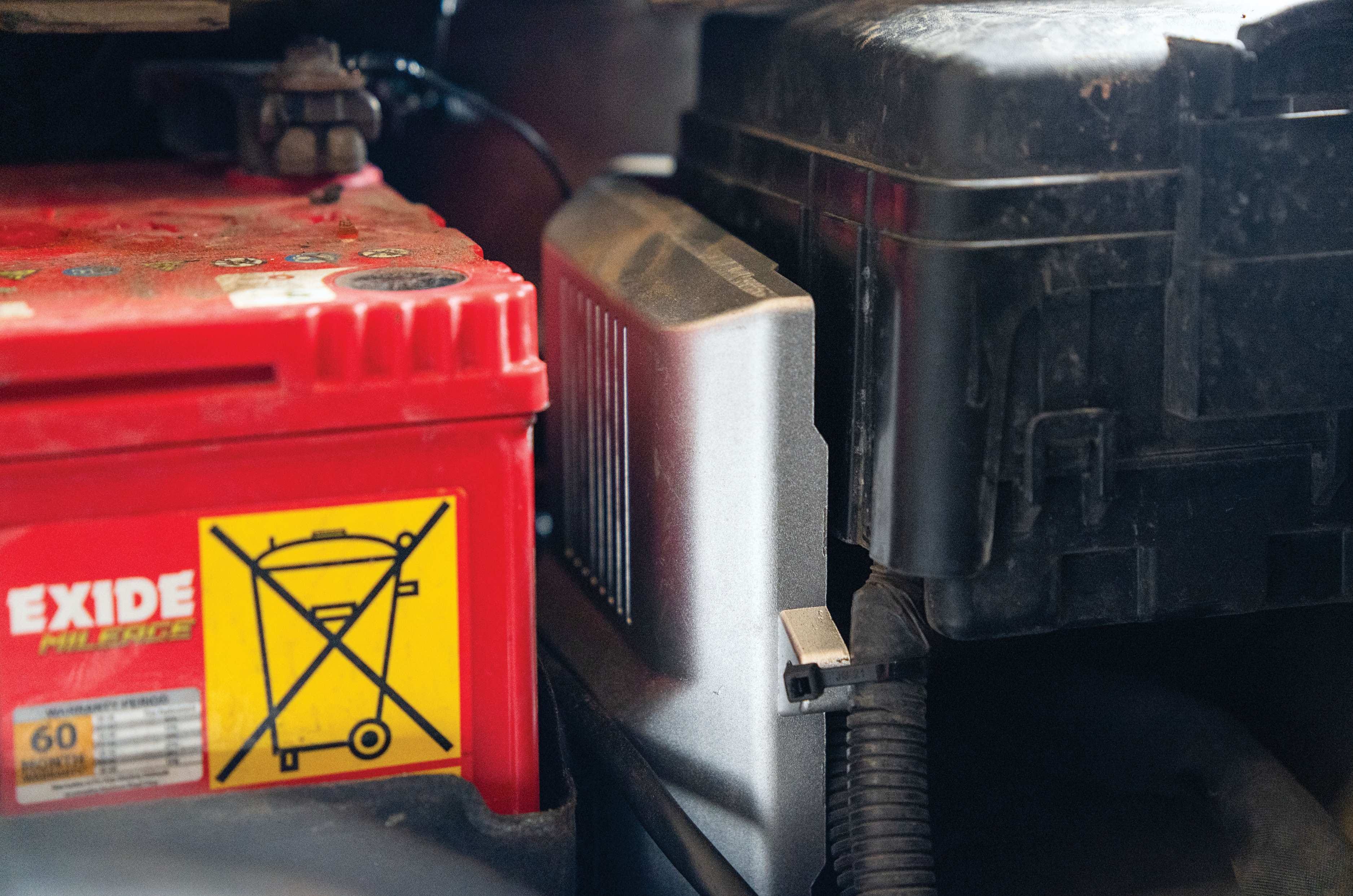
The CNG ECU is mounted alongside the factory ECU and connected to the vehicle’s wiring loom. The harness is neatly routed and secured away from heat and moving parts.
Plumbing completed
Reinforced rubber gas hoses are cut to length and connected between the reducer, injector rail and the intake manifold. A MAP sensor and a filter are also installed as part of the system.
Tank prepared
The CNG tank is temporarily mounted to a rig that holds it in place while the shut-off valve and associated fittings are installed before everything is torqued down.
Tank frame installed
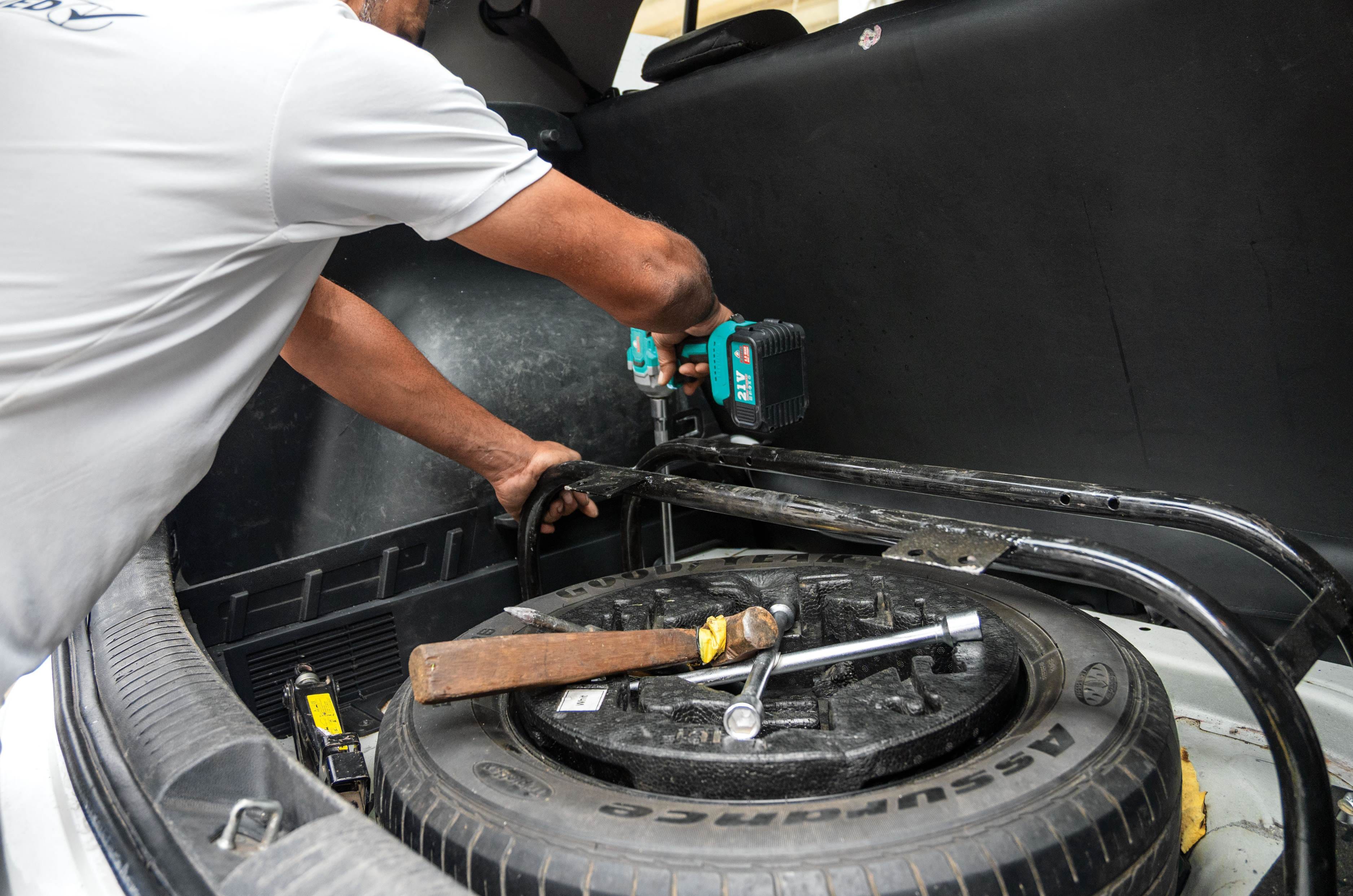
The mounting frame is positioned inside the boot, holes are drilled through the floor, and reinforced brackets securely bolt it to the vehicle’s structure.
Tank fitted
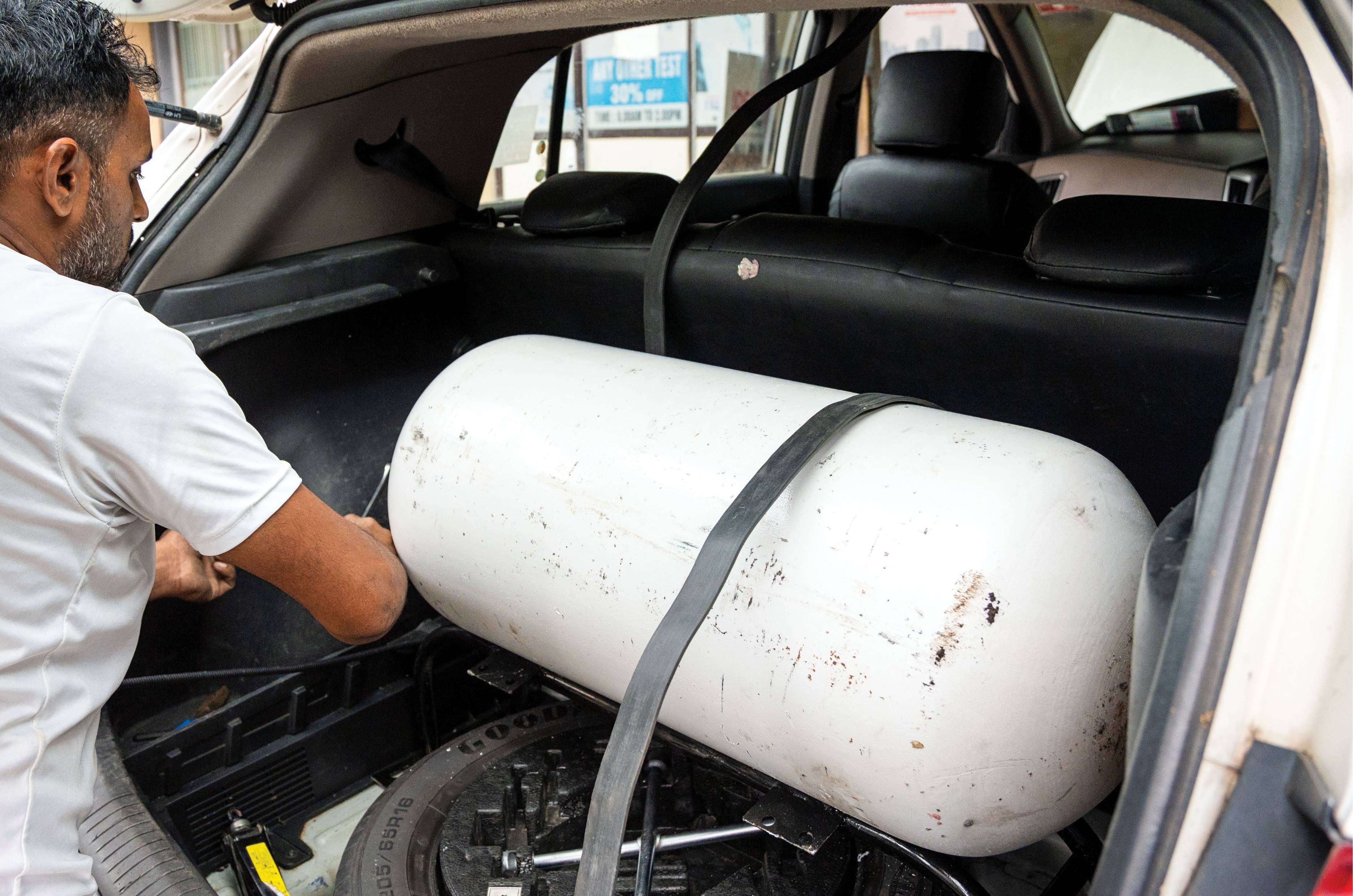
The CNG cylinder is secured to the frame using heavy-duty metal straps and bolts before being covered with a carpeted shroud for a neat factory-like finish.
High-pressure line routed
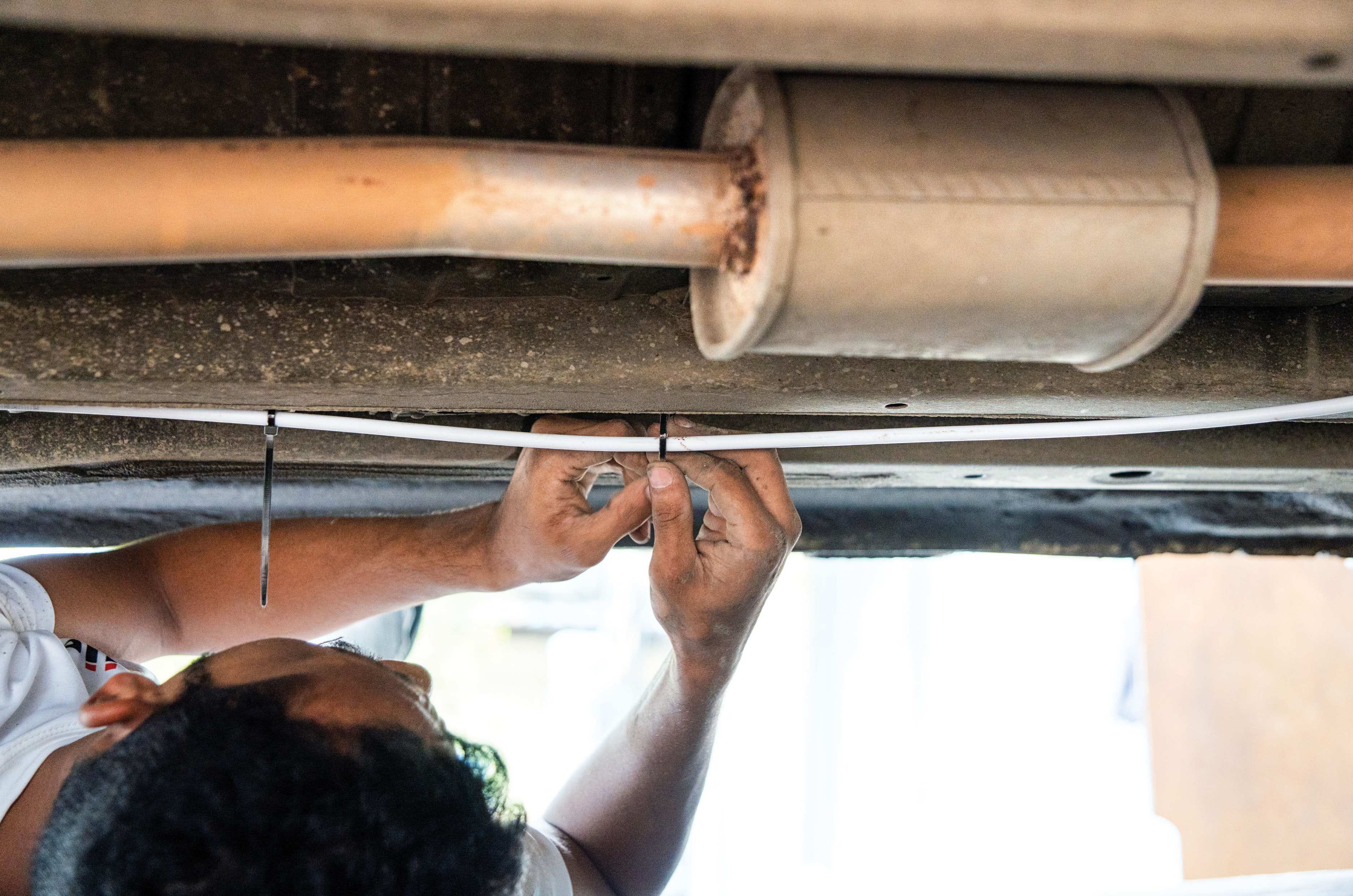
Polymer-coated steel high-pressure pipes are routed beneath the car, connecting the CNG filler valve, the tank and the reducer under the bonnet.
Electrical connections
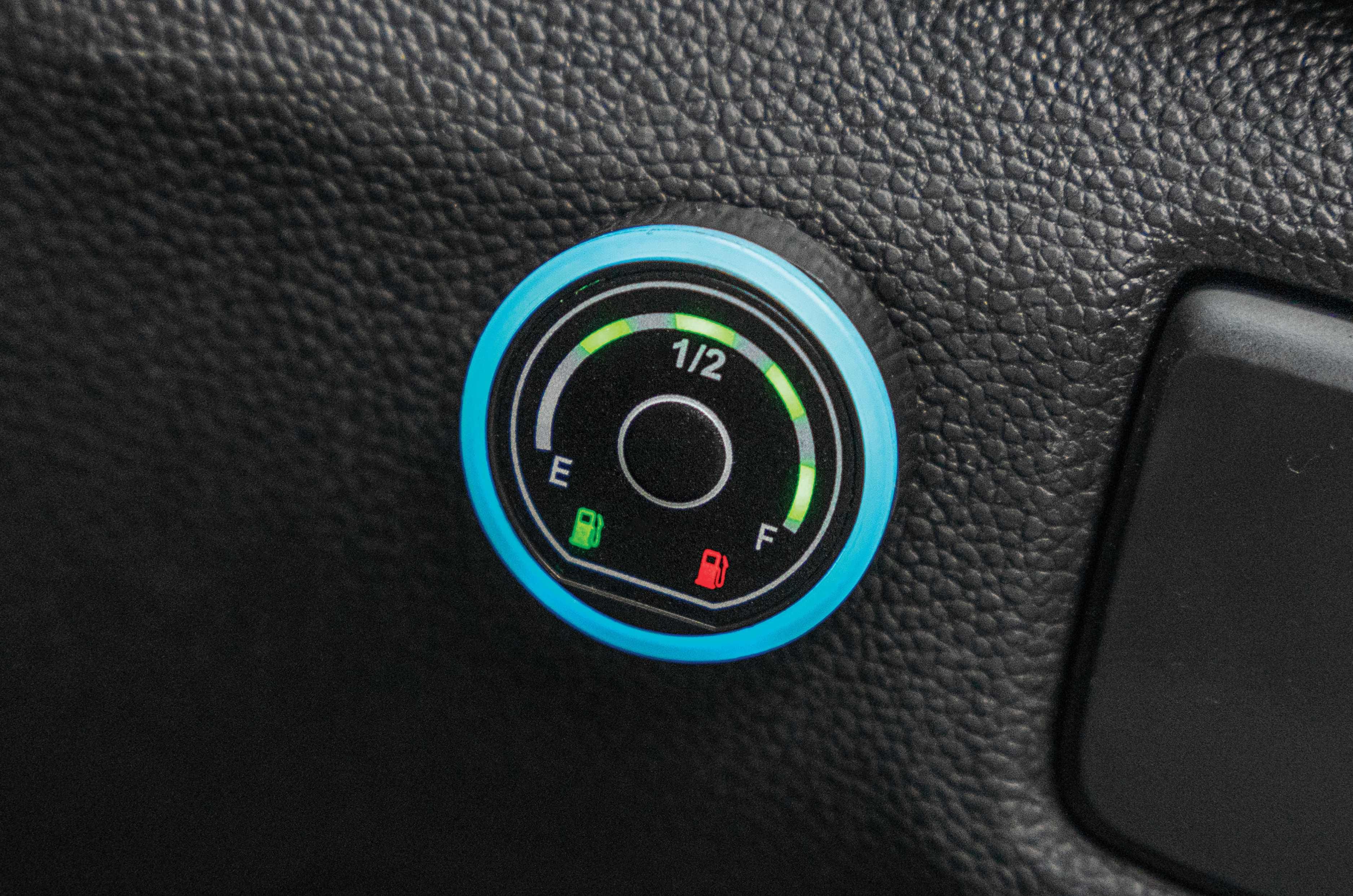
The remaining wiring is completed and a dashboard-mounted CNG switch is installed, allowing the driver to monitor fuel level and switch between petrol and CNG.
Leak test
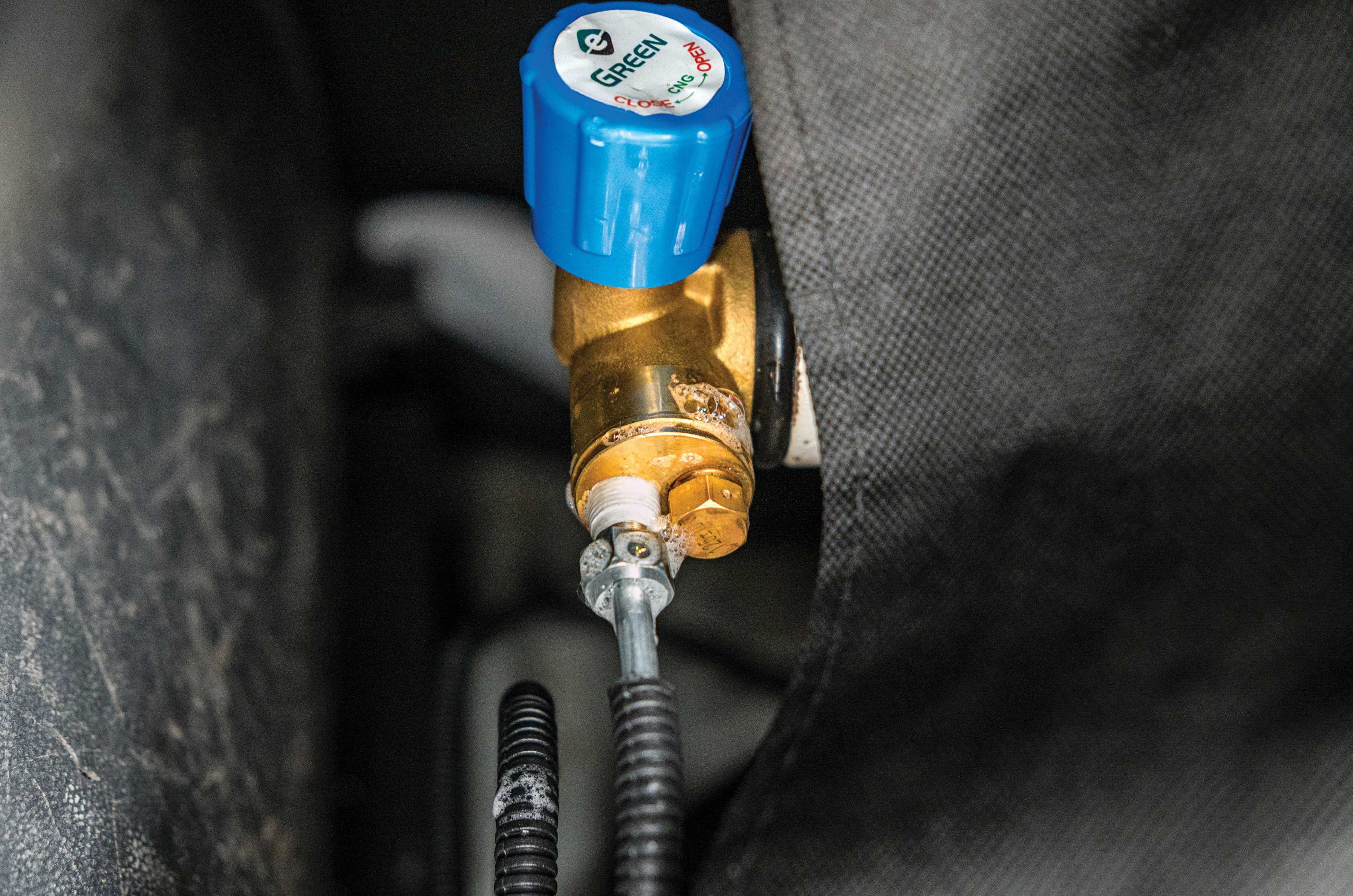
Around 2kg of CNG is added and every connection is checked using an electronic gas detector and good old-fashioned soap solution to ensure the entire system is leak-free.
Calibration and road test
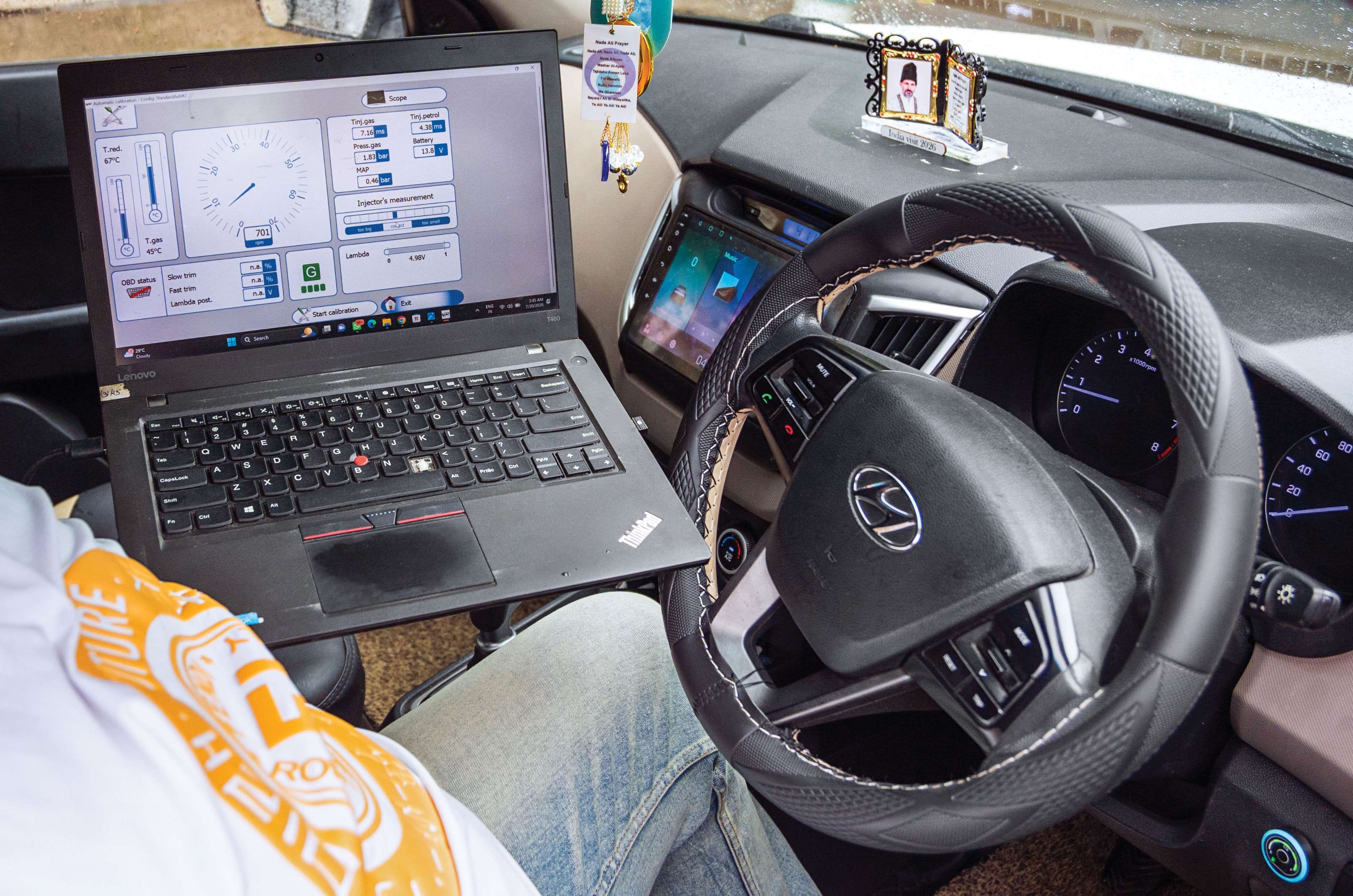
The system is calibrated using dedicated software to optimise fuel delivery and switchover settings. A final road test confirms performance before the vehicle is delivered to the customer.
Why go aftermarket?
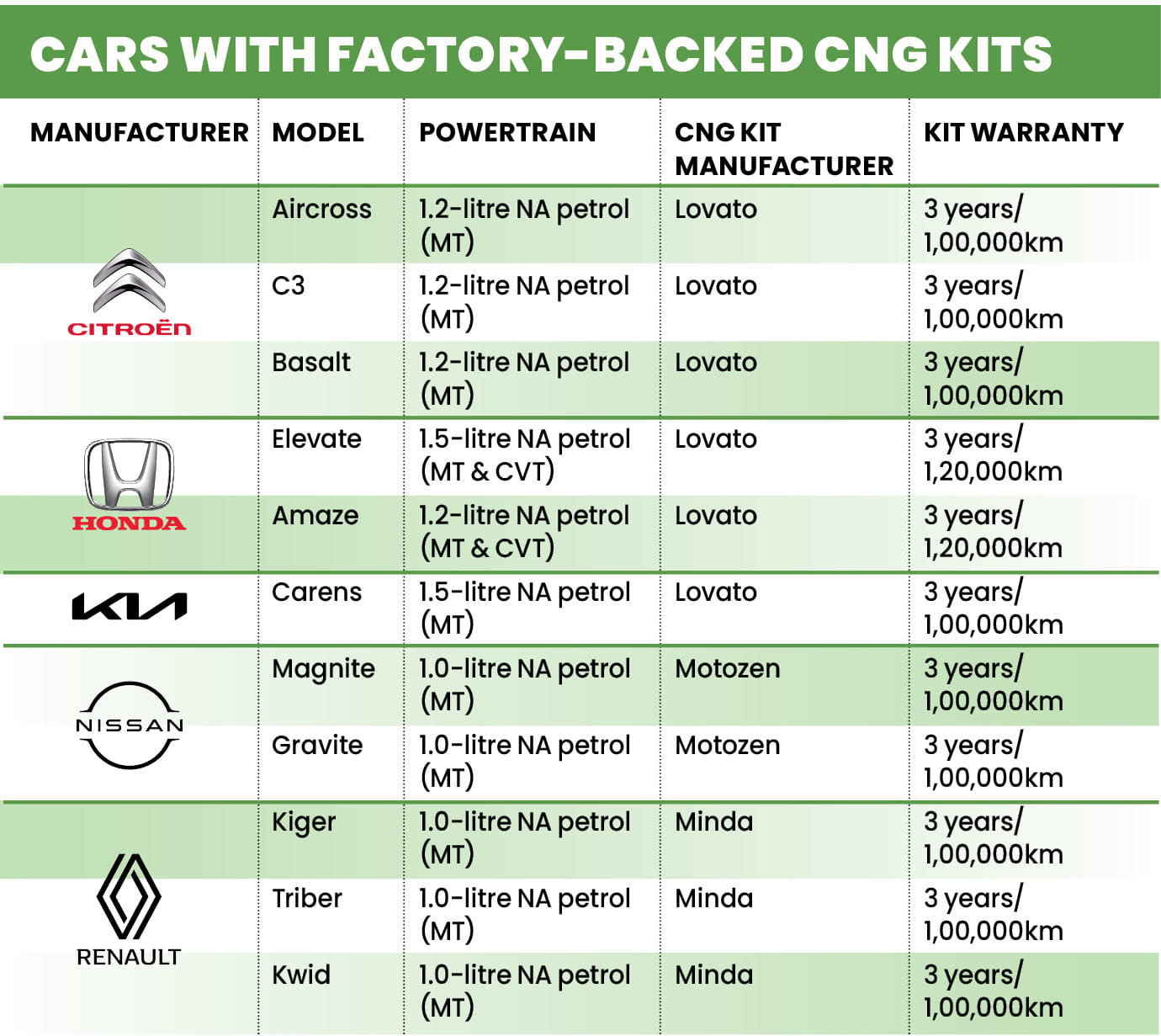
On average, an aftermarket CNG installation costs around 25 to 30 percent less than the premium a factory-fitted CNG variant commands over its petrol counterpart. However, this alone is not enough to swing the scales in favour of the aftermarket due to the disadvantages we will get into later. The bigger advantage the aftermarket holds is the ability to convert models or variants that do not come with a CNG option. For instance, Maruti Suzuki only offers its factory-fitted CNG cars with a manual transmission, so if you want one with an automatic, an aftermarket CNG kit is your only option.
Similarly, popular SUVs like the Hyundai Creta and Kia Seltos are not available in CNG guise, which leads many owners to turn to the aftermarket. Owners of older cars, or those buying used cars, can also convert them to CNG for a fairly affordable price and enjoy significantly lower running costs. CNG is spark-ignited, thus only petrol cars can be converted to run on the gas. Since diesel cars use compression-ignition, they would need far too many modifications to make this possible. Strong hybrids are also not recommended for conversions, as here, the engine keeps switching on and off too often, which makes CNG calibration complex. Cars that are not in good mechanical shape should also not be converted to CNG, as the conversion can take a toll on the overall engine health.
For a car in generally good shape, aftermarket kits are proving to be reliable in the long run, provided they are well maintained. Most modern sequential kits from brands like Lovato and Mijo are also comparable in quality to OEM systems, and reputed, authorised installers are able to achieve near-OEM levels of fitment.
The catch
Fitting an aftermarket CNG kit – even if it is government-approved and fitted by an authorised installer – is grounds for the manufacturer warranty to be voided. While some brands may still honour warranty claims that are unrelated to the powertrain, it remains a grey area. Some dealer-fitted CNG kits do retain the factory warranty, while others provide a third-party warranty in its place.
Aftermarket installers have also begun offering third-party warranties in collaboration with insurance companies to provide coverage in place of the factory warranty. This, however, is in addition to the cost of the CNG kit. The kits themselves generally come with a warranty ranging from one to two years.
Packaging is also one area where the aftermarket trails OEMs. While Maruti, Tata and Hyundai are now offering underbody and dual-tank setups to retain a usable boot, the aftermarket still largely uses larger single tanks that take up more space.
Staying fit
As per law, any CNG tank – aftermarket or OEM fit – must be hydrotested every three years. For this, the tank must be removed from the vehicle and sent to a dedicated facility. While the process itself takes only a couple of hours, hydrotesting facilities are usually located outside major cities, adding transport time to the process. A hydrotest typically costs around Rs 3,000 per tank.
The CNG filter should also be replaced at the same three-year or 10,000km interval, whichever comes first. This typically costs under Rs 1,000 and is fairly straightforward. It is also recommended to drive on petrol at least 10 percent of the time to keep the fuel system healthy. Finally, it is important that the engine’s service schedule is strictly followed.
The legal bit
Aftermarket CNG installations are legal as long as the kit is government-approved, fitted by an approved installer and the registration certificate (RC) is updated accordingly. Most approved installers will handle the RC update at the Regional Transport Office (RTO) as part of the service. Once this is complete, the owner must also update the insurance provider.
The verdict
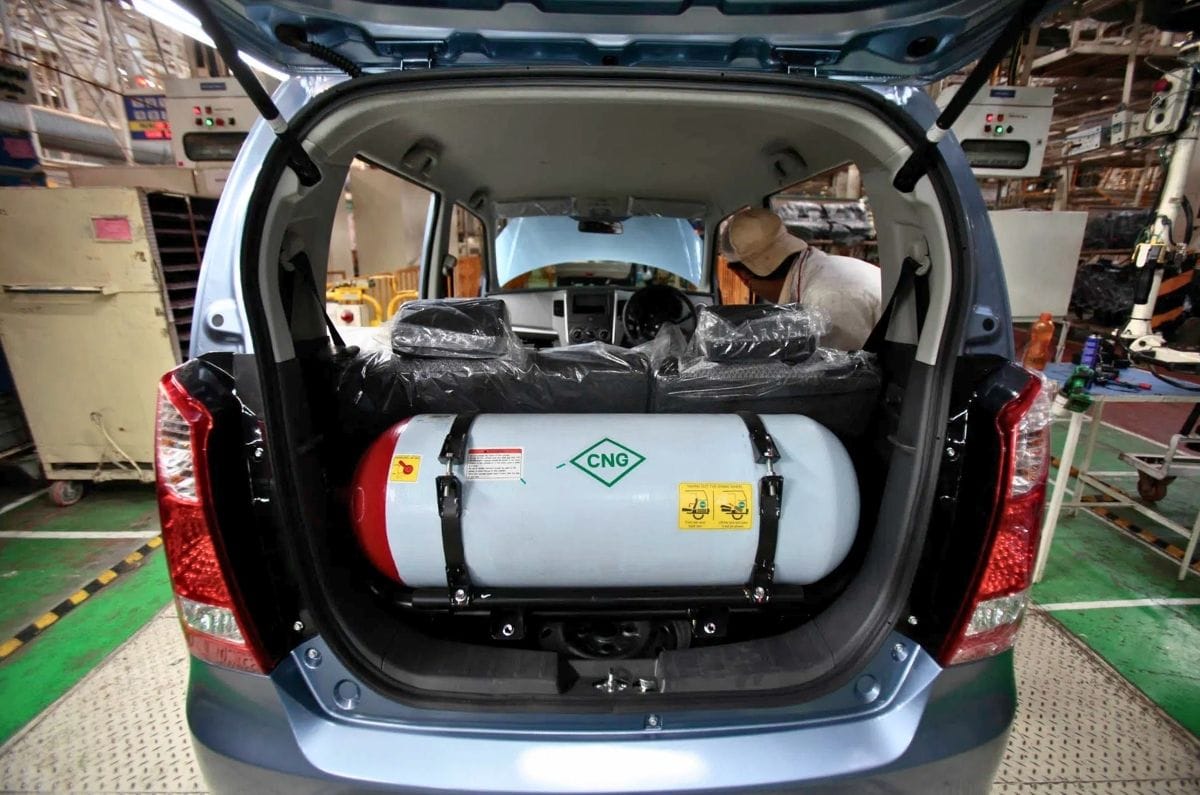
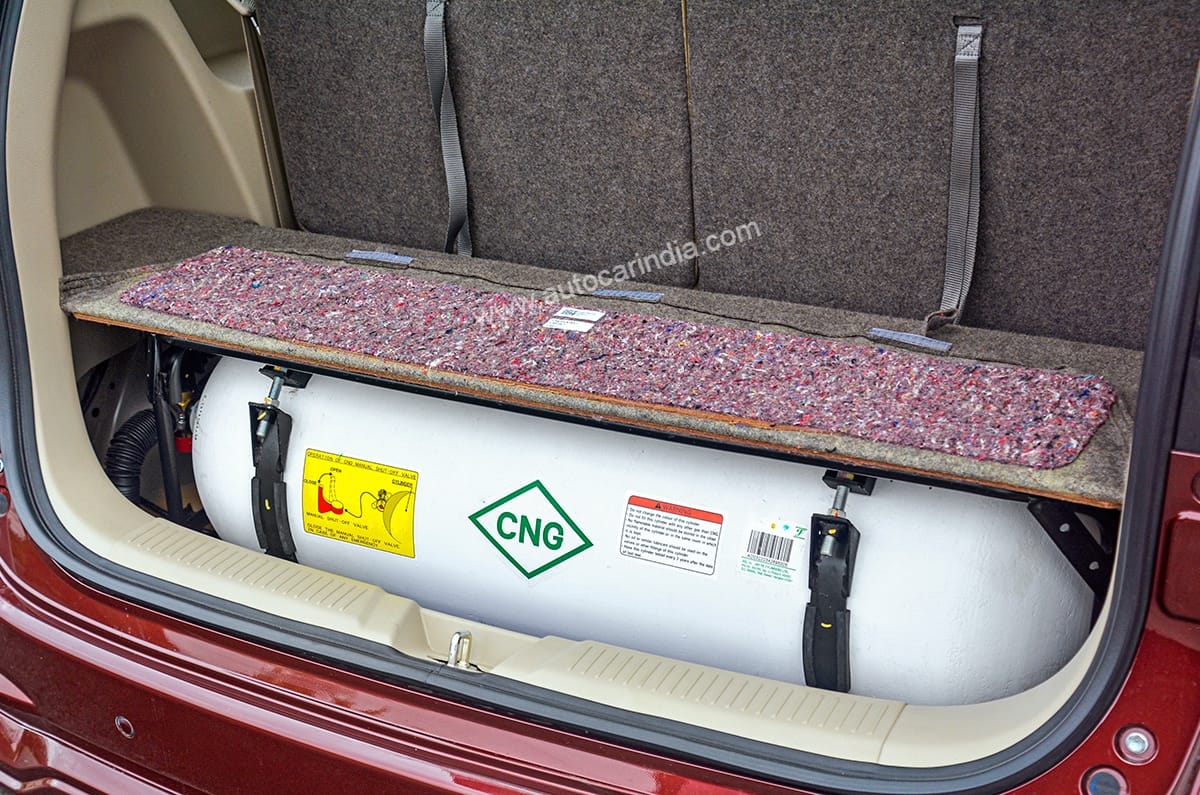
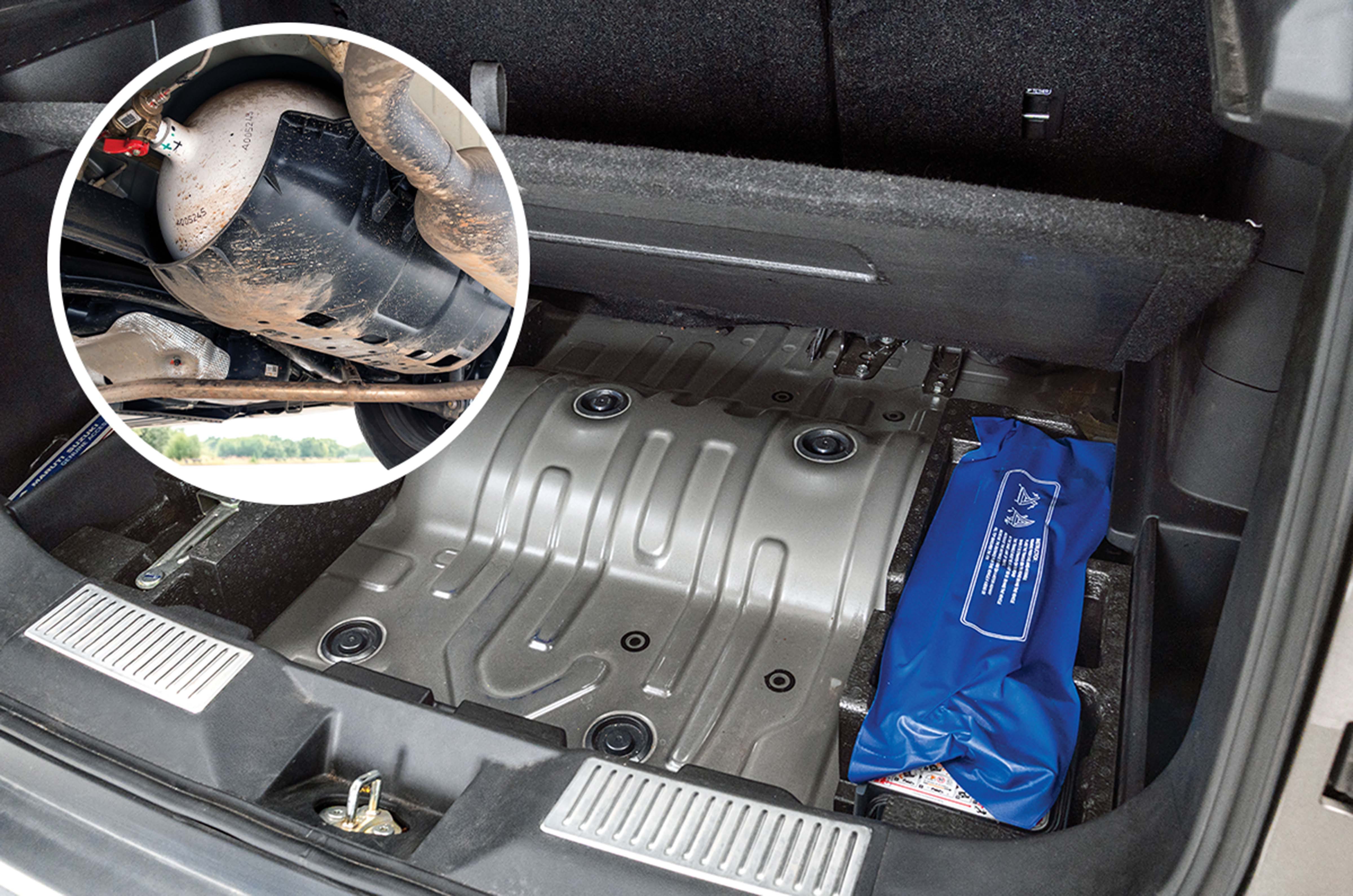
Maruti Ertiga’s factory-fitted CNG tank shown for representative purposes only.
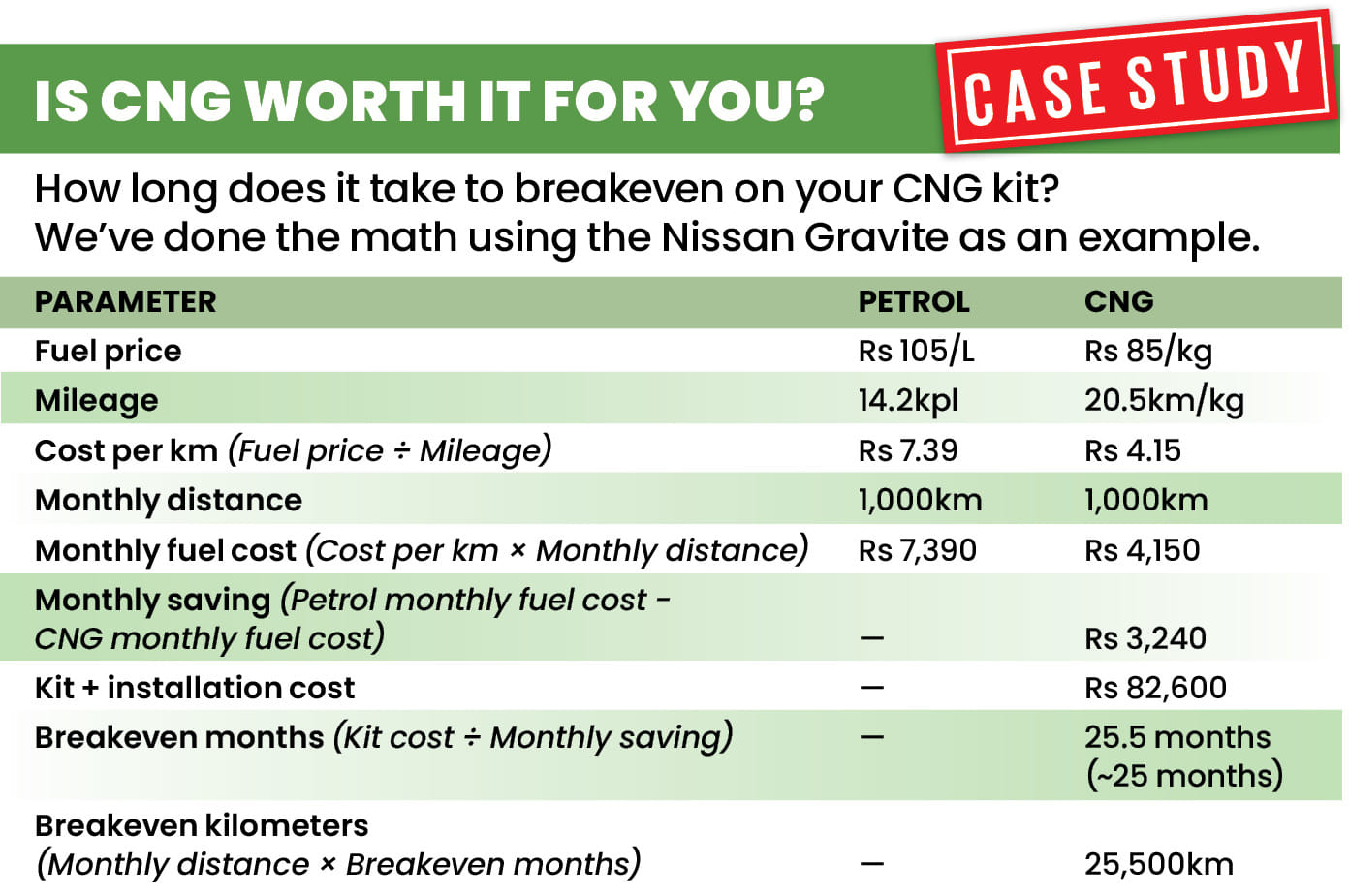
There is no denying the running cost advantage that CNG provides. However, when buying a brand-new car, a factory-fitted CNG version is still preferable to an aftermarket conversion simply because of the peace of mind. Once a car is out of warranty, though, a CNG conversion makes a great deal of sense. In most cases, the cost of the kit can be recouped within a couple of years, even with an average monthly running of around 1,500km.
However, the installer is just as important as the kit. Always opt for government-approved kits installed by approved installers with a strong reputation. Wherever possible, insist the installation is carried out without splicing into the original wiring and follow the recommended service schedule to ensure your car stays reliable.
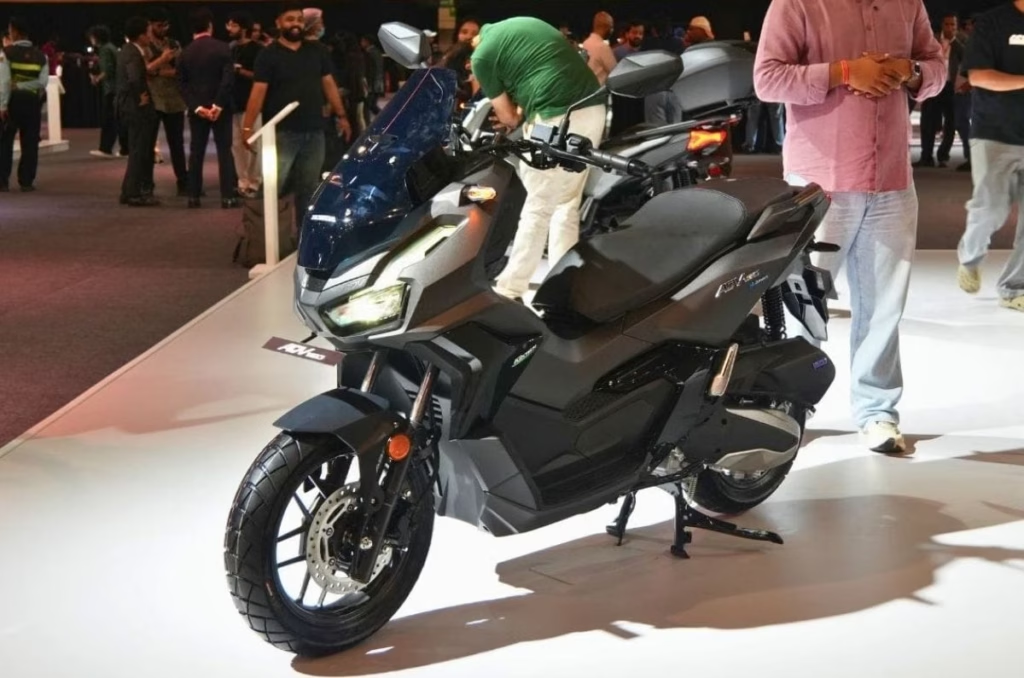
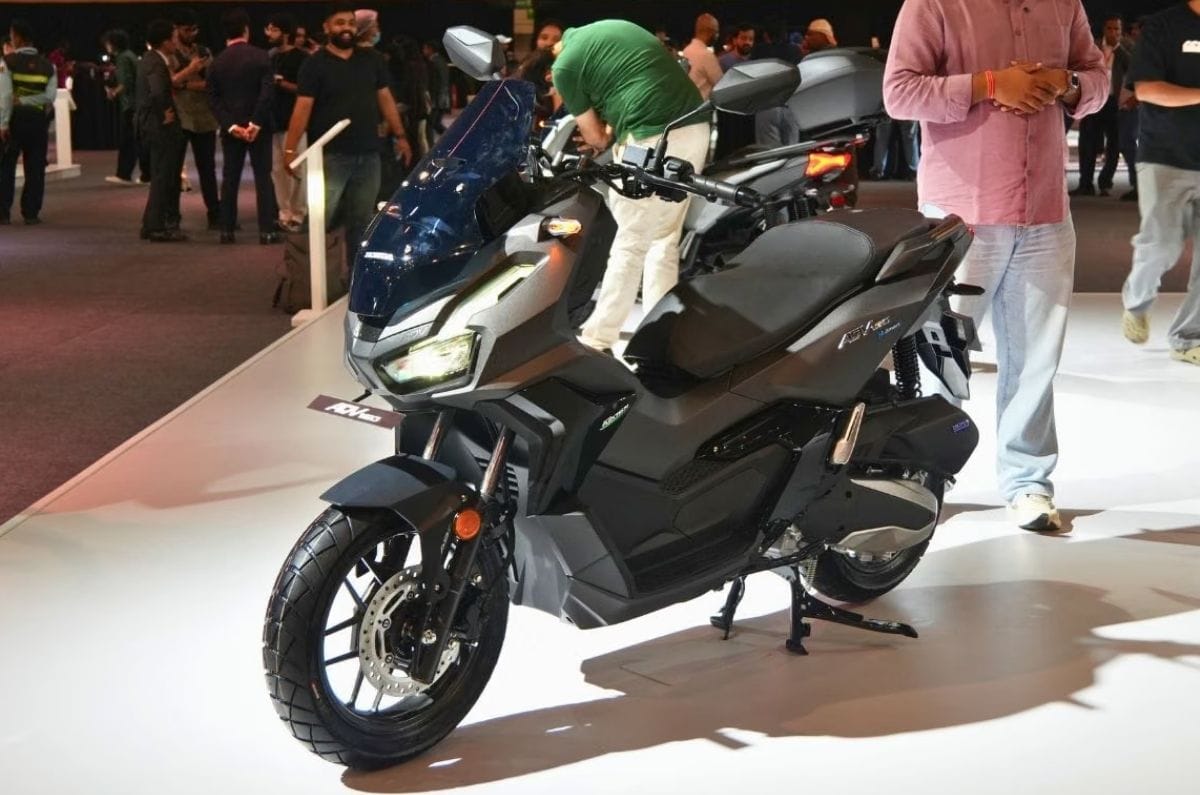
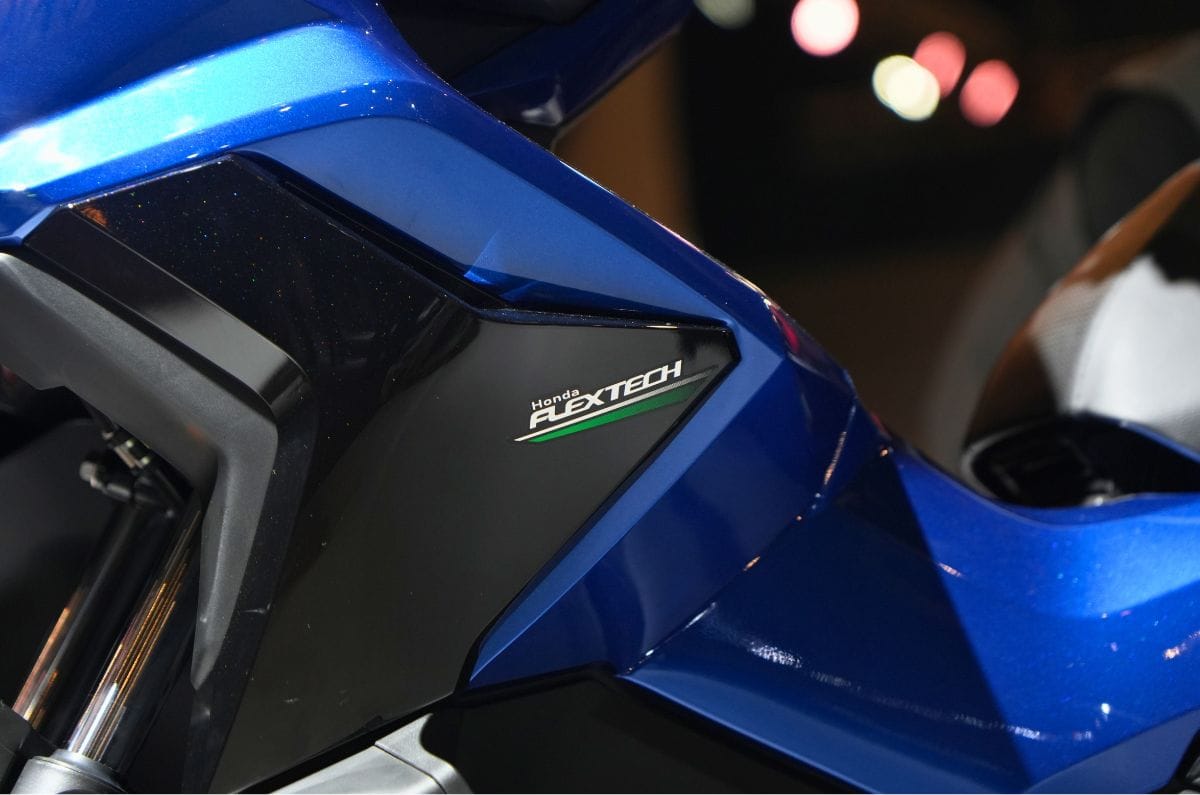
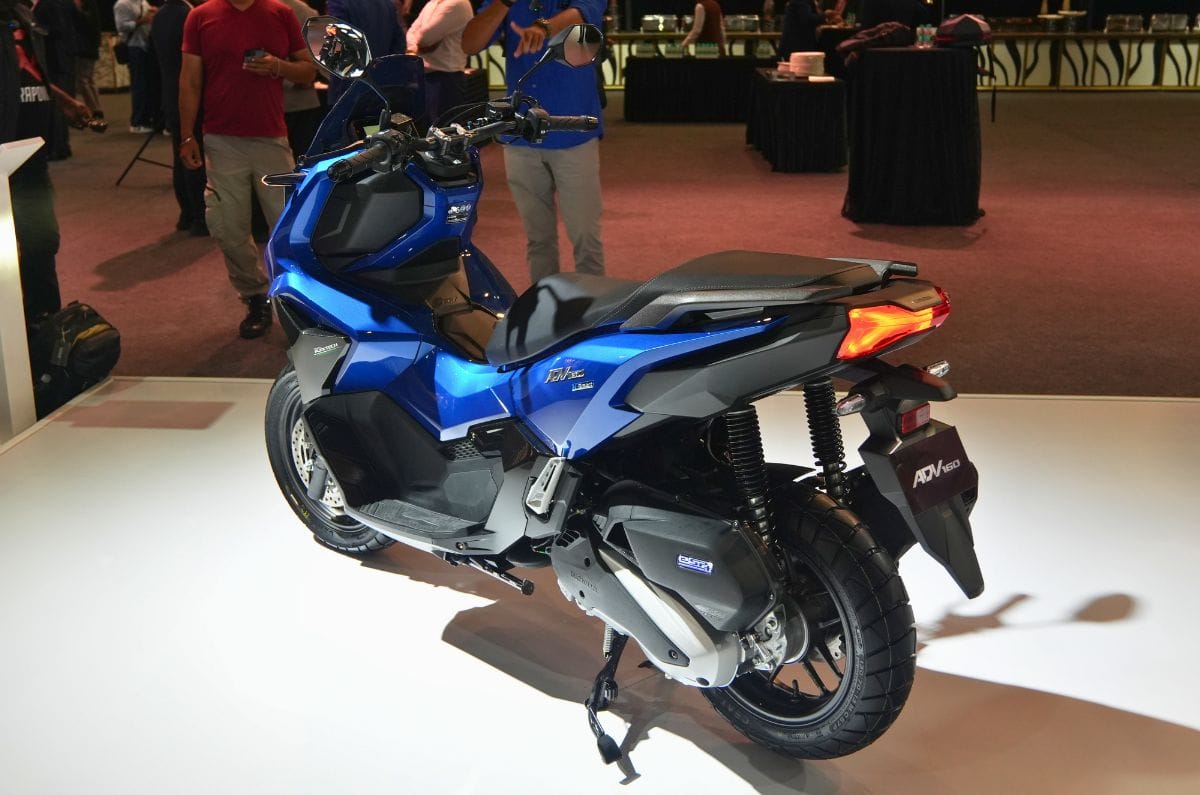
The ADV 160 marks Honda’s entry into India’s rapidly growing maxi-scooter segment, but it has one key differentiator that sets it apart from the liquid-cooled maxi-scooters already on sale – E85 flex-fuel compatibility. Here are a few things you need to know before buying India’s first flex-fuel-compatible scooter.
1. How much does the Honda ADV 160 cost?
The Honda ADV 160 is priced at Rs 1.70 lakh (ex-showroom, Bengaluru), making it one of the more premium scooters on sale in India.
2. Is the Honda ADV 160 E85 compatible?
Yes. The ADV 160 is Honda’s first two-wheeler in India to be compatible with E85 fuel. Its engine can run on petrol containing anywhere between 0 and 85 percent ethanol, without the rider having to make any changes.
3. What engine does the Honda ADV 160 get?
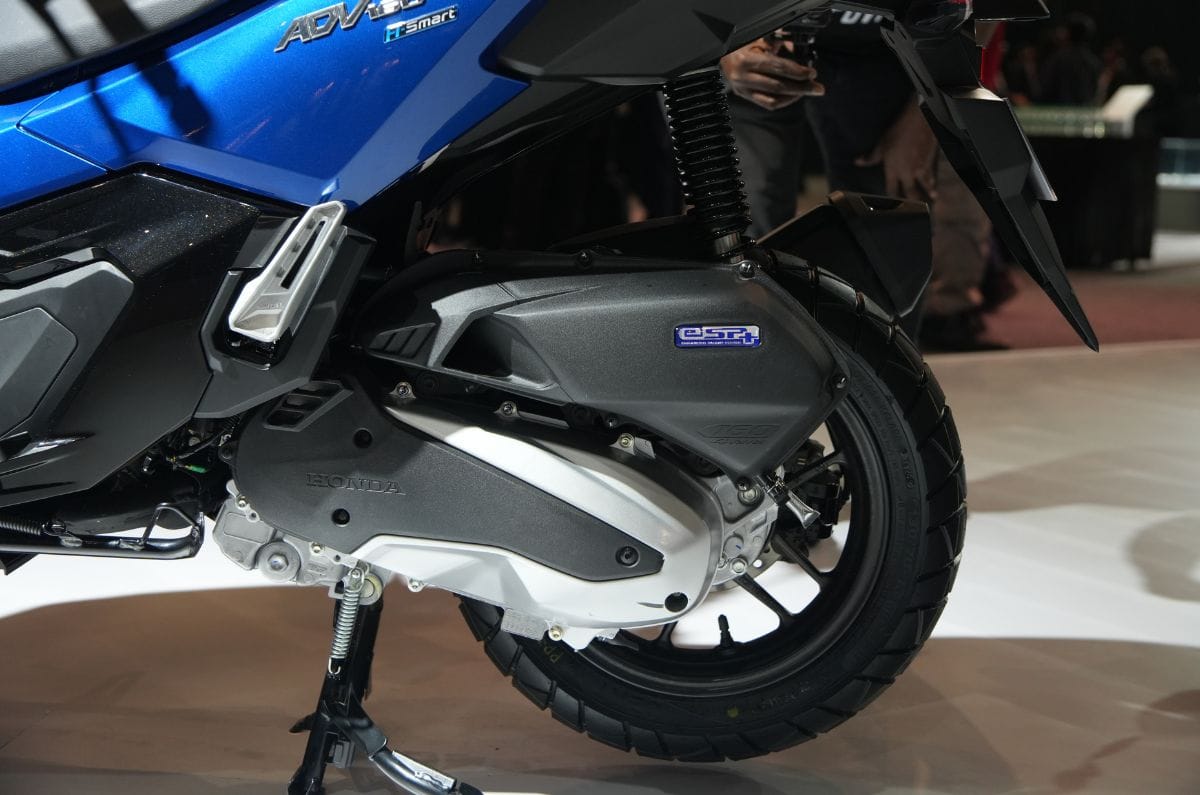
Power comes from a 156.93cc, single-cylinder, liquid-cooled engine producing 16.3hp and 14.9Nm. It is paired with a CVT automatic gearbox.
4. How heavy is the Honda ADV 160?
The ADV 160 tips the scales at 133kg kerb, which is noticeably heavier than a conventional 125cc scooter, although it also packs in a higher-displacement engine that puts out more power than a conventional air-cooled mill powering regular scooters.
5. How much ground clearance does the Honda ADV 160 have?
The ADV 160 has 165mm of ground clearance, which, along with its larger wheels, should make it better suited to broken roads and speed breakers than most conventional scooters.
6. What are its wheel sizes?
It gets a 14-inch front and 13-inch rear wheel, both larger than those on most mainstream Indian scooters and in line with some of its compatriots.
7. Does the ADV 160 get ABS?
Yes, but only single-channel ABS, operating on the front wheel with a rear disc brake.
8. Does it get traction control?
Yes. Honda’s HSTC (Honda Selectable Torque Control) is standard, helping reduce rear-wheel slip on low-grip surfaces.
9. How practical is the ADV 160?
It gets 27 litres of underseat storage, along with a USB Type-C charging port. While adding to the premium appeal, the 5-inch TFT instrument cluster also offers smartphone connectivity through Honda RoadSync.
10. Is the ADV 160 actually an adventure scooter?
Not in the traditional sense. Despite its styling, ground clearance and larger wheels, the ADV 160 is primarily a road-going scooter. Its hardware is better suited to dealing with poor roads and occasional rough surfaces than serious off-road riding.
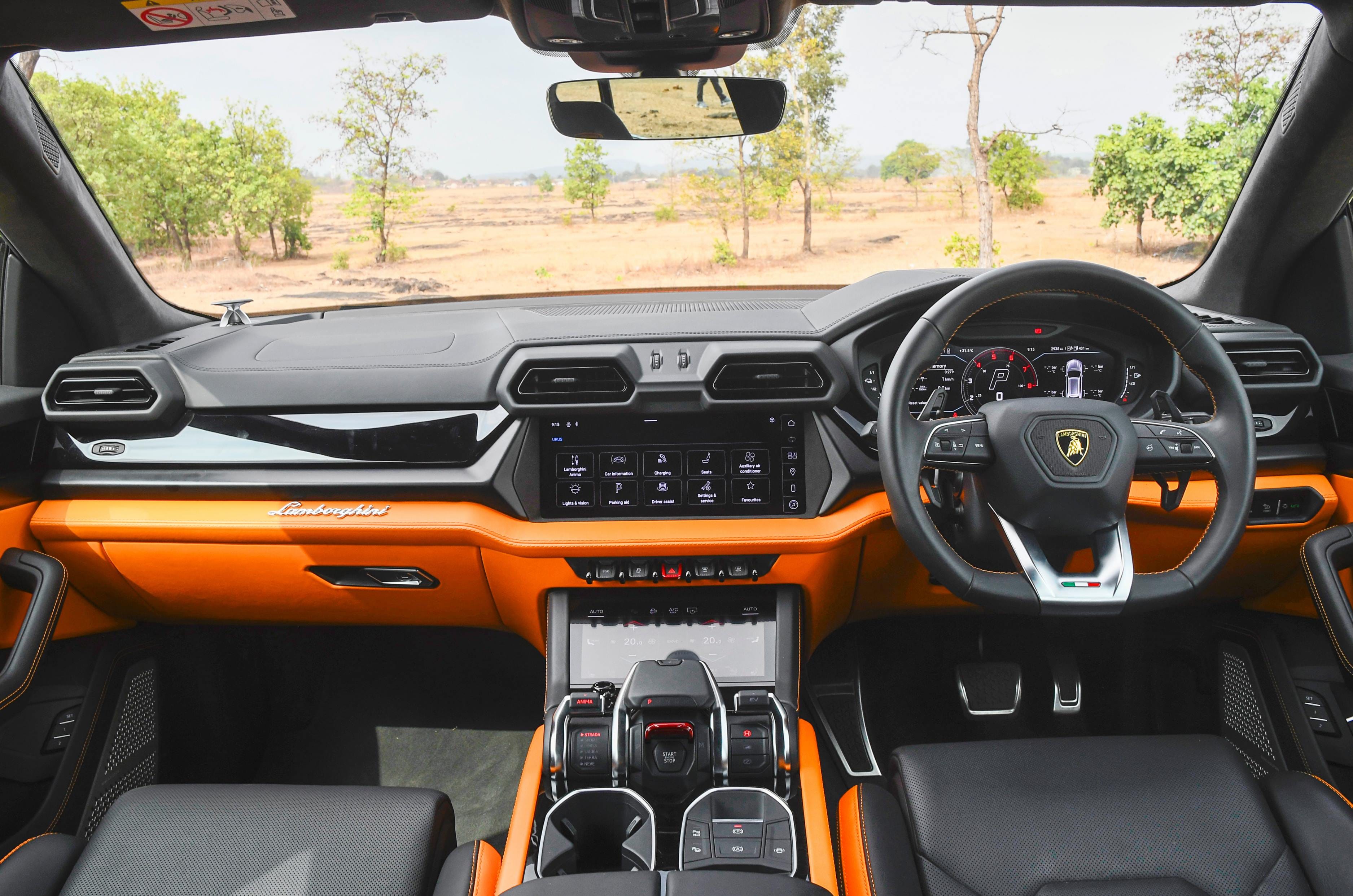
When introduced originally, the Lamborghini Urus rewrote the playbook of what an SUV could be. Sharp to look at, ferociously fast and with a mighty V8 soundtrack, the Urus has become the benchmark of performance SUVs. Now though, thanks to ever tightening regulations, the Urus has had to pivot to hybridisation. But has that diluted the experience? We got behind the wheel of the Lamborghini Urus SE to answer that question.
Lamborghini Urus SE Exterior Design and Engineering – 9/10
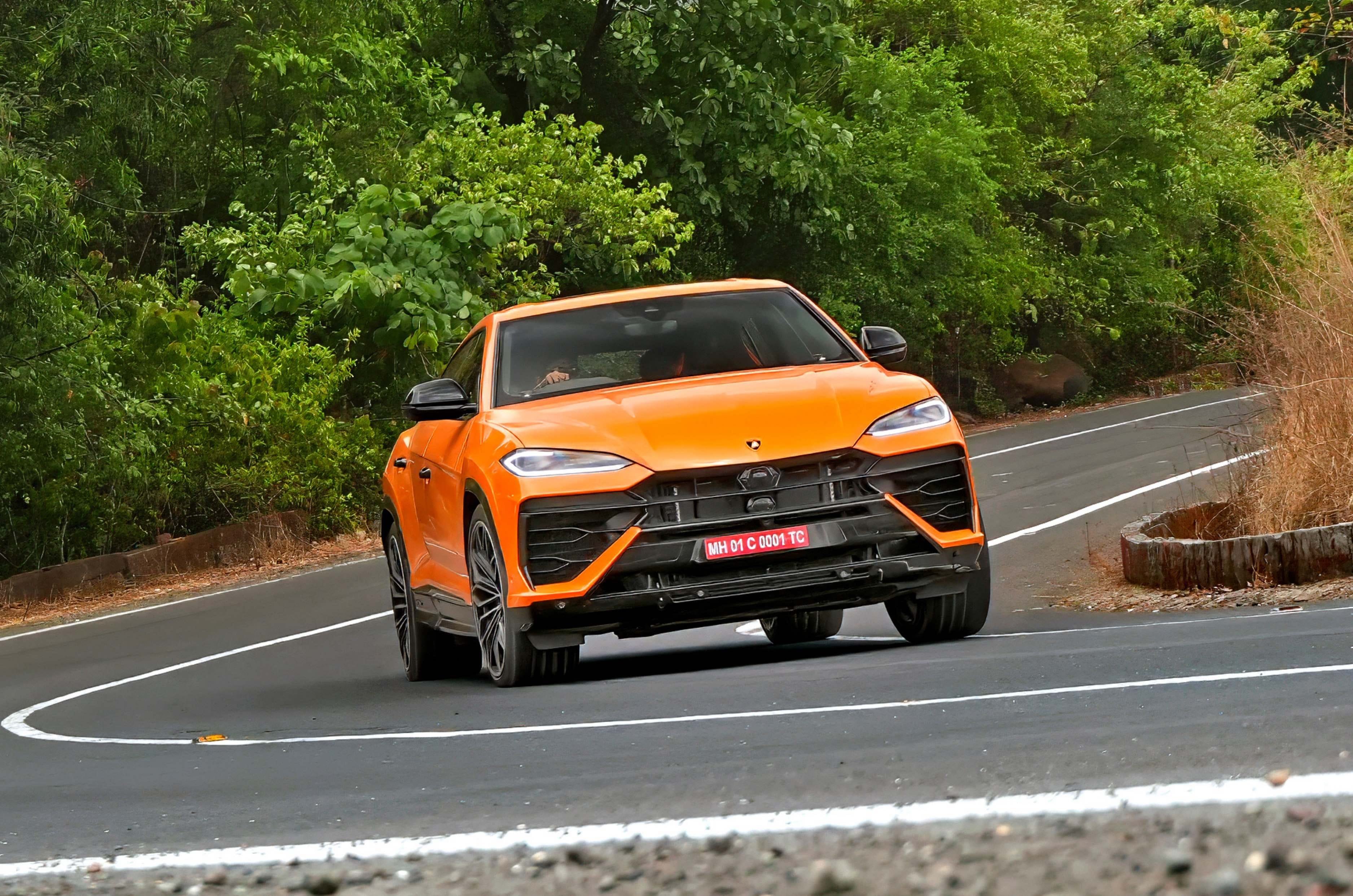
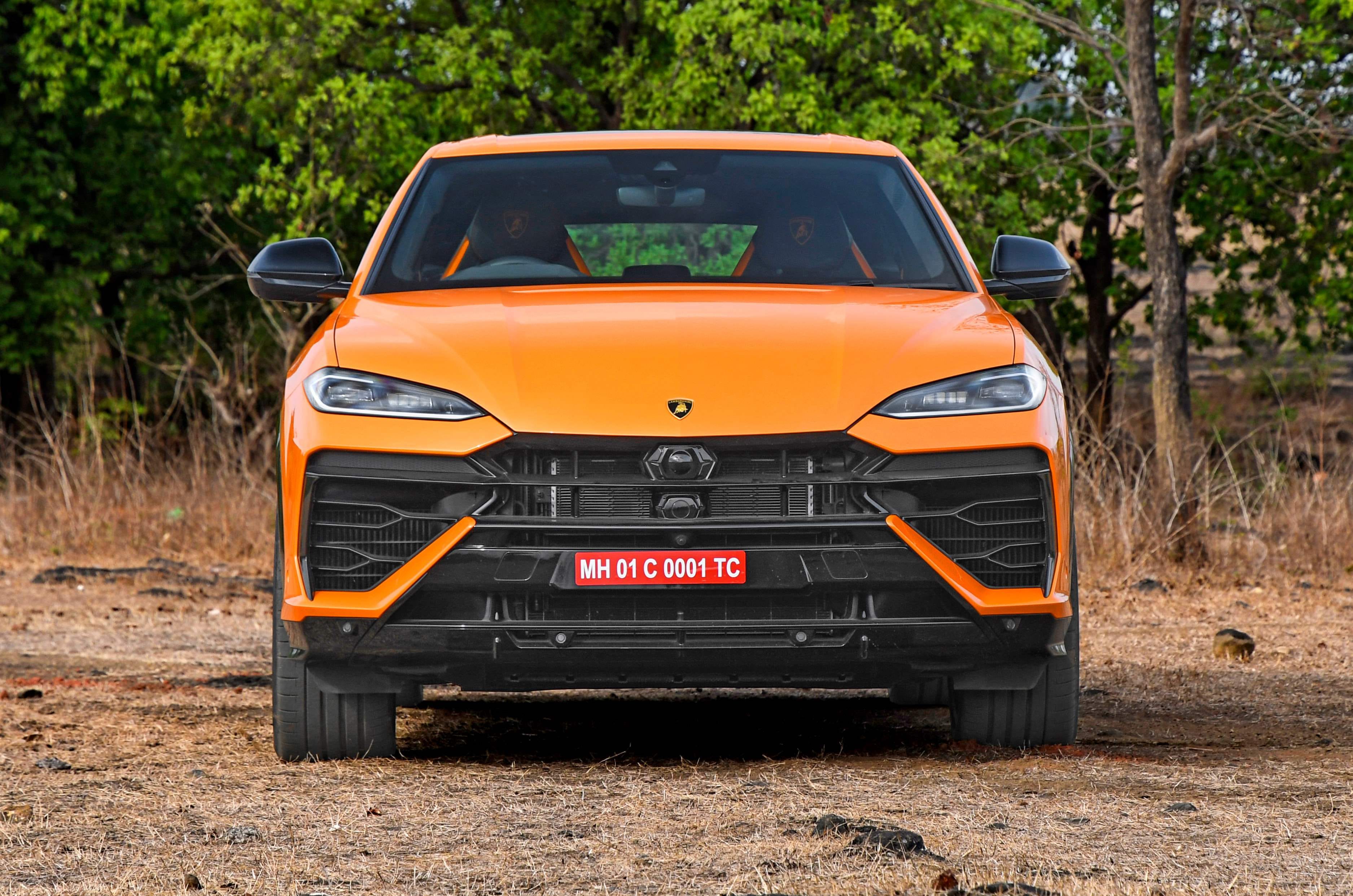
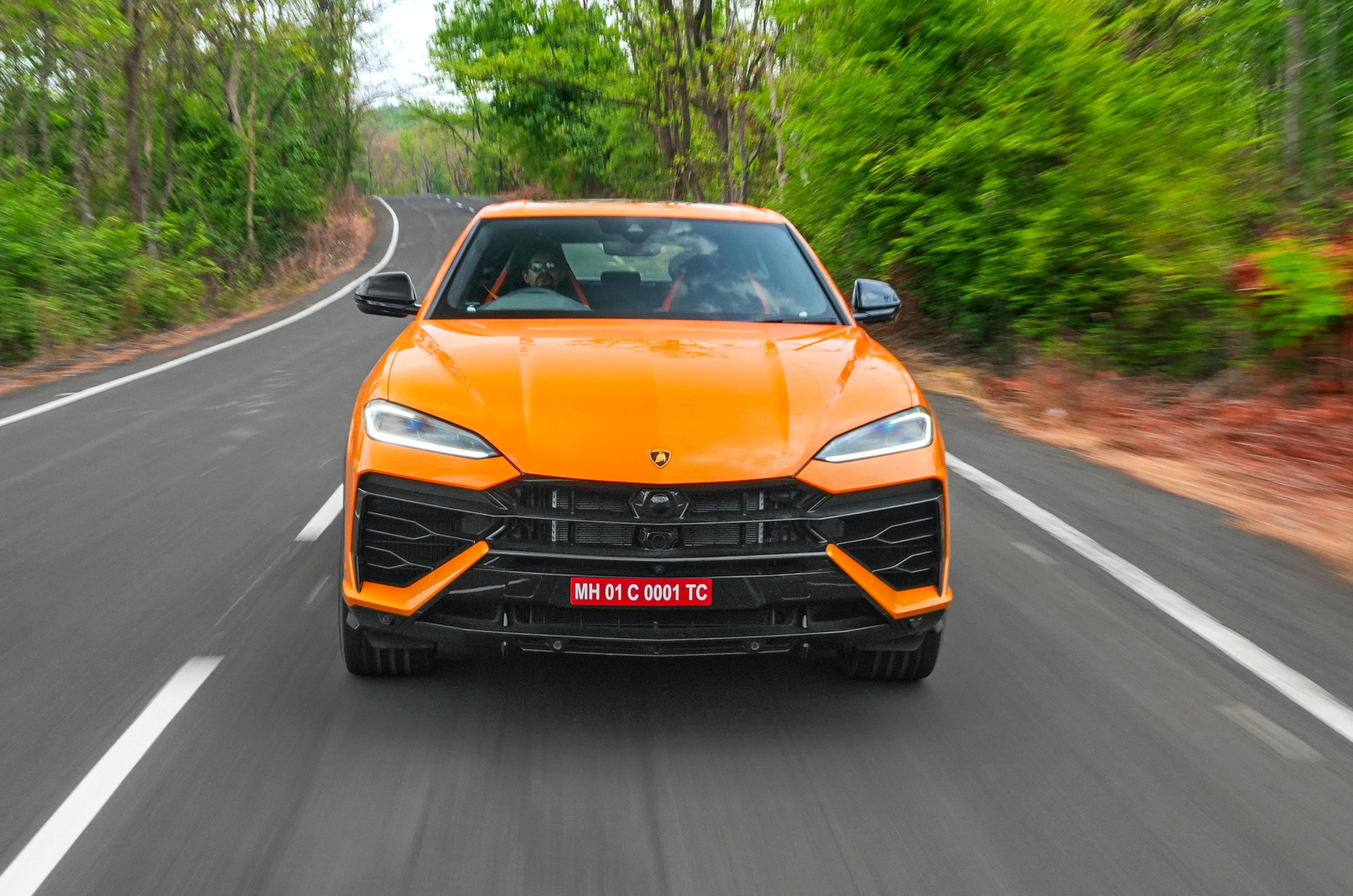
Urus SE has a more rounded-off design than its predecessor, but it’s no less menacing.
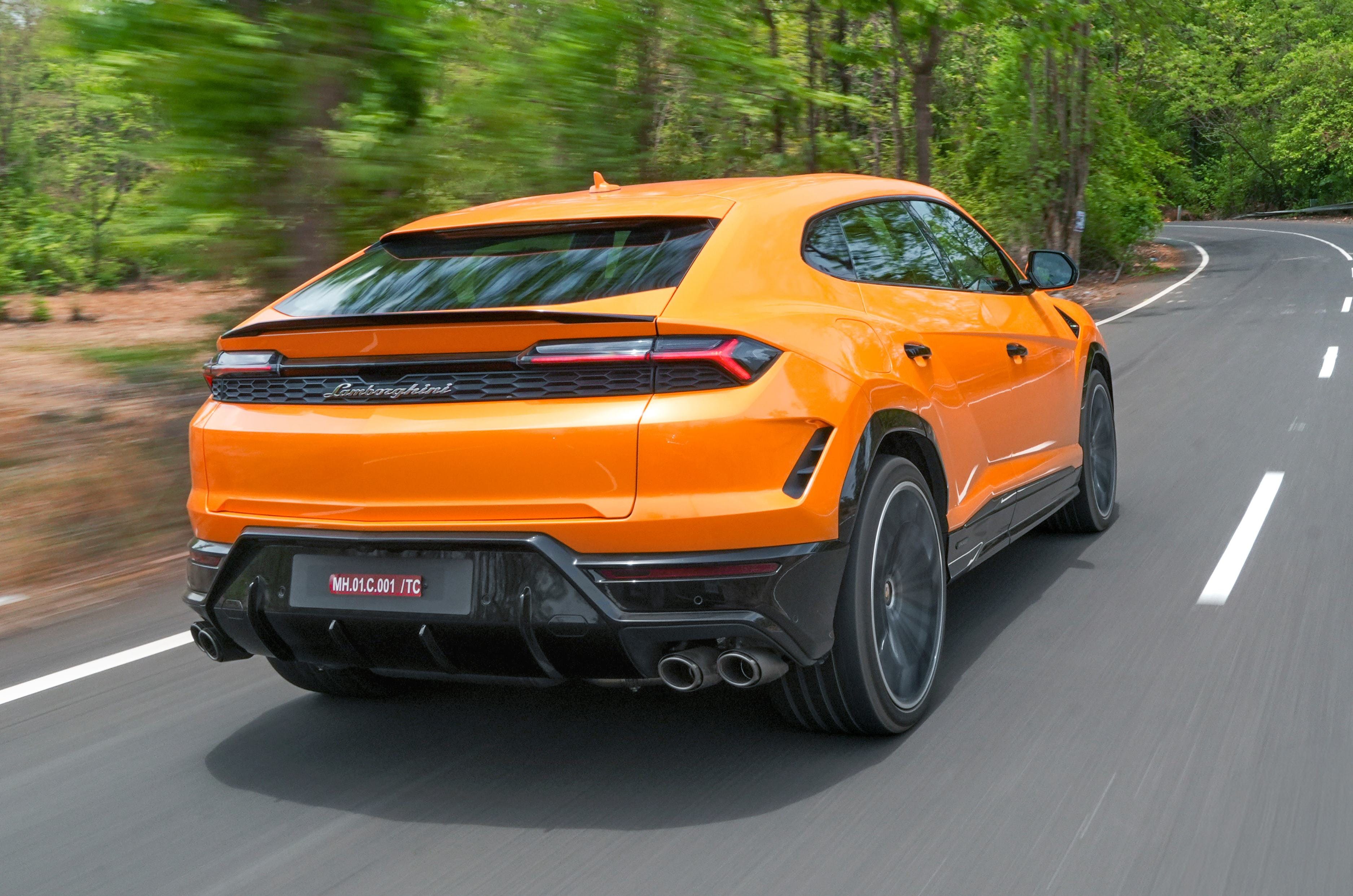
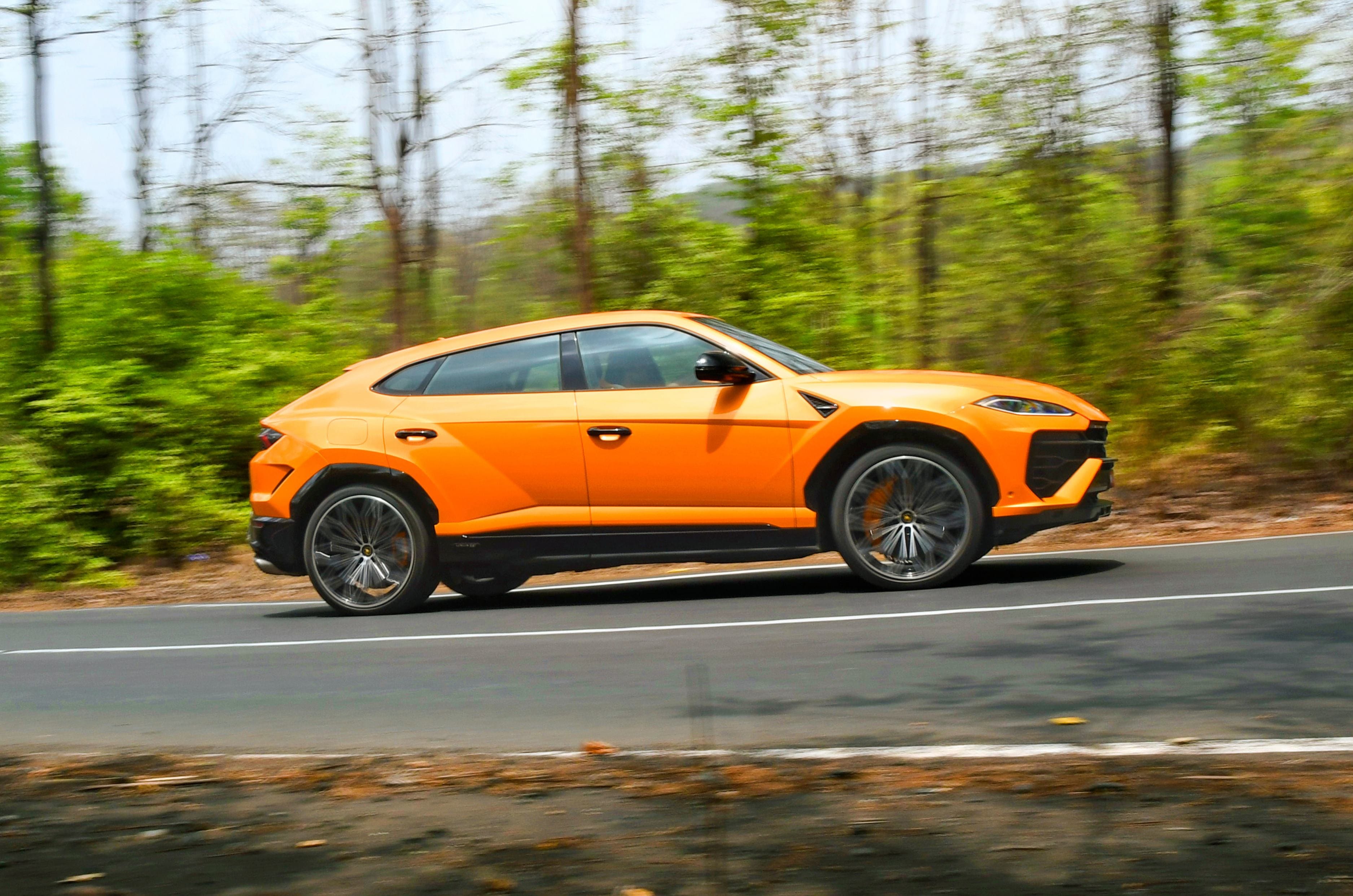
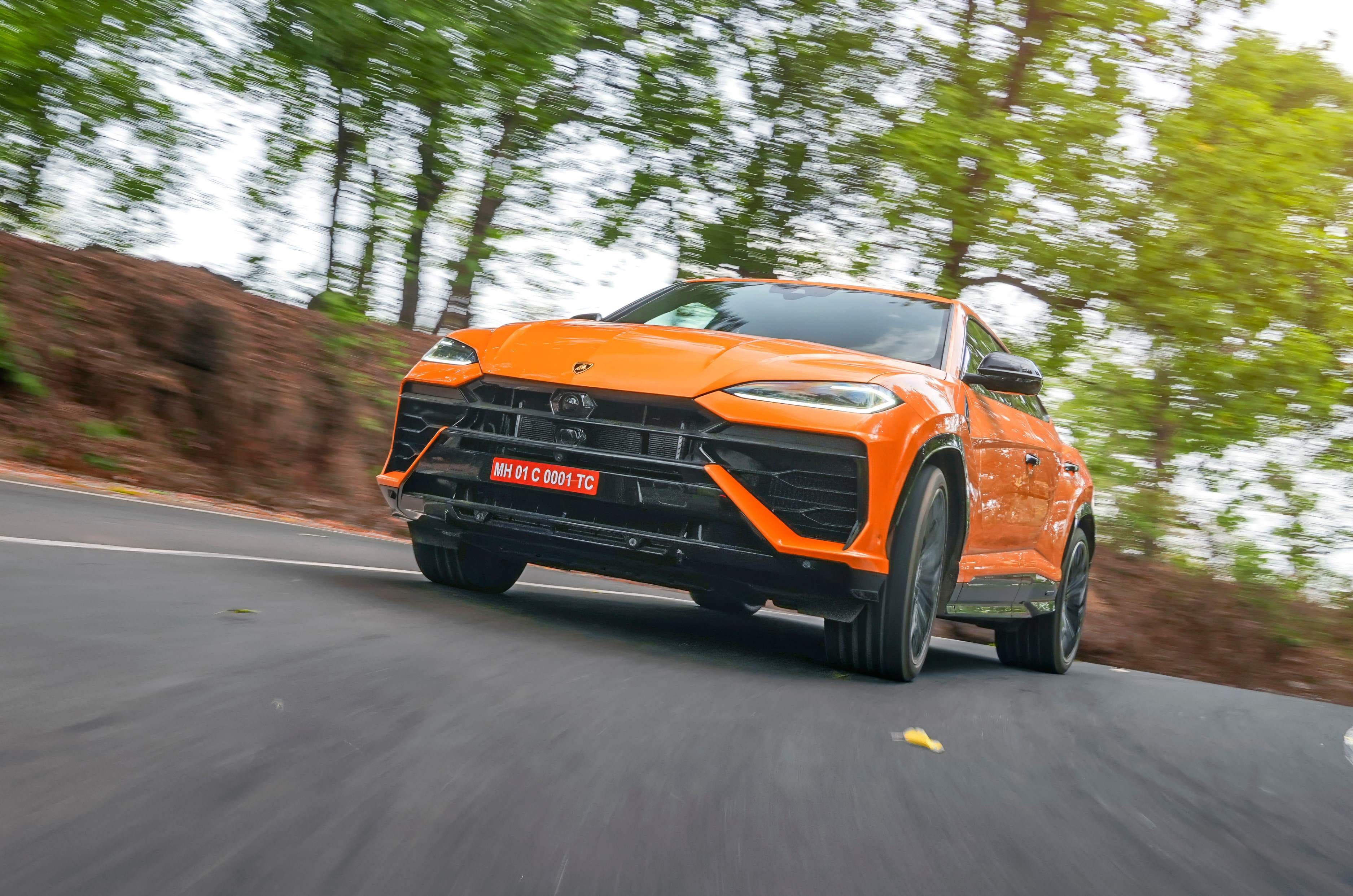
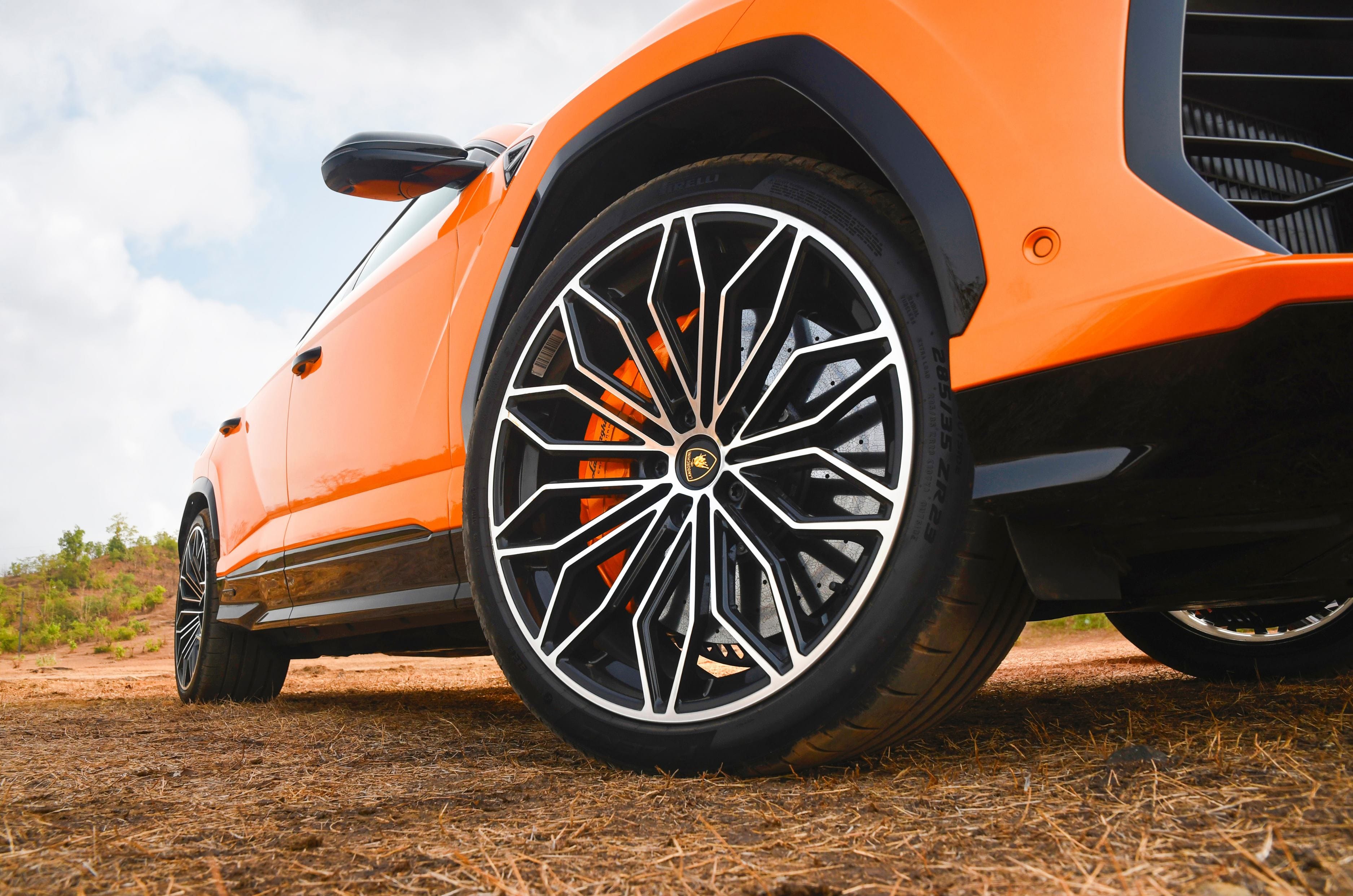
In comparison to the older Urus and the mad Urus Performante, the Urus SE does appear a bit softer and more rounded off. But that’s not to say it lacks presence by any means. It’s still full of sharp angles and surfaces, the Arancio Borealis optional paint on our test car looked stunning as did the diamond-cut, multi-spoke 23-inch alloy wheels. Up front, there’s a new bonnet, redesigned bumper and a larger front grille, while the slimmer headlights are now matrix LED units and a different DRL signature.
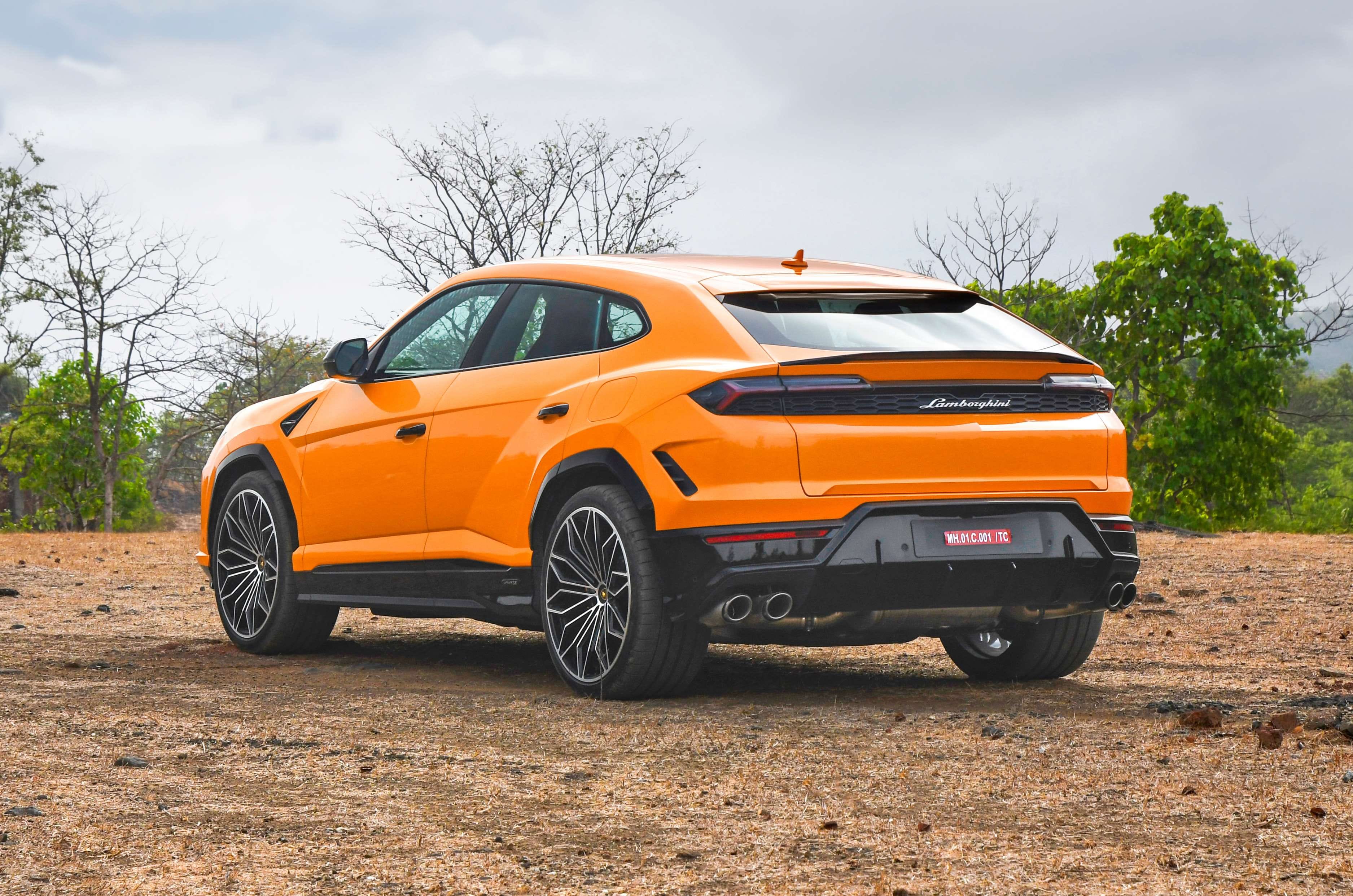
Rear end features quad-exhaust setup, sporty raked roofline, and a hexagon-patterned grille connecting the tail-lights.
The differences are immediately apparent at the rear too, with a new tailgate, rear bumper and a connecting tail-light grille. As always, Lamborghini’s Ad Personam personalisation programme offers an enormous scope for customisation, so buyers can tailor the Urus SE as per their needs. It remains a substantial machine, measuring 5.12m long and 2.02m wide, with a 3m wheelbase. Kerb weight is a hefty 2,505kg, which makes the fact that it can sprint from 0-100kph in just 3.4sec all the more impressive.
Lamborghini Urus SE Interior Space and Comfort – 8/10
Dashboard layout is premium and feature-loaded, and gets a lot of Lamborghini theatrics.
Inside, the Urus SE retains the familiar Lamborghini approach of combining the ambience of a supercar with the practicality expected of an SUV. However, the changes here are less apparent than those on the outside. The centre console is ever so slightly redesigned with a new array of toggle switches under the touchscreen. The touchscreen itself is larger than the earlier Urus, with updated graphics and a slicker user interface.
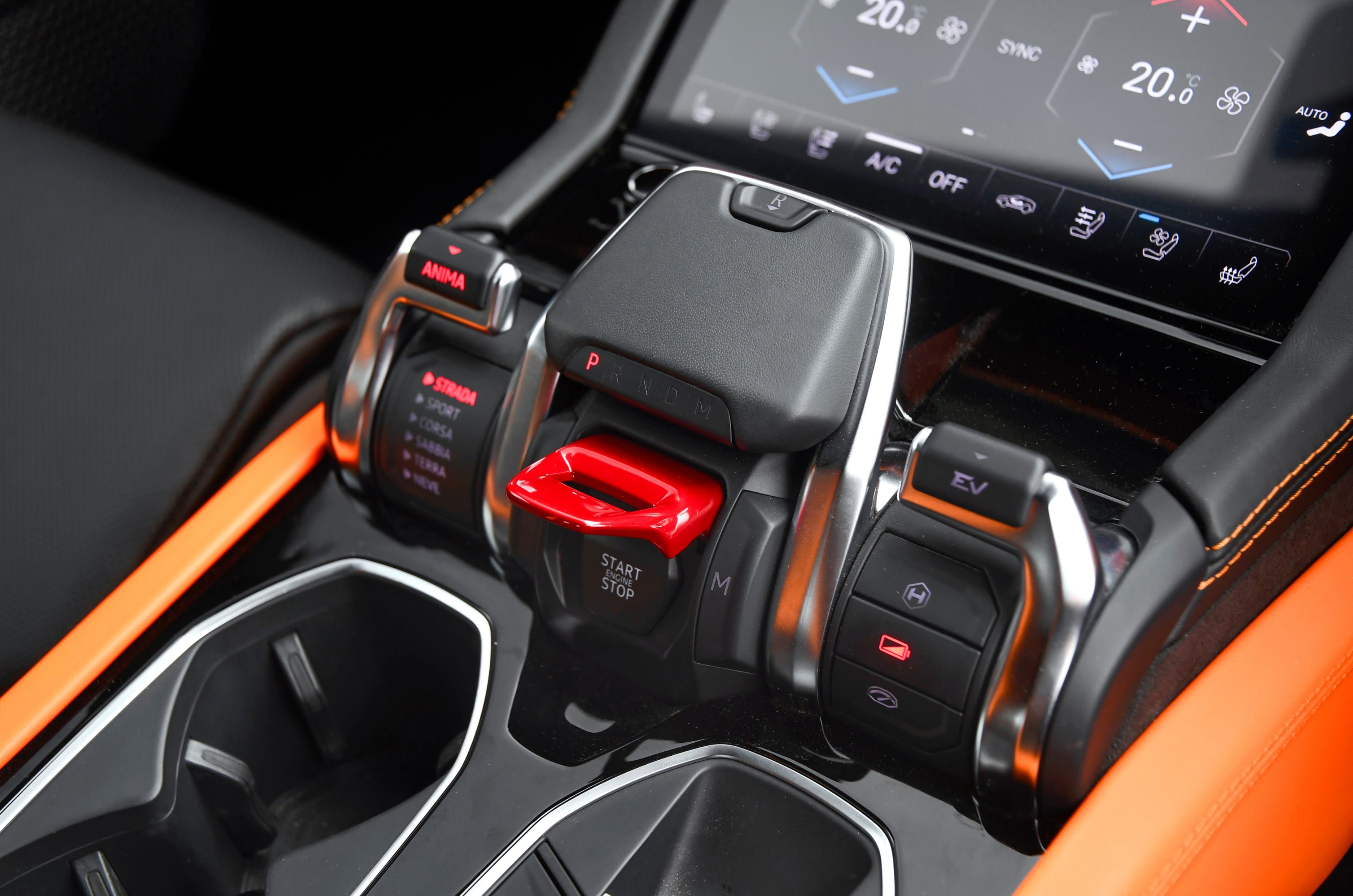
Lamborghini’s signature flip-up engine start/stop button is inspired by those of fighter jets.
There’s plenty of visual theatre, too, and it looks just as extroverted as the outside. Standout elements include the hexagonal AC vents, the Lamborghini badging on the dashboard, the aircraft-style levers for the drive modes and of course, the fighter-jet inspired flap-up engine start/stop button. Lamborghini has also introduced new colour and trim combinations with the SE, with our test car featuring the same predominantly orange theme as on the outside.
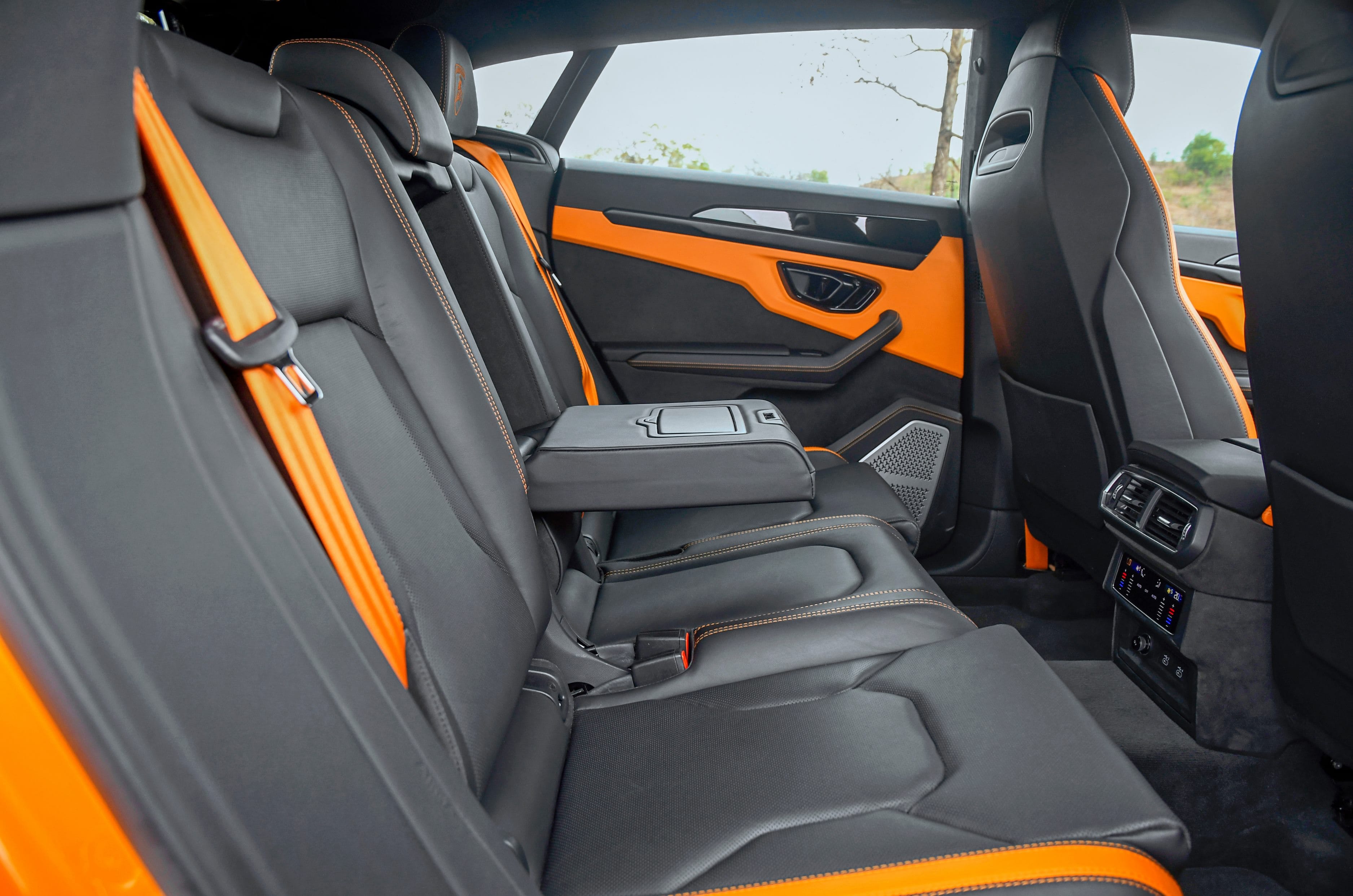
Rear space is surprisingly plentiful given the Urus SE’s sporty proclivities.
Despite all the drama, this remains a practical SUV. The long wheelbase means there’s plenty of legroom at the rear and it’s wide enough for three too, though taller passengers may find headroom a bit tight thanks to the tapering roofline. The front seats are large, well padded and the optional Lamborghini crest on the headrests just adds to the ambience. The glovebox is decent sized, there’s cupholders and the boot offers 454 litres of capacity.
Lamborghini Urus SE Features and Safety – 8/10
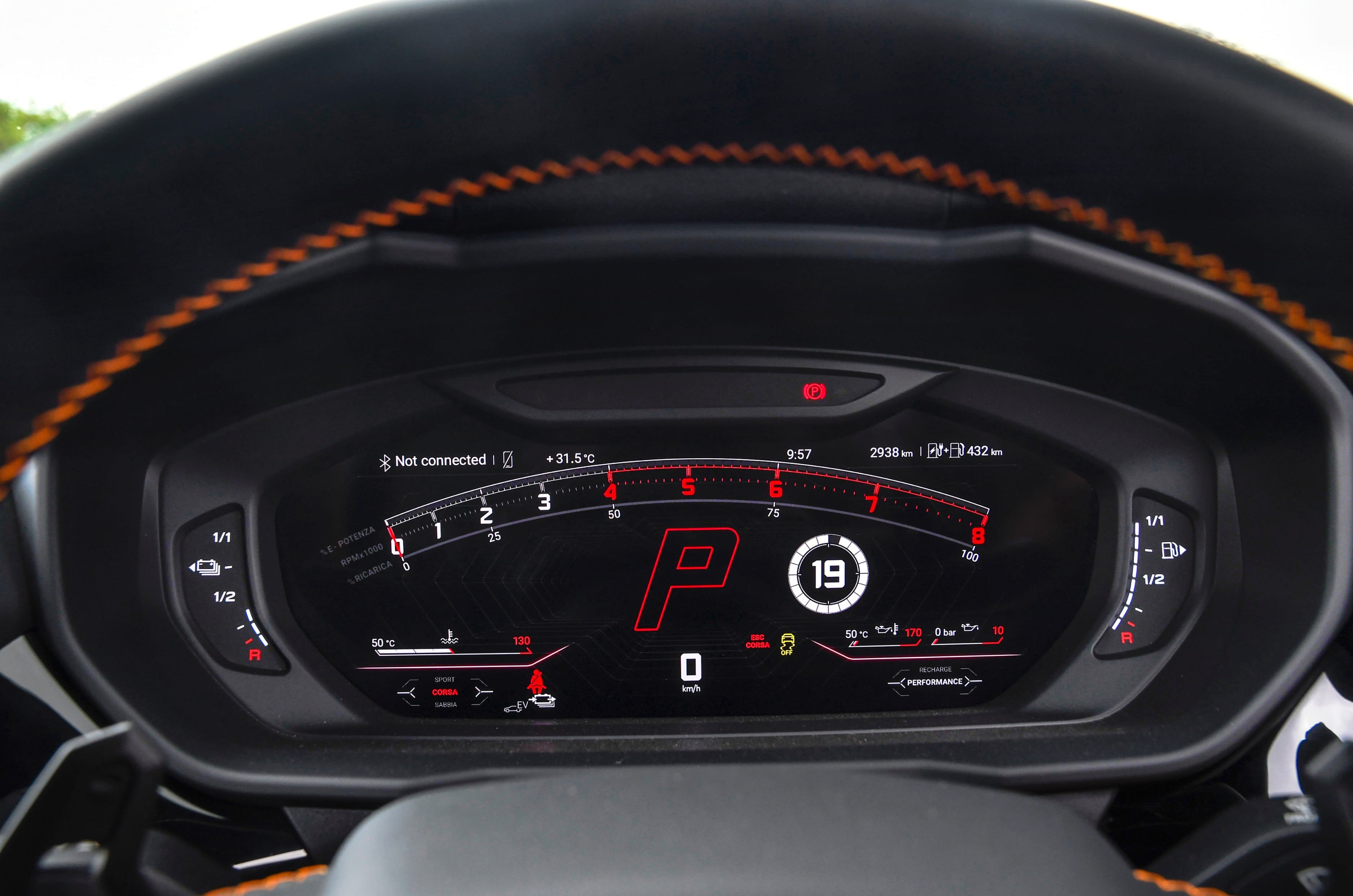
Info-packed driver’s display interface can get confusing at times.
As standard, the Urus SE gets plenty of features like the three screen setup – for the infotainment, AC system and driver’s display – wireless Android Auto and Apple CarPlay, LED matrix headlamps, four-zone auto climate control, leather upholstery, 360-degree camera, connected car tech and so much more.
The SE also gets a comprehensive technology upgrade, with the new user interface being one of the more significant updates. It features a carousel-style layout on the touchscreen to access the numerous sub-menus it packs in, while the driver’s display shows all sorts of data pertaining to the hybrid system, navigation, media and other car-related info. Navigating all the sub-menus can get confusing, however.
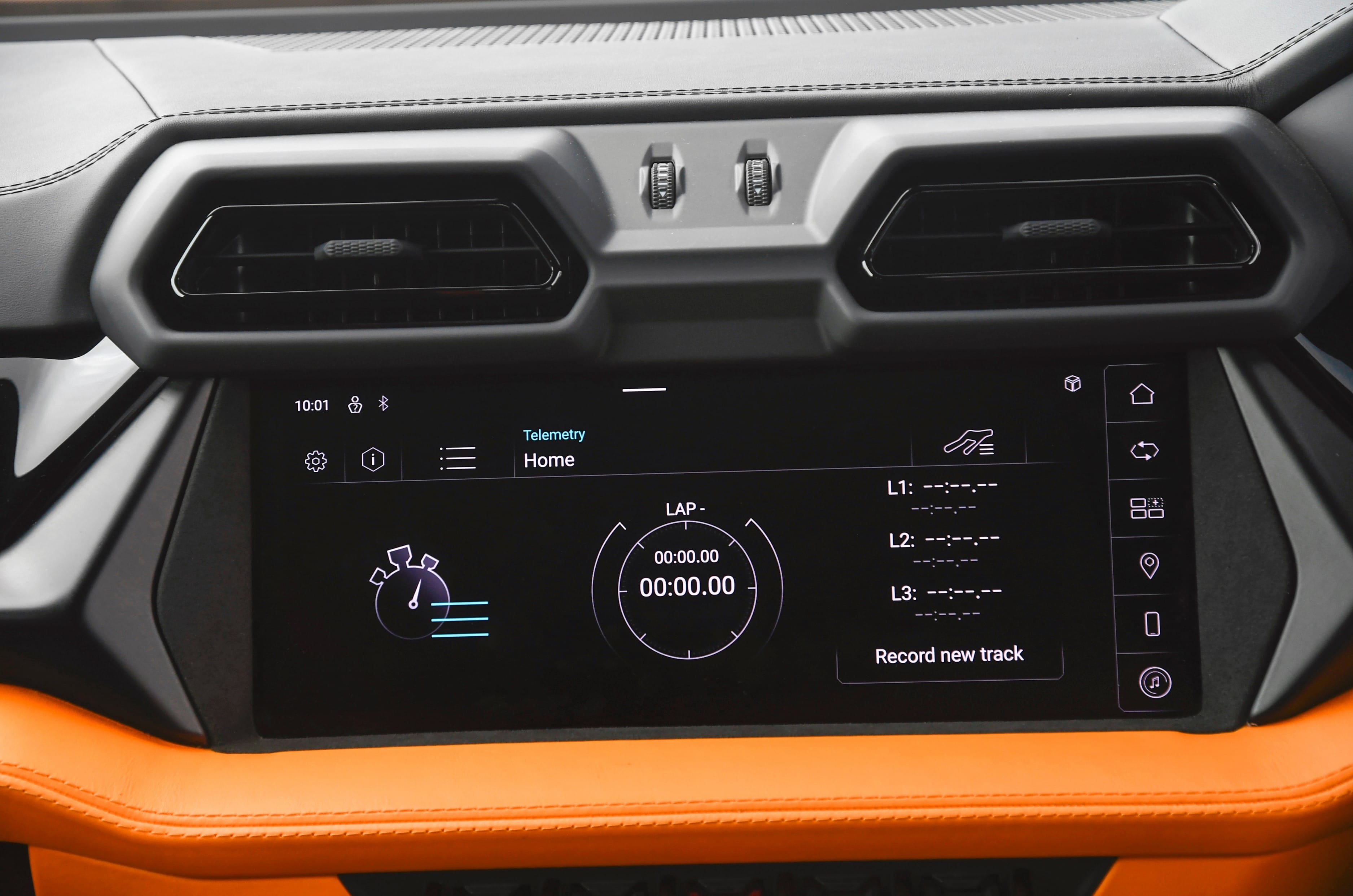
New Lamborghini Telemetry function comes with over 300 pre-loaded racetracks to record lap times on.
There’s also ‘Lamborghini Telemetry’ that can display lap times and sector information for more than 300 preloaded circuits, as well as record new tracks. Connected services extend to navigation, real-time traffic, remote locking, vehicle-status information, remote charging, remote cooling of the cabin and various safety and security alerts.
Also part of the package is ADAS tech like autonomous emergency braking, lane keep assist, adaptive cruise control and more. But there’s a lot that’s optional too, like a large panoramic sunroof, a Bang and Olufsen 3D audio system and a whole lot more, apart from the usual trim, material and stitching options. On the whole, the Urus SE is well-equipped but some of the optional extras really could have been standard fitment given the asking price.
Lamborghini Urus SE Performance and Refinement – 9/10
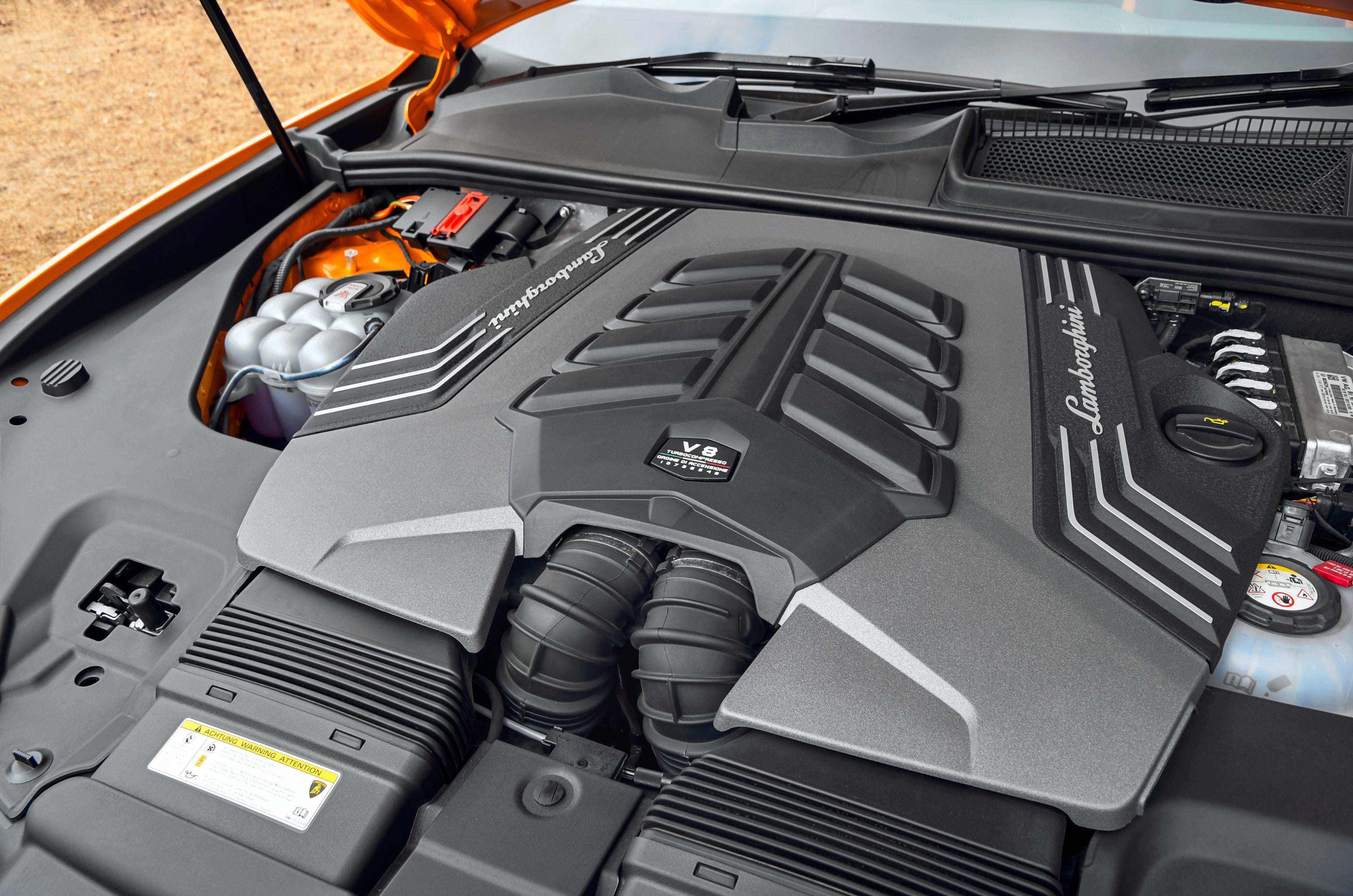
Twin-turbo V8 and electric motor develop a combined 800hp and 950Nm.
As for the numbers, they are, predictably, staggering. The Urus SE combines the familiar 4.0-litre twin-turbo V8 with a 25.9kWh lithium-ion battery and a permanent-magnet synchronous electric motor for an eye-watering combined output of 800hp and 950Nm. The result is 0-100kph in 3.4sec and 0-200kph in 11.2sec, with a claimed top speed of 312kph. Those figures put the Urus SE firmly in supercar territory, despite its size and weight.
And it does feel like one from behind the wheel too, especially in a straight line. Acceleration is relentless and it feels borderline scary on narrow, two-lane roads. The Urus SE always feels like it has power in reserve, especially when you’ve got the powertrain fully dialled up. There’s Strada mode for everyday driving, Sport for when you want to have a bit more fun and of course, Corsa for when you want a proper scare. Couple that with the hybrid system in its full performance mode, and the SE can really feel overwhelming. But if you don’t drive with a heavy foot, it’s surprisingly cordial and sedate. The SE really has a Jekyll and Hyde character about it.
Unrelenting acceleration can get scary on public roads.
What makes the SE more interesting than simply being a faster Urus is the way the electric motor has been integrated. Of course, it’s to help with emissions and meet regulations, but it’s also to boost performance. In EV mode, it can reach up to 135kph and go as far as 66km. But with a flick of a switch, it can turn from silent to violent.
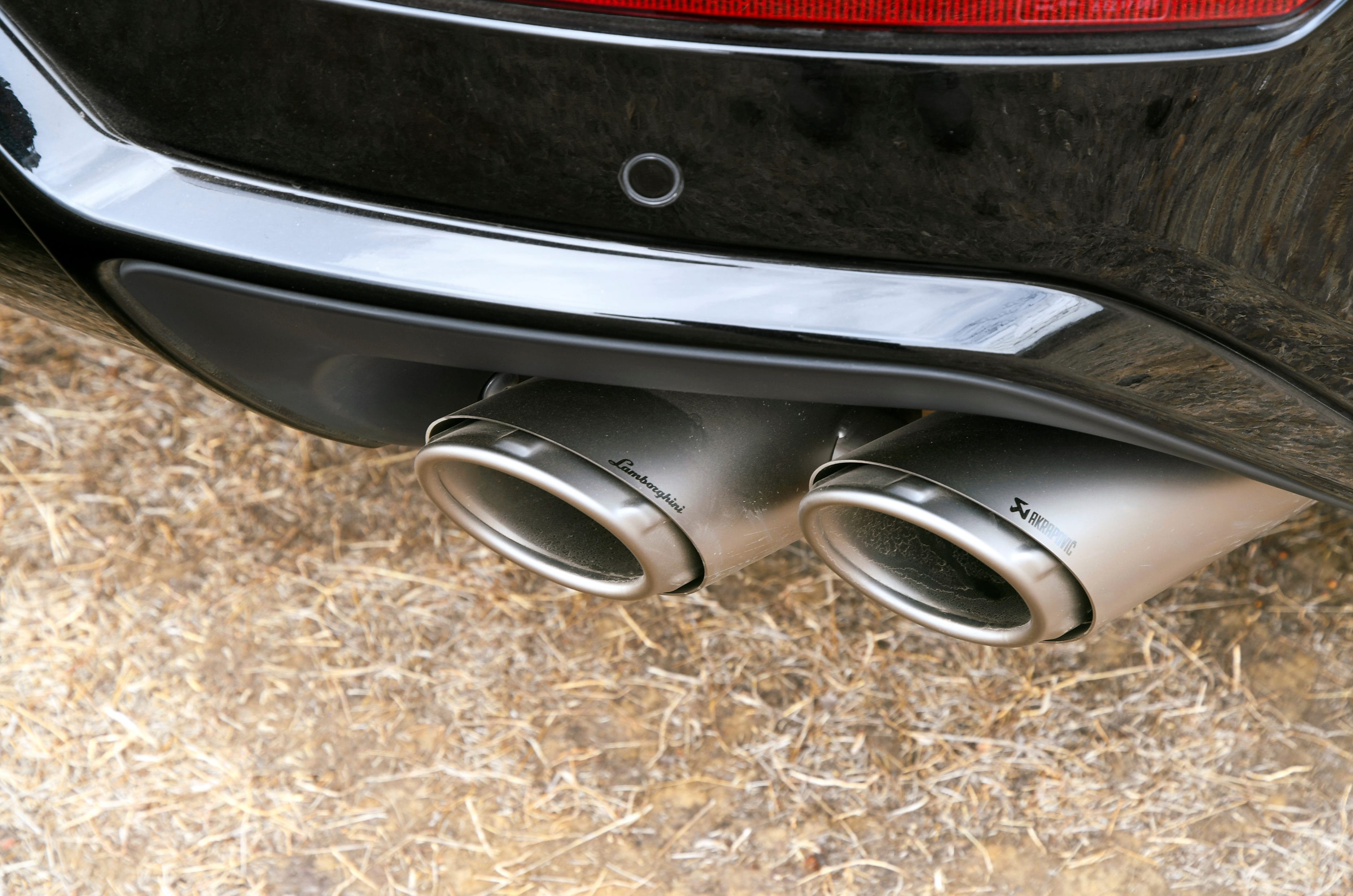
The V8 also hasn’t become anonymous with the hybridisation. It still makes its presence felt, especially through the optional Akrapovic exhaust our car came fitted with, but it does feel a bit subdued. It’s also piped through the speakers, which doesn’t feel entirely ethical but it does help its case.
Optional Akrapovic exhaust system helps enhance the V8’s aural character.
Lamborghini has also paid considerable attention to keeping performance consistent, with additional cooling for the powertrain and brakes. Not that we ever managed to push it so hard to test out that claim. And apart from the aforementioned drive modes, there’s even some off-road modes baked in, but how many buyers actually take their prized possession off the grippy stuff remains to be seen.
Lamborghini Urus SE Mileage and Efficiency – 7/10
This is where the Urus SE’s plug-in hybrid system makes a big difference. Lamborghini quotes a WLTP combined energy consumption of 4.67km/kWh plus 17.54kpl. With a discharged battery, however, combined claimed fuel efficiency falls to 7.75kpl.
Thanks to the 25.9kWh battery, the Urus SE claims a 66km all-electric range.
The headline figure therefore needs some context. The SE’s efficiency advantage is greatest when the battery is regularly topped up. With a claimed 66km of EV range, many shorter daily journeys can theoretically be completed without the V8 needing to fire up at all.
For longer journeys, the hybrid system allows the electric motor and V8 to share the workload. But once the battery is depleted, this remains a 2.5-tonne SUV with a twin-turbo V8, so expectations of conventional-SUV fuel economy would be unrealistic.
Lamborghini Urus SE Ride Comfort and Handling – 8/10
Ride isn’t all that absorbent due to the low-profile Pirelli P Zero tyres.
The Urus SE uses a multilink suspension setup front and rear with semi-active dampers, all of which make this large SUV feel engaging around corners without sacrificing comfort. There is a sense of pliancy at low speeds with the ride firming up as speeds rise. Of course, riding on 23-inch wheels means you can feel potholes and road imperfections, but still it isn’t uncomfortable by any means.
Rear-wheel steering, semi-active dampers, e-diff, and torque vectoring help make the Urus SE a keen handler.
It also gets rear-wheel steering, which helps make it more manageable at lower speeds while contributing to agility at higher speeds. The SE feels eager to change direction and the e-diff and clever torque vectoring system do their best to keep things tidy around bends. You also get a good sensation from the steering which has good heft to it and the Pirelli P Zero tyres it comes with are grippy too. Lamborghini has also worked on the aerodynamics, with a new rear aero lip and diffuser increasing rear downforce by 35 percent over the Urus S. Overall though, the SE feels agile enough but there’s no escaping its heavy kerb weight.
Giant carbon-ceramic brakes peek out from behind the 23-inch alloys.
You’re also backed by massive carbon-ceramic brakes, measuring 440mm at the front and 410mm at the rear, and they do take some time getting used to. They may not have the initial bite like with conventional steel brakes, but the stopping power is immense and they stay consistent despite repeated hard braking, which is essential in something as big and powerful as the Urus SE.
Lamborghini Urus SE Value for Money – 7/10
The Urus SE is arguably the most convincing expression yet of Lamborghini’s super-SUV. More importantly, it hasn’t sacrificed the characteristics that make a Lamborghini feel special in the pursuit of meeting ever tightening restrictions. There’s still a V8, it’s still outlandish inside and out, and it still delivers a driving experience that goes well beyond what you’d expect from something this large. All of that while adding the benefit of the plug-in hybrid system for performance and efficiency, as well as properly usable EV range.
The Urus SE is the all-in-one Lamborghini.
At Rs 4.47 crore (ex-showroom, before options), of course, the Urus SE is expensive. But that’s almost beside the point. The Urus SE isn’t for those who expect rational value; it is for those who want a vehicle that can combine supercar pace, SUV practicality, luxury, all-electric driving and aspirational brand value all in one package. As a technological statement and a performance SUV then, the Urus SE makes a compelling case for Lamborghini’s hybrid future.
Over the last decade, CNG has gone from being a niche fuel used mainly by taxis to becoming the most popular alternative fuel in the Indian passenger vehicle market. Though driven mainly by rising fuel prices, an increasing choice of models with factory-fitted systems has also made CNG a mainstream choice. But what exactly is CNG?
What is CNG?
CNG, or Compressed Natural Gas, is composed primarily of methane (CH4) – typically between 85 and 98 percent. The rest consists of minor amounts of other hydrocarbons like ethane and butane, as well as trace amounts of nitrogen and carbon dioxide. Instead of being stored as a liquid, CNG is kept in a gaseous state.
Why is CNG compressed?
CNG’s volumetric energy density (energy/litre) is significantly less than petrol’s, so an amount sufficient for a decent driving range would take up way too much space. However, by compressing the gas to around 200 to 250 bar, its volume reduces roughly 250 times, thus enabling a manageable tank size.
Where do we get CNG from?
India gets its CNG from a roughly even mix of domestic natural gas production and imported liquefied natural gas (LNG). LNG is essentially CNG super-cooled to -162deg C and stored as a liquid, making it highly dense for easy transportation. Additionally, India also produces CNG from organic matter like food waste, sewage and cattle dung, though for now it is in small amounts. The methane derived from these sources is compressed into Bio-CNG.
How is CNG distributed?
CNG moves through gas distribution pipelines and into refuelling stations. These stations that are connected directly to the pipeline are called online stations and are common in major cities. In areas without a pipeline connection, CNG is supplied via mobile cylinder banks (called cascades) that are filled from a mother station and delivered by truck; the receiving station is referred to as a daughter station.
Is CNG safe?
Modern automotive CNG systems are very safe. The cylinders are designed to withstand pressures well beyond normal operating levels and are equipped with pressure relief and automatic shut-off valves. Methane is lighter than air, thus if a leak occurs, it disperses upward quickly, and while methane is an odourless gas, it is mixed with a chemical to give it a pungent aroma, so you can detect a leak. That said, because CNG is stored at very high pressure, cylinders require periodic inspection and testing as specified by the manufacturer.
What are the advantages of CNG?
1. Lower running costs
CNG’s significantly lower price means the cost per kilometre of running a vehicle on the gas is typically 30-50 percent lower than petrol by today’s fuel prices. The lower cost is, quite simply, the largest contributor to the fuel’s popularity. However, there are other benefits too.
2. Cleaner emissions
CNG burns cleaner with lower CO2 emissions and minimal particulate matter. The formation of sulphur oxides (SOX) and nitrogen oxides (NOX) is also lower with CNG. Thus, it is considered to be a clean or environmentally friendly fuel. When compared to diesel fuel, the reduction in particulate matter is even more significant.
3. Cleaner engine internals
CNG mixes very uniformly with air and leaves almost no carbon deposits when burned. Thus, an engine running CNG generally stays cleaner than when running on petrol. This can be seen on the spark plugs that stay cleaner. However, the higher combustion temperatures that CNG engines typically run at put extra thermal stress on the plugs. On the whole, though, they tend to last a bit longer and stay cleaner too.
What are the disadvantages
1. Lower range
Despite being compressed, CNG still stores much less energy per litre than liquid fuels. Thus, the range-to-volume ratio is lower with CNG than with petrol or diesel fuel.
2.Longer refueling
CNG stations are concentrated around major cities and highways, and given the rising popularity of CNG, there are long queues. Furthermore, filling pressure depends on the pump’s pressure and the number of vehicles, so it can take longer to fill than liquid fuels when the station is full.
3.Reduced power
Petrol enters a cylinder as a fine mist, taking up little space. However, CNG, being a gas, occupies more space, leaving less room for air (oxygen). CNG’s lower volumetric energy density also means the air-CNG mix simply holds less energy than an air-petrol mix. Thus, an engine makes less power when running on CNG. Interestingly, CNG has a higher octane rating than petrol – typically above 120 RON, so a CNG-only engine can run a higher compression ratio to produce more power. But since passenger cars are bi-fuel, a lower ratio that’s suitable for petrol is used.
Purchasing an automobile is one of life’s special moments in India. After all, you are not only paying a lot of money but also laying significant faith into a manufacturer’s ability to have properly engineered a safe, reliable and enjoyable product. There’s also the fact that you are entering a long-term relationship with that manufacturer when it comes to service. With three-year warranties becoming common and extended warranties being sold for just a few thousand rupees, the duration of said relationship is now longer than ever. Unfortunately, a lot of customers these days don’t feel like they are being given the treatment they deserve in this ‘relationship’.
While the quality of products coming from domestic two-wheeler manufacturers has grown tremendously in recent years, the same can’t be said for the service support. While some manufacturers fare worse than others, you will find plenty of reports of shoddy work or general ineptness when it comes to authorised service centres. The reasons behind this are multifold.
The first is that motorcycles today are far more complicated than they used to be. Electronics are everywhere, and even the simplest of commuters now have ECUs, electronic fuel pumps and fuel injectors. 150cc bikes and above are constantly increasing the amount of performance, tech and gadgets on offer, and all of this brings in more complication. Caring for more advanced motorcycles requires a more technical approach.
The “chalta hai/chalega sir” attitude that is a universal truth in India presents a challenge when the job gets more technical. Another cultural aspect at play is that people are far more proud of how quickly a job gets done (or with how much ‘jugaad’) rather than how well the job gets done. Case in point, I once insisted on a torque wrench being used on my KTM 790 Duke at an official service centre a couple of years ago. This led to a stool being brought out to reach an overhead cabinet, from which a dusty torque wrench was liberated. Clearly, that tool was almost never used, and the fact is, most mechanics in India simply use their biceps to decide how much force needs to go into tightening a bolt.
Money is the other big challenge. Time is money, so the more vehicles that are serviced, the better. More so, most junior mechanic salaries are very low, which results in high job attrition. It’s also difficult for dealerships to have enough trained staff and sufficient workshop space for the amount of money that is earned per service. With automobile sales records being broken every other month, there is a big strain on the system.
The ideal scenario is that big cities need more workshops, staff should be trained better and workshop managers need to be more diligent about implementing proper operating procedures. At the end of the day, quality work can only be provided by someone who has been trained well and is remunerated fairly for the job. And that will increase the cost of service for the customer, primarily in terms of the labour cost.
It is inevitable that service costs in India will rise, as does the constantly improving standard of our motorcycles and the ever increasing cost of living. The big challenge for manufacturers is to ensure that customers get their money’s worth for these increasing costs.
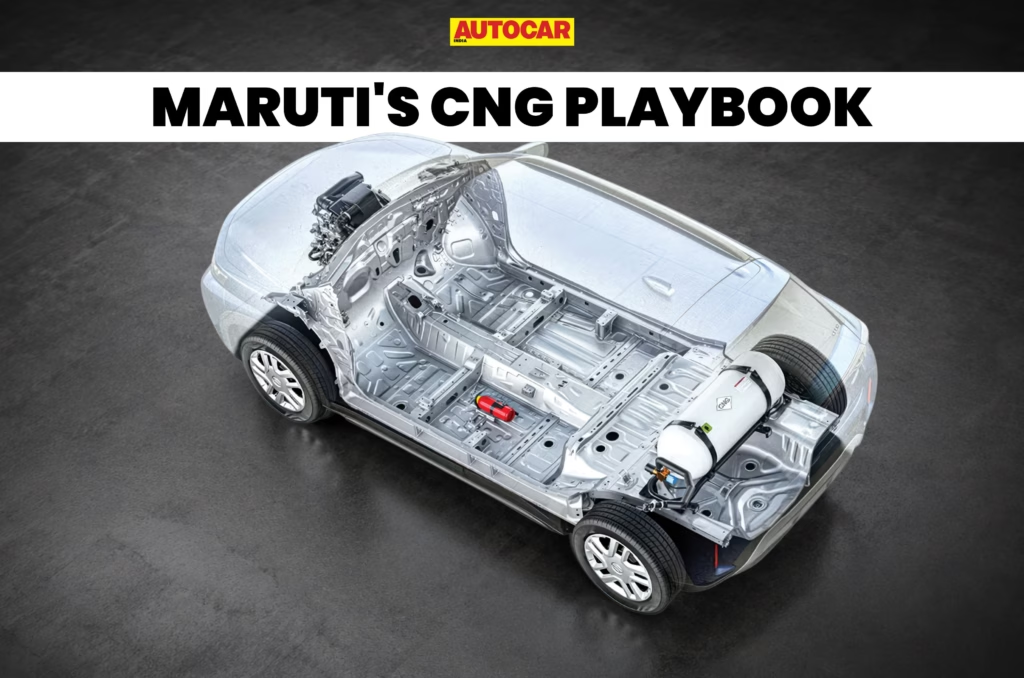
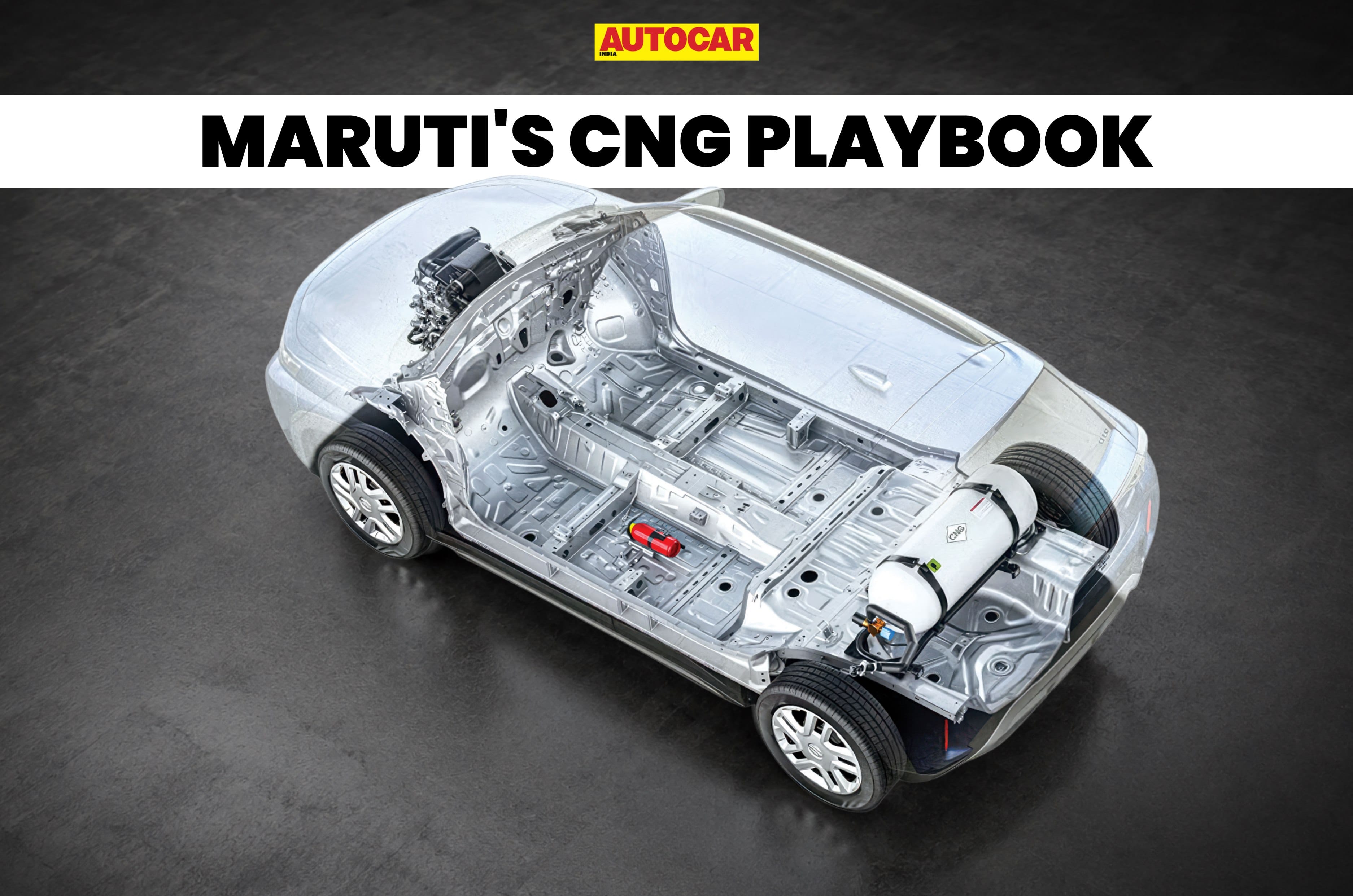
When Maruti Suzuki introduced its first factory-fitted CNG models in 2010, the fuel had little acceptance among private buyers. Availability was largely restricted to Delhi-NCR, Mumbai-Pune and Gujarat, while the filling network was small and uneven. CNG penetration remained at just 1-2 percent until 2016-17, but Maruti continued to improve the technology and expand its range. It began with affordable cars such as the Alto and Eeco before taking CNG to the WagonR, Swift, Baleno, Dzire and Ertiga. Today, its portfolio includes SUVs such as the Brezza, Fronx, Grand Vitara and Victoris.
Fixing what buyers disliked
In the late 1990s, buyers who wanted a CNG car usually had to convert a petrol model using an aftermarket kit. Most kits were imported, often from Italy or Argentina, and a conversion cost around Rs 30,000-32,000.
As demand grew, some dealers began tying up with local retrofitters. But when these cars developed problems, owners often returned to Maruti workshops even though the company had not supplied or installed the kit. Poorly fitted systems raised concerns about gas leaks and vehicle fires. An aftermarket conversion could also invalidate the manufacturer’s warranty, while the engine and fuel system were not always designed to cope with CNG.
Performance was another weakness. Early conversions resulted in a noticeable drop in power. Some owners would switch to petrol before overtaking or climbing steep roads and returned to CNG once the additional performance was no longer needed.
Factory-fitted systems addressed many of these problems. Engines, valve seats, fuel lines and mounting points were designed to work with CNG. Better calibration reduced the performance loss, while the car retained its manufacturer warranty and could be serviced through Maruti’s dealer network.
The financial case was already strong. Around 2010, CNG cost roughly Rs 20-21 per kg, compared with about Rs 48 per litre for petrol and Rs 38 for diesel. A factory-fitted system added around Rs 45,000-54,000 to the price of the car, but offered better engineering, safety and warranty protection than an aftermarket conversion.
Even so, CNG did not take off immediately. Diesel was widely available, delivered better performance and offered low running costs. In 2013, diesel accounted for around 38 percent of India’s passenger vehicle market, making it the easier choice for many high-mileage users.
The network caught up
India had around 1,200 CNG stations in 2016-17. By March 2026, the network had expanded to about 8,900 stations across roughly 350 cities. This made CNG practical beyond its traditional strongholds. Petrol prices also rose sharply after 2020, crossing Rs 100 per litre in several cities and strengthening the case for switching to a cheaper fuel.
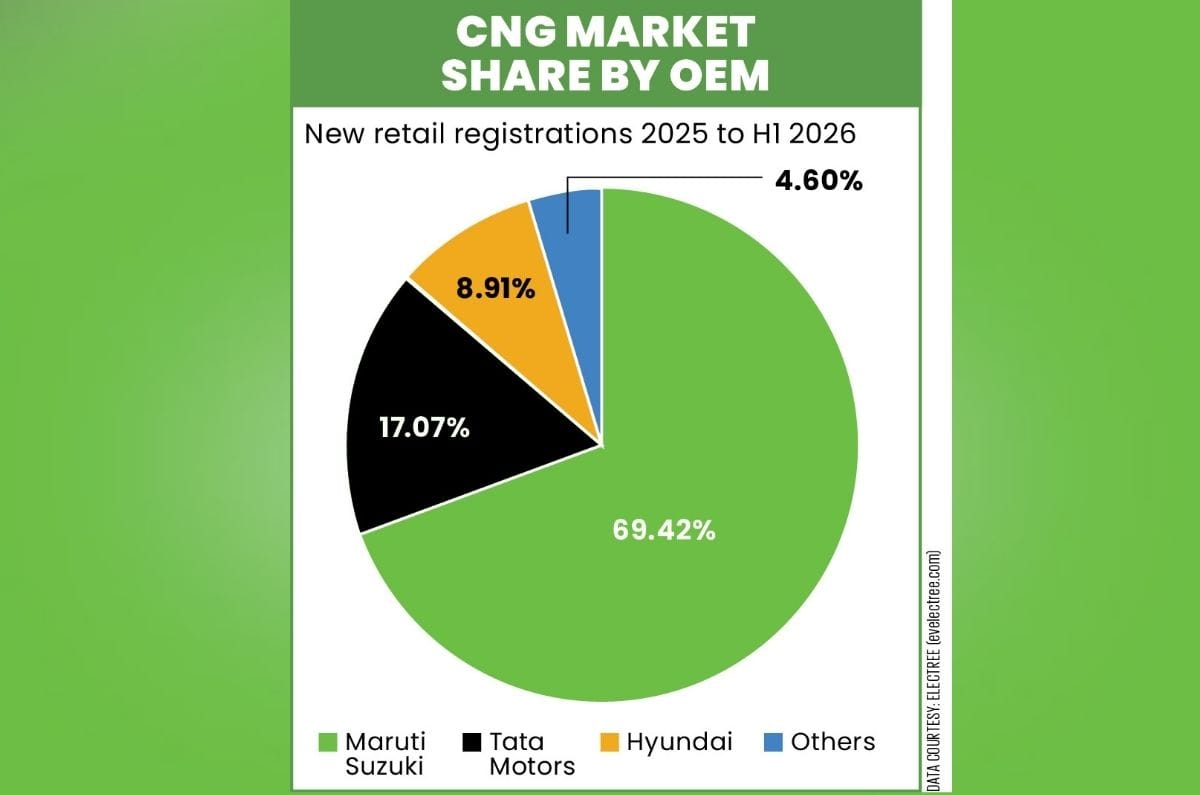
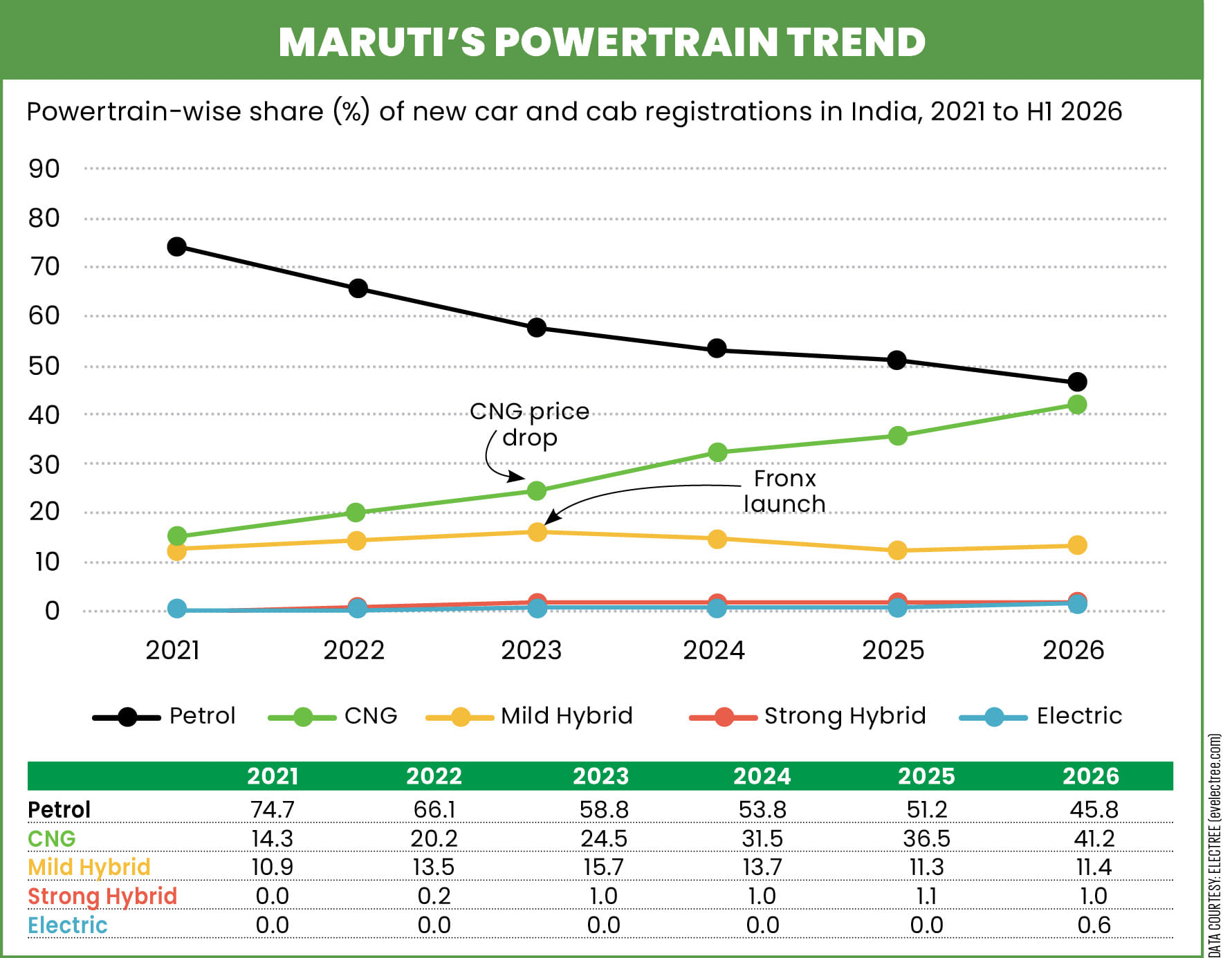
By then, Maruti had already addressed many of the product-related concerns and could respond with a broad factory-fitted portfolio. CNG’s share of Maruti’s new registrations, including private cars and cabs, increased from 14.3 percent in 2021 to 41.2 percent in the first half of 2026. Petrol’s share fell from 76.5 percent to 45.9 percent over the same period. The sharpest jump came between 2023 and 2024, when CNG’s share rose from 24.6 percent to 32 percent.
Commercial vehicles remain important. Cabs account for around 10 percent of Maruti’s cumulative registrations, but contribute more than a quarter of its CNG volumes. However, private buyers now account for the larger part of demand.
“Earlier, if a customer was opting for CNG, the perception was that he was just a very value-conscious customer,” says Maruti Suzuki’s senior executive officer, sales and marketing, Partho Banerjee. “Now, especially with underbody CNG, the profile of customers has changed. They are not only looking for mileage, they also want an aspirational product that feels no different to drive from gasoline.”
CNG moves beyond small cars
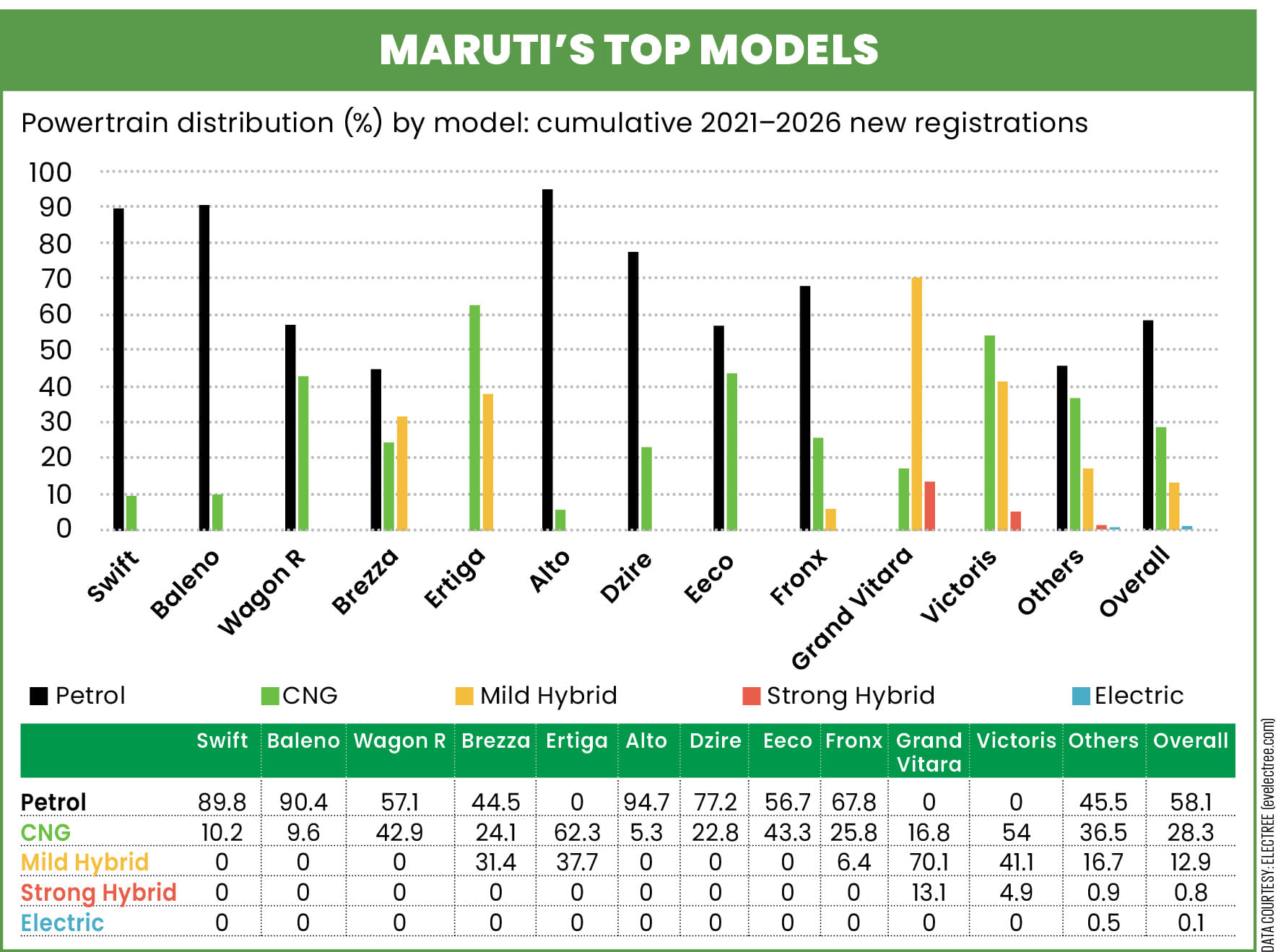
The WagonR remains the quintessential CNG hatchback. Its CNG share has risen from 42.5 percent in 2021 to 49.1 percent in the first half of 2026. Nearly every second WagonR buyer now chooses it. CNG is also gaining ground in models that were once overwhelmingly petrol-powered. Its share in the Swift has increased from 1.9 percent to 18 percent, while the Baleno has moved from 2.1 percent to 14.5 percent.
The Dzire has seen an even sharper change. CNG accounted for just 1.7 percent of its registrations in 2021. Its share reached 33.6 percent in H1 2026.
Adoption is strongest in vehicles that cover longer distances or carry more passengers. CNG’s share of the Ertiga has risen from 39.3 percent to 73.6 percent, while the Eeco has moved from 31 percent to 55.2 percent. Big shifts are now also taking place in the SUV segment, where buyers care as much about design, features and luggage space as they do about mileage.
CNG accounts for 43.4 percent of Brezza registrations, compared with 23.7 percent for its Smart Hybrid powertrain in H1 2026. The Fronx has seen its CNG share rise from 10.9 percent at launch in 2023 to 35.4 percent in the first half of 2026. In the case of the Grand Vitara, it has increased from zero to 23.9 percent.
The Victoris has moved even faster. CNG accounted for 55.2 percent of its registrations in the first half of 2026. Its strong response shows that midsize SUV buyers will accept the fuel when it does not compromise the overall ownership experience.
Better packaging removes a key compromise
A large cylinder placed across the luggage compartment has long been one of CNG’s biggest drawbacks. Dual-cylinder systems that divide the gas storage between two smaller cylinders positioned lower in the boot, or placing an underbody tank, create a flatter and more usable luggage area.
Maruti’s latest CNG development is the underbody tank on the Victoris and Brezza.
Central to Maruti’s next CNG push is the underbody CNG setup. The newly launched CNG Brezza opts for this setup – just like in the Victoris – where the tank is placed beneath the floor. It does negate the ability to have the spare tyre, but luggage space remains useable with a boot that is pretty much free of intrusions.
“If I don’t compromise on my driving experience, and I don’t lose boot space, and on top of that I reduce my total cost of ownership, then it is ticking all the boxes. Why would I not go for it?” says Banerjee.
Filling the gap left by diesel
Maruti’s exit from diesel in 2020 left a gap for buyers seeking low running costs without moving to an EV. CNG has become the answer. It cannot match a diesel engine’s torque or effortless highway performance, but it can cost substantially less to run than petrol, particularly for buyers covering high monthly distances. The vehicle can also switch to petrol when CNG is unavailable.
CNG will not replace diesel in every situation. Drivers who regularly travel on highways, carry heavy loads or value strong mid-range performance may still prefer diesel where it remains available. But for largely urban use, CNG now delivers much of the economic advantage that once made diesel attractive. The market has moved beyond mileage.
CNG has reached around 20 percent penetration without requiring buyers to completely change the way they use a car. There is no home charger to install, and the vehicle can run on petrol when the gas runs out. But the next stage will require more than savings. Buyers moving onto larger and more expensive vehicles will expect performance, equipment, luggage space and convenience alongside lower running costs.
“Quality, reliability and mileage are now hygiene,” says Banerjee. “You need to give all of that anyway and then still meet their lifestyle expectations.”
With the Victoris establishing CNG in the midsize SUV market and the Brezza addressing the compact SUV space, Maruti is now taking the fuel deeper into India’s largest vehicle segment, and it says there’s more to come.
अगर आप एक प्रीमियम और स्पोर्टी बाइक खरीदने की सोच रह हैं, तो Kawasaki India ने 2027 Versys 650 को ₹8.63 लाख (एक्स-शोरूम) की कीमत पर लॉन्च कर दिया है, जिसमें सिर्फ नया ‘Candy Lime Green’ पेंट स्कीम का अपडेट दिया गया है। मैकेनिकल और इक्विपमेंट के मामले में यह स्पोर्ट-टूरर पहले जैसी ही है, और इसकी डिलीवरी अगस्त के आखिर तक शुरू होने की उम्मीद है।
नए कलर ऑप्शन
MY27 Kawasaki Versys 650 सिर्फ नए ‘Candy Lime Green’ कलर में उपलब्ध है, जो पिछली MY26 मोटरसाइकिल के कलर की जगह लेगा। वहीं, नए पेंट से कावासाकी की जानी-पहचानी हरी पहचान बनी हुई है, जबकि मोटरसाइकिल की बाकी स्टाइलिंग में कोई बदलाव नहीं किया गया है।
इसके अलावा, बाइक के इंजन, चेसिस, इलेक्ट्रॉनिक्स और फीचर्स में कोई अपग्रेड नहीं किया गया है। Kawasaki ने इसकी कीमत भी भी 8.63 लाख रुपये (एक्स-शोरूम) ही रखी है, जिसका मतलब है कि 2027 का यह अपडेट मुख्य रूप से उन राइडर्स के लिए है जो लेटेस्ट मॉडल ईयर और नई कलर स्कीम चाहते हैं।
Kawasaki Versys 650: मैकेनिक्स
2027 Kawasaki Versys 650 में वही 649cc, लिक्विड-कूल्ड, पैरेलल-ट्विन इंजन इस्तेमाल किया गया है। यह इंजन 8,500 rpm पर 67 hp की पावर और 7,000 rpm पर 61 Nm का टॉर्क देता है। इसमें छह-स्पीड गियरबॉक्स और असिस्ट-एंड-स्लिपर क्लच स्टैंडर्ड फीचर के तौर पर मिलते हैं।
बाइक को ट्यूबलर डायमंड फ्रेम पर तैयार किया गया है। सस्पेंशन के लिए इसमें 150mm ट्रैवल वाला 41mm का टेलीस्कोपिक फ्रंट फोर्क और 145mm ट्रैवल वाला रियर मोनोशॉक दिया गया है। रियर यूनिट में रिमोट प्रीलोड एडजस्टर भी है, जो सामान या पीछे बैठने वाले यात्री (पिलियन) के साथ यात्रा करने वाले मालिकों के लिए एक काम का फीचर है।
फीचर्स
Kawasaki Versys 650 में एडजस्टेबल विंडस्क्रीन, फुल-LED लाइटिंग, ट्रैक्शन कंट्रोल और स्मार्टफोन कनेक्टिविटी के साथ 4.3-इंच का TFT कलर डिस्प्ले जैसे फीचर्स मिलते हैं।
इसमें 21-लीटर का फ्यूल टैंक है, जो मोटरसाइकिल की टूरिंग क्षमता को बेहतर बनाता है। वहीं, टैंक फुल होने पर Versys 650 का वजन 220kg हो जाता है। कम हाइट वाले राइडर्स के लिए 845mm की सीट हाइट एक अहम बात हो सकती है, हालांकि इसका 170mm का ग्राउंड क्लीयरेंस खराब सड़कों, स्पीड ब्रेकर और ऊबड़-खाबड़ रास्तों पर चलने में मदद करेगा।
अपडेटेड Versys 650 भारत के मिडिलवेट टूरिंग बाइक सेगमेंट में एक अलग जगह रखती है। इसकी प्रमुख प्रतिद्वंद्वी बाइक्स में Honda NX500 शामिल है, जिसकी कीमत ₹7.44 लाख है। हालांकि, NX500 में कम क्षमता वाला इंजन मिलता है और इसका फोकस ज्यादा एडवेंचर राइडिंग पर है।
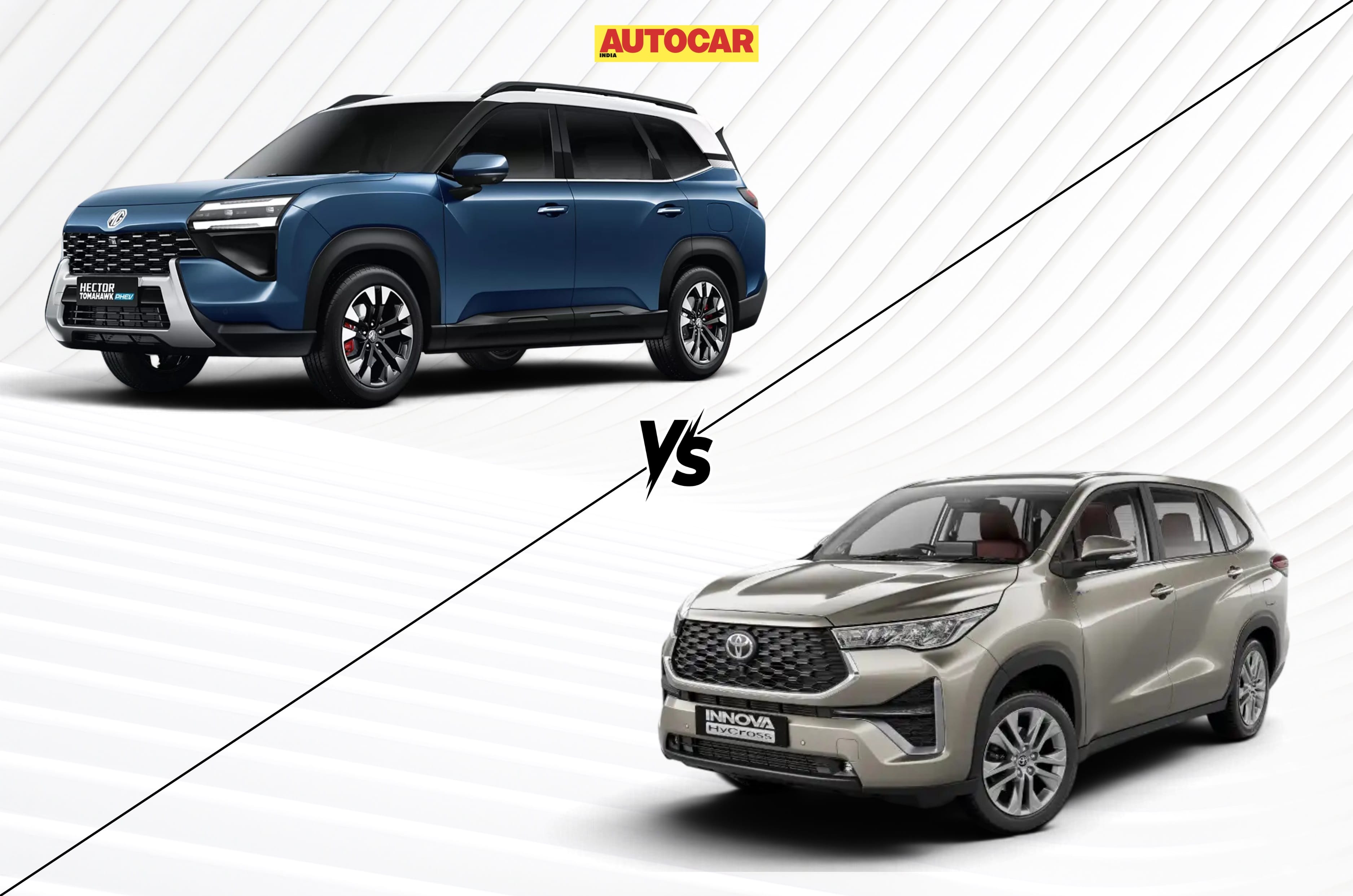
While both models here are hybrids and have 7 seats across three rows, they offer different hybrid technologies. With the ADAPT platform-based JSW MG Hector Tomahawk PHEV, India has its first-ever mass-market plug-in hybrid vehicle making its entry in the hugely popular SUV segment. On the other hand, the TNGA-C platform-based Toyota Innova Hycross is an MPV and offers a strong-hybrid powertrain. Here’s how they stack up in their fully loaded trims.
MG Hector Tomahawk PHEV Essence vs Toyota Innova Hycross Hybrid ZX (O): Dimensions
The Innova Hycross is larger and offers a slightly bigger boot with all seats in place
MG Hector Tomahawk PHEV Essence vs Toyota Innova Hycross Hybrid ZX (O) dimensions
MG Hector Tomahawk PHEV
Toyota Innova Hycross Hybrid
Length (mm)
4,745
4,755
Width (mm)
1,850
1,850
Height (mm)
1,770
1,790
Wheelbase (mm)
2,810
2,850
Boot space (litres)
192
239
Wheel size (inches)
18
18
The Innova Hycross Hybrid is 10mm longer and 20mm taller than the Hector Tomahawk PHEV. The Toyota MPV also has a wheelbase that’s longer by 40mm, while both cars have identical width figures and sport 18-inch alloy wheels in their top-spec trims. The Innova Hycross Hybrid’s luggage capacity with the third row in place is greater by 47 litres. One of the factors limiting the outright cargo volume of the Hector Tomahawk PHEV is its more space-consuming plug-in hybrid tech.
MG Hector Tomahawk PHEV Essence vs Toyota Innova Hycross Hybrid ZX (O): Powertrain
The plug-in hybrid powertrain of the MG SUV is more fuel-efficient and offers more power
MG Hector Tomahawk PHEV Essence vs Toyota Innova Hycross Hybrid ZX (O) powertrain options
MG Hector Tomahawk PHEV
Toyota Innova Hycross Hybrid
Engine
1.5-litre naturally aspirated petrol
2.0-litre naturally aspirated petrol
Battery size
20.5kWh
1.6kWh
Electric motor type
Permanent magnet synchronous motor
Permanent magnet synchronous motor
Drive configuration
FWD
FWD
Total system output
198hp, 230Nm
184hp, 188Nm
Transmission
DHT
eCVT
0-100kph
9.0 seconds
10.69 seconds*
Claimed mileage
50kpl
22.16kpl
Fuel tank
52 litres
52 litres
AC charging
7.5 hrs at 3.3kW (10-100%)
–
DC fast charging
35 mins at 25kW (30-80%)
–
*Autocar India-tested 0-100kph time.
The strong hybrid powertrain of the Toyota Innova Hycross offers a couple of drive modes – including pure-electric and engine + electric. However, its compact nickel metal hydride (NiMH) battery means that the EV mode of the Innova Hycross Hybrid is understandably more limited than the MG Hector Tomahawk PHEV’s, requiring the 2.0-litre petrol engine to step in more often.
The claimed mileage figure of the Innova Hycross Hybrid is 27.84kpl worse than the MG plug-in hybrid SUV, and despite the same fuel tank size, the former’s combined range tops out at around 800km, as per our real-world test of the Toyota MPV. Meanwhile, the plug-in hybrid system of the MG Hector Tomahawk PHEV offers more flexibility and comes with four main drive modes. The larger 20.5kWh battery pack and 1.5-litre engine allow for a combined claimed range of over 1,100km.
The Hector Tomahawk PHEV not only offers a claimed pure-electric range of over 115km, but it can also have the engine charging the battery pack while the electric motor drives the front wheels. This is a drive mode that isn’t offered with the Toyota Innova Hycross Hybrid. To extract the highest possible efficiency from its hybrid system, the Hector Tomahawk PHEV needs to be plugged in to an AC or a DC charger in order to fully top up its battery pack.
Depending on the battery’s SoC, both cars can rely entirely on their petrol engine to drive the wheels. Compared to the Innova Hycross Hybrid’s e-CVT (electronically controlled continuously variable transmission), the Hector Tomahawk PHEV gets a DHT (Dedicated Hybrid Transmission) with an e-clutch. The combined output of the MG Hector Tomahawk PHEV is 14hp and 42Nm more than what the Toyota Innova Hycross Hybrid offers.
MG Hector Tomahawk PHEV Essence vs Toyota Innova Hycross Hybrid ZX (O): Exterior features
Different body styles aside, both cars are similarly equipped on the outside
MG Hector Tomahawk PHEV Essence vs Toyota Innova Hycross Hybrid ZX (O) exterior features
MG Hector Tomahawk PHEV
Toyota Innova Hycross Hybrid
Auto LED headlamps
Yes
Yes
LED DRLs
Yes
Yes
Backlit logo
Yes
No
Sequential turn signals
Yes
Yes
Front fog lamps
No
Yes (LED)
Rear fog lamps
Yes (LED)
No
Welcome lights
No
Yes
Powered ORVMs
Yes (with auto-fold function)
Yes (with auto-fold function)
Body cladding
Yes
No
Roof rails
Yes
No
Rear spoiler
Yes
Yes
Powered tailgate
Yes
Yes
Radio antenna
Windscreen-integrated
Sharkfin
Colours
Mono-tone and dual-tone
Mono-tone
The MG Hector Tomahawk PHEV is offered in two dual-tone colour options and six mono-tone shades, including a couple of bolder choices. The Toyota Innova Hycross Hybrid is restricted to six simpler-looking colours. The SUV body style aside, the Hector Tomahawk PHEV also sports a backlit ‘MG’ logo up front plus prominent roof rails and body cladding.
Where the Innova Hycross Hybrid gets the traditional sharkfin radio antenna, the Hector Tomahawk PHEV has its antenna embedded in the windscreen. The Toyota Innova Hycross Hybrid gets front LED fog lamps, whilst the MG Hector Tomahawk PHEV features rear LED fog lamps. While the top-spec trims of both cars get automatic LED headlamps and sequential turn indicators, it’s only the Toyota that offers ‘welcome’ lights.
MG Hector Tomahawk PHEV Essence vs Toyota Innova Hycross Hybrid ZX (O): Interior features
The Hector Tomahawk PHEV offers even more modern on-board tech than the Hycross
MG Hector Tomahawk PHEV Essence vs Toyota Innova Hycross Hybrid ZX (O) interior features
MG Hector Tomahawk PHEV
Toyota Innova Hycross Hybrid
Infotainment screen
15.6-inch (with swipe gestures)
10.1-inch
Digital driver’s display
8.8-inch
7.0-inch MID
Panoramic sunroof
Yes (dual-pane)
Yes (dual-pane)
Steering adjustment
Tilt & telescopic
Tilt & telescopic
Driver’s seat adjustment
6-way powered
8-way powered
Memory powered
Yes (with ‘retreat’ function)
Yes
Co-driver’s seat adjustment
4-way powered
4-way manual
Sliding & reclining second row
Yes
Yes (powered ottoman seats)
Split rear seats
Yes (second & third rows)
Yes (second & third rows)
Ventilated front seats
Yes
Yes
Leatherette upholstery
Yes
Yes
Rear sunblinds
Yes
Yes
Rear armrest
Yes (with cupholders)
Yes (individual armrests)
Wireless charger
Yes (50W)
No
Automatic climate control
Yes (dual-zone)
Yes (single-zone)
Ambient lighting
Yes (256 colours)
Yes (single-colour)
Audio system
10-speaker Infinity
9-speaker JBL
Wireless Apple CarPlay & Android Auto
Yes
Yes (CarPlay only)
USB ports
Yes (5 ports)
Yes (4 ports)
Connected car tech
Yes
Yes
Voice assistant
Yes (AI-powered & multilingual)
Yes
OTA updates
Yes
No
Multi-app support
Yes
No
The infotainment features of the top-spec MG Hector Tomahawk PHEV are more comprehensive. It comes with a larger touchscreen that supports swipe-gesture functionalities, along with an AI-powered voice assistant with six languages supported. MG’s tie-up with Jio means that there are plenty of apps offered – including gaming, streaming and more. The Hector Tomahawk PHEV also offers OTA software updates, wireless connectivity for both Apple CarPlay and Android Auto and a built-in 50-watt wireless charger.
The MG SUV’s convenience features further include a more comprehensive 256-colour ambient lighting system, a fully digital instrument panel, dual-zone AC, a powered front passenger seat, a ‘retreat’ function for the driver’s seat when the door is opened, armrest-integrated cupholders for the second row, and an additional USB port over the top-spec Toyota Innova Hycross Hybrid.
However, the latter offers individual & powered captain chairs for the second row with a fold-away ottoman function. The 7-seat capability of the Innova Hycross comes by way of a three-seat third bench. The minimalist interior of the Hector Tomahawk PHEV looks modern but the increased reliance on the touchscreen can come in the way of everyday usability, especially while on the move. The Innova Hycross Hybrid’s interior, meanwhile, offers plenty of physical switchgear that are much easier to use.
MG Hector Tomahawk PHEV Essence vs Toyota Innova Hycross Hybrid ZX (O): Safety features
Both cars are relatively well-equipped on the safety front
MG Hector Tomahawk PHEV Essence vs Toyota Innova Hycross Hybrid ZX (O) safety features
MG Hector Tomahawk PHEV
Toyota Innova Hycross Hybrid
Airbags
6
6
ABS with EBD
Yes
Yes
Electronic stability program
Yes
Yes
Traction control system
Yes
No
Hill-hold assist
Yes
Yes
TPMS
Yes
Yes
Parking sensors
Yes (front & rear)
Yes (front & rear)
360-degree camera
Yes
Yes
Electronic parking brake
Yes (with auto-hold function)
Yes (with auto-hold function)
Auto-dimming IRVM
Yes
Yes
Rain-sensing wipers
Yes
No
ISOFIX
Yes
Yes
Rear wiper and defogger
Yes
Yes
All-wheel disc brakes
Yes
Yes
ADAS
Yes
Yes
The fully loaded trims of both these cars offer all the basic passive and active safety aids that buyers at this price bracket expect. While both come with ADAS (Advanced Driver Assistance Systems), it’s the MG Hector Tomahawk PHEV that packs in more features within its ADAS suite. Its adaptive cruise control aid integrates Bend Cruise Assistance (BCA), which slows down the vehicle when approaching corners. There’s also Traffic Jam Assist, which works alongside other active lane-keeping measures.
MG Hector Tomahawk PHEV Essence vs Toyota Innova Hycross Hybrid ZX (O): Other features
The MG SUV adds a few nice-to-have features over the equivalent Innova Hycross
MG Hector Tomahawk PHEV Essence vs Toyota Innova Hycross Hybrid ZX (O) other features
MG Hector Tomahawk PHEV
Toyota Innova Hycross Hybrid
Drive modes
Yes (4)
Yes (3)
Paddle shifters
No
Yes
V2V and V2L
Yes
No
The MG Hector Tomahawk PHEV offers Eco, Normal, Sports and Custom drive modes, whereas the Toyota Innova Hycross Hybrid gets Eco, Normal and Power – one less than the MG. The latter also lacks Vehicle to Vehicle (V2V) and Vehicle to Load (V2L) functionalities that are available with the Hector Tomahawk PHEV.
Conclusion
MG Hector Tomahawk PHEV Essence vs Toyota Innova Hycross Hybrid ZX (O) prices
MG Hector Tomahawk PHEV
Toyota Innova Hycross Hybrid
Prices (In Rs, lakh)
27.79
31.84
While the prices of the MG Hector Tomahawk PHEV are currently introductory, the delta between the two cars here is steep. The top-spec Toyota Innova Hycross Hybrid ZX (O) is priced Rs 4.05 lakh more than fully loaded Essence trim of the MG plug-in hybrid SUV. Its affordability factor notwithstanding, the Hector Tomahawk PHEV Essence trim gets a more comprehensive & punchier hybrid powertrain that offers better mileage, along with a better-finished and more premium-looking interior. Moreover, if you prefer an SUV body style, the MG Hector Tomahawk PHEV would be worth a serious look.