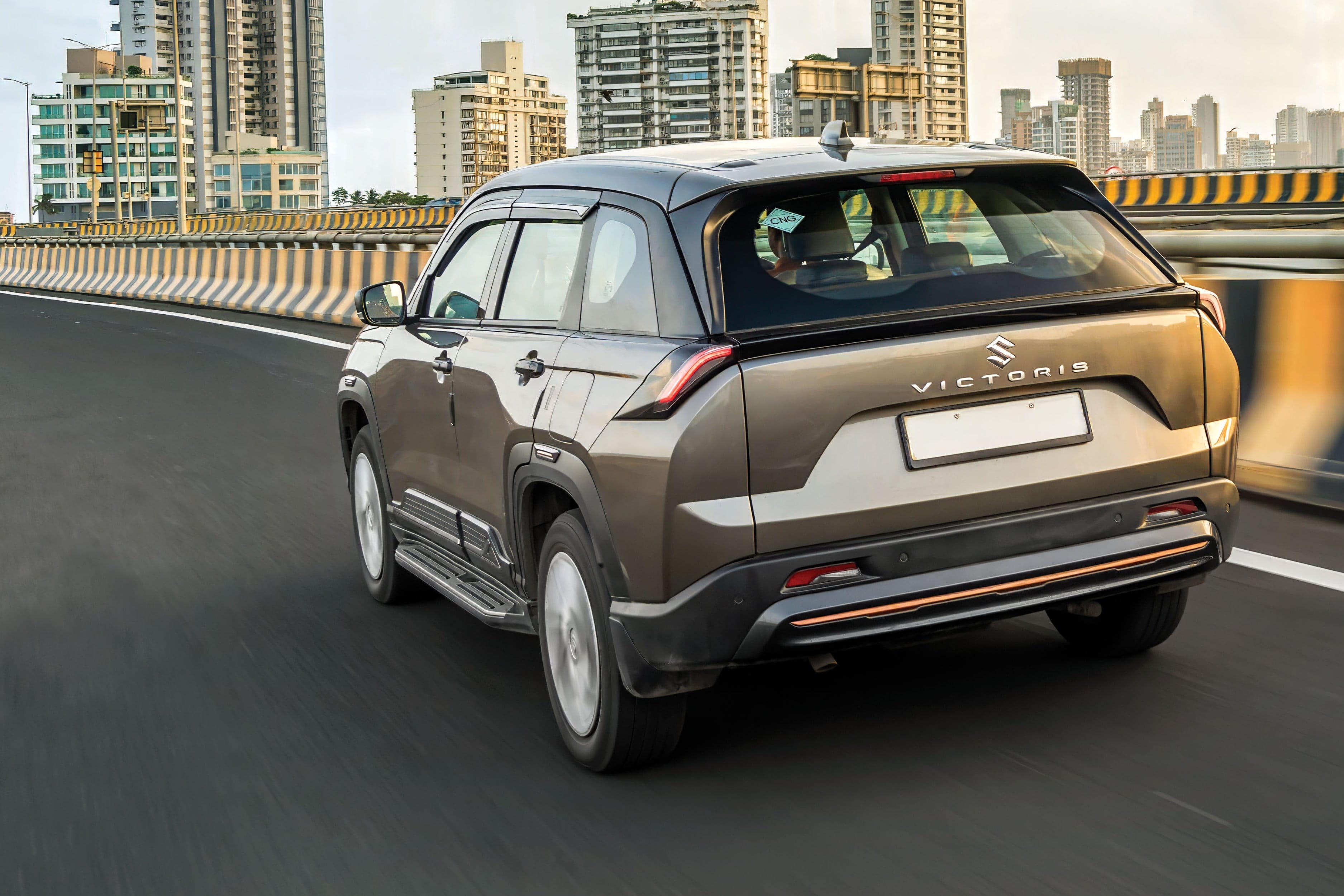
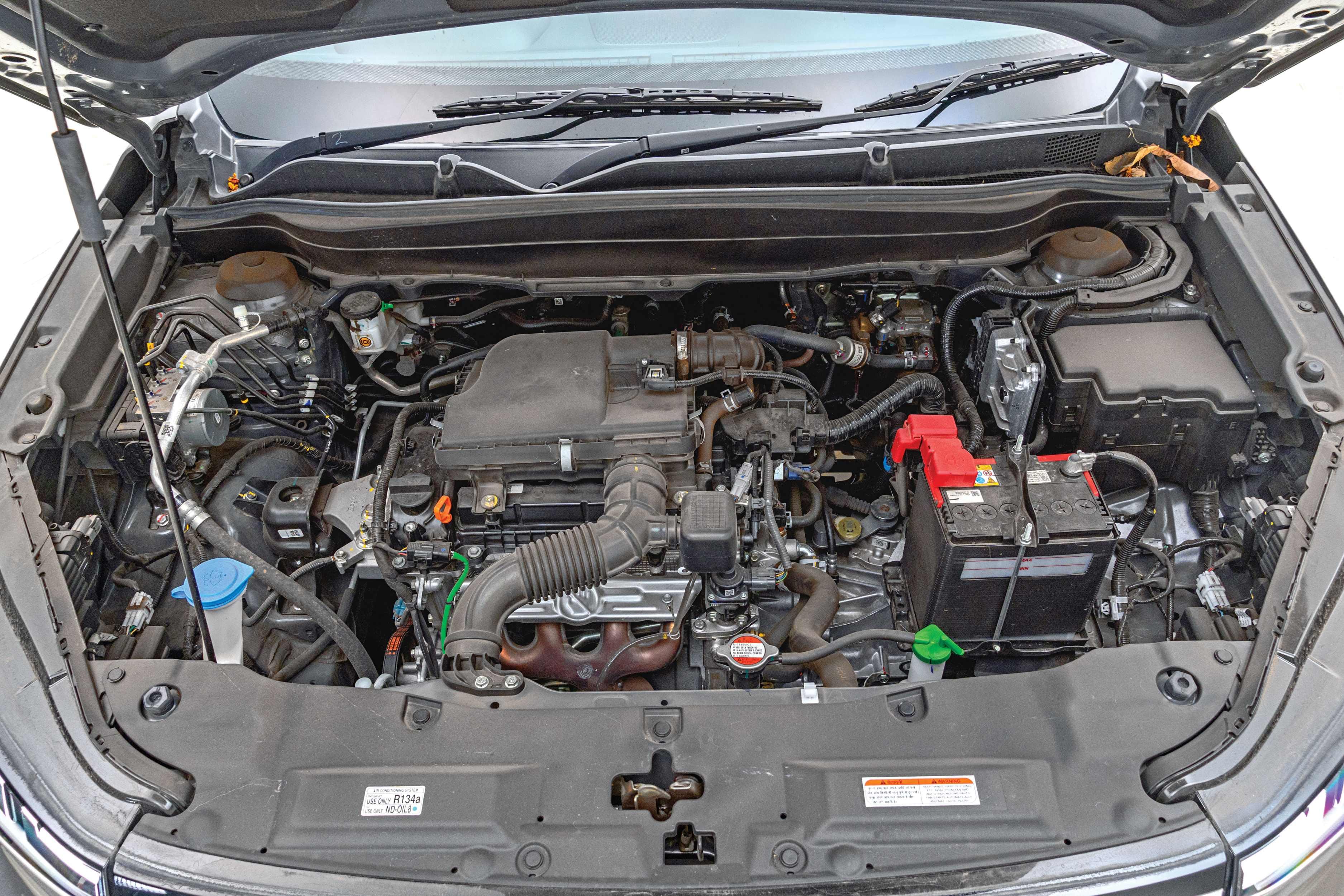
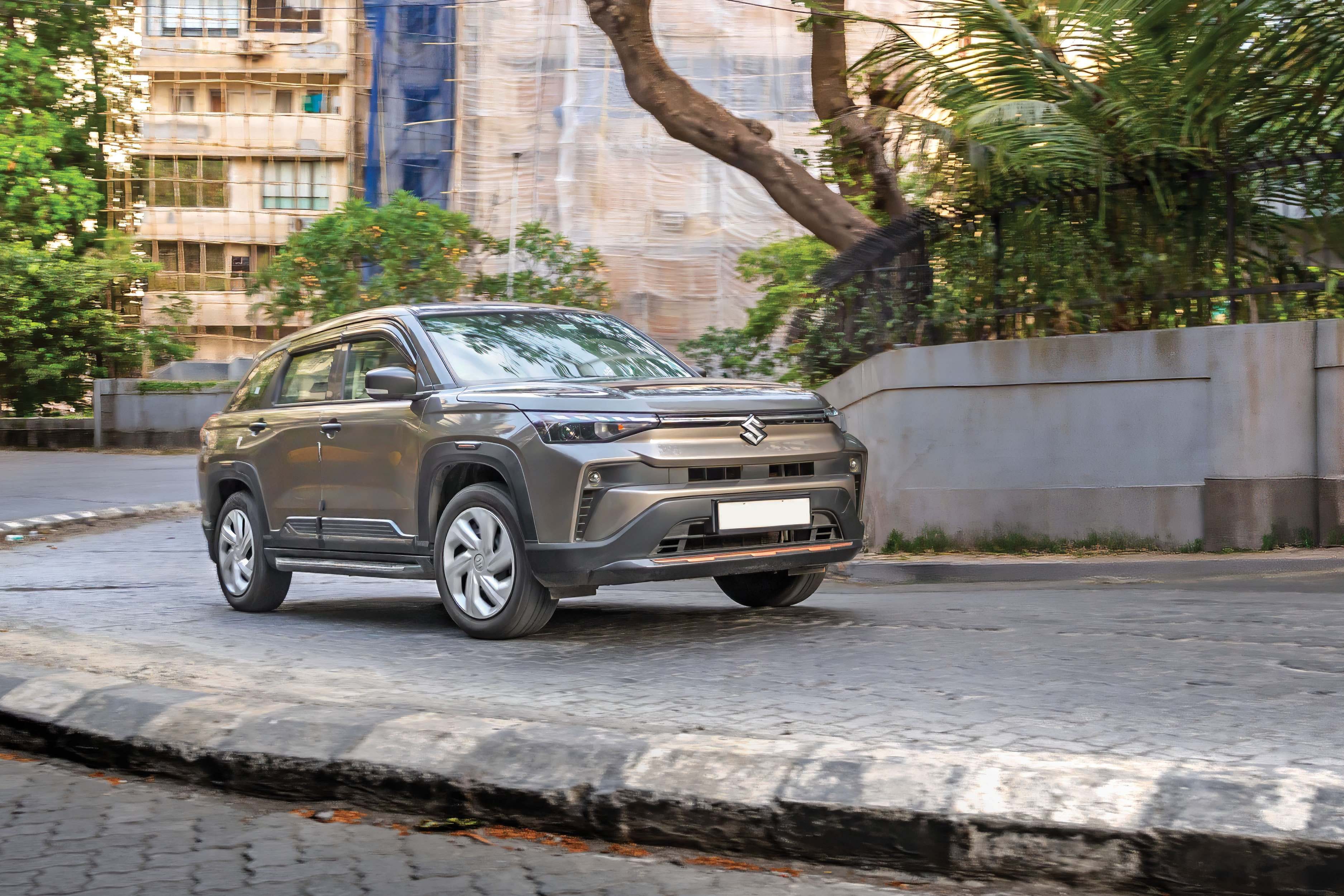
Maruti offers buyers a wide range of powertrain options with the Victoris – a 1.5-litre petrol engine paired with either a manual or automatic transmission, an all-wheel-drive automatic, a strong hybrid, and a CNG version. Interestingly, nearly one in every two Victoris buyers opts for the CNG variant. To understand the reason behind its popularity, we put it through our real-world tests.
City drivability is good; efficiency is impressive.
Powered by a 1.5-litre four cylinder engine, the Victoris produces 88hp and 122Nm when running on CNG. While those figures may appear modest on paper, the good news is that the engine feels responsive right from the outset, and overall driveability remains impressive. It is more than capable of keeping pace with city traffic, and up to about 80kph, with the engine spinning below 3,000rpm, there is enough performance on tap to satisfy most users. You do need to be mindful of being in the right gear, and occasionally, you may find yourself revving the engine harder for a quick overtake. On that note, Maruti’s 5-speed manual gearbox remains one of the best in the business, offering precise shifts and a light, effortless action. The clutch is also light, making the Victoris CNG particularly easy to drive.
Maruti Suzuki Victoris S-CNG acceleration times
CNG
Petrol
Speed (Kph)
Time (Sec)
Time (Sec)
20
1.33
1.32
40
3.28
3.22
60
6.31
5.79
80
9.88
8.87
100
15.14
13.43
120
23.44
19.56
That said, performance isn’t effortless, and when it comes to quick overtakes, you’ll need to work the engine harder. But it is only then that the difference between petrol and CNG modes becomes noticeable. In petrol mode, the engine feels freer and more eager to rev, whereas in the CNG mode, it feels slightly more restrained. To put things into perspective, the Victoris accelerates from 0-100kph in 15.14 seconds in CNG mode, making it 1.7 seconds slower than in petrol mode. Performance also tapers off noticeably beyond 100kph, regardless of which mode you are in.
Maruti Suzuki Victoris S-CNG rolling acceleration
Speed (Kph)
Time (Sec)
Time (Sec)
20-80kph (3rd gear)
16.14
15.98
40-100kph (4th gear)
22.45
18.92
Maruti Suzuki Victoris S-CNG mileage – 9/10
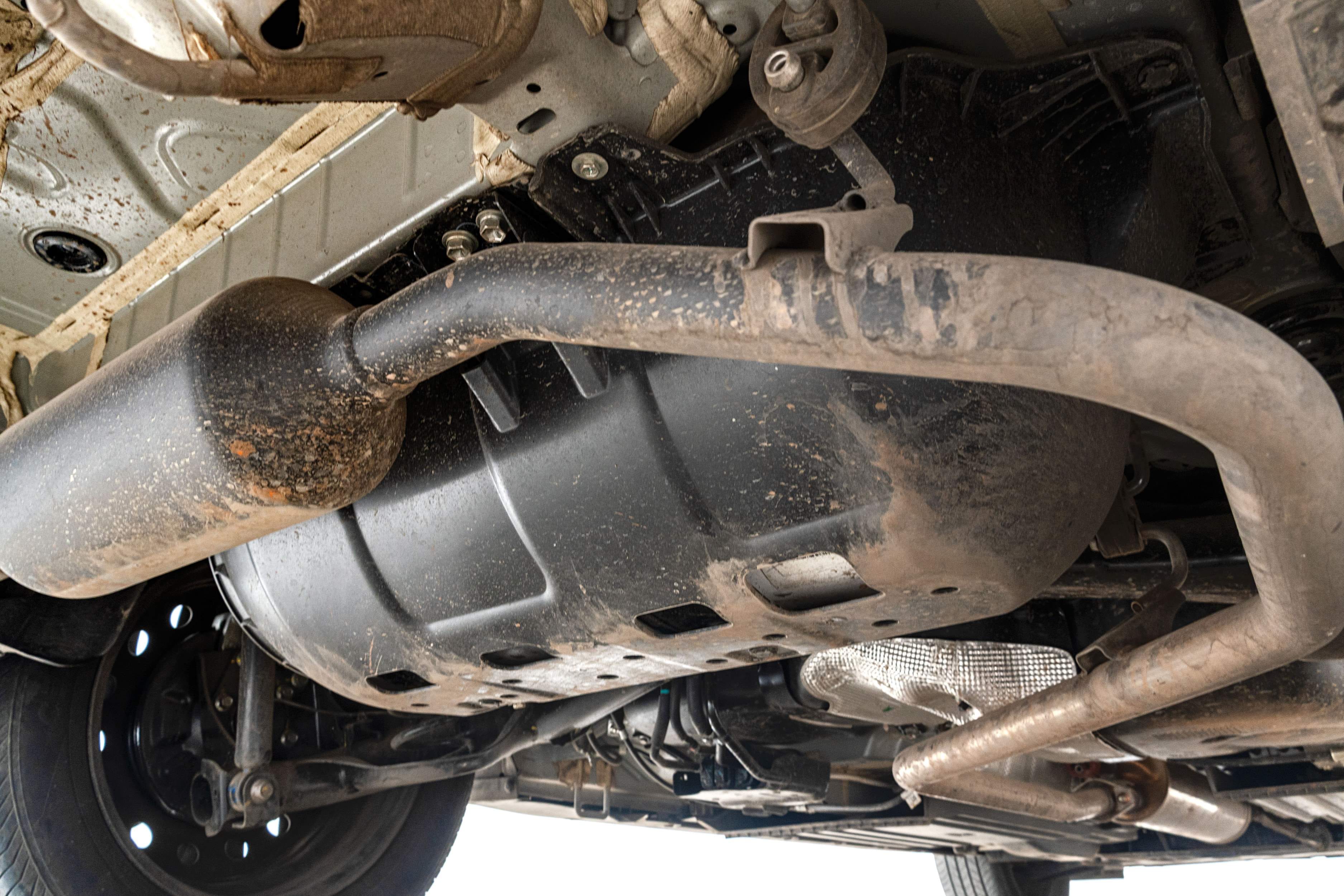
Under-floor CNG tank occupies spare tyre space.
Owners, however, will certainly appreciate this SUV’s efficiency. In our tests, the Victoris CNG delivered 18km/kg in the city and 26km/kg on the highway. The latter figure is particularly impressive, coming close to Maruti’s claimed fuel-efficiency figure of 27.02km/kg.
Its 55-litre CNG tank, mounted beneath the vehicle, can typically hold between 7.4kg and 8kg of gas, depending on ambient conditions and pump pressure. Based on our findings, owners can expect an average real-world driving range of around 180km on a full CNG fill.
Maruti Suzuki Victoris S-CNG ride comfort and handling – 8/10
You’ll need to work its engine harder on hilly terrain or to make quick highway overtakes.
Shifting focus to other aspects, the Victoris inspires confidence on almost every kind of road thanks to its well-sorted underpinnings and expertly judged suspension setup. It feels tough and robust in the way it smothers small undulations and absorbs even sharp road shocks with ease. Even when driven at higher speeds, this Maruti remains composed, riding flat without unnecessary body movements.
Maruti Suzuki Victoris S-CNG features and safety – 8/10
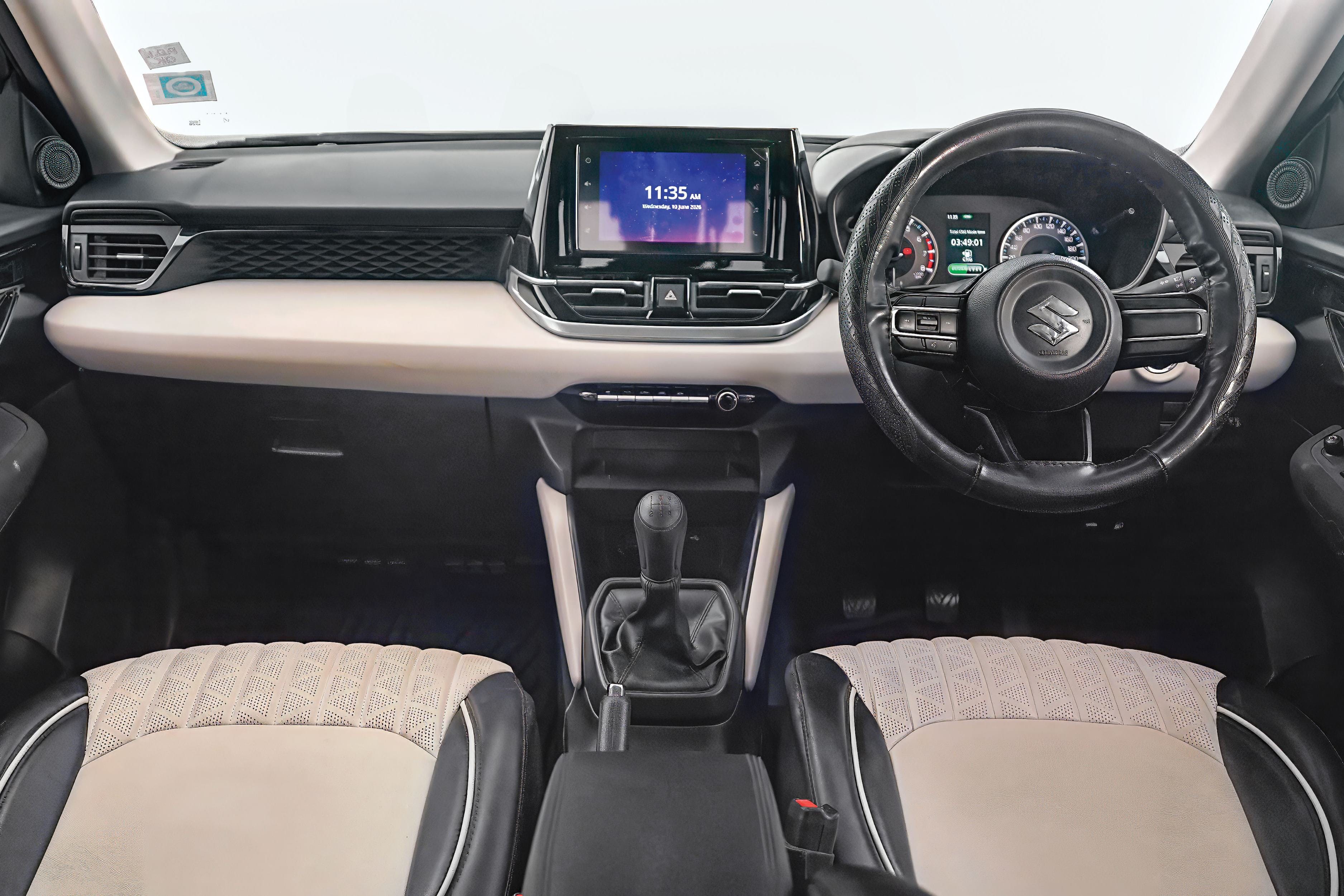
Pleasing dual-tone interiors with generous standard equipment.
As for safety, six airbags, ESP, ABS with EBD and all the essential modern safety features come as standard. Notably, the entry-level LXI variant represents excellent value for money. Priced at Rs 11.5 lakh, it comes equipped with keyless entry, push-button start, automatic climate control, a 7-inch touchscreen with wireless Android Auto and Apple CarPlay, and projector headlamps, among other notable features.
Maruti Suzuki Victoris S-CNG boot space – 8/10
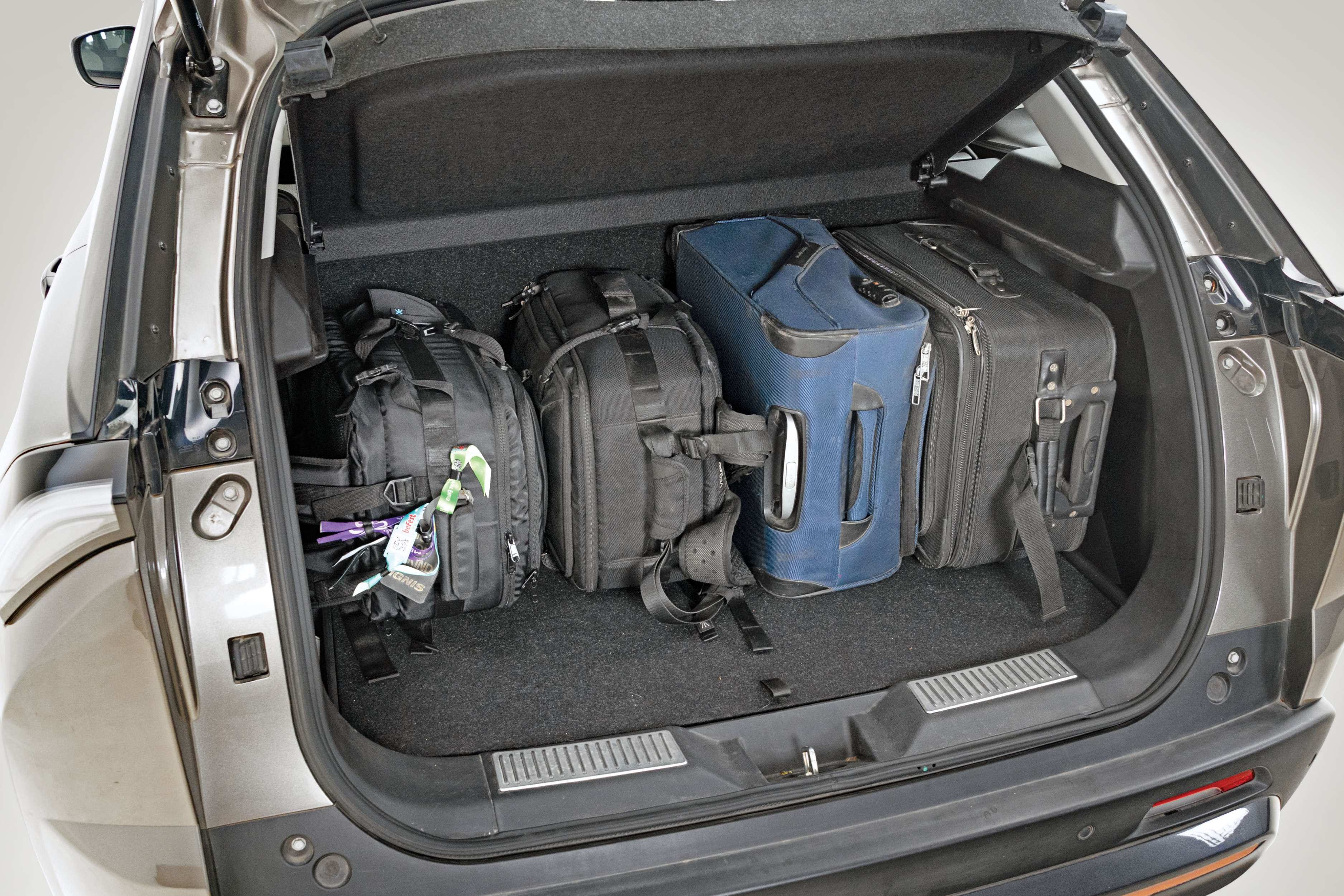
With the under-floor CNG tank, boot space is good.
Maruti has also cleverly packaged the Victoris’ CNG tank beneath the boot floor, which means luggage space remains identical to the petrol version, making it just as practical. The only compromise is the absence of a spare tyre, with CNG variants making do with a tyre inflator kit instead.
Maruti Suzuki Victoris S-CNG verdict- 8/10
It is an efficient, sensible, value-for-money SUV.
In summary, the Victoris is a sensible, efficient and genuinely value-for-money midsize SUV. For buyers with high running requirements who want to keep fuel costs in check, the CNG version is the obvious choice. The drivability is good, the efficiency is excellent, and although it costs around Rs 1 lakh more than an equivalent petrol version, the significantly lower running costs should allow owners to recover that premium over time.
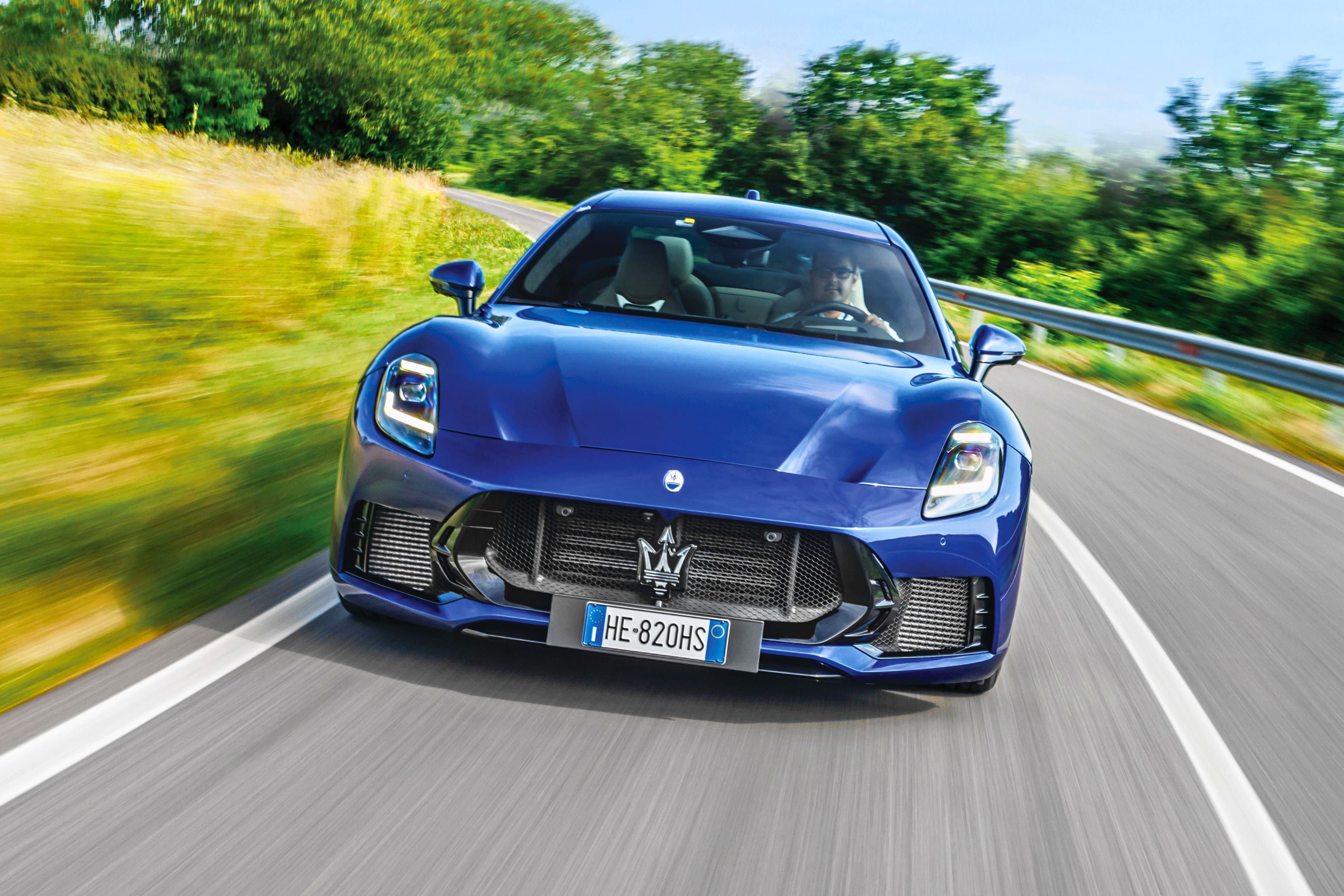
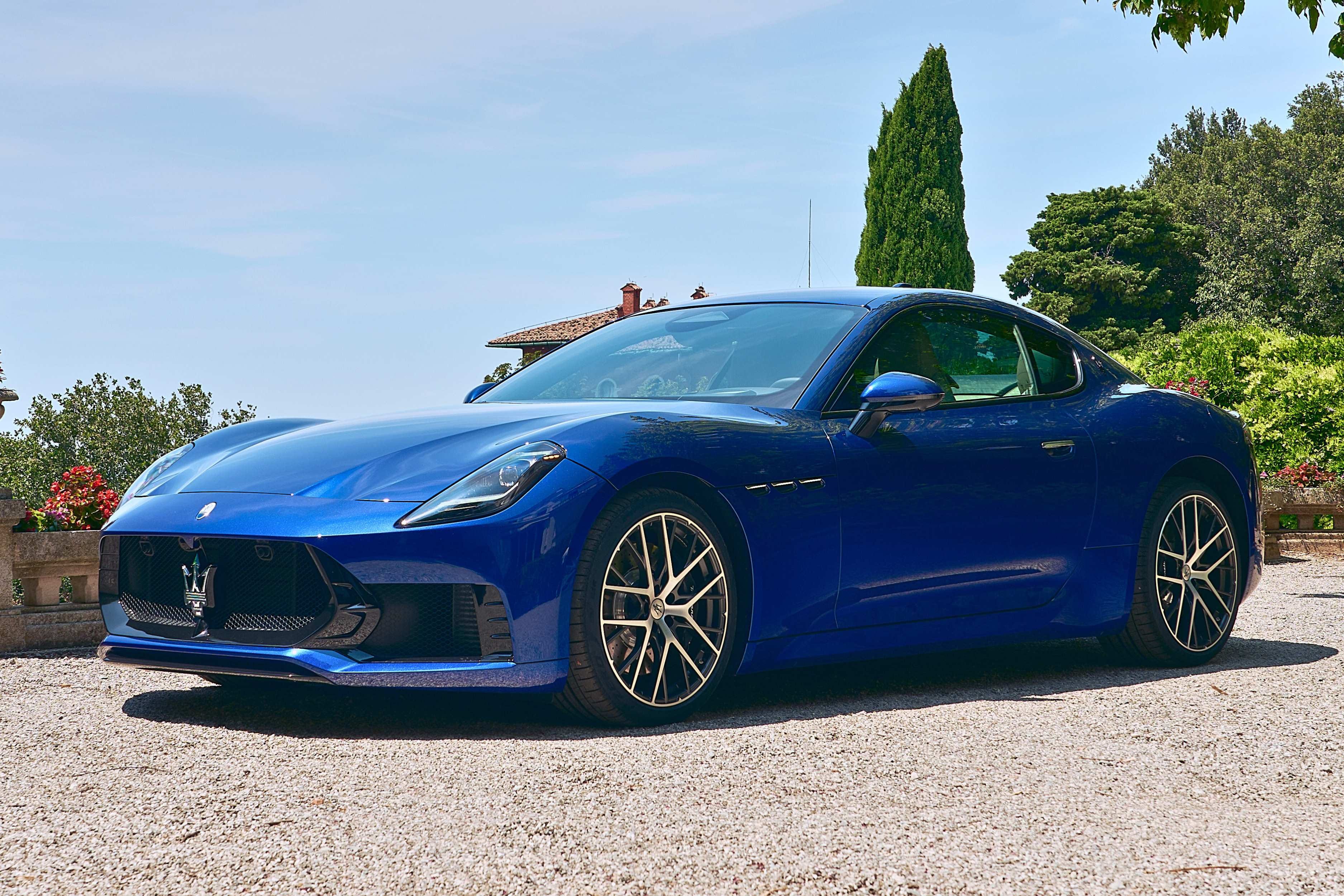
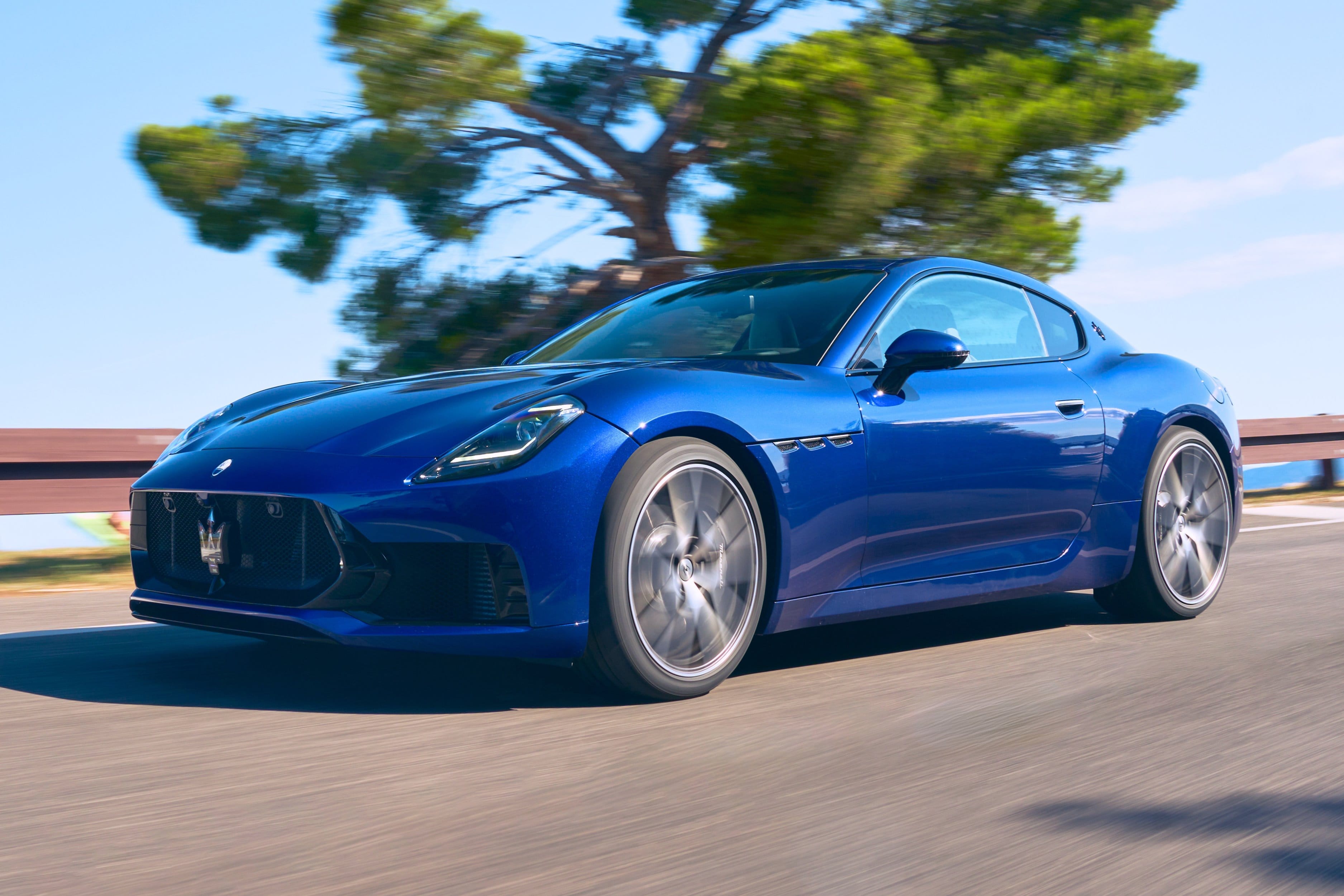
If Lamborghinis look like they’ve time-travelled from the future, and Ferraris appear shaped in wind tunnels, Maseratis are all about sculpture – flowing lines, gentle curves and delicate details. I’m no art connoisseur, but the gorgeous GranTurismo seems very much part of the awe-inspiring scenery at Italian seaside town Trieste’s Piazza Unità d’Italia.
Maserati GranTurismo Exterior Design and Engineering – 9/10
Classic GT proportions and Maserati details make it very eye-catching.
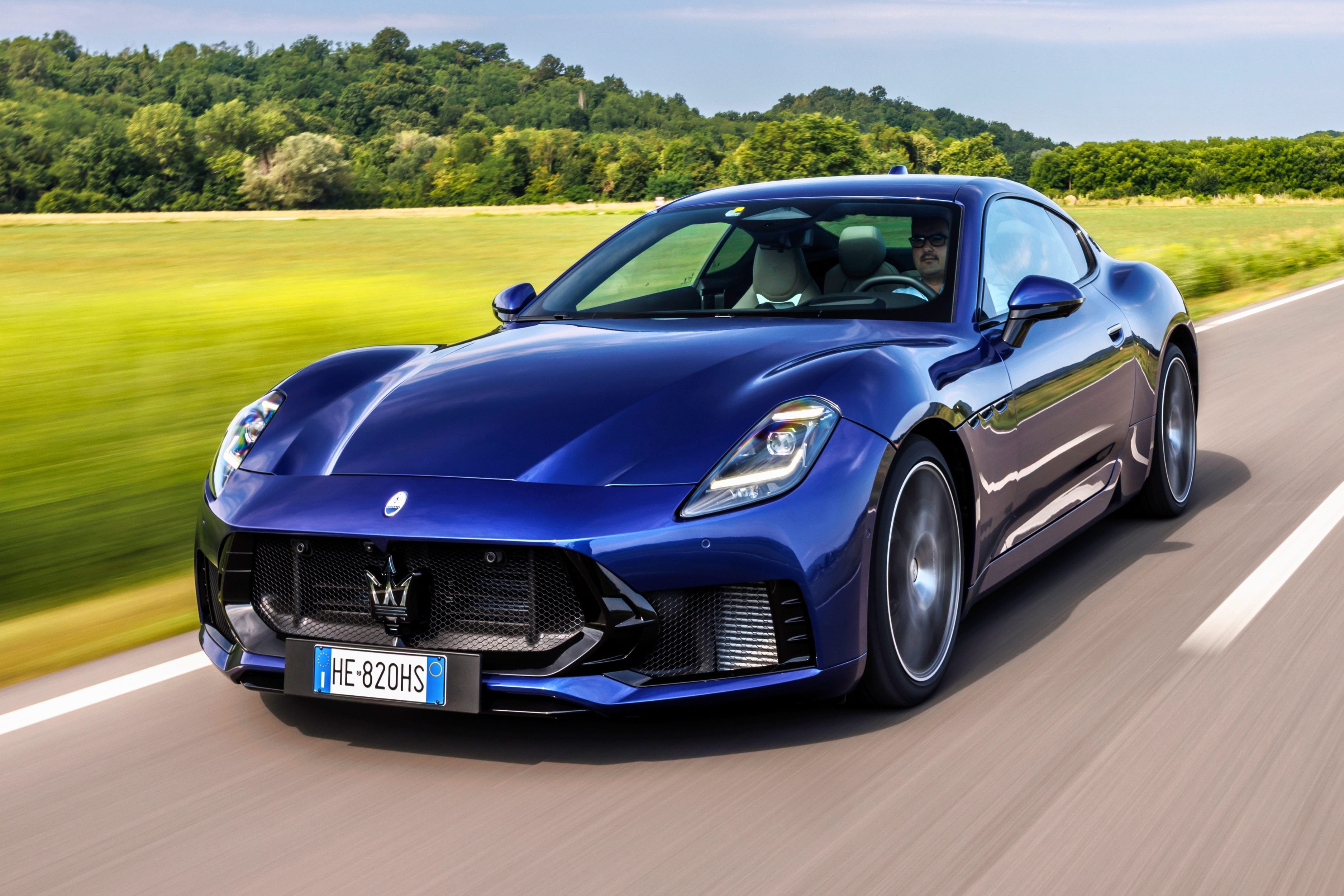
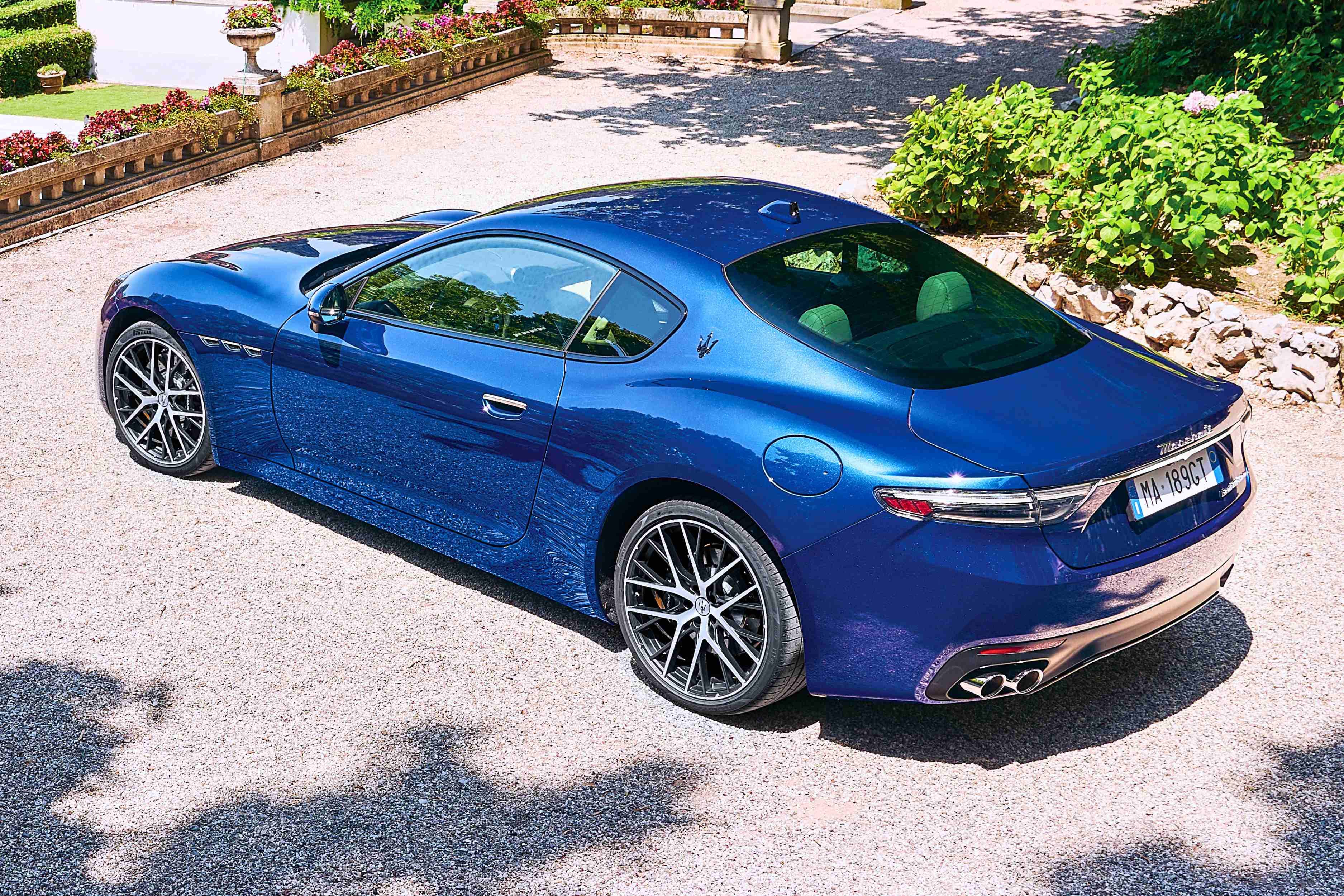
There’s the impossibly long bonnet, the neatly tucked-in cabin and the flowing rear that has become a GranTurismo trademark. Signature Maserati cues remain intact too, from the triple vents behind the front wheels to the distinctive rear quarter window and the Trident proudly displayed on the C-pillar. Even the way the muscular rear haunches merge into the tail has an elegance that’s hard to ignore.
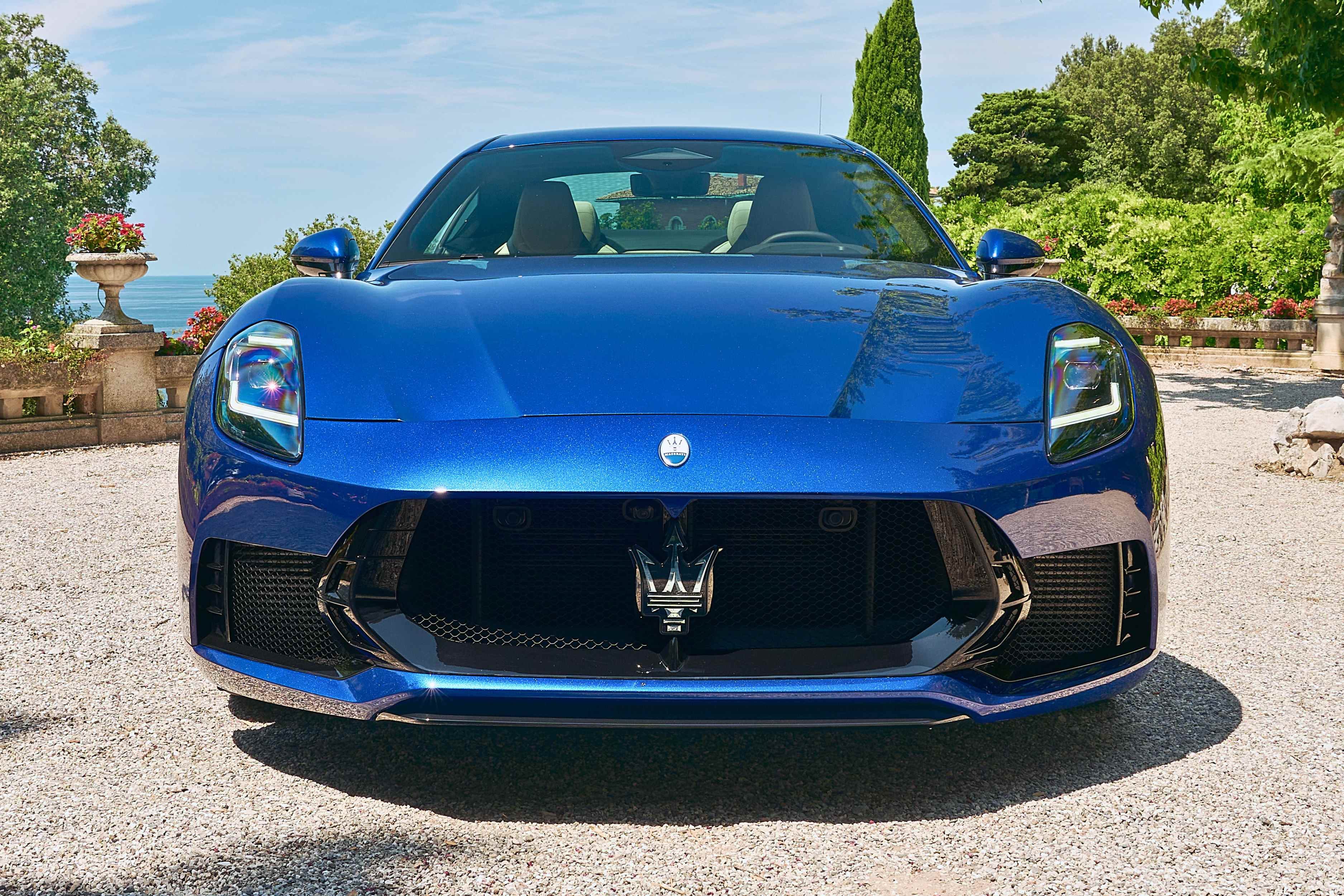
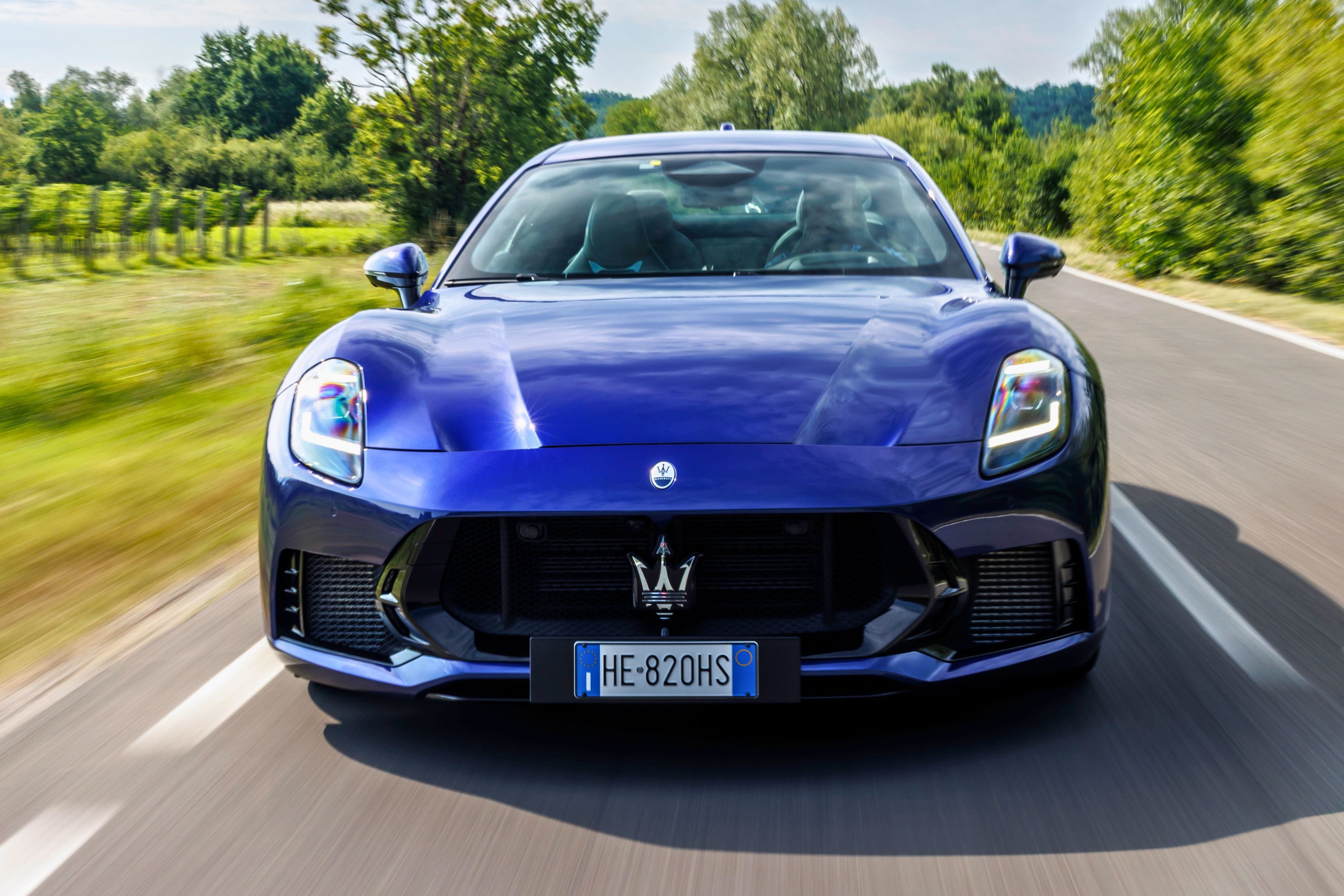
Revised front bumper adds aggression to GranTurismo look.
2026’s styling revisions are concentrated at the front. A larger grille sits lower down, flanked by bigger intercooler openings and a more pronounced splitter that together lend the GranTurismo a more aggressive face. At the rear, the clear-lens tail-lamps are the easiest (actually, only) way to identify the updated model. Oh, and if you see a GranTurismo without quad exhausts, you should know that you’re looking at the Folgore or electric version.
Maserati GranTurismo Interior Space and Comfort – 8/10
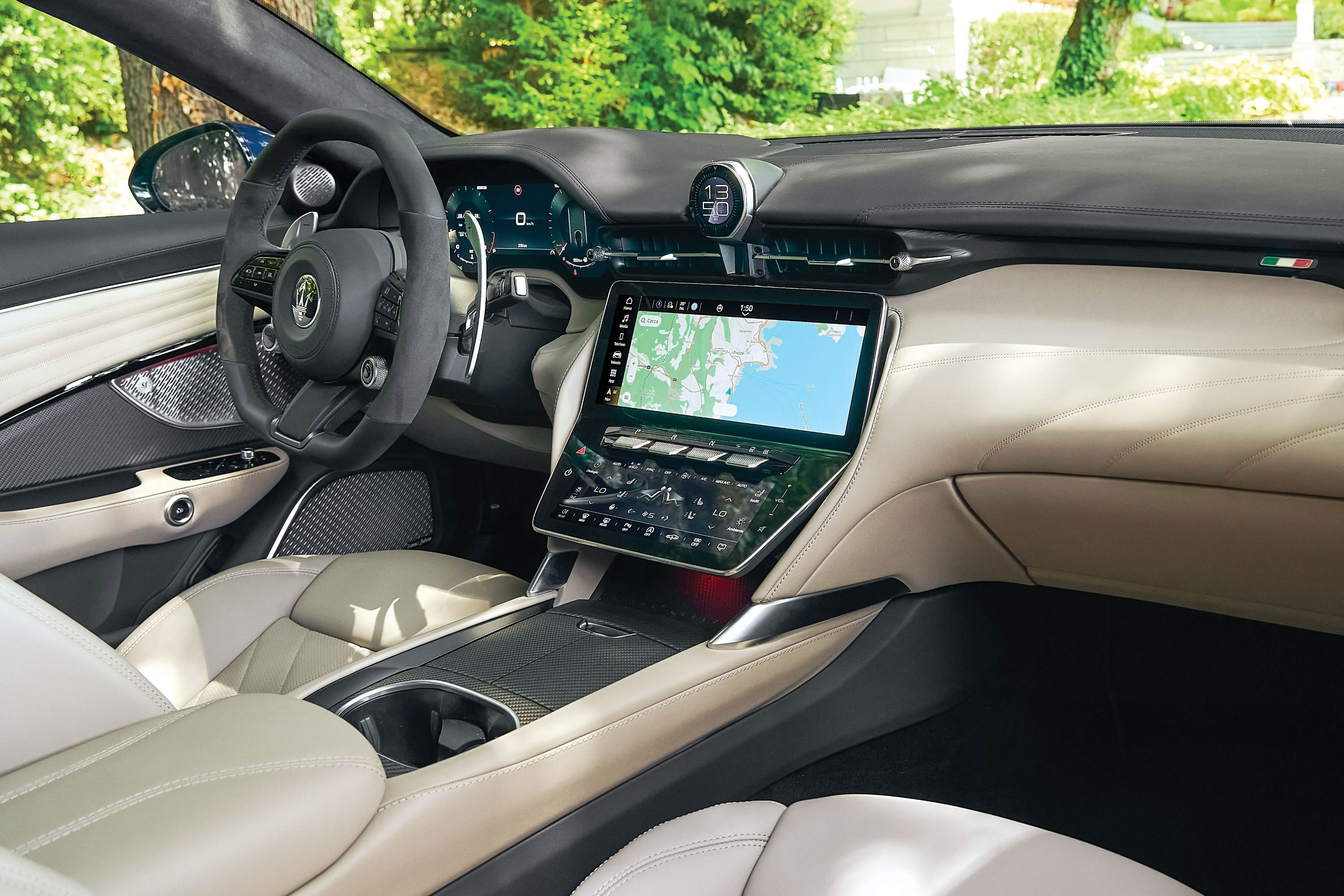
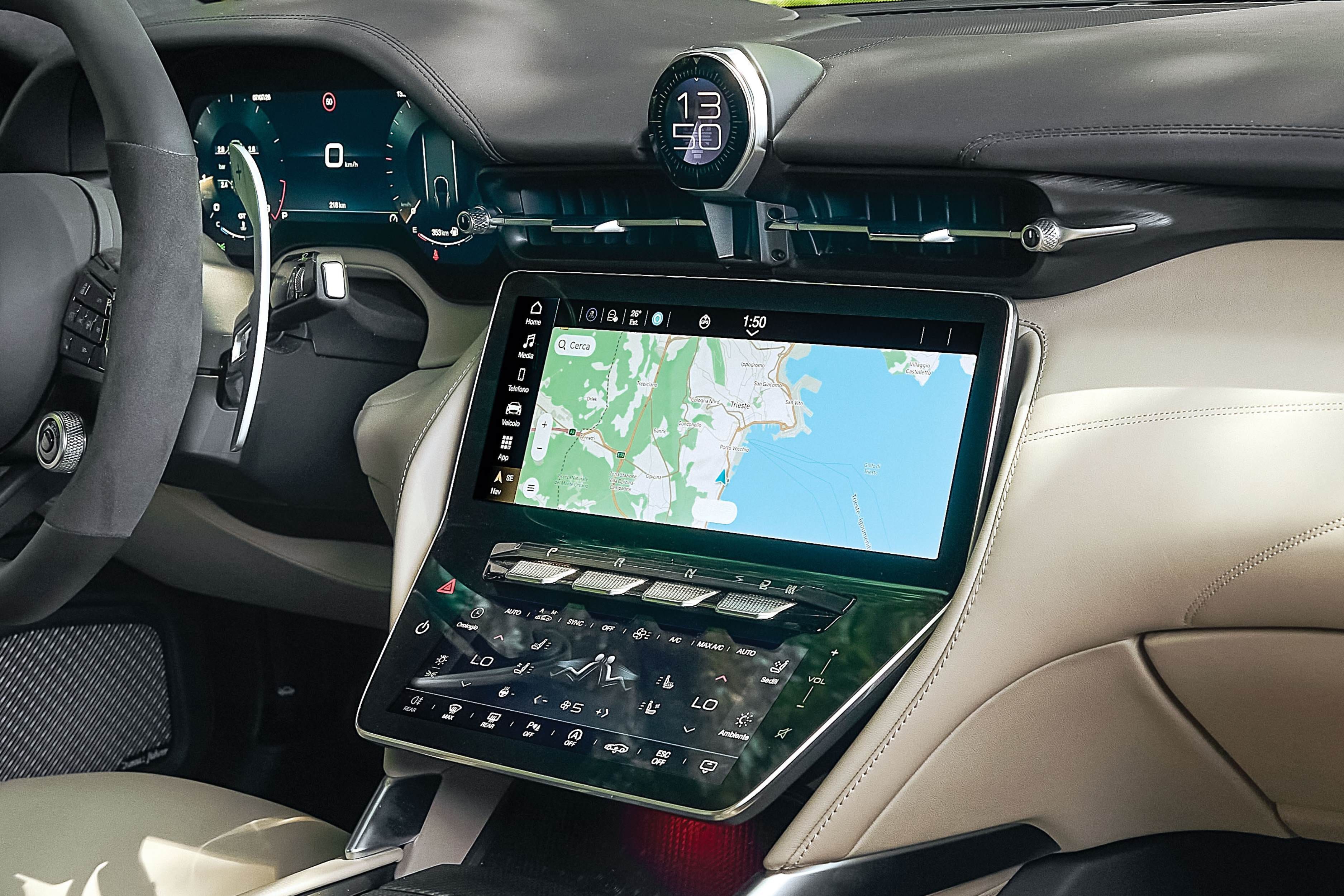
Inside too, the updates are subtle. The basic dash design is unchanged and is characterised by four screens– 12.2-inch digital dials, a 12.3-inch central infotainment screen, an 8.8-inch lower touchscreen and a digital clock.
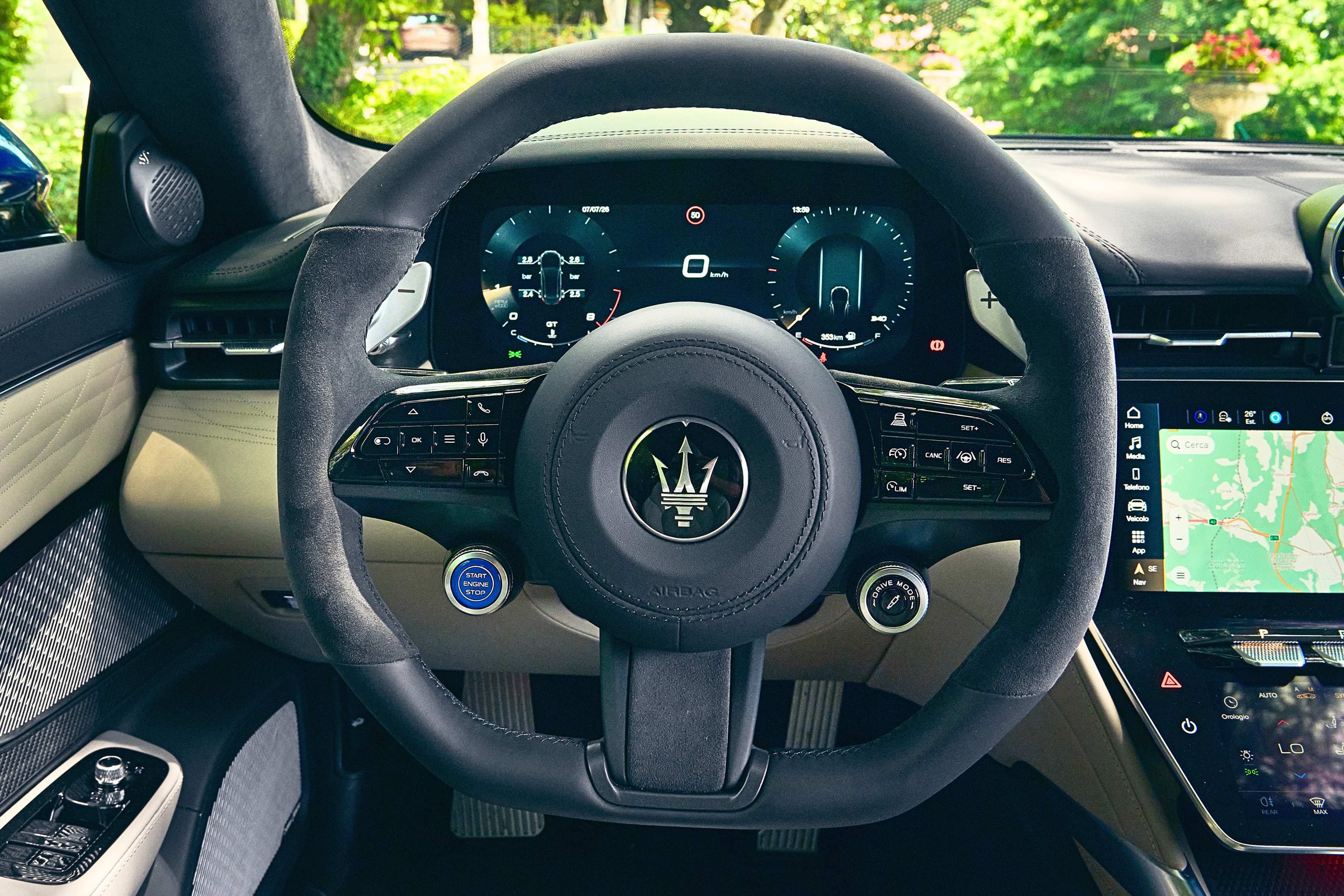
New steering and redone gear selector switches among the changes inside.
The steering gets a new squared-off design wrapped in Alcantara, and behind it remain the wonderfully oversized aluminium paddle shifters fixed to the steering column. The uninspiring P, R, N and D buttons on the dash make way for feelsome metallic toggles, while the digital clock gets a new glass face to make it look more, ahem, analogue. It works.
Interior is a happy blend of tech and craftsmanship.
Despite the abundance of screens, the cabin retains a handcrafted and very Italian feel thanks to the quality of (most) materials and intricate detailing. Maserati would only be too happy to introduce buyers to its universe of upholstery, colour and trim options to create an interior that’s truly personal. The only ergonomic complaint is the seating position, which doesn’t go quite as low as expected in a car of this nature. On the matter of seats, the GranTurismo’s rear seats aren’t just for show (I’m looking at you, 911). They are genuinely usable for short stints or the odd getaway. There’s a usable boot too, for your Gucci luggage.
Maserati GranTurismo Features and Safety – 7/10
New-age tech meets old-school warmth in here.
The GranTurismo comes with a fair bit of kit as standard. The front seats are powered and heated/ventilated, there’s a fabulous Sonus Faber sound system and enough screens to tell you you’re in 2026. The digital dials are easy to refer to, while the main touchscreen is also easy enough to navigate through. It does feel like a Stellantis group system rather than a bespoke Maserati unit, though. We’re not fans of touchscreens for climate control functions, but Maserati’s solution is among the best of the kind. Swipe sideways across the screen to adjust blower speed and vertically for temperature – intuitive to use on the move.
The safety suite includes camera- and radar-based ADAS.
Maserati GranTurismo Performance and Refinement – 8/10
Modena’s 490hp V6 offers smooth, effortless acceleration; Trofeo’s 590hp is more emotive.
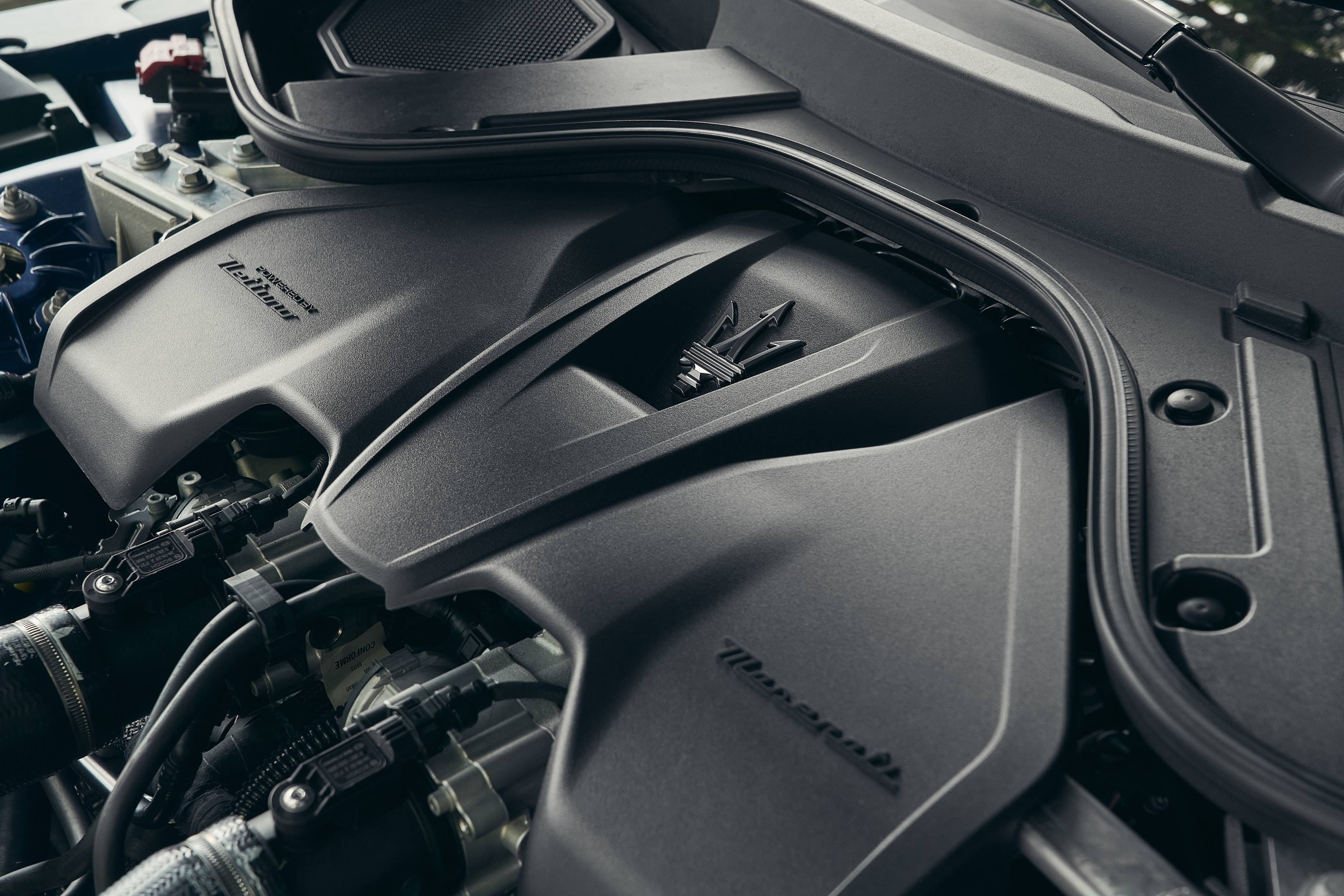
Power comes from Maserati’s own 3.0-litre twin-turbocharged ‘Nettuno’ petrol V6. In Modena guise as tested here, it produces 490hp, while the Trofeo’s output rises to 590hp from the previous 550hp. There’s also the ethanol-blending-proof all-electric Folgore, whose three-motor setup develops 760hp.
GranTurismo Modena does 0-100kph in 3.9 sec; Trofeo takes 3.5 sec.
On the road, the GranTurismo immediately reminds you that it is, above all else, a grand tourer. Despite producing nearly 500hp, it never feels urgent or hyperactive. Instead, its responses are measured and relaxed. Press the throttle harder, and the performance arrives in one smooth, effortless surge rather than an explosive punch. Maserati claims 0-100kph in 3.9 seconds for the Modena and 3.5 seconds for the Trofeo, but it’s the manner in which the speed builds that defines the experience. It launches with elegance rather than violence.
The V6 complements that character perfectly. There’s a constant gruffness to its soundtrack that grows richer as the revs climb. The Trofeo benefits from a more emotive exhaust note.
Maserati GranTurismo Efficiency/Range – 5/10
GranTurismo excels as a grand tourer, prioritising comfort over urgency.
Maserati’s V6 features cylinder deactivation and will shut off the right bank of cylinders at light loads in the interest of better efficiency. As it is, the GranTurismo’s V6 will be more efficient than the V8s in some rivals, but only just. The GranTurismo will happily work through a full tank of 100-octane fuel if you drive with vigour, and even on relaxed drives, you’re looking at real-world figures in the region of 5-6kpl.
The all-electric Folgore does have more to offer with the update. Range is up by 80km to 540km (WLTP) thanks to a new front-axle disconnect function.
Maserati GranTurismo Ride Comfort and Handling – 8/10
At nearly five metres long and weighing around 1.8 tonnes, the GranTurismo is no lightweight sports car. Yet, its standard air-suspension and all-wheel-drive system help disguise its size remarkably well. It doesn’t dart into corners like a Porsche 911, but there’s a lovely fluidity to the way it changes direction. The steering, in particular, deserves praise for its natural weighting and excellent feel.
Air suspension delivers a cushioned ride despite low-profile tyres.
Ride comfort is another highlight. Despite its large wheels and low-profile tyres, the suspension absorbs imperfections with impressive composure. A new ‘Country’ drive mode raises the ride height by 20mm at speeds of up to 120kph, making it particularly relevant for Indian roads.
Maserati GranTurismo Price and Verdict – 8/10
The GranTurismo (and open-top Gran Cabrio) will go on sale in India in the coming months, and we expect the range to start around Rs 2.7 crore (ex-showroom) with the Trofeo’s closer to the Rs 3 crore mark. The all-electric Folgore will also be on offer.
Updated Maserati GranTurismo is expected to cost Rs 2.7-3 crore (ex-showroom).
Similar money could buy you a Porsche 911 GTS or a Mercedes-AMG GT, but I wouldn’t think of the GranTurismo as a direct rival. It’s not as focused as a performance car, but instead excels at a wider range of abilities. The GranTurismo story is as much about luxury as it is about sportiness. Ride comfort is a big plus, and for what it’s worth, the rear seats are usable too. It only helps that the GranTurismo is drop-dead gorgeous.
For the wealthy few shopping in the segment, the GranTurismo deserves a long, hard look. You might just fall for it.
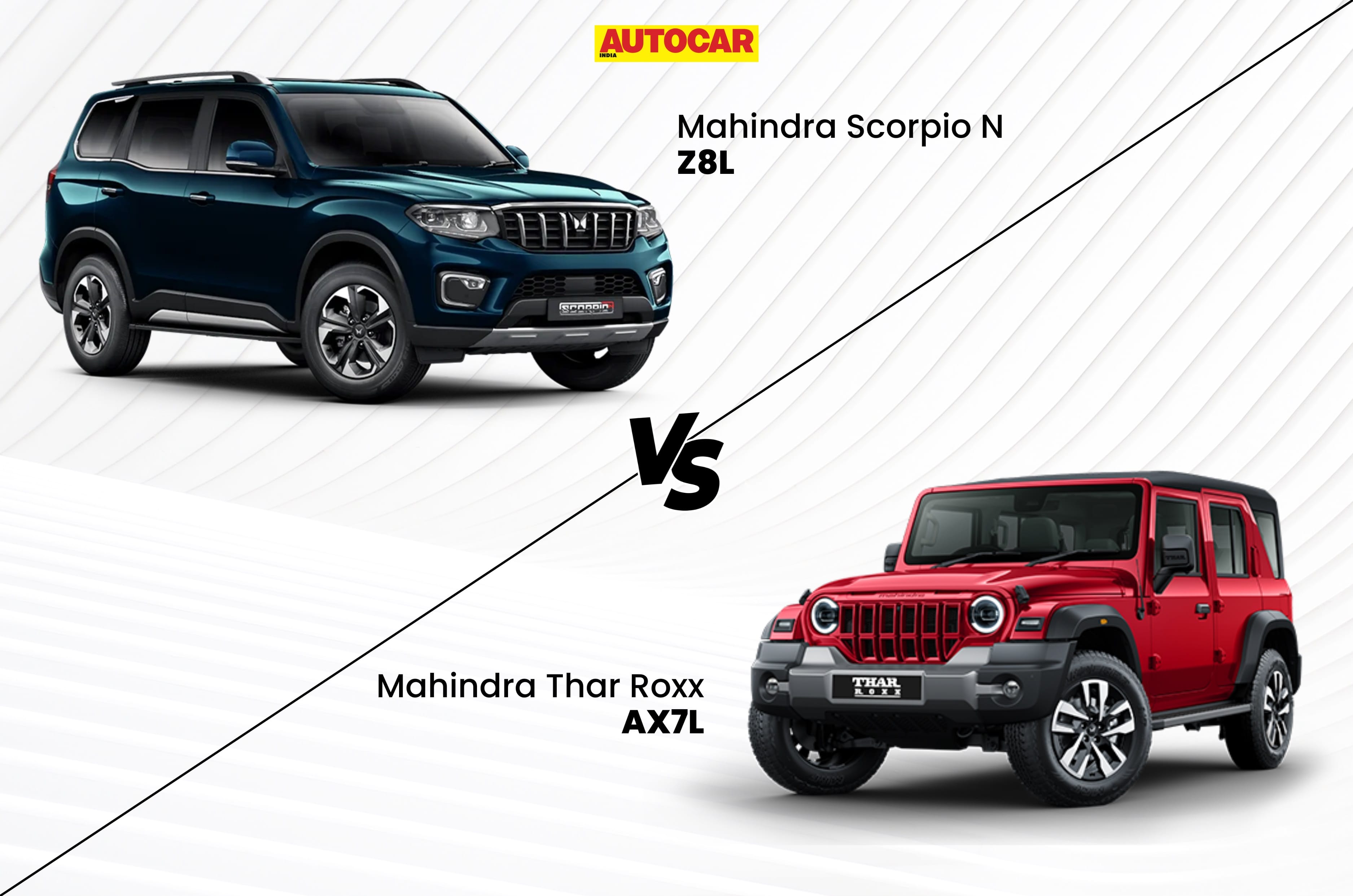
Mahindra recently launched the 2026 Scorpio N, introducing a handful of changes, including new rims, a larger touchscreen, a fresh driver’s display, and a 540-degree camera, while retaining the same powertrain and drivetrain options. It is priced from Rs 13.69 lakh to Rs 25.49 lakh (ex-showroom). Its prices are similar to those of the Thar Roxx’s, which also offers the same powertrain and drivetrain options. So, if you are looking for a Mahindra SUV at around Rs 25 lakh, should you choose the top-spec Mahindra Scorpio N Z8L or the Thar Roxx AX7L? We find out.
2026 Mahindra Scorpio N vs Thar Roxx: Dimensions
Scorpio N is larger and offers more boot space; Thar Roxx has better ground clearance
Mahindra Scorpio N vs Thar Roxx: Dimensions and other specifications
Scorpio N
Thar Roxx
Difference
Length (mm)
4,662
4,428
+234
Width (mm)
1,917
1,870
+47
Height (mm)
1,857
1,923
-66
Wheelbase (mm)
2,750
2,850
-100
Ground clearance (mm)
187
226
-39
Boot space (litres)
786*
447
+339
No. of seats (mm)
6 or 7
5
–
*786 litres of boot space is with the third row folded (with 5 seats up).
The Mahindra Scorpio N is significantly longer compared to the Thar Roxx, and it is also slightly wider. The Thar Roxx, on the other hand, has a larger wheelbase and is also taller than the Scorpio N.
The Scorpio N offers a larger boot with the third row folded. Notably, the Scorpio N is offered with either 6 or 7 seats, the former asking a premium over the latter, while the Thar Roxx is strictly a 5-seater.
2026 Mahindra Scorpio N Z8L vs Thar Roxx AX7L: Powertrain
Both Mahindra SUVs get the same powertrain options, but with slightly different tunes
Top-spec Mahindra Scorpio N vs Thar Roxx: Powertrain options
Scorpio N Z8L*
Thar Roxx AX7L^
Engine
2.0L TP | 2.2L D
2.0L TP | 2.2L D
Power (hp)
203 | 175
177 | 152-175
Torque (Nm)
370-380 | 370-400
380 | 330-400
Transmission
6MT, 6AT | 6MT, 6AT
6AT | 6MT, 6AT
Drivetrain
RWD | RWD, 4WD
RWD | RWD, 4WD
*Scorpio N’s direct-injection turbo-petrol produces 203hp, 370Nm with MT, and 203hp, 380Nm with AT; diesel engine produces 175hp, 370Nm with MT, 175hp, 400Nm with AT.
^Thar Roxx’s direct-injection turbo-petrol engine produces 152hp,300Nm with MT, and 175hp, 400Nm with AT.
Both top-spec Mahindra Scorpio N Z8L and Thar Roxx AX7 are offered with a choice between a 2.0-litre direct-injection turbo-petrol engine and a 2.2-litre diesel engine. However, these engines are offered in different states of tune, with varying power and torque outputs, and the Scorpio N’s select powertrains are slightly more powerful than the Thar Roxx’s.
The Scorpio N’s petrol-AT produces 28hp more than the Thar Roxx. Notably, the Thar Roxx AX7L is not offered with a petrol-manual option. The Scorpio N’s diesel-MT produces 23hp and 40Nm more than the Thar Roxx, while with the diesel-AT both SUVs offer 175hp and 400Nm.
The diesel engines on both SUVs are available with both rear-wheel-drive (RWD) and four-wheel-drive (4WD) setups with both manual and automatic variants, while the petrol engines are only offered with only a RWD setup.
2026 Mahindra Scorpio N Z8L vs Thar Roxx AX7L: Exterior
Thar Roxx AX7L has bigger rims, but Scorpio N Z8L offers roof rails
Mahindra Scorpio N Z8L vs Thar Roxx AX7L: Exterior
Scorpio N Z8L
Thar Roxx AX7L
Headlights
Auto LED
Auto LED
Taillights
Wraparound LED
Wraparound LED
DRLs
LED
LED
Front fog lamps
LED
LED
Wheels
18-inch
19-inch
Powered ORVMs
Yes
Yes
Roof rails
Yes
No
Sharkfin antenna
Yes
No
Colour
Mono-tone
Dual-tone
Top-spec trims of both SUVs are offered with all-LED lighting. The differences, however, are larger 19-inch alloy wheels on the Mahindra Thar Roxx AX7L, and roof rails on the Scorpio N Z8L. The Scorpio N has a sharkfin antenna, while the Thar Roxx’s antenna is placed on the front left fender.
The top-spec Scorpio N is offered with monotone hues only, while the Thar Roxx is available only in dual-tone shades.
2026 Mahindra Scorpio N Z8L vs Thar Roxx AX7L: Interior, features
Scorpio N Z8L offers larger infotainment, more speakers and dual-zone AC
Mahindra Scorpio N Z8L vs Thar Roxx AX7L: Interior and features
Scorpio N Z8L
Thar Roxx AX7L
Driver’s display
10.25-inch
10.25-inch
Infotainment screen
12.30-inch
10.25-inch
Android Auto, Apple CarPlay
Wireless
Wireless
Audio system
12-speaker Sony
8-speaker Harman Kardon
On-board navigation
Yes
Yes
Sunroof
Panoramic
Panoramic
Powered tailgate
No
No
Climate control
Dual-zone
Single-zone
Seat upholstery
Leatherette
Leatherette
Steering wheel adjustment
Tilt
Tilt
Wireless phone charger
Yes, with cooling
Yes
Driver seat adjustment
6-way
6-way
Co-driver’s seat adjustment
–
–
Front seat features
Ventilation
Ventilation
Rear window sunshade
No
No
The Scorpio N Z8L offers a larger 12.3-inch touchscreen infotainment system paired with a 12-speaker Sony sound system compared to the Thar Roxx AX7L’s 10.25-inch unit with an 8-speaker Harman Kardon sound system. The Scorpio N is also equipped with dual-zone climate control and a wireless phone charger with cooling, while the Thar Roxx gets basic single-zone automatic climate control and misses out on the cooling function for the wireless phone charger.
Everything else is identical on both SUVs, including a panoramic sunroof, a 10.25-inch driver’s display, a 6-way powered driver’s seat, front seat ventilation, and a tilt-adjustable steering wheel. Both SUVs also show adventure statistics including a compass, roll and pitch and an altimeter.
2026 Mahindra Scorpio N Z8L vs Thar Roxx AX7L: Driving tech
Scorpio N Z8L comes with more terrain modes than the Thar Roxx AX7L
Mahindra Scorpio N Z8L vs Thar Roxx AX7L: Driving technology
Scorpio N Z8L
Thar Roxx AX7L
Drive modes (RWD only)
Zip, Zap, Zoom
Zip, Zoom
Terrain modes (4WD only)
Normal, Snow, Mud & Ruts, Sand
Snow, Sand, Mud
Shift-on-fly 4WD
Yes
Yes
Electronic locking differential
4WD only
4WD only
Paddle shifters
AT only
AT only
Cruise control
Adaptive
Adaptive
Drive modes on the Scorpio N are offered only with the diesel-RWD variants, while even the petrol variants of the Thar Roxx get this suite. However, the Scorpio N gets an additional ‘Sand’ terrain mode missing on the Thar Roxx. Both SUVs, however, get a shift-on-fly 4WD system and an electronic locking differential, enhancing grip on slippery terrains.
2026 Mahindra Scorpio N Z8L vs Thar Roxx AX7L: Safety
Safety features are similar, save for a 540-degree camera on Scorpio N Z8L
Mahindra Scorpio N Z8L vs Thar Roxx AX7L: Safety features
Scorpio N Z8L
Thar Roxx AX7L
Airbags
6
6
ADAS
Level-2
Level-2
Camera setup
540-degree*
360-degree
Parking sensors
Front and rear
Front and rear
Electronic parking brake
Yes
Yes
All-wheel disc brakes
Yes
Yes
TPMS
Yes
Yes
IRVM
Auto-dimming
Auto-dimming
Rear wiper, washer
Yes
Yes
Hill start assist
Yes
Yes
Hill descent control
Yes
Yes
ESC
Yes
Yes
Traction control
Yes
Yes
*The 540-degree camera setup includes an under-bonnet display.
Except for a 540-degree camera setup on the Scorpio N Z8L, which shows the view under the SUV’s bonnet, all other safety features are identical to both SUVs. These include 6 airbags, Level-2 advanced driver assistance system (ADAS), front and rear parking sensors, a tyre pressure monitoring system (TPMS), and hill start and hold assists.
2026 Mahindra Scorpio N Z8L vs Thar Roxx AX7L: Prices
The Thar Roxx comes at a lower price compared to the top-spec Scorpio N
Mahindra Scorpio N Z8L vs Thar Roxx AX7L: Variant-wise ex-showroom price (Rs, lakh)
Scorpio N Z8L
Thar Roxx AX7L
Petrol MT
21.31-21.69
–
Petrol AT
22.87-23.05
20
Diesel MT
21.99-22.47
19.52
Diesel AT
23.49-23.80
20.78
Diesel MT 4WD
24.25
22.12
Diesel AT 4WD
25.49
22.53
The Mahindra Scorpio N Z8L is more expensive than the Thar Roxx AX7L in all powertrain configurations by over Rs 2 lakh. However, it is offered with an additional third row, which can accommodate more passengers. On the other hand, the Mahindra Thar Roxx is derived from a hardcore off-roader and is a good recreational vehicle while also serving urban buyers with its tech-loaded suite. However, the Scorpio N, despite being pricier, is a more practical option that packs in all the necessary off-roading tech and offers an additional third row, making it a good value-for-money SUV in its class.
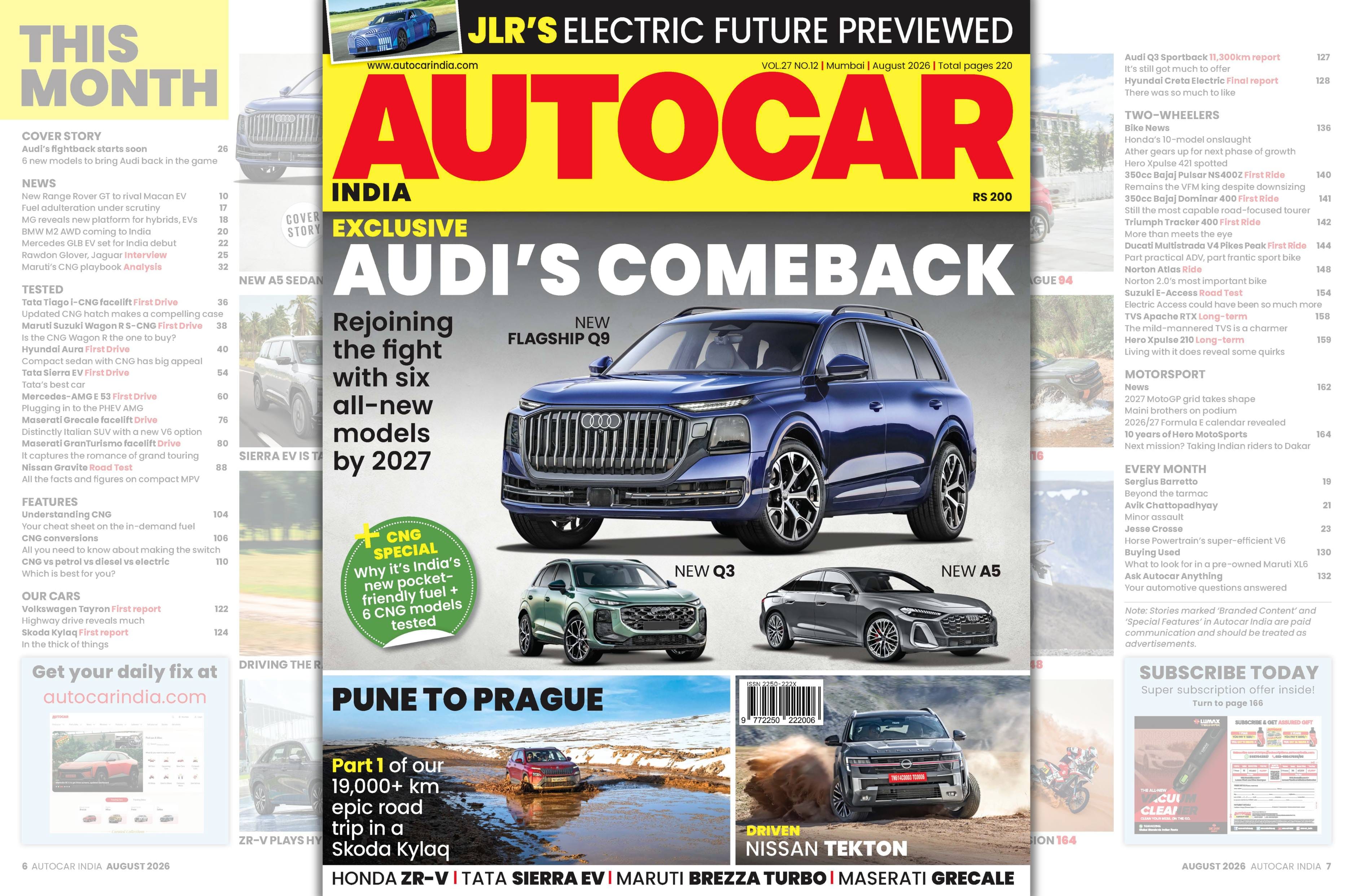
Our August 2026 issue has all the exclusive details of Audi India’s most ambitious product offensive in over a decade, with six all-new locally assembled models planned over the next 18 months. We also get behind the wheel of Jaguar’s camouflaged Type 01 prototype and drive the Range Rover Sport EV at Goodwood. Closer to home, we find out if the Tata Sierra EV lives up to its billing as the best Tata on sale, while the Nissan Tekton is put through a 700km-plus real-world test from Chandigarh to Leh. We also break down India’s new most popular fuel in our CNG special, with five models tested back-to-back. On two wheels, the new Norton Atlas is ridden in Iceland, while a special Ducati takes on some of Maharashtra’s tricky trails. All this while a Skoda Kylaq sets off on an epic 19,351km drive from Pune to Prague.
Audi’s Big Comeback: Cover Story
Audi was once India’s bestselling luxury brand. Today, it is a shadow of that. Now, with six all-new locally assembled models planned by end-2027, the four rings are back on the offensive. We have all the details and speak to Audi India head Balbir Singh Dhillon and Audi AG chairman Gernot Dollner about the upcoming cars.
Jaguar Type 01: Drive
Jaguar has walked away from 90 years of combustion heritage, cancelled every existing model and started again with a blank sheet of paper. The Type 01 is the result – a five-metre all-electric grand tourer with a 1,000hp three-motor setup, 600km of range and a starting price north of Rs 3 crore. We drive a camouflaged prototype at JLR’s Gaydon test track to find out if the boldest bet in the car industry’s history has legs.
Range Rover Sport EV: Drive
Under its familiar skin sits an 800V architecture, two Land Rover-developed 326hp motors and a 118.5kWh battery validated over 60,000 hours of testing. The electric Range Rover Sport arrives in India around March 2027 and could set a new luxury benchmark for the brand. We drive a prototype at Goodwood to find out if it lives up to that promise.
Tata Sierra EV: First Drive
The best Tata in years gets the brand’s smoothest powertrain yet. The Sierra EV comes in rear-wheel-drive and all-wheel-drive forms, with the AWD variant making a class-leading 306hp and bringing the first AWD option in this segment. We drive all variants, including a proper off-road test, to see if it lives up to the hype.
Honda ZR-V: Drive
Honda’s first hybrid SUV in India arrives as a full import from Japan, packing a 184hp strong-hybrid powertrain and a claimed 22.8kpl. We get a brief first taste at the Buddh International Circuit to find out if it delivers on its promise.
Mercedes-AMG E 53 Hybrid 4Matic+: First Drive
The new E 53 pairs a 3.0-litre straight-six with a 28.6kWh battery for 585hp and up to 100km of electric range. It is a PHEV AMG that also does daily commutes without a drop of fuel. But has electrification enhanced the AMG experience, or diluted it?
CNG Special: Features
CNG now accounts for nearly 20 percent of India’s passenger car market. We explain everything you need to know about the fuel – what it is, how it works and whether an aftermarket conversion makes sense. We also road test five CNG models: the Tata Tiago iCNG, Maruti Wagon R S-CNG, Hyundai Aura CNG, Maruti Brezza Turbo (petrol) and Maruti Victoris S-CNG.
Tata Nexon: Petrol vs Diesel vs Electric vs CNG
The Nexon is one of the few cars in India offered with four distinct powertrain options. We test every variant – turbo-petrol, diesel, CNG and electric – with real-world performance and efficiency figures to find the sweet spot of the range. The result might just surprise you.
Skoda Kylaq: Pune to Prague, Part 1
A made-in-India Skoda Kylaq sets off on a near-20,000km adventure from its birthplace at Skoda’s Chakan plant to Skoda Auto’s headquarters in Prague. Part 1 covers India, Nepal, Tibet and China – including a detour to Mount Everest Base Camp.
Norton Atlas: Ride
TVS’s second Norton – and the brand’s most important – debuts in Iceland. The Atlas is a 585cc parallel-twin adventure tourer with 70hp, a full electronics suite and 19-inch front wheel. We ride 200km of sweeping mountain roads and gravel trails to find out if it can justify the hype and, crucially, a competitive price tag.
Ducati Multistrada V4 Pikes Peak: First Ride
The most focused Multistrada money can buy blurs the line between a practical ADV and an out-and-out sport bike. With Ohlins semi-active suspension, a single-sided swingarm and a race-mode, it promises to be two bikes in one. We find out if the price premium is worth it.
Suzuki E-Access: Road Test
Suzuki’s first electric scooter carries a big name and an even bigger price tag. It gets some things right, but in a segment that rewards value, performance and range, does the Access badge alone justify the Rs 1.92 lakh asking price?
Our August 2026 issue has all the exclusive details of Audi India’s most ambitious product offensive in over a decade, with six all-new locally assembled models planned over the next 18 months. We also get behind the wheel of Jaguar’s camouflaged Type 01 prototype and drive the Range Rover Sport EV at Goodwood. Closer to home, we find out if the Tata Sierra EV lives up to its billing as the best Tata on sale, while the Nissan Tekton is put through a 700km-plus real-world test from Chandigarh to Leh. We also break down India’s new most popular fuel in our CNG special, with five models tested back-to-back. On two wheels, the new Norton Atlas is ridden in Iceland, while a special Ducati takes on some of Maharashtra’s tricky trails . All this while a Skoda Kylaq sets off on an epic 19,351km drive from Pune to Prague.
Audi’s Big Comeback: Cover Story
Audi was once India’s bestselling luxury brand. Today, it is a shadow of that. Now, with six all-new locally assembled models planned by end-2027, the four rings are back on the offensive. We have all the details, and speak to Audi India head Balbir Singh Dhillon and Audi AG chairman Gernot Döllner about the upcoming cars.
Jaguar Type 01: Drive
Jaguar has walked away from 90 years of combustion heritage, cancelled every existing model and started again with a blank sheet of paper. The Type 01 is the result – a five-metre all-electric grand tourer with a 1,000hp three-motor setup, 600km of range and a starting price north of Rs 3 crore. We drive a camouflaged prototype at JLR’s Gaydon test track to find out if the boldest bet in the car industry’s history has legs.
Range Rover Sport EV: Drive
Under its familiar skin sits an 800V architecture, two Land Rover-developed 326hp motors and a 118.5kWh battery validated over 60,000 hours of testing. The electric Range Rover Sport arrives in India around March 2027 and could set a new luxury benchmark for the brand. We drive a prototype at Goodwood to find out if it lives up to that promise.
Tata Sierra EV: First Drive
The best Tata in years gets the brand’s smoothest powertrain yet. The Sierra EV comes in rear-wheel and all-wheel-drive forms, with the AWD variant making a class-leading 306hp and bringing the first AWD option in this segment. We drive all variants, including a proper off-road test, to see if it lives up to the hype.
Honda ZR-V: Drive
Honda’s first hybrid SUV in India arrives as a full import from Japan, packing a 184hp strong-hybrid powertrain and a claimed 22.8kpl. We get a brief first taste at the Buddh International Circuit to find out if it delivers on its promise.
Mercedes-AMG E 53 Hybrid 4Matic+: First Drive
The new E 53 pairs a 3.0-litre straight-six with a 28.6kWh battery for 585hp and up to 100km of electric range. It is a PHEV AMG that also does daily commutes without a drop of fuel. But has electrification enhanced the AMG experience, or diluted it?
CNG Special: Features
CNG now accounts for nearly 20 percent of India’s passenger car market. We explain everything you need to know about the fuel – what it is, how it works and whether an aftermarket conversion makes sense. We also road test five CNG models: the Tata Tiago iCNG, Maruti Wagon R S-CNG, Hyundai Aura CNG, Maruti Brezza Turbo (petrol) and Maruti Victoris S-CNG.
Tata Nexon: Petrol vs Diesel vs Electric vs CNG
The Nexon is one of the few cars in India offered with four distinct powertrain options. We test every variant – turbo-petrol, diesel, CNG and electric – with real-world performance and efficiency figures to find the sweet spot of the range. The result might just surprise you.
Skoda Kylaq: Pune to Prague, Part 1
A made-in-India Skoda Kylaq sets off on a near-20,000km adventure from its birthplace at Skoda’s Chakan plant to Skoda Auto’s headquarters in Prague. Part 1 covers India, Nepal, Tibet and China – including a detour to Mount Everest Base Camp.
Norton Atlas: Ride
TVS’s second Norton – and the brand’s most important – debuts in Iceland. The Atlas is a 585cc parallel-twin adventure tourer with 70hp, a full electronics suite and 19-inch front wheel. We ride 200km of sweeping mountain roads and gravel trails to find out if it can justify the hype and, crucially, a competitive price tag.
Ducati Multistrada V4 Pikes Peak: First Ride
The most focused Multistrada money can buy blurs the line between a practical ADV and an out-and-out sport bike. With Öhlins semi-active suspension, a single-sided swingarm and a race-mode, it promises to be two bikes in one. We find out if the price premium is worth it.
Suzuki E-Access: Road Test
Suzuki’s first electric scooter carries a big name and an even bigger price tag. It gets some things right, but in a segment that rewards value, performance and range, does the Access badge alone justify the Rs 1.92 lakh asking price?
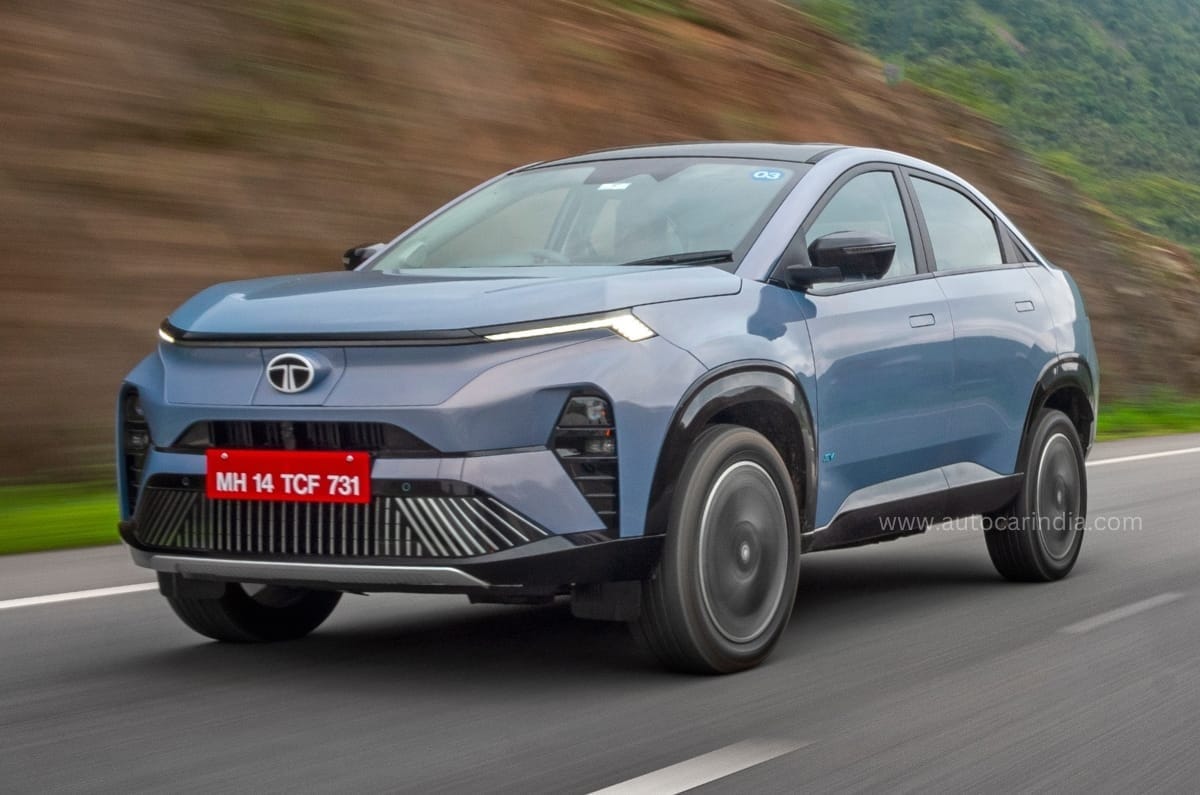
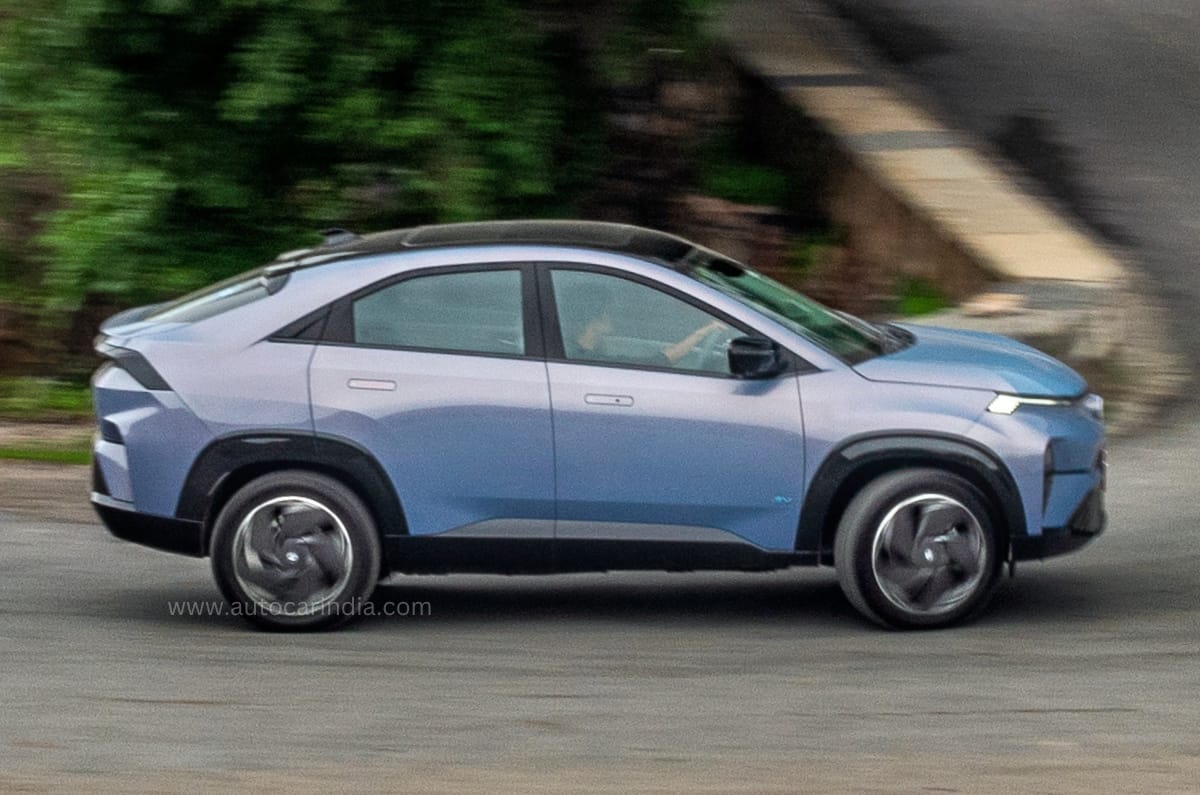
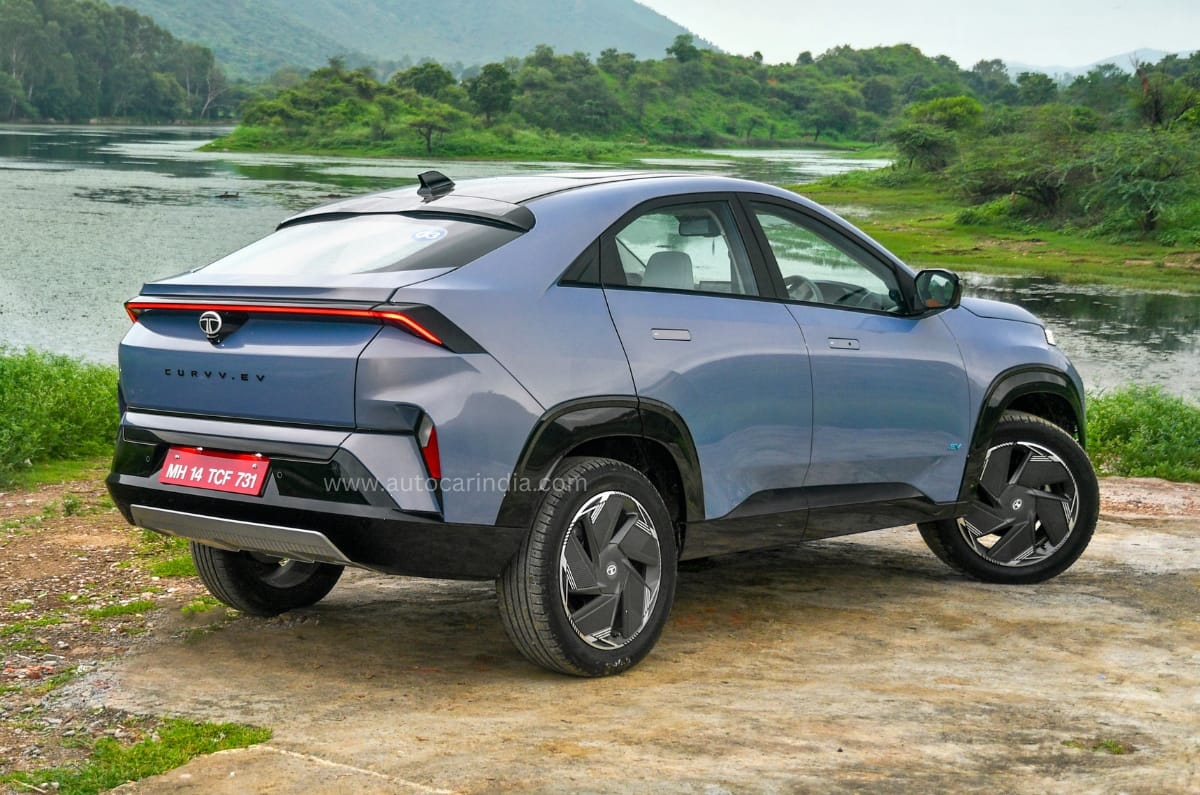
Tata launched the Curvv EV in 2024 as a distinct-looking coupe-SUV in the heavily contested midsize class. In the manufacturer’s lineup, it sits between the smaller Nexon EV and larger Sierra EV, and along with the different looks, it also offers a feature-loaded cabin, spacious cabin, a large battery pack and a powerful electric motor. If you’re interested in the Curvv EV, here are the reasons to consider it, and some reasons to think otherwise.
Reasons to buy
Offers good performance without compromising on range
The Tata Curvv EV is offered with a 55kWh battery pack and produces 167hp and 215Nm from its front-axle-mounted (FWD) electric motor. It gets three drive modes: Eco, City and Sport, which alter the throttle response based on the chosen mode. The Curvv EV is the most energetic in Sport mode, offering full torque reserve at the tap of the accelerator pedal, unlike the other two modes where torque output is restricted to around 70 percent. Tata claims a 0-100kph time of 8.6 seconds for the Curvv, but in our real-world tests, it completed the 0-100kph sprint in 9.25 seconds in Sport mode. The fact that the Tata Curvv EV did a 0-100kph run in 11.6 seconds with the most docile Eco mode shows its quick acceleration.
However, quick acceleration does not come at the expense of efficiency, as in our real-world tests, we found that the Curvv EV’s 55kWh variant offered an economy of 6.64km/kWh, translating to a total range of 365km, which allows for intracity travel.
Offers a lot of comfort and convenience features
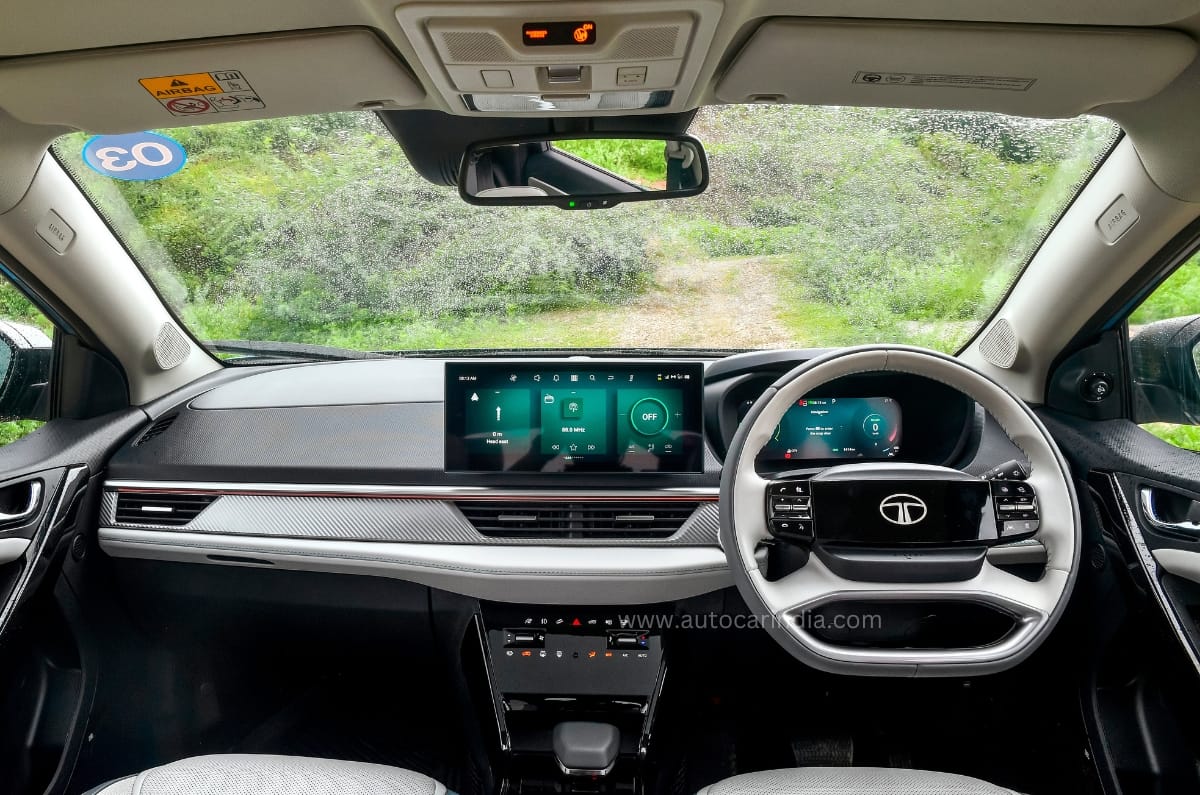
Like other Tata EV offerings, the Curvv EV is also loaded with features to its gills. It gets a 12.3-inch touchscreen infotainment system and a 10.25-inch digital driver’s display, the latter of which can be configured to show navigation. However, when using turn indicators, it shows the blind spot monitor feed instead of the navigation. This can be avoided if the blind spot monitor display is configured to display on the touchscreen. Both screens are crisp and have menus, but it is easy to get used to them. The infotainment system is offered with Tata’s arcade.ev app suite, which includes streaming services and games that can be used when the Curvv EV is charging.
Other features include a panoramic sunroof, configurable ambient lighting, an electric tailgate with gesture control, a 9-speaker JBL sound system, a wireless phone charger with cooling vents, powered and ventilated front seats, and Level-2 advanced driver assistance systems (ADAS).
It is a value-for-money offering in its class
With prices ranging from Rs 16.99 lakh to Rs 19.19 lakh, the Tata Curvv EV is on par with the petrol/diesel midsize SUVs, and undercuts rivals like the Hyundai Creta Electric, Mahindra BE 6, and Tata Sierra. At this price, it is offered with concept-car-like looks, a spacious interior, a feature-loaded cabin, a large battery and a potent electric motor, making it one of the most value-for-money offerings in its class.
Reasons to skip
Taller passengers may feel uncomfortable on the rear seats
The coupe-SUV design of the Curvv EV eats up the headroom on the rear seats, which will be uncomfortable for taller passengers, especially if they are taller than 6 feet. Such passengers will also find the under-thigh support underwhelming, as they have to sit in a knees-up position due to the battery cells placed under the floor. However, legroom is in plenty and will be appreciated by passengers of all sizes.
It suffers from some ergonomic issues
The Curvv EV shares much of its dashboard design with the Nexon EV, and hence, does not get proper cupholders for the front passengers. The cupholders are placed inside the glovebox, which does not make them usable, especially on the move. The phone charging ports are placed ahead of the drive selector knob and are hard to reach. The storage space under the front centre armrest is also small. However, the fit and finish inside the cabin is decent for the Curvv EV’s price.
Somewhere in the folds of the Western Ghats, where the Mumbai-Pune Expressway peels off from Lonavala into quieter country, a piece of land is being reshaped into what will, by this time next year, become Maharashtra’s first race track. Except to call it just a race track undersells the ambition entirely. What is rising here, on the grounds of the Nanoli Stud Farm, is a race resort, where cars are not just driven or raced, but lived with.
The Dhunjibhoy family has owned this land for decades, ever since the Nanoli Stud and Agricultural Farm was set up in the early 1990s. Khushroo Dhunjibhoy has spent a lifetime around shipping and thoroughbreds, and it is that same instinct for breeding something exceptional that he and his son, Zahir, have turned toward motorsport.
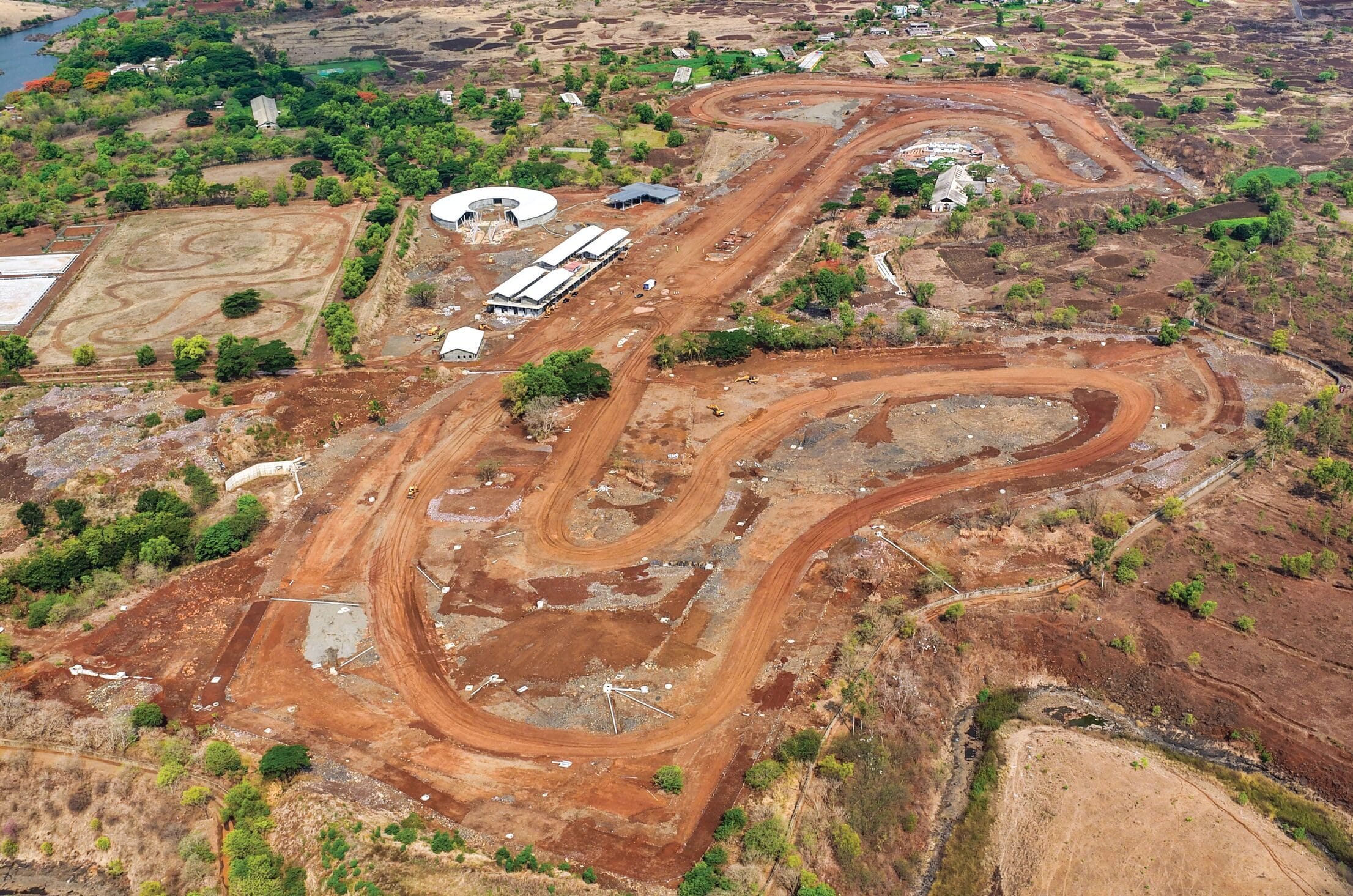
Aerial view of Nanoli before the tarmac is laid. This 3km circuit will be Maharashtra’s first and a haven for enthusiasts in western India.
Their plan is not a bare circuit with a pit lane bolted on. It is villas, high-end rooms and a clubhouse built into the same grounds as the horses. There will also be a 100-car garage with humidity control to protect exotic machinery from the heat, sun, dust and monsoons. The paddock and pit buildings will be state-of-the-art, with a hospitality deck that gives you a bird’s-eye view of nearly half the circuit. The circuit itself, designed to FIA Grade 3 specs by Driven International out of the UK, will eventually stretch close to three kilometres, with the option to split into shorter east and west configurations, depending on what the day calls for.
None of that exists yet in finished form. What does exist, right now, is the base layer. The dirt has been laid and compacted to a finish so smooth, it could pass for a rally special stage, which is roughly how we decided to treat it.
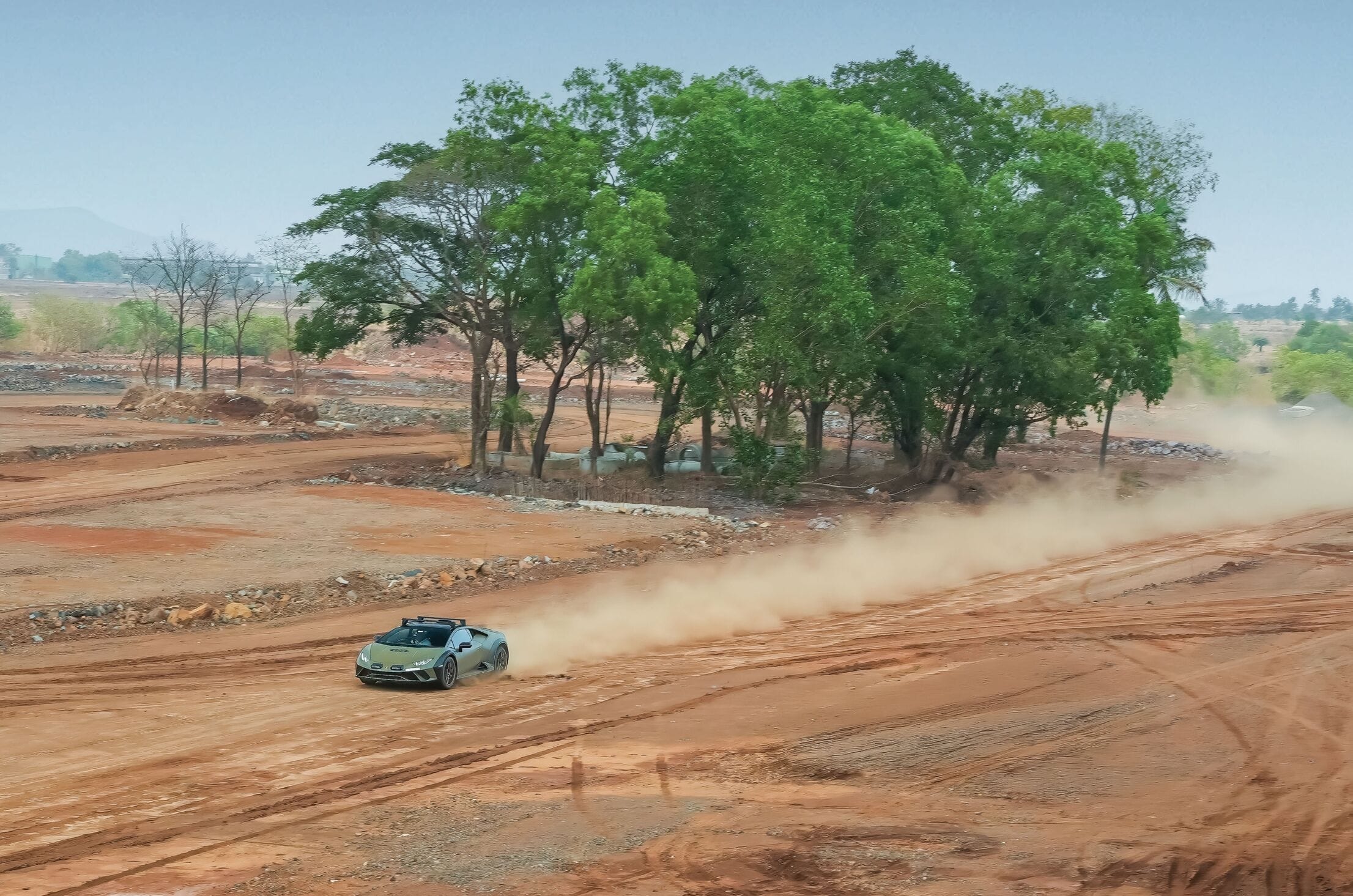
The obvious car for an afternoon like this would have been something with four-wheel drive and a reassuring amount of ground clearance. Something like an Urus or an RS Q8 – the kind of SUV that turns loose surfaces into a non-event. But ‘obvious’ has never made for a good story. So instead, we brought a Lamborghini Sterrato, which is, in essence, a Huracán that someone at Sant’Agata decided should grow up into a WRC car.
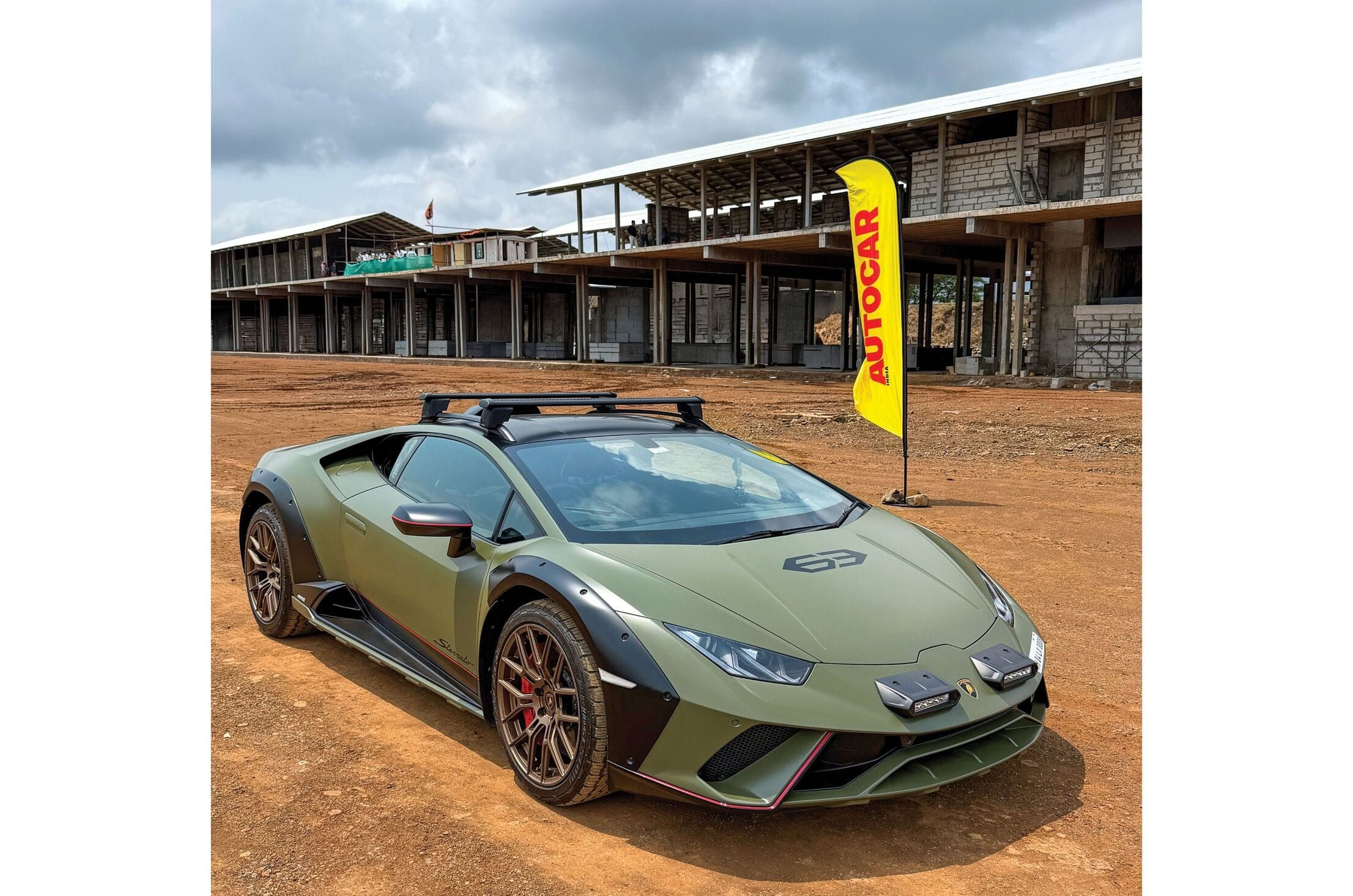
Before the tarmac arrives, the Sterrato enjoys Nanoli in its rawest form, with the future pit and hospitality complex taking shape behind it.
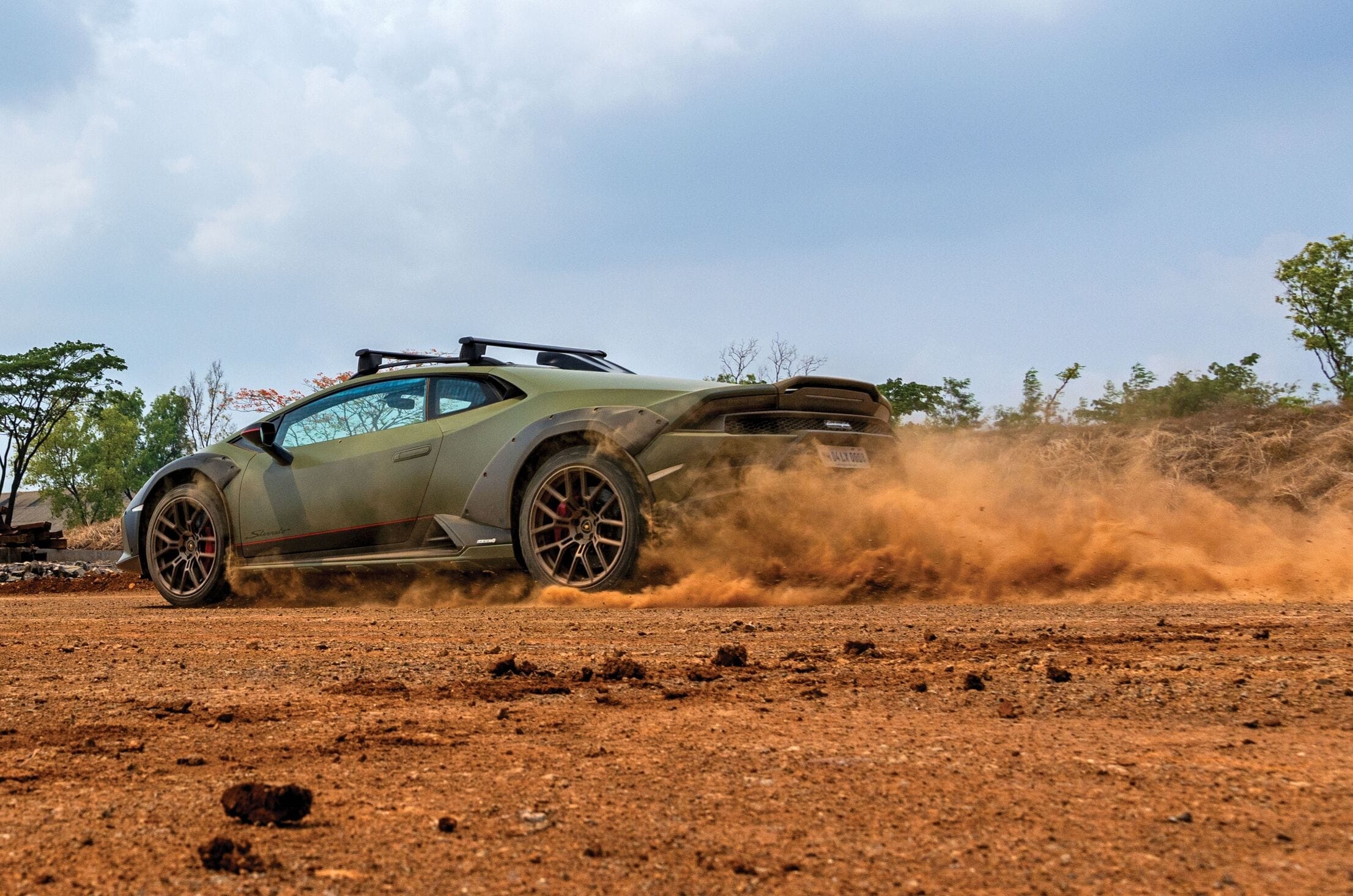
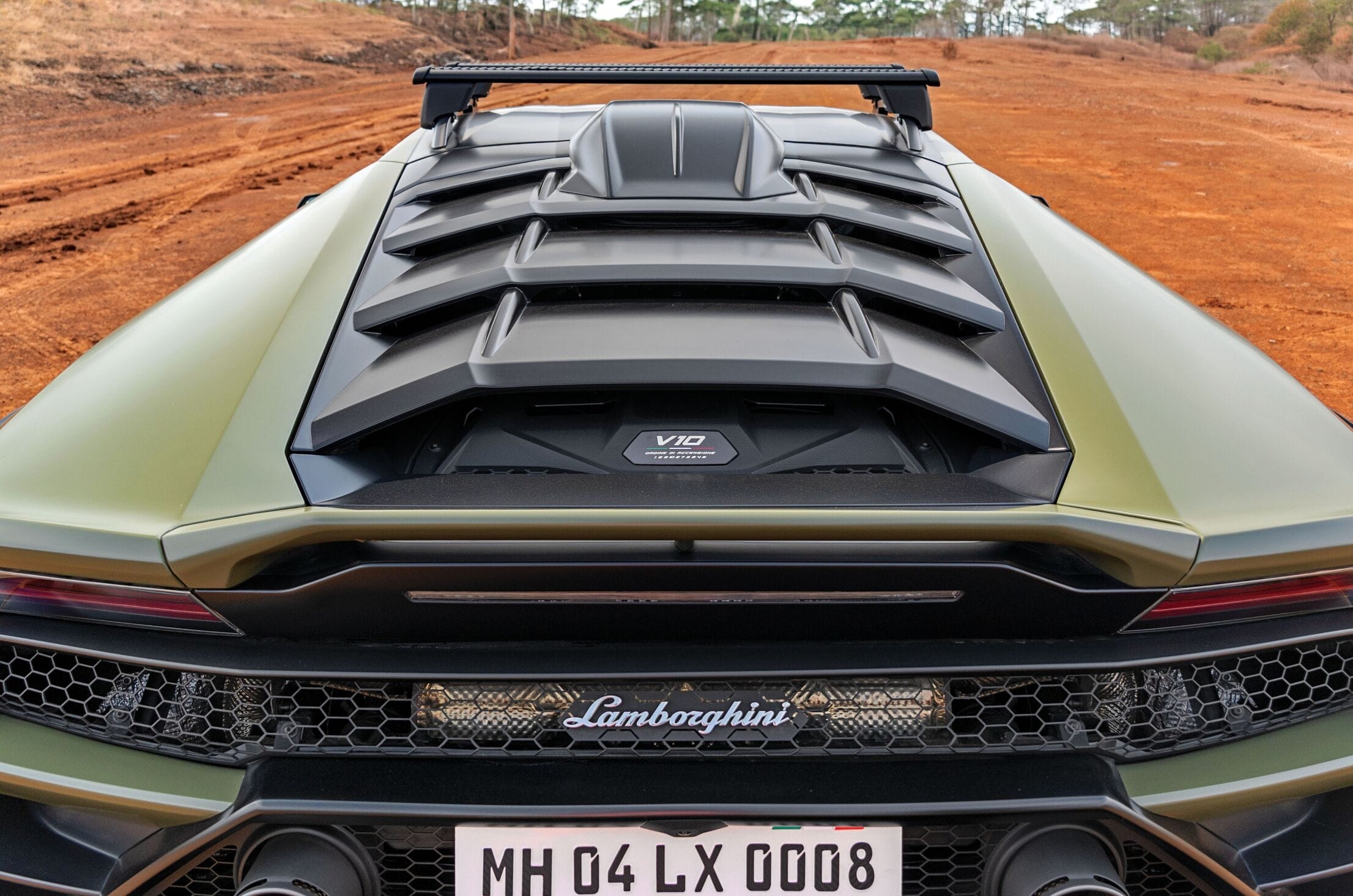
The Sterrato is not a styling exercise with some plastic cladding glued on. Lamborghini jacked the ride height by 44mm, fitted bespoke Bridgestone all-terrain rubber wrapped around 19-inch wheels, widened the front and rear tracks, and reworked the all-wheel-drive system and suspension geometry so the car can absorb a rutted surface without snapping its splitter off in the first hundred metres. Underneath sits the same naturally aspirated 5.2-litre V10 found in the rest of the Huracán range, here tuned to 610hp, still screaming to over 8,000rpm with no turbos to soften the theatre. Only 1,499 Sterratos were built before Lamborghini closed the production run, and of those, 15 made their way to India.
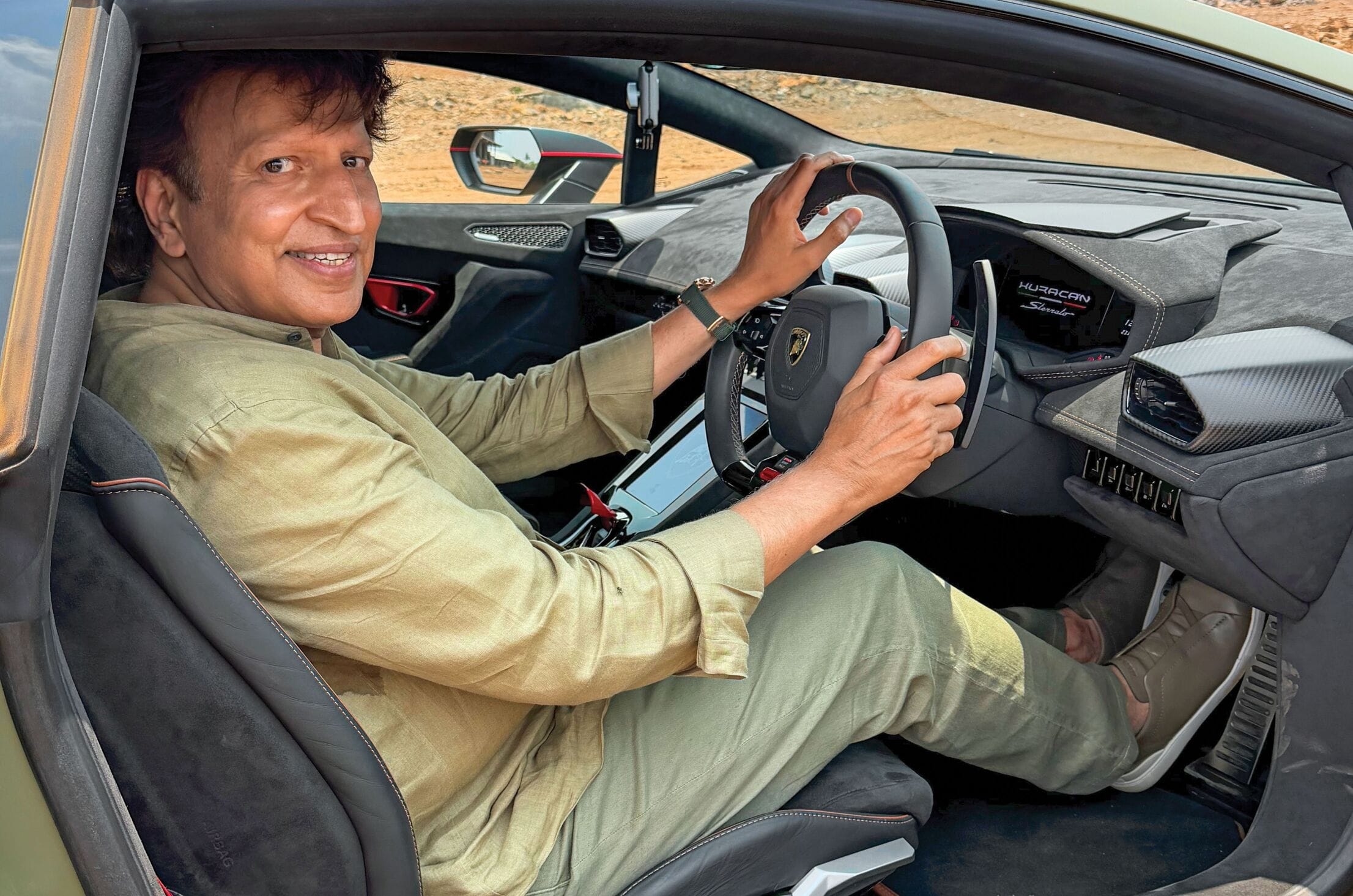
The example driven here belongs to Dinesh Thakkar, who was not only generous enough to hand over the key for a day, but also had the distinction of setting what can be considered the first recorded lap at Nanoli Speedway.
His time of 2m34.80sec won’t be the quickest, but it’s a significant milestone for a circuit that is yet to officially open.
Mechanically, the Sterrato retains the naturally aspirated 5.2-litre V10, producing 610hp and driving all four wheels through a dual-clutch transmission. On paper, it remains very much a Huracán. In practice, the changes in character are immediately evident.
On the compacted dirt, the first impression is one of adaptability. Turn-in is not as immediate as it would be on tarmac, but the front axle bites with a reassuring consistency. The real shift comes under power. Where a standard Huracán demands restraint, the Sterrato encourages exploration.
The recalibrated driving modes, particularly Rally mode, allow for controlled slip. The rear steps out progressively, and crucially, predictably. There is a fluidity to the way the car moves, a willingness to rotate that transforms the experience. It is less about outright speed and more about managing balance.
5.2-litre V10 a nod to the best of internal combustion.
The additional suspension travel plays a defining role. Over the subtle undulations of the track, the car remains composed, absorbing variations in the surface without unsettling the chassis. It allows you to commit earlier, carry speed through sections that would otherwise require caution, and rely on the car to work with the terrain rather than against it.
The V10 is natural aspiration at its best. It sounds absolutely brilliant; the sharp throttle response allows you to precisely meter every one of those 610 horses, and every tap of the throttle feels utterly engaging. Under the sonorous wail of the V10 is the muted rattle of gravel ricocheting off the underbody, giving the full effect of a WRC car.
For Thakkar, setting that first lap was less about outright pace and more about being part of something that will only happen once. Once the tarmac goes down, no one will ever again get to slide a supercar through Nanoli’s corners on loose dirt. That window closes the day the asphalt trucks arrive, which made every lap feel like it mattered a little more than it should have for what was, on paper, just a test session on an unfinished track.
Sterrato owner Dinesh Thakkar is all smiles after a memorable day.
What Nanoli represents, once finished, goes well beyond a fun afternoon for a few car nuts and a Lamborghini. Mumbai’s supercar owners have long had money and machinery with nowhere proper to use either. The city’s roads are hostile to anything with a low chin, and Pune offers little better. A circuit within striking distance of both cities, built to international standards and backed by a family that clearly does not believe in doing things by half measures, could genuinely change how western India’s car culture behaves. This is not simply about building a track. It is about creating an ecosystem. The members-only model ensures exclusivity, but also fosters a focused community. For enthusiasts in Mumbai and Pune, long constrained by infrastructure, this represents a fundamental shift. It’s a controlled environment where cars can be driven to the max without fear of speed cameras or speed breakers.
The tarmac will come soon enough, and Nanoli will become a proper circuit with lap times and lap records and all the polish that comes with a finished facility. But for one afternoon, before any of that, it was just a dirt track, a Sterrato V10, and the kind of first lap that only ever happens once.
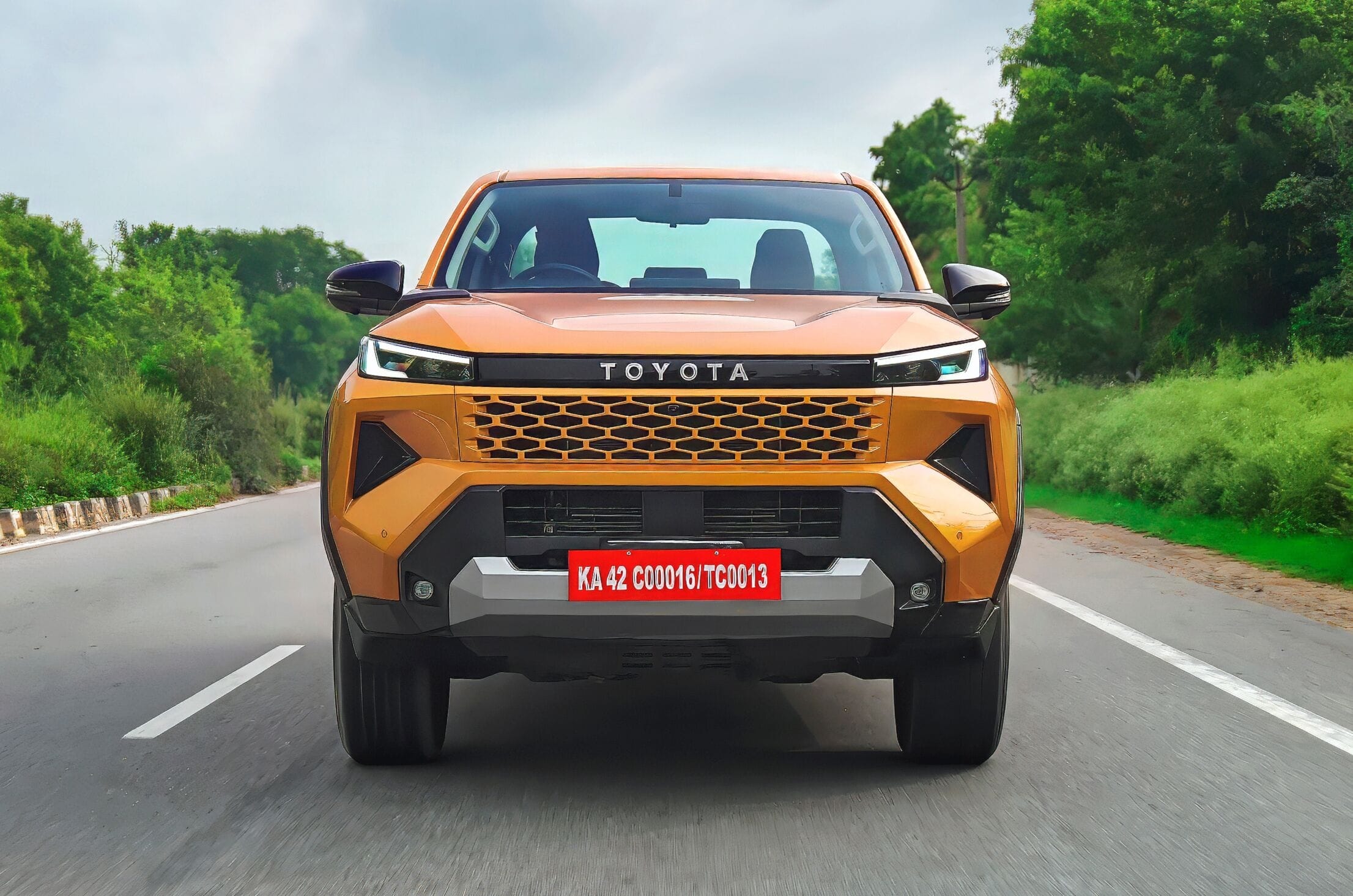
Back in 2004, Toyota debuted its ‘Innovative International Multi-purpose Vehicle’ platform (or IMV for short), which spawned the 7th generation Hilux and the 1st generation of the Fortuner and Innova. As for the Hilux, it moved on to the 8th generation in 2015 and we now have this, the new 9th generation model, still underpinned by the IMV platform, albeit with major modifications and updates.
2026 Toyota Hilux Exterior Design and Engineering – 7/10
IMV platform sees massive update; front styling goes all angular
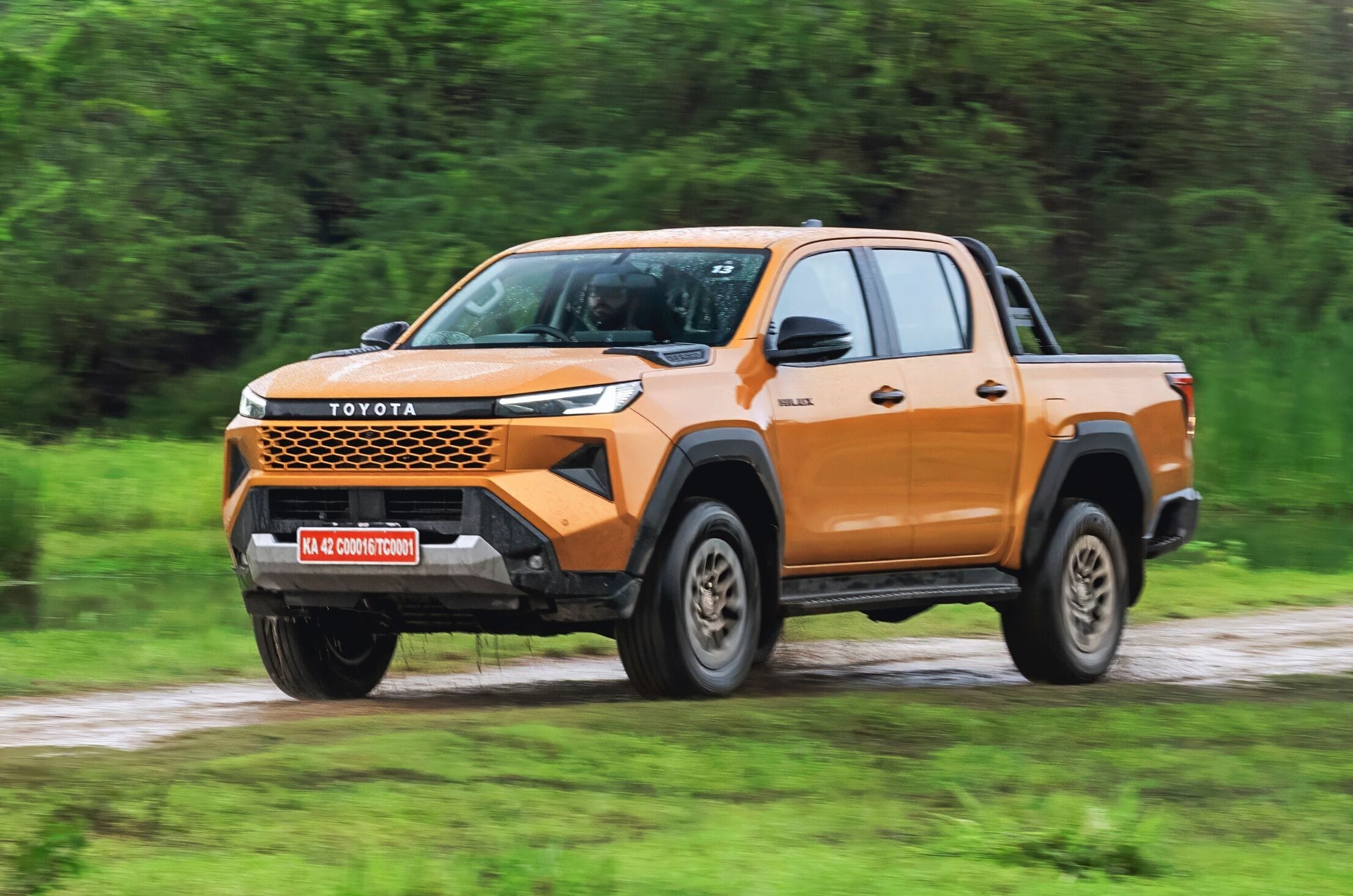
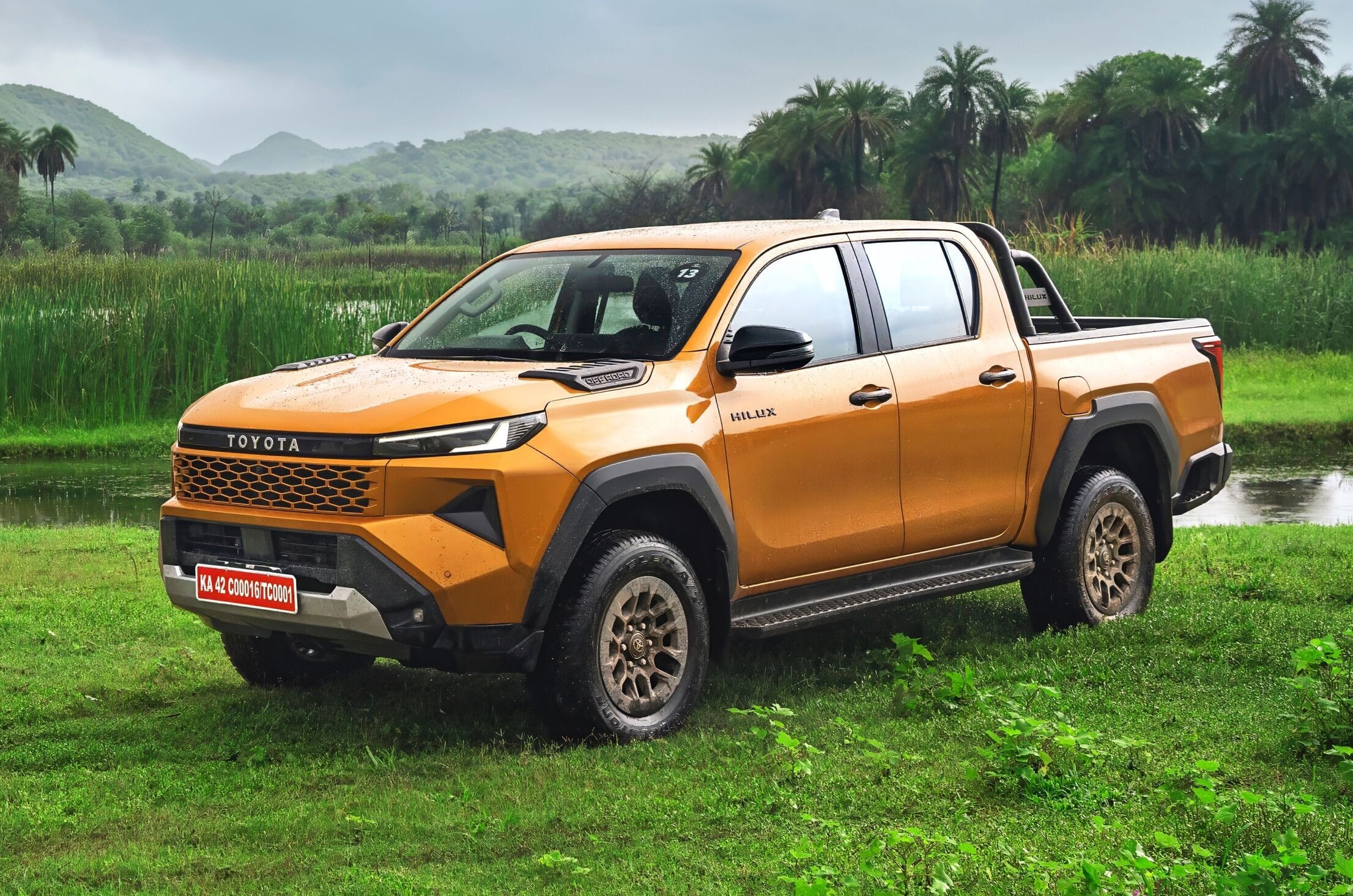
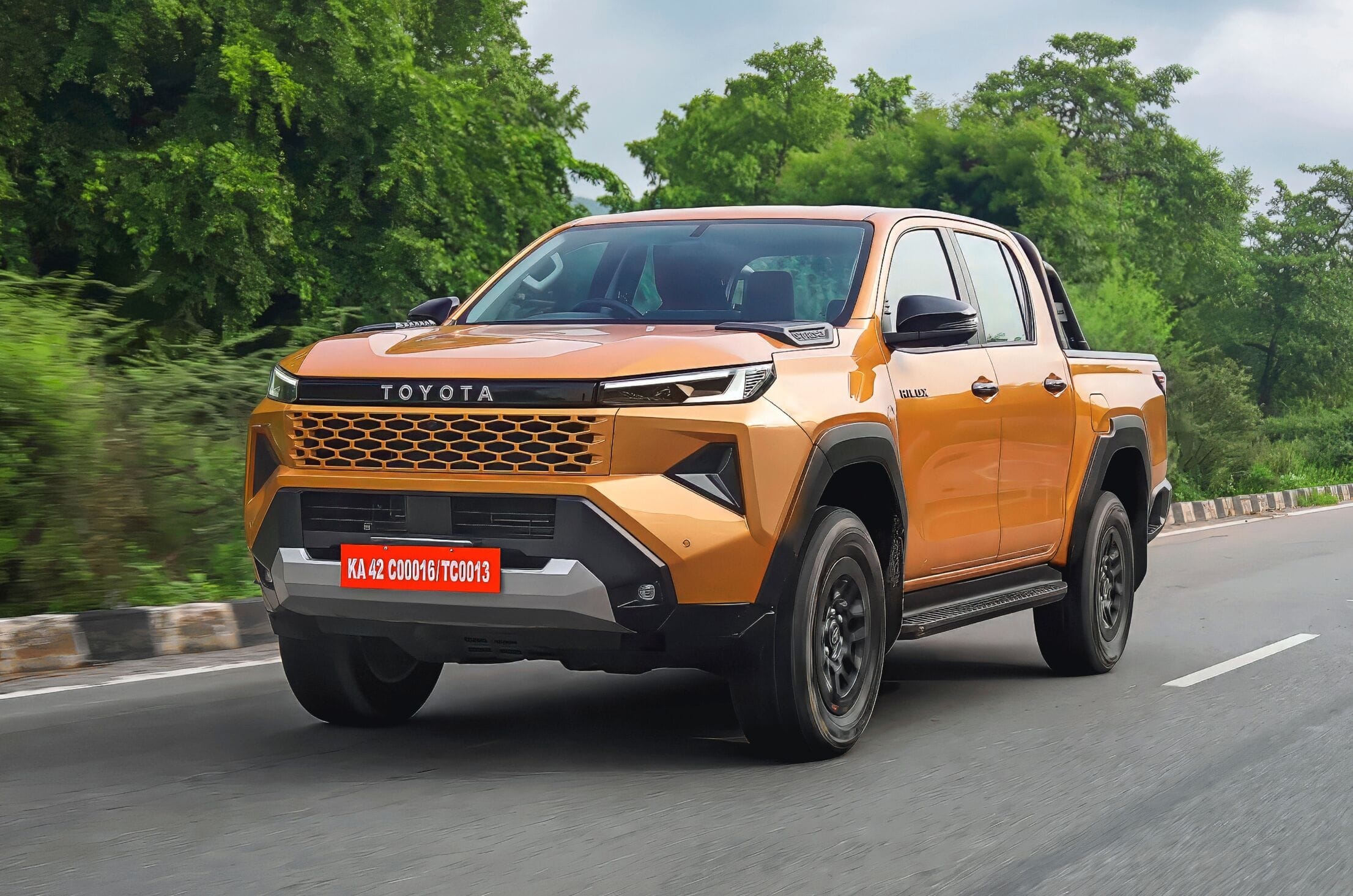
The front end is now all very edgy and sharp. Cyber-Sumo is how Toyota describes the styling.
As with its predecessors the ladder-frame construction remains, but plate thickness in the frame side rails has been increased to enhance rigidity and better resist torsional forces. The body too has seen an increase in rigidity with the floor featuring an additional 36 spot welds, this also helps decrease vibrations.
Interestingly, the platform is now fully electrified. Impressive given that installing a battery pack with a ladder frame is tricky given the narrower – than the body – width and the presence of cross members too. It shows, the all-electric Hilux features a rather modest 59.2kWh battery pack, it’s unlikely to make its way here though.
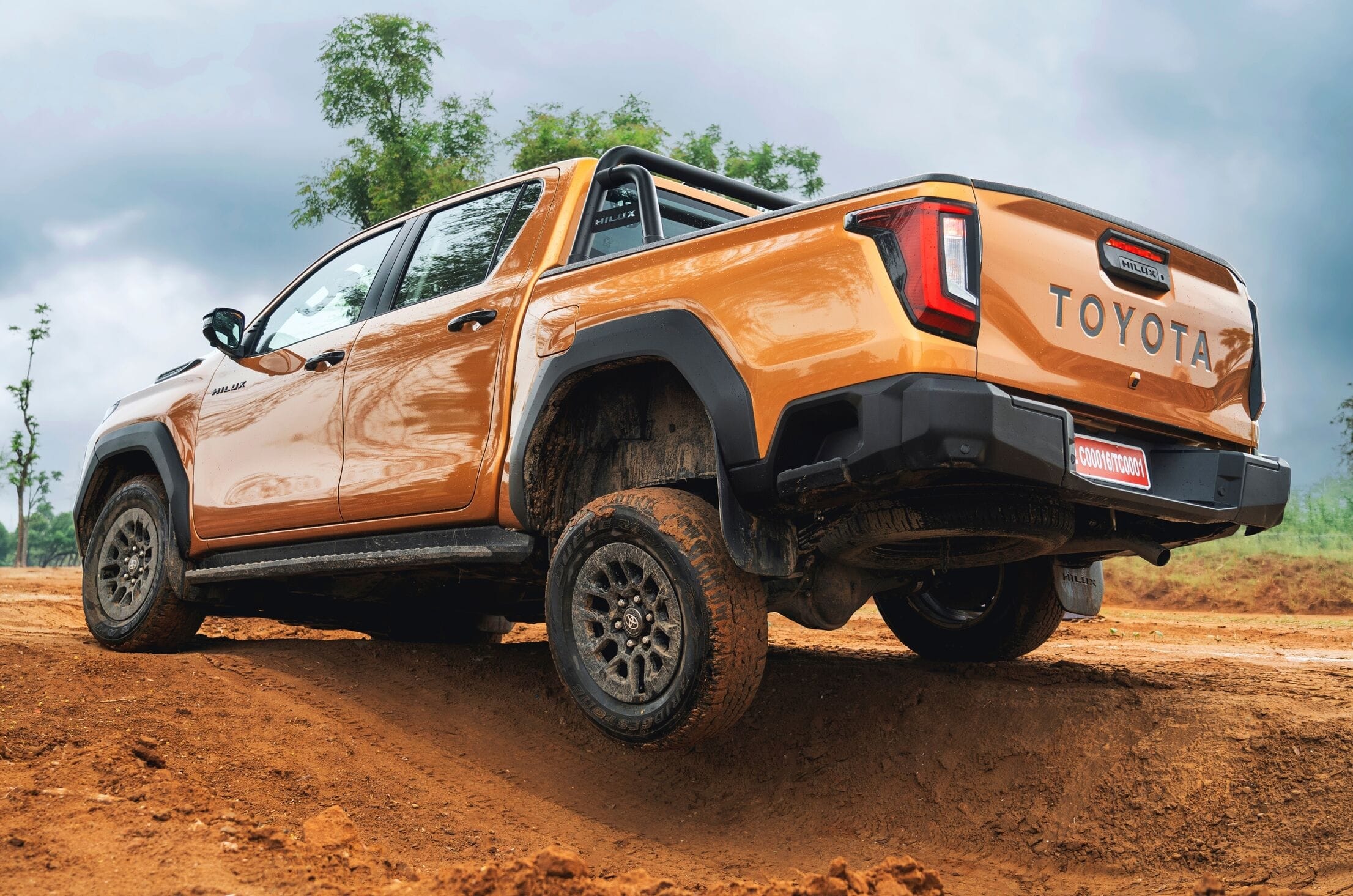
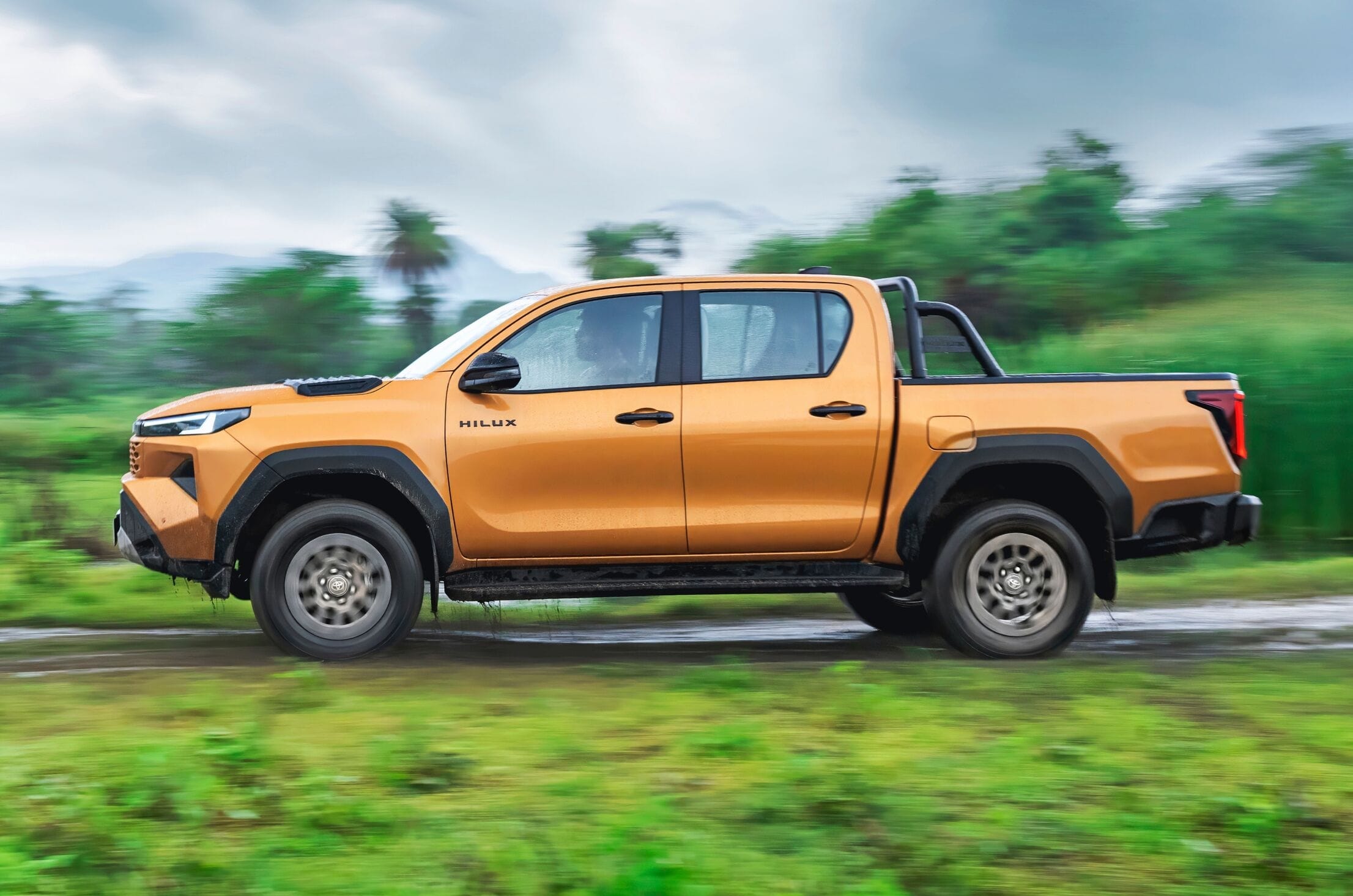
17-inch rims provide for taller sidewalls, handy off-road.
Other changes to the platform include a switch from hydraulic to an all-electric power steering system and spring and damper tweaks to improve ride comfort. As with the previous two generations, wheelbase remains the same at 3,085mm and the length is identical to its predecessor at just over 5.3 meters.
Front styling sees the biggest difference from the earlier car, its now all very edgy and sharp. Cyber-Sumo is how Toyota describes it, a cyborg Sumo wrestler if you will. The headlights feature sharp DRLs, are much slimmer and flow into a black panel emblazoned with the Toyota lettering. Below is a honeycomb grille flanked by triangular stylistic insets and the lower end of the bumper carries on with the angular treatment with sharp cuts to define its shape.
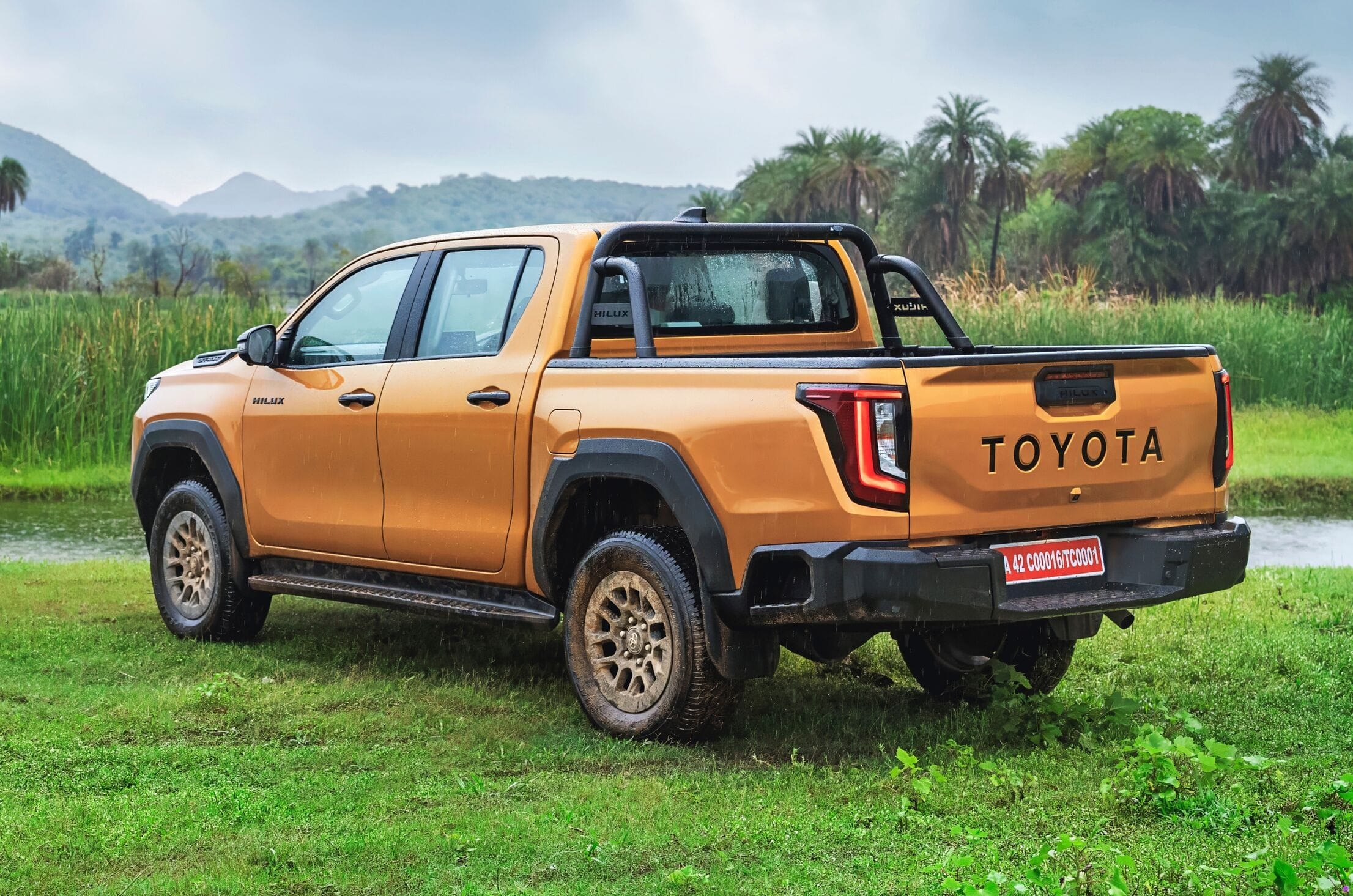
Taillights now more angular; bumper features integrated footsteps on the rear as well as on the sides.
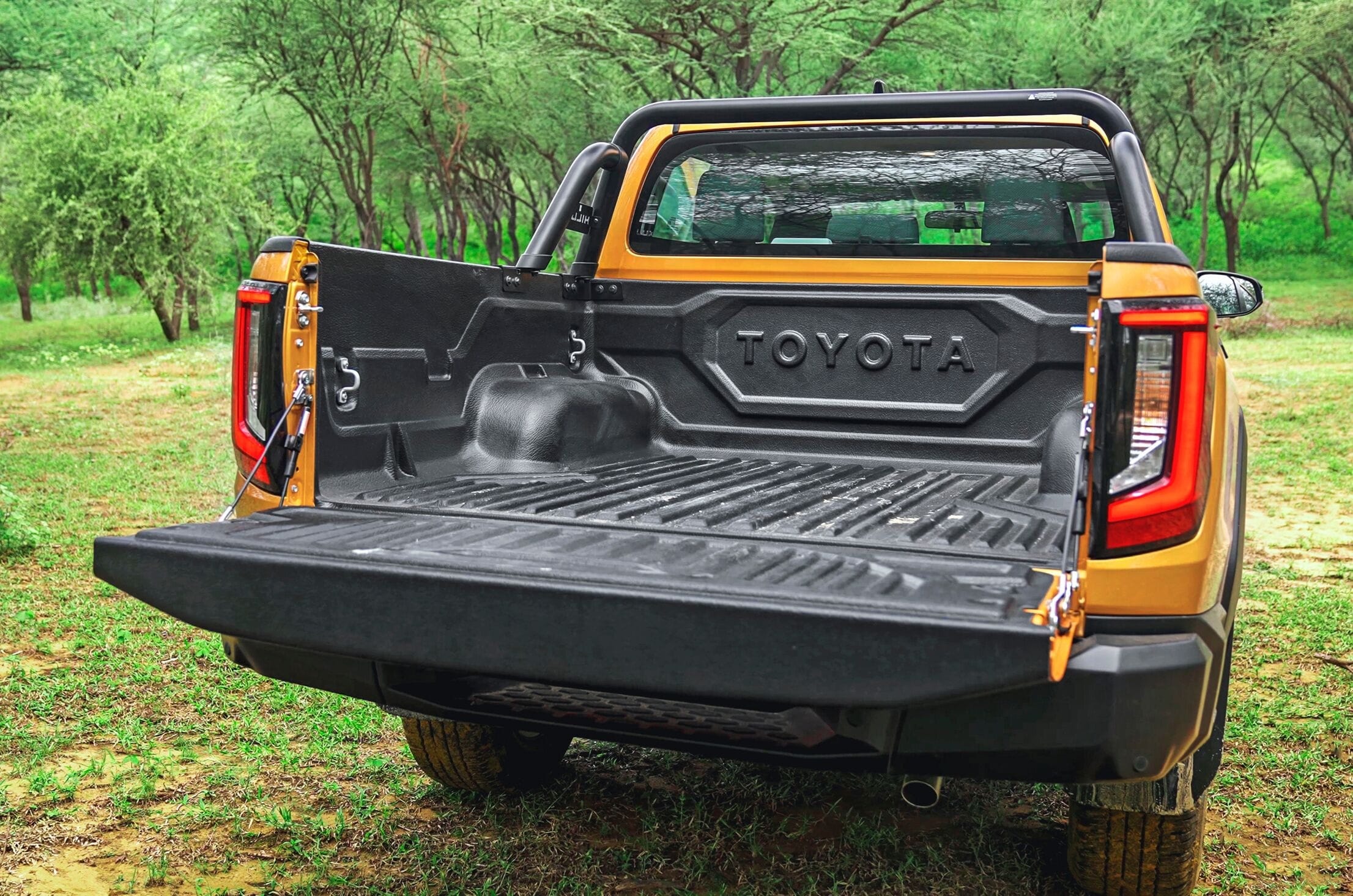
The side however is more curved with the doors gently profiled and resembling the previous car, the cladding however is a bit angular and runs the length of the car. At the rear end there is now a side step to make loading and unloading cargo easier. Rear taillights are sharply outlined and flow more into the side profile and of course, the rear sees the now iconic large Toyota lettering across the tailgate, which has a damped release.
2026 Toyota Hilux Interior Space and Comfort – 7/10
Adequate cabin space, but not what you might expect given the overall size.
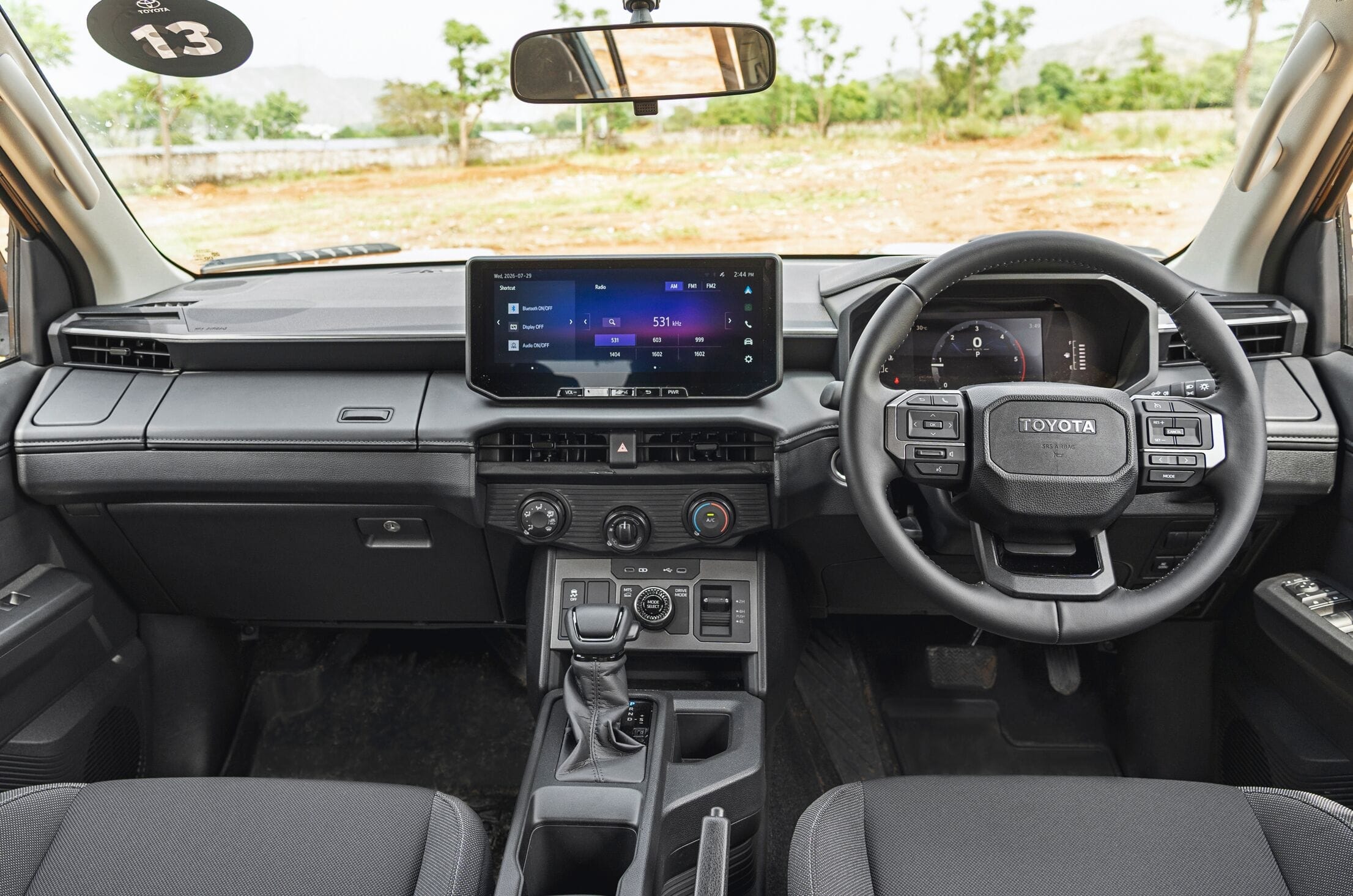
Dashboard get a retro-modern style, very similar to the Land Cruiser Prado.
Like the front-end styling, the new dashboard sees a big departure is styling too, very retro-modern with straight lines and chunky elements, similar to the Land Cruiser Prado. It houses rectangular AC vents and a pop-up center touchscreen with chamfered lower edges. The steering wheel looks like a straight lift from the Prado with the same three spoke design, rectangular center boss and chunky rectangular buttons.
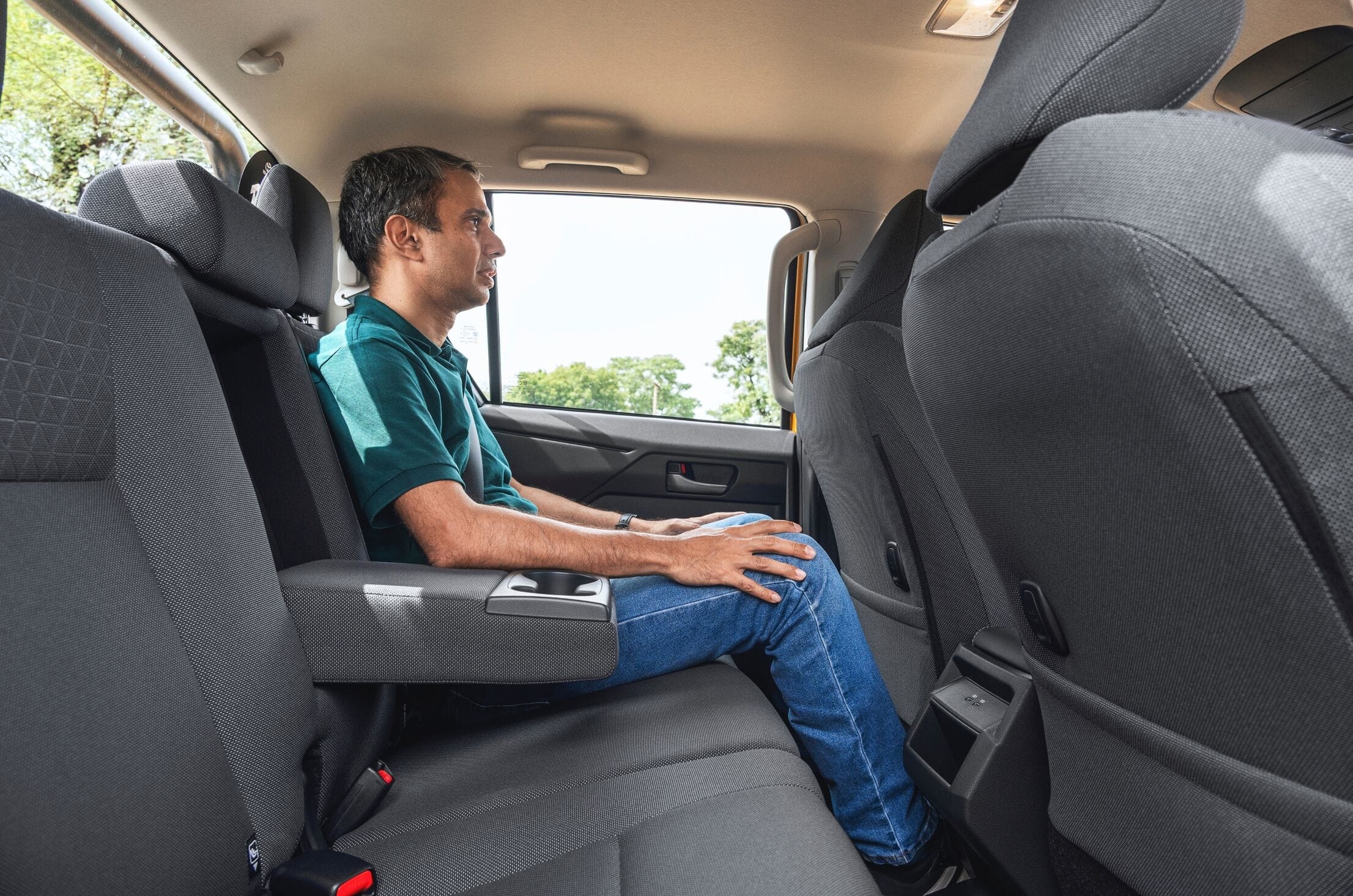
Cabin dimensions remain the same, but reprofiled seat gives the backrest a tad bit more recline.
The 8th gen Hilux received a larger interior cabin volume and this cabin carries over to the new 9th gen car, space inside is thus decent but going by the large vehicle footprint you’d be forgiven if you expected more. At the rear, legroom is adequate even with a taller adult seated front, the seat backrest is still upright when seen against regular SUV but the seats themselves have been reprofiled and that makes it feel just a bit more reclined than before. Headroom is good and seating three adults at the rear is possible but will feel sung. At the front, the seats feel nice and supportive and are well profiled with prominent side bolstering that should suit a wide body frame well. They are also upholstered in a fabric that feels nice to the touch.
Tailgate features damped release; payload is around 500kgs.
The load bed is large enough for stuff like camping gear but it’s quite high off the ground so you’ll have to haul stuff in and out. The bumper has an integrated step at the rear and on either side as well, to make this easier. Toyota has not yet disclosed payload capacity but expect it to remain the same as before at 470kgs.
2026 Toyota Hilux Features and Safety – 7/10
High on safety kit, but many comfort and convenience features missing
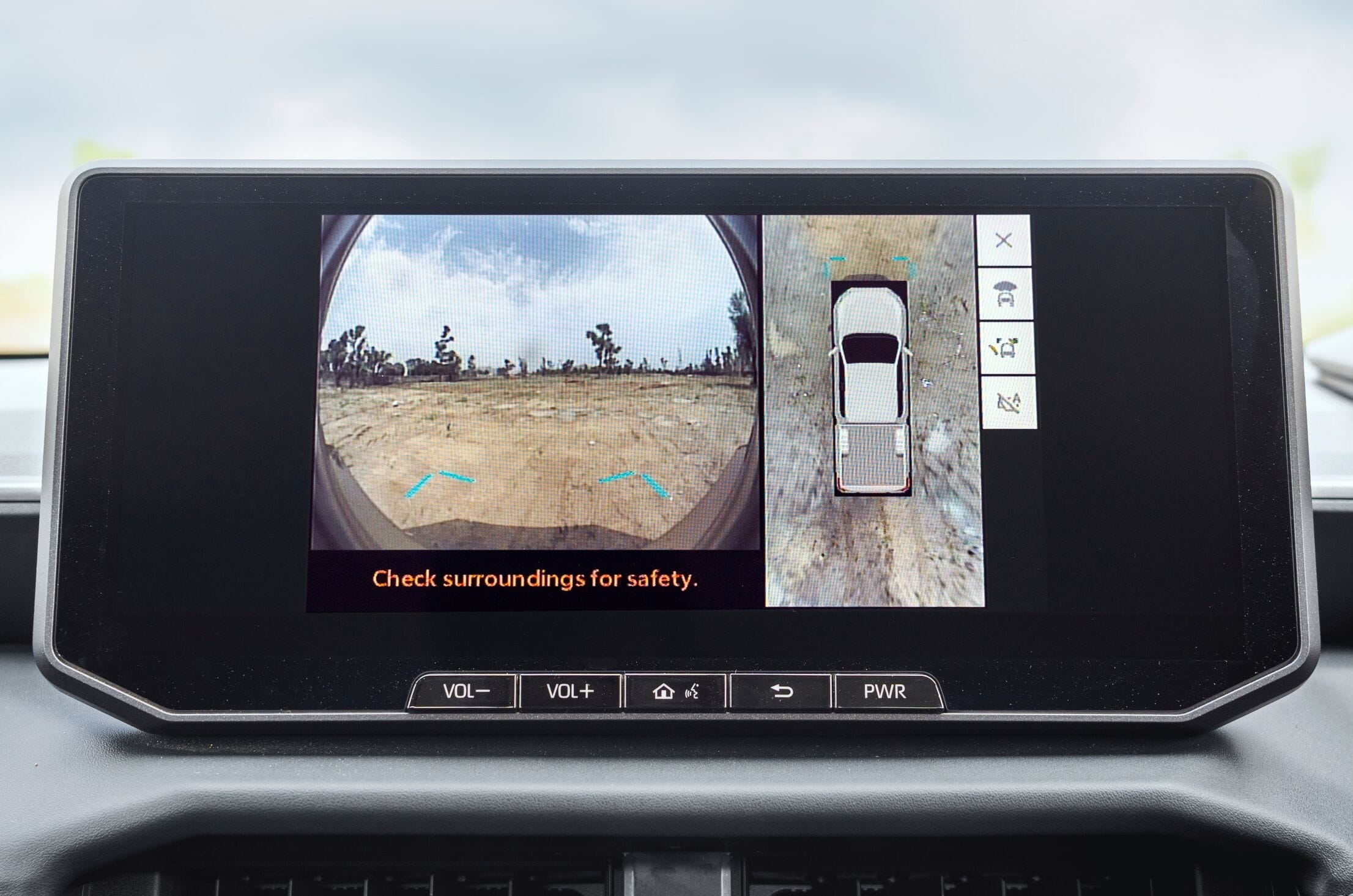
360-degree camera handy, but of poor resolution.
The new Hilux comes in three grades with the top spec car featuring kit like a 360-degree camera view – though resolution is poor – an 8-inch digital instrument panel and a 12.3-inch central touchscreen with wireless phone connectivity. The native OS styling appears quite outdated but the screen resolution is good. There’s a wireless phone charging slot but quite deep and retrieving you phone needs slim hands.
Besides these and basic bits like power windows and ORVMs, there’s not much else on the new Hilux. Features like auto HVAC, powered or ventilated seats, rear defogger are all missing even at the top spec car.
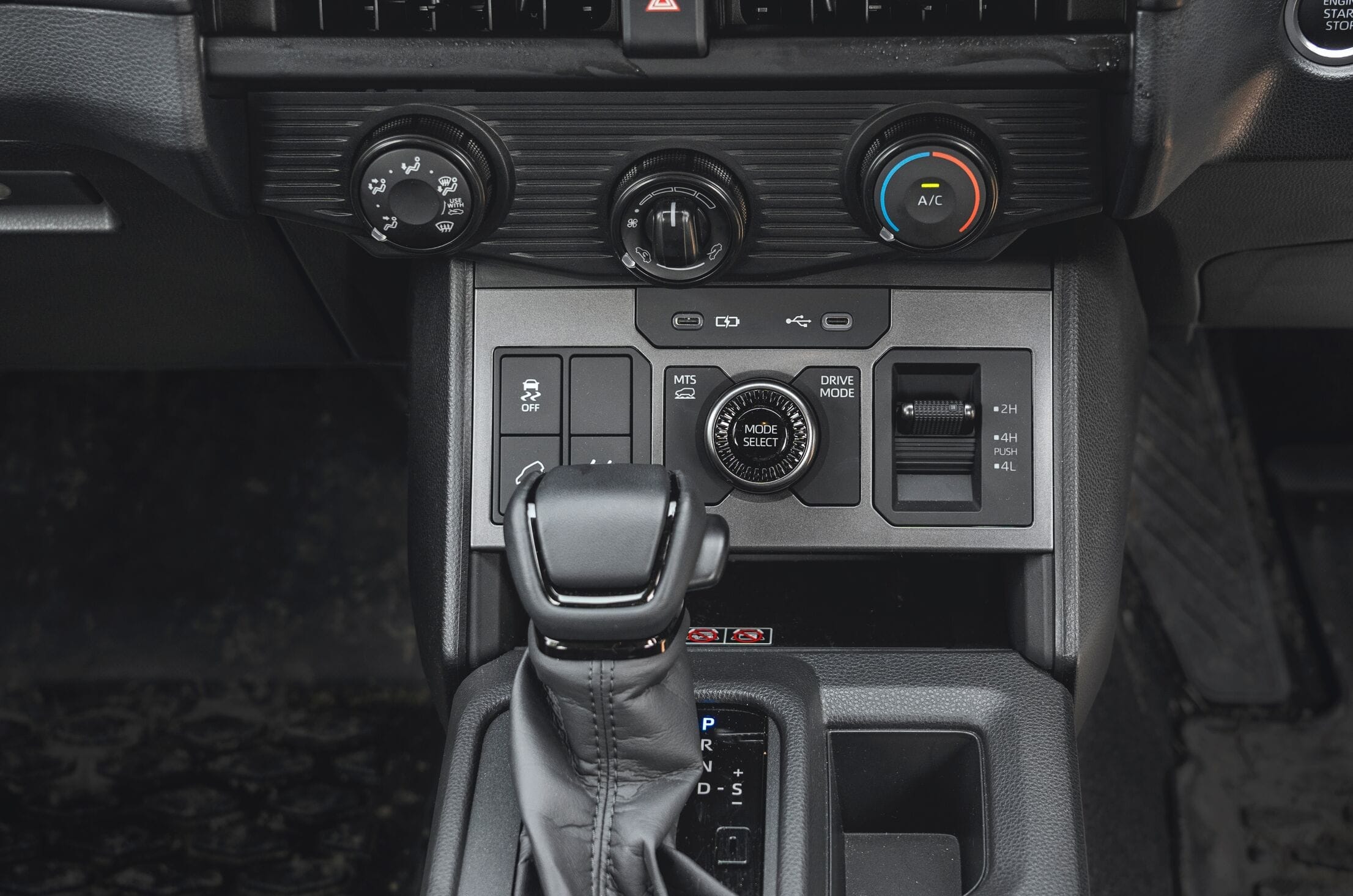
Misses key equipment like automatic climate control; has drive as well as terrain modes.
Safety kit is good, with 7 airbags standard on all variants as is also ESP, a tyre pressure monitoring system however is only present on the top variant. As for a crash rating the new Hilux does not come with a Bharat or Global NCAP rating but the Australia spec scores 5-stars under the ANCAP protocol.
2026 Toyota Hilux Performance and Refinement – 9/10
Good pulling power with a very refined engine and a vibe free interior
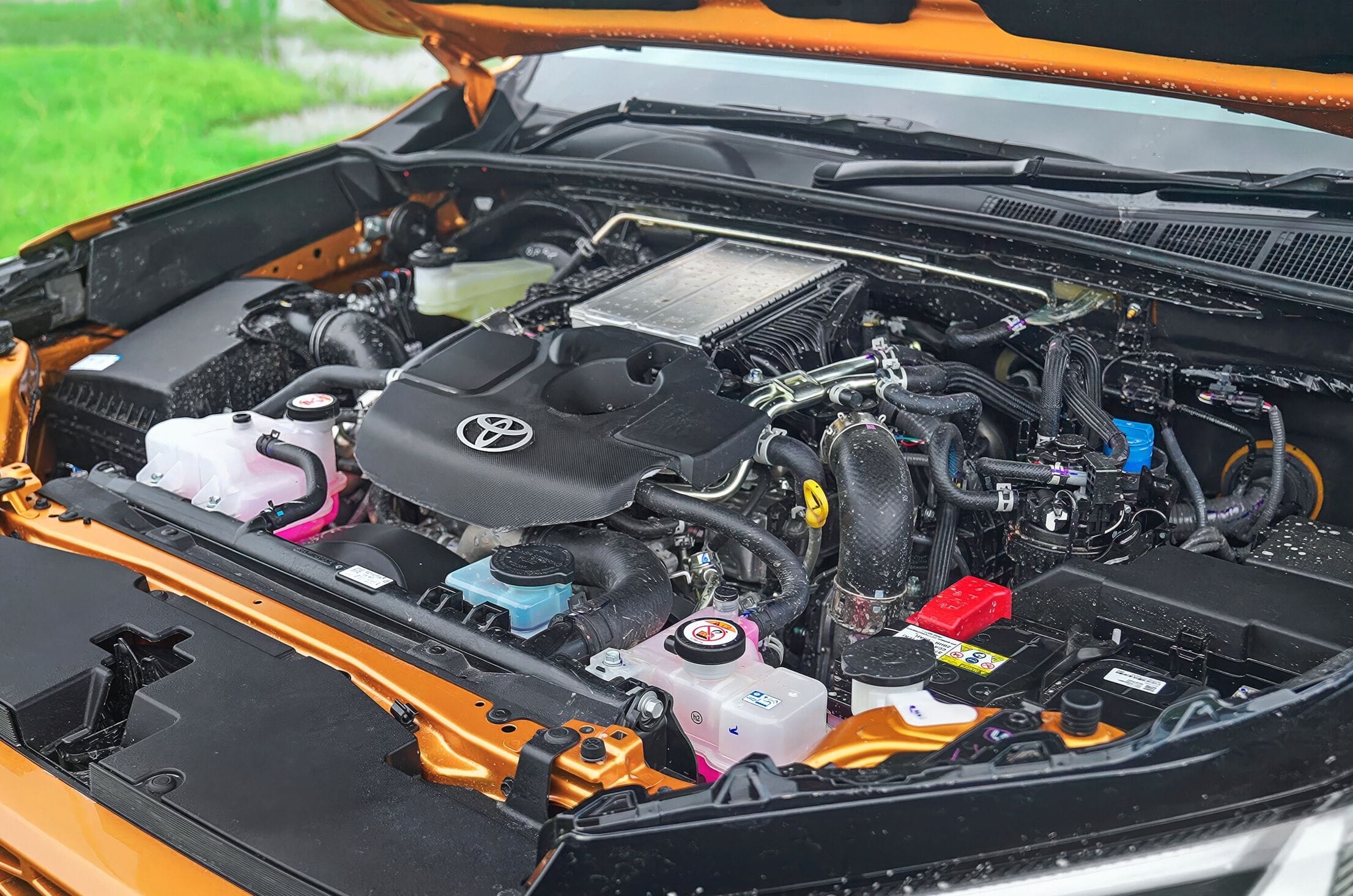
The new Hilux carries on with the same 2.8 liter 4-cylinder diesel. It makes an identical 204 hp and 500Nm of torque. A 6-speed torque convertor automatic is now the only gearbox option and for the first time Toyota India is offering the Hilux with a 4X2 drivetrain too.
2.8 litre diesel engine has new mounts and is extremely refined, with low noise and vibration levels.
There are three drive modes – Eco, Normal and Sport, all feel quite useable. Performance is strong and even when pushed hard it never feels like its out of breath. There’s a good amount of power to be had low down in the rev range and through a forest trail with stones and muck it was easy modulating power to keep momentum.
Shifts are expectedly smooth from the 6-speed autobox and in Sport mode the downshifts are quick enough both when left to its own system or via inputs from the gear lever.
Performance is quite potent and it never feels out of breath.
At high revs the engine does get vocal, but for what is a workhorse its quite acceptable. In fact, at every day motoring speeds sound levels are low and refinement is excellent, with minimal to no vibrations around the cabin. Toyota says they have worked on improving this aspect with both hydraulic and shear type engine mounts, a stiffened body frame and better cabin insulation.
2026 Toyota Hilux Mileage and Efficiency – 8/10
With a kerb weight of over two tonnes, expect single digit real world efficiency figures
Toyota have yet to disclose ARAI rated fuel efficiency figures but given the carry over powertrain expect a similar figure of around 12kpl on the standard test cycle. In real world usage figures will hover in the single digit zone and only relaxed highway cruising would see you get double digits.
2026 Toyota Hilux Ride Comfort and Handling – 7/10
Comfy and unfazed over the big stuff but skittish and firm on smaller ruts and bumps
Off road is where the Hilux excels, 4X4 model has low ratio as well as rear locking differential.
Suspension architecture carries over with an independent double wishbone coil spring setup at the front and a rigid axle with leaf springs at the rear. Toyota says they have reworked it to bring in a bit more comfort, it’s hard to say in isolation and perhaps a back-to-back drive would indicate this. On its own, it can soak up the tough bits like large rocks and deep potholes, sharp edges too are well smoothened. Through a forest trail strewn with loose rocks it felt confident and sure footed. Much of the trail was manageable in 4X2 mode, but some bits required 4X4 which was all too easy for the Hilux. There’s also a 4-Low ratio as well as terrain modes that help traction over loose surfaces.
Ride is jittery at speed and with rear cargo bed unloaded.
Where is gets unsettled is over the smaller ruts and bumps that really shake up the cabin. The main reason here is the rigid rear-axle which with the load bed empty simply skips over these imperfections resulting in a skittish and bouncy ride. Rear passengers in particular will feel this more. A weighed down rear will improve things but will not bring this to passenger SUV comfort levels.
As for handling, high-speed stability is good but you know it’s a heavy car and you can feel its weight through corners. The switch to electric power steering hasn’t changed effort which remains heavy at low speeds, and with the cars massive length it feels quite ponderous.
2026 Toyota Hilux Value for Money – 7/10
4X2 makes it affordable than before, but there’s lots of features missing
Toyota has launched the new Hilux with the top variant priced the same as before; Rs 36.69 lakh ex-showroom India while the entry 4X2 variant starts lower than any previous variant coming in at Rs 31.99 lakh ex-showroom. But in doing so there’s a lot of features missing even going by its predecessors list. Its appeal then depends on which aspect of its ‘lifestyle pickup’ description you value more.
It’s sharp styling and sheer size give it that lifestyle vehicle presence, however inside it feels utilitarian, the cabin isn’t premium with regards to materials and its very under equipped. The heavy steering and bouncy ride also mean a workhorse like experience rather than luxury SUV.
But that workhorse bit is exactly where the Toyota Hilux excels. The load bed is handy and can haul odd bits of gear, the engine it torquey and powerful and what’s nice is that its refined too. The 4X4 system is very capable and it’s got tough bones that will outlast pretty much anything you can throw at it. If a luxury SUV is what you’re after, you’ll be better off elsewhere, but if you’re looking for a rough and tough, go anywhere, do anything, outdoors kind of vehicle that looks the part and plays it too, then in all probability your search will end right here.
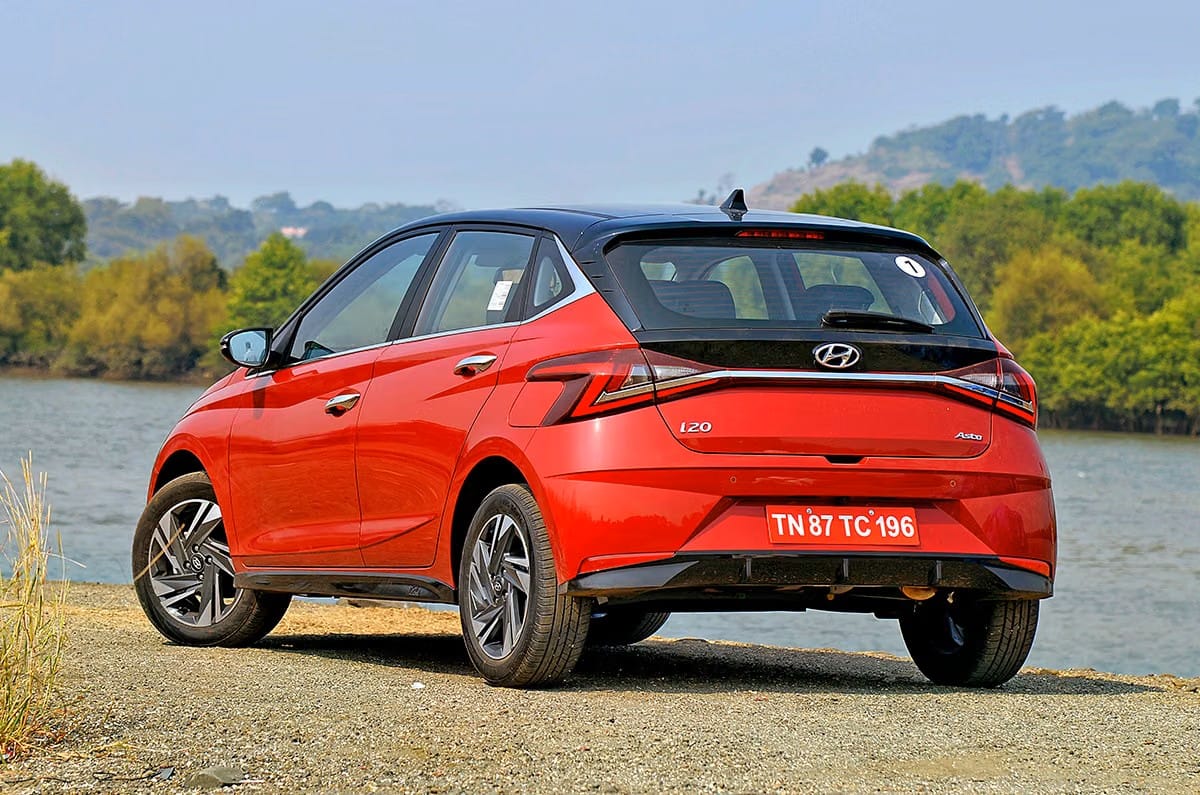
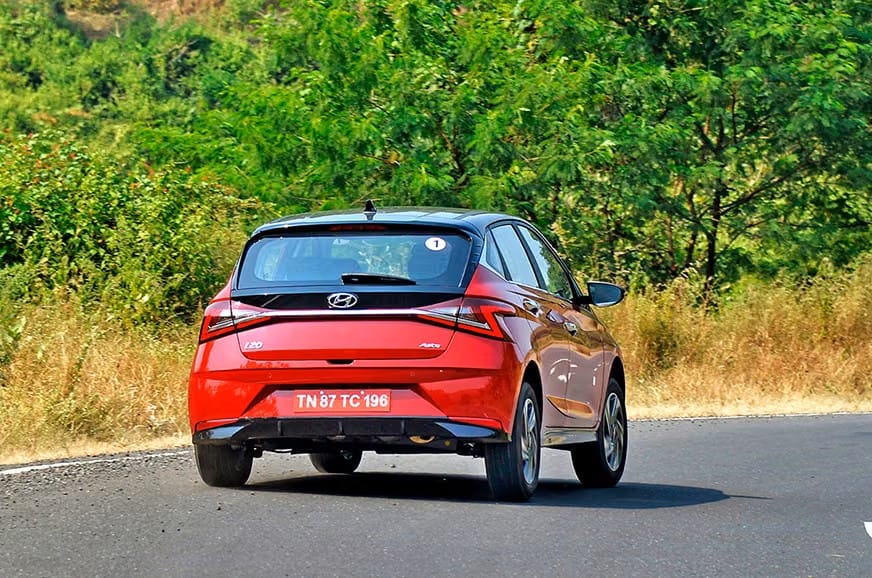
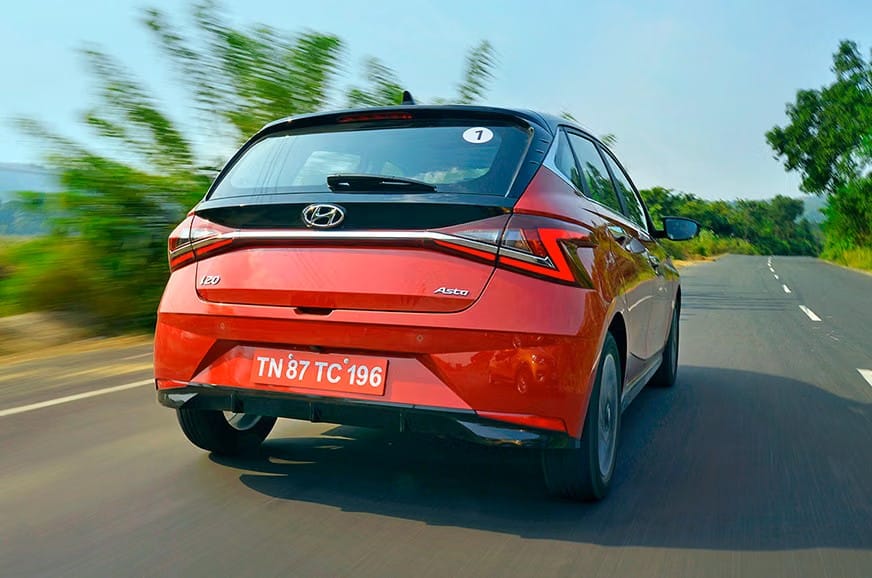
The Hyundai i20 has long been one of the benchmarks in the premium hatchback segment. Along with a spacious cabin, comfortable ride and a feature-rich interior, it offers buyers a choice of manual and automatic transmissions, while those seeking more performance can opt for the sportier i20 N Line. However, its premium pricing (Rs 6 lakh to Rs 11.59 lakh) means it faces stiff competition from both premium hatchbacks and similarly priced compact SUVs. Here’s a look at the Hyundai i20’s biggest strengths and weaknesses.
Pros
1. Spacious and comfortable cabin
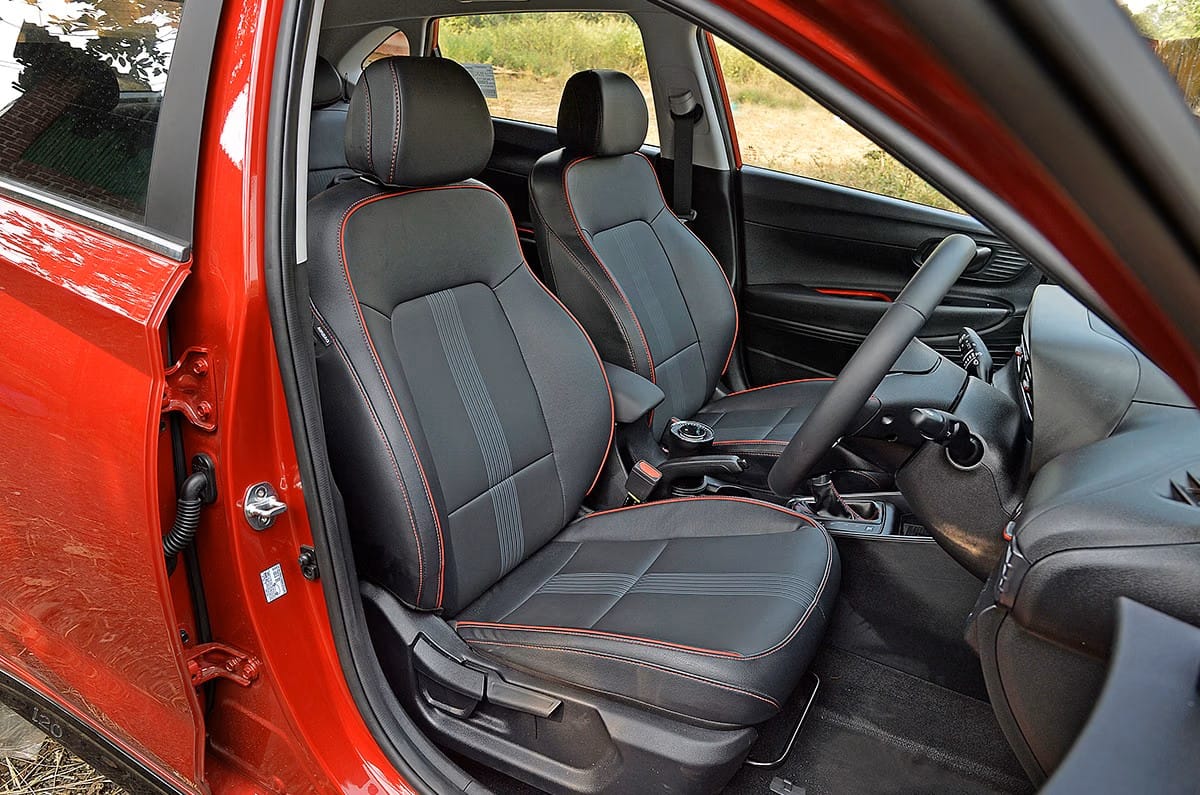
One of the i20’s biggest strengths is its cabin. It offers generous rear-seat space for a premium hatchback, with enough legroom and headroom to comfortably accommodate taller passengers. The front seats are supportive, the dashboard layout is intuitive, and the cabin feels airy thanks to its low-set dashboard. Practicality is another strong point, with a 311-litre boot that’s well suited to everyday use and weekend trips.
2. Well-equipped across the range
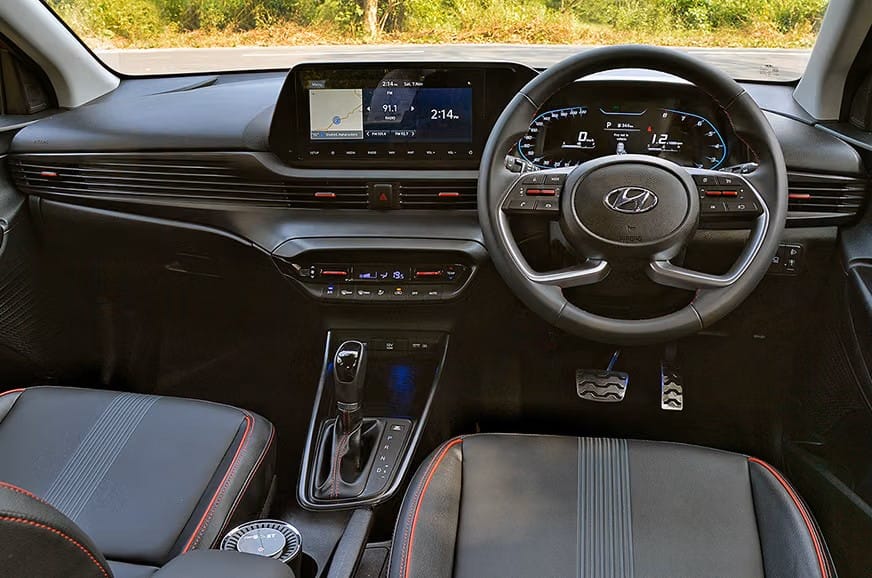
The i20 continues to offer one of the strongest feature lists in its class. Higher variants come with a 10.25-inch touchscreen infotainment system, a digital instrument cluster, connected car technology, a Bose sound system, wireless phone charging, automatic climate control, a sunroof and ambient lighting. Safety equipment is equally comprehensive, with six airbags, electronic stability control (ESC), a tyre-pressure monitoring system (TPMS) and Isofix child-seat mounts available on higher trims.
3. Comfortable ride and refined road manners
The i20 is tuned with comfort in mind. Its suspension absorbs broken roads well without feeling unsettled, while the light steering makes it easy to manoeuvre in the city. On the highway, the hatchback feels stable and composed, giving it a more mature driving experience than many of its rivals. Overall, it strikes a good balance between everyday comfort and confident handling.
Cons
1. Expensive for its segment
The i20 is among the most expensive premium hatchbacks on sale. While its cabin quality, comfort and equipment help justify the asking price, buyers shopping in this price bracket also have the option of several compact SUVs, which offer greater ground clearance and a stronger road presence for similar money.
2. The 1.2-litre petrol engine isn’t particularly peppy
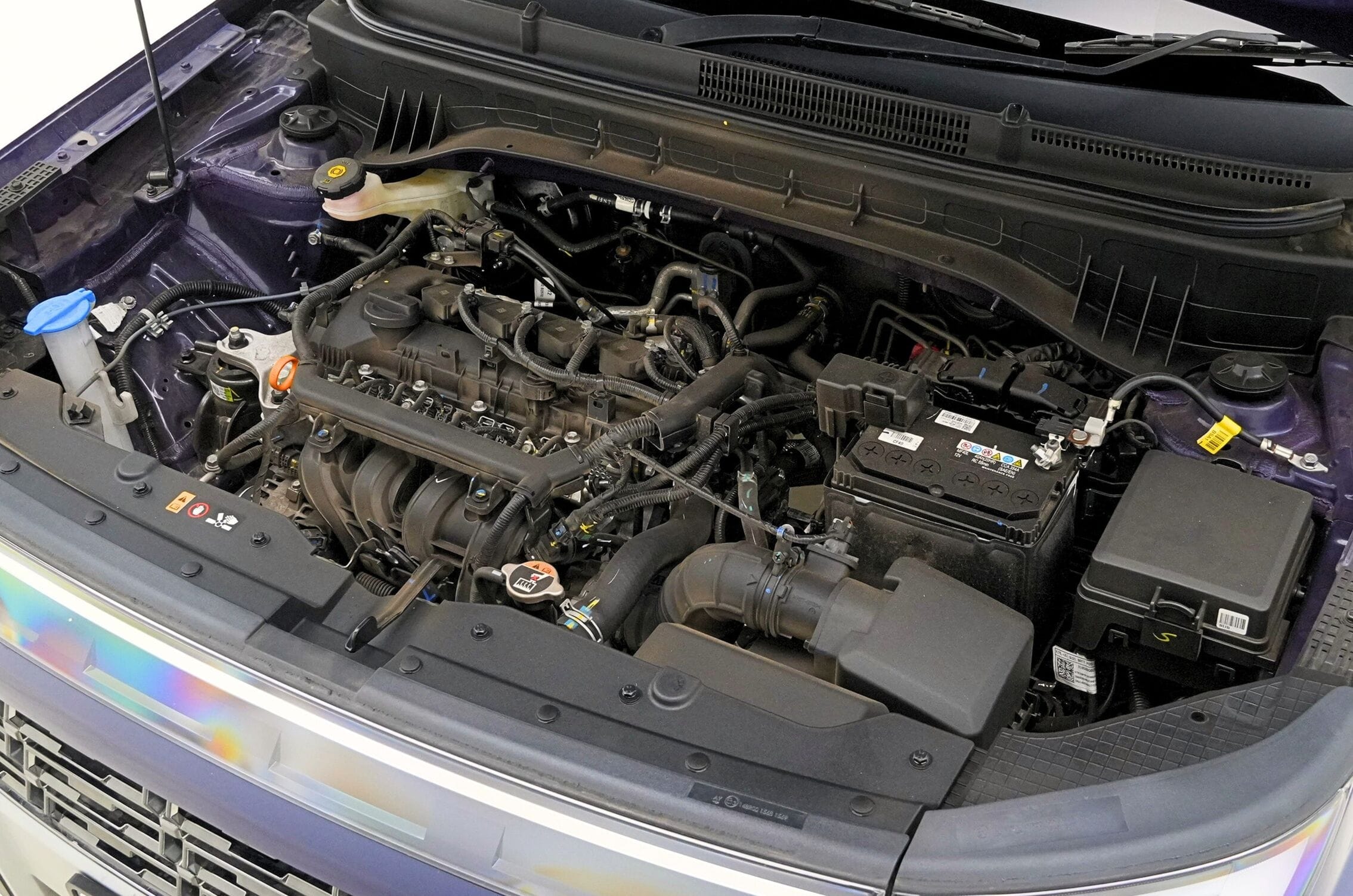
Hyundai 1.2 Kappa engine.
The naturally aspirated 1.2-litre petrol engine is smooth and refined, but it isn’t particularly strong at lower engine speeds. It often requires downshifts to gather pace in stop-start traffic or during overtaking manoeuvres, making it feel less effortless than some turbo-petrol rivals. Buyers looking for stronger performance may find the standard i20’s engine lacking. The i20 does come with a punchier 1.0-litre turbo-petrol engine on the N Line variants but for a much higher asking price.
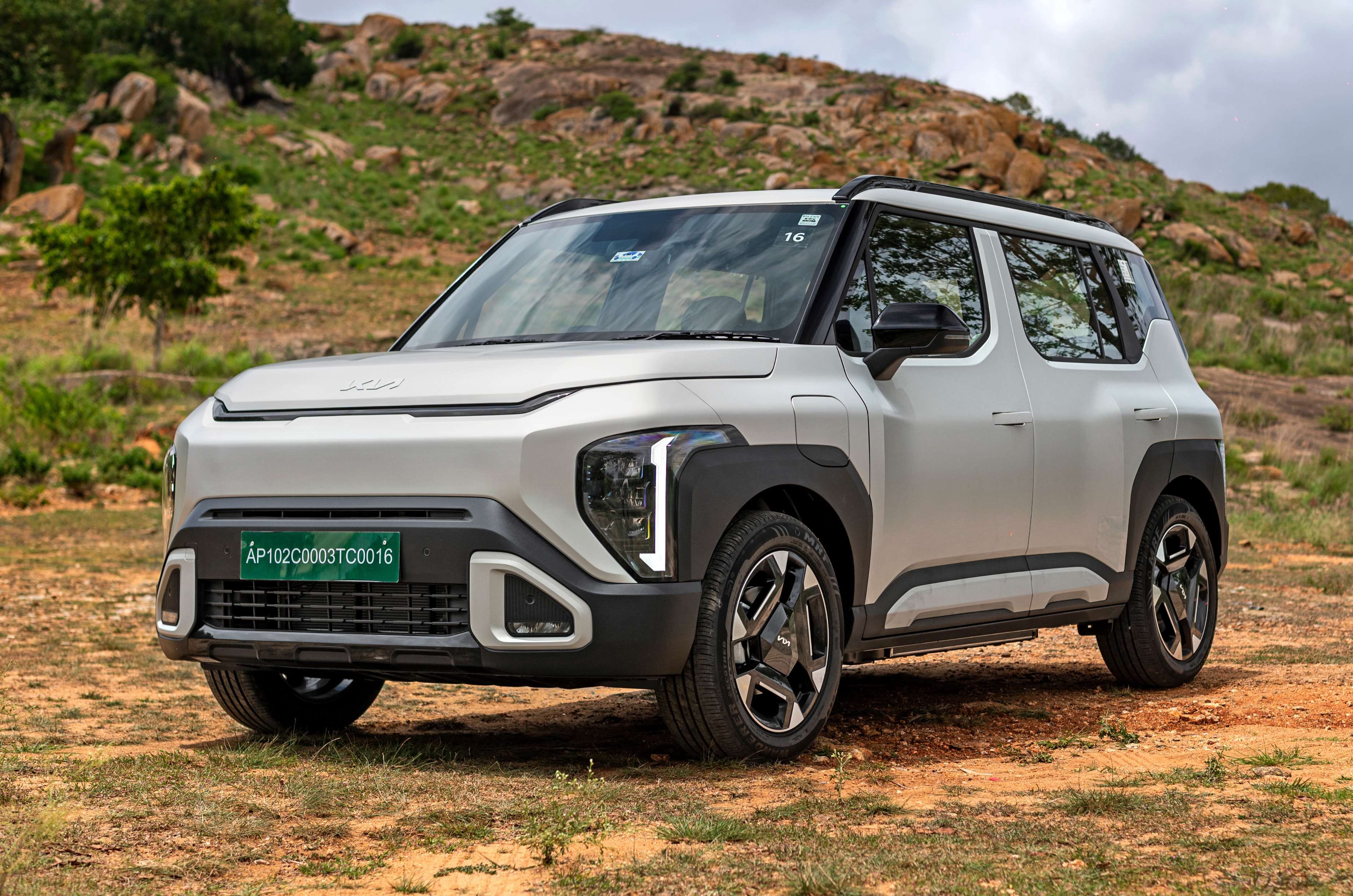
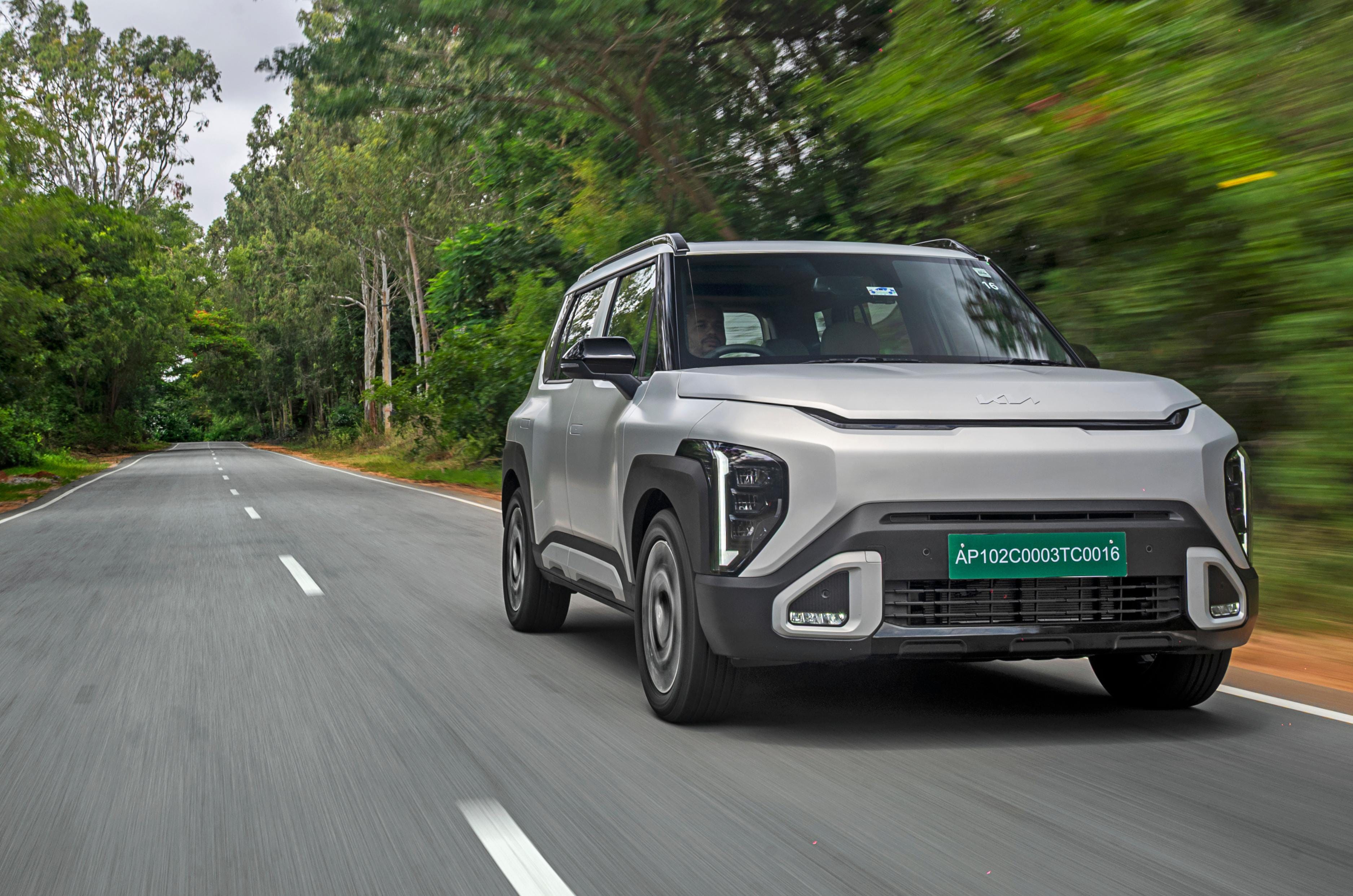
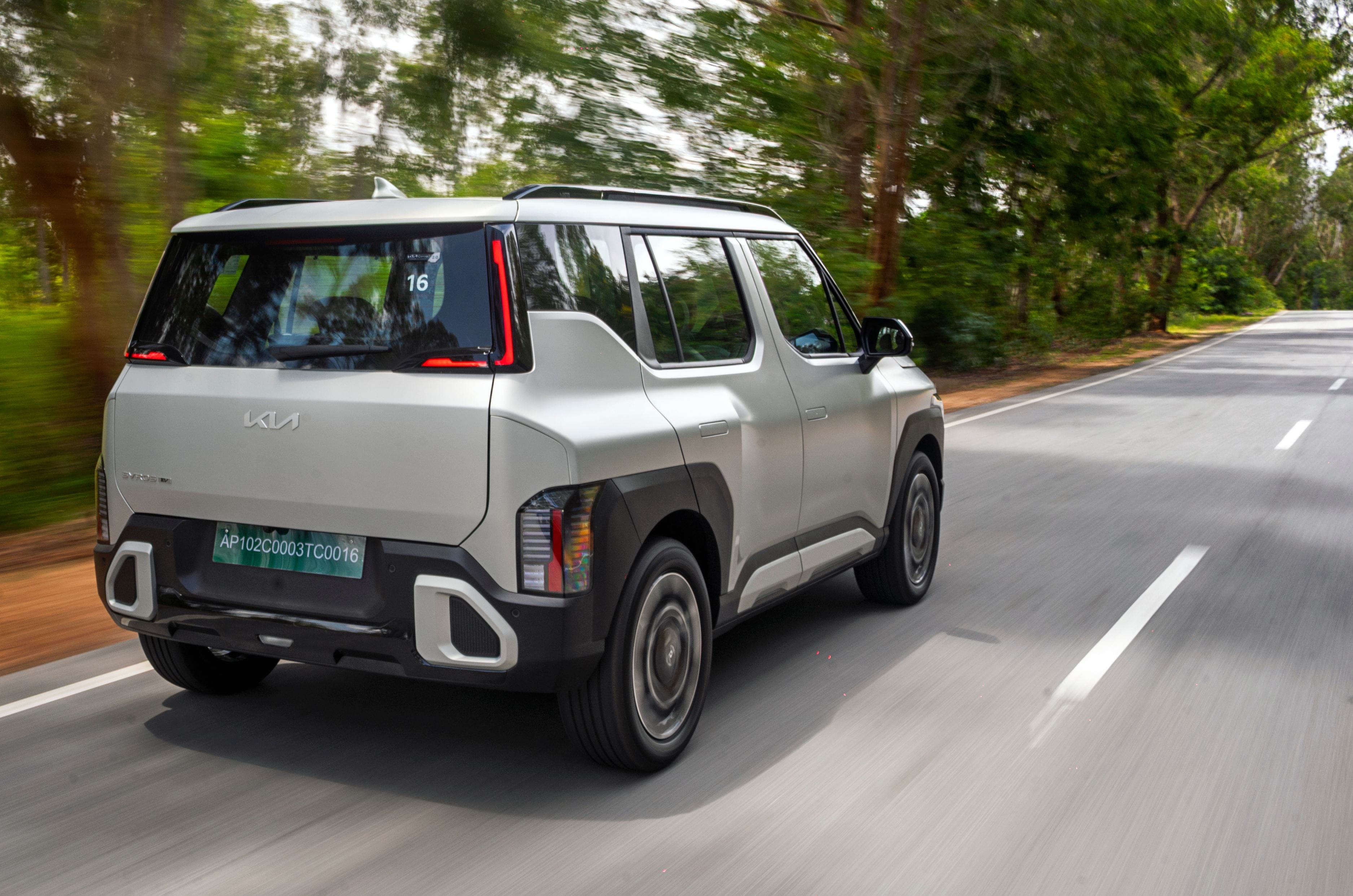
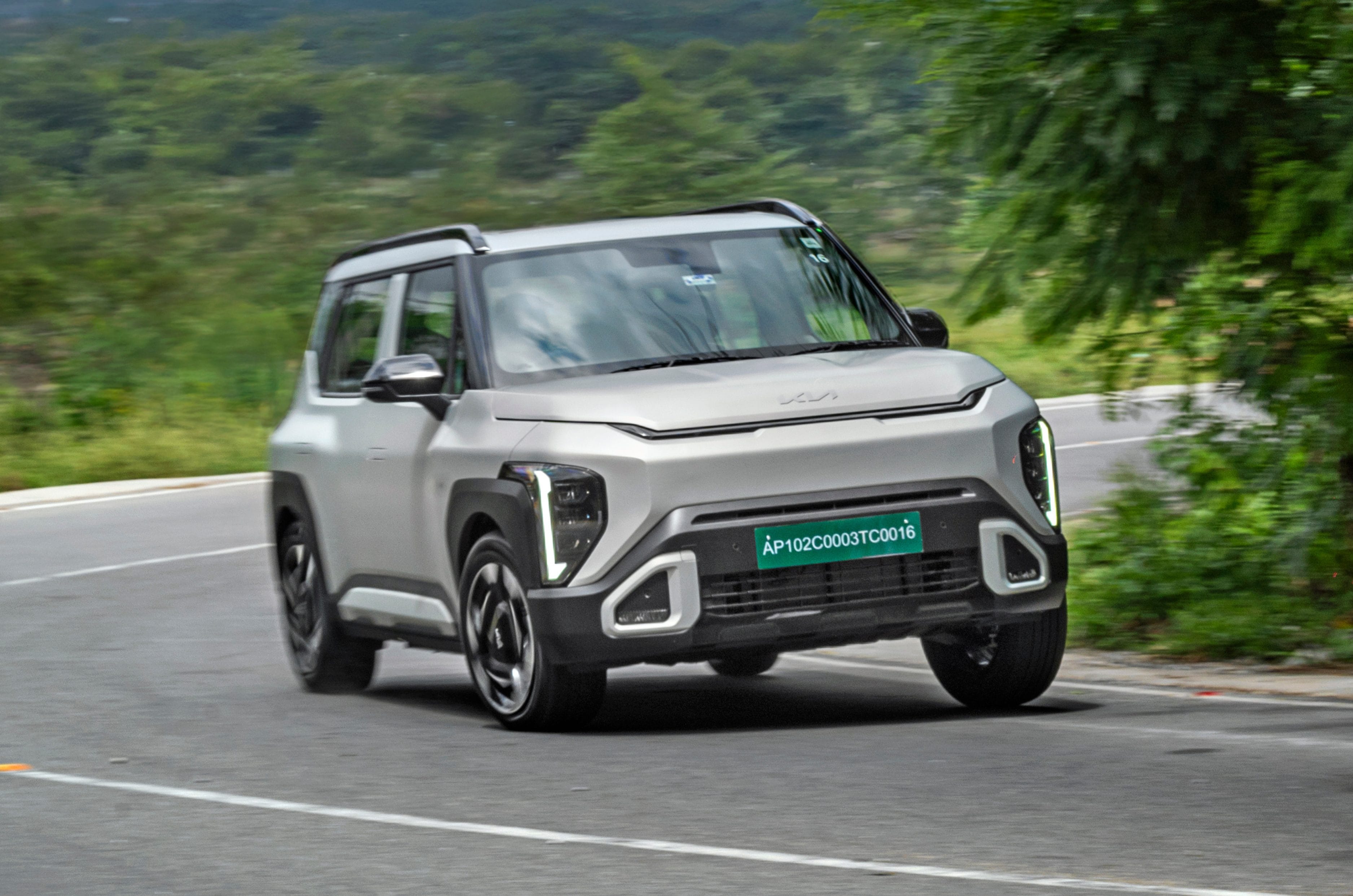
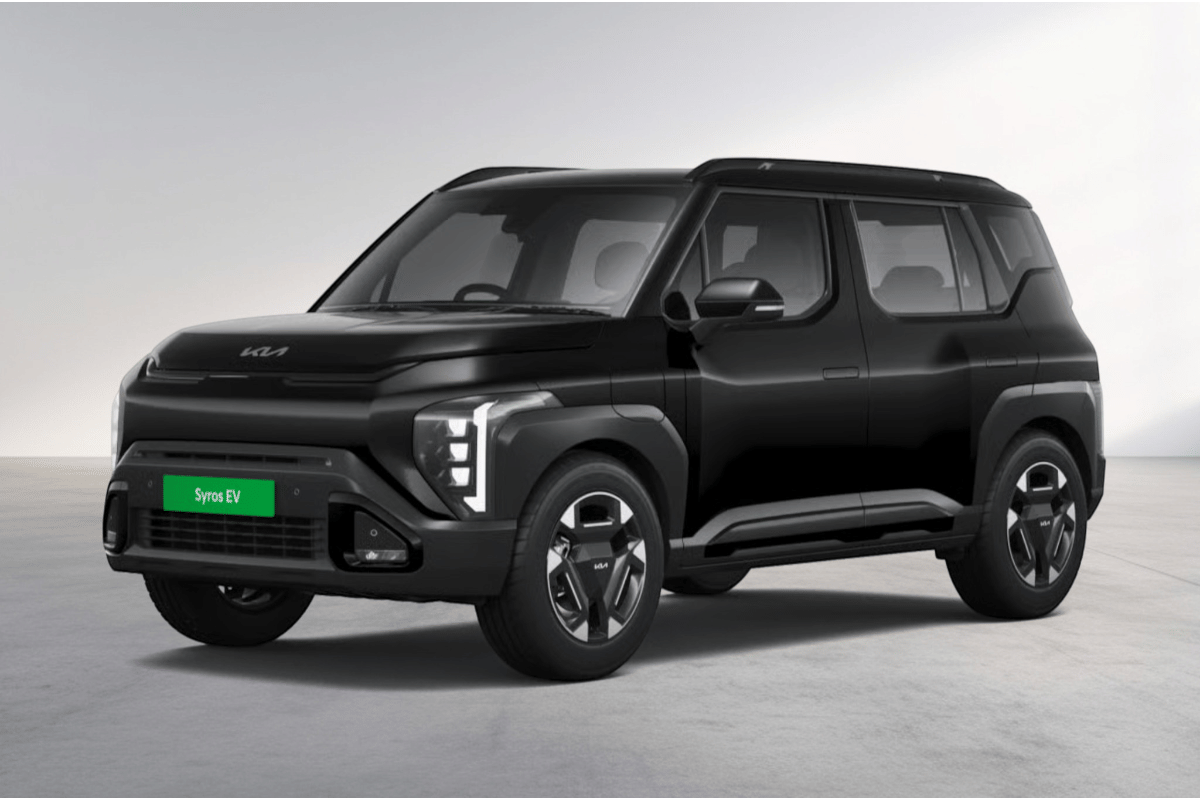
After the Carens Clavis EV, the Kia Syros EV is the carmaker’s second mass-market zero-emission vehicle in India. The electric Syros rivals the Mahindra XUV 3XO EV and the Tata Nexon EV, and we recently got behind the wheel to find out what it does well and where it falls short. If you are planning to bring this Kia EV home, here are three reasons to consider it and two reasons why you may want to think again.
Pros
Impressive performance and range
First, let’s discuss some numbers. The Kia Syros EV is offered with two battery pack options: 42kWh and 51.4kWh. Both power a front axle-mounted electric motor, producing 135hp with the smaller battery and 171hp with the larger unit. Torque remains the same at 255Nm for both versions.
We drove the 51.4kWh version, which Kia claims can sprint from 0-100kph in 8.1 seconds. In our experience, performance was brisk. The EV comes with Eco, Normal and Sport drive modes, and throttle response becomes a little sharper as you move through them. Initial response across modes is linear, though there is a strong shove as you press the throttle further. Even in Eco and Normal, overtaking is effortless, and there is rarely a need to switch to Sport for a quick pass.
The MIDC range is 526km for the 51.4kWh battery pack and 443km for the 42kWh unit. While our short drive wasn’t enough to verify these figures, the larger battery should comfortably deliver around 400km of real-world range on a single charge.
Spacious and practical cabin
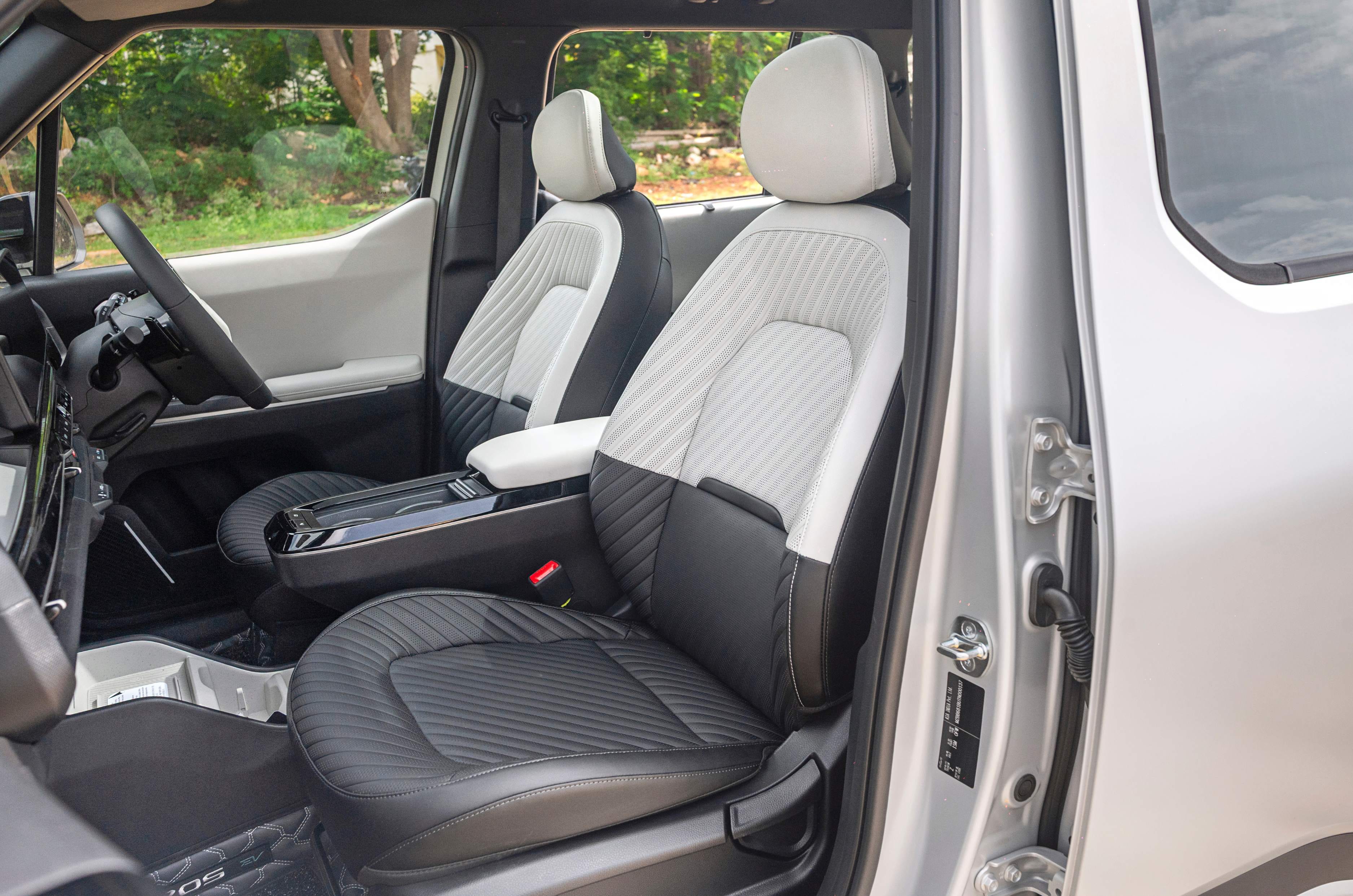
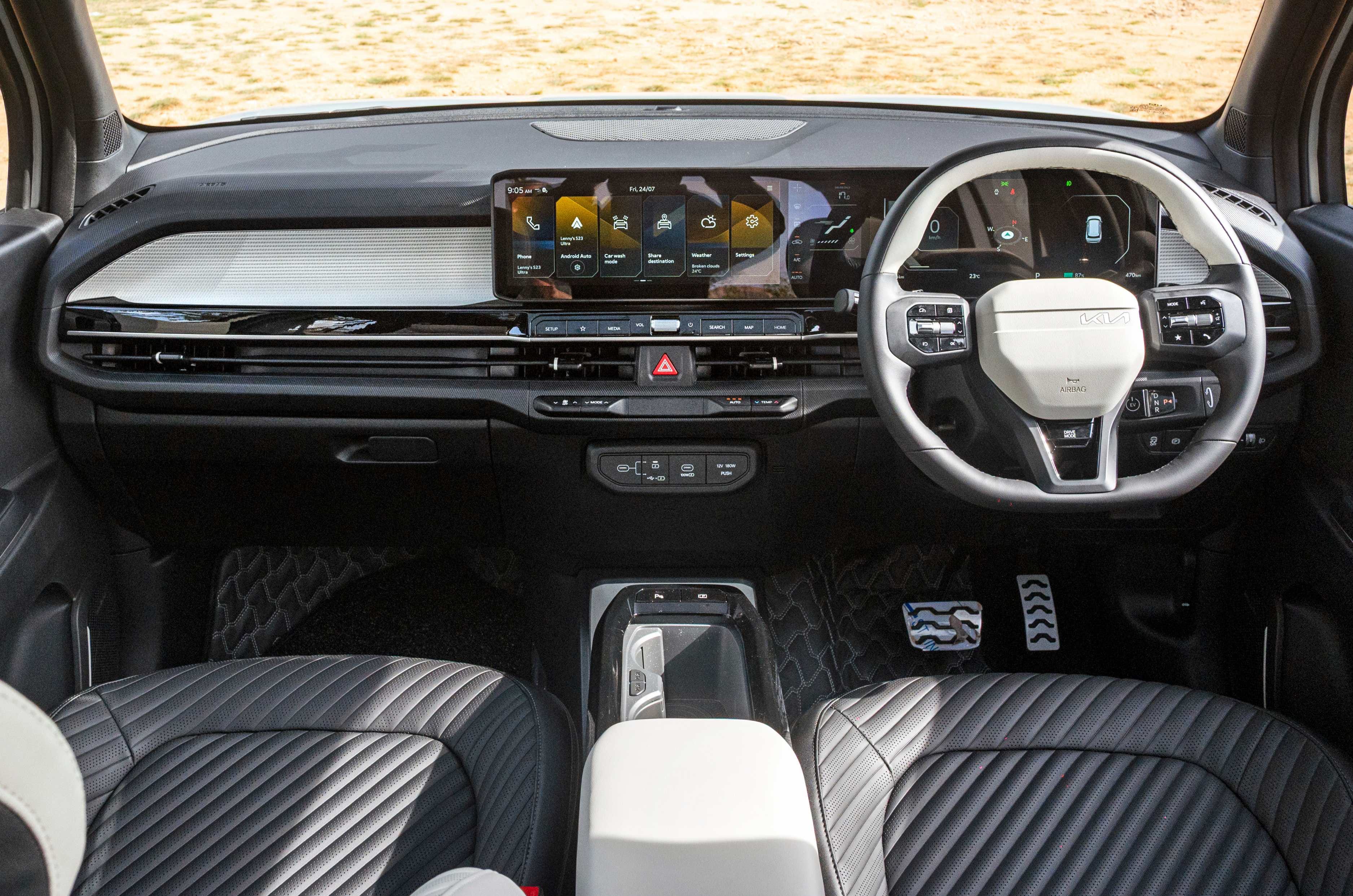
Like the ICE version, the Syros EV offers plenty of space for passengers. Since the drive selector is placed on the steering column, Kia has redesigned the centre console to create more storage space. Its upper section gets a small storage area below the armrest and two cup holders with a sliding cover. The console’s lower section offers a larger storage space for a bag, another cup holder and a wireless phone charger. Also, the front door pockets are large enough to hold a couple of bottles and an umbrella.
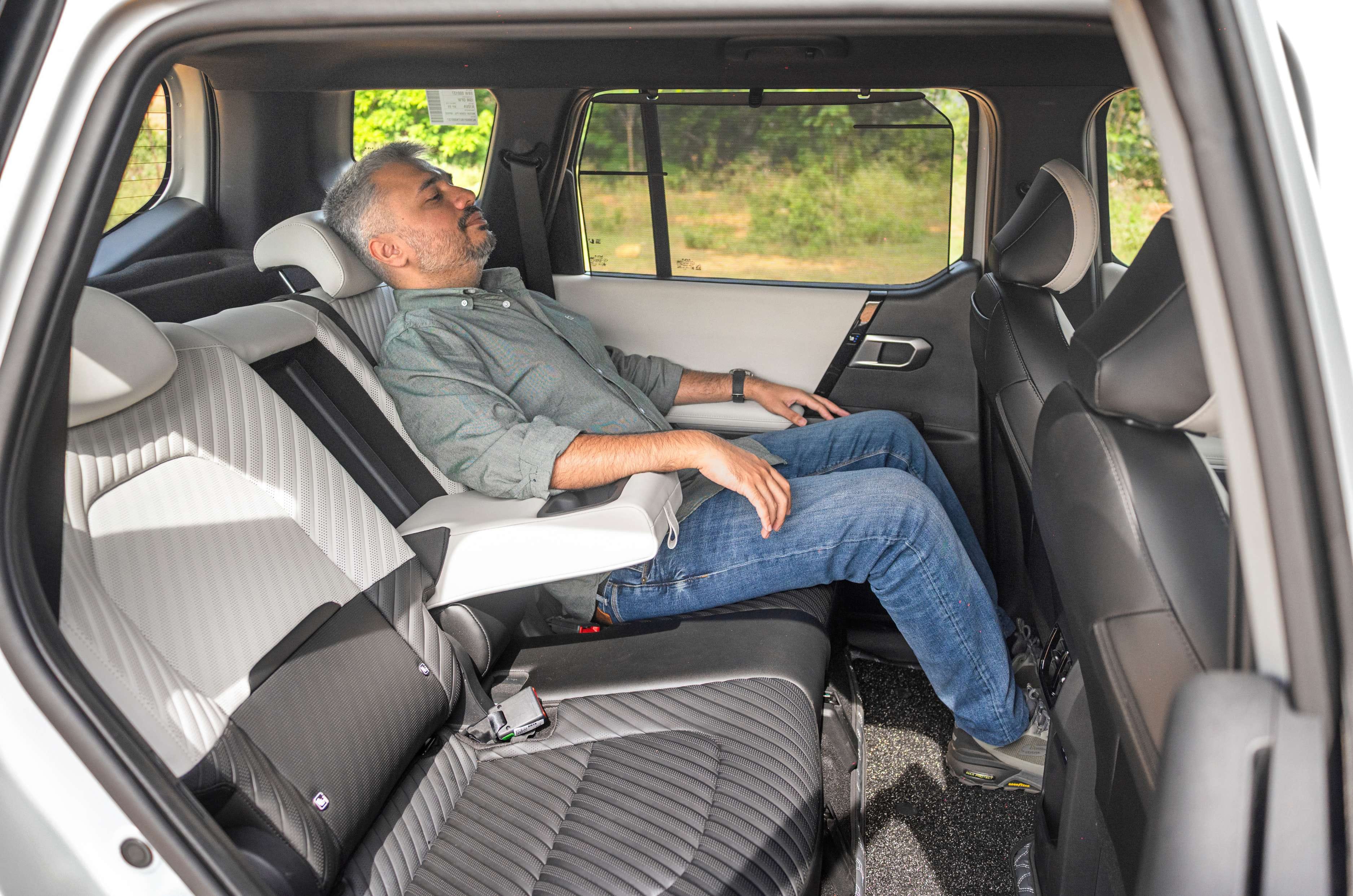
The front seats are comfortable and supportive, and the rear-seat space continues to be one of the compact SUV’s biggest strengths, with plenty of room all around. The battery pack raises the floor slightly, but sliding the rear bench backwards makes it much more comfortable. The EV’s flat floor is another advantage, and rear-seat ventilation (for the base) has been carried over from the ICE version.
The boot space remains unchanged at 390 litres with the rear seat pushed back and 465 litres with it slid forward. Rear seats can also be folded to carry larger items, and being an EV, it also offers a 16-litre frunk (front boot).
Feature-packed
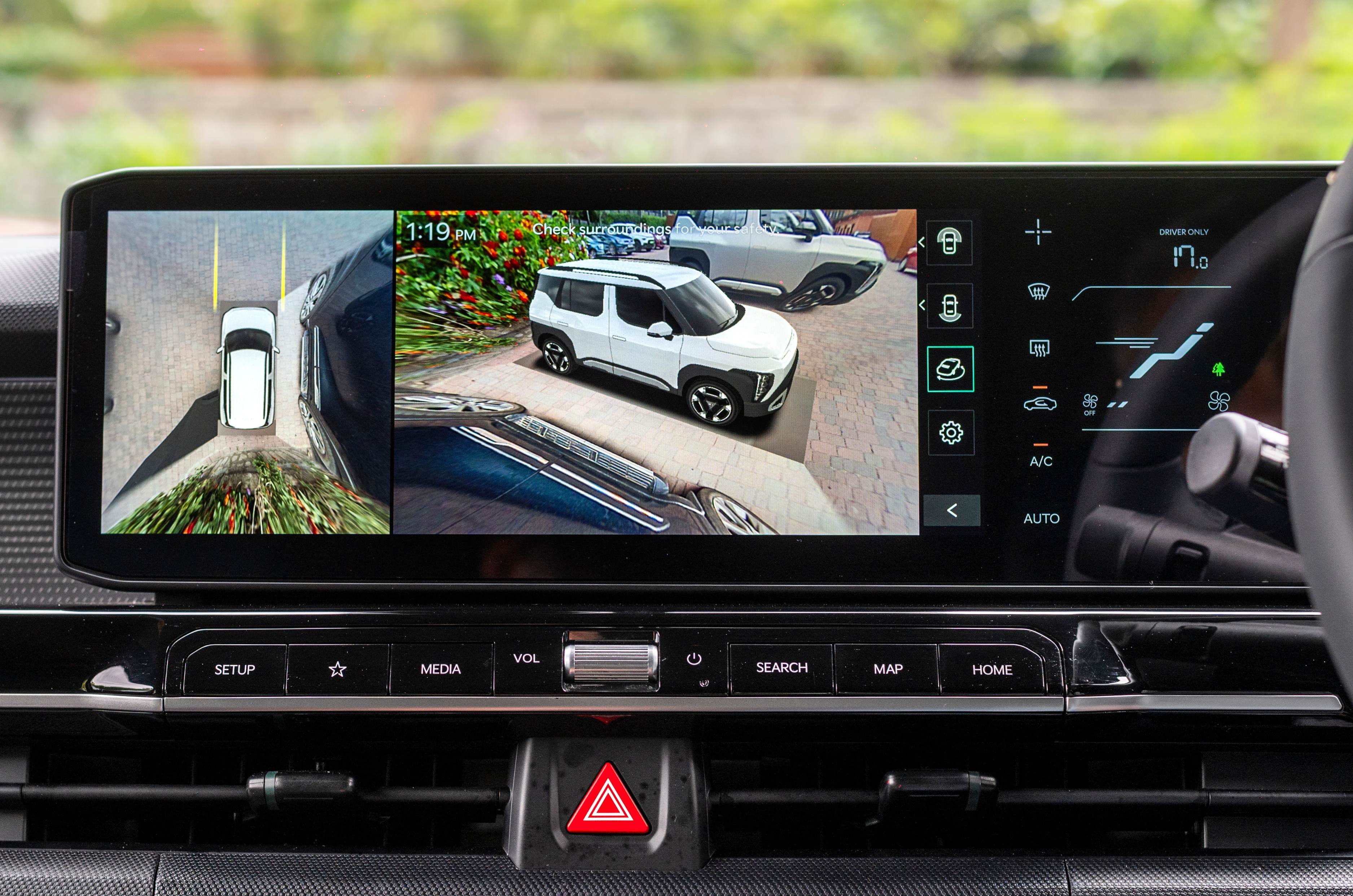
The EV gets Kia’s Trinity Panoramic Display, which includes two 12.3-inch screens for infotainment and the driver’s display, along with a 5-inch screen for the climate control. Wireless Android Auto and Apple CarPlay are offered, while the top trims also feature an eight-speaker Harman Kardon sound system. To pamper occupants at the back, AC vents and sunblinds are standard across the range. The household-style three-pin socket in the back seat is exclusive to the top-spec X-Line trim.
As for safety, the Syros EV comes with six airbags, all-wheel disc brakes, tyre-pressure monitoring and Isofix child-seat mounts as standard. The X-Line trim also gets a 360-degree camera and an ADAS (advanced driver assistance systems) suite with features such as adaptive cruise control with stop-and-go, lane-keep assist, forward and rear collision avoidance and a blind-spot camera. Notably, the ICE version no longer gets ADAS.
At the time of writing, the Syros EV has not yet received an official crash-safety rating. However, since the ICE version has already earned a 5-star Bharat NCAP crash-safety rating, the EV is expected to achieve a similar result.
Cons
Body roll through the corners
The ride on the Syros EV is slightly more absorbent than the ICE version, although there is still an underlying firmness. This helps keep the car stable, but because it is tall and narrow, there is noticeable body roll around the corners.
Pricey at the top end
The Kia Syros EV is priced from Rs 13.5 lakh for the 42kWh version, while the 51.4kWh Extended Range starts at Rs 17 lakh. The fully loaded X-Line trim is priced at Rs 20 lakh. At this price, it competes with the Tata Nexon EV (Rs 12.49 lakh-17.49 lakh) and Mahindra XUV 3XO EV (Rs 13.89 lakh-14.69 lakh) compact SUVs, as well as larger EVs such as the MG Windsor EV (Rs 14.7 lakh-19 lakh) and Maruti e Vitara (Rs 15.99 lakh-19.99 lakh).
Top-spec Kia Syros X-Line.
The 42kWh version does offer strong value for money, but the larger 51.4kWh Extended Range version is a tougher sell. It costs noticeably more than its direct rivals and even overlaps with higher-battery versions of the MG Windsor EV and Maruti e Vitara. While the Syros EV has several strengths, many buyers may want a bigger SUV for similar money. Kia’s Battery-as-a-Service (BaaS) scheme lowers the upfront purchase cost, but similar plans are also available with the MG and Maruti EVs.
Ex-showroom prices mentioned above are as of July 30, 2026.