Salman Khan: सलमान खान ने चेतावनी दी है कि वे उन पैपराजी के खिलाफ सख्त कार्रवाई करेंगे, जो अभिनेत्रियों की मर्ज़ी के बिना पीछे से उनकी तस्वीरें लेते रहते हैं। अभिनेता ने बिग बॉस 20 में यह ऐलान तब किया जब नेहा धूपिया ने इस चलन के खिलाफ आवाज उठाने के लिए उनका शुक्रिया अदा किया और कहा कि उनकी पिछली चेतावनी के बावजूद फोटोग्राफर ऐसा करते रहे हैं।
सलमान ने यह भी कहा कि कुछ सेलिब्रिटी पैपराजी को बुलाते हैं और ऐसी तस्वीरें लेने के लिए उन्हें पैसे देते हैं। जबकि कुछ लोग इस चलन से असहज महसूस करते हैं। उन्होंने कहा कि फोटोग्राफरों को उस व्यक्ति की इच्छा का सम्मान करना चाहिए जिसकी तस्वीर ली जा रही है।
सलमान खान ने पैपराजी को सख्त कार्रवाई की चेतावनी दी
सलमान ने कहा कि कुछ सेलेब्रिटीज ऐसी तस्वीरों से सहज होते हैं, जबकि कुछ ने साफ तौर पर उन पर आपत्ति जताई है। उन्होंने फोटोग्राफरों से आग्रह किया कि वे इस फर्क को समझें और लोगों की निजी सीमाओं का सम्मान करें। कुछ महिलाएं और पुरुष ऐसे भी हैं जो उन्हें बुलाते हैं, उन्हें पैसे देते हैं और उनसे ऐसा करने के लिए कहते हैं। तो वे भी क्या करें?”
एक्टर ने आगे कहा- जिन्हें चाहिए…वे करवाएं भाई। जिन्हें नहीं चाहिए उन्हें मत छेड़ो। सलमान खान ने कहा कि जब कोई व्यक्ति असहज महसूस करें तो फोटोग्राफरों को ऐसी तस्वीरें नहीं लेनी चाहिए। सलमान ने सीधे नेहा से भी बात की और कहा कि जब एक्ट्रेस कुछ खास तस्वीरें न लेने के लिए कहें तो फोटोग्राफर्स को उनकी बात गंभीरता से लेनी चाहिए।
सलमान का कहना है कि पैपराजी ऐसी और तस्वीरें ले रहे हैं
सलमान ने कहा कि शो पर अपनी पिछली बातों के बावजूद पैपराजी ने ऐसा करना और बढ़ा दिया है। उन्होंने कहा कि कुछ लोग उनकी चेतावनी को मजाक समझ रहे थे और दावा किया कि इसमें बड़े-बड़े प्लेटफॉर्म भी शामिल हैं। उन्होंने कहा, “अब वे और भी ज्यादा ऐसा करने लगे हैं। लेकिन मैं इस पर कड़ा रुख अपनाऊंगा। उन्होंने आगे कहा- उन्हें लगता है कि अभी यह मजाक है। कुछ बड़े प्लेटफॉर्म भी ऐसा कर रहे हैं। मैं पूरी सख्त से कार्रवाई करूंगा।”
नेहा ने एक बड़े प्लेटफॉर्म पर यह मुद्दा उठाने के लिए सलमान का शुक्रिया अदा किया। उनकी यह प्रतिक्रिया तब आई जब एक्टर ने उन फोटोग्राफर्स को फिर से चेतावनी दी जो ऐसी तस्वीरों पर एक्ट्रेस की आपत्तियों को नज़रअंदाज़ करते हैं।
सलमान खान ने इस मुद्दे पर पहले क्या कहा था?
सलमान खान ने सितंबर 2026 में बिग बॉस 20 के एक एपिसोड के दौरान पैपराज़ी (paps) से जुड़े विवाद पर बात की थी। उन्होंने सवाल उठाया कि फ़ोटोग्राफ़र जान-बूझकर अभिनेत्रियों की जांघों पर फ़ोकस करके या पीछे से उनकी तस्वीरें क्यों लेते हैं, खासकर तब जब महिलाओं ने ऐसे शॉट्स के लिए सहमति नहीं दी हो।
इस चलन का जिक्र करते हुए उन्होंने कहा- फिर वे जो पीछे से एक शॉट लेते हैं, जो किसी भी हीरोइन को पसंद नहीं आता? हो सकता है कुछ ऐसी हों जो कहें कि ठीक है, मुझे इससे कोई फर्क नहीं पड़ता। लेकिन उन महिलाओं का क्या जिन्हें यह पसंद नहीं है?”
एक्टर ने नेहा के ऐसे फोटोग्राफी के खिलाफ पहले लिए गए स्टैंड और सई मांजरेकर व अपनी भतीजी से जुड़ी एक घटना का भी जिक्र किया। उन्होंने उन महिलाओं से अपील की जो इन तस्वीरों से असहज महसूस करती हैं कि वे आवाज उठाएं और अपनी सीमाओं (boundaries) की रक्षा करें।
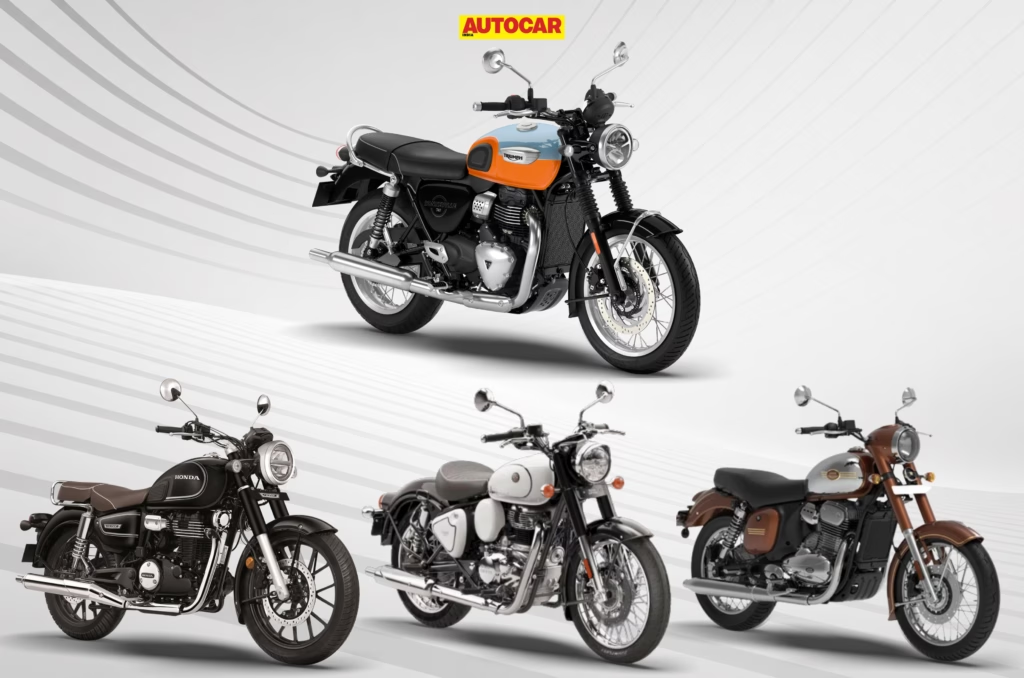
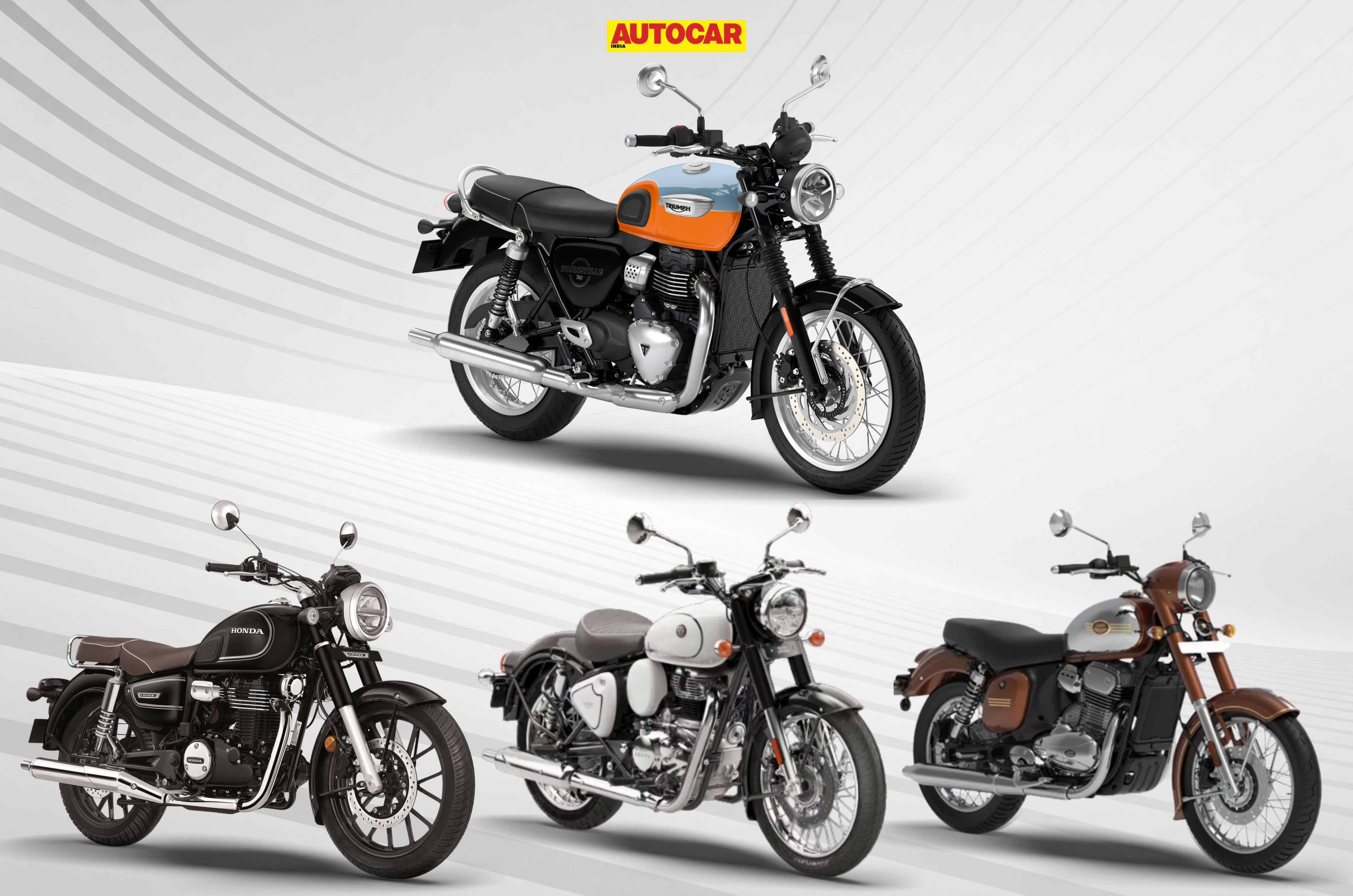
It’s here, finally. Almost three years after the very first Triumph 400s debuted (Speed and Scrambler X), we have a Bonneville for the class, and it’s looking to redraw the boundaries for the retros. However, the 350cc class is silently one of the fiercest segments in India, with Royal Enfield leading it, predominantly with the Classic 350. We have Honda trying to eat away at that dominance with the CB350 and Jawa with its 350, but sales-wise at least, Royal Enfield has so far remained unassailable. Can the Hinckley-based manufacturer finally make its Indian-UK counterpart feel the heat? Let’s see.
Triumph Bonneville T40 vs Rivals: Engine and output
Triumph is off to a great start
Triumph Bonneville T40
Royal Enfield Classic 350
Honda CB350C
Jawa 350
Engine
350cc, single-cylinder, liquid-cooled
349cc, single-cylinder, air-cooled
348.36cc, single-cylinder, air-cooled
334cc, single-cylinder, liquid-cooled
Power
29hp at 7,000rpm
20.2hp at 6,100rpm
21hp at 5,500rpm
22.57hp at 7,000rpm
Torque
31.2Nm at 5,500rpm
27Nm at 4,000rpm
29.5Nm at 3,000rpm
28.1Nm at 5,000rpm
Transmission
6-speed
5-speed
5-speed
6-speed
Power-to-weight ratio
148.72hp/tonne
103.59hp/tonne
113.28hp/tonne
116.53hp/tonne
Triumph is looking to distinguish the Bonneville T40 in every way possible, starting with the engine itself. Its 350cc unit is one of two liquid-cooled mills on the list. This bike also makes the most power and torque. The T40’s peak power is followed at a distance by the Jawa 350, and it’s the Honda CB350 that makes the nearest comparable amount of peak torque. Honda’s 348cc engine also delivers both power and torque much earlier in the rev range.
Triumph Bonneville T40 vs Rivals: Dimensions and weight
Honda strikes a fine balance
Triumph Bonneville T40
Royal Enfield Classic 350
Honda CB350C
Jawa 350
Fuel tank capacity
14.5 litres
13 litres
15.2 litres
13.2 litres
Ground clearance
165mm
170mm
165mm
178mm
Kerb weight
195kg
195kg
186kg
~193kg
Seat height
790mm
805mm
800mm
790mm
Wheelbase
1418mm
1390mm
1441mm
1449mm
In this section, the Honda CB350C immediately stands out because of its kerb weight. It is the lightest motorcycle in this comparison, and that’s despite being the heaviest version in the CB350 line-up; the CB350 weighs 181kg and the CB350RS 180kg. Yet, it has the largest fuel tank capacity, along with decent seat height and ground clearance. The T40’s second-shortest wheelbase should make it an agile bike, but it remains to be seen how it rides in the real world. The Classic 350 – with the shortest wheelbase – isn’t exactly known for its agility, not that it’s expected in this segment to begin with.
Please note that Jawa/Yezdi report dry weight on the website, so you’ll find the Jawa 350’s weight to be 184kg there, but with 90 percent fuel and other fluids, its kerb weight should be closer to the others in the list.
Triumph Bonneville T40 vs Rivals: Tyres, brakes and suspension
Old vs new retros
Triumph Bonneville T40
Royal Enfield Classic 350
Honda CB350C
Jawa 350
Tyres (F, R)
100/90-18, 150/70R17
100/90-19, 120/80-18
100/90-19, 130/70-18
100/90-18, 130/80-17
Brakes (F, R)
310mm disc, 255mm disc; dual-channel ABS
300mm disc, 270mm disc; dual-channel ABS
310mm disc, 240mm disc; dual-channel ABS
280mm disc, 240mm disc; dual-channel ABS
Suspension (F, R)
Telescopic fork, twin-shock
Telescopic fork, twin-shock
Telescopic fork, twin-shock
Telescopic fork, twin-shock
The differences are a bit confusing, mainly because there are barely any. The only major distinction among these four motorcycles is that two have a 19-inch front wheel, whereas the other two have an 18-inch one. The same goes for the rear wheel: two of them have an 18-inch unit, and the other two get a 17-inch one. Elsewhere, there are minor variations in the disc rotor sizes, but by and large, they fall in the same ballpark, all things considered.
Triumph Bonneville T40 vs Rivals: Features
Triumph’s biggest flaunt
The Bonneville T40 is the newest entrant in this retro segment, and that contrast is most visible in the features department. It offers ride-by-wire and a 4-inch TFT display with five ride modes (Eco, Road, Rain, Rider A and B), turn-by-turn navigation powered by Triumph, cornering ABS, traction control and cruise control, all as standard. For context, here’s what the second most feature-packed motorcycle, the Honda CB350C, offers: dual-channel ABS, a slip-and-assist clutch, Honda Selectable Torque Control (HSTC, traction control) and Honda RoadSync connectivity on the higher variants through the LCD screen.
Triumph has waited to debut a much-needed new instrument cluster with the Bonneville. It’s a decision you can raise questions about (like, why not on the Tracker 400?), but it’s a change that’s wholeheartedly welcomed nevertheless. If you prefer your retros to straddle the line between the old and new, the Bonneville T40 is hard to beat.
Triumph Bonneville T40 vs Rivals: Price
Most expensive modern classic
Triumph Bonneville T40
Royal Enfield Classic 350
Honda CB350C
Jawa 350
Price (ex-showroom)
Rs 2.80 lakh
Rs 1.89-2.26 lakh
Rs 2.00-2.04 lakh
Rs 2.11-2.21 lakh
Triumph is also the most expensive of the lot. An Indian-specific T4 has also been revealed at a lower price point of Rs 2.55 lakh, but that is still Rs 29,000 more expensive than the Classic 350’s top variant. If you find these to be too expensive and would rather have a more retro experience, Royal Enfield’s very own Bullet 350 starts at Rs 1.67 lakh and tops out at Rs 2.11 lakh.
Triumph’s own Speed T4 is the closest modern classic from the brand, coming in at a more palatable Rs 2.10 lakh, although it doesn’t have the decorated name. All things considered, the Bonneville’s arrival has been anticipated for quite a while, and it’s finally here, ready to swing. We now have to see how convincing its swing ends up being.
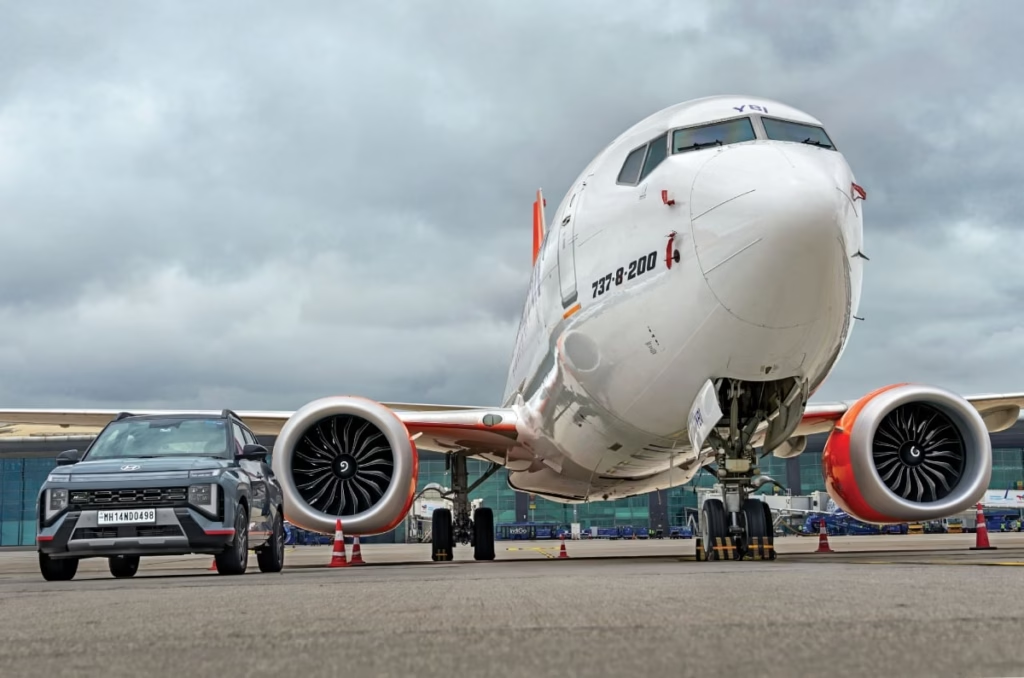
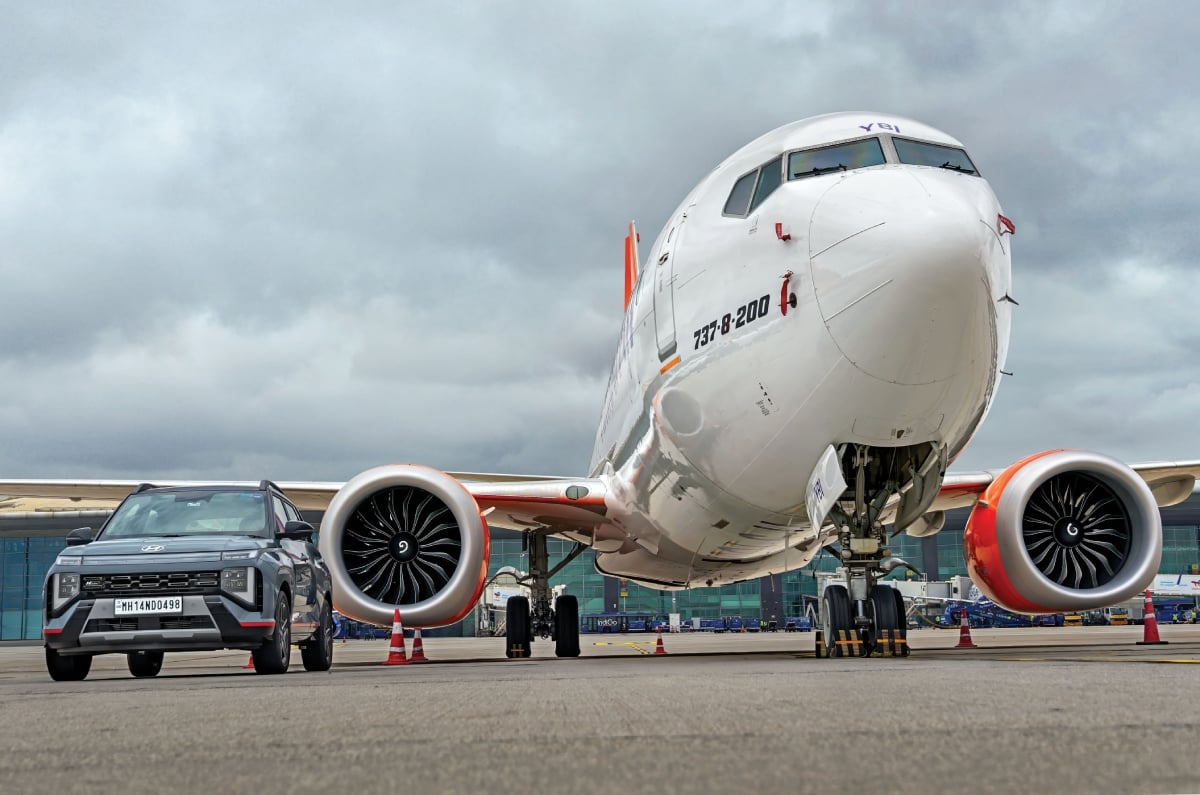
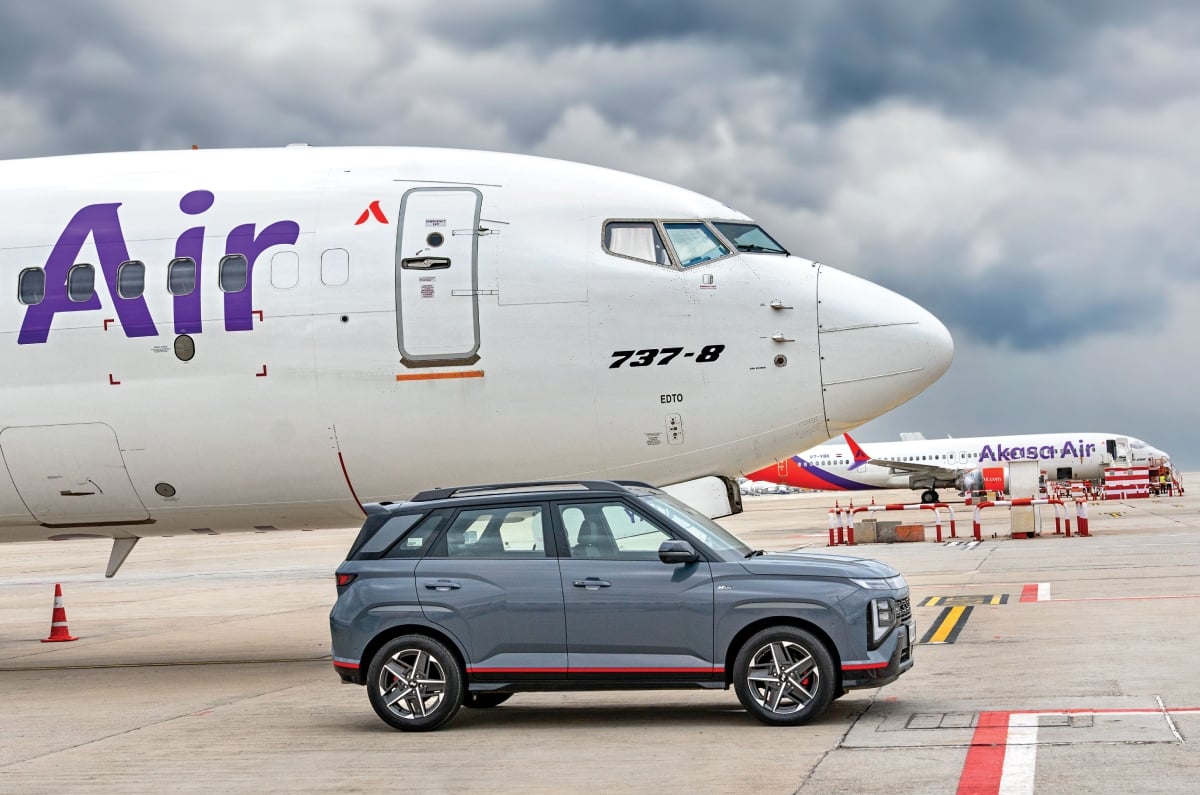
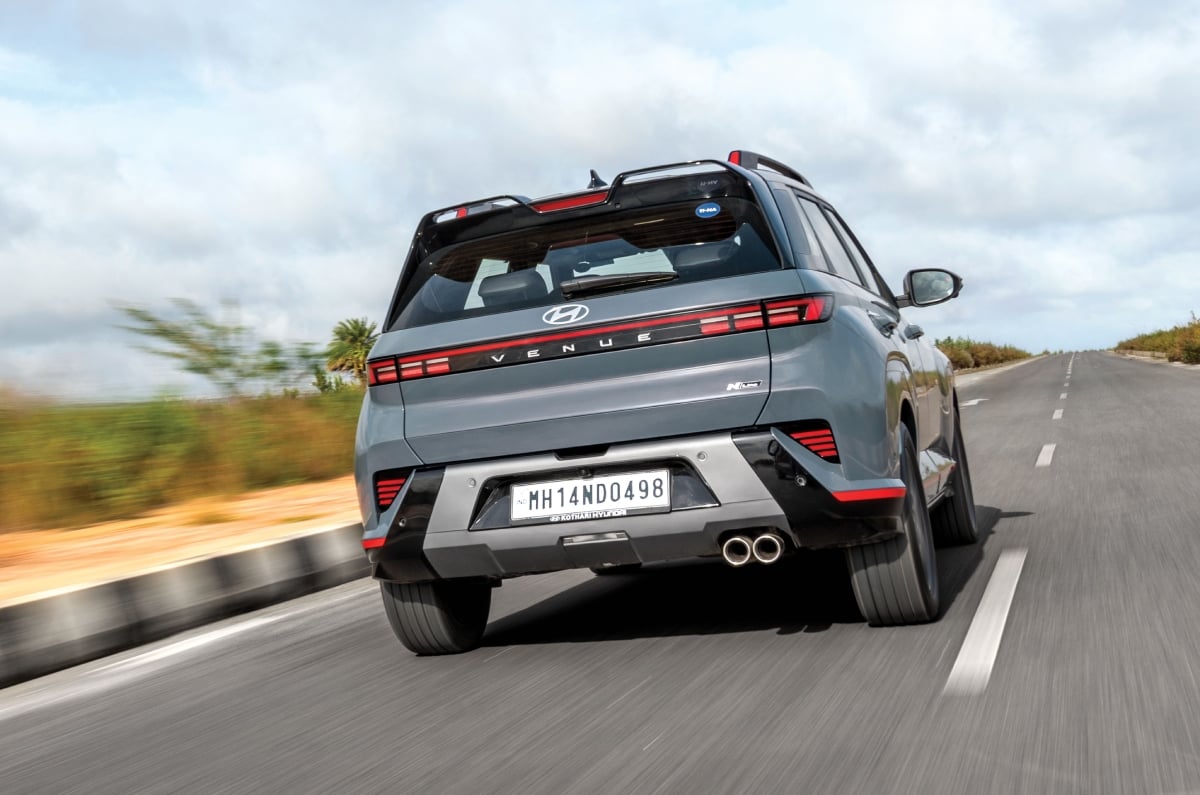
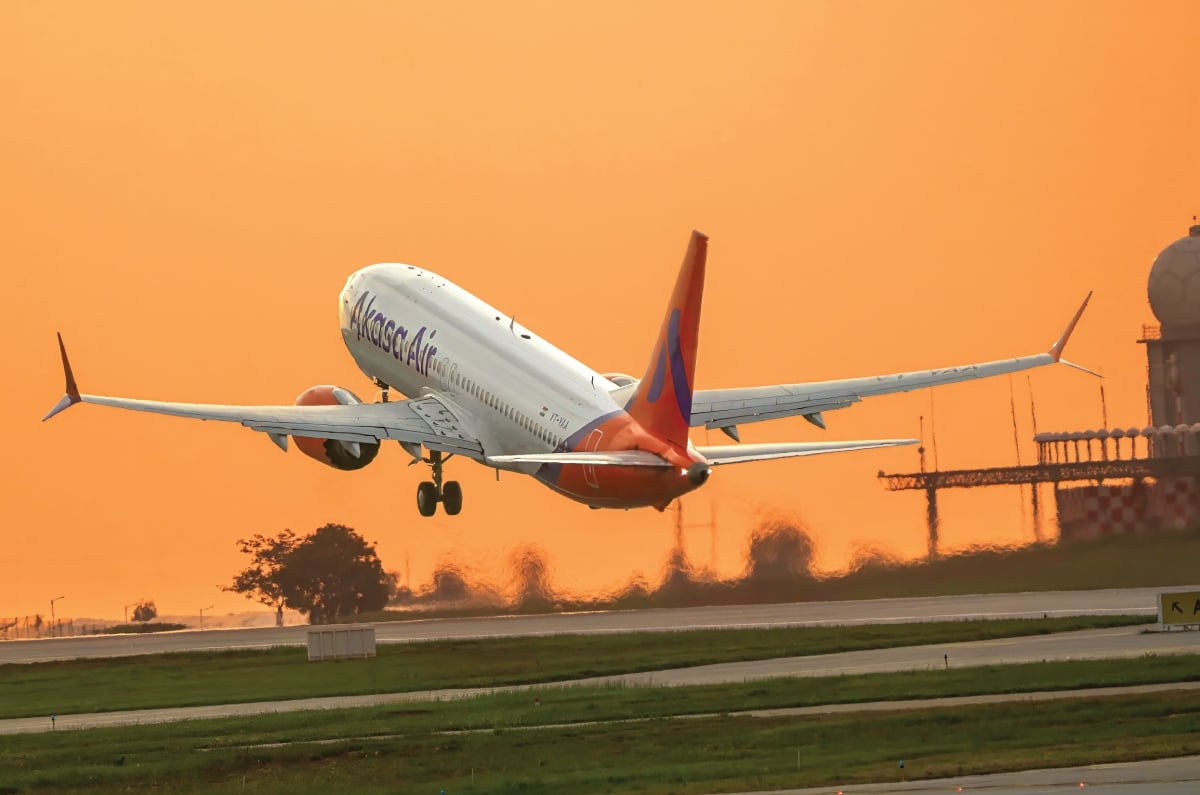
A Hyundai Venue N Line runs down a well-lined access road, its sensors alive. Off to the left overhead, an Akasa Boeing 737 Max makes its way down gracefully, flaps extended, ready to land. Both machines are bristling with technology that allows them to operate with a degree of independence once unthinkable. The car can keep itself within a lane, regulate speed in relation to the car ahead, and brake in emergencies. The aircraft can fly itself across continents, execute complex routes, and even land in zero visibility. Welcome to the new world where machines are self-aware and can operate for long stretches on their own.
Today, we dive deep into tech and compare how Advanced Driver Assistance Systems (ADAS), found in modern cars like the Hyundai Venue work, and juxtapose them against how advanced autopilot systems on airliners like the Boeing 737 Max function. Want to know how this Hyundai Venue senses lane markings, what it picks up, how it processes the data, makes a decision and executes a steering manoeuvre to keep the car within the lane, or how aircraft like the Boeing 737 Max are programmed to fly themselves and how they can even land automatically? Read on; there’s plenty of fascinating tech ahead.
Sensor fusion
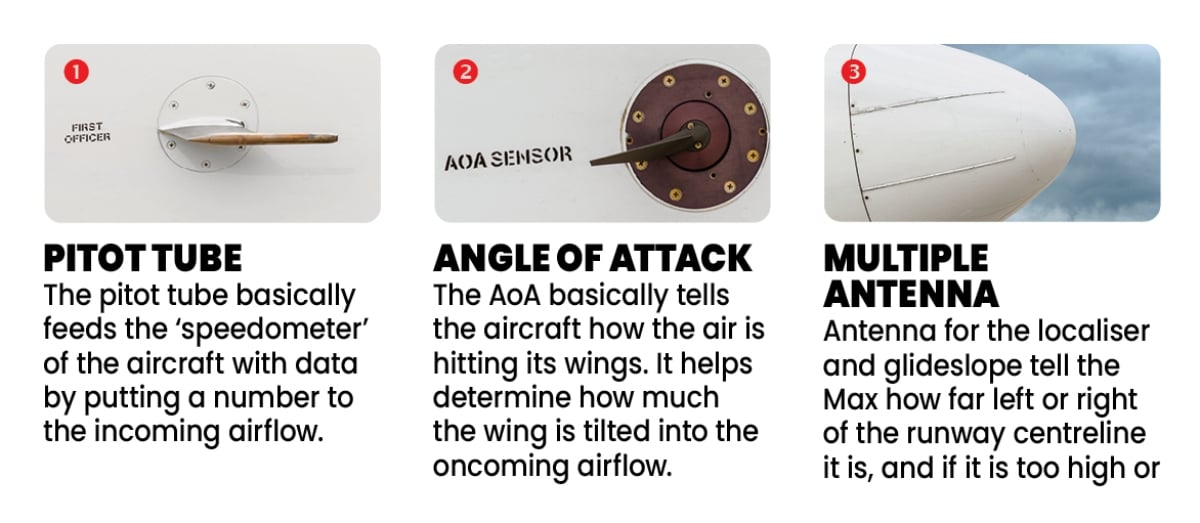
Walk around the attractive-looking Akasa 737 Max, now one of forty-three, and you notice the nose of the aircraft bristling with sensors. It’s from where a vast majority of the data for the Autopilot is collected. Showing me around and explaining things is Captain Svetlana from Akasa. First up, the speed sensors – elbow-shaped pitot tubes that stick out at an angle. This tube helps measure the airflow and, hence, the speed of the aircraft. For accuracy, this speed data is correlated with the static port, mounted flush on the side of the aircraft, which measures the real atmospheric pressure at the height the aircraft is flying.
Then there’s the AOA or Angle Of Attack sensor that basically tells you how the air is hitting the wings or how much the wing is tilted into the oncoming airflow. This is essential to know just how much lift the wing is making and how close the aircraft is to stall.
Then, inside the nose cone, apart from the weather radar, are antennas for the localiser and glideslope. Both pick up radio beams sent from transmitters positioned near the runway. The localiser tells the aircraft how far left or right of the runway centreline it is, and the glideslope tells if the aircraft is too high or too low. Together, they give the aircraft a complete three-dimensional picture of the ideal path to the runway. They feed data to the Instrument Landing System (ILS) and are what lets a 737 Max line up and descend precisely even when visibility is poor.
Further back are a pair of TCAS antennas, one on the belly and one on the top. They listen for nearby transponders (that also help flightradar24 funtion) to keep the aircraft clear of traffic.
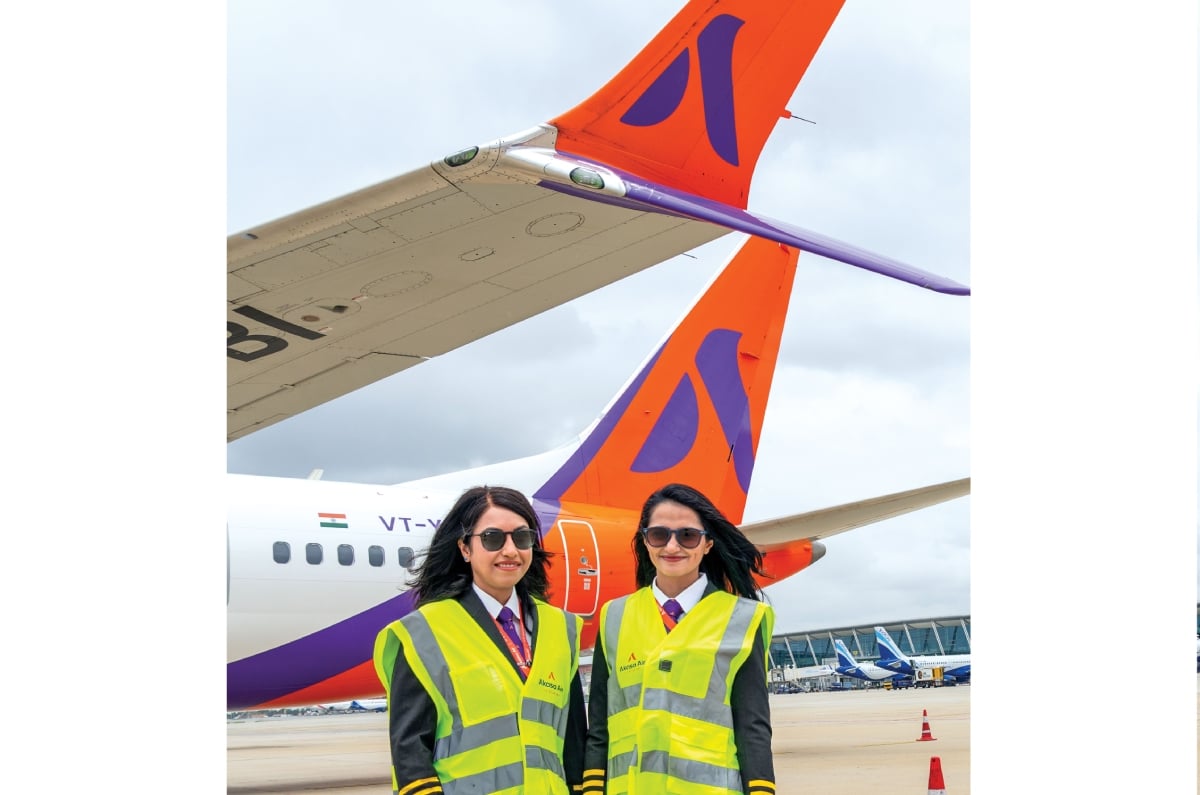
Capt. Svetlana and Capt. Sanaya help us get to grips with how the autopilot on the 737 Max functions.
Positioning is done with the help of a GPS antenna on the roof. Another system, known as the Inertial Reference System, uses laser gyroscopes bolted to the airframe to sense every turn the aircraft makes. It uses accelerometers that sense every change in speed. A computer fuses the two, continuously tracking exactly how far and in which direction it’s travelled from a known starting point, which is set by the pilots at the gate.
Road and track
Though this is a high-tech and complex system, functionality is slick and smooth.
Now swap the open skies for chaotic tarmac. Here, the Venue N Line’s ADAS Level 2 suite runs off far fewer sensors or data points. The difference, however, is that the car actually ‘sees’ what is ahead, correlating data from the radar and the high-resolution camera into a single picture. Sensor fusion is essential on both the 737 and the Venue. What’s different is that the reactions of the car have to be immediate, and that means Smart Sense on the Venue not only has to process gigabytes of data every second, it also has to be ready with, say, a braking solution in milliseconds, just in case that petulant biker cuts across the Venue’s nose.
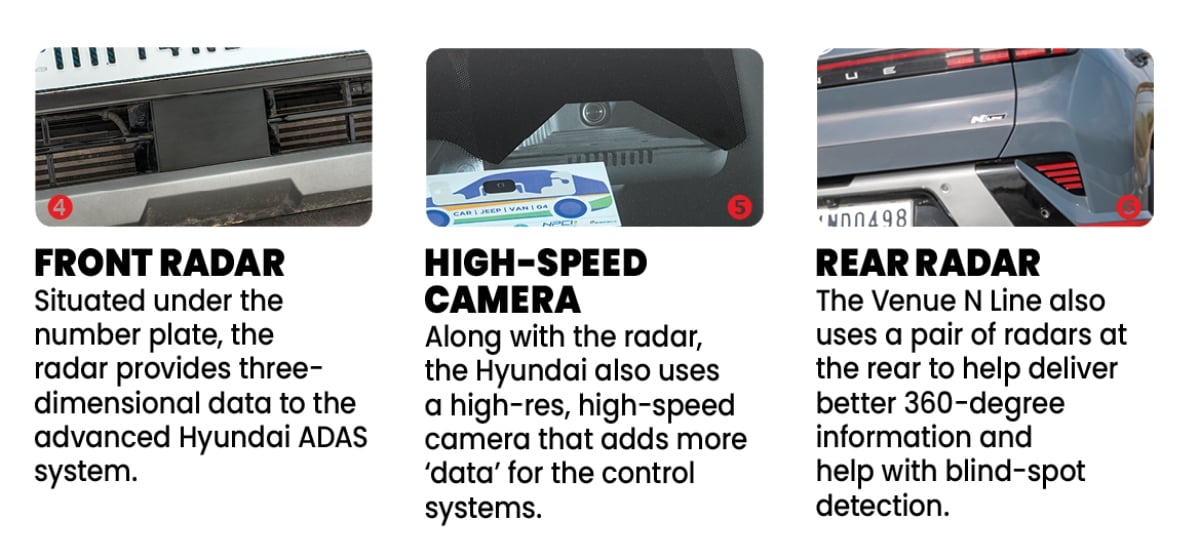
One of the primary sensors is the radar. Located behind the black square plastic panel under the number plate up front, it acts as a measuring tape, constantly tracking the exact distance and closing speed of the car ahead. Similar to a fruit bat, the radar sends out bursts of high-frequency radio waves (or chirps) that vary between 10,000-50,000 bursts per second. Just as important is how quickly the data is processed and passed on, which provides enough sharpness and resolution to differentiate between shapes ahead. This data is used by the Forward Collision-Avoidance Assist (FCA) to stop the Venue often before human reflexes can even respond to danger. In addition, the system uses a pair of rear-mounted radars, ultrasonic sensors and parking and proximity cameras for a more secure 360-degree ‘picture’.
Captain Sanaya adjusts the heading knob in the sim, the aircraft reacts in real time without disengaging the system.
The other important data source is a high-resolution, high-speed camera at the top of the windshield. While its primary job is to look for lane markings and obstacles, it also works along with the radar up front, sharing the workload. The camera, for example, sees every detail but lacks depth perception (or 3D vision), and a radar tracks distance but cannot see the same amount of detail as the camera. The camera sends data via a special, automotive application-optimised CMOS sensor, similar to the one on your Sony mirrorless camera that also has a high dynamic range (for bright lights). Hyundai’s system can even detect faded lines with its edge-detection, texture-tracking, and colour-reading systems. Hyundai’s SmartSense also integrates Artificial Intelligence (AI) and Machine Learning. So, instead of using rigid “if-then” decision-making software, it uses embedded neural networking to interpret real-time sensor data.
Together, these systems form a nervous system that feeds into the car’s brain, which then nudges the steering, modulates throttle, or applies brakes. Unlike aviation, redundancy is limited. A sensor failure usually hands control back to the driver, who remains the ultimate fallback.
Steering wheels and yokes
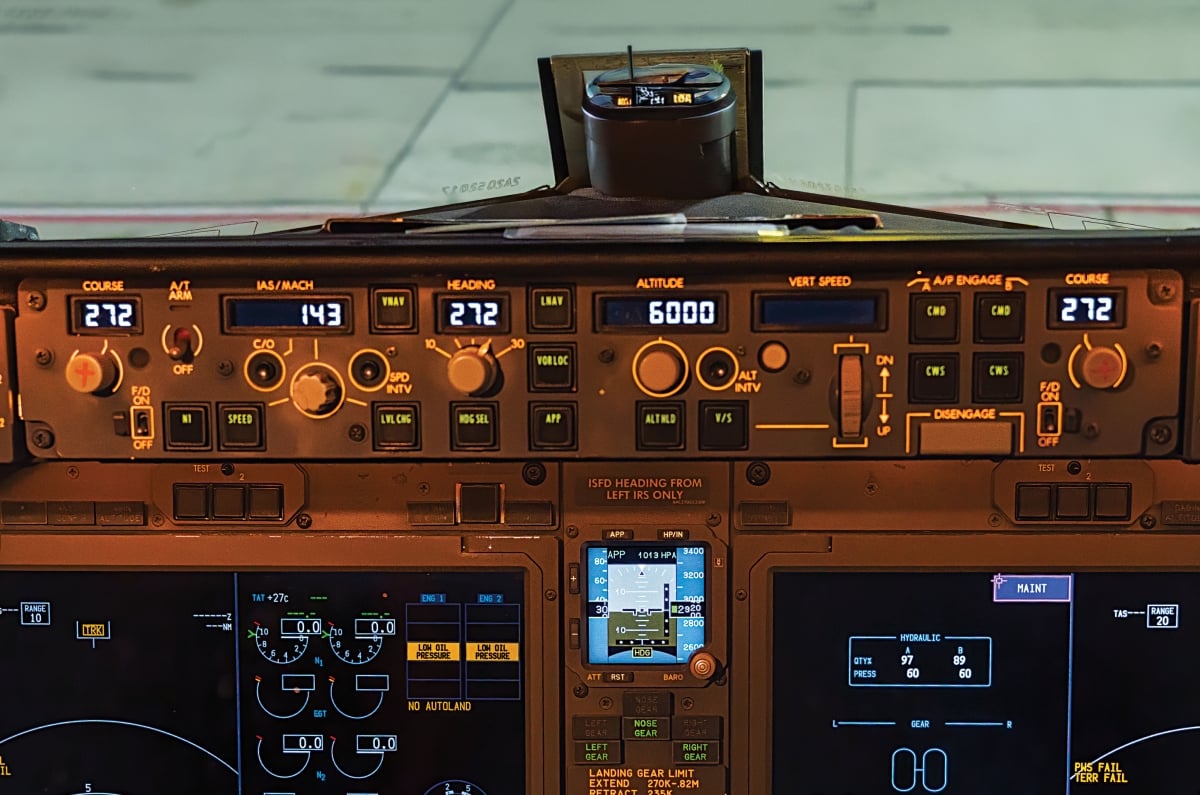
Hit ‘A/P Engage’ on mode control panel to activate autopilot; course, speed, heading and altitude are also adjustable here.
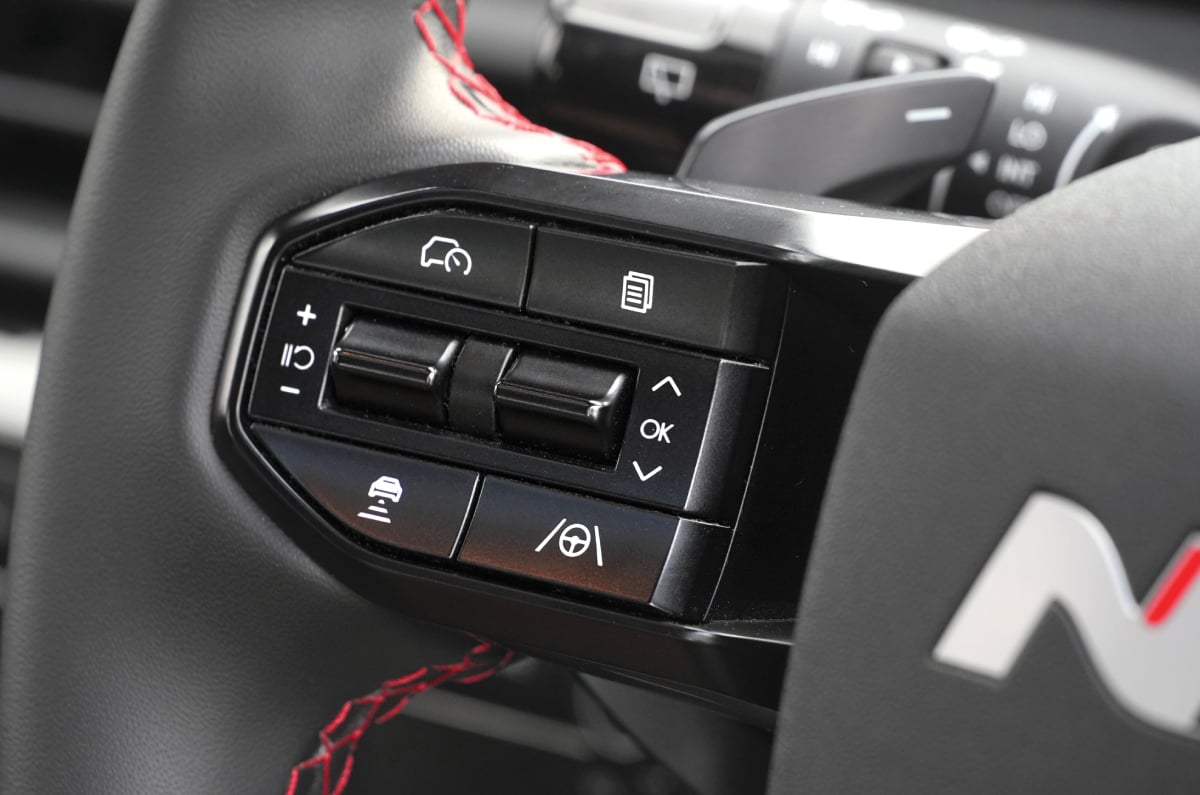
Once behind the wheel of the Venue, engaging the ADAS is seamless. You need to be above 30kph and on a well-lined road. To engage the system, you have to zoom into the left spoke of the steering wheel. Here you find the four buttons that help activate and operate the system. The first activates the Smart Cruise Control, the second allows you to increase or decrease the speed you want to run at, the third helps you set the desired safe distance to the car ahead and the fourth activates Lane Keep Assist (LKA).
Tyre pressure essential here too.
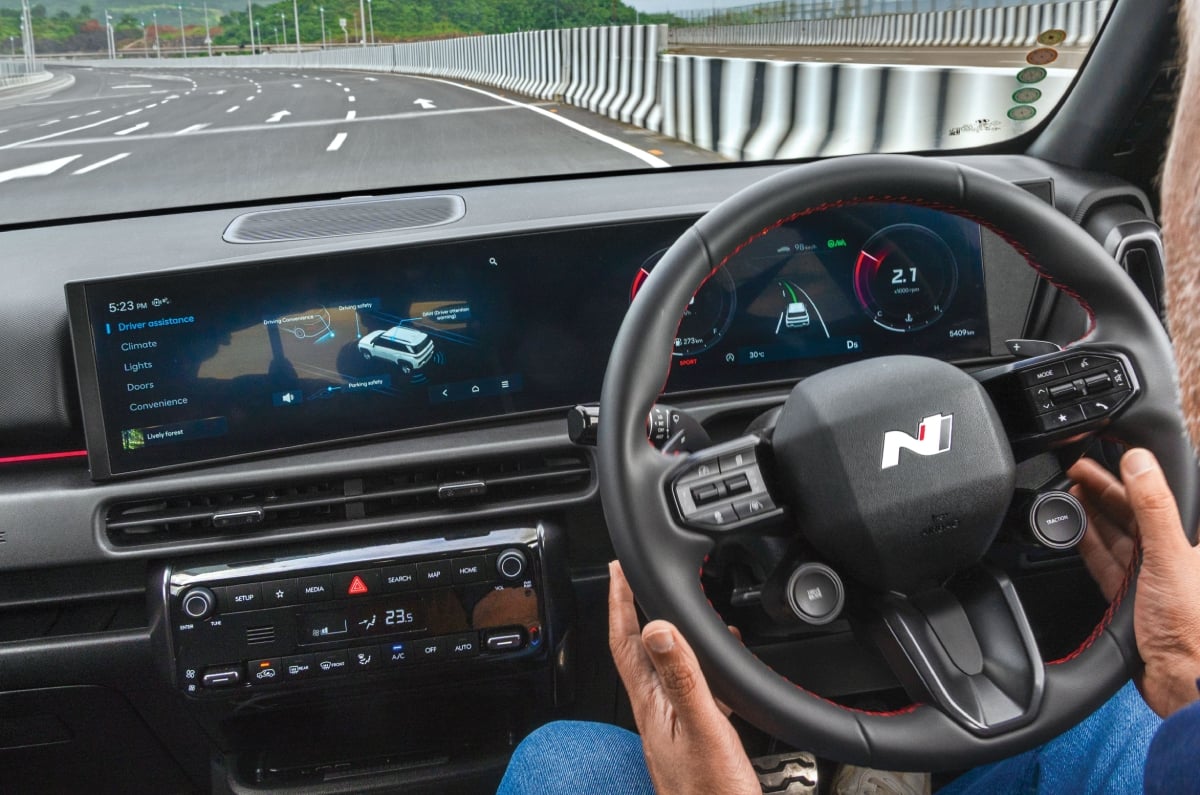
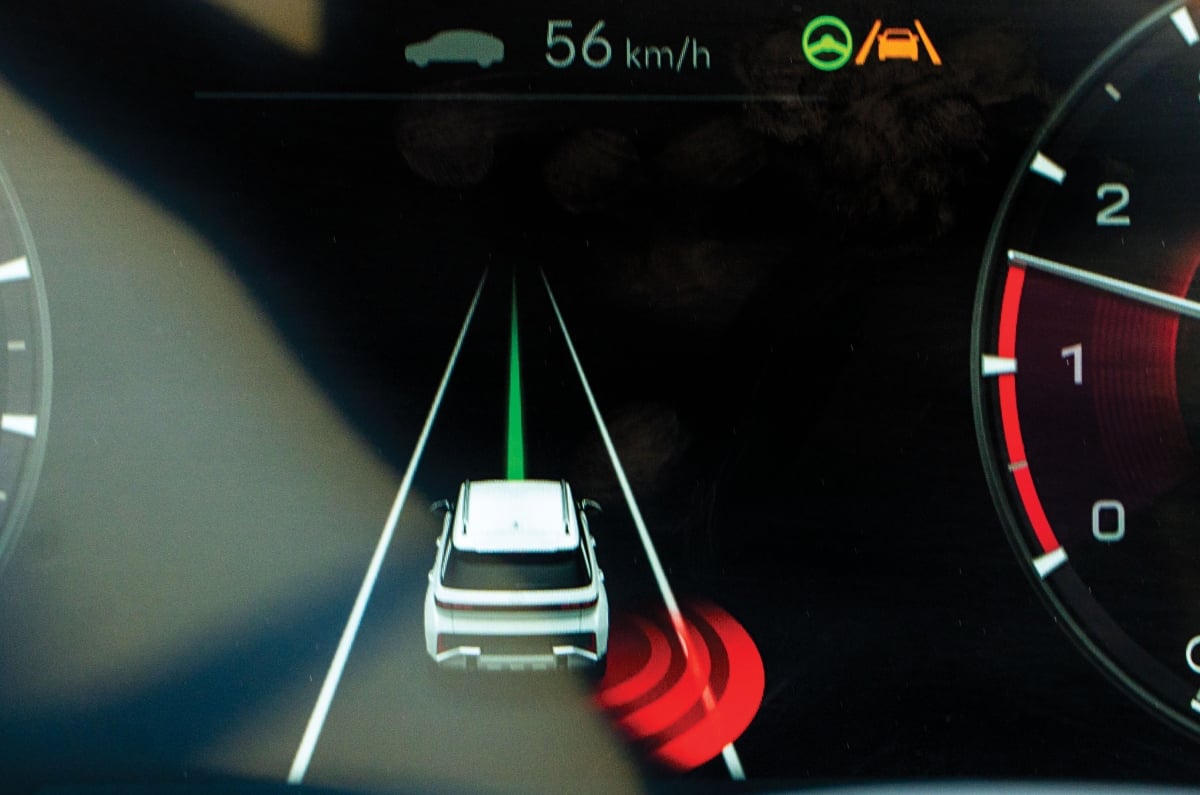
Activating LKA for me comes first, and you do this when you are running in a lane on a well-marked road. You know the system is engaged when the green steering icon lights up on the instrument panel and the car icon shows it running between the lines. Then you engage the smart cruise control and set the speed you want to run at, stepping off the accelerator simultaneously. The display on the instrument cluster lights up with the speed set, and you also get a horizontal bar showing the distance to the car ahead; which can be adjusted by the button with the distance icon.
Unseen by the driver and passengers in the car, the camera immediately begins scanning lane markings, and radar modules measure the distance to the vehicle ahead. The steering wheel then nudges itself gently to follow curves, while the throttle and brakes modulate to maintain speed and distance. The system makes split‑second decisions to help keep you out of harm’s way.
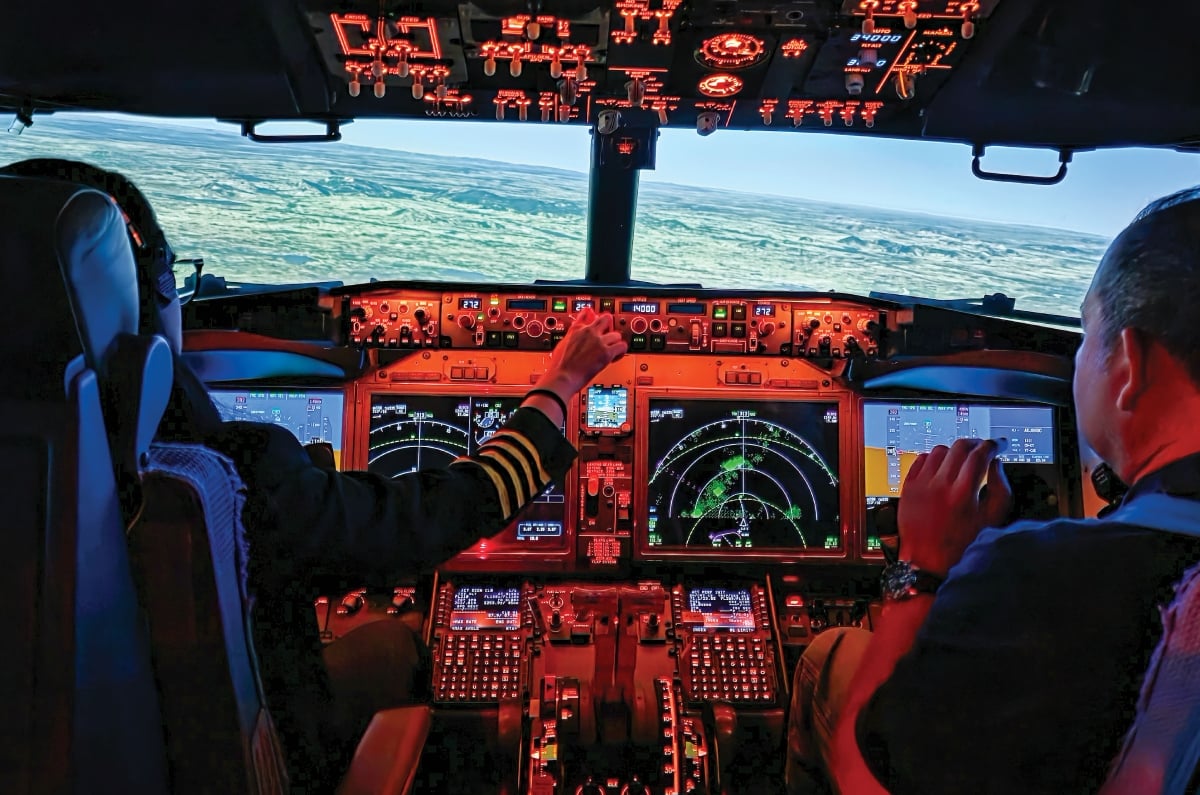
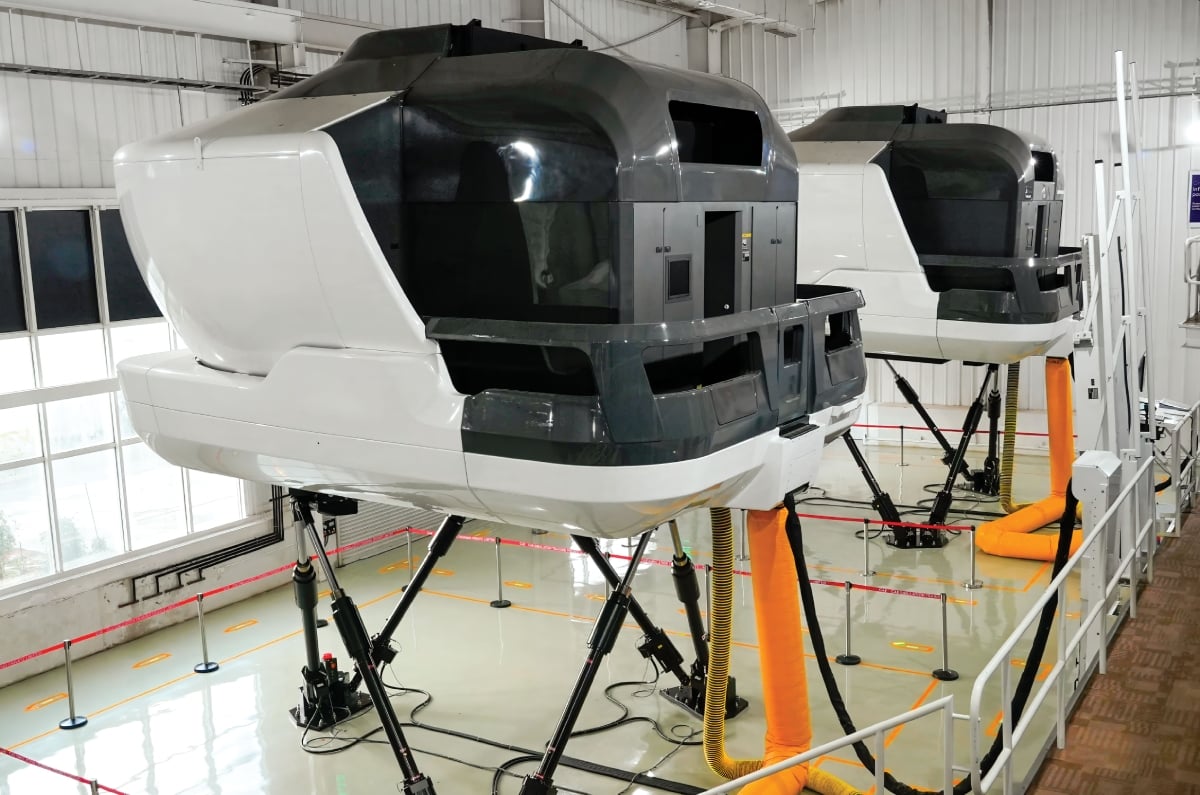
We took the assistance of the full-fledged 737 Max simulator that pilots train on to help us understand the systems better.
Climbing into the Akasa Boeing 737 Max cockpit is an immediate sensory overload. Hundreds of buttons, switches, levers and dials just overwhelm you. They are ahead of you, to your left, your right, and even above. There are, in fact, so many switches, buttons and dials above, I have to duck-walk in. And I’m not exactly Joel Garner or Kareem Abdul-Jabbar. Once seated, I slide the seat to the left and forward by depressing a lever, no powered seats here. And forget about comparing screen size, this is a proper ‘glass cockpit’ with wall-to-wall screens. My feet rest on the pedals that work the rudder in the tail, and ahead of me is Boeing’s famous yoke; unlike a regular joystick, you bank by turning the semi-circular bit of the ‘wheel’.
In contrast to our chaotic driving environment, the autopilot in the 737 Max operates on different principles. The environment is structured and regulated. There are no sudden jaywalkers or rogue bikers at thirty‑five thousand feet. So, unlike the Venue, the 737 doesn’t use optical cameras to see where it’s going. It doesn’t need to look for lanes or lines at 800kph. Instead, it relies on a combination of GPS, Inertial Reference Systems, antennas and sensors in the aircraft’s nose and cheek to get a fix on the exact heading, speed and altitude.
Driver’s display shows detailed ADAS information.
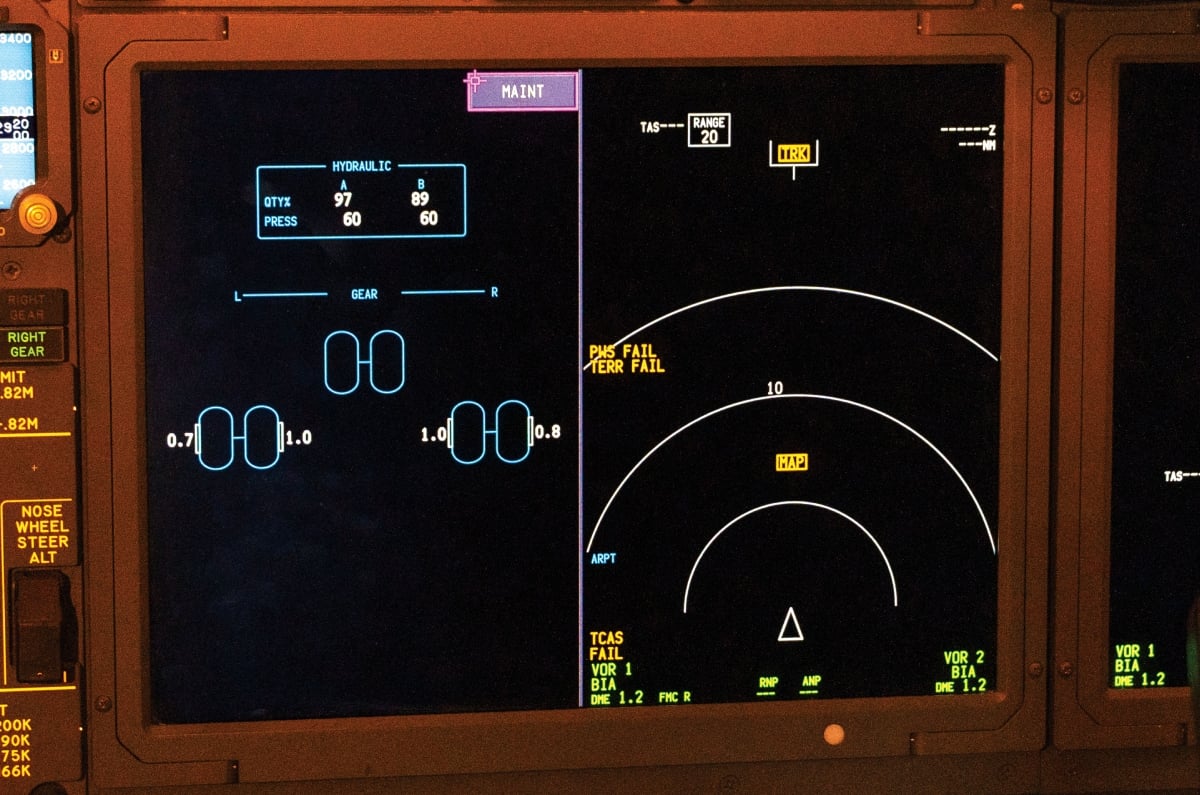
After taking a good look at the real cockpit and understanding some of the controls that help initiate the autopilot sequence, we shift to a full-scale moving platform simulator used to train airline pilots around the world. The cockpit is identical, down to the last detail, and here we have Captain Sanaya Chothia to help us conduct a simulated flight. Can’t help noticing, the 737 also has a tyre pressure monitor; of course, it does.
First up, a full-bore take off in the sim, Capt. Sanaya working the rudder pedals to keep the aircraft running down the centre line. Wow, this feels real, the sound, the visuals, the motion all combined. What a thing! After climbing out, we take a quick look at the sequence used to initiate the autopilot, most of the steps done on the long horizontal panel that sits between the pilots, directly in their line of vision. The first step involves checking if the auto throttle is engaged, and then all the pilot needs to do is press a single button on the autopilot panel. Unlike ADAS, the route the aircraft has to take is already pre-programmed into the navigation computer, a fairly long and detailed process. The speed, the height, the course, the heading, everything. And the autopilot just follows this.
The buttons that initiate ADAS are all placed here.
Once the system is initiated, the throttles move on their own, adjusting thrust; the yoke makes deliberate corrections and the screens display the aircraft banking smoothly along its GPS track. As the flight progresses, pilots can keep the aircraft on autopilot and make plenty of alterations to the route, either to avoid weather, get a more direct route or as directed by Air Traffic Control. There are knobs on the panel to alter course, speed, heading and altitude, with even the rate of descent and ascent adjustable.
We even execute an autoland, where the aircraft lands itself. The Instrument Landing System frequency is first inputted into the Multi-Mode navigation panel, the final approach course is set for the runway on the Mode Control or autopilot panel (272 for runway 27 in this case), and then the APP or approach mode is selected once the aircraft is positioned correctly. Doing this arms the localiser and glideslope systems that, as we’ve mentioned earlier, have their sensors in the nose cone. Seeing the aircraft adjust, manoeuvre, manage its path, height and distance, and land itself is an eye-opener. What an incredible piece of technology!
Level 2 ADAS on the Hyundai Venue N Line integrates data from all its sensors for a smooth, seamless drive.
What’s fascinating is that both systems have boundaries. In aviation, autopilot is trusted to fly for hours, even land. Pilots monitor, manage and intervene when necessary, but the system is designed to shoulder the bulk of the workload. Take offs, however, are always manual. In cars, ADAS is an assistant with a much narrower scope. It reduces fatigue, takes a load off the driver and adds a safety net, but ultimately the driver is always on call at short notice and is the one in control.
Sharing the workload
Modern aircraft like this Akasa 737 Max can get onto autopilot soon after take off.
Similar in execution but very different in how they function, ADAS and Autopilot both overlap but also exist in isolation. One is designed to keep you from bumping into a hatchback on the Western Express Highway, while the other is designed to guide an 80-tonne metal tube across oceans. Both are glimpses into a future where machines will shoulder more of the burden of control and blow us away with the technology on offer. But for now, if you step into an aircraft, know that while autopilot may be doing a bulk of the flying, a pilot is always watching, and when you engage ADAS to ease your commute, keep your eyes on the road, your hands on the wheel.
शादी से पहले होने वाले पति की एक बात सुनकर महिला ने रिश्ता खत्म करने का फैसला लिया। सोशल मीडिया पर ये मामला तेजी से वायरल हो रहा है। महिला ने X पर बताया कि उसने शादी से इनकार इसलिए किया क्योंकि होने वाले पति ने कहा था कि शादी के बाद उसकी मां भी उनके साथ रहेगी। महिला को ये बात पसंद नहीं आया और उसने आगे बढ़ने के बजाय रिश्ता खत्म करना बेहतर समझा। इस पोस्ट के बाद शादी से पहले सीमाओं और जिम्मेदारियों पर साफ बातचीत को लेकर सोशल मीडिया पर बहस छिड़ गई।
सोशल मीडिया पर किया पोस्ट
अपनी बातचीत को याद करते हुए महिला ने एक्स पर पोस्ट में बताया कि, “मैंने एक आदमी को इसलिए रिजेक्ट कर दिया क्योंकि उसने मुझसे कहा था कि शादी के बाद उसकी मां हमारे साथ रहेगी।” उस व्यक्ति ने कहा, “वह बूढ़ी हो चुकी हैं, मैं और क्या कर सकता हूं?” महिला ने साफ किया कि उसे इस बात से कोई परेशानी नहीं है कि वह अपनी मां की देखभाल करे, लेकिन उसे इस बात पर आपत्ति है कि बिना उसकी सहमति के उससे भी इस जिम्मेदारी की उम्मीद की जाए। उसने कहा, “तुम उनका ख्याल रखो, लेकिन जिस फैसले में मेरी सहमति नहीं है, उसकी जिम्मेदारी मुझ पर मत डालो।”
जिम्मेदारी साफ होनी चाहिए
महिला ने बताया कि, उसकी बात सुनने के बाद उस व्यक्ति ने उसे स्वार्थी कह दिया। महिला ने कहा कि, शादी करने का फैसला लेने का यह मतलब नहीं है कि कोई व्यक्ति बिना चर्चा के हर तरह की नई जिम्मेदारी स्वीकार कर ले। उसके मुताबिक, शादी से पहले दोनों लोगों के बीच यह साफ होना जरूरी है कि आगे चलकर कौन-सी जिम्मेदारियां किसकी होंगी और किन बातों पर दोनों की सहमति है। महिला ने कहा कि बिना बातचीत और सहमति के किसी पर जिम्मेदारी डालना सही नहीं है।
सोशल मीडिया पर लोगों ने किया रिएक्ट
महिला की पोस्ट सामने आने के बाद सोशल मीडिया पर लोगों ने अलग-अलग तरह की राय दी। कुछ यूजर्स इस फैसले को लेकर बंटे रहे। कुछ ने इसे सही बताया, तो कुछ ने शादी की जिम्मेदारियों से बचना कहा। इस मुद्दे पर यूजर्स दो अलग-अलग राय में बंटे नजर आए। एक यूजर ने महिला के फैसले पर सवाल उठाते हुए लिखा, “आपने किसी खराब पति को मना नहीं किया। आपने उस आदमी को इसलिए ठुकराया क्योंकि वह शादी से पहले से चली आ रही अपनी एक जिम्मेदारी को छोड़ना नहीं चाहता था।”
I rejected a man because he told me his mother would be living with us after marriage.
He said, “She’s old. What else am I supposed to do?”
I said, “Take care of her. Just don’t make me responsible for a decision I didn’t make.”
दूसरे यूजर ने कहा, “अगर आप शादी में किसी तरह की जिम्मेदारी नहीं लेना चाहते हैं, तो महिलाओं को भी शादी से पहले प्री-नप एग्रीमेंट करना चाहिए। आप अपनी जिंदगी में जैसा चाहें वैसा रह सकते हैं, लेकिन इसका मतलब यह भी है कि शायद आप शादी की असली जिम्मेदारियों को नहीं समझते।”
लोगों ने उठाए सवाल
इस चर्चा के बीच कुछ यूजर्स ने महिला के फैसले पर काफी तीखी प्रतिक्रिया भी दी। एक यूजर ने लिखा, “वह आदमी बहुत खुशकिस्मत है कि वह इस रिश्ते से बच गया। उसने एक बड़ी मुसीबत को आने से पहले ही टाल दिया।” वहीं, एक अन्य यूजर ने कहा, किसी बुजुर्ग मां की देखभाल को ऐसी जिम्मेदारी बताना, जिसे वह शादी के साथ “विरासत में लेने” के लिए तैयार नहीं थी, उसके सोचने के तरीके को काफी हद तक सामने लाता है।