MG Hector Tomahawk EV: What’s in a name?

MG Hector Tomahawk EV: What’s in a name?
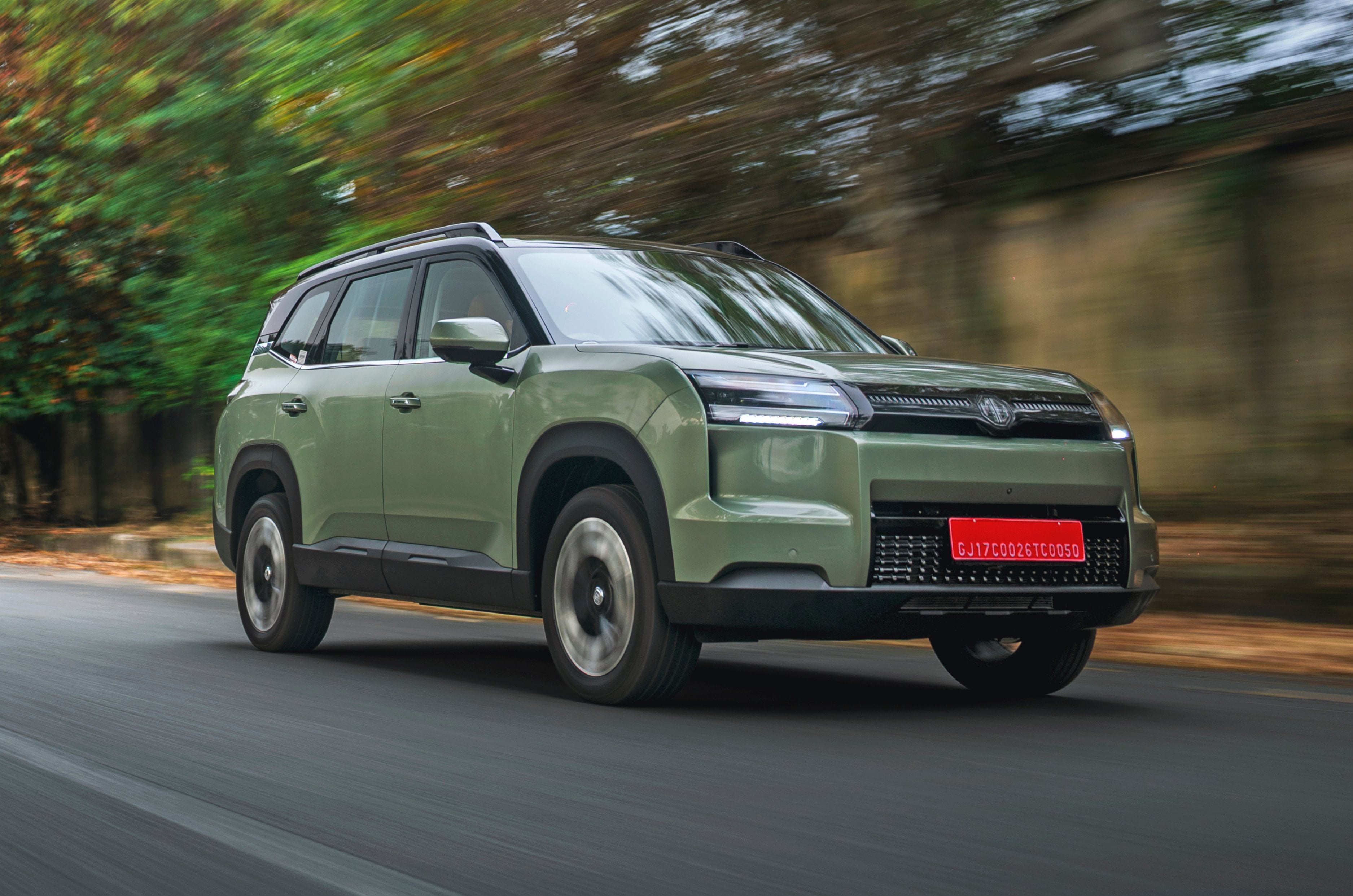
MG Hector Tomahawk EV front quarter tracking

MG’s newest SUV has been christened the Hector Tomahawk, but despite the name, it shares nothing with the ICE-powered Hector we’ve known since 2019. The Hector Tomahawk EV and PHEV are the first models on MG’s ADAPT architecture, which will eventually spawn strong hybrids and range-extender hybrids. We drove the Tomahawk EV in sunny Kochi to see how it stacks up in the ever-growing segment.

MG Hector Tomahawk EV Exterior Design and Engineering – 6/10

Let’s talk dimensions first. At 4,745mm long, 1,850mm wide, 1,770mm tall and with a 2,810mm wheelbase, the Tomahawk is larger than the Mahindra XEV 9S in all areas except width. Ground clearance, at 230mm (measured to battery), is also class-best. However, these numbers don’t translate to a particularly imposing stance. Instead, it straddles the line between an MPV and SUV.
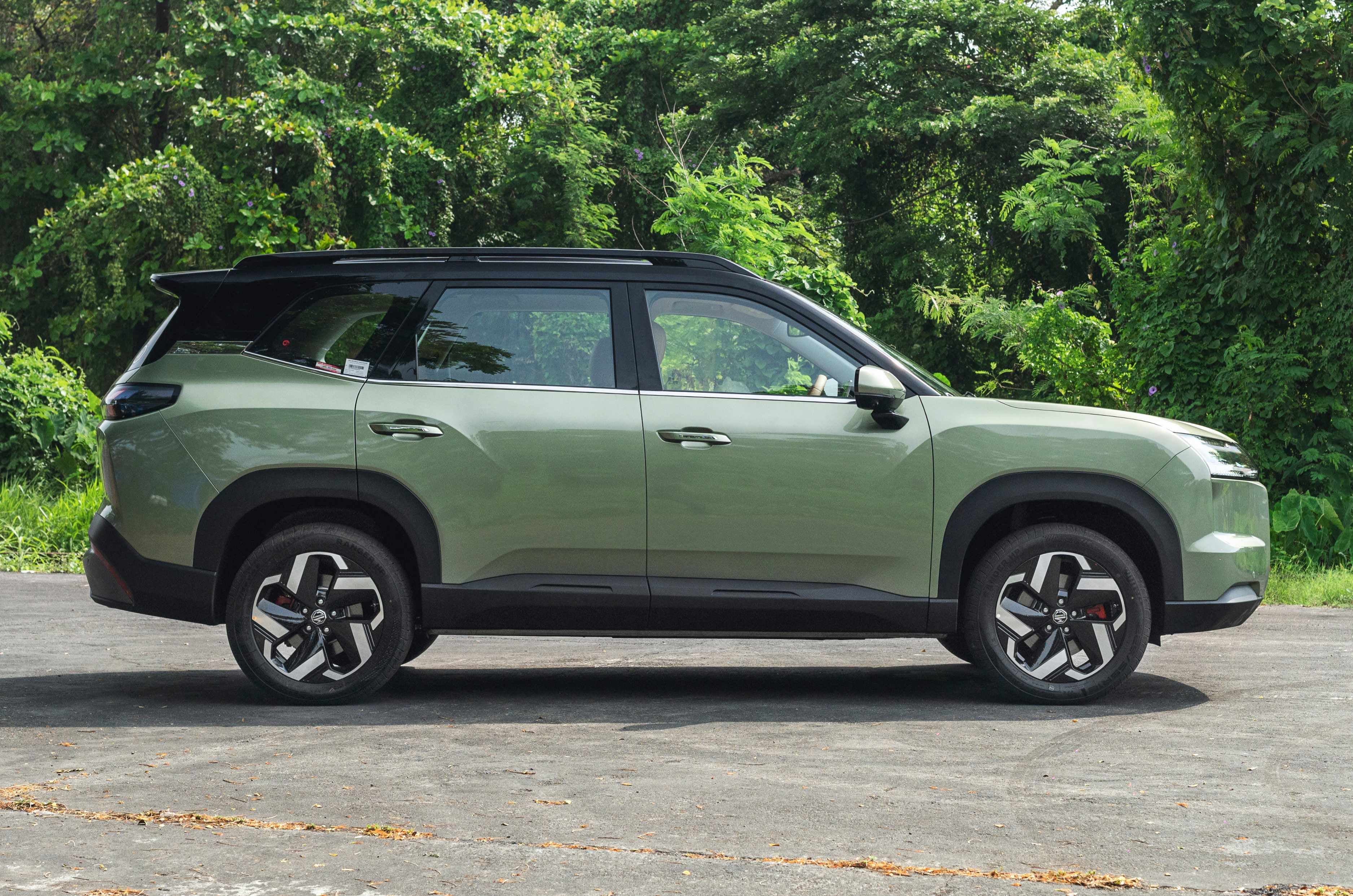
Size doesn’t translate to an imposing stance; it straddles the line between an MPV and an SUV.

The design is clean and quite handsome, if a bit uninspiring. The front bumper is squared off with pass-through aero vents on the edges and chunky cladding lower down. Cooling requirements are met by slim slots in the centre section with some chrome detailing, while the conventional grille is blanked off and finished in gloss black. No light bar here, thankfully, but the MG logo does glow and is flanked by rectangular LED headlights with a subtle H-shaped light signature.
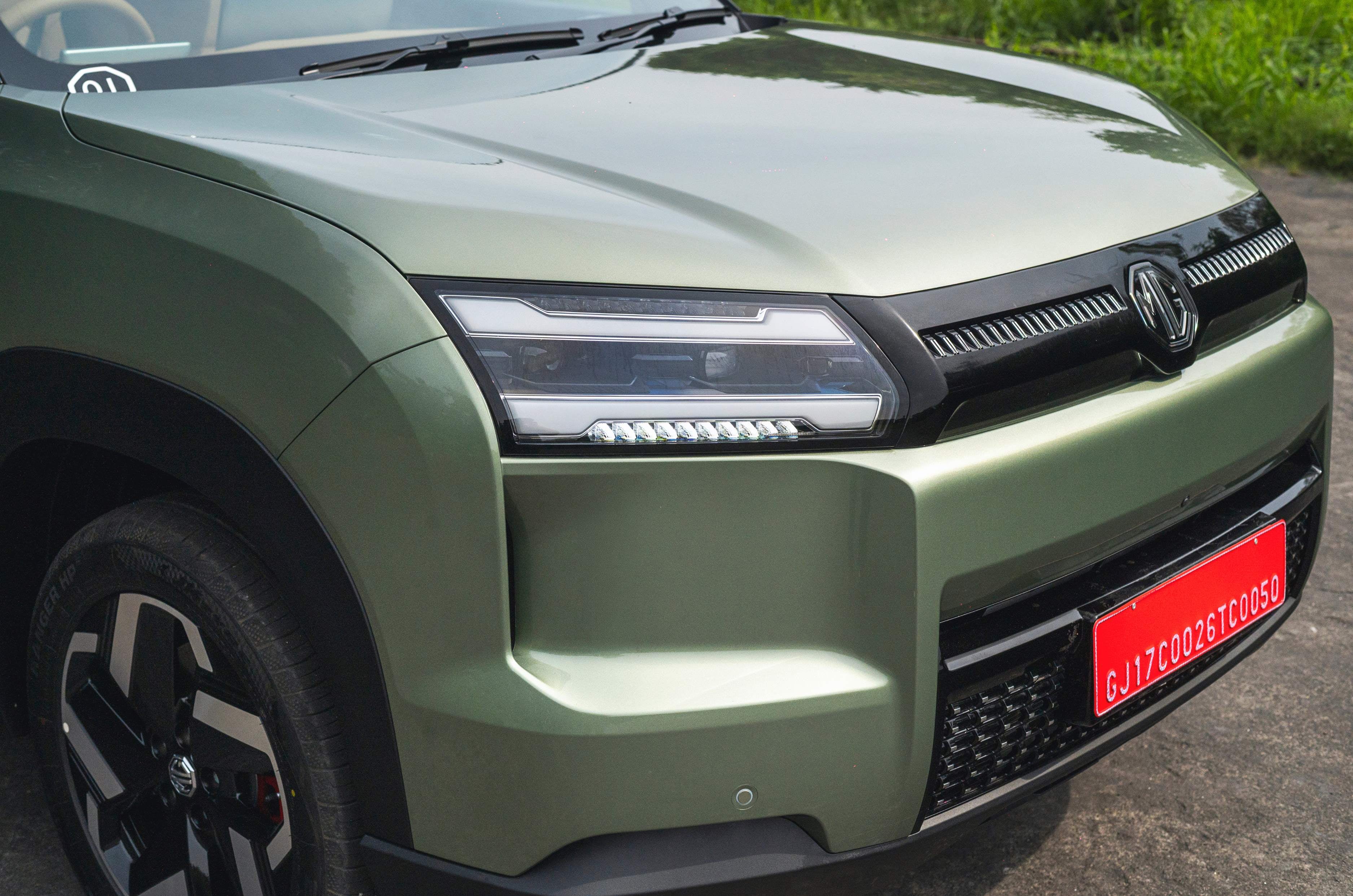
Large rectangular LED headlights have a subtle H in them; no light bar, but the MG logo glows.

In profile, it looks quite slab-sided, with sharp creases along the fenders and plastic wheel-arch cladding adding some definition. These, along with the chunky door cladding, attempt to give it a rugged appearance but are let down by 18-inch wheels that look a tad too small. No electric door handles here, just good old-fashioned pull types.

Further back are a set of intricate LED tail-lights that again resist the connected trend. MG’s love for badging is clear though, with four on the powered tailgate. Finishing things off nicely is a sculpted bumper with a grey trim piece and a centre-mounted reverse lamp. Overall, it’s a reasonably pleasing design, but it looks a tad dated and lacks the butch appeal of some rivals.
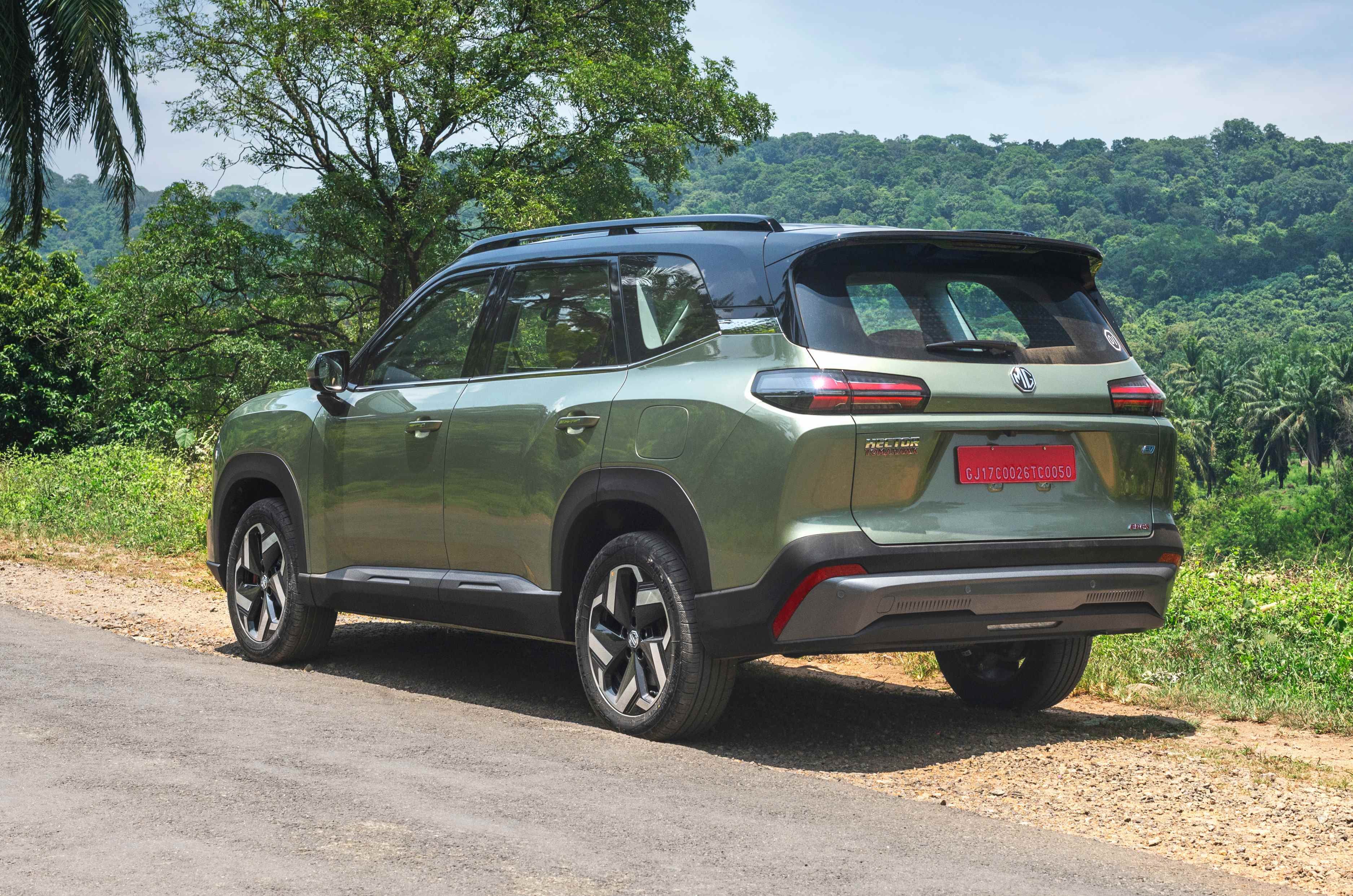
Overall styling is neatly done but somewhat uninspiring.

MG Hector Tomahawk EV Interior Space and Comfort – 8/10

Inside, the dash features a familiar minimalistic layout with a large touchscreen front and centre. It looks premium and features soft-touch materials on the dash and doors, but lacks a certain wow factor, and the light tan colour palette might not be to all tastes. That said, the light tone and large windows do give it an airy ambience. Look hard, and you will find areas where fit and finish could be improved. The centre console in particular feels poorly textured and finished, which we were told is down to a supplier issue. Speaking of the centre console, the column-mounted drive selector frees up space here for a wireless charger, cupholders, multiple bins as well as a large pass-through cubby lower down, and the door bins are enormous too.
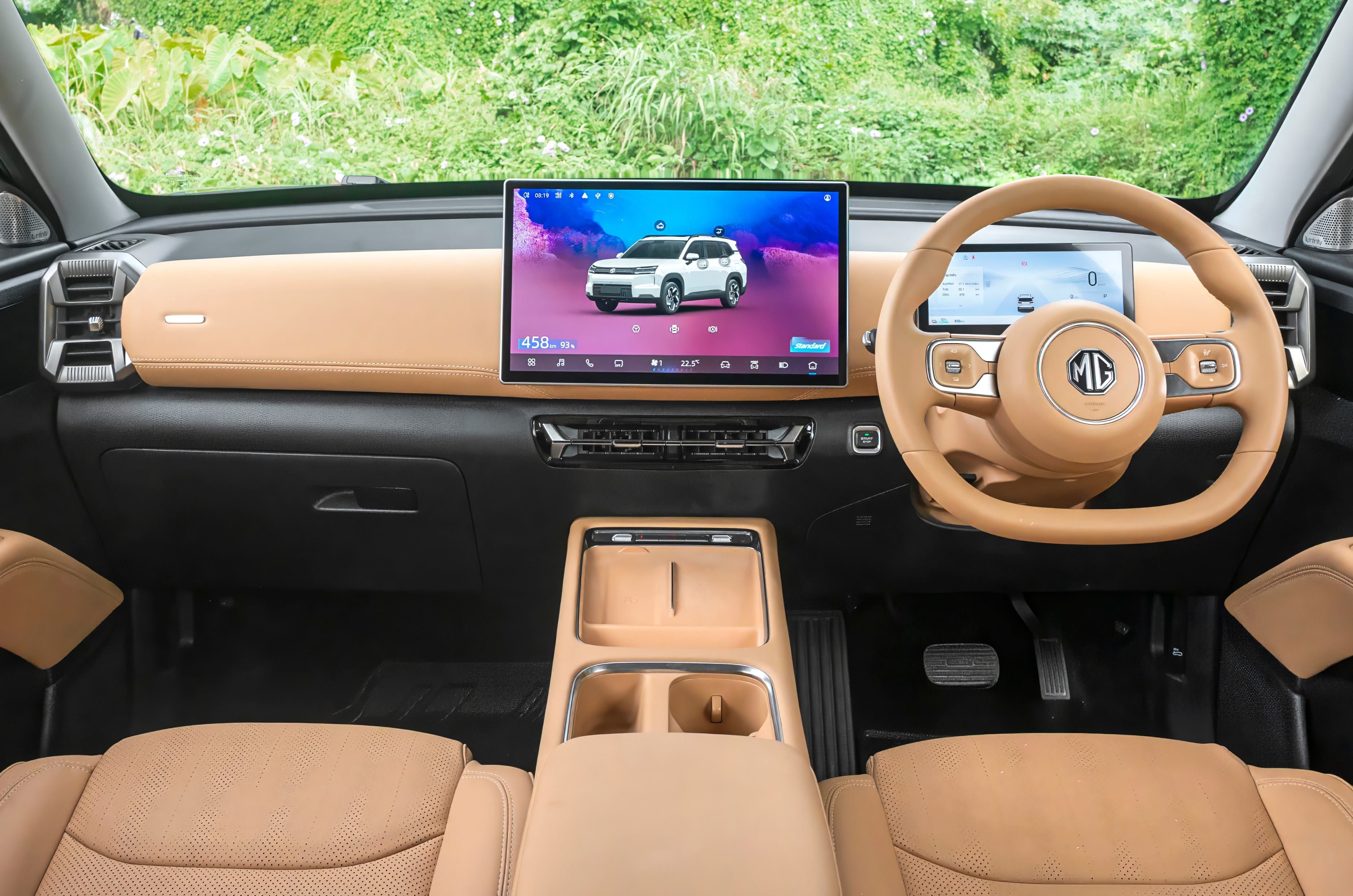
Minimalistic interior looks premium, but the light tan colour palette might not be to all tastes.

It’s easy to get into a comfortable and commanding driving position using the power-operated seats and reach-and-rake adjustment for the steering wheel. The seats themselves are wide, and despite the firm cushioning, they felt comfortable on our full day of driving. They are ventilated too, and the driver’s seat also gets a memory function.
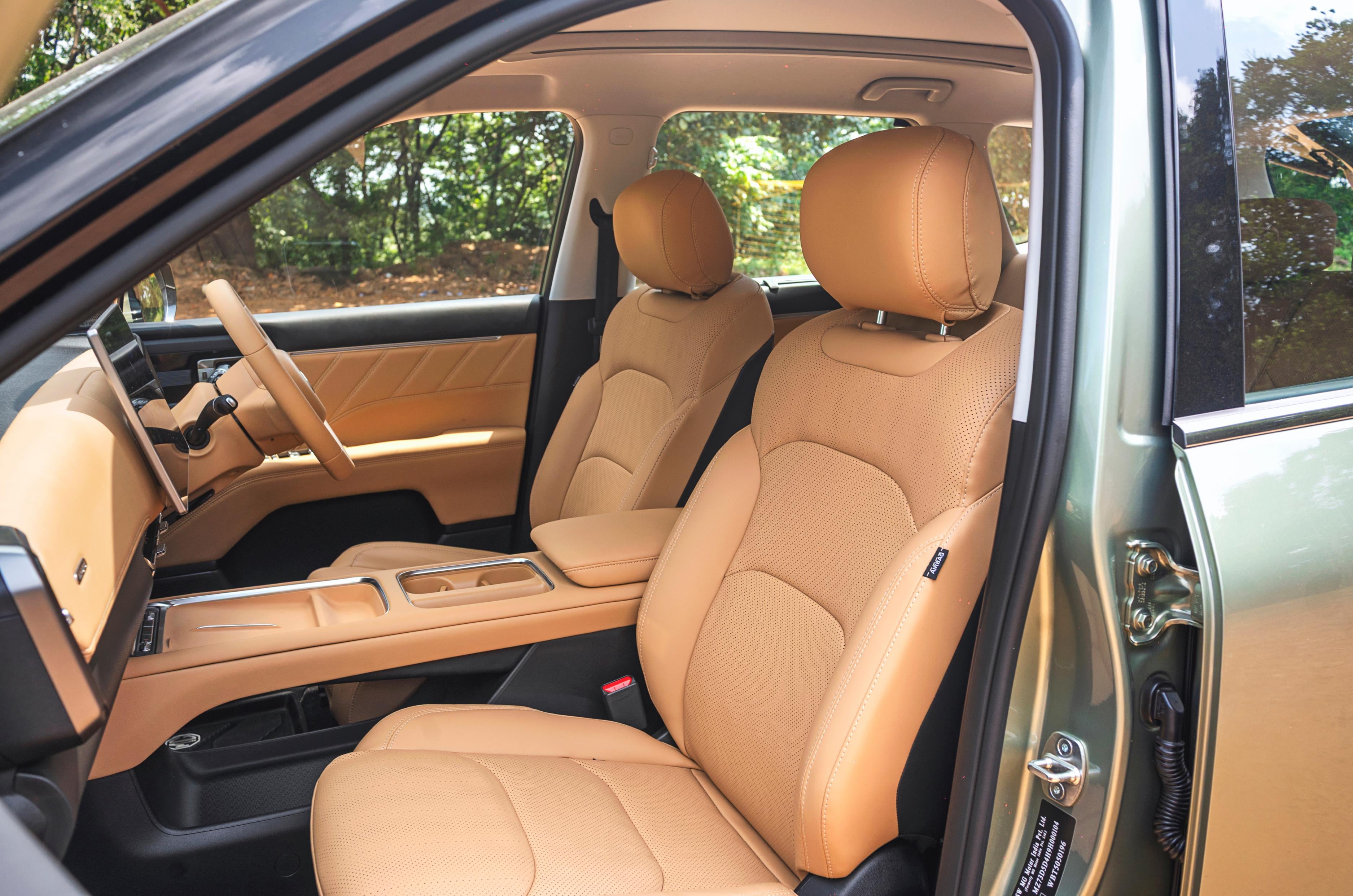
Powered and ventilated front seats are wide and comfortable; driver’s seat gets a memory function.

The Tomahawk has the second-longest wheelbase in class (next only to the Vinfast MPV 7), and it shows in the second row. Legroom is excellent, and while you do sit slightly knees-up, thigh support is adequate too. The seatback reclines pretty far back and features an armrest and three adjustable headrests. Window sunshades, AC vents and Type-C USB ports add to the rear-seat comfort and convenience.

The chauffeur-driven are well taken care of, with a comfy reclining bench, plenty of room all around and sunblinds.

The Tomahawk EV is available in both 5- and 7-seater guises. The latter adds a sliding second row with one-touch tumble to access the third row, as well as more AC vents on the roof and a dedicated fan-speed control. Getting into the last row is surprisingly dignified thanks to a large aperture, but kneeroom depends largely on the middle-row passengers’ generosity, and the low seat means thigh support is non-existent. Headroom is good, though, and for short journeys, adults will be fine back there.
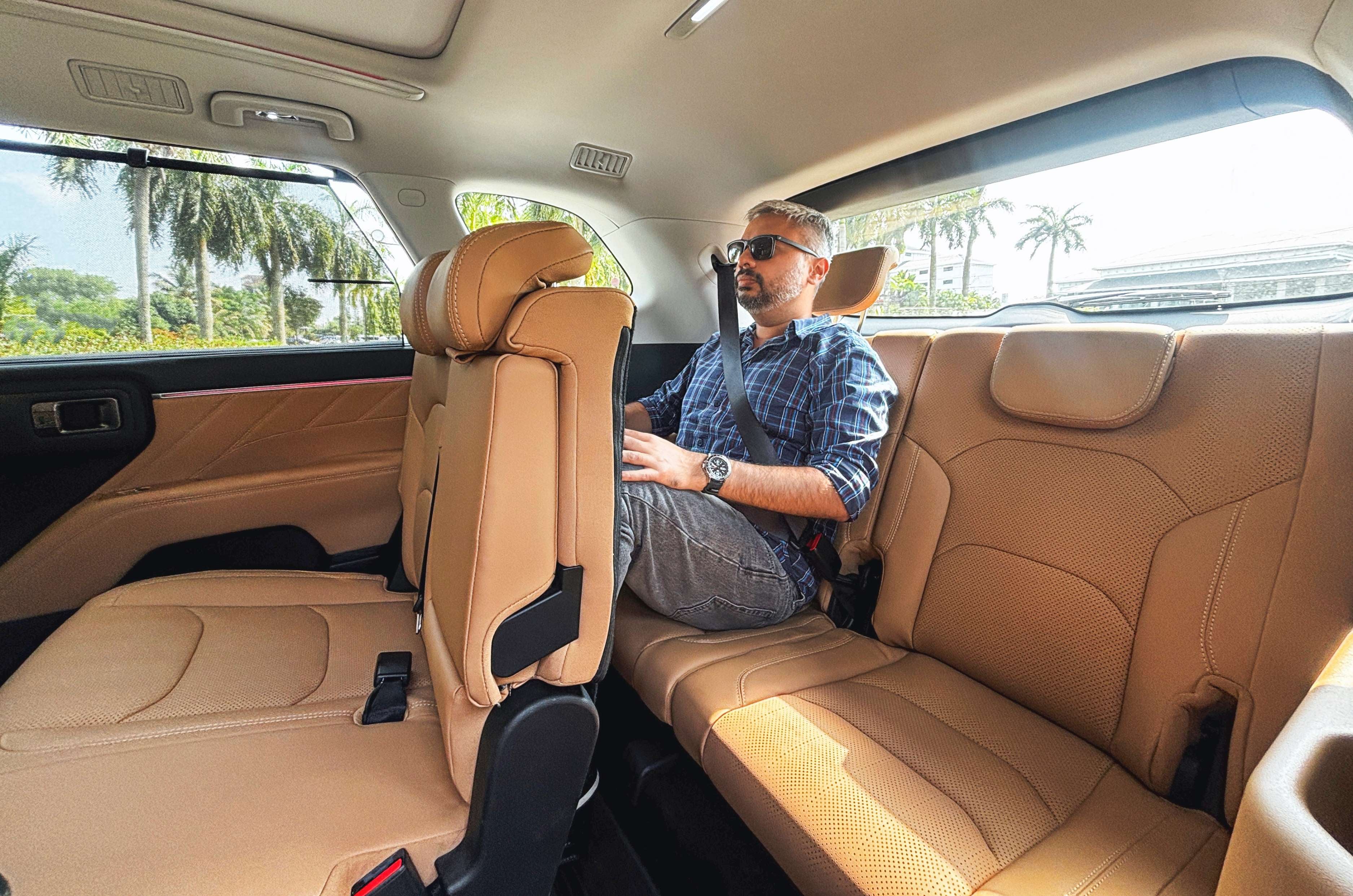
Third row will fit adults but with a slight compromise to the middle-row space.

With the third row up, boot space stands at 192 litres – enough for a couple of carry-on bags – expanding to a generous 528 litres with it stowed. Under the boot floor are a few more storage cubbies, which are handy since there is no frunk – a miss considering there appears to be enough space under the bonnet. A space-saver spare is mounted underneath the car.

MG Hector Tomahawk EV Features and Safety – 8/10

The minimalist interior layout means you reach for the 15.6-inch infotainment screen for most functions. While this can get distracting, physical and swipe-gesture controls together handle most basic HVAC and audio functions with surprising ease. Anything beyond basic, though, will require a deep dive into the screen. While the screen is sharp and snappy and the UI is clean, it can take a while to find your way through the maze of sub-menus. Wireless Android Auto and Apple CarPlay are also present, but using either hides the row of shortcuts at the bottom of the screen. Hardcoding these buttons to always stay on top would improve usability. The screen also often catches glare, which takes away from the otherwise sharp 360-degree camera.
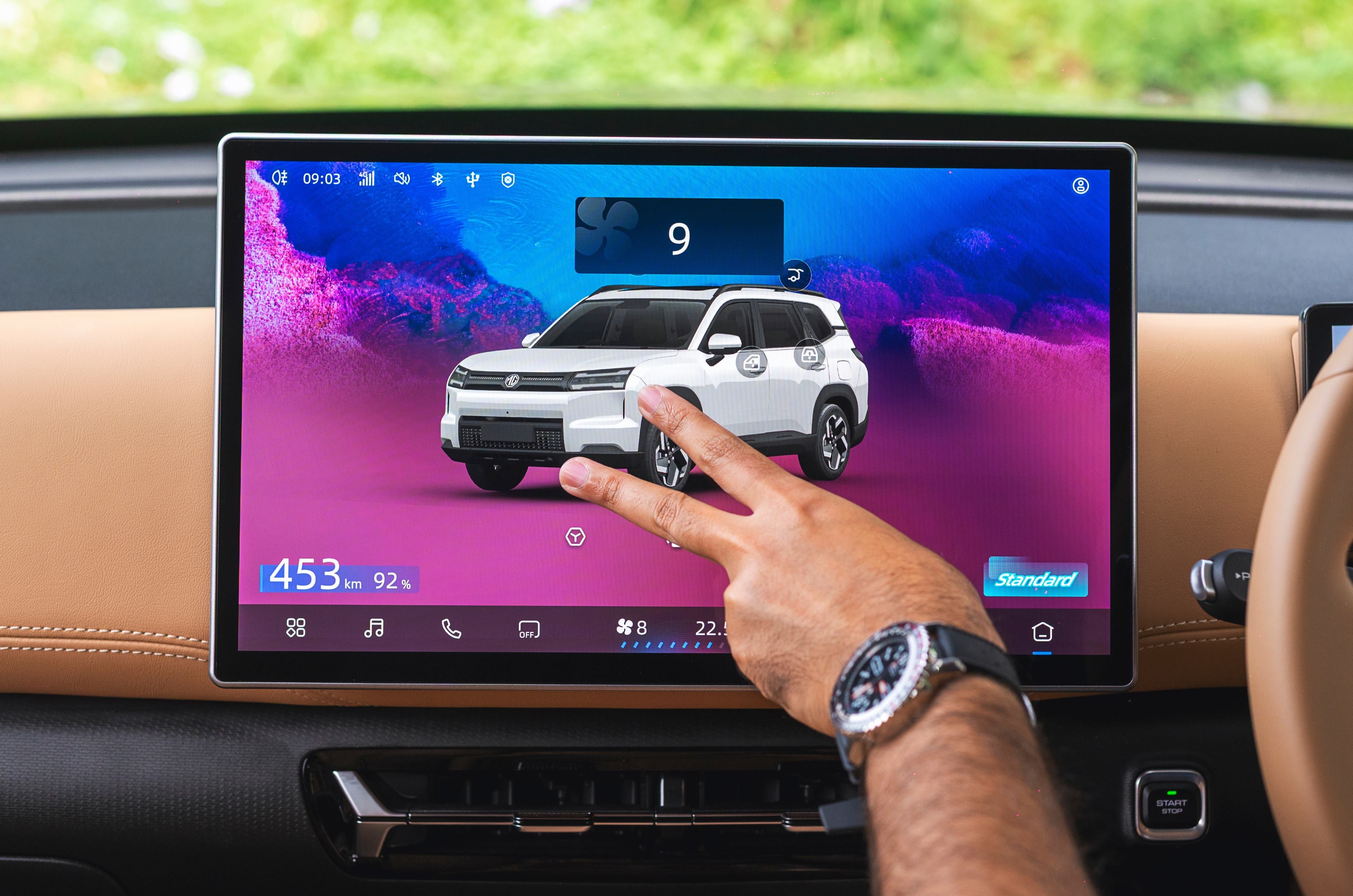
Several functions are baked into the 15.6-inch touchscreen, but gesture controls for essential functions are quite intuitive.

Instrumentation is handled by an 8.8-inch display directly in front of the driver. The screen itself is sharp, but some smaller fonts might have you reaching for your reading glasses. Its real estate could also be better utilised by displaying the blind-view camera feed rather than the current pop-up on the centre screen. Other feature highlights include a sweet-sounding 10-speaker Infinity audio system, a panoramic sunroof that stretches over the second row, 256-colour ambient lighting, connected car tech, an AI assistant and more. It’s worth mentioning that the Tomahawk EV also gets a physical start/stop button, which is absent on the brand’s other EVs.
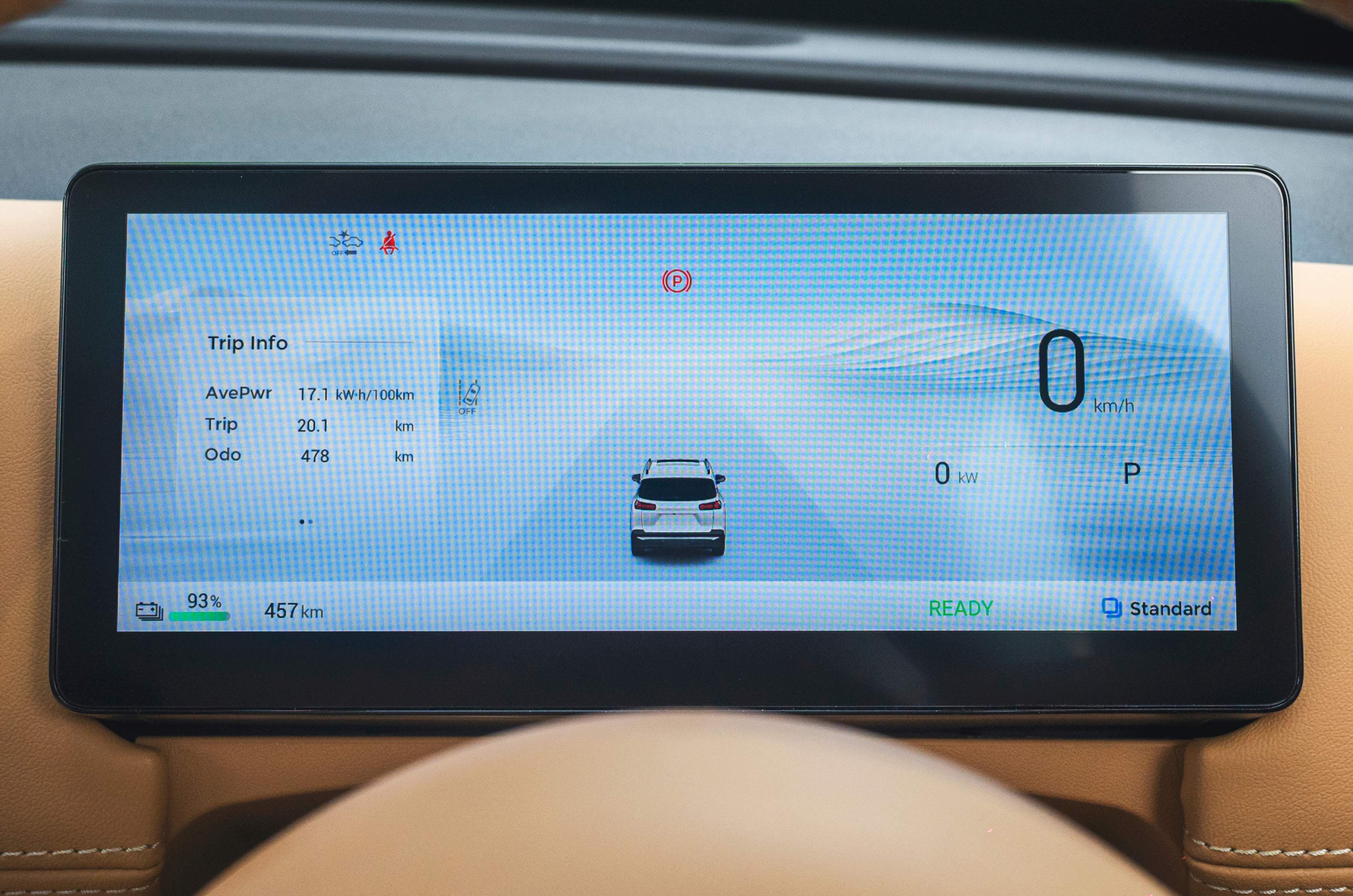
8.8-inch driver’s display is sharp, but some smaller fonts might have you reaching for your reading glasses.

A Level 2 ADAS suite is also available on the top Essence trim, with functions such as adaptive cruise control, lane keep assist and auto emergency braking. While there isn’t an official crash-test rating yet, the robust standard safety kit, including six airbags, ESP, all-wheel disc brakes and Isofix mounts, provides some confidence.

MG Hector Tomahawk EV Performance and Refinement – 7/10

The Tomahawk EV offers just one powertrain configuration – a 69.2kWh LFP battery pack powering a single motor on the front axle, producing 204hp and 310Nm, good for a claimed 0-100kph time of 8.2 seconds. Its front-wheel-drive layout puts it at a disadvantage against rivals from Tata and Mahindra, who offer either rear- or all-wheel drive and higher power outputs. The front-driven Hyundai Creta Electric or Kia Carens Clavis EV are closer matches, and the Tomahawk EV betters them on power and torque.
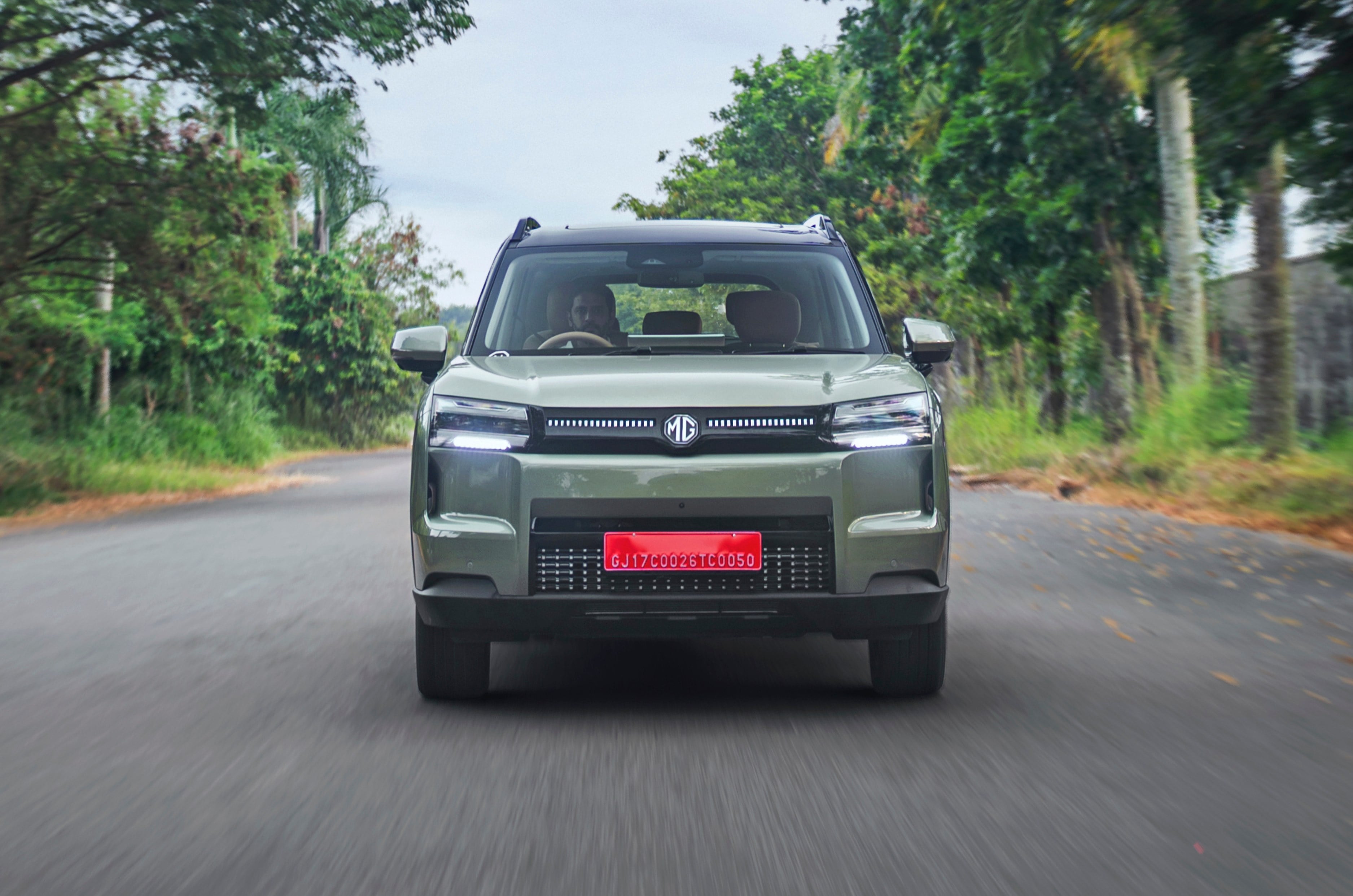
First EV on MG’s ADAPT architecture pairs a 69.2kWh battery with a front-mounted motor producing 204hp and 310Nm.

Initial throttle response is mild, making it quite easy to amble around town, but push harder, and you get a power spike resulting in torque steer. In Sport mode, you’ll hear the front tyres protest when made to put all that torque down on a less-than-perfect road. Standard mode dulls response slightly, but it can still catch new drivers off guard. With time, it is possible to drive around this, but the latest crop of rival EVs has mastered a more linear delivery. Eco mode feels a bit tepid and is best saved to counter range anxiety, while a Custom mode lets you customise power output and regen braking in increments of 10 percent. There are also three preset regen modes – Standard, Comfort and Strong – but no paddles to control them or one-pedal mode. Instead, you get an Intelligent setting that uses the ADAS sensors to adjust regen in real time based on the traffic in front of you.
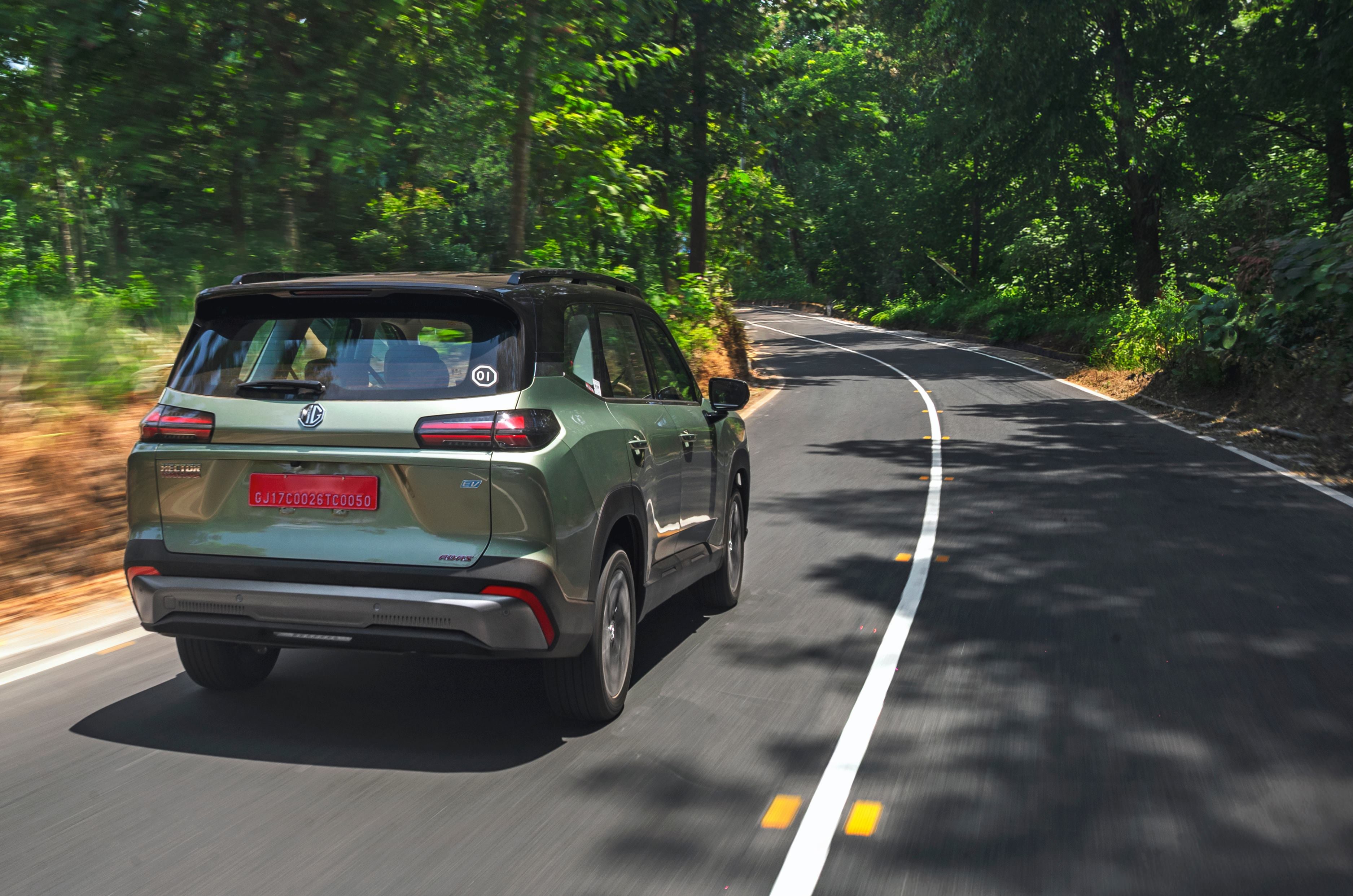
Grip levels and body control are good, but FWD layout struggles to put power down.

Refinement is a bit of a mixed bag. While the motor is fairly muted and there is little wind or tyre noise coming through, you hear the suspension at work on rough patches.

MG Hector Tomahawk EV Range and Efficiency – 7/10
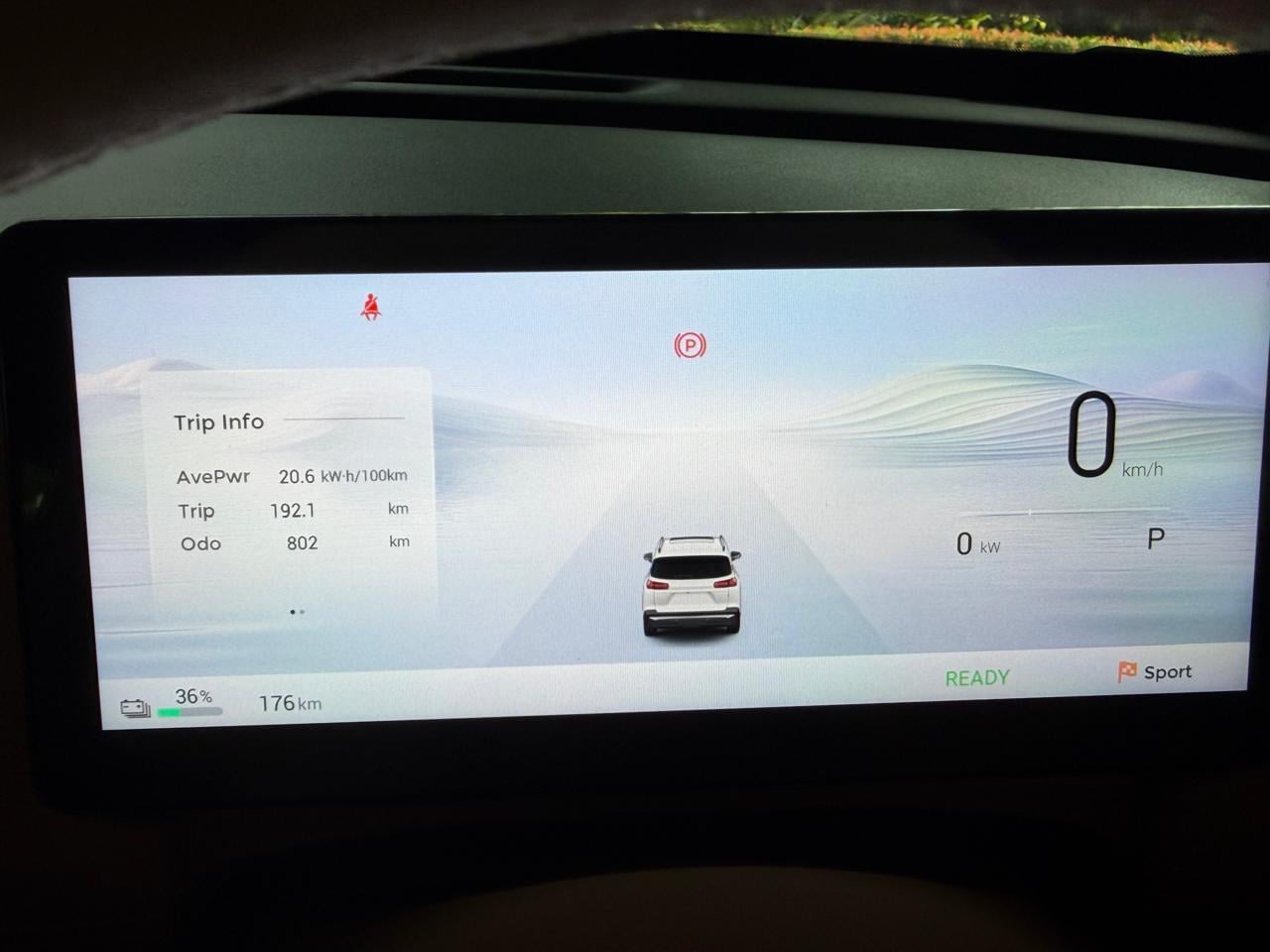
 A spirited highway drive from Kochi to Kozhikode covering 192km, resulted in an overall efficiency of 4.85km/kWh.

While the Hector name is often associated with poor fuel efficiency, the new EV and PHEV hope to change that. MG claims an MIDC range of 517km from its 69.2kWh battery pack. On a spirited drive from Kochi to Kozhikode covering 192km, we recorded an overall efficiency of 4.85km/kWh, translating to a real-world range of 336km. This was on a fast highway run, where the Tomahawk’s tall shape won’t do its efficiency any favours. We’ll put it through our standard real-world efficiency test when we have the car for longer.
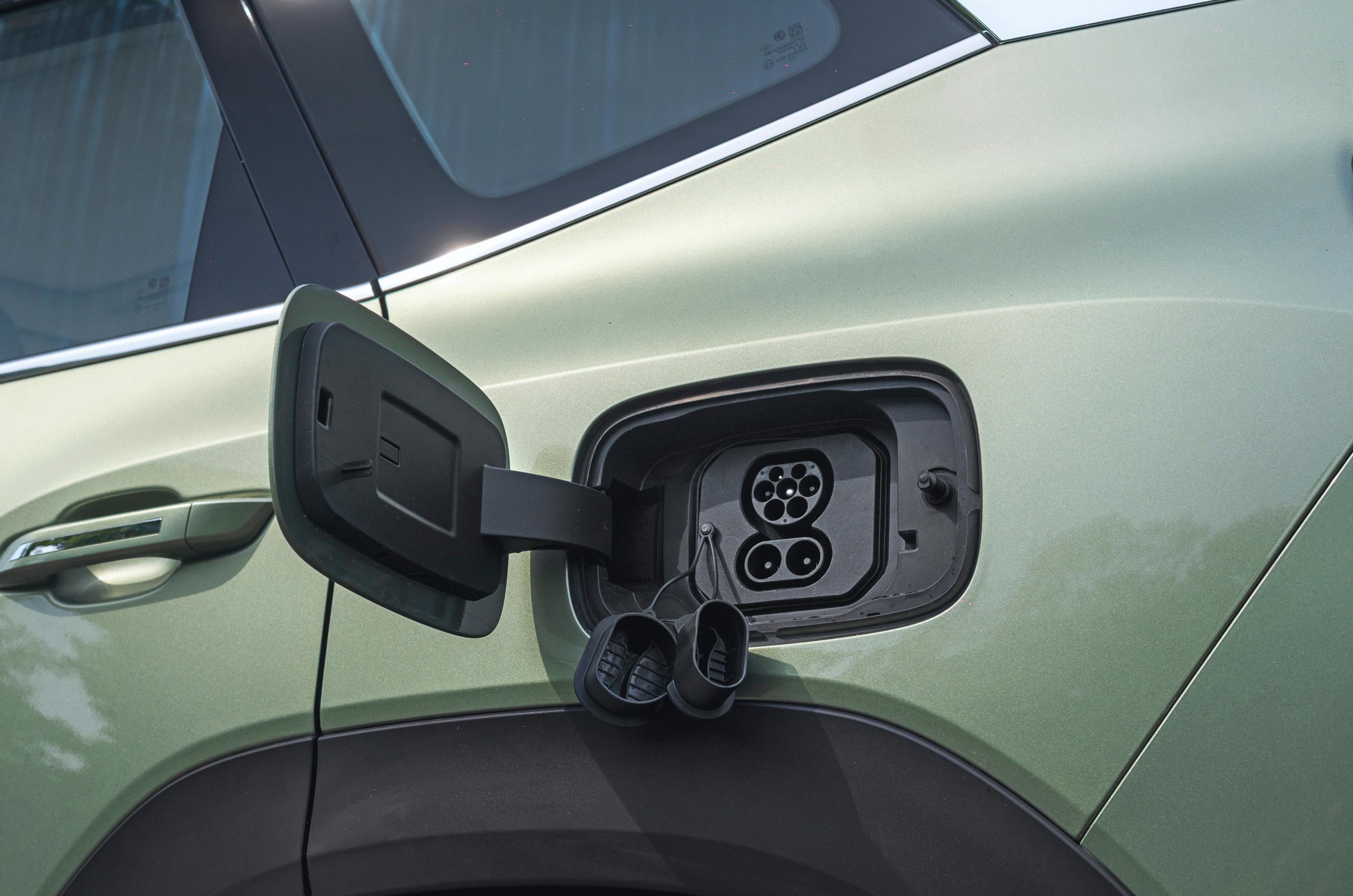
DC fast charges at 90kW – slower than rivals but enough for a 30 to 80 percent top-up in a claimed 35 minutes.

Topping up the battery from 10 to 100 percent using the 7.4kW charger is said to take around 12.5 hours. It can also DC fast charge at speeds of up to 90kW, which is lower than its immediate rivals but still enough to take the battery from 30 to 80 percent in about 35 minutes.

MG Hector Tomahawk EV Ride Comfort and Handling – 7/10
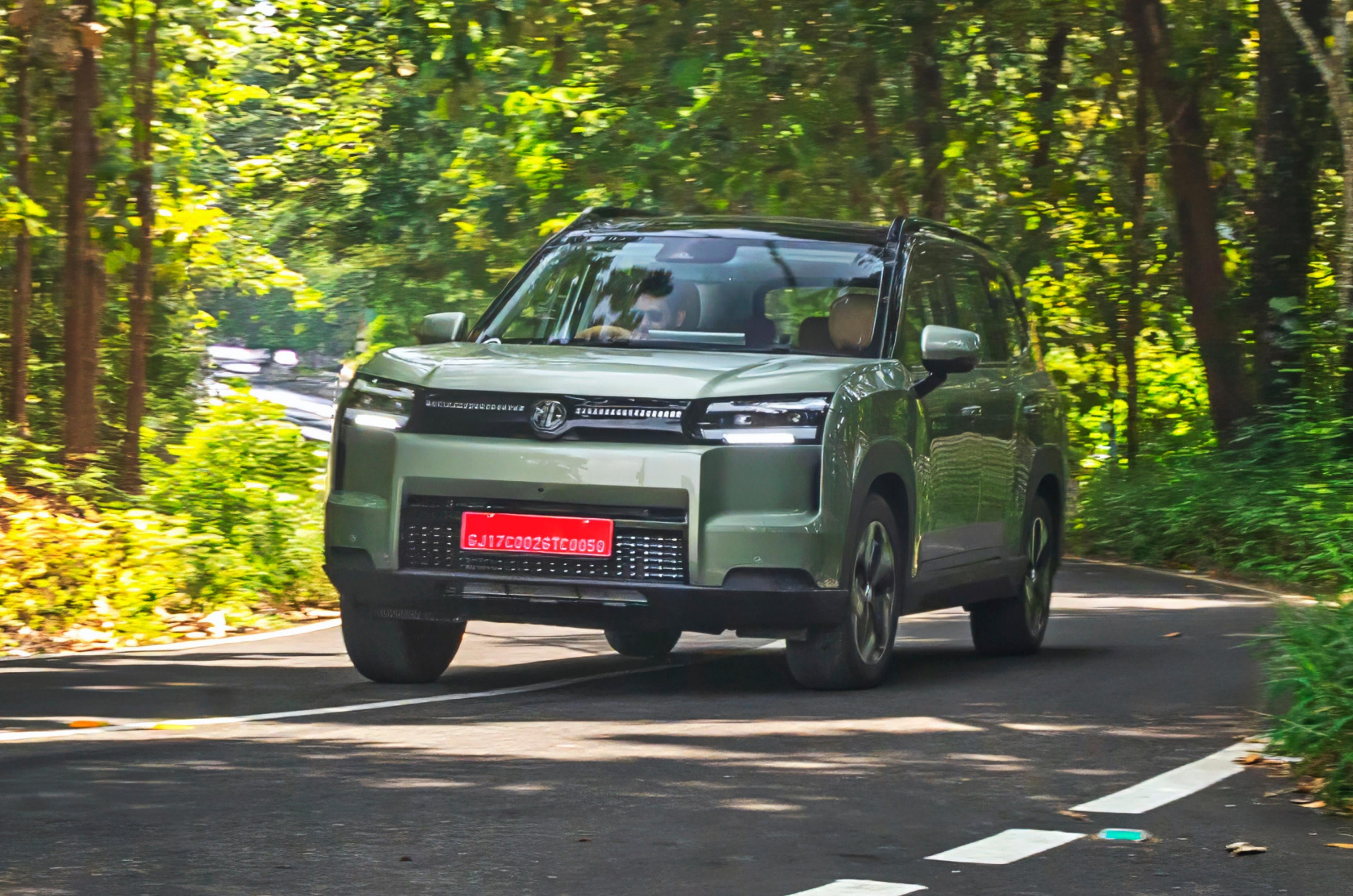
Rides with more maturity than previous MG EVs, but suspension can be heard working.

The Hector Tomahawk EV makes a big step up in ride and handling compared to the ICE Hector, but there is still some room for improvement. It rides with more maturity than previous MG EVs, comfortably absorbing most of what we threw at it. However, you do hear the suspension working. Sharper bumps reveal an underlying firmness that occasionally comes through to the cabin. Most roads around Kochi were relatively smooth, and we weren’t able to experience it on rippled concrete, so we will reserve full judgement until we have the car for longer.

A big positive is how easy the Tomahawk is to drive for something this large. Visibility all around is excellent, and you can see the bonnet’s edges from the driver’s seat. A light steering also helps, and overall, it feels less intimidating to drive through tight traffic than, say, the XEV 9S.
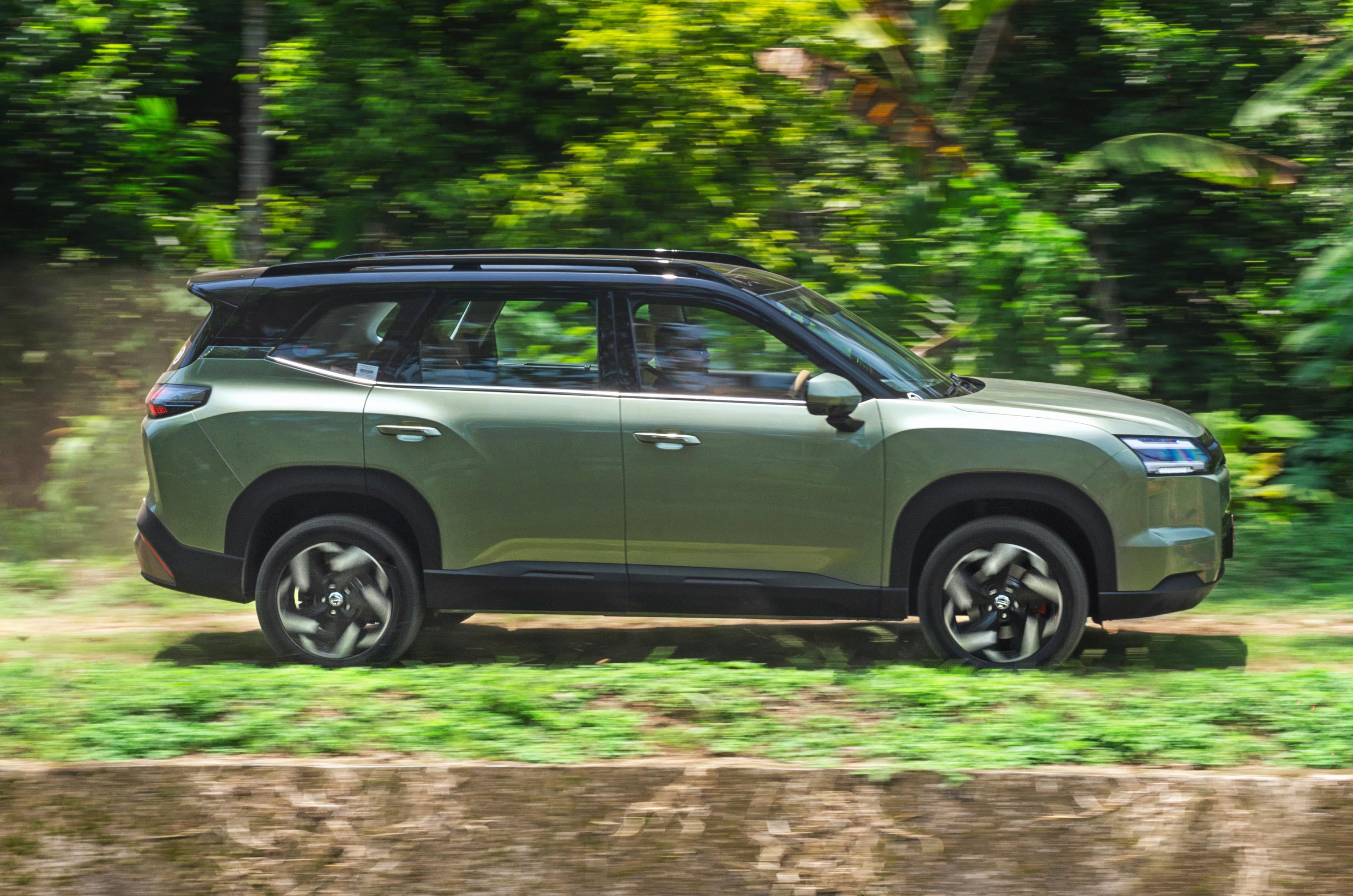
230mm claimed ground clearance is best in class; wheelbase second only to VF MPV 7.

The steering also weighs up as speeds rise and feels reasonably direct, though the sheer amount of torque going to just the front wheels corrupts the feel. At a quick pace through the twisties, you feel the wheel tugging at your hands as you apply power. Body control is good, and it stays composed through quick direction changes, but a sedate pace is more its element. Braking is strong, with four-wheel discs bringing the heavy SUV to a confident halt.

MG Hector Tomahawk EV Value for Money – 7/10

Introductory pricing for the Hector Tomahawk EV starts at Rs 19.49 lakh and tops out at Rs 23.49 lakh. The Battery-as-a-Service (BaaS) scheme lowers the entry barrier to Rs 13.99 lakh, with battery rental set at Rs 4.90 per km. While all these prices are applicable to limited units only, this is quite aggressive pricing from MG.
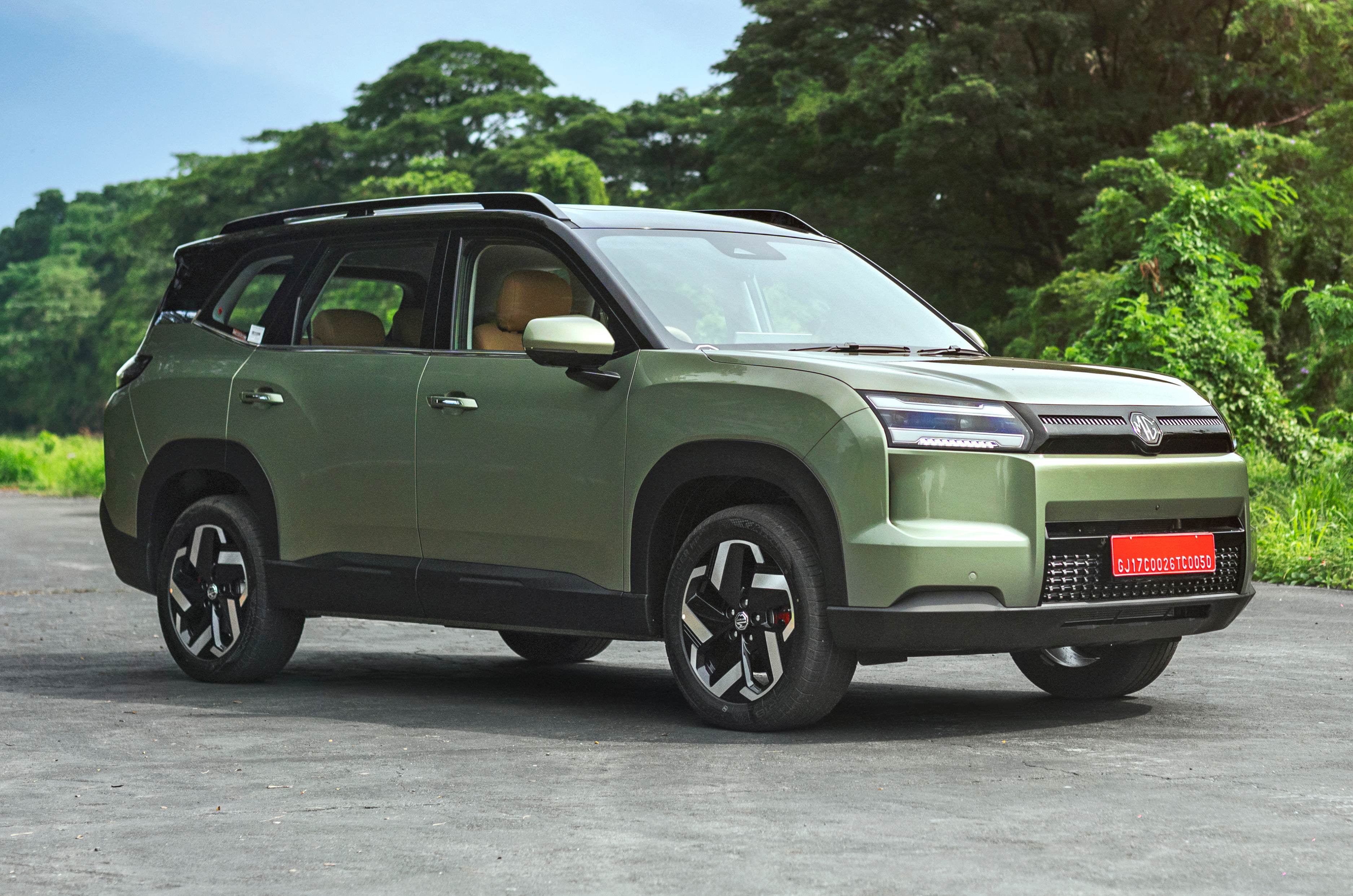
Practical, comfortable and no-nonsense SUV will appeal to the chauffeur-driven but lacks the dynamic polish of its rivals.

When compared spec-for-spec, it undercuts the competition from Tata and Mahindra while offering a bigger battery and more performance than its Korean rivals. It has a spacious and comfortable cabin, a comprehensive feature set and is surprisingly easy to drive for its size. However, it lacks the dynamic polish of its rivals and therefore doesn’t feel like a latest-generation EV. As such, its Hector name starts to make more sense. It is a practical, comfortable, no-nonsense SUV that will appeal to the chauffeur-driven just like its forebear. Those looking to do the driving, though, are better off looking elsewhere.

Land Rover considering a Defender Pickup Truck

Land Rover considering a Defender Pickup Truck
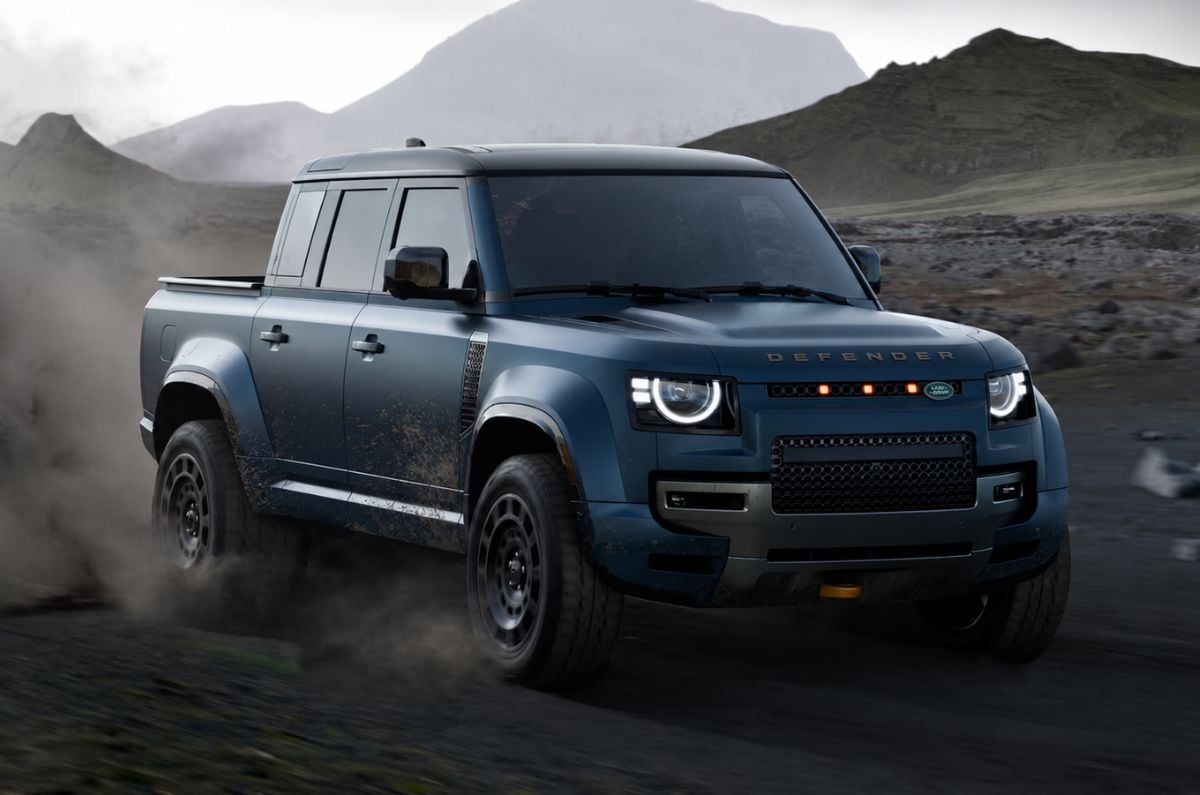
Land Rover Defender pickup rendering

Jaguar Land Rover (JLR), along with its Stellantis partner, is considering a Defender Pickup truck for the US market, according to a report by The Times. This comes just a few months after JLR and Stellantis signed a Memorandum of Understanding (MOU) aimed specifically at collaborating for product development opportunities for buyers in North America.

  • The Defender Pickup is aimed at the US market.
  • Likely to be localised in the States to avoid import tariffs.
  • To be one of several new models JLR’s planning for the region.

Land Rover Defender Pickup: What we know so far?

While the two brands have signed a MoU, exact details regarding the upcoming Land Rover pickup truck are expected to emerge towards the end of 2026. Former Executive Director of Vehicle Programmes at JLR, Nick Collins, admitted to Autocar UK in 2021 that not only is “there a customer demand” for such a pickup truck, but also that one “can be made from a monocoque as there are no structural limitations”.

However, it remains to be seen which platform the Defender Pickup truck actually uses. For perspective, JLR and Stellantis have at their disposal the Defender’s monocoque platform and the body-on-frame designs used by Stellantis-owned brands like Jeep and RAM. Buyers looking for high-end pickup trucks in North America currently have popular options that include range-topping variants of the Ford F-150, Chevrolet Silverado 1500, GMC Sierra 1500 and RAM 1500 – all of which are body-on-frame models. 

While the Defender SUV range sold worldwide rolls out of JLR’s Slovakia facility, The Times report indicated that the Defender Pickup truck is likely to be produced locally in the US to avoid import tariffs. The US is a “priority growth market” and will lead to “exclusive offerings” in due course, PB Balaji, Chief Executive Officer of JLR, said. JLR’s plans for North America stretches beyond just one model. “Working with Stellantis allows us to explore complementary capabilities in product and technology development that support our long‑term growth plans for the US market,” Balaji added.

Also read

Hyundai reveals first design sketches of upcoming Bayon SUV

Maruti Suzuki Wagon R facelift spied with underbody CNG kit

World EV Day special: Epic electric features by Autocar India

World EV Day special: Epic electric features by Autocar India
world ev day 2026 autocar india

Electric vehicles have skyrocketed in significance over the past decade, particularly in light of global issues like climate change and pollution. EVs require no fossil fuels to run, and therefore emit zero harmful pollutants into the atmosphere. To promote the adoption of EVs, September 9 was designated ‘World EV Day’ six years ago by sustainability-focused companies Green.TV and ABB Group, and is recognised worldwide.
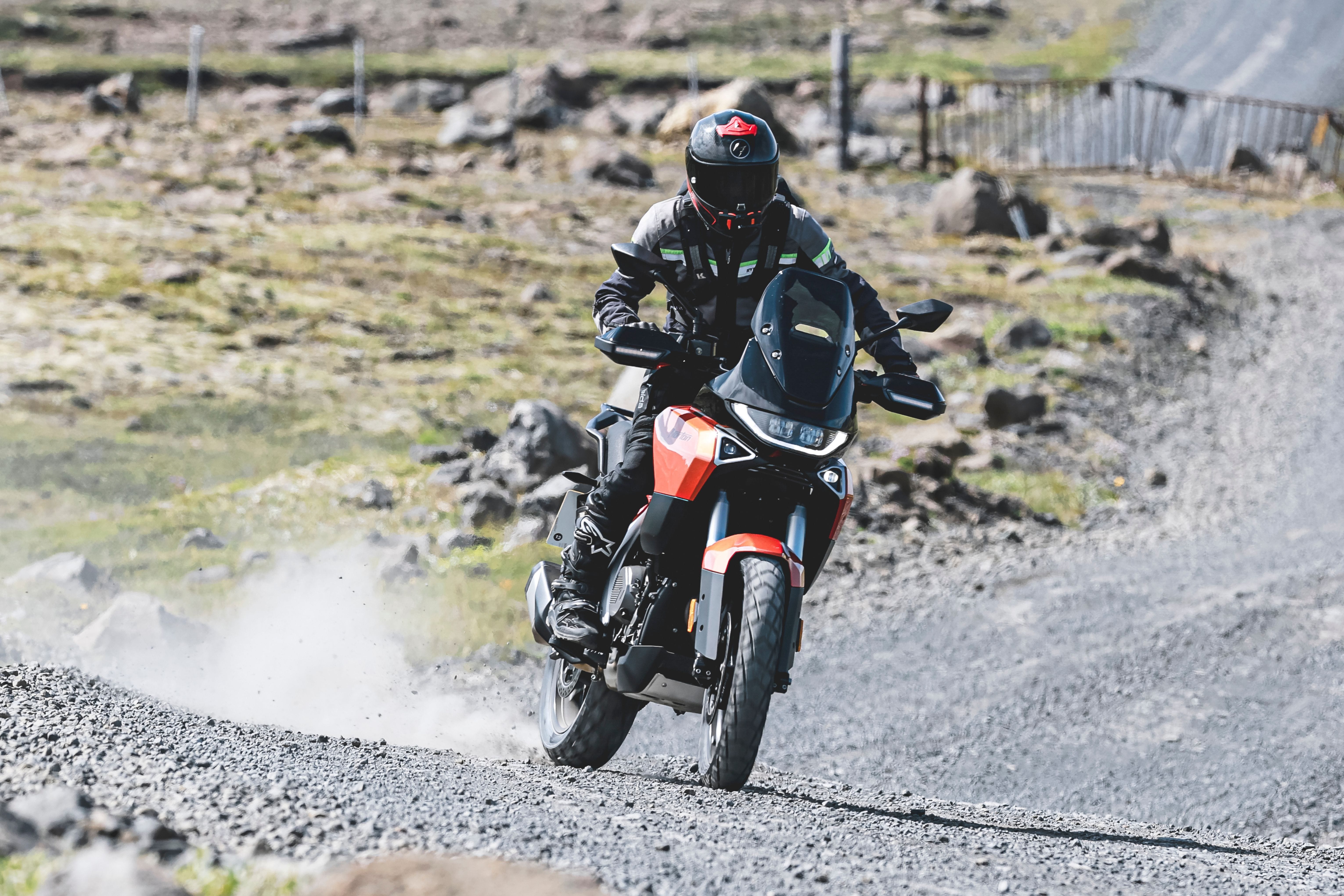
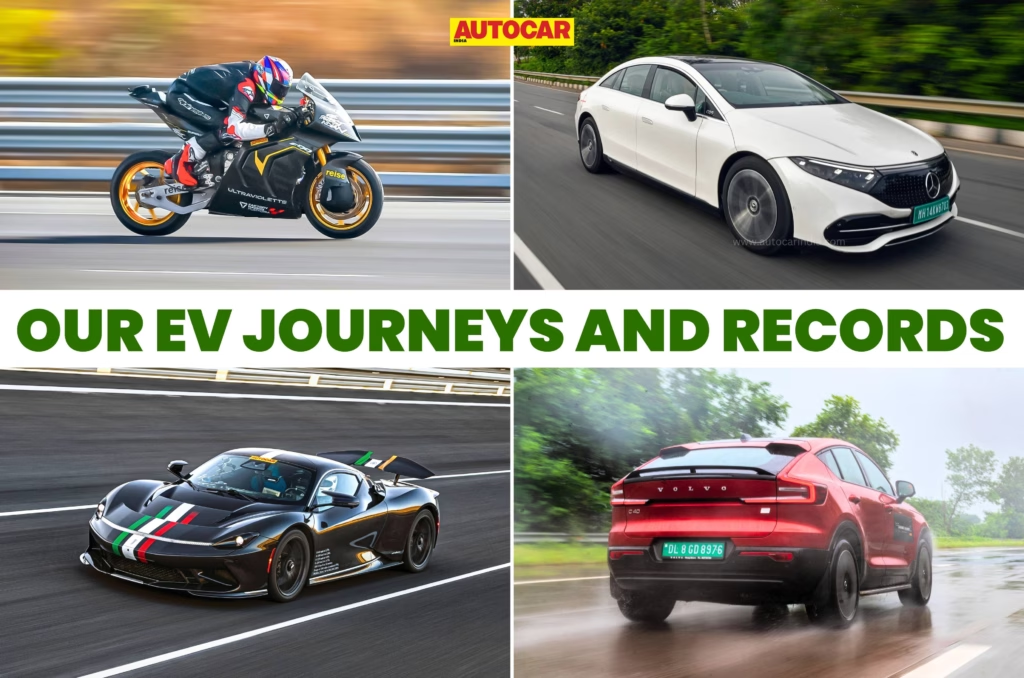
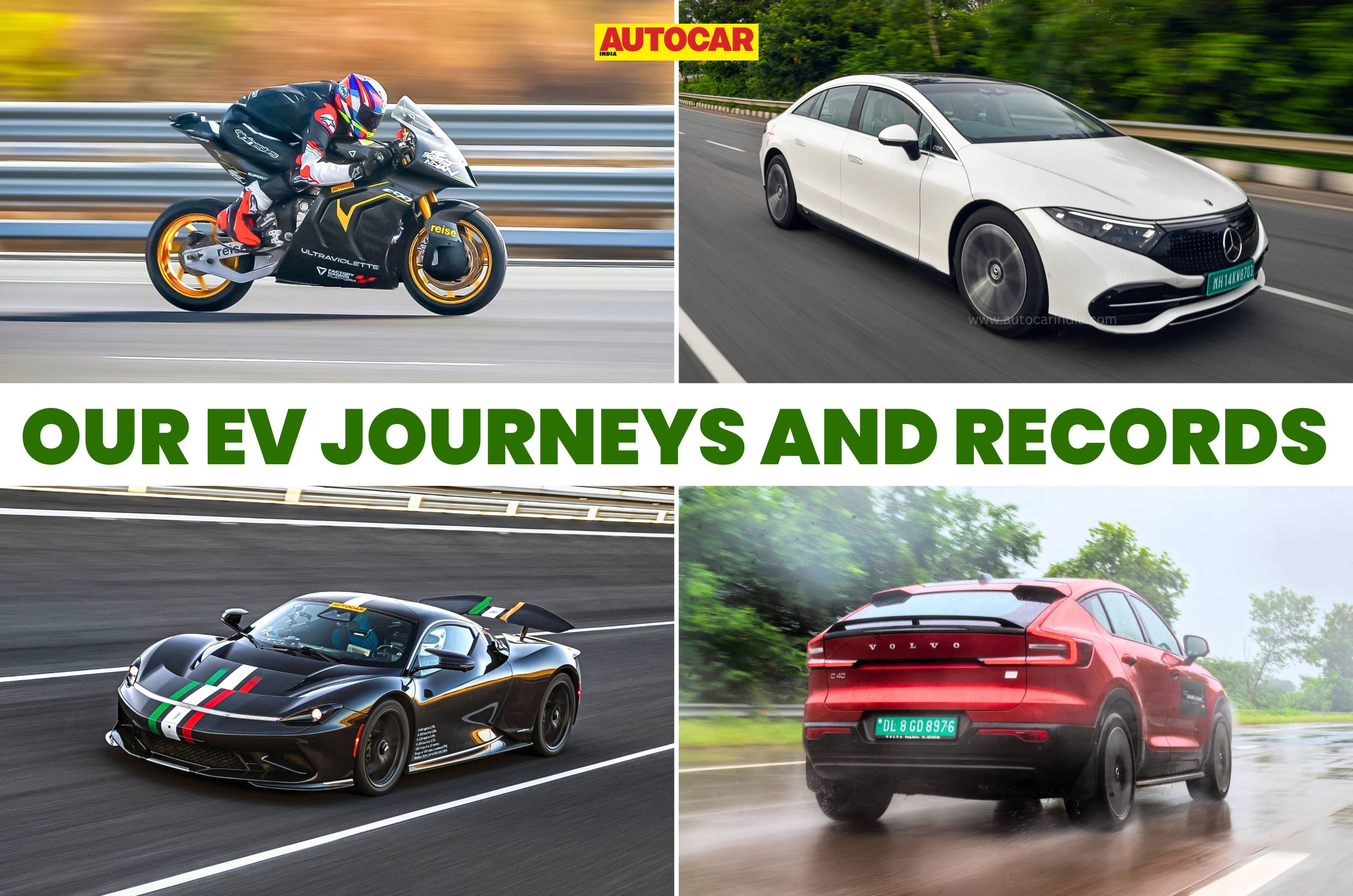
On the sixth iteration of World EV Day, let’s take a look at some of Autocar India’s most notable achievements in the all-electric mobility space.

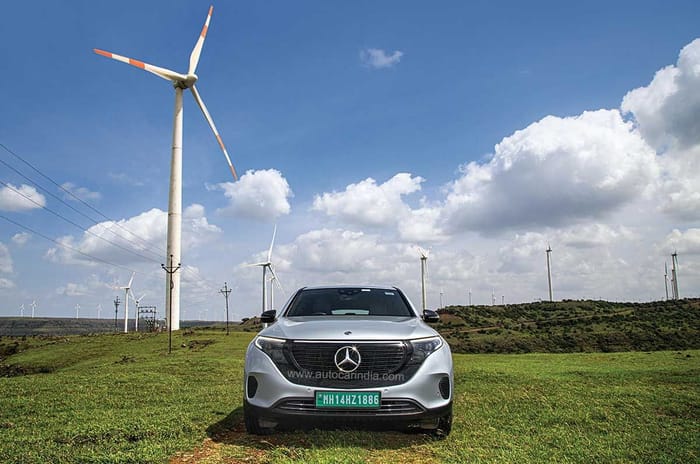
1. Mercedes Benz EQC clean energy charging

Hydro, wind and solar energy were the only means of charging we used

In 2021, we set out on a journey in the Mercedes-Benz EQC to explore how truly “green” EVs can be when powered by renewable energy only; at present, coal is the primary source of energy production. We departed from the Mercedes-Benz facility in Chakan with a full charge, heading to Tata Power’s Khopoli hydroelectric plant, Agaswadi wind farm and Mulshi solar farm.

Along the way, we investigated clean power sources – hydro, wind and solar – that could sustainably fuel EVs in India. While the EQC couldn’t be charged directly from the hydro grid since it mixes with the main grid, we were able to charge the SUV via a 15A plug at Tata Power. However, we did tap charging power directly from wind turbines and solar panels for the EQC. Ultimately, this trip showed us that our EVs could soon be truly emissions-free – not just at the tailpipe, but across the entire power chain.

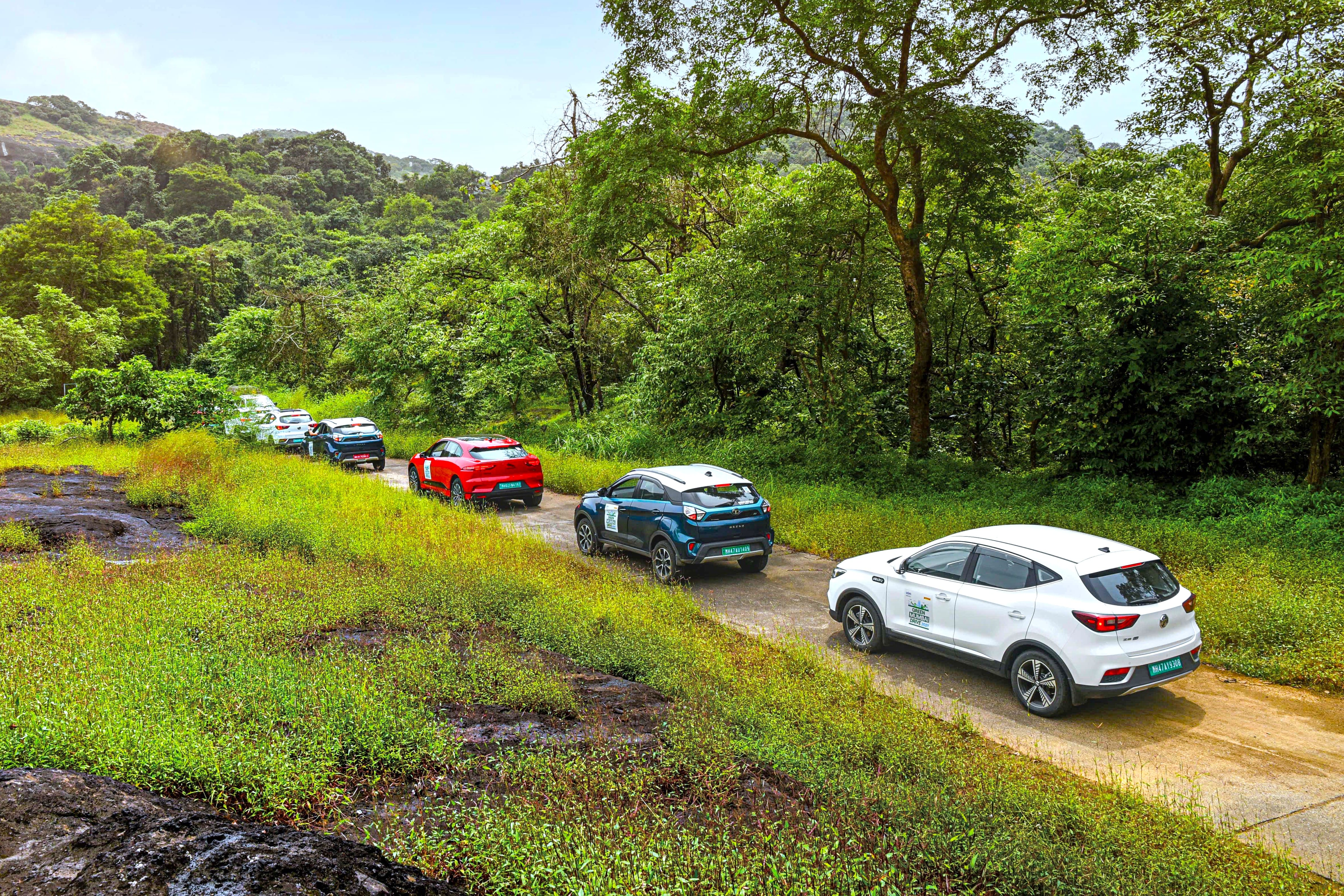
2. Green Mumbai Drive 2021

30 EVs quietly trundling through the Sanjay Gandhi National Park

We achieved a rare feat by bringing together every EV that was on sale in India at the time and driving them across Mumbai and through the protected Sanjay Gandhi National Park in Borivali. 30 EVs were part of the drive, including the Hyundai Kona, Tata Nexon EV, MG ZS EV, Mercedes-Benz EQC, Jaguar i-Pace, Audi e-tron GT, and even a Tesla Model X.

The Green Mumbai Drive was flagged off from the Mahalakshmi Racecourse by Aditya Thackeray, MoS for Tourism, Environment and Protocol, and Jeet Adani, director of Adani Electricity. Notable auto industry executives like Santosh Iyer (Mercedes-Benz India), Balbir Singh Dhillon (Audi India), Rohit Suri (JLR India), and Amit Suri (Volvo India) were also part of the event.

3. Debuting EVs in two different national parks

Tata Nexon EV in Satpura Tiger Reserve, Audi e-tron in Gir National Park

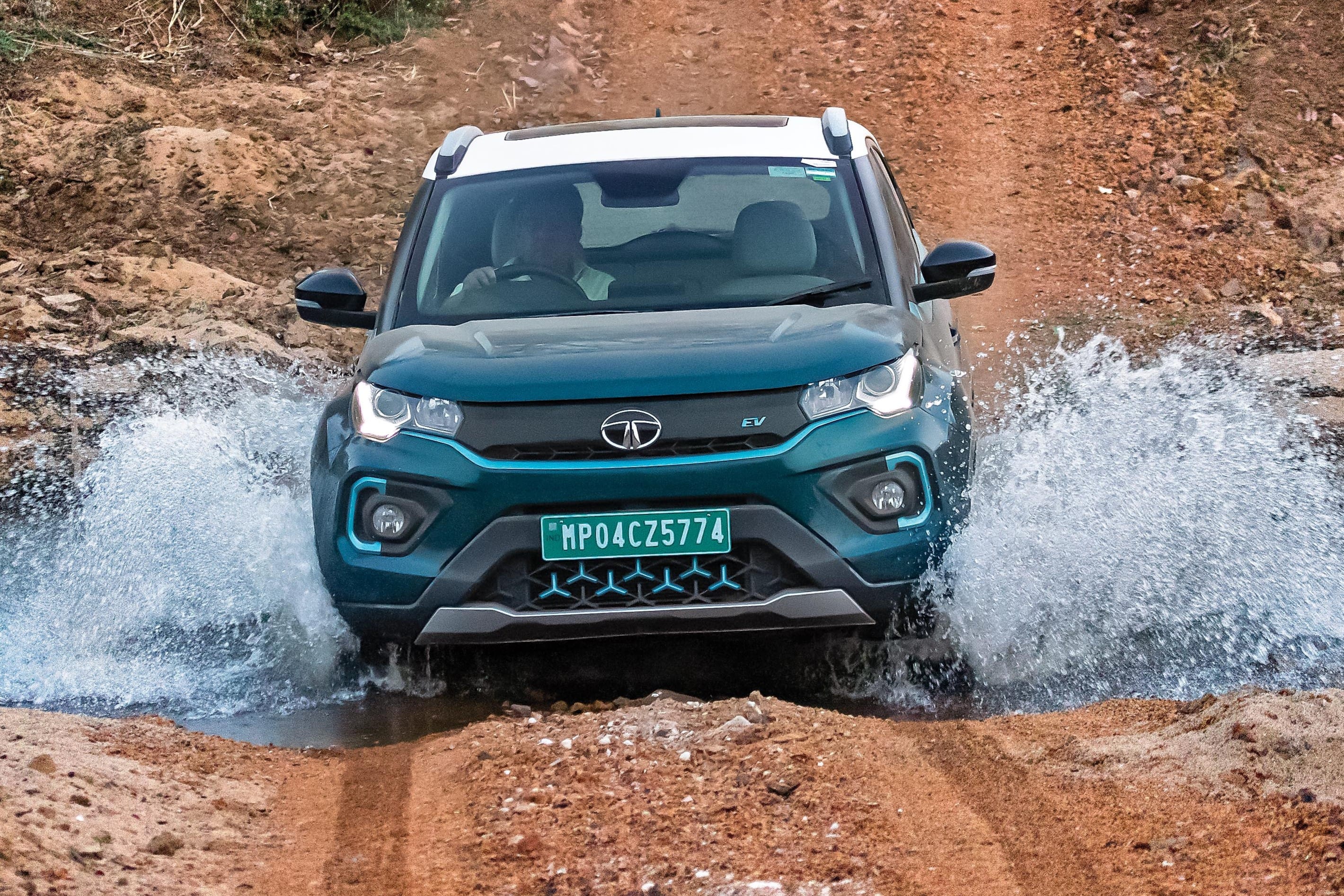
In 2021, we were the first to drive an electric car (specifically, the Tata Nexon EV) into Madhya Pradesh’s Satpura Tiger Reserve. The roughly 140km drive from Bhopal to Forsyth Lodge was completed with around 30km of range remaining, despite starting with the battery at 92 percent. With no fast-charging infrastructure nearby, the Nexon EV had to be charged overnight using a 15A socket. During the safari, the torquey and compact EV performed well on steep inclines and narrow forest trails, and its silent operation allowed it to approach wildlife like sambars, gaurs, wild pigs, and even a leopard without the noise of an idling engine – no tiger, though.

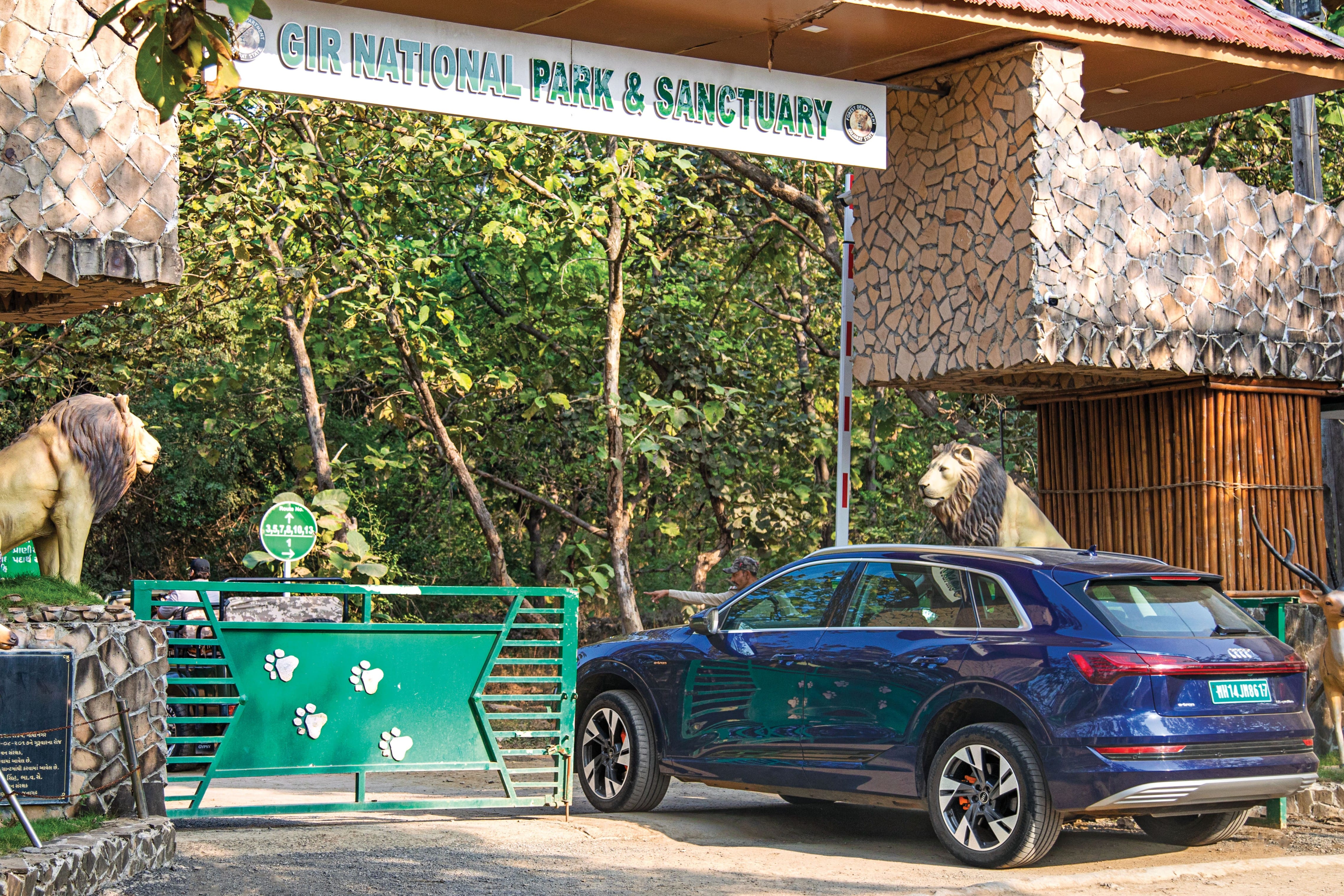
Then, in 2022, we were yet again the first to drive an EV into Gujarat’s Gir National Park, this time in an Audi e-tron. Reaching our accommodation induced a great deal of range anxiety due to faulty chargers along the way, but we managed to get there with around 20 percent of charge remaining. Once we reached, the e-tron was an excellent companion to tour the park with, helping us spot wildlife like chital, crocodiles, lions, and more.

4. Porsche Taycan Kashmir to Kanyakumari road trip

Nearly 4,500km in a performance EV

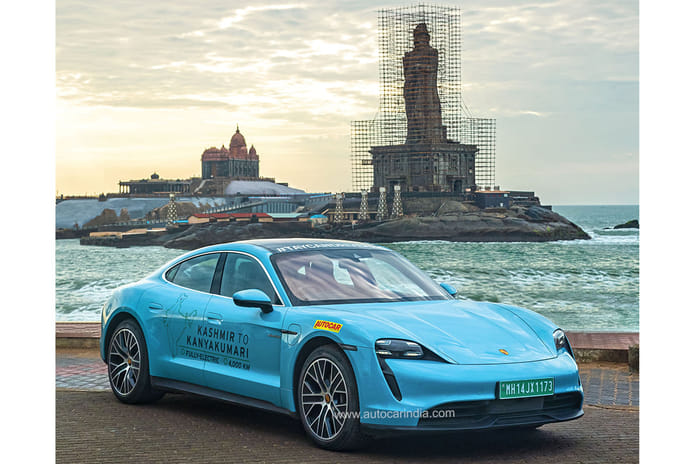
2022 saw us take one of our most ambitious roadtrips to date: 4,467km from Kashmir to Kanyakumari in a Porsche Taycan. Despite challenges like landslides in Jammu, flooded roads in Punjab, and power outages at certain charging spots, the Taycan handled the journey with ease. On one of the most efficient legs, the Porsche EV delivered 7.1km/kWh, working out to an indicated range of 475km.

Comfort mode was the default setting, but we did have lots of fun in some stretches courtesy of the Taycan’s Sport Plus drive mode. Up to 225kW of fast charging bolstered convenience, and total charging expenses tallied up to just Rs 15,422 – cheaper than fuel for an equivalent petrol car. More than just distance, the trip proved that combining sports car-like performance with electric efficiency works perfectly in real-world conditions, and that the Taycan is more durable than you may think.

5. Pininfarina Battista India top speed record

1900hp, quad-motor hypercar achieved a 358.03kph top speed

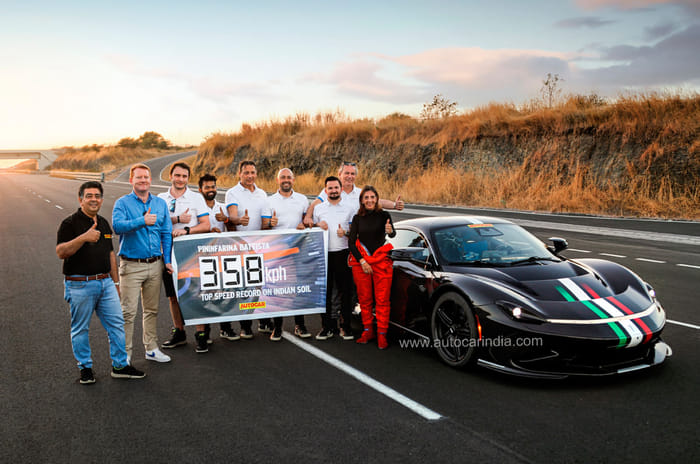
Back in early 2023, we set a new Indian top-speed record with the 1,900hp Pininfarina Battista electric hypercar at the NATRAX high-speed oval near Indore. Achieving an impressive v-max of 358.03kph, the Battista blitzed past the previous record of 332.20kph, which was also set by us in 2016 in an Audi R8 V10 Plus.

The Battista top-speed run also ended up establishing new world records for a production car: 0-300kph in 10.49 seconds and a quarter-mile time of 8.55 seconds, all verified by the Federation of Motor Sports Clubs of India (FMSCI).

6. Hero Vida V1 Pro longest distance in 24 hours record

The e-scooter travelled just shy of a whopping 1,800km

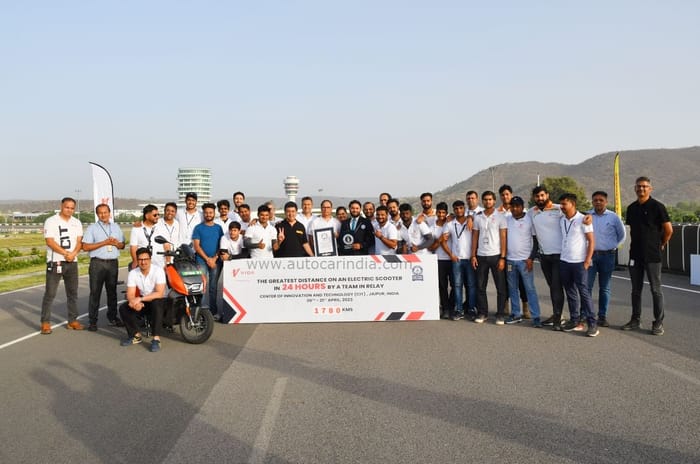
We teamed up with Hero MotoCorp in 2023 to set a new Guinness World Record for the longest distance travelled by an e-scooter in 24 hours. Using the Vida V1 Pro with easy-to-swap removable batteries, we covered a whopping 1,780km at Hero’s Centre of Innovation and Technology near Jaipur.

The endurance challenge relied on swift battery swaps and flawless coordination, with the pit crew achieving 38 battery changes in under 20 seconds – quite impressive considering the extreme heat, rider fatigue, and complexity involved. Moreover, the Vida V1 Pro ran flawlessly throughout, handling the gruelling conditions with ease and maintaining performance consistently.

7. Volvo EC40 Jaisalmer to Mawsynram road trip

From India’s driest region to its wettest

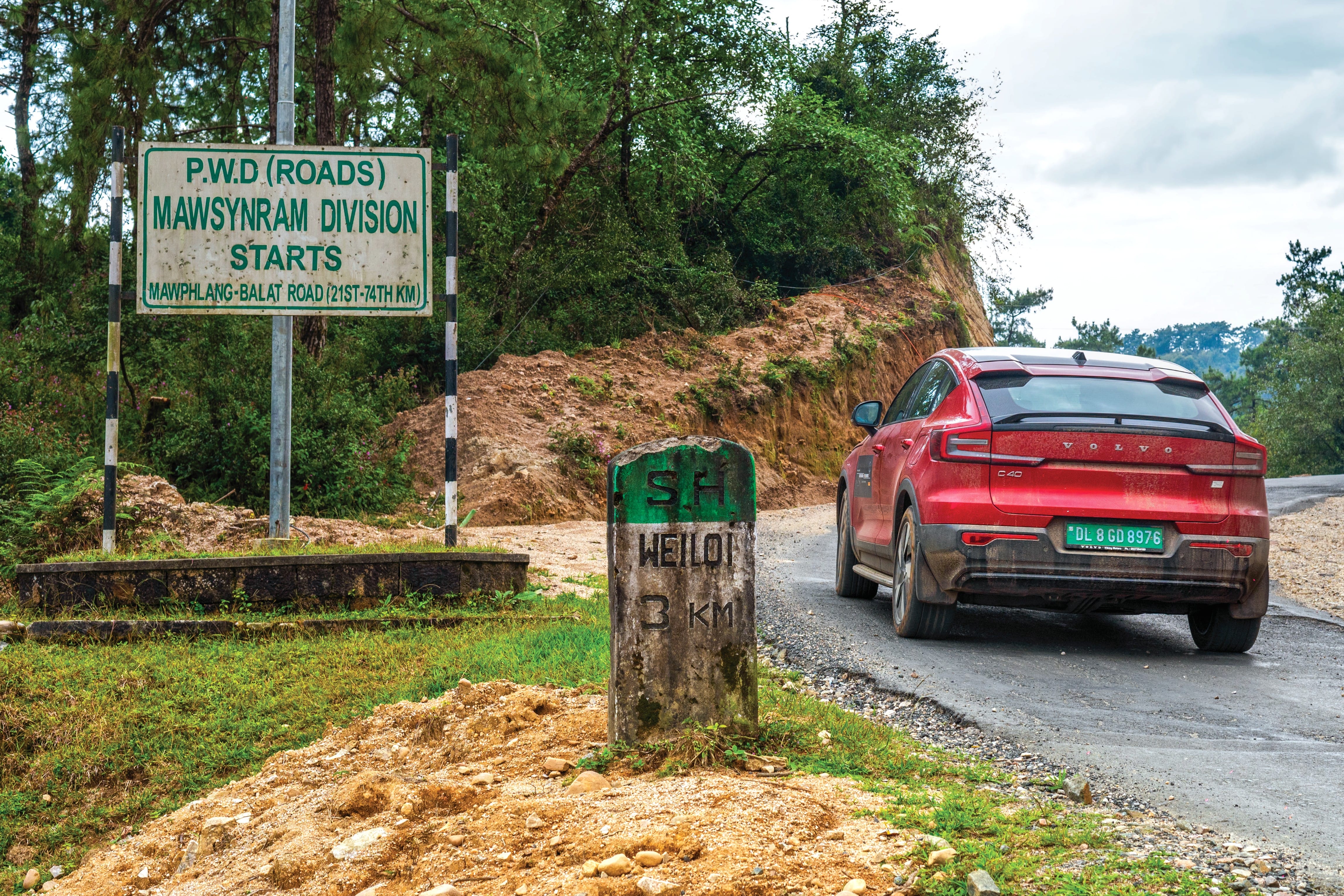
In 2024, we took the Volvo EC40 (formerly known as the C40 Recharge) on a roughly 3,000km road trip from Jaisalmer in Rajasthan – one of India’s driest locations – to Mawsynram in Meghalaya, widely recognised as the country’s wettest. The route included a detour to Ghaziabad’s Volvo Reverse Project, a former dumping ground where around 10,000 trees had been planted as part of the company’s reforestation initiative.

Charging was carried out mainly overnight with DC fast chargers also used along the route, and the EC40 posed no issues during the journey. Ironically, we encountered heavy rain and waterlogging in Jaisalmer but surprisingly little rainfall in Mawsynram.

8. Mercedes Benz EQS sedan longest distance world record

949km travelled on a single charge

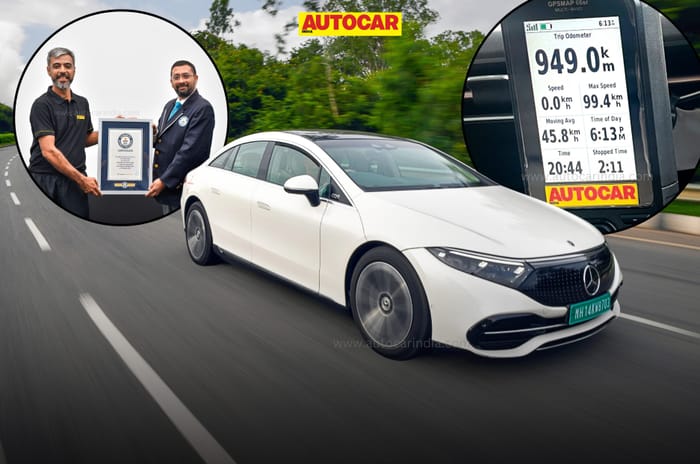
Though we’ve racked up quite a lot of Guinness World Records over the years, eking out the longest journey travelled by an EV on a single charge in the Mercedes-Benz EQS 580 sedan remains one of our best, especially since it coincided with our 25th anniversary in 2024, too.

Setting off from Bangalore on a full charge, the EQS 580 covered a distance of 949km when it reached its destination in Navi Mumbai, beating the previous Guinness World Record for the same by 32.26km. Impressively, the 949km real-world range exceeds EQS 580’s claimed range of 817km by just over 16 percent. It’s also worth mentioning that the two-day journey was completed under arduous conditions like heavy rainfall, lots of traffic, broken roads, and even a flat tyre.

9. Porsche Taycan BIC EV lap record

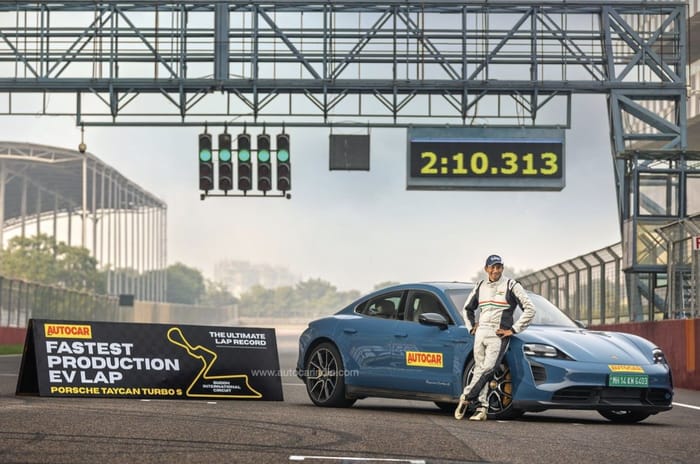
2:10.313 lap time makes the Taycan the fastest EV around BIC so far

At the Buddh International Circuit in Greater Noida, we lapped a Porsche Taycan Turbo S and clocked a time of 2:10.313 minutes – the first-ever EV lap record around the 5.125km track. Despite its rather portly kerb weight of 2,370kg, the Taycan delivered unexpectedly sharp performance at BIC thanks to 761hp and 1,050Nm, a low centre of gravity (aided by the heavy 93.4 kWh battery), precise steering, and superb balance.

Upon hitting the apex and pinning the throttle, the Taycan belied physics the way it propelled out of corners with explosive speed, and despite weighing 845kg more, the EV achieved nearly the same top speed as the 911 GT3 RS at the end of BIC’s main straight.

10. Ultraviolette F99 India top speed record

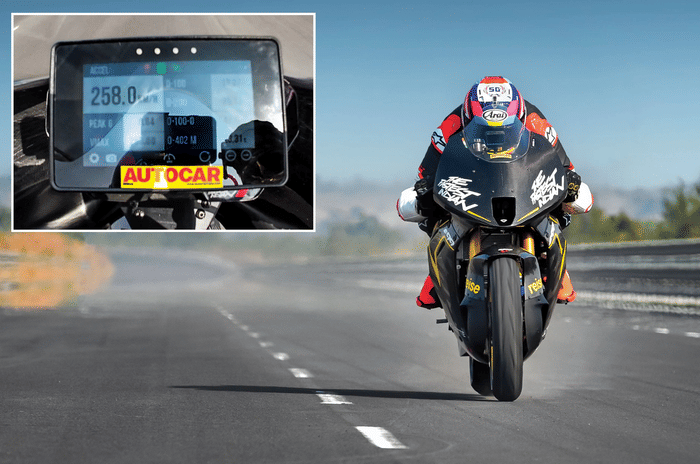
258kph around NATRAX and a 100-200kph run of 6.2 seconds

One of our more recent records entailed setting a new benchmark for made-in-India two-wheelers by hitting a top speed of 258kph on the Ultraviolette F99 at the NATRAX oval. Designed around a 400V architecture with a liquid-cooled powertrain, the purpose-built F99 packs 120hp and an astounding 972Nm (measured at the rear wheel).

The F99’s custom trellis frame, forged carbon-fibre bodywork, Brembo brakes, and Ohlins suspension helped the bike remain stable at high speeds, culminating in a clean record run captured via precision V-Box data. It also achieved a blistering 0-200kph run in under 10 seconds and 100-200kph in just 6.2 seconds, smashing previous Indian motorcycle speed records.

11. Mercedes Benz EQS SUV temperature change record

From the sweltering heat of Rajasthan to the sub-zero chill of Ladakh

Our 2025 Guinness World Record saw us achieving the greatest temperature change endured by a production EV. We accomplished this using the Mercedes-Benz EQS 450 SUV, driving from the scorching heat of 47.5 deg-C in Rajasthan to the below-freezing chill of -3.7 deg-C in Ladakh, for an impressive overall temperature swing of 51.2 deg-C.

The journey tested the limits of the EQS 450 SUV, especially its 122kWh battery’s thermal management system. Despite extreme variations in temperature, the climate control and battery systems kept the EQS 450 SUV performing smoothly and safely.

All you need to know about the Kia Sorento

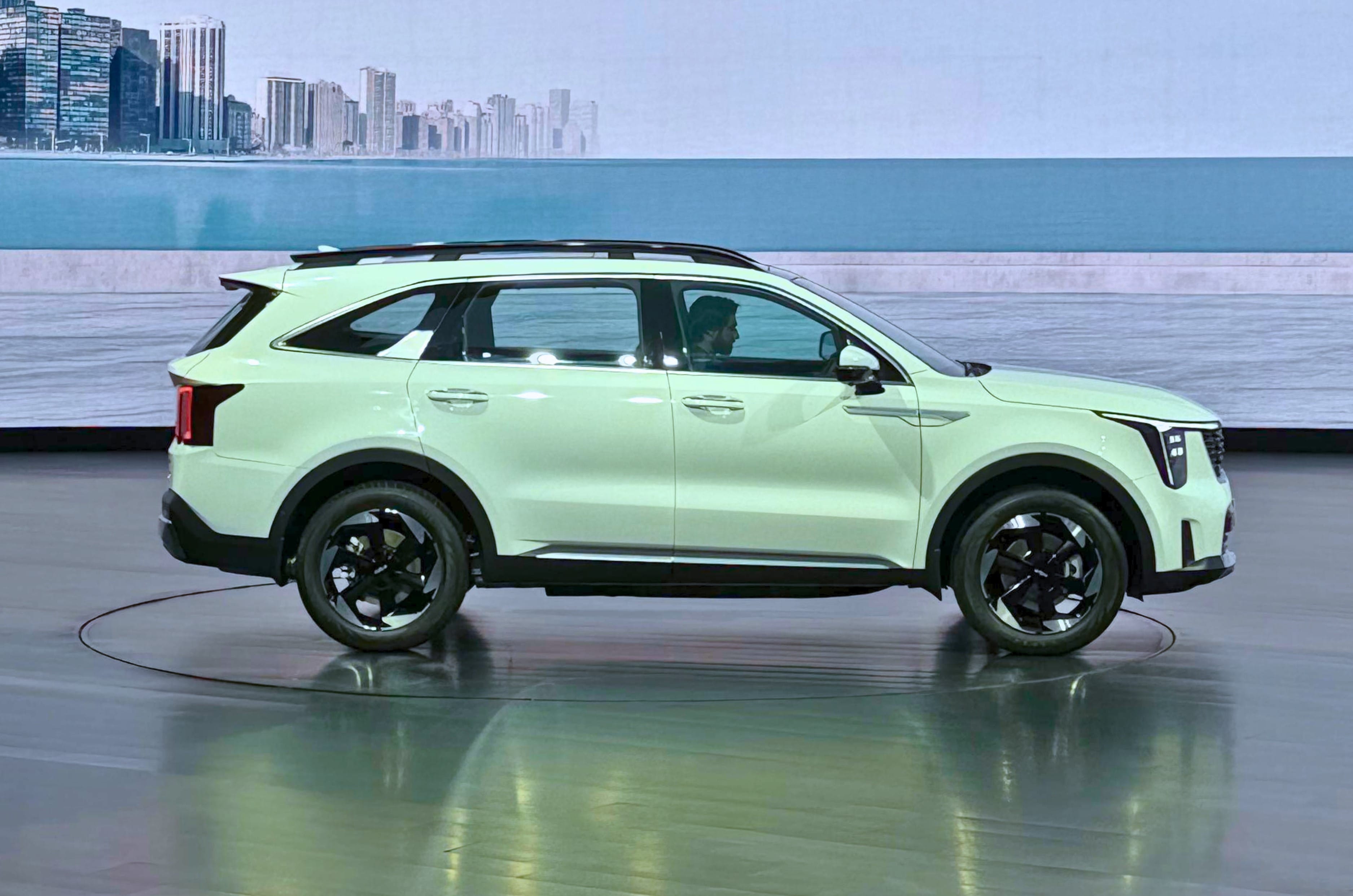
Kia Sorento front quarter static

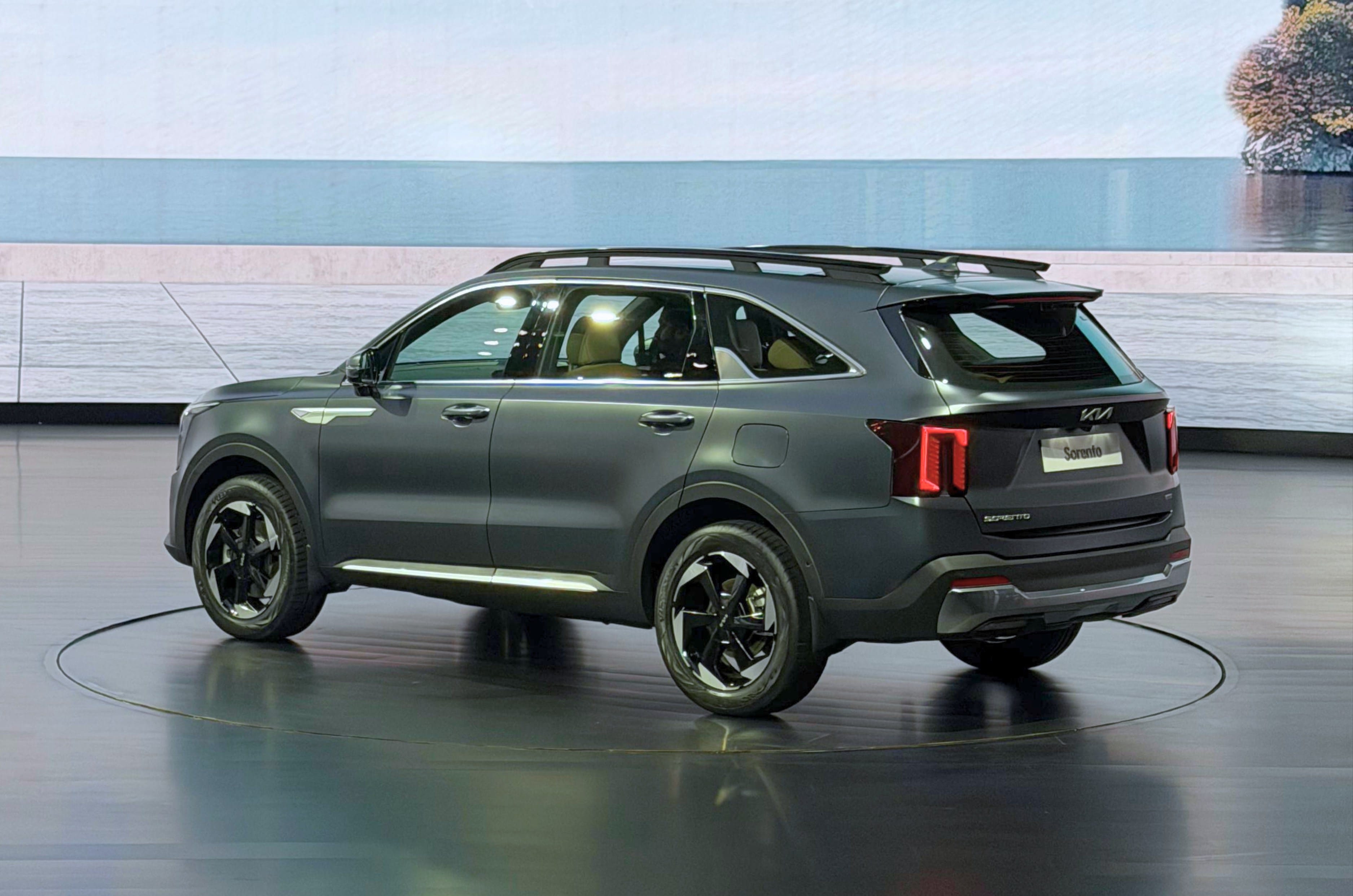
Kia has a new flagship ICE SUV in India in the form of the Sorento. The Korean carmaker has thrown quite a lot at it, offering it with a wide variant lineup with strong-hybrid and diesel engines, front wheel drive and all-wheel drive configurations, and both 6- and 7-seater configurations. In the executive SUV space, the Sorento finds itself in the company of the Skoda Kodiaq, Volkswagen Tayron and Jeep Meridian, and uniquely, it’s the only one to come with a strong-hybrid powertrain. If you have your eyes set on the Sorento, here’s everything you need to know about Kia’s latest three-row SUV. 

1. What’s the price range of the Kia Sorento?

2026 Kia Sorento variant-wise prices (in Rs lakh, introductory, ex-showroom)


Diesel 7-str

Diesel 6-str

Strong-hybrid 7-str

Strong-hybrid 6-str

HTE

27.99

–

29.49

–

HTE(O)

29.49

–

30.99

–

HTK

32.49

32.69

33.99

34.19

HTK(A)

33.49

33.69

34.99

35.19

HTX (AWD)

37.49

37.69

38.99

39.19

HTX(A) (AWD)

38.49

38.69

39.99

40.19

The Kia Sorento is priced between Rs 27.99 lakh and Rs 40.19 lakh (ex-showroom), and is available in as many as 20 different variants. More specifically speaking, the diesel range starts at Rs 27.99 lakh and goes up to Rs 38.69 lakh for the top-spec AWD variant. Meanwhile, the strong-hybrid range is priced from Rs 29.49 lakh and Rs 40.19 lakh (ex-showroom). 

On-road prices for the Sorento hybrid range between Rs 37.68 lakh and Rs 51.30 lakh in Delhi. Meanwhile, the diesel’s on-road price in Delhi ranges between Rs 35.81 lakh and Rs 49.42 lakh (ex-showroom). Do note on-road prices can vary depending on the city. 

2. What powertrains are available with the Kia Sorento?

The Sorento is available with two powertrain options – a 1.6-litre turbo-petrol strong hybrid and a 2.2-litre diesel engine. In the turbo-petrol strong hybrid version, the combustion engine produces 180hp and 265Nm while an electric motor produces an additional 65hp and 264Nm. Kia has, however, not revealed the battery size or the combined total output for this powertrain. The diesel, meanwhile, produces 193hp and 442Nm. The Sorento is, in fact, just one of two SUVs in this segment to offer a diesel engine, while the strong-hybrid is its novelty. 

Both powertrains are offered only with an automatic gearbox – 6-speed AT for the strong-hybrid and 8-speed DCT for the diesel. Both also get the option of front-wheel drive and all-wheel drive. Kia has, however, not revealed specific fuel efficiency figures for either powertrain yet. 

3. How big is the Kia Sorento

Kia Sorento vs rivals: Powertrain options


Kia Sorento 

Volkswagen Tayron 

Skoda Kodiaq

Jeep Meridian

Length (mm)

4,815

4,792

4,758 

4,769

Width (mm)

1,900

1,866

1,864

1,859

Height (mm)

1,785

1,665

1,679

1,698

Wheelbase (mm)

2,815

2,789

2,791

2,782

Ground clearance (mm)

TBC

TBC

192

214

Wheel size (inch)

18-19

19

18

18

The Sorento is the largest SUV in its segment in every parameter, which lends it quite an imposing stance on the road. It also has the longest wheelbase in its class, and offers the option 18-inch and 19-inch alloy wheels, depending on the trim. For 

4. What are the exterior and interior colour options available on the Sorento?

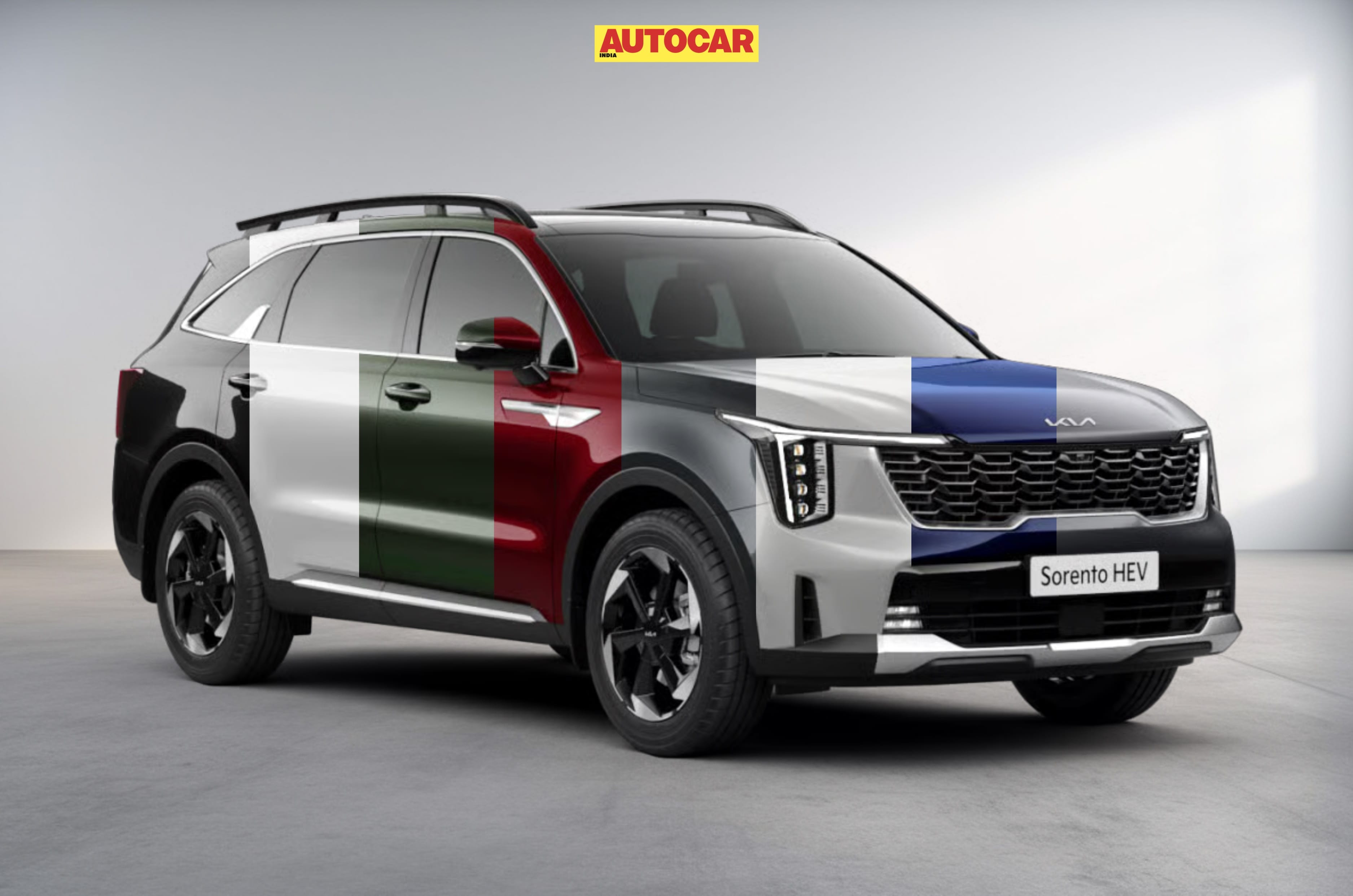
The Kia Sorento is offered with eight exterior colour options, including Aurora Black Pearl, Glacier White Pearl, Magma Red, Ivory Silver, Gravity Grey, Imperial Blue, Pewter Olive, and Dark Gun Metal. Among these, the Dark Gun Metal colour is offered on the top-spec HTX and HTX(A) trims, while all other options are available across the range. 

On the inside, Kia is offering two colour schemes: Smoky Black and Grey, and Premium Black and Olive Brown. The former is offered with the lower-spec HTE, HTK, HTE (O), HTK(A) trims, while the latter is available with the higher-spec HTX and HTX(A) trims. 

5. What are some of the standout features on the Sorento?

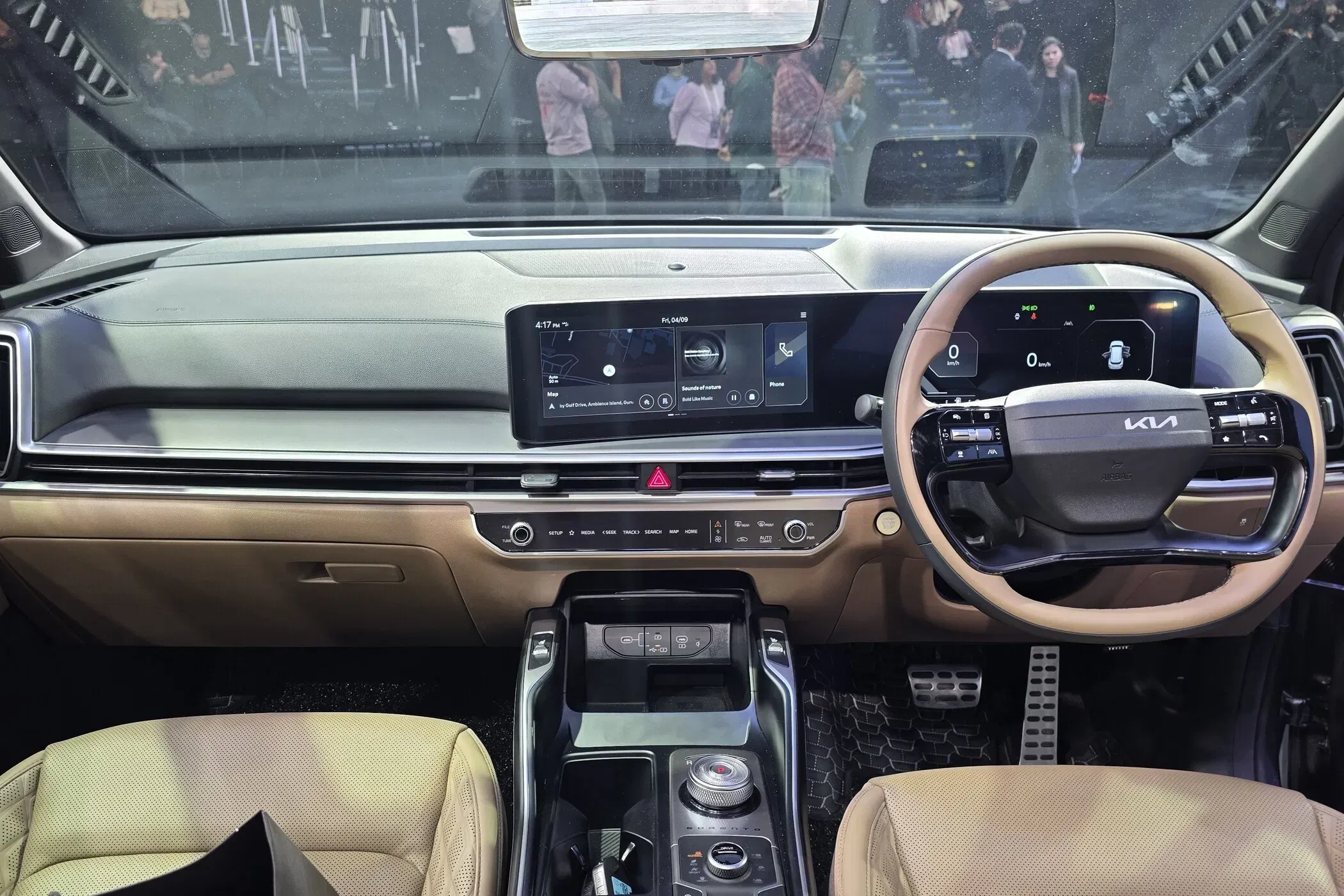
Like most Kia, the Sorento is absolutely loaded to gills, with the India-spec model even debut some features for the Sorento nameplate globally. There are two 12.3-inch screens for instrumentation and infotainment, the front seats are ventilated, have 10-way power adjustability and offer adjustable lumbar support. The co-driver’s seat has a boss mode to extend the middle-row space. The middle-row seats can be electronically folded, and the 6-seater version further offers middle-row seat ventilation.

Other features include a 12-speaker Bose sound system, a panoramic sunroof, dual-zone climate control, a head-up display (HUD) and a powered tailgate. Real-time generative AI is a first for any Sorento available globally. Safety features include 10 airbags, a digital inside rearview mirror (IRVM), a 360-degree camera, auto parking assistance, front and rear dashcams, a tyre-pressure monitoring system (TPMS) and Level 2+ advanced driver assistance systems (ADAS).

6. Which variant of the Kia Sorento should you buy?

With over 20 variants to choose from, the Sorento stretches a very wide price band across both its powertrain options. However, we’d recommend the mid-spec HTK variant which offers the most for your money. It misses out on the AWD system, but packs all the niceties such as the dual 12.3-inch screens, 12-speaker Bose sound system, 360-degree camera with blind-spot monitor, 64-colour ambient lighting, 19-inch alloys, leatherette upholstery, panoramic sunroof, powered tail gate, ventilated front seats and more. 

It does miss out on a digital IRVM, HUD, more electronic adjustment levels for the front seats, ventilated second-row seats and boss mode but none of these is a deal breaker. However, if you are on a budget, the one-over-base HTE(O) is the best value-for-money variant, offering a decently equipped feature suite for its price. 

Tesla Model Y vs Mercedes CLA EV real-world range compared

Tesla Model Y vs Mercedes CLA EV real-world range compared

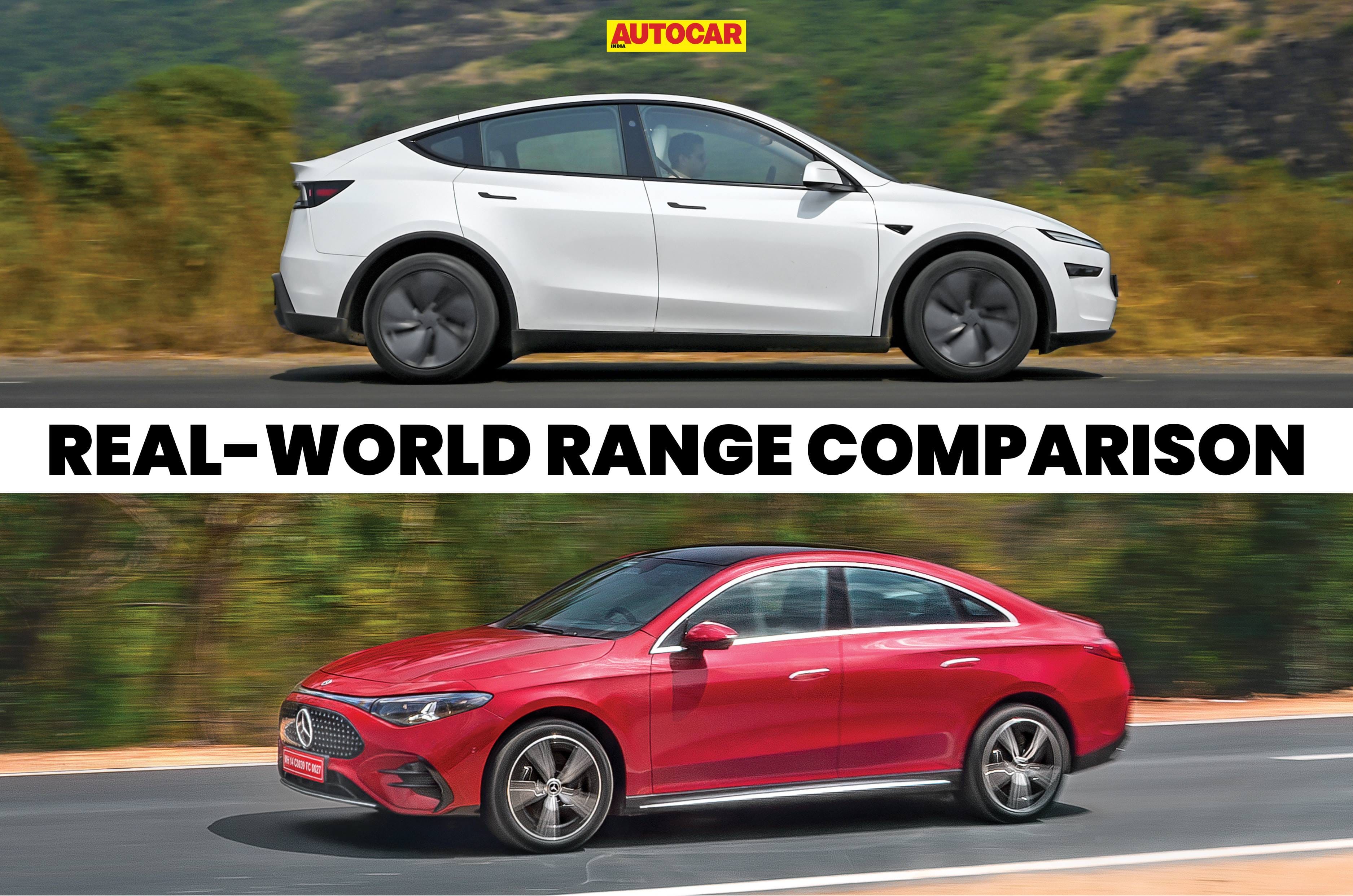
The Tesla Model Y and Mercedes-Benz CLA EV are two zero-emission offerings priced below Rs 65 lakh, but they take very different approaches. The Model Y is a crossover and Tesla’s only model on sale in India, while the CLA sedan is the entry point to Mercedes-Benz’s EV range. They also use different battery sizes and claim different ranges. We recently put both to our comprehensive range tests to see how they compare in the real world.

Tesla Model Y vs Mercedes CLA EV: Specifications, price

 Model Y PremiumCLA EV 250+ AMG Line
Battery size (kWh)6085
Power (hp)299272
Torque (Nm)420335
Drive layoutRWDRWD
Claimed range (km)500792
Kerb weight (kg)1,9282,055
Price (in Rs lakh)50.8960.50

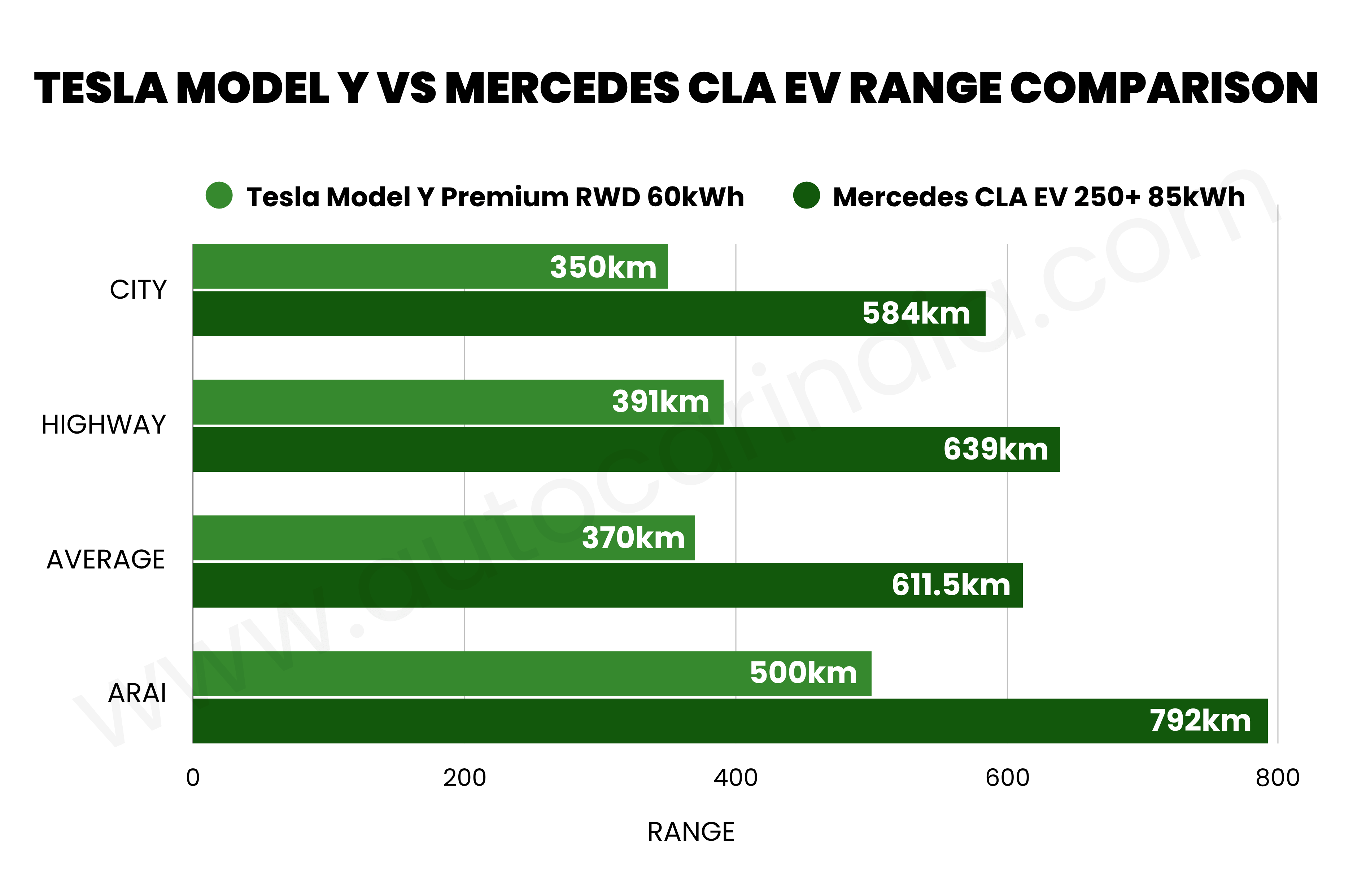
Both are rear-wheel-drive electric vehicles, but the CLA 250+ AMG Line has a much larger 85kWh battery compared to the Model Y Premium RWD’s 60kWh unit. This gives the CLA a claimed range of 792km, significantly higher than the Model Y’s 500km.

The Tesla, however, makes more power and torque at 299hp and 420Nm, compared with 272hp and 335Nm for the CLA. The Model Y is also lighter at 1,928kg versus 2,055kg for the CLA.

There is also a noticeable price difference. The Model Y Premium RWD costs Rs 50.89 lakh – Rs 9.61 lakh less than the CLA 250+ AMG Line, which is priced at Rs 60.50 lakh.

Tesla Model Y vs Mercedes CLA EV: Real-world range

 Model Y PremiumCLA EV 250+ AMG Line
City (km)350584
Highway (km)391639
Average (km)370611.5

Clearly, the CLA 250+, with its larger battery pack, has the upper hand in real-world range despite weighing more. In our tests, it managed 584km in the city and 639km on the highway, compared with 350km and 391km, respectively, for the Model Y. The two-speed gearbox, with its taller 5:1 second gear that enables greater efficiency at higher speeds, also contributed to the EV’s highway efficiency. This gives the CLA an average real-world range of 611.5km, which is 241.5km more than the Model Y’s 370km.

Its slightly lower drag coefficient of 0.21 versus 0.22 for the Model Y is also a contributor to its higher range. That said, a 0.22Cd figure is still excellent for a crossover.

Tesla Model Y vs Mercedes CLA EV real-world range compared

The Mercedes sedan also has stronger regenerative braking. In the strongest regen mode, the CLA EV slowed from 80kph to 20kph in 6.98 seconds, covering 96.36 metres. The Tesla Model Y took 8.28 seconds and needed 116.71 metres to cover the same speed reduction. One-pedal driving is available on both EVs.

Autocar India’s range testing

For our real-world range comparisons, we begin with each car’s battery fully charged and tyre pressures set as per the manufacturer’s recommendations. We drive the cars on a fixed loop covering both city and highway stretches while maintaining set average speeds. We then calculate the range based on the percentage of charge consumed. The AC is set to 22deg C in auto mode, and we use features such as the music system, lights and ventilated seats as needed, just as a regular user would. This approach ensures consistency and gives a clear idea of what to expect in actual conditions.

Ex-showroom prices mentioned above are as of August 20, 2026.

BYD Sealion 7 vs Kia EV6: Performance, Range, Regen Compared

BYD Sealion 7 vs Kia EV6 compared

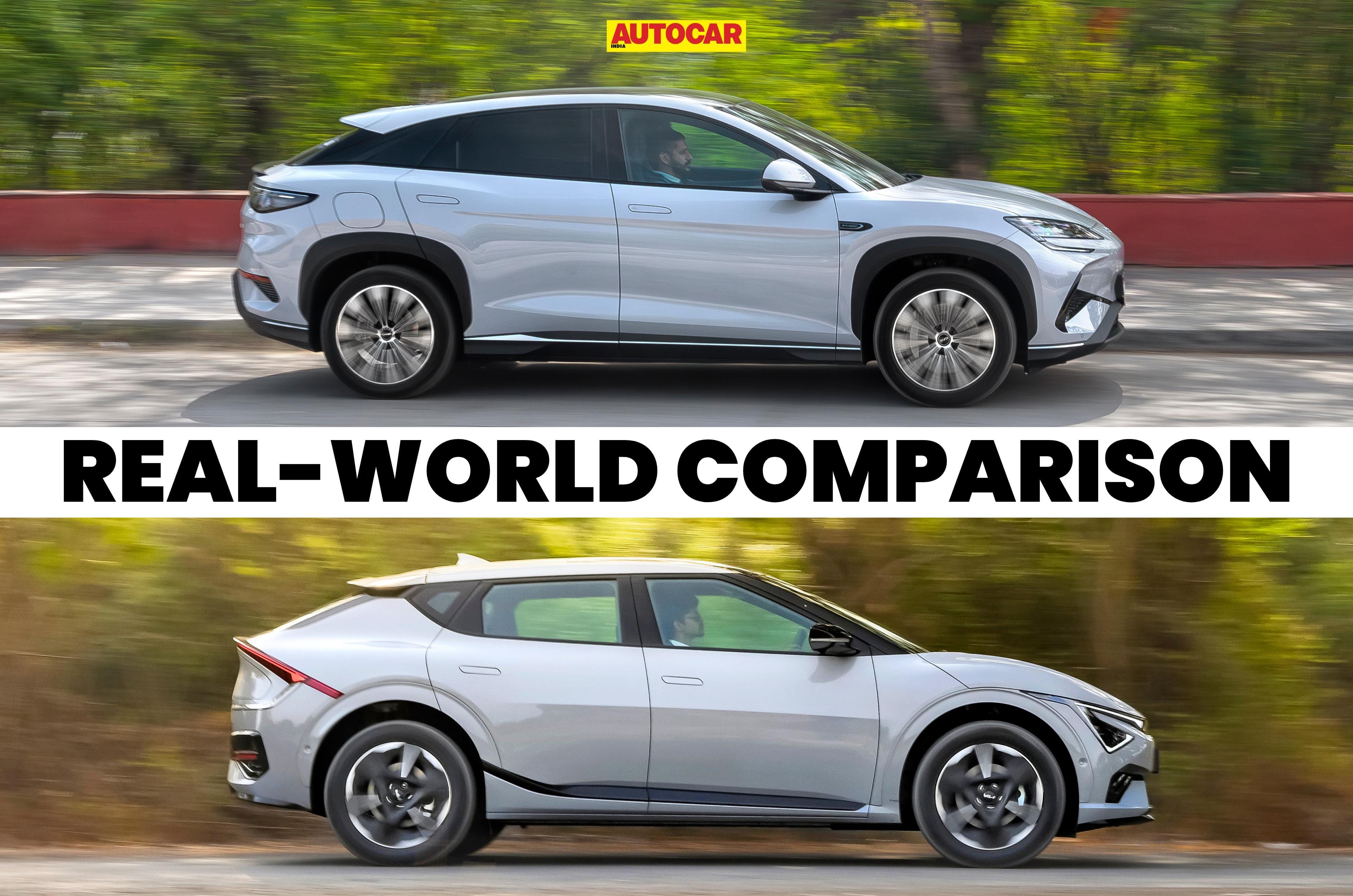
The BYD Sealion 7 and Kia EV6 are premium EV offerings, roughly priced between Rs 50-70 lakh. They’ve both got modern designs, premium cabins and punchy performance. They are also fully imported as completely built units (CBU) and rival cars like the Hyundai Ioniq 5 and BMW iX1. In this story, we compare the performance, range and regen of the respective top-spec variants of both cars.

BYD Sealion 7 vs Kia EV6: Specifications, price

The Sealion 7 is bigger, has more performance and is less expensive

BYD Sealion 7 Performance AWD vs Kia EV6 GT Line AWD: Specifications, price


Sealion 7 Performance AWD

EV6 GT Line AWD

Battery Size (kWh)

82.56 

84

Power (hp)

530

325

Torque (Nm)

690

605

Claimed Range (km)

542 (NEDC)

663 (ARAI)

Kerb weight (kg)

2,340

NA

Power-to-weight*

226.49

NA

Torque-to-weight^

294.87

NA

Price (in Rs lakh)

Rs 55.9 lakh

Rs 65.97 lakh

*Power-to-weight is hp per tonne

^Torque-to-weight is Nm per tonne

The BYD Sealion 7 is bigger in every dimension – length, width, height and even wheelbase, but the Kia gets a bigger 84kWh NMC battery (versus an 82.56kWh LFP battery in the Sealion 7). In terms of performance, the Sealion 7 makes 205hp and 85Nm more than the EV6. And while the EV6 is available in an AWD setup only, the Sealion 7 is available in a RWD layout with less performance. The big difference is how they are priced, and the price difference between the top-spec trims of these cars is roughly Rs 10 lakh.

BYD Sealion 7 vs Kia EV6: Performance tests

With 205hp and 85Nm more, the Sealion 7 is quicker in all our tests

BYD Sealion 7 Performance AWD vs Kia EV6 GT Line AWD: Performance tests


BYD Sealion 7

Kia EV6

Winner

0-100kph (sec) 

4.43

5.16

Sealion 7

20-80kph (sec)

2.48

2.77

Sealion 7

40-100kph (sec) 

2.91

3.49

Sealion 7

With the difference in performance between these two, it was a little easier to predict the outcome. In all the performance tests, the Sealion 7 was faster. It completed the 0-100kph run in 4.43s and is 0.73s faster than the EV6. Again, 20-80kph and 40-100kph runs are 0.29s and 0.58s faster than the EV6, respectively.

BYD Sealion 7 vs Kia EV6: Regen and range tests

Kia EV6 has stronger regen modes and offers better range overall

BYD Sealion 7 Performance AWD vs Kia EV6 GT Line AWD: Regen and range

Regen mode

BYD Sealion 7

Kia EV6

Winner

One-pedal

NA

NA

–

High

236.44m / 18.13s

105.49m / 7.6s

Kia EV6

Medium

–

146.75m / 10.95s

Kia EV6

Low

421.22m / 32.16s 

365.88m / 26.85s

Kia EV6

The BYD gets two regen modes – Standard and High, whereas the EV6 gets four, including the option of a single pedal driving mode. In all the modes, the EV6 showed stronger regenerative braking than the Sealion 7. In their respective highest regen mode, the Sealion 7 takes more than twice as long to slow down from 80-20kph when compared to the Kia EV6.

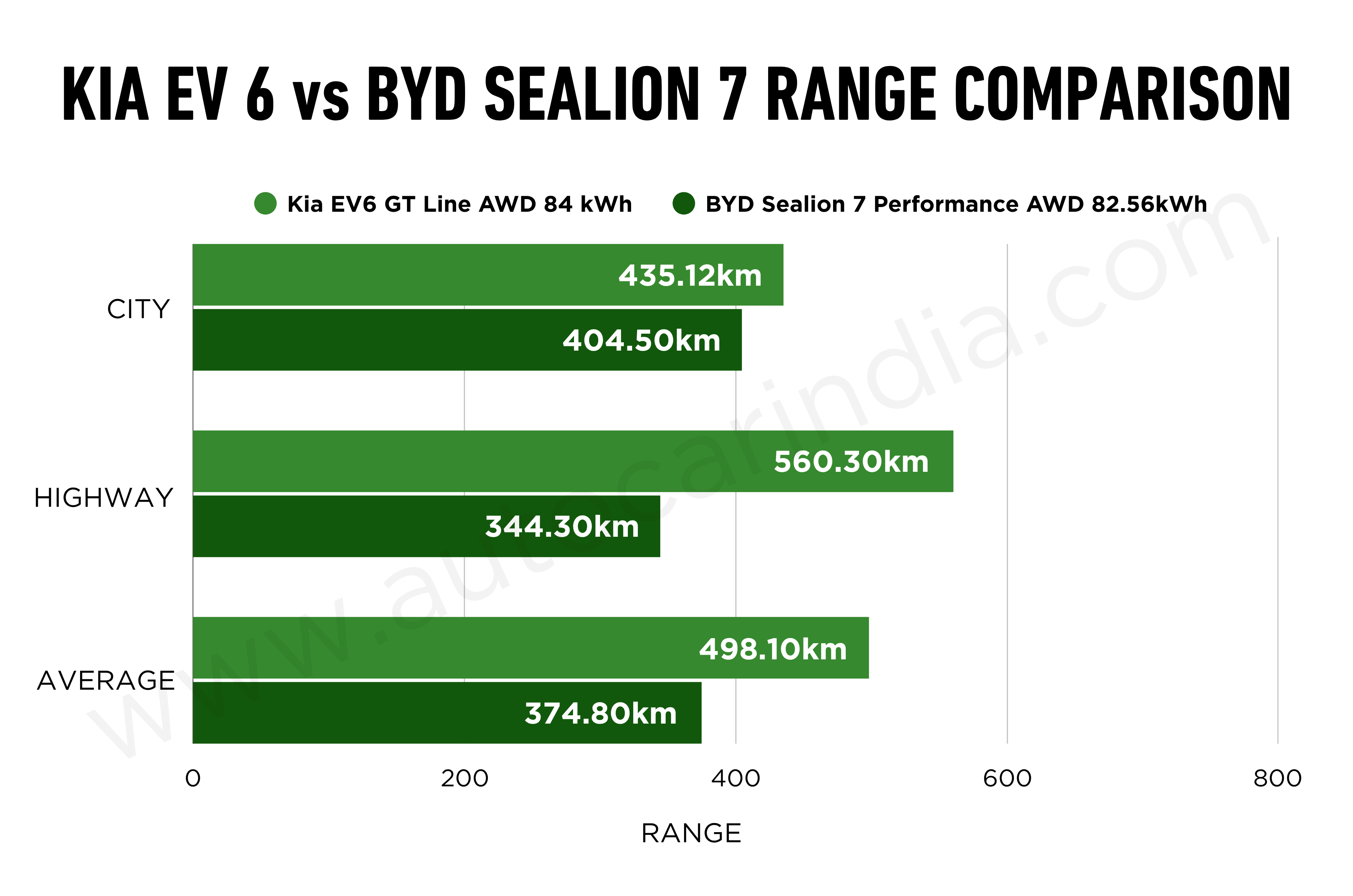
In our real-world range tests, we found the Kia to be more efficient than the BYD. In the city, the EV6 delivered an efficiency of 5.18km/kWh versus 4.90km/kWh for the Sealion 7. Thanks to the stronger regen modes in the EV6, you can expect a real-world range of 435km in the city, whereas with the Sealion 7 you can expect 405km – about 30km less than the EV6.

On the highway, the difference is even wider – the EV6 becomes more efficient (6.67km/kWh), and the Sealion 7 becomes even less efficient (4.17km/kWh) than in the city. One can expect a real-world range of 344km with the Sealion 7, whereas the EV6 will go 216km further!

BYD Sealion 7 vs Kia EV6: Verdict

The BYD Sealion 7 is priced from Rs 49.9 lakh for the RWD variant to Rs 55.9 lakh for the top-spec AWD variant, and is the more affordable option here, while also being the more powerful EV. The Kia EV6 GT-Line AWD is the more expensive pick and costs Rs 65.97 lakh. If budget isn’t an issue, the Kia EV6 will be a better all-rounder. It has better range, faster charging speeds and multiple regenerative braking modes, including single-pedal driving that makes city driving that much easier.

Autocar India’s testing standards

Before we conduct our performance tests, we check and maintain tyre pressures per the manufacturer’s recommendations and ensure the car is charged to 100 percent. The car is then tested in a controlled environment with two people on board, and the data is collected via highly accurate GPS-based timing equipment.

For our real-world range test, we begin with each car’s battery fully charged and tyre pressures set as per the manufacturer’s recommendations. We drive the cars on a fixed loop covering both city and highway stretches while maintaining set average speeds. We then calculate the range based on the percentage of charge consumed. The AC is set to 22deg C in auto mode, and features such as the music system, lights and ventilated seats are used as needed, just as a regular user would. This approach ensures consistency and gives a clear idea of what to expect in daily use.

To test regenerative braking, we pre-select a level of regen braking, completely lift off the throttle pedal and allow the car to decelerate till under 20kph. This procedure is then repeated for as many levels of regenerative braking the EV packs in. The deceleration rate, distance covered and time taken to go from 80kph to 20kph are recorded on a GPS-based Vbox system.

Norton Atlas Review: In A League Of Its Own

Norton Atlas Lead Image

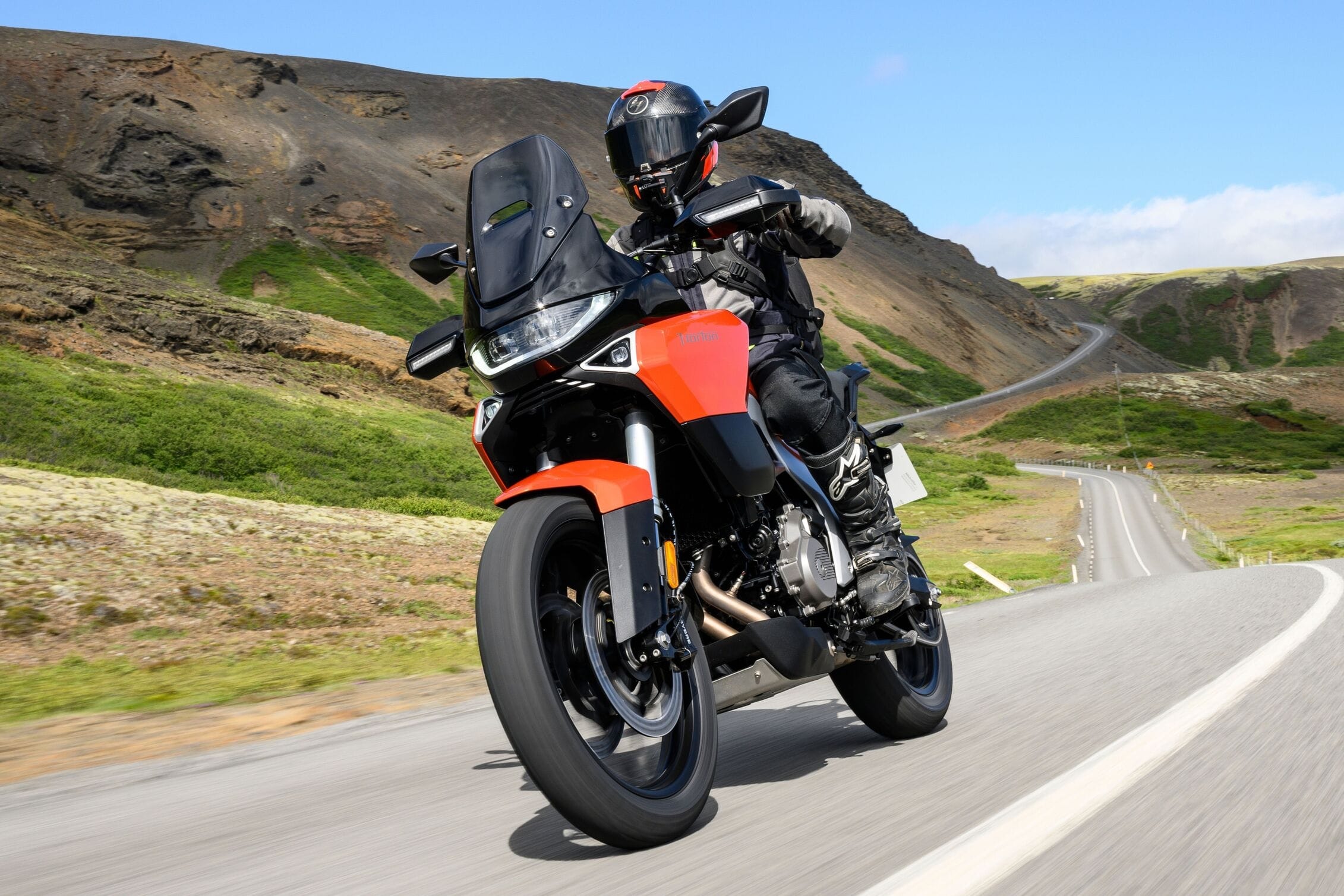
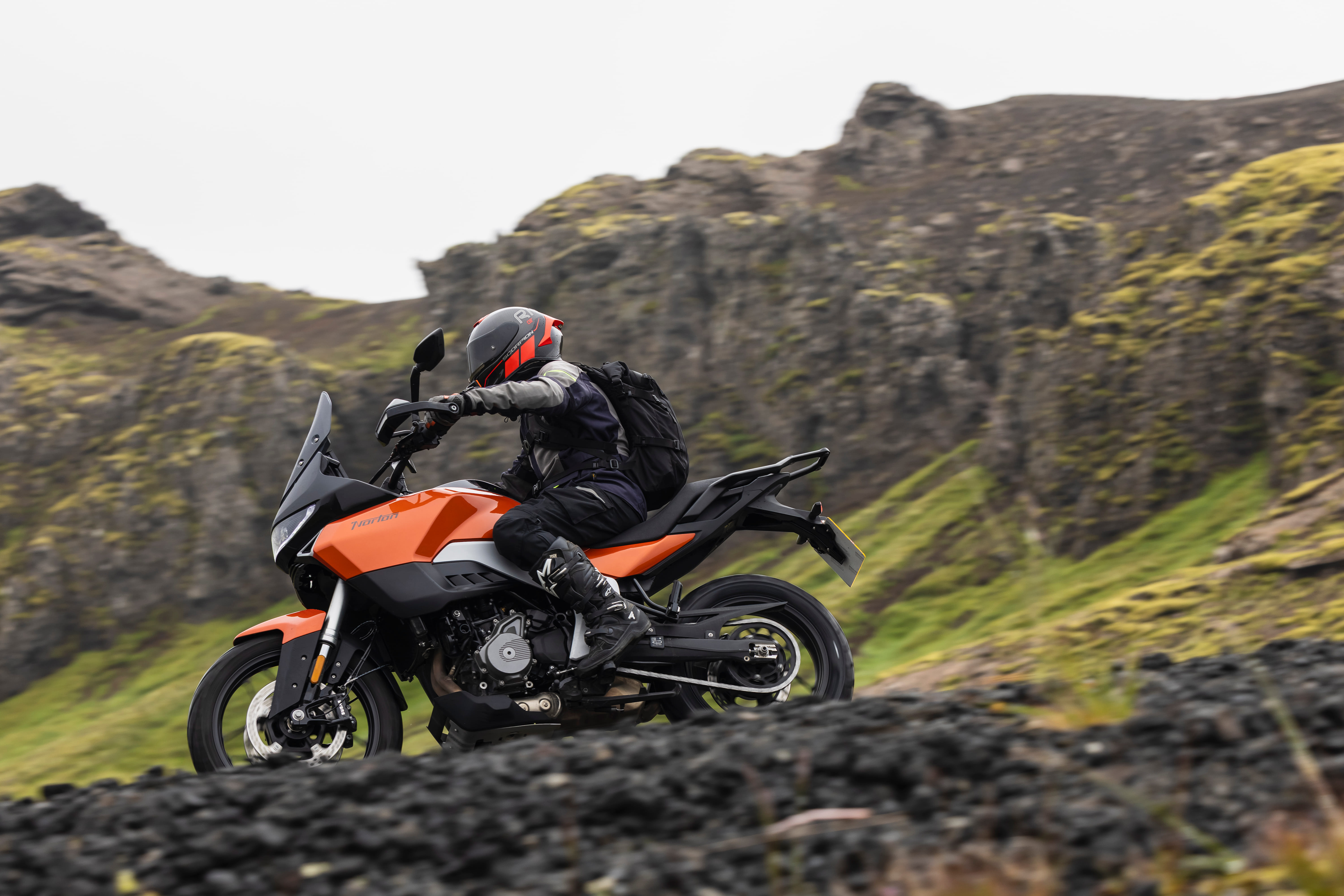
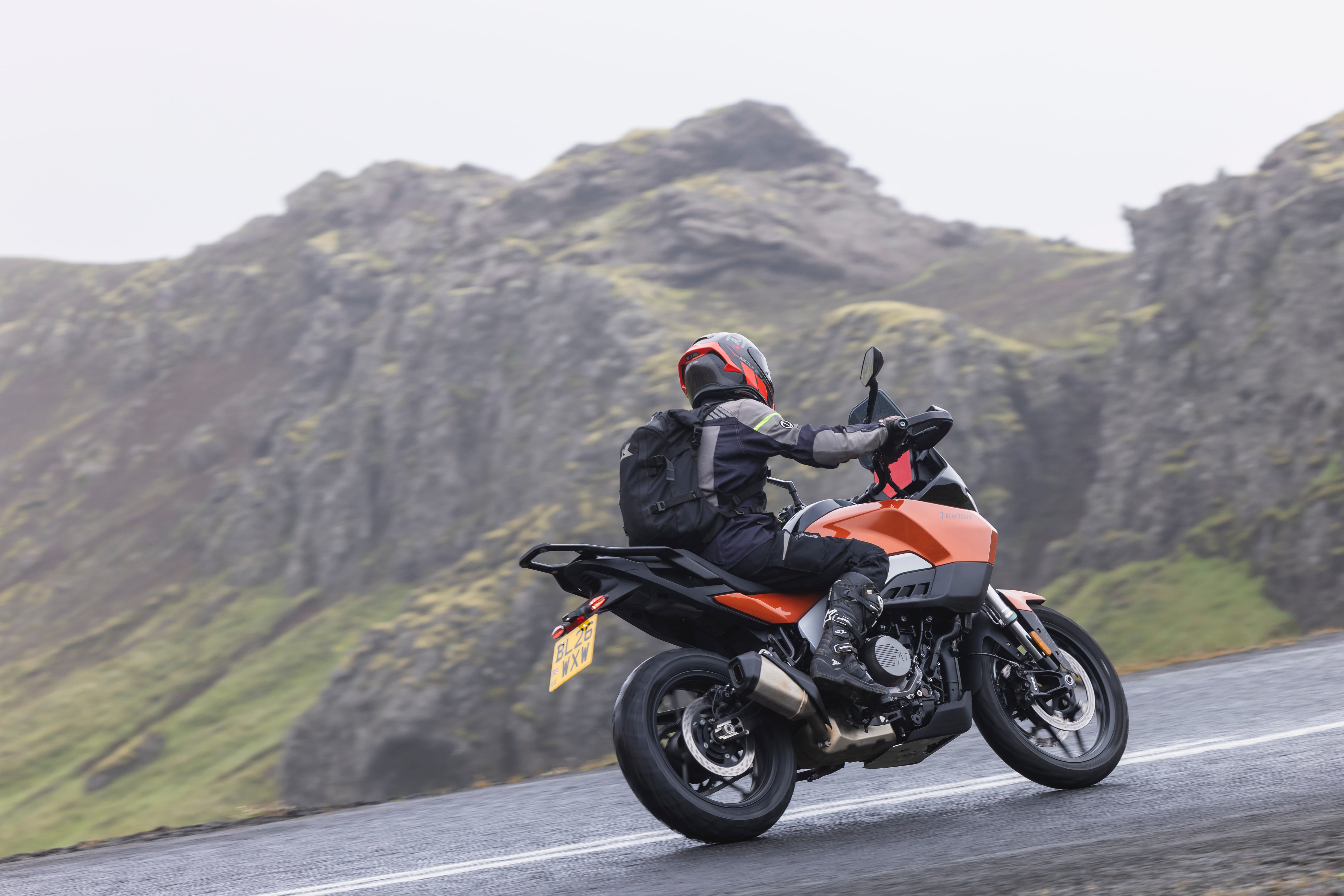
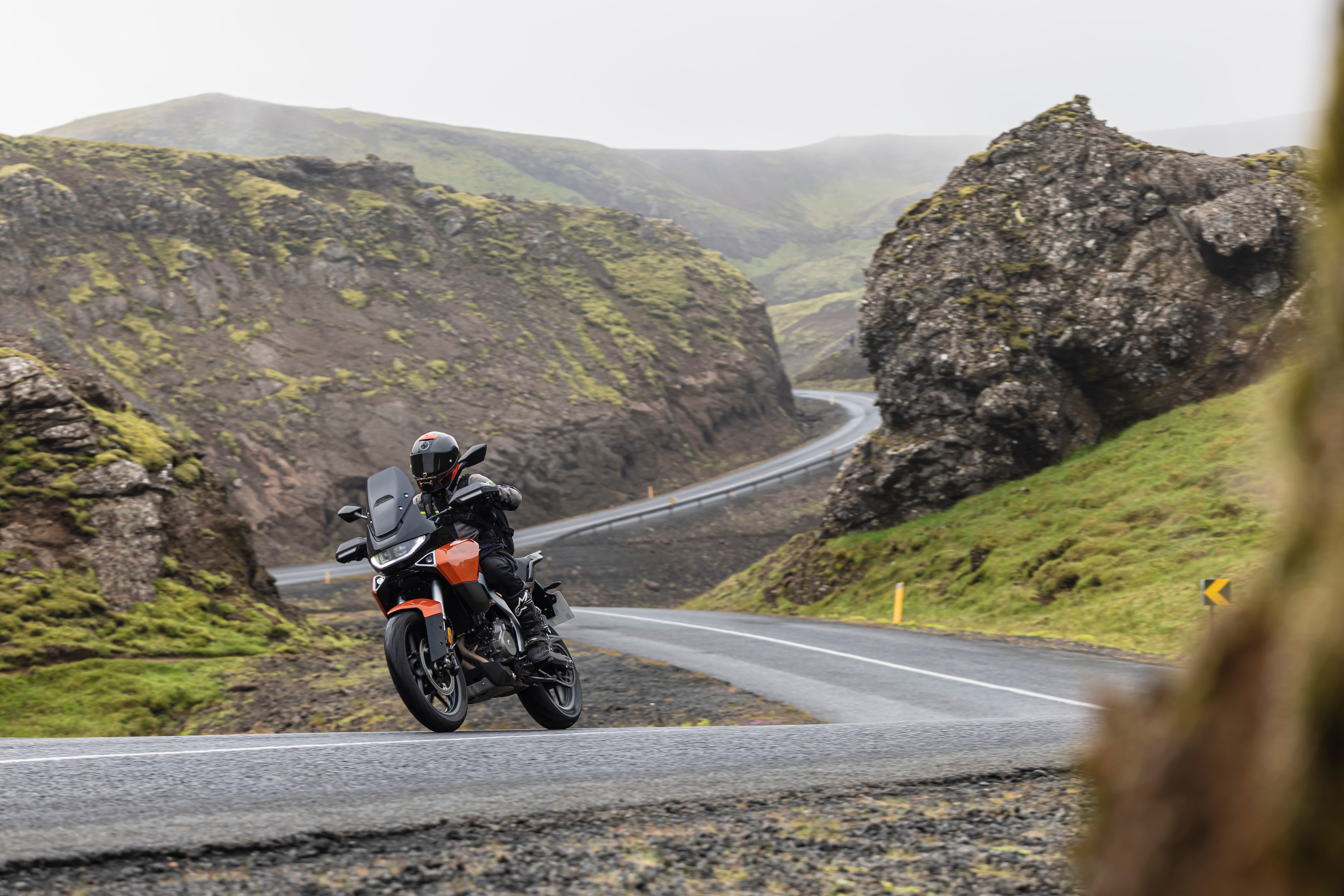
The Atlas is only the second motorcycle to emerge from the revived Norton under TVS ownership, following the Manx R. For this first ride, we got to ride the fully-loaded Apex variant, equipped with a 19-inch front and 17-inch rear alloy wheel, alongside a full suite of electronic rider aids. Over the course of nearly 200km, we rode across Iceland’s sweeping mountain roads before venturing onto gravel trails to understand where the Atlas fits in the competitive adventure-touring segment.

Design and Quality – 8/10

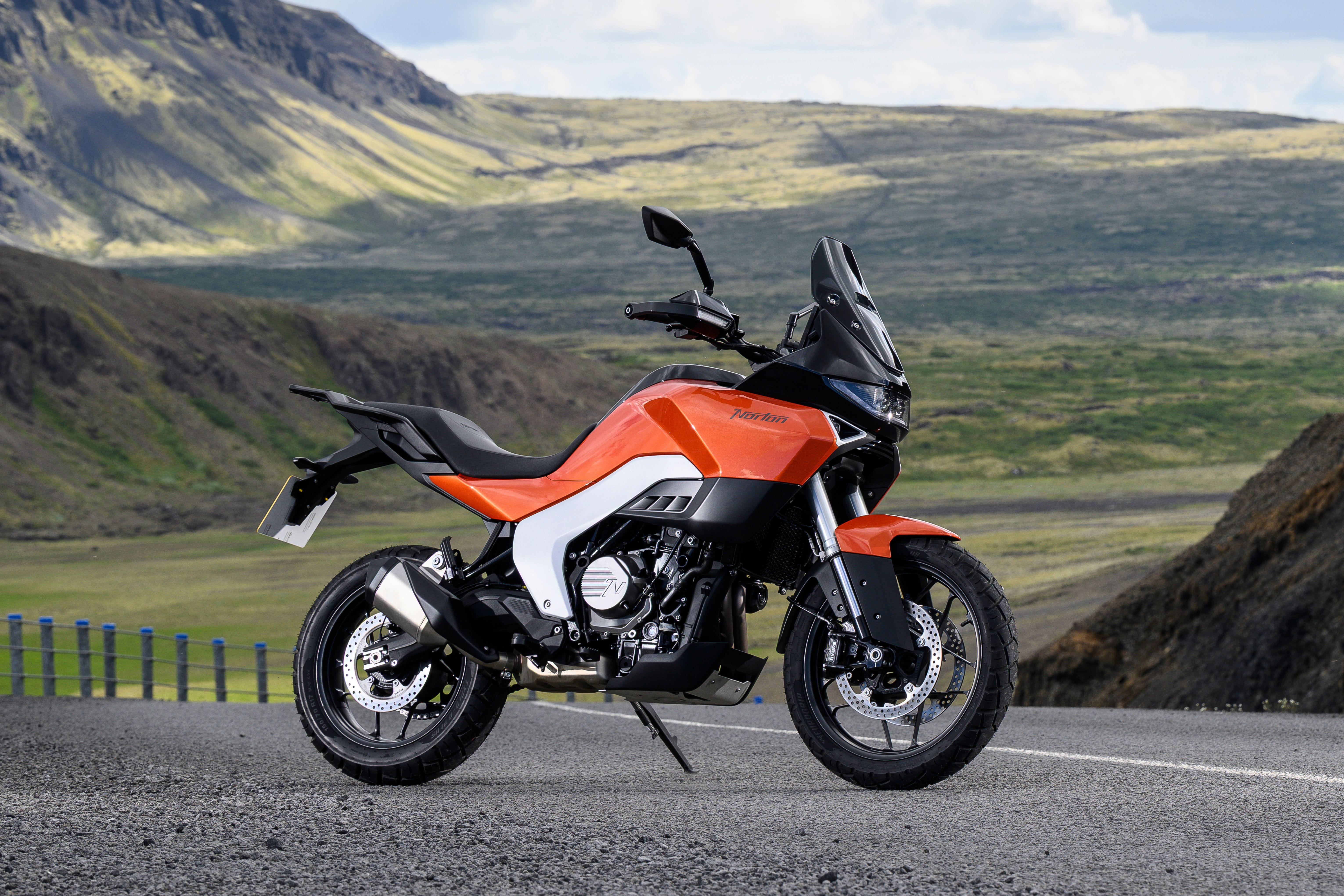
The Atlas follows the same flowing design philosophy as the Manx R, with clean bodywork and proportionate styling that looks better in person than it does in photographs. The front end is particularly distinctive. A unique LED headlamp sits at the centre, flanked by triangular cornering lights. The indicators are neatly integrated into the handguards, giving the bike a clean appearance, while an adjustable windscreen sits above. Adjusting it requires pressing buttons on either side simultaneously, which means you can only do so while stationary.

The 15.4-litre fuel tank appears well-sized for long-distance touring, and towards the rear there’s a practical luggage rack, tail-light integrated into the indicators, and a one-piece seat. The fit and finish leaves a positive impression with consistent panel gaps, good switchgear, and it is an overall well-built motorcycle.

Position and Comfort – 9/10

Despite its touring intentions, the Atlas strikes an interesting balance in terms of ergonomics. With an 845mm seat height, it certainly isn’t low. At 5ft 7in, I couldn’t completely flat-foot the motorcycle, although reaching the ground did not feel intimidating. More importantly, once seated, the riding position feels natural and commanding.

The wide, raised handlebar offers excellent leverage while keeping you upright during long hours in the saddle. Meanwhile, the footpegs are positioned slightly rearset compared to many adventure motorcycles. That gives the Atlas a subtly sporty riding position without compromising comfort, allowing you to enjoy curving mountain roads just as much as relaxed highway cruising.

The seat comfort was surely impressive and even after an entire day in the saddle, it remained supportive with no soreness. The Apex variant weighs 192kg without fuel, which translates to roughly 204kg with a full tank of fuel. You certainly notice the weight while manoeuvring at walking pace, but once on the go, the weight is not felt as much.

Performance – 9/10

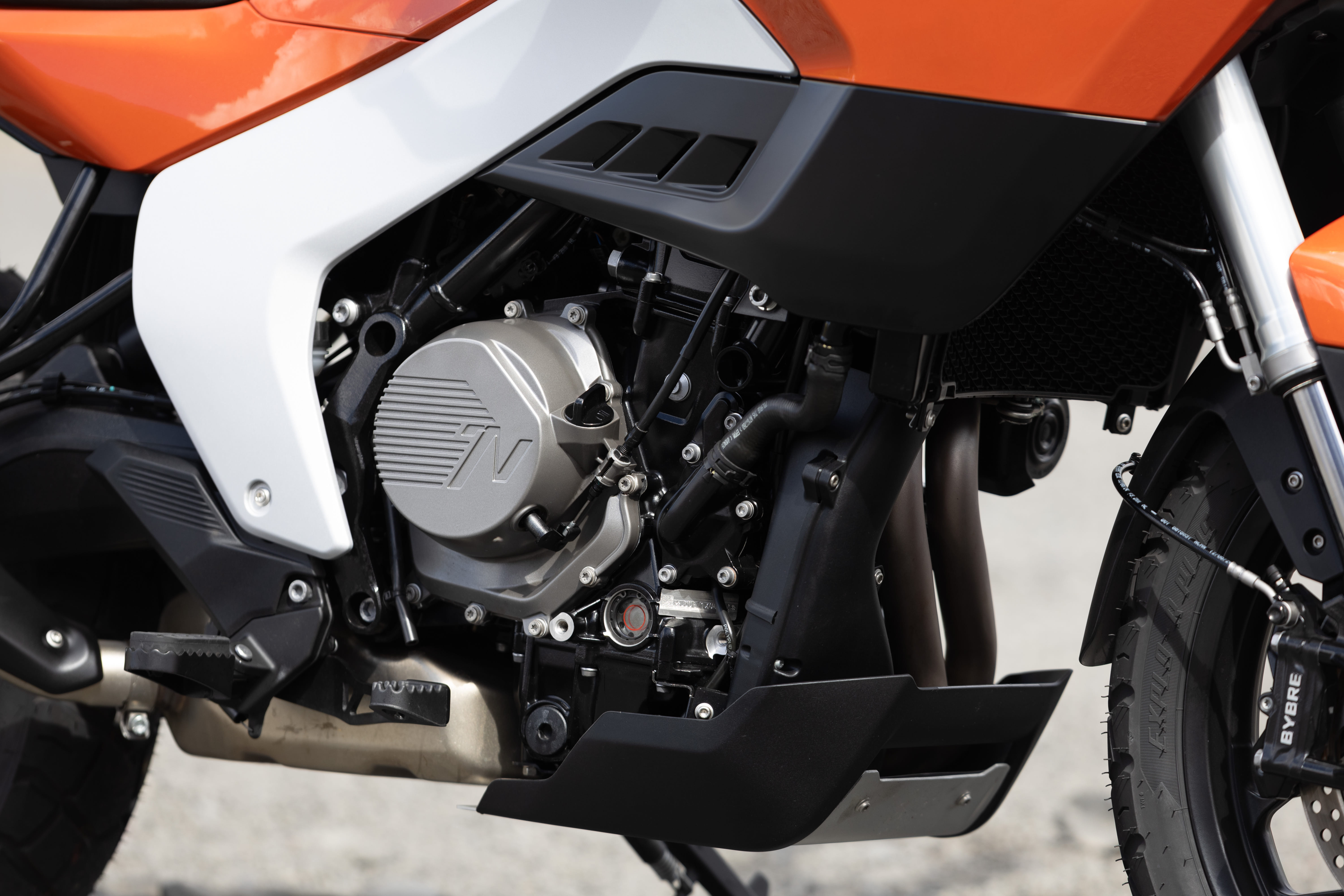
Powering the Atlas is an all-new 585cc parallel-twin engine producing 70hp and 57.5Nm. It features a 270 degree crankshaft, giving it a distinctive exhaust note and an engaging character. The cylinders are plasma-coated, which Norton says reduces friction, lowers weight and improves durability. Another interesting engineering detail is the removable cassette style six-speed gearbox, which can be serviced without moving or removing the engine. 

Out on the road, the engine has strong low-end torque. Pulling away from a standstill requires little effort, and there is a healthy surge in the lower half of the rev range. Around 5,000rpm, the torque curve begins to flatten and the power delivery becomes progressively more linear towards the top end. It never felt intimidating, but was certainly entertaining. 

Cruising refinement is equally impressive. The engine remains smooth for the most part, with only mild vibrations creeping through the motorcycle at higher revs. They’re noticeable, but never intrusive enough to spoil the riding experience.

The bike also gets a bi-directional quickshifter as standard. Downshifts are slick and seamless, but upshifts tell a slightly different story. At city speeds around 60kph it performs well, although at higher speeds it cuts power fractionally longer than expected, resulting in shifts that occasionally feel jerky.

Features and Safety – 9/10

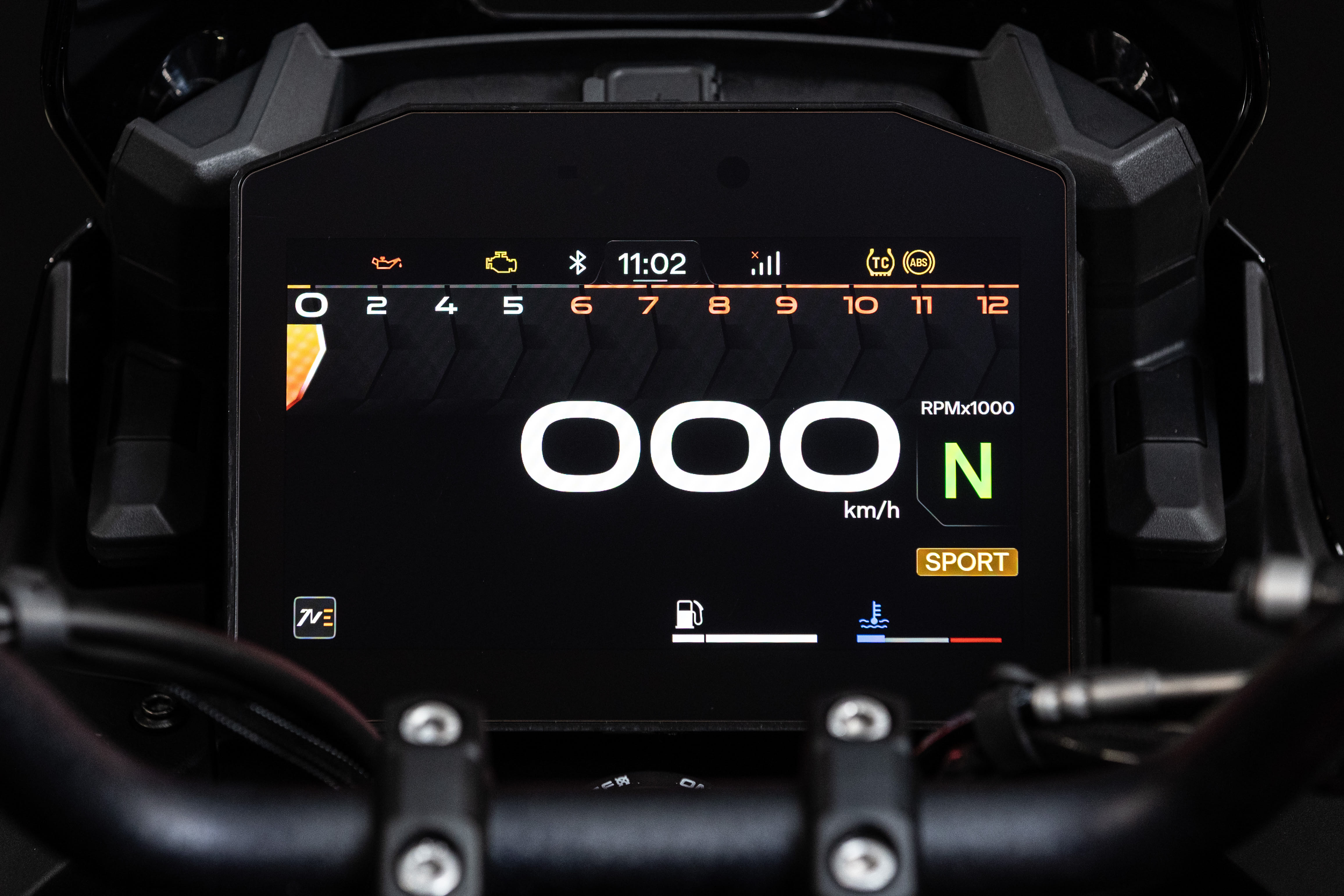
The Atlas Apex comes loaded with technology. It uses the same 8-inch TFT touchscreen similar to the unit seen on the Manx R. The display is bright, crisp and easy to read, while the touchscreen itself responds well to inputs. It is paired with a comprehensive electronics package including traction control, cornering ABS, cruise control, hill hold assist and heated grips. Given Iceland’s chilly weather, the heated grips proved to be helpful throughout the day, while cruise control made covering long stretches of open highway effortless.

Five riding modes are available, each altering throttle response, engine braking, traction control and ABS intervention. I spent most of my time in touring mode and it offered good throttle response that was perfectly suited to the flowing roads we spent most of the day riding.
Sport mode noticeably reduces the intervention from both traction control and ABS, allowing a more spirited riding experience, while Enduro mode also tweaks the throttle response for loose surfaces and disengages rear ABS.

One feature that stood out was the slide control calibration in Enduro mode. On gravel roads, it allows enough rear-wheel movement to enjoy controlled slides without things getting risky. Adding to the practicality is a dedicated traction control button on the left switchgear, allowing riders to disable the system altogether without navigating through multiple menus.

There are, however, a couple of minor annoyances. The TFT display takes longer than expected to boot up after switching on the ignition. The keyless system also feels unnecessarily complicated, requiring you to press an unlock button on the key fob every single time before starting the bike. This was a small inconvenience that could become frustrating during long tours with frequent stops, but it is something that Norton could fix with a software update.

The adjustable windscreen also generates noticeable buffeting at higher speeds, although it is worth mentioning that Iceland’s notoriously strong crosswinds likely exaggerated the issue.

Ride and Handling – 8/10

Suspension duties are handled by a fully-adjustable, 43mm KYB upside-down fork up front and a KYB monoshock at the rear with remote preload adjustment. The remote preload adjuster is a welcome feature for touring, although its placement requires reaching deep inside the motorcycle to make adjustments. Suspension travel measures 180mm at both ends. The standard setup leans towards the firmer side, but that suits the motorcycle’s road-focused personality perfectly.

On sweeping mountain roads, the motorcycle feels composed. It changes direction with confidence, remains planted through long corners and inspires plenty of confidence at higher cruising speeds. The chassis remained stable despite battling strong crosswinds for much of the day. Even when exposed on wide, open stretches of road, the Atlas never felt nervous or unsettled.

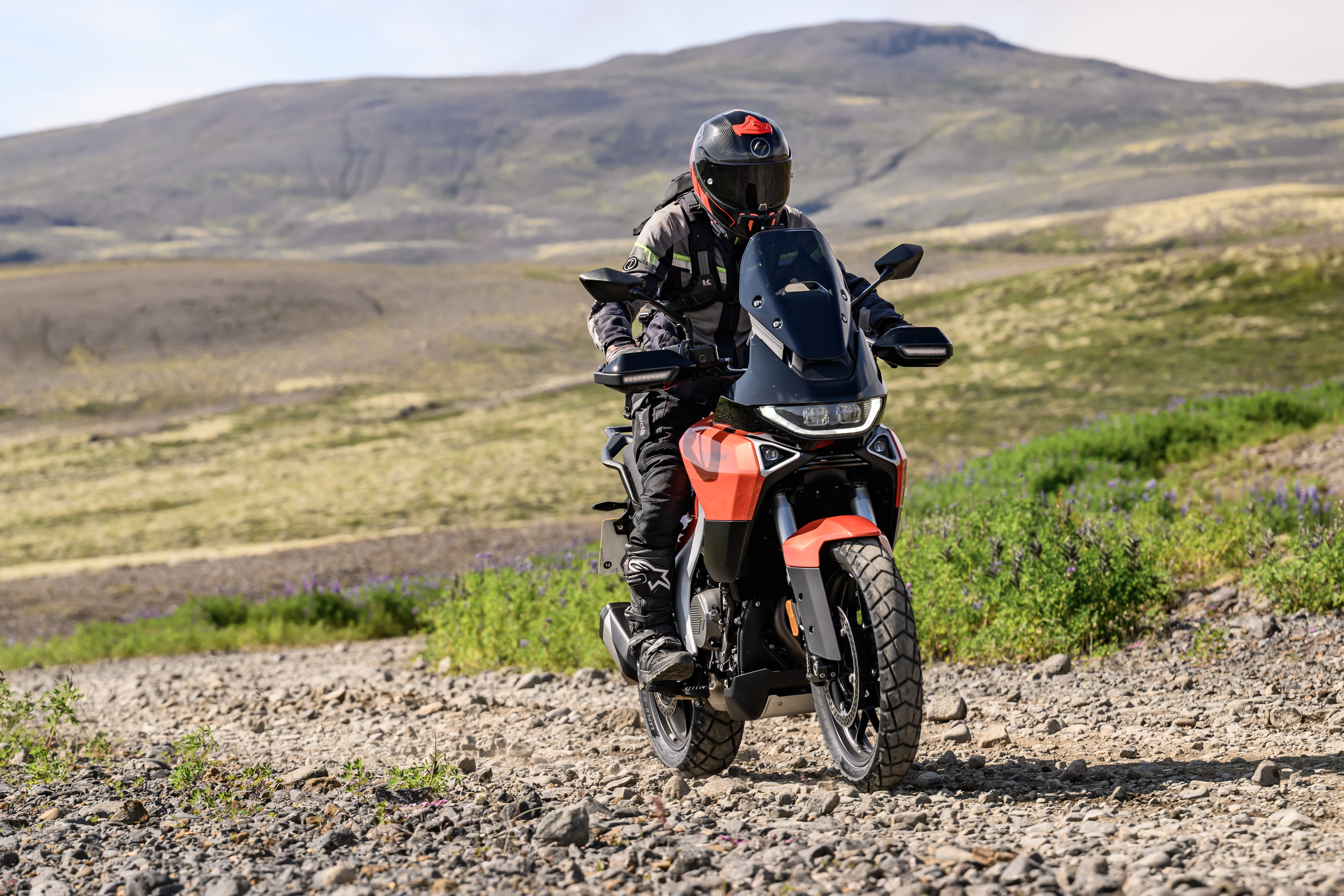
Although the Atlas carries adventure-bike styling, it is best viewed as a road-biased tourer that isn’t afraid of venturing off road. On flowing dirt roads, the motorcycle remained confidence inspiring, with the electronics working seamlessly in the background. Standing on the pegs felt natural, and the suspension dealt comfortably with smaller bumps and loose surfaces.

Over larger rocks and rougher terrain, however, the weight becomes more noticeable, while the suspension transmits sharper impacts than a dedicated off-road machine would. If your adventures regularly involve technical trails, there are better options available. But for riders whose definition of adventure includes the occasional gravel road between long stretches of tarmac, the Atlas feels perfectly at home.

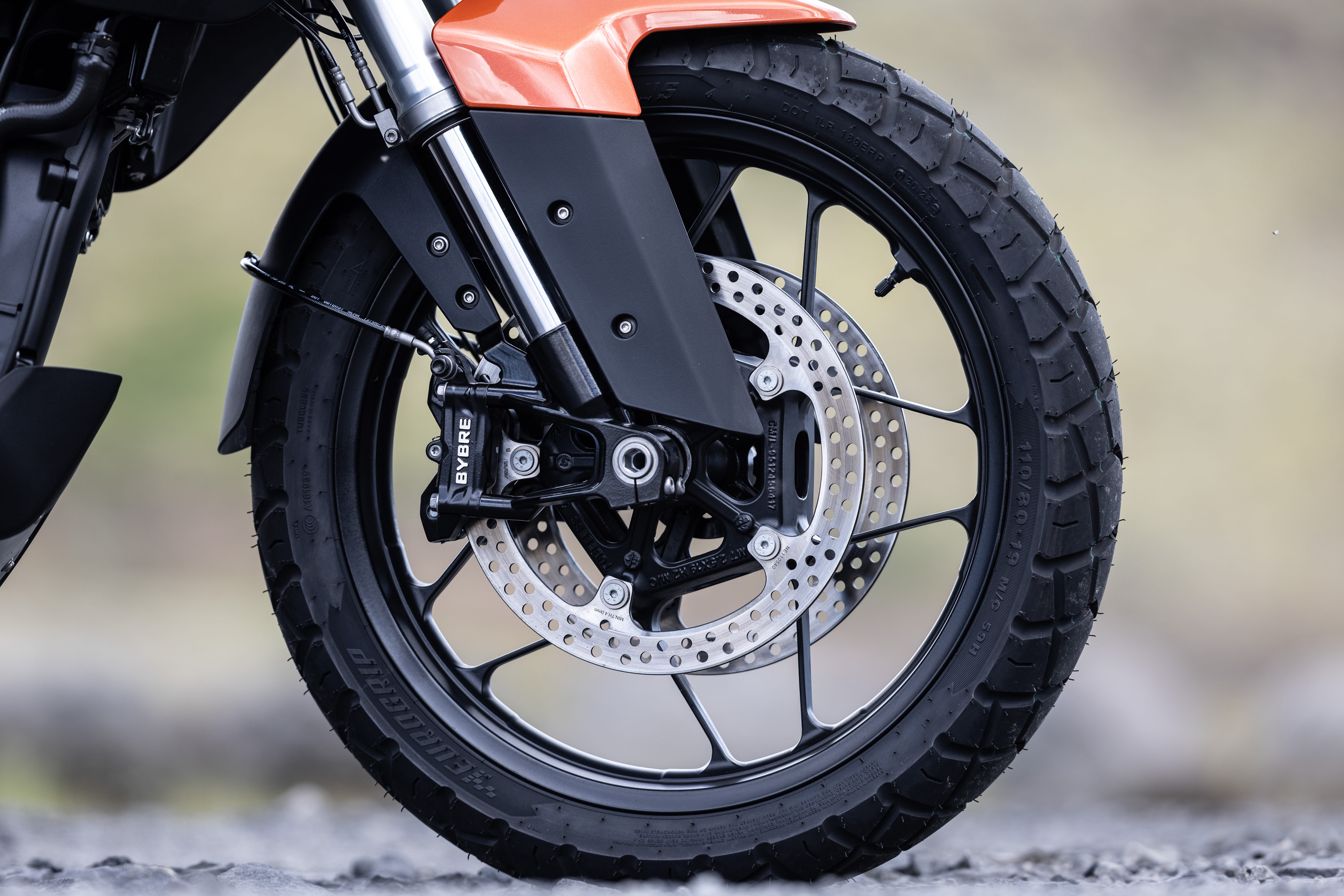
One component that consistently impressed throughout the ride was the set of dual-purpose Eurogrip Xplo-R Plus tyres. Whether attacking sweeping corners, riding through gravel or dealing with wet roads, they delivered excellent grip and confidence, even in the sub 10 degree cold we had at the start of the ride. The Atlas tipped into corners willingly, remained composed at speed and, even in the rain, never once felt nervous or unpredictable.

The braking system, unfortunately, wasn’t quite as convincing. On paper, it sounds promising, featuring twin front discs, ByBre calipers and steel-braided brake lines. Additionally, this variant also gets an electronically combined braking system. However, there is hardly any initial bite when first applying the brakes. Instead, the stopping power builds suddenly once the lever reaches roughly halfway through. While outright braking performance is strong, the abrupt transition makes smooth modulation difficult until you become familiar with the system. It is one area that requires further refinement.

Verdict  – 9/10

The Norton Atlas did make a strong first impression. It blends handsome styling, premium build quality, engaging engine performance and a comprehensive electronics package into a motorcycle that feels genuinely capable of covering serious distances. It focuses on delivering an enjoyable touring experience while retaining enough off-road ability for occasional detours. Its few shortcomings like the slightly awkward quickshifter, unusual brake feel and some quirks with the keyless system are minor in the context of an otherwise polished package.

The biggest question, however, isn’t how it rides. It’s how much it will cost. With production set to take place in India under TVS, expectations are naturally high for competitive pricing. At 585cc, it has much more displacement than a 450cc bike, a little less than a 650cc and with 70hp of power, it is in a league of its own. But considering it is above 350cc, it will attract a 40 percent GST as well.  

If Norton can bring the Atlas to India with a starting price between Rs 5 lakh and Rs 5.5 lakh (ex-showroom), it could be a successful product. Now, all that’s left is to see how it performs on our Indian roads.

Pre-facelift Tata Tiago EV long term review, 5,800km report

Pre-facelift Tata Tiago EV

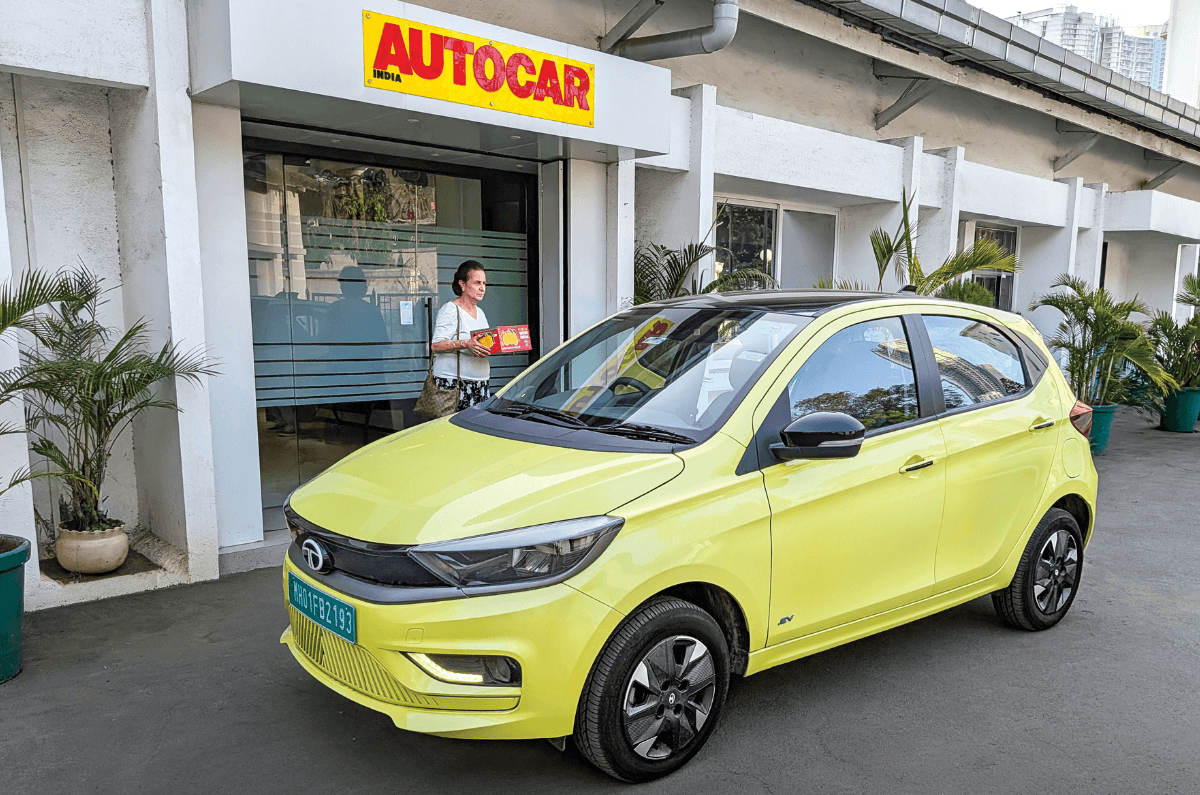
The recently updated Tata Tiago EV is a real good looker, and that’s no surprise; it’s got strong bones. Take a look at the pre-facelifted car; the proportions and stance are spot on. Then there are the lines – crisp and sharp, and the sheet metal skinning looks nice and taut. A testament to its styling is the fact that even ten years after its launch, it still turns heads. Of course, a lot has to do with the neon-yellow shade our car came in. Not everyone at the office is a fan, but I really love it. And even in more sober shades, the Tiago has the ability to grab a few glances.

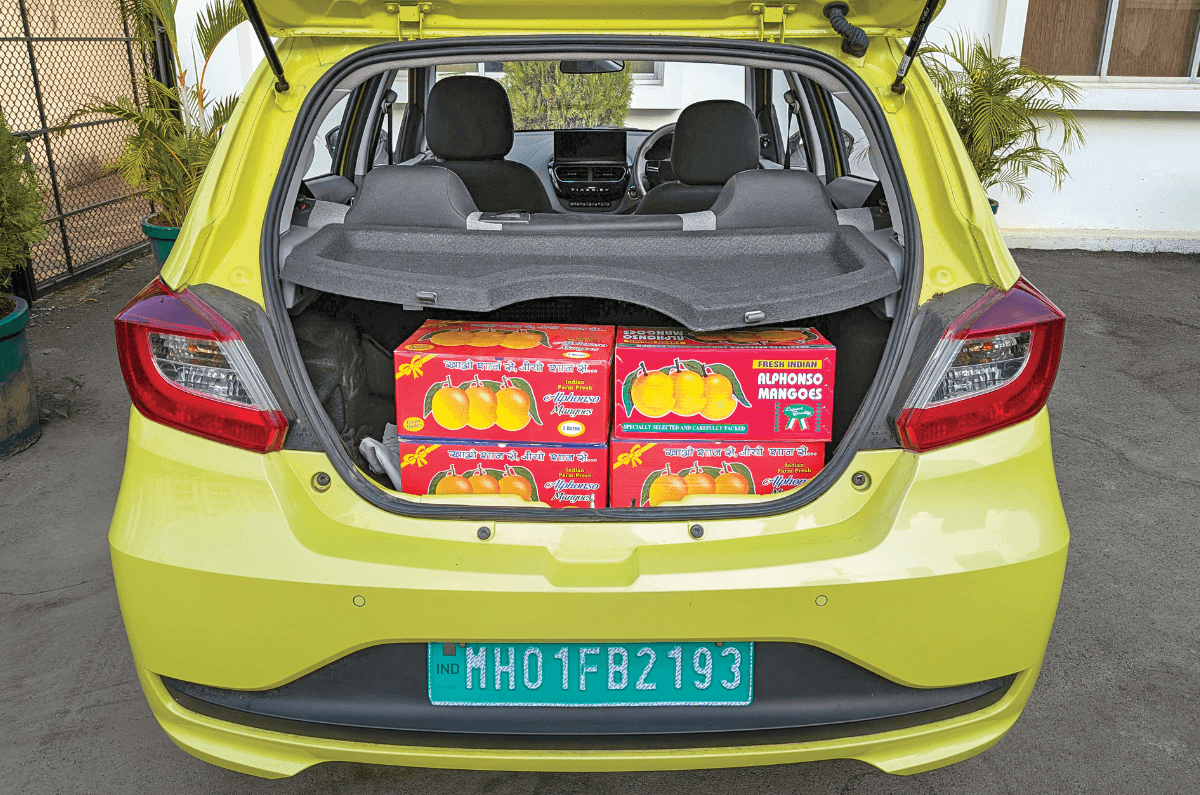
A cold glance, though, was what it got when I suggested to our receptionist, Zenobia (the lady pictured in the lead image), that we would use it to drop off some eight dozen mangoes she had ordered. She wasn’t convinced they would all fit inside and wanted a larger car. But to her surprise and my relief (she can be quite mean when you get things wrong), they fit quite easily inside the boot. At about 240 litres, it’s not that large, but it’s well-shaped, and for regular-sized luggage like these rectangular boxes, it’s not a problem. You have to load over a lip, though, and the opening is narrow.

Tata Tiago EV
240-litre boot isn’t large, but manages small luggage.

Besides the mango run, I used the car mainly to commute to the office and for chores around my home, unlike Ameya, who took it to Pune quite a few times. The Mumbai-to-Pune run is about 150km and with a climb as well, but he managed the trip with about 10 percent battery left. I wasn’t going to test the Tiago’s 24kWh battery to that extent. As a practice, I never let the battery level drop below 40 percent on any EV. With me, the Tiago returned an efficiency of around 8km/kWh, which would translate to a range of about 192km. Pretty good, and more than adequate for what is a city EV. 

Another benefit of an EV is that you have to wait in the car for someone. I had to wait 25 minutes for my wife at the parlour, and all through it I sat in the Tiago reading a book, comfy and cool with the AC on. I forgot to record the exact drain on the battery, but it was only about four percent. I would not have dreamt of doing this with an internal combustion car.

Pre-facelfit Tata Tiago EV toushcscreen
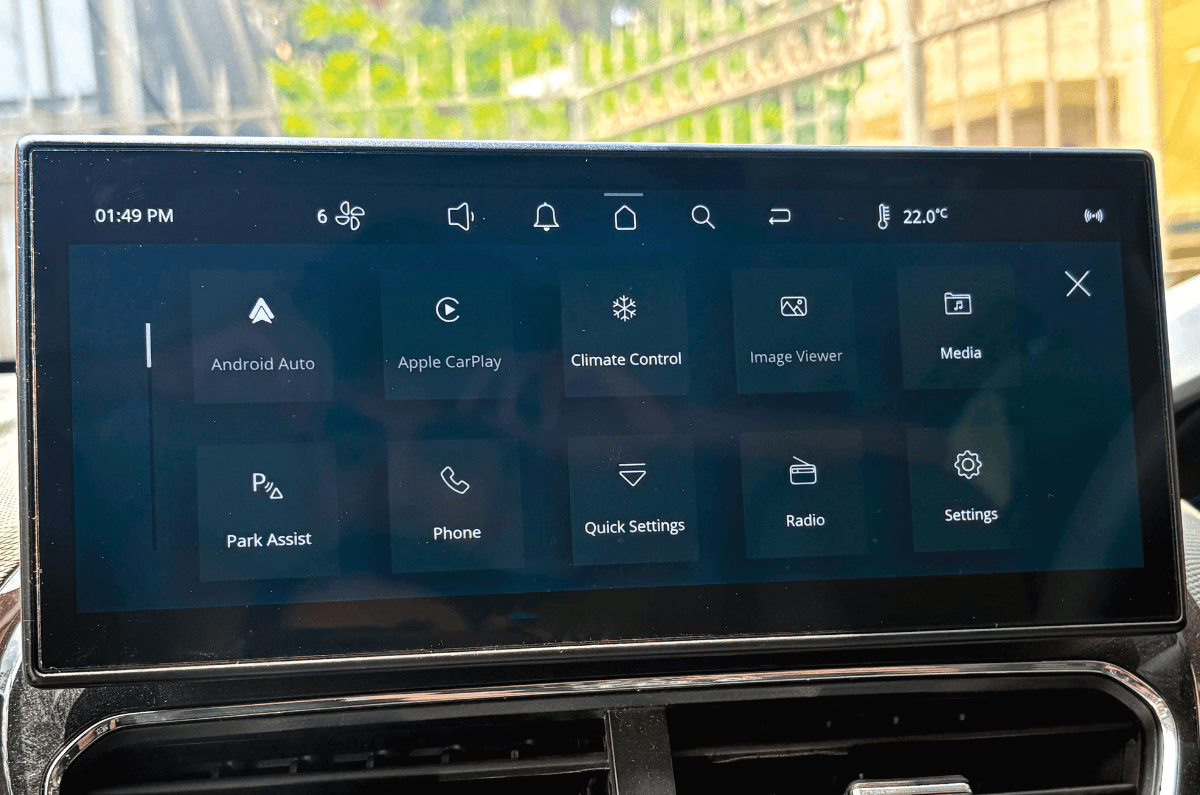
Touchscreen is very modern; slick, responsive and with plenty of features.

My wife loved the car too. Its size made it handy in the city, and for some reason, she really found the electric motor whirr pleasing and even cute; not something she’s liked on other EVs. I think it’s more to do with the cute appeal of the car and the fact that the sound is like a little spaceship or something like that. But everything about it isn’t small. As with most Tata Motors cars, the space inside is big; headroom, particularly so, and my son, for whom we recently bought an Altroz, found the Tiago to be an airier cabin.

Tata Tiago EV
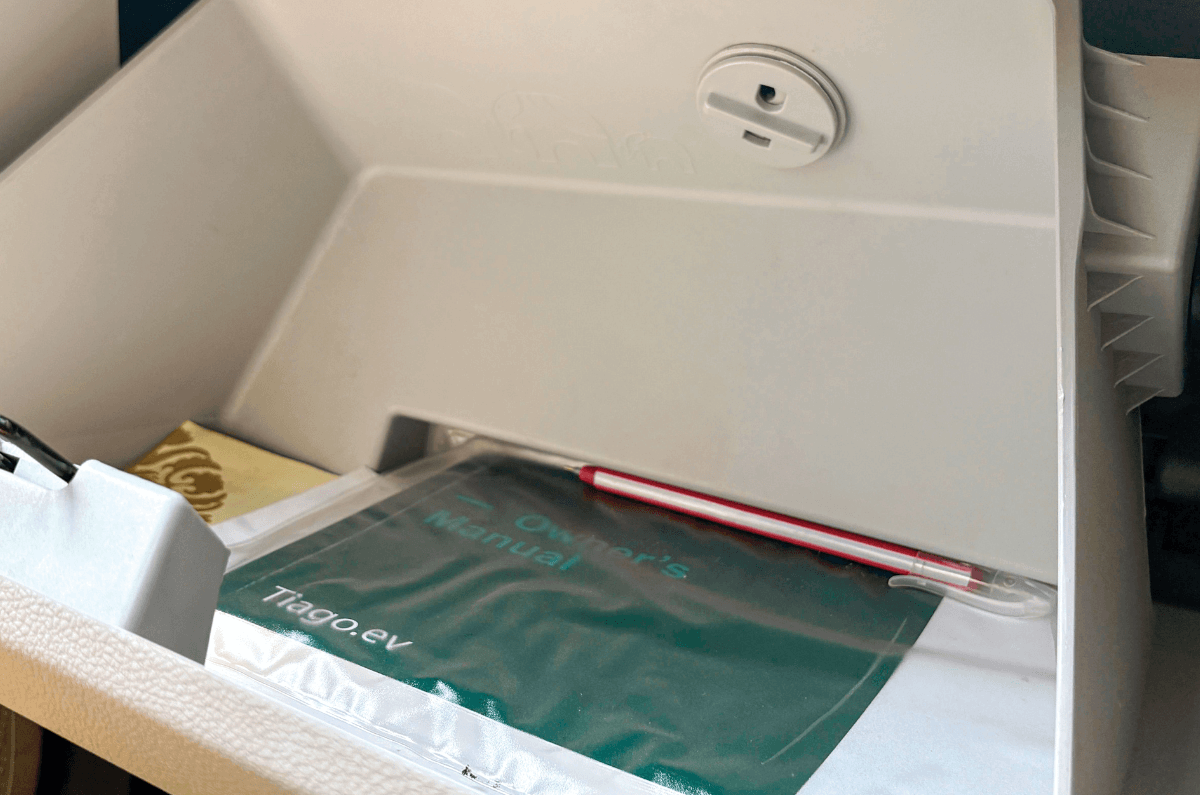
Glove box has an AC vent providing cooled storage, which is quite large too.

Besides the space, the seats are comfy, and the cabin is well-equipped. Since its launch, the Tiago has been steadily updated, and the steering wheel and touchscreen are what you will find on Tata’s newer models. I’m no fan of a two-spoke steering wheel; I find them generally awkward and somehow incomplete, and it’s the same here. The buttons are handy to have but are fiddly to use; they are stubby, and I find toggling them up or down to be something of a deliberate action rather than a natural and easy flick of the thumb. The touchscreen, though, is lovely. It looks nice and sharp, is responsive to touch, and it’s got wireless Apple CarPlay and Android Auto too. While I’m on about features, I like the fact that there is a 45W Type-C USB charging slot, and to my wife’s surprise, she found out that it had a cooled glovebox too.
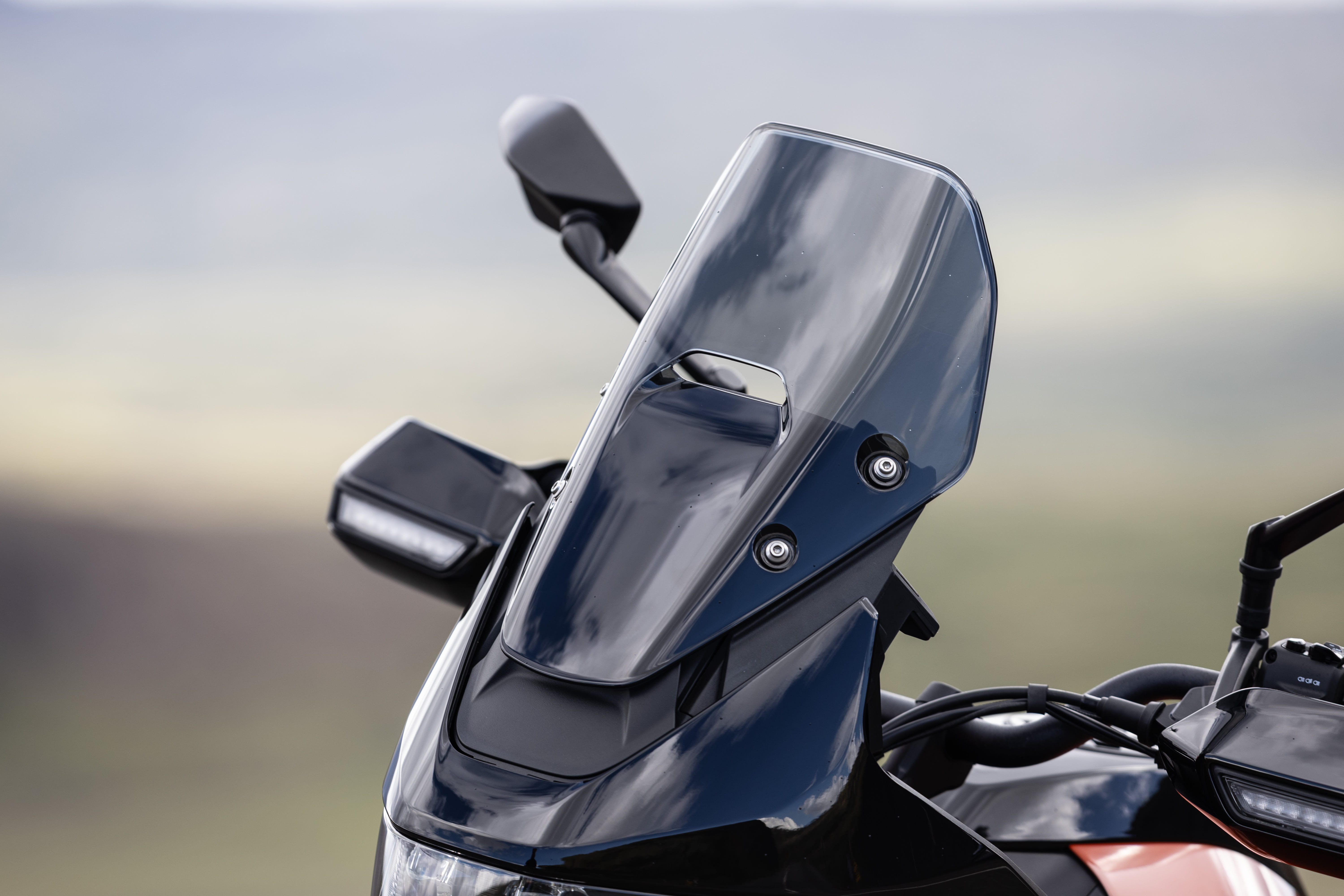
Pre-facelift Tata Tiago EV
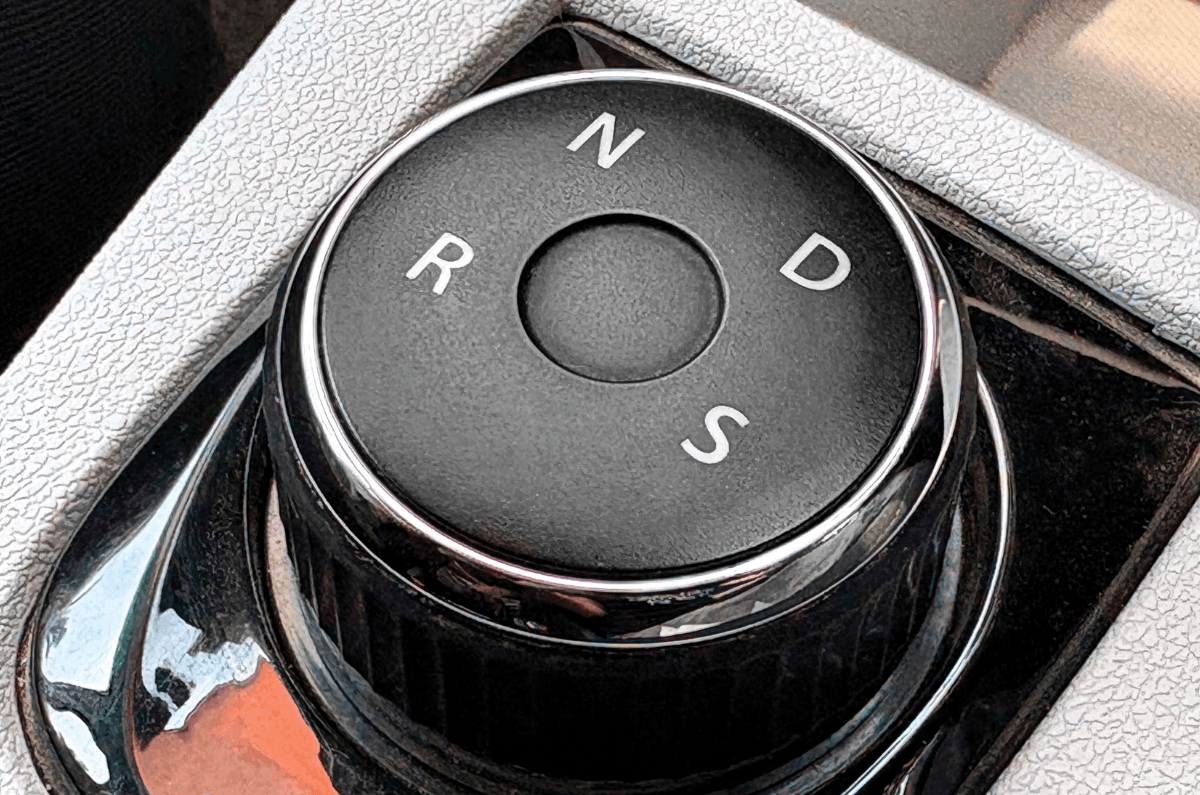
Drive selection is slow and needs firmer-than-usual brake pedal pressure.
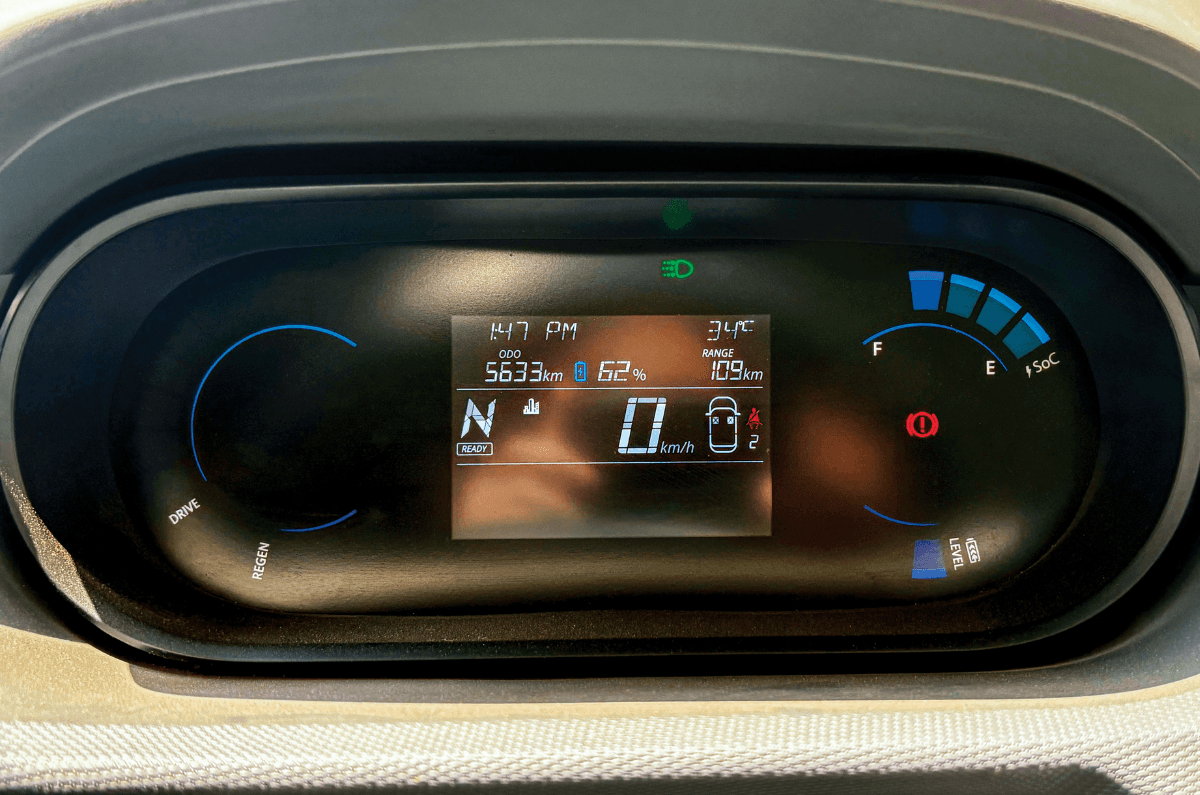
As with most EVs, driving the Tiago is a very straightforward affair. I would have said fuss-free, too, but the rotary drive selector does not engage sometimes. An old issue that hopefully the new car will have sorted. The instrument panel, too, is something I don’t like. There are dial-like info readouts, but not for speed, which is mixed in with other alphanumeric info in the centre.
Pre-facelift Tata Tiago EV instrument cluster
Driver’s display carries enough info, but its presentation is cluttered and untidy.

Speaking of speed, this is something the Tiago does quite well. Despite its humble 75hp motor, performance isn’t an issue. Overtaking is quick, even in the regular City mode, and passing vehicles at higher speeds, too, is quite a straightforward affair. Ameya found it easy to maintain momentum even out on the Mumbai-Pune expressway. The ride, too, is something that has found praise from all of us. It has the maturity of a larger car – it’s soft at low speeds, but at highway pace, you don’t feel unsettled going over long-wave undulating stretches. This is certainly a car we are all going to miss, and with the update out already, we’re hoping to see the new version in our garage soon.

Pre-facelift Tata Tiago EV XZ+ Tech Lux LR test data

Odometer5,800km
Last recorded priceRs 11.14 lakh (ex-showroom, India)
Economy8km/kWh
Maintenance costsNil
FaultsNone
Previous reportMay 2026

2,031hp Venom F5-M revealed as the world’s most powerful manual car

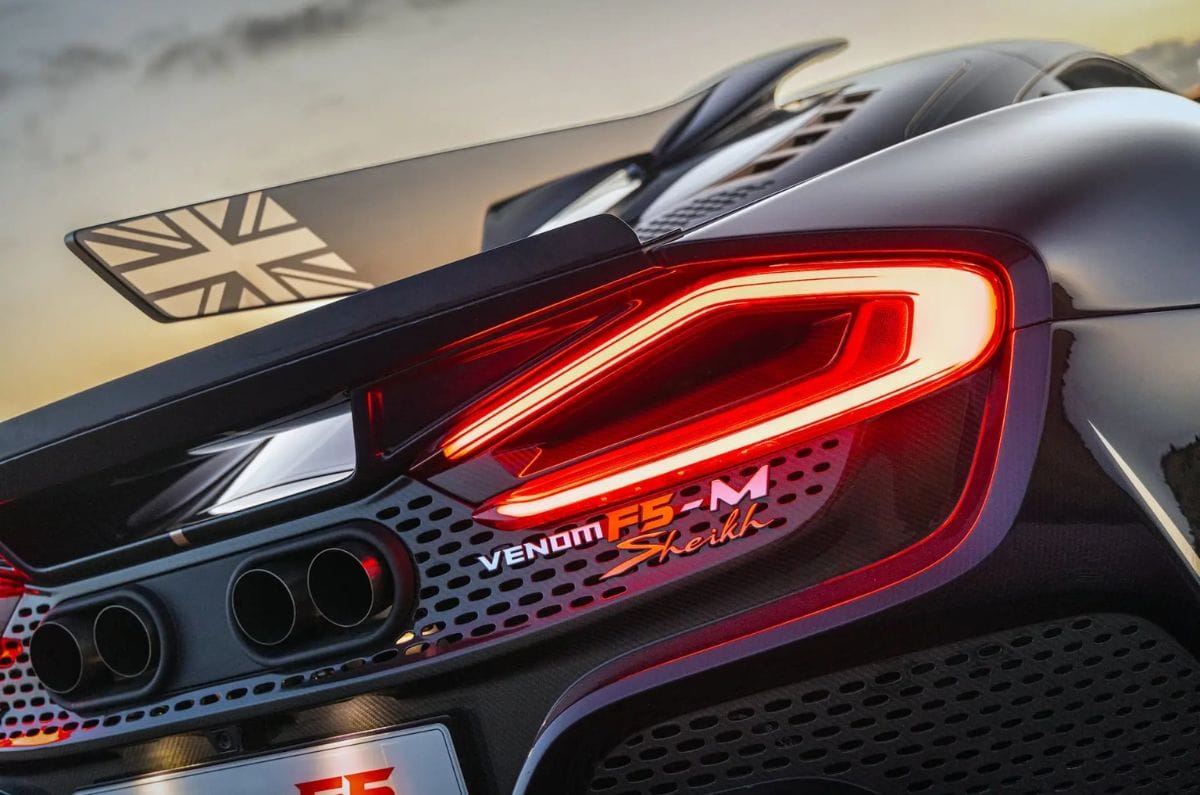
Hennessey Venom F5-M rear quarter

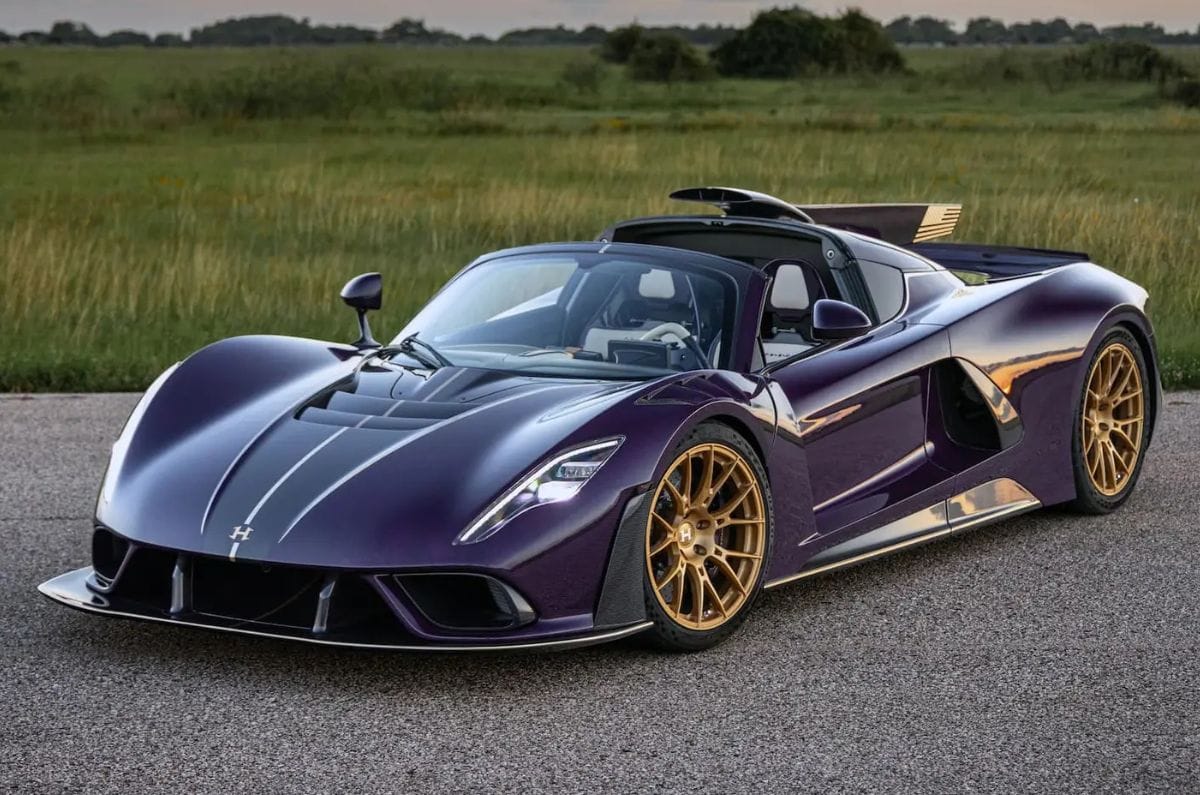
Hennessey will be debuting the Venom F5-M (manual) Roadster at the Goodwill Festival of Speed in the UK on July 9, 2026. During its four days at Goodwood, the Roadster will be driven by British Le Mans champion Alex Brundle. The open-top hypercar features a new 6-speed manual gearbox with a gated shifter, a new chassis, unique aerodynamics and a bespoke interior, according to the boutique Texas-based brand.

  • Bespoke bodywork sports a 55-inch dorsal fin and an integrated roof scoop
  • Uses an aluminum & carbon-fibre shifter, carbon bucket seats and a yoke-style steering
  • Power comes from a 6.6-litre twin-turbo V8

Hennessey Venom F5-M design and personalisation

The manual F5 features a couple of design features that are exclusive to it

Hennessey Venom F5-M front quarter

While maintaining some of the general design cues from the Evolution series, the new Venom F5-M gets a few unique traits of its own. One of the most notable exterior features is a roof-mounted air intake scoop that sits right behind the removable roof. Then there’s the 55-inch (or 1.4-metre) long dorsal fin, which stretches from behind the scoop all the way to the aft-end of the F5. While the scoop serves cool air directly to the engine bay, the fin enhances aerodynamics at speeds beyond 320kph, as per Hennessey.

Hennessey Venom F5-M rear details

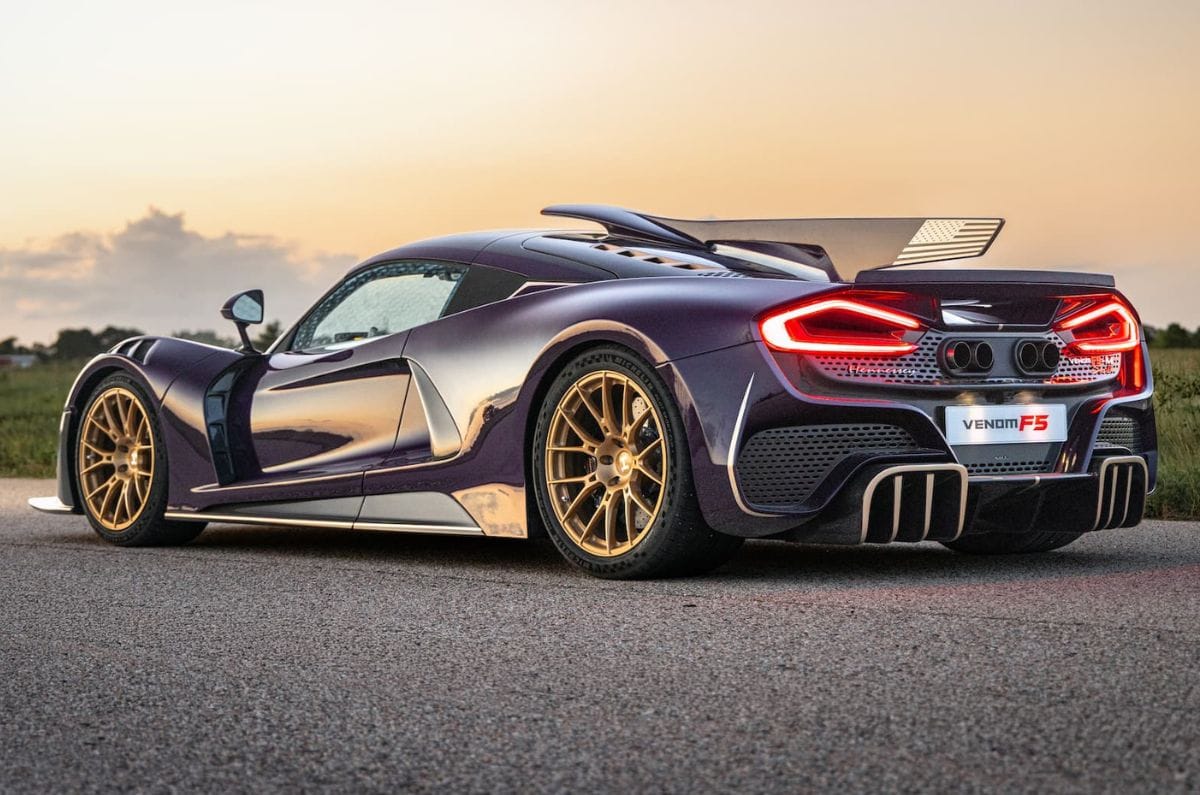
Customers of the manual Hennessey Venom F5 can provide inputs regarding personalisation options via the brand’s ‘Maverick’ division. The first customer commissioned their F5-M with hand-painted US and UK flags on either side of the fin finished in gold colour. The exterior of this UK car features exposed purple carbon fibre with anodised gold accents, a 24-karat gold ‘Hennessey’ badge on the nose, and ‘Sheikh’ lettering at the rear. This lettering is also found on the driver- and passenger-side knee pads. While the F5-M can be had with an aluminium & carbon-fibre shifter, this particular example has one made from billet aluminium.

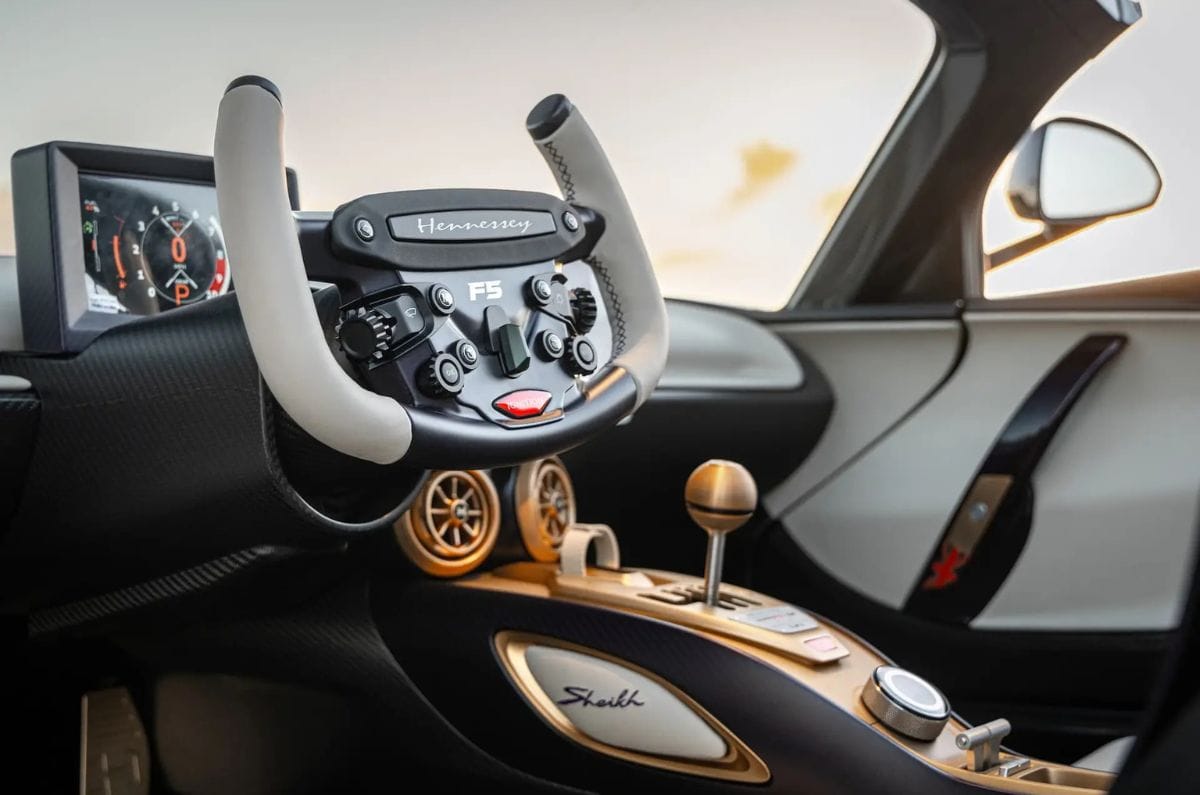
Hennessey Venom F5-M interior

The interior also features a unique yoke-style steering with stitched leather and a whole set of physical buttons and dials. There’s exposed carbon fibre all across the Venon F5’M’s cabin, plus real metal and high-quality leather trim. The digital instrument panel is situated in the driver’s line of sight, while the short-throw gear lever offers a crisp and machined-metal clink, says Hennessey.

Hennessey Venom F5-M powertrain and chassis

The manual gearbox and updated chassis of the F5-M will make it to other F5 models

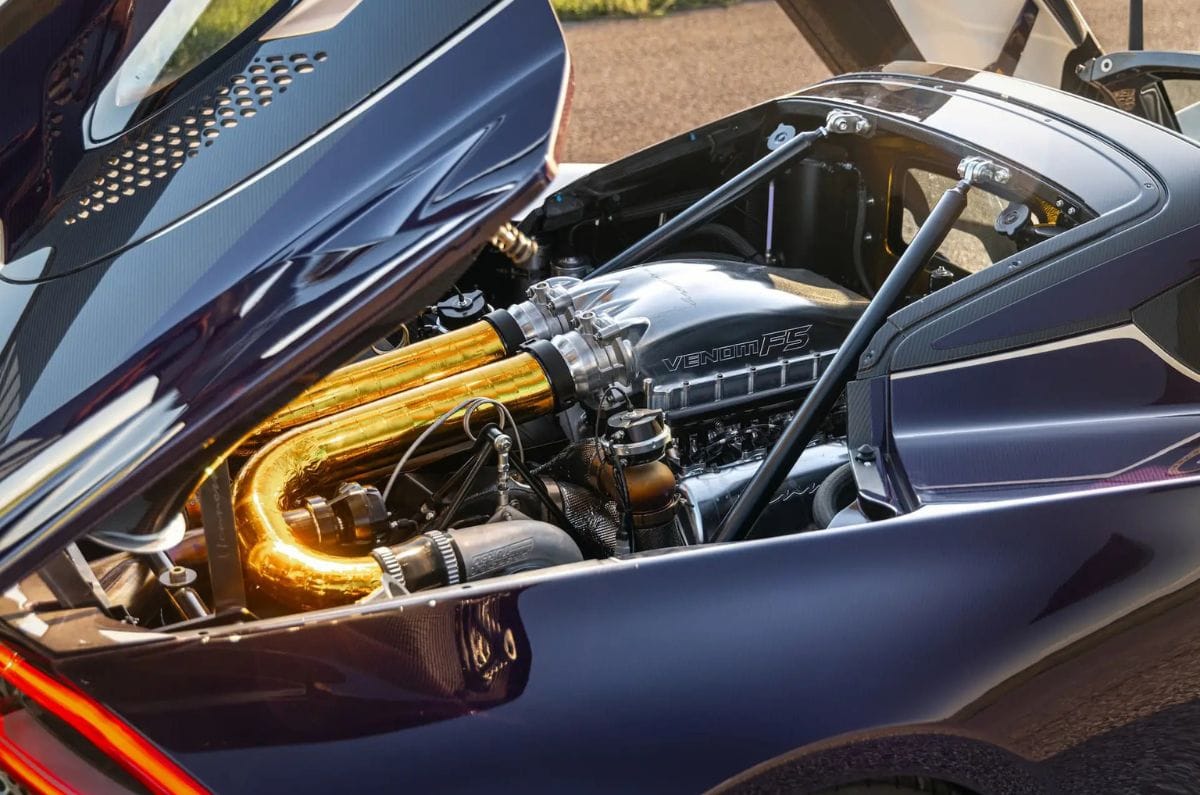
Powering the new Hennessey Venom F5-M is a 6.6-litre twin-turbocharged V8 that puts out 2,031hp. This so-called ‘Fury’ engine drives the rear wheels via a 6-speed manual transmission. While the American brand hasn’t disclosed the performance figures of the new Venom F5-M, it stated that the powertrain features a sophisticated traction control and engine management systems for precise and linear power delivery.

Hennessey Venom F5-M engine

Even though it didn’t specify a timeline, Hennessey claimed that this car’s updated chassis and manual gearbox will make it to other Coupe and Roadster variants of the Venom F5, too. The hypercar also comes with active suspension, which can alter damping based on the drive mode selected by the driver. Hennessey said that it will only produce 12 units of the new Venom F5-M Roadster for the whole planet, and prices start from USD 2.65 million (roughly Rs 25.24 crore).

Also read

Jaguar XJ220 supercar reimagined by Callum Designs

Upcoming Range Rover Velar replacement to get hybrid version

Next Gen BMW X5 interior image gallery

BMW X5

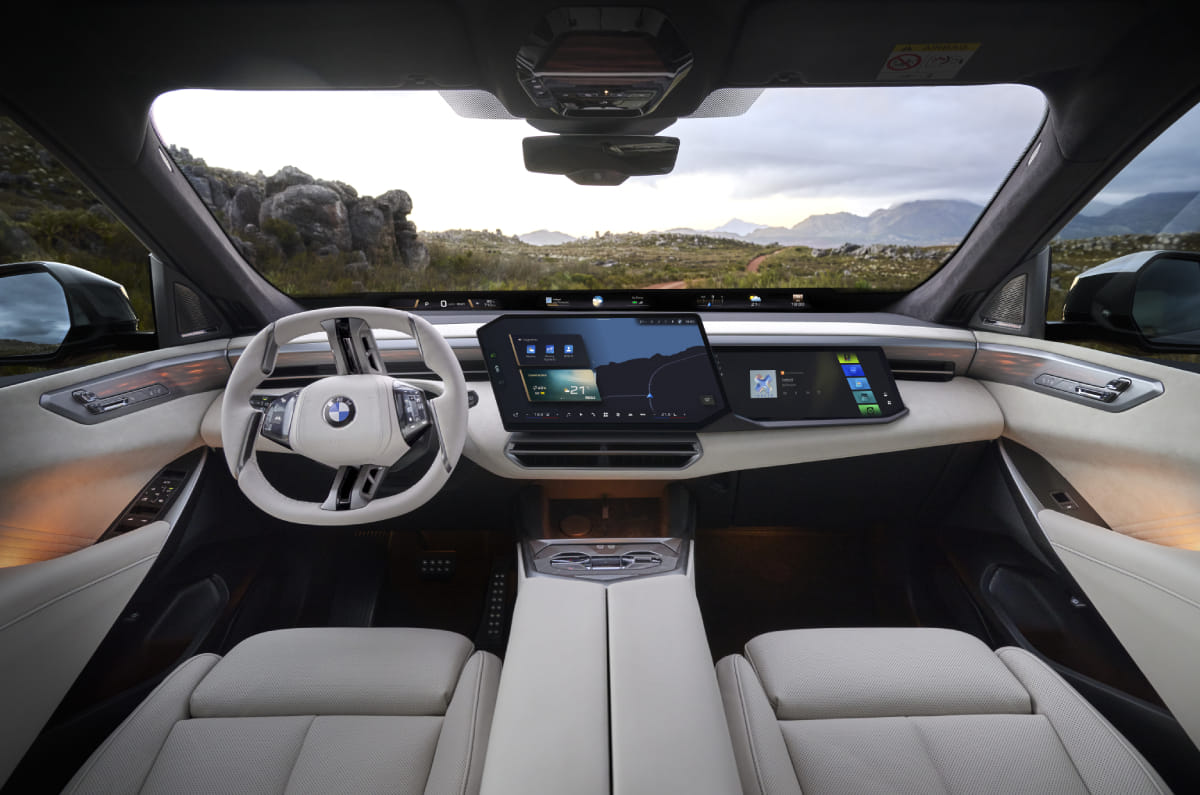
The fifth-generation BMW X5 gets an all-new cabin with fewer physical controls and a stronger focus on digital displays. A new Panoramic iDrive display stretches across the base of the windscreen, complemented by a 17.9-inch central touchscreen, an optional passenger display and a 3D head-up display. The SUV also gets a new steering wheel, fresh trim finishes and extended ambient lighting. Depending on the variant, buyers can opt for ventilated and massage front seats, four-zone climate control, a Bowers & Wilkins audio system, soft-close doors and a dedicated rear climate control touchscreen.