इंजीनियरिंग कंपनी Fieldmarshal P.M. Diesels Private Limited ने 15 HP और 18 HP कैटेगरी में नए सिंगल-सिलेंडर डीजल इंजन लॉन्च किए हैं। कंपनी के मुताबिक, ये भारत के पहले ARAI-अप्रूव्ड और TREM V-कम्प्लायंट सिंगल-सिलेंडर डीजल इंजन हैं। यह लॉन्च कंपनी के 60 साल से ज्यादा लंबे इंजीनियरिंग सफर में अहम पड़ाव है।
कॉम्पैक्ट ट्रैक्टर और खेती की मशीनों के लिए डिजाइन
नए इंजन खास तौर पर कॉम्पैक्ट ट्रैक्टर और खेती की मशीनों के लिए बनाए गए हैं। कंपनी का कहना है कि इनमें बेहतर टेक्नोलॉजी, ईंधन की बचत और मजबूती पर फोकस किया गया है। साथ ही, इनका डिजाइन कॉम्पैक्ट रखा गया है, ताकि खेती से जुड़े अलग-अलग कामों में इनका इस्तेमाल आसान हो।
देश में विकसित की गई EGR टेक्नोलॉजी
इन इंजनों में भारत में विकसित EGR सिस्टम लगाया गया है। यह उत्सर्जन को कम करने में मदद करता है। साथ ही, इंजन के सुचारू संचालन पर भी फोकस किया गया है। कंपनी के मुताबिक, यह टेक्नोलॉजी नए TREM V उत्सर्जन मानकों का पालन सुनिश्चित करती है।
TREM V टेक्नोलॉजी के लिए पेटेंट फाइलिंग
Fieldmarshal ने अपनी TREM V इंजन टेक्नोलॉजी से जुड़ी कई राष्ट्रीय पेटेंट फाइलिंग भी की हैं। कंपनी के मुताबिक, इससे देश में ही R&D, इंजीनियरिंग और बौद्धिक संपदा तैयार करने पर उसका फोकस दिखता है।
कंपनी अब एडवांस्ड इंजन, ट्रैक्टर और खेती के मशीनीकरण से जुड़े समाधान विकसित करने पर आगे बढ़ रही है। इसके अलावा कृषि, स्वच्छ ऊर्जा, जल समाधान और बुनियादी ढांचे के क्षेत्रों में भी विस्तार की योजना है।
कंपनी ने क्या कहा?
Fieldmarshal P.M. Diesels के डायरेक्टर ऋषि पटेल ने कहा कि TREM V इंजन प्लेटफॉर्म कंपनी की इंजीनियरिंग यात्रा में एक अहम पड़ाव है। उन्होंने कहा कि छह दशकों से ज्यादा समय से कंपनी का फोकस ऐसे प्रोडक्ट बनाने पर रहा है, जो वास्तविक कामकाजी परिस्थितियों में भरोसेमंद प्रदर्शन दे सकें।
उन्होंने कहा कि ARAI से मंजूर TREM V-कम्प्लायंट 15 HP और 18 HP सिंगल-सिलेंडर इंजन का लॉन्च और इससे जुड़ी पेटेंट फाइलिंग भारत की इंजीनियरिंग क्षमताओं को दिखाती है।
Disclaimer: यहां मुहैया जानकारी सिर्फ सूचना के लिए दी जा रही है। यहां बताना जरूरी है कि मार्केट में निवेश बाजार जोखिमों के अधीन है। निवेशक के तौर पर पैसा लगाने से पहले हमेशा एक्सपर्ट से सलाह लें। मनीकंट्रोल की तरफ से किसी को भी पैसा लगाने की यहां कभी भी सलाह नहीं दी जाती है।
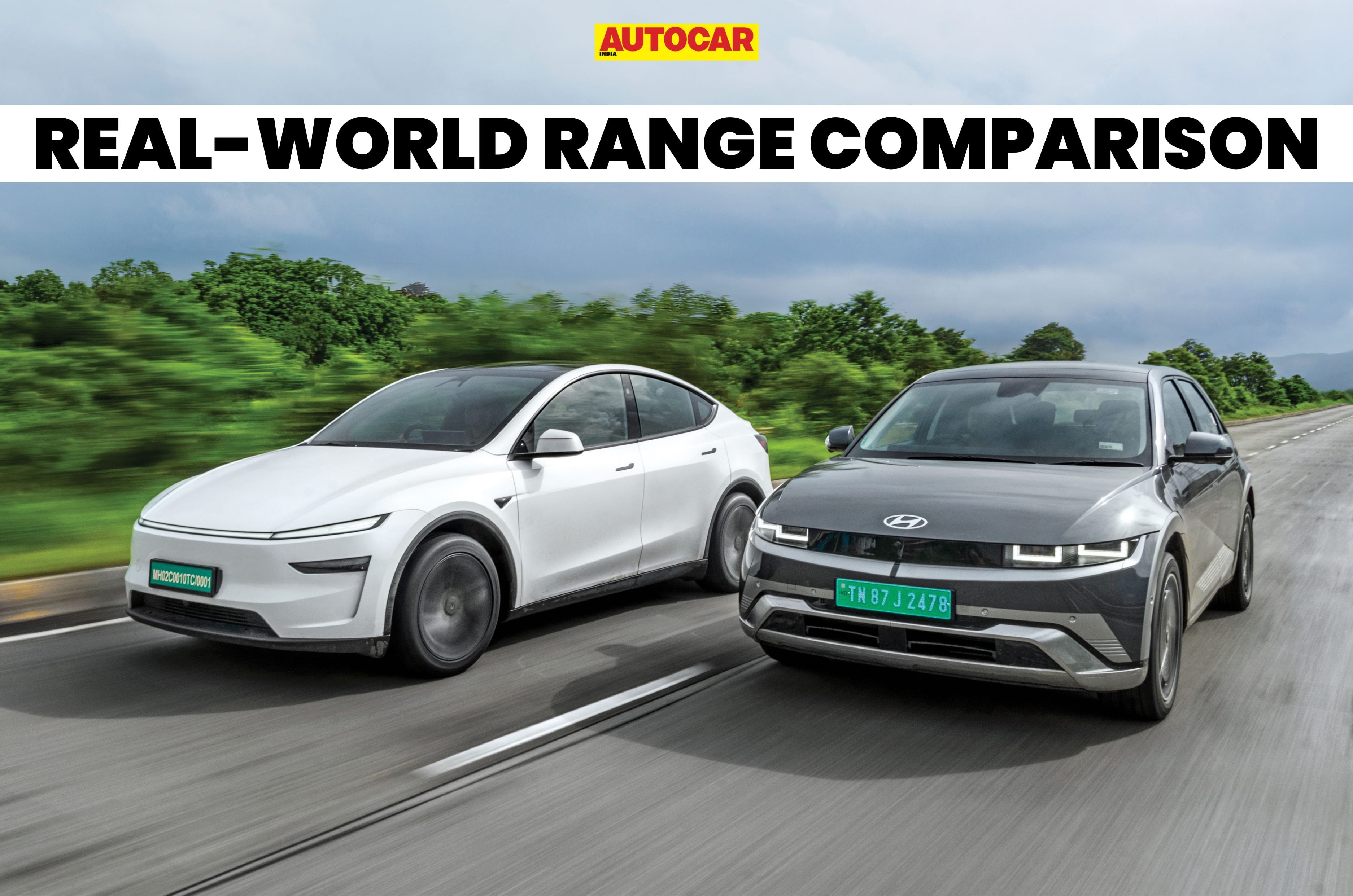
The Hyundai Ioniq 5 received a larger battery pack with its April 2026 update, resulting in a higher claimed single-charge range. In this feature, we compare the Hyundai EV with the Tesla Model Y, one of its direct rivals in India. Keep reading to see how the two performed in real world conditions. We also compare their prices, as the Ioniq 5 has become more expensive after the update, while Tesla has dropped the price of the Model Y.
Hyundai Ioniq 5 vs Tesla Model Y: Specifications, price
Ioniq 5
Model Y
Battery size (kWh)
84 (NMC)
60 (LFP)
Power (hp)
229
299
Torque (Nm)
350
420
Drive layout
RWD
RWD
Claimed range (km)
690 (ARAI)
500 (WLTP)
Kerb weight (kg)
2,165
2,003
The Ioniq 5’s battery size has increased from 72.6kWh to 84kWh (gross capacity), though the nickel manganese cobalt (NMC) cell chemistry has been retained. The larger battery has increased the kerb weight to 2,165kg, up by 150kg from the outgoing version. In comparison, the Model Y uses a 64kWh (gross capacity) battery with lithium ferrous phosphate (LFP) cell chemistry; the smaller battery contributes to the Tesla EV being 162kg lighter in this comparison. Their claimed range figures are based on different test cycles – ARAI for the Ioniq 5 and WLTP for the Model Y – so they are not directly comparable.
Speaking of motor outputs, the Model Y makes 70hp and 70Nm more than the Ioniq 5; both use a rear-wheel-drive setup. The Model Y feels stronger to drive, with quicker acceleration and sharper throttle response than the Hyundai.
Hyundai Ioniq 5 vs Tesla Model Y: Real-world range
For our real-world range test, the Hyundai Ioniq 5 was driven in Eco mode and the Model Y in Chill mode (Eco in Tesla speak). The Ioniq 5 used Level 2 regenerative braking in the city and Level 1 on the highway, while the Model Y used Standard in the city and Reduced on the highway.
Ioniq 5
Model Y
Tested city efficiency (km/kWh)
6.22
5.84
Tested highway efficiency (km/kWh)
5.71
6.52
Tested average efficiency (km/kWh)
5.96
6.18
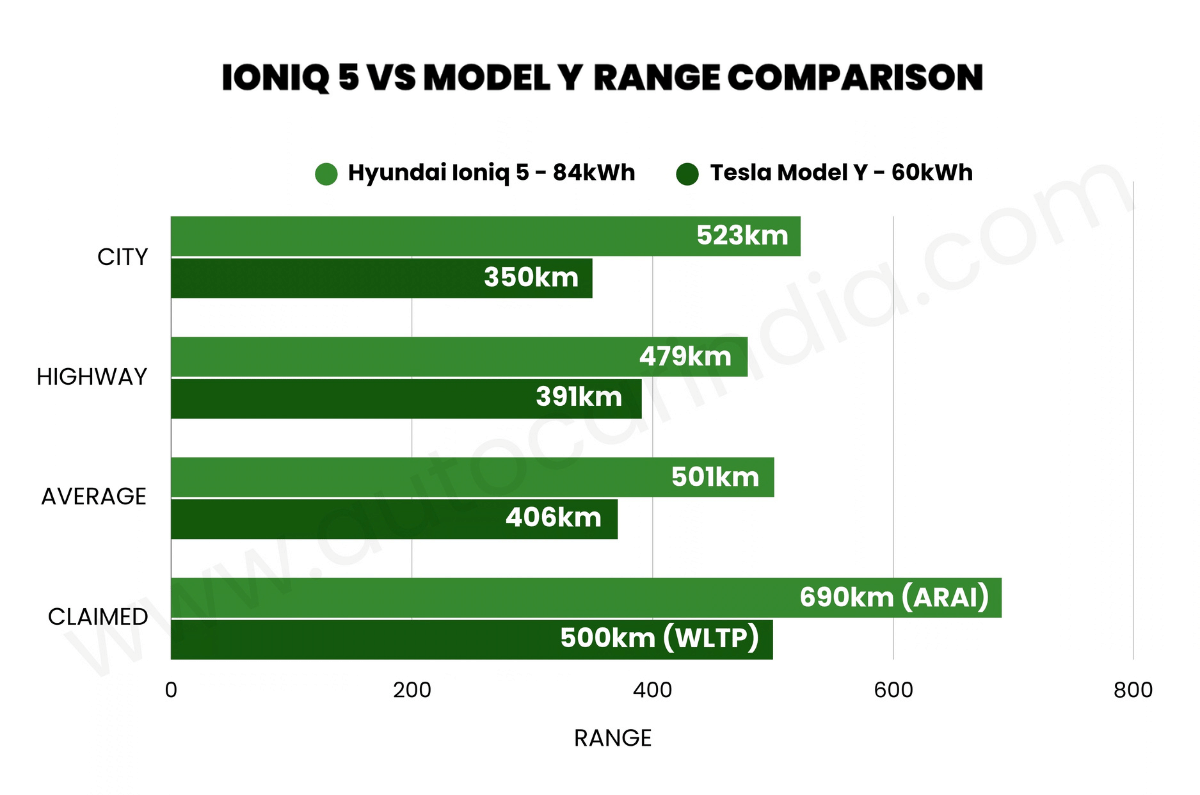
In the city, the Ioniq 5 returned 6.22km/kWh, compared to 5.84km/kWh for the Model Y. On the highway, however, the Tesla was more efficient at 6.52km/kWh, aided by its superior aerodynamics; the Ioniq 5 managed 5.71km/kWh. But overall range in our tests stood at 501km for the Ioniq 5, 130km more than the Model Y’s 371km figure.
Hyundai Ioniq 5 vs Tesla Model Y: Prices
Ioniq 5
Model Y
Price (Rs lakh)
55.71
50.89
At the time of writing, the Hyundai Ioniq 5 is pricier than the Tesla Model Y by Rs 4.82 lakh. But judged purely on its higher real-world range, the Hyundai Ioniq 5 gets our vote.
Autocar India’s range testing
For our real-world range comparisons, we begin with each car’s battery fully charged and tyre pressures set as per the manufacturer’s recommendations. We drive the cars on a fixed loop covering both city and highway stretches while maintaining set average speeds. We then calculate the range based on the percentage of charge consumed. The AC is set to 22deg C in auto mode, and we use features such as the music system, lights and ventilated seats as needed, just as a regular user would. This approach ensures consistency and gives a clear idea of what to expect in actual conditions.
Ex-showroom prices mentioned above are as of September 23, 2026.
As part of the 2026 update, the Hyundai Verna got minor design tweaks with a few feature additions and deletions, but with the same engines carried over. It is available with a 1.5-litre naturally aspirated petrol engine and a 1.5-litre direct injection turbo petrol engine with the option of manual and automatic transmissions for both.
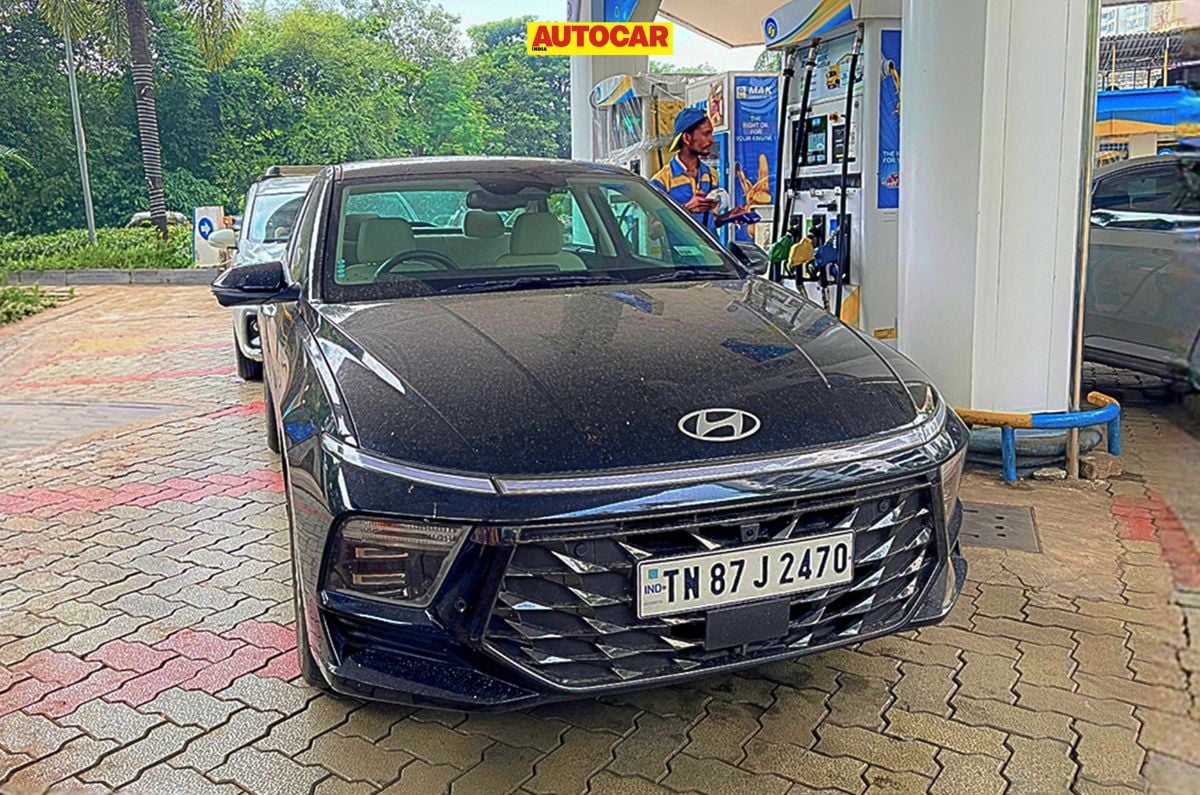
We’ve put the Hyundai Verna petrol CVT through our efficiency tests to see how it performs.
Gets an auto stop-start feature
Claimed efficiency is 19.6kpl
Weighs 1,224kg, as tested
Hyundai Verna petrol CVT real-world fuel efficiency explained
Powering the Hyundai Verna is a 1.5-litre, four cylinder, naturally aspirated petrol engine producing 115hp and 143.8Nm that is paired with an 8-step continuously variable transmission (CVT), or Intelligent Variable Transmission (iVT) as Hyundai likes to call it. It also gets three driving modes – Eco, Normal and Sport.
For our tests, we drove the car in its most efficient ‘Eco’ mode in the city and on the highway.
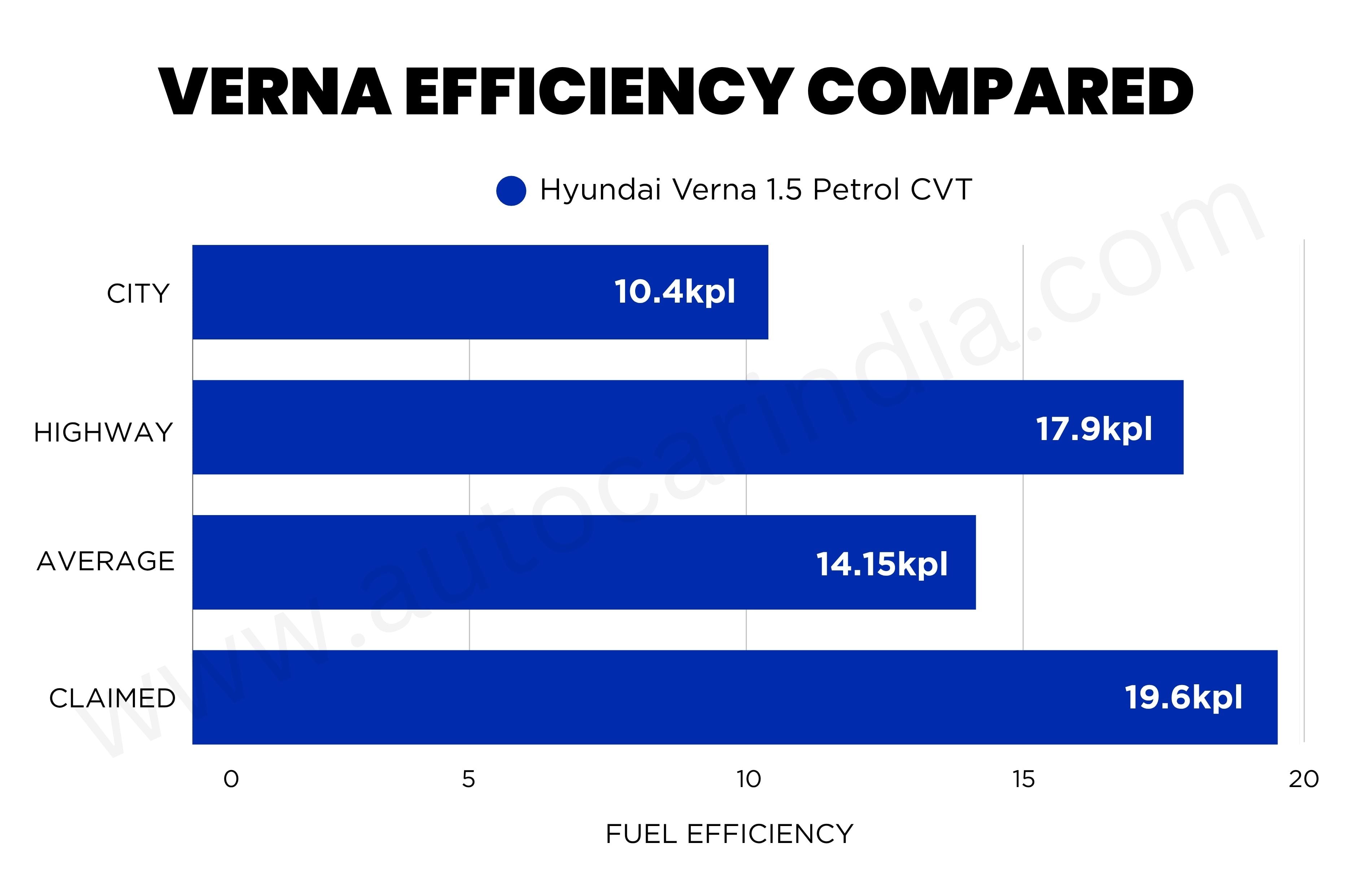
In the city, the Verna returned 10.4kpl, whereas on the highway it returned 17.9kpl, which resulted in an overall average fuel efficiency of 14.15kpl. With the 45-litre fuel tank, you can expect a real world range of 630km on a tankful of petrol.
What’s impressive is that its highway efficiency of 17.9kpl is close to its ARAI claimed efficiency of 19.6kpl. With a light foot on the highway, the engine spins at a lazy ~1900rpm at 100kph, which helps its highway efficiency. In the city, the automatic stop start feature helped save fuel, especially at traffic stops. Moreover, the system wasn’t as aggressive as some other cars we’ve tested and worked exactly as it should.
Autocar India’s fuel efficiency testing
Before our real-world fuel efficiency tests, we fill our test cars’ tanks to the brim and maintain tyre pressures based on the manufacturer’s recommendation. These cars are driven in fixed city and highway loops in and around Navi Mumbai, and we maintain certain average speeds. Throughout the tests, there is only one person in each car, running the aircon at 22deg C in full-auto mode, and other electricals, such as the audio system, ventilated seats, indicators and wipers, are used when required, just like a regular user would. Periodic driver swaps further neutralise variations in driver patterns. At the end of each cycle, we calculate efficiency by filling the tanks to full again.
Best Mileage Cars Under 10 Lakhs: दशहरा, दिवाली जैसे बड़े त्योहारी सीजन अब शुरू होने वाले हैं, ऐसे में अक्सर लोग नई गाड़ी खरीदने की सोचते हैं। अगर आप भी इस फेस्टिव सीजन में नई गाड़ी घर लाने की प्लानिंग बना रहे हैं, तो आपके मन में सबसे बड़ा सवाल बजट और माइलेज का हो सकता है। लेकिन अब कम बजट में भी ऐसी कारें मौजूद हैं, जिनमें आपको अच्छे फीचर्स के साथ शानदार माइलेज भी मिलता है। यानी 10 लाख रुपये से कम कीमत में आप ऐसी कार चुन सकते हैं, जिसमें फीचर्स, माइलेज और बजट के बीच अच्छा बैलेंस मिल जाए। आइए जानते हैं उन कारों के बारे में, जो आपके लिए बेहतर विकल्प हो सकते हैं।
Maruti Suzuki Celerio
Maruti Suzuki Celerio कॉम्पैक्ट हैचबैक सेगमेंट की पॉपुलर कारों में शामिल है। इसके LXi MT वेरिएंट की शुरुआती एक्स-शोरूम कीमत 4.69 लाख रुपये है। कंपनी के मुताबिक, यह पेट्रोल पर 26.6 किमी/लीटर और CNG पर 35.12 किमी/किलोग्राम का ARAI माइलेज देती है। वहीं, रियल-वर्ल्ड इस्तेमाल में यूजर्स के अनुसार पेट्रोल पर करीब 22-24 किमी/लीटर और CNG पर 30-32 किमी/किलोग्राम का माइलेज मिल सकता है।
Maruti Suzuki Wagon R
शहरों में Maruti Suzuki Wagon R लंबे समय से लोगों की पसंद बनी हुई है। खासकर मिडिल क्लास परिवारों के बीच यह कार काफी पॉपुलर है। इसके LXi MT वेरिएंट की शुरुआती एक्स-शोरूम कीमत 4.98 लाख रुपये है। कंपनी के मुताबिक, यह 26.1 किमी/लीटर का ARAI प्रमाणित माइलेज देती है। बड़ा केबिन और कॉम्पैक्ट डिजाइन इसे शहर में रोजाना इस्तेमाल के लिए प्रैक्टिकल कार बनाते हैं।
Maruti Suzuki Alto K10
कम बजट में पहली कार खरीदने वालों के लिए Maruti Suzuki Alto K10 एक किफायती विकल्प है। इसके Std (O) वेरिएंट की शुरुआती एक्स-शोरूम कीमत 3.69 लाख रुपये है। कंपनी के मुताबिक, यह 24.8 किमी/लीटर तक का माइलेज देती है। छोटा साइज और कम मेंटेनेंस खर्च इसे रोजाना इस्तेमाल के लिए प्रैक्टिकल कार बनाते हैं।
Maruti Suzuki Swift
Maruti Suzuki Swift उन लोगों के लिए एक पॉपुलर हैचबैक है, जो स्टाइल के साथ अच्छा माइलेज भी चाहते हैं। इसके VXi वेरिएंट की शुरुआती कीमत 5.84 लाख रुपये है और यह 23.2 किमी/लीटर तक का माइलेज देती है। बेहतर स्पेस और माइलेज की वजह से यह लंबे समय से ग्राहकों के बीच पसंद की जाती है।
Hyundai Exter
अगर आप हैचबैक के बजाय कॉम्पैक्ट SUV खरीदना चाहते हैं, तो Hyundai Exter पर विचार कर सकते हैं। इसके बेस वेरिएंट की शुरुआती एक्स-शोरूम कीमत 5.79 लाख रुपये है। यह 19.0 किमी/लीटर तक का माइलेज देती है। इसका मॉडर्न डिजाइन और ऊंची ड्राइविंग पोजीशन इसे खासतौर पर युवा खरीदारों के बीच पसंदीदा बनाती है।
Tata Punch
Tata Punch भी कम बजट में मिलने वाली पॉपुलर कॉम्पैक्ट SUVs में शामिल है। इसके बेस वेरिएंट की शुरुआती कीमत करीब 5.75 लाख रुपये है और यह लगभग 18.0 किमी/लीटर तक का माइलेज देती है। रफ-एंड-टफ डिजाइन और कॉम्पैक्ट साइज की वजह से यह शहर में रोजाना इस्तेमाल के लिए एक अच्छा विकल्प है।
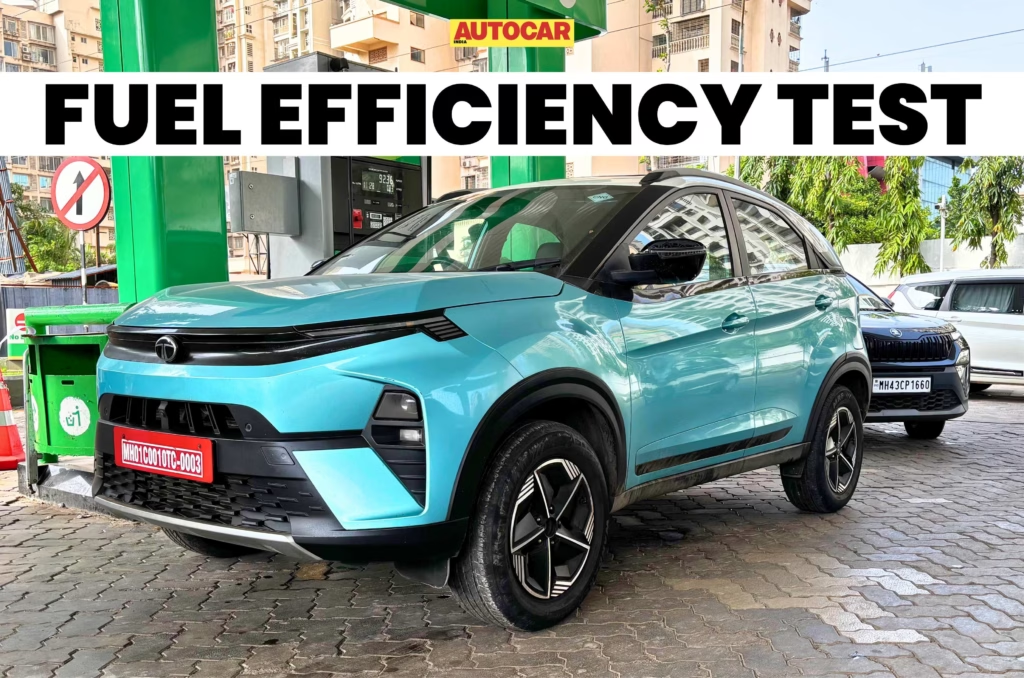
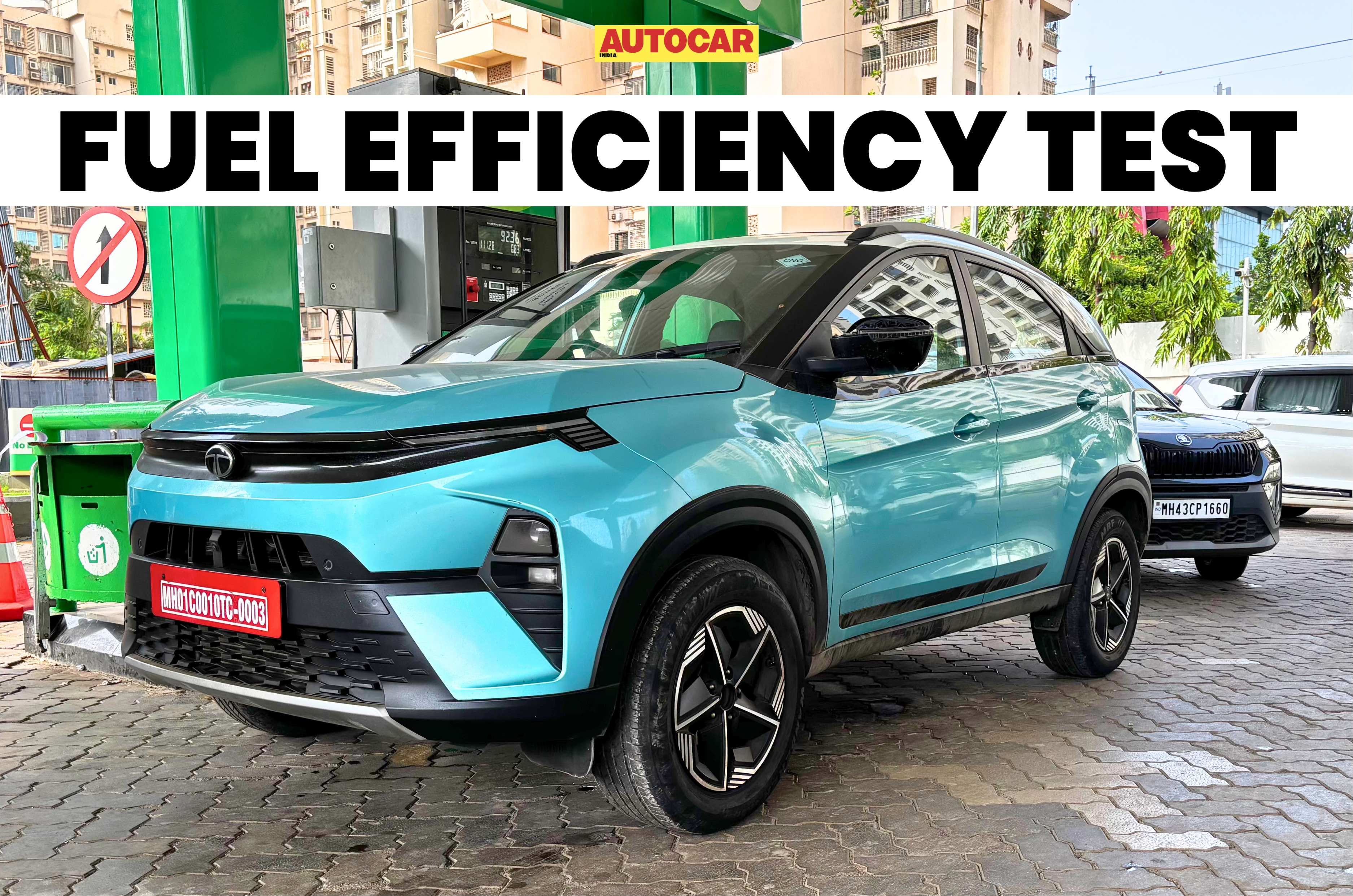
The Tata Nexon iCNG is the first turbocharged CNG vehicle sold in India with a factory-fitted CNG kit. Available in all variants, the CNG range is priced between Rs. 8,34,990 for the base trim and Rs. 13,29,990 for the top-spec Fearless+PS trim, priced at a premium of between Rs. 70,000 and Rs. 1,15,000 over comparable petrol variants.
We’ve now put the Tata Nexon iCNG to the test to see how it fares.
Powering the Nexon iCNG is a 1.2-litre, three-cylinder turbo-petrol engine as seen in the regular Nexon and is paired to a six-speed manual transmission. While the torque remains the same as the petrol unit at 170Nm, power is down by 20hp in the CNG version, now producing 100hp. It features a twin-tank CNG system with a capacity of 60 litres or 9kg, smartly placed below the boot floor to free up a respectable 321 litres of luggage space.
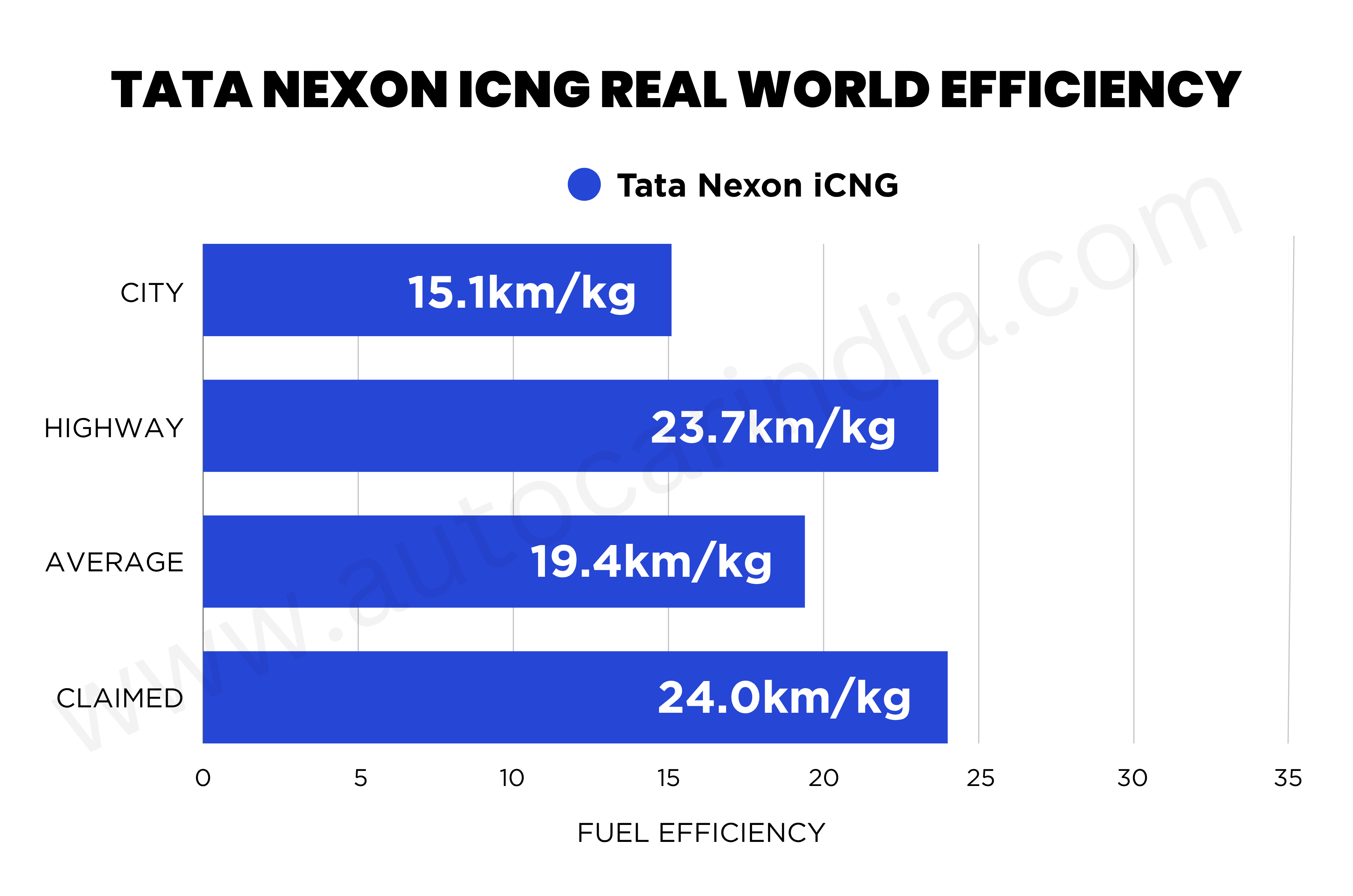
In our tests, the Nexon iCNG delivered 15.1km/kg in the city and 23.7km/kg on the highway, for an average overall real-world efficiency of 19.4km/kg. What’s commendable is that its highway efficiency is close to its ARAI-claimed efficiency of 24km/kg.
When refilled from empty, we managed to fill 7.5kg of CNG as opposed to Tata’s claim of 9kg. CNG filling depends on ambient temperature and pump pressure, so under optimal conditions, achieving 8.5-9kg should be possible.
With the overall average fuel efficiency of 19.4km/kg, you can expect a real-world range of 145-160km on a full tank of CNG.
Autocar India’s fuel-efficiency testing
Since CNG tanks are more difficult to fill consistently due to variables such as ambient temperature and pump pressure, we did not use our standard tankful-to-tankful methodology. Instead, for our real-world tests, we emptied the CNG tank and refilled it with 2kg of CNG. We then drove the vehicle in city conditions until the gas was exhausted. The same process was repeated for the highway run. Throughout both tests, the Nexon iCNG was driven exclusively in CNG mode.
Before our real-world fuel efficiency tests, we maintain tyre pressures based on the manufacturer’s recommendations. These cars are driven in fixed city and highway loops in and around Navi Mumbai, and we maintain certain average speeds. Throughout the tests, there is only one person in each car, and the aircon is set to 22deg C in full-auto mode. We operate other electricals, such as the audio system, indicators and wipers, just like a regular user would. Periodic driver swaps further neutralise variations in driver patterns.
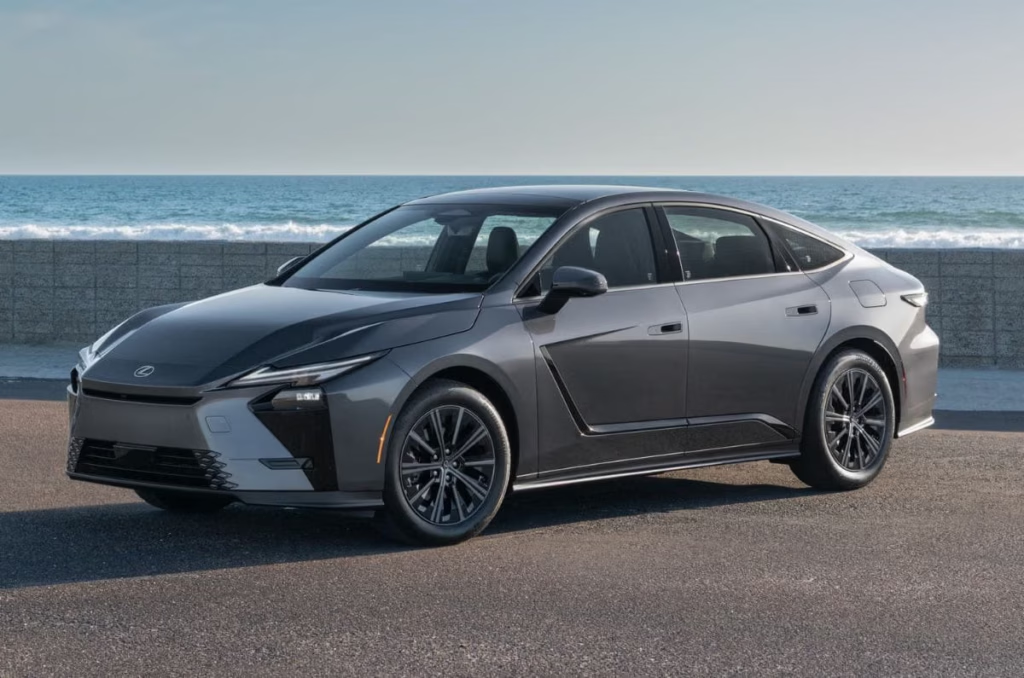
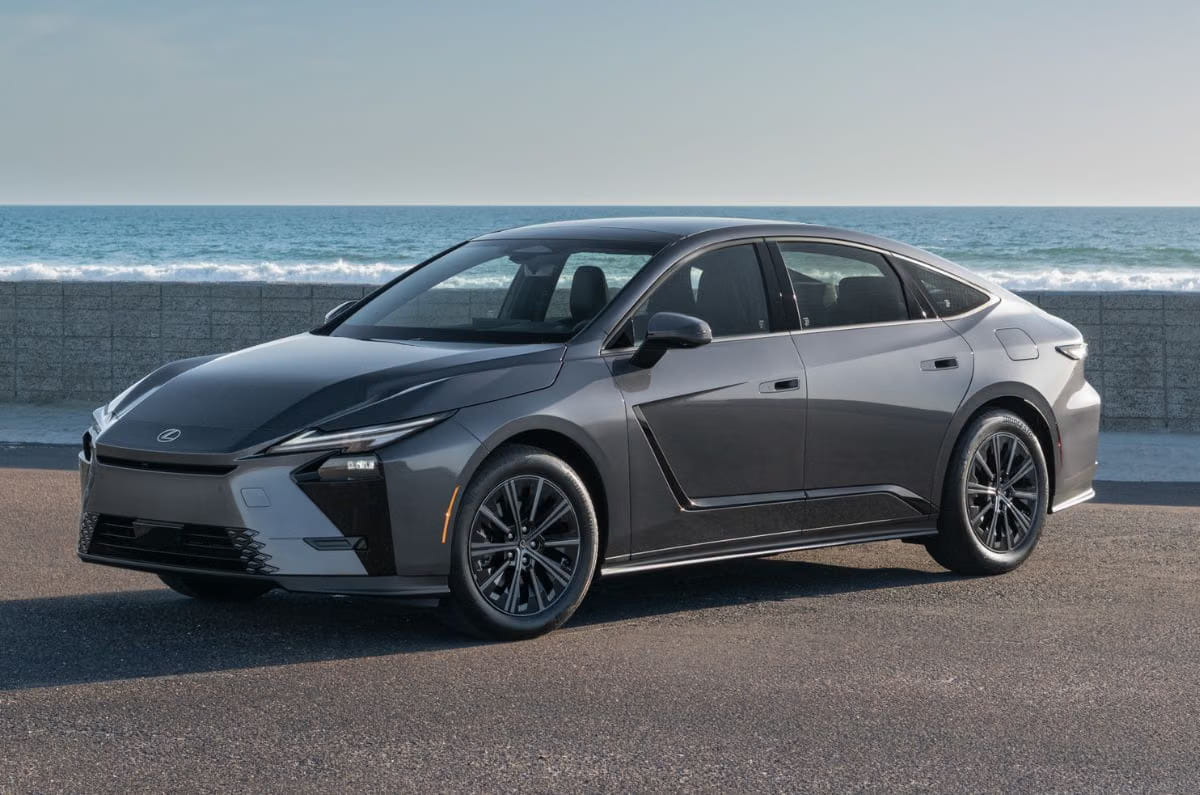
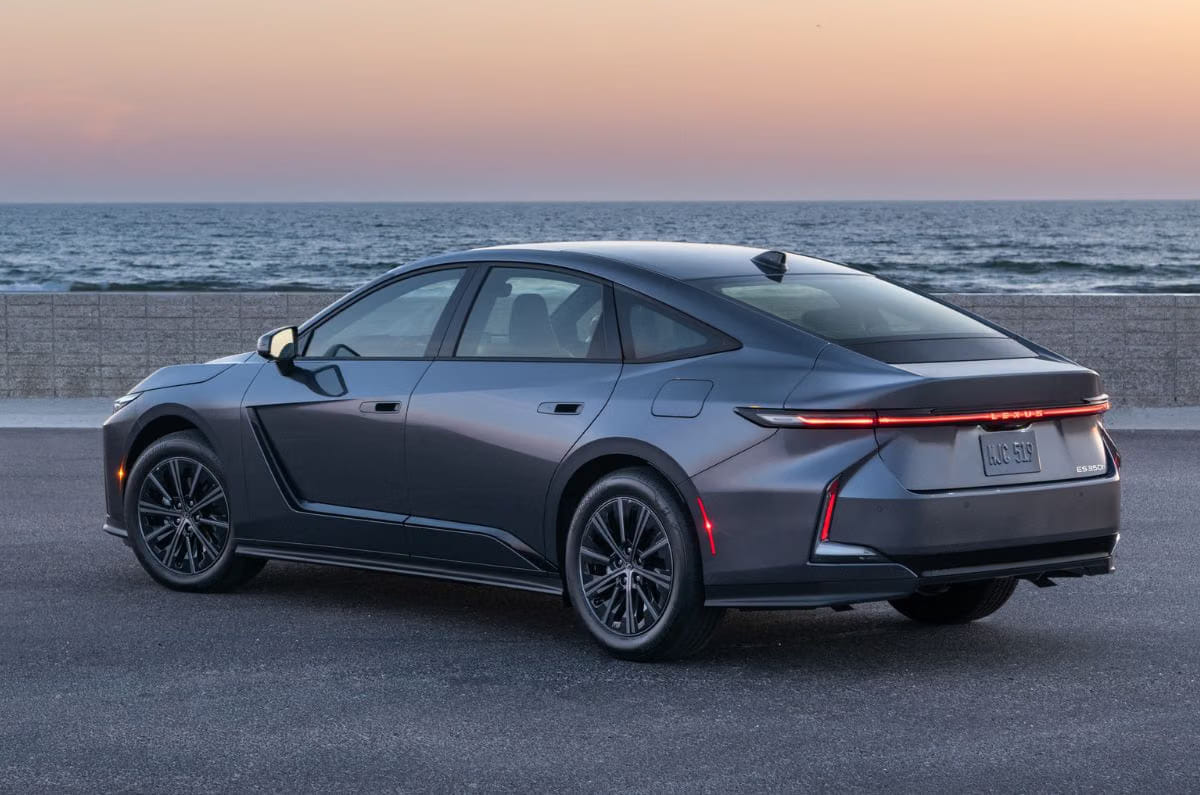
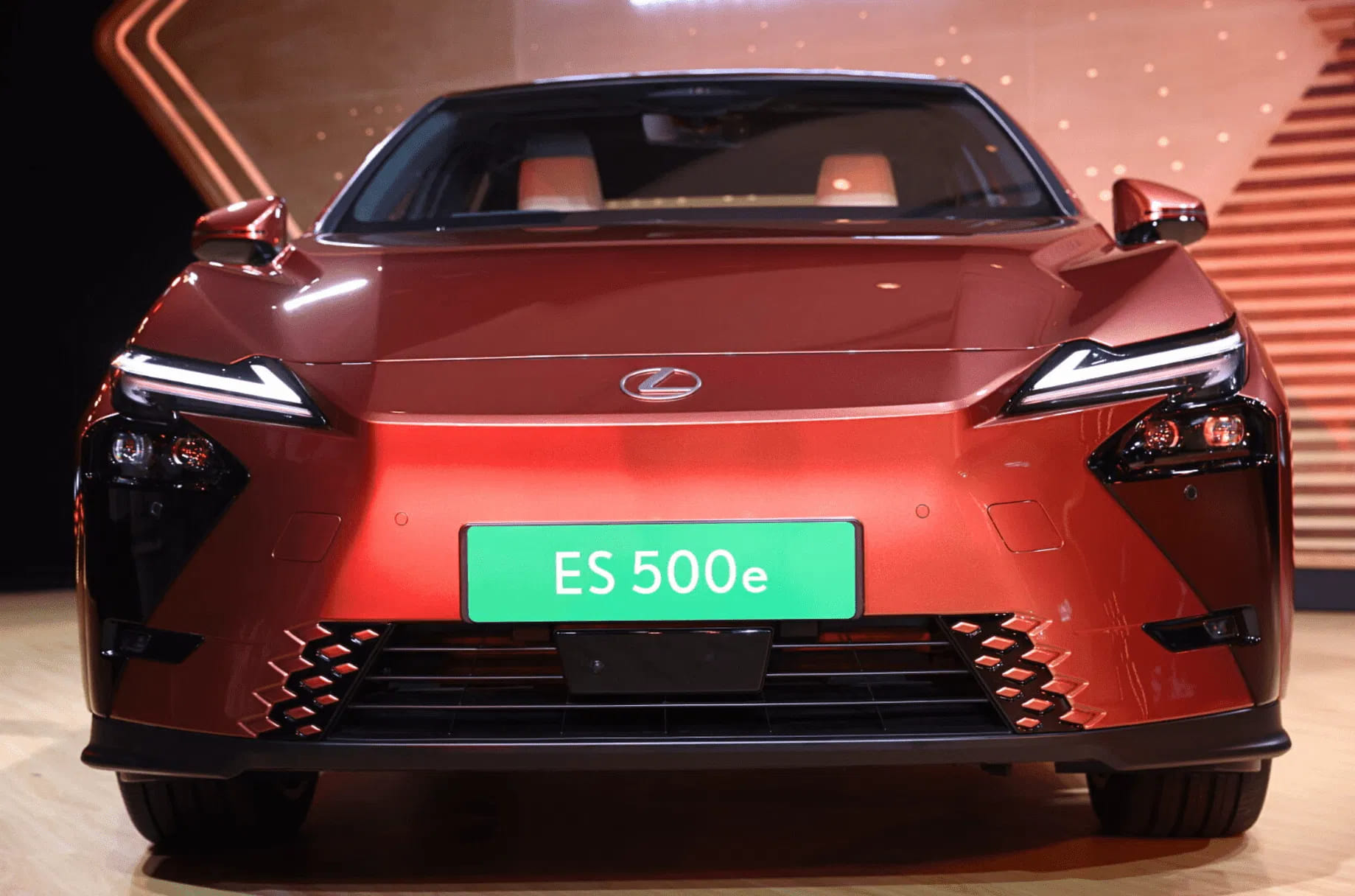
The Lexus ES is available in India in two forms: the ES 350h strong hybrid and the ES 500e EV. The 350h was added to the ES range in July, joining the 500e that launched earlier this year. Beyond the new powertrain options, the latest ES gets a larger footprint, a redesigned cabin and a host of new features. Here’s everything you need to know.
1. How much do the Lexus ES 350h and ES 500e cost in India
The Lexus ES 350h is priced at Rs 66.10 lakh for the Exquisite variant and Rs 71.80 lakh for the Luxury trim, whereas the ES 500e costs Rs 89.99 lakh (all prices are ex-showroom). Both versions get an eight-year/2,00,000km warranty, covering the vehicle and its battery.
2. What powertrain does the Lexus ES 350h get?
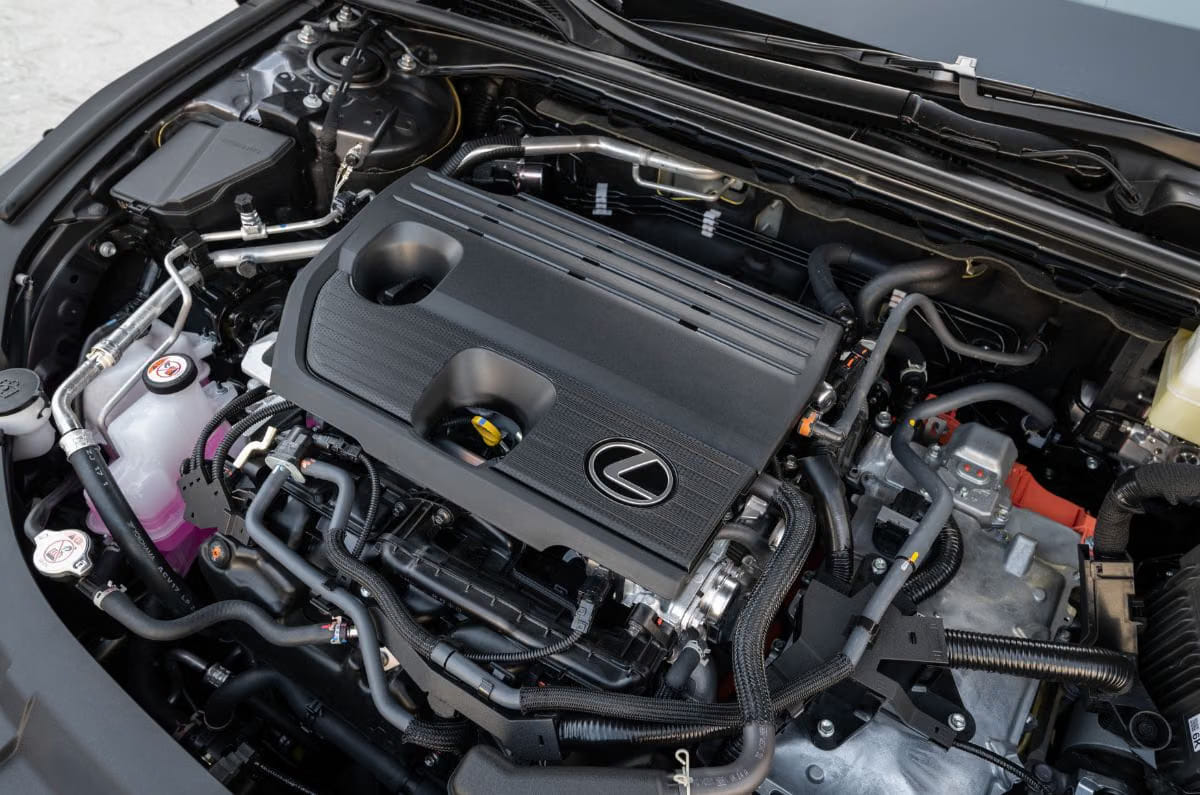
The ES 350h uses a 2.5-litre four-cylinder naturally aspirated petrol engine paired with an electric motor and lithium-ion battery. The petrol engine produces 186hp and 235Nm, while the electric motor develops 201hp and 270Nm in isolation. The combined system output is 244hp. Power is sent to the front wheels through an e-CVT gearbox. Lexus claims an ARAI-certified fuel efficiency of 25.22kpl.
3. What battery, motor and range does the Lexus ES 500e offer?
The ES 500e gets a 74.68kWh battery and two electric motors, one on each axle. The front motor produces 227hp and 267Nm, while the rear motor makes 120hp and 170Nm. The combined output is 343hp and 438Nm, with a claimed 0-100kph time of 5.5sec. Lexus claims a range of 580km on a full charge. The ES 500e supports 11kW AC charging, while a 150kW DC fast charger can charge the battery from 10 to 80 percent in 28 minutes. A 2.8kW portable charger is also offered.
4. What are the key features of the Lexus ES?
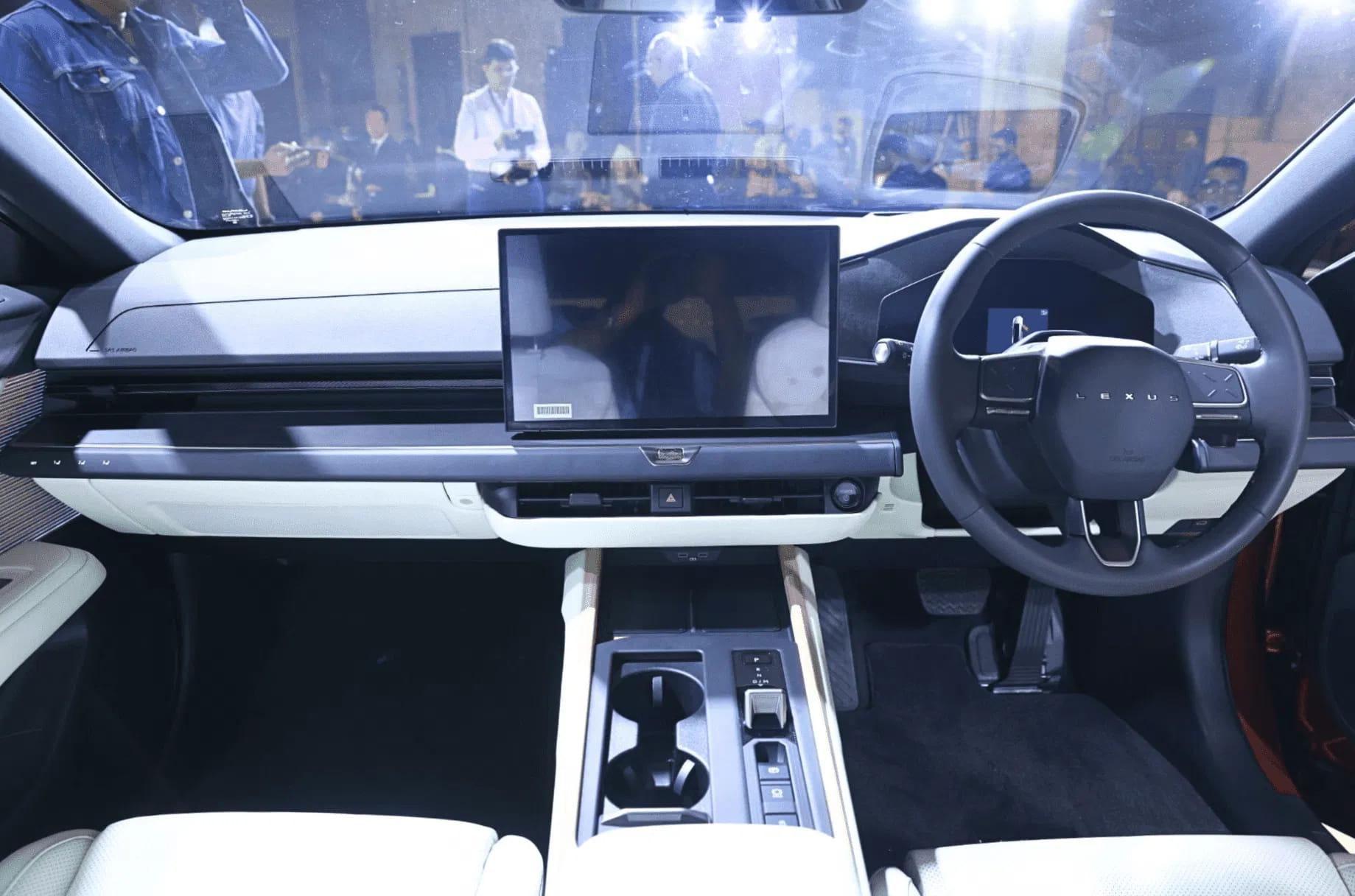
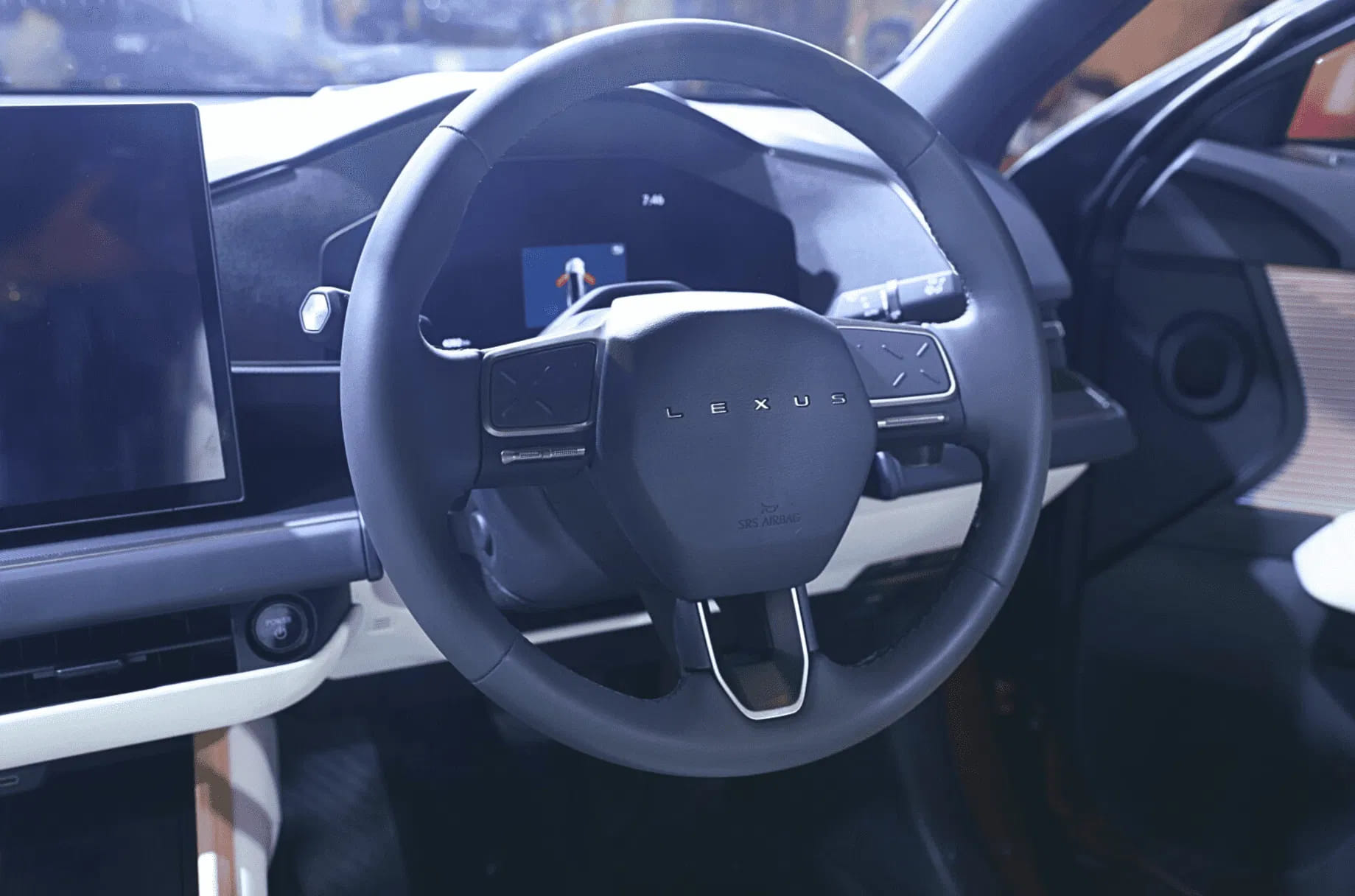
The new ES gets a dual-tone cabin with a 14-inch touchscreen and a 12.3-inch digital driver’s display. It also gets a Mark Levinson premium audio system, wireless Apple CarPlay and Android Auto, wireless phone charging and three-zone climate control. Other features include powered front seats with heating and ventilation, a head-up display, digital inside rearview mirror, ambient lighting, rear window sunshades and a power-operated boot lid.
One of the ES’s standout features is proximity-sensing controls. Physical controls are integrated into the dashboard and steering wheel and illuminate when they detect a hand approaching, combining touch controls with physical switches.
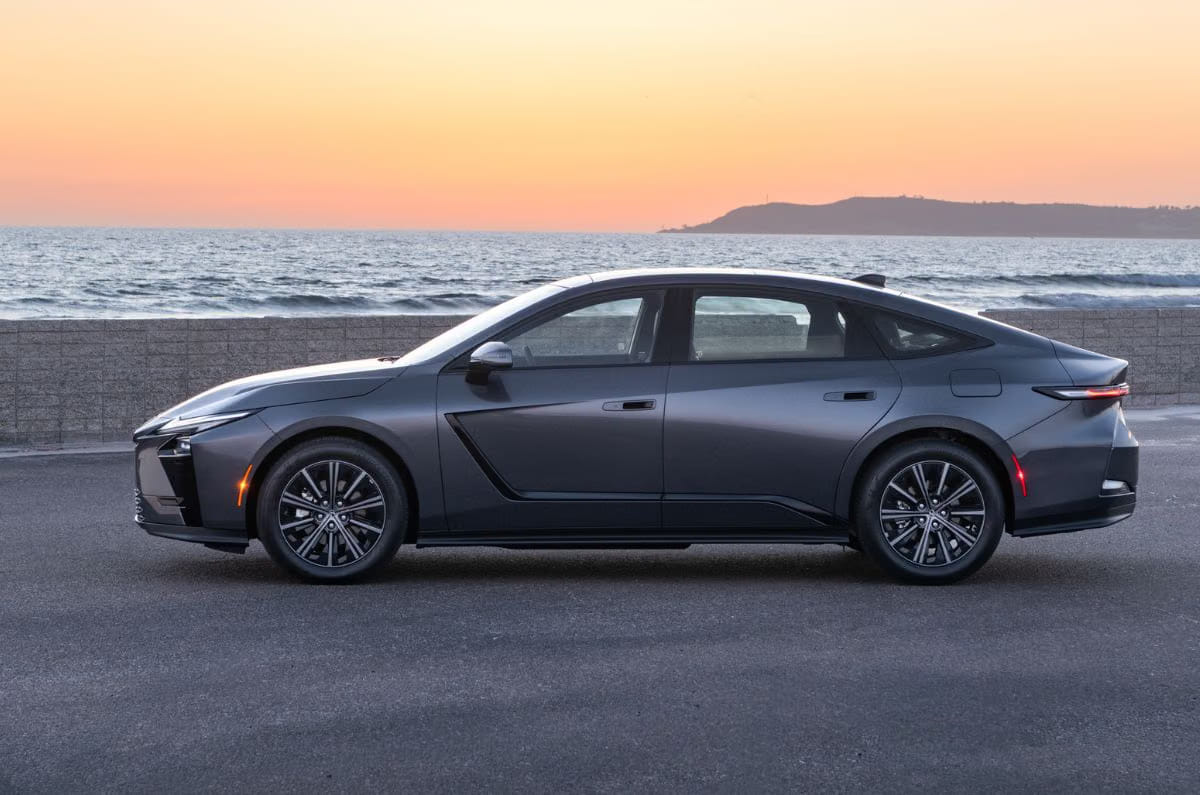
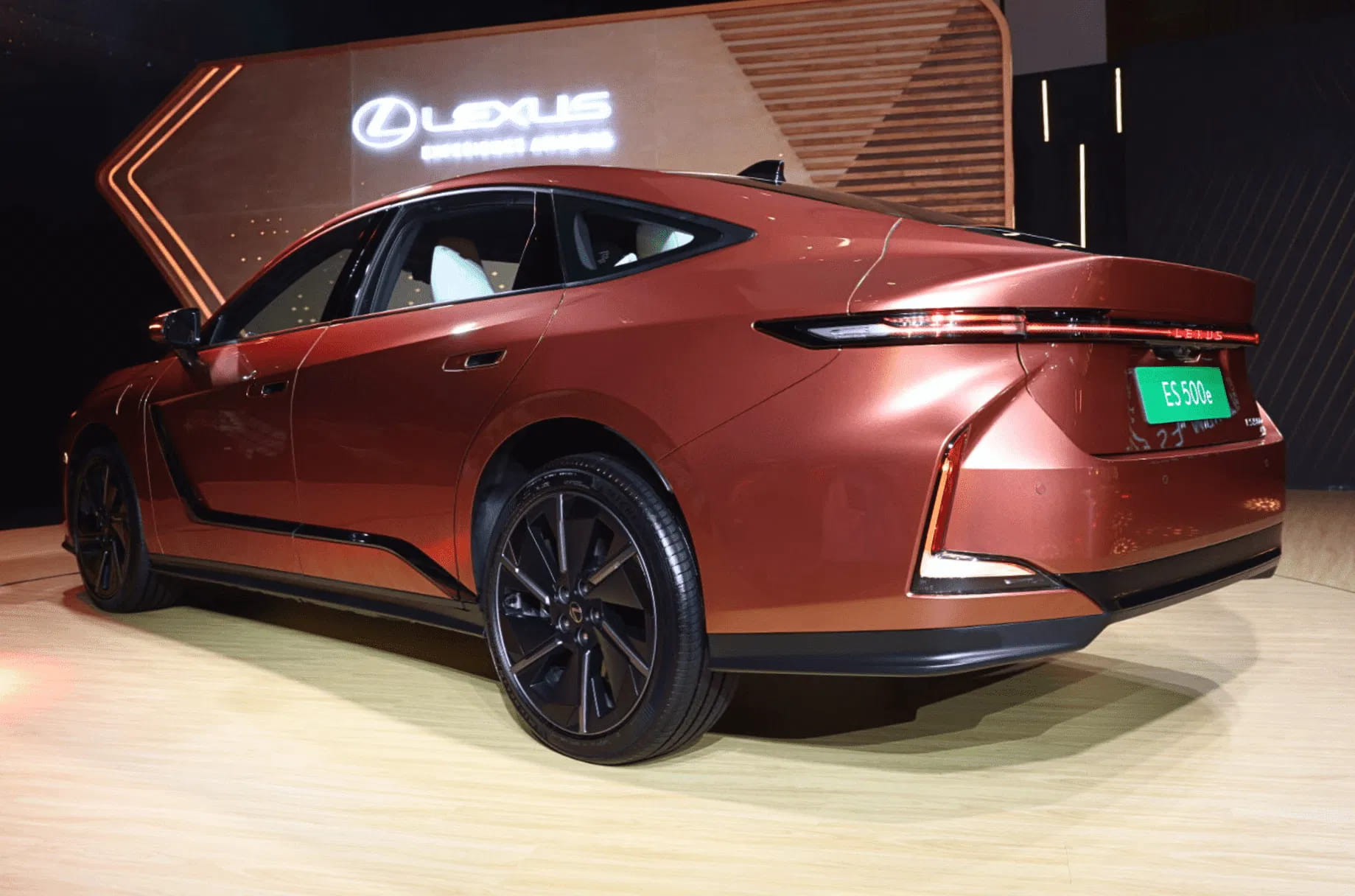
The exterior gets Lexus’s new design language, with a sealed-off front end, Twin L-signature lighting and a connected rear light bar. The new ES also has a coupe-like roofline and a rising beltline.
5. How spacious is the new Lexus ES?
The new ES measures 5,145mm long, 1,920mm wide and 1,575mm tall. It is 170mm longer, 55mm wider and 130mm taller than the previous-generation model, while the wheelbase has increased by 80mm to 2,950mm. Lexus has increased ground clearance for India by 20mm to 158mm. The larger dimensions are complemented by a lower window line and thinner seats and trim pieces, while the longer wheelbase frees up more space inside the cabin.
6. What safety and ADAS features does the Lexus ES get?
The ES 350h gets Lexus Safety System+, which includes a pre-collision system, adaptive cruise control, lane keep assist, lane departure alert, automatic emergency braking, a blind-spot monitor and automatic high beam. It also gets eight airbags, Isofix and top-tether mounts and an emergency brake signal. The Luxury variant additionally gets a drive monitor.
The ES 500e gets 10 airbags, a 360-degree camera setup, blind-spot monitoring, adaptive high-beam assist, radar-guided cruise control, lane-change assist and a driver drowsiness monitor. Electronic stability control and all-round parking sensors are also standard.
7. Where is the Lexus ES made, and which cars does it compete with?
The ES is locally assembled in India. The Lexus ES competes with luxury sedans such as the Mercedes-Benz E-Class, BMW 5 Series and Audi A6. The ES stands out in the segment by offering buyers a choice of hybrid and fully electric powertrains.
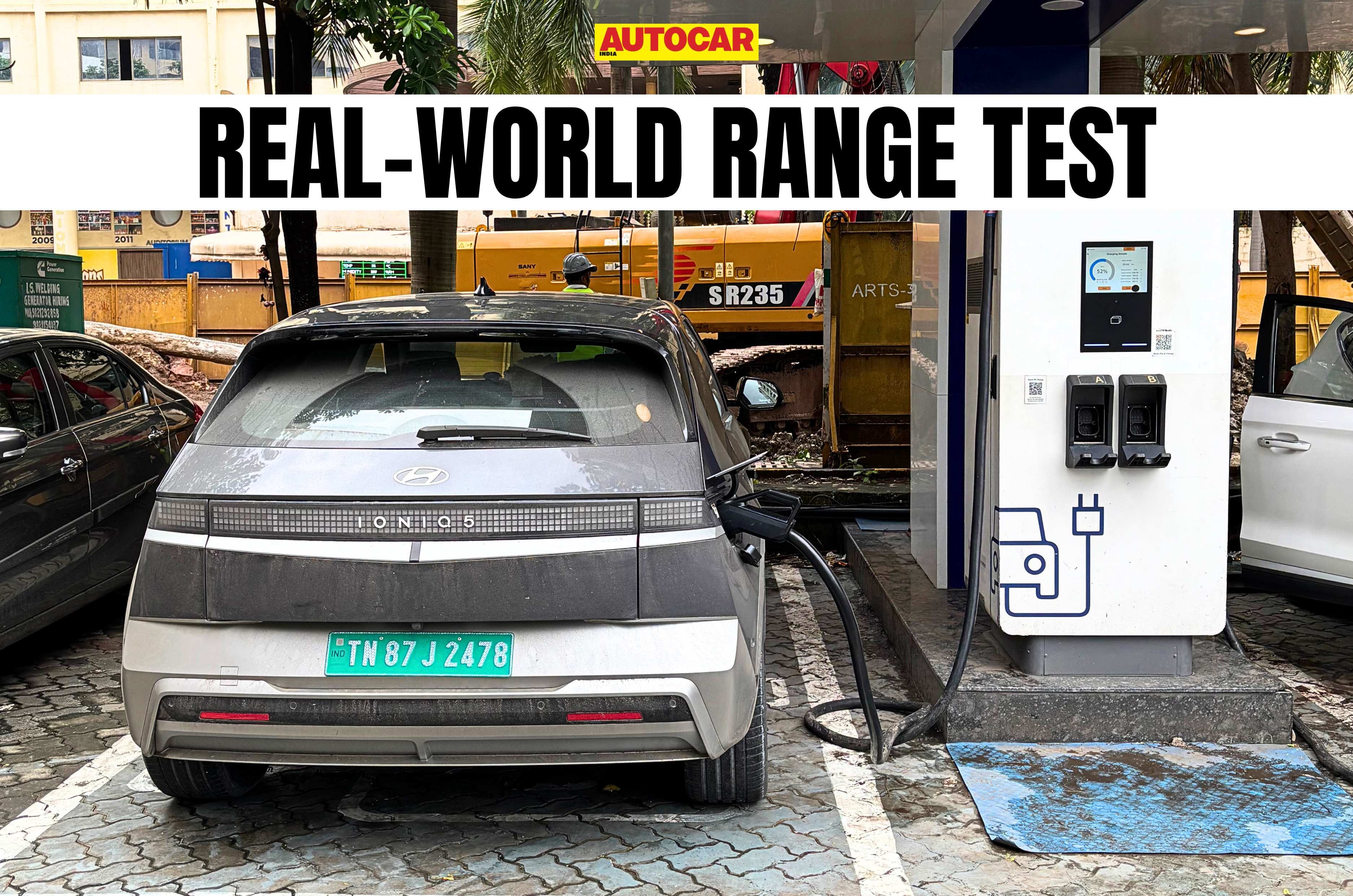
The 2026 update for the Hyundai Ioniq 5 brought with it some cosmetic updates and a larger 84kWh battery. More significantly, its pricing and positioning have changed. While the previous model, with its 72.6kWh battery, was priced at Rs 45 lakh and was considered the value king of its segment, that claim is harder to justify for the new model, which now costs Rs 55.7 lakh.
Hyundai says the larger battery helps the 2026 Ioniq 5 deliver an ARAI-certified range of 690km. We put that claim to the test to determine its real-world efficiency.
Weighs 2,165kg; 150kg more than before
0-80 percent took 22 minutes on a 150kW DC fast charger
Max charging speed of 350kW
Hyundai Ioniq 5 real-world range and charging tested
The 2026 Hyundai Ioniq 5 is powered by a rear-mounted PMSM motor producing 229hp and 350Nm. Paired with a larger 84kWh lithium-ion battery pack using Nickel Manganese Cobalt (NMC) cell chemistry, it now boasts a claimed ARAI range of 690km, up from 631km in the previous 72.6kWh version. The Ioniq 5 offers four drive modes — Eco, Normal, Sport and Snow. For our tests, we used Eco mode, with regenerative braking set to Level 2 in the city and Level 1 on the highway.
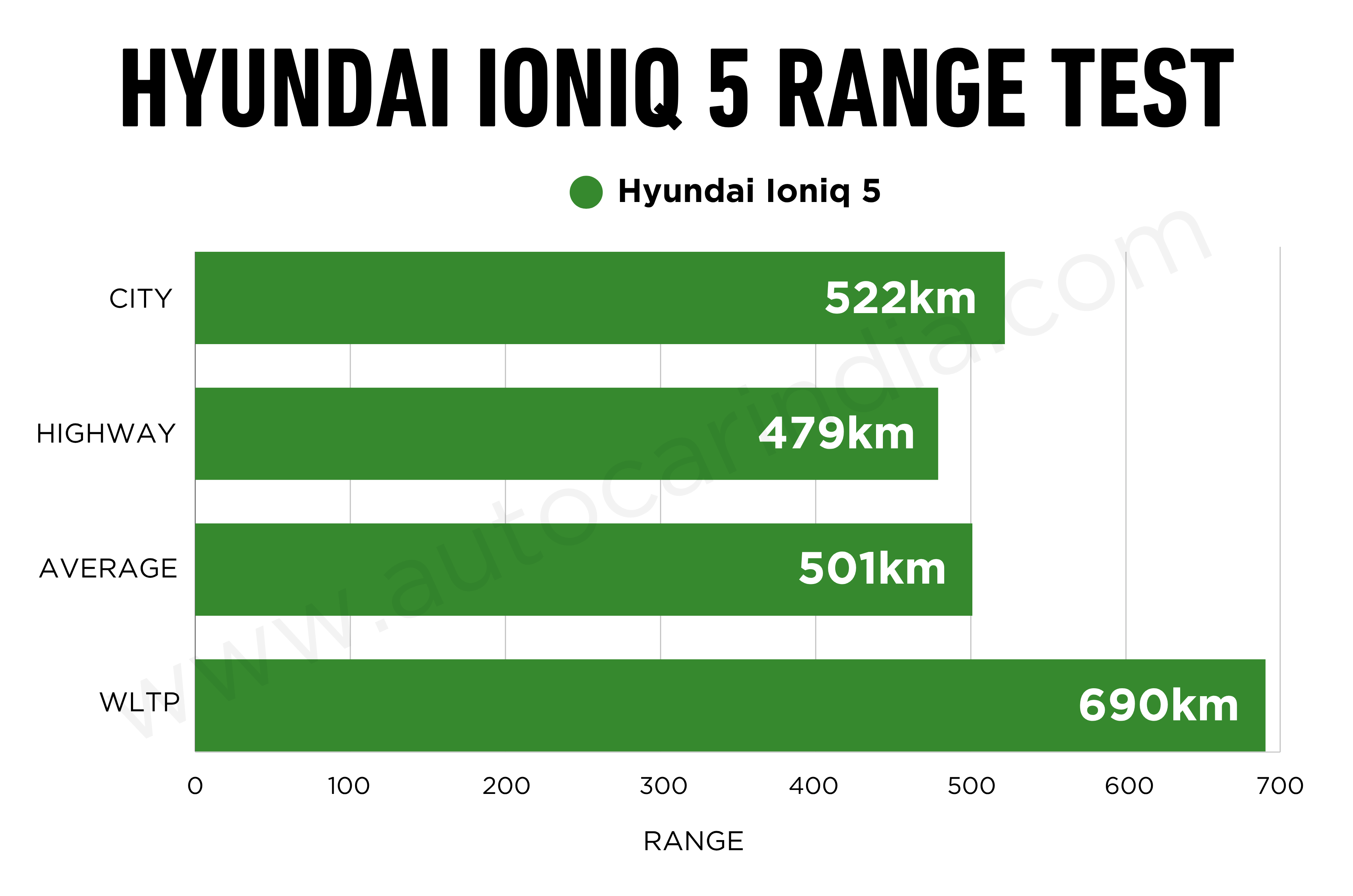
In city conditions, the Ioniq 5 returned an efficiency of 6.22km/kWh, translating to an estimated range of around 523km. On the highway, efficiency dropped slightly to 5.71km/kWh, resulting in an extrapolated range of 479km. With an overall efficiency of 5.96km/kWh, the Ioniq 5 can realistically deliver about 501km on a full charge.
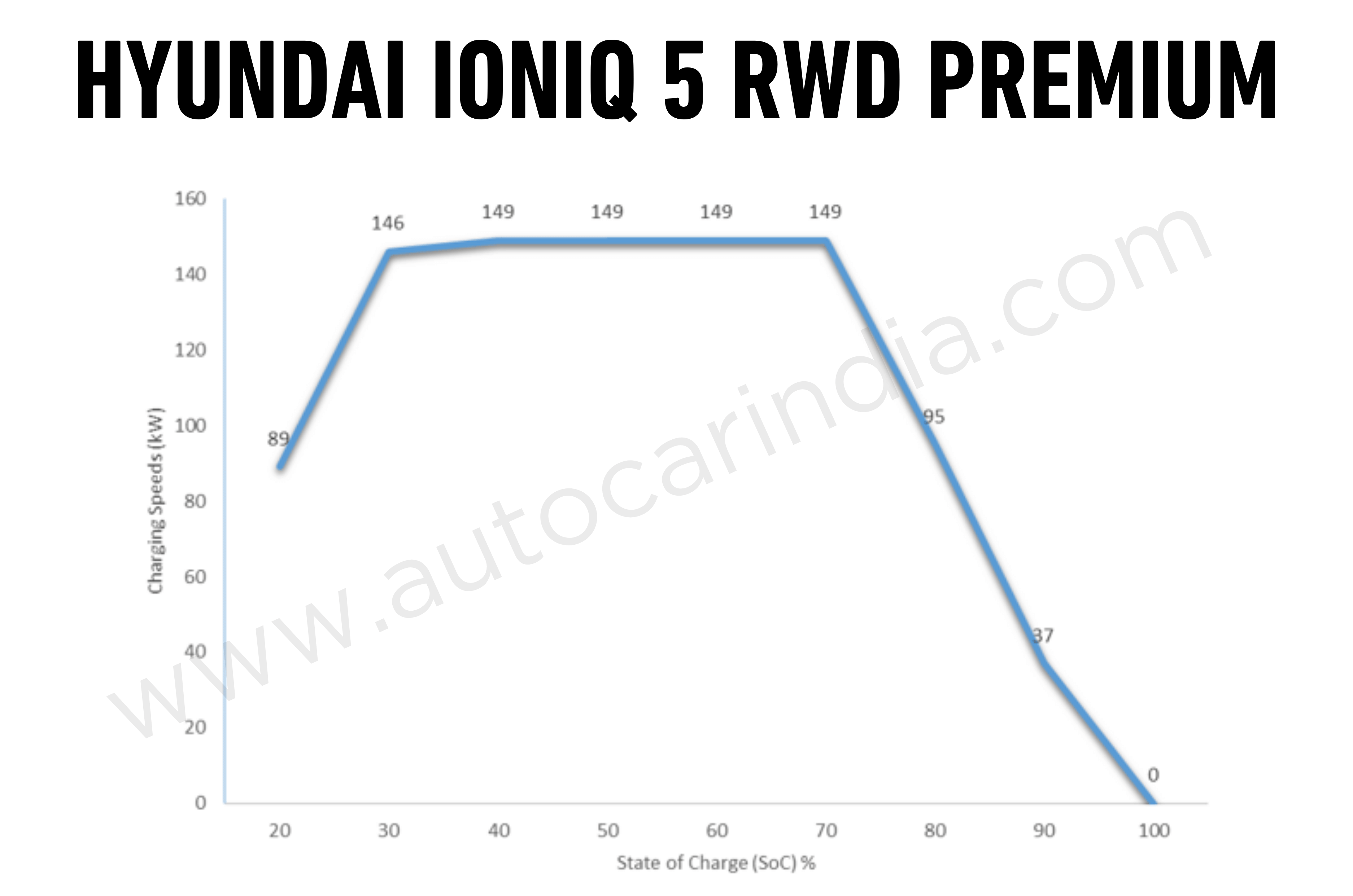
Hyundai claims the Ioniq 5 can support DC fast-charging speeds of up to 350kW. We charged it using a 150kW DC fast charger and recorded a peak charging rate of 149kW. Impressively, the charging speed remained close to its peak from 30 percent to 70 percent state of charge, before tapering off rapidly. In terms of charging times, the Ioniq 5 took 22 minutes to charge from 20 to 80 percent, and a further 32 minutes to reach 100 percent.
Autocar India’s range testing
Before our real-world range tests, the battery of our test car was fully charged, and we maintained tyre pressures in accordance with the manufacturer’s recommendations. The car was driven on a weekday in Navi Mumbai city and on the adjoining state highway in a fixed loop, and we maintained the set average speeds. At the end of each cycle, we calculated the range based on the percentage charge consumed.
Throughout our tests, the climate control was set to 22deg C in a full-auto setting, and other electricals, such as the audio system, indicators and ventilated front seats, were used when required, just as a regular user would. We take pride in our testing data, which isn’t merely consistent but also gives users an accurate indication of what they can expect in the real world.
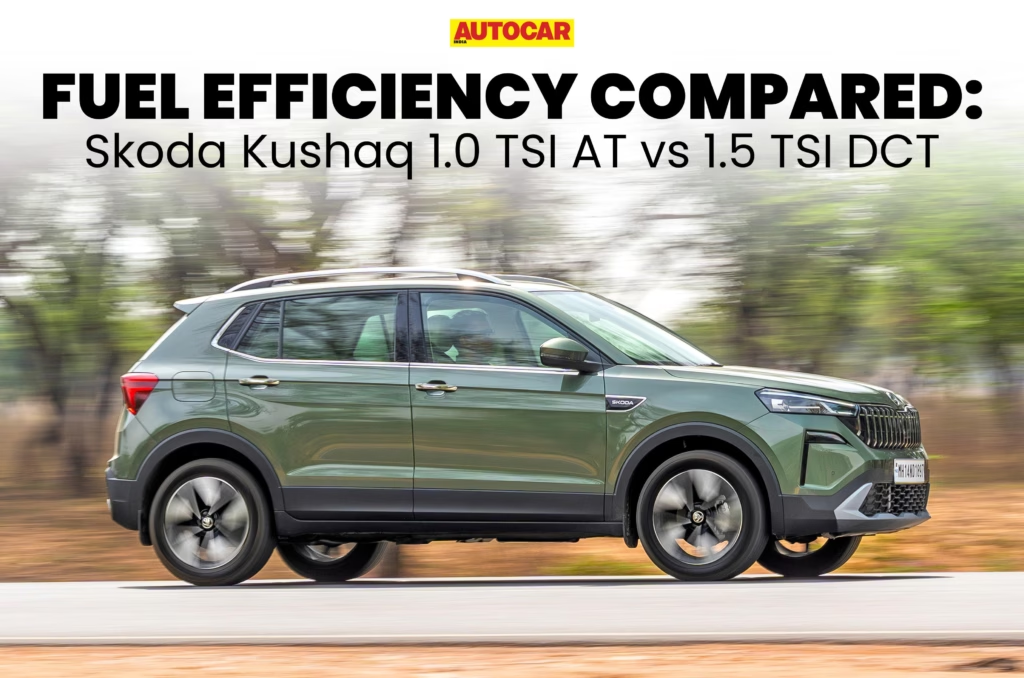
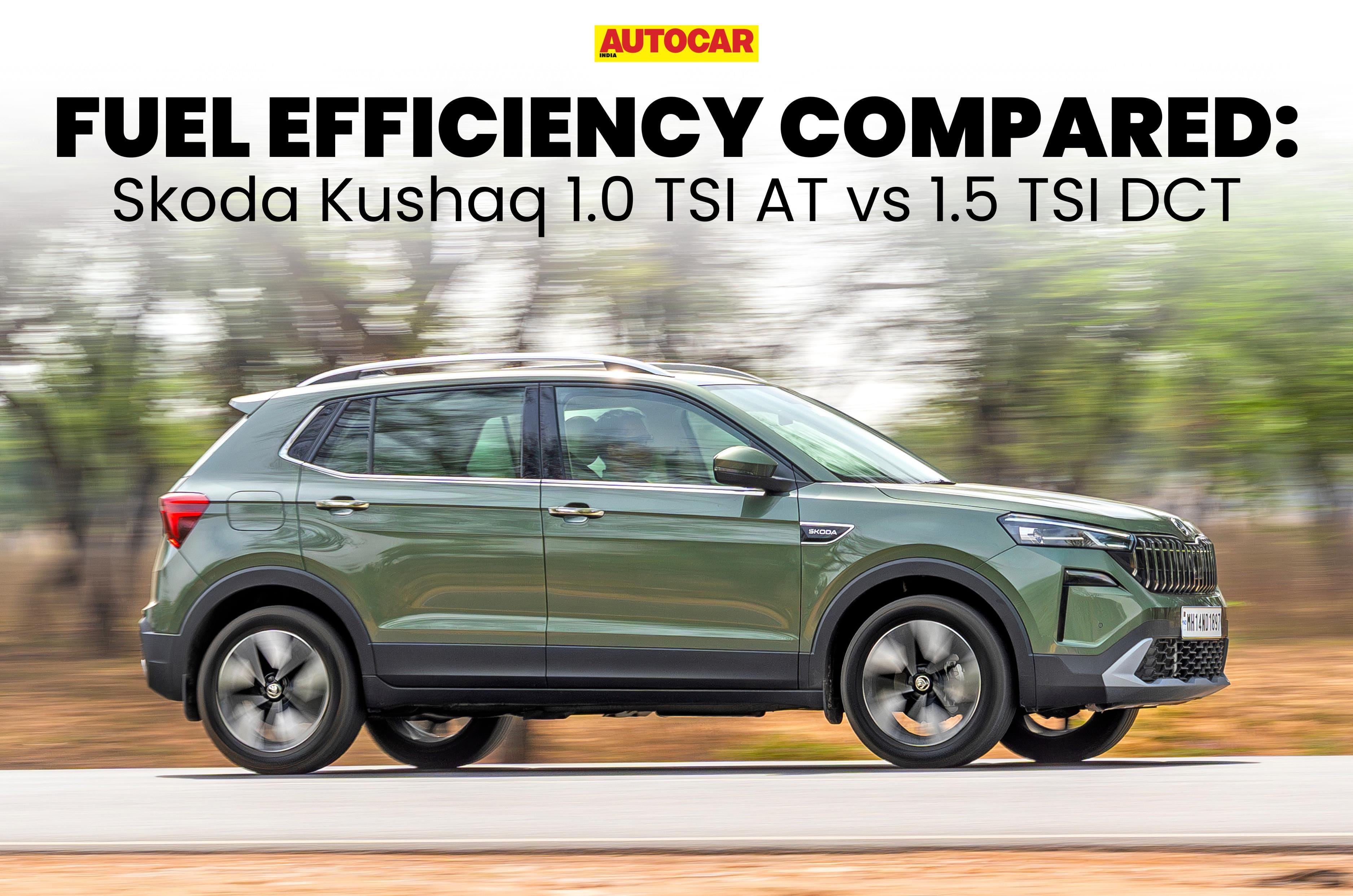
The Skoda Kushaq was updated earlier this year with much-needed improvements, and continues to offer 1.0-litre and 1.5-litre direct-injection turbo-petrol engines. In the interest of better fuel efficiency, the carmaker introduced a new automatic gearbox for the former engine option, replacing the older 6-speed unit. We’ve tested the updated Kushaq’s fuel efficiency with this new gearbox and compared it with the real-world fuel efficiency figures with the larger, more powerful 1.5 TSI engine.
Skoda Kushaq 1.0 AT vs 1.5 DCT: Specifications
1.5 unit develops more power, while the 1.0 has a much lighter kerb weight
Skoda Kushaq 1.0 AT vs 1.5 DCT:
Kushaq 1.0
Kushaq 1.5
Engine
3 cyls, turbo-petrol
4 cyls, turbo-petrol
Displacement (cc)
999
1,498
Power (hp)
115
150
Torque (Nm)
178
250
Gearbox
8AT
7DCT
Fuel tank capacity (litres)
50
50
Kerb weight (kg)
1,270 – 1,300
1,321 – 1,322
While the smaller 1.0 TSI develops 115hp and 178Nm, the 1.5 TSI mill outputs 150hp and 250Nm. In automatic guise, the former is paired to an 8-speed torque converter gearbox while the latter is paired to a 7-speed DCT. Additionally, both come with an auto engine start/stop system, but only the 1.5 TSI comes with cylinder deactivation technology, a feature that shuts off operation of two of the four cylinders depending on throttle input and engine load to curb fuel consumption. Both come with identical 50-litre fuel tanks, but the smaller 1.0 TSI helps it have a lighter kerb weight than the 1.5 TSI.
Skoda Kushaq 1.0 AT vs 1.5 DCT: Real-world fuel efficiency
1.0 AT delivers better efficiency, but the gap isn’t huge
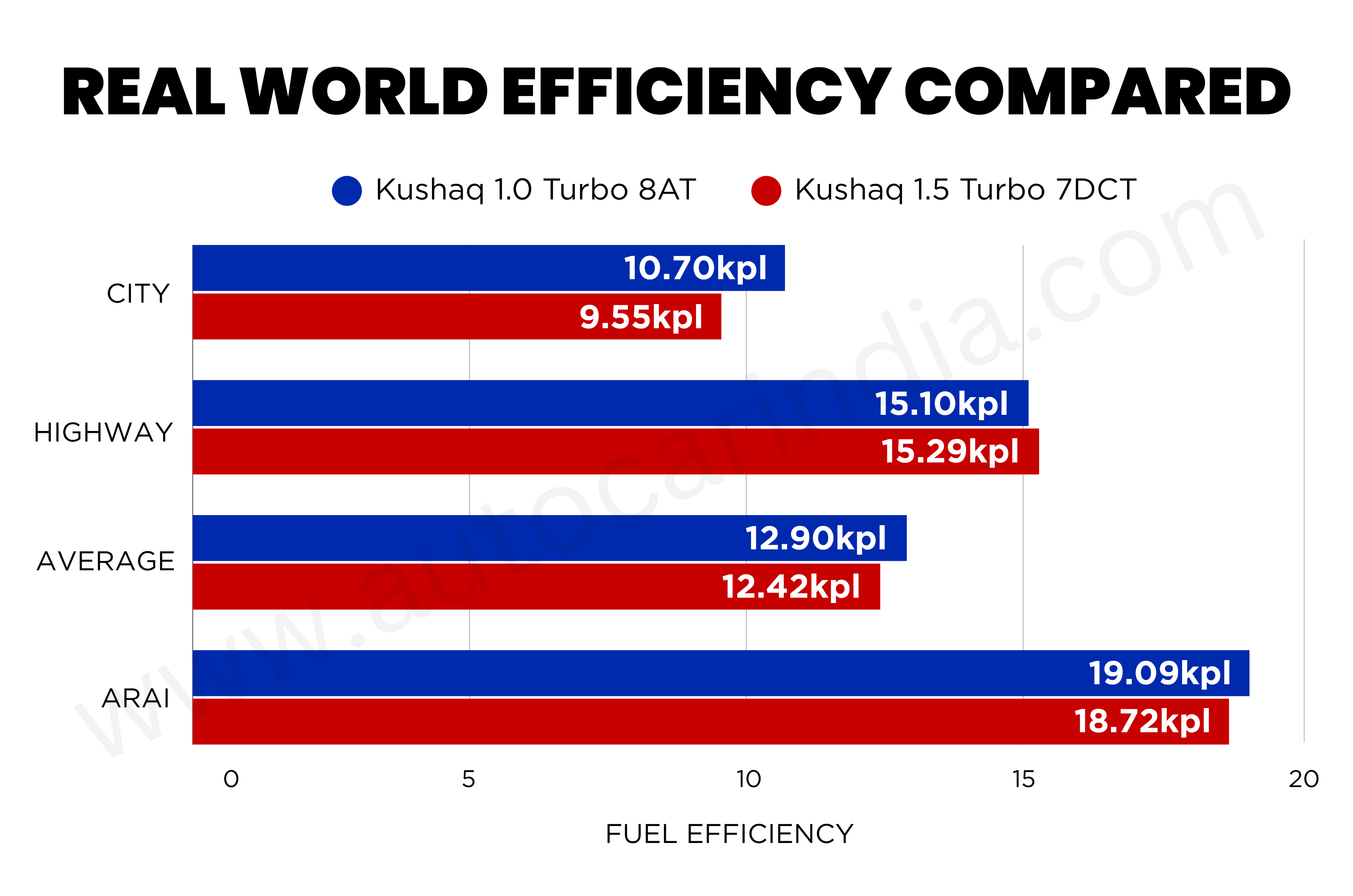
In our real-world fuel efficiency tests, the Kushaq 1.0 TSI AT averaged better than the 1.5 TSI DCT by 0.48kpl. In the city, the 1.0 TSI was more efficient than the 1.5 TSI by 1.15kpl. This is because of the 1.0’s lighter kerb weight and aggressive start/stop system. In contrast, the 1.5’s twin-cylinder deactivation tech helped it be more efficient on the highway than the 1.0 by 0.19kpl. Overall, the gap in real-world efficiency is slightly higher than their ARAI-claimed figures (0.48kpl vs 0.37kpl).
Skoda Kushaq 1.0 AT vs 1.5 DCT: Price
Availability from lower trims makes the 1.0 AT much more affordable than the 1.5 DCT
Skoda Kushaq 1.0 AT vs 1.5 DCT: Price
Kushaq 1.0 TSI
Kushaq 1.5 TSI
Petrol automatic price range (Rs lakh)
12.89 – 17.89
18.79 – 18.99
As the Kushaq’s 1.5 TSI automatic is limited to top-spec variants, it is Rs 5.9 lakh pricier than the 1.0 TSI automatic. In fact, even in top-spec guise, the latter powertrain combo is Rs 1 lakh cheaper than the former.
Autocar India’s fuel-efficiency testing
Before our real-world fuel-efficiency tests, we fill our test cars’ tanks to the brim and maintain tyre pressures based on the manufacturer’s recommendations. These cars are driven in fixed city and highway loops in and around Navi Mumbai, and we maintain certain average speeds. Throughout the tests, there is only one person in each car, operating the air conditioner and other electricals, such as the audio system, indicators and wipers, when required, just like a regular user would. Periodic driver swaps further neutralise variations in driver patterns. At the end of each cycle, we calculate efficiency by filling the tanks to full again.
Honda Activa 125 vs TVS Jupiter 125: भारत के 125cc स्कूटर सेगमेंट में Honda Activa 125 और TVS Jupiter 125 सबसे ज्यादा तुलना किए जाने वाले दो नाम हैं, लेकिन कीमत और फ्यूल एफिशिएंसी के मामले में दोनों का तरीका काफी अलग है। जो खरीदार इन दोनों के बीच फैसला कर रहे हैं, उनके लिए यह बात अहम है क्योंकि Jupiter 125 की शुरुआती कीमत काफी कम है और कागजों पर इसका माइलेज भी बेहतर बताया गया है, जबकि Activa 125 ज्यादा भरोसेमंद स्मार्ट-की सिस्टम पर आधारित है। आइए जानते हैं कि कीमत, माइलेज और फीचर्स के मामले में ये दोनों असल में कैसे एक-दूसरे से अलग हैं।
Honda Activa 125 vs TVS Jupiter 125: कीमत और माइलेज
Honda Activa 125 की कीमत दिल्ली में DLX वेरिएंट के लिए 91,178 रुपये से शुरू होती है और इसके टॉप मॉडल H-Smart की कीमत 95,622 रुपये (एक्स-शोरूम) है। वहीं, TVS Jupiter 125 की शुरुआती कीमत काफी कम है। इसका Drum Alloy वेरिएंट 81,700 रुपये से शुरू होता है, जबकि इसके टॉप SmartXonnect वेरिएंट की कीमत 89,935 रुपये (एक्स-शोरूम) है। ये कीमतें TVS की आधिकारिक प्राइसिंग के मुताबिक हैं।
माइलेज की बात करें तो, Activa 125 के सभी वेरिएंट्स के लिए ARAI-क्लेम्ड माइलेज 47 kmpl है, जबकि Jupiter 125 का क्लेम्ड माइलेज 50 kmpl से 57.27 kmpl के बीच बताया गया है।
दोनों स्कूटर में लगभग एक ही साइज के इंजन का इस्तेमाल किया गया है – Activa में 123.92cc और Jupiter में 124.8cc का इंजन है, और दोनों का टॉर्क आउटपुट भी लगभग एक जैसा (10.5 Nm) है।
Honda Activa 125 vs TVS Jupiter 125: तुलना करने लायक फीचर्स
Activa के टॉप वेरिएंट में H-Smart टेक्नोलॉजी वाली Honda Smart Key मिलती है, जिससे राइडर अपनी जेब से चाबी निकाले बिना ही स्कूटर को अनलॉक कर सकते हैं, सीट खोल सकते हैं और स्टार्ट कर सकते हैं। साथ ही, इसमें TFT डिस्प्ले और ब्लूटूथ नेविगेशन व कॉल अलर्ट के लिए Honda RoadSync भी दिया गया है।
इसके जवाब में Jupiter 125 में सेगमेंट का पहला ‘ऑल-इन-वन लॉक’ दिया गया है, जो एक ही मैकेनिज्म से फ्यूल कैप, सीट, हैंडलबार लॉक और इग्निशन को ऑपरेट करता है। साथ ही, इसमें असल ड्राइविंग में बेहतर माइलेज के लिए TVS IntelliGo ऑटो स्टार्ट-स्टॉप टेक्नोलॉजी भी मिलती है।
दोनों स्कूटर में फ्रंट डिस्क ब्रेक का ऑप्शन, ट्यूबलेस टायर, USB चार्जिंग पोर्ट और टेलीस्कोपिक फ्रंट सस्पेंशन मिलता है, यानी राइड का अनुभव लगभग एक जैसा ही है। मुख्य अंतर मैकेनिकल हार्डवेयर के बजाय सुविधा देने वाले फीचर्स में है।
अब अगर आपकी प्राथमिकता कम कीमत और बेहतर माइलेज है, तो TVS Jupiter 125 आपके लिए ज्यादा बेहतर विकल्प हो सकता है। वहीं, अगर आप Honda की स्मार्ट-की जैसी सुविधाएं और लंबे समय से मौजूद सर्विस नेटवर्क चाहते हैं, तो Activa 125 की ज्यादा कीमत भी आपको सही लग सकती है।
कुल मिलाकर, दोनों स्कूटर के इंजन और मैकेनिकल सेटअप में ज्यादा बड़ा अंतर नहीं है। इसलिए खरीदारी का फैसला इस बात पर ज्यादा निर्भर करता है कि रोजाना इस्तेमाल में आपके लिए कौन से फीचर्स ज्यादा जरूरी हैं।
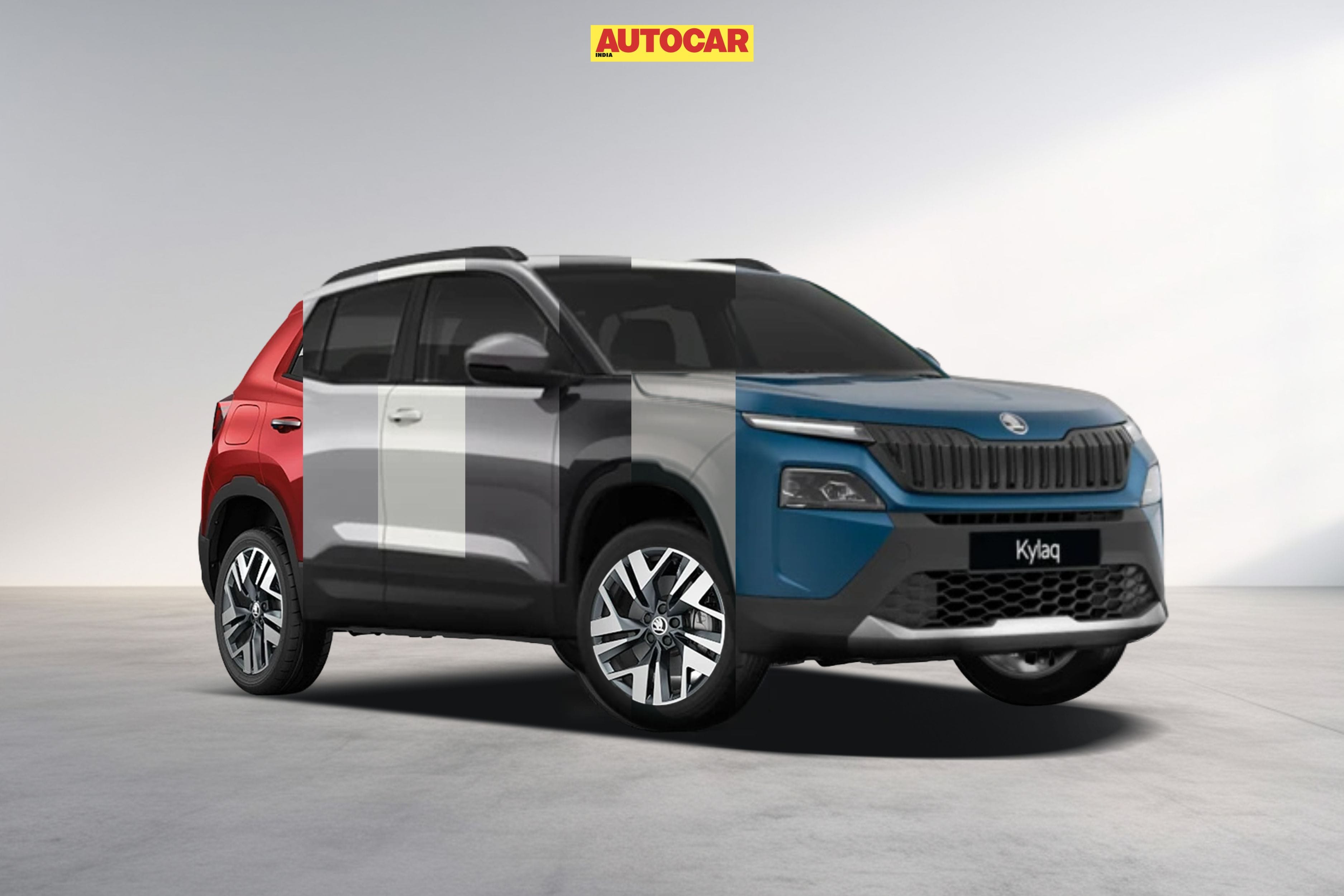
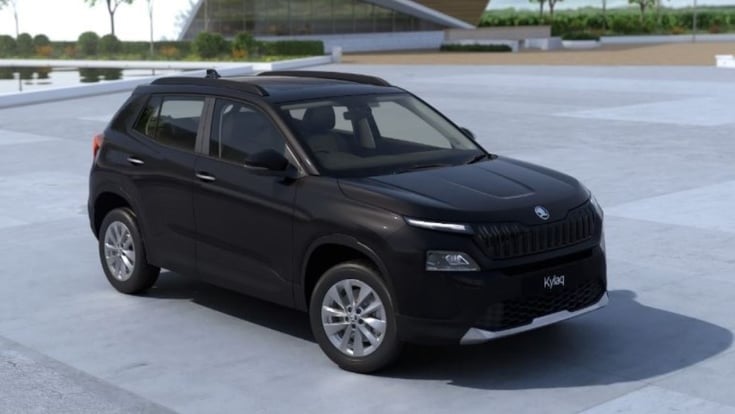
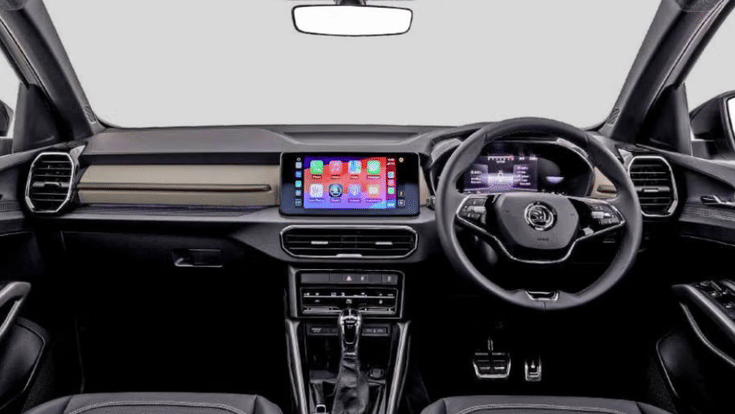
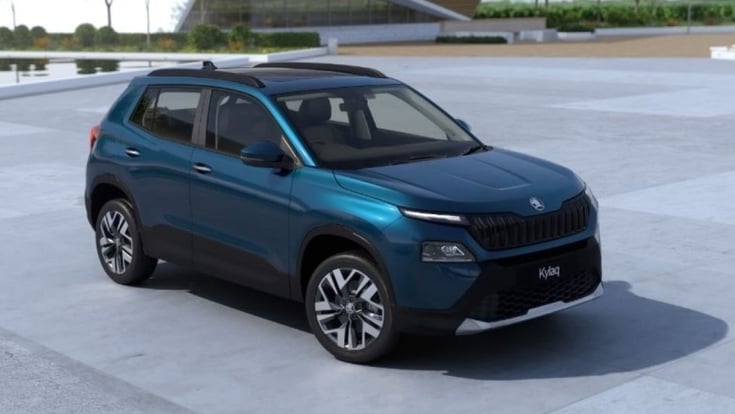
The Kylaq, Skoda’s most affordable offering in India, was introduced in 2024 and marked the brand’s return to the sub-4m space after years. Currently, the Kylaq is Skoda’s best-selling model in our market and has sold over 50,000 units since its launch as of February 2026. Here’s a breakdown of the powertrain options, comfort and convenience features, safety kit and exterior colours available on each trim of the Skoda SUV.
Skoda Kylaq variant-wise price and powertrain options
The base Classic trim misses out on an automatic transmission option
Skoda Kylaq ex-showroom price as of August 21, 2026 (Rs lakh)
Trim
MT
AT
Classic
7.59
–
Classic+
8.25
9.25
Signature
9.43
10.43
Signature+
10.77
11.77
Sportline
11.32
12.32
Prestige
11.75
12.75
Prestige+
11.99
12.99
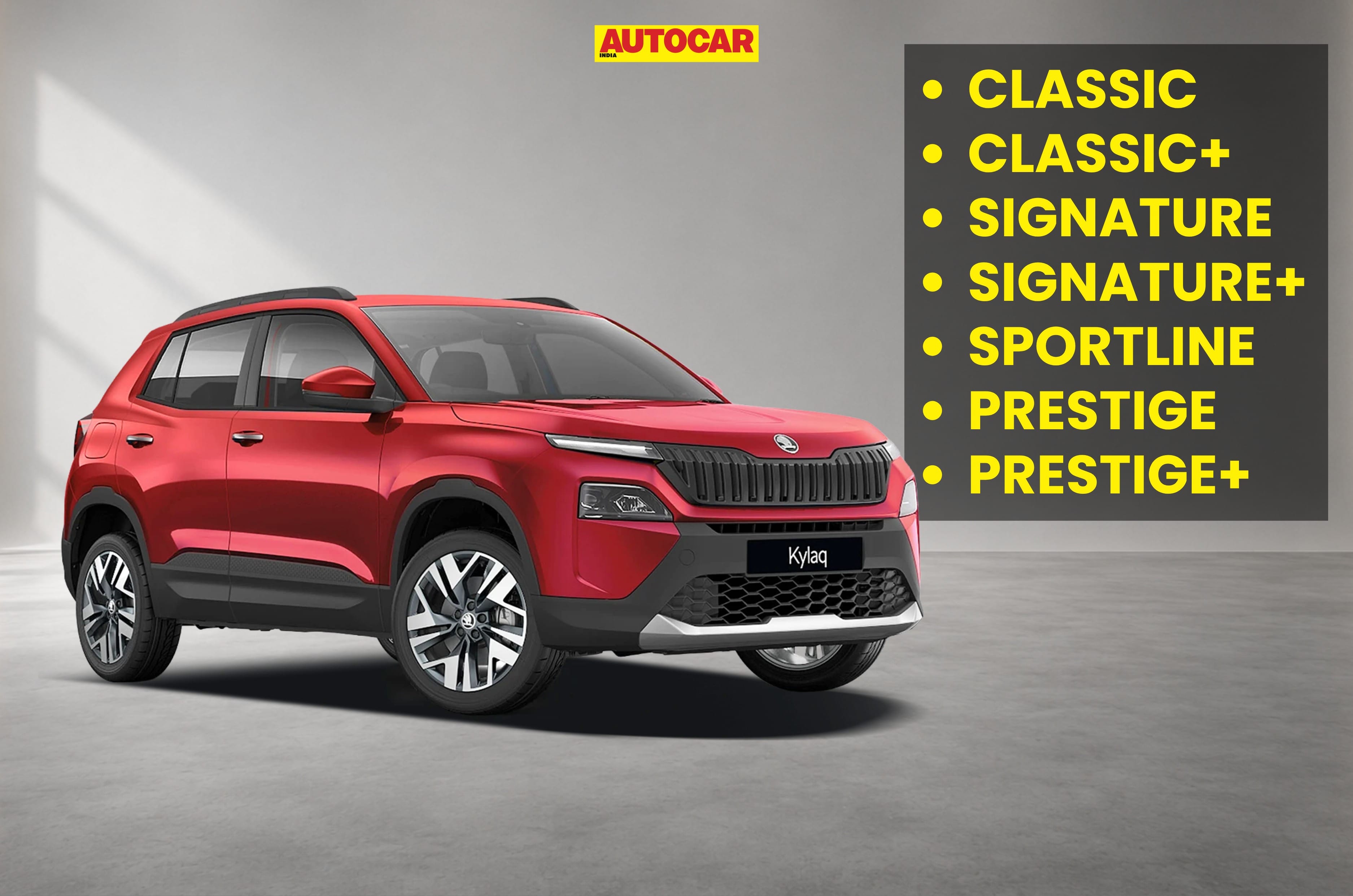
The Skoda Kylaq has an ex-showroom price ranging from Rs 7.59 lakh to Rs 12.99 lakh. Except for the base Classic trim, the remaining trim levels offer both manual and automatic gearboxes. Powering the Kylaq is a 115hp, 178Nm, 1.0-litre direct-injection turbo-petrol engine that also does duty in the Kushaq and the Slavia. Transmission duties are handled by either a -speed manual or a 6-speed automatic gearbox. Notably, in Classic+ guise, the Kylaq is the most accessible car with a torque converter gearbox.
Skoda claims a top speed of 188kph and that the manual version is capable of a 0-100kph sprint in 10.5 seconds. In our Kylaq real-world performance tests, the automatic version achieved a 0-100kph time of 11.69 seconds. Skoda also claims an ARAI-rated fuel economy of 19.68kpl for the manual and 19.05kpl for the automatic; our Kylaq real-world mileage tests saw the manual average 12.86kpl, while the automatic went 11.03km on a litre of petrol.
Skoda Kylaq variant-wise colour options
Offered in seven colours on the outside, two on the inside
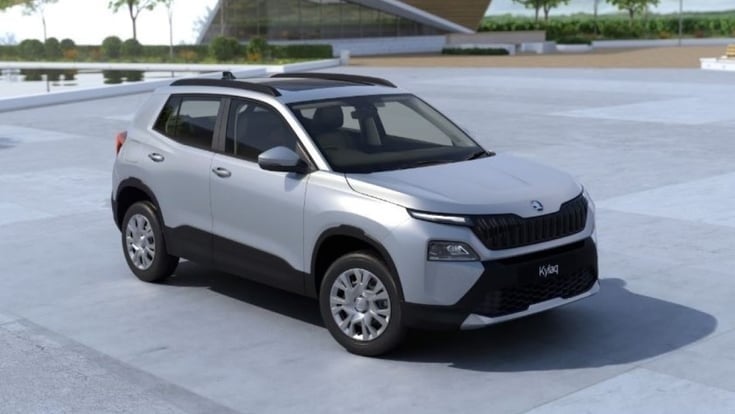
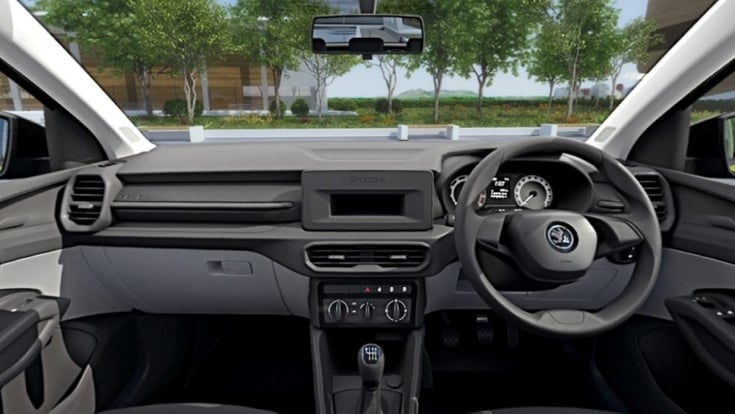
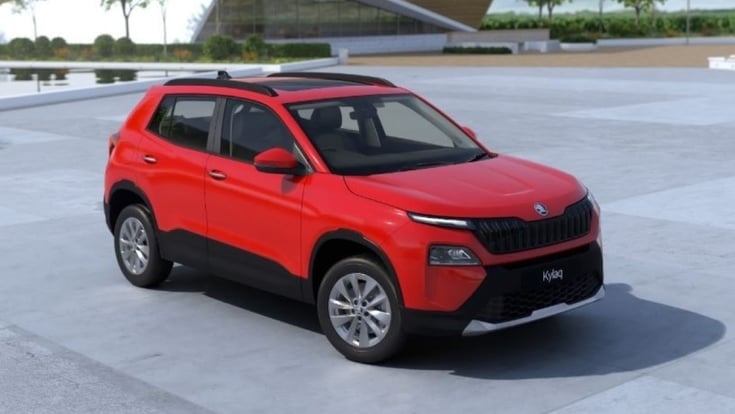
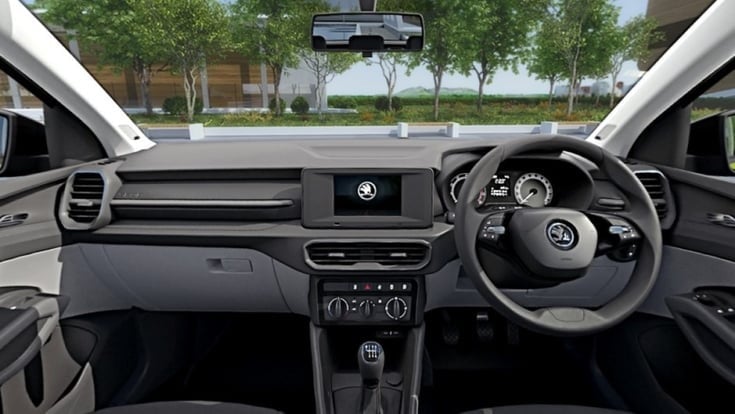
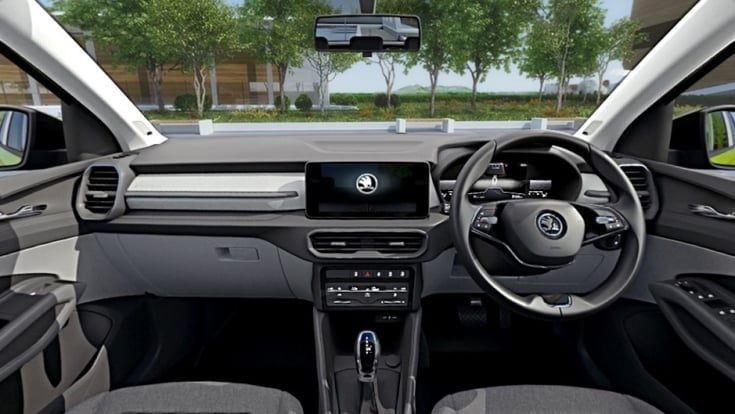
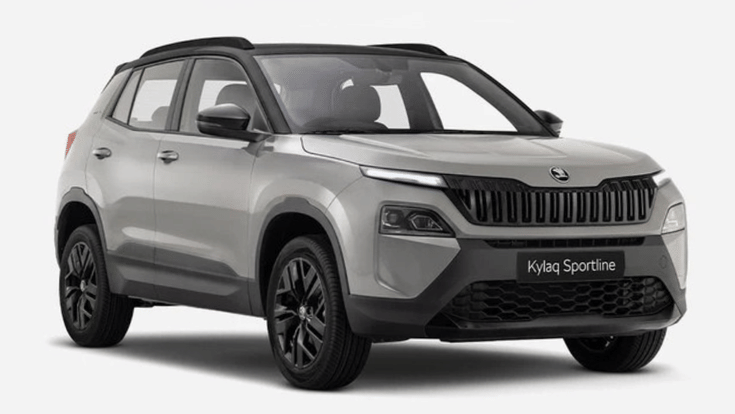
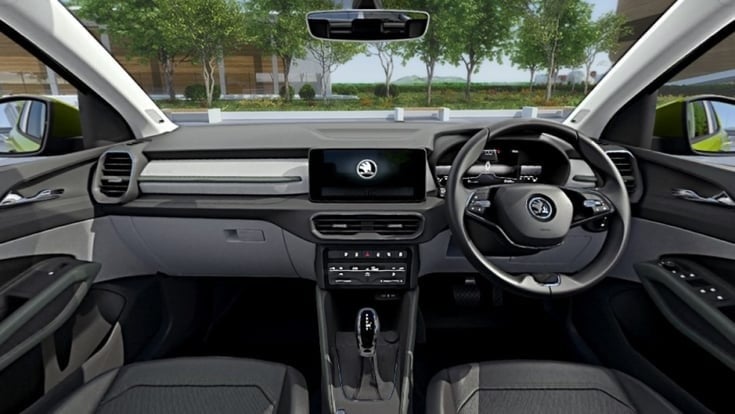
The compact SUV is offered in seven colours, namely, Candy White, Brilliant Silver, Cherry Red, Carbon Steel, Deep Black, Lava Blue, and Steel Grey. While all trims come in a monotone finish, select paint jobs on the Sportline come with a black roof. Additionally, the Sportline trim exclusively gets the Steel Grey colour option. The interior of the Skoda Kylaq gets a black and grey colour scheme as standard, but the Sportline has an all-black theme. Here’s a table comprising the available exterior colours on the Skoda Kylaq depending on the trim level chosen:
Colour
Classic
Classic+
Signature
Signature+
Sportline
Prestige
Prestige+
Candy White
Yes
Yes
Yes
Yes
Dual-tone
Yes
Yes
Brilliant Silver
Yes
Yes
Yes
Yes
Dual-tone
Yes
Yes
Cherry Red
Yes
Yes
Yes
Yes
Dual-tone
Yes
Yes
Carbon Steel
Yes
Yes
Yes
Yes
–
Yes
Yes
Deep Black
–
Yes
Yes
Yes
Yes
Yes
Yes
Lava Blue
–
Yes
Yes
Yes
Yes
Yes
Yes
Steel Grey
–
–
–
–
Dual-tone
–
–
Skoda Kylaq standard safety kit
Gets six airbags, ABS, EBD, traction control and more.
As standard, the Skoda Kylaq comes equipped with six airbags, ABS, EBD, ESC, traction control, brake disc wiping, roll-over protection, central locking, rear parking sensor, and ISOFIX mounts.
Skoda Kylaqvariant-wise features
Skoda Kylaq Classic: Rs 7.59 lakh
Gearbox option – 6MT
Skoda Kylaq Classic trim
LED headlights with LED daytime running lamps (DRLs)
Leatherette seat upholstery with Sportline inscription
LED projector headlamps
LED fog lamps with cornering function
Wireless phone charger
Skoda Kylaq Prestige – Rs 11.75 lakh-12.75 lakh
Gearbox options – 6MT, 6AT
Skoda Kylaq Prestige trim
Features over Signature+
Dual-tone 17-inch alloys
LED projector headlights
LED rear turn indicator and reverse lamp
Front LED fog lamps with static bending function
White ambient lighting
Leatherette upholstery on seats, front armrest and doors
Chrome parking brake tip
Ventilated front seats
Wireless phone charger
Anti-theft alarm
Skoda Kylaq Prestige+ – Rs 11.99 lakh-12.99 lakh
Gearbox options – 6MT, 6AT
Feature over Prestige
6-way powered front seats
Which Skoda Kylaq variant should you consider?
The mid-spec Signature+ trim offers good value for money
Starting at Rs 10.77 lakh, the mid-spec Signature+ trim offers dual digital screens, a single-pane sunroof, a rear parking camera with sensors, auto AC with rear vents, all-LED lighting and 16-inch silver alloy wheels, making it a value-for-money offering. While you do miss out on features such as a wireless phone charger and powered and ventilated front seats, the premium you have to pay for these is not justifiable. Moreover, this trim is available with both manual and automatic gearbox options.
However, if you are on a budget, you can consider the lower Signature trim, which offers a smaller touchscreen with wired Android Auto and Apple CarPlay, rear wiper and washer, rear AC vents and a sunroof. This trim also comes in both manual and automatic variants, and priced at Rs 9.43 lakh and Rs 10.43 lakh, respectively, they still offer a lot of value.
Although the Classic+ trim is also well-equipped for its price, the lack of an infotainment system makes recommending it a bit more challenging. However, the 7-inch OEM infotainment system with wired smartphone connectivity, offered with the higher Signature trim, is available in the online classifieds marketplace under Rs 10,000. If you are open to retrofitting it at your authorised dealership, the Classic+ trim becomes the most value-for-money option on a strict budget.