भारत में सरकारी नौकरी को अक्सर सुरक्षित भविष्य और अच्छी जिंदगी की गारंटी माना जाता है। लेकिन मुंबई में काम करने वाले उत्तर प्रदेश के आजमगढ़ निवासी एक नाई की कहानी इस सोच से अलग नजर आती है। दावा है कि वह महीने में करीब 1 लाख रुपये कमाता है। दिलचस्प बात यह है कि इतनी कमाई के बावजूद वह एंट्री-लेवल सरकारी नौकरी मिलने पर भी अपना मौजूदा काम छोड़ना नहीं चाहता।
लेखक और फंड मैनेजर हर्ष गुप्ता मधुसूदन ने सोशल मीडिया प्लेटफॉर्म X पर इस नाई के साथ हुई बातचीत साझा की। उनकी पोस्ट के मुताबिक, नाई हफ्ते में छह दिन सुबह से रात तक काम करता है। यात्रा के बुनियादी खर्च निकालने के बाद उसकी मासिक कमाई करीब एक लाख रुपये बताई गई है।
मेहनत और आजादी को मानता है अपनी सबसे बड़ी पूंजी
हर्ष के मुताबिक, बातचीत के दौरान नाई ने कहा कि काम करने और मेहनत करने वालों के लिए अवसरों की कमी नहीं है। वह अपने काम को पसंद करता है और इसमें मिलने वाली आजादी उसके लिए अहम है। यही वजह है कि वह सरकारी नौकरी के बजाय अपना मौजूदा काम जारी रखना चाहता है।
उसकी कहानी ने रोजगार को लेकर एक दिलचस्प सवाल खड़ा किया है क्या अच्छी कमाई और संतुष्टि के लिए सरकारी नौकरी ही एकमात्र रास्ता है? हालांकि, एक व्यक्ति का अनुभव पूरे रोजगार बाजार की तस्वीर नहीं बताता।
आजमगढ़ से लखनऊ तक का सफर हुआ आसान, विकास से खुश है परिवार
बातचीत में उत्तर प्रदेश के विकास का जिक्र भी आया। हर्ष के अनुसार, नाई ने बताया कि पहले उसके गांव से लखनऊ पहुंचने में 7-8 घंटे लगते थे। अब बेहतर सड़कों के कारण उतने ही समय में आना-जाना संभव हो गया है, वह भी रास्ते में चाय और खाने के लिए रुकने के बाद।
नाई ने देश में हुए विकास कार्यों पर खुशी जताई। उसने बताया कि गांव में उसके परिवार को कुछ सरकारी योजनाओं का लाभ मिला है, हालांकि शहर में ऐसा लाभ नहीं मिला।
टैक्स भरने पर गर्व, बेटे की पढ़ाई पर भी ध्यान
इस कहानी का एक और पहलू उसकी पारिवारिक जिंदगी है। हर्ष के मुताबिक, नाई की कमाई से टैक्स कटता है और वह गर्व के साथ इनकम टैक्स रिटर्न भी दाखिल करता है। कई बार उसे रिफंड भी मिलता है।
उसका एक छोटा बेटा है, जिसे वह निजी प्री-स्कूल में पढ़ाता है। उसकी पत्नी भी कमाई में योगदान देती थी, लेकिन फिलहाल बच्चे की देखभाल के लिए काम से ब्रेक पर है।
Got a hair cut via Urban today morning. The barber has been in Mumbai for sometime but is from Azamgarh. Works six days a week, morning to night and earns around a lakh rupees per month after his basic travel expenses. Said there is no dearth of opportunity or jobs, just need to work hard. Said wouldn’t take an entry level government job even if offered as he likes his work and autonomy.
I asked him about UP. He said earlier it took 7-8 hours to go from his village to Lucknow. Now you can do a round trip in that time while stopping for lunch and tea. Added that your glass of tea is unlikely to spill on the highways – they are so good. Was very happy with the development work in the country. Said in the village his family got some scheme benefits but not in the city. Told me TDS is deducted so he proudly files his returns and often gets refunds.
Has one son who he sends to a private pre-school and wife earned extra but is currently on break given the kid is small. I felt like telling him that he must let go of this toxic positivity about India and his life, and he must pronto create an account on X and Instagram to receive the “correct” opinions about our ostensibly ‘failed’ nation – but I didn’t have the heart to say that to him! 😉
सोशल मीडिया पर छिड़ी बहस, क्या हर किसी के लिए ऐसे अवसर हैं?
पोस्ट वायरल होने के बाद सोशल मीडिया पर लोगों की अलग-अलग प्रतिक्रियाएं सामने आईं। कुछ यूजर्स ने नाई की मेहनत और आत्मनिर्भरता की तारीफ की। वहीं, कुछ ने सवाल उठाया कि क्या एक नाई के लिए हर महीने एक लाख रुपये कमाना आम बात है। कुछ लोगों ने इस कमाई के दावे की तुलना दूसरे शहरों में नाइयों की आमदनी से भी की।
दूसरी ओर, कुछ यूजर्स ने कहा कि एक व्यक्ति की सफलता को देश में रोजगार की पूरी स्थिति का प्रमाण नहीं माना जा सकता। उन्होंने शिक्षित युवाओं के रोजगार, शिक्षा की गुणवत्ता और महिलाओं की सुरक्षा जैसे मुद्दे भी उठाए।
हर्ष ने अपनी पोस्ट के अंत में व्यंग्य करते हुए लिखा कि उनका मन नाई से कहने का हुआ कि वह भारत और अपनी जिंदगी को लेकर इतनी सकारात्मक सोच छोड़कर सोशल मीडिया पर देश की नाकामियों के बारे में पढ़े, लेकिन वह ऐसा कह नहीं सके।
इस कहानी का असली पहलू यही है कि जहां कुछ लोग सरकारी नौकरी को सफलता मानते हैं, वहीं कुछ के लिए अपने काम में कमाई, संतुष्टि और आजादी ज्यादा मायने रखती है।
(डिस्क्लेमर: यह रिपोर्ट सोशल मीडिया पर यूज़र द्वारा शेयर किए गए कंटेंट पर आधारित है। मनीकंट्रोल इन दावों की न तो स्वतंत्र रूप से पुष्टि नहीं करता है और न ही इनका समर्थन करता है।)
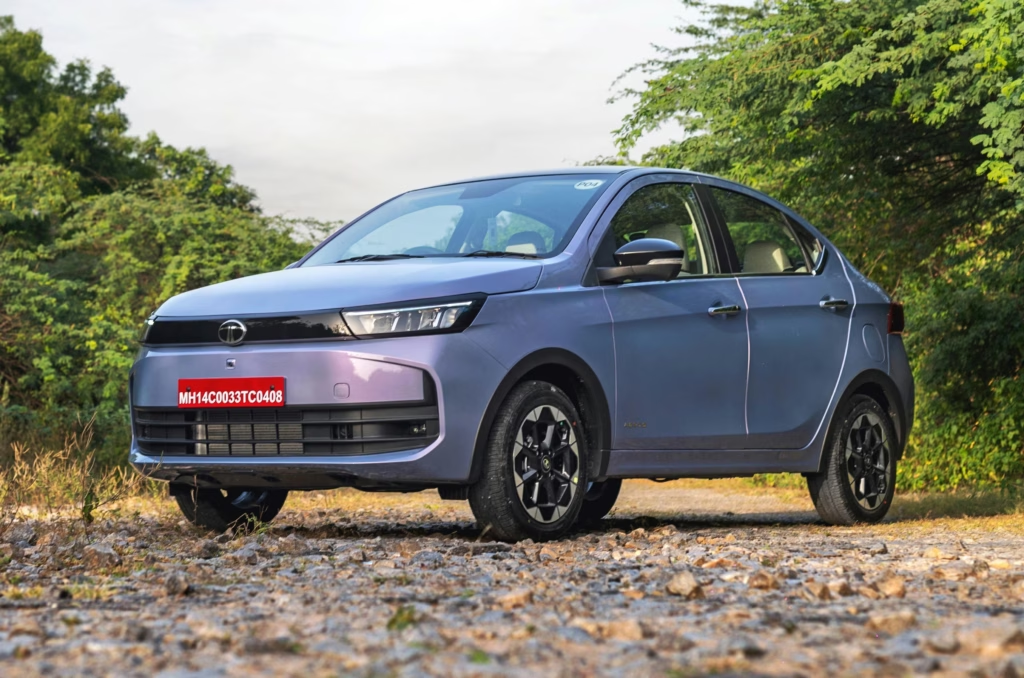
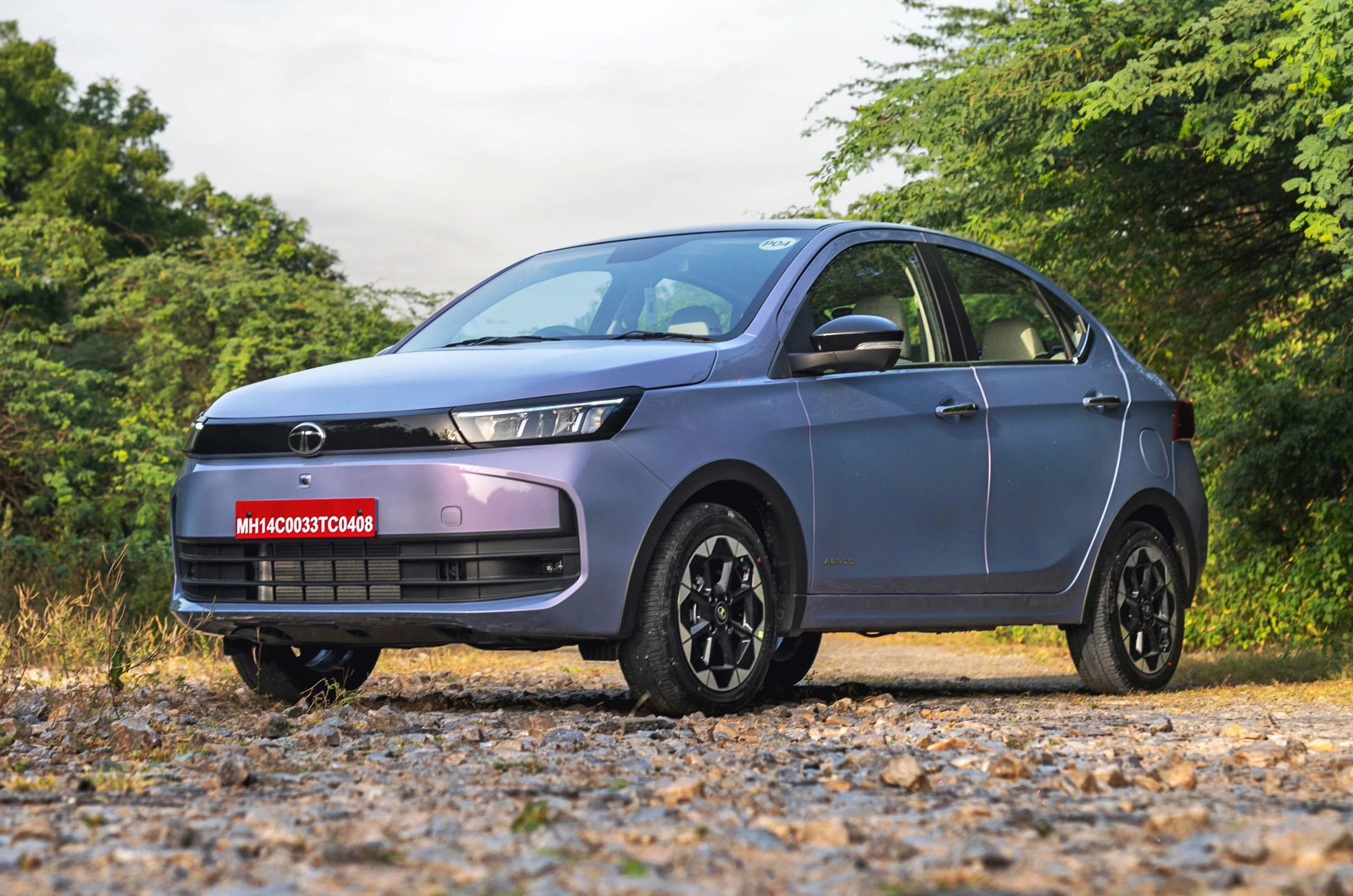
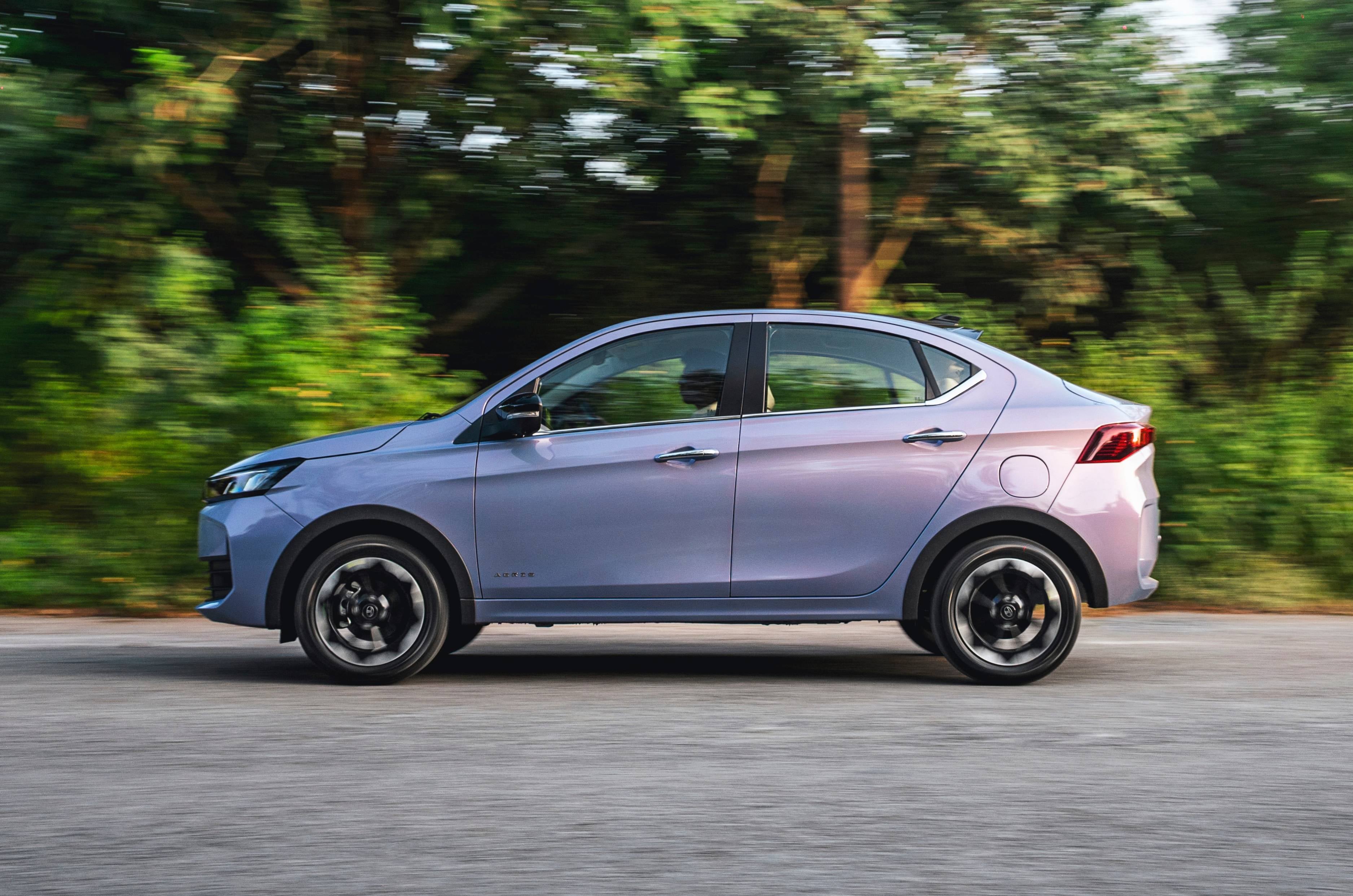
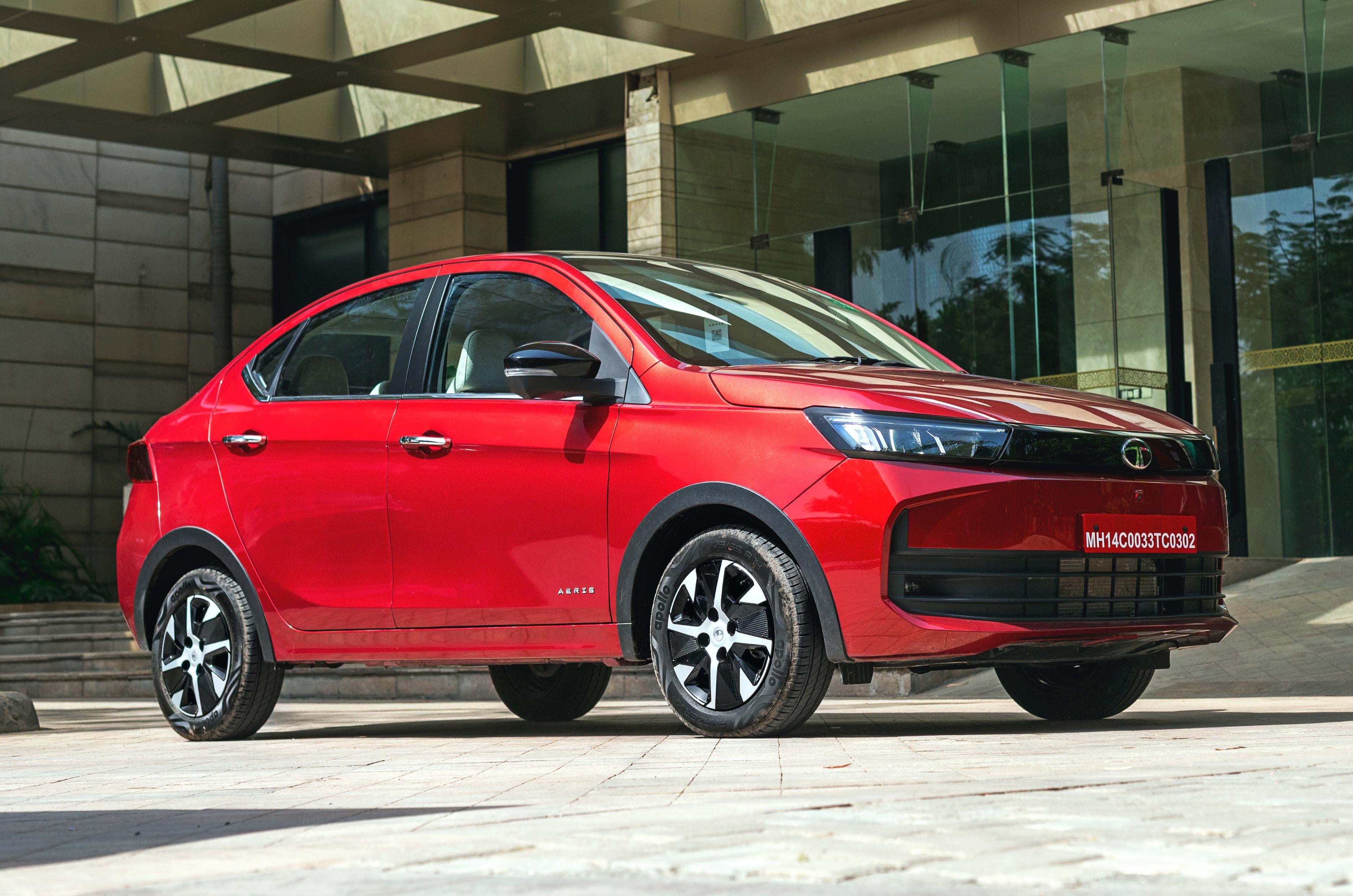
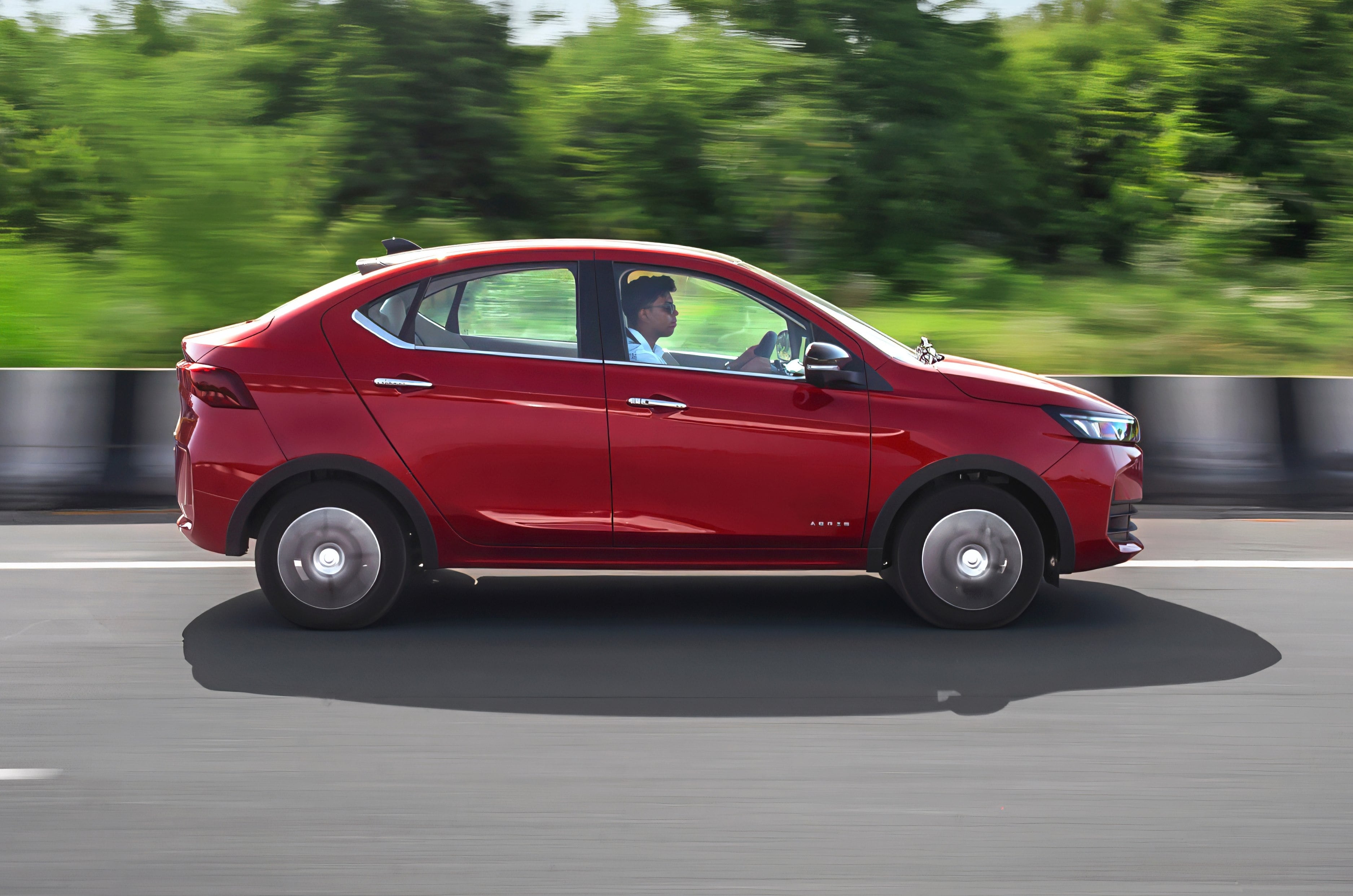
Tata has introduced the Aeris as a successor to the Tigor to strengthen its presence in the compact sedan segment. Apart from a new name, the Aeris is a heavily updated version of the discontinued Tigor, with sheet metal updates, a revamped cabin, and feature additions. If you’re considering buying the Aeris, we list two reasons to go for it and two reasons to look elsewhere based on our experience behind the wheel.
Spacious and well-equipped interior
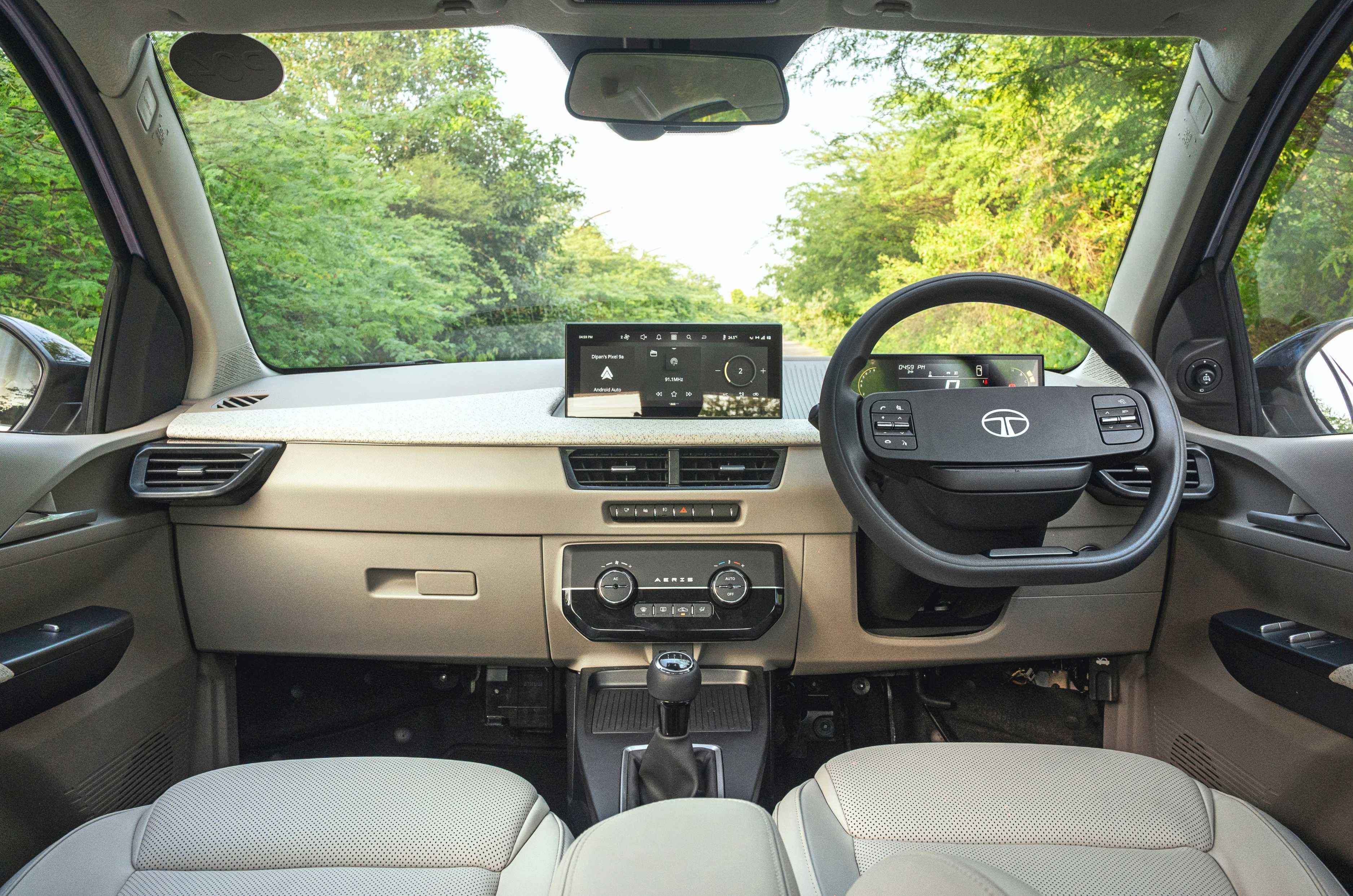
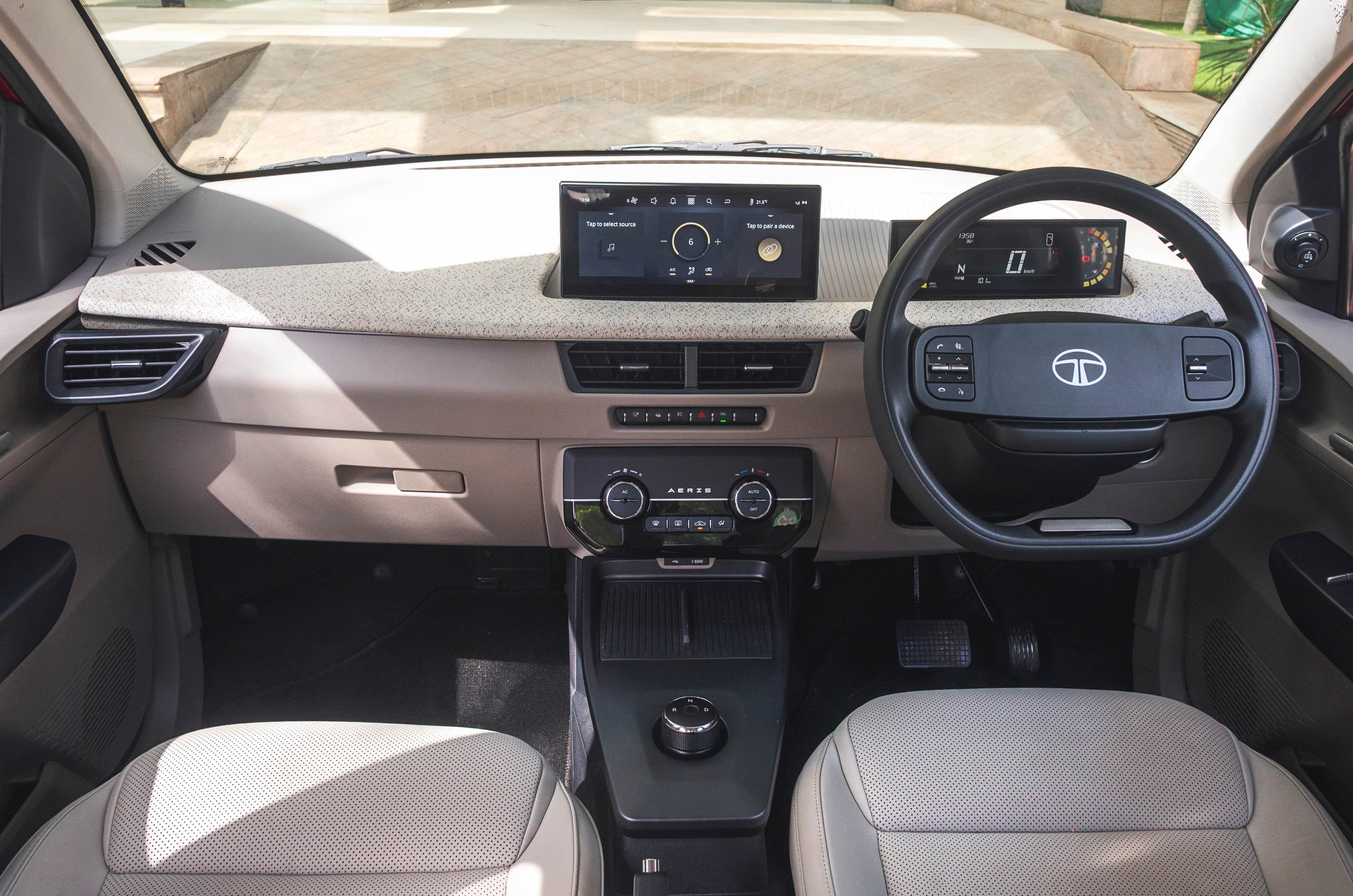
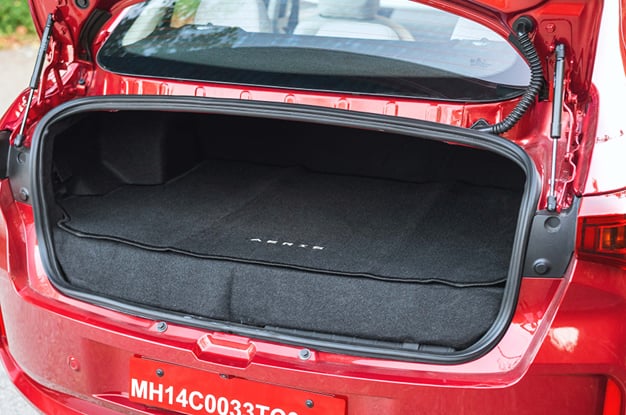
The Aeris’ cabin is well laid out; the beige theme gives it an airy feel, while the fabric trim on the dashboard adds a premium touch. You get a plethora of physical buttons, which have a solid feel, and floating door handles from the Sierra, which have a sturdy build. Space at the back is plenty, with good legroom, knee room, adequate thigh support and comfortable seat cushioning. The boot at 419 litres is the largest in its segment. Additionally, the boot lid uses gas struts for its opening for more usable space, unlike rivals that use a hinge mechanism.
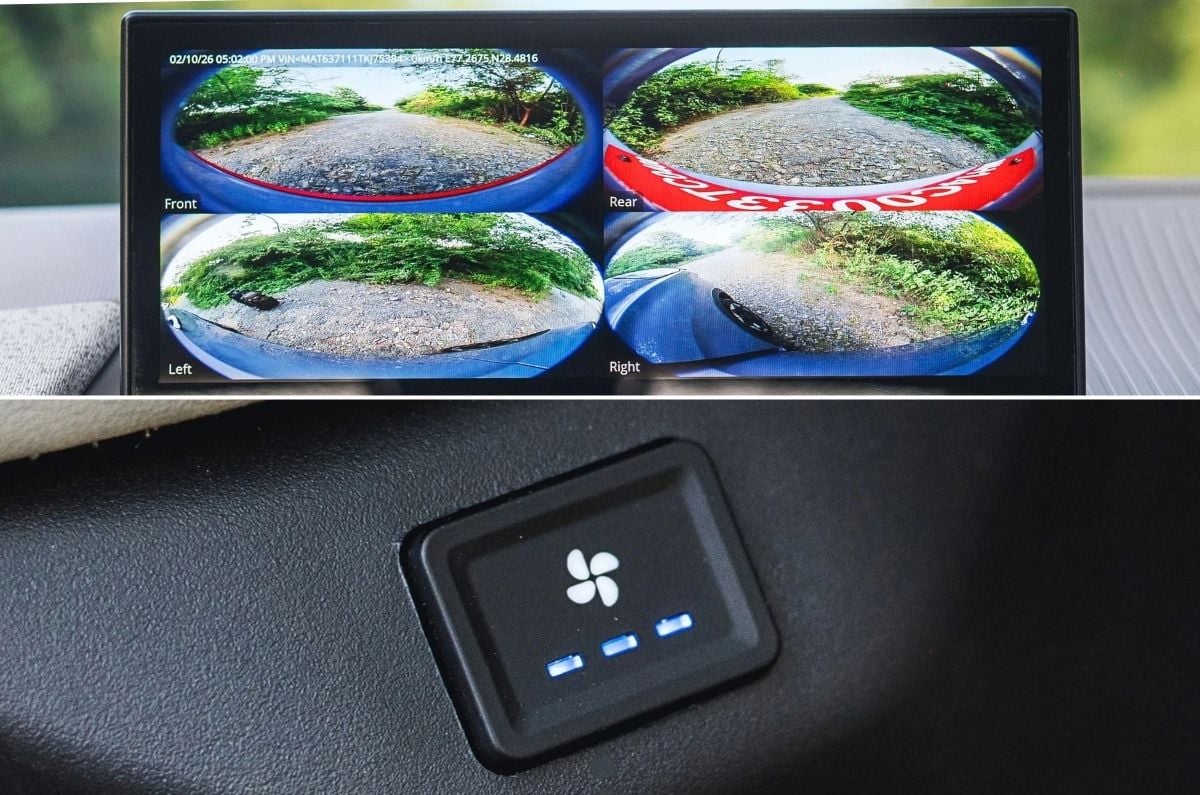
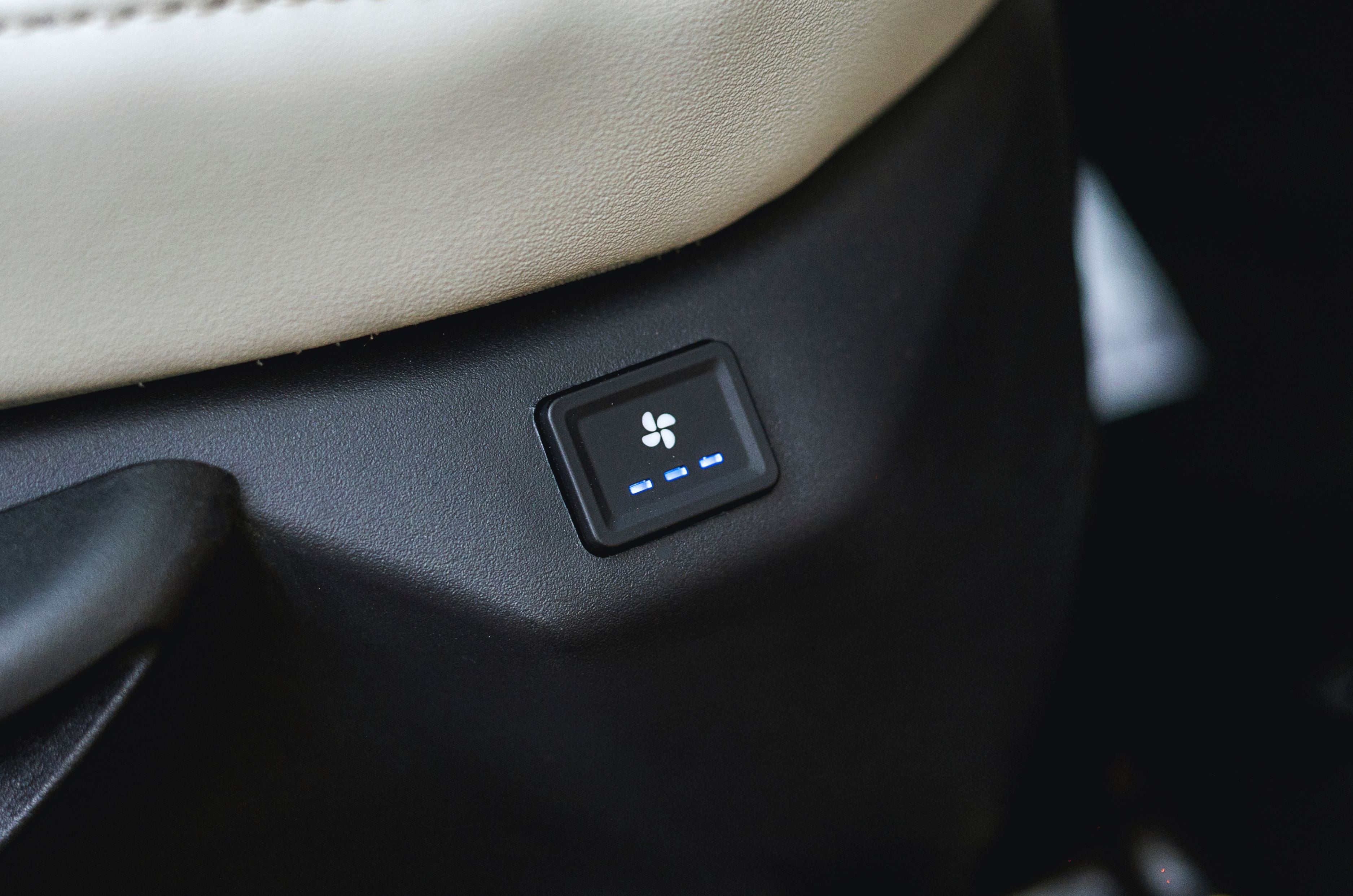
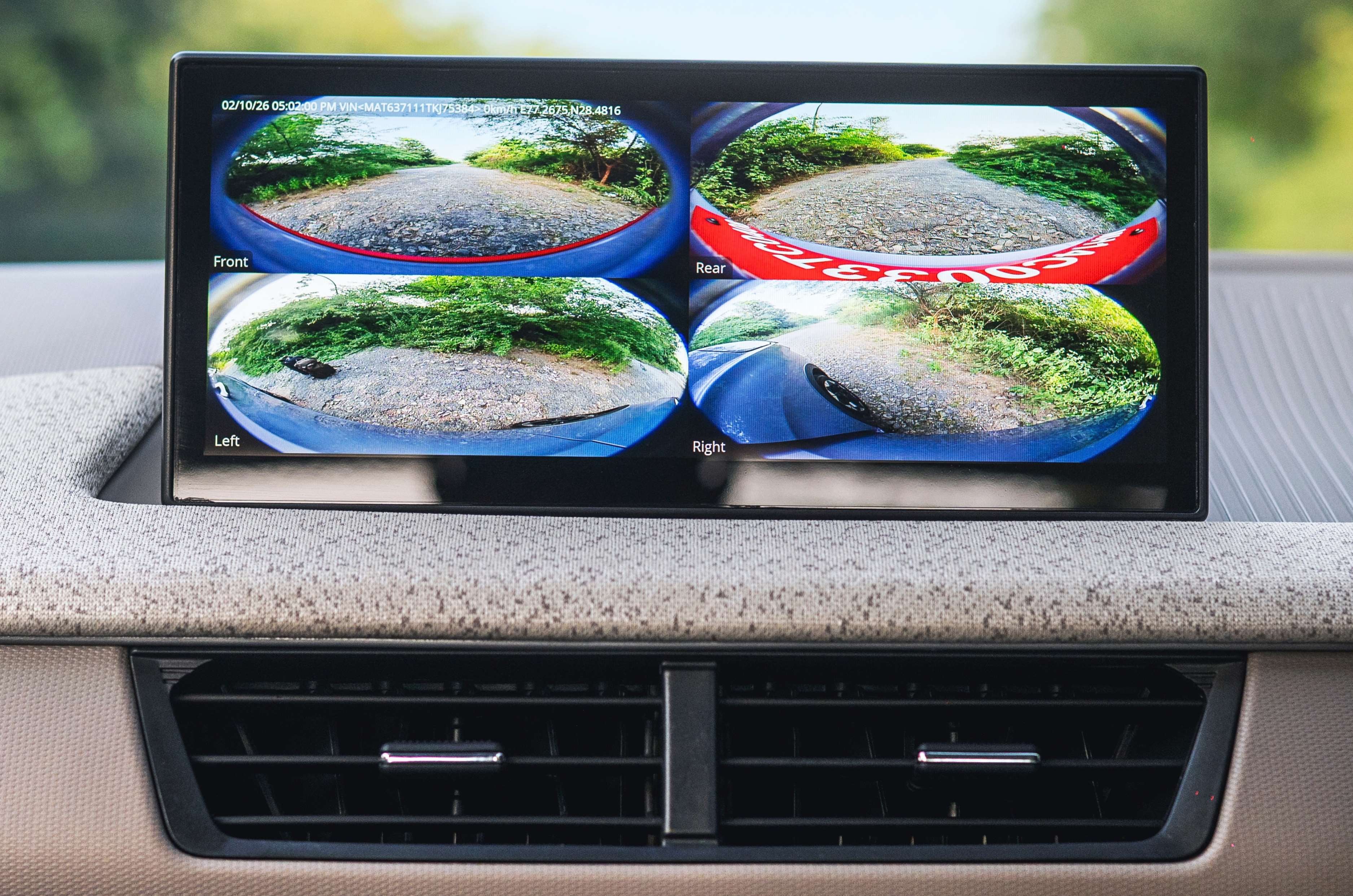
Equipment levels of the Aeris are among the best in its segment. It’s the only model to come with front seat ventilation and a dashcam recording. Additionally, it packs a 10.25-inch infotainment system with Apple CarPlay and Android Auto, a 360-degree camera, and blind spot monitoring.
Plush ride quality
Like other Tata models, the Aeris is well judged in terms of ride and handling. Ride comfort is supple over broken roads, as its suspension does a great job of absorbing bumps. Additionally, its high 170mm ground clearance helps it clear large speed breakers with ease. At higher speeds, its suspension is stiff enough to maintain its stability even during quick lane changes.
Reasons not to buy the Aeris petrol
Lacklustre engine and gearbox
Powering the Aeris petrol is a 1.2-litre, 3-cylinder, naturally aspirated unit producing 86hp and 113Nm. Overall, the engine lacks the smoothness that rivals offer, and it lacks grunt out on the highway, taking time to reach triple-digit speeds. Shifts feel jerky with the AMT, while manual versions lack the slickness that competitors from Honda, Hyundai and Maruti provide.
Poor NVH levels
Apart from the not-so-smooth operation, the Aeris’ petrol unit is quite noisy. Vibrations filter through the cabin at idle and low speeds, and the gruff engine note causes discomfort over time. Additionally, as speeds rise, engine vibrations get much louder, and wind and road noise become more audible. This hinders the overall driving experience when out on the highway.
TVS’s revival of the Norton brand has been going swimmingly so far, with the brand already launching two motorcycles in Europe: the Manx R and, recently, the Atlas. The Manx and Manx R share a platform as Norton’s flagship motorcycles, while the Atlas uses a 585cc twin-cylinder engine and is built completely in India. It now seems like the brand might be expanding its portfolio, if its new trademark applications are anything to go by.
Norton currently sells two motorcycles in Europe: Manx R and Atlas
Manx and Atlas GT have been revealed but haven’t been launched yet
Norton’s India entry is on the cards, with the Atlas expected to be the first model
Norton’s revival backed by TVS: What’s happened so far?
Two products launched in Europe, Indian launches pending
The UK-based manufacturer has recently trademarked three new names: International (also referred to as Inter in some places), Avelon and Roven. These could be upcoming motorcycles from the brand, but we currently don’t have more details as to what kind of bikes or a possible timeline for any of them. This isn’t the first time the brand has been noted for trademarking names, though.
Back in 2020, we reported Norton had trademarked six names: Combat, Electra, Fastback, Navigator, Nomad and Ranger. These applications were filed shortly after TVS took over the brand, so at that time, the names were thought to indicate the first set of products from the rejuvenated legacy manufacturer. Six years later, Norton still hasn’t used these names, so the trademarks by themselves don’t necessarily reveal anything concrete.
Currently, the brand’s UK website lists four motorcycles: Manx R, Atlas, Manx and Atlas GT – of which the first two are on sale. The Manx R starts at GBP 20,250 (Rs 25.73 lakh) and the Atlas at GBP 8,250 (Rs 10.57 lakh). The Manx R did its job very well in re-introducing the brand to the world. Our first ride impressions of the Atlas were also encouraging, and the motorcycle should act as a good upgrade to the current ~400cc adventure tourer segment, which has seen a lot of action lately. The Atlas has a 585cc twin-cylinder engine that makes 69hp and 57.5Nm. Norton has positioned the Atlas as more of a tourer, with features such as cruise control and advanced rider aids like lean-sensitive ABS, traction control, slide control and launch control. We expect the Atlas to be priced lower in India compared to the UK since it is being manufactured here.
Going back to the names, Norton has long been rumoured to be working on a more affordable, single-cylinder platform for value-sensitive markets – like India – and it isn’t far-fetched to think one of these trademarked names could be used for products born out of that platform. Although time (and TVS) will tell where this actually leads. For now, we look forward to Norton bringing its current roster to India and hope to see the Atlas being priced competitively. Though our first ride impressions of it were good, we’d love to see how it stacks up in home territory against rivals like the Honda NX500, Kawasaki Versys 650 and the soon-to-be-launched Royal Enfield Himalayan 750.
Source: MOTOBOB (Instagram); All GBP-to-INR conversions are based on exchange rates at the time of writing.
रामगढ़ की सुबह इन दिनों सिर्फ सूरज की पहली किरणों से नहीं, बल्कि उन महिलाओं के हौसले से भी रोशन होती है, जो अपने सपनों के लिए मैदान में पसीना बहा रही हैं। इन्हीं में 32 वर्षीय कविता कुमारी की कहानी सबसे अलग नजर आती है। दुलमी प्रखंड के सोसो गांव की रहने वाली कविता विधवा हैं और दो बच्चों की मां भी। परिवार की जिम्मेदारियों के बीच उन्होंने अपने लिए एक ऐसा लक्ष्य चुना है, जो उनकी जिंदगी बदल सकता है। हर सुबह घर के जरूरी काम निपटाने के बाद कविता करीब 8 किलोमीटर दूर रामगढ़ के सिदो-कान्हू मैदान पहुंचती हैं। उनके पास महंगे रनिंग शूज, ट्रैकसूट या स्पोर्ट्स टी-शर्ट नहीं हैं।
ऐसे में साड़ी ही उनका अभ्यास का पहनावा बन गई है। तेज धूप, लंबा रास्ता और सीमित साधन भी उनके कदम नहीं रोक पाए। कविता की कोशिश सिर्फ नौकरी पाने तक सीमित नहीं है, बल्कि वह अपने बच्चों के लिए बेहतर और सुरक्षित भविष्य तैयार करना चाहती हैं।
पहले देखने पहुंचीं, फिर खुद दौड़ने लगीं
कविता शुरुआत में मैदान पर दूसरे अभ्यर्थियों को ट्रेनिंग करते हुए देखने पहुंची थीं। धीरे-धीरे उन्होंने खुद भी दौड़ लगाने का फैसला किया। शुरुआत में 1.6 किलोमीटर की दूरी पूरी करने में उन्हें करीब 8 मिनट लगते थे। अब वह यही दूरी लगभग 7 मिनट में पूरी कर लेती हैं।
भर्ती परीक्षा के दौरान साड़ी पहनकर दौड़ते हुए उनका वीडियो सोशल मीडिया पर वायरल हो गया। खास बात यह है कि कविता को काफी समय तक पता ही नहीं था कि उनका वीडियो इंटरनेट पर चर्चा में आ चुका है।
दो बच्चों की मां, परिवार की जिम्मेदारी भी कंधों पर
कविता के पति का निधन हो चुका है और वह अपने दो बच्चों के साथ बुजुर्ग ससुरालवालों की जिम्मेदारी भी संभालती हैं। आर्थिक परेशानियों के बावजूद उन्होंने तैयारी का रास्ता नहीं छोड़ा। वह बताती हैं कि उनका मकसद सिर्फ नौकरी हासिल करना नहीं है। वह होमगार्ड बनकर अपने बच्चों की पढ़ाई और भविष्य को सुरक्षित करना चाहती हैं।
मैदान पर सिर्फ कविता नहीं, सैकड़ों संघर्ष की कहानियां
सिदो-कान्हू मैदान में हर सुबह का नजारा किसी कहानी से कम नहीं। ट्रैकसूट पहने युवतियों के साथ कई महिलाएं साड़ी और चप्पलों में दौड़ती दिखाई देती हैं। इनमें कई ऐसी हैं, जो घर का काम, बच्चों की देखभाल या खेतों का काम निपटाकर सीधे मैदान पहुंचती हैं।
बूढ़ा-खुखरा गांव की 30 वर्षीय सुनीता कुमारी भी साड़ी में दौड़ती हैं। उनका कहना है कि गरीब किसान परिवार से होने के कारण परिवार ट्रैकसूट और जूते नहीं खरीद सका, लेकिन इससे उनका हौसला कम नहीं हुआ।
किसी के लिए नौकरी, तो किसी के लिए बच्चों का भविष्य
गोला की मोनिका कुमारी ने 1.6 किलोमीटर की दौड़ करीब 6 मिनट 4 सेकंड में पूरी की। वहीं कई अन्य महिला अभ्यर्थियों के लिए यह भर्ती सिर्फ रोजगार का मौका नहीं, बल्कि परिवार की आर्थिक स्थिति बदलने की उम्मीद है। फिटनेस कोच सिकंदर पांडेय और एक मार्शल आर्ट्स प्रशिक्षक अभ्यर्थियों को मुफ्त प्रशिक्षण दे रहे हैं। 2 अक्टूबर को आयोजित एक बड़ी दौड़ में करीब 2,500 अभ्यर्थियों ने हिस्सा लिया।
Kavita Mahato from Jharkhand is a widow. Her husband passed away three years ago. She works at a brick kiln and single-handedly supports her two children and her in-laws.
This woman was appearing for the Home Guard recruitment trial race in Jharkhand. Kavita completed the 1,600-metre race in just 6 minutes, barefoot and wearing a torn saree.
The final selection race is still remaining. We hope Kavita clears that as well. Even if she doesn’t, the government should give this woman a job.
Salute to Kavita Mahato’s Passion. Our people have immense potential, but due to difficult circumstances, they often never get the opportunity to showcase their talent.
रामगढ़ में 284 होमगार्ड पदों के लिए भर्ती प्रक्रिया 24 अक्टूबर से 5 नवंबर तक प्रस्तावित है। इसमें 50 प्रतिशत पद महिलाओं के लिए और अतिरिक्त 5 प्रतिशत सीटें विधवा व तलाकशुदा महिलाओं के लिए आरक्षित हैं। भर्ती में 1.6 किलोमीटर की दौड़ के अलावा लंबाई, सीना और अन्य शारीरिक परीक्षण होंगे। प्रशासन ने पारदर्शी तरीके से योग्यता और फिटनेस के आधार पर चयन की तैयारी की है।
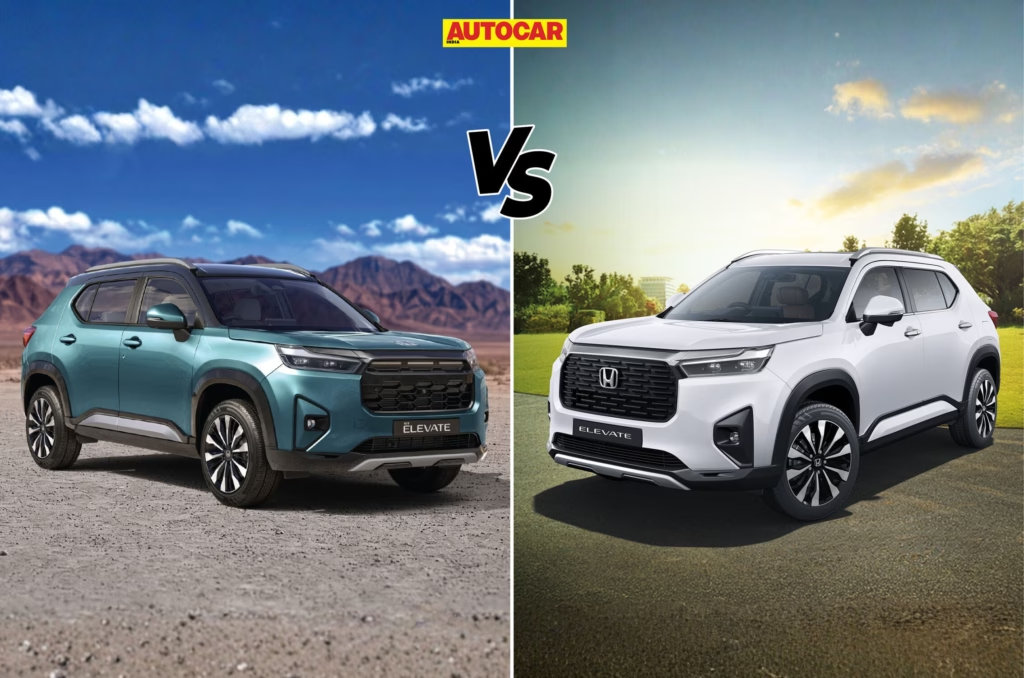
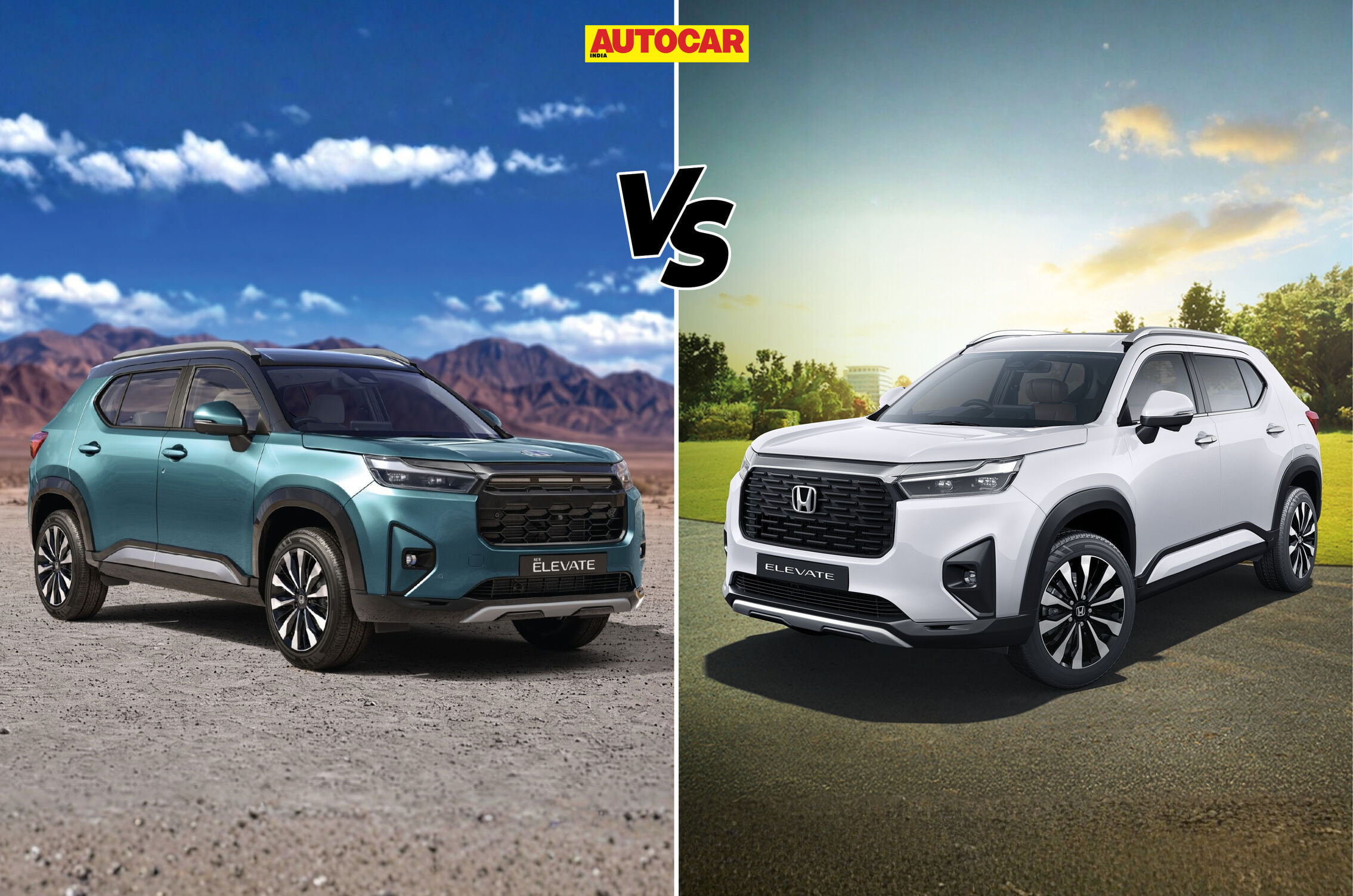
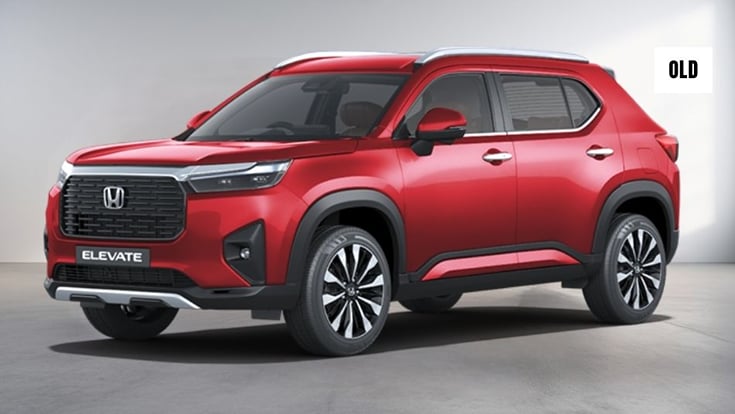
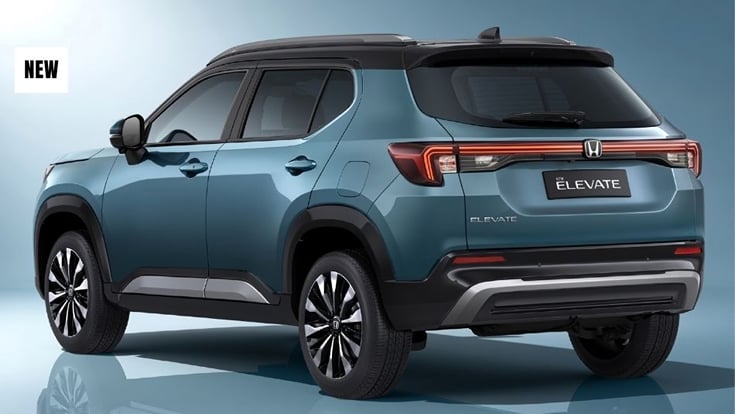
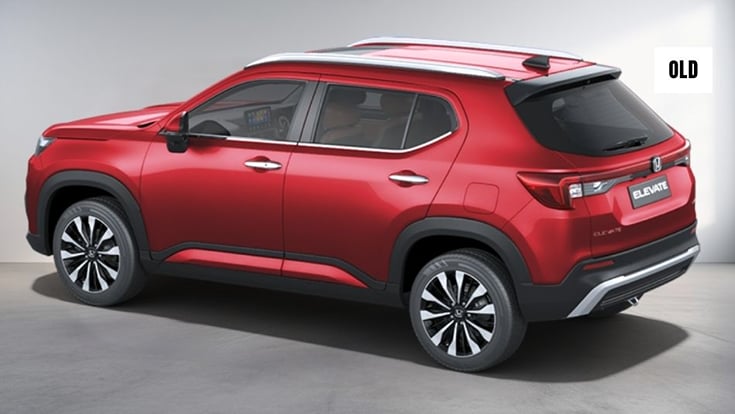
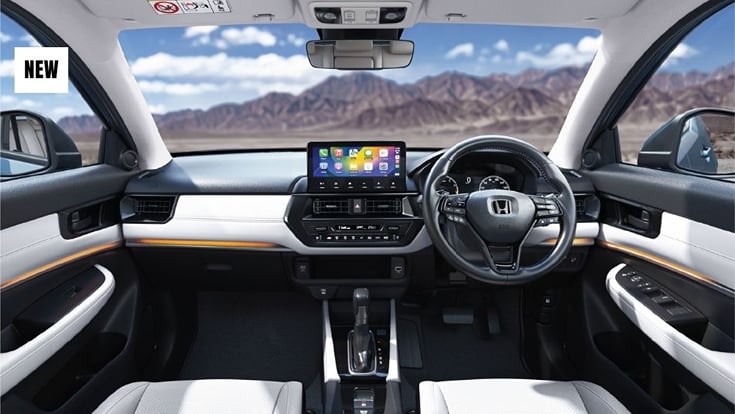
Honda has introduced its first mid-life cycle update for the Elevate. It brings several much-needed upgrades to its mid-size SUV through refreshed looks and feature additions. But what’s exactly new on the Elevate facelift? From exterior, interior, features, and price, we compare the new and old models to find out.
Honda Elevate new vs old: Exterior
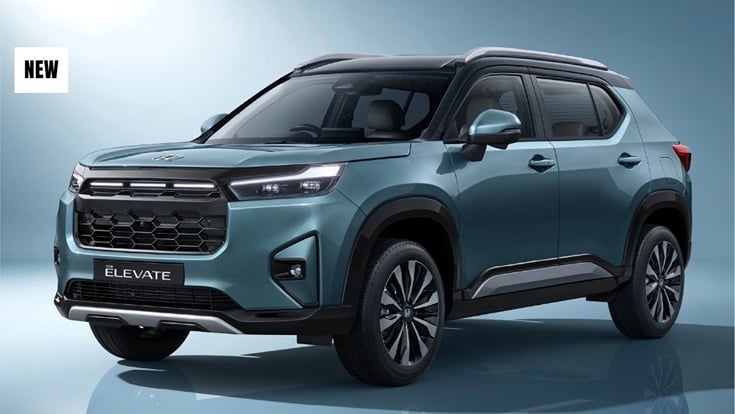
The Elevate facelift retains much of its design from its predecessor, but updates make it look bolder than before. The LED headlamps with L-shaped signatures have been carried over, but are now connected by segmented DRL strips. The older model offered two grille design choices, but the newer Elevate gets a gloss black grille with a honeycomb pattern. The bumper has been retained, but the fog lamp housings now get a body colour finish. Additionally, the Honda badge has been repositioned from the grille to the bonnet. Additionally, the body cladding around the vehicle gets a gloss black finish as opposed to the matte black finish on the outgoing car.
In profile, the Elevate facelift looks largely identical to its predecessor, even carrying over its 17-inch alloy wheels. Except this time, there’s silver cladding for the lower sides. At the rear, the LED tail-lamps on the facelift now get the connected treatment, though the bumper has been retained. There’s a new Nordic Forest Pearl paint job as part of the Elevate’s colour palette.
Honda Elevate new vs old: Interior and features
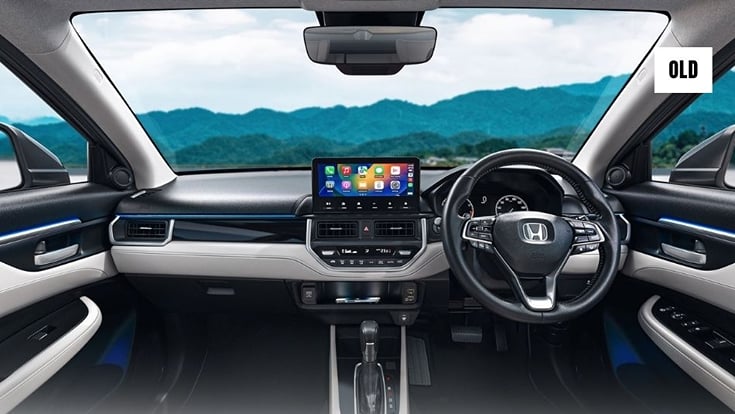
Inside, the Elevate facelift looks largely similar to its predecessor. However, there’s more leatherette padding on the dashboard with tasteful use of ambient lighting, replacing the faux wood trim on the older model. Additionally, the HVAC control housing on the facelift has been slightly tweaked. The older Elevate was offered with two dual-tone themes, namely black and white and black and brown. The new one, however, comes with the former theme only. Black versions come with an all-black cabin theme.
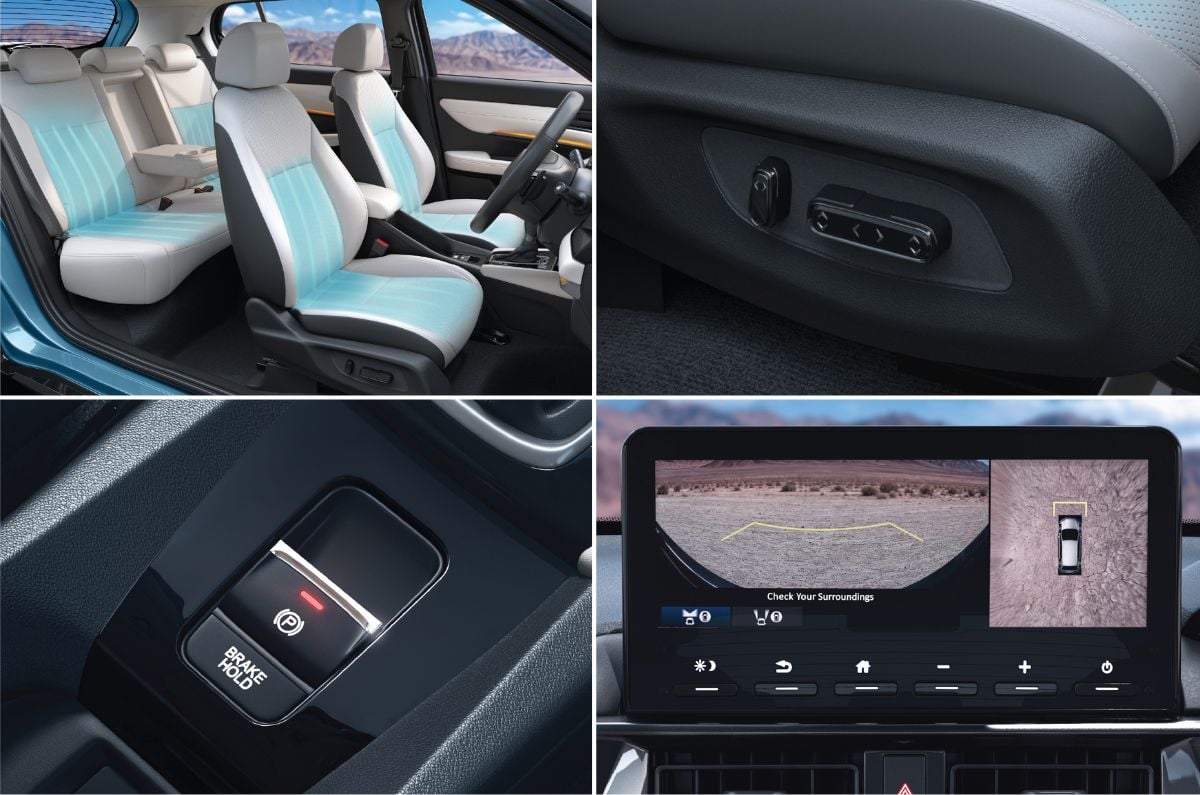
Honda has introduced much-needed feature additions to the Elevate facelift. This includes powered and ventilated front seats, first-in-segment rear seat ventilation, a 360-degree camera, an air purifier, and factory-fitted ambient lighting. Safety enhancements include rear disc brakes, an electronic parking brake with auto hold, front parking sensors, and adaptive cruise control with stop-and-go functionality for its level 2 ADAS suite. The new Elevate continues to come with features from the older model like a wireless phone charger, part-digital instrument cluster, a lane-watch camera system, wireless Apple CarPlay and Android Auto, and an 8-speaker sound system.
Honda Elevate new vs old: Sound insulation
On another note, Honda has claimed to improve the overall NVH levels, which were a major drawback of its predecessor. Sound deadening to wheel arches. This has been done by adding more sound deading materials behind the instrument panel and wheel wells.
Honda Elevate new vs old: Prices
Honda Elevate new vs old: Prices
Variant
New Elevate (Rs lakh)
Old Elevate (Rs lakh)
Difference (Rs)
SV MT
11.80
11.80
–
V MT
12.29
12.27
2,000
V CVT
13.79
13.43
36,000
VX MT
13.93
13.92
1,000
VX CVT
15.39
15.08
31,000
ZX MT
15.39
15.18
21,000
ZX CVT
16.89
16.36
53,000
ZX+
16.89
–
–
ZX+ CVT
18.30
–
–
The Honda Elevate facelift begins at the same price as the older model at Rs 11.80 lakh. Comparing like-for-like variants, prices on the new Elevate have increased by up to Rs 53,000. There’s also the addition of a new top-of-the-line ZX+ trim. While the older Elevate topped out at Rs 15.36 lakh, the newer model tops out at Rs 18.30 lakh, marking an increase of Rs 1.94 lakh.
The Tata Tigor never quite made the impact the manufacturer hoped for in the compact sedan segment. Now, Tata has reworked it and given it a new identity as the Aeris, with a fresh design, a more upmarket cabin and a longer list of features. That alone makes the Aeris an interesting proposition, but there is another reason its arrival is well timed.
Tata has a CNG option in a market where demand for the fuel is growing rapidly, with CNG cars accounting for nearly 22 percent of passenger vehicle sales in FY2026, up from around 12-13 percent three years ago in FY2023. That gives the manufacturer an interesting opportunity, but the bigger question is whether the Aeris itself has enough going for it this time around.
Tata Aeris iCNG exterior design and engineering – 8/10
Looks more modern than the Tigor, but the Tiago influence is hard to miss
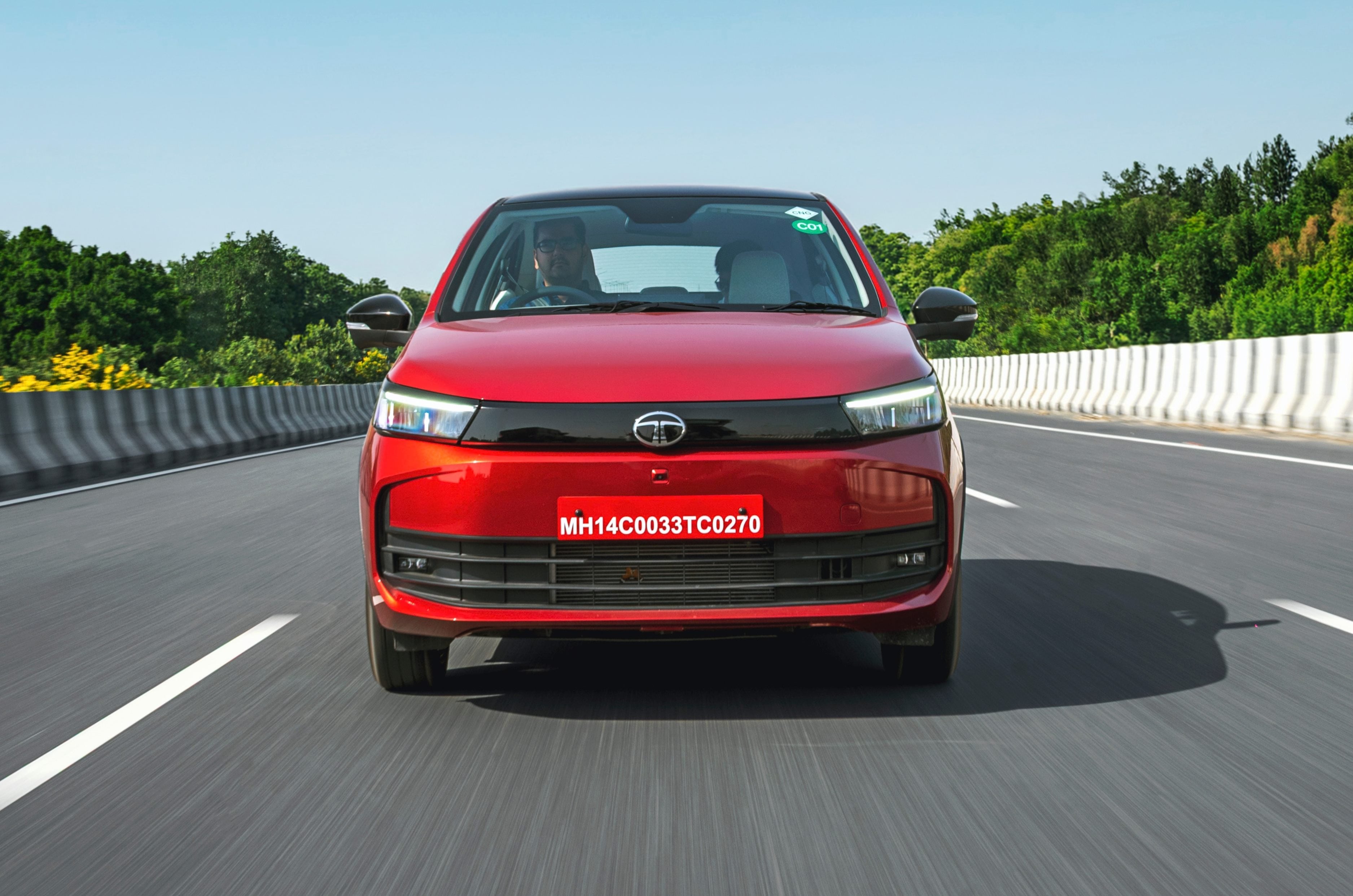
Save for the new bumper, the fascia is similar to the Tiago and looks very modern.
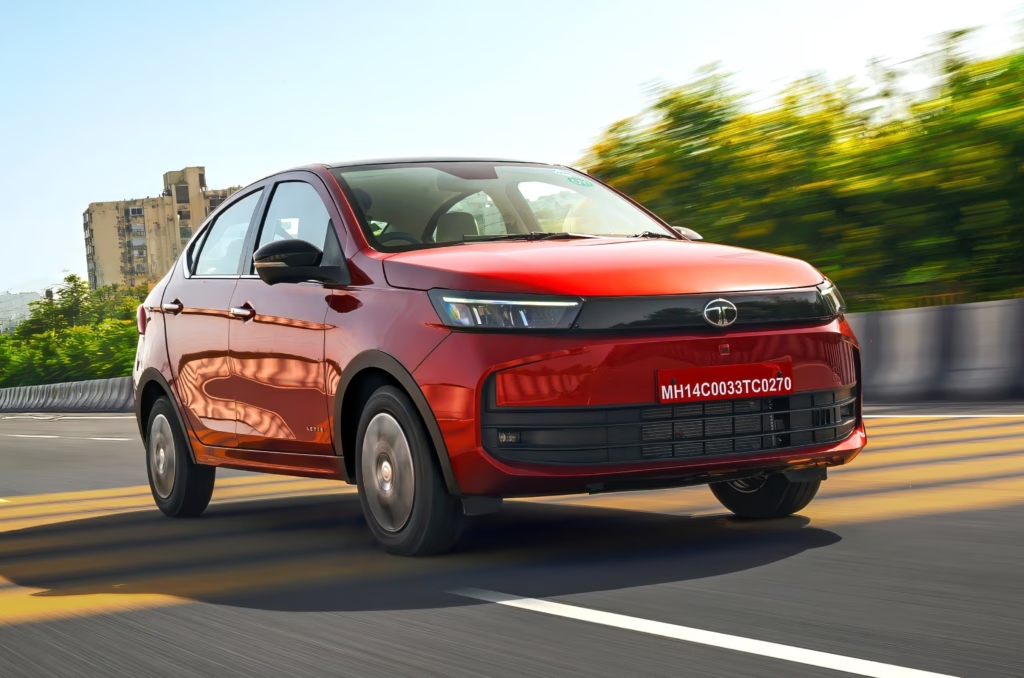
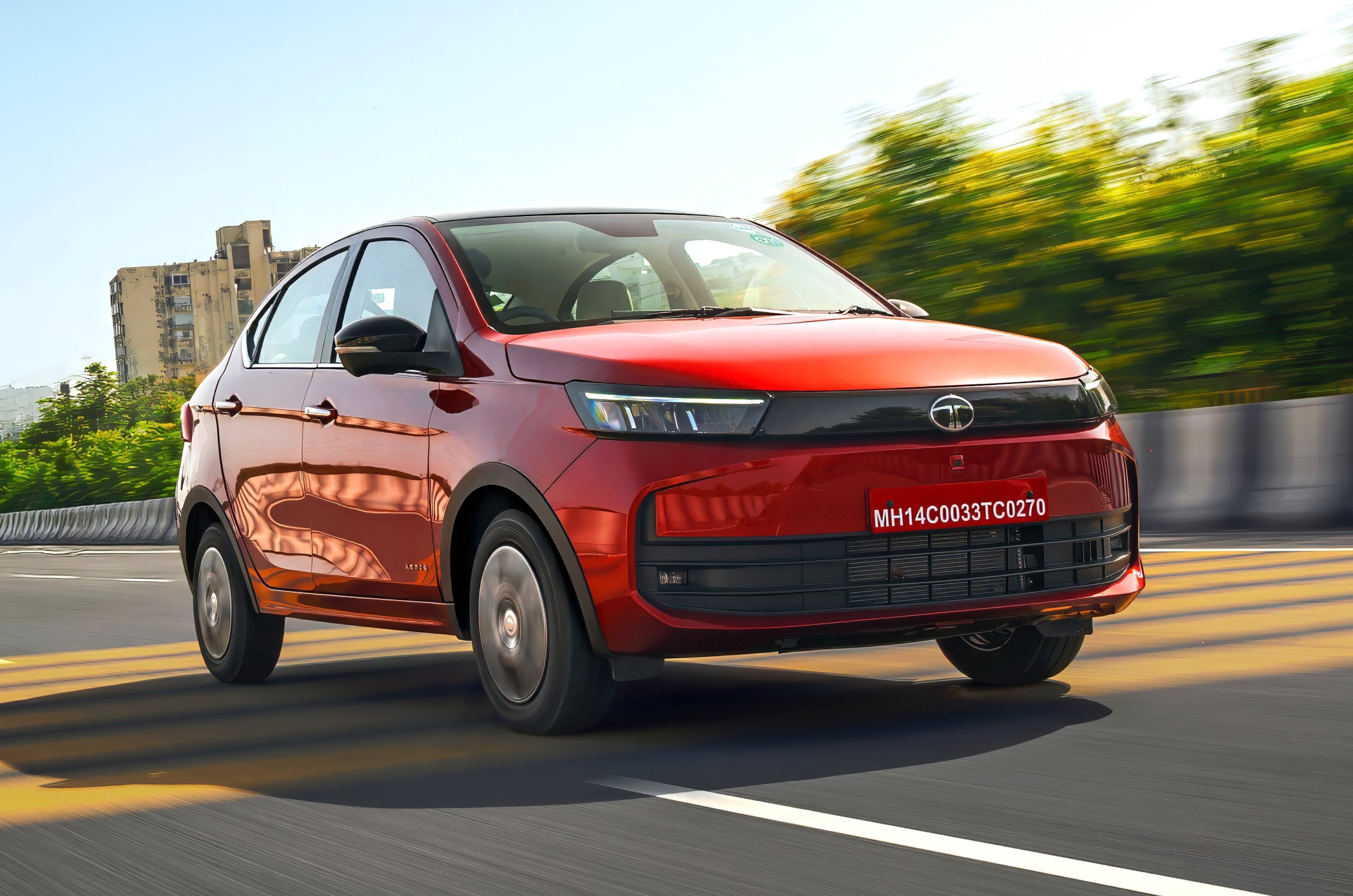
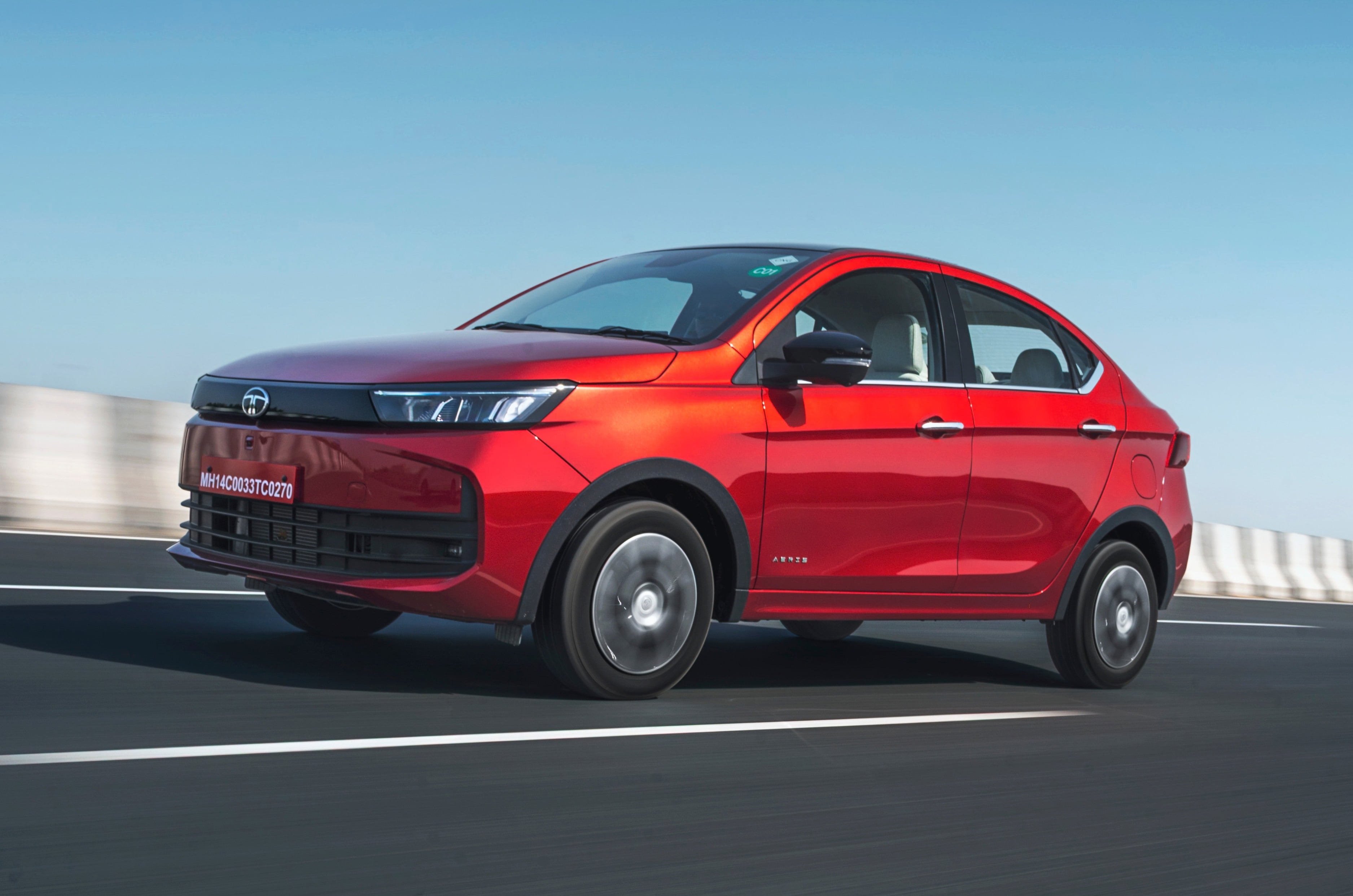
The Tata Aeris looks more modern and sleeker than the older Tigor, but there’s a strong sense of familiarity to its exterior design. It borrows several elements from the Tiago, giving the two cars a similar visual identity, but that also means the Aeris does not look particularly distinctive.
At the front, it gets slim LED headlights with integrated LED DRLs, joined by a gloss black trim, a design treatment that is very similar to the Tiago. What’s new is the front bumper with wider air inlets. It also features fog lamps that get an LED upgrade from the Tigor’s halogens. The Aeris also gets a new clamshell bonnet.
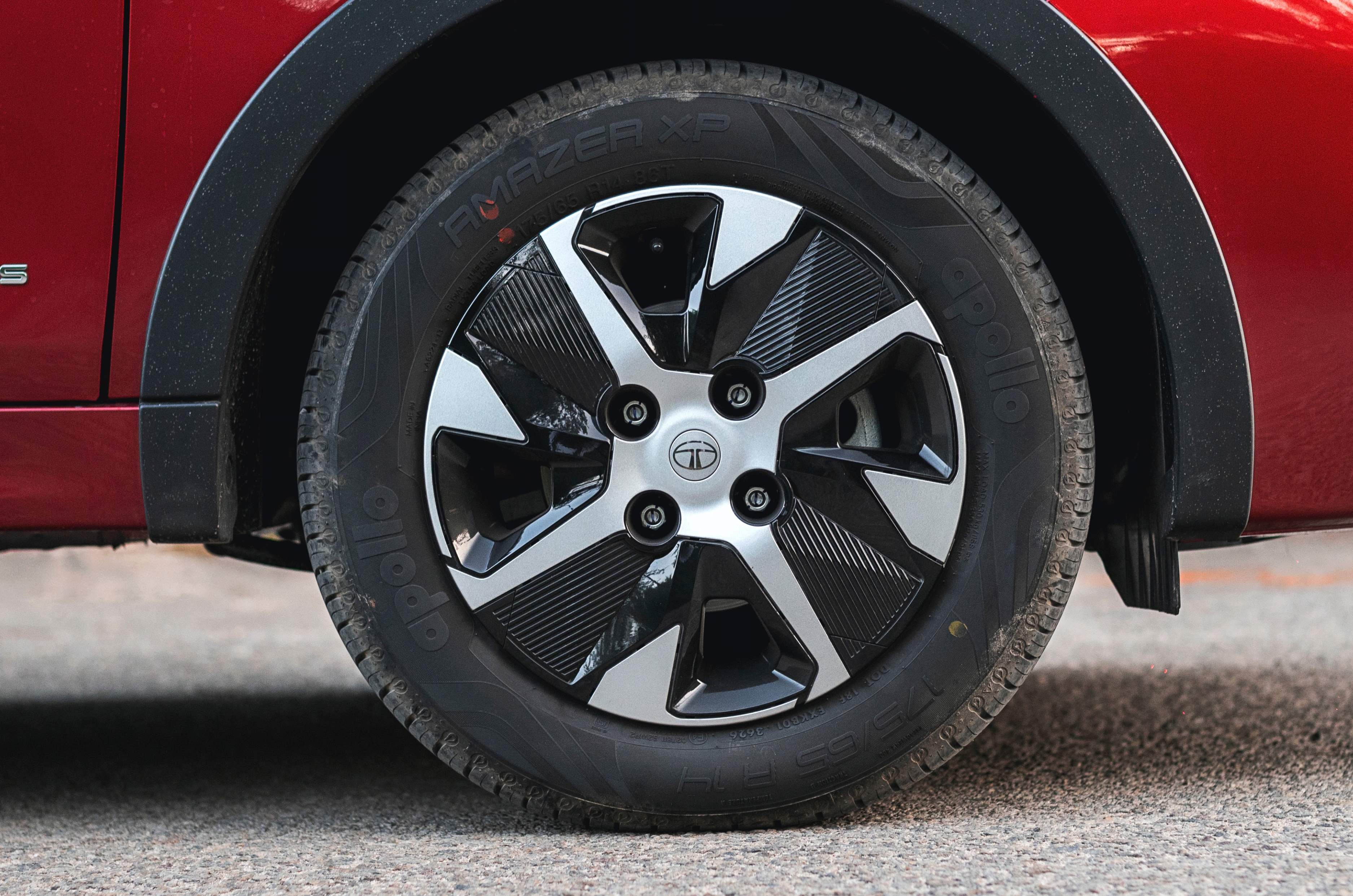
The wheel arch cladding adds contrast, but they make 14-inch wheels look undersized.
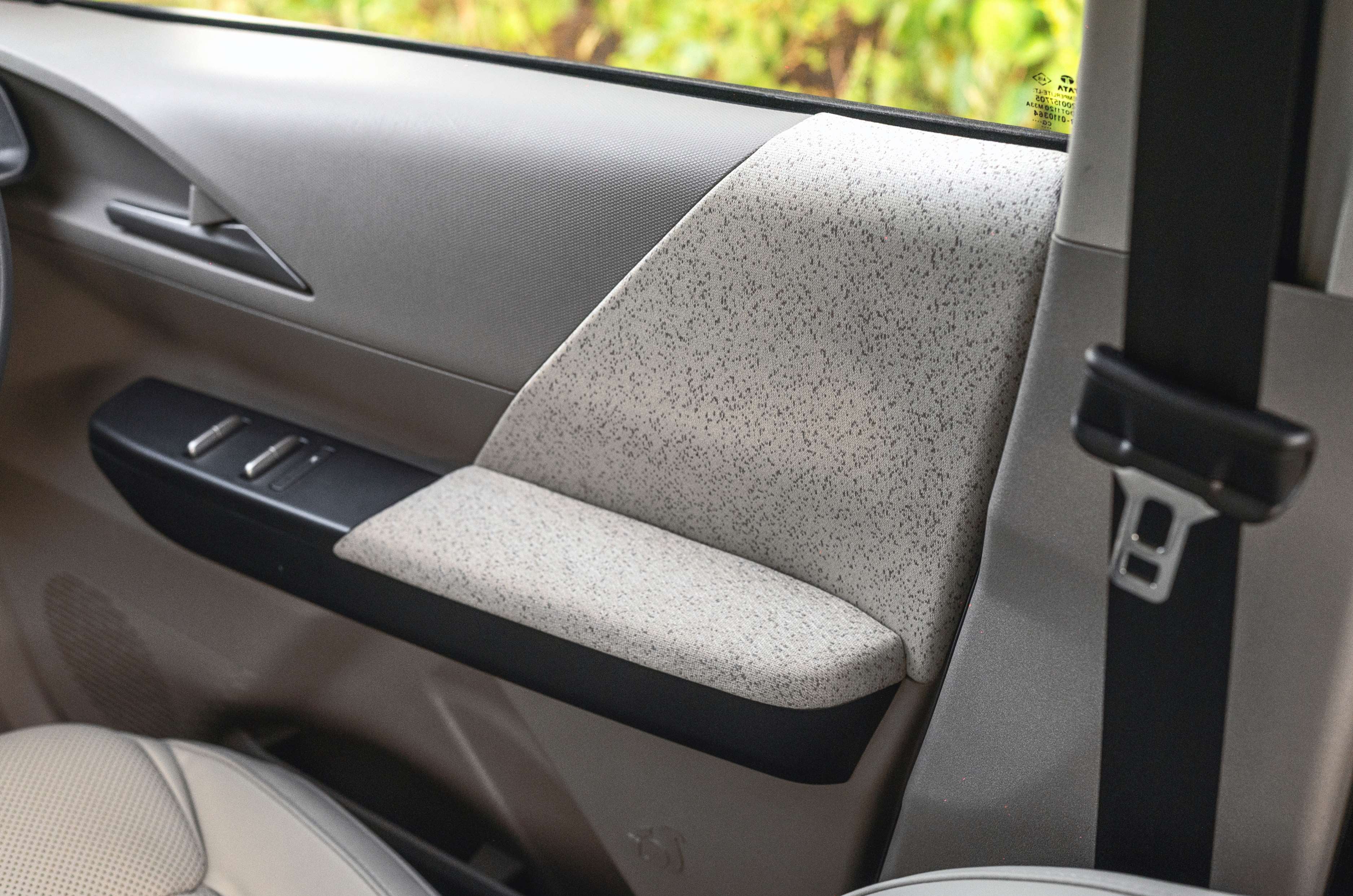
In profile, the iCNG gets the 14-inch stylised steel wheels which look undersized, particularly against the prominent wheel-arch cladding. The cladding is made from recycled materials and features a speckled texture. The use of chrome on the door handles and the window line further gives some contrast to the Aeris’ otherwise clean profile.
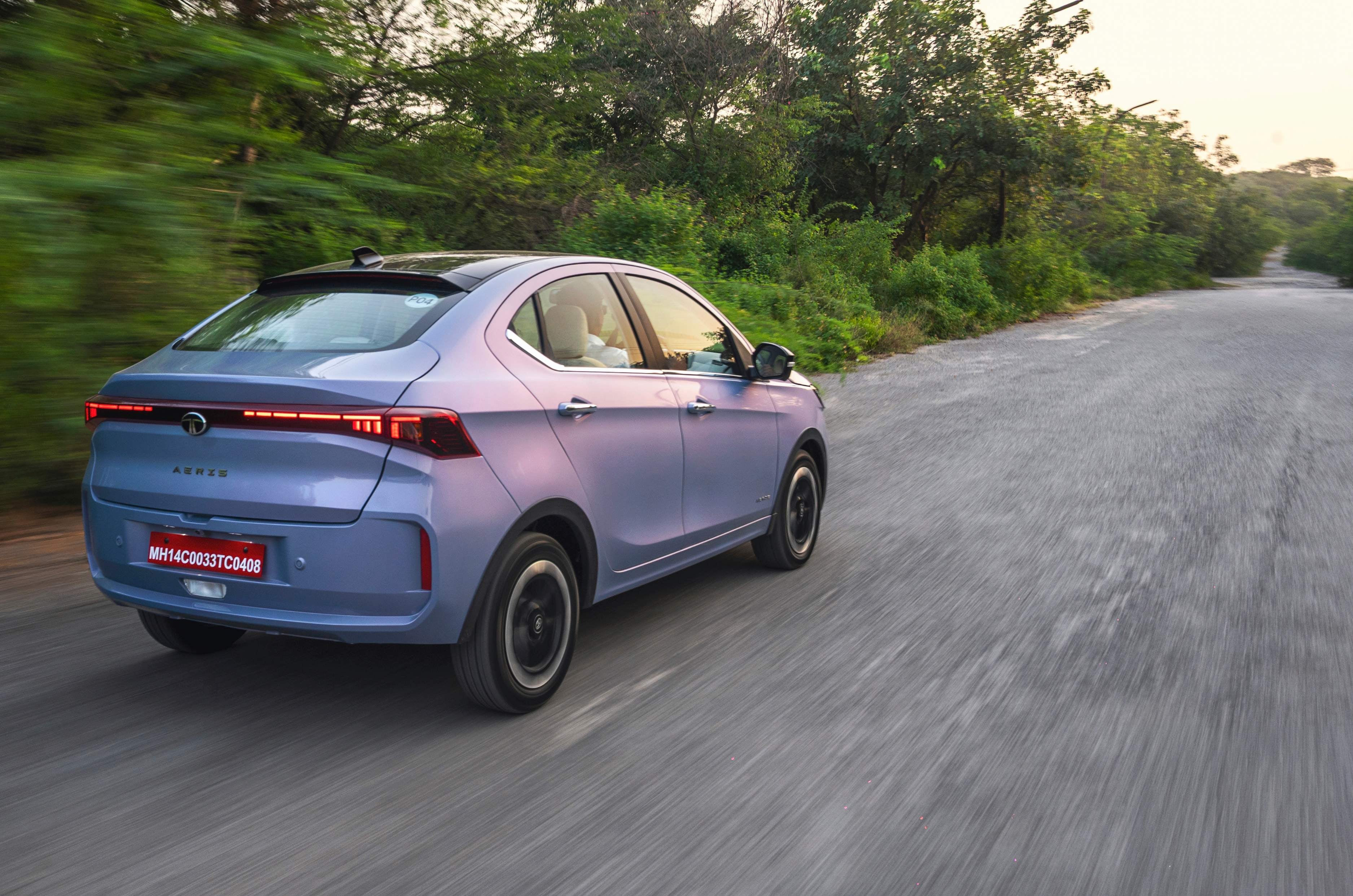
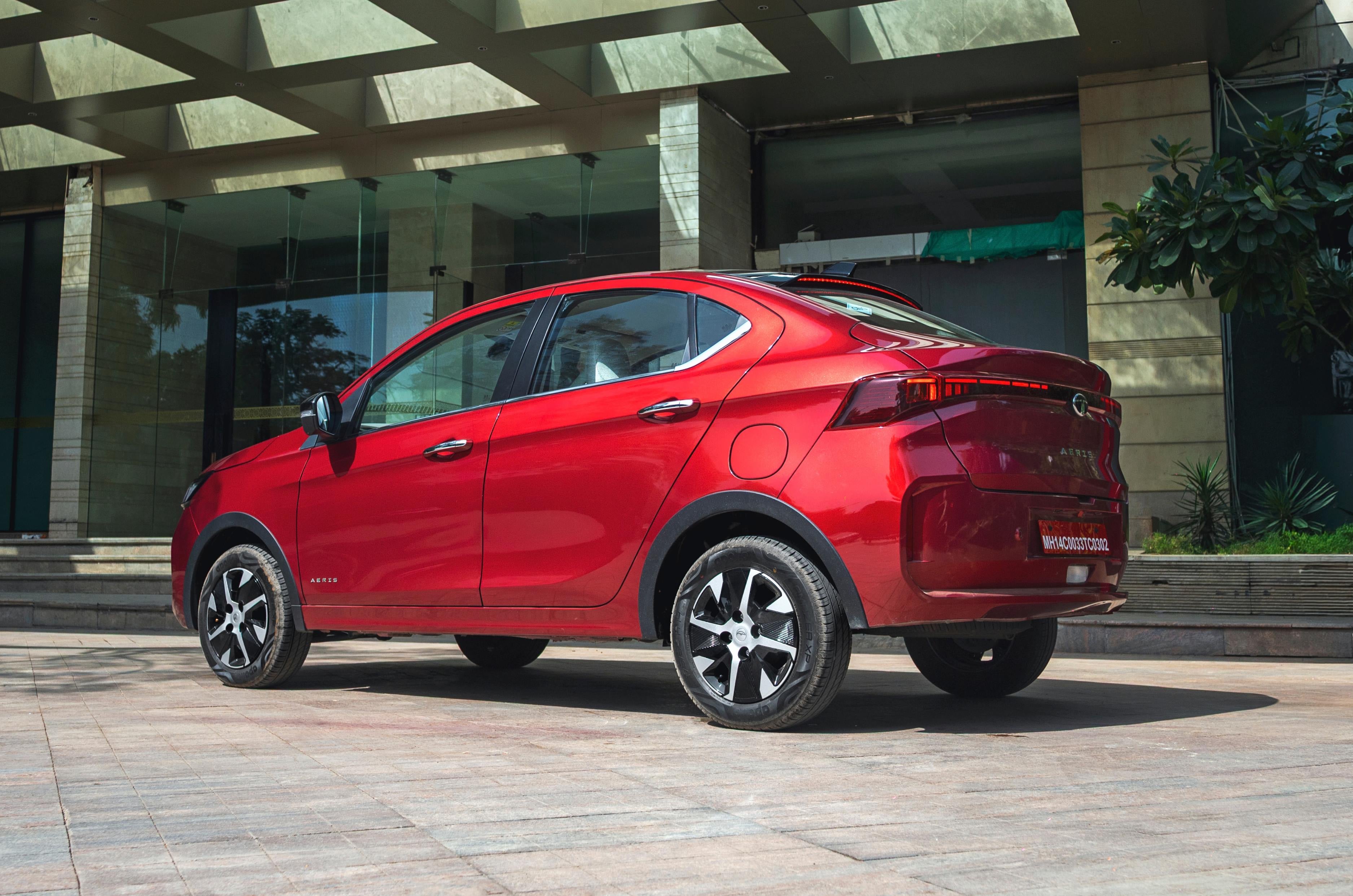
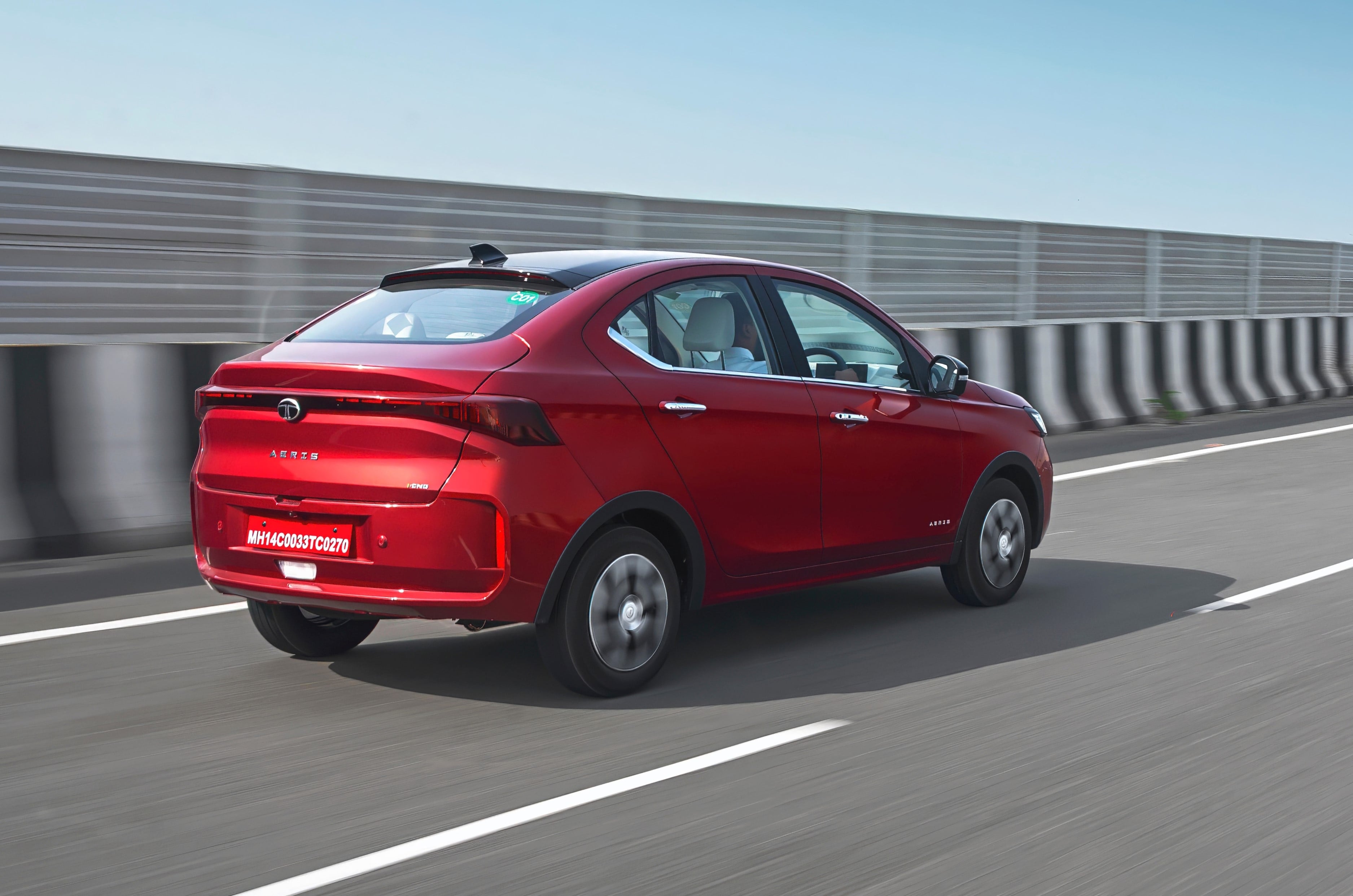
The Aeris retains the Tigor’s distinct coupe-like roof that flows into the tail. The rear features segmented LED taillights joined by red plastic trim, and new Aeris lettering on the centre of the tailgate. The rear bumper features a reverse light and has an overall clean design.
Tigor’s fastback-like sloping roofline is retained; new taillights make it appear larger.
The Aeris is 3,995mm long, 1,684mm wide and stands 1,532mm tall. It has a wheelbase of 2,450mm. These dimensions are similar to the older Tigor. While Tata has not quoted an official ground clearance figure, we found it adequate for broken roads and large speed breakers. All of this is expected to appeal to most buyers.
Tata Aeris iCNG interior space and comfort – 8/10
Lighter theme makes the cabin feel airy, and revised cushioning improves seat comfort
The dashboard looks minimalistic, and the lighter theme makes the cabin feel airy.
The Tata Aeris’ interior layout is the same as the Tiago and looks neat. The lighter beige theme makes the cabin feel airy. However, this same thing might make it difficult to keep the interior spick and span. The dashboard has a clean look, featuring two free-standing displays and a revised 2-spoke steering wheel.
The rotary dial does not have illuminated drive modes, but operating it is a breeze.
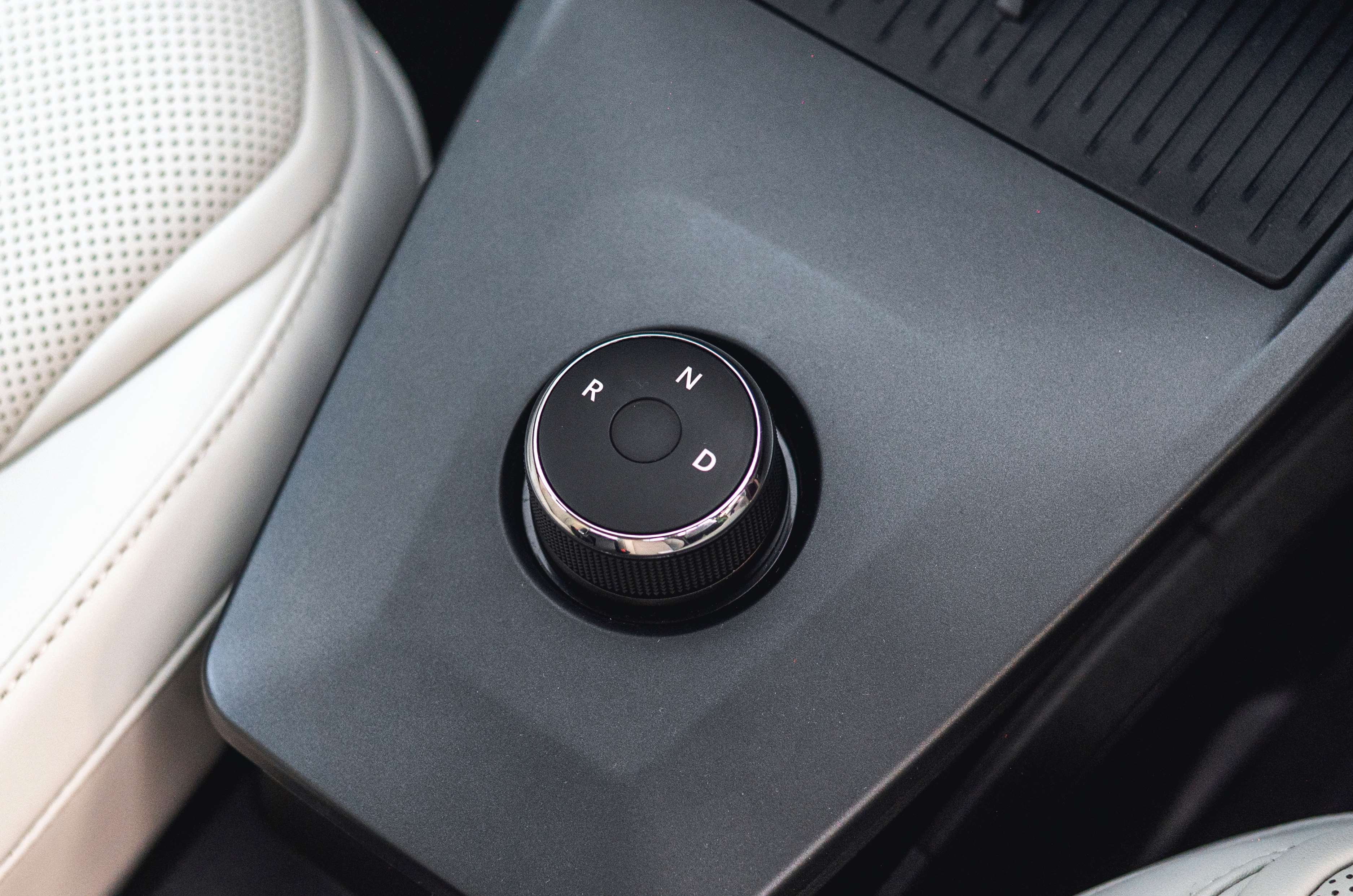
The manual variants feature a new, more premium-looking gear stalk, while the AMT variants get a cleaner-looking rotary drive selector with N (neutral), D (drive) and R (reverse) modes. The rotary dial does not feel finicky, and the modes switch seamlessly. One complaint, however, is that the drive modes (N, D and R) are not illuminated, which means you rely on the instrument cluster to know which mode is selected.
The Aeris gets floating door handles like on the Sierra, which feel sturdy.
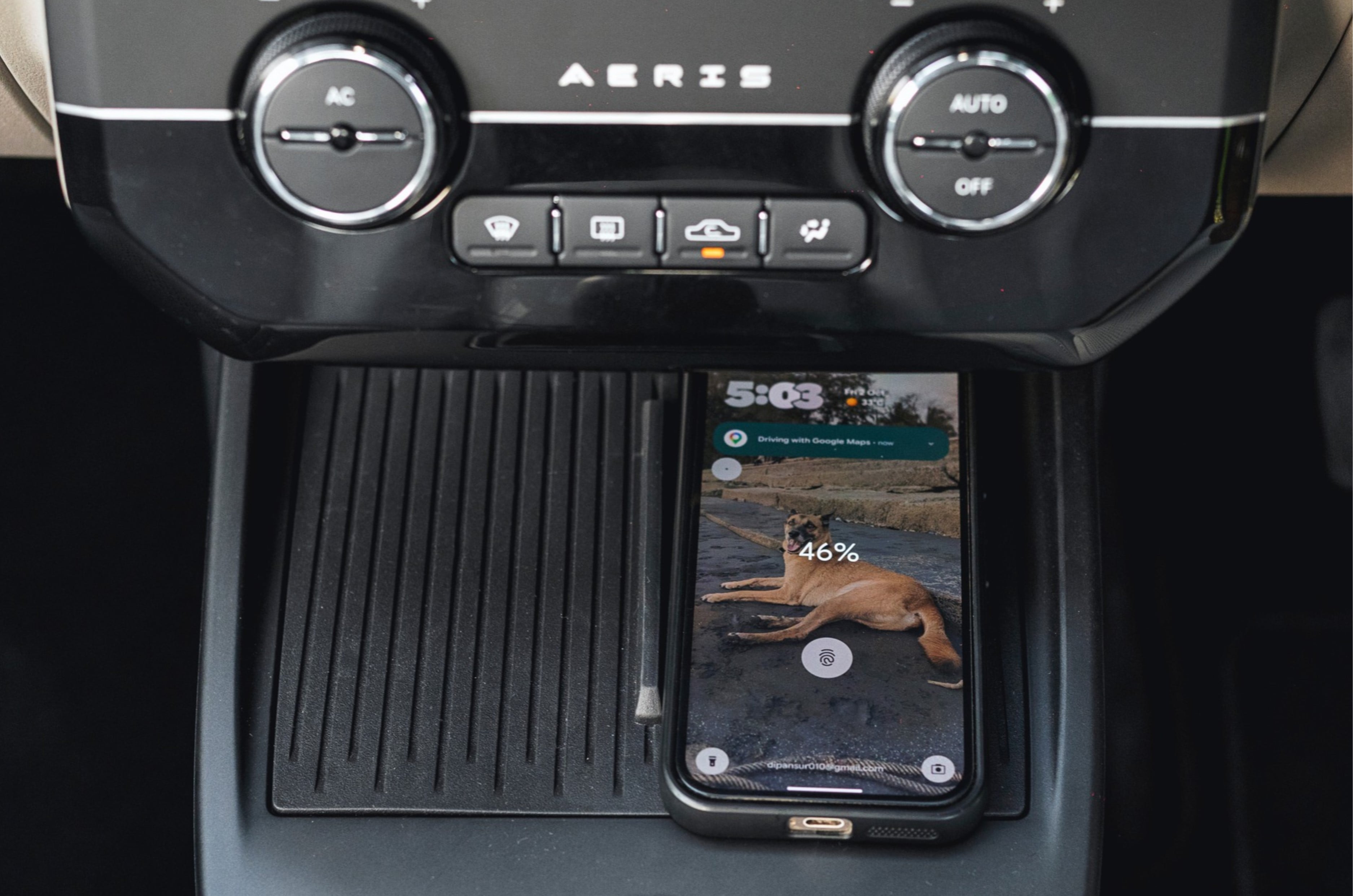
The centre console has also been thoroughly redesigned for a cleaner look and a more practical application. It features two rubberised pads to keep phones, one of which gets wireless charging capability in the top-spec Accomplished trim. The centre console also features two cupholders and a leatherette-wrapped centre armrest which integrates a decent cubby space. The doors have floating-style handles integrated with the armrest, which feel sturdy.
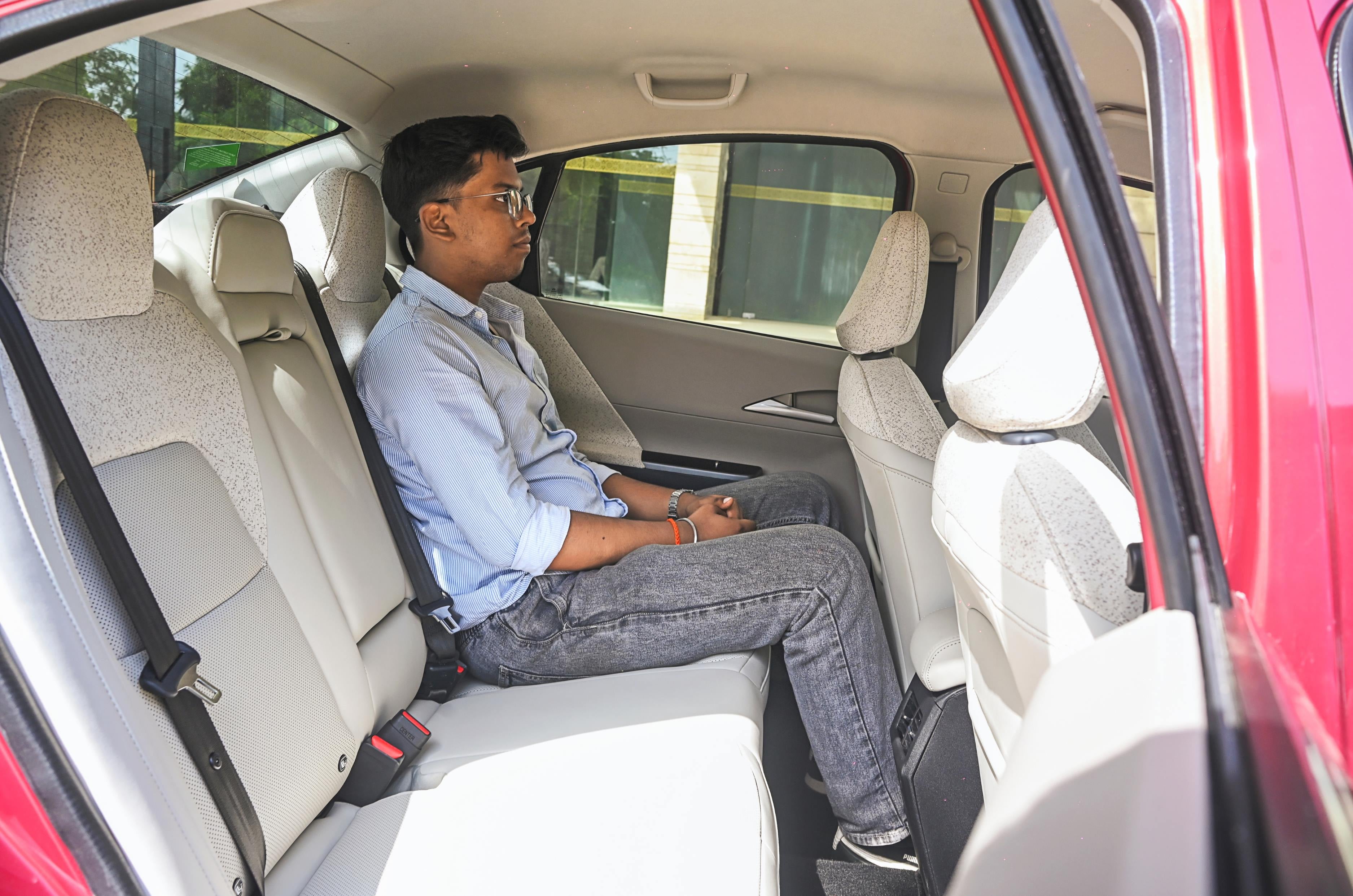
Legroom and kneeroom won’t be an issue for most, but taller passengers could feel the headroom is tight.
The seats feature revised cushions and bolsters that have increased the overall comfort and are wrapped in a part leatherette upholstery that feels premium. The rear seats are comfortable as well and offer good legroom and kneeroom. The headroom, however, could be an issue for passengers over 6 feet tall. The rear passengers benefit from dedicated air vents and a 65-watt Type-C charger. These seats get fixed headrests.
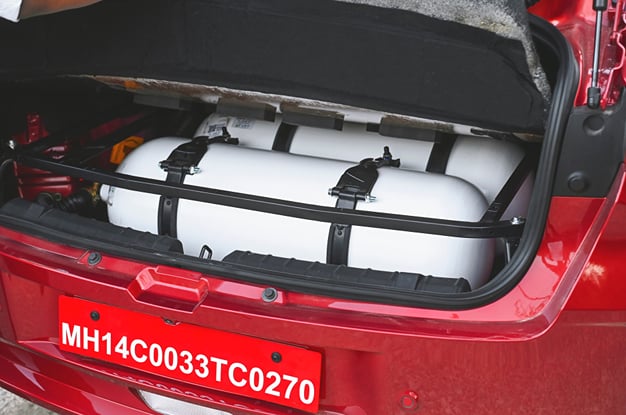
Aeris CNG’s boot space figure is not revealed, but could be similar to the Tigor CNG’s 227-litre space.
The Aeris iCNG gets a dual-cylinder tank setup inside the boot, unlike its rivals that use a single CNG tank and are left with very little usable boot space. Despite the additional tank, the Aeris has enough room for a couple of backpacks and a small luggage bag. Tata also offers a 13-inch underbody-mounted spare wheel, which is more useful than a puncture repair kit.
Tata Aeris iCNG features and safety – 9/10
Gets a lot of modern-day features, some of which could have better integration
Segment-only ventilated seats cool effectively and mark a step up in the comfort quotient.
Like other Tata cars, the Aeris is filled with features to the brim. It debuts a front seat ventilation function for the compact sedan segment, which is offered with the Aeris’ top Accomplished trim. During our drive, the seat ventilation was very effective in cooling the cabin in Faridabad’s near 40deg ambient temperature. However, there’s no confirmation on the infotainment system or the driver’s display when the feature is engaged or the ventilation level is changed.
360-degree camera system has a crisp feed and can record the surroundings.
A 10.25-inch infotainment touchscreen is the same as before, which remains slick to use and has no lag even when browsing through multiple menus. The user interface (UI) is also easy to get used to. The Aeris continues with a 360-degree camera setup that is also lag-free and works well even in low-light conditions. Tata has added a new DVR feature, which allows the surround-view cameras to double up as a dashcam and record the surroundings of the car. These recordings can be stored and accessed either on the infotainment touchscreen or a USB drive, and can also be seen on a phone via a QR code.
The instrument cluster has a retro theme and displays all the important driving data, but the steering wheel’s tilt angle and the driver’s seating position sometimes obscure certain details. The steering wheel lacks the leatherette wrap offered with the Tigor, but feels nice to hold nevertheless. The wheel is now free of the Tigor’s scratch-prone gloss black trim and thankfully retains physical controls. It also gets cruise control, but only with the manual variants.
The wireless charger works well, but tends to make the phone hot during prolonged use.
The 4-speaker, 2-tweeter audio system is a step down from the Tigor’s 4-speaker, 4-tweeter setup, although sound quality is still good enough for the price. Certain features also could have been integrated better. The wireless charging pad can also heat up phones, particularly during extended use. Cooling vents near the pad could have fixed the issue. The infotainment system switches to the blind-spot monitor every time the indicators are used, which can be annoying when following navigation. The rear seats also lack pressure sensors, so the seatbelt warning continues to chime until the belts are fastened.
Standard safety features include 6 airbags, ISOFIX child seat anchorages on the rear seats, rear parking sensors and 3-point seatbelts with reminders on all seats. Higher variants equip the Aeris with a 360-degree camera, a day/night inside rearview mirror (IRVM), rain-sensing wipers, rear defogger, a tyre pressure monitoring system (TPMS) and ESP with traction control. The pre-facelift Tigor received a four-star rating from Global NCAP in 2020, but the Aeris has yet to be tested by Bharat NCAP.
Tata Aeris iCNG performance and refinement – 6/10
Performance in the city is adequate, but it feels out of breath if pushed hard
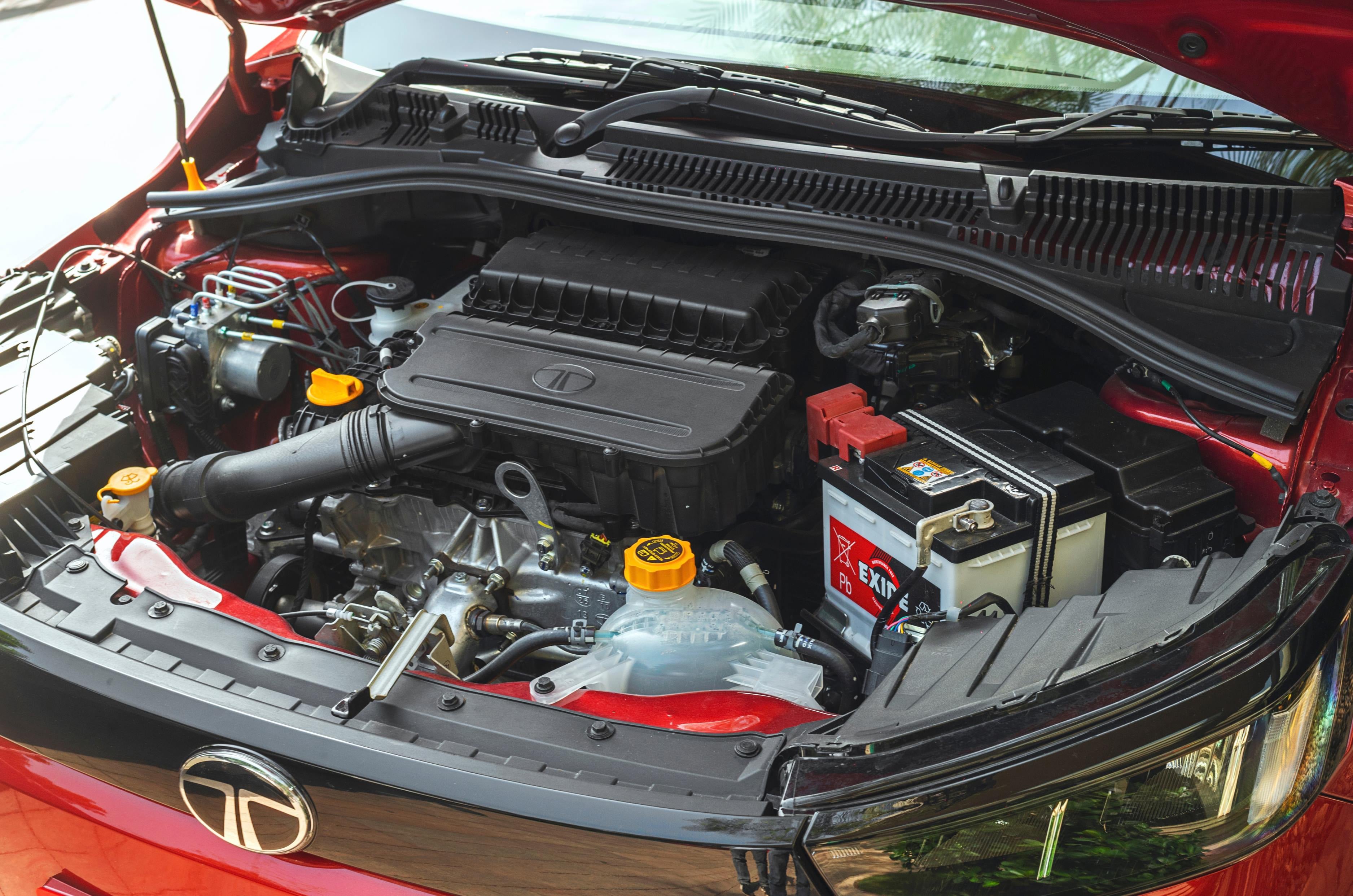
The 3-cylinder engine is not the smoothest in the segment and the NVH levels are also not the best.
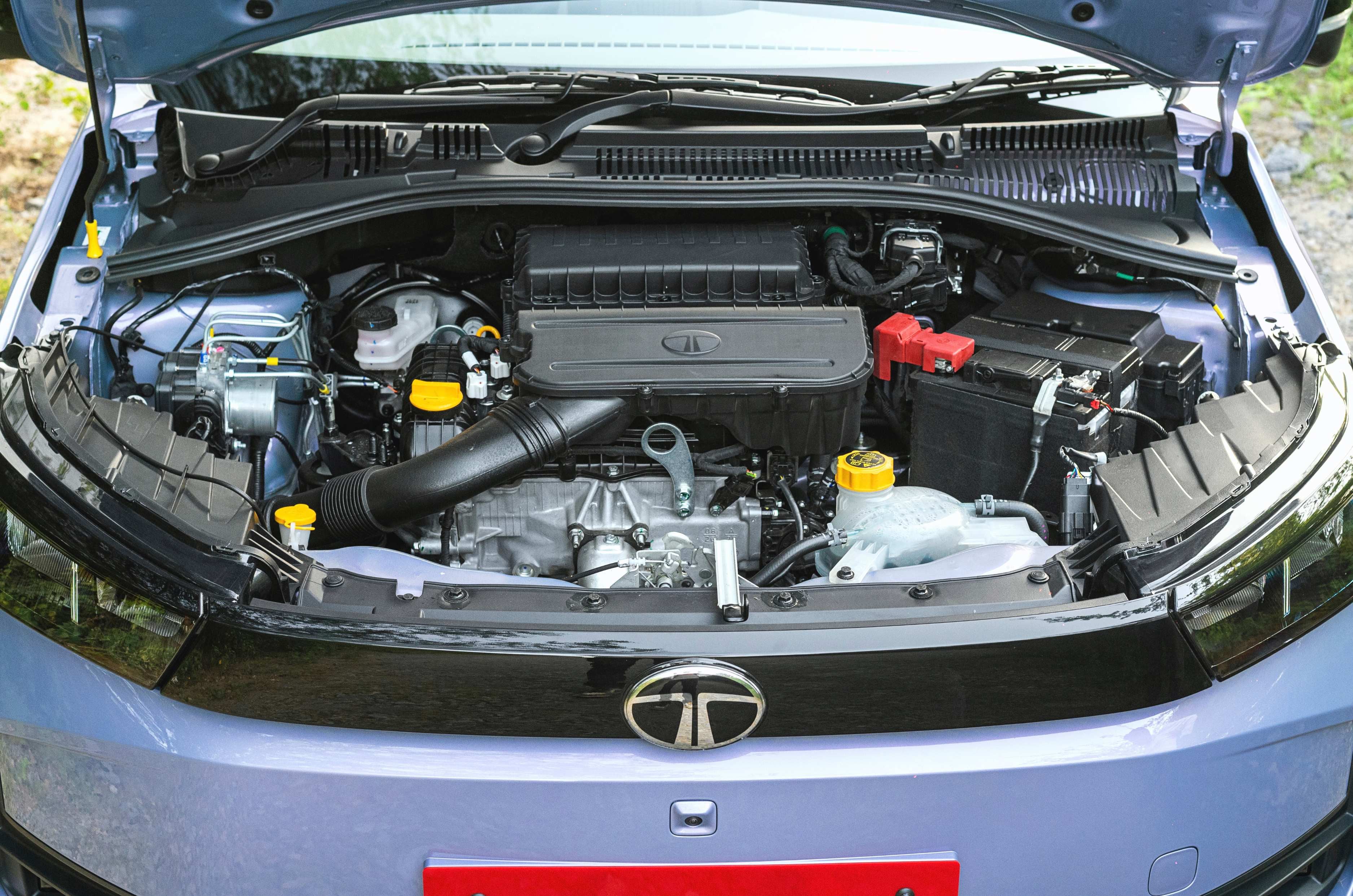
The Tata Aeris continues with the Tigor’s 1.2-litre, three-cylinder naturally aspirated engine, producing 76hp and 97Nm in CNG guise. It is offered with a five-speed manual and a five-speed AMT, and we drove the latter.
At city speeds, the engine has enough performance to keep up with traffic, but the CNG-AMT combination is not particularly responsive. There is a noticeable pause between pressing the accelerator and the powertrain responding, which becomes more evident when you need to accelerate quickly.
Performance is adequate in the city, but it feels out of breath during overtakes.
The AMT also makes starts from standstill quite jerky, which can get tiresome in stop-and-go traffic. Once up to speed, however, the Aeris settles into a relaxed rhythm and is comfortable enough when driven at a steady pace. The AMT also gets paddle shifters for manual gear changes, which are useful when you want more control over the gearbox, particularly during overtakes.
On the highway, the lack of response is more noticeable, particularly when overtaking. The Aeris can maintain triple-digit speeds, but building speed takes time, and overtaking requires some planning. The rotary gear selector itself, however, as mentioned above, is neat and easy to use.
As you start driving, the vibrations from the 3-cylinder engine are ironed out till you reach 2,500rpm.
Refinement is another weak point. Refinement is another weak point. The engine feels generally smooth when driven gently, but above 2,500rpm, engine noise and vibrations become quite pronounced. Wind and road noise insulation isn’t particularly strong either, so the cabin gets fairly noisy at higher speeds.
Tata Aeris iCNG ride comfort and handling – 8/10
Has a commendable ride quality for a sedan on both rough roads and highways
Like other Tata cars, the suspension is well tuned to Indian conditions.
The Aeris is particularly impressive over poor roads. The suspension does a good job of absorbing broken surfaces and larger bumps without unsettling the car, while the ground clearance is adequate for tackling rough roads and large speed breakers. Despite being a sedan, it does not feel particularly vulnerable to bad roads.
Out on the highway, the Aeris is equally composed. It stays planted at triple-digit speeds and does not feel floaty or nervous when driven quickly. The steering is also nice to hold and offers decent feedback, although there is some vagueness around the centre that takes away a little from the confidence.
Tata Aeris iCNG mileage and efficiency
We expect it to offer a real-world mileage in the 25-30km/kg range
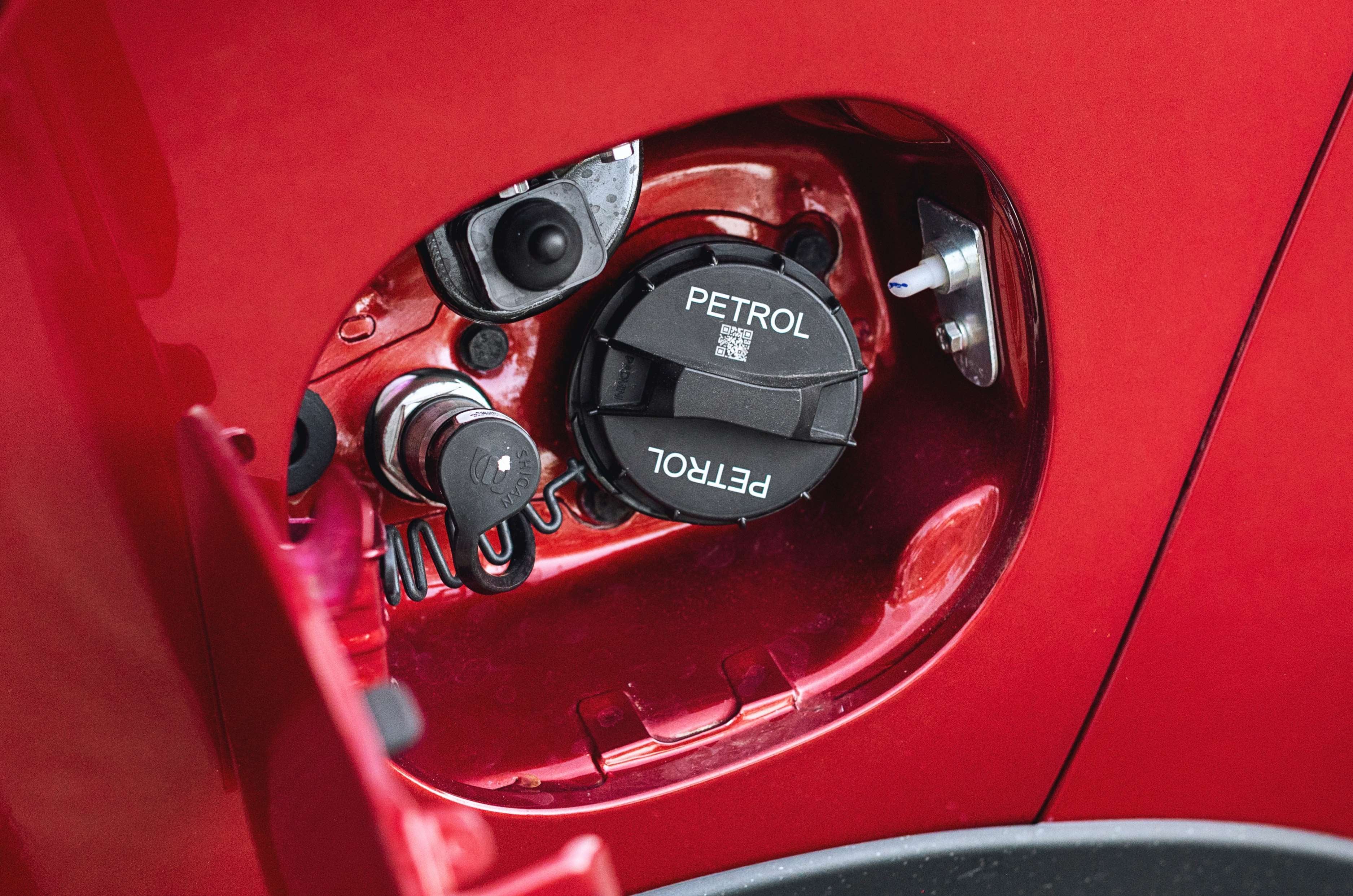
It kills the ignition whenever the fuel lid is opened, offering a layer of safety while filling fuel.
While we haven’t put the Aeris iCNG through our full test yet, its CNG powertrain should make it considerably more economical to run than the petrol version. Tata is yet to reveal an official efficiency figure, but we expect real-world mileage to be in the 25-30km/kg range. We’ll bring you our tested mileage figures once we put the Aeris iCNG through our standardised test procedures.
Tata Aeris iCNG value for money – 8/10
CNG buyers don’t have to compromise on features, but the AMT isn’t ideal
The Aeris CNG offers good value, but AMT should be chosen only if city driving is a priority.
The Aeris, priced from Rs 5.70 lakh to Rs 9.10 lakh (ex-showroom), is a more convincing compact sedan than the Tigor ever was. Its modern design, well-equipped cabin, comfortable ride and, most importantly, useful boot space despite the CNG setup give it plenty going for it. The fact that Tata offers the CNG powertrain with higher-spec variants also means buyers don’t have to sacrifice features for lower running costs.
The CNG-AMT powertrain, however, takes some shine off the package. The slow responses, jerky starts and excessive NVH at higher revs make it better suited to relaxed city driving than frequent highway use. Even so, for buyers looking for a practical and well-equipped CNG sedan, the Aeris does make a stronger case than its predecessor and even against its rivals.
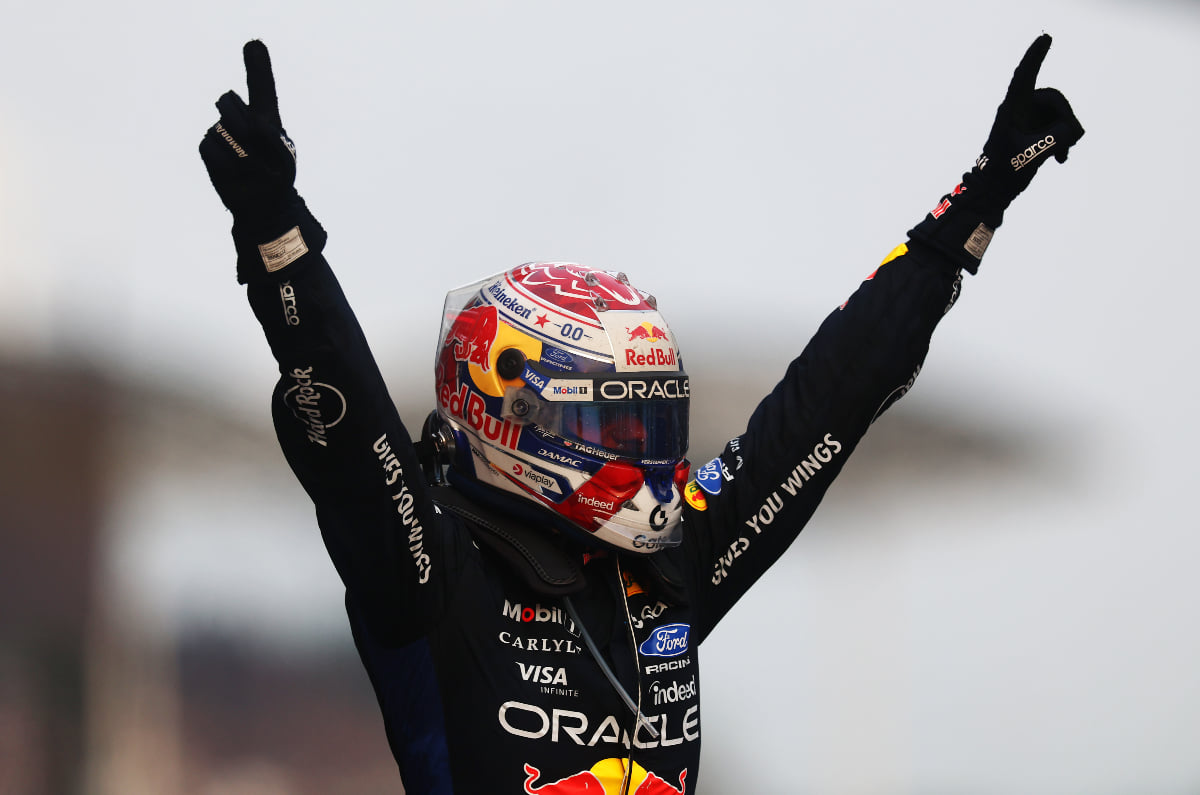
Max Verstappen converted pole position into victory at the Bahrain GP in Malaysia. F1’s first race at Sepang in nine years got off to a chaotic start when it started raining an hour before the start. This, followed by an aborted start procedure after multiple cars stopped on track due to a software issue, resulted in the race staring an hour and a half late.
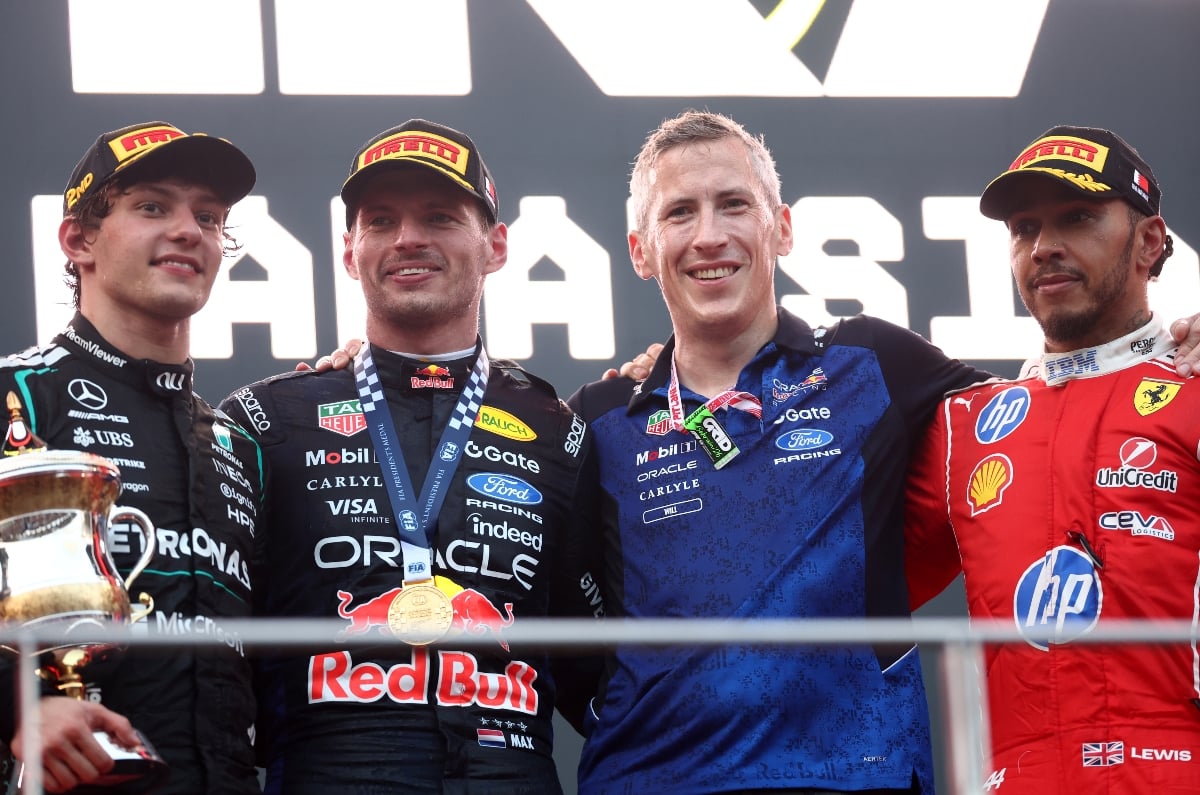
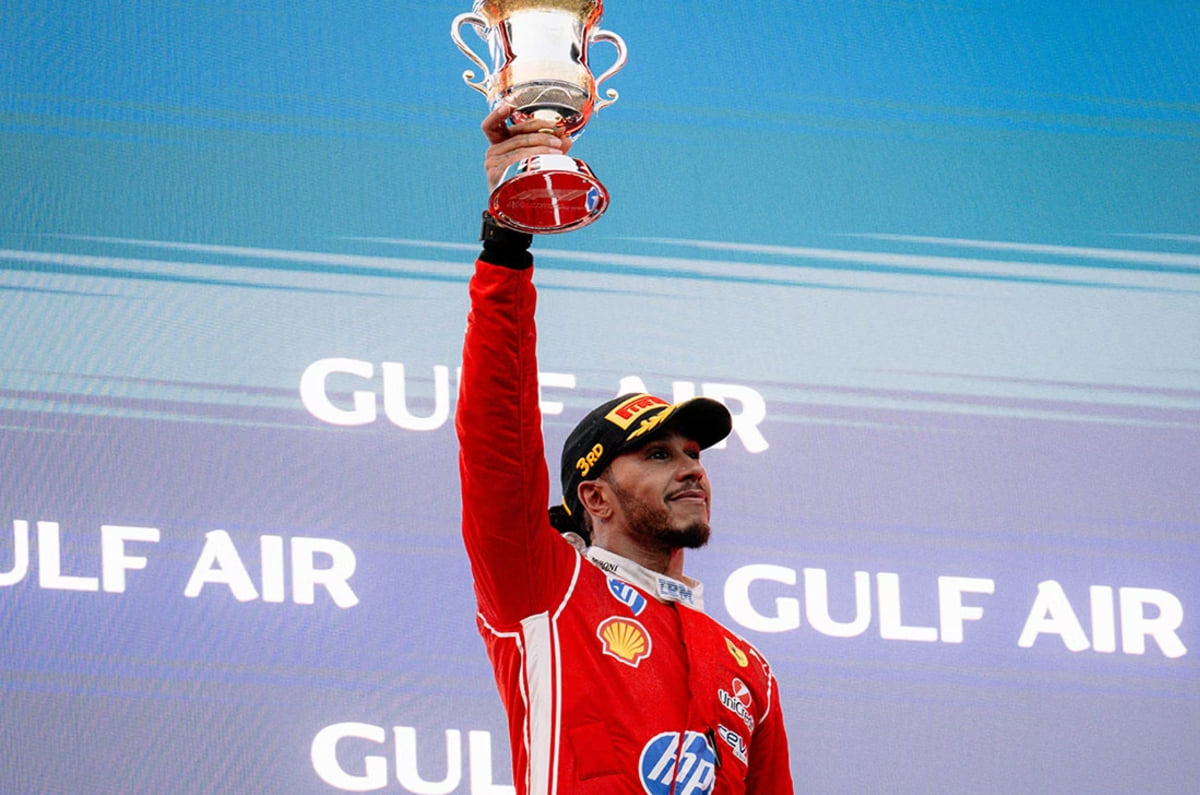
Behind Verstappen, Kimi Antonelli held on to second place to further extend his title lead as his Mercedes teammate George Russell retired with just a handful of laps to go. Despite dropping down the order in the early stages, Lewis Hamilton pulled off an incredible recovery to make it to the podium.
Verstappen wins, 2.307 sec ahead of Antonelli
Antonelli extends title lead by 84 points after Russell’s retirement
Verstappen wins in Malaysia; Russell retires
Verstappen initially dropped behind Antonelli and Russell when the race finally got underway. But the four-time world champion eventually reclaimed the lead and controlled the pace out at front from there on. He defended that lead through a Virtual Safety Car and even a full Safety Car period to secure his and Red Bull Racing’s first win of the season.
“What an incredible result! The race was not made easy for us with all the decisions we had to make and then the Safety Car at the end on top of everything. But we made all the right calls with the tyres, kept our cool, and it all paid off,” said Verstappen.
Antonelli finished 2.307 seconds behind in second place. His teammate Russell was on course to finish third, but with just a few laps to go, he was forced to stop due to a PU issue. This comes as a major hit to Russell’s championship chances, with the gap to leader Antonelli now standing at 84 points – that’s more than three race wins.
Ferrari recovers from early setback
Ferrari fumbled strategy, with Hamilton and Leclerc starting the race on soft tyres. With the track still wet, both drivers dropped down the order. While Leclerc pitted early to switch to intermediate tyres, Hamilton – who was now down in P17 – stayed on the softs. He eventually made the tyres work, though, as the track started drying.
Russell’s retirement helped the Brit finish P3. “Sepang is always a great track to race on, but today is definitely one of the most memorable. It was a really demanding race and not an easy one to manage from the start, but the team did a fantastic job staying calm and executing well after a difficult opening phase,” said Hamilton.
“We found ourselves on the back foot very early on with the tyre choice, yet everyone stayed focused and kept pushing. We didn’t give up despite a big gap building straight away, and step by step we managed to fight our way back into contention and keep the pressure on until the flag. To finish on the podium after the way the race began feels really satisfying and is a great reward for the hard work, determination and resilience everyone showed today.”
Leclerc finished behind in him fourth place, handing Ferrari a strong points haul. McLaren’s Oscar Piastri crossed the line P6, followed by Racing Bulls’ Liam Lawson and Aston Martin’s Fernando Alonso. Lando Norris, in the second McLaren car, ended up P9 after losing control behind the Safety Car. Racing Bulls’ Arvid Linblad completed the top 10.
Next up on the F1 calendar is the Singapore GP on October 9-11.
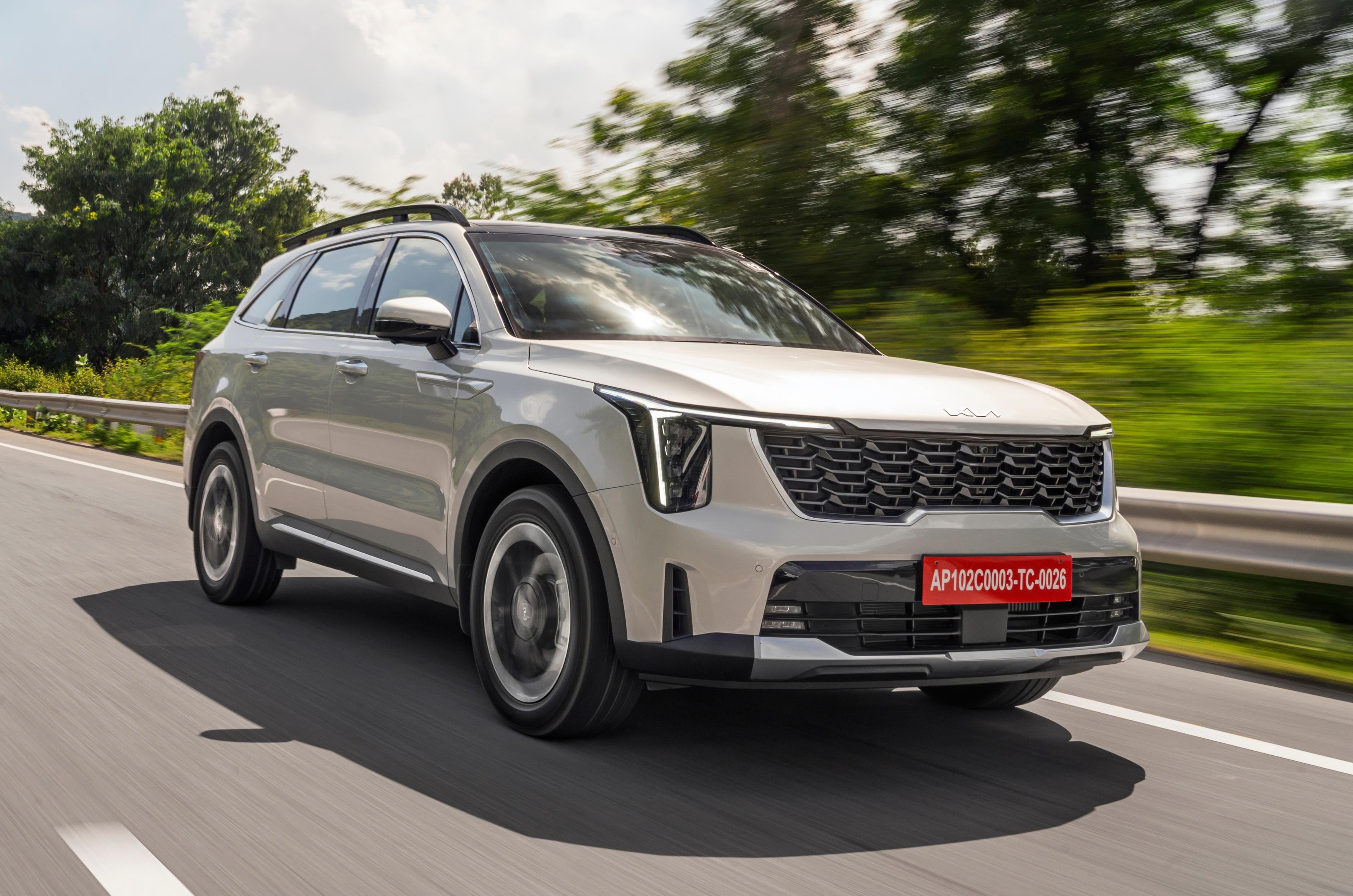
The Sorento is a big bet for Kia India, and you can tell. Six trims, two powertrains, front- and all-wheel drive, six or seven seats and 32 versions in all. This is not a toe in the water exercise but a full-blooded dive into the deep end of the executive SUV pool. More than that, it is a case study in how to launch a product in India, because Kia has got the basics right before it has even started talking about features.
Start with the powertrains, which for this class of SUV could hardly be better judged. There is a strong 2.2-litre diesel for diesel die-hards and there are still plenty of those. And then there is a 1.6-litre turbo-petrol strong hybrid whose timing couldn’t be more perfect. Petrol prices are climbing, E20 has quietly eaten into real-world efficiency, and buyers want diesel-like running costs from a smooth, quiet powertrain without lying awake worrying about diesel’s long-term future. The Sorento hybrid is pitched squarely at that anxiety.
The strategy behind the car is just as interesting. This fourth-generation (MQ4) Sorento arrives in India towards the end of its global life cycle. It is still a current product, but one due to be replaced internationally next year, while India will carry on with this one. That is actually a very smart move. A car this late in its life has its development costs largely amortised, and Kia India can bring some of the tooling here, which slashes the investment.
And this is a properly localised car, not a screwdriver job. The body is stamped and welded at Kia’s Anantapur plant, and the dashboard and seats are made here too. That is what makes the Rs 27.99 lakh starting price possible. The catch is that localisation on this scale only pays off with volume, and Kia wants to sell around 40,000 Sorentos a year. That is a big number for a Rs 30-40 lakh SUV. Can it get there?
Kia Sorento exterior design and engineering
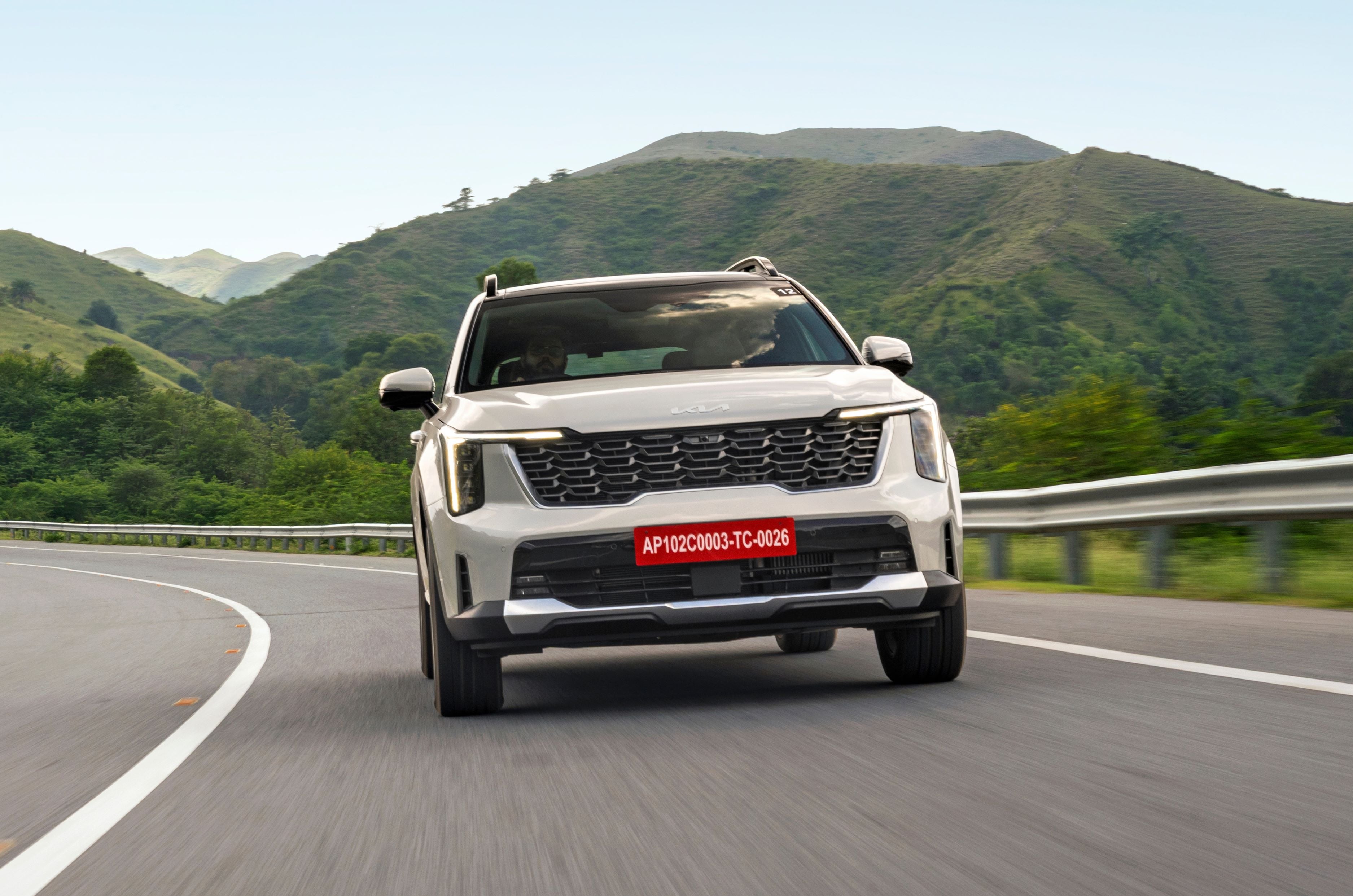
Based on the gen 4 Sorento, it carries over the older and more palatable design language.
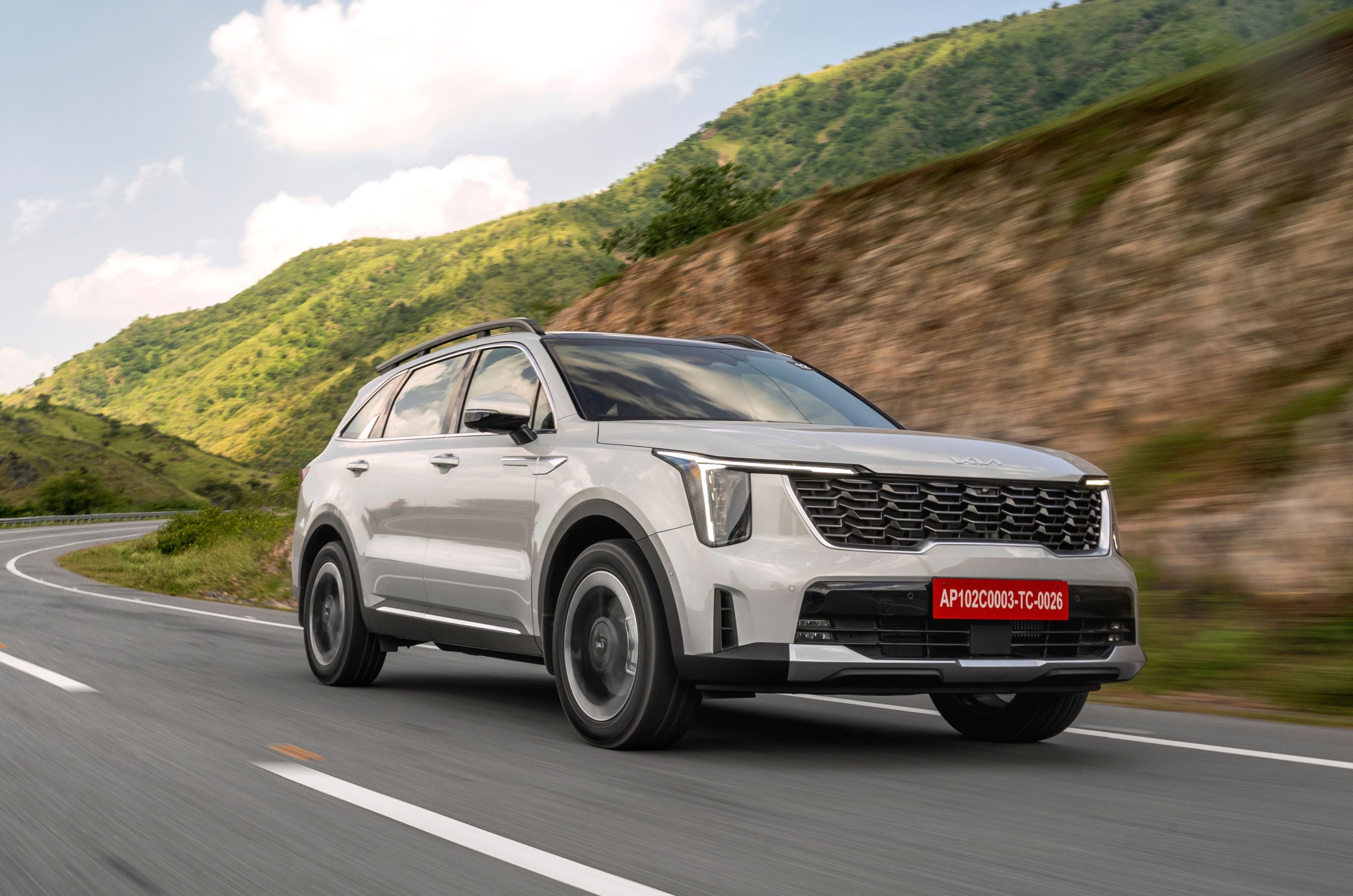
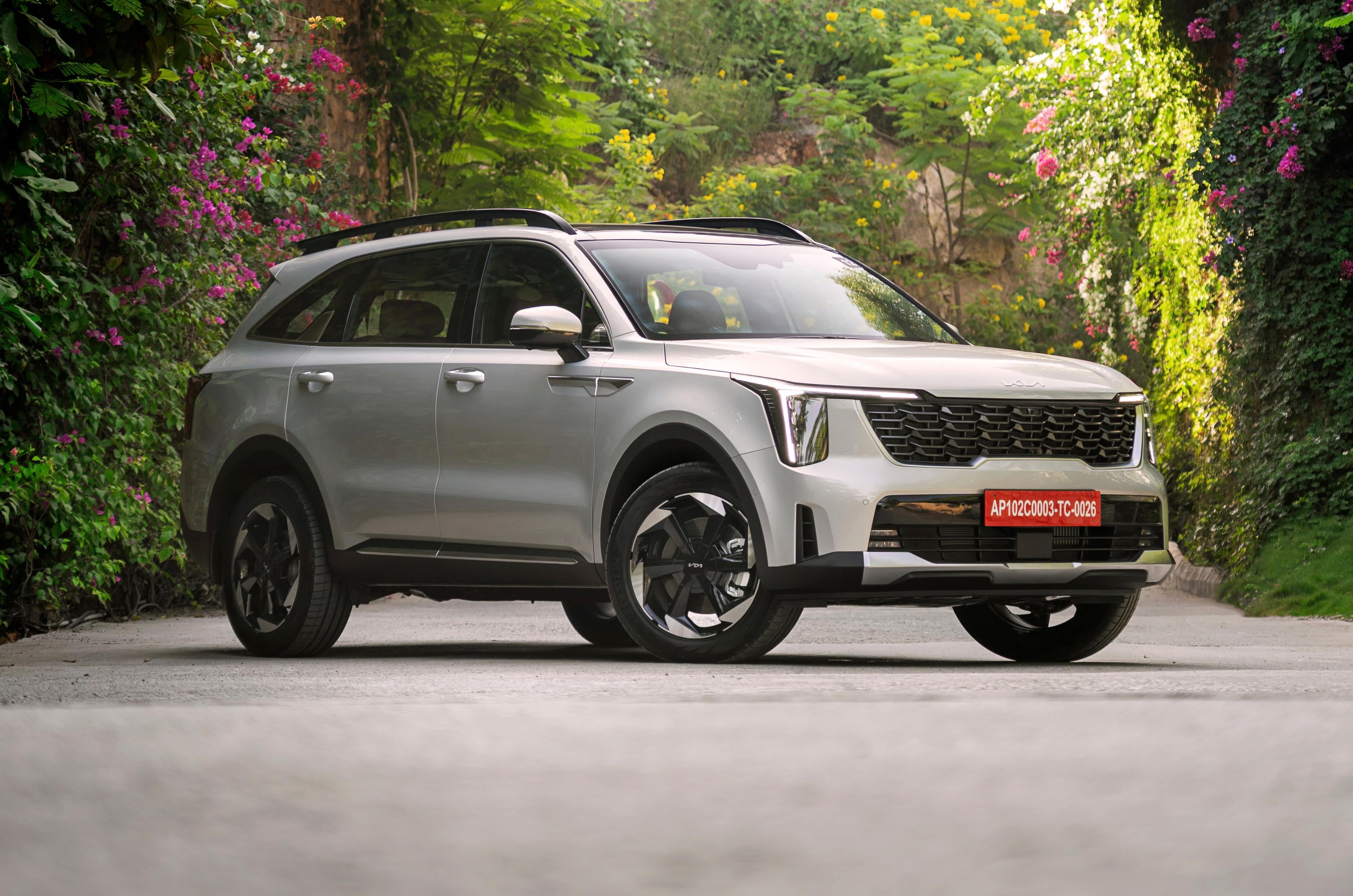
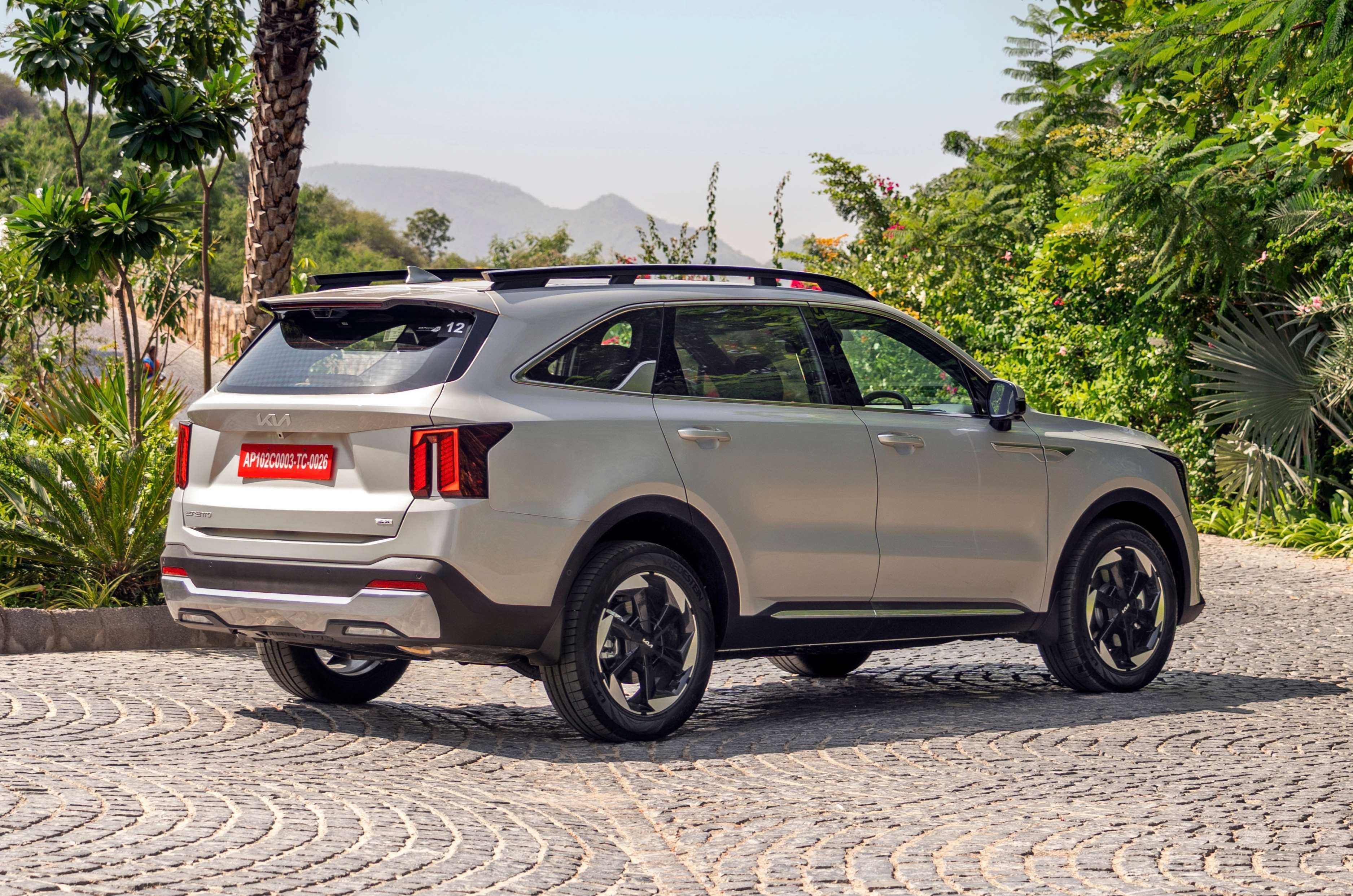
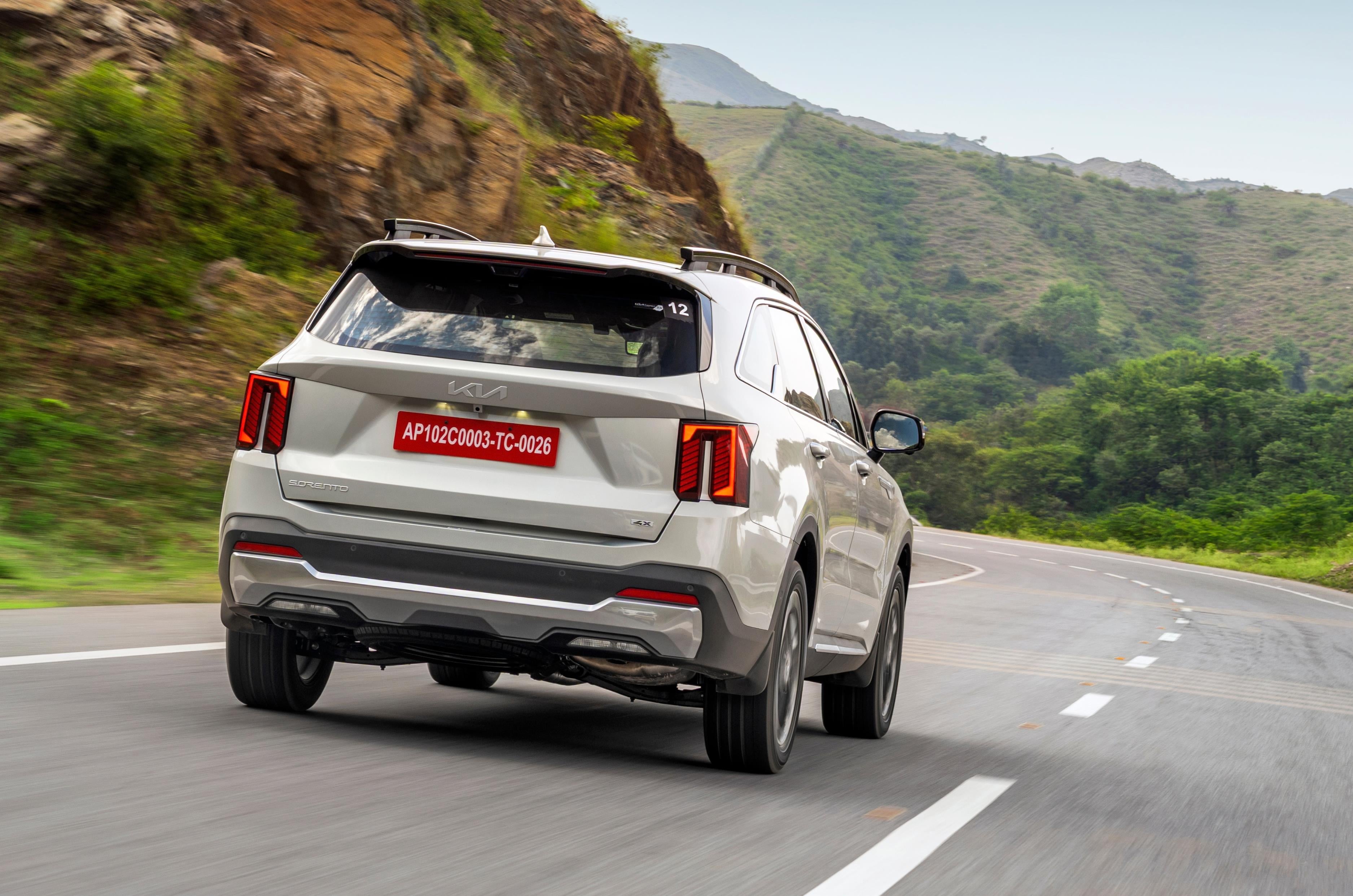
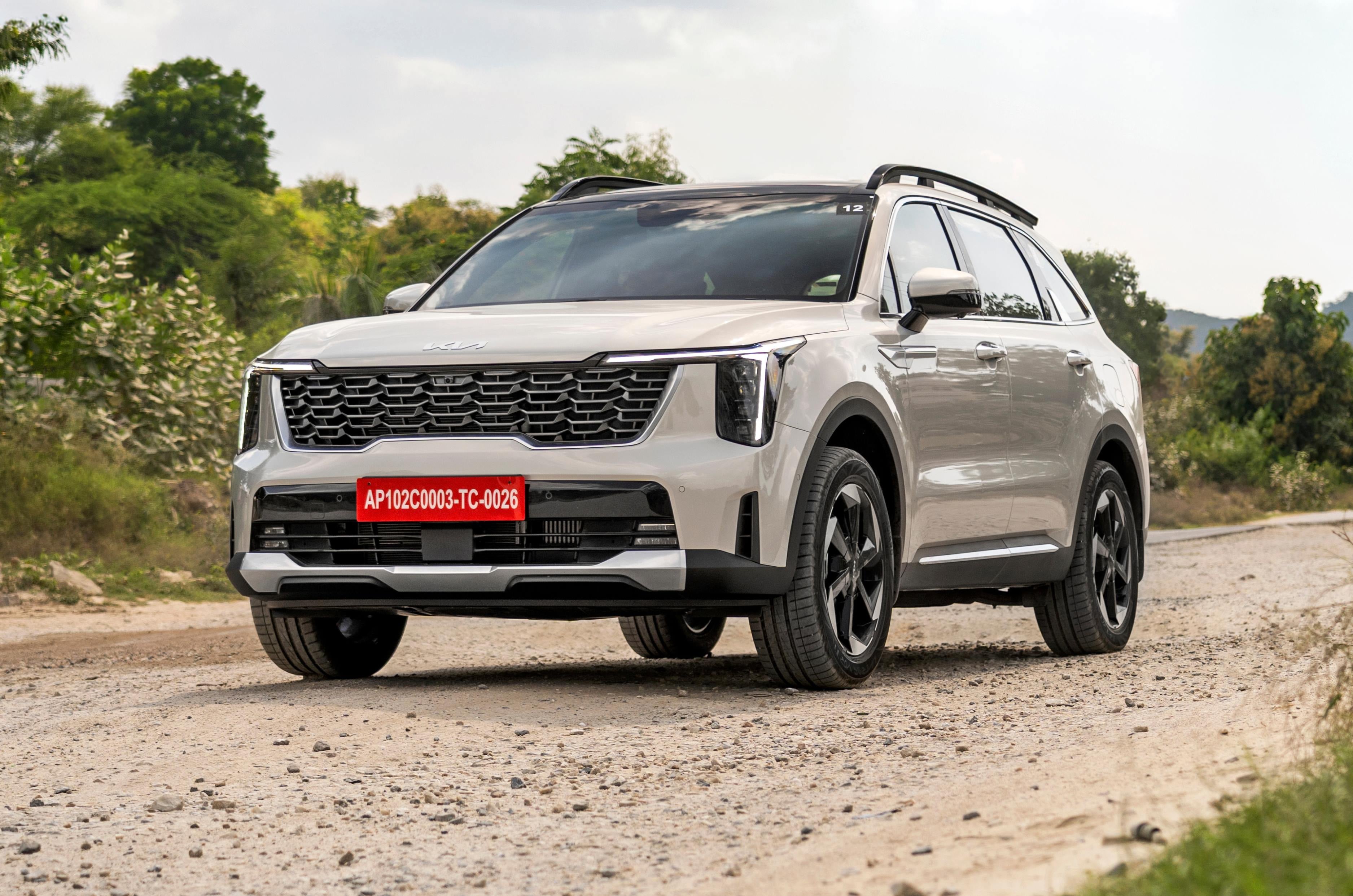
The Sorento sits on Hyundai-Kia’s MQ4 platform, the freshest architecture in its class, and it has already had a mid-life update to keep it looking current. The 2024 facelift brought the nose in line with the design language Kia kicked off with the EV9, so you get vertically stacked LED headlights, Y-shaped daytime running lamps and an aggressive looking bumper with wide intakes. At the back are L-shaped wraparound tail-lamps, and thankfully no light bar stretched across the tailgate.
Beats the rivals in length, width, and wheelbase.
Kia’s stated aim was a more technical, precise look, one meant to signal tight build quality and engineering sophistication. It is a trick the German premium brands have used for years, and Kia has clearly taken a leaf out of their book. The Sorento looks crisp and expensive rather than flashy, and is likely to age well too.
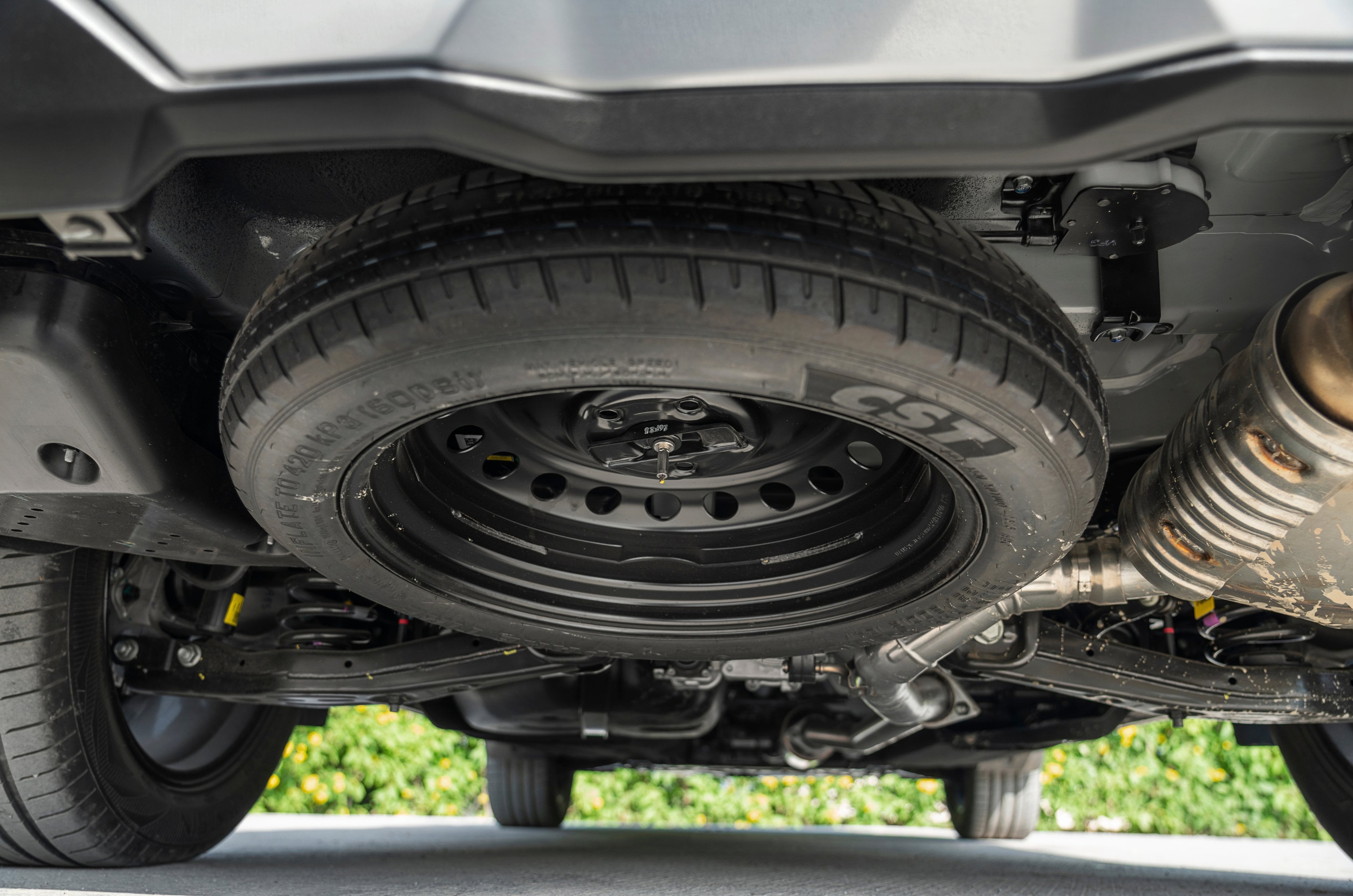
Spare wheel mounted under the floor frees up room in the boot.
What it does not have is brute presence. Despite being the longest, widest and tallest SUV in its segment, at 4,815mm long, 1,900mm wide and 1,785mm tall on a 2,815mm wheelbase, it does not loom in your mirrors the way a Fortuner does. The sloping roofline at the rear softens the silhouette and lends it a hint of crossover, and some will see it as a big Seltos rather than a junior Land Cruiser. Clearly this is not an SUV that looks like it can bully its way through traffic.
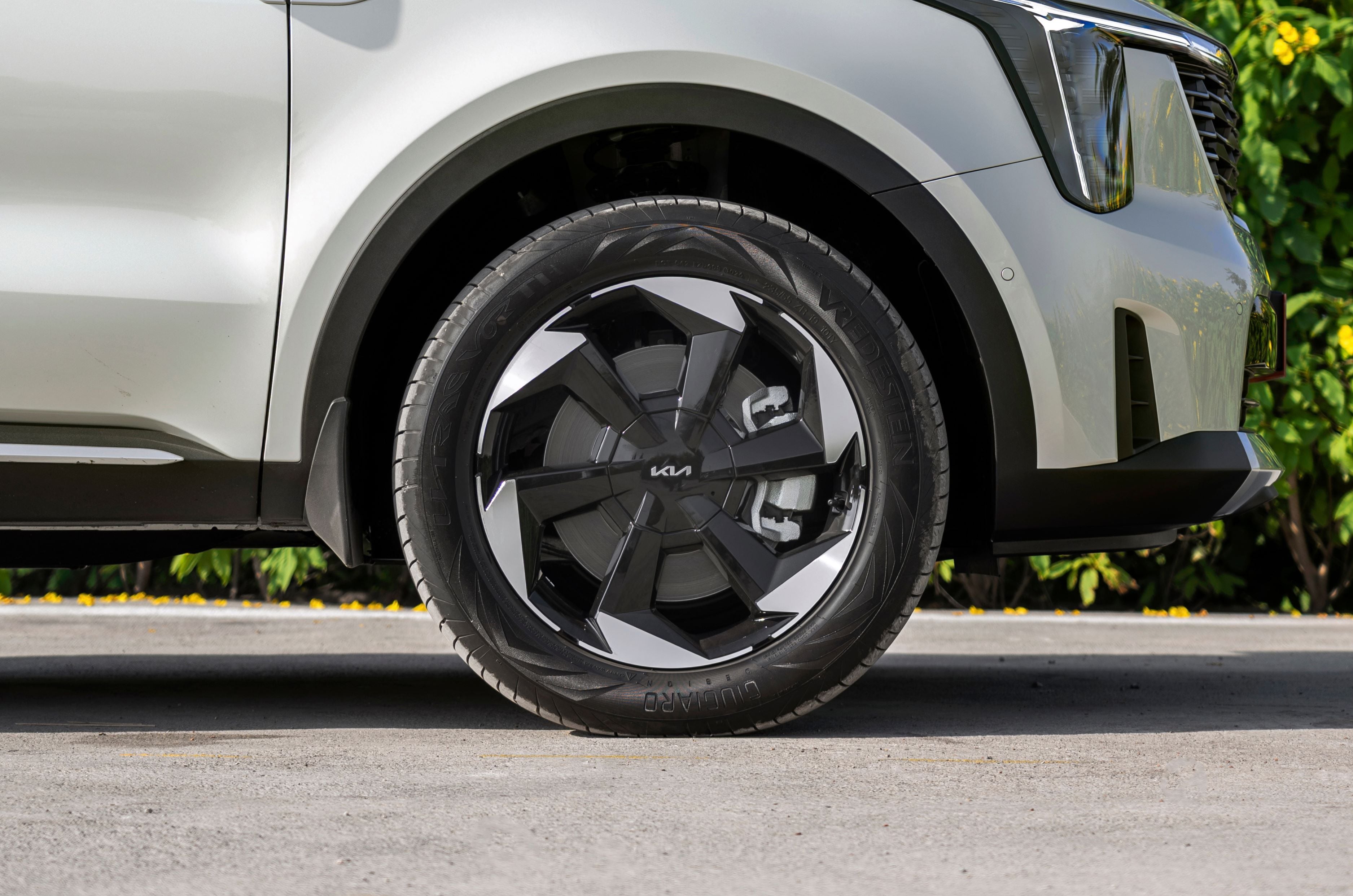
A more unique design could’ve been used for the 19-inch alloys.
The 19-inch dual-tone alloys could have been more distinctive, too an effect exaggerated by the chunky 235/55 R19 tyres. Those tall sidewalls, though, are not a styling misstep so much as an engineering choice, and they play a big part in how this car rides. More on that later.
Kia Sorento interior space and comfort
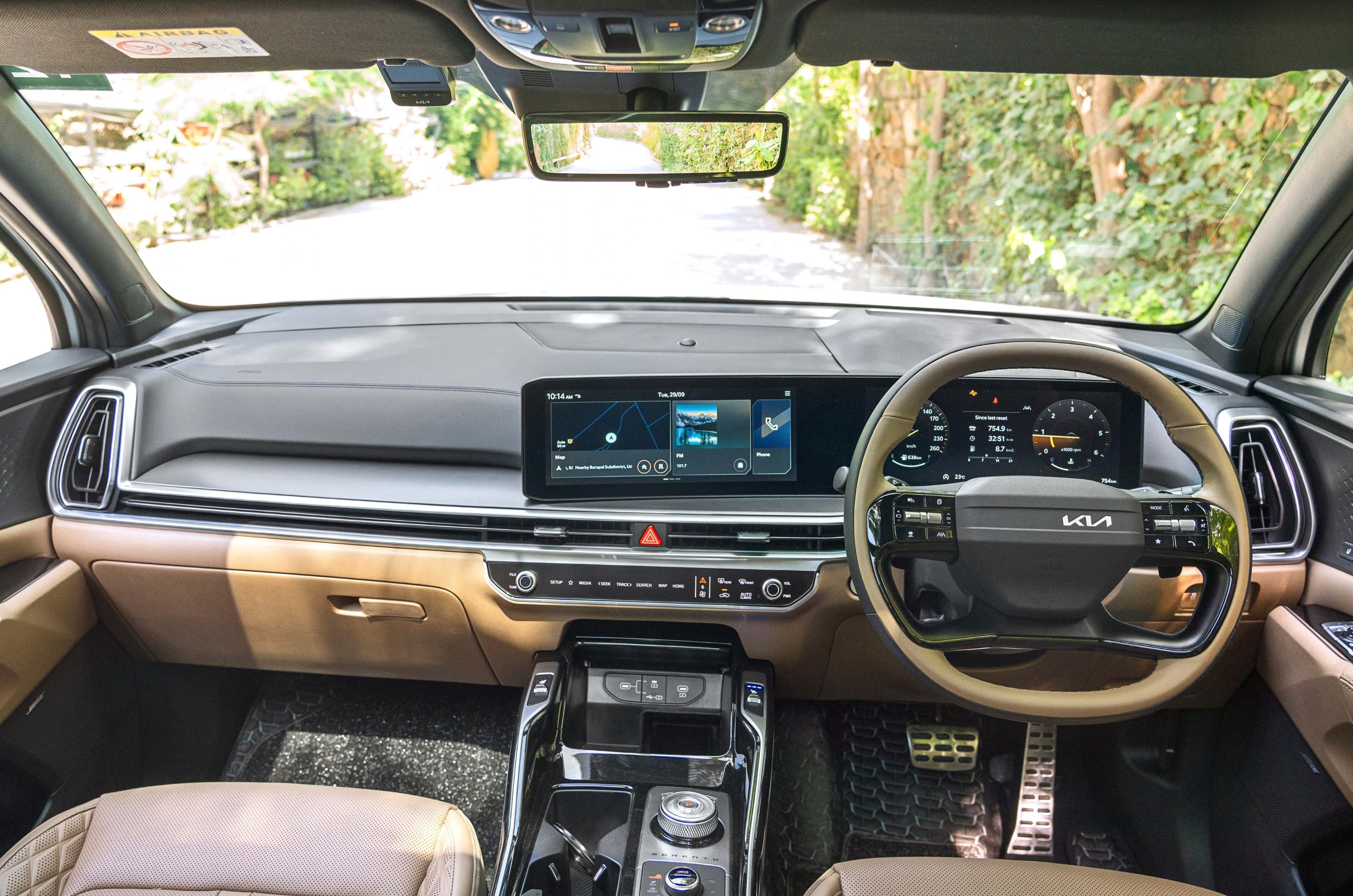
Clutter-free dashboard with solid build and plush feel.
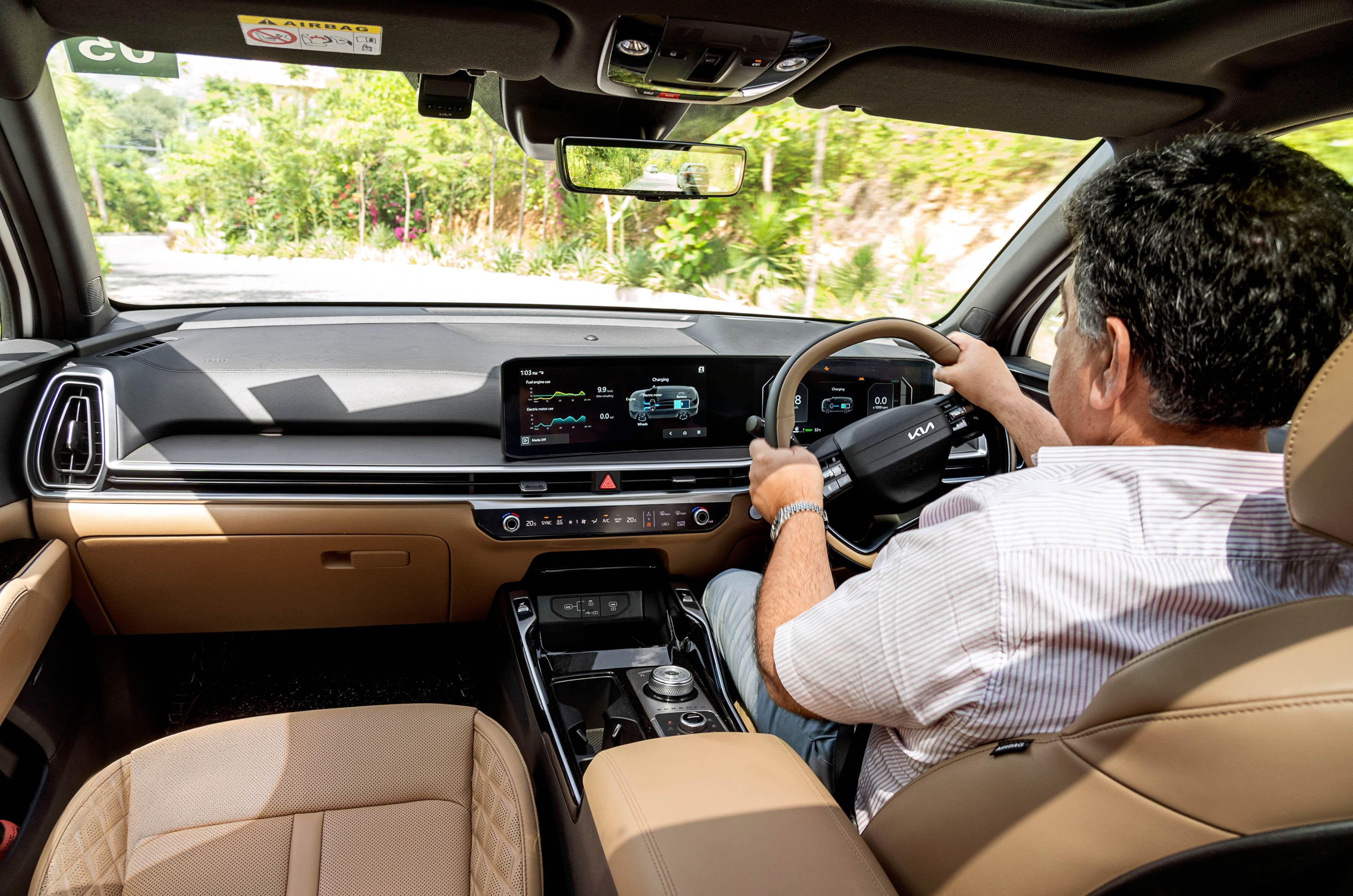
If the exterior is quietly effective, the cabin is where Kia has truly aced it. The Sorento offers a mix of quality, equipment and ergonomics that nothing at this price can match. Soft-touch materials cover everything you are likely to touch, including the spots where your knee rests against the centre console. There is a healthy count of physical buttons, and they click with a precision that feels engineered rather than sourced. The knurled finish on the rotary drive selector and the switchgear adds a tactile richness you normally pay German money for.
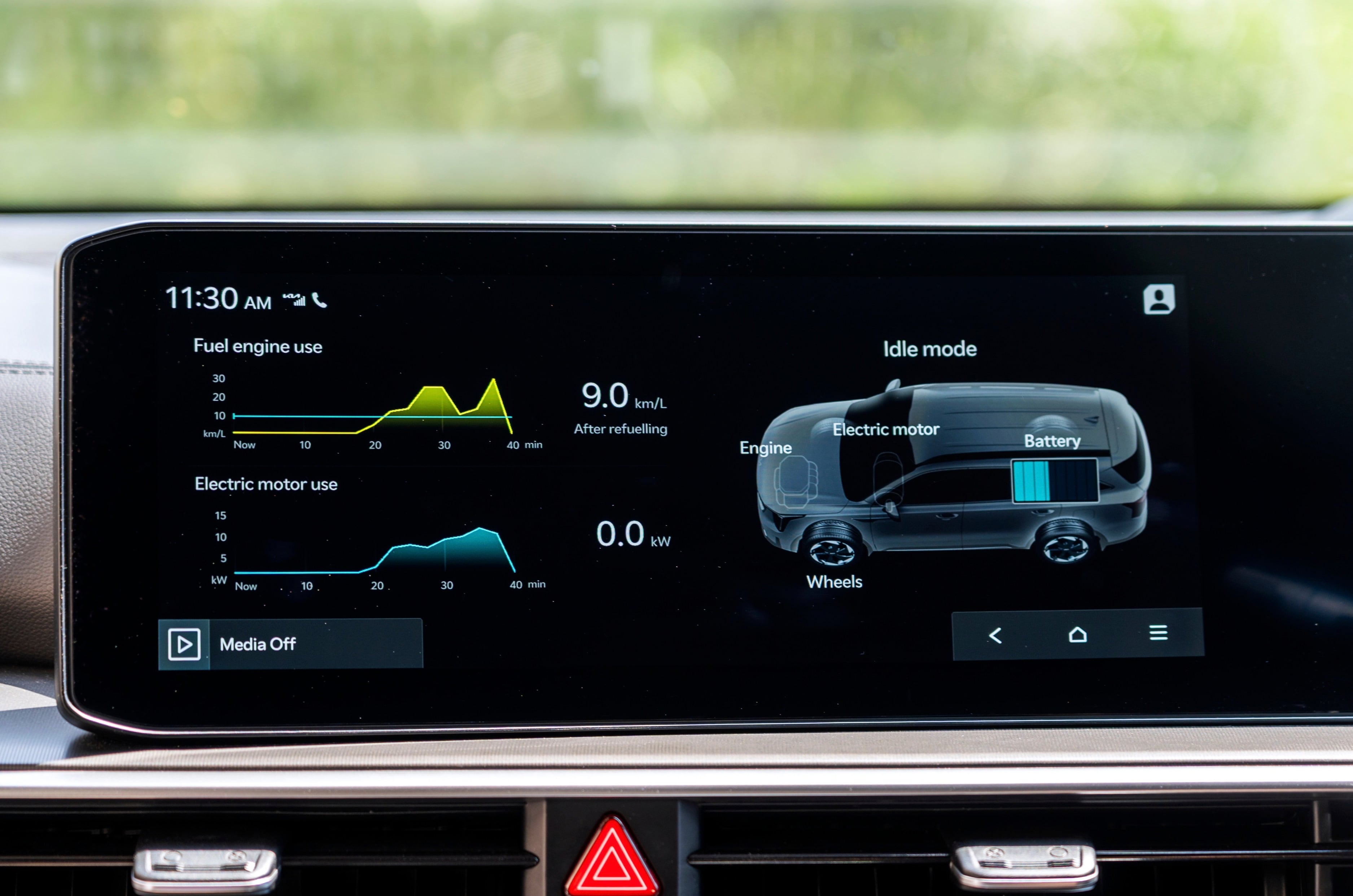
Hybrid variant gets exclusive data for power flow and efficiency.
As with its Hyundai cousins, the real ace is the software. The 12.3-inch infotainment system is logically laid out, menus are where you expect them to be, and getting to a feature takes a tap or two rather than a treasure hunt. Kia has also kept the climate controls off the main screen. They live on a touch-sensitive bar below it, with scrollers and a button that toggles the bar between air-con and infotainment shortcuts. It is a clever, space-saving solution, though you will occasionally find it in the wrong mode just when you need it.
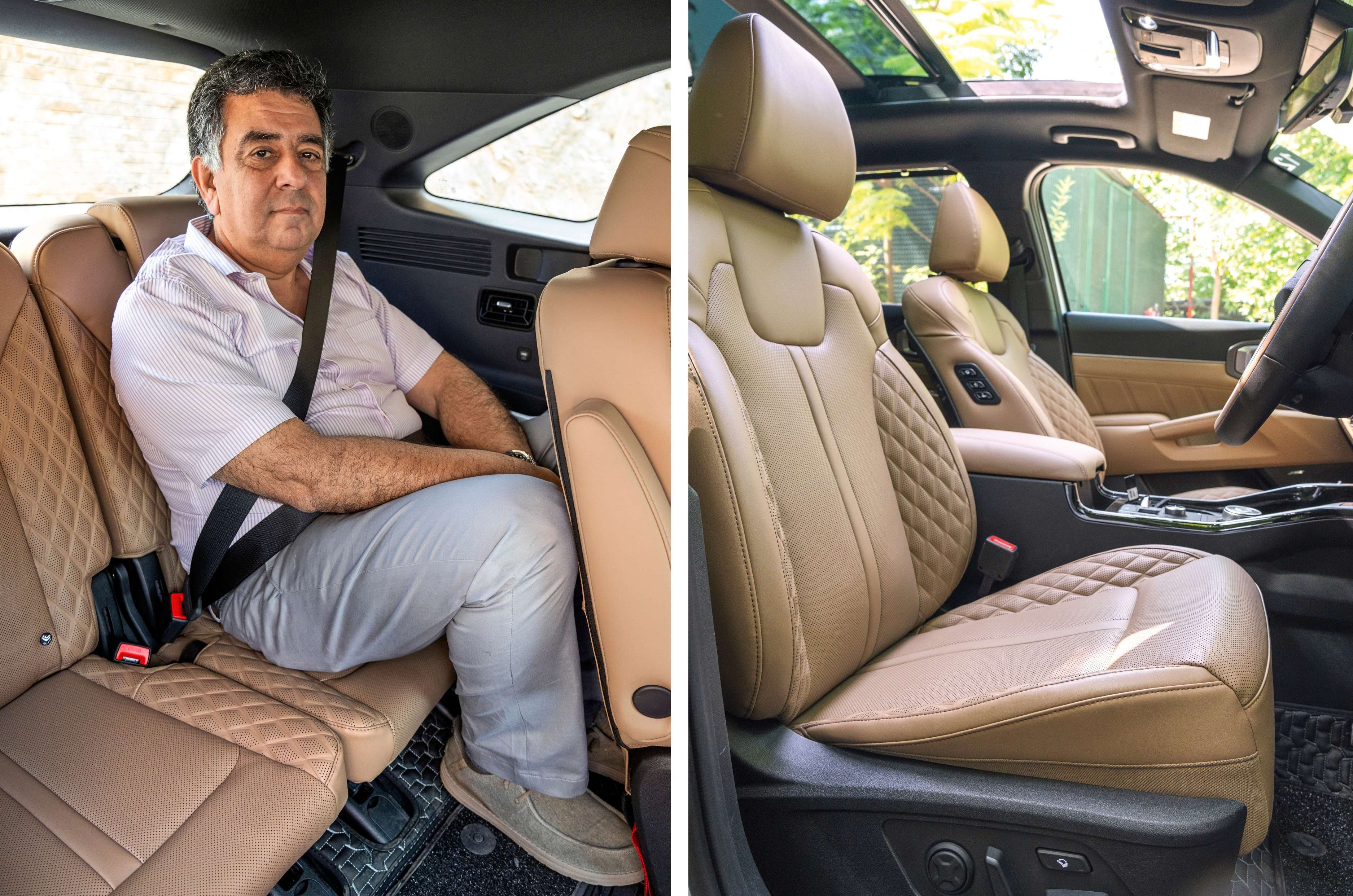
L: Third row seat placed on floor results in knees-up seating; best for children. R: Broad, supportive and well-cushioned front seats are electric and also get ventilation.
The front seats are fully powered, with 10-way adjustment, lumbar support and ventilation, and the passenger seat gets a boss mode so whoever sits behind can push it forward. Coming to the third row, access is easy. You can either walk through the gap between the captain chairs or press a button on the seat, which electrically slides and tilts it forward. Once there, the news is mixed. Legroom is better than you expect, but the seat base is mounted almost flat on the floor, so there is no under-thigh support and your knees point at the roof. Treat it as a space for children or short hops. At least the third row gets its own blower controls and USB ports.
Spacious middle-row with ventilated and adjustable captain chairs; bench seat version also available.
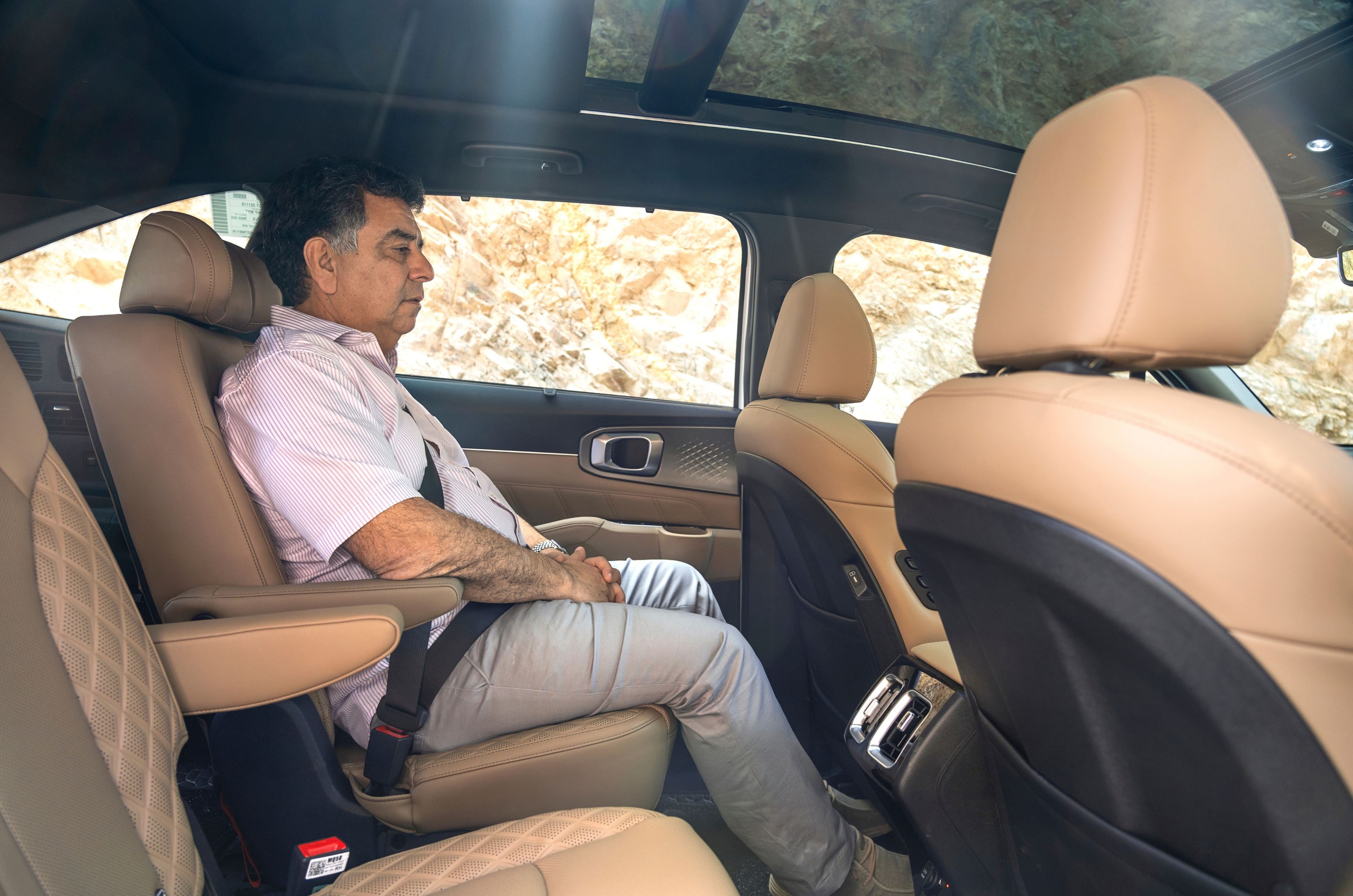
One of the Sorento’s highlights, however, is the second-row experience. Our test car was the top HTX with six seats, and its second-row captain chairs are ventilated too, a rarity in this class. They are the best seats in the house. There is lots of legroom, a commanding view out and good under-thigh support, comparable to the Innova Hycross’s middle-row captain chairs, though the Toyota seats you a touch higher. A neat detail is the cupholder moulded into the door, up near the handle, where it is actually easy to reach.
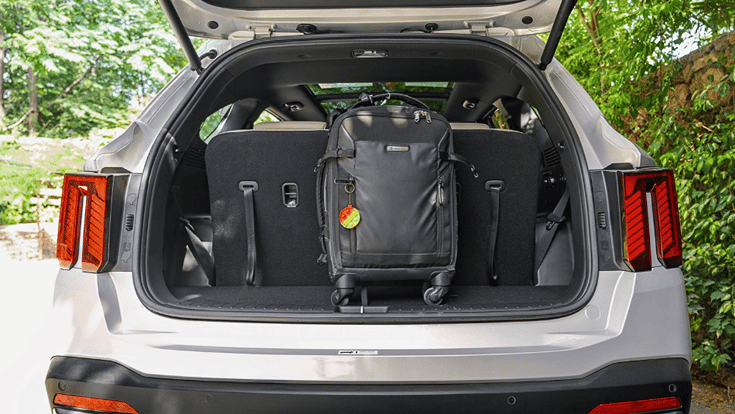
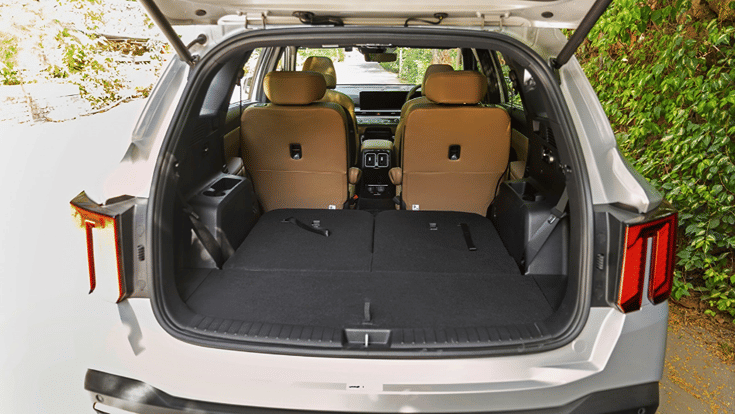
With all three rows up, the boot is a modest 179 litres; fold the third row and that grows to 813 litres. A full-size spare is welcome, but it is slung under the body, which is not the most convenient place to reach. Overhead, the massive panoramic roof floods the cabin with light and adds to the sense of space.
Kia Sorento features and technology
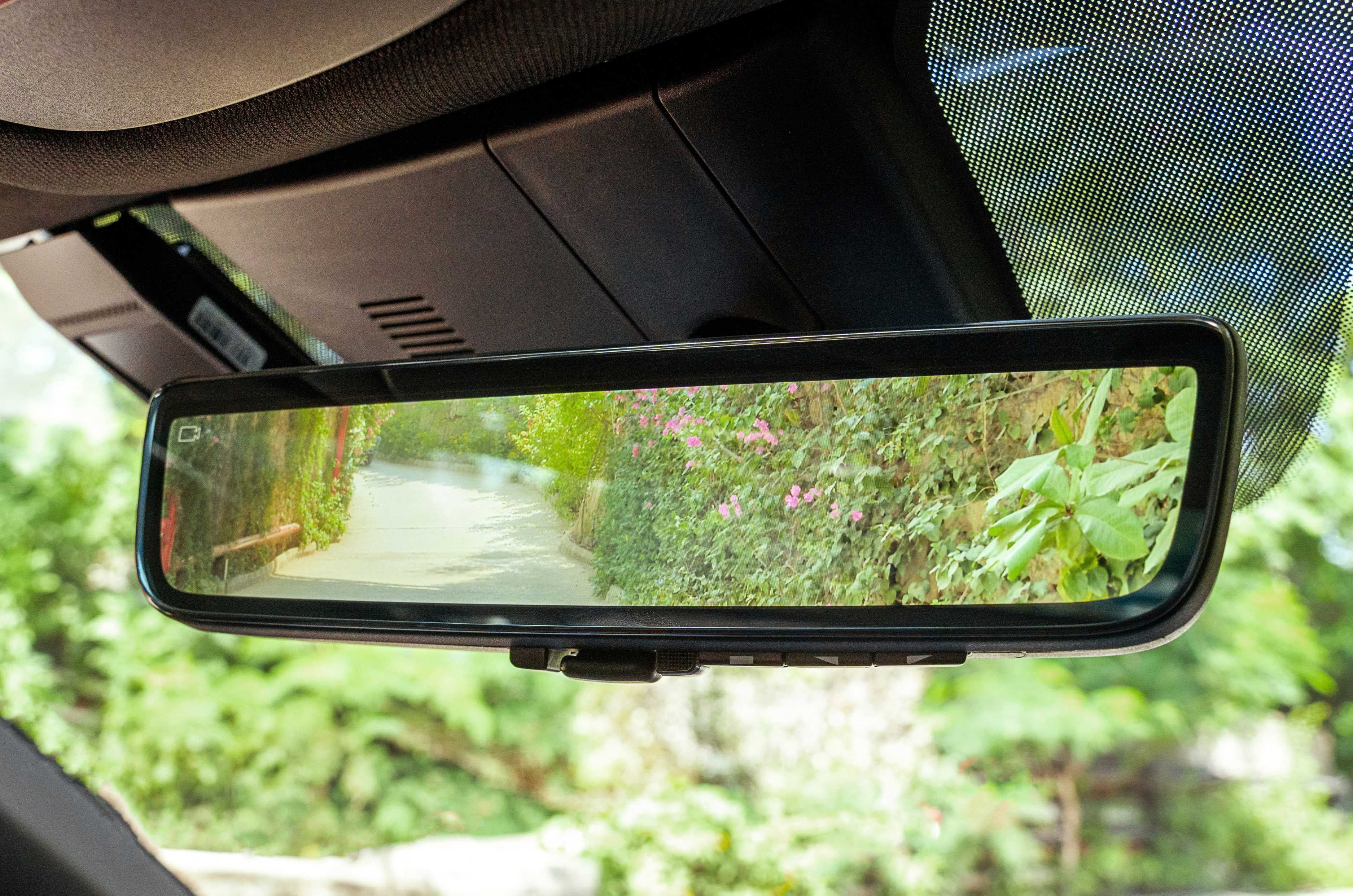
Digital IRVM offers excellent resolution and can be adjusted for level and brightness.
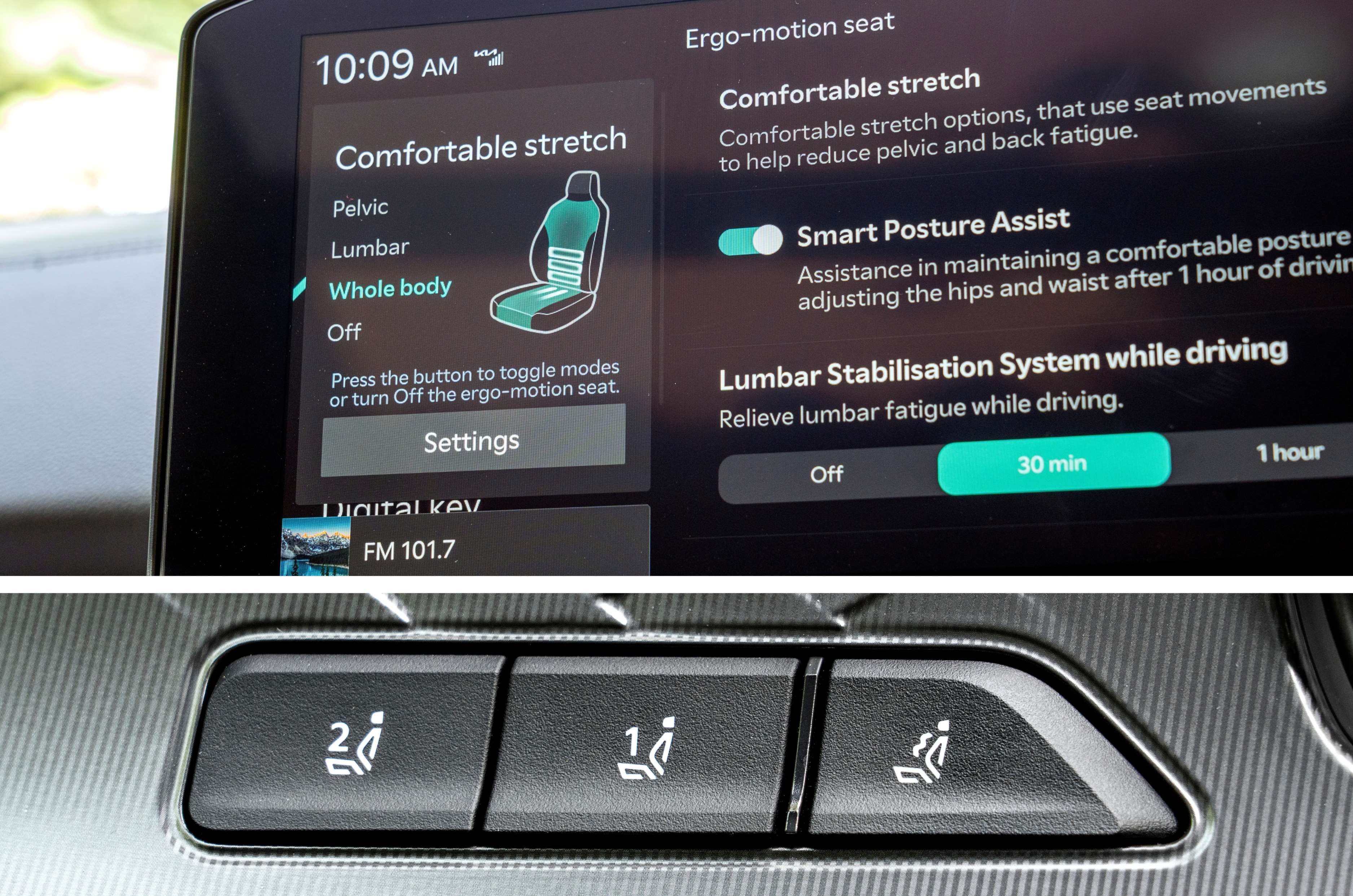
The equipment list is huge. In addition to the aforementioned 12.3-inch touchscreen, powered front seats, ventilated captain’s chairs, and panoramic sunroof, the Sorento comes packed with a 12.3-inch digital driver’s display, a head-up display, a 12-speaker Bose system, dual-zone climate control, a powered tailgate, rear-window sunshades, 64-colour ambient lighting and a digital rear-view mirror that flips back to a conventional one at the turn of a knob. The driver’s seat even gets an ‘ergo-motion’ mode that simulates a massage function by shifting the contours around.
Ergo mode for driver seat acts like a massage by moving the contours to avoid a stiff back on a long trip.
Safety is just as thorough, with 10 airbags, a 360-degree camera, front and rear dashcams, remote parking assist, TPMS and Level 2+ ADAS on the (A) trims. There is even real-time generative AI, a first for any Sorento globally.
Kia Sorento performance and refinement
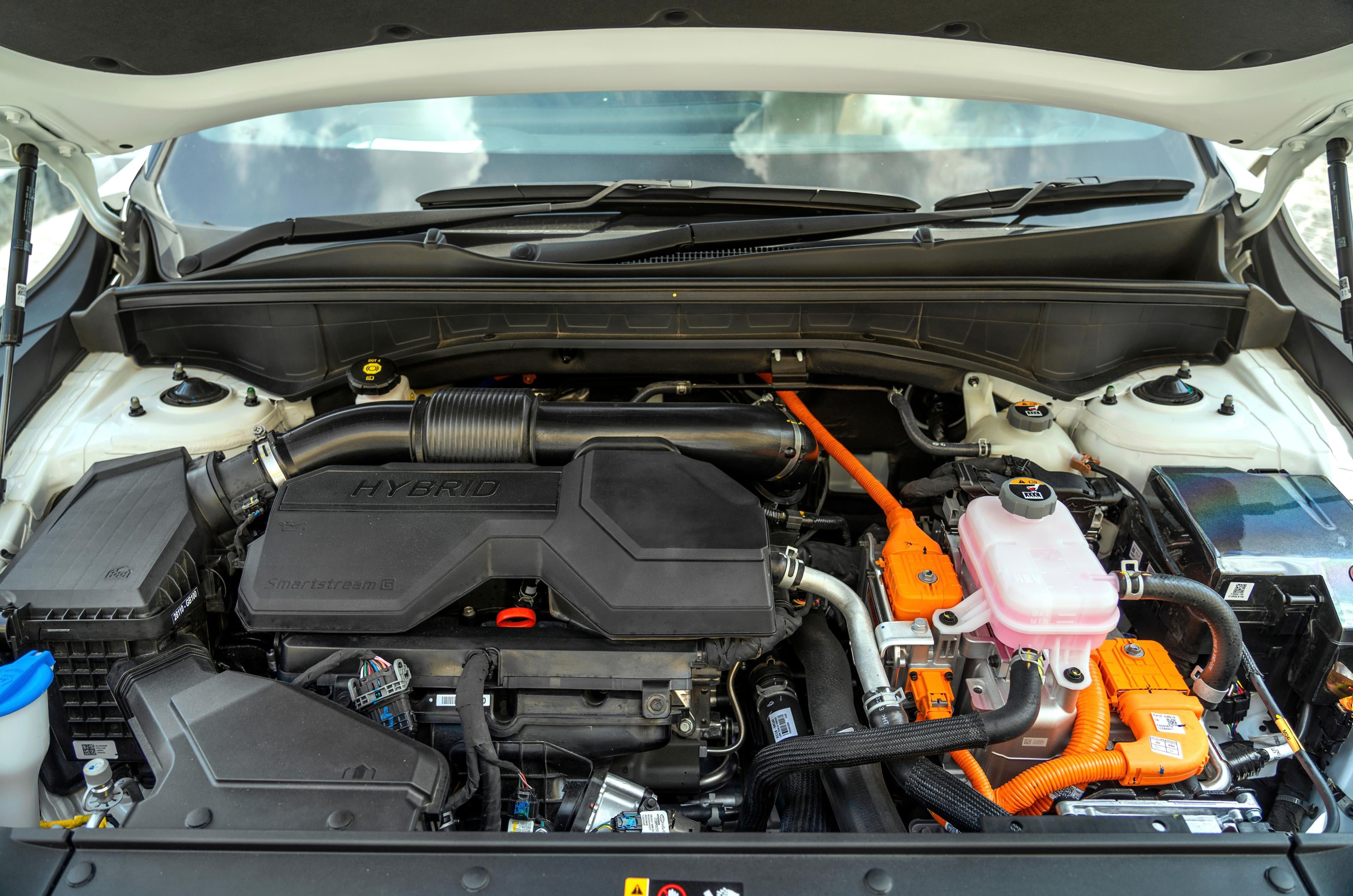
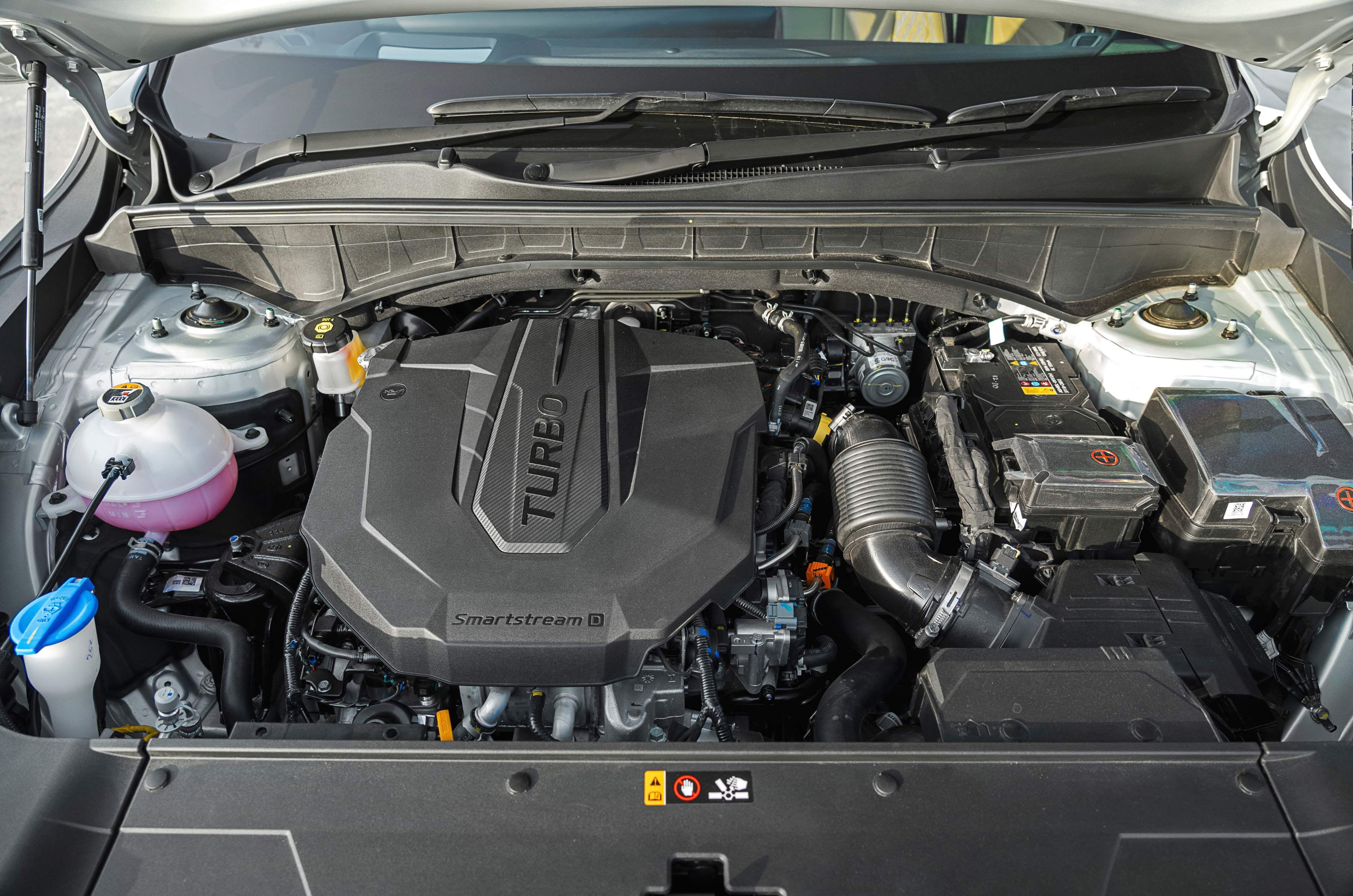
1.6-litre turbo-petrol engine paired with an electric motor and 6-speed torque converter automatic.
First up, the hybrid. Its 1.6-litre turbo-petrol makes 180hp and 265Nm, and the electric motor adds 65hp and 264Nm. The combined figure rating is 230hp and 380Nm of torque You can tell this the hybrid is the one for the city the moment you pull away, because the response is instant. It is well mated to the 6-speed torque-converter automatic, and the handover from electric to petrol power is close to seamless.
Hybrid variant is smooth in the city but gets noisy on the highway especially during overtakes.
The 1.49kWh battery lets it run in EV mode for a decent stretch at crawling speeds, and in stop-go traffic the hybrid makes eminent sense. Power delivery is refined, seamless and relaxing, and efficiency should be strong; The limitation is the motor itself. With only 65hp to shift a car weighing over two tonnes, it cannot do the heavy lifting on its own, so when you want to make quick progress the engine kicks in early. Push hard on the highway and the four-cylinder gets noisy and starts to run out of steam.
2.2-litre diesel engine makes 193hp mated to an 8-speed DCT and is the same unit seen on the Carnival.
Which is where the diesel comes in. The 2.2-litre is familiar from the Carnival, but it feels a lot sprightlier in the lighter Sorento. Its 193hp and 442Nm arrive in a strong, linear surge, and this is a fantastic, long-legged cruiser. Settle into eighth gear on an open highway and it simply lopes along, the engine barely working. It is also more tractable at low speeds than you might expect, pulling cleanly at part throttle from very low revs, so it can double as a city car, although its low-end response does not come close to the hybrid’s. It’s only when you floor it to dart through traffic that you experience a bit of hesitation, and its hear that you can use the paddle shifts to be in the right gear at the right time of the 8-speed DCT which comes as a pleasant surprise.
The diesel‘s strong torque and effortless cruising makes it perfect for long trips.
Rather than the snappy, slightly jerky shifts typical of dual-clutch boxes, this DCT slurs its changes almost like a torque converter, which adds to the smoothness of the whole package. The reason is that it is a wet-clutch unit, which also bodes well for durability in Indian traffic. The diesel is quite refined for the most part and its only when pushed hard that it gets audible and takes on a gruff note.
Both get drive modes; You can play with the Eco, Normal, Sport and Smart (or auto) modes in the diesel which alters the power delivery. In Sport, the throttle response is sharper and the default mode we liked whilst in Eco you can feel the response a bit dulled down. The Sorento Hybrid gets just Eco, Sport and Smart modes and in Eco mode EV running is prioritised. In addition, the AWD versions get Snow, Sand and Mud terrain modes which we didn’t a get chance to fully experience.
Kia Sorento mileage
In terms of fuel efficiency, the hybrid is rated at a highly frugal 19.60kpl with front-wheel drive and 17.70kpl with AWD, while the diesel returns 17.66kpl and 15.79kpl respectively on the Indian test cycle. In real-world city driving the gap between the hybrid and diesel could be bigger, depending on traffic. On long cross-country runs, though, with extended stints of cruising in high gears, the diesel could well be the more frugal of the two.
Kia Sorento ride and handling
The Sorento’s ride comfort is simply outstanding, and it comes as a pleasant surprise. That’s because Kias have traditionally been stiffer sprung than their Hyundai cousins, but here Kia has clearly prioritised comfort over sportiness, and the suspension is on the soft side. The way it smothers bad roads at speed is remarkable. Around Udaipur, where several stretches are properly broken, we never once had to lift off for a bad patch. The car just soaked it up and kept going.
Ride quality is segment best and it is unfazed over broken roads.
The isolation it gives its passengers is shockingly good, and those tall-sidewall tyres deserve part of the credit. They do a fine job of rounding off sharp jolts and filtering out the high-frequency shocks that a suspension alone cannot fully absorb. At highway speeds there is a bit of body movement on the undulating bits but its not disconcerting and both versions feel stable and planted at high speeds, which matters in a car this tall.
Our HTX test cars came with AWD as standard. We did not get a chance to test its off-road ability properly, but on dirt roads it felt sure-footed and secure. A proper off-road test will reveal how capable the all-wheel-drive system, though we doubt owners will really want to test the Sorento’s off-road capability.
Steering is light but lacks consistency and sharpness of European rivals.
The steering is less impressive. There is a dead zone around the straight-ahead position, and it does not feel as fluid or progressive as its European rivals’. The Volkswagen Tayron and Skoda Kodiaq are both dynamically sharper. One reason is because the Sorento rides taller too, as ground clearance has been raised from the global car’s 176mm to 208mm, and there is a touch of body roll when you push hard through corners.
But that misses the point. On balance, the Sorento’s ride and handling are superbly judged for the people who will buy it. Kia has done a fine job of understanding what a premium SUV buyer in India wants, and it has tailored the car accordingly.
Kia Sorento price and verdict
As a package, the Sorento hits it out of the park; rivals have a lot of catching up to do.
If the product does not win you over, the pricing certainly will. A starting price of Rs 27.99 lakh has set the cat amongst the pigeons, putting the Sorento within striking distance of the Mahindra XUV 7XO. And with its size, features and overall polish, the Sorento will not just nibble at the top end of the 7XO’s pie but with the Hybrid could also tempt a few Innova Hycross buyers. As for the Volkswagen Tayron and Skoda Kodiaq, the Sorento makes them look overpriced and underequipped.
The lower and mid variants are exceptional value. The top-end HTX, at Rs 37.49-40.19 lakh depending on fuel and seating, is pricey by comparison, around Rs 5 lakh more than an equivalent HTK, because it comes with AWD as standard. Here Kia has missed a trick. An HTX with two-wheel drive, a few lakh cheaper, would have been a far easier sell to the many buyers who want all the features and ventilated rear seats but will never leave the tarmac. That however is a small quibble that Kia can easily correct.
The lasting impression is that the Sorento feels premium, bordering on luxury. It is fantastically equipped, it rides beautifully, and it offers a choice of two powertrains that are each right for a distinct type of buyer. Most of all, it fits what the Indian SUV buyer actually wants with uncanny precision. Will Kia hit its target of 40,000 sales a year? That could be a tall order. But what there is no doubt about is that Kia has built another winner.
While scooters are more practical than motorcycles, the choice comes down to how and where you use them. I have preferred motorcycles for daily commuting, mainly because their larger wheels and better suspension tend to offer a more composed ride, while the extra performance makes quick progress through traffic easier.
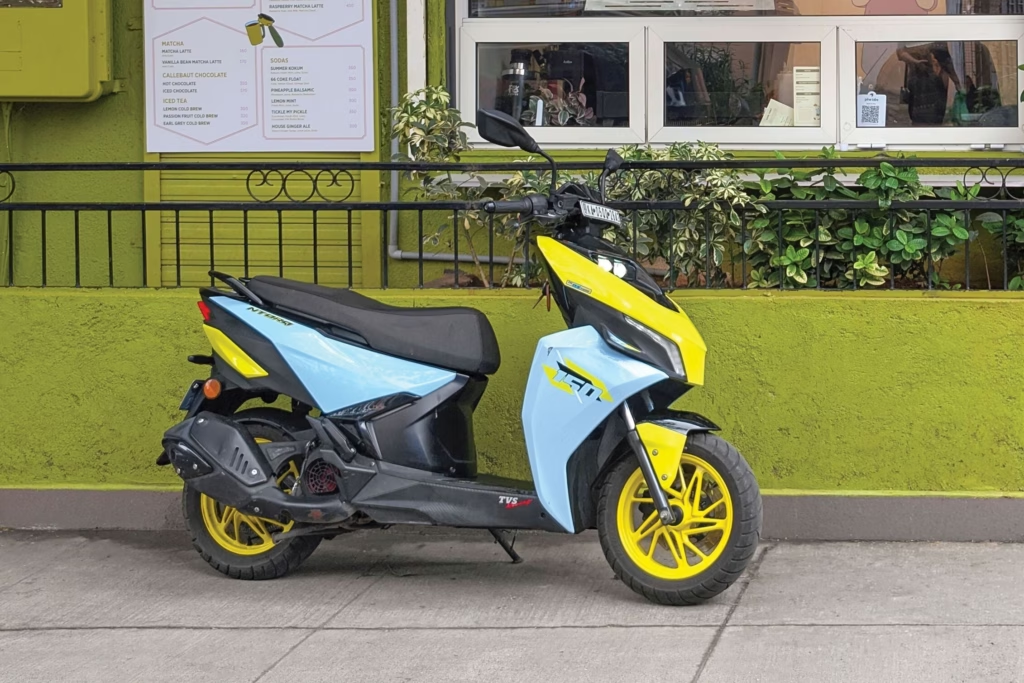
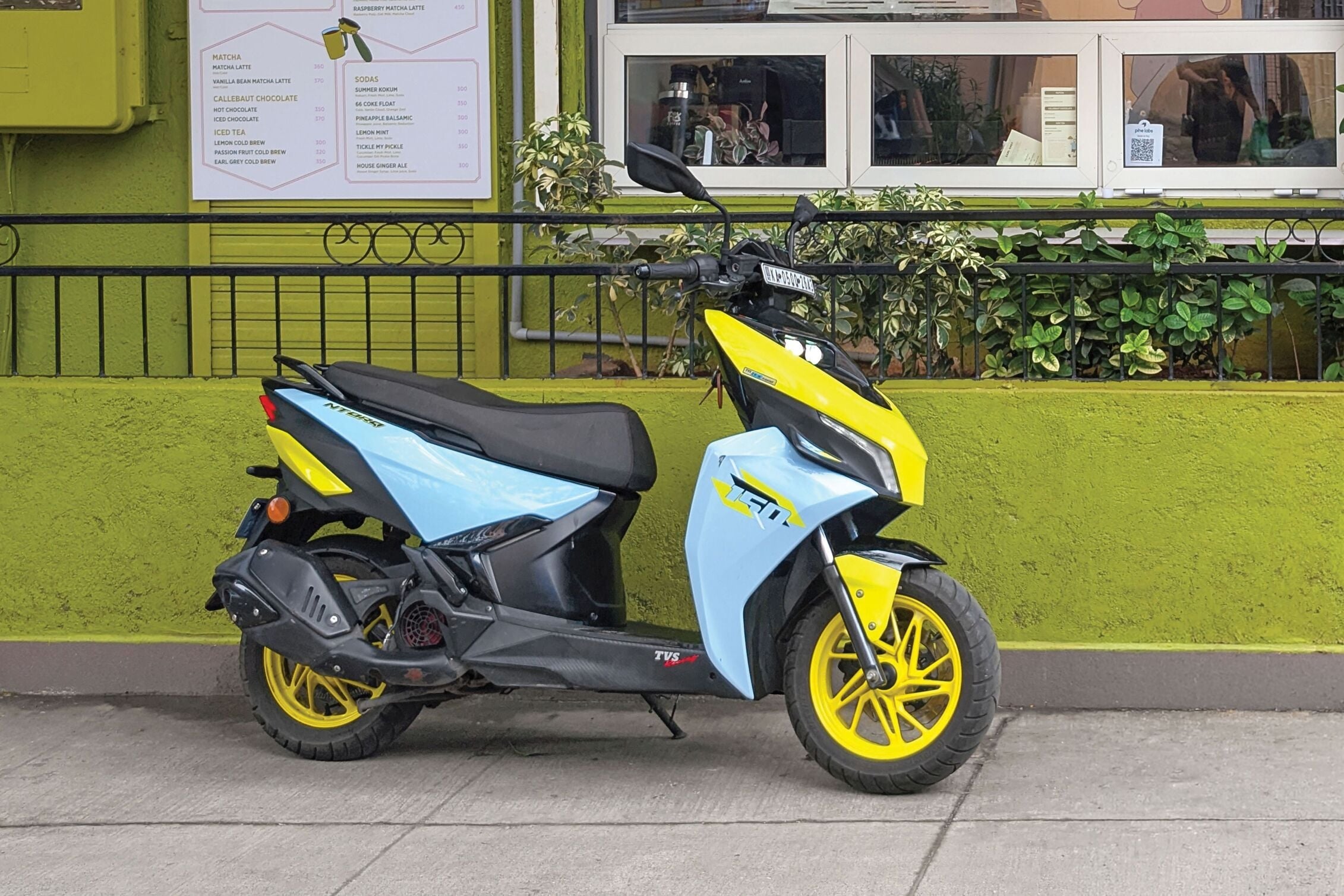
With our long-term motorcycles already being used by other colleagues, I found myself spending more time with the TVS Ntorq 150. Since our last report, it has covered another 1,000km.
The first thing any enthusiast is likely to appreciate about the Ntorq is its performance. Overtakes are easy, and you rarely need to twist the throttle all the way to make a quick move through traffic. Adding to the character of this scooter is an engaging exhaust note. The riding modes also add a useful layer of versatility. During torrential rains, with poor visibility and slippery roads, I found Street mode quite useful. It slightly reduces power delivery, making it easier to manage when conditions aren’t ideal.
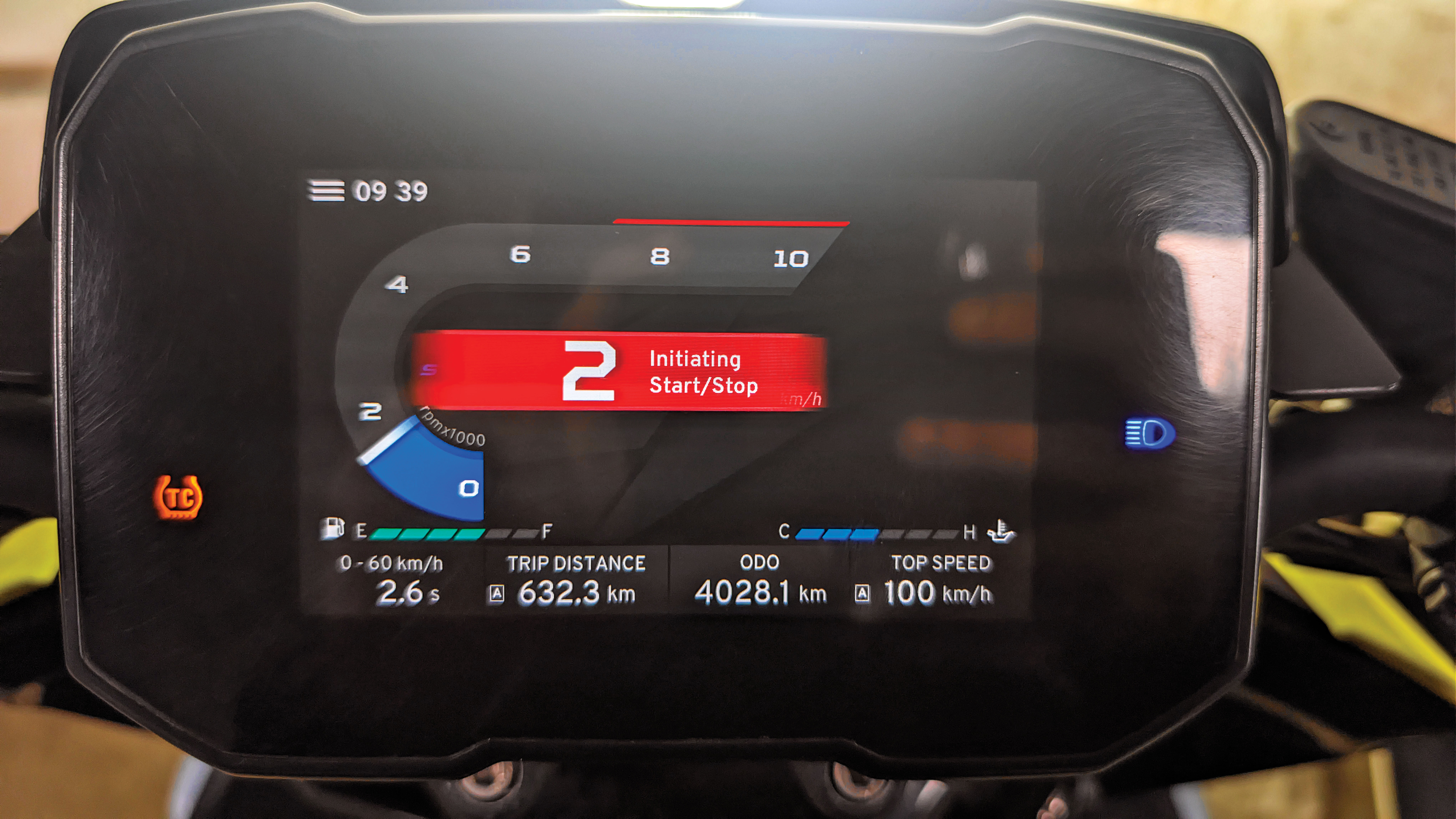
However, I don’t particularly like the start-stop system that is activated in Street mode. It takes a second longer than I would like to restart when the throttle is opened, which can be irritating when launching away from a traffic light. I prefer switching it off and letting the engine idle instead.
Start/stop feature takes a little longer than expected to restart the scooter.
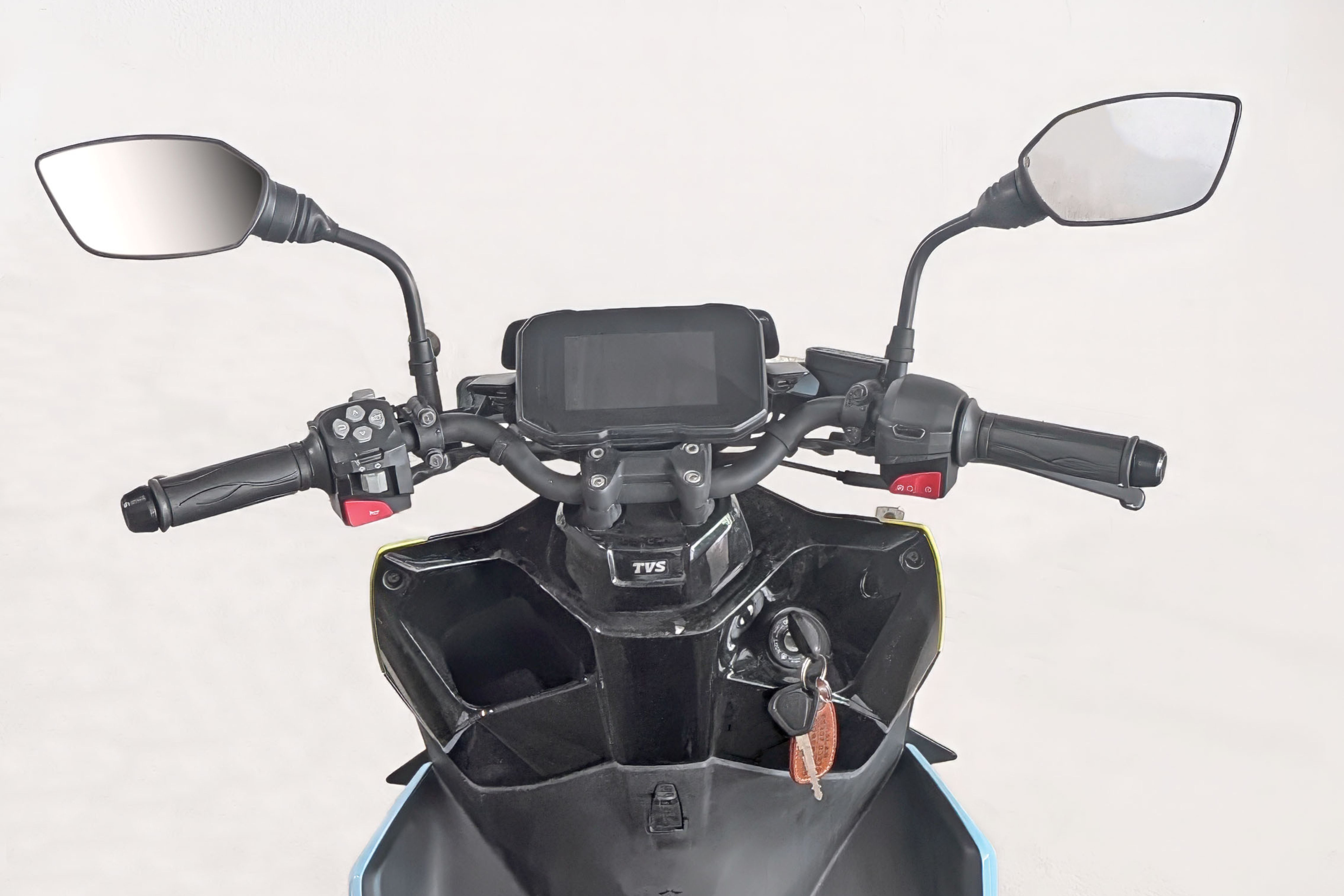
The mirrors are another small annoyance. They provide a good field of view, but they stick out quite a bit and can make squeezing through tight traffic gaps a bit more difficult.
Mirrors jut out too much and come in the way of filtering through tight traffic.
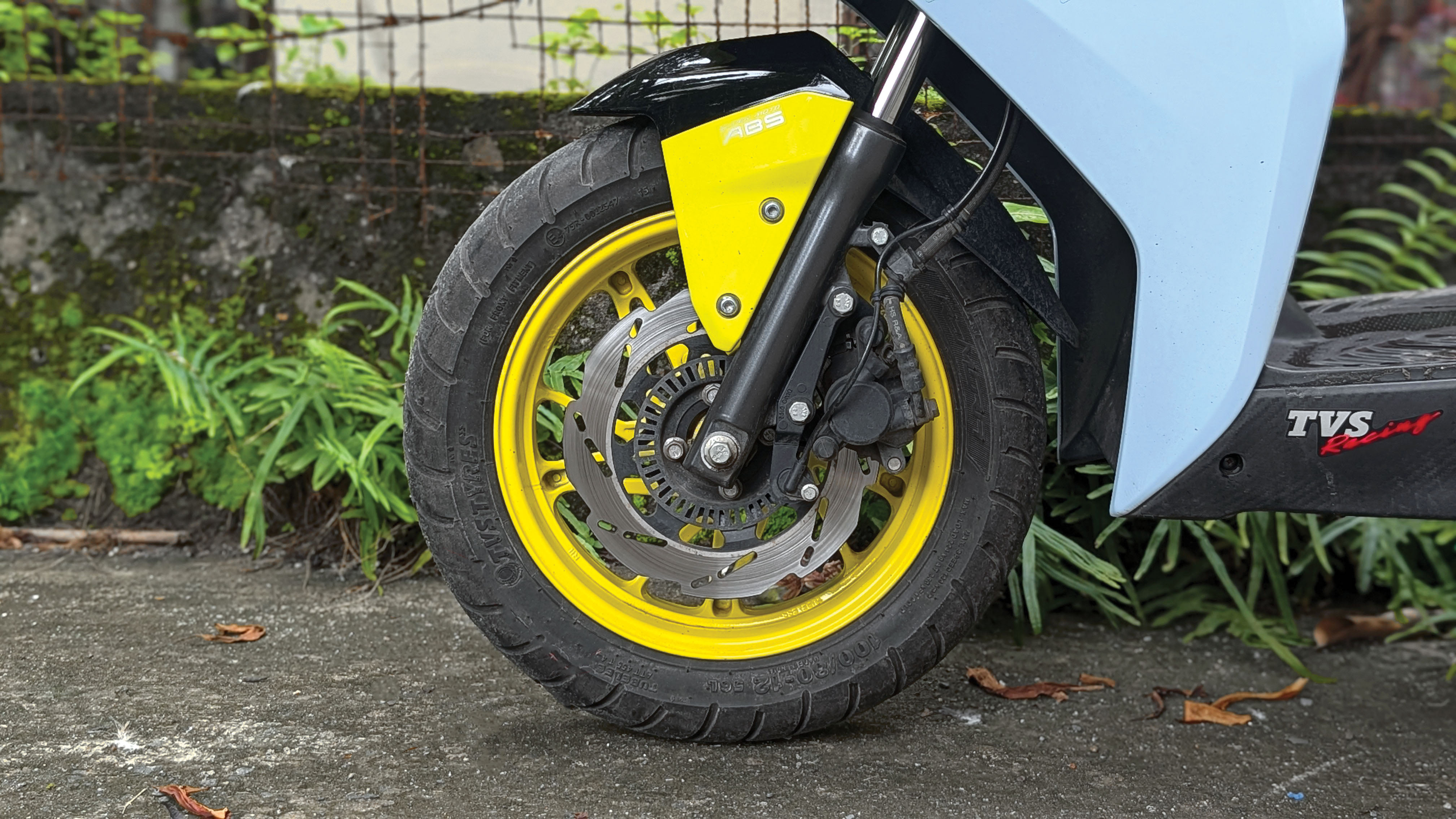
The front disc brake, on the other hand, has been impressive, offering strong stopping power, while the ABS isn’t intrusive. I have noticed that the rear drum brake needs adjustment roughly every 300km, though.
The front disc brake offers strong performance, and the ABS is not intrusive.
Despite being a sport-oriented scooter, its suspension does a really good job of dealing with potholes and broken roads. In fact, I would say it handles rough roads better than several family-oriented scooters I have used in the past.
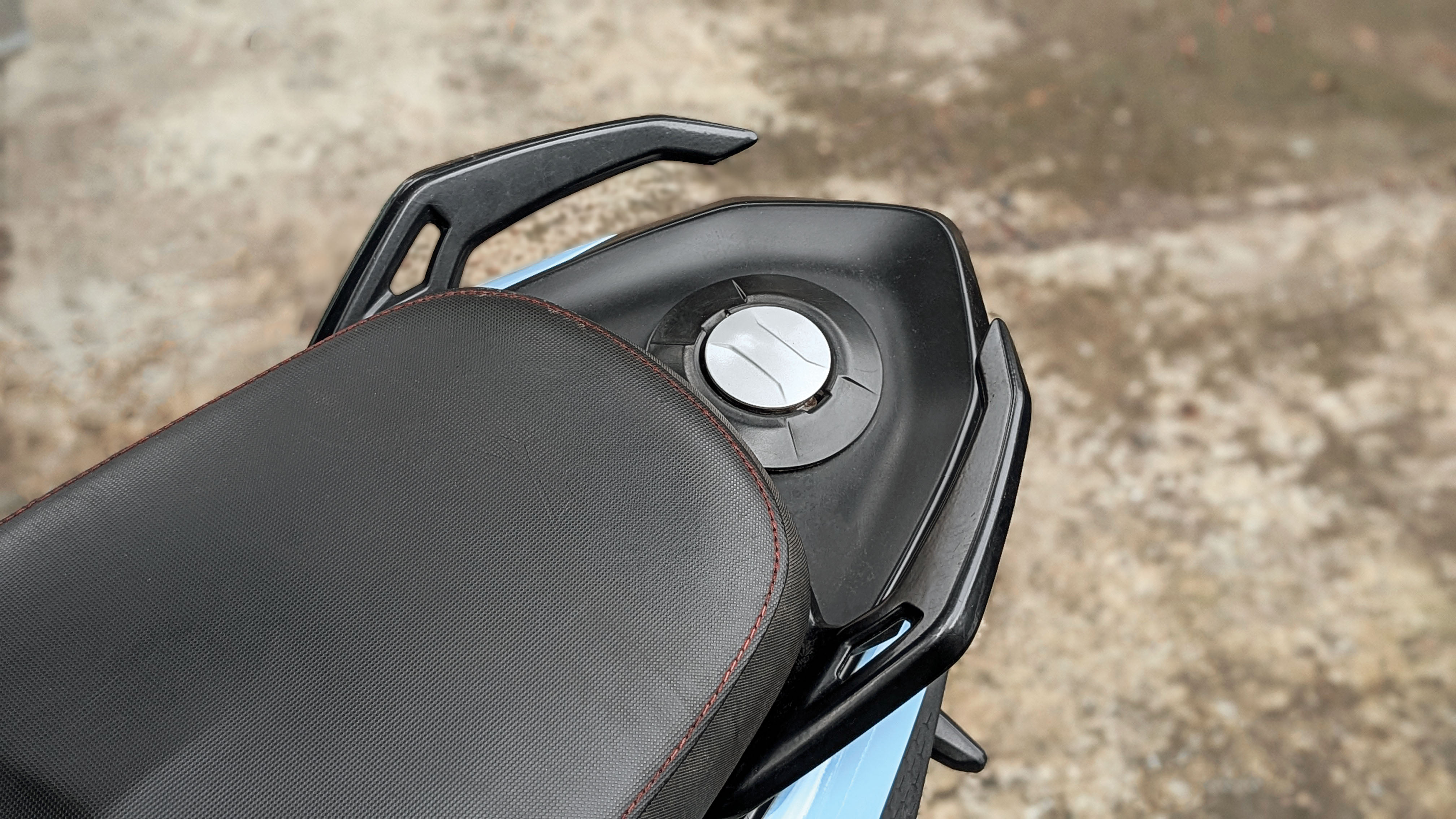
In terms of convenience, the under-seat storage is adequate for my requirements, while the left-hand switchgear makes navigating the menus on the TFT display fairly straightforward. The external fuel filler is another small but useful touch.
The convenience of an external filler makes fuel stops very efficient.
After another 1,000km, the Ntorq 150 has made a convincing case for itself as a daily commuter. It has the performance to keep an enthusiast entertained, the ride quality to tackle our battered roads and enough everyday convenience to make commuting easy. It isn’t without a few niggles, but the longer I spend with it, the more I understand why this sporty scooter makes a strong argument for leaving the motorcycle at home for the daily grind.
शेयर बाजार में जल्दी पैसा कमाने का सपना कई लोगों को ट्रेडिंग की ओर खींचता है। शुरुआत में अगर कुछ मुनाफा मिल जाए, तो बाजार से कमाई का भरोसा और बढ़ जाता है। लेकिन कई बार यही उत्साह धीरे-धीरे ऐसी आदत में बदल जाता है, जिससे बाहर निकलना मुश्किल हो जाता है। सोशल मीडिया यूजर Hemdharpan ने अपने 35 वर्षीय दोस्त की ऐसी ही कहानी साझा की है।
2 लाख की सैलरी और 14 लाख की बचत
Hemdharpan के मुताबिक, उनका दोस्त एक IT प्रोफेशनल था और करीब 2 लाख रुपये महीने कमाता था। उसके पास 14 लाख रुपये की बचत थी। शादीशुदा होने के साथ उसका एक बच्चा भी था। यानी नौकरी, कमाई और सेविंग के मामले में उसकी जिंदगी काफी स्थिर थी।
करीब दो साल पहले एक सहकर्मी ने उसे शेयर बाजार में ट्रेडिंग के बारे में बताया। यहीं से उसकी जिंदगी का एक नया दौर शुरू हुआ।
45 मिनट में 12 हजार का मुनाफा
कहानी के मुताबिक, सहकर्मी ने लंच के दौरान अपना Zerodha अकाउंट दिखाया। उसने Nifty options की इंट्राडे ट्रेडिंग से करीब 45 मिनट में 12 हजार रुपये कमाए थे। यह देखकर टेकie को भी लगा कि बाजार में कम समय देकर अच्छी कमाई की जा सकती है।
शुरुआत में उसे सफलता भी मिली। उसने करीब दो घंटे में 18 हजार रुपये कमाए। इस कमाई ने उसका उत्साह और बढ़ा दिया।
फिर शुरू हुआ नुकसान का सिलसिला
दूसरे महीने बाजार ने उसे बड़ा झटका दिया। उसने कुछ ही मिनटों में करीब 50 हजार रुपये गंवा दिए। पोस्ट के मुताबिक, उसने समय पर stop-loss नहीं लगाया और नुकसान को स्वीकार करने के बजाय उसे वापस पाने की कोशिश शुरू कर दी।
उसने परिवार की बचत से 1 लाख रुपये बाजार में लगा दिए। इसके बाद वह नुकसान की भरपाई के लिए लगातार ट्रेड करने लगा। बताया गया कि वह एक दिन में 30-40 ट्रेड तक करने लगा था।
बचत खत्म हुई तो लिया कर्ज
2024 में शुरू हुई ट्रेडिंग का असर 2025 के मध्य तक दिखने लगा। उसकी करीब 14 लाख रुपये की बचत खत्म हो गई, लेकिन ट्रेडिंग नहीं रुकी। पोस्ट के अनुसार, वह परिवार से ट्रेडिंग छिपाने लगा और काम के बीच भी बाजार पर नजर रखता था।
बचत खत्म होने के बाद उसने तीन बैंकों से पर्सनल लोन लिया। कथित तौर पर उसने इन पैसों के लिए घर की मरम्मत का कारण बताया। बाद में इंस्टेंट लोन ऐप्स से भी पैसे लिए।
My friend H is 35, married, and a father. Two years ago, he had ₹14 Lakhs in FDs & MFs,a stable IT job paying ₹2 Lakhs a month, and complete peace of mind.
Today,he is down ₹38 Lakhs, his salary is garnished by debt recovery, & his wife is staying at her parents’ house. 1/n
2025 के आखिर में जब रिकवरी एजेंट घर पहुंचने लगे, तब परिवार को पूरी स्थिति का पता चला। पोस्ट के मुताबिक, 14 लाख रुपये की बचत खत्म होने के अलावा उस पर करीब 24 लाख रुपये का कर्ज भी था। यानी कुल नुकसान करीब 38 लाख रुपये बताया गया।
इसका असर परिवार पर भी पड़ा। बच्चे की स्कूल फीस बाउंस होने की बात सामने आई और उसकी पत्नी बच्चे को लेकर मायके चली गई।
अब कर्ज से निकलने की कोशिश
Hemdharpan के अनुसार, अब वह अपनी आर्थिक स्थिति सुधारने में जुटा है। उसने कार बेच दी है और लोन को संभालने के लिए restructuring plan अपनाया है। यह कहानी सोशल मीडिया पर साझा किए गए एक व्यक्ति के अनुभव पर आधारित है। इससे यह जरूर सामने आता है कि ट्रेडिंग में लगातार नुकसान की भरपाई करने की कोशिश आर्थिक जोखिम को तेजी से बढ़ा सकती है।