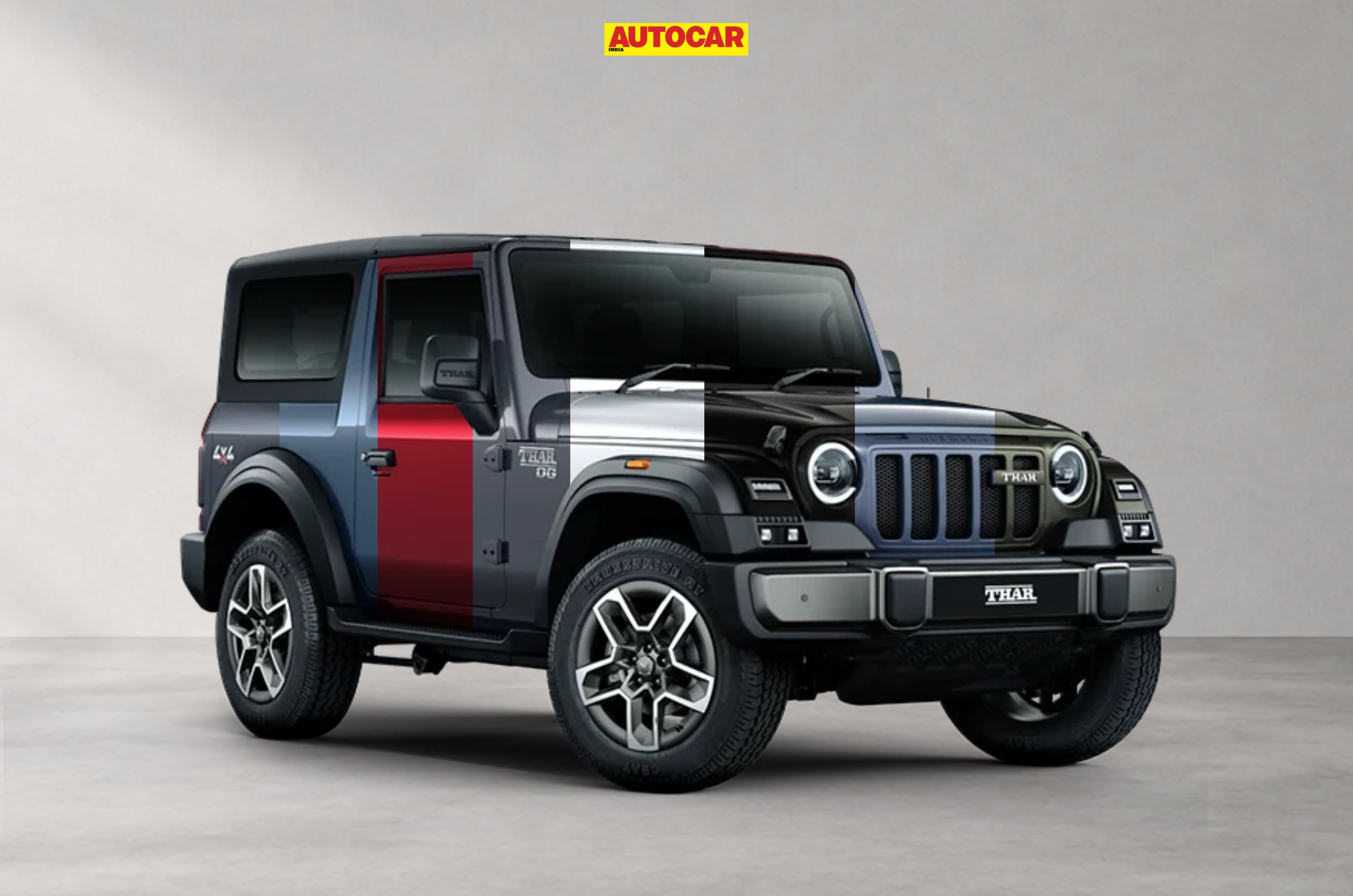
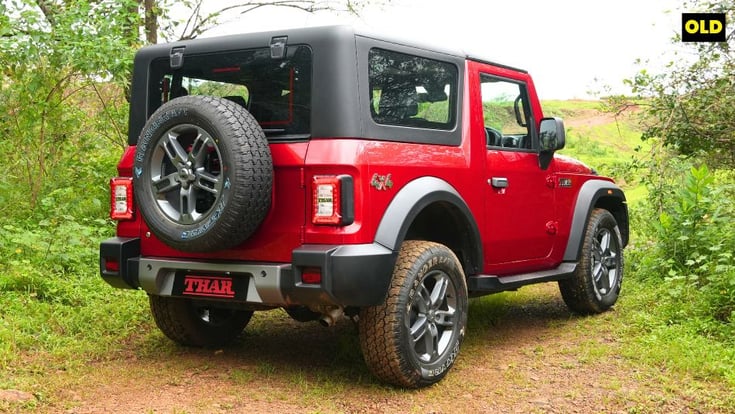
The Mahindra Thar OG comes with a stiffer platform, new suspension setup, more features and two new colour options over the old model. Buyers get a choice of three engines – an 119hp 1.5-litre diesel, a 152hp 2.2-litre diesel and a 162hp 2.0-litre direct-injection turbo-petrol. Transmissions include a 6-speed manual and a 6-speed automatic, while RWD and 4WD options are available depending on the variant. The Mahindra Thar OG is priced between Rs 10.32 lakh and Rs 18.99 lakh (ex-showroom).
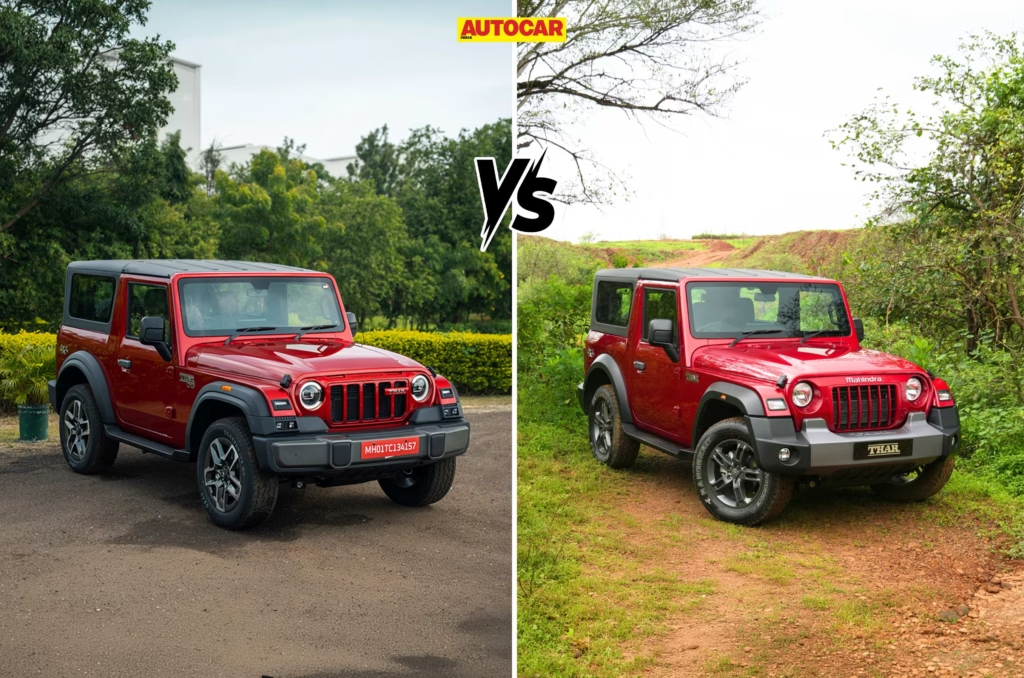
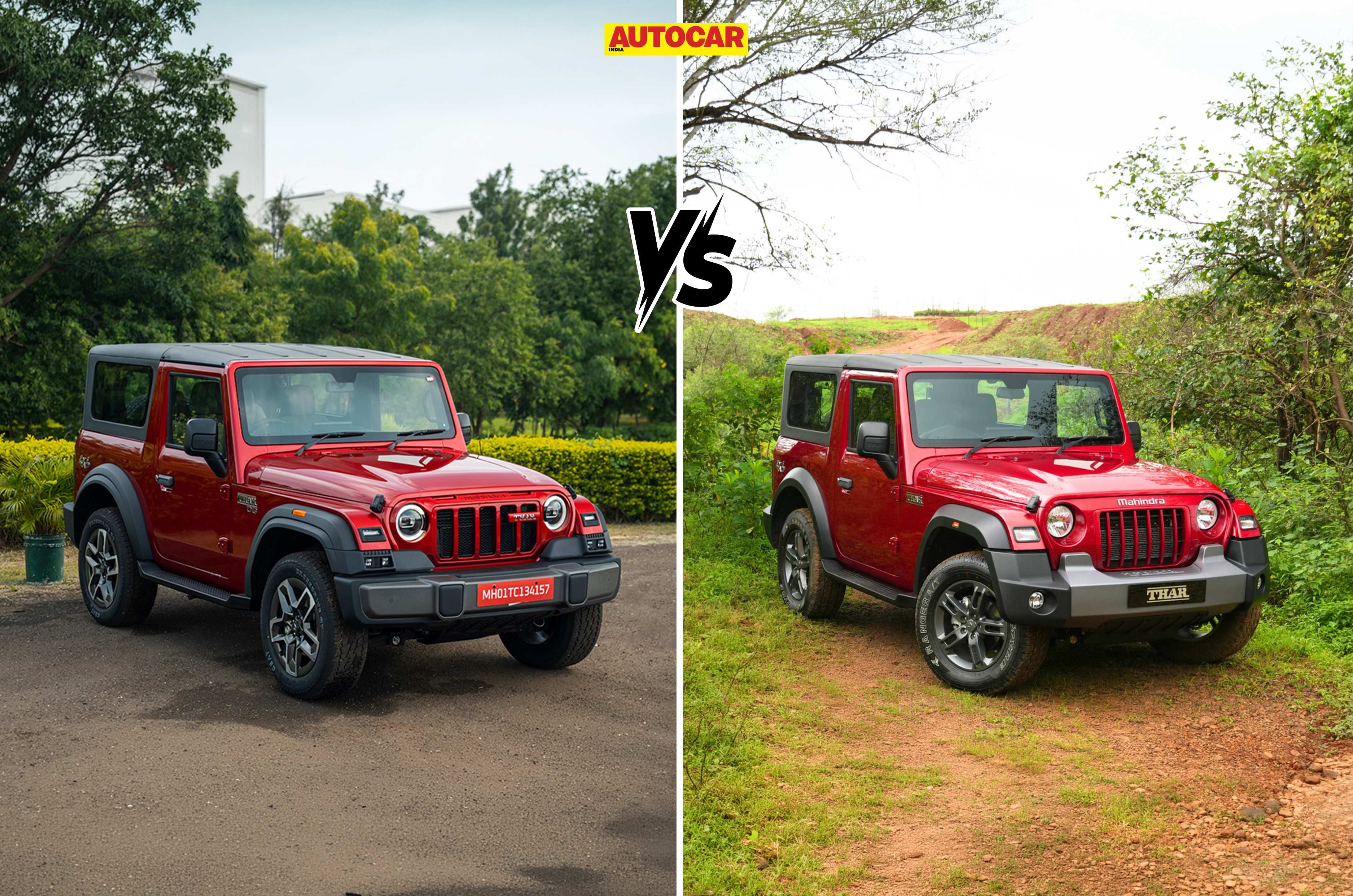
It’s been just over a year since Mahindra last updated the 3-door Thar, but the changes this time around are beyond just skin deep. The new Thar gets a new platform and suspension, more power to two of its three engines and a longer list of features. The Mahindra Thar OG continues to rival the Force Gurkha and Maruti Suzuki Jimny. Here’s how the new Thar compares with the model it replaces.
Mahindra Thar OG vs old Thar: Exterior design
Different lighting, a new grille design and bigger wheels headline the major changes
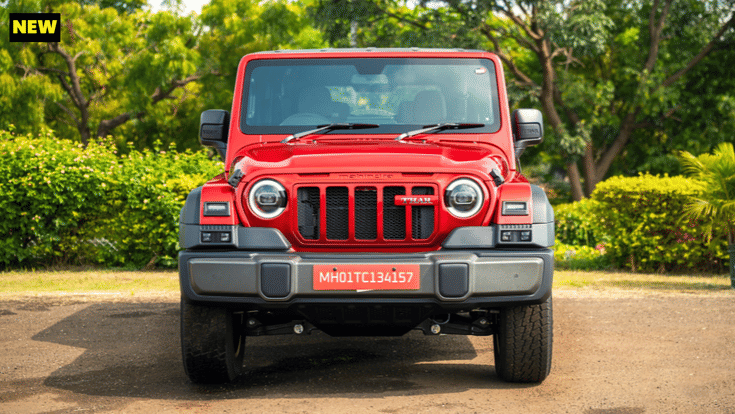
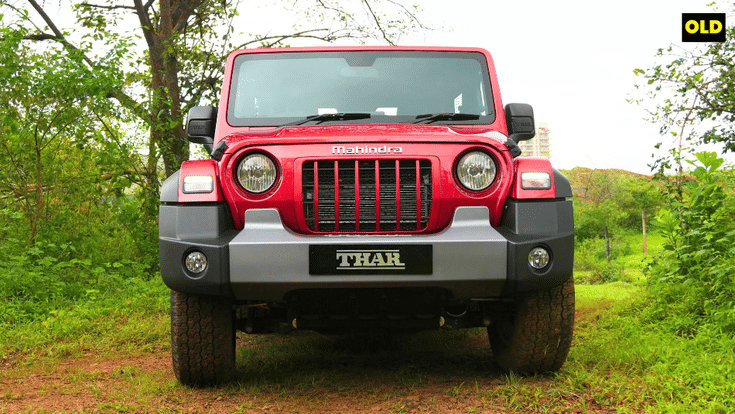
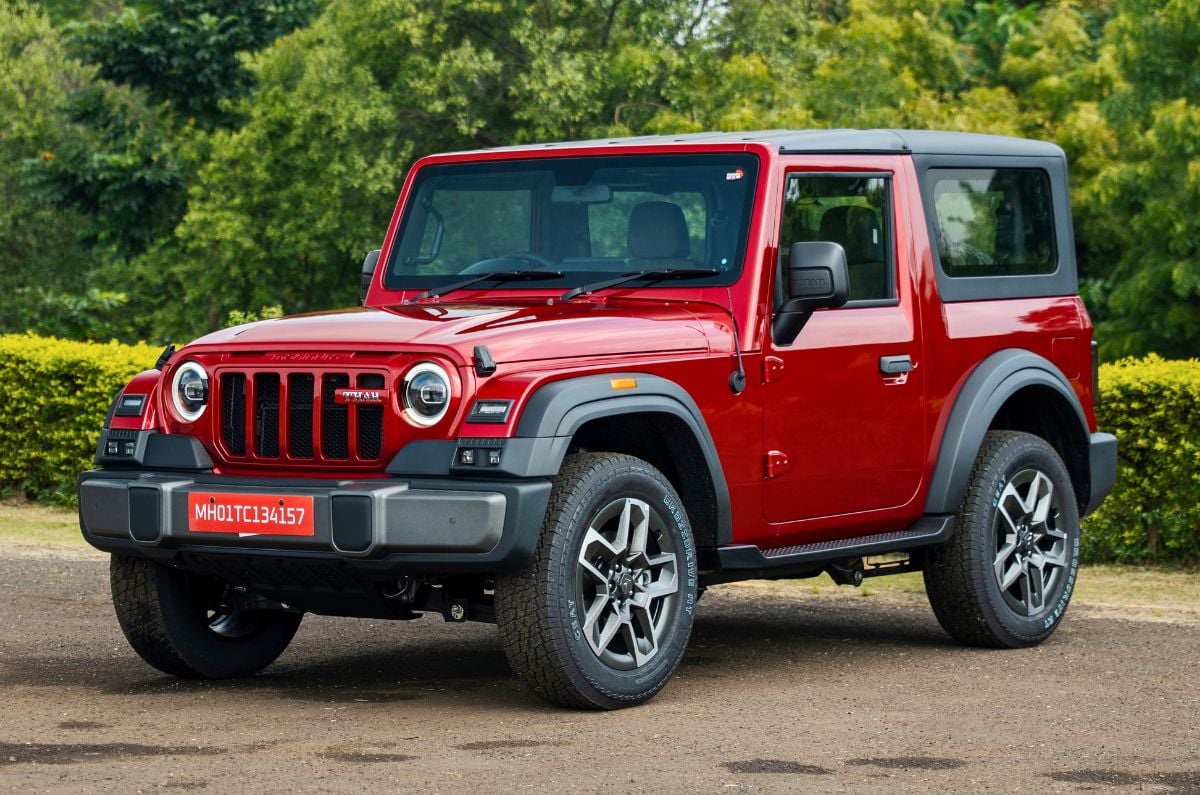
The Thar OG retains the same rounded design for the headlamps as its predecessor. However, its reprofiled front now gets new C-shaped LED daytime running lights (DRLs) and full-LED headlamps, alongside a body-coloured air-intake grille with ‘Thar’ branding at the front and a ‘Mahindra’ badge on top. The new top-spec ZXT trim also introduces ice-cube fog lamps with a cornering function, replacing the old Thar’s halogen units.
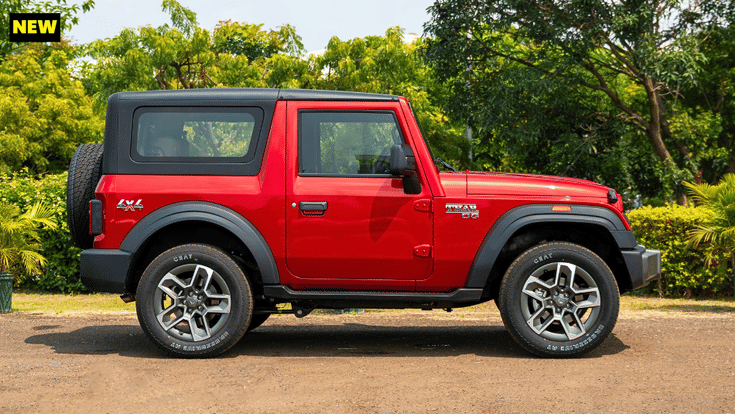
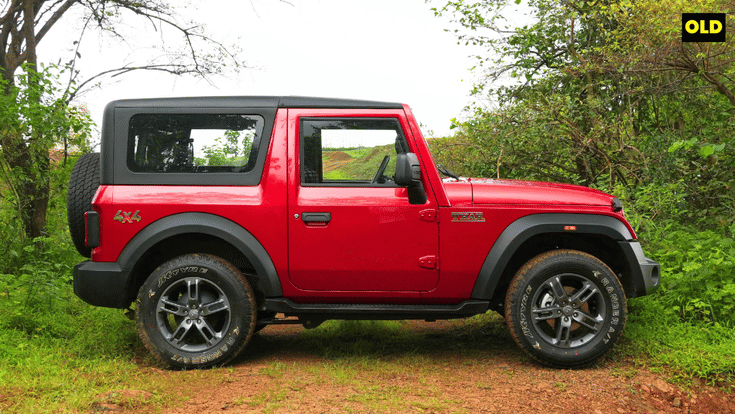
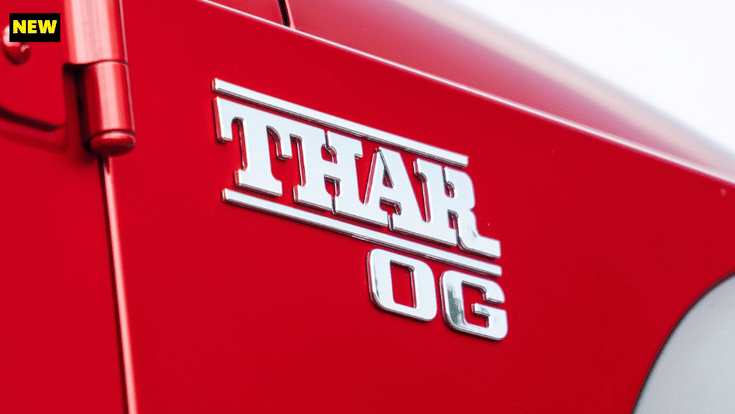
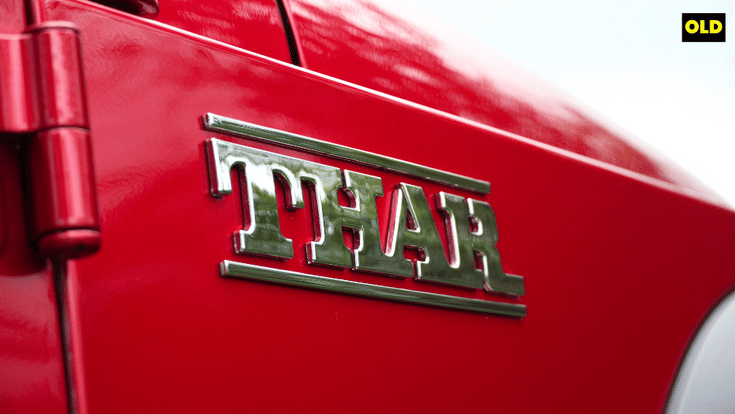
The lower AXT and LXT trims continue with 16-inch steel and 18-inch alloy wheels, respectively, while the ZXT is fitted with larger 19-inch diamond-cut alloys, instead of the 18-inch units on the old Thar. Whereas the latter only had ‘Thar’ written on the front-right side, the new model replaces it with ‘Thar OG’ branding.
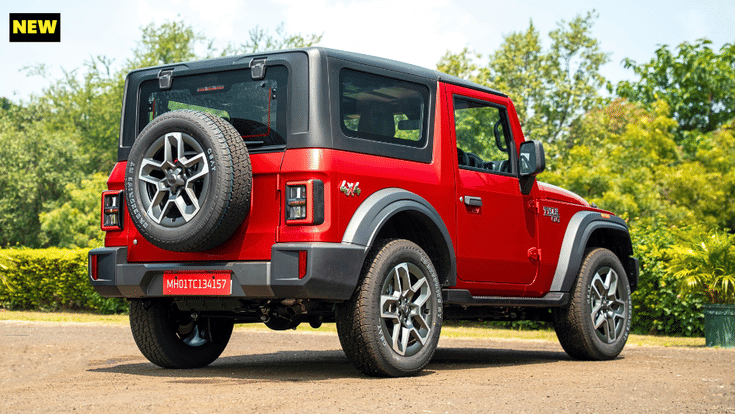
At the rear, the new Mahindra Thar features revised tail-lamps borrowed from the Thar Roxx, along with another ‘OG’ branding on the tailgate. While six exterior colours from the old Thar have been carried over, the Thar OG is also offered in new Artemis Silver and Jeans Blue colour options.
Mahindra Thar OG vs old Thar: Interior and features
General layout remains unchanged, but the Thar is now available with a few additional features
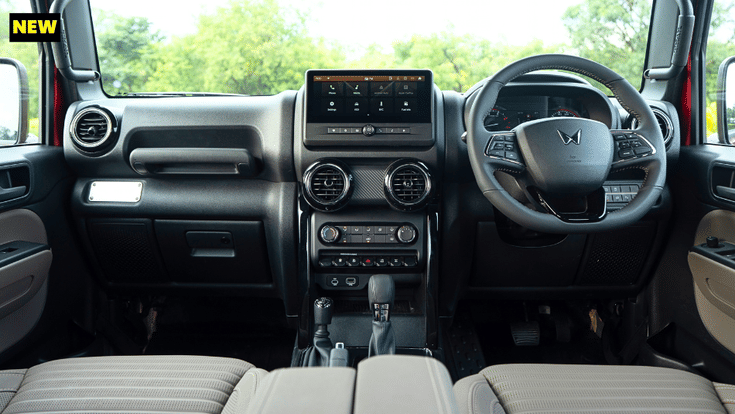
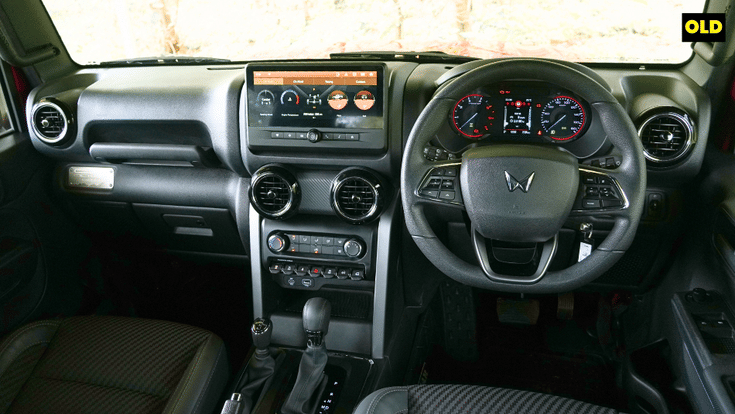
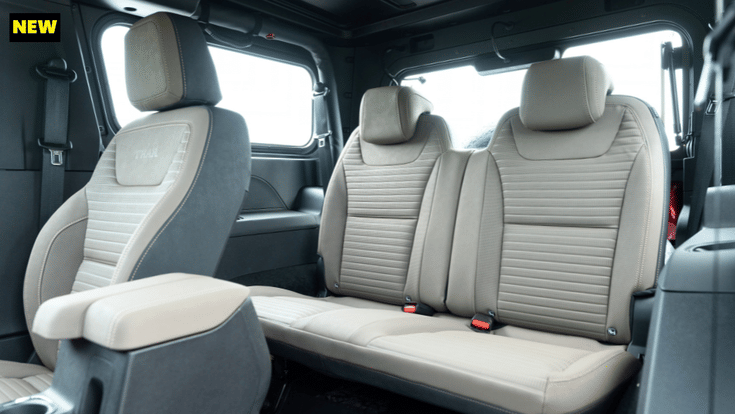
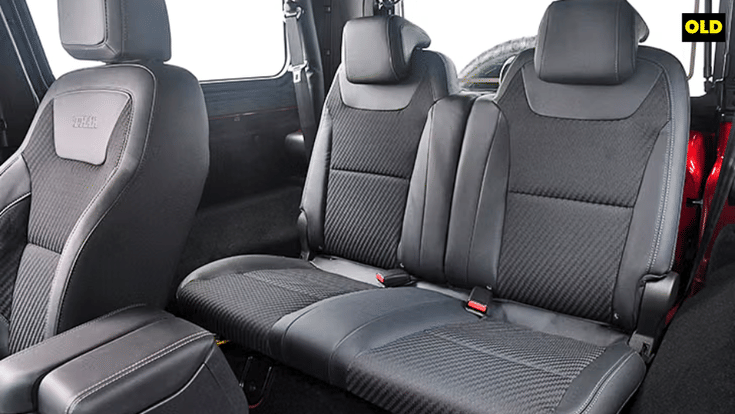
The overall dashboard layout has been carried over from the old Thar, including the 10.25-inch touchscreen and the analogue instrument cluster with a colour MID. There’s a new Truffle Brown leatherette upholstery option though, but it’s reserved for the top-spec ZXT trim, while lower trims stick with the old car’s vinyl and fabric options.
New on the features front with the Thar OG are wireless charging and a rear USB Type-C port, neither of which were offered on the old Thar. There’s even dedicated lighting for the main luggage compartment. ‘Zip’ and ‘Zoom’ drive modes are new additions as well. Mahindra has also added a push-button start function and armrests at the back with built-in cup holders, though the manually operated AC and old-school analogue instrument cluster with a colour MID have been retained.
Mahindra Thar OG vs old Thar: Engine and transmission
More powerful engine options, a new platform and upgraded off-road and safety features
The base 1.5-litre diesel engine is unchanged, continuing to produce 119hp and 300Nm. However, the Thar’s other engines are now more powerful. The 2.2-litre diesel now makes 152hp and 330Nm, which is up from 132hp and 300Nm – a jump of 20hp and 30Nm. The 2.0-litre direct-injection turbo-petrol puts out 162hp and 330Nm, gaining 10hp and up to 30Nm over the old version’s 152hp and 300-320Nm. Meanwhile, gearbox options are the same 6-speed manual and 6-speed torque-converter automatic, and both engines are available with a choice between RWD and 4WD.
The Thar OG gets a new Electronic Locking Differential and dedicated Mud, Sand and Snow terrain modes, none of which were offered with the old Thar. The Thar OG also switches to Mahindra’s M_Glyde 4G platform, first seen on the larger Thar Roxx, which the brand says is stiffer than the outgoing car’s underpinnings. The rear suspension gains a Watts Link, which the old Thar didn’t have, while ‘DAVINCI’ dampers with Frequency Dependent Damping (FDD) are also a first for the Thar 3-door. Ground clearance has gone from 226mm to 232mm, and the track is wider by 60mm. Finally, steering switches from hydraulic to electric, which should ease low-speed manoeuvring.
Mahindra recently launched the facelifted Thar, now called the Thar OG, with introductory prices ranging from Rs 10.32 lakh to Rs 18.99 lakh (ex-showroom). It is being offered in three trims: AXT, LXT and ZXT. With the new Thar OG, Mahindra has introduced a new-gen platform, a revised suspension and steering setup, more powerful engines, fresh exterior design elements and a more premium interior.
In case you want to know how much you need to pay to get your hands on one, here are the Mahindra Thar OG’s on-road prices across major Indian cities. Do note that deliveries of the Thar OG will commence from October 11.
Mahindra Thar OG on-road prices
On-road Thar OG prices range from Rs 11.56 lakh to Rs 23.36 lakh in major cities
Mahindra Thar OG on road price in major Indian cities (in Rs, lakh)
Note: On-road prices may vary based on city-specific registration charges and other cost components, including insurance, FASTag and RTO fees. Please check with your nearest Mahindra dealership for exact figures.
Among the major cities mentioned, the Mahindra Thar OG’s on-road price is the lowest in Chandigarh. Kolkata comes next, followed by Delhi and Mumbai. The prices are the highest in Bengaluru, and compared to Chandigarh, the 1.5-litre diesel MT (AXT) costs Rs 1.14 lakh. RWD-AT versions of the 2.0-litre turbo-petrol engine and 2.2-litre diesel engine cost an additional Rs 1.77 lakh and Rs 1.54 lakh, respectively. The top-spec 4WD-AT versions of the turbo-petrol and diesel engines cost an additional Rs 1.95 lakh and Rs 2.09 lakh, respectively, in Bengaluru compared to Chandigarh.
Mahindra Thar OG को भारत में 10.32 लाख रुपये की शुरुआती कीमत पर लॉन्च कर दिया गया है। यह सिर्फ डिजाइन में बदलाव वाला नया मॉडल नहीं है, बल्कि कंपनी ने इसमें कई बड़े अपडेट किए हैं। इस 3-डोर SUV में नया प्लेटफॉर्म, इलेक्ट्रिक स्टीयरिंग, बेहतर सस्पेंशन, ज्यादा पावरफुल डीजल और पेट्रोल इंजन, बड़े पहिए और मजबूत स्टैंडर्ड सेफ्टी पैकेज दिया गया है।
Mahindra ने Thar को अब नया OG नाम और पहचान भी दी है, ताकि इसे बड़ी Thar Roxx से अलग रखा जा सके। हालांकि, SUV का बेसिक डिजाइन और फॉर्मूला पहले जैसा ही है। इसमें बॉडी-ऑन-फ्रेम चेसिस, 3-डोर डिजाइन और RWD और 4WD दोनों का विकल्प मिलता है। इस अपडेट के साथ सभी वेरिएंट्स में 6 एयरबैग, चारों पहियों में डिस्क ब्रेक और नए ऑफ-रोड इलेक्ट्रॉनिक्स भी मिलते हैं।
Mahindra Thar OG: कीमत 10.32 लाख रुपये से शुरू
Mahindra Thar OG की शुरुआती कीमत 10.32 लाख रुपये (एक्स-शोरूम) रखी गई है। इसकी शुरुआती कीमत पुराने Thar मॉडल जितनी ही है। कंपनी ने नई Thar OG को तीन वेरिएंट- AXT, LXT और ZXT में पेश किया है।
एंट्री-लेवल 1.5-लीटर डीजल इंजन तीनों वेरिएंट में उपलब्ध है। वहीं, बड़े इंजन का विकल्प LXT वेरिएंट से शुरू होता है।
2026 Mahindra Thar: नया प्लेटफॉर्म और सस्पेंशन
यह सबसे अहम बदलावों में से एक है। Thar में अब Mahindra का M_Glyde 4G प्लेटफॉर्म इस्तेमाल किया गया है, जिसके बारे में कंपनी का कहना है कि इसकी स्ट्रक्चरल स्टिफनेस (मजबूती) ज्यादा है। इसमें वॉट्स लिंक के साथ नया रियर पेंटालिंक सेटअप भी दिया गया है।
इस SUV में फ्रीक्वेंसी-डिपेंडेंट डैम्पिंग मिलती है, जिसे Mahindra ने DAVINCI डैम्पर्स का नाम दिया है। इसका मकसद सस्पेंशन की मूवमेंट के हिसाब से डैम्पर के रिस्पॉन्स को बदलना है, ताकि राइड कम्फर्ट और बॉडी कंट्रोल के बीच बेहतर तालमेल बिठाया जा सके।
पुराने हाइड्रोलिक स्टीयरिंग की जगह अब इलेक्ट्रिक पावर स्टीयरिंग दी गई है। Mahindra ने स्टीयरिंग रैक को भी पहिए के सेंटर के करीब रखा है। रोजाना ड्राइविंग में इसका सबसे बड़ा फायदा स्टीयरिंग चलाने में कम मेहनत के रूप में देखने को मिल सकता है, खासकर पार्किंग या तंग जगहों पर गाड़ी मोड़ते समय।
इसमें ऑफ-रोड इस्तेमाल के लिए भी ज्यादा हार्डवेयर दिया गया है। Thar OG में इलेक्ट्रॉनिक लॉकिंग डिफरेंशियल के साथ-साथ खास मड, सैंड और स्नो मोड भी मिलते हैं।
2026 Mahindra Thar: नया लुक और अलॉय व्हील्स
बाहर से देखने पर इसमें हुए बदलाव आसानी से दिख जाते हैं। Thar OG में ‘Thar’ ब्रांडिंग वाली नई डिजाइन की ग्रिल, C-शेप DRLs के साथ नए LED हेडलैंप, कॉर्नरिंग फ़ंक्शन वाले LED फॉग लैंप और नए डिजाइन के फ्रंट और रियर बंपर दिए गए हैं।
इसका ट्रैक अब चौड़ा हो गया है और SUV में 19-इंच के अलॉय व्हील्स मिलते हैं। पीछे की तरफ, नए डिजाइन के LED टेललैंप और OG बैजिंग दी गई है। Mahindra ने कलर ऑप्शन में आर्टेमिस सिल्वर और जीन्स ब्लू को भी शामिल किया है।
2.0L और 2.2L इंजन से ज्यादा पावर
2026 Mahindra Thar OG में 2.0-लीटर टर्बो-पेट्रोल इंजन को पहले के मुकाबले ज्यादा पावरफुल बनाया गया है। अब यह इंजन 162hp की पावर और 330Nm का टॉर्क जनरेट करता है, जबकि पहले यह 152hp और 300Nm देता था। वहीं, 2.2-लीटर डीजल इंजन भी अब 152hp की पावर और 330Nm का टॉर्क जनरेट करता है। पहले इस इंजन से 132hp की पावर और 300Nm का टॉर्क मिलता था।
1.5-लीटर डीजल इंजन में कोई बदलाव नहीं किया गया है। यह पहले की तरह 117hp की पावर और 300Nm का टॉर्क देता है। इसमें 6-स्पीड मैनुअल गियरबॉक्स मिलता है, जबकि बड़े इंजन के साथ 6-स्पीड टॉर्क-कन्वर्टर ऑटोमैटिक गियरबॉक्स का विकल्प भी दिया गया है।
इंजन और वेरिएंट के हिसाब से Thar OG को RWD या 4WD सिस्टम के साथ खरीदा जा सकता है।
2026 Mahindra Thar: 6 एयरबैग और चारों पहियों में डिस्क ब्रेक
सेफ्टी के मामले में भी Mahindra ने Thar OG में कई बड़े बदलाव किए हैं। अब इसके सभी वेरिएंट में 6 एयरबैग और चारों पहियों पर डिस्क ब्रेक स्टैंडर्ड तौर पर मिलते हैं। SUV में ESP के साथ रोलओवर मिटिगेशन, ट्रैक्शन कंट्रोल, हिल-होल्ड कंट्रोल और व्हीकल डायनेमिक्स कंट्रोल जैसे फीचर्स भी दिए गए हैं।
अंदर से देखने पर बदलाव ज्यादा बड़े नहीं हैं, लेकिन रोजाना इस्तेमाल के लिहाज से ये उपयोगी हैं। केबिन में Truffle Brown लेदरेट सीट्स दी गई हैं। इसके अलावा दूसरी रो में इंटीग्रेटेड कपहोल्डर्स के साथ आर्मरेस्ट भी मिलता है। Mahindra का कहना है कि नई Thar में पिछले मॉडल के मुकाबले NVH यानी Noise, Vibration और Harshness का स्तर भी कम किया गया है।
कुल मिलाकर, Thar OG का 3-डोर डिजाइन और इसका जाना-पहचाना लुक पहले जैसा ही रखा गया है, लेकिन इसके प्लेटफॉर्म, सस्पेंशन, स्टीयरिंग, इंजन, सेफ्टी फीचर्स, ऑफ-रोड इलेक्ट्रॉनिक्स और एक्सटीरियर डिजाइन में कई बदलाव किए गए हैं। यानी यह सिर्फ लुक में बदलाव वाला मॉडल नहीं है, बल्कि Thar में कई स्तरों पर बड़ा अपडेट किया गया है।
Mahindra has launched the Thar OG at prices starting at Rs 10.32 lakh (ex-showroom). The second update to the Thar 3-door in just over a year brings a new ‘OG” suffix, new-gen platform, revised suspension and steering, more powerful engine options, plus refreshed styling and safety features over the outgoing model.
6 airbags and disc brakes are now standard across variants.
3-door model now gets electric power steering and frequency dependent dampers.
Turbo-petrol and mHawk diesel engines now produce more power.
Mahindra Thar OG prices and variants
The starting price of the Mahindra Thar OG is Rs 10.32 lakh, which means it shares its base price with the entry-level AXT trim of the outgoing model. The 2026 Mahindra Thar continues to rival other body-on-frame SUVs such as the Force Gurkha and Maruti Suzuki Jimny.
Mahindra Thar OG exterior
The 3-door version now sports a new grille, lighting signatures and colour options
The front fascia of the Mahindra Thar OG features a redesigned grille with ‘Thar’ branding, flanked by new LED headlamps with signature C-shaped daytime running lights (DRLs). There are also LED fog lamps with a built-in cornering function. The overall look isn’t too different to what we see with the Thar Roxx.
Mahindra has also revised the front and rear bumpers of the new Thar OG, while equipping the SUV with a wider track than its predecessor. The 2026 update introduces new 19-inch alloy wheels, revised LED tail-lamps and ‘OG’ branding on the tailgate. The existing colour options aside, the Thar OG adds Artemis Silver and Jeans Blue shades to the list as well.
Mahindra Thar OG interior and features
The cabin of the Thar 3-door now gets additional comfort-oriented upgrades
While the general design hasn’t been altered in any major way, the Thar OG comes with a few notable upgrades over its predecessor. There’s a new Truffle Brown leatherette upholstery and an armrest for the second row with integrated cupholders. Mahindra claims that the Thar OG features lower NVH (noise, vibration and harshness) levels as compared to the previous model.
Mahindra Thar OG safety equipment
The Thar 3-door now gets 6 airbags and all-round disc brakes as standard now
In what is a first for the Mahindra Thar 3-door, 6 airbags are now offered as standard. Mahindra says that this is the first car in its segment to feature a ‘4 Head Pelvis Thorax Shoulder (HPTS)’ airbag system, which the brand claims is designed to protect the head, pelvis, thorax and shoulder region of the front and rear occupants in case of a side impact.
Mahindra has also upgraded the braking system, with the Thar 3-door now sporting disc brakes at all four corners across the line-up. This is paired with an ESP suite (includes roll-over mitigation, traction control, hill-hold control and vehicle dynamics control) on all trims, while front parking sensors will be available on those higher up in the line-up.
Mahindra Thar OG platform and suspension
The Thar 3-door features Mahindra’s ‘M_Glyde 4G’ platform and ‘DAVINCI’ dampers
The Mahindra Thar OG is based on the Indian automaker’s so-called “M_Glyde 4G” platform, which was first seen underpinning the larger Thar Roxx. Mahindra says that this platform offers higher structural stiffness than before. Another first for the Thar 3-Door is its rear Pentalink suspension with a Watts Link – the Roxx gets this too. According to the brand, this setup controls lateral movement of the rear axle better.
The 2026 Thar also gains the Frequency Dependent Damping (FDD) technology, also known as “DAVINCI dampers” in Mahindra’s parlance. The automaker claims that the updated suspension setup of the Thar 3-door will offer a plush ride when compared to the old model.
Mahindra Thar OG off-road capability and steering tech
Other noteworthy additions include a new locking differential and electric power steering
The 2026 update sees the Mahindra Thar packing an Electronic Locking Differential (ELD). The system can lock the rear axle electronically to ensure engine power is sent to the wheel with the maximum grip. In theory, this helps improve traction when traversing slippery surfaces such as mud or sand. There are now dedicated terrain modes such as Mud, Sand and Snow.
Another major change with the Mahindra Thar is the shift from hydraulic power steering to an electric power steering (EPS) setup. This should make low-speed manoeuvring and parking easier, which were areas that the old model felt cumbersome.
Mahindra Thar OG engine and transmission details
All but the base diesel engine have been uprated for improved performance
The Mahindra Thar continues to be offered with three engine options as before. However, the 2.0-litre direct-injection turbo-petrol unit now develops 162hp and 330Nm – that’s a bump of 10hp and up to 30Nm over the old model. The 2.2-litre diesel mill has also seen its output go up, now making 152hp and 330Nm, signifying an increase of 18hp and 30Nm.
On the other hand, the entry-level 1.5-litre diesel engine has been retained as is, producing 117hp and 300Nm of torque. Transmission choices with the Mahindra Thar OG include a 6-speed manual and a 6-speed torque-converter automatic. Depending on the variant, the Thar 3-door can be had with either rear-wheel drive (RWD) or four-wheel drive (4WD).
Less than a year after its 2025 update, Mahindra is introducing another facelift for the Thar. In the months leading up to its arrival, camouflaged prototypes of the SUV have been spied on our roads, and Mahindra recently shared teasers too. Here’s what you can expect from the 2026 Mahindra Thar facelift, likely to launch on September 22.
What will the Mahindra Thar 3 door facelift look like?
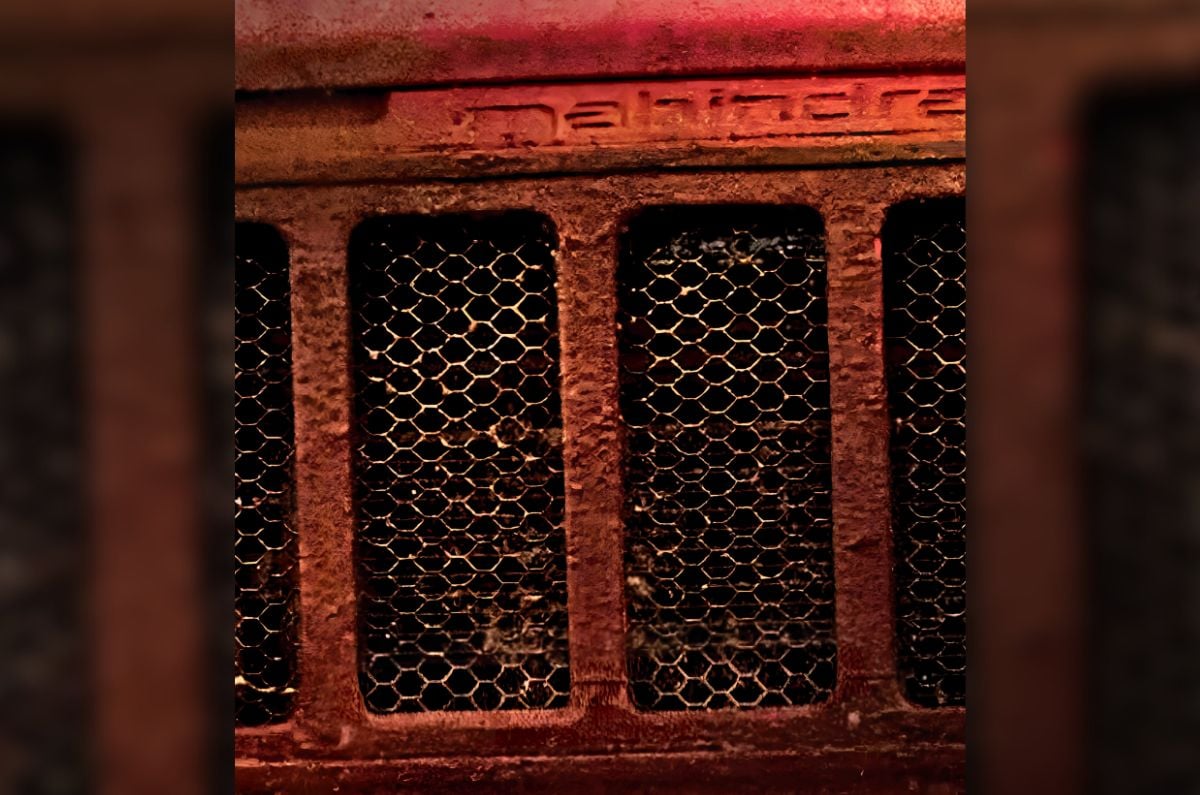
Teasers of the Mahindra Thar facelift provide a glimpse of what it would look like. There’s a new look for the grille with a honeycomb pattern and possibly a revised design for the alloy wheels. Spy shots of the Thar facelift hint at Thar Roxx-borrowed design elements such as projector LED headlamps with C-shaped daytime running lamps (DRLs), revisions to the bumpers and tail-lamp detailing.
What will the Mahindra Thar 3 door facelift interior look like?
The Thar facelift is expected to retain the current version’s cabin layout. However, Mahindra could likely bring leatherette seat upholstery and newer trim materials throughout the interior to keep it fresh.
Will the Mahindra Thar 3 door facelift get new features?
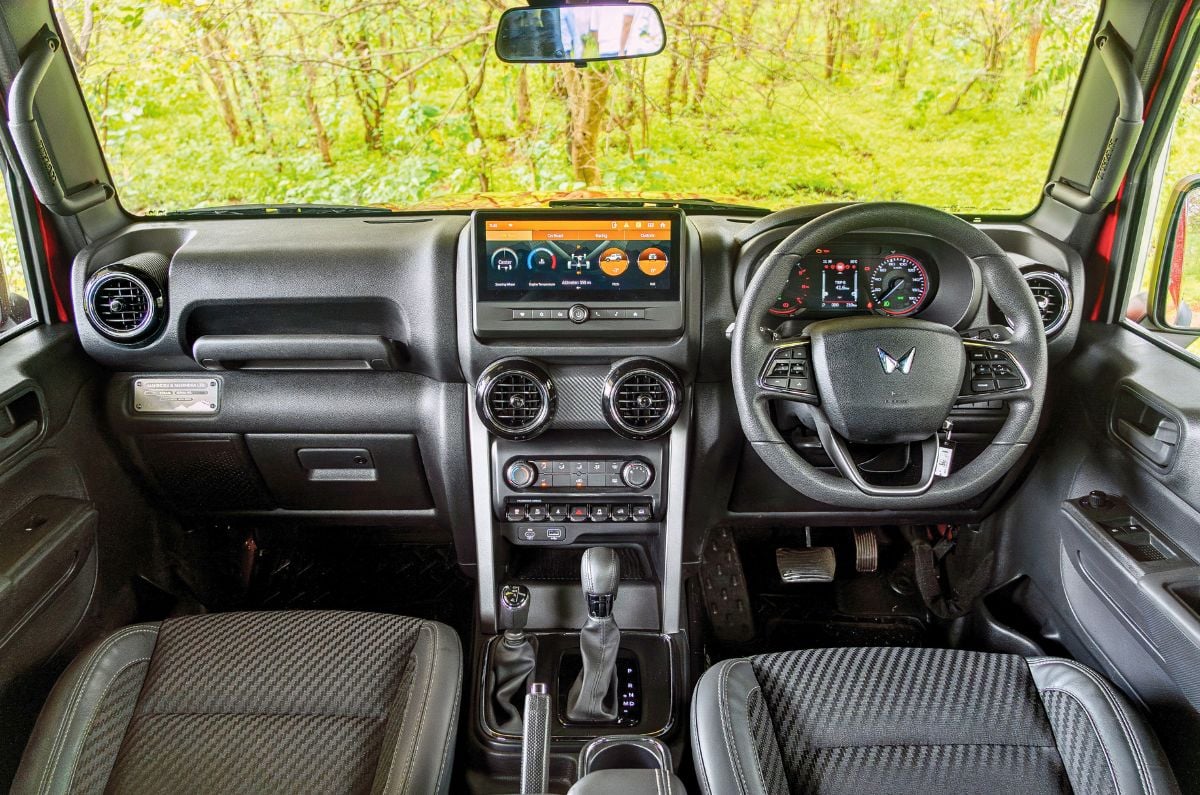
Current Mahindra Thar 3 door interior used for representational purposes.
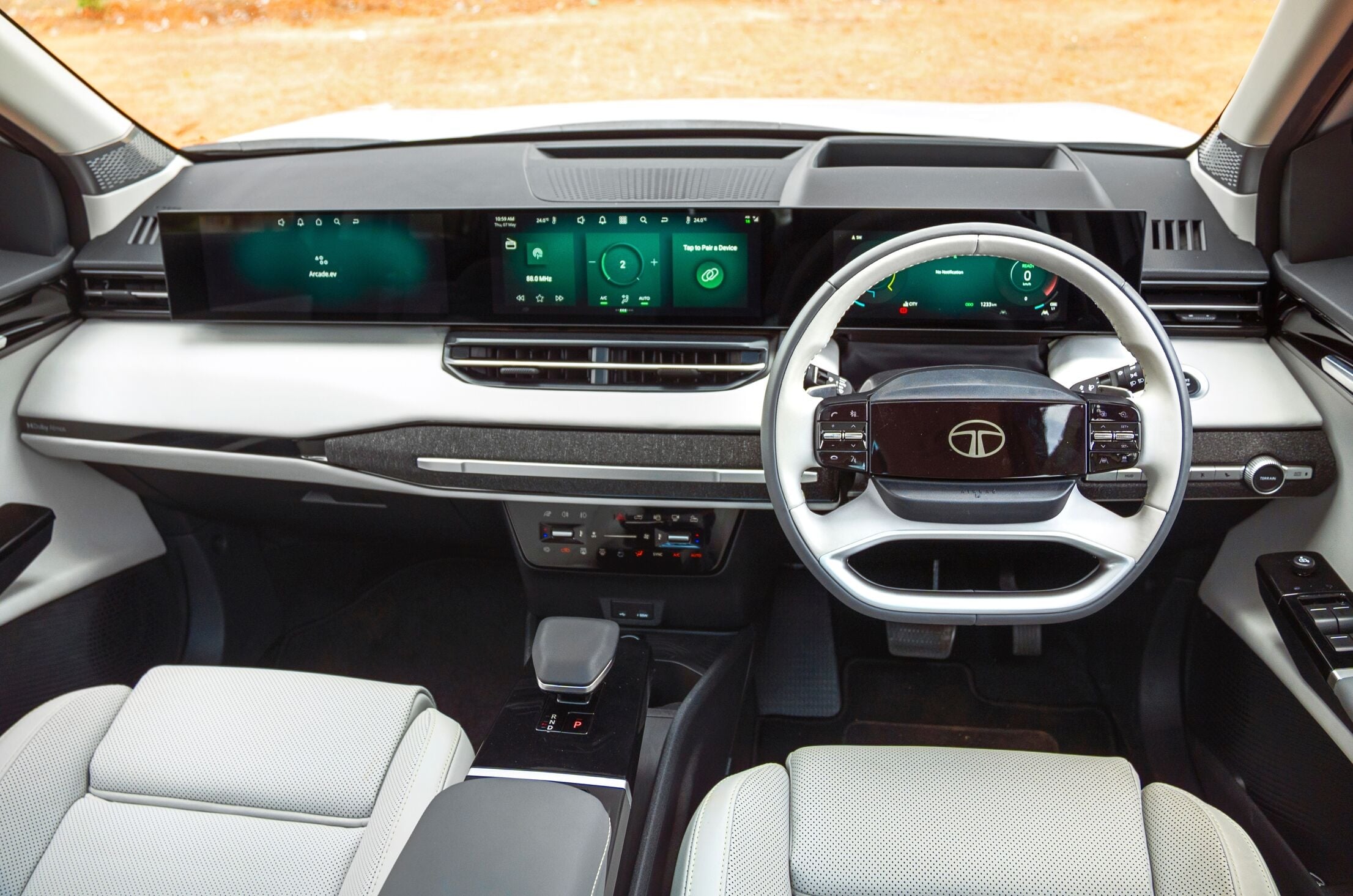
Although the 2025 update for the Thar brought a 10.25-inch infotainment display, rear AC vents, a rear wiper and washer and a rearview camera, many modern niceties were still missing at its price. Mahindra is likely to fix that with this year’s update by possibly introducing features such as a digital driver’s display, a 360-degree camera, front-seat ventilation, a wireless phone charger and auto AC.
Will the Mahindra Thar 3 door facelift retain the engines of the current version?
Current Mahindra Thar used for representational purposes.
Yes, the Mahindra Thar facelift is likely to retain the engine options powering the version currently on sale. These include a 119hp, 300Nm 1.5-litre diesel engine, a 132hp, 300Nm 2.2-litre diesel engine and a 152hp, 300Nm (320Nm AT) 2.0-litre turbo-petrol. All come with a 6-speed manual as standard, while the latter two also offer a 6-speed automatic gearbox. The 1.5-litre and 2.2-litre diesel engines come solely with RWD and 4×4 configurations, respectively, while the 2.0-litre turbo-petrol mill offers both drive layouts.
What is the Mahindra Thar 3 door facelift’s expected price?
The Mahindra Thar facelift is expected to come at a slight premium over the current version. For reference, the current Thar has a starting price of Rs 10.32 lakh and goes up to Rs 18 lakh (both ex-showroom). It will continue to rival the likes of the Maruti Jimny and Force Gurkha 3 door.
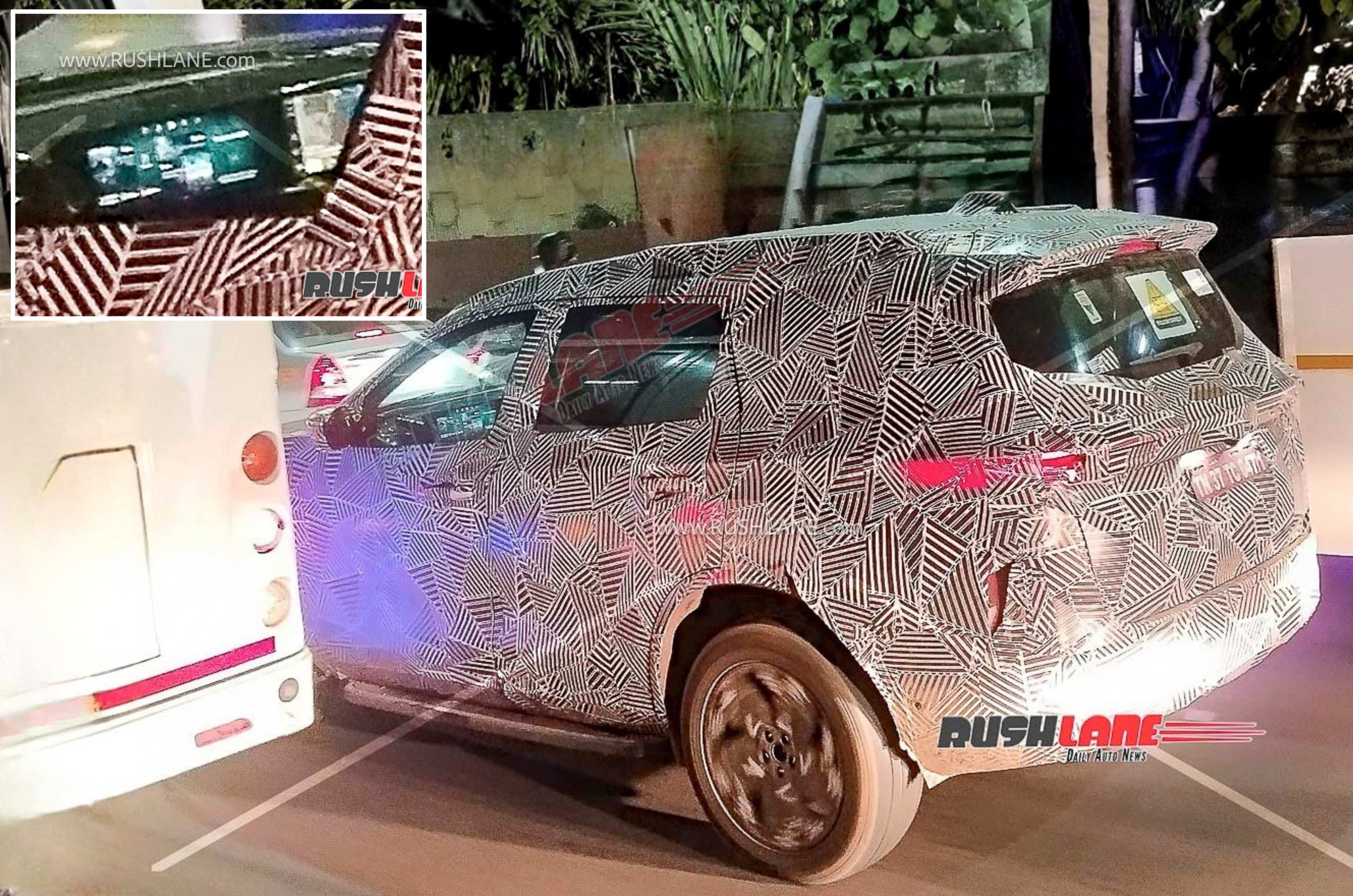
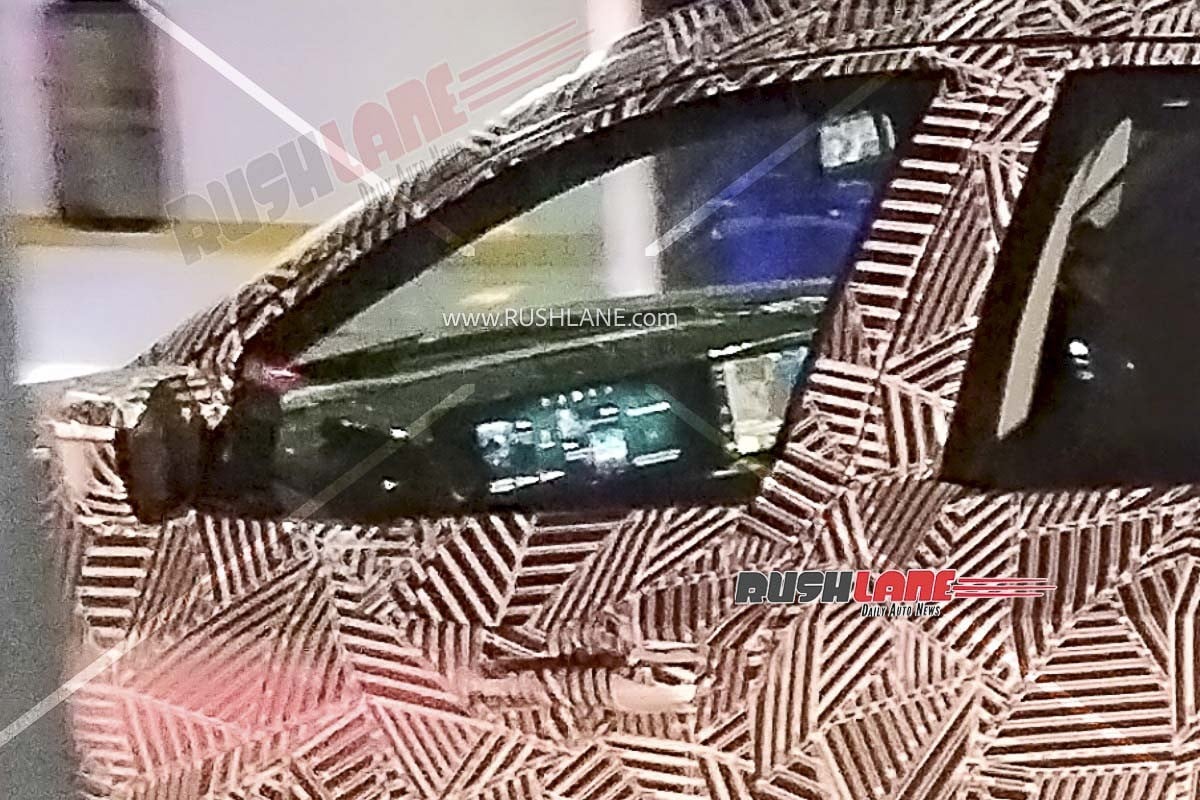
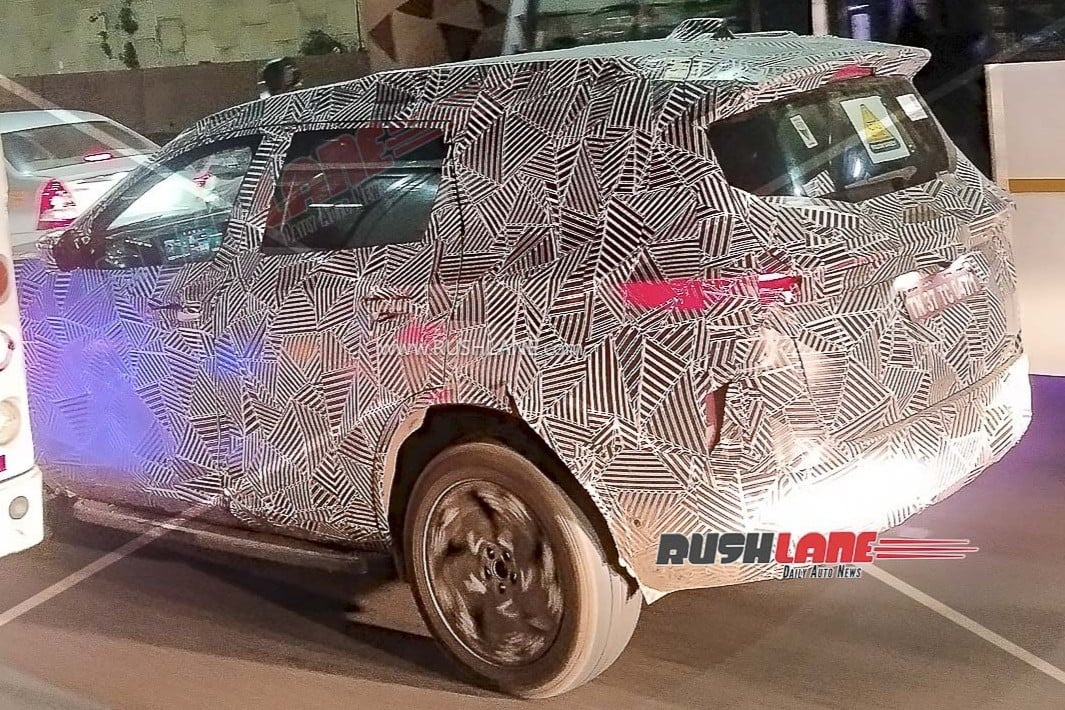
Newly surfaced spy shots of a Tata Safari EV test mule indicate that the electric three-row SUV will offer a triple-screen layout on the inside. The current ICE-powered Tata Safari does not get this feature, which implies that the electric version will be more feature-rich, at least at launch. Speaking of which, the Safari EV is expected to go on sale during the festive season of 2026.
Tata Safari EV may borrow Sierra EV’s triple screens
Credit: Rushlane
At present, the only electric Tata to come with a triple-screen setup is the Sierra EV – the ICE Sierra is also the only combustion-powered Tata to offer the feature. With the Safari EV set to arrive in a few months as Tata’s flagship electric car, though, it appears the SUV will be fitted with a triple-screen setup to reflect its positioning. This will also help the Safari EV better compete with its direct rival, the Mahindra XEV 9S, which offers a triple-screen setup from the base variant itself.
Tata Sierra EV triple-screen setup. Image used for representation only.
The Sierra EV’s triple-screen setup comprises a 10.25-inch digital driver’s display, a 12.3-inch central touchscreen, and a 12.3-inch passenger display. The driver’s display and central touchscreen handle instrumentation, infotainment, and navigation, while the passenger display allows the co-driver to stream TV shows and movies, or play a selection of games either by using their smartphones as controllers or by directly pairing a gamepad to the screen via Bluetooth. Expect the Safari EV’s triple-screen setup to function similarly. It remains to be seen if Tata could also bring the triple-screen setup to the ICE-powered Safari.
Tata Safari EV battery and range
Credit: Rushlane
We expect the Safari EV to retain the Harrier EV’s 65kWh and 75kWh battery options. In the Harrier EV, both batteries are paired with a single rear-mounted motor (RWD) as standard, developing 238hp and 315Nm. The 75kWh battery additionally offers a dual-motor AWD layout that generates a combined 313hp and 504Nm. As for MIDC-certified range, the Harrier EV claims 538km for the 65kWh RWD, 622km for the 75kWh AWD, and 627km for the 75kWh RWD versions. The larger and heavier Safari EV is likely to feature slightly lower range figures.
The Mahindra Thar will soon get another facelift, which sources suggest will happen on September 22. Notably, the current-gen 3-door Thar was launched in October 2020 and received a facelift in October 2025, with slight revisions to the design and feature suite. So the upcoming model will be the second facelift for the second-generation Thar. Test mules of the facelifted model suggest the Thar could get a revised fascia, new lighting elements and fresh alloy wheels. Some feature additions are also expected.
It will get a Thar Roxx-like grille, headlights and taillights
Likely to get feature additions like a wireless phone charger
Expected to retain the existing powertrain configurations
Mahindra Thar facelift: Expected changes
Will borrow exterior design elements from the bigger Thar Roxx
Image source: @rider_viishal on Instagram
Test mules of the upcoming 2026 Mahindra Thar facelift have been doing rounds on Indian roads for some time now, with certain design elements borrowed from the Thar Roxx. These include a new grille, projector LED headlights with C-shaped DRLs, a fresh alloy wheel design and redesigned taillights. Mahindra is expected to offer the 2026 Thar facelift with all these new design elements.
Could get some new modern-day features
The current Mahindra Thar’s dashboard is shown for representative purposes only.
While the 2025 facelift added a new 10.25-inch infotainment touchscreen, a Thar Roxx-like steering wheel, rear AC vents, and a rear wiper and washer to the Thar, it is still not as feature-rich as other Mahindra models. It lacks a sunroof, powered and ventilated seats, a wireless phone charger, and a 360-degree camera, all of which have become common in modern-day cars that have a similar price to the Thar. While official details of feature additions on the 2026 Thar facelift are yet to be revealed, Mahindra might add some of the mentioned missing features to make the SUV more modern.
Expected to continue with the same powertrain options
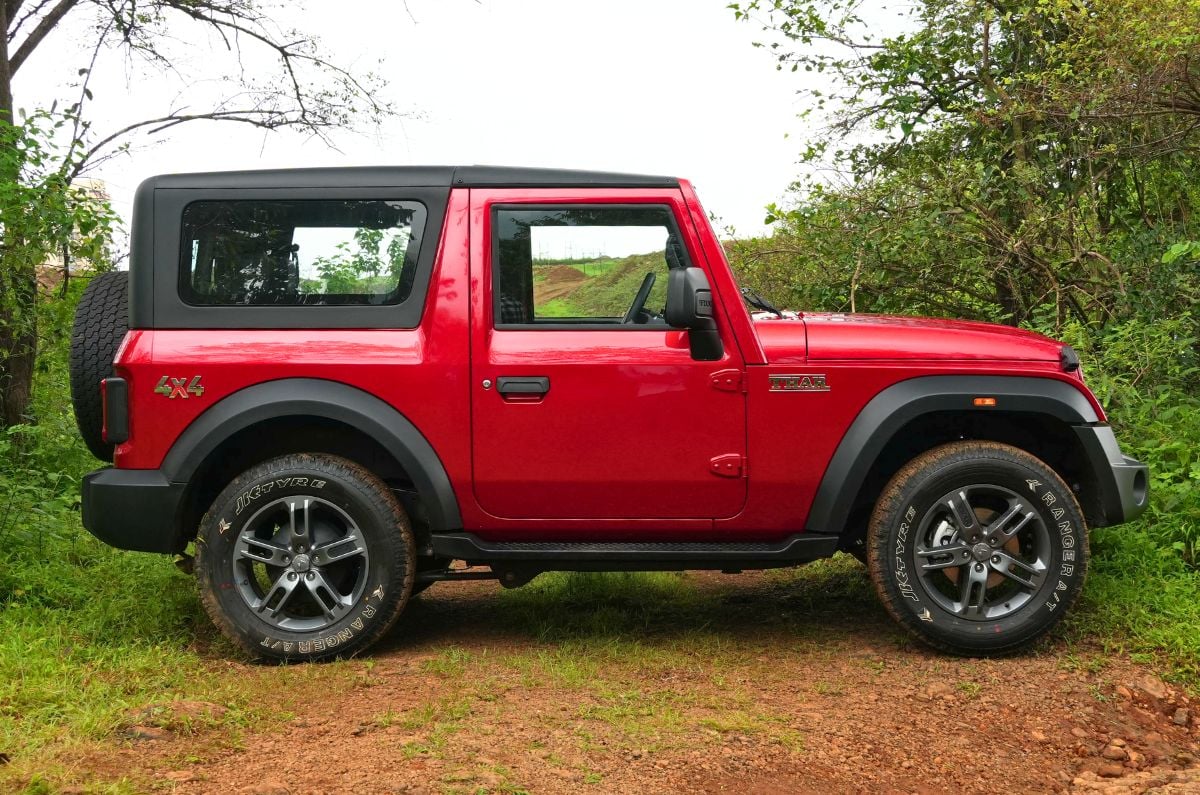
The current Mahindra Thar is shown for representative purposes only.
The Mahindra Thar is available with three engine options: a 152hp 2.0-litre turbo-petrol, a 119hp 1.5-litre diesel, and a 132hp 2.2-litre diesel. The 1.5-litre diesel comes only with a 6-speed manual gearbox and rear-wheel drive (RWD) setup. The 2.0-litre turbo-petrol is also available with RWD, while four-wheel-drive (4WD) is available as an option. The 2.2-litre diesel gets 4WD as standard. Both the 2.0-litre turbo-petrol and 2.2-litre diesel engines can also be paired with a 6-speed torque-converter automatic gearbox. The 2026 Mahindra facelift is expected to continue with the same powertrain options as the current model.
One of the most prominent criticisms of the Mahindra Thar is its lumpy ride quality due to the old ladder-frame chassis, double-wishbone front suspension and a multi-link rear with coil springs. While this setup gives the Thar its renowned off-road prowess, the ride quality on paved roads still does not match the Thar Roxx’s. Mahindra could improve this with the facelifted model.
Official details on the 2026 Mahindra Thar facelift will be revealed at its possible launch on September 22. What will definitely change are the SUV’s prices that currently range from Rs 10.32 lakh to Rs 18 lakh (ex-showroom).
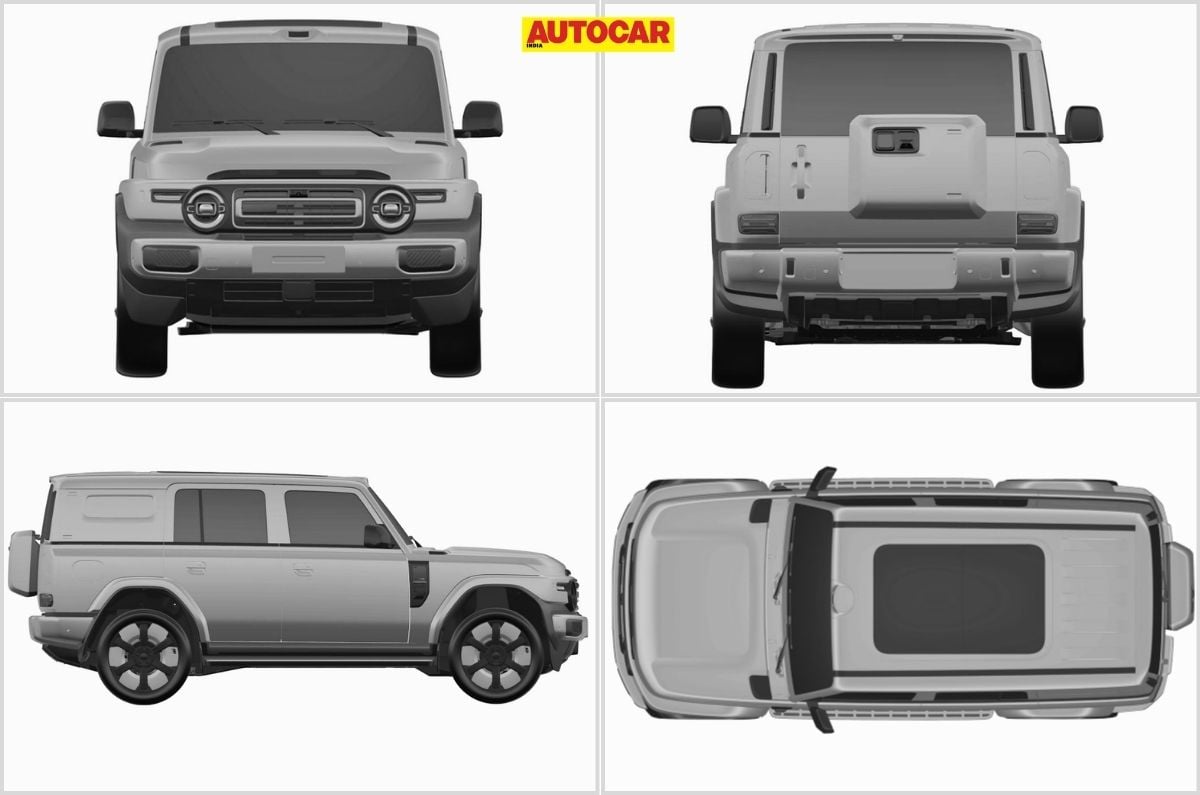
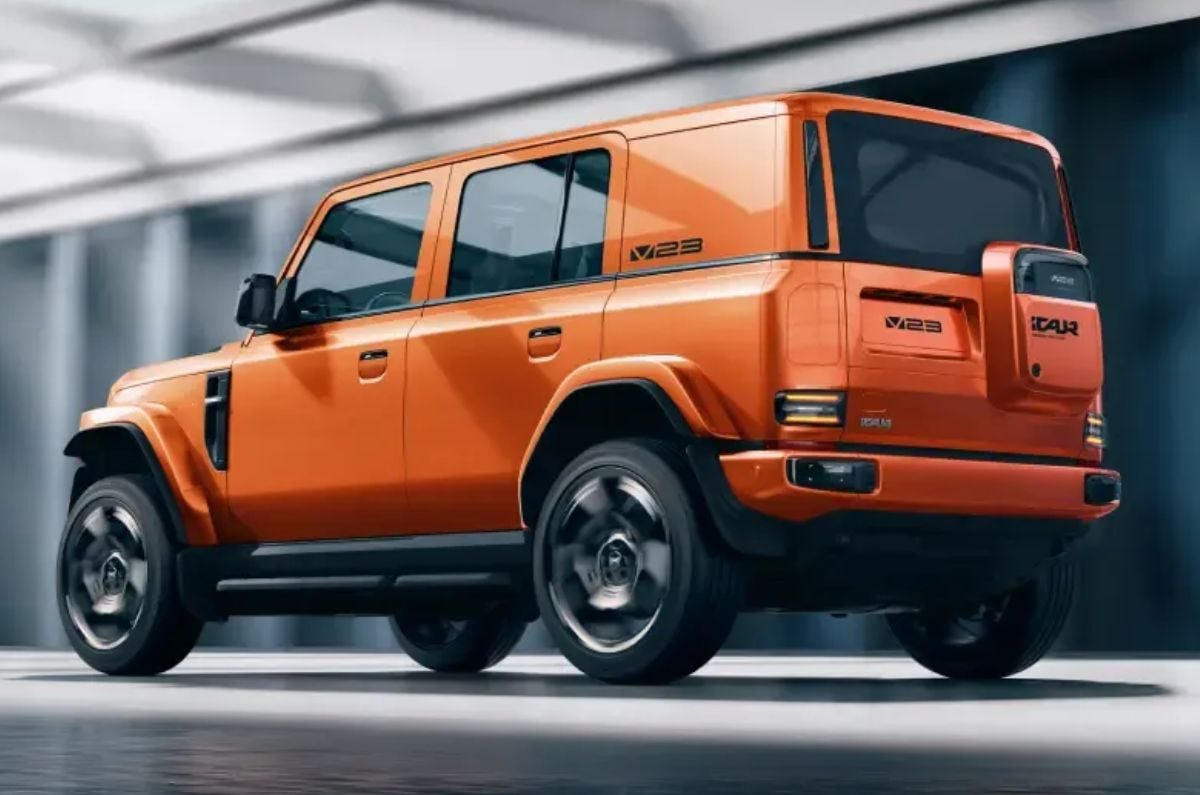
The Chery iCaur V23‘s design has been patented in India. It is expected to be part of JSW Motors‘ portfolio in the country. While it looks largely identical to the international model, some design differences set it apart. The patent filing also hints that the India-spec SUV could get some additional features as well.
Sports new alloy wheel design and a panoramic sunroof
Expected to get the same interior as the international model
Sources suggest an AWD version will be offered in India
Chery iCaur V23-based SUV design patent: What does it reveal?
Gets slight design differences compared to the iCaur V23
While the overall silhouette is similar, there are some design differences between the international-spec Chery iCaur V23 and the JSW Motors’ version. It gets the same circular LED headlights and LED DRL, with black surrounds, but a redesigned blanked-off grille. The front bumper design, however, is the same as the international model.
In profile, it retains the boxy silhouette, side steps and flared wheel arches, but the alloy wheel design is different. Keen-eyed viewers can also spot a distinct rectangular element on the closed-off portion between the C- and D-pillar, which is missing on the international model. The design patents also show a panoramic sunroof, which is not offered with the iCaur V23. The rear design, however, is the same as the international model, with slim LED taillights and a tailgate-mounted storage box.
Interior design is expected to be similar to the international model
The international-spec model’s dashboard is shown for representative purposes only.
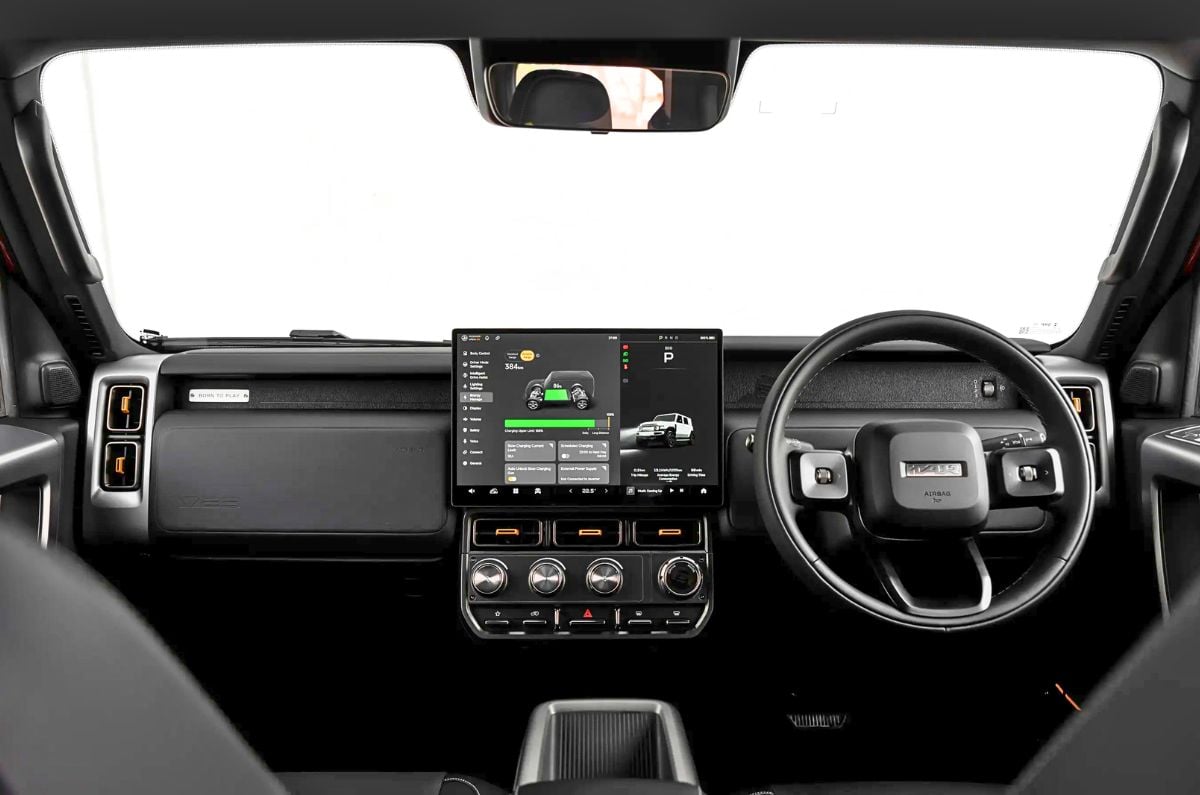
The international-spec model gets a minimalistic dashboard without a traditional driver’s display, as instrumentation is shown on the 15.4-inch touchscreen infotainment system itself. It gets a 3-spoke steering wheel with mounted controls. Below the infotainment are some rotary dials for drive mode, audio and climate controls. It offers a 5-seater configuration and comes with leatherette upholstery. The interior design of JSW Motors’ iCaur V23-based SUV is expected to be similar to the international model, like the exterior design. The only differences could be a new cabin theme and fresh seat upholstery.
Sources suggest it could be offered with AWD in India
The international-spec model is shown for representative purposes only.
The Chery iCaur V23 is offered with either a 59.93kWh or an 81.76kWh battery pack, which offers an NEDC-claimed range of 360km and 430km, respectively. The smaller battery is offered with a rear-axle-mounted (RWD) electric motor that produces 134hp and 180Nm. The larger battery pack is offered with a dual-motor all-wheel-drive (AWD) setup with a combined output of 208hp and 292Nm.
Our sources suggest that the India-spec JSW Motors’ version of the Chery iCaur V23 is expected to be offered with a dual-motor setup. JSW Motors intends to position the electric off-roader against the likes of the Mahindra Thar Roxx and Force Gurkha 5-door, and is likely to be priced around Rs 20 lakh (ex-showroom).
In the first half of 2026, BMW sold nearly 2,400 EVs in India, with the entry-level iX1 and flagship i7 accounting for the bulk of those volumes. Now, BMW has introduced an all-new electric long-wheelbase sedan to bridge the sizable gap between the two. Meet the BMW i5 eDrive35L, the electric counterpart to the 5 Series sedan.
The i5 nameplate isn’t new to India. BMW launched the imported, performance-focused i5 M60 here back in 2024. However, that was a niche offering. This new version is expected to appeal to a much wider audience. Being locally assembled, the i5 eDrive35L is priced at Rs 79.60 lakh, commanding a premium of Rs 3 lakh over its petrol-powered sibling. In this review, we find out what it’s like to live with.
BMW i5 LWB Exterior Design and Engineering – 8/10
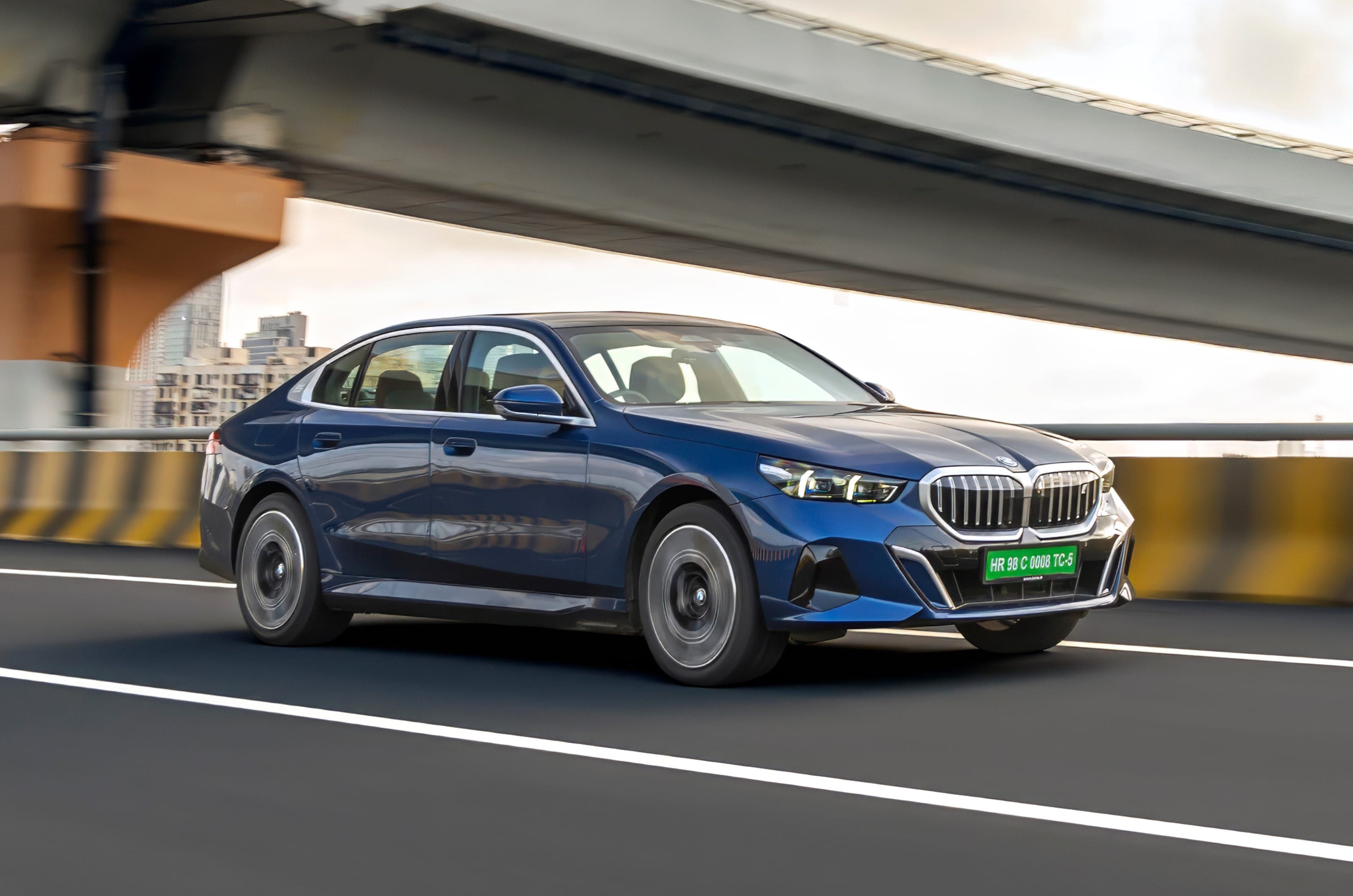
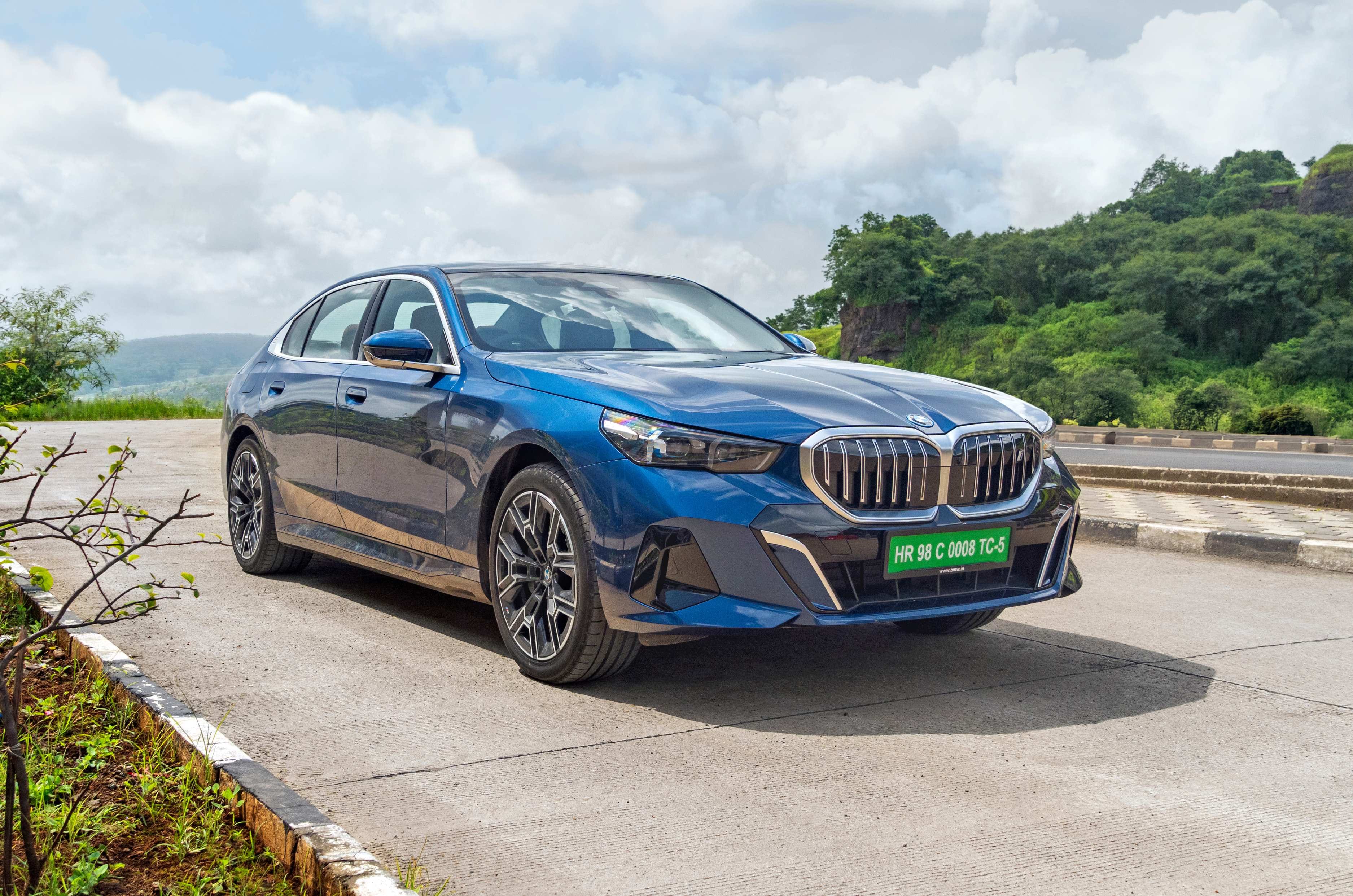
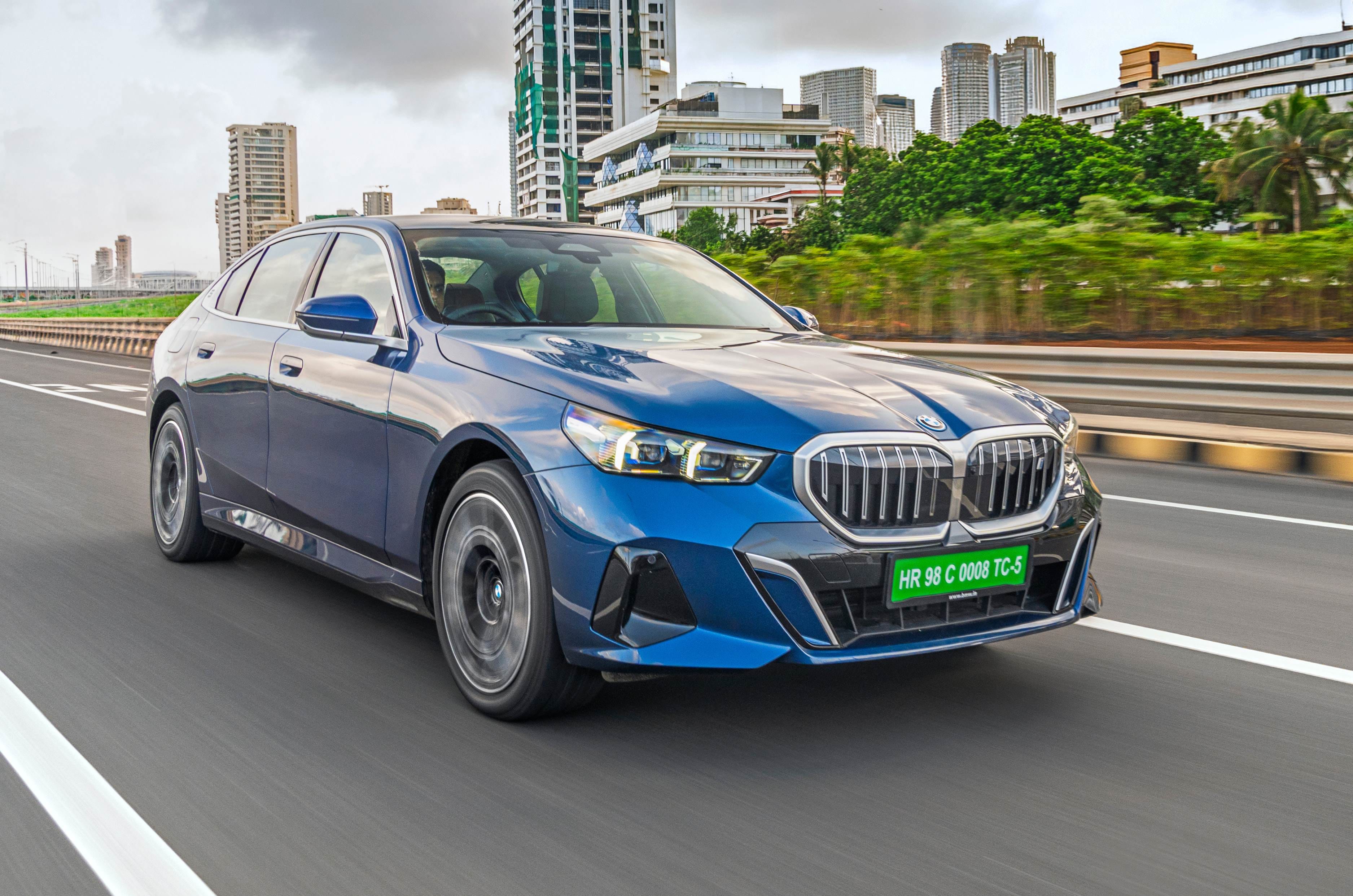
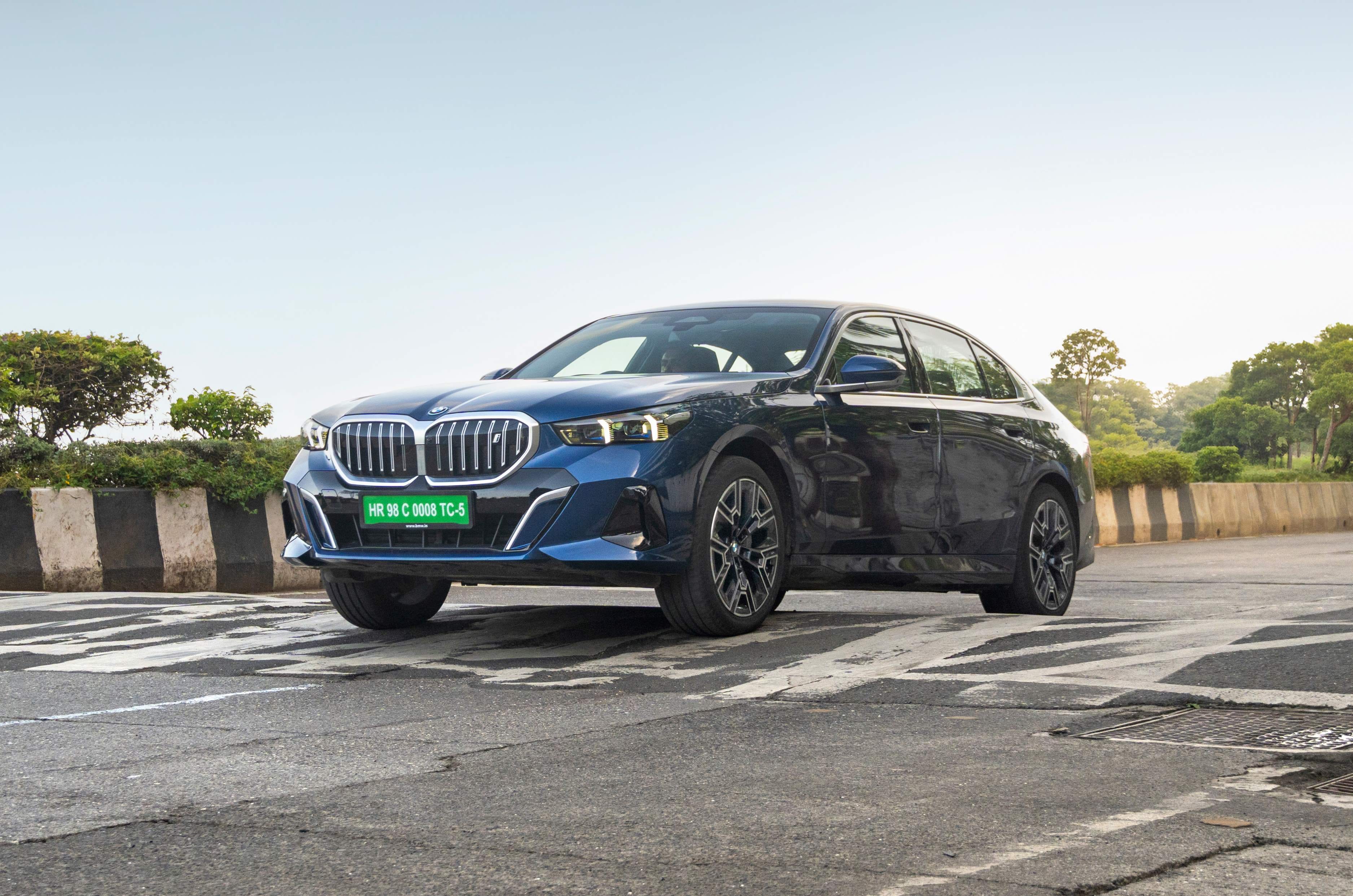
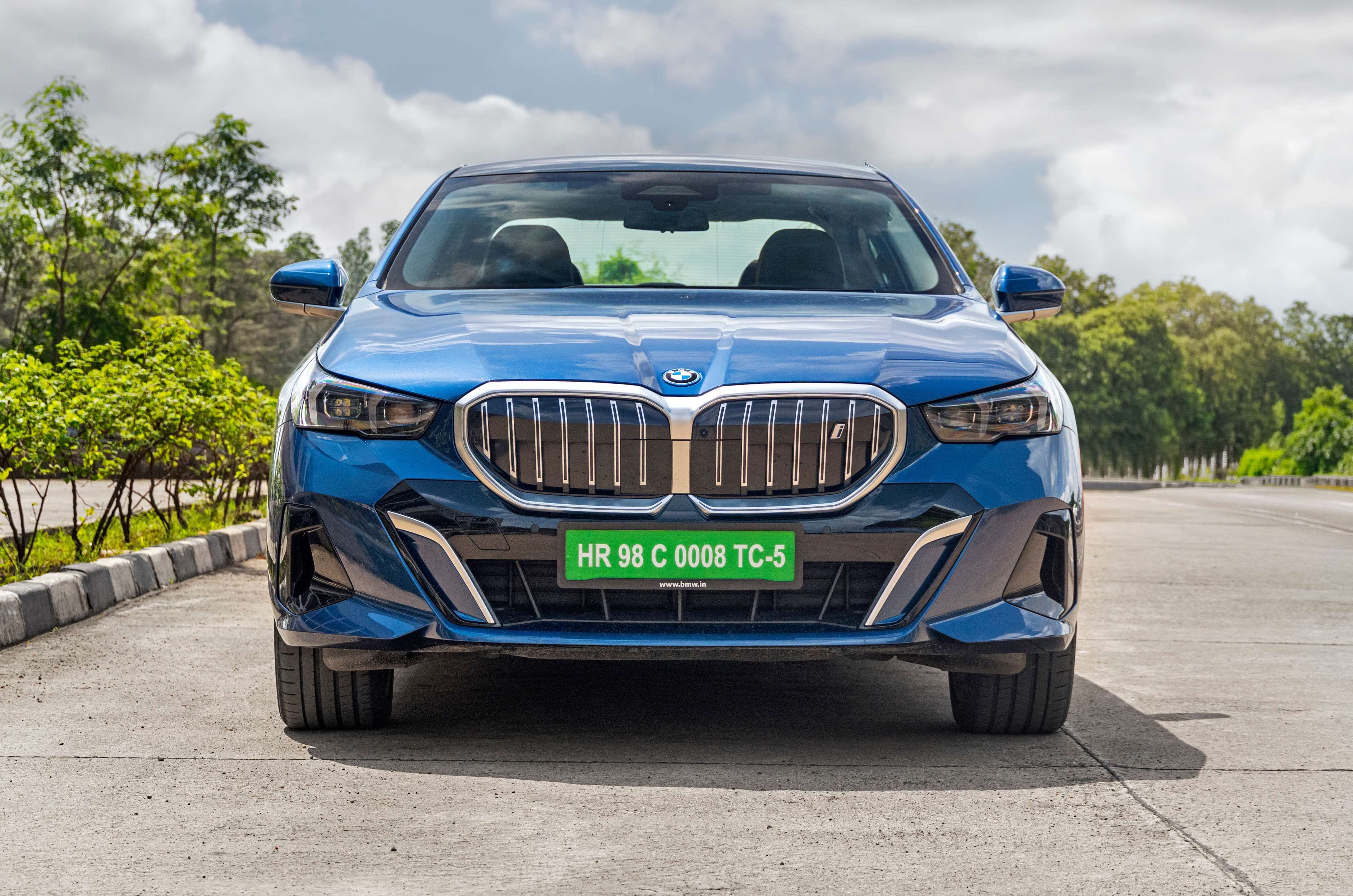
An ‘i’ badge on the grille along with its green number plate differentiate it from its petrol sibling
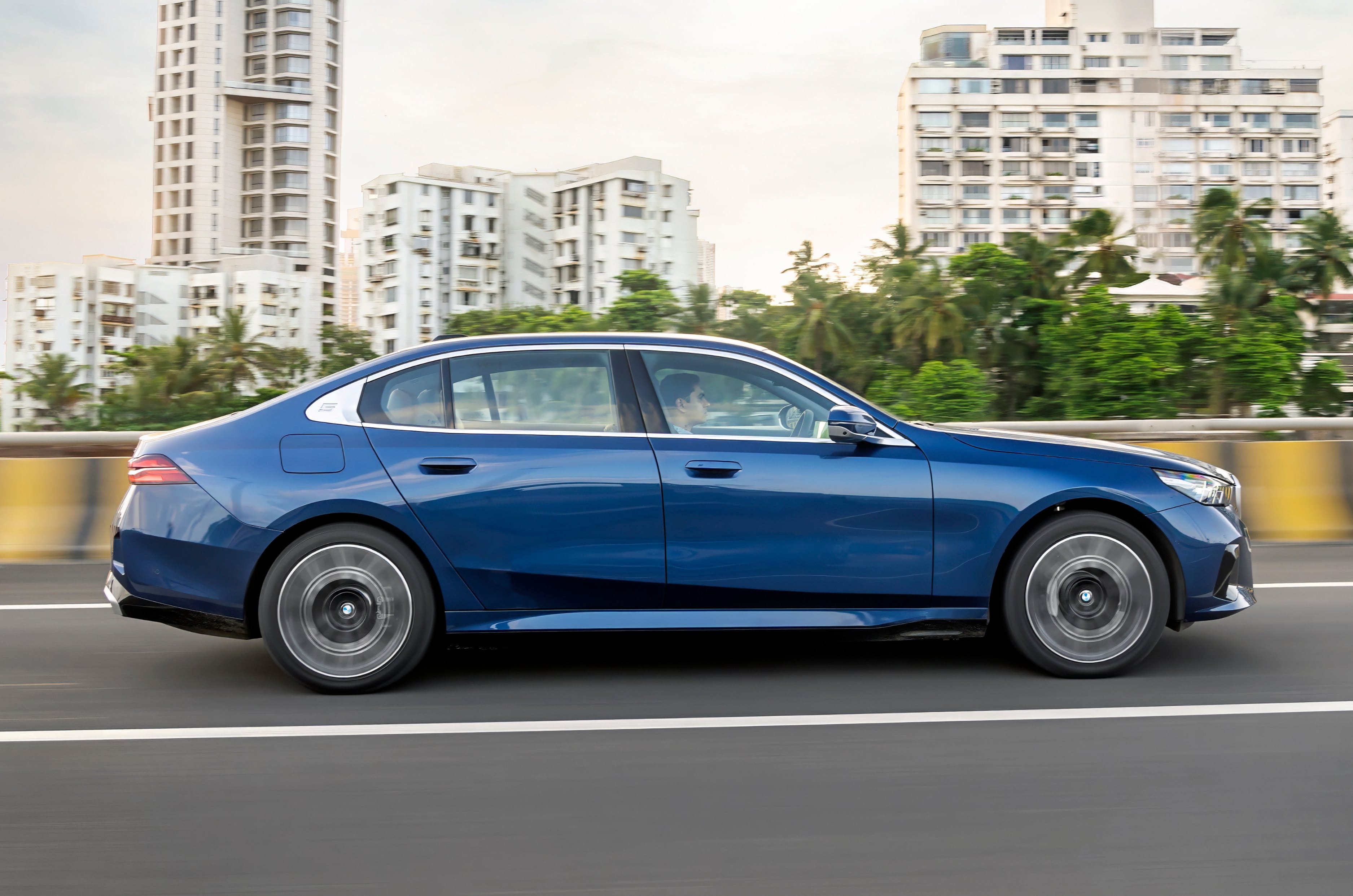
Compared to the international version, this i5’s wheelbase has been stretched by 110mm to 3,105mm, while overall length now stands at 5,175mm. Interestingly, the 5 Series is larger than its chief rival, the Mercedes-Benz E-Class, in every dimension.
As for styling, this generation of the 5 Series has been around since 2024 and much like most modern BMW designs, it’s something that grows on you with time. That said, there’s no denying that it’s a polarising design. The numerous cuts, heavy surfacing and intricate detailing make it look busy and excessive to some eyes.
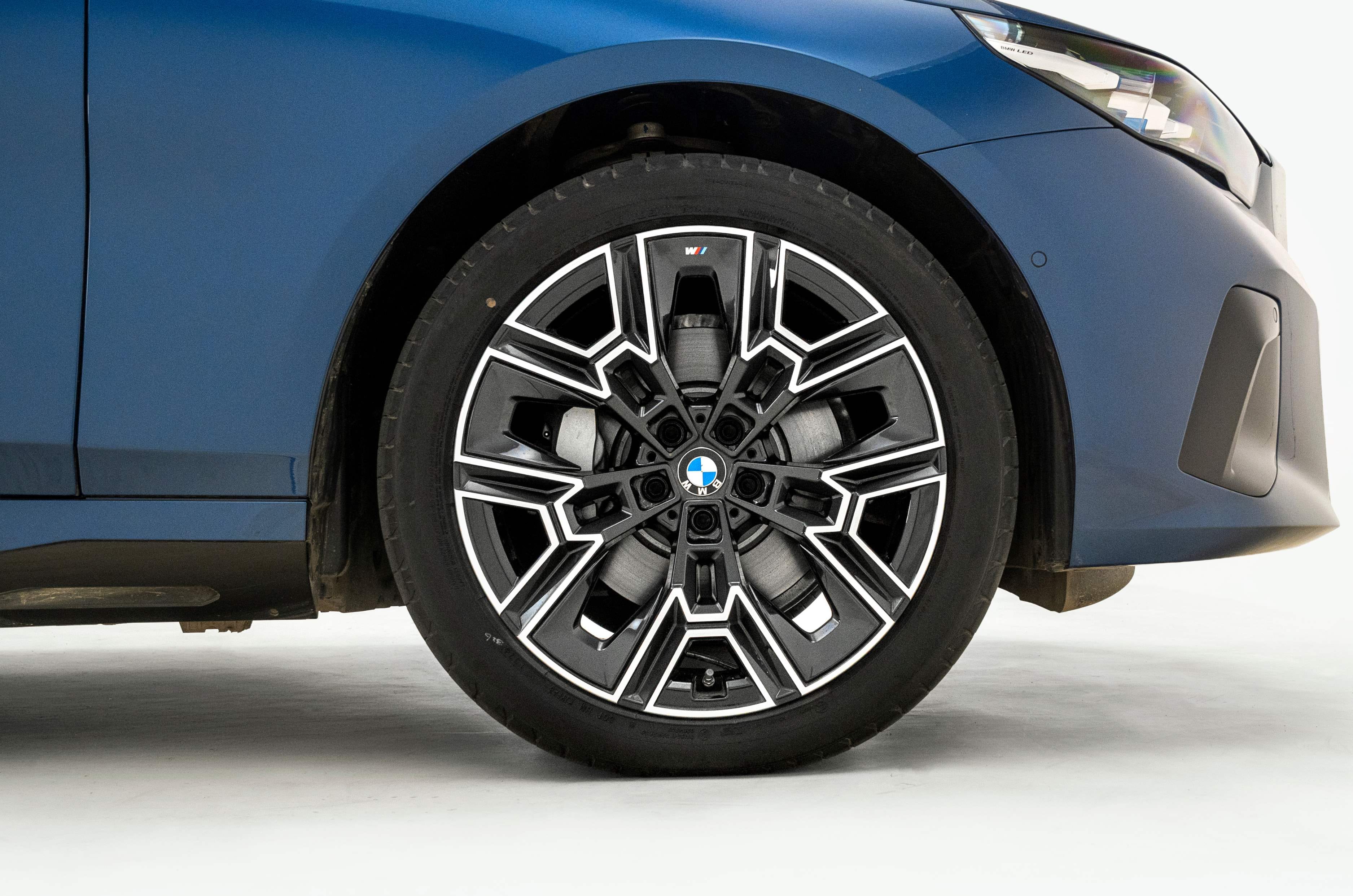
Gets large 20-inch alloys which look far more proportionate than the 18-inch wheels initially available with the 530Li.
Differentiating the i5 from its petrol-powered counterpart are an ‘i’ logo on the grille and larger 20-inch alloy wheels. The latter look far more proportionate than the 18-inch wheels initially offered on the 530Li. At the rear, the only distinguishing elements are the i5 and eDrive35L badges, apart from the obvious giveaway – the green number plate.
BMW i5 LWB Interior Space and Comfort – 9/10
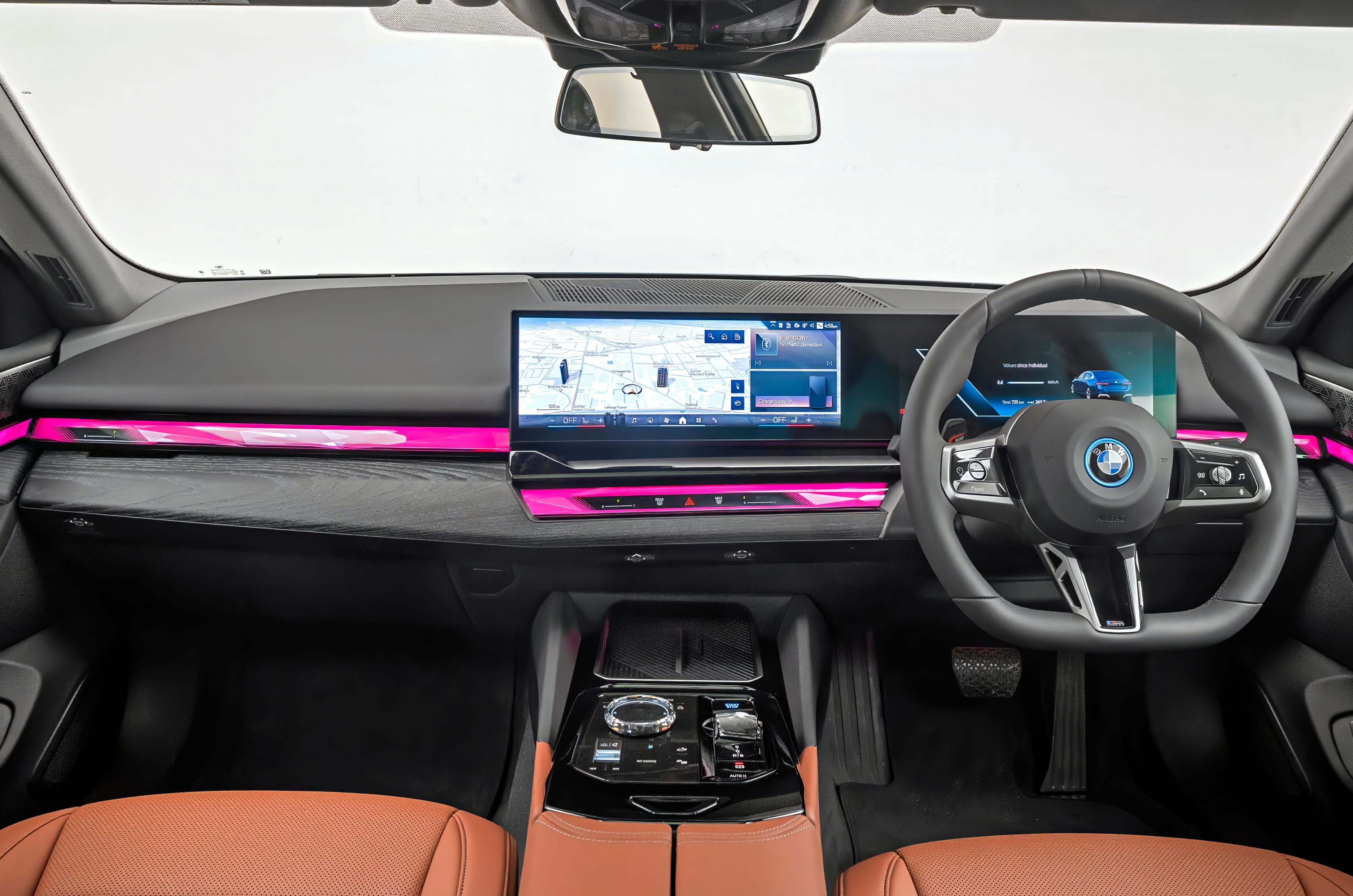
Dash is dominated by BMW’s twin curved screens, a flat-bottomed steering wheel and generous ambient lighting.
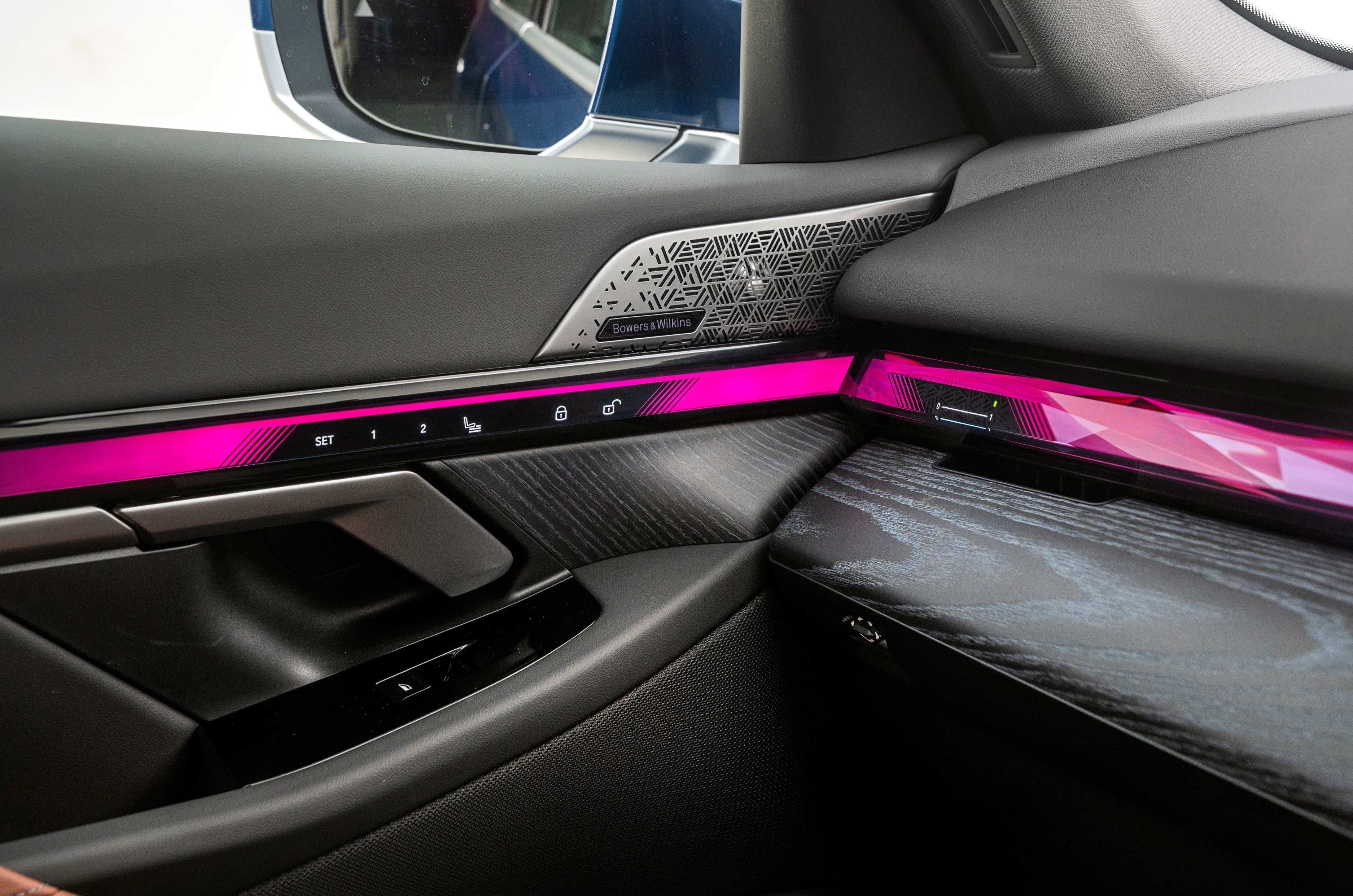
Step inside and the dashboard is dominated by BMW’s twin curved-screen setup, complemented by a flat-bottomed steering wheel, generous ambient lighting, and a tasteful mix of open-pore wood trim and silver inlays. The crystalline drive selector, rotary infotainment controller and volume roller on the centre console add a welcome sense of occasion.
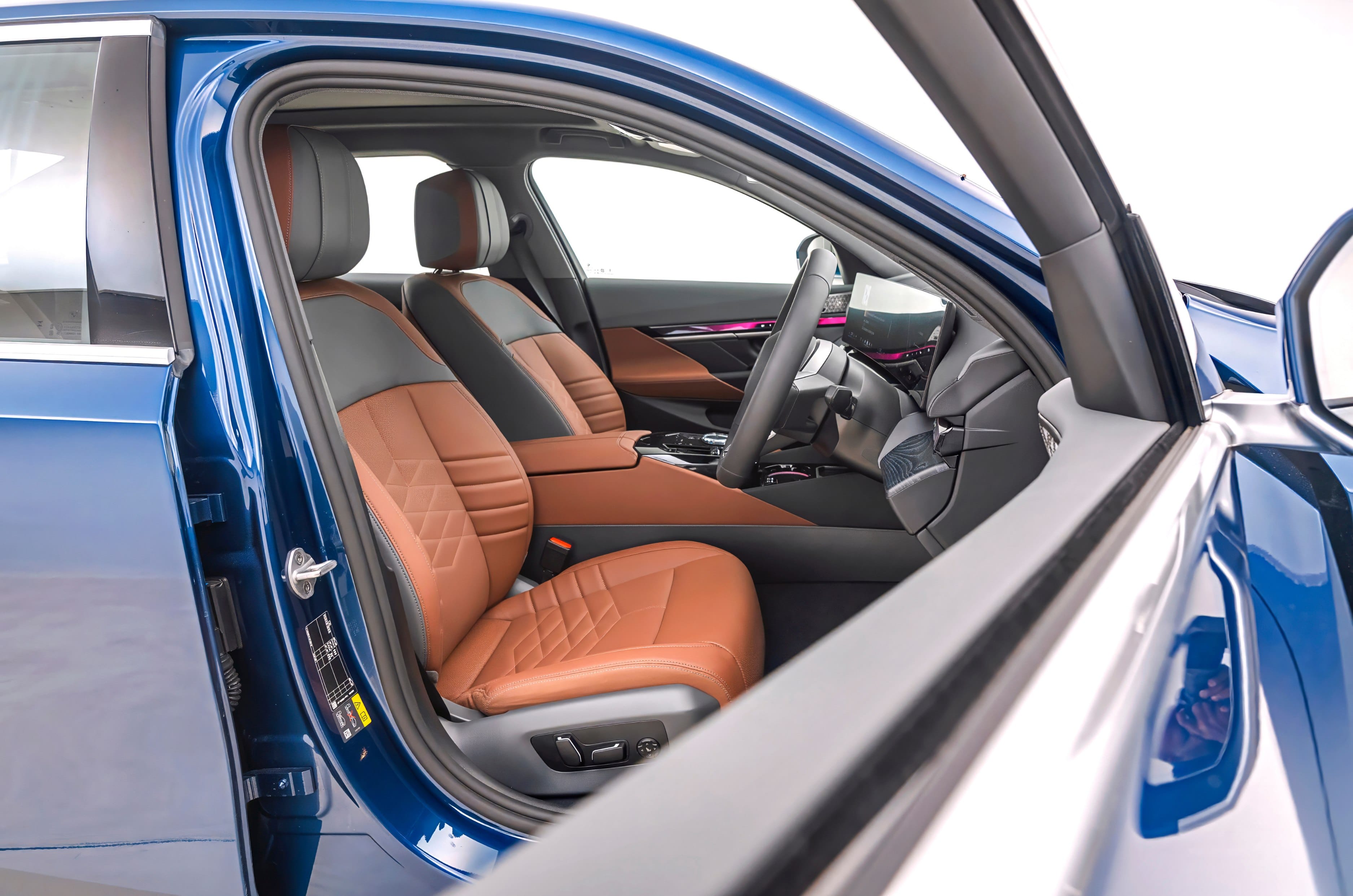
Those familiar with older 5 Series models will quickly notice the absence of the manually adjustable thigh support for the front seats. That aside, the seats themselves are exceptionally comfortable and supportive, and they also feature ventilation.
The seats are exceptionally comfortable and supportive, and they also feature ventilation.
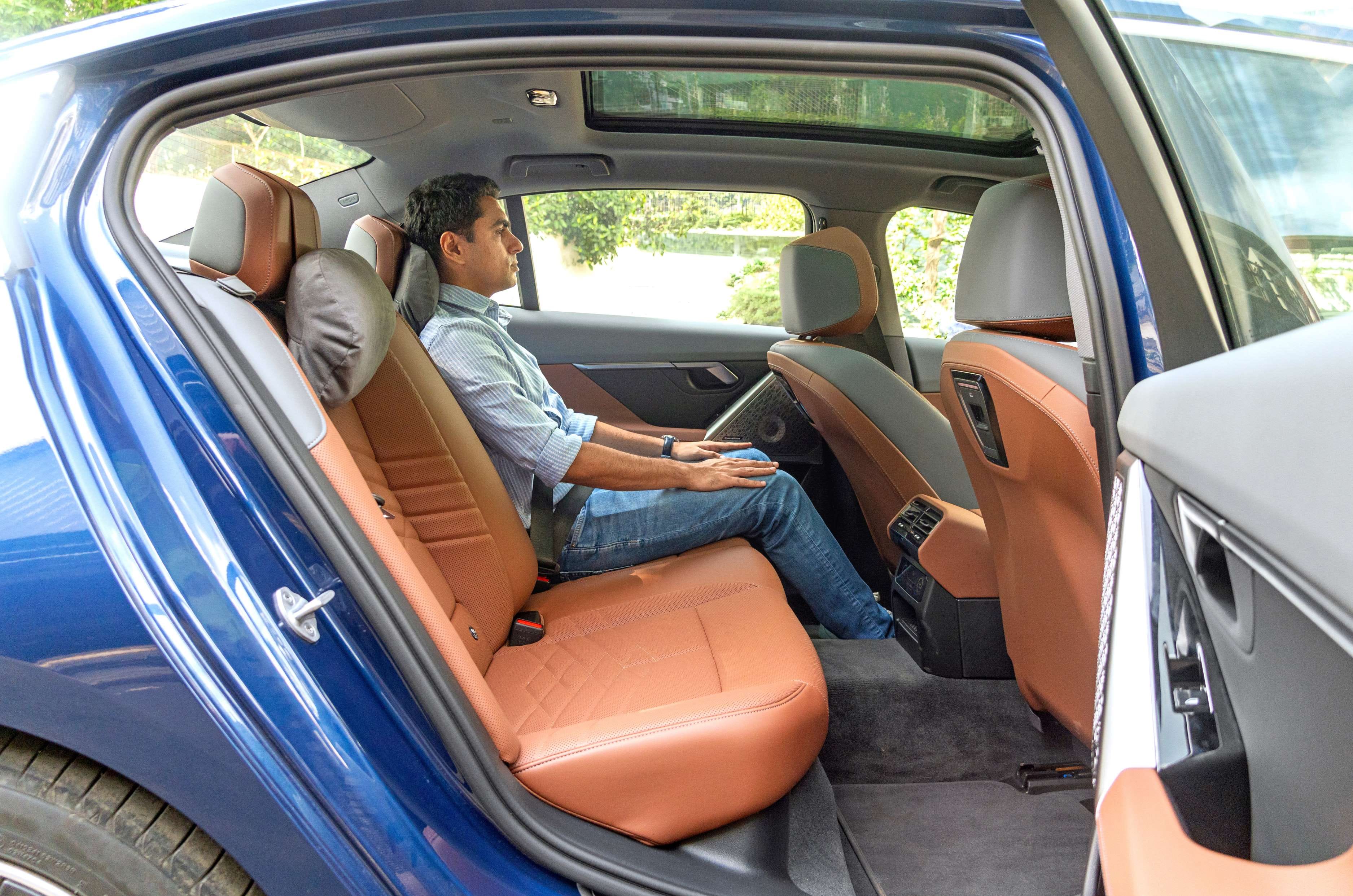
Being the long-wheelbase version, the i5 benefits from an additional 4.3 inches of wheelbase compared to the international model, resulting in noticeably more rear legroom. Sure, the floor sits higher than in the ICE version, but this remains a very comfortable place to be for chauffeur-driven buyers. The rear bench is well contoured and, with just two occupants, delivers a genuinely luxurious experience. Some may find the pillows a little excessive, and they aren’t quite as comfortable as the integrated units in the E-Class. Speaking of which, unlike the Mercedes, the i5’s rear seat doesn’t recline, and there are arguably too few indulgent touches to truly cater to chauffeur-driven buyers.
A bit knees-up, but the rear seat feels luxurious; however, there are too few amenities for chauffeur-driven buyers.
The middle seat is considerably less accommodating. The raised seat base compromises headroom, the backrest is firm, and the tall central tunnel further detracts from comfort for a third passenger.
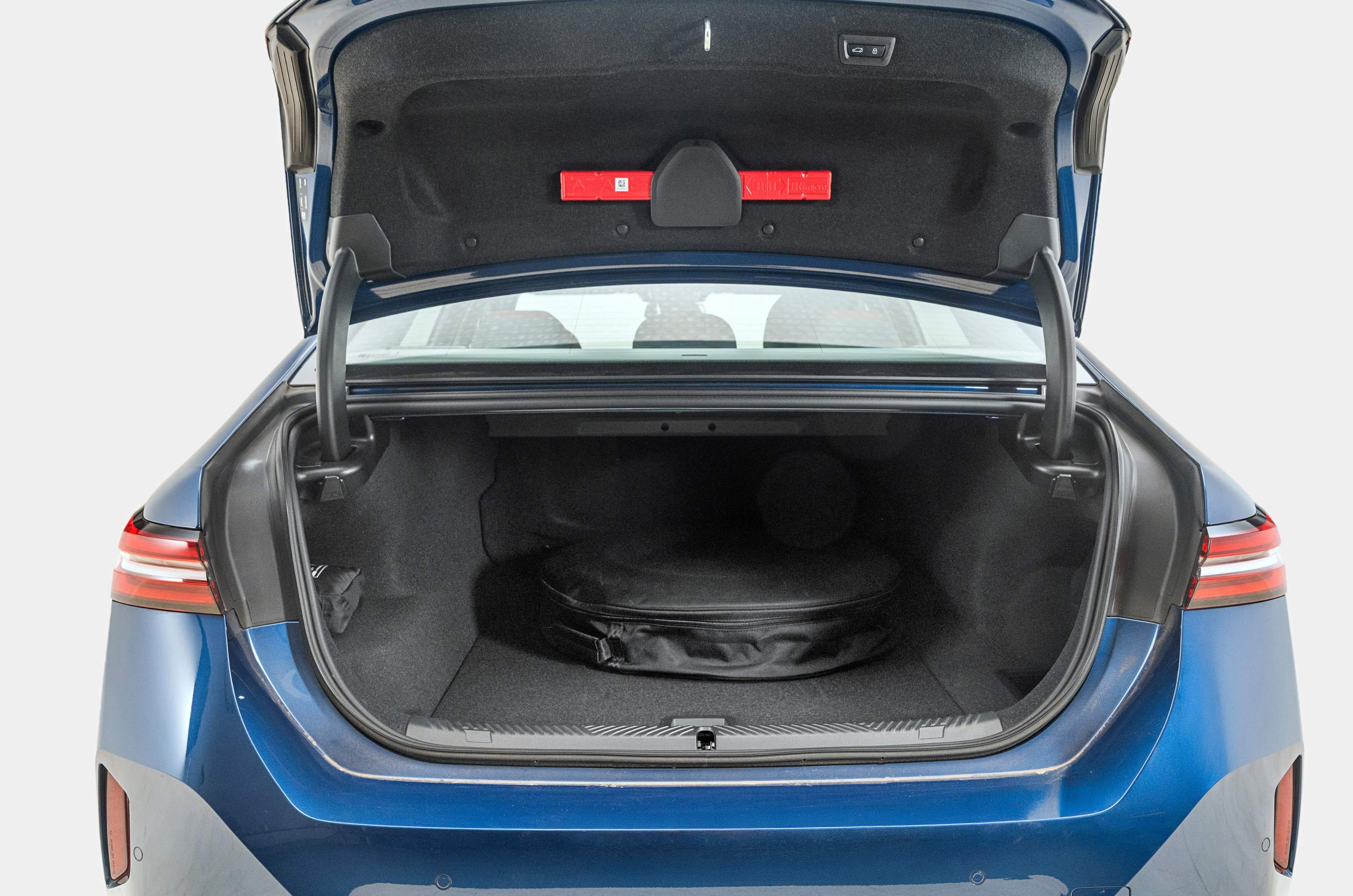
Boot space is rated at 500 litres, which is broadly similar to the ICE 5 Series. However, while the spare wheel is neatly tucked beneath the boot floor in the petrol version, it sits on the boot floor in the i5, significantly compromising usable luggage space.
The spare wheel sits on the boot floor, significantly compromising usable luggage space.
BMW i5 LWB Features and Safety – 8/10
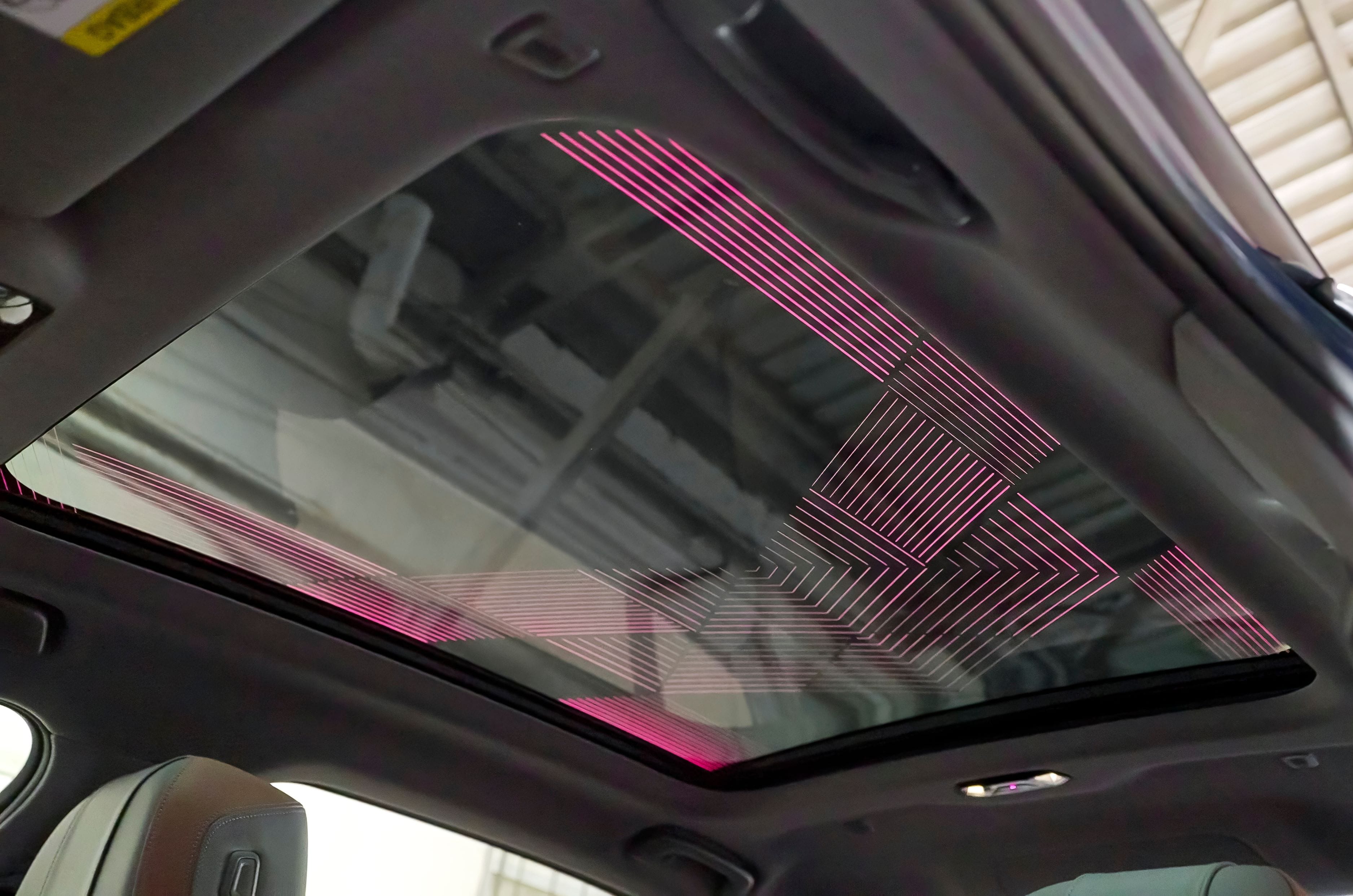
The i5 eDrive35L comes generously equipped. Highlights include 20-inch alloy wheels, adaptive LED headlamps, powered and ventilated front seats, four-zone climate control, wireless charging pads for both front and rear occupants, a panoramic fixed glass roof, ambient lighting and a powered boot lid.
Audiophiles will particularly appreciate the superb 17-speaker, 655W Bowers & Wilkins audio system.
The curved touchscreen and digital instrument cluster look suitably futuristic, although the user experience isn’t the most intuitive due to the number of menus and sub-menus. On the plus side, the 360-degree camera offers excellent clarity. Audiophiles will particularly appreciate the superb 17-speaker, 655W Bowers & Wilkins audio system.
The i5 also gets a comprehensive suite of driver assistance features, including adaptive cruise control, lane-keeping assist and autonomous emergency braking.
Its fixed panoramic glass roof has unique embedded LED lighting.
However, there are a few omissions that chauffeur-driven buyers may find difficult to overlook. A head-up display is absent, while smaller but genuinely useful features such as rear window sunshades, reclining rear seats, soft-close doors, a boss mode for the front passenger seat and rear-seat audio controls are all missing.
BMW i5 LWB Performance and Refinement – 8/10
The rear-wheel-drive i5 eDrive35L uses a single electric motor producing 272hp and 410Nm, figures that are remarkably similar to the mild-hybrid 530Li. However, the way it delivers its performance is entirely different. With peak torque available instantly, responses are smooth, effortless and distinctly EV-like. There are multiple drive modes on offer, each altering throttle response. Sport sharpens reactions noticeably, while Efficient is the most relaxed and efficiency-focused setting.
Retains a 50:50 weight distribution and RWD layout, but it has lost the sharpness and precision of earlier generations of the 5 Series.
BMW claims a 0-100kph time of 6.7 seconds, although our best run yielded 6.99 seconds. Interestingly, the 530Li is marginally quicker, recording 6.45 seconds for the same sprint, and it is also slightly faster in our 20-80kph and 40-100kph acceleration tests.
The i5’s top speed is rated at 195kph, although acceleration begins to taper off noticeably beyond 100kph. In short, acceleration isn’t neck-snappingly quick, but there’s more than enough performance to keep things entertaining within legal limits.
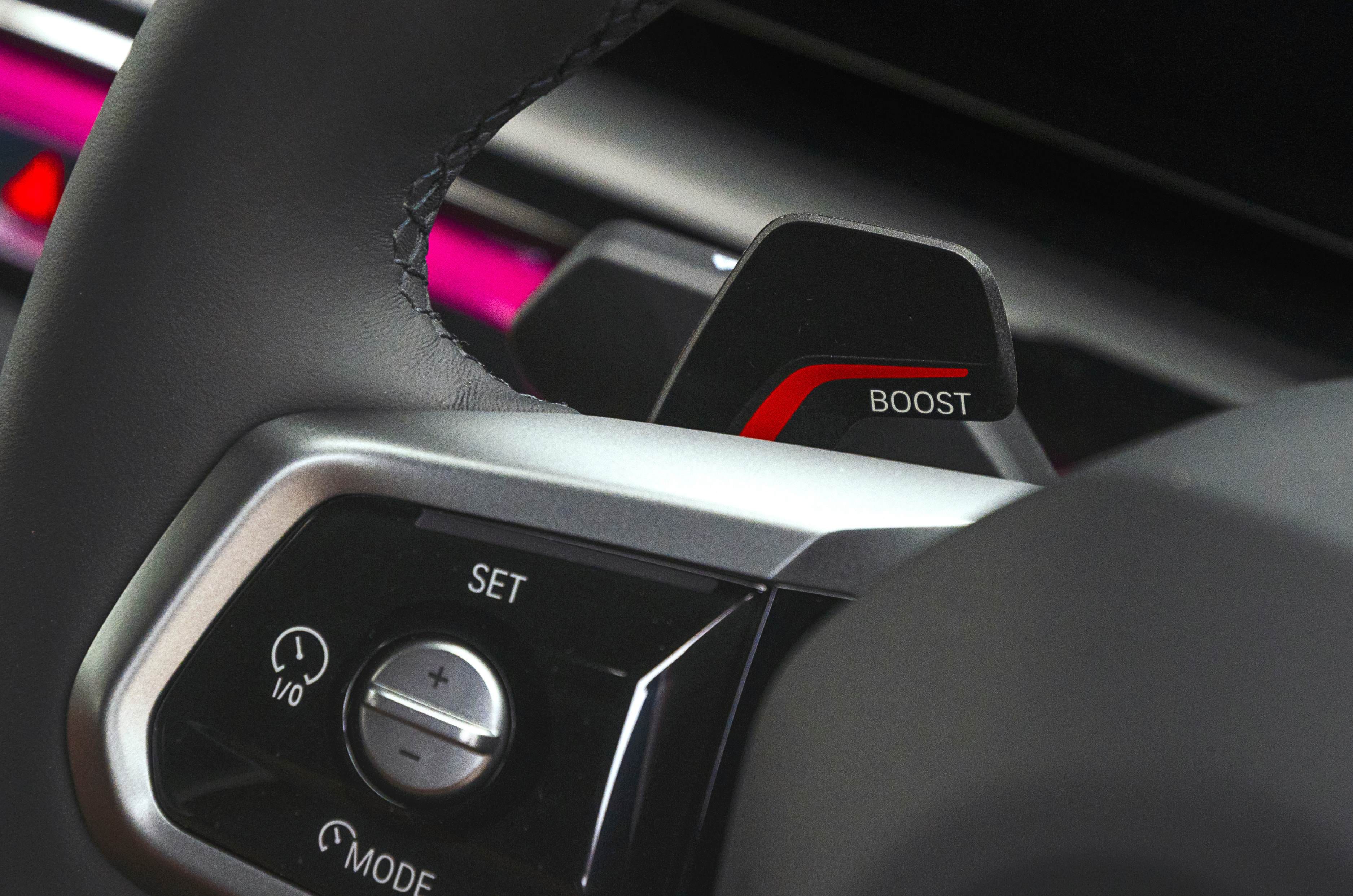
Boost function unlocks the motor’s full potential for 10 seconds. If your’re already in Sport mode, it barely makes any difference.
The i5 also offers multiple regenerative braking settings, including Adaptive, High, Mid and Low. Of these, Adaptive stands out for its excellent calibration, intelligently varying regeneration and coasting based on traffic and road conditions. There’s also a dedicated one-pedal ‘B’ mode, selectable via the drive selector. It delivers regeneration comparable to the High setting but, unlike it, can bring the car to a complete stop without requiring any brake pedal input.
Braking performance itself is strong, although keen drivers may wish for a little more feel from the pedal. The transition between regenerative and mechanical braking leaves it feeling somewhat numb.
BMW i5 LWB Range and Efficiency – 6/10
BMW claims the i5’s 81.6kWh battery (net capacity is 76.3kWh) can deliver a range of up to 669km, a figure that appears rather optimistic. In our real-world range tests, the i5 eDrive35L returned an average efficiency of 5.06km/kWh, translating to an estimated range of 386km. It’s worth noting that the car was driven in its most efficiency-focused ‘Efficient’ mode throughout the test, with regenerative braking set to Adaptive.
We also connected the battery to a 60kW DC fast charger, where it took 47 minutes to charge from 20-80 percent state of charge. BMW additionally supplies a complimentary AC wallbox charger along with installation.
BMW i5 LWB Ride Comfort and Handling – 8/10
Ground clearance has been increased by 18mm compared to the international version; hence, it clears most speedbreakers easily.
With every successive generation, the 5 Series has become softer and more comfort-focused, and the i5 is arguably the most luxurious iteration yet. Despite riding on larger 20-inch wheels with lower-profile tyres than the petrol-powered 530Li, ride quality is seriously impressive. The i5 feels plush and remarkably absorbent over typical urban roads. Notably, it also benefits from rear air suspension, a feature absent on the 530Li.
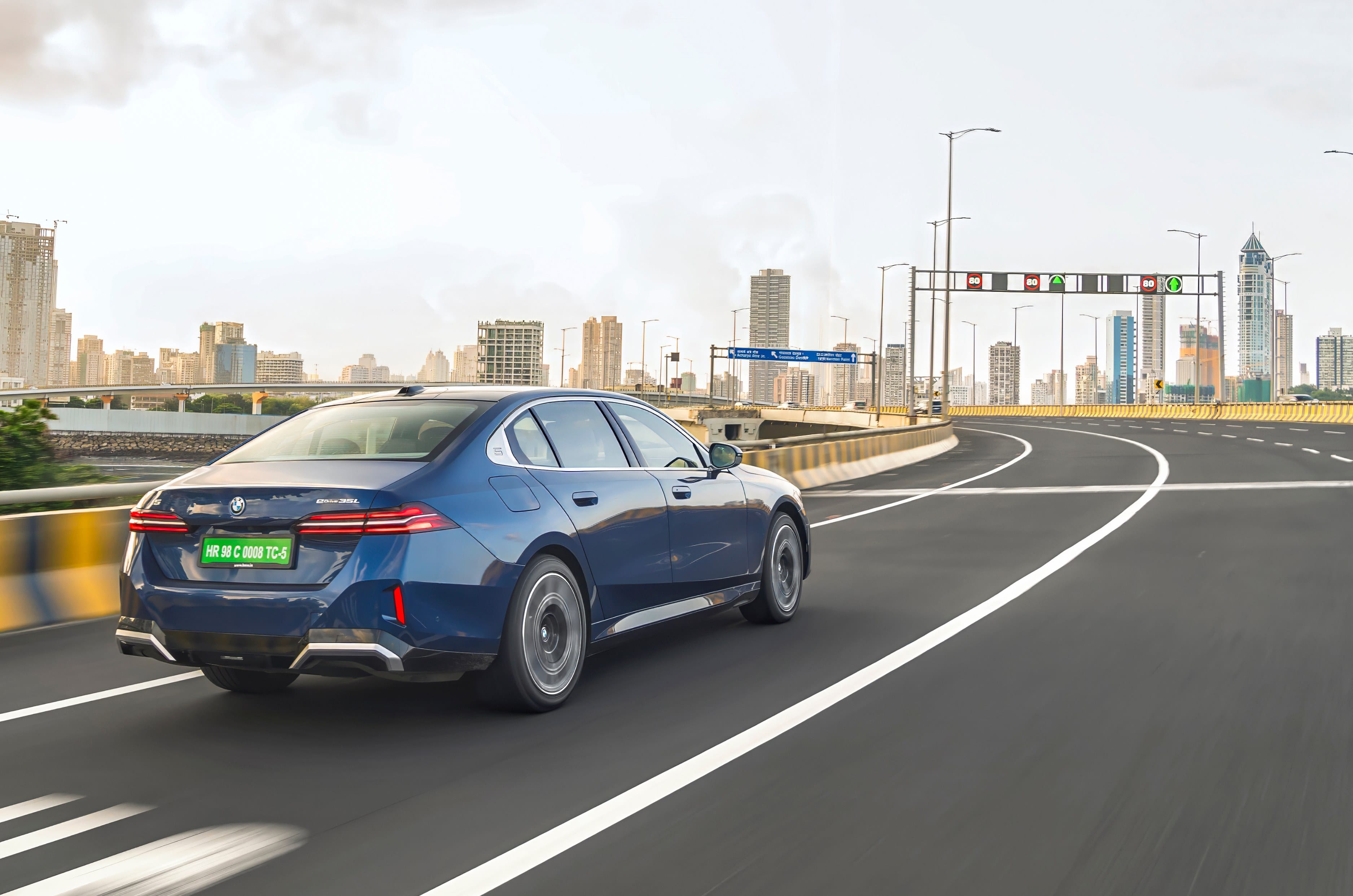
In addition to the extended wheelbase, BMW has increased ground clearance by 18mm compared to the global standard-wheelbase model. The result is a luxury sedan that’s far better suited to Indian conditions. Even with four occupants on board, the i5 clears most speed breakers without drama. As a luxury car, then, it unquestionably gets the fundamentals right.
With a plush ride and increased ground clearance, the i5 is far better suited to Indian conditions.
However, the softer suspension setup and increased ground clearance have diluted some of the driver-focused character that defined earlier generations of the 5 Series. While it retains a near-perfect 50:50 weight distribution and rear-wheel-drive layout, there’s no escaping the fact that, in prioritising comfort and practicality, BMW has sacrificed a measure of the sharpness and precision that once made the 5 Series a benchmark for driving enthusiasts.
BMW i5 LWB Price and Verdict – 8/10
At Rs 79.60 lakh, the locally assembled i5 LWB has all the ingredients to become BMW India’s next EV success story alongside the iX1. With the i5 eDrive35L, BMW continues its successful long-wheelbase formula, maximising cabin space while building upon the strengths of the petrol-powered 5 Series, with which it shares much of its cabin, equipment and overall character. Buyers can also opt for extended warranty and prepaid maintenance packages of up to 10 years, in addition to the standard eight-year battery warranty.
Generous cabin space, comfy seats, a plush ride, and effortless performance make the i5 eDrive35L a compelling electric luxury sedan
That said, much like its petrol-powered sibling, some of the traditional 5 Series driving feel has been diluted. It also misses a few feel-good features, particularly those aimed at rear-seat occupants. More importantly, the spare wheel’s placement on the boot floor significantly compromises luggage-carrying ability.
So, is it worth paying the Rs 3 lakh premium over the petrol-powered 5 Series? The answer largely depends on your usage. The i5 eDrive35L makes sense for buyers registering it under a company name, thanks to the higher depreciation benefits available for EVs. It also suits those who cover significant distances and can take advantage of lower running costs. Generous cabin space, comfortable seats, a plush ride, respectable range and effortless performance make the i5 eDrive35L a compelling electric luxury sedan for buyers shopping in this segment.