Not too long after a significant update, Mahindra has given the Thar yet another shot in the arm. The Thar OG now gets a whole new set of upgrades to the design, interior and, mainly, under the skin. A new suspension, new steering and added features are all part of the aim to make it more liveable and urban-friendly while retaining the Thar’s butch and bullyish character. Have they succeeded?
Mahindra Thar OG exterior design and engineering – 9/10
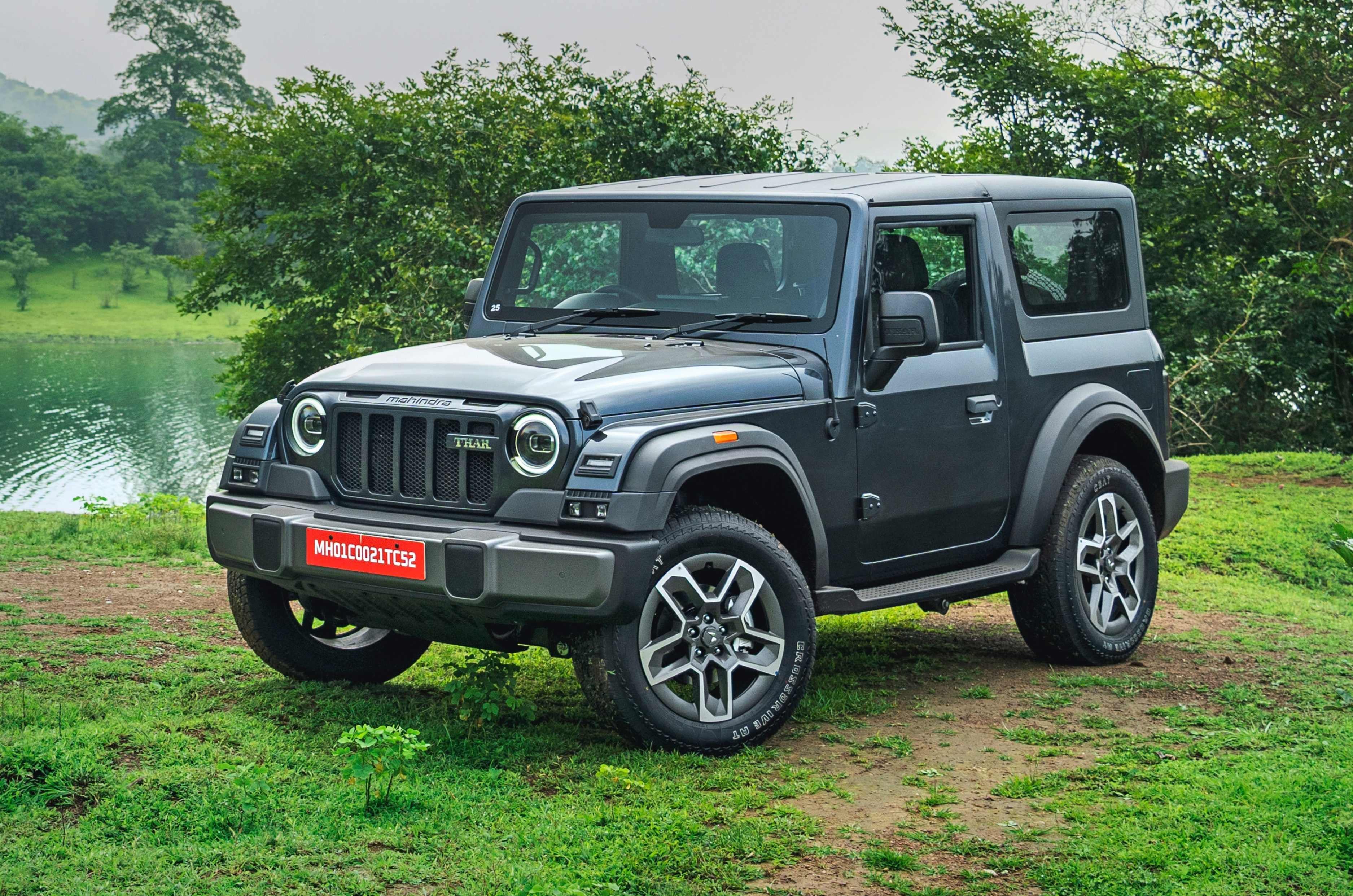
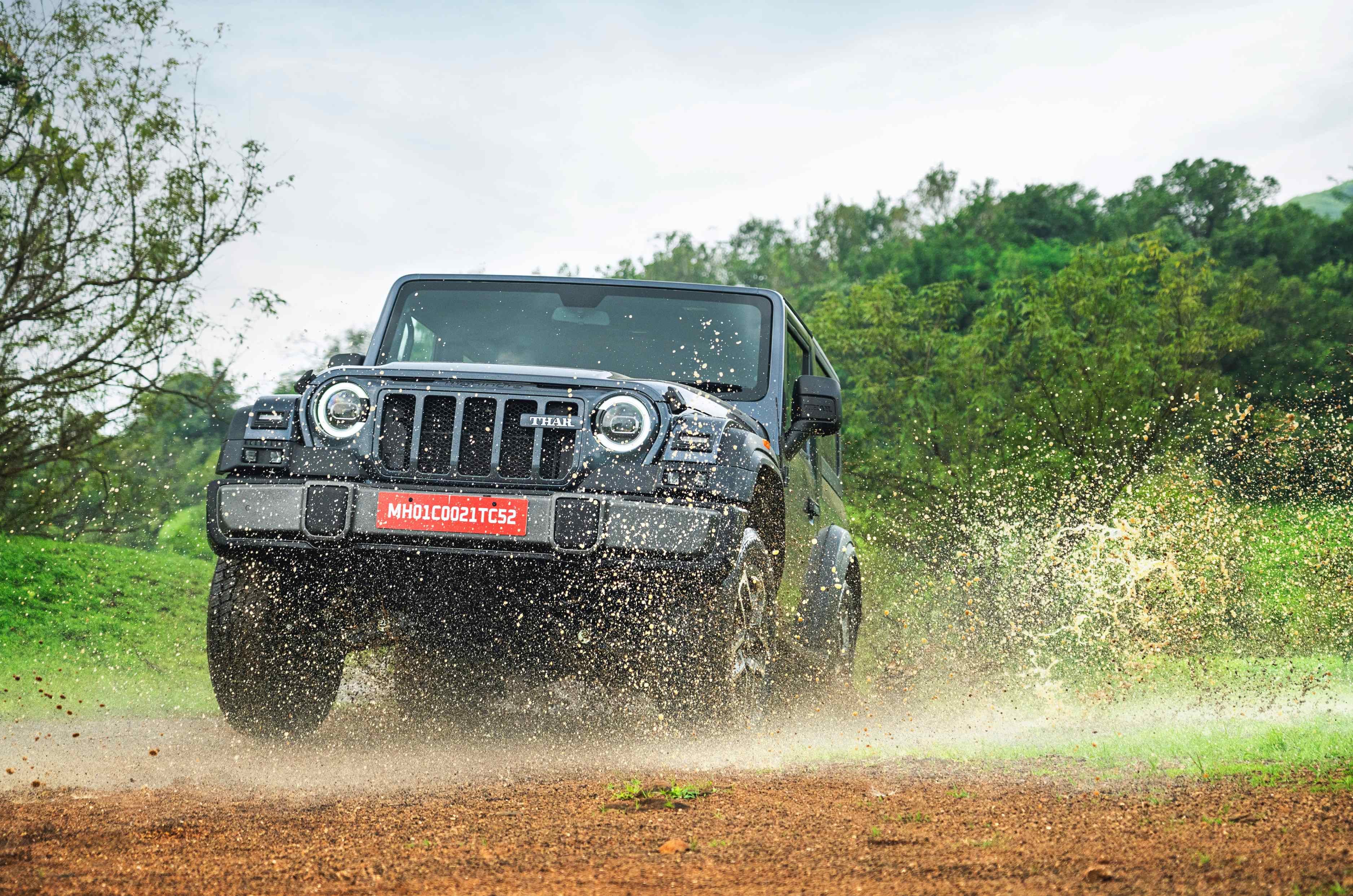
Design updates have retained the classic Thar look and road presence.
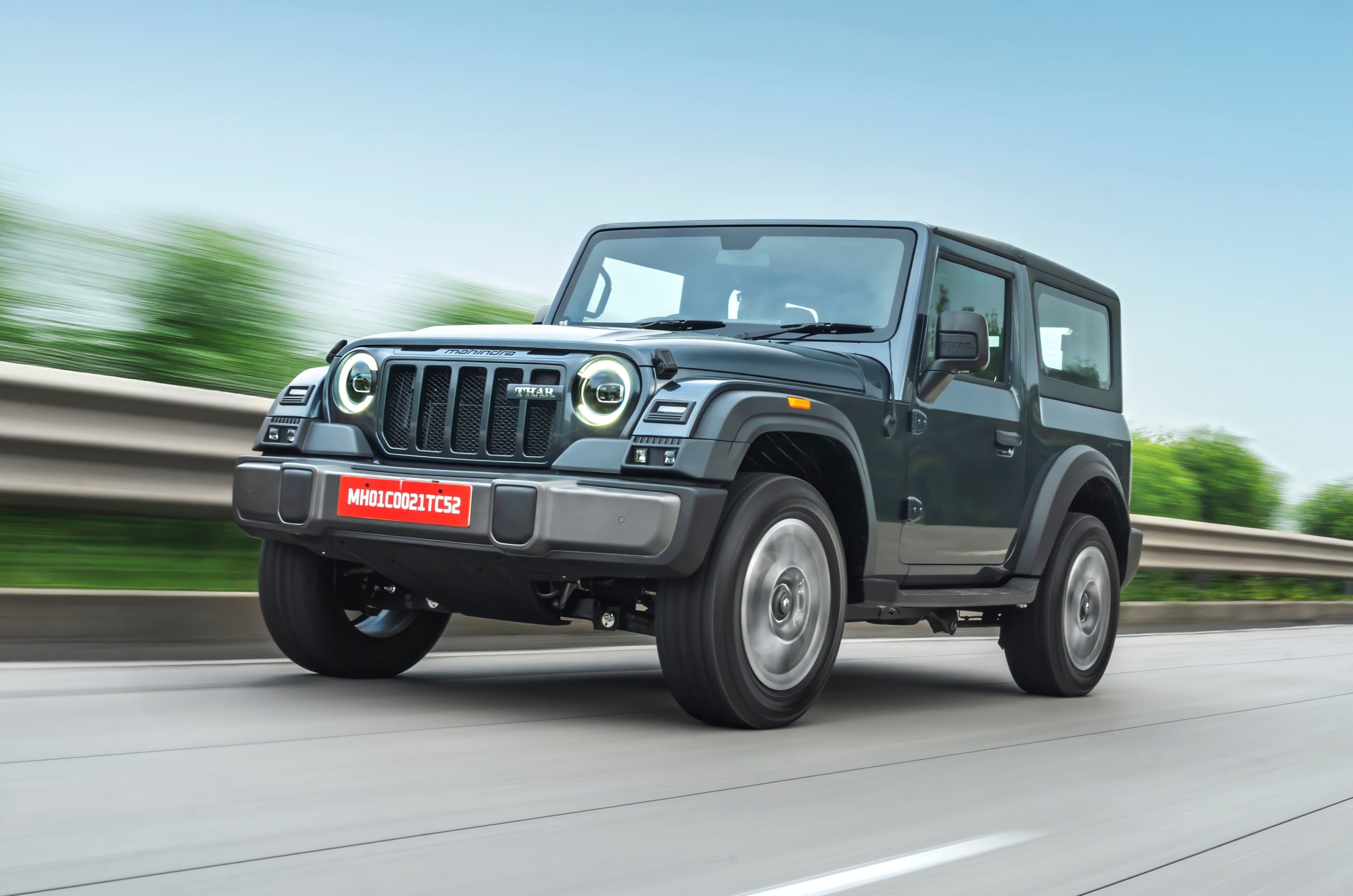
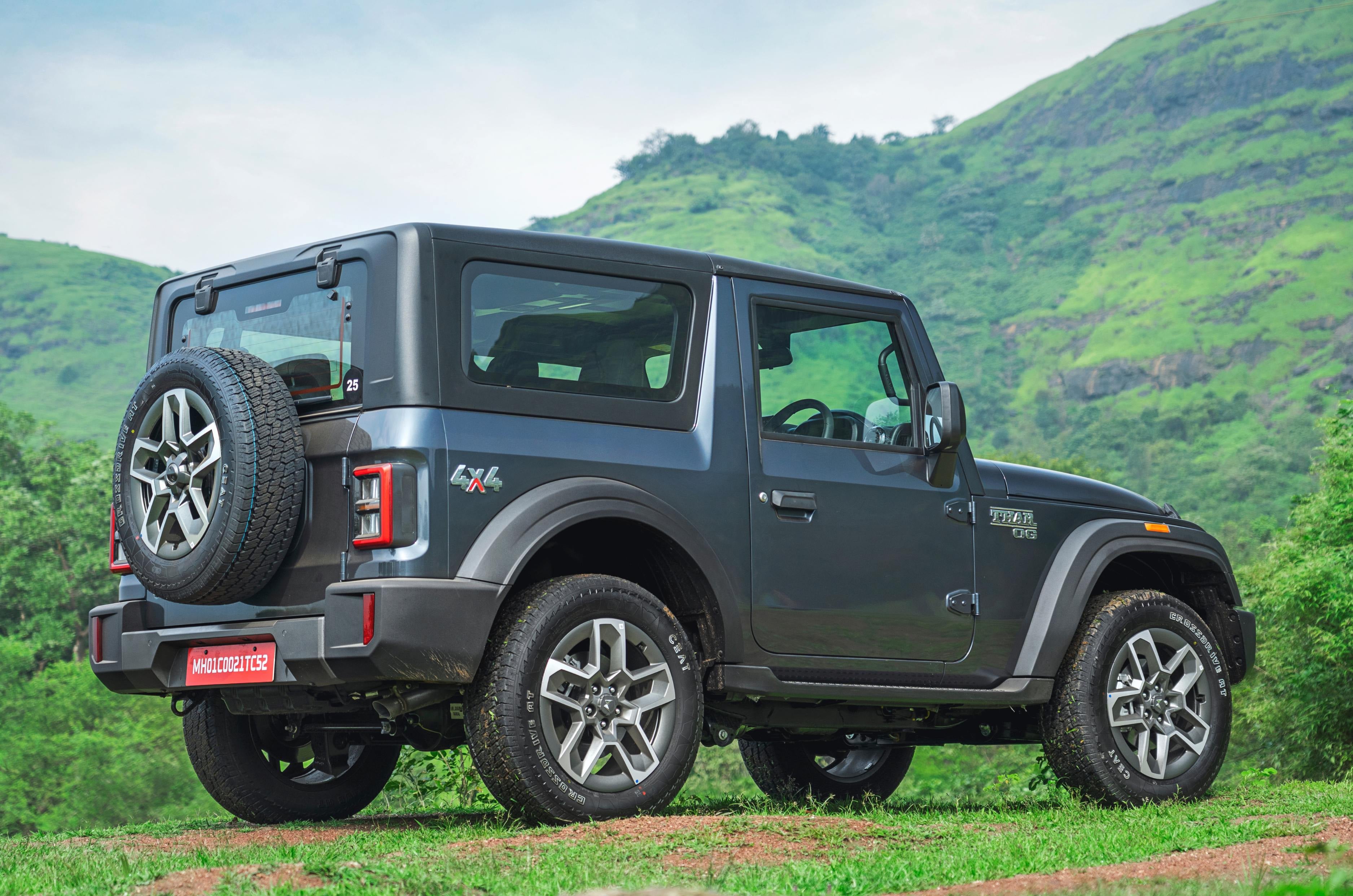
The design is why the Thar stands out, so Mahindra has not done much to change its character. However, it now gets some modern touches. At the front, the halogens are replaced with LED headlamps with C-shaped LED DRLs, along with LED fog lamps. The grille has been redesigned, with the Thar logo forged into it, and so has the front bumper. Look closer, and you will also see front parking sensors now, while the track has been widened for more stability.
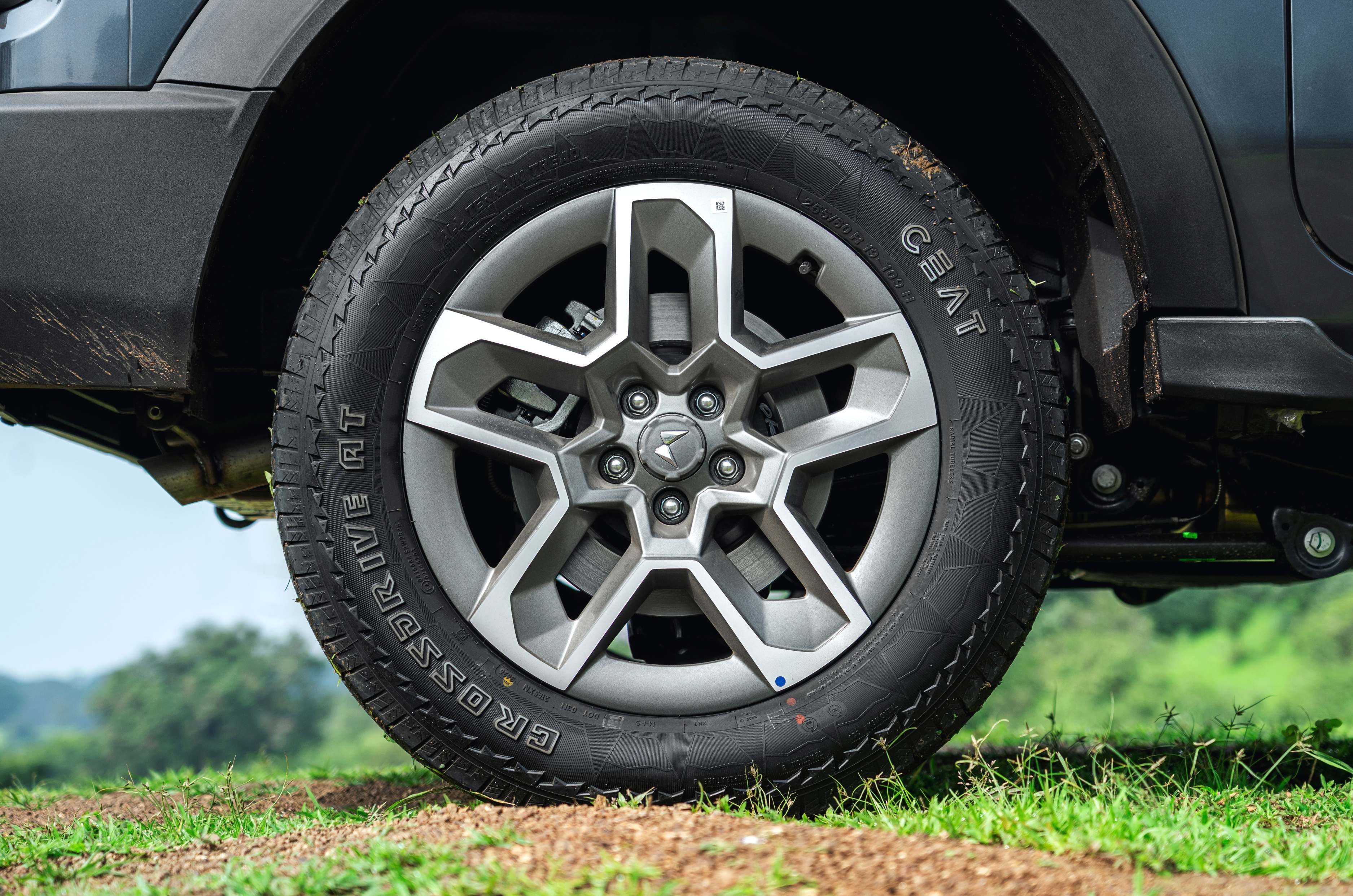
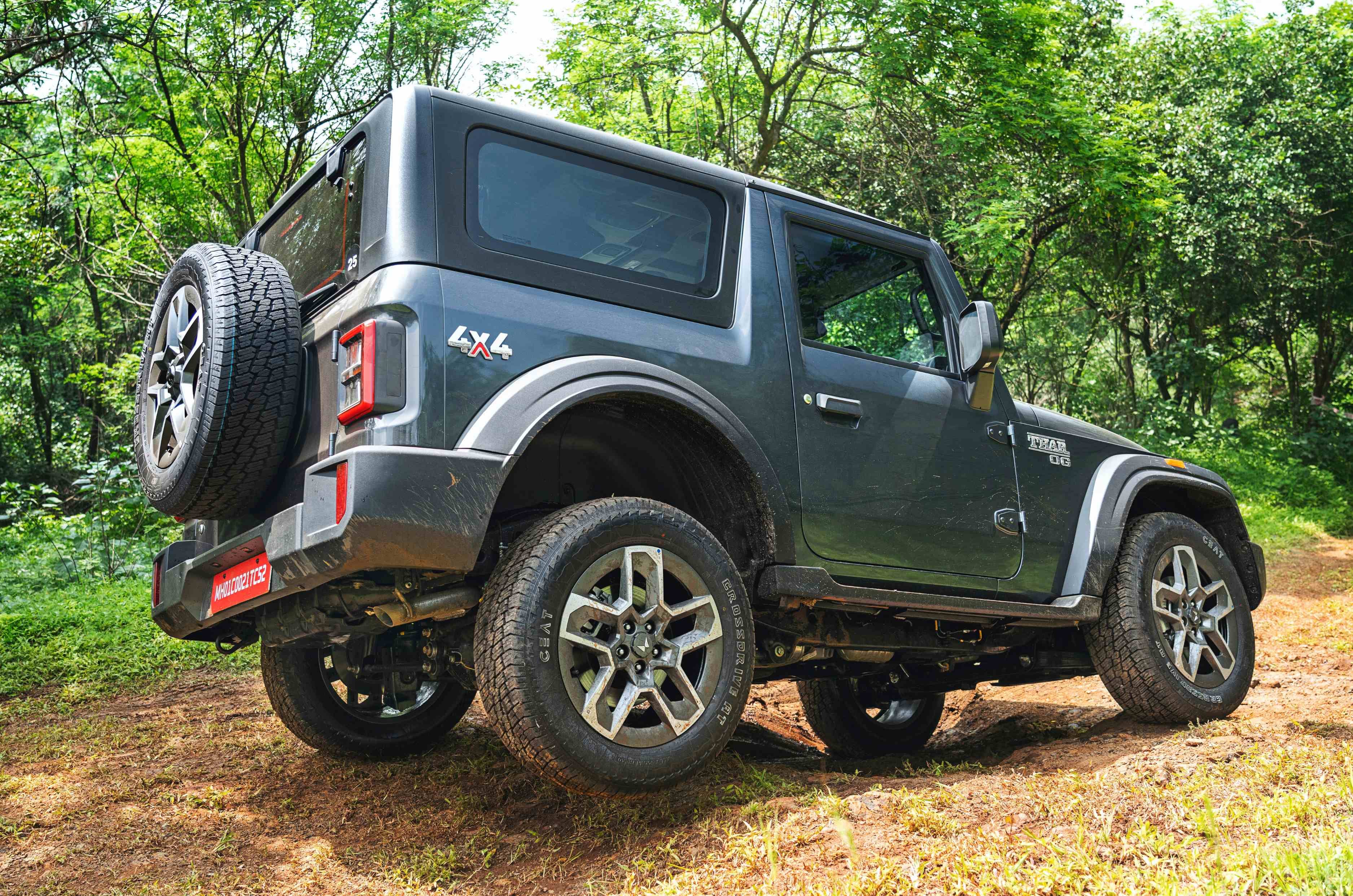
19-inch alloy wheels with AT tyres add to the toughness.
What you don’t see is the new platform the Thar sits on. The OG is now based on the Gen 4 chassis, dubbed M-Glyde, which also serves the Roxx. The side profile flaunts new 19-inch wheels with AT tyres, the Thar OG badge and a new design for the cladding.
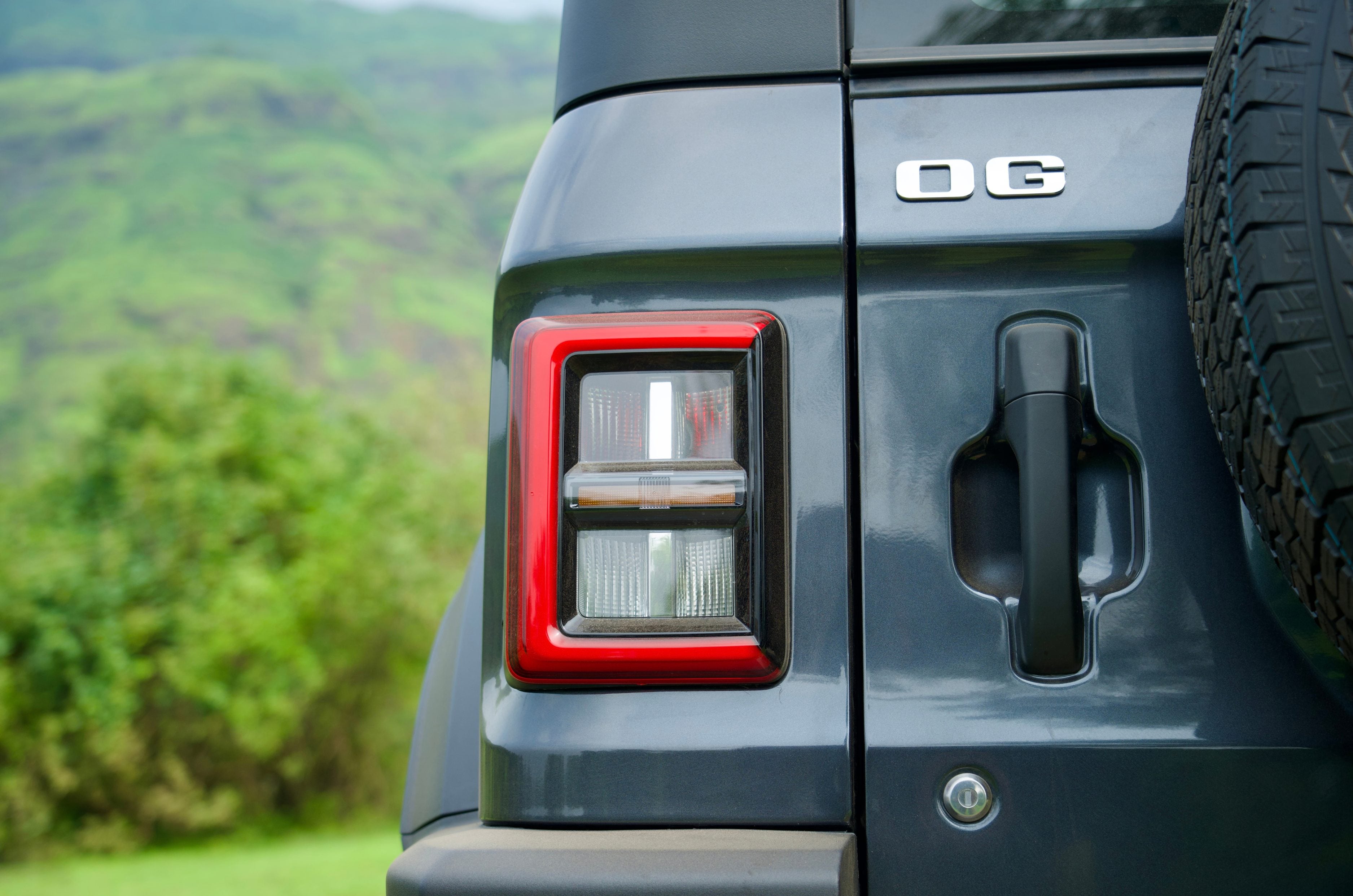
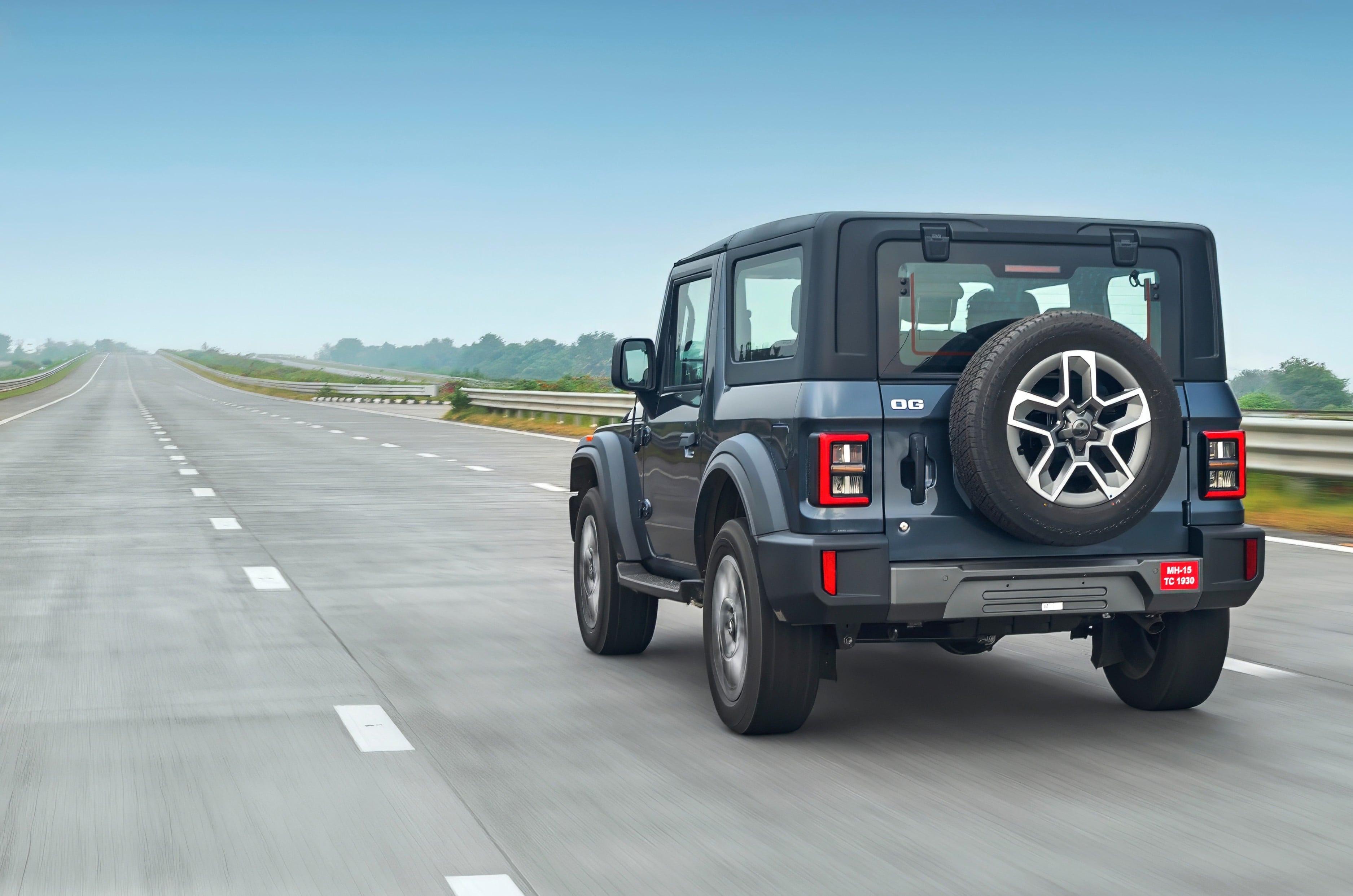
LED taillamps are similar to the Thar Roxx.
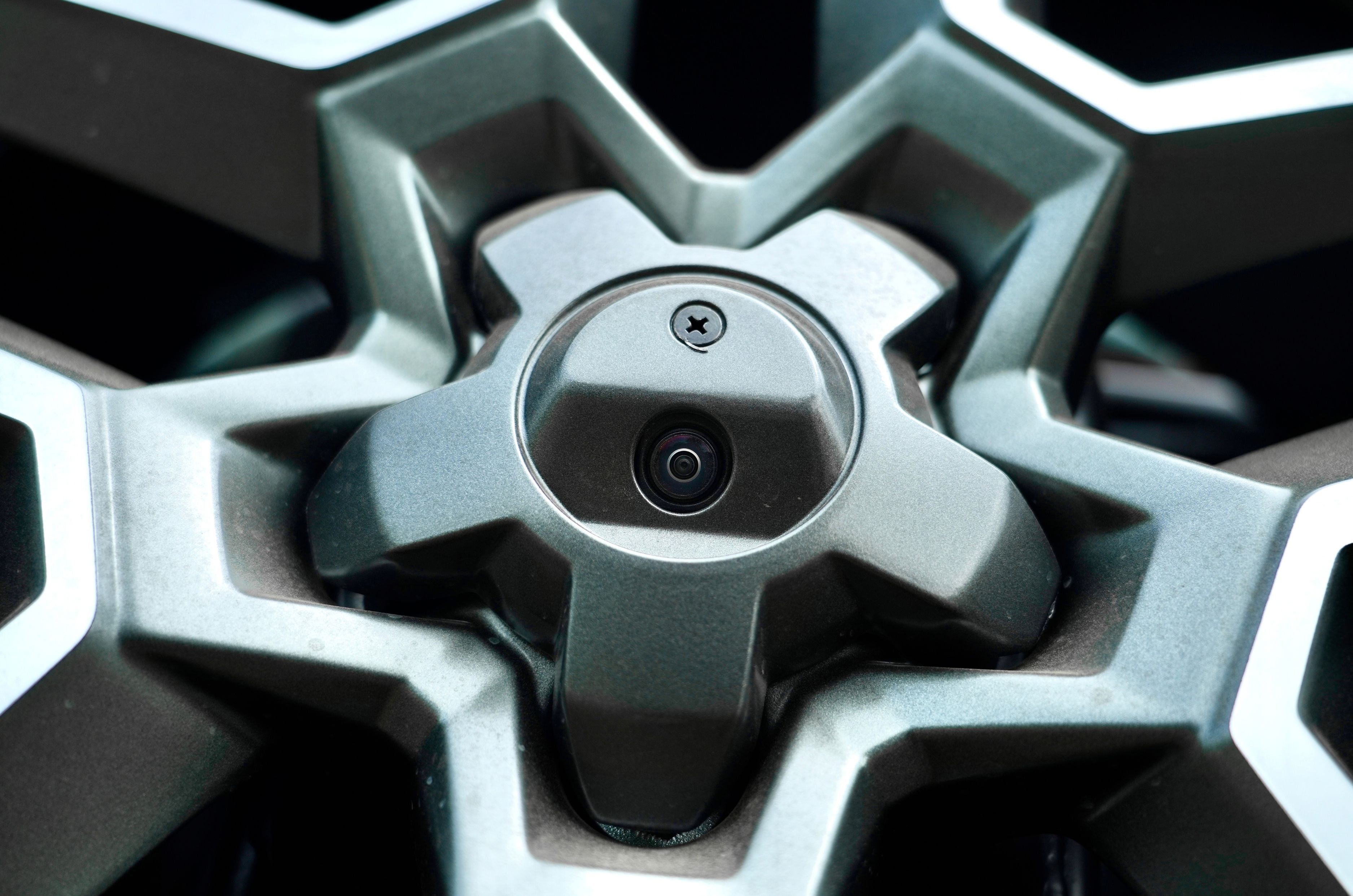
The rear continues with the LED treatment, with C-shaped taillamps, a new bumper and another OG logo. A closer look reveals a rear camera in the centre of the spare wheel.
The reversing camera is tucked in the centre of the spare wheel.
Overall, the imposing, butch design remains, with new modern touches.
Mahindra Thar OG interior space and comfort – 6/10
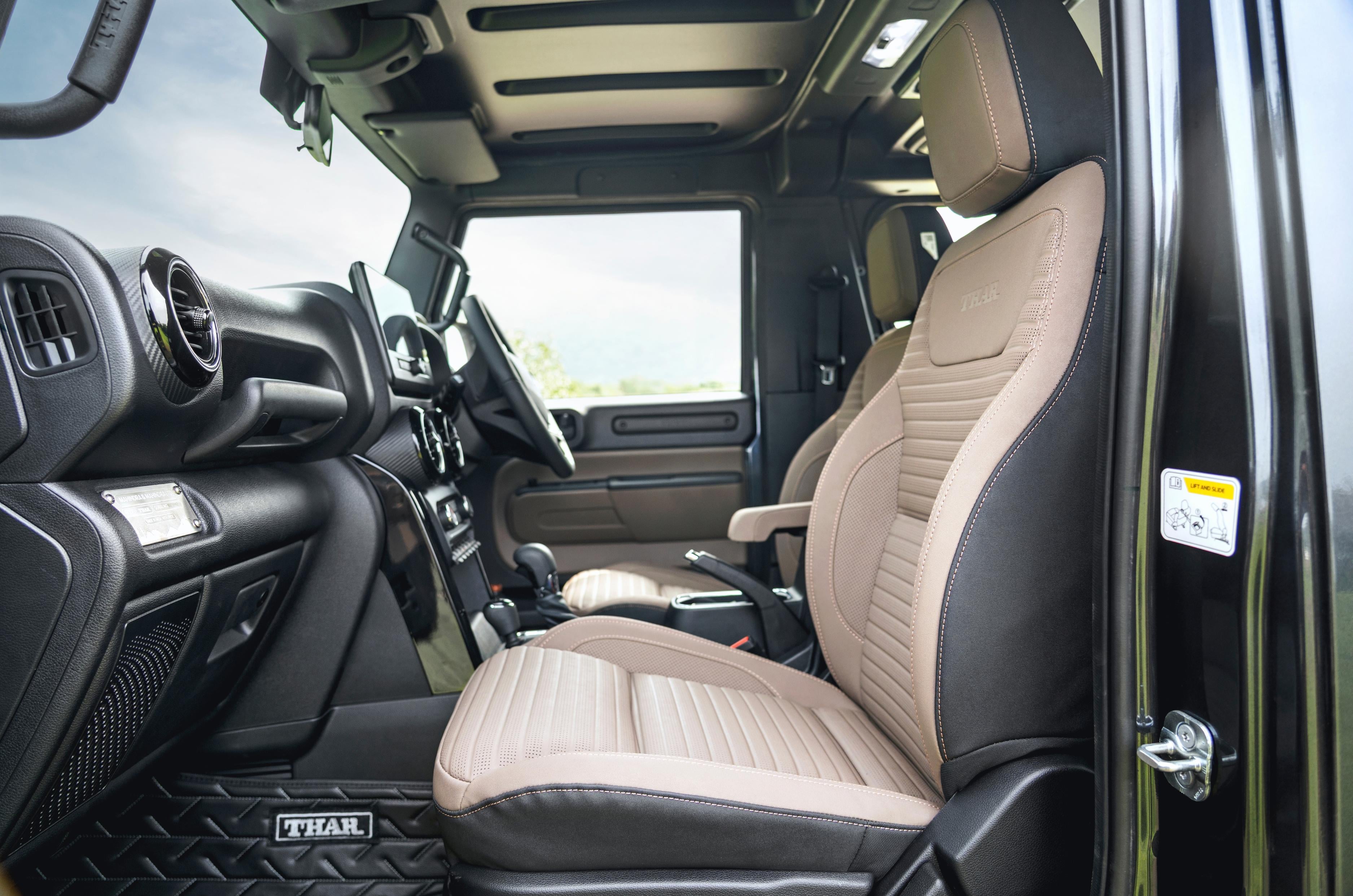
Top-spec ZXT trim gets leatherette upholstery in a new shade.
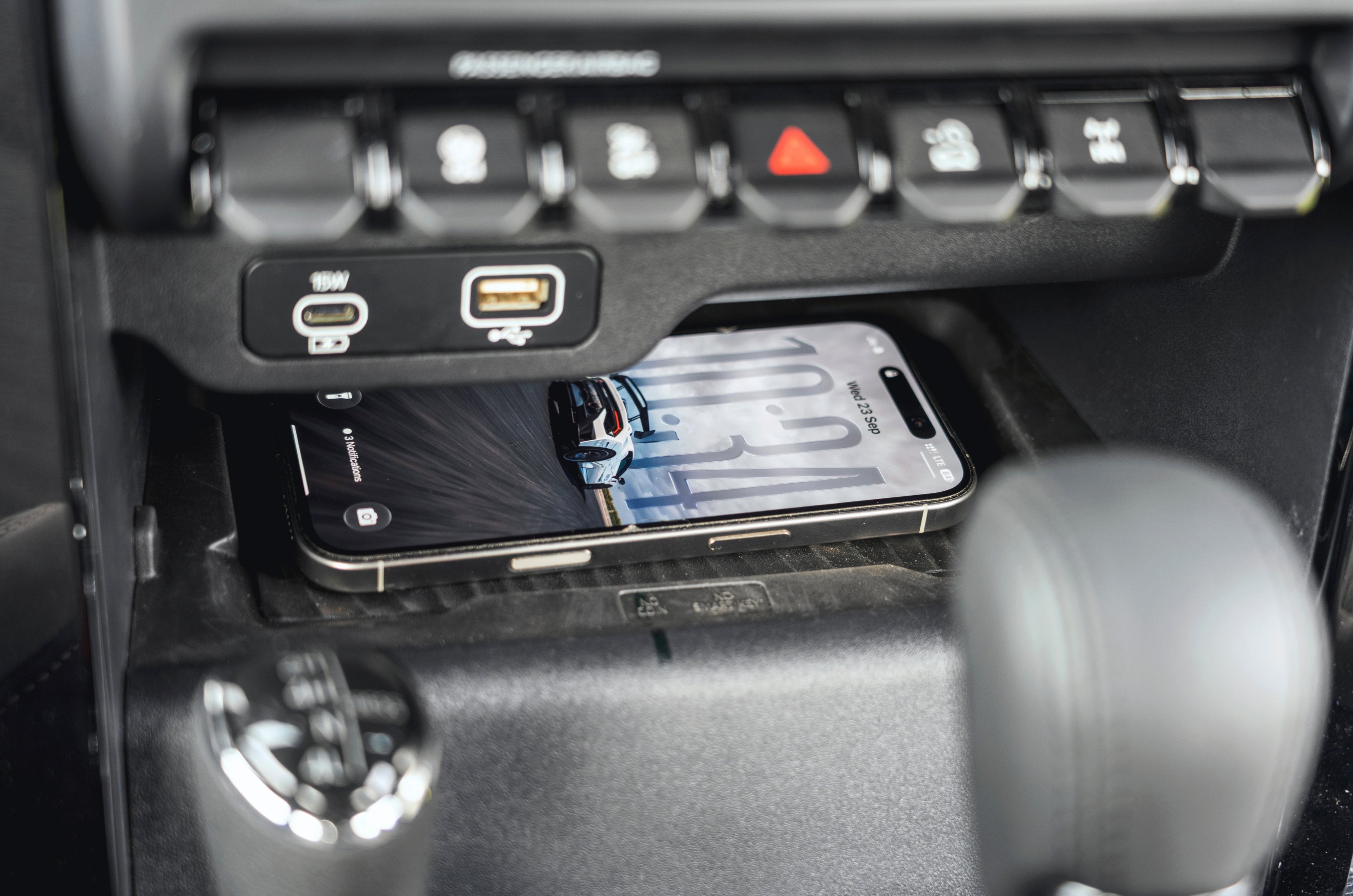
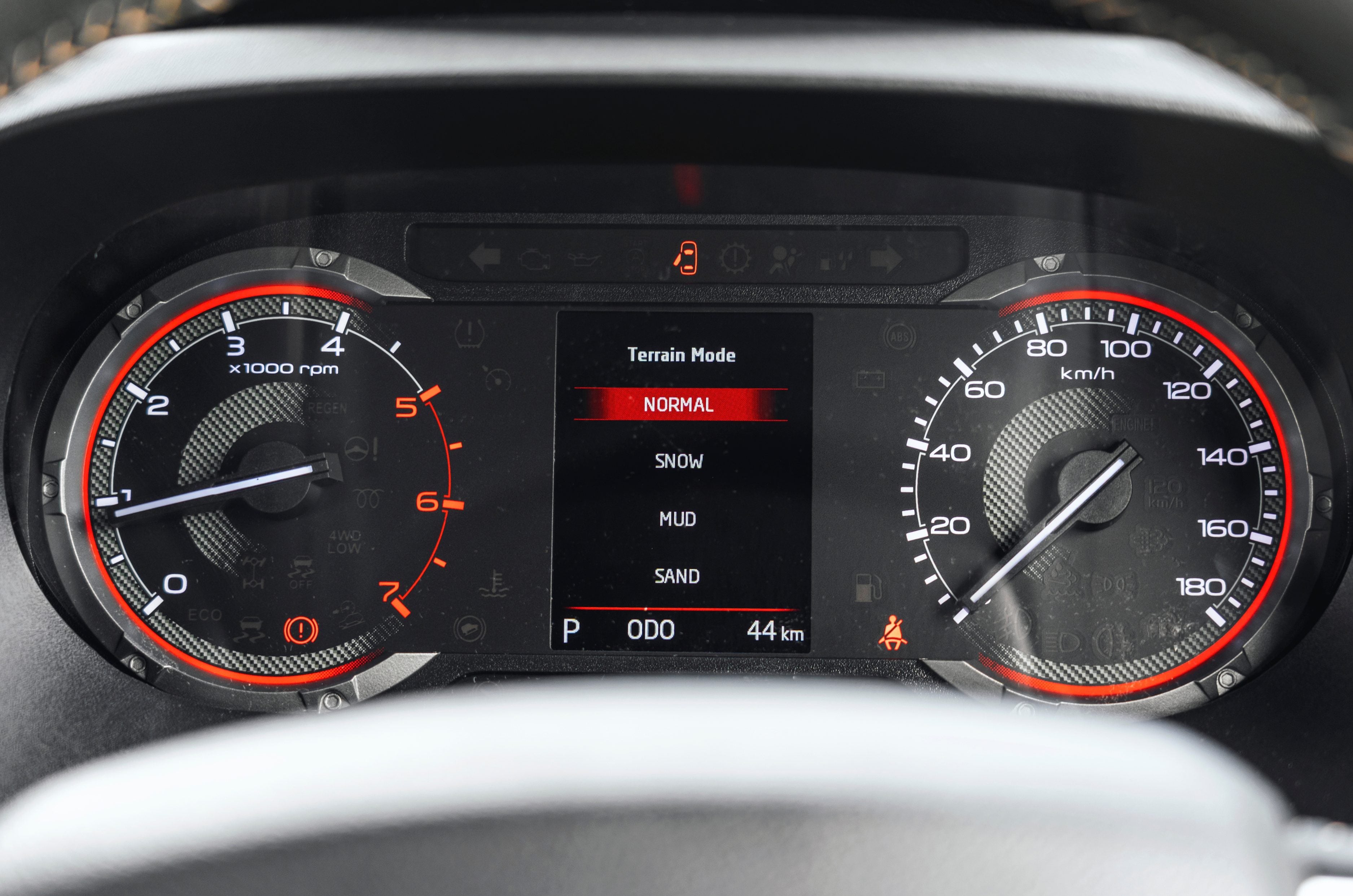
Compared to the exterior, the changes on the inside are a lot more subtle. The new top-spec ZXT trim gets leatherette upholstery finished in a shade of brown, which looks premium with the exposed stitching. There is a new wireless charger and two new switches on the centre console: one for the terrain modes and the other to engage the electronic locking differential.
Gets a new wireless phone charger and different switchgear.
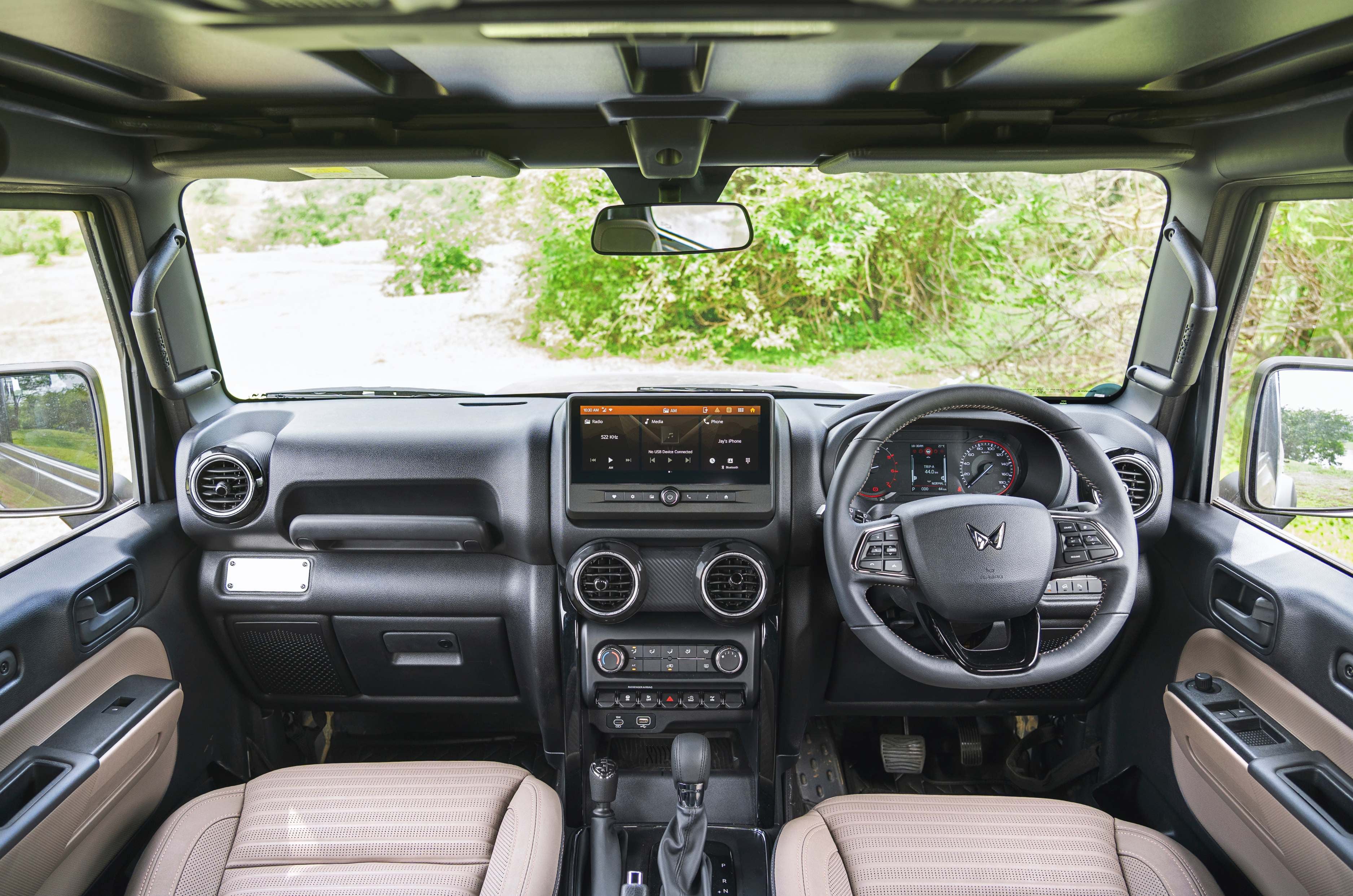
The Thar received a facelift around a year ago, when the cabin was brought up to date with a new steering wheel, touchscreen and dashboard, and these features have been carried over to the OG. The seats are broad and comfy but miss out on ventilation. The two dummy buttons on the centre console will hopefully be used for this feature soon.
Dashboard design is unchanged from the 2025 facelift.
The steering wheel is also the same as before, as is the analogue instrument cluster with an MID in the centre. The plastics, however, feel low-rent, especially when you consider the rivals in the same price bracket.
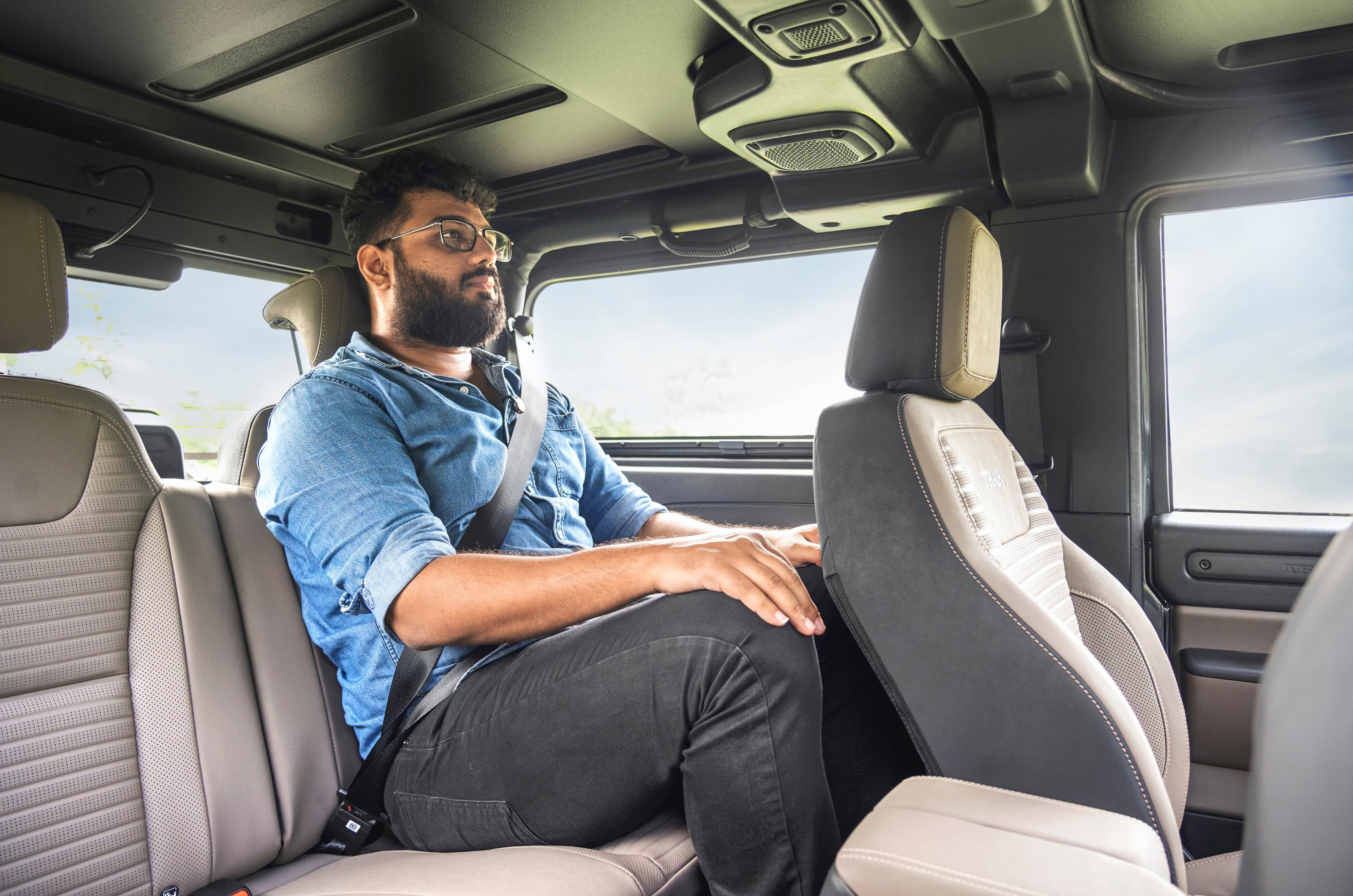
Just enough room in the rear seat; gets AC vents now.
At the rear, space remains as it was, and it is exclusively a two-seater. However, the addition of AC vents, a USB-C port and soft-plastic armrests with cupholders has enhanced comfort. The backrest can recline, and short drives should be easy once you settle in.
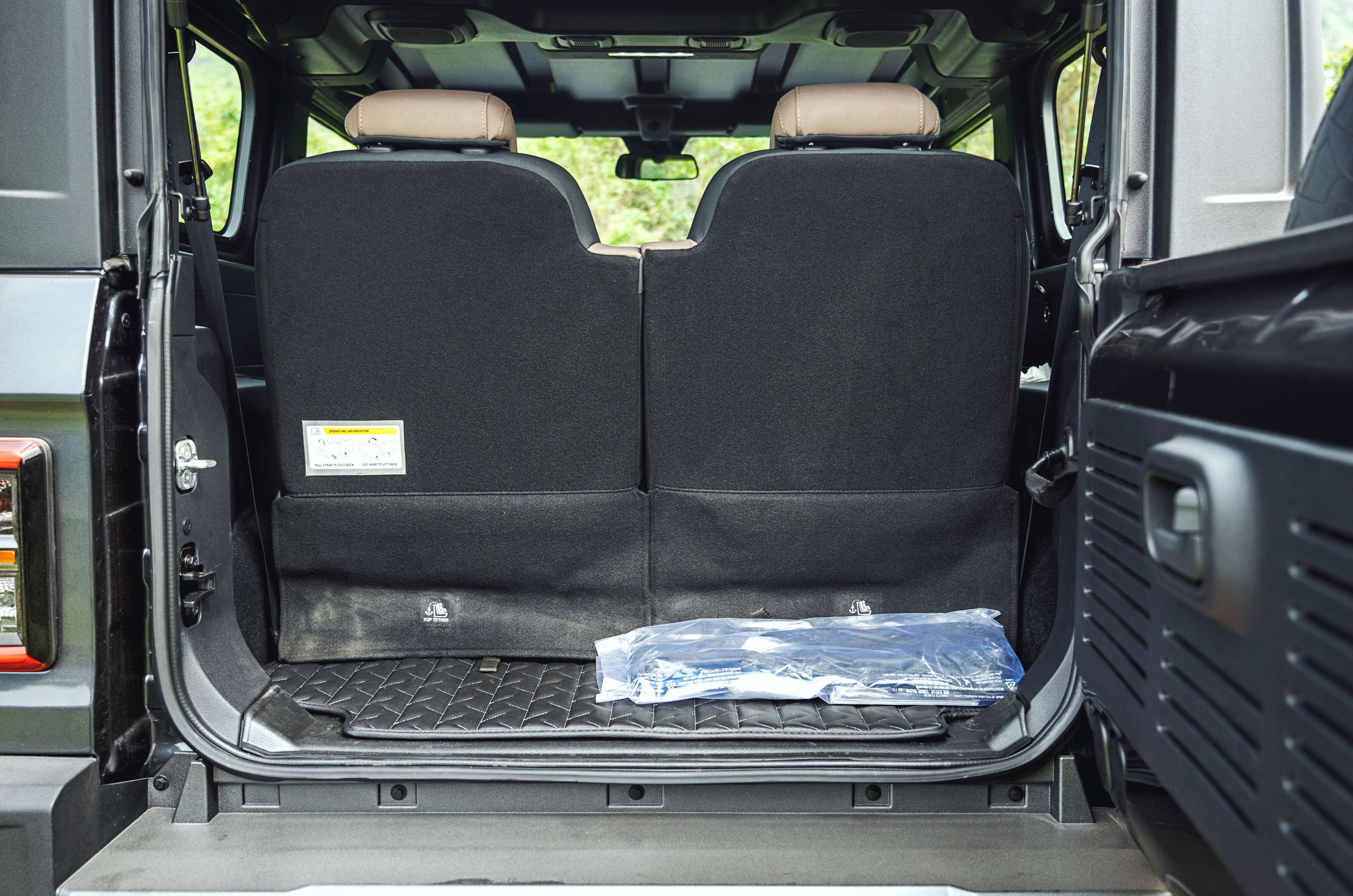
Boot space is still not adequate for long trips or airport runs without folding the second row.
The boot space remains a weak point too, with barely any room for an airport run. Large suitcases will require folding down the second row.
Mahindra Thar OG features and safety – 7/10
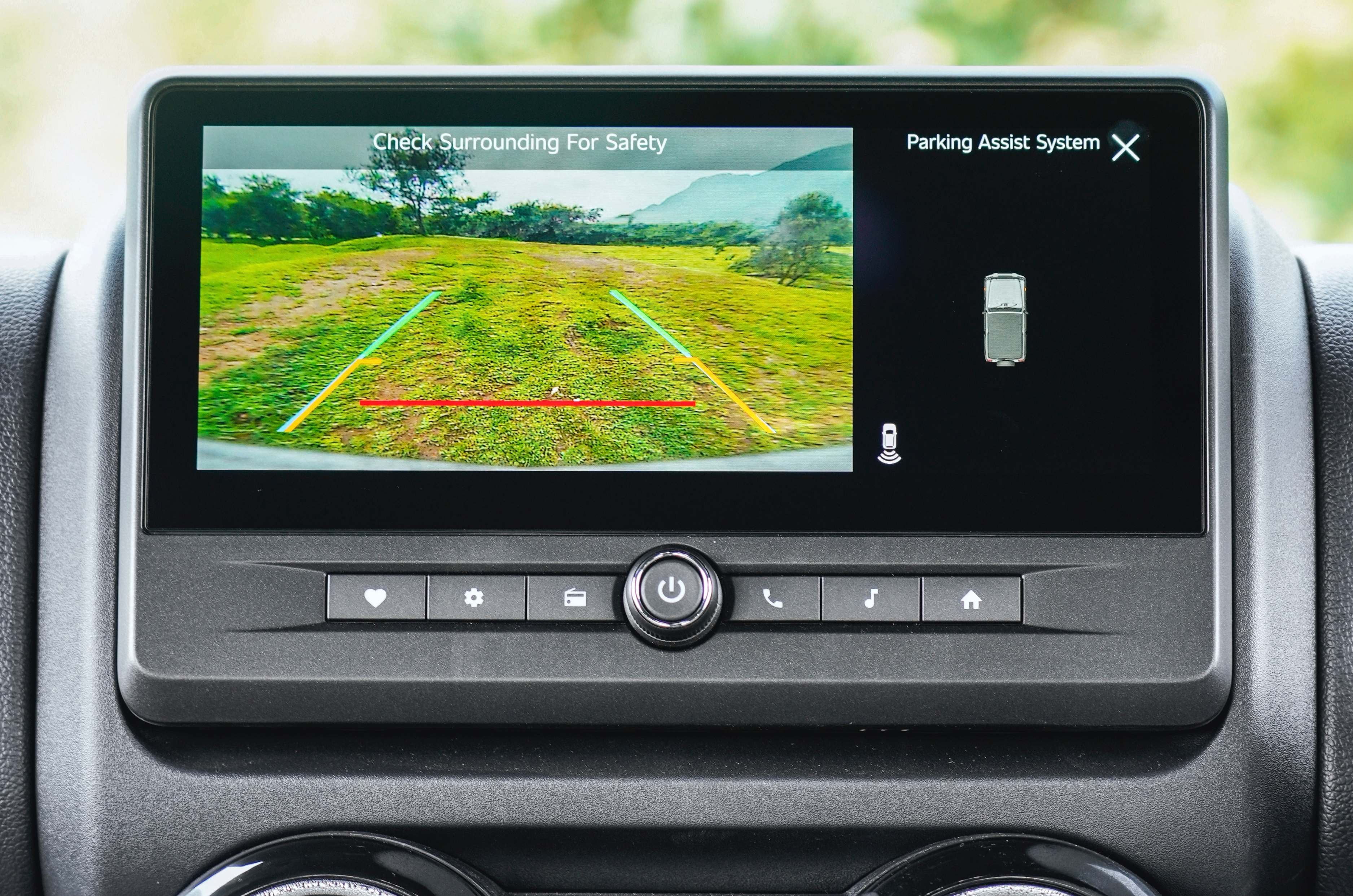
Not the best clarity and misses a 360-degree view, which is essential for off-roading.
The Thar OG isn’t on par with rival mid-size SUVs but does get the essentials this time around. There are grab handles, manual AC controls, a USB-A port for Apple CarPlay since it isn’t wireless, and a USB-C port for charging. Android Auto gets wireless connectivity.
Crucially, the ZXT trim gets six airbags now, with the launch of the new HPTS airbags, which stand for Head, Pelvis, Thorax and Shoulder. There are front parking sensors with a reversing camera now, although, given the Thar’s off-road bias, a 360-degree camera would have been a lot more useful. The ESP also gets a retune for better response, and then there are the big mechanical updates under the skin.
Mahindra Thar OG performance and refinement – 8/10
The bump in power and torque makes it better at highway cruising.
Powering the Thar OG is the same powertrain lineup as before, but with a bump in power and torque for the turbo-petrol engine and the bigger diesel. We had the 2.2-litre diesel engine on test with the six-speed automatic gearbox. The engine now produces 152hp and 330Nm, which is 18hp and 30Nm more than the outgoing unit.
To be honest, the jump in performance is not evident initially, as Mahindra engines have always had a good off-the-line response. Where the power comes in is in the second half of the rev band. Highway cruising at triple-digit speeds is a bit more effortless now, but you wouldn’t enjoy rushing the Thar. Sedate cruising is what it does best.
Highway stability is better now, but over an uneven stretch it still tosses you around.
What Mahindra has also improved is NVH, and the cabin is a bit more muted now. You still hear the diesel drone past 2,500rpm, but overall sound damping has been improved.
The gearbox, too, likes to pace itself, and quick overtakes come at the cost of engine noise. The shifts are smooth but relaxed, and even in manual mode, you don’t get much better response. Enthusiastic driving is not something the Thar enjoys, contrary to the infamous videos circulating online.
Mahindra Thar OG ride comfort and handling – 7/10
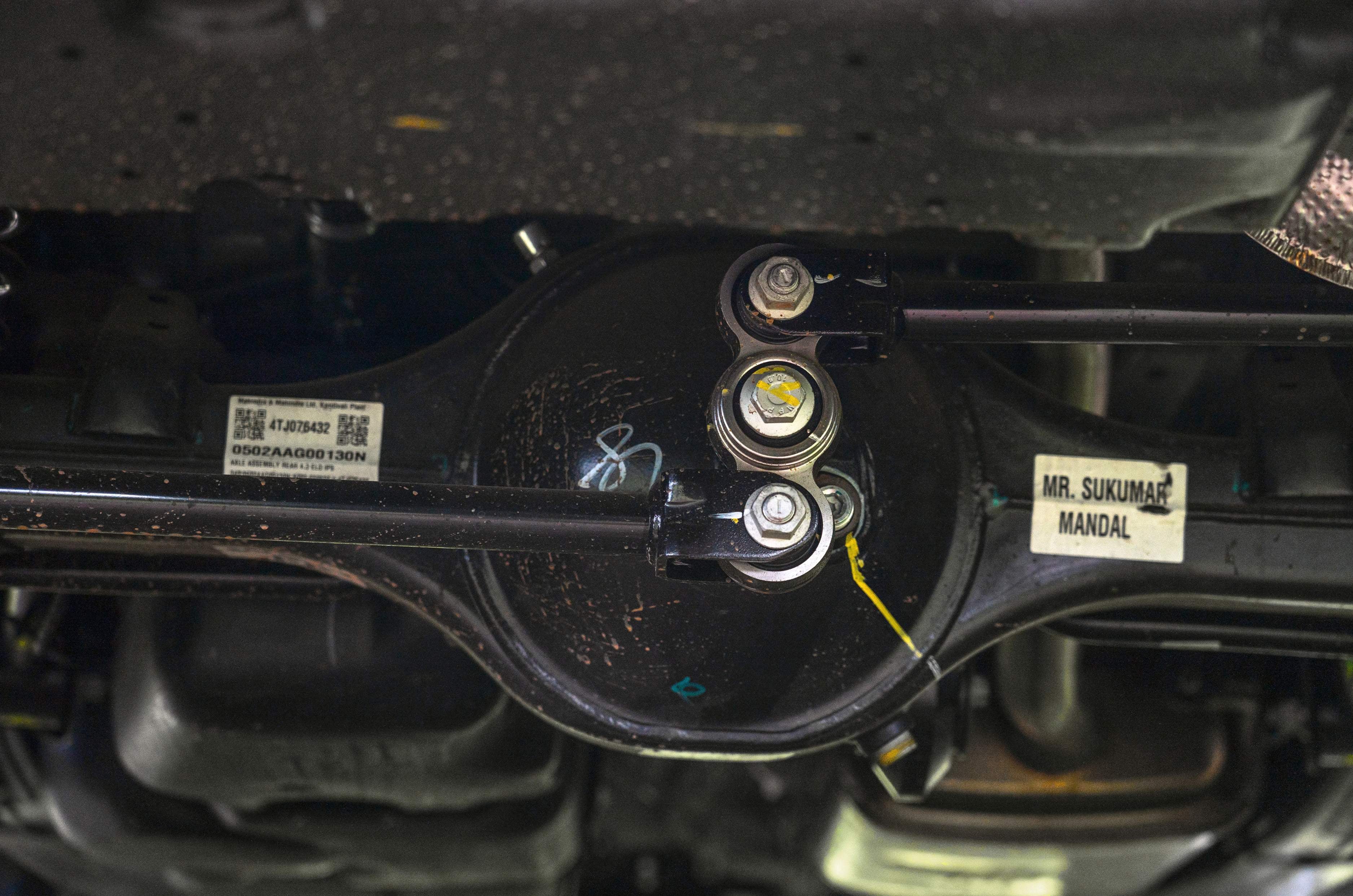
Rear pentalink suspension with Watts linkage for added stability and comfort.
The biggest advances to the Thar OG have taken place under the body. The stiffer Gen 4 chassis is paired with a new Pentalink suspension at the rear, with a Watts linkage and DAVINCI dampers. Frequency-dependent damping, however, is only available on the top-spec trim. But has that improved the Thar on the road? The simple answer is yes.
The Watts linkage is responsible for adding stability at the rear. Imagine you’re pushing a shopping trolley. If one wheel suddenly moves sideways while you hit a bump, the trolley gets wobbly. The Watts linkage basically tells the axle: “You can go up and down, but please stay in the middle.” The effect is less bouncing over uneven highways and bad patches.
The electronic locking differential is now convenient to use, making the Thar just as capable as before.
Then there is the DAVINCI damping that was seen on the XUV 7XO. The thuds coming from sharp, low-speed bumps are now not as harsh and, while it will still toss you around, if you hit a bad bump, it won’t unsettle the car. To add even more comfort with the bigger 19-inch wheels, the ZXT trim also gets frequency-dependent dampers along with the DAVINCI setup. Over a rough patch, you can tell they are working full-time to keep the cabin unfazed.
New gen 4 platform seen on the Roxx now underpins the 3-door Thar.
Now, as sophisticated as all of this is, the Thar OG is still a hardcore body-on-frame SUV at the end of the day. The new tech has certainly improved its on-road manners, but if you want a plush, supple ride, the Thar won’t cut it. A long drive will now be more comfortable, but you will still get knocked awake from your snooze.
Terrain modes work with ESP, throttle control and steering input for maximum assistance while off-roading.
The new EPS, however, has made a huge difference. The amount of effort needed to steer and turn the Thar is no longer a game of might. Under 20kph, the steering is light enough to twirl with just one finger, but as the speed rises, it gains heft so as not to feel uncomfortably light at speed. So, there is no need to wrangle with the steering to make a three-point turn anymore.
Also new and exclusive to the ZXT trim are rear disc brakes, which have added to the stopping power. The bite is stronger, and the Thar feels a lot more confident when slowing down now.
Mahindra Thar OG price and verdict – 8/10
The Thar OG is improved in all areas without sacrificing its character.
With a starting price of Rs 10.32 lakh, the Thar OG is rather tempting. However, for most of the new bells and whistles, you will have to opt for the top-spec ZXT trim, which starts at Rs 13.99 lakh for the 1.5-litre engine with RWD. The diesel-AT version we drove will set you back Rs 18.99 lakh, so you need to be sure of what you want. The Thar OG is mighty capable, has a lot of character and is a lot better in every area than before. But as an everyday car, you’d still want some more practicality, creature comforts and refinement. However, if you are someone who likes to off-road or even just take the long way home with little regard for plushness, there is nothing like the Thar OG under Rs 65 lakh.
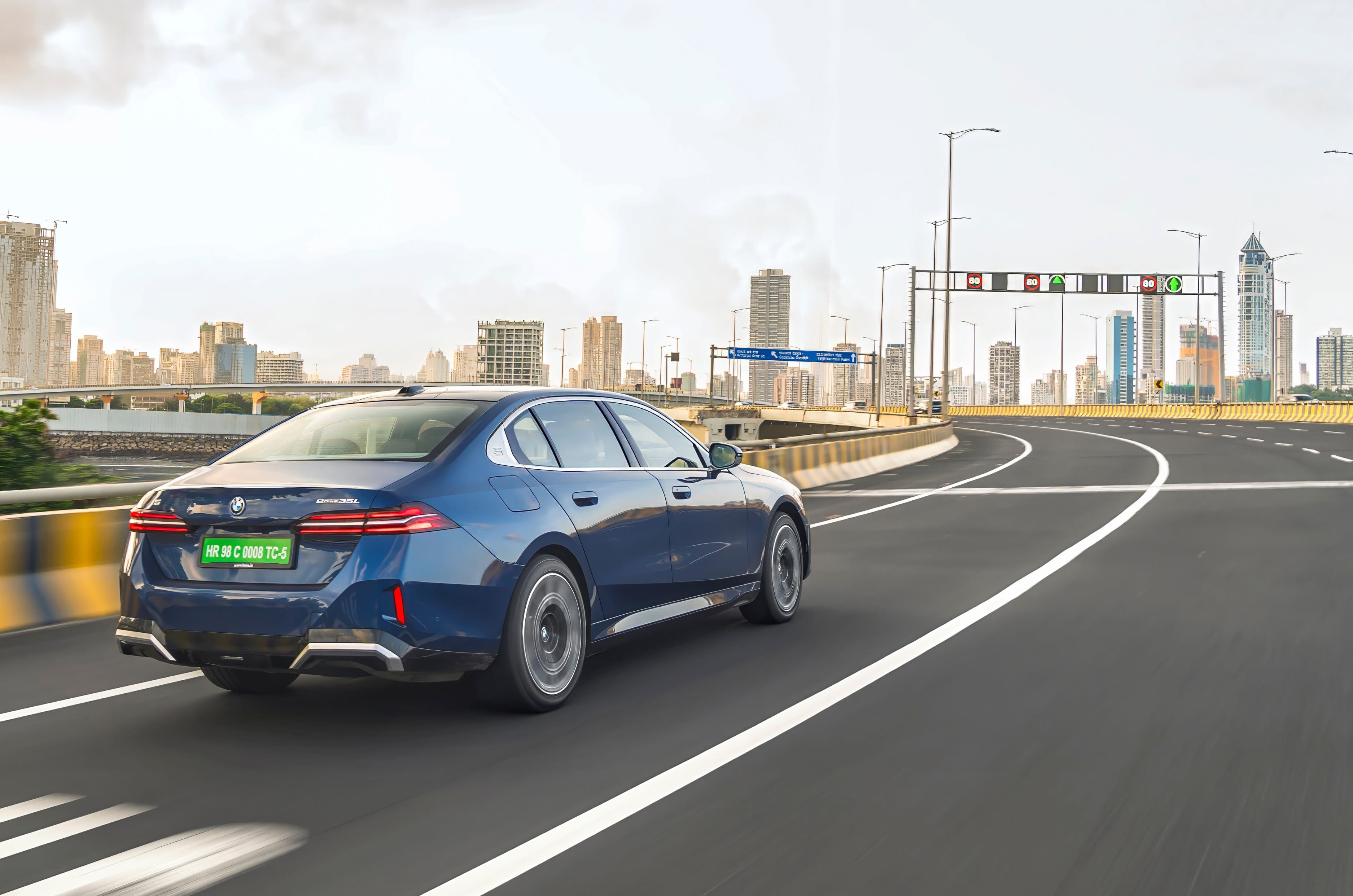
In the first half of 2026, BMW sold nearly 2,400 EVs in India, with the entry-level iX1 and flagship i7 accounting for the bulk of those volumes. Now, BMW has introduced an all-new electric long-wheelbase sedan to bridge the sizable gap between the two. Meet the BMW i5 eDrive35L, the electric counterpart to the 5 Series sedan.
The i5 nameplate isn’t new to India. BMW launched the imported, performance-focused i5 M60 here back in 2024. However, that was a niche offering. This new version is expected to appeal to a much wider audience. Being locally assembled, the i5 eDrive35L is priced at Rs 79.60 lakh, commanding a premium of Rs 3 lakh over its petrol-powered sibling. In this review, we find out what it’s like to live with.
BMW i5 LWB Exterior Design and Engineering – 8/10
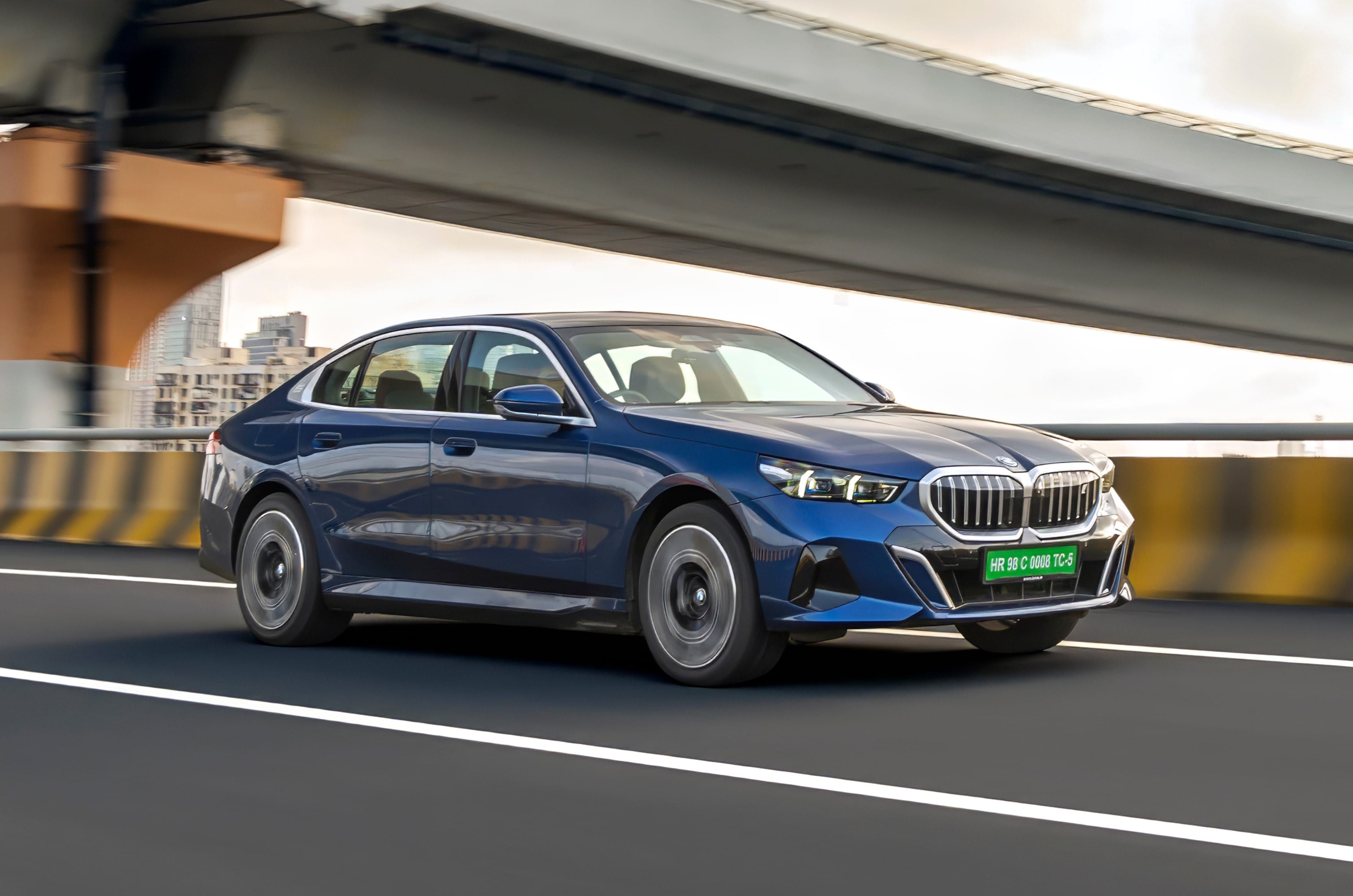
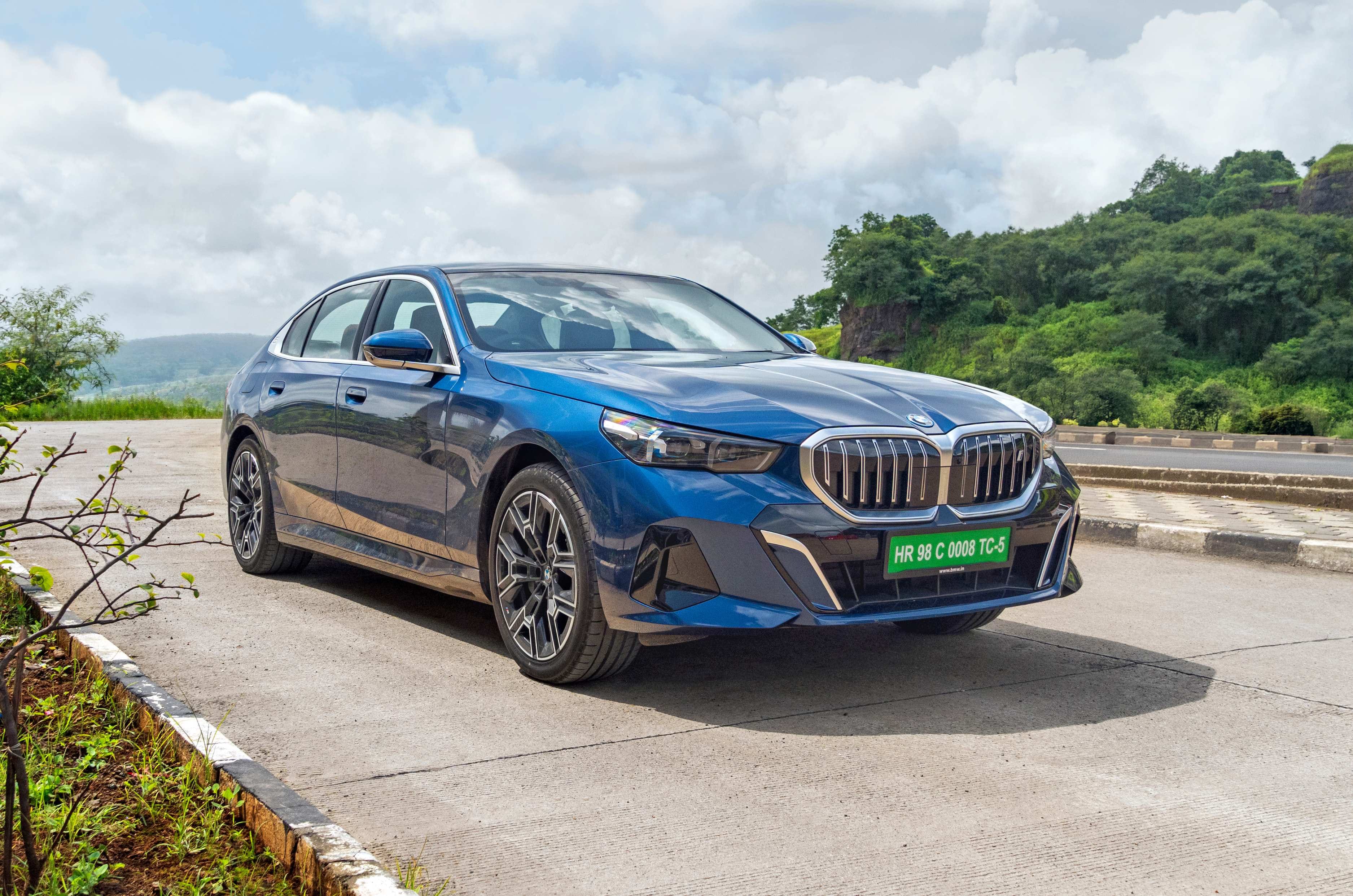
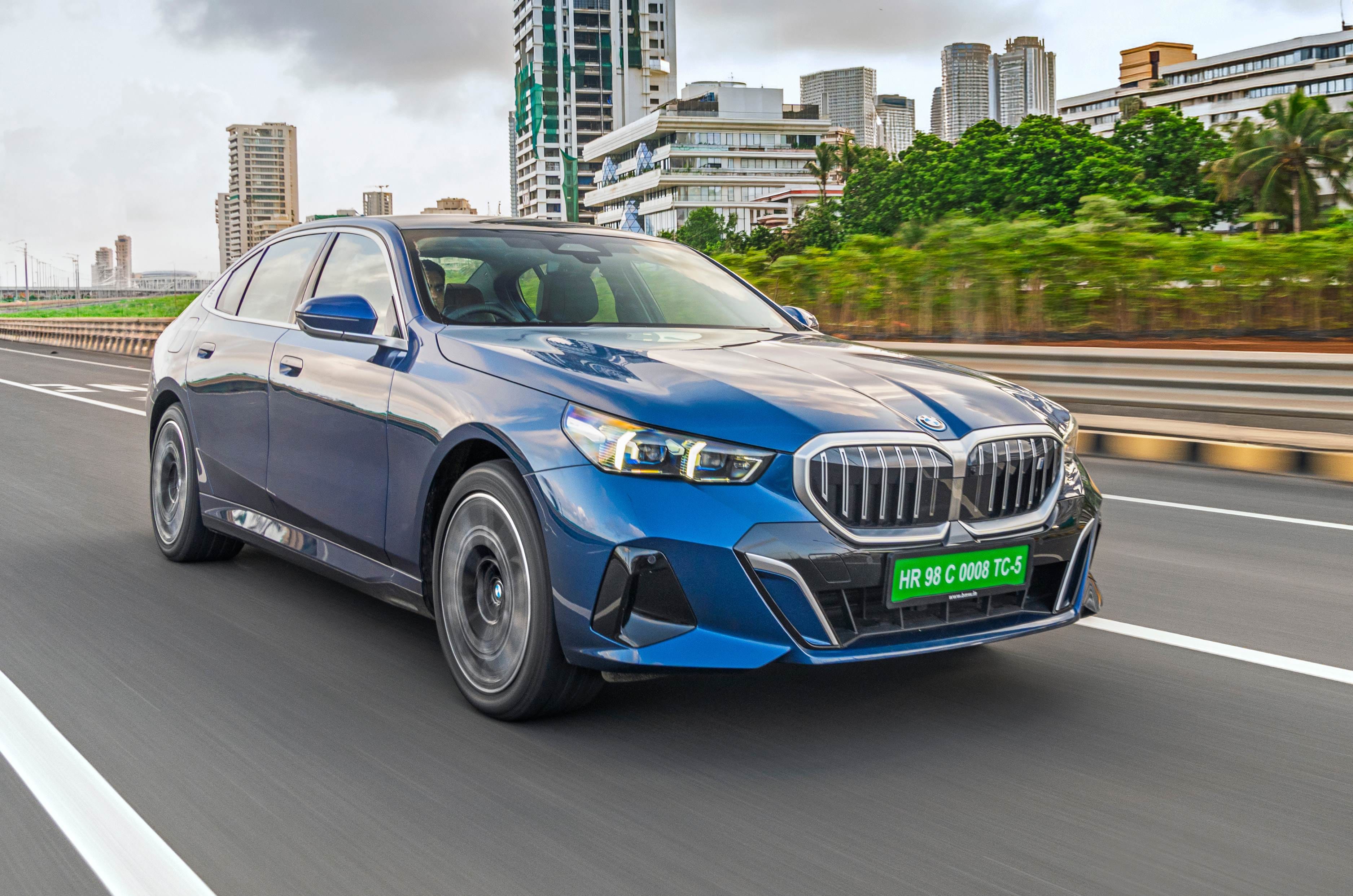
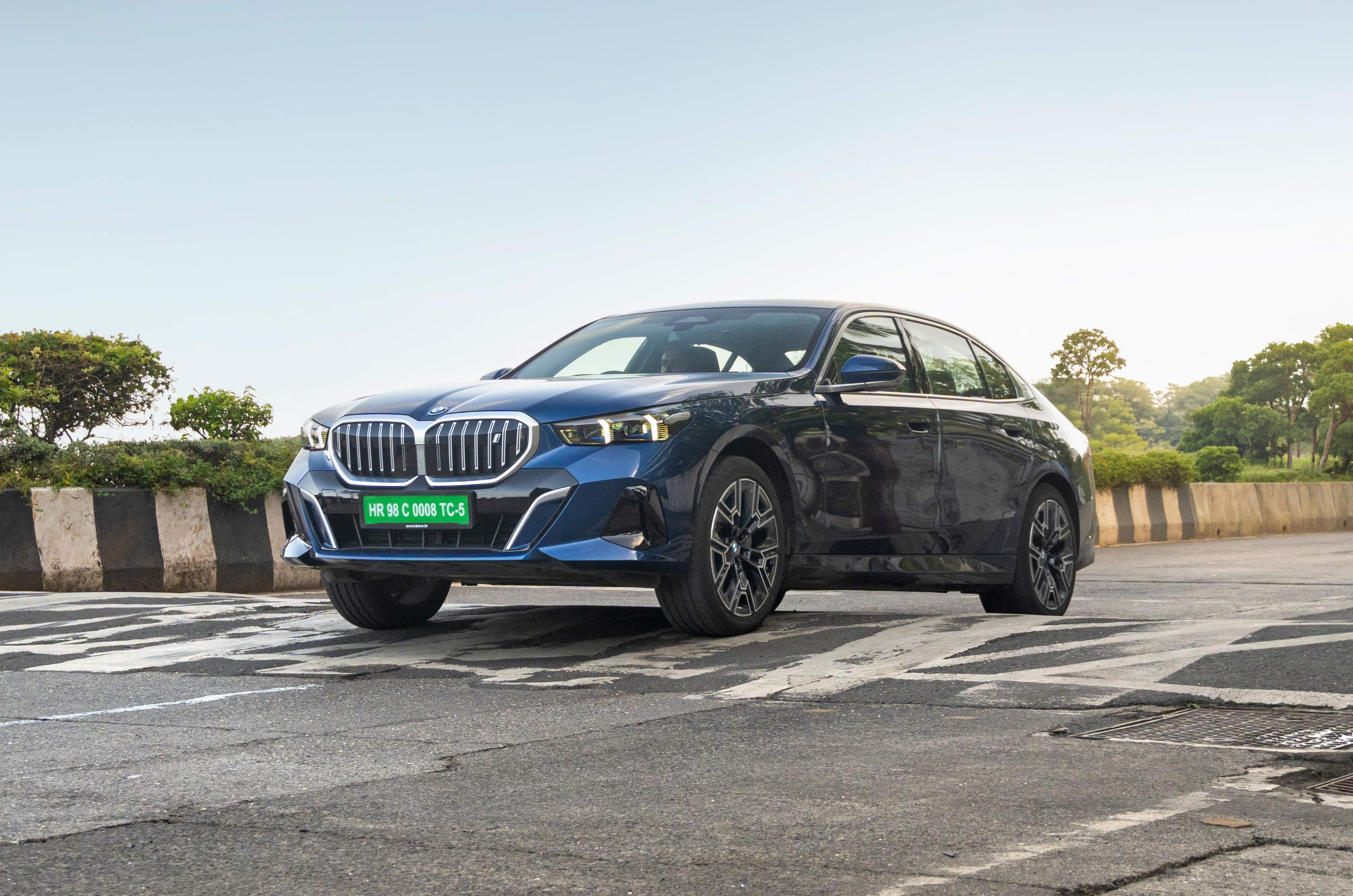
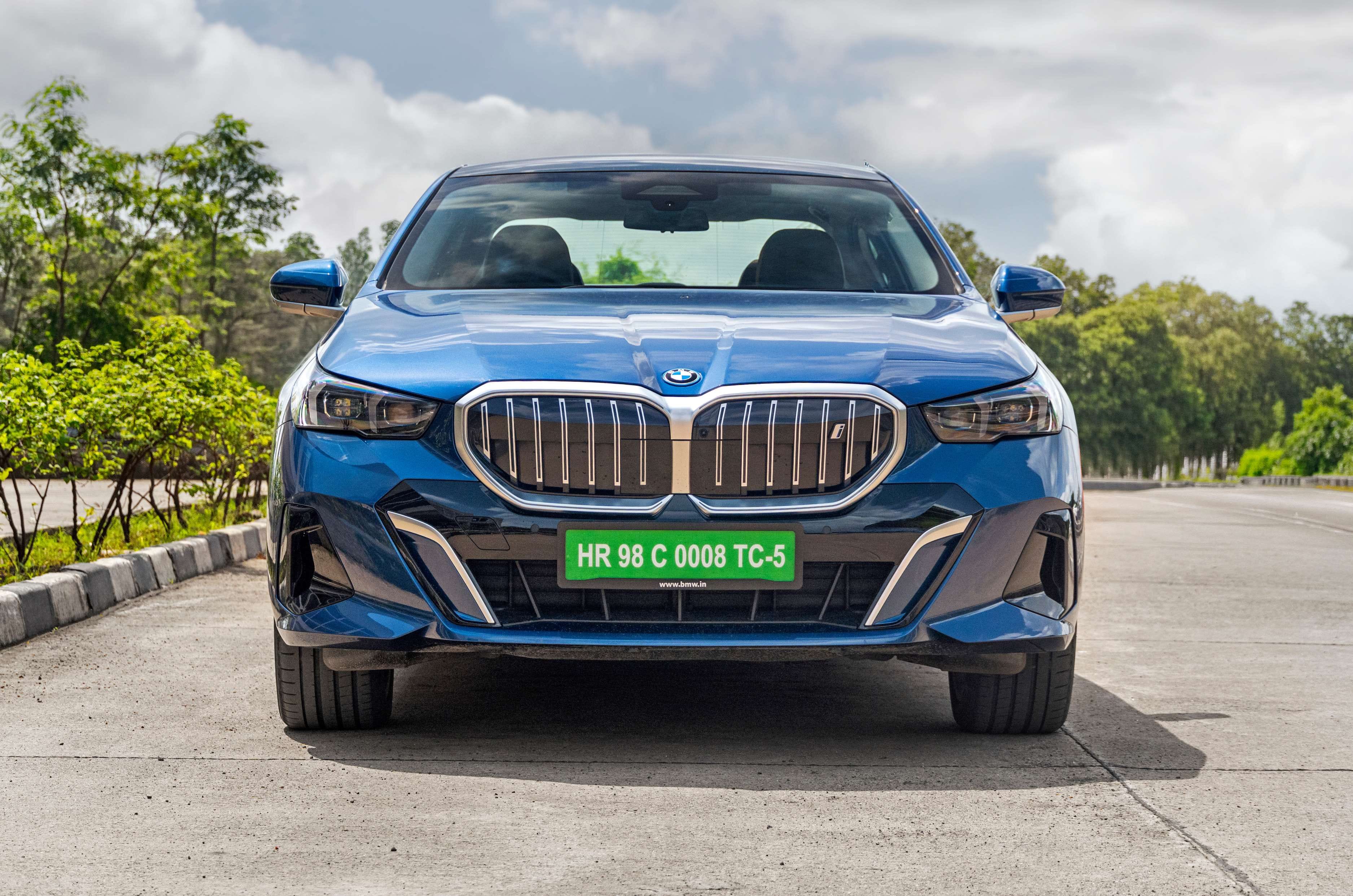
An ‘i’ badge on the grille along with its green number plate differentiate it from its petrol sibling
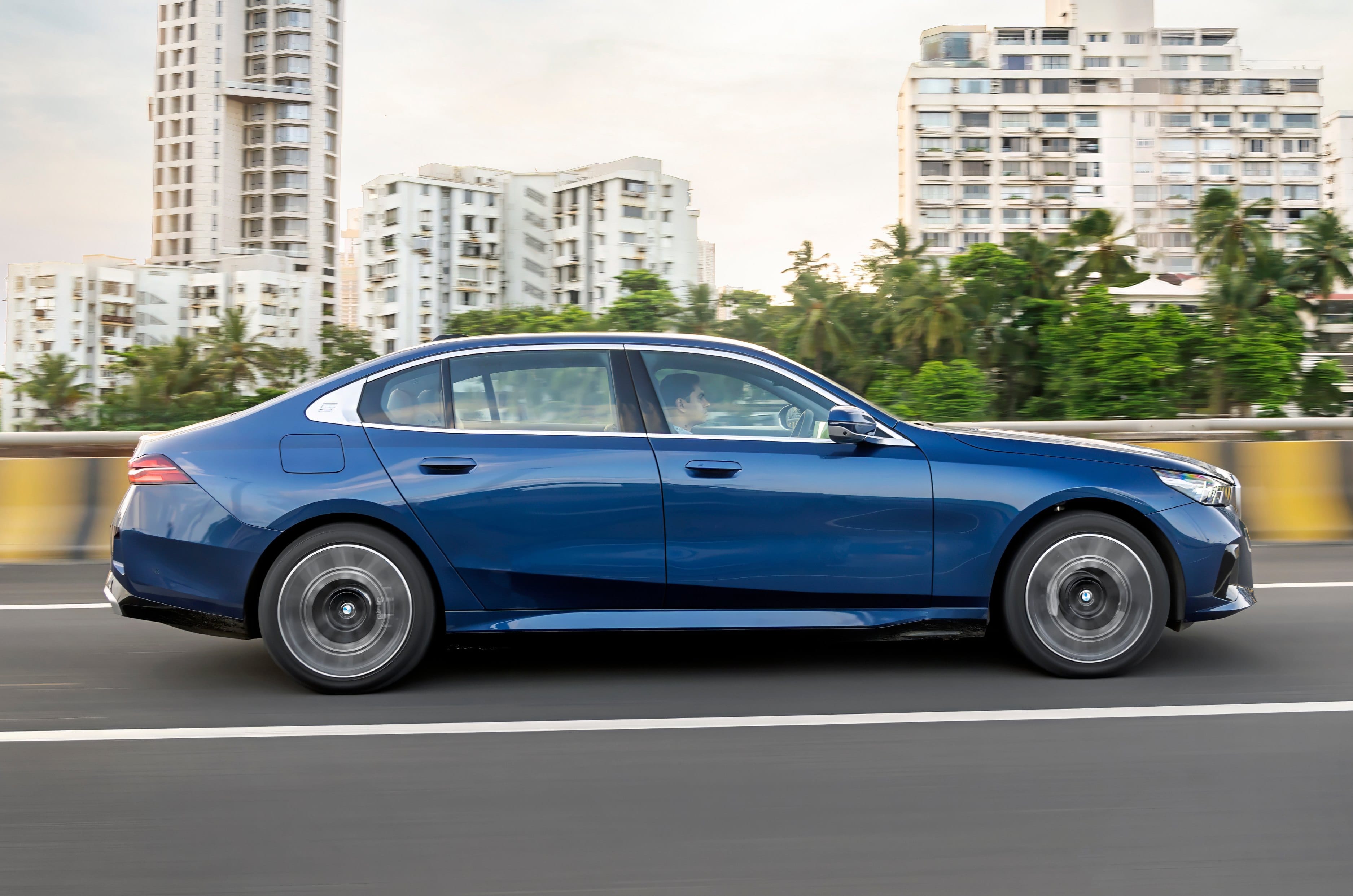
Compared to the international version, this i5’s wheelbase has been stretched by 110mm to 3,105mm, while overall length now stands at 5,175mm. Interestingly, the 5 Series is larger than its chief rival, the Mercedes-Benz E-Class, in every dimension.
As for styling, this generation of the 5 Series has been around since 2024 and much like most modern BMW designs, it’s something that grows on you with time. That said, there’s no denying that it’s a polarising design. The numerous cuts, heavy surfacing and intricate detailing make it look busy and excessive to some eyes.
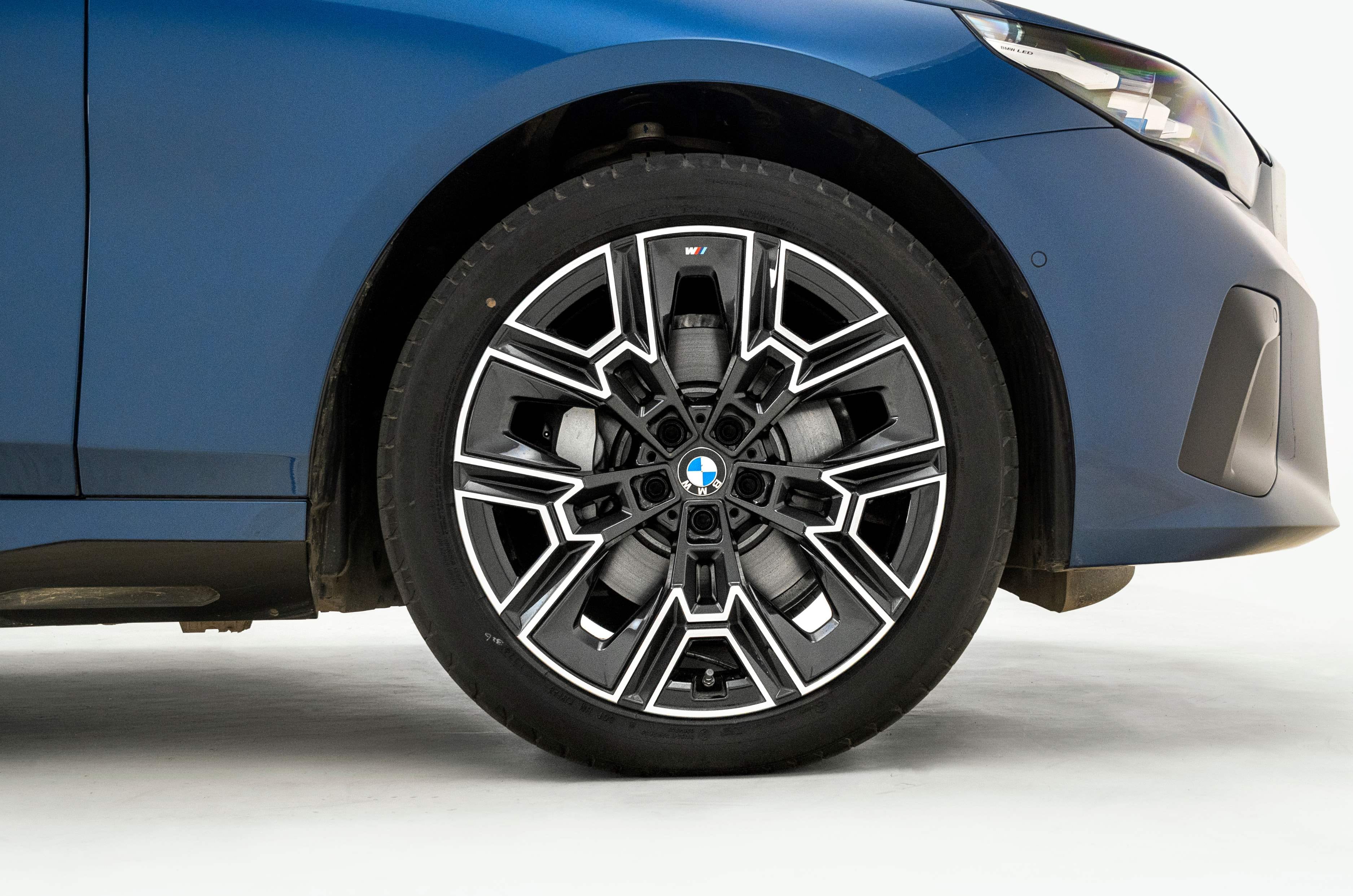
Gets large 20-inch alloys which look far more proportionate than the 18-inch wheels initially available with the 530Li.
Differentiating the i5 from its petrol-powered counterpart are an ‘i’ logo on the grille and larger 20-inch alloy wheels. The latter look far more proportionate than the 18-inch wheels initially offered on the 530Li. At the rear, the only distinguishing elements are the i5 and eDrive35L badges, apart from the obvious giveaway – the green number plate.
BMW i5 LWB Interior Space and Comfort – 9/10
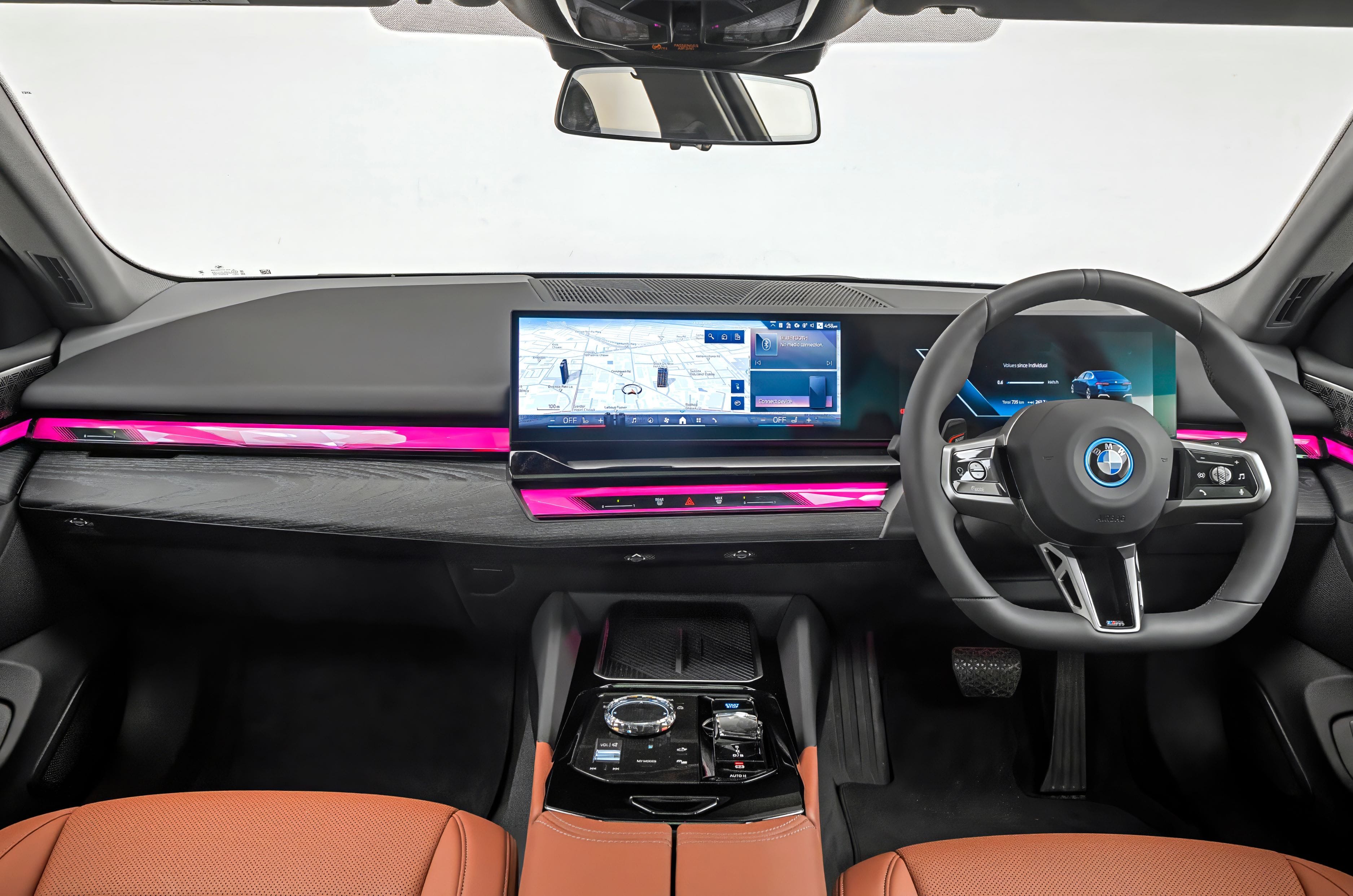
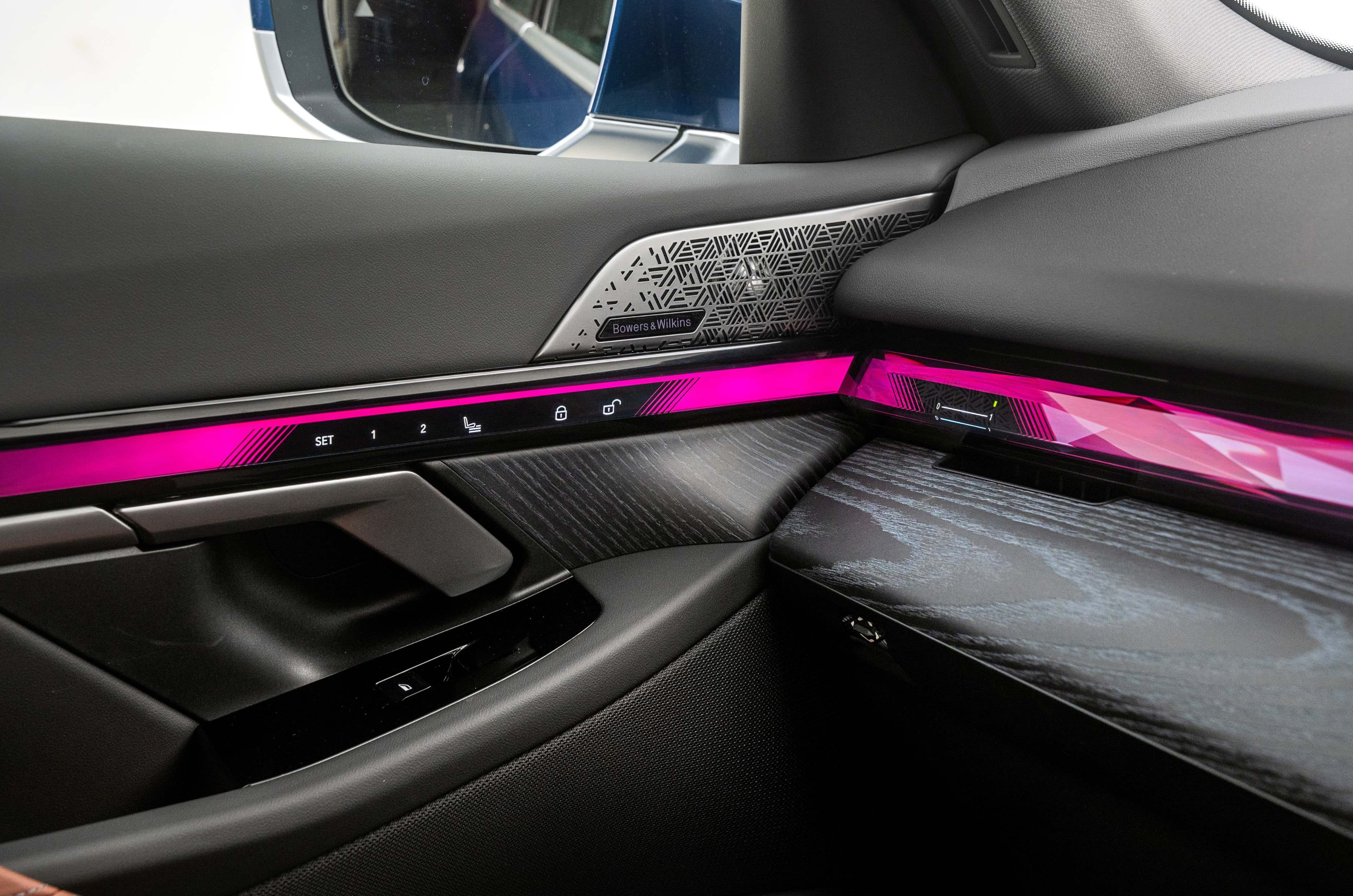
Dash is dominated by BMW’s twin curved screens, a flat-bottomed steering wheel and generous ambient lighting.
Step inside and the dashboard is dominated by BMW’s twin curved-screen setup, complemented by a flat-bottomed steering wheel, generous ambient lighting, and a tasteful mix of open-pore wood trim and silver inlays. The crystalline drive selector, rotary infotainment controller and volume roller on the centre console add a welcome sense of occasion.
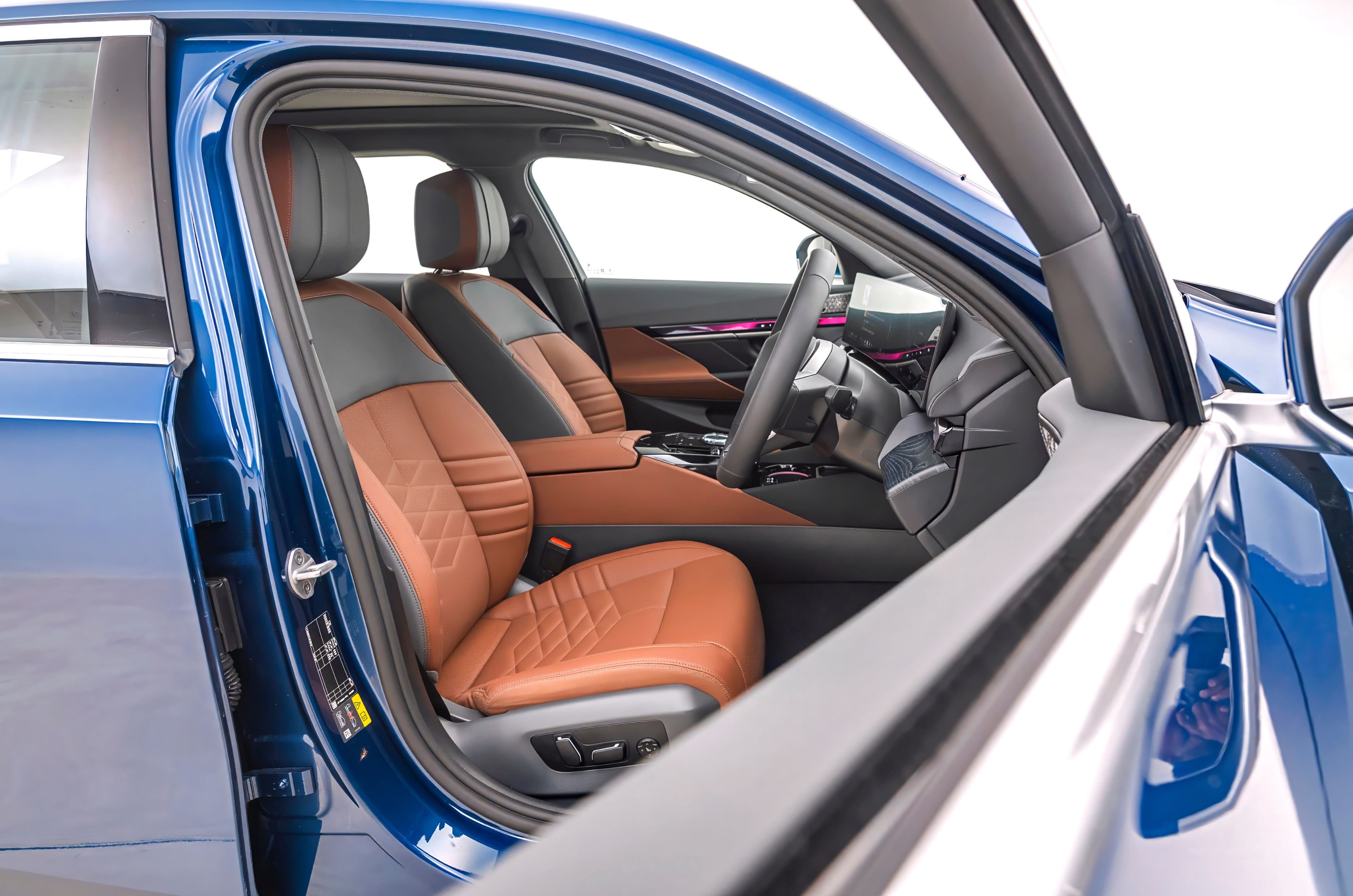
Those familiar with older 5 Series models will quickly notice the absence of the manually adjustable thigh support for the front seats. That aside, the seats themselves are exceptionally comfortable and supportive, and they also feature ventilation.
The seats are exceptionally comfortable and supportive, and they also feature ventilation.
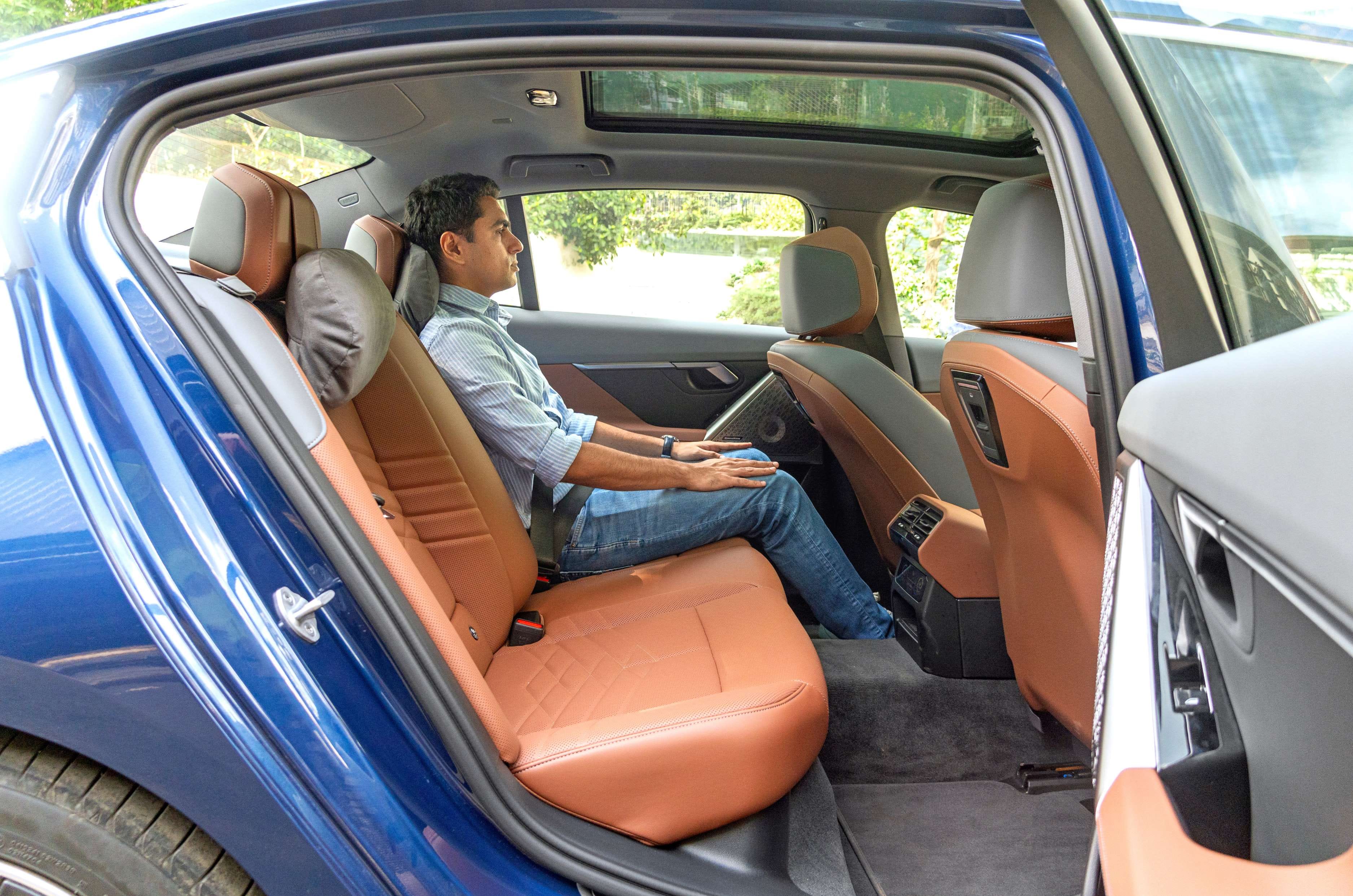
Being the long-wheelbase version, the i5 benefits from an additional 4.3 inches of wheelbase compared to the international model, resulting in noticeably more rear legroom. Sure, the floor sits higher than in the ICE version, but this remains a very comfortable place to be for chauffeur-driven buyers. The rear bench is well contoured and, with just two occupants, delivers a genuinely luxurious experience. Some may find the pillows a little excessive, and they aren’t quite as comfortable as the integrated units in the E-Class. Speaking of which, unlike the Mercedes, the i5’s rear seat doesn’t recline, and there are arguably too few indulgent touches to truly cater to chauffeur-driven buyers.
A bit knees-up, but the rear seat feels luxurious; however, there are too few amenities for chauffeur-driven buyers.
The middle seat is considerably less accommodating. The raised seat base compromises headroom, the backrest is firm, and the tall central tunnel further detracts from comfort for a third passenger.
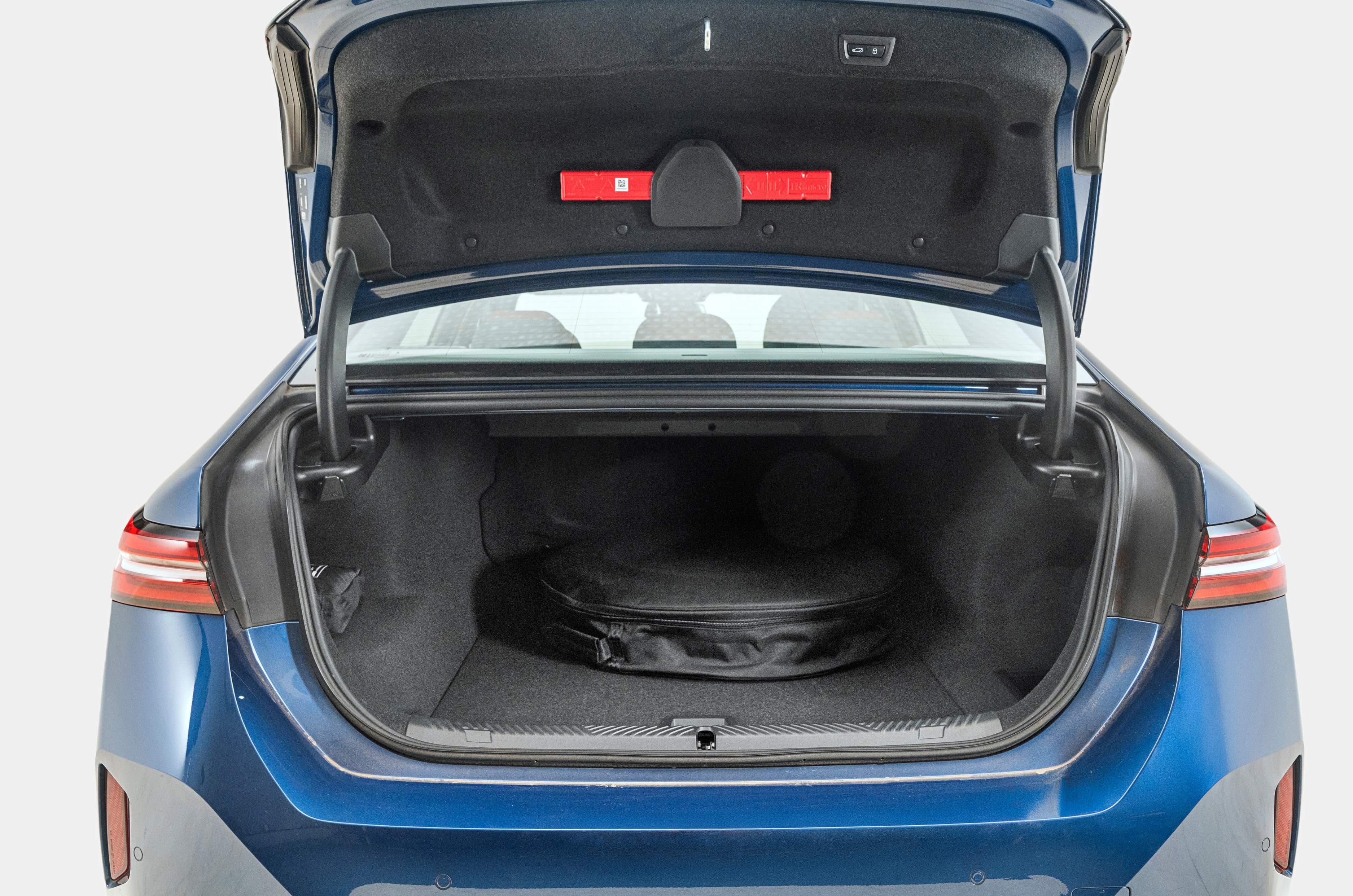
Boot space is rated at 500 litres, which is broadly similar to the ICE 5 Series. However, while the spare wheel is neatly tucked beneath the boot floor in the petrol version, it sits on the boot floor in the i5, significantly compromising usable luggage space.
The spare wheel sits on the boot floor, significantly compromising usable luggage space.
BMW i5 LWB Features and Safety – 8/10
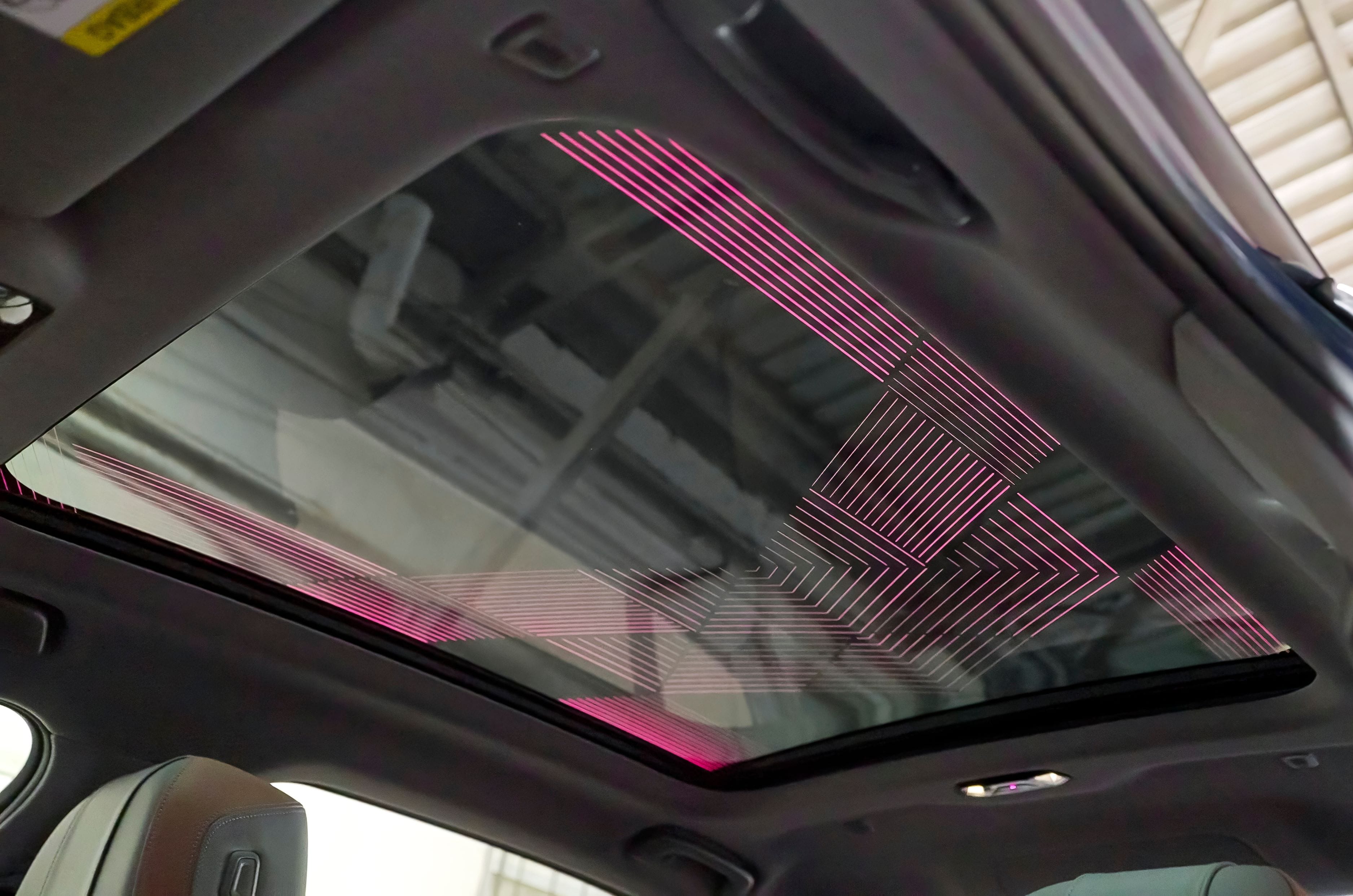
The i5 eDrive35L comes generously equipped. Highlights include 20-inch alloy wheels, adaptive LED headlamps, powered and ventilated front seats, four-zone climate control, wireless charging pads for both front and rear occupants, a panoramic fixed glass roof, ambient lighting and a powered boot lid.
Audiophiles will particularly appreciate the superb 17-speaker, 655W Bowers & Wilkins audio system.
The curved touchscreen and digital instrument cluster look suitably futuristic, although the user experience isn’t the most intuitive due to the number of menus and sub-menus. On the plus side, the 360-degree camera offers excellent clarity. Audiophiles will particularly appreciate the superb 17-speaker, 655W Bowers & Wilkins audio system.
The i5 also gets a comprehensive suite of driver assistance features, including adaptive cruise control, lane-keeping assist and autonomous emergency braking.
Its fixed panoramic glass roof has unique embedded LED lighting.
However, there are a few omissions that chauffeur-driven buyers may find difficult to overlook. A head-up display is absent, while smaller but genuinely useful features such as rear window sunshades, reclining rear seats, soft-close doors, a boss mode for the front passenger seat and rear-seat audio controls are all missing.
BMW i5 LWB Performance and Refinement – 8/10
The rear-wheel-drive i5 eDrive35L uses a single electric motor producing 272hp and 410Nm, figures that are remarkably similar to the mild-hybrid 530Li. However, the way it delivers its performance is entirely different. With peak torque available instantly, responses are smooth, effortless and distinctly EV-like. There are multiple drive modes on offer, each altering throttle response. Sport sharpens reactions noticeably, while Efficient is the most relaxed and efficiency-focused setting.
Retains a 50:50 weight distribution and RWD layout, but it has lost the sharpness and precision of earlier generations of the 5 Series.
BMW claims a 0-100kph time of 6.7 seconds, although our best run yielded 6.99 seconds. Interestingly, the 530Li is marginally quicker, recording 6.45 seconds for the same sprint, and it is also slightly faster in our 20-80kph and 40-100kph acceleration tests.
The i5’s top speed is rated at 195kph, although acceleration begins to taper off noticeably beyond 100kph. In short, acceleration isn’t neck-snappingly quick, but there’s more than enough performance to keep things entertaining within legal limits.
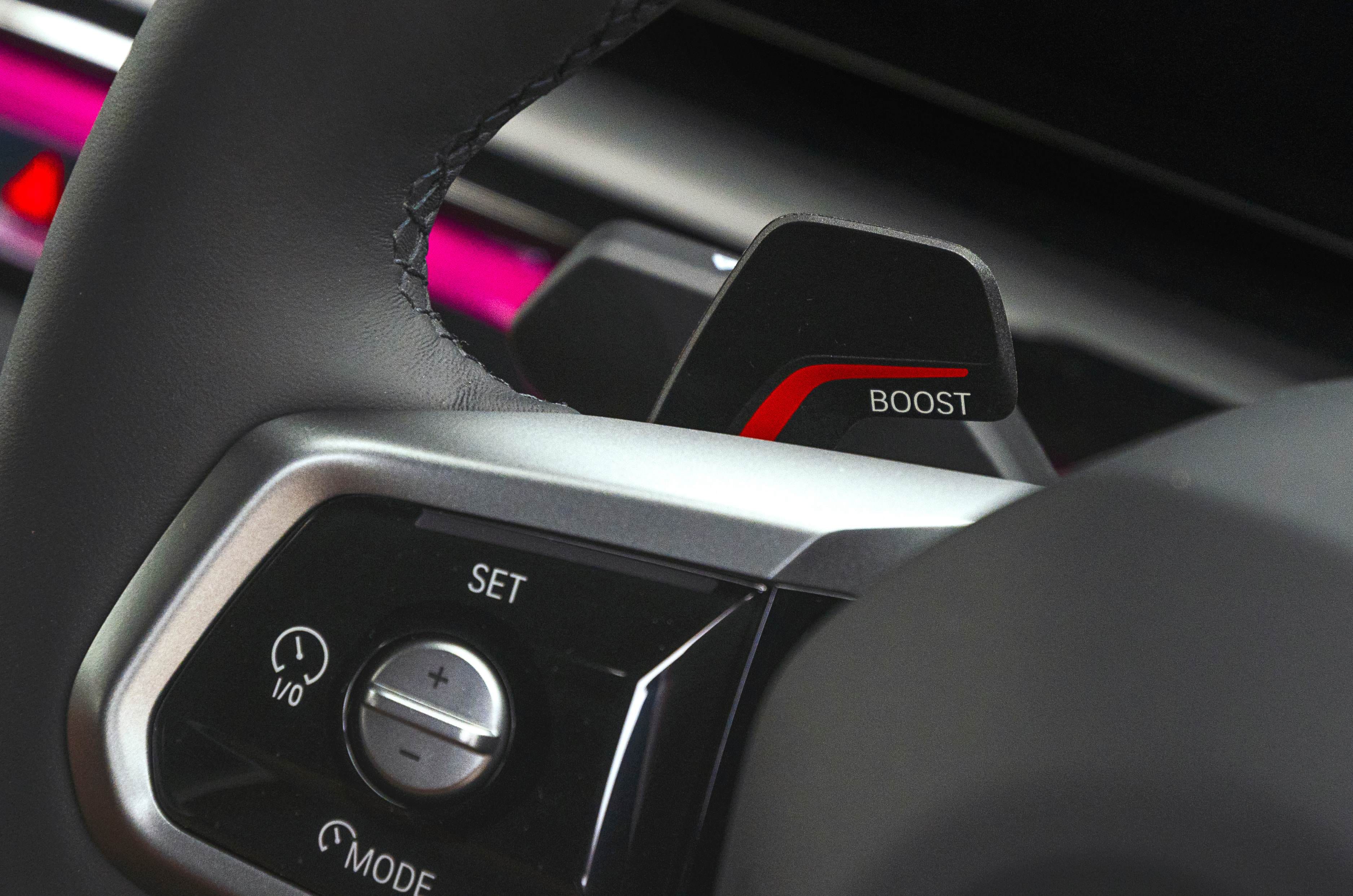
Boost function unlocks the motor’s full potential for 10 seconds. If your’re already in Sport mode, it barely makes any difference.
The i5 also offers multiple regenerative braking settings, including Adaptive, High, Mid and Low. Of these, Adaptive stands out for its excellent calibration, intelligently varying regeneration and coasting based on traffic and road conditions. There’s also a dedicated one-pedal ‘B’ mode, selectable via the drive selector. It delivers regeneration comparable to the High setting but, unlike it, can bring the car to a complete stop without requiring any brake pedal input.
Braking performance itself is strong, although keen drivers may wish for a little more feel from the pedal. The transition between regenerative and mechanical braking leaves it feeling somewhat numb.
BMW i5 LWB Range and Efficiency – 6/10
BMW claims the i5’s 81.6kWh battery (net capacity is 76.3kWh) can deliver a range of up to 669km, a figure that appears rather optimistic. In our real-world range tests, the i5 eDrive35L returned an average efficiency of 5.06km/kWh, translating to an estimated range of 386km. It’s worth noting that the car was driven in its most efficiency-focused ‘Efficient’ mode throughout the test, with regenerative braking set to Adaptive.
We also connected the battery to a 60kW DC fast charger, where it took 47 minutes to charge from 20-80 percent state of charge. BMW additionally supplies a complimentary AC wallbox charger along with installation.
BMW i5 LWB Ride Comfort and Handling – 8/10
Ground clearance has been increased by 18mm compared to the international version; hence, it clears most speedbreakers easily.
With every successive generation, the 5 Series has become softer and more comfort-focused, and the i5 is arguably the most luxurious iteration yet. Despite riding on larger 20-inch wheels with lower-profile tyres than the petrol-powered 530Li, ride quality is seriously impressive. The i5 feels plush and remarkably absorbent over typical urban roads. Notably, it also benefits from rear air suspension, a feature absent on the 530Li.
In addition to the extended wheelbase, BMW has increased ground clearance by 18mm compared to the global standard-wheelbase model. The result is a luxury sedan that’s far better suited to Indian conditions. Even with four occupants on board, the i5 clears most speed breakers without drama. As a luxury car, then, it unquestionably gets the fundamentals right.
With a plush ride and increased ground clearance, the i5 is far better suited to Indian conditions.
However, the softer suspension setup and increased ground clearance have diluted some of the driver-focused character that defined earlier generations of the 5 Series. While it retains a near-perfect 50:50 weight distribution and rear-wheel-drive layout, there’s no escaping the fact that, in prioritising comfort and practicality, BMW has sacrificed a measure of the sharpness and precision that once made the 5 Series a benchmark for driving enthusiasts.
BMW i5 LWB Price and Verdict – 8/10
At Rs 79.60 lakh, the locally assembled i5 LWB has all the ingredients to become BMW India’s next EV success story alongside the iX1. With the i5 eDrive35L, BMW continues its successful long-wheelbase formula, maximising cabin space while building upon the strengths of the petrol-powered 5 Series, with which it shares much of its cabin, equipment and overall character. Buyers can also opt for extended warranty and prepaid maintenance packages of up to 10 years, in addition to the standard eight-year battery warranty.
Generous cabin space, comfy seats, a plush ride, and effortless performance make the i5 eDrive35L a compelling electric luxury sedan
That said, much like its petrol-powered sibling, some of the traditional 5 Series driving feel has been diluted. It also misses a few feel-good features, particularly those aimed at rear-seat occupants. More importantly, the spare wheel’s placement on the boot floor significantly compromises luggage-carrying ability.
So, is it worth paying the Rs 3 lakh premium over the petrol-powered 5 Series? The answer largely depends on your usage. The i5 eDrive35L makes sense for buyers registering it under a company name, thanks to the higher depreciation benefits available for EVs. It also suits those who cover significant distances and can take advantage of lower running costs. Generous cabin space, comfortable seats, a plush ride, respectable range and effortless performance make the i5 eDrive35L a compelling electric luxury sedan for buyers shopping in this segment.
It’s not every day that a new brand enters the Indian market, but by the end of this year, we’ll have two – JSW and Denza. Last month, we exclusively reported on Denza’s intention to enter India, and now we bring you all the additional juicy details.
A little bit about the brand first. Founded in May 2010 as a joint venture between BYD and Daimler AG (now Mercedes-Benz Group AG), the company announced its brand name ‘Denza’ two years later. Mercedes has since exited the partnership, and in 2022, BYD repositioned the brand and is generally concentrating its efforts at the higher end of the market.
In India, Denza will be positioned above BYD’s existing portfolio, with products at around Rs 80 lakh and above, while BYD will occupy the Rs 20 to Rs 80 lakh space. Leading Denza’s charge will be two models, the Z9 GT high-performance fastback and the D9 luxury MPV. Both will be brought in as completely built-up units.
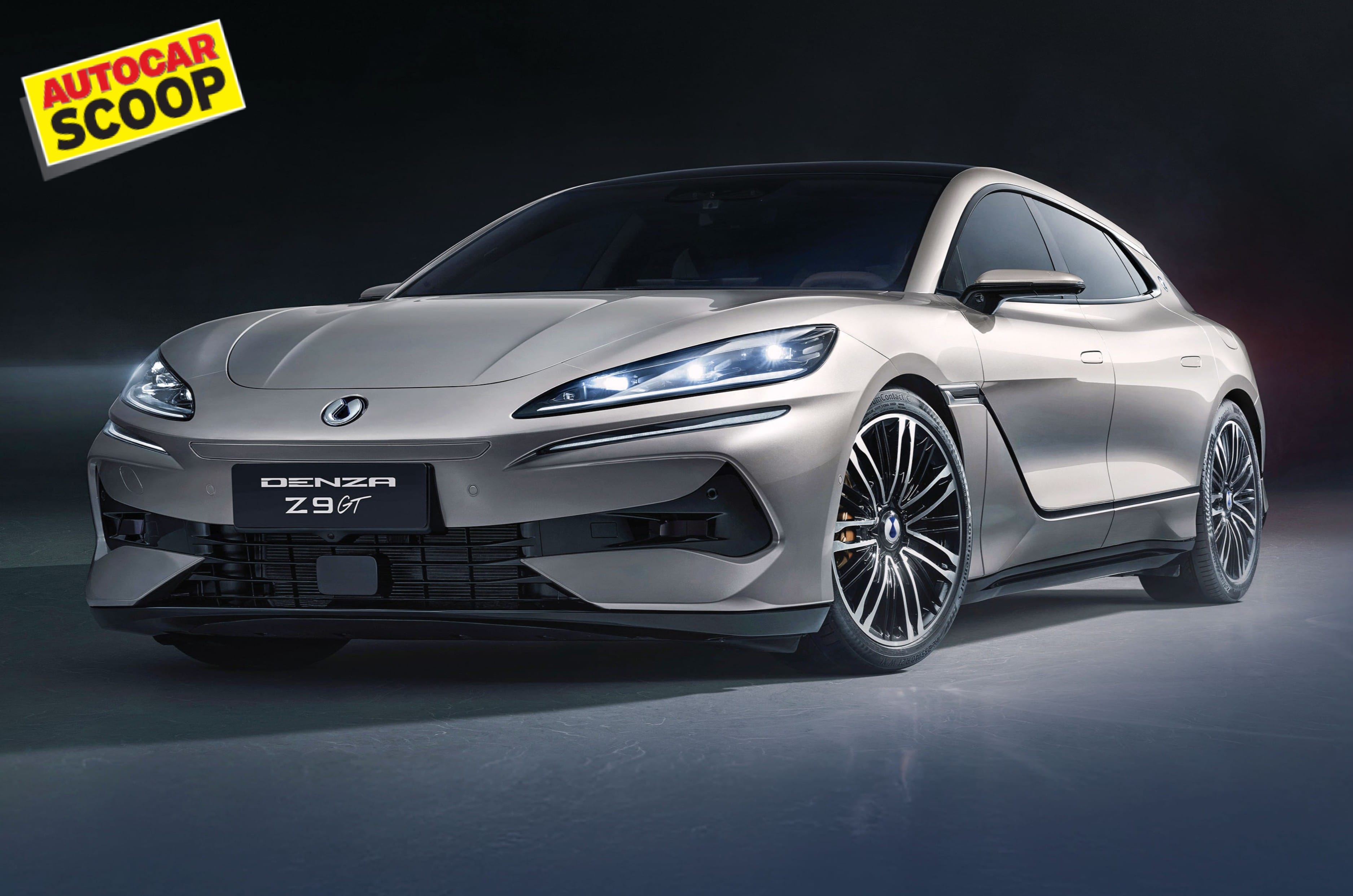
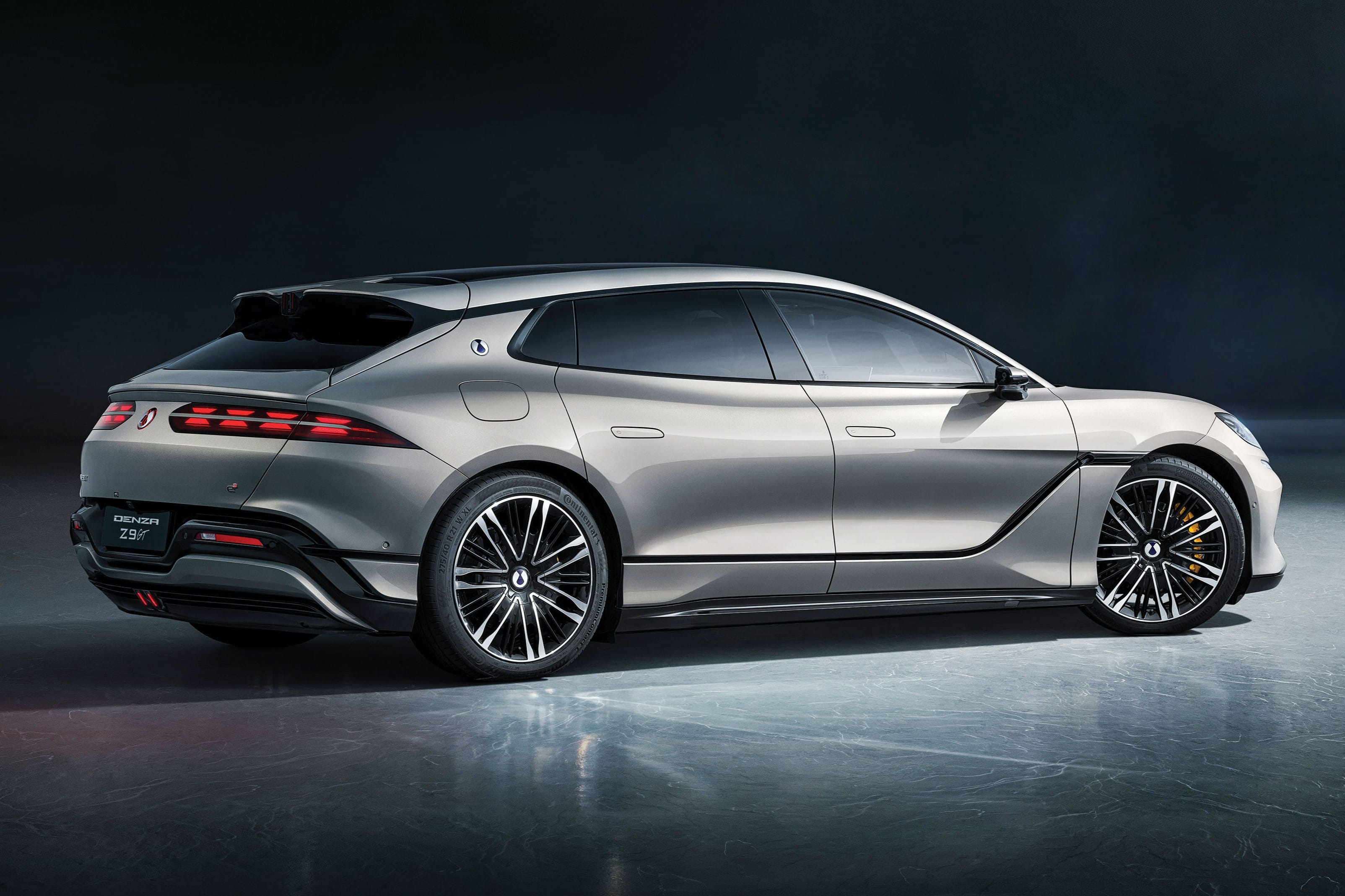
The Z9 GT is Denza’s take on a fastback or, as the company puts it, a shooting brake with four-door practicality. It has both EV and PHEV options globally, but for India, we’ll get just the electric version, and its numbers are staggering. It weighs 2.9 tonnes, puts out a colossal 1,156hp from three electric motors (one at the front and two at the rear), that propel it from 0-100kph in 2.7sec and on to a top speed of 270kph. The only modest number is the range, which stands at 600km on the combined WLTP cycle. Charging, though, is super quick, with the company’s 1,500kW Flash ultra-fast charging that can take the GT’s 122.5kWh battery from 10 to 97 percent in just nine minutes. It stops at 97 percent to preserve the life of the battery. Expect to pay premium pricing for this level of performance, though; the GT would retail in India somewhere in the Rs 1.2 to 1.5 crore mark.
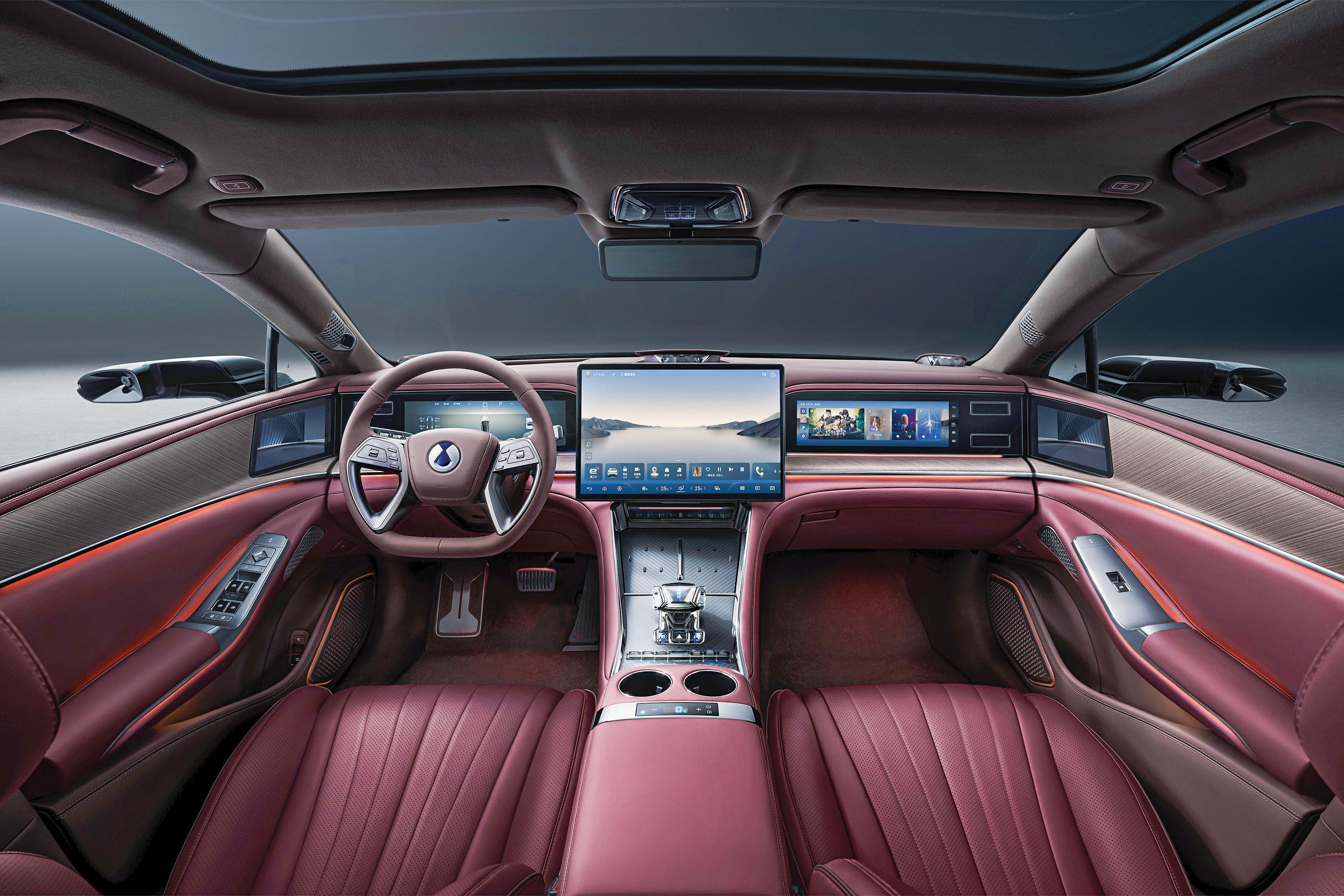
Five screens dominate dash; flank screens are for outside rear-view camera feed.
Here too, there’s a cell-to-body construction that integrates the blade cells directly into the vehicle structure, plus rear-wheel steering with a sideways crab-crawl ability, buttons to open and close power doors and, of course, Level 2+ ADAS. Inside, the GT seats five and pampers the four outer passengers with adjustable under-thigh support, heating, cooling, and massage functions, and the rear seats also recline. As with so many EVs today, the dashboard is dominated by screens, five in total, with two on the flanks for the outside rear-view ‘mirror’ camera feed.
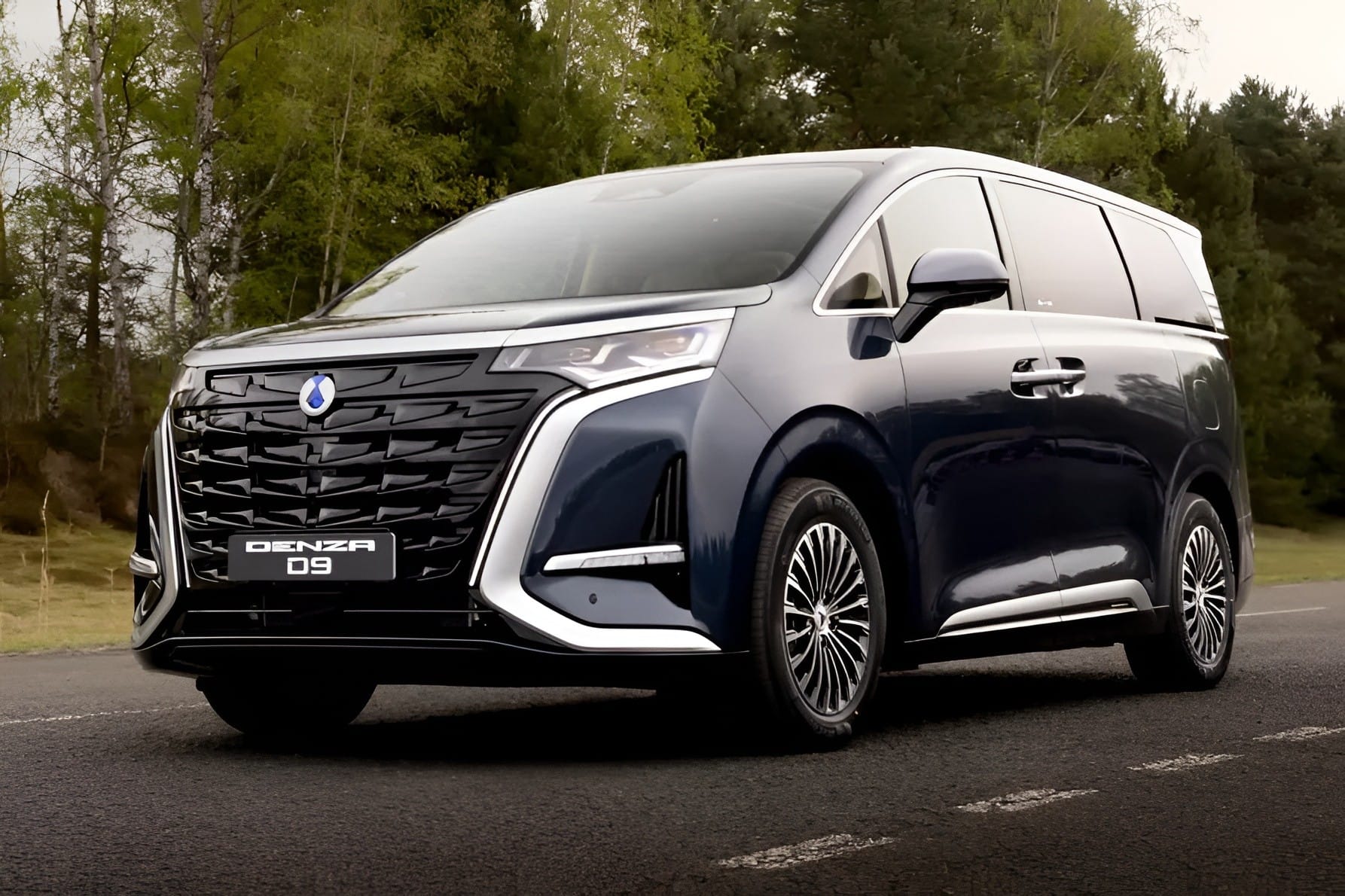
Denza D9: Vellfire Challenger
The D9 MPV is available with electric or plug-in hybrid power globally too. For India, it’s the EV that will arrive, and in front-wheel-drive form. Expect prices at around the Rs 80 lakh mark, positioning the D9 above the MG M9 but below the Toyota Vellfire.
Power stands at 313hp and 360Nm of torque, and it’s fed by a 103kWh blade cell battery. Claimed range is 520km on the combined WLTP cycle, while charging speed peaks at 200kW on a DC fast charger.
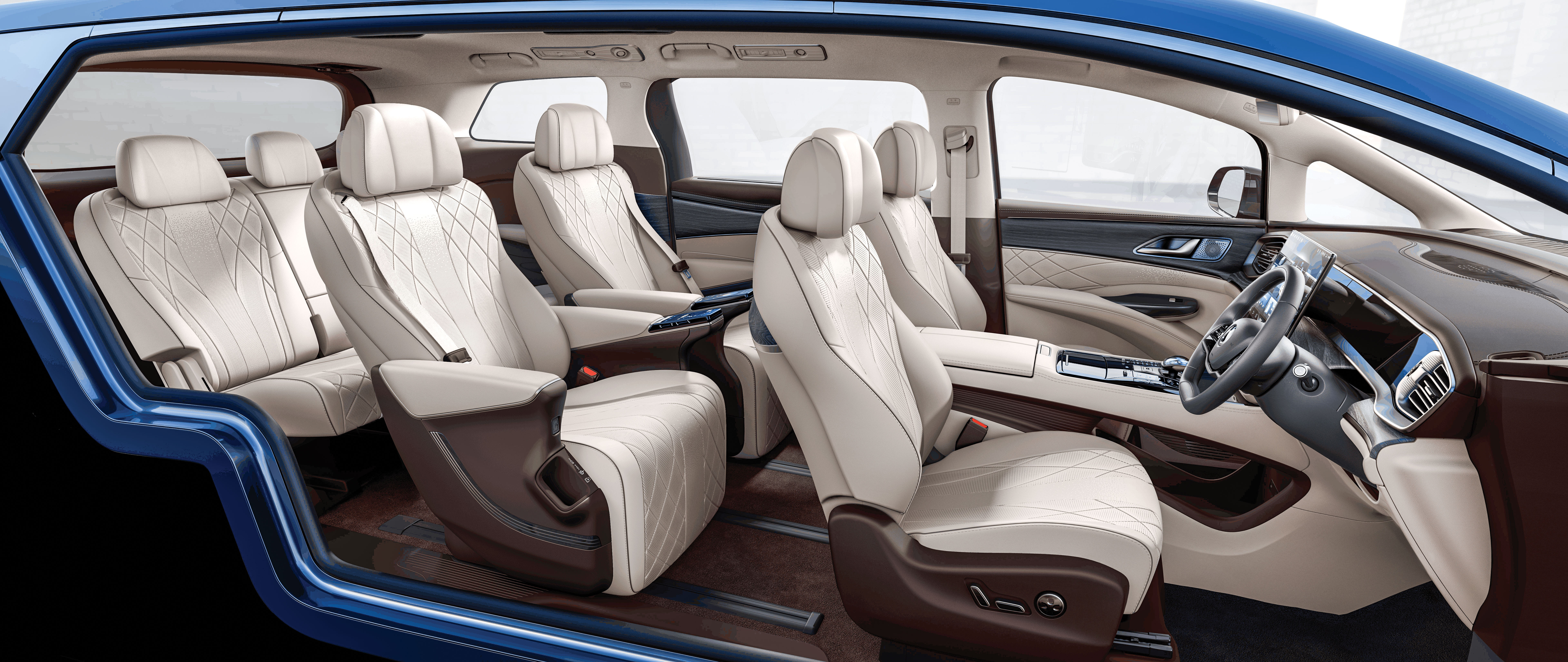
The seating configuration is 2+2+3 with the centre captain seats offering full power adjustment, heating, ventilation and massagers, along with armrest-integrated control pads. Middle-row occupants also enjoy fold-out tables and extendable leg-rests. Other creature comforts include a three-zone climate control, premium Dynaudio sound system and full leather upholstery.
Middle row the place to be with fully powered individual loungers that feature heating, ventilation, massagers, leg rests, and a fold-out table.
The D9 also features BYD’s cell-to-body construction that helps reduce weight and increase body rigidity. The luxury MPV also comes with an active body control system that, the company says, eliminates fore-aft pitching motion to keep the cabin flat during “nose-up” acceleration and “nose-down” braking forces.
Where does Denza fit in India’s automotive landscape?
The name Denza is an invented one and loosely translates to ‘rising power’ or ‘gathering momentum’, and that is what BYD will be hoping for in India. Hamstrung by the Indian government’s restrictions around Chinese investments, BYD – the world’s largest EV manufacturer – has not been able to grow. Its proposed $1 billion investment, along with a local partner, to scale up its small semi-knocked-down (SKD) plant in Tamil Nadu has been slowed by Press Note 3 – a 2020 policy that requires foreign investments from countries sharing a land border with India to get prior state approval.
Thus, given the limited playing field it’s been put into, getting into niches like luxury MPVs is a smart move from BYD. The segment accounts for about 2,000 units a year and is seeing rising customer interest and growth, attracting players like the Toyota Vellfire, the Lexus LM and Mercedes V-Class. The D9, then, has competitors to contend with, while the Z9 GT sits in a smaller niche, with just the Porsche Taycan as a similar rival. It’s likely to sell fewer numbers but will serve as a technology showcase and a brand shaper.
Interestingly, Denza will be retailed through exclusive showrooms separate from BYD. This may seem odd given the limited volumes, at least in the short term, but our sources tell us the company wants to provide Denza customers with a highly personalised shopping experience. The premium positioning will limit its network to larger cities; launch likely to be in the Delhi-NCR and Mumbai regions only. For BYD, though, it plans to scale up, thus keeping the two brands separated allow each to focus on their distinct goals.
So far, BYD India has managed a decent start and enjoys an awareness much higher than its actual market volume, enviable for a new brand. That’s all thanks to products that deliver consistently, with innovative tech like the famed blade cells. For Denza, though, the company also needs to build a high level of desirability, because at the upper end of the luxury spectrum, badge value accounts for nearly as much as, if not more than, engineering prowess itself, and that is what the company seems to be setting out to do.
Apple का नया iPhone Duo लॉन्च होते ही सोशल मीडिया पर सिर्फ इसके फीचर्स की चर्चा नहीं हुई, बल्कि इसकी कीमत ने लोगों को अपना कैलकुलेटर निकालने पर मजबूर कर दिया। करीब 3 लाख रुपये की शुरुआती कीमत देखकर यूजर्स ने सवाल उठाया कि इतने पैसों में आखिर एक फोन खरीदा जाए या जिंदगी की कई दूसरी जरूरतें पूरी की जाएं। किसी ने कार और सोने का हिसाब लगाया, तो किसी ने पूरी Apple shopping list तैयार कर दी।
वहीं 3.5 लाख रुपये सालाना कमाने वालों से लेकर मिडिल क्लास की जेब तक, सब पर मीम्स बन गए। खास बात यह है कि iPhone Duo की कीमत जितनी बड़ी है, इंटरनेट की मीम क्रिएटिविटी उससे भी बड़ी निकली।
3 लाख में iPhone या बहुत कुछ और?
एक X यूजर ने iPhone Duo की कीमत को लेकर बेहद मजेदार हिसाब लगाया। उसका कहना है कि करीब 3 लाख रुपये में सिर्फ फोन खरीदने के बजाय एक अच्छी सेकंड-हैंड कार या मोटरसाइकिल ली जा सकती है। लगभग 20 ग्राम सोना खरीदा जा सकता है या कई शहरों में पूरे साल का किराया चुकाया जा सकता है। इतना ही नहीं, इस रकम में भाई या बहन की शादी का कैटरिंग बिल, घर का फ्रिज, एसी, टीवी, वॉशिंग मशीन और सोफा तक आ सकता है। माता-पिता को छुट्टी पर ले जाने या 10-15 अच्छे Android फोन खरीदने का विकल्प भी मौजूद है। और अगर निवेश करना चाहें तो रकम FD में डाल सकते हैं।
लेकिन मीम का पंचलाइन सबसे आखिर में आता है-या फिर 3 लाख रुपये में एक फोल्डिंग iPhone खरीद लीजिए।
iPhone Duo costs almost ₹3,00,000 in India
For the price of ONE phone, you could:
• Buy a decent second-hand car
• Buy a good motorcycles
• Buy around 20 grams of gold
• Pay a year’s rent in many Indian cities
• Sponsor your brother/sister wedding’s catering bill
• Buy a fridge + AC + TV + washing machine + sofa
• Take your parents on a good vacation
• Buy 10–15 perfectly good Android phones
• Put it in an FD and make your dad proud for once
एक दूसरे यूजर ने भी iPhone Duo की कीमत देखकर अपना अलग गणित लगाया। उसके मुताबिक करीब 3 लाख रुपये खर्च करके एक iPhone Duo लेने के बजाय MacBook Neo, iPad, iPhone 17, AirPods और Apple Watch Series 10 खरीदे जा सकते हैं। खास बात यह कि उसके हिसाब से इतना सब लेने के बाद भी कुछ पैसे बच जाएंगे। एक फोल्डिंग फोन या Apple के कई डिवाइस?
You can buy a MacBook Neo, an iPad, an iPhone 17, AirPods and an Apple Watch Series 10 for the price of an iPhone Duo in india and still have money left.
iPhone Duo की कीमत करीब 3 लाख रुपये है। ऐसे में मीमर ने 3.5 लाख रुपये सालाना पैकेज वालों की हालत पर भी मजेदार मीम बना दिया। इसके लिए सांसद मनोज तिवारी का फेमस क्लिप इस्तेमाल किया गया है। मीम का इशारा साफ है जब साल भर की कमाई और फोन की कीमत में ज्यादा अंतर न हो, तो फोन खरीदने से पहले जेब जरूर याद आएगी।
एक अन्य इंटरनेट यूजर ने iPhone Duo लॉन्च होने के बाद Apple के संभावित रिएक्शन को लेकर मीम शेयर किया। यूजर ने लिखा, “आईफोन डुओ लॉन्च करने के बाद एप्पल का रिएक्शन कुछ ऐसा होगा।”
महंगी कीमत को लेकर बने इस मीम ने दिखा दिया कि सोशल मीडिया यूजर्स Apple के हर नए लॉन्च को कितने मजेदार अंदाज में लेते हैं।
Apple be like after launching iPhone Duo – https://t.co/9dtFpBeLWV
एक यूजर ने मिडिल क्लास व्यक्ति के iPhone Duo खरीदने की कोशिश को लेकर मशहूर ‘तेरा घर जाएगा इसमें’ मीम शेयर किया। मीम के जरिए मजाक में यह दिखाया गया कि करीब 3 लाख रुपये का फोन खरीदने के लिए आम आदमी को किन-किन चीजों से समझौता करना पड़ सकता है। यानी iPhone Duo भले ही फोल्ड होता हो, लेकिन इसकी कीमत ने सोशल मीडिया पर लोगों की कल्पना को जरूर खोल दिया है।
Apple when middle class person tries to buy iPhone Duo https://t.co/bkeFkzErJO
आजकल ट्रैवलर सिर्फ दिन में नहीं घूमना चाहते, बल्कि रात को भी अपनी खास ट्रिप कर रहे हैं। जिसे नाइट टूरिज्म कहते है इसमें लोग लोकल फूड, नाइट मार्केट, लाइव म्यूजिक, थिएटर, स्पोर्ट्स और शहर की नाइट लाइफ का मजा लेते हैं। कई शहर है जो इस ट्रेंड के लिए दुनिया भर में मशहूर हो रहे हैं। आप भी ऐसे ही नाईट ट्रिप को मजेदार बनाना चाहते हैं, तो इन शहरों की नाइट लाइफ का एक्सपीरियंस जरूर करें।
मैड्रिड – देर रात तक रहती है चहल-पहल
यहां देर रात तक चहल-पहल रहती है जो बाकी शहरों से काफी अलग है। यहां लोग देर से डिनर करते हैं और देर रात तक दोस्तों और परिवार के साथ घूमते हैं। शाम के समय प्लाजा में टहलना, तपस बार में लोकल डिश खाना और फ्लेमेंको डांस शो देखना यहां की पहचान है। रात में शहर की गलियां, कैफे और टेरेस लोगों से भर जाती हैं। आप स्पेन कल्चर को देखना चाहते हैं, तो मैड्रिड में रात में में जरूर घूमने निकले।
न्यू ऑरलियन्स – संगीत से भरी रातें
न्यू ऑरलियन्स अपनी म्यूजिक कल्चर के लिए दुनिया भर में पॉपुलर है। यहां पर जब शाम होती है तो रोड पर लाइव जैज म्यूजिक की धुनें सुनाई देने लगती हैं। फ्रेंचमेन स्ट्रीट और फ्रेंच क्वार्टर जैसी जगहों में कई छोटे-बड़े म्यूजिक क्लब और बार हैं, जहां हर रात शानदार परफॉर्मेंस होती है। यहां घूमते समय ऐसा लगता है जैसे शहर में कोई म्यूजिक फेस्टिवल हो। इसके साथ ही खाने का टेस्ट और पुराने बाजारों की शॉपिंग इस शहर की रात को और भी शानदार बना देती है।
बैंकॉक – रात में खाने का असली स्वाद
बैंकॉक में घूमने का असली मजा सूरज ढलने के बाद ही आता है। यहां के नाइट मार्केट रंग-बिरंगी दुकानों और स्वादिष्ट स्ट्रीट फूड से भरे रहते हैं। आप यहां थाई खाने का स्वाद ले सकते है। कपड़े, हैंडीक्राफ्ट और कई यादगार चीजों की खरीदारी कर सकते हैं। चाओ फ्राया नदी के किनारे बैठकर डिनर करना और रूफटॉप बार से पूरे शहर की चमक देखना एक बहुत ही यादगार पल होता है। आपको खाने पीने और घूमने का शौक है, तो बैंकॉक की रातें आपको जरूर पसंद आएंगी।
टोक्यो – रात में भी रहती है रौनक
टोक्यो को उन शहरों में गिना जाता है, जो रात में भी पूरी रफ्तार से चलते हैं। यहां शिंजुकु और शिबुया जैसे इलाके रंग-बिरंगी नियॉन लाइट्स से जगमगा उठते हैं। देर रात तक खुले रहने वाले रामेन रेस्टोरेंट, जापानी पब, कराओके और गेमिंग सेंटर लोगों को खूब पसंद आते हैं। अगर आपको शॉपिंग का शौक है, तो कई मार्केट और स्टोर देर रात तक खुले रहते हैं। यहां के रूफटॉप कैफे और बार से रात में चमकते शहर का नजारा देखने का अपना अलग ही मजा है। टोक्यो की रातें हर उम्र के ट्रैवलर के लिए कुछ न कुछ खास जरूर लेकर आती हैं।
फिलाडेल्फिया – खेल और मस्ती से भरी शाम
फिलाडेल्फिया उन शहरों में से है, जहां शाम होते ही माहौल पूरी तरह बदल जाता है। अगर आपको खेल पसंद हैं, तो यहां प्रोफेशनल स्पोर्ट्स मैच का रोमांच देखने को मिलेगा। मैच का टिकट न होने पर भी आप स्पोर्ट्स बार में बैठकर टीवी पर इसे लाइव देख सकते हैं। इसके अलावा यहां लाइव म्यूजिक, थिएटर शो, बॉलिंग, गेमिंग और मिनी गोल्फ जैसी कई एक्टिविटीज रात को और मजेदार बना देती हैं। खाने-पीने के शौकीनों के लिए भी यह शहर किसी जन्नत से कम नहीं है। यहां के लोकल कैफे, फूड टूर और खास रेस्टोरेंट आपको शहर के असली स्वाद चखाते हैं। आपको एक ही शाम में मनोरंजन, स्वाद और लोकल कल्चर का एक्सपीरियंस लेना हैं, तो फिलाडेल्फिया परफेक्ट जगह है।
सियोल – कैफे और नाइट मार्केट का मजा
सियोल की रातें काफी शांत, खूबसूरत और रंगीन होती हैं। यहां के नाइट मार्केट में घूमने के साथ आप लोकल स्ट्रीट फूड का स्वाद ले सकते हैं और आसपास की दुकानों से खरीदारी भी कर सकते हैं। हान नदी के किनारे शाम बिताना और शहर की रोशनी देखना यहां आने वाले टूरिस्ट का पसंदीदा एक्सपीरियंस होता है। इसके अलावा थीम कैफे, देर रात तक खुले शॉपिंग एरिया और खूबसूरत गलियां इस शहर को खास बनाती हैं। यहां घूमने के लिए बिकुल भी जल्दबाजी न करें आपम से समय निकालकर सियोल नाईट के मजे ले।
बढ़ रहा है नाइट टूरिज्म
आज के समय में लोग सिर्फ फोटो खींचने के लिए ट्रैवल नहीं करते, बल्कि उन शहरों की असली जिंदगी को भी जीना चाहते हैं। यही कारण है कि नाइट टूरिज्म तेजी से पॉपुलर हो रहा है। रात के समय लोग लोकल फूड का मजा लेते हैं, लाइव म्यूजिक सुनते हैं, नाइट मार्केट में शॉपिंग करते हैं और शहर कल्चर को जानते हैं। इससे ट्रैवलर को एक अलग एक्सपीरियंस मिलता है और दुकानों, रेस्टोरेंट, होटल और मनोरंजन से जुड़े कारोबार को भी फायदा होता है। आप भी इन शहरो को अपनी ट्रैवल लिस्ट में जोड़कर ट्रिप को यादगार बना सकते हैं।