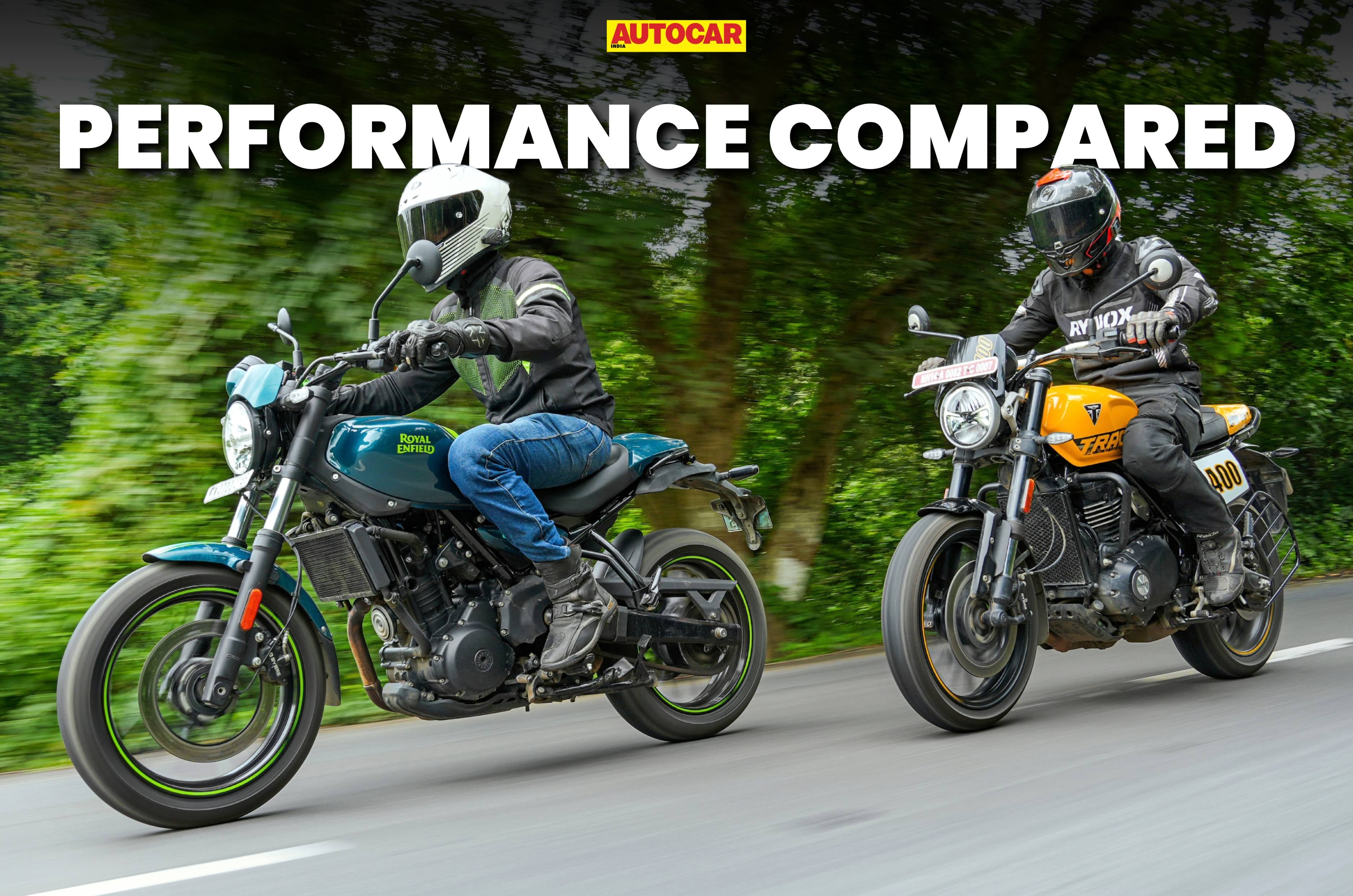
The Royal Enfield Guerrilla 450 and the Triumph Tracker 400 are closely matched on paper; both roadsters producing 40hp, near-identical kerb weights and a price gap separated by barely Rs 10,000. However, both are very different to ride in the real world as our VBox-verified numbers will reveal.
Royal Enfield Guerrilla 450 vs Triumph Tracker 400: Acceleration
Despite weighing more, the Guerrilla asserts lead at every benchmark
Royal Enfield Guerrilla 450
Triumph Tracker 400
0-60kph
2.85s
3.05s
0-80kph
4.36s
4.86s
0-100kph
6.24s
7.55s
Even though the Guerrilla (185kg) carries a slight 4kg more compared to the Tracker (181kg), it dominates in every measurable metric. It clocks 0-60kph in 2.85 seconds, two-tenths of a second ahead of the Tracker’s 3.05 seconds. As the speed climbs, this gap widens significantly close to half a second at the 0-80kph mark and to 1.3 seconds at 0-100kph. Here the additional displacement and wider torque curve gives the Guerrilla a clear advantage. At the same time the Tracker falls short because of its downsized 349cc engine, which only really comes alive after 6,000rpm, and below that, the power delivery is quite mellow.
Royal Enfield Guerrilla 450 vs Triumph Tracker 400: Roll-on acceleration
Higher torque figure at lower rpm widens the gap significantly
Royal Enfield Guerrilla 450
Triumph Tracker 400
20-50kph (2nd gear)
1.98s
2.44s
30-70kph (3rd gear)
2.78s
4.15s
50-80kph (4th gear)
3.38s
4.32s
While acceleration from standstill indicates the level of outright performance on offer, the roll-on acceleration reveals the real-world usability. Again, it is the Guerrilla which has the undisputed advantage over the Tracker, thanks to its far punchier low- and mid-range torque delivery. The 40Nm of torque helped the Guerrilla outperform the Tracker (32Nm of torque) in every situation.
Royal Enfield Guerrilla 450 vs Triumph Tracker 400: Braking
Bigger disc and stickier tyres became the decider
Royal Enfield Guerrilla 450
Triumph Tracker 400
60-0kph
15.73m
16.75m
To begin with, both bikes have very good braking hardware, but in our instrumented tests, it was the Guerrilla that came to a complete halt from 60kph earlier. The radially mounted four-piston caliper on the Tracker gave more feedback and confidence compared to the Guerrilla. However, the 310mm front disc and road-biased tyres gave the Guerrilla the upper hand in getting a shorter stopping distance compared to the Tracker (300mm front disc).
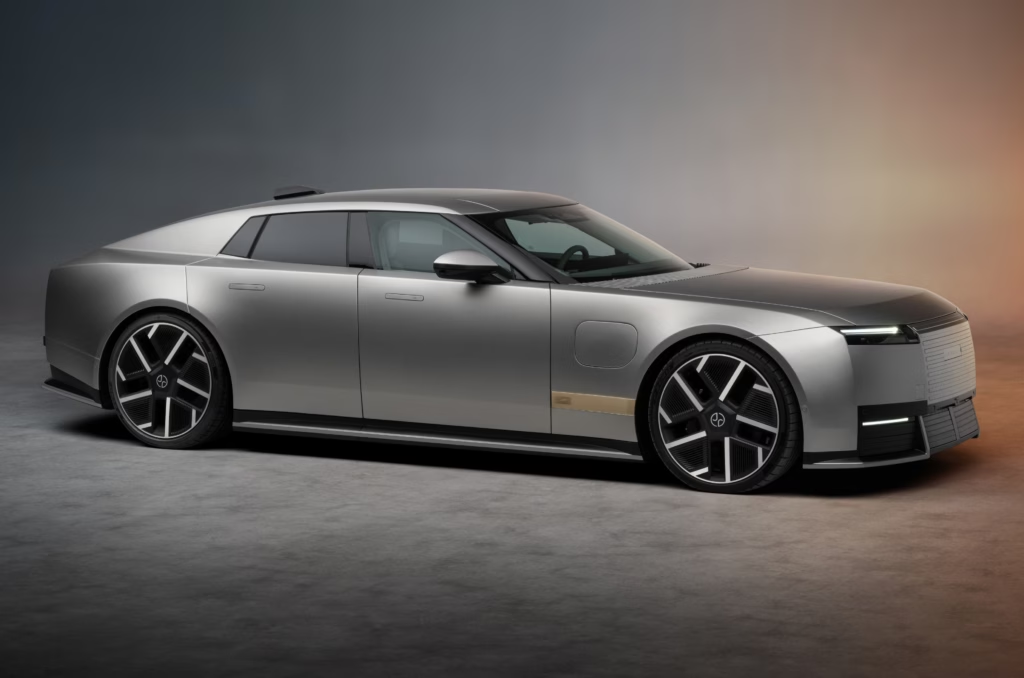
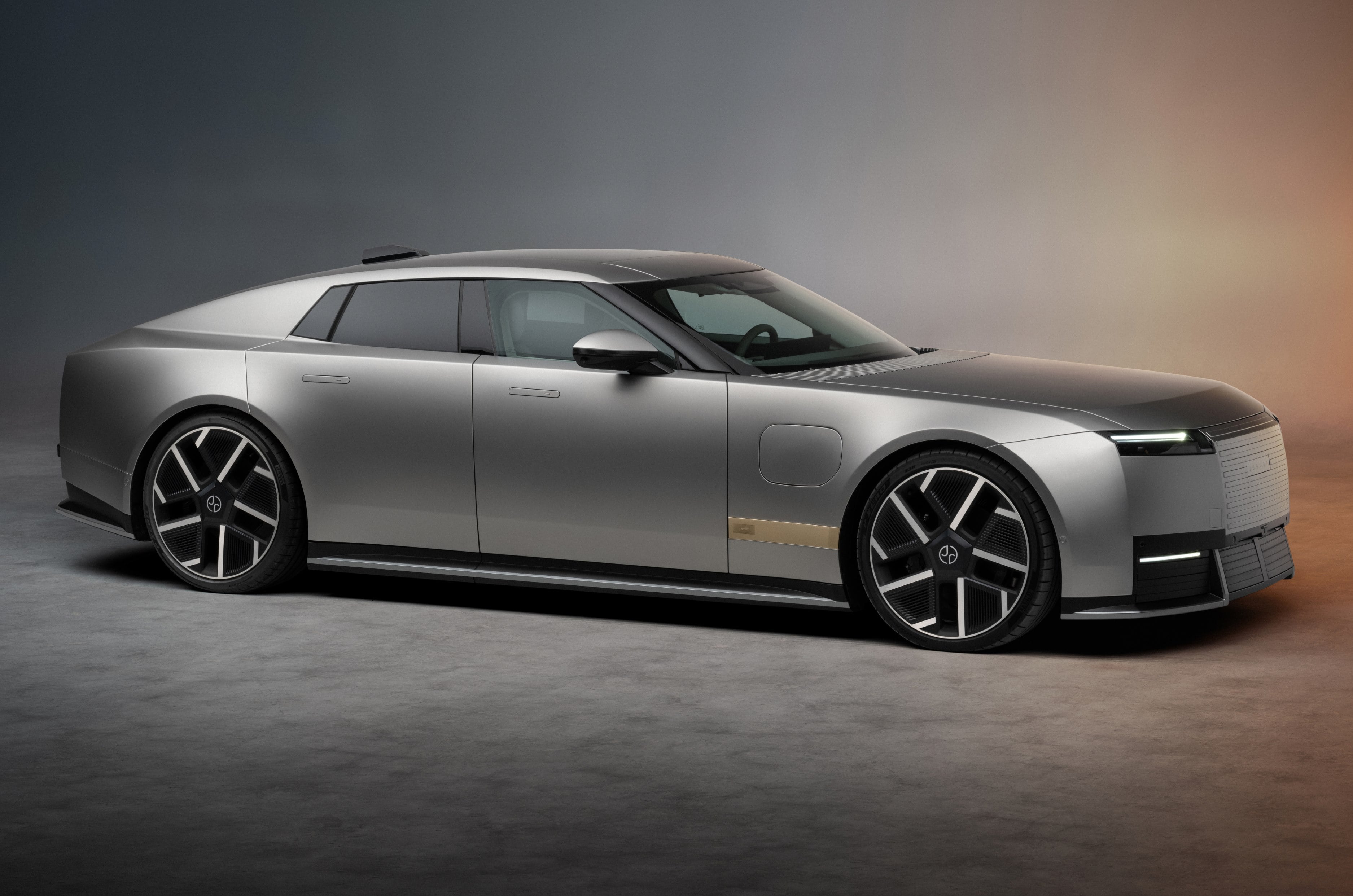
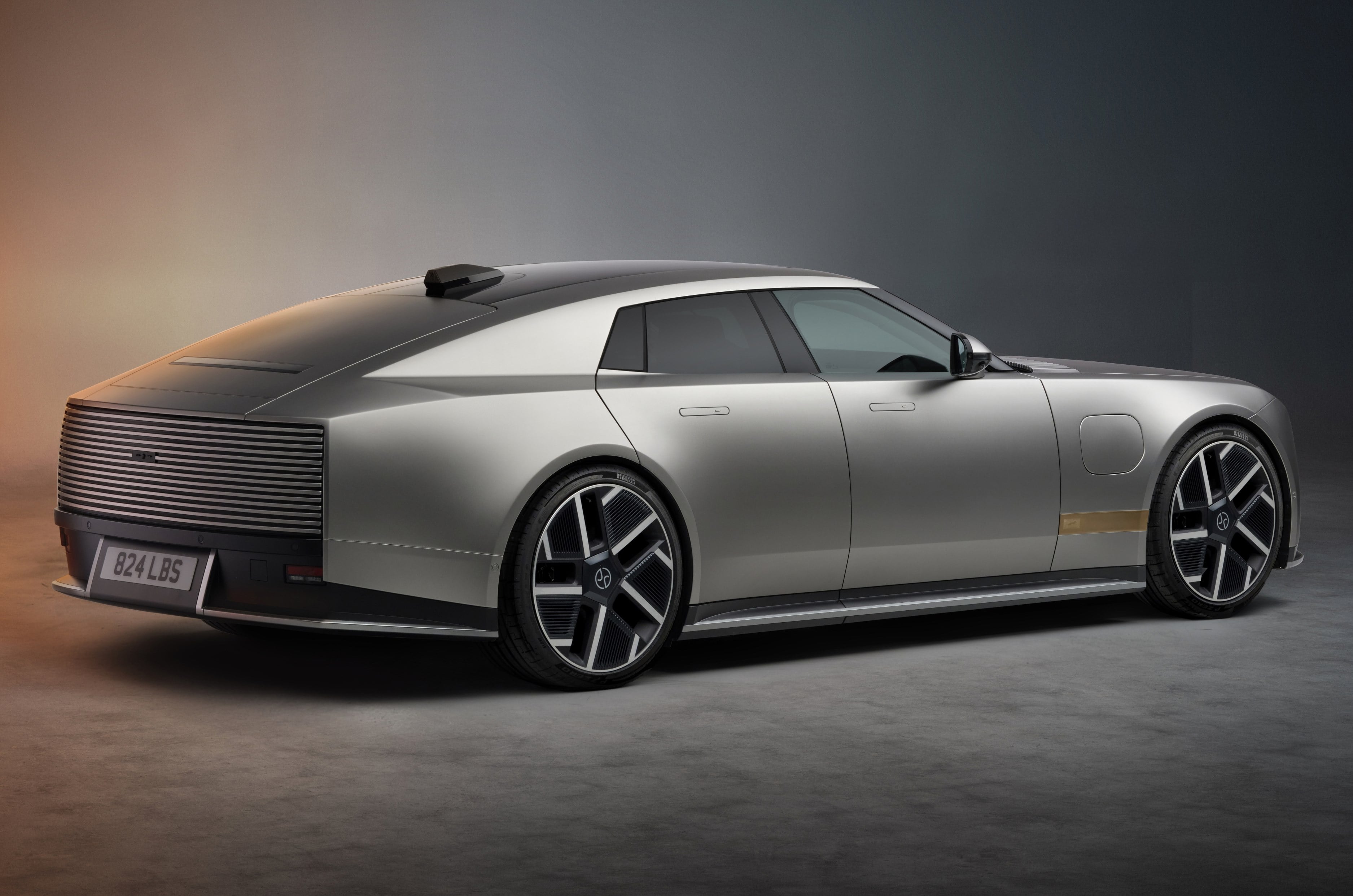
Grace, Space, Pace. That’s been a long-held Jaguar maxim, clearly no more the case, though, at least not that first part. Jaguar’s new Type 01 ditches grace for a design that’s very much in your face, or, styled with exuberant modernism, as the brand more eloquently puts it.
Yes, exuberant it most certainly is; the sheer size and presence of the car are unapologetically bold, and we knew this would be the case when we saw the Type 00 concept. At the time, Jaguar said it would greatly influence the actual production car. Love it or hate it, you have to applaud Jaguar for keeping a majority of the concept’s far-out ideas to the point where a lot of time was spent engineering the new Jaguar Electric Architecture (JEA) to make the design possible.
Strike a chord
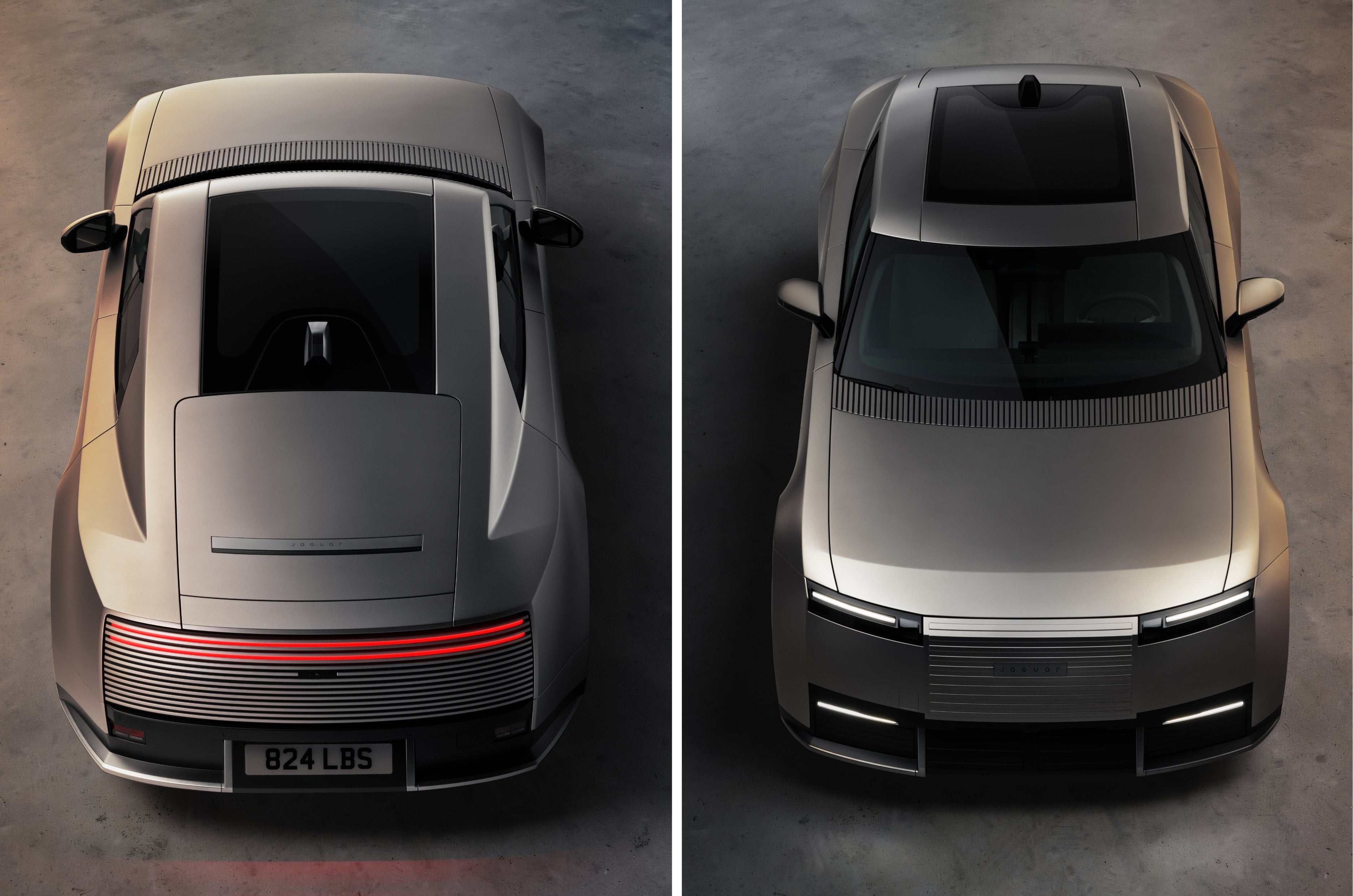
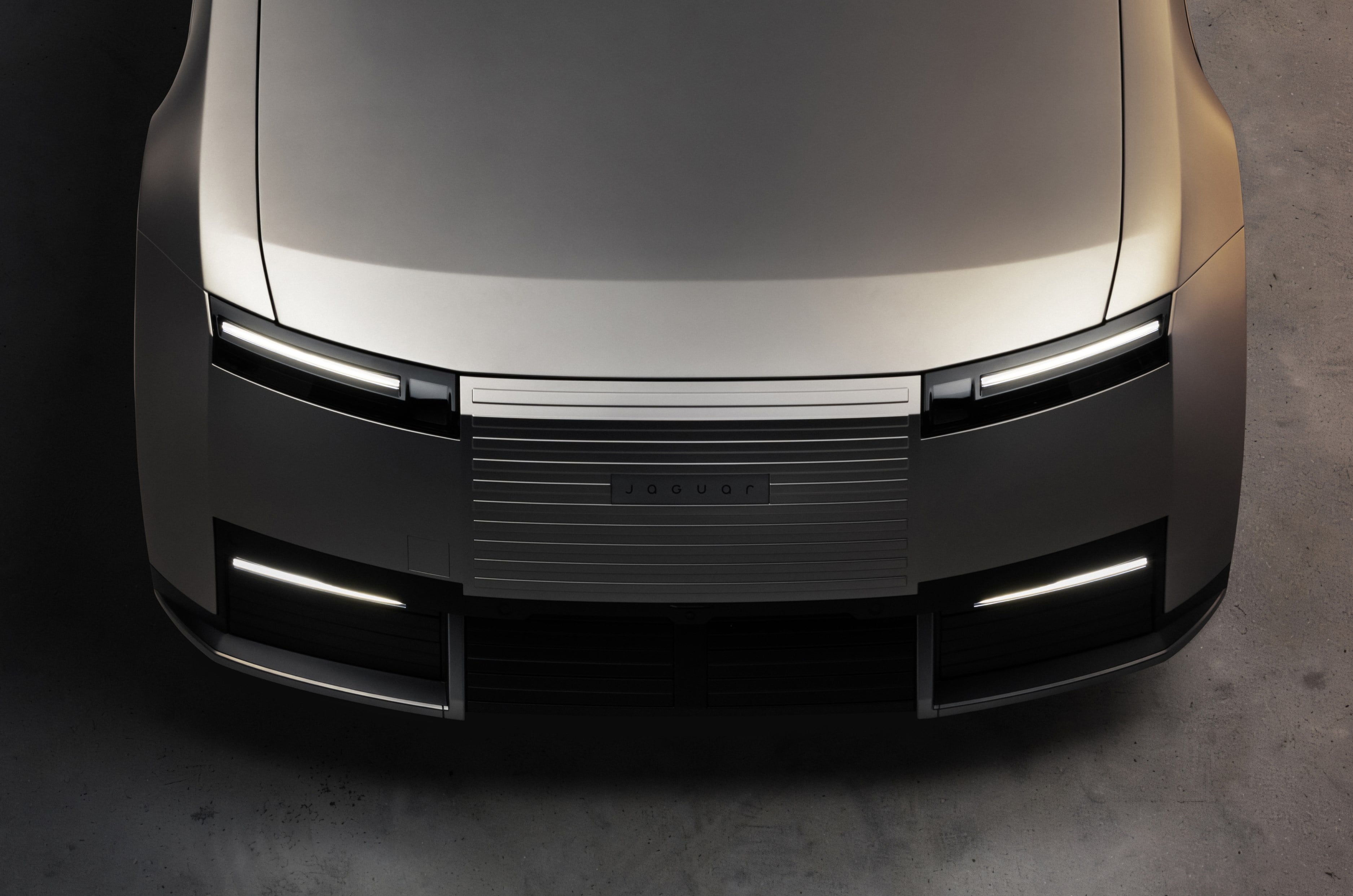
The front is dominated by Jaguar’s new ‘strikethrough’ design element, which gives the bluff nose some character. Unlike most EVs that have a blanked-off front, the strikethrough simulates a grille, retaining some of the visual character of a conventional car. There is, of course, cooling required, and this is handled by active shutters lower down, which open and close depending on cooling requirements.
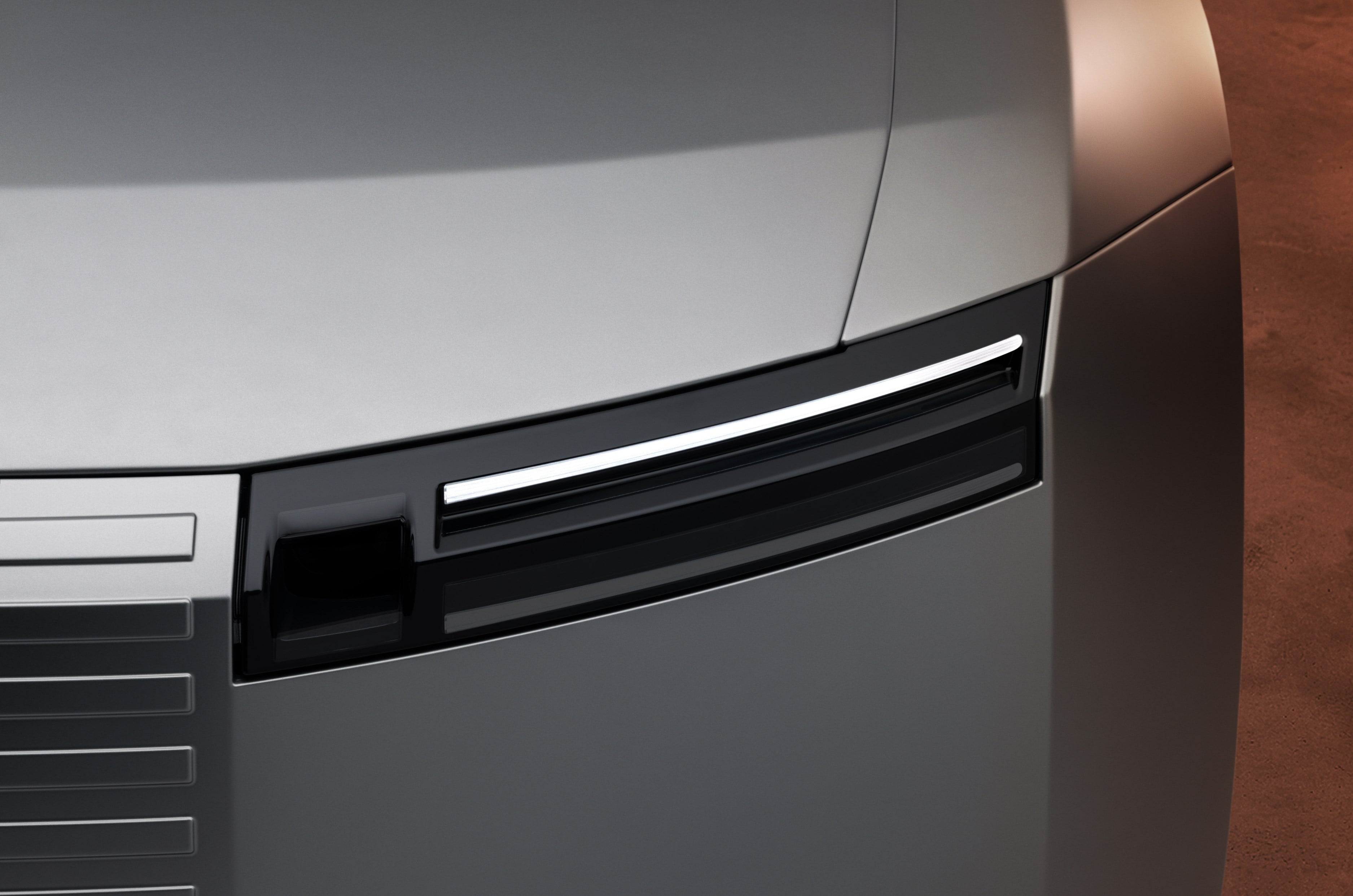
The four ‘line’ daytime running lights are another distinctive element and could become a signature for future Jaguars. The headlights, meanwhile, are the slimmest ever fitted to a Jaguar.
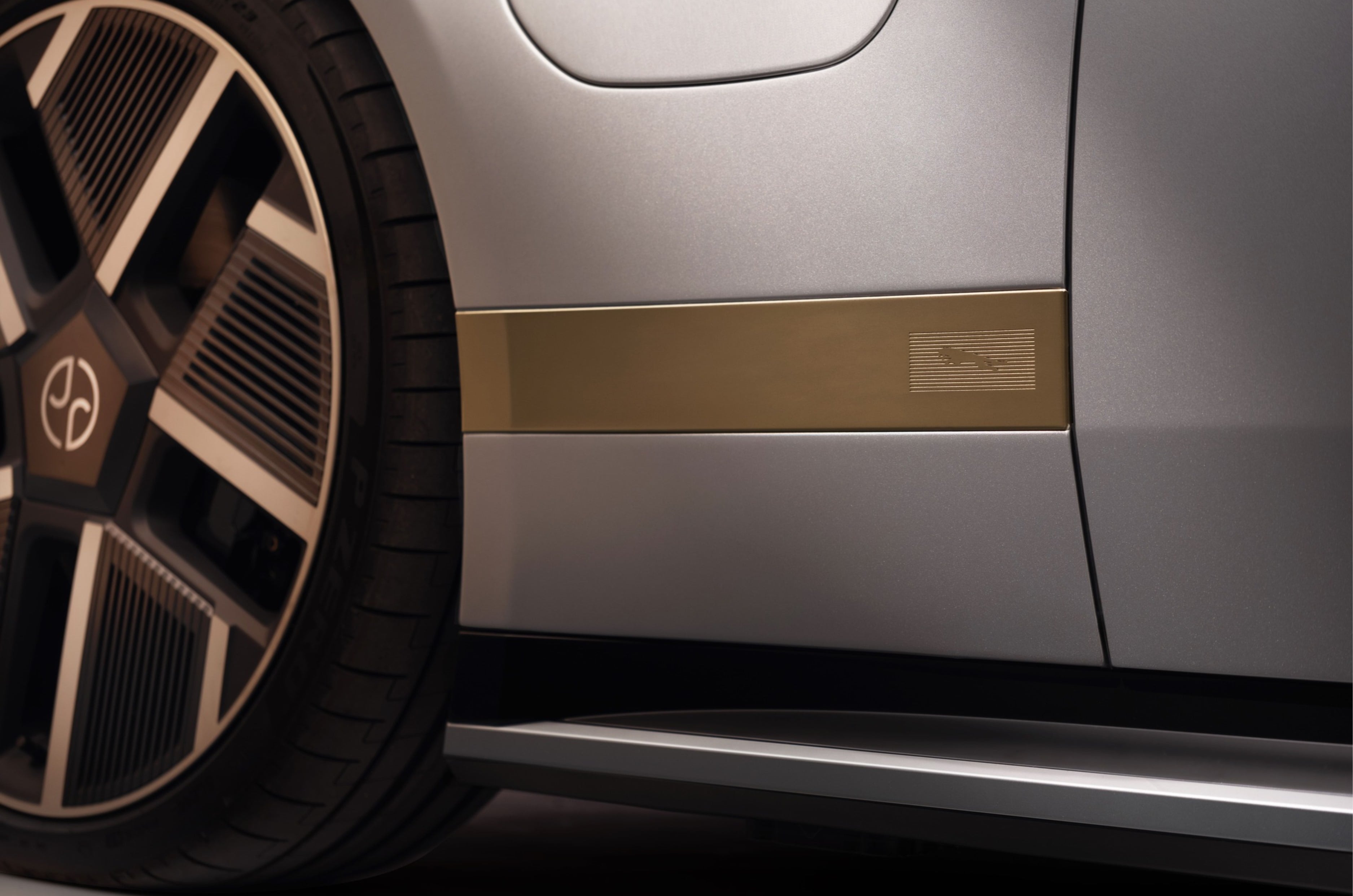
Despite its almost upright front end, the Type 01 is the most aerodynamic Jaguar yet, with a drag coefficient of just 0.23. This has been achieved through extensive aerodynamic work, including active aero elements and clean, uninterrupted body surfaces. The traditional leaping Jaguar mascot is absent from the bonnet, but fear not, it’s not entirely gone, surfacing on a brass-like panel on the front fenders, which also highlights what Jaguar calls the ‘luxury gap’ — the distance between the front axle and the A-pillar. This massive length gives the car its distinctive bonnet-forward proportions and a very regal stance; there is also a functional purpose.
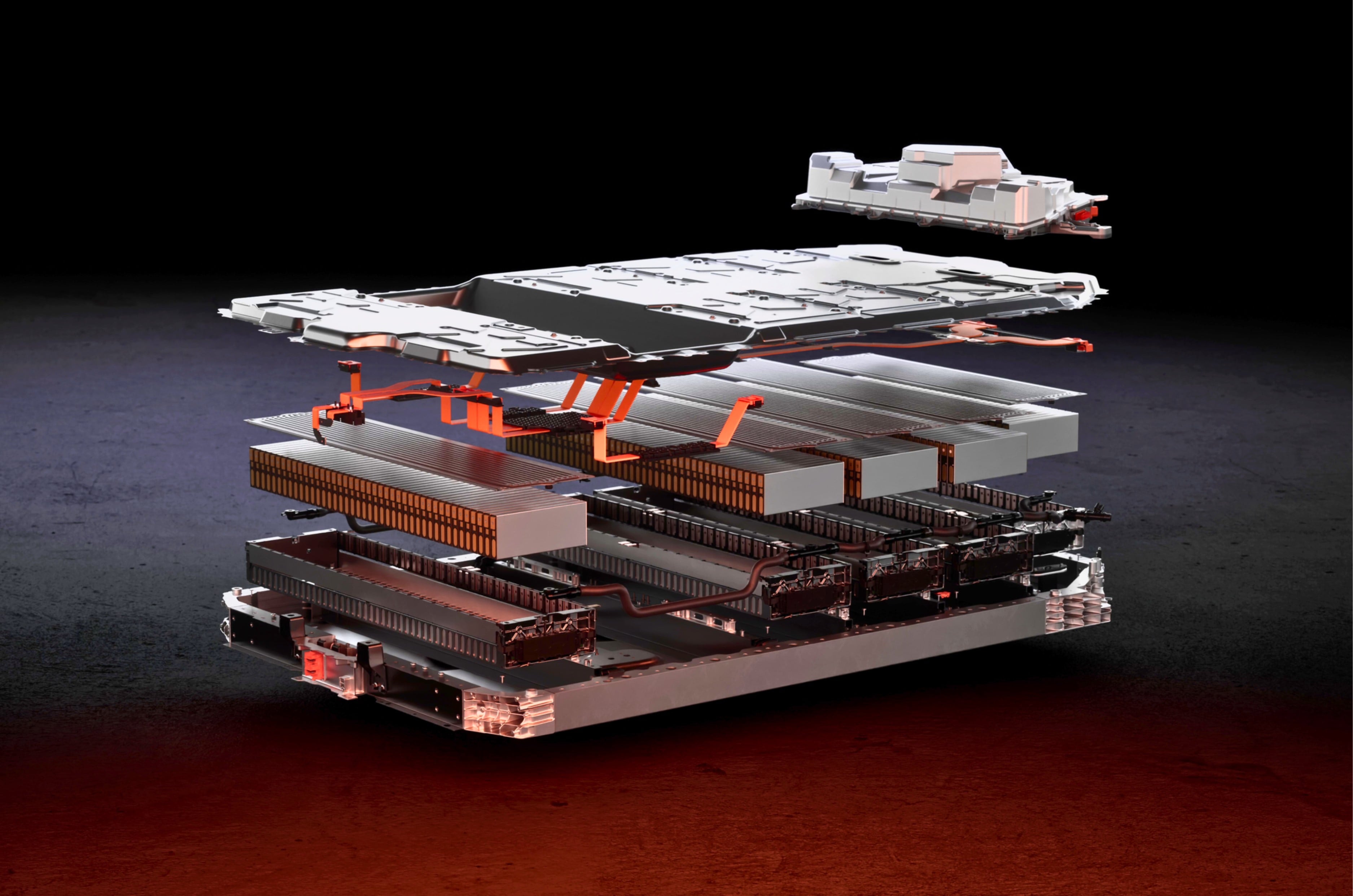
The Type 01 has a split battery pack, comprising five separate modules: one positioned ahead of the A-pillar – in this gap – necessitating a re-engineered front crash structure; then there are three modules behind the A-pillar, a gap around the B-pillar area and then the final module near the C-pillar. Typically, EVs use a single battery pack contained between the A and C pillar line; however, the low roof meant Jaguar needed that gap to create a footwell for rear passengers.
The long 3.2-metre wheelbase and low 1,400mm overall height give the Type 01 its dramatic slammed-down stance, a hallmark of the concept. In fact, the massive 23-inch wheels make up more than half the height of the entire car. Charging ports are provided on both sides, making it convenient to plug in regardless of which side the charging station is on.
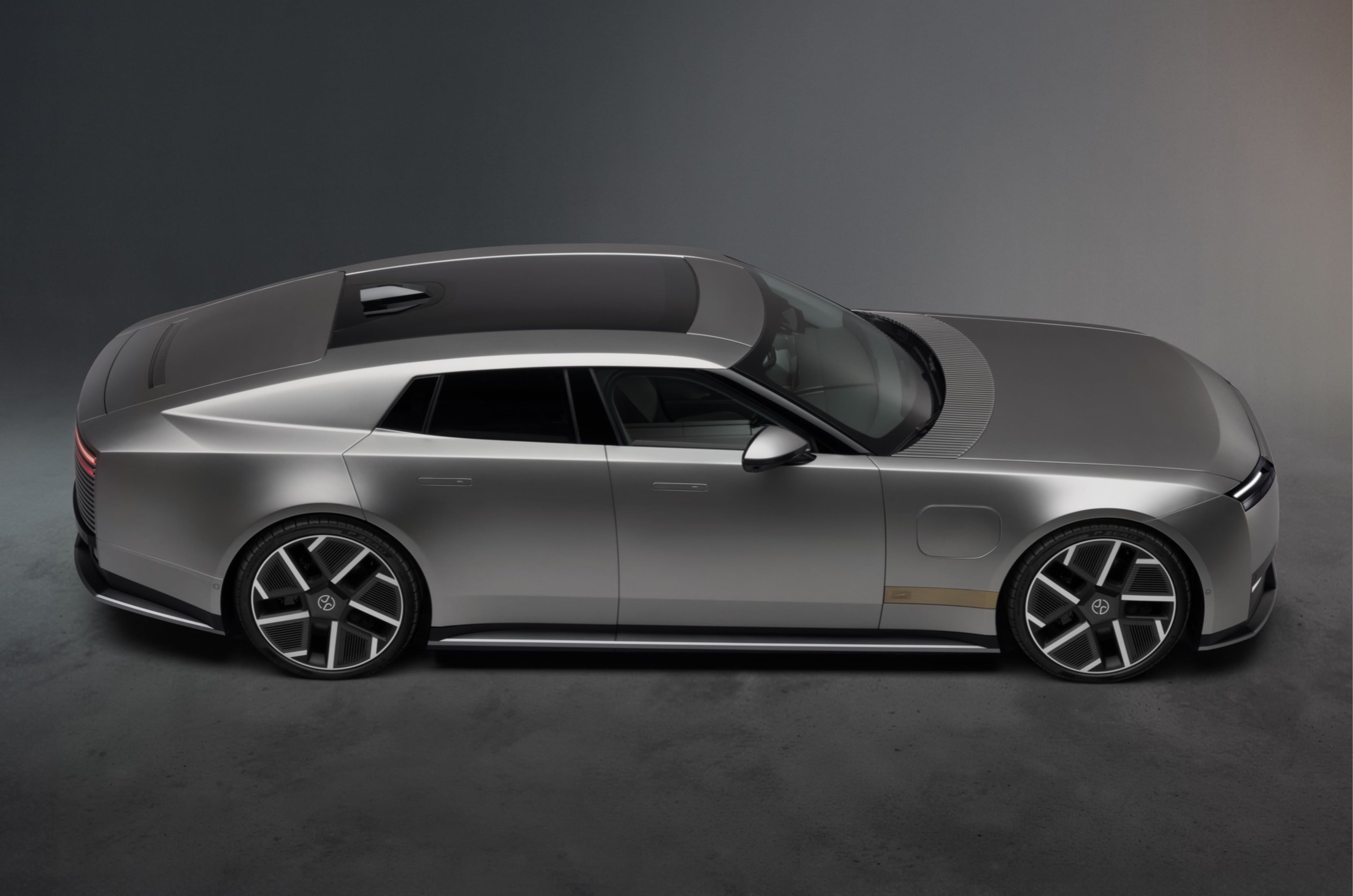
One of the most interesting elements of the Type 01’s is what Jaguar calls the ‘impossible panel’. This is essentially the rear fender panel that extends all the way to the A-pillar at the top and has an extremely deep draw forming massive shoulders over the rear wheels. Jaguar says computer simulations initially suggested that the required depth could not be created with a single piece of aluminium, but it worked with the tooling and made it a reality. The resulting panel features a sharp crease that rises from the window line and creates a striking visual effect, which stands out nicely in the silver finish of the car we see here.
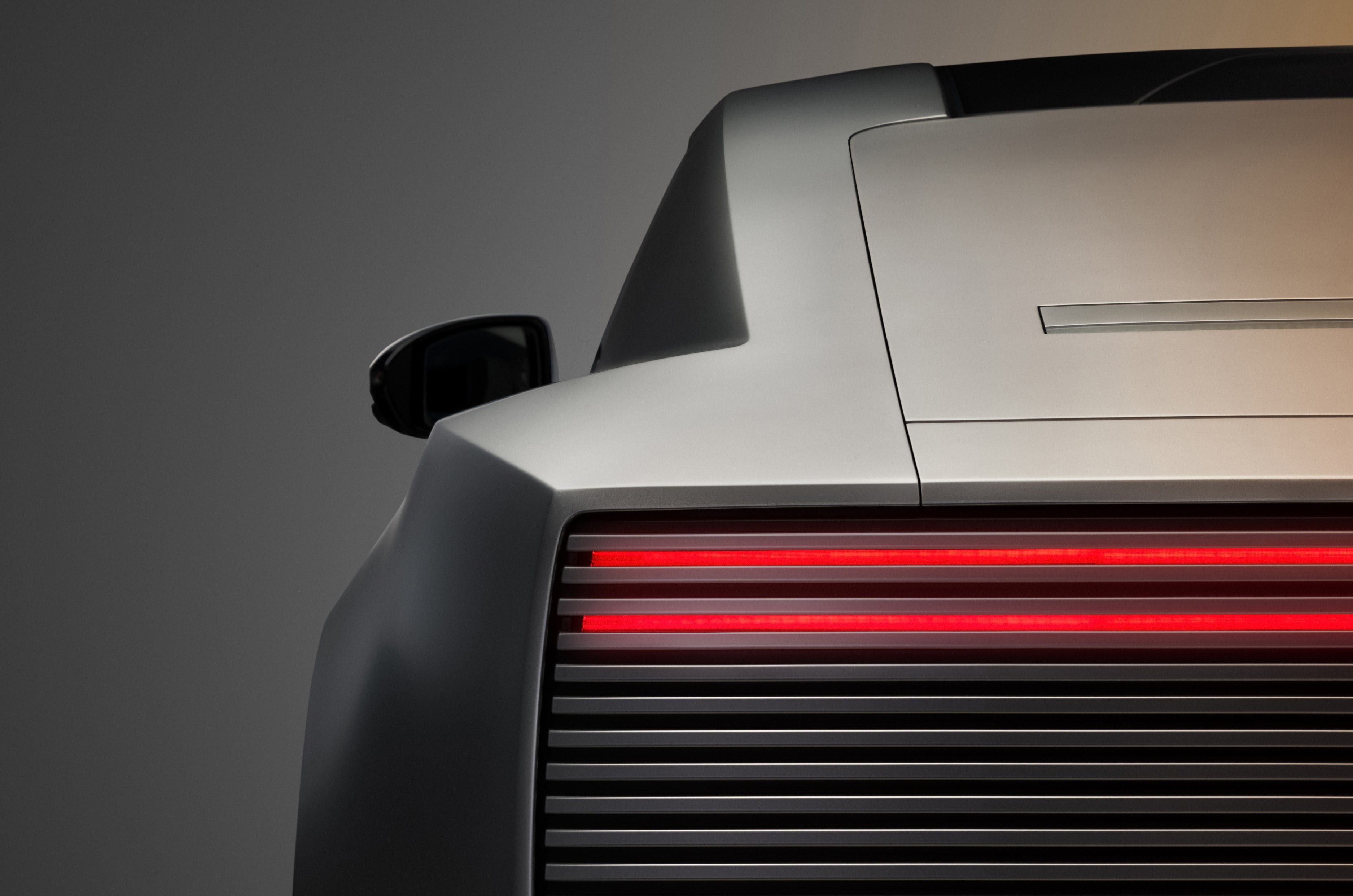
The rear is another striking area and will be the one with the most polarised views. The strikethrough design continues, but it pretty much dominates the entire width of the car; even the taillights are hidden within. When the car is switched off, the lights are invisible, leaving just the grille-like surface, and it does look excessively lined, though unique.
Then there’s the complete absence of a rear windscreen. Jaguar says a conventional rear windscreen would offer very limited visibility with a short vertical height, given the car’s long sloping roofline, so it opted for a clean monolithic panel while a camera feeds a digital rear-view mirror. There’s also a rear spoiler that can be deployed; there are three positions in all, adjusting according to speed to aid aerodynamic efficiency and stability. Beneath the tailgate is 450 litres of boot space in a relatively shallow bay, with some additional storage beneath a panel.
Give and take
The Type 01’s concept car design and proportions do come with some compromises, and that’s immediately apparent stepping into the rear. You have to move around a protruding rear panel and sink into the seats. Once there, the space is cosy or claustrophobic depending on how you see small spaces. The trouble is the low roof is very close to your head, and the window panes are extremely small; there’s a glass roof, but it only does so much to alleviate the lack of cabin volume. Furthermore, you sit behind the pillar, so you get some privacy, but not an open view outside.
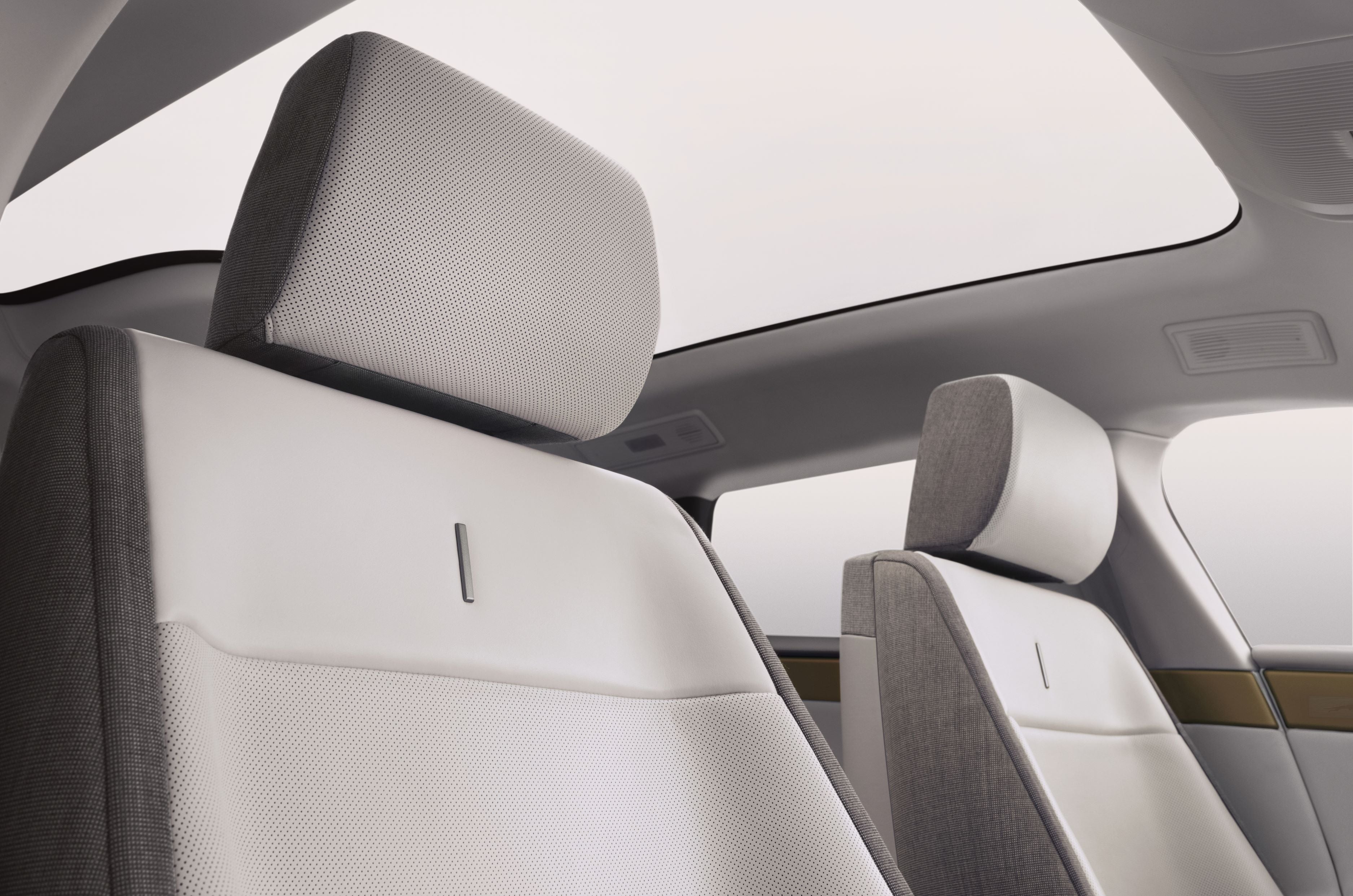
The seats are comfy enough, and at the rear the split battery arrangement reduces the knees-up seating position; while it isn’t comfortable like a conventional car, the arrangement makes a meaningful difference.
At the front too, the low roof means a low-set driving position; the windscreen is shallow in height, and headroom is just about sufficient for taller occupants. Also, the rear-view mirror – or display, more accurately – is positioned at the base of the windscreen rather than atop. The front seats feature heating, cooling and massage functions.
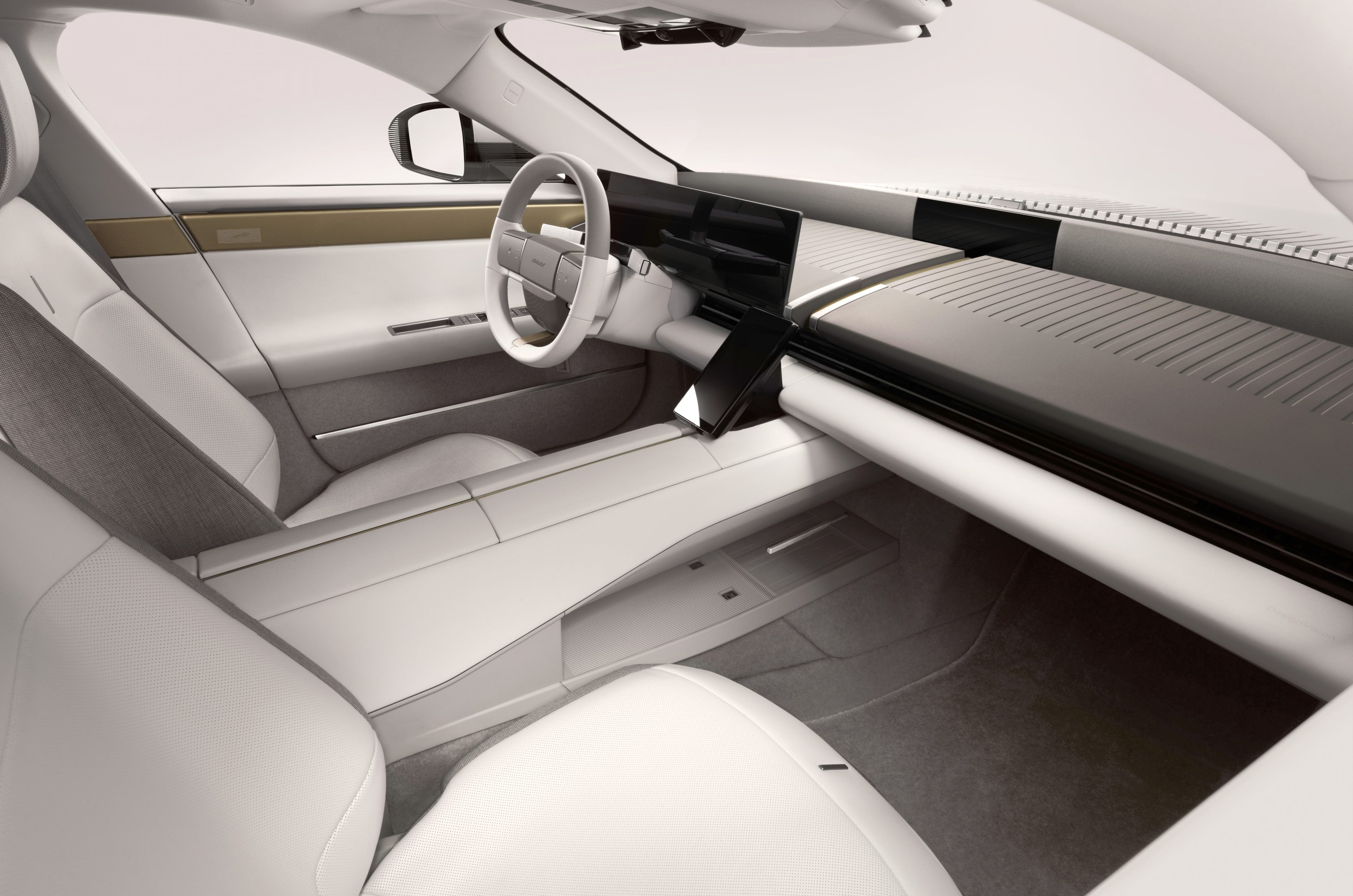
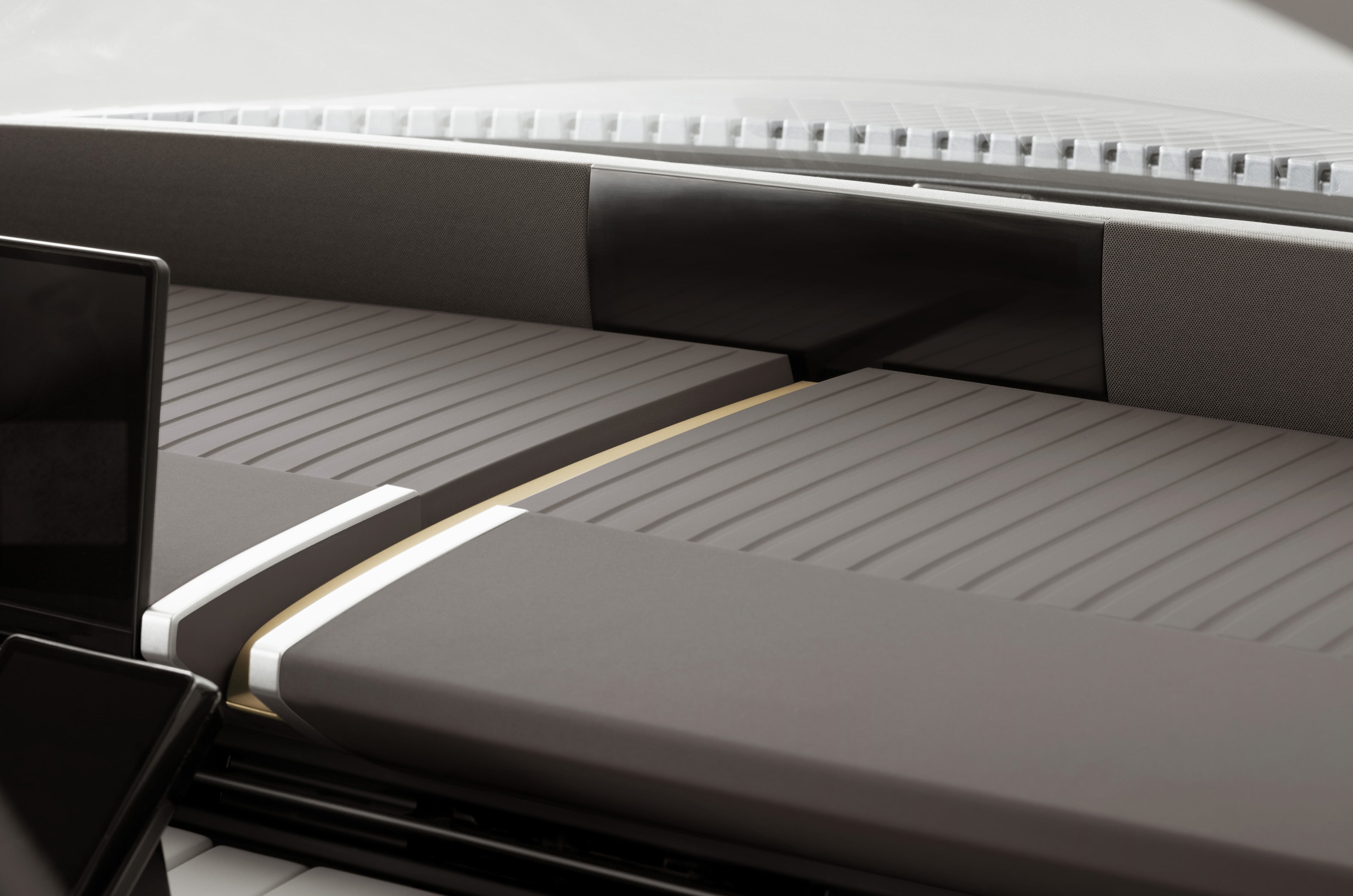
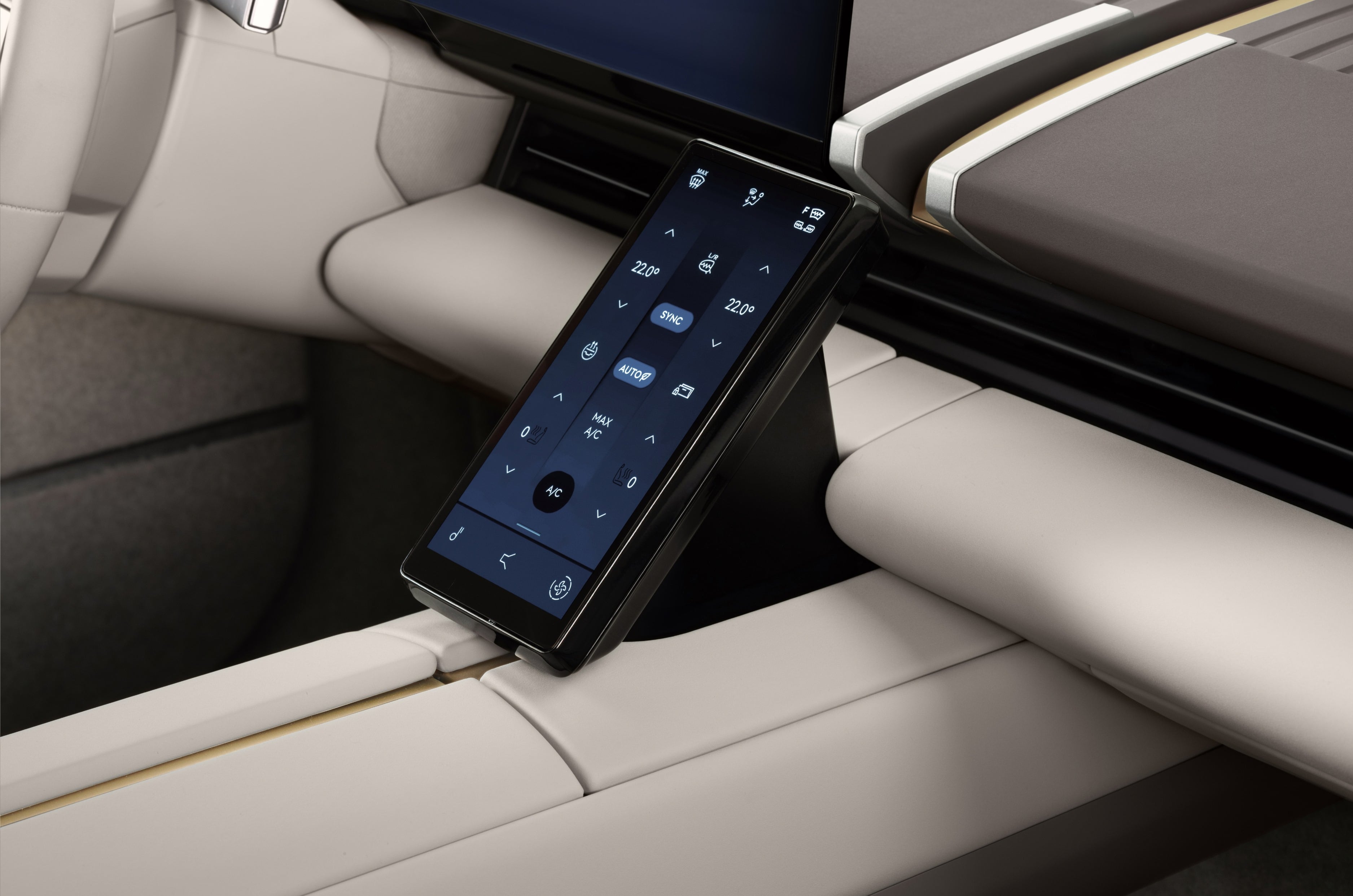
The cabin is divided into four distinct zones by a prominent central spine that houses storage spaces and a rear touchscreen controller. The dashboard carries the strikethrough pattern from the bonnet outside, and the doors carry prominent brass-finished panels. The absence of physical buttons is disappointing; thankfully, the central touchscreen, which handles climate control, is positioned in a manner that allows the driver to rest a hand on the central spine to make operations a bit easier.
There’s a single large 24-inch display combining the instrument cluster and central infotainment screen; driver-focused information is to the right, and functions accessible to the front passenger are on the left.
Number crunching
Underneath its dramatic styling, the Type 01 packs in some serious performance hardware and is the latest to join the 1,000hp+ club. Power comes from a three-motor setup, two at the rear and one at the front. Combined, these produce a massive 1,030hp and 1,365Nm of torque, and despite it weighing in at about 2.7 tonnes, the Type 01 does the 0 to 100kph sprint in 3.2 seconds. This isn’t the 2-second territory that others of this high horsepower club claim, but it’s still extremely quick for what is essentially a four-door GT. Jaguar has often talked of ‘power in reserve’ and highlights its strong 100kph to 180kph of 4.0 seconds as evidence.
Feeding this power is the split module battery; it utilises NMC chemistry and has a 120kWh capacity (118kWh usable) and promises a WLTP range of up to 720km. Jaguar says thanks to the 850-volt architecture, on a 350kW DC charger you can add 321km of range in 13 minutes and 10-80 per cent in around 22 minutes with the split pack set-up to maximise 400-volt chargers. The Type 01 also features twin AC charging ports, one on each side, so it’s easy to charge no matter how you park.
The powertrain has drive modes, torque vectoring and ride is courtesy of switchable air springs and twin-valve active dampers. Rear-wheel steering keeps a tight 11.5m wall-to-wall turning circle diameter.
Shock! And awe?
The Type 01 is unlike Jaguars of the past, which were the target. Jaguar sales were drying up, and it needs to bring in new customers, and that’s where this entirely new design direction comes in. It has traces of its heritage but, on the whole, is unique, and there’s no denying it’s striking to look at with its wild concept car looks. This, however, means interior space is at a premium, and there are ingress and egress challenges. Making amends in some way is the minimal and classy interior styling and, of course, a powertrain with all the right numbers and ingredients that promises a thrilling drive experience.
Asking prices for all this will be going up, not to the levels of a Rolls or Bentley but above what the brand’s previous flagships like the XJ were at. Expect prices to start at £120,000 in international markets where deliveries are scheduled to begin by mid-2027. India will follow a few months on with prices around the Rs 2 crore mark, give or take.
Sitting between Mercedes and BMWs at the lower end and Rolls and Bentleys above, the Type 01 has found a gap and a differentiation in its style and appeal too. But can Jaguar transform from elegance and heritage to exuberant modernism? It’s a big leap for sure, and one that the company needs the big cat to make.
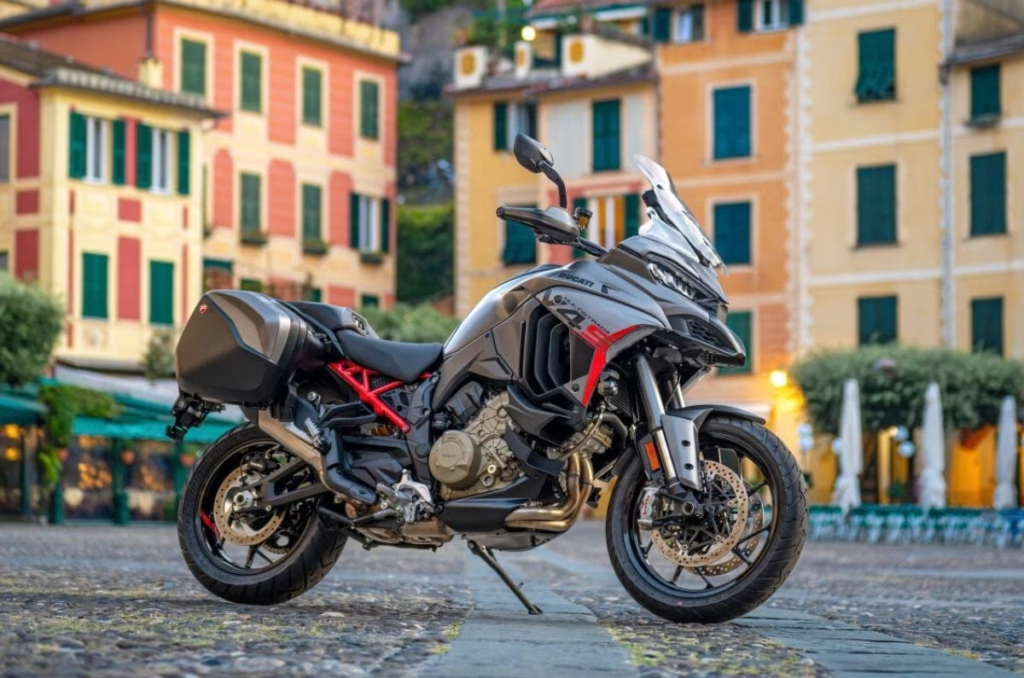
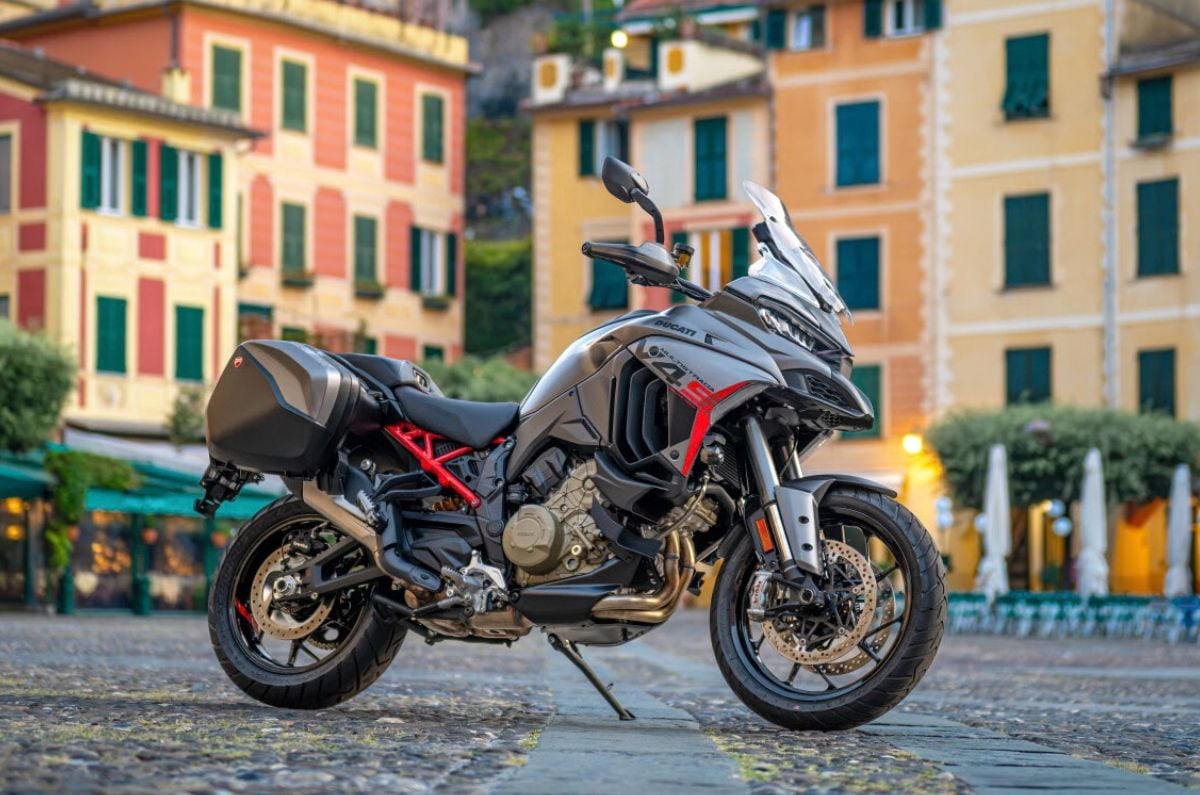
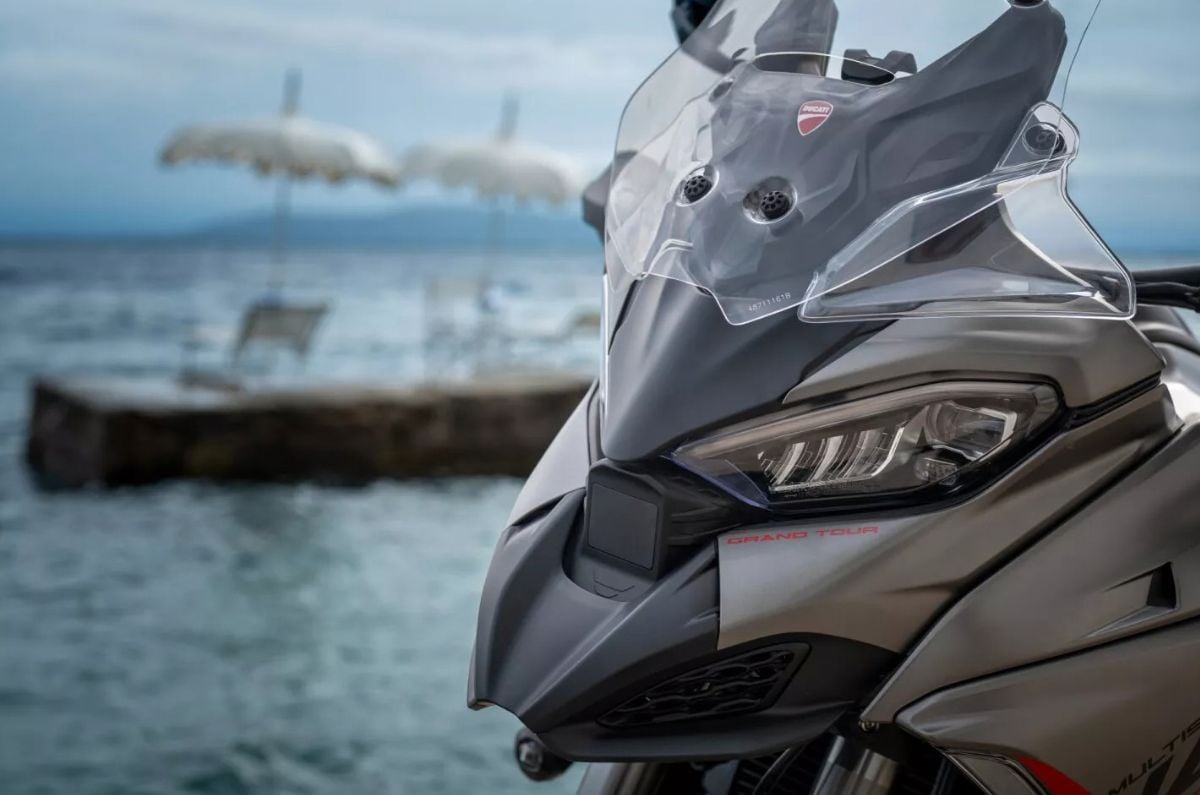
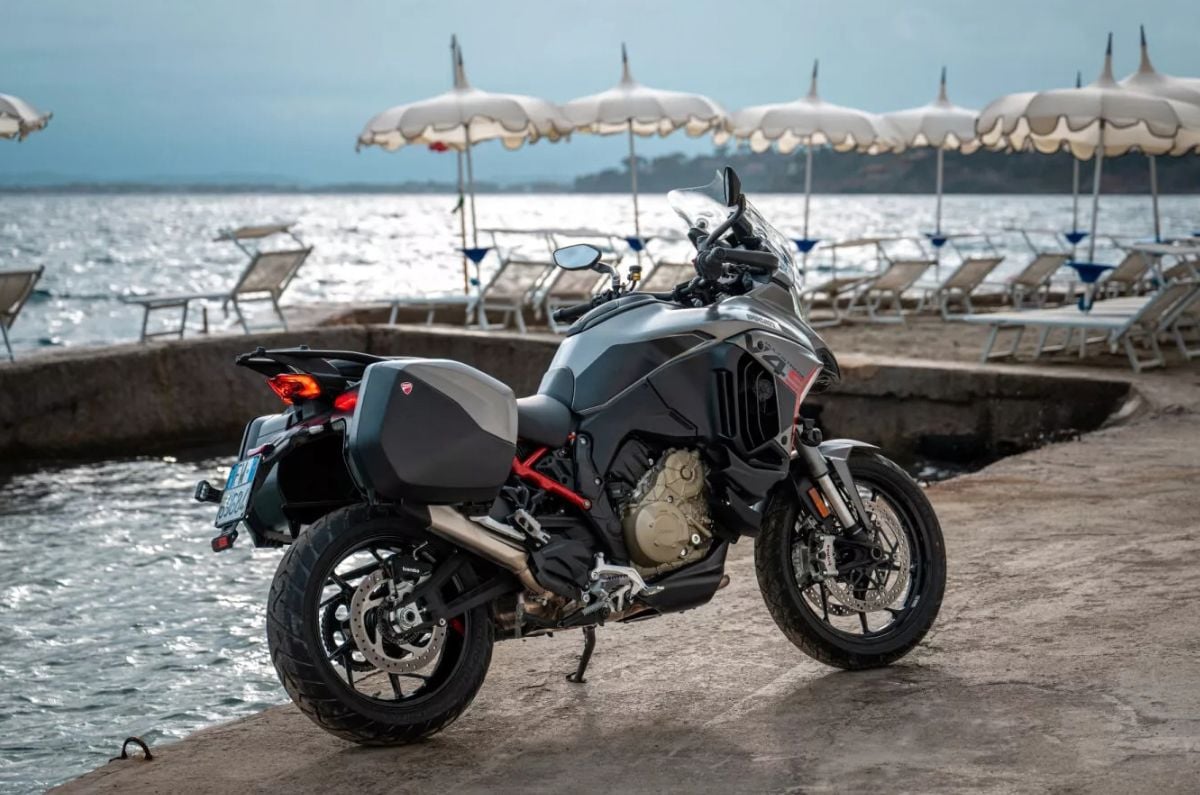
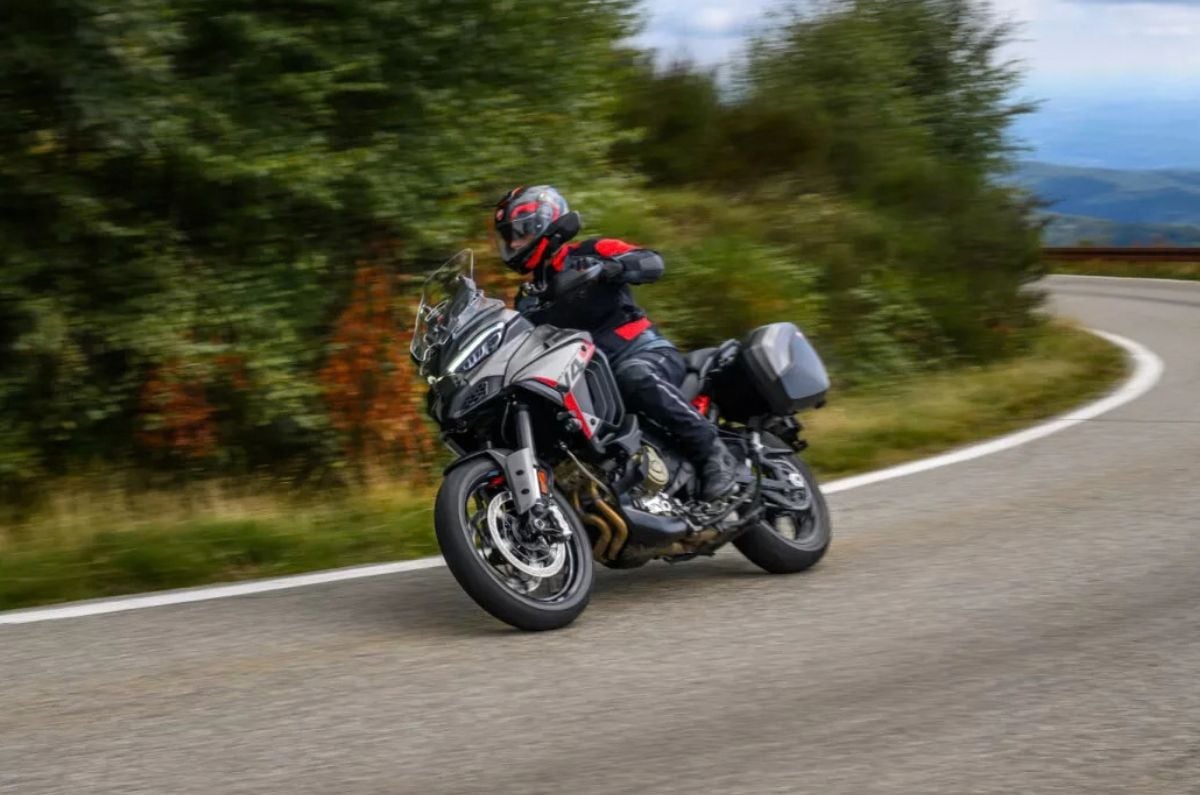
Ducati has revealed the 2027 Multistrada V4 S Grand Tour with updated livery and bodywork. The bike is mechanically identical to the standard V4 S, the main difference between the two models are the electronic integrations and the factory fitted touring accessories for the V4S Grand Tour.
The Multistrada V4 S Grand Tour adds extra factory features to the base V4 S
It uses the 1158cc V4 Granturismo engine from the base Multistrada V4 S
Set to arrive in Asian markets around April 2027
2027 Ducati Mutistrada V4 S Grand Tour details
The Multistrada V4 Grand Tour can be further configured through the Ducati Factory Made program
The Multistrada V4S Grand Tour is a distinct factory-equipped variant, as it bundles a comprehensive suite of touring and safety hardware as standard equipment. It shares the core engine, chassis and sem-active suspension with the V4 S.
It features the front and rear radar system, which is optional on the S. The Grand Tour also gets factory-fitted, 60-liter side panniers that match the bike’s custom livery. Other convenience features that come as standard include heated grips and heated seats for both rider and passenger. It also gets a hands-free fuel cap and a centre stand as standard.
The V4 S Grand Tour also features the Automatic Lowering Device, which automatically lowers the bike by up to 30mm when speeds drop below 10kph and returns it to riding height above 50kph, making it easier to handle in low-speed manoeuvres and stops, Which is carried forward from the S. The Grand Tour uses the same 1158cc V4 engine as the V4 S and produces 170hp and 123.8 Nm of torque
The new Multistrada V4 S Grand Tour will be available in an exclusive livery at European Ducati dealerships from November. Ducati has not made any India-specific comments on the GT’s availability, but has confirmed that it will head to Asian markets in April 2027. Given that most of the brand’s global product releases have come to our shores shortly after, we can expect the V4 S Grand Tour to be sold here. The V4 S is priced at £21,695 (Rs 27.63 lakh) in the UK and the GT is priced at £24,795 (Rs 31.58 lakh). For reference, in India the V4 S is priced at Rs 31.23 lakh, so we can expect the GT to be priced at a premium when it does go on sale here.
GBP-to-INR conversions based on exchange rates at the time of writing.
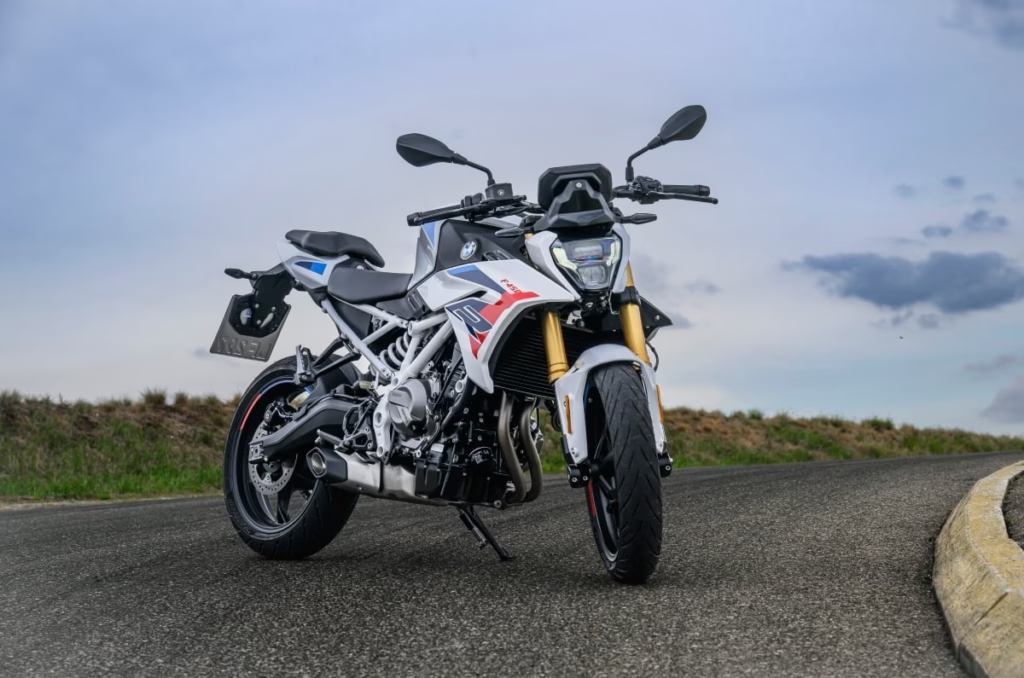
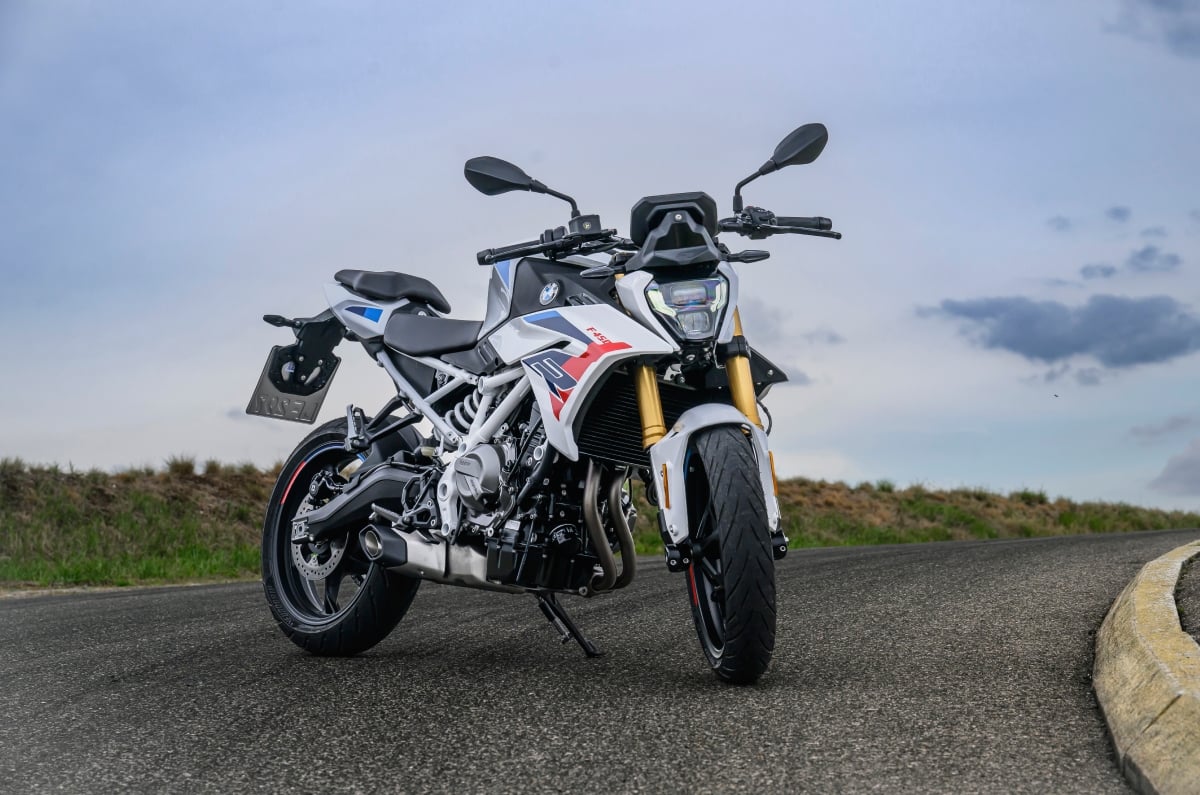
The BMW F 450 R is BMW’s new street-naked that effectively replaces the discontinued G 310 R as the entry point into the brand’s roadster lineup. Built on the same platform as the F 450 GS, it brings that engine and chassis into a road-focused naked format. Here are answers to some of the most commonly asked questions about it.
How much power does the BMW F 450 R make?
The BMW F 450 R is powered by the same 420cc parallel-twin engine as the GS, producing an identical 48hp at 8,750rpm and 43Nm at 6,750rpm. The engine is mated to a six-speed gearbox. BMW has mentioned that fuel consumption is rated at 3.8 litres per 100km (or 26.3kpl) based on the European WLTP test cycle, and we’ll have to wait until we test the bike to see what real-world range in our riding conditions is.
What variants is the BMW F 450 R available in?
The F 450 R is available in four variants – Base, Exclusive, M Sport and M Sport with Innovation Package. The base model comes with the standard feature set. The Exclusive adds a bidirectional quickshifter and Sport suspension with adjustable rebound and compression damping. Both M Sport variants add an individually configurable Dynamic Pro riding mode and an exclusive TFT layout showing traction control, braking force, lean angle and lap timer data. Lastly, the range-topping M Sport with Innovation Package adds the Easy Ride Clutch.
What is the seat height and weight of the BMW F 450 R?
The BMW F 450 R has a standard seat height of 790mm. A low seat accessory brings this down to 775mm, while a high Sport seat raises it to 810mm. BMW also notes that the slim contour below the seat helps most riders reach the ground more easily than the seat height figure alone might suggest. Ready-to-ride weight is 175kg, which is 3kg lighter than the F 450 GS.
What features does the BMW F 450 R have?
All variants of the F 450 R get a 6.5-inch TFT display with Bluetooth connectivity for navigation, music and phone calls, along with a USB-C port, heated grips and full-LED lighting. Three riding modes – Rain, Road and Dynamic – are standard, as are ABS Pro, Dynamic Brake Control, Dynamic Traction Control and engine drag torque control. Shift Assistant Pro (BMW’s bidirectional quickshifter) is also standard on all variants except the base model, where it is available as a retrofit accessory.
What are the differences between the BMW F 450 R and F 450 GS?
Both share the same 420cc parallel-twin engine producing 48hp and 43Nm, the same tubular steel frame and the same KYB suspension hardware. The key differences are in intent and setup. The F 450 GS uses longer-travel suspension with 180mm of travel at both ends, alongside a 19-inch front and 17-inch rear wheel. The F 450 R features road-specific suspension tuning with 140mm of travel and rides on 17-inch wheels at both ends. The F 450 R also uses an underbelly exhaust instead of the GS’s high-mounted unit.
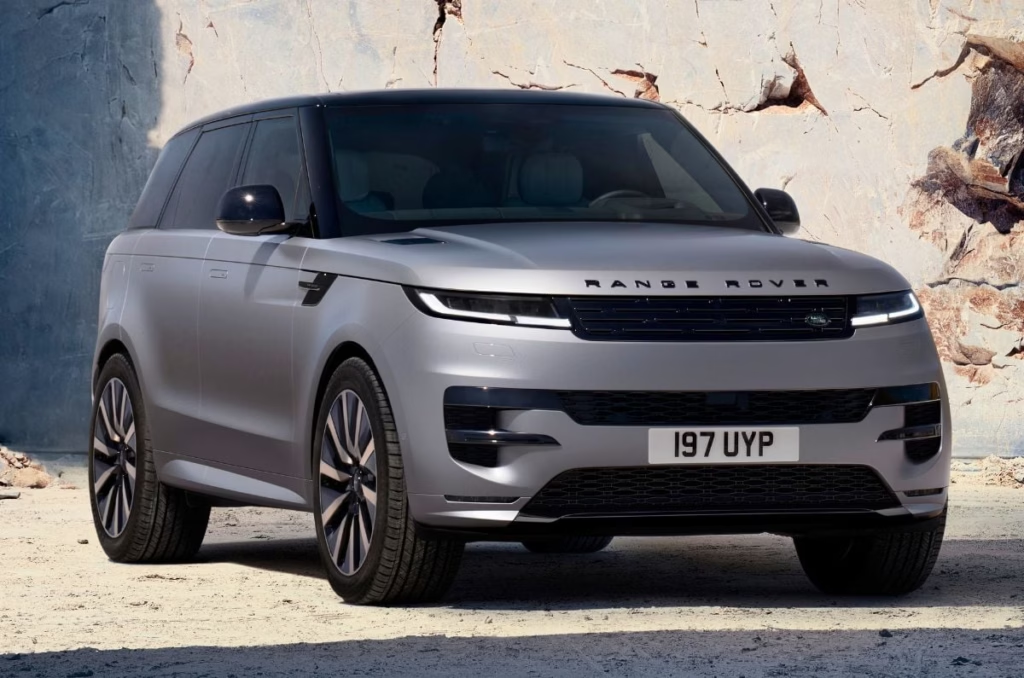
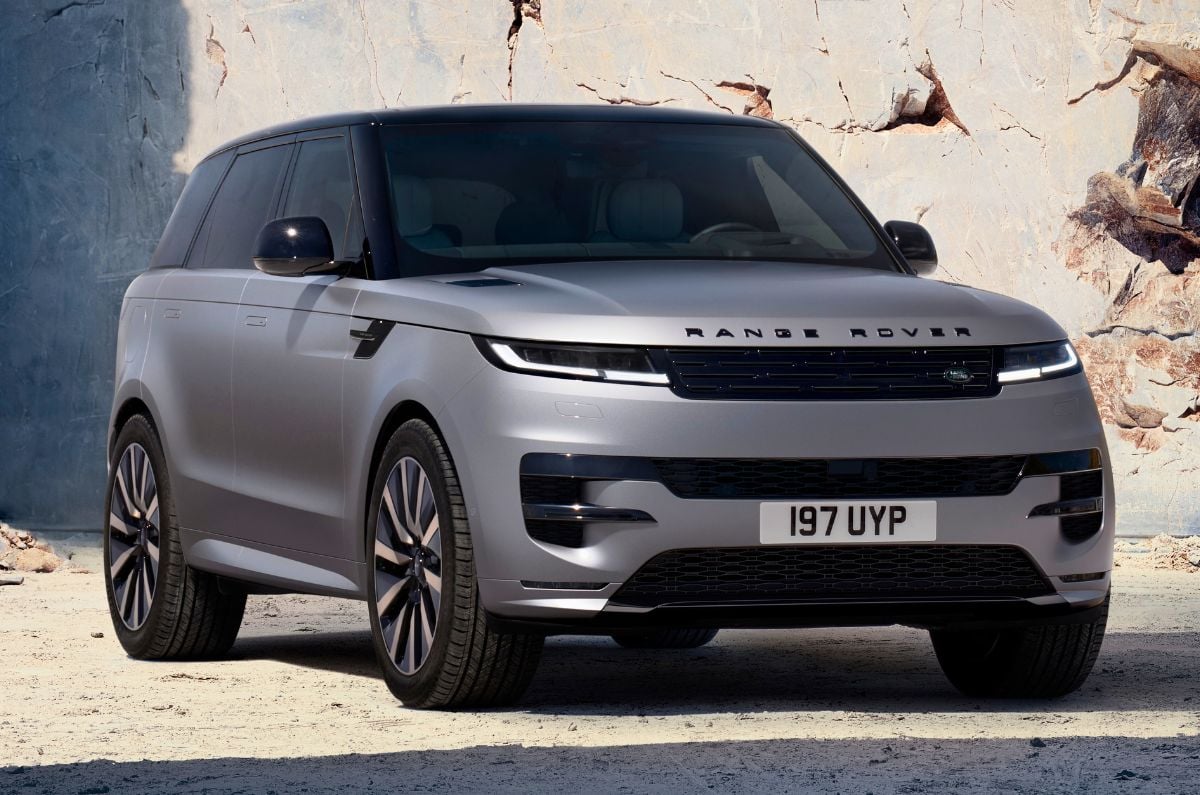
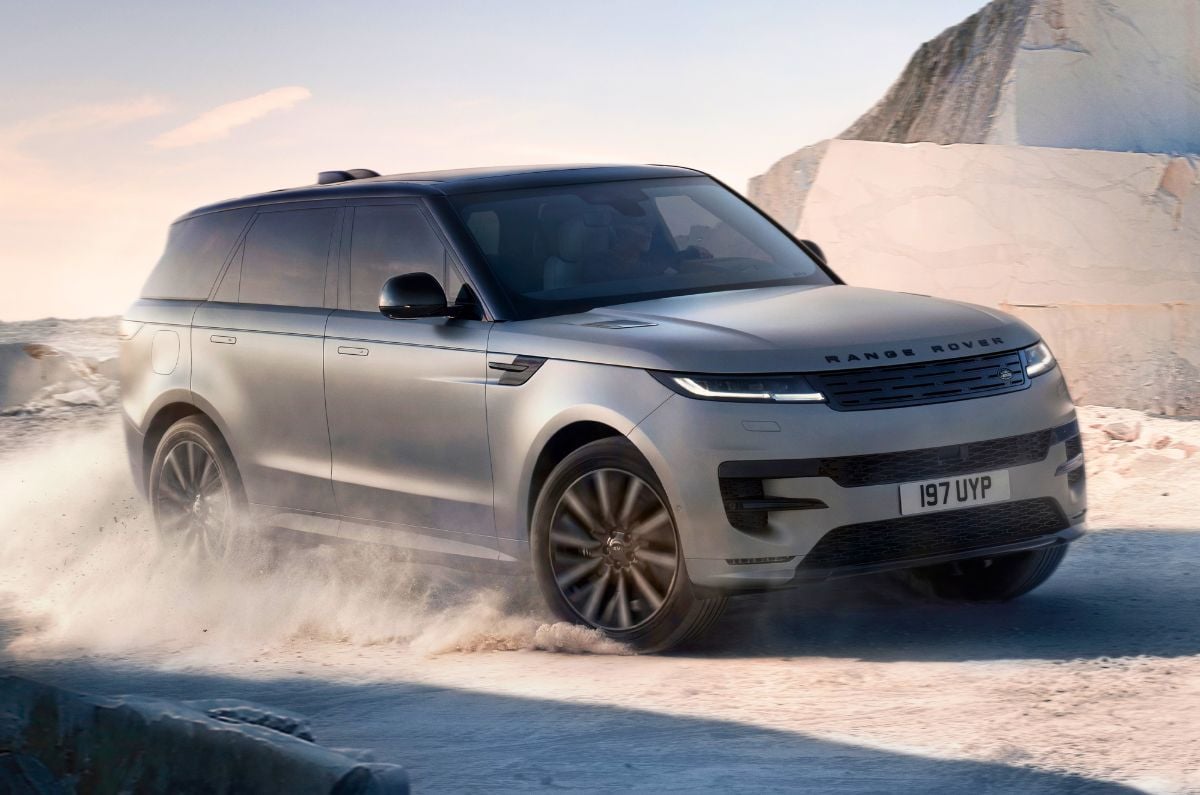
JLR has unveiled the Range Rover Sport Electric and opened order books for the SUV in India. It is the first all-electric model in the Range Rover Sport lineup and gets a 118.5kWh battery pack, the same unit used by the previously revealed Range Rover Electric, albeit with a higher 609km claimed WLTP range. It gets a dual-motor all-wheel-drive (AWD) setup, which delivers “performance to match the V8-powered Range Rover Sport”.
The dual-motor setup produces up to 550hp and 850Nm
0-100kph acceleration is claimed at 4.5 seconds
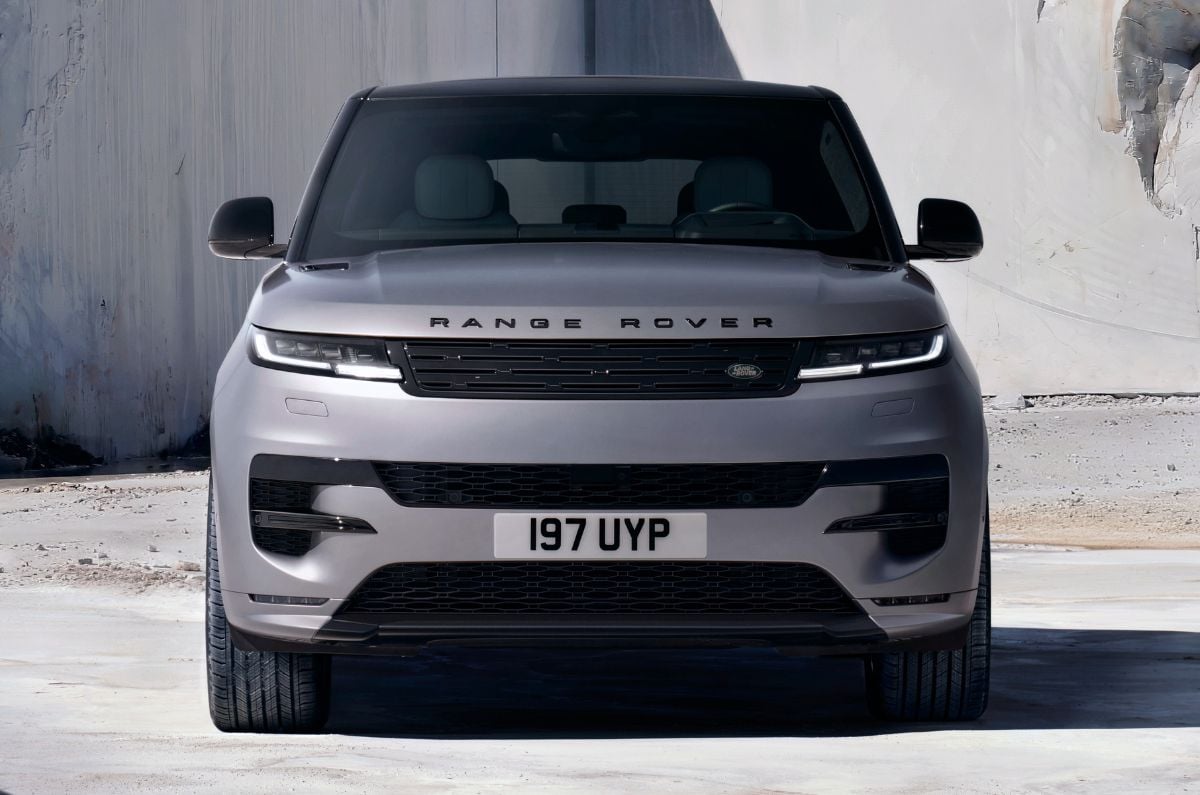
Exterior and interior designs are similar to the ICE model
Range Rover Sport Electric: Powertrain details
Gets a 118.5kWh battery, 609km claimed range and a 550hp dual-motor setup
The Range Rover Sport Electric is built on JLR’s 800-volt Flexible Modular Longitudinal Architecture (MLA-Flex), which also underpins the flagship Range Rover Electric. It uses the same 118.5kWh battery pack as the Range Rover Electric, but offers a slightly higher claimed range of 609km, up by 9km. The battery is offered with an 8-year or 1.6 lakh km standard warranty (whichever comes first).
The electric SUV gets a dual-motor all-wheel-drive (AWD) setup that produces up to 550hp and 850Nm. JLR claims the torque builds 50 percent faster than in the larger Range Rover Electric, while the 850Nm output is also the highest of any Range Rover Sport model yet. The Range Rover Sport Electric can sprint from 0-100kph in a claimed 4.5 seconds, matching the claimed acceleration time for the P540 V8-powered Range Rover Sport.
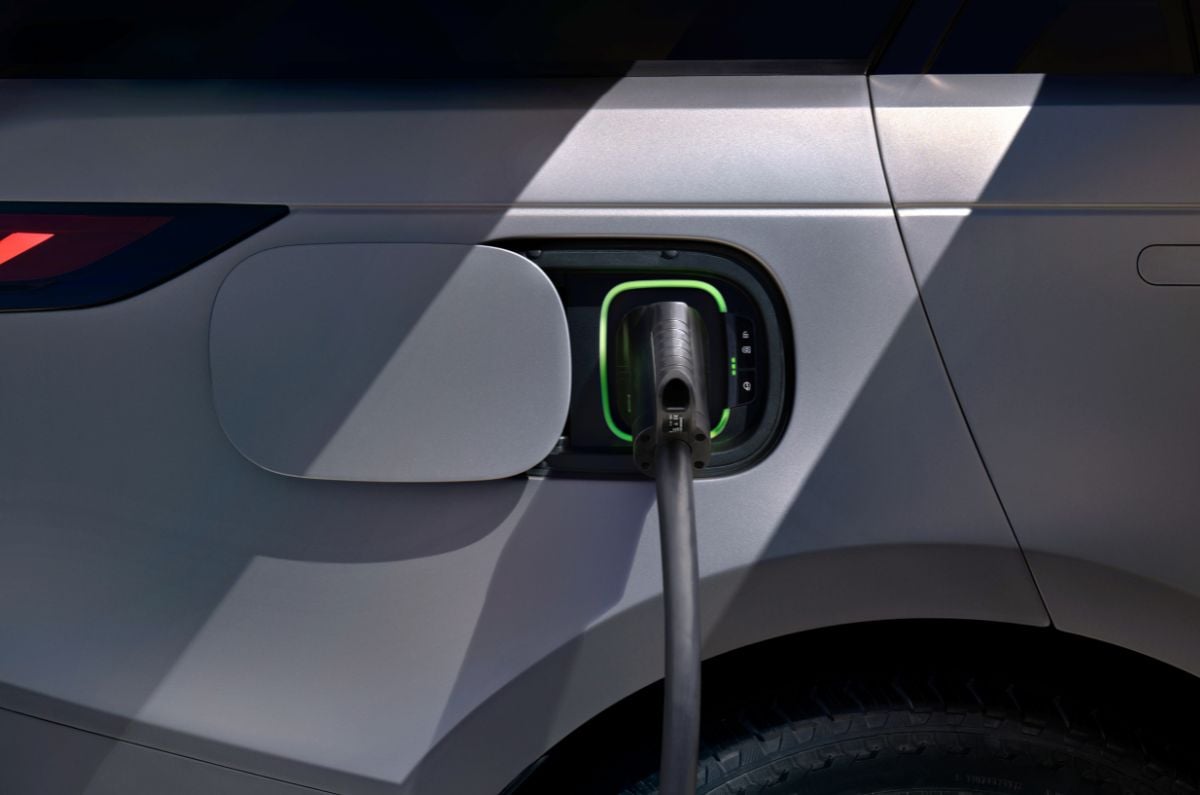
The Range Rover Sport Electric supports DC fast charging at up to 350kW, allowing its battery to replenish from 10 to 80 percent in a claimed 22 minutes. A 10-minute charge can add up to 220km of range to the eSUV.
The Range Rover Sport Electric also features a 61 percent stiffer body structure and a centre of gravity that is 73mm lower than the ICE Range Rover Sport. Its suspension setup comprises double wishbones at the front and a five-link arrangement at the rear, along with air suspension, twin-valve dampers, active roll control and all-wheel steering. Braking hardware includes 380mm ventilated discs with four-piston callipers at the front and 355mm discs at the rear.
Range Rover Sport Electric: Exterior design
Exterior design is largely similar to the ICE model
The Range Rover Sport Electric’s exterior design closely mirrors that of its ICE counterpart. Up front, it features the same sleek LED headlights, an aero-optimised black grille with horizontal elements and an offset Land Rover logo, Range Rover lettering on the bonnet, and functional air inlets in the bumper.
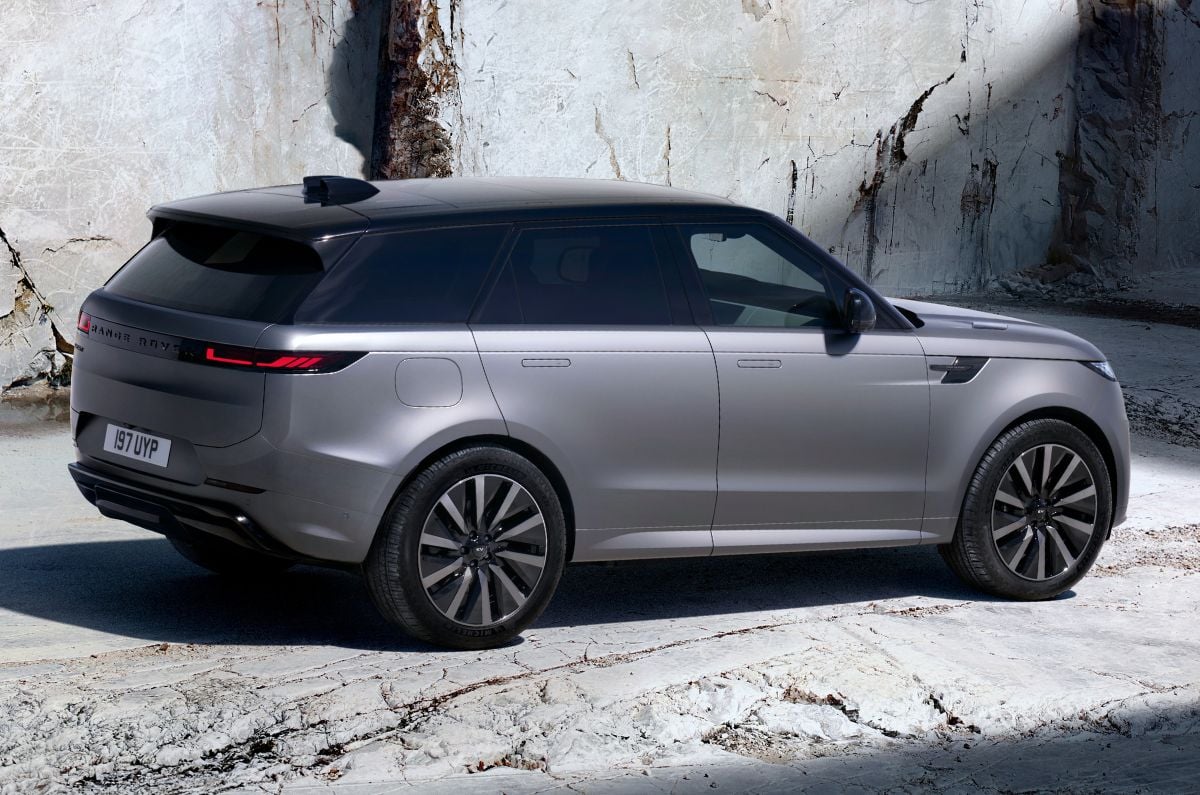
In profile, the SUV gets up to 22-inch alloy wheels with aerodynamic inserts and EV-badged wheel caps, along with flush-fitting door handles and blacked-out A-, B- and C-pillars. The ORVMs and roof are also finished in black.
The rear design remains largely similar to the ICE model, with wraparound LED taillights positioned above a gloss-black trim panel that carries Range Rover lettering in the centre. The tailgate gets a black Sport badge, but has no EV badge.
JLR is offering the Range Rover Sport Electric in four variants: Dynamic SE, Dynamic HSE, Autobiography and First Edition. Customers can also opt for a Black Pack and Satin Wrap for a more understated, stealthy look. The First Edition comes finished in Zadar Grey with a Satin Wrap, a black contrast roof and 22-inch alloy wheels. Meanwhile, Autobiography customers can further personalise their SUV through Range Rover Bespoke, JLR’s in-house commissioning service for bespoke models.
Range Rover Sport Electric: Interior design and features
Gets the same dashboard design as the combustion-powered model
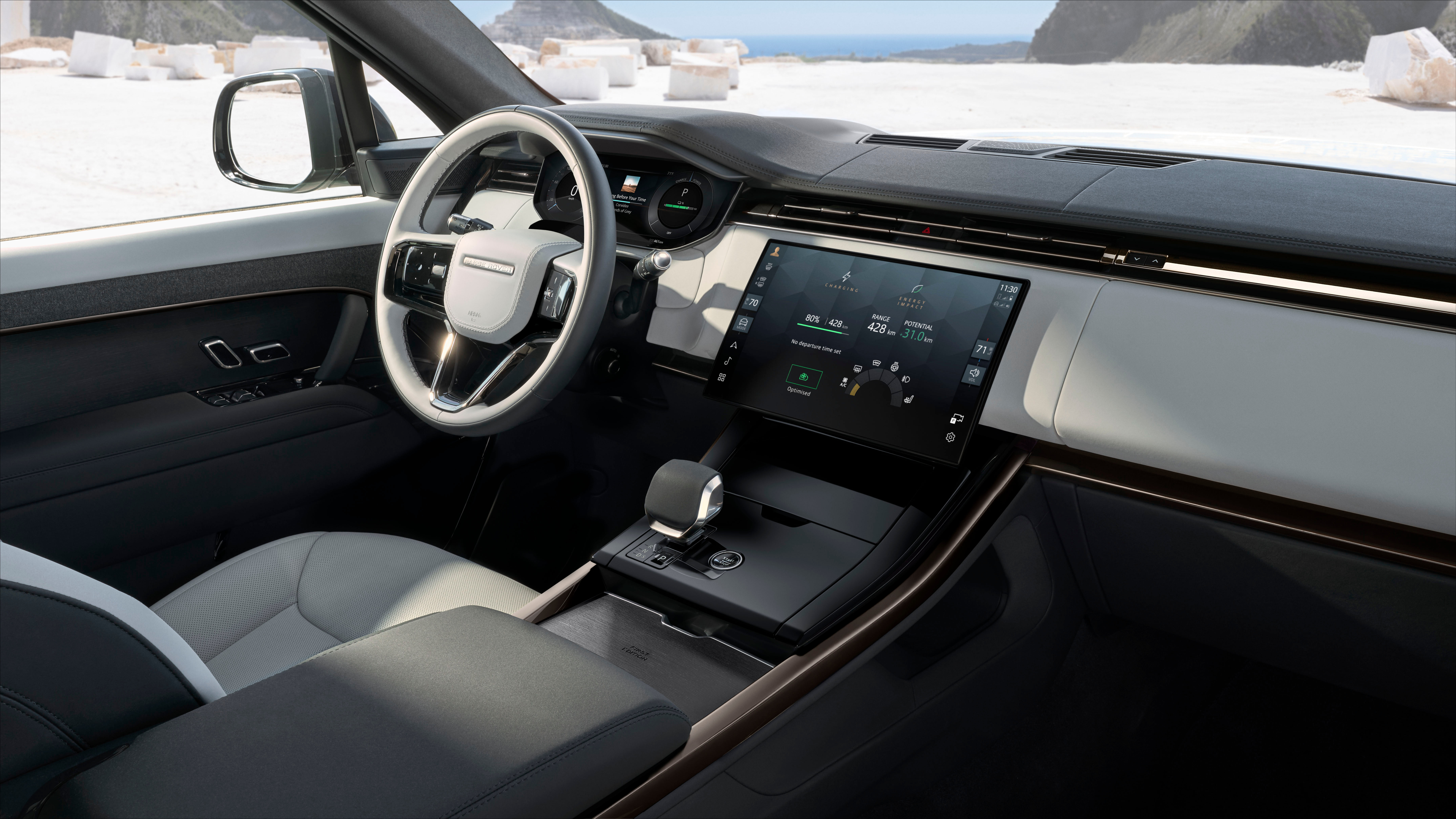
The Range Rover Sport Electric’s interior closely mirrors that of the ICE model. The dashboard features a three-spoke steering wheel with touch-sensitive controls, a 13.1-inch infotainment touchscreen and a 13.7-inch digital driver’s display. Both screens get EV-specific menus, while the centre console and drive mode selector stalk are carried over from the ICE model. Like its combustion-engined counterpart, the Sport Electric has a five-seat layout.
In terms of equipment, the SUV comes with a wireless phone charger, 4-zone climate control, rear sunblinds, and powered, heated and ventilated seats for both the front and rear passengers.
Range Rover Sport Electric: India launch and prices
Expected to be priced at around Rs 2.50 crore
The Range Rover Sport Electric is expected to arrive in India by March 2027 as a fully imported model. As an EV, it will not be eligible for tariff concessions under the India-UK Free Trade Agreement (FTA). It is expected to be priced at around Rs 2.5 crore, placing it at a considerable premium over the ICE-powered, non-SV Range Rover Sport, which is currently priced between Rs 1.43 crore and Rs 1.60 crore.
The Triumph Daytona 660 is built on the same platform as the Trident 660, sharing its 660cc inline-triple engine but with sportier ergonomics, a full fairing and a more performance-oriented character. For 2026, Triumph has addressed some of the original bike’s shortcomings with meaningful hardware upgrades. Here are answers to some of the most commonly asked questions about it.
What is the price of the 2026 Triumph Daytona 660?
The 2026 Triumph Daytona 660 is priced at Rs 9.99 lakh (ex-showroom, India), marking an Rs 11,000 hike over the outgoing model’s Rs 9.88 lakh. At its new price point, it’s also exactly Rs 1 lakh more expensive than the Trident 660 that it shares its platform with.
What’s new on the 2026 Triumph Daytona 660?
The 2026 update brings three meaningful changes to the ride package. The 41mm Showa USD front fork is now fully adjustable for compression and rebound, while retaining the 110mm travel figure. The bidirectional quickshifter, which was previously an optional accessory, is now standard equipment. The Michelin Power 6 tyres of the outgoing model have also been replaced with Metzeler M9 RR rubber, which uses a grippier, more track-oriented compound. The rear monoshock remains unchanged, with adjustable preload and 130mm of travel.
What engine does the Triumph Daytona 660 use?
The Daytona 660 continues with the same 660cc, liquid-cooled inline-triple engine producing 95hp and 68Nm of torque, paired with a 6-speed gearbox. The engine and all other mechanical elements carry over unchanged from the outgoing model.
What features does the Triumph Daytona 660 have?
The Daytona 660 comes with three riding modes – Rain, Road and Sport – each altering throttle response and traction control sensitivity. The instrument cluster combines an LCD multifunction display with a TFT screen and offers smartphone connectivity for turn-by-turn navigation, music and call control. As mentioned above, for 2026, it also gets a bidirectional quickshifter as standard.
What colours is the Triumph Daytona 660 available in?
The 2026 Daytona 660 is available in three new colours – Aluminium Silver, Cosmic Yellow and Sapphire Black. Both the Aluminium Silver and Cosmic Yellow variants come with glossy Sapphire Black highlights in the decals, while the Sapphire Black option features an all-over glossy finish.
Mahindra launched the Thar OG in September 2026 with several hardware, styling and safety upgrades over the outgoing model. The Mahindra Thar OG competes with the Maruti Suzuki Jimny and Force Gurkha 3-door in the relatively niche mass-market off-roader segment. Let us look at how the changes and improvements in the Thar OG help the model take on its rivals.
Mahindra Thar OG vs rivals: Dimensions
Thar and Jimny are longest here
Mahindra Thar OG vs Maruti Jimny vs Force Gurkha dimensions
Thar OG
Jimny
Gurkha 3 door
Length (mm)
3,995
3,985
3,965
Width (mm)
1,870
1,645
1,865
Height (mm)
1,855
1,720
2,080
Wheelbase (mm)
2,450
2,590
2,400
Ground clearance (mm)
232
210
233
Approach angle (degree)
40
36
39
Departure angle (degree)
36
46
37
Rampover angle (degree)
26.4
24
28
Water wading depth (mm)
650
310 (estimated)
700
Wheel size (inch)
18/ 19
15
18
All three models trade punches in the size department. The Thar OG and Jimny are longer than the Gurkha 3-door, with the Jimny’s wheelbase being the longest. However, the Maruti off-roader is the narrowest and shortest one here. The Gurkha rides the highest off the ground, followed closely by the Thar OG with its 226mm clearance. Both of them offer 18-inch wheels, though the top-spec Thar OG ZXT trim rides on 19-inch units. The Jimny, on the other hand, comes with 15-inch wheels only.
The Thar OG has a 40-degree approach angle, while the Gurkha and Jimny have 39 degrees and 36 degrees, respectively. The Jimny has the highest departure angle at 46 degrees, followed by the Gurkha at 37 degrees and Thar at 36 degrees. The Gurkha has the best rampover angle at 28 degrees, compared to 26.4 degrees for the Thar and 24 degrees for the Jimny. The Gurkha also has the highest water-wading depth at 700mm, followed by the Thar at 650mm and the Jimny at an estimated 310mm.
Mahindra Thar OG vs rivals: Engine and gearbox
Mahindra Thar OG vs Maruti Jimny vs Force Gurkha powertrains
Thar OG
Jimny
Gurkha 3 door
Engine
1.5D | 2.0P | 2.2D
1.5P
2.6D
Turbocharged
Yes
No
Yes
Power (hp)
119 | 162 | 152
105
140
Torque (Nm)
300 | 330
134.2
320
Gearbox
6MT | 6MT or 6AT
5MT or 4AT
5MT
Drive layout
RWD | RWD or 4WD
4WD
4WD
The Mahindra Thar OG offers the widest choice of powertrains here, with three engines, while the Jimny and Gurkha 3-door get only one engine each. Thar’s 162hp 2.0-litre petrol is the most powerful here. Its 2.2-litre diesel engine makes the highest torque output here.
The stronger turbo-petrol and diesel engines of the Thar OG can be had with either a 6-speed manual or a 6-speed automatic gearbox. These also offer the choice between rear-wheel drive and four-wheel drive (4WD) layouts. Whereas, the 1.5-litre diesel engine is available in the rear-wheel drive guise, and transmission duties are handled solely by a 6-speed manual gearbox.
The Jimny offers 5-speed manual and 4-speed automatic options with 4WD as standard, whereas the Gurkha has a 5-speed manual gearbox with 4WD.
Mahindra Thar OG vs rivals: Off-roading features
Mahindra Thar OG vs Maruti Jimny vs Force Gurkha Off-roading hardware
Thar OG
Jimny
Gurkha 3 door
Front suspension
Independent double wishbone
3-link rigid axle
Independent double wishbone
Rear suspension
Pentalink with Watt’s link
3-link rigid axle
Multi-link with track bar
Terrain modes
In 4WD
No
No
Locking differential
Electronic; in 4WD
Electronic; in 4WD
Manual
The Thar OG and Gurkha 3-door both use independent double-wishbone front suspension, while the Jimny gets a 3-link rigid-axle setup at both ends. At the rear, the Thar uses a five-link setup with a Watt’s link, while the Gurkha gets a multi-link setup with a track bar.
In terms of off-road equipment, the Thar has an advantage with terrain modes available in 4WD, a feature that the Jimny and Gurkha do not offer. Both the Thar and Jimny use electronic locking differentials in 4WD, while the Gurkha gets a manual locking differential.
With its September update, the Thar OG also gains Mahindra’s DaVinci dampers, which is standard fitment across the range. The range-topping ZXT trim goes a step further by adding frequency dependent damping (FDD) to this setup.
Mahindra Thar OG vs rivals: Price
Mahindra Thar OG vs Maruti Jimny vs Force Gurkha prices
Thar OG
Jimny
Gurkha 3 door
Price range (Rs, lakh)
10.32-17.75
12.59-14.52
16.26
When it comes to base trims, the Thar OG is the indisputable winner. Prices start at Rs 10.32 lakh with the Thar OG AXT diesel 2WD MT, which is Rs 2.27 lakh more affordable than the base-spec Jimny Zeta Pro MT and a whopping Rs 5.94 lakh lower than the Gurkha (sold in one trim only).
Coming to the top trims, the Thar OG ZXT diesel 4WD AT trim is the most expensive here at Rs 17.75 lakh, pricier by Rs 1.49 lakh than the Gurkha and Rs 3.23 lakh than the Jimny Alpha AT.
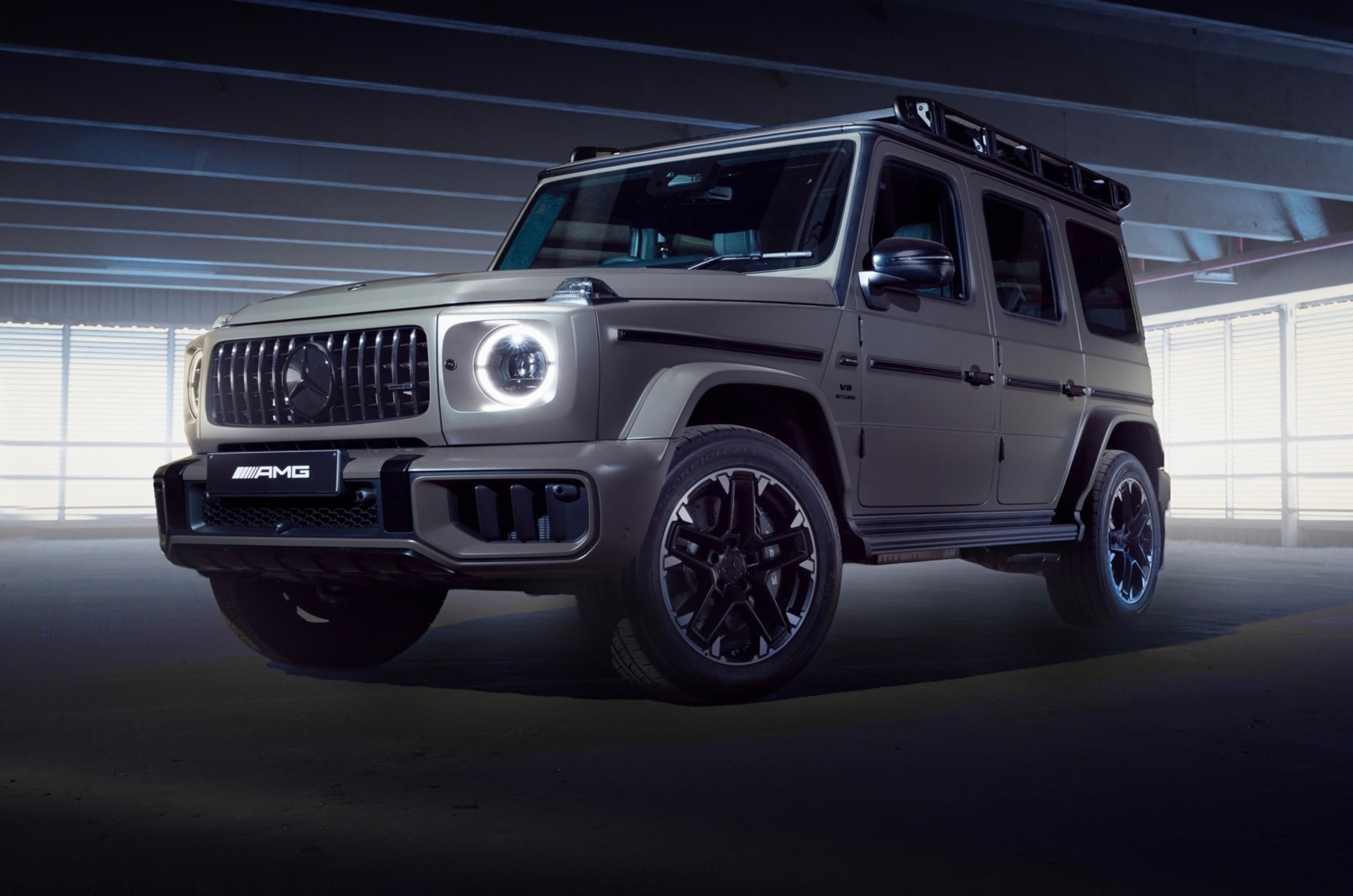
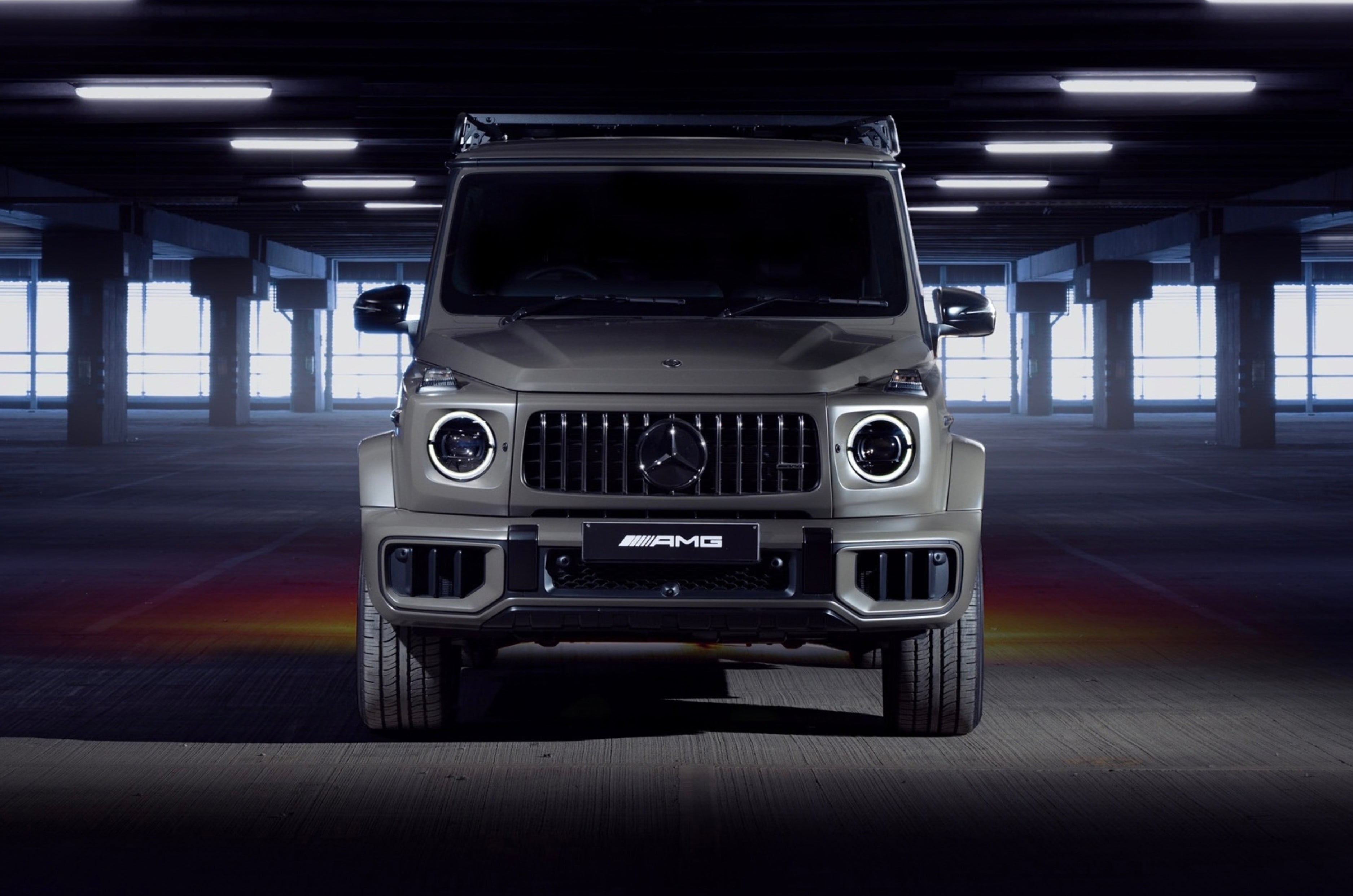
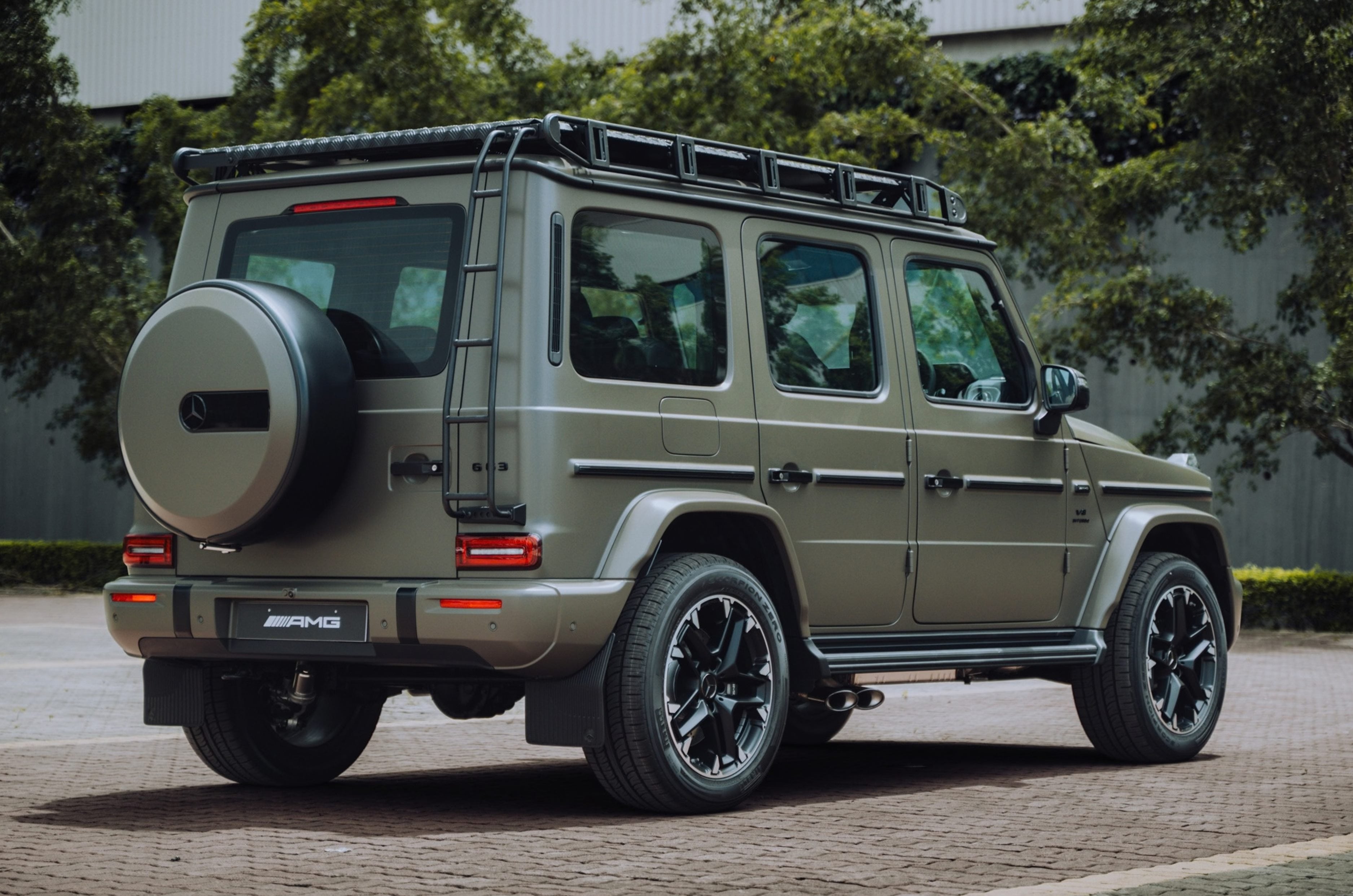
Mercedes-Benz has launched the AMG G 63 Offroad Pro in India at Rs 3.8 crore, ex-showroom. The venerable SUV’s new trim gets AMG-specific off-road hardware, and it will be available in limited numbers. Compared to the standard AMG G 63, the Offroad Pro carries a premium of Rs 6 lakh.
Mercedes-AMG G 63 Offroad Pro highlights
The G 63 Offroad Pro gets AMG active ride control suspension with active roll stabilisation. It also gets AMG active balance control, allowing the roll stiffness to be adjusted in three stages for different off-road conditions. Another key addition is the AMG traction pro mode, available in the Rock and Sand drive modes. Mercedes claims that the system can control braking torque at each wheel individually and offers seven stages of locking.
The Offroad Pro also gets a roof luggage rack with aluminium panels and a removable rear ladder. It rides on exclusive 20-inch AMG alloy wheels finished in matte black, shod in 20-inch tyres.
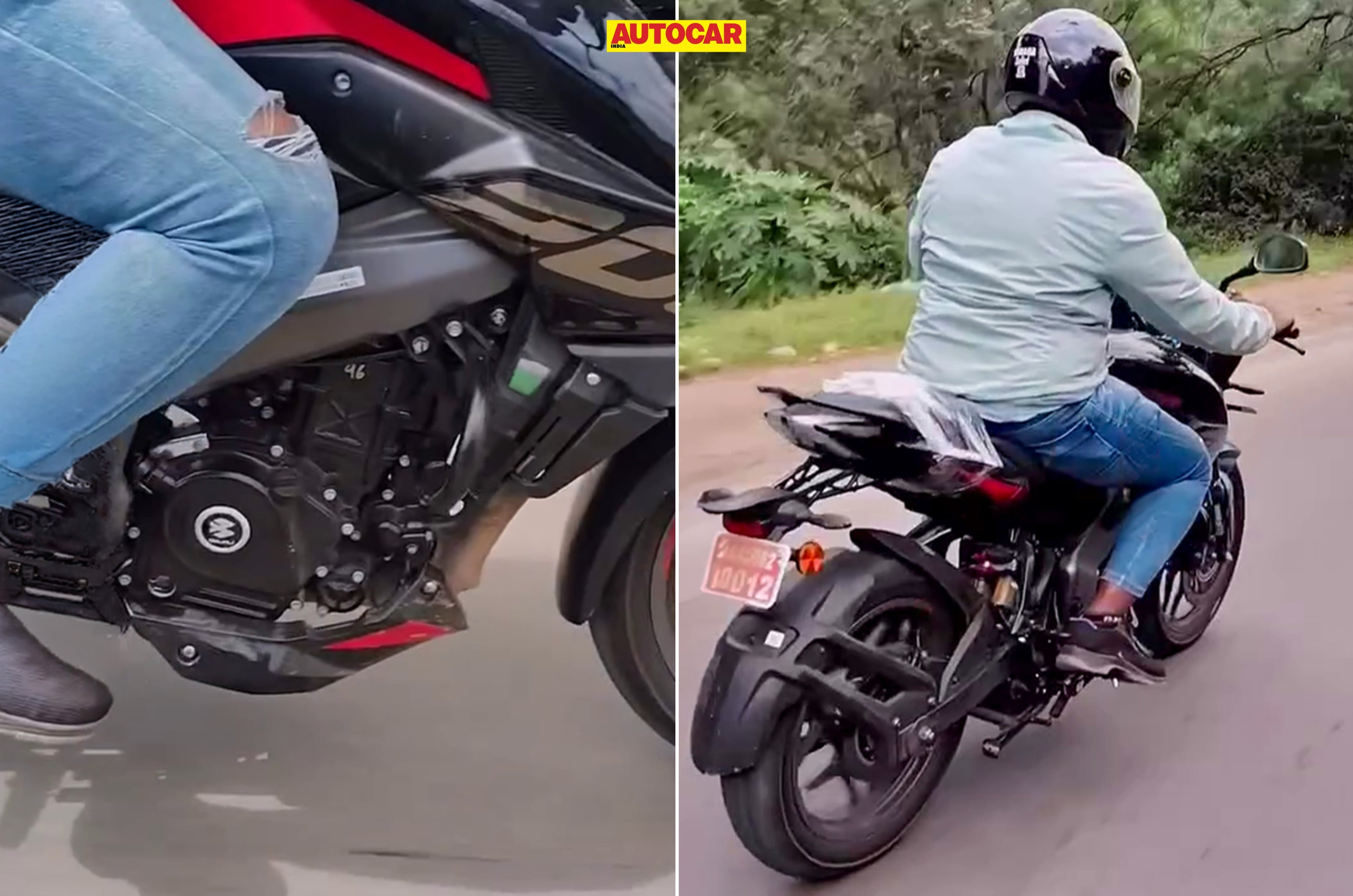
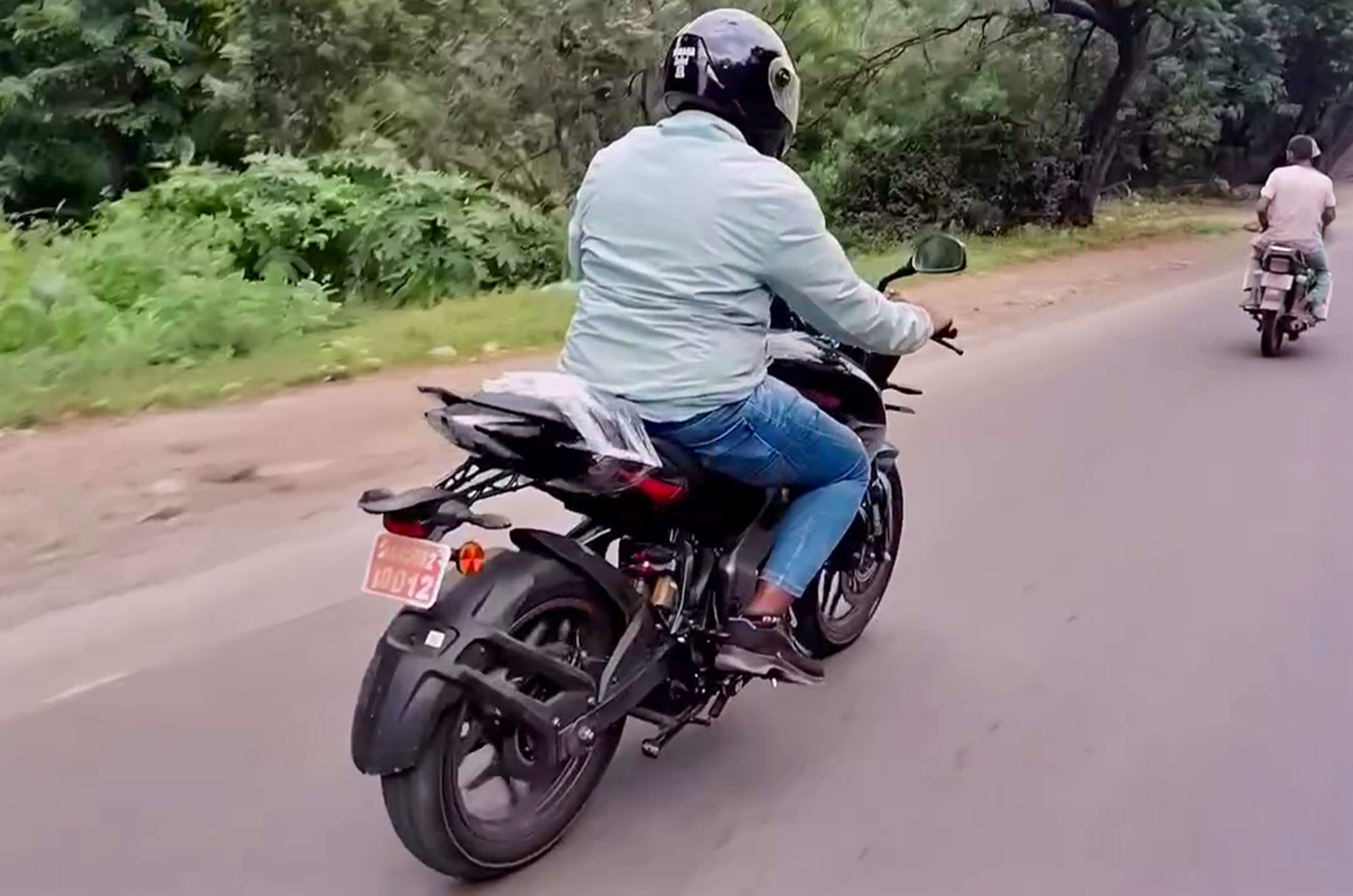
After launching the N160 SS with a new 4-valve engine and the next-generation Classic Pulsar 150 and 125, Bajaj Auto appears to be gearing up to update the Pulsar NS200 and N250. Spy shots reveal a new TFT display, revised switchgear and upgraded suspension hardware on the two motorcycles.
NS200 gets WP USD fork, while both bikes get a new TFT display
Revised switchgear and adjustable levers also spotted on the NS200
Bajaj Pulsar NS200, N250 to get feature upgrades
New TFT display and switchgear
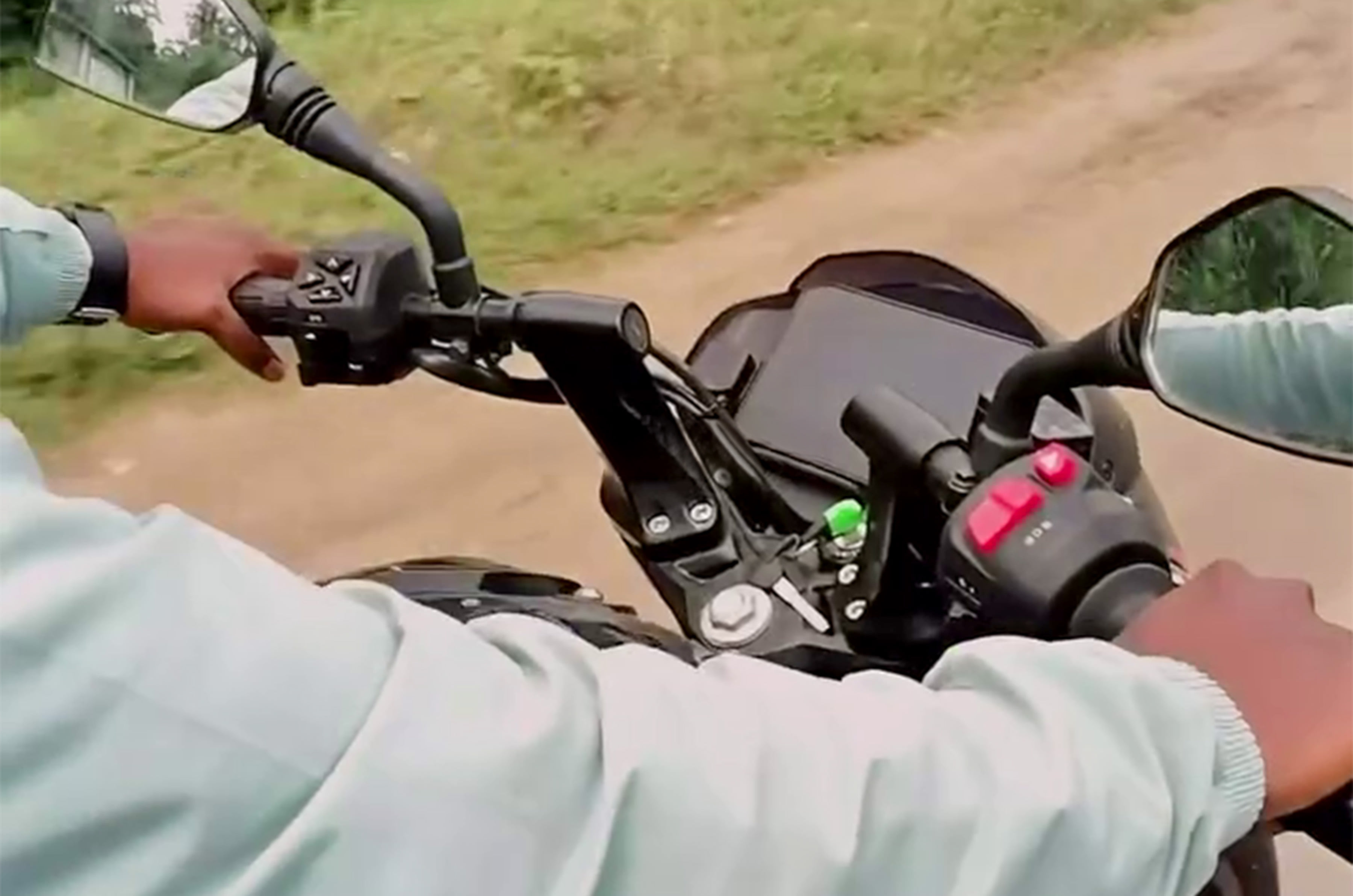
The updated Pulsar NS200 and N250 have been spotted with the same 5-inch TFT display introduced on the Pulsar N160 SS and subsequently seen on the new-generation Classic Pulsar 150. The display is accompanied by revised switchgear, including a four-way controller for navigating its various functions.
The TFT on the N160 SS supports smartphone connectivity, Google Maps mirroring, music controls, third-party notifications and document storage. It is not yet clear if the NS200 and N250 will get the complete feature set of the N160 SS. The NS200 also appears to get adjustable brake and clutch levers, along with revised switchgear.
The more significant hardware change is on the NS200, which has been spotted with a WP upside-down fork. The fork carries visible WP branding and replaces the unbranded USD fork on the current motorcycle. The N250 has also been spotted with an upside-down fork, although it is not clear if it uses the same WP hardware.
The WP fork would make the updated NS200 the first Bajaj motorcycle to use this suspension hardware. WP Performance Systems is part of the KTM Group and its suspension components are used on several KTM and Husqvarna motorcycles – specially the Apex.
Both motorcycles are expected to retain their existing engine platforms. The NS200 currently uses a 199.5cc, liquid-cooled single-cylinder engine, while the N250 is powered by a 249cc single-cylinder unit.
The updated Pulsar NS200 and N250 are expected to be launched ahead of the festive season. More details, including their specifications and pricing, should emerge closer to the launch.
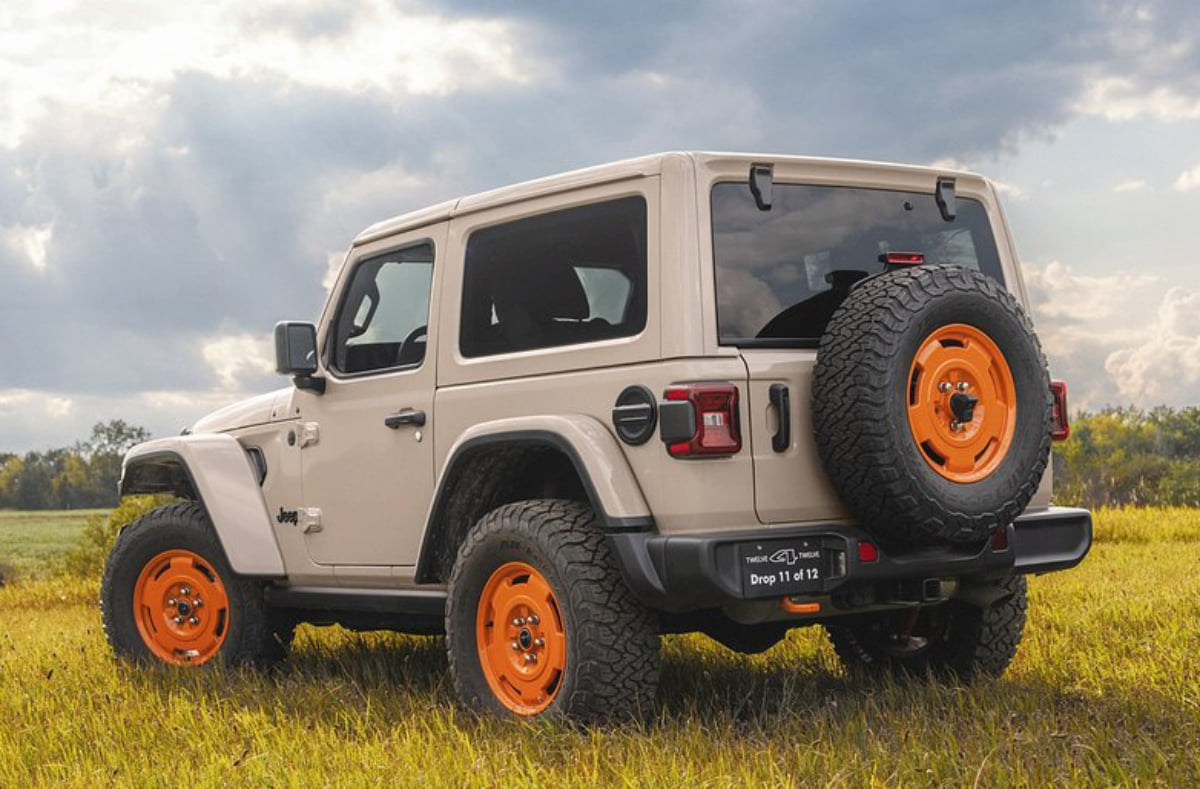
Jeep has revealed the 2027 Wrangler JL-2A, a special edition inspired by the 1945 Willys CJ-2A, the brand’s first vehicle designed specifically for civilian use. Based on the Wrangler Rubicon, the JL-2A gets a range of exterior and interior changes inspired by the original Jeep, while its off-road hardware remains unchanged. Orders are set to open in October.
Jeep Wrangler JL-2A: Exterior
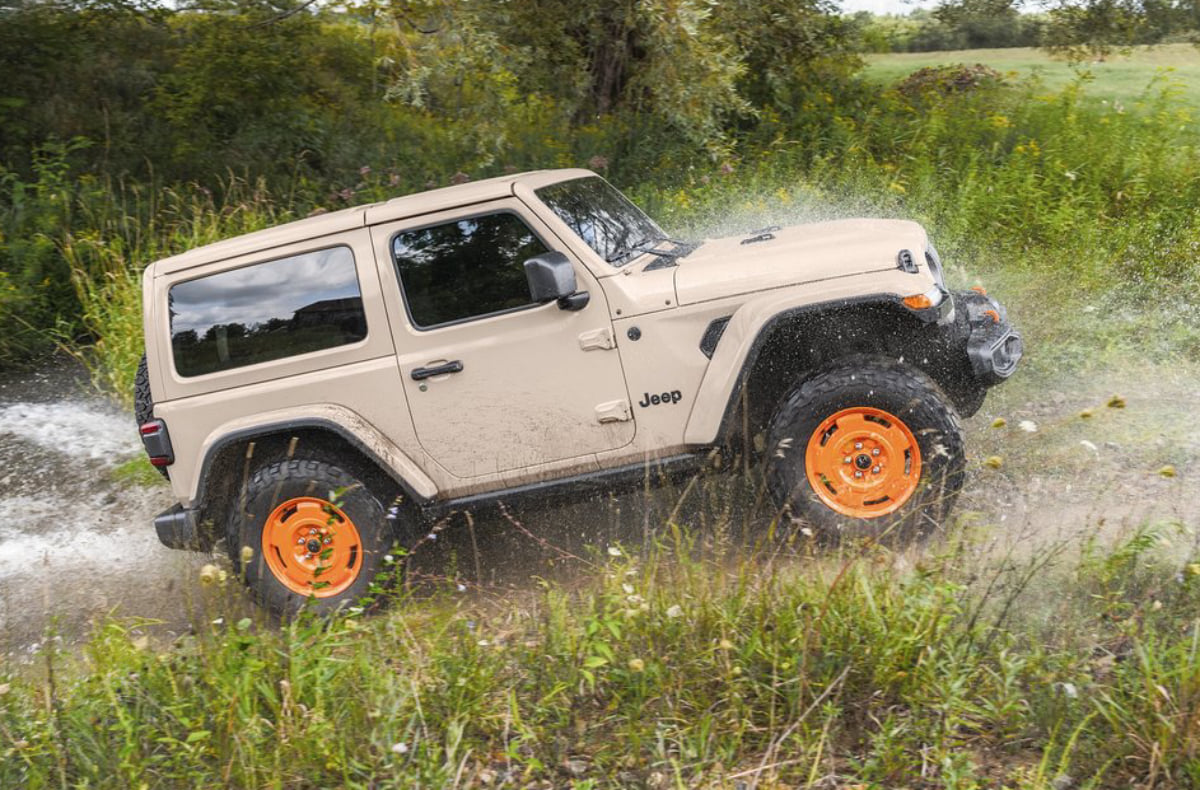
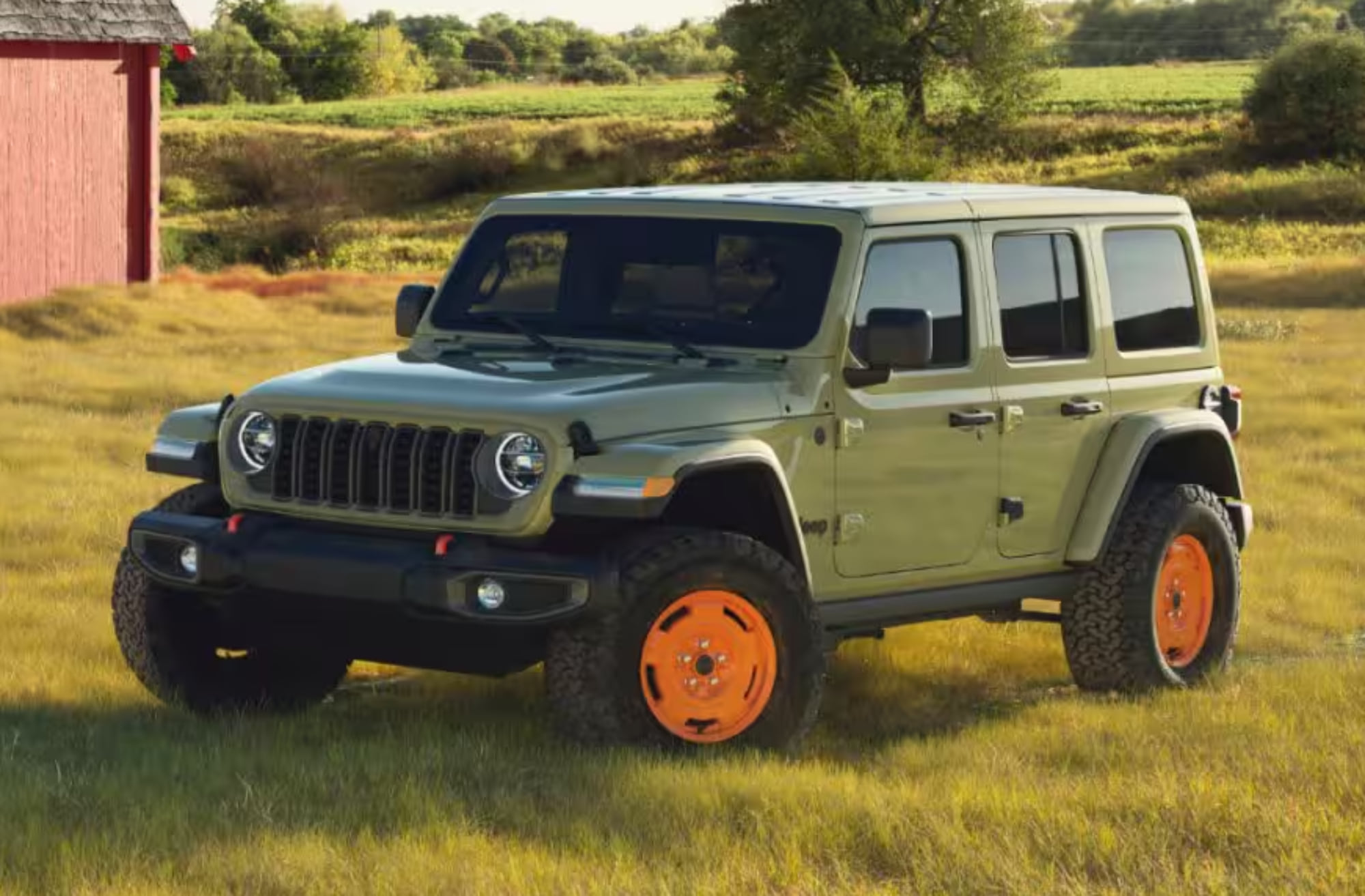
The JL-2A gets Gobi paint on the two-door version, inspired by the Harvest Tan finish offered on the original CJ-2A. The four-door version is available in ’41, an olive green shade. Both body styles can also be specified in Bright White, Sting Gray, Ghost and Joose. All versions get 17-inch Joose-painted retro wheels, paired with 33-inch BFGoodrich KO2 all-terrain tyres.
The exterior also gets orange tow hooks at the front and rear, Dark Metallic Grey accents on the seven-slot grille, body-colour fender flares and a three-piece hardtop.
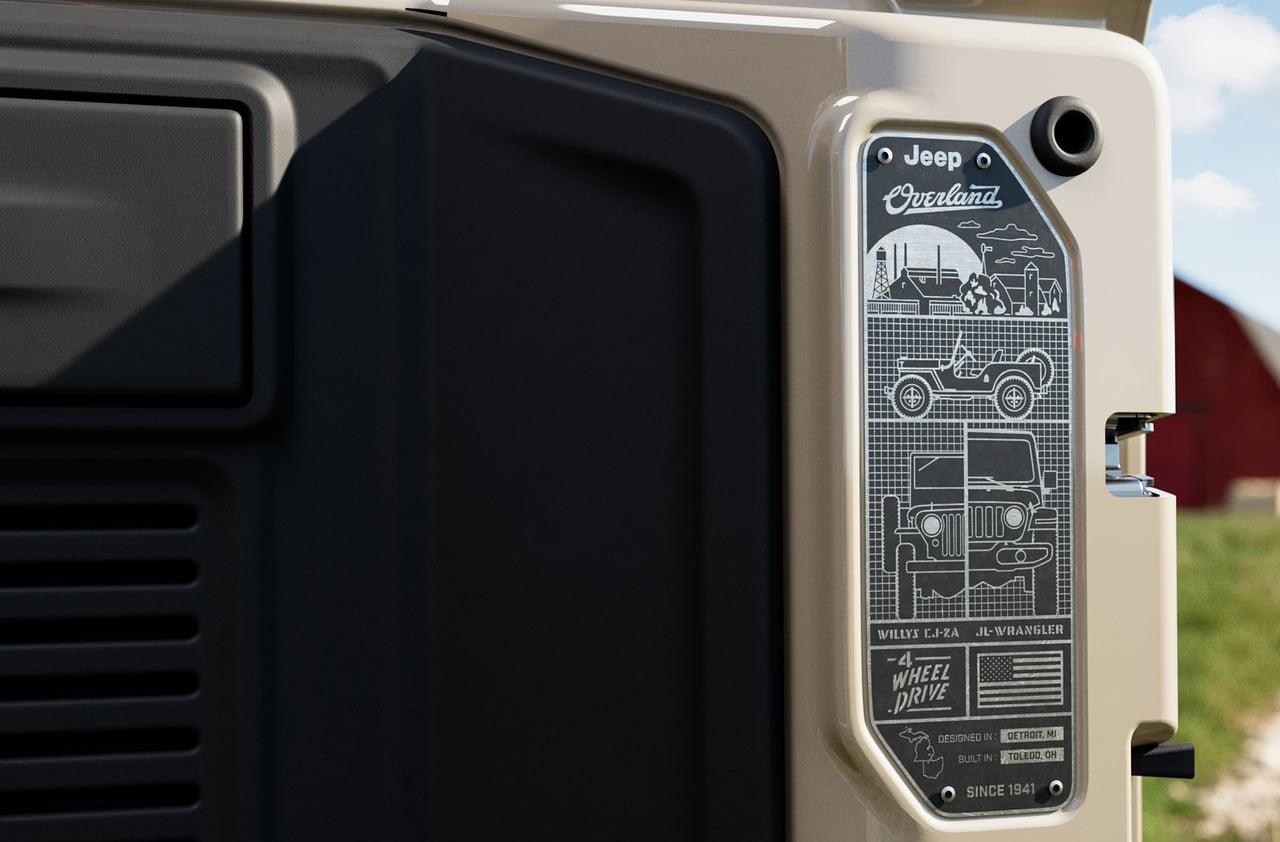
A plaque on the rear swing gate recreates the artwork from the original CJ-2A’s dashboard data plate, including farm and factory scenes.
Jeep Wrangler JL-2A: Interior
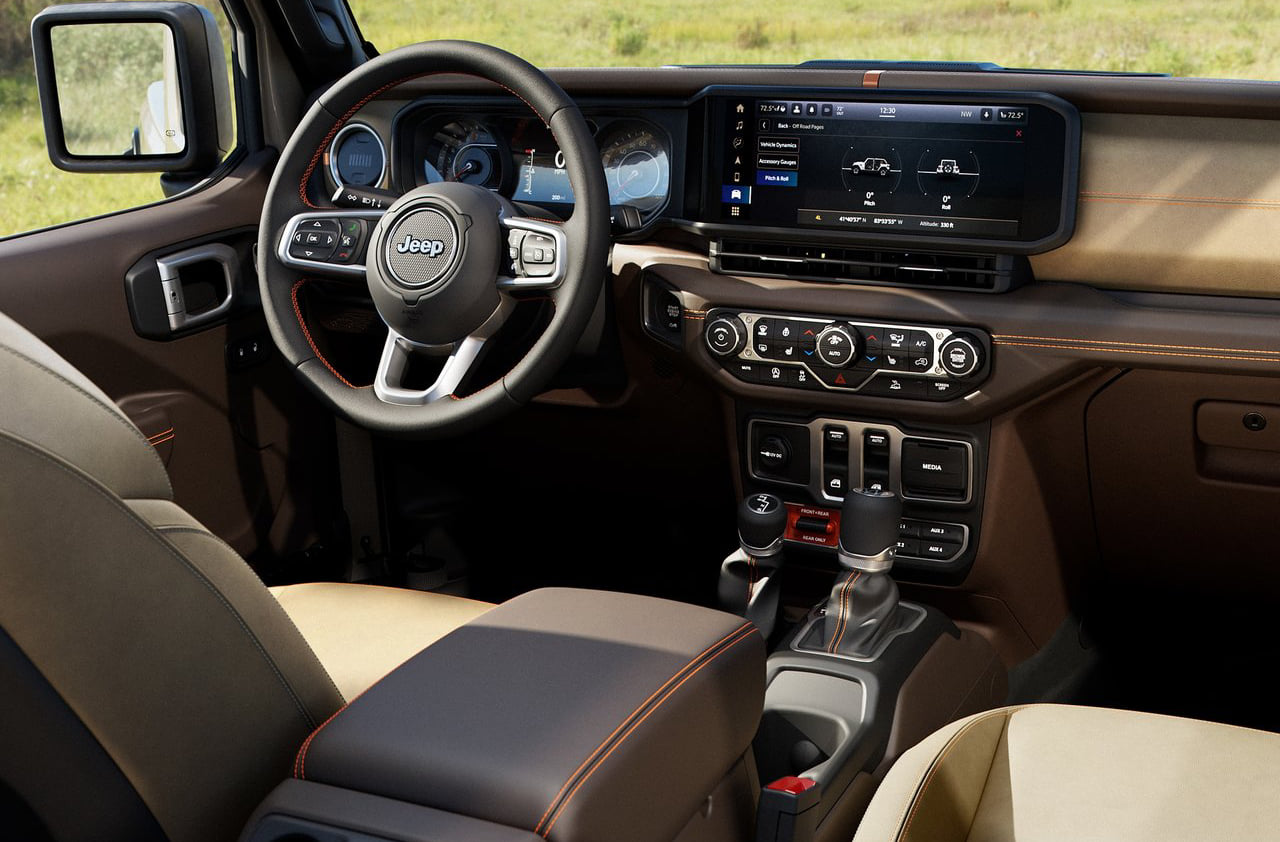
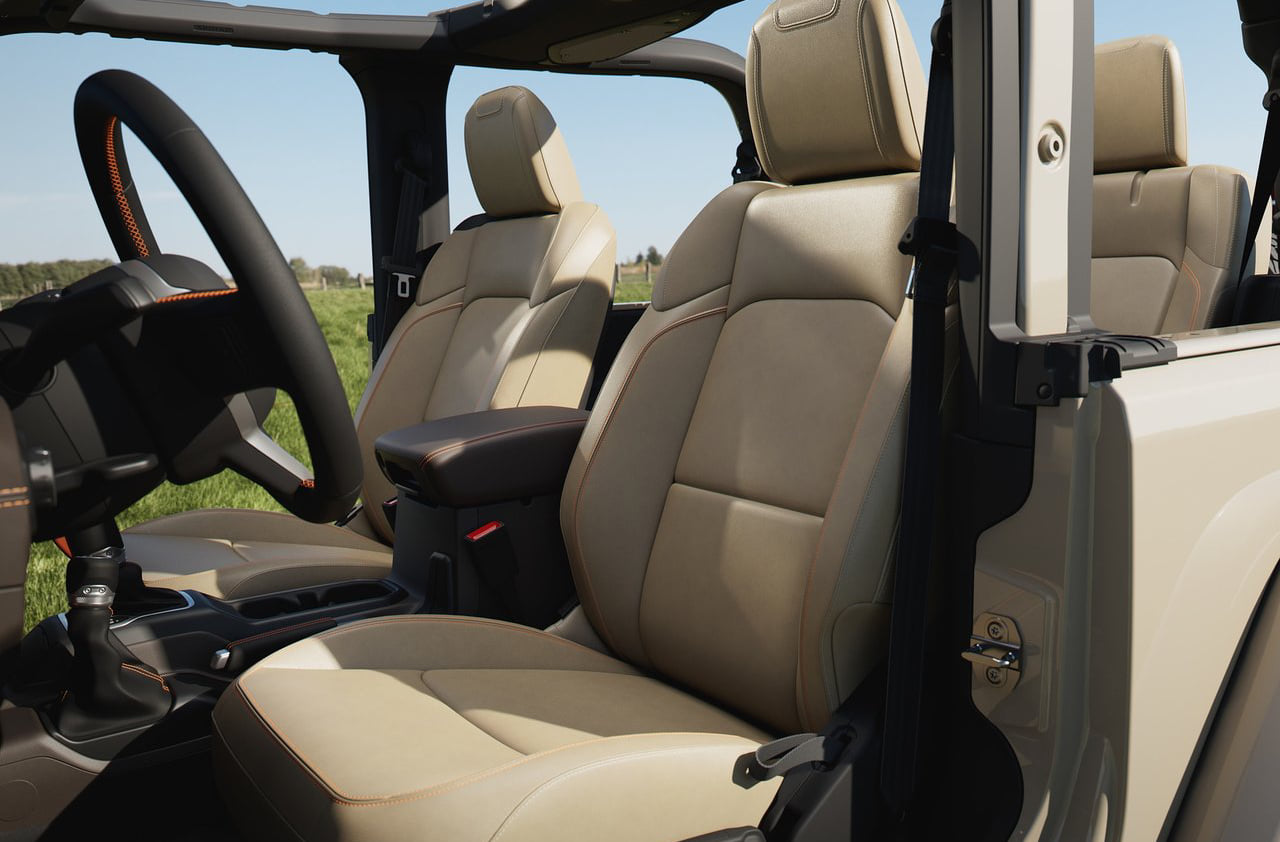
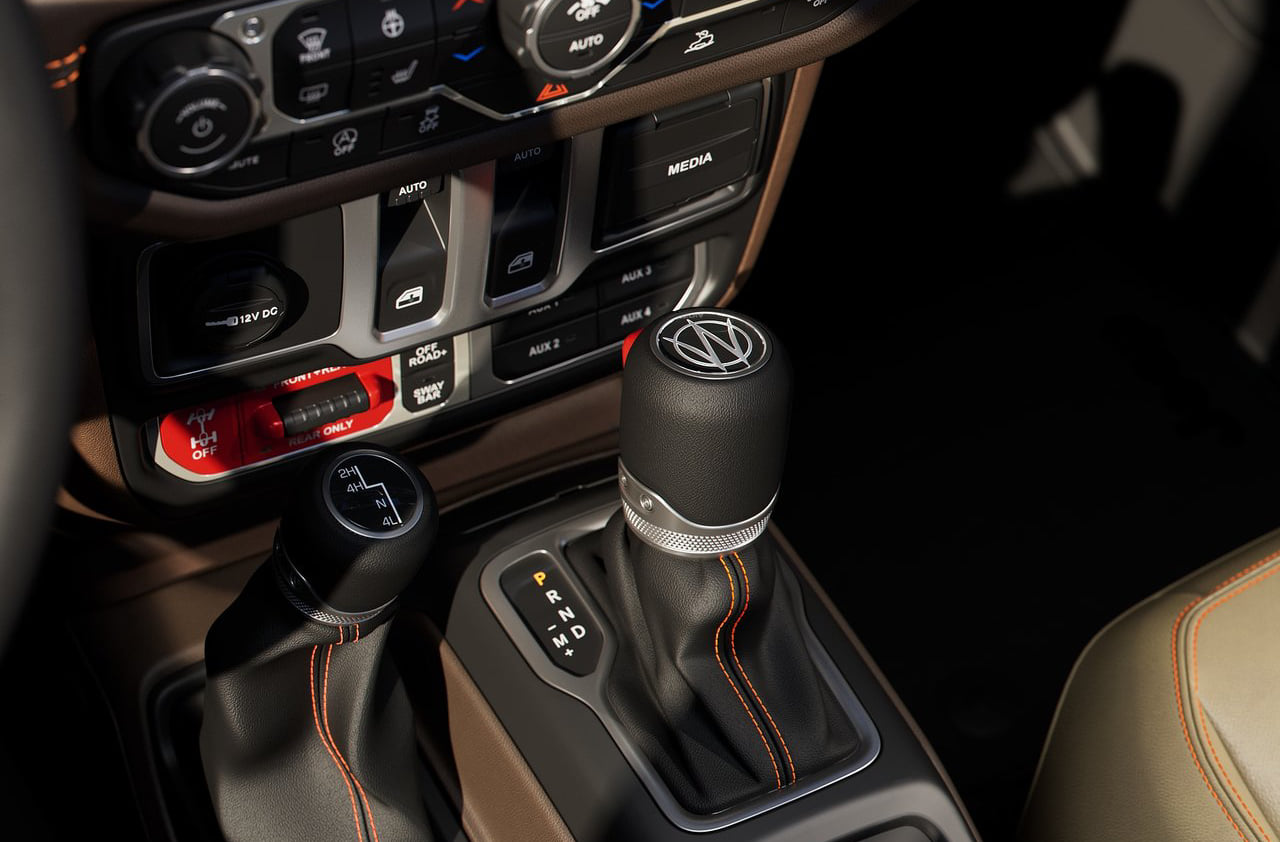
The cabin gets Nappa Heritage Tan leather seats,brown door panels, lower instrument panel and centre console, along with contrast orange contrast stitching. The gear shifter features a Willys-Overland badge, while the HVAC vents feature a seven-slot grille graphic on one side and a Willys silhouette on the other.
The Convenience Group is standard and includes remote start, an auto-dimming rear-view mirror and a universal garage door opener. A front TrailCam with an integrated washer is also standard.
Jeep Wrangler JL-2A: Powertrain and off-road hardware
Jeep has not announced any mechanical changes for the JL-2A. Based on the Wrangler Rubicon, the special edition retains electronic locking differentials at the front and rear, an electronic sway-bar disconnect and the Rock-Trac HD 4×4 system.
The Rubicon is offered with a 285hp, 353Nm 3.6-litre V6 and a 270hp,400Nm 2.0-litre turbo-petrol engine, paired with either a six-speed manual or eight-speed automatic gearbox. Jeep has not specified which of these powertrain options will be offered with the JL-2A.
The JL-2A is the 11th limited-edition Wrangler introduced as part of Jeep’s Twelve 4 Twelve programme. Under the programme, Jeep is introducing one limited-edition Wrangler each month for 12 months. The JL-2A will be offered as a package for the 2027 Wrangler Rubicon, priced at USD 4,995 (Rs 4.79 lakhs). Orders will open in October.