Tata Motors Passenger Vehicles (TMPV) and Stellantis have signed a formal agreement to expand their partnership into product technology, platforms and vehicle architecture, formalising plans for a new Jeep SUV based on the Tata Sierra’s ARGOS platform, according to people in the know. Internally codenamed J1J, the Jeep SUV will get both internal combustion engine and electric versions and it is likely to use the same powertrains as the Sierra, say people in the know.
Sierra-based Jeep SUV: platform and production plans
ARGOS stands for All-Terrain Ready, Omni-Energy and Geometry Scalable. It is TMPV’s modular, multi-energy vehicle architecture, designed to accommodate different vehicle dimensions and powertrain applications, which can open up more opportunities for Stellantis in the future.
While Tata Motors is producing the Sierra at its Sanand factory in Gujarat, production of the Jeep model is likely to take place at the Fiat India Automobiles Ltd (FIAL) joint venture facility in Ranjangaon, Maharashtra. The manufacturing operations are expected to be adapted for the programme over the next 18 months, added a person in the know.
The programme forms part of Stellantis’ wider ambition to sell 100,000 locally produced vehicles globally in 2028 across its Tata and Dongfeng partnership programmes combined, as outlined at its May 2026 Investor Day. The target covers several products. The company is likely to launch the first vehicle in the first half of 2028, say sources.
A dedicated team for the project is currently based out of Pune and will look at adapting the vehicle architecture, including a left-hand-drive version for overseas markets. A range-extender electric vehicle application is also being explored on the platform, although no production decision for the REEV has been finalised, according to people familiar with the engineering work.
An email sent to Tata Motors and Stellantis seeking comment remained unanswered at the time of publication.
The formal agreement builds on a relationship spanning more than two decades. Having collaborated on manufacturing, powertrains and the supply chain, the partners are now extending their cooperation into vehicle development.
Sierra-based Jeep SUV: Different body and cabin
Stellantis is benchmarking its own Jeep Renegade and Compass products for the J1J model development, according to company sources. Its eventual name and final production design are being firmed up.
This clearly indicates that the Jeep will have a different upper body, or top hat, exterior styling and cabin. Changes will extend to the seating package, interior features and equipment. These will distinguish it from the Sierra, while allowing the companies to share the underlying architecture and components.
Much of the platform is expected to be retained, with structural modifications and reinforcements, where required, to accommodate the Jeep body and meet crash and overseas regulatory requirements. Details of Jeep-specific suspension tuning and off-road hardware could not immediately be established. A 4×4 variant is also likely as Jeep’s brand guidelines insist on giving its customers a 4×4 option for all its models. Whilst the electric version of the Sierra already comes with 4×4, the ARGOS platform has been packaged and developed to accommodate a 4×4 ICE drive train as well. In fact, the Jeep partnership could accelerate the launch of a Sierra 4×4 to coincide with launch of the next-gen Jeep SUV.
Tata Motors sister company Tata Technologies is understood to be involved in engineering execution at Stellantis. The work includes the Jeep-specific body and interior package, left-hand-drive adaptation and changes needed to meet overseas regulations.
According to people familiar with the programme, TMPV will retain ownership of the architecture and license it to Stellantis. Existing Sierra suppliers are expected to support Jeep where components can be shared, with separate sourcing and tooling for model-specific parts.
India development, global markets
Stellantis had disclosed its intention to develop a Tata-based Jeep at its May 21, 2026 Investor Day. Grégoire Olivier, its Asia Pacific chief operating officer, said Tata Motors would provide a competitive platform for a new Jeep vehicle to be developed and assembled in India through the existing joint venture for global markets.
Olivier had also outlined exports to more than 50 countries across the wider portfolio, including the Dongfeng programmes, the Tata-based Jeep and the existing Citroën Smart Car programme in India. The markets allocated specifically to J1J have not been established.
For Stellantis, Tata’s architecture and supplier base offer a way to reduce development expenditure while adding a new Jeep product. For TMPV, the arrangement could generate licensing revenue and spread platform costs across additional vehicles. Common components could also bring suppliers higher volumes.
The alliance is a much-needed segue for the Jeep brand which has been in India for close to a decade but has been relegated to the fringes of the Indian market with a lack of product action. A licensed modular architecture with the potential for multiple powertrains, 4×4 capability and different wheelbases will open opportunities for more products in a quicker time interval.
The programme would extend the Ranjangaon venture from manufacturing cooperation to producing a Jeep on Tata’s vehicle architecture. The left-hand-drive version would widen its overseas reach, giving the plant access to demand beyond India and other right-hand-drive markets.
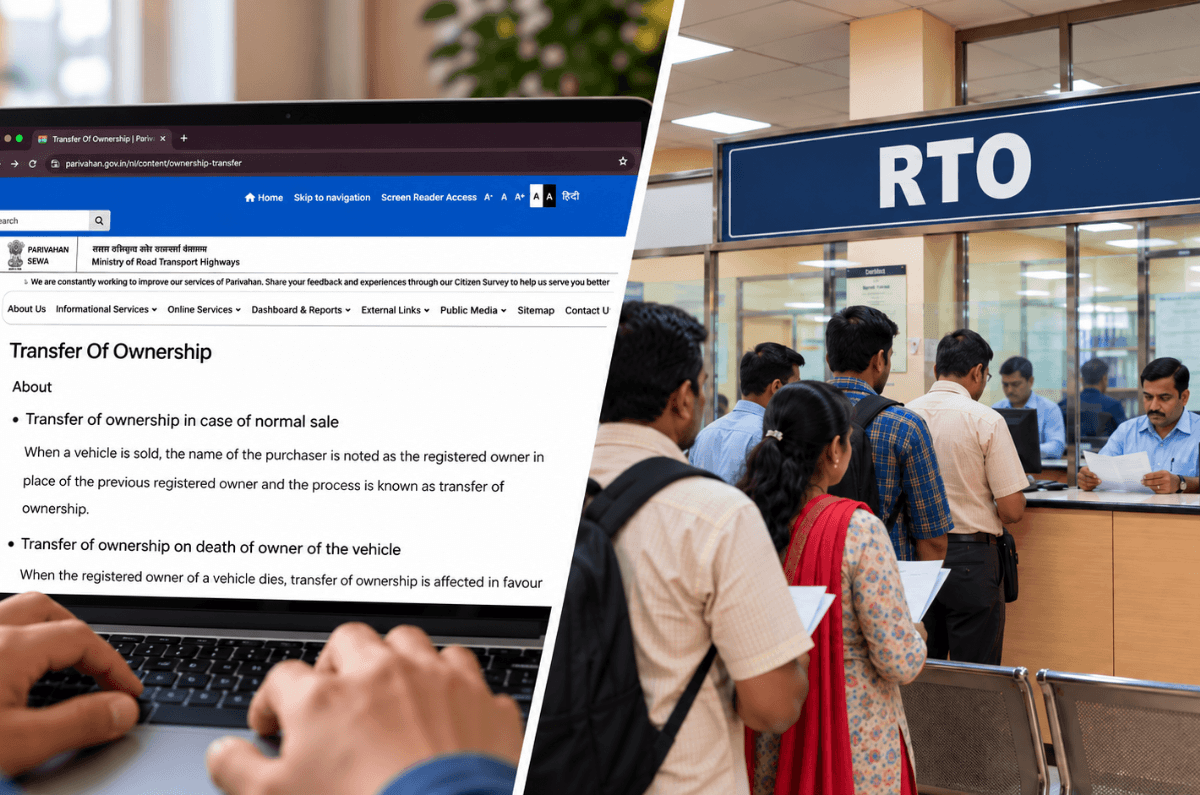
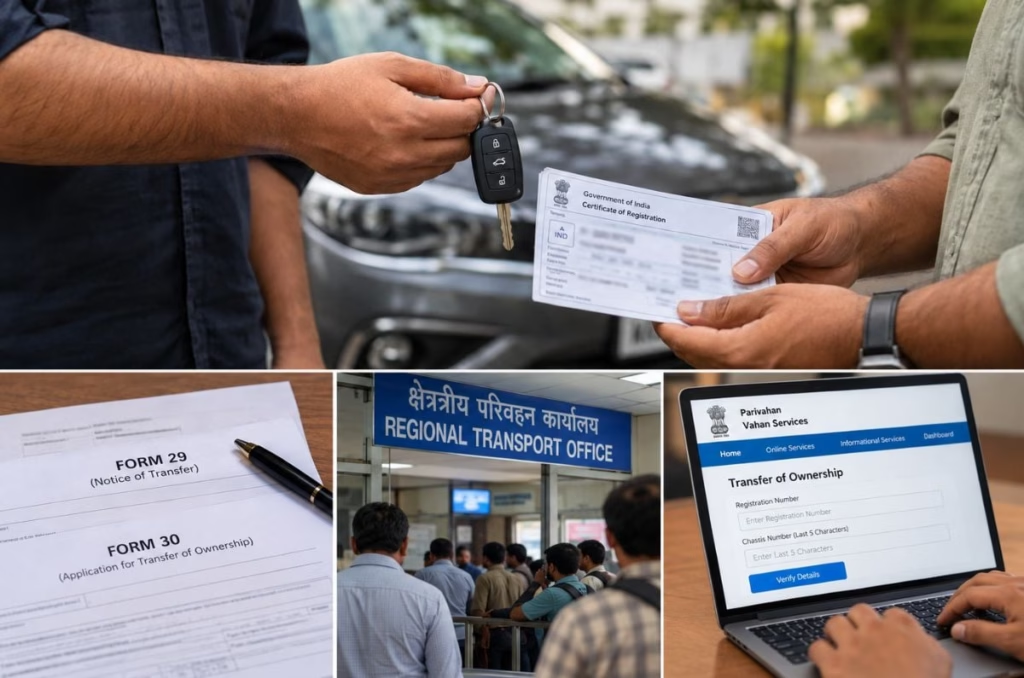
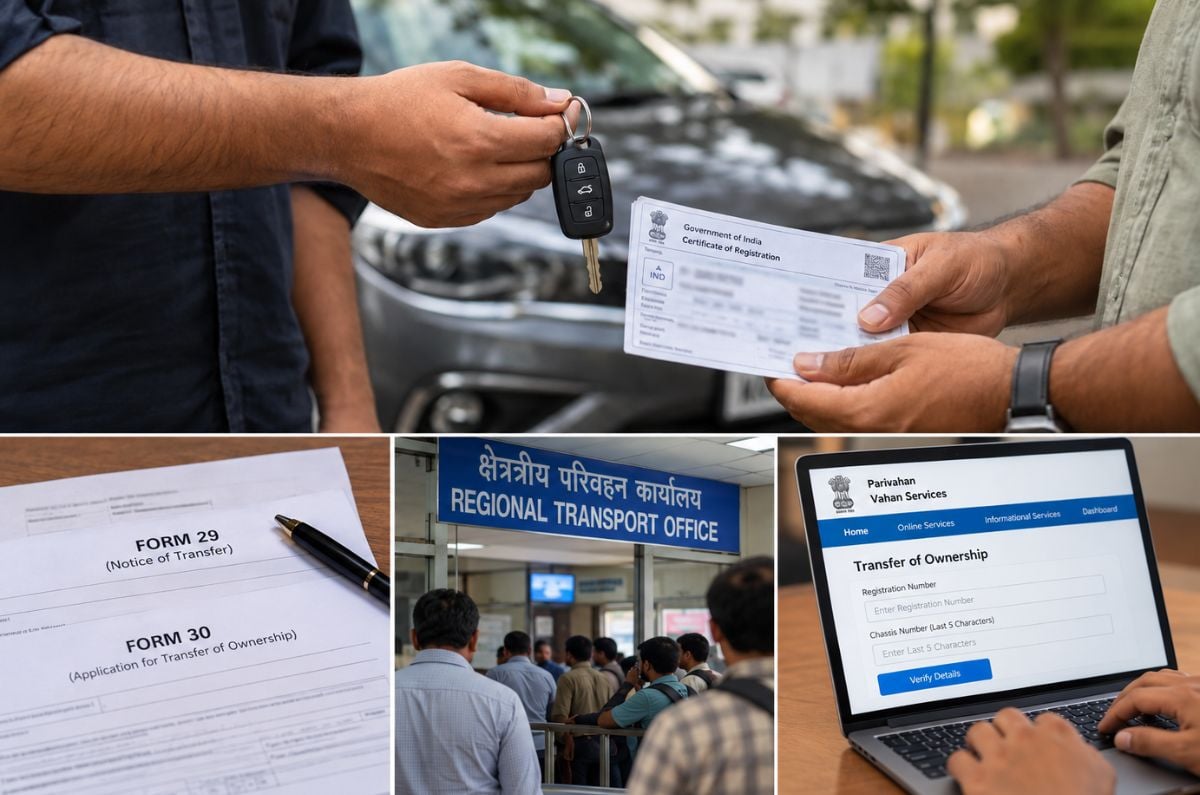
If you are moving to another state or selling your car to someone, you need to transfer the vehicle registration. This updates the registration to the new state if you relocate, or to the new owner if you sell the car. Since each state’s transport department has its own rules, registration certificate (RC) transfer fees, requirements and timelines can differ. So how exactly do you transfer your RC to a new regional transport office (RTO) and what are the documents and fees required in the process? We answer all your questions here.
Disclaimer:This guide is for private vehicles. Commercial vehicles need additional paperwork, such as permit and fitness documents, which are not covered here. The information used here comes from the Parivahan portal. Documents, fees and deadlines vary by state and RTO, and are subject to change. Check with your local RTO before you apply or pay.
What forms are required for an RC transfer?
Form
Purpose
Form 29
The seller’s notice reporting the transfer of ownership.
Form 30
The buyer’s application to register the vehicle in their name.
Form 31
Transfer of the vehicle to the person who succeeds the owner after their death.
Form 32
Transfer of a vehicle bought through a government auction.
Form 28
Application for a No-objection Certificate (NOC).
Form 35
Application to remove loan, lease or hypothecation details from the RC.
The form you need depends on how the vehicle’s ownership is changing. Forms 29 and 30 are the main forms used in a regular used-car sale.
Why should you complete the RC transfer soon after a sale?
If you do not complete the ownership transfer or pay the applicable RTO charges, you may face penalties. You could also be held legally responsible if a car you sold is still registered in your name and is involved in an accident or criminal offence.
For a vehicle transferred within the same state, the buyer should submit the ownership-transfer application within 14 days of the sale. If the vehicle is registered in another state, the buyer should apply within 45 days. The seller should also protect their own interests instead of waiting for the buyer to finish the entire process. Form 29 and the sale intimation should be submitted promptly to create an official record of the handover. State transport departments may charge late fees or impose penalties if the application is submitted after the deadline.
Don’t forget to transfer the insurance policy
Updating the RC does not automatically transfer the motor insurance policy. The buyer should contact the insurer, submit the updated ownership documents and complete a new proposal or endorsement request. The RC and insurance policy should ultimately show the same owner’s name and address.
The seller’s No Claim Bonus (NCB) belongs to the seller. The seller can request an NCB retention certificate and use the eligible discount on another vehicle. The buyer should start the insurance transfer immediately and complete it within 14 days of the ownership transfer. A delay may affect eligibility for an own-damage claim.
What other documents are required for an RC transfer?
The exact list can vary by state and RTO. A regular sale usually requires:
Original RC.
Completed and signed Forms 29 and 30
Valid motor insurance certificate
Valid pollution under control (PUC) certificate
The buyer’s identity and address proof
PAN card or Form 60, where applicable
Passport-sized photographs
Pencil print of the chassis and engine numbers, if required
Sale agreement or delivery note
Applicable tax-clearance proof
Fee-payment receipt
Financier’s NOC and Form 35, if a loan is recorded
RTO NOC for an interstate transfer
Some states allow Aadhaar-based authentication and digital document submission. Others may require physical copies or verification at the RTO.
How to transfer an RC online?
You can usually start the ownership transfer through the Parivahan vehicle-services portal.
Step 1: Open vehicle-related services
Go to the vehicle-related services section on Parivahan and select the state where the vehicle is registered.
Step 2: Enter the vehicle details
Enter the registration number and open the online services section. For authentication, you may need the last five digits of the chassis number and an OTP sent to the registered mobile number.
The mobile number linked to the RC must be active. If it is outdated, the registered owner may need to update it before continuing.
Step 3: Select transfer of ownership
Choose the transfer-of-ownership service. In some states, the seller must start the application before the buyer can enter the remaining details.
Step 4: Enter the buyer and sale details
Enter the sale date, the buyer’s address and identity details, and any other information requested. Make sure all entries match the supporting documents.
Step 5: Upload the documents
Upload the signed forms and supporting documents where online uploads are available. Make sure the images are clear, and all signatures can be seen.
Step 6: Pay the applicable fee
Check the fee details and pay online. Save the payment receipt and application number.
Step 7: Complete verification
Depending on the state, verification may be completed through Aadhaar authentication, faceless verification or a physical visit to the RTO.
For a physical verification, you may need to bring the original RC, signed forms and identity documents.
Step 8: Track the application
Use the application number or vehicle registration details to check the status on the Parivahan portal. After approval, the updated RC may be available digitally through DigiLocker or mParivahan before the physical card arrives.
How to transfer an RC offline?
You can also complete the transfer by visiting the RTO. The seller and buyer should fill in and sign Forms 29 and 30. The buyer then submits the forms, original RC, insurance, PUC, identity documents and other required papers to the appropriate registering authority.
After the fee is paid, the RTO checks the application and updates the registration record. It may ask for a physical vehicle inspection, especially for interstate transfers, address mismatches or document discrepancies. Always collect an acknowledgement or receipt when you submit the application.
How to transfer an RC within the same state?
A transfer within the same state is usually simpler because the vehicle keeps its existing registration number. The buyer generally submits Forms 29 and 30 along with the RC, insurance, PUC and personal documents. A separate NOC for an interstate transfer is normally not required. However, the process can differ if the seller and buyer come under different RTO jurisdictions within the same state. The online portal will usually direct the application to the relevant authority.
How to transfer an RC between states?
An interstate sale may involve two related processes:
Ownership transfer
Re-assignment of the registration mark in the buyer’s state
The seller should get an NOC from the original RTO using Form 28. The buyer then submits the ownership-transfer documents and pays the applicable road tax in the destination state, whether it be from Haryana, Maharashtra or Tamil Nadu. We will explain this process in the following FAQs.
The documents may include:
Original RC
Forms 29 and 30
RTO NOC
Insurance and PUC certificates
The buyer’s local address proof
Tax-payment documents
Pencil print of the chassis and engine numbers
Vehicle inspection report, if required
If the vehicle is moved to another state for more than 12 months, the owner may also need to apply for a new registration mark.
A road-tax refund from the original state is handled separately and depends on that state’s rules. The owner may need to provide proof of re-registration and tax payment in the new state.
How to get an NOC?
There are two ways to apply for an NOC – offline and online. The first method requires you fill out a copy of the Form 28. After that, attach the other required documents which are mentioned above, pay the applicable fee and submit the application at your RTO. Before starting, make sure there are no pending challans, unpaid toll dues, or vehicle tax payments, as the RTO will not issue an NOC if any dues remain. This process can also be done online by visiting the Parivahan portal – parivahan.gov.in. An NOC is valid for six months from the date of issue.
How to transfer the RC of a car with an active loan?
Check the RC for a hypothecation entry that names the bank or finance company. A vehicle with an active loan generally cannot be transferred without the financier’s consent. The seller should first close the loan or obtain the required approval. After the dues are cleared, the lender provides a loan-closure or no-dues certificate and signs Form 35. The owner can then apply to remove the hypothecation entry from the RC. In some states, you can request hypothecation removal and ownership transfer at the same time. Completing the loan-removal process first can reduce the risk of rejection.
How to transfer the RC of a car after the registered owner’s death?
When the registered owner dies, the person who succeeds to the vehicle should inform the registering authority and apply to transfer ownership using Form 31. The successor may use the vehicle for up to three months if the registering authority is informed within 30 days of the owner’s death.
The application usually requires:
Form 31
Original RC
Insurance and PUC certificates
Death certificate
Proof of succession or legal-heir documents
Declarations from other legal heirs
The applicant’s address and identity proof
Vehicle-verification documents, if required
Requirements can differ if there is a will, more than one legal heir or a dispute over ownership.
How to transfer the RC of a car bought at a government auction?
If you buy a vehicle through an auction held by or on behalf of the Central or a state government, you should apply using Form 32 within 30 days of taking possession. The buyer must submit the auction certificate or sale order, the government authorisation for the auction, the available vehicle documents and the applicable fee. Auction vehicles may have incomplete records, repairs that are still needed or unusual registration histories. Check the documents before bidding.
How much does an RC transfer cost?
RC transfer charges depend on the vehicle category, state, smart-card fee, postal charge, any outstanding tax and whether extra services are needed. The Parivahan portal shows the amount payable before you make an online payment. Under Rule 81 of the Central Motor Vehicles Rules, the RC transfer fee is half the standard registration fee. This may amount to Rs 150 for a motorcycle and Rs 300 for a private car. Delays can attract a late fee of Rs 300 per month for motorcycles and Rs 500 per month for cars. Some states may also impose a penalty if the application is not submitted within 14 days of purchase. Road tax is charged separately, and is applicable if the vehicle is being re-registered in another state.
The sale of a car or two-wheeler isn’t considered complete until its registration certificate (RC) carries the name of the new owner. Prior to this, the seller of the vehicle remains its legal owner on record. This means that any challans issued, tax dues, or even liability in case of an accident are to be resolved by the existing owner. So, how does vehicle ownership transfer work and what are the necessary steps one needs to take to complete this process.
Disclaimer:This guide is for buyers and sellers of private vehicles. Commercial vehicles need additional paperwork, such as permit and fitness documents, which isn’t covered here. The information used here comes from the Parivahan portal and state transport department websites. Documents, fees and deadlines vary by state and RTO, and are subject to change. Check with your local RTO or a government-approved official portal before you apply or pay.
1. Why you need to complete the RC transfer soon after sale?
Both the seller and buyer should sign a sale agreement, thus documenting the transaction. Remember, the vehicle legally belongs to whoever’s name appears on the RC. This means unless the RC is transferred to the new owner, any untoward incident (including traffic violations, accidents and crimes) involving the vehicle can remain the responsibility of the seller. A factor for the buyer to consider is the insurance policy, which is deemed transferred along with the vehicle, though the buyer still has to apply to the insurer within 14 days to have it put in their name.
Before the sale, the seller should clear any pending challans and ensure that there are no unpaid National Highway tolls. Both parties should confirm that any pending loan amount (if applicable) on the vehicle has been cleared. Once the vehicle is handed over, the seller should also close or delink the FASTag linked to it.
2. What paperwork do you need for an RC transfer?
A normal sale of a vehicle involves two forms. The seller files Form 29 (notice of transfer), reporting the sale to the registering authorities where the seller and buyer reside. Meanwhile, the buyer files Form 30 (application for transfer), along with the RC and insurance certificate. Depending on the state, the RTO may also ask for the PUC certificate, PAN card or Form 60, address proof, a chassis and engine pencil print, the buyer’s date of birth proof and undertaking, a passport-size photograph and a tax clearance certificate.
There are three cases that may involve extra paperwork. If the vehicle is registered in another state, the RC transfer application will also need a no objection certificate (NOC) from the source RTO (whether it be from Delhi, Maharashtra or Karnataka). If the owner has died, the legal heir applies on Form 31 with the death certificate. In case the vehicle was bought at a government auction, the buyer applies on Form 32 with the sale certificate and a copy of the government order authorising the auction.
Bank auctions are a bit different to government-run ones. These usually involve vehicles repossessed by banks and finance companies over unpaid loans. Since they aren’t government auctions, Form 32 doesn’t apply here. Instead, the lender provides a sale letter and a NOC, though the RC transfer follows the same process as a government auction. Vehicles here are sold on an ‘as is’ basis, so no warranty or test drives – any pending challans or road tax are likely to be sorted by the buyer. To know about all the other forms that may be required, scroll to the bottom of the story.
3. How much does an RC transfer cost and what are the deadlines?
The RC transfer application has to be submitted within 14 days of the transfer if the vehicle is registered in the same state. The deadline goes up to 45 days if the vehicle is from another state. A legal heir has to inform the RTO within 30 days of the original owner’s death and apply for a transfer within three months. Meanwhile, an auction buyer gets 30 days to transfer the RC from the date of taking possession of the vehicle.
As for the costs involved, the central fee that’s set under Rule 81 of the Central Motor Vehicles Rules describes it as half the registration fee, depending on the vehicle’s class. This works out to Rs 150 for a motorcycle and Rs 300 for a private car. If the buyer misses these deadlines, they will attract a late NOC fee of Rs 300 a month for motorcycles and Rs 500 a month for cars. Certain states levy a penalty if the RC transfer isn’t applied for within 14 days of purchase. Road tax is separate, and is applicable if the vehicle is being re-registered in another state.
4. Should you apply for RC transfer online, through an agent or do it yourself?
You can apply for an RC transfer through the Vahan portal (vahan.parivahan.gov.in/vahanservice/vahan). Enter the registration number, select ‘Basic Service’s and verify with the last five digits of the chassis number and an OTP sent to your registered mobile number. Then choose ‘Transfer of Ownership’, fill in the details and pay the fee displayed. The receipt carries a trackable application number, while the application moves to the concerned RTO for processing.
Some states also let you upload documents and book an appointment online, while others still want the papers submitted in person. Doing it yourself at the RTO costs nothing beyond the official fee, and your documents go directly to the office in charge of processing them. However, this can take time and effort from your end, perhaps even requiring multiple visits in case of missing or incorrect documents.
If absolute convenience is what you want, you can get the process done through an agent. This will not only save you the hassle of standing in queues or making follow-up visits to the RTO, but also help with inter-state RC transfers that can involve an NOC and re-registration. Understandably, this convenience comes at a cost (which can vary from agent to agent) and also having your original documents and signed forms being with a third party. If you do use an agent, don’t sign blank forms and always ask for official receipts and the application number for self-tracking the progress.
5. Other forms that may be required for an RC transfer
Form
What’s it for
Submitted by
Form 28
Application for a no objection certificate (NOC)
Seller – when the vehicle moves to another RTO or state
Form 31
Application for transfer on death of the owner
Legal heir
Form 32
Application for transfer of a vehicle bought at public auction
Auction buyer
Form 35
Notice of termination of hypothecation
Owner and financier, if there was a loan on the vehicle
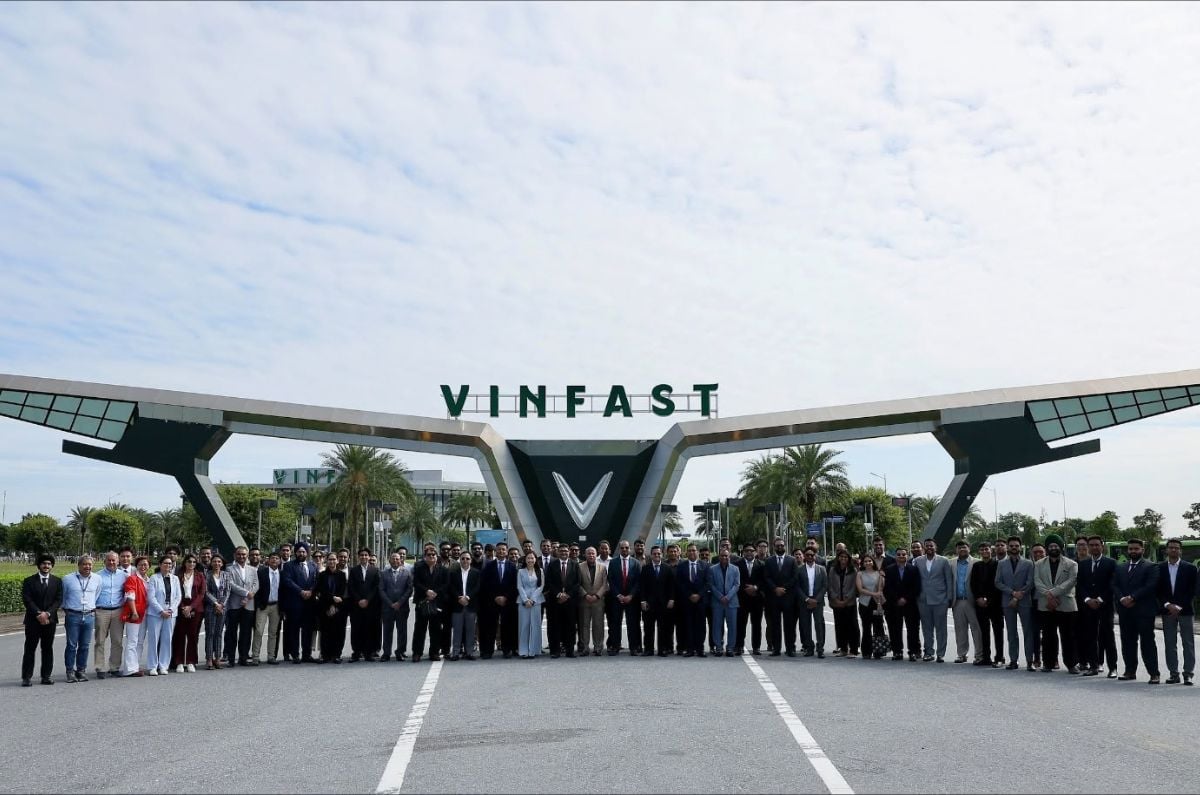
VinFast entered the Indian market in 2025, with activities spanning from the distribution, manufacturing and assembly of electric cars. Following this, the brand also showed some e-scooters at Auto Expo and then subsequently patented designs of some of them in our market, all hinting at plans to enter the huge Indian two-wheeler market. The signing of these letters of intent (LOIs) and partnering with numerous electric two-wheeler dealers now marks a new phase in the brand’s expansion in the Indian market.
Partnered with 50+ electric two-wheeler dealers across 15 states
Plans to establish showrooms across 34 cities
Line-up likely to feature the recently patented Viper and Rasad e-scooters
Retail network expansion details
Over 50 showrooms panned 15 states
Vinfast and its dealer partners will work together to establish 50+ electric two-wheeler showrooms across 34 cities in 15 states and territories. The locations that the company is targeting to establish a presence in first include Delhi, Rajasthan, Punjab, Madhya Pradesh, Chhattisgarh, Uttar Pradesh, Maharashtra, Gujarat, Karnataka, Telangana, Tamil Nadu, Kerala, Andhra Pradesh, West Bengal and Odisha. Through these partnerships VinFast plans to bring its electric scooter line-up to the country, though it hasn’t shared any timelines so far. Initial line-up expected to feature the Viper and Rasad electric scooters, following design patents filed in India earlier this year.
These selected cities and regions have large two-wheeler markets, providing significant room for the brand’s expansion. VinFast says in fiscal year 2025-2026 there were 21.41 million two-wheelers registered, of which electric vehicles accounted for only 6.54 percent. When VinFast does officially launch some of its models in our country, it will have to ward off stiff competition from both established legacy players as well as mould-breaking start-ups like Bajaj, TVS, Hero, Suzuki, Yamaha, Ather and River.
Nana Patekar News: 8 अक्टूबर को नाना पाटेकर के निधन से फिल्म इंडस्ट्री और उनके अनगिनत चाहने वालों को गहरा सदमा लगा है। गोवा में अपने घर पर कार्डियक अरेस्ट (दिल का दौरा पड़ने) के कारण इस दिग्गज अभिनेता का निधन हो गया। वे 75 वर्ष के थे। एक वीडियो में पुणे के डोनाजे इलाके में स्थित नाना पाटेकर के घर ‘नानाची वाडी’ के बाहर एक प्रशंसक को फूट-फूटकर रोते हुए देखा जा सकता है।
रिपोर्ट के मुताबिक घर से अस्पताल लाए जाने के बाद डॉक्टरों ने लगभग 45 मिनट तक उन्हें होश में लाने की कोशिश की, लेकिन कोई प्रतिक्रिया नहीं हुई। सुबह 5:20 बजे अभिनेता को मृत घोषित कर दिया गया। नाना पाटेकर का अंतिम संस्कार गुरुवार शाम पुणे के पास डोनाजे स्थित उनके फार्महाउस पर किया जाएगा। थिएटर और सिनेमा में उनके योगदान को देखते हुए इस दिग्गज अभिनेता को राजकीय सम्मान के साथ अंतिम विदाई दी जाएगी।
1 जनवरी 1951 को महाराष्ट्र में जन्मे नाना पाटेकर ने अपनी दमदार अदाकारी, डायलॉग बोलने के खास अंदाज और लीक से हटकर किरदारों को निभाने के लिए अपनी अलग पहचान बनाई। तीन राष्ट्रीय फिल्म पुरस्कारों के विजेता, वे ‘नटसम्राट’, ‘वजूद’, ‘परिंदा’, ‘अब तक छप्पन’ और ‘यशवंत’ जैसी फिल्मों में अपने अभिनय के लिए जाने जाते हैं।
नाना पाटेकर ने 1978 की फिल्म ‘गमन’ से बॉलीवुड में कदम रखा था। 2000 के दशक की शुरुआत में पाटेकर को ‘शक्ति द पावर’ (2002), ‘अब तक छप्पन’ (2004), ‘अपहरण’ (2005) और ‘टैक्सी नंबर 9211’ (2006) में अपने अभिनय के लिए काफी सराहना मिली। उन्हें ‘वेलकम’ (2007) में गैंगस्टर उदय शेट्टी के कॉमिक किरदार के लिए भी खूब तारीफ मिली। उन्होंने इसके सीक्वल ‘वेलकम बैक’ (2015) में भी यही भूमिका निभाई थी। अभिनेता कॉमेडी थ्रिलर ‘हाउसफुल 5’ में भी नजर आए थे।
Pune, Maharashtra: The last rites of veteran actor Nana Patekar will be held at 5 PM near his Pune residence, Nanachi Wadi, in the Donaje area. Fans were seen crying and mourning his demise. https://t.co/5GUftDJ4oq
वे पॉलिटिकल थ्रिलर फिल्म ‘राजनीति’ (2010) का भी हिस्सा थे, जिसके लिए उन्हें ‘बेस्ट सपोर्टिंग एक्टर’ के तौर पर पांचवीं बार फिल्मफेयर अवॉर्ड के लिए नॉमिनेट किया गया था। 2016 में उन्हें मराठी फिल्म ‘नटसम्राट’ में अपनी एक्टिंग के लिए ‘बेस्ट एक्टर’ का फिल्मफेयर अवॉर्ड मिला।
पाटेकर को पद्म श्री से भी सम्मानित किया गया था। उन्हें यह सम्मान 2013 में सिनेमा और कला के क्षेत्र में उनके योगदान के लिए दिया गया था। वे ‘यशवंत’ (1997), ‘वजूद’ (1998) और ‘आंच’ (2003) जैसी फिल्मों में प्लेबैक सिंगिंग के लिए भी जाने जाते थे। नाना पाटेकर को आखिरी बार उनकी मौत से चार दिन पहले गोवा के डोना पाउला में देखा गया था, जहां वे ‘सम्राट क्लब इंटरनेशनल’ के इंस्टॉलेशन समारोह में शामिल हुए थे और उन्होंने वहां भाषण भी दिया था।
आंध्र प्रदेश में बारिश की कमी और फसल खराब होने के बाद सरकार ने राज्य के आधे से ज्यादा हिस्से को सूखाग्रस्त घोषित किया है। सरकार के मुताबिक, 21 जिलों के 388 मंडलों में सूखे की स्थिति है। इससे किसानों के सामने फसल और पानी दोनों का संकट खड़ा हो गया है।
राज्य में कुल 688 मंडल हैं। इनमें से 388 मंडलों को सूखाग्रस्त घोषित किया गया है। यानी करीब 56 फीसदी मंडल अब सूखे से प्रभावित माने जा रहे हैं।
सरकार ने सूखे की स्थिति को दो श्रेणियों में बांटा है:
1. 283 मंडलों को गंभीर सूखे की श्रेणी में रखा गया है।
2. 105 मंडलों में मध्यम सूखे की स्थिति बताई गई है।
रायलसीमा और दक्षिण आंध्र में ज्यादा असर
रायलसीमा और दक्षिण आंध्र के इलाके सूखे से सबसे ज्यादा प्रभावित बताए जा रहे हैं। बारिश कम होने से कई इलाकों में खेती पर सीधा असर पड़ा है।
इन फसलों का हुआ नुकसान
• धान
• मक्का
• नारियल
• मूंगफली
• अरहर
• कपास
इन फसलों के नुकसान के साथ किसानों को पानी की कमी का भी सामना करना पड़ रहा है।
विपक्ष ने मांगा इन सवालों का जवाब
सरकार की ओर से सूखे की घोषणा के बाद विपक्ष ने इसके आकलन पर सवाल उठाए हैं। विपक्ष का कहना है कि कुछ ऐसे मंडलों को भी सूखाग्रस्त सूची में शामिल किया जाना चाहिए, जहां हालात गंभीर हैं।
विपक्ष ने खास तौर पर नेल्लोर के कुछ इलाकों का जिक्र करते हुए कहा है कि वहां सूखे का असर होने के बावजूद कई मंडलों को सूची में शामिल नहीं किया गया।
कर्नाटक और महाराष्ट्र के बाद आंध्र में भी सूखा
आंध्र प्रदेश में यह फैसला ऐसे समय में आया है, जब कर्नाटक और महाराष्ट्र भी बारिश की कमी और फसल के नुकसान के चलते सूखे की घोषणा कर चुके हैं। इससे कई राज्यों में किसानों और खेती पर कम बारिश का असर साफ दिखाई दे रहा है।
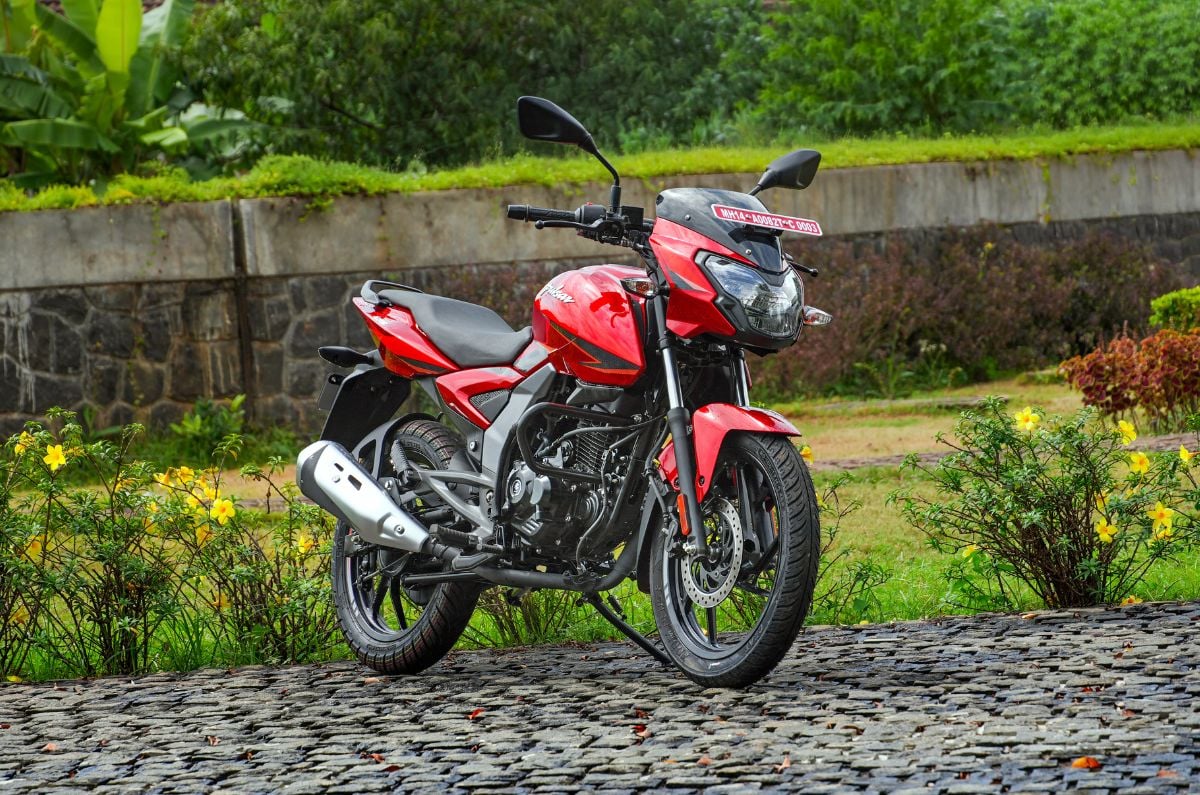
Bajaj has been on a roll lately. Starting in August, the brand has been upgrading and improving many of its Pulsar motorcycles. In cases like the NS400Z, the changes are minimal, whereas in others (like the Classic Pulsar 125 and 150) almost everything has changed. Now, Bajaj would like to incentivise customers to upgrade to these new and improved Pulsars, by way of its festive offers.
Bajaj Pulsar 125, 150, and N160 recently received substantial upgrades
More Pulsars are expected to be refreshed in the near future
Bajaj Pulsar festive offers: The breakdown
Applicable for both cash and loan purchases
To recap, Bajaj currently sells 11 different Pulsar motorcycles with numerous variants to choose from across the country. Some of these, like the NS and the RS series, continue without any major changes for years now. Whereas others, like the N160 and the classic 125 and 150, have received comprehensive upgrades pretty recently. Considering the upcoming festive season, Bajaj has announced a bunch of offers across the entire line-up. A mix of up front cash discount and extended free service benefits, the potential customer is said to enjoy up to Rs 12,000 in total value. Predictably, the NS400Z enjoys the highest available discount.
To understand how the offer works for you, the customer, let’s break it down for the recently refreshed classic Pulsar 125. In the state of Maharashtra, the ex-showroom price is Rs 1.04 lakh for the top variant with the TFT screen. Bajaj has announced a Rs 2,500 up front cash discount for this model, which brings down the price immediately to Rs 1.02 lakh. On top of that, you get Rs 3,500 benefit by way of five free services (compared to the standard four) and no processing fee. This isn’t an up front discount and thus has no immediate impact on the price you will pay to the dealership. The good news is that these benefits are not limited to people buying via a two-wheeler loan; so, even if you plan to buy your Pulsar in an all-cash transaction, they would still be applicable to you. Bajaj hasn’t restricted the offers to a specific few states either for they’re available across India.
The Pulsar 125 was recently upgraded with a brand-new frame, engine, and added many new features. The entry-level Pulsar now gets three ride modes, LED lighting and a TFT screen on the top variant. Its revamped 124.58cc engine now makes 12.1hp and 11.4Nm (versus 11.8hp and 10.8Nm earlier). The 150 also received similar improvements across the board, so did the Pulsar N160, with its new S and SS variants. If recent reports are anything to go by, the Pune-based manufacturer will continue to update more Pulsars as we move closer to the festive season.
FD interest calculator: शेयर बाजारों में गिरावट ने एक बार फिर निवेशकों को बैंक एफडी के बारे में सोचने को मजबूर कर दिया है। बैंक में पैसा रखना सुरक्षित है। रिटर्न की गारंटी है। निवेश करने के वक्त पता चल जाता है कि कुछ साल बाद निकालने पर पैसा कितना बढ़कर मिलेगा। अगर बात बात सीनियर सिटीजंस की हो तो सोने पर सुहागा। इसकी वजह यह है कि ज्यादातर बैंक सीनियर सिटीजंस को सामान्य डिपॉजिटर्स से ज्यादा इंटरेस्ट रेट ऑफर करते है।
सवाल है कि अगर कोई सीनियर सिटीजंस बैंक फिक्स्ड डिपॉजिट 5 लाख रुपये रखता है तो 5 साल बाद उसे कुल कितने पैसे मिलेंगे? इस सवाल का जवाब इस बात पर निर्भर करता है कि आप पैसा किस बैंक में रखते हैं और उसका सालाना इंटरेस्ट रेट क्या है। स्मॉल फाइनेंस बैंकों का इंटरेस्ट रेट प्राइवेट सेक्टर और सरकारी बैंकों के इंटरेस्ट रेट से ज्यादा है। ऐसे में उनमें पैसा रखना फायदेमंद हैं। स्मॉल फाइनेंस बैंक में पैसा रखना पूरी तरह सुरक्षित है।
पैसाबाजार डॉट कॉम की वेबसाइट पर उपलब्ध जानकारी के मुताबिक, 5 साल की एफडी पर सबसे ज्यादा इंटरेस्ट रेट सूर्योदय स्मॉल फाइनेंस बैंक का है।
नीचे अलग-अलग स्मॉल फाइनेंस बैंकों के पांच साल के इंटरेस्ट रेट्स दिए गए हैं।
Suryoday Small Finance Bank 5 साल के एफडी पर 8.5 फीसदी इंटरेस्ट रेट ऑफर कर रहा है।
Jana Small Finance Bank 5 साल के एफडी पर 7.77 फीसदी इंटरेस्ट रेट ऑफर कर रहा है।
AU Small Finance Bank 5 साल के एफडी पर 7.25 फीसदी इंटरेस्ट रेट ऑफर कर रहा है।
Equitas Small Finance Bank 5 साल के एफडी पर 7.50 फीसदी इंटरेस्ट रेट ऑफर कर रहा है।
ESAF Small Finance Bank 5 साल के एफडी पर 6.25 फीसदी इंटरेस्ट रेट ऑफर कर रहा है।
Ujjivan Small Finance Bank 5 साल के एफडी पर 7.70 फीसदी इंटरेस्ट रेट ऑफर कर रहा है।
सरकारी बैंक भी 5 साल के फिक्स्ड डिपॉजिट पर अट्रैक्टिव इंटरेस्ट रेट ऑफर कर रहे हैं। सरकारी बैंकों के इंटरेस्ट रेट की जानकारी नीचे दी गई है।
Bank of Baroda सीनियर सिटीजंस को पांच साल के एफडी पर 6.90 इंटरेस्ट रेट ऑफर कर रहा है।
Bank of India सीनियर सिटीजंस को पांच साल के एफडी पर 6.75 इंटरेस्ट रेट ऑफर कर रहा है।
Bank of Maharashtra सीनियर सिटीजंस को पांच साल के एफडी पर 5.50 इंटरेस्ट रेट ऑफर कर रहा है।
Canara Bank सीनियर सिटीजंस को पांच साल के एफडी पर 6.75 इंटरेस्ट रेट ऑफर कर रहा है।
Central Bank of India सीनियर सिटीजंस को पांच साल के एफडी पर 6.50 इंटरेस्ट रेट ऑफर कर रहा है।
Indian Bank सीनियर सिटीजंस को पांच साल के एफडी पर 6.50 इंटरेस्ट रेट ऑफर कर रहा है।
State Bank of India सीनियर सिटीजंस को पांच साल के एफडी पर 7.05 इंटरेस्ट रेट ऑफर कर रहा है।
Punjab National Bank सीनियर सिटीजंस को पांच साल के एफडी पर 6.45 इंटरेस्ट रेट ऑफर कर रहा है।
प्राइवेट बैंक 5 साल के एफडी पर सीनियर सिटीजंस को निम्नलिखित इंटरेस्ट रेट्स ऑफर कर रहे हैं:
Axis Bank 5 साल के एफडी पर 7.25 फीसदी इंटरेस्ट रेट ऑफर कर रहा है।
Bandhan Bank 5 साल के एफडी पर 6.60 फीसदी इंटरेस्ट रेट ऑफर कर रहा है।
HDFC Bank 5 साल के एफडी पर 6.90 फीसदी इंटरेस्ट रेट ऑफर कर रहा है।
Federal Bank 5 साल के एफडी पर 6.90 फीसदी इंटरेस्ट रेट ऑफर कर रहा है।
ICICI Bank 5 साल के एफडी पर 6.90 फीसदी इंटरेस्ट रेट ऑफर कर रहा है।
IDBI Bank 5 साल के एफडी पर 7.75 फीसदी इंटरेस्ट रेट ऑफर कर रहा है।
IDFC FIRST Bank 5 साल के एफडी पर 7.00 फीसदी इंटरेस्ट रेट ऑफर कर रहा है।
Kotak Mahindra Bank 5 साल के एफडी पर 7.75 फीसदी इंटरेस्ट रेट ऑफर कर रहा है।
सीनियर सिटीजंस को 5 लाख के एफडी पर 5 साल बाद कितना मिलेगा?
सीनियर सिटीजंस अपनी सुविधा के हिसाब से बैंक का चुनाव कर सकते हैं। लेकिन, उन्हें सबसे ज्यादा रिटर्न सूर्योंदय स्मॉल फाइनेंस बैंक में फिक्स्ड डिपॉजिट करने पर मिलेगा। अगर वे 5 लाख रुपये 5 साल के लिए इस बैंक में डिपॉजिट करते हैं तो उन्हें एफडी मैच्योर करने पर 7,61,397 रुपये मिलेंगे। इसमें मूलधन का 5 लाख रुपये शामिल है। इसका मतलब है कि सीनियर सिटीजंस को 5 लाख रुपये पर पांच साल में कुल 2,61,397 रुपये इंटरेस्ट के रूप में मिलेंगे।
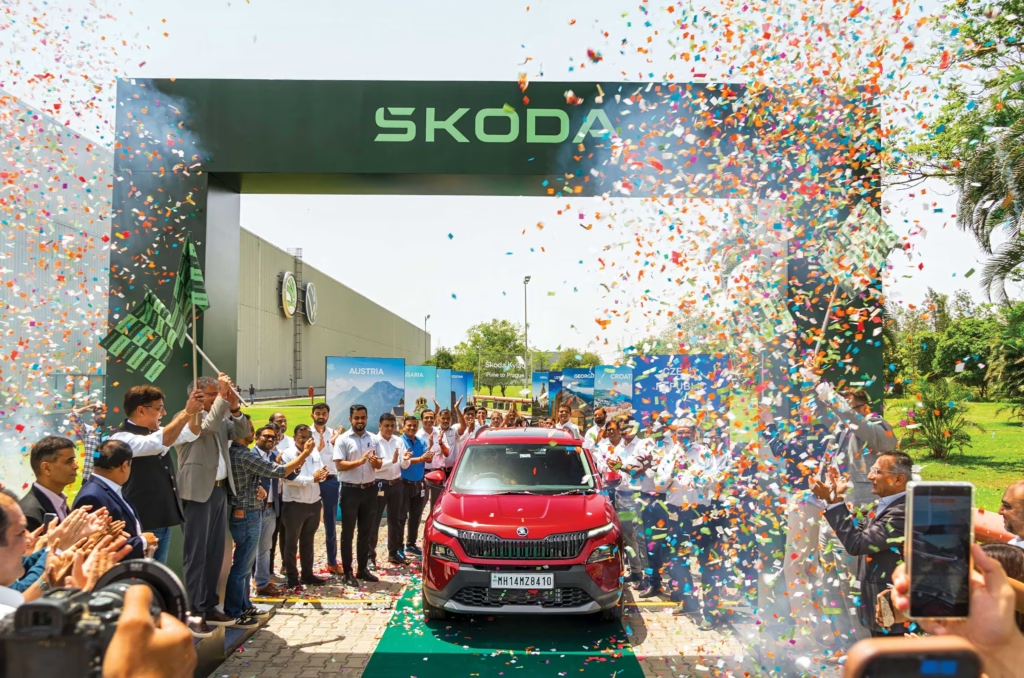
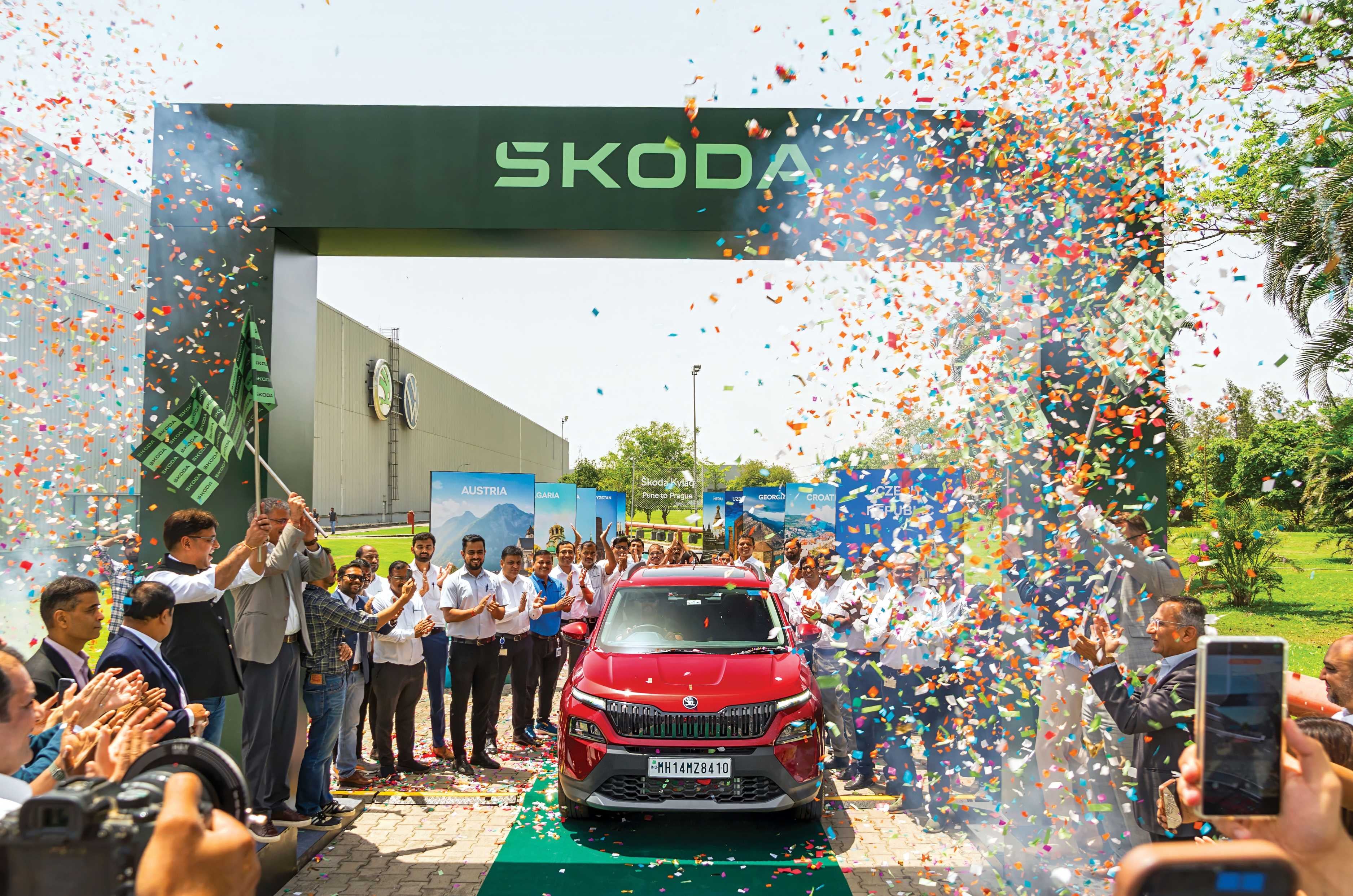
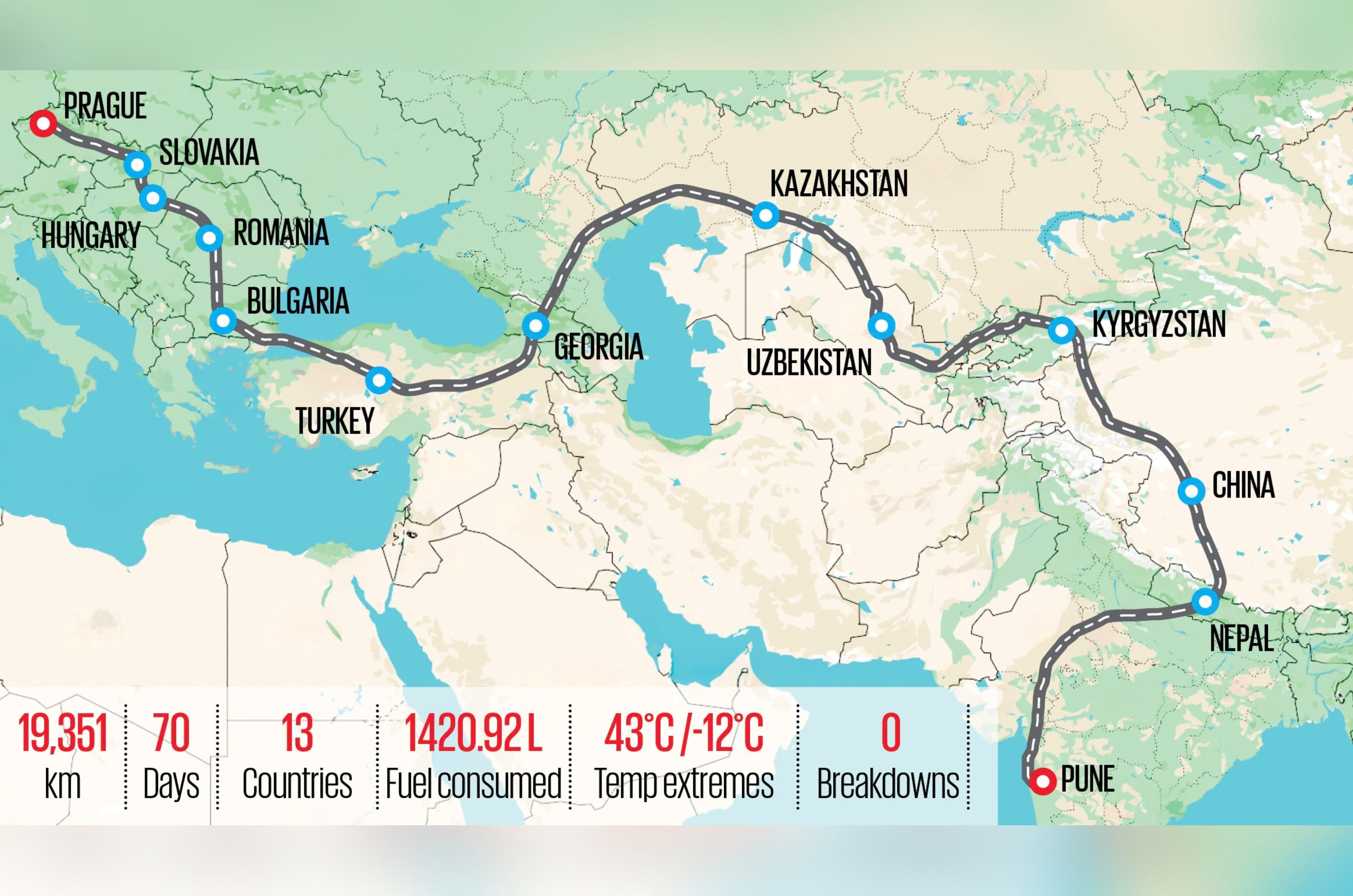
There are road trips, there are overland expeditions, and then there are journeys that become conversations with continents. This one starts in the industrial heart of Maharashtra, inside Skoda India’s sprawling Chakan facility. The end point lies nearly 20,000 kilometres away at Skoda Auto’s headquarters near Prague in Mladá Boleslav, Czech Republic, where bicycles evolved into automobiles and a 130-year-old story continues to be written.
Between these two factories lie thirteen countries, four major mountain ranges, countless cuisines, dozens of languages and enough history to fill libraries.
Our companion? Not a flagship SUV or a luxury grand tourer, but Skoda’s smallest SUV – the Kylaq, which recently celebrated its one-year anniversary. Driving it from Pune to Prague is a tall order, but surviving one year in India and being accepted with flying colours is enough cred one needs to take on the world.
India – Home Turf
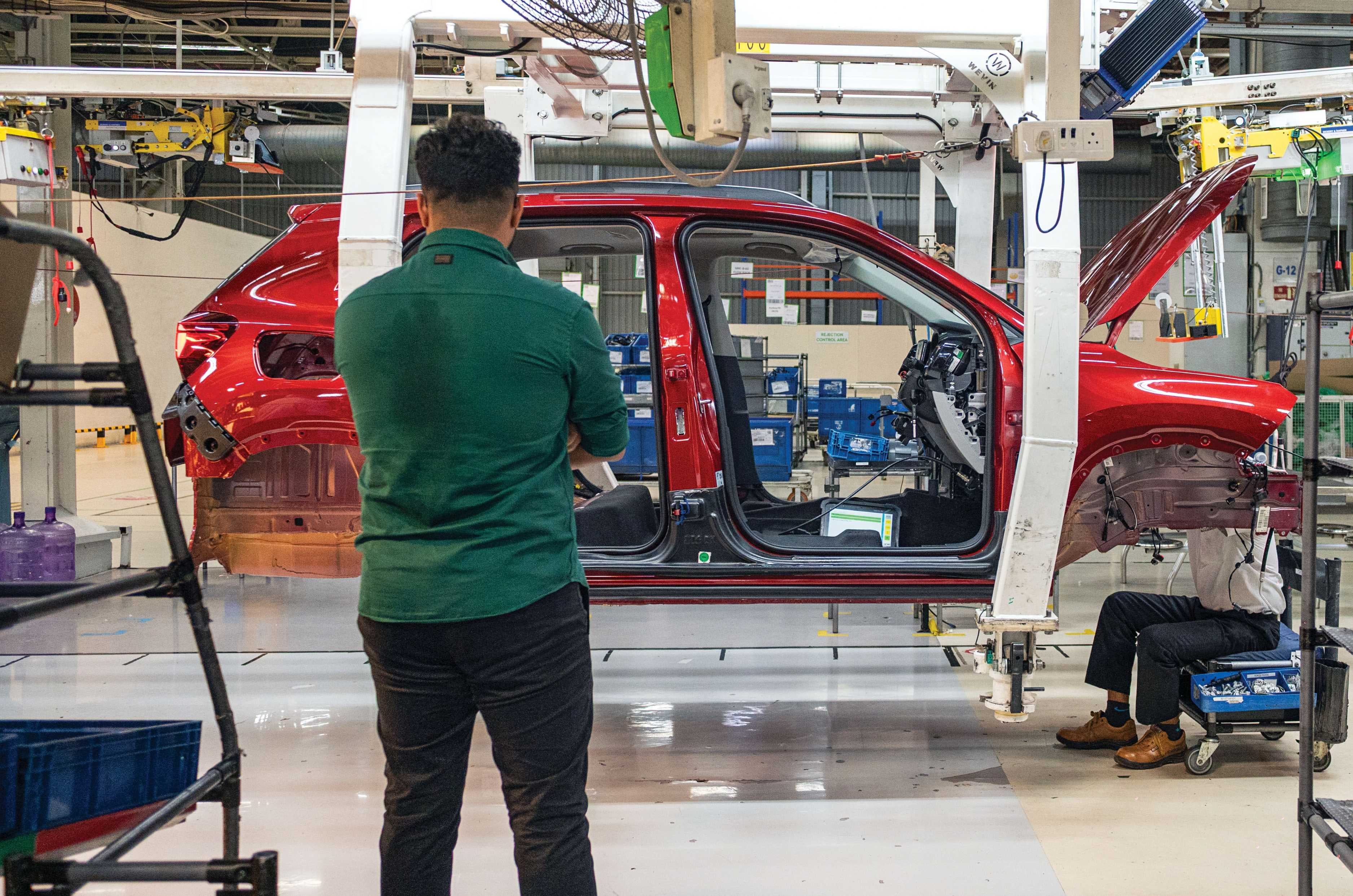
Witnessing the Kylaq’s birth added more responsibility.
On a cross-country road trip, you’d imagine the home country would be the easiest leg. With India, it was the opposite. To some, it’s organised chaos, but honestly, it’s anything but organised. Erratic traffic, erratic egos, and road conditions fit only for a Mars rover – India was the biggest challenge on the drive from Pune to Prague. As the odometer ticked over its first kilometre, right outside the gate of Skoda’s Chakan plant, a blood-red PMPML bus was ready to trade paint with the cherry-red Kylaq. A dinged-up Kylaq parked on the streets of Prague wouldn’t be a good look, so it was imperative that I babysit this compact SUV like a million-dollar supercar. Having watched the car being assembled on the factory floor, from bare bones to the finished package, only added to the emotion – driving it in traffic felt like walking a toddler across a football field. Eyes wide open, ready to block any attack.
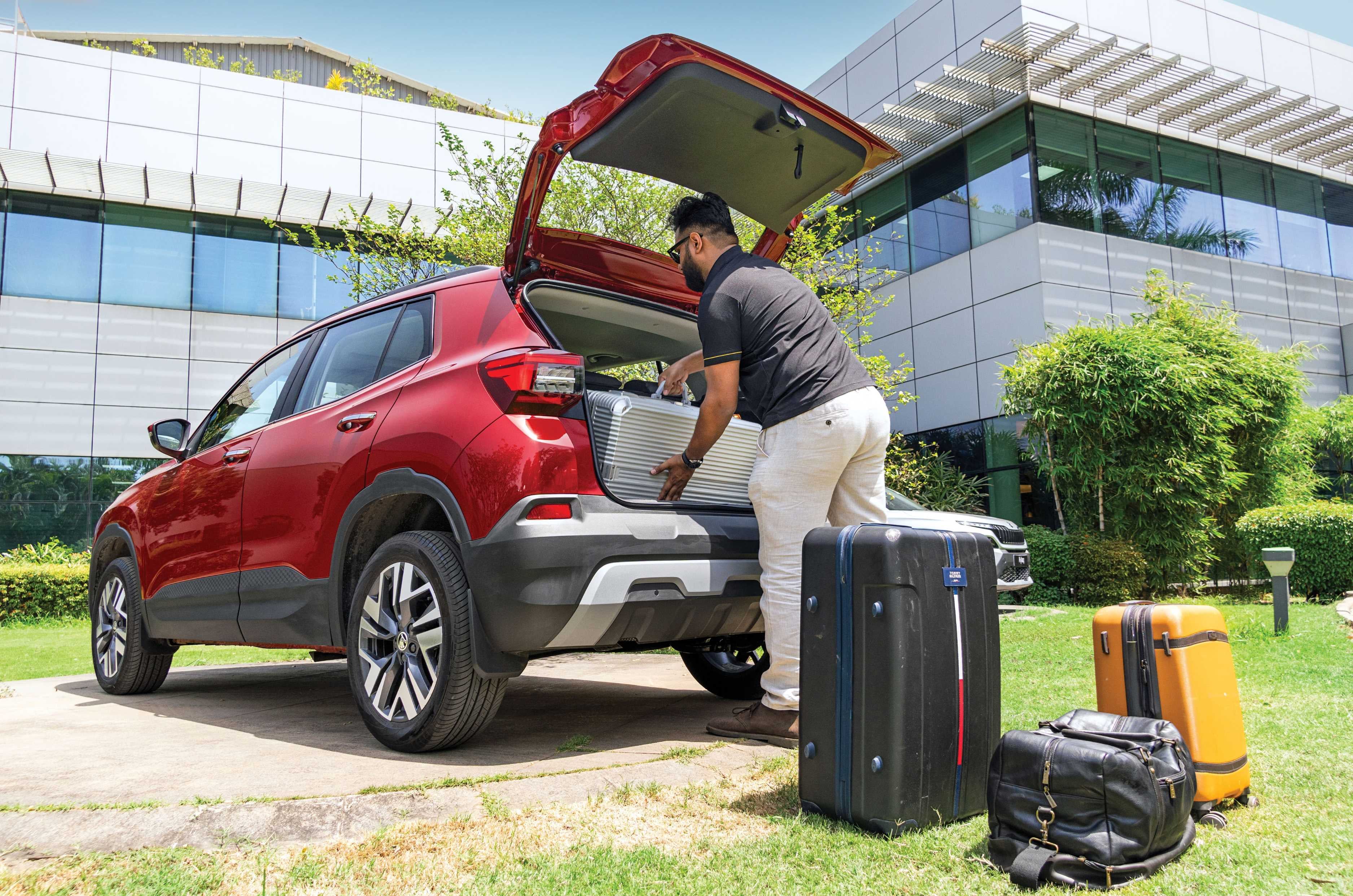
446-litre boot packed to the brim for 70 days on the road.
We got onto the Pune expressway and then crossed the Atal Setu in Mumbai, the longest sea bridge on the entire journey. Mumbai was home, both to me and to the Autocar India office, so after a few greetings from co-workers and the obligatory photos, we headed towards our first state crossing. The infamous Western Express Highway that leads out of Mumbai lived up to its reputation, but with a little anxiety, panic and a few expletives, we made it onto the national highway.
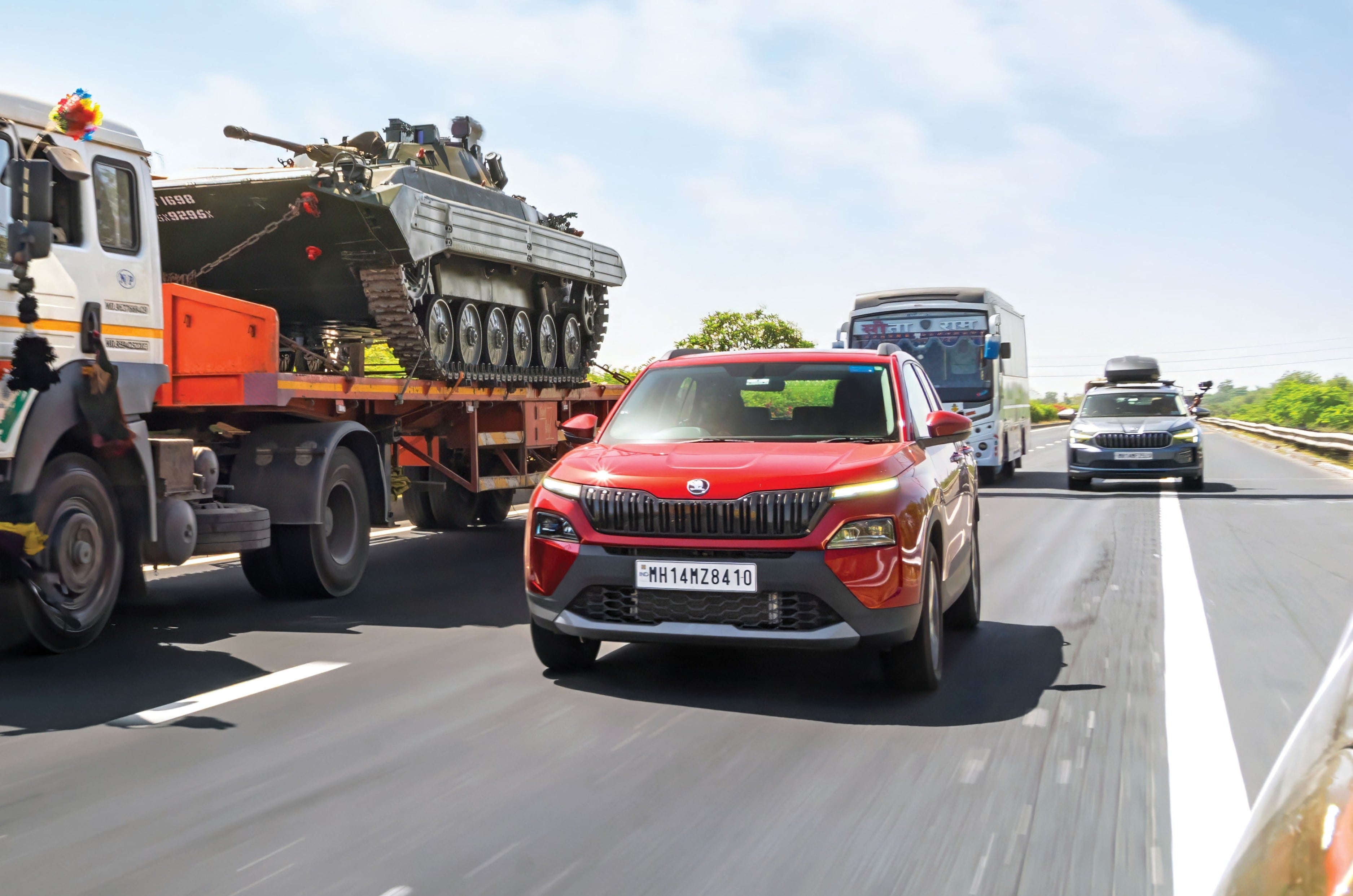
No telling what you’d spot on Indian highways.
The first of countless food stops was Hotel Ahura, renowned for its akuri and kheema. Needless to say, we carb-loaded to the max and made a beeline for Vadodara.
Pune-Birgunj in numbers
Distance covered
2,487km
Fuel consumed
234.46 litres
Average fuel economy
10.62kpl
Approximate fuel cost
Rs 23,629
Average per-litre fuel cost
Rs 100.87
Total time driven
55hrs 20min
Average speed
44.95kph
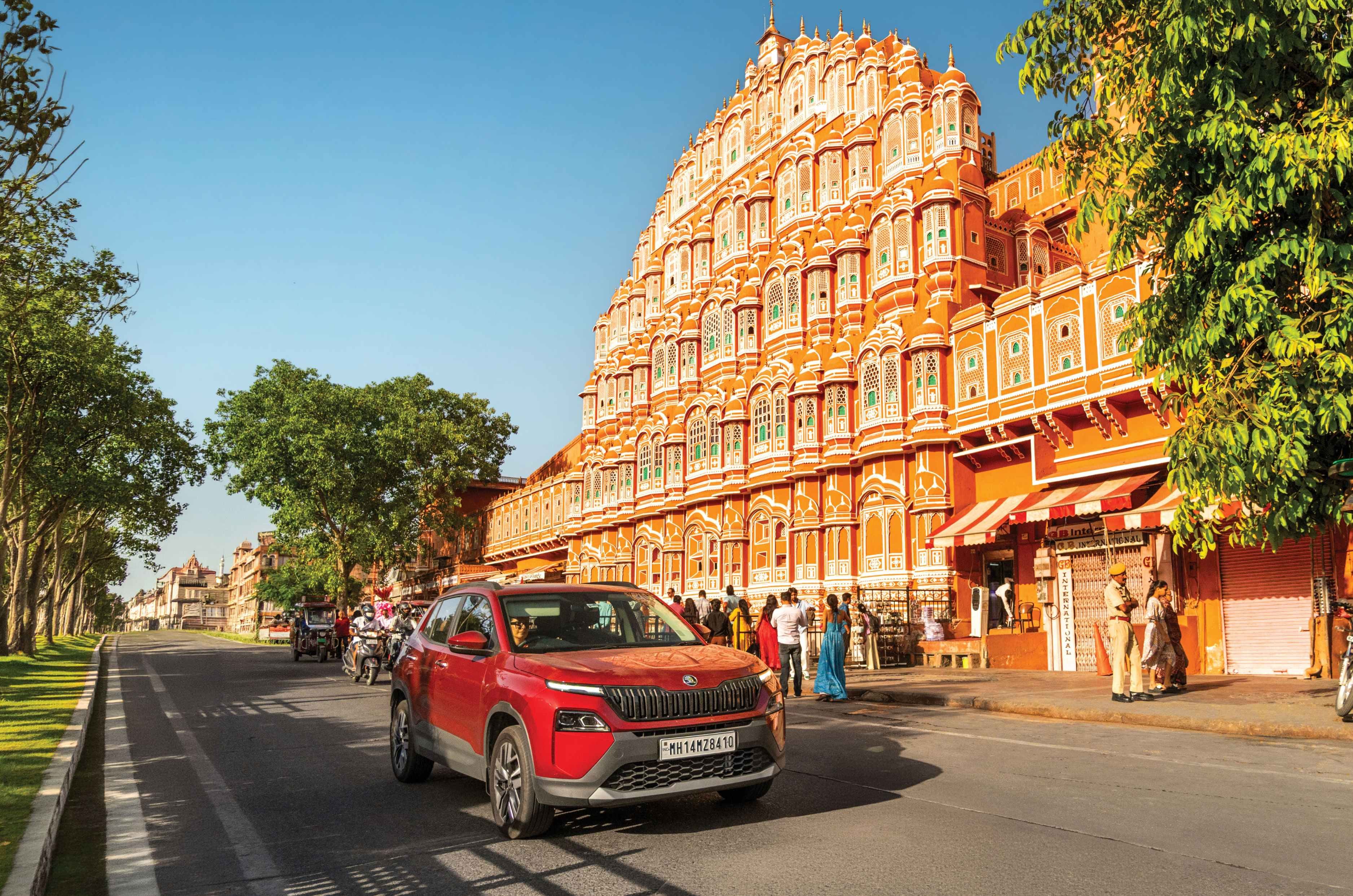
Crossing into Gujarat, the Kylaq could finally stretch its legs and spool up that turbo on the state’s spotless highways. The stability and effortless cruising were a welcome relief, since the bulk of the kilometres on this drive would be covered on long, open highways. Gujarat was a short stint – we made only an overnight halt in Vadodara before slipping out ahead of the morning traffic. The drive into Rajasthan was seamless, and Udaipur greeted us with a mix of heat and traffic. The City of Lakes is worth taking the time to explore, but a late arrival and early morning departure left us with just enough time to grab a traditional meal. All that driving had built up an appetite, so we put it to a vote between a massive vegetarian thali and laal maas – the latter won by a landslide. From the City of Lakes, we headed to Jaipur, the Pink City: just as picturesque as Udaipur, and just as colourful and chaotic. The sun setting over the beautiful Amer Fort made for a cracking backdrop, and a few glimpses of the Jal Mahal on the way back were a treat too. The iconic Hawa Mahal, with its 953 windows, never fails to amuse, but getting a photo of the five-storey icon without a chorus of honks is next to impossible. The next morning, after threading through Jaipur’s narrow lanes, we made it back onto the highway, heading for Agra.
Iconic Hawa Mahal ought to be seen first-hand.
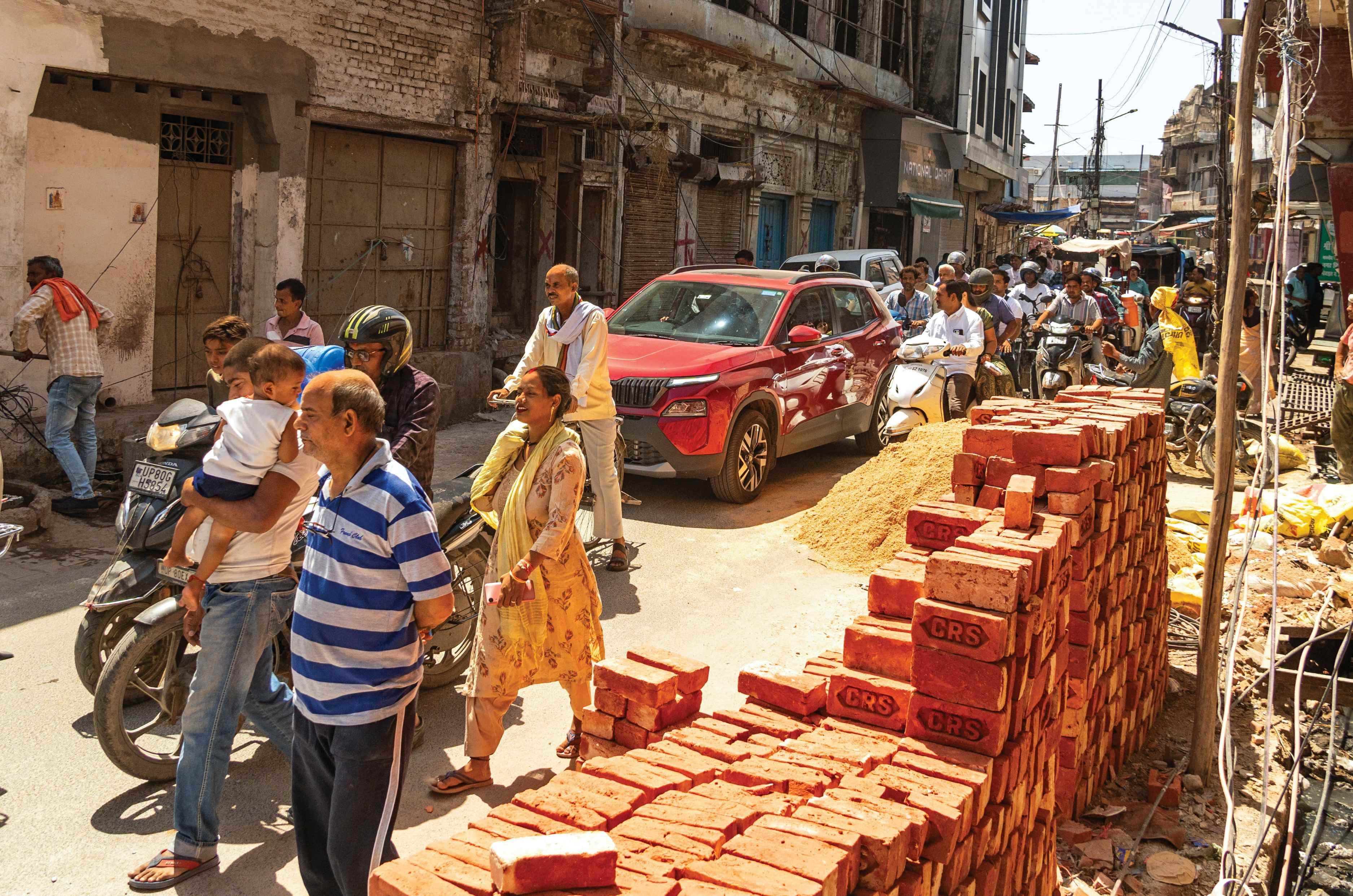
Agra is synonymous with the Taj Mahal, but the Agra Fort – from which you can see the Taj in the distance – is just as mesmerising. The detailing and architecture are second to none, and you could spend hours walking through its courtyards and passages, taking endless pictures. We, of course, also made it to the Taj itself, amid the hordes of tourists, if only to avoid the guilt of visiting Agra without a shot of the world-famous white dome. Tourism done, it was time for some petha – though the lanes near the petha shops seemed to be the exact width of the Kylaq, and that’s where peak anxiety set in. We got out of the mess, walked around the car to check for scratches and scribbles, and sighed in relief. India was adding to the tension, and we were barely halfway through it.
Agra’s narrow lanes were a nightmare to drive through.
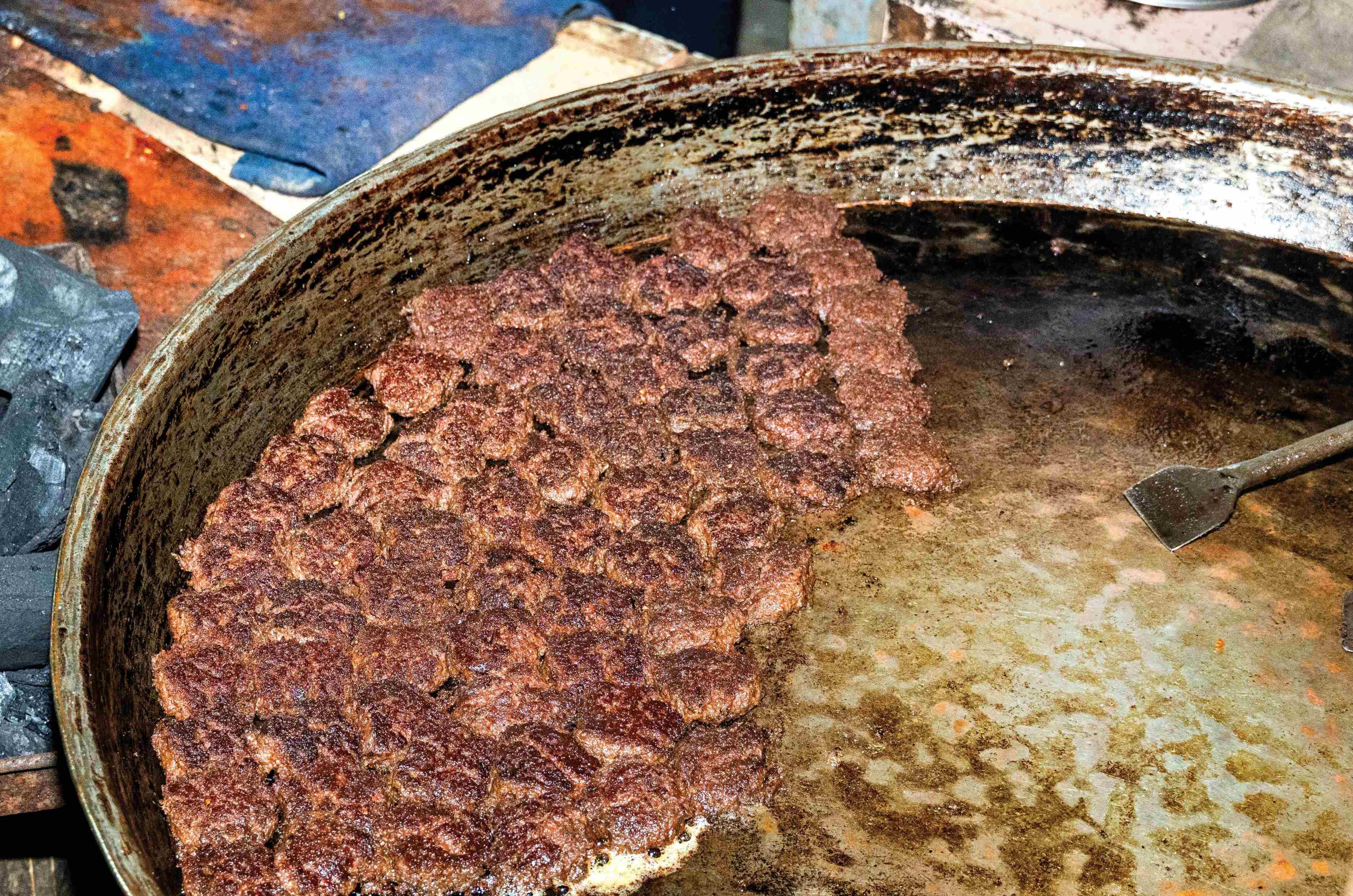
Our next stop from Agra was foodie heaven – Lucknow. The biryanis, kebabs, and tandoors were exactly what we expected, and exactly what Lucknow delivered. Finding your way here is easy – you could do it blindfolded, following the smoke and sizzle to wherever you need to be. Tunday Kababi is a must, and after a heap of biryani laced with kebabs, a long walk through the countless chikankari shops helps burn off some of the calories.
Lucknow’s Tunday Kababi still has us drooling over Galouti kebabs.
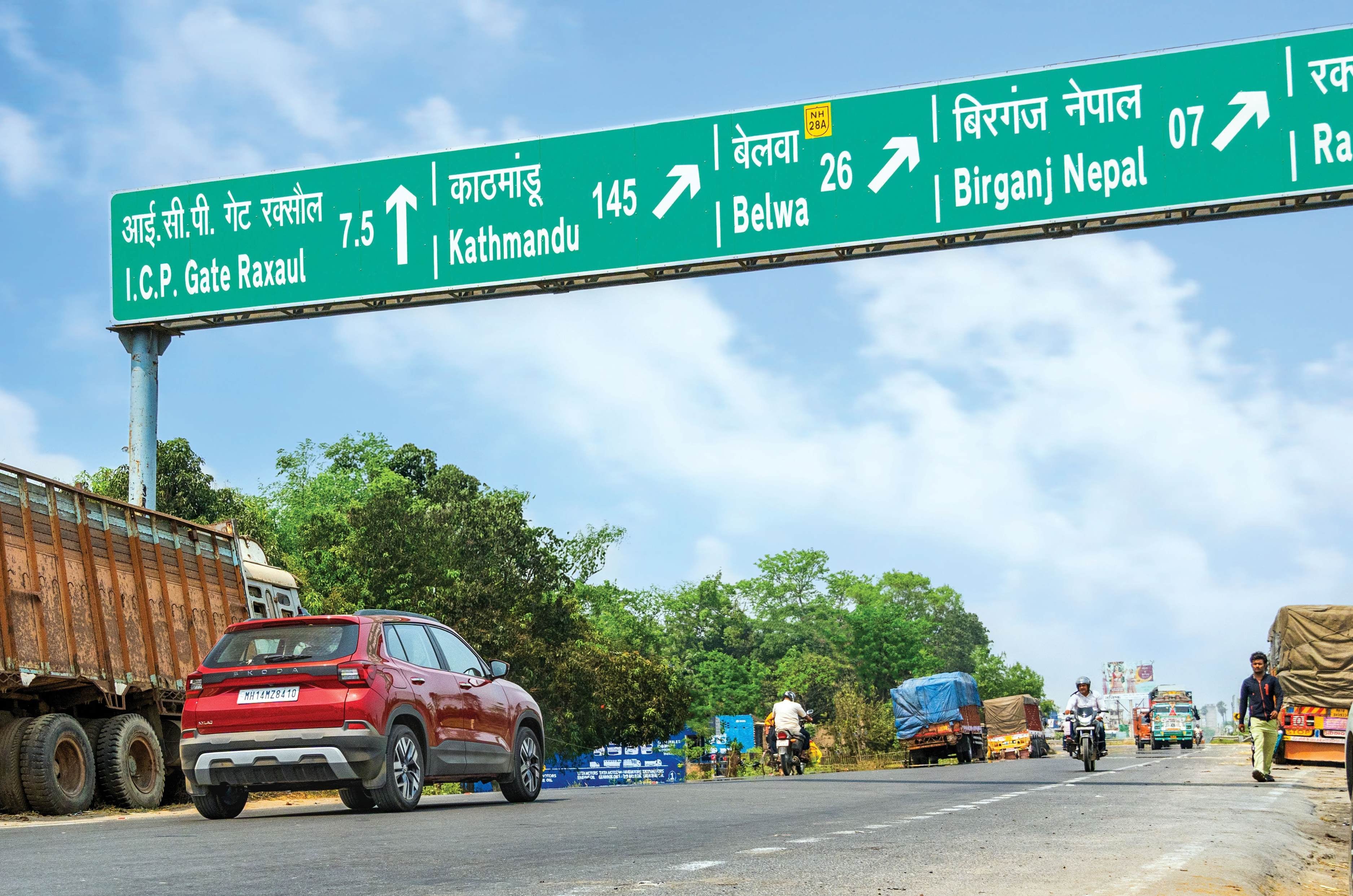
We were closing in on the end of the India leg, with one last stop in Gorakhpur before the Nepal border. To celebrate, a group of Skoda owners, officially known as the ‘Fans of Skoda’ joined us for a celebratory convoy as we drove out – everything from Octavia RS models to Kodiaqs and Kushaqs turned up as a send-off before we went international. The loud, chaotic border towns past Gorakhpur delivered one final challenge as we exited through Raxaul.
Final stretch before the Kylaq left India for the first time.
The India-Nepal border is still raw and basic, with none of the high-tech systems you might expect. A drive of this scale comes with a mountain of paperwork – visas, carnets, insurance, and more – and sifting through all of it manually takes a while. After a gruelling five hours, the Kylaq crossed out of India for the very first time.
Nepal – Old World Charm
Nepal’s state highways give Indian roads a run for their money.
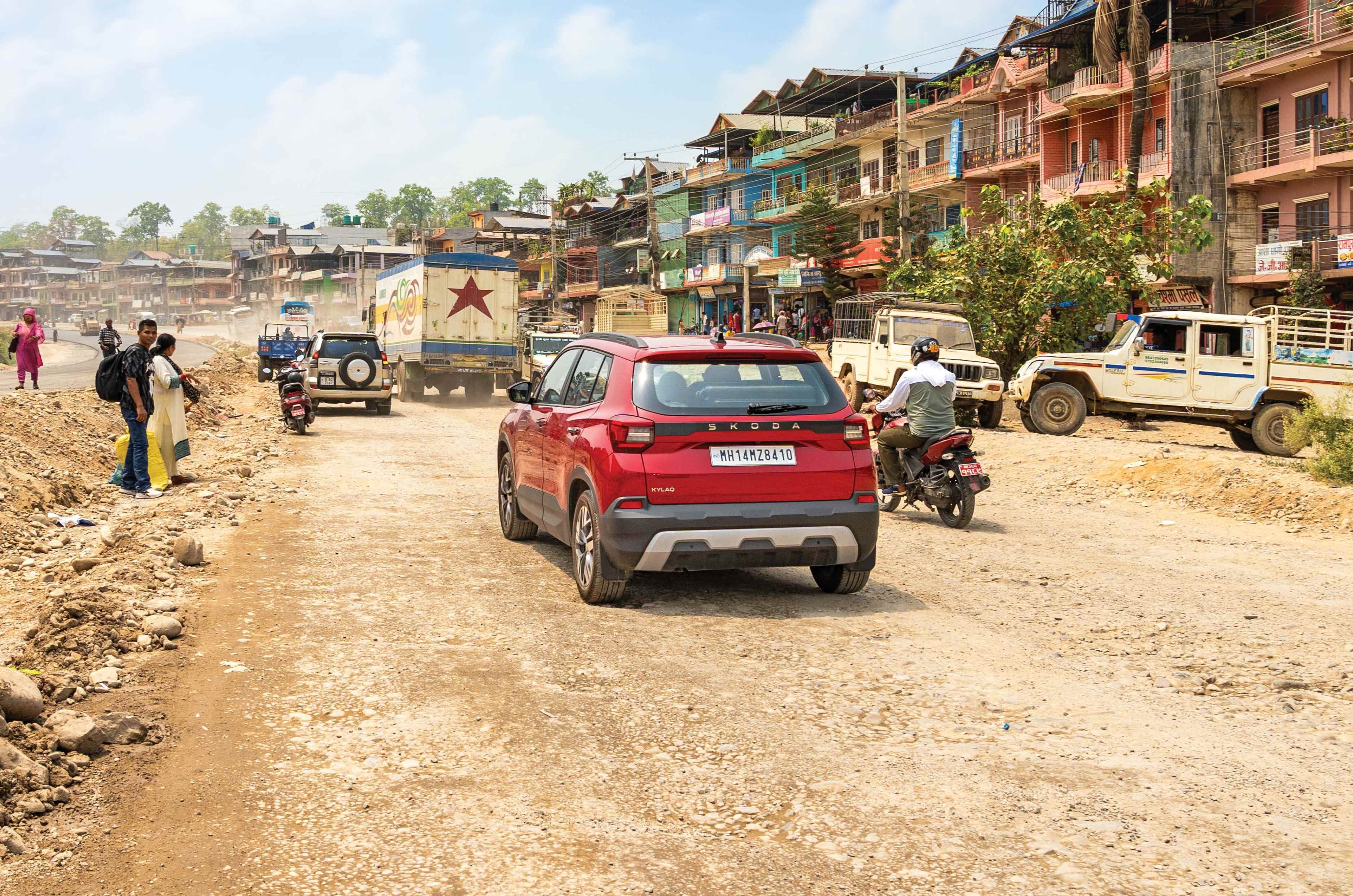
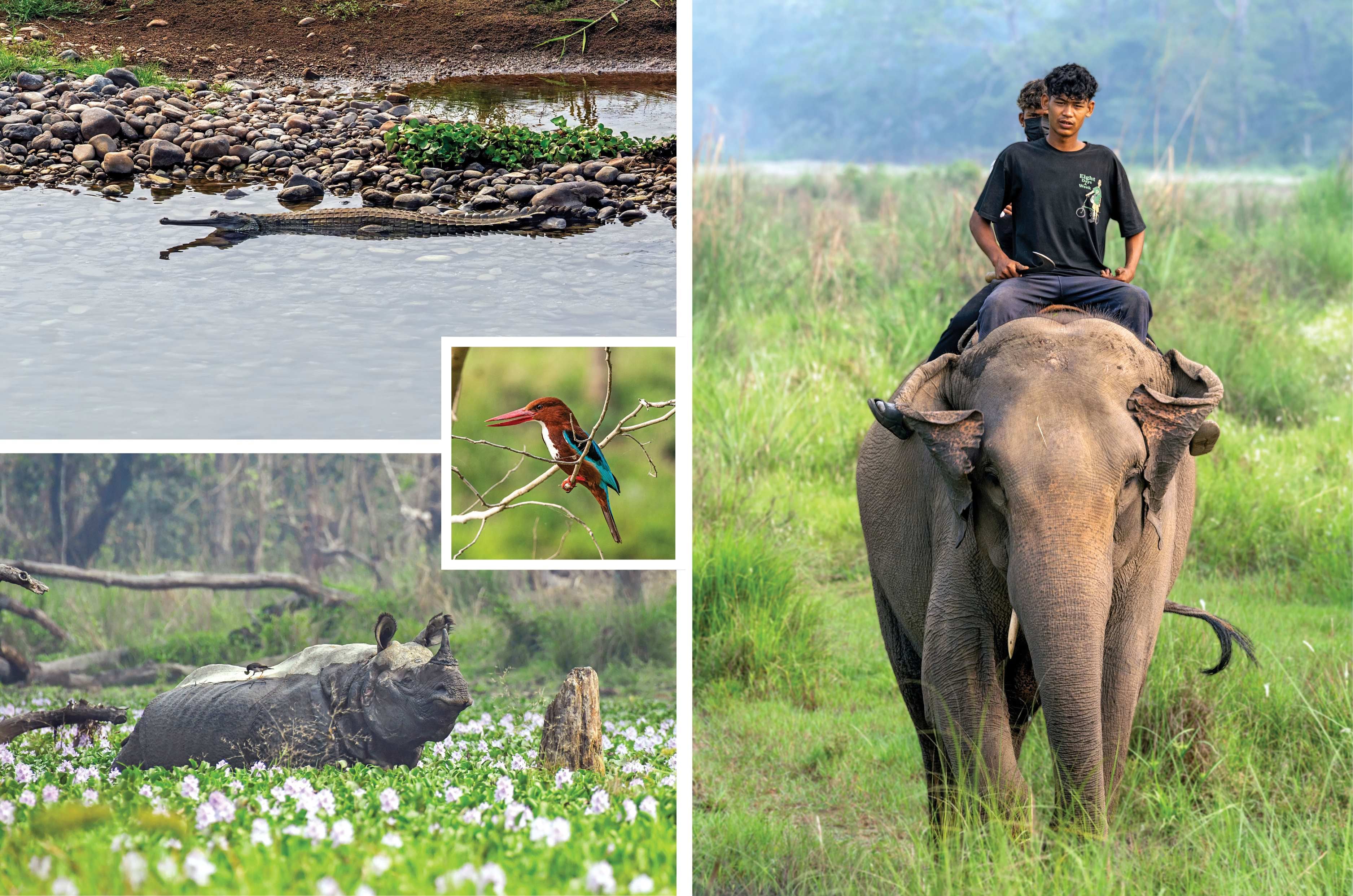
If the Indian side of the border was old-school, Nepal’s immigration post is almost antique. Drive past it, and you’d likely miss it altogether – the only tell-tale sign is a simple gate with ‘Immigration Office’ hand-painted on it. This humble-looking house is, in fact, the immigration office, where, just like on the Indian side, every check is done manually. Fine print, identity proofs, and everything in between were checked meticulously before we were welcomed into Birgunj. Our main draw in Nepal was the bustling capital, Kathmandu, but there were magnificent stops along the way, starting with Chitwan National Park. Home to nearly 700 one-horned rhinos, the park also shelters elephants, Bengal tigers, cobras, the elusive gharial, and abundant flora. The Kylaq would have been fun to explore it in, but we opted for the park’s safari vehicle to relax and take in the surroundings. Paddling a beaten-up wooden kayak past crocodiles and snakes adds a rush, but it’s nothing compared to a rhino staring you down in all its magnificence. The park gave us a welcome break from long hours behind the wheel.
Lumbini is home to 32 unique styles of monasteries.
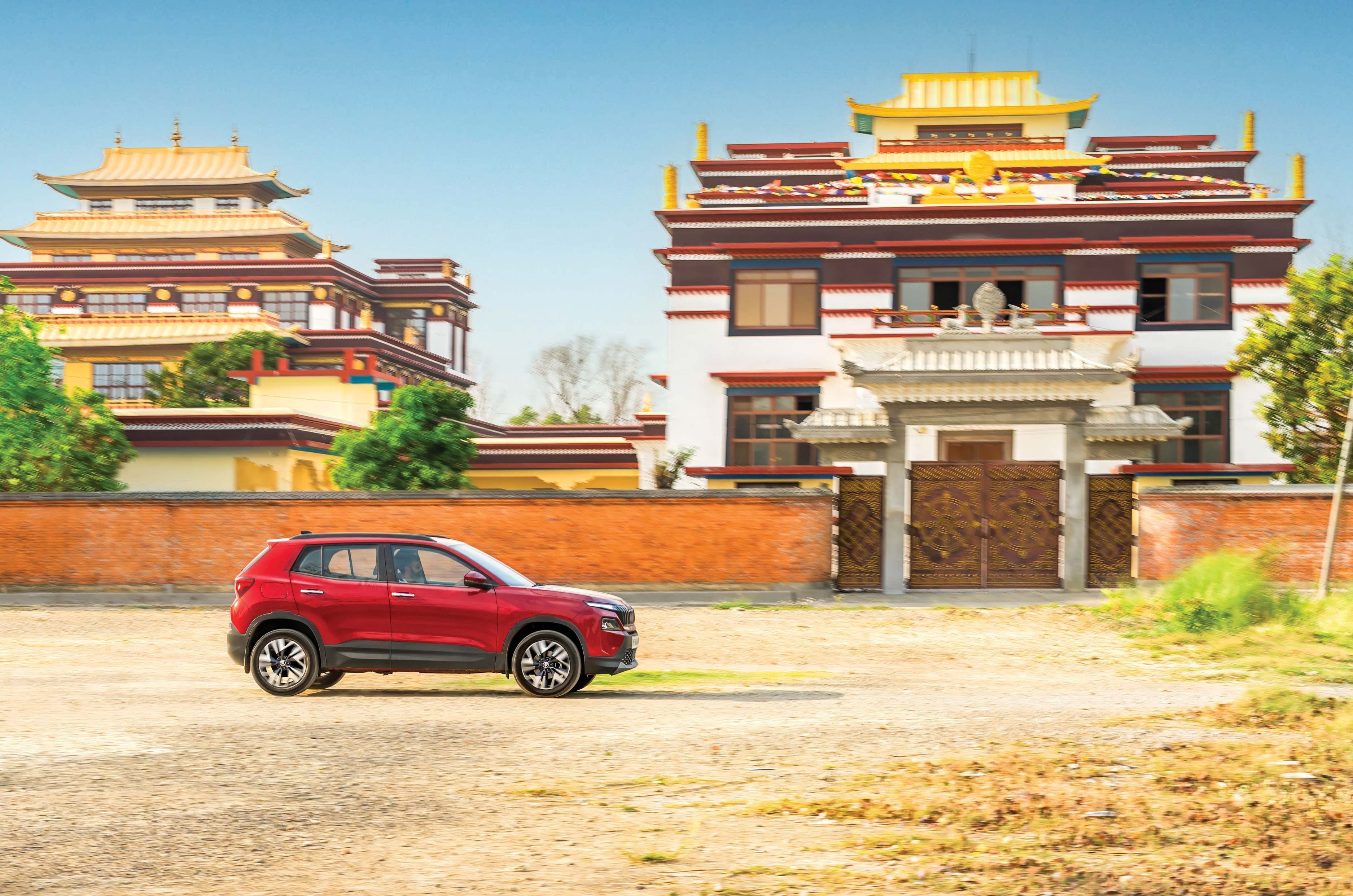
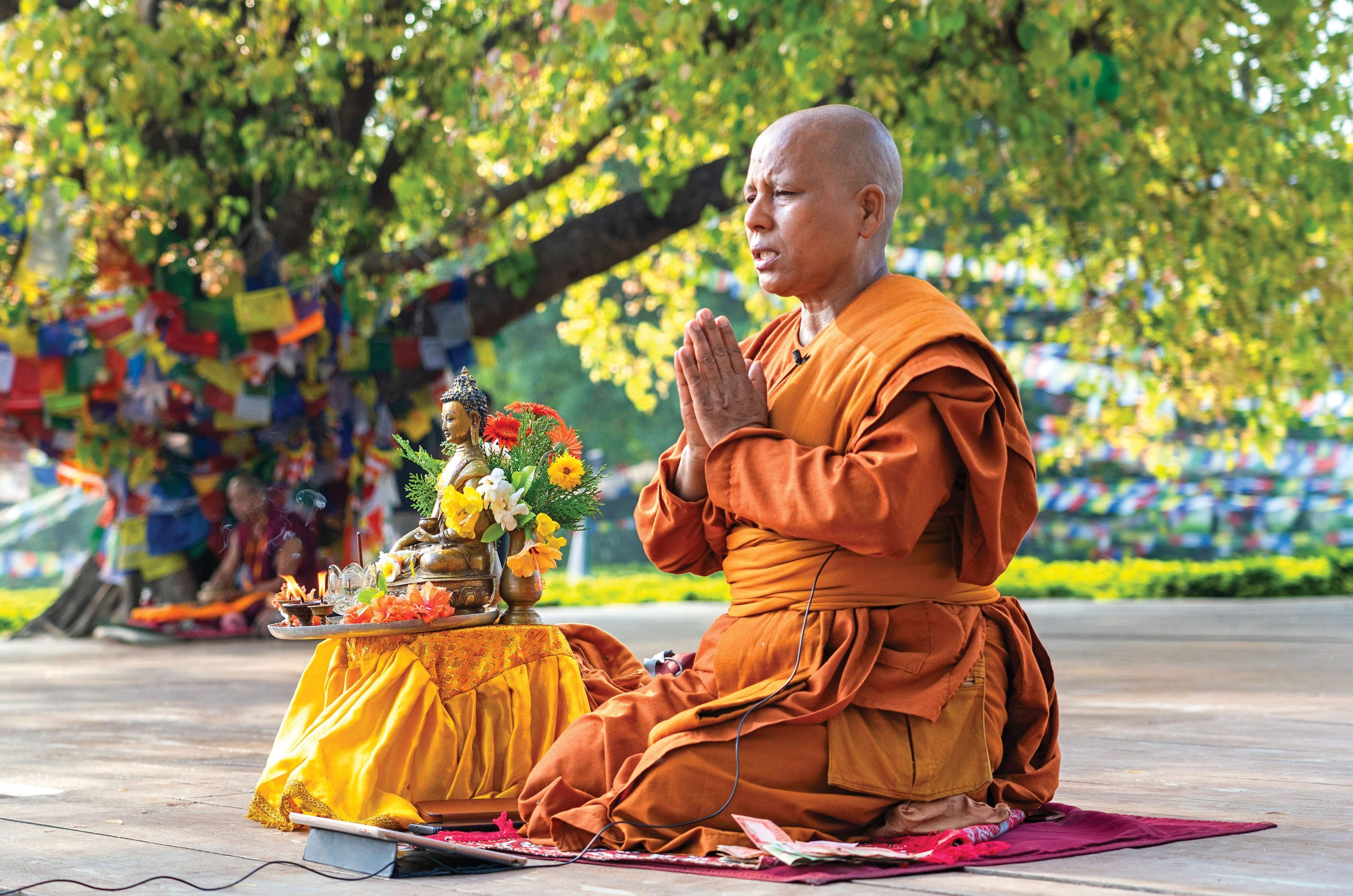
Next was Lumbini, a spiritual haven and, more importantly, the birthplace of Siddhartha Gautama (Lord Buddha) around 563 BC. Its fascinating monastic zone showcases monasteries built by Buddhist nations from around the world, each reflecting its own culture through design and architecture – a remarkable collection of temples spanning diverse traditions. The feeling of peace there was unlike anything I’d experienced, but it was soon disrupted by the road to Pokhara.
Lumbini provided a moment of calm through the chaos.
Mountain passes are notorious for destroying Google’s ETAs – landslides, breakdowns, and deteriorating roads mean a stretch that should take an hour could take five, depending on your luck. We braced for traffic and drove straight into a landslide clearing. A two-hour wait meant the sun was setting as we rolled into the quaint town of Pokhara. Bustling with cafés and pop culture, it felt like a mini Kathmandu, but with the stunning Phewa Lake turning orange at sunset. The calm that began in Chitwan came full circle on the shores of Phewa Lake.
Chitwan is home to the gharial and over 700 one-horned rhinos.
Kathmandu, though, was a different animal entirely – every bit a capital city, and a world away from the slow pace of Chitwan or Lumbini. The music is loud, the traffic is hectic, and the city is anything but quiet. Ironically, the only quiet things on the road are the cars – China’s dominance in Nepal is stark, with three in five cars on the road being Chinese EVs. Geely, BYD, and GWM rule the market, with only a handful of Hyundais and Kias as competition.
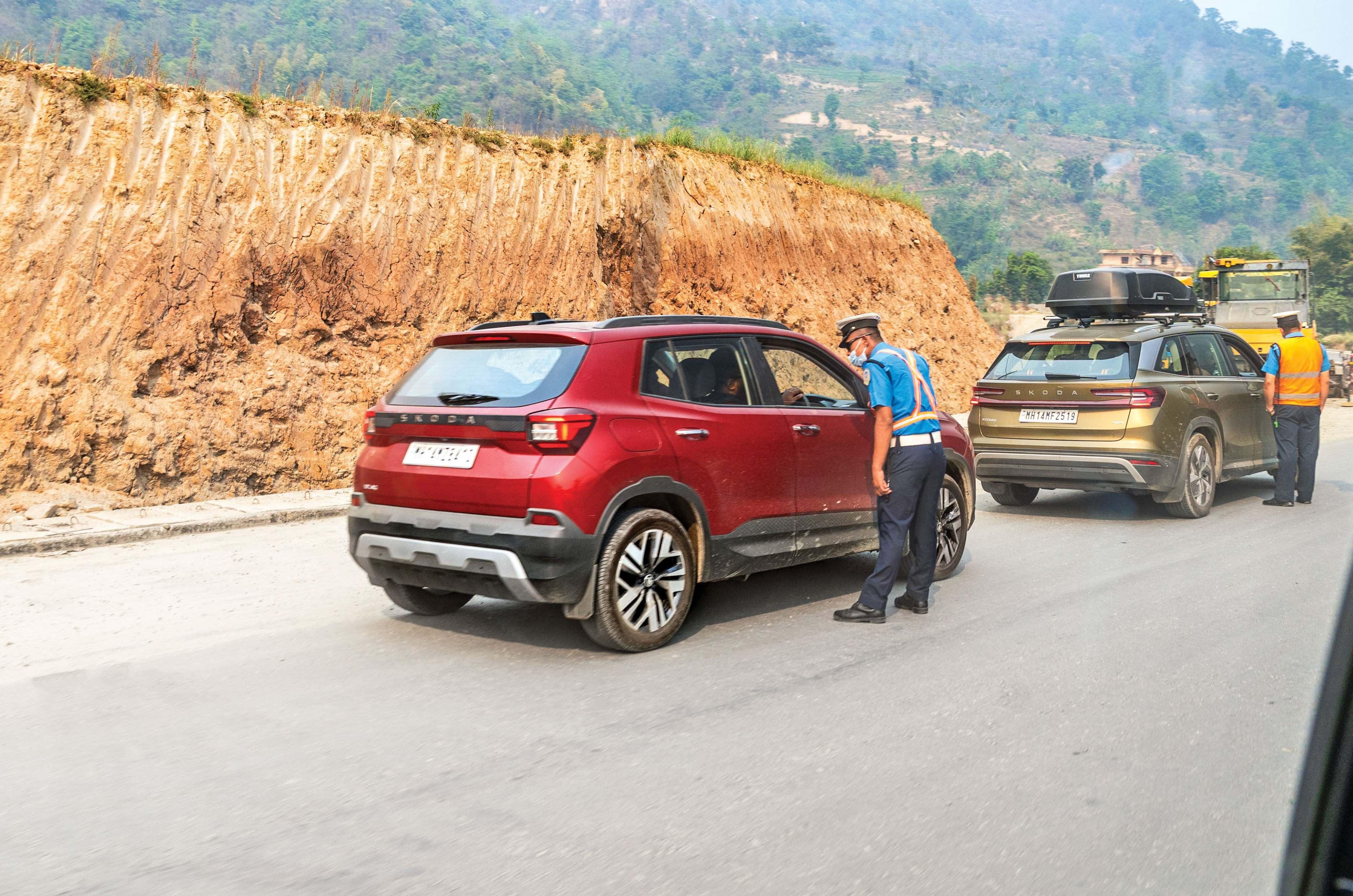
Authorities were always curious thanks to Indian number plates.
The party scene rules Kathmandu too. At night, the city comes alive as a hub for tourists from around the world. Hiking gear and North Face apparel go for a fraction of the price – and, often, a fraction of the quality – alongside quirky masks and fridge magnets at every tourist stop. Spend a little more time, though, and you’ll find excellent coffee shops and the famous Thakali thali: thick buckwheat porridge with salads, meat, and plenty of flavour. Good thing too, since walking through Durbar Square works up quite an appetite. Partly destroyed by the devastating 2015 earthquakes, the temples have since been restored to their former glory, though you can still spot the scars in a few bent pillars and roofs. It’s a culture and tradition worth preserving, and Nepal deserves credit for doing exactly that.
Birgunj-Sino-Nepal Border in numbers
Distance covered
922km
Fuel consumed
115.96 litres
Average fuel economy
7.13kpl
Approximate fuel cost
Rs 15,846
Average per-litre fuel cost
Rs 136.65
Total time driven
34hrs 25min
Average speed
27kph
With Kathmandu explored, we headed towards our second border crossing – and this one was far more intense. Once we left Kathmandu, we left the tarmac behind too. Muddy back roads, still wet from the previous night’s rain, meant slush and a constant need for 4WD. Even so, though packed to the brim with luggage, the Kylaq stayed light enough and had enough clearance to pick its way around the mud on the approach to the Rasuwa Bridge. From there, you can see the Chinese immigration building towering over everything around it. With the Kylaq thrumming with excitement, we crossed into Tibet – the roof of the world.
Tibet/China – Roof of the World
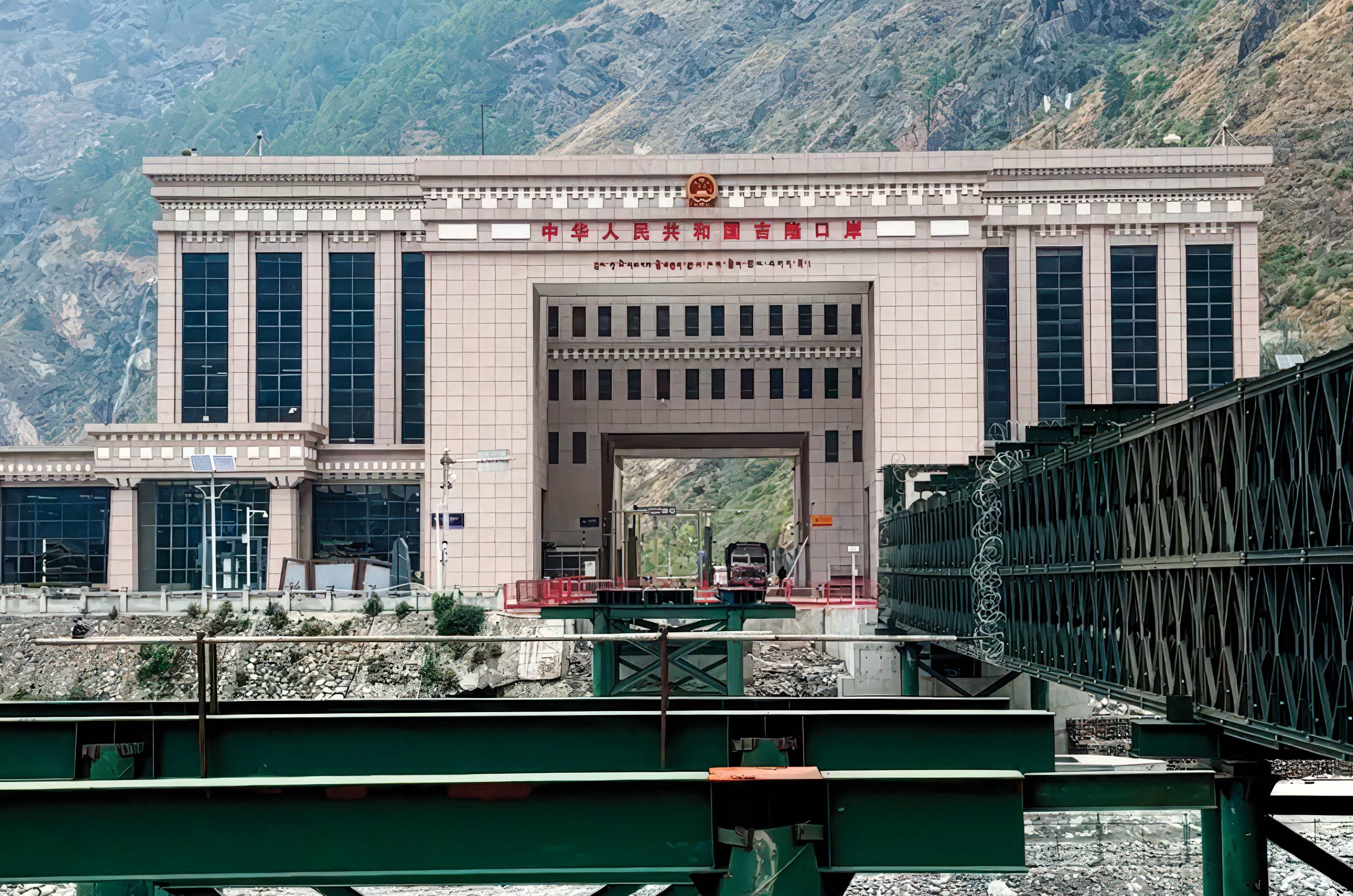
China’s border crossing is as imposing as it gets.
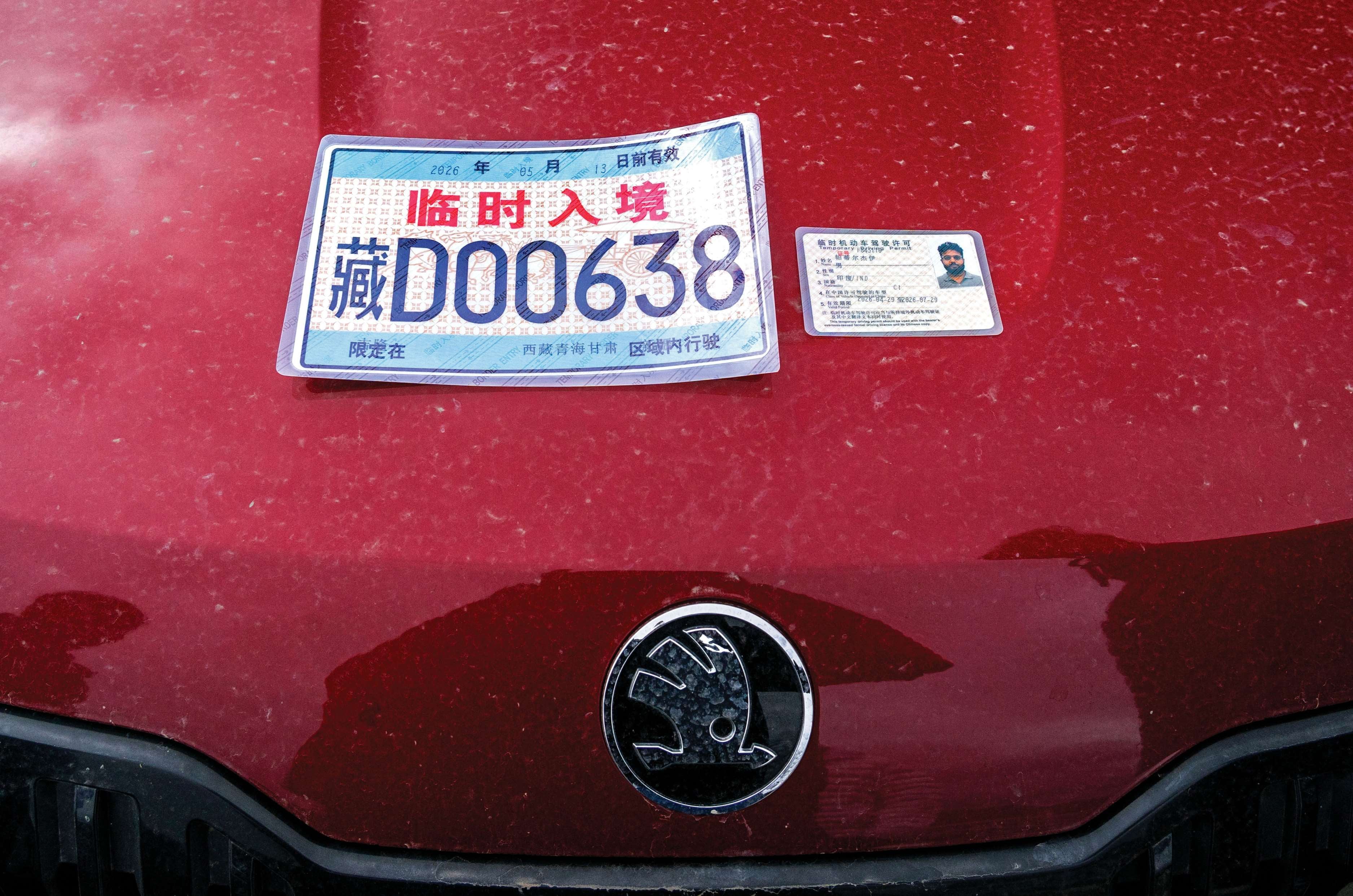
Crossing into Tibet felt like crossing into the future. For a region tucked deep into the mountains, it’s exceptionally developed – the roads are smooth and well-signed from the moment you cross the bridge, barely a hundred metres before the immigration office. In China, we weren’t taking any chances, knowing any misstep here could jeopardise the rest of the journey. After answering the customs officers honestly – and impressing them with the scale of the Kylaq’s challenge – we entered the lovely town of Gyirong. Old Chinese architecture, plenty of red, and signboards we couldn’t quite read were early signs that we really were in a different world now. Nepal had shared plenty with India – the cars, the food, the roads – but China felt entirely its own. We thought we’d seen our share of speed cameras, but China put us to shame – they appear every 50 metres or so, complete with flashes. There’s simply no room for error, and you’re monitored everywhere you go – aneerie feeling that takes some getting used to. Another non-negotiable is to obtain a special driving licence for every person that will be driving and a China-specific number plate, which you have to place on your dashboard so the cameras can pick up any infringements. A regular India-style RTO office with long queues and a lack of urgency got us homesick for a bit.
Local license and registration are non-negotiables in China.
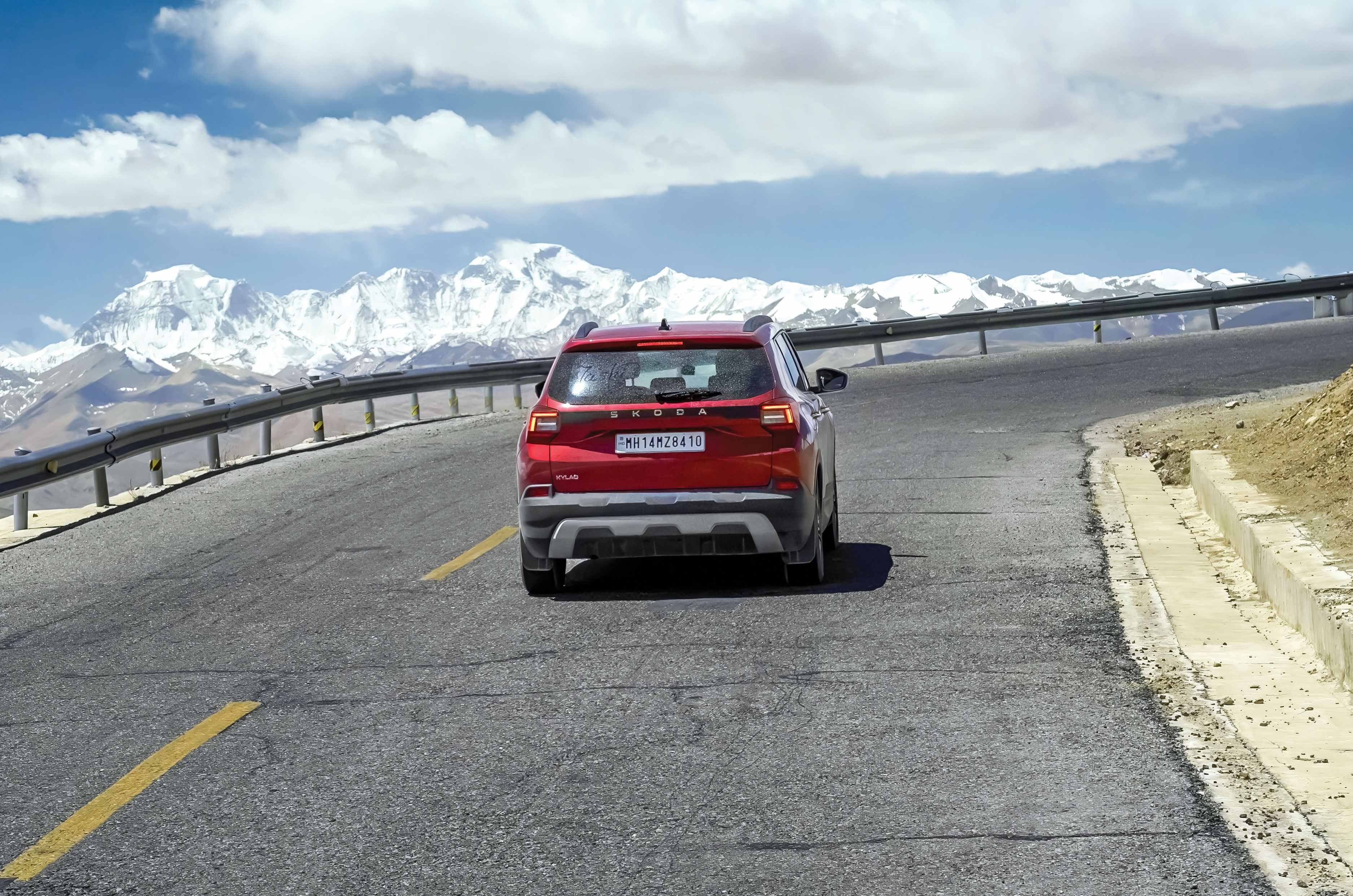
A few mugs of hot ginger-lemon tea eased us into the chill, and we set off for Mount Everest Base Camp. High altitudes are usually punishing for small-capacity engines, but thanks to its turbocharged engine, the Kylaq barely broke a sweat, buzzing through the passes. Its 6-speed automatic had been a great convenience through the chaos of India and Nepal, but the winding mountain roads and immaculate tarmac meant I could switch to manual and take control via the paddle shifters. Paddle-shift response is often sluggish, but not here – the shifts were quick, and the taut suspension held its ground even through tight hairpins.
Everest hove into view long before we made it to base camp.
It made for a great drive and great footage, right up until we spotted the peak in the distance. Even from afar, Everest is breathtaking, and mercifully the clouds stayed clear as we got closer. You can’t take a car near base camp itself – a one-hour bus ride covers that final stretch. It’s strange how you lose your breath as you approach Everest – partly the thin air and altitude, but you’d lose it all the same just from the view. Words don’t do it justice, and don’t be surprised if you shed a tear or two – it’s overwhelming.
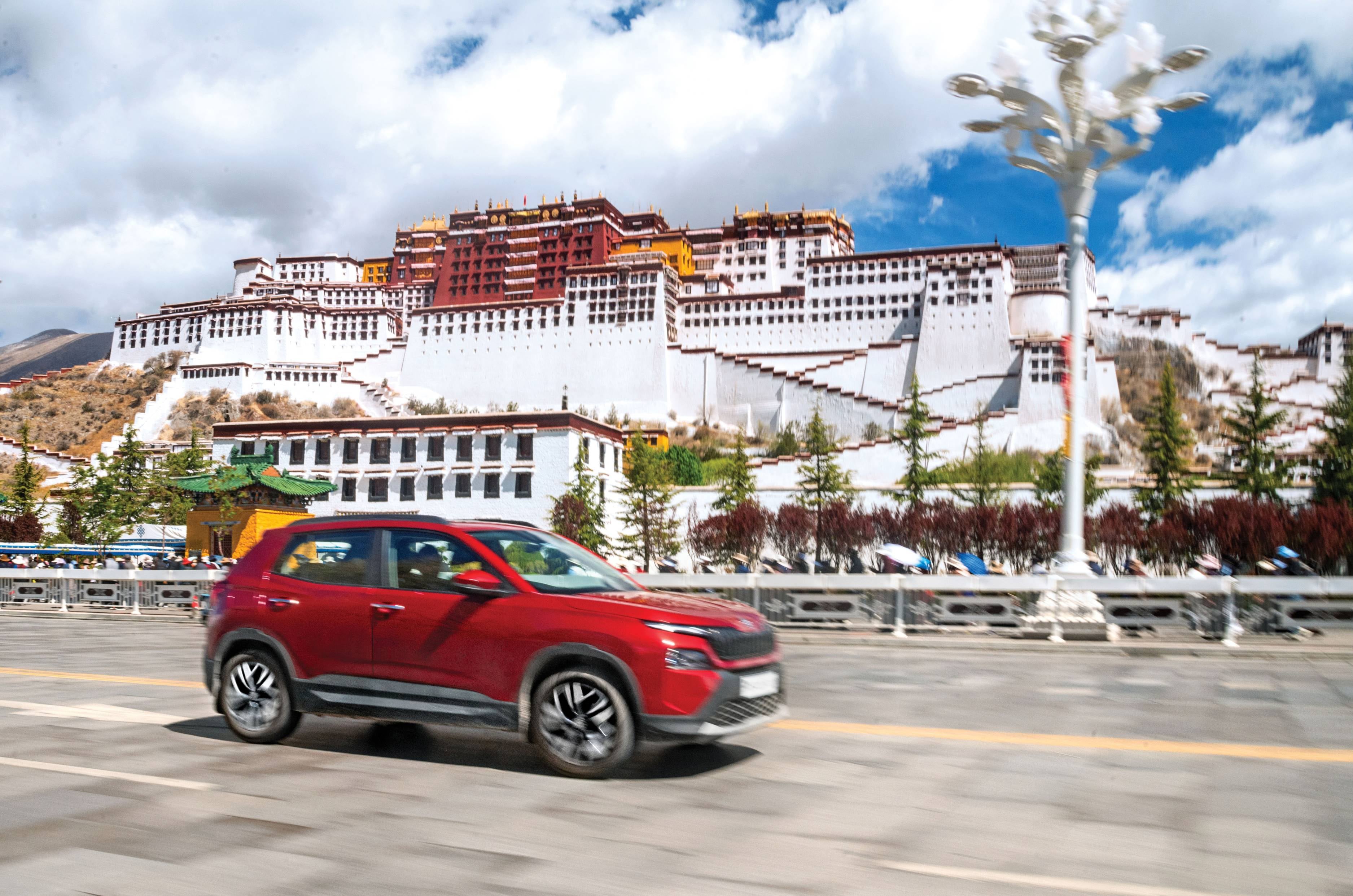
Stunning Potala Palace; once home to the Dalai Lamas.
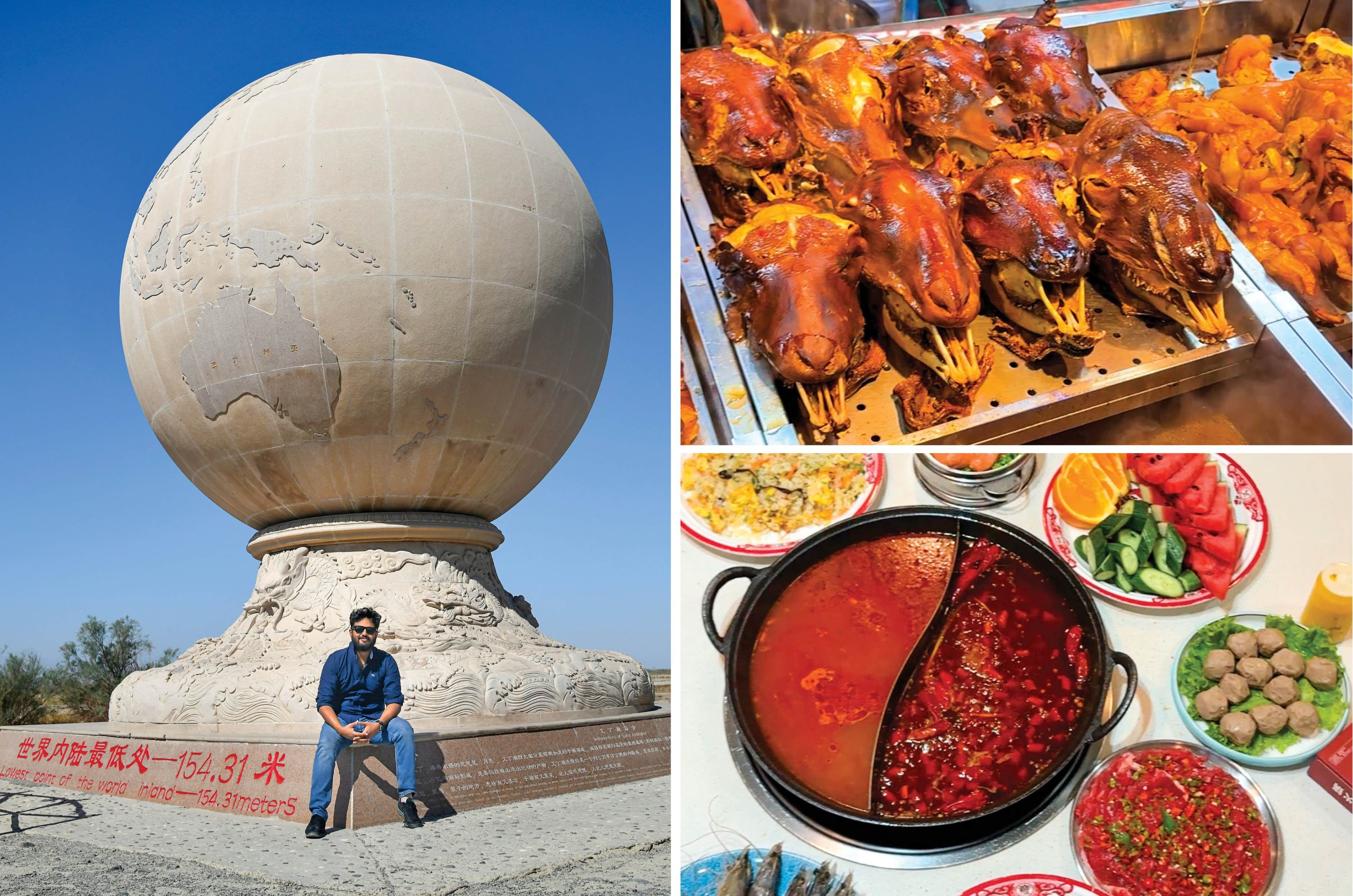
With Everest ticked off, it was time to take on China’s vastness. We headed to Lhasa, the spiritual capital of Tibet, home to the grand Potala Palace. Once home to monks and lamas, this stunning palace holds incredible history and artefacts – spiritual or not, its significance to the country’s history is unmistakable. The drive kept revealing itself through unique food, dialects, faces, and even geography. One day we were freezing thousands of feet above sea level; days later, in Turpan, we were below sea level in blistering heat. From boiling hotpots to grocery-store instant noodles, China pushed us well outside our comfort zone, and the Kylaq wasn’t spared either.
L: From EBC’s high to Turpan Depression’s low – Jay was at 154m below sea level here. R: Street food in China not for the faint-hearted.
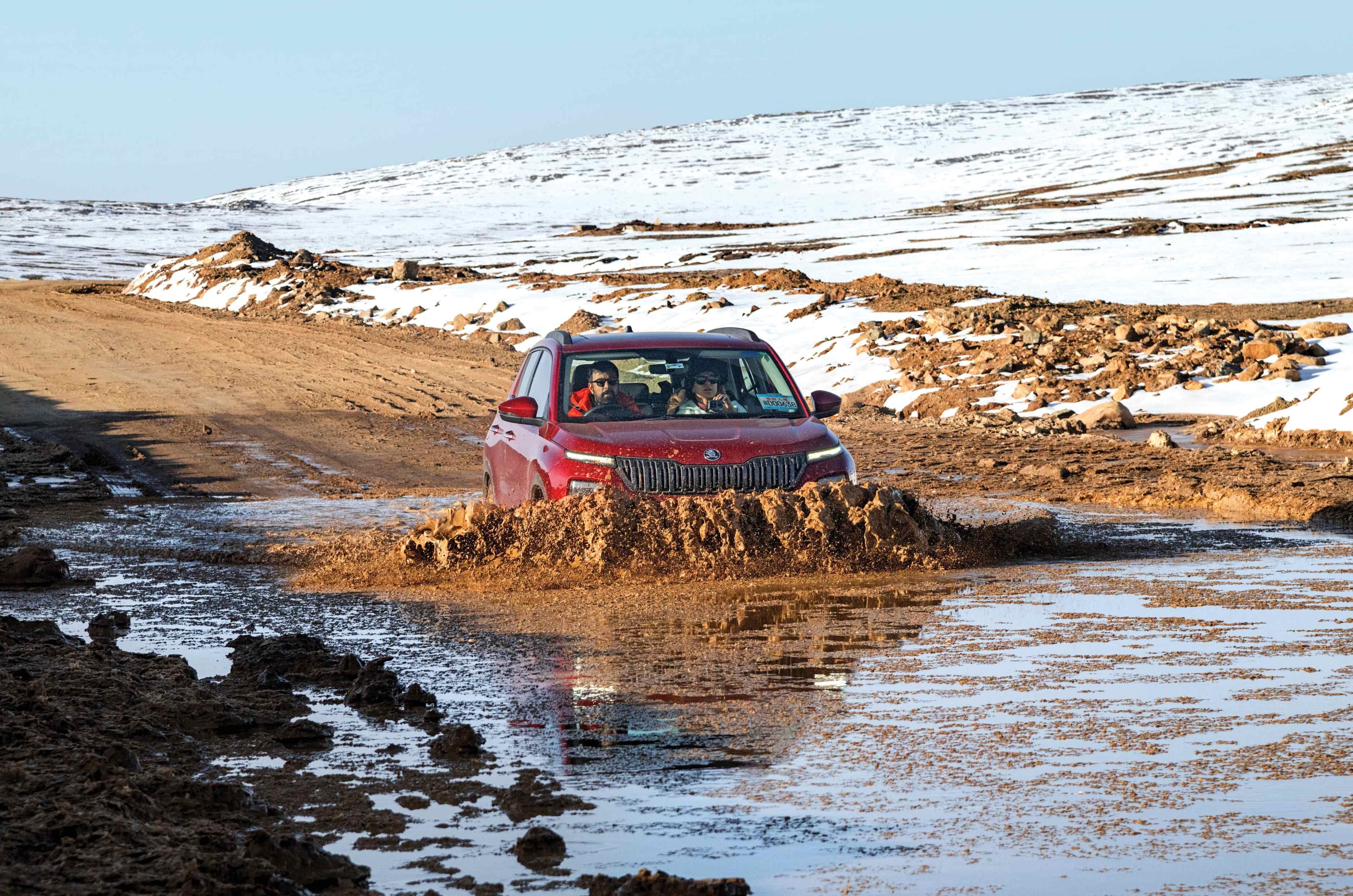
Two full days on the way to Golmud were entirely off-road, taking over 13 hours of driving, with our average speed dropping to 18kph as the Kylaq waded through water up to its bonnet and emerged without complaint.
In China, you get perfect roads or, simply, no roads.
A stretch that would have broken most cars left the Kylaq unscathed. China hit hard, but the Kylaq hit back harder. From day one, it had faced challenge after challenge, and from day one, it had come out on top. Three countries in, it still carried the same zeal it started with – and while we were rattled, it stood strong each night, ready for the next day.
बॉलीवुड एक्टर डिनो मोरिया इन दिनों मीठी नदी की सफाई से जुड़े 65 करोड़ रुपये के घोटाला मामले में को लेकर चर्चा में है। मुंबई पुलिस की आर्थिक अपराध शाखा (EOW) ने 2 अक्टूबर को उनसे करीब आठ घंटे तक पूछताछ की। वहीं कुछ मीडिया रिपोर्ट्स में उनकी गिरफ्तारी का दावा किया गया था। डिनो मोरिया ने खुद इन खबरों को गलत बताया। वहीं EOW की ओर से भी गिरफ्तारी की स्वतंत्र पुष्टि नहीं हुई है। फिलहाल मीठी नदी से जुड़े मामले में जांच जारी है। आइए जानते हैं क्या है मीठी नदी की सफाई घोटाले से जुड़ा मामला
डिनो मोरिया को नहीं किया गया गिरफ्तार
डिनो मोरिया ने मुंबई पुलिस की आर्थिक अपराध शाखा (EOW) द्वारा गिरफ्तारी या हिरासत में लिए जाने की खबरों को खारिज कर दिया। इससे पहले कुछ रिपोर्ट्स में दावा किया गया था कि बांद्रा स्थित उनके घर पर पूछताछ के बाद पुलिस ने उन्हें हिरासत में लिया। मोरिया की गिरफ्तारी की खबर सामने आने के बाद एक्टर ने व्हाट्सऐप के जरिए संबंधित मीडिया आउटलेट को बताया कि ये खबरें “सच नहीं हैं”। बाद में सामने आई रिपोर्ट में भी मुंबई पुलिस की आर्थिक अपराध शाखा (EOW) की ओर से डीनो मोरिया की गिरफ्तारी की कोई आधिकारिक पुष्टि नहीं की गई थी।
EOW के एक वरिष्ठ अधिकारी के अनुसार, जांच के दौरान सामने आई जानकारियों के आधार पर डीनो मोरिया से पूछताछ की जा रही थी। इस मामले में आगे की कार्रवाई जांच पूरी होने के बाद तय की जाएगी।
Mumbai, Maharashtra: Actor Dino Morea was questioned by the Mumbai Police EOW for around six to seven hours in connection with the alleged Rs 65 crore Mithi River cleaning scam. He was later allowed to leave. The EOW is investigating financial transactions linked to the case and… pic.twitter.com/gPC5cqBqac
ये मामला मुंबई की मीठी नदी की सफाई और सुधार से जुड़े ठेकों में कथित आर्थिक गड़बड़ी को लेकर EOW जांच कर रहा है। जांच एजेंसी ठेकेदारों, बिचौलियों और कुछ नगर निगम अधिकारियों की भूमिका के साथ-साथ प्रोजेक्ट से जुड़े ठेकों और पेमेंट की भी जांच कर रही है। रिपोर्ट्स के मुताबिक, इस मामले में बीएमसी को करीब 65.54 करोड़ रुपये के नुकसान का दावा किया गया है।
पहले भी हो चुकी है पूछताछ
इस मामले में डीनो मोरिया से पहले भी पूछताछ हो चुकी है। मई 2025 में EOW ने उनसे और उनके भाई सैंटिनो मोरिया से सवाल किए थे। जांच के दौरान अधिकारियों को कुछ ऐसे फोन रिकॉर्ड मिले थे, जिनसे कथित तौर पर मामले से जुड़े लोगों के साथ उनके संपर्क की जानकारी सामने आई थी। इसके अलावा, जांच एजेंसी सैंटिनो की कंपनी UBO Ridez और केस से जुड़े लोगों के बीच हुए पैसों के लेनदेन की भी जांच कर रही थी।
इस मामले की जांच में केतन कदम का नाम भी सामने आया है, जिन्हें 2025 में हिरासत में लिया गया था। जांच के दौरान प्रवर्तन निदेशालय (ED) ने भी मोरिया के घर पर तलाशी ली थी। यह कार्रवाई मीठी नदी से जुड़े कथित वित्तीय अनियमितताओं की बड़ी जांच के तहत की गई थी।